Exhibition: ‘In Focus: Architecture’ at the J. Paul Getty Museum, Getty Center, Los Angeles

Exhibition dates: 15th October, 2013 – 2nd March, 2014

Curator: Amanda Maddox, Assistant Curator of Photographs


William Henry Fox Talbot (English, 1800-1877) 'Boulevard des Italiens, Paris' 1843 from the exhibition 'In Focus: Architecture' at the J. Paul Getty Museum, Getty Center, Los Angeles, October 2013 - March 2014


William Henry Fox Talbot (English, 1800-1877)
Boulevard des Italiens, Paris
1843
Salted paper print from a Calotype negative
16.8 x 17.3cm
The J. Paul Getty Museum, Los Angeles


Another gem of a photography exhibition from the Getty. These In Focus exhibitions are just a treasure: from Making a Scene, Still Life and The Sky to Los Angeles, Picturing the Landscape and now Architecture. All fabulous. To have a photography collection such as the Getty possesses, and to use it. To put on these fantastic exhibitions…

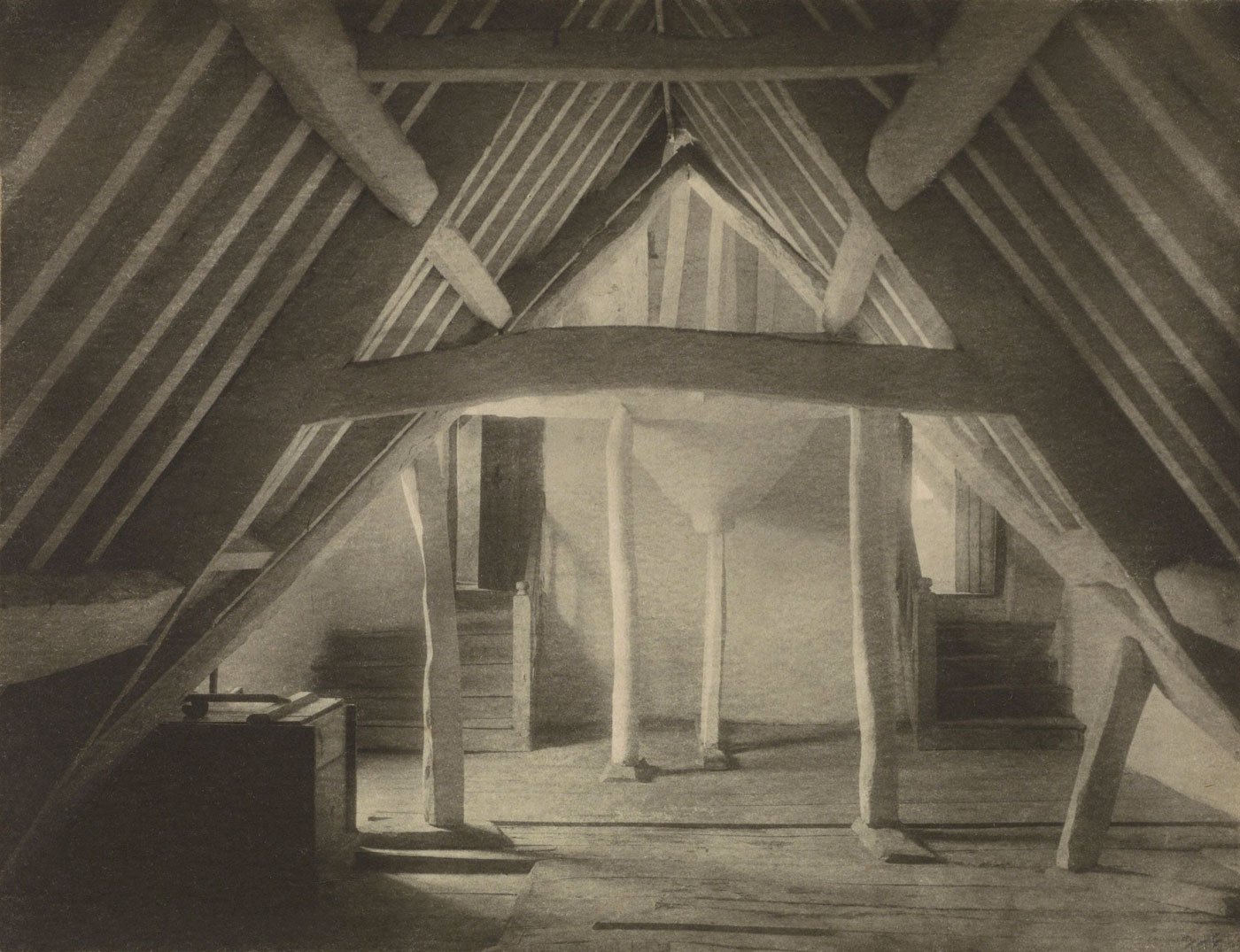
I like observing the transition between epochs (or, in more architectural terms, ‘spans’ of time), photographers and their styles. From the directness and frontality of Fox Talbot’s Boulevard des Italiens, Paris (1843, below) to the atmospheric ethereality of Atget’s angular The Panthéon (1924, below) taken just three years before he died; from the lambent light imbued in Frederick Evans’ architectural study of the attic at Kelmscott Manor (1896, below) to the blocked, colour, geometric facade of William Christenberry’s Red Building in Forest, Hale County, Alabama (1964, below).

I love architecture, I love photography. Put the two together and I am in heaven.

Dr Marcus Bunyan


Many thankx to the J. Paul Getty Museum for allowing me to publish the photographs in the posting. Please click on the photographs for a larger version of the image.


Eugéne Atget (French, 1857-1927) 'The Panthéon' 1924 from the exhibition 'In Focus: Architecture' at the J. Paul Getty Museum, Getty Center, Los Angeles, October 2013 - March 2014


Eugéne Atget (French, 1857-1927)
The Panthéon
1924
Gelatin silver chloride print on printing-out paper
Image: 17.8 x 22.6cm
The J. Paul Getty Museum, Los Angeles


Eugène Atget made this atmospheric study across the place Sainte-Geneviève toward the back of the Panthéon, a church boldly designed to combine the splendour of Greece with the lightness of Gothic churches. The church’s powerful colonnaded dome, Atget’s primary point of interest, hovers in the background, truncated by the building in the left foreground.

In order to make the fog-veiled Panthéon visible when printing this negative, Atget had to expose the paper for a long period of time. As a consequence of the long printing, the two buildings in the foreground are overexposed, appearing largely as black silhouettes. Together they frame the Panthéon, rendered entirely in muted greys. This photograph exceeds documentation to become more a study of mood and atmospheric conditions than of architecture.


Frederick H. Evans (British, 1863-1943) 'Kelmscott Manor: In the Attics (No. 1)' 1896


Frederick H. Evans (British, 1863-1943)
Kelmscott Manor: In the Attics (No. 1)
1896
Platinum print
15.6 x 20.2cm
© Mrs Janet M. Stenner, sole granddaughter of Frederick H, Evans
The J. Paul Getty Museum, Los Angeles


Frederick Evans’s architectural study of the attic at Kelmscott Manor, a medieval house, part of which dates from 1280, is a visual geometry lesson. The composition is all angles and intersections, formed not only by the actual structure but also by the graphic definition of light within the space. Soft illumination bathes the area near the stairs, while the photograph’s foreground plunges into murky darkness. The sharp angles of intersecting planes are mediated by the rough-hewn craftsmanship of the beams and posts, almost sensuous in their sinewy imperfection and plainly wrought by hand. The platinum print medium favoured by Evans provides softened tonalities that further unify the triangles, squares, and diagonal lines of the dynamic composition.


William Christenberry (American, b. 1936) 'Red Building in Forest, Hale County, Alabama' 1964


William Christenberry (American, b. 1936)
Red Building in Forest, Hale County, Alabama
1964
44.5 x 55.9cm
© William Christenberry
The J. Paul Getty Museum, Los Angeles


William Christenberry began photographing this makeshift wooden structure in his native Alabama in 1974. Since that time, he has made nearly annual trips to document the facade of this isolated dwelling, located deep in the Talladega National Forest. Such vernacular structures were uncommon photographic subjects until Walker Evans, Ed Ruscha, William Eggleston, and other twentieth-century photographers elevated their stature. Like the edifices photographed by Eugène Atget, Bernd and HIlla Becher, and others, the buildings Christenberry recorded in the southern United States were often in disrepair and in danger of disappearing altogether.


Soon after its invention in 1839, photography surpassed drawing as the preferred artistic medium for recording and presenting architecture. Novel photographic techniques have kept pace with innovations in architecture, as both media continue to push artistic boundaries. In Focus: Architecture, on view October 15, 2013 – March 2, 2014 at the J. Paul Getty Museum, Getty Center, traces the long, interdependent relationship between architecture and photography through a selection of more than twenty works from the Museum’s permanent collection, including recently acquired photographs by Andreas Feininger, Ryuji Miyamoto, and Peter Wegner.

“Architectural photography was an integral part of the early days of the medium, with the construction of many of the world’s most important and magnificent structures documented from start to finish with the camera,” explains Timothy Potts, director of the J. Paul Getty Museum. “This exhibition demonstrates how architectural photography has grown from straightforward documentary style photographs in its early days to genre-bending works like those of Peter Wegner from 2009.”

Beginnings of Architectural Photography

Recognised for their accuracy and precision, photographs could render architectural details as never before and show the built environment during construction, after completion, or in ruin. Nineteenth-century photographers were eager to utilise the new medium to document historic sites and structures, as well as buildings that rose alongside them, or in their place. In 1859, Gustave Le Gray photographed the Mollien Pavilion, a structure that constituted part of the “New Louvre,” a museum expansion completed during the reign of Napoleon III. Le Gray’s picturesque composition highlighted the Pavilion’s ornamented façade and other intricate details that could inform the work of future architects. Louis-Auguste Bisson, a trained architect, worked with his brother Auguste-Rosalie to photograph grand architectural spaces such as Interior of Saint-Ouen Church in Rouen (1857). The Bisson brothers produced a monumental print, derived from a glass negative of the same size, to feature the nave of the structure in an interior view rarely depicted in 19th century photographs.

A burgeoning commercial market for tourist photographs emerged toward the end of the nineteenth century. Views of architectural landmarks and foreign ruins became popular souvenirs and tokens of the ancient world. Artists such as J.B. Greene, who ventured to exotic destinations, provided visions of historic sites in Egypt, while Louis-Émile Durandelle took a series of photographs that documented the construction of the Eiffel Tower in the years before it became a symbol of the modern era at the World’s Exposition of 1889. Durandelle’s frontal view of the structure underscored its perfect geometric form, and his photographs were the earliest of what became a popular motif for amateur and professional photographers. Other noted photographers of this period included Eugène Atget, who obsessively documented the streets and buildings of Paris before its modernisation, and Frederick H. Evans, who created poetic photographs of Romanesque and Gothic cathedrals.

The Rise of Modern Architectural Photography

As the commercial market for photographs expanded and technologies advanced, representations of architectural forms began to evolve as well. In the twentieth century, images of buildings developed in conjunction with the rise of avant-garde, experimental, documentary, and conceptual modes of photographic expression.

Andreas Feininger, who studied architecture in Weimar, followed what Bauhaus instructor László Moholy-Nagy called a “new vision” of photography as an autonomous artistic practice with its own laws of composition and lighting. In Portal in Greifswald (1928), Feininger created a negative print, or a photograph with reversed tonalities, resulting in a high contrast image that enhanced the mystery of the architectural subject and removed it from its ecclesiastical context.

“The experimental spirit that permeated photography in the first half of the twentieth century inspired new ways to look at architectural forms,” says Amanda Maddox, assistant curator of photographs at the J. Paul Getty Museum and curator of the exhibition. “As photographs could present buildings in abstracted, close-up, or fragmented views, they encouraged viewers to see the built environment around them as never before.”

At the same time the Bauhaus was influencing photographers throughout Europe, Walker Evans was at the forefront of vernacular photography in the United States, which elevated ordinary objects and events to photographic subjects. In keeping with this trend, architectural photography shifted its focus to ordinary domestic and functional buildings. Derelict and isolated dwellings feature prominently in the work of William Christenberry, whose photograph and “building construction” of Red Building in Forest, Hale County, Alabama (1994) will be on display in the exhibition.

Architecture as a photographic subject became more malleable at the end of the twentieth century, as artists continued to explore the symbolism and vitality of the modern cityscape. This transition is exemplified in Peter Wegner’s 32-part Building Made of Sky III (2009), in which the spaces between skyscrapers in New York, San Francisco and Chicago create buildings of their own. Wegner described the series as “the architecture of air, the space defined by the edges of everything else.” When presented as a grid, the works form a new, imaginary city.

Press release from the J. Paul Getty website


Gustave Le Gray (French, 1820 - 1884) 'Mollien Pavilion, the Louvre' 1859


Gustave Le Gray (French, 1820-1884)
Mollien Pavilion, the Louvre
1859
Albumen silver print
Image: 36.7 x 47.9cm
The J. Paul Getty Museum, Los Angeles


Standing opposite a newly built pavilion of the Louvre, Gustave Le Gray made this photograph when the sun’s position allowed him to best capture the details of the heavily ornamented facade, from the fluted columns on the ground level to the figurative group on the nearest gable. Paving stones lead the viewer’s eye directly to the corner of the pavilion, where the sunlit facade is further highlighted beside an area blanketed in shadow.

Though the extensive art collections of the Louvre had first been opened to the public in 1793, after the French Revolution, it was not until 1848 that the museum became the property of the state. Le Gray’s image shows the exuberance of the architecture undertaken shortly thereafter, during the reign of Napoléon III, when large sections of the building housed government offices.


Ryuji Miyamoto (Japanese, b. 1947) 'Kowloon Walled City' 1987


Ryuji Miyamoto (Japanese, b. 1947)
Kowloon Walled City
1987
Gelatin silver print
34.4 x 51.1cm
The J. Paul Getty Museum, Los Angeles
© Ryuji Miyamoto


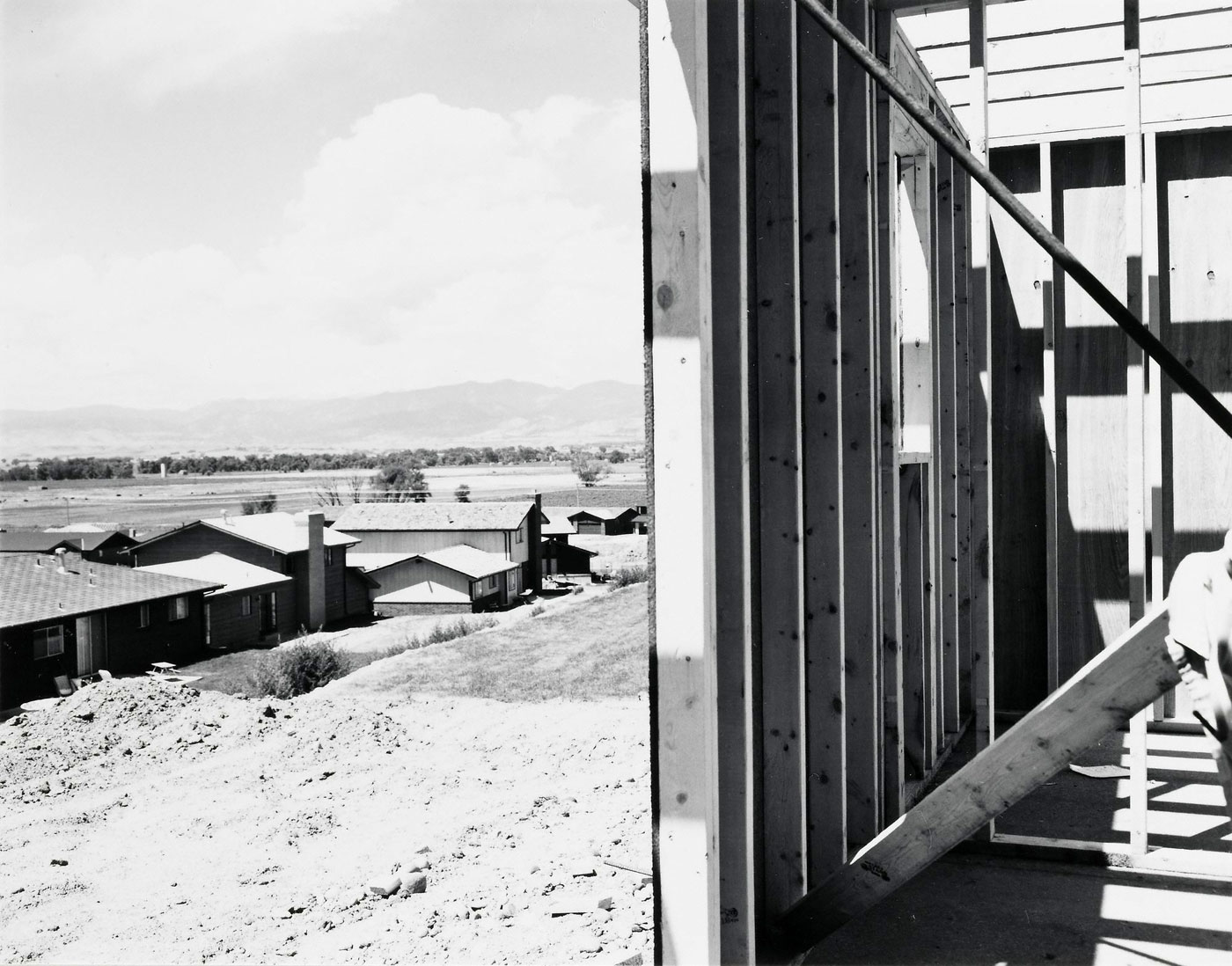
Robert Adams (American, b. 1937) 'Longmont, Colorado' 1973


Robert Adams (American, b. 1937)
Longmont, Colorado
1973
Gelatin silver print
15.2 x 19.4cm
The J. Paul Getty Museum, Los Angeles
© Robert Adams


The long, interdependent relationship between photography and architecture is the subject of this survey drawn from the Getty Museum’s collection. Spanning the history of the medium, the exhibition features twenty-four works by such diverse practitioners as William Henry Fox Talbot, Eugène Atget, Walker Evans, Bernd and Hilla Becher, and Ryuji Miyamoto. Seen together, the varied photographic representations of secular and sacred structures on display reveal how the medium has impacted our understanding and perception of architecture.

In the nineteenth century, photography surpassed drawing as the preferred artistic medium for recording and presenting architecture. Recognised for their accuracy and precision, photographs could render architectural elements as never before. The intricate ornamented facade, the sprawling sunlit Napoléon Courtyard, and the classical design of the Louvre appear in magnificent detail in Gustave Le Gray’s picturesque image of the Mollien Pavilion, a structure completed in the 1850s during the reign of Napoléon III.

Photographers working in the nineteenth century documented historic structures on the verge of disappearance as well as contemporary buildings erected before their eyes. They also captured the built environment during construction, after completion, and in ruin. This photograph by Louis-Émile Durandelle shows the Eiffel Tower, the centrepiece of the 1889 World Exposition, in November 1888 when only its four columns, piers, and first two platforms were in place.

With the advancement of photographic technologies and the modernisation of the built environment around the turn of the twentieth century came innovative representations of architecture. Compositions and photographic processes began to reflect the avant-garde and modernist sensibilities of the time, and photographs of buildings, churches, homes, and other structures often showcased these developments. Andreas Feininger, who trained as an architect, utilised an experimental printing technique to depict gothic St. Nikolai cathedral in Greifswald in a nontraditional way.

Images of architecture by contemporary photographers Robert Adams, William Christenberry, and others working in the documentary tradition often underscore the temporality of buildings. Vernacular structures found in his native Alabama are among the subjects Christenberry has systematically recorded for the past six decades. By returning year-after-year to photograph the same places, such as the red building shown above, Christenberry chronicles the decay (and sometimes the ultimate disappearance) of stores, tenant houses, churches, juke joints, and other rural buildings.

Experimental and conceptual approaches toward the representation of architecture have been embraced by photographers. Peter Wegner used skyscrapers in New York, San Francisco, and Chicago as his framing devices to feature the spaces between high rises that form buildings of their own. By upending images of these canyons, he created buildings made of sky. When presented as a grid, they form a new, imaginary city.

Text from the J. Paul Getty website


Henri Le Secq (French, 1818 - 1882) 'Tour de Rois à Rheims' ('Tower of the Kings at Rheims Cathedral') 1851


Henri Le Secq (French, 1818-1882)
Tour de Rois à Rheims (Tower of the Kings at Rheims Cathedral)
1851
Salted paper print
35.1 x 25.9cm
The J. Paul Getty Museum, Los Angeles


Louis-Émille Durandelle (French, 1839 - 1917) 'The Eiffel Rower: State of Construction' 1888


Louis-Émille Durandelle (French, 1839-1917)
The Eiffel Rower: State of Construction
1888
Albumen silver print
43.2 x 34.6cm
The J. Paul Getty Museum, Los Angeles


The Centennial Exposition of 1889 was organised by the French government to commemorate the French Revolution. Bridge engineer Gustave Eiffel’s 984-foot (300-meter) tower of open-lattice wrought iron was selected in a competition to erect a memorial at the exposition. Twice as high as the dome of St. Peter’s in Rome or the Great Pyramid of Giza, nothing like it had ever been built before. This view was made about four months short of the tower’s completion. Louis-Émile Durandelle photographed the tower from a low vantage point to emphasise its monumentality. The massive building barely visible in the far distance is dwarfed under the tower’s arches. Incidentally, the tower’s innovative glass-cage elevators, engineered to ascend on a curve, were designed by the Otis Elevator Company of New York, the same company that designed the Getty Center’s diagonally ascending tram.


Andreas Feininger (American born France, 1906-1999) 'Portal in Greifswald' 1928


Andreas Feininger (American born France, 1906-1999)
Portal in Greifswald
1928
Gelatin silver print
23.4 x 17.5cm
The J. Paul Getty Museum, Los Angeles
© Estate of Gertrud E. Feininger


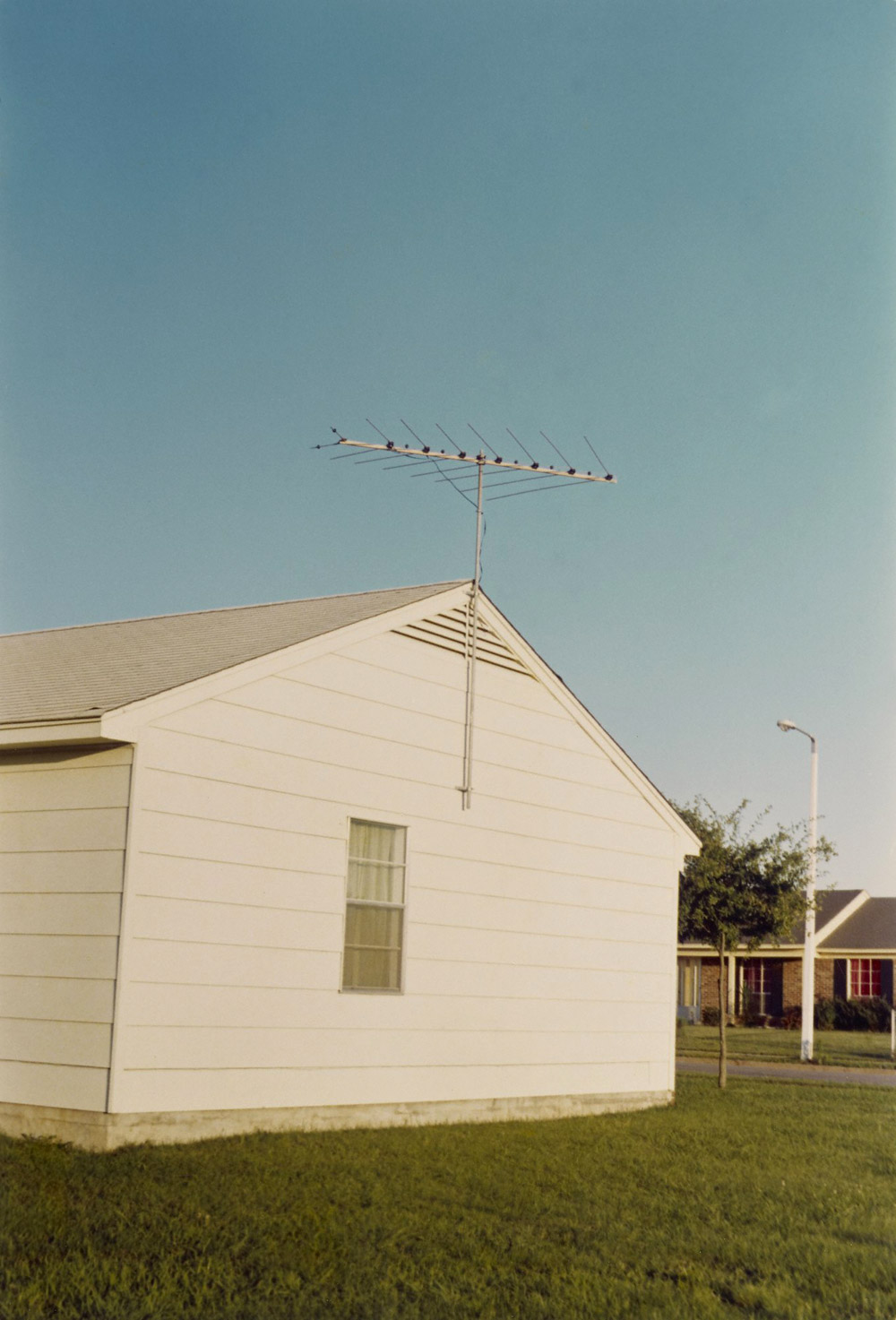
William Eggleston (American, b. 1939) '(Untitled)' Negative about 1967-1974; print 1974


William Eggleston (American, b. 1939)
(Untitled)
Negative about 1967-1974; print 1974
Chromogenic print
Image: 22.2 x 15.2cm
The J. Paul Getty Museum, Los Angeles
© Eggleston Artistic Trust


The J. Paul Getty Museum
1200 Getty Center Drive
Los Angeles, California 90049

Opening hours:
Tues – Friday 10am – 5.30pm
Saturday 10am – 8pm
Sunday 10am – 5.30pm
Monday closed

The J. Paul Getty Museum website

LIKE ART BLART ON FACEBOOK

Back to top

New photographic prize: The Prix Elysée with the support of Parmigiani Fleurier

Applications open: 3rd February 2014
Applications close: 25th April 2014


The Prix Elysée with the support of Parmigiani Fleurier


About the Prix Elysée

At the Musée de l’Elysée, we think that supporting photographers in the evolution of their career is as important as preserving their art for future generations. It is in a shared commitment to foster creativity and support the production of new work that the Musée de l’Elysée enters into a partnership with Parmigiani Fleurier to launch the Prix Elysée.

Who can apply

The prize is open to promising photographers or artists using photography, of all nationalities, who have already enjoyed their first exhibitions and publications. There is no imposed theme or preference for any particular photographic genre or technique. Applications are open from February 3 to April 25, 2014.

What can you win?

The winner and nominees of the Prix Elysée will all benefit from important exposure and the Museum’s expert guidance. The winner is invited to produce an original and new project as well as its related book. Both the project and book will be presented at one of the Musée de l’Elysée’s most important events, the Nuit des images.

How to apply

Photographers must be recommended by a reputed professional in the fields of photography, cinema, fashion, journalism, publishing or contemporary art. The Musée de l’Elysée will select eight nominees based upon their entry portfolios. Each will receive a contribution of CHF 5’000 towards the initial presentation of their project in a dedicated edition of the Prix Elysée magazine. This magazine will accompany the nominees’ complete portfolios in the final consideration before the jury of experts. The winner will receive CHF 80’000 to be divided between the completion of the proposed project and the publication of the accompanying book within one year. A curator from the Musée de l’Elysée will advise the winner throughout this process.

The call for applications will take place biennially. The first edition of the Prix Elysée is launched in February 2014 and concludes in June 2016.

Applicants may download the official rules for le Prix Elysée at www.prixelysee.ch.


Yves André. 'Musée de l'Elysée' Nd


Yves André
Musée de l’Elysée
Nd
© Yves André


Musée de l'Elysée logo

Musée de l’Elysée
Avenue de l’Elysée 18
CH-1014 Lausanne
Phone: +41 21 316 99 27

Musée de l’Elysée website

LIKE ART BLART ON FACEBOOK

Back to top

Exhibition: ‘Golden Years / Rob Hornstra’s Russia (and Oleg Klimov and Olga Chernysheva and Sarkis and Willie Doherty)’ at Huis Marseille – Museum for Photography, Amsterdam

Exhibition dates: 14th December, 2013 – 9th March, 2014

Curator: The museum


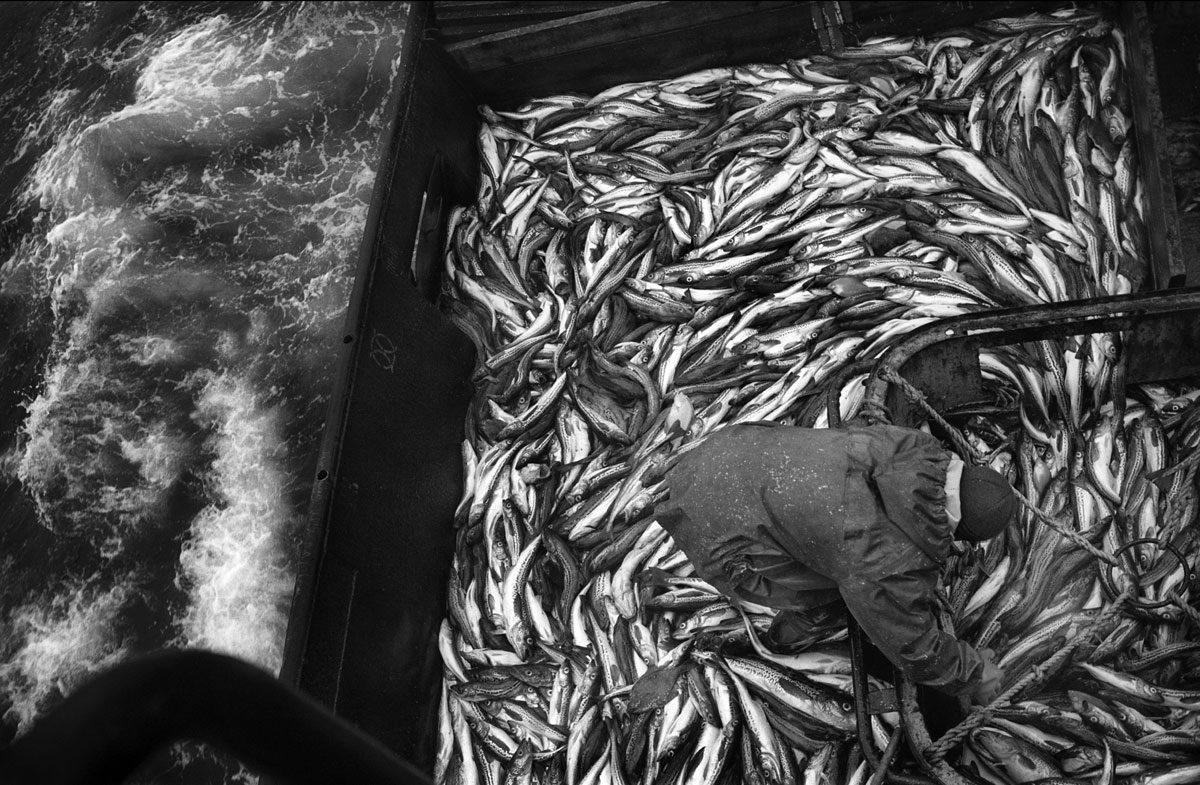
Oleg Klimov (Russian, b. 1964) 'Visser sorteert de vangst in het ruim. Ochotka Zee / Kamtsjatka' (Fisherman sorting the catch in the hold. Ochotka Sea / Kamchatka) Augustus 2007 from the exhibition 'Golden Years / Rob Hornstra's Russia (and Oleg Klimov and Olga Chernysheva and Sarkis and Willie Doherty)' at Huis Marseille – Museum for Photography, Amsterdam, December 2013 - March 2014


Oleg Klimov (Russian, b. 1964)
Visser sorteert de vangst in het ruim. Ochotka Zee / Kamtsjatka (Fisherman sorting the catch in the hold. Ochotka Sea / Kamchatka)
Augustus 2007
© Oleg Klimov


A very strange conglomeration of artists in this exhibition. Individually some interesting work, but not sure what the rationale was of putting them together…

Dr Marcus Bunyan


Many thankx to Huis Marseille – Museum for Photography for allowing me to publish the photographs in the posting. Please click on the photographs for a larger version of the image.


Oleg Klimov (Russian, b. 1964) 'Bootsman neemt douche op het dek van het vrachtschip 'Anatoli Tortsjinov'. Russische Verre Oosten / Stille Oceaan' (Boatswain takes shower on the deck of the freighter 'Anatoli Tortsjinov. Russian Far East / Pacific) July 2007


Oleg Klimov (Russian, b. 1964)
Bootsman neemt douche op het dek van het vrachtschip ‘Anatoli Tortsjinov’. Russische Verre Oosten / Stille Oceaan
(Boatswain takes shower on the deck of the freighter ‘Anatoli Tortsjinov. Russian Far East / Pacific)
July 2007
© Oleg Klimov


Oleg Klimov (Russian, b. 1964) 'Illegale krabvangst in de Ochtoka Zee / Kamtsjatka' (Illegal crab catch in the Ochtoka Sea / Kamchatka) Augustus 2007


Oleg Klimov (Russian, b. 1964)
Illegale krabvangst in de Ochtoka Zee / Kamtsjatka (Illegal crab catch in the Ochtoka Sea / Kamchatka)
Augustus 2007
© Oleg Klimov


Oleg Klimov: Along the shores of Russia

After years of reporting on the Caucasus, Central Asia and other hotbeds of unrest in the former Soviet Union, the Russian photographer Oleg Klimov went in search of the country’s ancient, but still unsettled relationship with water. In terms of land area, Russia remains the largest country in the world. Rivers and canals have been the most efficient transport routes since time immemorial, not only for traders and soldiers who had to traverse the country, but also for those whom tsars and, later, party leaders wanted to see exiled to its furthest reaches. Russians always sought ice-free harbours and seas from which to spread their wings still further. Nevertheless, having found open water they seldom crossed it, preferring to regard the coasts and shores as the fringes of their enormous realm. In recent years Klimov travelled by boat, or in his own yacht, along Russian waterways and seas. He visited the historic Gulag of the Siberian north, the fishermen of Kamchatka, the Pacific Ocean in the far east, the first Stalinist forced-labour camps below the White Sea, and settlements and military bases along the Volga. Klimov photographed playing children, burly fishermen, and those ‘typically Russian’ figures lying at the water’s edge that he says ‘are the epitome of unguardedness and openness – some of them are just drunk, though’.

Oleg Klimov (Tomsk/ Siberia, 1964) studied astrophysics at the University of Kazan but worked from 1991 onwards as a war photographer, including for the NRC Handelsblad. In 2004 Huis Marseille exhibited Oleg Klimov’s Legacy of an Empire. In December 2013, IKON TV will broadcast Letters to myself, a documentary by the Dutch/Russian film-maker Maja Novikova about Oleg Klimov’s life as a former war photographer.


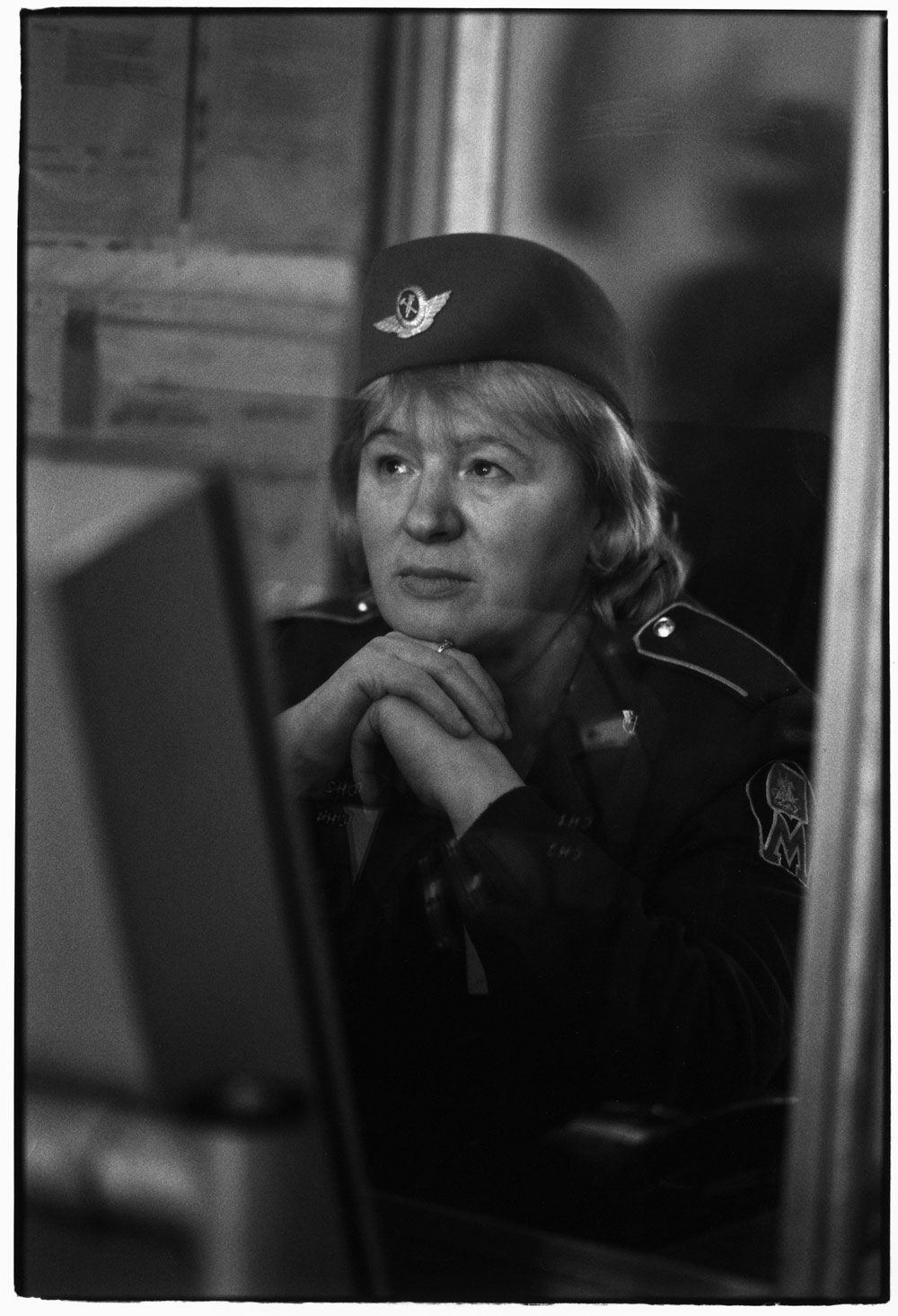
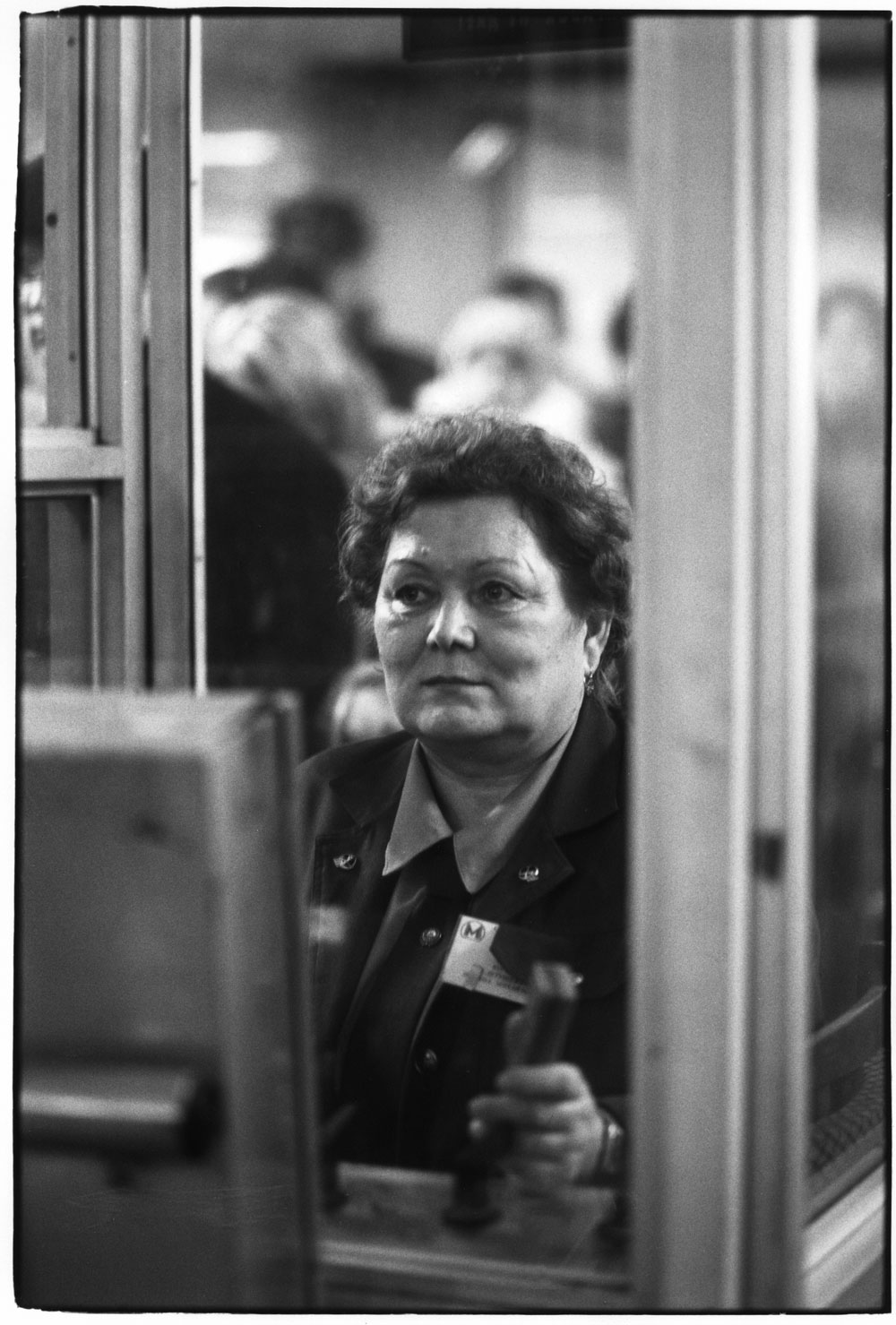
Olga Chernysheva (Russian, b. 1962) 'On duty' 2007


Olga Chernysheva (Russian, b. 1962)
On duty
2007
Courtesy of DIEHL Berlin


Olga Chernysheva (Russian, b. 1962) 'On duty' 2007


Olga Chernysheva (Russian, b. 1962)
On duty
2007
Courtesy of DIEHL Berlin


Olga Chernysheva (Russian, b. 1962) 'On duty' 2007


Olga Chernysheva (Russian, b. 1962)
On duty
2007
Courtesy of DIEHL Berlin


Olga Chernysheva: Windows and On Duty

With her gift for delicate, empathic observation Olga Chernysheva reveals art in the everyday. Her subjects are simple and unspectacular; they concern ordinary people and objects, and are devoid of any satirical or cynical commentary. Chernysheva’s work represents a new kind of realism. On Duty (2007) is a series of portraits of Moscow subway attendants, people who are ‘seen but not noticed’. It is their blank expressions – directed inward and sometimes upward – which particularly fascinated the artist. The video installation Windows (2007) – sixteen glimpses of interiors through the windows of Russian houses – is shown on iPads. Chernysheva examines the relationship between objects and figures, particularly in the ways people enter uneasy relationships with the spaces they occupy. For her, art is “a little office that conducts research into the poetic truth of life.”

Olga Chernysheva (Moscow, 1962) studied at the Gerassimov Institute for Cinematography in Moscow from 1981 to 1986 and at the Rijksakademie van beeldende kunsten in Amsterdam from 1995 to 1996. In 2013 she was given a solo exhibition, Compossibilities, at the Kunsthalle Erfurt.


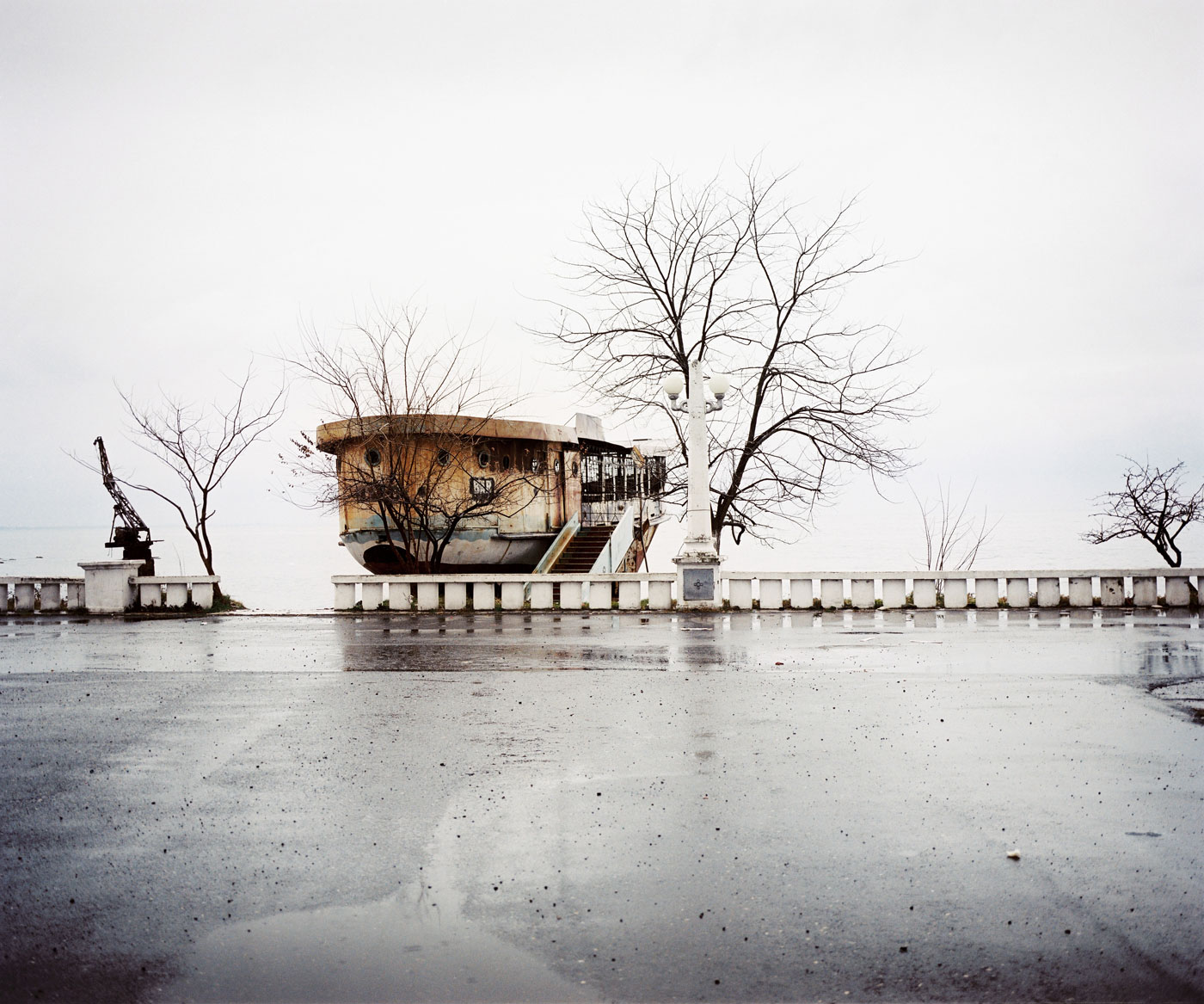
Rob Hornstra (Dutch, b. 1975) 'Sukhumi, Abkhazia' 2007


Rob Hornstra (Dutch, b. 1975)
Sukhumi, Abkhazia
2007
© Rob Hornstra / Flatland Gallery


Former restaurant at the Black Sea coast in the centre of Sukhumi, capitol of Abkhazia. The restaurant was destroyed during the Georgian-Abkhazian conflict in 1992-1993.


Rob Hornstra (Dutch, b. 1975) 'Beslan, North Ossetia, Russia' 2011


Rob Hornstra (Dutch, b. 1975)
Beslan, North Ossetia, Russia
2011
© Rob Hornstra / Flatland Gallery


The school hostage crisis in Beslan (North Ossetia) in 2004 caused 334 deaths, including 186 children. An unwashed shirt smeared with blood has been kept as a last physical memory to one of the children.


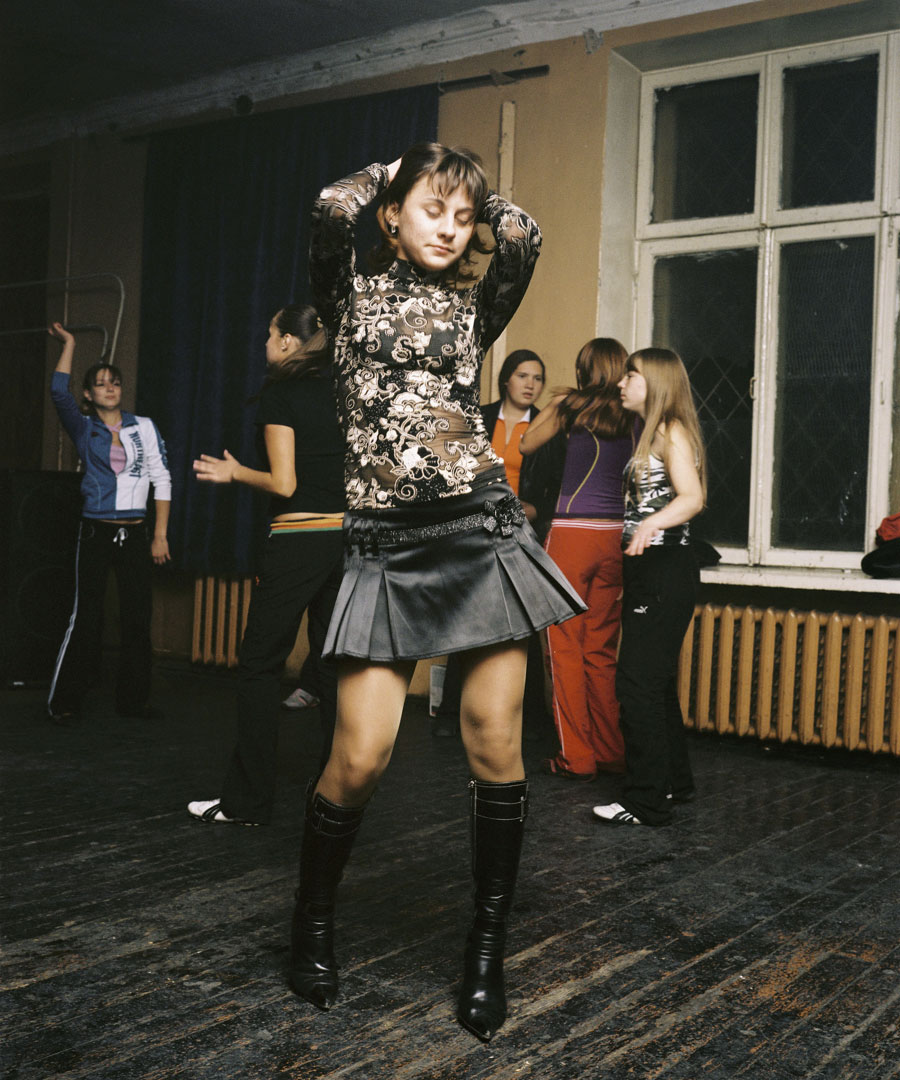
Rob Hornstra (Dutch, b. 1975) 'Angarsk, Russia' 2007


Rob Hornstra (Dutch, b. 1975)
Angarsk, Russia
2007
© Rob Hornstra / Flatland Gallery


Masha dances at the weekend disco in the cultural centre of Cement Town, a suburb of Angarsk.


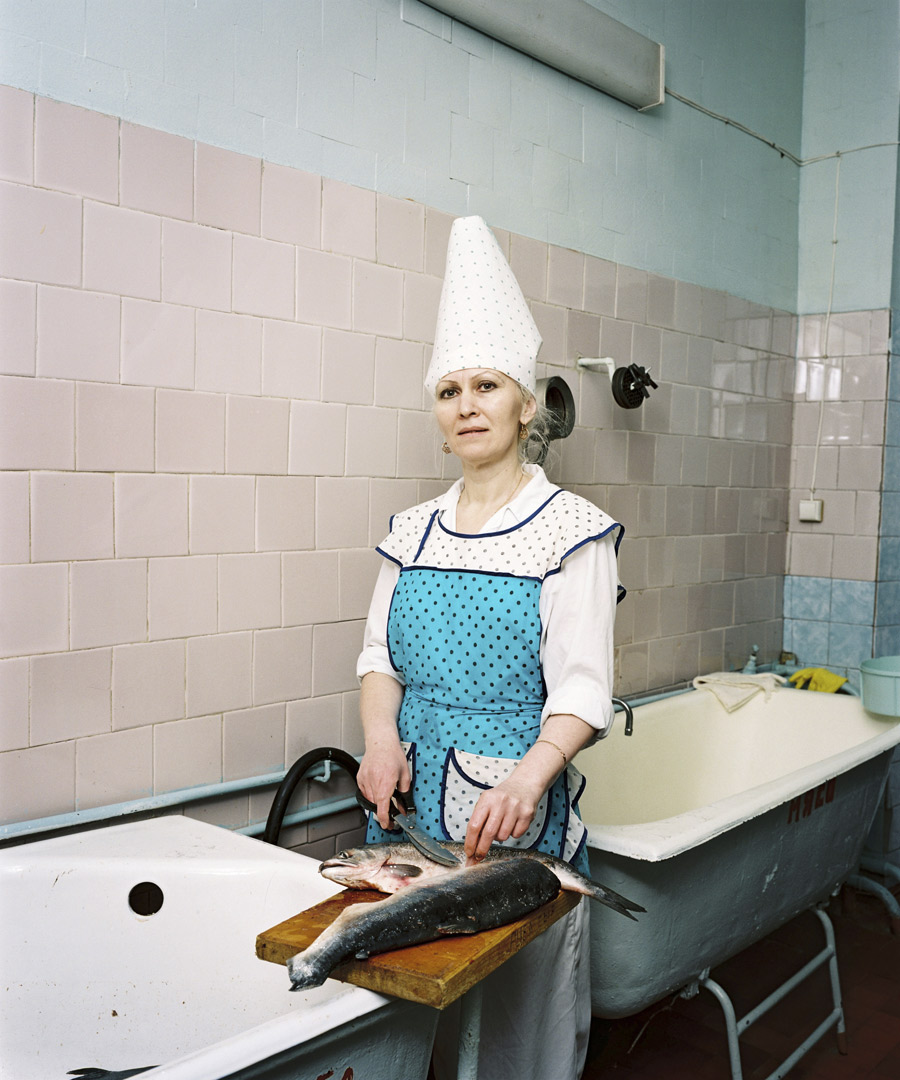
Rob Hornstra (Dutch, b. 1975) 'Angarsk, Russia' 2008 from the exhibition 'Golden Years / Rob Hornstra's Russia (and Oleg Klimov and Olga Chernysheva and Sarkis and Willie Doherty)' at Huis Marseille – Museum for Photography, Amsterdam, December 2013 - March 2014


Rob Hornstra (Dutch, b. 1975)
Angarsk, Russia
2008
© Rob Hornstra / Flatland Gallery


Employee preparing fish in the cement factory’s canteen.


Golden Years / Rob Hornstra’s Russia

In the wake of an eventful Netherlands-Russia year, from 14 December 2013 Huis Marseille is devoting several of its exhibition galleries to a photographic examination of the intrinsically Russian soul. The Dutch photographer Rob Hornstra lays bare the Russian soul in a thousand details: the erratically-applied false eyelashes on the flamboyant Natalya Shorogova, floor supervisor at Hotel Zhemchuzhina in Sochi; the educational ‘Cosmonautics’ museum at Orlyonok, a children’s summer camp; in nostalgic found photos, or the simple image of plate of prison food.

After his exhibition in Moscow was cancelled a few weeks ago, photographer Rob Hornstra’s Sochi Project has been continuously in the news. Since it was announced that the 2014 Winter Olympics would be held in Sochi, this subtropical Black Sea resort has turned into a huge building site; the 2014 Winter Olympics have already been declared the most expensive ever. This makes Sochi the perfect subject for Rob Hornstra, whose preference is for long-term projects that allow him, first and foremost, to tell stories and overturn prejudices. Together with writer and film-maker Arnold van Bruggen, Hornstra has spent five years documenting this region of the Caucasus. But controversial Sochi is only one of Hornstra’s Russian projects. Huis Marseille will be showing a large retrospective of his work in Russia over the last ten years. While Hornstra’s photographs are in the documentary tradition, he has an entirely original style and his images are marked by a narrative and painterly character. In illustrative themes, the typical inhabitants of various Russian regions are paraded before us: veterans, junkies, artisans, patients, prostitutes, Muslims, children, lovers, housewives, and artists. It is the documentation of a love-hate relationship with a colourful country and its remarkable people.

Rob Hornstra (b. 1975) made his name with long-term projects in Iceland, the Netherlands, Russia and elsewhere. In 2004 he graduated cum laude from the HKU with his book Communism & Cowgirls [Tsjeljabinsk-Russia], whose independent print run also won him the Dutch Photo Academy Award. With the help of crowdfunding, Hornstra is now working together with writer Arnold van Bruggen on a number of books connected with The Sochi Project. The last of these publications, An Atlas of War and Tourism in the Caucasus (Aperture), will be for sale in the museum shop in November 2013.

Text from the Huis Marseille – Museum for Photography website


Rob Hornstra (Dutch, b. 1975) 'Chelyabinsk, Russia' 2003


Rob Hornstra (Dutch, b. 1975)
Chelyabinsk, Russia
2003
© Rob Hornstra / Flatland Gallery


Elfrem and Sveta near a lake in Chelyabinsk, close to the Kurchatov monument, a place where alternative people gather in Chelyabinsk.


Rob Hornstra (Dutch, b. 1975) 'Kuabchara, Abkhazia' 2009


Rob Hornstra (Dutch, b. 1975)
Kuabchara, Abkhazia
2009
© Rob Hornstra / Flatland Gallery


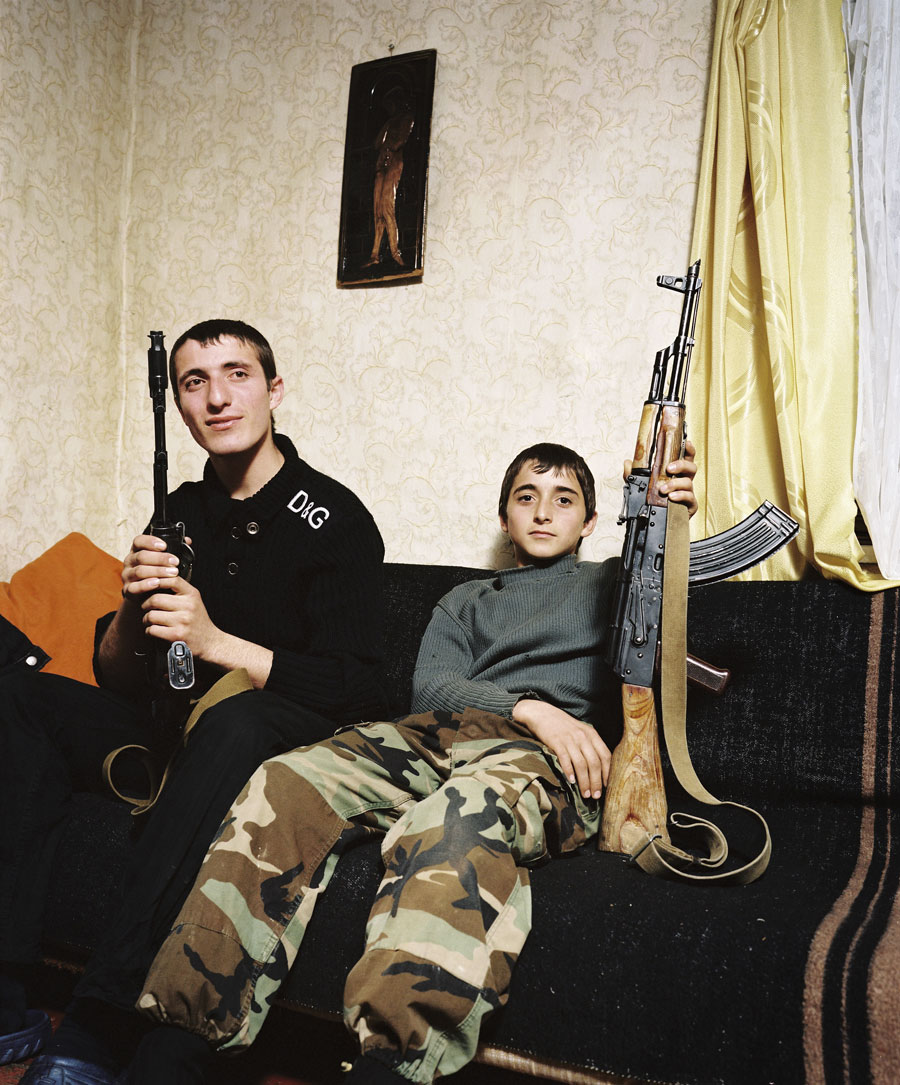
Brothers Zashrikwa (17) and Edrese (14) pose proudly with a Kalashnikov on the sofa in their aunt and uncle’s house. They live in a remote mountainous region on the border between Abkhazia and Georgia.


Interview with Rob Hornstra

Nanda van den Berg: Why Russia?

Rob Hornstra: When I was at the academy I was interested in Russia because at that time the country was undergoing rapid transition. In the late 1990s Russia was broke, literally bankrupt, and people stood in lines for a piece of bread; by 2004 the country was going all out for hard-core capitalism and making a mint out of its natural resources. The transition from being a country in ruins to being a country rebuilding itself at a crazy speed, with young people suddenly having access to the rest of the world – something their parents and forefathers had never had – I thought that was interesting. I decided to research into it, and especially to look into how the youngest generation, in their early 20s, were reacting to the new developments. The fact that I then spent ten years working there is probably more because of my own aberrant nature; wherever I go, I get more and more interested in it. There were more subjects I wanted to research in Russia, so I went back, and every time I went back there were more things I wanted to know about it. So I just got deeper and deeper into the material, and it turned into ten years’ work. This might be the end of it, though.

NvdB: Did you always have a writing partner, like Arnold [van Bruggen]?

RH: In 2003, my last academic year but one, when I made the first trip to Russia, I went on my own and wrote everything myself. The first book I made, Communism and Cowgirls, has some text; the photographs are interspersed with quotes from students in Chelyabinsk. I was working the same way as I do now, really, but without a writer, because I couldn’t afford one, and no-one wanted to come along. Obviously, I’d only just started out. In 2007 I went on my own as well. It’s only on the the last two trips, for the book 101 Billionaires, that was completed in 2008, that I did it together with someone else.

NvdB: How long does that kind of trip last?

RH: The first one, in 2003, took exactly a month, all 31 days in May. And for the Sochi project, too, Arnold and I were travelling for about three and a half weeks. For 101 Billionaires I made trips that lasted three or four weeks. So the trips always take about a month, and that’s a period that has a sort of maximum energy and concentration span for me. At the end of the month I’m utterly exhausted, and I have a huge pile of undeveloped films and stuff like that, so I just have to go home.

NvdB: So how many of those months can you fit into a year? You work in projects, don’t you – what about repeat visits?

RH: For the Sochi project we made two big trips a year. Every now and then there was a small research trip, maybe ten days, for a magazine or a newspaper, but in principle we made two big, proper trips a year. That said, in 2007 I went to Russia four times.

NvdB: Is there a fixed pattern to those journeys? I see certain lines developing in your work. You return to certain places and people. How does that work?

RH: The whole month is just work, work, work. That’s all we do, and it’s how it started in 2003. I would go somewhere and realise that every second I had there was costing loads of money, so the only thing to do was work. Even if ‘work’ meant sitting at a table socialising. It might seem like relaxing, but in fact it’s all part of the work, because we use everything we encounter. Once I’m in Russia my radar never switches off. I try to see everything in the light of the documentary we’re making. And we plan our days. The last year of the Sochi project – and we’d planned that in 2009 – was the year of ‘revisiting people’. In 2013 we looked up many of those we’d met earlier in the project, to see how they were doing. That’s a really important part of our work – documenting the course of time, because it says something about the region or the area you’re working in.

NvdB: And how do you approach the people you’d like to have pose for you? Is it easy?

RH: Well, people do say no sometimes, even in Russia. But in practice we’ll be out and about and we’ll just start chatting to people. It’s not like we have a plan or a gimmick… I think in our case it’s just about giving it a go, getting out and about, knocking on doors and approaching lots of people. Bit by bit you make progress, and a lot of it is by word of mouth. We’ll often make early contact with students from the local university. Then we’ll go to the English classes and meet local youngsters and they’re generally happy to put us in touch with granddads and grandmas and there’s usually a party going on somewhere. It boils down to just going everywhere; the rest pretty much happens by itself.

NvdB: So do the students mediate for you?

RH: A student can also be an assistant, and arrange all sorts of thing for us, but then of course we have to pay them. We’re always looking for local assistants, and they can be students. We once had an English teacher, who took two weeks’ holiday so he could go everywhere with us. But as long as they speak English and want to help, it could be anyone.

NvdB: Do neither of you speak Russian, then?

RH: I speak reasonably good Russian – but speaking Russian is harder than understanding it, and we both understand it reasonably well. We like to keep that under our hats – it’s very useful to be able to know what people are saying about you, particularly if you’ve been arrested and you’re in a police station. We don’t use our Russian to have conversations. It’s not good enough for that, and we’d much rather have a local intermediary anyway.

NvdB: So you’ve made your contacts. How do you approach your work? You practice ‘slow photography’ and use heavy cameras, right?

RH: I always work with two cameras, one medium-format camera and one large-format camera, together with a large studio flash: a really solid, powerful piece of equipment. The assistant or Arnold carries the flash, and that’s what makes it ‘portable’ and means it can go everywhere with us. Then I choose which camera I’m going to use. There’s no real pattern to that; I make landscape photos in medium format and in large format, but I also make portraits in medium format and in large format. When you work with such a big flash, and a medium-format or large-format camera, then you’re obviously present in the crowd, or in someone’s home, and there’s absolutely no way people won’t see you as a photographer. I’m so conspicuously present that it’s simply impossible to ignore me or pretend that I can’t be seen. And the idea behind that – that’s why I use such a big studio flash, and use studio cameras too, actually – is that I see the place I’m in as a sort of studio. In fact I use the world as a studio space, and the people I want to take pictures of as my models. What I’m trying to achieve with this working method is that the photograph rises above the level of a snapshot or visual document, and – I know this sounds a bit vague – that it becomes a really strong image, one that endures, and intrigues people. I’m trying to get more and more people interested in the story behind the image. And I’m convinced that if you use really powerful photographs – if you use photography in the right way – then you can interest new people in photography, but above all, in the stories behind the photographs, and that’s actually my main aim.

NvdB: Did you develop this method mostly in Russia, or did it arise earlier, in your study years?

RH: It developed during my time at the art academy. My project Communism and Cowgirls was made using the same materials, the same equipment, in the same style, and with the same underlying ideology. I’ve noticed that the way I look at things has gradually changed, but that hasn’t affected my intentions, or my convictions about what you can do with photography, at all. The reason I became a photographer is the same, but the way I look at things has changed.

NvdB: In what way?

RH: I think I mentioned that when I was in Russia in 2003 I made absolutely no landscape photos, and only one photograph in landscape mode. The whole book was filled with photos in portrait mode. The ratio is now 50:50 but that was never a conscious decision; I never made an effort to make that happen. Perhaps you change as a person, or something arises in you which brings about changes by itself.

NvdB: Many of the photos in your series supply contextual information – like the plate of food, for instance – so wouldn’t landscapes do the same sort of thing, to show where these people lived?

RH: Yes, and the strange thing is that in 2003 I was already making many photographs of interiors, and yes, of lots of small objects, but no landscapes – and I couldn’t say why. It just didn’t occur to me. If I look back now, I miss the landscapes that I didn’t take for the 2003 series. But the fact is that the landscapes came later, perhaps in Iceland. I think landscapes can sometimes say an enormous amount about a region, or about the people who live there. And that can make a significant contribution. But I just didn’t make any, and I took all my photos in portrait mode. Right now I couldn’t say why.

NvdB: Then there’s the rest of your aesthetic: your use of colour, the fact that they’re always printed on matt paper… How did that come about? Did you have any examples you wanted to copy, or photographers whose work you particularly admired?

RH: I do admire a number of photographers, and have done so since my time at the art academy, so my style may have had its roots there. I’d found my style by the time I graduated, but a funny thing happened in 2003 when I got back from my first trip to Russia. I went to the academy to make some contacts prints. I was standing in the colour darkroom making the prints when a classmate came by and said “Your work looks a lot Adam Broomberg and Oliver Chanarin’s.” Now in the meantime their work has changed a lot, but they came out of a hardcore documentary tradition… well, perhaps ‘hardcore’ isn’t quite the right word. Are you familiar with their background? They ran Colors Magazine for a long time, until 2005, and only after that did they go in an entirely autonomous direction; up to that point they did just what I’m doing now, more or less. My classmate knew about Colors Magazine and said: you should check it out, because your work really looks like theirs. So I saw Colors Magazine, and I bought their books, and I thought: this is really weird, it’s exactly what I want to do. Everything those two had made, I thought it was terrific. And there’s a little book called Mister Mkhize’s portrait and other stories from the new South Africa – something like that, I’d have to look it up – very cheap book, you can buy it anywhere on the internet for ten or twenty euros. I thought that book was great, because of its beautiful rhythm and the balance between photography and text. The text is continuous, and the photography also forms a continuous story, and the funny thing is that from time to time the text links directly to a photograph; but sometimes the text is opposite the appropriate photograph, and sometimes the text just goes its own way. And I thought: that’s what I want to do, they’re doing just what I’ve got in mind. So they were a source of inspiration from that moment on, in everything I did.

NvdB: But you don’t seem to have had the classic heroes – Walker Evans, or August Sander, or…

RH: Well, I was actually a bit of a difficult customer at the academy. The teachers rolled out the icons, people like Walker Evans and Cartier Bresson, and I did my level best to feel admiration for them. And I do think Walker Evans is a fantastic photographer. But right from the start I didn’t like Cartier Bresson at all. I thought then, and I think now, that his work is heavily overrated. I thought Walker Evans was definitely very good, but for some reason I have a problem with black and white photography when there is a large time interval – I have a problem identifying with it. That’s why it can’t be an inspiration to me, although it doesn’t change the fact that Walker Evans is definitely a hero of mine, and Diane Arbus is an even bigger hero. There are some older photographers amongst them who I think are really good, people like William Eggleston. Perhaps those photographers were an inspiration… but I would rather name some of today’s photographers.

NvdB: Do you think that if you go somewhere new to take photographs – and perhaps you will, because you already said that you might be finished with Russia – that you might start developing a new idiom, or start including new elements? Do you think your style is strongly inspired by Russia itself?

RH: No, because I also have the same style in Iceland or in the Netherlands. I don’t consciously employ a specific style; I just have the idea that what I do closely reflects who I am as a person, and that any other style would come less naturally to me. The country I happen to be in has absolutely no influence on that, but I do think that small changes in style can occur, because as a person you also go through occasional changes. In the year to come I want to have the time to reflect on what I’m doing. I can’t imagine I’ll be making any great changes. Things just happen more gradually with me. For instance, I was fascinated to see how Broomberg & Chanarin made documentary work in 2004-2005 and then suddenly switched to autonomous work. That’s when I think: what’s happening to them? I think my own trajectory is a more gradual one.

NvdB: So do you have any ideas where your trajectory might be headed in the future?

RH: That’s a rather difficult choice, because analogue photography seems to be dying out – I’m increasingly coming round to that idea – and if it doesn’t disappear altogether it’s going to be a very expensive business. I don’t make all that much money, so it’s going to be hard to keep doing analogue photography, and I’m not all that keen on digital photography. I’m rather inclined to go even more extreme with the analogue work, like with an 8 x 10 inch camera, and focus only on even more powerful, more extreme, stronger images, and let the rest go.

NvdB: And the subject?

RH: I’m still thinking hard about that. I can see myself just staying and working here in the Netherlands for a while. For ages I’ve wanted to do something with my own family, with the area they come from, south-west Friesland; that would be an interesting place to comb through. On the other hand I’d like to go back to Russia and head towards South East Asia, through Central Asia, with all those authoritarian regimes in Uzbekistan and Kirgizia. You end up in China, Vietnam, Cambodia, those sorts of countries, and that’s a fascinating part of the world. So I’ve got different places in mind, some close to home and some a long way away. Anything goes, really. The world’s my oyster.

NvdB: And new subjects are always possible.

RH: I don’t want to make any hasty decisions. Over the last three or four years I’ve been non-stop running, I’ve had to keep going, keep going, keep going. I’d really like to have some time again to see new books, visit exhibitions, get lots of new inspiration and ideas. I don’t want to start out by keeping up this tempo. I think it would be much healthier to take it easy for a while.

NvdB: The Sochi project was rather inclined towards ‘commentary’. Perhaps you’d like to do something with less commentary – or are you in fact always looking for it?

RH: Yes, I’m afraid that’s exactly what I want! I think there are already far too many people who never comment, and I feel the lack, I miss the nuance and the depth. I think people shout a lot but say very little, and I think there is too little investigative journalism. Art and investigative journalism are both dying out for lack of funding, and I think that puts the world at a great risk. People – and governments – don’t seem to understand the importance of free artistic expression and the freedom to carry out in-depth journalism, and that it’s a real threat to democracy if they no longer take place. These days all these things are being swept into a corner and then thrown away, especially in journalism, but also in the arts, and that worries me. So if you’re asking me whether I want to make less comment in the future, then the answer’s no, absolutely not. I want to stay involved, stay concerned about everything that’s happening in the world. I think it’s important to get people thinking, and I think it’s essential to sometimes confirm preconceived ideas and sometimes to totally negate them. I don’t think that’ll ever disappear from my life.

NvdB: Is there anything you’d like to add?

RH: Yes, and it has to do with the fact that I work in the Netherlands and live in a Vogelaarwijk, an official ‘problem neighbourhood’, and started observing my neighbours. Because the assumption is that only antisocial types live in a Vogelaarwijk, and that bothers me. I want to ask them: ever been there for yourself? Ever knock on one of their doors? It’s the same with Islam. Lots of people have a low opinion of Muslims, but go and knock on a door, go and have a look in a mosque – they invariably welcome you with open arms. That’s want I want to do with my work. I have a huge ambition to get people thinking and to confront them, acquaint them with other habits and customs; with things they might never have expected, or had never seen before. In Sochi, the project we did in the North Caucasus, you can see this very clearly. If we hadn’t done it, there would probably have been precious little interest in its violation of human rights and that sort of thing. I want to keep adding to that knowledge, and I think it’s very important to stay focussed on it.

Interview from the Huis Marseille – Museum for Photography website


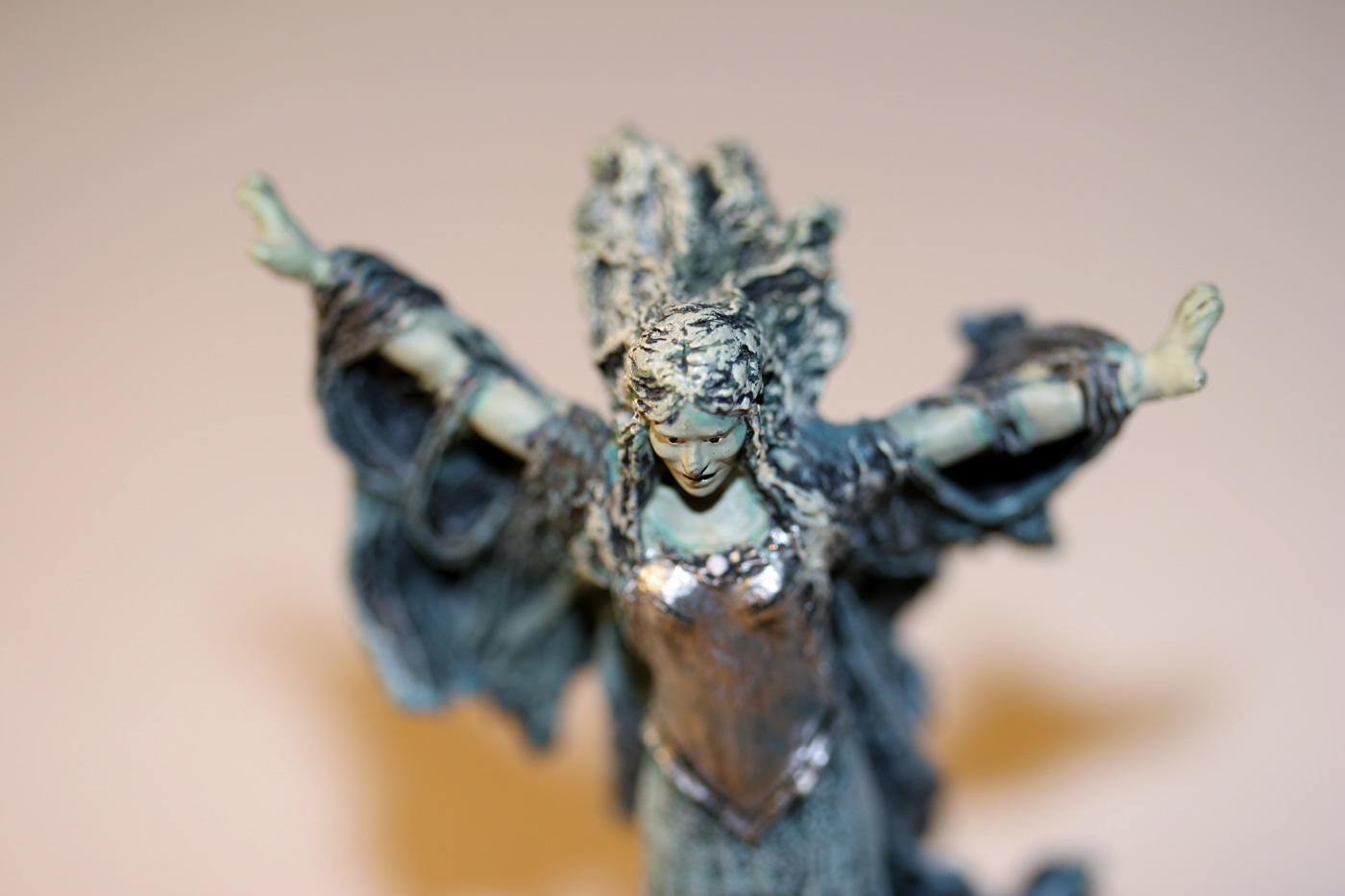
Sarkis (Turkish, b. 1938) 'Galadriel' 2008


Sarkis (Turkish, b. 1938)
Galadriel
2008
C-print
30 x 45cm
Courtesy of Galerie De Zaal, Delft


Sarkis (Turkish, b. 1938) 'Gimli' 2008


Sarkis (Turkish, b. 1938)
Gimli
2008
C-print
30 x 45cm
Courtesy of Galerie De Zaal, Delft


Sarkis (Turkish, b. 1938) 'Legolas' 2008


Sarkis (Turkish, b. 1938)
Legolas
2008
C-print
30 x 45cm
Courtesy of Galerie De Zaal, Delft


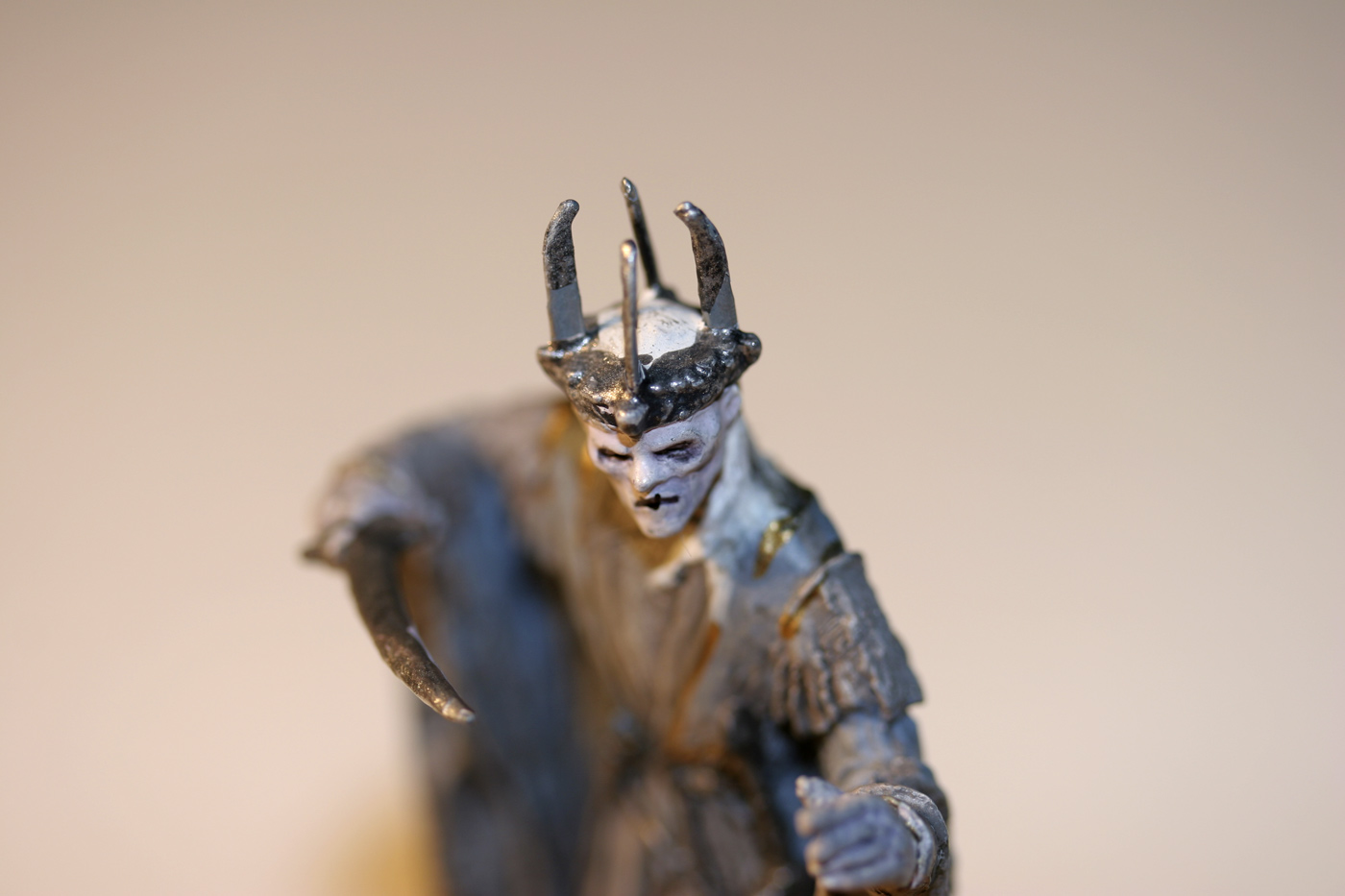
Sarkis (Turkish, b. 1938) 'The Witch-king of Angmar' 2008


Sarkis (Turkish, b. 1938)
The Witch-king of Angmar
2008
C-print
30 x 45cm
Courtesy of Galerie De Zaal, Delft


Sarkis: Portraits of the Ring

The elves, orcs, magicians and hobbits populating J.R.R. Tolkien’s saga The Lord of the Rings form a unique culture in which the forces of good and evil are engaged in a constant struggle for supremacy. This good and evil are also depicted in the expressions given to the tiny, mass-produced figurines of Ring characters, so the expressions of these figurines allow others to communicate the nature of the struggle between good and evil. Sarkis collected Ring figurines and used them to create a series of 54 Ring portraits, photographing them in an analytic manner so as to sublimate their powers. Sarkis focuses on their faces, which gaze downwards; we cannot see what they see. This fusion of the exotic and the contemporary is characteristic of Sarkis’ entire oeuvre. Huis Marseille is showing 30 of his Ring portraits; the rest can be seen in a video, made specially for this exhibition by Emma van der Put, which describes the seeds from which these artworks first grew. 

Sarkis (Istanbul, 1938, lives and works in Paris) was invited by the Museum Boijmans van Beuningen in 2012 to transform the Submarine Wharf in Rotterdam harbour into a new experiential world, Ballads. Sarkis’ work has been exhibited internationally since the 1970s, including at the Venice Biennale and in Istanbul. Over the last four months the young video artist Emma van der Put (1988, Den Bosch) also made four videos of the last stages of Huis Marseille’s rebuilding activities and its preparations for the exhibition The rediscovery of the world.


Willie Doherty (Northern Ireland, b. 1959) 'TO THE BORDER' From the series 'A Fork In The Road' 1986-2012


Willie Doherty (Northern Ireland, b. 1959)
TO THE BORDER
From the series A Fork In The Road 1986-2012
Black and white fibre photograph mounted on aluminium
122 x 183cm
Collection Huis Marseille


Willie Doherty (Northern Ireland, b. 1959) 'Seepage' 2011


Willie Doherty (Northern Ireland, b. 1959)
Seepage
2011
C-print mounted on aluminium faced with non-reflective Plexiglas
122 x 152cm
Collection Huis Marseille


Willie Doherty and the Huis Marseille collection

The museum galleries devoted to Huis Marseille’s own collection include two large, recently-acquired works by the Northern Ireland photographer Willie Doherty (Derry, 1959). At this year’s Art Basel Doherty was represented by his compelling video Remains (2013), drawn from ‘a body of work that meditates upon the irrefutable traces of past events that will not disappear, that resurfaces and cannot be forgotten.’ The two photographs, Seepage and To the Border, A Fork in the Road, were made at the end of the last century but first printed only very recently. Here, along the fracture line of escalating violence between Irish Catholics and Protestants, Doherty traces and articulates the scars in the city and the country in an understated but powerful way. Willie Doherty is currently the subject of a retrospective exhibition in Derry, Unseen, which will be shown in Tilburg’s De Pont museum of contemporary art in 2015.


Huis Marseille – Museum for Photography
Keizersgracht 401
1016 EK Amsterdam

Opening hours:
Tuesday – Sunday
11 – 18 hr

Huis Marseille – Museum for Photography website

LIKE ART BLART ON FACEBOOK

Back to top

Exhibition: ‘Everyday Epiphanies: Photography and Daily Life Since 1969’ at The Metropolitan Museum of Art, New York

Exhibition dates: 25th June, 2013 – 26th January, 2014

 Curator: Doug Eklund, curator in the Department of Photographs


John Baldessari (American, 1931-2020) 'Hands Framing New York Harbor' 1971


John Baldessari (American, 1931-2020)
Hands Framing New York Harbor
1971
Gelatin silver print
25.4 x 18cm (10 x 7 1/16 in.)
Purchase, The Horace W. Goldsmith Foundation Gift, through Joyce and Robert Menschel, 1992
Shunk-Kender © Roy Lichtenstein Foundation


Epiphany: a moment in which you suddenly see or understand something in a new or very clear way.

Stephen Shore’s photographs are the most insightful epiphanies in this posting, picturing as they do “what he ate, the rest stops he visited, the people he met.” In other words, the wor(l)d as he saw it.

Dr Marcus Bunyan


Many thankx to The Metropolitan Museum of Art, New York for allowing me to publish the photographs in the posting. Please click on the photographs for a larger version of the image.


“With the unspoken rules that exhibitions in the Met’s contemporary photography gallery must be drawn exclusively from the museum’s permanent collection and be organised as surveys of the period from the late 1960s to the present, it’s no wonder that these long running shows are often so broad that their themes seem to dissolve into edited collections of everything. The newest selection of images is tied up under the umbrella of “everyday epiphanies”, a construct that implies a delight in the ordinary, the quotidian, or the familiar, but in fact, reaches outward beyond these routine boundaries to works that have a wide variety of conceptual underpinnings and points of view. With some effort, it’s possible to follow the logic of why each piece has been included here, but when seen together, the diversity of the works on view diminishes the show’s ability to deliver any durable insights… The works that function best inside this theme are those that capture moments of unexpected, elemental elegance, often as a result of the way the camera sees the world.”


Loring Knoblauch. “Everyday Epiphanies: Photography and Daily Life Since 1969 @Met,” on the Collector Daily website August 14, 2013 [Online] Cited 20/01/2014. Used under fair use conditions for the purposes of education and research


Martha Rosler (American, b. 1943) 'Semiotics of the Kitchen' 1975 (still)


Martha Rosler (American, b. 1943)
Semiotics of the Kitchen (still)
1975
Video
Purchase, Henry Nias Foundation Inc. Gift, 2010
Courtesy Electronic Arts Intermix (EAI), New York


Jan Groover (American, 1943-2012) 'Untitled' 1980


Jan Groover (American, 1943-2012)
Untitled
1980
Platinum print
19 x 24cm (7 1/2 x 9 7/16 in.)
David Hunter McAlpin Fund, 1981
The Metropolitan Museum of Art
© Jan Groover


Carrie Mae Weems (American, b. 1953) 'Untitled (Man Smoking)' 1990


Carrie Mae Weems (American, b. 1953)
Untitled (Man Smoking)
1990
From the Kitchen Table Series
Gelatin silver print
Image: 71.8 × 71.8cm (28 1/4 × 28 1/4 in.)
Courtesy of the artist and Jack Shainman Gallery, New York


Erica Baum (American, b. 1961)  'Buzzard' 2009


Erica Baum (American, b. 1961) 
Buzzard
2009
Inkjet print
22.9 x 22.9cm (9 x 9 in.)
Purchase, Marian and James H. Cohen Gift, in memory of their son, Michael Harrison Cohen, 2012
The Metropolitan Museum of Art
© Erica Baum


Since the birth of photography in 1839, artists have used the medium to explore subjects close to home – the quotidian, intimate, and overlooked aspects of everyday existence. Everyday Epiphanies: Photography and Daily Life Since 1969, an exhibition of 40 works at The Metropolitan Museum of Art, presents photographs and videos from the last four decades that examine these ordinary moments. The exhibition features photographs by a wide range of artists including John Baldessari, Philip-Lorca diCorcia, Fischli & Weiss, Jan Groover, Robert Gober, Nan Goldin, Elizabeth McAlpine, Gabriel Orozco, David Salle, Robert Smithson, Stephen Shore, and William Wegman, as well as videos by Martha Rosler, Ilene Segalove, Brandon Lttu, and Svetlana and Igor Kopytiansky.

Daily life, as it had been lived in Western Europe and America since the 1950s, was called into question in the late 1960s by a counterculture that rebelled against the prior “cookie-cutter” lifestyle. Everything from feminism to psychedelic drugs to space exploration suggested a nearly infinite array of alternative ways to perceive reality; and artists and thinkers in the ’60s and ’70s proposed a “revolution of everyday life.” A four-part work by David Salle from 1973 exemplifies the artist’s flair for piquant juxtaposition at an early stage in his career. In depicting four women in bathrobes standing before their respective kitchen windows in contemplative states, Salle goes against the grain of feminist orthodoxy – revealing a penchant for courting controversy that he would expand in his later paintings; pasted underneath the black-and-white images of the women are brightly coloured labels of their preferred coffee brands, with the arbitrarily differentiated brands signifying an insufficient substitute for true freedom in the postwar era. Martha Rosler’s bracingly caustic video Semiotics of the Kitchen and Ilene Segalove’s wistfully funny The Mom Tapes complete a trio of works investigating the role of women in a rapidly changing society.

In the 1980s, artists’ renewed interest in conventions of narrative and genre led to often highly staged or produced images that hint at how even our deepest feelings are mediated by the images that surround us. In the wake of the economic crash of the late 1980s, photographers focused increasingly on what was swept under the carpet – the repressed and the taboo. Sally Mann’s Jesse at Five (1987) depicts the artist’s daughter as the central figure, half-dressed, dolled-up, and posed like an adult. Mann often created these frank images of her children and caused some controversy during the culture wars of the late 1980s and early 1990s. However, her photographs of her children are remarkable for the artist’s assured handling of a potentially explosive subject with equanimity and grace.

During the following decade, artists created photographs and videos that confused the real and the imaginary in ways that almost eerily predicted the epistemological quandaries posed by the digital revolution. Meanwhile, a trio of recently made works by Erica Baum, Elizabeth McAlpine, and Brandon Lattu combine process and product in novel ways to comment obliquely on the shifting sands of how we come to know the world in our digital age.

Press release from The Metropolitan Museum of Art website


Jean-Marc Bustamante (French, b. 1952) 'Untitled' 1997


Jean-Marc Bustamante (French, b. 1952) 
Untitled
1997
Chromogenic print
40 x 59cm (15 3/4 x 23 1/4 in.)
Purchase, The Horace W. Goldsmith Foundation Gift, through Joyce and Robert  Menschel, 1999
The Metropolitan Museum of Art
© Jean-Marc Bustamante


Nan Goldin (American, b. 1953) 'Heart-Shaped Bruise, NYC' 1980


Nan Goldin (American, b. 1953)
Heart-Shaped Bruise, NYC
1980
Silver dye bleach print
50.8 x 60.96cm (20 x 24 in.)
Purchase, The Horace W. Goldsmith Foundation Gift, through Joyce and Robert  Menschel, 2001
The Metropolitan Museum of Art
© Nan Goldin, Courtesy Matthew Marks Gallery, New York


Larry Sultan (American, 1946-2009) 'My Father Reading the Newspaper' 1989


Larry Sultan (American, 1946-2009)
My Father Reading the Newspaper
1989
Chromogenic print
Stewart S. MacDermott Fund, 1991
© Larry Sultan


Gabriel Orozco (Mexican, b. 1962) 'Caja vacia de zapatos' (Empty shoebox) 1993


Gabriel Orozco (Mexican, b. 1962)
Caja vacia de zapatos (Empty shoebox)
1993
Silver dye bleach print
31.8 x 46.4cm (12 1/2 x 18 1/4 in.)
Gift of the artist, 1995
The Metropolitan Museum of Art
© Gabriel Orozco


Gabriel Orozco (Mexican born Jalapa Enriquez, b. 1962) 'Vitral' 1998


Gabriel Orozco (Mexican, born Jalapa Enriquez, b. 1962)
Vitral
1998
Silver dye bleach print
40.6 x 50.8cm (16 x 20 in.)
Purchase, The Judith Rothschild Foundation Gift, 1999
© Gabriel Orozco


Stephen Shore (American, b. 1947) 'Oklahoma City, Oklahoma' July 9, 1972


Stephen Shore (American, b. 1947)
Oklahoma City, Oklahoma
July 9, 1972
From the series American Surfaces
Chromogenic print
Gift of Weston J. Naef, 1974
© Stephen Shore


As a teenager in the 1960s, Shore was one of two in-house photographers at Andy Warhol’s Factory. During his first cross-country photographic road trip, Shore adopted the catholic approach of his mentor, accepting into his art everything that came along – what he ate, the rest stops he visited, the people he met. He then processed his colour film as “drugstore prints”, the imprecise, colloquial term for the kind of amateur non-specialised snapshots that filled family photo albums. The entire series of 229 prints was shown for the first time in 1974 and acquired by the Metropolitan from that exhibition.


Stephen Shore (American, b. 1947) 'West Palm Beach, Florida' January 1973


Stephen Shore (American, b. 1947)
West Palm Beach, Florida
January 1973
From the series American Surfaces
Chromogenic print
Gift of Weston J. Naef, 1974
© Stephen Shore


Stephen Shore (American, b. 1947) 'Clovis, New Mexico' 1974


Stephen Shore (American, b. 1947)
Clovis, New Mexico
1974
From the series American Surfaces
Chromogenic print
Gift of Weston J. Naef, Jr., 1974
The Metropolitan Museum of Art
© Stephen Shore


The Metropolitan Museum of Art
1000 Fifth Avenue at 82nd Street
New York, New York 10028-0198
Phone: 212-535-7710

Opening hours:
Sunday – Tuesday and Thursday: 10am – 5pm
Friday and Saturday: 10am – 9pm
Closed Wednesday

The Metropolitan Museum of Art website
LIKE ART BLART ON FACEBOOK

Back to top

Exhibition: ‘Tell It with Pride: The 54th Massachusetts Regiment and Augustus Saint-Gaudens’ Shaw Memorial’ at the National Gallery of Art, Washington

Exhibition dates: 15th September, 2013 – 20th January, 2014

Curators: Sarah Greenough, Senior Curator and head of the department of photographs, and Nancy Anderson, head of the department of American and British paintings


William Earle Williams (American, b. 1950) 'Folly Beach, South Carolina, 1999' 1999


William Earle Williams (American, b. 1950)
Folly Beach, South Carolina, 1999
1999
Gelatin silver print
Image: 19.05 x 19.05cm (7 1/2 x 7 1/2 in.)
National Gallery of Art, Washington, Mary and Dan Solomon Fund


This photograph is part of William Earle Williams’ series Unsung Heroes: African American Soldiers in the Civil War, depicting locations where black troops served, fought, and died.


“A man’s face as a rule says more, and more interesting things, than his mouth, for it is a compendium of everything his mouth will ever say, in that it is the monogram of all this man’s thoughts and aspirations.”


Arthur Schopenhauer


Now this is portrait photography, and all done with relatively long exposures. By god did they know how to take a photograph that has some presence, some frame of mind that evidences a distinct point of view. I had the best fun assembling this posting, even though it took me many hours to do so. The details are exquisite – the hands clasped on the lap, the hands holding the pipe and, best of all, the arched hand with the fingers gently touching the patterned fabric – such as you don’t observe today. The research to find out as much as I could about these people was both fascinating and tragic: “Abraham Brown accidentally killed himself while cleaning his gun on July 11, 1863.”

It is interesting to see the images without an over-mat so that you can observe the backdrop and props in the photographers studio, captured on the whole plate. The narrative external to the matted image, outside the frame. But this view of the image gives a spurious reading of the structure and tension points of the photograph. Any photographer worth his salt previsualises the image and these photographers would have been no different. They would have known their studio, their backdrops and props, and would have known which over-mat they were going to place the finished image in (chosen by themselves or the client). Look at any of the images I have over-matted in white and see how the images come alive in terms of their tension points and structure. How the body takes on a more central feature of the image. How props such as the American flag in Private Abraham F. Brown (1863, below) form a balancing triangle to the figure using the flag, the chair and the trunk as anchor points. This is how these images were intended to be seen and it is this form that gives them the most presence and power.

While it is intriguing to see what lies beyond the over-mat this continuum should not be the centre of our attention for it is the histories, subjectivities and struggles of these brave men that should be front and centre, just as they appear within this cartouche of their life.

Dr Marcus Bunyan

PS. I have just noticed that the Ambrotype by an unknown photographer Unidentified Private, Company I, 54th Massachusetts Regiment (1863, below) and the Albumen print by an unknown photographer Private James Matthew Townsend (1863, below) are taken in the same studio – notice the table and fabric and the curtain at right hand side. They were probably taken at the same sitting when both men were present. One obviously chose an Ambrotype and the other an Albumen print, probably because of cost?


Many thankx to the National Gallery of Art, Washington for allowing me to publish the photographs in the posting. Please click on the photographs for a larger version of the image.


Unknown photographer. 'Unidentified Private, Company I, 54th Massachusetts Regiment' (detail) 1863


Unknown photographer. 'Unidentified Private, Company I, 54th Massachusetts Regiment' (detail) 1863


Unknown photographer
Unidentified Private, Company I, 54th Massachusetts Regiment (details)
1863
Ambrotype
Overall: 11.2 x 8.6cm (4 7/16 x 3 3/8 in.)
Image: 8.7 x 6.4cm (3 7/16 x 2 1/2 in.)
The Gilder Lehrman Institute of American History


Unknown photographer. 'Private Abraham F. Brown' 1863


Unknown photographer
Private Abraham F. Brown
1863
Tintype
Mat: 17.8 x 12.7cm (7 x 5 in.)
Image: 8 x 7cm (3 1/8 x 2 3/4 in.)
Courtesy of the Massachusetts Historical Society


This photograph depicts Private Abraham F. Brown, a member of Company E, part of the 54th Massachusetts Volunteer Infantry Regiment, the first black regiment raised in the North during the Civil War.


Unknown photographer. 'Private Abraham F. Brown' (with overmat) 1863


Unknown photographer
Private Abraham F. Brown (with over-mat)
1863
Tintype


Portrait as it would have originally been mated. The outline of the original mat can be seen in the image above.


Unknown photographer. 'Private Abraham F. Brown' (inverted with overmat to show background extraneous to portrait) 1863


Unknown photographer
Private Abraham F. Brown (inverted with over-mat to show background extraneous to portrait)
1863
Tintype


Obscured image without overmat in order to show the original painted backdrop behind the figure in isolation.


Unknown photographer. 'Private Abraham F. Brown' 1863 (detail)


Unknown photographer
Private Abraham F. Brown (detail)
1863
Tintype


Obscured image without overmat in order to show the original painted backdrop behind the figure in isolation – detail of writing on wheel


Unknown photographer. 'Private Abraham F. Brown' 1863


Unknown photographer
Private Abraham F. Brown
1863
Tintype
Mat: 17.8 x 12.7cm (7 x 5 in.)
Image: 8 x 6.5cm (3 1/8 x 2 9/16 in.)
Courtesy of the Massachusetts Historical Society


Abraham F. Brown (American, b. c. 1833-1863)

Private Abraham F. Brown probably had his portrait made shortly after the 54th arrived in SC in June 1863. A sailor born in Toronto, Canada, Abraham Brown accidentally killed himself while cleaning his gun on July 11, 1863, on James Island, northwest of Fort Wagner.


During the Civil War, he served as a Private in Company E of the 54th Massachusetts Volunteer Infantry of the Union Army, the first regiment in the United States made up entirely of enlisted men of color. He was about 30 years old, single and working as a seaman when he enlisted on 4 April 1863 from Toronto, New York [sic]. He was killed on 11 July 1863 “accidentally by himself” on James Island in South Carolina one week before the Second Battle of Fort Wagner.

Text from the WikiTree website


Unknown photographer. 'Private Abraham F. Brown' (with overmat) 1863


Unknown photographer
Private Abraham F. Brown (with over-mat)
1863
Tintype


Portrait as it would have originally been mated. The outline of the original mat can be seen in the image above.


Unknown photographer. 'Private Richard Gomar' c. 1880


Unknown photographer
Private Richard Gomar
c. 1880
Tintype
Mat: 17.8 x 12.7cm (7 x 5 in.)
Image: 8.5 x 6cm (3 3/8 x 2 3/8 in.)
Courtesy of the Massachusetts Historical Society


Richard Gomar (aka Gomes) (American, 1846-1895)

Richard Gomar enlisted in Company H on 17 April 1863 at the age of seventeen and was mustered in on 13 May. He was a labourer from Battle Creek, Michigan. He was mustered out after the regiment’s return to Boston on 20 August 1865. He received a state bounty of $50, and his last known address was Cedar Rapids, Iowa.

Portrayed here in a half-length study, Gomar is in civilian clothes and on his waistcoat is wearing a membership badge of the Grand Army of the Republic, the Union veterans’ organisation. This version of the badge was adopted in 1880. According to regulation, Gomar wears the badge on the left breast of his waistcoat, but the tintype process has reversed the image.

Text from the Massachusetts Historical Society website


Richard Gomar (aka Gomes) was born on August 12, 1846 in Battle Creek Michigan to Joseph Gomar and Hannah Teabelt. He was working as a laborer before traveling to Boston to enlist on April 17, 1863, and was mustered in as a Private in Company H, 54th Massachusetts Infantry on May 13, 1863, receiving a state bounty of $50. The regiment fought famously at Fort Wagner on James Island, South Carolina where they suffered over 300 casualties, but they also fought bravely in the Battles of Olustee, Florida, Honey Hill, South Carolina, and Boykin’s Mills, South Carolina, as well as many other skirmishes in Florida and South Carolina. Private Gomar was sick at Morris Island, South Carolina from January to March 1865. He mustered out with his company on August 20, 1865 at Mount Pleasant, South Carolina.

Gomar enlisted in Troop K, 10th U.S. Cavalry, one of the original “Buffalo Soldier” regiments on August 14, 1867, at Fort Riley, Kansas serving through his discharge on August 14, 1872. The regiment transferred HQ to Fort Gibson, Indian Territory (present day Oklahoma), fighting during the Indian Wars, including against Black Kettle’s band of Cheyenne, and the Comanches out of Camp Wichita.

Following his service in the 10th U.S. Cavalry, he moved to Cedar Rapids, Iowa where he worked as a janitor, married Amelia Kelly in 1886 and they adopted a son. Richard Gomar passed away on July 28, 1895 in Cedar Rapids, Iowa.

David Lay. “Richard Gomar,” on the Stories of the United States Colored Troops Facebook page December 18, 2023 [Online] Cited 24/03/2026. Used under fair use conditions for the purposes of education and research


H. C. Foster (?) 'Private John Gooseberry, musician' 1864


H. C. Foster (?)
Private John Gooseberry, musician
1864
Tintype
Mat: 17.8 x 12.7cm (7 x 5 in.)
Image: 10 x 6.8cm (3 15/16 x 2 2/3 in.)
Plate: 10.7 x 8.1cm (4 3/16 x 3 3/16 in.)
Courtesy of the Massachusetts Historical Society


John Gooseberry (American, c. 1838-1876)

One of the twenty-one Black recruits from Canada, twenty-five-pear-old Goosberry, a sailor of St. Catharines, Ontario, was mustered into Company E on July 16, 1863, just two days before the fateful assault on Fort Wagner. He was mustered out of service on August 20, 1865, at the disbanding of the regiment. Born in New Orleans, he survived the war but died destitute at about age 38.

Goosberry appears in this full-length photograph wearing his uniform as a company musician, holding a fife and standing before a plain backdrop. The buttons and buckle of the uniform have been hand coloured, and there is an impression remaining on the tintype from an earlier oval frame.


H. C. Foster (?) 'Private John Gooseberry, musician' (detail) 1864


H. C. Foster (?)
Private John Gooseberry, musician (detail)
1864
Tintype


H. C. Foster (?) 'Private Alexander H. Johnson, musician' 1864


H. C. Foster (?)
Private Alexander H. Johnson, musician
1864
Tintype
Mat: 17.8 x 12.7cm (7 x 5 in.)
Image: 8 x 6.5cm (3 1/8 x 2 9/16 in.)
Courtesy of the Massachusetts Historical Society


Johnson served as a musician in  Co. C. of the 54th Massachusetts Volunteer Infantry Regiment. Colonel Shaw referred to Private Alexander Johnson, a 16-year-old recruit from New Bedford, Massachusetts, as the “original drummer boy.” He was with Shaw when the colonel died at Fort Wagner and carried important messages to other officers during the battle.

Alexander H. Johnson enlisted at the age of 16 as a drummer boy in the 54th Massachusetts Infantry. He was the first black musician to enlist during the Civil War, and is depicted as the drummer leading the column of troops on the memorial honouring Colonel Shaw and the 54th Massachusetts in front of the Massachusetts state house in Boston. Alex was adopted by William Henry Johnson, the second black lawyer in the United States and close associate of Frederick Douglass. Johnson’s original surname was Howard and his mother was a Perry. His grandfather was Peter Perry, a native Hawaiian whaler who married an Indian woman.

After the war, Alex Johnson was a member of both the Grand Army of the Republic General George H. Ward Post #10 and of the Sons of Union Veterans of the Civil War in Worcester, Massachusetts. He is frequently mentioned in the book We All Got History by Nick Salvatore. Alexander Johnson died 19 March 1930, at the age of 82, just a few weeks after the 67th anniversary of his enlistment in the 54th.

Anonymous. “Alexander H. Johnson, 54th Massachusetts Volunteer Infantry,” on the Battle of Olustee website Nd [Online] Cited 23/01/2021. Used under fair use conditions for the purposes of education and research


H. C. Foster (?) 'Private Alexander H. Johnson, musician' (detail) 1864


H. C. Foster (?)
Private Alexander H. Johnson, musician (detail)
1864
Tintype


Alexander H. Johnson (American, 1846-1930)

Of all the pictures of 54th Regiment soldiers that we exhibited, the tintype of Private Alexander Howard Johnson, who played the drum, was one of the most haunting. He looks so young, vulnerable, and hesitant. Only 17 years old when he enlisted in 1863, he was, like many other drummers, younger than the regulation minimum age of 18. But the army, desperate for recruits, turned a blind eye.

Although today we tend to think of drummers in their ceremonial role, leading troops in parade, in fact they served a critical function in battle. During the deafening noise and chaos, when it was often impossible to hear an officer’s commands, the drummers issued orders through different drumbeats – one sequence for advance, another for attack, and still others to signal retreat and imminent danger. They also helped carry wounded soldiers to field hospitals and aided medical personnel in amputations and other procedures.

Despite his youth, Private Johnson was probably well prepared to assume such an important and dangerous job. Born Alexander Howard in New Bedford, Massachusetts, he was, for unknown reasons, separated from his parents before the age of five and adopted by William Henry Johnson, a local, influential Black man. Before he enlisted, Alexander was a seaman, another perilous profession that required physical strength along with the ability to work well with others and quickly assess rapidly changing situations. This experience served Private Johnson well. Colonel Shaw singled him out in his letters as “the original drummer boy,” and he was with the colonel when he died in the Battle of Fort Wagner. Private Johnson went on to participate in several other battles, including Major General William Tecumseh Sherman’s infamous March to the Sea.

Unlike many of his comrades, Private Johnson survived the Civil War and returned home to New Bedford. A few years later he moved to Worcester, Massachusetts, where he married Mary Johnson in 1870. They had 17 children, but sadly only five survived into adulthood – a troubling indication of the poor healthcare afforded to African Americans. In 1907 Private Johnson was honored by a local newspaper that proclaimed him one of the best drummers in Massachusetts and noted that there was “hardly a drummer who marches the streets of Worcester who has not received instruction from him.” When Johnson died in 1930, another newspaper noted that he had been an active member of the Grand Army of the Republic, a fraternal order of Union army veterans and one of the first advocacy groups to support voting rights for Black veterans. The obituary also referenced his nickname. While African Americans had not been allowed to be officers during the Civil War, Johnson had always worn a military cap, prompting his neighbours to call him Major.

In 1904 Private Johnson, along with other members of the Grand Army of the Republic, visited the bronze version of The Shaw 54th Regiment Memorial installed across from the State House in Boston, Massachusetts. All agreed that the drummer in the memorial strongly resembled Private Johnson, even though he had never posed for Saint-Gaudens.

They also recognised, as so many others have before and since, that the figure of the drummer – the first in line, the smallest in stature, and the youngest in age – was a compelling symbol of the bravery of even the most vulnerable in the fight for freedom. If not in fact, then in spirit, The Shaw 54th Regiment Memorial is a commanding monument to the heroism of Private Alexander Howard Johnson and all the soldiers of the 54th Massachusetts Volunteer Infantry.

Sarah Greenough. “Remembering Private Alexander Howard Johnson,” on the National Gallery of Art website, November 9, 2021 [Online] Cited 24/03/2026. Used under fair use conditions for the purposes of education and research


Unknown photographer. 'Private William J. Netson, musician' c. 1863-1864


Unknown photographer
Private William J. Netson, musician
c. 1863-1864
Tintype
Mat: 17.8 x 12.7cm (7 x 5 in.)
Image: 8.5 x 6.5cm (3 3/8 x 2 9/16 in.)
Courtesy of the Massachusetts Historical Society


William J. Netson (American, b. c. 1836 – 1912)

Netson served as a Musician, in  Co. E, of the 54th Massachuetts Volunteer Infantry Regiment.

Born about 1836, Netson enlisted in the 54th Massachusetts on April 4, 1863. He served in Company E as a musician. While helping a wounded soldier at the Battle of Olustee, horses pulling an artillery caisson knocked him over. Netson sustained an injury to his left eye and back that bothered him for the rest of his life. He died in 1912 in Connecticut.


William Netson was born at sea about 1836. His father was born in the West Indies.

During the Civil War, he was a private in the all Black 54th Massachusetts Volunteer Infantry, Company K. Enlisted on 4 April 1863 from Niagara, New York. He was 27 years old, single and working as a labourer when he enlisted. Mustered out 20 August 1865 and settled in Norwich, Connecticut.

Text from the WikiTree website


Unknown photographer. 'Private William J. Netson, musician' (with overmat) c. 1863-1864


Unknown photographer
Private William J. Netson, musician (with over-mat)
c. 1863-1864
Tintype


Portrait as it would have originally been mated. The outline of the original mat can be seen in the image above.


Unknown photographer. 'Private Charles A. Smith' c. 1880


Unknown photographer
Private Charles A. Smith
c. 1880
Tintype
Overall: 8.7 x 6.2cm (3 7/16 x 2 7/16 in.)
Image: 8.7 x 6cm (3 7/16 x 2 3/8 in.)
Courtesy of the Massachusetts Historical Society


Charles A. Smith (American, b. c. 1844 – d. unknown)

Smith served as a  Private in Co. C. of the 54th Massachuetts Volunteer Infantry Regiment.

During the Civil War, he served as a Private in Company C of the 54th Massachusetts Volunteer Infantry of the Union Army, the second regiment in the United States made up entirely of enlisted men of color. He was about 19 years old, single and working as a laborer when he enlisted. Mustered out 20 August 1865 with his regiment.

Company C participated in the Second Battle of Fort Wagner on 18 July 1863, the Battle of Olustee on 20 February 1864, and picketed at the Coosawhatchie crossroads during the Battle of Honey Hill.

Text from the WikiTree website


Unknown photographer. 'Sergeant Henry F. Steward' 1863


Unknown photographer
Sergeant Henry F. Steward
1863
Ambrotype
Mat: 17.8 x 12.7cm (7 x 5 in.)
Image: 10.5 x 8cm (4 1/8 x 3 1/8 in.)
Courtesy of the Massachusetts Historical Society


A twenty-three year old farmer from Adrian, Michigan, Henry Steward enlisted on 4 April 1863 and was mustered in on April 23. As a non-commissioned officer, as were all Black officers, Steward was actively engaged in the recruiting of soldiers for the regiment. He died of disease at the regimental hospital on Morris Island, South Carolina, on 27 September 1863, and his estate was paid a $50 state bounty. Standing at attention with his sword drawn in this full-length study, Steward is posed in front of a plain backdrop, but a portable column has been wheeled in to add detail on the left. Hand-coloured trousers and buttons highlight the uniform in this Ambrotype of Sergeant Steward.

Beginning in March 1863, African American recruits streamed into Camp Meigs on the outskirts of Boston, eager to enlist in the 54th. By May, the regiment numbered more than 1,000 soldiers. Most were freemen working as farmers or labourers; some were runaway slaves. Many of the new enlistees, proud of their professions and uniforms, had photographs of themselves taken. Their pictures recall Frederick Douglass’ 1863 speech before an audience of potential recruits: “Once let the black man get upon his person the brass letters, U.S.; let him get an eagle on his button and a musket on his shoulder and bullets in his pocket, and there is no power on the earth or under the earth which can deny that he has earned the right of citizenship in the United States.”

Henry F. Steward, shown here, actively recruited for the 54th in Michigan. He had been promoted to sergeant soon after he arrived at Camp Meigs and probably had this portrait made shortly after he received his rifle and uniform. Proud of his new career, Stewart paid an extra fee to have the photographer tint his cap, sword, breastplate, and pants with paint to highlight their importance. Steward survived the Battle of Fort Wagner but died just over two months later, most likely of dysentery.


Unknown photographer. 'Sergeant Henry F. Steward' (with overmat) 1863


Unknown photographer
Sergeant Henry F. Steward (with over-mat)
1863
Ambrotype


Portrait as it would have originally been mated. The outline of the original mat can be seen in the image above.


Continuing its year-long celebration of African American history, art, music, and culture, the National Gallery of Art announces a major exhibition honouring one of the first regiments of African Americans formed during the Civil War. Tell It with Pride: The 54th Massachusetts Regiment and Augustus Saint-Gaudens’ Shaw Memorial will be on view in the American galleries on the West Building’s Main Floor from September 15, 2013, through January 20, 2014. The 54th Massachusetts fought in the Battle of Fort Wagner, South Carolina, on July 18, 1863, an event that has been documented and retold in many forms, including the popular movie Glory, released in 1989.

“Then, as today, the soldiers of the 54th Massachusetts Regiment captured the imagination: they were common men propelled by deep moral principles, willing to sacrifice everything for a nation that had taken much from them but now promised liberty,” said Earl A. Powell III, director, National Gallery of Art. “This exhibition celebrates the brave members of the 54th, Augustus Saint-Gaudens’ Shaw Memorial commemorating their heroism, and the works of art they and the monument continue to inspire.”

The magisterial Shaw Memorial (1900) by Augustus Saint-Gaudens (1848-1907), on long-term loan to the Gallery from the U.S. Department of the Interior, the National Park Service, and the Saint-Gaudens National Historic Site, is considered by many to be one of the finest examples of 19th-century American sculpture. This monument commemorates the July 18, 1863, storming of Fort Wagner by Colonel Robert Gould Shaw and the 54th Massachusetts, a troop of African American soldiers led by white officers that was formed immediately after President Abraham Lincoln signed the Emancipation Proclamation. Although one-third of the regiment was killed or wounded in the assault, including Shaw himself, the fierce battle was considered by many to be a turning point in the war: it proved that African Americans could be exemplary soldiers, with a bravery and dedication to country that equaled the nation’s most celebrated heroes.

Part of the exhibition’s title, “Tell It with Pride,” is taken from an anonymous letter written to the Shaw family announcing the death of Robert Gould Shaw. The letter is included in the exhibition and the catalogue accompanying the show.

When Saint-Gaudens created the figures in the memorial, he based his depiction of Shaw on photographs of the colonel, but he hired African American models, not members of the 54th Massachusetts, to pose for the other soldiers. This exhibition seeks to make real the anonymous African American soldiers of the 54th, giving them names and faces where possible. The first section of the exhibition shows vintage photographic portraits of the soldiers, the people who recruited them – including the noted abolitionists Frederick Douglass, Wendell Phillips, Charles Lenox Remond, and Sojourner Truth – and the women who nursed, taught, and guided them, such as Clara Barton, Charlotte Forten, and Harriet Tubman. In addition, the exhibition presents a copy of the Emancipation Proclamation, a recruiting poster, a letter written by a soldier, Corporal James Henry Gooding, to President Lincoln arguing for equal pay, and the Medal of Honor awarded to the first African American to earn this distinction, Sergeant William H. Carney, as well as other documents related to both the 54th Massachusetts and the Battle of Fort Wagner. Together, these works of art and documents detail critical events in American history and highlight both the sacrifices and the valour of the individual soldiers.

The second half of the exhibition looks at the continuing legacy of the 54th Massachusetts, the Battle of Fort Wagner, and the Shaw Memorial. By presenting some of the plaster heads Saint-Gaudens made in preparation for his work on the Shaw Memorial, the exhibition discusses its development from 1883, when Saint Gaudens’ concept began to take shape, through the installation of the bronze monument on Boston Common in 1897, to the artist’s final re-working in the late 1890s of the original plaster now on view at the National Gallery of Art.  The exhibition concludes by showing how the Shaw Memorial remains a deeply compelling work that continues to inspire artists as diverse as Lewis Hine, Richard Benson, Carrie Mae Weems, and William Earle Williams, who have reflected on these people, the event, and the monument itself in their own art.”

For over a century, the 54th Massachusetts, its famous battle at Fort Wagner, and the Shaw Memorial have remained compelling subjects for artists. Poets such as Paul Laurence Dunbar and Robert Lowell praised the bravery of these soldiers, as did composer Charles Ives. Artists as diverse as Lewis Hine, Richard Benson, Carrie Mae Weems, and William Earle Williams have highlighted the importance of the 54th as a symbol of racial pride, personal sacrifice, and national resilience. These artists’ works illuminate the enduring legacy of the 54th Massachusetts in the American imagination and serve as a reminder, as Ralph Ellison wrote in an introduction to Invisible Man, “that war could, with art, be transformed into something deeper and more meaningful than its surface violence.

Press release from the National Gallery of Art website


Unknown photographer. 'Private Charles H. Arnum' 1864


Unknown photographer
Private Charles H. Arnum
1864
Tintype
Mat: 17.8 x 12.7cm (7 x 5 in.)
Image: 10 x 6.5cm (3 15/16 x 2 9/16 in.)
Courtesy of the Massachusetts Historical Society


Charles H. Arum (American, b. c. 1843 – 1943)

Listed as a teamster and a resident of Springfield, Massachusetts, the twenty-one year old Arnum enlisted at Littleton and was mustered in as a private into Company E on November 4, 1863. He served with the regiment until it was disbanded on August 20, 1865. He received $325 as a state bounty, and his last known address was North Adams, Massachusetts.

This full-length study of Arnum shows him in uniform with his hand resting upon the American flag, which is draped over a table in the foreground. Behind him is a painted backdrop representing a seashore military camp.

Text from the Massachusetts Historical Society website


Unknown photographer. 'Second Lieutenant Ezekiel G. Tomlinson, Captain Luis F. Emilio, and Second Lieutenant Daniel Spear' October 12, 1863


Unknown photographer
Second Lieutenant Ezekiel G. Tomlinson, Captain Luis F. Emilio, and Second Lieutenant Daniel Spear
October 12, 1863
Tintype
Overall: 8.6 x 6.5cm (3 3/8 x 2 9/16 in.)
Image: 8.3 x 6.2cm (3 1/4 x 2 7/16 in.)
Library of Congress, Prints and Photographs Division


Ezekiel G. Tomlinson (American, 1841-1885)

Born to John and Catherine Tomlinson within the Quaker faith, Ezekiel, along with his 9 siblings grew up without a Father, as John died about 1850. To assist support of his family, he enlisted as a Seaman in the Port of Philadelphia at the age of 18. Ezekiel volunteered early during the Civil War and enlisted as First Sergeant and then Sergeant Major, 29th Penn Infantry July 9, 1861. This was followed by being mustered in to the 54th Massachusetts Infantry as a 2nd Lieutenant on 15 September 1863. He was quickly recommended for promotion to 1st Lieutenant by the Governor of Massachusetts, taking effect 6 January 1864. During the Florida campaign, he was injured and resigned (disability) May 3, 1864.

Text from the Find A Grave website


Daniel Gardner Spear (American, 1842-1871)

During the Civil War, he served as a white commissioned officer – Second Lieutenant – in the 54th Massachusetts Volunteer Infantry of the Union Army, the second regiment in the United States made up entirely of enlisted men of color. He was about 23 years old, single and working as a sailmaker when he enlisted as a Second Lieutenant on 19 July 1863 from Boston, Massachusetts. He did not muster, however, until 13 March 1864. Resigned 12 June 1865.

Prior to his service with the 54th, he also served in Company H of the 24th Massachusetts in 1861 and again briefly at the beginning of 1864.

Text from the WikiTree website


John Adams Whipple (American, 1822-1891) 'Colonel Robert Gould Shaw' 1863


John Adams Whipple (American, 1822-1891)
Colonel Robert Gould Shaw
1863
Albumen print
Image: 8.4 x 5.8cm (3 5/16 x 2 5/16 in.)
Boston Athenaeum


Death at the Battle of Fort Wagner

The 54th Regiment was sent to Charleston, South Carolina to take part in the operations against the Confederates stationed there. On July 18, 1863, along with two brigades of white troops, the 54th assaulted Confederate Battery Wagner. As the unit hesitated in the face of fierce Confederate fire, Shaw led his men into battle by shouting, “Forward, Fifty-Fourth, forward!” He mounted a parapet and urged his men forward, but was shot through the heart and died almost instantly. According to the Colors Sergeant of the 54th, he was shot and killed while trying to lead the unit forward and fell on the outside of the fort.

The victorious Confederates buried him in a mass grave with many of his men, an act they intended as an insult. Following the battle, commanding Confederate General Johnson Hagood returned the bodies of the other Union officers who had died, but left Shaw’s where it was. Hagood informed a captured Union surgeon that “had he been in command of white troops, I should have given him an honourable burial; as it is, I shall bury him in the common trench with the niggers that fell with him.” Although the gesture was intended as an insult, it came to be seen as an honour by Shaw’s friends and family that he was buried with his soldiers.

Efforts were made to recover Shaw’s body (which had been stripped and robbed prior to burial), but his father publicly proclaimed that he was proud to know that his son was interred with his troops, befitting his role as a soldier and a crusader for emancipation. In a letter to the regimental surgeon, Lincoln Stone, Frank Shaw wrote:

“We would not have his body removed from where it lies surrounded by his brave and devoted soldiers… We can imagine no holier place than that in which he lies, among his brave and devoted followers, nor wish for him better company – what a body-guard he has!”

Annie Haggerty Shaw, a widow at the age of 28, never remarried. She lived with her family in New York, Lenox and abroad, a revered figure and in later years an invalid. She died in 1907 and is buried at the cemetery of Church-on-the Hill in Lenox.

Text from the Wikipedia website


John Adams Whipple (September 10, 1822 – April 10, 1891) was an American inventor and early photographer. He was the first in the United States to manufacture the chemicals used for daguerreotypes; he pioneered astronomical and night photography; he was a prize-winner for his extraordinary early photographs of the moon; and he was the first to produce images of stars other than the sun (the star Vega and the Mizar-Alcor stellar sextuple system), which was thought to be a double star until 2009.

Text from the Wikipedia website


Unknown photographer. 'Captain Luis F. Emilio' c. 1863-1865


Unknown photographer
Captain Luis F. Emilio
c. 1863-1865
Tintype
Overall: 12.7 x 7.62cm (5 x 3 in.)
Image: 6.6 x 5.33cm (2 5/8 x 2 1/8 in.)
Pamplin Historical Park and The National Museum of the Civil War Soldier


Luis F. Emilio (American, 1844-1918)

Luis F. Emilio (December 22, 1844 – September 16, 1918) was a Captain in the 54th Massachusetts Volunteer Infantry, an American Civil War Union regiment. Emilio was born on December 22, 1844 in Salem, Massachusetts, the son of a Spanish immigrant who made his living as a music instructor. Although the minimum age for service in the Union army was 18, in 1861 – at age 16 – Emilio gave his age as 18 and enlisted in Company F of the 23rd Massachusetts Volunteer Infantry. He was noticeably brave and steadfast, and by September, 1862 he had been promoted to the rank of Sergeant.

Emilio was among the group of original officers of the 54th selected by Massachusetts War Governor John Albion Andrew. He mustered in as a 2nd Lieutenant on March 30, 1863. Two weeks later, he was promoted to 1st Lieutenant, and on May 27, he was made Captain of Company E. Captain Emilio emerged from the ferocious assault on Fort Wagner on July 18, 1863 as the regiment’s acting commander, since all of the other ranking officers had been killed or wounded. He fought with the 54th for over three years of dangerous combat, mustering out of the Union army on March 29, 1865, still not yet 21 years old.

Following the war, he went into the real estate business, first in San Francisco, and later in New York. After assisting two old comrades documenting the history of the 23rd Massachusetts regiment in the mid-1880s, he began work on his own documentation of the 54th, publishing the first edition of Brave Black Regiment in 1891, and the revised edition in 1894. He died in New York on September 16, 1918 after a long illness, and was buried in the Harmony Grove Cemetery in Salem, Massachusetts.

Text from the Wikipedia website


Unknown photographer. 'Unidentified Private, Company I, 54th Massachusetts Regiment' 1863


Unknown photographer
Unidentified Private, Company I, 54th Massachusetts Regiment
1863
Ambrotype
Overall: 11.2 x 8.6cm (4 7/16 x 3 3/8 in.)
Image: 8.7 x 6.4cm (3 7/16 x 2 1/2 in.)
The Gilder Lehrman Institute of American History


Major J. W. Appleton. 'Diary of Major J. W. Appleton open to tintype of Private Samuel J. Benton' c. 1865-1885


Major J. W. Appleton (American, 1832–1913)
Diary of Major J. W. Appleton open to tintype of Private Samuel J. Benton
c. 1865-1885
Handwritten journal with clippings, drawings, and photographic prints
Page size: 35.56 x 20.96 cm (14 x 8 1/4 in.)
Image: 6.5 x 5.2cm (2 9/16 x 2 1/16 in.)
West Virginia University Libraries, West Virginia and Regional History Collection


John W.M. Appleton (1832–1913) was a prominent Union officer in the American Civil War, best known as a captain (later Major) in the 54th Massachusetts Infantry, the first African American regiment recruited in the North. He led Company A in key combat actions across South Carolina, Georgia, and Florida.

Samuel J. Benton (b. c. 1845 – d. unknown) was a private in Company A of the 54th Massachusetts Volunteer Infantry of the Union Army, the first regiment in the United States made up entirely of enlisted men of color. He was about 18 years old, single and working as a waiter when he enlisted on 11 March 1863 in New York, New York. On 30 April 1863, during a private quarrel, he shot and killed Corporal William Wilson. He was tried and sentenced to imprisonment or hanging commuted to ten years imprisonment and served time until December 1865 when he was pardoned by order of the War Department. Discharged 4 December 1865 from Boston, Massachusetts.

Text from the WikiTree website


On March 11, 1863, eighteen-year-old Samuel J. Benton enlisted in the 54th Massachusetts Infantry Regiment. Benton was from Charlton, New York, a small farming community in Saratoga County. The 54th Massachusetts began recruiting in Boston in mid-February, however more soldiers were needed and recruiters turned their attention to states throughout the Northeast and Midwest and even into Canada to locate enough eligible black men to fill the regiment. At the time of his enlistment, Benton was working as a waiter in New York City, and was recruited by Lieutenant John W.M. Appleton. (For his efforts, Appleton was promoted and given command of Company A of the 54th Massachusetts.)

About a month later, William Wilson, a twenty-nine-year-old laborer, also enlisted in the 54th Massachusetts in Indianapolis, Indiana. Wilson joined Benton as a private in Company “A” of the regiment, and was soon promoted to corporal. Together they went off to war after the regiment was fully recruited on May 14, 1863. After a period of intense training under Colonel Robert G. Shaw, the 54th Massachusetts experienced its first heavy combat in July 1863 at Battery Wagner, at the tip of Morris Island, South Carolina. As members of Company “A”, Private Benton, Corporal Wilson, and Captain Appleton were in the thick of the fighting, which cost Colonel Shaw his life, and resulted in 281 casualties for the regiment. 

Captain Appleton, who was wounded twice in the fighting at Battery Wagner, was promoted and sent to recuperate in a hospital in Boston. (He eventually resigned his commission in November 1864 due his wounds.) Benton and Wilson survived the battle unscathed, and continued to campaign in Florida and South Carolina with the 54th Massachusetts until April 1865. Their last campaign, commanded by General Edward E. Potter, consisted of raid through South Carolina’s Low Country, from their base in Georgetown towards Camden. The 54th Massachusetts was tasked with destroying railroads and capturing the “vast amount of rolling stock” that had been trapped during Sherman’s March to the Sea. Sherman’s instructions were blunt, “[The] food supplies in that section should be exhausted [and] those cars and locomotives should be destroyed if to do it costs you 500 men.” 

Potter’s Raid began on April 5, 1865, and continued until April 21st, when news of a general cease fire was received. Potter’s Raid consisted of some of the last engagements of the Civil War, including a battle at Boykin’s Mill on April 18th. The 54th Massachusetts lost two men killed and 13 wounded in the fighting, including Private James P. Johnson, a twenty-one-year-old from Owego, New York, and Company “A” commander Lieutenant Edward L. Stevens, who was the last Union officer killed in action during the war. (Stevens had replaced Lieutenant Frederick Rogers as Company “A” commander, who was wounded earlier in the raid. Stevens was killed by a fourteen-year-old Confederate Home Guardsman.) Upon their return to Georgetown, on March 25th, Potter reported that his men had marched over 300 miles, destroyed 16 locomotives and 245 rail cars, burned 51,000 bales of cotton, and liberated approximately 5,000 slaves. The war for the 54th Massachusetts, was over. 

A few days after their return, the troops in Georgetown began to depart for other posts. Unfortunately, the end of the war did not mean the end of the killing. On March 30th, in what was described officially as a “private quarrel,” Private Benton shot and killed Corporal Wilson. Benton was court-martialed and sentenced to be hanged. (There is no record of where Wilson was buried.) Shortly afterwards, Benton’s sentence was commuted to ten years imprisonment. In August 1865, Benton and eight other civilian inmates of the Charleston Jail escaped. However, he was swiftly recaptured and sent to Fort Delaware, on Pea Patch Island in the Delaware River, in September 1865. Benton also had friends at the Convent of Our Lady of Mercy in Charleston, as Mother Superior Teresa Barry and Sister Xavier Dunn wrote a letter on October 16, 1865, asking for a “pardon of Samuel J. Benton, colored, 54th Massachusetts Volunteers, imprisoned in Fort Delaware for the crime of murder.” 

Edward Townsend, the acting Adjutant General of the U.S. Army replied to the letter from the Sisters of Our Lady of Mercy, assuring him that the “release of Benton” had been ordered “by letter from this office.” However, what Townsend didn’t reveal was that on December 4th, the War Department had directed the “release and discharge without pay” of all the convicts at Fort Delaware. (The War Department wanted to close Fort Delaware to save money.) As a result, Benton was returned to Boston and officially discharged by the State of Massachusetts in January 1866. The last known information about Benton is from the 1870 Census, where Benton is listed as a boat porter in Ward 10 of New Orleans, Louisiana.

Anonymous text from the This Week in the Civil War Facebook page, March 12, 2025 [Oline] Cited 24/03/2026. Used under fair use conditions for the purposes of education and research


Unknown photographer. 'Sergeant Major John Wilson' June 3, 1864


Unknown photographer
Sergeant Major John Wilson
June 3, 1864
Albumen print
Image: 9.1 x 5.8cm (3 9/16 x 2 5/16 in.)
West Virginia University Libraries, West Virginia and Regional History Collection


John Wilson, a painter from Cincinnati, Ohio, had this portrait made a month after he was promoted to sergeant major in May 1864. One of only five African American non-commissioned officers in the regiment at the time, Wilson proudly displayed his stripes and cap with its horn and the number “54.”


Unknown photographer. 'Private James Matthew Townsend' 1863


Unknown photographer
Private James Matthew Townsend
1863
Albumen print
Image: 8.6 x 5.8cm (3 3/8 x 2 5/16 in.)
Collection of Greg French


Abraham Bogardus (American, 1822-1902) 'Major Martin Robison Delany' c. 1865


Abraham Bogardus (American, 1822-1902)
Major Martin Robison Delany
c. 1865
Albumen print
Image: 8.6 x 5.3cm (3 3/8 x 2 1/16 in.)
Courtesy of the National Park Service, Gettysburg National Military Park


Martin Robison Delany (May 6, 1812 – January 24, 1885) was an African-American abolitionist, journalist, physician, and writer, arguably the first proponent of American black nationalism. He was one of the first three blacks admitted to Harvard Medical School. Trained as an assistant and a physician, he treated patients during the cholera epidemics of 1833 and 1854 in Pittsburgh, when many doctors and residents fled the city. Active in recruiting blacks for the United States Colored Troops, he was commissioned as a major, the first African-American field officer in the United States Army during the American Civil War.

Text from Wikipedia website


Abraham Bogardus (November 29, 1822 – March 22, 1908) was an American Daguerreotypist and photographer who made some 200,000 daguerreotypes during his career.


Unknown photographer. 'Captain Norwood P. Hallowell' c. 1862-1863


Unknown photographer
Captain Norwood P. Hallowell
c. 1862-1863
Albumen print
Overall: 10.16 x 6.35cm (4 x 2 1/2 in.)
Image: 8.8 x 5.9cm (3 7/16 x 2 5/16 in.)
Pamplin Historical Park and The National Museum of the Civil War Soldier
Courtesy of Pamplin Historical Park & The National Museum of the Civil War Soldier


Norwood Penrose “Pen” Hallowell (American, 1839-1914)

Norwood Penrose “Pen” Hallowell (April 13, 1839 – April 11, 1914) was an officer in the Union Army during the American Civil War. One of three brothers to serve with distinction during the war, he and his brother Edward Needles Hallowell both became commanders of the first all-black regiments. He is also remembered for his close friendship with and influence upon future Supreme Court justice Oliver Wendell Holmes, Jr., who was his classmate at Harvard and his comrade during the war.

Hallowell’s fervent abolitionism led him to volunteer for service in the Civil War, and he inspired Holmes to do the same. He was commissioned a first lieutenant on July 10, 1861, joining the 20th Massachusetts Volunteer Infantry with his brother, Edward, and Holmes. Hallowell fought in the Battle of Ball’s Bluff on October 21, 1861, in which he distinguished himself by leading a line of skirmishers to hold off Confederate forces. Hallowell then swam across the Potomac River, constructed a makeshift raft, and made several trips to the Virginia bank to rescue trapped Union soldiers before his raft fell apart. Hallowell was promoted to captain on November 26, 1861. He was wounded in the Battle of Glendale on June 30, 1862, and suffered more severe wounds in the Battle of Antietam on September 17. His left arm was shattered by a bullet but later saved by a surgeon; Holmes was shot in the neck. Both took refuge in a farmhouse (a historic site now known as the Royer-Nicodemus House and Farm) and were eventually evacuated.

On April 17, 1863, he was promoted to lieutenant colonel, as second-in-command (after Colonel Robert Gould Shaw) of the 54th Massachusetts, one of the first all-black regiments in the U.S. On May 30, he accepted Governor John A. Andrew’s personal request that he be made colonel in command of the 55th Massachusetts, another all-black regiment. He and his regiment were stationed at Charleston Harbor and participated in the siege and eventual taking of Fort Wagner; Hallowell was one of the first to enter the fort after its abandonment. Hallowell faced continuing disability due to his wounds, and was discharged on November 2, 1863.

Text from the Wikipedia website


J. E. Farwell and Co. 'To Colored Men. 54th Regiment! Massachusetts Volunteers, of African Descent' 1863


J. E. Farwell and Co.
To Colored Men. 54th Regiment! Massachusetts Volunteers, of African Descent
1863
Ink on paper
Overall: 109.9 x 75.2cm (43 1/4 x 29 5/8 in.)
Courtesy of the Massachusetts Historical Society


The Massachusetts 54th Regiment was the first military unit consisting of black soldiers to be raised in the North during the Civil War. Prior to 1863, no concerted effort was made to recruit black troops as Union soldiers. At the beginning of the war, black men offered to serve as soldiers for the Union cause, however these offers were rejected by the military establishment and the country as a whole. A few makeshift regiments were raised – including the First South Carolina Regiment with whom the 54th Regiment would serve at Fort Wagner – however most were raised in the South and consisted primarily of escaped and abandoned slaves. (Footnote 1) The passage of the Emancipation Proclamation in December of 1862 provided the impetus for the use of free black men as soldiers and, at a time when state governors were responsible for the raising of regiments for federal service, Massachusetts was the first to respond with the formation of the 54th Regiment. (Footnote 2)

Soon after Governor John A. Andrew was allowed to begin recruiting black men for his newly formed 54th Regiment, Andrew realised the financial costs involved in such an undertaking and set out to raise money. He appointed George L. Stearns as the leader of the recruiting process, and also appointed the so-called “Black Committee” of prominent and influential citizens. The committee and those providing encouragement included Frederick Douglass, Amos A. Lawrence, William Lloyd Garrison, and Wendell Phillips, and $5000 was quickly raised for the cause. Newly appointed officers in the regiment also played an active part in the recruiting process. (Footnote 3)

An advertisement was placed in the Boston Journal for February 16, 1863 addressed “To Colored Men” recruiting “Good men of African descent.” It, like the recruiting posters, offered a “$100 bounty at the expiration of the term of service, pay $13 per month, and State aid for families”; it was signed by Lieutenant William J. Appleton of the 54th. (Footnote 4) Twenty-five men enlisted quickly, however the arrival of men at the recruiting stations and at Camp Meigs, Readville, soon slowed down. Stearns soon became aware that Massachusetts did not have enough eligible black men to fill a regiment and recruiters were sent to states throughout the North and South, and into Canada.

Pennsylvania proved to he a fertile source for recruits, with a major part of Company B coming from Philadelphia, despite recent race riots there. New Bedford and Springfield, Massachusetts, blacks made up the majority of Company C, while approximately seventy men recruited from western Massachusetts and Connecticut formed much of Company D. (Footnote 5) Stearns’s line of recruiting stations from Buffalo to St. Louis produced volunteers from New York, Illinois, Indiana, Ohio, Pennsylvania, and Canada. Few of the men were former slaves; most were freemen working as seamen, farmers, labourers, or carpenters. By May 1863, the regiment was full with 1000 enlisted men and a full complement of white officers. The remaining recruits became the nucleus of the 55th Massachusetts Regiment, commanded by Norwood P. Hallowell, who, for a short time, had served as second-in-command to Robert Gould Shaw of the 54th. (Footnote 6)

The question of pay to the volunteers became an important issue, even before the regiment’s departure from Boston on May 18. When Governor Andrew first proposed the idea to Edwin M. Stanton, Secretary of War, Andrew was assured that the men would be paid, clothed, and treated in the same way as white troops. As the recruiting posters and newspaper advertisements stated, this included a state bounty and a monthly pay of $13. In July of 1863, an order was issued in Washington fixing the compensation of black soldiers at the labourers’ rate of $10 per month. This amount was offered on several occasions to the men of the 54th, but was continually refused. Governor Andrew and the Massachusetts legislature, feeling responsible for the $3 discrepancy in pay promised to the troops, passed an act in November of 1863 providing the difference from state funds. The men refused to accept this resolution, however, demanding that they receive full soldier pay from the federal government. It was not until September of 1864 that the men of the 54th received any compensation for their valiant efforts, finally receiving their full pay since the time of enlistment, totalling $170,000. (Footnote 7) Each soldier was paid a $50 bounty before leaving Camp Meigs and this is the extent of the bounty that many received. By a later law, $325 was paid to some men, however most families received no State aid. (Footnote 8)

Although the Massachusetts 54th Regiment was the first to enlist black men as soldiers in the North, it was only the beginning for blacks as Union soldiers. By the end of the war, a total of 167 units, including other state regiments and the United States Colored Troops, were raised, totalling 186,097 men of African descent recruited into federal service. (Footnote 9)

Text from the project “Witness to America’s Past” on the Massachusetts Historical Society Collections Online website [Online] Cited 15/01/2014. No longer available online. Used under fair use conditions for the purposes of education and research


Footnotes

1/ Burchard, Peter. One Gallant Rush: Robert Gould Shaw and His Brave Black Regiment. New York: St. Martin’s Press, 1965, p. xi.

2/ Hargrove, Hondon B. Black Union Soldiers in the Civil War. Jefferson, N.C.: McFarland, 1988, p. xi.

3/ Ibid., pp. 77-78.

4/ Emilio, Luis F. History of the fifty-fourth Regiment of Massachusetts Volunteer Infantry, 1863-1865. 2nd ed. Boston Boston Book Co., 1894, pp. 8-9.

5/ Ibid., pp. 9-10.

6/ Burchard, Peter. One Gallant Rush: Robert Gould Shaw and His Brave Black Regiment. New York: St. Martin’s Press, 1965, pp. 83-90.

7/ Massachusetts Soldiers, Sailors, and Marines in the Civil War.. 8 vols. Norwood, Mass.: Printed at The Norwood Press, 4:657.

8/ Emilio, Luis F. History of the fifty-fourth Regiment of Massachusetts Volunteer Infantry, 1863-1865. 2d ed. Boston Boston Book Co., pp. 327-328.

9/ Hargrove, Hondon B. Black Union Soldiers in the Civil War. Jefferson, N.C.: McFarland, 1988, p. 2.


Augustus Saint-Gaudens (American, 1848-1907) 'Shaw Memorial' 1900


Augustus Saint-Gaudens (American, 1848-1907)
Shaw Memorial
1900
Patinated plaster
Overall (without armature or pedestal): 368.9 x 524.5 x 86.4cm (145 1/4 x 206 1/2 x 34 in.)
Overall (with armature & pedestal): 419.1 x 524.5 x 109.2cm (165 x 206 1/2 x 43 in.)
U.S. Department of the Interior, National Park Service, Saint-Gaudens National Historic Site, Cornish, New Hampshire, on long-term loan to the National Gallery of Art


Even before the war’s end in April 1865, the courage and sacrifice that the 54th Massachusetts demonstrated at Fort Wagner inspired artists to commemorate their bravery. Two artists working in Boston, Edward Bannister and Edmonia Lewis, were among the first to pay homage to the 54th in works they contributed to a fair that benefited African American soldiers. Yet it was not until the late 19th century that Augustus Saint-Gaudens’ Shaw Memorial solidified the 54th as an icon of the Civil War in the American consciousness.

Commissioned by a group of private citizens, Saint-Gaudens first conceived the memorial as a single equestrian statue of Colonel Shaw, following a long tradition of military monuments. Shaw’s family, however, uncomfortable with the portrayal of their 25-year-old son in a fashion typically reserved for generals, urged Saint-Gaudens to rework his design. The sculptor revised his sketch to honour both the regiment’s famed hero and the soldiers he commanded – a revolutionary conception at the time. Saint-Gaudens worked on his memorial for 14 years, producing a plaster and a bronze version.

When the bronze was dedicated on Boston Common on Memorial Day 1897, Booker T. Washington declared that the monument stood “for effort, not victory complete.” After inaugurating the Boston memorial, Saint-Gaudens continued to modify the plaster, reworking the horse, the faces of the soldiers, and the appearance of the angel above them. The success of his final plaster earned the artist the grand prize for sculpture when it was shown at the 1900 Universal Exposition in Paris. It was installed at the National Gallery of Art in 1997, on long-term loan from the U.S. Department of the Interior, the National Park Service, and the Saint-Gaudens National Historic Site in Cornish, New Hampshire.

Anonymous. “Tell It with Pride: The 54th Massachusetts Regiment and Augustus Saint-Gaudens’ Shaw Memorial,” on the National Gallery of Art website Nd [Online] Cited 23/01/2021. Used under fair use conditions for the purposes of education and research


Richard Benson (American, 1943-2017) 'Robert Gould Shaw Memorial' 1973


Richard Benson (American, 1943-2017)
Robert Gould Shaw Memorial
1973
Pigmented ink jet print
Image: 26 x 32.9cm (10 1/4 x 12 15/16 in.)
National Gallery of Art, Washington, Gift of Susan and Peter MacGill
© Richard Benson. Courtesy Pace/MacGill Gallery, New York


In 1973 Richard Benson and Lincoln Kirstein published Lay This Laurel, a book with photographs by Benson, an essay by Kirstein, and poems and writings by Emily Dickinson, Frederick Douglass, and Walt Whitman, among others. It was intended to focus renewed attention on the bronze version of the Shaw Memorial on Boston Common, which had fallen into disrepair.


Carrie Mae Weems (American, b. 1953) 'Restless After the Longest Winter You Marched & Marched & Marched' From the series, 'From Here I Saw What Happened and I Cried' 1995-1996


Carrie Mae Weems (American, b. 1953)
Restless After the Longest Winter You Marched & Marched & Marched
From the series, From Here I Saw What Happened and I Cried
1995-1996
Chromogenic colour print with etched text on glass
Overall: 67.31 x 57.79cm (26 1/2 x 22 3/4 in.)
Courtesy of the artist and Jack Shainman Gallery, New York


In this piece Carrie Mae Weems appropriated and altered one of Richard Benson’s photographs of the Shaw Memorial. Printed with a blood red filter, it is placed beneath glass etched with words that allude to African Americans’ quest for freedom and equal rights as well as their long struggle to attain them.


National Gallery of Art
National Mall between 3rd and 7th Streets
Constitution Avenue NW, Washington

Opening hours:
Daily 10.00am – 5.00pm

National Gallery of Art website

LIKE ART BLART ON FACEBOOK

Back to top

Text: ‘Facile, Facies, Facticity’ by Dr Marcus Bunyan; Exhibition: ‘About Face: Contemporary Portraiture’ at the Nelson-Atkins Museum of Art, Kansas City

Exhibition dates: 9th August, 2013 – 19th January, 2014

Co-curators: April M. Watson and Jane L. Aspinwall, Associate Curators of Photography at the Nelson-Atkins Museum of Art


Rachel Herman (American) 'Hannah and Tim' 2007 from the exhibition 'About Face: Contemporary Portraiture' at the Nelson-Atkins Museum of Art, Kansas City, August 2013 - January 2014


Rachel Herman (American)
Hannah and Tim
2007
Inkjet print (printed 2012)
Gift of the Hall Family Foundation


Facile, Facies, Facticity


“The structure of presentation – point-of-view and frame – is intimately implicated in the reproduction of ideology (the ‘frame of mind’ of our ‘points-of-view’). More than any other textual system, the photograph presents itself as ‘an offer you can’t refuse’.”


Victor Burgin 1


Facies simultaneously signifies the singular air of a face, the particularity of its aspect, as well as the genre or species under which this aspect should be subsumed. The facies would thus be a face fixed to a synthetic combination of the universal and the singular: the visage fixed to the regime of representation, in a Helgian sense.

Why the face? – Because in the face the corporeal surface makes visible something of the movements of the soul, ideally. This also holds for the Cartesian science of the expression of the passions, and perhaps also explains why, from the outset, psychiatric photography took the form of an art of the portrait.”


Georges Didi-Huberman 2


How shallow contemporary portrait photography has become when compared to the sensual portraits of Julia Margaret Cameron, the grittiness of Gordon Parks or the in your face style of Diane Arbus. I think the word facile (from Latin facilis ‘easy’, from facers ‘do, make’) with its link to the etymologically similar word ‘face’ (Old Latin facies) is a good way to describe most of the photographs in this posting. These simplistic, nihilistic portraits, with their contextless backgrounds and head on frontally (also the name of an insipid Australian portrait photography prize), are all too common in contemporary portraiture. People with dead pan expressions stare at the camera, stare off camera. The photographs offer little insight and small engagement for the viewer. If these photographs are representative of the current ‘frame of mind’ of our ‘points-of-view’ vis a vis the construction of identity then the human race is in deep shit indeed. As we accept an offer that we can’t refuse – the reflexivity of selfies, an idealised or passive image of ourselves reflected back through the camera lens º we uncritically accept the mirror image, substituting passive receptivity for active (critical) reading. We no longer define and engage critically with something we might call ‘photographic discourse’:

“A discourse can be defined as an arena of information exchange, that is, as a system of relations between parties engaged in communicative activity. In a very important sense the notion of discourse is a notion of limits. That is, the overall discourse relation could be regarded as a limiting function, one that establishes a bounded arena of shared expectations as to meaning. It is this limiting function that determines the very possibility of meaning. To raise the issue of limits, of the closure affected from within any given discourse situation, is to situate oneself outside, in a fundamentally metacritical relation, to the criticism sanctioned by the logic of the discourse…

A discourse, then, can be defined in rather formal terms as the set of relations governing the rhetoric of related utterances. The discourse is, in the most general sense, the context of the utterance, the conditions that constrain and support its meaning, that determine its semantic target.”3

These photographs have few conditions that support their meaning. The context of their utterances is constrained by their own efficacy and passivity. Paul Virilio, speaking of contemporary images, describes them as ‘viral’. He suggests that they communicate by contamination, by infection. In our ‘media’ or ‘information’ society we now have a ‘pure seeing’; a seeing without knowing.4 A seeing without knowing… quite appropriate for these faceless images, images that contaminate how we observe humans living in the world. Of course, one can be involved in logical criticism of the discourse from within but that still gives the discourse power. By situating yourself outside the conditions that constrain the discourse, you can criticise from a different perspective, “seeing something new” as an active, temporal protension of seeing. “Such is the fundamental instability of the pleasure of seeing, of Schaulust, between memory and threat.”5 We may glance, instead of staring (as the subject of these portraits blankly stare back) – the glance becoming a blow of the eye, the acting-out of seeing.6

Here is a possible way forward for contemporary photographic portraiture: a description of the states of the body and the air of the face through a subtle and constant art of the recovering of surfaces, an inquiry that always seeks depth – conceptual depth – in the filmy fabric or stratum of the cameras imaging of the constructed subject. In other words an inquiry into the source, the etiology and logic of the subjects own being – through the glance, not the passive gaze. Even as the object of knowledge is photographically detained for observation, fixed to objectivity, that knowledge can slip away from itself into what Georges Didi-Huberman calls the paradox of photographic resemblance.7

“Thus photography is ultimately an uncertain technique (see Barthes. Camera Lucida. p. 18), changeable and ill-famed, too. Photography stages bodies: changeability. And at one moment or another, subtly, it belies them (invents them), submitting them instead to figurative extortion. As figuration, photography always poses the enigma of the “recumbence of the intelligible body,” even as it lends itself to some understanding of this enigma, and even as this understanding is suffocated…

And when one comes to pose oneself, before a photograph, paradoxical questions: whom does this photographed face resemble? Exactly whose face is being photographed? In the end, doesn’t a photograph resemble just anyone? Well, one cannot, for all that, simply push resemblance aside like a poorly posed problem. Rather, one points a finger at Resembling as an unstable, vain, and phantasmatic temporal motion. One interrogates the drama of imaginary evidence.

For “to resemble,” or Resembling, is the name for a major concern about time in the visible. This is precisely what exposes all photographic evidence to anxiety, and beyond it, to staging, compromises, twisted meanings, and simulacra. And this is how photography circumvents itself – in its own sacrilege. It blasphemes it own evidence because evidence is diabolical. It ruins evidence, from a theater.”8

Only through slippage may we stumble upon the uncertainty of the soul in the uncertainty of the photographic technique. Only through the facticity of the face, the “thrownness” – Heidegger’s Geworfen, which denotes the arbitrary or inscrutable nature of Dasein, being there or presence, that connects the past with the present, just as photographs do – of the individual rendered in the lines of the human face can we engage with the intractable conditions of human existence. Not a bland resemblance-filled anxiety (the hair covering the face, the face in suburban ephemera, the compressed face pressed up against the condensation-filled window), but an unstable signification that has been passionately re(as)sembled in the anxiety of photographic evidence. Only then can contemporary portrait photography make visible something of the movements of the soul, ideally.


“Into this world we’re thrown /
Like a dog without a bone”
(Jim Morrison, Riders on the Storm, 1971)

 
Dr Marcus Bunyan


Endnotes

1/ Burgin, Victor (ed.,). Thinking Photography. Basingstoke: Macmillan, 1982, p. 146
2/ Didi-Huberman, Georges. Invention of Hysteria: Charcot and the Photographic Iconography of the Salpetriere (trans. Alisa Hartz). Cambridge, Mass.: MIT Press, 2003, p. 49
3/ Burgin, pp. 84-85
4/ Virilio, Paul. “The Work of Art in the Electronic Age,” in Block No. 14, Autumn, 1988, pp. 4-7 quoted in McGrath, Roberta. “Medical Police,” in Ten.8 No. 14, 1984 quoted in Watney, Simon and Gupta, Sunil. “The Rhetoric of AIDS,” in Boffin, Tessa and Gupta, Sunil (eds.,). Ecstatic Antibodies: Resisting the AIDS Mythology. London: Rivers Osram Press, 1990, p. 143
5/ Didi-Huberman, op. cit., pp. 27-28
6/ Ibid., “Coup d’oeil, signifying “glance,” literally means the “blow of an eye.” Here as elsewhere, Didi-Huberman draws on the notion of the glance as a blow. He also works with the various meanings of trait, including trait, line, draught, and shaft of an arrow” – Translator
7/ Didi-Huberman, op. cit., p. 59
8/ Didi-Huberman, op. cit., p. 65


Many thankx to The Nelson-Atkins Museum of Art for allowing me to publish the photographs in the posting. Please click on the photographs for a larger version of the image.


Anna Shteynshleyger (Russian, b. 1977) 'City of Destiny (Covered)' 2007 from the exhibition 'About Face: Contemporary Portraiture' at the Nelson-Atkins Museum of Art, Kansas City, August 2013 - January 2014


Anna Shteynshleyger (Russian, b. 1977)
City of Destiny (Covered)
2007
Inkjet print
Gift of the Hall Family Foundation


Lise Sarfati (French, b. 1958) 'Emily, 2860 Sunset Blvd.' 2012


Lise Sarfati (French, b. 1958)
Emily, 2860 Sunset Blvd.
2012
Chromogenic print
Gift of the Hall Family Foundation


Alec Soth (American, b. 1969) 'Mother and daughter, St. Paul, Minnesota, 1999' 1999


Alec Soth (American, b. 1969)
Mother and daughter, St. Paul, Minnesota, 1999
1999


LaToya Ruby Frazier (American, b. 1982) 'Momme' 2008


LaToya Ruby Frazier (American, b. 1982)
Momme
2008
Gelatin silver print
Gift of the Hall Family Foundation


This exhibition will explore the breadth and global diversity of contemporary photographic portraiture since 2000, highlighting recent acquisitions to the museum’s permanent collection.

About Face will include works by twenty-nine artists from the United States, England, Canada, France, Germany, Russia, Japan, Iran and South Africa. Though each of these photographers approaches portrait-making differently, certain thematic threads resonate throughout the show, including questions of racial, cultural, ethnic, class and gender identity; the relationship between individuals and typologies; the way photographic processes themselves inform meaning; the relevance of historical precedents to contemporary practice; and the impact of media stereotypes on self-presentation. Considered collectively, the works in About Face offer a provocative and engaging forum for considering the question: how do we define portraiture today?

The project will present two distinct, simultaneous exhibitions: About Face, our in-gallery exhibition at the Nelson-Atkins, and Making Pictures of People, a digital exhibition presented online for web-based audiences worldwide. Visitors will be able to access the Flak Photo exhibition via touch screens in the gallery and on mobile devices outside the museum. The goal of our collaboration is twofold: to celebrate the complementary experiences of engaging with photographs as objects and as images, and to connect museum visitors in Kansas City with an international community deeply engaged in thinking about portraiture and contemporary photographic practice.

“Contemporary photographers approach portraiture from multiple perspectives, and this show reflects that diversity,” said April M. Watson, who co-curated this exhibition with Jane L. Aspinwall (both are Associate Curators of Photography). “Some portraits emphasise the construction of identity through race, gender and class, while others question the relationship between individuality and typology, or the impact of the media on self-presentation. At the core is the relationship between the photographer and his or her subject, and how that interaction translates in the final portrait.” Adds Aspinwall: “Some of these photographers use antiquated processes such as the daguerreotype and tintype to make portraits of contemporary subjects. These historical resonances add an interesting dimension to the show.

Press release from the  Nelson-Atkins Museum of Art website


Richard Learoyd (English, b. 1966) 'Erika' 2007


Richard Learoyd (English, b. 1966)
Erika
2007
Ilfachrome print
Gift of the Hall Family Foundation in honour of the 75th anniversary of The Nelson-Atkins Museum of Art


Jocelyn Lee (American born Italy, b. 1962) 'Untitled (Julia and Greenery)' 2005


Jocelyn Lee (American born Italy, b. 1962)
Untitled (Julia and Greenery)
2005
Chromogenic print
Gift of the Hall Family Foundation


Jim Goldberg (American, b. 1953) 'Prized Possession, Democratic Republic of Congo' 2008


Jim Goldberg (American, b. 1953)
Prized Possession, Democratic Republic of Congo
2008
Gelatin silver print
Gift of the Hall Family Foundation


Vanessa Winship (British, b. 1960) 'Hakkari 8' 2007-2008


Vanessa Winship (British, b. 1960)
Hakkari 8
2007-2008
Inkjet print (printed 2008)
Gift of the Hall Family Foundation


Pieter Hugo (South African, b. 1976) 'Annebelle Schreuders (1)' 2012


Pieter Hugo (South African, b. 1976)
Annebelle Schreuders (1)
2012
Inkjet print
Gift of the Hall Family Foundation


Sage Sohier (American, b. 1954) '12-Year Old Boy with His Father' 2009


Sage Sohier (American, b. 1954)
12-Year Old Boy with His Father
2009
Inkjet print
Gift of the Hall Family Foundation


Michael Wolf (American, b. 1954) 'Tokyo Compression #18' 2010


Michael Wolf (American, b. 1954)
Tokyo Compression #18
2010
Inkjet print
Gift of the Hall Family Foundation


Tomoko Sawada (Japanese, b. 1977) 'Recruit/BLACK' 2006


Tomoko Sawada (Japanese, b. 1977)
Recruit/BLACK
2006
Chromogenic print
Purchase: acquired through the generosity of the Photography Society


The Nelson-Atkins Museum of Art
4525 Oak Street
Kansas City, MO 64111

Opening hours:
Thursday – Monday 10am – 5pm
Closed Tuesdays and Wednesdays

The Nelson-Atkins Museum of Art website

LIKE ART BLART ON FACEBOOK

Back to top

Exhibition: ‘Philip-Lorca diCorcia: Photographs 1975-2012’ at the De Pont museum of contemporary art, Tilburg

Exhibition dates: 5th October, 2013 – 19th January, 2014

Curator: Katharina Dohm

PLEASE NOTE: THIS POSTING CONTAINS ART PHOTOGRAPHS OF FEMALE NUDITY – IF YOU DO NOT LIKE PLEASE DO NOT LOOK, FAIR WARNING HAS BEEN GIVEN


Philip-Lorca diCorcia (American, b. 1951) 'Norfolk' 1979 from the exhibition 'Philip-Lorca diCorcia: Photographs 1975-2012' at the De Pont museum of contemporary art, Tilburg, October 2013 - January 2014


Philip-Lorca diCorcia (American, b. 1951)
Norfolk
1979
Fujicolor Crystal Archive print
16 x 20 inches (40.6 x 50.8cm)
Courtesy the artist and David Zwirner, New York/London


This is (our) reality.


Many thankx to the De Pont museum of contemporary art for allowing me to publish the photographs in the posting. Please click on the photographs for a larger version of the image.


Philip-Lorca diCorcia (American, b. 1951) 'Marilyn; 28 years old; Las Vegas, Nevada; $30' 1990-1992 from the exhibition 'Philip-Lorca diCorcia: Photographs 1975-2012' at the De Pont museum of contemporary art, Tilburg, October 2013 - January 2014


Philip-Lorca diCorcia (American, b. 1951)
Marilyn; 28 years old; Las Vegas, Nevada; $30
1990-1992
© Philip-Lorca diCorcia, Courtesy David Zwirner, New York/London


Philip-Lorca diCorcia (American, b. 1951) 'Ike Cole, 38 years old, Los Angeles, California, $25' 1990-1992


Philip-Lorca diCorcia (American, b. 1951)
Ike Cole, 38 years old, Los Angeles, California, $25
1990-1992
Fujicolor Crystal Archive print
30 x 40 inch (111.8 x 167.6cm)
© Courtesy of the artist and David Zwirner, New York and Sprüth Magers, London/Berlin


Philip-Lorca diCorcia (American, b. 1951) 'Eddie Anderson, 21 years old, Houston, Texas, $ 20' 1990-1992


Philip-Lorca diCorcia (American, b. 1951)
Eddie Anderson, 21 years old, Houston, Texas, $ 20
1990-1992
Fujicolor Crystal Archive print
30 x 40 inches (76.2 x 101.6cm)
Courtesy the artist and David Zwirner, New York/London


Philip-Lorca diCorcia (American, b. 1951) 'New York' 1993


Philip-Lorca diCorcia (American, b. 1951)
New York
1993
Ektacolor print
30 x 40 inches (76.2 x 101.6cm)
Courtesy the artist and David Zwirner, New York/London


Philip-Lorca diCorcia (American, b. 1951) 'Wellfleet' 1993


Philip-Lorca diCorcia (American, b. 1951)
Wellfleet
1993
Fujicolor Crystal Archive print
41.3 x 51.8cm
© Courtesy of the artist and David Zwirner, New York/London


Philip-Lorca diCorcia (American, b. 1951) 'Hong Kong' 1996


Philip-Lorca diCorcia (American, b. 1951)
Hong Kong
1996
Ektacolor print
25 x 37 1/2 inches (63.50 x 95.25cm)
Courtesy the artist, and David Zwirner, New York/London


Philip-Lorca diCorcia (American, b. 1951) 'New York City' 1996


Philip-Lorca diCorcia (American, b. 1951)
New York City
1996
Fujicolor Crystal Archive print
16 1/4 x 20 3/8 inches (41.3 x 51.8cm)
© Courtesy of the artist and David Zwirner, New York/London


Starting October 5, 2013 De Pont museum of contemporary art is hosting the first European survey of the oeuvre of US photographer Philip-Lorca diCorcia. Born in 1951, diCorcia is one of the most important and influential contemporary photographers. His images oscillate between everyday elements and arrangements that are staged down to the smallest detail. In his works, seemingly realistic images that are taken with an ostensibly documentary eye are undermined by their highly elaborate orchestration. This exhibition is organised in collaboration with Schirn Kunsthalle Frankfurt.

One of the primary issues that diCorcia addresses is the question of whether it is possible to depict reality, and this is what links his photographs, most of which he creates as series. For Hustlers (1990-1992), for example, he took pictures of male prostitutes in meticulously staged settings, while in what is probably his most famous series, Heads (2000-2001), he captured an instant in the everyday lives of unsuspecting passers­‐by. Alongside the series Streetwork (1993-1999), Lucky 13 (2004) and A Storybook Life (1975-1999), the exhibition at the Schirn, which was organised in close collaboration with the artist, will also present works from his new and ongoing East of Eden (2008-) project for the first time.

In addition, the work Thousand (2007) will also be on show in Tilburg. This installation consisting of 1,000 Polaroid’s, which are considered one complete work, offers a distinctive vantage point into the artist’s sensibility and visual preoccupations. Seen alongside Polaroid’s from some of diCorcia’s most recognised bodies of work and distinctive series – Hustlers, Streetwork, Heads, Lucky Thirteen – are intimate scenes with friends, family members, and lovers; self portraits; double-exposures; test shots from commercial and fashion shoots; the ordinary places of everyday life, such as airport lounges, street corners, bedrooms; and still life portraits of common objects, including clocks and lamps.

For the Hustlers series (1990-1992), diCorcia shot photographs of male prostitutes along Santa Monica Boulevard in Hollywood. The artist carefully staged the protagonists’ positions as well as the setting and the accompanying lighting. The titles of the respective photographs make reference to the name, age, and birthplace of the men as well as the amount of money diCorcia paid them for posing and which they typically receive for their sexual services. Staged in Tinseltown, the Hollywood district of Los Angeles, the hustlers become the touching performers of their own lost dreams.

The streets of New York, Tokyo, Paris, London, Mexico City, or Los Angeles are the setting for diCorcia’s Streetwork series. Produced between 1993 and 1999, passers-by walk into the artist’s photo trap on their way home, to work, to the gym, or to the grocery store, unsuspectingly passing through diCorcia’s arranged photoflash system. The photographer releases the shutter at a certain moment, “freezing” it in time. DiCorcia has time stand still in the hustle and bustle of big-city life and shifts individuals and groups of people into the centre of events. In much the same way as in Hustlers, what counts here is not the documentary character of the work; instead, diCorcia poses the question: What is reality?

The artist heightens this focus on the individual in his subsequent series, Heads (2000-2001), for which he selected seventeen heads out of a total of some three thousand photographs. The viewer’s gaze is directed toward the face of the passer-by, who is moved into the centre of the image by means of the lighting and the pictorial detail. The rest remains in shadowy darkness. The individuals – a young woman, a tourist, a man wearing a suit and tie – seem strangely isolated, almost lonely, their gazes otherworldly. DiCorcia turns the inside outward and for a brief moment elevates the individual above the crowd. The artist produces a profound intimacy.

With Streetwork and Heads, diCorcia treads a very individual path of street photography, which in America looks back at a long tradition established by artists such as Walker Evans, Robert Frank, or Diane Arbus. He reinvents the seemingly chance moment and transfers it into the present.

The painterly quality of diCorcia’s photographs, which is produced by means of dramatic lighting, becomes particularly evident in the series Lucky 13 (2004). The artist captures the athletic, naked bodies of pole dancers in the midst of a falling motion. The women achieve a sculptural plasticity by means of the strong lighting and the almost black background, and seem to have been chiselled in stone. Although the title of the series, an American colloquialism used to ward off a losing streak, makes reference to the seamy milieu of strip joints, the artist is not seeking to create a milieu study or celebrate voyeurism. Instead, the performers become metaphors for impermanence, luck, or the moment they begin to fall, suggesting the notion of “fallen angels.”

DiCorcia also includes a religious element in his most recent works, the series East of Eden, a work in progress that is being published for the first time in the catalogue accompanying the exhibition. Besides the biblical inspiration, which the title underscores, a literary connection can furthermore be made to the eponymous novel by John Steinbeck, which relates the story of Cain and Abel in the form of an American family saga set between the period of the Civil War and World War I. In his choice of motifs, diCorcia makes use of iconographic visual worlds: an apple tree in all its tantalising glory, a blind married couple sitting at the dining table, a landscape photograph that leads us into endless expanses.

DiCorcia deals intensely with the motif of the figure in his oeuvre. His compact compositions are marked by a non-dialogue between people and their environment or between individual protagonists. The motifs captured in compositional variations in most of the series feature painterly qualities. Subtly arranged and falling back on a complex orchestration of the lighting, the visual worlds created by the American manifest social realities in an almost poetic way. The emotionally and narratively charged works are complex nexuses of iconographic allusions to and depictions of contemporary American society.

Press release from the De Pont website


Philip-Lorca diCorcia (American, b. 1951) 'Head #10' 2001


Philip-Lorca diCorcia (American, b. 1951)
Head #10
2001
Fujicolor Crystal Archive print
48 x 60 inches (121.9 x 152.4cm)
Courtesy the artist and David Zwirner, New York/London


Philip-Lorca diCorcia (American, b. 1951) 'Head #11' 2001


Philip-Lorca diCorcia (American, b. 1951)
Head #11
2001
Fujicolor Crystal Archive print
48 x 60 inches (121.9 x 152.4cm)
Collection De Pont museum of contemporary art, Courtesy the artist and David Zwirner, New York/London


Philip-Lorca diCorcia (American, b. 1951) 'Head #23' 2001


Philip-Lorca diCorcia (American, b. 1951)
Head #23
2001
Fujicolor Crystal Archive print
48 x 60 inches (121.9 x 152.4cm)
© Courtesy of the artist and David Zwirner, New York/London


Philip-Lorca diCorcia (American, b. 1951) 'Lola' 2004


Philip-Lorca diCorcia (American, b. 1951)
Lola
2004
Fujicolor Crystal Archive print
64 1/2 x 44 1/2 inches (163.8 x 113cm)
Courtesy the artist and David Zwirner, New York/London


Philip-Lorca diCorcia (American, b. 1951) 'Juliet Ms. Muse' 2004


Philip-Lorca diCorcia (American, b. 1951)
Juliet Ms. Muse
2004
Fujicolor Crystal Archive print
64 1/2 x 44 1/2 inches (163.8 x 113cm)
Courtesy the artist and David Zwirner, New York/London


Philip-Lorca diCorcia (American, b. 1951) 'The Hamptons' 2008


Philip-Lorca diCorcia (American, b. 1951)
The Hamptons
2008
Inkjet print
40 x 60 inches (101.6 x 152.4cm)
Courtesy the artist and David Zwirner, New York/London


Philip-Lorca diCorcia (American, b. 1951) 'Sylmar, California' 2008


Philip-Lorca diCorcia (American, b. 1951)
Sylmar, California
2008
Inkjet print
56 x71 inches (142.2 x 180.3cm)
Collection De Pont museum of contemporary art, Courtesy the artist and David Zwirner, New York/London


De Pont museum of contemporary art
Wilhelminapark 1
5041 EA Tilburg

Opening hours:
Tuesday through Sunday 11am – 5pm

De Pont museum of contemporary art website

LIKE ART BLART ON FACEBOOK

Back to top

Exhibition: ‘Itinerant Languages of Photography’ at the Princeton University Art Museum, Princeton

Exhibition dates: 7th September, 2013 – 19th January, 2014

Curators: Professor Eduardo Cadava (Department of English) and Professor Gabriela Nouzeilles (Department of Spanish and Portuguese Languages and Cultures) at Princeton University


H. Delie and E. Bechard (French, active 1870s) 'Brazilian Emperor D. Pedro II, Empress D. Thereza Christina, and the Emperor's Retinue next to the Pyramids, Cairo, Egypt' 1871 from the exhibition 'Itinerant Languages of Photography' at the Princeton University Art Museum, September 2013 - January 2014


H. Delie and E. Bechard (French, active 1870s)
Brazilian Emperor D. Pedro II, Empress D. Thereza Christina, and the Emperor’s Retinue next to the Pyramids, Cairo, Egypt
1871
Albumen print
19.8 x 26.3cm
D. Thereza Christina Maria Collection, Archive of the National Library Foundation, Brazil


“The work of memory collapses time.”

Walter Benjamin


Another eclectic posting this time featuring Brazilian, Mexican, Spanish and Argentine work. There are some cracking images from the likes of Marc Ferrez, Graciela Iturbide and Joan Colom. “The Itinerant Languages of Photography begins with a simple axiom: that photography can never remain in a single place or time.” A good starting point because photographs always transcend time and space, conflating past, present and future into a movable, memorable point of departure: “the movement of photographs, as disembodied images and as physical artefacts, across time and space as well as across the boundaries of media and genres, including visual art, literature, and cinema.”

itinerant
ɪˈtɪn(ə)r(ə)nt,ʌɪ-/
adjective
adjective: itinerant

1/ travelling from place to place.

Dr Marcus Bunyan


Many thankx to The Princeton University Art Museum for allowing me to publish the photographs in the posting. Please click on the photographs for a larger version of the image.


Revert Henrique Klumb (c. 1830s - c. 1886, born in Germany, active in Brazil) 'Petrópolis’s Mountain Range (Night View), Petrópolis, Rio de Janeiro' c. 1870 from the exhibition 'Itinerant Languages of Photography' at the Princeton University Art Museum, September 2013 - January 2014


Revert Henrique Klumb (c. 1830s – c. 1886, born in Germany, active in Brazil)
Petrópolis’s Mountain Range (Night View), Petrópolis, Rio de Janeiro
c. 1870
Albumen print
24 x 30cm
Gilberto Ferrez Collection, Instituto Moreira Salles Archive, Brazil


Marc Ferrez (Brazilian, 1843-1923) 'Soil Preparation for the Construction of the Railroad Tracks, Paranaguá-Curitiba Railroad, Paraná' c. 1882, printed later


Marc Ferrez (Brazilian, 1843-1923)
Soil Preparation for the Construction of the Railroad Tracks, Paranaguá-Curitiba Railroad, Paraná
c. 1882, printed later
Gelatin silver print
23 x 29cm
Gilberto Ferrez Collection, Instituto Moreira Salles Archive, Brazil


This exhibition will examine the movement of photographs, as disembodied images and as physical artefacts, across time and space as well as across the boundaries of media and genres, including visual art, literature, and cinema. The culmination of a three-year interdisciplinary project sponsored by the Princeton Council for International Teaching and Research, the exhibition traces historical continuities from the 19th century to the present by juxtaposing materials from archival collections in Spain, Argentina, Brazil, and Mexico and works by modern and contemporary photographers from museum and private collections including Joan Fontcuberta, Marc Ferrez, Rosâgela Renno and Joan Colom. A fully illustrated catalogue accompanies the exhibition.

The Itinerant Languages of Photography begins with a simple axiom: that photography can never remain in a single place or time. Like postcards, photographs are moving signs that carry any number of open secrets. They travel from one forum to another – from the family album to the museum, from books into digitised forms – and with each recontextualisation they redefine themselves and take on different and expanding meanings.

The project began in the fall of 2010 as an experimental three-year interdisciplinary program, sponsored by the Princeton Council for International Teaching and Research. Its aim was to initiate and develop new forms of international collaboration, across widely varied fields of expertise, that could bring together scholars, curators, photographers, and artists from Latin America, Europe, the United States, and potentially other areas of the world, all of whom are involved in international circuits of image production. Following on symposia held in Barcelona, Rio de Janeiro, Buenos Aires, and Mexico City, the project culminates in the exhibition now on view and the catalogue that accompanies it. Through more than ninety works from public and private collections in Argentina, Brazil, Mexico, Spain, and the United States, The Itinerant Languages of Photography explores the movement of photographs across different borders, offering a diverse and dynamic history of photography that draws new attention to the work of both well-known masters and emerging artists.

Taking our point of departure from Latin American and Catalonian archives, we sought to study the various means whereby photographs not only “speak” but also move across historical periods, national borders, and different media. In the context of an explosion of “world photography,” Latin America has been at the forefront of the development of new aesthetic paradigms in modern and contemporary photography. Across the Atlantic, Barcelona gave us access to Catalonian photographers with a long history of exchanges with Latin America and Europe. These different “sites” have helped us call attention to significant but often neglected histories of photography beyond the dominant European and American canon and, in particular, to the transnational dimension of image production at a time when photography is at the centre of debates on the role of representation, authorship, and communication in global contemporary art and culture.

The digital revolution has created an explosion in the production, circulation, and reception of photographic images. Despite the many ominous predictions of photography’s imminent and irreversible disappearance, we all have become homines photographici – obsessive archivists taking and storing hundreds and thousands of images, exchanging photographs with other equally frenzied, spontaneous archivists around the globe. From this perspective, the ubiquity and mass circulation of images that describe the present are the latest manifestation of an itinerant condition that has characterised photography from its beginnings. The first image the viewer sees on entering the galleries is Joan Fontcuberta’s Googlegram: Niépce, based on the earliest-known photograph, Joseph Nicéphore Niépce’s View from the Window at Le Gras (c. 1826). By processing the results of a Google image search for the words photo and foto through photomosaic software, Fontcuberta recreated Niépce’s photograph as a composite of ten thousand images from all over the world, what he calls “archive noise.” A meditation on the circulation and itinerancy of images, Fontcuberta’s Googlegram points to the potential for transformation inscribed within every photograph – from the very “first” photograph to all those produced today, made possible by innumerable and ever-changing technologies. Bringing together the past, present, and future of photography, the image sets the stage for the questions raised by the rest of the exhibition.

The first section, “Itinerant Photographs,” offers a glimpse into the global history of early photography by examining the circulation of images in Brazil in the second half of the nineteenth century. The works in this section, many of which have never been exhibited in the United States, are drawn from two important Brazilian collections: the Thereza Christina Maria Collection at the National Library of Brazil, which consists of more than twenty-one thousand images assembled by the Brazilian emperor Pedro II (1925-1891), and the Instituto Moreira Salles’s holdings of early Brazilian photographs. Included are works by the itinerant inventor and photographer Marc Ferrez, whose Brazilian landscapes circulated as postcards and helped define modern Brazil both inside and outside of the country.

The second section, “Itinerant Revolutions,” presents archival materials from Mexico’s Sistema Nacional de Fototecas and representative works by renowned international and Mexican modernist photographers. The notion of itinerancy appears here in two interrelated forms: first, in relation to the explosion of photographic desire ignited by the Mexican Revolution (1910-1920), which produced a massive movement of images across the country and abroad; and, second, in relation to the development of a photographic revolution based on dialogues and exchanges between local photographers, such as Manuel and Lola Alvarez Bravo and their heirs, and an international artistic and political avant-garde of peripatetic photographers represented by Tina Modotti, Henri Cartier-Bresson, and Paul Strand.

The third section, “Itinerant Subjects,” reflects on the different ways in which photography approaches moving subjects. It draws materials from the Fundación Foto Colectania in Barcelona and for the first time introduces to the American public the work of the street photographer Joan Colom and features surrealistic cinematic photo-essays by the Mexican photojournalist Nacho López. Photographs by Eduardo Gil, Graciela Iturbide, Elsa Medina, Susan Meiselas, and Pedro Meyer depict various forms of political itinerancy and migration, and others stage the relation between walking and photographic modes of seeing, suggesting that ambulatory subjects represent the movement of photography itself.

“Itinerant Archives,” the last section of the exhibition, explores the ways in which photographs and photographic archives are duplicated and revitalised through quotation and recontextualisation within a selection of works drawn mostly from Argentine and Brazilian experimental photographers. While artists such as Toni Catany and RES use quotation as a means of paying tribute to classic photography and literature, Rosângela Rennó, Esteban Pastorino Díaz, and Bruno Dubner offer conceptual meditations on the photographic condition by resurrecting older photographic technologies and processes, such as the analog camera, gum printing, and the photogram. Citation can also mobilise a recycled photograph’s dormant political meanings, as when, in 2004, Susan Meiselas returned to the sites where she had photographed events of the Nicaraguan revolution twenty-five years earlier and installed mural-size reproductions of her pictures.

Whether as project, symposia, exhibition, or catalogue, The Itinerant Languages of Photography seeks to explore, embody, and enact photography’s essential itinerancy, which defines a medium that, as the German media theorist Walter Benjamin so often told us, has no other fixity than its own incessant transformation, its endless movement across space and time.

Text from the Princeton University Art Museum website


Joan Fontcuberta (Spanish, b. 1955). 'Googlegram: Niépce' 2005


Joan Fontcuberta (Spanish, b. 1955)
Googlegram: Niépce
2005
Inkjet print from a digital file, exhibition copy
120 x 160cm
Courtesy of the artist


Introduction

Photography – as a set of technologies, a series of languages, and an ever-expanding archive – resists being fixed in a single place or time. Like postcards, photographs are moving signs that travel from one context to another. They move from the intimacy of the family album into museums and galleries; they travel in print and in digital form. And as they circulate, they redefine themselves in each new context. This exhibition examines photography’s capacity to be exchanged, appropriated, and moved across different kinds of borders in a transnational, intermedial flow that has characterised the medium since its beginnings in the nineteenth century and that occurs now with unprecedented speed. The works on view come from Latin American and Spanish Catalonian photographic archives, which, touched as they are by regional histories and cultural and ethnic heterogeneity, tell the history of photography from a richly different perspective, offering a counterpoint to canonical accounts. They also suggest the future of the medium, with Latin American photography at the forefront of new aesthetic possibilities.

The exhibition is divided into four permeable sections, each invoking different aspects of photography’s capacity to converse across political, cultural, and temporal boundaries: Itinerant Photographs, Itinerant Revolutions, Itinerant Subjects, and Itinerant Archives. Each section takes as its point of departure, respectively, Brazilian, Mexican, Spanish, and Argentine work but also opens up to other archives in order to evoke photography’s itinerancy as one moves from one gallery to another. The varied ways in which the camera travels and speaks suggest that the only thing fixed about photography is its incessant transformation, its endless movement across space and time.

Itinerant Photographs

“To collect photographs is to collect the world.”

Susan Sontag


Taking and acquiring photographs have long been ways of archiving the world. The works in this section are drawn from two superb Brazilian collections: the Thereza Christina Maria Collection at the National Library of Brazil, assembled by the Brazilian emperor Dom Pedro II (1825-1891), and the Instituto Moreira Salles’s holdings of early Brazilian photographs. These collections offer a glimpse into the transnational history of early photography, as some of the photographs arrived in Rio de Janeiro from Europe, Africa, and North America. Many of them documented scientific advances and the process of modernisation. At the same time the circulation of images of Brazil – its landscape and developing cities – solidified modern perceptions of the country. Even as the photographs on view here capture a nation in images, they also confirm that these Brazilian collections were never just Brazilian but were instead created by the movement of photographs across national and cultural borders.

Itinerant Revolutions

The Mexican Revolution sparked a transformation of artistic forms and cultural practices. Renowned Mexican photographers and foreign art photographers who travelled to Mexico – including Lola and Manuel Alvarez Bravo, Henri Cartier-Bresson, Tina Modotti, and Paul Strand – came together to challenge and transform the medium’s realist conventions. Rejecting the picturesque approach to portraying Mexico and its peoples adopted by traditional photography, they turned the medium into a site of experimentation. Their politically engaged modernist aesthetic – characterised by a strong interest in the popular classes, a taste for the surreal, and an effort to transform the photographic medium itself – persists today in the work of contemporary photographers such as Graciela Iturbide and Pablo Ortiz Monasterio.

Itinerant Subjects

“The image passes us by. We have to follow its movement as far as possible, but we must also accept that we can never entirely possess it.”

Georges Didi-Huberman


No art has captured such a large number of people as photography. But as the camera wanders, so do its subjects, whether streetwalkers, pedestrians, migrants, or illegal border crossers. This section includes works by some of the most powerful street photographers in Spain and Latin America – including the Catalonian expressionist Joan Colom and the Mexican photographers Elsa Medina and Pablo Ortiz Monasterio, who use the lens as a political instrument to register everyday life and the impact of urban modernisation. They employ a variety of strategies to capture moving subjects, from abstract composition and repetition to the creation of narrative series. Suggesting a relation between walking (or dancing) and photographic modes of seeing, between human movement and the camera’s agility, ambulatory subjects represent the movement of photography itself.

Itinerant Archives

“Eppur si muove (And yet it moves).”

Galileo Galilei


Photographs move not only when they are physically relocated but also when they reference another work or are themselves cited. Some of the works on view quote photography or literature to pay tribute to classic works; others reframe older photographs whose original meanings are vanishing; and still others exploit earlier photographic technologies such as the analog camera or the photogram. Citation can also mobilise a recycled photograph’s dormant political meanings, as when, in 2004, Susan Meiselas returned to the sites where she had photographed events of the Nicaraguan revolution twenty-five years earlier and installed mural-size reproductions of her pictures. The works in this section meditate on the nature of the photographic archive in general and on the relation between different stages in photography’s history. In doing so, they suggest that through different kinds of citation the photographic archive is constantly revived, unsettled, and undermined.

Press release from the Princeton University Art Museum


Marc Ferrez (Brazilian, 1843-1923) 'Araucárias, Paraná' c. 1884 (printed later)


Marc Ferrez (Brazilian, 1843-1923)
Araucárias, Paraná
c. 1884 (printed later)
Gelatin silver print
29 x 39cm
Gilberto Ferrez Collection, Instituto Moreira Salles Archive, Brazil


Marc Ferrez (Brazilian, 1843-1923) 'Entrance to Guanabara Bay' c. 1885


Marc Ferrez (Brazilian, 1843-1923)
Entrance to Guanabara Bay
c. 1885
Albumen print, 18 x 35 cm
Gilberto Ferrez Collection, Instituto Moreira Salles Archive, Brazil


Unknown photographer. 'Rurales under Carlos Rincón Gallardo's Command Boarding Their Horses on Their Way to Aguascalientes' May 18, 1914


Unknown photographer
Rurales under Carlos Rincón Gallardo’s Command Boarding Their Horses on Their Way to Aguascalientes
May 18, 1914
Inkjet print from a digital file, exhibition copy
14.6 x 20.3cm
Fondo Casasola, SINAFO-Fototeca Nacional del INAH


Mexican politician General Carlos Rincón Gallardo served as Minister of Agriculture in the Huerta regime and chief of the Rurales Corps in the Mexican Revolution.

Large sombreros and extravagant clothing evoke images of charros or mariachis, but these men are rurales , the Mexican police force established by President Benito Juárez in 1861. … After having been tasked with stopping banditry in the countryside during the Juárez administration, and after helping to oust the Mexican Emperor Maximillian during the French Intervention, Díaz’s modernisation program transformed the rurales into a professional auxiliary military force. The rurales soon earned international fame, being likened to the Texas Rangers, for their success in imposing order over some of Mexico’s most unruly localities. Defeated after having served alongside those troops loyal to Diaz during the Mexican Revolution in 1910, the rurales were officially disbanded by the revolutionaries in 1914.

Anonymous. “From Porfiriato to Mexican Revolution,” on the Reflections on Modernity, Memory, and Identity in 19th-Century Latin America, University of Texas at Austin website Nd [Online] Cited 28/06/2024. Used under fair use conditions for the purposes of education and research


The Mexican Revolution (Spanish: Revolución Mexicana) was an extended sequence of armed regional conflicts in Mexico from 20 November 1910 to 1 December 1920. It has been called “the defining event of modern Mexican history” and resulted in the destruction of the Federal Army, its replacement by a revolutionary army, and the transformation of Mexican culture and government. The northern Constitutionalist faction prevailed on the battlefield and drafted the present-day Constitution of Mexico, which aimed to create a strong central government. Revolutionary generals held power from 1920 to 1940. The revolutionary conflict was primarily a civil war, but foreign powers, having important economic and strategic interests in Mexico, figured in the outcome of Mexico’s power struggles; the U.S. involvement was particularly high. The conflict led to the deaths of around one million people, mostly noncombatants.

Text from the Wikipedia website


Hugo Brehme (?) (German, 1882-1954, active in Mexico) 'Emiliano Zapata with Rifle, Sash, and Saber, Cuernavaca' June 1911


Hugo Brehme (?) (German, 1882-1954, active in Mexico)
Emiliano Zapata with Rifle, Sash, and Saber, Cuernavaca
June 1911
Inkjet print from a digital file, exhibition copy
25.4 x 17.8cm
Fondo Casasola, SINAFO-Fototeca Nacional del INAH


Emiliano Zapata, posing in Cuernavaca in 1911, with a rifle and sword, and a ceremonial sash across his chest.

Emiliano Zapata Salazar (August 8, 1879 – April 10, 1919) was a Mexican revolutionary. He was a leading figure in the Mexican Revolution of 1910–1920, the main leader of the people’s revolution in the Mexican state of Morelos, and the inspiration of the agrarian movement called Zapatismo. …

In the aftermath of the revolutionaries’ victory over Huerta, they attempted to sort out power relations in the Convention of Aguascalientes (October to November 1914). Zapata and Villa broke with Carranza, and Mexico descended into a civil war among the winners. Dismayed with the alliance with Villa, Zapata focused his energies on rebuilding society in Morelos (which he now controlled), instituting the land reforms of the Plan de Ayala. As Carranza consolidated his power and defeated Villa in 1915, Zapata initiated guerrilla warfare against the Carrancistas, who in turn invaded Morelos, employing once again scorched-earth tactics to oust the Zapatista rebels. Zapata re-took Morelos in 1917 and held most of the state against Carranza’s troops until he was killed in an ambush in April 1919. After his death, Zapatista generals aligned with Obregón against Carranza and helped drive Carranza from power. In 1920, Zapatistas obtained important positions in the government of Morelos after Carranza’s fall, instituting many of the land reforms envisioned by Zapata.

Text from the Wikipedia website


Manuel Alvarez Bravo (Mexican, 1902-2002) 'Obrero en huelga, asesinado' (Striking worker, assassinated) (portfolio #13) 1934


Manuel Alvarez Bravo (Mexican, 1902-2002)
Obrero en huelga, asesinado (Striking worker, assassinated) (portfolio #13)
1934
Gelatin silver print
18.8 x 24.5cm
Princeton University Art Museum, Gift of Mr. and Mrs. Gerald Levine


Pablo Ortiz Monasterio (Mexican, b. 1952). 'D.F.' 1987


Pablo Ortiz Monasterio (Mexican, b. 1952)
D.F.
1987
Gelatin silver print
30.5 x 45.7cm
Princeton University Art Museum, Museum purchase, David L. Meginnity, Class of 1958, Fund


Graciela Iturbide (Mexican, b. 1942). 'Cementerio (Cemetery), Juchitán, Oaxaca' 1988


Graciela Iturbide (Mexican, b. 1942)
Cementerio (Cemetery), Juchitán, Oaxaca
1988
Gelatin silver print
32.2 x 22cm
Princeton University Art Museum, Gift of Douglas C. James, Class of 1962


Eduardo Gil (Argentinian, b. 1948). 'Siluetas y canas' (Silhouettes and cops) September 21-22, 1983


Eduardo Gil (Argentinian, b. 1948)
Siluetas y canas (Silhouettes and cops)
September 21-22, 1983
From the series El siluetazo (The silhouette action), Buenos Aires, 1982-83
Gelatin silver print
31 x 50cm
Princeton University Art Museum, Museum purchase, Philip F. Maritz, Class of 1983, Photography Acquisitions Fund


Graciela Iturbide (Mexican, b. 1942). 'Mujer ángel, Desierto de Sonora, México' (Angel woman, Sonora Desert, Mexico) 1979 (printed later)


Graciela Iturbide (Mexican, b. 1942)
Mujer ángel, Desierto de Sonora, México (Angel woman, Sonora Desert, Mexico)
1979 (printed later)
Gelatin silver print
24.8 x 33cm
Private Collection


Elsa Medina (Born 1952, Mexico City) 'El migrante (The migrant), Cañon Zapata, Tijuana, Baja California, México' 1987 (printed 2011)


Elsa Medina (Mexican, b. 1952)
El migrante (The migrant), Cañon Zapata, Tijuana, Baja California, México
1987 (printed 2011)
Gelatin silver print
21.2 x 32cm
Princeton University Art Museum, Museum purchase, David L. Meginnity, Class of 1958, Fund


Susan Meiselas (American, b. 1948). 'Soldiers Searching Bus Passengers along the Northern Highway, El Salvador' 1980 (printed 2013)


Susan Meiselas (American, b. 1948)
Soldiers Searching Bus Passengers along the Northern Highway, El Salvador
1980 (printed 2013)
Gelatin silver print
20 x 30cm
Courtesy of the artist


Joan Colom (Spanish, 1921-2017) 'Fiesta Mayor' 1960


Joan Colom (Spanish, 1921-2017)
Fiesta Mayor
1960
Gelatin silver print
40 x 30cm
Collection Foto Colectania Foundation, Barcelona


Joan Colom (Spanish, 1921-2017) 'Gente de la calle' (People on the street) 1958-64


Joan Colom (Spanish, 1921-2017)
Gente de la calle (People on the street)
1958-1964
Gelatin silver print
24 x 18.5cm
Collection Foto Colectania Foundation, Barcelona


Marcelo Brodsky (Born 1954, Buenos Aires) 'La camiseta' (The undershirt) 1979 (printed 2012)


Marcelo Brodsky (Argentinian, b. 1954)
La camiseta (The undershirt)
1979 (printed 2012)
LAMBDA digital photographic print
62 x 53.5cm
Princeton University Art Museum, Museum purchase, Fowler McCormick, Class of 1921, Fund


Detention photograph from ESMA.

As part of a national strategy to destroy armed and nonviolent opposition to the military regime, the Officers’ Quarters building at ESMA (Escuela Superior de Mecánica de la Armada) was used for holding captive opponents who had been abducted in Buenos Aires and interrogating, torturing and eventually killing them.

The last photo taken of a teenage desaparecido.

Desaparecido is a Spanish word that means disappeared. It may refer to: A person who is abducted by a state or political organisation, followed by a refusal to acknowledge the person’s fate and whereabouts.


The shoulders look young, crisscrossed by the straps of the shirt. (The different times in the photograph overlap, continue). The defenselessness and beauty of youth appear, at the same time, through the bits of cloth following the beating. The face is a slightly dislocated, but still complete. The photograph expands on and adds information. It contains small details that are as irrelevant as they are real. It allows you to glimpse the dark passageways that lead to the wall against which it was taken, the sounds of chains being dragged as you walk, the shackles… (another photograph shows the marks left on a young woman’s wrists, someone else’s sister, by the ropes with which she was bound).

The slight comfort provided by the undershirt dresses the body in its pain, marking it. It is not a naked body. It recalls the loincloth of another who was tortured, on the cross. And the scarves – pieces of white cloth; scraps, worn on different parts of the body.

They tell me that he worked out in his cell, in a space similar in size to a pen for raising pigs – as Víctor Basterra and I both described it – with walls barely a meter high. A rectangular place, small, about the size of a compact mattress, with barely any headroom. They did everything possible to talk there. A foam mattress and some blankets, with no cover or sheets. The bare minimum, what you provide a slave, the very basics to survive and not freeze to death, because the sessions must continue.

I always liked undershirts. I sleep in one, which is more of a t-shirt. This one is different, it is the classic style: the kind you would see in the neighborhood, worn by the butcher drinking mate. The upper half – one assumes – is quite dirty, with a clinging odor, and its folds, its shadows and highlights in the photograph, clinging to the body of my brother, still alive.

Marcelo Brodsky. “The Undershirt (1979),” on the Hemisphere Institute website. Translated by David William Foster and Marcial Godoy-Anativia. Nd [Online] Cited 27/06/2024. Used under fair use conditions for the purposes of education and research


Susan Meiselas (American, b. 1948) 'Still from Reframing History' 2004 (printed 2013)


Susan Meiselas (American, b. 1948)
Still from Reframing History
2004 (printed 2013)
Chromogenic print
60.5 x 76.2cm
Courtesy of the artist


In July 2004, for the 25th anniversary of the overthrow of Somoza, Susan returned to Nicaragua with nineteen mural-sized images of her photographs from 1978-1979, collaborating with the Institute of History of the UCA (University of Central America) and local communities to create sites for collective memory. The project, “Reframing History,” placed murals on public walls and in open spaces in the towns, at the sites where the photographs were originally made.

Text from the Susan Meiselas website


Rosângela Rennó (Born 1962, Belo Horizonte, Brazil; lives and works in Rio de Janeiro) 'A Última Foto / The Last Photo: Eduardo Brandão Holga 120' 2006


Rosângela Rennó (Born 1962, Belo Horizonte, Brazil; lives and works in Rio de Janeiro)
A Última Foto / The Last Photo: Eduardo Brandão Holga 120
2006
Framed colour photograph and Holga 120S camera (diptych)
Print: 78 x 78 x 9.5cm
Camera: 14.8 x 21.9 x 10cm
Collection of Jorge G. Mora


Princeton University Art Museum
11 Hulfish Street
Princeton, NJ 08544

Opening hours:
Monday – Wednesday 10am – 6pm
Thursday and Saturday 10am – 7pm
Friday 10am – 8pm
Sunday 12 pm – 5pm

Princeton University Art Museum website

LIKE ART BLART ON FACEBOOK

Back to top

Exhibition: ‘Edward Burtynsky: Water’ presented by The New Orleans Museum of Art and the Contemporary Arts Center

Exhibition dates: 5th October, 2013 – 19th January, 2014

Curator: Russell Lord, Freeman Family Curator of Photographs at NOMA


Edward Burtynsky (Canadian, b. 1955) 'Xiaolangdi Dam #1, Yellow River, Henan Province, China' 2011 from the exhibition 'Edward Burtynsky: Water' presented by The New Orleans Museum of Art and the Contemporary Arts Center, October 2013 - January 2014


Edward Burtynsky (Canadian, b. 1955)
Xiaolangdi Dam #1, Yellow River, Henan Province, China
2011


“Now with the assistance of the web and being able to look at things in a bit more depth before I go there, I can actually predetermine my pictures…”


Edward Burtynsky


Predetermined weather music

The geometric images such as Navajo Reservation / Suburb (2011), Pivot Irrigation #11 (2011) and Pivot Irrigation / Suburb (2011) are of more interest here, with their juxtaposition of irrigation/habitation/nature.

I especially like the Andreas Gursky-esque patterning of Benidorm #2 (2010) … but I’m really over the abstract pattern of rivers, rice terraces and greenhouses covering the plane of view, mainly because so many photographers have done it and all in the same way.

You only have to type in ‘Australian aerial landscape photographer’ into Google Images to see what I mean. Australia even has its own version in the West Australian photographer Richard Woldendorp. Bet you can’t tell the difference between the two photographers in a blind taste test!

These images are a bit like elevator music (also known as Muzak, piped music, weather music or lift music). Quite a nice analogy, weather music, as these photographs are generic, middle of the road easy listening abstraction, beauty, and formality – images with a simple melody that constantly loop back to the beginning, commonly played through speakers (in this case the institutions that laud such repetitive work).

While Burtynsky’s work seeks to explore the relationship between art and environment, “focusing on all the facets of people’s relationship with water, including ritual and leisure,” he offers evidence without argument. And there is the crux of the problem. When an artist promulgates an objective point of view without comment, they run the risk of saying very little with the work for they have nothing to say themselves.

There is nothing passionate, weak, decadent and impure here. Perhaps the artist needs to change the angle of attack for me to sit up and take notice. Otherwise the motion of the train has a somewhat soporific effect.

Dr Marcus Bunyan


Many thankx to The New Orleans Museum of Art and the Contemporary Arts Center for allowing me to publish the photographs in the posting. Please click on the photographs for a larger version of the image.


NOMA CAC

NOMA CAC is an ongoing exhibition and programming partnership between two of the most significant cultural institutions of New Orleans: the New Orleans Museum of Art and the Contemporary Arts Center. Edward Burtynsky: Water is the second initiative of this unique collaboration, which will draw on the strengths of both institutions to provide thought-provoking exhibitions and programming for a cross section of the community. The exhibition is presented in the second floor Lupin Foundation Gallery of the Contemporary Arts Center (CAC).


Where I Stand: A Behind the Scenes Look at Edward Burtynsky’s Photographic Essay, Water


Edward Burtynsky (Canadian, b. 1955) 'Cerro Prieto Geothermal Power Station, Baja, Mexico' 2012 from the exhibition 'Edward Burtynsky: Water' presented by The New Orleans Museum of Art and the Contemporary Arts Center, October 2013 - January 2014


Edward Burtynsky (Canadian, b. 1955)
Cerro Prieto Geothermal Power Station, Baja, Mexico
2012


Edward Burtynsky (Canadian, b. 1955) 'Marine Aquaculture #1, Luoyuan Bay, Fujian Province, China' 2012


Edward Burtynsky (Canadian, b. 1955)
Marine Aquaculture #1, Luoyuan Bay, Fujian Province, China
2012


Edward Burtynsky (Canadian, b. 1955) 'Rice Terraces #2, Western Yunnan Province, China' 2012


Edward Burtynsky (Canadian, b. 1955)
Rice Terraces #2, Western Yunnan Province, China
2012


Edward Burtynsky (Canadian, b. 1955) 'Verona Walk, Naples, Florida, USA' 2012


Edward Burtynsky (Canadian, b. 1955)
Verona Walk, Naples, Florida, USA
2012


Edward Burtynsky (Canadian, b. 1955) 'Thjorsá River #1, Iceland' 2012


Edward Burtynsky (Canadian, b. 1955)
Thjorsá River #1, Iceland
2012


Edward Burtynsky (Canadian, b. 1955) 'Stepwell #4, Sagar Kund Baori, Bundi, Rajasthan, India' 2010


Edward Burtynsky (Canadian, b. 1955)
Stepwell #4, Sagar Kund Baori, Bundi, Rajasthan, India
2010


NOMA CAC is proud to present Edward Burtynsky: Water, the world premiere of the latest body of work by internationally renowned photographer Edward Burtynsky, opening Saturday, October 5 in the second floor Lupin Foundation Gallery of the Contemporary Arts Center (CAC). This second initiative of the ongoing NOMA CAC programming partnership includes over 50 large-scale colour photographs that form a global portrait of humanity’s relationship to water. Burtynsky’s images address several facets of the world’s vital resource, exploring the source, collection, control, displacement, and depletion of water. The exhibition opens on October 5, 2013 and runs through January 19, 2014.

Edward Burtynsky (born 1955, St. Catharines, Ontario, Canada) has long been recognised for his ability to combine vast and serious subject matter with a rigorous, formal approach to picture making. The results are images that are part abstraction, part architecture, and part raw data. In producing Water, Burtynsky has worked across the globe – from the Gulf of Mexico to the shores of the Ganges – weaving together an ambitious representation of water’s increasingly fragmented lifecycle.

“The CAC is thrilled to be able to premiere an exhibition of this scale and quality through our partnership with NOMA,” said Neil Barclay, Executive Director of the Contemporary Arts Center. “Burtynsky’s work has long served as a commentary on the relationship between art and environment, and I believe the subject of these works will be of keen interest to anyone who has experienced life in New Orleans over the past decade.”

“Five years in the making, Water is at once Burtynsky’s most detailed and expansive project to date, with images of the 2010 Gulf oil spill, step wells in India, dam construction in China, aquaculture, farming, and pivot irrigation systems,” said Susan M. Taylor, Director of the New Orleans Museum of Art. In addition Water includes some of the first pure landscapes that Burtynsky has made since the early 1980s. These archaic, almost primordial looking images of British Columbia place the structures of water control in a historical context – tracing the story of water from the ancient to the modern, and back again.

While the story of water is certainly an ecological one, Burtynsky is more interested in presenting the facts on the ground than in declaring society’s motives good or bad. In focusing on all the facets of people’s relationship with water, including ritual and leisure, Burtynsky offers evidence without an argument. “Burtynsky’s work functions as an open ended question about humanity’s past, present, and future,” said Russell Lord, Freeman Family Curator of Photographs at the New Orleans Museum of Art. “The big question is: do these pictures represent the achievement of humanity or one of its greatest faults, or both? Each visitor might find a different answer in this exhibition, depending upon what they bring to it.”

The exhibition, organised by Russell Lord, is accompanied by a catalogue published by Steidl with over 100 colour plates from Burtynsky’s water series. It includes essays by Lord and Wade Davis, renowned anthropologist and Explorer-in-Residence at the National Geographic Society.

Press release from NOMA CAC


Edward Burtynsky (Canadian, b. 1955) 'Navajo Reservation / Suburb, Phoenix, Arizona, USA' 2011


Edward Burtynsky (Canadian, b. 1955)
Navajo Reservation / Suburb, Phoenix, Arizona, USA
2011


Edward Burtynsky (Canadian, b. 1955) 'Pivot Irrigation #11, High Plains, Texas Panhandle, USA' 2011


Edward Burtynsky (Canadian, b. 1955)
Pivot Irrigation #11, High Plains, Texas Panhandle, USA
2011


Edward Burtynsky (Canadian, b. 1955) 'Pivot Irrigation / Suburb, South of Yuma, Arizona, USA' 2011


Edward Burtynsky (Canadian, b. 1955)
Pivot Irrigation / Suburb, South of Yuma, Arizona, USA
2011


Edward Burtynsky (Canadian, b. 1955) 'Benidorm #2, Spain' 2010


Edward Burtynsky (Canadian, b. 1955)
Benidorm #2, Spain
2010


Edward Burtynsky (Canadian, b. 1955) 'Dryland Farming #2, Monegros County, Aragon, Spain' 2010


Edward Burtynsky (Canadian, b. 1955)
Dryland Farming #2, Monegros County, Aragon, Spain
2010


Edward Burtynsky (Canadian, b. 1955) 'Dryland Farming #24, Monegros County, Aragon, Spain' 2010


Edward Burtynsky (Canadian, b. 1955)
Dryland Farming #24, Monegros County, Aragon, Spain
2010


Edward Burtynsky (Canadian, b. 1955) 'Greenhouses, Almira Peninsula, Spain' 2010


Edward Burtynsky (Canadian, b. 1955)
Greenhouses, Almira Peninsula, Spain
2010


Contemporary Arts Center
900 Camp Street
New Orleans, LA 70130-3908

Opening hours:
Wednesday – Monday 11am – 5pm
Closed Tuesdays

Contemporary Arts Center website

LIKE ART BLART ON FACEBOOK

Back to top

Exhibition: ‘She Who Tells a Story: Women Photographers from Iran and the Arab World’ at The Museum of Fine Arts, Boston

Exhibition dates: 27th August, 2013 – 12th January, 2014

Curator: Kristen Gresh, Estrellita and Yousuf Karsh Assistant Curator of Photographs at the MFA


Gohar Dashti (Iranian, b. 1980) 'Untitled #5' 2008 from the exhibition 'She Who Tells a Story: Women Photographers from Iran and the Arab World' at The Museum of Fine Arts, Boston, August 2013 - January 2014


Gohar Dashti (Iranian, b. 1980)
Untitled #5
2008


I love that this archive gives a presence to disparate voices.

This is an important exhibition, one that challenges “Western notions about the ‘Orient,’ examines the complexities of identity, and redefines documentary as a genre.” The work of 12 women artists from Iran and the Arab World challenge stereotypes and provides insight into political and social issues. “The images – ranging from fine art to photojournalism – refute the conception that Arab and Iranian women are “oppressed and powerless,” instead reinforcing that some of the most significant photographic work in the region today is being done by women.”

Dr Marcus Bunyan


Many thankx to The Museum of Fine Arts, Boston for allowing me to publish the photographs in the posting. Please click on the photographs for a larger version of the image.


Gohar Dashti (Iranian, b. 1980) 'Untitled #2' 2008 from the exhibition 'She Who Tells a Story: Women Photographers from Iran and the Arab World' at The Museum of Fine Arts, Boston, August 2013 - January 2014


Gohar Dashti (Iranian, b. 1980)
Untitled #2
2008


Tanya Habjouqa (Jordanian, b. 1975) 'Untitled' 2009


Tanya Habjouqa (Jordanian, b. 1975)
Untitled
2009
From the Women of Gaza series


Tanya Habjouqa (Jordanian, b. 1975) 'Untitled' 2009


Tanya Habjouqa (Jordanian, b. 1975)
Untitled
2009
From the Women of Gaza series


Rania Matar (Lebanese/Palestinian/American, b. 1964) 'Stephanie, Beirut, Lebanon' 2010


Rania Matar (Lebanese/Palestinian/American, b. 1964)
Stephanie, Beirut, Lebanon
2010


Rania Matar (Lebanese/Palestinian/American, b. 1964) 'Alia, Beirut, Lebanon' 2010


Rania Matar (Lebanese/Palestinian/American, b. 1964)
Alia, Beirut, Lebanon
2010


Rula Halawani (Palestinian, b. 1964) 'Untitled XIII' 2002


Rula Halawani (Palestinian, b. 1964)
Untitled XIII
2002


Lalla Essaydi (Moroccan, b. 1956) 'Bullets Revisited #3' 2012


Lalla Essaydi (Moroccan, b. 1956)
Bullets Revisited #3
2012


Power and passion will be on display at the Museum of Fine Arts, Boston (MFA) in an exhibition of works by 12 women photographers from Iran and the Arab World. The first of its kind in North America, the exhibition features approximately 100 photographs and two videos, created almost entirely within the last decade, that challenge stereotypes and provide insight into political and social issues. The images – ranging from fine art to photojournalism – refute the conception that Arab and Iranian women are “oppressed and powerless,” instead reinforcing that some of the most significant photographic work in the region today is being done by women. On view from August 27, 2013 – January 12, 2014, She Who Tells a Story: Women Photographers from Iran and the Arab World highlights the rich artistic expression of pioneering photographers Jananne Al-Ani, Boushra Almutawakel, Gohar Dashti, Rana El Nemr, Lalla Essaydi, Shadi Ghadirian, Tanya Habjouqa, Rula Halawani, Nermine Hammam, Rania Matar, Shirin Neshat, and Newsha Tavakolian. Accompanying the exhibition is a new publication, She Who Tells a Story (MFA Publications, September 2013), authored by exhibition curator Kristen Gresh, the MFA’s Estrellita and Yousuf Karsh Assistant Curator of Photographs. This exhibition is generously supported by the Robert Mapplethorpe Foundation. Additional support from the Barbara Jane Anderson Fund.

She Who Tells a Story brings together recent photographs from 12 groundbreaking artists,” said Malcolm Rogers, Ann and Graham Gund Director of the MFA. “Their works tell stories that evoke a range of emotion, challenge our perception, and present the Middle East with a fresh perspective.”

In Arabic, the word rawiya means “she who tells a story.” These photographs are a collection of stories about contemporary life in Iran and the Arab World. The exhibition will explore themes of “Deconstructing Orientalism,” “Constructing Identities,” and “New Documentary,” revealing the individuality of each artist’s work, while allowing glimpses into the region’s social and political landscapes. The MFA has acquired 18 of the works on view in the Henry and Lois Foster Gallery in the Linde Family Wing for Contemporary Art. Acquisitions made in 2013 include Roja (Patriots) from the series Book of Kings (2012) by Shirin Neshat; the complete series of nine photographs in Mother, Daughter, Doll (2010) by Boushra Almutawakel; three prints from the series Women of Gaza (2009) by Tanya Habjouqa; two photos from the series The Metro (2003) by Rana El Nemr; two prints from the series Qajar (1998) by Shadi Ghadirian; and Untitled #2 from Today’s Life and War (2008) by Gohar Dashti.

“Reflecting on the power of politics and the legacy of war, the photographs in this exhibition challenge Western notions about the ‘Orient,’ examine the complexities of identity, and redefine documentary as a genre,” said curator Kristen Gresh, who was first exposed to this work while living abroad for 15 years, teaching history of photography in Paris and Cairo.

Historically, Orientalism refers to depictions by European or American artists of the East, including Middle Eastern, North African, and Eastern cultures – often presenting the “Orient” as culturally inferior. The history of photography in the area has largely consisted of images created by outsiders, ranging from pyramids and sacred biblical sites to staged harem scenes and belly dancers. Coupled with myths and traditional tales like the “Persian” Queen Sheherazade and the “Arabian” Thousand and One Nights, misconceptions continue to persist to this day. These stereotypes are shattered with Shirin Neshat’s groundbreaking series Women of Allah (1993-1997). The series grew out of a visit she made to her native Iran 15 years after the Iranian Revolution (1979). On view are four portraits from the series – Untitled (1996), Speechless (1996), I Am Its Secret (1993) and Identified (1995) – each of which incorporate elements of the veil (or hijab), gun, text and gaze and break down Orientalist myths, showing women empowered in the face of opposition. Among the earliest photographs in the exhibition, they are overlaid with Persian script from contemporary Iranian women writers and evoke the role that women played in the Iranian Revolution. The series marked a turning point in the recent history of representation and debates about the veil, inspiring exploration by other photographers.

In addition to Neshat, others have had an impact on the history of visual representation and the perception of Orientalist stereotypes. In the diptych Untitled I & II (1996) Iraqi-born Jananne Al-Ani uses the women in her family (and herself) to show a progression in veiling, from unveiled to fully veiled, and back again. The installation of the large-format prints have the effect of trapping the viewer between the women’s unblinking stares, using the power of the lens to address myths about the oppression of Muslim women. Moroccan-born Lalla Essaydi, a former painter and alumnus of the School of the Museum of Fine Arts, Boston (SMFA), uses iconography from 19th-century Orientalist paintings as inspiration to explore and question her own cultural identity. In the triptych Bullets Revisited #3 (2012), the most expansive work in the exhibition at 5 1/2 x 12 1/2 feet, and Converging Territories #29 (2004), she uses calligraphy (a typically male art form) to suggest the complexity of gender roles within Islamic culture. In Bullets Revisited #3, silver and golden bullet casings evoke symbolic violence, referencing her fear about growing restrictions on women in a new, post-revolutionary era that followed demonstrations and protests in the Arab world that began in 2010.

Like Neshat’s and Al-Ani’s work from the 1990s, the iconic series Qajar (1998) by Iranian artist Shadi Ghadirian was a point of departure for many photographers of the time. Ghadirian, who currently lives in Tehran, took pictures that illustrated issues of identity and being female in Iran. The nine prints on view from the Qajar series juxtapose young women in traditional dress with then-forbidden objects, such as boom boxes, musical instruments, and makeup, suggesting tension between tradition and modernity, restriction and freedom, public and private. Also included in the exhibition is another, later Ghadirian series that presents juxtapositions – Nil, Nil (2008), which brings to the forefront the experience of women at home during war, invoking untold tales of loss and waiting. The series includes images of bullets protruding from a handbag; a grenade in a bowl of fruit; and a military helmet hanging on the wall next to a headscarf, bringing to mind the complexities of male and female public personas and private desires.

Ghadirian’s early staged portraits laid the foundation for later photographers to address the subject of identity, including Boushra Almutawakel, a native of Yemen. Her series Mother, Daughter, Doll (2010) uses the veil to challenge social trends and the rise of religious extremism, which calls for women – and even young girls – to cover their bodies in public. The staged portraits do not denounce the hijab, but protest the extremist notions of covering bodies and the trend toward black. The nine prints on display show smiles from mother and daughter fade as their colorful clothing disappears from one picture to the next. The series ends with an image of an empty pedestal draped in black fabric as mother, daughter and doll are completely eliminated – a statement about erasing the individual through dress. Almutawakel offers a sensitive perspective on the public and private lives of young women, as does Lebanese-born Rania Matar in her series A Girl and Her Room (2009, 2010). These six portraits of young women from the Middle East capture girls in their bedrooms, surrounded by their belongings. Despite a diversity of settings and sitters, the series reflects the universally-shared experiences of coming of age and the complexities of being a young woman.

Identity is further investigated in the work of photojournalist Newsha Tavakolian, who currently lives in Tehran and whose recent photos of the Iranian elections appeared in publications from The New York Times to Time magazine. After experiencing difficulty photographing in public in 2009, she turned to fine art photography to address social issues. The exhibition presents six portraits, six imaginary CD covers, and a six-screen video from her series Listen (2010), all portraying professional singers who, as women, are forbidden by Islamic tenets to perform in public or to record CDs in their native country of Iran. Tavakolian’s singers do not appear with microphones, although each is clearly caught mid-song. Her passion for these women’s stories inspired her to create the imaginary CD covers that represent the character of each performer. The accompanying video shows the women emotionally mouthing unheard words, suggesting the idea of imposed silence. Metaphors of music, voice and expression, are also found in other works on display, such as in the Qajar series, and in Mystified (1997) by Neshat.

Tavakolian represents a generation of post-revolutionary Iranian photographers, while Neshat represents a generation of artists born before the revolution but who have left the country. Neshat left her native country in 1974 to study art in the United States before the upheaval in 1979, and she continues to draw on her cultural heritage. Eight images from her series Book of Kings (2012) will be on view in the exhibition. This recent series, translating its title from the 1,000-year-old Persian epic Shahnameh, marked a return to black-and-white photography and is composed of portraits of groups of individuals that Neshat calls the Masses, the Patriots, and the Villains. The figures in this series stand for the thousands that participated in protests, particularly the Iranian Green Movement (2009) and the Arab Spring (2011). The Masses are represented by headshots of Arab and Iranian men and women whose faces are overlaid with calligraphy – except for the eyes and mouth. The pictures are meant to be shown side by side to simulate power of the people. Just as she did in Women of Allah, Neshat pursues paradoxes of past and present and power and submission; Book of Kings also demonstrates her development and evolution as an artist.

In addition to addressing social and political issues, She Who Tells a Story also presents a new kind of documentary – artistic imagination brought to real-life experiences. Themes of war, occupation, protest, and revolt, as well as concerns about photography as a medium, all find a place in this new genre. Just as Ghadirian’s Nil, Nil recounted stories of war, Iranian Gohar Dashti’s work also tackles the subject. Both photographers grew up during the Iran-Iraq war (1980-1988). Dashti’s Today’s Life and War (2008) is a series of theatrical, staged photographs in which a couple pursues ordinary activities in a fictionalised battlefield. In Untitled #5, they sit as newlyweds in the shell of an abandoned car and in Untitled #7, on the ground at a makeshift traditional table celebrating the Persian New Year, Nowruz. The remaining four prints show the couple performing daily routines but interrupted by symbols of war – a tank, missile head, wall of sandbags. Dashti’s images are metaphors for the experience of war and recall her own memories of childhood living near the Iran-Iraq border.

Alternatives to Dashti’s staged documentaries can be found in the works of Egyptian Rana El Nemr and Jordanian Tanya Habjouqa, both of whom directly capture people in urban settings. In The Metro (2003), El Nemr inconspicuously shoots passengers in the car designated for women, seated or standing, deep in thought. The images convey how anonymous daily life can be, and how people interact with one another in public spaces. Habjouqa’s Women of Gaza (2009) records the experience of women in Gaza, who, like all residents of the occupied territory, live with limited freedom. Taken over a span of two months, the images celebrate modest pleasures, including a picnic on the beach, a boat ride, and an aerobics class. Habjouqa gently portrays the bright side of her subjects’ lives. Women of Gaza is one example of photojournalism on display.

Another area of exploration for Middle Eastern photographers is the medium itself. Al-Ani, Rula Halawani, and Nermine Hammam push the boundaries of photography in new ways. Al-Ani’s works Aerial I and Shadow Sites II, a single channel video, depict the Jordanian landscape from an airplane. The nearly nine-minute video, made exclusively from photographs that dissolve one into another, combine nature, flight, and technology. Halawani, a native of Palestine who currently resides in East Jerusalem, addresses the experience of destruction and displacement. In Negative Incursions (2002), a series of pictures of the 2002 Israeli invasion of the West Bank, she photographs scenes of war and then enlarges and prints them in their negative form. This technique obscures the specifics of time and place, increasing the dramatic intensity and resulting in powerful images of tanks in action, grieving mothers and families in the rubble of the aftermath. Streaks of light among the ruins are a metaphor for the plight of the Palestinian people, while thick black borders imitate the shape of a television screen to convey Halawani’s criticism of media coverage.

Hammam’s Cairo Year One (2011-2012), addressing the 18-day uprising in Egypt (January 2011) and its aftermath, also experiments with uses of photography. It consists of 13 prints in two parts: Upekkha (reference to Buddhist concept of equanimity) and Unfolding (reference to folding Japanese screens). In Upekkha, Hammam imbeds photographs of soldiers in Tahrir Square within peaceful landscape scenes from postcards from her personal collection, showing the vulnerability of the young men. In contrast, the second part of the series, Unfolding, was created after the uprising was over, when it was difficult for her to photograph. In the two prints, she combines reproductions of 17th and 18th Japanese screens with photos of police brutality.

Press release from The Museum of Fine Arts, Boston website


Nermine Hammam (Egyptian, b. 1967) 'Dreamland' I 2011


Nermine Hammam (Egyptian, b. 1967)
Dreamland I
2011


Nermine Hammam (Egyptian, b. 1967) 'The Break' 2011


Nermine Hammam (Egyptian, b. 1967)
The Break
2011


Rana El Nemr (Egyptian, b. 1974) 'Metro #7' 2003


Rana El Nemr (Egyptian, b. 1974)
Metro #7
2003


Newsha Tavakolian (Iranian, b. 1981) 'Don't Forget This Is Not You (for Sahar Lotfi)' 2010


Newsha Tavakolian (Iranian, b. 1981)
Don’t Forget This Is Not You (for Sahar Lotfi)
2010


Newsha Tavakolian (Iranian, b. 1981) 'I Am Eve (for Mahsa Vahdat)' 2010


Newsha Tavakolian (Iranian, b. 1981)
I Am Eve (for Mahsa Vahdat)
2010


Boushra Almutawakel (Yemeni, b. 1969) 'Mother, Daughter, Doll series' 2010


Boushra Almutawakel (Yemeni, b. 1969)
Mother, Daughter, Doll series
2010


Shadi Ghadirian (Iranian, b. 1974) 'Nil, Nil #4' 2008


Shadi Ghadirian (Iranian, b. 1974)
Nil, Nil #4
2008


Shadi Ghadirian (Iranian, b. 1974) 'Untitled' 1998 From 'Qajar' series


Shadi Ghadirian (Iranian, b. 1974)
Untitled
1998
From Qajar series


Shirin Neshat (Iranian, b. 1957) 'Roja' 2012


Shirin Neshat (Iranian, b. 1957)
Roja
2012


Shirin Neshat (Iranian, b. 1957) 'Speechless' 1996


Shirin Neshat (Iranian, b. 1957)
Speechless
1996


Museum of Fine Arts, Boston
Avenue of the Arts
465 Huntington Avenue
Boston, Massachusetts

Opening hours:
Saturday – Monday, Wednesday 10am – 5pm
Thursday – Friday 10am – 10pm
Closed Tuesdays

Museum of Fine Arts, Boston website

LIKE ART BLART ON FACEBOOK

Back to top