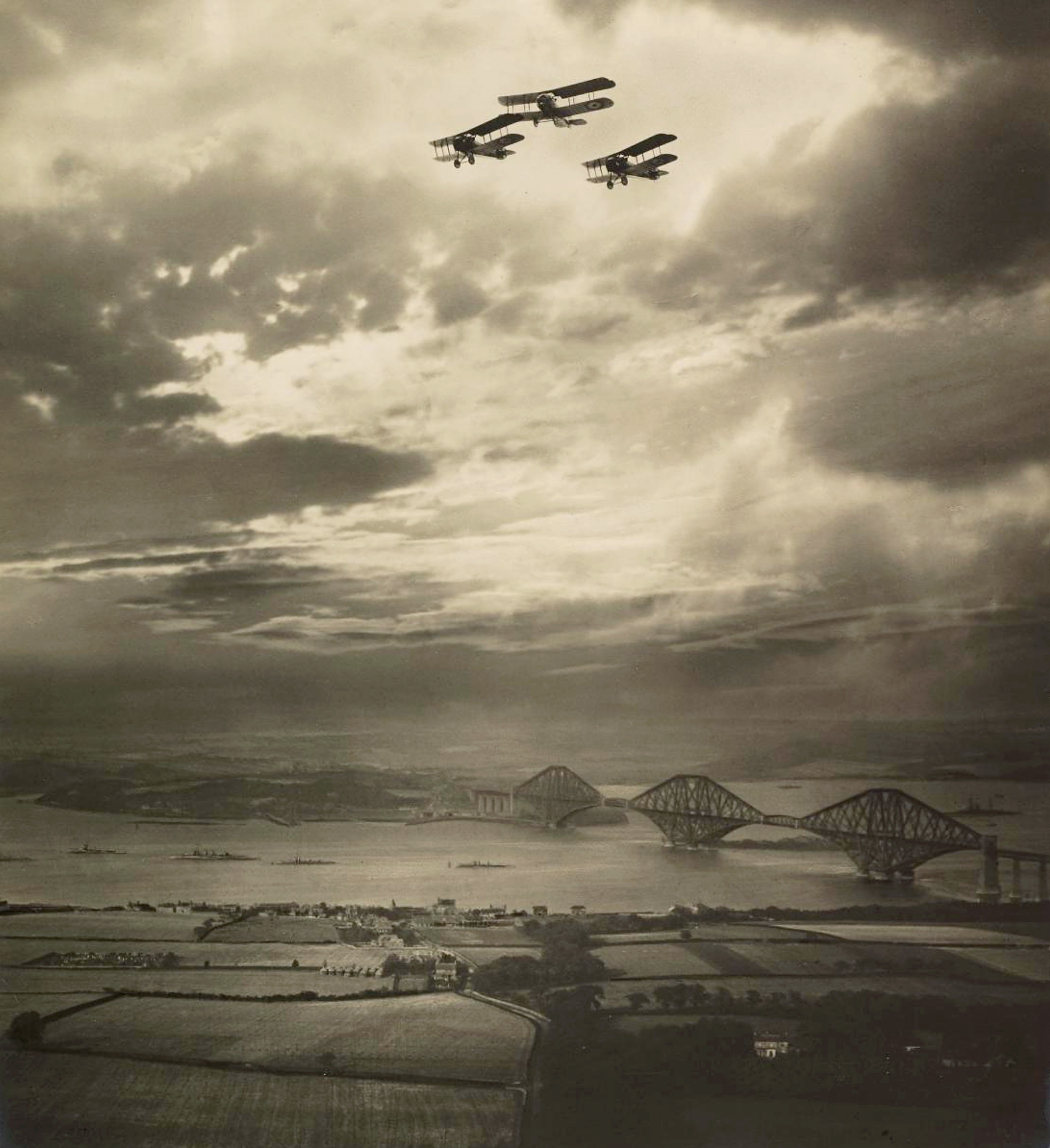
Exhibition: ‘Bill Brandt’ at the Fundación Mapfre, Madrid

Exhibition dates: 3rd June – 29th August, 2021

Curator: Ramón Esparza (University of the Basque Country)
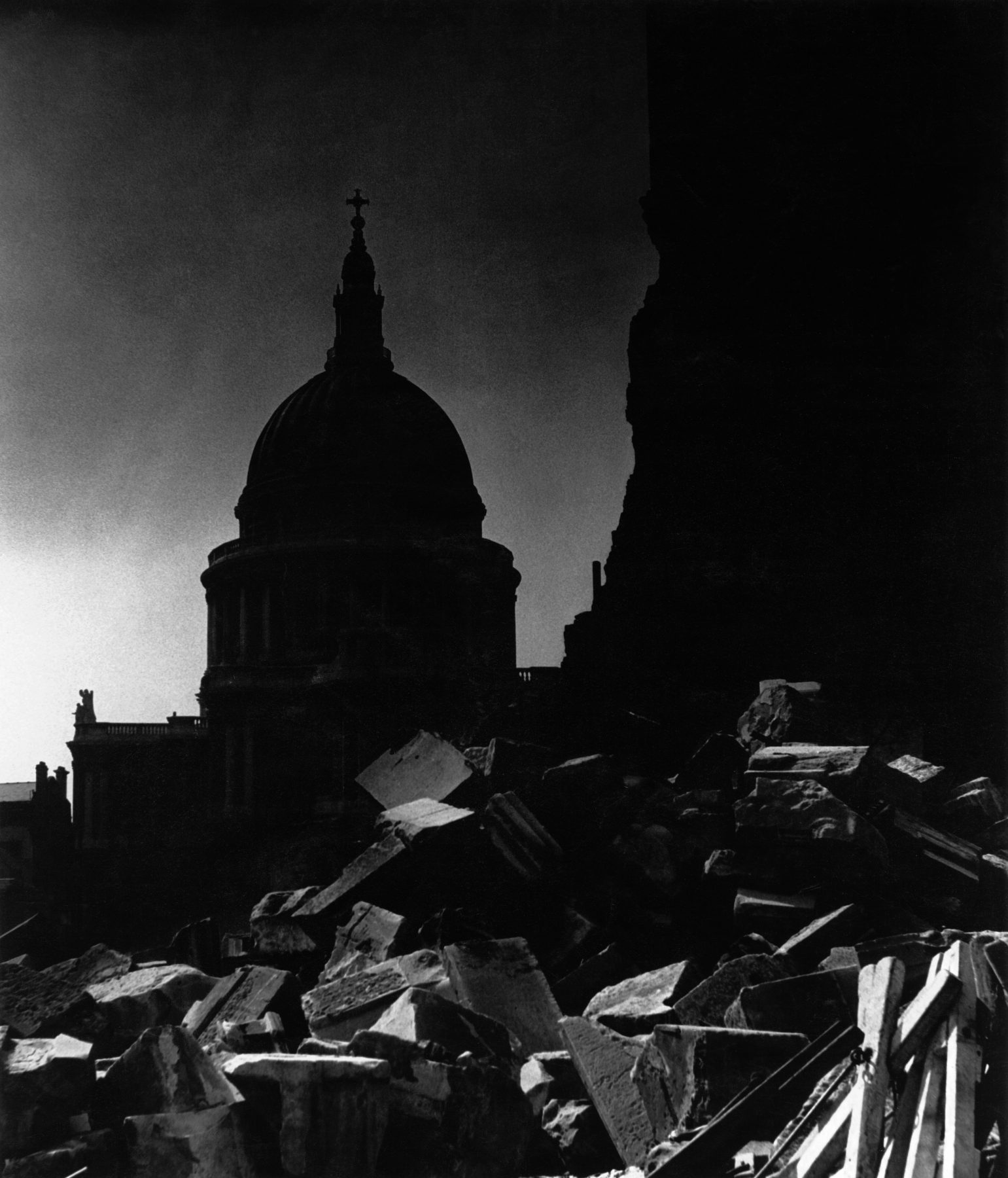
 

Bill Brandt (British born Germany, 1904-1983) 'St. Paul's Cathedral in the moonlight' 1942 from the exhibition 'Bill Brandt' at the Fundación Mapfre, Madrid, June - August, 2021


Bill Brandt (British born Germany, 1904-1983)
St. Paul’s Cathedral in the moonlight
1942
25.72 x 20.32cm
Private collection
Courtesy Bill Brandt Archive and Edwynn Houk Gallery
Ā© Bill Brandt / Bill Brandt Archive Ltd.


Bill Brandt: master of photography, master of reinvention

“I’m 70% sure this was a reality not a dream”

In 12 years of writing this archive, this is the first chance I have had to assemble a posting and really think about the work of Bill Brandt, one of the most significant and inventive photographers of the 20th century. Brandt exhibitions are few and far between.

Son of a British father and German mother, Bill Brandt was born in Hamburg in 1904. As an adolescent he contracted tuberculosis and spent much of his youth in a sanatorium in Davos, Switzerland. In 1927 he travelled to Vienna, “to see a lung specialist and then decided to stay and find work in a photography studio. There, in 1928, he met and made a successful portrait of the poet Ezra Pound, who subsequently introduced Brandt to the American-born, Paris-based photographer Man Ray. Brandt arrived in Paris to begin three months of study as an apprentice at the Man Ray Studio in 1929 … his work from this time shows the influence of AndrĆ© KertĆ©sz and EugĆØne Atget, as well as Man Ray and the Surrealists.”1

“For any young photographer at that time, Paris was the centre of the world. Those were the exciting early days when the French poets and surrealists recognised the possibilities of photography.” ~ Bill Brandt


Having visited London in 1928, upon his return to London, in 1931, Brandt was well versed in the language of photographic modernism. In 1933 Brandt settled permanently in North London with his wife. With the rise of Nazism in Germany, Brandt Anglicised his name and disowned his German background and would claim he was born in South London. “He adopted Britain as his home and it became the subject of his greatest photographs.” Here is his first reinvention: the obfuscation of his German heritage, but he could not hide that heritage in his photographs.

As a photojournalist working for magazines such as News Chronicle, Weekly Illustrated, Lilliput, Harper’s Bazaar and Picture Post, Brandt documented all levels of British society. In his first book, The English at Home (1936), “comprising sixty-three photographs, Brandt traversed the country to make a pictorial survey of sorts, moving across the social classes, and between rural life and the urban city.”2 In the book Brandt pairs upper and lower class photographs across double page spreads, mixing joy (girl dancing in the street) with sobriety (the parlourmaids). As David Campany observes in his excellent writing on the artist, “There is nothing overtly angry or revolutionary in the generally restrained tone of Brandt’s book. However it was unusual in bringing different classes into one volume, leaving the viewer to reconcile the social contradictions and inequities.”3

“The extreme social contrast, during those years before the war, was, visually, very inspiring for me. I started by photographing in London, the West End, the suburbs, the slums.” ~ Bill Brandt


The book was not a success. Much like Robert Frank’s The Americans (published in France in 1958), another book by an Ć©migrĆ© photographing as an outsider a foreign country, the British did not understand the book and probably did not like the mirror that was being held up to their society – much as the Americans hated Frank’s book for the pointed insights its probing images revealed of their fractured society, which had never been shown to them before. Campany notes, “In the 1930s Brandt was drawn to the rituals and customs of daily life, with what he saw as the deeply unconscious ways people inhabit their social roles and class positions. For him, to photograph these minutiae was not simply to document but to estrange through a heightened sense of atmosphere, theatrical artifice and a dreamlike sensibility. As an outsider he seemed to see English behaviour as bordering on passive automatism.”4

In the midst of the Great Depression of the 1930s, the photographs would have made the English feel very uncomfortable. Through their social commentary and poetic resonance, through their direct, modernist gaze and Surrealist dances (the women washing the blackened coal miner, a man sheltering in a coffin), Brandt squeezes (conflates?) documentary and art together, seeing the familiar and unfamiliar at the same time. Through reinvention he recasts the very nature of his characters, finding out what else is essential in the photographs, challenging the viewer to understand the complexities of the image as it moves across time and from documentary to art. Often this left the viewer perplexed and grasping at the mystery, the unknown.

Other bodies of work and books followed. In 1937, Brandt visited the North of England for the first time, photographing the desperate plight of the poor scavenging for coal on the slag-heaps. In 1938 Brandt published A Night in London which was based on Paris de Nuit (1936) by BrassaĆÆ, photographing pubs, common lodging houses at night, theatres, Turkish baths, prisons and people in their bedrooms. By 1939, he was back in London, photographing the blackout and people sheltering from the Blitz in the London Underground.

“In 1939, at the beginning of the war, I was back in London photographing the blackout. The darkened town, lit only by moonlight, looked more beautiful than before or since.” ~ Bill Brandt


And so it went, on through Literary Britain (1951) which combined brooding, atmospheric landscapes and photographs of William Wordsworth’s room at Dove Cottage, Shaw’s Corner, Glamis Castle from Macbeth, and the scene of Oscar Wilde’s imprisonment at Reading Gaol opposite British poetry and prose; from the 1940s onwards, portraits of the notable and creative, made during the 1960s using a wide-angle lens; and perspectives on nudes made from 1944 onwards using a 1931 Kodak mahogany and brass camera with a wide-angle lens used by the police for crime scene records, which allowed him to see, he said, ‘like a mouse, a fish or a fly’.

“The nudes reveal Brandt’s intimate knowledge of the Ɖcole de Paris – particularly Man Ray, Picasso, Matisse and Arp – together with his admiration for Henry Moore. He published Perspective of Nudes in 1961. It featured nudes in domestic interiors and studios, and on the beaches of East Sussex and northern and southern France. He used a Superwide Hasselblad for the beach photographs. In 1977-1978 Brandt added further nudes, published in Nudes, 1945-1980.”5

Through all of this there is the reinvention… reinvention of the portrait where the sitter is now part of the whole scenario (the surroundings), reinvention of the landscape where the landscape emerges from chthonic darkness, and reinvention of the nude where Brandt transplants Brassai’s Distortions into domestic interiors and exterior beaches – where the Surrealist, distorted, enigmatic fragment, like an ear or a big toe, comes to stand for the whole embedded in an alien landscape. Finally, there was the big reinvention in the 1960s, where Brandt began to reprint his earlier photojournalist images with a much harsher contrast (see various comparison images in this posting) in order to enhance their (Surrealist) art credentials and keep them relevant in an Abstract Expressionist, Pop Art world.

As David Campany states, “In the 1960s there were two major changes in his work and its reception. Both were related to his emerging position in art photography. He began to print his negatives much more harshly, sacrificing the mid-tones for more modish graphic blocks of black and white. The rich descriptive information in his negatives would be subsumed, even obliterated in his new aesthetic… While his latest photography was pursued more openly as art, notably his nudes (published as a book in 1960), his expressionism was released anew upon his earlier work. His books from the 1960s are printed with graphic extremes of black and white.”6

These are the images that are now famous, these graphic reinventions of the work and the Self. The reinvention of the old into the new. Through rethinking, recalculating and reimagining his old photographs and how they looked (“the way in which the artist interpreted a single negative had changed over time”), Brandt opened up his way of seeing and opened up new matter… ‘in rerum natura‘: in the nature of things; in the realm of actuality; in existence. Perhaps never before in the history of photography had the negative just been a step in the production of an ever changing image.

It was in the totality of this new work that his eloquent eye emerged. To me Brandt is like a Zen master. Whether it be socio-documentary, portrait, landscape or nude, it was his ability to focus on a particular subject at any one time – to concentrate on seeing subjects and ideas clearly – that became a hallmark of his later artistic creation. Through bodies of work that mix reality and dream the artist challenges straight photographic seeing in order for us to understand that enigmatic fragments can stand alone from each other while at the same time combining to make the whole. While A snicket in Halifax (1937, below) may not be present in Unemployed miner returning home from Jarrow (1937, below), it is when they combine that the circle is closed. It is in the entirety of his imaged (imagined) world, in the entirety of his vision, when all fragments combine, that Brandt emphasises that the whole of anything is greater than its parts.

Dr Marcus Bunyan


Footnotes

1/ “Bill Brandt.” Introduction by Mitra Abbaspour, Associate Curator, Department of Photography, 2014 on the MoMA website Nd [Online] Cited 22/08/2021

2/ David Campany. “The Career of a Photographer, the Career of a Photograph – Bill Brandt’s Art of the Document,” on the David Company website [Online] Cited 10/06/2021. First published in the Tate Liverpool exhibition catalogue ‘Making History: Art and documentary in Britain from 1929-Now’, 2006

3/ Ibid.,

4/ Ibid.,

5/ Anonymous. “Bill Brandt Biography,” archived from the original on the V&A website Nd [Online] Cited 22/08/2021

6/ Campany, op cit.,


Many thankx to Fundación Mapfre for allowing me to publish the photographs in the posting. Please click on the photographs for a larger version of the image.


Fundación MAPFRE is presenting the first retrospective in Spain on Bill Brandt (1904-1983), considered one of the most influential British artists of the 20th century. The exhibition brings together 186 photographs developed by Brandt himself who, over the course of five decades, made use of almost all the photographic genres: social documentary, portraiture, the nude and landscape.


“Each of Brandt’s well-known images aims for a tight formal organisation, its content given dramatic charge and dense psychological resonance. As documents they aim unapologetically to exceed visual description. In this sense what served him ill as a photojournalist was just what predisposed his images toward posterity via art. …

In the 1950s he continued to work professionally but concentrated on the more established genres of portraiture and landscape. In the 1960s there were two major changes in his work and its reception. Both were related to his emerging position in art photography. He began to print his negatives much more harshly, sacrificing the mid-tones for more modish graphic blocks of black and white. The rich descriptive information in his negatives would be subsumed, even obliterated in his new aesthetic. It was a technique that looked backward through German expressionist cinema to art photography’s Pictorialist preference for deep shadows and chiaroscuro, but it also connected with the emerging Pop sensibility.

While his latest photography was pursued more openly as art, notably his nudes (published as a book in 1960), his expressionism was released anew upon his earlier work. His books from the 1960s are printed with graphic extremes of black and white. …

The reprinting of Parlourmaid and under-parlourmaid ready to serve dinner was never too harsh. Brandt knew well that the force of this photograph resided in its details as much as its bold graphic organisation. Shadow of Light even improved on its past reproductions allowing new layers of meaning to emerge. …

While some meanings of Brandt’s photograph have been buried as the image has moved across time and from documentary to art, new meanings have come to the surface, meanings entirely dependent on art’s demand for superior qualities of reproduction.

As with many photographers who were discovered by a wider audience later in life, Brandt found himself regarded as a ‘figure from the past’ and as a contemporary artist at the same time. Layered on top of this was what looked like a shift from documentarist to artist. The reality, as always, was more complicated. At his best Brandt was a ‘documentary artist’ with all the paradoxes and interpretative difficulties that entails. There could never be any simple distinction between his artistry and his documentary description. The two are inextricable and give us no clear answers. And in the end these tensions are at the heart of his work and its success.”


David Campany. Extract from “The Career of a Photographer, the Career of a Photograph – Bill Brandt’s Art of the Document,” on the David Company website [Online] Cited 10/06/2021. First published in the Tate Liverpool exhibition catalogue ‘Making History: Art and documentary in Britain from 1929-Now’, 2006


Bill Brandt (British born Germany, 1904-1983) 'Death and the industrialist, Barcelona' 1932 from the exhibition 'Bill Brandt' at the Fundación Mapfre, Madrid, June - August, 2021


Bill Brandt (British born Germany, 1904-1983)
Death and the industrialist, Barcelona
1932
25.40 x 20.32cm
Private collection
Courtesy Bill Brandt Archive and Edwynn Houk Gallery
Ā© Bill Brandt / Bill Brandt Archive Ltd.


An apprentice in the studio of Man Ray and influenced in his origins by artists such as BrassaĆÆ, AndrĆ© KertĆ©sz or EugĆØne Atget, Bill Brandt (Hamburg, 1904 – London, 1983), one of the founders of modern photography, conceives the photographic language as a powerful means of contemplation and understanding of reality, but always from a primacy of aesthetic considerations over documentaries. Published in the press or in books, some of his photographs quickly became iconic pieces, indispensable to understanding mid-century English society.

His work also expresses a permanent attraction for the strange , for that which causes as much attraction as it is strange and causes unease. His aesthetics are thus close to the concept of “the sinister”, understood as something opposite to the idea of ​​the familiar, of the usual. This element will act as a plot line for a professional and artistic production that, at first, seems erratic and dispersed.

His late work shows a more experimental facet, a search for innovation through cropping and framing, present above all in nude images.

The exhibition brings together 186 photographs made by Bill Brandt himself, who throughout the almost five decades of his career did not stop addressing any of the great genres of the photographic discipline: social reporting, portraiture, nude and landscape .

The tour, divided into six sections (“First photographs”, “Up and down”, “Portraits”, “Described landscapes”, “Nudes” and “In Praise of imperfection”), tries to show how all these aspects – in the that identity and the concept of “the sinister” become protagonists – they come together in the work of this eclectic artist who was considered, above all, a flĆ¢neur, a “stroller” in terms similar to those of his admired Eugene Atget, whom he always considered one of his teachers. One hundred and eighty-six photographs that are complemented by writings, some of his cameras and various documentation (among which the interview he gave to the BBC shortly before his death stands out), as well as illustrated publications of the time. All thanks to the courtesy of the Bill Brandt Archive in London and the Edwynn Houk Gallery in New York.

Four keys

Surrealist beginnings

After starting his foray into photography in Vienna, where he made the famous portrait of the poet Ezra Pound in 1928, Bill Brandt went to Paris to enter as an assistant, for a short period of time, in the studio of Man Ray, which prompted him to blend in with the surrealist atmosphere of the French capital, which will permeate all of his work from then on. This influence, together with that of his admiration for EugĆØne Atget, the photographer who documented “old Paris” and for whom Fundación MAPFRE also organised an exhibition in 2011, led to images where the disturbing was already making an appearance: street scenes and Parisian nights are some of the most frequent motifs in the artist’s images during this period.

Concealment of German heritage

Together with his partner and future wife, Eva Boros, he also made numerous trips to the Hungarian steppe, to his native Hamburg and to Spain, where they visited Madrid and Barcelona, ​​before moving to London in 1934. It was in this city when Brandt got rid of his German roots, eliminating all reference to them, a concealment due to the growing animosity towards Germany that followed the rise of Nazism. Brandt invented a British birth, creating an artistic corpus in which the United Kingdom that is at the core of his identity.

The portrait

After having made several portraits in the early days of his career, starting in the 1940s – a period in which he worked for magazines such as Picture Post, Liliput and Harper’s Bazaar – Bill Brandt approached this genre in a professional way. Some of the portraits represented a break with tradition, such as those that appeared in the aforementioned Lilliput in 1941, illustrating the article “Young Poets of Democracy”, which included some of the most representative faces of the writers and poets of the Auden Generation.

In Praise of Imperfection

In his introduction to Camera in London, the book on the British capital published in 1948, Bill Brandt noted: ‘I consider it essential that the photographer make his own copies and enlargements. The final effect of the image depends to a large extent on these operations, and only the photographer knows what he intends. For the artist, work in the laboratory was essential and, at the beginning of his career, he learned a whole range of artisan techniques: from magnification to enlargement, the use of brushes, scrapers or other tools.’ This manual retouching sometimes gave his photographs that somewhat crude aspect that can be associated with the aforementioned Freudian concept of the “unheimlich”: the sinister.

Text from the Fundación Mapfre website translated from the Spanish by Google Translate


Bill Brandt (British born Germany, 1904-1983) 'Bond Street hatter's show-case' 1934


Bill Brandt (British born Germany, 1904-1983)
Bond Street hatter’s show-case
1934
30.48 x 23.50cm
Private collection
Courtesy Bill Brandt Archive and Edwynn Houk Gallery
Ā© Bill Brandt / Bill Brandt Archive Ltd.


Born Hermann Wilhelm Brandt in Hamburg in 1904 to a wealthy family of Russian origin, after a period living in Vienna and Paris Brandt decided to settle in London in 1934. Within the context of growing hostility to all things German due to the rise of Nazism, he attempted to erase all traces of his origins to the point of stating that he was British by nationality. This concealment and the creation of a new personality enveloped Brandt’s life in an aura of mystery and conflict that is directly reflected in his works.

This aspect combines with the photographer’s interest in psychoanalysis, which he underwent during his youth in Vienna. A few years earlier, in 1919, Sigmund Freud had published the essay Das Unheimliche in which he analysed this term, which is generally translated as “the uncanny” in the sense of something that produces unease. Almost all Brandt’s photographs, both the pre-war social documentary type and those from his subsequent more “artistic” phase, possess a powerful poetic charge as well as that very typical aura of strangeness and mystery in which, as in his own life, reality and fiction are always mixed.

The structure of the exhibition, which is divided into six sections, reveals how all these qualities – in which identity and the concept of “the uncanny” become the principal ones – blend together in the work of this eclectic artist. Above all Brandt was considered a flĆ¢neur or stroller in a way comparable to his admired EugĆØne Atget, whom he always considered one of his masters. The exhibition also reveals the relationship between Brandt’s images and Dada and Surrealism. This interest is reflected in clear references to psychoanalytical issues, expressed through increasingly sombre tones and an obsession with collecting found objects.

The exhibition is completed with a range of documentation, a number of Brandt’s cameras and examples of the illustrated press of the period that published some of his most iconic images. All this has been made possible courtesy of the Bill Brandt Archive in London and the Edwynn Houk Gallery in New York.

Press release from the Fundación Mapfre website


Bill Brandt (British born Germany, 1904-1983) 'East Durham coal-searchers' 1937


Bill Brandt (British born Germany, 1904-1983)
East Durham coal-searchers
1937
25.24 x 20.16cm
Private collection
Courtesy Bill Brandt Archive and Edwynn Houk Gallery
Ā© Bill Brandt / Bill Brandt Archive Ltd.


East Durham coal-searchers near Henworth, 1937. Coal searchers on slag heap searching for bits of coal 1940s.


Bill Brandt (British born Germany, 1904-1983) 'Coal-Miner's Bath, Chester-le-Street, Durham' 1937


Bill Brandt (British born Germany, 1904-1983)
Coal-Miner’s Bath, Chester-le-Street, Durham
1937
Ā© Bill Brandt / Bill Brandt Archive Ltd.


Bill Brandt

Considered one of the most influential British photographers of the 20th century and one of the artists who, together with BrassaĆÆ, Henri Cartier-Bresson and others, laid the foundations of modern photography, Bill Brandt’s oeuvre can be considered an eclectic one, reflecting a career of nearly five decades during which he encompassed almost all the photographic genres: social documentary, portraiture, the nude and landscape.

Born Hermann Wilhelm Brandt in Hamburg in 1904 to a wealthy family of Russian origin, after a period living in Vienna and Paris Brandt decided to settle in London in 1934. Within the context of growing hostility to all things German due to the rise of Nazism, he attempted to erase all traces of his origins to the point of stating that he was British by nationality. This concealment and the creation of a new personality enveloped Brandt’s life in an aura of mystery and conflict that was directly reflected in his work. His images aim to construct a vision of the country that he embraced as his own, although not of the real country but rather of the idea that he had created of it during his childhood through reading and from stories told by relatives.

Brandt had tuberculosis as a child and it was seemingly in the Swiss sanatoriums at Agra and Davos where his family sent him to convalesce that he first became interested in photography. After some years in Switzerland he moved to Vienna to undergo an innovative treatment for tuberculosis based on psychoanalysis. Imbued with a post-Romantic air, Brandt’s photography always seems to be located on the edge, provoking simultaneous attraction and rejection. It can be related to the concept of unheimlich, a term first used by Sigmund Freud in 1919. The adjective unheimlich – generally translated as “the uncanny”, “the sinister” or “the disturbing”, and which according to Eugenio TrĆ­as “constitutes the condition and limit of the beautiful” – is one of the characteristic traits that remains present throughout Brandt’s career. Psychoanalytical theories were among the fundamental pillars of Surrealism and their influence extended to the entire Parisian cultural scene in the 1930s. Brandt and his first partner, Eva Boros, moved to the French capital in 1930 where he worked as an assistant in Man Ray’s studio. It was at this point that he assimilated the ideas circulating in a city filled with young artists, many of them immigrants looking to make their way in the professional art world. His images of this initial period suggest a catalogue of psychoanalytical “themes”, clearly reflecting the influence of Surrealism on him even though he never actively participated in any of the historic avant-garde groups.

Almost all Brandt’s images, both the pre-war social documentary type and those from his subsequent more “artistic” phase, possess a powerful poetic charge as well as that very typical aura of strangeness and mystery in which, as in his own life, reality and fiction are always combined.

Bill Brandt died in London in 1983.

Ramón Esparza, curator


Early photographs

Following his apprenticeship as a photographer in Vienna, Brandt left for Paris in order to work for a brief period as an assistant in Man Ray’s studio, an activity that allowed him to move in the city’s Surrealist circles. Nonetheless, his photographs of this period are closer to those of his admired EugĆØne Atget. Brandt followed Atget, becoming a stroller or flĆ¢neur whose images of Parisian nightlife and street scenes anticipate his subsequent work and possess an already palpable sense of unease.

Brandt and his partner Eva Boros travelled on numerous occasions to the Hungarian steppes, to his native Hamburg and to Spain, where they visited Madrid and Barcelona among other cities and with the plan of spending their holidays in Majorca before moving to London in 1934. It was in London that Brandt shed his German origins and created a body of work in which the United Kingdom – a country marked by significant social inequality at that time – established itself as the core of his identity.


Bill Brandt (British born Germany, 1904-1983) 'Dressmaker's dummy, Paris' 1929


Bill Brandt (British born Germany, 1904-1983)
Dressmaker’s dummy, Paris
1929
Ā© Bill Brandt / Bill Brandt Archive Ltd


During his years in Paris Brandt established connections with the Surrealist circle and with groups of photographers who aimed to make the camera both a means of expression and of earning a living. He never followed the principal trends and focused his attention on the daily life of the suburbs rather than on events of the day. Brandt’s photographs of this period reveal how he increasingly assimilated Surrealist concepts into his way of seeing. This dressmaker’s dummy found on the street is a metaphor for the idea of the double. Other images from these years, such as the hot air balloon flying over the skies of Paris, allow his early work to be seen as a type of catalogue of the principal themes of Surrealism.

Upstairs downstairs

The growing antipathy on the part of the British towards Nazi Germany meant that many immigrants who had arrived from the latter country changed their name. Brandt went even further than this as he completely concealed his origins and for more than twenty-five years passed himself off as a British citizen.

The 1930s was the decade of the great social protest movements and of strikes over working conditions following the 1929 financial crash. It was within this context that in 1936 Brandt published his first book, The English at Home, produced in a wide, album format. He employed a design particularly favoured by Central European graphic publications based on the combination of opposites in order to achieve a significant contrast between each pair of photographs. With these double-page spreads Brandt aimed to juxtapose two opposing social social classes, thus generating two parallel narrative discourses without mixing them together.

Following the outbreak of World War II Brandt started to work for the Ministry of Information. It was at this point that he produced two of his most famous series of images: his photographs of Londoners sleeping in Underground stations converted into improvised shelters; and his images of the city at ground level, showing a ghostly London lit only by the moon as protection against the air raids. Brandt abandoned the class differences that he had previously portrayed in favour of other types of scenes which denounced the effects of the war on the civilian population.


Bill Brandt (British born Germany, 1904-1983) 'Couple in Peckham' 1936


Bill Brandt (British born Germany, 1904-1983)
Couple in Peckham
1936
Ā© Bill Brandt / Bill Brandt Archive Ltd


Following in the wake of BrassaĆÆ and the success of his book Paris de nuit (1932), Brandt began to elaborate his own version of London at night. To do this he made regular use of friends and relatives who posed for him to create the scene he wished to photograph. In this case the “accosted” woman is his sister-in-law Ester Brandt and the man in the hat is his brother Rolf. The image allows for different interpretations but the reference to the genre of crime thrillers or simply to prostitution is clear.


Bill Brandt (British born Germany, 1904-1983) 'Unemployed miner returning home from Jarrow' 1937


Bill Brandt (British born Germany, 1904-1983)
Unemployed miner returning home from Jarrow
1937
Ā© Bill Brandt / Bill Brandt Archive Ltd


The 1930s were economically harsh and politically turbulent years in Europe. The 1929 financial crash led the United Kingdom to close its mines and steelworks, resulting in unemployment rising to more than 2.5 million people. Activities such as collecting pieces of coal from mining waste on the beach became a way of life for many families. Brandt’s photograph shows one of these former miners, exhausted after an unproductive day’s labour and pushing his bicycle loaded with a sack of coal, the result of his efforts.


Bill Brandt (British born Germany, 1904-1983) 'Parlourmaid and Under-parlourmaid ready to serve dinner' 1936


Bill Brandt (British born Germany, 1904-1983)
Parlourmaid and Under-parlourmaid ready to serve dinner
1933 printed later
23.81 x 20.32cm
Private collection
Courtesy Bill Brandt Archive and Edwynn Houk Gallery
Ā© Bill Brandt / Bill Brandt Archive Ltd.


This photograph was taken for a reportage published in Picture Post on 29 July 1939 with the title “The Perfect Parlourmaid” [but it never appeared in the Picture Post photo story of that name in July 1939]. Following his habitual practice, Brandt turned to his own family, in this case making use of his uncle Henry’s house. Pratt the parlourmaid waits in the dining room for the family members and their guests to be seated for dinner before starting to serve the food and attend the diners. This could be a classic image of social documentary photography except for the fact that Brandt very probably sat down at the table with the rest of the family after taking his shot. The image, however, reveals far more. The faces and poses of the two maids convey the difference between the gaze of the senior parlourmaid, which suggests both experience and assimilation of her social role, and that of her assistant, which seems to wander vaguely around the room.


“In his marvellous photograph the two house parlourmaids, prepared to wait at table, have eyes loaded like blunderbusses. Their starched caps and cuffs, their poker backs, mirror the terrible rectitude of learned attitudes. They have the same irritated loathing in defence of caste that shows in portraits of Evelyn Waugh.”

Mark Haworth-Booth cites Henderson in his introduction to the second edition of Brandt’s book Shadow of Light, Gordon Fraser, London 1977, p. 17.


Bill Brandt (British born Germany, 1904-1983) 'Parlourmaid and Under-parlourmaid ready to serve dinner' 1933


Bill Brandt (British born Germany, 1904-1983)
Parlourmaid and Under-parlourmaid ready to serve dinner
1933
Ā© Bill Brandt / Bill Brandt Archive Ltd.


“… Brandt’s parlourmaids image is unusual in that something of those social contrasts is at play within its frame and so the image doesn’t lend itself to juxtaposition in the same way.

We see a dressed dinner table of a well-to-do household and the attendant women. The head parlourmaid seems at first glance to express a stern resentment mixed with weariness and professional discipline, but there is a kind of blankness about her too. Her junior has the vacant expression of an adolescent, not yet able to grasp the social forces that will shape her, perhaps. A reading of the image made by the photographer Nigel Henderson is similar but more pointed:

“In his marvellous photograph the two house parlourmaids, prepared to wait at table, have eyes loaded like blunderbusses. Their starched caps and cuffs, their poker backs, mirror the terrible rectitude of learned attitudes. They have the same irritated loathing in defence of caste that shows in portraits of Evelyn Waugh.”

Rhetorically, this is an image of doubles and differences. Its economy of form and content forces us to see in opposites, tapping into and reinforcing a general understanding of the social structures of class and service. It is as barbed as The English at Home gets. There is nothing overtly angry or revolutionary in the generally restrained tone of Brandt’s book. However it was unusual in bringing different classes into one volume, leaving the viewer to reconcile the social contradictions and inequities.”

David Campany. Extract from “The Career of a Photographer, the Career of a Photograph – Bill Brandt’s Art of the Document,” on the David Company website [Online] Cited 10/06/2021. First published in the Tate Liverpool exhibition catalogue Making History: Art and documentary in Britain from 1929-Now, 2006


Bill Brandt (British born Germany, 1904-1983) 'Sheltering in a Spitalfields crypt' 1940


Bill Brandt (British born Germany, 1904-1983)
Sheltering in a Spitalfields crypt
1940
Ā© Bill Brandt / Bill Brandt Archive Ltd


Isidore Ducasse, who used the grandiloquent nom de plume of “the Comte de LautrĆ©amont” for his poetic output, wrote one of the most frequently quoted definitions of Surrealist beauty: “As beautiful as the chance meeting, on a dissecting table, of a sewing machine and an umbrella.” Locating incongruence and transforming it into a work of art was one of Surrealism’s key strategies. By adding a dash of well-developed humour to this formula Brandt brought off the recipe with aplomb. At the height of the war, with German bombing raids nightly assailing a London whose inhabitants took shelter in the Underground and in basements, Bill Brandt photographed this man. Poor and working-class, to judge from his appearance, he is seen peacefully asleep in an open tomb in a crypt in clear defiance of death itself and of the terror it supposedly arouses.

Portraits

As a portraitist, a genre to which he devoted himself professionally from 1943, Bill Brandt considered that the photographer’s aim should be that of capturing a ā€œsuspendedā€ moment rather than just the appearance: “I think a good portrait ought to tell something about a subject’s past and suggest something about their future”; in other words, achieving an image that asks questions and raises issues about both the sitter and the viewer. Some of Brandt’s portraits mark a break from tradition, such as the ones published in the magazine Lilliput in 1941 to accompany the article “Young Poets of Democracy”, which includes images of some of the leading names of the Auden generation.

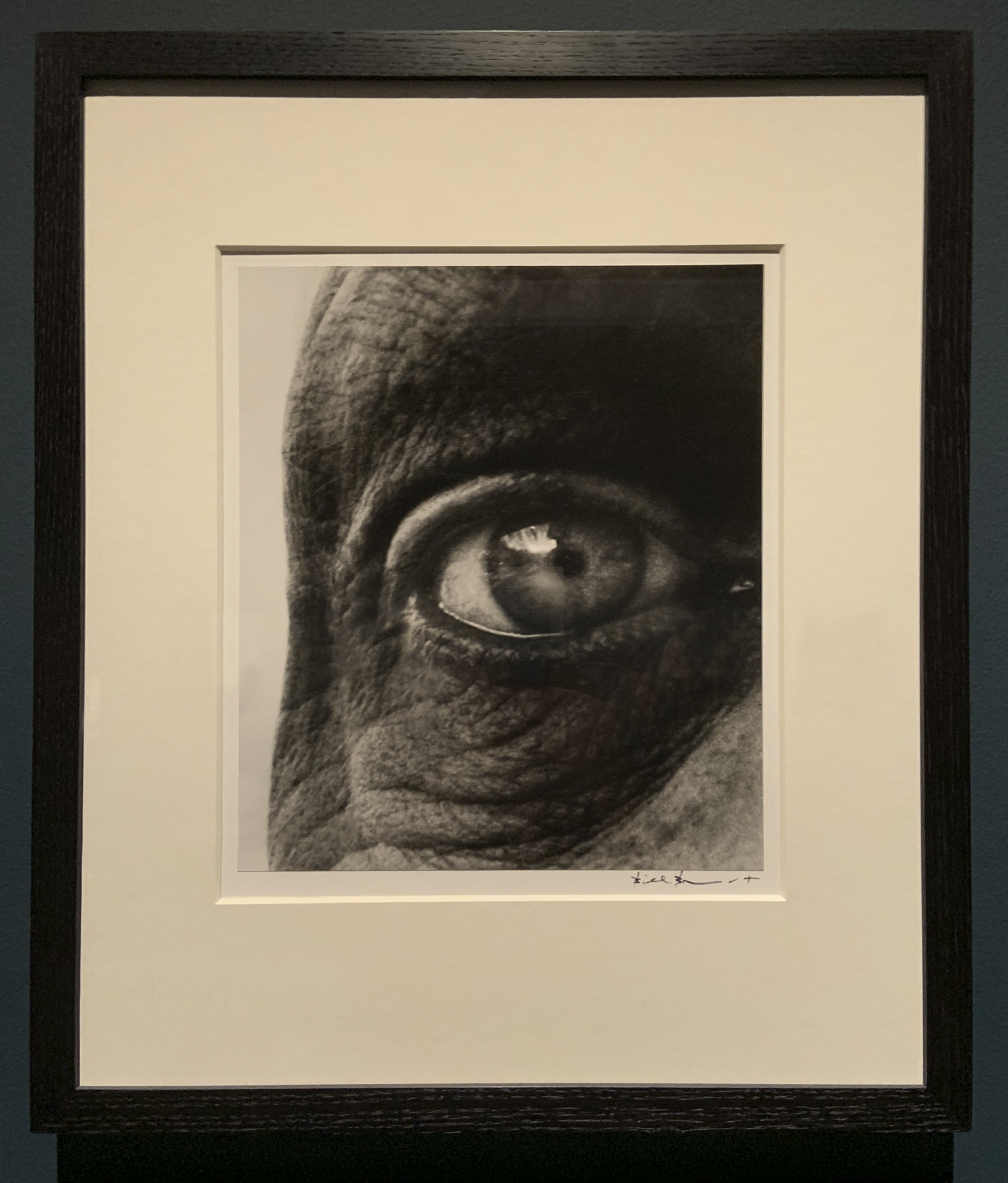
Brandt subsequently began to distort the space in his portraits, for example Francis Bacon on Primrose Hill, London (1963). He also produced a new series of portraits of eyes of clearly Surrealist inspiration. The eyes of Henry Moore, Georges Braque and Antoni TĆ pies are among the examples of gazes that transformed the way of seeing and representing the world.


“I always take portraits in my sitter’s own surroundings. I concentrate very much on the picture as a whole and leave the sitter rather to himself. I hardly talk and barely look at him.” ~ Bill Brandt


Bill Brandt (British born Germany, 1904-1983) 'Francis Bacon on Primrose Hill, London' 1963


Bill Brandt (British born Germany, 1904-1983)
Francis Bacon on Primrose Hill, London
1963
25.40 x 20.32cm
Private collection
Courtesy Bill Brandt Archive and Edwynn Houk Gallery
Ā© Bill Brandt / Bill Brandt Archive Ltd.


Brandt’s portraits evolved over time. Some mark a break with tradition, such as the images published in Lilliput in 1941 to accompany the article “Young Poets of Democracy”, which included some of the most famous faces of the writers and poets of the Auden generation. He subsequently began to distort the space in his images, as evident in Francis Bacon on Primrose Hill, London (1963), and also produced a new series of portraits of eyes of clearly Surrealist inspiration. The eyes of Henry Moore, Georges Braque and Antoni TĆ pies are among the examples of gazes that transformed the way of seeing and representing the world.

One of several portraits of Francis Bacon by Brandt, here the photographer used the camera he had bought for his nudes on the beach. The notably wide angle lens, which produces a sense of space distorted in depth, and the chosen moment, just after sunset with the last light of day blending with the artificial light, give the scene a strange “atmosphere” (a term Brandt considered fundamental in his images). The familiar setting of an English park becomes disturbing with the dark sky, the curiously small and bent street light and Bacon, either indifferent or engaged, who turns his back on it all.


Bill Brandt (British born Germany, 1904-1983) 'Henry Moore in his studio at Much Hadham, Hertfordshire' 1946


Bill Brandt (British born Germany, 1904-1983)
Henry Moore in his studio at Much Hadham, Hertfordshire
1946
Ā© Bill Brandt / Bill Brandt Archive Ltd


The friendship and professional relations between Bill Brandt and the sculptors Henry Moore and Barbara Hepworth was a lifelong one and they frequently collaborated. Moore accompanied Brandt on his visits to the night shelters in the London Underground and drew while his friend took photographs. Their work is being exhibited at The Hepworth Wakefield in 2020. The mutual influence between the two artists is evident in this portrait of Moore alongside one of his sculptures. The biomorphic forms that Moore has created from the wood recall those of Brandt’s nudes.


Bill Brandt (British born Germany, 1904-1983) 'Graham Greene in his flat, St James's Street, London' 1948


Bill Brandt (British born Germany, 1904-1983)
Graham Greene in his flat, St James’s Street, London
1948
Ā© Bill Brandt / Bill Brandt Archive Ltd


The writer Graham Greene appears in this photograph next to a window which gives onto the interior courtyard of his London flat. Brandt, however, transformed a view of a simple courtyard into a type of labyrinth of lines in which it is difficult to discern what belongs to the window, what to the triangular shape located immediately next to Greene and what to the construction in the background. This confusion, the repetition of triangles and the mixture of lines can be seen as mimicking the author’s complex plots in his novels, while the harsh light that illuminates his face, falling from the upper right downwards, imbues his figure with a theatrical aura of mystery.


Bill Brandt (British born Germany, 1904-1983) 'Georges Braque' 1960


Bill Brandt (British born Germany, 1904-1983)
Georges Braque
1960
Ā© Bill Brandt / Bill Brandt Archive Ltd


The eye of…

In the early 1960s Brandt embarked on a photographic series in which he reduced the sitter’s face to a foreground shot of one of the eyes. The subjects photographed in this manner were some of the leading visual artists of the day: Ernst, Braque, Vasarely, Moore, TĆ pies, Arp, Dubuffet and Giacometti. The series aims to make the viewer reflect on the role of the gaze in art. Once the imperative of resemblance is rejected, what makes a painting powerful and interesting is the artist’s gaze, the way he or she has to look at and represent reality, or simply to produce a visible reality that does not refer to any other, as in the case of Victor Vasarely and Jean Arp. The camera, that glass eye which reflected the world in the 20th century, is used here to depict the instrument through which artists have seen and interpreted that world. To be exact, however, it should be acknowledged that both the camera and the eye are mere tools and that the essence of the process takes place “further back”, in the mind.
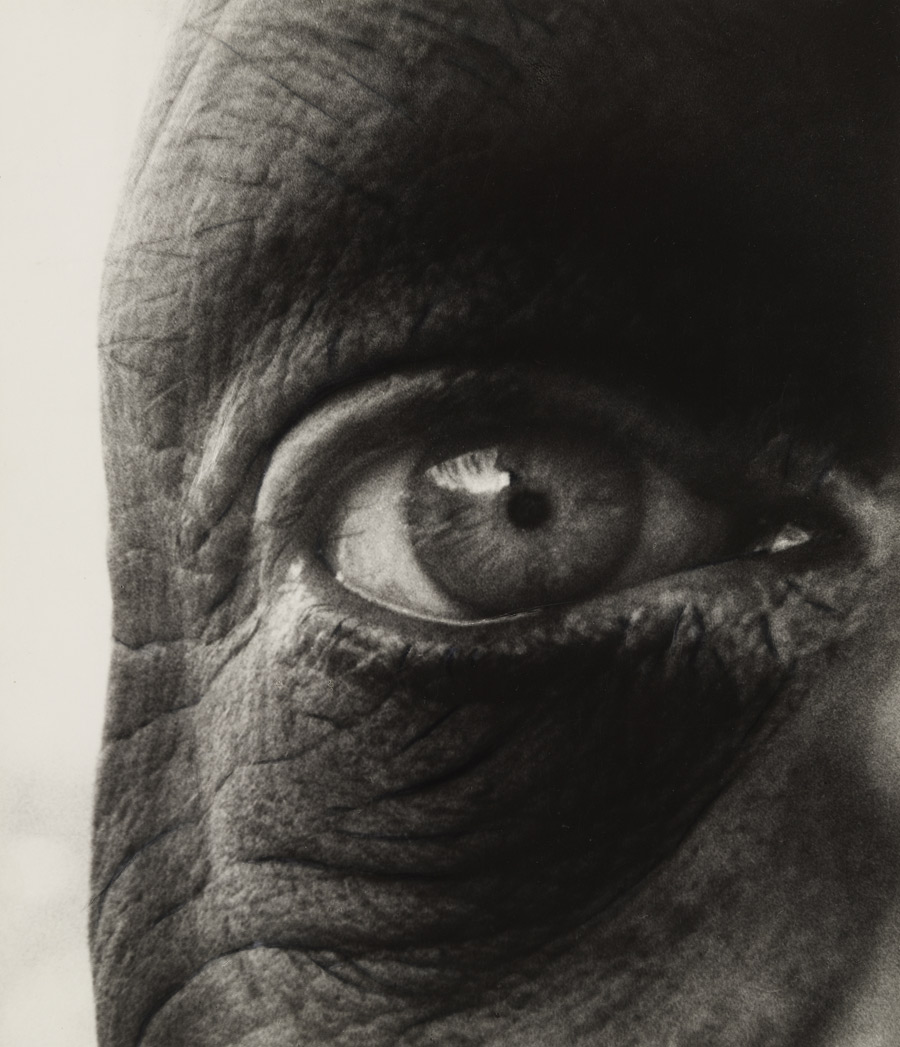
 

Bill Brandt (British born Germany, 1904-1983) 'Jean Dubuffet' 1960


Bill Brandt (British born Germany, 1904-1983)
Jean Dubuffet
1960
Ā© Bill Brandt / Bill Brandt Archive Ltd


This closely cropped eye belongs to the artist Jean Dubuffet. Brandt made ten photographs of notable visual artists; a few seem to have been taken at the same session as a published portrait, although none appear to be enlargements from other known works. They are striking departures from Brandt’s typical practice, mysterious despite their clarity of description, and they underscore the photographer’s experimental impulse, even late in his career. There is no record of their ever being published in a magazine.

MoMA gallery label from Bill Brandt: Shadow and Light, March 6 – August 12, 2013.


Landscapes described

Following his engagement with portraiture Brandt introduced landscape into his repertoire, thus encompassing all the categories traditionally considered to constitute the classic artistic genres. In his landscapes he aimed to introduce an atmosphere that connects with the viewer in order to provoke an emotional response from contemplation of the work. In this sense it would seem that Brandt did not merely aim to represent a place but to capture its very essence in a single image, as in Halifax; “Hail Hell & Halifax” (1937) and Cuckmere River (1963). When these landscapes started to include stone constructions such as tombs and crosses Brandt considered that he had achieved his aim: “Thus it was I found atmosphere to be the spell that charged the commonplace with beauty. … I only know it is a combination of elements … which reveals the subject as familiar and yet strange.”

It should be remembered that for Brandt the concept of landscape was deeply rooted in painting and the photographic tradition but also in literature. Literary Britain, which was published in 1951, makes this relationship clear. Brandt used images already published in other weekly magazines as well as photographs specially taken for this book, accompanying them with extracts from works by British authors.


Bill Brandt (British born Germany, 1904-1983) Halifax; 'Hail, Hell and Halifax' 1937


Bill Brandt (British born Germany, 1904-1983)
Halifax; ‘Hail, Hell and Halifax’
1937
23.50 x 20.32cm
Bill Brandt Archive
Ā© Bill Brandt / Bill Brandt Archive Ltd.


In the social portrait that Brandt created of England in the 1930s the northern industrial cities made an inevitable appearance. Coal mining and steel production, both affected by a major crisis during this period, gave cities like Halifax and Newcastle a dark, sombre appearance which Brandt masterfully conveyed in his images. The photograph’s title refers to a verse from a popular 17th century poem by John Taylor: “From Hell, Hull and Halifax, Good Lord, deliver us!”, referring to the harshness of justice in those two cities.


The reputation of the great British documentary photographer Bill Brandt rests in large part on his capacity to manage the tension between black and white in a photograph. For Brandt, strong tonal contrast came to represent the social and cultural experience of Britain between the wars – a place of vast contrasts between rich and poor, worker and elite, urban and rural. But strong tonal contrast, and blackness in particular, carried other, more metaphysical associations. For Brandt, blackness represented the forces and mysteries at work in the world, a place of power and tragedy. Blackness in a photograph also introduced ‘a new beauty’ to the subject, one that intensified the visual and emotional experience of it.

Text Ā© National Gallery of Australia, Canberra


Bill Brandt (British born Germany, 1904-1983) 'Gull's nest, midsummer evening, Skye' 1947


Bill Brandt (British born Germany, 1904-1983)
Gull’s nest, midsummer evening, Skye
1947
Ā© Bill Brandt / Bill Brandt Archive Ltd


Brandt saw this gull’s nest on a sunny afternoon during his trip to photograph northern Scotland. The light was too flat so he decided to return later. This was close to the time of year of the midnight sun. As Brandt wrote: “When I approached the nest on an isolated outpost of rocks, an enormously large gull which had been sitting on the eggs flew off and circled low around my head, barking like a dog. It was windstill, the mountains of the Scottish mainland were reflected in the sea – the light was now just right for the picture.”


Bill Brandt (British born Germany, 1904-1983) 'Nude, London' 1952


Bill Brandt (British born Germany, 1904-1983)
Nude, London
1952
22.86 x 19.37cm
Private collection
Courtesy Bill Brandt Archive and Edwynn Houk Gallery
Ā© Bill Brandt / Bill Brandt Archive Ltd.


Nudes

In 1944 Brandt returned to the theme of the nude. For the artist, documentary photography had become a widely extended fashion while the old Great Britain with its marked class divisions was now something of the past. It should also be remembered that the nude is one of the traditional themes of painting and as such signals Brandt’s evolution from documentary photography to the social status of “artist”.

In the 1950s he visited the French Channel Coast beaches in order to make a series of portraits of the painter Georges Braque. Seeing those pebble beaches led to a change of direction and he started to photograph stones and parts of the female body as if they were stones themselves. He combined flesh and rock, heat and cold, hardness and softness in a single formal discourse.

The distortions are often so pronounced that the parts of the body have lost any reference point but they nonetheless produce sensations that are more poetic or profound. It may be that for Brandt these “fragments” of the human body in comparison or communion with natural forms represented primordial forms of some type through which we can perceive “the totality of the world”, as with the Urformen of the Gestalt School and its theory of perception.

Brandt’s nudes of the late 1970s bear no relation to his earlier ones. They transmit a certain sense of violence which reveals the alienation of an artist who no longer felt himself part of the world in which he lived.


“Instead of photographing what I saw, I photographed what the camera was seeing. I interfered very little, and the lens produced anatomical images and shapes which my eyes had never observed.” ~ Bill Brandt


Bill Brandt (British born Germany, 1904-1983) 'Nude, Campden Hill, London' 1947


Bill Brandt (British born Germany, 1904-1983)
Nude, Campden Hill, London
1947
Ā© Bill Brandt / Bill Brandt Archive Ltd


The Kodak camera that Brandt found in a second-hand shop near Covent Garden was designed to produce a clear image of an interior space without any major technical complications. It offered an unusual vision of the motif, creating a space that evokes a dreamlike mood. Most of Brandt’s photographs of nudes in interiors were taken with this old wooden camera which imbues the scene with a sensation of both beauty and disquiet. The repetition of specific visual elements such as windows, which are always in the background of the scene, half-open doors and different pieces of furniture, including the two chairs in this image, suggests issues such as absence, the desire to escape or a complex representation of desire stripped of the object (equivalent to reducing it to its most primary sense).


Bill Brandt (British born Germany, 1904-1983) 'Nude, East Sussex coast' 1959


Bill Brandt (British born Germany, 1904-1983)
Nude, East Sussex coast
1959
Ā© Bill Brandt / Bill Brandt Archive Ltd


Bill Brandt (British born Germany, 1904-1983) 'Nude, East Sussex coast' 1977


Bill Brandt (British born Germany, 1904-1983)
Nude, East Sussex coast
1977
Ā© Bill Brandt / Bill Brandt Archive Ltd


While walking on the Channel Coast beaches, Brandt’s attention was caught by the rounded forms of the rocks on the beach and their resemblance to some forms of the human body. This idea gave rise to his series of nudes photographed outdoors. For this project he abandoned his old Kodak plate camera in favour of a Hasselblad with a wide angle lens and his much used Rolleiflex. The formal interplay that he began to develop in this photograph is closely related to the constructivist nature of what the theoreticians of the Gestalt school (the German psychology movement which began to analyse the bases of human perception in the early 20th century) called Urformen or primordial forms. The combination of both elements, rock and flesh, hard and soft, produces a series of relationships that can be associated with Henry Moore and Barbara Hepworth’s sculpture.

In Praise of Imperfection

In the introduction to Camera in London, his book on that city published in 1948, Brandt wrote: “I consider it essential that the photographer should do his own printing and enlarging. The final effect of the finished print depends so much on these operations. And only the photographer himself knows the effect he wants.”

For the artist, hands-on work in the photographic lab was essential for ensuring control over the final image, which in most cases was the stage prior to the publishing process when the image appeared in a book or magazine. At the outset of his career Brandt had learned a wide range of traditional techniques, including blow-up, enlarging and the use of brushes, scrapers and other tools.

These manual retouchings sometimes gave his photographs that rather crude look which can be associated with the above-mentioned Freudian concept of unheimlich or “sinister”. Many of them clearly show brushstrokes of black wash on the surface, for example At Charlie Brown’s, Limehouse (1946), displayed in this section of the exhibition.
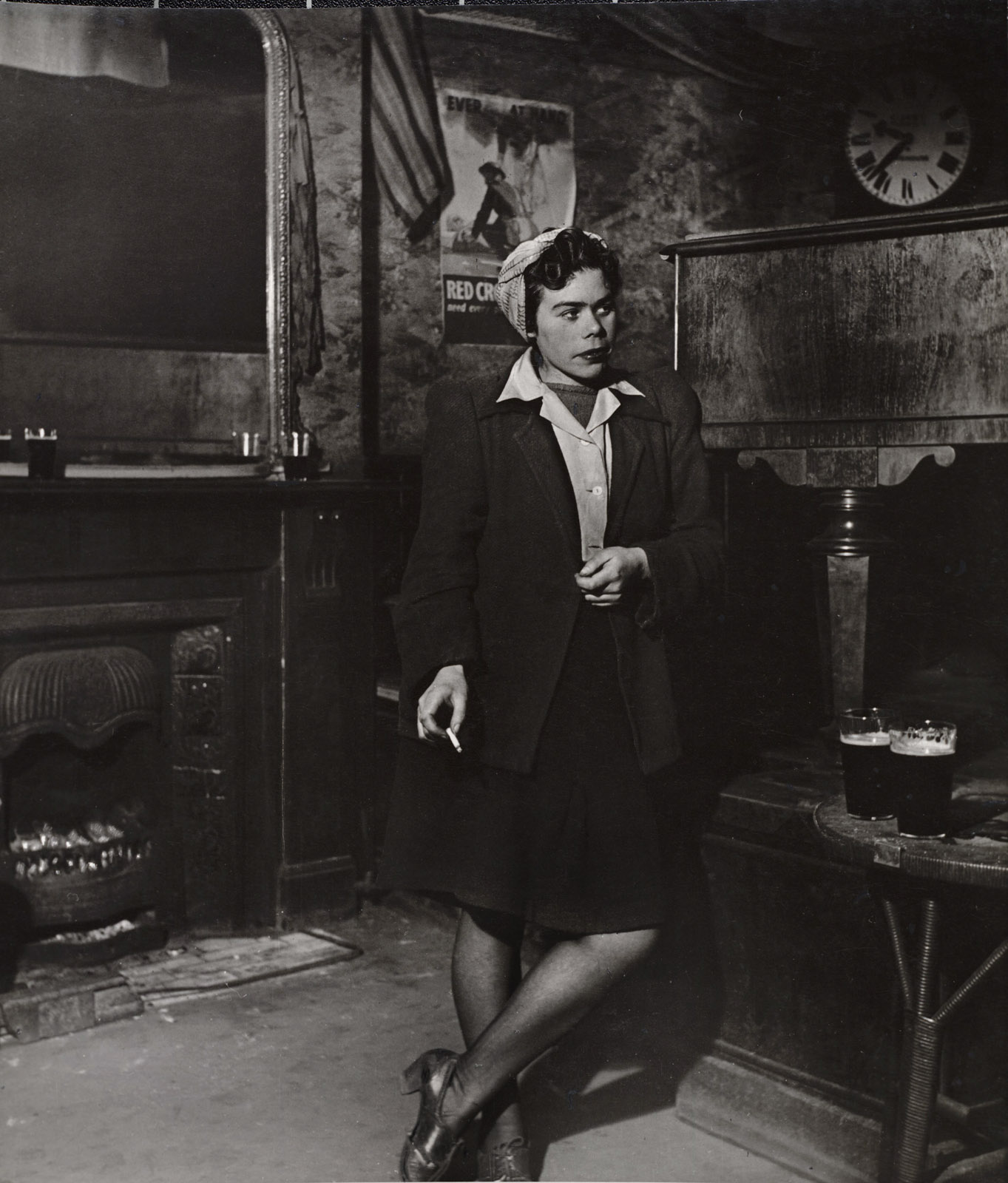
 

Bill Brandt (British born Germany, 1904-1983) 'At Charlie Brown's, Limehouse' 1945/1946


Bill Brandt (British born Germany, 1904-1983)
At Charlie Brown’s, Limehouse
1945/1946
Ā© Bill Brandt / Bill Brandt Archive Ltd


Bill Brandt (British born Germany, 1904-1983) 'At Charlie Brown's, Limehouse' 1945/1946


Bill Brandt (British born Germany, 1904-1983)
At Charlie Brown’s, Limehouse
1945/1946
Ā© Bill Brandt / Bill Brandt Archive Ltd


In the background of this image, taken in one of London’s East End pubs, is another one: a poster issued by the military Red Cross and referring to that organisation’s work on the battlefields during World War I. It is not known why, in the second version of the image, Brandt partly obscured the poster with black wash, the medium he most commonly used to retouch his photographs.


Bill Brandt (British born Germany, 1904-1983) 'A snicket in Halifax' 1937


Bill Brandt (British born Germany, 1904-1983)
A snicket in Halifax
1937
25.40 x 20.50cm
Private collection
Courtesy Bill Brandt Archive and Edwynn Houk Gallery
Ā© Bill Brandt / Bill Brandt Archive Ltd.


Bill Brandt (British born Germany, 1904-1983) 'A snicket in Halifax' 1937


Bill Brandt (British born Germany, 1904-1983)
A snicket in Halifax
1937, printed later
25.40 x 20.50cm
Private collection
Courtesy Bill Brandt Archive and Edwynn Houk Gallery
Ā© Bill Brandt / Bill Brandt Archive Ltd.


In 1951 Brandt started to develop his photographs using a high contrast paper in order to obtain very dark and light zones in the same image. This led him to develop some of his best known images again, including A snicket in Halifax. In contrast to the earlier prints of that photograph, in which the details of the faƧade of the building on the left are perfectly visible, he now reinterpreted the image with the faƧade totally blackened and thus strongly contrasting with the glint on the ramp’s cobblestones while adding a plume of black smoke in the sky.

As early as 1997 Nigel Warburton, an art historian who has undertaken some of the best work on Brandt, questioned the concept of authenticity in this photograph in one of his texts, reflecting on the changes that Brandt had introduced in the prints of his images. Warburton asked which is the most “authentic”, emphasising the fact that the way in which the artist interpreted a single negative had changed over time and rejecting the idea that the simple distinction between what are known as “vintage” prints and later reprints resolves this issue.


Bill Brandt (British born Germany, 1904-1983) 'Nude, Vasterival, Normandy' 1954


Bill Brandt (British born Germany, 1904-1983)
Nude, Vasterival, Normandy
1954
Ā© Bill Brandt / Bill Brandt Archive Ltd


Bill Brandt (British born Germany, 1904-1983) 'Nude, Vasterival, Normandy' 1954


Bill Brandt (British born Germany, 1904-1983)
Nude, Vasterival, Normandy
1954
Ā© Bill Brandt / Bill Brandt Archive Ltd.


In contrast to photographic purists such as Edward Weston, Brandt had no objection to retouching his images, cropping them or reversing the negative in accordance with his preferences or to meet the requirements of its layout on the printed page. Here we see two versions of the same image with the negative flipped in the enlarger. This is not a unique case and there are other examples in the exhibition: Policeman in a dockland alley, Bermondsey was published in two versions, while Behind the restaurant is a photograph that was always printed in reverse, as evident from the lettering on the boxes.
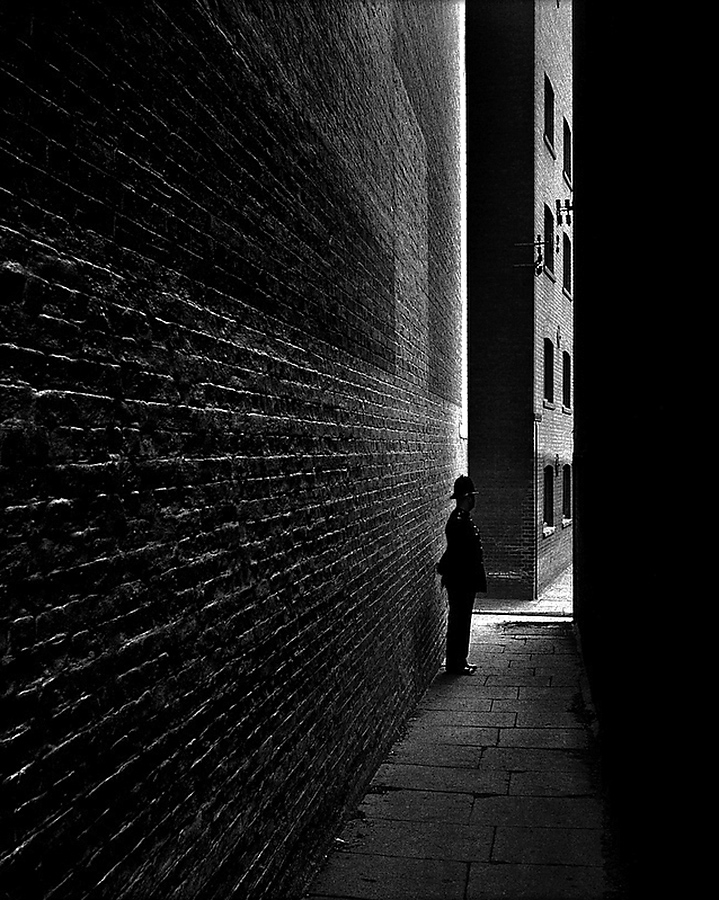
 

Bill Brandt (British born Germany, 1904-1983) 'Policeman in a Dockland Alley, Bermondsey' 1934


Bill Brandt (British born Germany, 1904-1983)
Policeman in a Dockland Alley, Bermondsey
1934
Ā© Bill Brandt / Bill Brandt Archive Ltd.


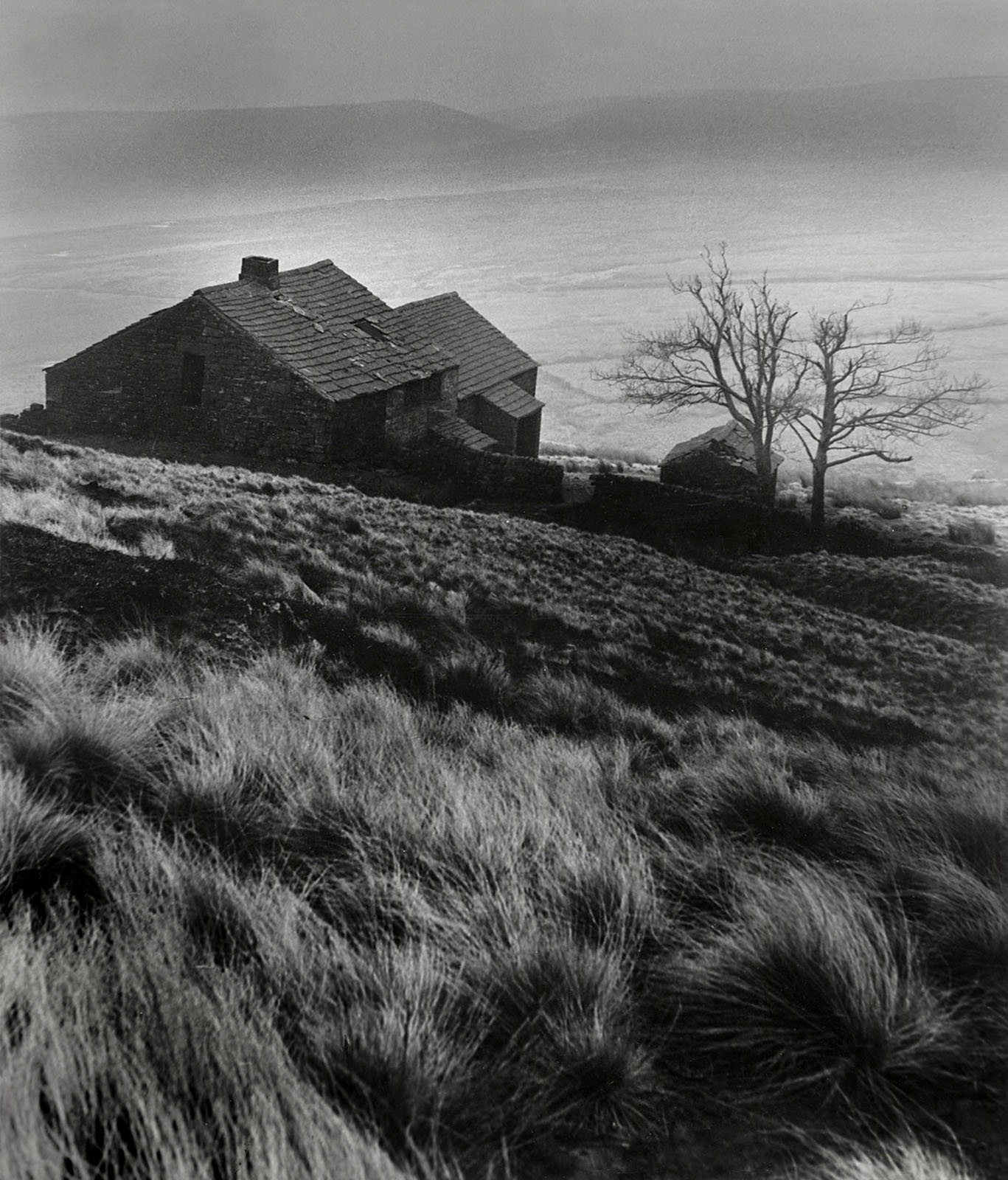
Bill Brandt (British born Germany, 1904-1983) 'Top Withens, West Riding, Yorkshire' 1944-1945


Bill Brandt (British born Germany, 1904-1983)
Top Withens, West Riding, Yorkshire
1944-1945
Ā© Bill Brandt / Bill Brandt Archive Ltd


This photograph was included in Brandt’s book Literary Britain (1951) and he recalled how he visited the place various times in order to take it, considering it one of the settings that best conveyed the world of Emily BrontĆ«’s works. The farm, now a ruin, is supposedly the place that inspired her novel Wuthering Heights.

For the painter David Hockney, a great admirer of Brandt, this was one of his favourite photographs but he was extremely disappointed to discover that it is in fact a composite image and that the storm filled clouds, which descend almost to the ground, were taken from another negative and added in the photography lab. The other photograph, taken from higher up on the hill, provides the reverse shot on a foggy winter day.
 

Bill Brandt (British born Germany, 1904-1983) 'Top Withens, West Riding, Yorkshire' 1944-1945


Bill Brandt (British born Germany, 1904-1983)
Top Withens, West Riding, Yorkshire
1944-1945
Ā© Bill Brandt / Bill Brandt Archive Ltd


Bill Brandt (British born Germany, 1904-1983) 'Barmaid at the Crooked Billet, Tower Hill' March 1939


Bill Brandt (British born Germany, 1904-1983)
Barmaid at the Crooked Billet, Tower Hill
March 1939
Ā© Bill Brandt / Bill Brandt Archive Ltd


Bill Brandt employed a wide range of retouching techniques on his prints, which was common practice in analogue photography, in which tiny scratches on the negative or specks of dust that cannot be completely removed leave marks on the photographic paper. In addition, Brandt often attempted to conceal imperfections in the individuals or objects photographed. The most widely used materials for this were watercolour, ContƩ crayon and even lead pencil. Brandt, however, also frequently used a scraper and Indian ink.

In this photograph the outline of the barmaid’s face, her eye and eyebrows have been reinforced with a metal point to define the lines, while the use of watercolour and ContĆ© crayon allows various imperfections in the area of the left arm to be concealed.

Bill Brandt

Born Hermann Wilhelm Brandt in Hamburg in 1904 to a wealthy family of Russian origin, after a period living in Vienna and Paris in 1934 Brandt decided to settle in London. Within the context of growing hostility to all things German due to the rise of Nazism, he attempted to erase all traces of his origins to the point of stating that he was British by nationality. This concealment and the creation of a new personality enveloped Brandt’s life in an aura of mystery and conflict that was directly reflected in his work. His images aim to construct a vision of the country that he embraced as his own, although not of the real country but rather of the idea that he had created of it during his childhood through reading and from stories told by relatives.

Brandt had tuberculosis as a child and it was seemingly in the Swiss sanatoriums at Agra and Davos where his family sent him to convalesce that he first became interested in photography and where he made many of his literary discoveries: Fyodor Dostoyevsky, Gustave Flaubert, Franz Kafka, Guy de Maupassant, Ernest Hemingway and Charles Dickens. After some years in Switzerland he moved to Vienna to undergo an innovative treatment for tuberculosis based on psychoanalysis. Imbued with a post-Romantic air, Brandt’s photographs always seems to be located on the edge, provoking simultaneous attraction and rejection.

As the exhibition’s curator Ramón Esparza has noted, they can be related to the concept of unheimlich, a term first used by Sigmund Freud in 1919. The adjective unheimlich – generally translated as “the uncanny”, “the sinister” or “the disturbing”, and which according to Eugenio TrĆ­as “constitutes the condition and limit of the beautiful” – is one of the characteristic traits that remains present throughout Brandt’s career. Psychoanalytical theories were one of the fundamental pillars of Surrealism and their influence extended to the entire Parisian cultural scene in the 1930s. Brandt and his first partner, Eva Boros, moved to the French capital in 1930 where he worked as an assistant in Man Ray’s studio. Without ever actively participating in any of the historic avant-garde movements, he undoubtedly assimilated the ideas that circulated in a city filled with young artists, many of them immigrants looking to make their way in the professional art world. Brandt’s images of this period suggest a catalogue of psychoanalytical “themes”, clearly reflecting the influence of Surrealism on him.

Almost all Brandt’s images, both the pre-war social documentary type and those from his subsequent more “artistic” phase, possess a powerful poetic charge as well as that very typical aura of strangeness and mystery in which, as in his own life, reality and fiction are always mixed.

The exhibition

Fundación MAPFRE is delighted to be presenting the first retrospective in Spain on Bill Brandt (Hamburg 1904 – London, 1983), considered one of the most influential British photographers of the 20th century. The exhibition, together with Paul Strand. Fundación MAPFRE Collections, inaugurates the KBr Fundación MAPFRE, our new Photography Centre in Barcelona.

The exhibition presents 186 photographs developed by Brandt himself who, over the course of nearly five decades of professional activity, encompassed almost all the principal photographic genres: reportage, portraiture, the nude and landscape, as noted by his biographer Paul Delany in Bill Brandt. A Life, 2004.

The structure of the exhibition, which is divided into six sections, reveals how all these qualities – in which identity and the concept of “the uncanny” become the principal ones – blend together in the work of this eclectic artist. Above all Brandt was considered a flĆ¢neur or stroller in a way comparable to his admired EugĆØne Atget, whom he always considered one of his masters.

The early photographs

After initiating his activities as a photographer in Vienna, where he produced the famous and widely praised portrait of the poet Ezra Pound in 1928, Bill Brandt left for Paris in order to work for a short period as an assistant in Man Ray’s studio. In the French capital Brandt encountered Surrealism, which would influence his work from that point onwards. Some of his images, such as Balloon flying over the northern suburbs of Paris (1929), can be related to the psychoanalytical theories of Freud, who considered a hot air balloon in a dream to be a symbol of the masculine. Brandt’s photographs of this period are also closely related to the earlier work of his admired EugĆØne Atget; like him, Brandt photographed street scenes and Parisian nightlife (images that precede his subsequent, better known work) in which the above-mentioned notion of the disturbing makes its appearance.


Bill Brandt (British born Germany, 1904-1983) 'Evening in Kew Gardens' 1932


Bill Brandt (British born Germany, 1904-1983)
Evening in Kew Gardens
1932
25.24 x 20.48cm
Private collection
Courtesy Bill Brandt Archive and Edwynn Houk Gallery
Ā© Bill Brandt / Bill Brandt Archive Ltd.


Brandt and his partner Eva Boros (another of Man Ray’s students who had previously studied with AndrĆ© KertĆ©sz) travelled on numerous occasions to the Hungarian steppes, to his native Hamburg and to Spain, where they visited Madrid and Barcelona among other cities and with the plan of spending their holidays in Majorca before moving to London in 1934. It was at this point that Brandt shed his German origins, even to the point of inventing British nationality for himself and creating a body of work in which the United Kingdom – a country marked by significant social inequality at that time – established itself as the core of his identity.

Upstairs, downstairs

“Bill Brandt was a man who loved secrets, and needed them. The face he presented to the world was that of an English-born gentleman, someone who could easily blend in with the racegoers at Ascot whom he liked to photograph. [A] faƧade which he would defend with outright lies if he had to […]. Today, many people are eager to discover their roots and make an identity from them. Brandt did the exact opposite: he buried his true origins and presented himself as a completely different person from the one he had been, in reality, for the first twenty-five years of his life.”

Paul Delany starts his biography of Bill Brandt with these lines. According to that author, Brandt not only wanted to live in England but to become English, which was understandable in the context of the growing British antipathy to Nazi Germany and to the events that followed Hitler’s rise to power and the outbreak of World War II. In the London art world it was habitual practice for emigrants arriving from Germany to change their name. Among those who had done so were Stefan Lorant, a Hungarian who had been the editor-in-chief of the Münchner Illustrierte Presse, and two of his photographers, Hans Baumann and Kurt Hübschmann, who anglicised their names to Felix Man and Kurt Hutton, just as Brandt changed his first name to Bill.
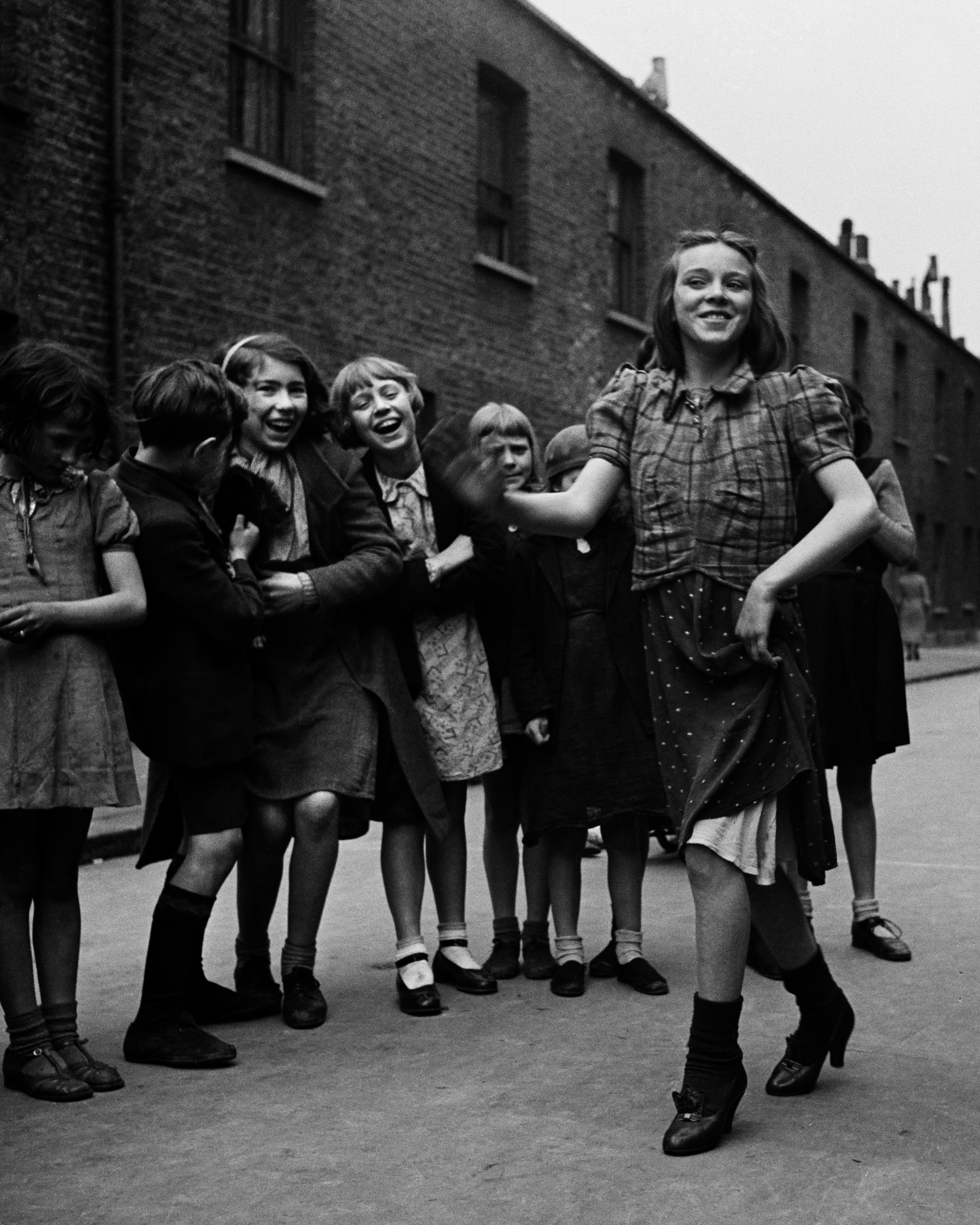
 

Bill Brandt (British born Germany, 1904-1983) 'East End girl dancing the 'Lambeth Walk'' March 1939


Bill Brandt (British born Germany, 1904-1983)
East End girl dancing the ‘Lambeth Walk’
March 1939
22.86 x 19.68cm
Private collection
Courtesy Bill Brandt Archive and Edwynn Houk Gallery
Ā© Bill Brandt / Bill Brandt Archive Ltd.


In February 1936, two years after his arrival in London, Brandt published his first book, The English at Home. Despite their natural, spontaneous appearance, the scenes reproduced in the book were carefully prepared in advance. For this first book Brandt opted for a wide, album format and made use of one of the design formats most commonly employed in Central European graphic publications: the combination of opposites in order to create a significant contrast between each pair of photographs. Brandt aimed to juxtapose and counterbalance two different social classes on each double-page spread, developing two parallel narrative discourses but without mixing them together. We thus see family scenes of the upper classes out strolling or dining, followed by the same activities undertaken by working-class and mining families. Two years after the publication of The English at Home Brandt published A Night in London, which represents a type of replica of a work by BrassaĆÆ, one of the photographers he most admired, whose book Paris de nuit had appeared in France six years earlier. A Night in London can be seen as Brandt’s contribution to the photographic and cinematographic genre that some art historians have termed “the symphony of the metropolis.”
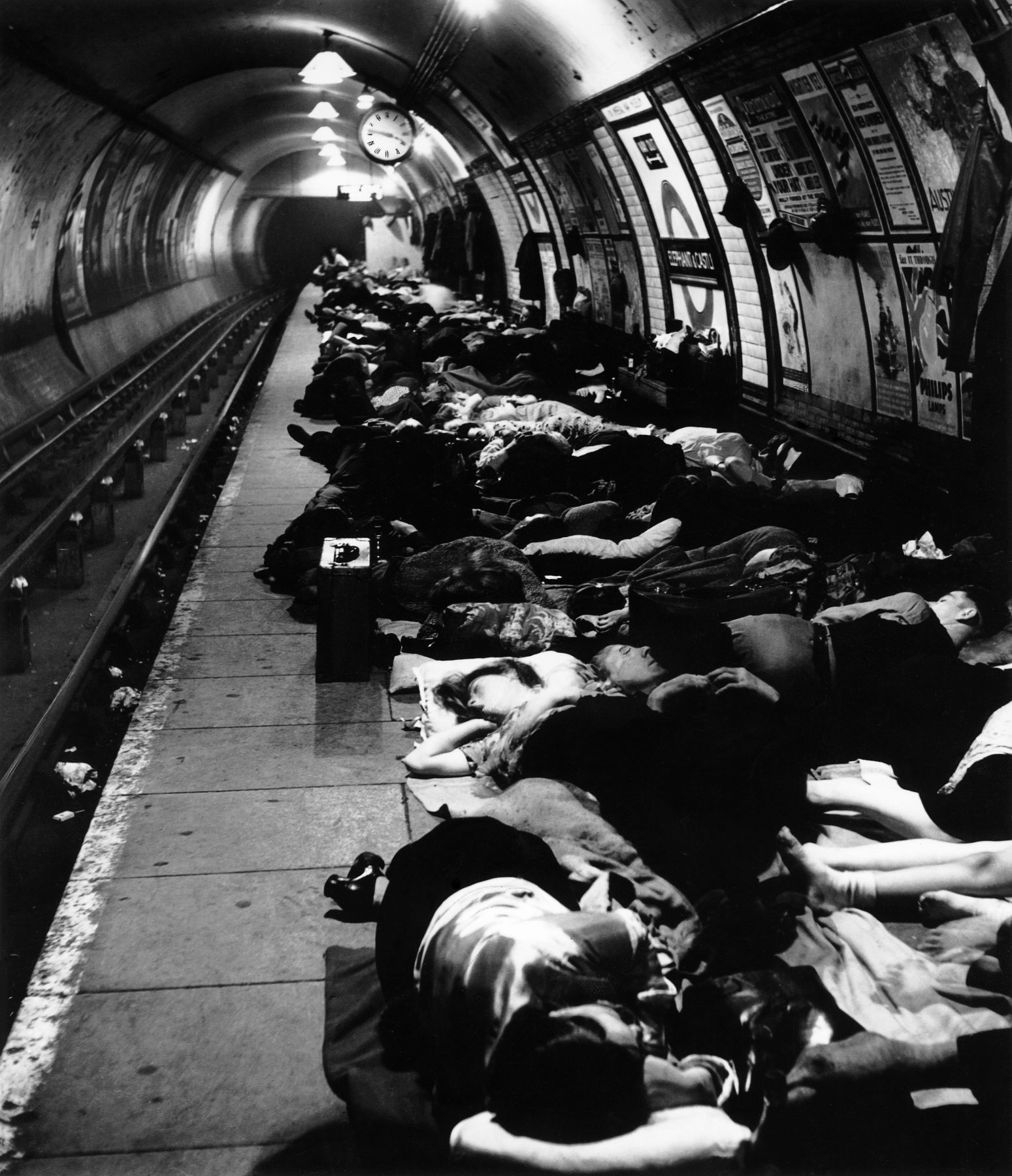
 

Bill Brandt (British born Germany, 1904-1983) 'Elephant & Castle Underground' 1940


Bill Brandt (British born Germany, 1904-1983)
Elephant & Castle Underground
1940
25.72 x 20.32cm
Private collection
Courtesy Bill Brandt Archive and Edwynn Houk Gallery
Ā© Bill Brandt / Bill Brandt Archive Ltd.


Elephant and Castle underground station during WWII. 1942. Deep underground at Elephant and Castle Underground station, Bill Brandt photographed many hundreds sleeping as they sought shelter from the Blitz overhead.

Following the outbreak of World War II, Brandt started to work for the Ministry of Information, producing two of his most celebrated series. The first comprises photographs of hundreds of Londoners sleeping in Underground stations converted into improvised shelters, while the second portrays the city on the surface; a ghostly London lit only by moonlight as a safety precaution due to the air raids. The United Kingdom had become a single country united against the enemy. Brandt abandoned the class differences that he had previously portrayed in favour of other types of scenes which denounced the effects of the war on the civilian population.

Portraits

While Brandt produced photographs on an independent basis that he would subsequently group together for his different books, much of his output appeared in publications and magazines such as Picture Post, as well as in Lilliput and in the American edition of Harper’s Bazaar, for which he started to work in 1943. It was at this point that he turned to portraiture as a professional activity. His first reference to his portraits, of which more than 400 are known, was published in Lilliput in 1948. In Brandt’s words: “AndrĆ© Breton once said that a portrait should not only be an image but an oracle one questions, and that the photographer’s aim should be a profound likeness, which physically and morally predicts the subject’s entire future. […] The photographer has to wait until something between dreaming and action occurs in the expression of a face.”


Bill Brandt (British born Germany, 1904-1983) 'Francis Bacon' c. 1951


Bill Brandt (British born Germany, 1904-1983)
Francis Bacon
c. 1951
Ā© Bill Brandt / Bill Brandt Archive Ltd.


Brandt’s portraits evolved over time. Some mark a break with tradition, such as the images published in Lilliput in 1941 to accompany the article “Young Poets of Democracy”, which included some of the most famous faces of the writers and poets of the Auden generation. He subsequently began to distort the space in his images, as evident in Francis Bacon on Primrose Hill, London (1963), and also produced a new series of portraits of eyes of clearly Surrealist inspiration. The eyes of Henry Moore, Georges Braque and Antoni TĆ pies are among the examples of gazes that transformed the way of seeing and representing the world.

Landscape described

Following his focus on portraiture, Brandt introduced landscape into his repertoire, thus encompassing all the categories traditionally considered to constitute the classic artistic genres. In his landscapes he aimed to introduce an atmosphere – a term that for Brandt seems to involve an entire series of aesthetic references associated with both the pictorial and the literary traditions – which connects with the viewer in order to provoke an emotional response from contemplation of the image. In this sense it would seem that Brandt did not aim to merely represent a place but to capture its very essence in a single image, as in Halifax; “Hail Hell & Halifax” (1937) and Cuckmere River (1963). When these landscapes started to include stone constructions such as tombs and crosses Brandt considered that he had achieved his aim of capturing the atmosphere.


Bill Brandt (British born Germany, 1904-1983) 'Cuckmere River' (RĆ­o Cuckmere) 1963


Bill Brandt (British born Germany, 1904-1983)
Cuckmere River (RĆ­o Cuckmere)
1963
20 x 24.13cm
Private collection
Courtesy Bill Brandt Archive and Edwynn Houk Gallery
Ā© Bill Brandt / Bill Brandt Archive Ltd.


It should be remembered that for Brandt the concept of landscape was deeply rooted in painting and the photographic tradition but also in literature. Literary Britain, which was published in 1951, makes this relationship clear. Using images already published in other weekly magazines as well as photographs specially taken for this book, Brandt accompanied his photographs with extracts from works by British authors. It is here that an explanation of his somewhat imprecise concept of “atmosphere” can be found: the moment when the different elements that make up the landscape (nature, light, viewpoint, weather conditions) converge in an aesthetic canon rooted in a cultural tradition.

Nudes

When Brandt focused again on the theme of the nude in 1944 he seemed to feel the need to return to a more poetic type of image. For the artist, documentary photography had become a widely extended fashion while the old Great Britain with its marked class divisions was now something of the past. It should also be remembered that the nude is one of the traditional themes of painting and as such signals Brandt’s evolution from documentary photography to the social status of “artist”. For this transition he made use of an old plate camera with a lens that produced an effect of broad spatiality and depth, transforming the everyday space of a room into a dreamlike setting.


Bill Brandt (British born Germany, 1904-1983) 'Nude, Baie des Anges, France' 1959


Bill Brandt (British born Germany, 1904-1983)
Nude, Baie des Anges, France (Desnudo, Baie de Anges, Francia)
1959
25.24 x 20.32cm
Private collection
Courtesy Bill Brandt Archive and Edwynn Houk Gallery
Ā© Bill Brandt / Bill Brandt Archive Ltd.


In the 1950s Brandt visited the beaches of Normandy in order to make a series of portraits of the painter Georges Braque. Seeing those pebble beaches led to a change of direction and he started to photograph stones and parts of the female body as if they were stones themselves. He combined flesh and rock, heat and cold, hardness and softness in a single formal discourse. The distortions are often so pronounced that the parts of the body have lost any reference point but they nonetheless produce sensations that are more poetic or profound. It may be that for Brandt these “fragments” of the human body in comparison or communion with natural forms represented primordial forms of some type through which we can perceive “the totality of the world”, as with the Urformen of the Gestalt School and its theory of perception.

In the late 1970s Brandt again returned to the theme of the nude but these images bear no relation to his earlier ones. They transmit a certain sense of violence which reveals the alienation of an artist who no longer felt himself part of the world in which he lived.

In Praise of Imperfection

In the introduction to Camera in London, his book on that city published in 1948, Brandt wrote: “I consider it essential that the photographer should do his own printing and enlarging. The final effect of the finished print depends so much on these operations. And only the photographer himself knows the effect he wants.” Brandt was far more concerned than many other photographs with the actual developing of his analogue photographs. He considered working in the photographic lab to be essential and he could spend hours there in order to ensure complete control over the final image, which in most cases was the stage prior to the publishing process when the image appeared in a book or magazine. At the outset of his career he had learned a wide range of traditional techniques, including blow-up, enlarging and the use of brushes, scrapers and other tools, as can be seen in the works displayed in the case in this room, which include various prints of the same image retouched in different ways. These manual retouchings sometimes gave his photographs that rather crude look which can be seen in the context of the above-mentioned Freudian concept of unheimlich or “the uncanny”. A large number of these images clearly show brushstrokes of black wash on the surface. Another example is Top Withens, West Riding, Yorkshire of 1945, an image taken for Brandt’s book Literary Britain. It includes clear signs that the stormy sky which gives the landscape a more threatening appearance was added later in the lab.

The catalogue

The catalogue that accompanies the exhibition includes reproductions of all the works on display, in addition to a principal essay by the project’s curator, Ramón Esparza, doctor of Communication Sciences and professor of Audiovisual Communication at the Universidad del PaĆ­s Vasco, and another by Maud de la Forterie, doctor in Art History at the Sorbonne, whose doctoral thesis was devoted to the work of Bill Brandt. The catalogue also features an essay by Nigel Warburton on the artist, originally published in 1993 and revised for the present edition, and Bill Brandt’s text ā€œA Statementā€ which was published in the magazine Album in March 1970.


FUNDACIƓN MAPFRE – Instituto de Cultura
Paseo de Recoletos, 23
28004 Madrid, Spain
Phone: +34 915 81 61 00

Opening hours:
Monday (except holidays) from 2.00pm – 8.00pm
Tuesday to Saturday from 11am – 8pm
Sundays and holidays from 11am – 7pm

Fundación Mapfre website

LIKE ART BLART ON FACEBOOK

Back to top

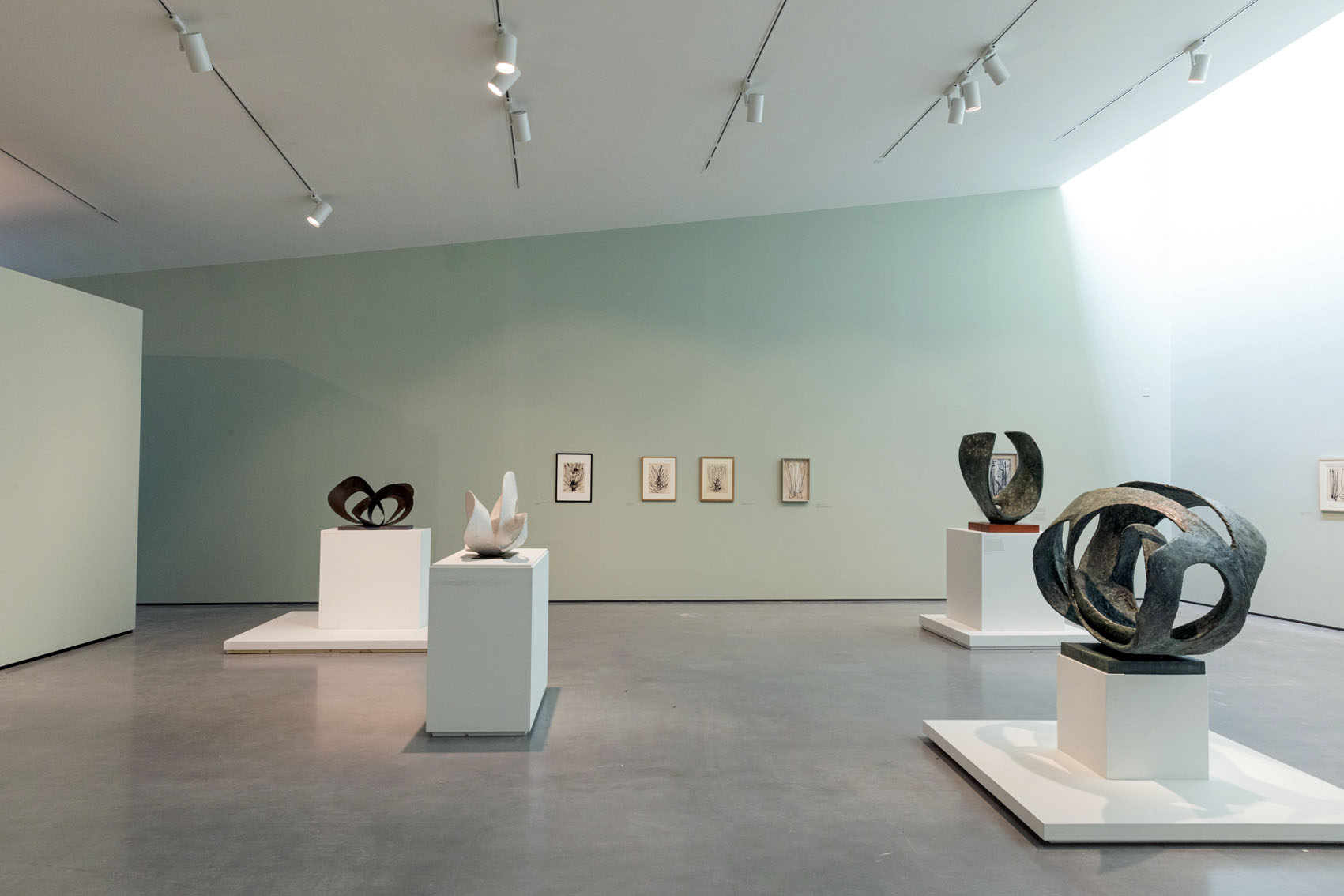
Exhibition: ‘Barbara Hepworth: Art & Life’ at the Hepworth Wakefield, Wakefield, West Yorkshire

Exhibition dates: 21st May 2021 – 27th February, 2022

Ā Curator: Eleanor Clayton


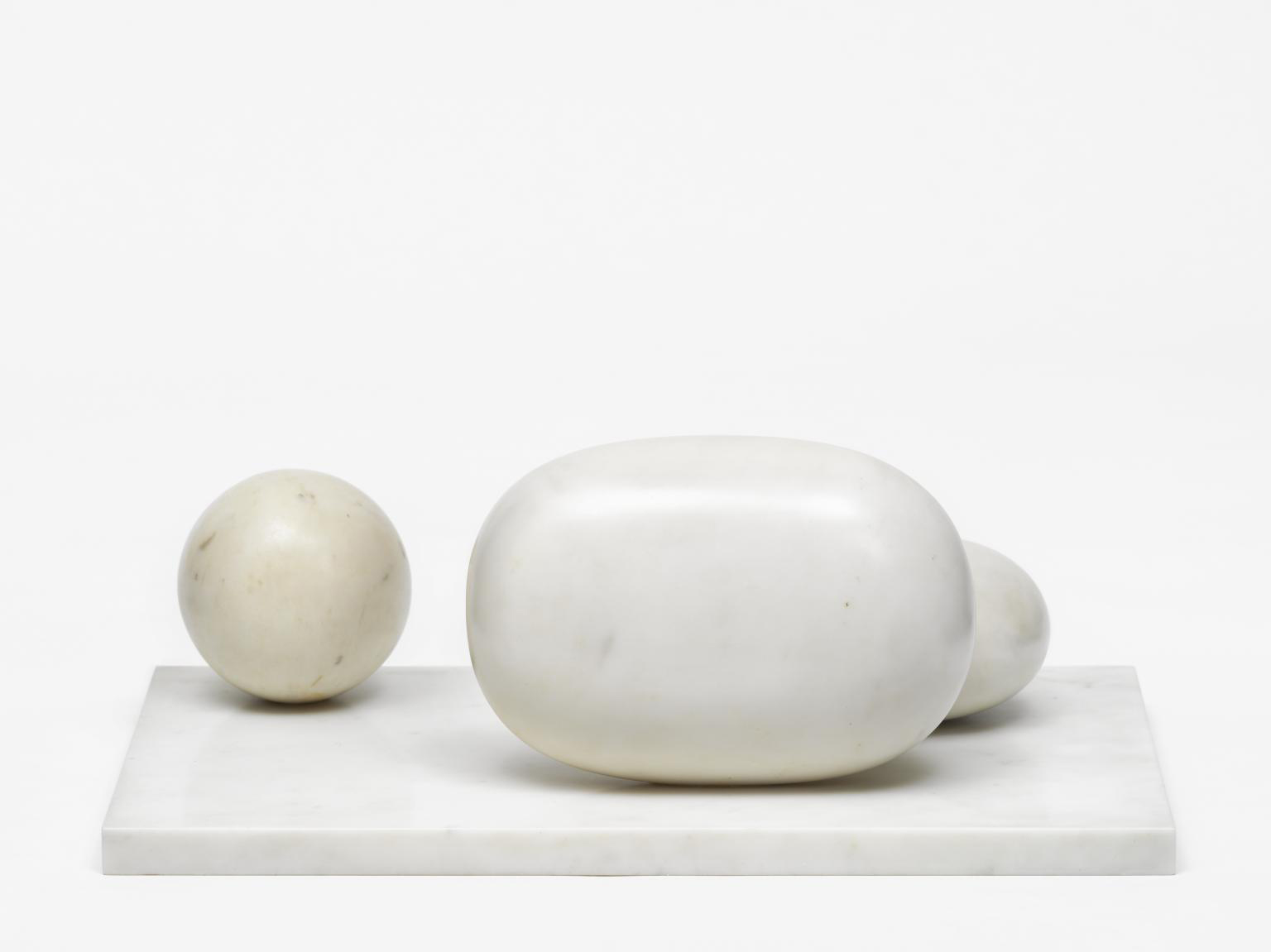
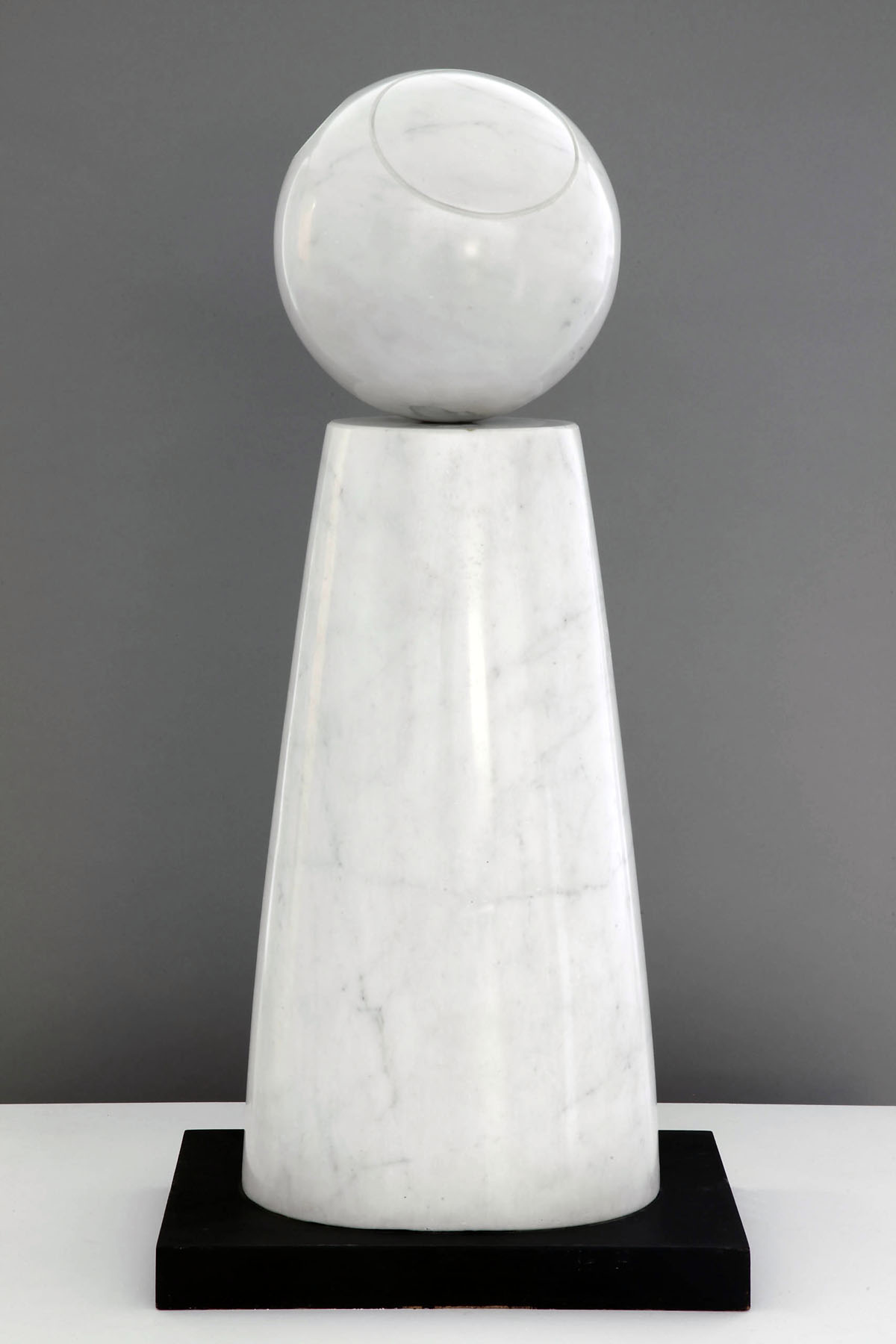
Barbara Hepworth (English, 1903-1975) 'Pierced Hemisphere' 1937 from the exhibition 'Barbara Hepworth: Art & Life' at the Hepworth Wakefield, Wakefield, West Yorkshire, May 2021 - Feb 2022


Barbara Hepworth (English, 1903-1975)
Pierced Hemisphere
1937
White marble
The Hepworth Wakefield (Wakefield Permanent Art Collection)
Barbara Hepworth Ā© Bowness
Photo: Norman Taylor


As a bit of a break from photography, something very special this weekend especially for me. I adore this artist’s work.

Solid / voids
space / forms
still / movements
pierced / circles
memory / landscapes
music / curves
Spirit / leaps!


Dr Marcus Bunyan


Many thankx to the Hepworth Wakefield for allowing me to publish the photographs in the posting. Please click on the photographs for a larger version of the image.


“The relationship between humans and landscape played a key role in Hepworth’s creative development. In 1949, she settled down in St Ives, Cornwall, where she stayed until her death. The harmony of the sea, earth and rocks in this remote part of England had a significant impact on her.”


“Barbara Hepworth is one of the most important artists of the 20th century, with a unique artistic vision that demands to be looked at in-depth. This exhibition will shine a light on Hepworth’s wide-ranging interests and how they infused her art practice. Deeply spiritual and passionately engaged with political, social and technological debates in the 20th century, Hepworth was obsessed with how the physical encounter with sculpture could impact the viewer and alter their perception of the world.”


Eleanor Clayton, Curator


“Hole turned out to be spelt with a W as well as an H. Holes were not gaps, they were connections. Hepworth made the hole into a connection between different expressions of form, and she made space into his own form.”


Jeannette Winterson


“I rarely draw what I see –
I draw what I feel in my body”


Barbara Hepworth


Installation image of 'Barbara Hepworth: Art & Life' at the Hepworth Wakefield

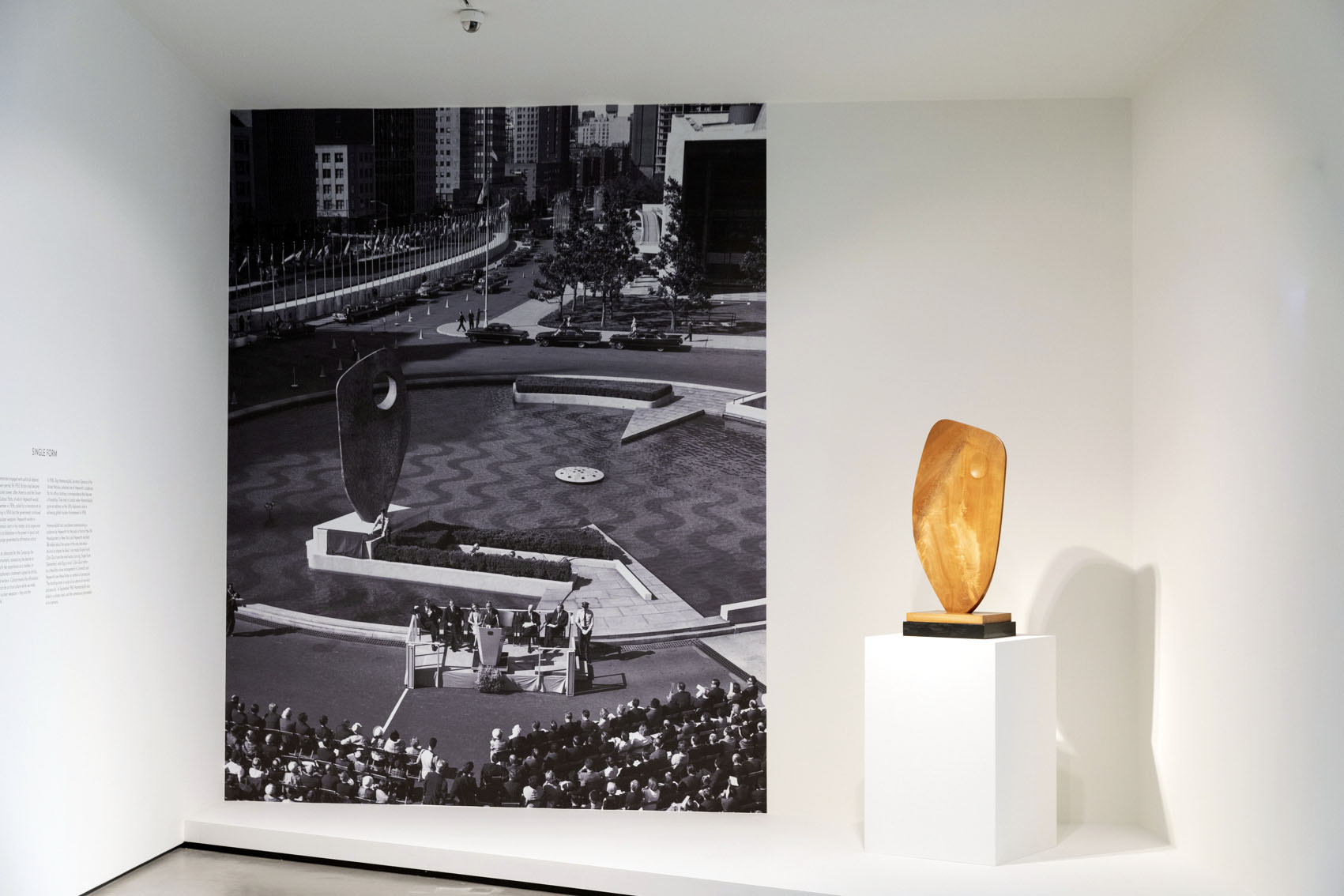
Installation image of 'Barbara Hepworth: Art & Life' at the Hepworth Wakefield showing in the bottom image at right Single Form (September) (BH 312) in figured walnut, and a photograph at left of Single Form (1964) displayed near the pool in front of the United Nations Secretariat Building


Installation images of Barbara Hepworth: Art & Life at the Hepworth Wakefield showing in the bottom image at right Single Form (September) (BH 312) in figured walnut, and a photograph at left of Single Form (1964) displayed near the pool in front of the United Nations Secretariat Building.
Photos: Nick Singleton


Barbara Hepworth (English, 1903-1975) 'Single Form (Chun Quoit)' 1961 from the exhibition 'Barbara Hepworth: Art & Life' at the Hepworth Wakefield, Wakefield, West Yorkshire, May 2021 - Feb 2022


Barbara Hepworth (English, 1903-1975)
Single Form (Chun Quoit)
1961
Plaster, painted brown
Ā© Bowness, Hepworth Estate
Photo: Mark Heathcote


Barbara Hepworth working on the armature of 'Single Form' in the Palais de Danse, St Ives 1961


Barbara Hepworth working on the armature of Single Form in the Palais de Danse, St Ives
1961
Ā© Bowness
Photo: Studio St Ives


Barbara Hepworth with the plaster prototype for the United Nations 'Single Form' at the Morris Singer foundry, London May 1963


Barbara Hepworth with the plaster prototype for the United Nations Single Form at the Morris Singer foundry, London
May 1963
Photo: Morgan-Wells
Barbara Hepworth Ā© Bowness


'Barbara Hepworth: Art & Life' poster


Barbara Hepworth: Art & Life poster


Installation image of 'Barbara Hepworth: Art & Life' at the Hepworth Wakefield

Installation image of 'Barbara Hepworth: Art & Life' at the Hepworth Wakefield

Installation image of 'Barbara Hepworth: Art & Life' at the Hepworth Wakefield

Installation image of 'Barbara Hepworth: Art & Life' at the Hepworth Wakefield


Installation images of Barbara Hepworth: Art & Life at the Hepworth Wakefield.
Photos: Nick Singleton


Barbara Hepworth (English, 1903-1975) 'Kneeling Figure' 1932


Barbara Hepworth (English, 1903-1975)
Kneeling Figure
1932
Rosewood
Purchased with aid from the Wakefield Permanent Art Fund (Friends of Wakefield Art Galleries and Museums), V&A Purchase Grant Fund and Wakefield Girls’ High School, 1944
Ā© Bowness, Hepworth Estate
Photo: Jerry Hardman-Jones


Installation image of 'Barbara Hepworth: Art & Life' at the Hepworth Wakefield

Installation image of 'Barbara Hepworth: Art & Life' at the Hepworth Wakefield

Installation image of 'Barbara Hepworth: Art & Life' at the Hepworth Wakefield showing in the image at centre, 'Spring' (1966)


Installation images of Barbara Hepworth: Art & Life at the Hepworth Wakefield showing in the bottom image at centre, Spring (1966)
Photos: Nick Singleton


Barbara Hepworth (English, 1903-1975) 'Spring' 1966


Barbara Hepworth (English, 1903-1975)
Spring
1966
Ā© Bowness, Hepworth Estate
Photo: Jerry Hardman


Installation image of 'Barbara Hepworth: Art & Life' at the Hepworth Wakefield showing at second left 'Winged Figure'Ā (1961-62), and second right 'Rock Form (Porthcurno)' (1964)


Installation images of Barbara Hepworth: Art & Life at the Hepworth Wakefield showing at second left Winged Figure (1961-62 below), and second right Rock Form (Porthcurno) (1964, below)


Barbara Hepworth (English, 1903-1975) 'Winged Figure' 1961-1962


Barbara Hepworth (English, 1903-1975)
Winged Figure
1961-1962
Ā© Bowness, Hepworth Estate
Photo: Jonty Wilde


Barbara Hepworth (English, 1903-1975) 'Rock Form (Porthcurno)' 1964


Barbara Hepworth (English, 1903-1975)
Rock Form (Porthcurno)
1964
Plaster, painted green on the outside and blue/grey on the interior
Ā© Bowness, Hepworth Estate
Photo: Jonty Wilde


To mark The Hepworth Wakefield‘s 10th anniversary, the Yorkshire-based gallery opened the most expansive exhibition of Barbara Hepworth’s work in the UK since the artist’s death in 1975.

The exhibition presents an in-depth view of the Wakefield-born artist’s life, interests, work and legacy. It displays some of Hepworth’s most celebrated sculptures including the modern abstract carving that launched her career in the 1920s and 1930s, her iconic strung sculptures of the 1940s and 1950s, and large scale bronze and carved sculptures from later in her career. Key loans from national public collections are being shown alongside works from private collections that have not been on public display since the 1970s, as well as rarely seen drawings, paintings and fabric designs. It reveals how Hepworth’s wide sphere of interests comprising music, dance, science, space exploration, politics and religion, as well as events in her personal life, influenced her work.

Contemporary artists Tacita Dean and Veronica Ryan have been commissioned to create new works which are being presented within the exhibition. Each artist explores themes and ideas that interested Hepworth and that continue to resonate with their own work. Artworks by Bridget Riley from the 1960s are also being presented in dialogue with Hepworth’s work from the same period.

To coincide with the exhibition, The Hepworth Wakefield’s curator Eleanor Clayton has written a major new biography on the artist, published by Thames & Hudson. Eleanor Clayton said: ‘Barbara Hepworth is one of the most important artists of the 20th century, with a unique artistic vision that demands to be looked at in depth. This exhibition will shine a light on Hepworth’s wide-ranging interests and how they infused her art practice. Deeply spiritual and passionately engaged with political, social and technological debates in the 20th century, Hepworth was obsessed with how the physical encounter with sculpture could impact the viewer and alter their perception of the world.’

Simon Wallis, Director of The Hepworth Wakefield, said: ‘Lockdown continues to be an ongoing challenge for us all, so I’m delighted we’ll be celebrating, post-lockdown, our 10th anniversary with an in-depth exploration of the art and life of Barbara Hepworth, Wakefield’s most famous daughter. With this major exhibition and new book, we’ll continue to build on the legacy and influence of a key pioneer of modern sculpture. Hepworth is a daily inspiration for us at the gallery and we look forward to sharing some of her greatest work with a wide new audience.’

The exhibition in detail

The exhibition opens with an introduction to Barbara Hepworth’s work, showing the three sculptural forms she returned to repeatedly throughout her career using a variety of different materials. A detailed look at Hepworth’s childhood in Yorkshire through archive material and photographs includes some of the artist’s earliest- known paintings, carvings and life drawings as she began to explore movement and the human form. A proponent of direct carving, Hepworth combined an acute sensitivity to the organic materials of wood and stone with the development of a radical new abstract language of form.

Hepworth’s determination to break free from accepted tradition was enhanced by travelling to Paris in 1932 where she visited the studios of many of the leading European avant-garde artists including Jean Arp, Constantin Brancusi and Pablo Picasso. A large section looks at Hepworth’s development of abstraction in the 1930s including Three Forms (1935) created shortly after she gave birth to triplets, an event she felt invigorated her work towards a bolder language of geometric form. One of the few examples in existence of Hepworth’s first coloured stringed sculptures in plaster, made during World War Two, is being shown alongside the many drawings she created during this period when sculptural materials were scarce. She described these drawings as ‘my sculptures born in the disguise of two dimensions.’

The exhibition reveals the artist’s creative process, drawing on new research from the recently established Hepworth Research Network (HRN), in collaboration with the Universities of York and Huddersfield, into the ways material factors shaped Hepworth’s sculptures and how they related to her broader conceptual and aesthetic concerns. This includes how starting bronze casting in the 1950s enabled Hepworth to create new forms and how, later in life, she experimented with new materials such as lead crystal and aluminium. On display is The Hepworth Wakefield’s unique collection of 44 surviving prototypes in plaster, aluminium and wood, many of which show the marks of Hepworth’s own hand and tools. These are being shown with a specially commissioned intervention by artist Veronica Ryan, the first artist to undertake a residency in Hepworth’s old studio in St Ives, where the prototypes once stood.

Hepworth’s broader interests – such as music, dance, theatre, politics, Greek mythology, and science – influenced her sculptures throughout her life. In the immediate post-war period she became fascinated with the interaction between figures – both in groups in her studio and observed around her, and also in a series of ‘Hospital drawings’, capturing surgeons at work in the early days of the National Health Service. These paintings and drawings capture her belief in the importance of unifying mental and physical existence – the ‘proper coordination between hand and spirit in our daily life’, to create a productive and positive society.

In 1951 Hepworth met composer Priaulx Rainier, and subsequently made several works inspired by the parallels between musical form and abstract sculpture. This coincided with her first theatrical design, for the 1951 production of Electra at The Old Vic. Archive photographs are being displayed together with Apollo (1951), a metal sculpture that formed part of the stage set, along with costume and set designs for the 1955 opera by Michael Tippett, A Midsummer Marriage, staged in 1955 at the Royal Opera House. This section of the exhibition also explores Hepworth’s passion for dance, and how she captured movement with gestural paintings and sculptures such as Forms in Movement (Galliard) (1956) and Curved Form (Pavan) (1956).

During the 1960s, Hepworth was a key cultural figure. She staged major exhibitions, presented work in experimental ways, made large-scale sculptures and explored colour in the patination of bronzes or painted surfaces of her carving. She played an active role in both local and international politics, campaigned for nuclear disarmament and supported pacifist causes. Her political values were encapsulated in the monumental Single Form, commissioned for the United Nations in 1964, of which she declared, ‘The United Nations is our conscience. If it succeeds it is our success. If it fails it is our failure.’ Rare footage of Hepworth’s speaking at the unveiling of this work as been included in the exhibition.

A group of works have been brought together to reveal the influence of the decade of space exploration on Hepworth, from Disc with Strings (Moon) (1969), made the year Neil Armstrong landed on the moon, to Four Hemispheres, inspired by the Telstar satellite. Hepworth noted at the end of the decade, ‘Man’s discovery of flight has radically altered the shape of our sculpture, just as it has altered our thinking.’

The final section of the exhibition looks at Hepworth’s last years, featuring her experiments with new materials and techniques, which incorporate bold colours and luminescent surfaces, while consistently seeking to use abstract form to express universal human experiences.

Barbara Hepworth is one of the most important artists of the twentieth century, and her organic sculptures have come to exemplify three-dimensional modernist art. Published at a time of increasing interest in her work, this biography moves beyond the traditional narratives of modernism to provide comprehensive insight into Hepworth’s remarkable life, work, and legacy.

Press release from the Hepworth Wakefield website


'Barbara Hepworth growing up' c. 1919


Barbara Hepworth growing up
c. 1919
Courtesy Bowness


Barbara Hepworth (English, 1903-1975) 'Mother and Child' 1934


Barbara Hepworth (English, 1903-1975)
Mother and Child
1934
Pink Ancaster stone
Purchased by Wakefield Corporation in 1951
Barbara Hepworth Ā© Bowness


Barbara Hepworth (English, 1903-1975) 'Three Forms' 1935


Barbara Hepworth (English, 1903-1975)
Three Forms
1935
Serravezza marble on marble base
210 Ɨ 532 Ɨ 343mm, 23 kg
Tate. Presented by Mr and Mrs J.R. Marcus Brumwell 1964
On loan to The Hepworth Wakefield
Barbara Hepworth Ā© Bowness


In 1934 Barbara Hepworth’s abstraction based on the human figure gave way to an art of pure form. With such works as Three Forms she reduced her sculpture to the most simple shapes and eradicated almost all colour. She said later that she was ‘absorbed in the relationships in space, in size and texture and weight, as well as the tensions between forms’. While the three elements are slightly imperfect in shape, their sizes and the spaces between them are precisely proportional to each other. This reflects her concern with the craft of hand-carving and with harmonious arrangement of form.

Gallery label, September 2004

Text from the Tate website


Barbara Hepworth (English, 1903-1975) 'Reconstruction' 1947


Barbara Hepworth (English, 1903-1975)
Reconstruction
1947
Ā© Bowness, Hepworth Estate / Arts Council Collection, Southbank Centre, London
Courtesy of the Hepworth Wakefield


Barbara Hepworth at work on 'Contrapuntal Forms' by floodlight 25 October 1950


Barbara Hepworth at work on Contrapuntal Forms by floodlight
25 October 1950
Official Festival photograph
National Archives Ā© Bowness


Barbara Hepworth. 'Turning Forms' at the Festival of Britain 1951


Barbara Hepworth – Turning Forms at the Festival of Britain
1951
Ā© Bowness
Photo: Anthony Panting


A richly illustrated biography on the life and work of Barbara Hepworth, one of the twentieth century’s most inspiring artists and a pioneer of modernist sculpture.

Barbara Hepworth is one of the most important artists of the twentieth century, and her organic sculptures have come to exemplify three-dimensional modernist art. Published at a time of increasing interest in her work, this biography moves beyond the traditional narratives of modernism to provide comprehensive insight into Hepworth’s remarkable life, work, and legacy.

In her lifetime, Hepworth was reproached for single-mindedness, with critics and commentators framing her work and demeanour as “cool and restrained.” Moreover, most exhibitions of her work in the twentieth century focused on Hepworth’s modernist abstract sculpture of the 1930s and its relation to her male contemporaries, leaving vast swathes of work overlooked, such as her largest and most significant public commission, the sculpture outside the UN building in New York.

This fully illustrated biography reflects Hepworth’s multifaceted and interdisciplinary approach, shedding new light on her interests in music, dance, poetry, contemporary politics, science, and technology. Author Eleanor Clayton uncovers Hepworth’s engagement with these fields through friends and networks and examines how they show up in Hepworth’s artistic practice, and how the artist synthesised seemingly conflicting disciplines and ideas into one coherent and inspirational philosophy of art and life.


Installation view of Barbara Hepworth, 'Orpheus' 1956


Installation view of Barbara Hepworth, Orpheus
1956
Photographed at The Hepworth Wakefield, March 2020
Photo: Lewis Ronald


Barbara Hepworth (English, 1903-1975) 'Forms In Movement (Galliard)' 1956


Barbara Hepworth (English, 1903-1975)
Forms In Movement (Galliard)
1956
Copper
89cm


Barbara Hepworth (English, 1903-1975) 'Curved Forms (Pavan)' 1956


Barbara Hepworth (English, 1903-1975)
Curved Forms (Pavan)
1956
Impregnated plaster, painted, on an aluminium armature
52 x 80 x 48.5cm
Presented by the artist’s daughters, Rachel Kidd and Sarah Bowness, through the Trustees of the Barbara Hepworth Estate and the Art Fund
Barbara Hepworth Ā© Bowness
Photo: Mark Heathcote


Barbara Hepworth (English, 1903-1975) 'Totem' 1960-1962


Barbara Hepworth (English, 1903-1975)
Totem
1960-1962
Wakefield Permanent Art Collection
Barbara Hepworth Ā© Bowness
Photo: Jerry Hardman-Jones


Val Wilmer. 'Barbara Hepworth in the Palais de la Danse studio, St Ives, at work on the wood carving 'Hollow Form with White Interior'' 1963


Val Wilmer
Barbara Hepworth in the Palais de la Danse studio, St Ives, at work on the wood carving ‘Hollow Form with White Interior’
1963
Ā© Bowness, Hepworth Estate


Barbara Hepworth at work on the plaster for 'Oval Form (Trezion)' 1963


Barbara Hepworth at work on the plaster for Oval Form (Trezion)
1963
Ā© Bowness
Photo: Val Wilmer Barbara Hepworth


Barbara Hepworth with the Gift plaster of 'Figure for Landscape' and a bronze cast of 'Figure (Archaean)' November 1964


Barbara Hepworth with the Gift plaster of Figure for Landscape and a bronze cast of Figure (Archaean)
November 1964
Barbara Hepworth Ā© Bowness
Photo: Lucien Myers


Barbara Hepworth (English, 1903-1975) 'Genesis III' 1966


Barbara Hepworth (English, 1903-1975)
Genesis III
1966
Barbara Hepworth Ā© Bowness
Photo: Jerry Hardman-Jones


Barbara Hepworth (English, 1903-1975) 'Disc with Strings (Moon)' 1969


Barbara Hepworth (English, 1903-1975)
Disc with Strings (Moon)
1969


Fifteen years before Hepworth (1903-1975) made Disc with Strings (Moon), the author William Golding wrote these words:

“Somewhere over the darkened curve of the world the sun and moon were pulling; and the film of water on the earth planet was held, bulging slightly on one side while the solid core turned. The great wave of the tide moved further along the island and the water lifted.”


Though Golding was not writing about the British Isles, his words suggest the kind of large-scale, god-like perspective of earth which mid-century artists like himself and Hepworth were capable of. Disc with Strings (Moon) carries an undertow of planet-sized thinking, and the work is concerned not with reference to human life but, rather, with the fluid, open-ended life of the universe. …

When Disc with Strings (Moon) is viewed from the front, the two halves of the concave disc have subtly different colour values. Though the brushed aluminium surface is uniform all over the work, a viewer perceives two different values because the two halves of the sculpture reflect light differently. While the forward-facing half of the disc reflects the light directly into the viewer’s eye, the other canted half reflects light away and therefore appears comparatively darker. When viewed from the other side, the colour values of the two halves are reversed.

The introduction of string into the sculpture contributes further to this subtle interplay of visual effects. Speaking to the critic Herbert Read in 1952, Hepworth said that “[t]he strings were the tension I felt between myself and the sea, the wind or the hills.” In short, they were a metaphor for her deeply personal response to the elements of nature. In Disc with Strings (Moon), they also seem to register the rippling of waves, passing over the surface of the moon when it appears reflected in the sea.

Anonymous. “InSight No. XII,” on the Piano Nobile website May 13, 2020 [Online] Cited 12/07/2021.


Barbara Hepworth (English, 1903-1975) 'Four Hemispheres' 1970


Barbara Hepworth (English, 1903-1975)
Four Hemispheres
1970
Glass lead crystal


Barbara Hepworth (English, 1903-1975) 'Sun Setting, The Aegean Suite' 1971


Barbara Hepworth (English, 1903-1975)
Sun Setting, The Aegean Suite
1971
Lithograph on paper
The Hepworth Wakefield (Wakefield Permanent Art Collection)
Barbara Hepworth Ā© Bowness


Barbara Hepworth (English, 1903-1975) 'Cone and Sphere' 1973


Barbara Hepworth (English, 1903-1975)
Cone and Sphere
1973
White marble
Hepworth Estate, on long loan to The Hepworth Wakefield (Wakefield Permanent Art Collection)
Barbara Hepworth Ā© Bowness
Photo: Mark Heathcote


'Barbara Hepworth: Art & Life' catalogue cover


Barbara Hepworth: Art & Life catalogue cover


The Hepworth Wakefield
Gallery Walk, Wakefield
West Yorkshire, WF1 5AW
Phone: +44 (0)1924 247360

Opening hours:
Tuesday – Sunday 10am – 5pm
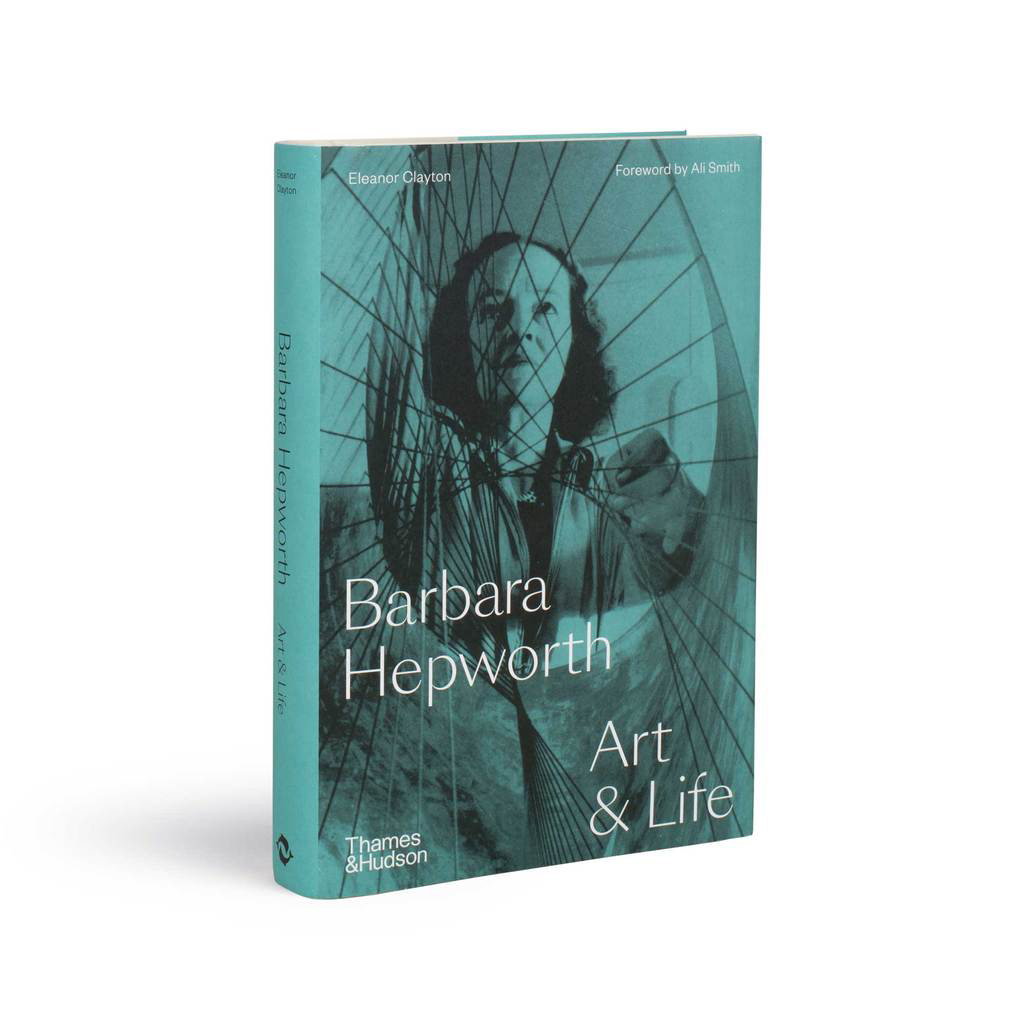
The Hepworth Wakefield website

LIKE ART BLART ON FACEBOOK

Back to top

Exhibition: ‘Unearthed: Photography’s Roots’ at the Dulwich Picture Gallery, London

Exhibition dates: 8th December 2020 – 9th May 2021

Curator: Alexander Moore

The exhibition will include work by the following 41 artists (in alphabetical order):

Nobuyoshi Araki, Anna Atkins, Alois Auer, Cecil Beaton, Karl Blossfeldt, Adolphe Braun, Jan Brueghel the Elder, Mat Collishaw, Imogen Cunningham, Roger Fenton, Adam Fuss, Ori Gersht, Cecilia Glaisher, Joy Gregory, William Henry Fox Talbot, Sir John Herschel, Gyula Holics, Jan van Huysum, Henry Irving, Charles Jones, Sarah Jones, AndrƩ KertƩsz, Nick Knight, Lou Landauer, Richard Learoyd, Pradip Malde, Robert Mapplethorpe, John Moffat, Sarah Moon, James Mudd, Kazumasa Ogawa, T Enami, Dr Albert G Richards, Scowen & Co., Scheltens & Abbenes, Helen Sear, Edward Steichen, Josef Sudek, Lorenzo Vitturi, Edward Weston, Walter Woodbury.
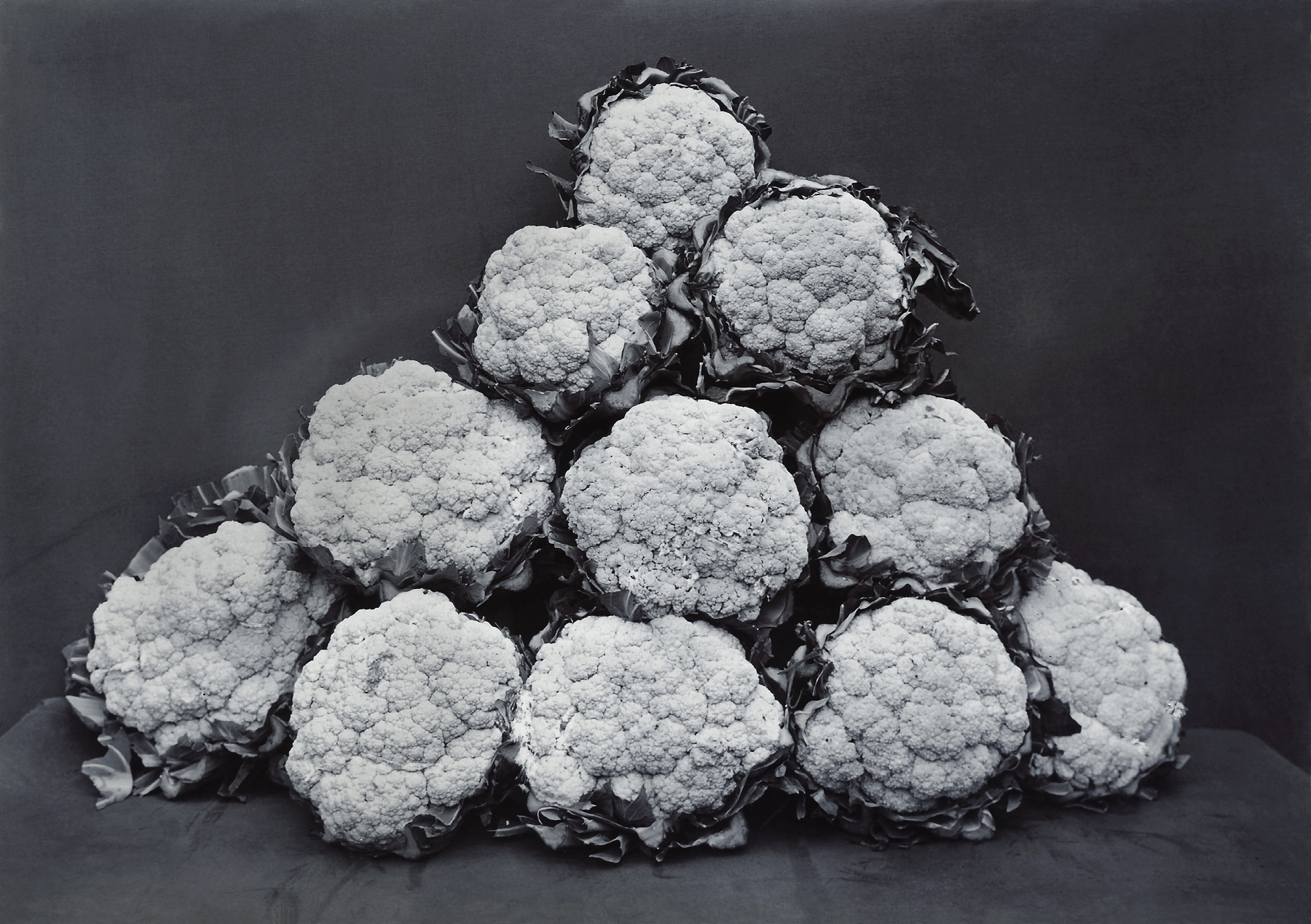
 

Charles Jones (British, 1866-1959) 'Broccoli Leamington' c. 1895-1910 from the exhibition 'Unearthed: Photography's Roots' at the Dulwich Picture Gallery, London, Dec 2020 - May 2021


Charles Jones (British, 1866-1959)
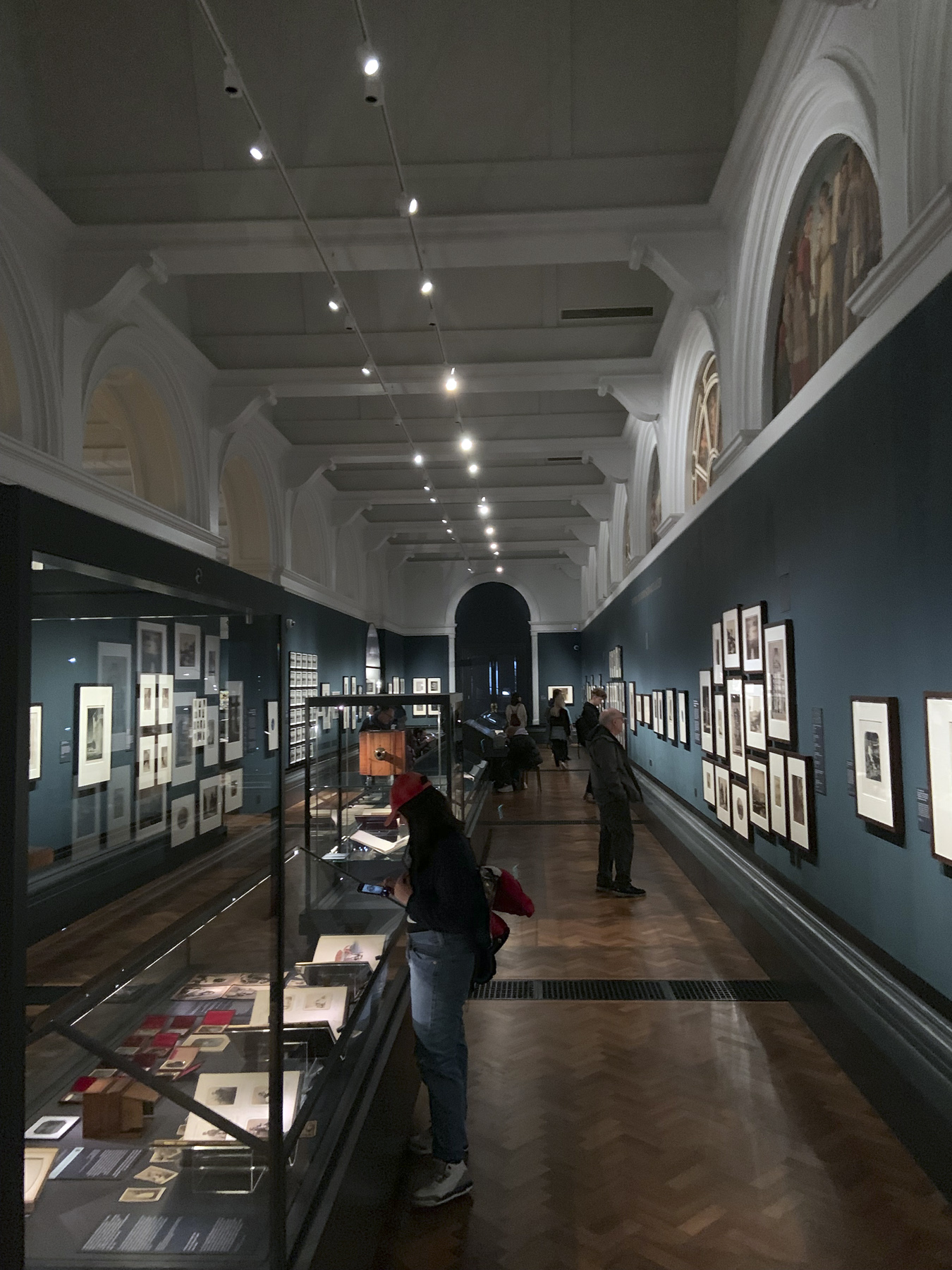
Broccoli Leamington
c. 1895-1910
Ā© Sean Sexton
Photo copyright Dulwich Picture Gallery


A difficult thing said simply

What a wonderful selection of photographs to start the year 2021.

As Laura Cumming observes, there is a profound connection between photography and photosynthesis – both created through light, both constructed and political. For the photograph is ALWAYS the choice of the photographer, and the landscape has ALWAYS been shaped and constructed since human beings emerged on this earth. Nothing in the natural world is ever “natural” but always mediated by time, space, context, power and desire. Desire to control the direction of a river, desire for food and shelter, desire for Lebensraum or living space as a practice of settler colonialism, desire to celebrate the “natural” world, desire to procreate, desire to propagate the (genetically modified) vegetable. A desire to desire.
Photography’s symbiotic relationship with the natural world is the relationship of photography and transmutation (the action of changing or the state of being changed into another form), photography and transmogrification (the act or process of changing or being changed completely). The natural world, through an action (that of being photographed), changes its state (flux) and, further, changes its state to a completely different form (fixed in liquid fixer; fixed, saved, but fluid, in the digital pixel). Flowers and vegetables are alive then wither and die, only to remain “the same” in the freeze frame of the death-defying photograph.
Photography’s fluidity and fixity – of movement, time, space, context, representation – allows “the infinite possibility of experimentation” not, as Cumming argues, “without the interference of humanity, accident, sound or movement” but through their very agency. It is the human hand that arranges these pyramidal broccoli, the accident of light in the photogram that allows us to pierce a clump of Bory’s Spleenwort root structure. It is human imagination, the movement of the human mind, that allows the artist Charles Jones to darken the Bean Longpod cases so that these become seared in the mind’s eye, fixed in all time and space as iconic image: the “transformation of an earthy root vegetable into an abstracted object worthy of adulation.”

While the process of photographing flower and vegetable may well be due to the interference of humanity, accident, sound or movement, contemplation or decisive moment, the final outcome of the image – the representation of the natural in the physicality of the print – usually attempts to hide these processes in images that are frozen in time, images that play on the notion of memento mori and the transient nature of life. In the presence of a triple death (ie. the death of the plant or flower, the time freeze or death moment of the photograph, and our knowledge that these plants and flowers in the photograph have already died), it is the abstraction of the death reality in images of flowers, plants and vegetables that allows for a touch of the soul. These photographs “provide a glimpse into the terrain of the unseen, or what German philosopher and cultural critic Walter Benjamin coined the “optical unconsciousness”.”1 Here, photography allows us to capture the realm of the unseen and also allows us to glimpse the expansive terrain of the human imaginary. The camera reveals aspects of reality that register in our senses but never quite get processed consciously. (Is there anything “real” about Cunningham’s Two Callas 1929 other than a vibration of the energy of the cosmos?)

Still, still, still we are (unconsciously) aware of all that is embedded within a photograph for photography makes us feel, makes us remember “that which lies beyond the frame, or what photographs compel us to remember and forget, what they enable us to uncover and repress…”. Like any great work of art, when we look at a great photograph it is not what we BELIEVE that matters when we look, but how the art work makes us FEEL, how it touches the depths of our soul. These are the roots of photography, un/earthed, in the languages of image – (sub)conscious stories of the human imagination which seek to make sense of our roots in Earth.

Dr Marcus Bunyan


Footnotes

1/ A different nature presents itself to the movie camera than to the naked eye. Instead of being something we enter into unconsciously or vaguely, in film we enter nature analytically. While a painter lovely caresses the surfaces of nature, the cameraman chucks a piece of dynamite at it, then reassembles the pieces:

“Our taverns and our metropolitan streets, our offices and furnished rooms, our railroad stations and our factories appeared to have us locked up hopelessly. Then came the film and burst this prison-world asunder by the dynamite of the tenth of a second, so that now, in the midst of its far-clung ruins and debris, we calmly and adventurously go travelling.”

A movie camera can be mounted on a speeding locomotive, dropped down a sewer, or secreted in a valise and carried surreptitiously around a city. The camera reveals aspects of reality that register in our senses but never quite get processed consciously. Film changed how we view the least significant minutiae of reality just as surely as Freud’s Psychopathology of Everyday Life changed how we look at incidental phenomenon like slips of the tongue. In other words, film serves as an optical unconscious. Benjamin asserts the film camera “introduces us to unconscious optics as does psychoanalysis to unconscious impulses.

“Richard Prouty. “The optical unconsciousness,” on the One-Way Street website Oct 16, 2009 [Online] Cited 03/01/2021


Many thankx to the Dulwich Picture Gallery for allowing me to publish the artwork in the posting. Please click on the photographs for a larger version of the image.


“The Dulwich show amounts to a political history of photography by other means. Should it aspire to nothing more than the fictions of painting? Should it be a catalogue, a document, a celebration of the natural life? Where Glaisher records the precise difference between two varieties of fern, Jones observes the Sputnik-like eccentricity of a plucked turnip. Where Imogen Cunningham sees the perfect abstraction of a calla lily, Edward Weston anthropomorphises a pepper, so that it momentarily resembles the torso of a body-builder. …

Perhaps the desire to photograph the vegetable world brings its own peace, as well as the infinite possibility of experimentation without the interference of humanity, accident, sound or movement. But perhaps it also has something to do with the profound connection between photography and photosynthesis. The very light that gives life to a rose, before its petals drop, is the same light that preserves it in a death-defying photograph.”


Laura Cumming. “Unearthed: Photography’s Roots review – cauliflowers saying cheese…” on the Guardian website Sun 29 Nov 2020 [Online] Cited 23/12/2020


Anna Atkins (English, 1799-1871) 'Ceylon' c. 1850 from the exhibition 'Unearthed: Photography's Roots' at the Dulwich Picture Gallery, London, Dec 2020 - May 2021


Anna Atkins (English, 1799-1871)
Ceylon [examples of ferns]
c. 1850
Cyanotype


After publishing her own book of cyanotype photograms of British algae in the 1840s, Atkins collaborated with her childhood friend and fellow scholar Anna Dixon on a second book of photograms. The book, Cyanotypes of British and Foreign Ferns, was published in 1853 and now resides in the J. Paul Getty Museum in Los Angeles.

This particular image [above] is a selection from Cyanotypes of British and Foreign Ferns. A collection of four distinct ferns, it’s simply captioned “Ceylonā€. At the time these cyanotypes were being made, the island of Ceylon – modern day Sri Lanka – was under British rule. It would be nearly another century before the island declared independence from Atkins’ home country. Despite the abundant difficulties of travel in the 1850s, Atkins’s many scientific and business connections no doubt helped her obtain several foreign specimens for this book of fern cyanotypes.

Anonymous text on the 20 x 200 website [Online] Cited 24/12/2020


This unique camera-less photograph was part of an extensive project to document plants from Great Britain and British colonies like Ceylon (now Sri Lanka), and illustrates an early example of how important photography would become in our attempts to learn about and protect the natural world. Anna Atkins (British, 1799-1871) was a trained botanist who adopted photographic processes in order to describe, analyse, and, in a manner of speaking, preserve plant specimens from around the world. She is widely considered the first person to use photographs to illustrate a book, her British Algae: Cyanotype Impressions published in 1843. This particular photograph was produced with Anna Dixon for a later compilation: Cyanotypes of British and Foreign Flowering Plants and Ferns in 1854. With these and other projects, Atkins helped establish photography as an important tool in scientific and ecological observation. …

Atkins made all of her cyanotypes in England, often receiving specimens through imperial trade. This image, therefore, was produced over 5,000 miles away from where the plant originated

Brian Piper. “Object Lesson: Ceylon cyanotype by Anna Atkins,” on the New Orleans Museum of Art website March 23, 2020 [Online] Cited 24/12/2020.


Anna Atkins (English, 1799-1871) 'Plate 55 – Dictyota dichotoma, in the young state and in fruit' 1853


Anna Atkins (English, 1799-1871)
Plate 55 – Dictyota dichotoma, in the young state and in fruit
1853
From Photographs of British Algae: Cyanotype Impressions Volume 1 (Part 1)
Cyanotype
Photo copyright Horniman Museum and Gardens


Cecilia Glaisher (British, 1828-1892) 'Bory's Spleenwort (Asplenium onopteris)' c. 1853-1856


Cecilia Glaisher (British, 1828-1892)
Bory’s Spleenwort (Asplenium onopteris)
c. 1853-1856
Salted paper print


Cecilia Glaisher (British, 1828-1892)

Cecilia Glaisher (20 April 1828 – 28 December 1892) was an English amateur photographer, artist, illustrator and print-maker, working in the 1850s world of Victorian science and natural history. …

The British Ferns – Photographed from Nature by Mrs Glaisher was planned as an illustrated guide to identifying ferns, with the entomologist Edward Newman (1801-1876), a fern expert and publisher. Made using William Henry Fox Talbot’s photogenic drawing process during what has come to be known as the Victorian fern craze, it was to be published in a number of parts and intended to appeal to the growing number of fern collectors whose enthusiasm was fuelled by increasingly informative and magnificently illustrated fern publications. The use of photography, according to the printed handbill produced by Newman to promote the work, would allow fern specimens to be “displayed with incomparable exactness, producing absolute facsimiles of the objects, perfect in artistic effect and structural details”. A portfolio of ten prints, in mounts embossed with Newman’s publishing details, was presented by him to the Linnean Society in London in December 1855. However, perhaps due to an inability to raise sufficient subscriptions, or difficulties in producing prints in consistent quantities, the project appears to have been abandoned by 1856.

Text from the Wikipedia website


Roger Fenton (British, 1819-1869) 'Fruit and Flowers' 1860


Roger Fenton (British, 1819-1869)
Fruit and Flowers
1860
Albumen print from a collodion negative
Victoria & Albert Museum


In tackling still lifes, Roger Fenton gave form to his ardent belief that no subject was off limits to photography, even one intimately linked to the history of painting and seemingly so dependent on colour. Faced with terrible weather in 1860 that curtailed his ability to photograph landscapes, Fenton drew upon the skills he had perfected earlier in the decade while photographing the collection of the British Museum and trained his lens on carefully balanced still-life arrangements. Cleverly massing and juxtaposing forms and tonal values, and brazenly taking advantage of photography’s ability to convey detail, Fenton quickly produced a series of unprecedented vivaciousness that convincingly demonstrated why photography should be counted as an art. Fruit and Flowers is among the last images this towering figure in the history of photography made before quitting photography for good at age 41.

Fruit and Flowers is an ebullient, in-your-face celebration of summer’s bounty. Shot head on and close up, the densely packed arrangement seems ready to tumble from the large, glossy 14- by nearly 17-inch albumen print made from a collodion negative. Dozens of juicy, sensuous grapes flank a tall, centred vase decorated with a tendril pattern; the vase holds pansies at its top while plums nestle at the base. At right, a few grapes dangle over the edge of a marble tabletop, falling into the viewer’s space, as does a striped, tasseled cloth at left. Star-shaped hoyas are reflected in a chased silver goblet, and two immense lilies, their stems obscured, appear to hover untethered above. The lilies are balanced compositionally by a large rose that faces the viewer, while a second rose, near the bottom, separates the grapes and a nude figurine. Ferns and lily of the valley complete the floral medley.

The prominent roses and lilies may allude to the sacred, as both are associated with the Virgin Mary, but myriad wine references, such as the grapes, the chalice decorated with grape vines, and especially the impish figurine, whose physical attributes link him to bacchanalian Roman festivals, point decidedly to the profane. At the same time, the withering rose, drooping leaves, and tired-looking plums remind the viewer that such pleasures are ephemeral.

Anonymous. “Fruit and Flowers: Roger Fenton,” on the National Gallery of Art website [Online] Cited 24/12/2020.


Charles Jones (British, 1866-1959) 'Bean Longpod' c. 1895-1910


Charles Jones (British, 1866-1959)
Bean Longpod
c. 1895-1910
Ā© Sean Sexton
Photo copyright Dulwich Picture Gallery


In Bean Longpod (1895-1910), now on view in “Unearthed,” the titular plant cuts through the centre of the composition, leaving little room for anything else. Other works play with their subjects’ placement: Broccoli Leamington (1895-1910), for instance, finds large broccoli heads sitting atop one another in a pyramid-like formation. The overall effect of this unusual treatment, notes the Michael Hoppen Gallery, is the “transformation of an earthy root vegetable into an abstracted” object worthy of adulation. …

According to the Michael Hoppen Gallery, which hosted a 2015 exhibition on Jones, “[t]he extraordinary beauty of each Charles Jones print rests in the intensity of focus on the subject and the almost portrait-like respect with which each specimen is treated.”


Ogawa Kazumasa (Japanese, 1860-1929) 'Iris Kaempferi' c. 1894


Ogawa Kazumasa (Japanese, 1860-1929)
Iris Kaempferi
c. 1894
From Some Japanese Flowers
Chromo-collotype
Hand-coloured photograph
Photo copyright Dulwich Picture Gallery


Ogawa Kazumasa (Japanese, 1860-1929) 'Japanese Lilies' c. 1894


Ogawa Kazumasa (Japanese, 1860-1929)
Japanese Lilies
c. 1894
From Some Japanese Flowers
Chromo-collotype
Hand-coloured photograph
Photo copyright Dulwich Picture Gallery


Ogawa Kazumasa lived from the 1860s to almost the 1930s, surely one of the most fascinating 70-year stretches in Japanese history. Ogawa’s homeland “opened” to the world when he was a boy, and for the rest of his life he bore witness to the sometimes beautiful, sometimes strange, sometimes exhilarating results of a once-isolated culture assimilating seemingly everything foreign – art, technology, customs – all at once. Naturally he picked up a camera to document it all, and history now remembers him as a pioneer of his art. During the 1890s he published Some Japanese Flowers, a book containing his pictures of just that.

The following year, Ogawa’s hand-coloured photographs of Japanese flowers also appeared in the American books Japan, Described and Illustrated by the Japanese, edited by the renowned Anglo-Irish expatriate Japanese culture scholar Francis Brinkley and published in Boston, the city where Ogawa had spent a couple of years studying portrait photography and processing.

Ogawa’s varied life in Japan included working as an editor at Shashin Shinpō (å†™ēœŸę–°å ±), the only photography journal in the country at the time, as well as at the flower magazine Kokka (å›½čÆ), which would certainly have given him the experience he needed to produce photographic specimens such as these. Though Ogawa invested a great deal in learning and employing the highest photographic technologies, they were the highest photographic technologies of the 1890s, when colour photography necessitated adding colours – of particular importance in the case of flowers – after the fact.

… Even as everything changed so rapidly all around him, as he mastered the just-as-rapidly developing tools of his craft, Ogawa nevertheless kept his eye for the natural and cultural aspects of his homeland that seemed never to have changed at all.

Colin Marshall. “Beautiful Hand-Colored Japanese Flowers Created by the Pioneering Photographer Ogawa Kazumasa (1896),” on the Open Culture website March 22nd, 2019 [Online] Cited 24/12/2020.


The stunning floral images … are the work of Ogawa Kazumasa, a Japanese photographer, printer, and publisher known for his pioneering work in photomechanical printing and photography in the Meiji era. Studying photography from the age of fifteen, Ogawa moved to Tokyo aged twenty to further his study and develop his English skills which he believed necessary to deepen his technical knowledge. After opening his own photography studio and working as an English interpreter for the Yokohama Police Department, Ogawa decided to travel to the United States to learn first hand the advance photographic techniques of the time. Having little money, Ogawa managed to get hired as a sailor on the USS Swatara and six months later landed in Washington. For the next two years, in Boston and Philadelphia, Ogawa studied printing techniques including the complicated collotype process with which he’d make his name on returning to Japan.

In 1884, Ogawa opened a photographic studio in Tokyo and in 1888 established a dry plate manufacturing company, and the following year, Japan’s first collotype business, the “K. Ogawa printing factory”. He also worked as an editor for various photography magazines, which he printed using the collotype printing process, and was a founding member of the Japan Photographic Society.

Anonymous. “Ogawa Kazumasa’s Hand-Coloured Photographs of Flowers (1896),” on The Public Domain Review website [Online] Cited 24/12/2020.


Ogawa Kazumasa (Japanese, 1860-1929) 'Chrysanthemum' c. 1894


Ogawa Kazumasa (Japanese, 1860-1929)
Chrysanthemum
c. 1894
From Some Japanese Flowers
Chromo-collotype
Hand-coloured photograph
Photo copyright Dulwich Picture Gallery


Ogawa Kazumasa (Japanese, 1860-1929) 'Morning Glory' c. 1894


Ogawa Kazumasa (Japanese, 1860-1929)
Morning Glory
c. 1894
From Some Japanese Flowers
Chromo-collotype
Hand-coloured photograph
Photo copyright Dulwich Picture Gallery


A central focus for the show and a truly rare opportunity for visitors will be a display of 11 works by the inventor and pioneer, Kazumasa Ogawa, whose effectively coloured photographs were created 30 years before colour film was invented. Ogawa combined printmaking and traditions in Japan to create truly original and pioneering photographs. By developing up to 16 different colour plates per image from expertly hand coloured prints he made Japan the world’s leading producer of coloured photographs, the display of which is hoped to be a revelation for many.


Imogen Cunningham (American, 1883-1976) 'Agave Design I' 1920s


Imogen Cunningham (American, 1883-1976)
Agave Design I
1920s
Gelatin silver print


Edward Steichen (American, 1879-1973) 'Magnolia Blossoms, Voulangis, France' c. 1921


Edward Steichen (American, 1879-1973)
Magnolia Blossoms, Voulangis, France
c. 1921
Gelatin silver print
19.4 x 23.8cm


Edward Steichen (American, 1879-1973) 'Foxgloves, France' 1925


Edward Steichen (American, 1879-1973)
Foxgloves, France
1925
Gelatin silver print


Karl Blossfeldt (German, 1865-1932) 'Adiantum pedatum. Maidenhair Fern' before 1926


Karl Blossfeldt (German, 1865-1932)
Adiantum pedatum. Maidenhair Fern
before 1926
Private Collection, Derbyshire


Karl Blossfeldt (German, 1865-1932) 'Impatiens Glandulifera' 1928


Karl Blossfeldt (1865-1932)
Impatiens Glandulifera
1928
Gelatin silver print
27 x 20.5cm


Imogen Cunningham (American, 1883-1976) 'Two Callas' 1929


Imogen Cunningham (American, 1883-1976)
Two Callas
1929
Gelatin silver print


Edward Weston (American, 1886-1958) 'Pepper No. 30' 1930


Edward Weston (American, 1886-1958)
Pepper No. 30
1930
Gelatin silver print contact print
24.1 Ɨ 19.2cm


A year later, during a four-day period from August 2-6, 1930, Weston took at least thirty more negatives of peppers. He first tried again with plain muslin or a piece of white cardboard as the backdrop, but for these images he thought the contrast between the backdrop and the pepper was too stark. On August 3 he found a large tin funnel, and, placing it on its side, he set a pepper just inside the large open end. He wrote:

It was a bright idea, a perfect relief for the pepper and adding reflecting light to important contours. I still had the pepper which caused me a week’s work, I had decided I could go no further with it, yet something kept me from taking it to the kitchen, the end of all good peppers. I placed it in the funnel, focused with the Zeiss, and knowing just the viewpoint, recognizing a perfect light, made an exposure of six minutes, with but a few moments’ preliminary work, the real preliminary was on in hours passed. I have a great negative, – by far the best!

It is a classic, completely satisfying, – a pepper – but more than a pepper; abstract, in that it is completely outside subject matter. It has no psychological attributes, no human emotions are aroused: this new pepper takes one beyond the world we know in the conscious mind.

To be sure, much of my work has this quality… but this one, and in fact all of the new ones, take one into an inner reality, – the absolute, – with a clear understanding, a mystic revealment. This is the “significant presentation” that I mean, the presentation through one’s intuitive self, seeing “through one’s eyes, not with them”: the visionary.”

By placing the pepper in the opening of the funnel, Weston was able to light it in a way that portrays the pepper in three dimensions, rather than as a flat image. It is this light that gives the image much of its extraordinary quality.

Edward Weston (1961). Nancy Newhall (ed.,). The Day-books of Edward Weston, Volume II. NY: Horizon Press. p. 180 quoted on the Wikipedia website.


Edward Steichen (American, 1879-1973) 'Delphiniums' 1940


Edward Steichen (American, 1879-1973)
Delphiniums
1940
Dye imbibition print
Digital image courtesy of the George Eastman Museum
Ā© 2019 The Estate of Edward Steichen/Artists Rights Society (ARS), New York


Gyula Holics (Hungarian, 1919-1989) 'Peas' 1950s


Gyula Holics (Hungarian, 1919-1989)
Peas
1950s
Gelatin silver print
23.8 x 18.1cm


Robert Mapplethorpe (American, 1946-1989) 'Tulip' 1984


Robert Mapplethorpe (American, 1946-1989)
Tulip
1984
Ā© Robert Mapplethorpe Foundation
Used by permission


Robert Mapplethorpe (American, 1946-1989) 'Orchid' 1985


Robert Mapplethorpe (American, 1946-1989)
Orchid
1985
Ā© Robert Mapplethorpe Foundation
Used by permission


Trace the history of photography from the 1840s to present day, as seen through depictions of nature. In Summer 2020, we present our first major photography exhibition, tracing the rich history of the medium told through depictions of nature, bringing together over 100 works by 25 leading international photographers.

This autumn, Dulwich Picture Gallery will present the first exhibition to trace the history of photography as told through depictions of nature, revealing how the subject led to key advancements in the medium, from its very beginnings in 1840 to present day. Unearthed: Photography’s Roots will be the first major photography show at Dulwich Picture Gallery, bringing together over 100 works by 35 leading international photographers, many never seen before.

Presenting just one of the many possible histories of photography, this exhibition follows the lasting legacy of the great pioneers who made some of the world’s first photographs of nature, examining key moments in the medium’s history and the influences of sociological change, artistic movements and technological developments, including Pictorialism through to Modernism, experiments with colour and contemporary photography and new technologies.

Arranged chronologically and with a focus on botany and science throughout, the exhibition will highlight the innovations of some of the medium’s key figures, including William Henry Fox Talbot (1800-1877), Imogen Cunningham (1883-1976) and Robert Mapplethorpe (1946-1989) as well as several overlooked photographers including Japanese artist, Kazumasa Ogawa (1860-1929) and the English gardener, Charles Jones (1866-1959). It will be the first show to publicly exhibit work by Jones, whose striking modernist photographs of plants remained unknown until 20 years after his death, when they were discovered in a trunk at Bermondsey Market in 1981.

Questioning the true age of photography, the exhibition will open with some of the first known Victorian images by William Henry Fox Talbot, positioning his experimentation with paper negatives as the very beginning of photography. It will also introduce a key selection of cyanotypes by one of the first women photographers, Anna Atkins (1799-1871), who created camera-less photograms of the algae specimens found along the south coast of England. Displayed publicly for the first time, these works highlight the ground-breaking accuracy of Atkins’ approach, and the remarkably contemporary appearance of her work which has inspired many artists and designers.

The exhibition will also foreground the artists who produced unprecedented photographic art in the twentieth century without artistic intention. The medium allowed for quick documentation of nature’s infinite specimens, making it an important tool for scientists and botanists such as the German photographer and teacher Karl Blossfeldt (1865-1932) who captured close-up views of plant specimens in order to study and share an understanding of nature’s ‘architecture’. A selection of Blossfeldt’s ‘study aids’ will be displayed alongside work by the proud gardener Charles Jones, who used a glass plate camera to keep a meticulously illustrated record of his finest crops. Seen together for the first time, the two artists will be examined for their pragmatic approach that set them apart from the romanticised style of their time.

A central focus for the show and a truly rare opportunity for visitors will be a display of 11 works by the inventor and pioneer, Kazumasa Ogawa, whose effectively coloured photographs were created 30 years before colour film was invented. Ogawa combined printmaking and traditions in Japan to create truly original and pioneering photographs. By developing up to 16 different colour plates per image from expertly hand coloured prints, he made Japan the world’s leading producer of coloured photographs, the display of which is hoped to be a revelation for many.

Unearthed: Photography’s Roots will aim to highlight how nature photography has remained consistently radical, inventive and influential over the past two centuries with the final rooms in the exhibition dedicated to more recent advancements in the medium. A selection of work by the renowned symbolist photographers Imogen Cunningham and Robert Mapplethorpe will highlight the coded language of nature in photography. Both artists used nature to tackle the oppression experienced in their lives by channelling the strength and the sexuality of the natural subjects they photographed. This powerful symbolism, in works such as Mapplethorpe’s Tulips (1984) and Cunningham’s Agave Design I (1920s), allowed both artists to express themselves at a time when homosexuality was criminalised and women artists fought for recognition.

The final room culminates with contemporary works that reveal the enduring influence of early forms of photography and still life, with a spotlight on the artists today who are re-shaping the definition of these mediums through digital processes. Mat Collishaw’s (b.1966) Auto-Immolation (2010) combines new technology and ancient religious ideals, whilst Richard Learoyd’s (b.1966) camera-obscura photographs present a new dimension in the traditional still life genre pioneered by the artists of the Dutch Golden Age. The Gallery’s Mausoleum will host On Reflection (2014), by renowned Israeli video artist, Ori Gersht (b.1967), displayed publicly for the first time in the UK. An homage to the work of Flemish still-life painter Jan Brueghel the Elder, this ambitious work uses modern technolgy to capture the dynamic explosion of mirrored glass reflecting meticulously detailed floral arrangements by the Old Master. Brueghel’s Still Life A Stoneware Vase of Flowers, 1607-08, will also be included in the exhibition, on loan from St John’s College, Oxford for the first time in 300 years.

Unearthed: Photography’s Roots is curated by Alexander Moore, Creative Producer at Dulwich Picture Gallery, and former Head of Exhibitions for Mario Testino. He said:

“I am thrilled to present this extensive survey of photography which celebrates botany in its various guises – from Robert Mapplethorpe’s beautifully shot tulips, to Anna Atkins’ algae specimens. There is beauty to be found in all of the works in the exhibition, which includes some new discoveries. More than anything though, this exhibition reveals nature as the gift that keeps on giving – a conduit for the development of photography, it is also a force for hope and well-being that we have come to depend on so much in recent months. I hope the energy of this timely exhibition provides visitors with a new perspective on the power of the natural world – and perhaps the encouragement to take some pictures themselves!”


The exhibition will include a number of major loans from public and private collections, many never displayed publicly before. Lenders include The Horniman Museum, the Museum of Domestic Design and Architecture, Michael Hoppen Gallery and Blain Southern. A catalogue will accompany featuring essays by Alexander Moore and art historian and 17th-century still life painting specialist, Dr Fred Meijer.

Press release from the Dulwich Picture Gallery


Mat Collishaw (English, b. 1966) 'Auto Immolation 002' 2010 (still)


Mat Collishaw (English, b. 1966)
Auto Immolation 002 (still)
2010
Hard Drive, LCD Screen, Steel, Surveillance Mirror, Wood
300 x 113.5 x 52cm


Lorenzo Vitturi (Italian, b. 1980) 'Yellow and Red Bokkom Mix #2' 2013


Lorenzo Vitturi (Italian, b. 1980)
Yellow and Red Bokkom Mix #2
2013
Giclee print on Hahnemuhle bamboo paper
29.5 x 44cm
Edition of 7
Ā© Lorenzo Vitturi
Courtesy of Flowers Gallery


Ori Gersht (Israeli, b. 1967) 'On Reflection' 2014


Ori Gersht (Israeli, b. 1967)
On Reflection
2014
Ā© the Artist


Ori Gersht explores the binary oppositions of attraction and repulsion by capturing the moment when “destruction in the exploding mirrors becomes… the moment of creation.”

In the adjacent exhibition rooms, viewers are faced with ten enlarged video stills from the film presented as archival pigment prints. The images somewhat reverse the symbolic value of still-life paintings, or the idea that they are meant to immortalise the experience of nature. Frozen in time, images of the explosion also plays on the notion of memento mori and the transient nature of life. Thanatotic [the name chosen by Freud to represent a universal death instinct] undertones are also seen in the fine network of cracks in the mirrors, which are especially noticeable in On Reflection, Material E01 and On Reflection, Material B02 (both 2014). Gersht’s works provide a glimpse into the terrain of the unseen, or what German philosopher and cultural critic Walter Benjamin coined the “optical unconsciousness.” The outcome is a powerful reminder of the fragility of existence.

Crystal Tong. “On Reflection: Ori Gersht,” on the ArtAsiaPacific website [Online] Cited 24/12/2020.


Ori Gersht (Israeli, b. 1967) 'On Reflection' 2014 (detail)


Ori Gersht (Israeli, b. 1967)
On Reflection (detail)
2014
Ā© the Artist


Ori Gersht (Israeli, b. 1967) 'On Reflection' 2014 (detail)


Ori Gersht (Israeli, b. 1967)
On Reflection (detail)
2014
Ā© the Artist


Richard Learoyd (British, b. 1966) 'Large Poppies' 2019


Richard Learoyd (British, b. 1966)
Large Poppies
2019
Ā© the Artist
Image courtesy of Michael Hoppen Gallery


Dulwich Picture Gallery
Gallery Road, London
SE21 7AD
Phone: 020 8693 5254

Opening hours:
Tuesday – Sunday 10am – 5pm
Closed Mondays (except Bank Holiday Mondays)

Dulwich Picture Gallery website

LIKE ART BLART ON FACEBOOK

Back to top

Exhibition: ‘Photography’s Last Century: The Ann Tenenbaum and Thomas H. Lee Collection’ at the Metropolitan Museum of Art, New York

Exhibition dates: 10th March – 30th November, 2020

Curator: Jeff L. Rosenheim, Joyce Frank Menschel Curator in Charge of the Department of Photographs


AndrƩ KertƩsz (Hungarian, 1894-1985) 'Underwater Swimmer, Esztergom, Hungary' 1917 from the exhibition 'Photography's Last Century: The Ann Tenenbaum and Thomas H. Lee Collection' at the Metropolitan Museum of Art, New York, March - Nov, 2020


AndrƩ KertƩsz (Hungarian, 1894-1985)
Underwater Swimmer, Esztergom, Hungary
1917
Gelatin silver print
1 1/2 in. Ɨ 2 in. (3.8 Ɨ 5.1cm)
Promised Gift of Ann Tenenbaum and Thomas H. Lee, in celebration of the Museum’s 150th Anniversary
The Metropolitan Museum of Art
© 2020 Estate of André Kertész/Higher Pictures


This tiny but iconic masterpiece of twentieth-century photography is the second earliest work in the exhibition, and a gem in the Tenenbaum and Lee collection. Made while AndrĆ© KertĆ©sz was convalescing from a gunshot wound received while serving in the Austro-Hungarian army during World War I, it prefigures by some fifteen years his renowned mirror distortions produced in Paris. Displaying both Cubist and Surrealist influences, the photograph reveals the artist’s commitment to the spontaneous yet analytic observation of fleeting commonplace occurrences – one of the essential and most idiosyncratic qualities of the medium.


It’s a mystery

There are some eclectic photographs in this posting, many of which have remained un/seen to me before.

I have never seen the above version of KertĆ©sz’s Underwater Swimmer, Esztergom, Hungary (1917), with wall, decoration and water flowing into the pool at left. The usual image crops these features out, focusing on the distortion of the body in the water, and the lengthening of the figure diagonally across the picture frame. That both images are from the same negative can be affirmed if one looks at the patterning of the water. Even as the exhibition of KertĆ©sz’s work at Jeu de Paume at the ChĆ¢teau de Tours that I saw last year stated that their version was a contact original… this is not possible unless the image has been cropped.

Other images by Alfred Stieglitz, Paul Outerbridge Jr., EugĆØne Atget, Walker Evans, Pierre Dubreuil, Ilse Bing, Bill Brandt, Dora Maar, Joseph Cornell, Nan Goldin, Laurie Simmons, Robert Gober, Rachel Whiteread, Zanele Muholi have eluded my consciousness until now.

What I can say after viewing them is this.

I am forever amazed at how deep the spirit, and the medium, of photography is… if you give the photograph a chance. A friend asked me the other day whether photographs had any meaning anymore, as people glance for a nano-second at images on Instagram, and pass on. We live in a world of instant gratification was my answer to him. But the choice is yours if you take / time with a photograph, if it possesses the POSSIBILITY of a meditation from its being. If it intrigues or excites, or stimulates, makes you reflect, cry – that is when the photographs pre/essence, its embedded spirit, can make us attest to the experience of its will, its language, its desire. In our presence.

The more I learn about photography, the less I find I know. The lake (archive) is deep – full of serendipity, full of memories, stagings, concepts and realities. Full of nuances and light, crevices and dark passages. To understand photography is a life-long study. To an inquiring mind, even then, you may only – scratch the surface to reveal – a sort of epiphany, a revelation, unknown to others. Every viewing is unique, every interpretation different, every context unknowable (possible).

Dr Marcus Bunyan

PS. When Minor White was asked, what about photography when he dies? When he is no longer there to influence it? And he simply says – photography will do what it wants to do. This is a magnificent statement, and it shows an egoless freedom on Minor White’s part. It is profound knowledge about photography, about its freedom to change.


Many thankx to the Metropolitan Museum of Art for allowing me to publish the photographs in the posting. Please click on the photographs for a larger version of the image.


This exhibition will celebrate the remarkable ascendancy of photography in the last century, and Ann Tenenbaum and Thomas H. Lee’s magnificent promised gift of over sixty extraordinary photographs in honour of The Met’s 150th anniversary in 2020. The exhibition will include masterpieces by the medium’s greatest practitioners, including works by Paul Strand, Dora Maar, Man Ray, and LĆ”szló Moholy-Nagy; Edward Weston, Walker Evans, and Joseph Cornell; Diane Arbus, Andy Warhol, Sigmar Polke, and Cindy Sherman.

The collection is particularly notable for its breadth and depth of works by women artists, its sustained interest in the nude, and its focus on artists’ beginnings. Strand’s 1916 view from the viaduct confirms his break with the Pictorialist past and establishes the artist’s way forward as a cutting-edge modernist; Walker Evans’s shadow self-portraits from 1927 mark the first inkling of a young writer’s commitment to visual culture; and Cindy Sherman’s intimate nine-part portrait series from 1976 predates her renowned series of “film stills” and confirms her striking ambition and stunning mastery of the medium at the age of twenty-two.

Text from the Metropolitan Museum of Art website


Alfred Stieglitz (American, 1864-1946) 'Georgia O'Keeffe' 1918 from the exhibition 'Photography's Last Century: The Ann Tenenbaum and Thomas H. Lee Collection' at the Metropolitan Museum of Art, New York, March - Nov, 2020


Alfred Stieglitz (American, 1864-1946)
Georgia O’Keeffe
1918
Platinum print
9 1/2 Ɨ 7 1/2 in. (24.1 Ɨ 19.1cm)
Ann Tenenbaum and Thomas H. Lee Collection
The Metropolitan Museum of Art


This photograph marks the beginning of the romantic relationship between Alfred Stieglitz and Georgia O’Keeffe, which transformed each of their lives and the story of American art. The two met when Stieglitz included O’Keeffe, a then-unknown painter, in her first group show at his gallery 291 in May 1916. A year later, O’Keeffe had her first solo show at the gallery and exhibited her abstract charcoal No. 15 Special, seen in the background here. In the coming months and years, O’Keeffe collaborated with Stieglitz on some three hundred portrait studies. In its physical scope, primal sensuality, and psychological power, Stieglitz’s serial portrait of O’Keeffe has no equal in American art.


Paul Outerbridge Jr. (American, 1896-1958) 'Telephone' 1922 from the exhibition 'Photography's Last Century: The Ann Tenenbaum and Thomas H. Lee Collection' at the Metropolitan Museum of Art, New York, March - Nov, 2020


Paul Outerbridge Jr. (American, 1896-1958)
Telephone
1922
Platinum print
4 1/2 Ɨ 3 3/8 in. (11.4 Ɨ 8.5cm)
Promised Gift of Ann Tenenbaum and Thomas H. Lee, in celebration of the Museum’s 150th Anniversary
The Metropolitan Museum of Art


A well-paid advertising photographer working in New York in the 1930s, Paul Outerbridge Jr. was trained as a painter and set designer. Highly influenced by Cubism, he was a devoted advocate of the platinum-print process, which he used to create nearly abstract still lifes of commonplace subjects such as cracker boxes, wine glasses, and men’s collars. With their extended mid-tones and velvety blacks, platinum papers were relatively expensive and primarily used by fine-art photographers like Paul Strand, Edward Steichen, and Alfred Stieglitz. This modernist study of a Western Electric “candlestick” telephone attests to Outerbridge’s talent for transforming banal, utilitarian objects into small, but powerful sculptures with formal rigour and startling beauty.


Edward Weston. 'Anita ("Pear-Shaped Nude")' 1925


Edward Weston (American, 1886-1958)
Nude
1925, printed 1930s
Gelatin silver print
8 1/2 Ɨ 7 1/2 in. (21.6 Ɨ 19cm)
Promised Gift of Ann Tenenbaum and Thomas H. Lee, in celebration of the Museum’s 150th Anniversary
The Metropolitan Museum of Art
Ā© Center for Creative Photography, Arizona Board of Regents


Edward Weston moved from Los Angeles to Mexico City in 1923 with Tina Modotti, an Italian actress and nascent photographer. They were each influenced by, and in turn helped shape, the larger community of artists among whom they lived and worked, which included Diego Rivera, Jean Charlot, and many other members of the Mexican Renaissance. In fall 1925 Weston made a remarkable series of nudes of the art critic, journalist, and historian Anita Brenner. Depicting her body as a pear-like shape floating in a dark void, the photographs evoke the hermetic simplicity of a sculpture by Constantin Brancusi. Brenner’s form becomes elemental, female and male, embryonic, tightly furled but ready to blossom.


EugĆØne Atget (French, 1857-1927) 'Boulevard de Strasbourg' 1926


EugĆØne Atget (French, 1857-1927)
Boulevard de Strasbourg
1926
Gelatin silver print
8 7/8 in. Ɨ 7 in. (22.5 Ɨ 17.8cm)
Ann Tenenbaum and Thomas H. Lee Collection
The Metropolitan Museum of Art


EugĆØne Atget became the darling of the French Surrealists in the mid-1920s courtesy of Man Ray, his neighbour in Paris, who admired the older artist’s seemingly straight forward documentation of the city. Another American photographer, Walker Evans, also credited Atget with inspiring his earliest experiments with the camera. A talented writer, Evans penned a famous critique of his progenitor in 1930: “[Atget’s] general note is a lyrical understanding of the street, trained observation of it, special feeling for patina, eye for revealing detail, over all of which is thrown a poetry which is not ‘the poetry of the street’ or ‘the poetry of Paris,’ but the projection of Atget’s person.”


Walker EvansĀ (American, 1903-1975) 'Self-portrait, Juan-les-Pins, France, January 1927' 1927


Walker Evans (American, 1903-1975)
Self-portrait, Juan-les-Pins, France, January 1927
1927
Promised Gift of Ann Tenenbaum and Thomas H. Lee, in celebration of the Museum’s 150th Anniversary
The Metropolitan Museum of Art


Walker EvansĀ (American, 1903-1975) 'Shadow, Self-Portrait (Right Profile, Wearing Hat), Juan-les-Pins, France, January 1927' 1927


Walker Evans (American, 1903-1975)
Shadow, Self-Portrait (Right Profile, Wearing Hat), Juan-les-Pins, France, January 1927
1927
Film negative
Promised Gift of Ann Tenenbaum and Thomas H. Lee, in celebration of the Museum’s 150th Anniversary
The Metropolitan Museum of Art, New York


Pierre Dubreuil (French, 1872-1944) 'The Woman Driver' 1928


Pierre Dubreuil (French, 1872-1944)
The Woman Driver
1928
Bromoil print
9 7/16 Ɨ 7 5/8 in. (24 Ɨ 19.3cm)
Promised Gift of Ann Tenenbaum and Thomas H. Lee, in celebration of the Museum’s 150th Anniversary
The Metropolitan Museum of Art
Ā© 2019 Artists Rights Society (ARS), New York / ADAGP, Paris


Like many other European and American photographers, Pierre Dubreuil was indifferent to the industrialisation of photography that followed the invention and immediate global success of the Kodak camera in the late 1880s. A wealthy member of an international community of photographers loosely known as Pictorialists, he spurned most aspects of modernism. Instead, he advocated painterly effects such as those offered by the bromoil printing process seen here. What makes this photograph exceptional, however, is the modern subject and the work’s title, The Woman Driver. Dubreuil’s wife, Josephine Vanassche, grasps the steering wheel of their open-air car and stares straight ahead, ignoring the attention of her conservative husband and his intrusive camera.


Florence Henri (French, born America 1893-1982) 'Windows' 1929


Florence Henri (French, born America 1893-1982)
Windows
1929
Gelatin silver print
14 1/2 Ɨ 10 1/4 in. (36.8 Ɨ 26cm)
Promised Gift of Ann Tenenbaum and Thomas H. Lee, in celebration of the Museum’s 150th Anniversary
The Metropolitan Museum of Art


A peripatetic French American painter and photographer, Florence Henri studied with LĆ”szló Moholy-Nagy at the Bauhaus in Germany in summer 1927. Impressed by her natural talent, he wrote a glowing commentary on the artist for a small Amsterdam journal: “With Florence Henri’s photos, photographic practice enters a new phase, the scope of which would have been unimaginable before today… Reflections and spatial relationships, superposition and intersections are just some of the areas explored from a totally new perspective and viewpoint.” Despite the high regard for her paintings and photographs in the 1920s, Henri remains largely under appreciated.


Ilse Bing (German, 1899-1998) '[Rue de Valois, Paris]' 1932


Ilse Bing (German, 1899-1998)
[Rue de Valois, Paris]
1932
Gelatin silver print
11 1/8 Ɨ 8 3/4 in. (28.3 Ɨ 22.2cm)
Ann Tenenbaum and Thomas H. Lee Collection
The Metropolitan Museum of Art
Ā© Estate of Ilse Bing


Ilse Bing trained as an art historian in Germany and learned photography in 1928 to make illustrations for her dissertation on neoclassical architecture. In 1930 she moved to Paris, supporting herself as a freelance photographer for French and German newspapers and fashion magazines. Known in the early 1930s as the “Queen of the Leica” due to her mastery of the handheld 35 mm camera, Bing found the old cobblestone streets of Paris a rich subject to explore, often from eccentric perspectives as seen here. She moved to New York in 1941 after the German occupation of Paris and remained here until her death at age ninety-eight.


Bill Brandt (British, 1904-1983) 'Soho Bedroom' 1932


Bill Brandt (British, 1904-1983)
Soho Bedroom
1932
Gelatin silver print
8 7/16 Ɨ 7 5/16 in. (21.4 Ɨ 18.5cm)
Ann Tenenbaum and Thomas H. Lee Collection
The Metropolitan Museum of Art


Bill Brandt challenged the standard tenets of documentary practice by frequently staging scenes for the camera and recruiting family and friends as models. In this intimate study of a couple embracing, the male figure is believed to be either a friend or the artist’s younger brother; the female figure is an acquaintance, “Bird,” known for her beautiful hands. The photograph appears with a different title, Top Floor, along with sixty-three others in Brandt’s second book, A Night in London (1938). After the book’s publication, Brandt changed the work’s title to Soho Bedroom to reference London’s notorious Red Light district and add a hint of salaciousness to the kiss.


Dora Maar (French, 1907-1997) '[Woman and Child in Window, Barcelona]' 1932-1934


Dora Maar (French, 1907-1997)
[Woman and Child in Window, Barcelona]
1932-1934
Gelatin silver print
11 1/8 Ɨ 8 3/8 in. (28.2 Ɨ 21.2cm)
Promised Gift of Ann Tenenbaum and Thomas H. Lee, in celebration of the Museum’s 150th Anniversary
The Metropolitan Museum of Art
Ā© 2020 Artists Rights Society (ARS), New York / ADAGP, Paris


When Dora Maar first traveled to Barcelona in 1932 to record the effects of the global economic crisis, she was twenty-five and still finding her footing as a photographer. To sustain her practice, she opened a joint studio with the film designer Pierre KĆ©fer. Working out of his parents’ villa in a Parisian suburb, he and Maar produced mostly commercial photographs for fashion and advertising – projects that funded Maar’s travel to Spain. With an empathetic eye, she documents a mother and her child peering out of a makeshift shelter. Adapting an avant-garde strategy, she chose a lateral angle to monumentalise her subjects.


Edward Weston (American, 1886-1958) 'Nude' 1934


Edward Weston (American, 1886-1958)
Nude
1934
Gelatin silver print
3 5/8 in. (9.2cm)
Promised Gift of Ann Tenenbaum and Thomas H. Lee, in celebration of the Museum’s 150th Anniversary
The Metropolitan Museum of Art
Ā© Center for Creative Photography, Arizona Board of Regents


The nude as a subject for the camera would occupy Edward Weston’s attention for four decades, and it is a defining characteristic of his achievement and legacy. This physically small but forceful, closely cropped photograph is a study of the writer Charis Wilson. Although presented headless and legless, Wilson tightly crosses her arms in a bold power pose. Weston was so stunned by Wilson when they first met that he ceased writing in his diary the day after he made this photograph: “April 22 [1934], a day to always remember. I knew now what was coming; eyes don’t lie and she wore no mask… I was lost and have been ever since.” Wilson and Weston immediately moved in together and married five years later.


The exhibition Photography’s Last Century: The Ann Tenenbaum and Thomas H. Lee Collection celebrates the remarkable ascendancy of photography in the last hundred years through the magnificent promised gift to The Met of more than 60 extraordinary photographs from Museum Trustee Ann Tenenbaum and her husband, Thomas H. Lee, in honour of the Museum’s 150th anniversary in 2020. The exhibition will feature masterpieces by a wide range of the medium’s greatest practitioners, including Diane Arbus, Richard Avedon, Ilse Bing, Joseph Cornell, Walker Evans, Robert Frank, Andreas Gursky, Helen Levitt, Dora Maar, LĆ”szló Moholy-Nagy, Jack Pierson, Sigmar Polke, Man Ray, Laurie Simmons, Alfred Stieglitz, Paul Strand, Cindy Sherman, Andy Warhol, Edward Weston, and Rachel Whiteread.

The exhibition is made possible by Joyce Frank Menschel and the Alfred Stieglitz Society.

Max Hollein, Director of The Met, said, “Ann Tenenbaum brilliantly assembled an outstanding and very personal collection of 20th-century photographs, and this extraordinary gift will bring a hugely important group of works to The Met’s holdings and to the public’s eye. From works by celebrated masters to lesser-known artists, this collection encourages a deeper understanding of the formative years of photography, and significantly enhances our holdings of key works by women, broadening the stories we can tell in our galleries and allowing us to celebrate a whole range of crucial artists at The Met. We are extremely grateful to Ann and Tom for their generosity in making this promised gift to The Met, especially as we celebrate the Museum’s 150th anniversary. It will be an honour to share these remarkable works with our visitors.”

“Early on, Ann recognised the camera as one of the most creative and democratic instruments of contemporary human expression,” said Jeff Rosenheim, Joyce Frank Menschel Curator in Charge of the Department of Photographs. “Her collecting journey through the last century of picture-making has been guided by her versatility and open-mindedness, and the result is a collection that is both personal and dynamic.”

The Tenenbaum Collection is particularly notable for its focus on artists’ beginnings, for a sustained interest in the nude, and for the breadth and depth of works by women artists. Paul Strand’s 1916 view from the viaduct confirms his break with the Pictorialist past and establishes the artist’s way forward as a cutting-edge modernist; Walker Evans’s shadow self-portraits from 1927 mark the first inkling of a young writer’s commitment to visual culture; and Cindy Sherman’s intimate nine-part portrait series from 1976 predates her renowned series of “film stills” and confirms her striking ambition and stunning mastery of the medium at the age of 22.

Ms. Tenenbaum commented, “Photographs are mirrors and windows not only onto the world but also into deeply personal experience. Tom and I are proud to support the Museum’s Department of Photographs and thrilled to be able to share our collection with the public.”

The exhibition will feature a diverse range of styles and photographic practices, combining small-scale and large-format works in both black and white and colour. The presentation will integrate early modernist photographs, including superb examples by avant-garde American and European artists, together with work from the postwar period, the 1960s, and the medium’s boom in the late 1970s and early 1980s, and extend up to the present moment.

Photography’s Last Century: The Ann Tenenbaum and Thomas H. Lee Collection is curated by The Met’s Jeff L. Rosenheim, Joyce Frank Menschel Curator in Charge of the Department of Photographs.

Press release from the Metropolitan Museum of Art


Joseph Cornell (American, 1903-1972) 'Tamara Toumanova (Daguerreotype-Object)' October 1941


Joseph Cornell (American, 1903-1972)
Tamara Toumanova (Daguerreotype-Object)
October 1941
Construction with photomechanical reproduction, mirror, rhinestones or sequins, and tinted glass in artist’s frame
Dimensions: 5 1/8 Ɨ 4 3/16 in. (13 Ɨ 10.6cm)
Frame: 9 3/4 Ɨ 8 3/4 Ɨ 1 7/8 in. (24.8 Ɨ 22.2 Ɨ 4.8cm)
Promised Gift of Ann Tenenbaum and Thomas H. Lee, in celebration of the Museum’s 150th Anniversary
The Metropolitan Museum of Art
Ā© 2020 The Joseph and Robert Cornell Memorial Foundation / Licensed by VAGA at Artists Rights Society (ARS), NY


Joseph Cornell is celebrated for his meticulously constructed, magical shadow boxes that teem with celestial charts, ballet stars, parrots, mirrors, and marbles. Into these tiny theatres he decanted his dreams, obsessions, and unfulfilled desires. Here, his subject is the Russian prima ballerina Tamara Toumanova. Known for her virtuosity and beauty, the dancer captivated Cornell, who met her backstage at the Metropolitan Opera and thereafter saw her as his personal Snow Queen and muse.


Tamara Toumanova (Georgian 2 March 1919 – 29 May 1996) was a Georgian-American prima ballerina and actress. A child of exiles in Paris after the Russian Revolution of 1917, she made her debut at the age of 10 at the children’s ballet of the Paris Opera.

She became known internationally as one of the Baby Ballerinas of the Ballet Russe de Monte Carlo after being discovered by her fellow Ć©migrĆ©, balletmaster and choreographer George Balanchine. She was featured in numerous ballets in Europe. Balanchine featured her in his productions at Ballet Theatre, New York, making her the star of his performances in the United States. While most of Toumanova’s career was dedicated to ballet, she appeared as a ballet dancer in several films, beginning in 1944. She became a naturalised United States citizen in 1943 in Los Angeles, California.

Text from the Wikipedia website


Richard Avedon (American, 1923-2004) 'Noto, Sicily, September 5, 1947' September 5, 1947


Richard Avedon (American, 1923-2004)
Noto, Sicily, September 5, 1947
September 5, 1947
Gelatin silver print
6 Ɨ 6 in. (15.2 Ɨ 15.2cm)
Promised Gift of Ann Tenenbaum and Thomas H. Lee, in celebration of the Museum’s 150th Anniversary
The Metropolitan Museum of Art


Richard Avedon believed this early street portrait of a young boy in Sicily was the genesis of his long fashion and portrait career. On the occasion of The Met’s groundbreaking 2002 exhibition on the artist, curators Maria Morris Hambourg and Mia Fineman described the work as “a kind of projected self-portrait” in which “a boy stands there, pushing forward to the front of the picture. … He is smiling wildly, ready to race into the future. And there, hovering behind him like a mushroom cloud, is the past in the form of a single, strange tree – a reminder of the horror that split the century into a before and after, a symbol of destruction but also of regeneration.”


Lee Friedlander (American, b. 1934) 'Philadelphia' 1961


Lee Friedlander (American, b. 1934)
Philadelphia
1961
Gelatin silver print
12 1/16 Ɨ 17 15/16 in. (30.7 Ɨ 45.5cm)
Promised Gift of Ann Tenenbaum and Thomas H. Lee, in celebration of the Museum’s 150th Anniversary
The Metropolitan Museum of Art


Philadelphia is the earliest dated photograph from a celebrated series of television sets beaming images into seemingly empty rooms that Lee Friedlander made between 1961 and 1970. The pictures provided a prophetic commentary on the new medium to which Americans had quickly become addicted. Walker Evans published a suite of Friedlander’s TV photographs in Harper’s Bazaar in 1963 and noted: “The pictures on these pages are in effect deft, witty, spanking little poems of hate… Taken out of context as they are here, that baby might be selling skin rash, the careful, good-looking woman might be categorically unselling marriage and the home and total daintiness. Here, then, from an expert-hand, is a pictorial account of what TV-screen light does to rooms and to the things in them.”


Edward Ruscha (American, b. 1937) 'Self-Service – Milan, New Mexico' 1962


Edward Ruscha (American, b. 1937)
Self-Service – Milan, New Mexico
1962
Gelatin silver print
4 11/16 Ɨ 4 11/16 in. (11.9 Ɨ 11.9cm)
Promised Gift of Ann Tenenbaum and Thomas H. Lee, in celebration of the Museum’s 150th Anniversary
The Metropolitan Museum of Art
Ā© Ed Ruscha


This intentionally mundane work by the Los Angeles–based painter and printmaker, Ed Ruscha, appears in Twentysix Gasoline Stations (1963), the first of sixteen landmark photographic books he published between 1963 and 1978. The volume established the artist’s reputation as a conceptual minimalist with a mastery of typography, an appreciation for seriality and documentary practice, and a deadpan sense of humour. Early on, he was influenced by the photographs of Walker Evans. “What I was after,” said Ruscha, “was no-style or a non-statement with a no-style.”


Nan Goldin (American, b. 1953) 'Ivy in the Boston Garden: Back' 1973


Nan Goldin (American, b. 1953)
Ivy in the Boston Garden: Back
1973
Gelatin silver print
Sheet: 20 Ɨ 16 in. (50.8 Ɨ 40.6cm)
Ann Tenenbaum and Thomas H. Lee Collection
The Metropolitan Museum of Art
Courtesy of the artist and Marian Goodman Gallery
Ā© Nan Goldin


While still in college, Nan Goldin spent two years recording performers at the Other Side, a Boston drag bar that hosted beauty pageants on Monday nights. This black-and-white study of Ivy, Goldin’s friend from the bar, walking alone through the Boston Common is one of the artist’s earliest photographs. The portrait evokes the glamorous world of fashion photography and hints at its loneliness. In all of her photographs, Goldin explores the natural twinning of fantasy and reality; it is the source of their pathos and rhythmic emotional beat. A decade after this elegiac photograph, she conceived the first iteration of her 1985 breakthrough colour series, The Ballad of Sexual Dependency, which was presented as an ever-changing visual diary using a slide projector and synchronised music.


Laurie Simmons (American, b. 1949) 'Woman/Interior I' 1976


Laurie Simmons (American, b. 1949)
Woman/Interior I
1976
Gelatin silver print
5 3/4 Ɨ 7 1/2 in. (14.6 Ɨ 19.1cm)
Promised Gift of Ann Tenenbaum and Thomas H. Lee, in celebration of the Museum’s 150th Anniversary
The Metropolitan Museum of Art
Ā© 2020 Laurie Simmons
Courtesy of the artist and Salon 94, New York


Laurie Simmons began her career in 1976 with a series of enchantingly melancholic photographs of toy dolls set up in her apartment. The accessible mix of desire and anxiety in these early photographs resonates with, and provides a useful counterpoint to, Cindy Sherman’s contemporaneous “film stills” such as Untitled Film Still #48 seen nearby. Simmons and Sherman were foundational members of one of the most vibrant and productive communities of artists to emerge in the late twentieth century. Although they did not all see themselves as feminists or even as a unified group of “women artists,” each used the camera to examine the prescribed roles of women, especially in the workplace, and in advertising, politics, literature, and film.


Cindy Sherman (American, b. 1954) 'Untitled Film Still #48' 1979


Cindy Sherman (American, b. 1954)
Untitled Film Still #48
1979
Gelatin silver print
6 15/16 Ɨ 9 3/8 in. (17.6 Ɨ 23.8cm)
Promised Gift of Ann Tenenbaum and Thomas H. Lee, in celebration of the Museum’s 150th Anniversary
The Metropolitan Museum of Art


A lone woman on an empty highway peers around the corner of a rocky outcrop. She waits and waits below the dramatic sky. Is it fear or self-reliance that challenges the unnamed traveler? Does she dread the future, the past, or just the present? So thorough and sophisticated is Cindy Sherman’s capacity for filmic detail and nuance that many viewers (encouraged by the titles) mistakenly believe that the photographs in the series are reenactments of films. Rather, they are an unsettling yet deeply satisfying synthesis of film and narrative painting, a shrewdly composed remaking not of the “real” world but of the mediated landscape.


Robert Mapplethorpe (American, 1946 - 1989) 'Coral Sea' 1983


Robert Mapplethorpe (American, 1946-1989)
Coral Sea
1983
Platinum print
23 1/8 Ɨ 19 1/2 in. (58.8 Ɨ 49.5cm)
Promised Gift of Ann Tenenbaum and Thomas H. Lee, in celebration of the Museum’s 150th Anniversary
The Metropolitan Museum of Art


This study of a Midway-class aircraft carrier shows a massive warship not actually floating on the ocean’s surface but seemingly sunken beneath it. The rather minimal photograph is among the rarest and least representative works by Robert Mapplethorpe, who is known mostly for his uncompromising sexual portraits and saturated flower studies, as well as for his mastery of the photographic print tradition. Here, he chose platinum materials to explore the subtle beauty of the medium’s extended mid-grey tones. By rendering prints using the more tactile platinum process, Mapplethorpe hoped to transcend the medium; as he said it is “no longer a photograph first, [but] firstly a statement that happens to be a photograph.”


Robert Gober (American, b. 1954) 'Untitled' 1988 (detail)


Robert Gober (American, b. 1954)
Untitled (detail)
1988
Gelatin silver print
6 1/2 Ɨ 9 7/16 in. (16.5 Ɨ 24cm)
Promised Gift of Ann Tenenbaum and Thomas H. Lee, in celebration of the Museum’s 150th Anniversary
The Metropolitan Museum of Art
Ā© Robert Gober, Courtesy Matthew Marks Gallery


Although Robert Gober is not often thought of as a photographer, his conceptual practice has long depended on a camera. From the time of his first solo show in 1984 Gober has documented temporal projects in hundreds of photographs, and today many of his site-specific installations survive as images. His photography resists classification, seeming to split the difference between archival record and independent artwork. Here, across three frames, flimsy white dresses advance and recede into a deserted wood. Gober sewed the garments from fabric printed by the painter Christopher Wool in the course of a related collaboration. Seen together, Gober’s staged photographs record an ephemeral intervention in an unwelcoming, almost fairy-tale landscape.


Hiroshi Sugimoto (Japanese, b. 1948) 'Imperial Montreal' 1995


Hiroshi Sugimoto (Japanese, b. 1948)
Imperial Montreal
1995
Gelatin silver print
20 Ɨ 24 in. (50.8 Ɨ 61cm)
Ann Tenenbaum and Thomas H. Lee Collection
The Metropolitan Museum of Art


A self-taught expert on the history of photography and Zen Buddhism, Hiroshi Sugimoto posed a question to himself in 1976: what would be the effect on a single sheet of film if it was exposed to all 172,800 photographic frames in a feature-length movie? To visualise the answer, he hid a large-format camera in the last row of seats at St. Marks Cinema in Manhattan’s East Village and opened the shutter when the film started; an hour and a half later, when the movie ended, he closed it. The series (now forty years in the making) of ethereal photographs of darkened rooms filled with gleaming white screens presents a perfect example of yin and yang, the classic concept of opposites in ancient Chinese philosophy.


Andreas Gursky (German, b. 1955) 'Prada II' 1996


Andreas Gursky (German, b. 1955)
Prada II
1996
Chromogenic print
65 in. Ɨ 10 ft. 4 13/16 in. (165.1 Ɨ 317cm)
Promised Gift of Ann Tenenbaum and Thomas H. Lee, in celebration of the Museum’s 150th Anniversary
The Metropolitan Museum of Art
© Andreas Gursky / Courtesy Sprüth Magers / Artists Rights Society (ARS), New York


To produce this quasi-architectural study of a barren luxury store display, Andreas Gursky used newly available software both to artificially stretch the underlying chemical image and to digitally generate the billboard-size print. At ten feet wide, the work is a Frankensteinian glimpse of what would transform the medium of photography over the next two decades. Gursky seems to have fully understood the Pandora’s box he had opened by using digital tools to manipulate his pictures, which put into question their essential realism: “I have a weakness for paradox. For me… the photogenic allows a picture to develop a life of its own, on a two-dimensional surface, which doesn’t exactly reflect the real object.”


Rachel Whiteread (English, b. 1963) 'Watertower Project' 1998


Rachel Whiteread (English, b. 1963)
Watertower Project
1998
Screenprint with applied acrylic resin and graphite
20 in. Ɨ 15 15/16 in. (50.8 Ɨ 40.5cm)
Promised Gift of Ann Tenenbaum and Thomas H. Lee, in celebration of the Museum’s 150th Anniversary
The Metropolitan Museum of Art
Ā© Rachel Whiteread


How might one solidify water other than by freezing it? In New York in June 1998, a translucent 12 x 9-foot, 4 1/2-ton sculpture created by Rachel Whiteread landed like a UFO atop a roof at the corner of West Broadway and Grand Street. The artist described the work – a resin cast of the interior of one of the city’s landmark wooden water tanks – as a “jewel in the Manhattan skyline.” This print is a poetic trace of the massive sculpture, which was commissioned by the Public Art Fund. The original work of art holds and refracts light just like the acrylic resin applied to the surface of this print.


Gregory CrewdsonĀ (American, b. 1962) 'Untitled' 2005


Gregory Crewdson (American, b. 1962)
Untitled
2005
Chromogenic print
57 Ɨ 88 in. (144.8 Ɨ 223.5cm)
Promised Gift of Ann Tenenbaum and Thomas H. Lee, in celebration of the Museum’s 150th Anniversary
The Metropolitan Museum of Art


Gregory Crewdson describes his highly scripted photographs as single-frame movies; to produce them, he engages teams of riggers, grips, lighting specialists, and actors. The story lines in most of his photographs centre on suburban anxiety, disorientation, fear, loss, and longing, but the final meaning almost always remains elusive, the narrative unfinished. In this photograph something terrible has happened, is happening, and will likely happen again. A woman in a nightgown sits in crisis on the edge of her bed with the remains of a rosebush on the sheets beside her. The journey from the garden was not an easy one, as evidenced by the trail of petals, thorns, and dirt. Even so, the protagonist cradles the plant’s roots with tender regard.


Catherine Opie (American, b. 1961) 'Football Landscape #8 (Crenshaw vs. Jefferson, Los Angeles, CA)' 2007


Catherine Opie (American, b. 1961)
Football Landscape #8 (Crenshaw vs. Jefferson, Los Angeles, CA)
2007
Chromogenic print
48 Ɨ 64 in. (121.9 Ɨ 162.6cm)
Ann Tenenbaum and Thomas H. Lee Collection
The Metropolitan Museum of Art


High school football is not a conventional subject for contemporary artists in any medium. Neither are freeways nor surfers, each of which are series by the artist Catherine Opie. A professor of photography at the University of California, Los Angeles, Opie spent several years traveling across the United States making close-up portraits of adolescent gladiators as well as seductive, large-scale landscape views of the game itself. Poignant studies of group behaviour and American masculinity on the cusp of adulthood, the photographs can be seen as an extension of the artist’s diverse body of work related to gender performance in the queer communities in Los Angeles and San Francisco.


Zanele Muholi (South African, b. 1972) 'Vukani II (Paris)' 2014


Zanele Muholi (South African, b. 1972)
Vukani II (Paris)
2014
Gelatin silver print
23 1/2 in. Ɨ 13 in. (59.7 Ɨ 33cm)
Promised Gift of Ann Tenenbaum and Thomas H. Lee, in celebration of the Museum’s 150th Anniversary
The Metropolitan Museum of Art


The South African photographer Zanele Muholi is a self-described visual activist and cultural archivist. In the artist’s hands, the camera is a potent tool of self-representation and self-definition for communities at risk of violence. Muholi has chosen the nearly archaic black-and-white process for most of their portraits “to create a sense of timelessness – a sense that we’ve been here before, but we’re looking at human beings who have never before had an opportunity to be seen.” Challenging the immateriality of our digital age, Muholi has restated the importance of the physical print and connected their work to that of their progenitors. In this recent self-portrait, Muholi sits on a bed, sharing a quiet moment of reflection and self-observation. The title, in the artist’s native Zulu, translates loosely as “wake up.”


The Metropolitan Museum of Art
1000 Fifth Avenue at 82nd Street
New York, New York 10028-0198
Phone: 212-535-7710

Opening hours:
Thursday – Tuesday 10am – 5pm
Closed Wednesday

The Metropolitan Museum of Art website

LIKE ART BLART ON FACEBOOK

Back to top

Exhibition: ‘Masculinities: Liberation through Photography’ at the Barbican Art Gallery, London

Exhibition dates: 20th February – 17th May 2020? Coronavirus

Participating artists: Bas Jan Ader, Laurie Anderson, Kenneth Anger, Knut ƅsdam, Richard Avedon, Aneta Bartos, Richard Billingham, Cassils, Sam Contis, John Coplans, Jeremy Deller, Rienke Dijkstra, George Dureau, Thomas Dworzak, Hans Eijkelboom, Fouad Elkoury, Rotimi Fani-Kayode, Hal Fischer, Samuel Fosso, Anna Fox, Masahisa Fukase, Sunil Gupta, Peter Hujar, Liz Johnson Artur, Isaac Julien, Kiluanji Kia Henda, Karen Knorr, Deana Lawson, Hilary Lloyd, Robert Mapplethrope, Peter Marlow, Ana Mendieta, Anenette Messager, Duane Michals, Tracey Moffat, Andrew Moisey, Richard Mosse, Adi Nes, Catherine Opie, Elle PĆ©rez, Herb Ritts, Kalen Na’il Roach, Collier Schorr, Paul Mpagi Sepuya, Clarie Strand, Michael Subotzky, Larry Sultan, Hank Willis Thomas, Wolfgang Tillmans, Piotr Uklański, Andy Warhol, Karlheinz Weinberger, Marianne Wex, David Wojnarowicz, Akram Zaatari.


Sunil Gupta (Indian, b. 1953) 'Untitled #22' 1976 from the exhibition 'Masculinities: Liberation through Photography' at the Barbican Art Gallery, London, Feb - May, 2020


Sunil Gupta (Indian, b. 1953)
Untitled #22
1976
From the series Christopher Street
Courtesy the artist and Hales Gallery
Ā© Sunil Gupta. All Rights Reserved, DACS 2019


“As a writer Berger recognised that experience – whether it be personal, historical or aesthetic – will never conform to theories and systems. To read him today is to accept his failures and detours as a unique willingness to take risks.”


John MacDonald. “John Berger,” in the Sydney Morning Herald, 6 June, 2020


D-Construction: deliberate masculinities in a discontinuous world

Reviewers of this exhibition (see quotations below) have noted the preponderance of images of “traditional masculinity” – defined as “idealised, dominant (and) heterosexual” – and the paucity of images that show men as working, intelligent, sensitive human beings, “that men ever earned a living, cooked a meal or read a book… scarcely anything about the heart or intellect. Men are represented here almost entirely in terms of their bodies, sexuality or supposed type.” I need make no further comment. What I will say is that I believe the title of the exhibition to be a misnomer: a person cannot be “liberated” through photography, for photography is only a tool of a personal liberation. Liberation comes through an internal struggle of acceptance (thence liberation), one that is foremost FELT (for example, the double life one leads before you acknowledge that you are gay; or experiencing discrimination aimed at others and by proxy, yourself) and SEEN (the bashing of a mother as seen by a small child). Photographs picture the outcomes of this struggle for liberation, are a tool of that process not, I would argue, liberation itself.

What I can say is that I believe in masculinities, plural. Fluid, shifting, challenging, loving, working, intimate, spiritual masculinities that challenge normalcy and hegemonic masculinity, which is defined as “a practice that legitimises men’s dominant position in society and justifies the subordination of the common male population and women, and other marginalised ways of being a man.”

What I don’t believe in is masculinities, plural, that seek to fit into this [dis]continuous world (for we are born and then die) through the stability of their outward appearance, conforming to theories and systems – personal, historical or aesthetic – without reference to subversion, small intimacies, the toil of work, love and the passion of sexual bodies. In other words, masculinities that are not afraid to push the boundaries of being and becoming. To take risks, to experience, to feel.

While I was overjoyed at the “YES” vote on gay marriage that took place in December 2017 in Australia because I felt it was a victory for love, and equality… another part of me rejected as anathema the concept of a gay person buying into a historically patriarchal, heterosexual and monogamous institution such as marriage – too honour and obey. This is an untenable concept for a person who wants to be liberated. Coming out as I did in 1975, only 6 short years after the Stonewall Riots, the last thing I EVER wanted to be, was to be the same as a “straight” person. I was different. I fought for my difference and still believe in it.

Of course, in 2020 it’s another world. Today we all mix in together. But there is still something about “masculinities”, which in some varieties, have a sense of privilege and entitlement. Of power and control over others; of violence towards women, trans, other men and anyone who threatens their little ego, who leaves them, or jilts them. Their jealousy, their ego, bruised – they are so insecure, so insular, that they can only see their own world, their own minuscule problems (but massive in their eyes), and enforce their will on others.

My advice to “masculinities’, in fact any human being, is to go out, get yourself informed, experience, accept, and be the person that nobody thinks you can be. Be a human being. Examine your inner self, look at your dark side, your other side, your empathetic side, and try and understand the journey that you are on. Then, and only then, you might begin on that great path of personal enlightenment, that golden path on which there is no turning back.

Below I discuss some of these ideas with my good friend Nicholas Henderson, curator and archivist at the Australian Lesbian and Gay Archives.


Dr Marcus Bunyan


Many thankx to the Barbican Art Gallery for allowing me to publish the photographs in the posting. Please click on the photographs for a larger version of the image.


Masculinities: Liberation through Photography is a major group exhibition that explores how masculinity is experienced, performed, coded and socially constructed as expressed and documented through photography and film from the 1960s to the present day.

Through the medium of film and photography, this major exhibition considers how masculinity has been coded, performed, and socially constructed from the 1960s to the present day. Examining depictions of masculinity from behind the lens, the Barbican brings together the work of over 50 international artists, photographers and filmmakers including Laurie Anderson, Sunil Gupta, Rotimi Fani-Kayode, Isaac Julien and Catherine Opie.

In the wake of #MeToo the image of masculinity has come into sharper focus, with ideas of toxic and fragile masculinity permeating today’s society. This exhibition charts the often complex and sometimes contradictory representations of masculinities, and how they have developed and evolved over time. Touching on themes including power, patriarchy, queer identity, female perceptions of men, hypermasculine stereotypes, tenderness and the family, the exhibition shows how central photography and film have been to the way masculinities are imagined and understood in contemporary culture.


In fact, while there are a few gender-fluid figures here, they’re vastly outnumbered by manifestations of “traditional masculinity” – defined as “idealised, dominant (and) heterosexual”. Lebanese militiamen (in Fouad Elkoury’s perky full-length portraits from 1980), US marines (in Wolfgang Tillmans’ epic montage Soldiers – The Nineties), Taliban fighters, SS generals, Israel Defence Force grunts, footballers, cowboys and bullfighters fairly spring out of the walls from every direction. And what’s evident from the outset isn’t so much their diversity, as a unifying demeanour: a threatening intentness that comes wherever men are asked to perform their masculinity, but also a childlike vulnerability.  …

Masculinity, the viewer is made to feel, criminalises men (Mikhael Subotzky’s images of South African gangsters on morgue slabs); isolates them (Larry Sultan’s poignant image of his elderly father practising his golf swing in his sitting room); renders them stupid (Richard Billingham’s excruciating, but now classic photo essay on his alcoholic father, ‘Ray’s a Laugh’). To be a man, it seems, is to be condemned to endlessly act out archetypal “masculine” behaviour, whether you’re an elderly drunk in a Birmingham high-rise or the elite American students taking part in the shouting competition staged by Irish photographer Richard Mosse.


Mark Hudson. “Does the Barbican’s Masculinities exhibition have important things to say about men?” on the Independent website Friday 21 February 2020 [Online] Cited 03/03/2020


There is not much here about work – unless you count the wall of Hollywood actors playing Nazis. You would never think, from this show, that men ever earned a living, cooked a meal or read a book (though there is a sententious vitrine of ‘Men Only’ magazines). Beyond the exceptions given, there is scarcely anything about the heart or intellect. Men are represented here almost entirely in terms of their bodies, sexuality or supposed type.


Laura Cumming. “Masculinities: Liberation Through Photography review – men as types,” on the Guardian website Sun 23 Feb 2020 [Online] Cited 03/03/2020


“The body can be taken as a reflection of the self because it can and should be treated as something to be worked upon … in order to produce it as a commodity. Overweight, slovenliness and even unfashionability, for example, are now moral disorders,” notes Don Slater

“The state of the body is seen as a reflection of the state of its owner, who is responsible for it and could refashion it. The body can be taken as a reflection of the self because it can and should be treated as something to be worked upon, and generally worked upon using commodities, for example intensively regulated, self-disciplined, scrutinized through diets, fitness regimes, fashion, self-help books and advice, in order to produce it as a commodity. Overweight, slovenliness, and even unfashionability, for example, are now moral disorders; even acute illnesses such as cancer reflect the inadequacy of the self and indeed of its consumption. One gets ill because one has consumed the wrong (unnatural) things and failed to consume the correct (‘natural’) ones: self, body, goods and environment constitute a system of moral choice.”


Slater, Don. Consumer Culture and Modernity. London: Polity Press, 1997, p. 92.


Installation view of 'Masculinities: Liberation through Photography' at Barbican Art Gallery on February 19, 2020 in London, England showing John Coplans' work 'Self-portrait, Frieze No 2, Four Panels' 1994

Installation view of 'Masculinities: Liberation through Photography' at Barbican Art Gallery on February 19, 2020 in London, England showing John Coplans' work 'Self-portrait, Frieze No 2, Four Panels' 1994


Installation view of Masculinities: Liberation through Photography at Barbican Art Gallery on February 19, 2020 in London, England showing John Coplans’ work Self-portrait, Frieze No 2, Four Panels 1994
Photo: Tristan Fewings/Getty Images for Barbican Art Gallery


John Coplans (British, emigrated America 1960, 1920-2003) 'Self-portrait, Frieze No 2, Four Panels' 1994 from the exhibition 'Masculinities: Liberation through Photography' at the Barbican Art Gallery, London, Feb - May, 2020


John Coplans (British, emigrated America 1960, 1920-2003)
Self-portrait, Frieze No 2, Four Panels
1994
Tate
Presented by the American Fund for the Tate Gallery 2001
Photograph: Ā© John Coplans Trust


Masculinities: Liberation through Photography


Plan of the 'Masculinities: Liberation through Photography' exhibition spaces


Plan of the Masculinities: Liberation through Photography exhibition spaces


Introduction

Masculinities: Liberation through Photography explores the diverse ways masculinity has been experienced, performed, coded and socially constructed in photography and film from the 1960s to the present day.

Simone de Beauvoir’s famous declaration that ‘one is not born a woman, but rather becomes one’ provides a helpful springboard for considering what it means to be a male in today’s world, as well as the place of photography and film in shaping masculinity. What we have thought of as ‘masculine’ has changed considerably throughout history and within different cultures. The traditional social dominance of the male has determined a gender hierarchy which continues to underpin societies around the world.

In Europe and North America, the characteristics and power dynamics of the dominant masculine figure – historically defined by physical size and strength, assertiveness and aggression – though still pervasive today, began to be challenged and transformed in the 1960s. Amid a climate of sexual revolution, struggle for civil rights and raised class consciousness, the growth of the gay rights movement, the period’s counterculture and opposition to the Vietnam War, large sections of society argued for a loosening of the straitjacket of narrow gender definitions.

Set against the backdrop of the #MeToo movement, when manhood is under increasing scrutiny and terms such as ‘toxic’ and ‘fragile’ masculinity fill endless column inches, an investigation of this expansive subject is particularly timely, especially given current global politics characterised by male world leaders shaping their image as ‘strong’ men.

Touching on queer identity, race, power and patriarchy, men as seen by women, stereotypes of dominant masculinity as well as the family, the exhibition presents masculinity in all its myriad forms, rife with contradictions and complexities. Embracing the idea of multiple ‘masculinities’ and rejecting the notion of a singular ‘ideal man’, the exhibition argues for an understanding of masculinity liberated from societal expectations and gender norms.

Room 1-4

Disrupting the Archetype

Over the last six decades, artists have consistently sought to destabilise the narrow definitions of gender that determine our social structures in order to encourage new ways of thinking about identity, gender and sexuality. ‘Disrupting the Archetype’ explores the representation of conventional and at times clichĆ©d masculine subjects such as soldiers, cowboys, athletes, bullfighters, body builders and wrestlers. By reconfiguring the representation of traditional masculinity – loosely defined as an idealised, dominant heterosexual masculinity – the artists presented here challenge our ideas of these hypermasculine stereotypes.

Across different cultures and spaces, the military has been central to the construction of masculine identities – which has been explored through the work of Wolfgang Tillmans (below) and Adi Nes (below) among others, while Collier Schorr (below) and Sam Contis’s powerful works (below) address the dominant and enduring representation of the lone cowboy. Athleticism, often perceived as a proxy for strength which is associated with masculinity, is called into question by Catherine Opie’s and Rineke Dijkstra’s tender portraits (below). The male body, a cornerstone for artists such as John Coplans (above), Robert Mapplethorpe and Cassils (below), is meanwhile exposed as a fleshy canvas, constantly in flux.

Historically, the non-western male body has undergone a complex process of subjectification through the Western gaze – invariably presented as either warlike or sexually charged. Viewed against this context, the work of Fouad Elkoury and Akram Zaatari, as well as the found photographs of Taliban fighters that Thomas Dworzak discovered in Afghanistan (below), can be read as deconstructing the Orientalist gaze.


Installation view of 'Masculinities: Liberation through Photography' at Barbican Art Gallery on February 19, 2020 in London, England showing a detail from Wolfgang Tillmans' epic montage 'Soldiers – The Nineties'


Installation view of Masculinities: Liberation through Photography at Barbican Art Gallery on February 19, 2020 in London, England showing a detail from Wolfgang Tillmans’ epic montage Soldiers – The Nineties
Photo: Tristan Fewings/Getty Images for Barbican Art Gallery


Installation view of 'Masculinities: Liberation through Photography' at Barbican Art Gallery on February 19, 2020 in London, England showing a detail from trans masculine artist Cassils' series 'Time Lapse' 2011


Installation view of Masculinities: Liberation through Photography at Barbican Art Gallery on February 19, 2020 in London, England showing a detail from trans masculine artist Cassils’ series Time Lapse, 2011
Photo: Tristan Fewings/Getty Images for Barbican Art Gallery


Installation view of 'Masculinities: Liberation through Photography' at Barbican Art Gallery on February 19, 2020 in London, England showing at left a detail from trans masculine artist Cassils' series 'Time Lapse' 2011, and at right the work of Rineke Dijkstra


Installation view of Masculinities: Liberation through Photography at Barbican Art Gallery on February 19, 2020 in London, England showing at left a detail from trans masculine artist Cassils’ series Time Lapse, 2011, and at right the work of Rineke Dijkstra
Photo: Tristan Fewings/Getty Images for Barbican Art Gallery


Rineke Dijkstra (Dutch, b. 1959) 'Montemor, Portugal, May 1, 1994' 1994


Rineke Dijkstra (Dutch, b. 1959)
Montemor, Portugal, May 1, 1994
1994
Chromogenic print
90 x 72cm
Ā© Rineke Dijkstra


Rineke Dijkstra (Dutch, b. 1959) 'Vila Franca de Xira, Portugal, May 8, 1994' 1994


Rineke Dijkstra (Dutch, b. 1959)
Vila Franca de Xira, Portugal, May 8, 1994
1994
Chromogenic print
90 x 72cm
Ā© Rineke Dijkstra


Installation view of 'Masculinities: Liberation through Photography' at Barbican Art Gallery on February 19, 2020 in London, England showing photographs from Adi Nes' series 'Soldiers' 1999


Installation views of Masculinities: Liberation through Photography at Barbican Art Gallery on February 19, 2020 in London, England showing photographs from Adi Nes’ series Soldiers, 1999
Photo: Tristan Fewings/Getty Images for Barbican Art Gallery


Adi Nes (Israeli, b. 1966) 'Untitled' 2000


Adi Nes (Israeli, b. 1966)
Untitled
2000
From the series Soldiers
Courtesy Adi Nes & Praz-Delavallade Paris, Los Angeles


Adi Nes (Israeli, b. 1966) 'Untitled' 1999


Adi Nes (Israeli, b. 1966)
Untitled
1999
From the series Soldiers
Courtesy Adi Nes & Praz-Delavallade Paris, Los Angeles


Adi Nes was born in Kiryat Gat. His parents are Jewish immigrants from Iran. He is openly gay. Nes is notable for series “Soldiers”, in which he mixes masculinity and homoerotic sexuality, depicting Israeli soldiers in a fragile way.

Nes creates cinematic images that reference war, sexuality, life, and death with the kind of stylised polish you might expect from a photographer whose images have appeared in the pages of Vogue Hommes. His partially autobiographical work is deliberate and staged in an attempt to raise questions about sexuality, masculinity and identity in Israeli culture. “The beginning point of my art is who I am,” he says. “Since I’m a man and I’m an Israeli, I deal with issues of identity with ‘Israeli-ness’ and masculinity, but my photographs are multi-layered.”

“The challenge of the photographer is to catch the viewer for more than one second in front of the picture,” says Nes, explaining his provocative images. “If you catch the viewer in front of the picture, it can touch the viewer.”

Anonymous text “Adi Nes on masculinity, sexuality and war,” from the Phaidon website 2012 [Online] Cited 07/03/2020


Thomas Dworzak (Germany, b. 1972) 'Taliban portraits' 2002

Thomas Dworzak (Germany, b. 1972) 'Taliban portraits' 2002


Thomas Dworzak (Germany, b. 1972)
Taliban portraits
2002
Kandahar, Afghanistan


While covering the US invasion of Afghanistan in 2001, Magnum photographer Thomas Dworzak came across a handful of photo studios in Kandahar which despite the Taliban’s ban on photography had been authorised to remain open, for the sole purpose of taking identity photos. Complicating the conventional image of the hypermasculine soldier, the colour portraits Dworzak found in the back rooms of these studios depict Taliban fighters variously posing in front of scenic backdrops, holding hands, using guns or flowers as props or enveloped in a halo of vibrant colours, their eyes heavily made up with black kohl. These stylised photographs directly contradict the public image of the soldier in this overwhelmingly male-dominated patriarchal society.


Sam Contis (American, b. 1982) 'Untitled (Neck)' 2015


Sam Contis (American, b. 1982)
Untitled (Neck)
2015
Ā© Sam Contis


'Masculinities: Liberation through Photography' catalogue cover


Masculinities: Liberation through Photography catalogue cover


Installation view of 'Masculinities: Liberation through Photography' at Barbican Art Gallery on February 19, 2020 in London, England showing photographs from Catherine Opie's series 'High School Football' 2007-2009


Installation view of Masculinities: Liberation through Photography at Barbican Art Gallery on February 19, 2020 in London, England showing photographs from Catherine Opie’s series High School Football, 2007-2009
Photo: Tristan Fewings/Getty Images for Barbican Art Gallery


Catherine Opie (American, b. 1961) 'Stephen' 2009


Catherine Opie (American, b. 1961)
Stephen
2009
From the series High School Football, 2007-2009
Courtesy Regen Projects, Los Angeles, and Thomas Dane Gallery, London
Ā© Catherine Opie


Catherine Opie (American, b. 1961) 'Rusty' 2008


Catherine Opie (American, b. 1961)
Rusty
2008
From the series High School Football, 2007-2009
Courtesy Regen Projects, Los Angeles and Thomas Dane Gallery, London
Ā© Catherine Opie


Catherine Opie (American, b. 1961) 'Football Landscape #17 (Waianae vs. Leilehua, Waianae, HI)' 2009


Catherine Opie (American, b. 1961)
Football Landscape #17 (Waianae vs. Leilehua, Waianae, HI)
2009
From the series High School Football, 2007-2009
Courtesy Regen Projects, Los Angeles, and Thomas Dane Gallery, London
Ā© Catherine Opie


Kenneth Anger (American, b. 1927)
Kustom Kar Kommandos
1965
3 mins 22 secs


Collier Schorr (American, b. 1963) 'Americans #3' 2012


Collier Schorr (American, b. 1963)
Americans #3
2012
Ā© Collier Schorr, courtesy 303 Gallery, New York


Room 5-6

Male Order: Power, Patriarchy and Space

‘Male Order’ invites the viewer to reflect on the construction of male power, gender and class. The artists gathered here have all variously attempted to expose and subvert how certain types of masculine behaviour have created inequalities both between and within gender identities. Two ambitious, multi-part works, Richard Avedon’s The Family, 1976, and Karen Knorr’s Gentlemen, 1981-1983, focus on typically besuited white men who occupy the corridors of power, while foregrounding the historic exclusion not only of women but also of other marginalised masculinities.

Male-only organisations, such as the military, private members’ clubs and college fraternities, have often served as an arena for the performance of ‘toxic’ masculinity, as chronicled in Andrew Moisey’s The American Fraternity: An Illustrated Ritual Manual, 2018. This startling book charts the misdemeanours of fraternity members alongside an indexical image bank of US Presidents, alongside leaders of government and industry who have belonged at one time or another to these fraternities. Richard Mosse’s film, Fraternity, 2007, takes a different tack by painting a portrait of male rage that is both playful and alarming.


Installation view of 'Masculinities: Liberation through Photography' at Barbican Art Gallery on February 19, 2020 in London, England showing photographs from Richard Avedon's series 'The Family'Ā (1976)

Installation view of 'Masculinities: Liberation through Photography' at Barbican Art Gallery on February 19, 2020 in London, England showing photographs from Richard Avedon's series 'The Family'Ā (1976)


Installation view of Masculinities: Liberation through Photography at Barbican Art Gallery on February 19, 2020 in London, England showing photographs from Richard Avedon’s series The Family (1976)
Photo: Tristan Fewings/Getty Images for Barbican Art Gallery


Early  in 1976, with both the post-Watergate political atmosphere and the approaching bicentennial celebration in mind, Rolling Stone asked Richard Avedon to cover the presidential primaries and the campaign trail. Avedon counter-proposed a grander idea – he had always wanted to photograph the men and women he believed to have constituted political, media and corporate elite of the United States.

For the next several months, Avedon traversed the country from migrant grape fields of California to NFL headquarters in Park Avenue and returned with an amazing portfolio of soldiers, spooks, potentates, and ambassadors that was too late for the bicentennial but published in Rolling Stone’s Oct. 21, 1976, just in time for the November elections.

Sixty-nine black-and-white portraits … were in Avedon’s signature style – formal, intimate, bold, and minimalistic. Appearing in them are President Ford and his three immediate successors – Carter, Reagan, and Bush. Other familiars of the American polity such as Kennedys and Rockefellers are here, and as are giants who held up the nation’s Fourth Pillar during that challenging decade: A. M. Rosenthal of the New York Times who decided to publish the Pentagon Papers, and Katharine Graham who led Woodward and Bernstein at Washington Post.

Alex Selwyn-Holmes. “The Family, 1976; Richard Avedon” on the Iconphotos website May 18, 2012 [Online] Cited 03/03/2020


Installation view of 'Masculinities: Liberation through Photography' at Barbican Art Gallery on February 19, 2020 in London, England showing at left photographs from Karen Knorr's series 'Gentlemen' 1981-1983; and at right, Piotr Uklanski's 'Untitled (The Nazis)' 1998, a collage of actors dressed as Nazis

Installation view of 'Masculinities: Liberation through Photography' at Barbican Art Gallery on February 19, 2020 in London, England showing photographs from Karen Knorr's series 'Gentlemen' 1981-1983

Installation view of 'Masculinities: Liberation through Photography' at Barbican Art Gallery on February 19, 2020 in London, England showing photographs from Karen Knorr's series 'Gentlemen' 1981-1983


Installation views of Masculinities: Liberation through Photography at Barbican Art Gallery on February 19, 2020 in London, England showing photographs from Karen Knorr’s series Gentlemen, 1981-1983
Photo: Tristan Fewings/Getty Images for Barbican Art Gallery


Karen Knorr (American, born Germany 1954) 'Newspapers are no longer ironed, Coins no longer boiled So far have Standards fallen' 1981-1983


Karen Knorr (American born Germany, b. 1954)
Newspapers are no longer ironed, Coins no longer boiled So far have Standards fallen
1981-1983
From the series Gentlemen
Tate: Gift Eric and Louise Franck London Collection 2013
Ā© Karen Knorr


Installation view of 'Masculinities: Liberation through Photography' at Barbican Art Gallery on February 19, 2020 in London, England showing Piotr Uklanski's 'Untitled (The Nazis)' 1998, a collage of actors dressed as Nazis, courtesy of Massimo De Carlo

Installation view of 'Masculinities: Liberation through Photography' at Barbican Art Gallery on February 19, 2020 in London, England showing Piotr Uklanski's 'Untitled (The Nazis)' 1998, a collage of actors dressed as Nazis, courtesy of Massimo De Carlo

Installation view of 'Masculinities: Liberation through Photography' at Barbican Art Gallery on February 19, 2020 in London, England showing Piotr Uklanski's 'Untitled (The Nazis)' 1998, a collage of actors dressed as Nazis, courtesy of Massimo De Carlo


Installation view of Masculinities: Liberation through Photography at Barbican Art Gallery on February 19, 2020 in London, England showing Piotr Uklanski’s Untitled (The Nazis), 1998, a collage of actors dressed as Nazis, courtesy of Massimo De Carlo
Photo: Tristan Fewings/Getty Images for Barbican Art Gallery


Room 7-8

Too Close to Home: Family and Fatherhood

Since its invention photography has been a powerful vehicle for the construction and documentation of family narratives. In contrast to the conventions of the traditional family portrait, the artists gathered here deliberately set out to record the ‘messiness’ of life, reflecting on misogyny, violence, sexuality, mortality, intimacy and unfolding family dramas, presenting a more complex and not always comfortable vision of fatherhood and masculinity.

Loss and the ageing male figure are central to the work of both Masahisa Fukase and Larry Sultan (both below). Their respective projects marked a new departure in the way men photographed each other, serving as a commentary on how old age engenders a loss of masculinity. An examination of everyday life, Richard Billingham’s tender yet bleak portraits of his father, as chronicled in Ray’s a Laugh, cast a brutally honest eye on his alcoholic father Ray against a backdrop of social decline (below).

Anna Fox’s disturbing autobiographical work undermines expectations of the traditional family album while revealing the mechanics of paternalistic power. Meanwhile, the father-daughter relationship is brought into sharp focus in Aneta Bartos’s sexually charged series Family Portrait which unsettles traditional family boundaries (below).


Masahisa Fukase (Japan, 1934-2012) 'Masahisa and Sukezo' 1972


Masahisa Fukase (Japan, 1934-2012)
Masahisa and Sukezo
1972
From the series Family, 1971-1990
Ā© Masahisa Fukase Archives


Masahisa Fukase (Japan, 1934-2012) 'Upper row, from left to right: A, a model; Toshiteru, Sukezo, Masahisa. Middle row, from left to right: Akiko, Mitsue, Hisashi Daikoji. Bottom row, from left to right: Gaku, Kyoko, Kanako, and a memorial portrait of Miyako' 1985


Masahisa Fukase (Japan, 1934-2012)
Upper row, from left to right: A, a model; Toshiteru, Sukezo, Masahisa. Middle row, from left to right: Akiko, Mitsue, Hisashi Daikoji. Bottom row, from left to right: Gaku, Kyoko, Kanako, and a memorial portrait of Miyako
1985
From the series Family, 1971-1990
Ā© Masahisa Fukase Archives


Masahisa Fukase (Japan, 1934-2012) 'Masahisa and Sukezo' 1985


Masahisa Fukase (Japan, 1934-2012)
Masahisa and Sukezo
1985
From the series Family, 1971-1990
Ā© Masahisa Fukase Archives


‘A magnificent memorial to paternal love’.


Installation view of 'Masculinities: Liberation through Photography' at Barbican Art Gallery on February 19, 2020 in London, England showing the photographs of Larry Sultan from the series 'Pictures from Home'

Installation view of 'Masculinities: Liberation through Photography' at Barbican Art Gallery on February 19, 2020 in London, England showing the photographs of Larry Sultan from the series 'Pictures from Home'


Installation view of Masculinities: Liberation through Photography at Barbican Art Gallery on February 19, 2020 in London, England showing the photographs of Larry Sultan from the series Pictures from Home
Photo: Tristan Fewings/Getty Images for Barbican Art Gallery


Larry Sultan (American, 1946-2009) 'Dad on Bed' 1984


Larry Sultan (American, 1946-2009)
Dad on Bed
1984
From the series Pictures from Home
Chromogenic print
Courtesy the Estate of Larry Sultan, Yancey Richardson, Casemore Kirkeby, and Galerie Thomas Zander
Ā© Estate of Larry Sultan


Larry Sultan (American, 1946-2009) 'Practicing Golf Swing' 1986


Larry Sultan (American, 1946-2009)
Practicing Golf Swing
1986
From the series Pictures from Home
Chromogenic print
Courtesy the Estate of Larry Sultan, Yancey Richardson, Casemore Kirkeby, and Galerie Thomas Zander
Ā© Estate of Larry Sultan


Installation view of 'Masculinities: Liberation through Photography' at Barbican Art Gallery on February 19, 2020 in London, England showing Richard Billingham's photographs from the series 'Ray's a Laugh'


Installation view of Masculinities: Liberation through Photography at Barbican Art Gallery on February 19, 2020 in London, England showing Richard Billingham’s photographs from the series Ray’s a Laugh
Photo: Tristan Fewings/Getty Images for Barbican Art Gallery


Installation view of 'Masculinities: Liberation through Photography' at Barbican Art Gallery on February 19, 2020 in London, England showing the photographs of Aneta Bartos's sexually charged series 'Family Portrait'

Installation view of 'Masculinities: Liberation through Photography' at Barbican Art Gallery on February 19, 2020 in London, England showing the photographs of Aneta Bartos's sexually charged series 'Family Portrait'


Installation view of Masculinities: Liberation through Photography at Barbican Art Gallery on February 19, 2020 in London, England showing the photographs of Aneta Bartos’s sexually charged series Family Portrait
Photo: Tristan Fewings/Getty Images for Barbican Art Gallery


Aneta BartosĀ (Born Poland, lives New York) 'Mirror' 2015


Aneta Bartos (Born Poland, lives New York)
Mirror
2015
From the series Family Portrait
Archival inkjet print
30 x 30.65 inches


Aneta BartosĀ (Born Poland, lives New York) 'Apple' 2015


Aneta Bartos (Born Poland, lives New York)
Apple
2015
From the series Family Portrait
Archival inkjet print
30 x 30.65 inches


Since 2013 New York based artist Aneta Bartos has been traveling back to her hometown Tomaszów Mazowiecki, where she was raised by her father as a single parent from the age of eight until fourteen. Then 68 years old, and having spent a lifetime as a competitive body builder, Bartos’ father asked her to take a few shots documenting his physique before it degenerated and inevitably ran its course. The original request of her father inspired Bartos to transform his idea into a long-term project called Dad. A few summers later Dad developed into a new series of portraits, titled Family Portrait, exploring the complex dynamics between father and daughter.

Text from the Antwerp Art website [Online] Cited 01/03/2020


“The pastoral setting is a romanticised portal to Bartos’s past. Her father’s poses are often heroic; at times the pictures are playful and flirty, almost seductive. Seen together, they display the sadness of a man who knows he is ageing, with the subtext of his waning sexuality. They are bittersweet, images of time passing and memories being preserved.”

Elisabeth Biondi quoted on the Postmasters website 2017 [Online] Cited 01/03/2020


Installation view of 'Masculinities: Liberation through Photography' at Barbican Art Gallery on February 19, 2020 in London, England showing photographs from Peter Hujar's series 'Orgasmic Man' 1969

Installation view of 'Masculinities: Liberation through Photography' at Barbican Art Gallery on February 19, 2020 in London, England showing photographs from Peter Hujar's series 'Orgasmic Man' 1969


Installation views of Masculinities: Liberation through Photography at Barbican Art Gallery on February 19, 2020 in London, England showing photographs from Peter Hujar’s series Orgasmic Man 1969 (see below)
Photo: Tristan Fewings/Getty Images for Barbican Art Gallery


Room 9-12

Queer Masculinity

In defiance of the prejudice and legal constraints against homosexuality in Europe, the United States and beyond over the last century, the works presented in ‘Queering Masculinity’ highlight how artists from the 1960s onwards have forged a new politically charged queer aesthetic.

In the 1970s, artists such as Peter Hujar (below), David Wojnarowicz, Sunil Gupta (below) and Hal Fischer (below) photographed gay lifestyles in New York and San Francisco in a bid to claim public visibility and therefore legitimacy at a time when homosexuality was still a criminal offence. Reflecting on their own queer experience and creating sensual bodies of work, artists such as Rotimi Fani-Kayode (below) and Isaac Julien (below) portrayed black gay desire while Catherine Opie’s seminal work Being and Having, 1991 (below), documented members of the dyke, butch and BDSM communities in San Francisco playing with the physical attributes associated with hypermasculinity in order to overturn traditional binary understandings of gender.


Installation view of 'Masculinities: Liberation through Photography' at Barbican Art Gallery on February 19, 2020 in London, England showing photographs by Karlheinz Weinberger


Installation views of Masculinities: Liberation through Photography at Barbican Art Gallery on February 19, 2020 in London, England showing photographs by Karlheinz Weinberger
Photo: Tristan Fewings/Getty Images for Barbican Art Gallery


Karlheinz Weinberger (Swiss, 1921-2006) 'Horseshoe buckle' 1962


Karlheinz Weinberger (Swiss, 1921-2006)
Horseshoe buckle
1962
Courtesy Galerie Esther Woerdehoff
Ā© Karlheinz Weinberger


Karlheinz Weinberger (Swiss, 1921-2006) 'Sitting boy with elvis necklace in KHW studio, Zurich' 1961


Karlheinz Weinberger (Swiss, 1921-2006)
Sitting Boy with Elvis Necklace in KHW studio, Zurich
1961
Courtesy Galerie Esther Woerdehoff
Ā© Karlheinz Weinberger


Peter Hujar. 'Orgasmic Man' 1969


Peter Hujar (American, 1934-1987)
Orgasmic Man
1969
Gelatin silver print


Peter Hujar (American, 1934-1987) 'Orgasmic Man (I)' 1969


Peter Hujar (American, 1934-1987)
Orgasmic Man (I)
1969
Gelatin silver print


Peter Hujar. 'Orgasmic Man (II)' 1969


Peter Hujar (American, 1934-1987)
Orgasmic Man (II)
1969
Gelatin silver print


Peter Hujar (American, 1934-1987) 'David Brintzenhofe Applying Makeup (II)' 1982


Peter Hujar (American, 1934-1987)
David Brintzenhofe Applying Makeup (II)
1982
Courtesy Pace/MacGill Gallery, New York, and Fraenkel Gallery, San Francisco
Ā© 1987 The Peter Hujar Archive LLC


Installation view of 'Masculinities: Liberation through Photography' at Barbican Art Gallery on February 19, 2020 in London, England showing photographs from Sunil Gupta's series 'Christopher Street' 1976


Installation view of Masculinities: Liberation through Photography at Barbican Art Gallery on February 19, 2020 in London, England showing photographs from Sunil Gupta’s series Christopher Street 1976
Photo: Tristan Fewings/Getty Images for Barbican Art Gallery


Sunil Gupta (Indian, b. 1953) 'Untitled #21' 1976


Sunil Gupta (Indian, b. 1953)
Untitled #21
1976
From the series Christopher Street
Courtesy the artist and Hales Gallery
Ā© Sunil Gupta. All Rights Reserved, DACS 2019


Gupta went on to study under Lisette Model at the New School and take his place among the most accomplished photographers, editors, and curators of his generation, exploring the way identities flower under various sexual, geographical, and historical conditions. But Christopher Street is where it all began. His subjects are engaged in an unprecedented moment in which it seemed possible to build a world of their own. He shows inner lives, barely concealed within the downturned face of a mustachioed man with his hands in his pockets, and outer ones as well, as other men cruise the lens right back, or laugh with each other, unbothered by the stranger with the camera. They were often just engaged in the everyday and extraordinary act of simply existing as gay. In each photograph, Gupta somehow projects a protective and versatile desire: to remember and be remembered at once.

Extract from Jesse Dorris. “Christopher Street Revisited,” on the Aperture website May 30th, 2019 [Online] Cited 29/02/2020


Sunil Gupta (Indian, b. 1953) 'Untitled #56' 1976


Sunil Gupta (Indian, b. 1953)
Untitled #56
1976
From the series Christopher Street
Courtesy the artist and Hales Gallery
Ā© Sunil Gupta. All Rights Reserved, DACS 2019


The 1976 Christopher Street series marks the first set of photographs Gupta made as a practicing artist, using the camera as a tool for open expression. His decision to use black and white film was partly aesthetic, yet also practical, as he was developing the prints in his bathroom. Although he uses a documentarian style, Gupta was by no means an impartial observer behind the camera, he was a participant, enthralled by his subjects.

The series … captures a specific moment in history – a cross section of a thriving community in one of New York’s most dynamic areas – Manhattan’s Christopher Street. Dressed in the latest fashions, moving confidently and relaxing on street corners, their visible presence is a signifier of a specific period of public consciousness. Un-staged and spontaneous, most of the artist’s subjects are unaware of the camera and are simply going about their day. Now, with hindsight, Gupta is struck by the routineness of the images, stating:

‘There is a poignancy they never had at the time… A few years later, the AIDS crisis took hold. The public nature of gay life was forced back into the shadows. Thousands of men died. New York shut down its bathhouses, gay parties became private, and this whole world became hidden again.’

Fusing the public with the personal, the Christopher Street series reflects the openness of the gay liberation movement, as well as Gupta’s own “coming out” as an artist. More than a nostalgic time capsule, the photographs reveal a community that shaped Gupta as a person and cemented his lifelong dedication to portraying people who have been denied a space to be themselves.

Extract from Anonymous. “Sunil Gupta: Christopher Street,” on the Monovisions website 24 May 2019 [Online] Cited 29/02/2020


Hal Fischer (American, b. 1950) 'Handkerchiefs' 1977


Hal Fischer (American, b. 1950)
Handkerchiefs
1977
From the series Gay Semiotics
Gelatin silver print


Hal Fischer (American, b. 1950) 'Street Fashion Jock' 1977


Hal Fischer (American, b. 1950)
Street Fashion Jock
1977
From the series Gay Semiotics
Gelatin silver print


Rotimi Fani-Kayode (Nigerian, 1955-1989) 'Untitled' c. 1985


Rotimi Fani-Kayode (Nigerian, 1955-1989)
Untitled
c. 1985
Courtesy of Autograph, London
Ā© Rotimi Fani-Kayode


Installation view of 'Masculinities: Liberation through Photography' at Barbican Art Gallery on February 19, 2020 in London, England showing at left, photographs from Isaac Julien's series 'After MazatlĆ n' 1999/2000


Installation view of Masculinities: Liberation through Photography at Barbican Art Gallery on February 19, 2020 in London, England showing at left, photographs from Isaac Julien’s series After MazatlĆ n, 1999/2000
Photo: Tristan Fewings/Getty Images for Barbican Art Gallery


Isaac Julien (British, b. 1960) From 'After MazatlĆ n III - VI' 1999/2000


Isaac Julien (British, b. 1960)
From After MazatlĆ n III – VI
1999/2000
Colour photogravures
33 x 43.2cm; 13 x 17 in
Courtesy the artist and Victoria Miro, London/Venice
Ā© Isaac Julien


Installation view of 'Masculinities: Liberation through Photography' at Barbican Art Gallery on February 19, 2020 in London, England showing Catherine Opie's series 'Being and Having' 1991


Installation view of Masculinities: Liberation through Photography at Barbican Art Gallery on February 19, 2020 in London, England showing Catherine Opie’s series Being and Having 1991
Photo: Tristan Fewings/Getty Images for Barbican Art Gallery


Catherine Opie (American, b. 1961) 'Bo from "Being and Having"' 1991


Catherine Opie (American, b. 1961)
Bo from “Being and Having”
1991
Collection of Gregory R. Miller and Michael Wiener
Ā© Catherine Opie, Courtesy Regen Projects, Los Angeles; Thomas Dane Gallery, London; and Solomon R. Guggenheim Museum, New York


The exhibition brings together over 300 works by over 50 pioneering international artists, photographers and filmmakers such as Richard Avedon, Peter Hujar, Isaac Julien, Rotimi Fani-Kayode, Robert Mapplethorpe, Annette Messager and Catherine Opie to show how photography and film have been central to the way masculinities are imagined and understood in contemporary culture. The show also highlights lesser-known and younger artists – some of whom have never exhibited in the UK – including Cassils, Sam Contis, George Dureau, Elle PĆ©rez, Paul Mpagi Sepuya, Hank Willis Thomas, Karlheinz Weinberger and Marianne Wex amongst many others. Masculinities: Liberation through Photography is part of the Barbican’s 2020 season, Inside Out, which explores the relationship between our inner lives and creativity.

Jane Alison, Head of Visual Arts, Barbican, said: ‘Masculinities: Liberation through Photography continues our commitment to presenting leading twentieth century figures in the field of photography while also supporting younger contemporary artists working in the medium today. In the wake of the #MeToo movement and the resurgence of feminist and men’s rights activism, traditional notions of masculinity has become a subject of fierce debate. This exhibition could not be more relevant and will certainly spark conversations surrounding our understanding of masculinity.’

With ideas around masculinity undergoing a global crisis and terms such as ‘toxic’ and ‘fragile’ masculinity filling endless column inches, the exhibition surveys the representation of masculinity in all its myriad forms, rife with contradiction and complexity. Presented across six sections by over 50 international artists to explore the expansive nature of the subject, the exhibition touches on themes of queer identity, the black body, power and patriarchy, female perceptions of men, heteronormative hypermasculine stereotypes, fatherhood and family. The works in the show present masculinity as an unfixed performative identity shaped by cultural and social forces.

Seeking to disrupt and destabilise the myths surrounding modern masculinity, highlights include the work of artists who have consistently challenged stereotypical representations of hegemonic masculinity, including Collier Schorr, Adi Nes, Akram Zaatari and Sam Contis, whose series Deep Springs, 2018 draws on the mythology of the American West and the rugged cowboy. Contis spent four years immersed in an all-male liberal arts college north of Death Valley meditating on the intimacy and violence that coexists in male-only spaces. Complicating the conventional image of the fighter, Thomas Dworzak‘s acclaimed series Taliban consists of portraits found in photographic studios in Kandahar following the US invasion of Afghanistan in 2001, these vibrant portraits depict Taliban fighters posing hand in hand in front of painted backdrops, using guns and flowers as props with kohl carefully applied to their eyes. Trans masculine artist Cassils‘ series Time Lapse, 2011, documents the radical transformation of their body through the use of steroids and a rigorous training programme reflecting on ideas of masculinity without men. Elsewhere, artists Jeremy Deller, Robert Mapplethorpe and Rineke Dijkstra dismantle preconceptions of subjects such as the wrestler, the bodybuilder and the athlete and offer an alternative view of these hyper-masculinised stereotypes.

The exhibition examines patriarchy and the unequal power relations between gender, class and race. Karen Knorr‘s series Gentlemen, 1981-83, comprised of 26 black and white photographs taken inside men-only private members’ clubs in central London and accompanied by texts drawn from snatched conversations, parliamentary records and contemporary news reports, invites viewers to reflect on notions of class, race and the exclusion of women from spaces of power during Margaret Thatcher’s premiership. Toxic masculinity is further explored in Andrew Moisey‘s 2018 photobook The American Fraternity: An Illustrated Ritual Manual which weaves together archival photographs of former US Presidents and Supreme Court Justices who all belonged to the fraternity system, alongside images depicting the initiation ceremonies and parties that characterise these male-only organisations.

With the rise of the Gay Liberation Movement through the 1960s followed by the AIDS epidemic in the early 1980s, the exhibition showcases artists such as Peter Hujar and David Wojnarowiz, who increasingly began to disrupt traditional representations of gender and sexuality. Hal Fischer‘s critical photo-text series Gay Semiotics, 1977, classified styles and types of gay men in San Francisco and Sunil Gupta’s street photographs captured the performance of gay public life as played out on New York’s Christopher Street, the site of the 1969 Stonewall Uprising. Other artists exploring the performative aspects of queer identity include Catherine Opie‘s seminal series Being and Having, 1991, showing her close friends in the West Coast’s LGBTQ+ community sporting false moustaches, tattoos and other stereotypical masculine accessories. Elle PĆ©rez‘s luminous and tender photographs explore the representation of gender non-conformity and vulnerability, whilst Paul Mpagi Sepuya‘s fragmented portraits explore the studio as a site of homoerotic desire.

During the 1970s women artists from the second wave feminist movement objectified male sexuality in a bid to subvert and expose the invasive and uncomfortable nature of the male gaze. In the exhibition, Laurie Anderson‘s seminal work Fully Automated Nikon (Object/Objection/Objectivity), 1973, documents the men who cat-called her as she walked through New York’s Lower East Side while Annette Messager‘s series The Approaches, 1972, covertly captures men’s trousered crotches with a long-lens camera. German artist Marianne Wex‘s encyclopaedic project Let’s Take Back Our Space: ‘Female’ and ‘Male’ Body Language as a Result of Patriarchal Structures, 1977, presents a detailed analysis of male and female body language and Australian indigenous artist Tracey Moffatt‘s awkwardly humorous film Heaven, 1997, portrays male surfers changing in and out of their wet suits.

Further highlights include New York based artist Hank Willis Thomas, whose photographic practice examines the complexities of the black male experience; celebrated Japanese photographer Masahisa Fukase‘s The Family, 1971-1989, chronicles the life and death of his family with a particular emphasis on his father; and Kenneth Anger‘s technicolour experimental underground film Kustom Kar Kommandos, 1965, explores the fetishist role of hot rod cars amongst young American men.

Press release from the Barbican Art Gallery


Installation view of 'Masculinities: Liberation through Photography' at Barbican Art Gallery on February 19, 2020 in London, England showing Hank Willis Thomas' series 'Unbranded: Reflections in Black by Corporate America 1968-2008' 2005-2008


Installation view of Masculinities: Liberation through Photography at Barbican Art Gallery on February 19, 2020 in London, England showing Hank Willis Thomas’ series Unbranded: Reflections in Black by Corporate America 1968-2008 2005-2008 (below)
Photo: Tristan Fewings/Getty Images for Barbican Art Gallery


Room 13-14

Reclaiming the Black Body

Giving visual form to the complexity of the black male experience, this section foregrounds artists who over the last five decades have consciously subverted expectations of race, gender and the white gaze by reclaiming the power to fashion their own identities.

From Samuel Fosso’s playfully staged self-portraits, taken in his studio, in which he performs to the camera sporting flares and platforms boots or flirtatiously revealing his youthful male physique (below) to Kiluanji Kia Henda’s fictional scenarios in which he adopts the troubled personas of African men of power, the works presented here reflect on how black masculinity challenges the status quo (below).

The representation of black masculinity in the US is born out of a violent history of slavery and prejudice. Unbranded: Reflections in Black by Corporate America 1968-2008 by Hank Willis Thomas (below) draws attention to the ways in which corporate America has commodified the African American male experience while simultaneously perpetuating and reinforcing cultural stereotypes. Similarly, Deana Lawson’s powerful work Sons of Cush, 2016, highlights how the black male figure is often ‘idealised (in their physical beauty) and pathologised by the culture (as symbols of violence or fear)’.


Hank Willis Thomas (American, b. 1976) 'The Johnson Family' 1981/2006


Hank Willis Thomas (American, b. 1976)
The Johnson Family
1981/2006
From the series Unbranded: Reflections in Black by Corporate America 1968-2008
2005-08


Concerned with the literal and figural objectifications of the African American male body, in his complex series Unbranded Hank Willis Thomas redeploys magazine adverts featuring African Americans made between 1968 – a pivotal moment in the struggle for civil rights – and 2008, which witnessed the accession of Barack Obama to the US presidency. By digitally stripping the ads of all text, branding and logos, Thomas draws attention to the ways in which corporate America has commodified the African American experience while simultaneously perpetuating and reinforcing cultural stereotypes.


Hank Willis Thomas (American, b. 1976) 'It's the Real Thing!' 1978/2008


Hank Willis Thomas (American, b. 1976)
It’s the Real Thing!
1978/2008
From the series Unbranded: Reflections in Black by Corporate America 1968-2008
2005-2008


Samuel Fosso (Cameroonian, b. 1962) 'Self-portrait' 1975-1977


Samuel Fosso (Cameroonian, b. 1962)
Self-portrait
1975-1977
From the series 70s lifestyle
Courtesy Jean Marc Patras, Paris
Ā© Samuel Fosso


Installation view of 'Masculinities: Liberation through Photography' at Barbican Art Gallery on February 19, 2020 in London, England showing a photographĀ from Kiluanji Kia Henda's series 'The Last Journey of the Dictator Mussunda Nzombo Before the Great Extinction Act I'


Installation view of Masculinities: Liberation through Photography at Barbican Art Gallery on February 19, 2020 in London, England showing a photograph from Kiluanji Kia Henda’s series The Last Journey of the Dictator Mussunda Nzombo Before the Great Extinction Act I
Photo: Tristan Fewings/Getty Images for Barbican Art Gallery


Hilary Lloyd (British, b. 1964) 'Colin #2' 1999


Hilary Lloyd (British, b. 1964)
Colin #2
1999
Courtesy Galerie Neu, Berlin; Sadie Coles HQ, London; Greene Naftali, New York
Ā© Hilary Lloyd


Installation view of 'Masculinities: Liberation through Photography' at Barbican Art Gallery on February 19, 2020 in London, England showing part of Marianne Wex's encyclopaedic project 'Let's Take Back Our Space: 'Female' and 'Male' Body Language as a Result of Patriarchal Structures' 1977


Installation view of Masculinities: Liberation through Photography at Barbican Art Gallery on February 19, 2020 in London, England showing part of Marianne Wex’s encyclopaedic project Let’s Take Back Our Space: ‘Female’ and ‘Male’ Body Language as a Result of Patriarchal Structures, 1977
Photo: Tristan Fewings/Getty Images for Barbican Art Gallery


Room 15-16

Women on Men: Reversing the Male Gaze

As the second-wave feminist movement gained momentum through the 1960s and ’70s, female activists sought to expose and critique entrenched ideas about masculinity and to articulate alternative perspectives on gender and representation. Against this background, or motivated by its legacy, the artists gathered here have made men their subject with the radical intention of subverting their power, calling into question the notion that men are active and women passive.

In the early 1970s pioneers of feminist art such as Laurie Anderson (below) and Annette Messager consciously objectified the male body in a bid to expose the uncomfortable nature of the dominant male gaze. In contrast, filmmakers such as Tracey Moffatt (below) and Hilary Lloyd (above) turn the tables on male representations of desire to foreground the power of the female gaze.

In his humorous series The Ideal Man, 1978 (below), Hans Eijkelboom invited ten women to fashion him into their image of the ‘ideal’ man. Through this act Eijkelboom reverses the male to female power dynamic and inverts the traditional gender hierarchy.


Laurie Anderson (American, b. 1947) 'Man with a Cigarette' 1973


Laurie Anderson (American, b. 1947)
Man with a Cigarette
1973
From the series Fully Automated Nikon (Object/Objection/Objectivity)


Laurie Anderson (American, b. 1947) 'Two men in a car' 1973


Laurie Anderson (American, b. 1947)
Two men in a car
1973
From the series Fully Automated Nikon (Object/Objection/Objectivity)


Anderson photographed men who called to her or whistled her on the street.  In her artist statement she writes about one experience,

“As I walked along Houston Street with my fully automated Nikon. I felt armed, ready. I passed a man who muttered ‘Wanna fuck?’ This was standard technique: the female passes and the male strikes at the last possible moment forcing the woman to backtrack if she should dare to object. I wheeled around, furious. ‘Did you say that?’ He looked around surprised, then defiant ‘Yeah, so what the fuck if I did?’ I raised my Nikon, took aim began to focus. His eyes darted back and forth, an undercover cop? CLICK.

As it turned out, most of the men I shot that day had the opposite reaction. When i confronted them, the acted innocent, then offended, like some nasty invisible ventriloquist had ticked them into saying dirty words against their will. By the time I took their pictures they were posing, like taking their picture was the least I could do.”

“I decided to shoot pictures of men who made comments to me on the street. I had always hated this invasion of my privacy and now I had the means of my revenge. As I walked along Houston Street with my fully automated Nikon, I felt armed, ready. I passed a man who muttered ‘Wanna fuck?’ This was standard technique: the female passes and the male strikes at the last possible moment forcing the woman to backtrack if she should dare to object. I wheeled around, furious. ‘Did you say that?’ He looked around surprised, then defiant. ‘Yeah, so what the fuck if I did?’ I raised my Nikon, took aim, began to focus. His eyes darted back and forth, an undercover cop? CLICK.”

Anderson takes the power from her male pursuers, allowing them nothing more than the momentary fear that their depravity has just been captured in a picture.


Tracey Moffatt (Australian, b. 1960) 'Heaven'Ā (still) 1997


Tracey Moffatt (Australian, b. 1960)
Heaven (still)
1997
Video tape (28 minutes)
Ā© Tracey Moffatt / DACS Courtesy of the artist and Roslyn Oxley9 Gallery, Sydney, Australia


“A playful video that glories in the female gaze and objectification of men. It zeros in on the Australian national sport, surfing, and in particular on several dozen good-looking muscular men changing into or out of their swimming trunks. This ritual is usually conducted in parking lots or on sidewalks, always near cars and sometimes inside them; it usually but not always involves a beach towel wound carefully around the torso. Ms Moffatt begins by shooting her subject unseen from inside a house and gradually moves closer and closer, engaging some in conversations that are never heard. The soundtrack alternates between the ocean surf and the sounds of drumming and chanting, male rituals of another, more authentic Australian culture. By the tape’s end, the artist’s voyeurism has shifted to participation; the camera shows her free hand, the one not holding the camera, darting into view, trying to undo the towel of the last surfer.”

New York Times


Installation view of 'Masculinities: Liberation through Photography' at Barbican Art Gallery on February 19, 2020 in London, England showing part of Hans Eijkelboom's series 'The Ideal Man' 1978


Installation view of Masculinities: Liberation through Photography at Barbican Art Gallery on February 19, 2020 in London, England showing part of Hans Eijkelboom’s series The Ideal Man, 1978


Glossary of Terms by CN Lester

Homosociality: Typically non-romantic and/or non-sexual same-sex relationships and social groupings – may sometimes include elements of homoeroticism, as they are frequently interdependent phenomena.

Normativity: The process by which some groups of people, forms of expression and types of behaviour are classified according to a perceived standard of what is ‘normal’, ‘natural’, desirable and permissible in society. Inevitably, this process designates people, expressions and behaviours that do not fit these norms as abnormal, unnatural, undesirable and impermissible.

Hegemonic Masculinity: ‘Hegemonic’ means ‘ruling’ or ‘commanding’ – hegemonic masculinity, therefore, indicates male dominance and the forms of masculinity occupying and perpetuating this dominant position. The term was coined in the 1980s by the scholar R. W. Connell, drawing on the Marxist philosopher Antonio Gramsci’s notion of cultural hegemony.

Hierarchy: Across many cultures throughout history, and continuing into the present moment throughout large parts of the world, gender functions as a hierarchy: some gender categories and gender expressions are granted higher value and more power than others. Men are often higher up the gender hierarchy than women, but the gender hierarchy is affected by racism, disablism, ageism, transphobia and other factors; in the West, men in their thirties are likely to be considered higher up the gender hierarchy than men in their eighties, for example.

Gender roles: Specific cultural roles defined by the weight of gendered ideas, restrictions and traditions. Men and women are often expected, sometimes forced, to occupy oppositional gender roles: aggressor versus victim, protector versus nurturer and so on. Many gender roles are specific to intersections of race, class, sexuality, religion and disabled status – examples of these types of gender roles can be seen in the stereotypes of the Jezebel or the Dragon Lady.

Patriarchy: Literally ‘the rule of the father’, a patriarchy is a society or structure centred around male dominance and in which women (and those of other genders) are not treated as or considered equal.

Queer: A slur, a term of reclamation and a specific and radical site of community and activism in solidarity with many kinds of difference, and specifically opposed to heteronormativity and cisnormativity. Queer studies and queer theory are important emerging fields of study.

Gender identity: Identity refers to what, who, and how someone or something is, both in the way this is understood as selfhood by an individual, and also the self as it is shaped and positioned by the world. Gender identity can be a surprisingly difficult term to pin down and is perhaps best understood as the stated truth of a person’s gender (or lack of gender), which is in itself the sum of many different factors.

Fetishisation: To turn the subject into a fetish, sexually or otherwise. Fetishisation in terms of gender and desire frequently occurs in conjunction with objectification and power. Men and women of colour are frequently fetishised by white people, in society and in artistic practice, through different stereotypes and limitations. Trans and disabled people are also subject to fetishisation, particularly in bodily terms. Kobena Mercer’s critical essay on Robert Mapplethorpe, ‘Reading Radical Fetishism’,1 and David Henry Hwang’s play and afterword to M. Butterfly (1988) both explore the notion of fetishisation.

1/ Kobena Mercer, ‘Reading Racial Fetishism: The Photographs of Robert Mapplethorpe’, in Emily Apter and William Pietz, eds, Fetishism as Cultural Discourse (Ithaca, NY: Cornell University Press, 1993), pp. 307-29.

Critical race theory: A branch of scholarship emerging from the application of critical theory to the study of law in the 1980s, critical race theory (CRT) is now taken as an approach and theoretical foundation across both academic and popular discourse. CRT names, examines and challenges the social constructions and functions of race and racism. Rejecting the idea of race as a ‘natural’ category, CRT looks instead to the cultural, structural and legal creation and maintenance of difference and oppression. Scholars working in this field include KimberlĆ© Williams Crenshaw, Eduardo Bonilla-Silva and Patricia Williams.

Me Too movement: ‘#MeToo is a movement that was founded in 2006 to support survivors of sexual violence, in particular black and brown girls, who were in the program that we were running. It has grown since then to include supporting grown people, women, and men, and other survivors, as well as helping people to understand what community action looks like in the fight to end sexual violence’ – Tarana Burke, founder of the Me Too movement.

Male gaze: A term coined by film critic Laura Mulvey, the notion of the male gaze develops Jean-Paul Sartre’s concept of le regard (the gaze) to take into account the power differentials and gender stereotyping inherent in ways of looking within patriarchal, sexist culture. The male gaze refers to how the world – and women in particular – are looked at and presented from a cisgender, straight, frequently white male perspective. In visual art the male gaze can be understood in multiple ways, from the male creator of the work, to men within the work viewing women or the world around them, to the (assumed) male viewer of the work itself. Many women artists have countered the male gaze through deconstruction and through the creation and promotion of works that centre the ‘female gaze’.


Installation view of 'Masculinities: Liberation through Photography' at Barbican Art Gallery on February 19, 2020 in London, England

Installation view of 'Masculinities: Liberation through Photography' at Barbican Art Gallery on February 19, 2020 in London, England


Installation views of Masculinities: Liberation through Photography at Barbican Art Gallery on February 19, 2020 in London, England
Photo: Tristan Fewings/Getty Images for Barbican Art Gallery


Barbican Art Gallery
Silk Street, London
EC2Y 8DS

Opening hours:
Mon – Tue 12 noon – 6pm
Wed – Fri 12 noon – 9pm
Sat 10am – 9pm
Sun 10am – 6pm

Barbican Art Gallery website

LIKE ART BLART ON FACEBOOK

Back to top

European photographic research tour: V&A Photography Centre, London

Visited October 2019 posted May 2020


Unknown photographer. 'Photograph of Allied War exhibition, Serbian Section, V&A' 1917 (installation view)


Unknown photographer
Photograph of Allied War exhibition, Serbian Section, V&A (installation view)
1917
Gelatin silver print
The Royal Photographic Society Collection at the V&A Museum
Photo: Marcus Bunyan


The older I grow, the more exponentially I appreciate and love these early photographs. Imagine having a collection like this!

Wonderful to see Edward Steichen’s Portrait – Lady H (1908, below) as I have a copy of Camera Work 22 in my collection.

Dr Marcus Bunyan


All iPhone images Ā© Dr Marcus Bunyan. Please click on the photographs for a larger version of the image.


The V&A has been collecting photographs since 1856, the year the Museum was founded, and it was one of the first museums to present photography exhibitions. Since then the collection has grown to be one of the largest and most important in the world, comprising around 500,000 images. The V&A is now honoured to have added the Royal Photographic Society (RPS) collection to its holdings, which contains around 270,000 photographs, an extensive library, and 6,000 cameras and pieces of equipment associated with leading artists and photographic pioneers.

Take a behind-the-scenes look at our world class photography collection following the transfer of the Royal Photographic Society (RPS) Collection, which has enabled a dramatic reimagining of the way photography is presented at the V&A. The photographs curators introduce a series of five highlights that are on display in the new Photography Centre, which opened on 12th October 2018. The first phase of the centre will more than double the space dedicated to photography at the Museum.

Text from the V&A and YouTube websites


Unknown photographer. 'Photograph of Allied War exhibition, Serbian Section, V&A' 1917


Unknown photographer
Photograph of Allied War exhibition, Serbian Section, V&A (installation view)
1917
Gelatin silver print
The Royal Photographic Society Collection at the V&A Museum
Photo: Marcus Bunyan


The V&A has been collecting and exhibiting photographs since the 1850s. This image shows part o a photographic exhibition held over 100 years ago in the same galleries you are standing in today. The exhibition presented a densely packed display of images depicting the Allied Powers during the First World War.


Installation view of the V&A Photography Centre, London

Installation view of the V&A Photography Centre, London

Installation view of the V&A Photography Centre, London

Installation view of the V&A Photography Centre, London

Wall text from the V&A Photography Centre, London

Installation view of the V&A Photography Centre, London


Installation views of the V&A Photography Centre, London
Photos: Marcus Bunyan


Joseph NicƩphore NiƩpce (French, 1765-1833) 'Christ Carrying his Cross' 1827 (installation view)

Joseph NicƩphore NiƩpce (French, 1765-1833) 'Christ Carrying his Cross' 1827 (installation view)


Joseph NicƩphore NiƩpce (French, 1765-1833)
Christ Carrying his Cross (installation views)
1827
Heliograph on pewter plate
The Royal Photographic Society Collection at the V&A Museum
Photos: Marcus Bunyan


The French inventor NiĆ©pce made the earliest surviving photographic images, which he called ‘heliographs’ or ‘sun-writing’. Only 16 are thought to still exist. Although NiĆ©pce experimented with light-sensitive plates inside a camera, he made most of his images, including this one, by placing engravings of works by other artists directly onto a metal plate. He would probably have had the resulting heliographs coated in ink and printed.


Joseph NicƩphore NiƩpce (French, 1765-1833) 'Christ Carrying his Cross' 1827 (installation view)


Joseph NicƩphore NiƩpce (French, 1765-1833)
Christ Carrying his Cross (installation view)
1827
Heliograph on pewter plate
The Royal Photographic Society Collection at the V&A Museum
Photo: Marcus Bunyan


David Octavius Hill (Scottish, 1802-70) and Robert Adamson (Scottish, 1821-48) 'The Adamson Family' 1843-1845 (installation view)


David Octavius Hill (Scottish, 1802-1870) and Robert Adamson (Scottish, 1821-1848)
The Adamson Family (installation view)
1843-1845
Salted paper print
The Royal Photographic Society Collection at the V&A Museum
Photo: Marcus Bunyan


The partnership between Scottish painter Hill and chemist Adamson merged the art and science of photography. The pair initially intended to create preliminary studies for Hill’s paintings, but soon recognised photography’s artistic potential. With Hill’s knowledge of composition and lighting, and Adamson’s considerable sensitivity and dexterity in handling the camera, together they produced some of the most accomplished photographic portraits of their time.


William Henry Fox Talbot (British, 1800-77) 'The Haystack' 1844 from  the V&A Photography Centre, London 2019


William Henry Fox Talbot (British, 1800-1877)
The Haystack
1844
From The Pencil of Nature
Salted paper print
The Royal Photographic Society Collection at the V&A Museum


Benjamin Brecknell Turner (British, 1815-94) 'Hedgerow Trees, Clerkenleap' 1852-1854 (installation view)

Benjamin Brecknell Turner (British, 1815-94) 'Hedgerow Trees, Clerkenleap' 1852-1854 (installation view)


Benjamin Brecknell Turner (British, 1815-1894)
Hedgerow Trees, Clerkenleap (installation views)
1852-1854
Albumen print; Calotype negative
The Royal Photographic Society Collection at the V&A Museum
Photos: Marcus Bunyan


Turner took out a licence to practice ‘calotype’ photography from Talbot in 1848. He contact-printed positive images from paper negatives. The negative (below) and its corresponding positive (above) are reunited here to illustrate this process, but the pairing as you see them would not have been the photographer’s original intention for display. Although unique negatives were sometimes exhibited in their own right, only showing positive prints was the norm.


Benjamin Brecknell Turner (British, 1815-94) 'Hedgerow Trees, Clerkenleap' 1852-1854 (installation view)


Benjamin Brecknell Turner (British, 1815-1894)
Hedgerow Trees, Clerkenleap (installation view)
1852-1854
Albumen print; Calotype negative
The Royal Photographic Society Collection at the V&A Museum
Photo: Marcus Bunyan


Gustave Le Gray (French, 1820-84) 'The Road to Chailly, Forest of Fontainebleau' 1852 (installation view)


Gustave Le Gray (French, 1820-1884)
The Road to Chailly, Forest of Fontainebleau (installation view)
1852
Albumen print from a collodion glass negative
Bequeathed to the V&A by Chauncey Hare Townshend
Photo: Marcus Bunyan


Installation view of the V&A Photography Centre, London

Installation view of the V&A Photography Centre, London

Wall text from the V&A Photography Centre, London


Installation views of the V&A Photography Centre, London
Photos: Marcus Bunyan


Gustave Le Gray (French, 1820-84) 'The Marseillaise (The Departure of the Volunteers of 1792), by Francois Rude, 1833-35, Arc de Triomphe de l’Etoile, Paris' 1852 (installation view)


Gustave Le Gray (French, 1820-1884)
The Marseillaise (The Departure of the Volunteers of 1792), by Francois Rude, 1833-35, Arc de Triomphe de l’Etoile, Paris (installation view)
1852
Albumen print
Bequeathed to the V&A by Chauncey Hare Townshend
Photo: Marcus Bunyan


Gustave Le Gray (French, 1820-1884) 'The Marseillaise (The Departure of the Volunteers of 1792), by Francois Rude, 1833-1835, Arc de Triomphe de l’Etoile, Paris' 1852 (installation view)


Gustave Le Gray (French, 1820-1884)
The Marseillaise (The Departure of the Volunteers of 1792), by Francois Rude, 1833-35, Arc de Triomphe de l’Etoile, Paris (installation view)
1852
Albumen print
Bequeathed to the V&A by Chauncey Hare Townshend
Photo: Marcus Bunyan


Roger Fenton (British, 1819-1869) 'Parian Vase, Grapes and Silver Cup' 1860 (installation view)


Roger Fenton (British, 1819-1869)
Parian Vase, Grapes and Silver Cup (installation view)
1860
Albumen print
The Royal Photographic Society Collection at the V&A Museum
Photo: Marcus Bunyan


Fenton was one of the most versatile and technically brilliant photographers of the 19th century. He excelled at many subjects, including war photography, portraiture, architecture and landscape. He also made a series of lush still lives. Here, grapes, plums and peaches are rendered in exquisite detail, and the silver cup on the right reflects a camera tripod.


Roger Fenton (British, 1819-1869) 'Parian Vase, Grapes and Silver Cup' 1860 (installation view)


Roger Fenton (British, 1819-1869)
Parian Vase, Grapes and Silver Cup (installation view)
1860
Albumen print
The Royal Photographic Society Collection at the V&A Museum
Photo: Marcus Bunyan


Roger Fenton (British, 1819-1869) 'Parian Vase, Grapes and Silver Cup' 1860 (installation view)


Roger Fenton (British, 1819-1869)
Parian Vase, Grapes and Silver Cup (installation view)
1860
Albumen print
The Royal Photographic Society Collection at the V&A Museum
Photo: Marcus Bunyan


Roger Fenton (British, 1819-1869) 'Parian Vase, Grapes and Silver Cup' 1860 (installation view detail)


Roger Fenton (British, 1819-1869)
Parian Vase, Grapes and Silver Cup (installation view detail)
1860
Albumen print
The Royal Photographic Society Collection at the V&A Museum
Photo: Marcus Bunyan


Roger Fenton (British, 1819-1869) 'Still Life with Fruit and Decanter'Ā 1860 from the V&A Photography Centre, London 2019


Roger Fenton (British, 1819-1869)
Still Life with Fruit and Decanter
1860
Albumen print
The Royal Photographic Society Collection at the V&A Museum


Oscar Gustaf Rejlander (British born Sweden, 1813-1875) 'Head of St John the Baptist on a Charger' c. 1856 (installation view)


Oscar Gustaf Rejlander (British born Sweden, 1813-1875)
Head of St John the Baptist on a Charger (installation view)
c. 1856
Albumen print
The Royal Photographic Society Collection at the V&A Museum
Photo: Marcus Bunyan


Rejlander probably intended this photograph to be part of a larger composition telling the biblical story of Salome, in which the severed head of John the Baptist was presented to her on a plate. Rejlander never made the full picture, however, and instead produced multiple prints of the head alone.


Oscar Gustaf Rejlander (British born Sweden, 1813-75) 'Head of St John the Baptist on a Charger' c. 1856 (installation view)


Oscar Gustaf Rejlander (British born Sweden, 1813-1875)
Head of St John the Baptist on a Charger (installation view)
c. 1856
Albumen print
The Royal Photographic Society Collection at the V&A Museum


Francis Frith (British, 1822-1898) 'Th', from Egypt, Sinai, and Jerusalem: A Series of Twenty Photographic Views by Francis Frith 1858 (published 1860 or 1862) (installation view)


Francis Frith (British, 1822-1898)
The Pyramids of Dahshoor [Dahshur], from the East, from Egypt, Sinai, and Jerusalem: A Series of Twenty Photographic Views by Francis Frith (installation view)
1858 (published 1860 or 1862)
Albumen print
The Royal Photographic Society Collection at the V&A Museum
Photo: Marcus Bunyan


Frith’s photographs were popular and circulated widely, both because of their architectural interest and because they often featured sites mentioned in the Bible. Photographs of places described in biblical stories brought a new level of realism to a Christian Victorian audience, previously only available through the interpretations of a painter or illustrator.


Francis Frith (British, 1822-1898) 'Th', from Egypt, Sinai, and Jerusalem: A Series of Twenty Photographic Views by Francis Frith 1858 (published 1860 or 1862) (installation view)


Francis Frith (British, 1822-1898)
The Pyramids of Dahshoor [Dahshur], from the East, from Egypt, Sinai, and Jerusalem: A Series of Twenty Photographic Views by Francis Frith (installation view)
1858 (published 1860 or 1862)
Albumen print
The Royal Photographic Society Collection at the V&A Museum
Photo: Marcus Bunyan


Francis Frith (British, 1822-98) 'The Pyramids of Dahshoor [Dahshur], from the East, from Egypt, Sinai, and Jerusalem: A Series of Twenty Photographic Views by Francis Frith' 1858 (published 1860 or 1862) from the V&A Photography Centre, London 2019


Francis Frith (British, 1822-1898)
The Pyramids of Dahshoor [Dahshur], from the East, from Egypt, Sinai, and Jerusalem: A Series of Twenty Photographic Views by Francis Frith
1858 (published 1860 or 1862)
Albumen print
The Royal Photographic Society Collection at the V&A Museum
Photo: Marcus Bunyan


Installation view of the V&A Photography Centre, London


Installation view of the V&A Photography Centre, London
Photo: Marcus Bunyan


Gustave Le Gray (French, 1820-1884) 'Solar Effect in the Clouds – Ocean' 1856-1859 (installation view)


Gustave Le Gray (French, 1820-1884)
Solar Effect in the Clouds – Ocean (installation view)
1856-1859
Albumen Print
Bequeathed to the V&A by Chauncey Hare Townshend
Photo: Marcus Bunyan


Gustave Le Gray (French, 1820-1884) 'Solar Effect in the Clouds – Ocean' 1856-1859


Gustave Le Gray (French, 1820-1884)
Solar Effect in the Clouds – Ocean
1856-1859
Albumen Print
Art Institute of Chicago
Creative Commons Zero (CC0)


Gustave Le Gray (French, 1820-1884) 'The Imperial Yacht, La Reine Hortense, Le Havre' 1856-1857 (installation view)


Gustave Le Gray (French, 1820-1884)
The Imperial Yacht, La Reine Hortense, Le Havre (installation view)
1856-1857
Albumen print
Bequeathed to the V&A by Chauncey Hare Townshend
Photo: Marcus Bunyan


Gustave Le Gray (French, 1820-1884) 'The Imperial Yacht, La Reine Hortense, Le Havre' 1856-1857 (installation view)


Gustave Le Gray (French, 1820-1884)
The Imperial Yacht, La Reine Hortense, Le Havre (installation view)
1856-1857
Albumen print
Bequeathed to the V&A by Chauncey Hare Townshend
Photo: Marcus Bunyan


Gustave Le Gray (French, 1820-1884) 'The Imperial Yacht, La Reine Hortense, Le Havre' 1856-1857


Gustave Le Gray (French, 1820-1884)
The Imperial Yacht, La Reine Hortense, Le Havre
1856-1857
Albumen print
The Metropolitan Museum of Art
Public domain


Gustave Le Gray (French, 1820-1884) 'Pavilion Richelieu, Louvre, Paris' 1857-1859 (installation view)


Gustave Le Gray (French, 1820-1884)
Pavilion Richelieu, Louvre, Paris (installation view)
1857-1859
Albumen print
Bequeathed to the V&A by Chauncey Hare Townshend
Photo: Marcus Bunyan


Gustave Le Gray (French, 1820-1884) 'Pavilion Richelieu, Louvre, Paris' 1857-1859 (installation view)


Gustave Le Gray (French, 1820-1884)
Pavilion Richelieu, Louvre, Paris (installation view)
1857-1859
Albumen print
Bequeathed to the V&A by Chauncey Hare Townshend
Photo: Marcus Bunyan


Roger Fenton (British, 1819-1869) 'Balaclava from Guard’s Hill, the Crimea' 1855 (installation view)


Roger Fenton (British, 1819-1869)
Balaclava from Guard’s Hill, the Crimea (installation view)
1855
Albumen print
Bequeathed to the V&A by Chauncey Hare Townshend
Photo: Marcus Bunyan


Roger Fenton (British, 1819-1869) 'Balaclava from Guard’s Hill, the Crimea' 1855 (installation view)


Roger Fenton (British, 1819-69)
Balaclava from Guard’s Hill, the Crimea (installation view)
1855
Albumen print
Bequeathed to the V&A by Chauncey Hare Townshend
Photo: Marcus Bunyan


Julia Margaret Cameron (British born India, 1815-1879) 'Lucia' 1864-1865 (installation view)


Julia Margaret Cameron (British, born India, 1815-1879)
Lucia (installation view)
1864-1865
Albumen print
The Royal Photographic Society Collection at the V&A Museum
Photo: Marcus Bunyan


Charles Lutwide Dodgson (also known as Lewis Carroll)(British, 1832-1898) 'Tea Merchant (On Duty)' and 'Tea Merchant (Off Duty)' 1873 (installation view)


Charles Lutwide Dodgson (also known as Lewis Carroll)(British, 1832-1898)
Tea Merchant (On Duty) and Tea Merchant (Off Duty) (installation view)
1873
Albumen prints
The Royal Photographic Society Collection at the V&A Museum
Photo: Marcus Bunyan


Lewis Carroll is best known as the author of Alice’s Adventures in Wonderland, but he was also an accomplished amateur photographer. Approximately half of his photographs are portraits of children, sometimes wearing foreign costumes or acting out scenes. Here, Alexandra ‘Xie’ Kitchen, his most frequent child sitter, poses in Chinese dress on a stack of tea chests.


Charles Lutwide Dodgson (also known as Lewis Carroll)(British, 1832-1898) 'Tea Merchant (On Duty)' 1873 (installation view)


Charles Lutwide Dodgson (also known as Lewis Carroll)(British, 1832-1898)
Tea Merchant (On Duty) (installation view)
1873
Albumen prints
The Royal Photographic Society Collection at the V&A Museum
Photo: Marcus Bunyan


Charles Lutwide Dodgson (also known as Lewis Carroll)(British, 1832-1898) 'Tea Merchant (Off Duty)' 1873 (installation view)


Charles Lutwide Dodgson (also known as Lewis Carroll)(British, 1832-1898)
Tea Merchant (Off Duty) (installation view)
1873
Albumen prints
The Royal Photographic Society Collection at the V&A Museum
Photo: Marcus Bunyan


Julia Margaret Cameron (British, born India, 1815-1879) 'Pomona' 1887 (installation view)


Julia Margaret Cameron (British, born India, 1815-1879)
Pomona (installation view)
1887
Albumen print
The Royal Photographic Society Collection at the V&A Museum
Photo: Marcus Bunyan


The South Kensington museum (now the V&A) was the only museum to collect and exhibit Julia Margaret Cameron’s during her lifetime. This is one of several studies she made of Alice Liddell, who as a child had modelled for the author and photographer Lewis Carroll and inspired his novel Alice’s Adventures in Wonderland. Cameron, Carroll and Liddell moved in overlapping artistic and intellectual circles. Here, surrounded by foliage, a grown-up Alice poses as the Roman goddess of orchards and gardens.


Julia Margaret Cameron (British, born India, 1815-1879) 'Pomona' 1887 (installation view)


Julia Margaret Cameron (British, born India, 1815-1879)
Pomona (installation view)
1887
Albumen print
The Royal Photographic Society Collection at the V&A Museum
Photo: Marcus Bunyan


Installation view of the V&A Photography Centre, London


Installation view of the V&A Photography Centre, London
Photo: Marcus Bunyan


Alvin Langdon Coburn (American 1882-1966) 'Frederick Holland Day' 1900 (installation view)


Alvin Langdon Coburn (American 1882-1966)
Frederick Holland Day (installation view)
1900
Gum platinum print
The Royal Photographic Society Collection at the V&A Museum
Photo: Marcus Bunyan


The British-American photographer Alvin Langdon Coburn enjoyed success on both sides of the Atlantic. Active in the early 20th century, he gained recognition from a young age as a talented photographer. His style ranged from the painterly softness of Pictorialism to the unusual vantage points and abstraction of Modernism. As well as being a practising photographer, Coburn was an avid collector. In 1930 he donated over 600 photographs to the Royal Photographic Society. The gift included examples of Coburn’s own work alongside that of his contemporaries, many of whom are now considered to be the most influential of their generation. Coburn also collected historic photographs, and was among the first in his time to rediscover and appreciate the work of 19th-century masters like Julia Margaret Cameron and Hill and Adamson.


Fredrick Holland Day (American, 1864-1933) 'Head of a Girl, Hampton, Virginia' 1905 (installation view)


Fredrick Holland Day (American, 1864-1933)
Head of a Girl, Hampton, Virginia (installation view)
1905
Gum platinum print
The Royal Photographic Society Collection at the V&A Museum
Photo: Marcus Bunyan


Day made this portrait when he visited the Hampton Institute in Virginia, which was founded after the American Civil War as a teacher-training school for freed slaves. The institute’s camera club invited Day to visit the school and critique the work of its students. Day’s friend and fellow photographer, Frederick Evans, donated this strikingly modern composition to the Royal Photographic Society in 1937.


Fredrick Holland Day (American, 1864-1933) 'Head of a Girl, Hampton, Virginia' 1905 (installation view)


Fredrick Holland Day (American, 1864-1933)
Head of a Girl, Hampton, Virginia (installation view)
1905
Gum platinum print
The Royal Photographic Society Collection at the V&A Museum
Photo: Marcus Bunyan


Fredrick Holland Day (American, 1864-1933) 'Head of a Girl, Hampton, Virginia' 1905 (installation view)


Fredrick Holland Day (American, 1864-1933)
Head of a Girl, Hampton, Virginia (installation view)
1905
Gum platinum print
The Royal Photographic Society Collection at the V&A Museum
Photo: Marcus Bunyan


Fredrick Holland Day (American, 1864-1933) 'Head of a Girl, Hampton, Virginia' 1905


Fredrick Holland Day (American, 1864-1933)
Head of a Girl, Hampton, Virginia
1905
Gum platinum print
The Royal Photographic Society Collection at the V&A Museum


Gertrude KƤsebier (American, 1852-1934) 'The Letter' 1906


Gertrude KƤsebier (American, 1852-1934)
The Letter
1906
Platinum print
The Royal Photographic Society Collection at the V&A Museum


KƤsebier studied painting before opening a photography studio in New York. Her Pictorialist photographs often combine soft focus with experimental printing techniques. These sisters were dressed in historic costume for a ball, but their pose transforms a society portrait into a narrative picture. In a variant image, they turn to look at the framed silhouette on the wall.


Installation view of the V&A Photography Centre, London

Wall text from the V&A Photography Centre, London


Installation views of the V&A Photography Centre, London
Photo: Marcus Bunyan


Francis James Mortimer (British, 1874-1944) 'Alvin Langdon Coburn at the Opening of His One-Man Exhibition the Royal Photographic Society, London' 1906 (installation view)


Francis James Mortimer (British, 1874-1944)
Alvin Langdon Coburn at the Opening of His One-Man Exhibition the Royal Photographic Society, London (installation view)
1906
Carbon print
The Royal Photographic Society Collection at the V&A Museum
Photo: Marcus Bunyan


Annie Wardrope Brigman (American, 1869-1950) 'The Spirit of Photography' c. 1908


Annie Wardrope Brigman (American, 1869-1950)
The Spirit of Photography
c. 1908
Platinum print
The Royal Photographic Society Collection at the V&A Museum


Alvin Langdon Coburn (American 1882-1966) 'Kensington Gardens' 1910 (installation view)


Alvin Langdon Coburn (American 1882-1966)
Kensington Gardens (installation view)
1910
Platinum print
The Royal Photographic Society Collection at the V&A Museum
Photo: Marcus Bunyan


Cover of 'Camera Work'


Cover of Camera Work Number XXVI (installation view)
Photo: Marcus Bunyan


Edward Steichen (American, 1879-1973) 'Portrait – Lady H' 1908 from 'Camerwork 22'


Edward Steichen (American, 1879-1973)
Portrait – Lady H (installation view)
1908
Camera Work 22
1908
Photogravure
The Royal Photographic Society Collection at the V&A Museum
Photo: Marcus Bunyan


Edward Steichen (American, 1879-1973) 'Portrait – Lady H' 1908 from 'Camerwork 22'


Edward Steichen (American, 1879-1973)
Portrait – Lady H
1908
Camera Work 22
1908
Photogravure
The Royal Photographic Society Collection at the V&A Museum


Paul Strand (American, 1890-1976) 'New York' 1916 from 'Camerwork 48' (installation view)


Paul Strand (American, 1890-1976)
New York (installation view)
1916
Camera Work 48
1916
Photogravure
The Royal Photographic Society Collection at the V&A Museum
Photo: Marcus Bunyan


Alfred Stieglitz (American, 1864-1946) was an American photographer, publisher, writer and gallery owner. From 1903-1917, he published the quarterly journal Camera Work, which featured portfolios of exquisitely printed photogravures (a type of photograph printed in ink), alongside essays and reviews. Camera Work promoted photography as an art form, publishing the work of Pictorialist photographers who drew inspiration from painting, and reproducing 19th-century photographs. It also helped to introduce modern art to American audiences, including works by radical European painters such as Matisse and Picasso.


Alvin Langdon Coburn (American 1882-1966) 'Vortograph' 1917 (installation view)


Alvin Langdon Coburn (American 1882-1966)
Vortograph (installation view)
1917
Bromide print
The Royal Photographic Society Collection at the V&A Museum
Photo: Marcus Bunyan


Rudolph Koppitz. 'Movement Study' 1925


Rudolph Koppitz (American, 1884-1936)
Bewegungsstudie (Movement Study)
1926
Carbon print
The Royal Photographic Society Collection at the V&A Museum


Koppitz was a leading art photographer in Vienna between the two World Wars, as well as a master of complex printing processes, including the pigment, gum and broccoli process of transfer printing. Tis dynamic and sensual composition captures dancers from the Vienna State Opera Ballet frozen mid-movement.


Herbert Bayer (Austrian American, 1900-1985) 'Shortly Before Dawn' 1932-1939 (installation view)


Herbert Bayer (Austrian American, 1900-85)
Shortly Before Dawn (installation view)
1932-39
Gelatin silver print
The Royal Photographic Society Collection at the V&A Museum
Photo: Marcus Bunyan


Bayer had a varied and influential career as a designer, painter, photographer, sculptor, art director and architect. He taught at the Bauhaus school in Dessau, Germany, and later began to use photomontage, both in his artistic and advertising work. Using this process, he combined his photographs with found imagery, producing surreal or dreamlike pictures.


Herbert Bayer (Austrian American, 1900-1985) 'Shortly Before Dawn' 1932-1939 (installation view)


Herbert Bayer (Austrian American, 1900-85)
Shortly Before Dawn (installation view)
1932-39
Gelatin silver print
The Royal Photographic Society Collection at the V&A Museum
Photo: Marcus Bunyan


Bernard Eilers (Dutch, 1878-1951) 'Reguliersbreestraat, Amsterdam' 1934 (installation view)


Bernard Eilers (Dutch, 1878-1951)
Reguliersbreestraat, Amsterdam (installation view)
1934
Foto-choma Eilers
Given by Joan Luckhurst Eilers
Photo: Marcus Bunyan


In the 1930s, the Dutch photographer Bernard Eilers developed an experimental new photographic colour separation process known as ‘Foto-chroma Eilers’. Although the process was short-lived, Eilers successfully used this technique to produce prints like this of great intensity and depth of colour. Here, the misty reflections and neon lights create an atmospheric but modern view of a rain-soaked Amsterdam at night.


Bernard Eilers (Dutch, 1878-1951) 'Reguliersbreestraat, Amsterdam' 1934 (installation view)


Bernard Eilers (Dutch, 1878-1951)
Reguliersbreestraat, Amsterdam (installation view)
1934
Foto-choma Eilers
Given by Joan Luckhurst Eilers
Photo: Marcus Bunyan


Edward Weston (American, 1886-1958) 'Valentine to Charis' 1935 (installation view)


Edward Weston (American, 1886-1958)
Valentine to Charis (installation view)
1935
Gelatin silver print
The Royal Photographic Society Collection at the V&A Museum
Photo: Marcus Bunyan


When Weston met the model and writer Charis Wilson in 1934, he was immediately besotted. This valentine to her contains a cluster of objects arranged as a still life, including the photographer’s camera lens and spectacles. Some of the objects seem to hold a special significance that only the lovers could understand. The numbers on the right possibly refer to their ages – there were almost thirty years between them.


Horst P. Horst (German-American, 1906-1999) 'Portrait of Gabrielle ('Coco') Chanel' 1937 (installation view)


Horst P. Horst (German-American, 1906-1999)
Portrait of Gabrielle (‘Coco’) Chanel
1937
Gelatin silver print
The Royal Photographic Society Collection at the V&A Museum

Variant, American Vogue, 1 December 1937, p. 86: ‘Fashion: Mid-Season Prophecies’

Caption reads: Chanel in her fitted, three-quarters coat / Mademoiselle Chanel, in one of her new coats that are making the news – a three quarters coat buttoned tightly and trimmed with astrakham like her cap. 01/12/1937


Nickolas Muray (American, 1892-1965) 'Women with headscarf, 'McCall’s' Cover, July 1938' 1938 (installation view)


Nickolas Muray (American, 1892-1965)
Women with headscarf, McCall’s Cover, July 1938 (installation view)
1938
Tricolour carbro print
The Royal Photographic Society Collection at the V&A Museum


Berenice Abbott (American, 1898-1991) 'Hardware Store' 1938 (installation view)


Berenice Abbott (American, 1898-1991)
Hardware Store (installation view)
1938
Gelatin silver print
The Royal Photographic Society Collection at the V&A Museum
Photo: Marcus Bunyan


Between 1935 and 1939, the Federal Art Project emptied Abbott to make a series of photographs entitled Changing New York, documenting the rapid development and urban transformation of the city. This picture shows the facade of a downtown hardware store, its wares arranged in a densely-packed window display with extend onto the pavement.


Berenice Abbott (American, 1898-1991) 'Hardware Store' 1938 (installation view)


Berenice Abbott (American, 1898-1991)
Hardware Store (installation view)
1938
Gelatin silver print
The Royal Photographic Society Collection at the V&A Museum
Photo: Marcus Bunyan


Berenice Abbott (American, 1898-1991) 'Hardware Store' 1938


Berenice Abbott (American, 1898-1991)
Hardware Store
1938
Gelatin silver print
The Royal Photographic Society Collection at the V&A Museum


Walker Evans (American, 1903-1975) 'Photographs of African masks, from an exhibition entitled African Negro Art at the Museum of Modern Art, New York' 1935 (installation view)


Walker Evans (American, 1903-75)
Photographs of African masks, from an exhibition entitled African Negro Art at the Museum of Modern Art, New York (installation view)
1935
Gelatin silver prints
The Royal Photographic Society Collection at the V&A Museum
Photo: Marcus Bunyan


In 1935, the Museum of Modern Art commissioned Evans to photograph objects in its major exhibition of African art. Using his 8 x 10 inch view camera, he highlighted the artistry and detail of the objects, alternating between front, side and rear views. In total, Evans produced 477 images, and 17 complete sets of them were printed. Several of these sets were donated to colleges and libraries in America, and the V&A bought one set in 1936 to better represent African art in its collection.

The term ‘negro’ is given here in its original historical context.


Walker Evans (American, 1903-1975) 'Photograph of African mask, from an exhibition entitled African Negro Art at the Museum of Modern Art, New York' 1935 (installation view)


Walker Evans (American, 1903-75)
Photograph of African mask, from an exhibition entitled African Negro Art at the Museum of Modern Art, New York (installation view)
1935
Gelatin silver prints
The Royal Photographic Society Collection at the V&A Museum
Photo: Marcus Bunyan


Walker Evans (American, 1903-1975) 'Photograph of African mask, from an exhibition entitled African Negro Art at the Museum of Modern Art, New York' 1935 (installation view)


Walker Evans (American, 1903-75)
Photograph of African mask, from an exhibition entitled African Negro Art at the Museum of Modern Art, New York (installation view)
1935
Gelatin silver prints
The Royal Photographic Society Collection at the V&A Museum
Photo: Marcus Bunyan


Walker Evans (American, 1903-1975) 'Photograph of African mask, from an exhibition entitled African Negro Art at the Museum of Modern Art, New York' 1935 (installation view)


Walker Evans (American, 1903-75)
Photograph of African mask, from an exhibition entitled African Negro Art at the Museum of Modern Art, New York (installation view)
1935
Gelatin silver prints
The Royal Photographic Society Collection at the V&A Museum
Photo: Marcus Bunyan


Bill Brandt (British, 1904-1983) 'Dubuffet’s Right Eye, Alberto Giacometti’s Left Eye, Louise Nevelson’s Eye, Max Ernst’s Left Eye' 1960-1963 (installation view)


Bill Brandt (British, 1904-1983)
Dubuffet’s Right Eye
Alberto Giacometti’s Left Eye
Louise Nevelson’s Eye
Max Ernst’s Left Eye (installation view)
1960-1963
Gelatin silver print
The Royal Photographic Society Collection at the V&A Museum
Photo: Marcus Bunyan


Bill Brandt (British, 1904-1983) 'Dubuffet’s Right Eye' 1960-1963 (installation view)


Bill Brandt (British, 1904-83)
Dubuffet’s Right Eye (installation view)
1960-1963
Gelatin silver print
The Royal Photographic Society Collection at the V&A Museum
Photo: Marcus Bunyan


German-born Brandt moved to London in the 1930s. In his long and varied career, he made many compelling portraits of people including Ezra Pound, Dylan Thomas, the Sitwell family, Robert Graves and E.M. Forster. For this series he photographed the eyes of well-known artists over several years, creating a substantial collection of intense and unique portraits. The pictures play upon ideas of artistic vision and the camera lens, which acts as a photographer’s ‘mechanical eye’.


Josef Sudek (Czech, 1896-1976) 'Simple Still Life, Egg' 1950 (installation view)


Josef Sudek (Czech, 1896-1976)
Simple Still Life, Egg (installation view)
1950
Gelatin silver print
The Royal Photographic Society Collection at the V&A Museum
Photo: Marcus Bunyan


Throughout his career, Sudek used various photographic styles but always conveyed an intensely lyrical vision of the world. Here, his formal approach to a simple still life presents a poetic statement, and evokes an atmosphere of contemplation. Sudek’s motto and advice to his students – ‘hurry slowly’ – encapsulates his legendary patience and the sense of meditative stillness in his photographs.


Otto Steiner (German, 1915-1978) 'Luminogram' 1952 (installation view)


Otto Steiner (German, 1915-1978)
Luminogram (installation view)
1952
Gelatin silver print
The Royal Photographic Society Collection at the V&A Museum
Photo: Marcus Bunyan


Otto Steiner (German, 1915-1978) 'Luminogram' 1952 (installation view)


Otto Steiner (German, 1915-1978)
Luminogram (installation view)
1952
Gelatin silver print
The Royal Photographic Society Collection at the V&A Museum
Photo: Marcus Bunyan


Mark Cohen (American, b. 1943) 'True Color' 1974-1987 (installation view)

Mark Cohen (American, b. 1943) 'True Color' 1974-1987 (installation view)


Mark Cohen (American, b. 1943)
True Color (installation views)
1974-1987
Portfolio of thirty dye transfer prints, printed in 2007
American Friends of the V&A through the generosity of The Michael G. and C. Jane Wilson 2007 Trust
Photos: Marcus Bunyan


Known for his dynamic street photography, Cohen’s work presents a fragmented, sensory image of his hometown of Wiles-Barre, Pennsylvania. This set of pictures was taken at a time when colour photography was just beginning to be recognised as a fine art. Until the 1970s, colour had largely been associated with other advertising or family snapshots, and was not thought of as a legitimate medium for artists. Cohen and other photographers like William Eggleston transferred this perception using the dye-transfer printing process. Although complicated and time-consuming, the technique results in vibrant and high quality colour prints.


Mark Cohen (American, b. 1943) 'True Color' 1974-1987 (installation view detail)


Mark Cohen (American, b. 1943)
True Color (installation view detail)
1974-1987
Portfolio of thirty dye transfer prints, printed in 2007
American Friends of the V&A through the generosity of The Michael G. and C. Jane Wilson 2007 Trust
Photo: Marcus Bunyan


Mark Cohen (American, b. 1943) 'True Color' 1974-1987 (installation view detail)


Mark Cohen (American, b. 1943)
True Color (installation view detail)
1974-1987
Portfolio of thirty dye transfer prints, printed in 2007
American Friends of the V&A through the generosity of The Michael G. and C. Jane Wilson 2007 Trust
Photo: Marcus Bunyan


Graham Smith (British, b. 1947) 'What she wanted & who she got' 1982 Ā (installation view)


Graham Smith (British, b. 1947)
What she wanted & who she got (installation view)
1982
Gelatin silver print
The Royal Photographic Society Collection at the V&A Museum
Photo: Marcus Bunyan


Since the 1980s, Graham Smith has been photographing his hometown of South Bank near Middlesbrough. His images convey his deep sensitivity towards the effects of changing working conditions on the former industrial north-east. In this photograph, despite the suggested humour of the title, we are left wondering who the couple are and what the nature of their relationship might be.


Jan Kempenaers (b. 1968) 'Spomenik #3' 2006


Jan Kempenaers (Belgian, b. 1968)
Spomenik #3
2006
C-type print


The Kosmaj monument in Serbia is dedicated to soldiers of the Kosmaj Partisan detachment from World War II.


Jan Kempenaers (b. 1968) 'Spomenik #4' 2007


Jan Kempenaers (Belgian, b. 1968)
Spomenik #4
2007
C-type print


This monument, authored by sculptor Miodrag Živković, commemorates the Battle of Sutjeska, one of the bloodiest battles of World War II in the former Yugoslavia.


Kempenaers toured the balkans photographing ‘Spomeniks’ – monuments built in former Yugoslavia in the 1960s and ’70s on the sites of Second World War battles and concentration camps. Some have been vandalised in outpourings of anger against the former regime, while others are well maintained. In Kempenaers’ photographs, the monuments appear otherworldly, as if dropped from outer space into a pristine landscape.


Installation view of the V&A Photography Centre, London


Installation view of the V&A Photography Centre, London
Photo: Marcus Bunyan


Victoria and Albert Museum
Cromwell Road
London
SW7 2RL
Phone: +44 (0)20 7942 2000

Opening hours:
Daily 10.00 – 17.45
Friday 10.00 – 22.00

V&A website

V&A Photography Centre website

LIKE ART BLART ON FACEBOOK

Back to top

European research tour exhibition: ‘William Blake’ at Tate Britain, London Part 2

Exhibition dates: 11th September, 2019 – 2nd February, 2020
Visited October 2019 posted February 2020

Curators: Martin Myrone, Senior Curator, pre-1800 British Art, and Amy Concannon, Curator, British Art 1790-1850


Room 3 continued…

Patronage and independence


Installation view of the exhibition 'William Blake' at Tate Britain, London showing twelve large colour prints

Installation view of the exhibition 'William Blake' at Tate Britain, London showing twelve large colour prints

Installation view of the exhibition 'William Blake' at Tate Britain, London showing twelve large colour prints

Installation view of the exhibition 'William Blake' at Tate Britain, London showing twelve large colour prints

Installation view of the exhibition 'William Blake' at Tate Britain, London showing twelve large colour prints


Installation views of the exhibition William Blake at Tate Britain, London showing twelve large colour prints
Photos: Marcus Bunyan


Visions of divine damnation

I believe. I am a believer… a person who believes in the truth and/or existence of something, that ineffable something, that is the magic of the art of William Blake.

I believe that it would take a lifetime of scholarship to begin to fully understand the mythology, symbolism, and poetry of this man. I do not possess that knowledge. What I do posses is the ability to look at these images, process their form, colour, movement and, possibly, feel their spirit.

From academic beginnings Blake develops a unique artistic language. The rebellious, radical symbolism of his books, humanist veins, tap into the un/bound scrimmage of pleasure and pain, f(l)ights of good and evil told through visual poems, paeans to the diabolical munificence of the cosmos.

When I look at Blake I am swept along in the sensuous, writhing curves of the body. I feel their lyrical movement, whether they are partner to themes of childhood and morality, or suffering and social injustice for example. I feel that they touch my soul, deeply. Suffused with melancholy, damnation, joy, redemption and forgiveness his forms raise me up from the everyday. They challenge me to understand… to understand the work, myself and the world in which I live. They have as much relevance today as they ever did. They are revelatory.

The startling a/symmetry and interweaving of forms that characterises so much of his work is particularly affective. The symmetry of the hands in Small Book of Designs: Plate 11, Gowned Male Seen from behind (1794) with the diagonal sweep of the leg; the interwoven leg and arms of The Great Red Dragon and the Beast from the Sea (c. 1805); and the glorious design for The Angel Rolling away the Stone (c. 1805) with its suffused colour scheme and ethereal light are three examples in this rich tapestry of creation. His work seems to float as if a breathless cloud, suffused with sex and spiritual ecstasy, imbibing of the realm of the sublime and the imagination.

In this second part of the posting, most impressive were the twelve large colour prints (below), a series of 12 large ‘frescos’ as Blake called them. To stand in a gallery and be surrounded by such powerful images was incredible. One after the other took your breath away through their musical form and colour. The binary opposites of The Good and Evil Angels (1795 – c. 1805), the Active Evil angel – “strong, muscular, agile; but dirty, indolent and trifling” – with his sightless eyes transfixing you. The hybrid of man and beast that is Nebuchadnezzar (1795 – c. 1805), “crawling the Earth on his hands and knees, skin like hide, toes turning into griffin’s talons.” Or the question mark of the form that is Newton (1795 – c. 1805), which shows “the mathematician and physicist completely absorbed in a geometrical problem, oblivious to the wondrous rock on which he sits.” Blind to the wonders of the world, here scientific rationalism is seen to be inadequate without the imagination and the creativity of the artist. Just a small detail, but the colouration of the rocks behind Newton will long live in my memory for its delicacy and radiance – a colour print enhanced with additional watercolour on paper, almost sponged on, like the under/world sponges at the bottom of the sea.

Other highlights in the second half of the exhibition was a recreation of Blake’s 1809 solo exhibition at his home at 28 Broad Street, London. Even though the paintings have darkened significantly over the years, the installation gave you an idea of how the paintings, highlighted with gold leaf, would have looked through the filtered light of Georgian windows, or would have shimmered under candlelight, as your eyes strained to see the forms of his paradise / lost. Another physiognomic “vision” – “the stuff of delirium and nightmare, [which] taps into the unconscious, internalised sublime” – was the painting The Ghost of a Flea (c. 1819) used to illustrate John Varley’s Treatise on Zodiacal Physiognomy (1828). In studying the work of Blake for this posting, I found it instructive to look at Blake’s preparatory sketches for his works which can be found online. They give you a good idea of the spontaneity of the drawing and the ideas that arise, transformed into the finished work. Here in the graphite on paper drawing of The Ghost of a Flea we can see Blake’s initial vision, a more static, pensive figure with serrated wings which morphs into a muscular, blood sucking monster set on a cosmic stage, of life framed by curtains and a shooting star. As the vision appeared to Blake he is said to have cried out: ‘There he comes! his eager tongue whisking out of his mouth, a cup in his hand to hold blood, and covered with a scaly skin of gold and green.’

My favourite works in this exhibition were Blake’s two exquisite large paintings, The Virgin and Child in Egypt (1810) and An Allegory of the Spiritual Condition of Man (? 1811). Bearing in mind that these two paintings would have darkened over time and the colours have changed, I was completely mesmerised by the intimacy of these images. The Mannerist hands and beatific nature of the first, and the Ascension of the figures in the second were completely sublime. His largest surviving canvases are RADIANT, all triangular structure, shimmering paint and Buddhist, Northern European iconography. That’s something that I did notice that hardly anyone talks about – how some of his figures echo the Zen-like quality of Buddhist painting.

His celestial bodies seem to exist in a place outside of this world, but they speak to us today as strongly as ever, of the trials and tribulations of our contemporary world – the struggle for the existence of life, of the animals and creatures of this planet, against the avarice of the rich and powerful, of nations and corporations that rape and pillage. Blake was an artist of the imagination rather than reason, a champion of creativity and feeling. Humanity, nature, creatures and creation are still the stuff of life on earth. Our life on earth.

I was so fully immersed in Blake’s world I did not want to leave. The spirit of this man and his work places him at the pinnacle of artistic creation, up there with Michelangelo and Rembrandt. At the time that Blake was working (and was considered a crackpot and mad), Beethoven was still conducting his own symphonies and dedicating his ‘Eroica’ (heroic) symphony to the tyrant Napoleon in 1804 before, in a fit of rage, scrubbing out Napoleon’s name after he ignominiously named himself Emperor. Both Blake and Beethoven were inspired by the ideals of the French Revolution and the liberty of the common man. Just think about that.

Dr Marcus Bunyan

Word count: 1,137


Many thankx to Tate Britain for allowing me to publish the media images in the posting. All other installation photographs as noted Ā© Dr Marcus Bunyan. Please click on the photographs for a larger version of the image. See the first part of the posting.


“The curators of this colossal survey, the first on such a scale in nearly 20 years, are wise to point out the almost impenetrable complexities of Blake’s thinking from the start. Their aim is to throw the focus on his works as images, as opposed to emblems – tiny, teeming visions of gods, monsters and wild scenarios taking place at the bottom of the ocean or outer space, but above all in the free world of Blake’s imagination. …

And Blake’s art remains irreducibly strange. Familiarity cannot diminish the utter singularity of his home-grown aesthetic: heads floating on columns of transparent Lycra-like material, rippling up towards multicoloured skies or gathering in tumultuous spirals. Saints diving through the firmament, devils flickering like fire, angels back-crawling through transparent seas. Lone bodies are shown in convulsion, drowning, paralysed or hunched tight as padlocks. Unbound, they appear spreadeagled, levitating, or hurtling upwards like the bellowed flames up a chimney.”


Laura Cumming. “William Blake review – a rousing call to arms,” on The Guardian website Sun 15 Sep 2019 [Online] Cited 18/01/2020


Twelve large colour prints

Blake made these prints using a form of experimental monotype. This involved painting tacky ink onto a board and transferring it through pressure onto paper. He enhanced the basic printed image with ink and watercolour. The end result is very painterly, but with textures impossible to achieve by hand. Blake referred to these works as ‘frescos’. This reflects his wish to imitate the grand wall paintings of the ancient world and medieval times.

Thomas Butts purchased eight of these prints from Blake in 1805, and probably owned a full set. The subject matter comes from the Bible, Shakespeare and Milton, as well as Blake’s imagination. There is no definitive sequence. Scholars have connected the prints in many different, inventive ways.

Wall text


A collection of twelve large prints by William Blake have been brought together at Tate Britain. Over 200 years old, these fragile works are normally only shown in small groups for short periods of time, making this an unmissable opportunity to see the remarkable full series together. The striking prints were sold by Blake as a group in 1805 and included one of his most iconic images, Newton 1795 – c. 1805. Produced using an experimental form of monotype printing that was enhanced with ink and watercolour, they appear painterly but with some extraordinary textures which would be impossible to achieve by hand. The collection draws inspiration from the world of science, the Bible, Shakespeare and Milton, as well as Blake’s own mind. Scholars have connected the prints in many different, inventive ways, but each image remains open to the viewers’ imagination.

Text from Tate Britain


William Blake (British, 1757-1827) 'The Good and Evil Angels' 1795 - c. 1805 (installation view)

William Blake (British, 1757-1827) 'The Good and Evil Angels' 1795 - c. 1805 (installation view)

William Blake (British, 1757-1827) 'The Good and Evil Angels' 1795 - c. 1805 (installation view)

William Blake (British, 1757-1827) 'The Good and Evil Angels' 1795 - c. 1805 (installation view)


William Blake (British, 1757-1827)
The Good and Evil Angels (installation views)
1795 – c. 1805
Colour print, ink and watercolour on paper
Tate. Presented by W. Graham Robertson 1939
Photos: Marcus Bunyan


William Blake (British, 1757-1827) 'The Good and Evil Angels' 1795 - c. 1805 from the exhibition 'William Blake' at Tate Britain, London, Sept 2019 - Feb 2020


William Blake (British, 1757-1827)
The Good and Evil Angels
1795 – c. 1805
Colour print, ink and watercolour on paper
445 Ɨ 594 mm
Tate. Presented by W. Graham Robertson 1939


In his annotations to a text by Lavater, Blake claimed that ‘Active Evil is better than Passive Good’, rendering the figures in this picture somewhat ambiguous. Perhaps the chain attached to the ‘evil’ angel’s ankle suggests the curtailing of energy by misguided rational thought?

In constructing his figures, Blake evokes conventional eighteenth century stereotypes. The heavy build and darker skin of the ‘evil’ angel suggest a non-European character, described by Lavater as ‘strong, muscular, agile; but dirty, indolent and trifling’, while the fair hair and light skin of the ‘good’ angel are consonant with ideas of physical – and intellectual – perfection.

Gallery label, March 2011


William Blake (British, 1757-1827) 'The Good and Evil Angels' 1795 - c. 1805 (installation view detail)

William Blake (British, 1757-1827) 'The Good and Evil Angels' 1795 - c. 1805 (installation view detail)

William Blake (British, 1757-1827) 'The Good and Evil Angels' 1795 - c. 1805 (installation view detail)


William Blake (British, 1757-1827)
The Good and Evil Angels (installation views details)
1795 – c. 1805
Colour print, ink and watercolour on paper
Tate. Presented by W. Graham Robertson 1939
Photos: Marcus Bunyan


Installation view of the exhibition 'William Blake' at Tate Britain, London showing at left, 'Christ Appearing to the Apostles after the Resurrection' (c. 1795) and at right, 'Nebuchadnezzar' (1795 - c. 1805)


Installation view of the exhibition William Blake at Tate Britain, London showing at left, Christ Appearing to the Apostles after the Resurrection (c. 1795) and at right, Nebuchadnezzar (1795 – c. 1805)
Photo: Marcus Bunyan


William Blake (British, 1757-1827) 'Nebuchadnezzar' 1795 - c. 1805 (installation view)

William Blake (British, 1757-1827) 'Nebuchadnezzar' 1795 - c. 1805 (installation view)


William Blake (British, 1757-1827)
Nebuchadnezzar (installation views)
1795 – c. 1805
Colour print, ink and watercolour on paper
Tate. Presented by W. Graham Robertson 1939
Photos: Marcus Bunyan


William Blake (British, 1757-1827) 'Nebuchadnezzar' 1795 - c. 1805 from the exhibition 'William Blake' at Tate Britain, London, Sept 2019 - Feb 2020


William Blake (British, 1757-1827)
Nebuchadnezzar
1795 – c. 1805
Colour print, ink and watercolour on paper
54.3 x 72.5cm
Tate. Presented by W. Graham Robertson 1939
Gift of Mrs. Robert Homans
Wikipedia Commons, Public Domain


William Blake (British, 1757-1827) 'Nebuchadnezzar' 1795 - c. 1805 (installation view detail)

William Blake (British, 1757-1827) 'Nebuchadnezzar' 1795 - c. 1805 (installation view detail)

William Blake (British, 1757-1827) 'Nebuchadnezzar' 1795 - c. 1805 (installation view detail)


William Blake (British, 1757-1827)
Nebuchadnezzar (installation view details)
1795 – c. 1805
Colour print, ink and watercolour on paper
Tate. Presented by W. Graham Robertson 1939
Photos: Marcus Bunyan


The king of Babylon is a terrible warning to us all: “those that walk in pride, the Lord can abase”. Blake’s Nebuchadnezzar has been so abased it is by now a hybrid of man and beast, crawling the Earth on his hands and knees, skin like hide, toes turning into griffin’s talons.

Laura Cumming. “William Blake review – a rousing call to arms,” on The Guardian website Sun 15 Sep 2019 [Online] Cited 18/01/2020


William Blake (British, 1757-1827) 'Newton' 1795 - c. 1805 (installation view)

William Blake (British, 1757-1827) 'Newton' 1795 - c. 1805 (installation view)


William Blake (British, 1757-1827)
Newton (installation views)
1795 – c. 1805
Colour print, ink and watercolour on paper
Tate. Presented by W. Graham Robertson 1939
Photos: Marcus Bunyan


Newton (1795 – c. 1805), the first impression, is another of Blake’s most famous images. It shows the brilliant mathematician and physicist completely absorbed in a geometrical problem, oblivious to the wondrous rock on which he sits. Its standard interpretation is that Newton’s scientific rationalism was inadequate without imagination and the creativity of the artist – a negative view of the man who is still considered a towering genius.

Hoakley. “Tyger’s eye: the paintings of William Blake, 5 – The large prints, 1795,” on The Electric Light Company website November 26, 2016 [Online] Cited 18/01/2020


William Blake (British, 1757-1827) 'Newton' 1795 - c. 1805 from the exhibition 'William Blake' at Tate Britain, London, Sept 2019 - Feb 2020


William Blake (British, 1757-1827)
Newton
1795 – c. 1805
Colour print, ink and watercolour on paper
460 x 600 mm
Tate. Presented by W. Graham Robertson 1939


In this work Blake portrays a young and muscular Isaac Newton, rather than the older figure of popular imagination. He is crouched naked on a rock covered with algae, apparently at the bottom of the sea. His attention is focused on a diagram which he draws with a compass. Blake was critical of Newton’s reductive, scientific approach and so shows him merely following the rules of his compass, blind to the colourful rocks behind him.

Gallery label, October 2018


William Blake (British, 1757-1827) 'Newton' 1795 - c. 1805 (installation view detail)


William Blake (British, 1757-1827)
Newton (installation view detail)
1795 – c. 1805
Colour print, ink and watercolour on paper
Tate. Presented by W. Graham Robertson 1939
Photo: Marcus Bunyan


Tate Britain has reimagined Blake’s paintings on the grand scale he envisioned, alongside recreating the humble reality of the only exhibition he staged in his lifetime. For the first time, The Spiritual Form of Nelson Guiding Leviathan c. 1805-1809 and The Spiritual Form of Pitt Guiding Behemoth c. 1805 have been digitally enlarged to be projected onto the gallery wall. The original paintings are shown nearby in a reconstruction of Blake’s ill-fated exhibition of 1809.

William Blake had grand ambitions as a visual artist and proposed vast frescos that were never realised. The artist suggested that Nelson and Pitt be executed 100-feet-high, following in the tradition of Renaissance masters such as Michelangelo and Raphael. Blake was confident he would ‘receive a national commission to execute these two pictures on a scale that was suitable to the grandeur of the nation’. However, the subjects he chose were ambiguous. Although depicting great British heroes of the time, each figure is shown commanding a vicious biblical beast, hinting at Blake’s own liberal and anti-war politics.

Blake first exhibited these images in 1809 above his family’s hosiery business in Soho. The architectural details of this small domestic space have been recreated at Tate Britain, allowing visitors to see the original works in context. The 1809 exhibition was a critical and commercial disaster and Blake consequently withdrew from public life. Attracting few visitors, the only review described ‘a few wretched pictures … a farrago of nonsense, unintelligibleness, and egregious vanity, the wild effusions of a distempered brain’.

Martin Myrone, Senior Curator, pre-1800 British Art, Tate said: “We are thrilled to celebrate Blake as a true visionary and to finally realise the full scale of his ambitions as a visual artist. It’s also important to set him in context, considering the reception of his work and how it was experienced by his contemporaries. Through the re-staging of the 1809 exhibition, as well as through the rare display of his illuminated books in their original bindings, visitors will be able to encounter Blake’s works as they were first seen over 200 years ago.”

Text from Tate Britain


Short Biography

William Blake (28 November 1757 – 12 August 1827) was an English poet, painter, and printmaker. Largely unrecognised during his lifetime, Blake is now considered a seminal figure in the history of the poetry and visual arts of the Romantic Age. What he called his prophetic works were said by 20th-century critic Northrop Frye to form “what is in proportion to its merits the least read body of poetry in the English language”. His visual artistry led 21st-century critic Jonathan Jones to proclaim him “far and away the greatest artist Britain has ever produced”. In 2002, Blake was placed at number 38 in the BBC’s poll of the 100 Greatest Britons. While he lived in London his entire life, except for three years spent in Felpham, he produced a diverse and symbolically rich œuvre, which embraced the imagination as “the body of God” or “human existence itself”.

Although Blake was considered mad by contemporaries for his idiosyncratic views, he is held in high regard by later critics for his expressiveness and creativity, and for the philosophical and mystical undercurrents within his work. His paintings and poetry have been characterised as part of the Romantic movement and as “Pre-Romantic”. A committed Christian who was hostile to the Church of England (indeed, to almost all forms of organised religion), Blake was influenced by the ideals and ambitions of the French and American Revolutions. Though later he rejected many of these political beliefs, he maintained an amiable relationship with the political activist Thomas Paine; he was also influenced by thinkers such as Emanuel Swedenborg. Despite these known influences, the singularity of Blake’s work makes him difficult to classify. The 19th-century scholar William Michael Rossetti characterised him as a “glorious luminary”, and “a man not forestalled by predecessors, nor to be classed with contemporaries, nor to be replaced by known or readily surmisable successors”.

Text from the Wikipedia website


William Blake (British, 1757-1827) 'Pity' c. 1795 (installation view)

William Blake (British, 1757-1827) 'Pity' c. 1795 (installation view)

William Blake (British, 1757-1827) 'Pity' c. 1795 (installation view)

William Blake (British, 1757-1827) 'Pity' c. 1795 (installation view detail)


William Blake (British, 1757-1827)
Pity (installation views)
c. 1795
Colour print, ink and watercolour on paper
425 x 539 mm
Tate. Presented by W. Graham Robertson 1939
Photos: Marcus Bunyan


This image is taken from Macbeth: ‘pity, like a naked newborn babe / Striding the blast, or heaven’s cherubim horsed / Upon the sightless couriers of the air’. Blake draws on popularly-held associations between a fair complexion and moral purity. These connections are also made by Lavater, who writes that ‘the grey is the tenderest of horses, and, we may here add, that people with light hair, if not effeminate, are yet, it is well known, of tender formation and constitution’. Blake’s interest in the characters of different horses can also be seen in his Chaucer’s Canterbury Pilgrims.

Gallery label, March 2011


And pity, like a naked new-born babe,
Striding the blast, or heaven’s cherubim, horsed
Upon the sightless couriers of the air,
Shall blow the horrid deed in every eye,
That tears shall drown the wind. …

Act 1 Scene 7 of Shakespeare’s tragedy Macbeth


William Blake (British, 1757-1827) 'Pity' c. 1795


William Blake (British, 1757-1827)
Pity
c. 1795
Colour print, ink and watercolour on paper
425 x 539 mm
Tate. Presented by W. Graham Robertson 1939


Installation view of the exhibition 'William Blake' at Tate Britain, London showing at left, 'Satan Exulting over Eve' (c. 1795) and at right, 'Lamech and his Two Wives' (1795)


Installation view of the exhibition William Blake at Tate Britain, London showing at left, Satan Exulting over Eve (c. 1795) and at right, Lamech and his Two Wives (1795)
Photo: Marcus Bunyan


Installation view of the exhibition 'William Blake' at Tate Britain, London showing at left, 'Lamech and his Two Wives' (1795) and at right, 'Naomi Entreating Ruth and Orpah to Return to the Land of Moab'Ā (c. 1795)

Installation view of the exhibition 'William Blake' at Tate Britain, London showing at left, 'Lamech and his Two Wives' (1795) and at right, 'Naomi Entreating Ruth and Orpah to Return to the Land of Moab'Ā (c. 1795)


Installation view of the exhibition William Blake at Tate Britain, London showing at left, Lamech and his Two Wives (1795) and at right, Naomi Entreating Ruth and Orpah to Return to the Land of Moab (c. 1795)
Photos: Marcus Bunyan


William Blake (British, 1757-1827) 'Naomi Entreating Ruth and Orpah to Return to the Land of Moab' c. 1795 (installation view)

William Blake (British, 1757-1827) 'Naomi Entreating Ruth and Orpah to Return to the Land of Moab' c. 1795 (installation view)

William Blake (British, 1757-1827) 'Naomi Entreating Ruth and Orpah to Return to the Land of Moab' c. 1795 (installation view detail)


William Blake (British, 1757-1827)
Naomi Entreating Ruth and Orpah to Return to the Land of Moab (installation views)
c. 1795
Colour print finished in pen and ink, shell gold and Chinese white on paper
42.5 x 60cm
Victoria and Albert Museum. Given by J. E. Taylor, Esq, London
Photos: Marcus Bunyan


Naomi Entreating Ruth and Orpah to Return to the Land of Moab (c. 1795) is another first impression, showing a slightly more familiar Biblical narrative from the book of Ruth, chapter 1, verses 11-17. Naomi, seen at the left in a black robe, and her two daughters-in-law have become widowed. She decides to leave the land of Moab to return to her kin in Judah. Ruth, who is embracing her, remains devoted to Naomi, and returns with her, but Orpah, walking off to the right, decides to stay. Interestingly, because of her place in the lineage of David and so that of Jesus, Blake gives Naomi a halo, but not Ruth.

Hoakley. “Tyger’s eye: the paintings of William Blake, 5 – The large prints, 1795,” on The Electric Light Company website November 26, 2016 [Online] Cited 18/01/2020


William Blake (British, 1757-1827) 'Naomi Entreating Ruth and Orpah to Return to the Land of Moab' c. 1795


William Blake (British, 1757-1827)
Naomi Entreating Ruth and Orpah to Return to the Land of Moab
c. 1795
Colour print finished in pen and ink, shell gold and Chinese white on paper
42.5 x 60cm
Victoria and Albert Museum. Given by J. E. Taylor, Esq, London
Image courtesy of and Ā© Victoria and Albert Museum, London


William Blake (British, 1757-1827) 'The House of Death' 1795 - c.1805 (installation view)

William Blake (British, 1757-1827) 'The House of Death' 1795 - c.1805 (installation view)

William Blake (British, 1757-1827) 'The House of Death' 1795 - c.1805 (installation view detail)

William Blake (British, 1757-1827) 'The House of Death' 1795 - c.1805 (installation view detail)


William Blake (British, 1757-1827)
The House of Death (installation views)
1795 – c.1805
Colour print, ink and watercolour on paper
Tate. Presented by W. Graham Robertson 1939
Photos: Marcus Bunyan


Blake produced a number of designs relating to plague, war, fire and disaster … This design has been linked to the poet John Milton’s vision of a ‘Lazar House’ – a hospital for infectious diseases – from Paradise Lost (1664).

The English poet John Milton, who died in 1674, was viewed by Blake as England’s greatest poet, worthy of emulation but by no means above criticism. It was inevitable that in the large colour prints, his most important printing project, Blake would include Miltonic subjects.This print illustrates lines from Book XI of Milton’s poem Paradise Lost. The Archangel Michael shows Adam the misery that will be inflicted on Man now he has eaten the Forbidden Fruit. In a vision of ‘Death’s ‘grim Cave” Adam sees a ‘monstrous crew’ of men afflicted by ‘Diseases dire’.

Gallery label, August 2004


The House of Death (1795 – c. 1805), sometimes known as The Lazar House (a lazar is someone afflicted with a disease), is the first impression. It is a rather grim image taken from Milton’s Paradise Lost book 11, lines 477-493. There, the Archangel Michael shows Adam the afflictions that man will suffer in the form of disease, now that he has eaten the Forbidden Fruit. So rather than the bodies being dead, they are in the throes of suffering the diseases which have been unleashed following the Fall.

The similarity of the figure, who should (by Milton) be the Archangel Michael, to Blake’s images of Urizen, is clear, and may refer back to his illuminated books, and to the French Revolution.

Hoakley. “Tyger’s eye: the paintings of William Blake, 5 – The large prints, 1795,” on The Electric Light Company website November 26, 2016 [Online] Cited 18/01/2020


William Blake (British, 1757-1827) 'The House of Death' 1795 - c.1805


William Blake (British, 1757-1827)
The House of Death
1795 – c.1805
Colour print, ink and watercolour on paper
Tate. Presented by W. Graham Robertson 1939


William Blake (British, 1757-1827) 'Elohim Creating Adam' 1795 - c. 1805 (installation view)

William Blake (British, 1757-1827) 'Elohim Creating Adam' 1795 - c. 1805 (installation view)

William Blake (British, 1757-1827) 'Elohim Creating Adam' 1795 - c. 1805 (installation view)

William Blake (British, 1757-1827) 'Elohim Creating Adam' 1795 - c. 1805 (installation view detail)


William Blake (British, 1757-1827)
Elohim Creating Adam (installation views)
1795 – c. 1805
Colour print, ink and watercolour on paper
Tate. Presented by W. Graham Robertson 1939
Photos: Marcus Bunyan


Elohim is a Hebrew name for God. This picture illustrates the Book of Genesis: ‘And the Lord God formed man of the dust of the ground’. Adam is shown growing out of the earth, a piece of which Elohim holds in his left hand.

For Blake the God of the Old Testament was a false god. He believed the Fall of Man took place not in the Garden of Eden, but at the time of creation shown here, when man was dragged from the spiritual realm and made material.

Gallery label, May 2003


Elohim Creating Adam (1795, c 1805) is the only surviving impression of this work, which appears to have been listed by Blake as God Creating Adam. It is based on the book of Genesis chapter 2 verse 7:

And the Lord God formed man of the dust of the ground, and breathed into his nostrils the breath of life; and man became a living soul.

Blake shows this fairly literally, with Adam’s body still being formed out of the earth, and a large worm (not a serpent) is coiled around his left leg. The worm is also a symbol of mortality.

Blake’s mythology for Elohim, the Hebrew word for God and judge, is different from the ‘standard’ Christian concept of God, and distinct from Urizen too. I am not convinced that Blake intended to show his Elohim or Urizen here, and therefore the work may better be titled simply as God Creating Adam.

Hoakley. “Tyger’s eye: the paintings of William Blake, 5 – The large prints, 1795,” on The Electric Light Company website November 26, 2016 [Online] Cited 18/01/2020


William Blake (British, 1757-1827) 'Elohim Creating Adam' 1795 - c. 1805


William Blake (British, 1757-1827)
Elohim Creating Adam (installation views)
1795 – c. 1805
Colour print, ink and watercolour on paper
Tate. Presented by W. Graham Robertson 1939


William Blake (British, 1757-1827) 'The Horse' c. 1805 (installation view)

William Blake (British, 1757-1827) 'The Horse' c. 1805 (installation view)


Installation view of the exhibition William Blake at Tate Britain, London showing The Horse c. 1805
Photos: Marcus Bunyan


Quote above The Horse


“For when Los joind with me he took me in his firy whirlwind My Vegetated portion was hurried from Lambeths shades He set me down in Felphams Vale & prepard a beautiful Cottage for me that in three years I might write all these Visions To display Natures cruel holiness: the deceits of Natural Religion Walking in my Cottage Garden, sudden I beheld The Virgin Ololon & address’d her as a Daughter of Beulah.”


William Blake, from ‘Milton a Poem’, c. 1804-1811


William Blake (British, 1757-1827) 'The Horse' c. 1805 (installation view)


William Blake (British, 1757-1827)
The Horse (installation view)
c. 1805
Tempera and ink on copper engraving plate
Yale Center for British Art, Paul Mellon Collection
Photo: Marcus Bunyan


Room 4

Independence and despair


The Enquiry in England is not whether a Man has Talents. & Genius – But whether he is Passive & Polite & a Virtuous Ass


This gallery traces a particularly tumultuous period in Blake’s life, from 1805 to 1812. In 1805 he secured work illustrating Robert Blair’s poem The Grave. Published in 1808, his designs were a critical success, praised by many leading artists and patrons. But Blake was disappointed that he did not get the work of engraving the illustrations as well as designing them. He also suspected the publisher, Robert Cromek, of stealing his idea to do an engraving of the pilgrims from Chaucer’s Canterbury Tales.

In 1809 Blake organised a retrospective exhibition of his work. This was held in Broad Street, Soho, in the family home where his brother was now running the hosiery business. The exhibition catalogue set out his highly personal ideas about art and his ambitions as a painter of large-scale frescos. This room includes a recreation of the 1809 exhibition where you can experience Blake’s work as it would have been seen in Broad Street. There is also a projection showing his paintings at the gigantic scale he hoped to realise them.

The exhibition of 1809 was, however, a critical and commercial disaster. Blake was bitterly disappointed and felt betrayed by his friends in the art world. Having made big claims about restoring ‘the grand style of Art’, he exhibited for the last time in 1812. He then withdrew from the public gaze for several years.


Installation view of the exhibition 'William Blake' at Tate Britain, London

Installation view of the exhibition 'William Blake' at Tate Britain, London

Installation view of the exhibition 'William Blake' at Tate Britain, London

Installation view of the exhibition 'William Blake' at Tate Britain, London


Installation views of the exhibition William Blake at Tate Britain, London
Photos: Marcus Bunyan


William Blake (British, 1757-1827) 'The Death of the Good Old Man' 1805 (installation view)

William Blake (British, 1757-1827) 'The Death of the Good Old Man' 1805 (installation view)


William Blake (British, 1757-1827)
The Death of the Good Old Man (installation views)
1805
Pen and ink and watercolour over traces of graphite on paper
Collection of Robert N. Essick
Photos: Marcus Bunyan


William Blake (British, 1757-1827) 'Death of the Strong Wicked Man' 1805 (installation view)

William Blake (British, 1757-1827) 'Death of the Strong Wicked Man' 1805 (installation view detail)


William Blake (British, 1757-1827)
Death of the Strong Wicked Man (installation views)
1805
Ink, watercolour and graphite on paper Paris, MusƩe du Louvre, DƩpartment of Arts graphiques
Photos: Marcus Bunyan


William Blake (British, 1757-1827) 'Death of the Strong Wicked Man' 1805


William Blake (British, 1757-1827)
Death of the Strong Wicked Man
1805
Ink, watercolour and graphite on paper Paris, MusƩe du Louvre, DƩpartment of Arts graphiques
Ā© Photo RMN – Gerard Blot


The Grave

The materials gathered here relate to Blake’s work for an edition of Robert Blair’s poem, The Grave, published in 1808. Blake scholars have not given these images as much attention as illustrations of his original writings. But he took this project seriously, and it secured him a degree of acclaim at a difficult time in his career.

The illustrations were commissioned by Robert Cromek in 1805. This was the first publishing venture of Cromek, an engraver. Blake quickly produced the 20 drawings. He may have been invigorated by the themes of Blair’s poem, a reflection on death and the afterlife.

Cromek promoted The Grave tirelessly, taking Blake’s work to new places and new publics. As well as displaying them at his London house, Cromek toured Blake’s designs to Birmingham and Manchester. The illustrations were generally well received, but Blake came to feel betrayed by Cromek, who employed the fashionable engraver Luigi Schiavonetti to produce the prints.

Wall text from the exhibition William Blake


William Blake (British, 1757-1827) A Title Page for 'The Grave'Ā 1806 (installation view)

William Blake (British, 1757-1827) A Title Page for 'The Grave'Ā 1806 (installation view)

William Blake (British, 1757-1827) A Title Page for 'The Grave'Ā 1806 (installation view detail)


William Blake (British, 1757-1827)
A Title Page for The Grave (installation views)
1806
Ink and blue watercolour on paper
238 Ɨ 200 mm
The Huntington Library, Art Collections, and Botanical Gardens
Photos: Marcus Bunyan


The 1809 Exhibition

The space opposite evokes the upstairs rooms at 28 Broad Street, Soho, where Blake held his one-man exhibition in 1809. This was an ordinary London town-house, built in the 1730s. The Blake family had lived there since the 1750s. We know the proportions of the front room on the first floor from archival records and images. Visitors probably gained access to the exhibition through the hosiery shop downstairs. In 1809 this was being run by Blake’s brother, James. This was a strange setting for an art exhibition.

It was even stranger given the visionary character of Blake’s works and the gigantic ambitions he expressed in the accompanying Descriptive Catalogue. There were only a handful of visitors, and a single published review which dismissed Blake as ‘an unfortunate lunatic’. Every 20 minutes two works in this recreated exhibition will be virtually ‘restored’. They will be illuminated so you can see how they would have looked in 1809. You will also hear Blake’s words about these pictures, expressing his ambition to be a painter of large-scale wall paintings. Blake’s words are spoken by the actor Kevin Eldon.

The projection shows details from two of Blake’s paintings at the scale Blake hoped his work might one day be seen. They depict the ‘spiritual forms’ of the Prime Minster, William Pitt, and the naval hero, Admiral Nelson. In the catalogue of his 1809 exhibition, Blake wrote of his ambition to execute these and other paintings 30 metres high or more, for display in public buildings.

Many artists in Blake’s time aspired to such ambitious paintings, inspired by the high-minded rhetoric of the Royal Academy. But Blake himself observed: ‘The Painters of England are unemployed in Public Works’. There was no state support for artists, and little patronage from the monarchy or Church of England. Artists were instead freelancers, dependent on the market.

Despite his aspirations, Blake must have known that his dreams would never be fulfilled. After the failure of his one-man show in 1809 he became increasingly withdrawn and bitter.


William Blake (British, 1757-1827) 'The Penance of Jane Shore in St Paul's Church' c. 1793


William Blake (British, 1757-1827)
The Penance of Jane Shore in St Paul’s Church
c. 1793
Ink, watercolour and gouache on paper
245 Ɨ 295 mm
Tate
Presented by the executors of W. Graham Robertson through the Art Fund 1949
Creative Commons CC-BY-NC-ND (3.0 Unported)


Jane Shore was a mistress of King Edward IV. After his death in 1483 she was accused of being a harlot and condemned to do public penance in St Paul’s Cathedral. The ‘golden glow’ of this watercolour comes from a very thick, now-yellowed glue layer that was almost certainly applied as a varnish by Blake. He varnished his temperas in a similar way. Once it had yellowed someone else added a picture varnish on top. This also went yellow but has since been removed. The subtle colouring of Blake’s painting is suppressed by the glue varnish.

Gallery label, September 2004


William Blake (British, 1757-1827) 'Christ in the Sepulchre, Guarded by Angels' c. 1805


William Blake (British, 1757-1827)
Christ in the Sepulchre, Guarded by Angels
c. 1805
Ink and watercolour on paper
42.0 x 30.2 cm
Lent by the Victoria and Albert Museum, London
Wikipedia Commons, Public Domain


William Blake (British, 1757-1827) 'Ruth the Dutiful Daughter in Law' 1803


William Blake (British, 1757-1827)
Ruth the Dutiful Daughter in Law
1803
Wash, graphite, and coloured chalk on paper
Southampton City Art Gallery


Blake’s one-man exhibition was organised during a period of war and social upheaval. His imagery is spiritual and allegorical. It may appear disconnected from contemporary politics. But Blake imagined a public role for art. In connection with his watercolour of angels hovering over the body of Christ, on display here, he wrote: ‘The times require that every one should speak out boldly; England expects that every man should do his duty, in Arts, as well as in Arms, or in the Senate’.


Installation view of the exhibition 'William Blake' at Tate Britain showing the recreation of the 1809 exhibition. From left to right on the wall were: 'Satan calling up his Legions'Ā (1800-1805, out of shot); 'The Spiritual Form of Nelson Guiding Leviathan' (c. 1805-1809); 'The Spiritual Form of Pitt Guiding Behemoth' (1805); and 'The Bard, from Gray' (? 1809)


Installation view of the exhibition William Blake at Tate Britain, London showing the recreation of the 1809 exhibition. From left to right on the wall were: Satan calling up his Legions (1800-1805, out of shot); The Spiritual Form of Nelson Guiding Leviathan (c. 1805-1809); The Spiritual Form of Pitt Guiding Behemoth (1805); and The Bard, from Gray (? 1809)
Photo: Marcus Bunyan


Frederick Adcock (British, 1864-1930) 'William Blake's house, Soho, London' 1912


Frederick Adcock (British, 1864-1930)
William Blake’s house, Soho, London
1912
Wikipedia Commons, Public Domain


Birthplace of William Blake at No. 28 Broad (now Broadwick) Street, Soho, London. Demolished to make way for a block of flats.


28 Broad Street

Blake’s exhibition was held in the first-floor rooms of 28 Broad Street. The plasterwork and window surrounds were later 19th-century additions. In 1809 Blake’s sister, brother and his wife lived at this address and ran the hosiery and haberdashery shop on the ground floor.


“The execution of my Designs, being all in Water-colours, (that is in Fresco) are regularly refused to be exhibited by the Royal Academy, and the British Institution has, this year, followed its example, and has effectually excluded me by this Resolution … it is therefore become necessary that I should exhibit to the Public, in an Exhibition of my own, my Designs, Painted in Watercolours. If Italy is enriched and made great by RAPHAEL, if MICHAEL ANGELO is its supreme glory, if Art is the glory of a Nation, if Genius and Inspiration are the great Origin and Bond of Society, the distinction my Works have obtained from those who best understand such things, calls for my Exhibition as the greatest of Duties to my Country.”


William Blake, from ‘[Advertisement of] Exhibition of Paintings in Fresco, Poetical and Historical Inventions’, 1809


William Blake (British, 1757-1827) 'Satan calling up his Legions (from John Milton's 'Paradise Lost')' 1800-1805 (installation view)

William Blake (British, 1757-1827) 'Satan calling up his Legions (from John Milton's 'Paradise Lost')' 1800-1805 (installation view detail)


William Blake (British, 1757-1827)
Satan calling up his Legions (from John Milton’s Paradise Lost) (installation views)
1800-1805
Tempera and gold leaf on canvas
533 Ɨ 496 mm
National Trust Collections, Petworth House, (The Egremont Collection)
Photos: Marcus Bunyan


William Blake (British, 1757-1827) 'The Spiritual Form of Nelson Guiding Leviathan' c. 1805-1809


William Blake (British, 1757-1827)
The Spiritual Form of Nelson Guiding Leviathan
c. 1805-9
Tempera and gold on canvas
762 x 625 mm
Tate. Purchased 1914


Blake showed this painting in his 1809 exhibition. It was exhibited alongside The Spiritual Form of Pitt Guiding Behemoth. He provided a long commentary on his ‘spiritual forms’ of both Pitt and Nelson. The recently-deceased Prime Minster William Pitt and naval hero Admiral Nelson had both led Britain in the war against France. Blake shows these national figures guiding biblical monsters bringing chaos and destruction to the world. The symbolism used is complex. In the picture of Nelson ‘The Nations of the Earth’ are shown as contorted figures enveloped by the serpent. A figure of colour in chains lies collapsed at the bottom. He appears to be freed of the serpent’s coils, perhaps suggesting that such destruction could also lead to new freedoms and spiritual rebirth.

This work is cracked and damaged because Blake used a thin canvas and chalk-based ground. The ground layer has darkened due to the conservation treatment of ‘glue’ lining; this is only suitable for oil paintings. Layers of glue in some of Blake’s paints have also darkened. The orange tonality comes from remnants of a discoloured varnish. The contraction of the glue-rich layers and the movement of the thin canvas has created stress, causing cracking.

Gallery label, October 2019


Blake provided a long commentary on his ‘spiritual forms’ of Pitt and Nelson. The recently deceased Prime Minister William Pitt and naval hero Admiral Nelson had both led Britain in the war against France. Blake shows these national figures guiding biblical monsters bringing chaos and destruction to the world. The symbolism is complex. In the picture of Nelson ‘The Nations of the Earth’ are show as contorted figures enveloped by the serpent. A figure of colour in chains lies collapsed at the bottom. He appears to be freed of the serpent’s coils, perhaps suggesting that such destruction could also lead to new freedoms and spiritual rebirth.

Wall text


William Blake (British, 1757-1827) 'The Spiritual Form of Pitt Guiding Behemoth' 1805


William Blake (British, 1757-1827)
The Spiritual Form of Pitt Guiding Behemoth
1805
Tempera and gold on canvas
740 x 627 mm
Tate. Purchased 1882


William Blake (British, 1757-1827) 'The Spiritual Form of Pitt Guiding Behemoth' 1805


William Blake (British, 1757-1827)
The Spiritual Form of Pitt Guiding Behemoth
1805
Tempera and gold on canvas
740 x 627 mm
Tate. Purchased 1882
Wikipedia Commons, Public Domain


The subject of this picture is the prime minister, William Pitt. Blake showed this work in his exhibition in 1809, describing Pitt as ‘that Angel who, pleased to perform the Almighty’s orders, rides on the whirlwind, directing the storms of war.’

Pitt had led Britain into war against France after the 1789 Revolution. Blake saw him as one ‘ordering the Reaper to reap the Vine of the Earth, and the Plowman to plow up the Cities and Towers’. The words reflect Blake’s apocalyptic vision of war. The huge beast, Behemoth, is under Pitt and at his command.

Gallery label, December 2004


Installation view of the exhibition 'William Blake' at Tate Britain, London

Installation view of the exhibition 'William Blake' at Tate Britain, London showing paintings from the 1809 exhibition

Installation view of the exhibition 'William Blake' at Tate Britain, London showing paintings from the 1809 exhibition


Installation views of the exhibition William Blake at Tate Britain, London showing paintings from the 1809 exhibition
Photos: Marcus Bunyan


Understanding the objectives behind Blake’s exhibition is far from straightforward. Although this display of sixteen works could be considered as a retrospective exhibition, Blake seems to have had several principal aims. Both the exhibition advertisement issued by Blake and the text of the Descriptive Catalogue itself make clear that the works on display were for sale. At the same time Blake was promoting and seeking subscriptions for his engraving of the Canterbury Pilgrims (issued in 1810). Moreover, the exhibition displayed Blake’s painting of Chaucer’s Canterbury Pilgrims (Pollok House, Glasgow) as a deliberate challenge to Thomas Stothard’s rival version of the same subject, The Pilgrimage to Canterbury 1806-1807 (Tate). Blake complained that his works were not accepted by the two most important exhibition venues of the time, the Royal Academy and the British Institution, because they were in the form of watercolours (rather than oil paintings). That might seem to be motivation for setting up this independent show. However, his works had been accepted at the Royal Academy on six different occasions, the last time being the year before his 1809 exhibition. And the exhibition was promoting what Blake called his latest invention: the ‘portable fresco’ (a kind of tempera painting). Blake explained that he could enlarge such fresco works and decorate public buildings. The Spiritual Form of Nelson and The Spiritual Form of Pitt (nos. I and II in the Descriptive Catalogue) were intended as monuments to the heroes of his country. This aspiration, expressed amidst the Napoleonic wars, at a time of rampant nationalism when several public monuments were commissioned and executed by sculptors, shows that Blake was hoping to gain a state commission. He thus associated his fresco productions with patriotic works and the advancement of the English School of art.

Above all, however, I believe that Blake’s exhibition was intended to present Blake as a painter, and the ‘inventor’ of subjects and techniques. He asserted unequivocally that this was an exhibition of ‘paintings’ or ‘pictures’ and designated them as ‘poetical and historical inventions’. His portable fresco, for example, as Aileen Ward has argued, was Blake’s attempt, ‘to circumvent the Academy prejudice against watercolour’ in the hope of being elected at the Academy as a painter.

Extract from Kostantinos Stefanis. “Reasoned Exhibitions: Blake in 1809 and Reynolds in 1813,” in Tate Papers no.14 Autumn 2010 on the Tate website [Online] Cited 26/01/2020


William Blake (British, 1757-1827) 'The Bard, from Gray'Ā ? 1809 (installation view)


William Blake (British, 1757-1827)
The Bard, from Gray (installation view)
? 1809
Tempera and gold on canvas
Tate. Purchased 1920
Photo: Marcus Bunyan


A bad iPhone photo I know but it gives you an idea of how dark these paintings were


William Blake (British, 1757-1827) 'The Bard, from Gray' ? 1809


William Blake (British, 1757-1827)
The Bard, from Gray
? 1809
Tempera and gold on canvas
Tate. Purchased 1920


This tempera has greatly altered since it was painted. Blake used a very thin, white, preparatory layer of chalk and glue. This was impregnated with more glue during a conservation ‘lining’ treatment more appropriate to an oil painting. This reduced the effect of transparent colours over a white background, and displaced some details painted in shell gold. Blake’s paint medium has also darkened greatly. The opaque red vermilion used for the line of blood, glazed over with madder lake, has survived better than blue areas.

Gallery label, September 2004


William Blake (British, 1757-1827) 'The Virgin and Child in Egypt' 1810 (installation view)

William Blake (British, 1757-1827) 'The Virgin and Child in Egypt' 1810 (installation view)


Installation views of the exhibition William Blake at Tate Britain, London showing Blake’s work The Virgin and Child in Egypt (1810)
Photos: Marcus Bunyan


William Blake (British, 1757-1827) 'The Virgin and Child in Egypt' 1810 (installation view)

William Blake (British, 1757-1827) 'The Virgin and Child in Egypt' 1810 (installation view detail)

William Blake (British, 1757-1827) 'The Virgin and Child in Egypt' 1810 (installation view detail)


William Blake (British, 1757-1827)
The Virgin and Child in Egypt (installation views)
1810
Tempera on canvas
Lent by the Victoria and Albert Museum, London
Photos: Marcus Bunyan


This painting demonstrates Blake’s enduring ambition to work on a larger scale. He adopted the ‘Tüchlein’ technique of 16th-century Netherlandish painting, using tempera (glue-based paint) on linen. Blake had seen such paintings on the London art market. It is one of four life-size figure paintings done for Thomas Butts in 1810.


William Blake (British, 1757-1827) 'The Virgin and Child in Egypt' 1810


William Blake (British, 1757-1827)
The Virgin and Child in Egypt
1810
Tempera on canvas
Lent by the Victoria and Albert Museum, London


William Blake (British, 1757-1827) 'An Allegory of the Spiritual Condition of Man' ? 1811 (installation view)


Installation views of the exhibition William Blake at Tate Britain, London showing Blake’s work An Allegory of the Spiritual Condition of Man (? 1811)
Photo: Marcus Bunyan


William Blake (British, 1757-1827) 'An Allegory of the Spiritual Condition of Man' ? 1811 (installation view)

William Blake (British, 1757-1827) 'An Allegory of the Spiritual Condition of Man' ? 1811 (installation view)

William Blake (British, 1757-1827) 'An Allegory of the Spiritual Condition of Man' ? 1811 (installation view detail)

William Blake (British, 1757-1827) 'An Allegory of the Spiritual Condition of Man' ? 1811 (installation view detail)


William Blake (British, 1757-1827)
An Allegory of the Spiritual Condition of Man (installation views)
? 1811
Ink and tempera on canvas
The Syndics of the Fitzwilliam Museum, University of Cambridge
Photos: Marcus Bunyan


This is the largest surviving painting by Blake. The title is not Blake’s, and the subject matter remains open to interpretation. The symmetrical composition evokes large-scale European church paintings of the Middle Ages and Renaissance.


A new kind of man

After years of obscurity, Blake enjoyed a burst of creativity in the last ten years of his life. In 1818 he met a younger, more business-savvy artist, John Linnell. Together with fellow artists Samuel Palmer and John Varley, Linnell provided Blake with employment, friendship and a new sense of recognition.

Buoyed by their material and moral support, Blake produced some of his most extraordinary works. He completed his last and most ambitious illuminated book, Jerusalem, in 1820. He also found new purchasers for his older books and relief-etchings. He created a series of ‘visionary heads’ to indulge Varley’s spiritualist interests. For Linnell he made a long series of large and vivid watercolours illustrating Dante’s Divine Comedy and engravings for the biblical Book of Job, undertaken in the antiquated style he had always admired.

Blake spent his last years living with Catherine in modest accommodation in Fountain Court off the Strand, with a view onto the Thames. For the younger, more materially successful artists who gathered around him, he represented an ideal of creative integrity and spiritual authenticity. Their memories of him have been crucial in shaping modern perceptions of the artist. An influential 1863 biography drew on Blake’s followers’ recollections of him as ‘a new kind of man, wholly original’.

Text from the Tate website


Installation view of the exhibition 'William Blake' at Tate Britain, London

Installation view of the exhibition 'William Blake' at Tate Britain, London

Installation view of the exhibition 'William Blake' at Tate Britain, London showing at second right, 'Capaneus the Blasphemer' (1824-1827) and at fourth right, 'Cerberus' (1824-1827)


Installation views of the exhibition William Blake at Tate Britain, London showing in bottom image at second right, Capaneus the Blasphemer (1824-1827) and at fourth right, Cerberus (1824-1827)
Photos: Marcus Bunyan


William Blake (British, 1757-1827) 'Capaneus the Blasphemer' 1824-1827


William Blake (British, 1757-1827)
Capaneus the Blasphemer
1824-1827
Illustration for The Divine Comedy by Dante Alighieri (Inferno XIV, 46-72)
Pen and ink and watercolour over pencil and black chalk, with sponging and scratching out
374 x 527 mm
National Gallery of Victoria, Melbourne


William Blake (British, 1757-1827) 'Cerberus' (from Illustrations to Dante's 'Divine Comedy') 1824-1827


William Blake (British, 1757-1827)
Cerberus
1824-1827
From Illustrations to Dante’s Divine Comedy
Graphite, ink and watercolour on paper
Tate. Purchased with the assistance of a special grant from the National Gallery and donations from the Art Fund, Lord Duveen and others, and presented through the the Art Fund 1919
Creative Commons CC-BY-NC-ND (3.0 Unported)


Cerberus, the terrifying three-headed monster, guards the circle of Hell where gluttons are punished.

Blake drew this design with charcoal as well as pencil and, later, pen and ink. The distant flames of Hell are contrasts of deep red vermilion, a brownish-pink lake pigment that is probably brazilwood, and yellow gamboge. Brazilwood was one of the cheaper and less popular red/pink lake colours. Blake was always careful not to overlay colours or drawing media. This served him in good stead here because, as he undoubtedly knew, charcoal tends to absorb a lot of colour from red lakes.

Gallery label, September 2004


Cerberus is the horrifying three-headed canine monster shown in Blake’s late illustrations to Dante’s Divine Comedy, painted between 1824-27. This refers to Dante’s Inferno, canto 6 verses 12-24, where Dante and Virgil enter the Third Circle, in which gluttons are punished. Blake is true to his source, except that he adds a cave to signify the weight of the material world. There are two versions of this painting: this in the Tate, and another in The National Gallery of Victoria in Melbourne, Australia.

Cerberus is a good example of the redeployment of pre-Christian mythology into Christian beliefs: it was originally the guardian of the Underworld, and prevented those within from escaping back to the earthly world. It even features in the twelve labours of Heracles (Hercules), in which he captured Cerberus. Dante – with Virgil’s explicit involvement – incorporates it into his Christian concepts of the afterlife.

Most recently, Cerberus has been used in a more faithful transliteration from the Greek as Kerberos, a computer network authentication protocol. Such are the changes that have taken place in human mythology.

Hoakley. “Tyger’s eye: the paintings of William Blake, 16 – A miscellany,” on The Electric Light Company website December 28, 2016 [Online] Cited 18/01/2020


Cerberus, cruel monster, fierce and strange,
Through his wide threefold throat, barks as a dog
Over the multitude immersed beneath.
His eyes glare crimson, black his unctuous beard,
His belly large, and claw’d the hands, with which
He tears the spirits, flays them, and their limbs
Piecemeal disparts. Howling there spread, as curs, ~
Under the rainy deluge, with one side
The other screening, oft they roll them round,
A wretched, godless crew.


The Divine Comedy

The last three years of Blake’s life were dominated by a major commission from Linnell. This was to illustrate The Divine Comedy by medieval Italian poet Dante Alighieri. This epic poem describes a journey through Hell, Purgatory and Paradise.

Blake threw himself into the task and apparently learned Italian especially. The young artist Samuel Palmer observed him at work on the watercolours, ‘hard working on a bed covered with books… like one of the Antique patriarchs, or a dying Michael Angelo.’

In his designs Blake uses colour to convey the transition from dark, menacing Hell to luminous Paradise. No other British artist since Flaxman had attempted to illustrate the poem in its entirety. Sadly the project, totalling 102 watercolours and seven engravings, remained unfinished at Blake’s death. Even in its unfinished state, this series demonstrates the power of Blake’s imagination, his unceasing creative energy and technical skill.

Wall text from the exhibition


Installation view of the exhibition 'William Blake' at Tate Britain, London showing work from Blake's 'The Divine Comedy'


Installation view of the exhibition William Blake at Tate Britain, London showing work from Blake’s The Divine Comedy
Photo: Marcus Bunyan


William Blake (British, 1757-1827) 'The Inscription over the Gate' 1824-1827 (installation view)


William Blake (British, 1757-1827)
The Inscription over the Gate (installation view)
1824-1827
From Illustrations to Dante’s Divine Comedy
Graphite, ink and watercolour on paper
527 Ɨ 374 mm
Tate
Photo: Marcus Bunyan


Here Dante and his guide, the Roman poet Virgil, stand before the gates of Hell. The sublime landscape is populated by souls trapped in alternating circles of fire and ice.

Three quarters of Blake’s Divine Comedy illustrations depict Hell. Displayed nearby are Blake’s interpretations of its resident beasts and the various painful fates suffered by sinners. A corrupt Pope is plunged into a fiery pit, and a thief, Agnello Brunelleschi, undergoes a grotesque mutation, becoming half-man, half-serpent.

Wall text from the exhibition


William Blake (British, 1757-1827) 'The Inscription over the Gate' 1824-1827


William Blake (British, 1757-1827)
The Inscription over the Gate
1824-1827
From Illustrations to Dante’s Divine Comedy
Graphite, ink and watercolour on paper
527 Ɨ 374 mm
Tate


In his Divine Comedy, Dante describes the pilgrimage he made with the poet Virgil, travelling into Hell, up the Mountain of Purgatory to reach Paradise at last. Entering the Gate of Hell was a moment when Dante (in red) wept with fear.

Dante describes the ‘dim’ colours which contribute to his terror. Blake’s dark shadows of pure black pigment next to areas of unpainted white paper contribute to this. He used Prussian blue for the blue areas, and indigo blue mixed with yellow for the green foliage, so that they contrast. The blue, green and vermilion red do not overlap.

Gallery label, September 2004


Through me you pass into the city of woe:
Through me you pass into eternal pain:
Through me among the people lost for aye.
Justice the founder of my fabric moved:
To rear me was the task of Power divine,
Supremest Wisdom, and primeval Love.
Before me things create were none, save things
Eternal, and eternal I endure.
All hope abandon, ye who enter here.

Such characters, in colour dim, I mark’d
Over a portal’s lofty arch inscribed.


Dante is being led by Virgil, the Roman poet, through Hell, Purgatory and Paradise. Here they are shown entering the Gate of Hell. Once inside, they shall first pass through the region where the souls of the uncommitted (those who lived their lives without doing anything notably good or bad) reside. They shall then be ferried by Charon across the river Acheron into Hell proper. Virgil is the right-hand figure in blue, Dante the left-hand one in grey.

Notice how the greenery framing the outside of the gate contrasts with the bleak panorama of fire and ice inside. If you look carefully you can see tiny figures in torment on the hills. These successive hills represent the different circles of hell, where the souls of people guilty of different sins are punished in an appropriate manner. Those guilty of the sin of lust, for example, are buffeted about by the winds of passion and desire in the second circle.

Text from “William Blake’s illustrations to Dante’s Divine Comedy,” on the Tate website [Online] Cited 27/01/2020


William Blake (British, 1757-1827) 'The Serpent Attacking Buoso Donati' 1824-1827 (installation view)


William Blake (British, 1757-1827)
The Serpent Attacking Buoso Donati (installation view)
1824-1827
From Illustrations to Dante’s Divine Comedy
Ink and watercolour on paper
Tate. Purchased with the assistance of a special grant from the National Gallery and donations from the Art Fund, Lord Duveen and others, and presented through the the Art Fund 1919
Photo: Marcus Bunyan


William Blake (British, 1757-1827) 'The Serpent Attacking Buoso Donati' 1824-1827


William Blake (British, 1757-1827)
The Serpent Attacking Buoso Donati
1824-1827
From Illustrations to Dante’s Divine Comedy
Ink and watercolour on paper
Tate. Purchased with the assistance of a special grant from the National Gallery and donations from the Art Fund, Lord Duveen and others, and presented through the the Art Fund 1919
Creative Commons CC-BY-NC-ND (3.0 Unported)


In Hell, Dante and Virgil see a thief, in the guise of a serpent ‘all on fire’, preparing to attack another thief, named Buoso de’Donati.

Here Blake’s figures show subtle effects of light and shade, particularly in their flesh tones. He used small brushstrokes of red, blue and black for this, laying the colours side by side rather than mixing them. The robber Donati (right) is about to be punished by being turned into a serpent. Blake’s technique and colour give form to his figure, but the blue also shows human life draining away into coldness.

Gallery label, August 2004


William Blake (British, 1757-1827) 'The Lawn with the Kings and Angels' 1824-1827 (installation view)


William Blake (British, 1757-1827)
The Lawn with the Kings and Angels (installation view)
1824-1827
Illustration for The Divine Comedy by Dante Alighieri (Purgatorio VII, 64-90 and VIII, 22-48 and 94-108)
Ink and watercolour over black chalk and traces of graphite, with sponging on paper
National Gallery of Victoria, Melbourne, Felton Bequest, 1920
through the the Art Fund 1919
Photo: Marcus Bunyan


William Blake (British, 1757-1827) 'The Lawn with the Kings and Angels' 1824-1827


William Blake (British, 1757-1827)
The Lawn with the Kings and Angels
1824-1827
Illustration for The Divine Comedy by Dante Alighieri (Purgatorio VII, 64-90 and VIII, 22-48 and 94-108)
Ink and watercolour over black chalk and traces of graphite, with sponging on paper
National Gallery of Victoria, Melbourne, Felton Bequest, 1920


Purgatorio VII, 64-90 and VIII, 22-48 and 94-108. The poets are now accompanied by Virgil’s fellow Mantuan, the poet Sordello and have come to a lawn scooped out from the mountainside. Here they see a group of Negligent Rulers singing sacred songs. Two angels appear with blunted, flaming swords to guard the kings from a serpent. Dante describes the richly coloured grass and flowers, but Blake shows the kings in a grove of trees, the symbol of error.


William Blake (British, 1757-1827) 'Matilda and Dante on the Banks of the Lethe with Beatrice on the Triumphal Chariot' 1824-1827 (installation view)

William Blake (British, 1757-1827) 'Matilda and Dante on the Banks of the Lethe with Beatrice on the Triumphal Chariot' 1824-1827 (installation view)


William Blake (British, 1757-1827)
Matilda and Dante on the Banks of the Lethe with Beatrice on the Triumphal Chariot (installation views)
1824-1827
From Illustrations to Dante’s Divine Comedy
Graphite, ink and watercolour on paper
Lent by The British Museum, London
Photos: Marcus Bunyan


In Dante’s Divine Comedy, Matilda is a beautiful woman who represents the active life of the soul. She stands on the Earthly Paradise side of the river Lethe, and offers to answer Dante’s questions. She tells him to look at Beatrice’s procession, which can be seen in Blake’s painting behind Matilda. Blake illustrated Dante’s Divine Comedy in 1824, a commission he undertook in 1824 at the request of John Linnell. A reverse Newtonian rainbow hangs above the scene.


John Linnell (British, 1792-1882) 'William Blake wearing a hat' c. 1825 (installation view)

John Linnell (British, 1792-1882) 'William Blake wearing a hat' c. 1825 (installation view)


John Linnell (British, 1792-1882)
William Blake wearing a hat
c. 1825
Graphite on paper
The Syndics of the Fitzwilliam Museum, University of Cambridge
Photos: Marcus Bunyan


Linnell made this seemingly spontaneous portrait of Blake during one of their regular walks on Hampstead Heath, to the north of London. Linnell, who lived by the Heath, was Blake’s most important friend during his final years. Their families became close and through Linnell Blake’s social circle expanded. He met landscape artist John Constable at Linnell’s house. Looking at Constable’s drawing of trees on Hampstead Heath, Blake exclaimed that it was ‘not drawing, but inspiration!

Wall text


John Linnell (British, 1792-1882) and John Varley (British, 1778-1842) 'The Blake / Varley Sketchbook' 1819 (installation view)


John Linnell (British, 1792-1882) and John Varley (British, 1778-1842)
The Blake / Varley Sketchbook (installation view)
1819
Book
Private collection


Varley gave Blake sketchbooks to record his nocturnal visions. This page shows Rowena, a Saxon queen renowned for her beauty.


The ‘Visionary Heads’

In October 1819 Blake began a series of extraordinary sketches of spirits. He claimed to have seen and even spoken with the spirits in ‘visions’. John Varley encouraged him. He provided Blake with drawing materials to make these so-called ‘Visionary Heads’. He also attended the sĆ©ance-like sessions when the spirits appeared to Blake. Varley described sitting with Blake ‘from ten at night till three in the morning sometimes slumbering and sometimes waking, but Blake never slept’. According to Linnell, Varley believed in Blake’s visions ‘more than even Blake himself’.

Over a period of about six years Blake made over 100 ‘Visionary Heads’. They depict real historical figures such as medieval kings, as well as legendary characters like Merlin and a range of imagined beasts. Blake’s contemporaries debated whether his nocturnal visions were a sign of mental ill health or a charming quirk.

Wall text from the exhibition


William Blake (British, 1757-1827) 'The Ghost of a Flea'Ā c. 1819 (installation view)

William Blake (British, 1757-1827) 'The Ghost of a Flea' c. 1819 (installation view)


William Blake (British, 1757-1827)
The Ghost of a Flea (installation views)
c. 1819
Tempera heightened with gold on mahogany
214 x 162 mm
Tate. Bequeathed by W. Graham Robertson 1949
Photos: Marcus Bunyan


William Blake (British, 1757-1827) 'The Ghost of a Flea' c. 1819


William Blake (British, 1757-1827)
The Ghost of a Flea
c. 1819
Tempera heightened with gold on mahogany
214 x 162 mm
Tate. Bequeathed by W. Graham Robertson 1949


The Ghost of a Flea is one of Blake’s most bizarre and famous characters. As the vision appeared to Blake he is said to have cried out: ‘There he comes! his eager tongue whisking out of his mouth, a cup in his hand to hold blood, and covered with a scaly skin of gold and green.’ John Varley watched Blake make the original sketch of this character. He also owned this painting showing the creature on a stage, flanked by curtains with a shooting star behind. Varley was a keen astrologer. He paid Linnell to engrave Blake’s drawings, including the Flea, to illustrate his Treatise on Zodiacal Physiognomy (1828).

Wall text from the exhibition


Artist and astrologer John Varley encouraged Blake to sketch the figures, called ‘visionary heads’, who populated his visions. This image is the best known. While sketching the flea, Blake claimed it told him that fleas were inhabited by the souls of bloodthirsty men, confined to the bodies of insects because, if they were the size of horses, they would literally drain the population. Their bloodthirsty nature is shown by the eager tongue flicking at the ‘blood’ cup it carries. This intense disorientating image, the stuff of delirium and nightmare, taps into the unconscious, internalised sublime.

William Blake, “The Ghost of a Flea c. 1819-20,” in Nigel Llewellyn and Christine Riding (eds.), The Art of the Sublime, Tate Research Publication, January 2013


William Blake (British, 1757-1827) 'The Ghost of a Flea' c. 1819 (installation view)


William Blake (British, 1757-1827)
The Ghost of a Flea
c. 1819
Graphite on paper
Private collection
Photo: Marcus Bunyan


William Blake (British, 1757-1827) 'The Creation of Eve' 1822


William Blake (British, 1757-1827)
The Creation of Eve
1822
Illustration for Paradise Lost by John Milton (VIII, 452-77)
Pen and brown and black ink and watercolour over pencil and black chalk, with stippling and sponging
50.4 Ɨ 40.7cm (sheet)
National Gallery of Victoria, Melbourne, Felton Bequest, 1920


William Blake (British, 1757-1827) 'The Creation of Eve'Ā 1822 (installation view)

William Blake (British, 1757-1827) 'The Creation of Eve'Ā 1822 (installation view)


William Blake (British, 1757-1827)
The Creation of Eve (installation views)
1822
Illustration for Paradise Lost by John Milton (VIII, 452-77)
Pen and brown and black ink and watercolour over pencil and black chalk, with stippling and sponging
50.4 Ɨ 40.7cm (sheet)
National Gallery of Victoria, Melbourne, Felton Bequest, 1920
Photos: Marcus Bunyan


William Blake (British, 1757-1827) 'Satan Smiting Job with Sore Boils' c. 1826 (installation view)

William Blake (British, 1757-1827) 'Satan Smiting Job with Sore Boils' c. 1826 (installation view detail)


William Blake (British, 1757-1827)
Satan Smiting Job with Sore Boils (installation views)
c. 1826
Ink and tempera on mahogany
Tate. Presented by Miss Mary H. Dodge through the Art Fund 1918
Photos: Marcus Bunyan


William Blake (British, 1757-1827) 'Satan Smiting Job with Sore Boils' c. 1826


William Blake (British, 1757-1827)
Satan Smiting Job with Sore Boils
c. 1826
Ink and tempera on mahogany
Tate. Presented by Miss Mary H. Dodge through the Art Fund 1918
Creative Commons CC-BY-NC-ND (3.0 Unported)


The first owner of this tempera was George Richmond, a member of the ‘Ancients’. This was a circle of young artists who gathered around Blake in the 1820s.

In the biblical text this work refers to, Satan is given permission by God to torture Job in order to test the limits of his faith. The Body of Abel Found by Adam and Eve and the set of engravings to the Old Testament Book of Job (displayed nearby) reprise work that Blake had made for Thomas Butts 20 years earlier.

Wall text from the exhibition


The biblical ‘Book of Job’ addresses the existence of evil and suffering in a world where a loving, all-powerful God exists. It has been described as ‘the most profound and literary work of the entire Old Testament’. In ‘Job’, God and Satan discuss the limits of human faith and endurance. God lets Satan force Job to undergo extreme trials and tribulations, including the destruction of his family. Despite this, as God predicted, Job’s faith remains unshaken and he is rewarded by God with the restoration of his health, wealth and family. Here Blake shows Satan torturing Job with boils.

William Blake, “Satan Smiting Job with Sore Boils c. 1826,” in Nigel Llewellyn and Christine Riding (eds.), The Art of the Sublime, Tate Research Publication, January 2013.


William Blake (British, 1757-1827) 'The Body of Abel Found by Adam and Eve' c. 1826 (installation view)

William Blake (British, 1757-1827) 'The Body of Abel Found by Adam and Eve' c. 1826 (installation view)

William Blake (British, 1757-1827) 'The Body of Abel Found by Adam and Eve' c. 1826 (installation view detail)


William Blake (British, 1757-1827)
The Body of Abel Found by Adam and Eve (installation views)
c. 1826
Ink, tempera and gold on mahogany
Tate. Bequeathed by W. Graham Robertson 1949
Photos: Marcus Bunyan


In the 1820s Blake’s work took on a richer appearance. He began to use more vibrant colour and to apply gold leaf more frequently. Another new practice was his use of a mahogany support. These innovations were perhaps inspired by Northern European art of the late 15th century, which adapted ideas of the Italian Renaissance. Blake and Linnell often visited such works in private and public collections across London. Blake’s use of gold may have been facilitated by the fact that one of his Fountain Court neighbours was a gilder.

Wall text


William Blake (British, 1757-1827) 'The Body of Abel Found by Adam and Eve' c. 1826


William Blake (British, 1757-1827)
The Body of Abel Found by Adam and Eve
c. 1826
Ink, tempera and gold on mahogany
Tate. Bequeathed by W. Graham Robertson 1949
Creative Commons CC-BY-NC-ND (3.0 Unported)


Pilgrim’s Progress

John Bunyan’s The Pilgrim’s Progress from This World, to That Which Is to Come (1678) was a popular religious text in Blake’s day. It is not known why Blake embarked on this series of illustrations. They were left unfinished at his death.

Pilgrim’s Progress tells the story of a challenging journey. Taking place in the realm of a dream, it follows the character Christian as he travels from the City of Destruction (earth) to the Celestial City (heaven) in the hope of unburdening himself of his sins.

Although it contains some of Blake’s most imaginative and original imagery, Pilgrim’s Progress has not received the same level of attention as his other late projects. One reason for this may be that Catherine, Blake’s wife, is thought to have been involved in colouring the illustrations. For nearly all their married life Catherine helped Blake to print and hand-colour his works. Her creative and practical influence is only beginning to be fully appreciated.

Wall text from the exhibition


William Blake (British, 1757-1827) 'Christian in the Arbour' 1824-1827


William Blake (British, 1757-1827)
Christian in the Arbour
1824-1827
Illustration to Pilgrim’s Progress
Watercolour and ink over graphite and chalk on paper
Private collection


Reader! lover of books! lover of heaven,
And of that God from whom all books are given,
Who in mysterious Sinais awful cave
To Man the wond’rous art of writing gave,
Again he speaks in thunder and in fire!
Thunder of Thought, & flames of fierce desire:
Even from the depths of Hell his voice I hear,
Within the unfathomd caverns of my Ear.
Therefore I print; nor vain my types shall be:
Heaven, Earth & Hell, henceforth shall live in harmony
I must Create a System, or be enslav’d by another Mans

I will not Reason & Compare: my business is to Create


William Blake


William Blake (British, 1757-1827) 'Jerusalem', plate 28, proof impression, top design only 1820


William Blake (British, 1757-1827)
Jerusalem, plate 28, proof impression, top design only
1820
Relief etching with pen and black ink and watercolour on medium, smooth wove paper
111 x 159 mm
Yale Center for British Art (New Haven, USA)


William Blake (British, 1757-1827) 'The Sea of Time and Space' 1821 (installation view)

William Blake (British, 1757-1827) 'The Sea of Time and Space' 1821 (installation view detail)


William Blake (British, 1757-1827)
The Sea of Time and Space (installation views)
1821
Ink, watercolour and body colour on gesso ground on paper
National Trust Collections, Arlington Court (The Chichester Collection)
Photos: Marcus Bunyan


The subject of this detailed and richly coloured painting is a mystery. It appears to relate to the theme of choice. The kneeling figure has been identified as divine inspiration and imagination. Its title comes from Blake’s poem Vala, or the Four Zoas and was only applied in 1949.

It is shown in its original frame, which was made by John Linnell’s father, the framer James Linnell. It is thought that Colonel John Palmer Chichester, of Arlington Court, may have purchased it directly from Blake.

Wall text from the exhibition


William Blake (British, 1757-1827) 'Europe' Plate i: Frontispiece, 'The Ancient of Days' 1827 (installation view)

William Blake (British, 1757-1827) 'Europe' Plate i: Frontispiece, 'The Ancient of Days' 1827 (installation view)

William Blake (British, 1757-1827) 'Europe' Plate i: Frontispiece, 'The Ancient of Days' 1827 (installation view)


William Blake (British, 1757-1827)
‘Europe’ Plate i: Frontispiece, ‘The Ancient of Days’ (installation views)
1827
Relief etching with ink and watercolour on paper
232 x 120mm
The Whitworth, The University of Manchester
Photos: Marcus Bunyan


William Blake (British, 1757-1827) 'Europe' Plate i: Frontispiece, 'The Ancient of Days' 1827


William Blake (British, 1757-1827)
‘Europe’ Plate i: Frontispiece, ‘The Ancient of Days’
1827
Relief etching with ink and watercolour on paper
232 x 120mm
The Whitworth, The University of Manchester


Tate Britain’s major William Blake retrospective ends with what is believed to be the artist’s final work. On his deathbed, Blake is said to have coloured this impression of Ancient of Days 1827, claiming with satisfaction that it was ‘the best I have ever finished’. This ominous figure was created as a frontispiece for Blake’s 1794 prophetic book Europe a Prophecy. Along with its partner publication America, a Prophecy 1793, these epic and highly symbolic texts relate to the French revolution and revolutionary war in America respectively. Blake created several known versions of the work in his lifetime, including one thought coloured by his wife Catherine. One of Blake’s own favourite works, the image has since been embraced in popular culture and has been used to cover books and albums in recent years. It is reported that upon finishing this version the artist turned to Catherine, a constant source of support and inspiration, and proclaimed ‘you have ever been an angel to me’. He died only days later on 12 August 1827.

Text from Tate Britain


In his final days Blake is said to have coloured an impression of this work. He is reported to have claimed it ‘the best I have ever finished’. Though small in size it has become one of Blake’s best-known images. Its central figure is Urizen. He represents the scientific quest for answers. Urizen measures the world below with his golden compass. This act symbolises a threat to freedom of thought, imagination and creativity. For Blake, these were the cornerstones of human happiness.

Wall text from the exhibition


The divine white-beard, reaching down from his burning disc to measure the Earth below with his shining dividers. For all the force and similarity, this is not in fact God but Blake’s Urizen, the despised personification of Reason and Science.

Laura Cumming. “William Blake review – a rousing call to arms,” on The Guardian website Sun 15 Sep 2019 [Online] Cited 18/01/2020


Tate Britain
Millbank, London SW1P 4RG
United Kingdom
Phone: +44 20 7887 8888

Opening hours:
10.00am – 18.00pm daily

Tate Britain website

LIKE ART BLART ON FACEBOOK

Back to top

European research tour exhibition: ‘William Blake’ at Tate Britain, London Part 1

Exhibition dates: 11th September, 2019 – 2nd February, 2020
Visited October 2019 posted January 2020

Curators: Martin Myrone, Senior Curator, pre-1800 British Art, and Amy Concannon, Curator, British Art 1790-1850


Installation view of the exhibition 'William Blake' at Tate Britain, London Photo: Marcus Bunyan


Installation view of the exhibition William Blake at Tate Britain, London
Photo: Marcus Bunyan


This first of two parts of this humongous posting. This exhibition has to be one of the highlights of my (art) life. The techniques, the colours, the forms and the MAGIC of Blake’s compositions brought me to tears.

I will write more on the work in the second part of the posting.

Dr Marcus Bunyan


Many thankx to Tate Britain for allowing me to publish the media images in the posting. All other installation photographs as noted Ā© Dr Marcus Bunyan. Please click on the photographs for a larger version of the image.


“Every page is a window open in Heaven … interwoven designs companion the poems, and gold and yellow tints diffuse themselves over the page like summer clouds. The poems [of Songs of Innocence] are the morning song of Blake’s genius.”


W.B. Yeats


“Blake sang of the ideal world, of the truth of the intellect, and of the divinity of the imagination. … The only writer to have written songs for children with the soul of a child … he holds, in my view, a unique position because he unites intellectual sharpness with mystic sentiment.”


James Joyce


Installation view of the exhibition 'William Blake' at Tate Britain

Installation view of the exhibition 'William Blake' at Tate Britain

Installation view of the exhibition 'William Blake' at Tate Britain

Installation view of the exhibition 'William Blake' at Tate Britain

Installation view of the exhibition 'William Blake' at Tate Britain

Installation view of the exhibition 'William Blake' at Tate Britain

Installation view of the exhibition 'William Blake' at Tate Britain

Installation view of the exhibition 'William Blake' at Tate Britain


Installation views of the exhibition William Blake at Tate Britain
Ā© Tate
Photos: Seraphina Neville


Tate Britain presents the largest survey of work by William Blake (1757-1827) in the UK for a generation. A visionary painter, printmaker and poet, Blake created some of the most iconic images in the history of British art and has remained an inspiration to artists, musicians, writers and performers worldwide for over two centuries. This ambitious exhibition brings together over 300 remarkable and rarely seen works and rediscovers Blake as a visual artist for the 21st century.

Tate Britain reimagines the artist’s work as he intended it to be experienced. Blake’s art was a product of his tumultuous times, with revolution, war and progressive politics acting as the crucible of his unique imagination, yet he struggled to be understood and appreciated during his life. Now renowned as a poet, Blake also had grand ambitions as a visual artist and envisioned vast frescos that were never realised. For the first time, The Spiritual Form of Nelson Guiding Leviathan c. 1805-1809 and The Spiritual Form of Pitt Guiding Behemoth c. 1805 have been enlarged and projected onto the gallery wall on the huge scale that Blake imagined. The original artworks are displayed nearby in a re-staging of Blake’s ill-fated exhibition of 1809, the artist’s only significant attempt to create a public reputation for himself as a painter. Tate has recreated the domestic room above his family hosiery shop in which the show was held, allowing visitors to encounter the paintings exactly as people did over 200 years ago.

The exhibition also provides a vivid biographical framework in which to consider Blake’s life and work. There is a focus on London, the city in which he was born and lived for most of his life. The burgeoning metropolis was a constant source of inspiration for the artist, offering an environment in which harsh realities and pure imagination were woven together. Blake’s creative freedom was also dependent on the unwavering support of those closest to him: his friends, family and patrons. Tate Britain highlights the vital presence of his wife Catherine Blake who offered both practical assistance and became an unacknowledged hand in the production of the artist’s engravings and illuminated books. The exhibition showcases a series of illustrations to Pilgrim’s Progress 1824-1827 and a copy of the book The Complaint, and the Consolation, or, Night Thoughts 1797, now thought to be coloured by Catherine.

William Blake was a staunch defender of the fundamental role of art in society and the importance of artistic freedom. Shaped by his personal struggles in a period of political terror and oppression, his technical innovation, and his political commitment, these beliefs have inspired the generations that followed and remain pertinent today. Tate Britain’s exhibition opens with Albion Rose c. 1793, an exuberant visualisation of the mythical founding of Britain, created in contrast to the commercialisation, austerity and crass populism of the times. A section of the exhibition is also dedicated to his illuminated books such as Songs of Innocence and of Experience 1794, his central achievement as a radical poet.

Additional highlights include some of Blake’s best-known works including Newton 1795 – c. 1805 and Ghost of a Flea c. 1819-1820. This intricate painting was inspired by a sĆ©ance-induced vision and is shown alongside a rarely seen preliminary sketch. The exhibition closes with The Ancient of Days 1827, an illustration for an edition of Europe: A Prophecy, completed only days before the artist’s death.

William Blake at Tate Britain is curated by Martin Myrone, Senior Curator, pre-1800 British Art, and Amy Concannon, Curator, British Art 1790-1850. The exhibition is accompanied by a catalogue from Tate Publishing and a programme of talks and events in the gallery.

Text from Tate Britain


William Blake (British, 1757-1827) 'Albion Rose' c. 1793 (installation view)

William Blake (British, 1757-1827) 'Albion Rose' c. 1793 (installation view)

William Blake (British, 1757-1827) 'Albion Rose' c. 1793 (installation view)

William Blake (British, 1757-1827) 'Albion Rose' c. 1793 (installation view detail)


William Blake (British, 1757-1827)
Albion Rose (installation views)
c. 1793
Colour engraving
250 x 211 mm
Courtesy of the Huntington Art Collections
Photos: Marcus Bunyan


This image exemplifies how any single work by Blake might have multiple meanings. It can be related to several different strands within Blake’s poetry and thought. The figure has been reinterpreted many times, as a symbol of youthful rebellion, spiritual freedom and of creativity.

Wall text from the exhibition


William Blake (British, 1757-1827) 'Albion Rose' c. 1793 from the exhibition 'William Blake' at Tate Britain, London, September 2019 - February 2020


William Blake (British, 1757-1827)
Albion Rose
c. 1793
Colour engraving
250 x 211 mm
Courtesy of the Huntington Art Collections


William Blake

The art and poetry of William Blake have influenced generations. He has inspired many creative people, political radicals and independent minds. His images and words are admired around the world for their originality and spirituality.

Blake lived at a time of radical thought, war and global unrest. The British Empire was expanding. New ideas about social justice developed alongside rapid industrialisation. Blake created imaginative images and texts that resonated with this changing world. They drew on his deeply felt religious beliefs and personal struggles.

The exhibition is organised chronologically. It takes us through the ups and downs of Blake’s creative and professional life. The full range of Blake’s work is on display here. His commercial engravings, original prints, his unique ‘illuminated books’ and paintings are all included. These have been drawn from public and private collections from around the world. To preserve these rarely seen objects, the light levels across the exhibition are deliberately low.

Blake’s art and poetry have appealed to many kinds of people, for different reasons. His work has provoked diverse interpretations. This exhibition does not try to explain Blake’s imagery and symbolism in a definitive way.

Instead it considers the reception of his art and how it was experienced by his contemporaries. It sets out the personal and social conditions in which it was made. In doing so we hope to reveal the circumstances that gave Blake the freedom to create such innovative works.

Wall text


Room 1

The art and poetry of William Blake have influenced generations. He has inspired many creative people, political radicals and independent minds. His images and words are admired around the world for their originality and spirituality.

Blake lived at a time of radical thought, war and global unrest. The British Empire was expanding. New ideas about social justice developed alongside rapid industrialisation. Blake created imaginative images and texts that resonated with this changing world. They drew on his deeply felt religious beliefs and personal struggles.

The exhibition is organised chronologically. It takes us through the ups and downs of Blake’s creative and professional life. The full range of Blake’s work is on display here. His commercial engravings, original prints, his unique ‘illuminated books’ and paintings are all included. These have been drawn from public and private collections from around the world. To preserve these rarely seen objects, the light levels across the exhibition are deliberately low.

Blake’s art and poetry have appealed to many kinds of people, for different reasons. His work has provoked diverse interpretations. This exhibition does not try to explain Blake’s imagery and symbolism in a definitive way. Instead it considers the reception of his art and how it was experienced by his contemporaries. It sets out the personal and social conditions in which it was made. In doing so we hope to reveal the circumstances that gave Blake the freedom to create such innovative works.


William Blake (British, 1757-1827) 'Joseph Making himself Known to his Brethren' 1784-1785 (installation view)

William Blake (British, 1757-1827) 'Joseph Making himself Known to his Brethren' 1784-1785 (installation view)


William Blake (British, 1757-1827)
Joseph Making himself Known to his Brethren (installation views)
1784-1785
India ink and watercolour over graphite on paper
The Syndics of the Fitzwilliam Museum, University of Cambridge
Photos: Marcus Bunyan


Installation view of the exhibition 'William Blake' at Tate Britain, London showing at left, Blake's 'Joseph's Brethren Bowing down before him' (1784-1785) and at right, 'Joseph Ordering Simeon to be Bound' (1784-1785)


Installation view of the exhibition William Blake at Tate Britain, London showing at left, Blake’s Joseph’s Brethren Bowing down before him (1784-1785) and at right, Joseph Ordering Simeon to be Bound (1784-1785)
Photo: Marcus Bunyan


The story of Joseph

Blake’s bitter view of the contemporary art world has its origins in the disappointments and frustrations he experienced early in his career.

In 1785 Blake exhibited these three watercolour designs showing the biblical story of Joseph. Blake showed them at the annual exhibition at the Royal Academy of Arts, the main showcase for contemporary art.

Students at the Academy were encouraged to depict serious, dramatic subject matter in a classical style. But these exhibitions were filled with more commercial artworks. The exhibition catalogue, also on display here, shows the dominance of portraits, landscapes and light-hearted ‘fancy’ subjects. Being watercolours, Blake’s designs were shown in a separate space where they got less public attention than the oil paintings in the main gallery.

Wall text from the exhibition


William Blake (British, 1757-1827) 'Joseph's Brethren Bowing down before him' 1784-1785 (installation view)

William Blake (British, 1757-1827) 'Joseph's Brethren Bowing down before him' 1784-1785 (installation view)


William Blake (British, 1757-1827)
Joseph’s Brethren Bowing down before him (installation views)
1784-1785
India ink and watercolour over graphite on paper
The Syndics of the Fitzwilliam Museum, University of Cambridge
Photos: Marcus Bunyan


Installation view of the exhibition 'William Blake' at Tate Britain, London with at bottom middle, 'Drawing of the legs of Cincinnatus' (c. 1779-1780) Photo: Marcus Bunyan


Installation view of the exhibition William Blake at Tate Britain, London with at bottom middle, Drawing of the legs of Cincinnatus (c. 1779-1780)
Photo: Marcus Bunyan


William Blake wall text


William Blake wall text


William Blake (British, 1757-1827) 'Drawing of the legs of Cincinnatus' c. 1779-1780 (installation view)


William Blake (British, 1757-1827)
Drawing of the legs of Cincinnatus (installation view)
c. 1779-1780
Ink and wash over graphite on paper
Bolton Museum and Archive
Photo: Marcus Bunyan


This intimate and apparently casually-drawn portrait shows Catherine Blake (nĆ©e Boucher, 1762-1831). William and Catherine were married from 1782 until Blake’s death in 1827. Catherine played a huge part in Blake’s creative and commercial work. She helped him with printing and colouring his works, even finishing some of his drawings. Blake’s extraordinary vision depended on his partnership with Catherine.

Wall text


William Blake (British, 1757-1827) 'Catherine Blake'Ā 1805 (installation view)


William Blake (British, 1757-1827)
Catherine Blake (installation view)
1805
Graphite on paper
286 x 221 mm
Tate. Bequeathed by Miss Alice G.E. Carthew 1940
Photo: Marcus Bunyan


William Blake (British, 1757-1827) 'Catherine Blake' 1805  from the exhibition 'William Blake' at Tate Britain, London, September 2019 - February 2020


William Blake (British, 1757-1827)
Catherine Blake
1805
Graphite on paper
286 x 221 mm
Tate. Bequeathed by Miss Alice G.E. Carthew 1940


A portrait of William Blake, thought to be his only self-portrait, will be exhibited in the UK for the first time in a major survey of his work at Tate Britain. In the 200 years since its creation, the detailed pencil drawing only been shown once before and never in the artist’s own country. It offers a unique insight into the visionary painter, printmaker and poet responsible for some of Britain’s best loved artwork and will be displayed alongside a sketch of Blake’s wife Catherine from the same period, highlighting her vital contribution to his life and work.

Created when Blake was around 45 years old, the work is thought to present an idealised likeness. Rather than showing Blake as a painter or engraver, signs of his creative intensity are conveyed in his direct hypnotic gaze. This compelling image was produced after 1802, at a turning-point in Blake’s life. Having lived in Sussex for three years and been falsely accused of treason, Blake returned to his native city of London and was re-establishing himself as an artist. The portrait shows Blake as an isolated and misunderstood figure.

A crucial presence in Blake’s life, Catherine offered both practical assistance and became an unacknowledged hand in the production of his engravings and illuminated books. His visual art and poetry began to develop in original ways only after their marriage in 1782. At the time she was illiterate but learnt to read and write with her husband and became an accomplished printmaker in her own right. Together, these rare examples of Blake’s portraiture highlight the ways in which his extraordinary vision was dependent on the domestic stability of his life with Catherine.

Text from the Tate Britain website


William Blake (British, 1757-1827) 'Portrait of William Blake' c. 1802 (installation view)


William Blake (British, 1757-1827)
Portrait of William Blake (installation view)
c. 1802
Graphite with black, white and grey washes on paper
Collection of Robert N. Essick
Photo: Marcus Bunyan


This is probably a self-portrait drawn by Blake when he was in his 40s. It does not present him in the act of writing or drawing. Instead, the image invites us to see his intense gaze as a sign of his creative force. This perhaps reflects his claim that he saw visions. Blake’s art and personal behaviour divided contemporary opinion. A few friends and supporters accepted him as a genius. Many others considered him eccentric or questioned his mental health.

Wall text from the exhibition


William Blake (British, 1757-1827) 'Portrait of William Blake' c. 1802 (installation view)


William Blake (British, 1757-1827)
Portrait of William Blake (installation view)
c. 1802
Graphite with black, white and grey washes on paper
Collection of Robert N. Essick
Photo: Marcus Bunyan


‘Blake be an artist!’

Blake was born in London in 1757, the son of a fairly successful shopkeeper in Broad Street, Soho. Blake wanted to be an artist from an early age. His family indulged his passion. They bought prints and plaster casts for him to copy, paid for drawing lessons and funded his training as an apprentice engraver. In 1779 he enrolled as a student at the Royal Academy of Arts. This gallery explores the art he created in the years that followed. It was during this time that he developed his ambitions as an original artist and poet.

The Royal Academy encouraged its students to imitate the great art of the past. They were expected to copy antique sculptures and look to Renaissance artists like Michelangelo and Raphael for inspiration.

Blake later rejected the more rigid ideas associated with Academic teaching. He sought to create a more personal vision and began to identify with the ‘Gothic’ artists of the medieval past. He felt the Academy was being taken over by portrait painters motivated by self-interest. But he did admire some ambitious and individualistic figures there. These included James Barry and Henry Fuseli. Blake took seriously their ideas about painting great public works full of moral purpose and drama. The conflict between such aims and the realities of a cynical and market-driven art world would be a shaping force in Blake’s creative life.

Wall text from the exhibition


William Blake (British, 1757-1827) 'Academy Study' 1779-1780 (installation view)


William Blake (British, 1757-1827)
Academy Study (installation view)
1779-1780
Graphite on paper
Lent by the British Museum, London
Photo: Marcus Bunyan


Installation view of the exhibition 'William Blake' at Tate Britain, London Photo: Marcus Bunyan


Installation view of the exhibition William Blake at Tate Britain, London
Photo: Marcus Bunyan


Early drawings and watercolours

Blake’s earliest drawings typically used sweeping lines and areas of grey washed ink or watercolour. His figures make grand gestures in bare, even abstract, settings.

His style was based on the innovative art of the 1760s and 1770s, especially the drawings of James Barry, Henry Fuseli, and John Flaxman. They became well known for creating works with strong visual and emotional impact and communicating ideas in a bold way.

Blake’s subjects were often drawn from history, literature and the Bible. This was in keeping with the teaching of the Royal Academy and traditional ideas about ‘high art’. However, Blake’s subject matter from these early years is sometimes unclear. Spiritual forms, ghosts and visions start to appear. This means that the story and meaning of his individual works can be difficult to decipher.

Wall text from the exhibition


Installation view of the exhibition 'William Blake' at Tate Britain, London showing Blake'sĀ 'Age Teaching Youth'Ā (c. 1785-1790) Photo: Marcus Bunyan


Installation view of the exhibition William Blake at Tate Britain, London showing Blake’s Age Teaching Youth (c. 1785-1790)
Photo: Marcus Bunyan


William Blake (British, 1757-1827) 'An Allegory of the Bible' c. 1780-1785 (installation view)


William Blake (British, 1757-1827)
An Allegory of the Bible (installation view)
c. 1780-1785
Graphite, ink and watercolour on paper
Tate, Bequeathed by Miss Rachel M. Dyer 1969
Photo: Marcus Bunyan


Blake started using more colours in the mid-1780s. The mysterious subject matter of this design is new as well. The title is not the artist’s own. It was added by later commentators, as is often the case with Blake’s symbolic designs.

Wall text from the exhibition


William Blake (British, 1757-1827) 'An Allegory of the Bible' c. 1780-1785


William Blake (British, 1757-1827)
An Allegory of the Bible
c. 1780-1785
Graphite, ink and watercolour on paper
Tate, Bequeathed by Miss Rachel M. Dyer 1969


The title of this work is not Blake’s, but its theme seems to be the revelation of knowledge.

Unusually, the foreground and background were both painted initially with a single base colour. The figures and the screen behind those in the background were applied straight onto the white paper. The screen and the lower half of the sky behind it were originally painted a deep rose, with a red lake pigment that is probably brazilwood. This has lost so much colour, except at the edges, that it gives the unintended effect of a flat brown base tone to the whole screen.

Gallery label, September 2004


Installation view of the exhibition 'William Blake' at Tate Britain, London showing Blake'sĀ 'The Good Farmer, Probably the Parable of the Wheat and the Tares' (c. 1780-1785) Photo: Marcus Bunyan


Installation view of the exhibition William Blake at Tate Britain, London showing Blake’s The Good Farmer, Probably the Parable of the Wheat and the Tares (c. 1780-1785)
Photo: Marcus Bunyan


This is an illustration of one of Christ’s parables, which appears in several biblical sources.


William Blake (British, 1757-1827) 'The Good Farmer, Probably the Parable of the Wheat and the Tares'Ā c. 1780-1785 (installation view)


William Blake (British, 1757-1827)
The Good Farmer, Probably the Parable of the Wheat and the Tares (installation view)
c. 1780-1785
Ink and watercolour on paper
Tate. Bequeathed by Miss Alice G.E. Carthew 1940
Photo: Marcus Bunyan


Installation view of the exhibition 'William Blake' at Tate Britain, London Photo: Marcus Bunyan

Installation view of the exhibition 'William Blake' at Tate Britain, London Photo: Marcus Bunyan


Installation views of the exhibition William Blake at Tate Britain, London
Photos: Marcus Bunyan


Tiriel

In the late 1780s Blake had established a reputation as a designer and poet among a small circle of friends. He began writing an epic poem, which he also intended to illustrate. It is not clear how Blake would have funded the production of an illustrated edition and it was not published.

Blake’s manuscript and many of the surviving drawings are displayed here. The story combined elements of Greek tragedy and Shakespeare. It also drew on supposedly ancient Gaelic stories (actually composed by the Scottish writer James Macpherson in the 1760s). The narrative concerns a king, now blind, his arguments with his sons and daughters, and his encounter with his elderly parents, Har and Heva. The language is dramatic, with exaggerated imagery suggesting surging emotions, ‘Thunder & fire & pestilence’.

The project represents the culmination of Blake’s early efforts as a painter and poet. It also exposes how his ambitions to combine epic images and texts were frustrated by conventional publishing techniques.

Wall text from the exhibition


Installation view of the exhibition 'William Blake' at Tate Britain, London Photo: Marcus Bunyan


Installation view of the exhibition William Blake at Tate Britain, London
Photo: Marcus Bunyan


William Blake (British, 1757-1827) 'Oberon, Titania and Puck with Fairies Dancing' c. 1786


William Blake (British, 1757-1827)
Oberon, Titania and Puck with Fairies Dancing
c. 1786
Watercolour and graphite on paper
Support: 475 Ɨ 675 mm
Tate. Presented by Alfred A. de Pass in memory of his wife Ethel 1910
Creative Commons CC-BY-NC-ND (3.0 Unported)


The subject is from Shakespeare’s A Midsummer Night’s Dream illustrating Titania’s instruction to her fairy train in the last scene:

Hand in hand, with fairy grace,
Will we sing, and bless this place.

Oberon and Titania, King and Queen of the fairies, are on the left. Puck, the perplexer of mortals, faces us. The fairies Moth and Peaseblossom are easily identifiable.

During the 1780s there was a growing taste for Shakespeare illustrations. Blake had formed a print-publishing partnership in 1784. If the approximate dating of this work is correct, it may represent an attempt by Blake to break into this market.

Supernatural and fantastical subject matter like this enjoyed great popularity in Blake’s time.

Wall text from the exhibition and gallery label, August 2004


William Blake (British, 1757-1827) 'Oberon, Titania and Puck with Fairies Dancing'Ā c. 1786 (installation view detail)

William Blake (British, 1757-1827) 'Oberon, Titania and Puck with Fairies Dancing'Ā c. 1786 (installation view detail)


William Blake (British, 1757-1827)
Oberon, Titania and Puck with Fairies Dancing (installation view details)
c. 1786
Watercolour and graphite on paper
Support: 475 Ɨ 675 mm
Tate. Presented by Alfred A. de Pass in memory of his wife Ethel 1910
Photos: Marcus Bunyan


Installation view of the exhibition 'William Blake' at Tate Britain, London

Installation views of the exhibition 'William Blake' at Tate Britain, London


Installation views of the exhibition William Blake at Tate Britain, London
Photos: Marcus Bunyan


William Blake (British, 1757-1827) 'Europe, A Prophecy (Copy E)' 1794 (installation view)

William Blake (British, 1757-1827) 'Europe, A Prophecy (Copy E)' 1794 (installation view)


William Blake (British, 1757-1827)
Europe, A Prophecy (Copy E) (installation views)
1794
Book, 17 plates on 10 leaves
Open to plates 17: Ethinius queen of waters... and 18 Shot from the heights of Enitharrnon
Relief and white-line etching with colour printing and hand colouring
Library of Congress. Lessing J. Rosenwald collection, 1806
Photos: Marcus Bunyan


William Blake (British, 1757-1827) 'Europe, A Prophecy (Copy A)' 1794 (installation view)

William Blake (British, 1757-1827) 'Europe, A Prophecy (Copy A)' 1794 (installation view)


William Blake (British, 1757-1827)
Europe, A Prophecy (Copy A) (installation views)
1794
Book, 17 plates on 17 leaves
Open to Plate 2, title page
Colour-printed relief etching in dark brown with pen and black ink, oil and watercolour on paper
Photos: Marcus Bunyan


Europe, A Prophecy relates contemporary historical events – specifically the French Revolution – in an epic, symbolic form. As Blake’s biographer Alexander Gilchrist (1828-1861) observed of the book: ‘It is hard to describe poems wherein the dramatis personae are giant shadows, gloomy phantoms; the scene, the realms of space; the time, of such corresponding vastness, that eighteen hundred years pass as a dream’. Catherine Blake is likely to have coloured many of the plates in this copy, including the title page. This copy, may be that bought from Blake by the painter George Romney (1734-1802).

Label text


William Blake (British, 1757-1827) 'First Book of Urizen' pl. 6 1796, printed c. 1818


William Blake (British, 1757-1827)
First Book of Urizen pl. 6 ‘I sought Pleasure & found Pain, Unntennable’
1796, printed c. 1818
Etching with paint, watercolour and ink on paper
Tate. Purchased with funds provided by the Art Fund, Tate Members, Tate Patrons, Tate Fund and individual donors 2009
Creative Commons CC-BY-NC-ND (3.0 Unported)


William Blake (British, 1757-1827) 'The First Book of Urizen (Copy G)' 1794, printed c. 1818 (installation view)

William Blake (British, 1757-1827) 'The First Book of Urizen (Copy G)' 1794, printed c. 1818 (installation view)


William Blake (British, 1757-1827)
The First Book of Urizen (Copy G) (installation views)
1794, printed c. 1818
27 leaves, open to plate number 14
Relief etching printed in yellow brown with watercolour and gold
Library of Congress. Lessing J. Rosenwald collection, 1807
Photos: Marcus Bunyan


During his lifetime, Blake’s books were appreciated by collectors for their visual qualities far more than for their political and literary content. The First Book of Urizen was first printed in 1794. It was already strongly visual. In this new copy, printed in around 1818, Blake has enhanced this full-page image with intense colouring and gold.

Label text


William Blake (British, 1757-1827) 'The Marriage of Heaven and Hell (Copy H)' c. 1790 (installation view)


William Blake (British, 1757-1827)
The Marriage of Heaven and Hell (Copy H) (installation view)
c. 1790
Book, 27 plates on 15 leaves
Open to title page
Relief etching with hand-colouring
The Syndics of the Fitzwilliam Museum, University of Cambridge
Photo: Marcus Bunyan


William Blake (British, 1757-1827) 'The Marriage of Heaven and Hell (Copy B)' c. 1790 (installation view)

William Blake (British, 1757-1827) 'The Marriage of Heaven and Hell (Copy B)' c. 1790 (installation view)

William Blake label text


William Blake (British, 1757-1827)
The Marriage of Heaven and Hell (Copy B) (installation views)
c. 1790
Book, 27 plates on 15 leaves
Open to A Memorable Fancy
Relief etched plates in coloured inks with glue-based pigments and hand-colouring paper
Bodlieian Libraries, University of Oxford
Photos: Marcus Bunyan


A Memorable Fancy describes Blake’s invention of relief etching in symbolic terms. His text does little to explain his process practically. Blake’s commitment to individualism and rebellious nature are present in this description of art-making as an experimental and inspired process. This copy belonged to the scholar and collector Francis Douce (1757-1834) and may be in his original binding.

Label text


Relief etching

Blake conceived his technique of relief etching in around 1788. He claimed this was under the inspiration of his brother Robert, who had died in 1787. The technical details of his method have long fascinated and frustrated scholars and collectors and remain debated.

Engraving and etching involve making lines in a copper plate which are filled with ink to create the printed image. Relief etching, on the other hand, involves using acid to eat away areas of the plate that you want to leave unprinted. The remaining surfaces are inked and printed. Relief etching allowed Blake to combine hand-written texts and images on a single plate. These were normally entirely separate processes. Blake also experimented in printing with colours, and added pen and ink, watercolour and later on gold to create more dense, painterly images.

Wall text from the exhibition


William Blake (British, 1757-1827) 'Book of Thel (Copy I)' c. 1789 (installation view)


William Blake (British, 1757-1827)
There is no Natural Religion (Copy B) (installation view)
c. 1788 (composition date)
c. 1794 (print date)
Book, 11 plates on 11 leaves
Open to Plate 10. I Mans Perceptions are not Bounded…
Colour-printed relief etching on paper
Yale Center for British Art, Paul Mellon Collection
Photo: Marcus Bunyan


This collection of short philosophical statements was one of Blake’s first experiments in relief etching. This copy, printed in coloured inks, was produced in 1794.

Label text


Room 2

Making prints, making a living


“I curse & bless Engraving alternately because it takes so much time & is so untractable.
tho capable of such beauty & perfection”

~ William Blake


Blake was trained as a reproductive engraver. This exacting craft involved copying an image by cutting fine lines onto a metal plate so that it could be printed and reproduced many times. Blake enjoyed the precision of this work. He gained a good reputation and engraving provided him with an income throughout his life. He was sometimes employed to design as well as engrave illustrations, and for a short period from 1784 ran his own print publishing business with his friend and fellow engraver James Parker.

While Blake admired the uncompromising qualities of older prints, the market favoured more obviously decorative techniques. Blake could adapt his style, but he found the limitations of commercial work frustrating.

Around 1788 Blake invented a new form of printmaking, ‘relief etching’. He described the technique in poetic rather than practical terms so his exact methods remain mysterious. The process allowed Blake to print in colour and combine texts and images. Blake used the technique to create a succession of visionary books. These engaged with the most pressing moral and political questions of the day, including revolution, sexual freedom and the slave trade. Blake’s illuminated books combined poetry and images in experimental ways. His images rarely illustrate the text directly. He also printed some of the images separately without words. Later in life Blake continued to print copies for fellow artists and rare book collectors, adding richer colours and gold to make them more visually enticing.

Wall text from the exhibition


William Blake (British, 1757-1827) 'Joseph of Arimathea among the Rocks of Albion' c. 1810 (installation view)


William Blake (British, 1757-1827)
Joseph of Arimathea among the Rocks of Albion (installation view)
c. 1810
Engraving using carbon ink on paper
The Syndics of the Fitzwilliam Museum, University of Cambridge
Photo: Marcus Bunyan


William Blake (British, 1757-1827) 'Joseph of Arimathea among the Rocks of Albion' c. 1810 (installation view)


William Blake (British, 1757-1827)
Joseph of Arimathea among the Rocks of Albion (installation view)
c. 1810
Engraving using carbon ink on paper
The Syndics of the Fitzwilliam Museum, University of Cambridge
Photo: Marcus Bunyan


William Blake (British, 1757-1827) 'Los and Orc' c. 1792-1793


William Blake (British, 1757-1827)
Los and Orc
c. 1792-1793
Ink and watercolour on paper
217 Ɨ 295 mm
Tate. Presented by Mrs Jane Samuel in memory of her husband 1962
Creative Commons CC-BY-NC-ND (3.0 Unported)


This watercolour represents a turning-point in Blake’s art because it depicts a subject taken from his invented mythology which he used across the illuminated books. The figures appear to be the characters Los, representing imagination, and the chained Orc, the spirit of rebellion.

Wall text from the exhibition


William Blake (British, 1757-1827) 'Hell beneath is Moved for thee, to Meet thee at thy Coming Isaiah, xiv, 9' c. 1780-1885 (installation view)


William Blake (British, 1757-1827)
Hell beneath is Moved for thee, to Meet thee at thy Coming (installation view)
Isaiah, xiv, 9
c. 1780-1785
Ink and grey wash on toned paper
Lent by her Majesty The Queen
Photo: Marcus Bunyan


William Blake (British, 1757-1827) 'Lucifer and the Pope in Hell' c. 1794-1796 (installation view)


William Blake (British, 1757-1827)
Lucifer and the Pope in Hell (installation view)
c. 1794-1796
Etching or engraving printed in colour with gum or glue-based pigments and hand-finished with watercolours and ink on paper
The Huntington Library, Art Collections, and Botanical Gardens
Photo: Marcus Bunyan


This image was produced using Blake’s relief etching method, printed in colour with additional pen and ink and watercolour, to create a dense, painterly effect. It is based on an earlier drawing.

Wall text from the exhibition


Installation view of the exhibition 'William Blake' at Tate Britain showing Frontispiece and Plate 4 to 'Visions of the Daughters of Albion'Ā (installation view) c. 1795


William Blake (British, 1757-1827)
Frontispiece to ‘Visions of the Daughters of Albion’ (installation view)
c. 1795
Relief etching, ink and watercolour on paper
Tate

William Blake (British, 1757-1827)
Plate 4 of ‘Visions of the Daughters of Albion’ (installation view)
c. 1795
Relief etching, ink and watercolour on paper
Tate
Photo: Marcus Bunyan


William Blake (British, 1757-1827) Frontispiece to 'Visions of the Daughters of Albion'Ā c. 1795 (installation view)


William Blake (British, 1757-1827)
Frontispiece to ‘Visions of the Daughters of Albion’ (installation view)
c. 1795
Relief etching, ink and watercolour on paper
Tate
Photo: Marcus Bunyan


Installation view of the exhibition 'William Blake' at Tate Britain showing Small Book of Designs: Plate 7, 'Of life on his forsaken mountains' (installation view) 1794 and Small Book of Designs: Plate 8, 'dark seascape with figure in water' (installation view) 1794


William Blake (British, 1757-1827)
Small Book of Designs: Plate 7, ‘Of life on his forsaken mountains’ (installation view)
1794
Colour-printed relief etching with hand-colouring, on paper
Lent by the British Museum, London

William Blake (British, 1757-1827)
Small Book of Designs: Plate 8, ‘dark seascape with figure in water’ (installation view)
1794
Colour-printed relief etching with hand-colouring, on paper
Lent by the British Museum, London
Photo: Marcus Bunyan


William Blake (British, 1757-1827) Small Book of Designs: Plate 7, 'Of life on his forsaken mountains' 1794 (installation view)


William Blake (British, 1757-1827)
Small Book of Designs: Plate 7, ‘Of life on his forsaken mountains’ (installation view)
1794
Colour-printed relief etching with hand-colouring, on paper
Lent by the British Museum, London
Photo: Marcus Bunyan


William Blake (British, 1757-1827) 'A Small Book of Designs copy A object 7 The First Book of Urizen plate 23' 1796


William Blake (British, 1757-1827)
A Small Book of Designs copy A object 7 The First Book of Urizen plate 23
1796
Colour-printed relief etching with hand-colouring, on paper
The William Blake Archive, The British Museum
Wikipedia Commons, Public Domain


William Blake (British, 1757-1827) Small Book of Designs: Plate 8, 'dark seascape with figure in water' 1794 (installation view)


William Blake (British, 1757-1827)
Small Book of Designs: Plate 8, ‘dark seascape with figure in water’ (installation view)
1794
Colour-printed relief etching with hand-colouring, on paper
Lent by the British Museum, London
Photo: Marcus Bunyan


William Blake (British, 1757-1827) Small Book of Designs: Plate 9, 'Lo, a shadow of horror' 1794 (installation view)


William Blake (British, 1757-1827)
Small Book of Designs: Plate 9, ‘Lo, a shadow of horror’ (installation view)
1794
Colour-printed relief etching with hand-colouring, on paper
Lent by The British Museum, London
Photo: Marcus Bunyan


William Blake (British, 1757-1827) Small Book of Designs: Plate 11, 'Gowned Male Seen from behind' 1794 (installation view)


William Blake (British, 1757-1827)
Small Book of Designs: Plate 11, ‘Gowned Male Seen from behind’ (installation view)
1794
Colour-printed relief etching with hand-colouring, on paper
Lent by The British Museum, London
Photo: Marcus Bunyan


William Blake (British, 1757-1827) 'The Book of Thel, Plate 6'Ā 1796, c. 1818 (installation view)

William Blake (British, 1757-1827) 'The Book of Thel, Plate 6'Ā 1796, c. 1818 (installation view)

William Blake (British, 1757-1827) 'The Book of Thel, Plate 6'Ā 1796, c. 1818 (installation view)


William Blake (British, 1757-1827)
The Book of Thel, Plate 6 ‘Doth God take Care of these’ (installation views)
1796, c. 1818
Etching with paint, watercolour and ink on paper
Tate. Purchased with funds provided by the Art Fund, Tate Members,Tate Patrons, Tate Fund and individual donors 2009
Photos: Marcus Bunyan


William Blake (British, 1757-1827) 'Copy A, Plate 7 in 'The First Book of Urizen'Ā 1794 (installation view)


William Blake (British, 1757-1827)
Copy A, Plate 7 in ‘The First Book of Urizen’ (installation view)
1794
Colour relief etching predominantly in black, grey and pink, with hand-colouring, on paper
Lent by The British Museum, London
Photo: Marcus Bunyan


William Blake (British, 1757-1827) Copy A, plate 12, Design from 'Preludium' in 'The First Book of Urizen' 1794 (installation view)


William Blake (British, 1757-1827)
Copy A, plate 12, Design from ‘Preludium’ in ‘The First Book of Urizen’ (installation view)
1794
Colour-printed relief etchings with hand-colouring, on paper
Lent by The British Museum, London
Photo: Marcus Bunyan


William Blake (British, 1757-1827) 'First Book of Urizen, Plate 10' 1796, c. 1818 (installation view)

William Blake (British, 1757-1827) 'First Book of Urizen, Plate 10' 1796, c. 1818 (installation view)


William Blake (British, 1757-1827)
First Book of Urizen, Plate 10 ‘Every thing is an attempt, To be Human’ (installation views)
1796, c. 1818
Etching with paint, watercolour and ink on paper
Tate. Purchased with funds provided by the Art Fund, Tate Members, Tate Patrons, Tate Fund and individual donors 2009
Photos: Marcus Bunyan


William Blake (British, 1757-1827)
First Book of Urizen, Plate 10 ‘Every thing is an attempt, To be Human’
1796, c. 1818
Etching with paint, watercolour and ink on paper
Tate. Purchased with funds provided by the Art Fund, Tate Members, Tate Patrons, Tate Fund and individual donors 2009
Creative Commons CC-BY-NC-ND (3.0 Unported)


“I was in a Printing house in Hell, & saw the method in which knowledge is transmitted from generation to generation.”


William Blake, ‘The Marriage of Heaven and Hell’ c. 1790


William Blake (British, 1757-1827) 'First Book of Urizen, Plate 15' 1796, c. 1818 (installation view)

William Blake (British, 1757-1827) 'First Book of Urizen, Plate 15' 1796, c. 1818 (installation view)

William Blake (British, 1757-1827) 'First Book of Urizen, Plate 15' 1796, c. 1818 (installation view)


William Blake (British, 1757-1827)
First Book of Urizen, Plate 15 (installation views)
1796, c. 1818
Etching with paint, watercolour and ink on paper
Tate. Purchased with funds provided by the Art Fund, Tate Members, Tate Patrons, Tate Fund and individual donors 2009
Photos: Marcus Bunyan


William Blake (British, 1757-1827) 'First Book of Urizen, Plate 15' 1796, c. 1818


William Blake (British, 1757-1827)
First Book of Urizen, Plate 15 ‘Vegetating in fibres of Blood’
1796, c. 1818
Etching with paint, watercolour and ink on paper
Tate. Purchased with funds provided by the Art Fund, Tate Members, Tate Patrons, Tate Fund and individual donors 2009
Creative Commons CC-BY-NC-ND (3.0 Unported)


William Blake (British, 1757-1827) 'First Book of Urizen, Plate 17' 1796, c.1818 (installation view)

William Blake (British, 1757-1827) 'First Book of Urizen, Plate 17' 1796, c.1818 (installation view)

William Blake (British, 1757-1827) 'First Book of Urizen, Plate 17' 1796, c.1818 (installation view)


William Blake (British, 1757-1827)
First Book of Urizen, Plate 17 ‘Is the Female Death, Become new Life’ (installation views)
1796, c. 1818
Etching with paint, watercolour and ink on paper
Tate. Purchased with funds provided by the Art Fund, Tate Members, Tate Patrons, Tate Fund and individual donors 2009
Photos: Marcus Bunyan


William Blake (British, 1757-1827) 'First Book of Urizen, Plate 17' 1796, c.1818


William Blake (British, 1757-1827)
First Book of Urizen, Plate 17 ‘Is the Female Death, Become new Life’
1796, c. 1818
Etching with paint, watercolour and ink on paper
Tate. Purchased with funds provided by the Art Fund, Tate Members, Tate Patrons, Tate Fund and individual donors 2009
Creative Commons CC-BY-NC-ND (3.0 Unported)


Songs of Innocence and of Experience

Songs of Innocence (1789), Songs of Experience (1793) and the combined Songs of Innocence and of Experience (1794) are the best known of Blake’s illuminated books. He sold more copies of these books than any other (although he probably printed no more than 30 in his lifetime).

The poems deal with themes of childhood and morality, and include striking observations about suffering and social injustice. The visual style is highly decorative. The dense crowding of texts and borders is suggestive of illustrations to children’s books or even embroidered samplers.

Wall text


Installation view of the exhibition 'William Blake' at Tate Britain, London


Installation view of the exhibition William Blake at Tate Britain, London
Photo: Marcus Bunyan


Installation view of the exhibition 'William Blake' at Tate Britain, London

Installation view of the exhibition 'William Blake' at Tate Britain, London


Installation view of the exhibition William Blake at Tate Britain, London
Photo: Marcus Bunyan


William Blake (British, 1757-1827) America, A Prophecy (Copy M) Plate 13, 'Fiery the Angels Rose...' 1793 (installation view)

William Blake (British, 1757-1827) America, A Prophecy (Copy M) Plate 13, 'Fiery the Angels Rose...' 1793 (installation view)


William Blake (British, 1757-1827)
America, A Prophecy (Copy M) Plate 13, ‘Fiery the Angels Rose…’ (installation view)
1793
18 plates on 18 leaves, disbound
Colour-printed relief etching in brown with ink and watercolour on paper
Yale Center for British Art, Paul Mellon Collection
Photo: Marcus Bunyan


The American War of Independence (1775-1783) was the key historical event of Blake’s youth. It shattered the British elite’s assumptions that they could rule over a global, English-speaking empire. For many others, including Blake, it was a heroic overturning of the oppressive old order. Blake’s poem deals with historical events in mythical terms. The central character is Orc, the spirit of revolution, who pursues the ‘shadowy daughter of Urthona’. It was produced at a time when the French Revolution inspired both hope and fear that revolution would spread across Europe.

Wall text


Room 3

Patronage and independence

Throughout his life Blake depended upon the support of family and friends. These included several fellow-artists and amateurs, including John and Ann FlaxmanThomas Stothard and George Cumberland. In the 1790s Blake started selling works to Thomas Butts, a senior civil servant. Butts became his most important patron, eventually owning up to 200 works by the artist. The Rev. Joseph Thomas also commissioned series of watercolours illustrating Milton and Shakespeare. The wealthy poet William Hayley was another important supporter. In 1800-1803 Blake went to work for Hayley, moving with Catherine to Sussex.

The move opened up new connections, with the Rev. John Johnson and Elizabeth Ilive, Countess of Egremont. The support of Flaxman, Butts, Hayley and their friends gave Blake a degree of financial stability. Blake’s patrons were well-off and socially established, much more so than the artist. They admired the artist’s unconventional character and independent spirit. But Blake resented being their employee and the advice they sometimes offered. As a result these relationships often became strained.

Wall text from the exhibition


Edward Young (British, 1683-1765) 'Night Thoughts' 1797 (installation view)


Edward Young (British, 1683-1765)
Night Thoughts (installation view)
1797
Book, 43 plates on 43 leaves
Engravings with hand-colouring
By courtesy of the Trustees of Sir John Soane’s Museum, London
Photo: Marcus Bunyan


Blake produced over 530 watercolours for Edward Young’s long poem on ‘life, death and immortality’. He created bold designs in large margins around each sheet of the printed text. These often give literal form to ideas in the text. Publisher Richard Edwards commissioned Blake, but later abandoned the project and closed down his business. Blake had asked for over Ā£100 for the designs but was paid only Ā£21. He despaired, writing in 1799: ‘I am laid by in a corner as if I did not Exist’. This copy was hand-coloured by Blake or by Catherine Blake.

Label text


William Blake (British, 1757-1827). 'The Christ Child Asleep on the Cross' 1799-1800 (installation view)


William Blake (British, 1757-1827)
The Christ Child Asleep on the Cross (installation view)
1799-1800
Tempera on canvas Lent by the Victoria and Albert Museum, London
Photo: Marcus Bunyan


William Blake (British, 1757-1827) 'Christ Blessing the Little Children' 1799 (installation view)

William Blake (British, 1757-1827) 'Christ Blessing the Little Children' 1799 (installation view) 'Christ Blessing the Little Children' 1799 (installation view detail)


William Blake (British, 1757-1827)
Christ Blessing the Little Children (installation views)
1799
Tempera on canvas
Tate. Presented by the executors of W. Graham Robertson through the Art Fund 1949
Photos: Marcus Bunyan


William Blake (British, 1757-1827) 'Christ Blessing the Little Children' 1799


William Blake (British, 1757-1827)
Christ Blessing the Little Children
1799
Tempera on canvas
Tate. Presented by the executors of W. Graham Robertson through the Art Fund 1949
Creative Commons CC-BY-NC-ND (3.0 Unported)


This painting is from of a group of fifty illustrations to the Bible commissioned by Blake’s patron, Thomas Butts. Its subject is taken from chapter 10 of St Mark’s Gospel. Christ, seated beneath a spreading tree, blesses children brought to him while he was preaching. To the left is one of his disciples, who tries to send the children away. Christ tells the disciples:

Suffer the little children to come unto me, and forbid them not: for of such is the kingdom of God… Whosoever shall not receive the kingdom of God as a little child, he shall not enter therein.

Gallery label, August 2004


William Blake (British, 1757-1827) 'The Body of Christ Borne to the Tomb' c. 1799-1800 (installation view)

William Blake (British, 1757-1827) 'The Body of Christ Borne to the Tomb' c. 1799-1800 (installation view detail)


William Blake (British, 1757-1827)
The Body of Christ Borne to the Tomb (installation views)
c. 1799-1800
Tempera on canvas mounted onto cardboard
Tate. Presented by Francis T. Palgrave 1884
Photos: Marcus Bunyan


The frame is original and may even have been chosen by Blake.


William Blake (British, 1757-1827) 'The Body of Christ Borne to the Tomb' c. 1799-1800


William Blake (British, 1757-1827)
The Body of Christ Borne to the Tomb
c. 1799-1800
Tempera on canvas mounted onto cardboard
Tate. Presented by Francis T. Palgrave 1884
Creative Commons CC-BY-NC-ND (3.0 Unported)


This tempera is very well preserved, mainly because it was painted on thin linen canvas, stuck onto thin cardboard. This is stiff enough to reduce the cracking that develops on flexible canvas. It also made it unnecessary to add the animal glue lining which has spoilt the opaque white effect of Blake’s chalk preparatory layer in many temperas. As a result, Blake’s delicate painted details can still be seen as he intended.

This is the only Blake tempera in this room in a frame dating from the time it was painted. Blake may have chosen the frame design himself.

Gallery label, August 2004


William Blake (British, 1757-1827) 'The Great Red Dragon and the Beast from the Sea' c. 1805 (installation view)

William Blake (British, 1757-1827) 'The Great Red Dragon and the Beast from the Sea' c. 1805 (installation view detail)

William Blake (British, 1757-1827) 'The Great Red Dragon and the Beast from the Sea' c. 1805 (installation view detail)

William Blake (British, 1757-1827) 'The Great Red Dragon and the Beast from the Sea' c. 1805 (installation view detail)


William Blake (British, 1757-1827)
The Great Red Dragon and the Beast from the Sea (installation views)
c. 1805
Ink with watercolour over graphite on paper
National Gallery of Art, Washington, Rosenwald Collection, 1943
Photos: Marcus Bunyan


William Blake (British, 1757-1827) 'The Great Red Dragon and the Beast from the Sea' c. 1805


William Blake (British, 1757-1827)
The Great Red Dragon and the Beast from the Sea
c. 1805
Ink with watercolour over graphite on paper
National Gallery of Art, Washington, Rosenwald Collection, 1943
Wikipedia Commons, Public Domain


William Blake (British, 1757-1827) The Number of the Beast is 666 c. 1805 (installation view)

William Blake (British, 1757-1827) 'The Number of the Beast is 666' c. 1805 (installation view)

William Blake (British, 1757-1827) The Number of the Beast is 666 c. 1805 (installation view detail)


William Blake (British, 1757-1827)
The Number of the Beast is 666 (installation views)
c. 1805
Ink and watercolour on paper
The Rosenbach, Philadelphia
Photos: Marcus Bunyan


William Blake (British, 1757-1827) 'The Number of the Beast is 666' c. 1805


William Blake (British, 1757-1827)
The Number of the Beast is 666
c. 1805
Ink and watercolour on paper
The Rosenbach, Philadelphia
Wikipedia Commons, Public Domain


William Blake (British, 1757-1827) Satan in his Original Glory: 'Thou wast Perfect till Iniquity was Found in Thee'Ā c. 1805 (installation view)

William Blake (British, 1757-1827) Satan in his Original Glory: 'Thou wast Perfect till Iniquity was Found in Thee'Ā c. 1805 (installation view)

William Blake (British, 1757-1827) Satan in his Original Glory: 'Thou wast Perfect till Iniquity was Found in Thee'Ā c. 1805 (installation view)

William Blake (British, 1757-1827) Satan in his Original Glory: 'Thou wast Perfect till Iniquity was Found in Thee'Ā c. 1805 (installation view)


William Blake (British, 1757-1827)
Satan in his Original Glory: ‘Thou wast Perfect till Iniquity was Found in Thee’ (installation views)
c. 1805
Ink and watercolour on paper
Tate. Presented by the executors of W. Graham Robertson through the Art Fund 1949
Photos: Marcus Bunyan


This watercolour shows how such works have changed over time. There is a strip of much stronger blue colour at the bottom right edge, in an area which had been masked from the light in the past.

This watercolour shows Satan as he once was, a perfect part of God’s creation, before his fall from grace. His orb and sceptre symbolise his role as Prince of this World. It is also an extreme example of the damaging effects of over-exposure to light. The sky was originally an intense blue, now only visible at the lower right edge. The only colours which have survived unaltered are the vermilion red Blake used for the flesh, and red ochre in Satan’s wings. The paper has yellowed considerably. There is no evidence left of any yellow gamboge or pinkish red lakes.

Gallery label, September 2004


William Blake (British, 1757-1827) 'Christ Girding Himself with Strength' c. 1805 (installation view)


William Blake (British, 1757-1827)
Christ Girding Himself with Strength (installation view)
c. 1805
Chalk and watercolour over pencil on paper
280 Ɨ 325 mm
Bristol Culture: Bristol Museums & Art Gallery
Photo: Marcus Bunyan


William Blake (British, 1757-1827) 'David Delivered out of Many Waters' c. 1805


William Blake (British, 1757-1827)
David Delivered out of Many Waters
c. 1805
Ink and watercolour on paper
Tate. Presented by George Thomas Saul 1878
Creative Commons CC-BY-NC-ND (3.0 Unported)


This work shows how Blake responded visually to textual sources. It is an illustration to Psalm 18, in which David (at the bottom of the image with his arms stretched wide) calls out to God for salvation from his enemies. Christ appears above, riding upon seven cherubim (angels), not one as in the text. Blake’s gentle, linear style, formal composition and free interpretation of a written source made him attractive to many modern artists. Paul Nash saw Blake as representing a British imaginative tradition.

Gallery label, August 2004


William Blake (British, 1757-1827) The Crucifixion: 'Behold Thy Mother' c. 1805


William Blake (British, 1757-1827)
The Crucifixion: ‘Behold Thy Mother’
c. 1805
Ink and watercolour on paper
Tate. Presented by the executors of W. Graham Robertson through the Art Fund 1949
Creative Commons CC-BY-NC-ND (3.0 Unported)


Blake often treated subjects from Jerusalem’s history. Christian thought is centred on Christ’s crucifixion at Calvary outside the city, when he died to redeem mankind. His cross, his resurrection and return to earth three days after his death are central to Stanley Spencer’s Resurrection of the Soldiers altarpiece at Sandham; sketches for this are shown in the display case to your left.

Spencer believed that the soldiers had a ‘perfect understanding’ of the sacrifice they had to make. This suggests that both Blake’s ‘Mental Fight’ to build the Jerusalem of peace in England, and the soldiers’ physical fight are equally valid.

Gallery label, July 2008


William Blake (British, 1757-1827) 'The Magdalene at the Sepulchre' c. 1805 (installation view)

William Blake (British, 1757-1827) 'The Magdalene at the Sepulchre' c. 1805 (installation view detail)


William Blake (British, 1757-1827)
The Magdalene at the Sepulchre (installation views)
c. 1805
Pen, ink and watercolour on paper
427 Ɨ 311 mm
Yale Center for British Art, Paul Mellon Collection
Photos: Marcus Bunyan


William Blake (British, 1757-1827) 'The Angel Rolling away the Stone' c. 1805


William Blake (British, 1757-1827)
The Angel Rolling away the Stone
c. 1805
Watercolour on paper
Victoria and Albert Museum, London, the Morse gift


Two angels in white the one at the head, and the other at the feet / Matw. cn. 28th v. 2nd And below there was a great earthquake, for the angel of the Lord descended from heaven, and came and rolled back the stone from the door. /17.


William Blake (British, 1757-1827) 'The Angel Rolling away the Stone' c. 1805 (detail)


William Blake (British, 1757-1827)
The Angel Rolling away the Stone (detail)
c. 1805
Watercolour on paper
Victoria and Albert Museum, London, the Morse gift


William Blake (British, 1757-1827) Illustrations to Milton's 'Paradise Lost' (Thomas set) 1807 (installation view)

William Blake (British, 1757-1827) Illustrations to Milton's 'Paradise Lost' (Thomas set) 1807 (installation view detail)


William Blake (British, 1757-1827)
Illustrations to Milton’s ‘Paradise Lost’ Plate 1: ‘Satan Arousing the Rebel Angels’ (Thomas set) (installation views)
1807
12 designs on 12 sheets
Ink and watercolour on paper
The Huntington Library, Art Collections, and Botanical Gardens
Photos: Marcus Bunyan


John Milton’s epic poem describes Adam and Eve’s banishment from the Garden of Eden. Satan, the rebellious fallen angel, is a major character. Blake made these illustrations for the Rev. Joseph Thomas, following an introduction from Flaxman.

There are three sets: the Thomas set (1807), the Butts set (1808) and the incomplete Linnell set (1822).


The Thomas set

The paintings of the Thomas set are each approximately 10x 8.25 inches. They were commissioned by the Reverend Joseph Thomas at an unrecorded date, sometime before 1807. Although the sheets were trimmed at some time, obliterating the date from several, some still retain the date of 1807, establishing the year of their completion. Thomas’ grandson inherited them from his father, and sold them at Sotheby’s in 1872. By 1876 they were in the collection of Alfred Aspland, who by 1885 took them to Sotheby’s again, dispersing the set among several buyers. Henry Huntington reunited the works in 1914, and today they are still in the collection of the Huntington Library.

Text from the Wikipedia website

Reverend Joseph Thomas

The Rev. Joseph Thomas of Epsom, Surrey, was a clergyman and friend of Flaxman. Flaxman put him and Blake in touch, leading to a series of commissions. Thomas had married an heiress, Millicent Pankhurst. He held no church appointment and was free to pursue his artistic and scholarly interests.

Blake produced several series of watercolours for Thomas illustrating the poetry of the 17th-century writer John Milton, and Shakespeare’s plays. Thomas also purchased a few published works by Blake.

Wall text from the exhibition


William Blake (British, 1757-1827) Illustrations to Milton's 'Paradise Lost' Plate 1: 'Satan Arousing the Rebel Angels' (Thomas set) 1807


William Blake (British, 1757-1827)
Illustrations to Milton’s ‘Paradise Lost’ Plate 1: ‘Satan Arousing the Rebel Angels’ (Thomas set)
1807
12 designs on 12 sheets
Ink and watercolour on paper
The Huntington Library, Art Collections, and Botanical Gardens
Google Art Project, Wikipedia Commons, Public Domain


William Blake (British, 1757-1827) Illustrations to Milton's 'Paradise Lost' Plate 2: 'Satan, Sin, and Death: Satan Comes to the Gates of Hell' (Thomas set) 1807


William Blake (British, 1757-1827)
Illustrations to Milton’s ‘Paradise Lost’ Plate 2: ‘Satan, Sin, and Death: Satan Comes to the Gates of Hell’ (Thomas set)
1807
12 designs on 12 sheets
Ink and watercolour on paper
The Huntington Library, Art Collections, and Botanical Gardens
Google Art Project, Wikipedia Commons, Public Domain


William Blake (British, 1757-1827) Illustrations to Milton's 'Paradise Lost' Plate 4: 'Satan Spying on Adam and Eve's Descent into Paradise' (Thomas set) 1807


William Blake (British, 1757-1827)
Illustrations to Milton’s ‘Paradise Lost’ Plate 4: ‘Satan Spying on Adam and Eve’s Descent into Paradise’ (Thomas set)
1807
12 designs on 12 sheets
Ink and watercolour on paper
The Huntington Library, Art Collections, and Botanical Gardens
Google Art Project, Wikipedia Commons, Public Domain


William Blake (British, 1757-1827) Illustrations to Milton's 'Paradise Lost' Plate 7: 'The Rout of the Rebel Angels' (Thomas set) 1807 (installation view)


William Blake (British, 1757-1827)
Illustrations to Milton’s ‘Paradise Lost’ Plate 7: ‘The Rout of the Rebel Angels’ (Thomas set) (installation view)
1807
12 designs on 12 sheets
Ink and watercolour on paper
The Huntington Library, Art Collections, and Botanical Gardens
Photo: Marcus Bunyan


William Blake (British, 1757-1827) Illustrations to Milton's 'Paradise Lost' Plate 7: 'The Rout of the Rebel Angels' (Thomas set) 1807


William Blake (British, 1757-1827)
Illustrations to Milton’s ‘Paradise Lost’ Plate 7: ‘The Rout of the Rebel Angels’ (Thomas set)
1807
12 designs on 12 sheets
Ink and watercolour on paper
The Huntington Library, Art Collections, and Botanical Gardens
Google Art Project, Wikipedia Commons, Public Domain


William Blake (British, 1757-1827) Illustrations to Milton's 'Paradise Lost' Plate 8: 'The Creation of Eve' (Thomas set) 1807 (installation view)

William Blake (British, 1757-1827) Illustrations to Milton's 'Paradise Lost' Plate 8: 'The Creation of Eve' (Thomas set) 1807 (installation view detail)


William Blake (British, 1757-1827)
Illustrations to Milton’s ‘Paradise Lost’ Plate 8: ‘The Creation of Eve’ (Thomas set) (installation views)
1807
12 designs on 12 sheets
Ink and watercolour on paper
The Huntington Library, Art Collections, and Botanical Gardens
Photos: Marcus Bunyan


William Blake (British, 1757-1827) Illustrations to Milton's 'Paradise Lost' Plate 8: 'The Creation of Eve' (Thomas set) 1807


William Blake (British, 1757-1827)
Illustrations to Milton’s ‘Paradise Lost’ Plate 8: ‘The Creation of Eve’ (Thomas set)
1807
12 designs on 12 sheets
Ink and watercolour on paper
The Huntington Library, Art Collections, and Botanical Gardens
Google Art Project, Wikipedia Commons, Public Domain


William Blake (British, 1757-1827) Illustrations to Milton's Hymn 'On the Morning of Christ's Nativity' Plate 2: 'The Angels appearing to the Shepherds' 1809 (installation view)

William Blake (British, 1757-1827) Illustrations to Milton's Hymn 'On the Morning of Christ's Nativity' Plate 2: 'The Angels appearing to the Shepherds' 1809 (installation view)


William Blake (British, 1757-1827)
Illustrations to Milton’s Hymn ‘On the Morning of Christ’s Nativity’ Plate 2: ‘The Angels appearing to the Shepherds’ (installation views)
1809
6 designs on 6 sheets
Graphite, ink and watercolour on paper
The Whitworth, The University of Manchester
Photos: Marcus Bunyan


Blake was paid two pounds for each of these six designs by Thomas, twice what he was paid by Butts for the individual Bible watercolours. He made another set of these illustrations for Thomas Butts. Milton’s poem celebrates the birth of Christ, and the retreat of pagan and evil forces.


William Blake (British, 1757-1827) Illustrations to Milton's Hymn 'On the Morning of Christ's Nativity' Plate 3: 'The Descent of Typhon and the Gods into Hell' 1809 (installation view)

William Blake (British, 1757-1827) Illustrations to Milton's Hymn 'On the Morning of Christ's Nativity' Plate 3: 'The Descent of Typhon and the Gods into Hell' 1809 (installation view)

William Blake (British, 1757-1827) Illustrations to Milton's Hymn 'On the Morning of Christ's Nativity' Plate 3: 'The Descent of Typhon and the Gods into Hell' 1809 (installation view)


William Blake (British, 1757-1827)
Illustrations to Milton’s Hymn ‘On the Morning of Christ’s Nativity’ Plate 3: ‘The Descent of Typhon and the Gods into Hell’ (installation views)
1809
6 designs on 6 sheets
Graphite, ink and watercolour on paper
The Whitworth, The University of Manchester
Photos: Marcus Bunyan


Tate Britain
Millbank, London SW1P 4RG
United Kingdom
Phone: +44 20 7887 8888

Opening hours:
10.00am – 18.00pm daily

Tate Britain website

LIKE ART BLART ON FACEBOOK

Back to top

Exhibition: ‘Shape of Light: 100 Years of Photography and Abstract Art’ at Tate Modern, London

Exhibition dates: 2nd May – 14th October, 2018

Curators: Simon Baker, Senior Curator, International Art (Photography) and Shoair Mavlian, Assistant Curator, Tate Modern, with Emmanuelle de l’Ecotais, Curator for Photographs


Pierre DubreuilĀ (French, 1872-1944) 'Interpretation of Picasso, The Railway' 1911 from the exhibition 'Shape of Light: 100 Years of Photography and Abstract Art' at Tate Modern, London, May - Oct, 2018


Pierre Dubreuil (French, 1872-1944)
Interpretation Picasso, The Railway
1911
Gelatin silver print on paper
238 x 194mm
Centre Pompidou, Paris
MusĆ©e National d’Art Moderne / Centre de CrĆ©ation Industrielle
Purchased, 1987


An interesting premise –

“a premise is an assumption that something is true. In logic, an argument requires a set of (at least) two declarative sentences (or “propositions”) known as the premises or premisses along with another declarative sentence (or “proposition”) known as the conclusion” (Wikipedia)

– that the stories (the declarative sentences) of abstract art and abstract photography are intertwined (the conclusion). The two premises and one conclusion forms the basic argumentative structure of the exhibition.

Unfortunately in this exhibition, the abstract art and abstract photographs (declarations), seem to add up to less than the sum of its parts (conclusion).

Why is this so?


The reason these two bedfellows sit so uncomfortably together is that they are of a completely different order, one to the other.

Take painting for example. There is that ultimate linkage between brain, eye and hand as the artist “reaches out” into the unknown, and conjures an abstract representation from his imagination. This has a quality beyond my recognition. The closest that photography gets to this intuition is the cameraless Photogram, as the artist paints with light, from his imagination, onto the paper surface, the physical presence of the print.

Conversely, we grapple with the dual nature of photography, its relation to reality, to the real, and its interpretation of that reality through a physical, mechanical process – light entering a camera (metal, glass, digital chips, plastic film) to be developed in chemicals or on the computer, stored as a physical piece of paper or in binary code – but then we LOOK and FEEL what else a photograph can be. What it is, and what else it can be.

Initially, to take a photograph is to recognise something physical in the world which can then be abstracted. Here is a tree, a Platonic ideal, now here is the bark of the tree, or cracks in dried mud, or Aaron Siskind’s Pleasures and Terrors of Levitation in which, in our imagination, the body is no longer human. This archaeology of photography is a learnt behaviour (from the world, from abstract paintings) where ones learns to turn over the truth to something else, a recognition of something else. Where one digs a clod of earth, inspects it, and then turns it over to see what else it can be.

We can look at something in the world just for what it is and take a photograph of it, but then we can look at the same object for what else it can be (for example, Man Ray’s image Dust Breeding (1920), which is actually dust motes on the top of Duchamp’s Large Glass). Photographers love these possibilities within the physicality of the medium, its processes and outcomes. Photographers love changing scale, perspective, distortion using their intuition to perhaps uncover spiritual truths. Here I are not talking about making doodles – whoopee look what I can make as a photographer! it’s important because I can do it and show it and I said it’s important because I am an artist! the problem with lots of contemporary photography – it is something entirely different. It is the integrity of the emotional and intellectual process.

Not a reaching out through the arm and hand, but an unearthing (a reaching in?) of the possibilities of what else photography can be (other than a recording process). As Stieglitz understood in his Equivalents, and so Minor White espoused through his art and in one of his three canons:

When the image mirrors the man
And the man mirrors the subject
Something might take over


And that revelation is something completely different from the revelation of abstract art.

Dr Marcus Bunyan


Many thankx to the Tate Modern for allowing me to publish the art work in the posting. Please click on the photographs for a larger version of the image.


“Despite its roll call of stellar names, the show’s adrenaline soon slumps. A rhythm sets in, as each gallery offers perhaps a single non photographic work and dozens of medium format black and white abstracts arranged on an allied theme: extreme close ups, engineered structures, worms’ and birds’ eye views, moving light, the human body, urban fabric.

Individually each photograph is quite wonderful, but they echo each other so closely in their authors’ attraction to diagonal arrangements, rich surface textures, dramatic shadows, odd perspectives and close cropping, that the same ‘point’ is being made a dozen times with little to distinguish between the variants. …

By the present day, abstract photography has given in to its already Ouroboros-like tendencies, and swallowed itself whole, offering abstract photographs about the process of photography, and the action of light on its materials. This is a gesture I relished in Wolfgang Tillmans’s show in the same space this time last year, when it was broken up by a plethora of other ideas and perspectives on photography. Here it feels like another level of earnest self-absorption with a century-long backstory.”


Hettie Judah. “By halfway round I actually felt faint,” on the iNews website May 5th 2018 [Online] Cited 14/07/2018. No longer available online


For the first time, Tate Modern tells the intertwined stories of photography and abstract art. The birth of abstract art and the invention of photography were both defining moments in modern visual culture, but these two stories are often told separately.

Shape of Light is the first major exhibition to explore the relationship between the two, spanning the century from the 1910s to the present day. It brings to life the innovation and originality of photographers over this period, and shows how they responded and contributed to the development of abstraction.

Key photographs are brought together from pioneers including Man Ray and Alfred Stieglitz, major contemporary artists such as Barbara Kasten and Thomas Ruff, right up to exciting new work by Antony Cairns, Maya Rochat and Daisuke Yokota, made especially for the exhibition.


Shape of Light | First Look

Tate Curator, Simon Baker, meets Caroline von Courten from leading photography Magazine, Foam. Together they explore the exhibition Shape of Light: 100 Years of Photography and Abstract Art at Tate Modern.


Exhibition Review – Shape of Light: 100 years of Photography and Abstract Art at Tate Modern


Wyndham Lewis (British, 1882-1957) 'Workshop' c. 1914-1915 (installation view)


Wyndham Lewis (British, 1882-1957)
Workshop (installation view)
c. 1914-1915
Tate
Purchased 1974
Ā© Wyndham Lewis and the estate of Mrs G A Wyndham Lewis by kind permission of the Wyndham Lewis Memorial Trust (a registered charity)


Percy Wyndham Lewis (18 November 1882 – 7 March 1957) was a British writer, painter, and critic. He was a co-founder of the Vorticist movement in art and edited BLAST, the literary magazine of the Vorticists.

His novels include Tarr (1918) and The Human Age trilogy, composed of The Childermass (1928), Monstre Gai (1955) and Malign Fiesta (1955). A fourth volume, titled The Trial of Man, was unfinished at the time of his death. He also wrote two autobiographical volumes: Blasting and Bombardiering (1937) and Rude Assignment: A Narrative of my Career Up-to-Date (1950).


Paul StrandĀ (American, 1890-1976) 'Abstraction Bowls, Twin Lakes, Connecticut' 1916 from the exhibition 'Shape of Light: 100 Years of Photography and Abstract Art' at Tate Modern, London, May - Oct, 2018


Paul Strand (American, 1890-1976)
Abstraction Bowls, Twin Lakes, Connecticut
1916
Silver gelatin print


Alvin Langdon Coburn (American, 1882-1966) 'Vortograph' 1917


Alvin Langdon Coburn (American, 1882-1966)
Vortograph
1917
Gelatin silver print on paper
283 x 214mm
Courtesy of the George Eastman Museum NY
Ā© The Universal Order


Installation view of the exhibition 'Shape of Light: 100 Years of Photography and Abstract Art' at Tate Modern, London showing LÔszló Moholy-Nagy's 'K VII' at centre


Installation view of the exhibition Shape of Light: 100 Years of Photography and Abstract Art at Tate Modern, London showing LĆ”szló Moholy-Nagy’s K VII at centre
Photo: Ā© Tate / Andrew Dunkley


LÔszló Moholy-Nagy (Hungarian, 1895-1946) 'K VII' 1922


LĆ”szló Moholy-Nagy (Hungarian, 1895-1946)
K VII
1922
Oil paint and graphite on canvas
Frame: 1308 x 1512 x 80mm
Tate
Purchased 1961


The ‘K’ in the title of K VII stands for the German word Konstruktion (‘construction’), and the painting’s ordered, geometrical forms are typical of Moholy-Nagy’s technocratic Utopianism. The year after it was painted, he was appointed to teach the one year-preliminary course at the recently founded Bauhaus in Weimar. Moholy-Nagy’s appointment signalled a major shift in the school’s philosophy away from its earlier crafts ethos towards a closer alignment with the demands of modern industry, and a programme of simple design and unadorned functionalism.

Gallery label, April 2012


Man Ray (American, 1890-1976) 'Rayograph' 1922


Man Ray (American, 1890-1976)
Rayograph
1922
Gelatin silver print on paper
Private Collection
Ā© Man Ray Trust/ADAGP, Paris and DACS, London 2018


El Lissitzky (Russian, 1890-1941) 'Proun in Material (Proun 83)' 1924


El Lissitzky (Russian, 1890-1941)
Proun in Material (Proun 83)
1924
Gelatin silver print on paper
140 x 102mm
Ā© Imogen Cunningham Trust. All rights reserved


LÔszló Moholy-Nagy (Hungarian, 1895-1946) 'Photogram' c. 1925


LÔszló Moholy-Nagy (Hungarian, 1895-1946)
Photogram
c. 1925
Gelatin silver print on paper
Photo: Jack Kirkland Collection, Nottingham


Wassily Kandinsky (Russian, 1866-1944) 'Swinging' 1925


Wassily Kandinsky (Russian, 1866-1944)
Swinging
1925
Oil paint on board
705 x 502mm
Tate


Edward SteichenĀ (American, 1879-1973) 'Bird in Space' [L'Oiseau dans l'espace] 1926


Edward Steichen (American, 1879-1973)
Bird in Space (L’Oiseau dans l’espace)
1926
Gelatin silver print on paper
253 x 202mm
Bequest of Constantin Brancusi, 1957
Centre Pompidou, Paris
MusĆ©e National d’Art Moderne / Centre de CrĆ©ation Industrielle


Installation view of the exhibitionĀ 'Shape of Light: 100 Years of Photography and Abstract Art' at Tate Modern, London showing at centre,Ā Constantin Brancusi's bronze and stone sculpture 'Maiastra' (1911)


Installation view of the exhibition Shape of Light: 100 Years of Photography and Abstract Art at Tate Modern, London showing at centre, Constantin Brancusi’s bronze and stone sculpture Maiastra (1911)
Photo: Ā© Tate / Andrew Dunkley


Imogen Cunningham (American, 1883-1976) 'Triangles' 1928


Imogen Cunningham (American, 1883-1976)
Triangles
1928, printed 1947-1960
Gelatin silver print on paper
119 x 93mm
Pierre Brahm
Ā© Imogen Cunningham Trust. All rights reserved


Joan Miró (Spanish, 1893-1983) 'Painting' 1927


Joan Miró (Spanish, 1893-1983)
Painting
1927
Tempera and oil paint on canvas
972 x 1302mm
Tate
Ā© Succession Miro/ADAGP, Paris and DACS, London 2018


Man Ray (American, 1890-1976) 'Anatomies' 1930


Man Ray (American, 1890-1976)
Anatomies
1930
Photo: Ā© Man Ray Trust/ADAGP, Paris and DACS, London 2016


Aleksandr Rodchenko (Russian, 1891-1956) 'Radio Station Power' 1929


Aleksandr Rodchenko (Russian, 1891-1956)
Radio Station Power
1929
Gelatin silver print on paper
Lent by Jack Kirkland Collection, Nottingham
Ā© A. Rodchenko and V. Stepanova Archive. DACS, RAO 2018


LÔszló Moholy-Nagy (Hungarian, 1895-1946) 'Xanti Schawinsky on the balcony of the Bauhaus' 1929


LĆ”szló Moholy-Nagy (Hungarian, 1895-1946)
Xanti Schawinsky on the balcony of the Bauhaus
1929
Gelatin silver print on paper


Luo Bonian (Chinese, 1911-2002) 'Untitled' 1930s


Luo Bonian (Chinese, 1911-2002)
Untitled
1930s
Gelatin silver print on paper
Courtesy The Three Shadows Photography Art Centre, Beijing
Ā© Luo Bonian


Marta Hoepffner (German, 1912-2000) 'Homage to de Falla' 1937


Marta Hoepffner (German, 1912-2000)
Homage to de Falla
1937
Gelatin silver print on paper
387 x 278mm
Stadtmuseum Hofheim am Taunus
Ā© Estate Marta Hoepffner


Nathan Lerner (American, 1913-1997) 'Light Tapestry' 1939


Nathan Lerner (American, 1913-1997)
Light Tapestry
1939
Gelatin silver print on paper
401 x 504mm
MusĆ©e d’Art Moderne de la Ville de Paris
Gift of Mrs Kiyoko Lerner, 2014
Photo: Nathan Lerner/Ā© ARS, NY and DACS, London


Luigi Veronesi (Italian, 1908-1998) 'Construction' 1938


Luigi Veronesi (Italian, 1908-1998)
Construction
1938
Gelatin silver print on paper
286 x 388mm
Tate
Accepted under the Cultural Gifts Scheme by HM Government from Massimo Prelz Oltramonti and allocated to Tate 2015


Luigi Veronesi (Italian, 1908-1998) 'Photo n.145' 1940, printed 1970s


Luigi Veronesi (Italian, 1908-1998)
Photo n.145
1940, printed 1970s
Gelatin silver print on paper
310 x 280mm
Tate
Accepted under the Cultural Gifts Scheme by HM Government from Massimo Prelz Oltramonti and allocated to Tate 2015


Luigi Veronesi (Italian, 1908-1998) 'Photo n.152' 1940, printed 1970s


Luigi Veronesi (Italian, 1908-1998)
Photo n.152
1940, printed 1970s
Gelatin silver print on paper
320 x 298mm
Tate
Accepted under the Cultural Gifts Scheme by HM Government from Massimo Prelz Oltramonti and allocated to Tate 2015


A major new exhibition at Tate Modern will reveal the intertwined stories of photography and abstract art. Shape of Light: 100 Years of Photography and Abstract Art will be the first show of this scale to explore photography in relation to the development of abstraction, from the early experiments of the 1910s to the digital innovations of the 21st century. Featuring over 300 works by more than 100 artists, the exhibition will explore the history of abstract photography side-by-side with iconic paintings and sculptures.

Shape of Light will place moments of radical innovation in photography within the wider context of abstract art, such as Alvin Langdon Coburn’s pioneering ‘vortographs’ from 1917. This relationship between media will be explored through the juxtaposition of works by painters and photographers, such as cubist works by George Braque and Pierre Dubreuil or the abstract expressionism of Jackson Pollock and Otto Steinert’s ‘luminograms’. Abstractions from the human body associated with surrealism will include AndrĆ© Kertesz’s Distorsions, Imogen Cunningham’s Triangles and Bill Brandt’s Baie des Anges, Frances 1958, exhibited together with a major painting by Joan Miró. Elsewhere the focus will be on artists whose practice spans diverse media, such as LĆ”szló Moholy-Nagy and Man Ray.

The exhibition will also acknowledge the impact of MoMA’s landmark photography exhibition of 1960, The Sense of Abstraction. Installation photographs of this pioneering show will be displayed with some of the works originally featured in the exhibition, including important works by Edward Weston, Aaron Siskind and a series by Man Ray that has not been exhibited since the MoMA show, 58 years ago.

The connections between breakthroughs in photography and new techniques in painting will be examined, with rooms devoted to Op Art and Kinetic Art from the 1960s, featuring striking paintings by Bridget Riley and installations of key photographic works from the era by artists including Floris Neussis and Gottfried Jaeger. Rooms will also be dedicated to the minimal and conceptual practices of the 1970s and 80s. The exhibition will culminate in a series of new works by contemporary artists, Tony Cairns, Maya Rochat and Daisuke Yokota, exploring photography and abstraction today.

Shape of Light is curated by Simon Baker, Senior Curator, International Art (Photography) and Shoair Mavlian, Assistant Curator, Tate Modern, with Emmanuelle de l’Ecotais, Curator for Photographs, MusĆ©e d’Art Moderne de la Ville de Paris. The exhibition will be accompanied by a fully illustrated catalogue from Tate Publishing and a programme of talks and events in the gallery.

Press release from Tate Modern


Otto Steinert (German, 1915-1978) 'Composition of Forms' 1949


Otto Steinert (German, 1915-1978)
Composition of Forms
1949
Gelatin silver print on paper
290 x 227mm
Jack Kirkland Collection, Nottingham


Guy Bourdin (French, 1928-1991) 'Untitled' 1952


Guy Bourdin (French, 1928-1991)
Untitled
1952
Gelatin silver print on paper
277 x 164mm
Purchased with funds provided by the Photography Acquisitions Committee 2015
Ā© The Guy Bourdin Estate


Guy Bourdin (French, 1928-1991) 'Untitled' 1952


Guy Bourdin (French, 1928-1991)
Untitled
1952
Gelatin silver print on paper
232 x 169mm
Purchased with funds provided by the Photography Acquisitions Committee 2015
Ā© The Guy Bourdin Estate


Guy Bourdin (French, 1928-1991) 'Untitled' c. 1950s


Guy Bourdin (French, 1928-1991)
Untitled
c. 1950s
Gelatin silver print on paper
239 x 179mm
Purchased with funds provided by the Photography Acquisitions Committee 2015
Ā© The Guy Bourdin Estate


Untitled c.1950s is a black and white photograph by the French photographer Guy Bourdin. The entirety of the frame is taken up by a close-up of peeling paint. The paint sections fragment the image into uneven geometric shapes, which are interrupted by a strip of the dark surface beneath that winds from the top to the bottom of the frame. There is little sense of scale or contextual detail, resulting in a near-abstract composition.

Bourdin is best known for his experimental colour fashion photography produced while working for French Vogue between 1955 and 1977. This photograph belongs to an earlier period of experimentation, before he began to use colour and work in fashion. Taken outside the studio, it shows Bourdin’s sensitivity to the natural world and his attempt to transform the everyday into abstract compositions, bridging the gap between surrealism and subjective photography. Bourdin’s early work was heavily influenced by surrealism, as well as by pioneers of photography as a fine art such as Edward Weston, Paul Strand and Bill Brandt. His surrealist aesthetic can be attributed to his close relationship with Man Ray, who wrote the foreword to the catalogue for Bourdin’s first solo exhibition of black and white photographs at Galerie 29, Paris, in 1952.

This and other early works in Tate’s collection (such as Untitled (Sotteville, Normandy) c. 1950s, Tate P81205, and Solange 1957, Tate P81216) are typical of Subjektive Fotografie (‘subjective photography’), a tendency in the medium in the late 1940s and early 1950s. Led by the German photographer and teacher Otto Steinert, who organised three exhibitions under the title Subjektive Fotografie in 1951, 1954 and 1958, the movement advocated artistic self-expression – in the form of the artist’s creative approach to composition, processing and developing – above factual representation. Subjektive Fotografie’s emphasis on, and encouragement of, individual perspectives invited both the photographer and the viewer to interpret and reflect on the world through images. Bourdin’s interest in this can be seen in his early use of texture and abstraction, evident in close-up studies of cracked paint peeling off an external wall or a piece of torn fabric. These still lives were often dark in subject matter and tone, highlighting Bourdin’s interest in surrealist compositions and the intersection between death and sexuality. The works made use of the photographer’s urban environment, with deep black and high contrast printing techniques employed to create a sombre mood.

This approach was also important for Bourdin’s early portraiture, which anticipated his subsequent work in fashion. The subject of his portraits – often Solange GĆØze, to whom the artist was married from 1961 until her death in 1971 – is usually framed subtly, rarely appearing in the centre or as the main focus of the image. In these works the figure is secondary, showing how Bourdin let the natural or urban environment frame the subject and integrate the body into its immediate surroundings. Bourdin was meticulous about the creative process from start to finish, sketching out images on paper and then recreating them in the landscape, using the natural environment as a stage set for his work.

Shoair Mavlian
August 2014


Jackson Pollock (American, 1912-1956) 'Number 23' 1948


Jackson Pollock (American, 1912-1956)
Number 23
1948
Enamel on gesso on paper
575 x 784mm
Tate: Presented by the Friends of the Tate Gallery (purchased out of funds provided by Mr and Mrs H.J. Heinz II and H.J. Heinz Co. Ltd) 1960
Ā© ARS, NY and DACS, London 2018


Installation view of the exhibitionĀ 'Shape of Light: 100 Years of Photography and Abstract Art' at Tate Modern, London showing Ā at left Jackson Pollock's 'Number 23' (1948)


Installation view of the exhibition Shape of Light: 100 Years of Photography and Abstract Art at Tate Modern, London showing  at left Jackson Pollock’s Number 23 (1948, above)
Photo: Ā© Tate / Sepharina Neville


Installation view of the exhibitionĀ 'Shape of Light: 100 Years of Photography and Abstract Art' at Tate Modern, London showing at top left, Nathan Lerner's 'Light Tapestry'; and at centre right, Otto Steinert's 'Luminogram II' (1952)


Installation view of the exhibition Shape of Light: 100 Years of Photography and Abstract Art at Tate Modern, London showing at top left, Nathan Lerner’s Light Tapestry; and at centre right, Otto Steinert’s Luminogram II (1952, below)
Photo: Ā© Tate / Sepharina Neville


Otto Steinert (German, 1915-1978) 'Luminogram II' 1952


Otto Steinert (German, 1915-1978)
Luminogram II
1952
Gelatin silver print on paper
302 x 401mm
Jack Kirkland Collection Nottingham
Ā© Estate Otto Steinert, Museum Folkwang, Essen


Brett WestonĀ (American, 1911-1993) 'Mud Cracks' 1955


Brett Weston (American, 1911-1993)
Mud Cracks
1955
Silver gelatin print
203 x 254mm
Lent by the Tate Americas Foundation, courtesy of Christian Keesee Collection 2013
Ā© The Brett Weston Archive/CORBIS


Peter Keetman (German, 1916-2005) 'Steel Pipes, Maximilian Smelter' 1958


Peter Keetman (German, 1916-2005)
Steel Pipes, Maximilian Smelter
1958
Gelatin silver print on paper
508 x 427mm
F.C. Gundlach Foundation


Man Ray (American, 1890-1976) 'Unconcerned Photograph' 1959


Man Ray (American, 1890-1976)
Unconcerned Photograph
1959
Museum of Modern Art, New York
Ā© Man Ray Trust/ADAGP, Paris and DACS, London 2018


Jacques MahƩ de la VilleglƩ (French, 1926-2022) 'Jazzmen' 1961


Jacques MahƩ de la VilleglƩ (French, 1926-2022)
Jazzmen
1961
Printed papers on canvas
2170 x 1770mm
Presented by the Friends of the Tate Gallery 2000
© Jacques Mahé de la Villeglé


The Jazzmen is a section of what Jacques VilleglĆ© termed affiches lacĆ©rĆ©es, posters torn down from the walls of Paris. These particular ones were taken on 10 December 1961. Following his established practice, VilleglĆ© removed the section from a billboard and, having mounted it on canvas, presented it as a work of art. In ‘Des RĆ©alitĆ©s collectives’ of 1958 (‘Collective Realities’, reprinted in 1960: Les Nouveaux RĆ©alistes, pp. 259-60) he acknowledged that he occasionally tore the surface of the posters himself, although he subsequently restricted interventions to repairs during the mounting process. The large blue and green advertisements for Radinola (at the top right and lower left) provide the main visible surface for The Jazzmen. These establish a compositional unity for the accumulated layers. Overlaid are fragmentary music posters and fly-posters, some dated to September 1961, including the images of the red guitarists that lend the work its title. The artist’s records give the source as rue de Tolbiac, a thoroughfare in the 13th arrondissement in south-east Paris. VilleglĆ© usually uses the street as his title, but has suggested (interview with the author, February 2000) that the title The Jazzmen may have been invented for the work’s inclusion in the exhibition L’Art du jazz (MusĆ©e Galliera, Paris 1967).

VilleglĆ© worked together with Raymond Hains (b. 1926) in presenting torn posters as works of art. They collaborated on such works as Ach Alma Manetro, 1949 (MusĆ©e nationale d’art moderne, Centre Georges Pompidou, Paris), in which typography dominates the composition. They first showed their affiches lacĆ©rĆ©es in May 1957 at the Galerie Colette Allendy, Paris, in a joint exhibition named Loi du 29 juillet 1881 ou le lyrisme Ć  la sauvette (The Law of 29 July 1881 or Lyricism through Salvage) in reference to the law forbidding fly-posting. VilleglĆ© sees a social complexity in the developments in the style, typography and subject of the source posters. He also considers the processes of the overlaying and the pealing of the posters by passers-by to be a manifestation of a liberated art of the street. Both aspects are implicitly political. As VilleglĆ© points out, anonymity differentiates the torn posters from the collages of the Cubists or of the German artist Kurt Schwitters. In ‘Des RĆ©alitĆ©s collectives’ VilleglĆ© wrote: ‘To collages, which originate in the interplay of many possible attitudes, the affiches lacĆ©rĆ©es, as a spontaneous manifestation, oppose their immediate vivacity’. He saw the results as extending the conceptual basis of Marcel Duchamp’s readymades, whereby an object selected by an artist is declared as art. However, this reduction of the artist’s traditional role brought an end to VilleglĆ©’s collaboration with Hains, who held more orthodox views of creative invention.

In 1960 VilleglĆ©, Hains and FranƧois DufrĆŖne (1930-1982), who also used torn posters, joined the Nouveaux RĆ©alistes group gathered by the critic Pierre Restany (b.1930). Distinguished by the use of very disparate materials and techniques, the Nouveaux RĆ©alistes ā€“ who also included Arman (b.1928), Yves Klein (1928-1962) and Jean Tinguely (1925-1991) – were united by what VilleglĆ© has called their ‘distance from the act of painting’ as characterised by the dominant abstraction of the period (interview February 2000). In this way, Klein’s monochrome paintings (see Tate T01513) and VilleglĆ©’s affiches lacĆ©rĆ©es (lacerated posters) conform to the group’s joint declaration of 27 October 1960: ‘The Nouveaux RĆ©alistes have become aware of their collective singularity. Nouveau RĆ©alisme = new perceptual approaches to reality.’ The Jazzmen, of the following year, embodies VilleglĆ©’s understanding of his ‘singularity’ as a conduit for anonymous public expression.

Matthew Gale
June 2000


Edward Ruscha (American, b. 1937) 'Gilmore Drive-In Theater - 6201 W. Third St.' 1967, printed 2013


Edward Ruscha (American, b. 1937)
Gilmore Drive-In Theater – 6201 W. Third St.
1967, printed 2013
Gelatin silver prints on paper
356 x 279mm
Courtesy Ed Ruscha and Gagosian Gallery
Ā© Ed Ruscha


Installation view of the exhibitionĀ 'Shape of Light: 100 Years of Photography and Abstract Art' at Tate Modern, London


Installation view of the exhibition Shape of Light: 100 Years of Photography and Abstract Art at Tate Modern, London
Photo: Ā© Tate / Andrew Dunkley


Installation view of the exhibitionĀ 'Shape of Light: 100 Years of Photography and Abstract Art' at Tate Modern, London showing Gregorio Vardanega's 'Circular Chromatic Spaces' 1967


Installation view of the exhibition Shape of Light: 100 Years of Photography and Abstract Art at Tate Modern, London showing Gregorio Vardanega’s Circular Chromatic Spaces 1967. MusĆ©e d’Art moderne de la Ville de Paris
Photo: Ā© Tate / Andrew Dunkley


John Divola (American, b. 1949) '74V11' 1974


John Divola (American, b. 1949)
74V11
1974
Silver gelatin print
Jack Kirkland Collection, Nottingham
Ā© John Divola


Barbara Kasten (American, b. 1936) 'Photogenic Painting, Untitled 74/13' (ID187) 1974


Barbara Kasten (American, b. 1936)
Photogenic Painting, Untitled 74/13 (ID187)
1974
Salted paper print
558 x 762mm
Courtesy the artist, Thomas Dane Gallery and Bortolami Gallery, New York
Ā© Barbara Kasten


James Welling (American, b. 1951) 'Untitled' 1986


James Welling (American, b. 1951)
Untitled
1986
C-print on paper
254 x 203mm
Jack Kirkland Collection, Nottingham
Ā© James Welling. Courtesy the artist and David Zwirner, New York/London/Hong Kong and Maureen Paley, London


Installation view of the exhibitionĀ 'Shape of Light: 100 Years of Photography and Abstract Art' at Tate Modern, London showing Sigmar Polke'sĀ 'Untitled (Uranium Green)'Ā 1992


Installation view of the exhibition Shape of Light: 100 Years of Photography and Abstract Art at Tate Modern, London showing Sigmar Polke’s Untitled (Uranium Green) 1992. Hans Georg NƤder Ā© The Estate of Sigmar Polke / VG Bild-Kunst Bonn and DACS London, 2018
Photo: Ā© Tate / Seraphina Neville


Sigmar PolkeĀ (German, 1941-1910) 'Untitled (Uranium Green)' 1992


Sigmar Polke (German, 1941-1910)
Untitled (Uranium Green) (detail)
1992
10 Photographs, C-print on paper
Image, each: 610 x 508mm
The Estate of Sigmar Polke / VG Bild-Kunst Bonn 2017
Photo: Adam Reich/The Estate of Sigmar Polke / VG Bild-Kunst Bonn and DACS London, 2018


Daisuke Yokota (Japanese, b. 1983) 'Untitled' 2014


Daisuke Yokota (Japanese, b. 1983)
Untitled
2014
from Abstracts series
Ā© Daisuke Yokota
Courtesy of the artist and Jean-Kenta Gauthier Gallery


Process is at the core of Yokota’s photographs. For his black-and-white work, such as the series Linger or Site/Cloud, Yokota sifts through an archive of more than 10 years of photographs in his Tokyo apartment. When he finds something that speaks to him – a nude figure, a chair, a building, a grove of trees – he makes a digital image of it, develops it, and rephotographs the image up to 15 times, until it becomes increasingly degraded. He develops the film in ways that are intentionally “incorrect,” allowing light to leak in, or singeing the negatives, using boiling water, or acetic acid. The purported subject fades, and shadows, textures, spots and other sorts of visual noise emerge. For his recent colour work, trippy, sensual abstractions, the process is similar, except that it is cameraless; he doesn’t start with a preexisting image. “I wanted to focus on the emulsion, on the different textures, more than on a subject being photographed,” says Yokota.

IN THE STUDIO
Daisuke Yokota
By Jean Dykstra

November – December 2015. No longer available online


Antony Cairns (British, b. 1980) 'LDN5_051' 2017


Antony Cairns (British, b. 1980)
LDN5_051
2017
Courtesy of the artist
Ā© Antony Cairns


Installation view of the exhibitionĀ 'Shape of Light: 100 Years of Photography and Abstract Art' at Tate Modern, London showing the installationĀ 'A Rock Is A River', 2018 by the artist Maya Rochat


Installation view of the exhibition Shape of Light: 100 Years of Photography and Abstract Art at Tate Modern, London showing the installation A Rock Is A River, 2018 by the artist Maya Rochat. Courtesy Lily Robert and VITRINE, London | Basel Ā© Maya Rochat
Photo: Ā© Tate / Sepharina Neville


Maya Rochat (German, b. 1985) 'A Rock is a River (META CARROTS)' 2017


Maya Rochat (German, b. 1985)
A Rock is a River (META CARROTS)
2017
Courtesy Lily Robert
Ā© Maya Rochat


Maya Rochat (German, b. 1985) 'A Rock is a River (META RIVER)' 2017


Maya Rochat (German, b. 1985)
A Rock is a River (META RIVER)
2017
Courtesy Lily Robert
Ā© Maya Rochat


Tate Modern
Bankside
London SE1 9TG
United Kingdom

Opening hours:
Daily 10am – 5pm

Tate Modern website

LIKE ART BLART ON FACEBOOK

Back to top

Exhibition: ‘Planes, Trains and Automobiles: Transportation Photographs from the National Galleries of Scotland’ at the Scottish National Portrait Gallery, Edinburgh

Exhibition dates: 2nd June, 2018 – 13th January, 2019


Iain MackenzieĀ (Scottish, b. 1950) 'Man on the Metro, Glasgow' c. 1980 from the exhibition 'Planes, Trains and Automobiles: Transportation Photographs from the National Galleries of Scotland' at the Scottish National Portrait Gallery, Edinburgh, June 2018 - January 2019


Iain Mackenzie (Scottish, b. 1950)
Man on the Metro, Glasgow
c. 1980
Silver gelatin print
36.5 x 24.6cm
Collection: National Galleries of Scotland
Scottish Arts Council Gift 1997
Ā© Iain Mackenzie


The highlights for me in this posting, and probably in the exhibition if I actually saw it, are the works of Alfred G. Buckham and Iain Mackenzie.

The first, a daredevil, crash-prone pilot who trained as a painter and then became the leading aerial photographer of his day, renowned for his atmospheric shots of the landscape. “Over the years Buckham amassed a vast collection of photographs of skies which he could integrate with a separate landscape photograph to enhance the drama and create a more impressive composition. He also often manipulated his images further by adding hand painted aircraft… which heightens the viewer’s awareness of the dominating power and scale of the natural world.”

These ever so romantic constructions are, in effect, flights of fancy. Buckingham wanted them to be as accurate as possible to ‘the effect that I saw’ through effect – he “collaged or hand-painted the form of a tiny aircraft to enhance the vertiginous effect” and also to enhance the surreal nature of nature. Just imagine the skill needed to combine multiple negatives and then hand-paint aircraft and airships, such as the R100 below, at the correct scale and delicate composition into the photographic image. Impressive not just from a technical perspective (the taking of the photographs; the montaging of the negatives) – but also from an aesthetic, sensual and spiritual perspective of the land and the air, the clouds and the sky. The stuff we breathe and the clouds that we observe everyday.

Speaking of the everyday, the second artist that I admire in this posting for his down to earth photographs of everyday life, is Iain Mackenzie. You can see many more of his photographs than are in this posting on the National Galleries of Scotland website. Notice the isolated figures in the brittle, urban landscape – the large, empty white-washed windows, the large signs, the “weight” of the heavy space that hangs above the grounded figures: The Cabin Restaurant, Shoe Repairs, The Govan Restaurant, Enjoy Your Seafood in Comfort!

The desolate streets of downtown Glasgow where the Shoe Repair Shop man stares straight at the camera, while his sign proclaims ~ Long Life ~ Repair Specialist. I absolutely love this type of photography, it washes over me and refreshes me, it seeps into my bones and lives there. Because I grew up belonging to this “working class”; they are me when I was young. We had no hot water when I was a child, my mother used to boil the kettle on the stove and fill a bath tub on the kitchen floor to bathe us kids, we were that poor. There is a grittiness about these people, resilience and fortitude, charm on occasion, that Mackenzie captures perfectly. Just look at the faces of the people on the Glasgow Metro. It’s a tough life.

Dr Marcus Bunyan


Many thankx to the Scottish National Portrait Gallery for allowing me to publish the photographs in the posting. Please click on the photographs for a larger version of the image.


Planes, Trains & Automobiles is the third in a series of thematic exhibitions exploring the exceptional permanent collection of photography at the National Galleries of Scotland.

Navigating land, sea and air, this exhibition takes a look at the variety of modes of transport used around the world from the 1840s onwards. This is a truly global look at travel, from pedal power to commercial airliners, via cars, horse-drawn carriages, sleighs, buses, and the occasional camel!

Through work by the likes of Alfred G. Buckham, Humphrey Spender and Alfred Stieglitz we examine how photography has been used to chart the technological innovations created by the desire to travel and the impact that transportation has on society. The exhibition shows how transport is part of our everyday lives, from the daily grind of commuting to the pleasure of holidays away.


Evelyn George Carey (British, 1858-1932) 'The Forth Bridge. Two Seated Men Raising a Boy up to Demonstrate the Cantilever Principle' September 17th 1885 from the exhibition 'Planes, Trains and Automobiles: Transportation Photographs from the National Galleries of Scotland' at the Scottish National Portrait Gallery, Edinburgh, June 2018 - January 2019


Evelyn George Carey (British, 1858-1932)
The Forth Bridge. Two Seated Men Raising a Boy up to Demonstrate the Cantilever Principle
September 17th 1885 (print by Michael and Barbara Gray 2007)
Digital inkjet print from negative
46.40 x 58cm
Ā© National Records of Scotland


During the construction of the Forth Bridge, the young engineer Evelyn George Carey was given privileged access to the site in order to make a comprehensive photographic record of the bridge’s development. It was hoped that this visual documentation would restore public confidence in British engineering following the Tay Bridge disaster of 1879. In this photograph Carey uses volunteers, possibly the architects of the bridge Sir John Fowler and Sir Benjamin Baker, to demonstrate the cantilever principle. If you look closely you can see that the boy’s weight is sufficiently supported for his feet to rise off the ground – just as the cantilevers support the central girder of the bridge.


Evelyn George Carey (British, 1858-1932) 'The Forth Bridge. Inchgarvie South Cantilver' September 21st 1889 (print by Michael and Barbara Gray 2007)


Evelyn George Carey (British, 1858-1932)
The Forth Bridge. Inchgarvie South Cantilver
September 21st 1889 (print by Michael and Barbara Gray 2007)
Digital inkjet print from negative
46.40 x 58.00cm
Commissioned 2007
Ā© National Records of Scotland


The building of the Forth Bridge was celebrated in its day as “a triumph of engineering skill to eclipse the Ship Canal which has turned Africa into an island and a work which will reduce the pyramids to mere child’s play”. Following the disastrous collapse of the Tay Bridge in 1879, the engineers, John Fowler and Benjamin Baker, proposed a revolutionary design. The project was observed and controlled through photography. The official photographer was Evelyn George Carey, who was the assistant engineer from 1883-1890. His pictures express the labour, tensions and hazards of the project. Together, his photographs create a sequence, following and examining the course of the construction with a critical eye, and offer an understanding of the later, Modernist fascination with such structures.


Dieter Appelt (German, b. 1935) 'Forth Bridge - Cinema. Metric Space, 2004' 2004


Dieter Appelt (German, b. 1935)
Forth Bridge – Cinema. Metric Space, 2004
2004
312 silver gelatin prints, framed in eight panels
150 x 400cm (individual framed panels: 48 x 150 x 4cm)
Collection: National Galleries of Scotland
Purchased 2006
Ā© Dieter Appelt


It was during a journey through Scotland in 1976 that Appelt first saw the Forth Rail Bridge. It made an immediate impact and he began to imagine a film work based on its construction. He returned to the project in 2002, producing a precisely composed photographic montage of the Rail Bridge comprising 312 separate black and white prints. Appelt then began by making a 35mm film, running the camera along the parallel Road Bridge. For the artist, the piece “emerges like a musical score from the filmic frame”, constructing a formal complexity as intricate as the physical laws that govern the original structure. This work lends an expressive weight both to photography and the conceptualisation of one of Scotland’s iconic monuments.


Dieter Appelt (German, b. 1935)

Dieter Appelt (born Niemegk, 3 March 1935) is a German photographer, painter, sculptor and video artist.

He studied music from 1954 to 1958 in the Mendelssohn Bartholdy Akademie in Leipzig. There, he discovers and develops a strong interest for Impressionism, Fauvism, and Russian constructivism. In 1959, he leaves East Germany and settles in West Berlin to study in the music school of Berlin until 1964. That same year, he decides to study fine art and he takes his first steps in painting, photography, etching, and sculpture. In the 1970s, he makes his appearance on the public stage, with his first exhibition at the Deutsche Oper Berlin in 1974. In 1976 he focuses on visual arts and his career as an artist takes off. Appelt is also known for his works on the mechanics and techniques of photography that he made in the 1980s. In 1990 and 1999, he took part in the Venice Biennale. During this decade, Dieter Appelt exhibited in several major capitals of the world including: Tokyo, New-York, Berlin, Moscow, Budapest, Montreal, and Edinburgh. He lives and works in Berlin.

Text from the Wikipedia website


Eugene Clutterbuck Impey (British born France, 1830-1904) 'Riding Camel with trappings. The figure on foot is a Rajpoot Thakoor' 1858-1865


Eugene Clutterbuck Impey (British born France, 1830-1904)
Riding Camel with trappings. The figure on foot is a Rajpoot Thakoor
1858-1865
Albumen print
15.4 x 20.4cm
Collection: National Galleries of Scotland
Gift of Mrs. Riddell in memory of Peter Fletcher Riddell, 1985


The British Government began to build a photographic record of India in 1855. At first this was a random selection of images of important architectural and archaeological sites, produced by amateur photographers working as government officials and amateurs alike. From the 1860s images of Indian society were also added to this archive. Impey, a government colonial official as well as a skilled photographer, made numerous portraits illustrating characteristic Indian types and activities. This scene of a royal court invokes a sense of a timeless Indian past. Such ‘exotic’ scenes were popular with Victorian Britons.


Unknown photographer. 'Man on a Bicycle' c. 1910


Unknown photographer
Man on a Bicycle
c. 1910
Silver gelatin print
15.30 x 10.80cm
Collection: National Galleries of Scotland
Gift of Mrs. Riddell in memory of Peter Fletcher Riddell 1985


In the late nineteenth century cycling became a popular leisure activity. This was in part due to the introduction of the pneumatic tyre, patented in 1888 by the Ayrshire-born John Dunlop. This made bicycles more reliable and less expensive. Cycling clubs formed across Europe and America and for many women cycling provided unprecedented mobility and freedom. In recent years cycling has seen a resurgence in popularity amongst both sports enthusiasts and commuters.


Alfred Stieglitz (American, 1864-1946) 'The Steerage' 1907


Alfred Stieglitz (American, 1864-1946)
The Steerage
1907
Photogravure
19.5 x 15.7cm
Collection: National Galleries of Scotland
Presented by Mrs Elizabeth Uldall in memory of her sister, Ruth Anderson 1998
Ā© Georgia O’Keeffe Museum / DACS 2017


Stieglitz was sailing to Europe in 1907 and found the company of other first class passengers unbearable. One day as he was trying to avoid them, he walked to the end of his deck and looked down into the part of the ship which accommodated the poor passengers. He perceived the ordinary men and women as flashes of colour dotted in among the geometric shapes of ‘iron machinery’. Moved and fascinated by this sight, he raced to his cabin and returned with his camera to take a picture that to him constituted a step in his ‘own evolution’.


The extraordinary advances in the technology of travel over the past 170 years, and their wide-ranging impact on our lives are the subject of a dramatic and inspiring new exhibition of photographs at the Scottish National Portrait Gallery this summer. Planes, Trains and Automobiles draws upon the outstanding collection of the National Galleries of Scotland to consider the rapid expansion of transportation from the end of the Industrial Revolution to the present day. It features 70 outstanding images, including key images by Alfred G Buckham and Alfred Stieglitz, which demonstrate how the technologies of photography and transport have evolved in tandem, each of them broadening our horizons and radically altering our perception of our ever-shrinking world.

The exhibition includes iconic photographs such as The Steerage, a career-defining image by the American photographer Alfred Stieglitz (1864-1946), made in 1907, while he was travelling to Europe by sea; and Inge Morath’s striking portrait Mrs Eveleigh Nash, The Mall, London (1953). Walking on the first-class deck, Stieglitz looked down into the third-class steerage area below him. Immediately struck by the strength of the composition created by the group of travellers gathered there, he quickly retrieved his camera, and captured the jarring class divide. Celebrated both for its modernist composition and its social commentary, the resulting photograph is one of the most recognisable images in the history of photography. Similarly, Morath (1923-2002), one of the first female photographers to work for renowned photo agency Magnum, used the door frame of an open-topped car to artfully divide her composition, suggesting the social gulf between the wealthy Mrs Nash and her chauffeur.

One of aerial photography’s pioneers was Alfred G. Buckham (1879-1956) who took breath-taking photographs in the skies above Edinburgh. Just as fascinating as his photographs, are Buckham’s dare-devil techniques to capture the perfect shot. He gave this sage advice to budding aerial photographers: ‘It is essential to stand up, not only to make the exposures but to see what is coming along ahead. If one’s right leg is tied to the seat with a scarf or a piece of rope, it is possible to work in perfect security’. Buckham also pioneered early layering of multiple negatives to create the perfect shot giving his photographs an ethereal, otherworldly quality.

The Industrial Revolution led to the rapid expansion of the railways, which had a huge impact on the way that people lived and worked and led to the expansion of many towns and cities. As early as 1845, the railway line in Linlithgow was photographed by David Octavius Hill (1802-1870) and Robert Adamson (1821-1848), who travelled by train to document the main sights of the town.

The Forth Bridge was the longest bridge in the world when it opened in 1890 and it is now widely regarded as a symbol of Scottish innovation and cultural identity. Radical in style, materials and scale, it marked an important milestone in bridge design and construction during the period when railways came to dominate long-distance land travel. Evelyn George Carey (1858-1932), a young engineer working on the construction of the bridge, made an incredible series of photographs as the building work progressed. In one of these photographs Carey records the amusing sight of two men demonstrating the cantilever principle – resulting in the boy sitting at the centre of the ‘bridge’ being lifted into the air. This series of photographs inspired the German contemporary photographer Dieter Appelt (b. 1935) to make Forth Bridge – Cinema. Metric Space – a photographic montage of 312 separate silver gelatine prints which together offer a beautiful, lyrical interpretation of an engineering masterpiece.

Another innovation explored in Planes, Trains and Automobiles is the Victorian phenomenon of the stereograph. Made of two nearly identical scenes, which when viewed together in a special device, create a single three-dimensional image, this new photographic technology essentially mimicked how we see the world. It sparked curiosity and encouraged the public to view images of far-flung places from the comfort of their own home. The natural association between travel and transport meant that modes of transport were one of the most popular themes for stereographs. This exhibition features over 100 stereographs from the National Galleries of Scotland’s collection in a dynamic wall display, alongside digital interpretations.

524 million journeys were made by public transport in Scotland last year and Planes, Trains and Automobiles explores this common form of travel. Photographers have been repeatedly drawn to the theme of commuting, fascinated by its ability to show humanity in movement, following regulated routes to work. Among these are documentary photographers Humphrey Spender (1910-2005) and Larry Herman (b. 1942) who both made work observing Glasgow and Glasweigians on their the daily commute. From photographs of the iconic Forth Bridge to images of commuting, Planes, Trains and Automobiles is a photographic celebration of transportation in all its forms.

“his is the third in a hugely popular series of thematic exhibitions drawn entirely from the outstanding collection of photography held by the National Galleries of Scotland. The carefully selected photographs on display show how technology and transport have impacted on so many aspects of our lives and provided such a rich and thought-provoking focus for outstanding Scottish and international photographers, from very earliest days of the medium to today’s innovators.” ~ Christopher Baker, Director, European and Scottish Art and Portraiture, National Galleries of Scotland

Press release from the Scottish National Portrait Gallery


Alfred G. Buckham (British, 1879-1956) 'R100' c. 1920


Alfred G. Buckham (British, 1879-1956)
R100
c. 1920
Silver gelatin print
38.50 x 46cm
Collection: National Galleries of Scotland
Purchased with the assistance of the Art Fund 2008
Ā© Richard and John Buckham


Buckham was the leading aerial photographer of his day and was renowned for his atmospheric shots of the landscape. He felt that the most spectacular cloud formations and theatrical light could be captured on “stormy days, with bursts of sunshine and occasional showers of rain”. This is an example of one of his shots of an impressive cloud formation. It features the R100 airship, noted for its more oval, aerodynamic shape in comparison to the traditional Zeppelin. The R100 embarked on its maiden flight in 1929 but in 1930 it was deflated and removed from service following the crash of her sister ship, the R101, with the loss of forty-eight lives. Buckham painted the airship into the scene by hand.


Alfred G. Buckham (British, 1879-1956) 'Cloud Turrets' c. 1920


Alfred G. Buckham (British, 1879-1956)
Cloud Turrets
c. 1920
Silver gelatin print
38 x 45.7cm
Collection: National Galleries of Scotland
Purchased with the assistance of the Art Fund 2008
Ā© Richard and John Buckham


This dramatic, and almost surreal photograph, shows the diversity of cloud formations during a fierce thunderstorm. Over the years Buckham amassed a vast collection of photographs of skies which he could integrate with a separate landscape photograph to enhance the drama and create a more impressive composition. He also often manipulated his images further by adding hand painted aircraft, such as in this image, which heightens the viewer’s awareness of the dominating power and scale of the natural world.


Alfred G. Buckham (British, 1879-1956) 'Sunshine, and Showers' c. 1920


Alfred G. Buckham (British, 1879-1956)
Sunshine, and Showers
c. 1920
Silver gelatin print
45.5 x 37.7cm
Collection: National Galleries of Scotland
Purchased with the assistance of the Art Fund 2008
Ā© Richard and John Buckham


This image shows Captain Jordan flying his ‘Black Camel’ biplane at very close proximity to Buckham’s aircraft. Taken over the landscape around Rosyth, this was near to where Buckham crashed for the ninth time in 1918 and sustained serious injuries.


Alfred G. Buckham (British, 1879-1956) 'The Forth Bridge' c. 1920


Alfred G. Buckham (British, 1879-1956)
The Forth Bridge
c. 1920
Silver gelatin print
46 x 38cm
Collection: National Galleries of Scotland
Purchased with the assistance of the Art Fund 2008
Ā© Richard and John Buckham


Over the years he amassed a vast collection of photographs of skies which he integrated with a separate landscape photograph to enhance the drama and create a more impressive composition. This image over the Firth of Forth, encapsulates the romantic fusion of man’s engineering achievements against the dramatic beauty of nature. The three steel arches of the Forth Rail Bridge are mirrored in the three biplanes, which Buckham added later by hand, silhouetted against the spectacular sky.


About Alfred G. Buckham’s art

From the earliest days of manned flight, photographers sought to capture the strange and unfamiliar beauty of the view from above. Whether it was from balloons, airships or later, fixed-wing aircraft, enterprising pioneers overcame formidable technical obstacles to create striking new images of the world below. It was, however, through warfare in the twentieth century that aerial photography came to prominence. Alfred Buckham’s remarkable body of work in the air had its origins in a brief, eventful career with the Royal Navy in the last phase of the First World War, but he was also able to develop a highly personal approach that combined his skills in documentary reconnaissance with an artist’s feeling for mood and atmosphere.

Born in London, Buckham’s first ambition was to become a painter but after seeing an exhibition of work by J.M.W. Turner at the National Gallery he apparently destroyed all his own work. He turned instead to photography and in 1917 was enlisted into the photographic division of the Royal Navy. He was stationed first at Turnhouse near Edinburgh and was later transferred to the Grand Fleet based at Rosyth on the Firth of Forth. On his missions he took two cameras, one for his technical photography for the Navy and the other for personal use. Flying over Scotland he took numerous photographs of cloud formations, hilly landscapes and views of towns, often seeking out extremes of weather to add drama to his subject matter.

Buckham’s aerial view of Edinburgh has become one of the most popular photographs in our collection. The view is taken from the west, with the castle in the foreground and the buildings of the Old Town along the Royal Mile gradually fading into a bank of mist with the rocky silhouette of Arthur’s Seat just visible in the distance. Buckham was always keen to capture strong contrasts of light and dark, often combining the skies and landscapes from separate photographs to achieve a theatrical effect. As he does here, he sometimes collaged or hand-painted the form of a tiny aircraft to enhance the vertiginous effect. Yet accuracy remained a concern; Buckham later professed a particular fondness for his view of Edinburgh, ‘because it presents, so nearly, the effect that I saw’.

In the early days of flight, aerial reconnaissance was a hazardous task. Buckham crashed nine times and in 1919 was discharged out of the Royal Navy as one hundred per cent disabled. However, he continued to practise aerial photography through the 1920s, and in 1931 he travelled to Central and South America to take photographs for an American magazine, a commission that resulted in a remarkable series of views of mountain ranges and snow-rimmed volcanoes. In his journals and in various magazine articles, Buckham conveyed a spirit of adventure and derring-do that is not for the faint-hearted or those with a fear of flying. In an article dating from 1927 he wrote:

“It is not easy to tumble out of an aeroplane, unless you really want to, and on considerably more than a thousand flights I have used a safety belt only once and then it was thrust upon me. I always stand up to make an exposure and, taking the precaution to tie my right leg to the seat, I am free to move about rapidly, and easily, in any desired direction; and loop the loop and indulge in other such delights, with perfect safety.”

This text was originally published in 100 Masterpieces: National Galleries of Scotland, Edinburgh, 2015.


Alfred G. Buckham (British, 1879-1956) 'Aerial view of Edinburgh' c. 1920


Alfred G. Buckham (British, 1879-1956)
Aerial view of Edinburgh
c. 1920
Silver gelatin print
45.80 x 37.8cm
Collection: National Galleries of Scotland
Purchased 1990
Ā© Richard and John Buckham
Photo: Antonia Reeve


Buckham had crashed nine times before he was discharged from the Royal Naval Air Service as a hundred per cent disabled. Continuing to indulge his passion for aerial photography, he wrote that “If one’s right leg is tied to the seat with a scarf or a piece of rope, it is possible to work in perfect security”. Presumably these were the perilous conditions in which the photographer took this dazzling picture of Edinburgh.


Inge Morath (Austrian, 1923-2002) 'Mrs Eveleigh Nash, The Mall, London, 1953' 1953


Inge Morath (Austrian, 1923-2002)
Mrs Eveleigh Nash, The Mall, London, 1953
1953
Silver gelatin print
40.6 x 50.8cm
Collection: National Galleries of Scotland
Purchased 2001
Ā© Inge Morath / Magnum Photos


This is a very elegant composition, with an element of surrealism. It seems to have two perspectives and two vanishing points – the avenue of trees and the little figures on the left inhabit another world from the terrace of the houses on the right. The wealthy Mrs Eveleigh Nash in the foreground is, unexpectedly, shown as a shy woman. The two men in conversation walking by and the distant figures on the left are not so much a background as other lives being lived at the same time.


Sean HudsonĀ (British, 1935-1997) 'New York Subway 1975' 1975


Sean Hudson (British, 1935-1997)
New York Subway 1975
1975
Silver gelatin print
25.4 x 38.4cm
Collection: National Galleries of Scotland
Presented by Robin Gillanders
Ā© Sean Hudson


The New York subway was officially opened in 1904, forty-one years after the London Underground and eight years after the Glasgow Subway. It is now one of the largest underground systems in the world. In this atmospheric photograph, Hudson captures the often claustrophobic experience of travelling underground with hundreds of other people.


Iain MackenzieĀ (Scottish, b. 1950) 'Ticket Office, Glasgow Metro' 1980s


Iain Mackenzie (Scottish, b. 1950)
Ticket Office, Glasgow Metro
1980s
Silver gelatin print
24.4 x 36.5cm
Collection: National Galleries of Scotland
Scottish Arts Council Gift 1997
Ā© Iain Mackenzie


In the 1980s Mackenzie made a series of photographs depicting life in Glasgow, several of which show Glaswegians navigating the subway on their way to work. The Glasgow Subway opened in 1896, making it one of the world’s first underground systems.


Iain MackenzieĀ (Scottish, b. 1950) 'Radiator of Vehicle, Glasgow' Nd


Iain Mackenzie (Scottish, b. 1950)
Radiator of Vehicle, Glasgow
Nd
Silver gelatin print
24.8 x 37cm
Collection: National Galleries of Scotland
Scottish Arts Council Gift 1997
Ā© Iain Mackenzie


Ian MacKenzie & the School of Scottish Studies

The internationally renowned archives of the School of Scottish Studies, based at the University of Edinburgh, were established in 1951 for the collection, research, archiving and publication of materials relating to the cultural life and traditions of Scotland. …

The Photographic Archive contains thousands of images from all over Scotland and beyond. Notable collections include work by Werner Kissling in the Hebrides and Galloway and Robert Atkinson’s images of the Western Isles. Ian MacKenzie’s extensive ethnological record, containing both still and video footage of local customs, festivals and working life, resides alongside his portfolio of fine art photography, of which the School of Scottish Studies Archives is custodian.

MacKenzie was born in Inverness and grew up in the distillery village of Tomatin, Strathdearn. He graduated from Napier College and went on to London to obtain a masters degree in photography from the Royal College of Art. Throughout his life, his devotion to the Highlands inspired him to capture the essence of Scottish culture in his artwork, even when travelling abroad. He came to work at the School of Scottish Studies in 1985, where he was curator of the Photographic Archive for nearly twenty-five years. Aside from maintaining the existing collections, he travelled all over Scotland capturing scenes and customs on the edge of extinction.

His photos reflect his belief that there is always room for the appreciation of the important things in life that are so often overlooked. His project ZenBends reflected this philosophy by focusing on the quality of day-to-day life rather than the constant pursuit of a final goal.

The Ian MacKenzie Memorial Fund was established after his passing in 2009 and all proceeds go to the School of Scottish Studies Archives.

Talitha MacKenzie. Broadsheet Issue 22, January 2013 on the Scottish Council on Archives website [Online] Cited 20/06/2018. No longer available online

More Iain Mackenzie photographs


Richard Hough (Scottish born America, 1945-1985) 'Edinburgh Bus Queue' Nd


Richard Hough (Scottish born America, 1945-1985)
Edinburgh Bus Queue
Nd
Silver gelatin print
20.2 x 30cm
Collection: National Galleries of Scotland
Presented by the Scottish Arts Council 1997
Ā© The Estate of the Artist


Richard Hough (Scottish born America, 1945-1985) 'Edinburgh Bus Queue' Nd


Richard Hough (Scottish born America, 1945-1985)
Edinburgh Bus Queue
Nd
Silver gelatin print
20.2 x 30cm
Collection: National Galleries of Scotland
Presented by the Scottish Arts Council 1997
Ā© The Estate of the Artist


David Williams (Scottish, b. 1952) 'Royal Botanic Garden, Edinburgh' 1980


David Williams (Scottish, b. 1952)
Royal Botanic Garden, Edinburgh
1980
Silver gelatin print
Collection: National Galleries of Scotland
Purchased 1997
Ā© David Williams


For many of us, being pushed in a pram is the first mode of transport we will experience. In this carefully composed photograph it appears that the baby is joined in the pram by a statue of the Madonna and Child and an elderly man – prompting us to contemplate the different stages of life. In 1980, when this photograph was taken, Inverleith House in the Royal Botanic Garden was home to the Scottish National Gallery of Modern Art. The collection was moved to its current location on Belford Road in 1984. The sculpture seen in this photograph, La Vierge d’Alsace (The Virgin of Alsace) by Emile-Antoine Bourdelle, can now been found in the grounds of Modern Two.


Tricia Malley (Scottish, b. 1955) and Ross Gillespie (Scottish, b. 1958) 'Brian Souter' 1998


Tricia Malley (Scottish, b. 1955) and Ross Gillespie (Scottish, b. 1958)
Brian Souter
1998
Colour inkjet print
38.3 x 50.8cm
Collection: National Galleries of Scotland, purchased 2009
Ā© Tricia Malley & Ross Gillespie


Sir Brian Souter (born 5 May 1954) is a Scottish businessman and philanthropist. With his sister, Ann Gloag, he founded the Stagecoach Group of bus and rail operators. He also founded the bus and coach operator Megabus, the train operating company South West Trains, his investments company Souter Holdings Ltd and the Souter Charitable Trust. (Wikipedia)


Jeffrey MilsteinĀ (American, b. 1944) '49 Jets' 2007


Jeffrey Milstein (American, b. 1944)
49 Jets
2007
Archival pigment print
101.6 x 101.6cm
Collection: National Galleries of Scotland
Ā© Jeffrey Milstein


Jeffrey Milstein is a photographer, architect and pilot. His photographic work reflects both his lifelong passion for flight (he received his pilot’s licence when only seventeen years old) and his love of architecture. Milstein utilises small planes and helicopters to create stunning aerial photographs which display a graphic designer’s eye for geometry and design. In addition to photographing from aircraft Milstein has also produced a body of work in which aircraft are the subject of the photograph. For these Milstein positions himself below the aircraft and photographs them as they pass overhead, preparing to land. In the resulting prints Milstein removes the background to better focus on the colours and design of the aircraft. Milstein’s photographs have been exhibited and published worldwide.


Scottish National Portrait Gallery
1 Queen Street, Edinburgh EH2 1JD
Phone: +44 131 624 6200

Opening hours:
Daily 10am – 5pm

Scottish National Portrait Gallery website

LIKE ART BLART ON FACEBOOK

Back to top