Co-curators: Elizabeth Siegel, Associate Curator of Photography, and Sarah Kelly Oehler, Gilda and Henry Buchbinder Associate Curator of American Art at the Art institute of Chicago
Again, I am drawn to these impressive avant-garde works of art. I’d have any of them residing in my flat, thank you very much. The Dalí, Delaunay and Léger in painting and drawing for me, and in photography, the muscular Ilse Bing, the divine Umbo and the mesmeric, disturbing can’t take your eyes off it, Witkiewicz self-portrait.
Dr Marcus Bunyan
Many thankx to the Art Institute of Chicago for allowing me to publish the art works in the posting. Please click on the photographs for a larger version of the image.
“Everything had broken down in any case, and new things had to be made out of the fragments.”
Luis Buñuel (Spanish, 1900-1983) and Salvador Dalí (Spanish, 1904-1989) Un Chien Andalou 1929
Director – Luis Buñuel Writers – Salvador Dali, Luis Buñuel Cast – Simone Mareuil, Pierre Batcheff
Un Chien Andalou (An Andalusian Dog) is a 1929 Franco-Spanish silent surrealist short film by Spanish director Luis Buñuel and artist Salvador Dalí. Buñuel’s first film, it was initially released in a limited capacity at Studio des Ursulines in Paris, but became popular and ran for eight months.
Un Chien Andalou has no plot in the conventional sense of the word. With disjointed chronology, jumping from the initial “once upon a time” to “eight years later” without events or characters changing, it uses dream logic in narrative flow that can be described in terms of the then-popular Freudian free association, presenting a series of tenuously related scenes.
Ballet Mécanique (1923-1924) is a Dadaist post-Cubist art film conceived, written, and co-directed by the artist Fernand Léger in collaboration with the filmmaker Dudley Murphy (with cinematographic input from Man Ray). It has a musical score by the American composer George Antheil. However, the film premiered in silent version on 24 September 1924 at the Internationale Ausstellung neuer Theatertechnik (International Exposition for New Theater Technique) in Vienna presented by Frederick Kiesler. It is considered one of the masterpieces of early experimental filmmaking.
Ballet mécanique (1924) | MoMA
Ballet mécanique, conceived by painter Fernand Léger and photographed by filmmaker Dudley Murphy (possibly with some involvement from Man Ray), is a rhythmic interplay between human and object. Affected by his experience of fighting in World War I, and in particular by the mustard gas attack that left him hospitalised for a year, Léger became fascinated with mechanical technology, which would feature heavily in his post-1917 art. Ballet mécanique, his only film, is an example of this juxtaposition of man and machine: gears and pendulums vs. eyes and mouths, pistons pumping vs. a woman’s endless climb up the stairs, clocks vs. legs. A kaleidoscopic combination of faces and kitchen utensils, Ballet mécanique was completely unlike contemporary commercial movies, and would pave the way for other revolutionary films like Metropolis and Limite.
If you were to see Ballet mécanique installed in one of our galleries or projected in one of our theaters, it would look a little different than it does here – the frameline would be stabilised and the edges of the picture would either be cropped or camouflaged with masking around the screen. However, we are presenting this version the way a scholar visiting the Film Study Center would see it on a flatbed viewing machine, with a slight bounce to the image and the sprocket holes visible, and without live musical accompaniment. (The score, composed by George Antheil and usually performed as a separate concert piece, was finished several years after Ballet mécanique premiered and is significantly longer than the film.)
MoMA text from the YouTube website
Claude Cahun (French, 1894-1954) Object 1936 The Art Institute of Chciago Through prior gift of Mrs. Gilbert W. Chapman
A century ago, society and life were changing as rapidly and radically as they are in today’s digital age. Quicker communication, faster production, and wider circulation of people, goods, and ideas – in addition to the outbreak of World War I – produced a profoundly new understanding of the world, and artists in the early years of the 20th century responded to these issues with both exhilaration and anxiety. Freeing themselves from the restraints of tradition, modern artists developed groundbreaking pictorial strategies that reflect this new shift in perception.
Shatter Rupture Break, the first exhibition in The Modern Series, explores the manifold ways that ideas of fragmentation and rupture, which permeated both the United States and Europe, became central conceptual and visual themes in art of the modern age. Responding to the new forms and pace of the metropolis, artists such as Robert Delaunay and Gino Severini disrupted traditional conventions of depth and illusionism, presenting vision as something fractured. Kurt Schwitters and George Grosz explored collage, using trash and bits and pieces of printed material in compositions to reflect social and political upheaval and produce something whole out of fragments. In the wake of new theories of the mind as well as the literal tearing apart of bodies in war, artists such as Hans Bellmer, Salvador Dalí, and Stanisław Witkiewicz produced photographs and objects revealing the fractured self or erotic dismemberment. The theme of fragmentation was ubiquitous as inspiration for both the formal and conceptual revolutions in art making in the modern age.
Shatter Rupture Break unites diverse objects from across the entire holdings of the Art Institute – paintings, sculpture, works on paper, photographs, decorative arts and designed objects, textiles, books, and films – to present a rich cacophony that exemplifies the radical and generative ruptures of modern art.
The Modern Series
A quintessentially modern city, Chicago has been known as a place for modern art for over a century, and the Art Institute of Chicago has been central to this history. The Modern Series exhibitions are designed to bring together the museum’s acclaimed holdings of modern art across all media, display them in fresh and innovative ways within new intellectual contexts, and demonstrate the continued vitality and relevance of modern art for today.
Text from the Art Institute of Chicago website
Robert Delaunay (French, 1885-1941) Champs de Mars: The Red Tower 1911/1923 The Art Institute of Chicago Joseph Winterbotham Collection
Stuart Davis (American, 1892-1964) Ready-to-Wear 1955 The Art Institute of Chicago Restricted gift of Mr. and Mrs. Sigmund W. Kunstadter; Goodman Endowment
Designed by Ruben Haley Made by Consolidated Lamp and Glass Company “Ruba Rombic” Vase 1928/1932 Art Institute of Chicago Raymond W. Garbe Fund in honor of Carl A. Erikson; Shirley and Anthony Sallas Fund
The Art Institute of Chicago is introducing an innovative new series of exhibitions that presents works from the museum’s acclaimed collection of modern art in reimagined ways that demonstrate the continued vitality and significance these works have today.
The Modern Series debuts with Shatter Rupture Break, opening Sunday, February 15, in Galleries 182 and 184 of the museum’s Modern Wing. The exhibition unites such diverse objects as paintings, sculpture, works on paper, photographs, decorative arts and designed objects, textiles, books, and films.
“We wanted to explore how the idea of rupture permeated modern life in Europe and the Americas,” said Elizabeth Siegel, Associate Curator of Photography, who, with Sarah Kelly Oehler, the Gilda and Henry Buchbinder Associate Curator of American Art, took the lead in organising the first exhibition. “It served as an inspiration for revolutionary formal and conceptual developments in art making that remain relevant today.”
A century ago, society was changing as rapidly and radically as it is in today’s digital age. Quicker communication, faster production, and wider circulation of people, goods, and ideas – in addition to the outbreak of World War I – produced a profoundly new understanding of the world, and artists responded with both anxiety and exhilaration. Freeing themselves from the restraints of tradition, modern artists developed groundbreaking pictorial strategies that reflected this new shift in perception.
Responding to the new forms and pace of cities, artists such as Robert Delaunay (French, 1885-1941) and Gino Severini (Italian, 1883-1966) disrupted traditional conventions of depth and illusionism, presenting vision as something fractured. Delaunay’s Champs de Mars: The Red Tower fragments the iconic form of the Eiffel Tower, exemplifying how modern life – particularly in an accelerated urban environment – encouraged new and often fractured ways of seeing. Picturesque vistas no longer adequately conveyed the fast pace of the modern metropolis.
The human body as well could no longer be seen as intact and whole. A devastating and mechanised world war had returned men from the front with unimaginable wounds, and the fragmented body became emblematic of a new way of understanding a fractured world. Surrealists such as Hans Bellmer (German, 1902-1975), Claude Cahun (French, 1894-1954) and Salvador Dalí (Spanish, 1904-1989) fetishised body parts in images, separating out eyes, hands, and legs in suggestive renderings. A more literal representation of the shattered body comes from Chicago’s own Ivan Albright, who was a medical draftsman in World War I. In his rarely shown Medical Sketchbook, he created fascinatingly gruesome watercolours that documented injured soldiers and the x-rays of their wounds.
Just as with the body, the mind in the modern era also came to be seen as fragmented. Stanislaw Witkiewicz (Polish, 1885-1939) produced a series of self-portraits as an act of psychological exploration. His work culminated in one stunning photograph made by shattering a glass negative, which he then reassembled and printed, thus conveying an evocative sense of a shattered psyche. The artistic expression of dreams and mental imagery perhaps reached a pinnacle not in a painting or a sculpture, but in a film. Luis Buñuel and Salvador Dalí’s film Un chien andalou (An Andalusian Dog) mystified viewers with its dreamlike narrative, dissolves from human to animal forms, dismembered body parts, and shockingly violent acts in an attempt to translate the unconscious mind onto a celluloid strip.
Kurt Schwitters (German, 1887-1948) and George Grosz (German, 1893-1959) explored collage, which took on new importance for avant-garde artists thanks to the aesthetic appeal and widespread availability of mass-produced media. Schwitters used the ephemera of German society to create what he called Merz, an invented term signifying an artistic practice that included collage, assemblage, painting, poems, and performance. The Art Institute owns a significant group of these collages by Schwitters, and six will appear in the exhibition. The use of thrown-away, ripped up, and scissored-out pieces of paper, divorced from their original meaning and reassembled with nails and glue into new objects, was an act that exposed the social and political disruptions of a German society that seemed broken and on the edge of collapse in the aftermath of World War I.
Shatter Rupture Break is unusual in that it unites objects from across the entire museum – from seven curatorial departments as well as the library. This multiplicity is significant because modern artists did not confine themselves to one medium, but explored different visual effects across a variety of media. As well, the show prominently features the voices of artists, writers, scientists, and other intellectuals of the period. The goal is to create a dynamic space that evokes the electrifying, disruptive, and cacophonous nature of modern art at the time.
“We hope to excite interest in the modern period as a crucial precursor to the changes of our own time, to show how what might seem old now was shockingly fresh then,” said Oehler.
Considered one of the finest and most comprehensive in the world, the Art Institute’s collection of modern art includes nearly 1,000 works by artists from Europe and the Americas. The museum was an early champion of modern artists, from its presentation of the Armory Show in 1913 to its early history of acquiring major masterpieces. This show highlights some recent acquisitions of modern art, but also includes some long-held works that have formed the core of the modern collection for decades. Shatter Rupture Break celebrates this history by bringing together works that visitors may know well, but have never seen in this context or with this diverse array of objects.”
Florence Henri is rapidly becoming one of my favourite photographers, an artist who emerged during one of the golden periods of photography, the avant-garde of the 1920s-30s. While we have seen some of these photographs before in a previous posting, there are some new and delightful images to enjoy here.
If you believe the text by Priscilla Frank, “Meet Florence Henri, The Under-Acknowledged Queen Of Surrealist Photography,” on the Huffington Post website [02/20/2015], you could be forgiven for thinking that her photography is based on Surrealist themes. Nothing could be farther from the truth. There is nothing about Henri’s photographs to suggest that they are based on the creative potential of the unconscious mind exemplified by the irrational juxtaposition of images. Henri’s photographs are quite logical and ordered, being an investigation into space, time and object using the “extension of the formal and structural aesthetics of Cubism, Purism and Constructivism.”
Her geometric abstractions “exploited the dialogue between realism and abstraction… and she explored spatial extension and fragmentation in her utter modern vocabulary. Her still life and abstract compositions achieved by balancing abstraction with a pure and essential subject were created in the spirit of the machine age. She viewed space as if it were elastic, distorting figure and ground and altering planes through the use of mirrors and lenses.”
Through attention and attentiveness to subject, Henri achieved her results by using created space to investigate the fragmentation and distortion of the world. Her art is not about the production of phenomena (the spectacle), but about the creation of volumes that are in an of space itself. As Donald Judd’s observes of his created volumes in 1981: “… familiar objects, objects as we habitually perceive them, assume physical neutrality because they and their environment are deactivated: “They are points in space, and space is an empty surround. Instead, what is needed is a created space, space made by someone, space that is formed as a solid, the two the same, with the space and the solid defining each other.” Objects in and of space, the two the same: this was the crux. Judd did more than set new solids into existing voids. He formed solids and their correlative spaces as an integrated operation, as if he were establishing an architecture from the ground up, creating the entire environment, intensifying it, saturating it with its own sensation.”1
In a photographic sense, Henri can be seen as a precursor to Judd’s volumes, creating her own worlds from the ground up, creating the entire environment where the space and the object are one and the same thing… only to then record and flatten that space into the essential nature of the photograph, its physicality. Her sensory affects “remain fixed in the concatenation of materials, structure and placement that generates it. They are the lived equivalent of those conditions, experienced as continuous in time – hence, timeless – remaining wholly the same until interrupted.”2 How appropriate for Henri’s photographs for they do indeed have a timeless “air”, a transcendence of the time and place they were taken, a transcendence of the space which her volumes inhabit. Objects in and of space, the two the same.
As Judd observes, “Time and space don’t exist [as idealised abstractions]; they are made by events and positions. Time and space can be made and don’t have to be found like stars in the sky or rocks on a hillside.” Time and space are grounded in being human: they exist when someone experiences them.”3 Here is the nub of the matter, for it matters that we experience Henri’s photographs each in its definite time and space. Henri’s being is immersed in these volumes and they hold our interest because the created environments are saturated with her own sensations.
Dr Marcus Bunyan
Footnotes
1/ Donald Judd quoted in Richard Shiff. “Sensous Thoughts,” in Marianne Stockebrand (ed.,). Donald Judd. The Multicolored Works. Yale University Press, 2014, p. 106
2/ Ibid.,
3/ Ibid., p. 107.
Many thankx to the Jeu de Paume for allowing me to publish the photographs in the posting. Please click on the photographs for a larger version of the image.
“With photography, what I really want to do is compose the image, as I do in painting. The volumes, lines, shadows and light should submit to my will and say what I would like them to say. All of this under the strict control of the composition, because I do not claim to be able to explain the world or to explain my own thoughts.”
Florence Henri in an interview with Attilio Colombo, “Specchio, essenzialità, geometría,” in ‘Florence Henri’ (Milan: Gruppo Editoriale Fabbri, 1983)
“Henri soon recognised the medium’s capacity as a pictorial language and outlet for creative expression. Upon returning to France [from the Bauhaus], Henri began to develop a large body of photographic work based upon her Bauhaus experience and an extension of the formal and structural aesthetics of Cubism, Purism and Constructivism. These non-objective principles forged an alternative to the then-dominant French art movement Surrealism. Henri transcended the avant-garde of one art form to that of another…
Henri’s greatest experimentation with geometric abstraction occurred during the period between 1929-1930… In the photographic work, Florence Henri exploited the dialogue between realism and abstraction, but always maintained a recognisable subject. She was concerned with transparency and movement, and she explored spatial extension and fragmentation in her utter modern vocabulary.
Her still life and abstract compositions achieved by balancing abstraction with a pure and essential subject were created in the spirit of the machine age. She viewed space as if it were elastic, distorting figure and ground and altering planes through the use of mirrors and lenses.”
Lynne Warren. ‘Encyclopedia of Twentieth-Century Photography’, 3-Volume set. Routledge, 2005, p. 691.
Florence Henri. Mirror of the avantgarde illustrates the desire of the Jeu de Paume to highlight the important role played by women photographers from the 1920s to the 1950s, and follows on from previous exhibitions devoted to Claude Cahun, Kati Horna, Eva Besnyö, Berenice Abbott, Lisette Model, Laure Albin Guillot and indeed, Lee Miller.
The exhibition brings together, for the first time in France, over 130 vintage prints by Florence Henri, as well as rare documents and publications, revealing the artist’s photographic production. Influenced by Constructivism, Cubism and Surrealism, Florence Henri’s work is part of the exciting creative tenor of the period, during which, photography, like cinema or architecture, embodied a spirit of innovation and progress, as well as a certain unconventionality in terms of the dominant visual order.
Familiar with Bauhaus, Florence Henri was one of the figures of the European artistic intelligentsia of the time. Her friendship with Fernand Léger, the Delaunays, Hans Arp, László Moholy-Nagy and Theo van Doesburg would have a profound influence on her work. In 1929, Florence Henri opened a photography studio in Paris. It soon rivalled that of Man Ray’s. Her classes were very well-attended and her talents as a portrait photographer were quickly recognised.
It is not so much the image alone as the constant research that brings Florence Henri’s work to life. Lines and geometric compositions are recurring elements in her photographs. Over the years, she made her compositions increasingly complex through the use of mirrors, industrial and natural objects, or through collage and superposition. The exhibition attempts to both decipher and highlight the work of Florence Henri in terms of reflections, perspective, the depth of field and photomontage – key technical experimentations in the history of modern photography.
“All that I know, and how I know this, is primarily made up of abstract elements: spheres, planes, and grids whose parallel lines provide numerous opportunities, without taking into account the mirrors I use, to present the same object from several different angles within a single photograph, in order to yield, in the same way, different visions that complement and complete each other, and which when taken as a whole, are better able to explain it. Essentially, all of this is much more difficult to explain than to do.”
Florence Henri in an interview with Attilio Colombo, “Specchio, essenzialità, geometría,” in ‘Florence Henri’ (Milan: Gruppo Editoriale Fabbri, 1983)
Florence Henri (New York 1893 – Compiègne (France) 1982) was a multi-faceted artist, who was first known for her paintings before making a name for herself as a major figure in avant-garde photography between the end of the 1920s and the beginning of the 1940s. She lived in Silesia, Munich, Vienna, Rome and above all Berlin, before finally settling in Paris in 1924 and devoting herself to photography. This medium enabled her to experiment new relationships with space, in particular by the use of mirrors and other objects in her compositions.
The Jeu de Paume is presenting a vast panorama of Florence Henri’s photographic production from 1927 to 1940, including her self-portraits, abstract compositions, portraits of artists, nudes, photomontages, photocollages, as well as documentary photos taken in Rome, Paris and Brittany. The exhibition comprises vintage prints, various documents and published material.
When she was young, Florence Henri studied music and painting in England and Germany. In 1919, when she was a student at the Berlin Academy of Arts, she made the acquaintance of writer and art historian Carl Einstein and became friends with several figures of the avant-garde, including Hans Arp, Adrian Ludwig Richter, John Heartfield and Lázló Moholy-Nagy. She took classes with Paul Klee and Vassily Kandinsky at the Bauhaus in Weimar. In 1924 she moved to Paris, where she followed classes at the Académie Montparnasse, whose director was André Lhote, then at the Académie moderne (founded by Fernand Léger and Amédée Ozenfant). In 1927, after a visit to Bauhaus in Dessau, she abandoned painting in favour of photography. It was at this time that she produced her famous self-portraits in mirrors and her still lifes; the result of her first steps in the spatial research that she would carry out through the medium of photography.
Between the end of the 1920s and the beginning of the 1930s, three mythical exhibitions in terms of the history of European photography took place in Germany: “Fotografie der Gegenwart” at the Folkwang Museum in Essen (1929); “Film ind Foto” (Fifo) organised the same year by the Deutscher Werkbund in Stuttgart and “Das Lichtbild” held in Munich (1931). These exhibitions bore witness to the rapid expansion of new photographic concepts and a rupture with tradition. Fifo marked the zenith of the Neues Sehen (New Vision) movement of which László Moholy-Nagy was an exponent and “Das Lichtbild” marked the triumph of Neue Sachlichkeit (New Objectivity), whose leading representative was Albert Renger-Patzsch.
Florence Henri was invited to show an important number of prints at these three exhibitions in recognition of her photographic production during this fundamental period that saw the photography used to free our vision and open out onto new experiences.
Florence Henri’s studio rivalled that of Man Ray, even if she had also opened a school of photography where Lisette Model and Gisèle Freund, amongst others, would enrol. In fact, despite the central position that her oeuvre occupied in avant-garde photography at the end of the 1920s, her reputation as a portraitist in Paris, and the fact that her photos had been published in many of the period’s illustrated magazines such as Arts et Métiers and Lilliput etc, Florence Henri’s body of work remains largely unknown.
László Moholy-Nagy’s* comments are a perfect illustration of Florence Henri’s position: “With Florence Henri’s photos, photographic practice enters a new phase, the scope of which would have been unimaginable before today. Above and beyond the precise and exact documentary composition of these highly defined photos, research into the effects of light is tackled not only through abstract photograms, but also in photos of real-life subjects. The entire problem of manual painting is taken onboard by the photographic process and is manifestly given a whole new depth thanks to this new optical instrument. Reflections and spatial relationships, superposition and intersections are just some of the areas explored from a totally new perspective and viewpoint.”
*László Moholy-Nagy, “Zu den Fotografien von Florence Henri”, i10, No 17-18, Amsterdam, December 20, 1928.
Her most well-known work is a self-portrait, in which Henri sits before a mirror, dolled up almost as if in drag. Two silver balls lay reflected up against the mirror, equivocal symbols of both testicles and breasts. Henri, influential in both her artistic style and personal styles, toyed with gender binaries, using her personal appearance to emphasise the performative nature of gender. The artist was married to a Swiss house servant, but went on to have other relationships with both men and women, including a longtime affair with artist and model Margarete Schall.
Henri established herself as a formidable photographer, and remained consistent in her work up until World War II. Then her work declined considerably, both due to lack of materials and the prohibitions imposed under the Nazi occupation. Henri briefly returned to painting, but her central period of output remained in the 1920s and 1930s. Her compositions, simultaneously warm, playful, clever and inquisitive, set the stage for future explorations into the limits of photography, or lack thereof.
Her earliest compositions introduce an element that would be fundamental for her artistic investigations, namely the mirror. Using a very limited number of elements, Henri created extremely complex images characterised by the fragmentation of space and the use of multiple viewpoints. They include one of her best-known works, the self-portrait looking in the mirror with two metal spheres, which may be said to embody the spirit of freedom typical of that period, conveying the image of a modern and emancipated female artist, one who failed to conform to the societal status traditionally assigned to women.
Multiple exposure
Florence Henri uses methods such as multiple exposures when shooting, or a combination of several negatives, some inverted, to obtain abstract images, in which she manages to bestow static objects with a sense of dynamism. Florence Henri’s output during this early phase can be described as a perfect synthesis between abstract geometrical painting and the innovations of New Vision photography.
“Florence Henri’s work lured me to come to Paris in 1929. I wanted to live in a place where images were made that coincided with my own concepts.”
~ Ilse Bing, quoted in Gisèle Freund’s preface to Ilse Bing 1929/1955: Femmes de l’enfance à la vieillesse
Advertising photography
In the field of professional photography, Florence Henri stands out for her very personal approach to advertising photography. Indeed, her images are the natural extension of her photographic experimentation and investigations using objects and mirrors.
Collages
She quickly substitutes industrial objects with natural elements in her compositions. In addition, she introduces a new tool in her work: collage. She makes them with fragments of prints, and then reproduces them to create the final print. She also introduces a new technique into her work – collage – thereby underlining her interest in autonomous images that move away from a simple reproduction of reality, all the while emphasising the conceptual work of the artist.
Shadows
Her quest for experimentation leads Florence Henri to work on the shadows passing vertically through the frame, creating a dark gap that interrupts and fragments the continuity of the image.
Nu composition
Their aesthetic characteristics clearly place the works grouped under the title Nu composition as part of the formal research Florence Henri carried out from the early 1930s, where the mastery of the composition obviously remains the central concern of her work.
Here, the camera is positioned at a slight distance in order to capture the sensuality of the female form, while natural objects – hyacinths and shells – or other more enigmatic elements, such as a comb or cards, also appear in the frame.
Rome
In late 1931 and early 1932, Florence Henri visits Rome where she takes a series of photographs, notably at the Roman Forum, but also at Saint Peter’s Square, which she uses, upon her return to Paris, as material for numerous collages, developing the technique she had already used in certain of her still lifes.
Portrait composition
The series Portrait Composition, is characterised by the tight framing of the central figurer – though some are models, most are her friends, including Grete Willers, Sonia Delaunay, Woty Werner, Kurt Wilhelm-Kästner, Fernand Léger, and Tulia Kaiser. The artist often makes use of harsh lighting, which marks the traits or make-up of her subjects with a diagonal composition or even distorts the image.
Brittany
The photographs taken in Brittany, which at first glance could be seen as purely documentary, reveal a very carefully considered attention to structure. In some of the more general shots, Florence Henri inserts a blurred, graphic element between the lens and the landscape, thereby going against the idea of photography as merely capturing reality, and once again, reinforcing the notion of composition.
Store windows
When Florence Henri strolls through Paris with her camera, her images reveal a very different preoccupation to that of other photographers. Faithful to her attention to structure, in the reflections of store windows she finds the same spirit that brings life to her studio compositions using mirrors. In 1936, Florence Henri moves to the Rue Saint-Romain in Montparnasse, where she makes use of the terrace to work in natural light, and to pursue her study of the fragmentation of the image through the use of shadows and reflections. She also returns to her self-portrait work.
Exhibition dates: 23rd December, 2014 – 10th May, 2015
Curator: organised by assistant curator Arpad Kovacs in the Department of Photographs at the J. Paul Getty Museum
Herman F. Nielson (American, active Niagara Falls, New York 1883 – early 1900s) View of Niagara Falls in Winter c. 1885 Gelatin silver print 19.1 x 24.3cm (7 1/2 x 9 9/16 in.) The J. Paul Getty Museum, Los Angeles
The J. Paul Getty Museum always puts on the most interesting photography exhibitions. This looks to be no exception.
Marcus
Many thankx to the J. Paul Getty Museum for allowing me to publish some of the photographs in the posting. Please click on the photographs for a larger version of the image.
Platt D. Babbitt (American, 1823-1879, active Niagara Falls, New York 1853-1870) [Scene at Niagara Falls] c. 1855 Whole plate daguerreotype The J. Paul Getty Museum CC This work is in the public domain
In the 1800s Prospect Point at Niagara Falls was a popular destination for travellers in search of a transcendent encounter with nature. The falls were revered as a sacred place that was recognised by the Catholic Church in 1861 as a “pilgrim shrine,” where the faithful could contemplate the landscape as an example of divine majesty. Two well-dressed couples are seen from behind as they stand on the shore downstream from the falls, gazing at its majestic splendour. The silhouetted forms – women wearing full skirts and bonnets and carrying umbrellas and men in stovepipe hats – are sharply outlined against the patch of shore and expansive, white foam. Platt D. Babbitt would customarily set up his camera in an open-sided pavilion and photograph groups of tourists admiring the falls without their knowledge, as he appears to have done here. Later he would sell the unsuspecting subjects their daguerreotype likenesses alongside the natural wonder.
Roger Fenton (English, 1819-1869) The Billiard Room, Mentmore c. 1858 Albumen silver print Height: 303mm (11.93 in) Width: 306mm (12.05 in). The J. Paul Getty Museum CC This work is in the public domain
A group of fashionable men and women enjoy a game of billiards in a richly furnished salon. The recently completed billiards room, which was designed as a conservatory, is flooded with sunlight, illuminating the lavish interior and creating a dramatic pattern of light and shadows. Indoor photography was rare in the mid-1800s, but the abundance of light and Fenton’s skill with the wet-collodion process created a remarkably detailed portrait of the space and its inhabitants. Behind the woman standing in the doorway at the very far end of the salon, a marble bust, mantelpiece, and mirror can be seen in an adjacent room.
Mentmore House was a country residence of the wealthy Rothschild family, but little is known as to how Fenton came to photograph its interior or who the depicted individuals might be. Fenton accepted commissions to document several other country homes, and his surviving photographs of Mentmore House – both interior and exterior views – may have formed part of a commissioned album. Like Fenton’s Orientalist scenes, this image reveals a high degree of staging. Only one figure actually holds a cue stick, and several of the women wear hats that seem unusual for the indoor setting.
Camille Silvy (French, 1834-1910, active in London) Group of their Royal Highnesses the Princess Clementine de Saxe Cobourg Gotha, her Sons and Daughter, the Duke d’Aumale, the Count d’Eu, the Duke d’Alencon, and the Duke de Penthievre [in England] 1864 Albumen silver print 10.2 x 17cm (4 x 6 11/16 in.)
Camille Silvy (French, 1834-1910, active in London) Group of their Royal Highnesses the Princess Clementine de Saxe Cobourg Gotha, her Sons and Daughter, the Duke d’Aumale, the Count d’Eu, the Duke d’Alencon, and the Duke de Penthievre [in England] (detail) 1864 Albumen silver print 10.2 x 17cm (4 x 6 11/16 in.)
In Focus: Play, on view at the J. Paul Getty Museum at the Getty Center from December 23, 2014 through May 10, 2015, presents photographs that explore how notions of leisure and play have been represented over the course of the medium’s history. The nearly thirty works from the Museum’s permanent collection highlight a wide range of amusing activities, from quiet games like chess to more boisterous forms of recreation like skateboarding and visits to amusement parks and circuses. All of the photographs included in the exhibition illustrate the many ways people have chosen to spend their free time. The images also demonstrate inventive and improvised approaches, like unusual vantage points and jarring juxtapositions that photographers have employed to help capture the spontaneity of playfulness.
Organised by assistant curator Arpad Kovacs in the Department of Photographs at the J. Paul Getty Museum, this exhibition spans almost 175 years of the medium’s history and features the work of a variety of well-known and lesser-known photographers, including Diane Arbus, Henri Cartier-Bresson, Imogene Cunningham, Larry Fink, T. Lux Feininger, Roger Fenton, Andre Kertész, Man Ray, Alexander Rodchenko, Masato Seto, Camille Silvy, and Weegee, among others.
“Capturing our everyday lives has been one of photography’s central themes ever since its invention in the mid-nineteenth century,” says Timothy Potts, Director of the J. Paul Getty Museum. “So it is no surprise that images of people playing games and having fun is a rich seam within the history of photography that this exhibition and accompanying book bring to life brilliantly. This is photography at its entertaining and uplifting best.”
The introduction of photography in 1839 coincided with a bourgeoning culture of leisure. Changes in working and living conditions brought on by the Industrial Revolution created an unprecedented amount of free time for large numbers of people in Europe and the United States. In the 1850s, photographic studios began to capitalize on the development and growth of the tourism industry, promoting recreation as a photographic subject. Technological advancements in film and camera equipment during the early twentieth century facilitated the recording of dynamic activities such as sports and visits to amusement parks. Domestic and public spaces alike became sites where people performed for the camera and documented a break from daily routines.
During the nineteenth century, the eminent photographer Roger Fenton, who was widely recognised for visually documenting the Crimean War (1853-1856), also photographed intimate scenes that reflected casual pastimes. Included in the exhibition is his photograph from 1858 entitled, The Billiard Room, Mentmore House, in which a group of six people act out a scene of domestic amusement in a billiard room lined with a row of large windows.
The desire for pictures of everyday life flourished during the early twentieth-century. The illustrated press, which had grown in popularity in the United States and Europe since the 1920s, was especially interested in photographs of recreation and leisure. Photojournalists often searched for high-impact images that could tell compelling or amusing stories. Weegee (Arthur Fellig), a well-known tabloid photographer, kept his camera focused on New York City’s neighbourhoods. In the photograph Summer, Lower East Side, New York City, 1937, he recorded the ecstatic faces of boys and girls cooling off in the water from an open fire hydrant as they briefly co-opted a street for their own delight.
Tourist destinations with sweeping vistas, like Niagara Falls and Yosemite Valley, had been attracting photographers continuously since the 1850s. In a 1980 photograph from his Sightseer series, Roger Minick comments on the phenomenon of taking in the sights through visual juxtaposition. A tourist, seen from behind, obstructs the famous view of Yosemite Valley from Inspiration Point, a spot that is practically synonymous with photography. The woman wears a souvenir headscarf illustrated with views of the valley, underscoring the commodification of nature that pervades modern life.
In the 1990s, the photographer Lauren Greenfield began an ambitious project documenting various subcultures in Los Angeles. These works examine the social pecking order and rites of passage associated with youth culture. In her photograph “Free Sex” Party Crew Party, East Los Angeles, 1993, one gets a glimpse into the potential dangers associated with these wild demonstrations of unrestricted freedom and machismo.
“The photographs chosen for this exhibition demonstrate the wide range of approaches photographers have employed to capture people at play, along with a variety of sites that have traditionally signalled leisure and entertainment,” said Kovacs. “Visiting a museum would be included on that list of leisure-time activities. I can’t think of a better way to spend an afternoon.”
In Focus: Play is on view at the J. Paul Getty Museum at the Getty Center beginning December 23, 2014, through May 10, 2015.
Press release from the J. Paul Getty Museum
Unknown photographer [Barnum and Bailey Circus Tent in Paris, France] 1901-1902 Gelatin silver print 22.2 x 58.1cm (8 3/4 x 22 7/8 in.) The J. Paul Getty Museum, Los Angeles
Photographer Masato Seto’s series picnic, produced between 1996 and 2005, takes a particularly intimate approach. Seto’s photographs get inside Tokyo’s private pockets of outdoor space, a highly coveted respite from the busy thrum of the Japanese urban lifestyle. They give us a glimpse of the hard-won leisure of local couples escaping the cramped quarters of high-rise living for the scarce green space of public parks.
The couples’ reactions to the camera’s intrusion range from shielding their faces to outright defiance, to simple staring curiosity. We feel like we’ve caught them in the act of doing something that we shouldn’t see. Representing one family, couple, or individual at a time, Seto situates his subjects in a detached reality of their own. He creates what critic Hiro Koike referred to as “invisible rooms” – plots of grass often defined by the customary plastic sheet – in which intimate moments have been openly displayed and captured.
Melissa Abraham, “An Intimate View of Tokyo,” on The Getty Iris blog, August 5, 2014 [Online] Cited 03/03/2015. No longer available online. Used under fair use conditions for the purposes of education and research
At this moment in time, I believe that Pieter Hugo is one of the best photographers in the world.
Approaching photography with a keen awareness of the problems inherent in pointing a camera at anything, Hugo’s latest series Kin is a tour de force where concept meets clarity of vision and purpose; where a deep suspicion of photography and what it can accurately portray is used in the most incisive way to interrogate identity formation and power structures, colonisation, racial diversity and economic disparity in Hugo’s homeland of South Africa. This is intelligent, beautiful, focused art.
While there is a deep suspicion about what photography can achieve, Hugo uses that suspicion… and balances it with sensitivity, respect and dignity towards subject. An enquiring mind coupled with a wonderful eye, fantastic camera position and understanding of his colour palette complete the picture. These are beautiful, classical and yes, iconic images. Not for Hugo the interchangeability of so much contemporary photobook photography, where one image, one artist, can be replaced by another with no discernible difference in feeling or form. Where single images, whole series of work even, mean very little. The re/place ability of so much post-photography.
Just look at those eyes and face in Daniel Richards, Milnerton (2013, below), eyes that bore right through you; or the human being in At a Traffic Intersection, Johannesburg (2011, below) and tell me you’re not moved. Hugo is one of the brightest of stars in the photographic firmament.
Dr Marcus Bunyan
Many thankx to the Fondation Henri Cartier-Bresson for allowing me to publish the photographs in the posting. Please click on the photographs for a larger version of the image.
Created over the past eight years, Pieter Hugo’s series Kin confronts complex issues of colonisation, racial diversity and economic disparity in Hugo’s homeland of South Africa. These subjects are common to the artist’s past projects in Nigeria, Ghana, Liberia and Botswana; however, this time, Hugo’s attention is focused on his conflicted relationship with the people and environs closest to home. Hugo depicts locations and subjects of personal significance, such as cramped townships, contested farmlands, abandoned mining areas and sites of political influence, as well as psychologically charged still lives in people’s homes and portraits of drifters and the homeless. Hugo also presents intimate portraits of his pregnant wife, his daughter moments after her birth and the domestic servant who worked for three generations of Hugo’s family. Alternating between private and public spaces, with a particular emphasis on the growing disparity between rich and poor, Kin is the artist’s effort to locate himself and his young family in a country with a fraught history and an uncertain future.
Text from the Fondation Henri-Cartier Bresson website
“I have a deep suspicion of photography, to the point where I do sometimes think it cannot accurately portray anything, really. And, I particularly distrust portrait photography. I mean, do you honestly think a portrait can tell you anything about the subject? And, even if it did, would you trust what it had to say?… It sounds extreme, but for me to work at all as a photographer, I have to be conscious always of the problems inherent in what I do. I have to be conscious, if you like, of the impossibility of photography…
I matriculated at the end of apartheid and the photographs I grew up looking at were directly political in that they attempted to reveal, or change, what was happening. Back then, the lines were clear. You tried to tell the world what was going on with your photographs. It’s much more complex now. I am of a generation that approaches photography with a keen awareness of the problems inherent in pointing a camera at anything.
My homeland is Africa, but I’m white. I feel African, whatever that means, but if you ask anyone in South Africa if I’m African, they will almost certainly say no. I don’t fit into the social topography of my country and that certainly fuelled why I became a photographer.”
Pieter Hugo quoted in Sean O’Hagan. “Africa as you’ve never seen it,” on the Guardian website 20th July 2008 [Online] Cited 24/02/2015
From January 14th to April 26th, Fondation HCB is showing Kin, the last project of the south-african photographer Pieter Hugo. Through landscapes, portraits and still life photography exhibited for the first time in France, the photographer offers a personal exploration of South Africa. The exhibit, accompanied by a book published by Aperture is coproduced with Foto Colectania Foundation, Barcelone and Stevenson Gallery, Cape Town/Johannesburg.
Created over the past eight years, Pieter Hugo’s series Kin confronts complex issues of colonisation, racial diversity and economic disparity in Hugo’s homeland of South Africa. These subjects are common to the artist’s past projects in Nigeria, Ghana, Liberia and Botswana; however, this time, Hugo’s attention is focused on his conflicted relationship with the people and environs closest to home.
Hugo depicts locations and subjects of personal significance, such as cramped townships, contested farmlands, abandoned mining areas and sites of political influence, as well as psychologically charged still lives in people’s homes and portraits of drifters and the homeless. Hugo also presents intimate portraits of his pregnant wife, his daughter moments after her birth and the domestic servant who worked for three generations of Hugo’s family. Alternating between private and public spaces, with a particular emphasis on the growing disparity between rich and poor, Kin is the artist’s effort to locate himself and his young family in a country with a fraught history and an uncertain future.
“South Africa is such a fractured, schizophrenic, wounded and problematic place. It is a very violent society and the scars of colonialism and Apartheid run deep. Issues of race and cultural custodianship permeate every aspect of society here and the legacy of Apartheid casts a long shadow … How does one live in this society? How does one take responsibility for history, and to what extent does one have to? How do you raise a family in such a conflicted society? Before getting married and having children, these questions did not trouble me; now, they are more confusing. This work attempts to address these questions and to reflect on the nature of conflicting personal and collective narratives. I have deeply mixed feelings about being here. I am interested in the places where these narratives collide. ‘Kin’ is an attempt at evaluating the gap between society’s ideals and its realities.”
Biography
Born in Johannesburg in 1976, Pieter Hugo grew up in Cape Town where he currently lives. His work is held in the permanent collections of The Metropolitan Museum of Art, New York; Museum of Modern Art, New York; J. Paul Getty Museum, Los Angeles; San Francisco Museum of Modern Art; Musée de l’Elysée, Lausanne; Huis Marseille, Amsterdam; and the Victoria and Albert Museum, London, among others. He is the winner of numerous awards, including in 2008 the KLM Paul Huf Award and the Discovery Award at Rencontres d’Arles. He won the Seydou Keita Award at the ninth Rencontres de Bamako African Photography Biennial, Mali, in 2011, and was short-listed for the 2012 Deutsche Börse Photography Prize.
Press release from the Fondation Henri Cartier-Bresson
You can tell a lot about a person from their self-portrait. In the case of Richard Avedon’s self-portrait (1969, below), we see a man in high key, white shirt positioned off centre against a slightly off-white background, the face possessing an almost innocuous, vapid affectation as though the person being captured by the lens has no presence, no being at all. The same could be said of much of Avedon’s photography. You can also tell a lot about an artist by looking at their early work. In the exhibition there is a photograph of James Baldwin, writer, Harlem, New York 1945, celebrated writer and close friend of the artist, which evidences Avedon’s mature portrait style: the frontal positioning of Afro-American Baldwin against a white background will be repeated by Avedon from the start to the end of his career. This trope, this hook has become the artist’s defining signature.
Spread across two floors of the exhibition spaces at The Ian Potter Museum of Art, the exhibition hangs well. The tonal black and white photographs in their white frames, hung above and below the line against the white gallery walls, promote a sense of serenity and minimalism to the work when viewed from afar. Up close, the photographs are clinical, clean, pin sharp and decidedly cold in attitude. Overall the selection of work in the exhibition is weak and the show does not promote the artist to best advantage. There are the usual fashion and portrait photographs, supplemented by street photographs, photographs at the beach and of mental asylums, and distorted photographs. While it is good to see a more diverse range of work from the artist to fill in his back story none of these alternate visions really work. Avedon was definitely not a street photographer (see Helen Levitt for comparison); he couldn’t photograph the mentally ill (see Diane Arbus’ last body of work in the book Diane Arbus: Untitled, 1995) and his distorted faces fail miserably in comparison to Weegee’s (Athur Fellig) fabulous distortions. These are poor images by any stretch of the imagination.
That being said there are some arresting individual images. There is a magical photograph of Truman Capote, writer, 1955 which works because of the attitude of the sitter; an outdoors image of Bob Dylan, musician, Central Park, New York, February 20, 1965 (below) in which the musician has this glorious presence when you stand in front of the image – emanating an almost metaphysical aura – due to the light, low depth of field and stance of the proponent. Also top notch is a portrait of the dancer Rudolf Nureyev, Paris, France, July 25, 1961, in which (for once), the slightly off-white background and the pallid colour of the dancer’s lithe body play off of each other, his placement allowing him to float in the contextless space of the image, his striking pose and the enormousness of his member drawing the eyes of the viewer. All combine to make a memorable, iconic image. Another stunning image is a portrait of the artist Pablo Picasso, artist, Beaulieu, France, April 16, 1958, where the artist’s large, round face fills the picture plane, his craggy features lit by strong side lighting, illuminating the whites of his eyes and just a couple of his eyebrow hairs. Magnificent. And then there are just two images (see below) from the artist’s seminal book In the American West. More on those later.
Other portraits and fashion photographs are less successful. A photograph of Twiggy, dress by Roberto Rojas, New York, April 1967 (below), high contrast, cropped close top and bottom, is a vapid portrait of the fashion/model. The image of Elizabeth Taylor, cock feathers by Anello of Emme, New York, July 1964 (below) is, as a good friend of mine said, a cruel photograph of the actress. I tend to agree, although another word, ‘bizarre’, also springs to mind. In some ways, his best known fashion photograph, Dovima with elephants, evening dress by Dior, Cirque d’Hiver, Paris, August 1955 (below) is a ripper of an image… until you observe the punctum, to which my eyes were drawn like a moth to a flame, the horrible shackles around the legs of the elephants.
Generally, the portraiture and fashion photographs are a disappointment. If, as Robert Nelson in The Age newspaper states, “Avedon’s portraiture is a search for authenticity in the age of the fake,”1 then Avedon fails on many levels. His deadpan portraits do not revive or refresh the life of the sitter. In my eyes their inflection, the subtle expression of the sitter, is not enough to sustain the line of inquiry. I asked the curator and a representative from the Avedon Foundation what they thought Avedon’s photographs were about and both immediately said, together, it was all about surfaces. “Bullshit” rejoined I, thinking of the portrait of Marilyn Monroe, actress, New York, May 6, 1957 (below), in which the photographer pressed the shutter again and again and again as the actress gallivanted around his studio being the vivacious Marilyn, only hours later, when the mask had dropped, to get the photograph that he and everyone else wanted, the vulnerable women. This, and only this image, was then selected to be printed for public consumption, the rest “archived, protected by the Avedon Foundation, never allowed off the negative or the contact sheet.”2 You don’t do that kind of thing, and take that much time, if you are only interested in surfaces.
On reflection perhaps both of us were right, because there is a paradox that lies at the heart of Avedon’s work. There is the surface vacuousness and plasticity of the celebrity / fashion portrait; then the desire of Avedon to be taken seriously as an artist, to transcend the fakeness of the world in which he lived and operated; and also his desire to always be in control of the process – evidenced by how people had to offer themselves up to the great man in order to have their portrait taken, with no control over the results. While Avedon sought to be in touch with the fragility of humanity – the man, woman and child inside – it was also something he was afraid of. Photography gave him control of the situation. In his constructed images, Avedon is both the creator and the observer and as an artist he is always in control. This control continues today, extending to the dictions of The Richard Avedon Foundation, which was set up by Avedon during his lifetime and under his tenants to solely promote his art after he passed away.
When you look into the eyes of the sitters in Avedon’s portraits, there always seems to be a dead, cold look in the eyes. Very rarely does he attempt to reveal the ambiguity of a face that resists artistic production (see Blake Stimson’s text below). And when he does it is only when he has pushed himself to do it (MM, BD). Was he afraid, was he scared that he might have been revealing too much of himself, that he would have “lost control”? If, as he said, there is finally nothing but the face – an autograph, the signature of the face – then getting their autograph was a way to escape his mundane family life through PERFORMANCE. Unfortunately, the performance that he usually evinces from the rich and famous, this “figuring” out of himself through others through control of that performance – is sometimes bland to the point of indifference. Hence my comment on his self-portrait that I mentioned at the start of this review. It would seem to me that Avedon could not face the complex truth, that he could bring himself, through his portraits, to be both inside and outside of a character at one and the same time… to be vulnerable, to be frightened, to loose control!
If he shines himself as a self-portrait onto others, in a quest or search for the human predicament, then his search is for his own frightened face. Only in the Western Project which formed the basis for his seminal book In the American West – only two of which are in the exhibition – does Avedon achieve a degree of insight, humanity and serenity that his other photographs lack and, perhaps, a degree of quietude within himself. Created after serious heart inflammations hindered Avedon’s health in 1974, he was commissioned in 1979 “by Mitchell A. Wilder (1913-1979), the director of the Amon Carter Museum to complete the “Western Project.” Wilder envisioned the project to portray Avedon’s take on the American West. It became a turning point in Avedon’s career when he focused on everyday working class subjects such as miners soiled in their work clothes, housewives, farmers and drifters on larger-than-life prints instead of a more traditional options with famous public figures… The project itself lasted five years concluding with an exhibition and a catalogue. It allowed Avedon and his crew to photograph 762 people and expose approximately 17,000 sheets of 8 x 10 Tri-X Pan film.”3
In his photographs of drifters, miners, beekeepers, oil rig workers, truckers, slaughterhouse workers, carneys and alike the figure is more frontally placed within the image space, pulled more towards the viewer. The images are about the body and the picture plane, about the minutiae of dress and existence and the presence and dignity of his subjects, more than any of his other work. In this work the control of the sitter works to the artist’s advantage (none of these people had ever had their portrait taken before and therefore had to be coached) and, for once, Avedon is not relying on the ego of celebrity of the transience of fashion but on the everyday attitudes of human beings. Through his portrayal of their ordinariness and individuality, he finally reveals his open, exposed self. The project was embedded with Avedon’s goal to discover new dimensions within himself… “from a Jewish photographer from out East who celebrated the lives of famous public figures to an ageing man at one of the last chapters of his life to discovering the inner-worlds, and untold stories of his Western rural subjects… The collection identified a story within his subjects of their innermost self, a connection Avedon admits would not have happened if his new sense of mortality through severe heart conditions and ageing hadn’t occurred.”4 Definitively, this is his best body of work. Finally he got there.
Printed on Agfa’s luscious Portriga Rapid, a double-weight, fibre-based gelatin silver paper which has a warm (brown) colouration for the shadow areas and lovely soft cream highlights, the prints in the exhibition are over six-feet high. The presence of Sandra Bennett, twelve year old, Rocky Ford, Colorado, August 23, 1980 – freckles highlighted by the light, folds of skin under the armpit – and Boyd Fortin, thirteen-year-old, Sweetwater, Texas, March 10, 1979 – visceral innards of the rattlesnake and the look in his eyes – are simply stunning. Both are beautiful prints. In the American West has often been criticised for its voyeuristic themes, for exploiting its subjects and for evoking condescending emotions from the audience such as pity while studying the portraits, but these magnificent photographs are not about that: they are about the exchange of trust between the photographer and a human being, about the dignity of that portrayal, and about the revelation of a “true-self” as much as possible through a photograph – the face of the sitter mirroring the face of the photographer.
While it is fantastic to see these images in Victoria, the first time any Avedon photographs have been seen in this state (well done The Ian Potter Museum of Art!), the exhibition could have been so much more if it had only been more focused on a particular outcome, instead of a patchy, broad brush approach in which everything has been included. I would have been SO happy to see the whole exhibition devoted to Avendon’s most notable and influential work (think Thomas Ruff portraits) – In the American West. The exhibition climaxes (if you like) with three huge, mural-scale portraits of Merce Cunningham (1993, printed 2002), Doon Arbus, writer, New York, 2002 and Harold Bloom, literary critic, New York City, October 28, 2001 (printed 2002), big-statement art that enlarges Avedon’s work to sit alongside other sizeable contemporary art works. Spanning floor to ceiling in the gallery space these overblown edifices, Avedon’s reaction to the ever expanding size of postmodern ‘gigantic’ photography, fall as flat as a tack. At this scale the images simply do not work. As Robert Nelson insightfully observes, “To turn Avedon’s portraiture into contemporary art is technically and commercially understandable, but from an artistic point of view, the conflation of familiarity to bombast seems to be faking it one time to many.”5
Finally we have to ask what do artists Andy Warhol, Keith Haring, Robert Mapplethorpe and Richard Avedon have in common? Well, they were all based in New York; they are all white, middle class, and reasonably affluent; they were either gay, Jewish or Catholic or a mixture of each; they all liked mixing with celebrities and fashion gurus; and they all have foundations set up in their honour. Only in New York. It seems a strange state of affairs to set up a foundation as an artist, purely to promote, sustain, expand, and protect the legacy and control of your art after you are gone. This is the ultimate in control, about controlling the image of the artist from the afterlife.
Foundations such as the Keith Haring Foundation do good work, undertaking outreach and philanthropic programs, making “grants to not-for-profit groups that engage in charitable and educational activities. In accordance with Keith’s wishes, the Foundation concentrates its giving in two areas: The support of organisations which provide educational opportunities to underprivileged children and the support of organisations which engage in education, prevention and care with respect to AIDS and HIV infection.”6 I asked the representative of The Richard Avedon Foundation what charitable or philanthropic work they did. They offer an internship program. That’s it. For an artist so obsessed with image and surfaces, for an artist that eventually found his way to a deeper level of understanding, it’s about time The Richard Avedon Foundation offered more back to the community than just an internship. Promotion and narcissism are one thing, engagement and openness entirely another.
Dr Marcus Bunyan
Word count: 2,335
Footnotes
1/ Robert Nelson. “Pin sharp portraits show us real life,” in The Age newspaper, Friday January 2, 2014, p. 22.
2/ Andrew Stephens. “Fame and falsehoods,” in Spectrum, The Age newspaper, Saturday November 29, 2014, p. 12.
3/ Anon. “Richard Avedon,” on the Wikipedia website [Online] Cited 01/03/2015
4/ Whitney, Helen. “Richard Avedon: Darkness and Light.” American Masters, Season 10, Episode 3, 1996 quoted in Anon. “Richard Avedon,” on the Wikipedia website [Online] Cited 01/03/2015.
5/ Robert Nelson op cit.,
6/ Anon. “About” on The Keith Haring Foundation website [Online] Cited 01/03/2015
American photographer Richard Avedon (1923-2004) produced portrait photographs that defined the twentieth century. Richard Avedon People explores his iconic portrait making practice, which was distinctive for its honesty, candour and frankness.
One of the world’s great photographers, Avedon is best known for transforming fashion photography from the late 1940s onwards. The full breadth of Avedon’s renowned work is revealed in this stunning exhibition of 80 black and white photographs dating from 1949 to 2002. Avedon’s instantly recognisable iconic portraits of artists, celebrities, and countercultural leaders feature alongside his less familiar portraiture works that capture ordinary New Yorkers going about their daily lives, and the people of America’s West. With uncompromising rawness and tenderness, Avedon’s photographs capture the character of individuals extraordinary in their uniqueness and united in their shared experience of humanity.
Richard Avedon People pays close attention to the dynamic relationship between the photographer and his sitters and focuses on Avedon’s portraits across social strata, particularly his interest in counter-culture. At the core of his artistic work was a profound concern with the emotional and social freedom of the individual in society. The exhibition reveals Avedon’s sensitivity of observation, empathy of identification and clear vision that characterise these portraits.
Text from The Ian Potter Museum of Art website
“There is no truth in photography. There is no truth about anyone’s person.”
“There is no such thing as inaccuracy in a photograph. All photographs are accurate. None of them is truth.”
“Sometimes I think all my pictures are just pictures of me. My concern is… the human predicament; only what I consider the human predicament may simply be my own.”
Richard Avedon
Installation photographs of the exhibition Richard Avedon People at The Ian Potter Museum of Art, Melbourne, February 2015 Photos: Marcus Bunyan
“Photography has had its place in the pas de deux between humanism and anti-humanism, of course, and with two complementary qualities of its own. In the main, we have thought for a long time now, it is photography’s capacity for technological reproduction that defines its greater meaning, both by indexing the world and through its expanded and accelerated means of semiosis. This emphasis on the proliferation of signs and indices has been part of our posthumanism, and it has turned us away consistently from readings that emphasise photography’s second, humanist quality, its capacity to produce recognition through the power of judgment and thus realise the experience of solidarity or common cause.
In keeping with the framing for this collection of writings, we might call the first of these two qualities photography’s ‘either / and’ impulse and the second its ‘either / or’. Where the first impulse draws its structuring ideal from deferring the moment of judgment as it moves laterally from one iteration to the next, one photograph to the next, the second develops its philosophical ground by seeing more than meets the eye in any given photograph or image as the basis of judgment. For example, this is how Kierkegaard described the experience of a ‘shadowgraph’ (or ‘an inward picture which does not become perceptible until I see it through the external’) in his Either/Or:
Sometimes when you have scrutinised a face long and persistently, you seem to discover a second face hidden behind the one you see. This is generally an unmistakable sign that this soul harbours an emigrant who has withdrawn from the world in order to watch over secret treasure, and the path for the investigator is indicated by the fact that one face lies beneath the other, as it were, from which he understands that he must attempt to penetrate within if he wishes to discover anything. The face, which ordinarily is the mirror of the soul, here takes on, though it be but for an instant, an ambiguity that resists artistic production. An exceptional eye is needed to see it, and trained powers of observation to follow this infallible index of a secret grief. … The present is forgotten, the external is broken through, the past is resurrected, grief breathes easily. The sorrowing soul finds relief, and sorrow’s sympathetic knight errant rejoices that he has found the object of his search; for we seek not the present, but sorrow whose nature is to pass by. In the present it manifests itself only for a fleeting instant, like the glimpse one may have of a man turning a corner and vanishing from sight. (Either/Or, Volume 1, 171, 173)
Roland Barthes was trying to describe a similar experience with his account of the punctum just as Walter Benjamin did with his figure of the angel of history: ‘His face is turned toward the past. Where we perceive a chain of events [in the same way we experience photography’s ‘either / and’ iteration of images], he sees one single catastrophe which keeps piling wreckage upon wreckage and hurls it in front of his feet’. As Kierkegaard, Barthes, and Benjamin suggest, the old humanist experience of struggle with the singular experience of on-going failure to realise its hallowed ideals only ever arose in photography or anywhere else fleetingly, but it is all but invisible to us now.”
Søren Kierkegaard.Either/Or, volume I, 1843, 171, 173 quoted in Blake Stimson. “What was Humanism?” on the Either/And website [Online] Cited 01/03/2015. No longer available online. Used under fair use conditions for the purposes of education and research.
Richard Avedon People celebrates the work of American photographer Richard Avedon (1923 to 2004), renowned for his achievements in the art of black and white portraiture. Avedon’s masterful work in this medium will be revealed in an in-depth overview of 80 photographs from 1949 to 2002, to be displayed at The Ian Potter Museum of Art, University of Melbourne from 6 December 2014 to 15 March 2015.
Known for his exquisitely simple compositions, Avedon’s images express the essence of his subjects in charming and disarming ways. His work is also a catalogue of the who’s who of twentieth-century American culture. In the show, instantly recognisable and influential artists, celebrities, and countercultural leaders including Bob Dylan, Truman Capote, Marilyn Monroe, Elizabeth Taylor, and Malcolm X, are presented alongside portraits of the unknown. Always accessible, they convey his profound concern with the emotional and social freedom of the individual.
Ian Potter Museum of Art Director, Kelly Gellatly said, “Richard Avedon was one of the world’s great photographers. He is known for transforming fashion photography from the late 1940s onwards, and his revealing portraits of celebrities, artists and political identities.
“People may be less familiar, however, with his portraiture works that capture ordinary New Yorkers going about their daily lives, and the people of America’s West,” Gellatly continued. “Richard Avedon People brings these lesser-known yet compelling portraits together with his always captivating iconic images. In doing so, the exhibition provides a rounded and truly inspiring insight into Avedon’s extraordinary practice.”
Avedon changed the face of fashion photography through his exploration of motion and emotion. From the outset, he was fascinated by photography’s capacity for suggesting the personality and evoking the life of his subjects. This is evidenced across the works in the exhibition, which span Avedon’s career from his influential fashion photography and minimalist portraiture of well-known identities, to his depictions of America’s working class.
Avedon’s practice entered the public imagination through his long association with seminal American publications. He commenced his career photographing for Harper’s Bazaar, followed by a 20-year partnership with Vogue. Later, he established strong collaborations with Egoiste and The New Yorker, becoming staff photographer for The New Yorker in 1992.
Richard Avedon People is the first solo exhibition of Avedon’s work to be displayed in Victoria following showings in Perth and Canberra. The exhibition was curated by the National Portrait Gallery’s Senior Curator, Dr Christopher Chapman, in partnership with the Richard Avedon Foundation over the course of two years. The Foundation was established by Avedon in his lifetime and encourages the study and appreciation of the artist’s photography through exhibitions, publications and outreach programs.
Dr Christopher Chapman
Dr Christopher Chapman is Senior Curator at the National Portrait Gallery where he has produced major exhibitions exploring diverse experiences of selfhood and identity. He joined the Gallery in 2008 and was promoted to Senior Curator in 2011. He works closely with the Gallery’s management team to drive collection and exhibition strategy. Working in the visual arts field since the late 1980s, Christopher has held curatorial roles at the National Gallery of Australia and the Art Gallery of South Australia. He has lectured in visual arts and culture for the Australian National University and his PhD thesis examined youth masculinity and themes of self-sacrifice in photography and film.
A National Portrait Gallery of Australia exhibition presented in partnership with the Richard Avedon Foundation, New York.
“Insights into the crossover of genres and the convergence of modern media gave Avedon’s work its extra combustive push. He got fame as someone who projected accents of notoriety and even scandal within a decorous field. By not going too far in exceeding known limits, he attained the highest rank at Vogue. In American popular culture, this was where Avedon mattered, and mattered a lot. But it was not enough.
In fact, Avedon’s increasingly parodistic magazine work often left – or maybe fed – an impression that its author was living beneath his creative means. In the more permanent form of his books, of which there have been five so far, he has visualised another career that would rise above fashion. Here Avedon demonstrates a link between what he hopes is social insight and artistic depth, choosing as a vehicle the straight portrait. Supremacy as a fashion photographer did not grant him status in his enterprise – quite the contrary – but it did provide him access to notable sitters. Their presence before his camera confirmed the mutual attraction of the well-connected.”
Exhibition dates: 7th October, 2014 – 12th April, 2015
Curator: Carol Jacobi with Dr Brian May and Denis Pellerin
James Robinson (Ireland, 1850s-1870s) The Death of Chatterton 1859 Two photographs, hand-tinted albumen prints on paper mounted on card Collection Dr Brian May
I have always been fascinated by early three-dimensional photography, inexpensive stereograph pictures. To me, they are an early form of VR. You bring a machine to your eyes, focus and wham, your in another world – just like wearing an enveloping VR headset. Here are the Pyramids, or the Venice canals, right in front of you. The pictures separate fore, mid and background so there is real depth to the tableaux, like sitting in an iMax cinema and watching old New York come to life. The photographs seem to reach out to you, not just the scene being brought to life, but the transcendence of time as well. This is how these things looked all those years ago in Technicolor 3D. Even now, there is nothing quite like looking through a stereoscope viewer.
In this exhibition we see that, not only did photographers copy famous paintings, but new innovation and mis en scene techniques in photography also inspired painters. “Stereographic techniques of arranging real figures in compositions that were at once carefully composed and naturally spontaneous were particularly pertinent to Pre-Raphaelite painters, who observed and used friends and acquaintances as models in inventive and expressive new poses.”
Both mediums had their advantages: the artistic possibilities of the precocious technology of photography allowed the mind of the viewer “to feel its way into the very depths of the picture” and produce “a surprise such as no painting ever produced.” The photographs added a charm and depth never dreamt of by the original artists, the painters. While “the light and colour [of the photographs] appear crude in comparison with the painting … the stereoscope records ‘every stick, straw, scratch’ in a manner that the painting cannot.” The painters colour harmonies are infinitely more nuanced than the hand-tinted photograph and the brushwork asserts the painter’s individual touch.
But, as curator Carol Jacobi’s erudite essay “Tate Painting and the Art of Stereoscopic Photography,” (which is well worth the time to read) observes, one medium did not defer to the other but played off each other, working in different form in the service of realism. As Jacobi observes, “The problems and possibilities of realism… underpinned the dialogue between painters and stereographers.” For example, “Robinson’s The Death of Chatterton illustrates the way this uncanny quality [the ability to record reality in detail] distinguishes the stereograph from even the immaculate Pre-Raphaelite style of Wallis’s painting of the same subject.” Jacobi also notes that, “Unlike painting, stereographs exclude things outside the frame. When the eyes come close to the stereoscope lenses and manage to bring the image into focus they experience the sudden sensation of being in the picture… Stereography was a new art. Gaudin’s stereograph can be seen exploring its distinctive characteristics, the actuality of figures and its immersive three-dimensionality, to bring the Pre-Raphaelite painter’s composition to life in new ways.” You only have to look at Alfred Silvester’s The Road, the Rail, the Turf, the Settling Day (The Turf) (detail, below) to understand what Jacobi is proposing.
The actuality and presence of figures and contexts. This is why this form of photography retains its undoubted fascination.
Dr Marcus Bunyan
Many thankx to Tate Britain for allowing me to publish the photographs in the posting. Please click on the photographs for a larger version of the image. My apologies for some of the small images in the posting, that was all I could get!
Henry Wallis (British, 1830-1916) The Death of Chatterton 1856 Oil paint on canvas 622 x 933mm Tate Bequeathed by Charles Gent Clement 1899
‘Poor man’s picture gallery’: Victorian Art and Stereoscopic Photography is the first display in a major British art gallery devoted to early three-dimensional photography. These ingenious but inexpensive stereograph pictures were a nineteenth century craze, circulating world-wide in tens of thousands and more. Pioneers of the art form were quick to challenge fine art itself. Celebrated canvases of the age, such as Henry Wallis’s Chatterton and William Powell Frith’s Derby Day, were recreated in real depth.
This display brings twelve of Tate’s Victorian and Pre-Raphaelite works face to face with a rare collection of their three-dimensional doubles assembled by Brian May. Viewers can finally appreciate the interpretations that the photographers explored and the ways they brought the paintings to life. This display has been curated by Carol Jacobi with Dr Brian May and Denis Pellerin. The Poor Man’s Picture Gallery: Stereoscopy versus Paintings in the Victorian Era by Dr Brian May and Denis Pellerin is published 20 October 2014 by the London Stereoscopic Company.
Text from the Tate Britain website
“Holmes’s 1859 article confirms that, in its earliest moment, stereography was thought of in relation to realist painting. “The first effect of looking at a good photograph through the stereoscope is a surprise such as no painting ever produced,” he declared, “the mind feels its way into the very depths of the picture.” He provides a sophisticated understanding of the artistic possibilities of the precocious technology, at the date at which the stereographs on display at Tate Britain were made, but it is the stereographs themselves which bear this out.”
“Many artists, such as Leonardo da Vinci, understood that the world appears to us in three dimensions because our two eyes see from two slightly different angles (look at your hand with one eye covered, then the other eye covered, and you will see it move and alter slightly). Our mind combines these two views to perceive depth. Leonardo concluded that even the most realistic painting, being just one view, can only be experienced in two dimensions.
Nearly 350 years later, in London, the Victorian scientist Charles Wheatstone (1802-1875) took up the challenge. In 1838, he showed that a pair of two-dimensional pictures represented from slightly different viewpoints, brought together in his ‘stereoscope’, could appear three-dimensional. William Fox Talbot announced his technique of print photography a few months later and soon photographs were being taken in pairs for this purpose. Within a decade special cameras and viewers were invented; stereoscopes and stereographs were soon available worldwide. In 1859, Oliver Wendell Holmes’s essay The Stereoscope and the Stereograph celebrated the invention:
The two eyes see different pictures of the same thing, for the obvious reason that they look from points two or three inches apart. By means of these two different views of an object, the mind, as it were, feels round it and gets an idea of its solidity. We clasp an object with our eyes, as with our arms, or with our hands.
Stereographs sold for a few shillings and people of all classes collected them for education and for pleasure. Small hand-held stereoscopes allowed them to gaze on faraway countries, mechanical inventions, comic incidents, beauty spots, zoological or botanical specimens or celebrity weddings, in the comfort of their homes. Three-dimensional images of famous sculptures were especially successful and Dr Brian May’s and Denis Pellerin’s new book, The Poor Man’s Picture Gallery: Stereoscopy versus Paintings in the Victorian Era (2014) has drawn attention to stereo photographers’ engagement with famous paintings of the age. Tate Britain’s display of some of the stereographs in Brian May’s collection creates a dialogue between these and celebrated Tate works, six of which are discussed here. It also introduces the photographers who, with rapidity and invention, took up this new medium.
The phrase ‘poor man’s picture gallery’, borrowed from print-making, appeared in The Times newspaper in 1858 in an article speculating on making stereographs of ‘our most remarkable pictures’. The writer did not think of these as mere imitations: “So solid and apparently real”, they would have “added a charm never dreamt of by their producers”, the original artists. Interestingly, the writer was discussing attempts to make stereographs from the paintings themselves because, he or she regretted, that such elaborate compositions could never be recreated in real life; “No exertion could gather together the characters with the requisite expression and all the adjuncts of suitable scenery… and retain them still until they were fixed by the camera’. This assertion was incorrect.”
James Robinson (Ireland, 1850s-1870s) The Death of Chatterton (detail) 1859 Two photographs, hand-tinted albumen prints on paper mounted on card Collection Dr Brian May
One of the most famous paintings of Victorian times was Chatterton, 1856 (Tate) by the young Pre-Raphaelite-style artist, Henry Wallis (1830-1916). Again, the tale of the suicide of the poor poet, Thomas Chatterton, exposed as a fraud for faking medieval histories and poems to get by, had broad appeal. Chatterton was also an 18th-century figure, but Wallis set his picture in a bare attic overlooking the City of London which evoked the urban poverty of his own age. The picture toured the British Isles and hundreds of thousands flocked to pay a shilling to view it. One of these was James Robinson, who saw the painting when it was in Dublin. He immediately conceived a stereographic series of Chatterton’s life. Unfortunately Robinson started with Wallis’s scene (The Death of Chatterton, 1859). Within days of its publication, legal procedures began, claiming his picture threatened the income of the printmaker who had the lucrative copyright to publish engravings of the painting. The ensuing court battles were the first notorious copyright cases. Robinson lost, but strangely, in 1861, Birmingham photographer Michael Burr published variations of Death of Chatterton with no problems. No other photographer was ever prosecuted for staging a stereoscopic picture after a painting and the market continued to thrive…
Robinson’s The Death of Chatterton illustrates the way this uncanny quality [the ability to record reality in detail] distinguishes the stereograph from even the immaculate Pre-Raphaelite style of Wallis’s painting of the same subject. The stereograph represented a young man in 18th-century costume on a bed. The backdrop was painted, but the chest, discarded coat and candle were real. Again, the light and colour appear crude in comparison with the painting but the stereoscope records ‘every stick, straw, scratch’ in a manner that the painting cannot. The torn paper pieces, animated by their three-dimensionality, trace the poet’s recent agitation, while the candle smoke, representing his extinguished life, is different in each photograph due to their being taken at separate moments. The haphazard creases of the bed sheet are more suggestive of restless movement, now stilled, than Wallis’s elegant drapery. Even the individuality of the boy adds potency to his death.
Extract from the essay by Carol Jacobi. “Tate Painting and the Art of Stereoscopic Photography,” on the Tate website 17th October, 2014 [Online] Cited 14/02/2015. Used under fair use conditions for the purposes of education and research
Michael Burr (British, 1826-1912) Hearts are Trumps 1866 Hand coloured albumen prints on stereo card Collection Dr Brian May
Michael Burr (British, 1826-1912) Hearts are Trumps (details) 1866 Hand coloured albumen prints on stereo card Collection Dr Brian May
Stereographic techniques of arranging real figures in compositions that were at once carefully composed and naturally spontaneous were particularly pertinent to Pre-Raphaelite painters, who observed and used friends and acquaintances as models in inventive and expressive new poses. Michael Burr was skilled at intimate scenes; The Death of Chatterton was typical of his use of an unusually shallow, portrait-like space. In 1866, Burr’s Hearts are Trumps (above) photographed three women in modern dress. They interact casually around a card table, and one regards us directly, but they are at the same time artfully positioned equally close the picture plane. This created a natural effect while keeping them the same length from the camera to avoid the distortions that a lens gives to near objects at different distances. Six years on, Sir John Everett Millais adapted the stereograph’s composition in his own Hearts are Trumps (1872, Tate, below). He might have incorporated its informal effect to challenge accusations that had recently appeared in the press that he could not represent modern beauties in contemporary fashion. The life-like size of Millais’s image fills the field of vision with the same impact that the encompassing scene presents in the stereoscope…
Millais’s Hearts are Trumps may have nodded to the alternative stereographic art form, but it did not defer to it. His colour harmonies are infinitely more nuanced than Burr’s hand-tinted photograph. The brushwork whips up extra vivacity and asserts the painter’s individual touch. Nonetheless, Oliver Wendell Holmes argued that stereography had its own artistic possibilities:
The very things which an artist would leave out, or render imperfectly, the photograph takes infinite care with; there will be incidental truths which interest us more than the central object of the picture… every stick, straw, scratch… look at the lady’s hands. You will very probably find the young countess is a maid-of-all-work.
Extract from the essay by Carol Jacobi. “Tate Painting and the Art of Stereoscopic Photography,” on the Tate website 17th October, 2014 [Online] Cited 14/02/2015. Used under fair use conditions for the purposes of education and research
Sir John Everett Millais, Bt (English, 1829-1896) Hearts are Trumps 1872 Oil on canvas 1657 x 2197mm Tate Presented by the Trustees of the Chantrey Bequest 1945
In its style, which recalls the works of the eighteenth-century painter Sir Joshua Reynolds, and in its flattering depiction of the fashionable sitters, this picture expresses a gentle and nostalgic vision of family life. Elizabeth, Diana and Mary, daughters of Walter Armstrong of Scotland and London, were in their twenties when Millais painted them. Mary holds most of the trumps and looks towards the viewer. Delicately, the card game hints at sisterly competition in husband-finding.
William Powell Frith (English, 1819-1909) Dolly Varden c. 1842-1849 Oil on wood 273 x 216 mm Tate. Bequeathed by Mrs E.J. Thwaites 1955
The delightfully fluttery Dolly Varden is a character in Charles Dickens’ novel Barnaby Rudge, published in 1841. Its action is set in the London of the 1780s. Dickens describes Dolly, daughter of a worthy locksmith, as “the very pink and pattern of good looks, in a smart little cherry coloured mantle.” This work, apart from drawing on a well-known novel of the day, also owes much to a strong nineteenth-century tradition of ‘fancy portraits’ – where likenesses of pretty and anonymous young women would be graced by the names of characters from literature.
Frederic Jones (British, active 1861-1868) Dolly Varden 1858 Albumen prints on paper mounted on card Collection Dr Brian May
The problems and possibilities of realism were fundamental to 19th-century science and literature as well as the arts. It underpinned the dialogue between painters and stereographers. Even painted subjects from history and literature represented by stereographers appear to have been chosen for their familiar, everyday aspects. This shared realism reflected and therefore appealed to 19th-century audiences and was essential to the medium’s success. In 1854 The London Stereoscopic Company was set up on Oxford Street to sell stereographs and stereoscopes. Its first catalogue (1856) advertised scenes as ‘Miscellaneous Subjects of the “Wilkie” character’, referring to the most famous genre painter of the day, Sir David Wilkie. Wilkie’s younger rival, William Powell Frith (1819-1909), and Welsh photographer Frederic Jones (1827 – date not known), a manager of the London Stereographic Company, recreated one of his most popular paintings, Dolly Varden. Frith’s composition was taken in turn from Charles Dickens’s (1812-1870) classic realist novel Barnaby Rudge (1841). It drew on the popularity of the author and book, and was intended to reach a similarly broad audience in the form of engraved prints. Although Dickens’s story was set in the 18th-century, the episode Frith chose, in which Dolly came across a man when she was alone in the woods and laughed bravely, appealed to modern preoccupations with women’s vulnerability and independence. Both Frith’s and Jones’s pictures placed the viewer in the position of the approaching man, but only Jones’s three-dimensional Dolly offered the spectator the opportunity to “clasp an object with our eyes, as with our arms, or with our hands,” as Holmes put it, as her predator does in the book. Fortunately, Dolly eventually eluded his attentions.
Extract from the essay by Carol Jacobi. “Tate Painting and the Art of Stereoscopic Photography,” on the Tate website 17th October, 2014 [Online] Cited 14/02/2015. Used under fair use conditions for the purposes of education and research
William Collins (English, 1788-1847) Happy as a King (replica) c. 1836 Oil paint on canvas 711 x 914mm Tate Presented by Robert Vernon 1847
Michael Burr (British, 1826-1912) Happy as a King 1865 Hand coloured albumen prints on stereo card Collection Dr Brian May
Michael Burr (British, 1826-1912) Happy as a King (detail) 1865 Hand coloured albumen prints on stereo card Collection Dr Brian May
Astronomer and Queen‘s guitarist, Dr Brian May has lent a rare collection of Victorian stereographic photographs to Tate Britain. They are featured in ‘Poor man’s picture gallery’: Victorian Art and Stereoscopic Photography until 12 April 2015. This is the first display in a major British art gallery devoted to the nineteenth-century craze of three-dimensional photography, known as stereographs, and open up this neglected area of British art.
In the 1850s and 1860s pioneer photographers staged real men, women and children in tableaux based on famous paintings of the day, in order to bring them to life as three-dimensional scenes. Henry Wallis’ Chatterton 1856, William Powell Frith’s Derby Day 1857 and John Everett Millais’ The Order of Release 1746 are among twelve of Tate’s famous Victorian and Pre-Raphaelite paintings to be shown with their 3D hand-coloured photographic equivalents.
Stereographs comprise two photographs of the same scene taken from fractionally different viewpoints. When these are mounted side by side and viewed through a stereoscope, the viewer sees just one three-dimensional image. Stereographs were inexpensive, and in the 1850s and 1860s they circulated world-wide in their tens of thousands. Many Victorians became familiar with well-known paintings through their stereoscopic counterparts which became known as a ‘Poor Man’s Picture Gallery’. The photographs were regarded by many as fairly disposable, making them hard to track down today.
The display introduces important figures in stereoscopic photography such as Alexis Gaudin and Michael Burr, and shows how some of their innovations also inspired painters. Burr’s stereograph Hearts are Trumps 1866 anticipated John Everett Millais’ voluptuous painting with the same title six years later, and James Elliott’s Derby Day, One Week after the Derby 1858, pre-empted Robert Martineau’s renowned oil painting of family ruin, The Last Day in the Old Home 1862.
Dr Brian May, said: “We’re thrilled that for the very first time Stereographs are now on view at Tate. In this unique display they can be viewed in their full 3-D splendour alongside the beautiful Victorian narrative paintings to which they relate. We’re grateful to Tate Britain, and hope to inspire a new love of stereoscopy in the 21st Century.”
Carol Jacobi, Curator, British Art, 1850-1915, Tate Britain said: “This display allows us to consider the works in Tate’s collection in a new light. We are delighted to be collaborating with Dr Brian May, who has built this collection over 40 years, and with Denis Pellerin, who has researched the connections.”
The photographs exhibited in this display at Tate Britain are kindly lent by Dr Brian May. This display has been curated by Carol Jacobi with Dr Brian May and Denis Pellerin. The book The Poor Man’s Picture Gallery: Stereoscopy versus Paintings in the Victorian Era by Dr Brian May and Denis Pellerin is published by the London Stereoscopic Company on 20 October 2014.
Press release from Tate Britain
Charles Robert Leslie (English, 1794-1859) A Scene from Tristram Shandy (‘Uncle Toby and the Widow Wadman’) 1829-1830, exhibited 1831 Oil paint on canvas 813 x 559mm Tate Presented by Robert Vernon 1847
Anonymous photographer Uncle Toby Nd Albumen prints on paper mounted on card Collection Dr Brian May
Sir John Everett Millais, Bt (English, 1829-1896) The Order of Release 1746 1852-1853 Oil on canvas 1029 x 737mm Tate Presented by Sir Henry Tate 1898
In 1855, the French photographer Alexis Gaudin (1816-1894) saw the Scottish scene from the Jacobite Rebellion, The Order of Release, 1746 by John Everett Millais(1829-1896), at the first Exposition Universelle in Paris. A woman carrying a sleeping child comforts her wounded husband, a defeated rebel, while handing an order for his release to a gaoler. Shortly afterwards, Gaudin made a stereograph, the rare surviving examples of which bear no title, which posed a young woman, child and two men in the same attitudes (Untitled, after Millais, The Order of Release, c. 1855).
Millais’s subject may have appealed to the Frenchman because of its theme of revolution (the Jacobites had been supported by France) and he may have hoped to capitalise on the painting’s popular success. It is notable too, however, that the picture is an example of Pre-Raphaelite realism, not just in appearance, but in the emotions expressed in pose and expression. Millais’s figures were, moreover, renowned as portraits of real people. Pre-Raphaelite painting was a challenge to photography, which Gaudin took up.
Gaudin’s stereograph was not a copy of Millais’s composition; it was a response to it. His image combined a backdrop painted in the conventional way behind the figures with real furniture and a door jutting out in front. Such round and rectangular geometric objects became common in stereographs because they created clear three-dimensional shapes. Like Millais, Gaudin used real models. They express the sternness, despair and stoicism of the gaoler, soldier and wife. The child’s bare legs and feet and head dropping on the mother’s shoulder indicate that s/he is sleeping, innocent of the tense exchange. The dog is probably an example of taxidermy as a real one is unlikely to have stayed still while the photograph, which would have been exposed over several seconds, was taken. Since they were taken and developed, the pictures have been hand-coloured.
Differences between the painting and the stereograph adapted Millais’s image to the new medium and new ideas. The gaoler could be resting the hand holding the order against the rebel’s shoulder to avoid moving and blurring the image, or Gaudin may have liked the juxtaposition of the document of release with the window indicating the outside world. The little dog is less romanticised than Millais’s loyal, silky specimen. It would have been recognisable at the time as a typical British terrier breed, a working dog similar to Bullseye, familiar from Phiz’s illustrations to Dickens’s Oliver Twist (1837). This proletarian touch is compounded by the dog’s apparent interest in the empty food bowl.
Gaudin’s image could conjure reality in ways not available to Millais. Unlike painting, stereographs exclude things outside the frame. When the eyes come close to the stereoscope lenses and manage to bring the image into focus they experience the sudden sensation of being in the picture. Even the tiny scale of the scenes imitates the scale at which distant objects are experienced in life (to get a sense of this, look at a person on the other side of the room and holding your hand near your eye line up your forefinger with their head and your thumb with their feet). This characteristic provided Gaudin with a different way to explore Millais’s theme of imprisonment. The painter created an enclosed feeling for the viewer with a claustrophobic shadowy shallow space. The stereographer used a deeper room so that when seen through the viewer the figure, and the viewer, are enclosed within its walls.
Stereography was a new art. Gaudin’s stereograph can be seen exploring its distinctive characteristics, the actuality of figures and its immersive three-dimensionality, to bring the Pre-Raphaelite painter’s composition to life in new ways. This complexity was admired at the time: “It is a mistake to suppose one knows a stereoscopic picture when he has studied it a hundred times,” Holmes advised. Tate Britain’s display provides the opportunity to view originals with and without the stereoscopic viewer, and examine and appreciate their distinctive approach.
Extract from the essay by Carol Jacobi. “Tate Painting and the Art of Stereoscopic Photography,” on the Tate website 17th October, 2014 [Online] Cited 14/02/2015. Used under fair use conditions for the purposes of education and research
Alexis Gaudin (French, 1816-1894) Untitled, after Millais, The Order of Release c. 1855 Two photographs, hand-tinted albumen prints on paper mounted on card Collection Dr Brian May
Alexis Gaudin (French, 1816-1894) Untitled, after Millais, The Order of Release (detail) c. 1855 Two photographs, hand-tinted albumen prints on paper mounted on card Collection Dr Brian May
Philip Hermogenes Calderon (English born France, 1833-1898) Broken Vows 1856 Oil paint on canvas 914 x 679mm Tate Purchased 1947
James Elliott (British, active 1860s) Broken Vows Nd Two photographs, hand-tinted albumen prints on paper mounted on card Collection Dr Brian May
James Elliott (British, active 1860s) Broken Vows (detail) Nd Two photographs, hand-tinted albumen prints on paper mounted on card Collection Dr Brian May
William Powell Frith (English, 1819-1909) The Derby Day 1856-1858 Oil paint on canvas 1016 x 2235mm Tate Bequeathed by Jacob Bell 1859
When The Derby Day was first exhibited at the Royal Academy in 1858, it proved so popular that a rail had to be put up to keep back the crowds. It presents a panorama of modern Victorian life, a previously unknown genre which Frith largely created in his earlier work, Life at the Seaside, Ramsgate Sands of 1854 (Royal Collection). Frith was a firm believer in the spurious sciences of phrenology and social type, which considered people’s characters and social origins were visible in their physical features. Each character in Frith’s picture is depicted to conform to these stereotypes, notably in the range of criminal and low-life types present (see Cowling 1989, Ch.2).
On the basis of an initial sketch, which he made after a visit to Epsom in 1856, Frith was commissioned by Jacob Bell, a chemist and amateur artist, to paint a large 5-6 foot canvas for £1,500. He worked on the project for fifteen months, producing two large sketches in addition to the finished work. He brought the composition together with the aid of drawings and sketches, hiring models to pose for all the main figures. He also commissioned the photographer Robert Howlett to “photograph for him from the roof of a cab as many queer groups of figures as he could” (Journal of the Photographic Society, 15 January 1863). He asked a real jockey called Bundy to pose on a hobbyhorse in his studio for the riders on the right of the picture, and also hired an acrobat and his son, whom he saw performing in a pantomime in Drury Lane. For the remaining figures he called on family and friends, as well as a string of young women sent by Jacob Bell.
Despite a remarkable feat of organisation, the picture remains fairly static, and the figures are more interesting when examined individually. There are three main incidents taking place in the picture. On the far left, next to the Reform Club’s private tent, a group of men in top hats focus on the thimble-rigger with his table, inviting the audience to participate in the game. The man taking a note from his pocket is the trickster’s accomplice. He is tempting the rustic-looking man in a smock, whose wife is trying to restrain him. On the right of this group, another man, with his hands in his pockets, has had his gold watch stolen by the man behind. In the centre of the picture we see the acrobat and his son, who looks longingly over at a sumptuous picnic being laid out by a footman. Behind them are carriages filled with race-goers, including a courtesan on the far right, who is the kept mistress of the foppish-looking character leaning against the carriage. The courtesan is balanced on the far left of the picture by the woman in a dark riding habit, one of a number of high-class prostitutes who daily paraded on horseback in Hyde Park.
Text from the Tate website
Alfred Silvester (British, active 1850s-1860s) The Road, the Rail, the Turf, the Settling Day (The Rail Second Class) 1859 Two photographs, hand-tinted albumen prints on paper mounted on card Collection Dr Brian May
Alfred Silvester (British, active 1850s-1860s) The Road, the Rail, the Turf, the Settling Day (The Rail Second Class) (detail) 1859 Two photographs, hand-tinted albumen prints on paper mounted on card Collection Dr Brian May
Alfred Silvester (British, active 1850s-1860s) The Road, the Rail, the Turf, the Settling Day (The Turf) 1859 Two photographs, hand-tinted albumen prints on paper mounted on card Collection Dr Brian May
Alfred Silvester (British, active 1850s-1860s) The Road, the Rail, the Turf, the Settling Day (The Turf) (detail) 1859 Two photographs, hand-tinted albumen prints on paper mounted on card Collection Dr Brian May
The relationship between photography and painting went two ways. In the mid 1850s, Frith began to use photographs to help him paint elaborate and up-to-date scenes on a very large scale. Lively descriptions of racegoers at Epsom often appeared in popular magazines such as Punch (1949) and Dickens’s Household Words (Epsom, 1852) and between 1856 and 1858 he created a panorama of the crowds, Derby Day (Tate). It caused a sensation. Its quality of reflecting its modern audience is clear from a contemporary comment from the Birmingham Daily Post:
“Frith’s picture will conjure around it as great a crowd of gazers as any to be found even on the most crowded part of the racecourse.”
Stereography had the potential to take the viewer inside the crowd’s jostling and excitement. “The elbow of a figure stands forth so as to make us almost uncomfortable,” as Holmes observed. To this end, the London photographer Alfred Silvester (1831-1886) published two series based on the Epsom Races, National Sports, The Race-course of which there are several variations echoing the different scenes within Frith’s painting, and The Road, the Rail, the Turf, the Settling Day (1859) a series of five. They were the portrait shape required by the stereoscope rather than panoramas like Frith’s painting, but Silvester squeezed in dozens of people. The Turf (below) contained an astonishing 60 gesticulating figures in front of a painted backdrop of more distant crowds. Carriage wheels and cylindrical top hats occupy the foregrounds to enhance the three-dimensional effect.
Silvester expanded Frith’s narrative in time as well as content (moving pictures were still 40 years away). The Road, the Rail, the Turf, the Settling Day began with the exodus from London to Epsom Downs and ended with the settlement of bets. This narrative momentum was complemented by motion within the pictures. In The Road, aristocrats ride in their fine carriages while in The Rail (Second Class) (above) and The Rail (Third Class) the less well-to-do travel on the new railway from London Bridge to Sutton, opened in 1847. The Turf shows three horses (sculpted from papier mâché and rather reminiscent of those in the Elgin Marbles in the British Museum) plunging headlong through the crowd. Further movement is contributed by the people. In each, Silvester orchestrated incessant activity in poses which betray no hint that they were held for several seconds. The Turf is the most spectacular, where all 60 people cheer and gesticulate. In The Rail (Second Class) a man kneels solicitously offering refreshment to a woman who appears to have fainted. Her child and others look on while an older gentleman (whose covered nose suggests he may be suffering from syphilis) shows his disapproval. The action continues into depth; in the background two men fight with bottles and a white top-hatted figure looms troublingly over a young girl.
Such photographs informed and challenged the naturalism of Frith’s painting and influenced others of the period. William Maw Egley’s (1826-1916) Omnibus Life in London (1859, below) depicted the discomforts, intrusions and intrigues of mass transport from a viewpoint within – or just outside – the carriage (an omnibus in this case, introduced 1826) which envelops the observer in a similar manner to Silvester’s The Rail (Second Class).
Extract from the essay by Carol Jacobi. “Tate Painting and the Art of Stereoscopic Photography,” on the Tate website 17th October, 2014 [Online] Cited 14/02/2015. Used under fair use conditions for the purposes of education and research
William Maw Egley (English, 1826-1916) Omnibus Life in London 1859 Oil on canvas 448 x 419mm Tate Bequeathed by Miss J. L. R. Blaker 1947
The painting of modern-life subjects was popularised during the 1850s by such artists as William Frith (1819-1909). Artists deliberately chose subjects such as racetracks, seaside resorts and busy streets where all classes of society could be represented in the one picture. Following this trend, Egley exhibited Omnibus Life in London at the British Institution in 1859. He may have been inspired by the French artist Honoré Daumier’s pictures of the cramped interior of railway carriages, but comparisons can also be drawn with such works as Charles Rossiter’s To Brighton and Back for 3s 6d (Birmingham City Museum and Art Gallery), painted in the same year as Egley’s picture.
The omnibus – a horse-drawn carriage that picked up and deposited people along an established route – was introduced into London on 4 July 1829 and quickly became a popular mode of transport. One observer commented that, “Among the middle classes of London the omnibus stands immediately after air, tea, and flannel, in the list of the necessaries of life… the Londoner cannot get on without it.” (M.E. Purgini in Victorian Days and Ways, London 1936). To achieve as authentic an effect as possible, Egley painted the interior of the omnibus in a coach builder’s yard in Paddington. The view out of the back of the bus is of Westbourne Grove, painted from the chemist’s shop at the corner of Hereford Road where Egley lived. He posed the sitters in a makeshift ‘carriage’ constructed from boxes and planks in his back garden.
Egley painted the scene as if glimpsed through a window and attempted to convey the claustrophobic and cramped conditions that the passengers were forced to endure. The subject permitted him to portray every class of society, from an old country woman, perhaps a family servant, with her piles of baggage, to the city clerk with his cane. The old woman stares sympathetically towards the young mother and her children, who avert their gazes, in a gesture of gentility. The mother was modelled on Egley’s wife and the ringletted daughter was posed for by a twelve-year old girl, Susannah (Blanche) Rix.
Egley worked on the picture for 44 days and sold it to a man called William Jennings for £52 10s. It was described by the Illustrated London News as follows: “a droll interior, the stern and trying incidents of which will be recognised by thousands of weary wayfarers through the streets of London.”
Text from the Tate website
James Elliott The Last Look 1858 Two photographs, hand-tinted albumen prints on paper mounted on card Collection Dr Brian May
Similarly, a series by James Elliott (1833-?) charting the aftermath of the Derby appears to have pre-empted The Last Day in the Old Home 1862 (Tate, below) by Robert Braithwaite Martineau (1826-1869). Elliott’s One Week after the Derby extended Frith’s Derby Day into the future to show an auctioneer assessing the belongings of a family ruined by the races. The Last Look (above) shows them leaving their house. Lot numbers have been attached to the furniture and in the background a servant, who has also lost her home, weeps. A horse print on the floor hints at the husband’s extravagant habits and only the grandmother, wife and daughter look back with regret. The last picture, Sold Up, shows the auction. The doll’s house which the little girl must to leave behind, a miniature replica of her home and her aspirations for the future is placed poignantly in the foreground. These narratives and motifs had been widely used in literature and cartoons since the time of William Hogarth, but Martineau’s image of a middle-class family forced to sell their home is close to Elliott’s The Last Look. Martineau adopted a photographic composition, figures enclosed within a room cluttered with clues to both narrative and depth. A stereograph-style view into another space shows men assessing possessions. Lot numbers are attached to the furniture. Another horse image suggests gambling. Once more, the women show regret while the husband appears unconcerned, cheerily leading his son down the same path.
Extract from the essay by Carol Jacobi. “Tate Painting and the Art of Stereoscopic Photography,” on the Tate website 17th October, 2014 [Online] Cited 14/02/2015. Used under fair use conditions for the purposes of education and research
Robert Braithwaite Martineau The Last Day in the Old Home 1862 Oil on canvas 1073 x 1448mm Tate Presented by E.H. Martineau 1896
Tate Britain Millbank, London SW1P 4RG United Kingdom Phone: +44 20 7887 8888
Curator: Beth Citron, Assistant Curator at The Rubin Museum of Art
Marc Riboud (French, 1923-2016) Road to Khyber Pass Afghanistan, 1956 60 x 94cm
I am not convinced by these. There are a couple of brilliant images in the posting, such as Forbidden City (Beijing, 1957), Darjeeling (Darjeeling, India, 1956), and Photography Fair 150 Kilometers from Tokyo (Japan, 1958) but the rest vary between plain (Between Konark and Puri, Orissa, India, 1956), kitsch or is it cheesy (Road to Khyber Pass, Afghanistan, 1956) to downright obvious (Cave Dwelling, between Urgup and Uchisar, Cappadocia, Turkey, 1955).
Dr Marcus Bunyan
Many thankx to The Rubin Museum of Art for allowing me to publish the photographs in the posting. Please click on the photographs for a larger version of the image.
Marc Riboud (French, 1923-2016) Photography Fair 150 Kilometers from Tokyo Japan, 1958 40 x 50cm
Marc Riboud (French, 1923-2016) Darjeeling Darjeeling, India, 1956 30 x 40cm
Marc Riboud (French, 1923-2016) Forbidden City Beijing, 1957 40 x 50cm
Marc Riboud (French, 1923-2016) Between Konark and Puri Orissa, India, 1956 Vintage print 18 x 27.2cm
Marc Riboud (French, 1923-2016) Camel Market Nagaur, Rajasthan, India, 1956 Vintage print 33.5 x 49.5cm
Marc Riboud’s first New York exhibition in over 25 Years chronicles the artist’s expeditions across Asia
Photography exhibition at Rubin Museum of Art offers rare glimpse into life at critical time in trans-regional Asian history
This October, the Rubin Museum of Art will open Witness at a Crossroads: Photographer Marc Riboud in Asia, a photography exhibition that chronicles the French artist’s journeys across Asia, with particular focus on his travels from 1955 through 1958. The first New York museum exhibition of Riboud’s work in over 25 years, Witness at a Crossroads will illustrate the artist’s perspective on the confluence of tradition and modern culture in mid-century Asia. On view from October 16, 2014 through March 23, 2015, Witness at a Crossroads will feature approximately 100 black-and-white photographs from the mid-to-late 1950s, as well as images from Riboud’s pioneering visit to China in the 1960s. The exhibition will also present ephemeral objects including press cards, contact sheets, and international magazines where photographs of Riboud’s travels were published.
Organised in thematic clusters – regionally and chronologically – the exhibition will examine Riboud’s travels across Turkey, Iran, Afghanistan, Pakistan, India, Nepal, China, and Japan. Riboud’s photographs provide an honest and accessible window into the daily lives of the diverse people of the region and illuminate the tension created by cultural shifts during this period. These early images provide important context for Riboud’s later works and illuminate the influence of his experience in Asia on his career.
“Marc Riboud captured a period of significant cultural transformation and postwar modernisation through the lives of everyday individuals, creating an important living document. The exhibition provides a broad lens through which to look at trans-regional Asian dynamics and history in these critical years,” said Beth Citron, Assistant Curator at the Rubin Museum of Art. “Witness at a Crossroadsis the latest exhibition at the Rubin Museum of Art to illuminate the profound impact of cultures across Asia on the work of modern and contemporary artists from across the globe. Our latest exhibition affirms the institution’s commitment to providing a comprehensive view of artistic activity coming out of – and impacted by – these diverse cultures.”
Riboud left for Asia shortly after beginning his career at the photo agency Magnum. The photographer’s explorations were shaped in part by his correspondence with his mentor Henri Cartier-Bresson, the father of photojournalism, who provided insight to his protégé on engaging with new cultures. The exhibition highlights common themes in Riboud’s work and underscores the artist’s use of photography to investigate culture and his ability to capture intimate glimpses of everyday life. One of the first foreign photographers allowed into China after the country’s Cultural Revolution of 1949, Riboud was a pioneer in documenting the region, as demonstrated in images such as Forbidden City (1957), where a silhouette of a figure is framed by the angular rooftops, fences, and walls. A strong sense of composition is also apparent in images like On the Backs of Ganges (1956), where bathers relaxing after a swim are divided by a draping sheet in the centre of the photograph. Works like Darjeeling (1956), a look at the Indian city on a rainy day, demonstrate Riboud’s ability to create poetic and atmospheric images of the countries he explored.
About Marc Riboud
Before beginning his career as a photographer, Marc Riboud worked as a factory engineer until 1951. After a week on holiday, during which he covered the cultural festival of Lyon, Riboud dropped his engineering job for photography and moved to Paris in 1952. He was invited by Henri Cartier-Bresson and Robert Capa to join Magnum as an associate that same year.
In 1957, Riboud made his first trip to China. He returned multiple times, including a 1965 trio with writer K.S. Karol. In 1968, 1972, and 1976, Riboud made several reportages on North Vietnam in addition to continuing his travels all over the world, mostly in Asia, Africa, the U.S., and Japan. He is best known for his extensive reports on the East: The Three Banners of China (1966), Face of North Vietnam (1970), Visions of China (1981) and In China (1966). He has received many awards including two by the Overseas Press Clun, the Time-Life Achievement, the Lucie Award and the ICP Infinity Award.
Press release from The Rubin Museum of Art website
Marc Riboud (French, 1923-2016) Cave Dwelling, between Urgup and Uchisar Cappadocia, Turkey, 1955 24 x 30cm
Marc Riboud (French, 1923-2016) Istanbul Istanbul, Turkey, 1955 30 x 40cm
Marc Riboud (French, 1923-2016) Jaipur Jaipur, India, 1956 23.2 x 33cm
Marc Riboud (French, 1923-2016) On a Train from Hong Kong to Guangzhou China, January 1, 1957 20.2 x 30cm
Marc Riboud (French, 1923-2016) Preparing Kites on a Sunday Morning Ankara, Turkey, 1955 Vintage print 17 x 25.3cm
Marc Riboud (French, 1923-2016) Untitled Afghanistan, 1955 Vintage print 16.2 x 23.7cm
Marc Riboud (French, 1923-2016) Street Show Beijing, China, 1957 Vintage print 20.4 x 29.9cm
The Rubin Museum of Art 150 West 17th Street New York City
Opening hours: Thursday 11.00am – 5.00pm Friday 11.00am – 10.00pm Saturday – Sunday 11.00am – 5.00pm Closed Mondays – Wednesdays The museum is closed on Christmas, Thanksgiving, and New Year’s Day
Curator: Clare Williamson, with specialist advice from historian Dr. Tony Moore
Unknown photographer Members of the Ishmael Club c. 1900 Gelatin silver photograph State Library Victoria
Definition
Bohemianism is the practice of an unconventional lifestyle, often in the company of like-minded people, with few permanent ties, involving musical, artistic, or literary pursuits. In this context, Bohemians may be wanderers, adventurers, or vagabonds. (Wikipedia)
A Bohemian is a person, as an artist or writer, who lives and acts free of regard for conventional rules and practices.
This is a fantastic exhibition at the State Library of Victoria, one of the best I have seen so far in Melbourne this year. I have seen it three times and each time it has been a thoroughly rewarding experience.
~ Visually and intellectually stimulating, with a plethora of artefacts, texts and photographs
~ Excellent curatorship, with the exhibition logically structured in order to cohesively display the history, characters and stories, and strands of creativity and rebellious spirit that make up Melbourne’s cultural life
~ A great hang, with disparate elements and mediums all informing each other, pithy quotes, unique film footage, video, music
~ Not too big, just the right size to indulge your senses and brain power
One downside was that the exhibition needed a book or exhibition catalogue to flesh out the themes. Hopefully this will eventuate down the track. Also, it would have been nice to see more of what I would call ‘vernacular bohemianism’ – not just the famous people in each era, but the people that lived the life out on the streets, that supported the subcultures that sprung up from the 1950s onwards, but in a small exhibition it is understandable that there was not enough space.
Another perspective is that, in ordering such a diverse group of people who don’t want to be classified, who lived on the edge of society – you remove their cultural and historical ability to be transgressive, to cross moral and social taboos. By naming them as “bohemian” you seek to classify and order their existence and bring them within a frame of reference that is about control, power and visibility. This disciplinary power, Michel Foucault maintains, relies on surveillance to transform the subjects and the exhibition taxonomy is just that… a form of surveillance of the subject as well as a form of ordering it. Under this phenomena of power, dissonance / dissidence is neutralised and human beings are made subjects: through ‘the systematic linking of the categories of power and knowledge to form a hybrid, power-knowledge.’ (Hirst, 1992, “Foucault and Architecture,” in AA Files, No. 26, Autumn, pp. 52-60)
As John Tagg notes in his book The Burden of Representation (and this is what this exhibition does, it ‘represents’ a particular construction of identity as seen from the viewpoint of the establishment, the institution), “when Foucault examines power he is not just examining a negative force operating through a series of prohibitions … We must cease once and for all to describe the effects of power in negative terms – as exclusion, censorship, concealment, eradication. In fact, power produces. It produces reality. It produces domains of objects, institutions of language, rituals of truth.” (Tagg, John. The Burden of Representation: Essays on Photographies and Histories. Basingstoke: Macmillan, 1988, p. 87)
Ultimately, that is what this exhibition does, it produces a reality that many of these bohemians would not have bought into, for they lived outside the fold. It produces domains of objects, institutions of language, rituals of truth that, through their naming, seek to classify and negate the transgressive and subversive nature of many of these people and groups. These people lived in opposition to the tenants and morals of everyday society and that is why we still love them – for their creativity, their individuality, their thoughts and above all their panache, stepping outside the orthodoxies and regi/mentality of everyday life. Against the system, for life.
“The mania of young artists to wish to live outside of their time, with other ideas and other customs, isolate them from the world, render them strange and bizarre, puts them outside the law, banished from society. These are today’s bohemians.”
Félix Pyat (French, 1810-1889)
Artist, rebel, hippie, hipster?
Revealing Melbourne’s enduring counter-cultures, Bohemian Melbourne celebrates a who’s who of creative free spirits through their art and the bohemian legacy that has shaped the character of this city. The exhibition shines a light on Melbourne’s cultural bohemians from 1860 to today, tracing individuals who have pushed against convention in their lives and art, from Marcus Clarke, Albert Tucker and Mirka Mora to Barry Humphries, Vali Myers and Nick Cave.
Venture into history’s backstreets and smoky salons to discover the stories of the daring poets, artists, visionaries, rebels and rock stars who changed Melbourne forever.
Text from the State Library of Victoria website
Marcus Clarke: “A Punk in the Age of Steam”
Marcus Clarke, writer, journalist and later a librarian at the Melbourne Public Library, is generally celebrated as the father of Bohemian Melbourne – although he was more its wild child. After a privileged start in a wealthy English family, which allowed him to cultivate the life of a young dandy and to indulge his passion for the writings of Honoré de Balzac and others, a 16-year-old Clarke suddenly found himself in colonial Melbourne in 1863, thanks to a turn in the family fortune.
Determined to maintain a semblance of the life to which he had become accustomed, Clarke was soon to be found strolling the streets of Melbourne as a flâneur, an observer of the city spectacle. A short-lived post as a bank clerk was followed by a stint on the land as a jackaroo, but by the age of 21 he was back in Melbourne and working as a journalist for the Argus newspaper.
Clarke’s bohemian ways soon attracted other young journalists and writers, and they began to congregate at various Melbourne watering holes, in particular the Cafe de Paris establishing the Yorick Club, the early members of which included fellow writers Henry Rendall, George Gordon McCrae and Adam Lindsay Gordon. The Yorick had a human skull for a mascot and rules that parodied the gentleman’s clubs of establishment Melbourne. Its members gathered in rooms adjoining the office of Melbourne Punch to smoke clay pipes, drink from pewter mugs, recite poetry and generally engage in horseplay. Bohemian society had found a Melbourne home and a creative community was born.
Wall text from exhibition
Unknown photographer Marcus Clarke 1866 Albumen silver photograph State Library Victoria
Bohemian culture in marvellous Melbourne
Marvellous Melbourne, which arose out of the egalitarianism of the gold rushes, gave birth to a strong bohemian culture. Marcus Clarke, the London-born journalist, writer, librarian and professional bohemian, joined the Athenaeum Club and founded in 1868 the Yorrick Club, Australia’s first bohemian club, which became a magnet for men of letters.
He was a dressed-up dandy, a flâneur and a heavy drinker, but had a touch of genius with his novel, For the Term of His Natural Life (1874/75), one of the classics of Australian colonial literature. He was dead by the age of 35, with suicide rumoured but rejected by his actress wife, Marian Dunn, the mother of his six children. Clarke in his behaviour and creative achievement became a model for other Australian bohemians to follow.
Unknown photographer Marcus Clarke (detail) 1866 Albumen silver photograph State Library Victoria
In 1863, when the young Marcus Clarke arrived in Melbourne, he could have slipped easily into what passed for mannered society in the booming gold-rush city. His uncle was a County Court judge, his cousin a politician, and Clarke himself was granted honorary membership of the elite Melbourne Club. But he chose to turn his back on the bunyip aristocracy. “I am a bohemian,” declared the man who would go on to write the first great Australian novel. “I live, I walk, I eat, drink and philosophise.”
All of which sounds perfectly normal – except, perhaps, for the philosophising – but in reality, Marcus Clarke’s life was far from average. He became a celebrated satirist of Marvellous Melbourne, by turns outraging and titillating 19th-century sensibilities in Australia’s modern metropolis. He befriended fellow intellectuals and bon vivants to form underground literary clubs that didn’t so much turn their backs on as raise an insulting finger to colonial mores. He was a poet and a playwright, a journalist and a novelist, a jackaroo, a wastrel and, above all, quite the tremendous wit.
Clarke’s most enduring gift is his writing, particularly the classic convict novel For The Term Of His Natural Life. But a new exhibition at the State Library of Victoria pays tribute to his other major legacy – that of Australia’s first bona fide bohemian.
“Clarke was an iconoclast, dangerous to know and a dandy about town,” explains historian Dr Tony Moore, author of Dancing With Empty Pockets: Australia’s Bohemians…
“Most people think of him as a venerable old Victorian gentleman, but I characterise him as a punk in the age of steam.” [Marcus: I don’t know why a venerable old Victorian gentleman – he was dead at 35]
Moore, who is a Monash University academic and passionate chronicler of unconventional Australians, was an adviser to the exhibition and worked alongside curator Clare Williamson to create this retrospective of radicals. Melbourne’s roaming free spirits have been corralled together for the first time using material – some of it never previously displayed in public – drawn from State Library archives and borrowed from public and private collections. Viewed en masse, they comprise a rogues’ gallery of some of the country’s most indelible cultural icons…
His [Clarke’s] image adorns the exhibition posters, a larger-than-life bohemian in breeches and knee-high boots with a cabbage-tree hat perched jauntily above his broad, handsome face. Melbourne’s original radical would be thrilled to see that his notoriety lives on, more than a century after his death.
Extract from Kendall Hill. “Bohemian Melbourne: Exhibition” on the Qantas Travel Insider website [Online] Cited 03/02/2015. No longer available online. Used under fair use conditions for the purposes of education and research
Installation views of the exhibition Bohemian Melbourne at the State Library of Victoria, Melbourne Photos: Marcus Bunyan
Wall text from the exhibition Bohemian Melbourne at the State Library of Victoria, Melbourne Photo: Marcus Bunyan
Justus Jörgensen (Australian, 1893-1975) Fifteen of the Founders (installation view) 1944 Oil on canvas and gauze mounted on panel Collection of the Montsalvat Trust Photo: Marcus Bunyan
Montsalvat is the result of Justus Jörgensen’s vision for a collective experience of art and life. Jörgensen had trained in architecture and then in painting with earlier bohemian Max Meldrum. His studio in Queen Street, the Mitre Tavern and the Latin and Chung Wah restaurants were sites for lively discussions in which Jörgensen put forward his philosophies of art, the revival of medieval craftsmanship and communal living. This vision began to take shape in 1934 when he and his wife, Lily, brought land at Eltham; with the assistance of friends and followers, he built Montsalvat, an artists’ colony of studios, workshops and the communal Great Hall.
While Justus Jörgensen rarely exhibited, his great love was painting. This multi-panelled work comprises portraits by Jörgensen of 15 significant figures from the early years of Montsalvat. They are, from top to bottom, left to right:
Ian Robertson – student of Jorgensen who also ran an antiques shop Leo Brierley – businessman and backer of Mervyn Skipper’s Pandemonium journal Helen (Nell) Lempriere – niece of Dame Nellie Melba, painter, sculptor, and an earl student of Jorgensen Norman Porter – friend and student of Jorgensen and lecturer in philosophy Mervyn Skipper – author, journalist and Melbourne editor of the Bulletin Helen Skipper – Mervyn’s first daughter, Jorgensen’s partner for many years, and mother of Sebastian and Sigmund Jorgensen Justus Jorgensen – founder and architect of Montsalvat, painter, assistant to artist Max Meldrum and teacher. Sonia Skipper – second daughter of Mervyn Skipper, and painter and teacher Arthur Munday – law student, sculptor and stonemason trained by Jorgensen William (Bill) Cook – teacher, philosophy and president of the Victorian Rationalist Society Norman Radcliffe – student and friend of Jorgensen, and philosopher Ray Grant – student of Jorgensen and philosopher Edward Goll – internationally renowned pianist and teacher at Melbourne Conservatorium of Music Arthur (George) Chalmers – pharmacist, student of Jorgensen, stonemason and carver, who also planted the first vineyard at Montsalvat
(Label texts)
Montsalvat is an artist colony in Eltham, Victoria, Australia, established by Justus Jörgensen in 1934. It is home to over a dozen buildings, houses and halls set amongst richly established gardens on 48,562 m2 (12 acres) of land.The colony of Montsalvat has a detailed history that reflects the life of Jörgensen and his friends and family; there is also a legend behind its name, while its buildings and gardens are steeped in the art and culture of Melbourne and its surroundings.
Visitors can pay a small fee to walk throughout the colony’s historical gardens, artists’ houses/workshops and explore the surrounding buildings. All of the buildings on the site were designed and built by residents with locally available materials, from various sources. The Great Hall offers an extensive network of spaces from extravagant halls and vast exhibition spaces, to small corridors and tiny balconies overlooking the gardens.
Percy Grainger (Australian, 1882-1961) Ella Grainger (Australian, 1889-1979) Towelling tunic, shirt, leggings, belt, shoes worn by Percy Grainger (installation view) c. 1934 Cotton bath towels, plastic, leather and metal Grainger Museum collection, University of Melbourne Photo: Marcus Bunyan
“In 1932 or 1933 my wife and I took up again this idea of clothing made of towelling and when in Australia in 1934 and 1935 we were amazed by the beauty of the bath towels on sale in Australia – some imported from England, Czechoslovakia and America, but most of them (and among them the most beautiful ones) manufactured in Australia. Here was a chance to show what could be done with the beauty born of machinery – a beauty as rich and subtle, in its own way, as anything made by hand or loom.”
Percy Grainger, c. 1955-1956
Unknown photographer, New York Percy Grainger wearing a towelling clothes outfit at his home in White Plains 1936 Silver gelatin print Grainger Museum collection, University of Melbourne
Installation photograph of the exhibition Bohemian Melbourne at the State Library of Victoria February 2015, including at left Albert Tucker, Self-portrait with Joy Hester, 1939 (see below) Photo: Marcus Bunyan
Albert Tucker (Australian, 1914-1999) Self-portrait with Joy Hester 1939 Gelatin silver photograph State Library Victoria
Albert Tucker Interview with an Australian Artist – Heide Museum
An Interview with Albert Tucker conducted by Justin O’Brien in 1997.
Albert expands on his many insights,during the time he spent with John and Sunday Reed and other artists at Heide during the1940’s. An intimate insight into a unique man.
Unknown photographer Opening of Mirka Café 1954 Gelatin silver photograph Courtesy of Heide Museum of Modern Art and William Mora Galleries
Unknown photographer Opening of Mirka Café (detail) 1954 Gelatin silver photograph Courtesy of Heide Museum of Modern Art and William Mora Galleries
These clips features home movie footage taken by Gertie Anschel (c. 1953-1954) with audio commentary by film director Philippe Mora.
Part 1 of 3 features scenes of Melbourne, The Mirka Café and Joy Hester and Gray Smith’s property. Philippe reflects on his childhood and identifies key figures of the Melbourne art scene.
Part 2 of 3 features the property of Roger de Stoop, artist friends and Arthur Boyd at work on his 1956 Melbourne Olympic statue. Philippe reflects on his childhood identifies key figures of the Melbourne art scene.
Part 3 of 3 features the Moras, the art gang at a balcony party and late American actor Melvyn Douglas. Philippe reflects on his childhood, parents and identifies key figures of the Melbourne art scene.
Making Your Own Fun in the 50s
On the surface at least, Melbourne in the 1950s was a rather dour affair. For some non-conformists, such as Vali Myers and Barry Humphries, it was a place to escape rather than a place to be. For others, however, it was a site for creating underground cultures that were largely invisible to the mainstream.
This was no more so than in the case of gay and lesbian, or ‘camp’, culture, as it was known at the time. Homosexuality was illegal in Victoria until 1960, and in the 1950s it was sensationalised in the tabloid press as a subject for mockery if not horror. As a result, homosexual men and women developed alternative bohemian cultures and communities, with their own covert venues, house parties, secret languages and dress codes.
The gala costume arts balls that raised money for mainstream theatre and other arts charities were grand exceptions to the generally underground clubs and private parties. They offered rare moments in which camp culture could be expressed in public without fear for reprisal. Theatres and dance companies provided employment for many, and bars, such as the one nicknamed the Snake Pit at the Hotel Australia, and restaurants such as Val’s Coffee Lounge, provided opportunities for the camp community to meet and to mix with others who were outside the establishment.
Norman Ikin (Australian, 1925-1962) Vali Myers c. 1949 Gelatin silver photograph State Library Victoria
Mark Strizic (Australian, 1928-2012) Barry Humphries in Melbourne 1969 Exhibition print from flexible-base negative State Library of Victoria Courtesy of the Estate of the artist
A never seen on broadcast TV programme with Barry Humphries as Dame Edna Everage made in 1975. Barry Humphries was promoting his film ‘Barry McKenzie holds his own’. Films clips were provided officially by EMI. The interviewer trying to hold things together is Mark Caldwell. The programme was made in black and white.
Wall text from the exhibition Bohemian Melbourne at the State Library of Victoria, Melbourne Photo: Marcus Bunyan
Installation photograph of the exhibition Bohemian Melbourne at the State Library of Victoria February 2015 with, in the distance, Henry Talbot Portraits of actor Frank Thring 1963, with Thring’s jewellery box and contents in the foreground Photo: Marcus Bunyan
It has been said of Frank Thring that he could make most stages or foyers seem small. His larger-than-life personality was almost matched by his frame, often decked out in imposing black and with flamboyant jewellery. Son of Frank Thring snr, founder of Efftee Films and 3XY Radio, Thring jnr earned fame as an actor in London’s West End and in Hollywood films such as Ben Hur, often playing sinister or decadent characters. In the 1950s, he would recite poems laden with innuendo and hold court at the ‘head table’ at Val’s Coffee Lounge. To be welcome at his table was a sign one was part of the ‘in’ crowd.
Label text
Unknown photographer Arts Ball, Palais de Danse – John Anderson as Sun God c. 1963-1964 Gelatin silver photograph Australian Lesbian and Gay Archives
John Anderson was first-prize winner at a number of arts balls in the 1960s. His costume shown here reflects the creativity and effort that many put into their outfits. Costumes and headdresses were sometimes so large that Anderson and others regularly hired furniture vans to take them to the ball. One year the van that was transporting Anderson broke down and he completed the journey strapped upright on the back of a ute. His Sun God costume wowed new audiences when he was invited to take part in a pageant on ice base on the theme of The Kind and I – with Anderson as the King – at the Southland shopping centre ice rink around 1970.
Label text
But you will go to the ball, you will sweetie!
Richard Walsh (editor) The Review, Vol. 22, No. 22 Melbourne incorporated Newsagencies Co., March 1972 State Library of Victoria Photo: Marcus Bunyan
Before editing the irreverent Melbourne weekly The Review (Nation Review from July 1972, Richard Walsh edited counter-cultural Oz magazine with Richard Neville and Martin Sharp. Contributors to Nation Review included Max Harris, Bob Ellis, Phillip Adams, Michael Leunig and Germaine Greer. Greer had been part of the Drift in Melbourne, a loose association of artists, students and graduates. Enrolling in a Masters degree at Sydney University, in 1962 she becomes a leading light in the Sydney libertarian Push, an intellectual bohemia of larrikin anarchists. Gaining her PhD at Cambridge University, Greer then published her groundbreaking book The Female Eunuch.
Label text
Ashley Mackevicius (Australian, b. 1958) Nick Cave 1973 Gelatin silver photograph National Portrait Gallery, Canberra Gift of the artist 2006
Installation photograph of the exhibition Bohemian Melbourne at the State Library of Victoria February 2015 with artist Ponch Hawkes’ work at right Photo: Marcus Bunyan
Vali Myers (Australian, 1930-2003) Passions 1981-1982 Pen, black ink, sepia, burnt sienna and watercolour Vali Myers Art Gallery Trust
Vali Myers discovered a love of drawing at an early age. Over the years it became her primary mode of artistic expression in place of contemporary dance. She dedicated her life to her art and would spend up to two years creating each of her intricately drawn artworks. Passions contains many elements that symbolically represent aspects of Vali Myers’ art and life. These include a fox (referencing her pet Foxy), ravens (Edgar Allan Poe’s The Ravenbeing one of her favourite poems, a gypsy-like figure playing a violin and, at the centre of it all, a woman with flaming red hair.
Label text
Liz Ham (Australian born England, b. 1975) Vali Myers in her studio in the Nicholas Building 1997 Gelatin silver photograph State Library Victoria
Ed van der Elsken “Vali” 1972
Australian artist Vali Myers moved to Paris from Australia at age 19 where she lived on the streets, danced in cafes, met Satre, Cocteau, Genet and Django Reinhardt. She moved to New York, tattooed Patti Smith’s knee, befriended Salvador Dali and met Andy Warhol and Tennessee Williams.
Vali was a great influence on lots of famous people Tennessee Williams, Jean Cocteau, Mick Jagger, Marianne Faithfull, Debbie Harry, Patti Smith, Jean Genet and Kate Bush.
Installation photograph of the exhibition Bohemian Melbourne at the State Library of Victoria February 2015 Photo: Marcus Bunyan
Howard Arkley
Australian artist Howard Arkley interviewed by ABC television shortly before his untimely death in 1999.
Howard Arkley (Australian, 1951-1999) The Ritual 1986 Synthetic polymer paint on canvas State Library of Victoria
Howard Arkley is recognised as one of Australia’s most significant 20th-century artists. He is unique in embracing not only urban culture but also life in suburbia, a space generally shunned or scorned by bohemians, with exception of that other flaneur of suburbia, Barry Humphries. Like many bohemians before him, Arkley lived on the edge and experimented with mind-altering substances, and, like a good proportion of them, his life was tragically cut short as a result. Despite its large scale, comic-book style and pop colours, The Ritualis as much a cool and judgment-free study in composition and the human form as it is in the rituals or ‘habits’ associated with drug use.
Label text
State Library of Victoria 328 Swanston St, Melbourne VIC 3000 Phone: (03) 8664 7000
The Prince saw the Parthenon on 30 May, the day before Bedford took this photograph. The group drove there in a carriage at 8am, stopping on the way to see a newly excavated amphitheatre. At the Acropolis, the royal party was joined by the Director of Antiquities who showed them the site. The Prince described the ruins as ‘beautiful’.
The photograph is signed, dated and captioned in the negative, ‘F Bedford Athens 163’, 31 May 1862. See RCIN 2861702 for another print of the same image.
These photographs are absolutely glorious!
Bedford had one advantage… what subject matter to work with. The quality is outstanding and the images really bring these treasures alive. The photographs breathe history, but they also breathe the space and light that surround these great monuments.
It takes special skill as an artist to position the camera in just the right place – to tension the image, to let it breathe, to capture the magic of their continued existence – like Charles Marville and Eugène Atget did with the streets of Old Paris. You can see why Francis Bedford was considered one of the finest landscape photographers in Victorian England.
Just look at the space in photographs such as Acropolis and Temple of Jupiter Olympus (31 May 1862, below) and, my favourite, Tombs of the Memlooks at Cairo (25 Mar 1862, below). In the latter, vibrations in the energy of the air and the earth – oscillating at numerous frequencies simultaneously – flow towards the viewer like a sound wave, akin to musical harmonics.
These works veritably sing to you. You only have to look at the stereograph by an anonymous photographer of the same subject to realise what a master photographer like Bedford can achieve.
Please look at these photographs at the large size. They are truly stunning.
Dr Marcus Bunyan
Many thankx to The Queen’s Gallery for allowing me to publish the photographs in the posting. Please click on the photographs for a larger version of the image.
“This exhibition follows the journey taken by the Prince of Wales (later King Edward VII) in 1862, as he undertook a four month tour around the Middle East. Seen through the photographs of Francis Bedford (1815-1894), the first photographer to travel on a royal tour, it explores the cultural and political significance Victorian Britain attached to the region, which was then as complex and contested as it remains today.
The tour took the Prince to Egypt, Palestine and the Holy Land, Syria, Lebanon, Turkey and Greece where he met rulers, politicians and other notable figures, and travelled in a manner not associated with royalty – by horse and camping out in tents. On the royal party’s return to England, Francis Bedford’s work was displayed in what was described as “the most important photographic exhibition that has hitherto been placed before the public.”
The photograph shows marble blocks from the frieze that ran around all four sides of the Parthenon, a temple dedicated to the goddess Athena. The frieze was sculpted probably between 438 and 432 BC. In the early 19th century, Thomas Bruce the 7th Earl of Elgin removed about half of the surviving marble blocks from the Parthenon. In 1816 they ended up in the British Museum. The head of the Prince’s party, Robert Bruce, was the younger son of the 7th Earl. Bedford photographed several of the blocks which remained in Athens.
The photograph is signed, captioned and dated in the negative, ‘F Bedford Athens’, 31 May 1862. See RCIN 2861704 for another print of the same image.
After leaving Constantinople, the royal party sailed to Athens. Their first stop upon arrival was to visit the King and Queen of Greece. They then spent two days sightseeing and shopping before rejoining the Royal Yacht. The Erechtheum, set on the Acropolis, is a Greek temple probably built between 421 and 406 BC. The figures of six maidens (the ‘caryatids’) are used to support the porch.
The photograph is signed, captioned and dated in the negative, ‘F Bedford Athens’, 30 May 1862. See RCIN 2861708 for another print of this image.
The best-known and most-copied examples are those of the six figures of the Caryatid Porch of the Erechtheion on the Acropolis at Athens. One of those original six figures, removed by Lord Elgin in the early 19th century, is now in the British Museum in London. The Acropolis Museum holds the other five figures, which are replaced onsite by replicas. The five originals that are in Athens are now being exhibited in the new Acropolis Museum, on a special balcony that allows visitors to view them from all sides. The pedestal for the Caryatid removed to London remains empty. From 2011 to 2015, they were cleaned by a specially constructed laser beam, which removed accumulated soot and grime without harming the marble’s patina. Each Caryatid was cleaned in place, with a television circuit relaying the spectacle live to museum visitors.
Although of the same height and build, and similarly attired and coiffed, the six Caryatids are not the same: their faces, stance, draping, and hair are carved separately; the three on the left stand on their right foot, while the three on the right stand on their left foot. Their bulky, intricately arranged hairstyles serve the crucial purpose of providing static support to their necks, which would otherwise be the thinnest and structurally weakest part.
The columns in the foreground are part of the remains of the Olympieion, also known as the Temple of Olympic Zeus. This vast temple was dedicated to Zeus, King of the Gods. During the Roman period, it was renowned as the largest temple in Greece. The Acropolis, with the ruins of the Parthenon, can be seen beyond.
The photograph is signed, captioned and dated in the negative, ‘F Bedford Athens’, 31 May 1862. See RCIN 2861698 for another print of this image.
The royal party spent about a day and a half exploring Baalbek. Most of the time was spent in and around this temple. The Prince wrote in his journal that ‘Mr Bedford took some excellent views of it, which will be a great addition to his collection of photographs.’
The photograph is signed, captioned and dated in the negative, ‘F Bedford Baalbec’. The number in the Day & Son series is 111.
The six standing columns are all that remain of the colonnade that ran around the outside of the Temple of Jupiter. The columns are the largest in the world, at a height of 22.9 metres. A legend about the founding of Baalbek stated that a race of giants constructed the buildings.
The photograph is signed, captioned and dated in the negative, ‘F Bedford Baalbec’. It is number 106 in the Day & Son series.
In 334 BC, Alexander The Great conquered Baalbek and the process of Hellenization began. After the death of Alexander the Great, the Ptolemies of Egypt invaded Baalbek and they renamed it to Heliopolis, the City of the Sun. They identified Baal with Zeus and the temple was mentioned as a place of oracular divination. During the Greek era, the court was enlarged and a podium was completed to support a classic temple that was never built.
During the Roman era, Baalbek entered its golden age. In 15 BC, Julius Caesar settled in Baalbek and began the construction of a temple complex consisting of three temples: Jupiter (God of sky and thunder), Bacchus (God of agriculture and wine), and Venus (God of love and beauty). On a nearby hill, the Romans built the temple of Mercury. The construction of the temple complex was completed in several phases over three centuries during the Roman Empire.
Extract from Lauren Zak, “Baalbek: The Unsolved Enigma,” on the Exposing the Truth website, June 23, 2014 [Online] Cited 12/07/2021. Used under fair use conditions for the purposes of education and research
The ‘colossi’ are two statues of the Pharaoh Amenhotep III, standing about 18 m (60 ft) high. They are all that remain of a large mortuary temple to Amenhotep, originally serving as guardians to the entrance of the temple. During the Roman period, one of the statues was believed to ‘sing’ at dawn and thus was linked to the legendary figure of Memnon. As the son of Eos the dawn, he was believed to greet her each morning with a sigh.
The photograph is signed, captioned and dated in the negative. The number in the Day & Son series is 38.
The twin statues depict Amenhotep III (fl. 14th century BC) in a seated position, his hands resting on his knees and his gaze facing eastwards (actually ESE in modern bearings) towards the river. Two shorter figures are carved into the front throne alongside his legs: these are his wife Tiy and mother Mutemwiya. The side panels depict the Nile god Hapy.
The statues are made from blocks of quartzite sandstone which was quarried at el-Gabal el-Ahmar (near modern-day Cairo) and transported 675 km (420 mi) overland to Thebes. (They are too heavy to have been transported upstream on the Nile.) The blocks used by later Roman engineers to reconstruct the northern colossus may have come from Edfu (north of Aswan). Including the stone platforms on which they stand – themselves about 4 m (13 ft) – the colossi reach a towering 18 m (60 ft) in height and weigh an estimated 720 tons each The two figures are about 15 m (50 ft) apart.
Both statues are quite damaged, with the features above the waist virtually unrecognisable. The southern statue is a single piece of stone, but the northern figure has a large extentive crack in the lower half and above the waist consists of 5 tiers of stone. These upper levels consist of a different type of sandstone, and are the result of a later (Roman Empire) reconstruction attempt. It is believed that originally the two statues were identical to each other, although inscriptions and minor art may have varied.
The original function of the Colossi was to stand guard at the entrance to Amenhotep’s memorial temple (or mortuary temple): a massive construct built during the pharaoh’s lifetime, where he was worshipped as a god-on-earth both before and after his departure from this world. In its day, this temple complex was the largest and most opulent in Egypt. Covering a total of 35 hectares (86 acres), even later rivals such as Ramesses II’s Ramesseum or Ramesses III’s Medinet Habu were unable to match it in area; even the Temple of Karnak, as it stood in Amenhotep’s time, was smaller.
The Prince and his companions visited the pyramids on camels, which the Prince described as ‘not at all an unpleasant mode of conveyance’. They viewed the Sphinx just before sunset and decided to set up an encampment below the pyramids where they slept for the night in order to climb the Great Pyramid before sunrise the following day.
The photograph is signed, captioned and dated in the negative, ‘F Bedford Pyramids Gizeh’. The number in the Day & Son series is 14.
In 1862, the 20-year-old Prince of Wales, eldest son of Queen Victoria and Prince Albert (and the future King Edward VII), embarked on a tour of the Middle East, accompanied by the photographer Francis Bedford. The resulting images, produced little more than 20 years after the arrival of photography, were the first-ever visual record of a royal tour.
A new exhibition Cairo to Constantinople: Early Photographs of the Middle East on view at The Queen’s Gallery, Buckingham Palace this Friday reveals the Prince’s journey through Egypt, Palestine and the Holy Land, Syria, Lebanon, Turkey and Greece in over 100 spectacular photographs.
The Prince of Wales’s four-month tour, the first official royal tour of the Middle East, had been carefully planned by his parents to occupy him after university and before he was married. Despite Prince Albert’s sudden death just two months earlier in December 1861, Queen Victoria was determined that her son’s visit should go ahead. The Prince travelled in a manner unassociated with royalty at the time, by horse and camping in tents, and met rulers, politicians and other notable figures throughout his journey. He diligently recorded his travels in a private journal, which is on show for the first time.
Photography of a royal tour was a new concept, inspired in part by Queen Victoria and Prince Albert’s avid interest in the medium. Francis Bedford had already impressed the Queen with his photographs of places associated with Prince Albert’s childhood in Germany, an earlier royal commission. In mid-February 1862, the Photographic News announced that the Prince of Wales was to be accompanied by ‘eight gentlemen only’, including Mr Bedford, on a tour to be undertaken ‘in as private a manner as possible’. The presence of a photographer was “the first public act which illustrates that the heir to England’s throne takes as deep an interest in photography as his late royal father.”
The main purpose of Bedford’s work was to capture historic and sacred landscapes – the young Prince and his companions appear in only three of the 191 surviving photographs. Two of these were taken in Egypt, showing the party in front of the pyramids at Giza and at the Temple of Amun at Karnak, ancient Thebes. In the third, they are having lunch under a fig tree at Capernaum, on the northern shore of the Sea of Galilee. The rest of the photographs reflect a growing public demand for romantic images of biblical sites, Egyptian and Greek ruins, and mosques. By the 1860s leisure travel to the Middle East was increasing, stimulated by major archaeological discoveries in the region. The introduction of steamships to Alexandria in 1840 had cut journey times and made the area more accessible for European pilgrims and tourists.
In his lifetime, Francis Bedford was considered one of the greatest British photographers, and on his return from the Middle East many of his photographs of the royal tour were exhibited to the public in a gallery on New Bond Street. Among those now on display for the first time since then are views of the Colossi of Memnon and of the Temple of Horus at Edfu on the west bank of the Nile, in which Bedford’s portable darkroom can be seen in the shadow of the temple. Bedford would have had to take a large amount of equipment with him, including plates, tripods, lenses, chemicals and a darkroom, as well as the camera itself.
A number of antiquities collected by the Prince also are on display for the first time. They include an ancient Egyptian papyrus inscribed with the Amduat, a funerary text which describes the journey of regeneration of Re, the Egyptian sun god, and pottery vessels from an excavation on the island of Rhodes. Also among the objects is a marble fragment from Syria inscribed From the remains of the Christian Quarter at Damascus, May. 1862. Syria, reflecting the devastation caused by the 1860 conflict between the Christian Maronites and the Druze, when the Christian quarter in Damascus was destroyed. A marble bust of Princess Alexandra, who married the Prince the following year, shows her wearing a brooch set with one of the scarabs acquired by the Prince in Egypt, which is also on display.
Sophie Gordon, Royal Collection Trust, curator of the exhibition, said, “Today royal tours are widely photographed, and the pictures are transmitted instantly around the world. Bedford’s photographs were not seen by the public until over a month after the royal party’s return to England, but his presence on the tour was widely reported in the press. The intense interest in his work at the time shows just how innovative and ground-breaking a move it was to invite Bedford to accompany the tour.”
Writer and broadcaster John McCarthy, who has written the foreword to the exhibition publication, said, “The first thing that strikes me about Bedford’s photographs is how good they are. It is only 20 or 30 years after the invention of the medium, and yet the quality of the images is stunning. They manage to bring alive the places the royal party visited, capturing the majesty and romance of what were then largely unvisited sites. One hundred and fifty years on and the Middle East continues to hold our attention – for the wonderful sites, but also for the political landscape in which they are set.
A group of eight men, with the Prince of Wales (later Edward VII) at the centre and Prince Louis of Hesse standing on the right. The Prince of Wales rests his hand against his face, while an open book is held in front of him.
This photograph was taken at the beginning of the Prince of Wales’s tour to the Middle East. He travelled out by train through Europe, meeting various dignitaries en route. Prince Louis of Hesse (who was to marry the prince’s sister, Princess Alice, in July 1862) met the royal party in Darmstadt on 8 February 1862. The Prince of Wales and Prince Louis were photographed with a number of the party who accompanied the Prince from Windsor. The Prince wrote about the occasion in his journal, ‘before luncheon we went through the ordeal of being photography by Mr. Albert and the result was very successful’.
Edfu is the site of an important temple complex to the falcon-headed god Horus, constructed between 237 and 51 BC. The main gateway, properly known as the First Pylon, is covered in carvings showing the Pharaoh Ptolemy XII defeating his enemies in the presence of the god Horus and goddess Hathor, both of whom appear twice, on either side of the gateway.
The photograph is signed, captioned and dated in the negative, ‘F Bedford Edfou’. The number in the Day & Son series is 23.
Edfu is the site of an important temple complex to the falcon-headed god Horus, constructed between 237 and 51 BC. The main gateway, properly known as the First Pylon, is covered in carvings showing the Pharaoh Ptolemy XII defeating his enemies in the presence of the god Horus and goddess Hathor, both of whom appear twice, on either side of the gateway.
The photograph is signed, captioned and dated in the negative, ‘F Bedford Edfou’. The number in the Day & Son series is 22.
Edfu was one of several temples built during the Ptolemaic period, including Dendera, Esna, Kom Ombo and Philae. Its size reflects the relative prosperity of the time. The present temple, which was begun “on 23 August 237 BC, initially consisted of a pillared hall, two transverse halls, and a barque sanctuary surrounded by chapels.” The building was started during the reign of Ptolemy III and completed in 57 BC under Ptolemy XII. It was built on the site of an earlier, smaller temple also dedicated to Horus, although the previous structure was oriented east-west rather than north-south as in the present site. A ruined pylon lies just to the east of the current temple; inscriptional evidence has been found indicating a building program under the New Kingdom rulers Ramesses I, Seti I and Ramesses II. A naos of Nectanebo II, a relic from an earlier building, is preserved in the inner sanctuary, which stands alone while the temple’s barque sanctuary is surrounded by nine chapels.
The temple of Edfu fell into disuse as a religious monument following Theodosius I’s edict banning non-Christian worship within the Roman Empire in 391. As elsewhere, many of the temple’s carved reliefs were razed by followers of the Christian faith which came to dominate Egypt. The blackened ceiling of the hypostyle hall, visible today, is believed to be the result of arson intended to destroy religious imagery that was then considered pagan.
Over the centuries, the temple became buried to a depth of 12 metres (39 ft) beneath drifting desert sand and layers of river silt deposited by the Nile. Local inhabitants built homes directly over the former temple grounds. Only the upper reaches of the temple pylons were visible by 1798, when the temple was identified by a French expedition. In 1860 Auguste Mariette, a French Egyptologist, began the work of freeing Edfu temple from the sands.
The Temple of Edfu is nearly intact and a very good example of an ancient Egyptian temple. The Temple of Edfu’s archaeological significance and high state of preservation has made it a centre for tourism in Egypt and a frequent stop for the many riverboats that cruise the Nile. In 2005, access to the temple was revamped with the addition of a visitor centre and paved carpark. A sophisticated lighting system was added in late 2006 to allow night visits.
Once the royal party returned to Cairo, Francis Bedford spent some time photographing the sites alone while the Prince undertook a separate programme of events. Bedford visited a number of fine examples of Islamic architecture. Emir Qawsun was one of the most powerful emirs during the 14th century. His tomb and khanqah (a large hall for gatherings for prayer and meditation) were built in 1335-1336.
The photograph is signed, captioned and dated in the negative, ‘F Bedford Cairo’. The number in the Day & Son series is 9.
Anonymous photographer View of the Tombs of the Memlook Kings, Cairo, Egypt Nd 7.75 x 4.2 inches From the collection of Dr Paula Sanders, Rice University
View of Mosque of Mohammed Ali in Cairo, Egypt. Alabaster building seen across square, with 2 tall minarets centre. Single row of columns supporting round arches lining court, left. The mosque was built in the Ottoman style between 1830 and 1848 for the son of the ruler Muhammad Ali Pasha (Mehmet Ali). The Prince of Wales and his party visited the mosque on 3 March 1862. They climbed to the roof to get a view of the town and country, and were able to see the pyramids in the distance. They also visited Mehmet Ali’s tomb within the mosque (he died in 1849).
The photograph is signed, captioned and dated in the negative, ‘F Bedford Cairo’. The number in the Day & Son series is 10.
The Prince spent a few days in Cairo before travelling down the Nile. The royal party were taken to visit the Mosque of Muhammad Ali (r. 1805-1848), who was the founder of the dynasty ruling the country at that time. The Mosque, only completed in 1857, remains today one of the most prominent landmarks in the city.
The photographer, Francis Bedford, wrote in his catalogue of this scene, “This light and elegant edifice has long and justly been celebrated as one of the most beautiful fountains in the mosks of Cairo. As is apparent in the Photograph, it is fast hastening to decay; and it is altogether to be lamented that among the inhabitants of modern Egypt so little provision is made for the repair and preservation of interesting monuments of ancient art.” (Bedford photographic catalogue 1862, pp. 4-5).
The photograph is signed, captioned and dated in the negative, ‘F Bedford Cairo’. The number in the Day & Son series is 11.
The Garden of Gethsemane has always been identified as an olive grove. Here the carefully tended, centuries-old olive trees are easily identified.
The photograph is signed, captioned and dated (incorrectly as 2 March 1862) in the negative, ‘F Bedford Gethsemane’. The number in the Day & Son series is 68.
The Mount of Olives rises to the east of Jerusalem. The walled enclosure to the right contains the site identified as the Garden of Gethsemane. After the Last Supper, Jesus went to the garden where he prayed, accompanied by St Peter, St John and St James the Greater. Jesus was subsequently betrayed by Judas in the garden and arrested.
The photograph is signed, captioned and dated (incorrectly as 2 March 1862) in the negative, ‘F Bedford Jerusalem’. The number in the Day & Son series is 63.
The Islamic shrine was constructed on a site traditionally identified with Solomon’s Temple, which was later replaced with the Second Temple only to be destroyed by the Romans. The Dome of the Rock was constructed between 688 and 691 AD. The ‘rock’ is believed to be the place from where the prophet Muhammad ascended to Heaven in his Night Journey. Other traditions identify the rock as the place where Abraham was asked to sacrifice Isaac.
The photograph is signed, captioned and dated in the negative, ‘F Bedford Jerusalem’. The number in the Day & Son series is 55.
The Royal Yacht reached Jaffa (modern-day Tel Aviv) on 29 March. The following day the royal party set out on horses in the direction of Jerusalem. En route they visited Beit Ur al-Foqa from where they could view the Valley of Ajalon, the site of a famous biblical battle, fought by Joshua, the leader of the Israelites, against the Amorite kings.
The photograph is signed, captioned and dated in the negative, ‘F Bedford Bethoron’. The number in the Day & Son series is 50.
View across rooftops of dilapidated buildings in Damascus. Minarets and dome of Great Mosque visible in distance, left. The ruins were a consequence of the conflict during the 1860 massacres.
The photograph is signed, captioned and dated in the negative, ‘F Bedford Damascus’. The number in the Day & Son series is 95.
View up Straight Street – narrow lane running between Christian and Jews’ Quarter in Damascus. Buildings either side stand in ruins.
The ‘Street called Straight’ led out of the Christian quarter. Signs of the 1860 conflict are still apparent in the photograph. The street, however, was known as the place where St Paul (formerly Saul) regained his sight and converted to Christianity, having been blinded by holy light three days earlier while travelling on the road to Damascus. The Christian quarter is to the north-east of the street. This reflects a decision made in 636 by Khalid Ibn al-Walid, the Muslim conqueror of Damascus, to retain the orthodox churches in this area and to continue to provide access for the Christians to these buildings.
The photograph is signed, captioned and dated in the negative, ‘F Bedford Damascus’. The number in the Day & Son series is 97.
View of the Galata Tower, in the Galata district of Constantinople [Istanbul]. The tower was built by the Genoese community in 1348 and was known as the ‘Christea Turris’ [Tower of Christ]. Various restoration works have taken place over the years, and the tower now has a conical turret at the top, rather than the two-storey pavilion seen in the photograph. The Prince of Wales makes no mention in his journal of visiting or climbing the tower. It was not far from the arsenal and the Nusretiye Mosque, which he visited on 21 May 1862.
The photograph is signed and captioned in the negative, ‘F Bedford Constantinople’. See RCIN 2861678 for another print of this image.
The Romanesque style tower was built as Christea Turris (Tower of Christ) in 1348 during an expansion of the Genoese colony in Constantinople. Galata Tower was the tallest building in Istanbul at 219 1/2 feet (66.9 m) when it was built in 1348. It was built to replace the old Tower of Galata, an original Byzantine tower named Megalos Pyrgos (English: Great Tower) which controlled the northern end of the massive sea chain that closed the entrance to the Golden Horn. That tower was on a different site and was largely destroyed in 1203, during the Fourth Crusade of 1202-1204.
The upper section of the tower with the conical cap was slightly modified in several restorations during the Ottoman period when it was used as an observation tower for spotting fires. According to the Seyahatname of Ottoman historian and traveller Evliya Çelebi, in circa 1630-1632, Hezarfen Ahmet Çelebi flew as an early intercontinental aviator using artificial wings for gliding from this tower over the Bosphorus to the slopes of Üsküdar on the Anatolian side, nearly six kilometres away. Evliyâ Çelebi also tells of Hezarfen’s brother, Lagari Hasan Çelebi, performing the first flight with a rocket in a conical cage filled with gunpowder in 1633.
Starting from 1717 the Ottomans began to use the tower for spotting fires in the city. In 1794, during the reign of Sultan Selim III, the roof of the tower made of lead and wood, and the stairs were severely damaged by a fire. Another fire damaged the building in 1831, upon which a new restoration work took place.
In 1875, during a storm, the conical roof on the top of the building was destroyed. The tower remained without this conical roof for the rest of the Ottoman period. Many years later, during the restoration works between 1965 and 1967, the conical roof was reconstructed. During this final restoration in the 1960s, the wooden interior of the tower was replaced by a concrete structure and it was commercialised and opened to the public.
The Colossus of Rhodes, one of the seven wonders of the ancient world, was said to have straddled the entrance to the harbour into Rhodes Town. The Colossus was a statue of the Titan Helios, standing at about 30 m (107 ft) high. It was constructed to commemorate an unsuccessful siege of the island in 305 BC.
The photograph is signed and captioned in the negative, ‘F Bedford Rhodes’.
The Grotto, or ‘Great Cave’, on the small island of Antiparos, has been a tourist attraction for hundreds of years. The Prince of Wales described his visit, “A ride of 45 minutes brought us to the entrance of a large grotto or cave which is 60 fathoms in depth. We descended it by means of rope and rope ladders, and it was by no means an easy job. … There are some very fine stalactites in the cave.”
The photograph is signed and captioned in the negative, ‘F Bedford Antiparos’. See RCIN 2861673 for another print of this image.
Photographic title page from Francis Bedford’s Middle East views of 1862. Includes a copy of Bedford’s view of the ‘Mosque of Omar from the Governor’s House’ in Jerusalem
A carte-de-visite portrait of the Prince of Wales (right) with Prince Louis of Hesse (Grand Duke Ludwig IV). Prince Louis was engaged to marry the Prince’s sister, Princess Alice.
This photograph was taken when the Prince was travelling across Europe in order to meet the royal yacht at Venice, in order to commence his tour of the Middle East. Both princes wear overcoats and hats, and are smoking cigarettes; the Prince of Wales is holding a cane. The Prince later wrote about this occasion in his journal, “Before luncheon we went through the ordeal of being photographed by Mr Albert and the result was very successful” (11 February 1862).
The Queen’s Gallery Buckingham Palace Road, London SW1A 1AA, United Kingdom Phone: +44 20 7766 7300
Opening hours: 10.00 – 17.30 Closed Tuesdays and Wednesdays
Curator: Linda Benedict-Jones, Curator of Photography at the Carnegie Museum of Art
Duane Michals (American, b. 1932) A Letter from My Father 1960/1975 Gelatin silver print with hand-applied text Carnegie Museum of Art, Pittsburgh Courtesy of the Artist and DC Moore Gallery
Exposing your/self
Viva Michals! Viva Michals!
Magician, poet, storyteller, philosopher and dreamer.
Not for him the overblown statement (huge prints the size of billboards) but small, dark, rough prints assembled in photo-sequences, often incorporating text, that examine the human condition in every aspect. This is emotional work and Michals has a unique style and voice as an artist. You always know that you are looking at a sequence by Michals, for his signature is that distinctive.
As he says, his work goes beyond description, beyond surfaces, to reveal the subject – not as it looks but as it feels. In his sequences he usually achieves this by posing a question that has no answer, a question that is like a Zen koan… what is the sound of one hand clapping? The grandfather ascends smilingly to heaven with little wings on his back as the child waves goodbye (if youth knew, if age could); the man as human condition turns into a galaxy; and the spirit leaves the body as it was left before.
Various Michals sequences, such as The Spirit Leaves The Body (1968, below), have a circular construction. Another sequence, Things are Queer (1973, below) is also a circular spatio-temporal enigma where instead of moving forward, the camera and the viewer are pulled backwards in a space-time continuum… where Michals forces you to question what reality really is. These two sequences are my personal favourites, and I had to scour the internet to find images for them as you rarely see them online.
His most famous sequence, the one that you see most often, is Chance Meeting (1970, below) – again an open-ended, intimate but puzzling encounter with a reflection of the self. Michals sequences are full of ghosts, uncommon intimacies, nubile females and delicious males (Michals is gay and has just celebrated his 54th anniversary with his partner). Dealing “with topics such as death, desire, and the passage of time” his work peers inward to examine “his own thoughts and dreams, to blur the lines between photography and philosophy.”
All is not sunshine and light, and I feel that there is a nebulous, obsidian energy hovering not too far below the surface. The photographs have high contrast and the subjects are very closely framed, giving the sequences an almost claustrophobic quality, as though you are having the life, the energy gently yet forcibly manipulated around you. The photographs rarely breathe freely and you feel as though you are almost trapped within their spaces.
Then there is the text. Never used to excess in the sequences (the title does that job alone), the singular images are extended into a longer narrative by biting, poignant words – sentences that utter harsh truths and tell it how it really is. I can’t look at the image and read that text from A Letter from My Father (1960 / 1975, above) without thinking of my abusive father and wondering what happened to his love – whether he hadn’t hidden it, he just didn’t have any to start with. For any child inside an adult who has been abused, the image cuts to the bone.
Michals staged, narrative scenes take us on a journey into his reality, one which “has entered a realm beyond observation.” He poses difficult questions that force us to examine ideas beyond the world of phenomena, beyond the world of surfaces. He challenges our repressed inner lives and our idealised image of ourselves, disturbing the boundaries of personality, ego, and identity.1 He wrestles with Sartre’s noumenal world (the world of the subconscious, dreams), the “being-in-itself” or sometimes simply “the in-itself,” as Sartre calls it (what Kant called the noumenal world), where Sartre does not see man comfortably installed in the world.
“All of us, says Sartre, have a “pre-ontological comprehension” of being-in-itself, that is to say, an opaque, inarticulate, but very real sense of its presence and nature. The world is but a “varnish” on the surface of the being-in-itself; or, changing the metaphor, the world is but a “thin crust” of meaning which we impose upon being-in-itself. Ordinarily this thin crust of meaning conceals the in-itself and obscures our awareness of it, but the anguish of being is always there just below the surface of daily consciousness, and from time to time it breaks through to the surface, presenting being-in-itself without disguise.”2
This is what Michals attunes himself to, an examination of the in-itself, one that impacts on our internal poetic understandings of space and time. In his malleable daydreams Michals proffers a ‘releasement toward things’, the glimpsing of a coexistence between a conscious and unconscious way of perceiving which enables the seeing of the ‘Thing Itself’. As Heidegger observes,
“We stand at once within the realm of that which hides itself from us, and hides itself just in approaching us. That which shows itself and at the same time withdraws is the essential trait of what we call the mystery… Releasement towards things and openness to the mystery belong together. They grant us the possibility of dwelling in the world in a totally different way…”3
It is Michals great skill as an artist and a human being that enables us the possibility of accessing some aspect of the mystery of our existence.
Dr Marcus Bunyan
Footnotes
1/ As discussed in Magee, Bryan. Confessions of a Philosopher. London: Weidenfeld and Nicolson, 1997, pp. 405-406
2/ Olsen, Robert. An Introduction to Existentialism. Dover Publications, New York, 1962, p. 39
3/ Heidegger, Martin. Discourse on Thinking. New York: Harper & Row, 1966, pp. 55-56 quoted in Baracco, Mauro. “Completed Yet Unconcluded: The Poetic Resistance of Some Melbourne Architecture,” in van Schaik, Leon (ed.,). Architectural Design Vol. 72, No. 2 (‘Poetics in Architecture’). London: John Wiley and Sons, 2002, p. 74. Footnote 6.
Many thankx to the Carnegie Museum of Art for allowing me to publish the photographs in the posting. Please click on the photographs for a larger version of the image.
“Who gives a fuck about what he had for breakfast? These are stylistic ticks. The digital has changed the paradigms of photography. I had an opening in Boston and this woman had a little camera with her and kept exclaiming, ‘Everything is a photograph!’ That’s the problem. The bar has been lowered so much in photography now…”
“Photographers tend not to photograph what they can’t see, which is the very reason one should try to attempt it. Otherwise we’re going to go on forever just photographing more faces and more rooms and more places. Photography has to transcend description. It has to go beyond description to bring insight into the subject, or reveal the subject, not as it looks, but how does it feel?”
“I don’t trust reality. So all of the writing on and painting on the photographs is born out of the frustration to express what you do not see.”
Duane Michals
Duane Michals (American, b. 1932) Cavafy Cheats Playing Strip Poker 2004 12 Gelatin silver prints with hand applied text 5″ x 7″ each
This series of photographs was inspired by the poem The Windows by Constantine Cavafy:
In these dark rooms where I live out empty days, I wander round and round trying to find the windows. But the windows are not to be found – or at least I can’t find them. And perhaps it is better that way. Perhaps the light will prove another tyranny. Who knows what new things it will expose?
Duane Michals (American, b. 1932) Chance Meeting 1970 Six gelatin silver prints Carnegie Museum of Art, Pittsburgh Courtesy of the Artist and DC Moore Gallery
Duane Michals (American, b. 1932) Things are Queer 1973 Nine gelatin silver prints Carnegie Museum of Art, Pittsburgh Courtesy of the Artist and DC Moore Gallery
Duane Michals (American, b. 1932) Grandpa Goes to Heaven 1989 Five gelatin silver prints with hand applied text Carnegie Museum of Art, Pittsburgh Courtesy of the Artist and DC
“The best part of us is not what we see, it’s what we feel. We are what we feel. We are not what we look at… We’re not our eyeballs, we’re our mind. People believe their eyeballs and they’re totally wrong… That’s why I consider most photographs extremely boring – just like Muzak, inoffensive, charming, another waterfall, another sunset. This time, colours have been added to protect the innocent. It’s just boring. But that whole arena of one’s experience – grief, loneliness – how do you photograph lust? I mean, how do you deal with these things? This is what you are, not what you see. It’s all sitting up here. I could do all my work sitting in my room. I don’t have to go anywhere.”
Duane Michals
Opening November 1, 2014, at Carnegie Museum of Art (CMOA), Storyteller: The Photographs of Duane Michals is the definitive retrospective and the largest-ever presentation of this innovative artist’s work. Drawing from select loans and the museum’s holdings, which constitute the largest single collection of Michals’s output, and spanning six decades, the works in Storyteller include classic sequences from the early 1970s as well as rarely seen images from later in his career.
Born in 1932 and raised in a steelworker family in McKeesport, Pennsylvania, Michals broke away from established traditions of documentary and fine art photography in the 1960s when he added handwritten messages and poems to prints, produced multi-image narrative sequences, and experimented with double- and triple-exposures. His work was poignant and unabashedly sentimental, flying in the face of the dominant photographic aesthetics of the time.
Storyteller unfolds in thematic groupings that range from portraiture to meditations on the mind’s interior world; from childhood and imagination to desire and death. Michals’s love of two very different cities, Pittsburgh and Paris, is evident in sections exploring the beauty, quirks, and particularities of these places. He has riffed on, critiqued, and crossed paths with countless artists, including René Magritte, Cindy Sherman, Joseph Cornell, Robert Frank, Andreas Gursky, Andy Warhol, and others, and a section of the exhibition brings to light the admiration and acerbic wit in Michals’s engagements with other creative minds.
“The exhibition is designed to acquaint the visitor with the many themes that Michals explored over more than half a century,” says curator of photography Linda Benedict-Jones. “Well known sequences such as Paradise Regained and Chance Meeting greet the viewer first, followed by engaging and sometimes surprising Children’s Stories. A section called The Mind’s Eye shows Michals’s absorption with photographing things that cannot actually be seen, such as A Man Going to Heaven or The Human Condition. We could not present Storyteller chronologically, because Michals revisits themes often. One theme, Painted Expression, shows how, in two distinct periods of his life – in the early 1980s and again in 2012 – Michals has picked up a brush to apply oil paint to both black-and-white photographic prints as well as most recently to 19th century tintypes, resulting in unique, one-of-a-kind photographic works. His creative energy is boundless and readily apparent when seen in a large retrospective display.”
“I’m a storyteller,” he often states as he begins a talk in public – equally interested in the moments before and after the “decisive moment” (a term coined by famed photographer Henri Cartier-Bresson). “When I began to do sequences, it wasn’t because I thought it was cool and the latest thing. I did it out of frustration with the still photograph.” He has observed that his practice aims to transcend mere appearances: “I’m not interested in what something looks like, I want to know what it feels like… My reality has entered a realm beyond observation.” This approach can be seen throughout his career, from early, carefully staged sequences, to hand-painted gelatin silver prints and tintypes, revealing the artist’s hand at work long after the image is captured.
According to curator of photography Linda Benedict-Jones, who organised Storyteller, “Duane Michals is a sensitive and provocative artist who has followed his own unique path. His way of staging narrative scenes, then recording them with a 35mm camera, represented a fresh approach to the medium. This, combined with an uncommon intimacy when dealing with topics such as death, desire, and the passage of time, set him apart as an image-maker.”
Storyteller also touches upon Michals’s extensive portfolio of commercial photography and portraiture, which spans several decades, and includes assignments for Neiman Marcus, Esquire, Vogue, and Gap, as well as commissioned portraits of such figures as Nancy Reagan, Sting, and Willem de Kooning.
CMOA, a fixture in Michals’s artistic upbringing, has acquired 139 of his works, ranging from his earliest images made in Russia in 1958 to hand-painted tintypes that he began creating in 2012. Michals, in turn, has always felt an attachment to Pittsburgh, a subject of many of his photographs, and of two books, the sequence The House I Once Called Home (2003) and poetry collection A Pittsburgh Poem (2013). Lending institutions to Storyteller include Musée d’Art Moderne de la Ville de Paris, Museum of Fine Arts (Houston), Musée des Beaux Arts (Montreal), High Museum of Art (Atlanta), and Museum of Modern Art (New York). Even longtime admirers of the artist may be unfamiliar with several of his bodies of work, and an examination of this full range is long overdue: while Michals has been championed in several solo exhibitions throughout Europe in the past decade, this is his first major museum exhibition in North America since 1998.
Presented alongside Storyteller will be the exhibition Duane Michals: Collector, which highlights works from Michals’s private art collection that are promised gifts to the museum. The eclectic array of objects, ranging from 1799 to 1999, and from Francisco de Goya to André Kertész to Mark Tansey, will be united by Michals’s unique take on the artists, the artworks, and their influence on his own practice. Organised by associate curator of fine arts Amanda Zehnder, Duane Michals: Collector will further contextualise his work from an unusually personal perspective.
Storyteller: The Photographs of Duane Michals represents a refreshing, much-needed reexamination of a historically significant photographer. Michals’s pioneering photography infused the medium with a personal, critical approach that translates universally. In an art world that feels at times jaded and detached, his images retain the same moving, affecting impact that they commanded decades ago.
Press release from the Carnegie Museum of Art
Photographer Duane Michals Talks About His Career
Internationally-renowned photographer Duane Michals discusses his eight-decade life and career as a self-described “expressionist.” His work is known for its innovative narrative sequencing and iconic use of text and image. During a period when photography looked out to the world around us, Michals redefined the medium by peering inward to his own thoughts and dreams to blur the lines between photography and philosophy.
Duane Michals (American, b. 1932) The Spirit Leaves The Body 1968 Seven gelatin silver prints with hand applied text Carnegie Museum of Art, Pittsburgh Courtesy of the Artist and DC Moore Gallery
Duane Michals (American, b. 1932) The Young Girl’s Dream 1969 Five gelatin silver prints with hand applied text Carnegie Museum of Art, Pittsburgh Courtesy of the Artist and DC Moore Gallery
Duane Michals (American, b. 1932) Magritte with Hat 1965 Gelatin silver print with hand applied text Carnegie Museum of Art, Pittsburgh Courtesy of the Artist and DC Moore Gallery
Duane Michals (American, b. 1932) Magritte with Hat (detail) 1965 Gelatin silver print with hand applied text Carnegie Museum of Art, Pittsburgh Courtesy of the Artist and DC Moore Gallery
Duane Michals (American, b. 1932) This Photograph Is My Proof 1967 Gelatin silver print with hand-applied text The Henry L. Hillman Fund, Carnegie Museum of Art, Pittsburgh Courtesy of the Artist and DC Moore Gallery
Duane Michals (American, b. 1932) Young Soldiers Dream in the Garden of the Dead with Flowers Growing from Their Heads 1995 From the series Salute, Walt Whitman Gelatin silver print The Henry L. Hillman Fund Courtesy of Carnegie Museum of Art, Pittsburgh
Duane Michals (American, b. 1932) The Human Condition 1969 Six gelatin silver prints with hand applied text Carnegie Museum of Art, Pittsburgh Courtesy of the Artist and DC Moore Gallery
Duane Michals (American, b. 1932) Rigamarole 2012 Tintype with oil paint The William T. Hillman Fund for Photography Carnegie Museum of Art,Pittsburgh Courtesy of the Artist and DC Moore Gallery
Carnegie Museum of Art 4400 Forbes Avenue Pittsburgh, PA 15213



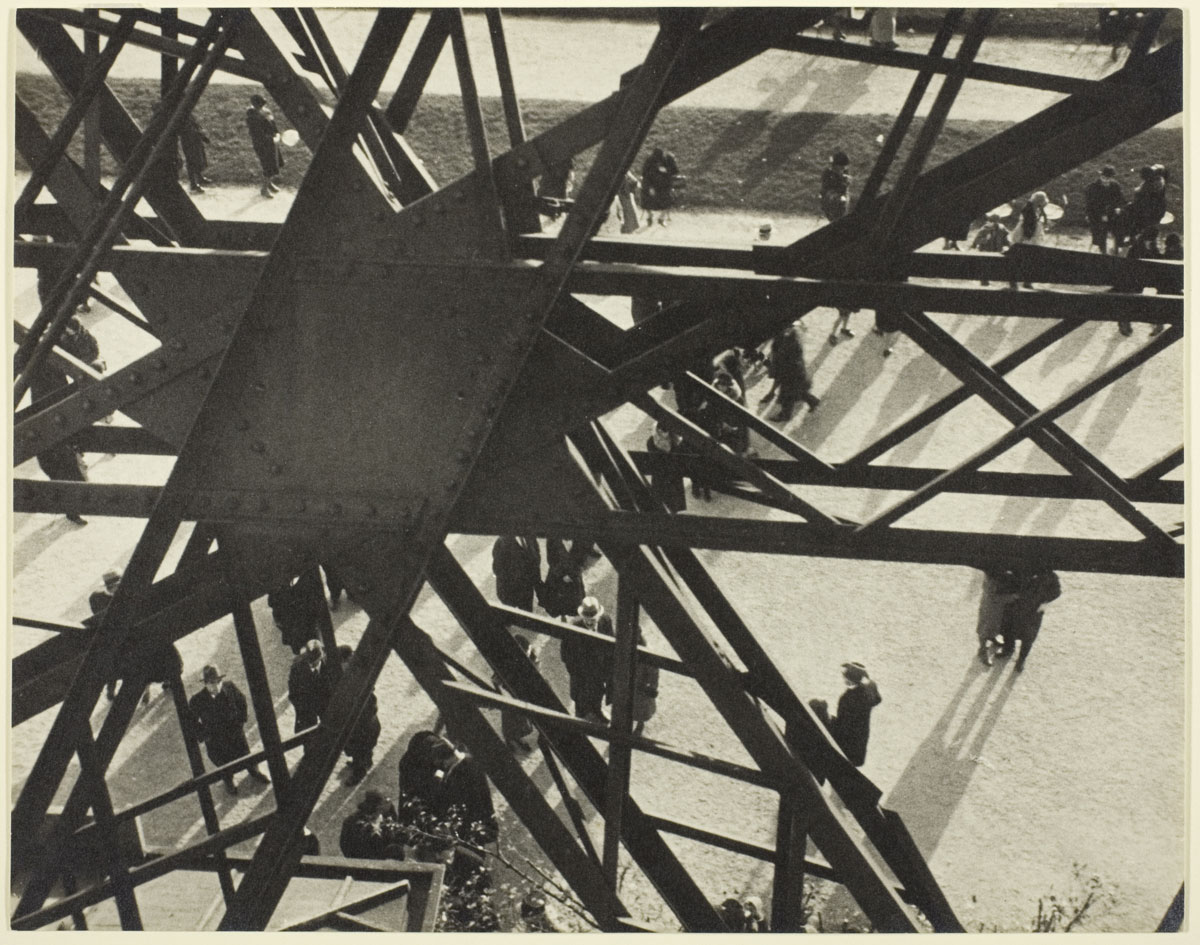
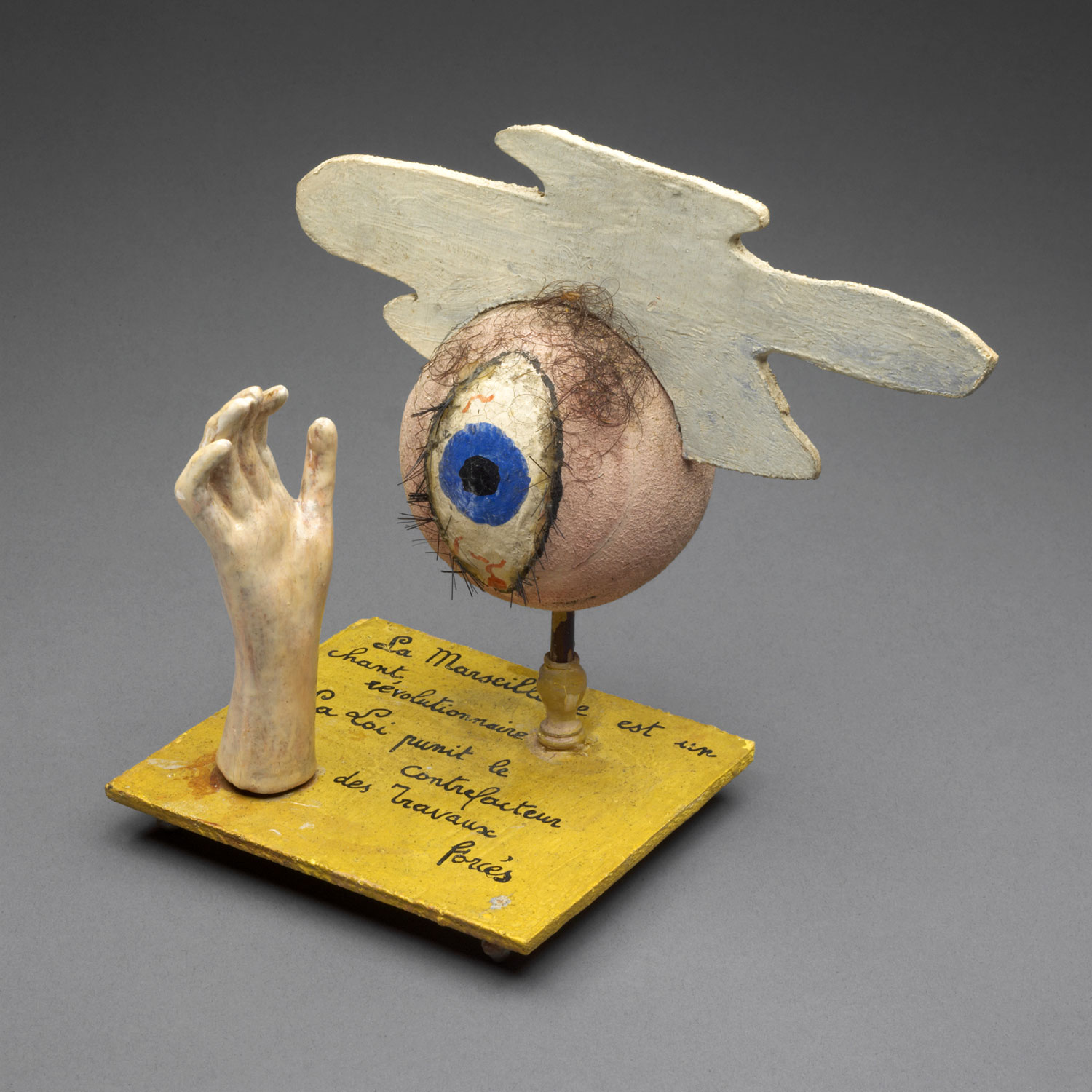


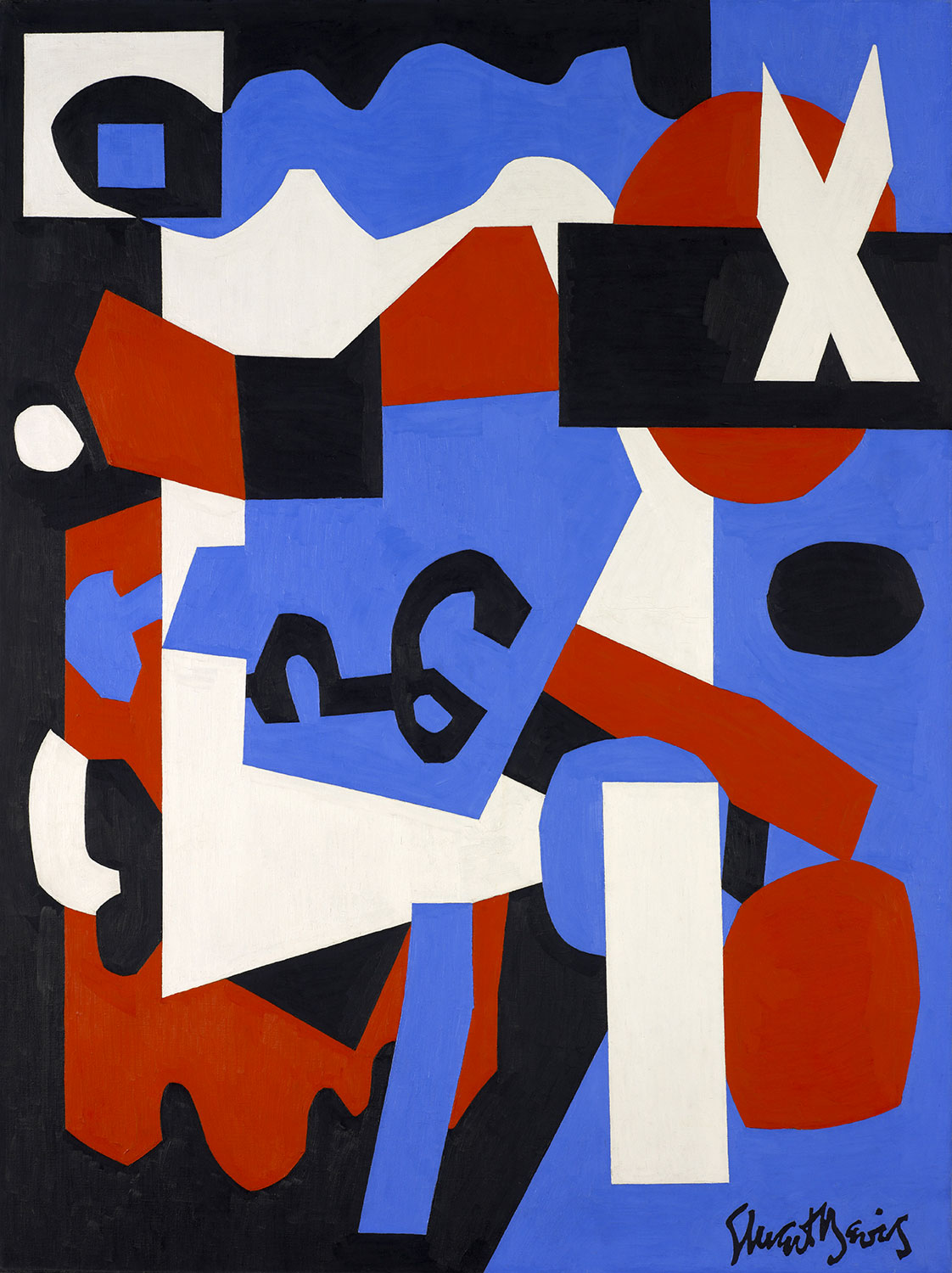


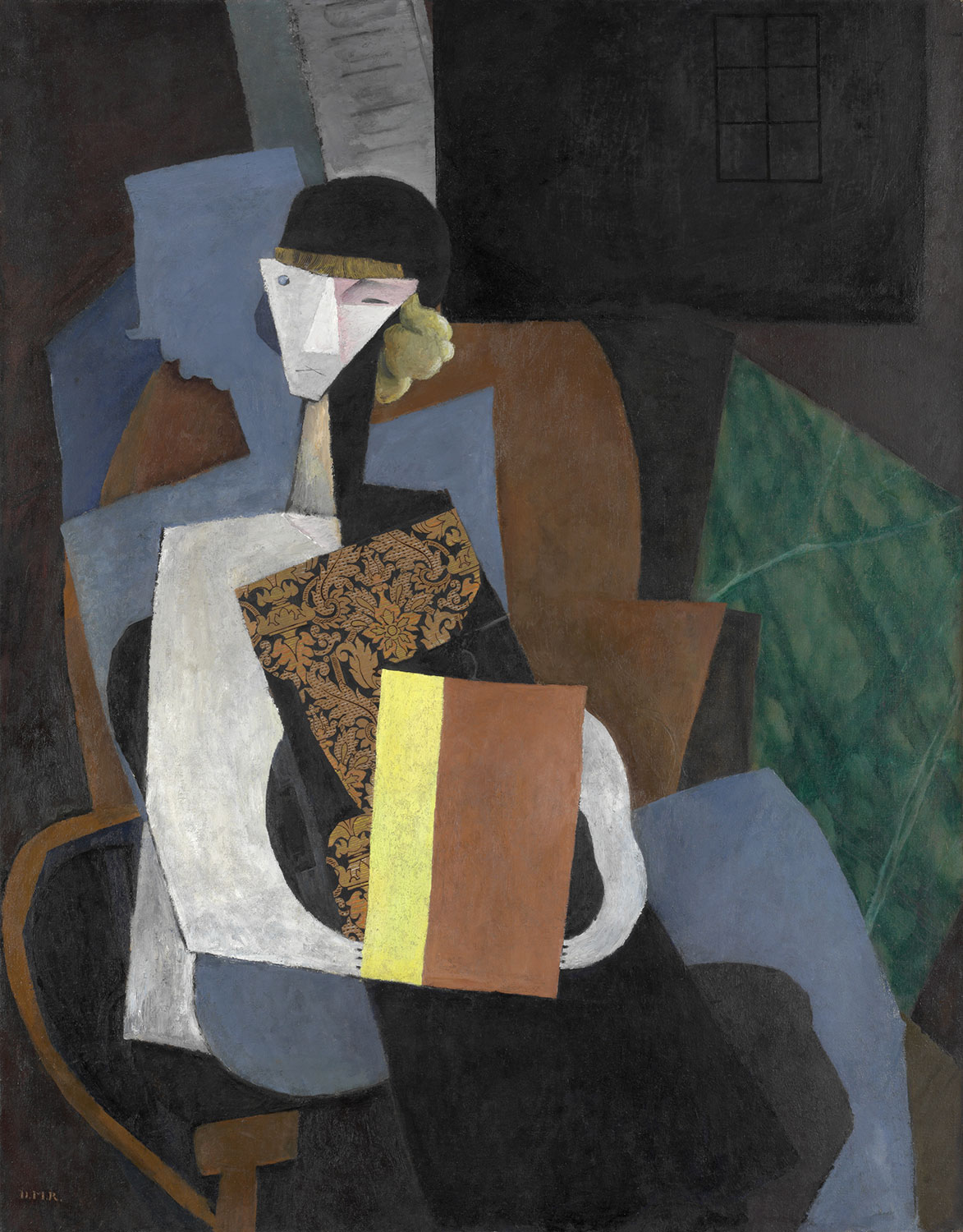
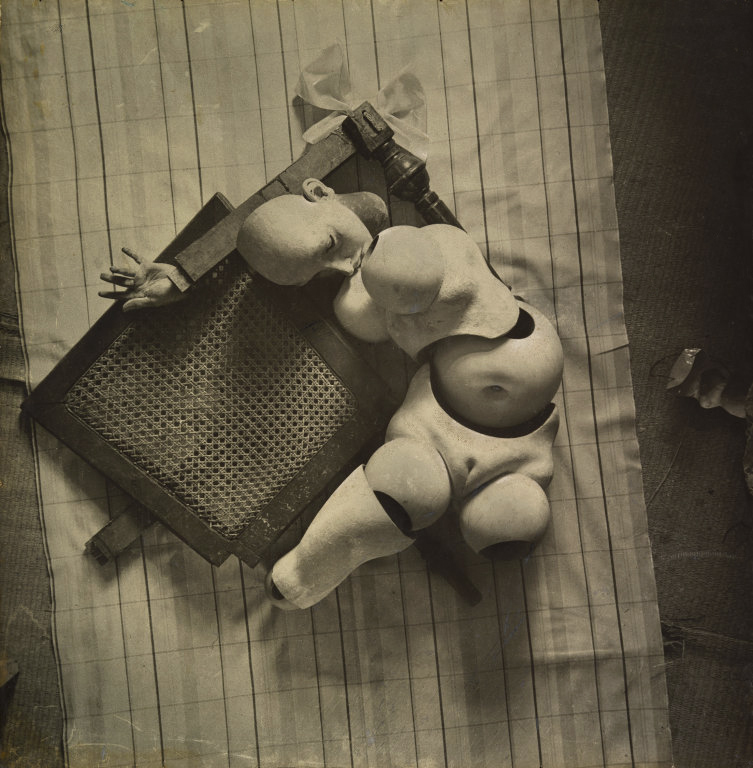

![Stanisław Ignacy Witkiewicz (Polish, 1885-1939) 'Self-Portrait, Zakopane [Broken Glass]' 1910](https://artblart.com/wp-content/uploads/2015/03/witkiewicz_self-portrait-zakopane-web.jpg "Stanisław Ignacy Witkiewicz (Polish, 1885-1939) 'Self-Portrait, Zakopane [Broken Glass]' 1910")
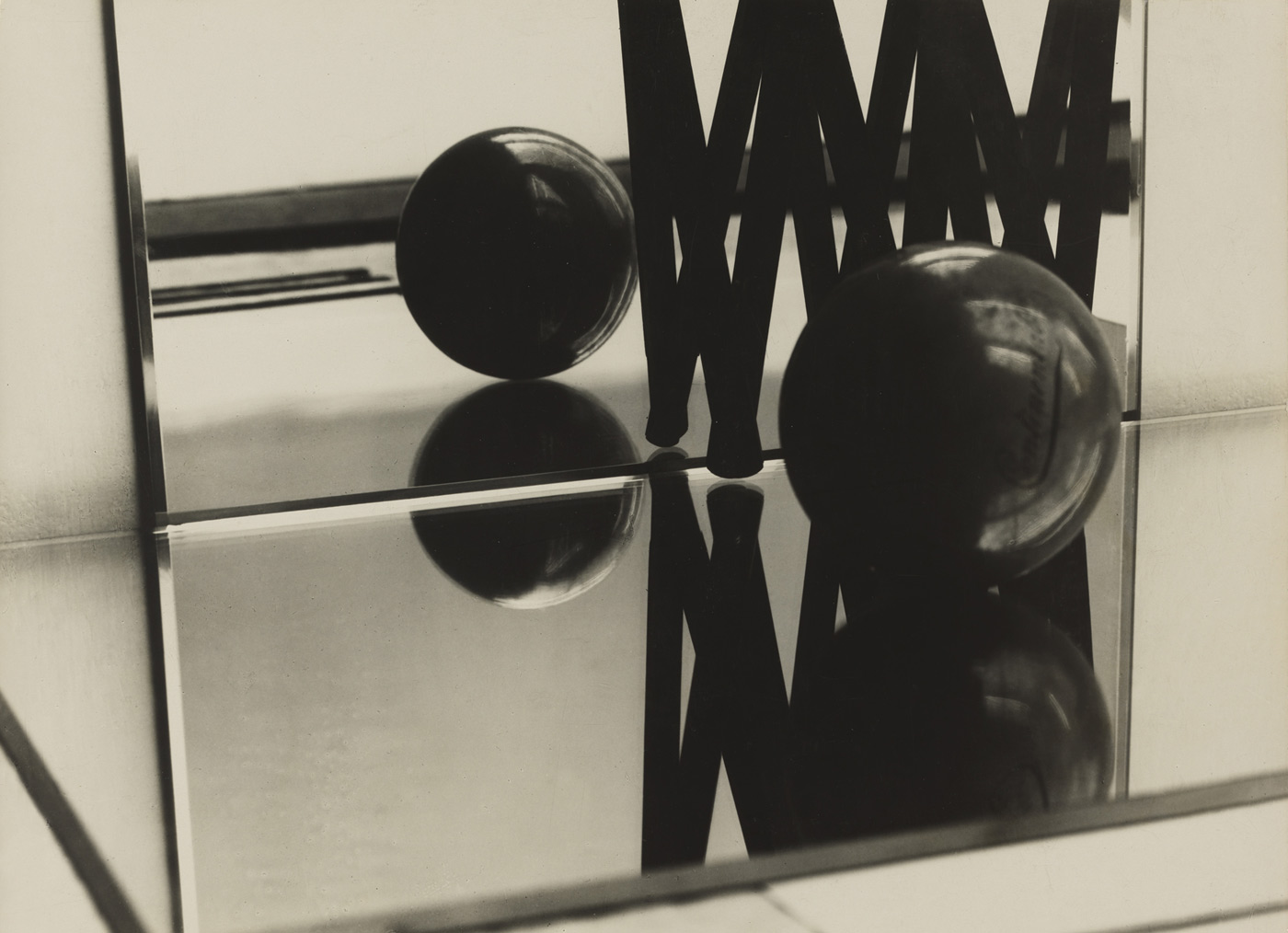

![Florence Henri (New York 1893 - Compiègne 1982) 'Composition abstraite [Still-life composition]' 1929](https://artblart.com/wp-content/uploads/2015/03/florencehenri_08_compositionabstraite-web.jpg "Florence Henri (New York 1893 - Compiègne 1982) 'Composition abstraite [Still-life composition]' 1929")

![Florence Henri (New York 1893 - Compiègne 1982) 'Mannequin de tailleur [Tailor's mannequin]' 1930-1931](https://artblart.com/wp-content/uploads/2015/03/florencehenri_05__mannequindetailleur-web.jpg "Florence Henri (New York 1893 - Compiègne 1982) 'Mannequin de tailleur [Tailor's mannequin]' 1930-1931")
![Florence Henri (New York 1893 - Compiègne 1982) 'Composition Nature morte [Still-life composition]' 1931](https://artblart.com/wp-content/uploads/2015/03/florencehenri_10_compositionnaturemorte-web.jpg "Florence Henri (New York 1893 - Compiègne 1982) 'Composition Nature morte [Still-life composition]' 1931")
![Florence Henri (New York 1893 - Compiègne 1982) 'Pont [Bridge]' 1930-1935](https://artblart.com/wp-content/uploads/2015/03/florencehenri_21_pont-web.jpg "Florence Henri (New York 1893 - Compiègne 1982) 'Pont [Bridge]' 1930-1935")


![Florence Henri (New York 1893 - Compiègne 1982) 'Autoportrait [Self-portrait]' 1928](https://artblart.com/wp-content/uploads/2015/03/florencehenri_01_autoportrait-web.jpg "Florence Henri (New York 1893 - Compiègne 1982) 'Autoportrait [Self-portrait]' 1928")
![Florence Henri (New York 1893 - Compiègne 1982) 'Femme aux cartes [Woman with cards]' 1930](https://artblart.com/wp-content/uploads/2015/03/florencehenri_11_femmeauxcartes-web.jpg "Florence Henri (New York 1893 - Compiègne 1982) 'Femme aux cartes [Woman with cards]' 1930")
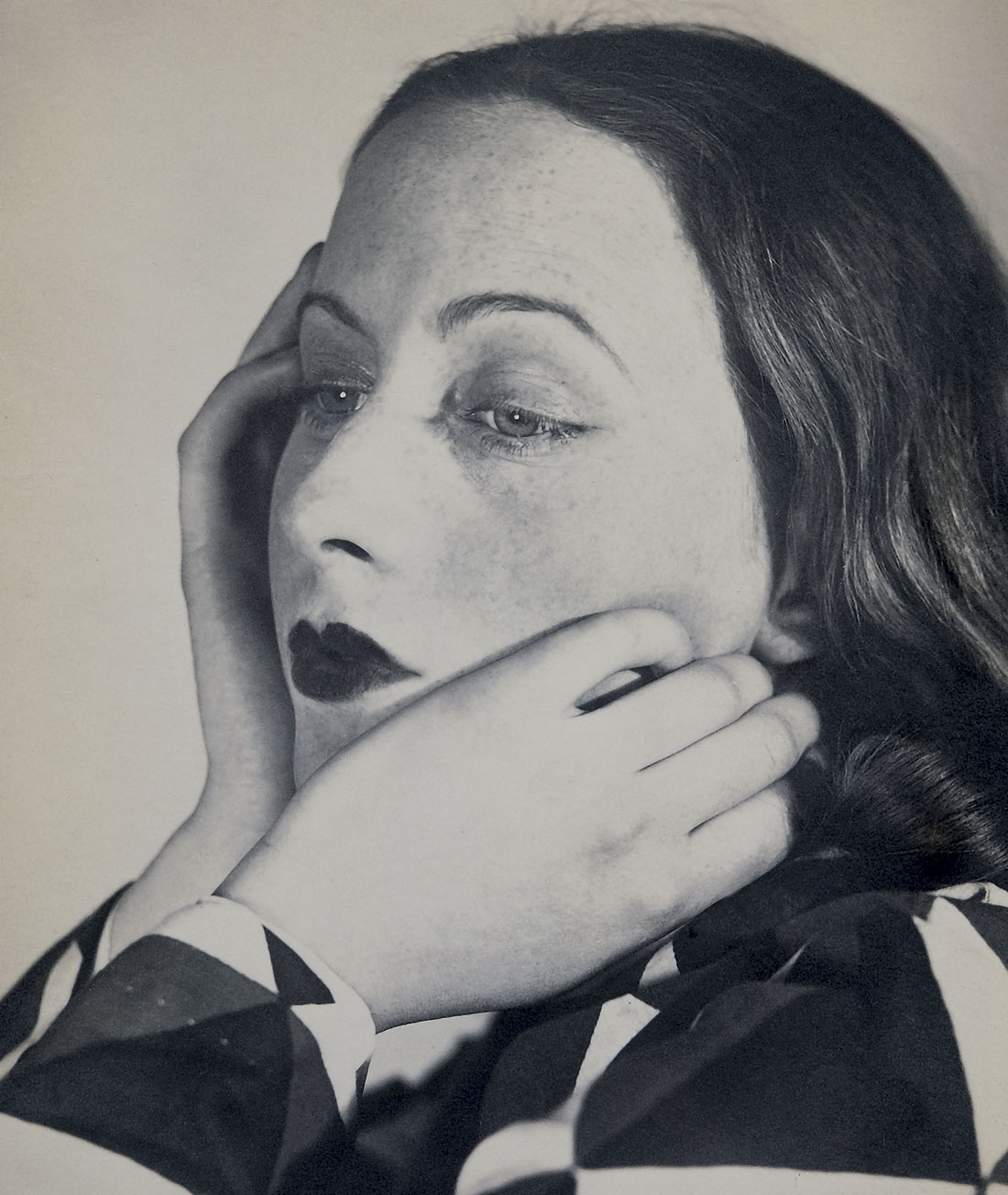

![Florence Henri (New York 1893 - Compiègne 1982) 'Fenêtre [Window]' 1929](https://artblart.com/wp-content/uploads/2015/03/florencehenri_06_fenetre-web.jpg "Florence Henri (New York 1893 - Compiègne 1982) 'Fenêtre [Window]' 1929")
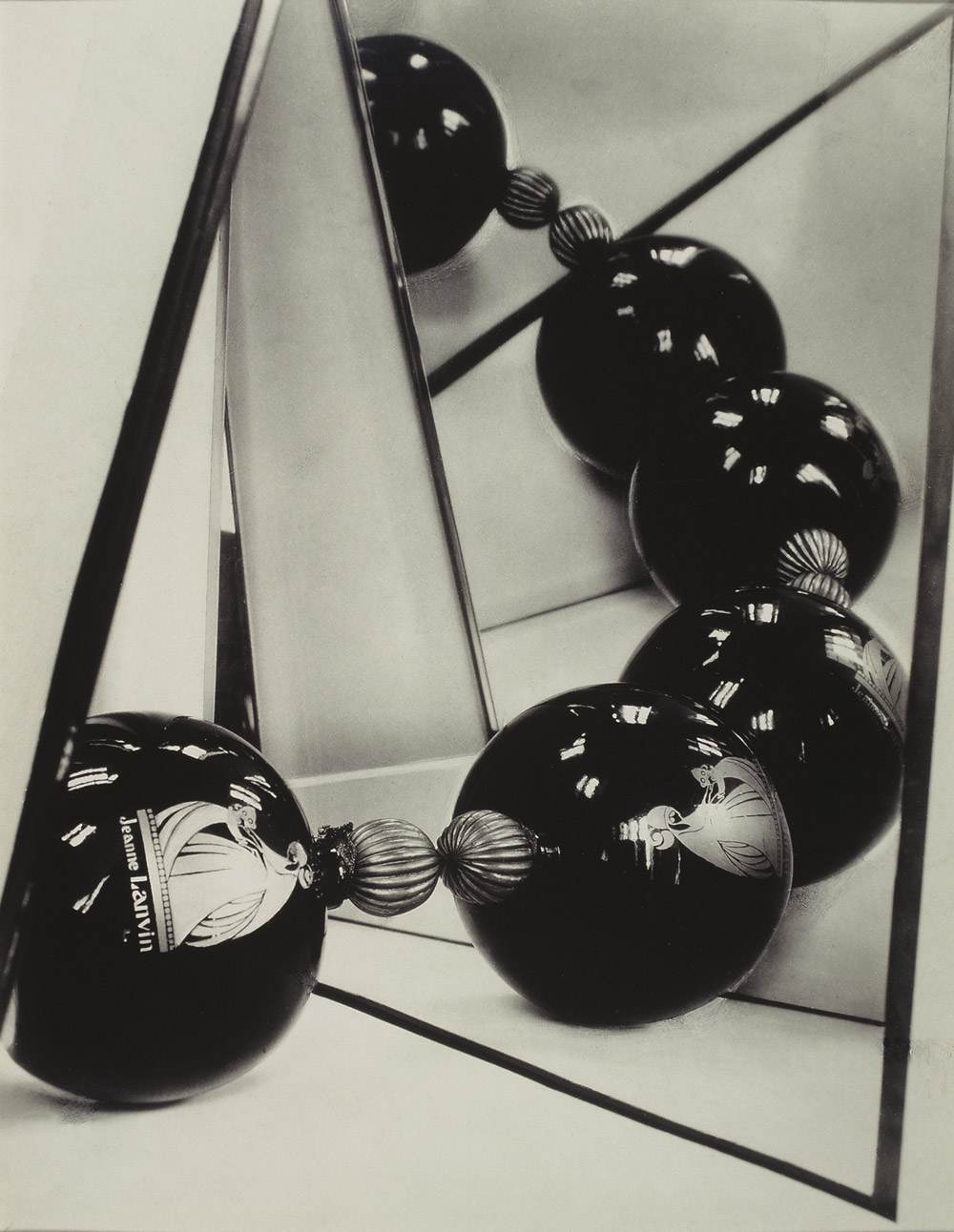
![Florence Henri (New York 1893 - Compiègne 1982) 'Composition Nature morte [Still-life composition]' 1931](https://artblart.com/wp-content/uploads/2015/03/florencehenri_09_compositionnaturemorte-web.jpg "Florence Henri (New York 1893 - Compiègne 1982) 'Composition Nature morte [Still-life composition]' 1931")
![Florence Henri (New York 1893 - Compiègne 1982) 'Composition Nature morte [Still-life composition]' c. 1933](https://artblart.com/wp-content/uploads/2015/03/florencehenri_17_compositionnaturemorte-web.jpg "Florence Henri (New York 1893 - Compiègne 1982) 'Composition Nature morte [Still-life composition]' c. 1933")

![Florence Henri (New York 1893 - Compiègne 1982) 'Robert Delaunay' c. 1935 'Bretagne [Brittany]' 1937-1940](https://artblart.com/wp-content/uploads/2015/03/florencehenri_19_bretagne-web.jpg "Florence Henri (New York 1893 - Compiègne 1982) 'Robert Delaunay' c. 1935 'Bretagne [Brittany]' 1937-1940")
![Florence Henri (New York 1893 - Compiègne 1982) 'Structure (intérieur du Palais de l'Air, Paris, Exposition Universelle) [Structure (Interior of the Palais de l'Air, Paris, World's Fair)]' 1937](https://artblart.com/wp-content/uploads/2015/03/florencehenri_20_structure-web.jpg "Florence Henri (New York 1893 - Compiègne 1982) 'Structure (intérieur du Palais de l'Air, Paris, Exposition Universelle) [Structure (Interior of the Palais de l'Air, Paris, World's Fair)]' 1937")
![Florence Henri (New York 1893 - Compiègne 1982) 'Autoportrait [Self-portrait]' 1938](https://artblart.com/wp-content/uploads/2015/03/florencehenri_18_autoportrait-web.jpg "Florence Henri (New York 1893 - Compiègne 1982) 'Autoportrait [Self-portrait]' 1938")

![Platt D. Babbitt (American, 1823-1879, active Niagara Falls, New York 1853-1870) '[Scene at Niagara Falls]' c. 1855 from the exhibition 'In Focus: Play' at the J. Paul Getty Museum at the Getty Center, Los Angeles, December 2014 - May 2015](https://artblart.com/wp-content/uploads/2015/03/platt_d_babbitt_scene_at_niagara_falls-web.jpg "Platt D. Babbitt (American, 1823-1879, active Niagara Falls, New York 1853-1870) '[Scene at Niagara Falls]' c. 1855 from the exhibition 'In Focus: Play' at the J. Paul Getty Museum at the Getty Center, Los Angeles, December 2014 - May 2015")

![Camille Silvy (French, 1834-1910, active in London) 'Group of their Royal Highnesses the Princess Clementine de Saxe Cobourg Gotha, her Sons and Daughter, the Duke d'Aumale, the Count d'Eu, the Duke d'Alencon, and the Duke de Penthievre [in England]' 1864](https://artblart.com/wp-content/uploads/2015/03/camille-silvy-group-of-their-royal-web.jpg "Camille Silvy (French, 1834-1910, active in London) 'Group of their Royal Highnesses the Princess Clementine de Saxe Cobourg Gotha, her Sons and Daughter, the Duke d'Aumale, the Count d'Eu, the Duke d'Alencon, and the Duke de Penthievre [in England]' 1864")
![Camille Silvy (French, 1834-1910, active in London) 'Group of their Royal Highnesses the Princess Clementine de Saxe Cobourg Gotha, her Sons and Daughter, the Duke d'Aumale, the Count d'Eu, the Duke d'Alencon, and the Duke de Penthievre [in England]' 1864 (detail)](https://artblart.com/wp-content/uploads/2015/03/camille-silvy-group-of-their-royal-detail.jpg "Camille Silvy (French, 1834-1910, active in London) 'Group of their Royal Highnesses the Princess Clementine de Saxe Cobourg Gotha, her Sons and Daughter, the Duke d'Aumale, the Count d'Eu, the Duke d'Alencon, and the Duke de Penthievre [in England]' 1864 (detail)")
![Man Ray (American, 1890-1976) '[Marcel Duchamp and Raoul de Roussy de Sales Playing Chess]' 1925](https://artblart.com/wp-content/uploads/2015/03/gm_05332701-web.jpg "Man Ray (American, 1890-1976) '[Marcel Duchamp and Raoul de Roussy de Sales Playing Chess]' 1925")
![Weegee (Arthur Fellig) (American born Austria, 1899-1968) '[Summer, The Lower East Side, New York City]' Summer 1937](https://artblart.com/wp-content/uploads/2015/03/gm_04304601-web.jpg "Weegee (Arthur Fellig) (American born Austria, 1899-1968) '[Summer, The Lower East Side, New York City]' Summer 1937")
![André Kertész (American born Hungary, 1894-1985) '[Underwater Swimmer]' Negative 1917; print 1970s](https://artblart.com/wp-content/uploads/2015/03/gm_06225401-web.jpg "André Kertész (American born Hungary, 1894-1985) '[Underwater Swimmer]' Negative 1917; print 1970s")
![Unknown photographer. '[Barnum and Bailey Circus Tent in Paris, France]' 1901-1902](https://artblart.com/wp-content/uploads/2015/03/gm_05045201-web.jpg "Unknown photographer. '[Barnum and Bailey Circus Tent in Paris, France]' 1901-1902")
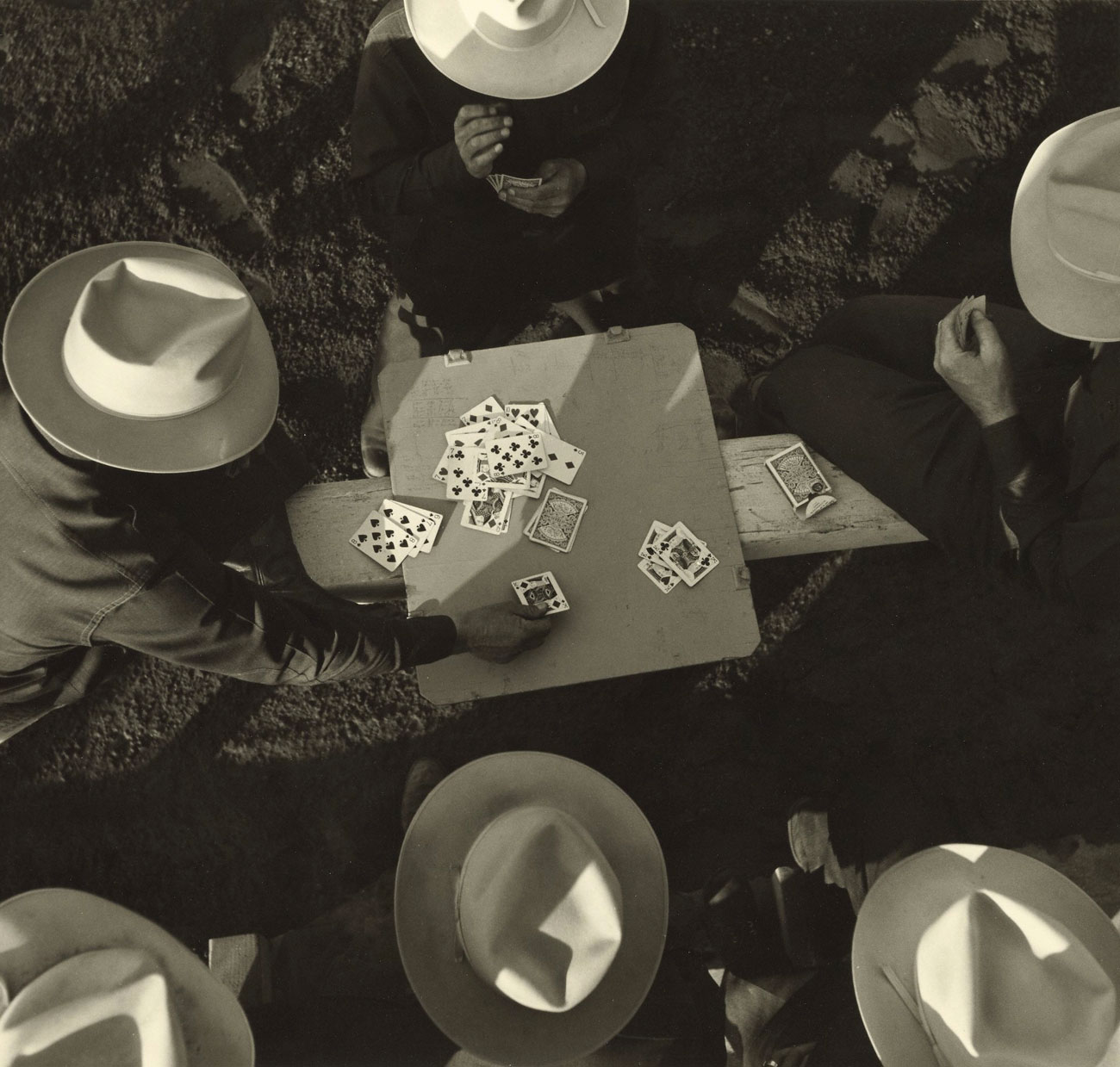
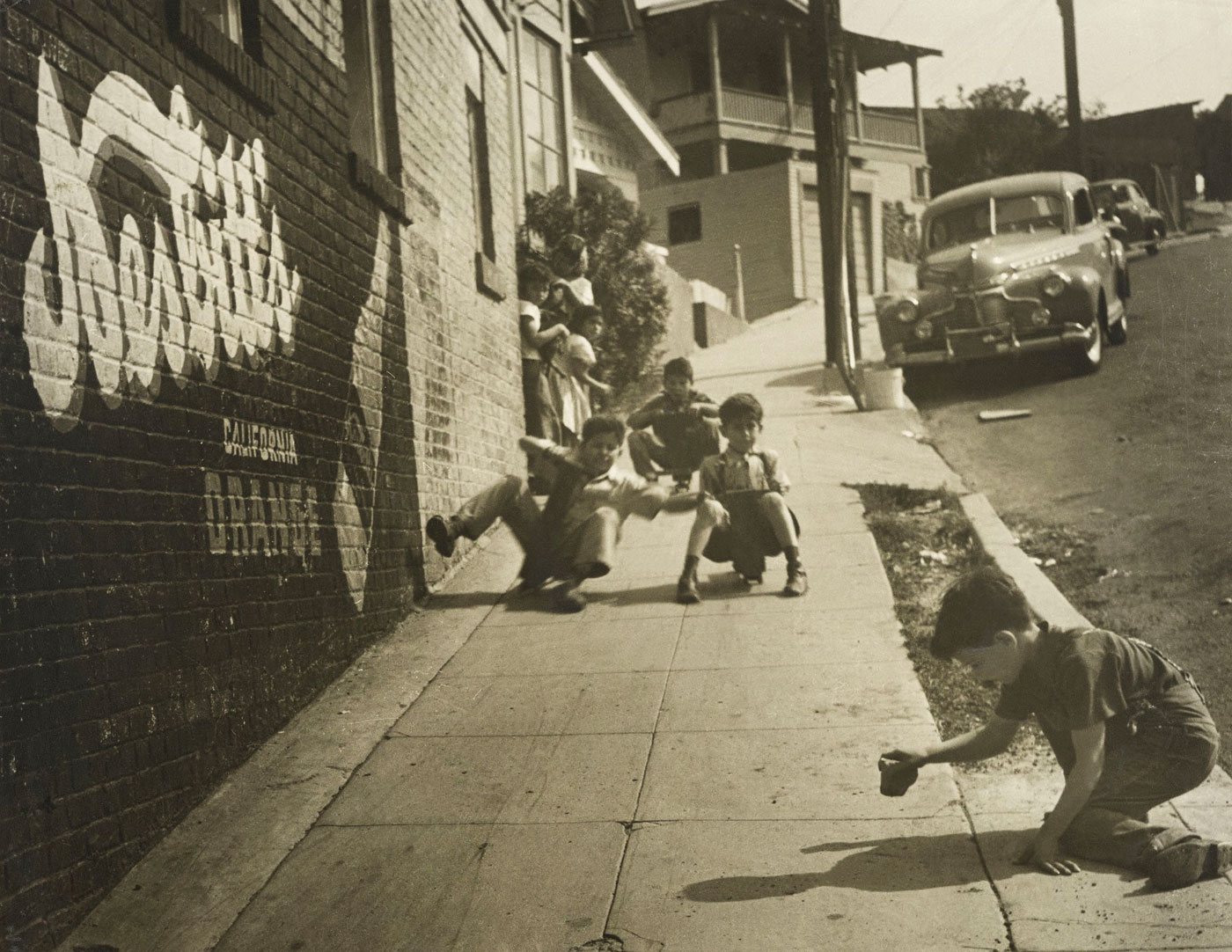
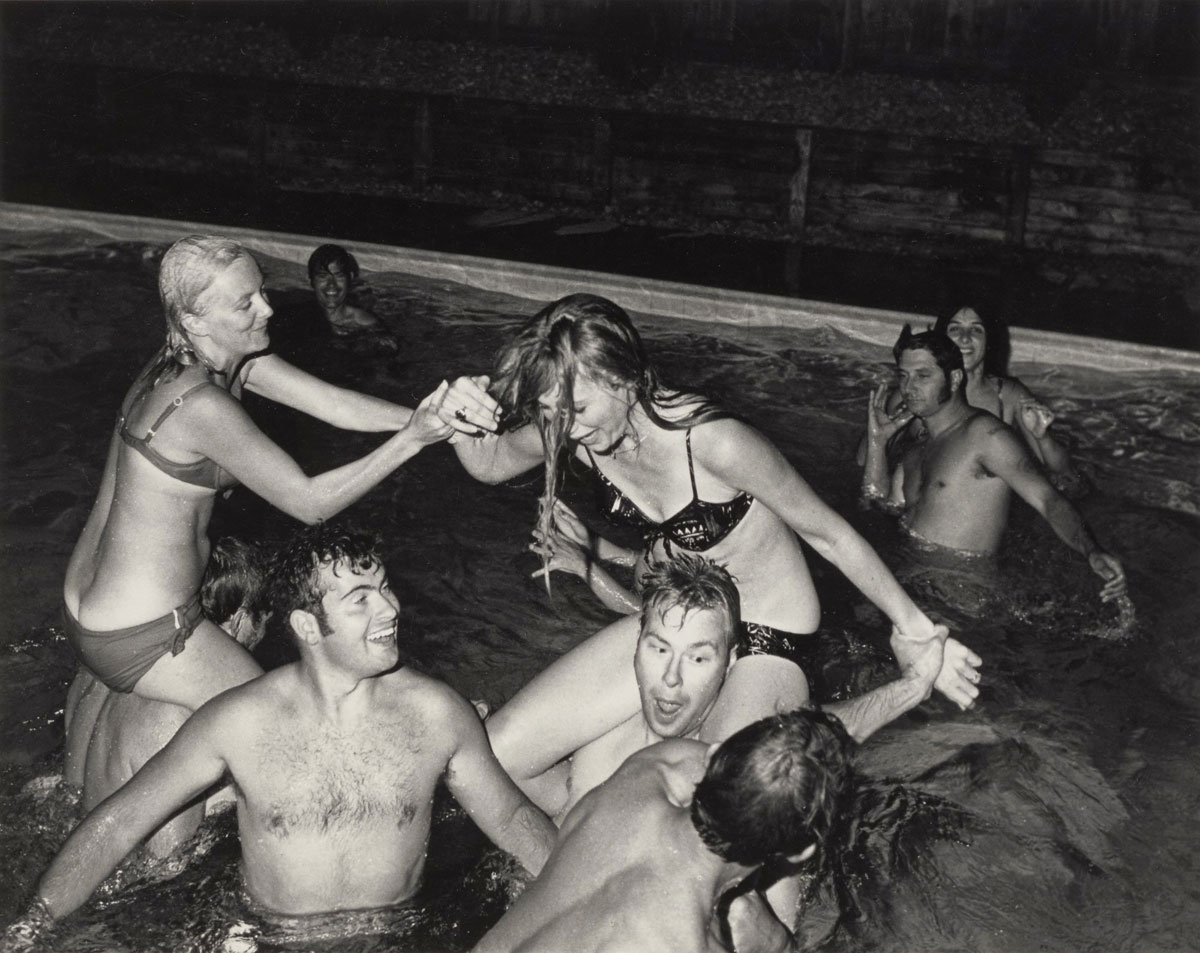

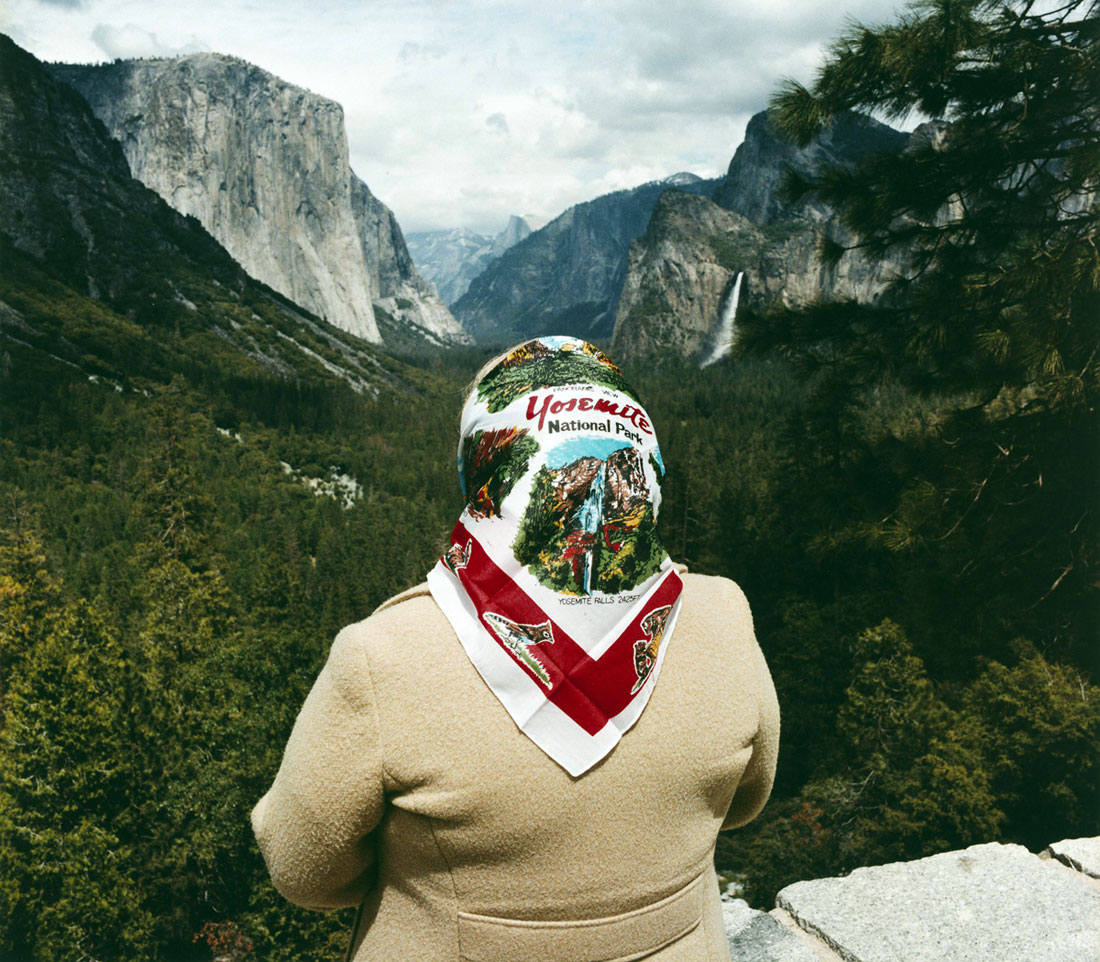

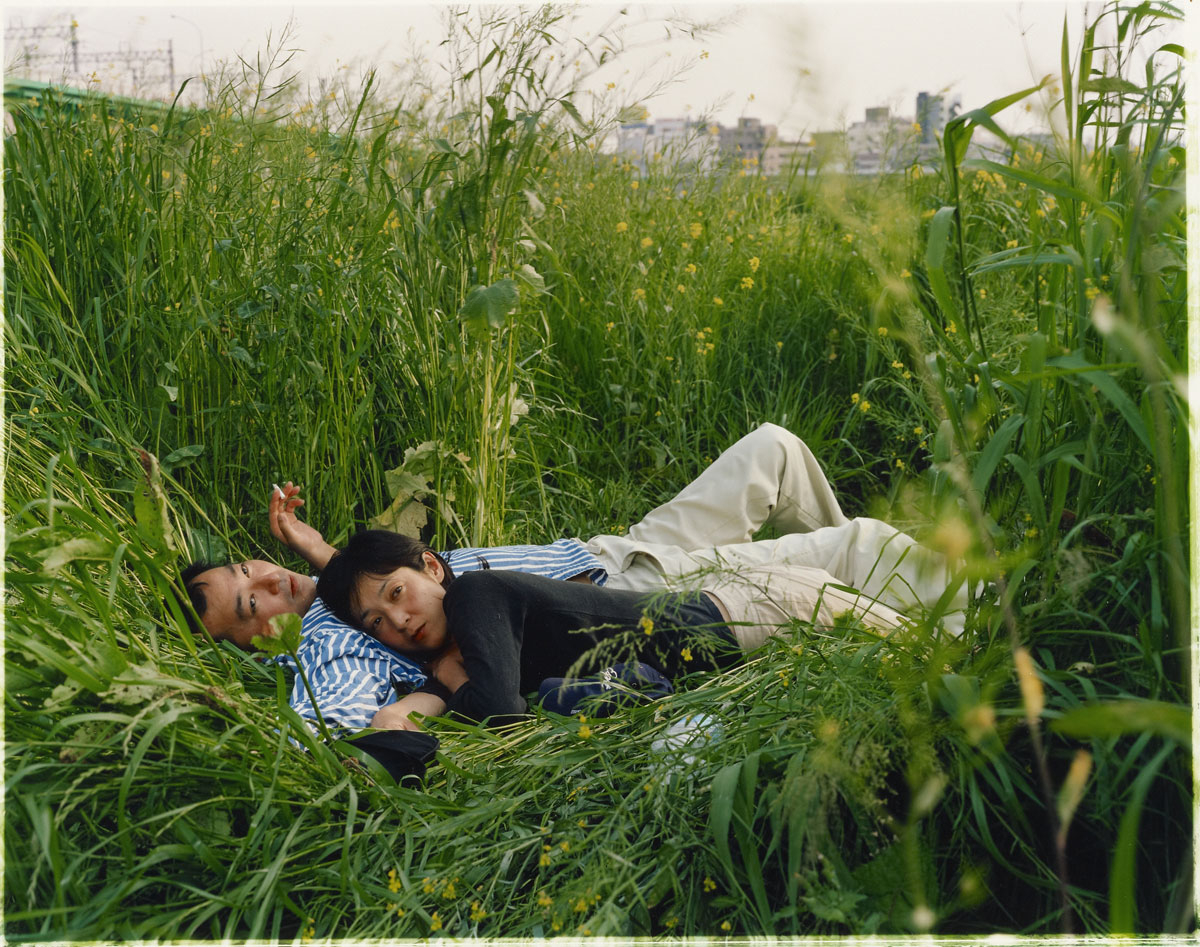
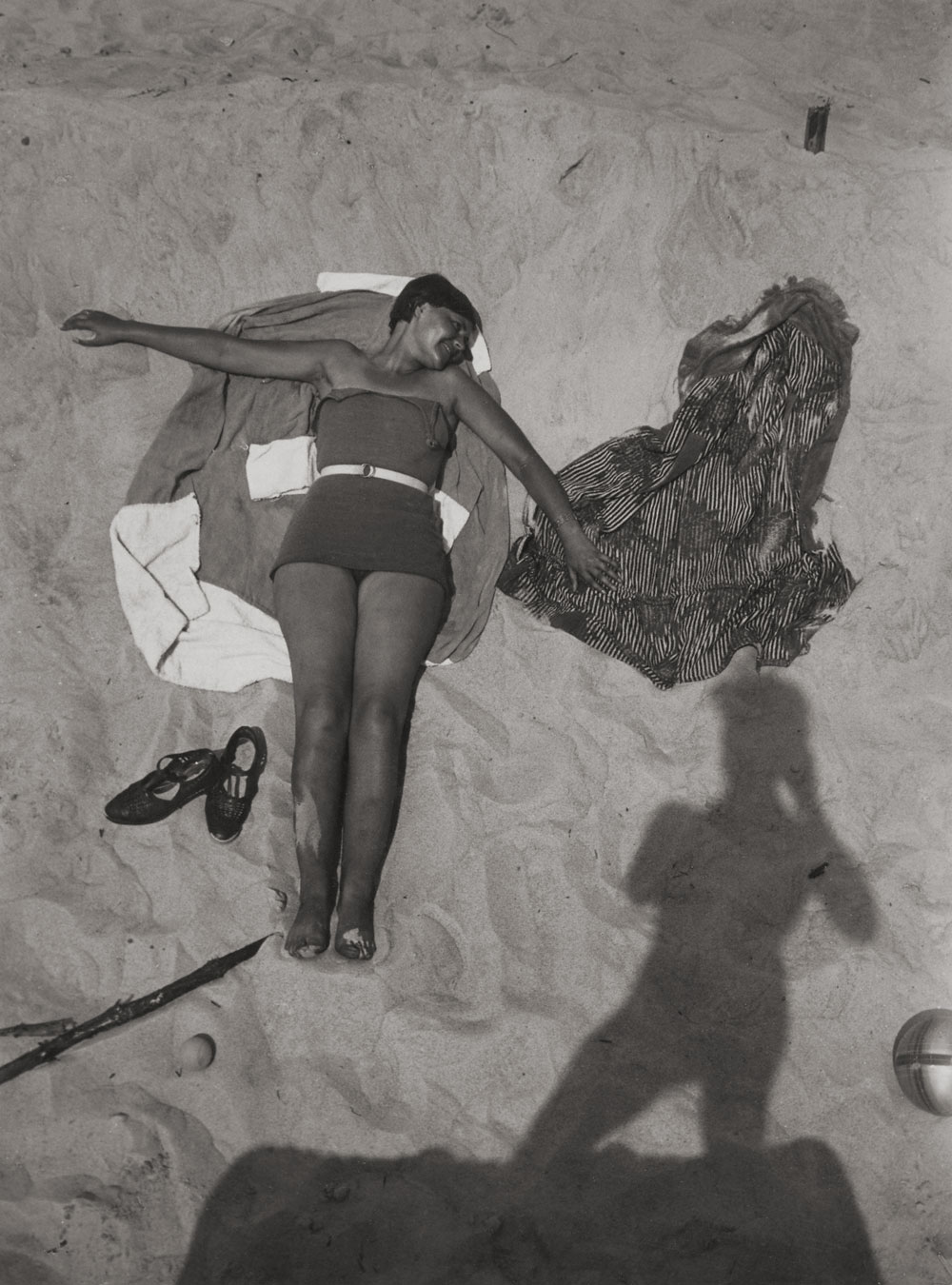


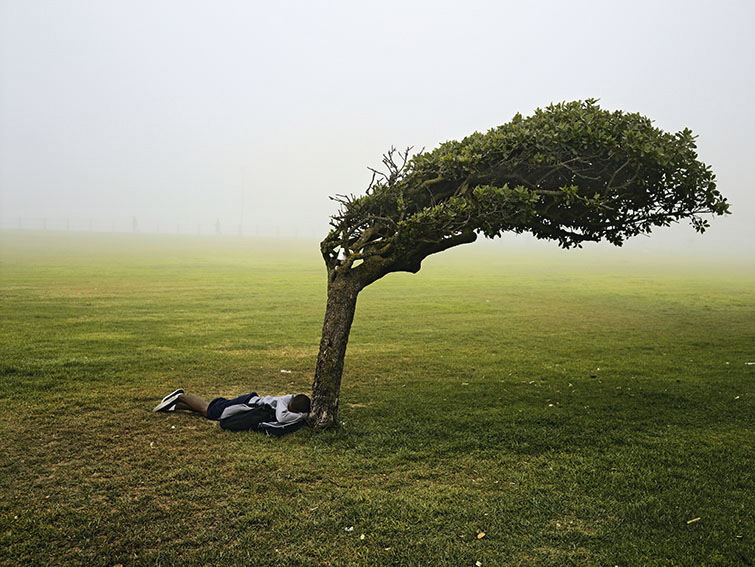
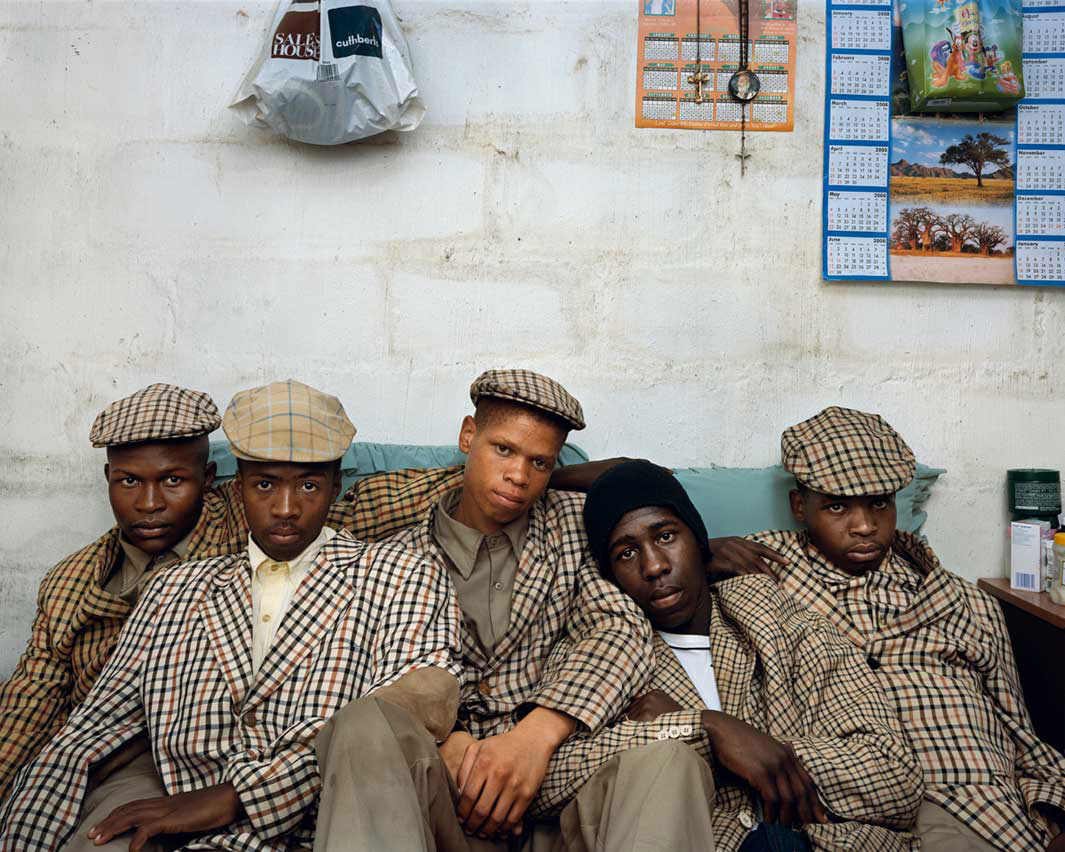
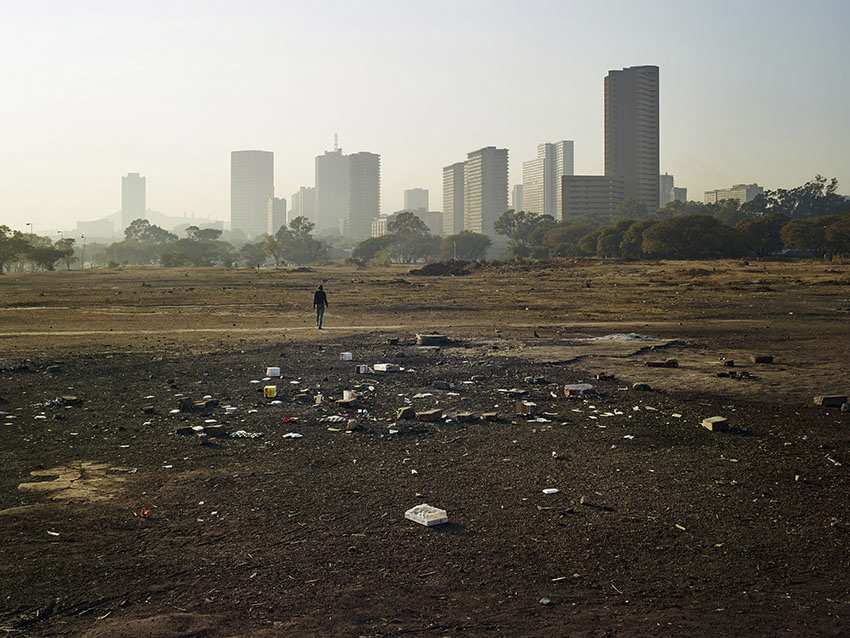
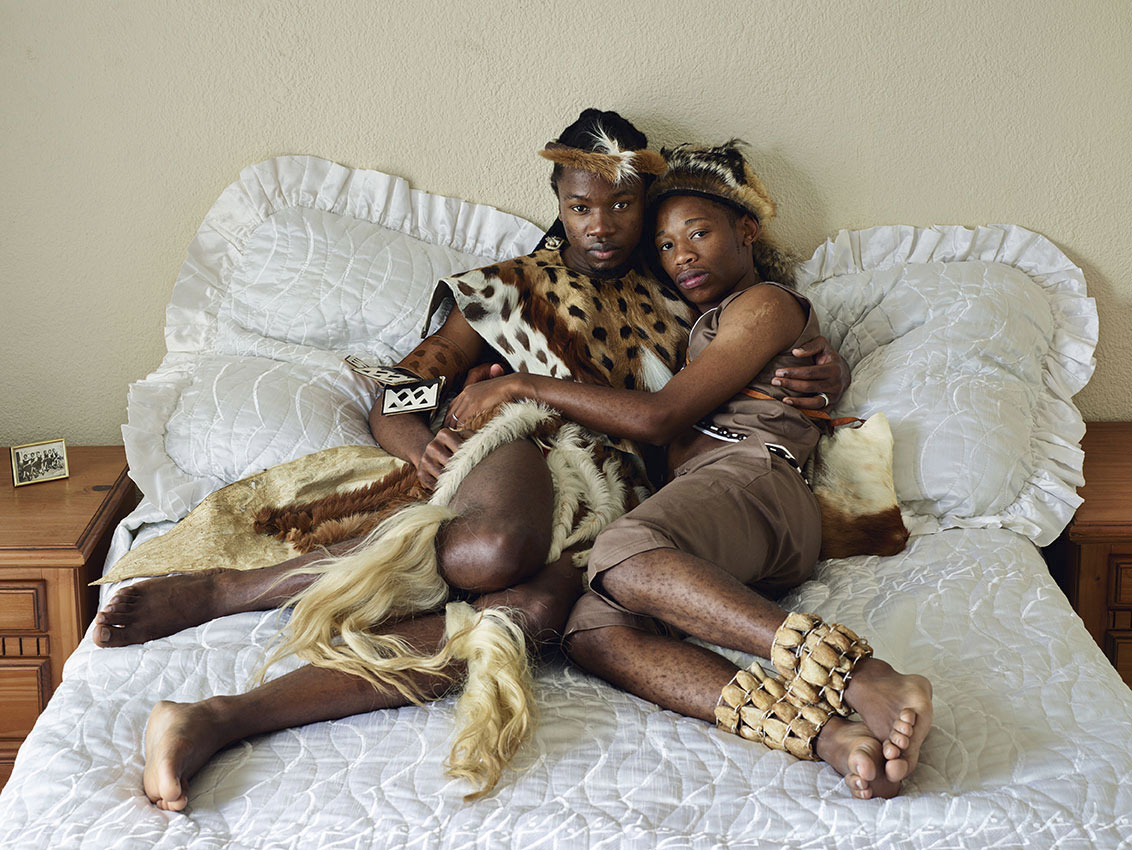
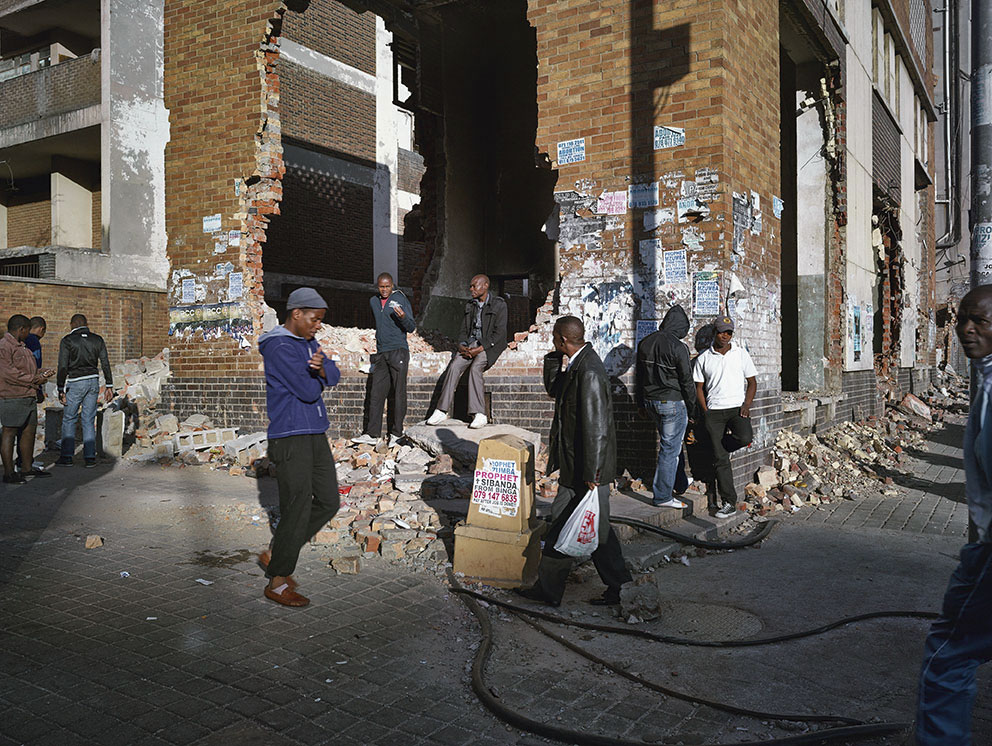
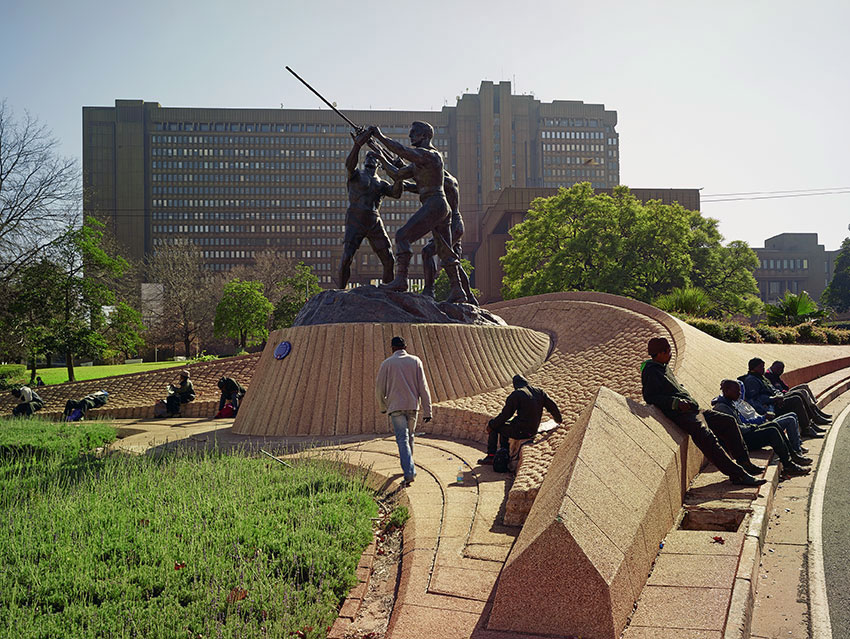
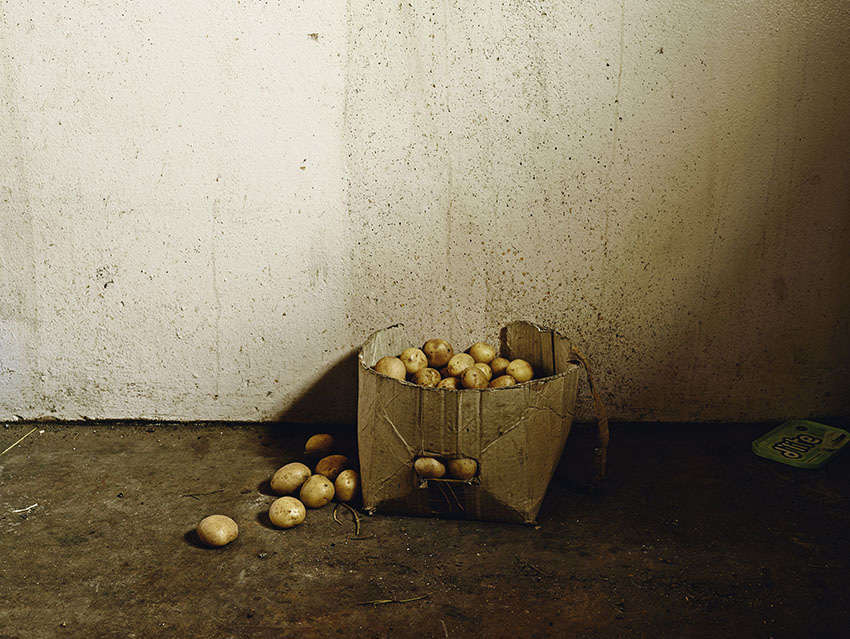
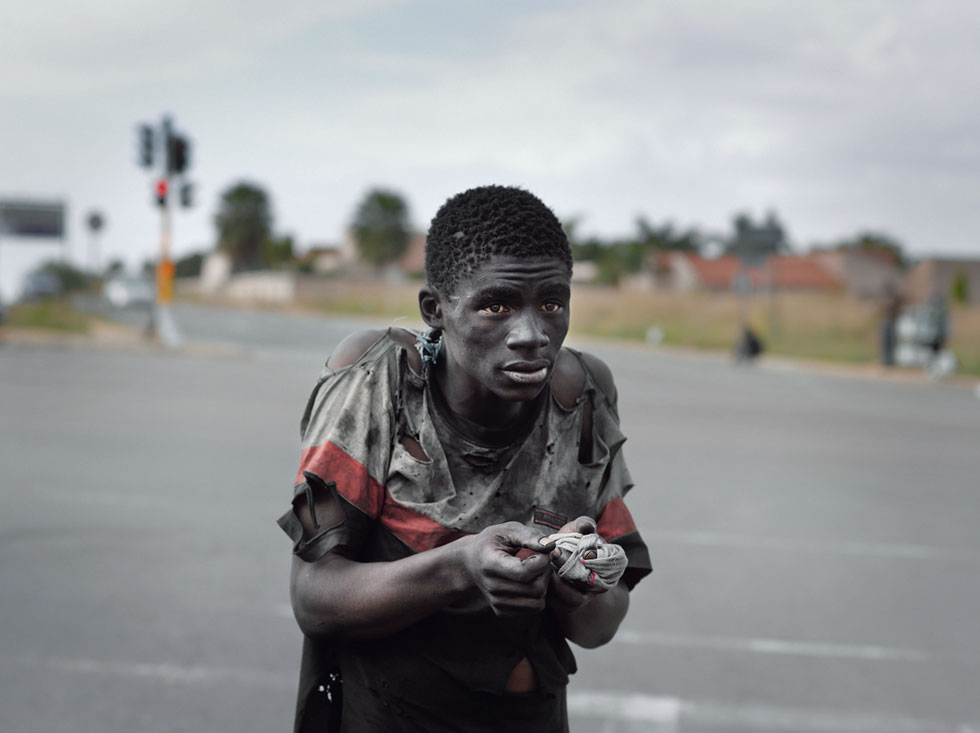
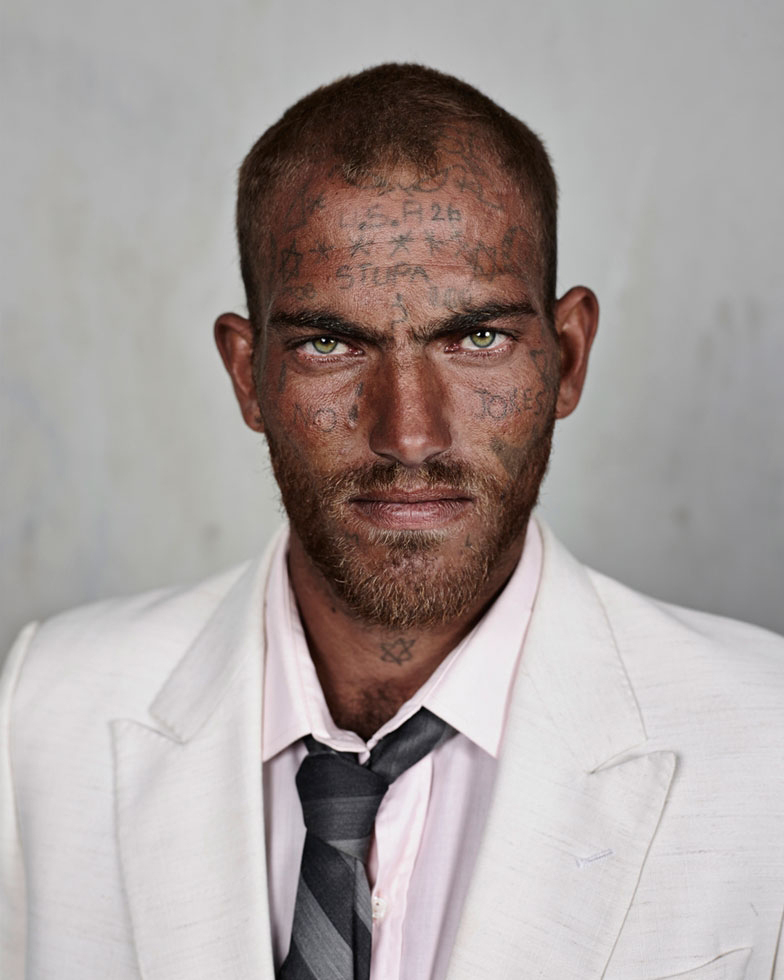
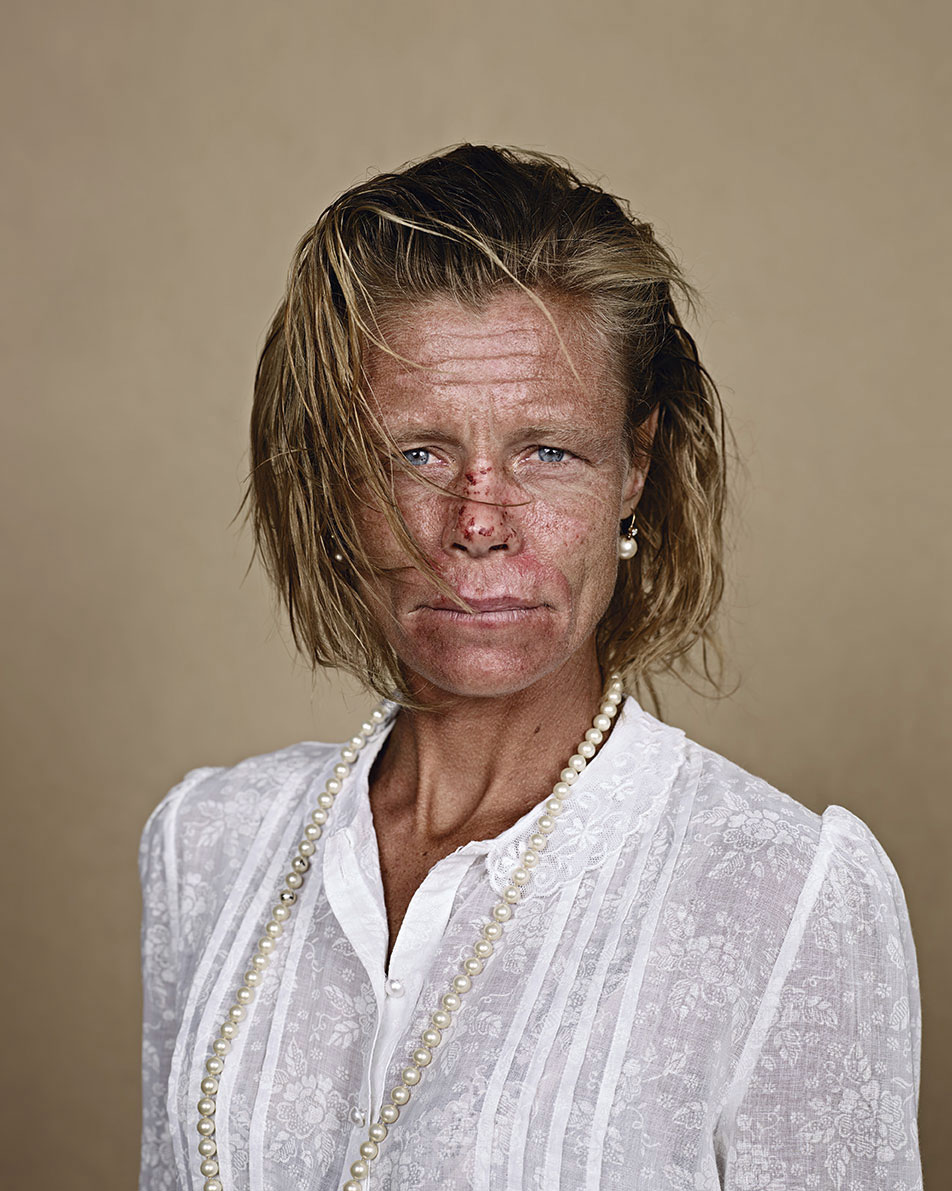
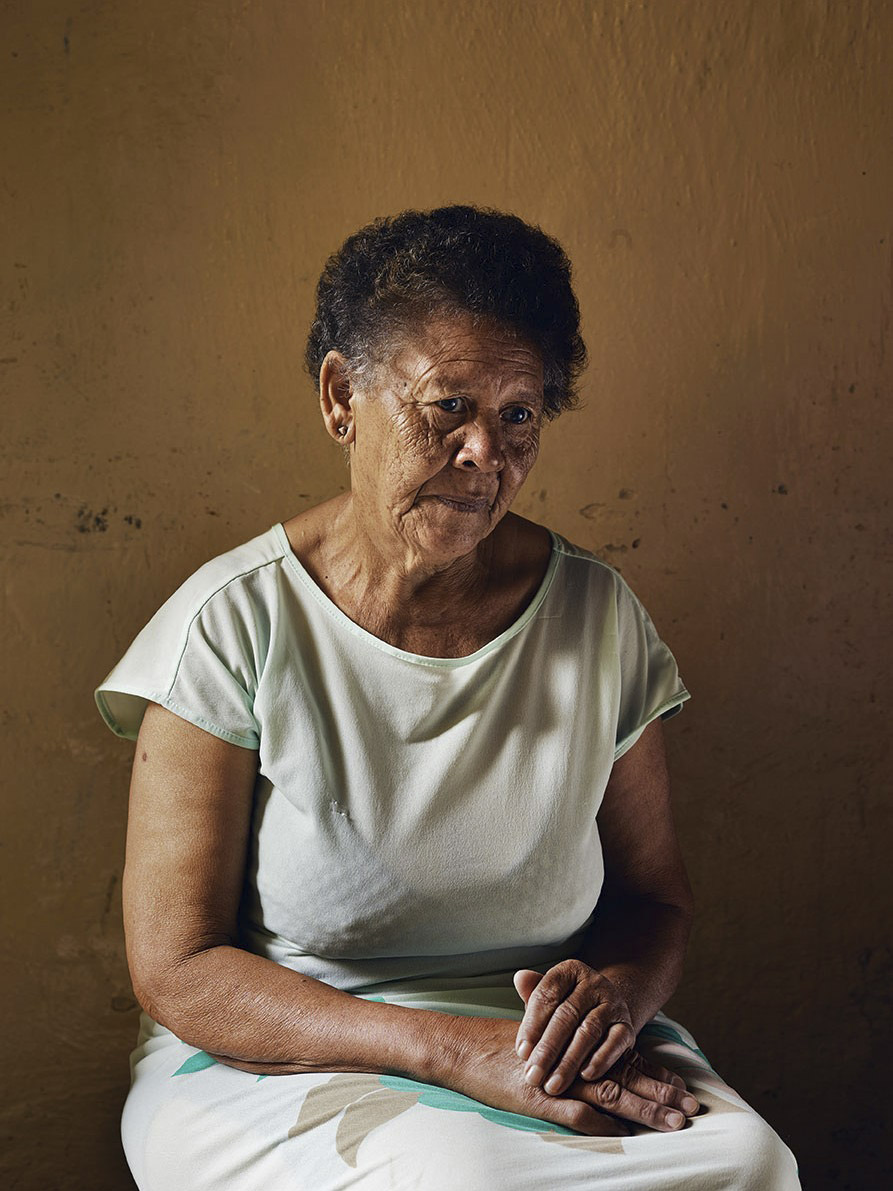
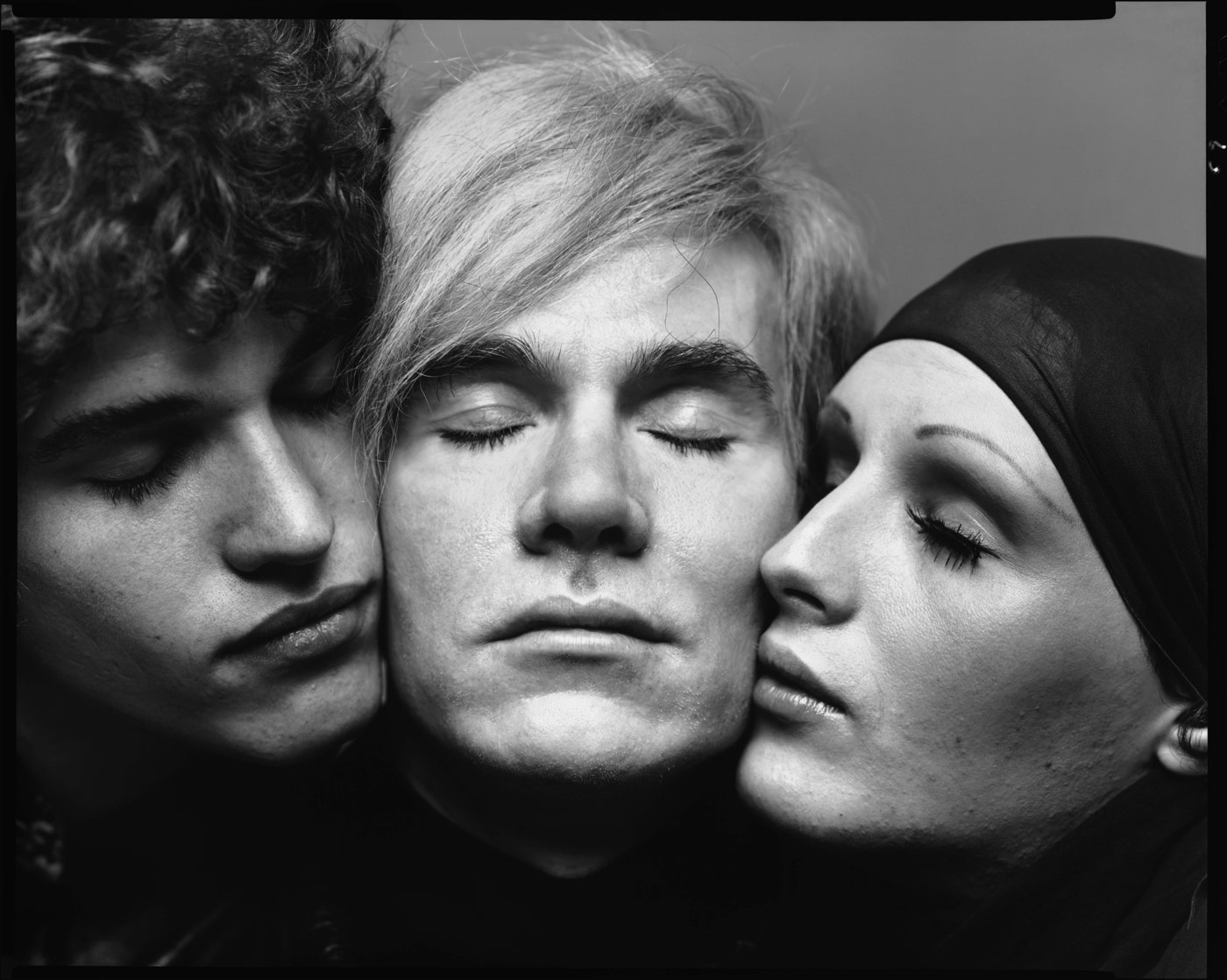


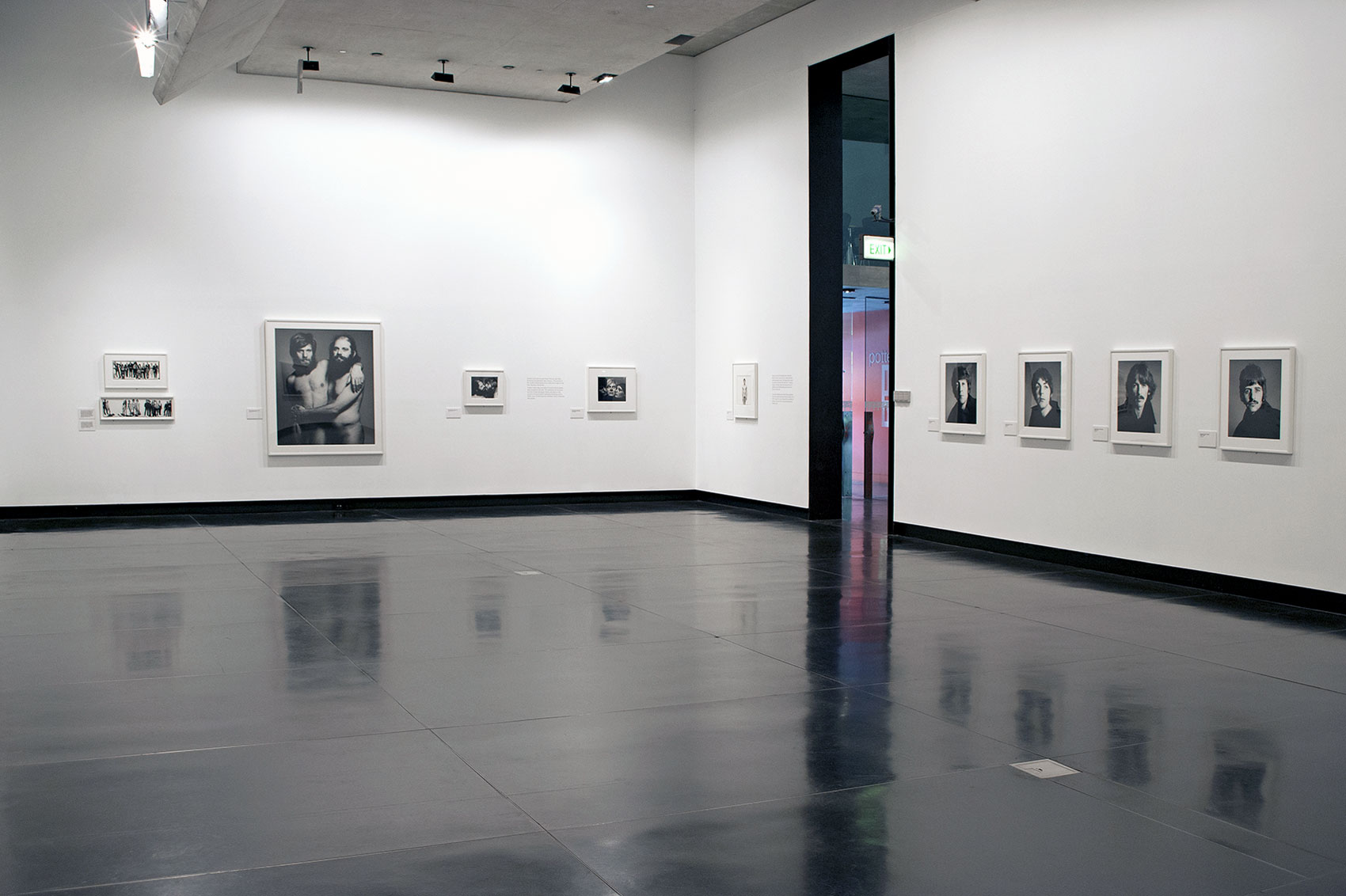


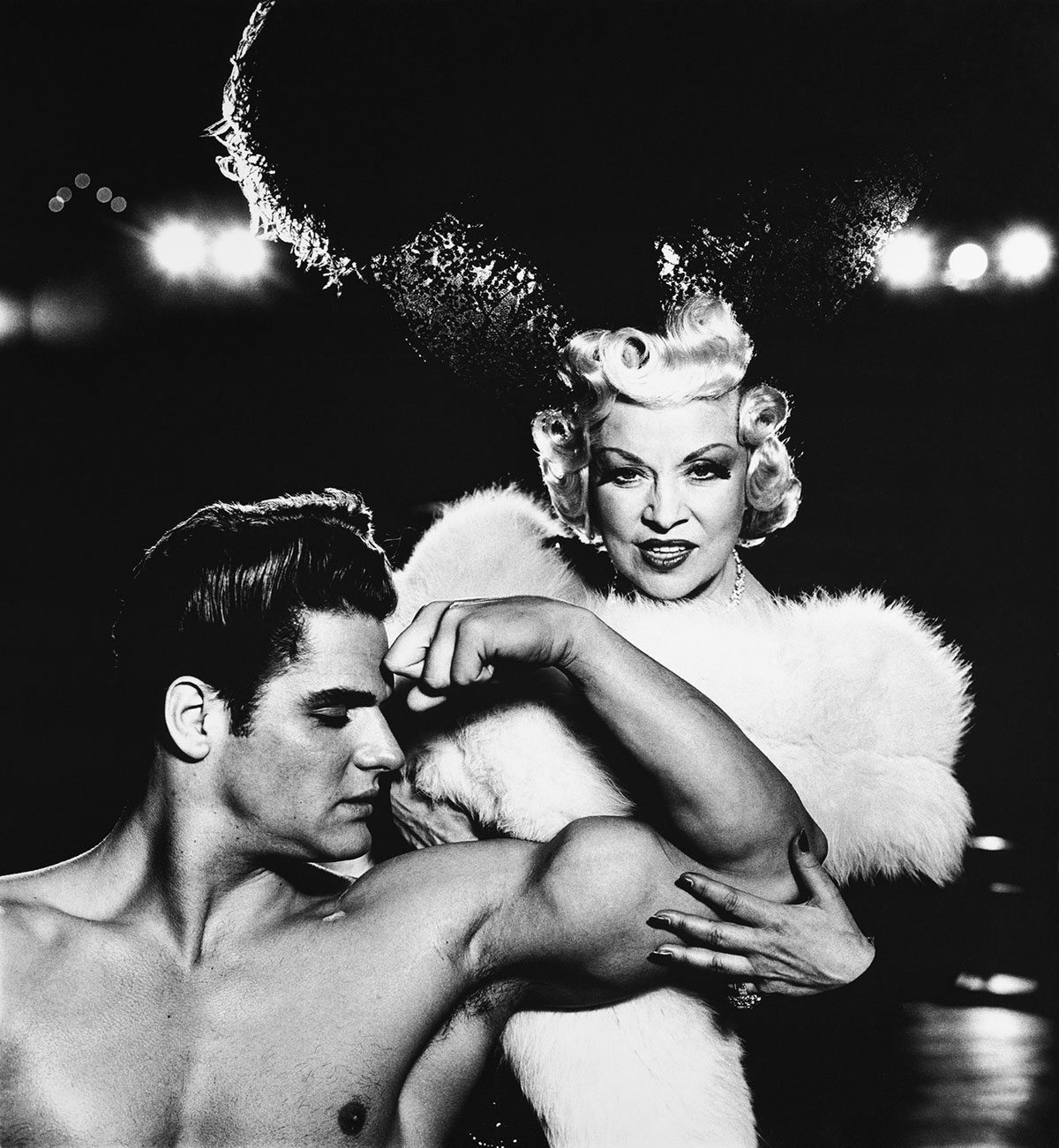

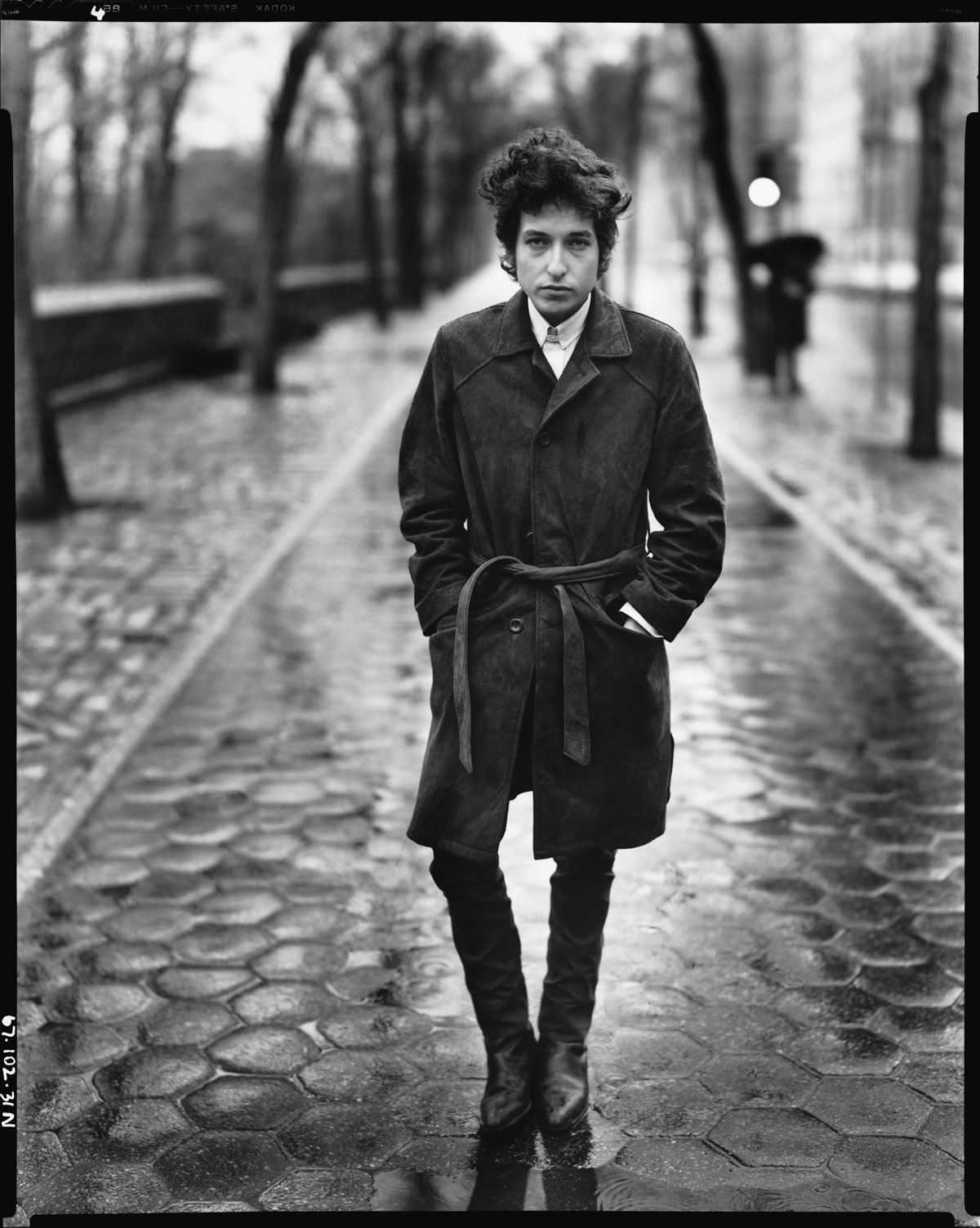
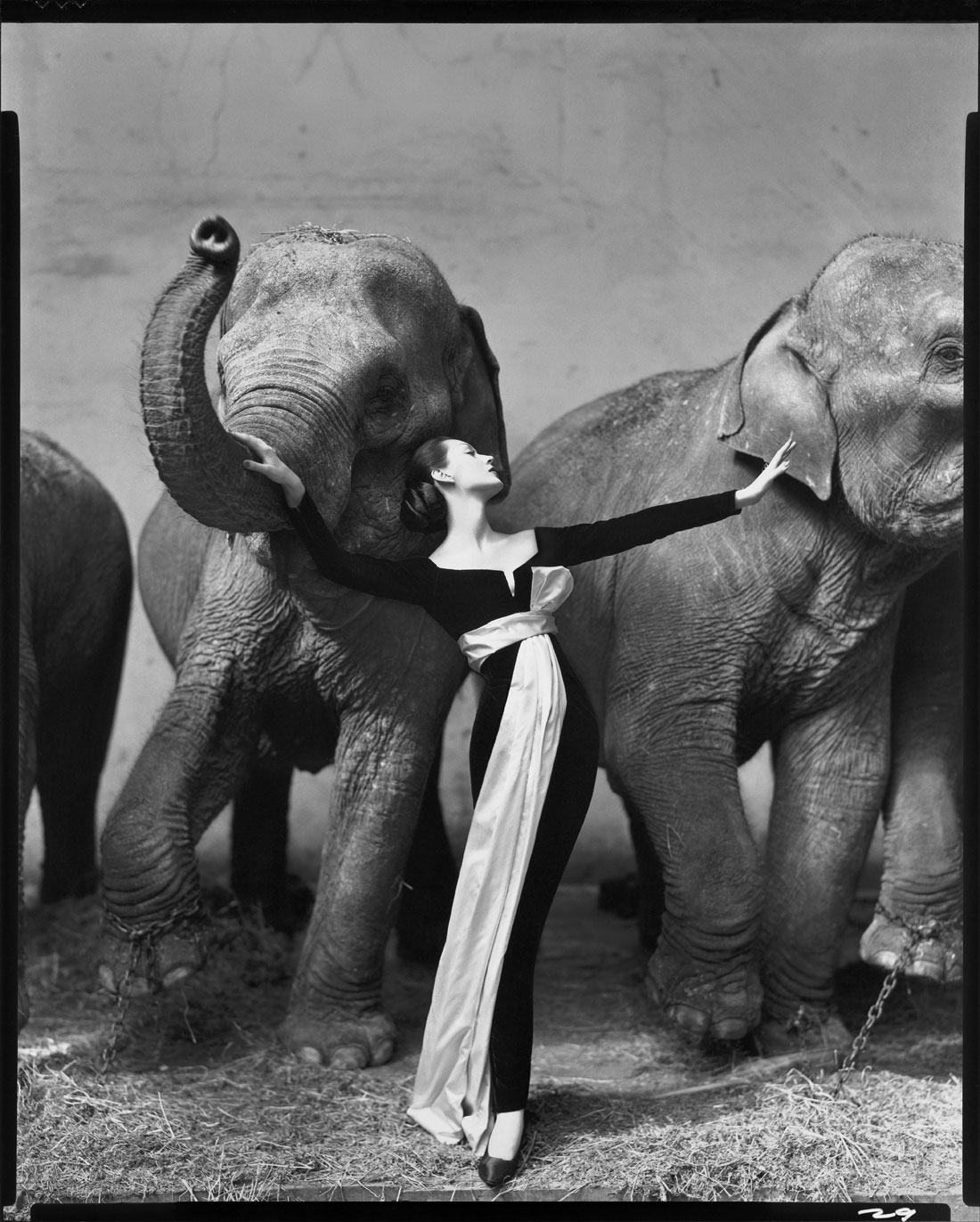
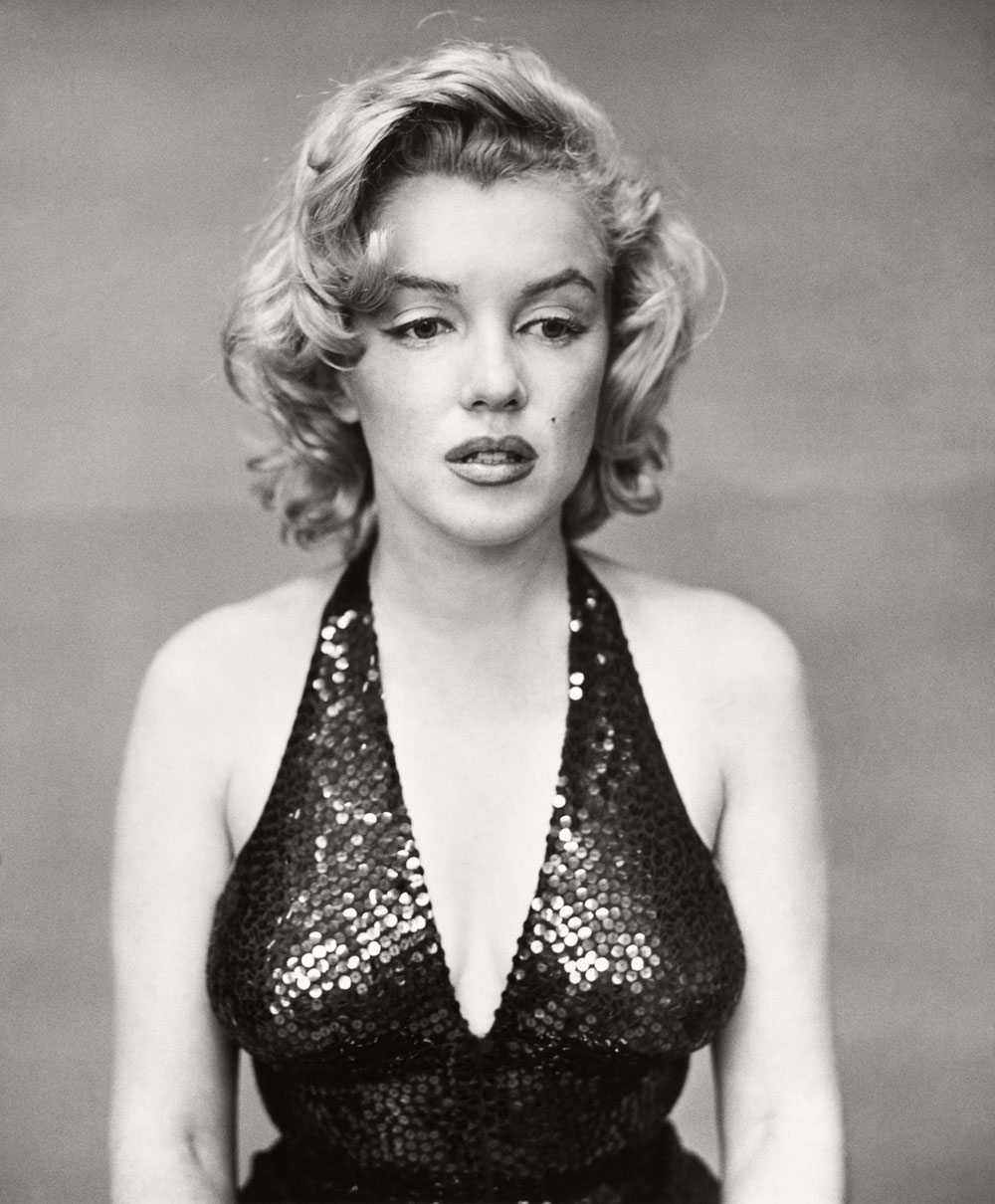
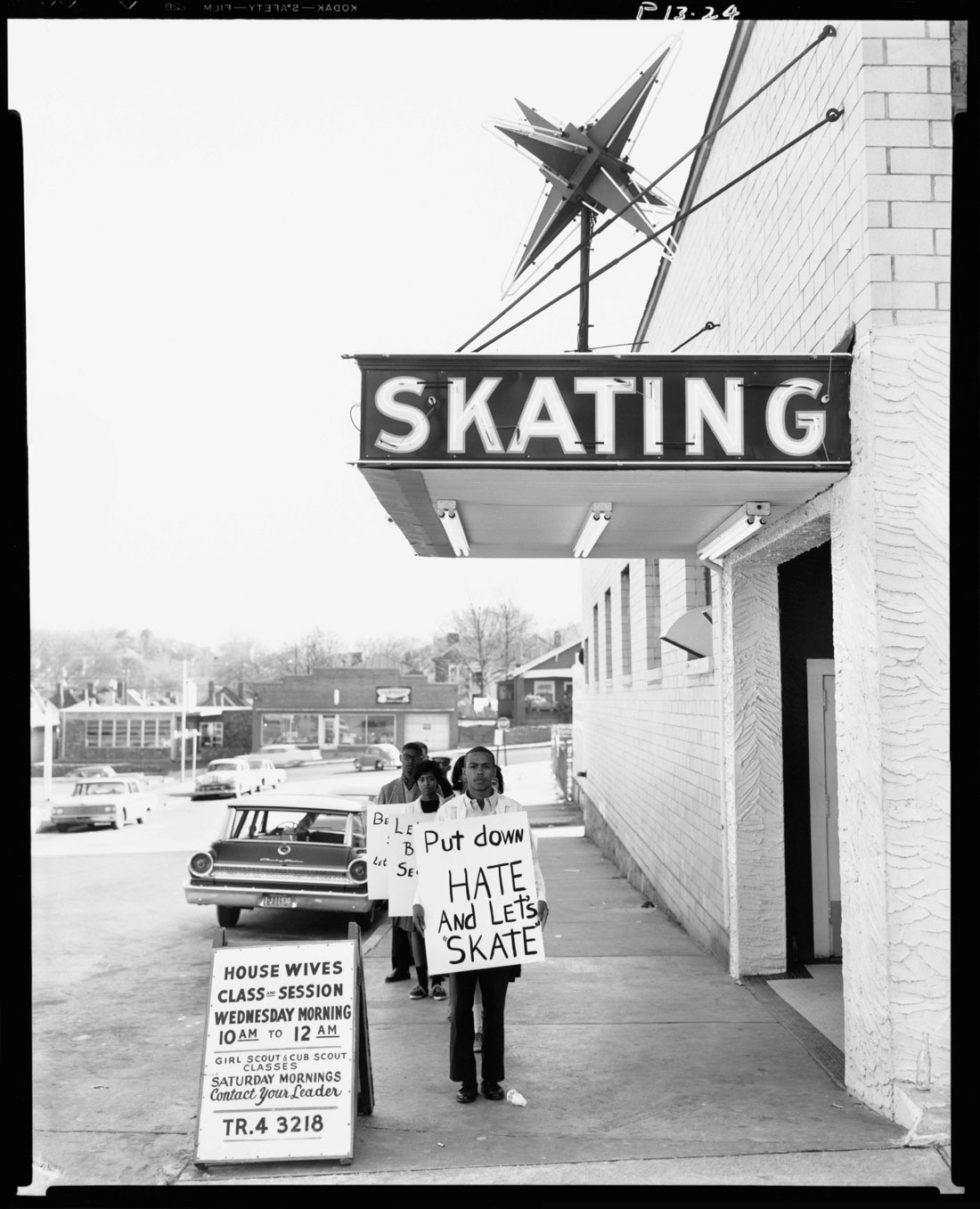


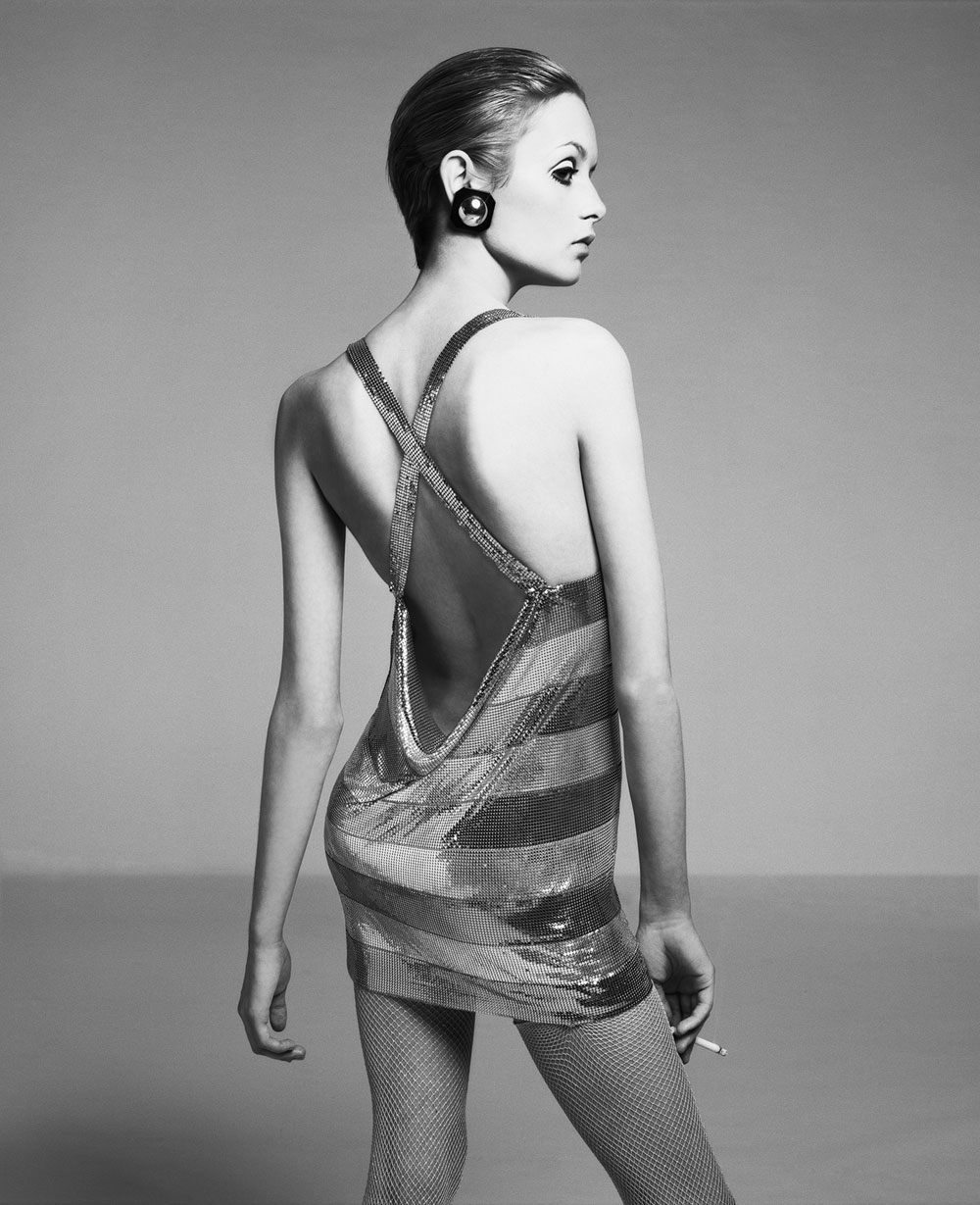
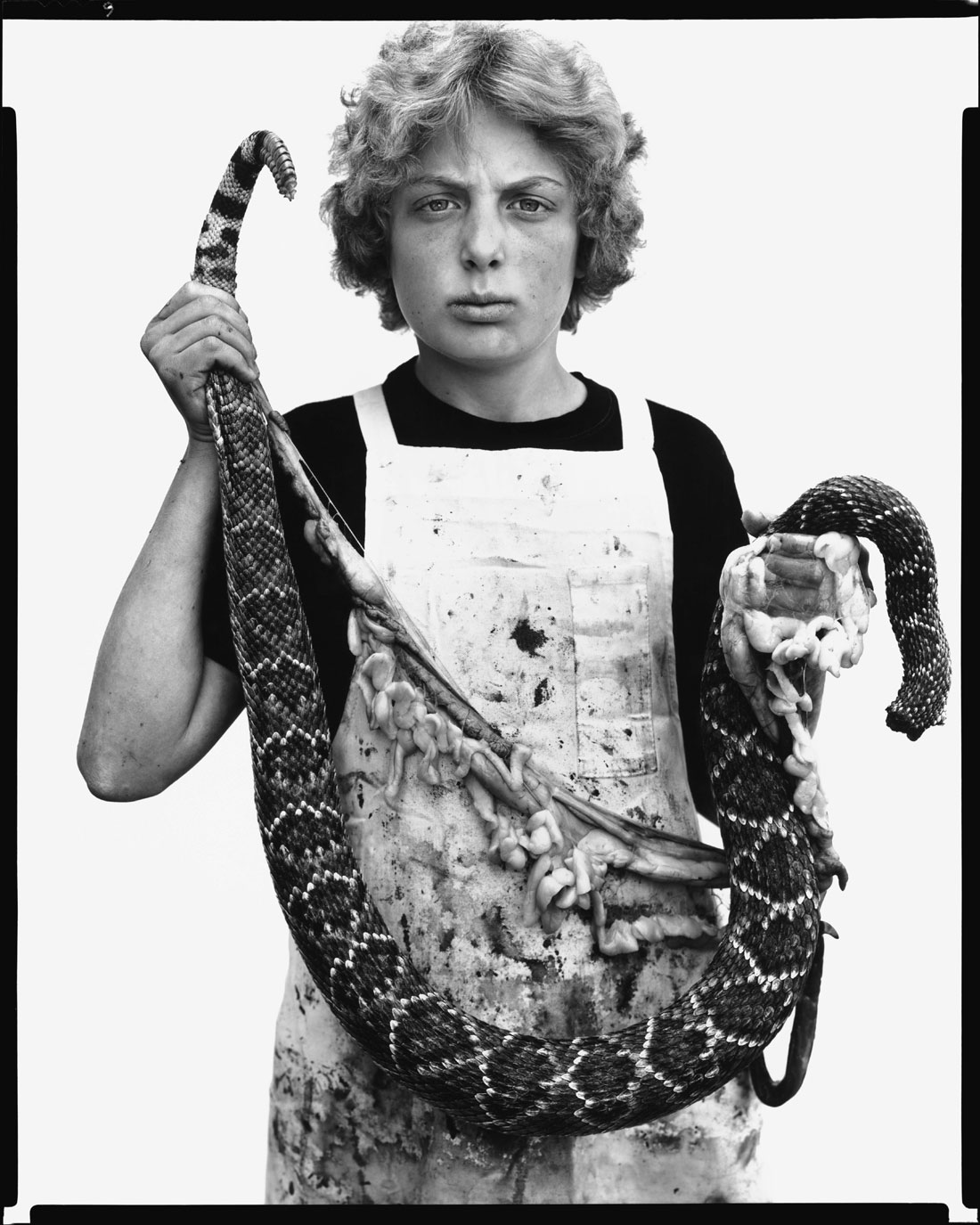

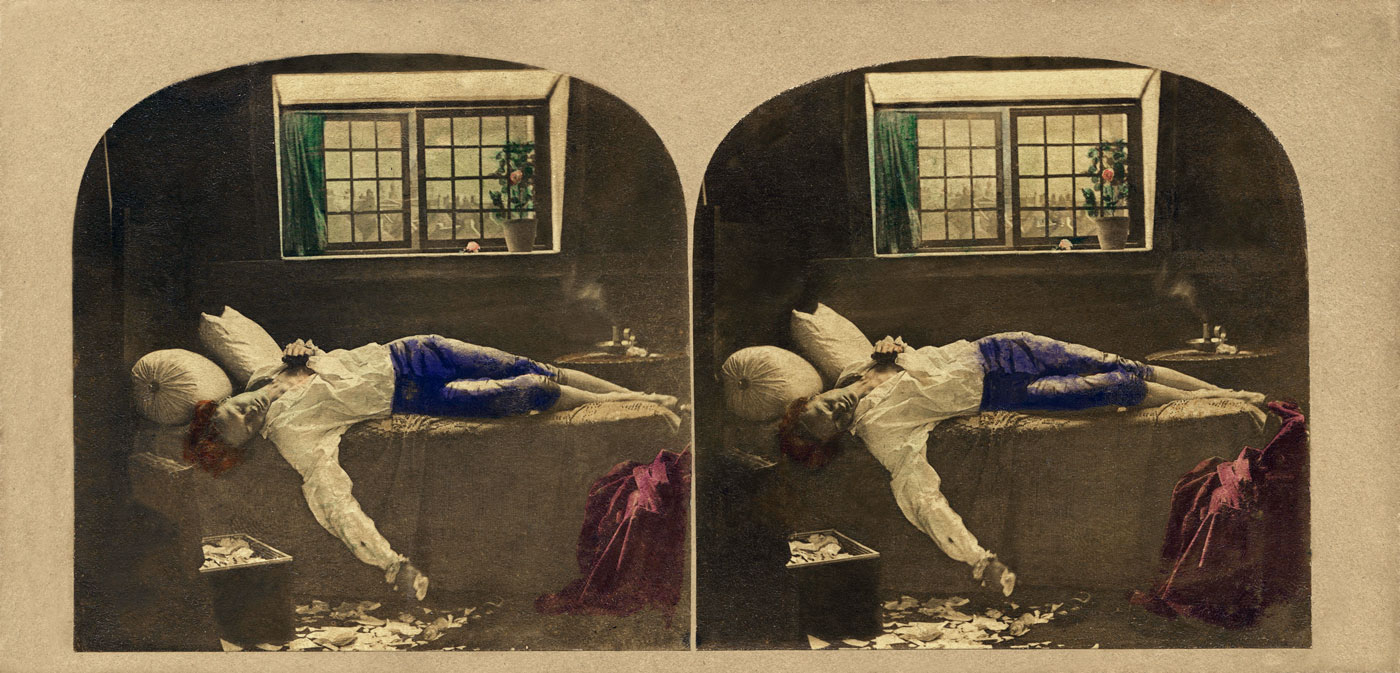
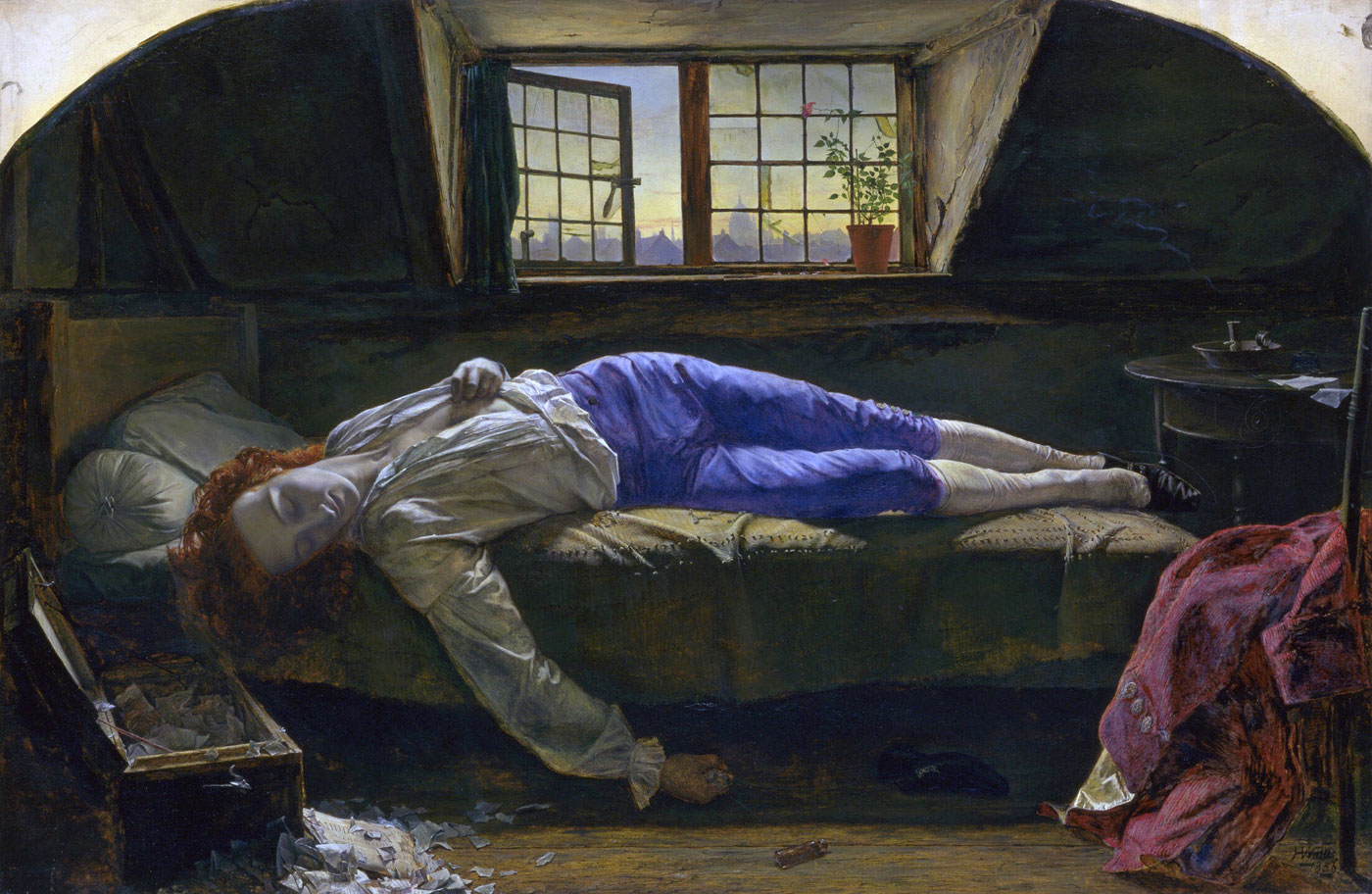


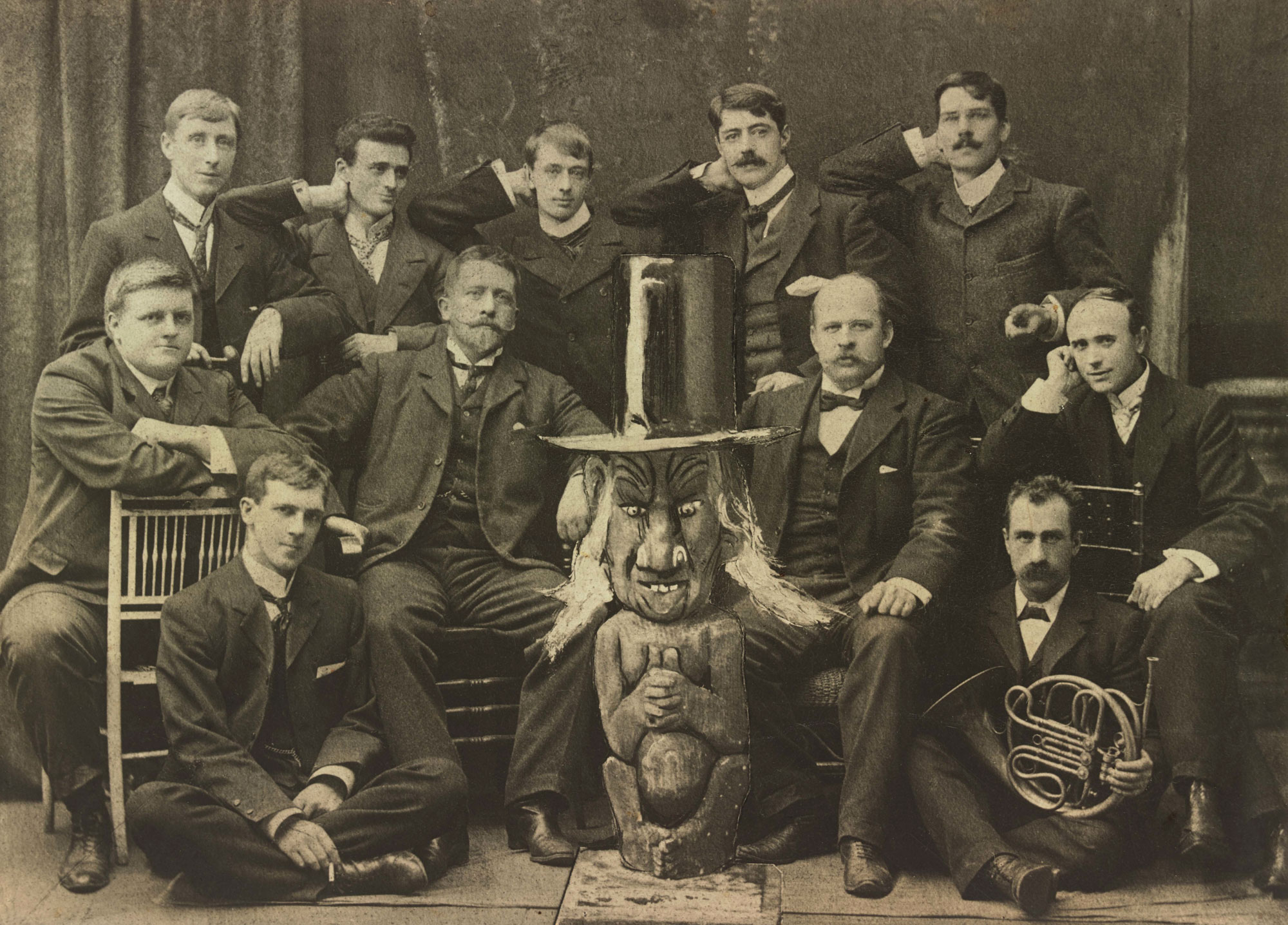


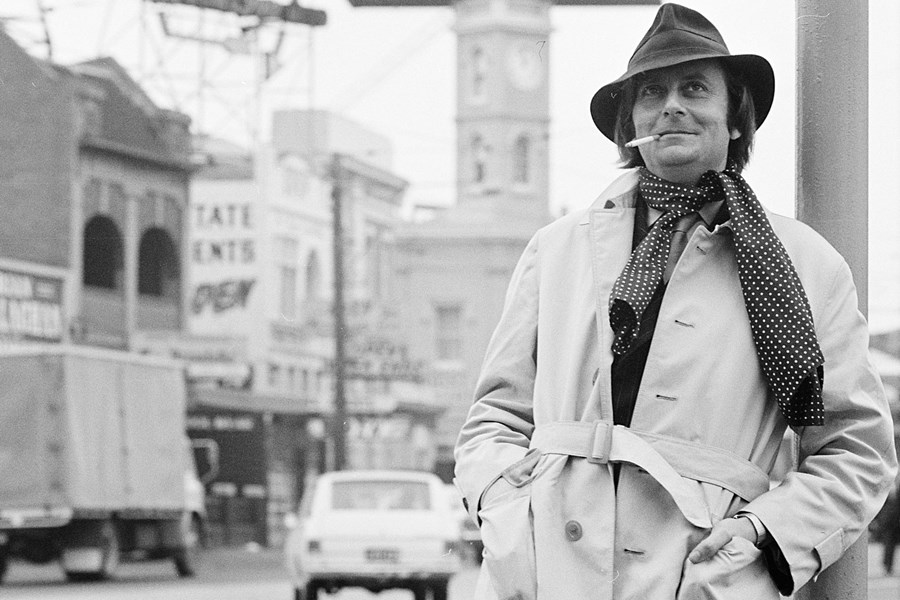

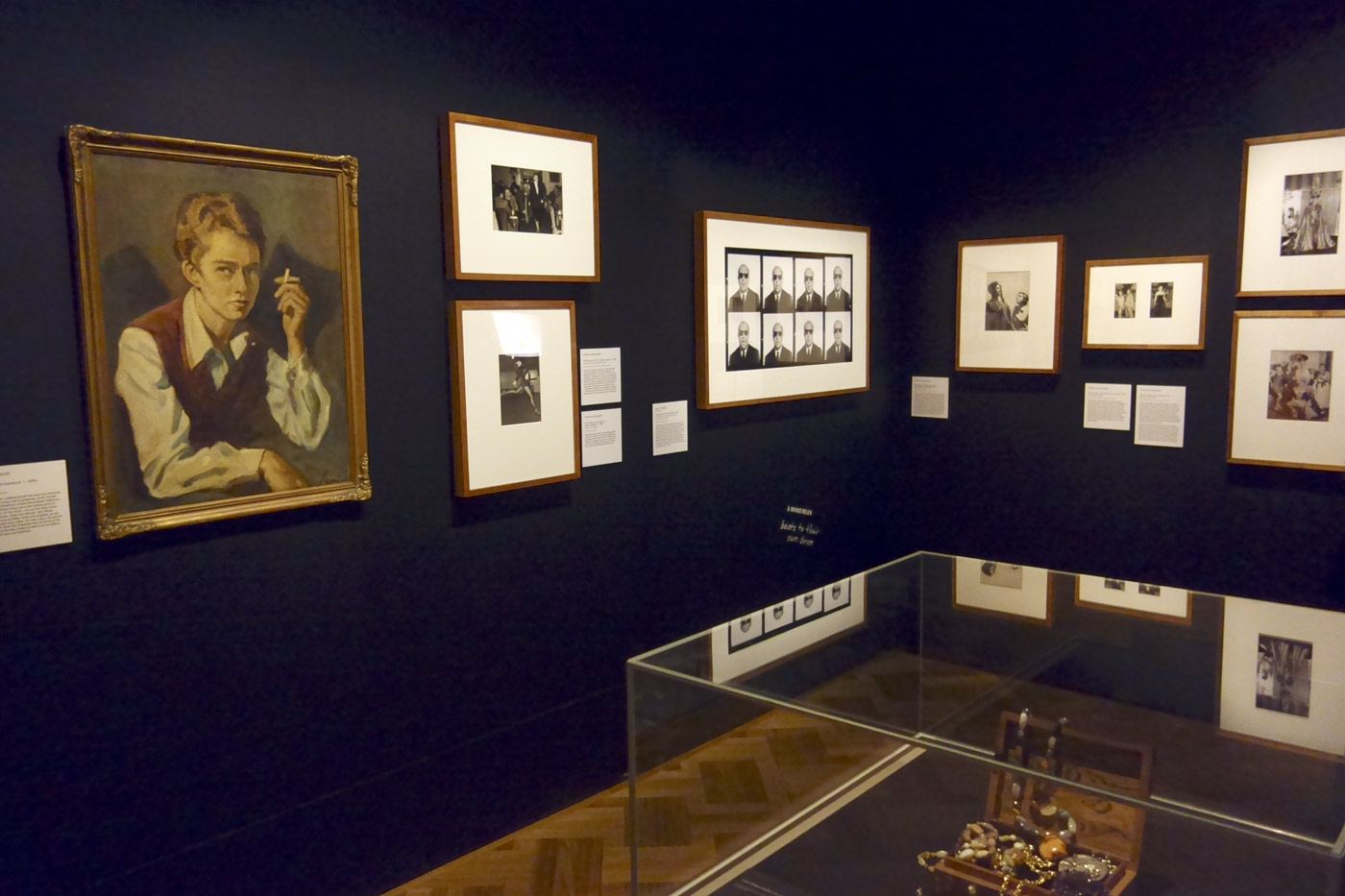


![Francis Bedford (English, 1815-1894) (photographer) 'South West View of the Parthenon [on the Acropolis, Athens, Greece]' 31 May 1862 from the exhibition 'Cairo to Constantinople: Early Photographs of the Middle East' at The Queen's Gallery, Buckingham Palace, London, November 2014 - February 2015](https://artblart.com/wp-content/uploads/2015/02/south-west-view-of-the-parthenon-web.jpg "Francis Bedford (English, 1815-1894) (photographer) 'South West View of the Parthenon [on the Acropolis, Athens, Greece]' 31 May 1862 from the exhibition 'Cairo to Constantinople: Early Photographs of the Middle East' at The Queen's Gallery, Buckingham Palace, London, November 2014 - February 2015")
![Francis Bedford (English, 1815-1894) (photographer) 'Portions of the Frieze of the Parthenon [Athens, Greece]' 31 May 1862 from the exhibition 'Cairo to Constantinople: Early Photographs of the Middle East' at The Queen's Gallery, Buckingham Palace, London, November 2014 - February 2015](https://artblart.com/wp-content/uploads/2015/02/portions-of-the-frieze-of-the-parthenon-web.jpg "Francis Bedford (English, 1815-1894) (photographer) 'Portions of the Frieze of the Parthenon [Athens, Greece]' 31 May 1862 from the exhibition 'Cairo to Constantinople: Early Photographs of the Middle East' at The Queen's Gallery, Buckingham Palace, London, November 2014 - February 2015")
![Francis Bedford (English, 1815-1894) (photographer) 'The Caryatid porch of the Erechtheum [Athens, Greece]' 30 May 1862](https://artblart.com/wp-content/uploads/2015/02/the-caryatid-porch-of-the-erechtheum-web.jpg "Francis Bedford (English, 1815-1894) (photographer) 'The Caryatid porch of the Erechtheum [Athens, Greece]' 30 May 1862")
![Francis Bedford (English, 1815-1894) (photographer) 'Acropolis and Temple of Jupiter Olympus [Olympieion, Athens]' 31 May 1862](https://artblart.com/wp-content/uploads/2015/02/acropolis-and-temple-of-jupiter-olympus-web.jpg "Francis Bedford (English, 1815-1894) (photographer) 'Acropolis and Temple of Jupiter Olympus [Olympieion, Athens]' 31 May 1862")
![Francis Bedford (English, 1815-1894) (photographer) 'The Temple of Jupiter from the north west [Baalbek, Lebanon]' 3 May 1862](https://artblart.com/wp-content/uploads/2015/02/the-temple-of-jupiter-web.jpg "Francis Bedford (English, 1815-1894) (photographer) 'The Temple of Jupiter from the north west [Baalbek, Lebanon]' 3 May 1862")
![Francis Bedford (English, 1815-1894) (photographer) 'The Temple of the Sun and Temple of Jupiter [Baalbek, Lebanon]' 4 May 1862](https://artblart.com/wp-content/uploads/2015/02/the-temple-of-the-sun-web.jpg "Francis Bedford (English, 1815-1894) (photographer) 'The Temple of the Sun and Temple of Jupiter [Baalbek, Lebanon]' 4 May 1862")
![Francis Bedford (English, 1815-1894) (photographer) 'The Colossi on the plain of Thebes [Colossi of Memnon]' 17 Mar 1862](https://artblart.com/wp-content/uploads/2015/02/the-colossi-on-the-plain-of-thebes-web.jpg "Francis Bedford (English, 1815-1894) (photographer) 'The Colossi on the plain of Thebes [Colossi of Memnon]' 17 Mar 1862")

![Joseph Albert (German, 1825-1886) (photographer) '[The Prince of Wales with Prince Louis of Hesse, and companions, in Munich, February 1862]' 1862](https://artblart.com/wp-content/uploads/2015/02/the-prince-of-wales-and-companions-web.jpg "Joseph Albert (German, 1825-1886) (photographer) '[The Prince of Wales with Prince Louis of Hesse, and companions, in Munich, February 1862]' 1862")
![Francis Bedford (English, 1815-1894) (photographer) 'View through the Great Gateway into the Grand Court of the Temple of Edfou [Temple of Horus, Edfu]' 14 Mar 1862](https://artblart.com/wp-content/uploads/2015/02/view-through-the-great-gateway-web.jpg "Francis Bedford (English, 1815-1894) (photographer) 'View through the Great Gateway into the Grand Court of the Temple of Edfou [Temple of Horus, Edfu]' 14 Mar 1862")
![Francis Bedford (English, 1815-1894) (photographer) 'The Great Propylon of the Temple at Edfou [Pylon of the Temple of Horus, Edfu]' 14 Mar 1862](https://artblart.com/wp-content/uploads/2015/02/the-great-propylon-of-the-temple-at-edfou-web.jpg "Francis Bedford (English, 1815-1894) (photographer) 'The Great Propylon of the Temple at Edfou [Pylon of the Temple of Horus, Edfu]' 14 Mar 1862")
![Francis Bedford (English, 1815-1894) (photographer) 'Tombs of the Memlooks at Cairo [Mausoleum and Khanqah of Emir Qawsun]' 25 Mar 1862](https://artblart.com/wp-content/uploads/2015/02/tombs-of-the-memlooks-at-cairo-web.jpg "Francis Bedford (English, 1815-1894) (photographer) 'Tombs of the Memlooks at Cairo [Mausoleum and Khanqah of Emir Qawsun]' 25 Mar 1862")
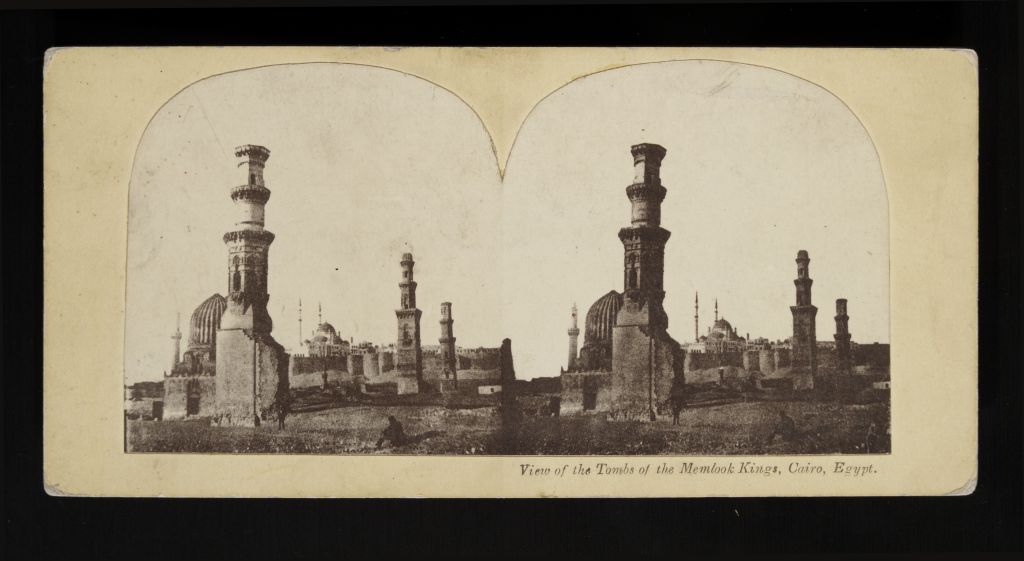
![Francis Bedford (English, 1815-1894) (photographer) 'Mosque of Mehemet Ali [Mosque of Muhammad Ali, Cairo]' 8 March 1862](https://artblart.com/wp-content/uploads/2015/02/mosque-of-mehemet-ali-web.jpg "Francis Bedford (English, 1815-1894) (photographer) 'Mosque of Mehemet Ali [Mosque of Muhammad Ali, Cairo]' 8 March 1862")
![Francis Bedford (English, 1815-1894) (photographer) 'Fountain in the Court of the Mosque of Mehemet Ali [Mosque of Muhammad Ali, Cairo]' 3 Mar 1862](https://artblart.com/wp-content/uploads/2015/02/fountain-in-the-court-of-the-mosque-web.jpg "Francis Bedford (English, 1815-1894) (photographer) 'Fountain in the Court of the Mosque of Mehemet Ali [Mosque of Muhammad Ali, Cairo]' 3 Mar 1862")
![Francis Bedford (English, 1815-1894) (photographer) 'Garden of Gethsemane [Jerusalem]' 2 Apr 1862](https://artblart.com/wp-content/uploads/2015/02/garden-of-gethsemane-web.jpg "Francis Bedford (English, 1815-1894) (photographer) 'Garden of Gethsemane [Jerusalem]' 2 Apr 1862")
![Francis Bedford (English, 1815-1894) (photographer) 'The Mount of Olives and Garden of Gethsemane [Jerusalem]' 2 Apr 1862](https://artblart.com/wp-content/uploads/2015/02/the-mount-of-olives-web.jpg "Francis Bedford (English, 1815-1894) (photographer) 'The Mount of Olives and Garden of Gethsemane [Jerusalem]' 2 Apr 1862")
![Francis Bedford (English, 1815-1894) (photographer) 'West Front of the Mosque of Omar [Dome of the Rock, Jerusalem]' 1 Apr 1862](https://artblart.com/wp-content/uploads/2015/02/west-front-of-the-mosque-of-omar-web.jpg "Francis Bedford (English, 1815-1894) (photographer) 'West Front of the Mosque of Omar [Dome of the Rock, Jerusalem]' 1 Apr 1862")
![Francis Bedford (English, 1815-1894) (photographer) 'Upper Bethoron [Beit Ur al-Foqa and the Valley of Ajalon]' 31 Mar 1862](https://artblart.com/wp-content/uploads/2015/02/upper-bethoron-web.jpg "Francis Bedford (English, 1815-1894) (photographer) 'Upper Bethoron [Beit Ur al-Foqa and the Valley of Ajalon]' 31 Mar 1862")
![Francis Bedford (English, 1815-1894) (photographer) 'Damascus - from a minaret in the Christian quarter [Syria]' 30 Apr 1862](https://artblart.com/wp-content/uploads/2015/02/damascus-web.jpg "Francis Bedford (English, 1815-1894) (photographer) 'Damascus - from a minaret in the Christian quarter [Syria]' 30 Apr 1862")
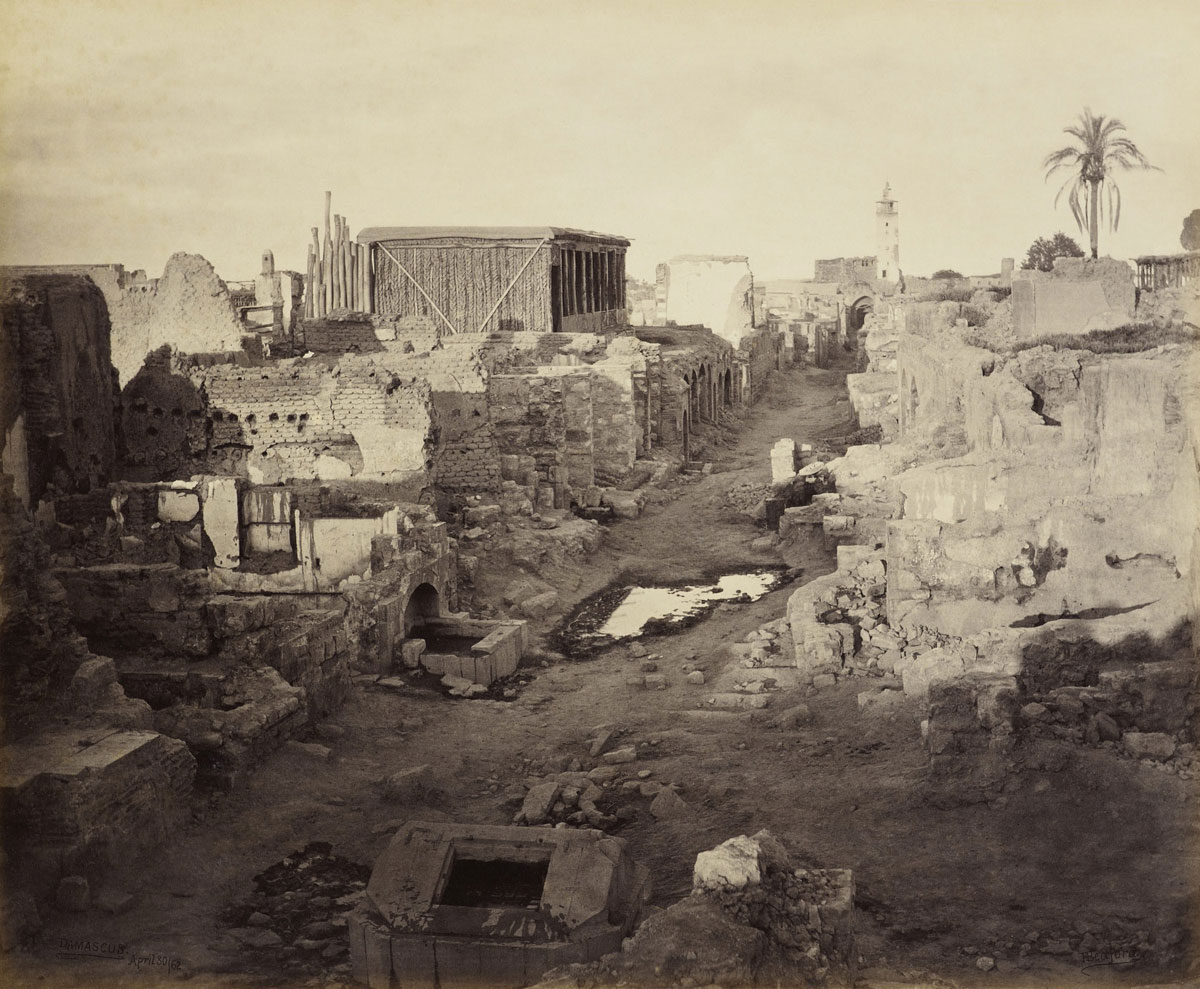
![Francis Bedford (English, 1815-1894) (photographer) 'Tower of Galata and part of Turkish burial ground [Istanbul, Turkey]' 21 May 1862](https://artblart.com/wp-content/uploads/2015/02/tower-of-galata-web.jpg "Francis Bedford (English, 1815-1894) (photographer) 'Tower of Galata and part of Turkish burial ground [Istanbul, Turkey]' 21 May 1862")
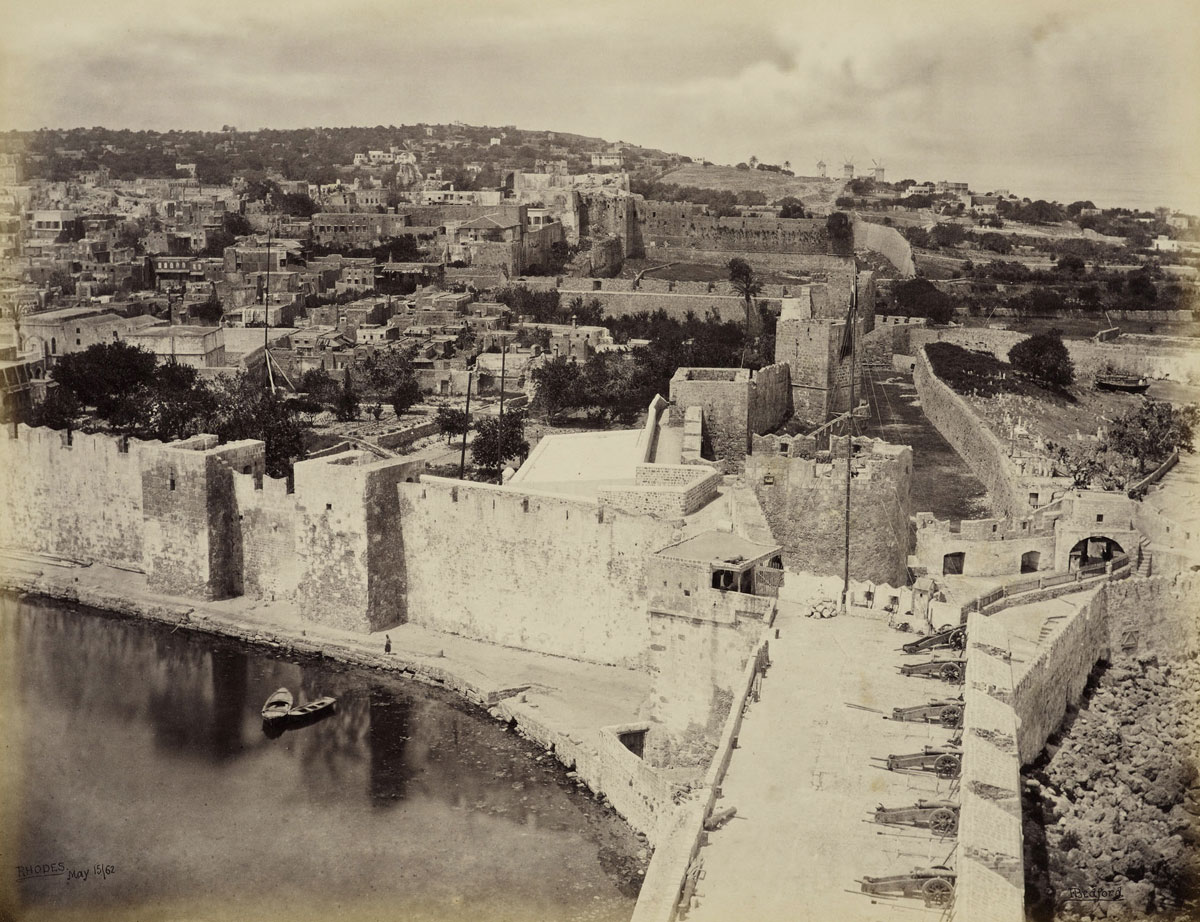


![Joseph Albert (English, 1825-1886) (photographer) '[The Prince of Wales and Prince Louis of Hesse, 11 February 1862]' Feb 1862](https://artblart.com/wp-content/uploads/2015/02/the-prince-of-wales-web.jpg "Joseph Albert (English, 1825-1886) (photographer) '[The Prince of Wales and Prince Louis of Hesse, 11 February 1862]' Feb 1862")
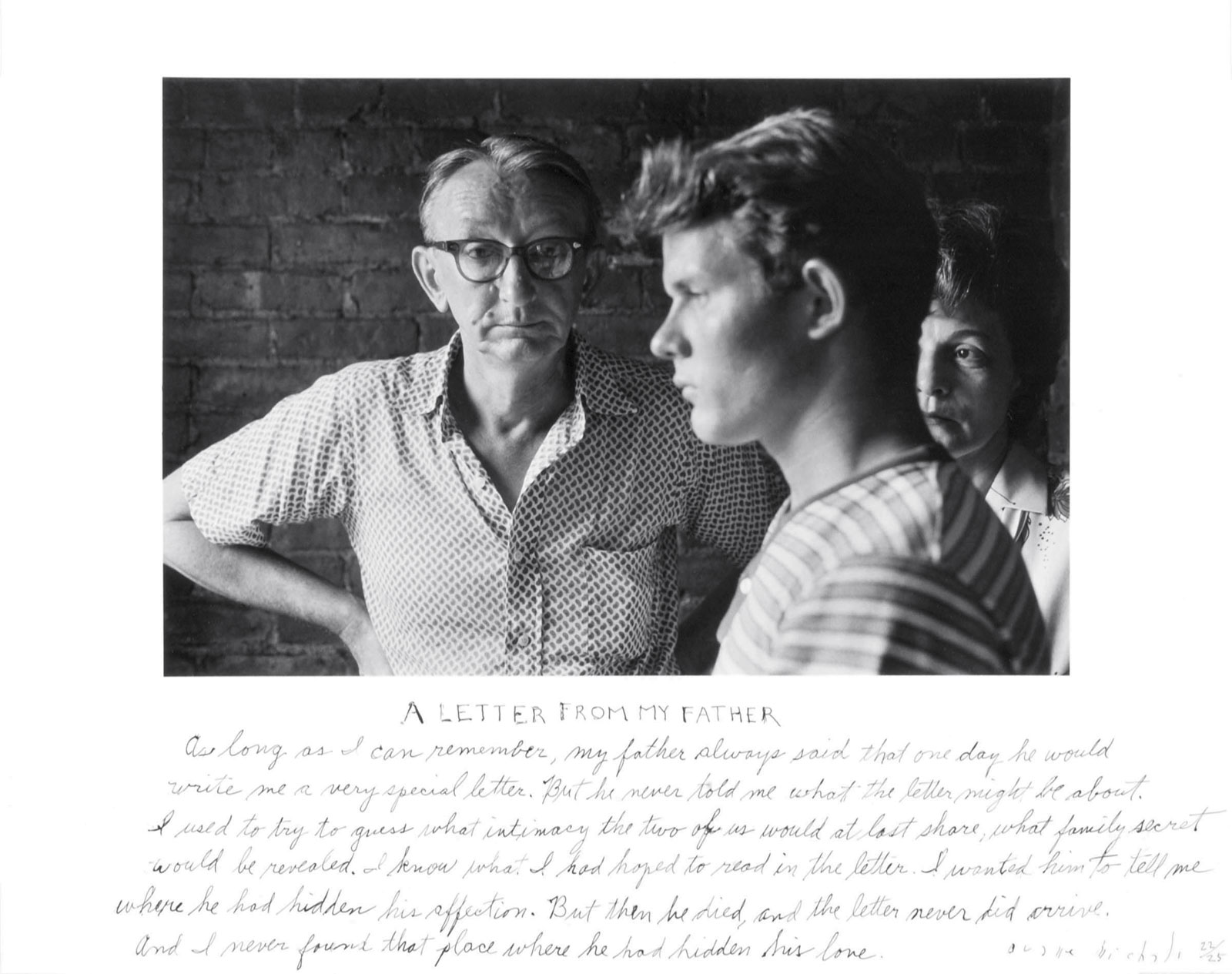
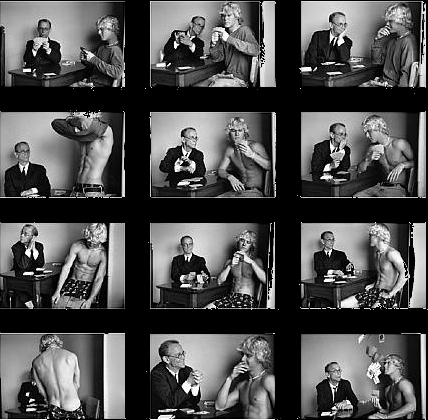
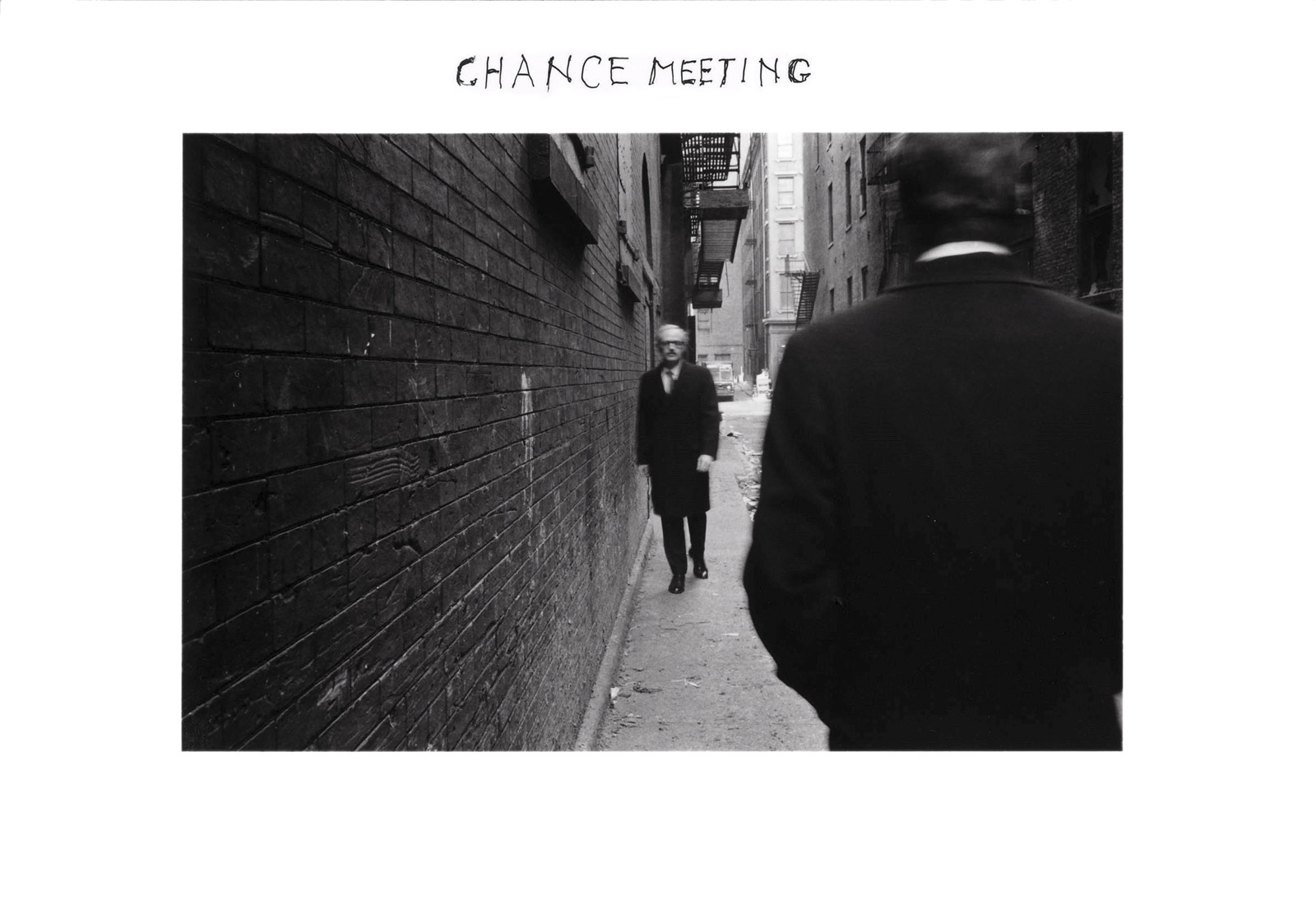


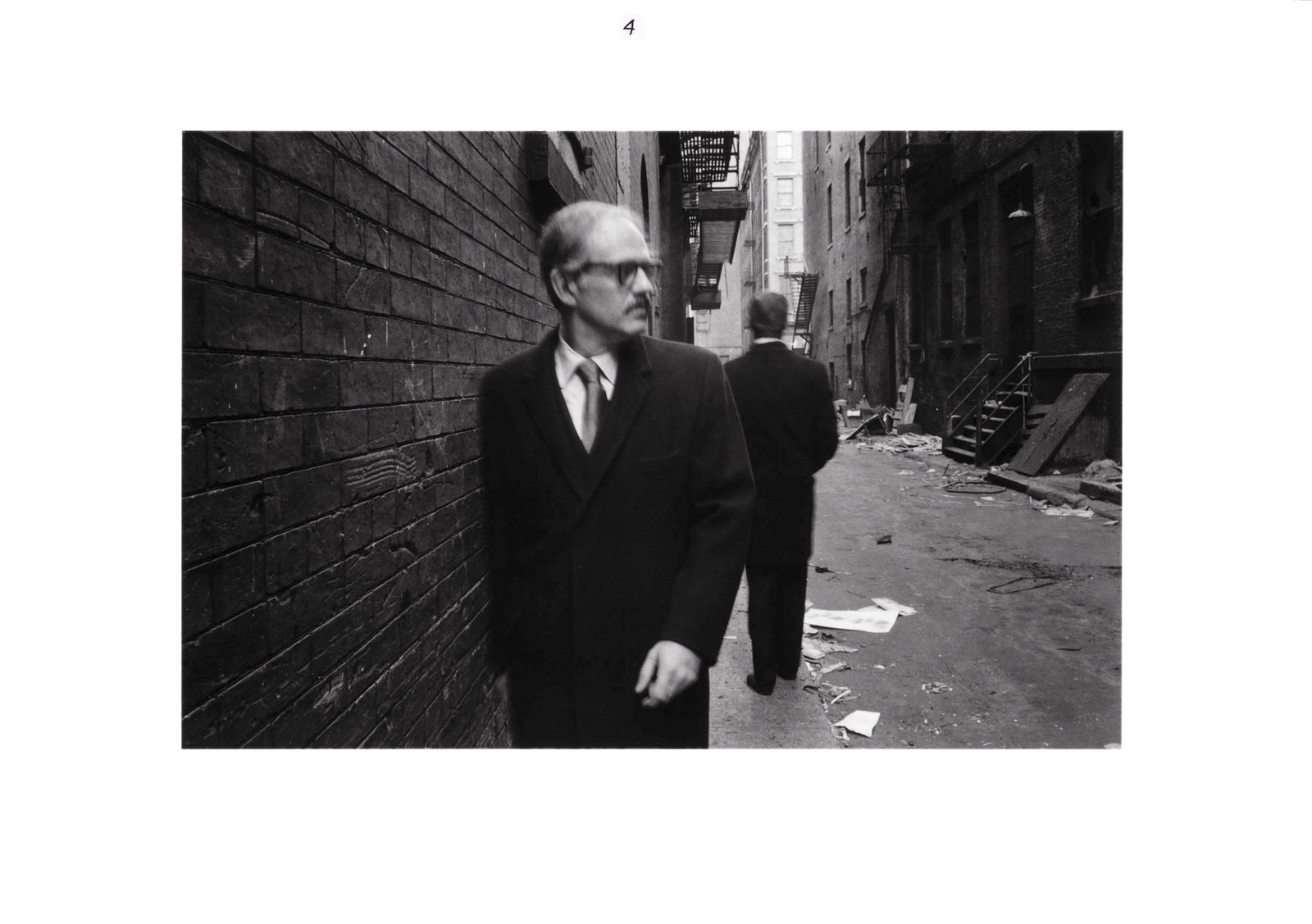

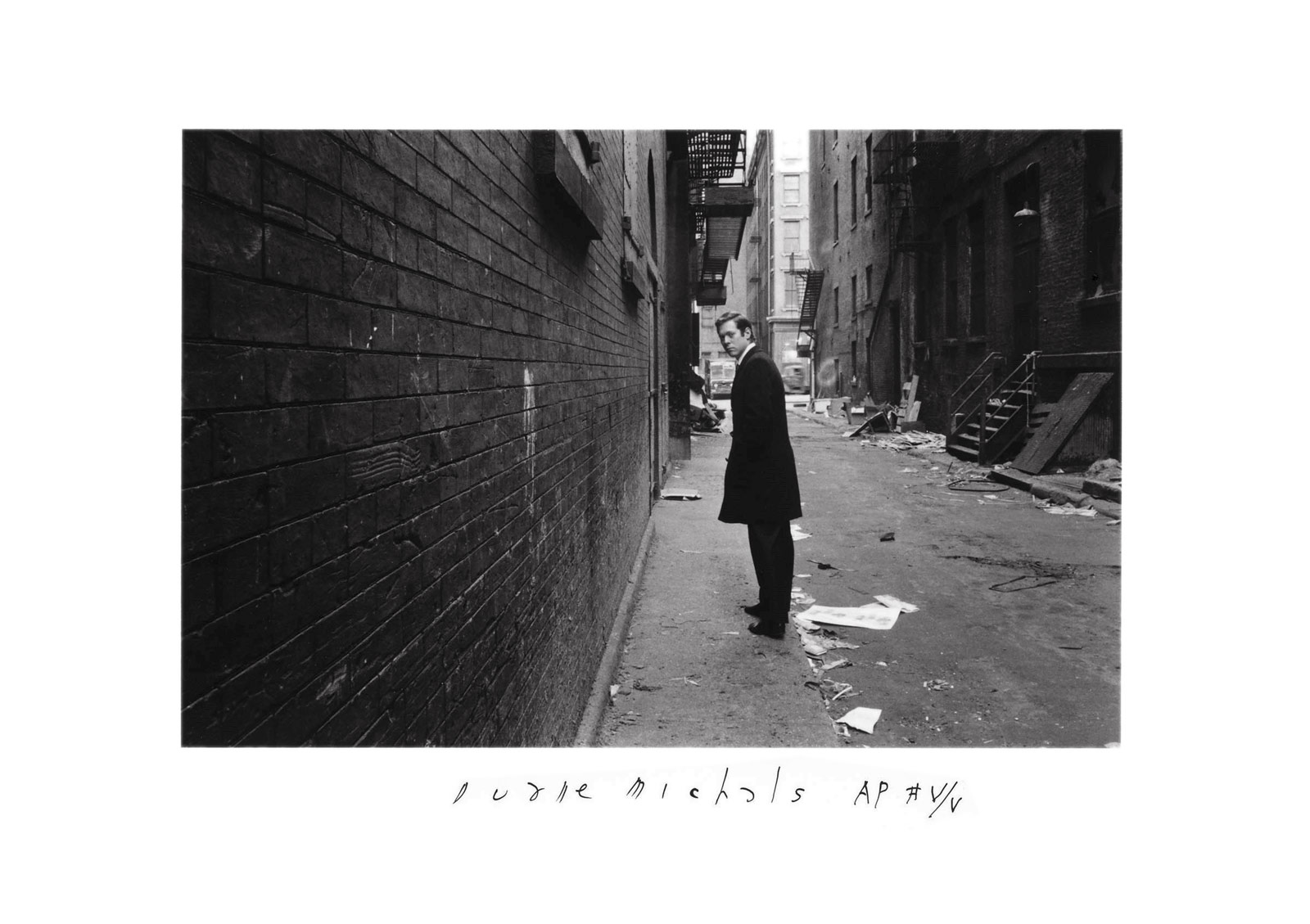







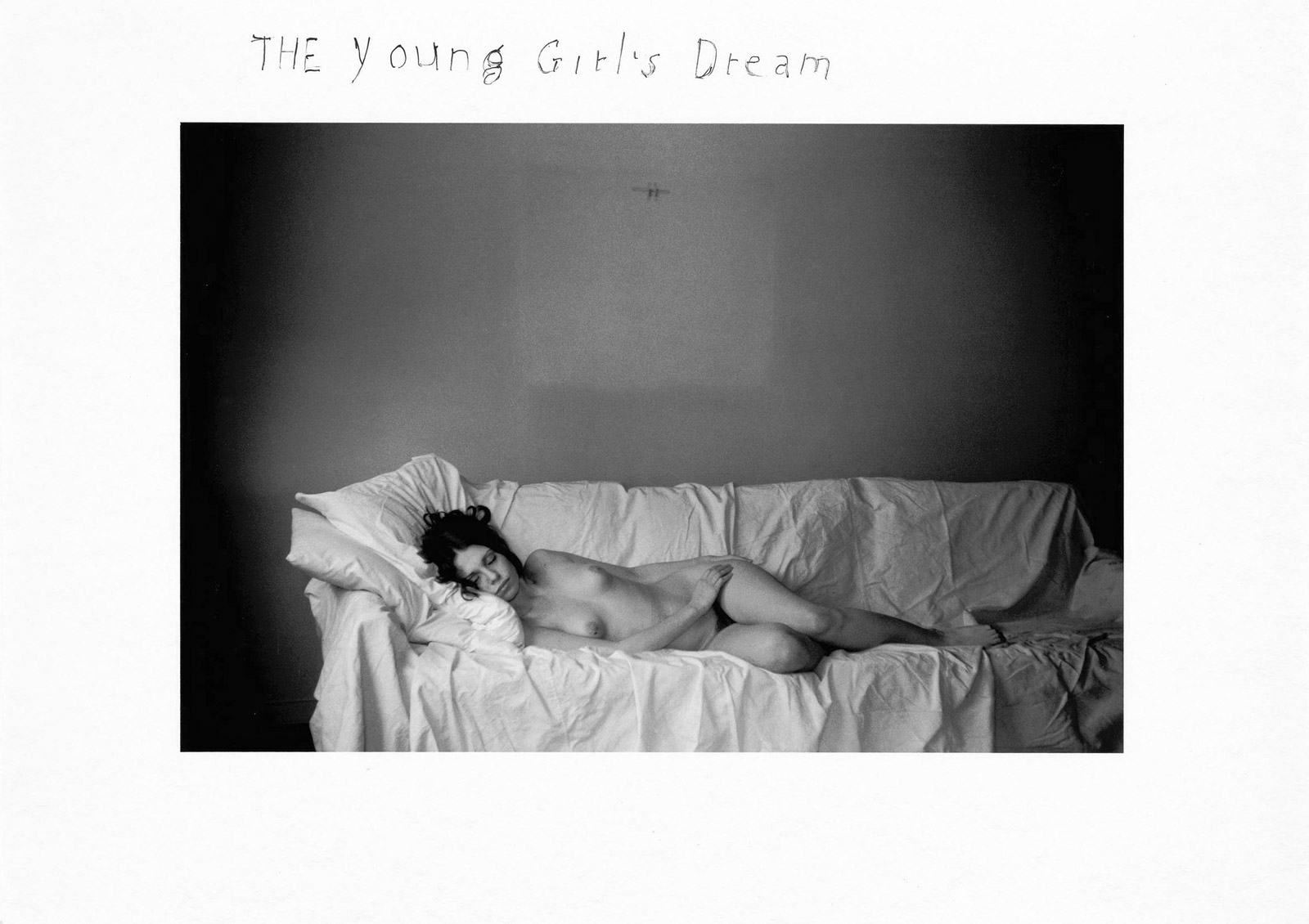
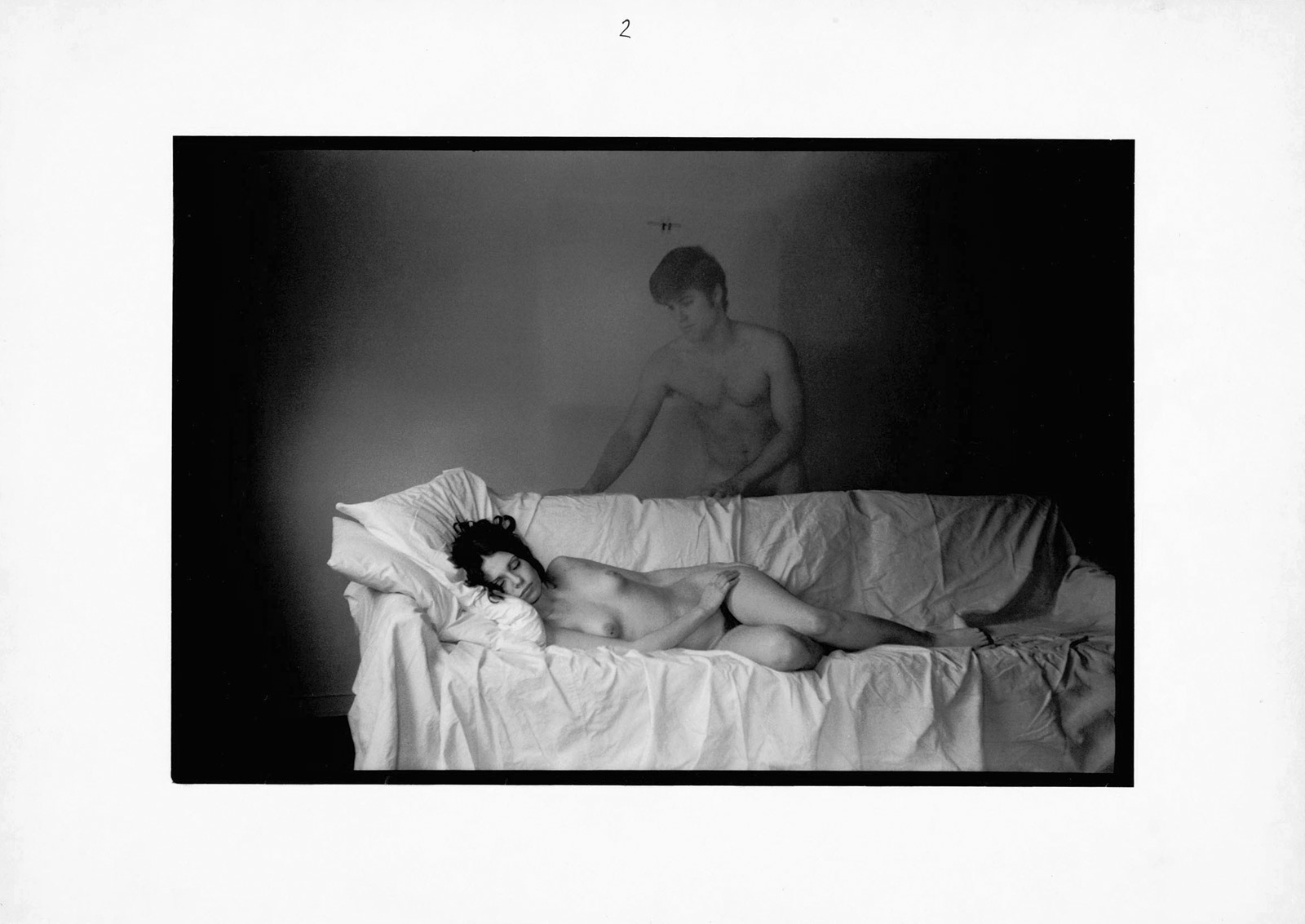
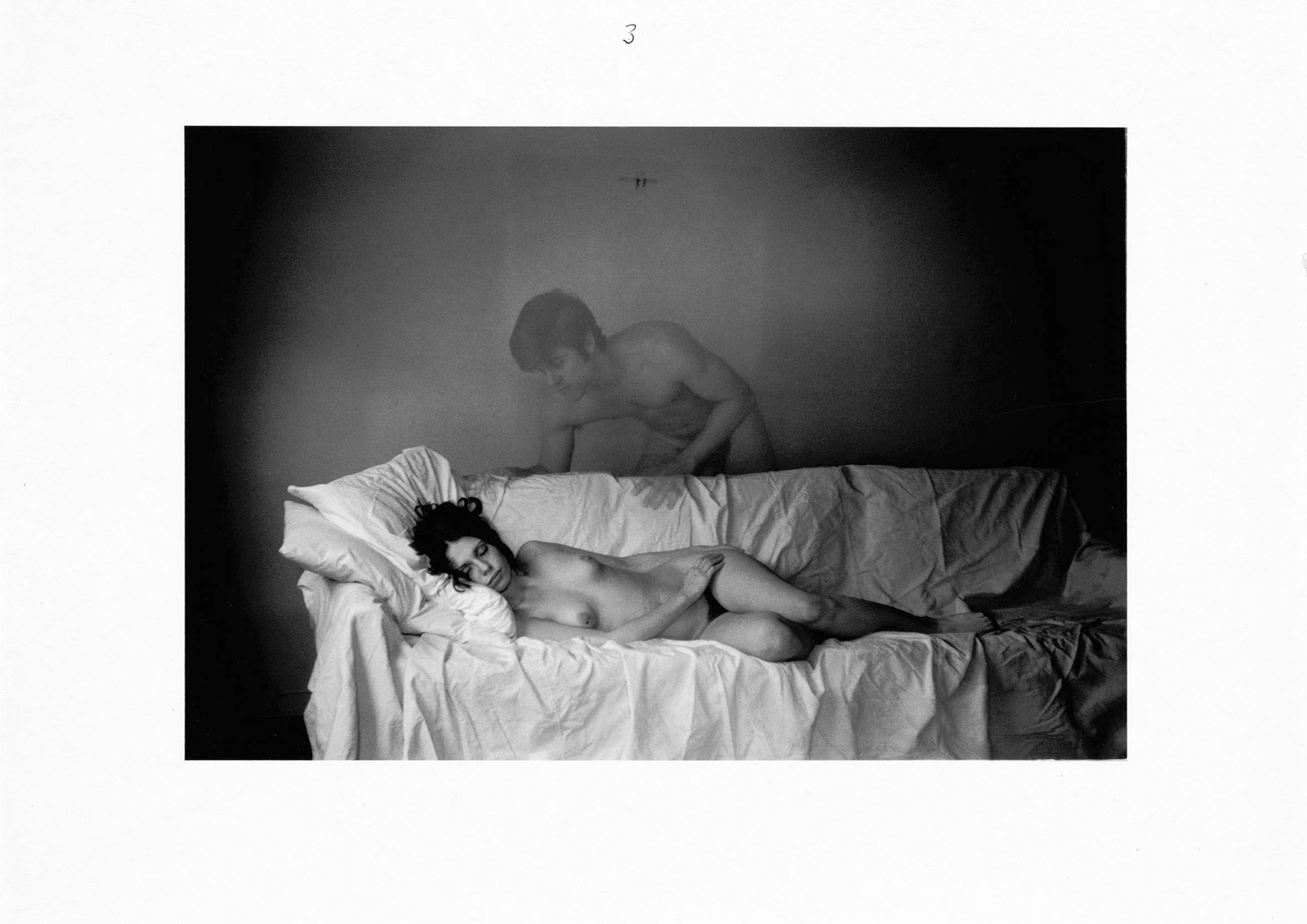

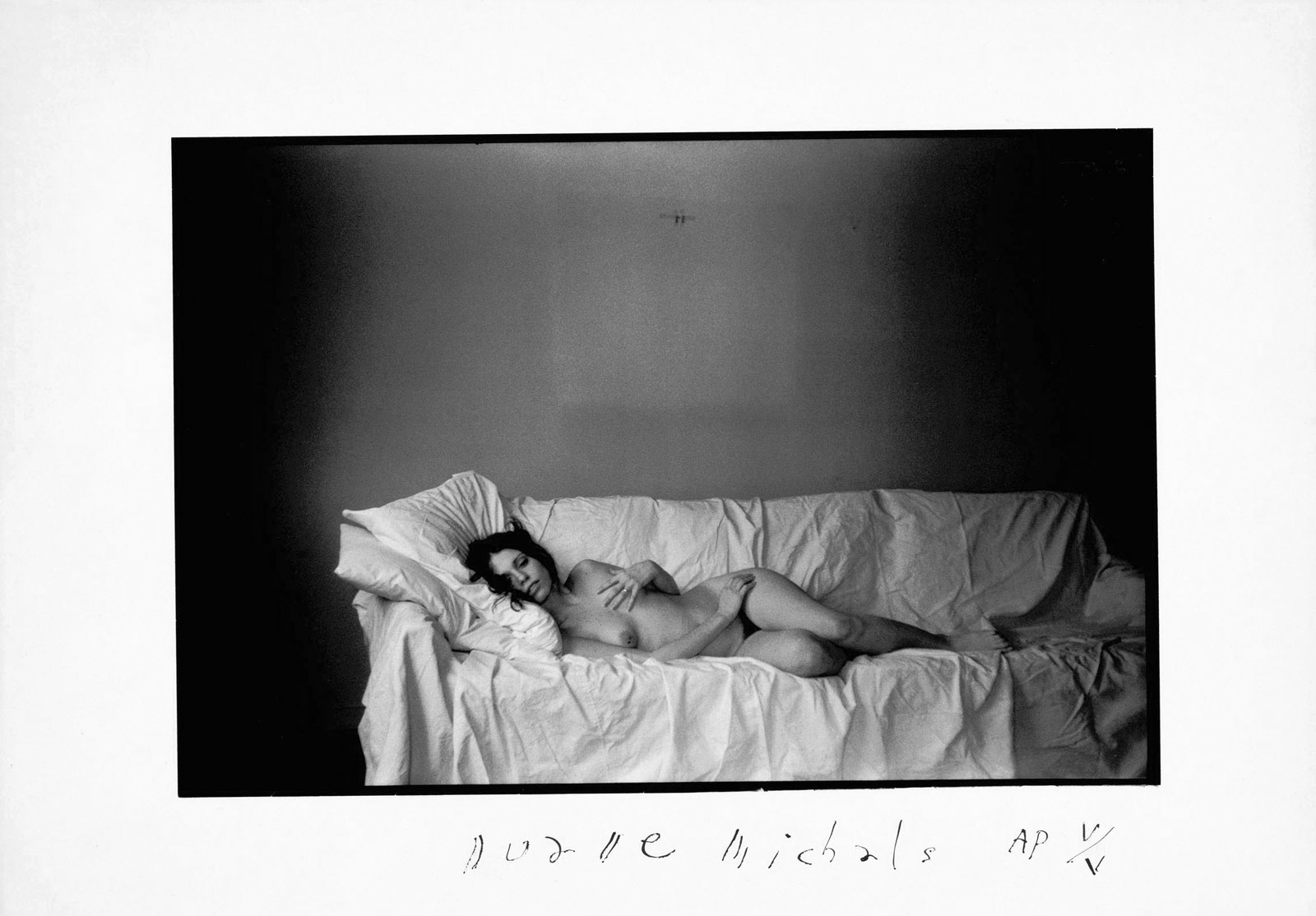




 Art Blart _ art and cultural memory archive
You must be logged in to post a comment.