Jim Dow (American, b. 1942) “Fortune Teller” Sign. US 79 & 80, Greenwood, Louisiana 1975 Gelatin silver print 15 5/8 × 19 9/16 inches (39.7 × 49.68cm) The Nelson-Atkins Museum of Art Gift of the Hall Family Foundation
These photographs build on the lexicon of existing photographs of this type (Americurbana) from photographers such as Dorothea Lange, Berenice Abbott, Walker Evans, Margaret Bourke-White, Minor White and Harry Callahan. As such they add to the pantheon of known images on a subject. Dow studied with not just Harry Callahan, but also Walker Evans and Minor White, and these are early images in the development of the artist, when he was starting to find his artistic signature.
In some of the first images such as Lott’s Grocery Store. US 11, Bessemer, Alabama (1968, below) we can see Dow’s indebtedness to his teacher, Walker Evans’ vision; in other later photographs (1972 onwards) we see Dow’s concentration on detail, so that the sign fills the frame. In these contextless, groundless photographs the signs become floating signs, floating signifiers, where interpretation is left wholly up to the viewer.
In this sense, Dow is developing a different artistic and visual language to describe the American vernacular… graphic, isolated, strong and more than slightly surreal images that creep into the imagination as if in a bad dream. The robotic head covered in neon; the bowling ball struck through with an arrow; the diver like a swooping fighter plane; the skeletal horse and rider; and the look of fear on the child’s face as he gets inoculated. Weird tales and gothic fiction.
Dr Marcus Bunyan
Many thankx to The Nelson-Atkins Museum of Art for allowing me to publish the photographs in the posting. Please click on the photographs for a larger version of the image.
“Late in the fall of 1965, I met Walker Evans. I had no idea who he was or anything about his work. But his book ‘American Photographs’ completely changed the way I thought about photography. The pictures were descriptive, literate and distinct. They could be read slowly; information was packed into every square inch. They were intense but not dramatic. Rigorous in their making, they demanded attentive scrutiny. It was clear that I had a template for my education through a classic method: at first emulate, then lease the space and ultimately own the process, until taking pictures was no longer a re-enactment. …
I never travelled around the US to find myself. I went to find people, places and things I didn’t know about. Leaving familiar confines is an outward-facing process best done by car on older two- or three-lane roads, stopping, looking and listening every step of the way.”
Jim Dow in the book Signs: Photographs by Jim Dow
Vivid, clear-sighted images of American vernacular signage and architecture encountered along old US highways showcase the early black-and-white work of the acclaimed photographer Jim Dow.
The American photographer Jim Dow (b. 1942) is renowned for photographs that depict the built environment – he first gained attention for his panoramic triptychs of baseball stadiums – and for his skill at conveying the “human ingenuity and spirit” that suffuse the spaces. This book is the first to focus on Dow’s early black-and-white pictures, featuring more than 60 photographs made between 1967 and 1977, a majority of which have never before been published. Indebted to the work of Walker Evans, a key mentor of Dow’s, these photographs depict time-worn signage taken from billboards, diners, gas stations, drive-ins, and other small businesses. While still recognisable as icons of commercial Americana, without their context Dow’s signs impart ambiguous messages, often situated between documentation and abstraction. Including a new essay by Dow that reveals his own perspective on the development of the work, Signs suggests how these formative years honed the artist’s sensibility and conceptual approach.
Signs: Photographs by Jim Dow, with essays by Jim Dow and April M. Watson Distributed for The Nelson-Atkins Museum of Art
Jim Dow (American, b. 1942) Lott’s Grocery Store. US 11, Bessemer, Alabama 1968 Gelatin silver print 3 3/4 × 4 3/4 inches (9.53 × 12.07cm) The Nelson-Atkins Museum of Art Gift of the Hall Family Foundation
Jim Dow (American, b. 1942) Abandoned Truck Stop. US 61/AR 150, near Number Nine, Arkansas 1970 Gelatin silver print 7 15/16 × 9 11/16 inches (20.14 × 24.61cm) The Nelson-Atkins Museum of Art Gift of the Hall Family Foundation
Jim Dow (American, b. 1942) Bowling Pin with Arrow. US 1, Branford, Connecticut 1971 Gelatin silver print 7 7/8 x 9 11/16 inches (19.99 × 24.61cm) The Nelson-Atkins Museum of Art Gift of Jim and Jacquie Dow
Jim Dow (American, b. 1942) Horse Painting on Sign, Ranch Entrance. US 87, Billings, Montana 1972 Gelatin silver print 15 7/8 × 20 1/16 inches (40.31 × 50.95cm) The Nelson-Atkins Museum of Art Gift of the Hall Family Foundation
Jim Dow (American, b. 1942) Curlicue Arrow Sign. US 2, near Wenatchee, Washington 1972 Gelatin silver print 7 15/16 × 9 5/8 inches (20.14 × 24.46cm) The Nelson-Atkins Museum of Art Gift of the Hall Family Foundation
Jim Dow (American, b. 1942) Rear of Screen, Van Nuys Drive-In Theatre. Old US 101, Van Nuys, California 1973 Gelatin silver print 15 9/16 x 19 ½ inches (39.52 × 49.53cm) The Nelson-Atkins Museum of Art Gift of the Hall Family Foundation
Jim Dow (American, b. 1942) Detail, Diving Lady Sign. Near US 19, Blairsville, Georgia 1973 Gelatin silver print 7 15/16 x 9 11/16 inches (20.14 × 24.61cm) The Nelson-Atkins Museum of Art Gift of the Hall Family Foundation
For American photographer Jim Dow, a road trip was not just an excuse to travel from one place to another; it provided an opportunity to find inspiration in the unique structures lining old U. S. highways. Between 1967 and 1977, a decade marking the first ten years of his career, Dow traveled over 150,000 miles on multiple cross-country road trips, photographing vernacular architecture, signage, and commercial billboards that conveyed a unique sense of human spirit and industry. A new, free exhibition at The Nelson-Atkins Museum of Art in Kansas City, Signs: Photographs by Jim Dow, draws visitors into Dow’s fascination with the everyday structures that constitute the landscapes we inhabit.
“Although most of Dow’s subjects have long since disappeared, the impetus to make one’s mark on the land through an assertion of livelihood, values, and aspiration remains,” said Julián Zugazagoitia, Menefee D. and Mary Louise Blackwell CEO & Director of the Nelson-Atkins. “There will always be a desire to express individual agency and creativity, and Dow’s photographs remind us that as difficult as that may be, it remains vital for understanding ourselves and our community.”
Signs: Photographs by Jim Dow opens May 7 and features 62 black-and-white photographs from the early part of Dow’s career, as well as a small selection of recent colour photographs that extend the themes forged during his formative years.
“Dow travelled on back roads rather than the interstate system,” said April M. Watson, Senior Curator of Photography. “He always sought unusual or unique subjects that stood apart from the corporate chains that had begun to dominate the social landscape, often isolating specific details so they appear unmoored from their immediate surroundings.”
Born in 1942, Dow grew up in Belmont, Massachusetts and attended the Rhode Island School of Design. As an undergraduate, he majored in graphic design, and in his senior year, had the good fortune to take his introductory photography classes with renowned photographer Harry Callahan. Thanks to Callahan’s influence, Dow was able to continue graduate studies at RISD, completing his MFA in photography in 1968.
A meeting with Walker Evans while Dow was in graduate school made a profound impact on him. Dow found Evans’s sophisticated embrace of vernacular American subject matter and straightforward, descriptive application of the medium to be revelatory. Between 1969 and 1971, he worked closely with Evans when printing Evans’s work for a career retrospective at the Museum of Modern Art in New York. In the late 1960s, Dow began searching for his own subject matter, taking numerous road trips. Roadside diners, drive-in movie theatres, ice cream stands, burger joints, billboards, gas stations, and small-town, storefront murals all became part of Dow’s regular roster of subjects, as he refined his own artistic vision. Grants from the National Endowment for the Arts in 1973, and a Guggenheim Fellowship in 1974 allowed Dow to continue his project.
This exhibition is accompanied by a fully illustrated catalogue with essays by Dow and Watson, distributed by Yale University Press. Signs: Photographs by Jim Dow runs through Oct. 9, 2022.
Jim Dow (American, b. 1942) Trailer Park Sign. US 27, Red Bank, Tennessee 1973 Gelatin silver print 7 7/8 × 9 11/16 inches (19.99 × 24.61cm) The Nelson-Atkins Museum of Art Gift of the Hall Family Foundation
Jim Dow (American, b. 1942) Neon Cowboy Sign. US 66, Duarte, California 1973 Gelatin silver print 8 × 9 15/16 inches (20.32 × 25.22cm) The Nelson-Atkins Museum of Art Gift of the Hall Family Foundation
Jim Dow (American, b. 1942) Lady Reclining on La-Z-Boy Sign. PA 61, Shamokin, Pennsylvania 1973 Gelatin silver print 8 × 9 15/16 inches (20.32 × 25.22cm) The Nelson-Atkins Museum of Art Gift of the Hall Family Foundation
Jim Dow (American, b. 1942) Coffee At It’s Best Sign. US 11, Pittston, Pennsylvania 1973 Gelatin silver print 8 x 9 15/16 inches The Nelson-Atkins Museum of Art Gift of the Hall Family Foundation
Jim Dow (American, b. 1942) “Heated Pool” Sign at Motel. US 99, Bakersfield, California 1975 Gelatin silver print 7 11/16 × 9 11/16 inches (19.53 × 24.61cm) The Nelson-Atkins Museum of Art Gift of the Hall Family Foundation
Jim Dow (American, b. 1942) Detail, Coy Getting on Inoculation Sign. US 20, Idaho Falls, Idaho 1975 Gelatin silver print 15 7/8 × 19 7/8 inches (40.31 × 50.47cm) The Nelson-Atkins Museum of Art Gift of the Hall Family Foundation
“Jim was extremely fortunate to study with not just Harry Callahan, but also Walker Evans and Minor White; three of the most outstanding figures in photographic history, and all masters of black and white. His formal approach to his work obviously stems from their teaching, and in some ways, his love of “collecting culture” with his 8 x 10 view camera does as well. Like Evans and to some degree, Minor White, Jim is attracted to aspects of material culture which often speak to a fading history – that of small town America. He doesn’t seek out majestic or sublime subject matter, rather, he simply elevates the everyday. This characteristic of his work aligns him with other photographers working in colour in the 1970s and 80s, such as Stephen Shore, William Eggleston, and Joel Sternfeld who were all similarly enchanted with revealing the true textures of the world immediately around us and feeding our popular imaginations. And like his peers, Jim is indelibly part of the tried and true American tradition of hitting the road and traveling extensively to make his work. His wanderlust has led him throughout the country and he has amassed an impressive archive of the American vernacular in the process.”
Jim Dow (American, b. 1942) Detail, School Crossing Sign. Albany, Georgia 1975 Gelatin silver print 7 11/16 x 9 5/8 inches The Nelson-Atkins Museum of Art Gift of the Hall Family Foundation
When Dow took to the road, he always sought unusual or unique subjects that stood apart from the ever-increasing presence of corporate chains. Rather than focusing on the entirety of his subjects, he often isolated specific details of image and text so that they appear unmoored from their immediate surroundings. Roadside diners, drive-in movie theatres, ice cream stands, burger joints, billboards, gas stations and small-town, storefront murals all became part of Dow’s regular roster, as he refined his own artistic vision and organically developed categories of subject matter. …
More often than not, Dow’s subjects bear the marks of time’s passage, evident in the weather-worn surfaces, outdated clichés, and stereotyped imagery that prevailed in mid-20th-century American consumer culture but had begun to deteriorate in the shifting socioeconomic and political landscape of the early 1970s. It is this sense of things passing out of one time period and into another that permeates Dow’s photographs, which are less of a particular time than about the passage of time itself. Though most of the subjects Dow photographed have long since disappeared, the impetus to make one’s mark on the land through an assertion of livelihood, values and aspiration remains. In a nation where economic prosperity relies on a perpetual renewal of tastes, trends and styles, there will always be a desire to express individual agency and creativity. Dow’s photographs remind us that as difficult as that endeavour may be in an era of monopolised, corporate consumption, it remains vital for understanding our sense of self and community.
April M. Watson, Senior Curator, Photography. “Signs: Photographs by Jim Dow,” on the K C Studio website March 11, 2022 [Online] Cited 31/08/2022
Jim Dow (American, b. 1942) Papier-mâché Elephant. US 202, Gwynedd, Pennsylvania 1977 Gelatin silver print 7 15/16 × 9 7/8 inches (20.14 × 25.07cm) The Nelson-Atkins Museum of Art Gift of the Hall Family Foundation
Jim Dow (American, b. 1942) Hardware Store Painting on Wall. Nashville, Tennessee 1977 Gelatin silver print 15 15/16 × 19 7/8 inches (40.46 × 50.47cm) The Nelson-Atkins Museum of Art Gift of the Hall Family Foundation
Jim Dow Trailer
Signs: Photographs by Jim Dow book cover
The Nelson-Atkins Museum of Art 4525 Oak Street Kansas City, MO 64111
“Sometimes theory leads to an over determination. Something is gained but at a price. Finding images that evoke a sound can only be saved by paying the higher price of remembering how images look when their sound is removed.”
~ Ian Lobb
From my knowledge of photography, I have added further images that I can hear … but not in the exhibition that I know of. You may like to recall other photographs that you could include in the exhibition.
Dr Marcus Bunyan
Many thankx to the J. Paul Getty Museum for allowing me to publish the photographs in the posting. Please click on the photographs for a larger version of the image.
Though photographs are silent, photographers have long conjured sound in their images. Whether depicting crowded urban spaces, musicians performing, people engaged in conversations, or even more abstract depictions of sound, the pictures in this exhibition show photography’s power to communicate beyond the visual. The images date from the 19th century to the recent past, and in each, the audible plays as much of a role as the visual. As you look at these photographs, you are invited to imagine what you might “hear” as well.
Photographs may be silent, but photographers have long conjured sound in their images.
Whether depicting crowded urban spaces, musicians performing, or people engaged in conversation, the pictures in this exhibition prove photography’s power to communicate beyond the visual.
Drawn from Getty’s permanent collection, In Focus: Sound, on view June 28 through September 2, 2022, unites two sensory perceptions – sight and sound – in photographs that record the visual while also imitating the audible.
“Photography and sound have more in common than one might expect,” says Karen Hellman, curator of the exhibition. “Photographs can evoke a sensory perception that they cannot actually depict. Looking at photographs while thinking about sound could provide a new way of viewing and appreciating photography.”
The 19th century saw a keen scientific and philosophical interest in reproducing ephemeral phenomena. This led to the development of the photograph as well as the phonograph. This interlinked history perhaps explains photography’s connection to sound and why photographers, even subconsciously, have endeavoured to picture it. In each image in this exhibition, which date from the 19th century to the recent past, the audible plays as much of a role as the visual.
This exhibition includes works by known and lesser-known makers from the 19th century to the recent past, including Julia Margaret Cameron, Walker Evans, Man Ray, Graciela Iturbide, Marco Breuer, Naoya Hatakeyama, and Christian Marclay.
In Focus: Sound will be on view June 28 through September 2, 2022, at the Getty Center.
“Bowery old-timers claim her voice has had no match for power and ferocity since Maggie Cline used to stun with “Knock ‘Em Down McCloskey”.”
The uncredited text, referring to this photograph of the bar singer known as “Tillie,” accompanied a group of Lisette Model’s photographs made at Sammy’s Bar that were reproduced in the September 1994 Harper’s Bazaar magazine. Taken from below and at a slight diagonal angle, the image captures the vitality and vibrancy of the performer belting it out on the stage at Sammy’s, a local favourite in the Bowery district of New York, also visited by photographers Weegee and Diane Arbus. The angle from which the photograph was made also emphasises the gleaming microphone, which seem to rise up to meet the challenge of projecting Tillie’s already powerful voice.
Larry Fink (American, 1941-2023) Studio 54, New York City May 1977 Silver gelatin print
Alfred Stieglitz (American, 1864-1946) Songs of the Sky 1924 Gelatin silver print
Alfred Stieglitz (American, 1864-1946) Songs of the Sky 1924 Gelatin silver print
Eva Besnyö (Dutch, 1910-2003) Boy With Cello, Balaton, Hungary 1931 Gelatin silver print 42.5 x 39.2cm (16.7 x 15.4 in)
Arnold Newman (American, 1918-2006) Igor Stravinsky 1945 Gelatin silver contact sheet
Santu Mofokeng (South African, b. 1956) Opening Song, Hand Clapping and Bells 1986 From the series Train Church Gelatin silver print Image: 19 x 28.5cm
Platt D Babbitt (American, 1822-1879) Niagara Falls from the American side c. 1855 Whole plate daguerreotype
Platt D Babbitt (American, 1822-1879) [Scene at Niagara Falls] c. 1855 Daguerreotype
Platt D Babbitt (American, 1822-1879) Niagara Falls c. 1860 Daguerreotype
Henri Huet (French, 1927-1971)/AP ‘Life’ magazine photographer Larry Burrows (far left) struggles through elephant grass and the rotor wash of an American evacuation helicopter as he helps GIs carry a wounded soldier on a stretcher from the jungle to the chopper in Mimot, Cambodia 4 May 1970 Gelatin silver print
Henri Huet (French, 1927-1971) The body of an American paratrooper killed in action in the jungle near the Cambodian border is raised up to an evacuation helicopter, Vietnam 1966 Gelatin silver print
James Barnor (Ghanian, b. 1929) E. K. Nyame, the legendary Ghanaian musician, photographed for a record cover, Accra c. 1975 Gelatin silver print
Roger Scott (Australian, b. 1944) Ghost train 1972 Gelatin silver print
Diane Arbus (American, 1923-1971) The House of Horrors 1961 Gelatin silver print
Robert H. Jackson (American, b. 1934) FATAL BULLET HITS OSWALD. Jack Ruby fires bullet point blank into the body of Lee Harvey Oswald at Dallas Police Station. Oswald grimaces in agony November 24, 1963
Robert H. Jackson (American, b. 1934) Jack Ruby (52) shoots Lee Harvey Oswald (24) 24 November 1963
Originally published in the Dallas Times Herald, November 25, 1963. Cropped from the source image to the portion that was published in 1963. Winner of the 1964 Pulitzer Prize for Photography.
Unknown photographer Survivors of the atomic bomb attack of Nagasaki walk through the destruction as fire rages in the background Aug. 9 1945 1945
John Williams (Australian, 1933-2016) Open Air Shower, Bronte Beach 1964 Gelatin silver print
Dorothea Lange (American, 1895-1965) Man Stepping from Cable Car, San Francisco 1956 Gelatin silver print
Kaho Yu (Australian) Untitled from the series Infinitesimal Residual Vibration of An Unknown Sound 2009-2011
Kaho Yu (Australian) Untitled from the series Infinitesimal Residual Vibration of An Unknown Sound 2009-2011
The photographs in this series were taken during a period when I was feeling existentially bored. Instead of distracting myself with activities and accumulating new sensations, I decided to “look” at boredom, to study, and perhaps to understand it. The most natural strategy was to observe the immediate environments where my daily activities take place – train stations, cubicles, copy machines room, etc. I carried a medium format camera on a tripod and spent the odd hours wandering alone through those familiar spaces.
My “study” did not lead me to any revelation or answer. Instead, I found myself spending a lot of time waiting in a long silence, between the opening and the closing of the camera shutter.
Charles Babbage, a scientist in 1837, postulated that every voice and sound, once imparted on the air particles, does not dissipate but remains in the diffused movements of all the particles in the atmosphere. Thus, there might one day come a person equipped with the right mathematical knowledge of these motions who will be able to capture the infinitesimal vibrations and to trace back to their ultimate source.
Taking a long exposure, letting the light slowly accumulate an image on the celluloid surface, to me, is not unlike a sound seeker searching in the air particles, for the tiny residual movements that have been conveyed through the history of mankind, from the beginning of time.
Kaho Yu artist statement
… i listen to the wind that obliterates my traces
… i listen to the wind that obliterates my traces brings together a collection of early photographs related to music, a group of 78rpm recordings, and short excerpts from various literary sources that are contemporary with the sound and images. It is a somewhat intuitive gathering, culled from artist Steve Roden’s collection of thousands of vernacular photographs related to music, sound, and listening. The subjects range from the PT Barnum-esque Professor McRea – “Ontario’s Musical Wonder” (pictured with his complex sculptural one man band contraption) – to anonymous African-American guitar players and images of early phonographs. The images range from professional portraits to ethereal, accidental, double exposures – and include a range of photographic print processes, such as tintypes, ambrotypes, cdvs, cabinet cards, real photo postcards, albumen prints, and turn-of-the-century snapshots.
The two CDs display a variety of recordings, including one-off amateur recordings, regular commercial releases, and early sound effects records. there is no narrative structure to the book, but the collision of literary quotes (Hamsun, Lagarkvist, Wordsworth, Nabokov, etc.). Recordings and images conspire towards a consistent mood that is anchored by the book’s title, which binds such disparate things as an early recording of an American cowboy ballad, a poem by a Swedish Nobel laureate, a recording of crickets created artificially, and an image of an itinerant anonymous woman sitting in a field, playing a guitar. The book also contains an essay by Roden.
Text from the Dust to Digital website Nd [Online] Cited 23/07/2022. Published by Dust-to-Digital, 2011. The book is out of stock but available on Abe.com website.
… i listen to the wind that obliterates my traces book cover (2011)
The J. Paul Getty Museum 1200 Getty Center Drive Los Angeles, California 90049
It’s going to be really hot in Melbourne for the next few days so I won’t be able to get into the computer room to work – so a posting today, Friday 22 January, and the next one on Wednesday next week.
These iconic Walker Evans New York subway portraits of anonymous travellers (both physically and mentally) are remarkably unprepossessing. They just are. They exist. Taken with a hidden 35mm camera, they picture human beings in (allegedly) unposed, unguarded moments, unaware that they are being photographed. But un/aware in another sense – un/aware of their surroundings, the person opposite them, or the time, un/aware of their dreams – of past, present and future. Engrossed in reading, staring vacantly into space, deep in thoughtful repose, or possessing a sadness beyond belief, now, they impinge on our consciousness through their very facticity.
You could make up stories about their lives: the boy above in his postal cap(?), gay, nervous, lonely in the big city; the man with the spectacles staring down at his paper, an accountant, or a watchmaker, working all his life to support his family. The black man with his immaculate dress, coat, scarf and Fedora battling for his place in society; and the two woman together, polar opposites, she, clasping her bag, possibly an immigrant arrived through Ellis Island from Eastern Europe, and she, fur edged coat and steepling hat, severe, dour, rich, matronly.
Here they are, this panoply of archetypes, clothed in complete protection for spiritual warfare. Unguarded moments to the photographer they may be, but the mask is definitely not off. In my observation, human beings on public transport are always un/guarded, always protecting themselves from the stranger next to them, the unknown threat, or wandering off in daydreams to another time and place, absenting themselves so that only the shell, the husk, is left. Here and there, present but absent, absent but present, these creatures of the underground still roam the corridors of human consciousness.
Dr Marcus Bunyan
All photographs are used under fair use conditions for the purpose of educational research and informed comment. Please click on the photographs for a larger version of the image.
“Although the setting was public, he found that his subjects, unposed and lost in their thoughts, displayed a constantly shifting medley of moods and expressions – by turns curious, bored, amused, despondent, dreamy, and dyspeptic. “The guard is down and the mask is off,” he remarked. “Even more than in lone bedrooms (where there are mirrors), people’s faces are in naked repose down in the subway.””
Anonymous text from the Metropolitan Museum of Art website [Online] Cited 22/01/2021
The Unguarded Moment ~ The Church
So hard finding inspiration I knew you’d find me crying Tell those girls with rifles for minds That their jokes don’t make me laugh They only make me feel like dying In an unguarded moment So long, long between mirages I knew you’d find me drinking Tell those men with horses for hearts That their jibes don’t make me bleed They only make me feel like shrinking In an unguarded moment So deep, deep without a meaning I knew you’d find me leaving Tell those friends with cameras for eyes That their hands don’t make me hang They only make me feel like breathing In an unguarded moment
As photographic technology advanced – cameras became more portable and film more sensitive to light, requiring shorter exposure times – people were no longer required to stay still for pictures. Walker Evans was among the photographers who capitalised on this flexibility. Between 1938 and 1941, he took his camera underground, where he photographed subway riders in New York City. “The guard is down and the mask is off,” he wrote, “even more than when in lone bedrooms (where there are mirrors). People’s faces are in naked repose down in the subway.” (Walker Evans, quoted in Belinda Rathbone. Walker Evans. Boston: Houghton Mifflin, 1995, 170-71)
In order to discreetly capture these candid Subway Portraits, Evans came up with an undercover method of taking photographs. He concealed his 35-millimeter Contax camera by painting its shiny chrome parts black and hiding it under his topcoat, with only its lens peeking out between two buttons. He rigged its shutter to a cable release, whose chord snaked down his sleeve and into the palm of his hand, which he kept buried in his pocket. For extra assurance, he asked his friend and fellow photographer Helen Levitt to join him on his subway shoots, believing that his activities would be less noticeable if he was accompanied by someone. With these methods, Evans managed to capture people immersed in conversation, reading, or seemingly lost in their own thoughts and moods. His subjects’ faces display a range of emotions. He also succeeded in accomplishing a difficult challenge in making truly unposed portraits.
Anonymous text from the MoMA website [Online] Cited 22/01/2021
Walker Evans’ book Many Are Called is a three-year photographic study of people on the New York subway. Using a camera hidden in his jacket and a cable release running down his sleeve, Evans snapped unsuspecting passengers while they traveled through the city. Evans said that these photographs were his “idea of what a portrait ought to be,” he wrote, “anonymous and documentary and a straightforward picture of mankind.” As photographic technology advanced – cameras became more portable and film more sensitive to light, requiring shorter exposure times – people were no longer required to pose for pictures. In an effort to capture candid images of people in public places, Walker Evans affixed a right angle viewfinder to his camera to make it look as if he was pointing it off to the side rather than directly at his subjects. For his Subway Portraits, he went even further and concealed his camera by painting its shiny chrome parts black and hiding it under his topcoat, with only its lens peeking out between two buttons. He rigged its shutter to a cable release, whose chord snaked down his sleeve and into the palm of his hand, which he kept buried in his pocket. As a result, these portraits show people in unguarded moments.
Text from ‘Seeing Through Photographs’ online course, Coursera, 2016.
This tiny but iconic masterpiece of twentieth-century photography is the second earliest work in the exhibition, and a gem in the Tenenbaum and Lee collection. Made while André Kertész was convalescing from a gunshot wound received while serving in the Austro-Hungarian army during World War I, it prefigures by some fifteen years his renowned mirror distortions produced in Paris. Displaying both Cubist and Surrealist influences, the photograph reveals the artist’s commitment to the spontaneous yet analytic observation of fleeting commonplace occurrences – one of the essential and most idiosyncratic qualities of the medium.
It’s a mystery
There are some eclectic photographs in this posting, many of which have remained un/seen to me before.
I have never seen the above version of Kertész’s Underwater Swimmer, Esztergom, Hungary (1917), with wall, decoration and water flowing into the pool at left. The usual image crops these features out, focusing on the distortion of the body in the water, and the lengthening of the figure diagonally across the picture frame. That both images are from the same negative can be affirmed if one looks at the patterning of the water. Even as the exhibition of Kertész’s work at Jeu de Paume at the Château de Tours that I saw last year stated that their version was a contact original… this is not possible unless the image has been cropped.
Other images by Alfred Stieglitz, Paul Outerbridge Jr., Eugène Atget, Walker Evans, Pierre Dubreuil, Ilse Bing, Bill Brandt, Dora Maar, Joseph Cornell, Nan Goldin, Laurie Simmons, Robert Gober, Rachel Whiteread, Zanele Muholi have eluded my consciousness until now.
What I can say after viewing them is this.
I am forever amazed at how deep the spirit, and the medium, of photography is… if you give the photograph a chance. A friend asked me the other day whether photographs had any meaning anymore, as people glance for a nano-second at images on Instagram, and pass on. We live in a world of instant gratification was my answer to him. But the choice is yours if you take / time with a photograph, if it possesses the POSSIBILITY of a meditation from its being. If it intrigues or excites, or stimulates, makes you reflect, cry – that is when the photographs pre/essence, its embedded spirit, can make us attest to the experience of its will, its language, its desire. In our presence.
The more I learn about photography, the less I find I know. The lake (archive) is deep – full of serendipity, full of memories, stagings, concepts and realities. Full of nuances and light, crevices and dark passages. To understand photography is a life-long study. To an inquiring mind, even then, you may only – scratch the surface to reveal – a sort of epiphany, a revelation, unknown to others. Every viewing is unique, every interpretation different, every context unknowable (possible).
Dr Marcus Bunyan
PS. When Minor White was asked, what about photography when he dies? When he is no longer there to influence it? And he simply says – photography will do what it wants to do. This is a magnificent statement, and it shows an egoless freedom on Minor White’s part. It is profound knowledge about photography, about its freedom to change.
Many thankx to the Metropolitan Museum of Art for allowing me to publish the photographs in the posting. Please click on the photographs for a larger version of the image.
This exhibition will celebrate the remarkable ascendancy of photography in the last century, and Ann Tenenbaum and Thomas H. Lee’s magnificent promised gift of over sixty extraordinary photographs in honour of The Met’s 150th anniversary in 2020. The exhibition will include masterpieces by the medium’s greatest practitioners, including works by Paul Strand, Dora Maar, Man Ray, and László Moholy-Nagy; Edward Weston, Walker Evans, and Joseph Cornell; Diane Arbus, Andy Warhol, Sigmar Polke, and Cindy Sherman.
The collection is particularly notable for its breadth and depth of works by women artists, its sustained interest in the nude, and its focus on artists’ beginnings. Strand’s 1916 view from the viaduct confirms his break with the Pictorialist past and establishes the artist’s way forward as a cutting-edge modernist; Walker Evans’s shadow self-portraits from 1927 mark the first inkling of a young writer’s commitment to visual culture; and Cindy Sherman’s intimate nine-part portrait series from 1976 predates her renowned series of “film stills” and confirms her striking ambition and stunning mastery of the medium at the age of twenty-two.
Text from the Metropolitan Museum of Art website
Alfred Stieglitz (American, 1864-1946) Georgia O’Keeffe 1918 Platinum print 9 1/2 × 7 1/2 in. (24.1 × 19.1cm) Ann Tenenbaum and Thomas H. Lee Collection The Metropolitan Museum of Art
This photograph marks the beginning of the romantic relationship between Alfred Stieglitz and Georgia O’Keeffe, which transformed each of their lives and the story of American art. The two met when Stieglitz included O’Keeffe, a then-unknown painter, in her first group show at his gallery 291 in May 1916. A year later, O’Keeffe had her first solo show at the gallery and exhibited her abstract charcoal No. 15 Special, seen in the background here. In the coming months and years, O’Keeffe collaborated with Stieglitz on some three hundred portrait studies. In its physical scope, primal sensuality, and psychological power, Stieglitz’s serial portrait of O’Keeffe has no equal in American art.
Paul Outerbridge Jr. (American, 1896-1958) Telephone 1922 Platinum print 4 1/2 × 3 3/8 in. (11.4 × 8.5cm) Promised Gift of Ann Tenenbaum and Thomas H. Lee, in celebration of the Museum’s 150th Anniversary The Metropolitan Museum of Art
A well-paid advertising photographer working in New York in the 1930s, Paul Outerbridge Jr. was trained as a painter and set designer. Highly influenced by Cubism, he was a devoted advocate of the platinum-print process, which he used to create nearly abstract still lifes of commonplace subjects such as cracker boxes, wine glasses, and men’s collars. With their extended mid-tones and velvety blacks, platinum papers were relatively expensive and primarily used by fine-art photographers like Paul Strand, Edward Steichen, and Alfred Stieglitz. This modernist study of a Western Electric “candlestick” telephone attests to Outerbridge’s talent for transforming banal, utilitarian objects into small, but powerful sculptures with formal rigour and startling beauty.
Edward Weston moved from Los Angeles to Mexico City in 1923 with Tina Modotti, an Italian actress and nascent photographer. They were each influenced by, and in turn helped shape, the larger community of artists among whom they lived and worked, which included Diego Rivera, Jean Charlot, and many other members of the Mexican Renaissance. In fall 1925 Weston made a remarkable series of nudes of the art critic, journalist, and historian Anita Brenner. Depicting her body as a pear-like shape floating in a dark void, the photographs evoke the hermetic simplicity of a sculpture by Constantin Brancusi. Brenner’s form becomes elemental, female and male, embryonic, tightly furled but ready to blossom.
Eugène Atget (French, 1857-1927) Boulevard de Strasbourg 1926 Gelatin silver print 8 7/8 in. × 7 in. (22.5 × 17.8cm) Ann Tenenbaum and Thomas H. Lee Collection The Metropolitan Museum of Art
Eugène Atget became the darling of the French Surrealists in the mid-1920s courtesy of Man Ray, his neighbour in Paris, who admired the older artist’s seemingly straight forward documentation of the city. Another American photographer, Walker Evans, also credited Atget with inspiring his earliest experiments with the camera. A talented writer, Evans penned a famous critique of his progenitor in 1930: “[Atget’s] general note is a lyrical understanding of the street, trained observation of it, special feeling for patina, eye for revealing detail, over all of which is thrown a poetry which is not ‘the poetry of the street’ or ‘the poetry of Paris,’ but the projection of Atget’s person.”
Walker Evans (American, 1903-1975) Self-portrait, Juan-les-Pins, France, January 1927 1927 Promised Gift of Ann Tenenbaum and Thomas H. Lee, in celebration of the Museum’s 150th Anniversary The Metropolitan Museum of Art
Walker Evans (American, 1903-1975) Shadow, Self-Portrait (Right Profile, Wearing Hat), Juan-les-Pins, France, January 1927 1927 Film negative Promised Gift of Ann Tenenbaum and Thomas H. Lee, in celebration of the Museum’s 150th Anniversary The Metropolitan Museum of Art, New York
Like many other European and American photographers, Pierre Dubreuil was indifferent to the industrialisation of photography that followed the invention and immediate global success of the Kodak camera in the late 1880s. A wealthy member of an international community of photographers loosely known as Pictorialists, he spurned most aspects of modernism. Instead, he advocated painterly effects such as those offered by the bromoil printing process seen here. What makes this photograph exceptional, however, is the modern subject and the work’s title, The Woman Driver. Dubreuil’s wife, Josephine Vanassche, grasps the steering wheel of their open-air car and stares straight ahead, ignoring the attention of her conservative husband and his intrusive camera.
Florence Henri (French, born America 1893-1982) Windows 1929 Gelatin silver print 14 1/2 × 10 1/4 in. (36.8 × 26cm) Promised Gift of Ann Tenenbaum and Thomas H. Lee, in celebration of the Museum’s 150th Anniversary The Metropolitan Museum of Art
A peripatetic French American painter and photographer, Florence Henri studied with László Moholy-Nagy at the Bauhaus in Germany in summer 1927. Impressed by her natural talent, he wrote a glowing commentary on the artist for a small Amsterdam journal: “With Florence Henri’s photos, photographic practice enters a new phase, the scope of which would have been unimaginable before today… Reflections and spatial relationships, superposition and intersections are just some of the areas explored from a totally new perspective and viewpoint.” Despite the high regard for her paintings and photographs in the 1920s, Henri remains largely under appreciated.
Ilse Bing trained as an art historian in Germany and learned photography in 1928 to make illustrations for her dissertation on neoclassical architecture. In 1930 she moved to Paris, supporting herself as a freelance photographer for French and German newspapers and fashion magazines. Known in the early 1930s as the “Queen of the Leica” due to her mastery of the handheld 35 mm camera, Bing found the old cobblestone streets of Paris a rich subject to explore, often from eccentric perspectives as seen here. She moved to New York in 1941 after the German occupation of Paris and remained here until her death at age ninety-eight.
Bill Brandt (British, 1904-1983) Soho Bedroom 1932 Gelatin silver print 8 7/16 × 7 5/16 in. (21.4 × 18.5cm) Ann Tenenbaum and Thomas H. Lee Collection The Metropolitan Museum of Art
Bill Brandt challenged the standard tenets of documentary practice by frequently staging scenes for the camera and recruiting family and friends as models. In this intimate study of a couple embracing, the male figure is believed to be either a friend or the artist’s younger brother; the female figure is an acquaintance, “Bird,” known for her beautiful hands. The photograph appears with a different title, Top Floor, along with sixty-three others in Brandt’s second book, A Night in London (1938). After the book’s publication, Brandt changed the work’s title to Soho Bedroom to reference London’s notorious Red Light district and add a hint of salaciousness to the kiss.
When Dora Maar first traveled to Barcelona in 1932 to record the effects of the global economic crisis, she was twenty-five and still finding her footing as a photographer. To sustain her practice, she opened a joint studio with the film designer Pierre Kéfer. Working out of his parents’ villa in a Parisian suburb, he and Maar produced mostly commercial photographs for fashion and advertising – projects that funded Maar’s travel to Spain. With an empathetic eye, she documents a mother and her child peering out of a makeshift shelter. Adapting an avant-garde strategy, she chose a lateral angle to monumentalise her subjects.
The nude as a subject for the camera would occupy Edward Weston’s attention for four decades, and it is a defining characteristic of his achievement and legacy. This physically small but forceful, closely cropped photograph is a study of the writer Charis Wilson. Although presented headless and legless, Wilson tightly crosses her arms in a bold power pose. Weston was so stunned by Wilson when they first met that he ceased writing in his diary the day after he made this photograph: “April 22 [1934], a day to always remember. I knew now what was coming; eyes don’t lie and she wore no mask… I was lost and have been ever since.” Wilson and Weston immediately moved in together and married five years later.
The exhibition Photography’sLast Century: The Ann Tenenbaum and Thomas H. Lee Collection celebrates the remarkable ascendancy of photography in the last hundred years through the magnificent promised gift to The Met of more than 60 extraordinary photographs from Museum Trustee Ann Tenenbaum and her husband, Thomas H. Lee, in honour of the Museum’s 150th anniversary in 2020. The exhibition will feature masterpieces by a wide range of the medium’s greatest practitioners, including Diane Arbus, Richard Avedon, Ilse Bing, Joseph Cornell, Walker Evans, Robert Frank, Andreas Gursky, Helen Levitt, Dora Maar, László Moholy-Nagy, Jack Pierson, Sigmar Polke, Man Ray, Laurie Simmons, Alfred Stieglitz, Paul Strand, Cindy Sherman, Andy Warhol, Edward Weston, and Rachel Whiteread.
The exhibition is made possible by Joyce Frank Menschel and the Alfred Stieglitz Society.
Max Hollein, Director of The Met, said, “Ann Tenenbaum brilliantly assembled an outstanding and very personal collection of 20th-century photographs, and this extraordinary gift will bring a hugely important group of works to The Met’s holdings and to the public’s eye. From works by celebrated masters to lesser-known artists, this collection encourages a deeper understanding of the formative years of photography, and significantly enhances our holdings of key works by women, broadening the stories we can tell in our galleries and allowing us to celebrate a whole range of crucial artists at The Met. We are extremely grateful to Ann and Tom for their generosity in making this promised gift to The Met, especially as we celebrate the Museum’s 150th anniversary. It will be an honour to share these remarkable works with our visitors.”
“Early on, Ann recognised the camera as one of the most creative and democratic instruments of contemporary human expression,” said Jeff Rosenheim, Joyce Frank Menschel Curator in Charge of the Department of Photographs. “Her collecting journey through the last century of picture-making has been guided by her versatility and open-mindedness, and the result is a collection that is both personal and dynamic.”
The Tenenbaum Collection is particularly notable for its focus on artists’ beginnings, for a sustained interest in the nude, and for the breadth and depth of works by women artists. Paul Strand’s 1916 view from the viaduct confirms his break with the Pictorialist past and establishes the artist’s way forward as a cutting-edge modernist; Walker Evans’s shadow self-portraits from 1927 mark the first inkling of a young writer’s commitment to visual culture; and Cindy Sherman’s intimate nine-part portrait series from 1976 predates her renowned series of “film stills” and confirms her striking ambition and stunning mastery of the medium at the age of 22.
Ms. Tenenbaum commented, “Photographs are mirrors and windows not only onto the world but also into deeply personal experience. Tom and I are proud to support the Museum’s Department of Photographs and thrilled to be able to share our collection with the public.”
The exhibition will feature a diverse range of styles and photographic practices, combining small-scale and large-format works in both black and white and colour. The presentation will integrate early modernist photographs, including superb examples by avant-garde American and European artists, together with work from the postwar period, the 1960s, and the medium’s boom in the late 1970s and early 1980s, and extend up to the present moment.
Photography’s Last Century: The Ann Tenenbaum and Thomas H. Lee Collection is curated by The Met’s Jeff L. Rosenheim, Joyce Frank Menschel Curator in Charge of the Department of Photographs.
Joseph Cornell is celebrated for his meticulously constructed, magical shadow boxes that teem with celestial charts, ballet stars, parrots, mirrors, and marbles. Into these tiny theatres he decanted his dreams, obsessions, and unfulfilled desires. Here, his subject is the Russian prima ballerina Tamara Toumanova. Known for her virtuosity and beauty, the dancer captivated Cornell, who met her backstage at the Metropolitan Opera and thereafter saw her as his personal Snow Queen and muse.
Tamara Toumanova (Georgian 2 March 1919 – 29 May 1996) was a Georgian-American prima ballerina and actress. A child of exiles in Paris after the Russian Revolution of 1917, she made her debut at the age of 10 at the children’s ballet of the Paris Opera.
She became known internationally as one of the Baby Ballerinas of the Ballet Russe de Monte Carlo after being discovered by her fellow émigré, balletmaster and choreographer George Balanchine. She was featured in numerous ballets in Europe. Balanchine featured her in his productions at Ballet Theatre, New York, making her the star of his performances in the United States. While most of Toumanova’s career was dedicated to ballet, she appeared as a ballet dancer in several films, beginning in 1944. She became a naturalised United States citizen in 1943 in Los Angeles, California.
Text from the Wikipedia website
Richard Avedon (American, 1923-2004) Noto, Sicily, September 5, 1947 September 5, 1947 Gelatin silver print 6 × 6 in. (15.2 × 15.2cm) Promised Gift of Ann Tenenbaum and Thomas H. Lee, in celebration of the Museum’s 150th Anniversary The Metropolitan Museum of Art
Richard Avedon believed this early street portrait of a young boy in Sicily was the genesis of his long fashion and portrait career. On the occasion of The Met’s groundbreaking 2002 exhibition on the artist, curators Maria Morris Hambourg and Mia Fineman described the work as “a kind of projected self-portrait” in which “a boy stands there, pushing forward to the front of the picture. … He is smiling wildly, ready to race into the future. And there, hovering behind him like a mushroom cloud, is the past in the form of a single, strange tree – a reminder of the horror that split the century into a before and after, a symbol of destruction but also of regeneration.”
Lee Friedlander (American, b. 1934) Philadelphia 1961 Gelatin silver print 12 1/16 × 17 15/16 in. (30.7 × 45.5cm) Promised Gift of Ann Tenenbaum and Thomas H. Lee, in celebration of the Museum’s 150th Anniversary The Metropolitan Museum of Art
Philadelphia is the earliest dated photograph from a celebrated series of television sets beaming images into seemingly empty rooms that Lee Friedlander made between 1961 and 1970. The pictures provided a prophetic commentary on the new medium to which Americans had quickly become addicted. Walker Evans published a suite of Friedlander’s TV photographs in Harper’s Bazaar in 1963 and noted: “The pictures on these pages are in effect deft, witty, spanking little poems of hate… Taken out of context as they are here, that baby might be selling skin rash, the careful, good-looking woman might be categorically unselling marriage and the home and total daintiness. Here, then, from an expert-hand, is a pictorial account of what TV-screen light does to rooms and to the things in them.”
This intentionally mundane work by the Los Angeles–based painter and printmaker, Ed Ruscha, appears in Twentysix Gasoline Stations (1963), the first of sixteen landmark photographic books he published between 1963 and 1978. The volume established the artist’s reputation as a conceptual minimalist with a mastery of typography, an appreciation for seriality and documentary practice, and a deadpan sense of humour. Early on, he was influenced by the photographs of Walker Evans. “What I was after,” said Ruscha, “was no-style or a non-statement with a no-style.”
While still in college, Nan Goldin spent two years recording performers at the Other Side, a Boston drag bar that hosted beauty pageants on Monday nights. This black-and-white study of Ivy, Goldin’s friend from the bar, walking alone through the Boston Common is one of the artist’s earliest photographs. The portrait evokes the glamorous world of fashion photography and hints at its loneliness. In all of her photographs, Goldin explores the natural twinning of fantasy and reality; it is the source of their pathos and rhythmic emotional beat. A decade after this elegiac photograph, she conceived the first iteration of her 1985 breakthrough colour series, The Ballad of Sexual Dependency, which was presented as an ever-changing visual diary using a slide projector and synchronised music.
Laurie Simmons began her career in 1976 with a series of enchantingly melancholic photographs of toy dolls set up in her apartment. The accessible mix of desire and anxiety in these early photographs resonates with, and provides a useful counterpoint to, Cindy Sherman’s contemporaneous “film stills” such as Untitled Film Still #48 seen nearby. Simmons and Sherman were foundational members of one of the most vibrant and productive communities of artists to emerge in the late twentieth century. Although they did not all see themselves as feminists or even as a unified group of “women artists,” each used the camera to examine the prescribed roles of women, especially in the workplace, and in advertising, politics, literature, and film.
Cindy Sherman (American, b. 1954) Untitled Film Still #48 1979 Gelatin silver print 6 15/16 × 9 3/8 in. (17.6 × 23.8cm) Promised Gift of Ann Tenenbaum and Thomas H. Lee, in celebration of the Museum’s 150th Anniversary The Metropolitan Museum of Art
A lone woman on an empty highway peers around the corner of a rocky outcrop. She waits and waits below the dramatic sky. Is it fear or self-reliance that challenges the unnamed traveler? Does she dread the future, the past, or just the present? So thorough and sophisticated is Cindy Sherman’s capacity for filmic detail and nuance that many viewers (encouraged by the titles) mistakenly believe that the photographs in the series are reenactments of films. Rather, they are an unsettling yet deeply satisfying synthesis of film and narrative painting, a shrewdly composed remaking not of the “real” world but of the mediated landscape.
Robert Mapplethorpe (American, 1946-1989) Coral Sea 1983 Platinum print 23 1/8 × 19 1/2 in. (58.8 × 49.5cm) Promised Gift of Ann Tenenbaum and Thomas H. Lee, in celebration of the Museum’s 150th Anniversary The Metropolitan Museum of Art
This study of a Midway-class aircraft carrier shows a massive warship not actually floating on the ocean’s surface but seemingly sunken beneath it. The rather minimal photograph is among the rarest and least representative works by Robert Mapplethorpe, who is known mostly for his uncompromising sexual portraits and saturated flower studies, as well as for his mastery of the photographic print tradition. Here, he chose platinum materials to explore the subtle beauty of the medium’s extended mid-grey tones. By rendering prints using the more tactile platinum process, Mapplethorpe hoped to transcend the medium; as he said it is “no longer a photograph first, [but] firstly a statement that happens to be a photograph.”
Although Robert Gober is not often thought of as a photographer, his conceptual practice has long depended on a camera. From the time of his first solo show in 1984 Gober has documented temporal projects in hundreds of photographs, and today many of his site-specific installations survive as images. His photography resists classification, seeming to split the difference between archival record and independent artwork. Here, across three frames, flimsy white dresses advance and recede into a deserted wood. Gober sewed the garments from fabric printed by the painter Christopher Wool in the course of a related collaboration. Seen together, Gober’s staged photographs record an ephemeral intervention in an unwelcoming, almost fairy-tale landscape.
Hiroshi Sugimoto (Japanese, b. 1948) Imperial Montreal 1995 Gelatin silver print 20 × 24 in. (50.8 × 61cm) Ann Tenenbaum and Thomas H. Lee Collection The Metropolitan Museum of Art
A self-taught expert on the history of photography and Zen Buddhism, Hiroshi Sugimoto posed a question to himself in 1976: what would be the effect on a single sheet of film if it was exposed to all 172,800 photographic frames in a feature-length movie? To visualise the answer, he hid a large-format camera in the last row of seats at St. Marks Cinema in Manhattan’s East Village and opened the shutter when the film started; an hour and a half later, when the movie ended, he closed it. The series (now forty years in the making) of ethereal photographs of darkened rooms filled with gleaming white screens presents a perfect example of yin and yang, the classic concept of opposites in ancient Chinese philosophy.
To produce this quasi-architectural study of a barren luxury store display, Andreas Gursky used newly available software both to artificially stretch the underlying chemical image and to digitally generate the billboard-size print. At ten feet wide, the work is a Frankensteinian glimpse of what would transform the medium of photography over the next two decades. Gursky seems to have fully understood the Pandora’s box he had opened by using digital tools to manipulate his pictures, which put into question their essential realism: “I have a weakness for paradox. For me… the photogenic allows a picture to develop a life of its own, on a two-dimensional surface, which doesn’t exactly reflect the real object.”
How might one solidify water other than by freezing it? In New York in June 1998, a translucent 12 x 9-foot, 4 1/2-ton sculpture created by Rachel Whiteread landed like a UFO atop a roof at the corner of West Broadway and Grand Street. The artist described the work – a resin cast of the interior of one of the city’s landmark wooden water tanks – as a “jewel in the Manhattan skyline.” This print is a poetic trace of the massive sculpture, which was commissioned by the Public Art Fund. The original work of art holds and refracts light just like the acrylic resin applied to the surface of this print.
Gregory Crewdson (American, b. 1962) Untitled 2005 Chromogenic print 57 × 88 in. (144.8 × 223.5cm) Promised Gift of Ann Tenenbaum and Thomas H. Lee, in celebration of the Museum’s 150th Anniversary The Metropolitan Museum of Art
Gregory Crewdson describes his highly scripted photographs as single-frame movies; to produce them, he engages teams of riggers, grips, lighting specialists, and actors. The story lines in most of his photographs centre on suburban anxiety, disorientation, fear, loss, and longing, but the final meaning almost always remains elusive, the narrative unfinished. In this photograph something terrible has happened, is happening, and will likely happen again. A woman in a nightgown sits in crisis on the edge of her bed with the remains of a rosebush on the sheets beside her. The journey from the garden was not an easy one, as evidenced by the trail of petals, thorns, and dirt. Even so, the protagonist cradles the plant’s roots with tender regard.
Catherine Opie (American, b. 1961) Football Landscape #8 (Crenshaw vs. Jefferson, Los Angeles, CA) 2007 Chromogenic print 48 × 64 in. (121.9 × 162.6cm) Ann Tenenbaum and Thomas H. Lee Collection The Metropolitan Museum of Art
High school football is not a conventional subject for contemporary artists in any medium. Neither are freeways nor surfers, each of which are series by the artist Catherine Opie. A professor of photography at the University of California, Los Angeles, Opie spent several years traveling across the United States making close-up portraits of adolescent gladiators as well as seductive, large-scale landscape views of the game itself. Poignant studies of group behaviour and American masculinity on the cusp of adulthood, the photographs can be seen as an extension of the artist’s diverse body of work related to gender performance in the queer communities in Los Angeles and San Francisco.
Zanele Muholi (South African, b. 1972) Vukani II (Paris) 2014 Gelatin silver print 23 1/2 in. × 13 in. (59.7 × 33cm) Promised Gift of Ann Tenenbaum and Thomas H. Lee, in celebration of the Museum’s 150th Anniversary The Metropolitan Museum of Art
The South African photographer Zanele Muholi is a self-described visual activist and cultural archivist. In the artist’s hands, the camera is a potent tool of self-representation and self-definition for communities at risk of violence. Muholi has chosen the nearly archaic black-and-white process for most of their portraits “to create a sense of timelessness – a sense that we’ve been here before, but we’re looking at human beings who have never before had an opportunity to be seen.” Challenging the immateriality of our digital age, Muholi has restated the importance of the physical print and connected their work to that of their progenitors. In this recent self-portrait, Muholi sits on a bed, sharing a quiet moment of reflection and self-observation. The title, in the artist’s native Zulu, translates loosely as “wake up.”
The Metropolitan Museum of Art 1000 Fifth Avenue at 82nd Street New York, New York 10028-0198 Phone: 212-535-7710
Unknown photographer Photograph of Allied War exhibition, Serbian Section, V&A (installation view) 1917 Gelatin silver print The Royal Photographic Society Collection at the V&A Museum Photo: Marcus Bunyan
The older I grow, the more exponentially I appreciate and love these early photographs. Imagine having a collection like this!
Wonderful to see Edward Steichen’s Portrait – Lady H (1908, below) as I have a copy of Camera Work 22 in my collection.
The V&A has been collecting photographs since 1856, the year the Museum was founded, and it was one of the first museums to present photography exhibitions. Since then the collection has grown to be one of the largest and most important in the world, comprising around 500,000 images. The V&A is now honoured to have added the Royal Photographic Society (RPS) collection to its holdings, which contains around 270,000 photographs, an extensive library, and 6,000 cameras and pieces of equipment associated with leading artists and photographic pioneers.
Take a behind-the-scenes look at our world class photography collection following the transfer of the Royal Photographic Society (RPS) Collection, which has enabled a dramatic reimagining of the way photography is presented at the V&A. The photographs curators introduce a series of five highlights that are on display in the new Photography Centre, which opened on 12th October 2018. The first phase of the centre will more than double the space dedicated to photography at the Museum.
Text from the V&A and YouTube websites
Unknown photographer Photograph of Allied War exhibition, Serbian Section, V&A (installation view) 1917 Gelatin silver print The Royal Photographic Society Collection at the V&A Museum Photo: Marcus Bunyan
The V&A has been collecting and exhibiting photographs since the 1850s. This image shows part o a photographic exhibition held over 100 years ago in the same galleries you are standing in today. The exhibition presented a densely packed display of images depicting the Allied Powers during the First World War.
Installation views of the V&A Photography Centre, London Photos: Marcus Bunyan
Joseph Nicéphore Niépce (French, 1765-1833) Christ Carrying his Cross (installation views) 1827 Heliograph on pewter plate The Royal Photographic Society Collection at the V&A Museum Photos: Marcus Bunyan
The French inventor Niépce made the earliest surviving photographic images, which he called ‘heliographs’ or ‘sun-writing’. Only 16 are thought to still exist. Although Niépce experimented with light-sensitive plates inside a camera, he made most of his images, including this one, by placing engravings of works by other artists directly onto a metal plate. He would probably have had the resulting heliographs coated in ink and printed.
Joseph Nicéphore Niépce (French, 1765-1833) Christ Carrying his Cross (installation view) 1827 Heliograph on pewter plate The Royal Photographic Society Collection at the V&A Museum Photo: Marcus Bunyan
David Octavius Hill (Scottish, 1802-1870) and Robert Adamson (Scottish, 1821-1848) The Adamson Family (installation view) 1843-1845 Salted paper print The Royal Photographic Society Collection at the V&A Museum Photo: Marcus Bunyan
The partnership between Scottish painter Hill and chemist Adamson merged the art and science of photography. The pair initially intended to create preliminary studies for Hill’s paintings, but soon recognised photography’s artistic potential. With Hill’s knowledge of composition and lighting, and Adamson’s considerable sensitivity and dexterity in handling the camera, together they produced some of the most accomplished photographic portraits of their time.
William Henry Fox Talbot (British, 1800-1877) The Haystack 1844 From The Pencil of Nature Salted paper print The Royal Photographic Society Collection at the V&A Museum
Benjamin Brecknell Turner (British, 1815-1894) Hedgerow Trees, Clerkenleap (installation views) 1852-1854 Albumen print; Calotype negative The Royal Photographic Society Collection at the V&A Museum Photos: Marcus Bunyan
Turner took out a licence to practice ‘calotype’ photography from Talbot in 1848. He contact-printed positive images from paper negatives. The negative (below) and its corresponding positive (above) are reunited here to illustrate this process, but the pairing as you see them would not have been the photographer’s original intention for display. Although unique negatives were sometimes exhibited in their own right, only showing positive prints was the norm.
Benjamin Brecknell Turner (British, 1815-1894) Hedgerow Trees, Clerkenleap (installation view) 1852-1854 Albumen print; Calotype negative The Royal Photographic Society Collection at the V&A Museum Photo: Marcus Bunyan
Gustave Le Gray (French, 1820-1884) The Road to Chailly, Forest of Fontainebleau (installation view) 1852 Albumen print from a collodion glass negative Bequeathed to the V&A by Chauncey Hare Townshend Photo: Marcus Bunyan
Installation views of the V&A Photography Centre, London Photos: Marcus Bunyan
Gustave Le Gray (French, 1820-1884) The Marseillaise (The Departure of the Volunteers of 1792), by Francois Rude, 1833-35, Arc de Triomphe de l’Etoile, Paris (installation view) 1852 Albumen print Bequeathed to the V&A by Chauncey Hare Townshend Photo: Marcus Bunyan
Gustave Le Gray (French, 1820-1884) The Marseillaise (The Departure of the Volunteers of 1792), by Francois Rude, 1833-35, Arc de Triomphe de l’Etoile, Paris (installation view) 1852 Albumen print Bequeathed to the V&A by Chauncey Hare Townshend Photo: Marcus Bunyan
Roger Fenton (British, 1819-1869) Parian Vase, Grapes and Silver Cup (installation view) 1860 Albumen print The Royal Photographic Society Collection at the V&A Museum Photo: Marcus Bunyan
Fenton was one of the most versatile and technically brilliant photographers of the 19th century. He excelled at many subjects, including war photography, portraiture, architecture and landscape. He also made a series of lush still lives. Here, grapes, plums and peaches are rendered in exquisite detail, and the silver cup on the right reflects a camera tripod.
Roger Fenton (British, 1819-1869) Parian Vase, Grapes and Silver Cup (installation view) 1860 Albumen print The Royal Photographic Society Collection at the V&A Museum Photo: Marcus Bunyan
Roger Fenton (British, 1819-1869) Parian Vase, Grapes and Silver Cup (installation view) 1860 Albumen print The Royal Photographic Society Collection at the V&A Museum Photo: Marcus Bunyan
Roger Fenton (British, 1819-1869) Parian Vase, Grapes and Silver Cup (installation view detail) 1860 Albumen print The Royal Photographic Society Collection at the V&A Museum Photo: Marcus Bunyan
Roger Fenton (British, 1819-1869) Still Life with Fruit and Decanter 1860 Albumen print The Royal Photographic Society Collection at the V&A Museum
Oscar Gustaf Rejlander (British born Sweden, 1813-1875) Head of St John the Baptist on a Charger(installation view) c. 1856 Albumen print The Royal Photographic Society Collection at the V&A Museum Photo: Marcus Bunyan
Rejlander probably intended this photograph to be part of a larger composition telling the biblical story of Salome, in which the severed head of John the Baptist was presented to her on a plate. Rejlander never made the full picture, however, and instead produced multiple prints of the head alone.
Oscar Gustaf Rejlander (British born Sweden, 1813-1875) Head of St John the Baptist on a Charger (installation view) c. 1856 Albumen print The Royal Photographic Society Collection at the V&A Museum
Francis Frith (British, 1822-1898) The Pyramids of Dahshoor [Dahshur], from the East, from Egypt, Sinai, and Jerusalem: A Series of Twenty Photographic Views by Francis Frith (installation view) 1858 (published 1860 or 1862) Albumen print The Royal Photographic Society Collection at the V&A Museum Photo: Marcus Bunyan
Frith’s photographs were popular and circulated widely, both because of their architectural interest and because they often featured sites mentioned in the Bible. Photographs of places described in biblical stories brought a new level of realism to a Christian Victorian audience, previously only available through the interpretations of a painter or illustrator.
Francis Frith (British, 1822-1898) The Pyramids of Dahshoor [Dahshur], from the East, from Egypt, Sinai, and Jerusalem: A Series of Twenty Photographic Views by Francis Frith (installation view) 1858 (published 1860 or 1862) Albumen print The Royal Photographic Society Collection at the V&A Museum Photo: Marcus Bunyan
Francis Frith (British, 1822-1898) The Pyramids of Dahshoor [Dahshur], from the East, from Egypt, Sinai, and Jerusalem: A Series of Twenty Photographic Views by Francis Frith 1858 (published 1860 or 1862) Albumen print The Royal Photographic Society Collection at the V&A Museum Photo: Marcus Bunyan
Installation view of the V&A Photography Centre, London Photo: Marcus Bunyan
Gustave Le Gray (French, 1820-1884) Solar Effect in the Clouds – Ocean(installation view) 1856-1859 Albumen Print Bequeathed to the V&A by Chauncey Hare Townshend Photo: Marcus Bunyan
Gustave Le Gray (French, 1820-1884) Solar Effect in the Clouds – Ocean 1856-1859 Albumen Print Art Institute of Chicago Creative Commons Zero (CC0)
Gustave Le Gray (French, 1820-1884) The Imperial Yacht, La Reine Hortense, Le Havre (installation view) 1856-1857 Albumen print Bequeathed to the V&A by Chauncey Hare Townshend Photo: Marcus Bunyan
Gustave Le Gray (French, 1820-1884) The Imperial Yacht, La Reine Hortense, Le Havre (installation view) 1856-1857 Albumen print Bequeathed to the V&A by Chauncey Hare Townshend Photo: Marcus Bunyan
Gustave Le Gray (French, 1820-1884) The Imperial Yacht, La Reine Hortense, Le Havre 1856-1857 Albumen print The Metropolitan Museum of Art Public domain
Gustave Le Gray (French, 1820-1884) Pavilion Richelieu, Louvre, Paris (installation view) 1857-1859 Albumen print Bequeathed to the V&A by Chauncey Hare Townshend Photo: Marcus Bunyan
Gustave Le Gray (French, 1820-1884) Pavilion Richelieu, Louvre, Paris (installation view) 1857-1859 Albumen print Bequeathed to the V&A by Chauncey Hare Townshend Photo: Marcus Bunyan
Roger Fenton (British, 1819-1869) Balaclava from Guard’s Hill, the Crimea (installation view) 1855 Albumen print Bequeathed to the V&A by Chauncey Hare Townshend Photo: Marcus Bunyan
Roger Fenton (British, 1819-69) Balaclava from Guard’s Hill, the Crimea (installation view) 1855 Albumen print Bequeathed to the V&A by Chauncey Hare Townshend Photo: Marcus Bunyan
Julia Margaret Cameron (British, born India, 1815-1879) Lucia (installation view) 1864-1865 Albumen print The Royal Photographic Society Collection at the V&A Museum Photo: Marcus Bunyan
Charles Lutwide Dodgson (also known as Lewis Carroll)(British, 1832-1898) Tea Merchant (On Duty) and Tea Merchant (Off Duty) (installation view) 1873 Albumen prints The Royal Photographic Society Collection at the V&A Museum Photo: Marcus Bunyan
Lewis Carroll is best known as the author of Alice’s Adventures in Wonderland, but he was also an accomplished amateur photographer. Approximately half of his photographs are portraits of children, sometimes wearing foreign costumes or acting out scenes. Here, Alexandra ‘Xie’ Kitchen, his most frequent child sitter, poses in Chinese dress on a stack of tea chests.
Charles Lutwide Dodgson (also known as Lewis Carroll)(British, 1832-1898) Tea Merchant (On Duty) (installation view) 1873 Albumen prints The Royal Photographic Society Collection at the V&A Museum Photo: Marcus Bunyan
Charles Lutwide Dodgson (also known as Lewis Carroll)(British, 1832-1898) Tea Merchant (Off Duty) (installation view) 1873 Albumen prints The Royal Photographic Society Collection at the V&A Museum Photo: Marcus Bunyan
Julia Margaret Cameron (British, born India, 1815-1879) Pomona (installation view) 1887 Albumen print The Royal Photographic Society Collection at the V&A Museum Photo: Marcus Bunyan
The South Kensington museum (now the V&A) was the only museum to collect and exhibit Julia Margaret Cameron’s during her lifetime. This is one of several studies she made of Alice Liddell, who as a child had modelled for the author and photographer Lewis Carroll and inspired his novel Alice’s Adventures in Wonderland. Cameron, Carroll and Liddell moved in overlapping artistic and intellectual circles. Here, surrounded by foliage, a grown-up Alice poses as the Roman goddess of orchards and gardens.
Julia Margaret Cameron (British, born India, 1815-1879) Pomona (installation view) 1887 Albumen print The Royal Photographic Society Collection at the V&A Museum Photo: Marcus Bunyan
Installation view of the V&A Photography Centre, London Photo: Marcus Bunyan
Alvin Langdon Coburn (American 1882-1966) Frederick Holland Day (installation view) 1900 Gum platinum print The Royal Photographic Society Collection at the V&A Museum Photo: Marcus Bunyan
The British-American photographer Alvin Langdon Coburn enjoyed success on both sides of the Atlantic. Active in the early 20th century, he gained recognition from a young age as a talented photographer. His style ranged from the painterly softness of Pictorialism to the unusual vantage points and abstraction of Modernism. As well as being a practising photographer, Coburn was an avid collector. In 1930 he donated over 600 photographs to the Royal Photographic Society. The gift included examples of Coburn’s own work alongside that of his contemporaries, many of whom are now considered to be the most influential of their generation. Coburn also collected historic photographs, and was among the first in his time to rediscover and appreciate the work of 19th-century masters like Julia Margaret Cameron and Hill and Adamson.
Fredrick Holland Day (American, 1864-1933) Head of a Girl, Hampton, Virginia (installation view) 1905 Gum platinum print The Royal Photographic Society Collection at the V&A Museum Photo: Marcus Bunyan
Day made this portrait when he visited the Hampton Institute in Virginia, which was founded after the American Civil War as a teacher-training school for freed slaves. The institute’s camera club invited Day to visit the school and critique the work of its students. Day’s friend and fellow photographer, Frederick Evans, donated this strikingly modern composition to the Royal Photographic Society in 1937.
Fredrick Holland Day (American, 1864-1933) Head of a Girl, Hampton, Virginia (installation view) 1905 Gum platinum print The Royal Photographic Society Collection at the V&A Museum Photo: Marcus Bunyan
Fredrick Holland Day (American, 1864-1933) Head of a Girl, Hampton, Virginia (installation view) 1905 Gum platinum print The Royal Photographic Society Collection at the V&A Museum Photo: Marcus Bunyan
Fredrick Holland Day (American, 1864-1933) Head of a Girl, Hampton, Virginia 1905 Gum platinum print The Royal Photographic Society Collection at the V&A Museum
Gertrude Käsebier (American, 1852-1934) The Letter 1906 Platinum print The Royal Photographic Society Collection at the V&A Museum
Käsebier studied painting before opening a photography studio in New York. Her Pictorialist photographs often combine soft focus with experimental printing techniques. These sisters were dressed in historic costume for a ball, but their pose transforms a society portrait into a narrative picture. In a variant image, they turn to look at the framed silhouette on the wall.
Installation views of the V&A Photography Centre, London Photo: Marcus Bunyan
Francis James Mortimer (British, 1874-1944) Alvin Langdon Coburn at the Opening of His One-Man Exhibition the Royal Photographic Society, London (installation view) 1906 Carbon print The Royal Photographic Society Collection at the V&A Museum Photo: Marcus Bunyan
Annie Wardrope Brigman (American, 1869-1950) The Spirit of Photography c. 1908 Platinum print The Royal Photographic Society Collection at the V&A Museum
Alvin Langdon Coburn (American 1882-1966) Kensington Gardens (installation view) 1910 Platinum print The Royal Photographic Society Collection at the V&A Museum Photo: Marcus Bunyan
Cover of Camera Work Number XXVI(installation view) Photo: Marcus Bunyan
Edward Steichen (American, 1879-1973) Portrait – Lady H(installation view) 1908 Camera Work 22 1908 Photogravure The Royal Photographic Society Collection at the V&A Museum Photo: Marcus Bunyan
Edward Steichen (American, 1879-1973) Portrait – Lady H 1908 Camera Work 22 1908 Photogravure The Royal Photographic Society Collection at the V&A Museum
Paul Strand (American, 1890-1976) New York (installation view) 1916 Camera Work 48 1916 Photogravure The Royal Photographic Society Collection at the V&A Museum Photo: Marcus Bunyan
Alfred Stieglitz (American, 1864-1946) was an American photographer, publisher, writer and gallery owner. From 1903-1917, he published the quarterly journal Camera Work, which featured portfolios of exquisitely printed photogravures (a type of photograph printed in ink), alongside essays and reviews. Camera Work promoted photography as an art form, publishing the work of Pictorialist photographers who drew inspiration from painting, and reproducing 19th-century photographs. It also helped to introduce modern art to American audiences, including works by radical European painters such as Matisse and Picasso.
Alvin Langdon Coburn (American 1882-1966) Vortograph (installation view) 1917 Bromide print The Royal Photographic Society Collection at the V&A Museum Photo: Marcus Bunyan
Rudolph Koppitz (American, 1884-1936) Bewegungsstudie (Movement Study) 1926 Carbon print The Royal Photographic Society Collection at the V&A Museum
Koppitz was a leading art photographer in Vienna between the two World Wars, as well as a master of complex printing processes, including the pigment, gum and broccoli process of transfer printing. Tis dynamic and sensual composition captures dancers from the Vienna State Opera Ballet frozen mid-movement.
Herbert Bayer (Austrian American, 1900-85) Shortly Before Dawn (installation view) 1932-39 Gelatin silver print The Royal Photographic Society Collection at the V&A Museum Photo: Marcus Bunyan
Bayer had a varied and influential career as a designer, painter, photographer, sculptor, art director and architect. He taught at the Bauhaus school in Dessau, Germany, and later began to use photomontage, both in his artistic and advertising work. Using this process, he combined his photographs with found imagery, producing surreal or dreamlike pictures.
Herbert Bayer (Austrian American, 1900-85) Shortly Before Dawn (installation view) 1932-39 Gelatin silver print The Royal Photographic Society Collection at the V&A Museum Photo: Marcus Bunyan
Bernard Eilers (Dutch, 1878-1951) Reguliersbreestraat, Amsterdam (installation view) 1934 Foto-choma Eilers Given by Joan Luckhurst Eilers Photo: Marcus Bunyan
In the 1930s, the Dutch photographer Bernard Eilers developed an experimental new photographic colour separation process known as ‘Foto-chroma Eilers’. Although the process was short-lived, Eilers successfully used this technique to produce prints like this of great intensity and depth of colour. Here, the misty reflections and neon lights create an atmospheric but modern view of a rain-soaked Amsterdam at night.
Bernard Eilers (Dutch, 1878-1951) Reguliersbreestraat, Amsterdam (installation view) 1934 Foto-choma Eilers Given by Joan Luckhurst Eilers Photo: Marcus Bunyan
Edward Weston (American, 1886-1958) Valentine to Charis(installation view) 1935 Gelatin silver print The Royal Photographic Society Collection at the V&A Museum Photo: Marcus Bunyan
When Weston met the model and writer Charis Wilson in 1934, he was immediately besotted. This valentine to her contains a cluster of objects arranged as a still life, including the photographer’s camera lens and spectacles. Some of the objects seem to hold a special significance that only the lovers could understand. The numbers on the right possibly refer to their ages – there were almost thirty years between them.
Horst P. Horst (German-American, 1906-1999) Portrait of Gabrielle (‘Coco’) Chanel 1937 Gelatin silver print The Royal Photographic Society Collection at the V&A Museum
Variant, American Vogue, 1 December 1937, p. 86: ‘Fashion: Mid-Season Prophecies’
Caption reads: Chanel in her fitted, three-quarters coat / Mademoiselle Chanel, in one of her new coats that are making the news – a three quarters coat buttoned tightly and trimmed with astrakham like her cap. 01/12/1937
Nickolas Muray (American, 1892-1965) Women with headscarf, McCall’s Cover, July 1938(installation view) 1938 Tricolour carbro print The Royal Photographic Society Collection at the V&A Museum
Berenice Abbott (American, 1898-1991) Hardware Store(installation view) 1938 Gelatin silver print The Royal Photographic Society Collection at the V&A Museum Photo: Marcus Bunyan
Between 1935 and 1939, the Federal Art Project emptied Abbott to make a series of photographs entitled Changing New York, documenting the rapid development and urban transformation of the city. This picture shows the facade of a downtown hardware store, its wares arranged in a densely-packed window display with extend onto the pavement.
Berenice Abbott (American, 1898-1991) Hardware Store(installation view) 1938 Gelatin silver print The Royal Photographic Society Collection at the V&A Museum Photo: Marcus Bunyan
Berenice Abbott (American, 1898-1991) Hardware Store 1938 Gelatin silver print The Royal Photographic Society Collection at the V&A Museum
Walker Evans (American, 1903-75) Photographs of African masks, from an exhibition entitled African Negro Art at the Museum of Modern Art, New York (installation view) 1935 Gelatin silver prints The Royal Photographic Society Collection at the V&A Museum Photo: Marcus Bunyan
In 1935, the Museum of Modern Art commissioned Evans to photograph objects in its major exhibition of African art. Using his 8 x 10 inch view camera, he highlighted the artistry and detail of the objects, alternating between front, side and rear views. In total, Evans produced 477 images, and 17 complete sets of them were printed. Several of these sets were donated to colleges and libraries in America, and the V&A bought one set in 1936 to better represent African art in its collection.
The term ‘negro’ is given here in its original historical context.
Walker Evans (American, 1903-75) Photograph of African mask, from an exhibition entitled African Negro Art at the Museum of Modern Art, New York (installation view) 1935 Gelatin silver prints The Royal Photographic Society Collection at the V&A Museum Photo: Marcus Bunyan
Walker Evans (American, 1903-75) Photograph of African mask, from an exhibition entitled African Negro Art at the Museum of Modern Art, New York (installation view) 1935 Gelatin silver prints The Royal Photographic Society Collection at the V&A Museum Photo: Marcus Bunyan
Walker Evans (American, 1903-75) Photograph of African mask, from an exhibition entitled African Negro Art at the Museum of Modern Art, New York (installation view) 1935 Gelatin silver prints The Royal Photographic Society Collection at the V&A Museum Photo: Marcus Bunyan
Bill Brandt (British, 1904-1983) Dubuffet’s Right Eye Alberto Giacometti’s Left Eye Louise Nevelson’s Eye Max Ernst’s Left Eye (installation view) 1960-1963 Gelatin silver print The Royal Photographic Society Collection at the V&A Museum Photo: Marcus Bunyan
Bill Brandt (British, 1904-83) Dubuffet’s Right Eye (installation view) 1960-1963 Gelatin silver print The Royal Photographic Society Collection at the V&A Museum Photo: Marcus Bunyan
German-born Brandt moved to London in the 1930s. In his long and varied career, he made many compelling portraits of people including Ezra Pound, Dylan Thomas, the Sitwell family, Robert Graves and E.M. Forster. For this series he photographed the eyes of well-known artists over several years, creating a substantial collection of intense and unique portraits. The pictures play upon ideas of artistic vision and the camera lens, which acts as a photographer’s ‘mechanical eye’.
Josef Sudek (Czech, 1896-1976) Simple Still Life, Egg (installation view) 1950 Gelatin silver print The Royal Photographic Society Collection at the V&A Museum Photo: Marcus Bunyan
Throughout his career, Sudek used various photographic styles but always conveyed an intensely lyrical vision of the world. Here, his formal approach to a simple still life presents a poetic statement, and evokes an atmosphere of contemplation. Sudek’s motto and advice to his students – ‘hurry slowly’ – encapsulates his legendary patience and the sense of meditative stillness in his photographs.
Otto Steiner (German, 1915-1978) Luminogram (installation view) 1952 Gelatin silver print The Royal Photographic Society Collection at the V&A Museum Photo: Marcus Bunyan
Otto Steiner (German, 1915-1978) Luminogram (installation view) 1952 Gelatin silver print The Royal Photographic Society Collection at the V&A Museum Photo: Marcus Bunyan
Mark Cohen (American, b. 1943) True Color (installation views) 1974-1987 Portfolio of thirty dye transfer prints, printed in 2007 American Friends of the V&A through the generosity of The Michael G. and C. Jane Wilson 2007 Trust Photos: Marcus Bunyan
Known for his dynamic street photography, Cohen’s work presents a fragmented, sensory image of his hometown of Wiles-Barre, Pennsylvania. This set of pictures was taken at a time when colour photography was just beginning to be recognised as a fine art. Until the 1970s, colour had largely been associated with other advertising or family snapshots, and was not thought of as a legitimate medium for artists. Cohen and other photographers like William Eggleston transferred this perception using the dye-transfer printing process. Although complicated and time-consuming, the technique results in vibrant and high quality colour prints.
Mark Cohen (American, b. 1943) True Color (installation view detail) 1974-1987 Portfolio of thirty dye transfer prints, printed in 2007 American Friends of the V&A through the generosity of The Michael G. and C. Jane Wilson 2007 Trust Photo: Marcus Bunyan
Mark Cohen (American, b. 1943) True Color (installation view detail) 1974-1987 Portfolio of thirty dye transfer prints, printed in 2007 American Friends of the V&A through the generosity of The Michael G. and C. Jane Wilson 2007 Trust Photo: Marcus Bunyan
Graham Smith (British, b. 1947) What she wanted & who she got (installation view) 1982 Gelatin silver print The Royal Photographic Society Collection at the V&A Museum Photo: Marcus Bunyan
Since the 1980s, Graham Smith has been photographing his hometown of South Bank near Middlesbrough. His images convey his deep sensitivity towards the effects of changing working conditions on the former industrial north-east. In this photograph, despite the suggested humour of the title, we are left wondering who the couple are and what the nature of their relationship might be.
Jan Kempenaers (Belgian, b. 1968) Spomenik #3 2006 C-type print
The Kosmaj monument in Serbia is dedicated to soldiers of the Kosmaj Partisan detachment from World War II.
Jan Kempenaers (Belgian, b. 1968) Spomenik #4 2007 C-type print
This monument, authored by sculptor Miodrag Živković, commemorates the Battle of Sutjeska, one of the bloodiest battles of World War II in the former Yugoslavia.
Kempenaers toured the balkans photographing ‘Spomeniks’ – monuments built in former Yugoslavia in the 1960s and ’70s on the sites of Second World War battles and concentration camps. Some have been vandalised in outpourings of anger against the former regime, while others are well maintained. In Kempenaers’ photographs, the monuments appear otherworldly, as if dropped from outer space into a pristine landscape.
Installation view of the V&A Photography Centre, London Photo: Marcus Bunyan
Victoria and Albert Museum Cromwell Road London SW7 2RL Phone: +44 (0)20 7942 2000
Curators: Jim Ganz, senior curator of photographs at the Getty Museum in collaboration with Getty curators Mazie Harris, Virginia Heckert, Karen Hellman, Arpad Kovacs, Amanda Maddox, and Paul Martineau.
Imagine having these photographs in your collection!
My particular favourite is Hiromu Kira’s The Thinker (about 1930). For me it sums up our singular 1 thoughtful 2 imaginative 3 ephemeral 4 ether/real 5 existence.
“Aether is the fifth element in the series of classical elements thought to make up our experience of the universe… Although the Aether goes by as many names as there are cultures that have referenced it, the general meaning always transcends and includes the same four “material” elements [earth, air, water, fire]. It is sometimes more generally translated simply as “Spirit” when referring to an incorporeal living force behind all things. In Japanese, it is considered to be the void through which all other elements come into existence.” (Adam Amorastreya. “The End of the Aether,” on the Resonance website Feb 16, 2015 [Online] Cited 23/02/2020)
Dr Marcus Bunyan
Many thankx to the J. Paul Getty Museum for allowing me to publish the photographs in the posting. Please click on the photographs for a larger version of the image.
Carleton Watkins (American, 1829-1916) [Guadalupe Mill] 1860 Salted paper print Image (dome-topped): 33.8 × 41.6cm (13 5/16 × 16 3/8 in.) The J. Paul Getty Museum, Los Angeles
Hiromu Kira (1898-1991) was one of the most successful and well-known Japanese American photographers in prewar Los Angeles. He was born in Waipahu, O’ahu, Hawai’i on April 5, 1898, but was sent to Kumamoto, Japan, for his early education. When he was eighteen years old, he returned to the United States and settled in Seattle, Washington, where he first became interested in photography. In 1923, he submitted prints to the Seattle Photography Salon which accepted two of the photographs. In 1923, his work was accepted in the Pittsburg Salon and the Annual Competition of American Photography. He found work at the camera department of a local Seattle pharmacy and began meeting other Issei, Nisei and Kibei photographers such as Kyo Koike and joined the Seattle Camera Club.
In 1926, Kira moved to Los Angeles with his wife and two young children. Although he was never a member of the Japanese Camera Pictorialists of California, a group that was active in Los Angeles at that time, he developed strong friendships with club members associated with the pictorialist movement of the 1920s and ’30s such as K. Asaishi and T. K. Shindo. In 1928, Kira was named an associate of the Royal Photography Society, and the following year he was made a full fellow and began exhibiting both nationally and internationally. In 1929 alone, Kira exhibited ninety-six works in twenty-five different shows. In the late twenties, he worked at T. Iwata’s art store. In 1931, his photograph The Thinker, made while showing a customer how to use his newly purchased camera properly, appeared on the March 1931 issue of Vanity Fair magazine.
On December 5, two days before the attack on Pearl Harbor, Kira was selected to be included in the 25th Annual International Salon of the Camera Pictorialists of Los Angeles. Within a few months, he was forced to store his camera, photography books and prints in the basement of the Nishi Hongwanji Buddhist Temple in Little Tokyo, Los Angeles for the duration of World War II. He and his family were incarcerated at Santa Anita Assembly Center and the Gila River, Arizona concentration camp from 1942-1944, leaving the latter in April 1944.
Following his release, he lived briefly in Chicago before returning to Los Angeles in 1946, where he remained for the rest of his life. In Los Angeles, he worked as a photo retoucher and printer for the Disney, RKO and Columbia Picture studios but never exhibited again as he had before the war.
Text from the Hiromu Kira page on the Densho Encyclopedia website [Online] Cited 23/02/2020
Markéta Luskačová (born 1944) is a Czech photographer known for her series of photographs taken in Slovakia, Britain and elsewhere. Considered one of the best Czech social photographers to date, since the 1990s she has photographed children in the Czech Republic, Slovakia, and also Poland…
In the 1970s and 1980s, the communist censorship attempted to conceal her international reputation. Her works were banned in Czechoslovakia, and the catalogues for the exhibition Pilgrims in the Victoria and Albert Museum were lost on their way to Czechoslovakia.
Luskačová started photographing London’s markets in 1974. In the markets of Portobello Road, Brixton and Spitalfields, she “[found] a vivid Dickensian staging”.
In 2016 she self-published a collection of photographs of street musicians, mostly taken in the markets of east London, under the title To Remember – London Street Musicians 1975-1990, and with an introduction by John Berger.
During the 1960s Nagano observed the period of intense economic growth in Japan, depicting the lives of Tokyo’s sarariman with some humour. The photographs of this period were only published in book form much later, as Dorīmu eiji and 1960 (1978 and 1990 respectively).
Nagano exhibited recent examples of his street photography in 1986, winning the Ina Nobuo Award. He published several books of his works since then, and won a number of awards. Nagano had a major retrospective at the Tokyo Metropolitan Museum of Photography in 2000.
Nagano died two months short of his 94th birthday, on January 30, 2019.
A three-panel silkscreen print on glass, Succulent Screen depicts a detail view of one of the signature miter-cut windows of Frank Lloyd Wright’s Freeman House. The house was built in the Hollywood Hills in 1923, was listed on the National Register of Historic Places in 1971 as a California Historical Landmark and as Los Angeles Historic-Cultural Monument #247 in 1981; it was bequeathed to the USC School of Architecture in 1986.
The Getty Museum holds one of the largest collections of photographs in the United States, with more than 148,000 prints. However, only a small percentage of these have ever been exhibited at the Museum. To celebrate the 35th anniversary of the founding of the Department of Photographs, the Getty Museum is exhibiting 200 of these never-before-seen photographs and pull back the curtain on the work of the many professionals who care for this important collection in Unseen: 35 Years of Collecting Photographs, on view December 17, 2019 – March 8, 2020.
“Rather than showcasing again the best-known highlights of the collection, the time is right to dig deeper into our extraordinary holdings and present a selection of never-before-seen treasures. I have no doubt that visitors will be intrigued and delighted by the diversity and quality of the collection, whose riches will support exhibition and research well into the decades ahead,” says Timothy Potts, director of the J. Paul Getty Museum.
The exhibition includes photographs by dozens of artists from the birth of the medium in the mid-19th century to the present day. The selection also encompasses a variety of photographic processes, including the delicate cyanotypes of Anna Atkins (British, 1799-1871), Polaroids by Carrie Mae Weems (American, born 1953) and Mary Ellen Mark (American, 1940-2015) and an architectural photographic silkscreen on glass by Veronika Kellndorfer (German, born 1962).
Visual associations among photographs from different places and times illuminate the breadth of the Getty’s holdings and underscore a sense of continuity and change within the history of the medium. The curators have also personalised some of the labels in the central galleries to give voice to their individual insights and perspectives.
Growth of the collection
In 1984, as the J. Paul Getty Trust was in the early stages of conceiving what would eventually become the Getty Center, the Getty Museum created its Department of Photographs. It did so with the acquisition of several world-famous private collections, including those of Sam Wagstaff, André Jammes, Arnold Crane, and Volker Kahmen and Georg Heusch. These dramatic acquisitions immediately established the Museum as a leading center for photography.
While the founding collections are particularly strong in 19th and early 20th century European and American work, the department now embraces contemporary photography and, increasingly, work produced around the world. The collection continues to evolve, has been shaped by several generations of curators and benefits from the generosity of patrons and collectors.
Behind the scenes
In addition to the photographs on view, the exhibition spotlights members of Getty staff who care for, handle, and monitor these works of art.
“What the general public may not realise is that before a single photograph is hung on a wall, the object and its related data is managed by teams of professional conservators, registrars, curators, mount-makers, and many others,” says Jim Ganz, senior curator of photographs at the Getty Museum. “In addition to exposing works of art in the collection that are not well known, we wanted to shed light on the largely hidden activity that goes into caring for such a collection.”
Collecting Contemporary Photography
The department’s collecting of contemporary photography has been given strong encouragement by the Getty Museum Photographs Council, and a section of the exhibition will be dedicated to objects purchased with the Council’s funding. Established in 2005, this group supports the department’s curatorial program, especially with the acquisition of works made after 1945 by artists not yet represented or underrepresented in the collection. Since its founding, the Council has contributed over $3 million toward the purchase of nearly five hundred photographs by artists from Argentina, Australia, Canada, Japan, Korea, Malaysia, South Africa, and Taiwan, as well as Europe and the United States.
Looking ahead
The exhibition also looks towards the future of the collection, and includes a gallery of very newly-acquired works by Laura Aguilar (American, 1959-2018), Osamu Shiihara (Japanese, 1905-1974), as well as highlights of the Dennis Reed collection of photographs by Japanese American photographers. The selection represents the department’s strengthening of diversity in front of and behind the camera, the collection of works relevant to Southern California communities, and the acquisition of photographs that expand the understanding of the history of the medium.
“With this exhibition we celebrate the past 35 years of collecting, and look forward to the collection’s continued expansion, encompassing important work by artists all over the world and across three centuries,” adds Potts.
Unseen: 35 Years of Collecting Photographs is on view December 17, 2019 – March 8, 2020 at the Getty Center. The exhibition is organised by Jim Ganz, senior curator of photographs at the Getty Museum in collaboration with Getty curators Mazie Harris, Virginia Heckert, Karen Hellman, Arpad Kovacs, Amanda Maddox, and Paul Martineau.
Press release from the J. Paul Getty Museum [Online] Cited 09/20/2020
Julia Margaret Cameron (British born India, 1815-1879) [Spring] 1873 Albumen silver print 35.4 × 25.7cm (13 15/16 × 10 1/8 in.) The J. Paul Getty Museum, Los Angeles
Reverend William Ellis (British, 1794-1872) and Samuel Smith [Portrait of a Black Couple] about 1873 Albumen silver print 24.1 × 18.6cm (9 1/2 × 7 5/16 in.) The J. Paul Getty Museum, Los Angeles
Prince Roland Napoleon Bonaparte (French, 1858-1924) Jacobus Huch, 26 ans about 1888 Albumen silver print 15.9 × 10.9cm (6 1/4 × 4 5/16 in.) The J. Paul Getty Museum, Los Angeles
Underwood & Underwood (American, founded 1881, dissolved 1940s) Les Chiens du Front, eux-mems, portent des masques contre les gaz May 27, 1917 Rotogravure 22 × 20.4cm (8 11/16 × 8 1/16 in.) The J. Paul Getty Museum, Los Angeles
Munkácsi was a newspaper writer and photographer in Hungary, specialising in sports. At the time, sports action photography could only be done in bright light outdoors. Munkácsi’s innovation was to make sport photographs as meticulously composed action photographs, which required both artistic and technical skill.
Munkácsi’s break was to happen upon a fatal brawl, which he photographed. Those photos affected the outcome of the trial of the accused killer, and gave Munkácsi considerable notoriety. That notoriety helped him get a job in Berlin in 1928, for Berliner Illustrirte Zeitung, where his first published photo was a motorcycle splashing its way through a puddle. He also worked for the fashion magazine Die Dame.
More than just sports and fashion, he photographed Berliners, rich and poor, in all their activities. He traveled to Turkey, Sicily, Egypt, London, New York, and Liberia, for photo spreads in Berliner Illustrirte Zeitung.
The speed of the modern age and the excitement of new photographic viewpoints enthralled him, especially flying. There are aerial photographs; there are air-to-air photographs of a flying school for women; there are photographs from a Zeppelin, including the ones on his trip to Brazil, where he crossed over a boat whose passengers wave to the airship above.
On 21 March 1933, he photographed the fateful Day of Potsdam, when the aged President Paul von Hindenburg handed Germany over to Adolf Hitler. On assignment for Berliner Illustrirte Zeitung, he photographed Hitler’s inner circle, although he was a Jewish foreigner.
Munkácsi left for New York City… Munkácsi died in poverty and controversy. Several universities and museums declined to accept his archives, and they were scattered around the world.
Erwin Blumenfeld (American born Germany, 1897-1969)
Blumenfeld was born in Berlin on 26 January 1897. As a young man he worked in the clothes trade and wrote poetry. In 1918 he went to Amsterdam, where he came into contact with Paul Citroen and Georg Grosz. In 1933 he made a photomontage showing Hitler as a skull with a swastika on its forehead; this image was later used in Allied propaganda material in 1943.
He married Lena Citroen, with whom he had three children, in 1921. In 1922 he started a leather goods shop, which failed in 1935. He moved to Paris, where in 1936 he set up as a photographer and did free-lance work for French Vogue. After the outbreak of the Second World War he was placed in an internment camp; in 1941 he was able to emigrate to the United States. There he soon became a successful and well-paid fashion photographer, and worked as a free-lancer for Harper’s Bazaar, Life and American Vogue. Blumenfeld died in Rome on 4 July 1969.
Barbara Morgan (American, 1900-1992) City Shell 1938 Gelatin silver print 49.2 × 39.4cm (19 3/8 × 15 1/2 in.) Reproduced courtesy of the Barbara and Willard Morgan Photographs and Papers, Library Special Collections, Charles E. Young Research Library, UCLA The J. Paul Getty Museum, Los Angeles
Henry Holmes Smith (1909-1986) was an American photographer and one of the most influential fine art photography teachers of the mid 20th century. He was inspired by the work that had been done at the German Bauhaus and in 1937 was invited to teach photography at the New Bauhaus being founded by Moholy-Nagy in Chicago. After World War II, he spent many years teaching at Indiana University. His students included Jerry Uelsmann, Jack Welpott, Robert W. Fichter, Betty Hahn and Jaromir Stephany.
Smith was often involved in the cutting edge of photographic techniques: in 1931 he started experimenting with high-speed flash photography of action subjects, and started doing colour work in 1936 when few people considered it a serious artistic medium. His later images were nearly all abstract, often made directly (without a camera, i.e. like photograms), for instance images created by refracting light through splashes of water and corn syrup on a glass plate. However, although acclaimed as a photographic teacher, Holmes’ own photographs and other images did not achieve any real recognition from his peers.
Otto Steinert (German, 1915-1978) Schlammweiher 2 Negative 1953, print about 1960s Gelatin silver print 39.6 x 29.1cm (15 9/16 x 11 7/16 in.) The J. Paul Getty Museum, Los Angeles Courtesy Galerie Johannes Faber
Exhibition dates: 15th February – 12th April, 2019
Arnold Kramer (American, 1944-2017) Interior view 1977 Gelatin silver print 11 x 14 inches
I really like these.
While I disagree with some of the statements in the press release – I don’t see much Minor White in these photographs except for the occasional door / window, some small whiteness in these photographs, and his negatives aren’t that good – these photographs evidence Arnold Kramer’s unique way of seeing the world.
A dash of Walker Evans, a little Lewis Baltz (with the added smooth high values and distinct cool drama of a cold light head enlarger), a bit of Diane Arbus and her settings, and very much New Topographics for the interior space, they capture an original vision of these domestic scenes.
It’s the concept, high key, light, use of flash, wide angle lens and clinical presence that gets me in. As the press release correctly observes, “Kramer has a unique way of creating a three dimensional scene within the sheet of a two dimensional photographic paper: In his photographs of rooms, objects and patterns that can appear to look haphazard and random are flattened out and pieced together to create a marvellous kind of collage effect.”
This piecing together can be seen in the last photograph in the posting, where I analyse Kramer’s construction of pictorial space. He loves shapes thrusting in from the bottom of the image, or falling from the top, creating this complex assemblage flattened on the page. Very frontal, formal, banal as beauty (or the other way round), structured.
Ralph Gibson says: “I’m lucky to have a subconscious really” – Weston, Evans, and White can join in on that. But not Kramer. He doesn’t need the subconscious… for these images, with their paired back aesthetic, are almost scientific in their analytical probing. It’s as though the subconscious has been banished to be replaced by the cerebral.
A gesture of denial and concern at one and the same time – denial of the actual human inhabitants, and concern for their in/habitation – their habits and habitats.
Dr Marcus Bunyan
Many thankx to Joseph Bellows Gallery for allowing me to publish the photographs in the posting. Please click on the photographs for a larger version of the image.
Arnold Kramer (American, 1944-2017) Interior view 1977 Gelatin silver print 11 x 14 inches
Arnold Kramer (American, 1944-2017) Interior view 1977 Gelatin silver print 11 x 14 inches
Arnold Kramer (American, 1944-2017) Interior view 1977 Gelatin silver print 11 x 14 inches
Arnold Kramer (American, 1944-2017) Interior view 1977 Gelatin silver print 11 x 14 inches
Arnold Kramer (American, 1944-2017) Interior view 1977 Gelatin silver print 11 x 14 inches
Arnold Kramer (American, 1944-2017) Interior view 1977 Gelatin silver print 11 x 14 inches
These black and white photographs, with their sharp eye for the pattern and details of domestic settings, established Kramer as a distinct talent whose avoidance of “romantic bombast” and “emphasis on formal clarity,” made his pictures particularly fresh, when they were exhibited by Jane Livingston at the Corcoran Gallery of Art in 1978. In their emphasis on emotionally restrained, frontal views of rooms they look back and reference the work of Walker Evans, especially Evans’ Message From the Interior. In their attention to pattern and line as visual motifs within everyday spaces, he reveals his bond with another 20th century photographic master, his mentor Minor White.
Kramer has a unique way of creating a three dimensional scene within the sheet of a two dimensional photographic paper: In his photographs of rooms, objects and patterns that can appear to look haphazard and random are flattened out and pieced together to create a marvellous kind of collage effect. “I try to strike a balance between commitment to craft and commitment to seeing,” Kramer once explained.
The impact of this thinking is evident in his seductive series of interiors, which began with pictures made in the Baltimore home of his wife’s parents. The range of interiors expanded to include settings in homes of friends, family and others that spanned Baltimore, Washington and his hometown of Boston/Cambridge.
“These places transcend their own banality to become rather fabulously beautiful,” Kramer aptly asserted. For Kramer, meeting Minor White was pivotal. He enrolled in one of White’s classes while earning a Master’s Degree in Electric Engineering at the Massachusetts Institute of Technology (completed in 1968). On the basis of some pictures he had made for his high school yearbook, White allowed him to enter his advanced class in photography at M.I.T. and ultimately became Kramer’s mentor. He studied with White for five years beginning in 1967 and it was White’s insistence that his students strive for original vision in their work as much as excellent technique that was crucial to Kramer’s development as an artist.
He was the recipient of fellowships from the National Endowment for the Arts in both 1975 and 1979. From 1970 until 1981, Kramer was on the faculty of the School of Architecture at the University of Maryland, teaching undergraduate and graduate courses in still photography. During the 1980s, he also had a flourishing practice as an architectural and commercial photographer in Washington, D.C. He has served on the staff of the United States Holocaust Memorial Museum since 1987, heading up its Information Office and overseeing its technological initiatives for exhibitions and national outreach, as well as creating photographs for its archives and exhibits. Among collections in which Arnold Kramer is represented include: Birmingham Museum of Art, Corcoran Gallery of Art, National Museum of American Art, Addison Gallery of American Art and The Baltimore Museum of Art.
Press release from the Joseph Bellows Gallery Cited 04/03/2019
Arnold Kramer (American, 1944-2017) Interior view 1977 Gelatin silver print 11 x 14 inches
Arnold Kramer (American, 1944-2017) Interior view 1977 Gelatin silver print 11 x 14 inches
Arnold Kramer (American, 1944-2017) Interior view 1977 Gelatin silver print 11 x 14 inches
Arnold Kramer (American, 1944-2017) Interior view 1977 Gelatin silver print 11 x 14 inches
Arnold Kramer (American, 1944-2017) Interior view 1977 Gelatin silver print 11 x 14 inches
Arnold Kramer (American, 1944-2017) Interior view 1977 Gelatin silver print 11 x 14 inches
Arnold Kramer (American, 1944-2017) Interior view 1977 Gelatin silver print 11 x 14 inches
Arnold Kramer (American, 1944-2017) Interior view 1977 Gelatin silver print 11 x 14 inches
Arnold Kramer (American, 1944-2017) Interior view 1977 Gelatin silver print 11 x 14 inches
Arnold Kramer (American, 1944-2017) Interior view 1977 Gelatin silver print 11 x 14 inches
Arnold Kramer (American, 1944-2017) Interior view 1977 Gelatin silver print 11 x 14 inches
Arnold Kramer picture construction graphic
Joseph Bellows Gallery 7661 Girrard Avenue La Jolla, California Phone: 858 456 5620
Opening hours: Tuesday – Saturday 11am – 5pm and by appointment
Warning: Please be advised that this paper contains images of death and killing. Please do not look if you are upset by such images.
This text was written in 2017 for a special issue of the international magazine Text on the subject ‘Writing Trauma’. While the text was accepted, the peer-reviewers wanted heavy revisions, including reordering the piece and editing out my personal stories. At the time, I was going into hospital for an operation on my hand and such revisions were impossible to undertake.
Now, over a year later, I have reread the text… and I have amended and extended it, but otherwise I am going to leave it as I wrote it in the first place. I like the way I write and I like my personal stories. While it is a long read the writing addresses an important subject with, I hope, some interesting insights along the way.
This text investigates how the act of photography visually writes trauma. Through an analysis of the context of images of death by artists such as Alphonse Bertillon, Robert Capa, Alexander Gardner, and Walker Evans the paper ponders how the camera captures human beings ante-mortem, at the death point, post-mortem and vita ad mortem.
It seeks to understand that line between presence and absence where life was there… and now death is in its place. Death was one step removed, now it is present. How does the act and performance of photography depict the trauma of death, this double death (for the photograph is a memento mori and/or the person in the photograph may already know that they are going to die).
“The text of eternity that the photograph proposes, imparts and imposes a paradoxical state of loss. The secret of telling truth in a photograph is that the more truthful, “the more orgasmic, the more pleasurable, the more suicidal” the pronouncement of the perfect paradox (you are dead but also alive) … then the more we are strangled while uttering it. The language of deferral in the writing of trauma in death and the image becomes the dissolve that seizes the subject in the midst of an eternal bliss. In death and the image we may actually die (be)coming.” (MB)
Keywords
Trauma, photography, death, art, memento mori, war, execution, memory, victim, representation, Alphonse Bertillon, Robert Capa, Alexander Gardner, Walker Evans, ante-mortem, point of death, death point, post-mortem, punctum, empathy, vita ad mortem, life after death.
Death and the image
“Photography, because it stops the flow of life, is always flirting with death…”
John Berger1
“On the most fundamental level there are transitions from continuous to discontinuous or from discontinuous to continuous. We are discontinuous beings, individuals who perish in isolation in the midst of an incomprehensible adventure, but we yearn for our lost continuity. We find the state of affairs that binds us to our random and ephemeral individuality hard to bear. Along with our tormenting desire that this evanescent thing should last, there stands our obsession with a primal continuity linking us with everything that is.”
Georges Bataille2
“German General Anton Dostler is tied to a stake before his execution by a firing squad in the Aversa stockade. The General was convicted and sentenced to death by an American military tribunal. Aversa, Italy.” Blomgren, December 1, 1945. 111-SC-225295. National Archives Identifier: 531326
Nazi General Anton Dostler Execution – Italy 1945
The still photograph (above) can be seen being taken by the flash from a still camera that occurs at 1.22 secs in the YouTube film. * An additional image of Dostler’s execution taken from a different perspective in the Addendum section of this text.
1
One of life’s recurrent themes is mortality. As Bataille notes, we are discontinuous beings: we live, we breathe, and we die. Photography’s recurrent theme is also mortality. In a ghostly evocation, the medium possesses an odour of death that sticks in the throat. So how then does photography visually write the trauma of death – over time, through space, in different contexts, with multiple narratives and different points of view?
As a first point of reference, we need to define trauma. Trauma can be an injury to living tissue; a disordered psychic or behavioural state resulting from severe mental or emotional stress or physical injury; an emotional upset and an agent, force or mechanism that causes all or any of these conditions.3 Atkinson and Richardson note that the work of theorists such as Nicolas Abraham, Maria Torok, Shoshana Felman, Dori Laub, Dominick LaCapra, and Cathy Caruth in broad terms view trauma,
“… as the delayed manifestation of a psychic wound sustained during an experience that has happened too quickly to allow registration and processing of the event at the time of its occurrence. To study trauma in literary or cultural terms, then, is to be concerned with the tension between what is known and what is not known, and with the impact and dynamics of the woundedness and machinations of trauma – not only its purely physical instantiation, but in all its reverberations. This is what brings the study of trauma to the uncertainty of truth, the impossibility of bearing absolute witness to catastrophe, the multiplicity of historical narratives.”4
Constitutive of trauma and its affects is the “piercing of the psychic shield” which protects a fragile subjectivity leaving in its wake shattered individuals, communities and even whole nations.5 Further, Michalinos Zembylas citing Kaplan (2005) notes that “an important distinction that needs to be made here is one’s positioning and context of encountering trauma,”6 between being a primary or secondary witness. Personally, I believe that a testimony (a formal written or spoken statement that something is true) in the first instance… becomes a testament (something that serves as a sign or evidence of a specified fact) in the second.
When looking death in the face, we can state that death is a trauma not only for the physical body and the psyche of the person involved (the direct trauma victim), but also for the witness of the event, be they a primary witness – one who actually witnesses the traumatic event – or a secondary witness, a person “who has no personal connection to the victim but may encounter trauma through other sources such as the media and oral or written accounts of a catastrophe.”7
These secondary encounters can never be the actual experience of trauma but, acting through language (be it oral, written or visual), they may embody sensations that stimulate feelings and thoughts in the secondary observer. A social construction of a testament may produce an empathetic engagement in viewers as “secondary witnesses.”8 Through an understanding of spectatorship, experience, aesthetic effects, narrative strategies and temporal shifts in the polyvocal nature of language we can begin to understand how the affect of secondary traumatisation – on memory, history and the body – can break down the subject-object dichotomy, can break down the realist norms of representation to produce “a mode of cognition involving sensuous, somatic and tactile forms of perception.”9 Here language (the photograph in this case, reinforced by the title of the photograph) stands in for that which is absent, but it is not in opposition to an intensity of feeling. The language of the photograph can intensify the affect of the image, especially if the photograph becomes transcendent, embodied, in the vitality and “aliveness” of the viewer.10
This mimetic experience “promotes a critical and self-reflexive empathy” and knowledge in the secondary witness that LaCapra observes is a “virtual, not vicarious, experience … in which emotional response comes with respect for the other and the realisation that the experience of the other is not one’s own.”11 Essentially, this is a social concept, a social construction of reality, a matrix-like view of the world that draws on relational and contextual dimensions for understanding trauma. This concept requires careful consideration of issues related to history, culture, race, gender, ideology, beliefs, agency and power.
“From a social constructionist and narrative perspective, people reconstruct their selves through the stories they tell about their past and the meaning they ascribe to the present in anticipation of the future. They shape their stories through active and creative interpretation of their lives and are in turn shaped by these stories. However, the self is not only a product of narratives. People are purposeful and moral beings, having the power and agency to change scripts, discourses and ideologies…”12
Here we can ask, what are the machinations of the image in the affective dynamics of photographs of trauma and how are they situated in a certain relation to trauma? What do photographs actually do that give rise to a way of thinking and feeling about trauma?
Although no representation can fully describe the first hand experience of trauma because of the partial nature of language – its gaps, elisions and impossibilities of speech13 – it is because of these very gaps that new spaces of interpretation can open up. Rather than just representing the perceived reality of trauma (this happened, at this time, in this location – an ordering of reality), images have the unique ability to transcend their indexical relationship to the real, pointing and touching (as if with the index finger) to the relationality of trauma as it touches human emotion. With its ability to police and regulate it subject, the implicit violence of photography is a predatory means of taking possession of both its victim (the subject) and its viewer.
Anna Gibbs has stated that we live, “in a more or less continuous state of mediatised emergency and traumatic aftermath, desensitised by the onslaught of images … to the affect we ought to feel.”14 I strongly disagree. I would argue that the traumatic numbing15 and supposed “death of experience”16 allegedly present in the world of image circulation, translation, and accumulation only occurs if the witness lets it be so.
Personally, I believe that something in the image is transferred to the witness pre-cognition – intuitively, imaginatively – which can then be interpreted cognitively and relationally with regard to history and memory, art and culture, politics and experience through an orthogonal movement through time and space. As viewers and interpreters, we are not fixed at a particular point in time and space, nor do we observe from one particular point of view. Our existential engagement provides a space to close the gap between affect and enunciation.
“Facts can vibrate; they can give of colors, sounds, smells, images. To talk of these facts with no recognition of this is to lack any awareness of the act of enunciation, of the gaps between language and experience and the unpredictable ways that sparks can break out of language, leap across the gap and ignite the tinderbox of traumatic memory.”17
2
Surfing Pinterest (a photo sharing website) recently, I absentmindedly clicked on an abstract image of three hanging black shapes from the pantheon of image tiles that presented itself to me. Up popped this horrific image of three Afro-Americans who had been lynched in the Southern United States in the 1920s. I was shocked and dismayed. I had such a strong emotional reaction to the image. But more than that, my feelings and memories of the bigotry that I had faced as a young gay man growing up in the 1970s swelled in my consciousness. This story is a example of how exposure to an image can bring to the surface unresolved aspects of being ‘Other’, of being different, and being persecuted for that difference. I thought about the lives of these people that had led them to that point, their families, their histories and the terror that they must have experienced on that day. You cannot begin to understand that, but you can have empathy and anger against the systems of racism and bigotry that exist in the world.
Then the cognitive part of my brain linked the image to a report I had only just seen a few days before on lynching, which told of the thousands of Afro-Americans who had been killed between 1882 and 1968.18 Mentally, I then linked this to a Facebook posting which put forward the analogy that the current killing of Afro-Americans by police in the United States was akin to a contemporary and publicly endorsed and enforced form of lynching. Finally, in my head I heard Billie Holiday singing that famous song Strange Fruit, “a dark and profound song about the lynching of African Americans in the Southern United States during the Jim Crow Era, “strange fruit,” as they hang from trees, rotting in the sun, blowing in the wind, and becoming food for crows upon being burned.”19 I watched the video of Billie Holiday singing this song on YouTube.20 Every time I think of this image I have these associations of animate thought intrinsic to the original experience,21 where the micro and macro conditions of production work to “embody and register trauma,”22 a communicable language of sensation and affect, time and time again.
Billie Holiday – Strange fruit
These chains of affect, the nexus between affect / feeling / emotion / cognition, are a form of synaesthesia where facts, emotions, feelings, memories, sounds and images vibrate against each other as an active and continuous engagement of the self with the world in which one lives. In a human being who is un/consciously aware, these real and mediated experiences may encourage a sensory intensification that elicits thought and empathic vision in the materiality of embodied experience, something (the punctum?) that takes us out of our selves into a higher register of being.
As part of this system of impressions, of an instantaneous, affective response triggered by an image,23 photographs force us to engage visually and involuntarily. “Impressions that force us to look, encounters which force us to interpret, expressions which force us to think.”24 Encounters which force us to comprehend. The conjunction of affect and critical awareness “constitute the basis of an empathy grounded … on a feeling for another that entails an encounter with something irreducible and different, often inaccessible.”25 This combination of affective and intellectual operations – about forcing oneself to look (and that process of looking/surrendering) but never forgetting your ‘point of view’, your memory, history and identity, is when empathy becomes that process of surrender, “but also the catch that transforms your perception.”26 How is this “catch” enunciated in photographs? I now want to look at a few images that explicate these phenomena.
Ante-mortem: present but absent
3
With the invention of photography in the late 1830s, the photograph as memento mori allows the spectator to observe death not at first hand, but through the representation of the image “taken from life.” Photographs provide a verification of reality through their apparent verisimilitude, while being woven into narratives – oral, textual, intertextual, spatial and temporal – that frame the event in multiple ways.
“Photographs … have come to stand in for reality … despite the fact that it is relatively easy to manipulate their meaning. As a result of their ability to project reality, images, and particularly those that depict death and destruction, are seen as potentially powerful pieces of documentary evidence…”27
Photographs are embedded in “a context of the cultural circumstances at the time, and therefore exist rarely in isolation or without meaning”28 and can be seen as having a denotative level (what they physically represent) and a connotative level (the meanings attached to that representation).29 Photography quickly changed how death was displayed because it introduced a “reality” and immediacy of representation that was democratic, personal and everyday.30
Alexander Gardner (American, 1821-1882) Lewis Paine 26th April 1865 Albumen silver print from a Collodion glass plate negative
An example of the personal, everyday and documentary nature of photography can be seen in the photograph taken by Alexander Gardner in April 1865. This portrait is of Lewis Thornton Powell (aka Lewis Payne or Paine) who was one of the conspirators in the assassination of Abraham Lincoln which occurred the same month. The photograph has a background of dark metal, and was taken on one of the ironclads U.S.S. Montauk or Saugus, where the conspirators were for a time confined. The reality is Paine was executed in July 1865 just eight short weeks after this photograph was taken, so in effect (and in the affect on us of this knowledge), he is (already) a dead man walking. This is a double death – that death buried in the very act of taking any photograph, La petite mort or “the little death,” an idiom and euphemism for the orgasm of the photographic time freeze; and the fact that we know that he was going to die, those short weeks later.
The photograph forms the central panel of a three-panel Renaissance-like altarpiece, the form in which the three photographs are usually displayed. The left and right hand photographs were taken within minutes of each other, with the camera in the same position, whereas in the centre photograph the camera has been lowered to show more of the body, and the image has been cropped at the top. In the central plate the figure of Paine has been raised up in the frame – almost prematurely brought back to life by his placement. The centre image is the only one where Paine stares directly at the camera. He surveys the viewer with a gaze I find enigmatic.
Alexander Gardner (American, 1821-1882) Three photographs of Lewis Paine 26th April, 1865 Albumen silver prints from a Collodion glass plate negative
This is a very modern face, a very contemporary face. His hair is similar to Justin Beiber’s. Who brushed his hair across for this picture, and would it normally be this long, or has it just been ignored because of his fate? He still has good muscle tone – has he been exercising in his ironclad cell? And finally, his clothing – are they navy issue, as his top appears to have been given to him, perhaps the coarse, navy blue wool of the Northern states. If we were to place this image within the metaphysical school of photography which peaked with Paul Caponigro and Minor White we could say: Hovering above his head, has his spirit already begun to leave his body?
One reading of his gaze is that he is interested in what the photographer is doing – almost the gaze of an apprentice wanting to apply these skills in the future. Given his fate is he insane because of his interest? Another reading could be that he is looking out to the future in the hope of finding that he will be judged in another way. And another is the immediacy of his gaze – it is a gaze that is happening now!
The other thing that I find mysterious is the distance of the photographer from the subject. Was it fear or the presence of the guards that stopped Gardner getting any closer, or are there deck fittings we cannot see that prevented his approach. Imagine being Paine, having a photographer point a damn great view camera at you, documenting your countenance for prosperity. What was going on in Paine’s mind – what is his perspective on this performance by the photographer? And what brought Paine to this place?
Michel Foucault calls the methods and techniques by which human beings constitute themselves, “technologies of the self.” Foucault argued that we as subjects are perpetually engaged in processes whereby we define and produce our own ethical self-understanding. According to Foucault, technologies of the self are the forms of knowledge and strategies that “permit individuals to effect by their own means or with the help of others a certain number of operations on their own bodies and souls, thoughts, conduct, and way of being, so as to transform themselves in order to attain a certain state of immortality.”31 As we look into his eyes he knows that we know he is going to die, has already died but the intensity of that knowledge is brought into present time. In this instant, what Paine emanates is a form of i-mortality.
Roland Barthes in his seminal work Camera Lucida observes in Section 39:
“He is dead and he is going to die… The photograph is handsome, as is the boy: that is the studium. But the punctum is: he is going to die. I read at the same time: this will be and this has been; I observe with horror an anterior future of which death is the stake. By giving me the absolute past of the pose, the photograph tells me death in the future. What pricks me is the discovery of this equivalence.”32
This is Barthes anterior future, a moment where truth is interpreted in the mind of the photographer, not out there but in here (your head and your heart), where past, present and future coalesce into a single point in time: his death and our death connected through his gaze, and the knowledge of our joint discontinuity. In this moment in time, what we are doing is making a list about the human condition when we talk about something that is remarkable. Language can never fully describe the human condition, much as it may try… and this is why this photograph is remarkable, because it is ineffable, unknowable. The photograph inhabits you; it haunts you like few others, because it is a memoriam to a young man and his present death. Here he is present but absent at one and the same time.
As such, this is an image as triple death – the death of the photograph (past time / memento mori / remembrance of death), the death of the person in the photograph and also a third death, the knowledge that Paine is going to die. Death, like life, can be cyclical. This is the catch that transforms your perception, in Barthes terms the punctum of the image, in which the wounding, personally touching detail (past pose, future death) establishes a direct relationship with the object or person within it.
“The punctum (a Latin word derived from the Greek word for trauma [my emphasis]) … inspires an intensely private meaning, one that is suddenly, unexpectedly recognized and consequently remembered (it “shoots out of [the photograph] like an arrow and pierces me”); it ‘escapes’ language (like Lacan’s real); it is not easily communicable through/with language. The punctum is ‘historical’ as an experience of the irrefutable indexicality of the photograph (its contingency upon a referent). The punctum is a detail or “partial object” that attracts and holds the viewer’s (the Spectator’s) gaze; it pricks or wounds the observer.”33
This trauma, prick or wound that lifts the viewer out of themselves, out of their everyday existence, “points to those features of a photograph that seem to produce or convey a meaning without invoking any recognisable symbolic system. This kind of meaning is unique to the response of the individual viewer of the image.”34 This punctum also accounts for the importance of emotion and subjectivity in interacting with photographs; memory of that photograph displaces it from its moment of origin.35 Photography enacts the trauma of death even while being enacted upon.
Now we can read Eduardo Cadava’s comments on Walter Benjamin’s analysis of the photograph:
“As Benjamin suggests … the photograph, like the souvenir, is the corpse of an experience. A photograph therefore speaks as death, as the trace of what passes into history. I, the photograph, the spaced out limit between life and death, I, the photograph, am death. Yet, speaking as death, the photograph can be neither death nor itself. At once dead and alive, it opens the possibility of our being in time.”36
4
Photography then, can be seen as death taken away from itself.
Through the oscillation between studium (historical, social or cultural meanings extracted via semiotic analysis) and punctum (those features of a photograph that seem to produce or convey a meaning without invoking any recognisable symbolic system) the traumatic photograph of death, death’s afterimage, transcends the initial shock inducing signifier leading to a more extended form of engagement that addresses the duration of trauma in memory – through the images elisions, slippages, and conceptual, political and historical complexities. Our negotiation with imaging and imagining, therefore, takes place within ever-expanding contexts of meaning – some relating to the past and some to the present – which impact future interpretations.
I believe that these negotiations are, firstly, linked to what Deleuze calls the encountered sign, a “sign that is felt, rather than recognised, or perceived through cognition.”37 A feeling that is a catalyst for critical enquiry or deep thought. “For Deleuze, affect or emotion is a more effective trigger for profound thought because of the way in which it grasps us, forcing us to engage involuntarily…”38 Secondly, I believe that these negotiations are linked to what Barthes calls the images “third meaning.”
“In Barthes’ view, the image’s third meaning compels viewers after they encounter and deplete both its literal / informational side and its symbolic dimensions. Barthes argued that the third meaning is difficult to locate, because it is not situated structurally or in a certain place of the image. It is similarly difficult to describe, because it involves what he called the image’s obtuseness, its accent or anaphoric side.”39
Again, we have this idea of the catch, accent, or punctum that grasps us and takes us out of ourselves, that modulates the images “voice” (which is how the image takes on an already provided meaning upon its initial appearance), a voice which then also “helps us to understand both the image’s third meaning and the role of contingency in visual memory.”40
Death point
5
“Ah, wretched as I am … to dwell not among the living, not among the dead.”
Sophocles, ‘Antigone’41
Commentators such as Barbie Zelizer observe that images, especially about-to-die images, easily “reduce complex issues and circumstances to memorable but simplistic visual frames.”42 The image,
“… depicts for its onlookers a moment in an event’s unfolding to which they attend while knowing where that unfolding leads. This means that visual work often involves catching the sequencing of events or issues midstream, strategically freezing it at its potentially strongest moment of meaningful representation.”43
Other writers such as Susan Sontag note that these images have the potential to stir public emotions, simply because they freeze a moment in time and can be looked at again and again… but at the same time the repeated viewing of images of atrocity can have a numbing effect.44 The pain and fear evidenced in the photograph as seen in the victim’s eyes (for example in the photograph of the shooting of Sen. Robert F. Kennedy), expands the literal / informational side and its symbolic dimensions (chivalry, love, devotion, hope – Camelot!) into a Barthes’ third space. While Kennedy is a victim twice over (the victim of the assassin and the camera) in a guttural interpretation of the image he is to remain a victim for eternity in the contingency of the future, as long as we continue to look at this photograph.
For me, this is sad and painful photograph. I remember the day it happened. I was ten years old at the time. It’s one of those events that you will remember for the rest of your life – where you were, who you were with – like the moon landings or 9/11. I was in a car outside a small newsagent when the news came on the radio. Robert F. Kennedy had been shot: first aural, then visual on the black and white TV that night, then textual in the newspapers and then visual again with this photograph, then associative. The pain of the loss of those heady days of hope lessens not.
Boris Yaro (American, 1938-2020) LOS ANGELES. KENNEDY MOMENTS AFTER SHOOTING. Sen. Robert F. Kennedy Lies Gravely Wounded on the floor at the Ambassador Hotel in Los Angeles shortly after midnight today, moments after he was shot during a celebration of his victory in yesterday’s California primary election June 5, 1968 Gelatin silver print 17.2 x 21.1cm (6 3/4 x 8 5/16 in.) Twentieth-Century Photography Fund, 2010
While photographs of the actual moment of death are rare I have been able to find around ten images that capture this vital moment, a freezing of reality at the point of death, the death point: that line between presence and absence where life was there… and now death is in its place. Death was one step removed, now it is present.
However, I would argue that in the contextual language of the photograph, there is no singular death point. I would propose the idea of an extended period of time and space embedded in the spatio-temporal matrix of the image, so that there is no single point, no singular resolution to the traumatic moment of death – either for the person involved, nor the witness or viewer.
Setting aside the concept that the image could have been staged, in Robert Capa’s famous photograph Loyalist Militiaman at the Moment of Death, Cerro Muriano, September 5, 1936 (below), there is something about this image where space or some basic element is being democratised at the moment of death – or maybe in the choice to struggle with death. In an ontological sense of becoming, perhaps it is this that becomes the pure representation of time. In contrapunto, there is an anonymous image of a German soldier at the point of death on the steppes of Russia that is totally unknown. Why has one become famous and the other not?
Has it to do with the fame of the photographer, the pose of the person, or the agency of photography itself, where one photograph regarding the pain of others is too damning a legacy and of too plain a purpose to bare contemplating, while the other – with its masked face, outflung arm and falling, quasi-religious nature – has become possibly the most famous of war photographs through its proliferation in newspapers and magazines.
Whatever the merits of each image, these death point photographs are noteworthy for what is not said: the violence that is being perpetrated on the victim every time a person looks, and looks again, at the photograph. The writing of trauma by photography never ends, is always and forever infinite.
Anonymous photographer Falling German Soldier, Eastern Front c. 1942 akg-images / Interfoto AKG138118
Caption: A German soldier pays the ultimate price of war. German casualties were less than those of the Red Army, but the steady attrition suffered by the Wehrmacht began to undermine its effectiveness.46
Anonymous photographer Russian spy laughing through his execution in Finland, 1942 1942 Rare Historical Photos website 2013
Caption: A Soviet spy laughs at his executioner in a picture taken in Rukajärvi, in East Karelia, in November 1942. It has been thought within the Finnish Defence Forces that the decision to withhold pictures of the fate of Russian POWs and spies may also have been prompted by concerns that pro-Soviet elements in Finnish society could have used the images for propaganda purposes. This picture was declassified by the Ministry of Defense of Finland in 2006, with the description: Unknown Soviet intelligence officer before being shot, Finland, 1942.
It’s a pretty amazing picture. To capture the last few moments of life. He knows he will die in a few seconds, in a forest in the snow. And there he will bleed out and be forgotten. His life, his experience, has come to an end. What else could he do but smile? That smile was his final defiance. Death smiles at us all, all a man can do is smile back.47
6
Here we might ask, is it possible, through the use of encountered signs, “voice”, punctum, catch or accent, to extend the unreal time of death?
Personally, I believe it is and I would argue for a sense of a Buddhist “no-time”. A transcendent time embedded into the fabric of the image. In Walker Evans’ terms an “unconscious phenomenon” that culminates in amazing accidents of composition, where things constantly rub up against each other “in the desire to create a type of friction that tests the boundaries of representation.”48 An example of this spatio-temporal dimensionality, third meaning or Thirdspace, can be seen in the interplay between the still image and film footage of the execution of German General Anton Dostler by a firing squad in the Aversa stockade December 1, 1945. By examining the film we see a flash of light at 5.16 secs, which is the still photograph at the top of this text being taken by the flash of a camera. The photographer can then be seen walking off. Later in the film another angle of the execution is shown, again with the flash of the absent camera recorded, starting at 7.10 secs. The displacement of time and space, between one point of view and another, with the absence of the still camera in both instances (in the image and in the film), is uncanny.
The fluidity of Barthes’ third meaning, where the image’s obtuseness compels viewers, has obvious links to Edward Soja’s conceptualisation of “Thirdspace”, which emerged from the spatial trialectics established by Henri Lefebvre in The Production of Space and Michel Foucault’s concept of heterotopia. Soja defines Thirdspace as, “an-Other way of understanding and acting to change the spatiality of human life, a distinct mode of critical spatial awareness that is appropriate to the new scope and significance being brought about in the rebalanced trialectics of spatiality-historicality-sociality.”49 In this amorphous space, “everything comes together… subjectivity and objectivity, the abstract and the concrete, the real and the imagined, the knowable and the unimaginable, the repetitive and the differential, structure and agency, mind and body, consciousness and the unconscious, the disciplined and the transdisciplinary, everyday life and unending history.”50
A further example of the presence of a third meaning in a still photograph can be seen in the image by an unknown photographer Photo taken at the instant bullets from a French firing squad hit a Frenchman who collaborated with the Germans (1944, below). Caught like a rabbit in headlights, the flash illuminates the collaborator kneeling, bound, and masked but it is not quick enough to freeze the explosion of wood, the dynamic breaking of the rope or the slight movement of the hands. The body seems to float on a bed of leaves. The cheap, dirty shoes and striped trousers leading up to the material that covers the victim’s face. Is that his hair, or a hat or another hood over his head? Although we know the what, why, and where of the photograph – an encounter with both its literal/informational side and its symbolic dimensions – the placing of the image, its accent and obtuseness is much more difficult to understand. The photograph and its protagonist seem to exist beyond time and space, the anonymous man surrounded by a death bed of leaves, bursting the bonds that wrapped him and held him tight. Like the mystery of Man Ray’s L’Enigme d’Isidore Ducasse (1920), the photograph has disturbed the trialectics of spatiality-historicality-sociality, destroying the imploring label, “Do not disturb.”
Unknown photographer Photo taken at the instant bullets from a French firing squad hit a Frenchman who collaborated with the Germans. This execution took place in Rennes, France. 21 November 1944 1944 Silver gelatin photograph U.S. Army Signal Corps National Archives Identifier (NAID)
Post-mortem: absent but present
7
Letherolfsvile Oct 29 AD 1859
This is the likeness of Catherine Christ
When I am dead and in my grave
And when my bones are rotten
Remember me
When this you see
Or I shall be forgotten
The grass is green The rose is red
here is my name when I am dead 51
This short poem written on a piece of paper hidden underneath an image in a daguerreotype case implores us to remember the person – a plea to the future to remember them – through a composite narrative of portrait and text. Through the creative addition of text, the language of photographs can be supplemented which adds to the functionality of the photograph as an effective memory object.52 But what if the scene of the text (the photograph) contains an absence, no depiction of the person who has died? What happens to the writing of trauma in images of the dead then?
If we acknowledge that a photograph of a person always prefigures its subjects passing then what we are doing “in reality” is deferring the death of an/other onto the foreseen death of ourselves. In this process, we must remember that every photograph is a construct, a performative act by the photographer. What the photographer chooses to record is an act of will, whether ethical or not. Photographers have the presence of mind to attend to a certain manufacture of history. When viewing this instant narrative the viewer must acknowledge a loss of a sense of time:
“This lost sense could manifest as reliving a traumatic episode as if it is taking place in the present … In the context of trauma… a loss of sense of time deprives one of the ability of remembering and telling one’s narrative in a chronological order.”53
One way that artist’s upset this chronological order is by playing with the fragmentary nature of time, space and memory – of present absence/absent presence. In Emmet Gowin’s accidentally double-exposed negative, Avebury Stone and Rennie Booher, England and Danville, Virginia, 1972 (above), the photograph combines “a funerary image of his wife’s grandmother, Rennie Booher, with the surface of a Neolithic monumental stone he had photographed in England a few days earlier.” Floating through eternity, encased in ancient rock that nourishes her spirit, Gowin’s photograph acts as a kind of testament of absent but present, neither here not there. This loss of sense of space and time can be deeply disturbing (like trauma) as it questions one’s physical presence in the world, but it can also have a transcendental dimension as both time and space are inextricably bound to the very specific conditions of the material world. Photographs like the one of Booher have the potential to draw together what would otherwise seem to be incompatible. To form what Jacob Bronowsi calls a “hidden likeness”, one that transcends time and space, one that is reactivated with every looking.
“The poem or the discovery exists in two moments of vision: the moment of appreciation as much as that of creation; for the appreciator must see the movement, wake to the echo which was started in the creation of the work. In the moment of appreciation we live again the moment when the creator saw and held the hidden likeness. When a simile takes us aback and persuades us together, when we find a juxtaposition in a picture both odd and intriguing, when a theory is at once fresh and convincing, we do not merely nod over someone else’s work. We re-enact the creative act, and we ourselves make the discovery again…”54
An important fact about the nature of trauma is the compulsion of the human psyche to repeat traumatic events over and over again. The reproducibility of photographs and the ability to look at them again and again – their machine-like repeatability, their citationality or iterability to use Derrida’s signature term – feeds into this repetitive “death instinct” (Thanatos). However, Bronowsi’s “hidden likeness” (also the name of one of Emmet Gowin’s exhibitions and a form of punctum) is perhaps a liminal moment, one that may upset the death instinct. These liminal moments may occupy a position at, or on both sides of, a boundary or threshold. By disrupting the threshold – between life and death, between past, present and future time – they are requisite of the ghost (the soul) in the machine (the camera).
As Derrida observes, building on the work of Barthes,
“It belongs to it without belonging to it and is unlocatable in it; it never inscribes itself in the homogenous objectivity of the framed space but instead inhabits, or rather haunts it: “it is the addition [supplement]: it is what I add to the photograph and what is none the less already there.” … Neither life nor death, it is the haunting of the one by the other … Ghosts: the concept of the other in the same, the punctum in the studium, the dead other alive in me.”57
8
In this scenario, perhaps the act of writing trauma through death in the image becomes the true act of learning, and the interpretation of that act becomes an act of creation rather than one of rote memorialisation. These are images that require contemplation, time, analysis, and sensation, where the subject of the photograph is transformed “from somebody merely seen to someone really felt,” which is, as Batchen says, “an emotional exchange transacted in the heart.”58
This emotional exchange can take many forms. It can be triggered when the dead body is only metaphorically represented in the image, when the physicality of death has been transmuted. For example, photographs such as Walker Evan’s Child’s grave, Hale County, Alabama (1936, below), or the documentary image Place where the corpse was found (1901-1908, below) by the French photographer Alphonse Bertillon, propose a re-imaging and re-imagining of the life of the person. They do so through an un/ambiguous photographic context, that is, through the marking of place in the photograph. In the latter case, this marking of a life is represented by two pieces of wood lying on the ground and two pieces of wood propped at 45 degrees against the wall. As though this is all that is left of the existence of Mademoiselle Mercier in a street (Rue de l’Yvette) that still exists in Paris to this day. A photograph of pieces of wood and an empty space.
Attributed to Alphonse Bertillon (French, 1853-1914) Place where the corpse was found 1st November 1902 From Album of Paris Crime Scenes Gelatin silver print Overall: 24.3 x 31cm (9 9/16 x 12 3/16 in.) Page: 23 x 29cm (9 1/16 x 11 7/16 in.) Gilman Collection, Purchase, The Howard Gilman Foundation Gift, 2001
Other photographs picture the place of death nearly a century later in order to commemorate the traumatic death of “deserters” at the hands of a firing squad during the First World War. These are some of the most traumatic photographs of death I have seen, for they require me to imagine the mise en scène that was enacted at dawn almost 100 years ago, in the very place where these photographs were later “shot” at dawn.
The artist, Chloe Dewe Mathews, realised that “I was placing my tripod around the same spot where the firing squad had stood and looking directly at the place where the victim was placed.” It was, she says, “a solitary and sombre undertaking,” an undertaking (with that name’s etymological link to the word undertaker) which the viewer is invited to partake of, a re-imaging of those traumatic events that requires an active imagining, and thinking, in the neo-spectator. It is this duration of trauma in cultural memory which calls for an active negotiation in ways of seeing, a re-negotiation which can produce an empathic vision that “changes the terms of our engagement” with the image.
“… the life of spirit is not the life that shrinks from death and keeps itself untouched by devastation, but rather the life that endures it and maintains itself in it. It wins its truth only when, in utter dismemberment, it finds itself.”
George Wilhelm Frederich Hegel61
The absence/presence contained within all photographs speaks to the ultimate affect: that of la petite mort – the “little death” – the sensation of orgasm as likened to death, a short period of melancholy or transcendence as a result of the expenditure of the “life force.” While Barthes metaphorically used the concept to describe the feeling one should get when experiencing any great literature, it can also be used when some undesired thing has happened to a person and has affected them so much that “a part of them dies inside.”
A photograph can also contain this melancholy transcendence, a catastrophe that has already occurred.
“Whether or not the subject is already dead, every photograph is this catastrophe… This punctum, more or less blurred beneath the abundance and the disparity of contemporary photographs, is vividly legible in historical photographs: there is always a defeat of Time in them: that is dead and that is going to die… At the limit, there is no need to represent a body [in photographs] in order for me to experience this vertigo of time defeated.”63
Barthes’ concept of an extended punctum may be useful here, when he states, “I now know that there exists another punctum (another ‘stigmatum’) than the ‘detail’. This new punctum, which is no longer of form but of intensity, is Time, the lacerating emphasis of the noeme (‘that-has-been’), its pure representation.”64
Here Barthes is proposing a punctum of intensity; a punctum as lacerating “detail”; and/or “the vertigo of time defeated.” This “temporal hallucination” embedded and embodied in the photograph – the temporality of the “will-have-been”, they are dead (today), they are already dead (yesterday), Barthes’ anterior future – represents a symbolically mediated subject bound up in three extases of time (past, present, and future).65
The subject becomes lost in the language of the photograph, the intersection of Lacan’s the Imaginary (in which the human subject creates fantasy images of both himself and his ideal object of desire), the Symbolic (the social world of linguistic communication and inter-subjective relations), and the Real (defined as what escapes the Symbolic, the Real can be neither spoken nor written, it is impossible, but is ceaselessly writing itself). These concepts serve to situate subjectivity within a system of perception and a dialogue with the external world.
According to Lori Wike, the experience of punctum and the structure of iterability can be aligned to Lacan’s concept of the death drive (or death instinct) present in the Symbolic order, in which the signifier “materializes the agency of death.”66 This may account for the role of the photographic punctum as trauma, in which the punctum opens up “a kind of subtle beyond” where “a blind field is created (is divined)…”67 As Barthes notes, “Photography is a kind of primitive theater, a kind of Tableau Vivant, a figuration of the motionless and made-up face beneath which we see the dead.”68 Further, we can say that, “unlike the symbolic, which is constituted in terms of oppositions such as “presence” and “absence”, there is no absence in the real,” for the real is undifferentiated, “it is without fissure.”
“The symbolic introduces “a cut in the real,” in the process of signification: “it is the world of words that creates the world of things.” Thus the real emerges as that which is outside language: “it is that which resists symbolization absolutely.” The real is impossible because it is impossible to imagine, impossible to integrate into the symbolic order. This character of impossibility and resistance to symbolization lends the real its traumatic quality.”69
The “mark” of photography is eviscerated in the intensity of the real, a traumatic loss of time that confronts us with our own mortality and the knowledge that we will not be remembered. This is where images of death can take us once the initial affective connection is established – to a noumenal space where in the play of representation, the point of origin becomes ungraspable (Lacan’s différance).70
“In French, différance simultaneously contains within its neo-graphism the activities of differing and deferring, a distancing acted out temporally as well as spatially.”71 Where the moment (the time freeze of the shutter) turns in, on and around its own fulcrum, where there is always difference at the point of origin. For all of its instantaneous nature, in photography there is always a perverse moment of displacement and deferral. In its history, “a perverse complicity of continuity and resemblance with its supposed opposite, discontinuity and difference”72 … the latter only existing in a reciprocal relationship to the former.
The circle is closing and we return to where we started.
10
Human beings in their longing for lost continuity are mirrored by their photographs which transition from continuous to discontinuous and back again. While we yearn for our lost continuity, we must acknowledge that death is an unedited event, one that we cannot look back on. There is no following event to blank out that moment… and the dead are always dying. But what images of death in photography do is this: they allow us to approach the noumenal, that state of being of which we can have knowledge of, but can never know. We can approach, touch, feel, analyse, and have empathy for traumatic events in the representation of an unknowable reality. The photograph has the ability to go beyond the symbolic, to approach the impossible, the real.
The photograph may proffer a ‘releasement toward things’,73 a coexistence between a conscious and unconscious way of perceiving which sustains the mystery of the object confusing the distinction between real time and sensual time, between inside and outside, input and output becoming neither here nor there. As Martin Jolly notes, citing John Thompson, “… images of death can be seen a form of “mediated, non-reciprocal intimacy, stretched across time and space” in which we are increasingly unconstrained by our location or our time.”74 Further, John Thompson observes, “While lived experience remains fundamental, it is increasingly supplemented by, and in some respects displaced by, mediated experience, which assumes a greater and greater role in the project of self-formation.”75
In the sense that the photograph becomes la petite mort, the little death, it embodies our desire for the soul to become eternal in the form of this mediated experience… the displacement of the soul via the ghost in the machine, the soul remembered throughout time in the traumatic trace of the photograph. Death in the language of photography is always postponed and deferred: into the physicality of the photograph; into cultural memory; into the gaze (of the photographer, the camera and the viewer); and into the body of the observer. Here, a relationship exists between an impossible reality (an encounter with an “outside” which is unknowable) and a floating referent in an image that is both formative and transformative. And in that relationship, as Donna Haraway observes, “Relationship is multiform, at stake, unfinished, consequential.”76
The text of eternity that the photograph proposes, imparts and imposes a paradoxical state of loss. The secret of telling truth in a photograph is that the more truthful, “the more orgasmic, the more pleasurable, the more suicidal”77 the pronouncement of the perfect paradox78 (you are dead but also alive) … then the more we are strangled while uttering it. The language of deferral in the writing of trauma in death and the image becomes the dissolve that seizes the subject in the midst of an eternal bliss. In death and the image we may actually die (be)coming.
“Empirically acknowledged as tragic, the photographic print was really just that when, at the turn of the century, it became the instrument of the three great authorities over life and death (the law, the army, medicine). This is when it demonstrated its power to reveal the unfolding of a destiny from the word go. As deus ex machina [god from the machine or, providential intervention], it was to become just as ruthless for the criminal, the soldier or the invalid, the conjunction between the immediate and the fatal only becoming more solid, inevitably, with the progress of representation.”
Virilio, Paul. The Vision Machine (trans. Julie Rose). Bloomington: Indiana University Press, 1994, p. 43.
“Written with her trademark flair and force, Sontag’s book [On Photography] inaugurated a wave of criticism, much of it influenced by Foucaultian theory, that underscored the instrumentality and implicit violence of photography, its ability to police and regulate it subjects, especially those lacking social and political power: the poor, presumed “deviants” or “criminals,” and workers. As Sontag herself acknowledged, however, photography is not only a predatory means of taking possession, but also a mode of conferring value; it can potentially be put to counter-hegemonic uses, used to see and frame in ways that affirm and legitimate, rather than strictly contain and control, the presence of culturally disenfranchised persons.”
Entin, Joseph. “Milton Rogovin’s Approach: Photography, Class, and the Aesthetics of Making Space (2008),” on the ASX website July 12, 2010 [Online] Cited 27/10/2018
“The submissions attest to our insatiable hunger for images of suffering. “Sight can be turned off; we have lids on our eyes,” says Sontag5.But sometimes we just can’t resist taking a look. Since its inception photojournalism has traded in images of human suffering. If one of its motivations for representing tragedy has been to change the world then it has been unsuccessful. Instead the profession has turned us into voyeurs, passively consuming these images, sharing in the moment without feeling implicated or responsible for what we are seeing. Roland Barthes summed up the analgesic effect of looking at images of horror when he wrote “someone has shuddered for us; reflected for us, judged for us; the photographer has left us nothing – except a simple right of intellectual acquiescence.”6 Put another way, we look at events in photographs and feel relieved that they’re not happening anywhere near us. …
In the final analysis we were choosing between a French landscape, a dead guerrilla, an HIV positive mother and an American soldier. A strange task. Rather predictably the majority vote went to Tim Hetherington’s soldier. Yet comparing so many diverse images and ultimately declaring one of them a winner feels meaningless. Do we even need to be producing these images any more? Do we need to be looking at them? We have enough of an image archive within our heads to be able to conjure up a representation of any manner of pleasure or horror. Does the photographic image even have a role to play any more? Video footage, downloaded from the internet, conveys the sounds and textures of war like photographs never could. High Definition video cameras create high-resolution images twenty-four photographs a second, eliminating the need to click the shutter. But since we do still demand illustrations to our news then there is a chance to make images that challenge our preconceptions, rather than regurgitate old clichés.”
5. Susan Sontag, Regarding The Pain of Others (Penguin, London, 2003) p. 105
6. Roland Barthes, The Eiffel Tower and Other Mythologies (New York, Hill and Wang, 1979) p. 71. quoted in John Taylor, Body Horror: photojournalism, catastrophe and war (Manchester, Manchester University Press, 1988) p. 17
Adrien Constant de Rebecque (Swiss, Lausanne 1806-1876 Lausanne) (Man in Chainmail Tunic Posing as a Dying Soldier) c. 1863 Albumen print from collodion glass negative 17.9 x 24.2cm (7 1/16 x 9 1/2 in.) Gilman Collection, Purchase, The Howard Gilman Foundation Gift, 2012 The Metropolitan Museum of Art, New York
Manuel Álvarez Bravo (Mexican, 1902-2002) Ouvrier en grève, assassiné (Striking worker, assassinated) 1934 Silver gelatin print
Manuel Alvarez Bravo (Mexican, 1902-2002) La Buena Fama Durmiendo (The Good Reputation Sleeping) 1939, printed c. 1970s Silver gelatin print
One of my early heroes in photography was Manuel Alvarez Bravo. Many Mexican photographs tell such stories based on the mythology of the country: there are elements of the absurd, surrealism, macabre, revolution, political and socio-economic issues, also of death, violence, beauty, youth, sexuality and religion to name but a few – a search for national identity that is balanced in the photographs of Bravo by a sense of inner peace and redemption. This potent mix of issues and emotions is what makes Mexican photography so powerful and substantive. In the “presence” (or present, the awareness of the here and now) of Mexican photography there is a definite calligraphy of the body in space in most of the work. This handwriting is idiosyncratic and emotive; it draws the viewer into an intimate narrative embrace. Two famous photographs by Bravo illustrate some of these themes (Apollonian / Dionysian; utopian / dystopian). When placed together they seem to have a strange attraction one to the other.
Anne Frank, photograph inscribed with her wish to go to Hollywood, October 10, 1942
Unknown photographer – U.S. Signal Corps Photo General Anton Dostler 1945 Silver gelatin photograph From International News Photos
References
Atkinson, Meera and Michael Richardson 2013. ‘Introduction: At the Nexus’, in M Atkinson and M Richardson (eds). Traumatic Affect. Newcastle upon Tyne: Cambridge Scholars Publishing, pp. 1-21
Atkinson, Meera and Michael Richardson (eds) 2013. Traumatic Affect. Newcastle upon Tyne: Cambridge Scholars Publishing
Barthes, Roland 1981. Camera Lucida – Reflections on Photography. New York: Hill and Wang
Bataille, Georges 1962. Death and Sensuality: A Study of Eroticism and the Taboo. New York: Walker and Company
Batchen, Geoffrey 2004. Forget Me Not: Photography & Remembrance. New York: Princeton Architectural Press
Batchen, Geoffrey 1997. Burning with Desire: The Conception of Photography paperback 1999. Massachusetts: MIT Press
Bennett, Jill 2005. Empathic Vision: Affect, Trauma, and Contemporary Art. Palo Alto: Stanford University Press
Berger, John 1985. The Sense of Sight. New York: Vintage International
Brett, Donna West 2016. ‘Damaged: Ruin and Decay in Walker Evans’ Photographs’ at Walker Evans Symposium. Melbourne: Centre for Contemporary Photography
Bronowski, Jacob 1958. Science and Human Values. New York: Harper and Row
Brown, Andrew (ed. and trans,) 1987. Sophocles: Antigone. Wiltshire: Aris and Phillips Ltd.
Cadava, Eduardo 1992. ‘Words of Light: Theses on the Photography of History’ Diacritics 22 no. 3-4 (Fall-Winter), 84-114
Chaouat, Bruno 2005. ‘Image malgré tout’ (review) in L’Esprit Créateur vol. 45 no. 1, pp. 110-111
Deleuze, Gilles 1964. Proust and Signs. New York: George Braziller, 1972 in English
Edwards, Janis L. 2012. ‘Visual Literacy and Visual Politics: Photojournalism and the 2004 Presidential Debates’ in Communication Quarterly vol. 60 issue 5, pp. 681-197
Foucault, Michel 1988. ‘Technologies of the self’ in L H Martin and H Gutman and P H Hutton (eds). Technologies of the self: A seminar with Michel Foucault. Amherst: University of Massachusetts Press, pp. 16-49
Gibbs, Anna 2013. ‘Apparently Unrelated: Affective Resonance, Concatenation and Traumatic Circuitry in the Terrain of the Everyday’ in M Atkinson and M Richardson (eds). Traumatic Affect. Newcastle upon Tyne: Cambridge Scholars Publishing, pp. 129-147
Gibbs, Anna 2007. ‘Horrified: Embodied Vision, Media Affect and the Images from Abu Ghraib’ in D Staines (ed). Interrogating the War on Terror. Cambridge: Cambridge Scholars Publishing, pp. 125-142
Hanusch, Folker 2010. Representing death in the news: Journalism, Media and Mortality. London: Palgrave Macmillan
Haraway, Donna and Cary Wolfe 2016. Manifestly Haraway. Minneapolis: University of Minnesota Press
Hegel, George Wilhelm Frederich 1807. Phenomenology of Spirit Preface (trans. A. V. Miller 1977). Oxford: Oxford University Press
Heidegger, Martin 1966. Discourse on Thinking New York: Harper & Row
Houlihan, Kasia 2004. ‘Annotation on Roland Barthes’ Camera Lucida – Reflections on Photography’ New York: Hill and Wang 1981 in Theories of Media, Winter
Jolly, Martyn 2015. ‘An Australian Spiritualist’s Personal Cartes-de-Visite Album’, in A Maxwell and J Croci (eds). Shifting Focus: Colonial Australian Photography 1850-1920. North Melbourne: Australian Scholarly Publishing, pp. 71-87
Kopelson, Kevin 1990. ‘Wilde, Barthes, and the Orgasmics of Truth’ in GENDERS no. 7 Spring, pp. 22-31
Lacan, Jacques and Jeffrey Mehlman 1972. ‘The Seminar on the ‘Purloined Letter” in Yale French Studies no. 48 French Freud: Structural Studies in Psychoanalysis Yale University Press, pp. 39-72
Martin, Luther H and H Gutman and P H Hutton (eds) 1988. Technologies of the self: A seminar with Michel Foucault. Amherst: University of Massachusetts Press
Maxwell, Anne and Josephine Croci (eds) 2015. Shifting Focus: Colonial Australian Photography 1850-1920. North Melbourne: Australian Scholarly Publishing
O’Hagan, Sean 2014. ‘Chloe Dewe Mathews’s Shot at Dawn: a moving photographic memorial’ on The Guardian website Sun 29 Jun 2014
Papastergiadis, Nikos and Mary Zournazi 2002. ‘Faith without certitudes’ in M Zournazi Hope: New Philosophies for Change Annandale. NSW: Pluto Press Australia, pp. 78-97
Randell, Karen and Sean Redmond (eds) 2008. The war body on screen. New York: Continuum
Rastas, David and Maria Schlachter 2016. Art as a Sanctuary for the Mad: Six characteristics of mystical experience and their visual accompaniment in contemporary art
Rogobete, Ileana Carmen 2011. Reconstructing Trauma and Recovery: Life Narratives of Survivors of Political Violence during Apartheid. PhD thesis Cape Town: University of Cape Town
Rutherford, Anne 2013. ‘Film, Trauma and the Enunciative Present’ in M Atkinson and M Richardson (eds) Traumatic Affect. Newcastle upon Tyne: Cambridge Scholars Publishing, pp. 80-103
Sontag, Susan 1977. On Photography New York: Farrar, Straus and Giroux
Staines, Deborah (ed) 2007. Interrogating the War on Terror Cambridge: Cambridge Scholars Publishing
Strawberry 2013. ‘Roland Barthes: studium and punctum’ on the Museum of Education website March 12, 2013
Thompson, John 1995. The Media and Modernity: A Social Theory of Media. Cambridge: Polity Press
Virilio, Paul 1994. The Vision Machine (trans. Julie Rose). Bloomington: Indiana University Press
Walsh, Stephen 2000. Stalingrad: The Infernal Cauldron, 1942-43. London: Simon and Schuster
Wike, Lori 2000 ‘Photographs and Signatures: Absence, Presence, and Temporality in Barthes and Derrida’ in InVisible Culture: An Electronic Journal for Visual Studies issue 3, pp. 1-28
Zelizer, Barbie 2002. The Voice of the Visual in Memory. Annenberg School for Communication, University of Pennsylvania
Zembylas, Michalinos 2008. The Politics of Trauma in Education. New York: Palgrave Macmillan
Endnotes
[1] Berger, John 1985. The Sense of Sight. New York: Vintage International, p. 122
[2] Bataille, Georges 1962. Death and Sensuality: A Study of Eroticism and the Taboo. New York: Walker and Company, p. 15
[4] Atkinson, Meera and Michael Richardson 2013. ‘Introduction: At the Nexus’ in M Atkinson and M Richardson (eds). Traumatic Affect. Newcastle upon Tyne: Cambridge Scholars Publishing, p. 5
[5] Rutherford, Anne 2013. ‘Film, Trauma and the Enunciative Present’ in M Atkinson and M Richardson (eds). Traumatic Affect. Newcastle upon Tyne: Cambridge Scholars Publishing, p. 82
[6] Michalinos Zembylas 2008. The Politics of Trauma in Education. New York: Palgrave Macmillan p. 4
[7] Ibid., p. 4
[8] Rutherford Op. cit., p. 87
[9] Rutherford Op. cit., Footnote 49, 93
[10] Rutherford Op. cit., p. 94
[11] Bennett, Jill 2005. Empathic Vision: Affect, Trauma, and Contemporary Art. Palo Alto: Stanford University Press, p. 9
[12] Rogobete, Ileana Carmen 2011. Reconstructing Trauma and Recovery: Life Narratives of Survivors of Political Violence during Apartheid. PhD thesis Cape Town: University of Cape Town, at https://open.uct.ac.za/handle/11427/10884 (accessed 8 November 2016)
[13] Rutherford Op. cit., 85
[14] Gibbs, Anna 2013. ‘Apparently Unrelated: Affective Resonance, Concatenation and Traumatic Circuitry in the Terrain of the Everyday’ in M Atkinson and M Richardson (eds). Traumatic Affect. Newcastle upon Tyne: Cambridge Scholars Publishing, 130
[15] “Perhaps rather than numbness, what we actually feel is our own helplessness or impotence, and the shame of helplessness, which robs us of agency. Helplessness is what Tomkins calls an affect complex, and within it distress is the dominant affect, although there may be admixtures in it of fear, anger and shame… Helplessness immobilises, and this is what induces the shame which, as a reduction of interest, makes us lower our gaze and look away.”
Gibbs, Anna 2007. ‘Horrified: Embodied Vision, Media Affect and the Images from Abu Ghraib’ in D Staines (ed). Interrogating the War on Terror. Cambridge: Cambridge Scholars Publishing, pp. 139-140
[16] “To suffer is one thing; another thing is living with the photographed images of suffering, which does not necessarily strengthen conscience and the ability to be compassionate. It can also corrupt them. Once one has seen such images, one has started down the road of seeing more – and more. Images transfix. Images anaesthetize…”
Sontag, Susan 1977. On Photography. New York: Farrar, Straus and Giroux, p. 20
“Are we making too much of images? Are we lured by our own voyeurism and iconophilia, numbed as we are by the democracy of the spectacle? Or, on the contrary, do images open the eyes of our conscience? In other words do images merely entertain and anaesthetize us or do they shame us and awake our conscience?”
[22] Bennett, Jill 2005. Empathic Vision: Affect, Trauma, and Contemporary Art. Palo Alto: Stanford University Press, p. 4 quoted in Rutherford, p. 95
[23] Ibid., p. 11
[24] Deleuze, Gilles 1964. Proust and Signs. New York: George Braziller (1972 in English) p. 7, in Bennett p. 161
[25] Bennett Op. cit., p. 10
[26] Papastergiadis, Nikos and Mary Zournazi 2002. ‘Faith without certitudes’ in M Zournazi. Hope: New Philosophies for Change pp. 94-95, in Bennett, p. 10
[27] Hanusch, Folker 2010. Representing death in the news: Journalism, Media and Mortality. London: Palgrave Macmillan, p. 55
[28] Ibid., p. 56
[29] Ibid., p. 56
[30] Randell, Karen and Redmond, Sean (eds) 2008. The war body on screen. New York: Continuum, cited in Hanusch, p. 30
[31] Foucault, Michel 1988. ‘Technologies of the self’, in L H Martin and H Gutman and P H Hutton (eds). Technologies of the self: A seminar with Michel Foucault Amherst: University of Massachusetts Press, 18
[32] Barthes, Roland 1980 La Chambre Claire (Camera Lucida) (1981 in English) New York: Hill and Wang Section 39, 94
[33] Houlihan, Kasia 2004 ‘Annotation on Roland Barthes’ Camera Lucida – Reflections on Photography’ New York: Hill and Wang 1981 in Theories of Media, Winter at http://csmt.uchicago.edu/annotations/barthescamera.htm (accessed 12 November 2016)
[35] “For memory is always in a state of ruin; to remember something is already to have ruined it, to have displaced it from its moment of origin. Memory is caught in a conundrum – the passing of time that makes memory possible and necessary is also what makes memory fade and die.”
Batchen, Geoffrey 2004. Forget Me Not: Photography & Remembrance. New York: Princeton Architectural Press, p. 78
[36] Cadava, Eduardo 1992. ‘Words of Light: Theses on the Photography of History’ in Diacritics 22 no. 3-4 (Fall-Winter), p. 110 in Batchen, p. 172
[37] Bennett Op. cit., p. 7
[38] Ibid., p. 7
[39] Zelizer, Barbie 2002. The Voice of the Visual in Memory (accessed 13 November 2016). No longer available online
[40] Ibid.,
[41] Brown, Andrew (ed. and trans,) 1987. Sophocles: Antigone, lines 850-52. Wiltshire: Aris and Phillips Ltd., p. 91
[49] Soja, Edward W. 1996. Thirdspace Malden (Mass.): Blackwell, p. 57
[50] Ibid., p. 57
[51] Batchen Op. cit., p. 47
[52] Ibid., p. 48
[53] Rastas, David 2016. Art as a Sanctuary for the Mad: Six characteristics of mystical experience and their visual accompaniment in contemporary art, on the David Rastas website (accessed 19 November 2016. No longer available online)
[54] Bronowski, Jacob 1958. Science and Human Values. New York: Harper and Row, p. 31
[55] Anonymous 2015. ‘Hidden Likeness: Photographer Emmet Gowin at the Morgan’, on The Morgan Library & Museum website May 22 through September 20, 2015 https://www.themorgan.org/exhibitions/emmet-gowin (accessed 08 May 2018)
[56] See Turner, Victor 1966. The Ritual Process: Structure and Antistructure. Chicago: Aldine. For a definition of liminality see Anonymous, ‘Liminality’, on the Wikipedia website https://en.wikipedia.org/wiki/Liminality (accessed 08 May 2018)
[57] Batchen, Geoffrey 1997. Burning with Desire: The Conception of Photography (paperback 1999). Massachusetts: MIT Press, p. 194
[65] See Wike, Lori 2000. ‘Photographs and Signatures: Absence, Presence, and Temporality in Barthes and Derrida’ in InVisible Culture: An Electronic Journal for Visual Studies issue 3, at http://www.rochester.edu/in_visible_culture/issue3/wike.htm (accessed 25 November 2016)
[66] Lacan, Jacques and Jeffrey Mehlman 1972. ‘The Seminar on the ‘Purloined Letter”, in Yale French Studies, no. 48, p. 53 quoted in Wike, 2000
[67] Barthes. Camera Lucida, pp. 57-58 quoted in Wike, 2000
[68] Barthes. Camera Lucida, pp. 31-32 quoted in Wike, 2000
[70] “Derrida sees differences as elemental oppositions working in all languages, systems of distinct signs, and codes, where terms don’t have absolute meanings but instead draw meaning from reciprocal determination with other terms… Différance is the systematic play of differences, of the traces of differences, of the spacing by means of which elements are related to each other… the a of différance also recalls that spacing is temporization, the detour and postponement by means of which intuition, perception, consummation – in a word, the relationship to the present, the reference to a present reality, to a being – are always deferred.”
[71] Batchen. Burning with Desire p. 179. Information on photography and différance pp. 178-179.
[72] Batchen. Burning with Desire p. 186
[73] “We stand at once within the realm of that which hides itself from us, and hides itself just in approaching us. That which shows itself and at the same time withdraws is the essential trait of what we call the mystery… Releasement towards things and openness to the mystery belong together. They grant us the possibility of dwelling in the world in a totally different way…”
Heidegger, Martin 1966. Discourse on Thinking. New York: Harper & Row, pp. 55-56
[74] Thompson, John 1995. The Media and Modernity: A Social Theory of Media Cambridge: Polity Press, p. 208 quoted in M Jolly 2015. ‘An Australian Spiritualist’s Personal Cartes-de-Visite Album’, in A Maxwell and J Croci (eds). Shifting Focus: Colonial Australian Photography 1850-1920. North Melbourne: Australian Scholarly Publishing, p. 84
[75] Thompson, p. 233 quoted in Jolly, 2015
[76] Haraway, Donna and Cary Wolfe 2016. Manifestly Haraway. Minneapolis: University of Minnesota Press, p. 122, at https://muse.jhu.edu/ (accessed 26 November 2016)
[77] Kopelson, Kevin 1990. ‘Wilde, Barthes, and the Orgasmics of Truth’ in GENDERS no 7 Spring, p. 26
[78] “You are dead but also alive, the dissolution of the distinction between objective and subjective realities, “the image is an interface connecting inner and outer, past and future, affect and cognition.””
Gibbs, Anna 2007. ‘Horrified: Embodied Vision, Media Affect And The Images From Abu Ghraib’, in D Staines (ed). Interrogating the War on Terror. Cambridge: Cambridge Scholars Publishing, p. 130
Erich Salomon (German, 1886-1944) (Portrait of Madame Vacarescu, Romanian Author and Deputy to the League of Nations, Geneva) 1928 Gelatin silver print 29.7 × 39.7cm (11 11/16 × 15 5/8 in.) The J. Paul Getty Museum, Los Angeles
In 1928, pioneering photojournalist, Erich Salomon photographed global leaders and delegates to a conference at the League for the German picture magazine Berliner Illustrirte Zeitung. In a typically frank image, Salomon has shown Vacarescu with her head thrown back passionately pleading before the international assembly.
Elena Văcărescu or Hélène Vacaresco (September 21, 1864 in Bucharest – February 17, 1947 in Paris) was a Romanian-French aristocrat writer, twice a laureate of the Académie française. Văcărescu was the Substitute Delegate to the League of Nations from 1922 to 1924. She was a permanent delegate from 1925 to 1926. She was again a Substitute Delegate to the League of Nations from 1926 to 1938. She was the only woman to serve with the rank of ambassador (permanent delegate) in the history of the League of Nations.
For such an engaging subject, this presentation looks to be a bit of a lucky dip / ho hum / filler exhibition. You can’t make a definitive judgement from a few media images but looking at the exhibition checklist gives you a good idea of the overall organisation of the exhibition and its content. Even the press release seems unsure of itself, littered as it is with words like posits, probes, perhaps (3 times) and problematic.
Elements such as physiognomy are briefly mentioned (with no mention of its link to eugenics), as is the idea of the mask – but again no mention of how the pose is an affective mask, nor how the mask is linked to the carnivalesque. Or how photographs portray us as we would like to be seen (the ideal self) rather than the real self, and how this incongruence forms part of the formation of our identity as human beings.
The investigation could have been so deep in so many areas (for example the representation of women, children and others in a patriarchal social system through facial expression; the self-portrait as an expression of inner being; the photograph as evidence of the mirror stage of identity formation; and the photographs of “hysterical” women of the Pitié-Salpêtrière Hospital, Paris; and on and on…) but in 45 works, I think not. The subject deserved, even cried out for (as facial expressions go), a fuller, more in depth investigation.
For more reading please see my 2014 text Facile, Facies, Facticity which comments on the state of contemporary portrait photography and offers a possible way forward: a description of the states of the body and the air of the face through a subtle and constant art of the recovering of surfaces.
Dr Marcus Bunyan
Many thanks to the J. Paul Getty Museum for allowing me to publish the photographs in the posting. Please click on the photographs for a larger version of the image.
The human face has been the subject of fascination for photographers since the medium’s inception. This exhibition includes posed portraits, physiognomic studies, anonymous snapshots, and unsuspecting countenances caught by the camera’s eye, offering a close-up look at the range of human stories that facial expressions – and photographs – can tell.
Emmett Leo Kelly (December 9, 1898 – March 28, 1979) was an American circus performer, who created the memorable clown figure “Weary Willie”, based on the hobos of the Depression era.
Kelly began his career as a trapeze artist. By 1923, Emmett Kelly was working his trapeze act with John Robinson’s circus when he met and married Eva Moore, another circus trapeze artist. They later performed together as the “Aerial Kellys” with Emmett still performing occasionally as a whiteface clown.
He started working as a clown full-time in 1931, and it was only after years of attempting to persuade the management that he was able to switch from a white face clown to the hobo clown that he had sketched ten years earlier while working as a cartoonist.
“Weary Willie” was a tragic figure: a clown, who could usually be seen sweeping up the circus rings after the other performers. He tried but failed to sweep up the pool of light of a spotlight. His routine was revolutionary at the time: traditionally, clowns wore white face and performed slapstick stunts intended to make people laugh. Kelly did perform stunts too – one of his most famous acts was trying to crack a peanut with a sledgehammer – but as a tramp, he also appealed to the sympathy of his audience.
From 1942-1956 Kelly performed with the Ringling Brothers and Barnum & Bailey Circus, where he was a major attraction, though he took the 1956 season off to perform as the mascot for the Brooklyn Dodgers baseball team. He also landed a number of Broadway and film roles, including appearing as himself in his “Willie” persona in Cecil B. DeMille’s The Greatest Show on Earth (1952). He also appeared in the Bertram Mills Circus.
Hill & Adamson (David Octavius Hill, Scottish 1802-1870 and Robert Adamson, Scottish 1821-1848) (Scottish, active 1843-1848) Mrs Grace Ramsay and four unknown women 1843 Salter paper print from Calotype negative 15.2 x 20.3cm (6 x 8 in.) The J. Paul Getty Museum, Los Angeles
Lewis W. Hine (American, 1874-1940) Connecticut Newsgirls c. 1912-1913 Gelatin silver print 11.8 × 16.8cm (4 11/16 × 6 5/8 in.) The J. Paul Getty Museum, Los Angeles
Nadar (Gaspard Félix Tournachon) (French, 1820-1910) (Mme Ernestine Nadar) 1880-1883 Albumen silver print Image (irregular): 8.7 × 21cm (3 7/16 × 8 1/4 in.) The J. Paul Getty Museum, Los Angeles
Nadar (Gaspard Félix Tournachon) (French, 1820-1910) (Mme Ernestine Nadar) (detail) 1880-1883 Albumen silver print Image (irregular): 8.7 × 21cm (3 7/16 × 8 1/4 in.) The J. Paul Getty Museum, Los Angeles
Julia Margaret Cameron (British born India, 1815-1879) Ophelia Negative 1875; print, 1900 Carbon print 35.2 x 27.6cm (13 7/8 x 19 7/8 in.) The J. Paul Getty Museum, Los Angeles
Unknown maker (German) Close-up of Open Mouth of Male Student c. 1927 Gelatin silver print 5.7 x 8.4cm (2 1/4 x 3 5/16 in.) The J. Paul Getty Museum, Los Angeles
From Leonardo da Vinci’s Mona Lisa, to Edvard Munch’s The Scream, to Dorothea Lange’s Migrant Mother, the human face has been a crucial, if often enigmatic, element of portraiture. Featuring 45 works drawn from the Museum’s permanent collection, In Focus: Expressions, on view May 22 to October 7, 2018 at the J. Paul Getty Museum, addresses the enduring fascination with the human face and the range of countenances that photographers have captured from the birth of the medium to the present day.
The exhibition begins with the most universal and ubiquitous expression: the smile. Although today it is taken for granted that we should smile when posing for the camera, smiling was not the standard photographic expression until the 1880s with the availability of faster film and hand-held cameras. Smiling subjects began to appear more frequently as the advertising industry also reinforced the image of happy customers to an ever-widening audience who would purchase the products of a growing industrial economy. The smile became “the face of the brand,” gracing magazines, billboards, and today, digital and social platforms.
As is evident in the exhibition, the smile comes in all variations – the genuine, the smirk, the polite, the ironic – expressing a full spectrum of emotions that include benevolence, sarcasm, joy, malice, and sometimes even an intersection of two or more of these. In Milton Rogovin’s (American, 1909-2011) Storefront Churches, Buffalo (1958-1961), the expression of the preacher does not immediately register as a smile because the camera has captured a moment where his features – the opened mouth, exposed teeth, and raised face – could represent a number of activities: he could be in the middle of a song, preaching, or immersed in prayer. His corporeal gestures convey the message of his spirit, imbuing the black-and-white photograph with emotional colour. Like the other works included in this exhibition, this image posits the notion that facial expressions can elicit a myriad of sentiments and denote a range of inner emotions that transcend the capacity of words.
In Focus: Expressions also probes the role of the camera in capturing un-posed moments and expressions that would otherwise go unnoticed. In Alec Soth’s (American, born 1969) Mary, Milwaukee, WI (2014), a fleeting expression of laughter is materialised in such a way – head leaning back, mouth open – that could perhaps be misconstrued as a scream. The photograph provides a frank moment, one that confronts the viewer with its candidness and calls to mind today’s proliferation and brevity of memes, a contemporary, Internet-sustained visual phenomena in which images are deliberately parodied and altered at the same rate as they are spread.
Perhaps equally radical as the introduction of candid photography is the problematic association of photography with facial expression and its adoption of physiognomy, a concept that was introduced in the 19th century. Physiognomy, the study of the link between the face and human psyche, resulted in the belief that different types of people could be classified by their visage. The exhibition includes some of the earliest uses of photography to record facial expression, as in Duchenne de Boulogne’s (French, 1806-1875) Figure 44: The Muscle of Sadness (negative, 1850s). This also resonates in the 20th-century photographs by Walker Evans (American, 1903-1975) of Allie Mae Burroughs, Hale County Alabama (negative 1936) in that the subject’s expression could be deemed as suggestive of the current state of her mind. In this frame (in others she is viewed as smiling) she stares intently at the camera slightly biting her lip, perhaps alluding to uncertainty of what is to come for her and her family.
The subject of facial expression is also resonant with current developments in facial recognition technology. Nancy Burson (American, born 1948) created works such as Androgyny (6 Men + 6 Women) (1982), in which portraits of six men and six women were morphed together to convey the work’s title. Experimental and illustrative of the medium’s technological advancement, Burson’s photograph is pertinent to several features of today’s social media platforms, including the example in which a phone’s front camera scans a user’s face and facial filters are applied upon detection. Today, mobile phones and social media applications even support portrait mode options, offering an apprehension of the human face and highlighting its countenances with exceptional quality.
In addition to photography’s engagement with human expression, In Focus: Expressions examines the literal and figurative concept of the mask. Contrary to a candid photograph, the mask is the face we choose to present to the world. Weegee’s (Arthur Fellig’s) (American, born Austria, 1899-1968) Emmett Kelly, Ringling Brothers and Barnum & Bailey Circus (about 1950) demonstrates this concept, projecting the character of a sad clown in place of his real identity as Emmett Kelly.
The mask also suggests guises, obscurity, and the freedom to pick and create a separate identity. W. Canfield Ave., Detroit (1982) by Nicholas Nixon (American, born 1947) demonstrates this redirection. Aware that he is being photographed, the subject seizes the opportunity to create a hardened expression that conveys him as distant, challenging, and fortified, highlighted by the opposing sentiments of the men who flank him. In return, the audience could be led to believe that this devised pose is a façade behind which a concealed and genuine identity exists.
Press release from the J. Paul Getty Museum
Guillaume-Benjamin Duchenne (French, 1806-1875) Figure 44, The Muscle of Sadness Negative 1854-1856; print 1876 From the book Mecanisme de la Physionomie Humaine ou Analyse Electro-Physiologique de l’Expression des Passions Albumen silver print 11 x 9cm The J. Paul Getty Museum, Los Angeles
Duchenne de Boulogne (French, 1806-1875)
Guillaume-Benjamin-Amand Duchenne (de Boulogne) (September 17, 1806 in Boulogne-sur-Mer – September 15, 1875 in Paris) was a French neurologist who revived Galvani’s research and greatly advanced the science of electrophysiology. The era of modern neurology developed from Duchenne’s understanding of neural pathways and his diagnostic innovations including deep tissue biopsy, nerve conduction tests (NCS), and clinical photography. This extraordinary range of activities (mostly in the Salpêtrière) was achieved against the background of a troubled personal life and a generally indifferent medical and scientific establishment.
Neurology did not exist in France before Duchenne and although many medical historians regard Jean-Martin Charcot as the father of the discipline, Charcot owed much to Duchenne, often acknowledging him as “mon maître en neurologie” (my teacher in neurology). … Duchenne’s monograph, the Mécanisme de la physionomie humaine – also illustrated prominently by his photographs – was the first study on the physiology of emotion and was highly influential on Darwin’s work on human evolution and emotional expression.
In 1835, Duchenne began experimenting with therapeutic “électropuncture” (a technique recently invented by François Magendie and Jean-Baptiste Sarlandière by which electric shock was administered beneath the skin with sharp electrodes to stimulate the muscles). After a brief and unhappy second marriage, Duchenne returned to Paris in 1842 in order to continue his medical research. Here, he did not achieve a senior hospital appointment, but supported himself with a small private medical practice, while daily visiting a number of teaching hospitals, including the Salpêtrière psychiatric centre. He developed a non-invasive technique of muscle stimulation that used faradic shock on the surface of the skin, which he called “électrisation localisée” and he published these experiments in his work, On Localized Electrization and its Application to Pathology and Therapy, first published in 1855. A pictorial supplement to the second edition, Album of Pathological Photographs (Album de Photographies Pathologiques) was published in 1862. A few months later, the first edition of his now much-discussed work, The Mechanism of Human Physiognomy, was published. Were it not for this small, but remarkable, work, his next publication, the result of nearly 20 years of study, Duchenne’s Physiology of Movements, his most important contribution to medical science, might well have gone unnoticed.
The Mechanism of Human Facial Expression
Influenced by the fashionable beliefs of physiognomy of the 19th century, Duchenne wanted to determine how the muscles in the human face produce facial expressions which he believed to be directly linked to the soul of man. He is known, in particular, for the way he triggered muscular contractions with electrical probes, recording the resulting distorted and often grotesque expressions with the recently invented camera. He published his findings in 1862, together with extraordinary photographs of the induced expressions, in the book Mecanisme de la physionomie Humaine (The Mechanism of Human Facial Expression, also known as The Mechanism of Human Physiognomy).
Duchenne believed that the human face was a kind of map, the features of which could be codified into universal taxonomies of mental states; he was convinced that the expressions of the human face were a gateway to the soul of man. Unlike Lavater and other physiognomists of the era, Duchenne was skeptical of the face’s ability to express moral character; rather he was convinced that it was through a reading of the expressions alone (known as pathognomy) which could reveal an “accurate rendering of the soul’s emotions”. He believed that he could observe and capture an “idealized naturalism” in a similar (and even improved) way to that observed in Greek art. It is these notions that he sought conclusively and scientifically to chart by his experiments and photography and it led to the publishing of The Mechanism of Human Physiognomy in 1862 (also entitled, The Electro-Physiological Analysis of the Expression of the Passions, Applicable to the Practice of the Plastic Arts. in French: Mécanisme de la physionomie humaine, ou Analyse électro-physiologique de l’expression des passions applicable à la pratique des arts plastiques), now generally rendered as The Mechanism of Human Facial Expression. The work compromises a volume of text divided into three parts:
1/ General Considerations, 2/ A Scientific Section, and 3/ An Aesthetic Section.
These sections were accompanied by an atlas of photographic plates. …
Duchenne defines the fundamental expressive gestures of the human face and associates each with a specific facial muscle or muscle group. He identifies thirteen primary emotions the expression of which is controlled by one or two muscles. He also isolates the precise contractions that result in each expression and separates them into two categories: partial and combined. To stimulate the facial muscles and capture these “idealized” expressions of his patients, Duchenne applied faradic shock through electrified metal probes pressed upon the surface of the various muscles of the face.
Duchenne was convinced that the “truth” of his pathognomic experiments could only be effectively rendered by photography, the subject’s expressions being too fleeting to be drawn or painted. “Only photography,” he writes, “as truthful as a mirror, could attain such desirable perfection.” He worked with a talented, young photographer, Adrien Tournachon, (the brother of Felix Nadar), and also taught himself the art in order to document his experiments. From an art-historical point of view, the Mechanism of Human Physiognomy was the first publication on the expression of human emotions to be illustrated with actual photographs. Photography had only recently been invented, and there was a widespread belief that this was a medium that could capture the “truth” of any situation in a way that other mediums were unable to do.
Duchenne used six living models in the scientific section, all but one of whom were his patients. His primary model, however, was an “old toothless man, with a thin face, whose features, without being absolutely ugly, approached ordinary triviality.” Through his experiments, Duchenne sought to capture the very “conditions that aesthetically constitute beauty.” He reiterated this in the aesthetic section of the book where he spoke of his desire to portray the “conditions of beauty: beauty of form associated with the exactness of the facial expression, pose and gesture.” Duchenne referred to these facial expressions as the “gymnastics of the soul”. He replied to criticisms of his use of the old man by arguing that “every face could become spiritually beautiful through the accurate rendering of his or her emotions”, and furthermore said that because the patient was suffering from an anesthetic condition of the face, he could experiment upon the muscles of his face without causing him pain.
Guillaume-Benjamin Duchenne (French, 1806-1875) Figure 44, The Muscle of Sadness (detail) Negative 1854-1856; print 1876 From the book Mecanisme de la Physionomie Humaine ou Analyse Electro-Physiologique de l’Expression des Passions Albumen silver print 11 x 9cm The J. Paul Getty Museum, Los Angeles
Duchenne and his patient, an “old toothless man, with a thin face, whose features, without being absolutely ugly, approached ordinary triviality.” Duchenne faradize’s the mimetic muscles of “The Old Man.” The farad (symbol: F) is the SI derived unit of electrical capacitance, the ability of a body to store an electrical charge. It is named after the English physicist Michael Faraday
Guillaume-Benjamin Duchenne (French, 1806-1875) Figure 27, The Muscle of Pain Negative 1854-1856; print 1876 From the book Mecanisme de la Physionomie Humaine ou Analyse Electro-Physiologique de l’Expression des Passions Albumen silver print 11 x 9cm The J. Paul Getty Museum, Los Angeles
Guillaume-Benjamin Duchenne (French, 1806-1875) Figure 27, The Muscle of Pain (detail) Negative 1854-1856; print 1876 From the book Mecanisme de la Physionomie Humaine ou Analyse Electro-Physiologique de l’Expression des Passions Albumen silver print 11 x 9cm The J. Paul Getty Museum, Los Angeles
Walker Evans (American, 1903-1975) Allie Mae Burroughs, Hale County, Alabama Negative 1936; print 1950s Gelatin silver print 24.3 × 19.2cm (9 9/16 × 7 9/16 in.) The J. Paul Getty Museum, Los Angeles
Walker Evans (American, 1903-1975) Allie Mae Burroughs, Hale County, Alabama (detail) Negative 1936; print 1950s Gelatin silver print 24.3 × 19.2cm (9 9/16 × 7 9/16 in.) The J. Paul Getty Museum, Los Angeles
Depression-era photography
In 1935, Evans spent two months at first on a fixed-term photographic campaign for the Resettlement Administration (RA) in West Virginia and Pennsylvania. From October on, he continued to do photographic work for the RA and later the Farm Security Administration (FSA), primarily in the Southern United States.
In the summer of 1936, while on leave from the FSA, he and writer James Agee were sent by Fortune magazine on assignment to Hale County, Alabama, for a story the magazine subsequently opted not to run. In 1941, Evans’s photographs and Agee’s text detailing the duo’s stay with three white tenant families in southern Alabama during the Great Depression were published as the groundbreaking book Let Us Now Praise Famous Men. Its detailed account of three farming families paints a deeply moving portrait of rural poverty. The critic Janet Malcolm notes that as in the earlier Beals’ book there was a contradiction between a kind of anguished dissonance in Agee’s prose and the quiet, magisterial beauty of Evans’s photographs of sharecroppers.
The three families headed by Bud Fields, Floyd Burroughs and Frank Tingle, lived in the Hale County town of Akron, Alabama, and the owners of the land on which the families worked told them that Evans and Agee were “Soviet agents,” although Allie Mae Burroughs, Floyd’s wife, recalled during later interviews her discounting that information. Evans’s photographs of the families made them icons of Depression-Era misery and poverty. In September 2005, Fortune revisited Hale County and the descendants of the three families for its 75th anniversary issue. Charles Burroughs, who was four years old when Evans and Agee visited the family, was “still angry” at them for not even sending the family a copy of the book; the son of Floyd Burroughs was also reportedly angry because the family was “cast in a light that they couldn’t do any better, that they were doomed, ignorant.”
View of a group of woman with pained expressions on their faces with several holding handkerchiefs and one holding a card photograph of a young man.
Unknown maker (American) (Smiling Man) 1860 Ambrotype 8.9 x 6.5cm The J. Paul Getty Museum, Los Angeles
Baron Adolf de Meyer (American born France, 1868-1946) (Ruth St. Denis) c. 1918 Platinum print 23.3 × 18.7cm (9 3/16 × 7 3/8 in.) The J. Paul Getty Museum, Los Angeles
Woodbury & Page (British, active 1857-1908) (Javanese woman seated with legs crossed, basket at side) c. 1870 Albumen silver print 8.9 × 6cm (3 1/2 × 2 3/8 in.) The J. Paul Getty Museum, Los Angeles
Photography in Australia, the Far East, Java and London
In 1851 Woodbury, who had already become a professional photographer, went to Australia and soon found work in the engineering department of the Melbourne waterworks. He photographed the construction of ducts and other waterworks as well as various buildings in Melbourne. He received a medal for his photography in 1854.
At some point in the mid-1850s Woodbury met expatriate British photographer James Page. In 1857 the two left Melbourne and moved to Batavia (now Jakarta), Dutch East Indies, arriving 18 May 1857, and established the partnership of Woodbury & Page that same year.
During most of 1858 Woodbury & Page photographed in Central and East Java, producing large views of the ruined temples near Surakarta, amongst other subjects, before 1 September of that year. After their tour of Java, by 8 December 1858 Woodbury and Page had returned to Batavia.
In 1859 Woodbury returned to England to arrange a regular supplier of photographic materials for his photographic studio and he contracted the London firm Negretti and Zambra to market Woodbury & Page photographs in England.
Woodbury returned to Java in 1860 and during most of that year travelled with Page through Central and West Java along with Walter’s brother, Henry James Woodbury (born 1836 – died 1873), who had arrived in Batavia in April 1859.
On 18 March 1861 Woodbury & Page moved to new premises, also in Batavia, and the studio was renamed Photographisch Atelier van Walter Woodbury, also known as Atelier Woodbury. The firm sold portraits, views of Java, stereographs, cameras, lenses, photographic chemicals and other photographic supplies. These premises continued to be used until 1908, when the firm was dissolved.
In his career Woodbury produced topographic, ethnographic and especially portrait photographs. He photographed in Australia, Java, Sumatra, Borneo and London. Although individual photographers were rarely identified on Woodbury & Page photographs, between 1861 and 1862 Walter B. Woodbury occasionally stamped the mounts of his photographs: “Photographed by Walter Woodbury, Java.”
Weegee (Arthur Fellig) (American, 1899-1968) The Critic November 1943 Gelatin silver print 25.7 x 32.9cm (10 1/8 x 12 15/16 in.) The J. Paul Getty Museum, Los Angeles
“I go around wearing rose-colored glasses. In other words, we have beauty. We have ugliness. Everybody likes beauty. But there is an ugliness…” ~ Weegee, in a July 11, 1945 interview for WEAF radio, New York City
While Weegee’s work appeared in many American newspapers and magazines, his methods would sometimes be considered ethically questionable by today’s journalistic standards. In this image, a drunk woman confronts two High Society women who are attending the opera. Mrs. George Washington Kavanaugh and Lady Decies appear nonplussed to be in close proximity to the disheveled woman. Weegee’s flash illuminates their fur wraps and tiaras, drawing them into the foreground. The drunk woman emerges from the shadows on the right side, her mouth tense and open as if she were saying something, hair tousled, her face considerably less sharp than those of her rich counterparts.
The Critic is the second name Weegee gave this photograph. He originally called it, The Fashionable People. In an interview, Weegee’s assistant, Louie Liotta later revealed that the picture was entirely set up. Weegee had asked Liotta to bring a regular from a bar in the Bowery section of Manhattan to the season’s opening of the Metropolitan Opera. Liotta complied. After getting the woman drunk, they positioned her near the red carpet, where Weegee readied his camera to capture the moment seen here.
Anonymous text. “The Critic,” on the J. Paul Getty Museum website [Online] Cited 24/02/2022
Dorothea Lange made this portrait study not as a social document but rather as a Pictorialist experiment in light and shadow, transforming a character-filled face into an art-for-art’s-sake abstraction. This image bridges the two distinct phases of Lange’s work: her early, soft-focus portraiture and her better-known documentary work of the 1930s.
Paul Strand (American, 1890-1976) Photograph – New York Negative 1916; print June 1917 Photogravure 22.4 × 16.7cm (8 13/16 × 6 9/16 in.) The J. Paul Getty Museum, Los Angeles
“I remember coming across Paul Strand’s ‘Blind Woman’ when I was very young, and that really bowled me over … It’s a very powerful picture. I saw it in the New York Public Library file of Camera Work, and I remember going out of there over stimulated: That’s the stuff, that’s the thing to do. It charged me up.” ~ Walker Evans
The impact of seeing this striking image for the first time is evident in Walker Evans’s vivid recollection. At the time, most photographers were choosing “pretty” subjects and creating fanciful atmospheric effects in the style of the Impressionists. Paul Strand’s unconventional subject and direct approach challenged assumptions about the medium.
At once depicting misery and endurance, struggle and degradation, Strand’s portrait of a blind woman sets up a complex confrontation. “The whole concept of blindness,” as one historian has noted, “is aimed like a weapon at those whose privilege of sight permits them to experience the picture. …”
Anonymous text. “New York [Blind Woman],” on the J. Paul Getty Museum website [Online] Cited 24/02/2022
Camille Silvy (French, 1834-1910) (Madame Camille Silvy) c. 1863 Albumen silver print 8.9 × 6cm (3 1/2 × 2 3/8 in.) Gift in memory of Madame Camille Silvy born Alice Monnier from the Monnier Family The J. Paul Getty Museum, Los Angeles
If I had to nominate one photographer who is my favourite of all time, it would be Diane Arbus. There is just something about her photographs that impinge on my consciousness, my love of difference in human beings, their subversiveness and diversity. She pictures it all, some with irony, some with love, some with outright contempt, but always with interest. In photographs of dwarfs you don’t get the majesty and beauty that Susan Sontag desired, you get something else instead: the closeness of intention and effect – this is who this person was at that particular moment represented in a photograph, the essence of their being at that particular time.
Arbus was fascinated by the relationships between the psychological and the physical, probing her subjects with the camera to elicit a physical response. Her sensory, emotional, intellectual and aesthetic intelligence creates a single experience in relation to subject, stimulating her to respond to the world in her own unique way. While Arbus may well have hated aspects of American culture – “Its hypocrisy, this ‘happy happy’ story after the war, the consumerism, the racism, she feels deeply about that,” as Anne O’Hehir, curator of the National Gallery of Australia’s American Portraits observes – she photographed everything that makes us human in profound and powerful photographs. To me, her subjects were not ‘caught off guard’ nor did they unintentionally reveal aspects of themselves – they revealed themselves to Arbus just as they are, because she gained their trust, she had empathy for who they were… an empathy that probably flowed both ways, enhanced by the subjects sense of Arbus’ own personal travails.
It is unfortunate then, that this exhibition at Heide Museum of Modern Art is such a disappointment. This has nothing to do with the wonderful installation by the Heide curatorial team in the beautiful gallery spaces, but in the prints themselves and the artists that accompany Arbus’ work. Let’s look at the prints first.
According to the article “Diane Arbus: Iconic photographs on show together for first time at National Gallery of Australia” by Louise Maher on the ABC News website in June 2016, “The collection is one of the largest public holdings of her work outside New York and, according to NGA curator of photography Anne O’Hehir, one of the most impressive in the world. “The gallery was buying a huge amount of work in 1980 and ’81 leading up to the opening of the gallery in 1982,” Ms O’Hehir said. “We were offered in two lots these extraordinary photographs – they were the first release of prints from the Arbus estate and they were expensive at the time.”
These vintage prints are by the hand of Arbus, not later printings by other people, and as such should be as close a rendition to what Arbus intended the work to look like as can be found. The exhibition text notes that, “All the same, she was very clear about how she wanted her images to look; she worked hard to achieve a particular quality in her prints, which have a distinct feel and appearance that are quite different from other photographs of the 1960s … She reminds us consistently through a number of careful and deliberate strategies that we are looking at a photograph that has been made by a particular person.”
Through these strategies Arbus sought to differentiate her prints from the West Coast Ansel Adams Zone system of printing which was prevalent at the time. The Zone System would have been the antithesis of what Arbus wanted from her photographs. Every popular magazine at that time would have had Zone System stuff… so Arbus didn’t dare align herself with that school. But truth be told, if these prints are the best that she could do as a printer, then they are not very good. As can be seen from the installation photographs in this posting (not the media photographs), some of the prints are so dark as to be beyond comparison to the clarity of the prints that were later produced by her daughter Doon Arbus for the Arbus estate and for reproduction in books.
You only have to look at the installation photograph of Xmas tree in a living room in Levittown, L.I. 1963 (above) and another reproduction of this image to see how dark the National Gallery of Australia’s prints are. If you take time to actually look at the photographs one of the prints, Identical twins, Roselle, N.J., 1966 (1966, below) was barely in focus under the enlarger when developed, and several others have not been fixed properly. They may have been first release, but how far down the release were they? We don’t know whether these were the top shelf prints, or tenth in the stack. I know from personal experience that I have a numbering system from one to ten. You sell the best print and so number two then becomes number one, and so on.
The poorness of these prints again becomes a sign of intention. The print is the final, luminous rendition of a photographers previsualisation, the ultimate expression of their creativity. This is how I want to show you the world, through this photograph. It is the end point of a long process. I believe strongly that Arbus wanted to show things as clearly as possible, as clearly as the best possible use that photography could provide. She is like a razor the way she cuts through. But in these particular final renditions, she lets herself down. And the people who bought these photographs, should have realised what poor prints they were.
Turning to the artists that accompany the work of Arbus… was it really necessary to surround such a powerful artist’s work with such noise? While it is always a delight to see the work of Mary Ellen Mark, William Eggleston, Milton Rogovin, Lee Friedlander, Garry Winogrand, Lisette Model, Walker Evans, Weegee and William Klein, to try and embed the work of Arbus within a photographic milieu, within a cacophony of imagery that stretches from the 1930s to the 1980s, simply does not work. While Arbus emerges out of the concerns of her era, she is such a powerful presence and force that simply no one compares. She is so different from the organised Evans and or the macabre Weegee, more closely aligned to Model, and certainly by no stretch of the imagination does she influence Eggleston, Friedlander, Winogrand or Rogovin in any significant way… so that these artists works just become filler for this exhibition. If the intention was to situate Arbus’ work in the chronological “flow” of photography then the concept falls between intention and effect. While no artist’s work appears without regard to historical precedent, their work is simply their own and needs its own space to breathe.
What would have been more interesting would have been to position Arbus’ work within an Australian context. Now there’s an idea, since we live in Australia!
Here we go: exhibit Arbus’ prints with 15 prints by Carol Jerrems (Vale Street, Mark and Flappers), 15 prints of the early work of Polixeni Papapetrou (drag queens, Elvis fans, circus performers and wrestlers) and 15 prints of the work of Sue Ford. Four strong women who deal with issues of gender and identity in a forthright manner – not a cacophony of noise (9 artists, 6 of them men) to accompany the work of a genius. Analyse the influence of Arbus on this generation of Australian photographers. Pretty simple. Clean, concise, accessible, relevant to Australia audiences. Then intention would have possibly met effect.
There are highlights to be had within this exhibition, two in particular.
It was a pleasure to see the work of Milton Rogovin. I have always admired his work, and the small, intimate prints from his Lower West Side series (1973-2002) did not disappoint. While Arbus’ portraits are powerful visualisations, front and centre, Rogovin’s working class families are just… present. His social documentary photographs of working class families are almost reticent in their rendition. “His classical portraits, often grouped in diptychs and triptychs, expound narrative in a single image and over time. They compress time intimately… and by that I mean the viewer is engaged in a conversation with the subject, where we can imagine that we live those lives as they do (transcending time), the lives of what Rogovin called “the forgotten ones.” He makes their countenance, their physicality, the hardships they endure, and their narrative, directly and intimately compelling. We are made to feel their plight in the now and the forever. For these photographs are as relevant, if not more so, now as then.”
The other highlight is to see three Arbus photographs that I have never seen before: Old black woman with gnarled hand; Large black family in small shack; and Addie Taylor in her shack, Beaufort, South Carolina (all 1968, installation views below), all three taken with flash. These works were a revelation for their observational intimacy and evocation of a dark place in the existence of the poorest of human beings. The gnarled hand of the old woman lying in a filthy bed with cardboard walls is particularly distressing to say the least. To compare these photographs with Walker Evans’ flash photograph Hudson Street boarding house detail, New York (1931, below) and his naturally aspirated Bedroom, shrimp fisherman’s house, Biloxi, Mississippi (1945, below) in their pristine emptiness is instructive. This ideation, together with Arbus’ photographs relationship to the work of her sometime teacher Lisette Model (particularly her Lower East Side photographs (1939-1942); Albert-Alberta, Hubert’s 42nd St Flea Circus, New York (c. 1945) and Woman with Veil, San Francisco (1949) all below) are the zenith of this exhibition, where the intention of embedding Arbus’ photographs in the history of the medium comes best to fruition, in effect.
Finally, I must say a big thank you to Heide Museum of Modern Art for allowing me to come out to the gallery to take the installation photographs. Many thanks indeed.
Dr Marcus Bunyan
Many thankx to Heide Museum of Modern Art for allowing me to publish some of the photographs in the posting. Please click on some of the photographs for a larger version of the image.
“People who met Arbus often said she was incredibly seductive. Immensely curious, she was softly spoken and her ability to connect with and gain the trust of people was legendary. She talked about “the gap between intention and effect”, explaining “it really is totally fantastic that we look like this and you sometimes see that very clearly in a photograph. Something is ironic in the world and it has to do with the fact that what you intend never comes out like you intend it.””
Diane Arbus quoted in Kerrie O’Brien (curator of the National Gallery of Australia’s Diane Arbus: American Portraits)“Intimate, dark and compelling: the photographs of Diane Arbus,” on The Sydney Morning Herald website March 14, 2018 [Online] Cited 16/02/2022
“The people in an Arbus photograph are never trivialised; they have certainly a larger-than-life intensity that few other photographers can achieve. While they seem like figures from fairy tales or myth, they are also invested with powerful agency.”
Gillian Wearing quoted in Kerrie O’Brien (curator of the National Gallery of Australia’s Diane Arbus: American Portraits)“Intimate, dark and compelling: the photographs of Diane Arbus,” on The Sydney Morning Herald website March 14, 2018 [Online] Cited 16/02/2022
“When you’re awake enough to question your purpose and ask how to connect to it, you’re being prodded by the power of intention. The very act of questioning why you’re here is an indication that your thoughts are nudging you to reconnect to the field of intention. What’s the source of your thoughts about your purpose? Why do you want to feel purposeful? Why is a sense of purpose considered the highest attribute of a fully functioning person? The source of thought is an infinite reservoir of energy and intelligence.
In a sense, thoughts about your purpose are really your purpose trying to reconnect to you. This infinite reservoir of loving, kind, creative, abundant energy grew out of the originating intelligence, and is stimulating you to express this universal mind in your own unique way.”
Heide is delighted to host the National Gallery of Australia’s touring exhibition, Diane Arbus: American Portraits.
The photographs of Diane Arbus (1923-1971) are among the most widely recognised in the history of photography. Her images stand as powerful allegories of post-war America, and once seen are rarely forgotten. Works such as Identical twins, Roselle, N.J., 1967 and Child with toy hand grenade, in Central Park, New York City have been described as two of ‘the most celebrated images in the history of the medium’.
Featuring 35 of Arbus’s most iconic and confrontational images from 1961-1971, this exhibition examines the last decade of Arbus’s life,the period in which her style is in full flight. Her work has polarised viewers who question whether she exploited or empowered her subjects, who were often drawn from society’s margins. ‘The National Gallery of Australia is privileged to hold such an extraordinary collection of work by a photographer of Arbus’s significance,’ said Anne O’Hehir, curator. ‘This collection covers Arbus’s best-known pictures, and also includes images which are rarely seen. This exhibition is a testament to the power of Arbus’s extraordinary vision.’
Arbus’s photographs are exhibited alongside a selection of works by other leading American photographers whose work influenced Arbus, was shown alongside hers in the ’60s, or has been influenced by her. These include famous images by Lisette Model, Walker Evans and Weegee, her contemporaries William Klein, Garry Winogrand, Lee Friedlander and Milton Rogovin as well as a slightly younger generation, work by Mary Ellen Mark and William Eggleston.
Heide Director and CEO Dr Natasha Cica said: ‘Heide is delighted to present this exhibition of the renowned photographer Diane Arbus. Her uncompromising view challenged existing photography conventions in a surprising and enchanting way.’
William Klein (American, 1928-2022) Christmas shoppers, near Macy’s, New York 1954 Gelatin silver photograph
Klein sandwiched his relatively short photographic career, working as a fashion photographer for Vogue, between being a painter and a filmmaker. Self-taught, he experimented with flash, wide-angle lenses, blurring, abstraction and accidents, and produced grainy, high contrast prints. He is deliberately at the other end of the spectrum from the invisible, disinterested photographer. Klein deliberately got really close to his subjects, in their faces, and caught them reacting to being photographed on the street. ‘To be visible, intervene and show it’ was his mantra.
Diane Arbus (American, 1923-1971) Boy with a straw hat waiting to march in a pro-war parade, N.Y.C., 1967 1967 Gelatin silver photograph National Gallery of Australia, Canberra Purchased 1980
Diane Arbus (American, 1923-1971) Woman with a beehive hairdo 1965 Gelatin silver photograph
Diane Arbus (American, 1923-1971) Girl in a watch cap, N.Y.C. 1965 1965 Gelatin silver photograph
Diane Arbus (American, 1923-1971) Child with toy hand grenade, in Central Park, New York City 1962 1962 Gelatin silver photograph National Gallery of Australia, Canberra Purchased 1980
The photographs of Diane Arbus (1923-1971) are powerful allegories of postwar America. Once seen they are rarely forgotten. Contemporary audiences found the way that Arbus approached the genre of portraiture confronting and her work continues to polarise opinion. The images raise difficult, uncomfortable questions concerning the intent of the photographer.
Arbus had a huge curiosity about the society around her; her favourite thing was ‘to go where I’ve never been’. As she was a photographer, this manifested as an obsessive exploration into what it means to photograph and be photographed, and what can happen at that moment of exchange – something elusive and a little bit magical. Whether Arbus is an empathetic champion of the outsider, or an exploitative voyeur, is something that each viewer alone must decide.
The National Gallery of Australia’s collection of Arbus photographs is among the most impressive in the world. The NGA is extremely fortunate to have bought 36 rare, vintage prints in 1980 and 1981, from the earliest releases of prints from the Arbus Estate. These works are from the last decade of the artist’s life, the period in which her recognisable style is in full flight and she was in total control of her medium.
These rare prints are shown alongside photographs by others who also sought to redefine the tradition of portraiture, and whose vision of America is also both challenging and moving. The work of these photographers relates to Arbus in a variety of ways: they are influencers, contemporaries or heirs to aspects of her worldview. Like Arbus, they are keen, singular observers of their worlds, transforming the sometimes banal and ugly into images of unexpected beauty.
An uncompromising view of the world
Diane Arbus was born Diane Nemerov, the daughter of wealthy Jewish New Yorkers; her father ran Russek’s, a department store on Fifth Avenue selling furs and women’s clothing. Growing up in an apartment in a towering building on Central Park West, her world was highly protected, one in which she never felt adversity. This was something Arbus resented both at the time and later; it seemed to her to be an unreal experience of the world. At 18 she married her childhood sweetheart, Allan Arbus, and for a decade from the mid 1940s, they ran a successful photography studio doing fashion shots for leading picture magazines.
In 1956 Arbus ceased working with Allan in the studio and began instead to explore subjects of her own choice. She was, apart from the occasional class, essentially self-taught and as she struck out on her own, she undertook a detailed study of the work of other photographers. Compelled to confront that which had been off-limits in her own privileged childhood, she looked to other photographers who had confronted the world head-on, including Weegee, William Klein, Walker Evans and Lisette Model. They recorded, each in their own way, their surroundings with an at-times frightening candour. In their images, Arbus found an uncompromising view of the world, stripped of sentimentality.
Weegee
Weegee turns the banal and seedy underbelly of New York city streets after hours into moments of great psychological drama. A freelance news photographer, he supplied images to the popular press but was also well regarded in art circles. The Museum of Modern Art collected his work and exhibited it in 1943. Arbus owned a number of Weegee’s books and greatly admired his Runyonesque view of the world. She closely studied aspects of his working method as she formulated her own, especially his use of flash. His ‘wild dynamics’ made everyone else ‘look like an academician’, she wrote.
William Klein
Returning to New York in 1954 from his émigré life in Paris, Klein was at once taken aback by what he perceived to be a society pursuing purely materialistic goals, but also excited by the energy he found on the streets. Self-taught, he experimented with flash, wide-angle lenses, blurring and close-ups, abstraction and accidents, and produced grainy, high contrast prints. Klein’s 1956 book, Life is Good & Good for You in New York: Trance Witness Revels, a copy of which Arbus owned, gave impetus to the emerging genre of street photography through his harsh, uncompromising vision of the city. His work was met, particularly in the United States, with misunderstanding and hostility.
Walker Evans
The writer James Agee travelled to Alabama in America’s South in 1936 to research an article on the plight of tenant farmers for Fortune magazine. He chose photographer Walker Evans to accompany him. The article did not eventuate but a book did, Let us now praise famous men. Both men were unnerved by what they saw: Agee wrote of ‘the nakedness, disadvantage and humiliation of … an undefended and appallingly damaged group of human beings’. And yet in the face of this, Evans made images of insistent frontality and careful symmetrical framing; devoid of cliché or pretention, and suggesting an impartiality. This gave the images a great authenticity and power.
Evans’ oeuvre is essentially concerned with how photography represents the world. His significance in the development of twentieth-century photography was reappraised during the 1960s, largely through the largesse of John Szarkowski, the head of the Museum of Modern Art’s photography department at the time. Szarkowski argued that the foundations for many of the key aesthetic and formal tendencies of 1960s photography rested in Evans’ work. The catalogue that accompanied his 1938 exhibition American photographs, in particular, had a huge impact on the new generation of photographers, and on Arbus in particular. She met Evans in 1961 and visited him regularly at his New York home throughout the decade. He wrote in support of her 1963 Guggenheim Grant application.
Lisette Model
Lisette Model’s satirical portraits of the rich on the French Riviera and the photographs she made in the 1940s of the Lower East Side’s poor and marginalised bear out the fact that she took her own advice: ‘Don’t shoot ’till the subject hits you in the pit of your stomach’. By the 1950s she had largely turned to teaching and her influence on Arbus, who took a number of her classes at the New School in 1956 and again in 1957-1958, was profound. Model encouraged Arbus to pursue her own distinctive voice. Model recalled, ‘One day I said to her, and I think this was very crucial, “originality means coming from the source…” And from then on, Diane was sitting there and – I’ve never in my life seen anybody – not listening to me but suddenly listening to herself through what was said.’
The gap between intention and effect
Prior to 1962 Arbus worked primarily with a 35mm Nikon camera. Her images at this time were often about gesture, with grainy images and subjects frequently shown in movement. In 1962 Arbus switched to a 2 ¼ inch medium-format, twin-lens Rolleiflex (later a Mamiyaflex), which she used with a flash and which when printed full-frame, gave the photographs a square format. The pictures she took with these cameras are deceptively, deliberately simple. Compositionally they are often masterful with repetitions of shapes and minutely observed, subtly presented details. Despite the confronting subject matter, her images have a classical stillness, an insistent frontality that she borrowed from classic documentary photography. To this Arbus adds a very deliberate use of the snap-shot aesthetic, with slightly tilted picture planes and people caught unawares, to signal the authenticity of her connection with the subject.
Arbus developed a working method and style that offered what amounts to a critique of the photographic portrait. There is a palpable tension in the way she presents her subjects, a complicity in the image-making process which rubs up against the fact that her subjects seem caught off-guard, unintentionally revealing aspects of themselves. Arbus identified this as ‘the gap between intention and effect’, explaining that ‘it really is totally fantastic that we look like this and you sometimes see that very clearly in a photograph. Something is ironic in the world and it has to do with the fact that what you intend never comes out like you intend it’. Arbus’s ability to connect with and gain the trust of people is legendary. Fellow photographer Joel Meyerowitz felt that she was ‘an emissary from the world of feeling. She cared about these people. They felt that and gave her their secret’.
The aristocrats
As a student at the alternative Fieldston Ethical Culture School in the Bronx, Arbus developed a fascination with myths, ritual and public spectacle. This preoccupation remained steadfast throughout her life. For example, in 1963 she was awarded a prestigious Guggenheim Fellowship to document ‘American rites, manners and customs’. Arbus had an almost insatiable curiosity and fascination with the world and she sought to make photographs that addressed fundamental aspects of our humanity in the broadest terms. It was the photographer Lisette Model, with whom she studied in the late 1950s, who made her realise that, in a seemingly contradictory way, the more specific a photograph of something was, the more general its message became.
To this extent, it is notable that Arbus’s photographs rarely address the issues of the day in any overt and obvious way. While there are exceptions – for example, her work for magazines from the sixties, including portraits of celebrities and documentary work examining the plight of the poor in South Carolina – for the most part Arbus used the camera as a licence to enter the specifics of other people’s lives.
She was particularly drawn to marginalised people, who for whatever reason had fallen out of a conventional place in society and were forced (those born into disability) or chose (the nudists, for example) to construct their own identity. To find them, she frequented sideshow alleys and Hubert’s Freak Museum at Broadway and 42nd Street, joined nudist camps in New Jersey and Pennsylvania, and visited seedy hotels; she also found them in public spaces, in streets and parks where social rules were often arbitrarily imposed and discarded.
Arbus’s subjects are often seen to play with society’s roles and restrictions. She classified these people as ‘aristocrats’, having achieved a certain freedom from social constraints, and they made her feel a mix of shame and awe.
The prints
Arbus stated that, for her, ‘the subject of the picture is more important than the picture’. There is no doubt that the emotional authenticity of what she photographed was of upmost importance. In keeping with this, she often undersold her skill as a photographer; she often complained of technical difficulties, and others frequently observed that she seemed weighed down by her equipment. In downplaying her relationship to the technical aspects of her work, Arbus sought to emphasise instead her rapport with her subjects. All the same, she was very clear about how she wanted her images to look; she worked hard to achieve a particular quality in her prints, which have a distinct feel and appearance that are quite different from other photographs of the 1960s.
From the mid 1960s, Arbus worked hard to emphasise the photographic-ness of her pictures. She modified the negative tray on her Omega ‘D’ enlarger, which produced the distinctive black border around her images; later again, she used strips of cardboard down the sides of the negatives to blur the edges of her images. Both of these techniques meant that each of her prints is slightly, wonderfully unique. And there is often, as in the cases of Woman with a beehive hairdo and Girl in a watch cap, both made in 1965, damage (tears and marks) on the negative that Arbus has made no effort to minimise or disguise. Close viewing of the collection of photographs held at the NGA reveal ghostly traces of the hand of Arbus. She reminds us consistently through a number of careful and deliberate strategies that we are looking at a photograph that has been made by a particular person.
To know life
Arbus was not alone in photographing the social landscape of America in the 1960s. Others, including Garry Winogrand, Lee Friedlander and Milton Rogovin, similarly took to the country’s streets. Rogovin’s life work was to photograph people from poor minority groups, much of his work being made in Buffalo, New York, where he himself lived. Like Arbus, he often knew and befriended his subjects, returning to photograph them over many years, collaborating with them to create images of great dignity and integrity.
Like Arbus, Winogrand and Friedlander were included in the landmark 1967 exhibition New documents, curated by John Szarkowski for the Museum of Modern Art, New York. This was the only major showing of Arbus’s work during her lifetime. While acknowledging that each of the artists in the exhibition had their own distinct styles, Szarkowski characterised them as part of a generation that used the documentary tradition ‘to more personal ends.’ As he wrote: ‘Their aim has been not to reform life, but to know it. Their work betrays a sympathy – almost an affection – for the imperfections and frailties of society’.
An essential aspect of their innovation was the way they positioned photography and the acts of taking and viewing a photograph as an essential aspect of the work. Their photographs were not intended simply as windows to the world. As Winogrand noted when asked how he felt about missing photographs while he reloaded his camera, ‘there are no photographs while I’m reloading’. Winogrand, Friedlander and Arbus were fascinated by how the real was translated into the language of photography, and how the experience of the photograph involves a fascinating, multilayered three-way interaction between the photographer, the subject and the viewer.
Garry Winogrand
Winogrand restlessly prowled the same streets of New York as Arbus in the 1960s, working stealthily, capturing people without their knowledge. His viewpoint, one he asks the viewer to join, is unashamedly, unapologetically voyeuristic. He used a Leica M4 with a wide-angle lens and tipped the picture plane, giving his compositions a particular feel. Traumatised by the fraught political tensions of the cold war period, anxiety found its way into the imagery – lending his work an edge that makes for a compelling reading of an alienated and fearful society in the throes of change. His city is a site of unexpected confrontations and strange, witty juxtapositions. Fellow photographer Joel Meyerowitz remarked that Winogrand ‘set a tempo on the street so strong that it was impossible not to follow it. It was like jazz. You just had to get in the same groove’.
Lee Friedlander
Friedlander’s images are invariably about looking and this includes turning the camera on himself. He often intrudes into his hastily grabbed, ironic studies of the city, through reflection or shadow or a pair of shoes. Thus, the viewer of his photographs is constantly reminded that this is an image of the world that is made by someone, in this case, the photographer Lee Friedlander. The works are laconic, witty and intensely personal: and certainly the self-portraits are rarely flattering. Coming at the end of a decade in which a particular, new brand of art photographer had begun to achieve celebrity status, through the efforts of curators like John Szarkowski at the Museum of Modern Art, Friedlander’s self-portraits can also be seen as a shrewd send-up of fame.
Milton Rogovin
Originally trained as an optometrist, Rogovin began his career as a social documentary photographer in 1958, recording gospel services held in ‘store-front’ churches in the African-American neighbourhood of Buffalo, New York. Profoundly influenced as a young man by the impact of the Great Depression, Rogovin reflected that, ‘I could no longer be indifferent to the problems of the people, especially the poor, the forgotten ones’. He worked in collaboration with his subjects, who were always allowed to determine how they should be photographed. His photographs focus on family life, the celebrations and events that bind a community together, and the particulars of an individual’s existence.
The Arbus legacy
Arbus occupies an important place in the development of American photography. Her work has indelibly influenced the way that the documentary tradition has continued to evolve over the last 50 years, with many of the leading contemporary photographers, such as William Eggleston and Mary Ellen Mark, continuing to rethink the tradition, looking back to Arbus just as she looked back to her predecessors. Although it has often infuriated, and continues to do so, those who take issue with the way Arbus photographed the world, her impact on audiences and photographers alike is incontestable.
William Eggleston
While Arbus used the snap-shot aesthetic in her work to increase its aura of authenticity and immediacy, when Eggleston employed the same technique in colour without the abstraction and artistic mediation of black-and-white, contemporary audiences reacted with confusion. Careful observation of the images though reveals a masterful eye, and a sophisticated understanding of the way photography transforms the world. Eggleston’s images are at once monumental and mundane, ordinary and strange, prosaic and poetic. The result is luminous, breathtaking and perfectly banal.
Mary Ellen Mark
The photojournalist Mary Ellen Mark built a career photographing those on the fringes of society, seeking out those who she felt displayed what she described as attitude and often working on projects over many years, slowly earning trust. Her commitment was to give the people she photographed a unique voice, an individuality. Commenting on a body of work, Mark spoke of her desire to let her subjects ‘make contact with the outside world by letting them reach out and present themselves. I didn’t want to use them. I wanted them to use me’.
Mark spent months photographing the New York bar scene at night. This work formed the basis of her first one person exhibition, at the Photographers’ Gallery in London. She reflected at the time, ‘I would like to have the means to travel the whole country and show what America is through its bars. Millions of people who do not want or can not stay at home. The majority of clients are loners, which is why it is extremely difficult to work in these places. I had to make myself accepted’.
Anonymous text from the National Gallery of Australia website [Online] Cited 01/06/2018. No longer available online
Lisette Model (Austrian, 1901-1983) Coney Island Bather, New York [Baigneuse, Coney Island] c. 1939-1941 Silver gelatin print National Gallery of Australia, Canberra
Lisette Model (Austrian, 1901-1983) Woman with Veil, San Francisco 1949 Silver gelatin print National Gallery of Australia, Canberra Purchased 1978
Lisette Model (Austrian, 1901-1983) Lower East Side, New York 1942 Gelatin silver photograph 49.2 h x 39.5 w cm National Gallery of Australia, Canberra Purchased 1978
Lisette Model (Austrian, 1901-1983) Lower East Side, New York 1939-1942 Gelatin silver photograph 48.9 h x 38.9 w cm National Gallery of Australia, Canberra Purchased 1978
Lisette Model (Austrian, 1901-1983) Fashion show, Hotel Pierre, New York City 1940-1946 Gelatin silver photograph 40.0 h x 49.6 w cm National Gallery of Australia, Canberra Purchased 1978
Lisette Model (Austrian, 1901-1983) Cafe Metropole, New York City c. 1946 Gelatin silver photograph 49.5 h x 40.0 w cm National Gallery of Australia, Canberra Purchased 1978
While training as a musician in Vienna, Lisette Model studied under the avant-garde composer Arnold Schoenberg, who introduced her to the Expressionist painters of the early 20th century. Influenced by European modernist philosophy and aesthetics, Model abandoned music in Paris in 1933, taking up painting and then photography. She gained initial renown for a series of photographs of men and women lounging in deck chairs along the Promenade des Anglais in the south of France. In 1938, she relocated to New York with her husband (the artist Evsa Model), where she took photographs of exuberant characters on the streets of New York – catching reflections of individuals in store windows and images of feet in motion and holidaymakers around Coney Island. Model taught at the New School where one of her most famous students was Diane Arbus, and was published by Harper’s Bazaar and other magazines.
Anonymous text. “Lisette Model,” on the Artsy website [Online] Cited 16/02/2022. No longer available online
Lisette Model (Austrian, 1901-1983) Albert-Alberta, Hubert’s 42nd St Flea Circus, New York [Albert/Alberta] c. 1945 Gelatin silver photograph 49.5 h x 39.7 w cm National Gallery of Australia, Canberra Purchased 1981
Mary Ellen Mark (American, 1940-2015) Untitled from The bar series 1977 Gelatin silver photograph National Gallery of Australia, Canberra Purchased 1980
William Eggleston (American, b. 1939) Huntsville, Alabama c. 1971 Dye transfer colour photograph 46.6 h x 32.4 w cm National Gallery of Australia, Canberra Purchased 1980
William Eggleston (American, b. 1939) Memphis c. 1970 printed 1980 Dye transfer colour photograph 30.2 h x 44.2 w cm National Gallery of Australia, Canberra Purchased 1980
William Eggleston (American, b. 1939) Greenwood, Mississippi [“The Red Ceiling”] 1973, printed 1979 Dye transfer colour photograph 29.5 h x 45.4 w cm National Gallery of Australia, Canberra Purchased 1980
With its intense red, Eggleston’s picture of the spare room in a friend’s home is one of the most iconic of all colour photographs. Often called The red room, this photograph was intended to be shocking: Eggleston described the effect of the colour as like ‘red blood that is wet on the wall’. But the radicalness of the picture is not just in its juicy (and impossible to reproduce) redness; it is also found in the strange view it provides of a domestic interior, one that Eggleston has described as a ‘fly’s eye view’.
Garry Winogrand (American, 1928-1984) No title [Centennial Ball, Metropolitan Museum, New York] 1969 Gelatin silver photograph 27.2 h x 42.0 w cm National Gallery of Australia, Canberra Purchased 1980
Garry Winogrand (American, 1928-1984) New York City, New York. From “Garry Winogrand” 1970 Gelatin silver photograph 21.6 h x 32.6 w cm National Gallery of Australia, Canberra Purchased 1978
Winogrand was asked how he felt about missing photographs while he reloaded his camera. He replied ‘There are no photographs while I’m reloading’: There is no possibility in the Winograndian world view of regarding the camera as a window onto the world; it becomes a mirror reflecting back the photographer’s concerns. Winogrand was fascinated by how the real was translated into the photographic. In the end this fascination became an obsession from which he could not escape or find solace – or meaning. At the time of his death there were a third of a million exposures that he had never looked at including 2,500 undeveloped rolls of film.
Lee Friedlander (American, b. 1934) Rt. 9w, N.Y. 1969 Gelatin silver photograph 18.8 h x 28.2 w cm National Gallery of Australia, Canberra Purchased 1981
Lee Friedlander (American, b. 1934) Mount Rushmore 1969 Gelatin silver photograph 18.8 h x 28.0 w cm National Gallery of Australia, Canberra Purchased 1981
“I always wanted to be a photographer. I was fascinated with the materials. But I never dreamed I would be having this much fun. I imagined something much less elusive, much more mundane.”
~ Lee Friedlander
Friedlander is known for his complex, layered images, exploring the way that the urban landscape fragments our vision. Throughout his career he has found endless fascination in photographing reflections in windows – merging what lies behind the glass with what is reflected in it – out of which he has created juxtapositions which are witty and insightful. He often inserts himself into the image, either overtly or more frequently as a shadow or partially concealed form – part of his face, for instance, hidden behind the camera.
In the 1960s he moved away from a recognisably documentary style toward one in which the subject is more elusive, reflecting a society which had itself become more fragmented and complex. By cropping and cutting up city and natural landscapes he changes our perception of them. In creating compositions that are dynamic, unexpected and often confusing, Friedlander asks us to look freshly at our everyday environments.
Walker Evans (American, 1903-1975) Hudson Street boarding house detail, New York 1931 Gelatin silver photograph 15.7 h x 20.6 w cm National Gallery of Australia, Canberra Purchased 1980
Walker Evans (American, 1903-1975) Bedroom, shrimp fisherman’s house, Biloxi, Mississippi 1945 Gelatin silver photograph 23.4 h x 18.3 w cm National Gallery of Australia, Canberra Purchased 1980
Walker Evans (American, 1903-1975) Tenant Farmer’s Wife, Alabama [Allie Mae Burroughs, wife of a cotton sharecropper, Hale County, Alabama] 1936 Gelatin silver photograph 23.6 h x 18.0 w cm National Gallery of Australia, Canberra Purchased 1978
“Written with her trademark flair and force, Sontag’s book [On Photography] inaugurated a wave of criticism, much of it influenced by Foucaultian theory, that underscored the instrumentality and implicit violence of photography, its ability to police and regulate it subjects, especially those lacking social and political power: the poor, presumed “deviants” or “criminals,” and workers. As Sontag herself acknowledged, however, photography is not only a predatory means of taking possession, but also a mode of conferring value; it can potentially be put to counter-hegemonic uses, used to see and frame in ways that affirm and legitimate, rather than strictly contain and control, the presence of culturally disenfranchised persons.”
“The power of his art stems from the particular manner in which Rogovin transforms traditional portrait photography and documentary practice, opening up potentially instrumentalist, one-sided visual forms to dynamics of reciprocity and mutuality…”
“Rogovin’s photography thus balances the documentary desire to grasp and present, to “capture” an image of the”Other,” with a commitment to holding back in order to allow his subjects space to shape the photographic process. His practice is a form of”approach,” to borrow a term from Carol Shloss, that resists even as it engages. We might call this an aesthetic of “making space”: a photographic method that creates room for subjects to actively participate in the production of their own images rather than stand as passive objects before a colonizing gaze.”
“The fact that Rogovin’s work at once invokes and questions the camera’s capacity to classify – to embed individuals in a larger archive – echoes his challenge to documentary business as usual. Certainly, Rogovin’s images of working people perform a classic documentary task: to lend public visibility to those who have been overlooked and exploited, to give aggrieved people the social recognition they are otherwise denied in our society. However, his images do not enforce the power and prerogatives of middle-class reformers or governmental institutions, as did so much early twentieth-century documentary photography, which, as Maren Stange has argued, tended to reassure “a 11 liberal middle-class that social oversight was both its duty and its right.” By refusing to provide pity-inducing images of working people that present them as weak and vulnerable, Rogovin’s photographs undercut the sense of privilege viewers often feel when looking at pictures of what Jacob Riis called “the other half.””


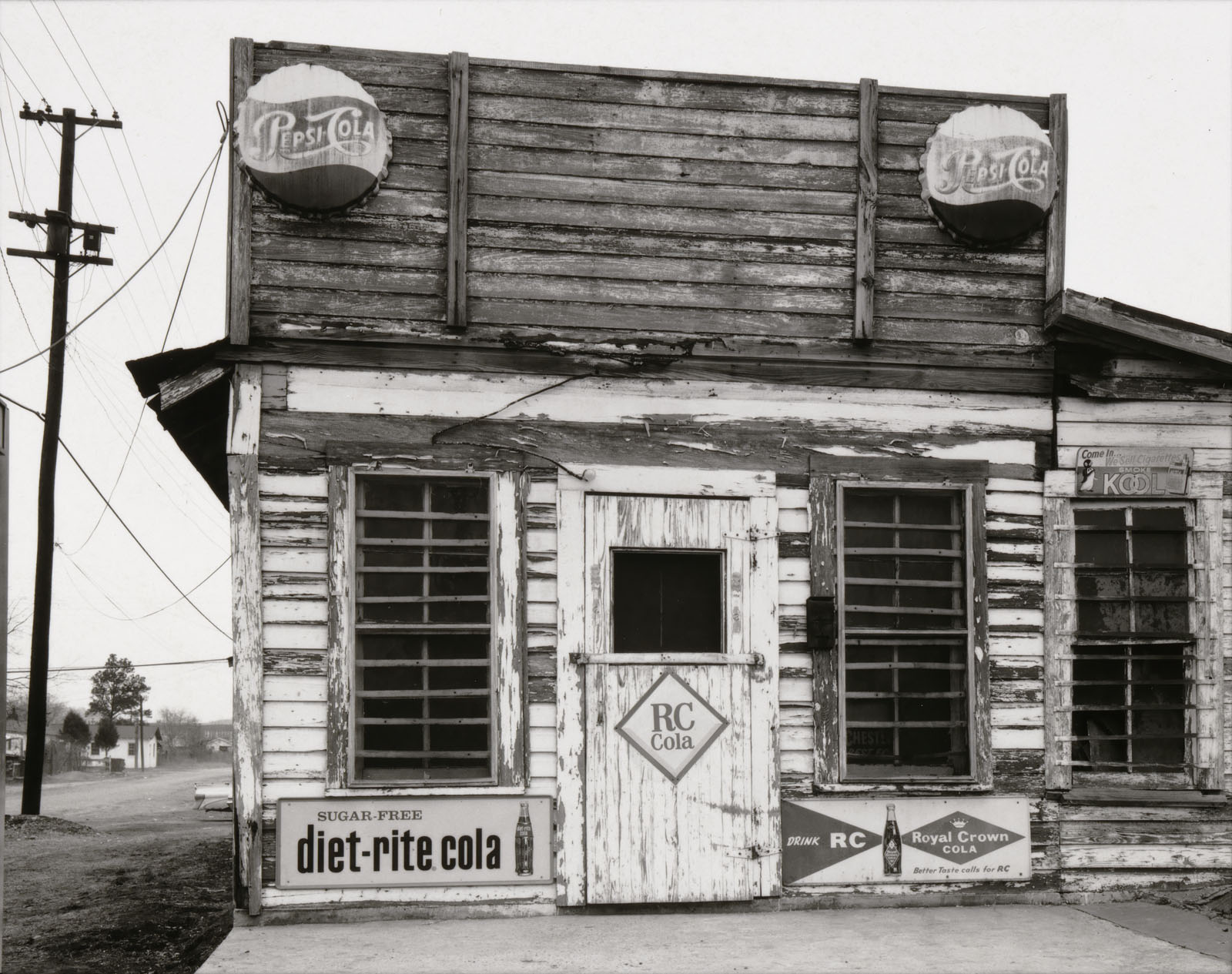
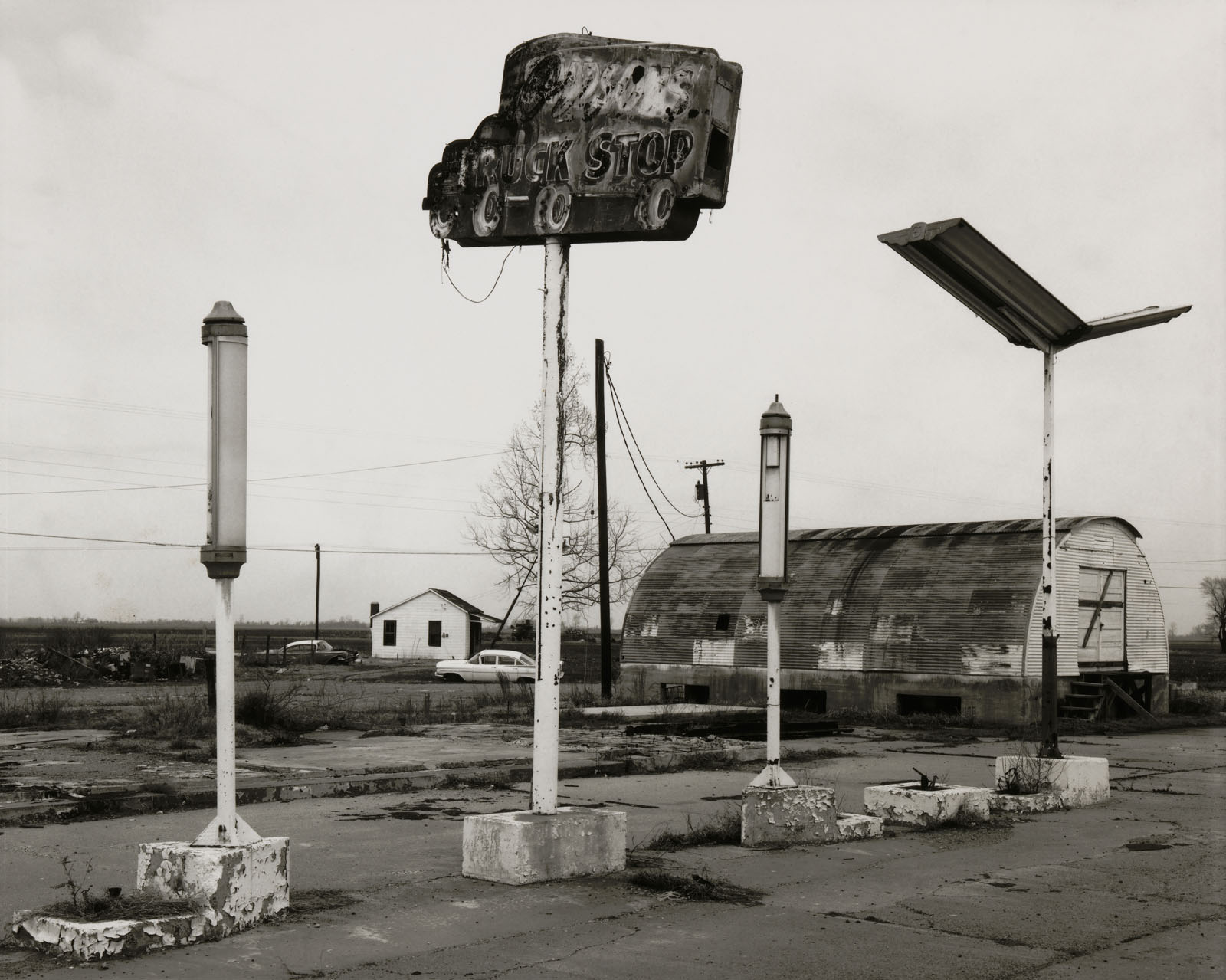

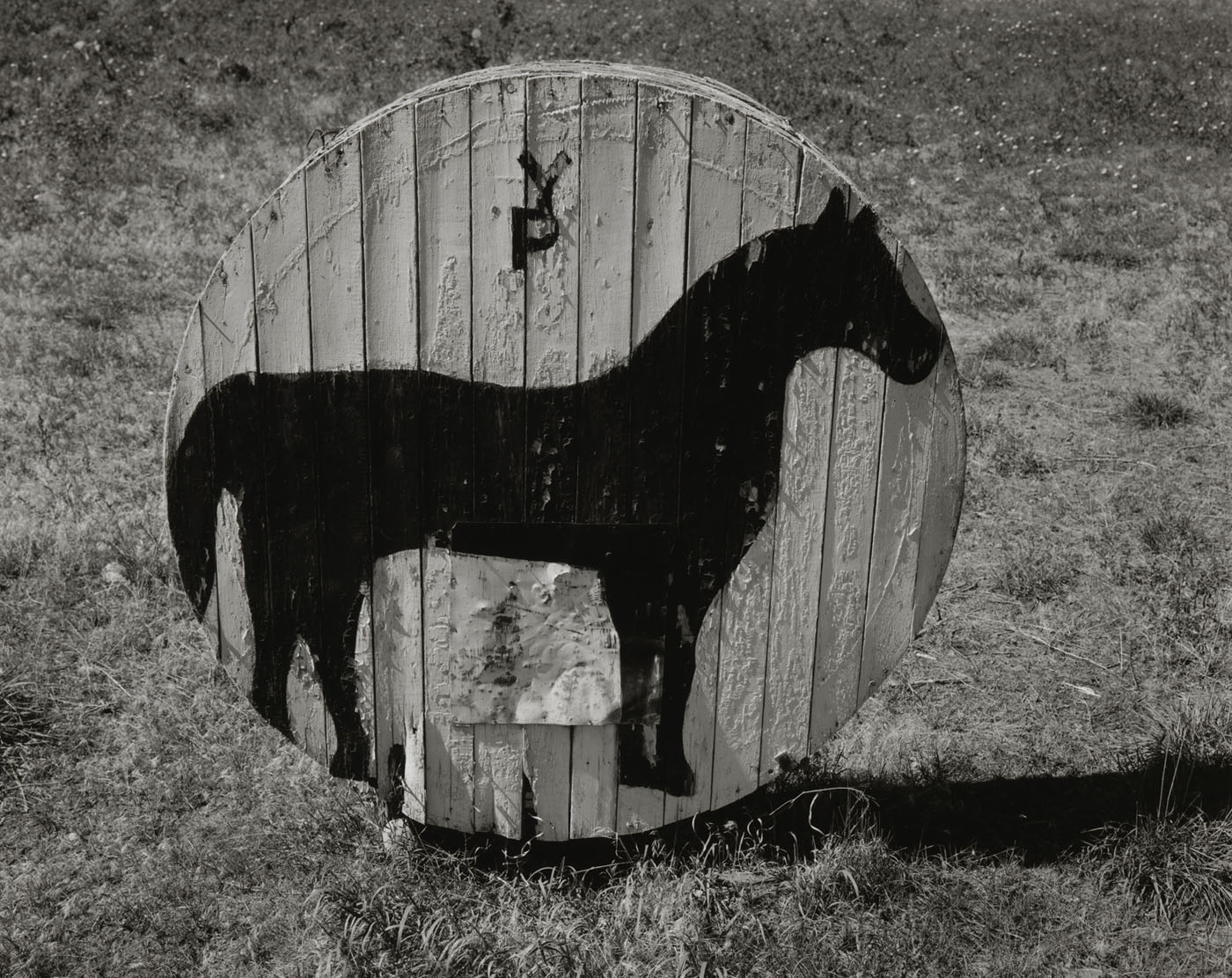


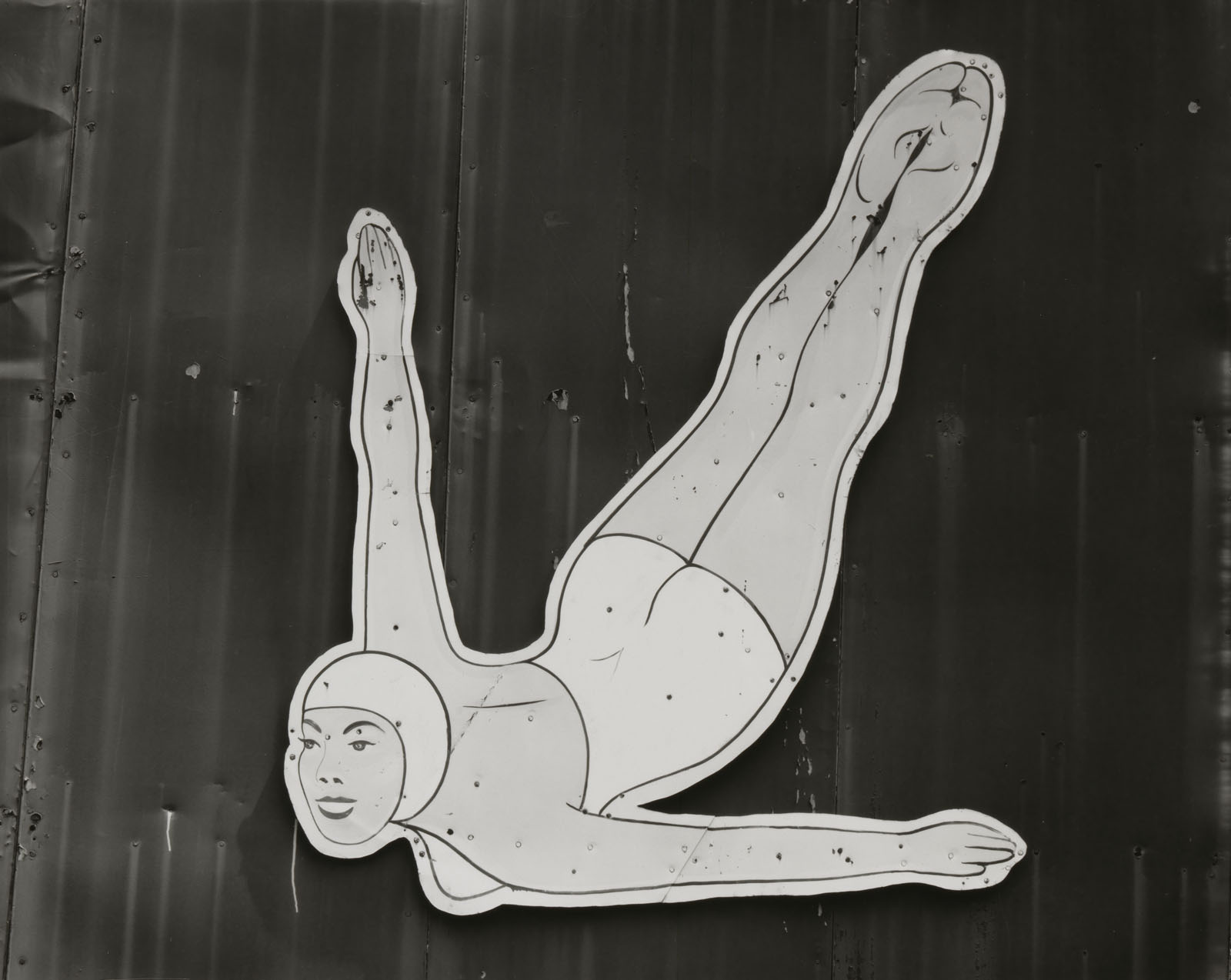
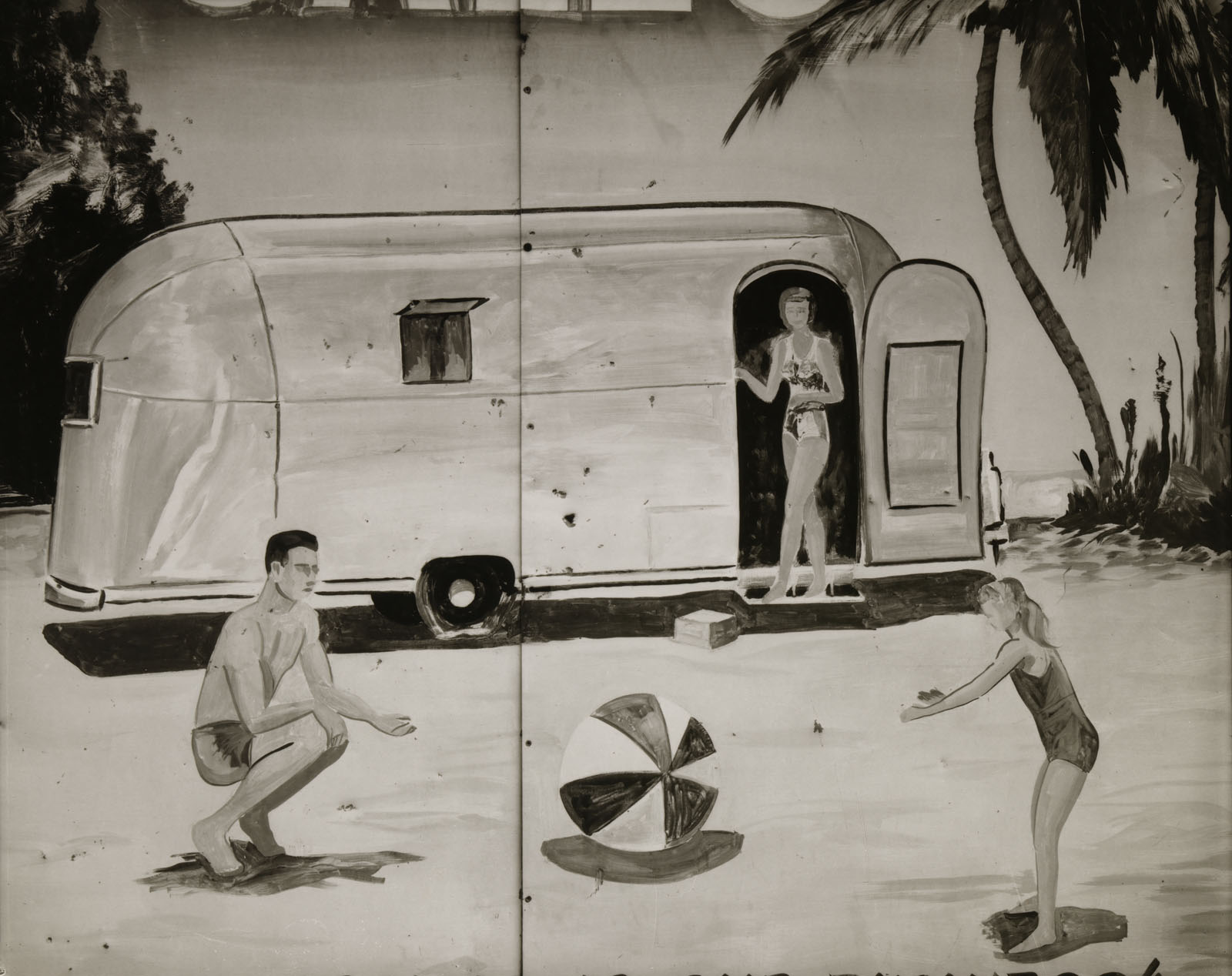
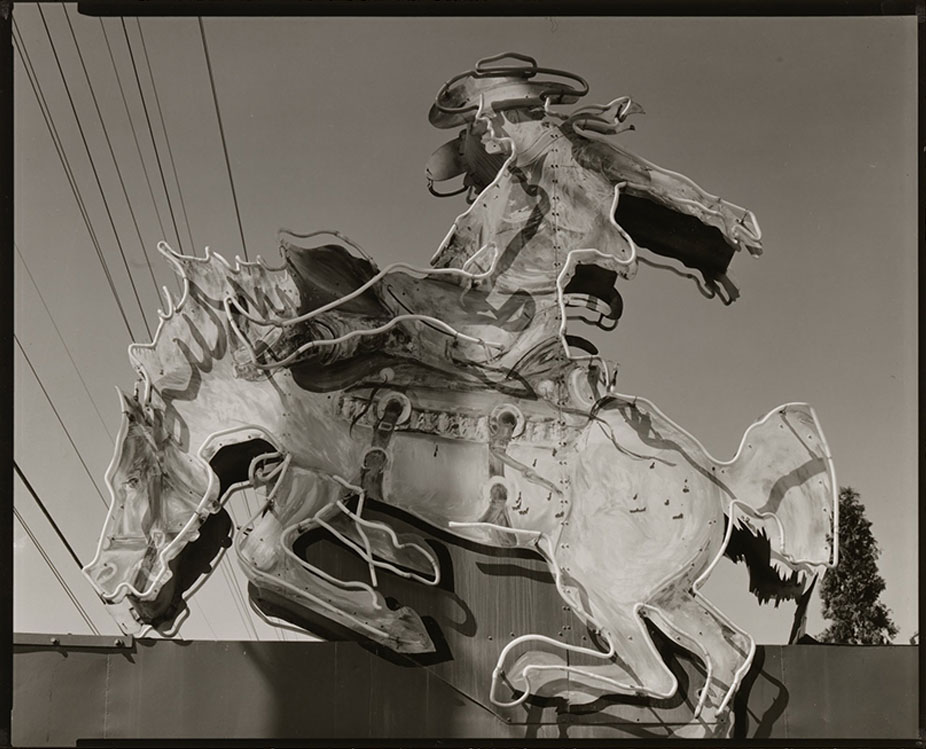

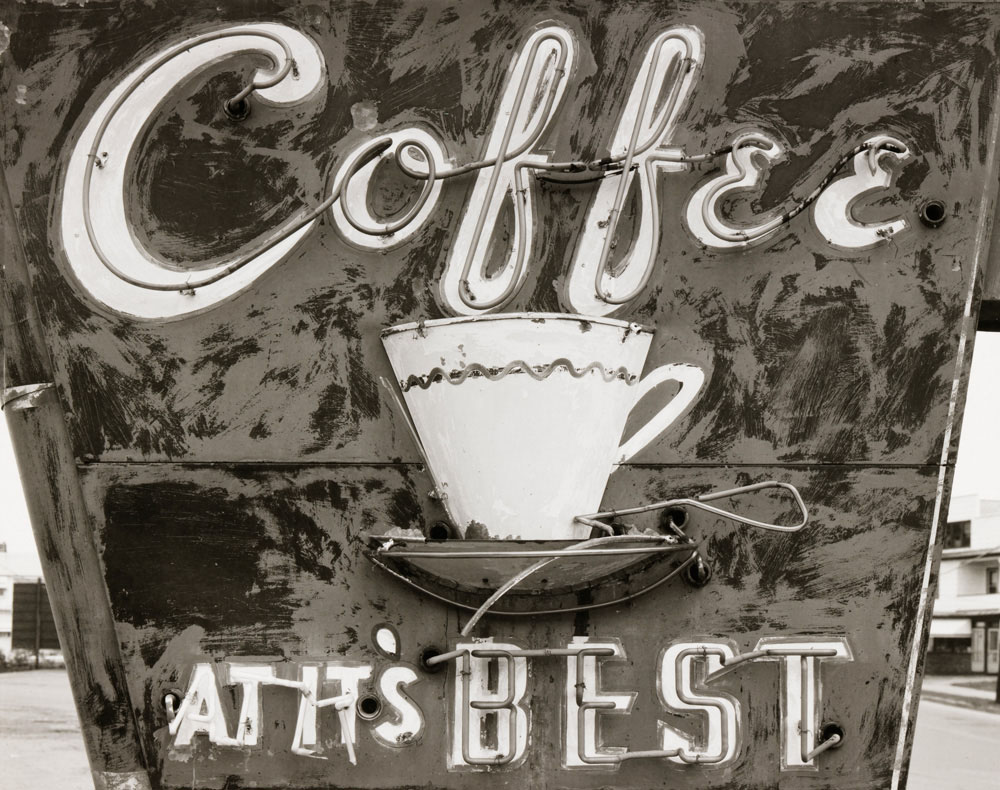
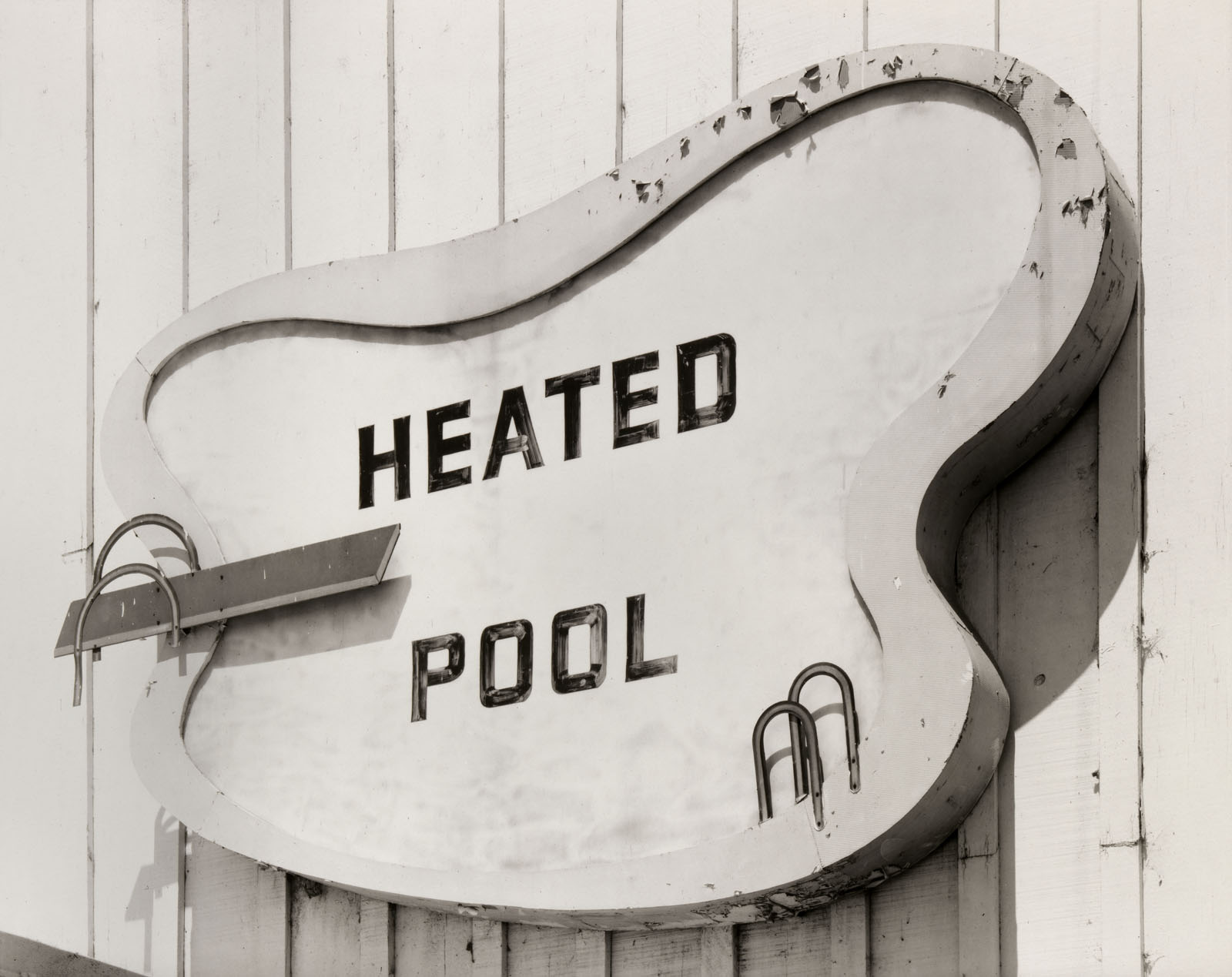


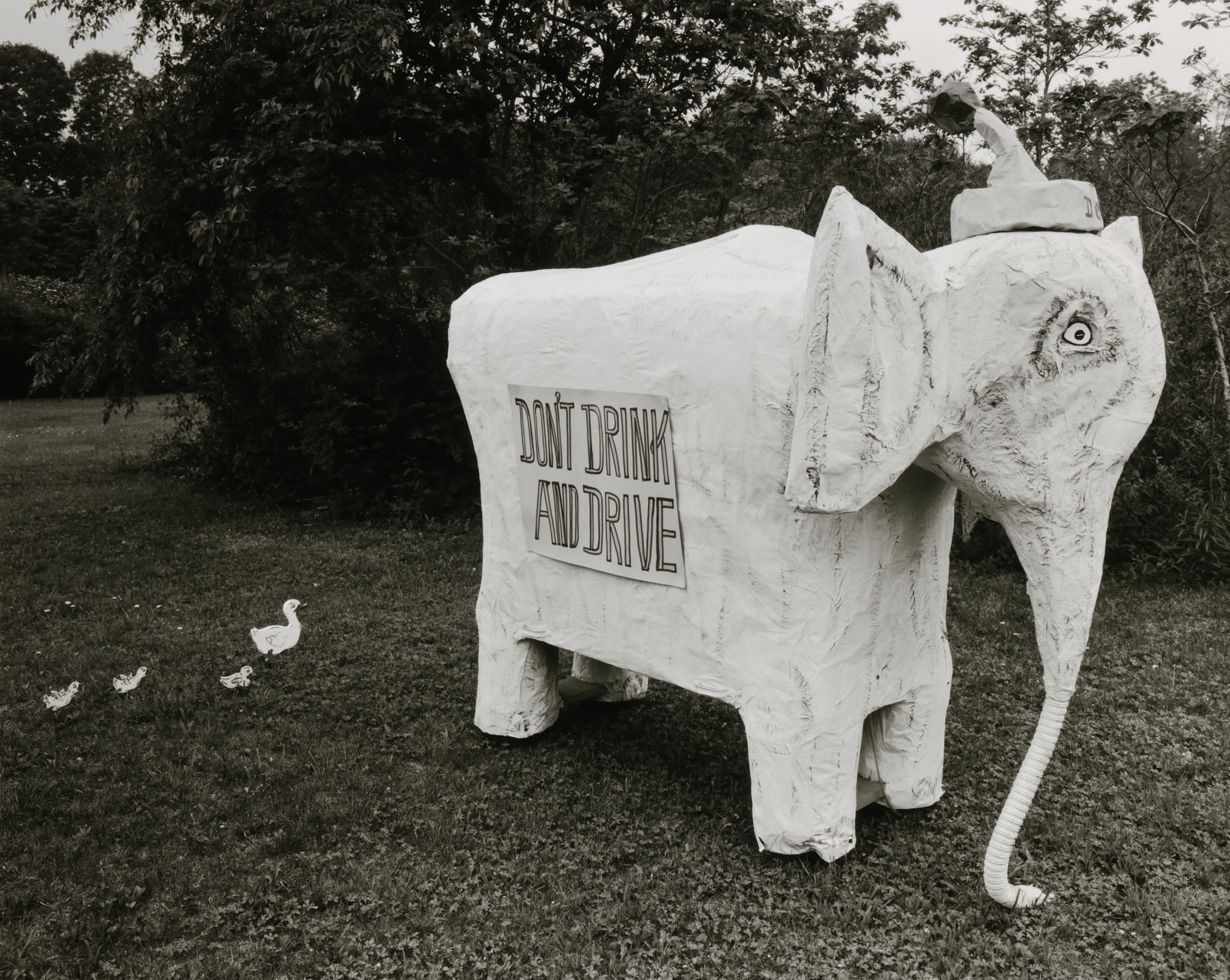
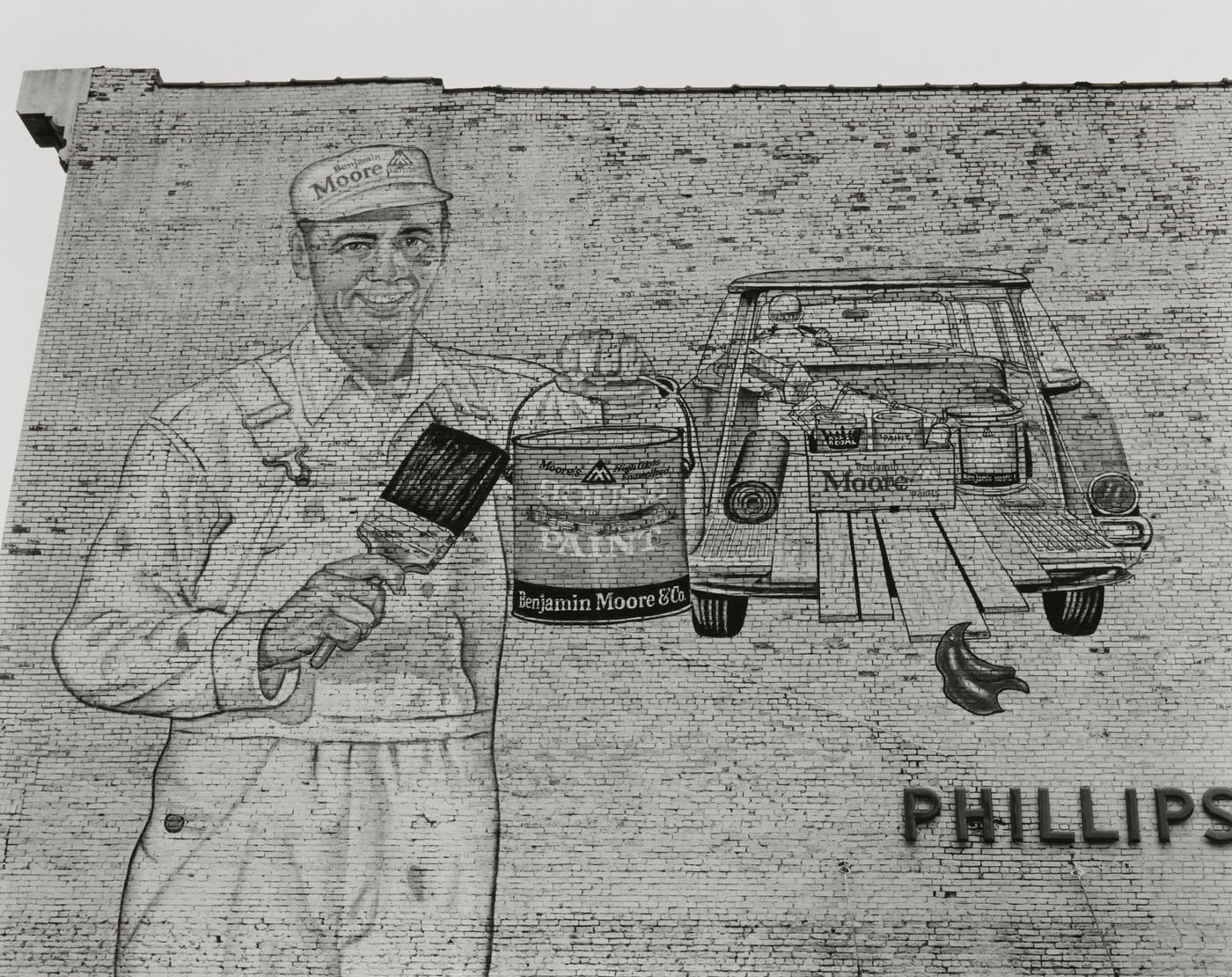


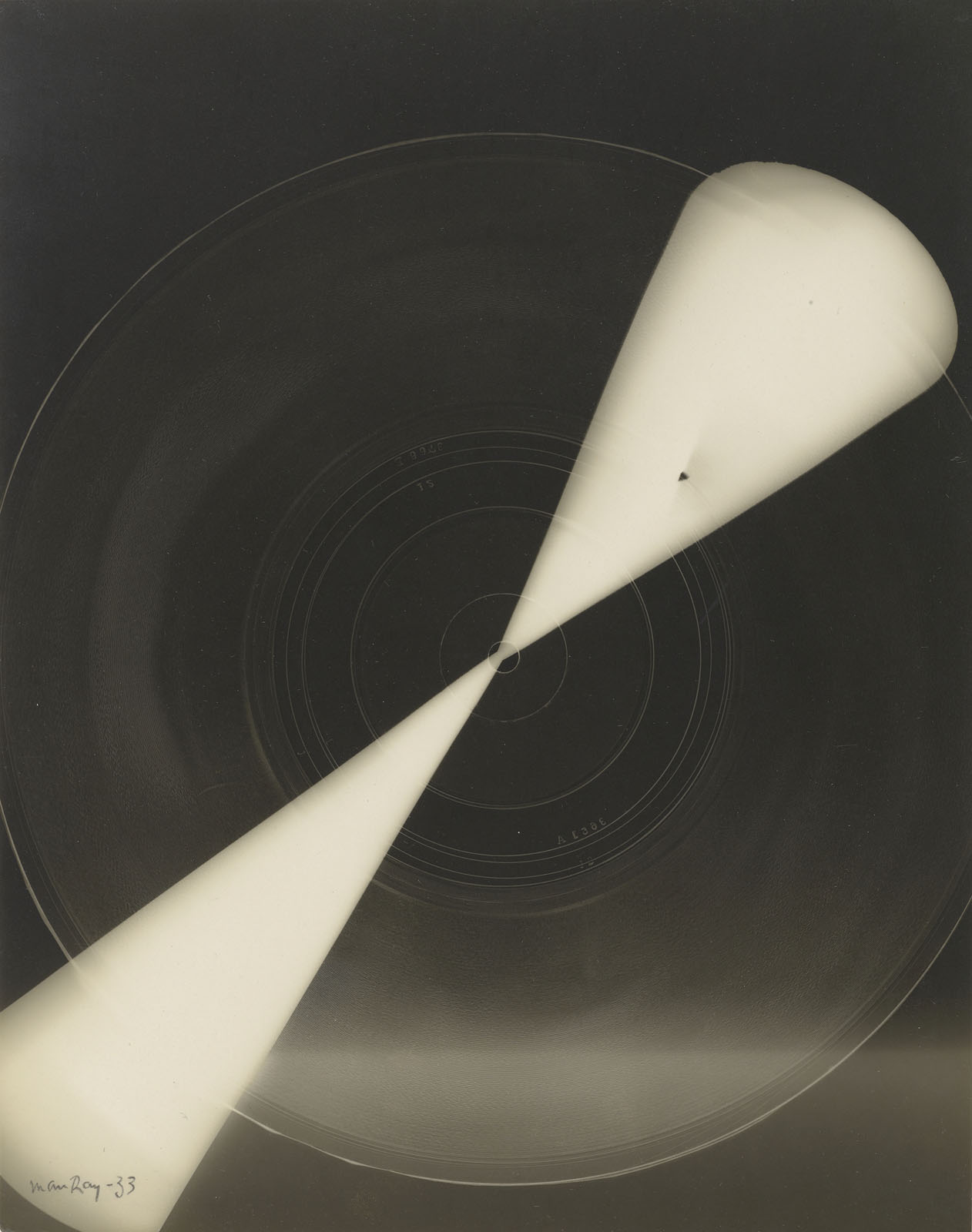


![Lisette Model (American born Austria, 1901-1983) '[Singer, Sammy's Bar, New York]' about 1940-1944](https://artblart.com/wp-content/uploads/2022/07/model-singer-sammys-bar-new-york.jpg "Lisette Model (American born Austria, 1901-1983) '[Singer, Sammy's Bar, New York]' about 1940-1944")


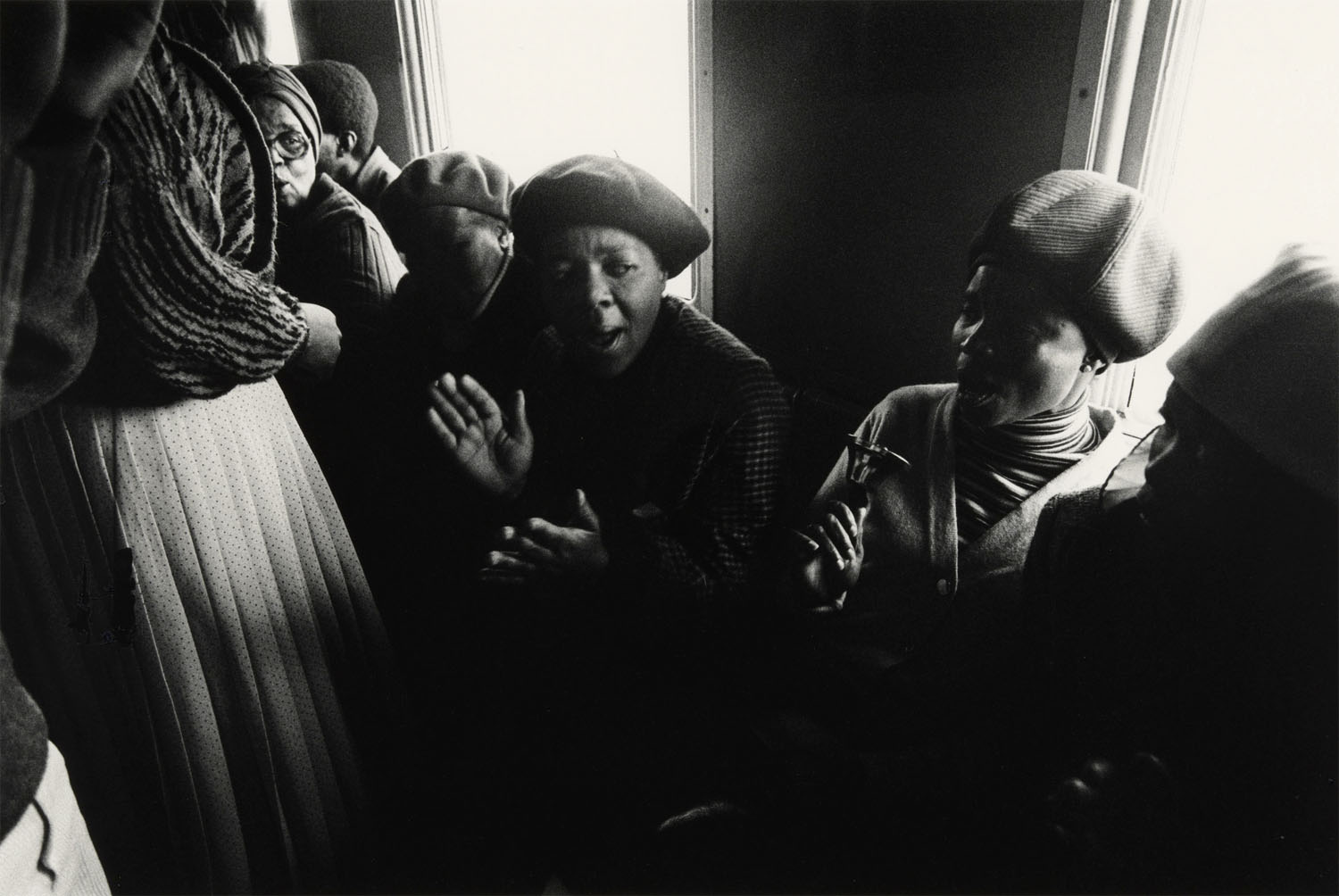


![Platt D. Babbitt. '[Scene at Niagara Falls]' c. 1855](https://artblart.com/wp-content/uploads/2015/03/platt_d_babbitt_scene_at_niagara_falls-web.jpg "Platt D. Babbitt. '[Scene at Niagara Falls]' c. 1855")
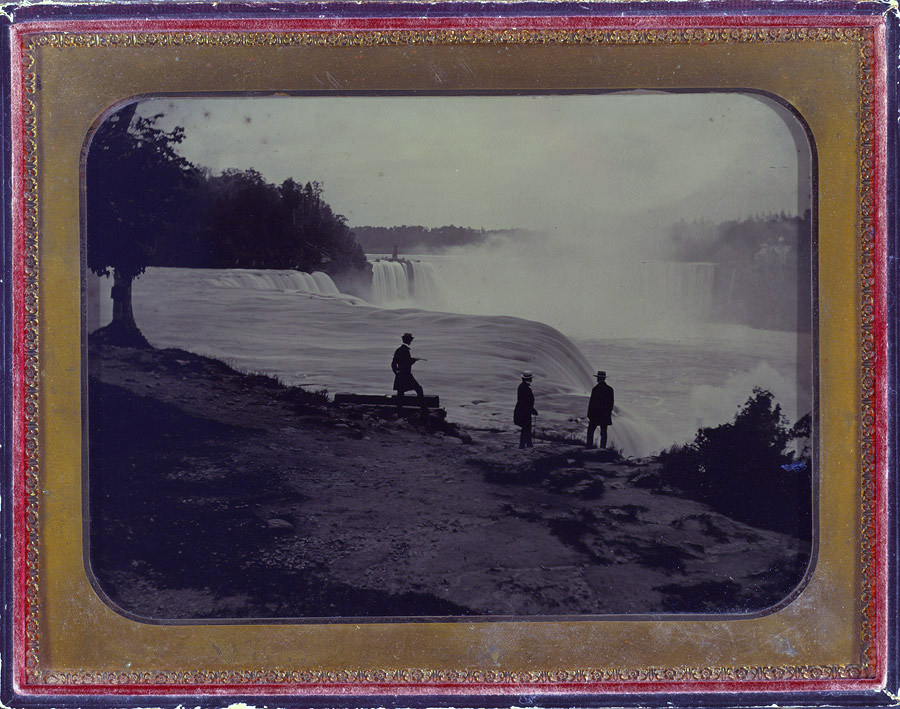


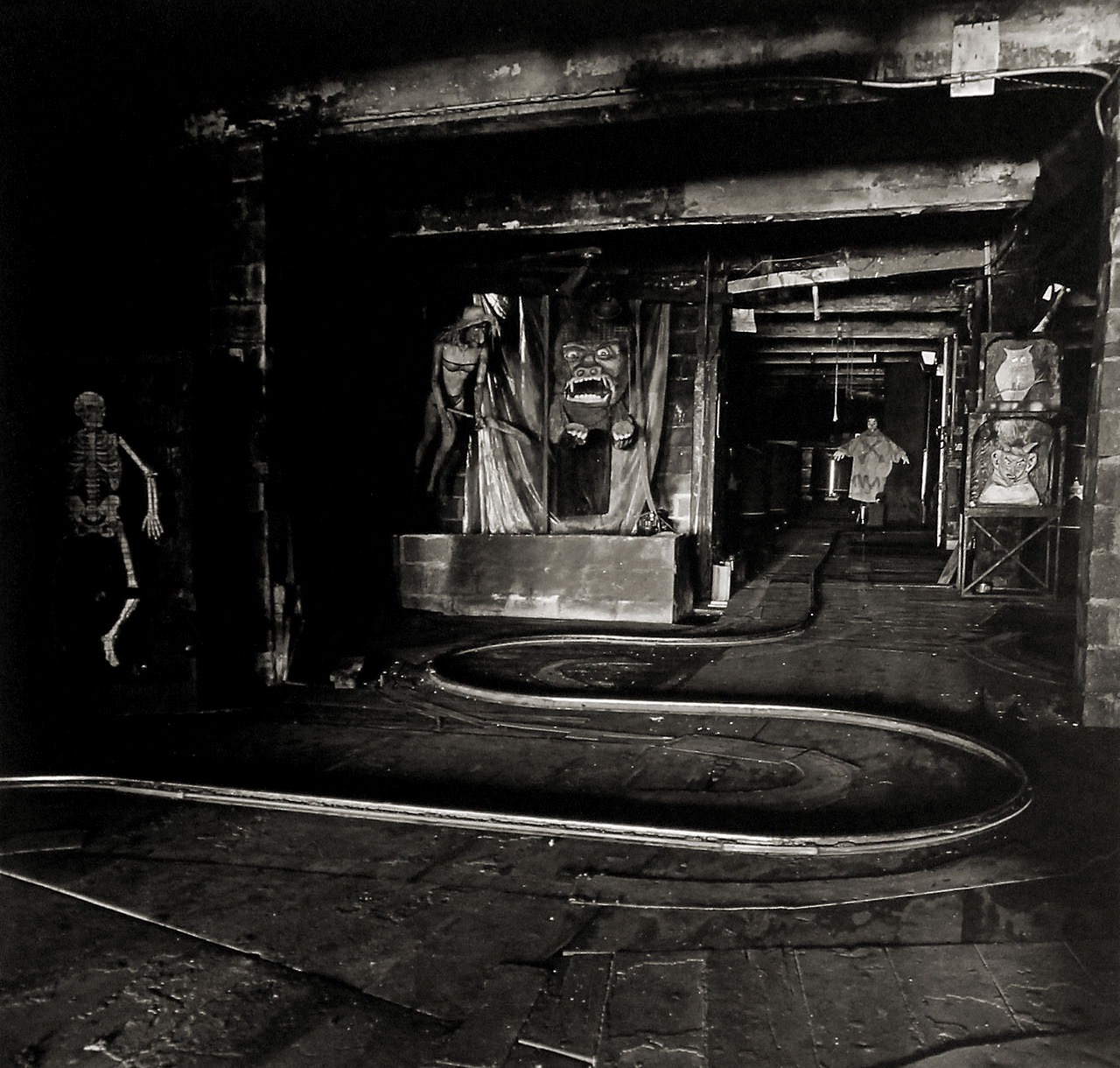


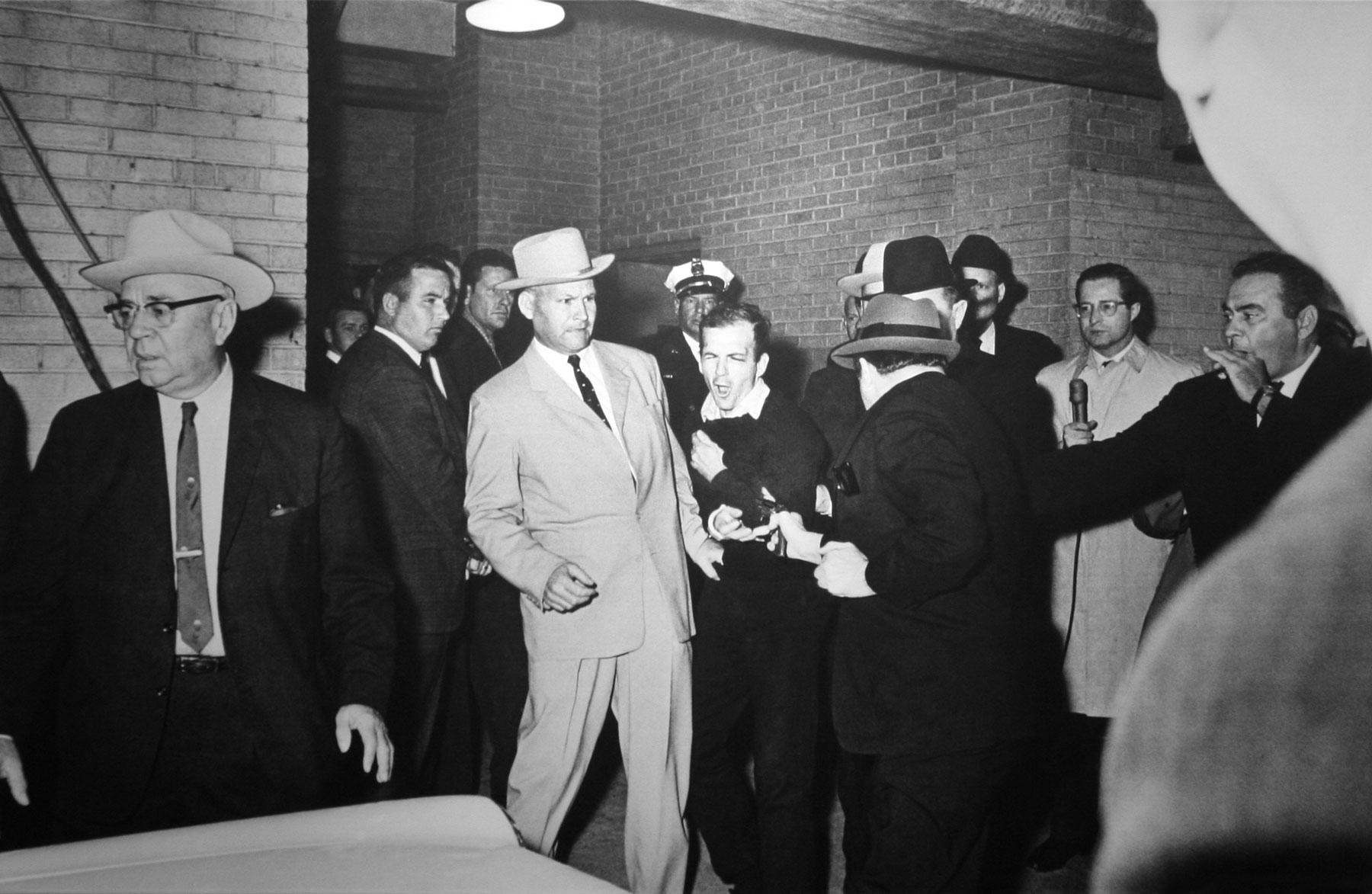
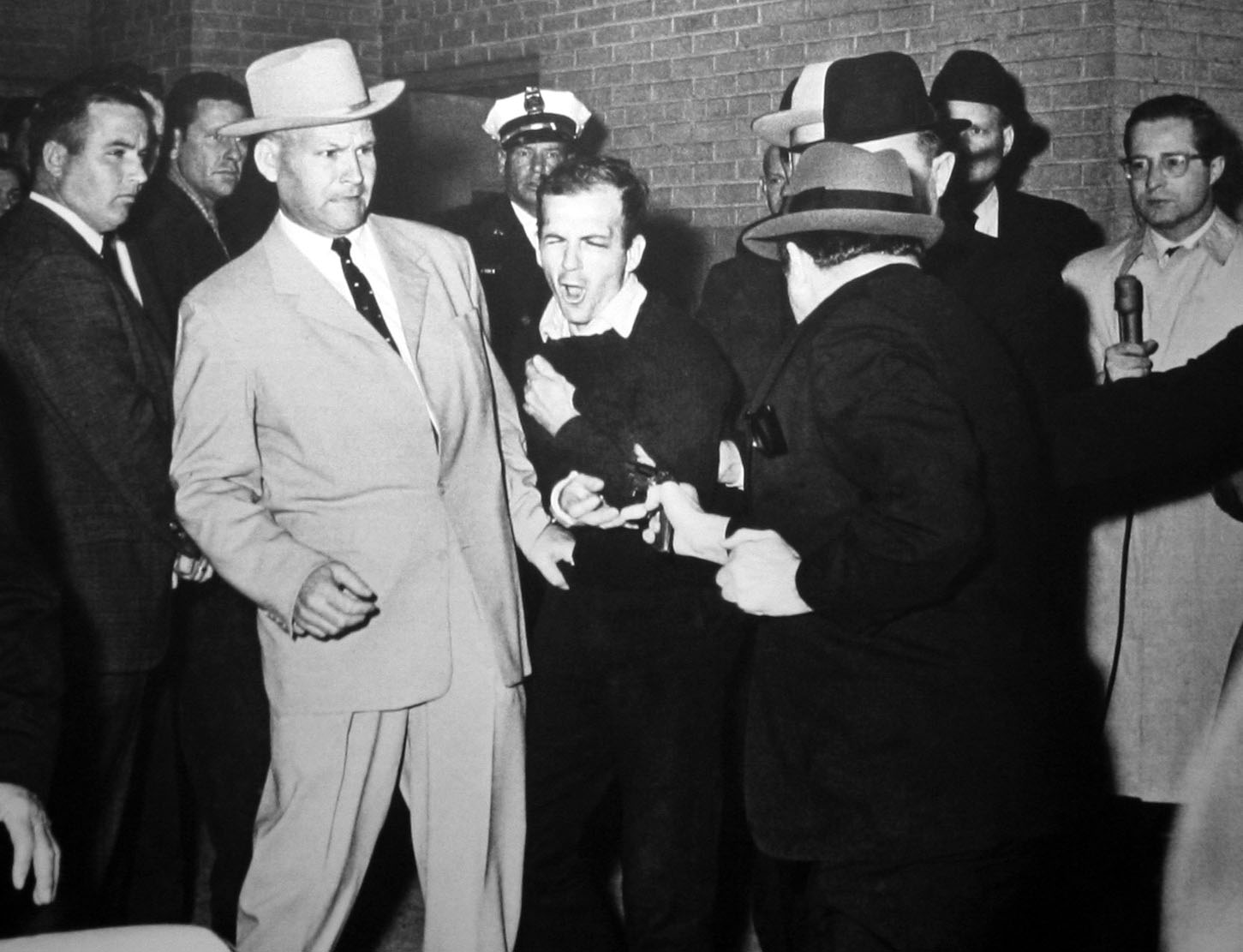
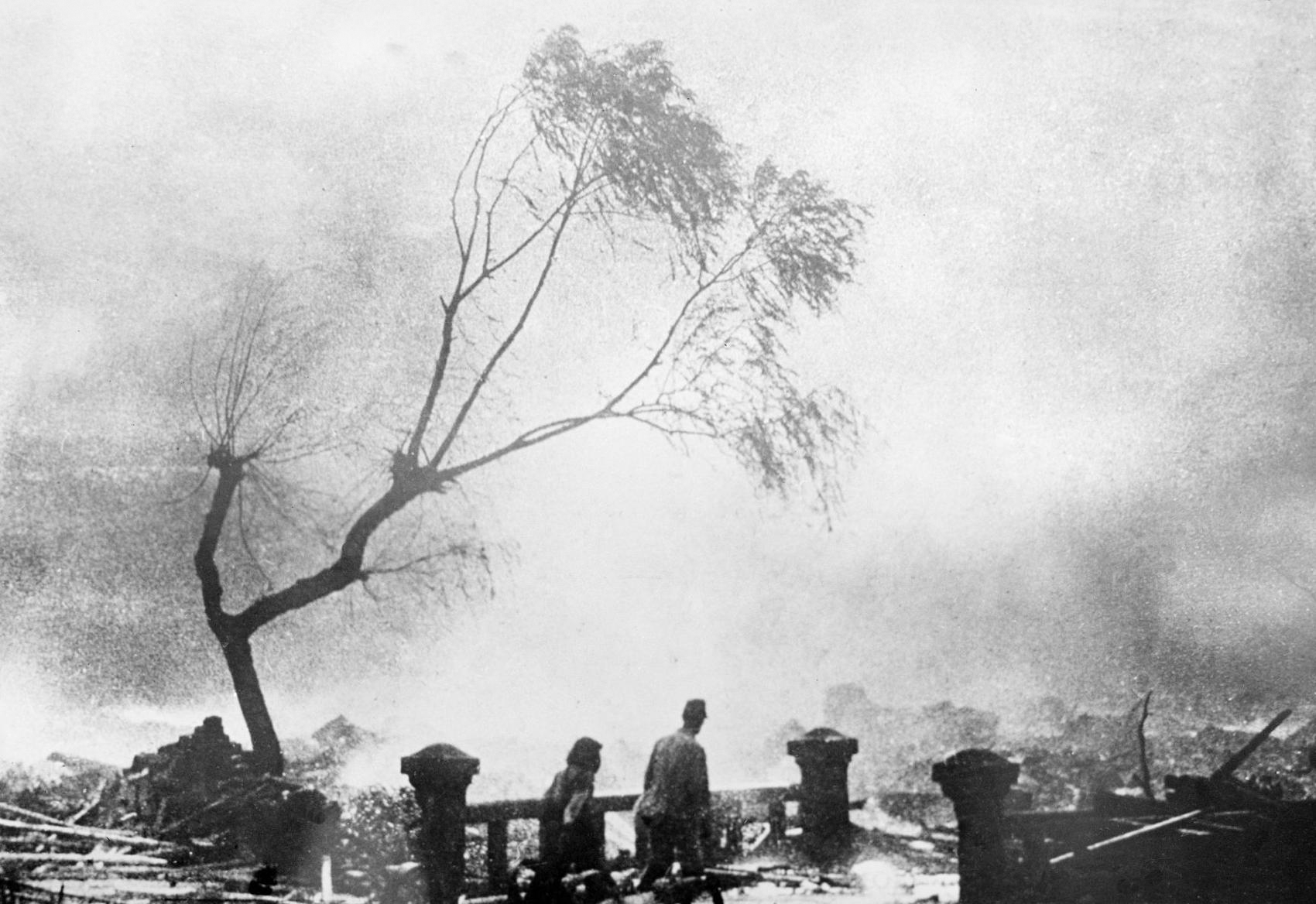


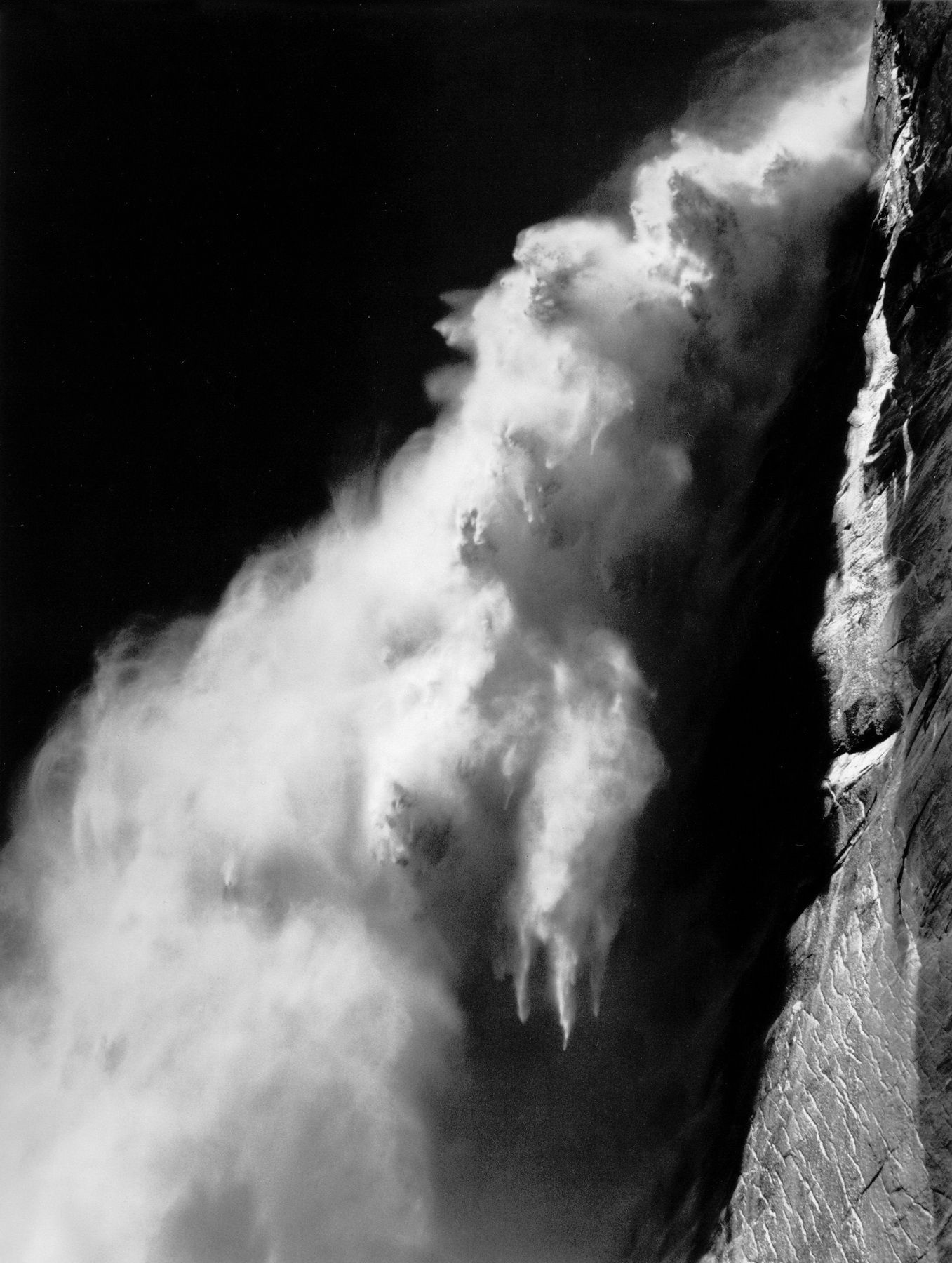


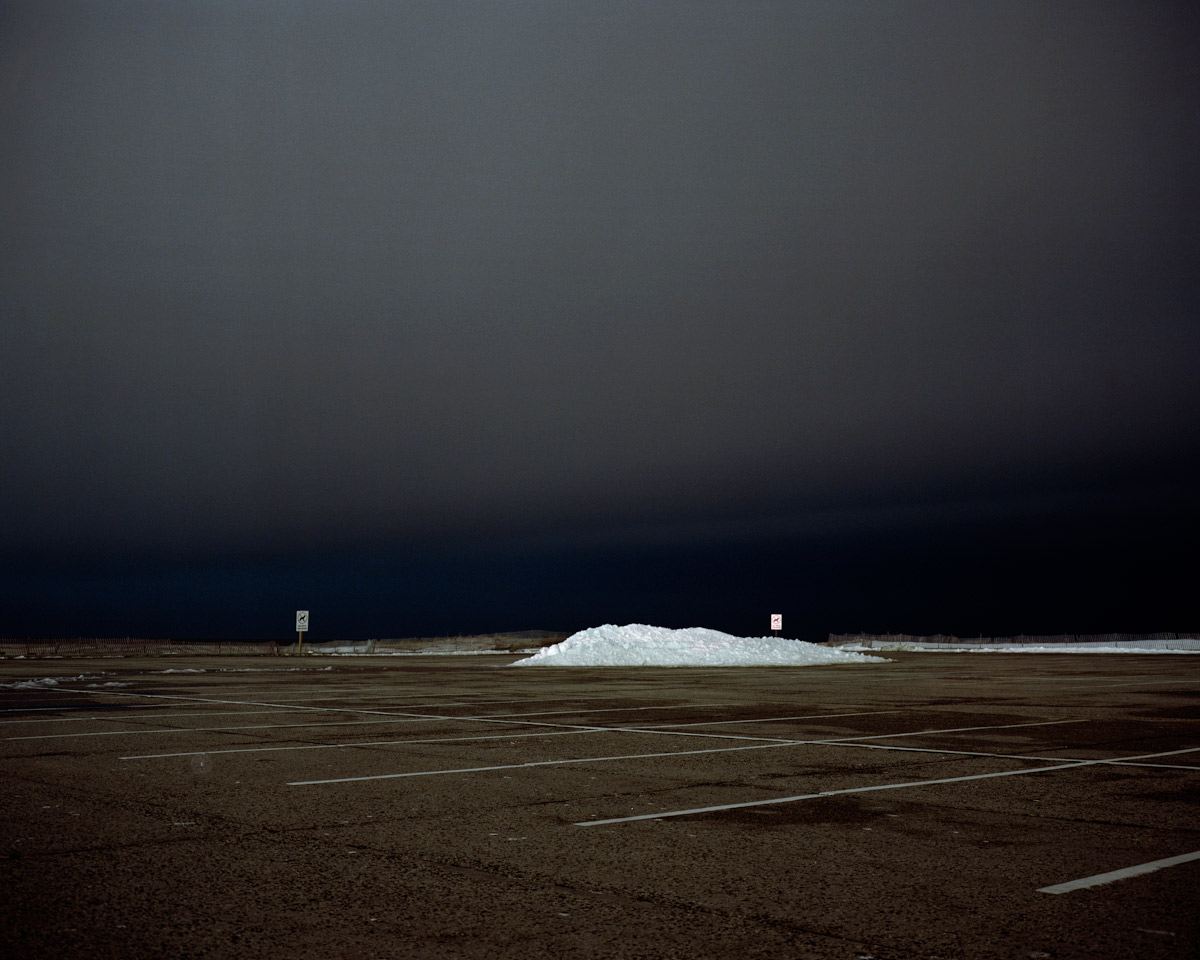

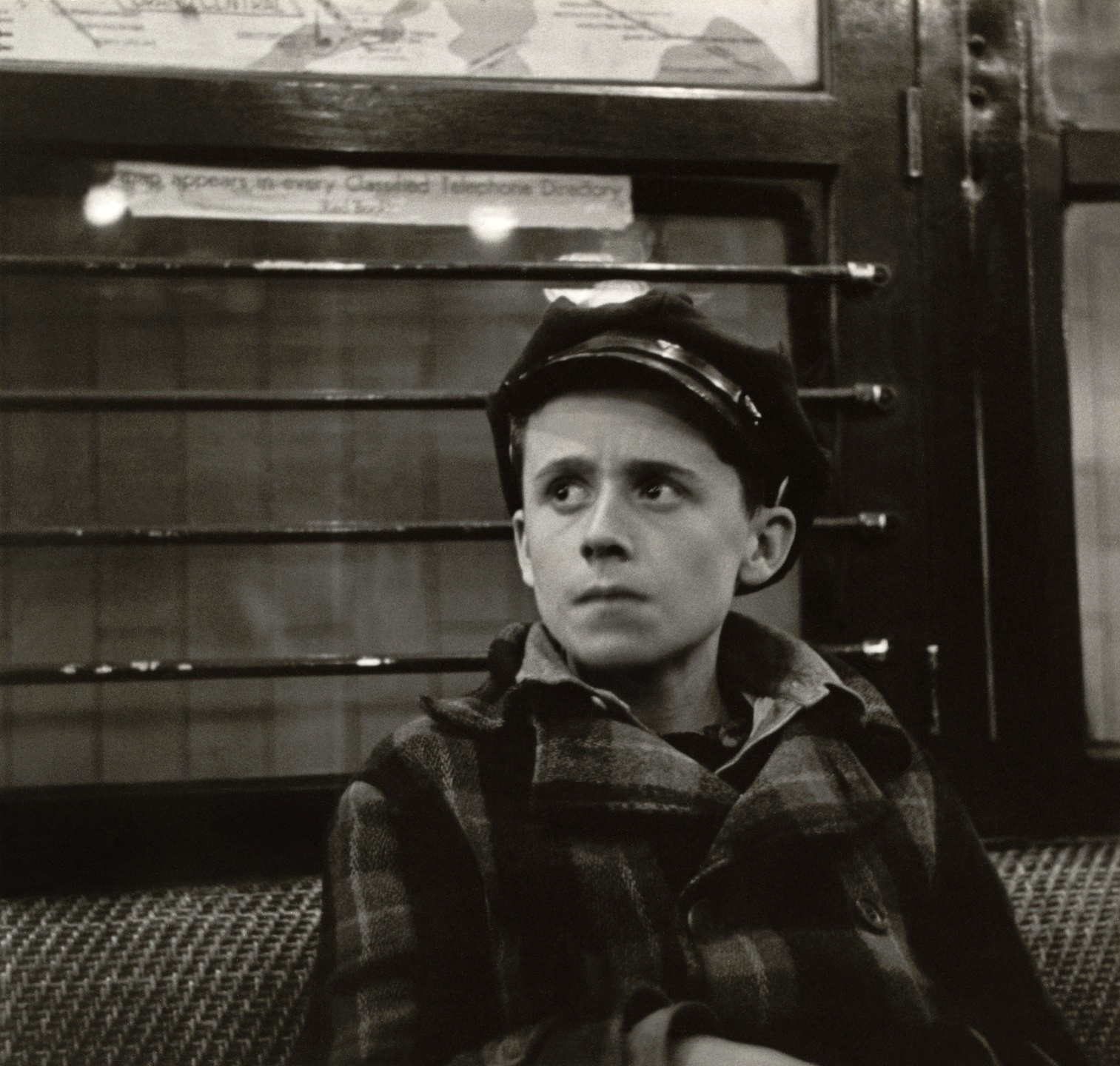


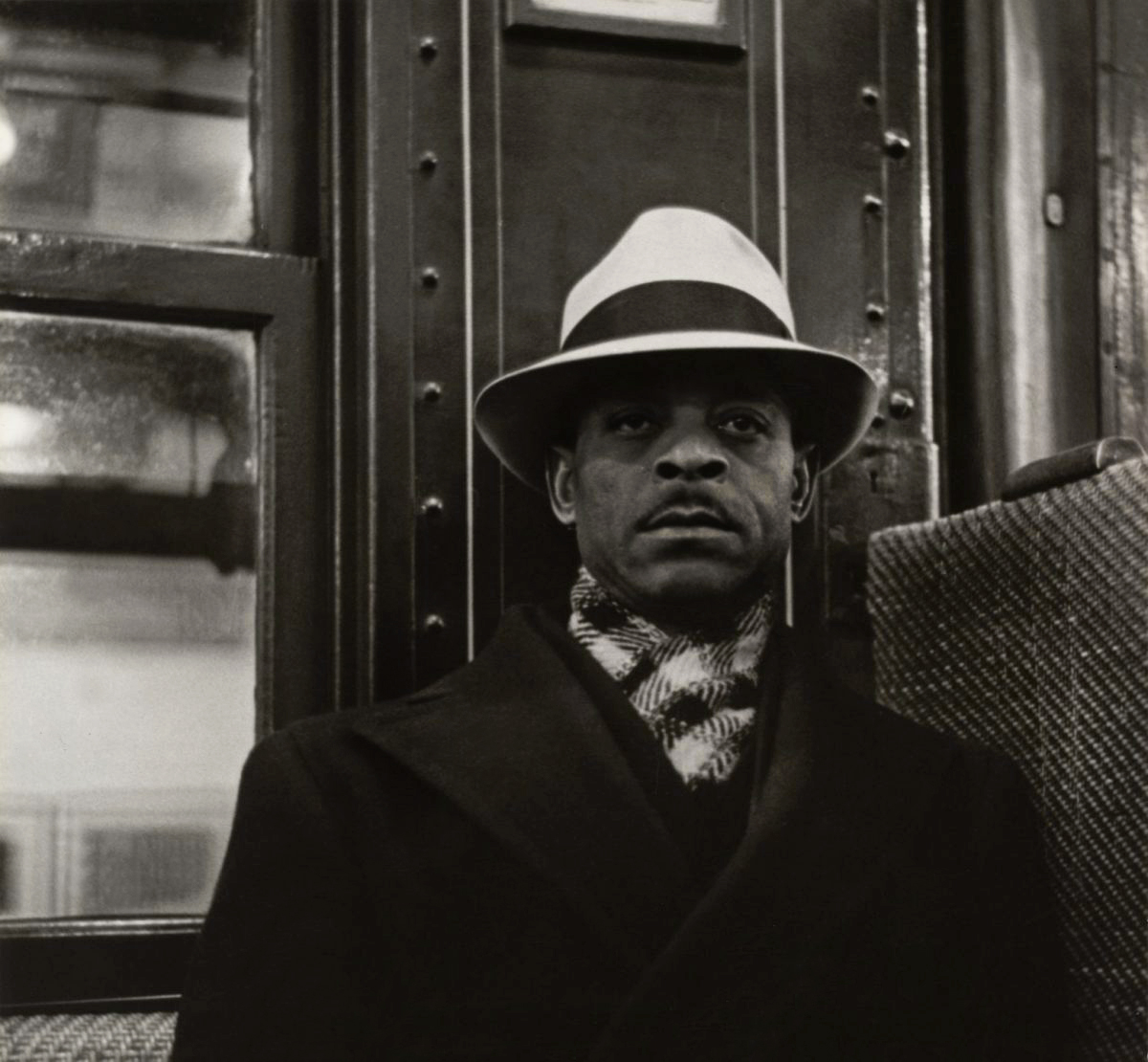
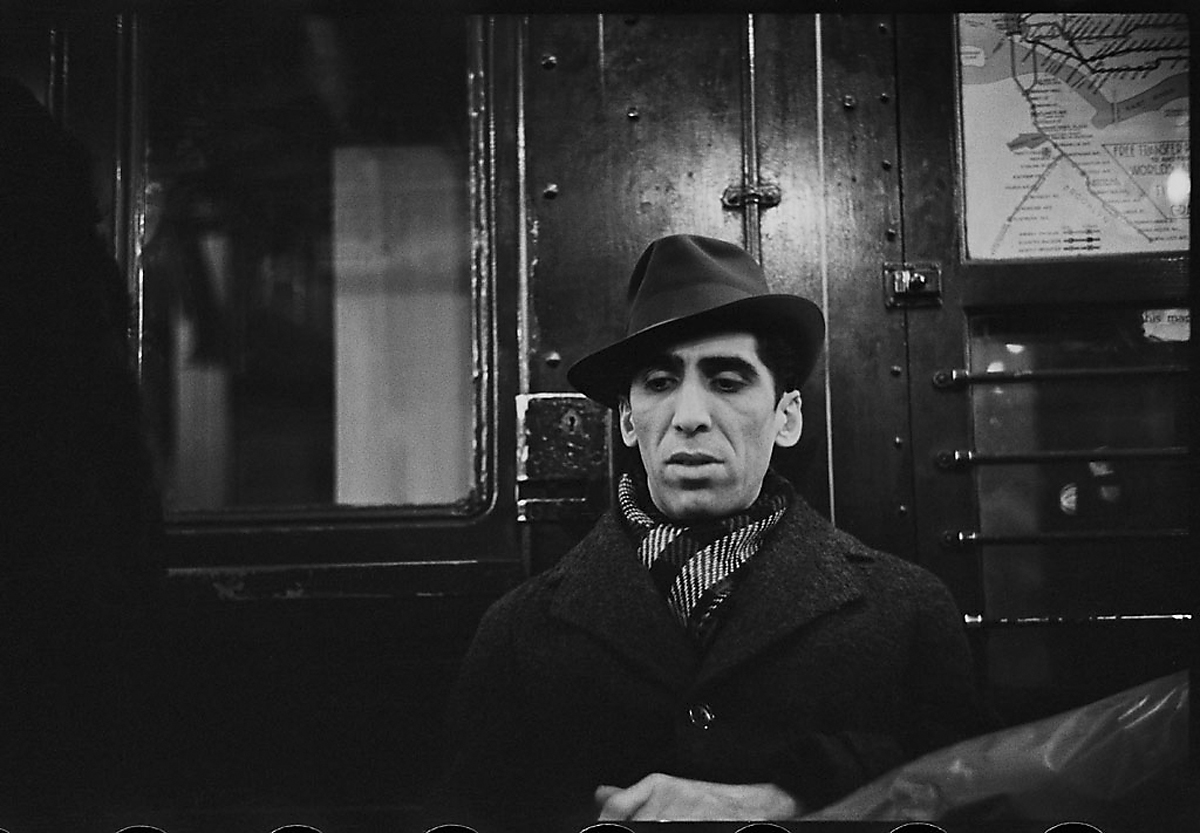
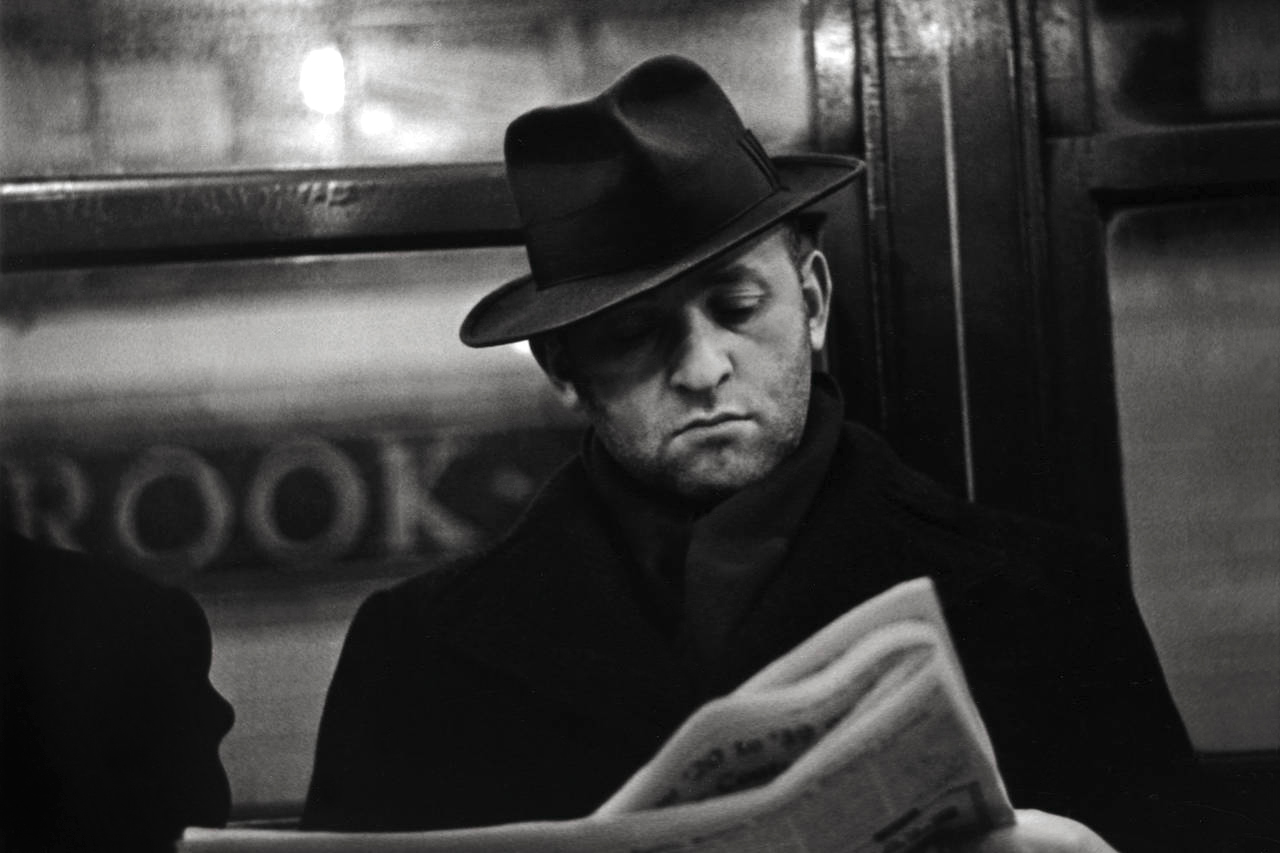


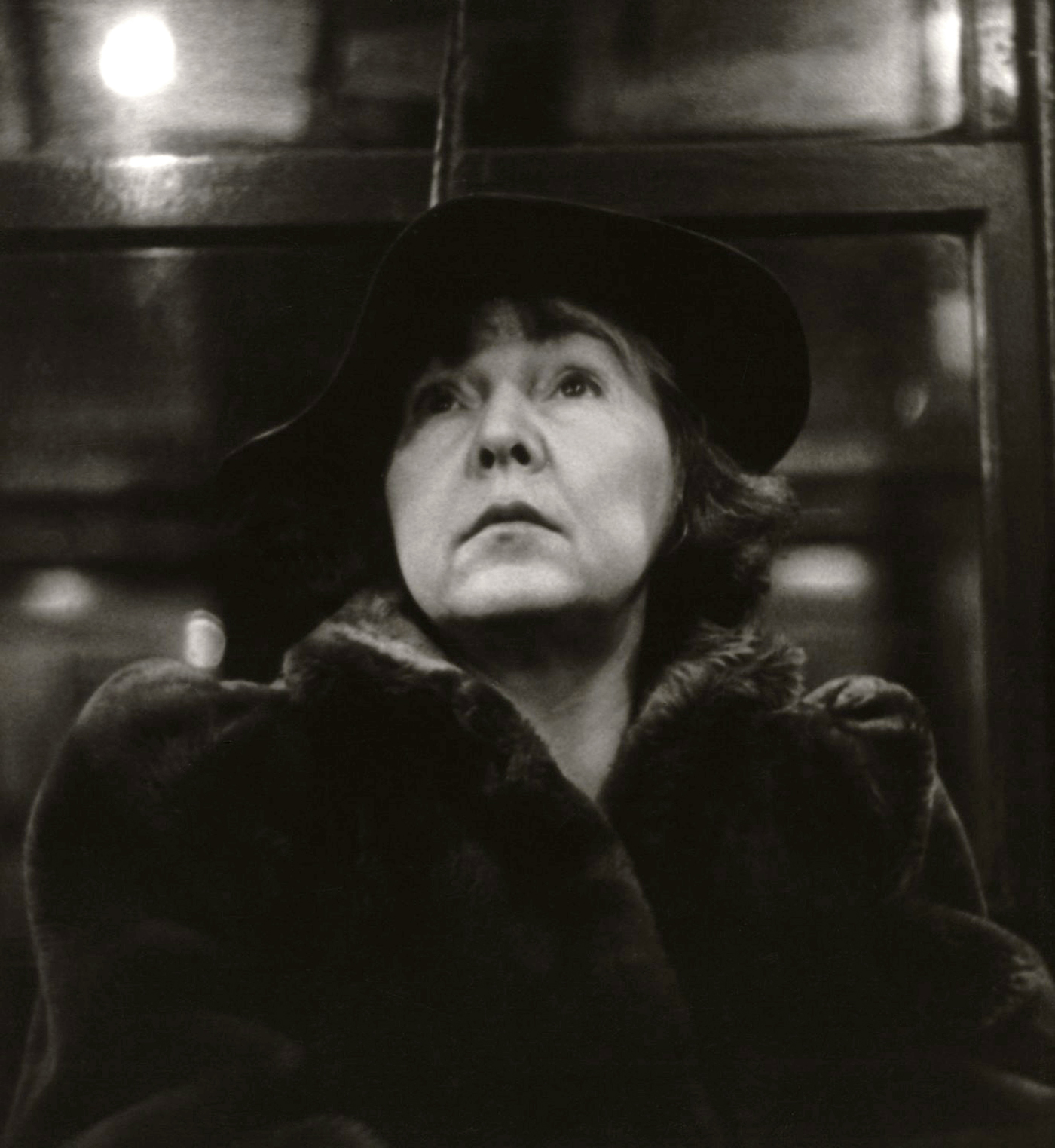


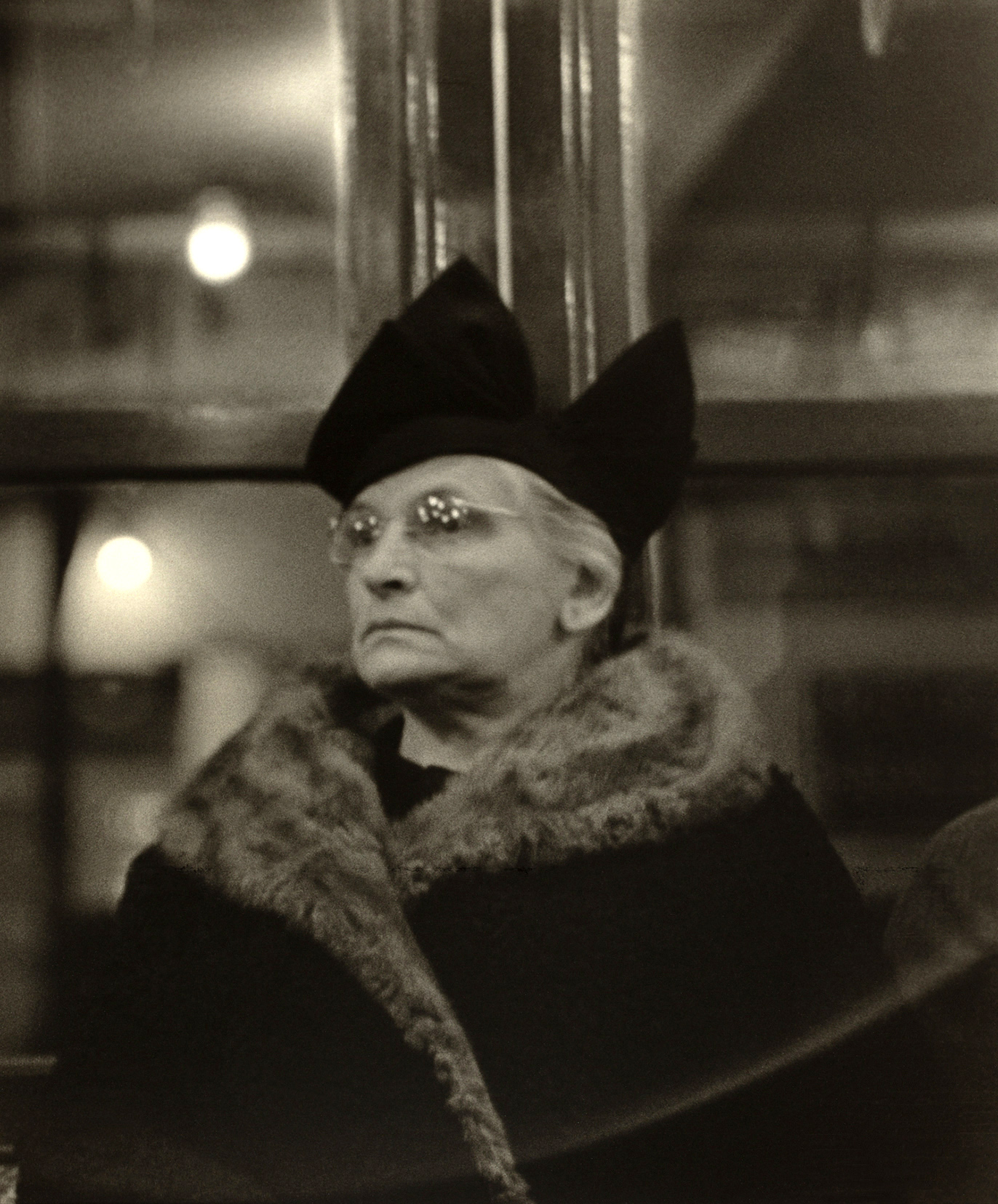


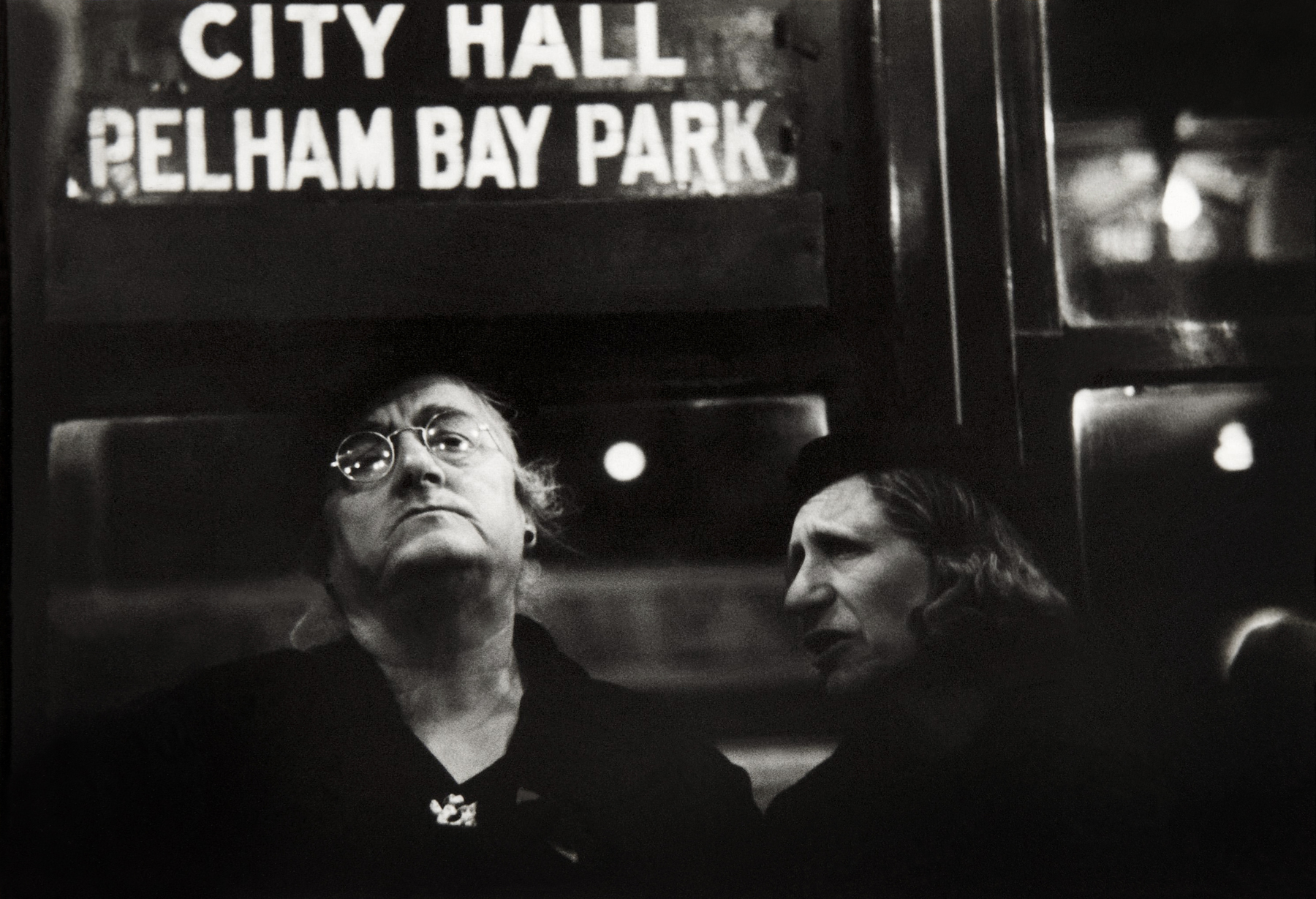
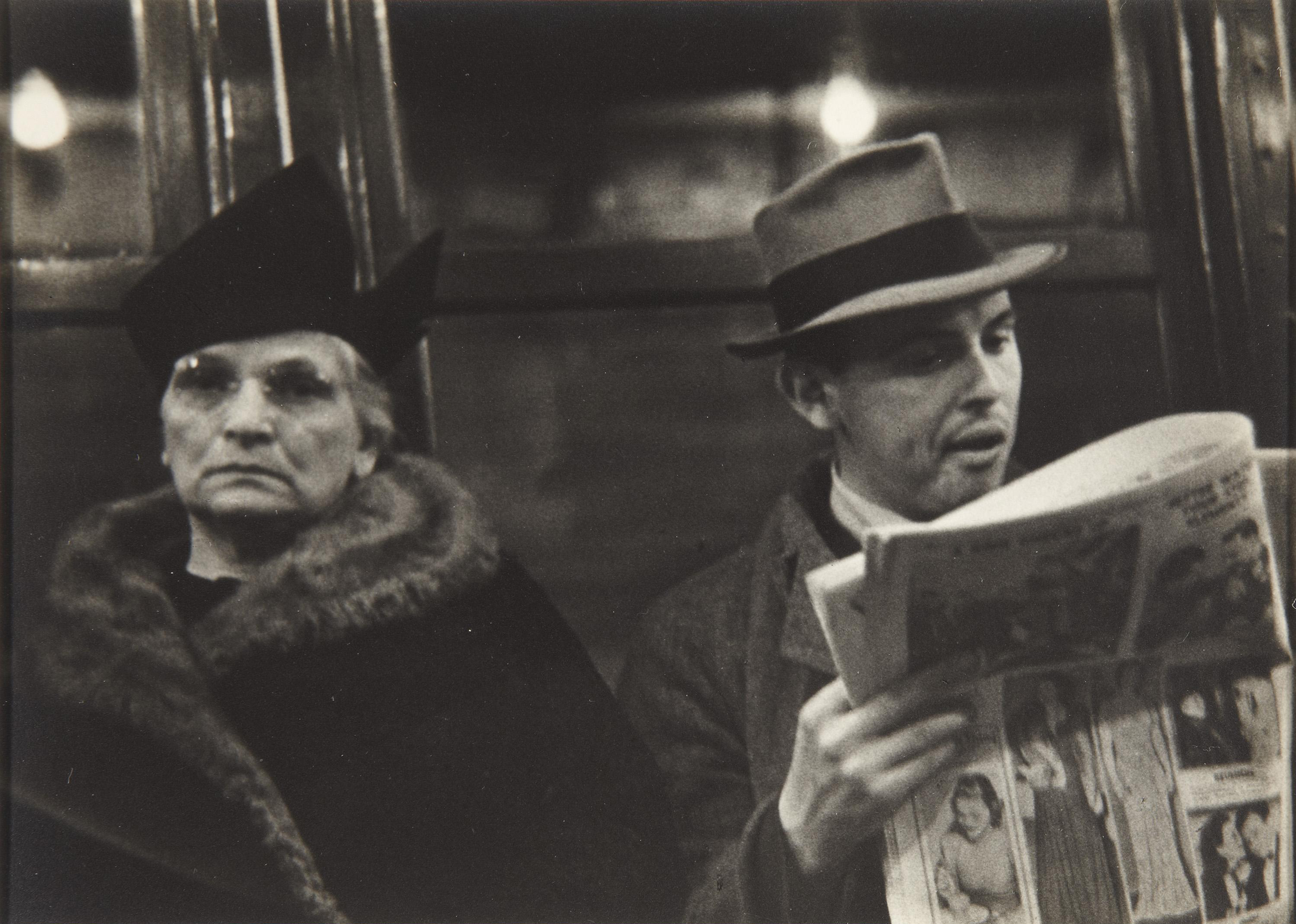


![Ilse Bing (German, 1899-1998) '[Rue de Valois, Paris]' 1932](https://artblart.com/wp-content/uploads/2020/11/ilse-bing-rue-de-valois-paris-1932.jpg "Ilse Bing (German, 1899-1998) '[Rue de Valois, Paris]' 1932")

![Dora Maar (French, 1907-1997) '[Woman and Child in Window, Barcelona]' 1932-1934](https://artblart.com/wp-content/uploads/2020/11/dora-maar-woman-and-child-in-window-barcelona.jpg "Dora Maar (French, 1907-1997) '[Woman and Child in Window, Barcelona]' 1932-1934")


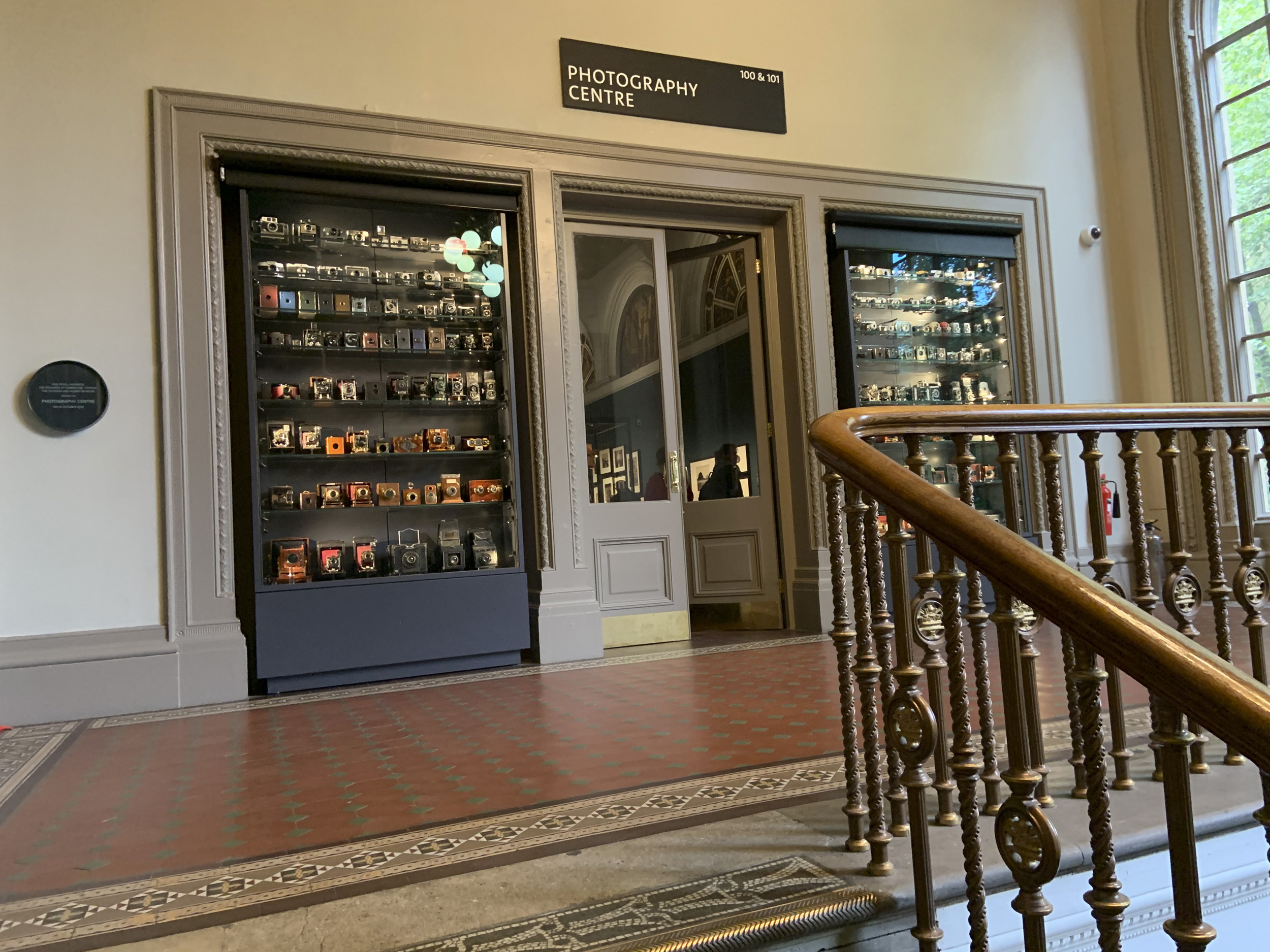

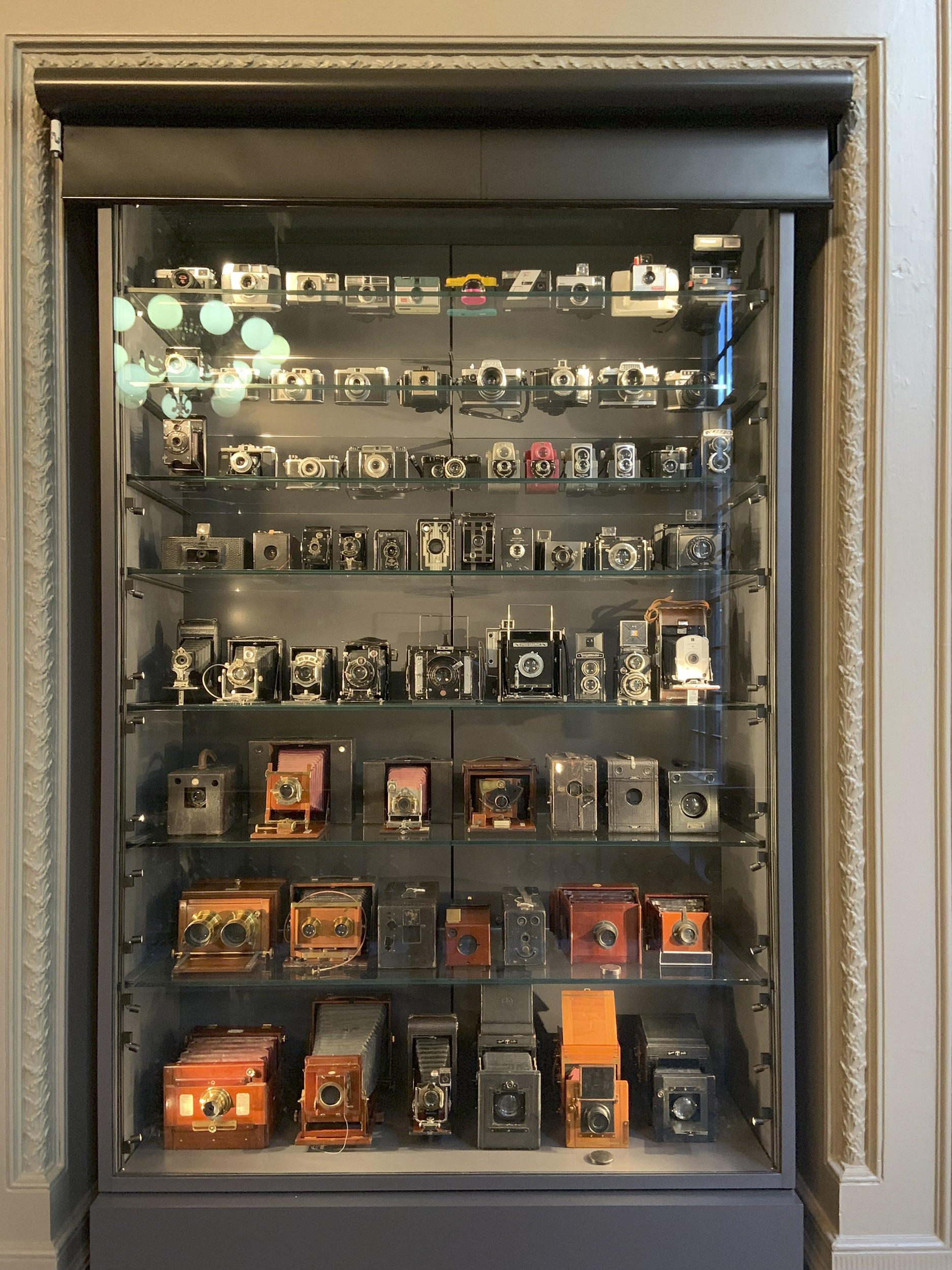
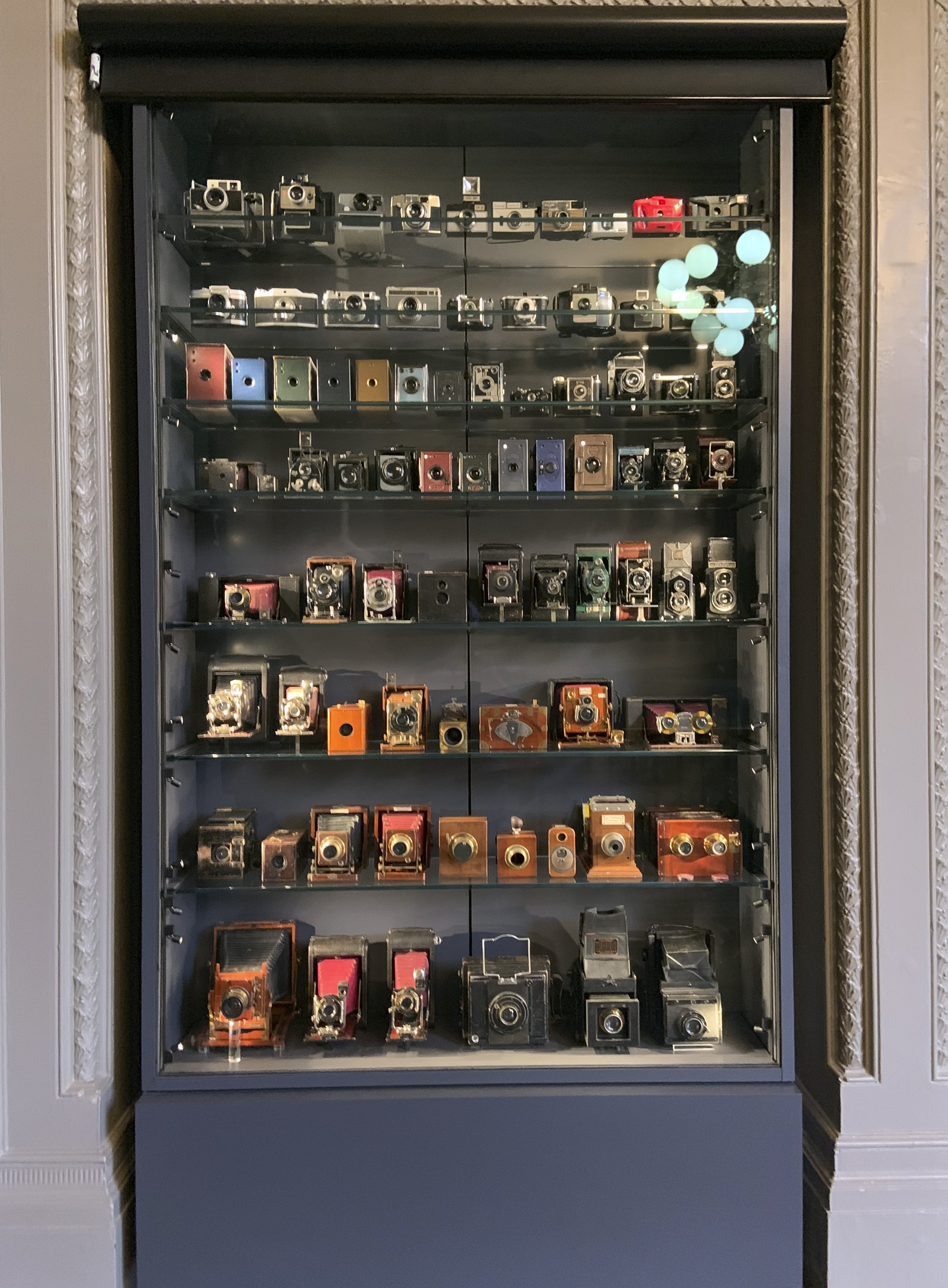

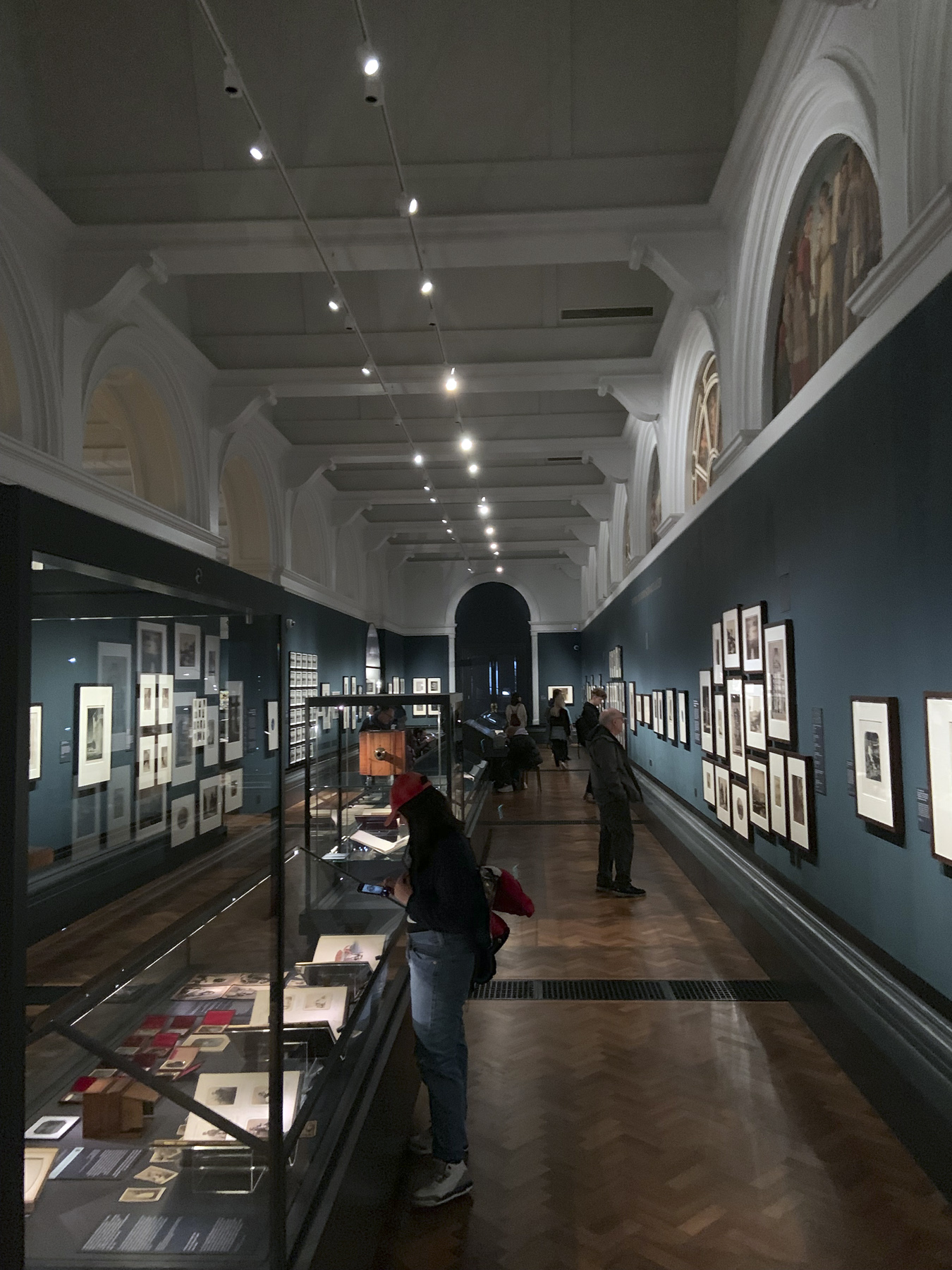


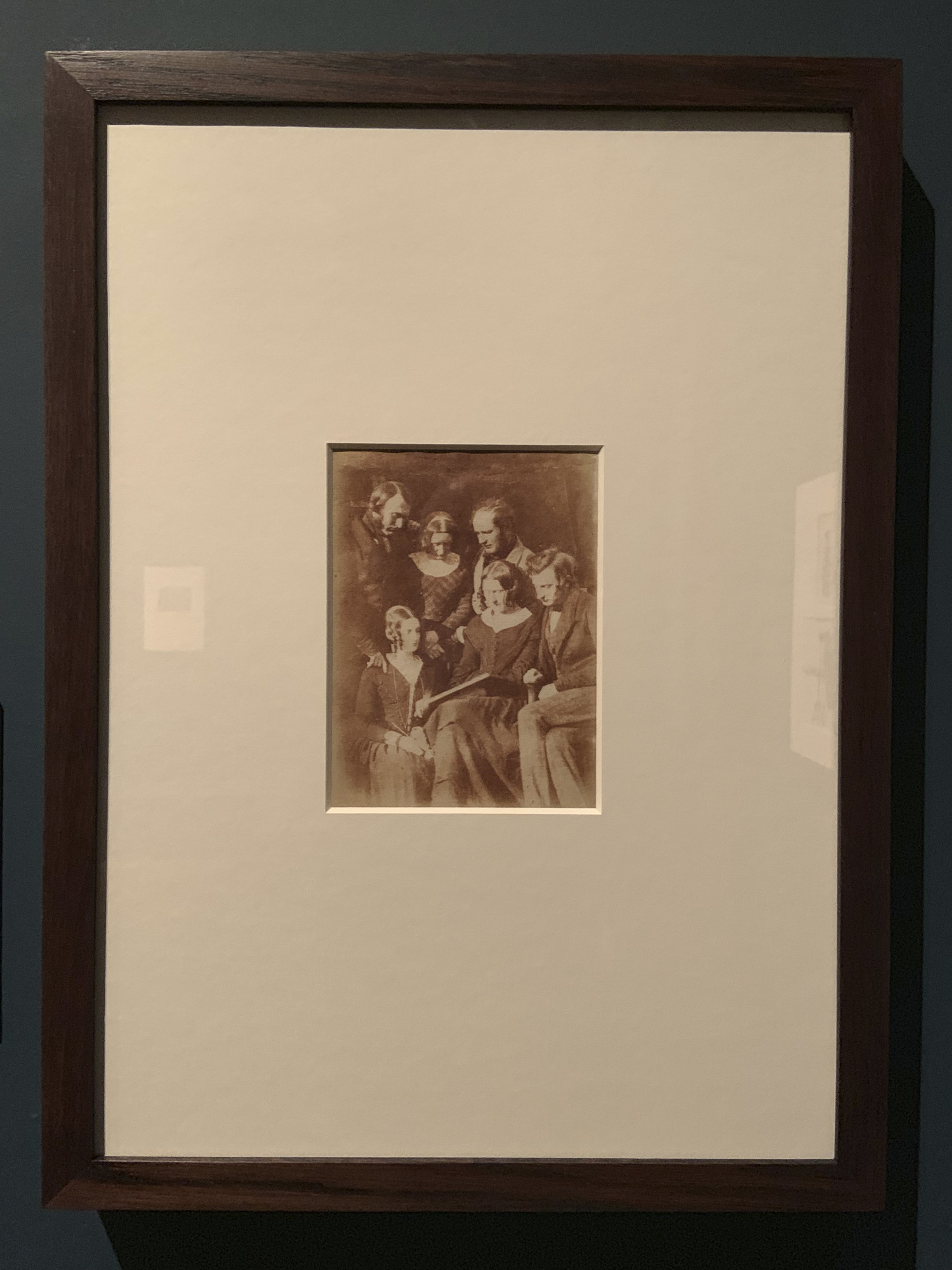

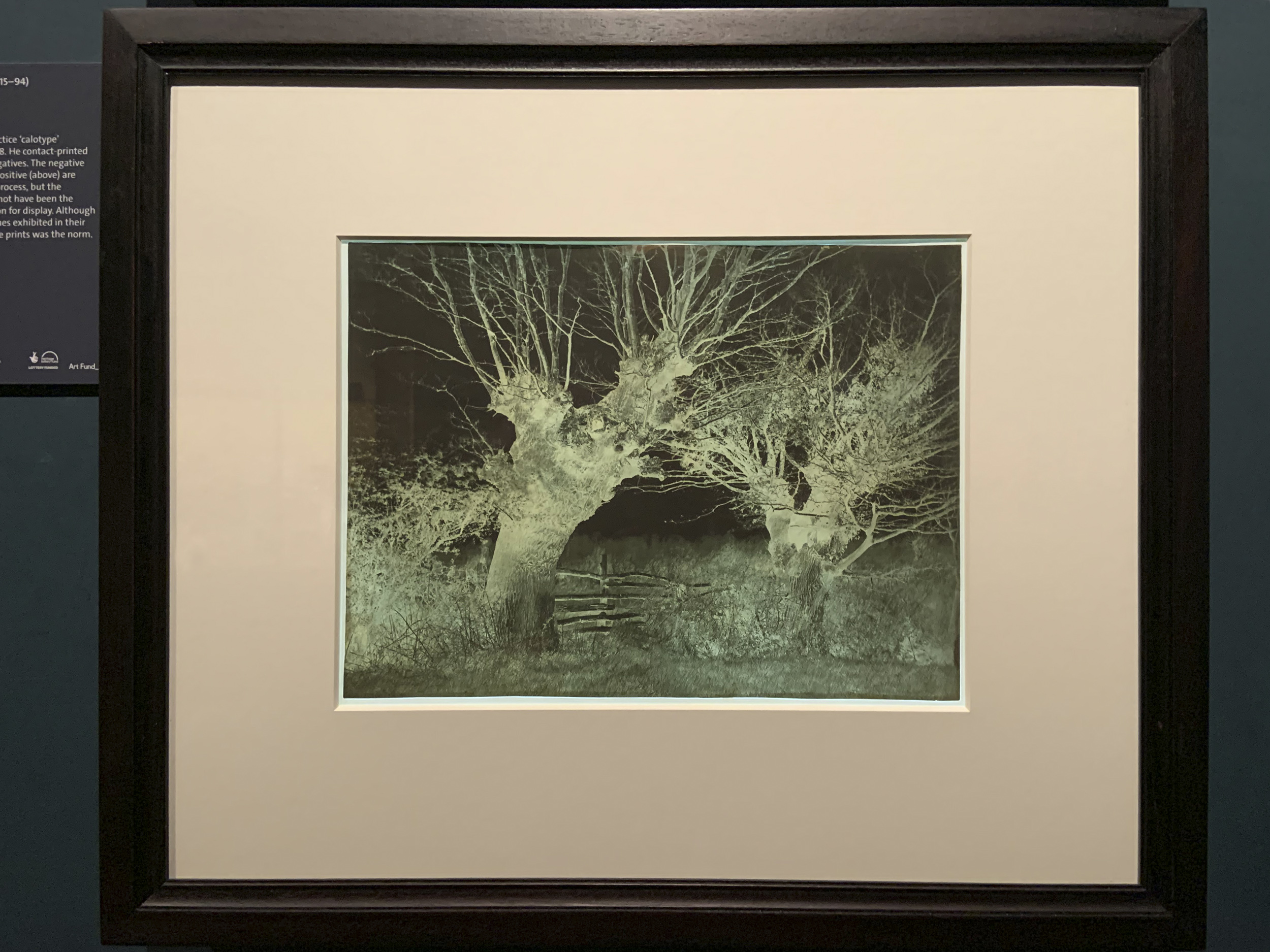
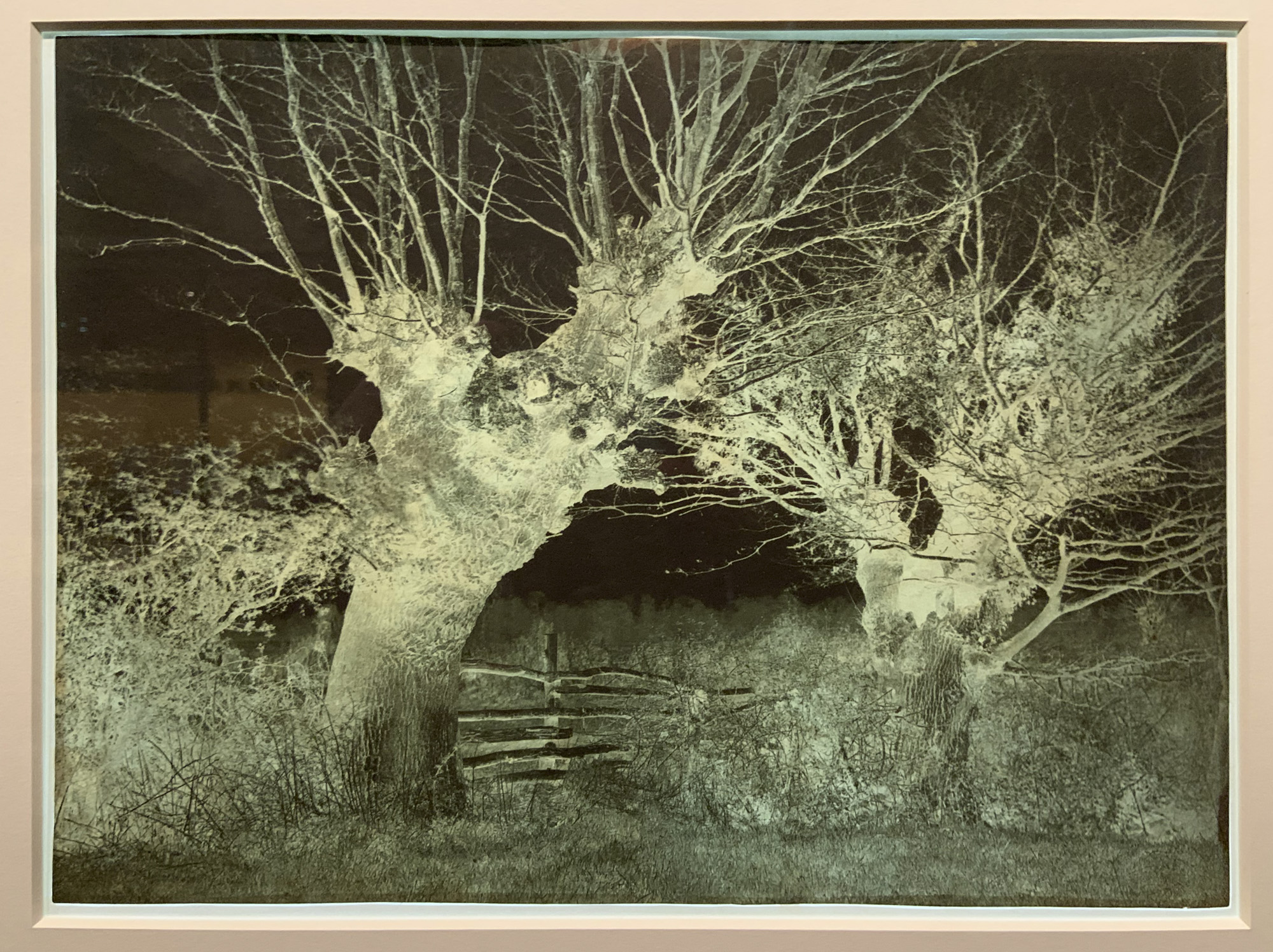
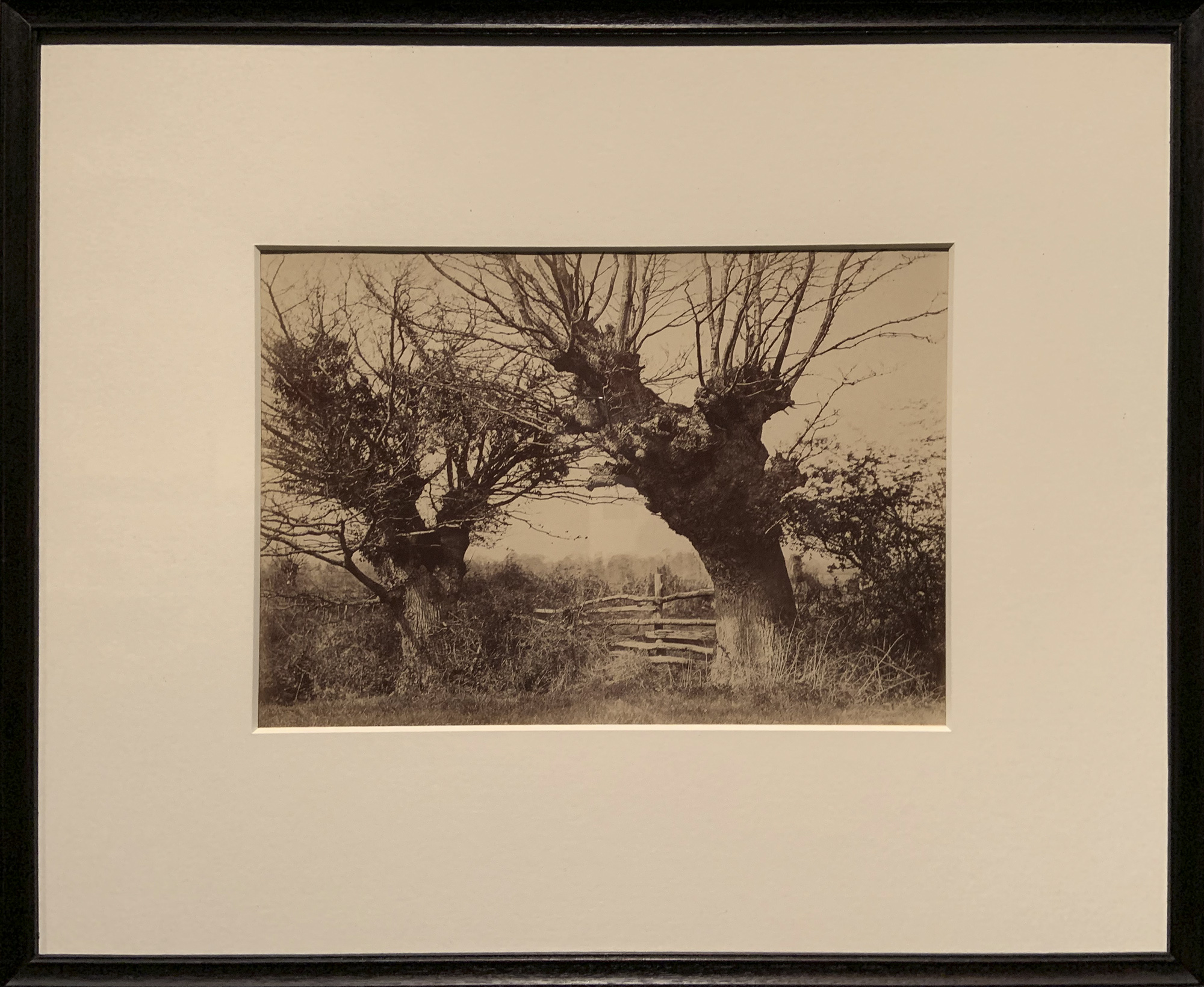
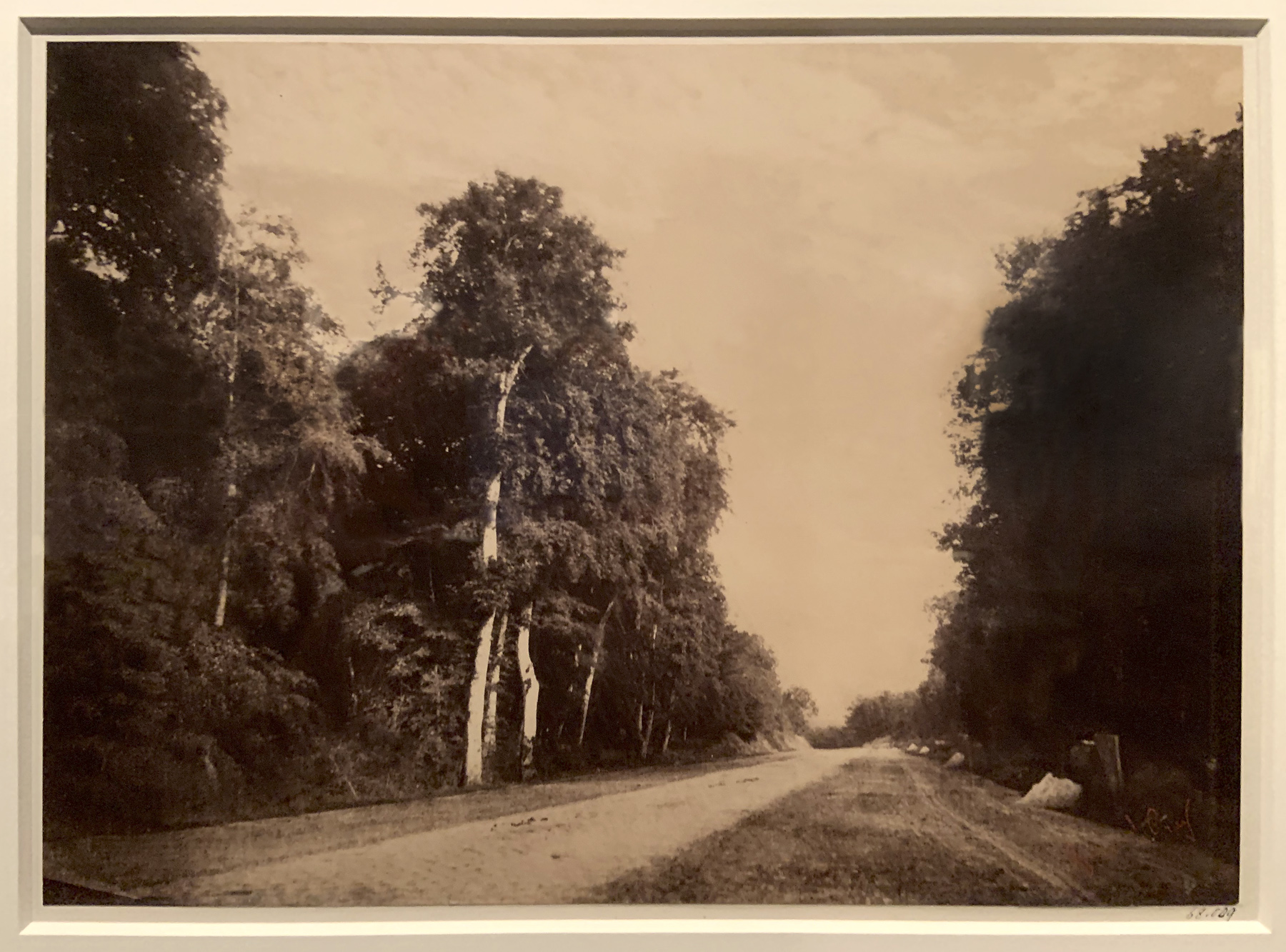
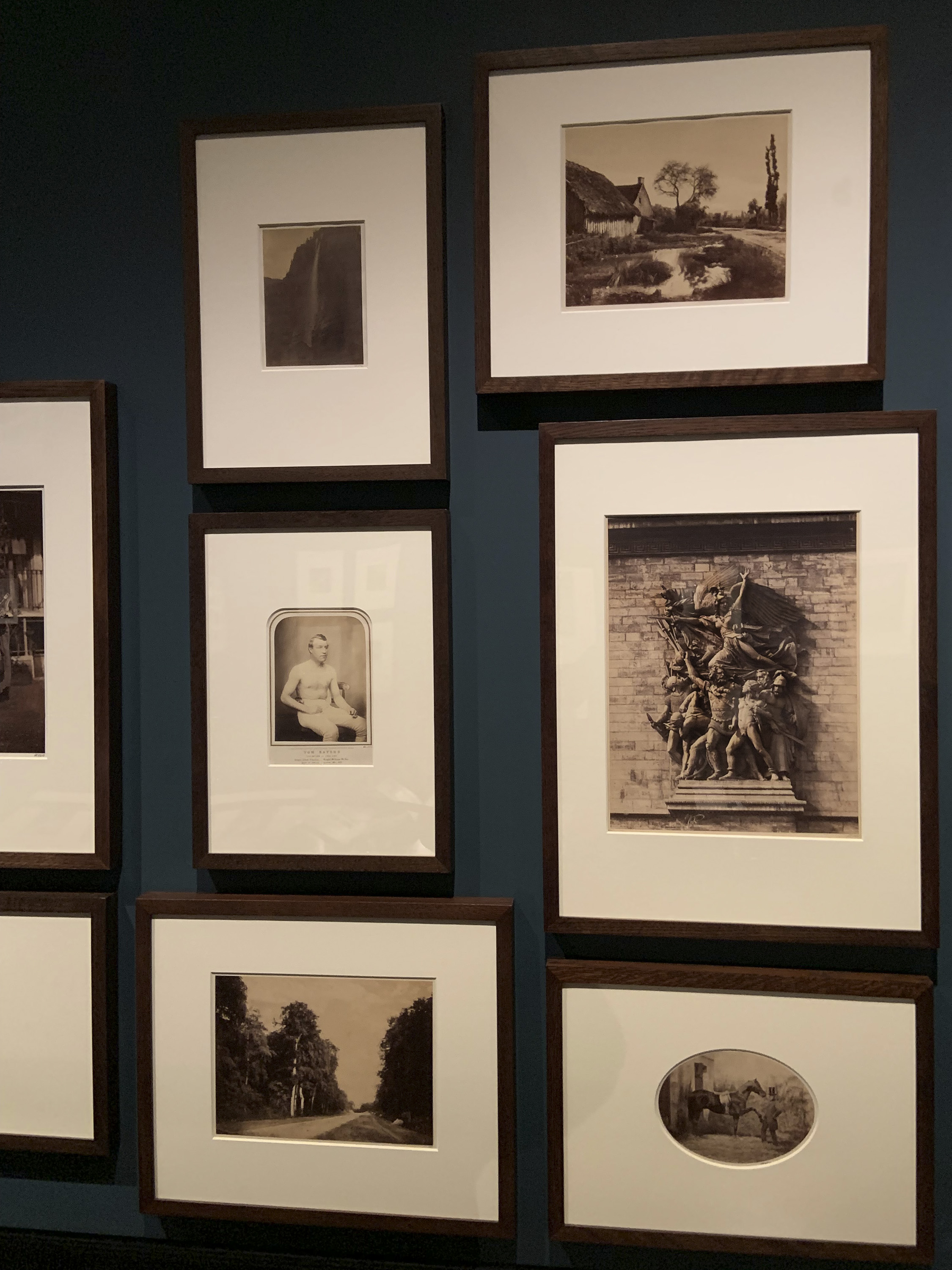
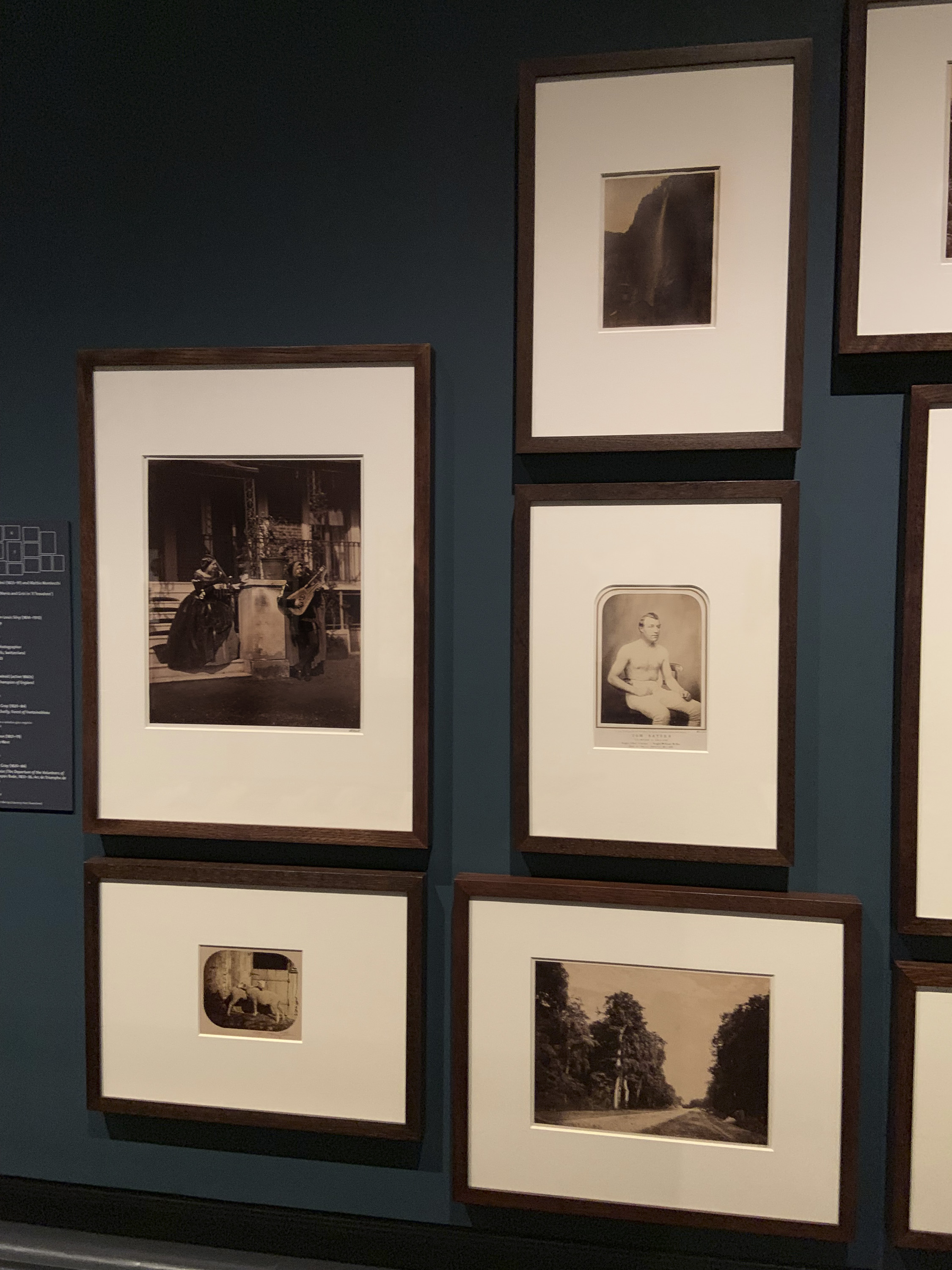


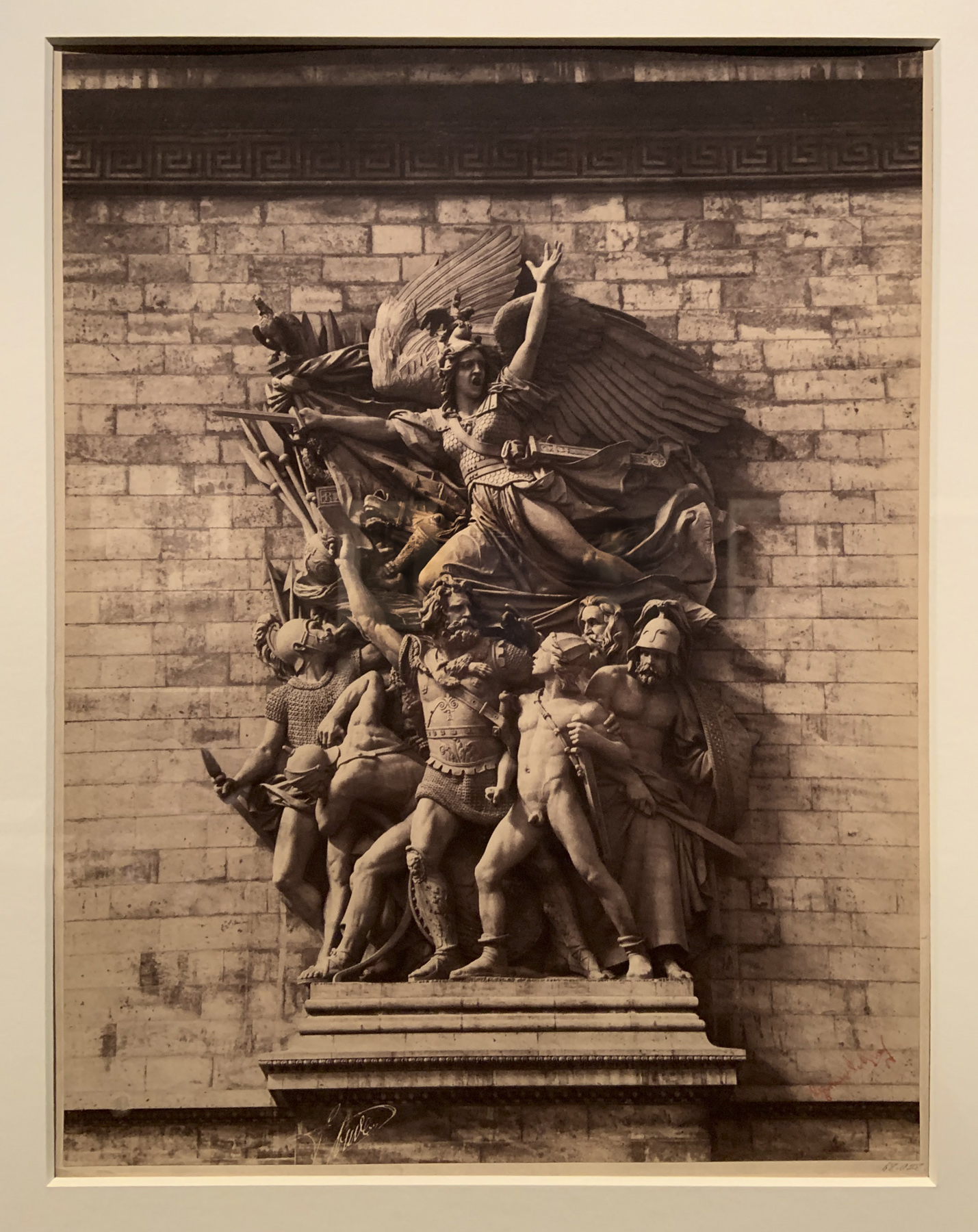
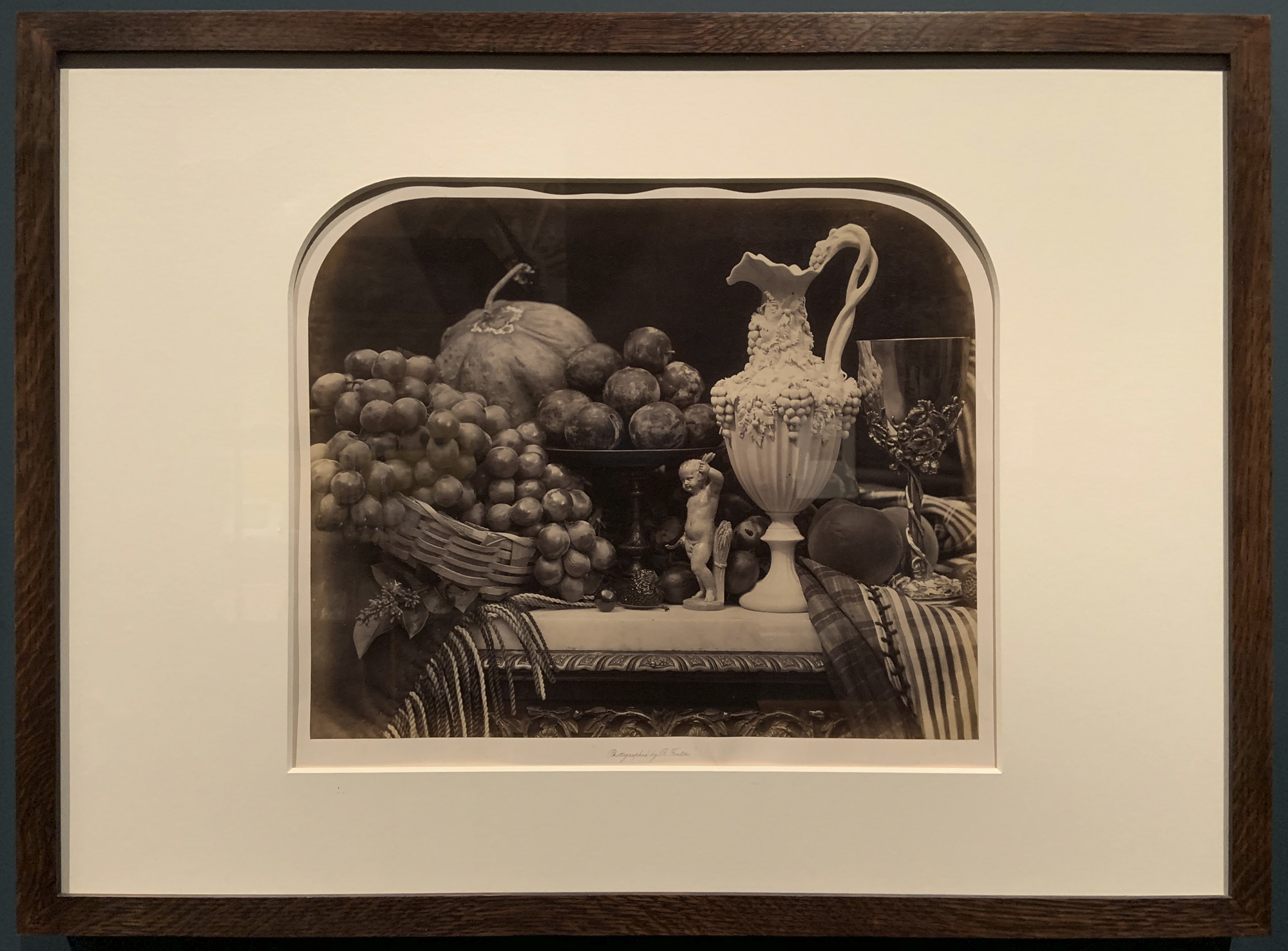
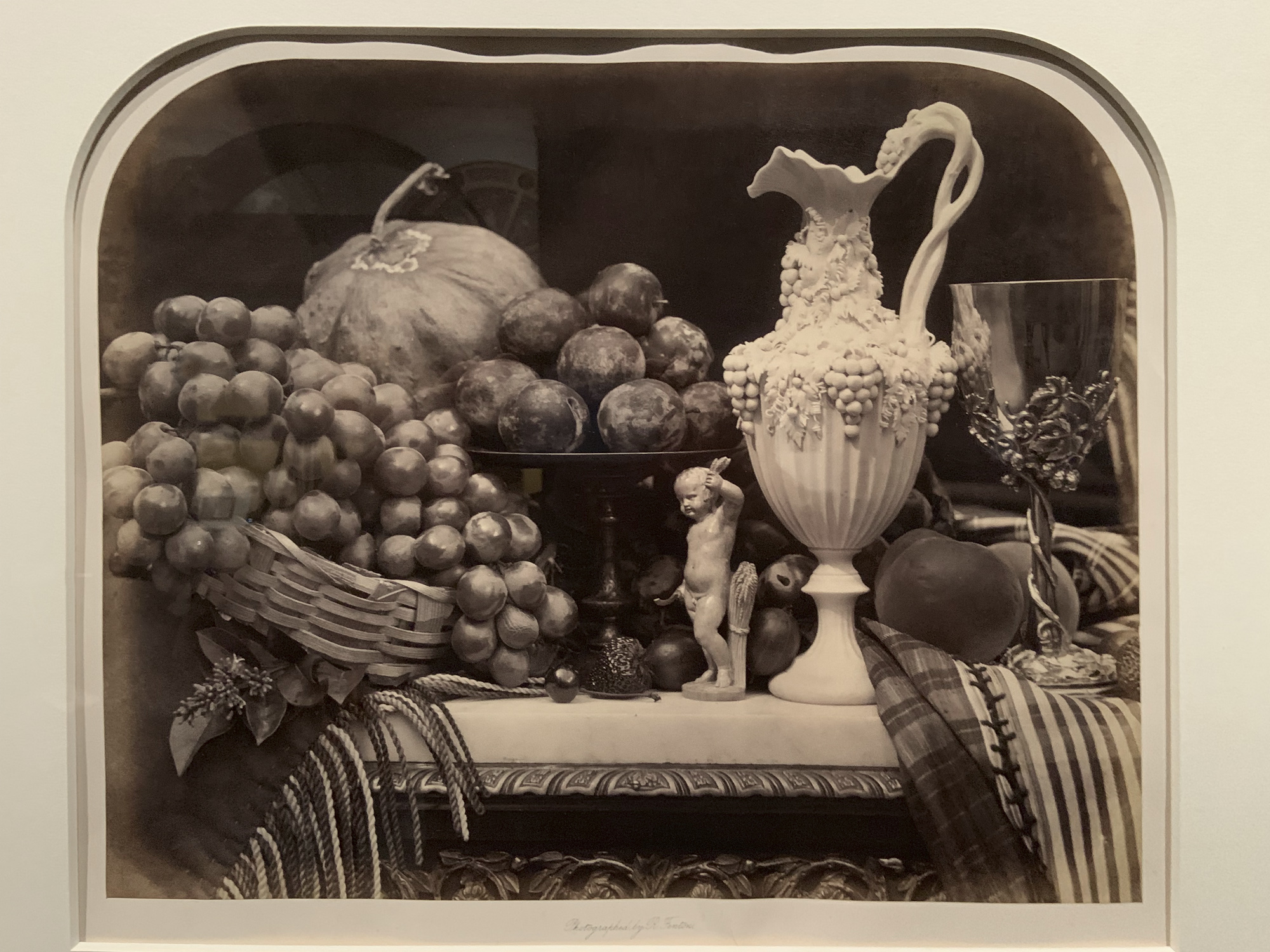
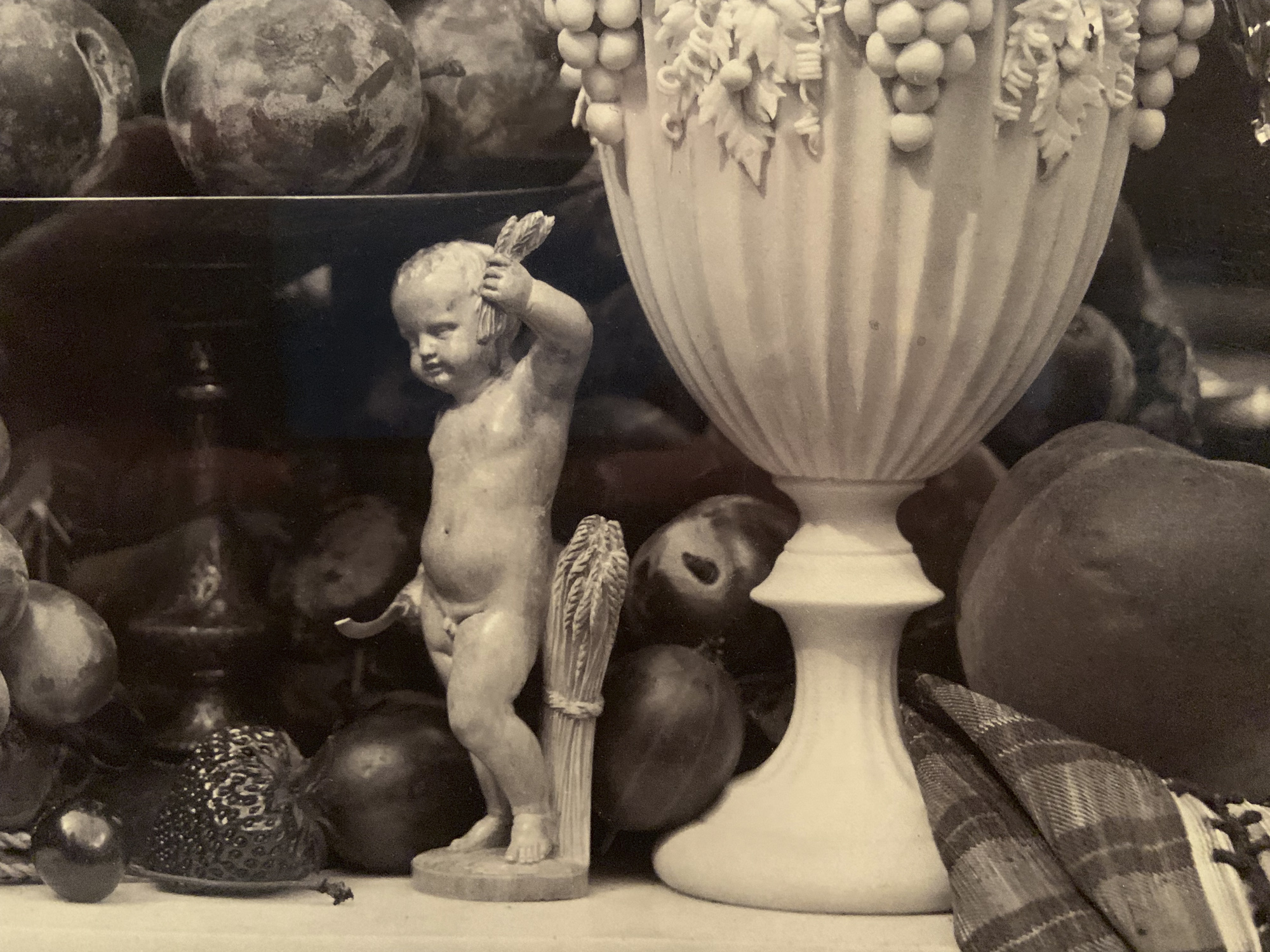


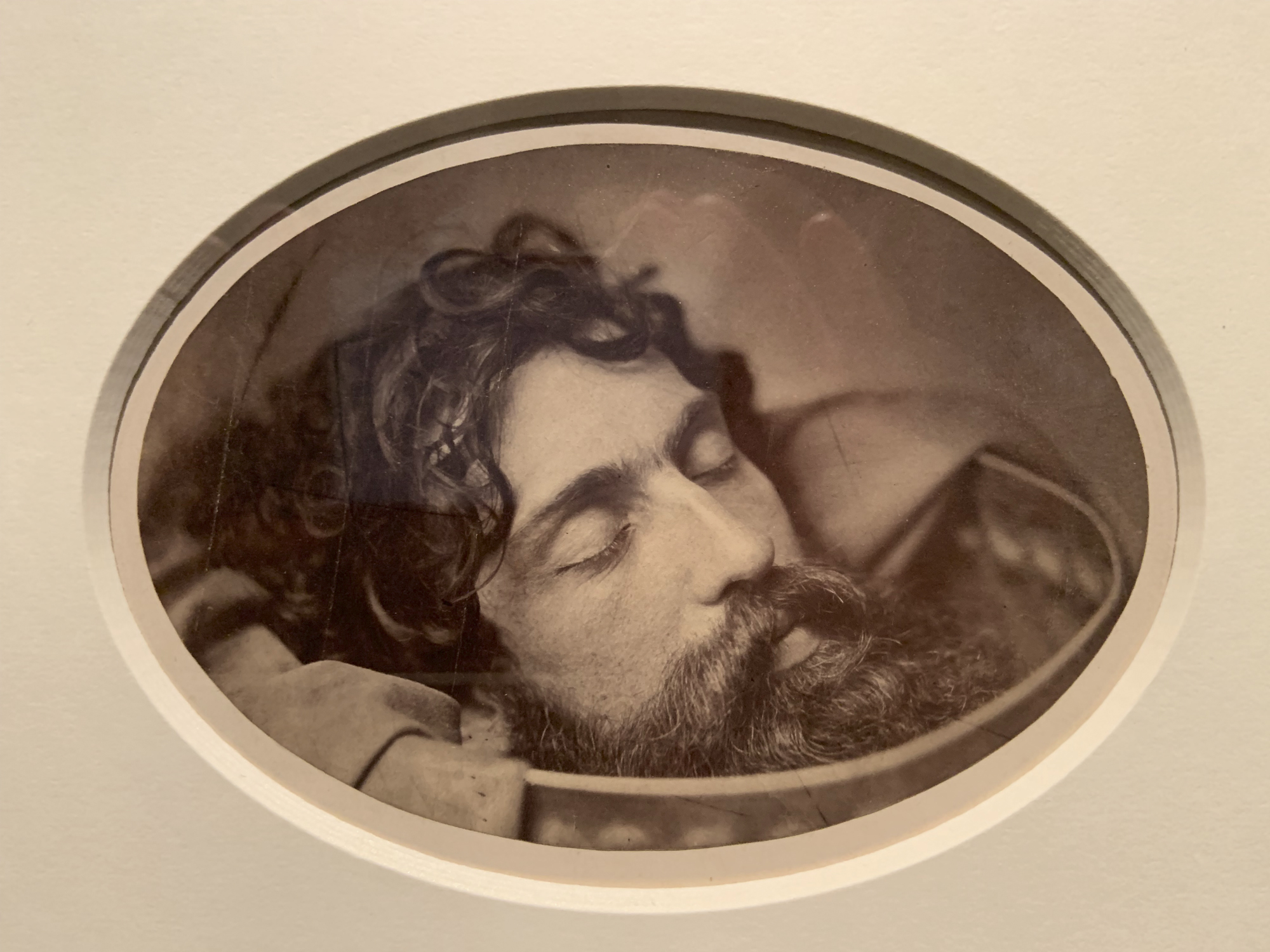
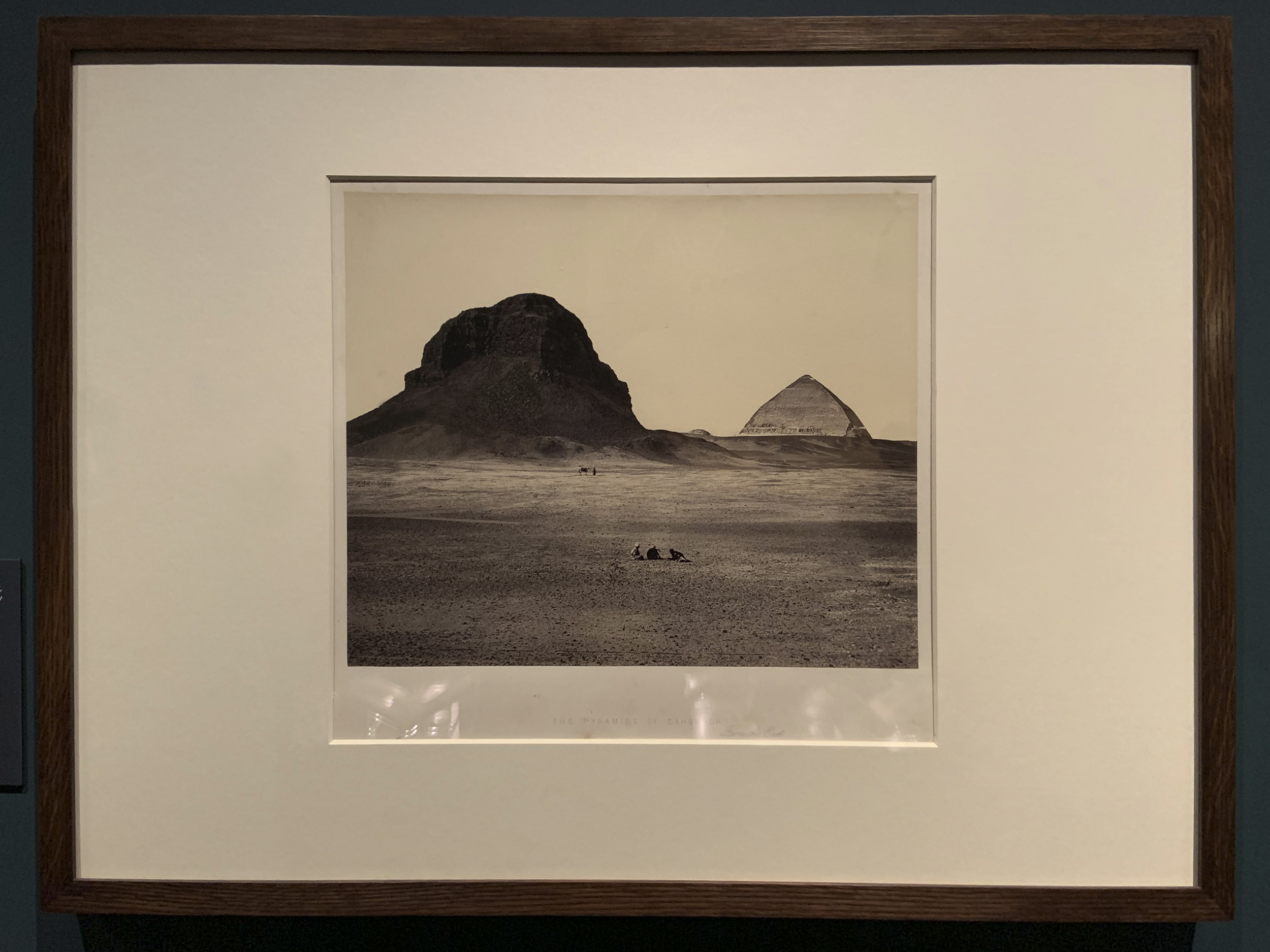

![Francis Frith (British, 1822-98) 'The Pyramids of Dahshoor [Dahshur], from the East, from Egypt, Sinai, and Jerusalem: A Series of Twenty Photographic Views by Francis Frith' 1858 (published 1860 or 1862) from the V&A Photography Centre, London 2019](https://artblart.com/wp-content/uploads/2020/05/frith-the-pyramids-of-dahshoor-web.jpg "Francis Frith (British, 1822-98) 'The Pyramids of Dahshoor [Dahshur], from the East, from Egypt, Sinai, and Jerusalem: A Series of Twenty Photographic Views by Francis Frith' 1858 (published 1860 or 1862) from the V&A Photography Centre, London 2019")


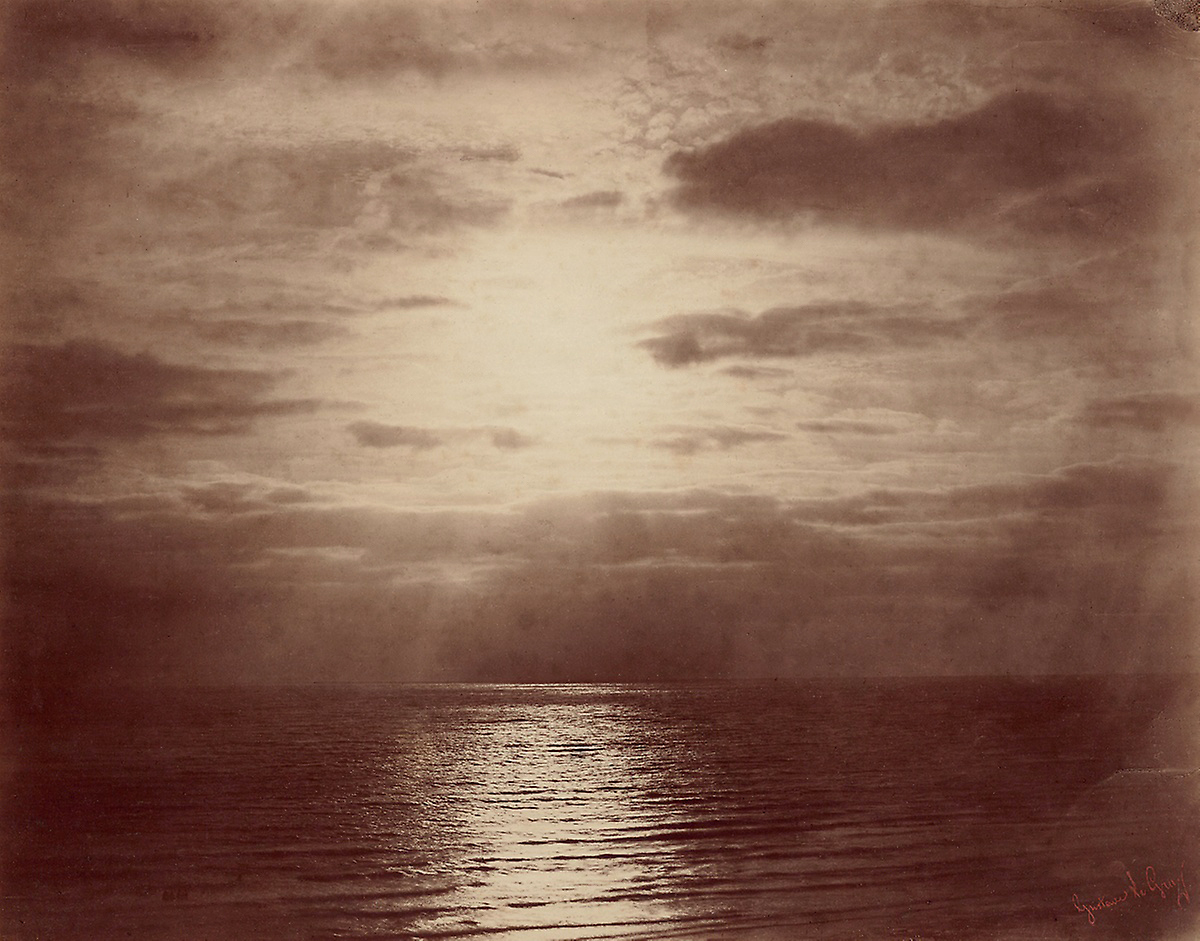
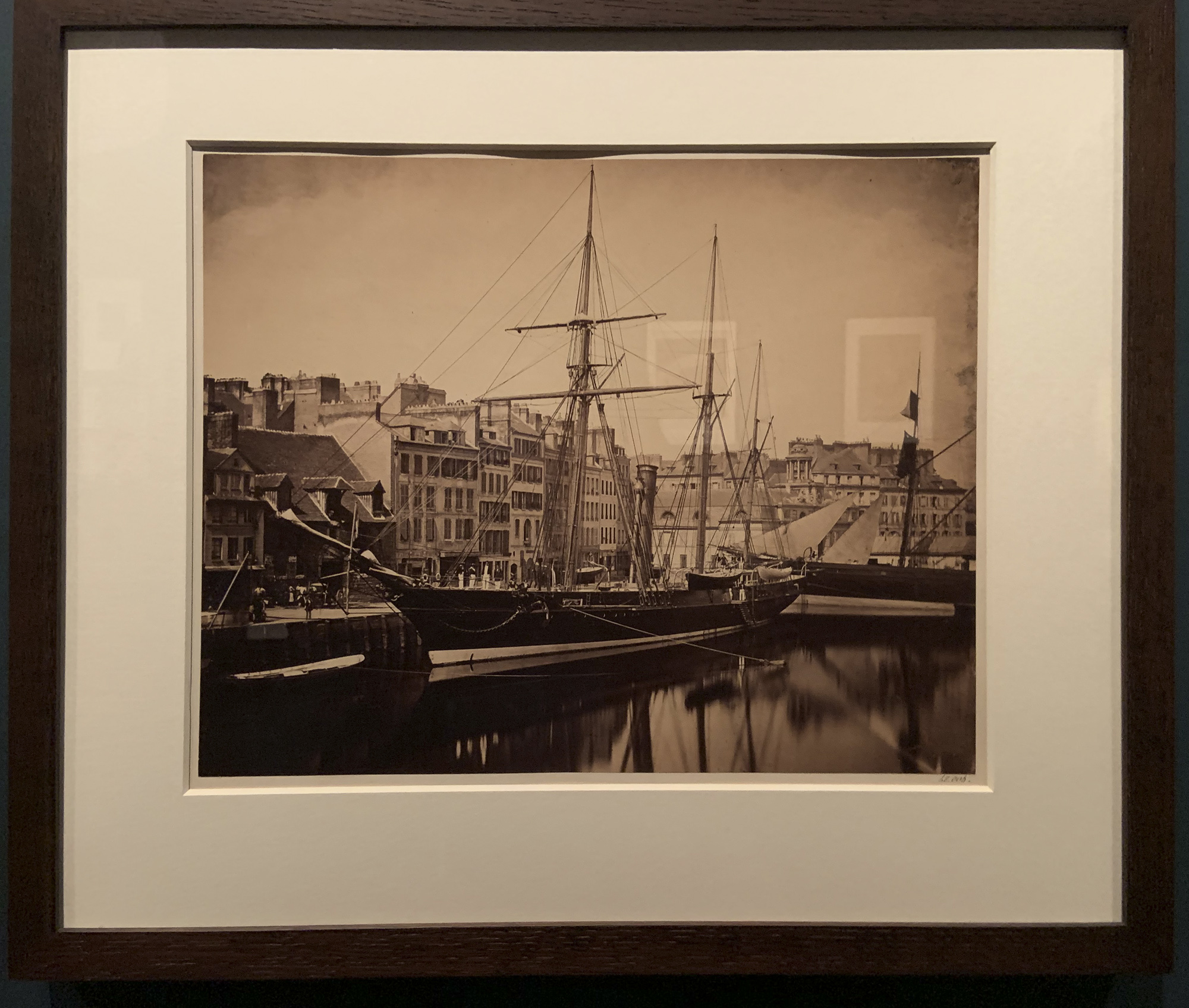

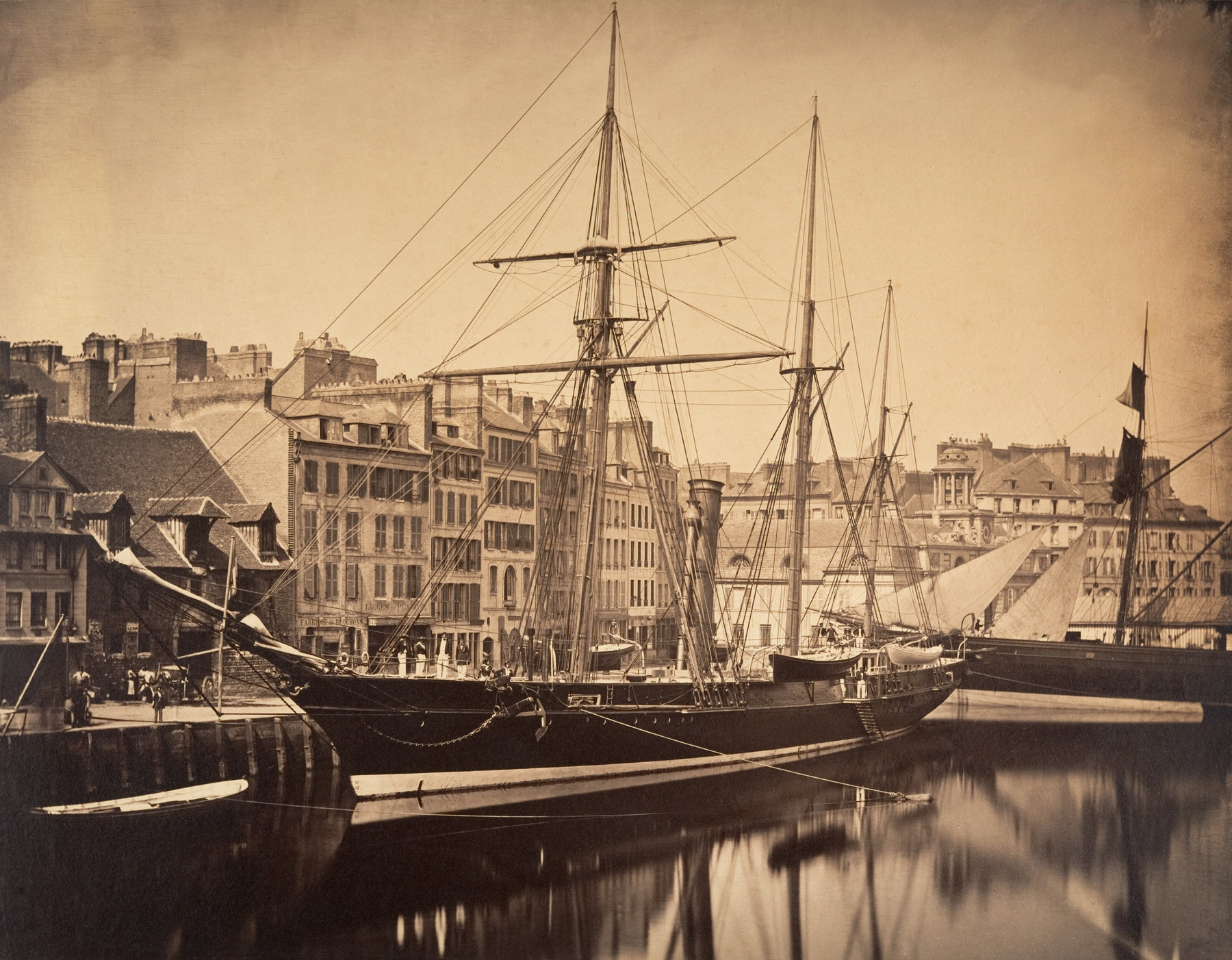

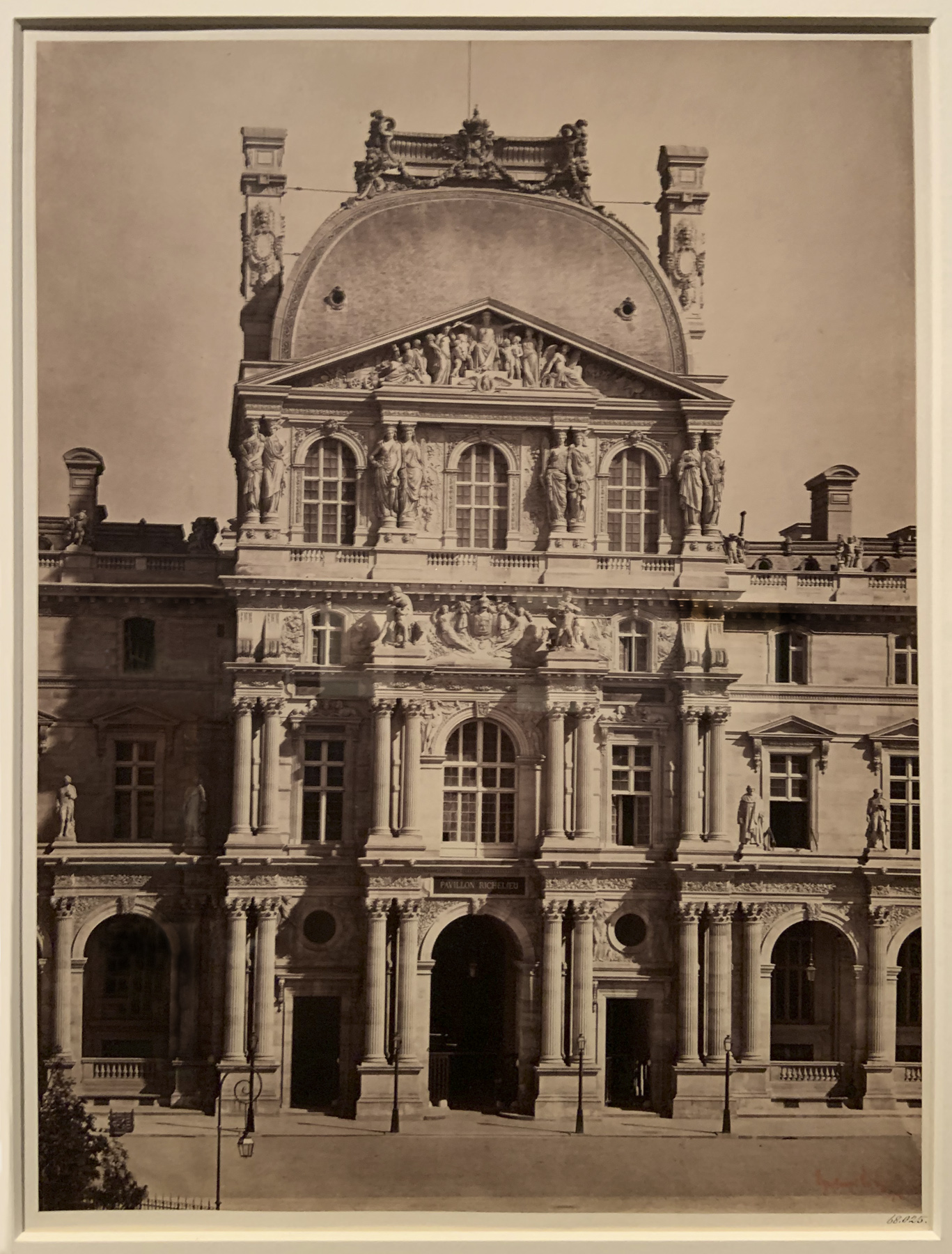


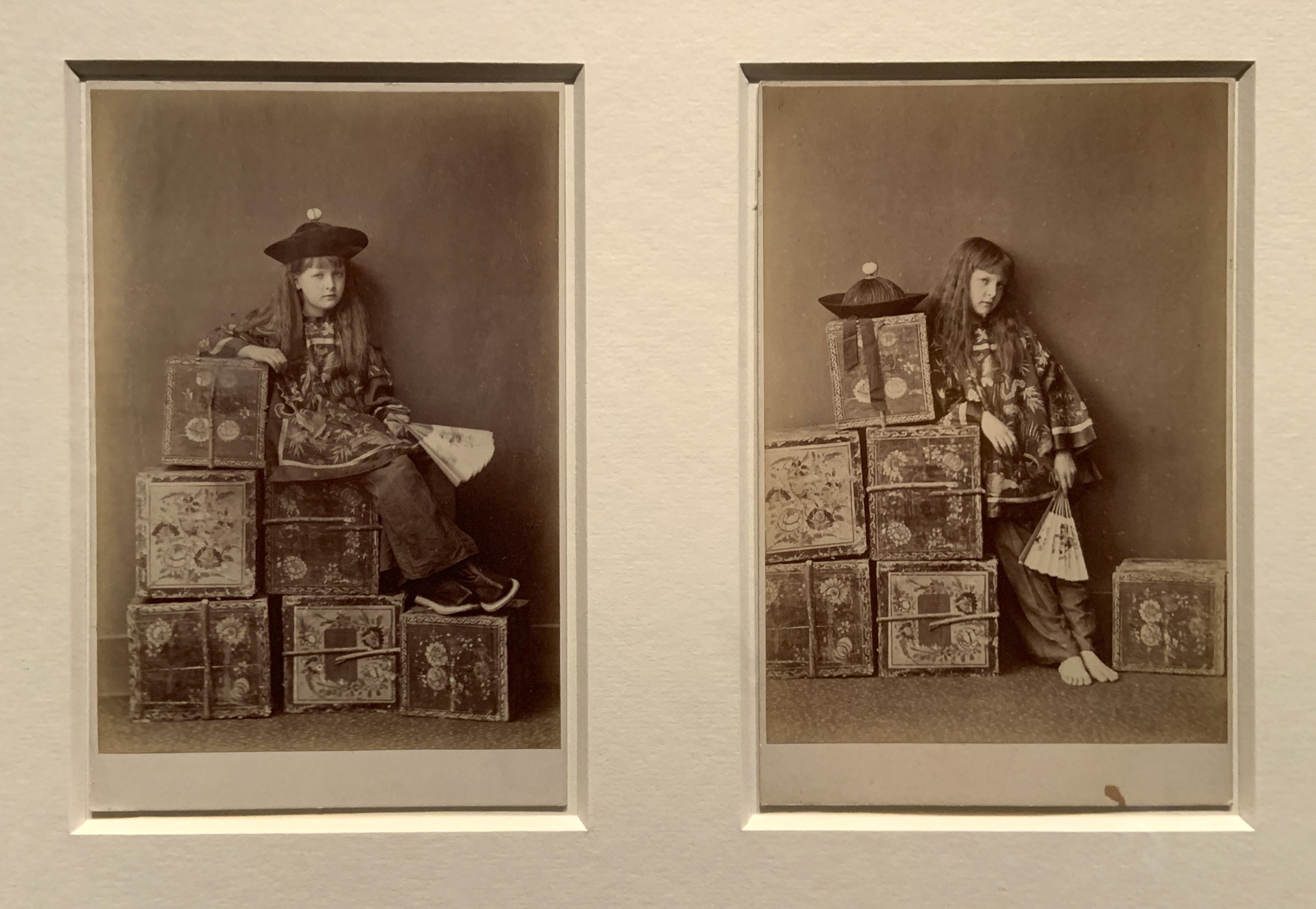
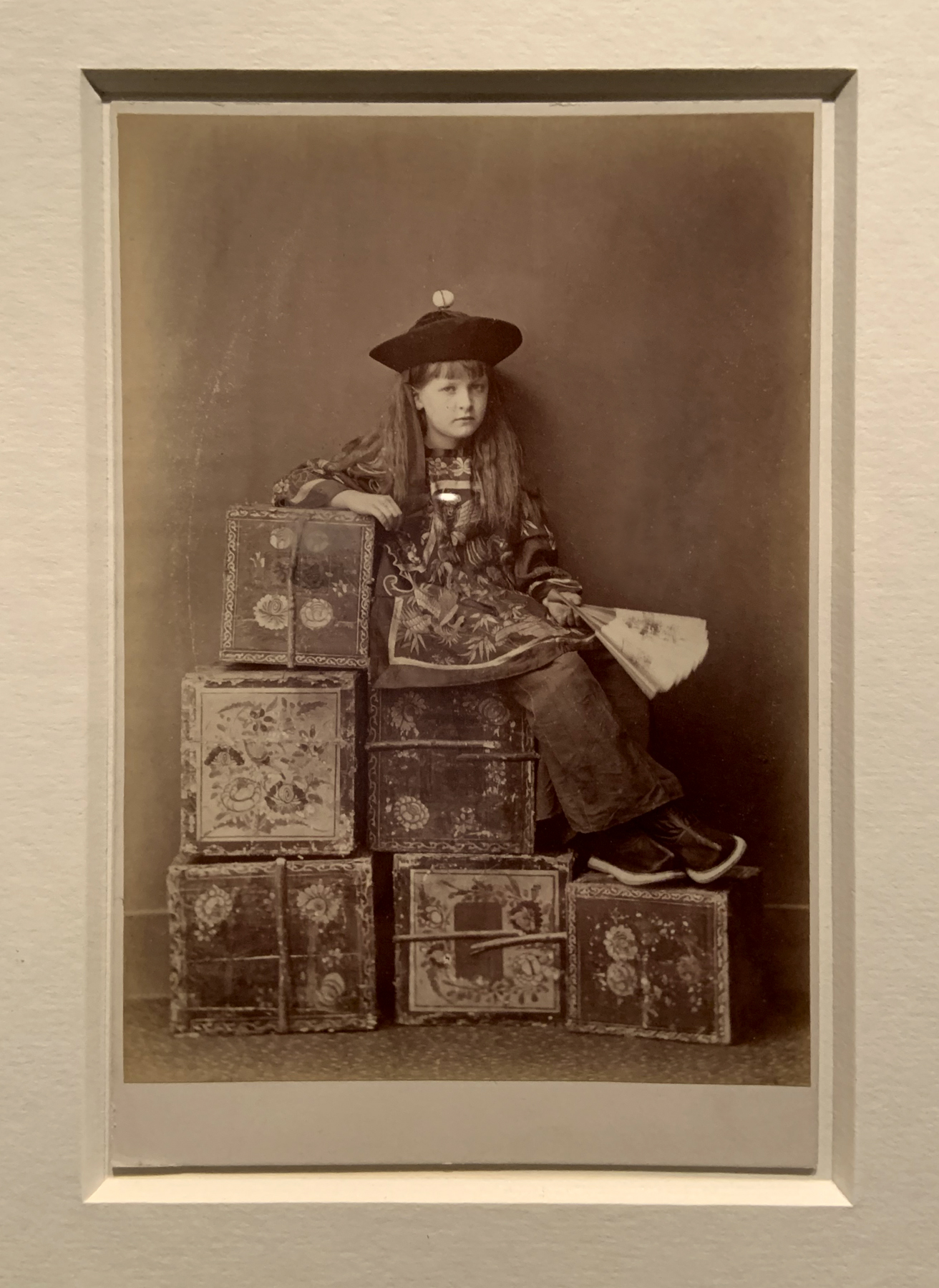


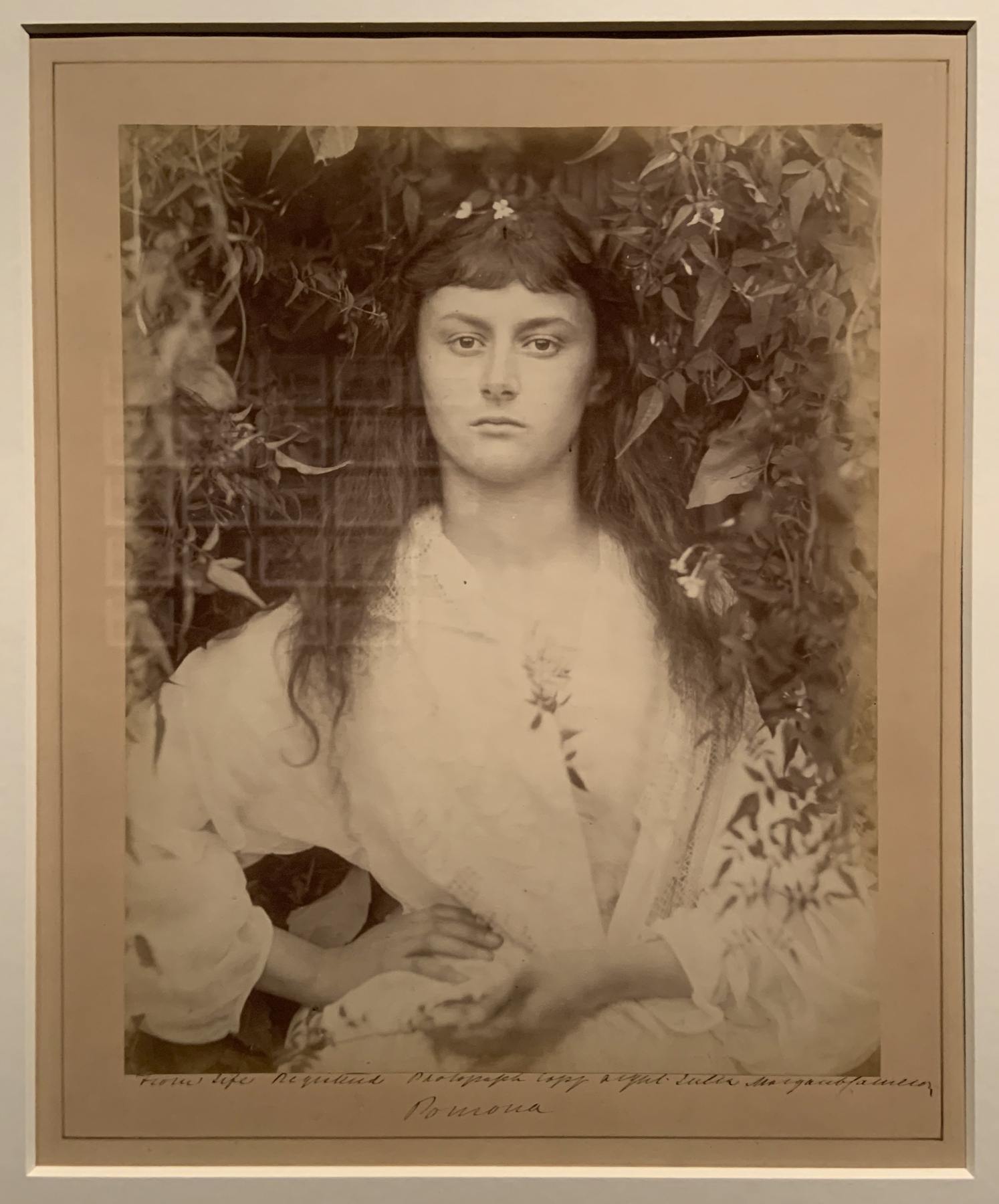
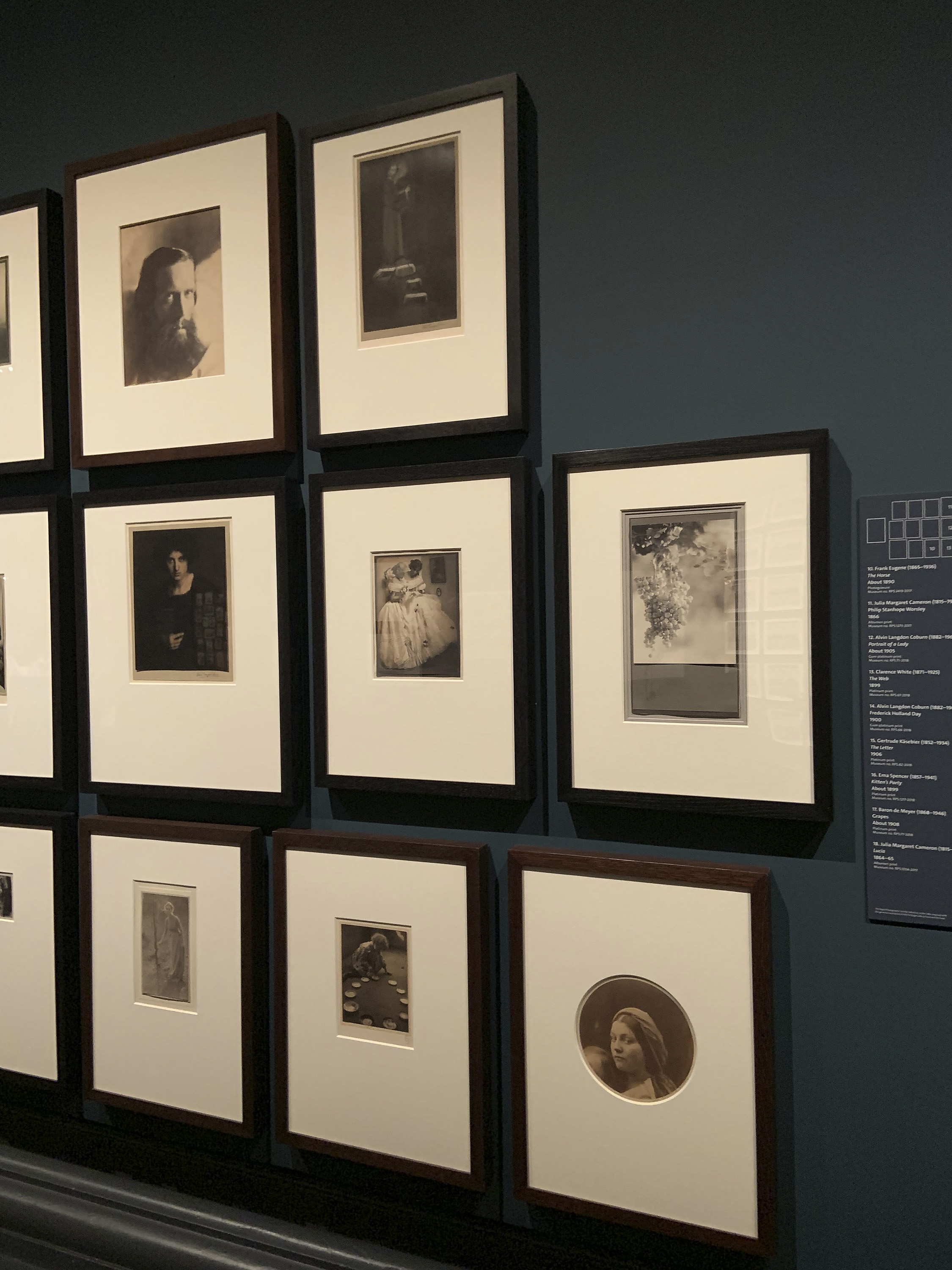

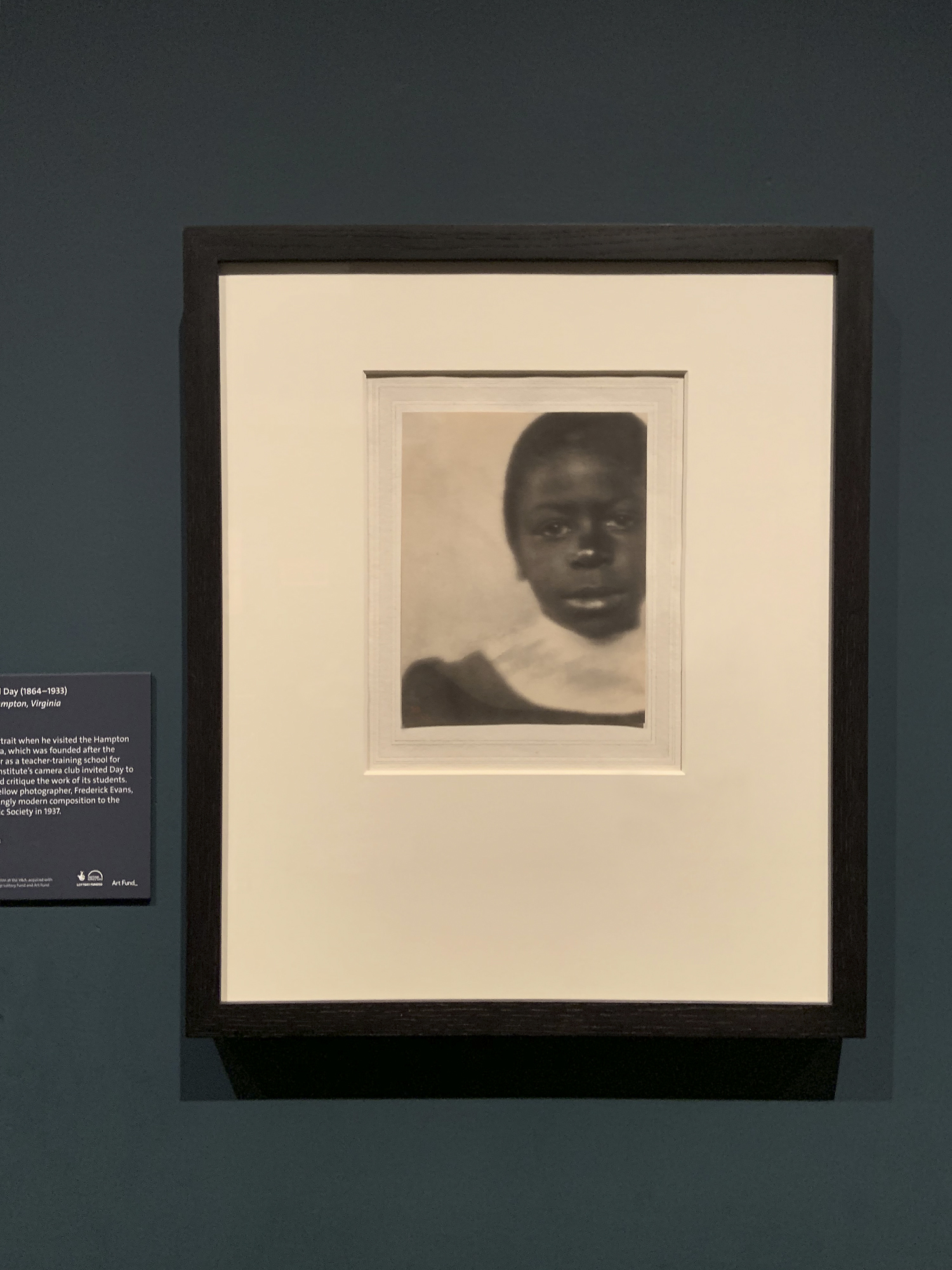
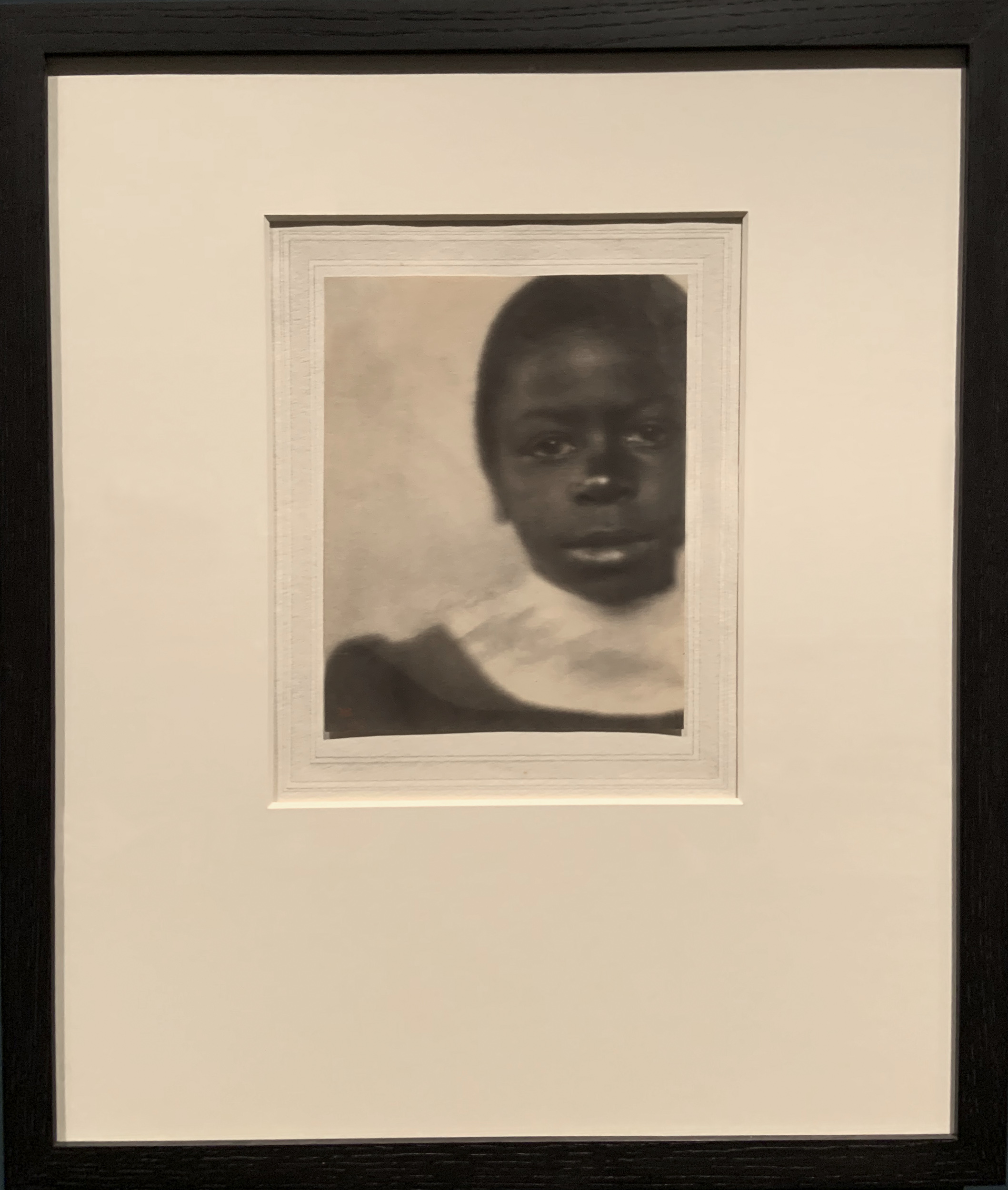


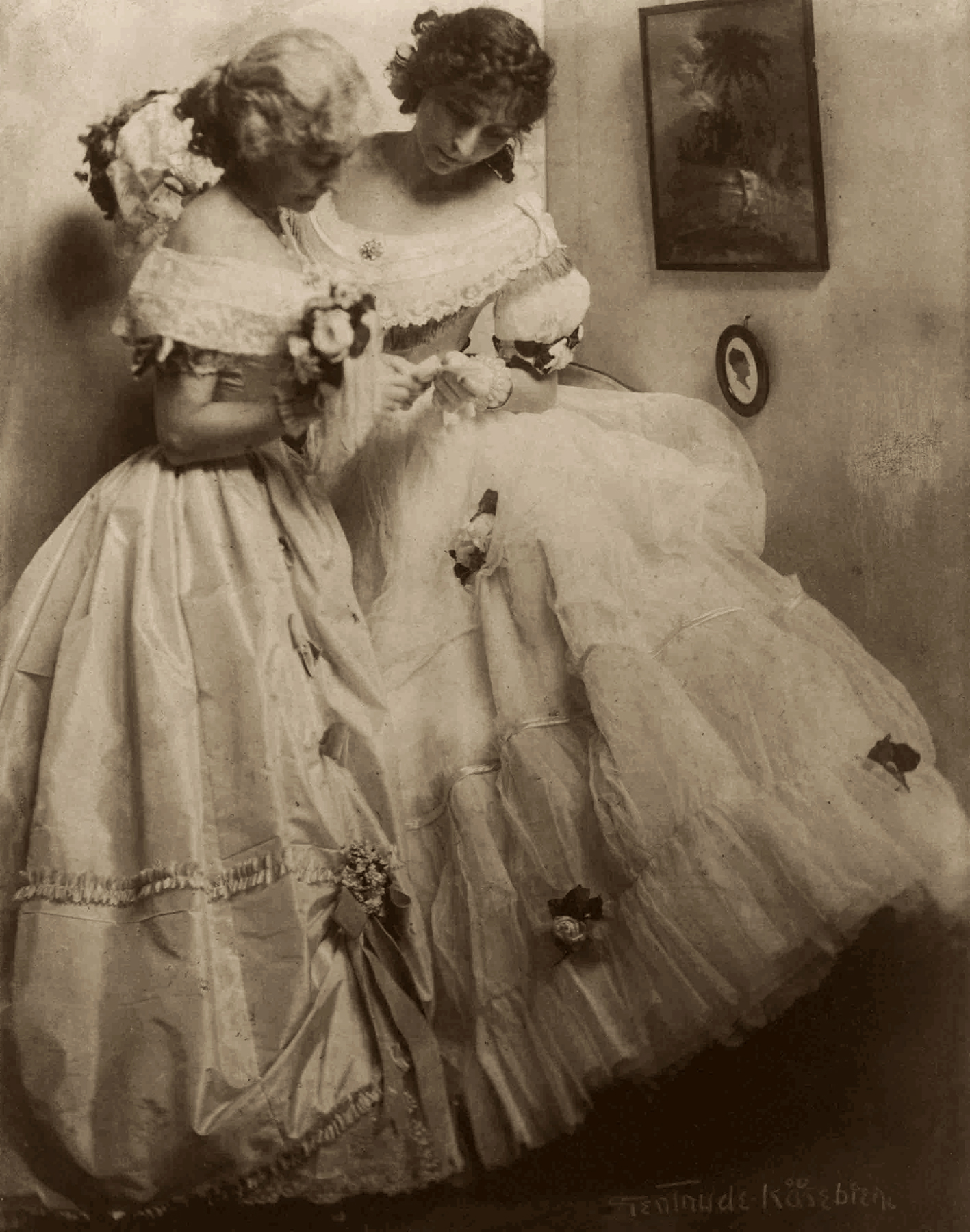
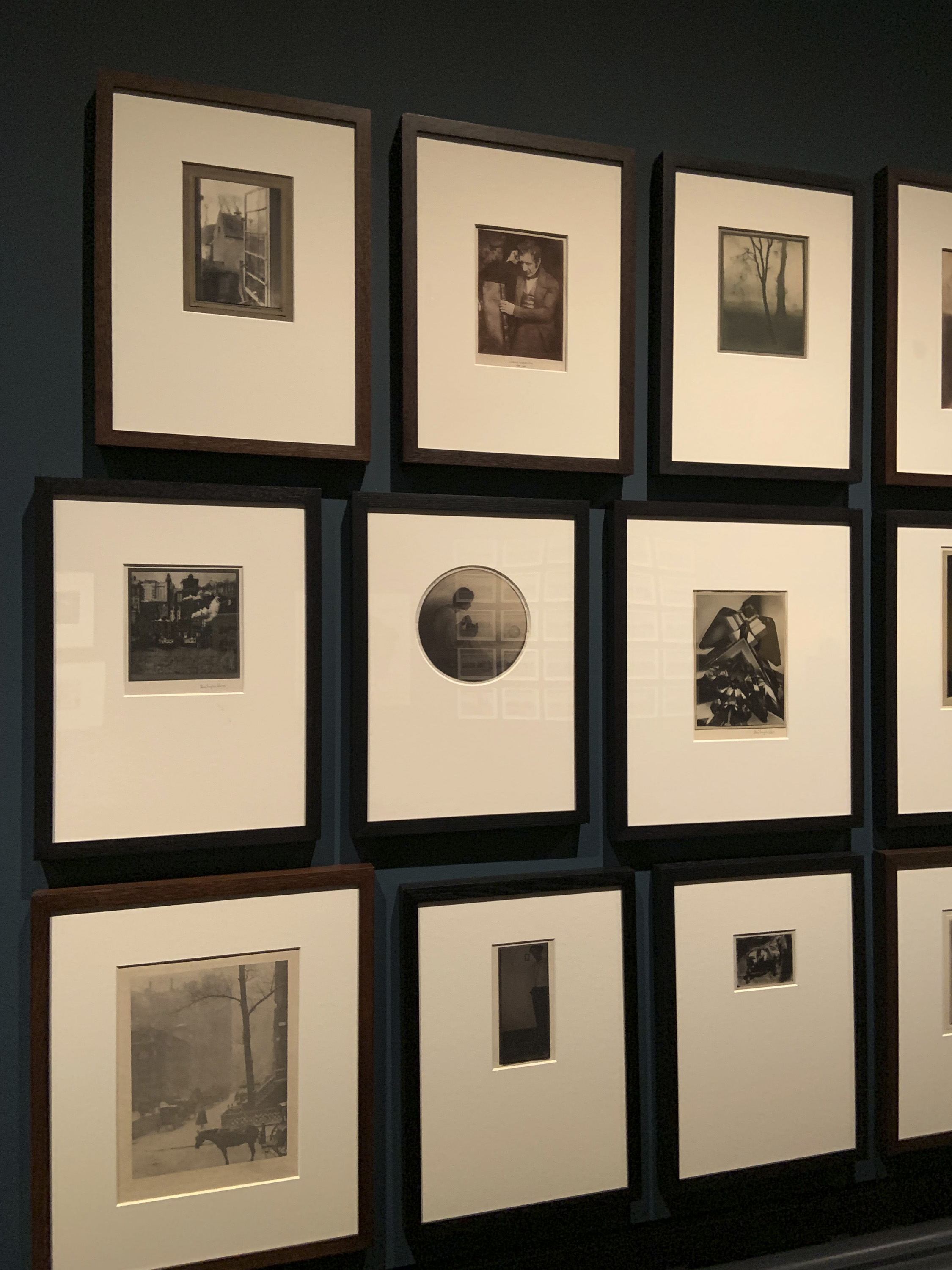
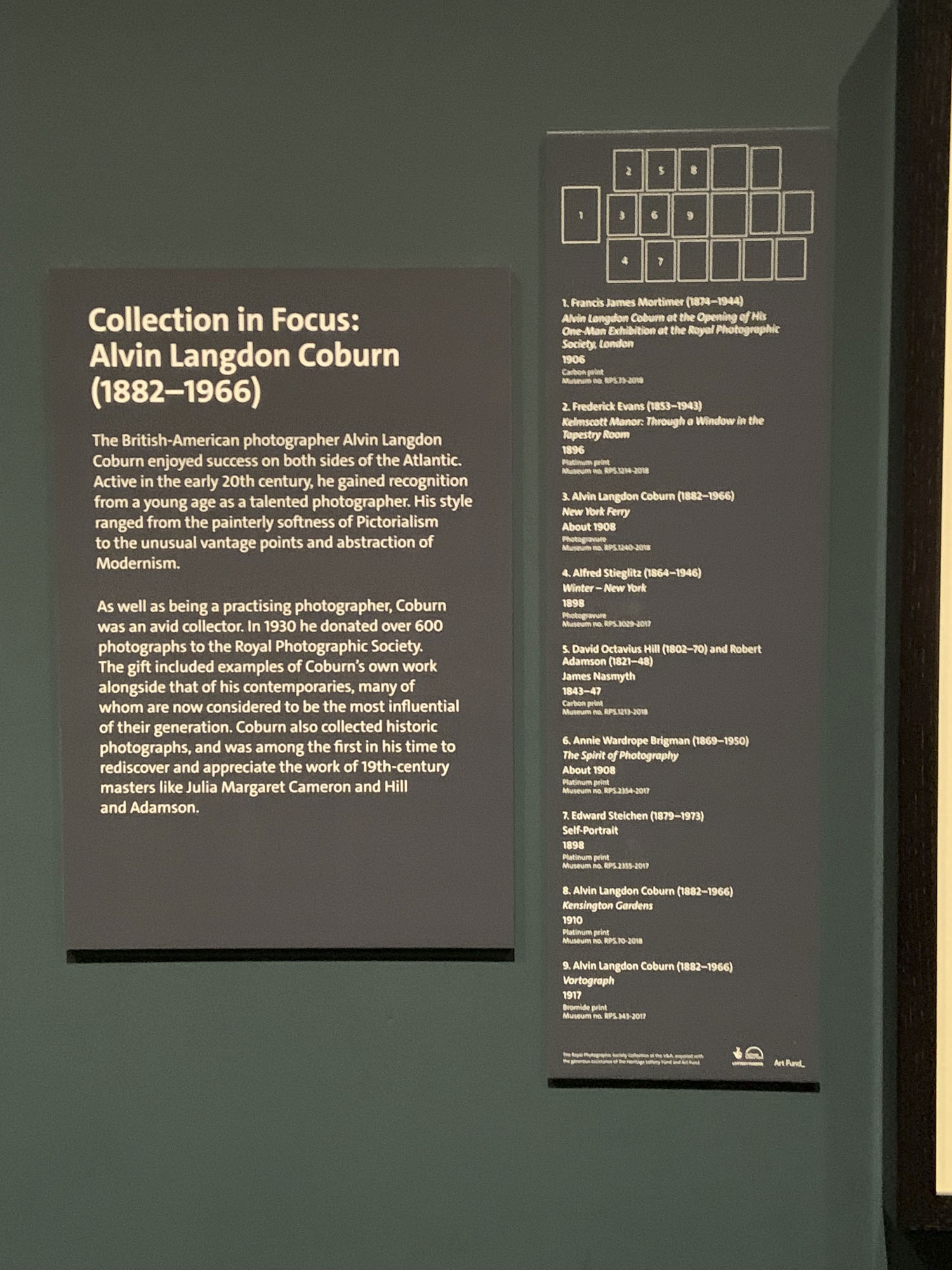

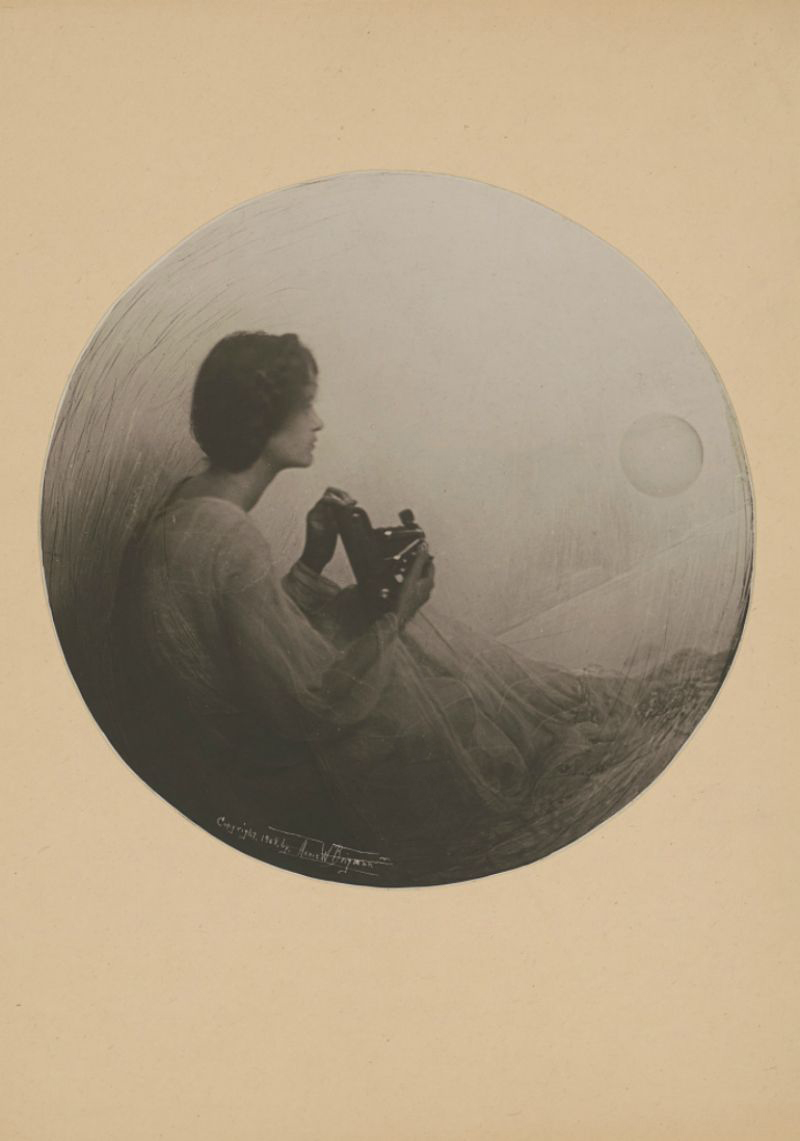

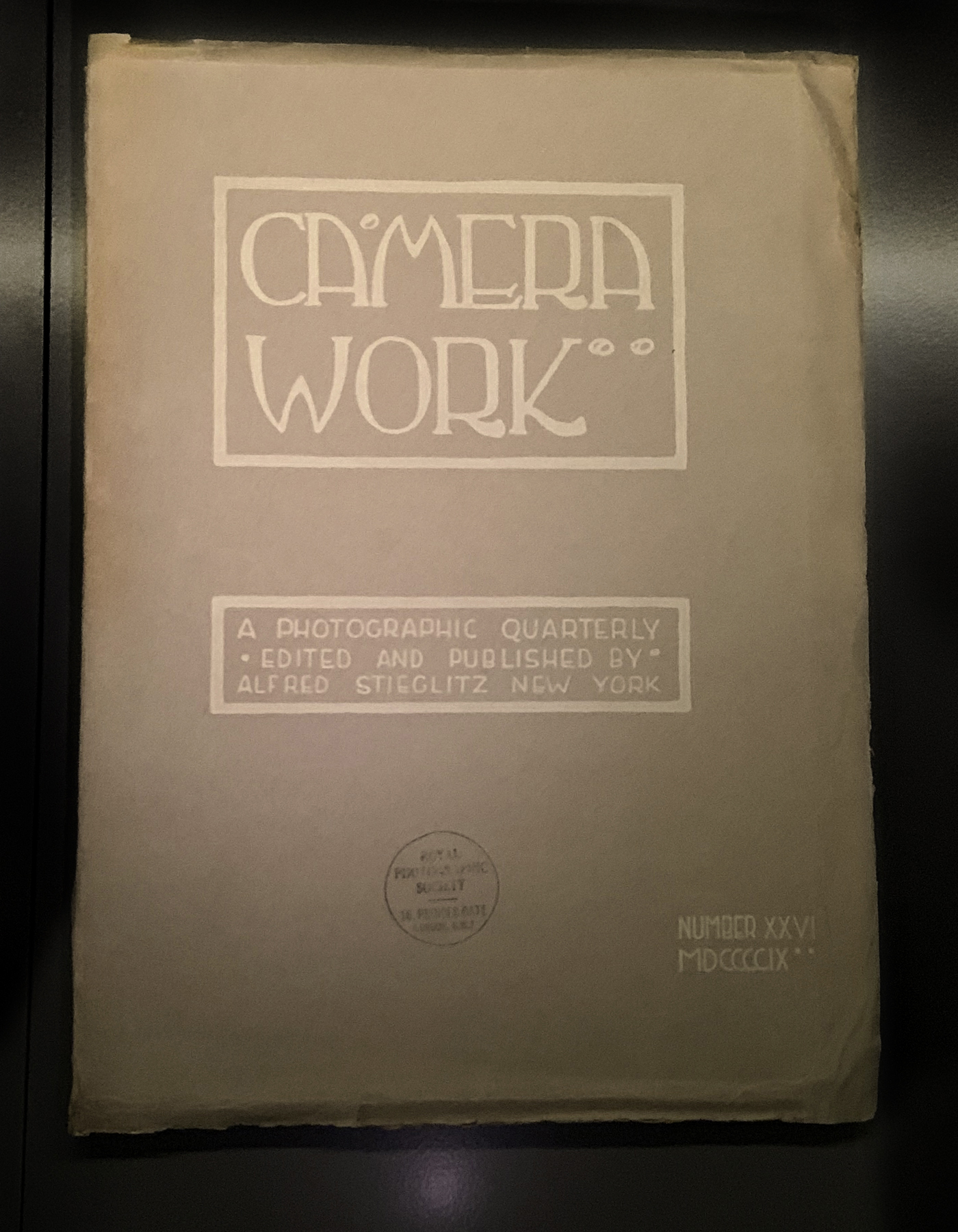
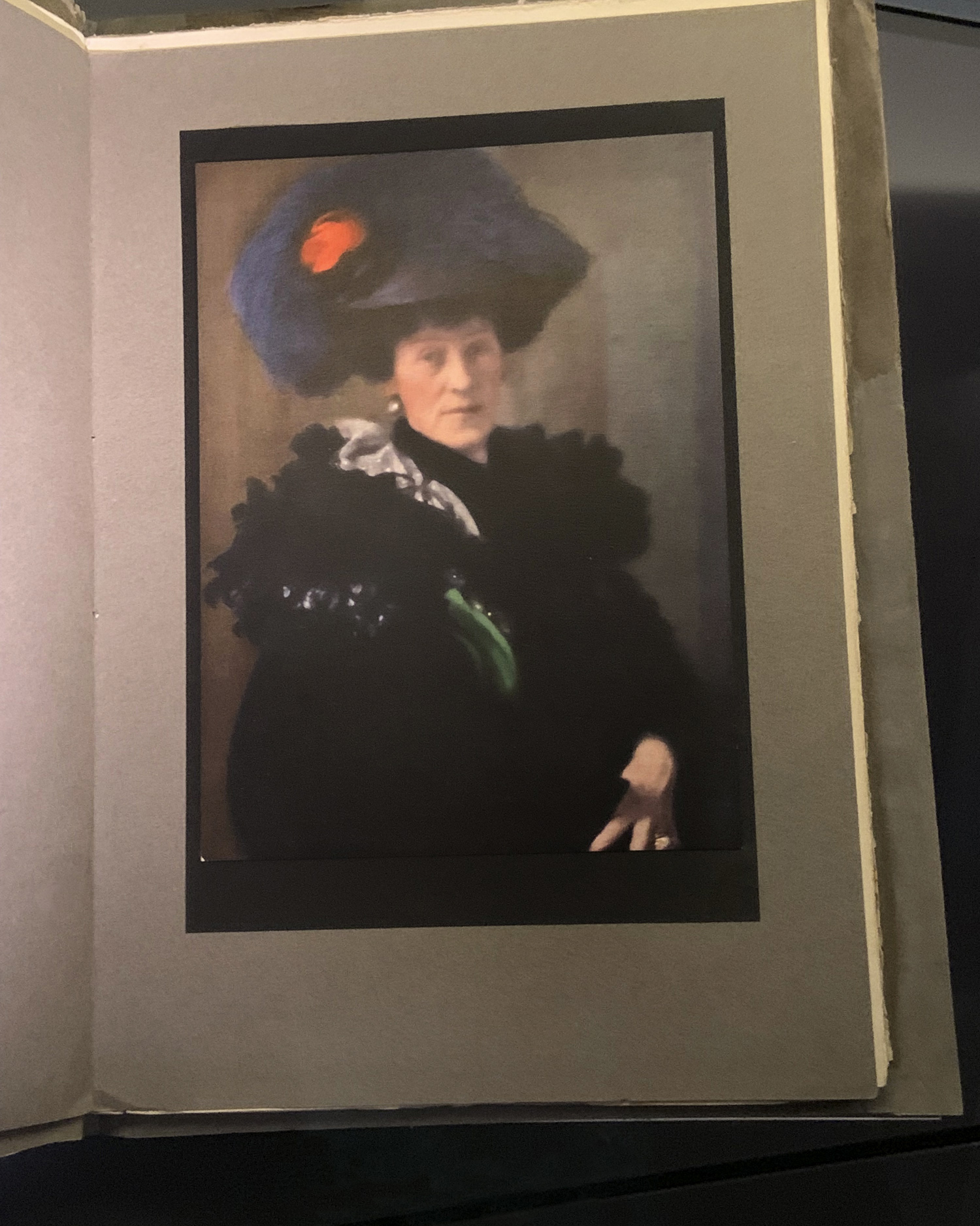
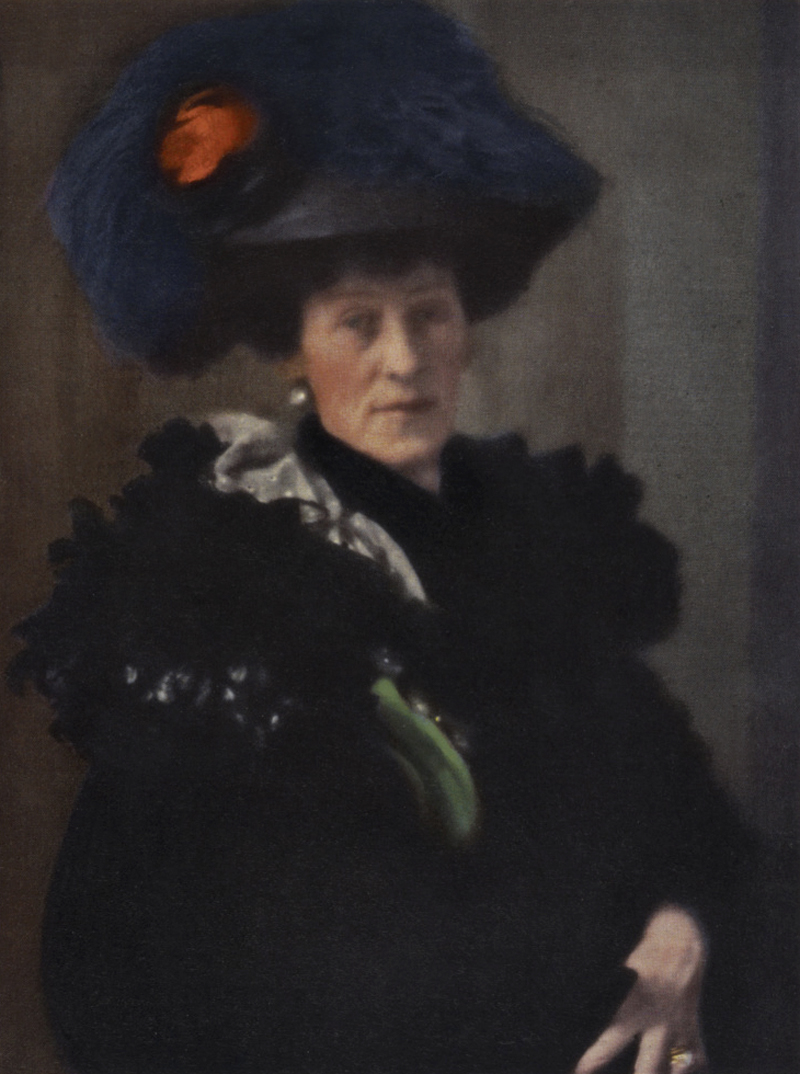

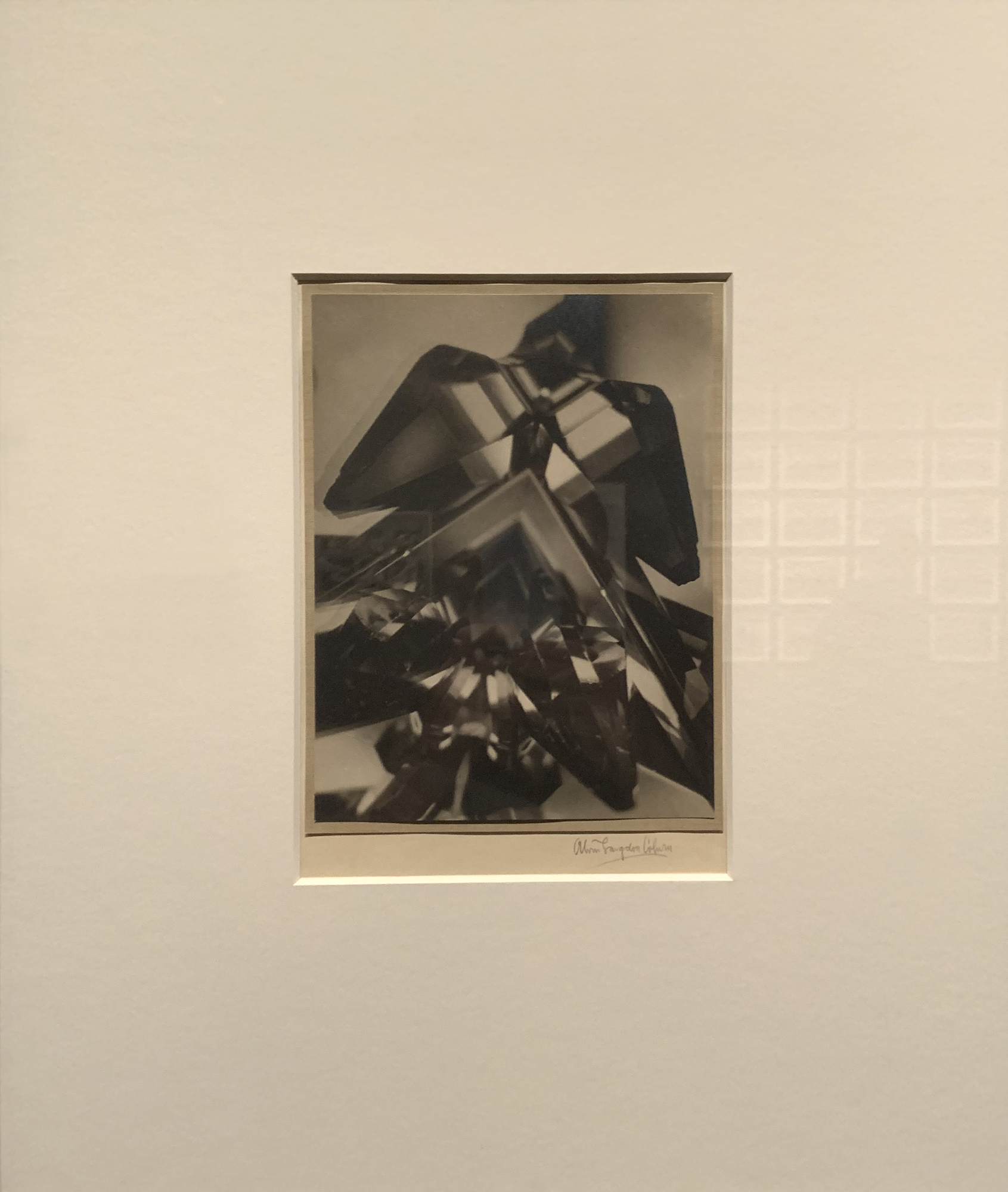

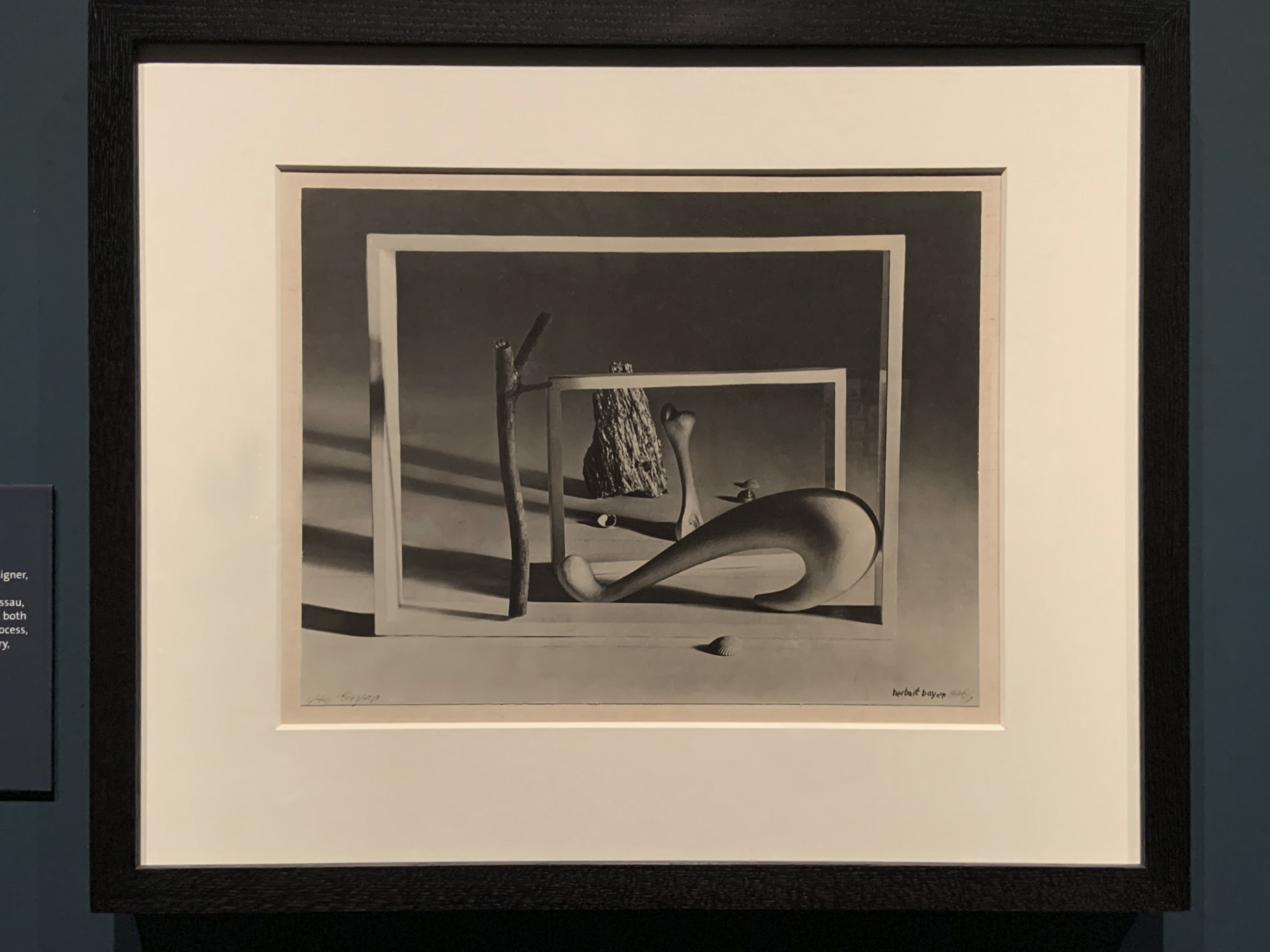

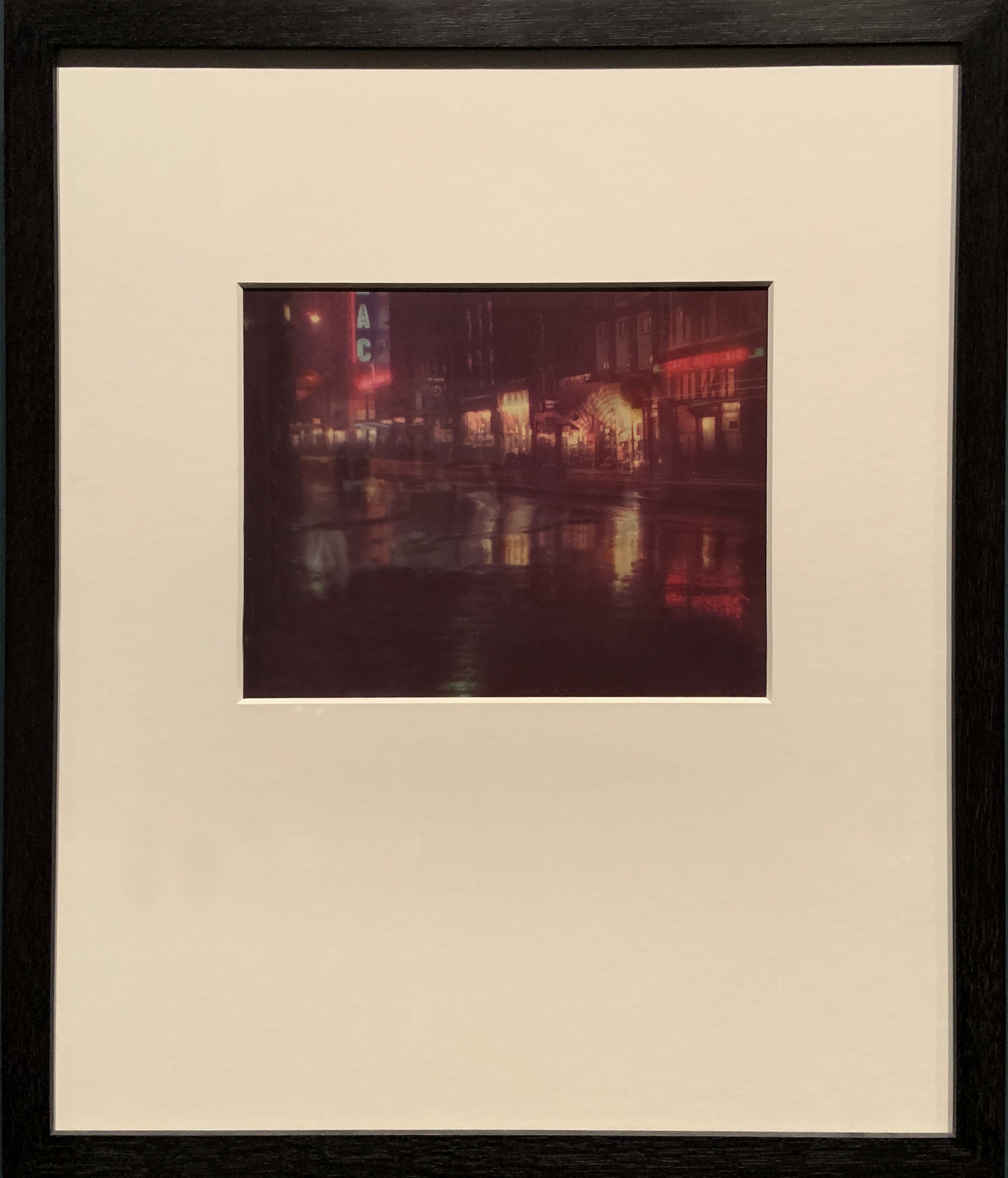

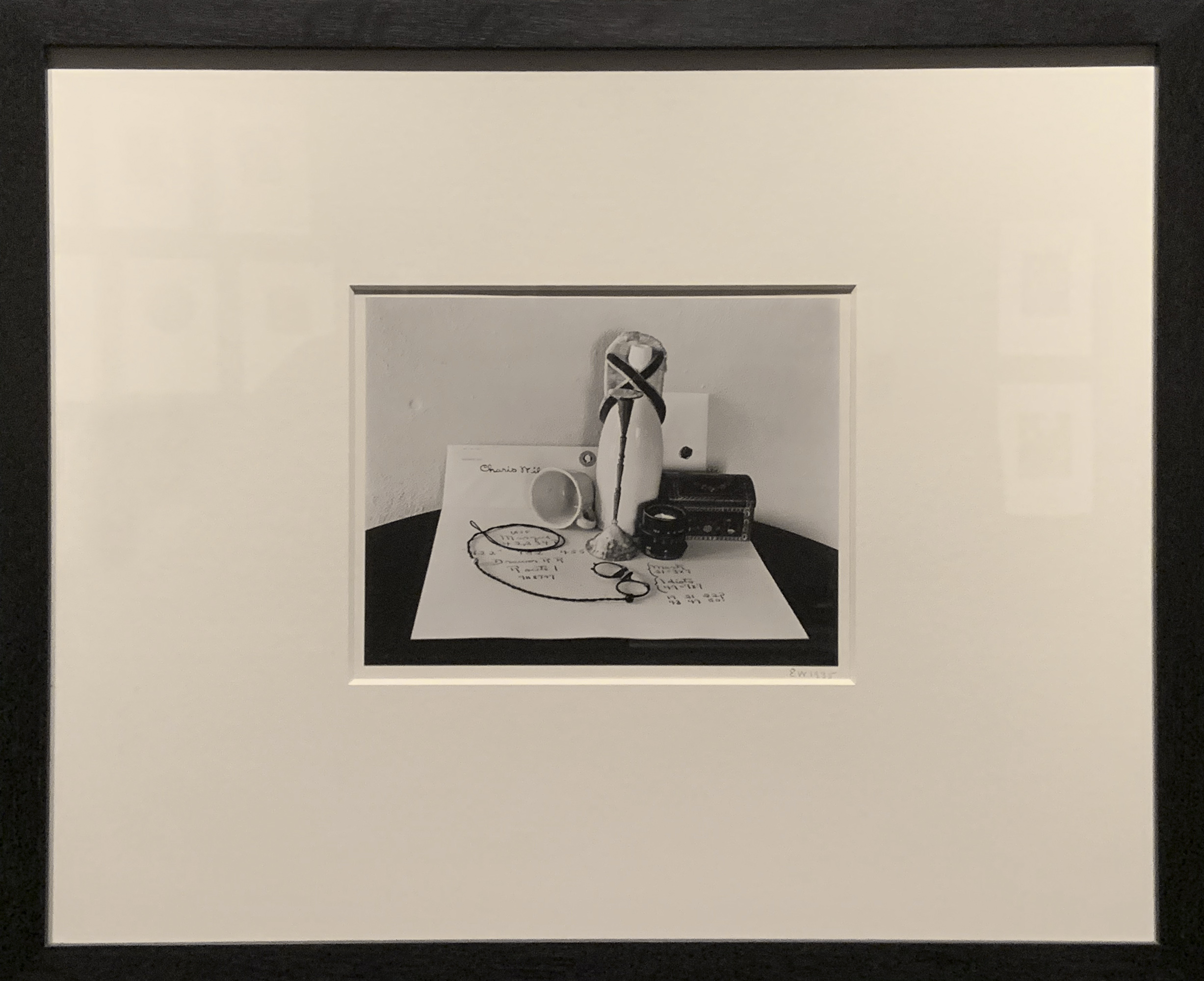

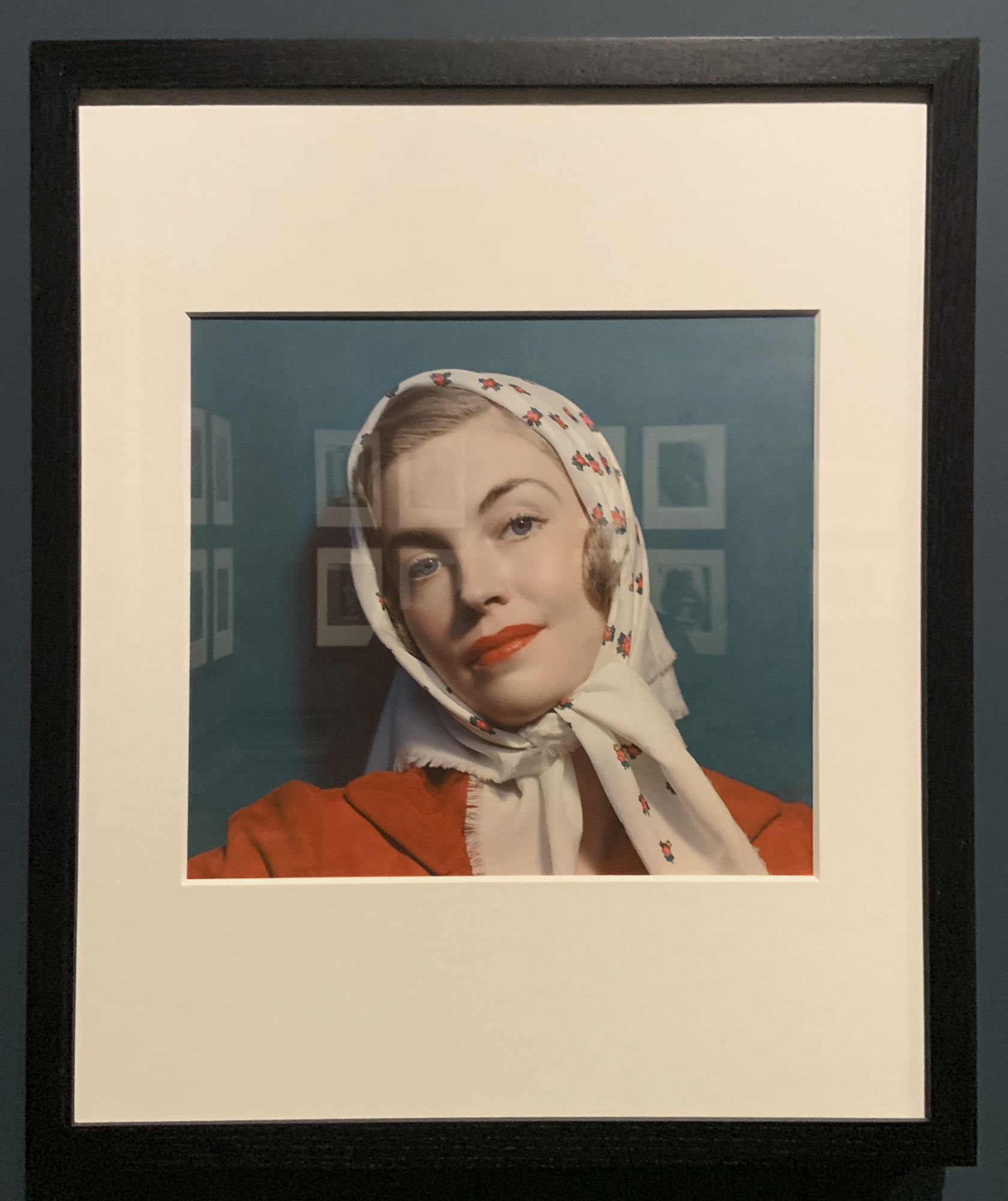
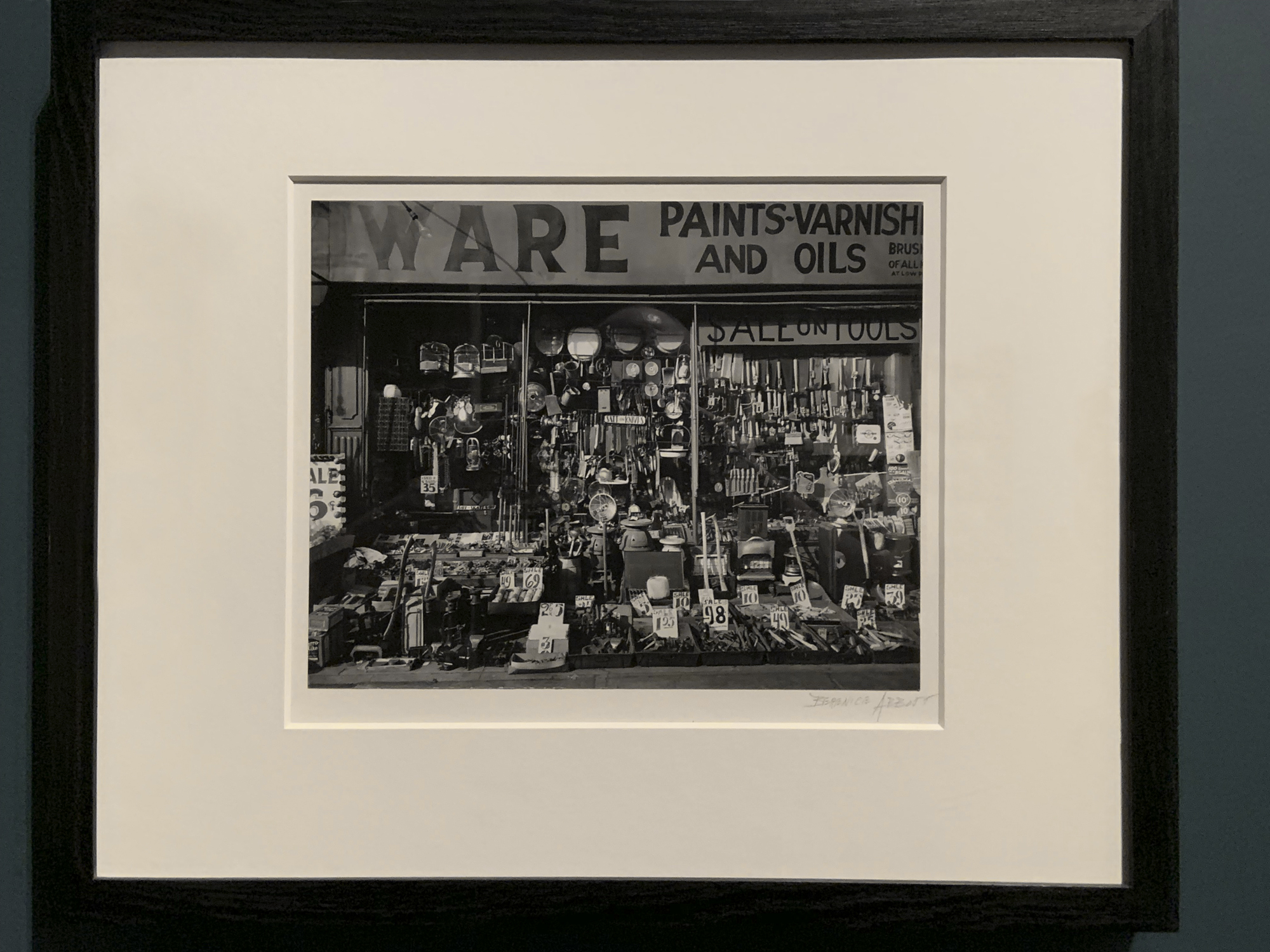
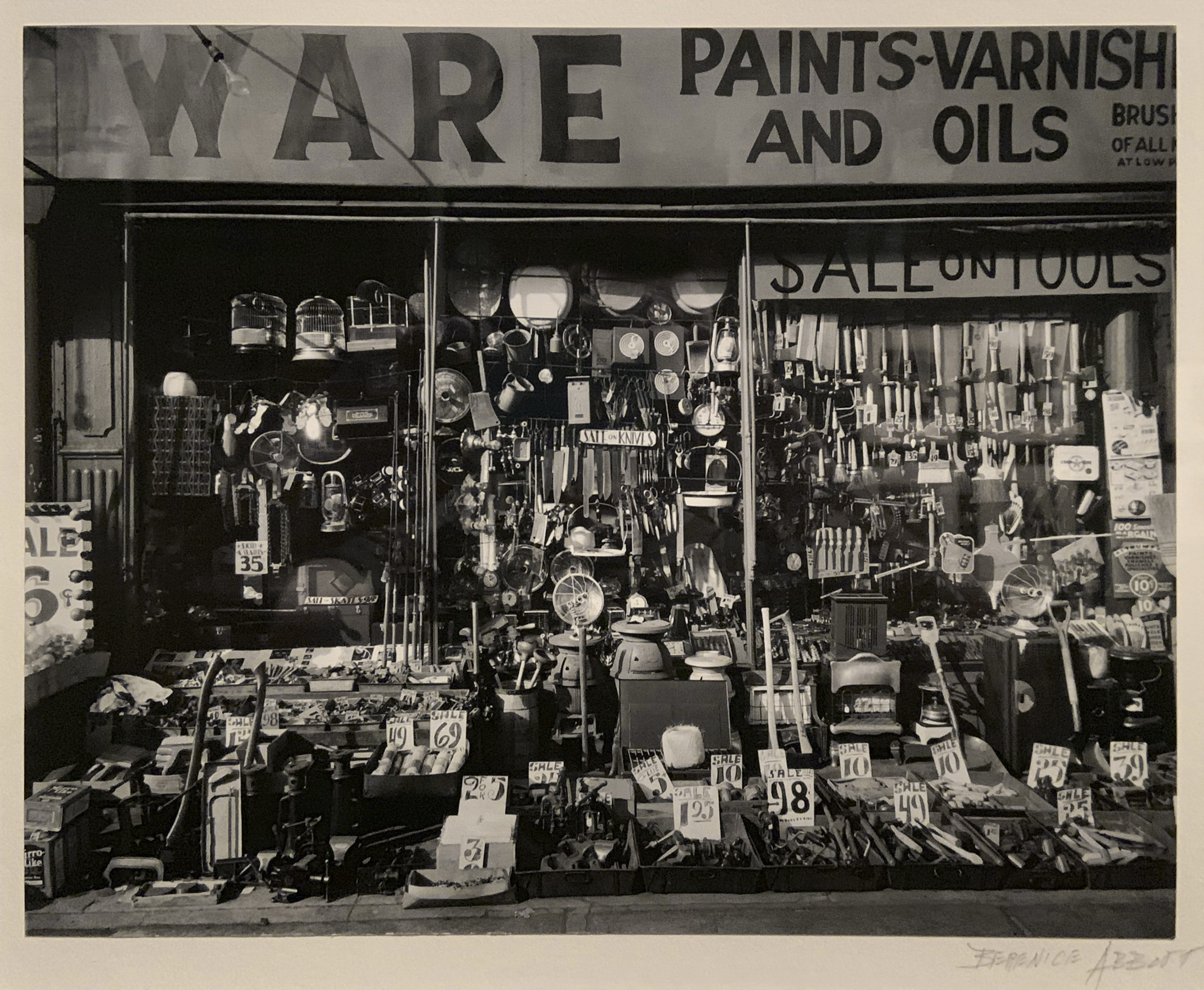
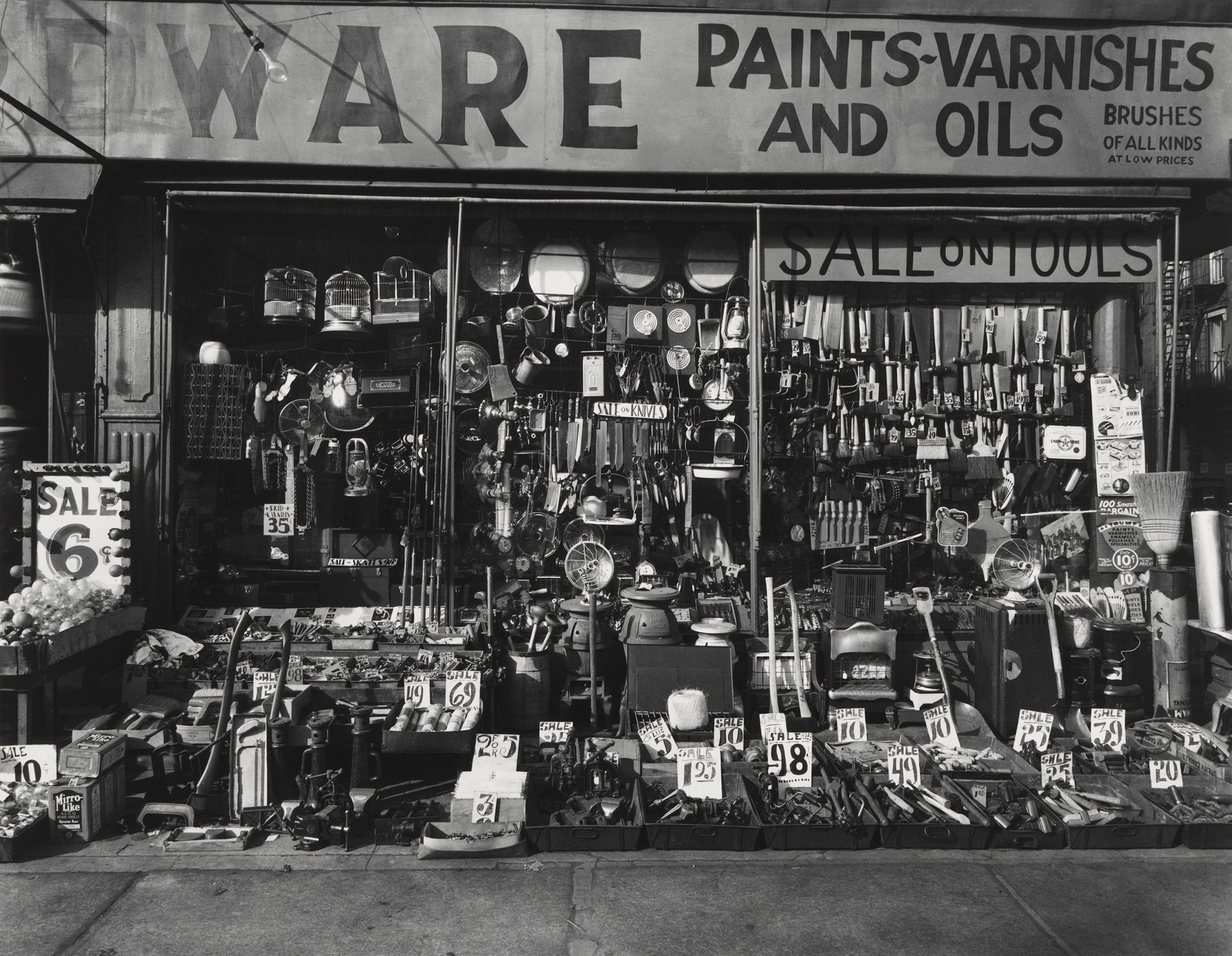
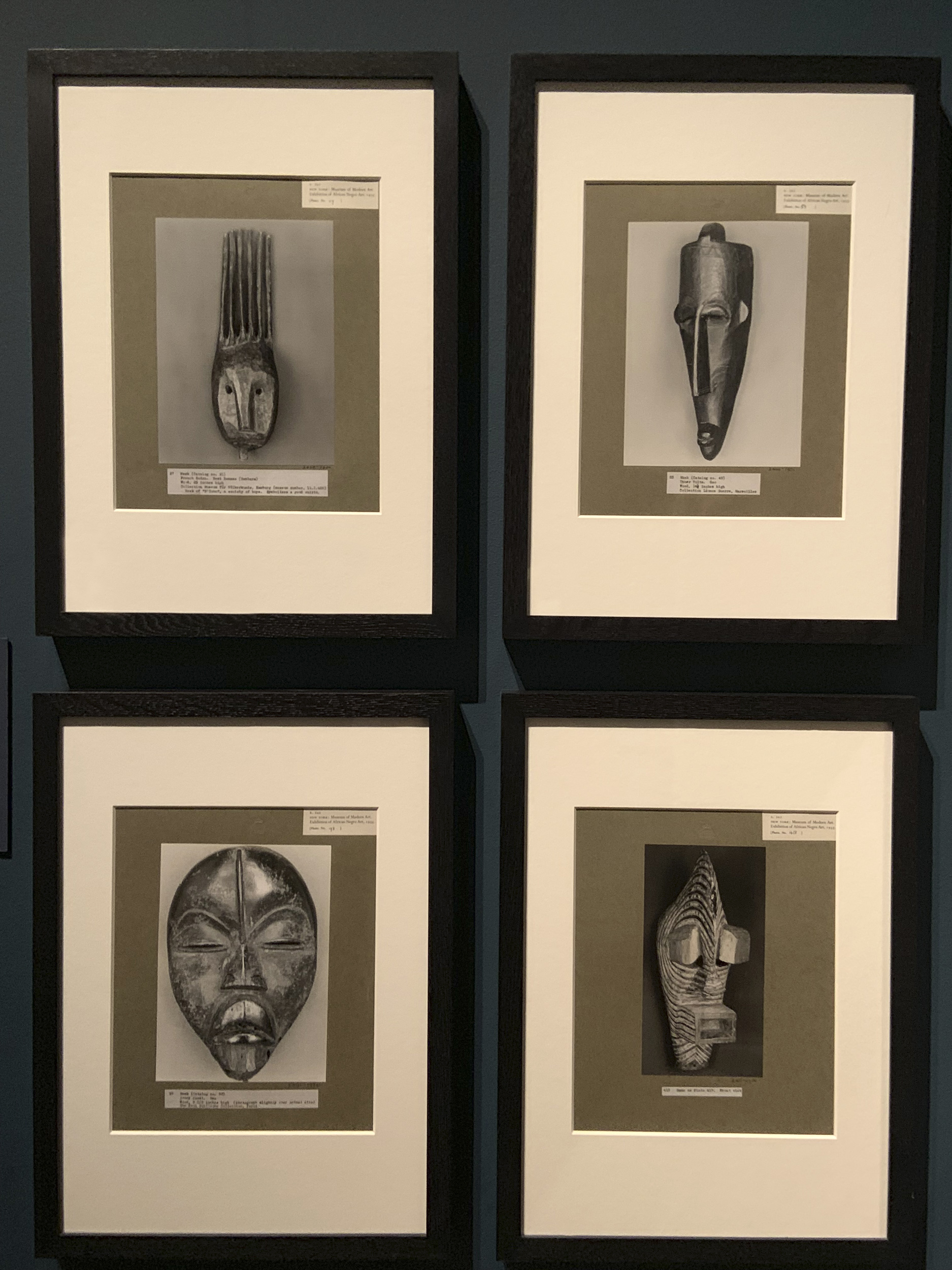
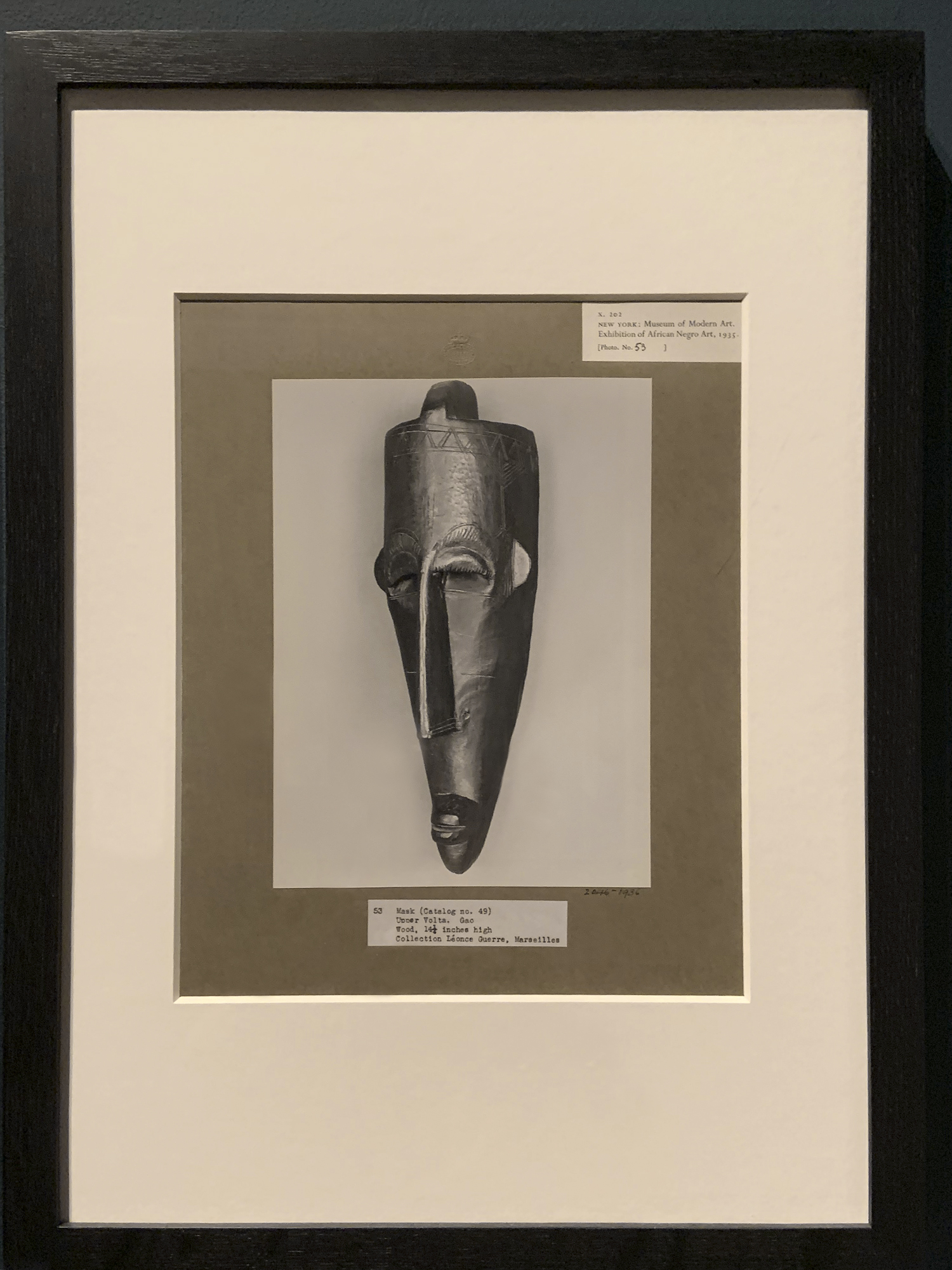
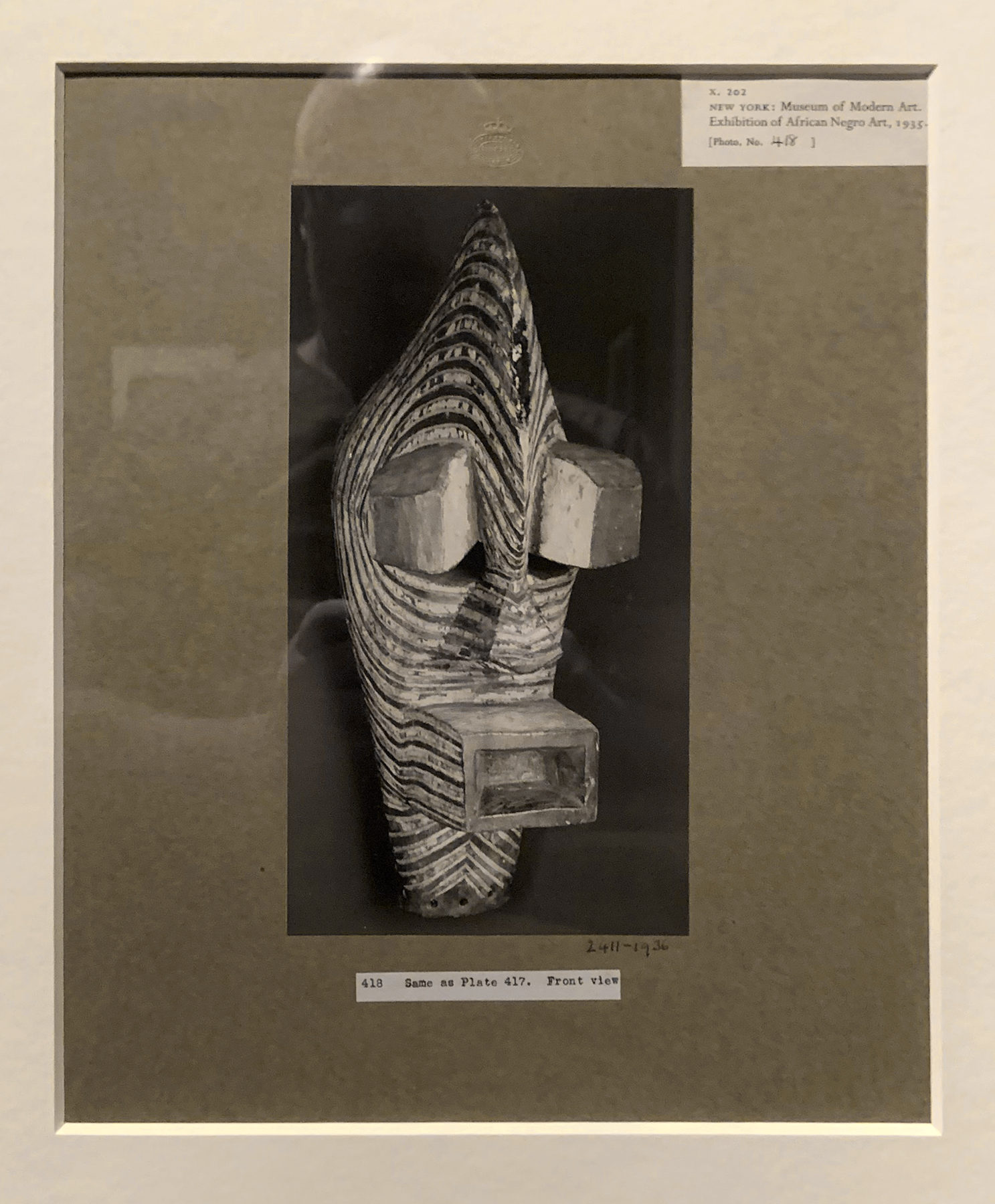
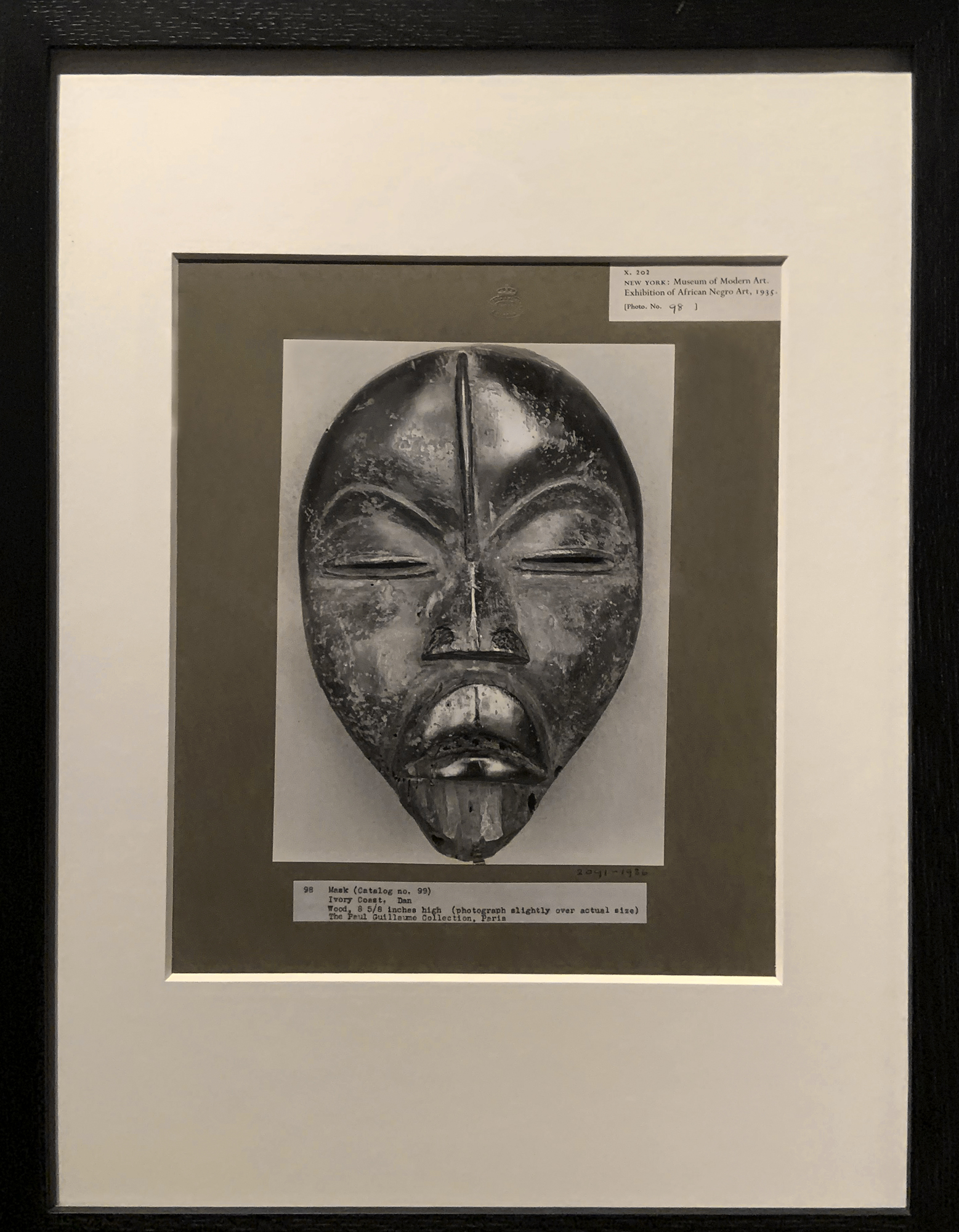

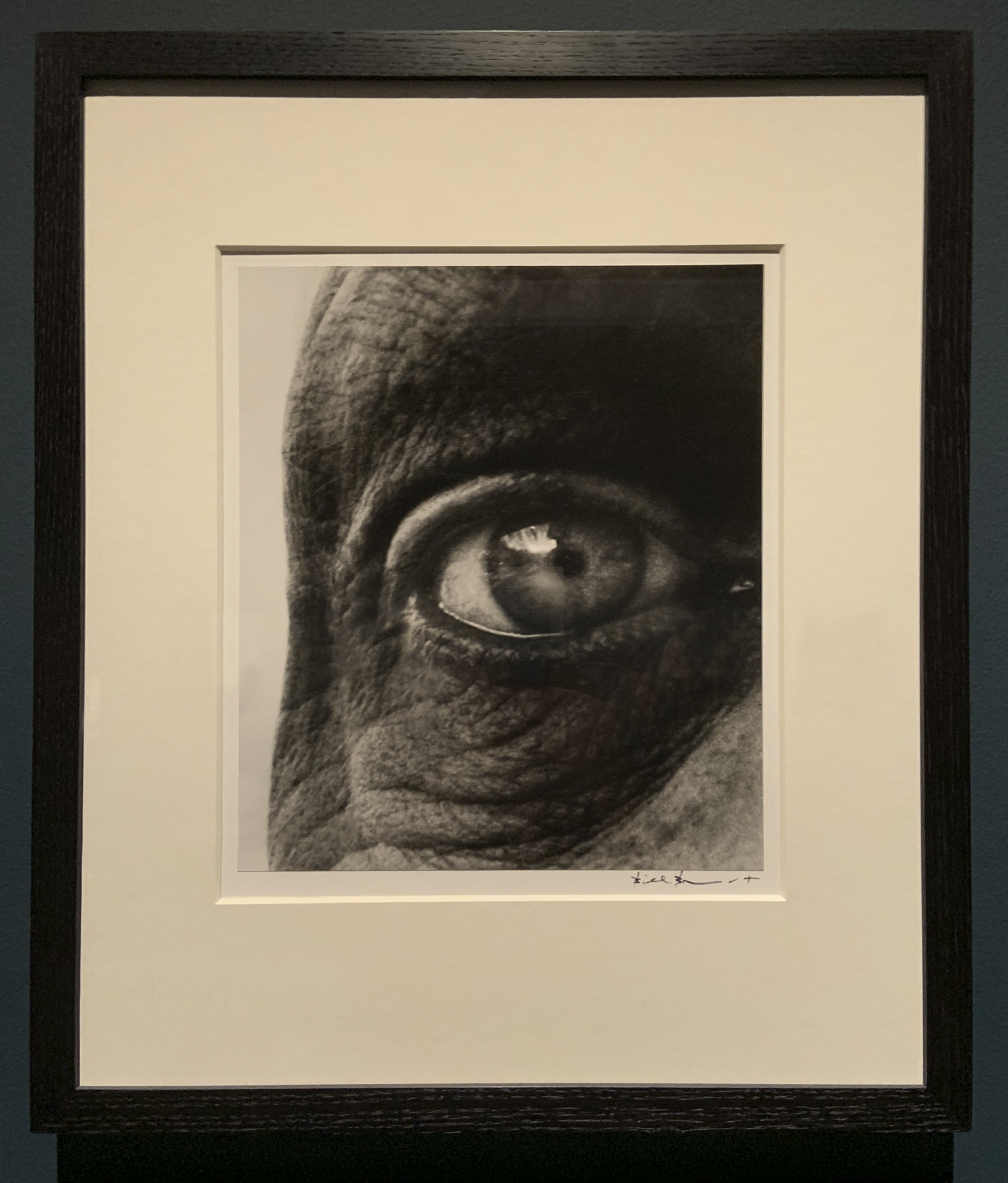
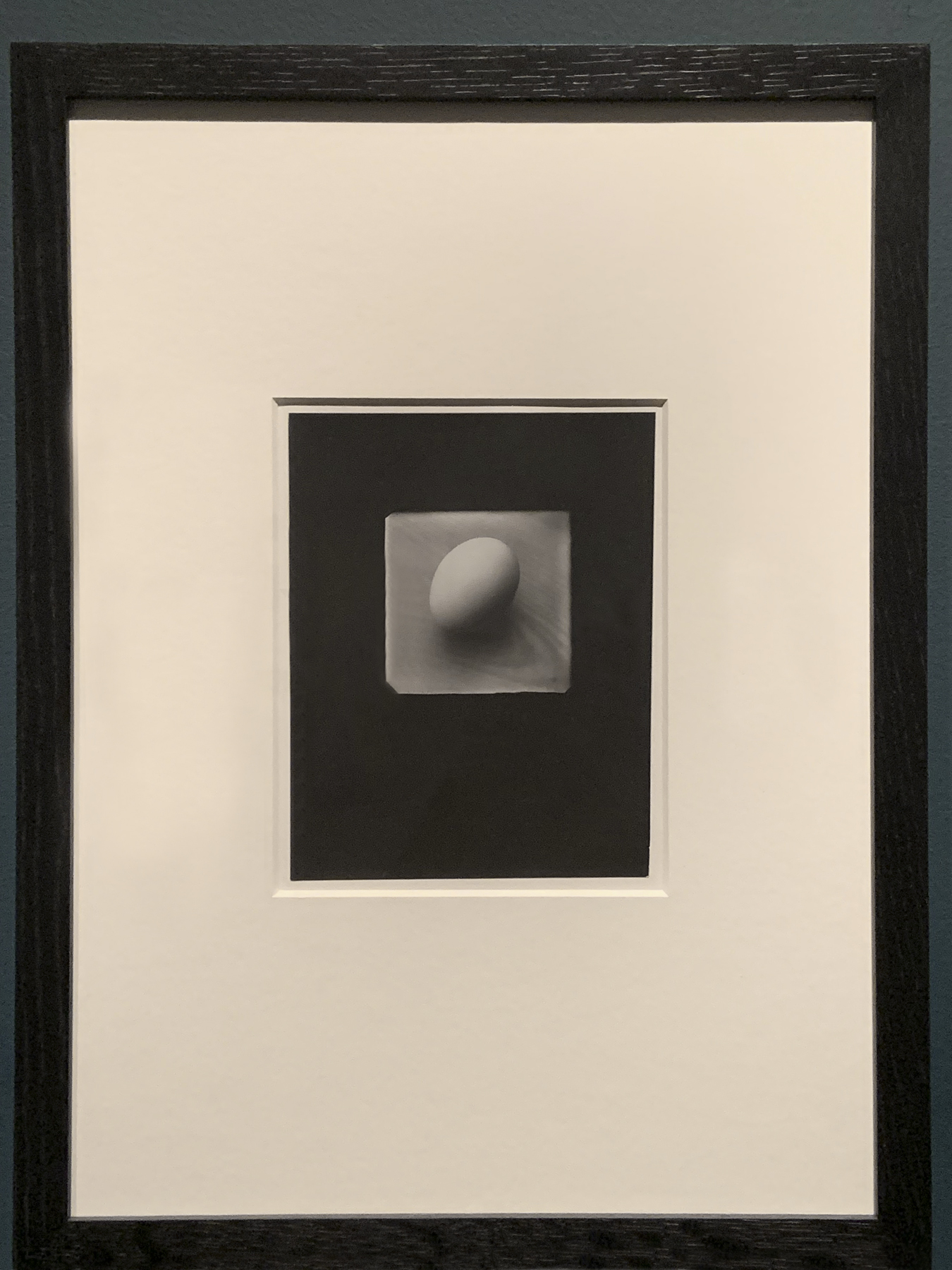


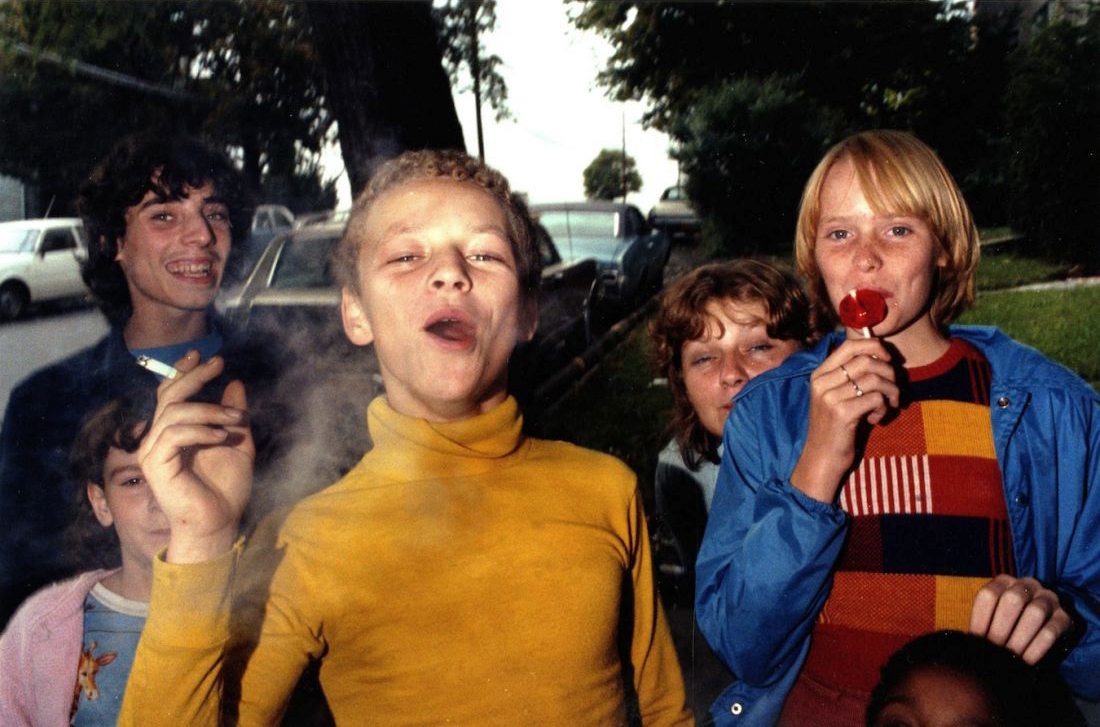


![Weegee (Arthur Fellig) (American born Austria, 1899-1968) '[Calypso]' about 1944; before 1946 from the exhibition Exhibition: 'Unseen: 35 Years of Collecting Photographs' at the J. Paul Getty Museum, Los Angeles, Dec 2019 - March 2020](https://artblart.com/wp-content/uploads/2020/02/gm_04305501_2000x2000.jpg "Weegee (Arthur Fellig) (American born Austria, 1899-1968) '[Calypso]' about 1944; before 1946 from the exhibition Exhibition: 'Unseen: 35 Years of Collecting Photographs' at the J. Paul Getty Museum, Los Angeles, Dec 2019 - March 2020")
![Carleton Watkins (American, 1829-1916) '[Guadalupe Mill]' 1860 from the exhibition Exhibition: 'Unseen: 35 Years of Collecting Photographs' at the J. Paul Getty Museum, Los Angeles, Dec 2019 - March 2020](https://artblart.com/wp-content/uploads/2020/02/gm_06196501_2000x2000.jpg "Carleton Watkins (American, 1829-1916) '[Guadalupe Mill]' 1860 from the exhibition Exhibition: 'Unseen: 35 Years of Collecting Photographs' at the J. Paul Getty Museum, Los Angeles, Dec 2019 - March 2020")


![Marinus Jacob Kjeldgaard (Danish, 1884-1964, active Paris, France late 1930s - late 1940s) '[Collage: Balance of Powers]' about 1939](https://artblart.com/wp-content/uploads/2020/02/gm_05085801_2000x2000.jpg "Marinus Jacob Kjeldgaard (Danish, 1884-1964, active Paris, France late 1930s - late 1940s) '[Collage: Balance of Powers]' about 1939")
![Paul Outerbridge (American, 1896-1958) '[Egg in Spotlight]' 1943](https://artblart.com/wp-content/uploads/2020/02/gm_32105401_2000x2000.jpg "Paul Outerbridge (American, 1896-1958) '[Egg in Spotlight]' 1943")
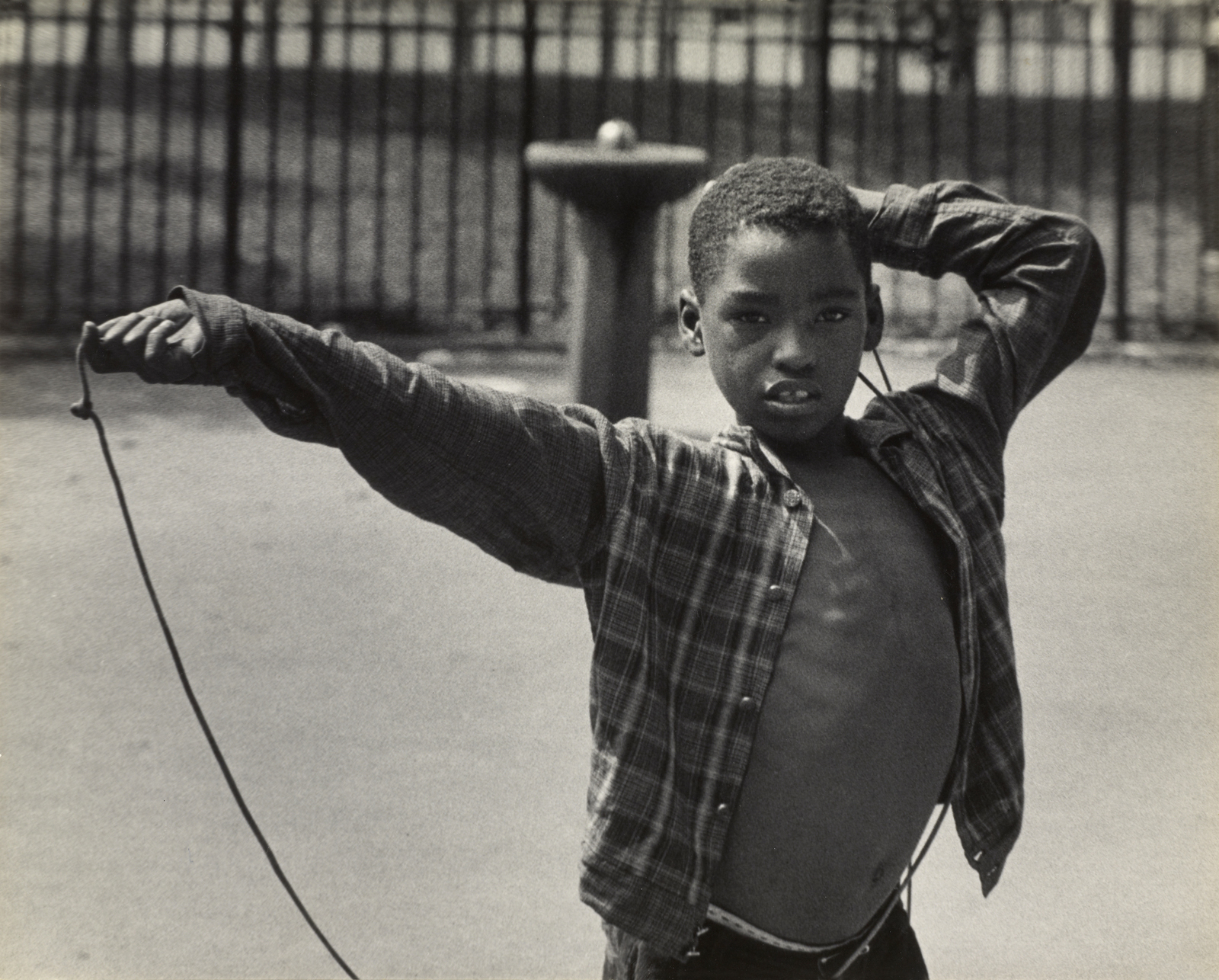
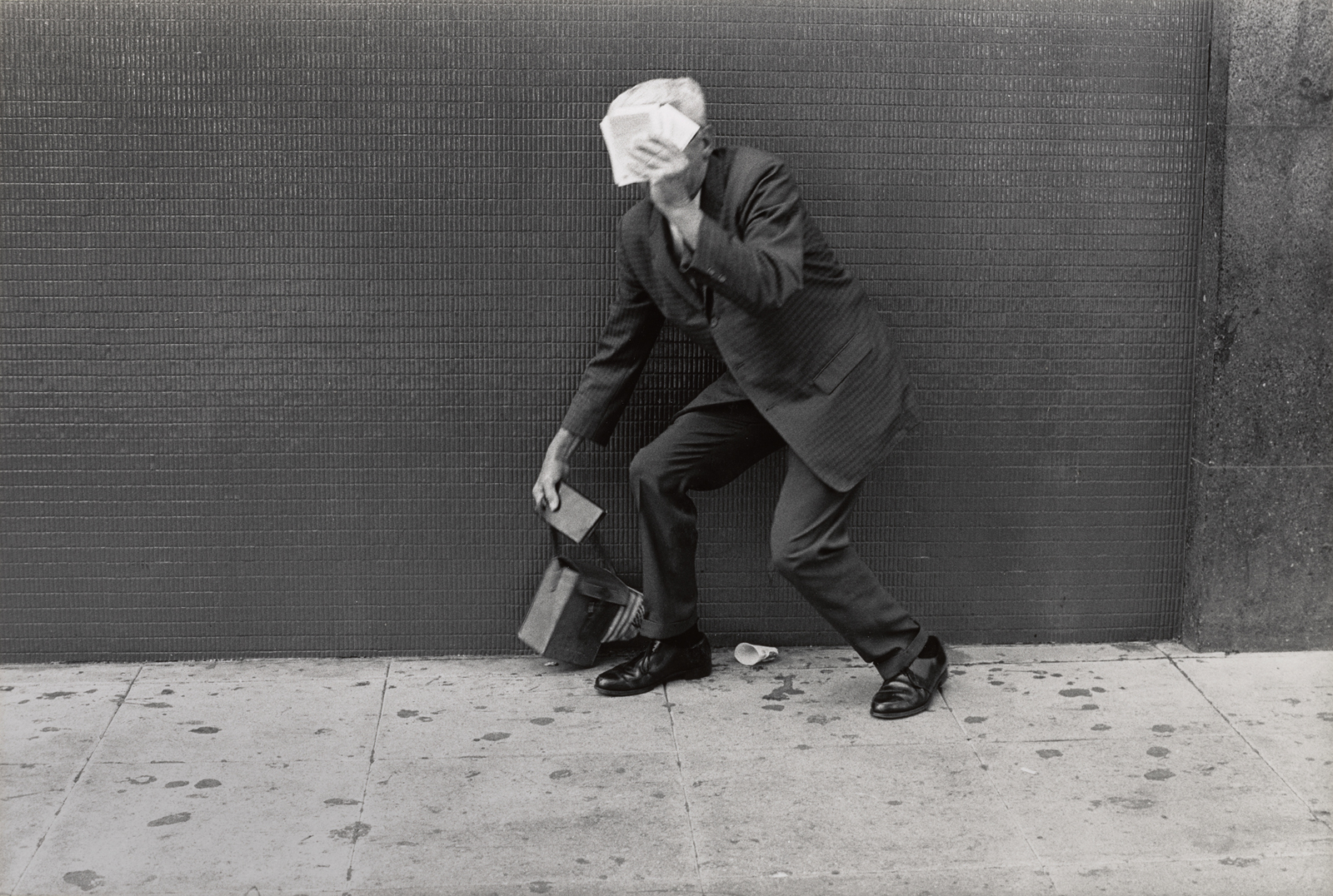


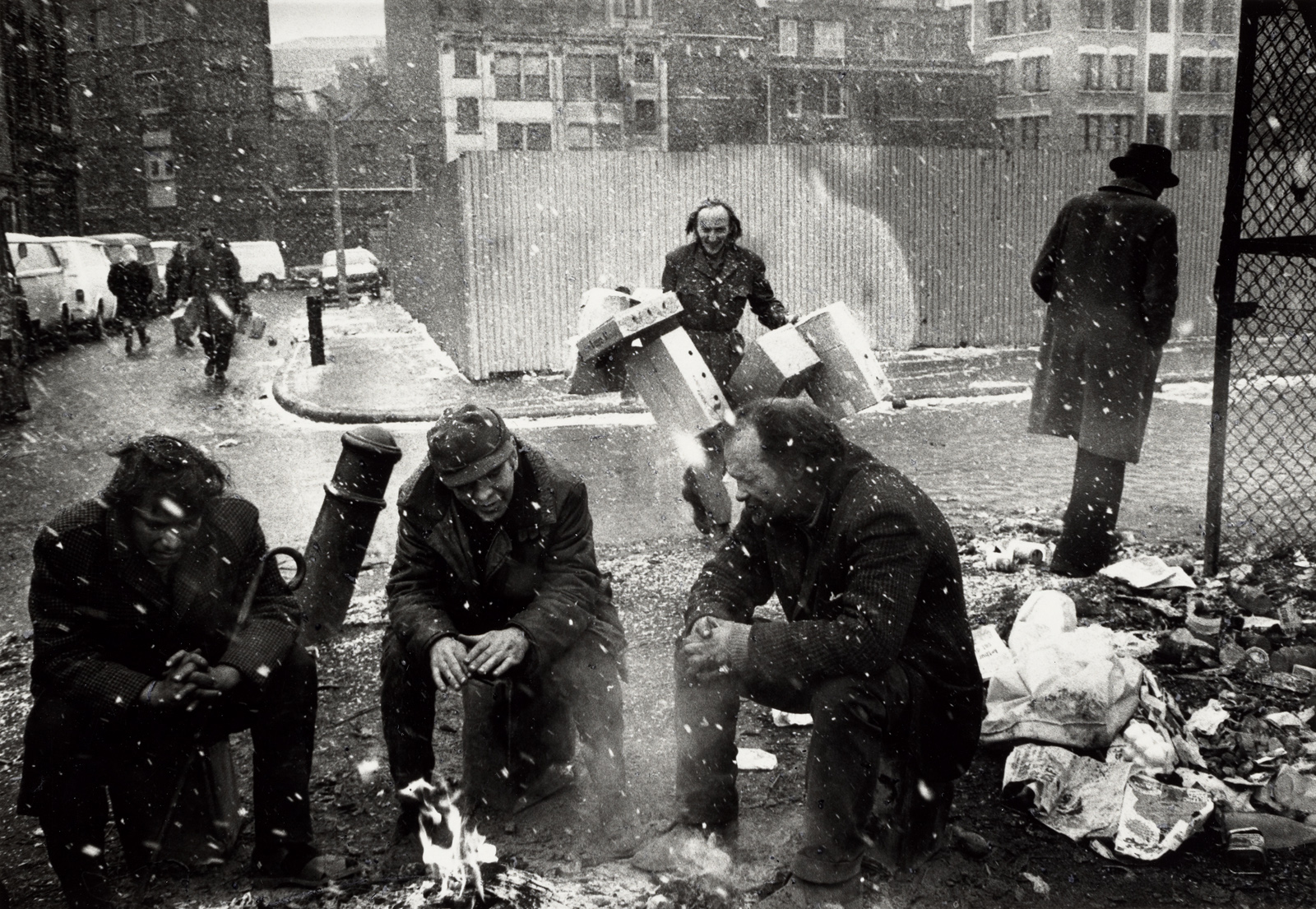
![Shigeichi Nagano (Japanese, 1925-2019, active Tokyo, Japan) '[Tokyo, Aobadai (Nishi Saigoyama Park), Meguro Ward]' 1988](https://artblart.com/wp-content/uploads/2020/02/gm_30687901_2000x2000.jpg "Shigeichi Nagano (Japanese, 1925-2019, active Tokyo, Japan) '[Tokyo, Aobadai (Nishi Saigoyama Park), Meguro Ward]' 1988")
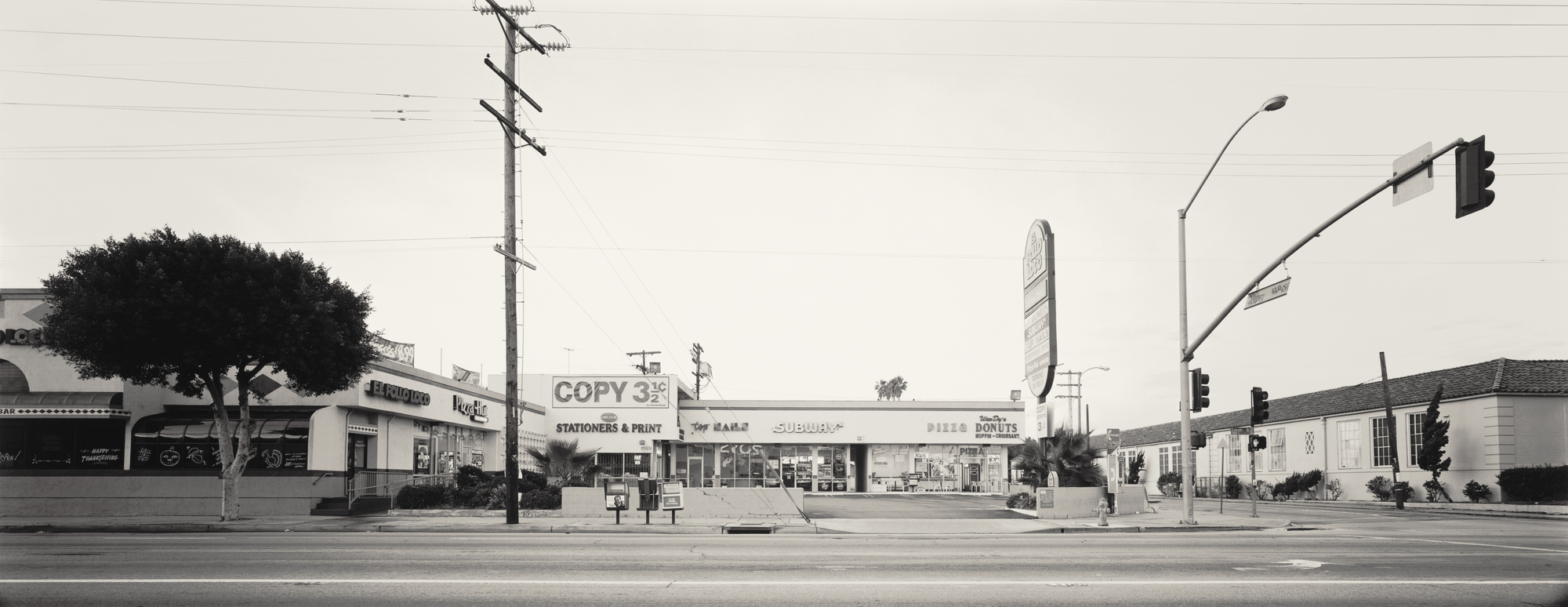


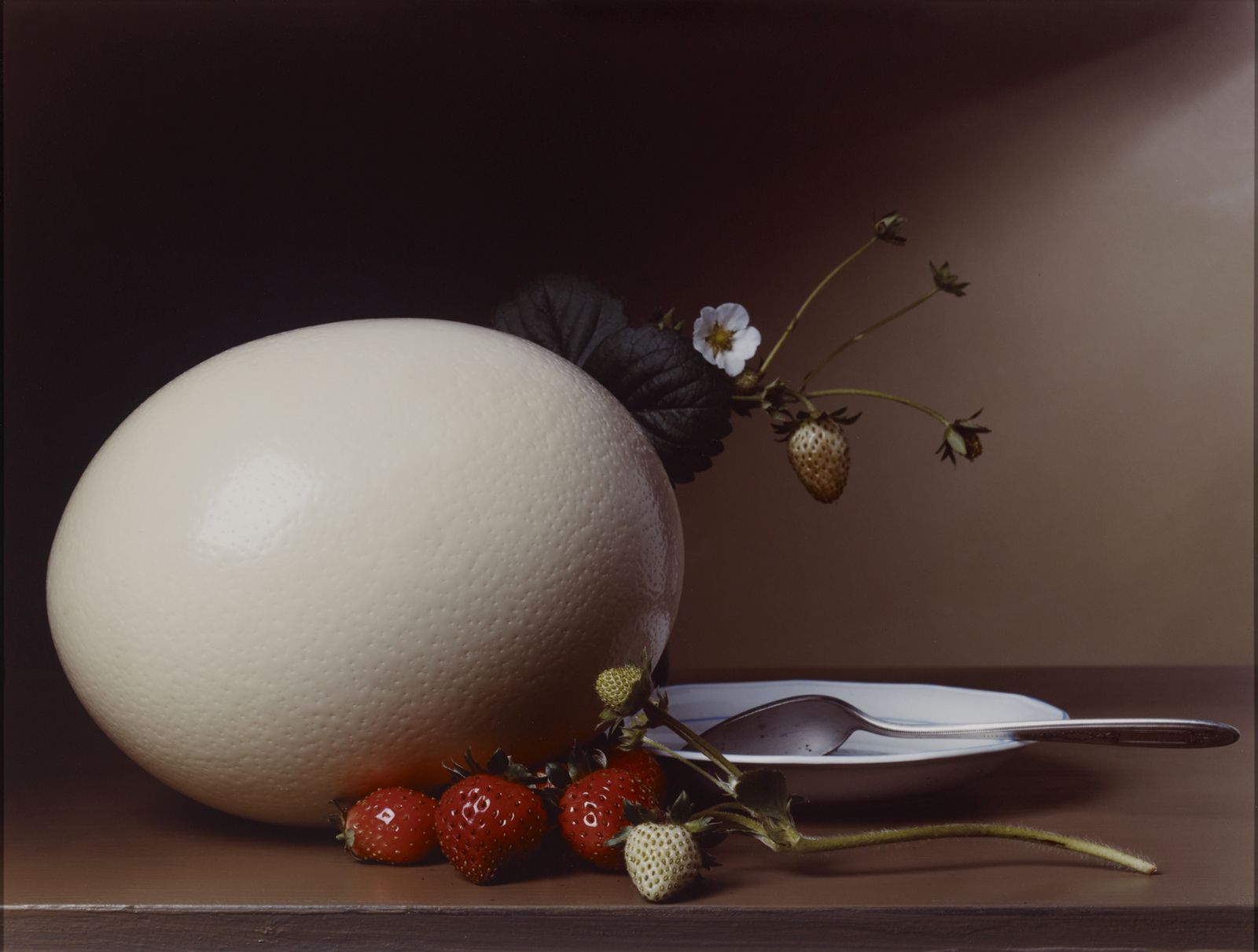

![Julia Margaret Cameron (British born India, 1815-1879) '[Spring]' 1873](https://artblart.com/wp-content/uploads/2020/02/gm_06520801_2000x2000.jpg "Julia Margaret Cameron (British born India, 1815-1879) '[Spring]' 1873")
![Reverend William Ellis (British, 1794-1872) and Samuel Smith. '[Portrait of a Black Couple]' about 1873](https://artblart.com/wp-content/uploads/2020/02/gm_133436t1v1_2000x2000.jpg "Reverend William Ellis (British, 1794-1872) and Samuel Smith. '[Portrait of a Black Couple]' about 1873")

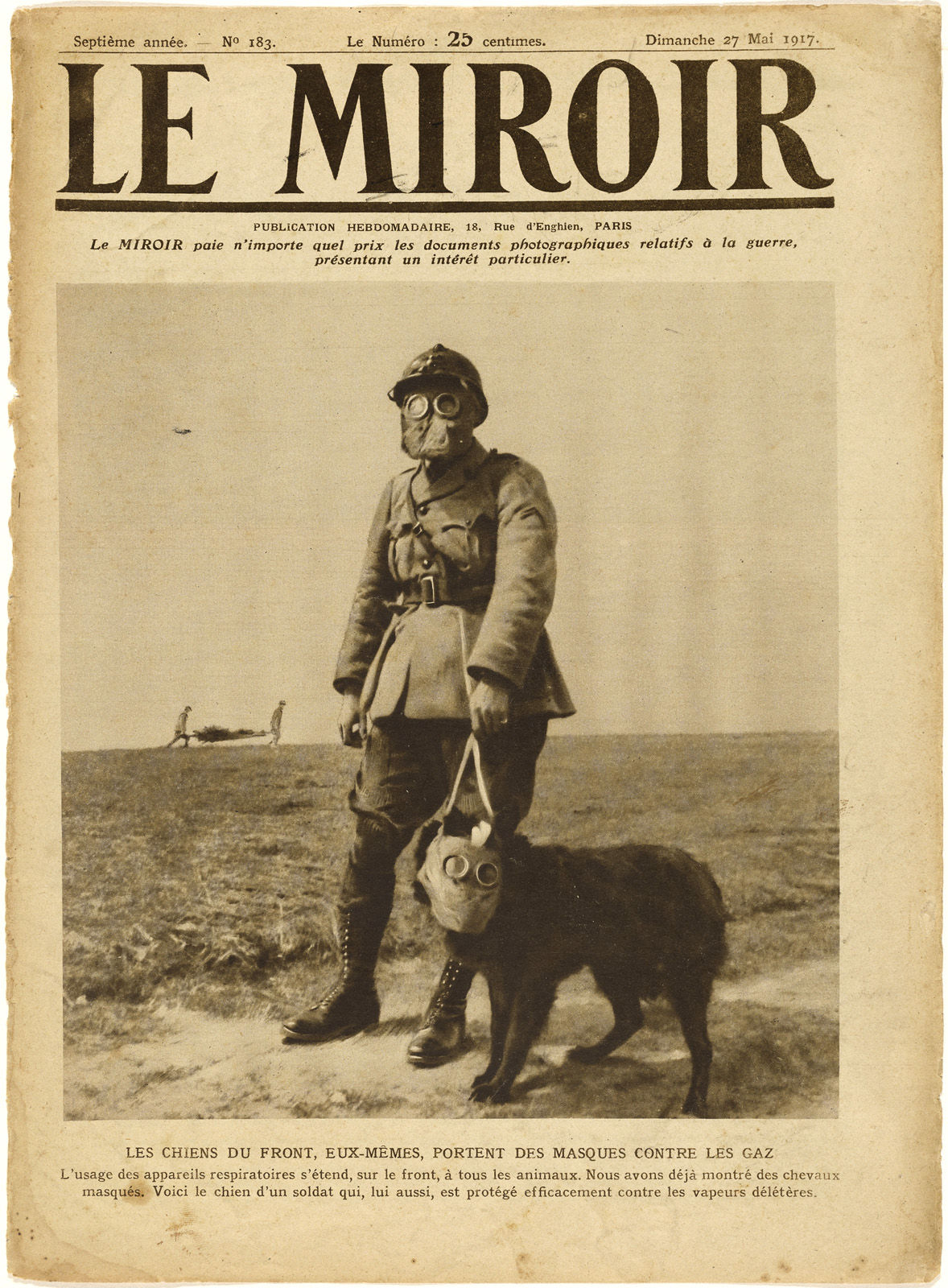
![László Moholy-Nagy (American born Hungary, 1895-1946) '[The Law of the Series]' 1925](https://artblart.com/wp-content/uploads/2020/02/gm_05309301_2000x2000.jpg "László Moholy-Nagy (American born Hungary, 1895-1946) '[The Law of the Series]' 1925")


![Paul Wolff (German, 1887-1951) and Dr Wolff & Tritschler OHG (German, founded 1927, dissolved 1963) '[Dog at the beach]' 1936](https://artblart.com/wp-content/uploads/2020/02/gm_041552t1v1_2000x2000-1.jpg "Paul Wolff (German, 1887-1951) and Dr Wolff & Tritschler OHG (German, founded 1927, dissolved 1963) '[Dog at the beach]' 1936")
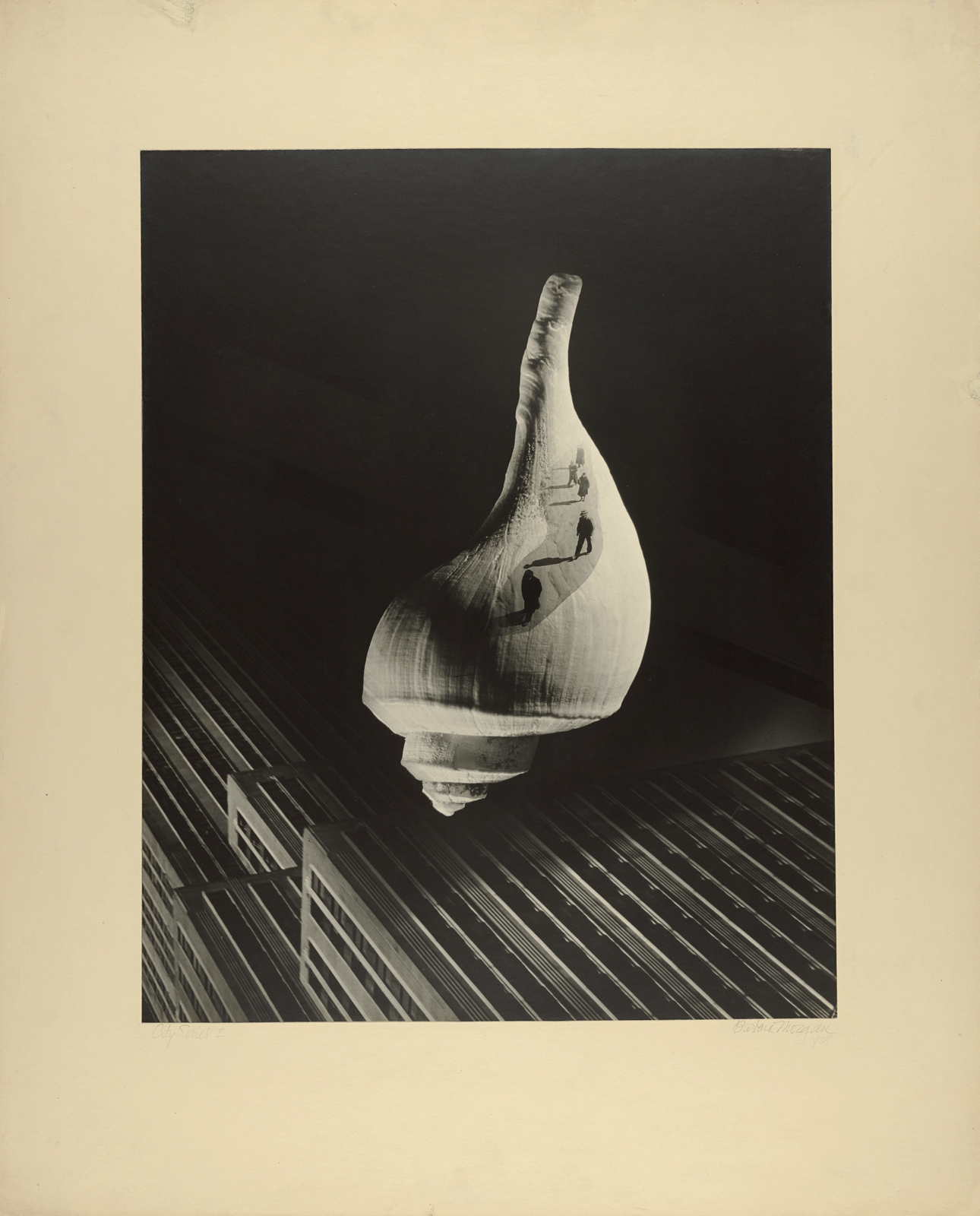
![Walker Evans (American, 1903 - 1975) '[Two Giraffes, Circus Winter Quarters, Sarasota]' 1941](https://artblart.com/wp-content/uploads/2020/02/gm_05269601_2000x2000.jpg "Walker Evans (American, 1903 - 1975) '[Two Giraffes, Circus Winter Quarters, Sarasota]' 1941")
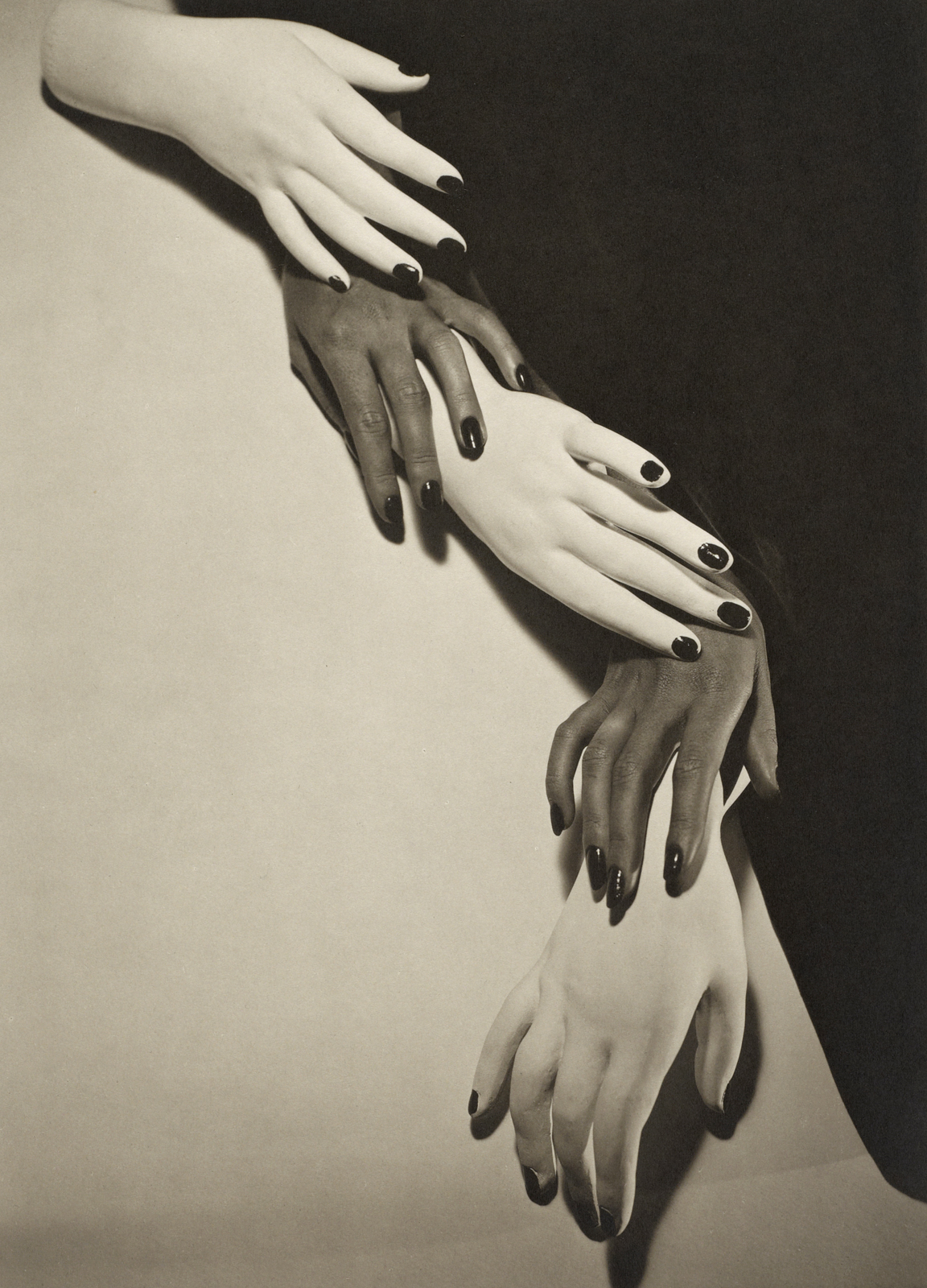


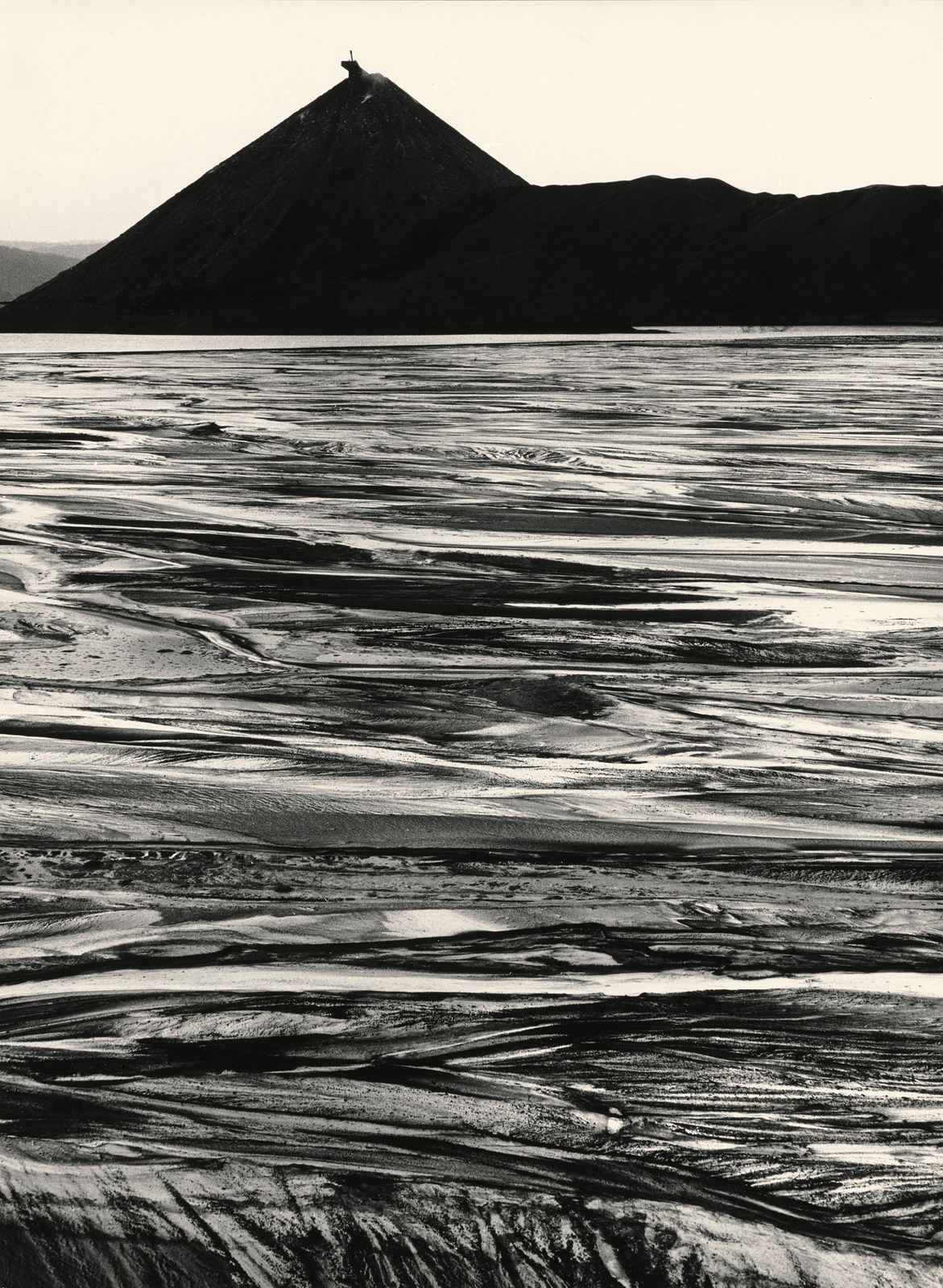

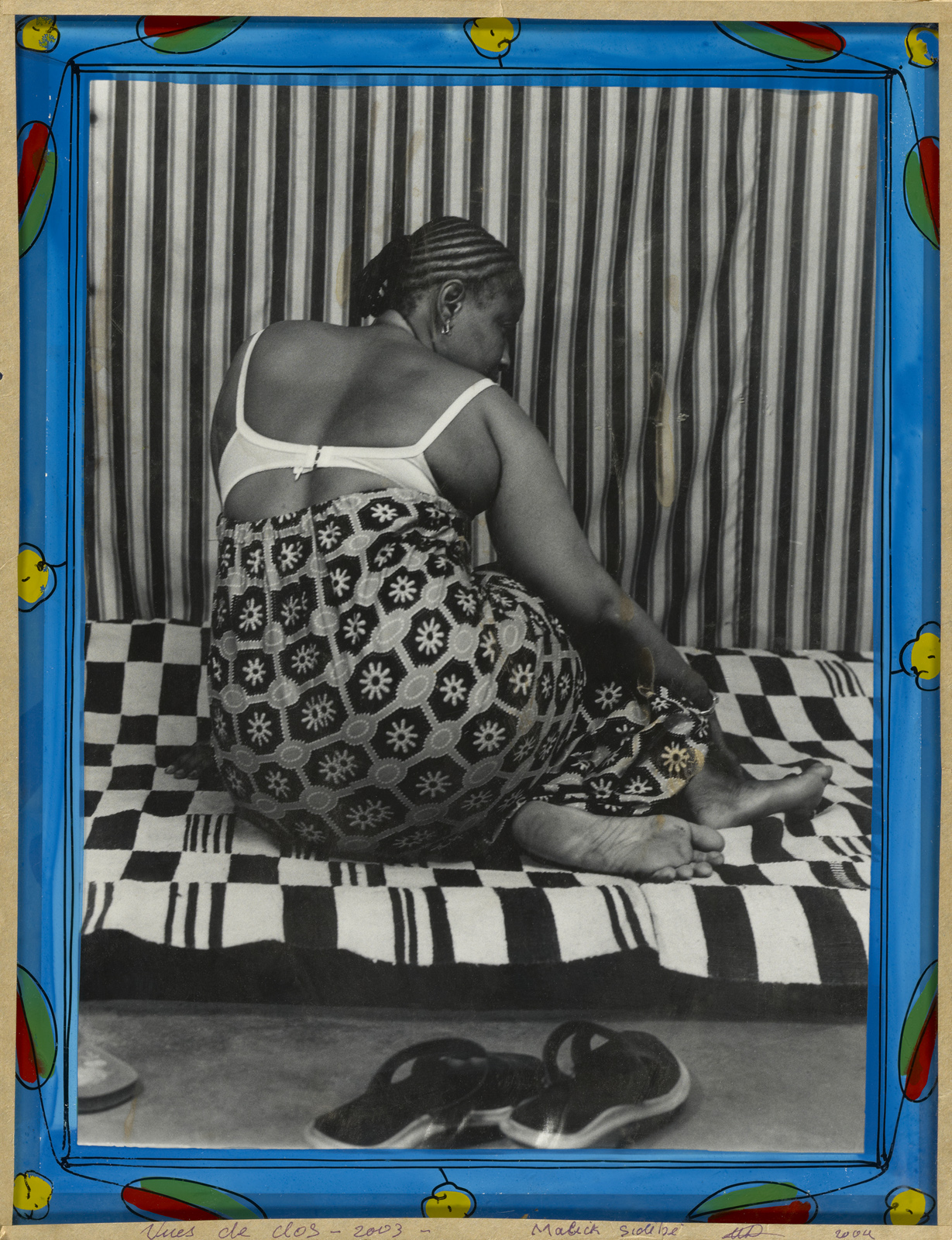

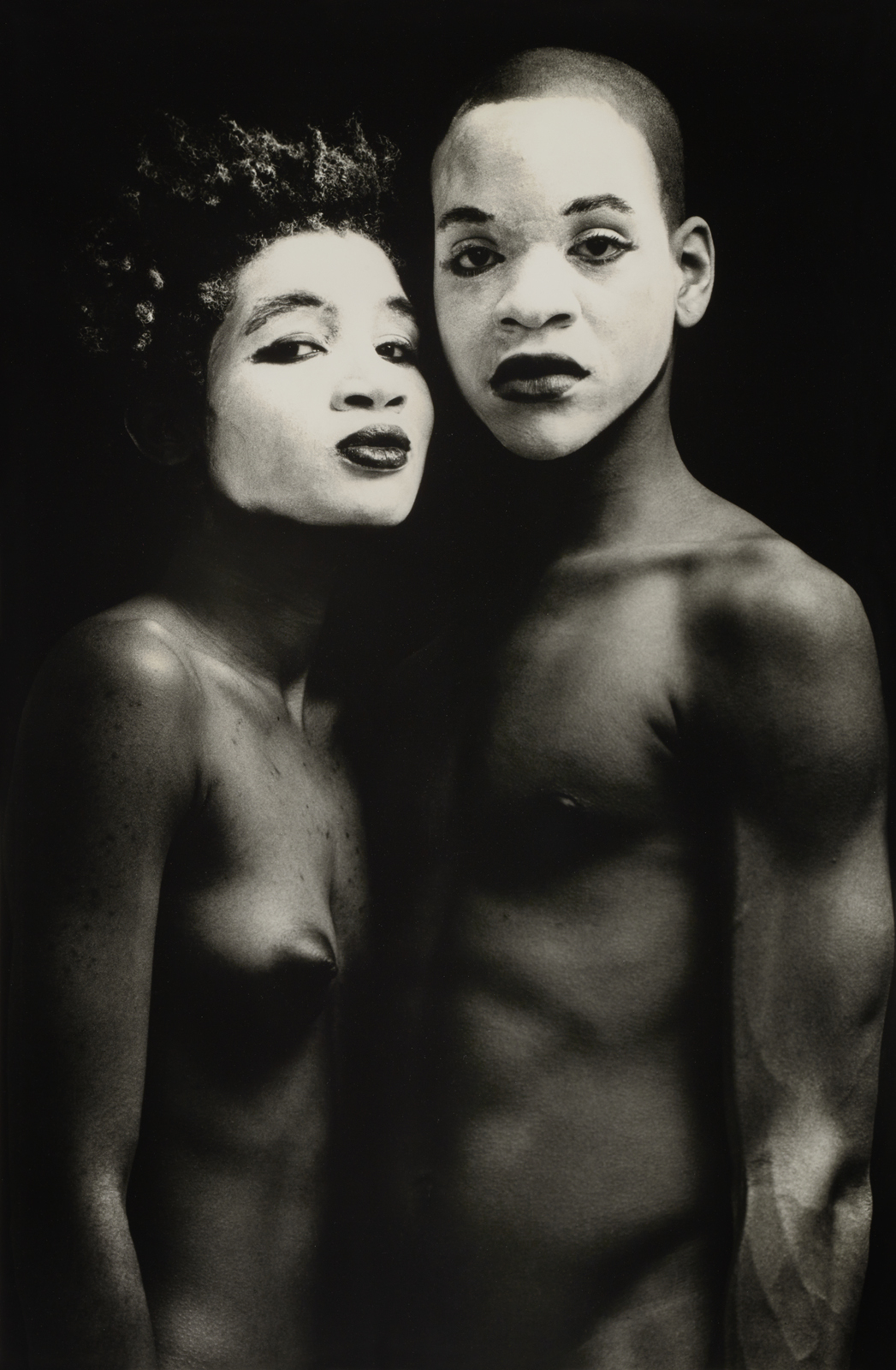

![Myoung Ho Lee (South Korean, b. 1975) '[Tree #2]' 2006](https://artblart.com/wp-content/uploads/2020/02/gm_31977201_2000x2000.jpg "Myoung Ho Lee (South Korean, b. 1975) '[Tree #2]' 2006")



![Adrien Constant de Rebecque (Swiss, Lausanne 1806-1876 Lausanne) '[Man in Chainmail Tunic Posing as a Dying Soldier]' c. 1863](https://artblart.com/wp-content/uploads/2018/09/man-in-chainmail-tunic-posing-as-a-dying-soldier-web.jpg "Adrien Constant de Rebecque (Swiss, Lausanne 1806-1876 Lausanne) '[Man in Chainmail Tunic Posing as a Dying Soldier]' c. 1863")

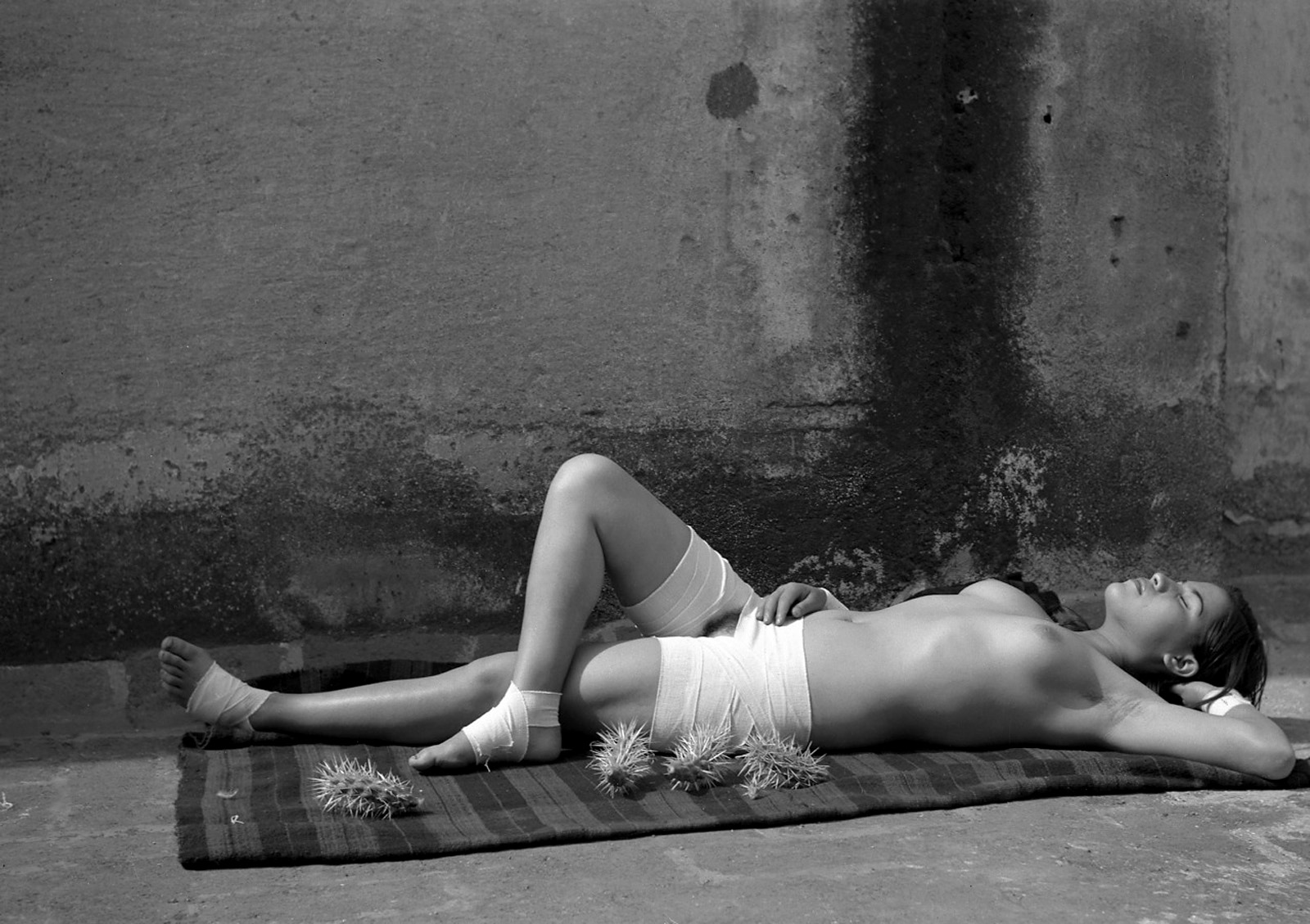
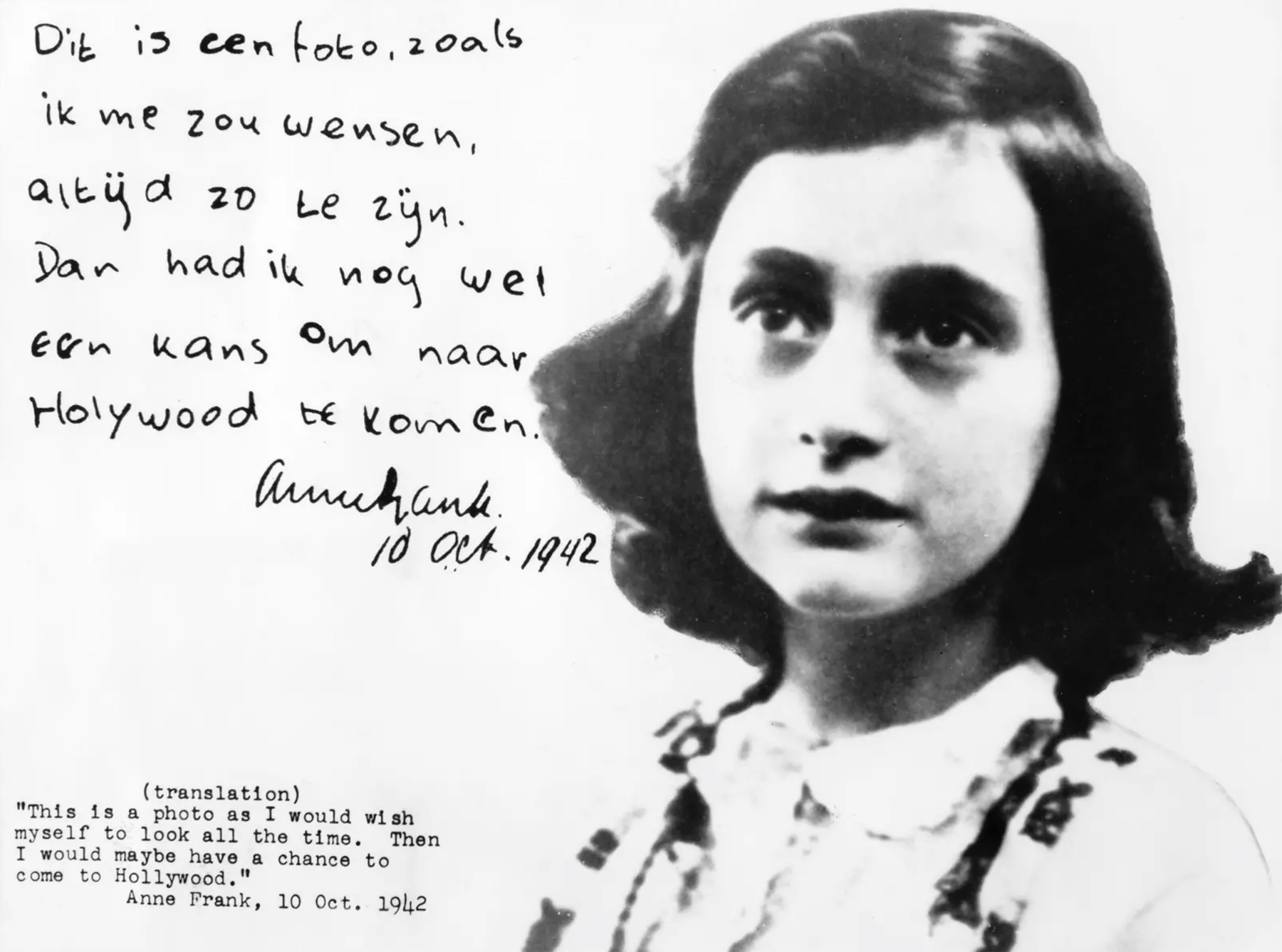


![Erich Salomon (German, 1886-1944) '[Portrait of Madame Vacarescu, Romanian Author and Deputy to the League of Nations, Geneva]' 1928 from the exhibition 'In Focus: Expressions' at the J. Paul Getty Museum, Getty Center, Los Angeles, May - Oct, 2018](https://artblart.com/wp-content/uploads/2018/06/in-focus-expressions-1-web.jpg "Erich Salomon (German, 1886-1944) '[Portrait of Madame Vacarescu, Romanian Author and Deputy to the League of Nations, Geneva]' 1928 from the exhibition 'In Focus: Expressions' at the J. Paul Getty Museum, Getty Center, Los Angeles, May - Oct, 2018")
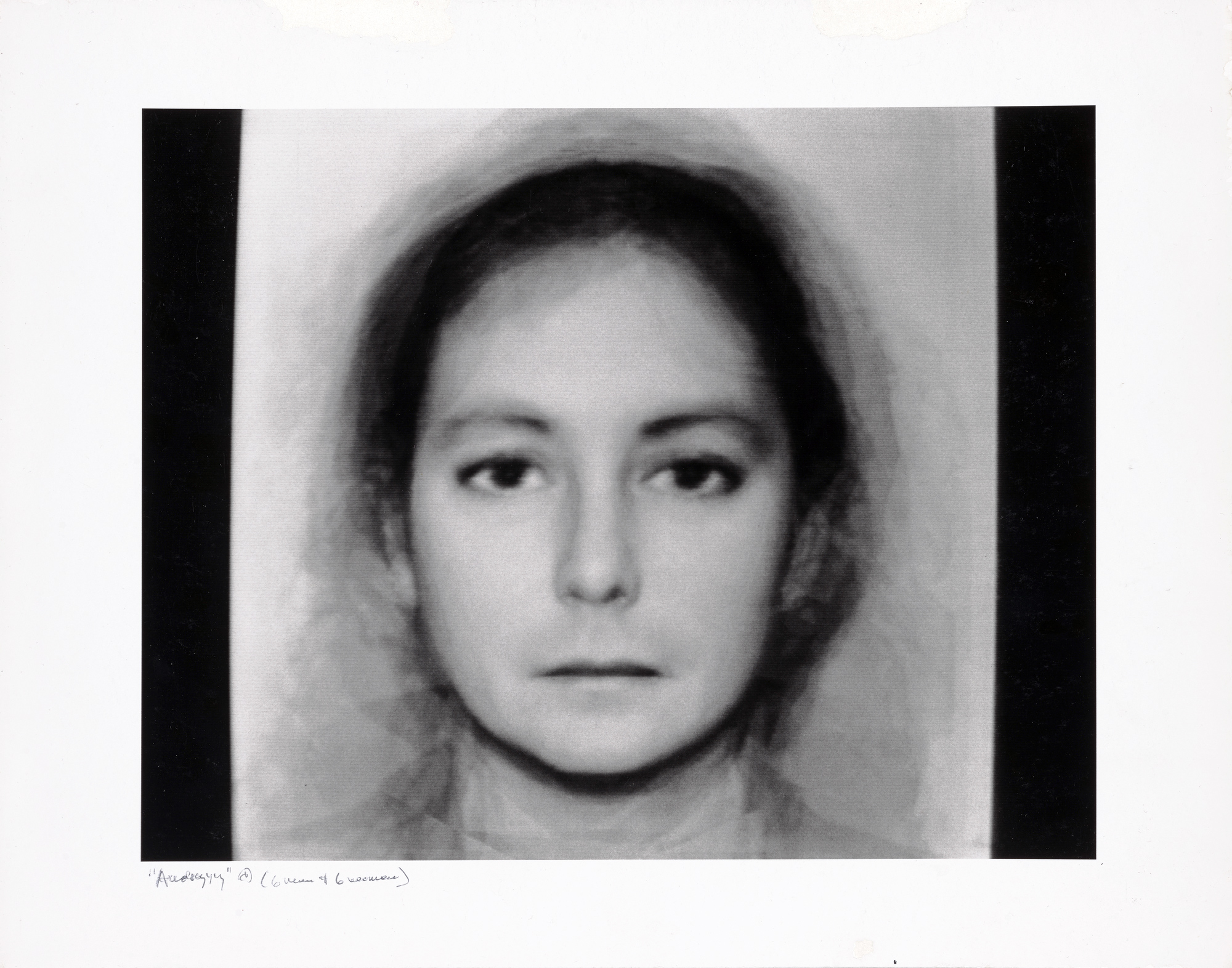
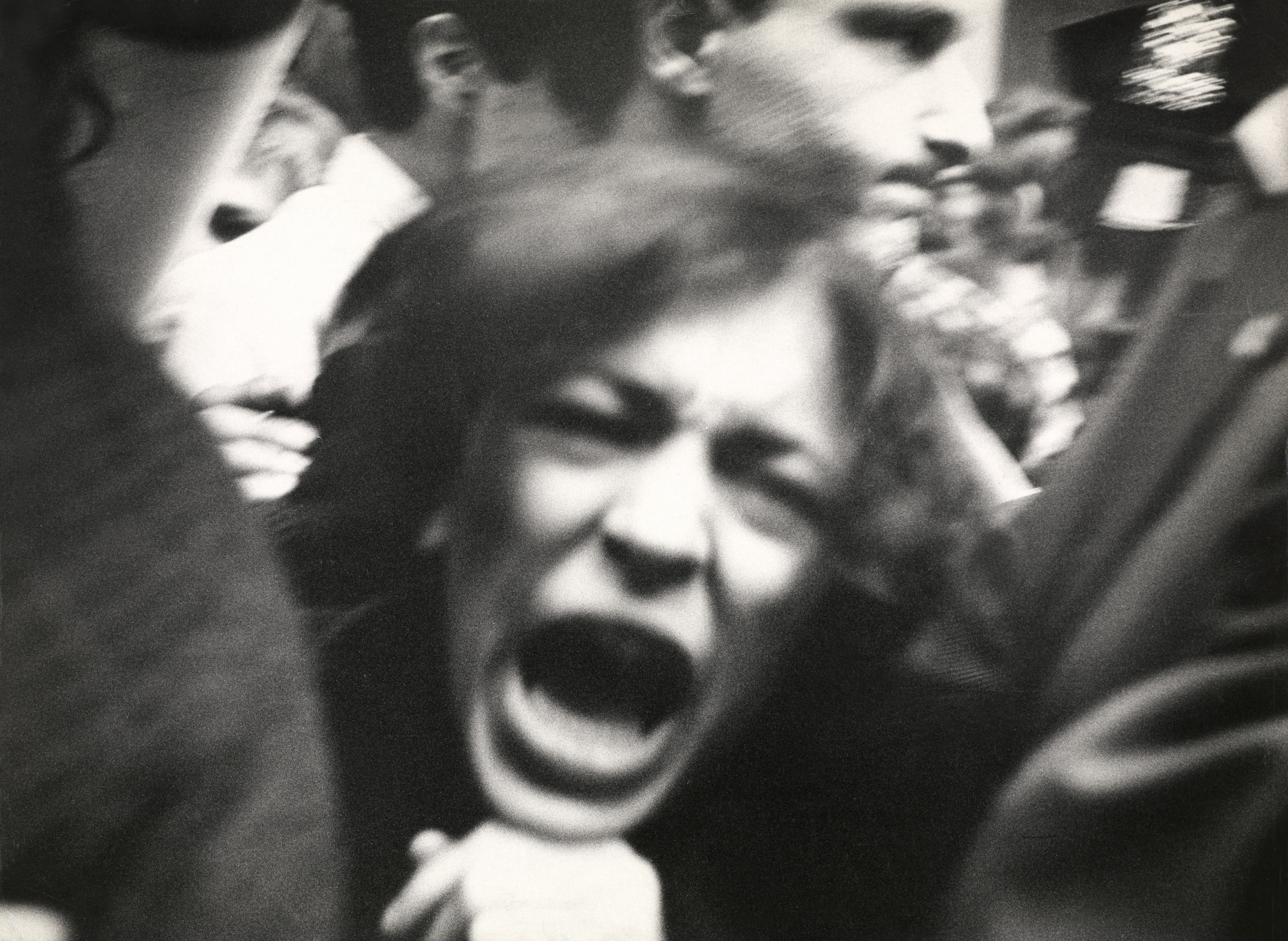
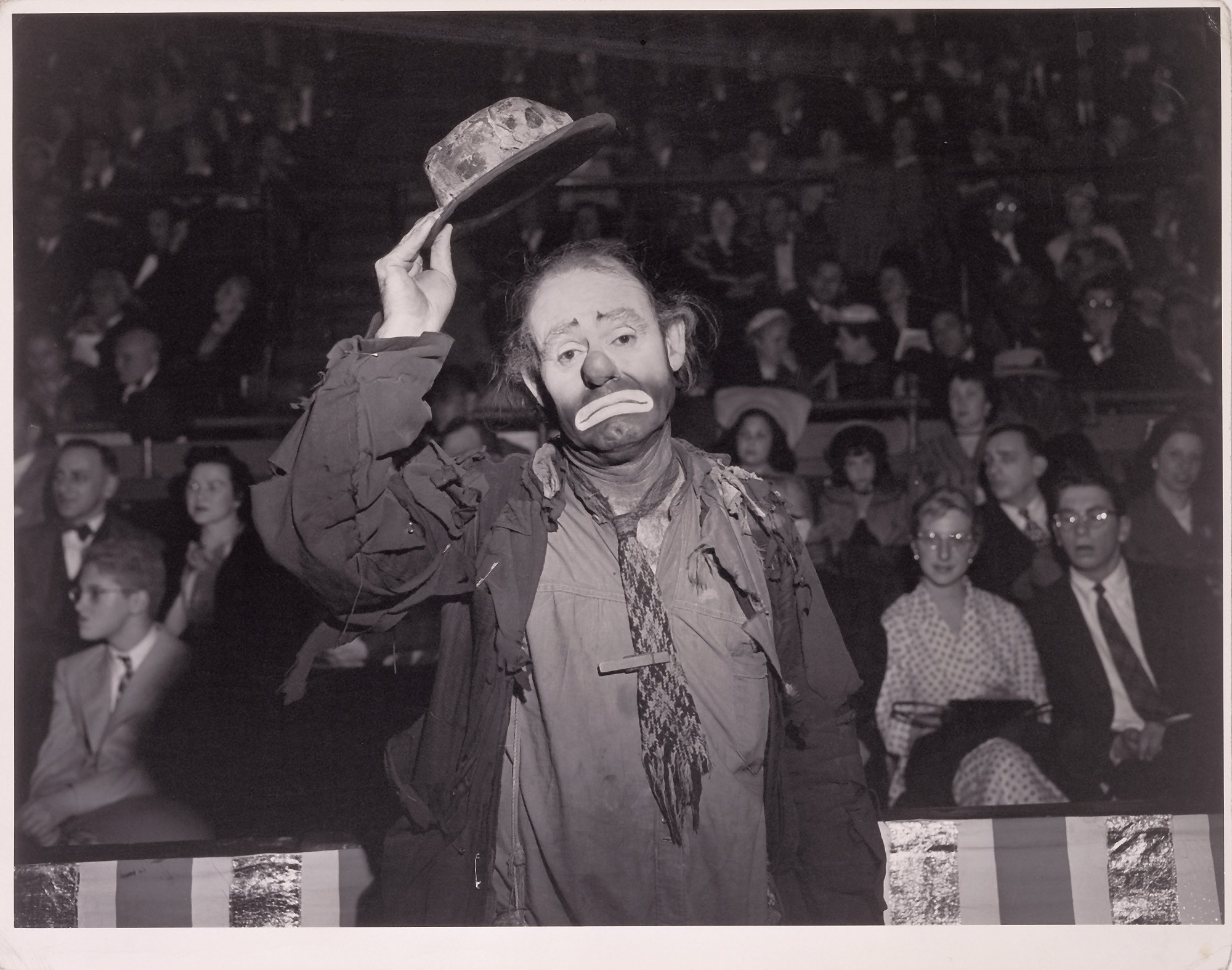

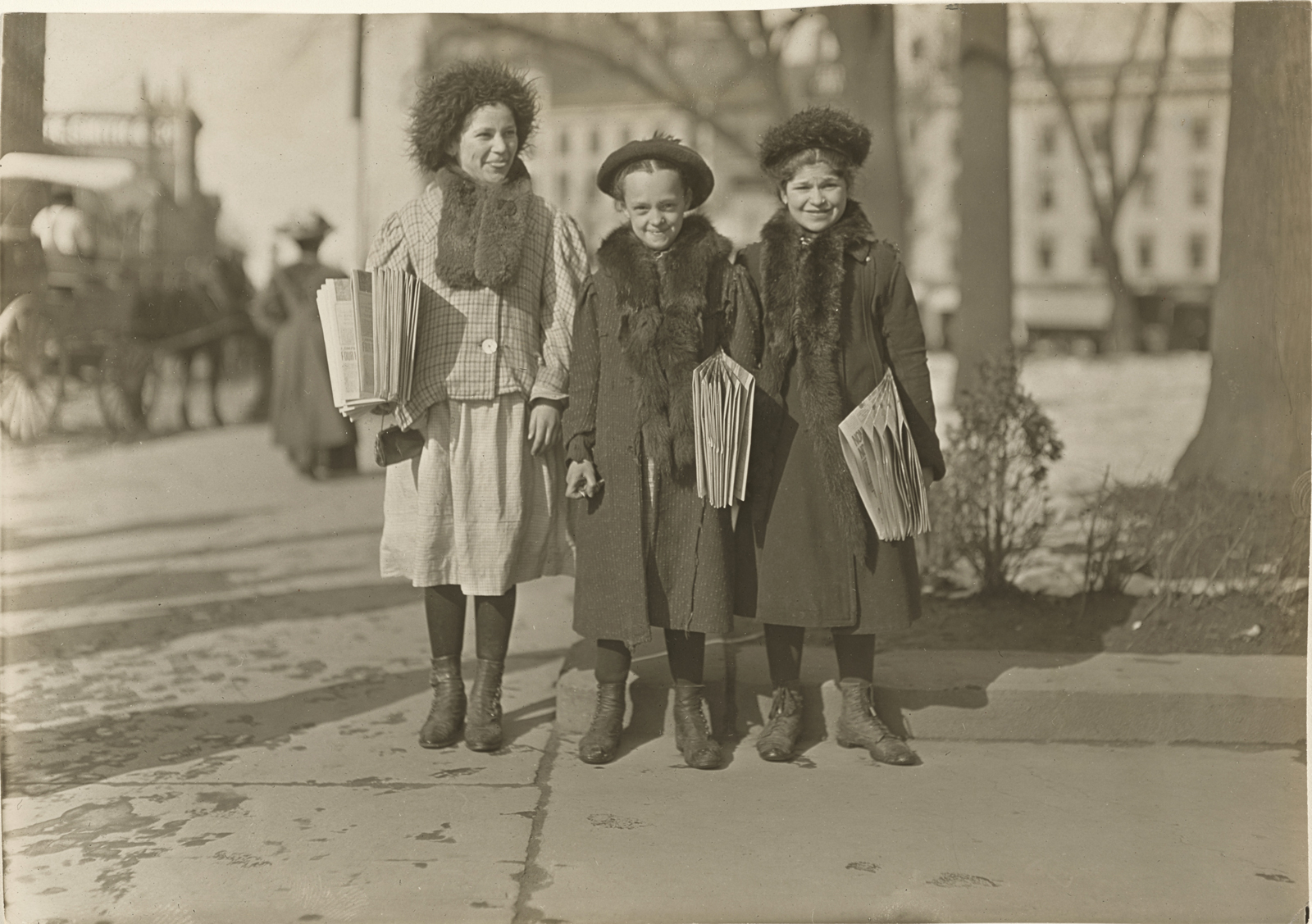
![Nadar [Gaspard Félix Tournachon] (French, 1820-1910) '[Mme Ernestine Nadar]' 1880-1883](https://artblart.com/wp-content/uploads/2018/06/in-focus-expressions-4-web.jpg "Nadar [Gaspard Félix Tournachon] (French, 1820-1910) '[Mme Ernestine Nadar]' 1880-1883")
![Nadar [Gaspard Félix Tournachon] (French, 1820-1910) '[Mme Ernestine Nadar]' 1880-1883 (detail)](https://artblart.com/wp-content/uploads/2018/06/in-focus-expressions-4-detail.jpg "Nadar [Gaspard Félix Tournachon] (French, 1820-1910) '[Mme Ernestine Nadar]' 1880-1883 (detail)")

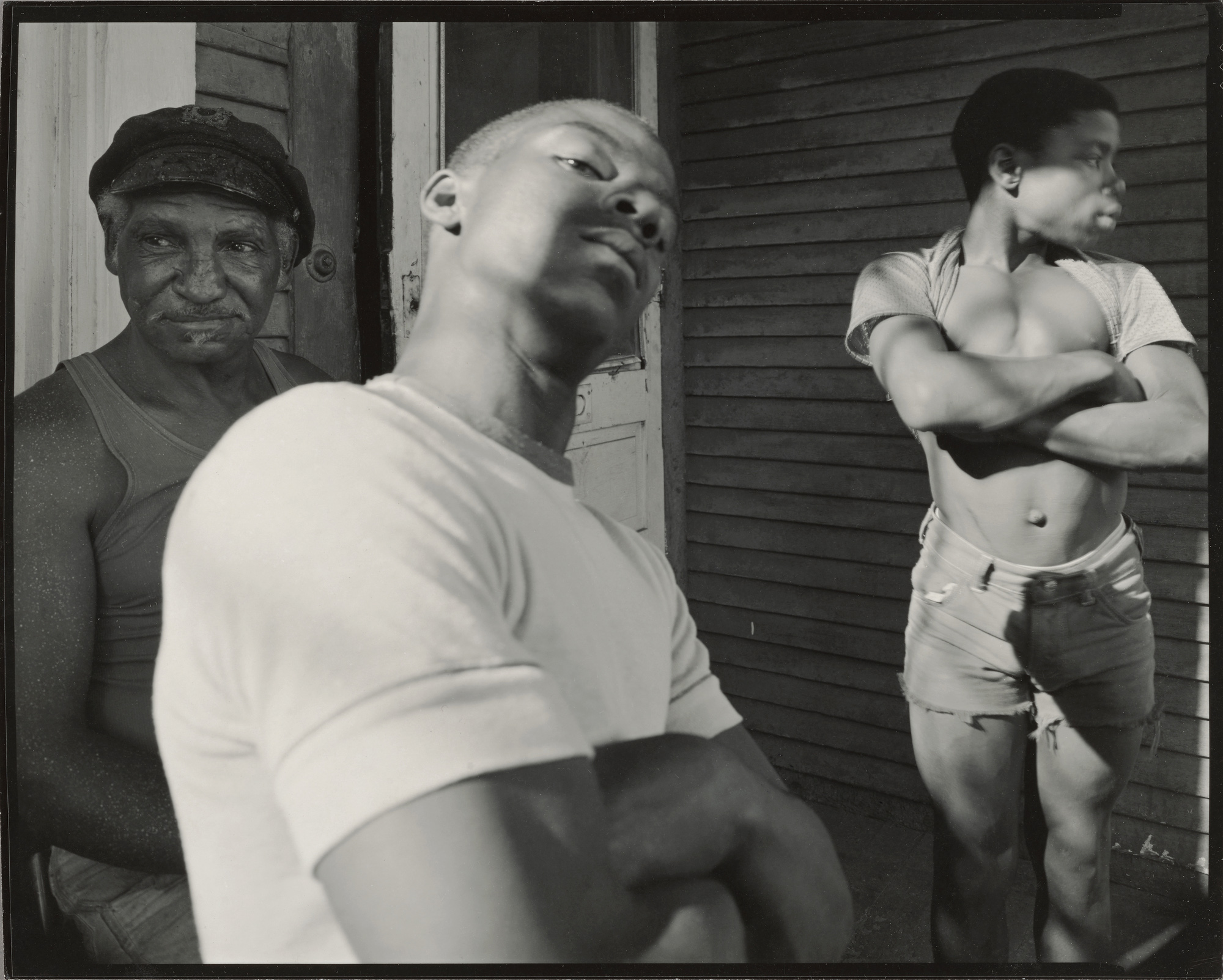
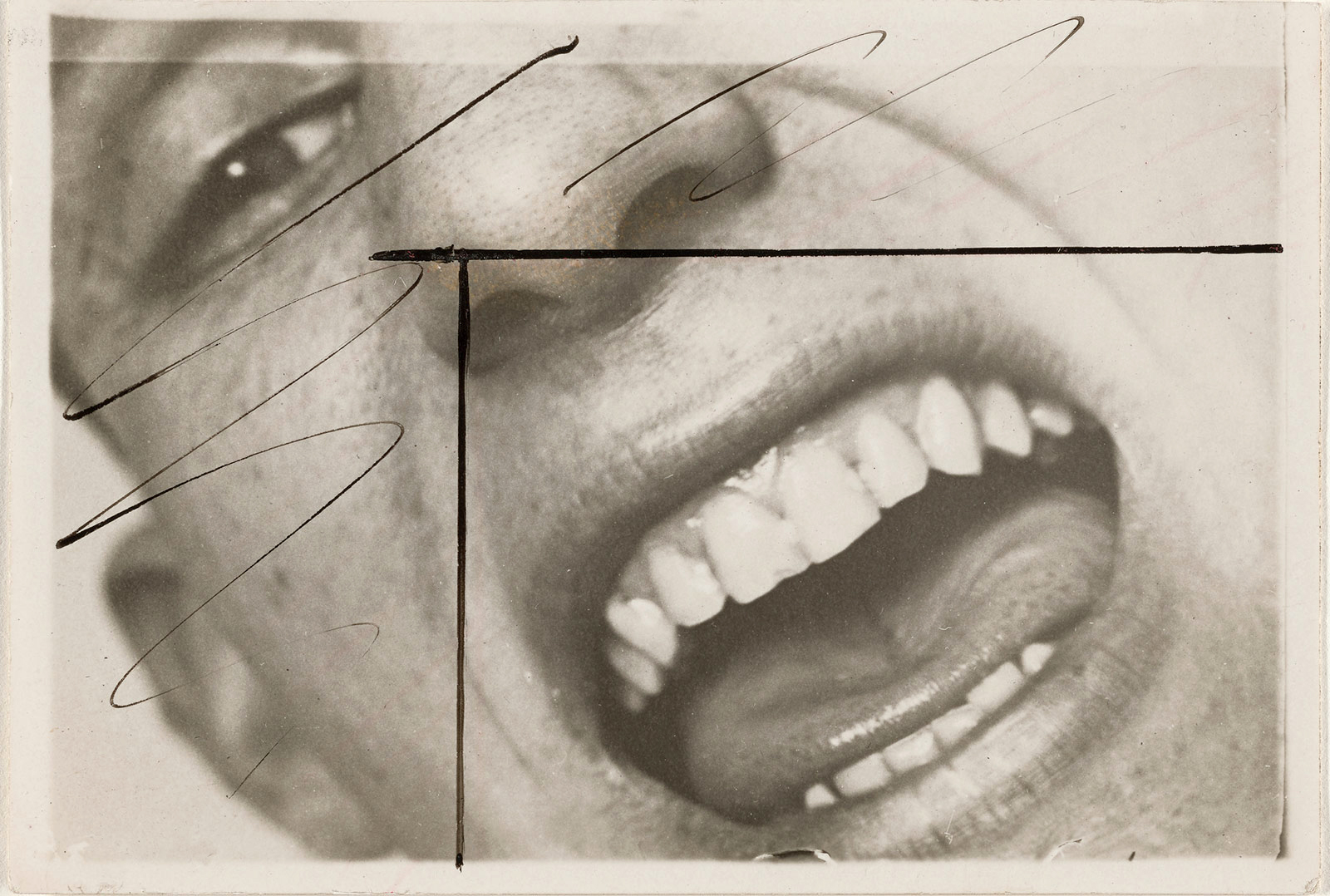
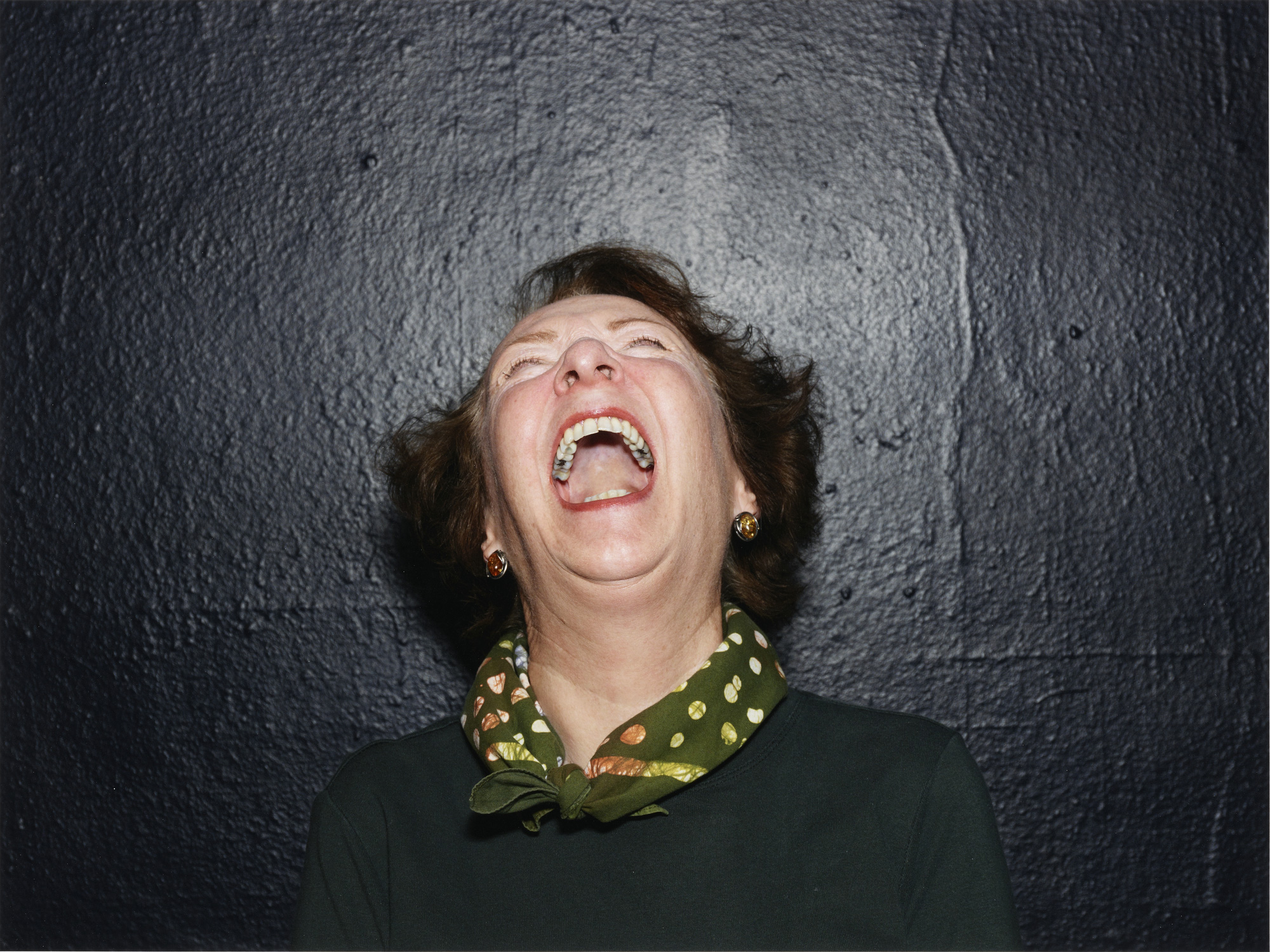
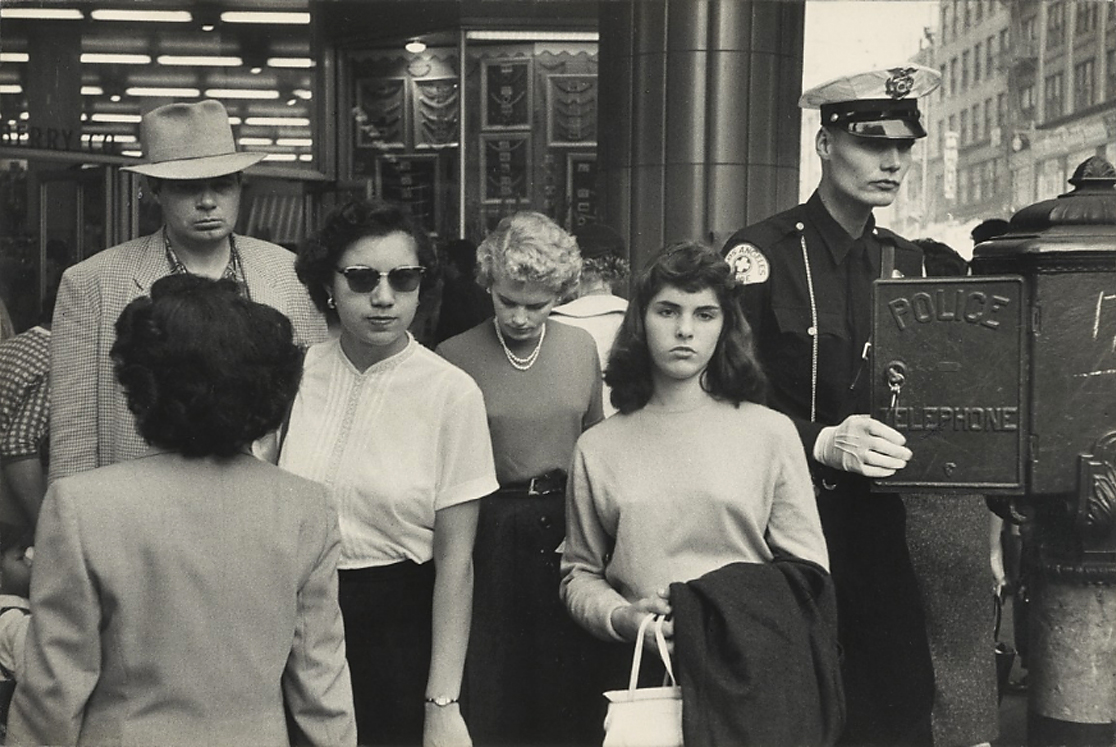
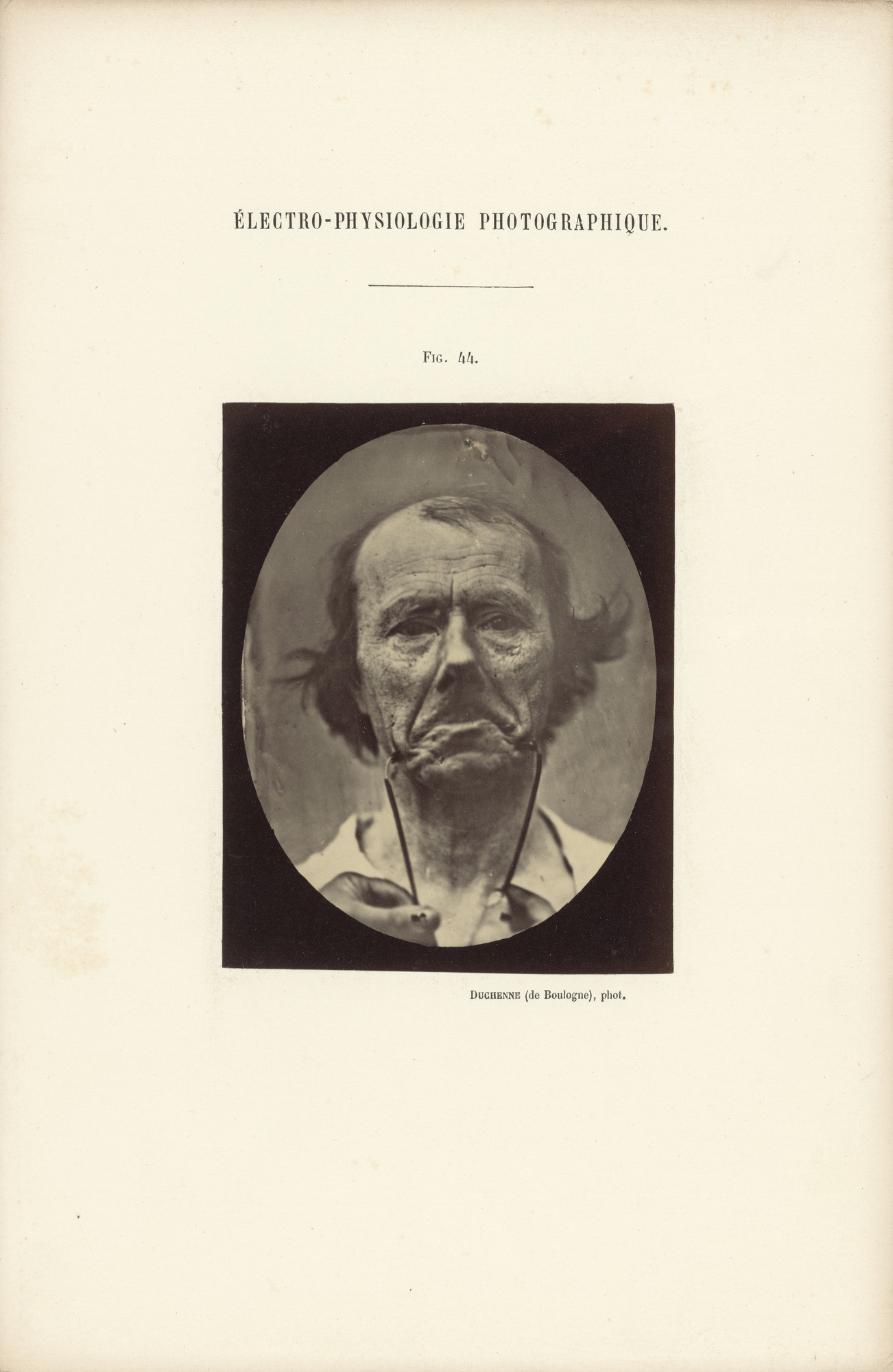
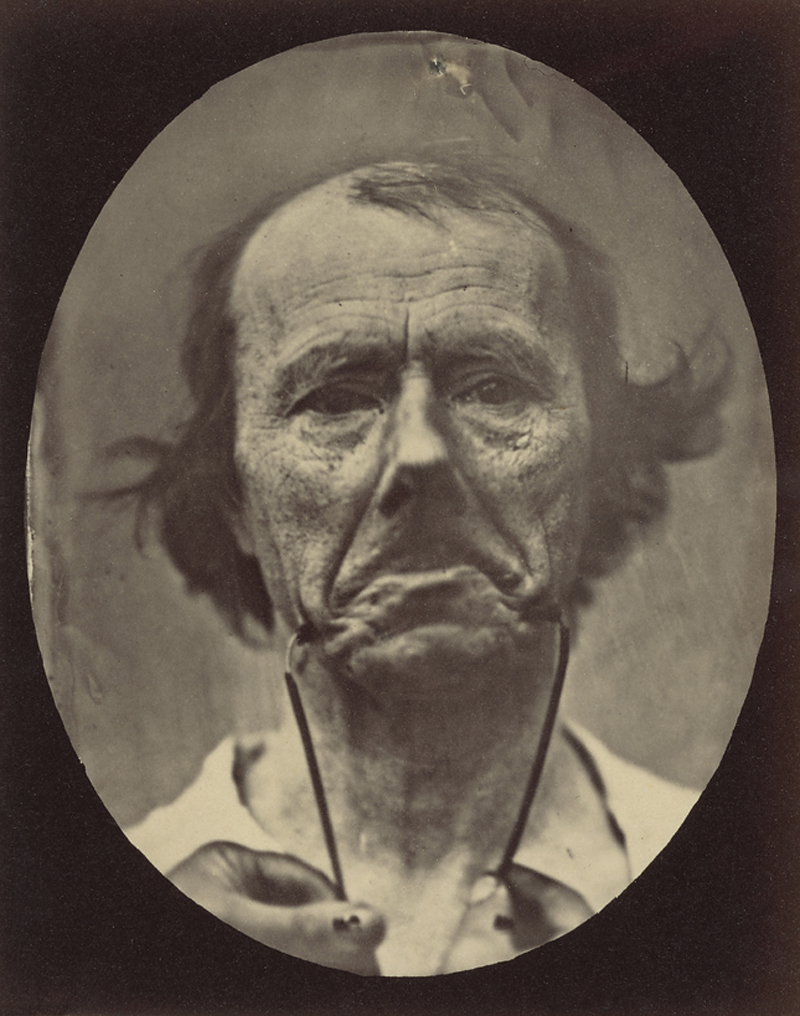
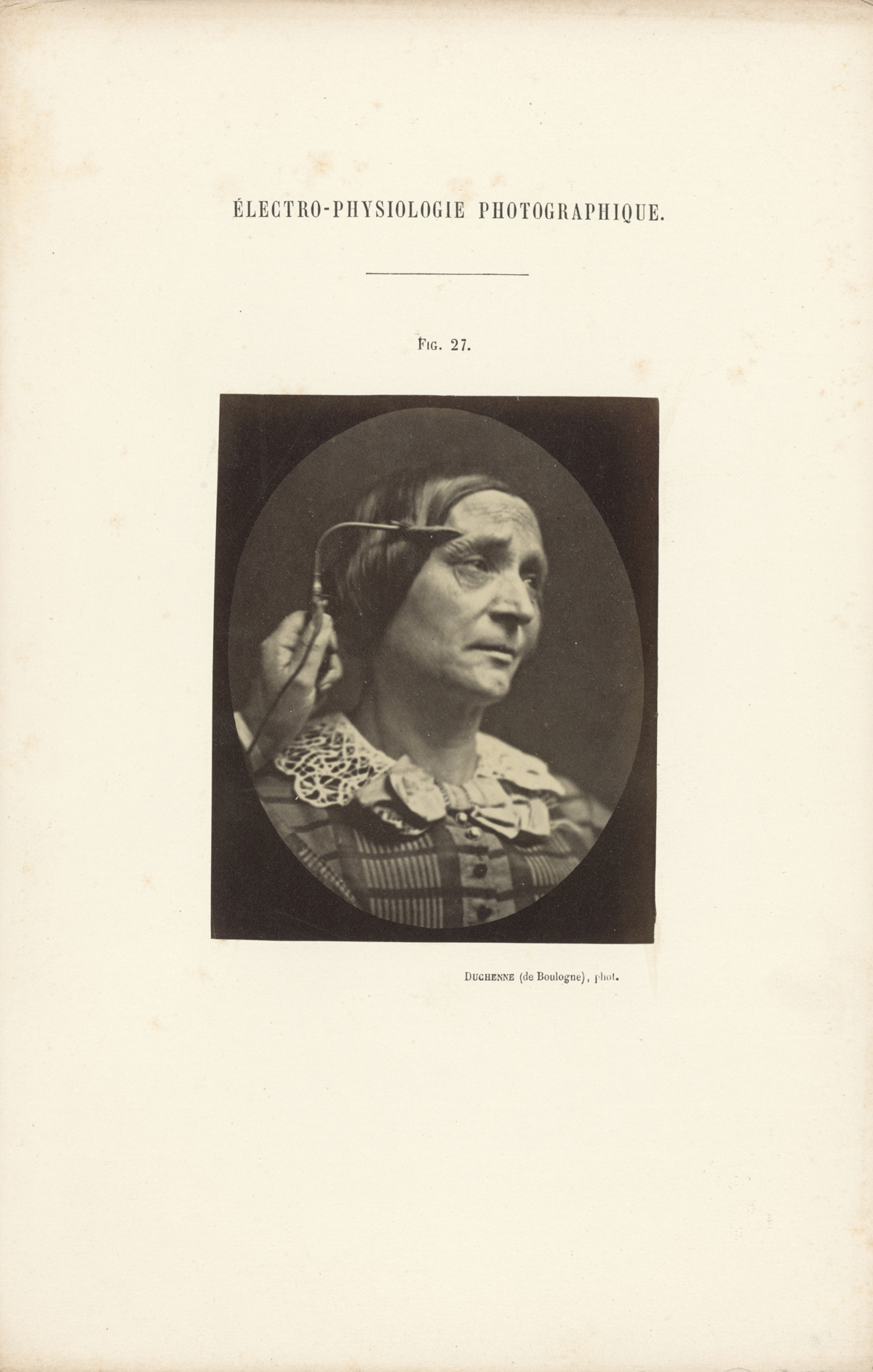
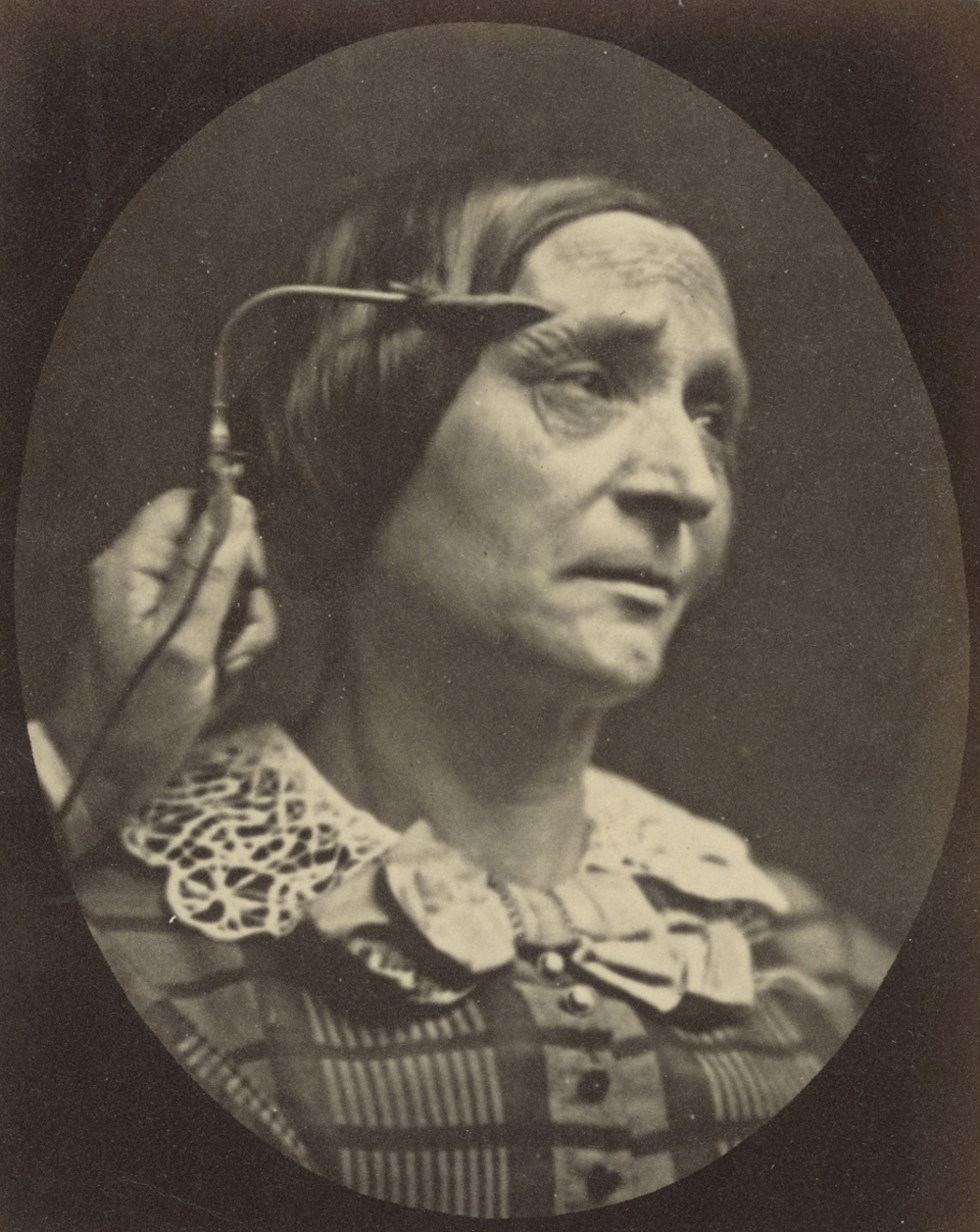
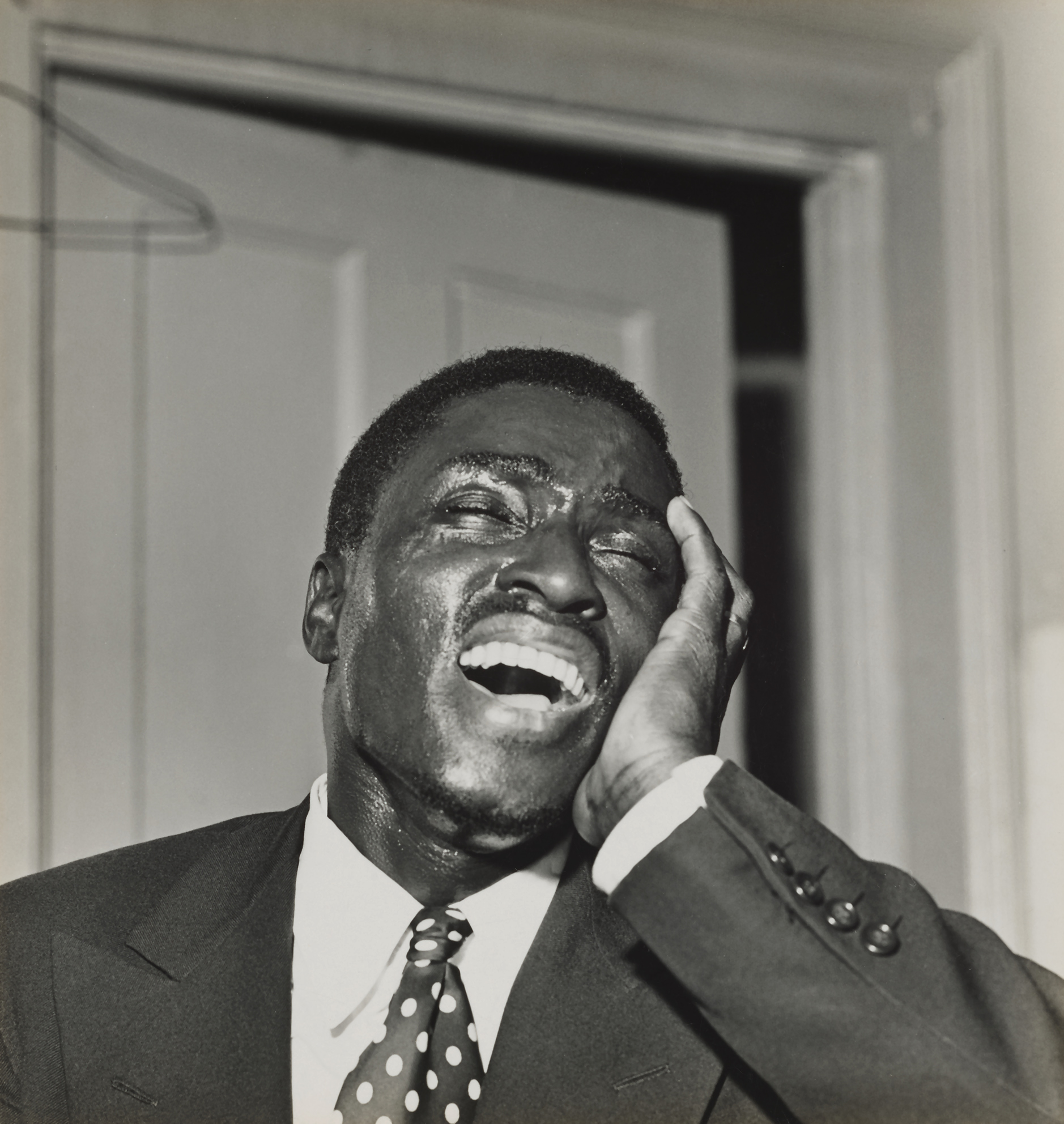
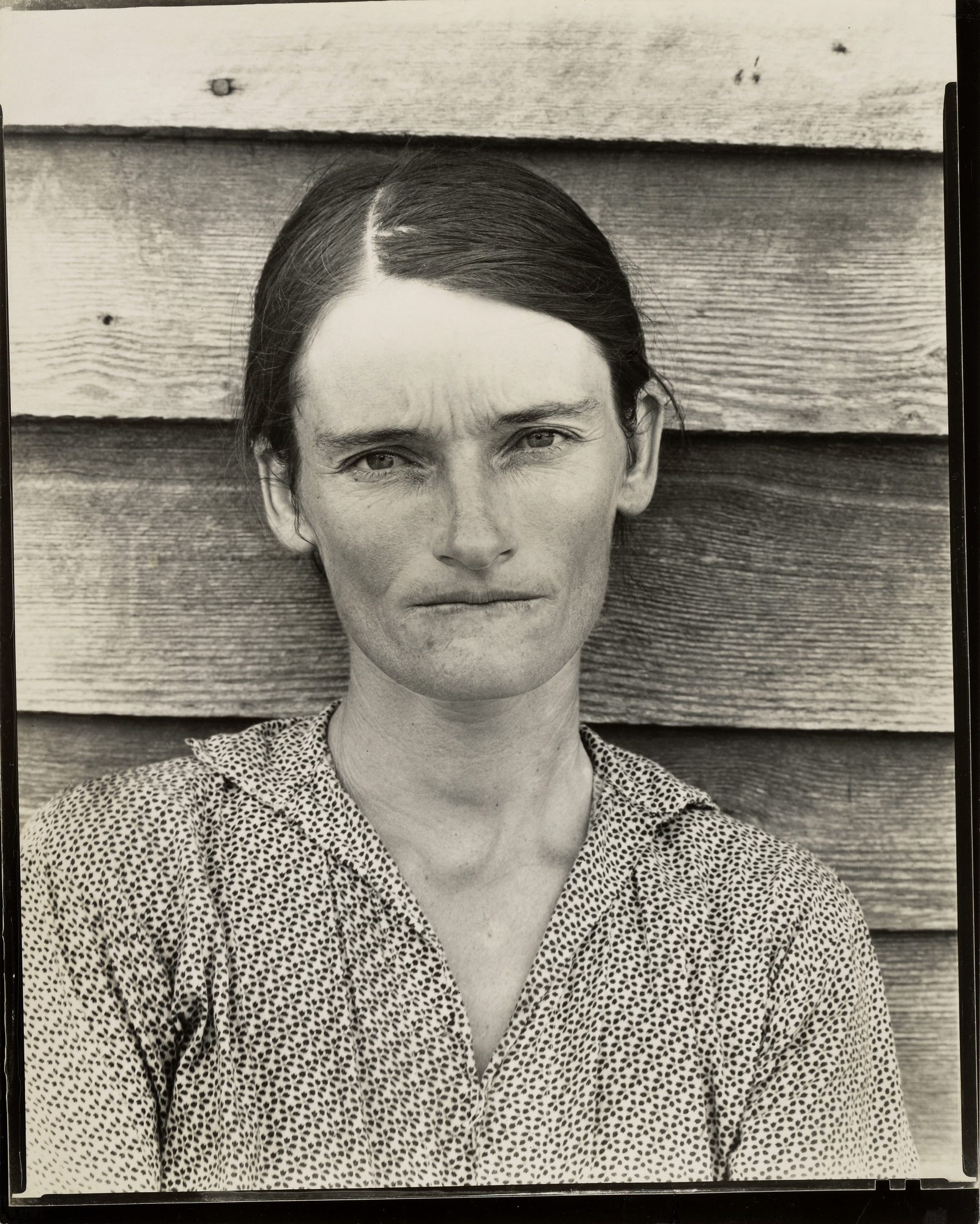
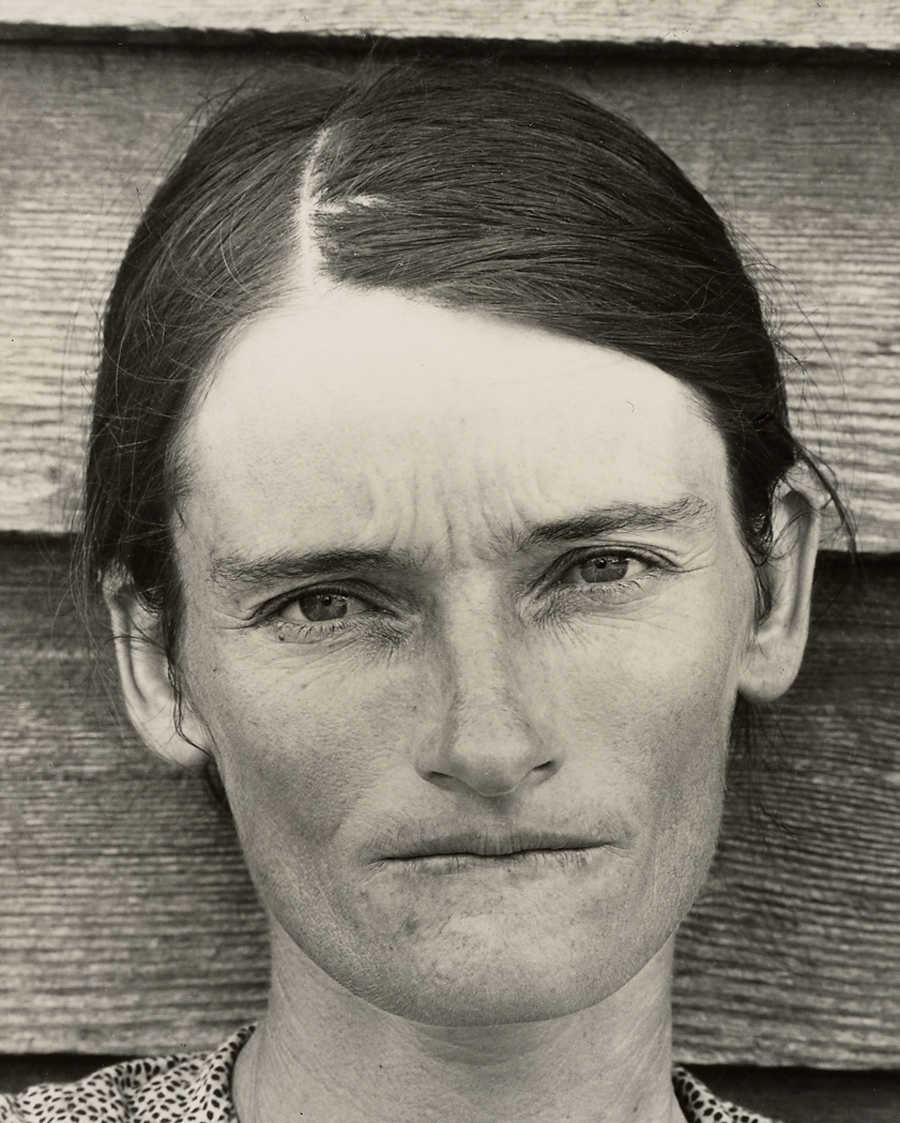
![Lisette Model (American born Austria, 1901-1983) '[War Rally]' 1942](https://artblart.com/wp-content/uploads/2018/06/in-focus-expressions-2-web.jpg "Lisette Model (American born Austria, 1901-1983) '[War Rally]' 1942")
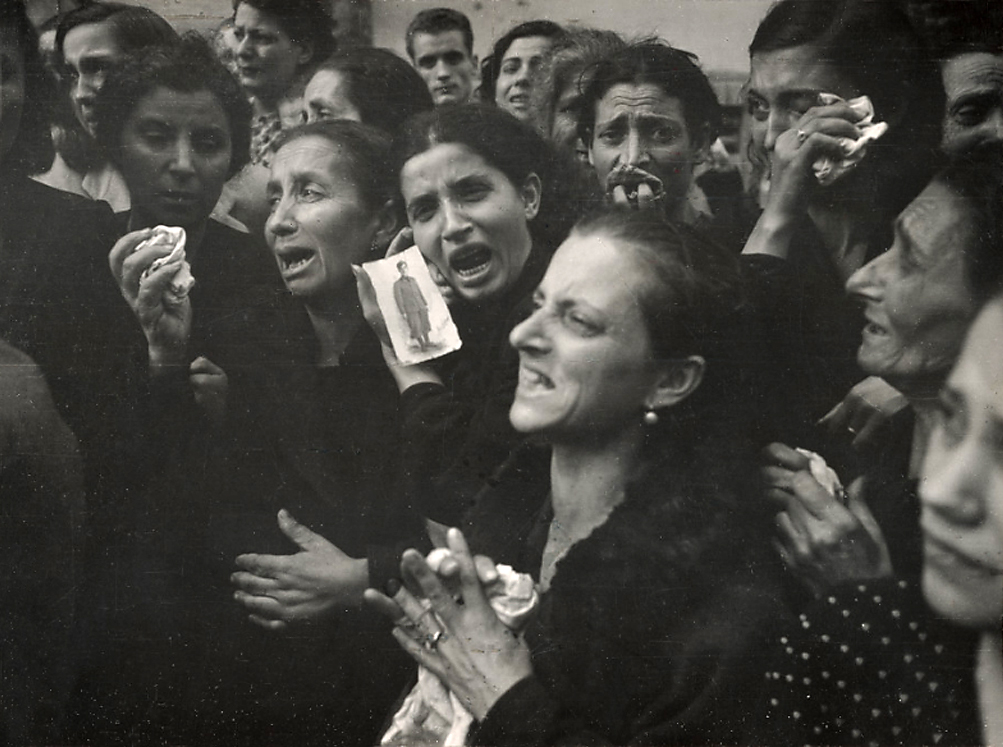
![Unknown maker (American) '[Smiling Man]' 1860](https://artblart.com/wp-content/uploads/2018/06/unknown-maker-smiling-man-1860-web.jpg "Unknown maker (American) '[Smiling Man]' 1860")
![Baron Adolf de Meyer (American born France, 1868-1946) '[Ruth St. Denis]' c. 1918](https://artblart.com/wp-content/uploads/2018/06/baron-adolf-de-meyer-ruth-st-denis-c-1918-web.jpg "Baron Adolf de Meyer (American born France, 1868-1946) '[Ruth St. Denis]' c. 1918")
![Woodbury & Page (British, active 1857-1908) '[Javanese woman seated with legs crossed, basket at side]' c. 1870](https://artblart.com/wp-content/uploads/2018/06/woodbury-and-page-javanese-woman-web.jpg "Woodbury & Page (British, active 1857-1908) '[Javanese woman seated with legs crossed, basket at side]' c. 1870")
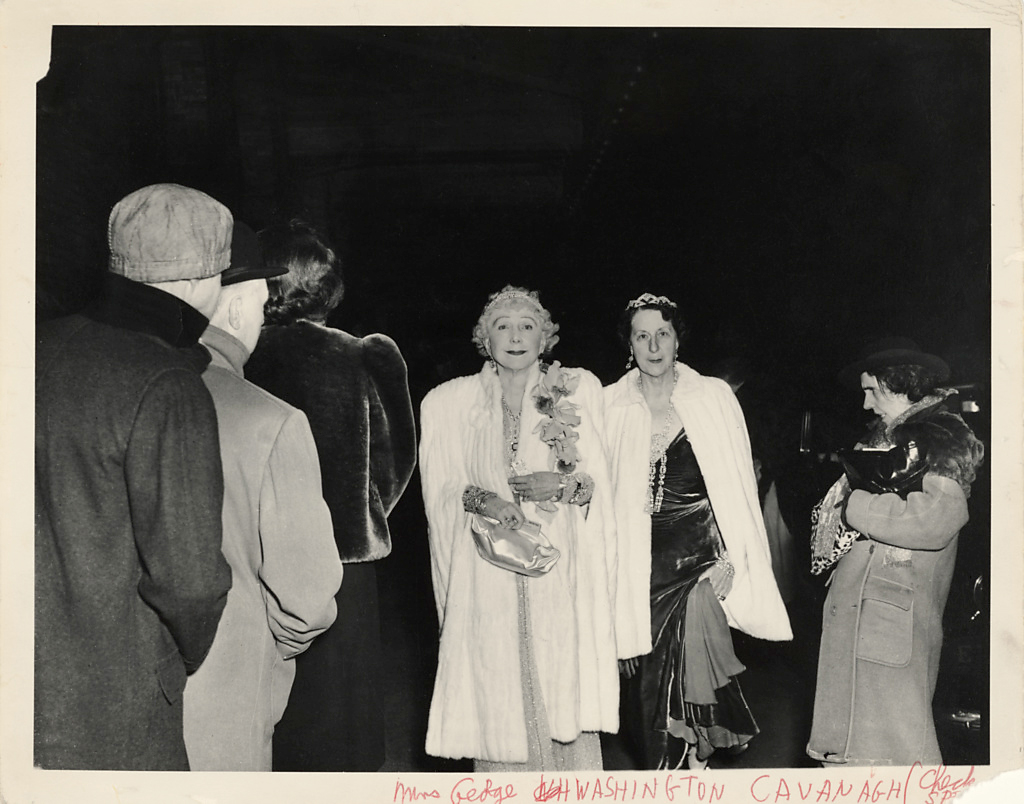
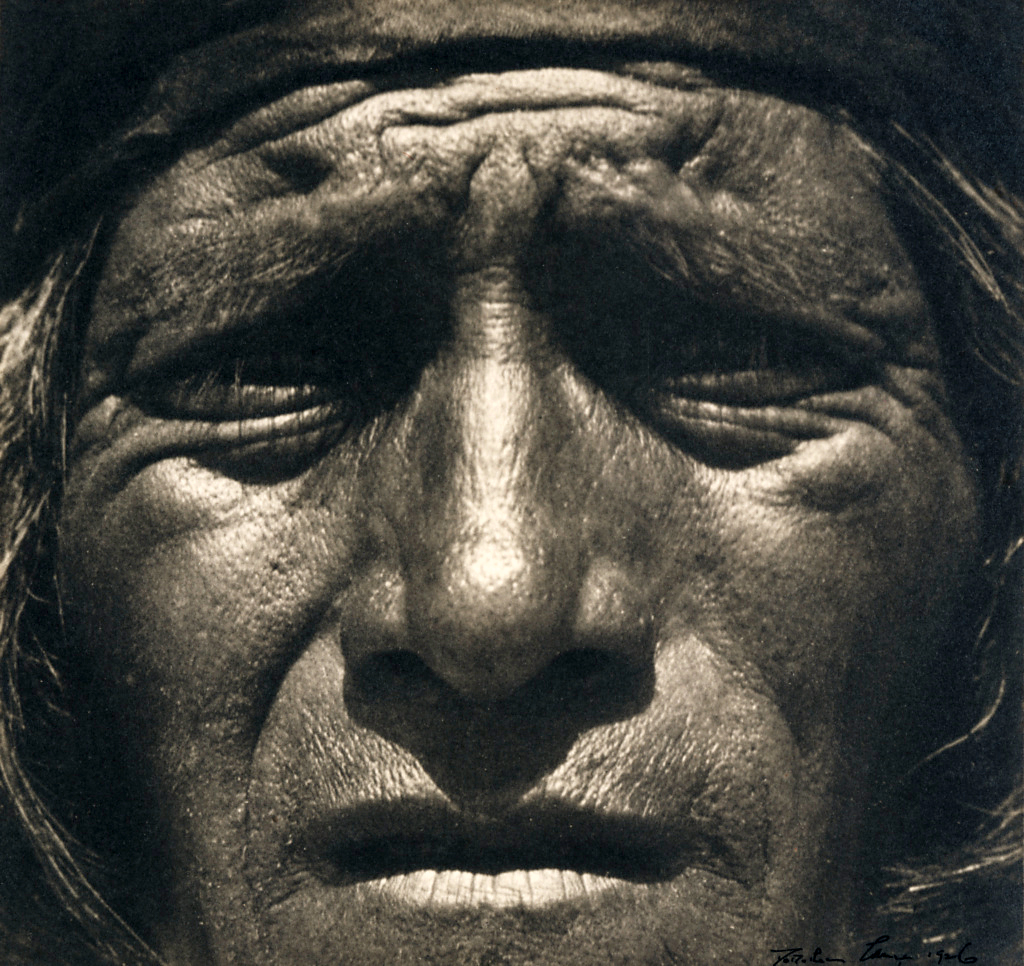
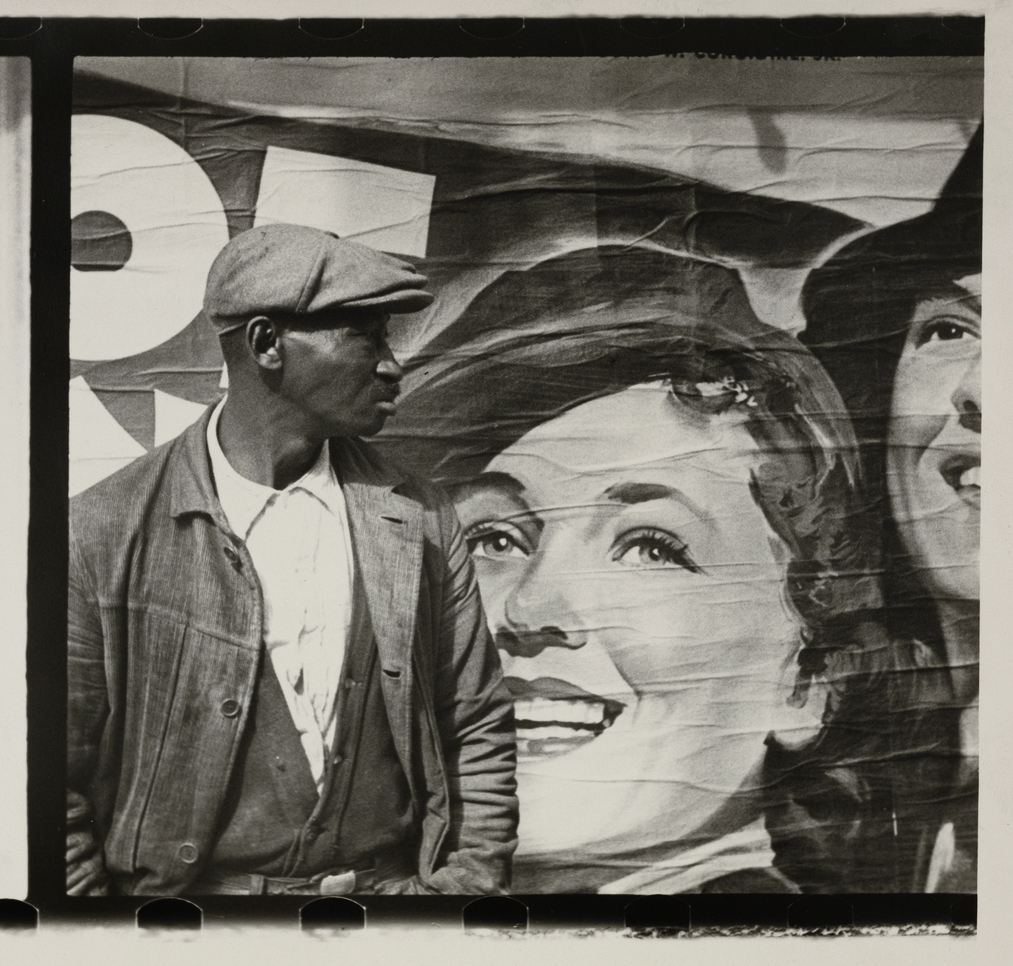
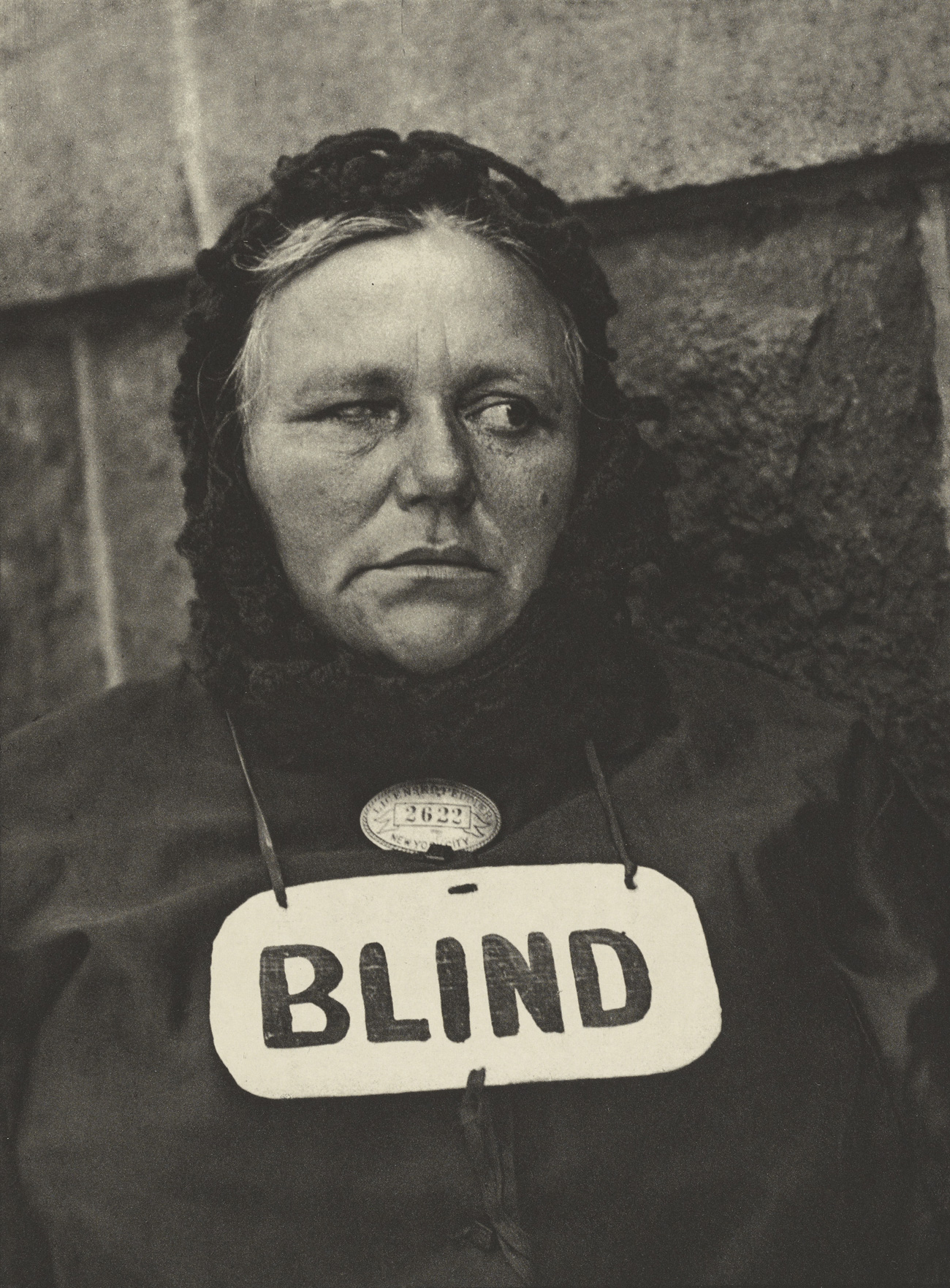
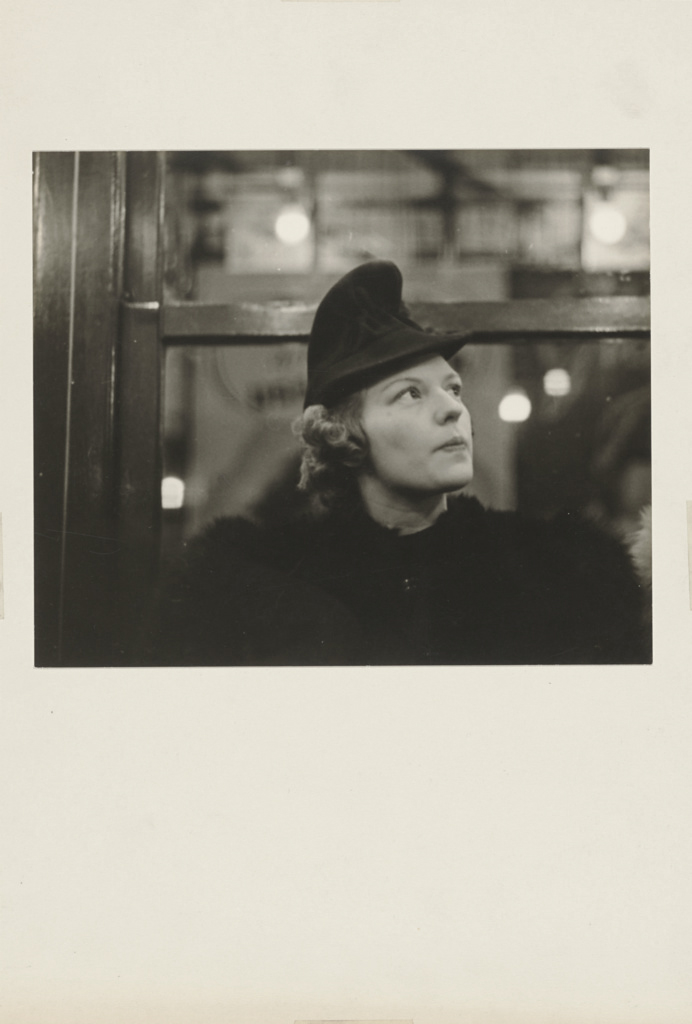
![Camille Silvy (French, 1834-1910) '[Madame Camille Silvy]' c. 1863](https://artblart.com/wp-content/uploads/2018/06/camille-silvy-web.jpg "Camille Silvy (French, 1834-1910) '[Madame Camille Silvy]' c. 1863")
![Mikiko Hara (Japanese, b. 1967) '[Untitled (Making a Void)]' Negative 2001; print about 2007](https://artblart.com/wp-content/uploads/2018/06/mikiko-hara-untitled-web.jpg "Mikiko Hara (Japanese, b. 1967) '[Untitled (Making a Void)]' Negative 2001; print about 2007")
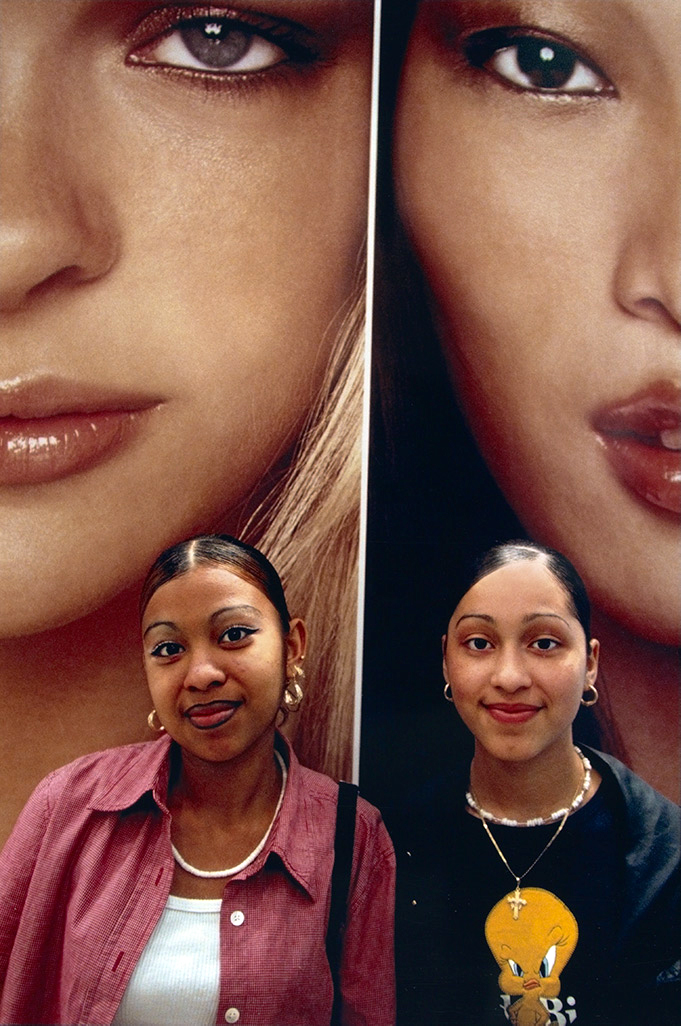
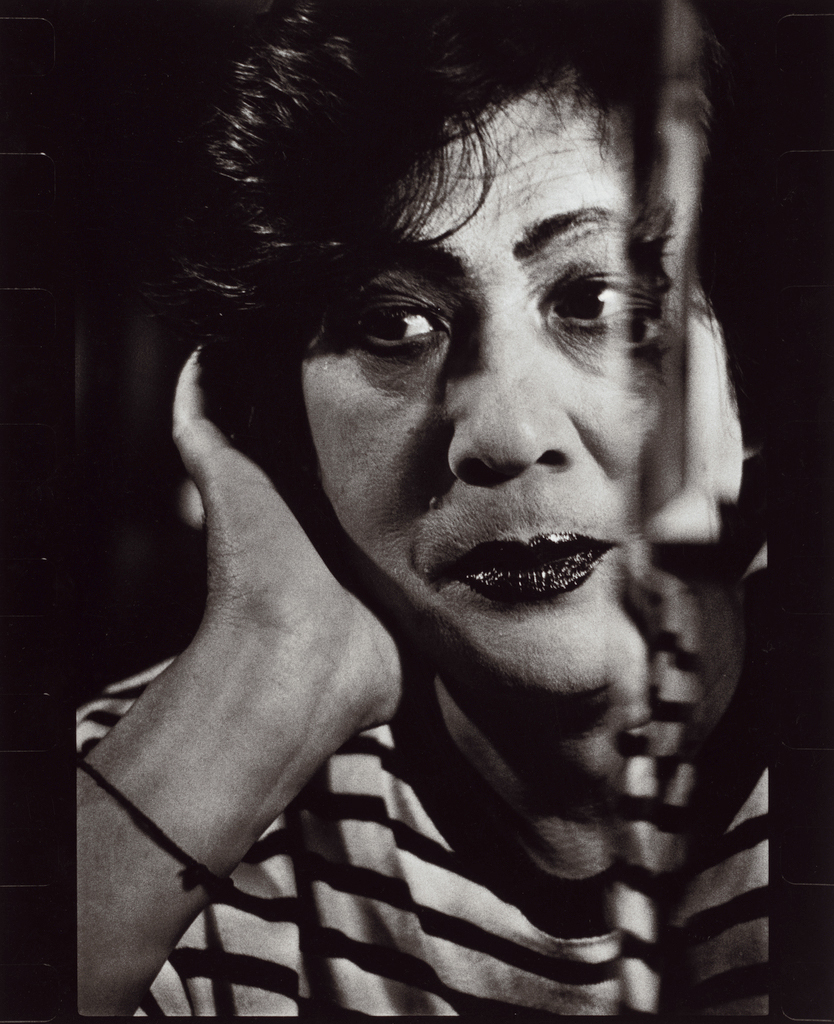

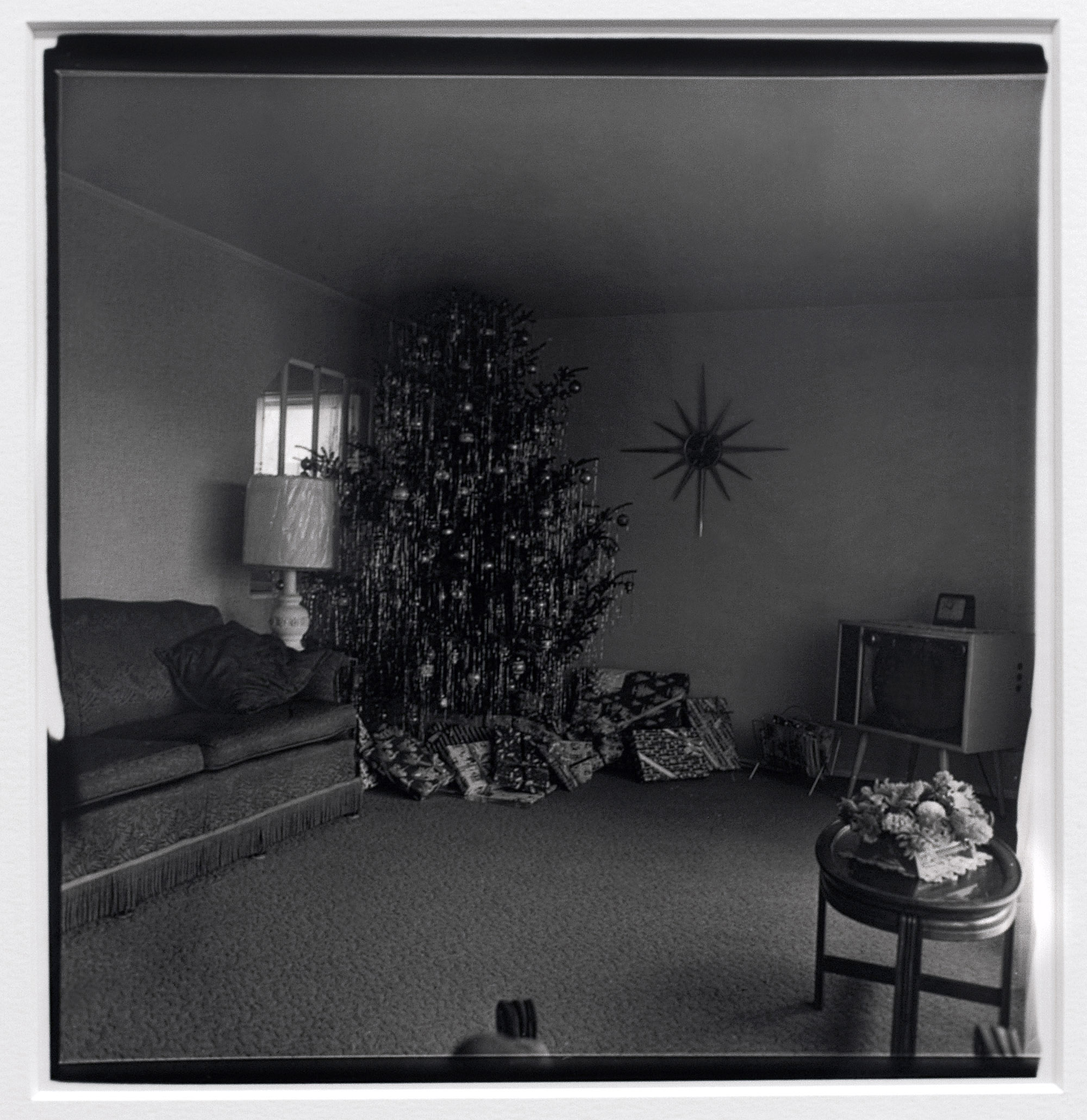


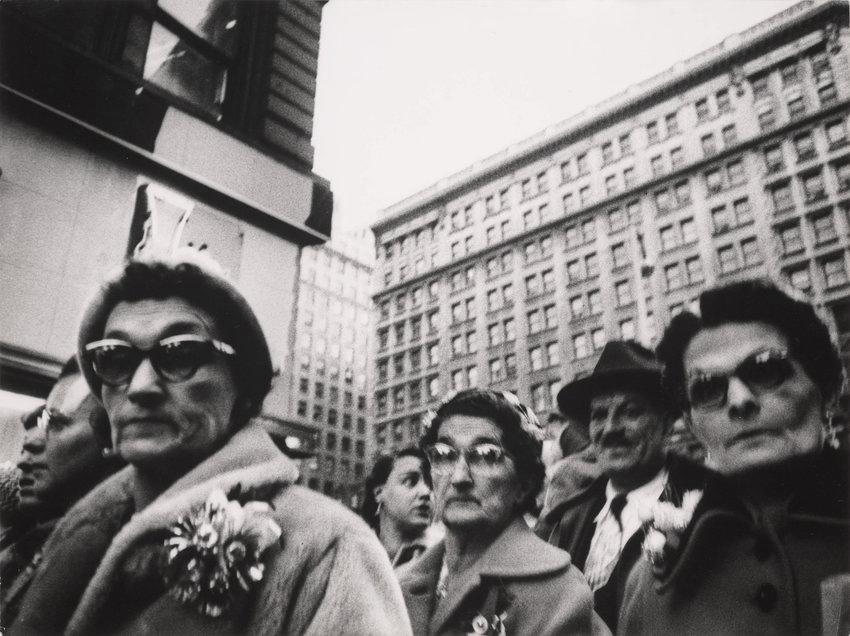

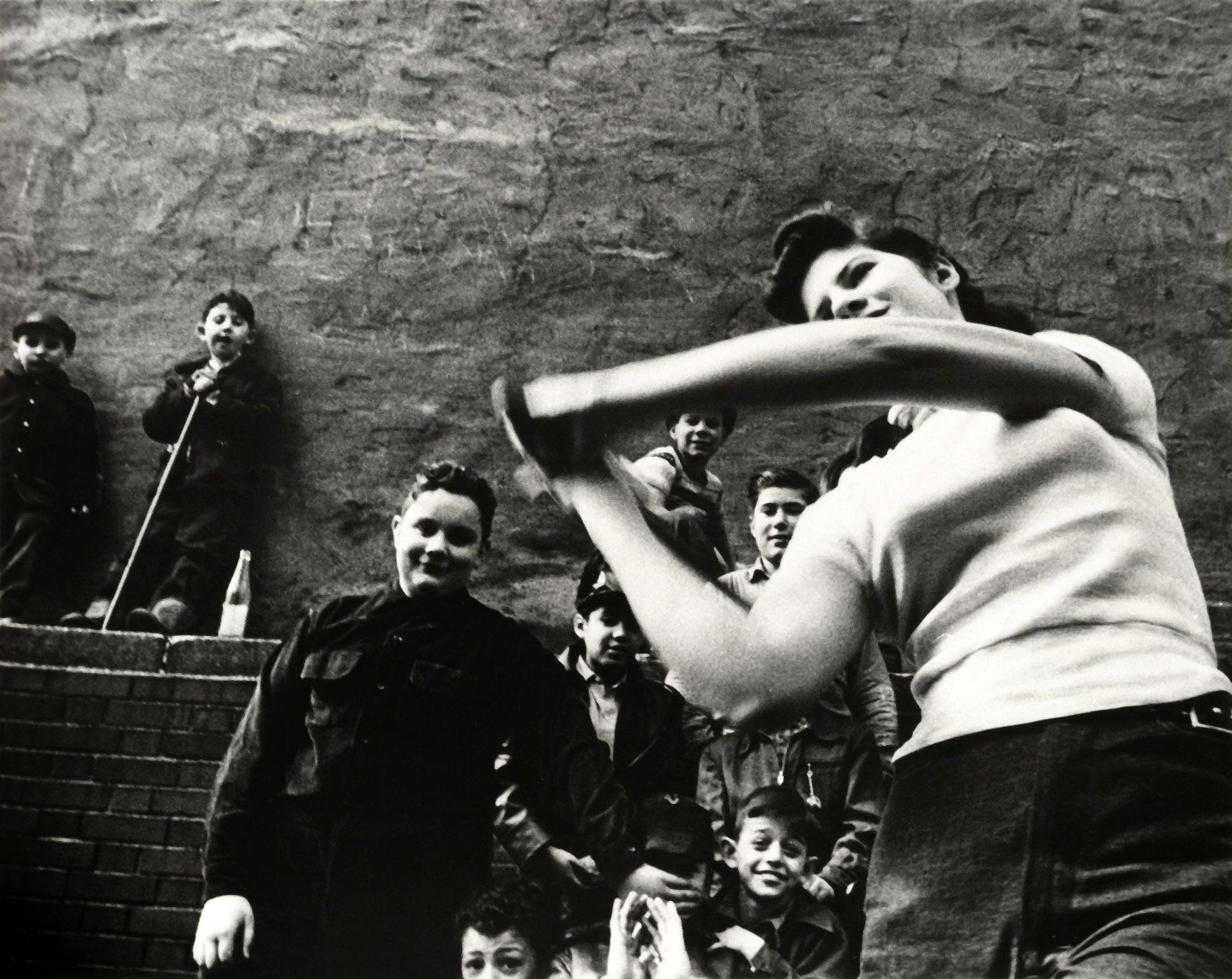

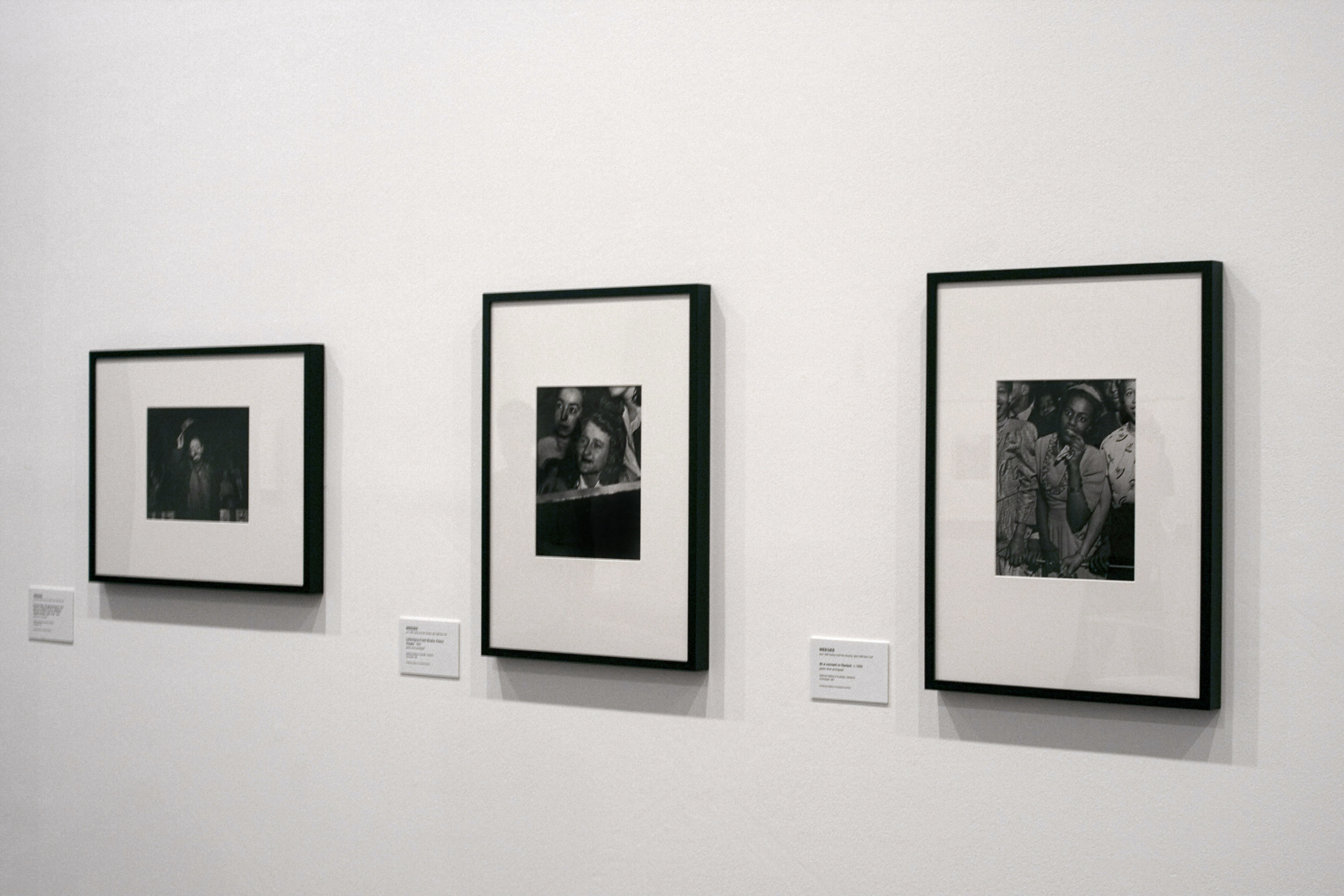

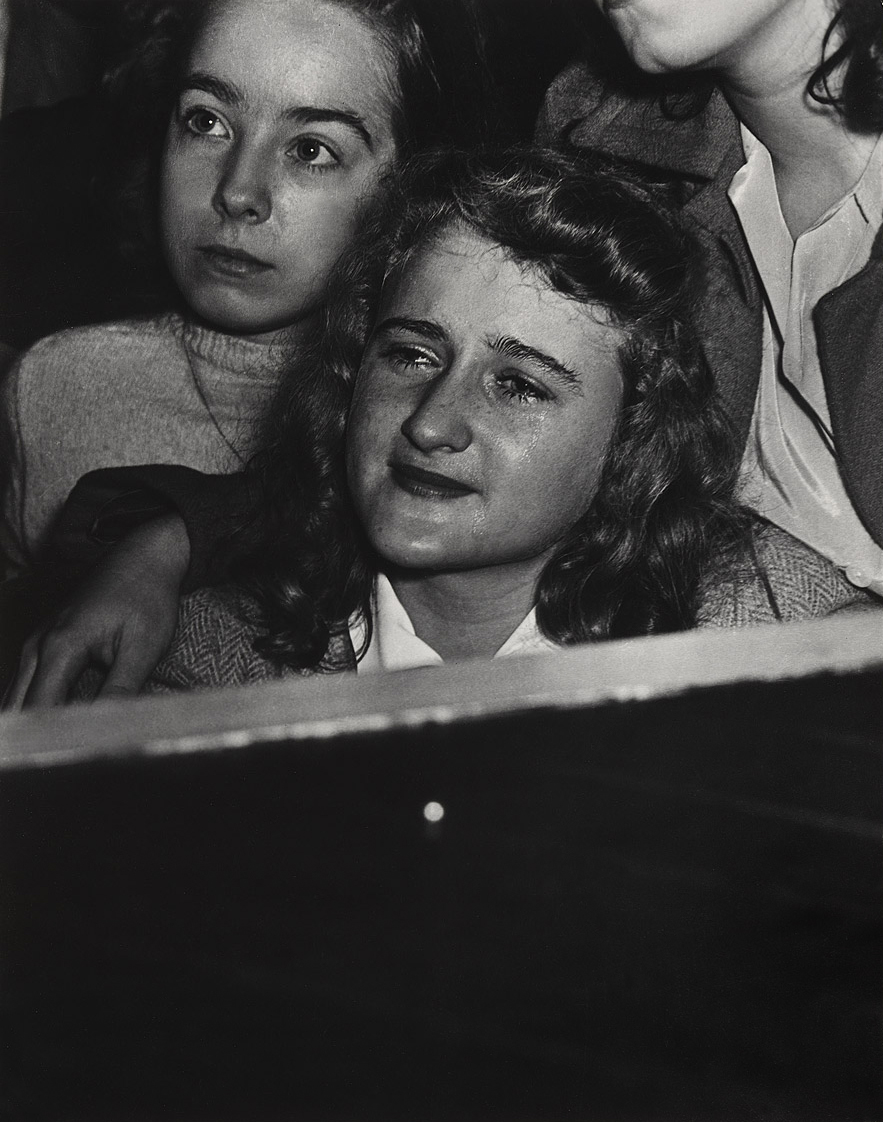


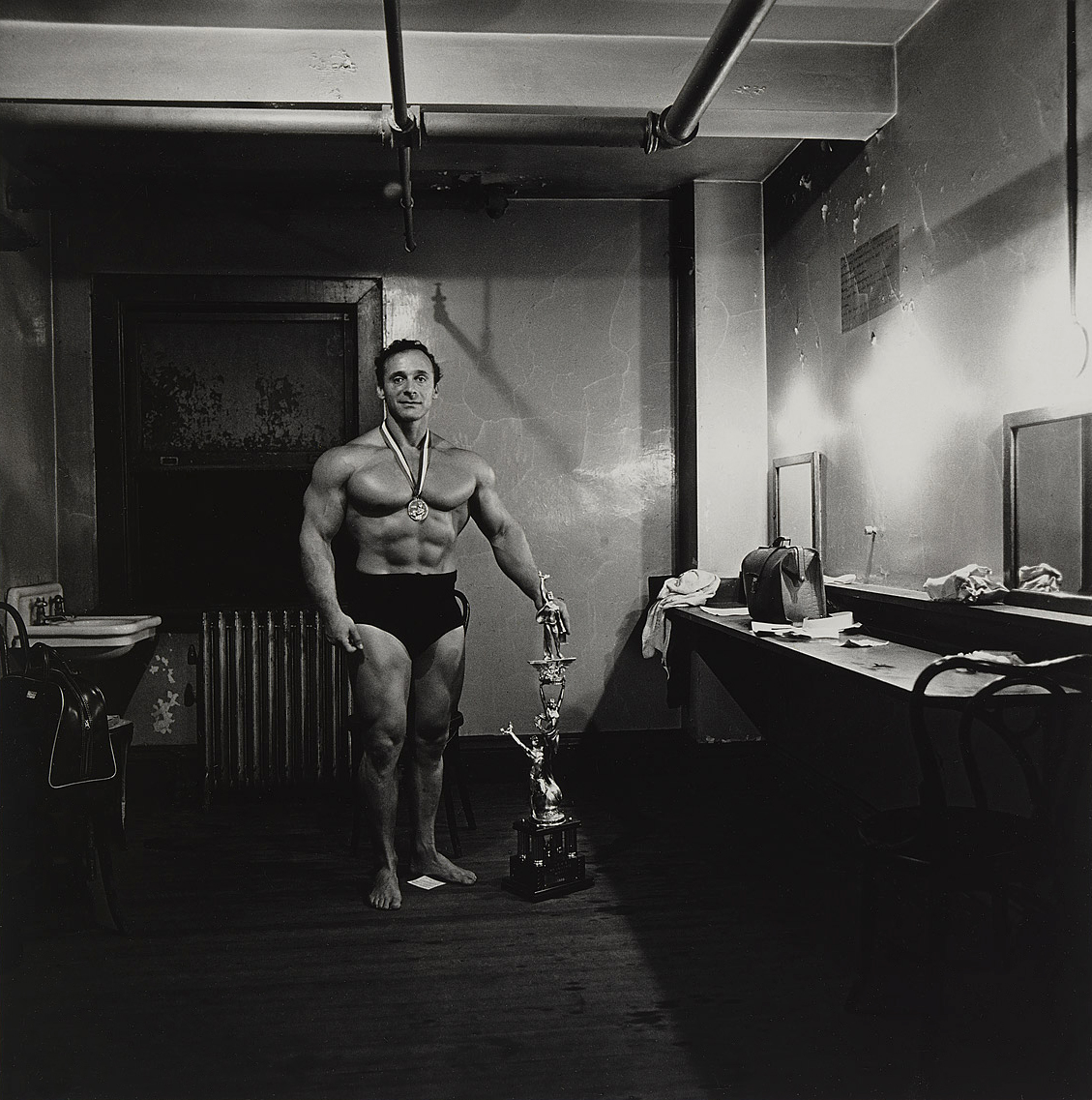
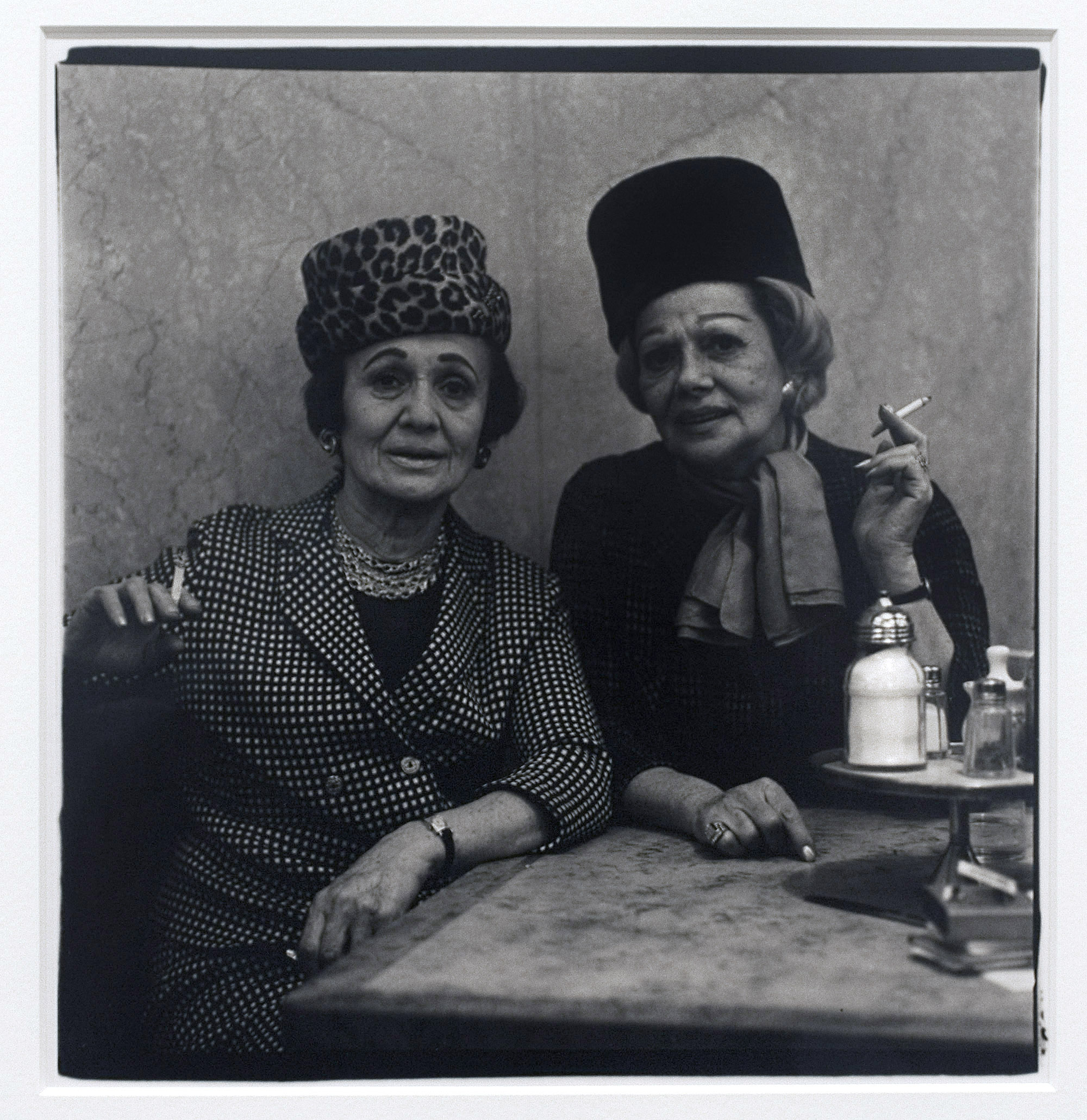


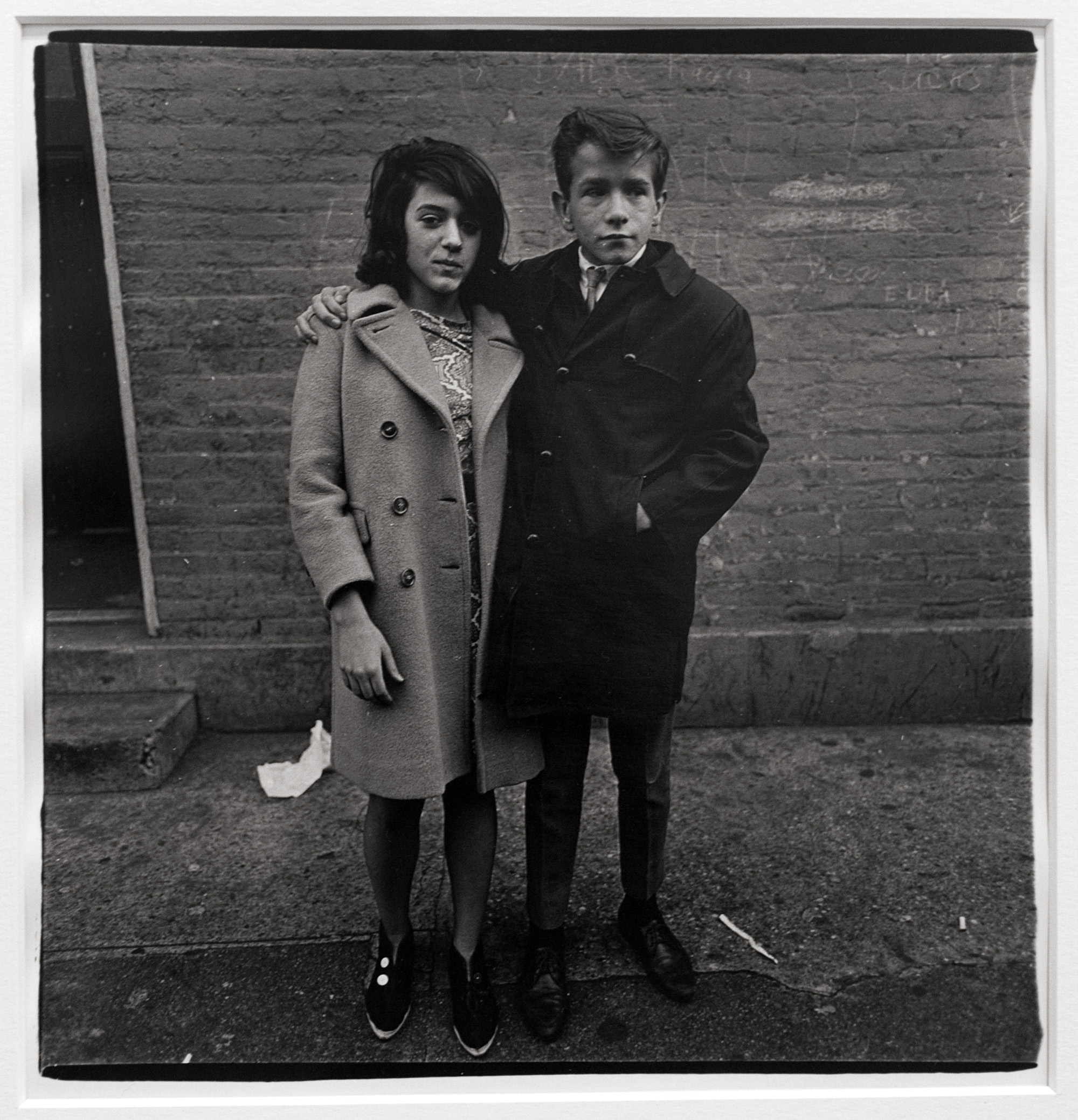



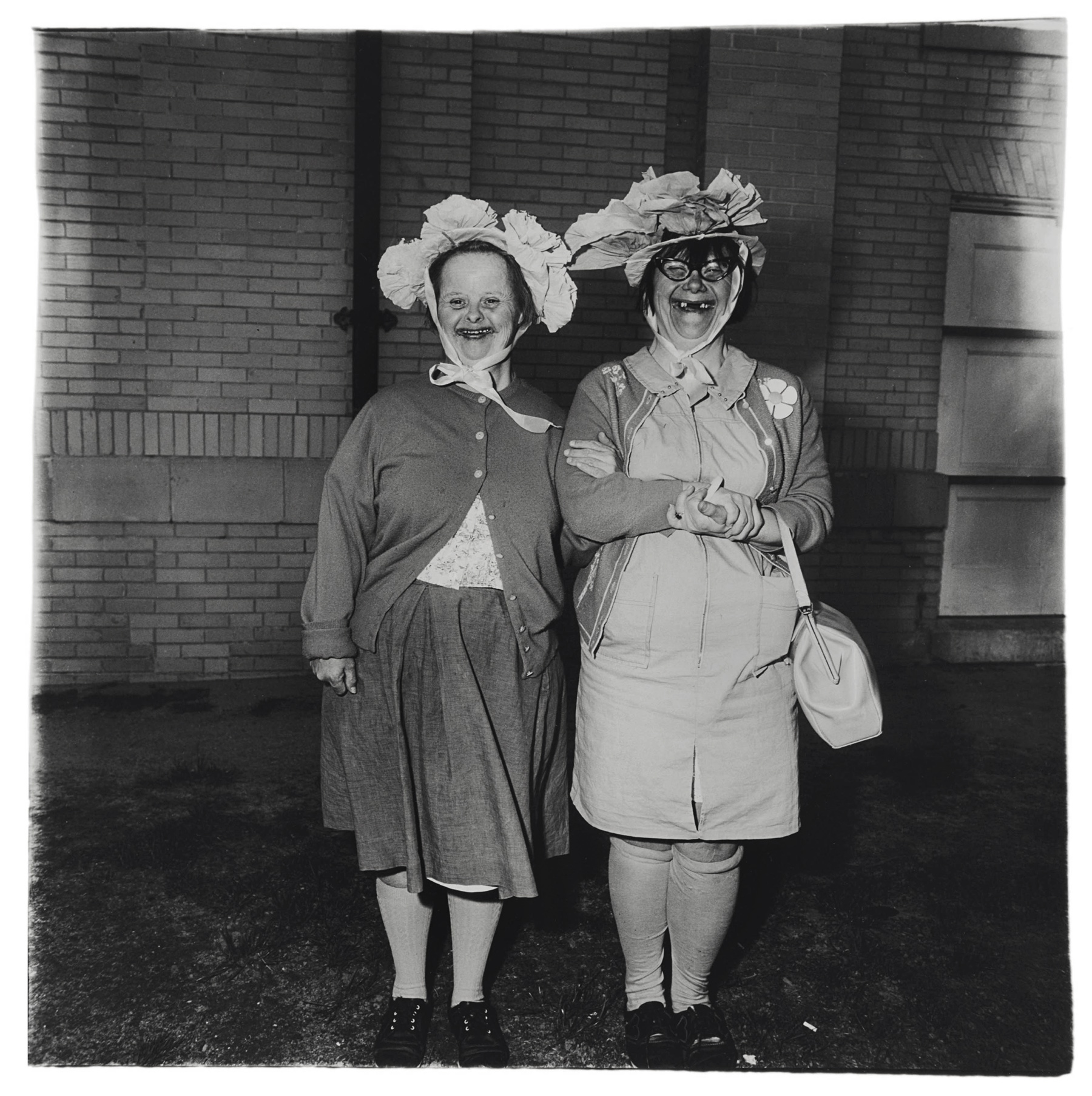



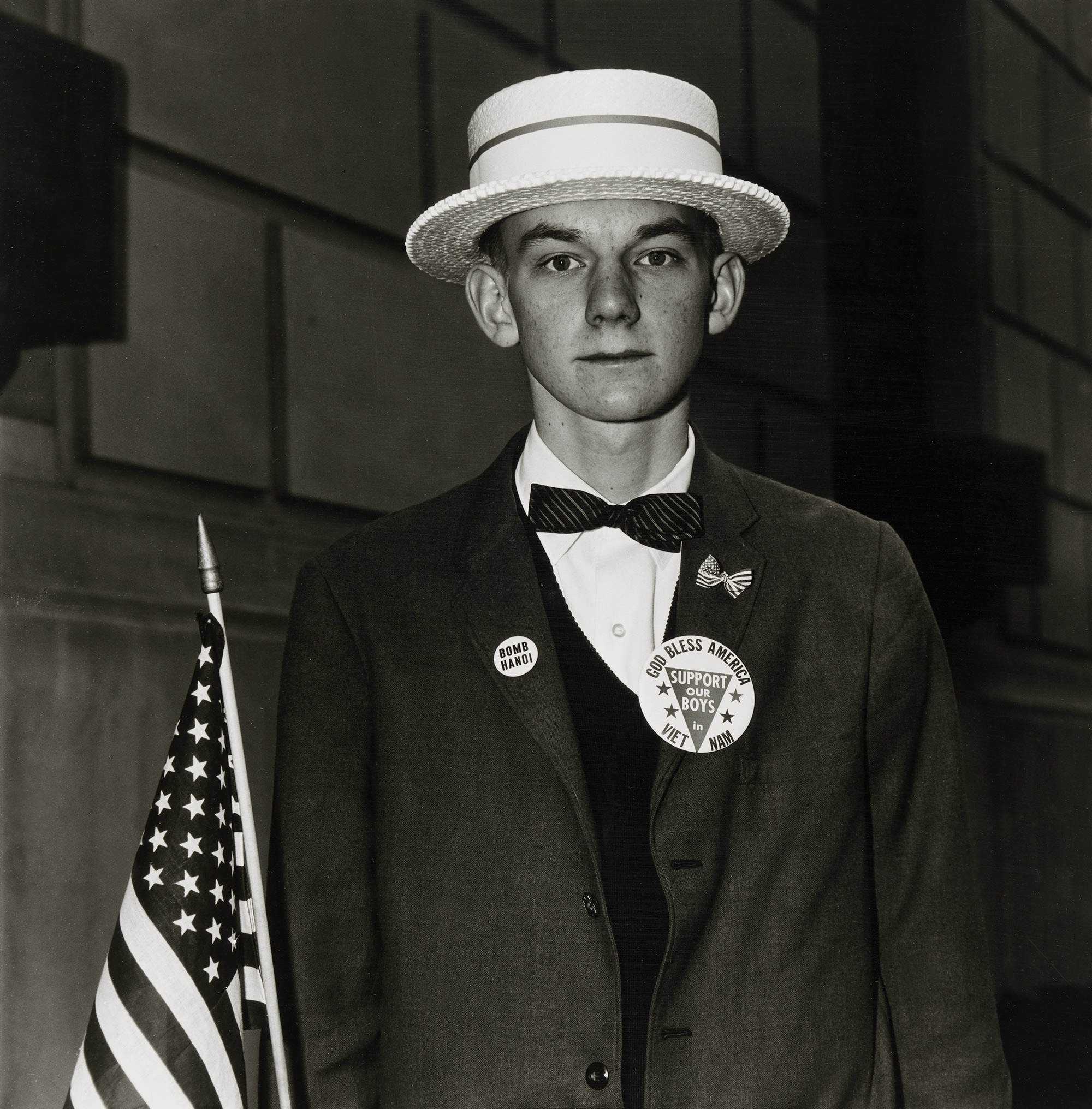

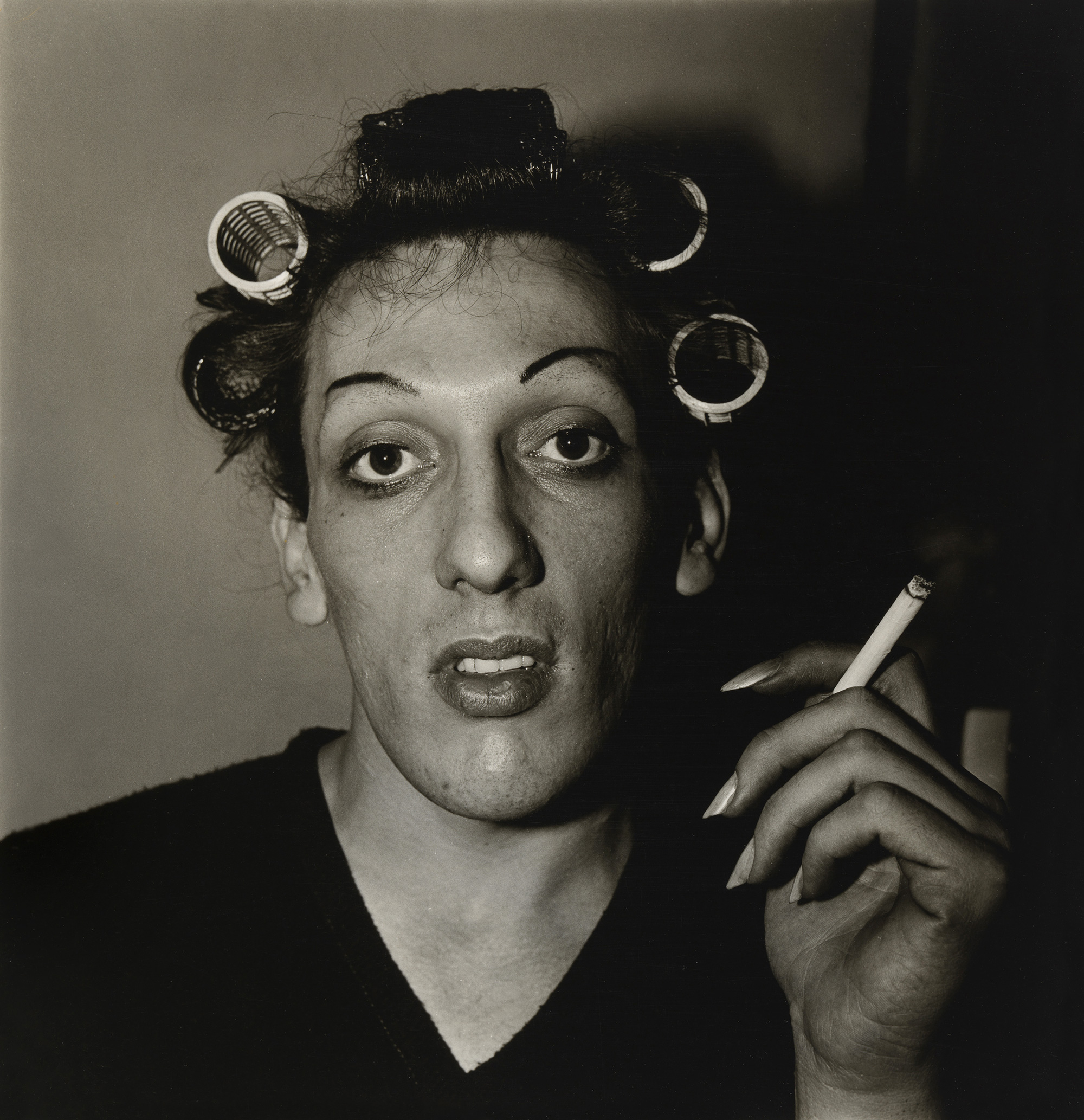

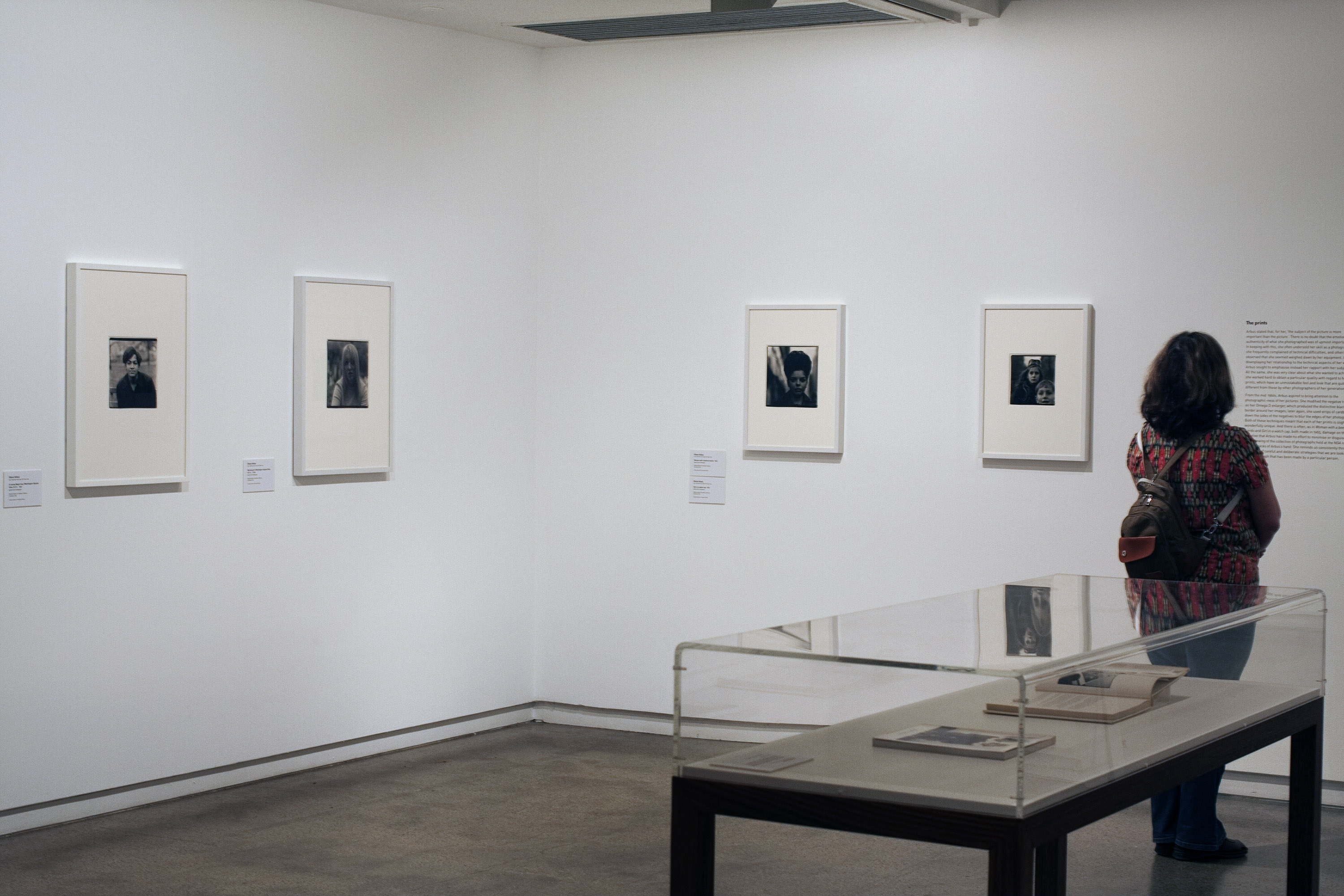


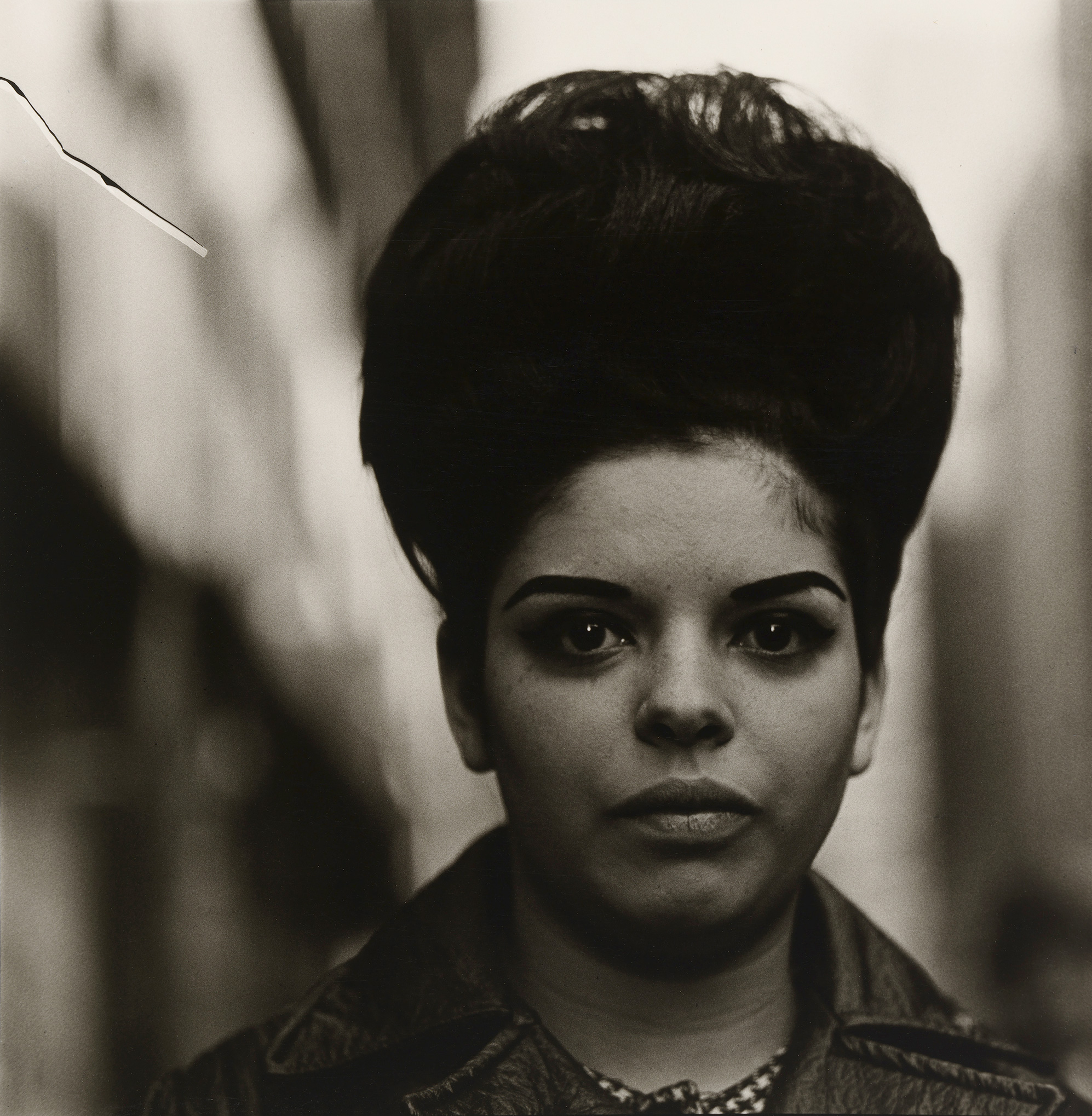
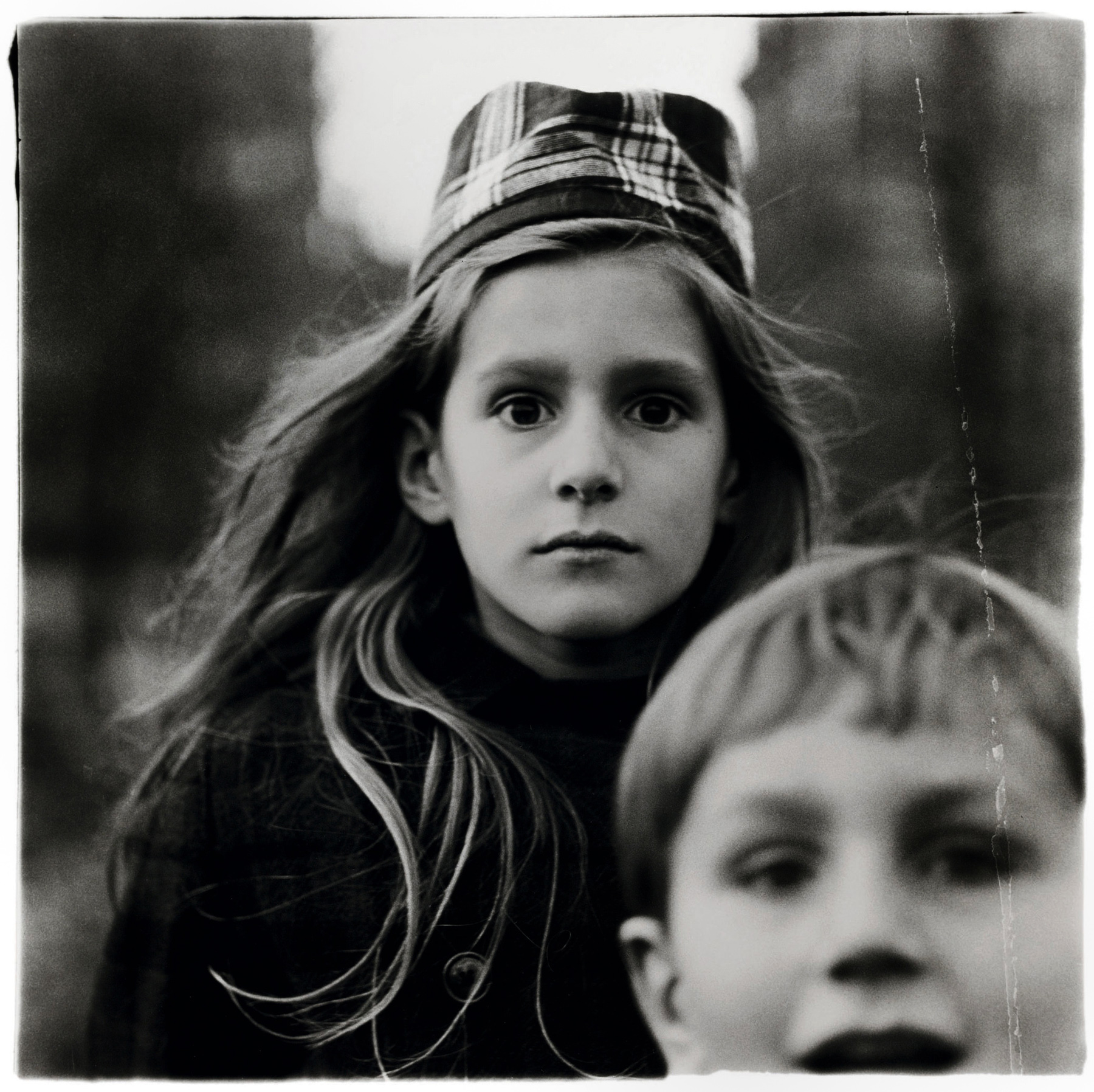
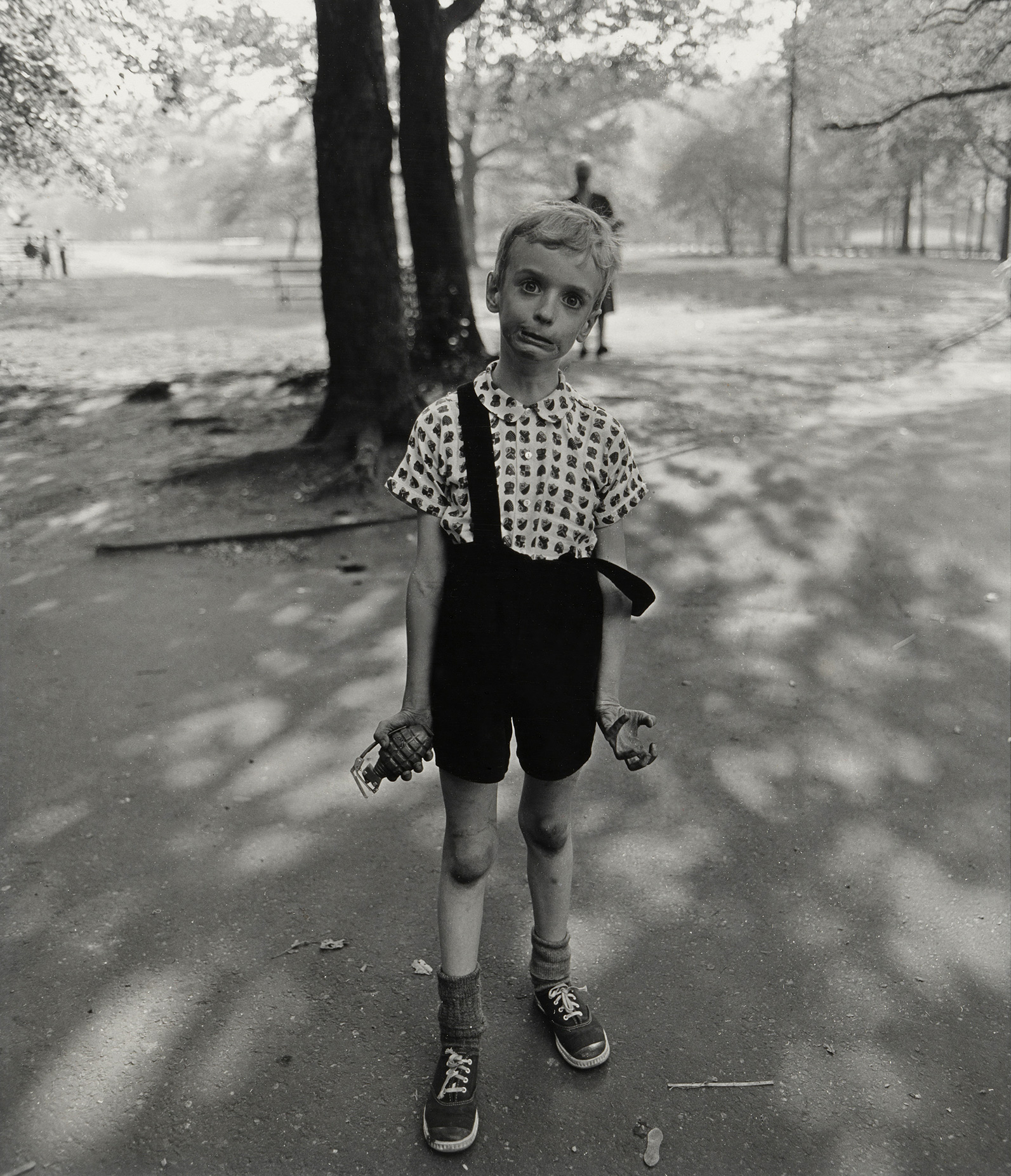

![Diane Arbus (American, 1923-1971) 'Large black family in small shack [Robert Evans and his family, 1968]' 1968 (installation view)](https://artblart.com/wp-content/uploads/2018/05/installation-af.jpg "Diane Arbus (American, 1923-1971) 'Large black family in small shack [Robert Evans and his family, 1968]' 1968 (installation view)")
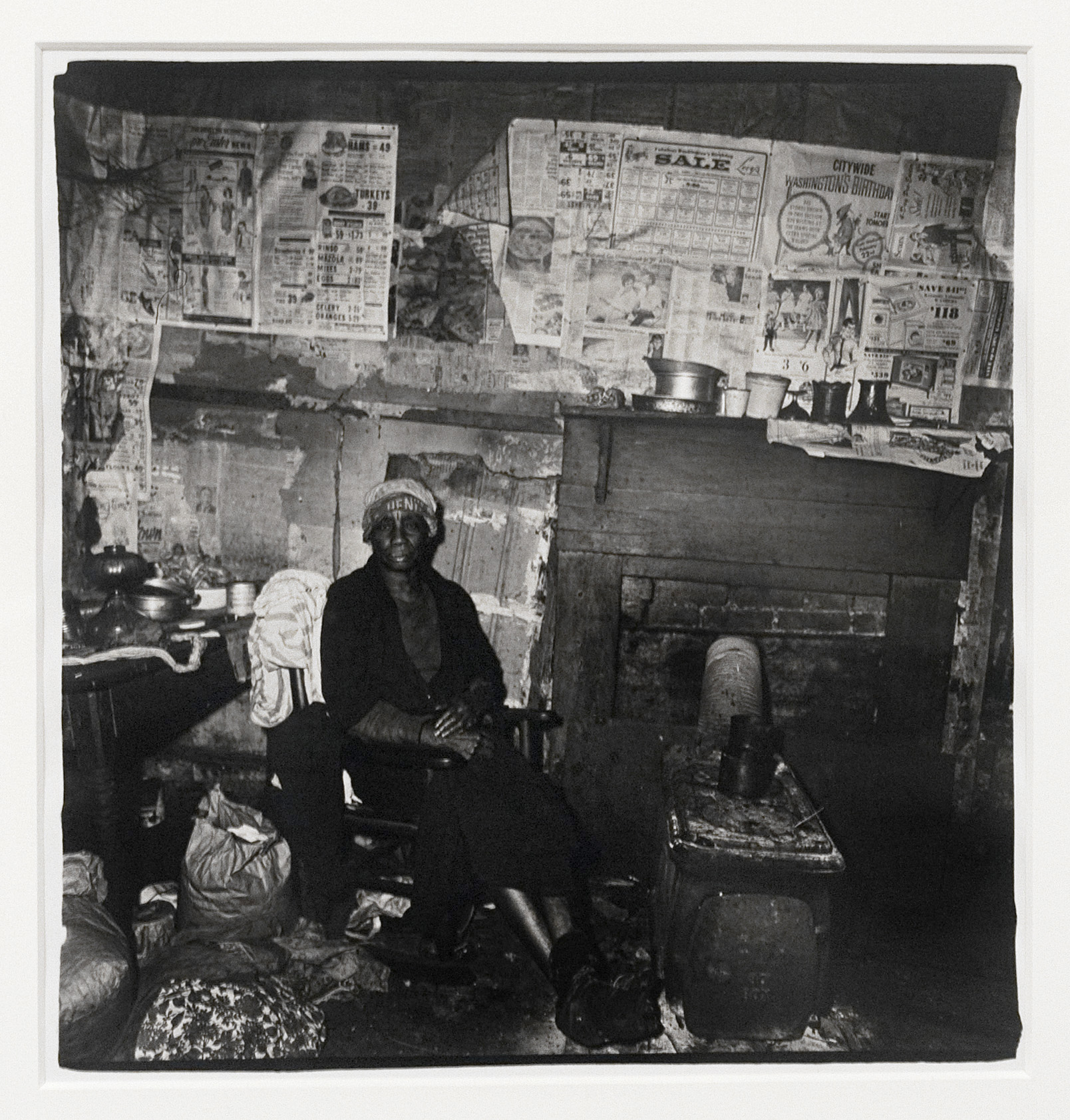
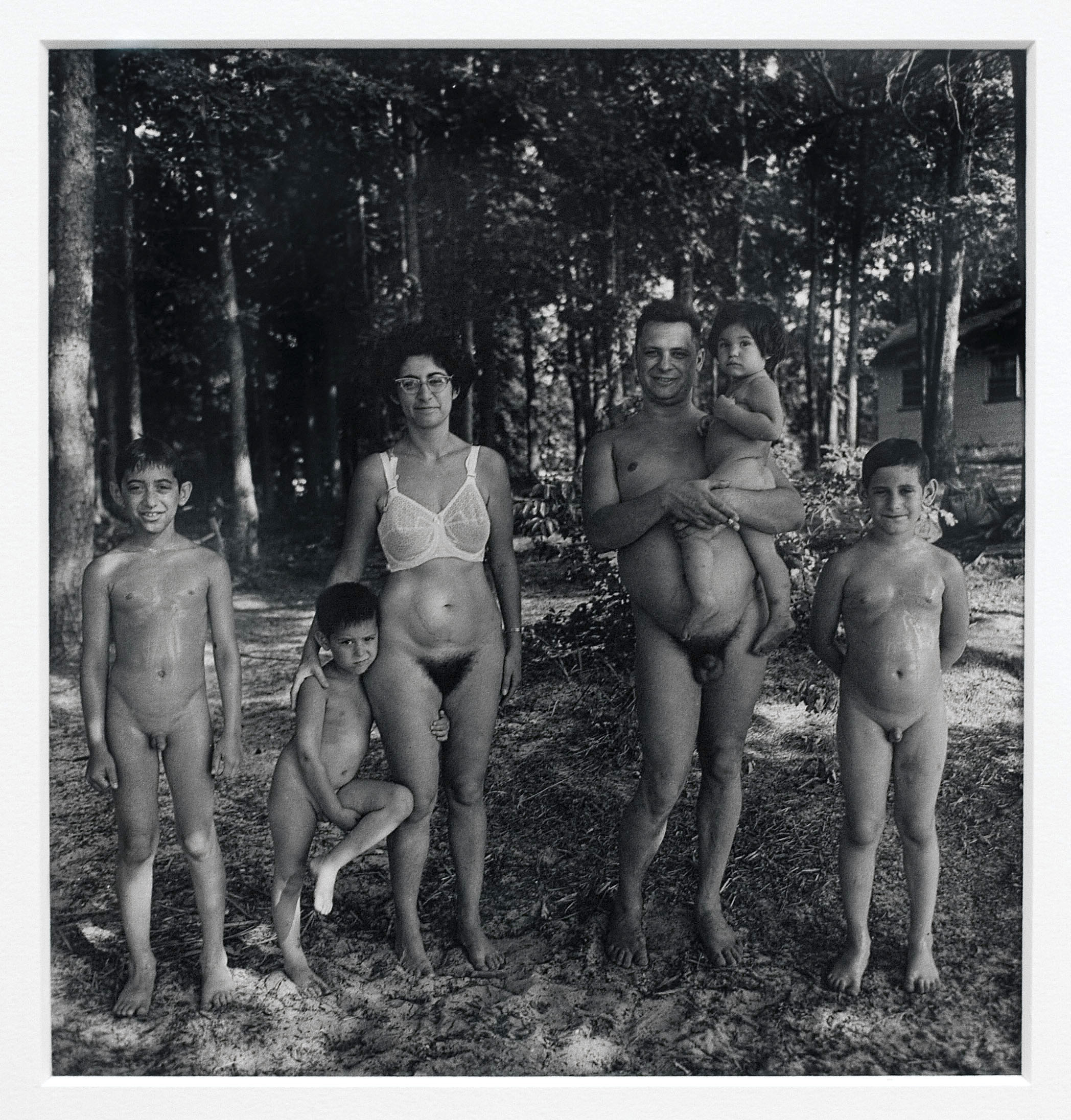

![Lisette Model (Austrian, 1901-1983) 'Coney Island Bather, New York' [Baigneuse, Coney Island] c. 1939-1941](https://artblart.com/wp-content/uploads/2018/05/model-coney-island-bather-web.jpg "Lisette Model (Austrian, 1901-1983) 'Coney Island Bather, New York' [Baigneuse, Coney Island] c. 1939-1941")


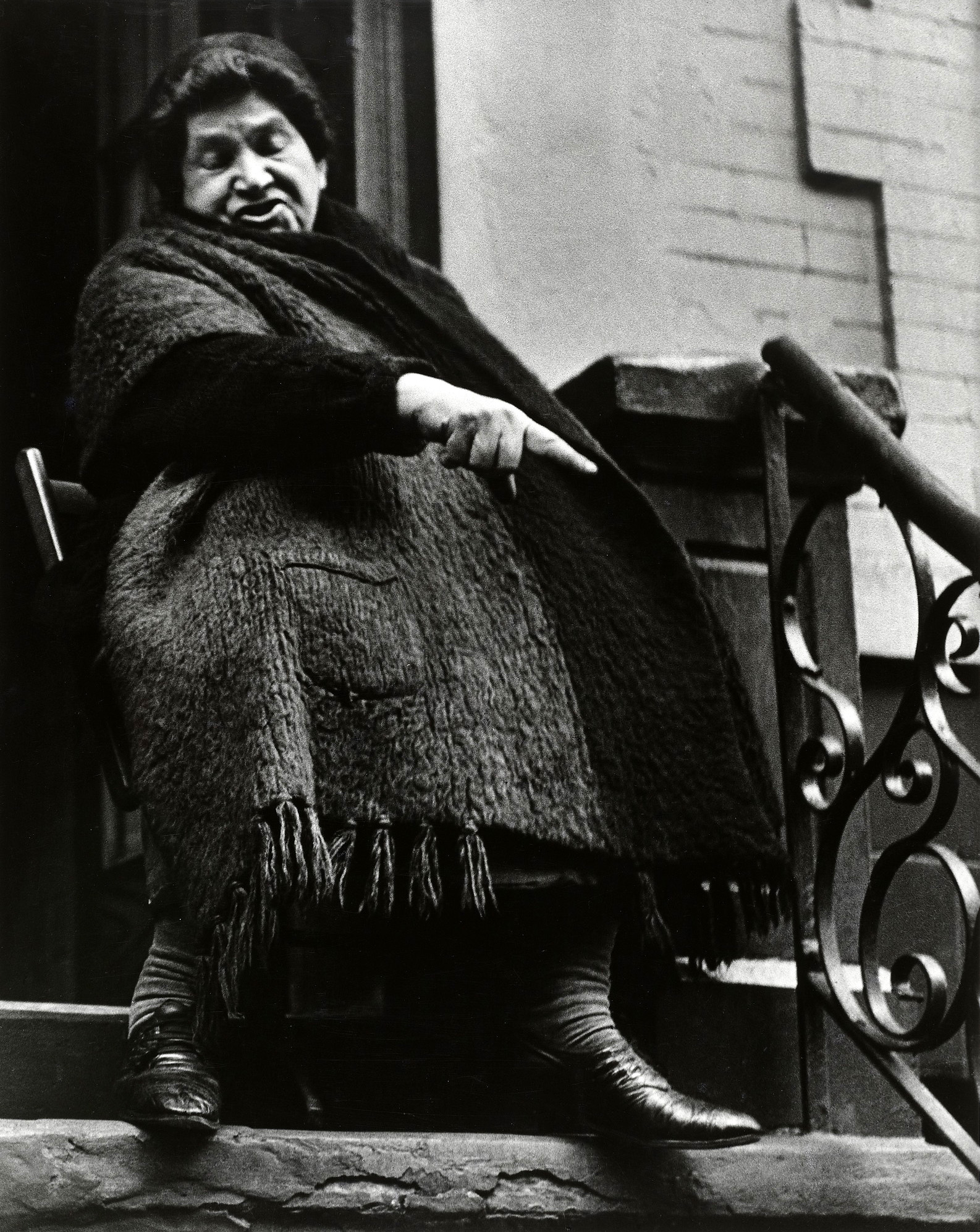

![Installation view of the exhibition 'Diane Arbus: American Portraits' at the Heide Museum of Modern Art, Melbourne showing from left to right, Lisette Model's 'Fashion show, Hotel Pierre, New York City' 1940-1946; Lisette Model's 'Cafe Metropole, New York City' c. 1946; and Lisette Model's 'Albert-Alberta, Hubert's 42nd St Flea Circus, New York [Albert/Alberta]' c. 1945](https://artblart.com/wp-content/uploads/2018/05/installation-w1.jpg "Installation view of the exhibition 'Diane Arbus: American Portraits' at the Heide Museum of Modern Art, Melbourne showing from left to right, Lisette Model's 'Fashion show, Hotel Pierre, New York City' 1940-1946; Lisette Model's 'Cafe Metropole, New York City' c. 1946; and Lisette Model's 'Albert-Alberta, Hubert's 42nd St Flea Circus, New York [Albert/Alberta]' c. 1945")


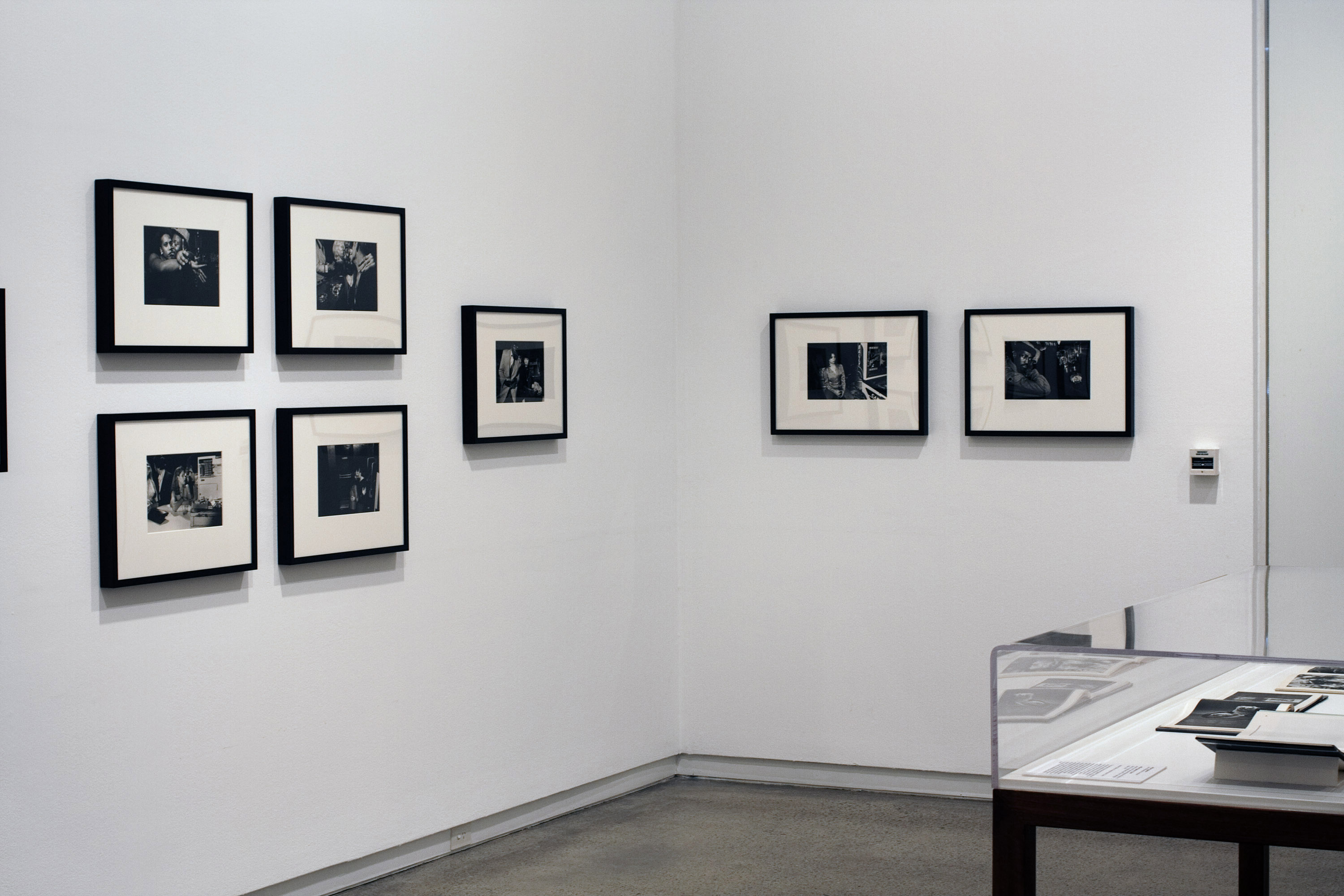

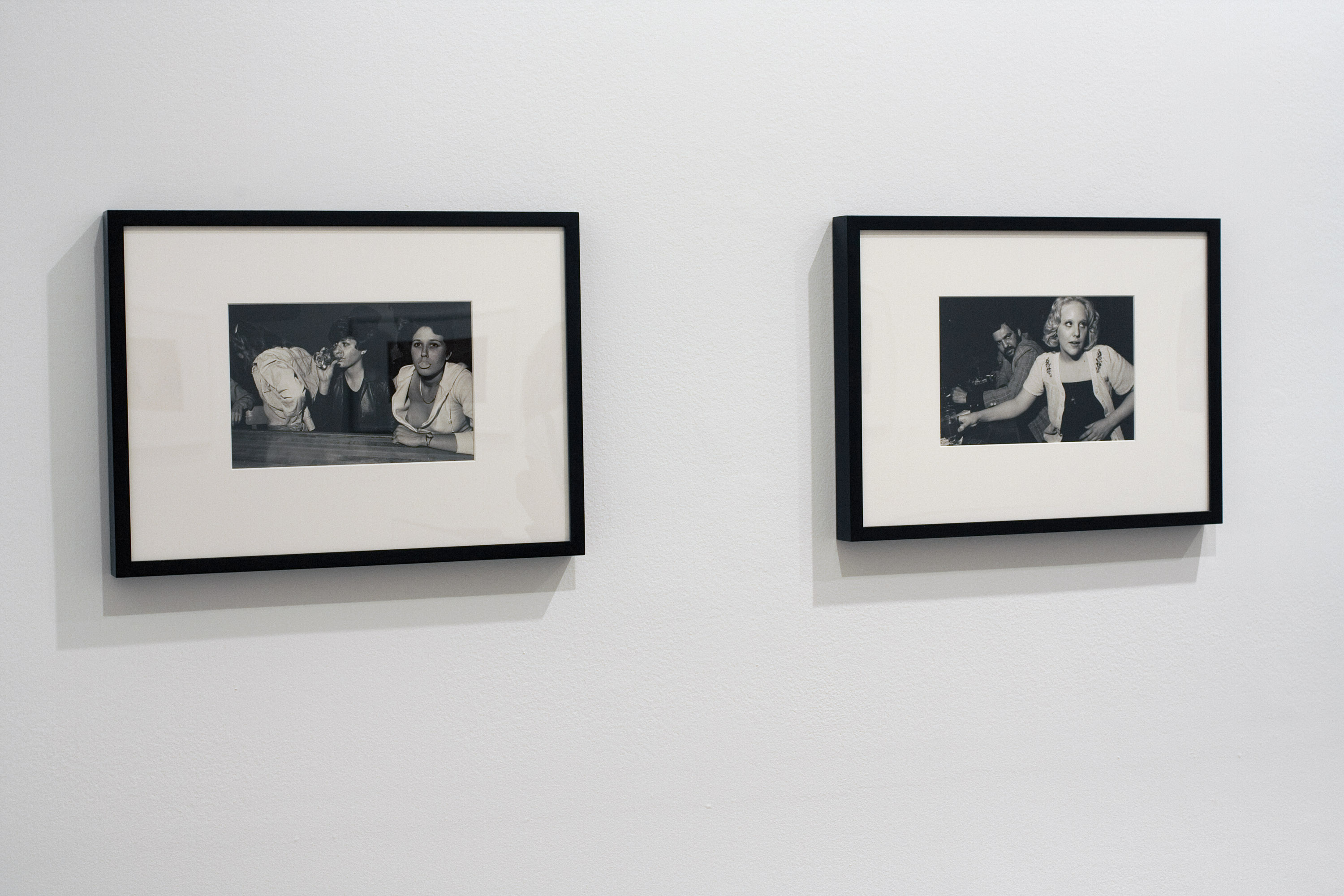

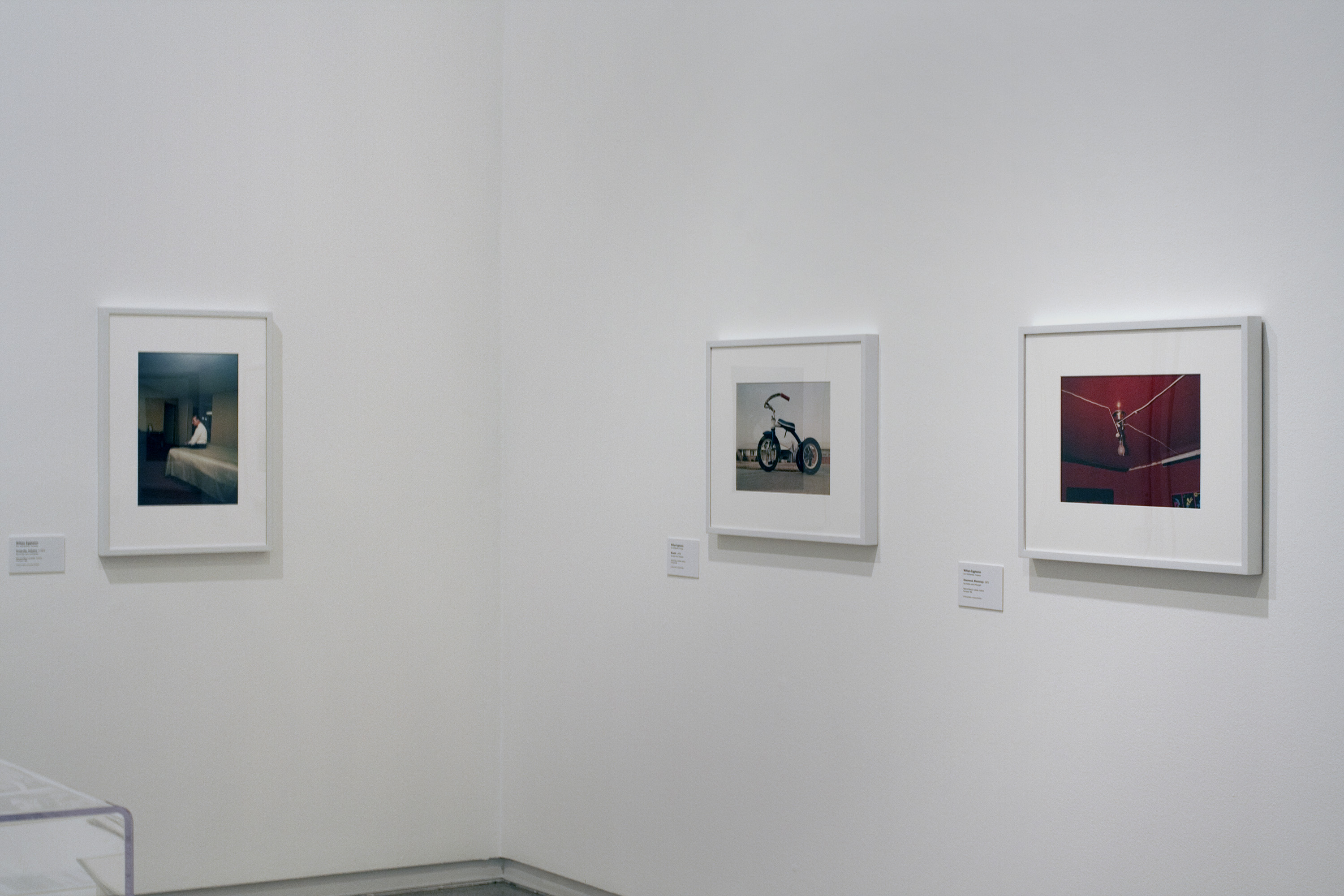


![William Eggleston (American, b. 1939) 'Greenwood, Mississippi' ["The Red Ceiling"] 1973, printed 1979](https://artblart.com/wp-content/uploads/2018/05/eggleston-the-red-ceiling-web.jpg "William Eggleston (American, b. 1939) 'Greenwood, Mississippi' [\"The Red Ceiling\"] 1973, printed 1979")


![Garry Winogrand (American, 1928-1984) 'No title [Centennial Ball, Metropolitan Museum, New York]' 1969](https://artblart.com/wp-content/uploads/2018/05/winogrand-centennial-ball-web.jpg "Garry Winogrand (American, 1928-1984) 'No title [Centennial Ball, Metropolitan Museum, New York]' 1969")


 Art Blart _ art and cultural memory archive
You must be logged in to post a comment.