Exhibition: ‘Garry Winogrand’ at the San Francisco Museum of Modern Art (SFMOMA)

Exhibition dates: 9th March – 2nd June 2013


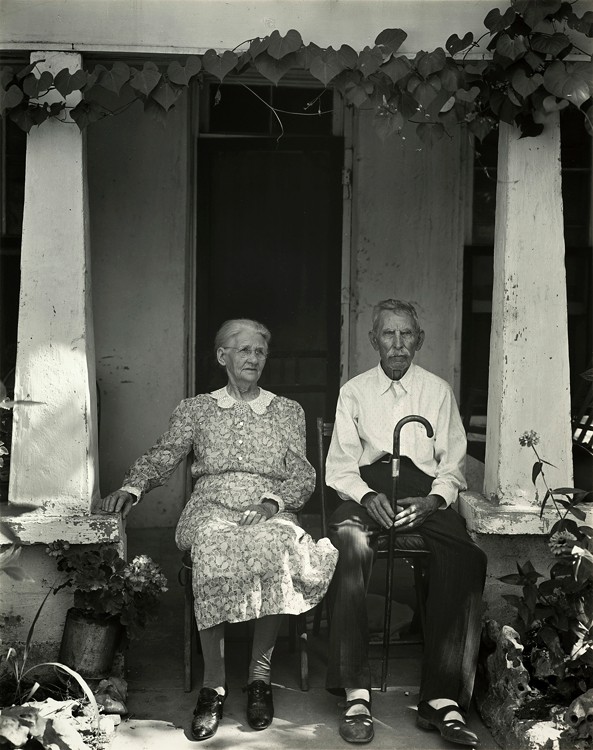
Garry Winogrand (American, 1928-1984) 'Utah (Wyoming)' 1964


Garry Winogrand (American, 1928-1984)
Utah (Wyoming)
1964
Silver gelatin photograph
© The Estate of Garry Winogrand


“Every photograph is a battle of form versus content.”


Garry Winogrand


Playing God with his film

Form and content. Form and content.

I don’t like the work of Garry Winogrand. Never have, never will. I think his work is overrated and and somewhat trite. That should stir up all the Winophiles who think that he is one of the best street photographers in the history of the medium!

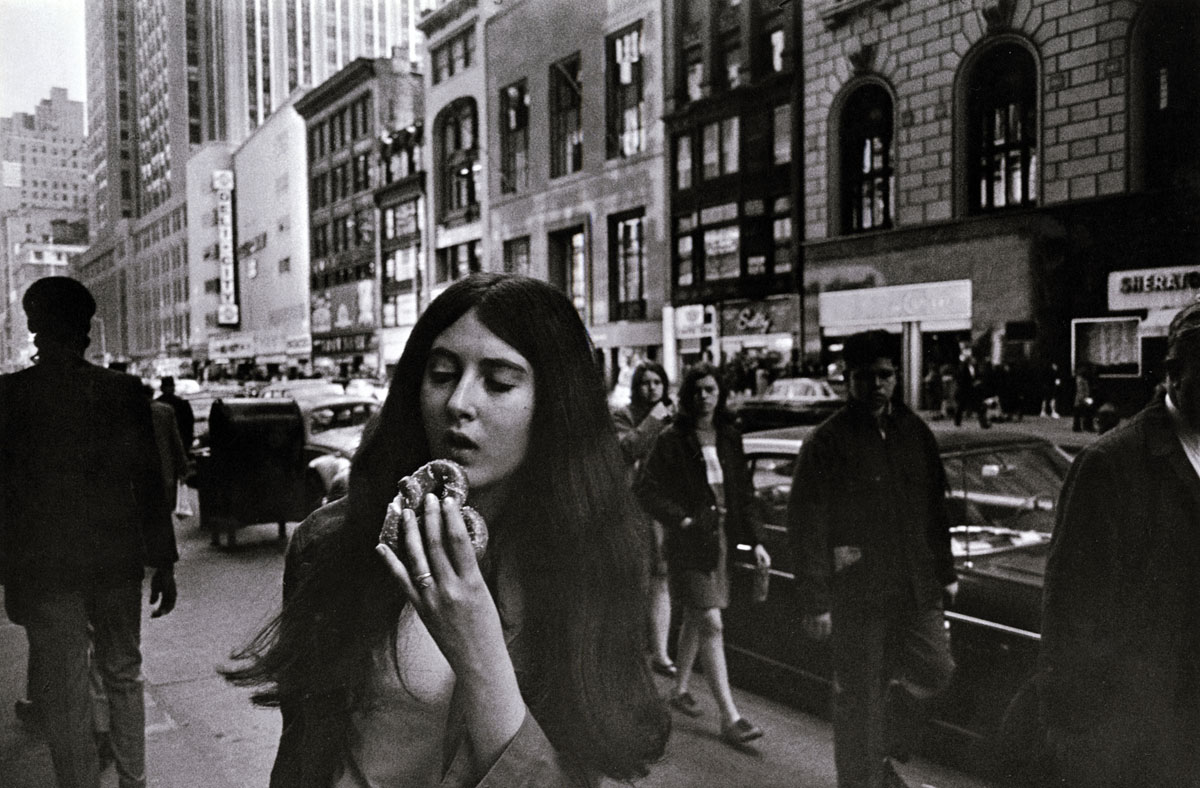
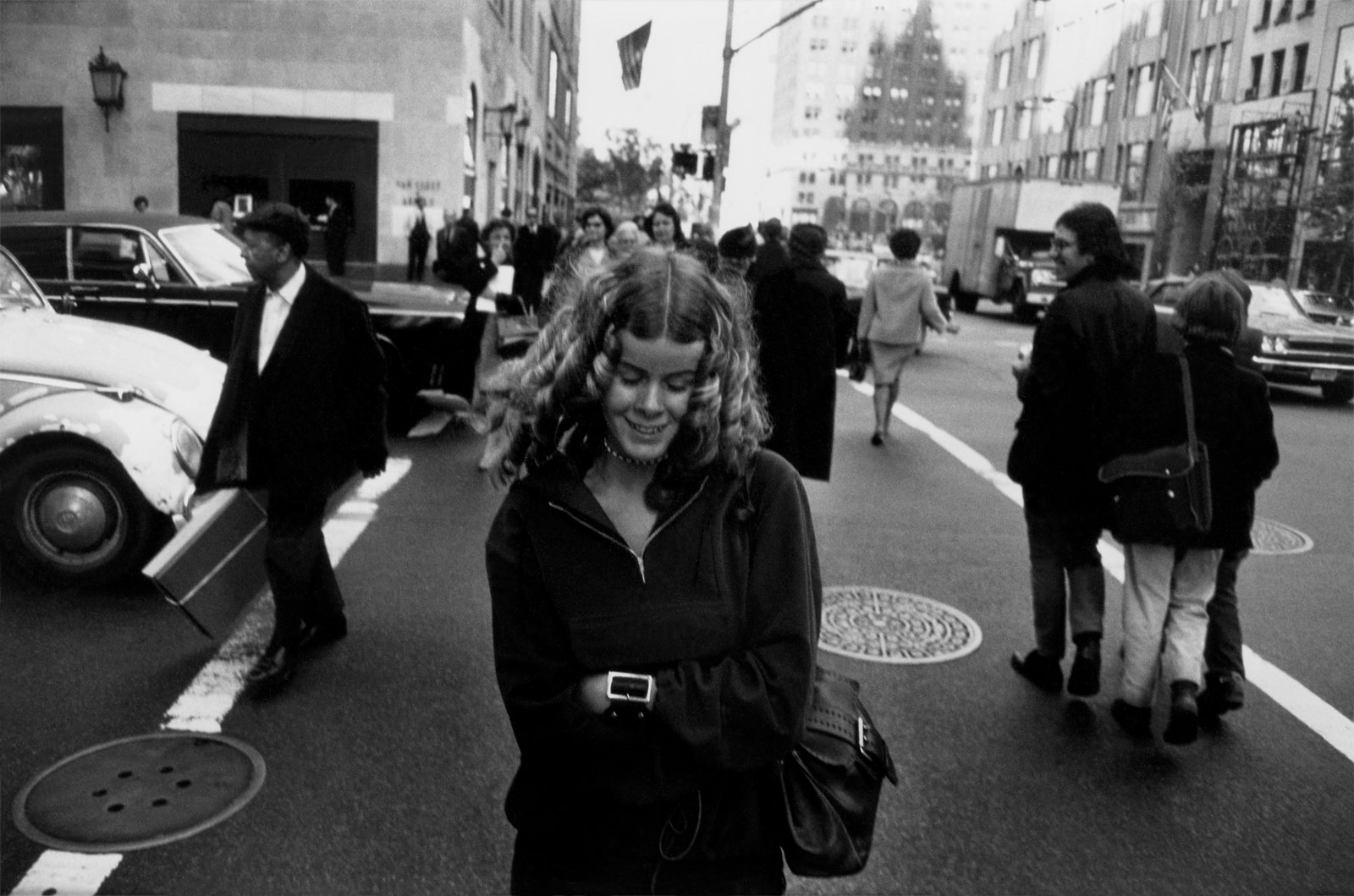
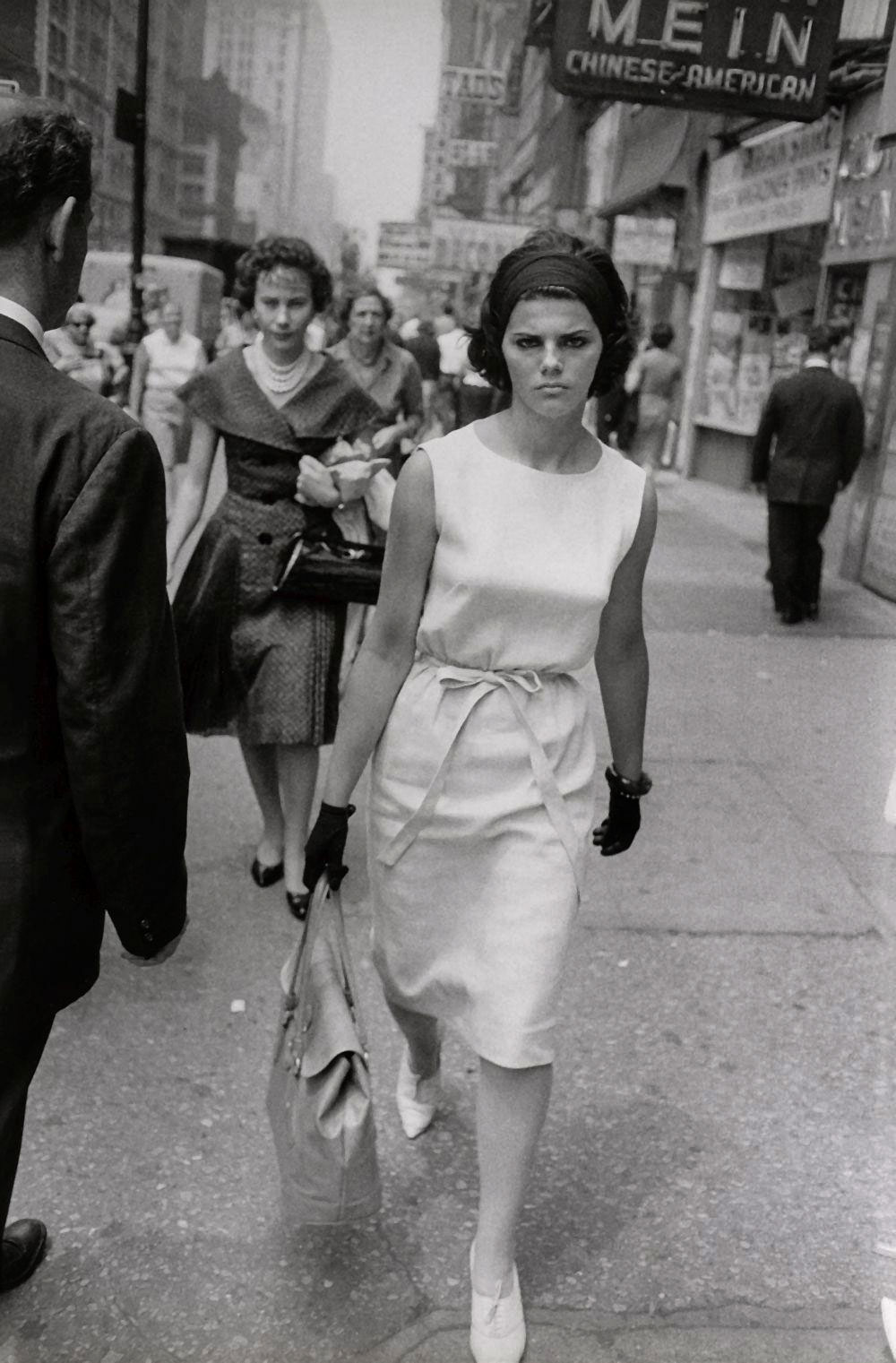
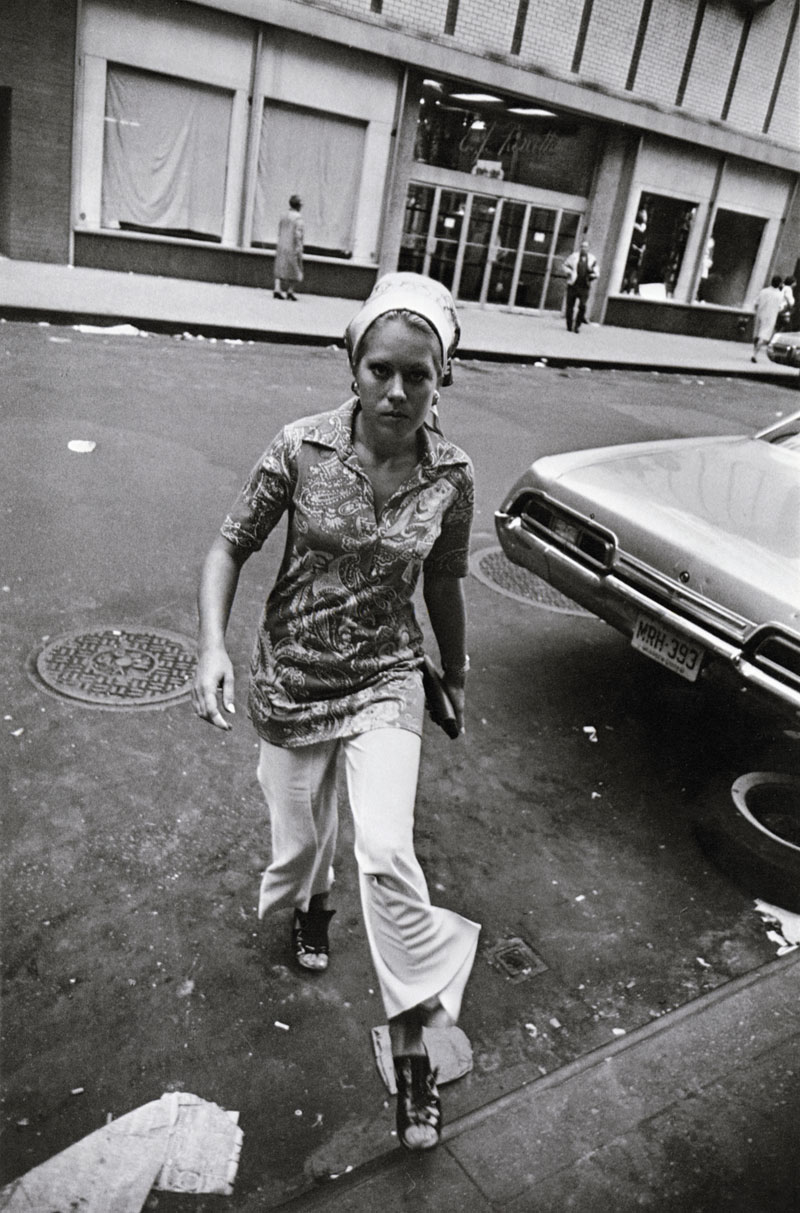
At best his form is average – technical aspects adequate; composition is pretty basic including dull use of tension points within the picture frame; and framing very bland, tilted angles not withstanding. His content is nothing special either, mainly frontal shots of people walking towards him or voyeuristic shots while mingled in crowds, or a mixture of both. As he himself says, “I don’t have anything to say in any picture. My only interest in photography is to see what something looks like as a photograph.” By letting the medium describe the world around him. And therein lies part of the problem.

Winogrand just looks – and you can’t fault someone for just looking. It’s just a not very interesting looking.

If I really look at Winogrand’s work I can see that he just states what he saw in shot after shot after shot, indiscriminately. Personally, I find there is a real cynicism in his work. The photographs “describe” his own state of mind – as much as he denies that he (or his state of mind) has anything to do with the act of describing the world through photography. You see, it’s all about how the camera sees the world and not how he sees it. Hence, Winogrand hardly embraces his feelings towards the world and if he does, it is only in a half-hearted manner. For example, he goes a certain way towards the dark (as in the photographs Utah (Wyoming), 1964 above, and Los Angeles, 1964, below) and then stops. The other part of the problem is this: what you can also fault is all the hyperbole that is laid over the top of his work by curators and museums – because on close examination the work really doesn’t justify it. It’s actually not that good.

Winogrand states and summarises but doesn’t solve. He just keeps adding to the list occasionally, under duress, ordering it (photographs of women in the book Women are Beautiful, 1975):

“During his Austin years he was preparing two books, Public Relations and Women are Beautiful. Given his method of printing every image on the contact sheet for the selection process, and given his proclivity for the physical act of shooting, no wonder he wasn’t out on the street as much as he’d like. Yes he had to print, select and publish some prints to survive unless he wanted to teach the rest of his life. I don’t believe he wanted to do that. Had there been a way, I believe he would died a blissful death had he been on the streets clicking away and either letting the exposed film rot or letting someone else process and print them, and arrange the books and shows and collect the money. That’s how much he loved the physical act of shooting.

He felt at home out there, looking for the next image to expose. He was also the boss out there, playing God with his film and deciding where to frame that next battle between form and content, then the next and the next.”1


Playing God with his film…

In some ways Winogrand reminds me of both the king and the court jester. King because he could frame the battle between form and content ad infinitum and jester because he was the fool, standing in front of people, laughing, smiling, obsequious, running hither and yon to get every shot, any shot. See the video below to understand what I mean. Unlike the photographs in Robert Frank’s The Americans, his is not a poetic understanding of the world for the difference between Robert Frank and Garry Winogrand is that the former’s photographs are undeniably poetic while the latter’s are prosaic aphorisms about the world. In Winogrand’s “describing” the social landscape he photographed is reduced to lists of things: “the dislocation of urban life, the rise of the suburb with its growing alienation, the skepticism of youth, and the collusion of the press and the powerful,” rarely pursued by any obvious means and certainly not through poetic evocation.

I think that Winogrand struggled with the question – do I add to the list or do I order the list? Obviously he chose the former, for if there is no order in life there can be no order in the archive. Hence we are left with the “Unfinished” Late Work, an archive of 250,000 images that have remained virtually unknown. A boon for researchers and curators wishing to position Winogrand’s legacy “revealing for the first time the full sweep of his career… creating a vivid portrait of the artist.”

Even when the artist could not be bothered (so why should we bother).
Even when the images were never seen or acknowledged.
The artist streetwise in his omnipotent isolation.

Dr Marcus Bunyan


1/ Garza, O. C. Class Time with Garry Winogrand. 2007, p. 19 [Online] Cited 26/05/2013
www.ocgarzaphotography.com/documents/ClassTimewithGarryWinograndfinal2.pdf


“Great photography is always on the edge of failure.”

“I photograph to see what the world looks like in photographs.”

“I like to think of photographing as a two-way act of respect. Respect for the medium, by letting it do what it does best, describe. And respect for the subject, by describing as it is. A photograph must be responsible to both.”

“I don’t have anything to say in any picture. My only interest in photography is to see what something looks like as a photograph. I have no preconceptions.”


Garry Winogrand


“We quickly learned Winogrand’s technique – he walked slowly or stood in the middle of pedestrian traffic as people went by. He shot prolifically. I watched him walk a short block and shoot an entire roll without breaking stride. As he reloaded, I asked him if he felt bad about missing pictures when he reloaded. “No,” he replied, “there are no pictures when I reload.” He was constantly looking around, and often would see a situation on the other side of a busy intersection. Ignoring traffic, he would run across the street to get the picture.”


Mason Resnick


“Form and content are two keys which make a memorable street photograph. Consider “form” as the composition, framing, and technical aspects of a photograph. Consider “content” as what is actually happening in the photograph (whether it be an old couple holding hands, a boy holding two bottles of wine, or a man looking through a peep-hole)… Garry Winogrand shot with a 28mm lens for most of his life [using a Leica M4 35mm and Tri-X film pushed to 1200 ASA], which meant that for the majority of his shots he had to be quite close to his subjects (and in front of them). Therefore Winogrand wasn’t Henri Cartier-Bresson (trying to be invisible) but was actively a part of the action and immersed in the crowds. He would be very obviously taking photographs in the streets and would stick out like a sore thumb.”


Eric Kim


Garry Winogrand – Part 1 


Garry Winogrand – Fotograf


Garry Winogrand – The Man In The Crowd


Garry Winogrand (American, 1928-1984) 'Albuquerque' 1957


Garry Winogrand (American, 1928-1984)
Albuquerque
1957
Gelatin silver print
Collection SFMOMA, gift of Dr. Paul Getz
© The Estate of Garry Winogrand, courtesy Fraenkel Gallery, San Francisco


Garry Winogrand (American, 1928-1984) 'Park Avenue, New York' 1959


Garry Winogrand (American, 1928-1984)
Park Avenue, New York
1959
Gelatin silver print
© The Estate of Garry Winogrand, courtesy Fraenkel Gallery, San Francisco


Garry Winogrand (American, 1928-1984) 'Central Park Zoo, New York' 1967


Garry Winogrand (American, 1928-1984)
Central Park Zoo, New York
1967
Gelatin silver print
© The Estate of Garry Winogrand, courtesy Fraenkel Gallery, San Francisco


Since Winogrand took this photograph of a white woman and a Black man, each holding a chimpanzee dressed in children’s clothing, many critics have noted the picture’s deliberate ambiguity – not only about the circumstances of how these figures came to be here, but also about the way Winogrand chose to frame them with his camera, cutting out most of the surrounding context.

During the 1960s, Winogrand became increasingly reluctant to speak about the “meaning” of his photographs, preferring to focus on their form and technique, in spite of their excessive narrative potential. Perhaps this was a reaction against his photojournalistic and advertising work, which was often illustrative. Winogrand would cite Susan Sontag’s influential essay “Against Interpretation” (1964), which deplored the growing impulse at the time to reduce works of art to their content in order to make them mean something. She argued, like Winogrand, in favor of the pleasure and poetry of seeing.

Anonymous. “Central Park Zoo-New York, New York,” on the Brooklyn Museum website Nd [Online] Cited 14/07/2024
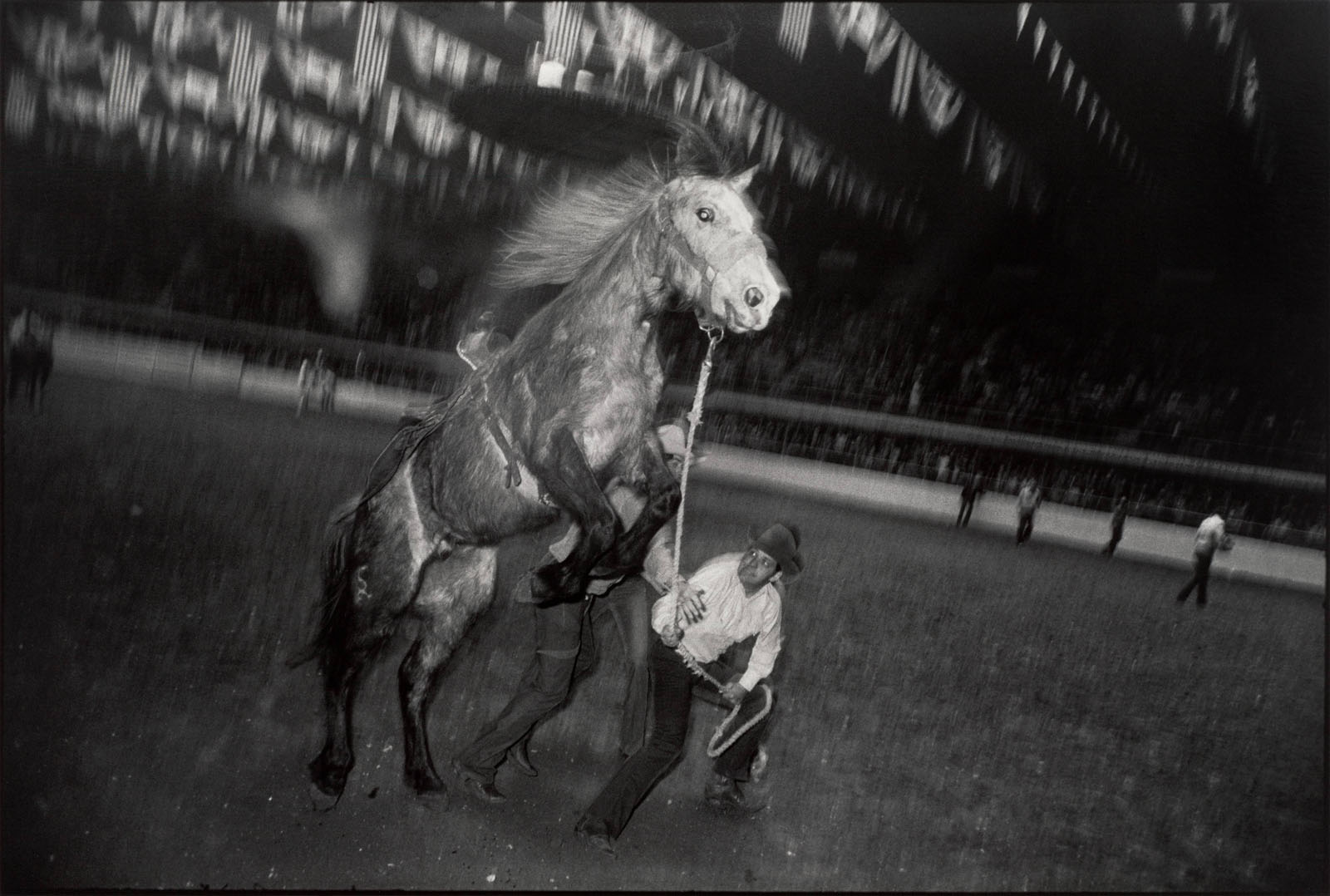
 

Garry Winogrand (American, 1928-1984) 'Fort Worth, Texas' 1974


Garry Winogrand (American, 1928-1984)
Fort Worth, Texas
1974
Gelatin silver print
Collection SFMOMA, Accessions Committee Fund: gift of Doris and Donald Fisher and Marion E. Greene
© The Estate of Garry Winogrand, courtesy Fraenkel Gallery, San Francisco
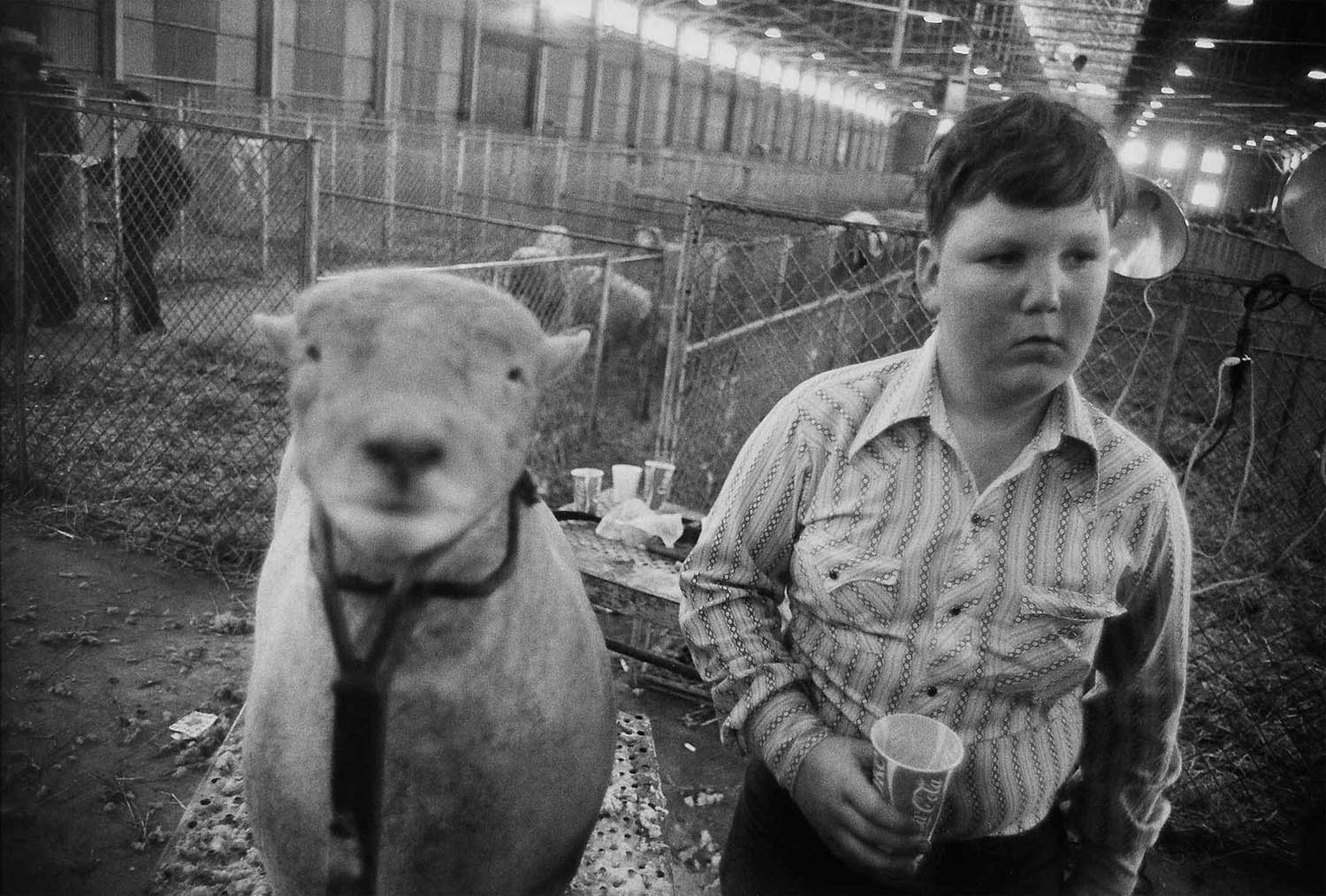
 

Garry Winogrand (American, 1928-1984) 'Fort Worth, Texas' 1975


Garry Winogrand (American, 1928-1984)
Fort Worth, Texas
1975
Gelatin silver print
Collection SFMOMA, gift of Dr. Paul Getz
© The Estate of Garry Winogrand, courtesy Fraenkel Gallery, San Francisco
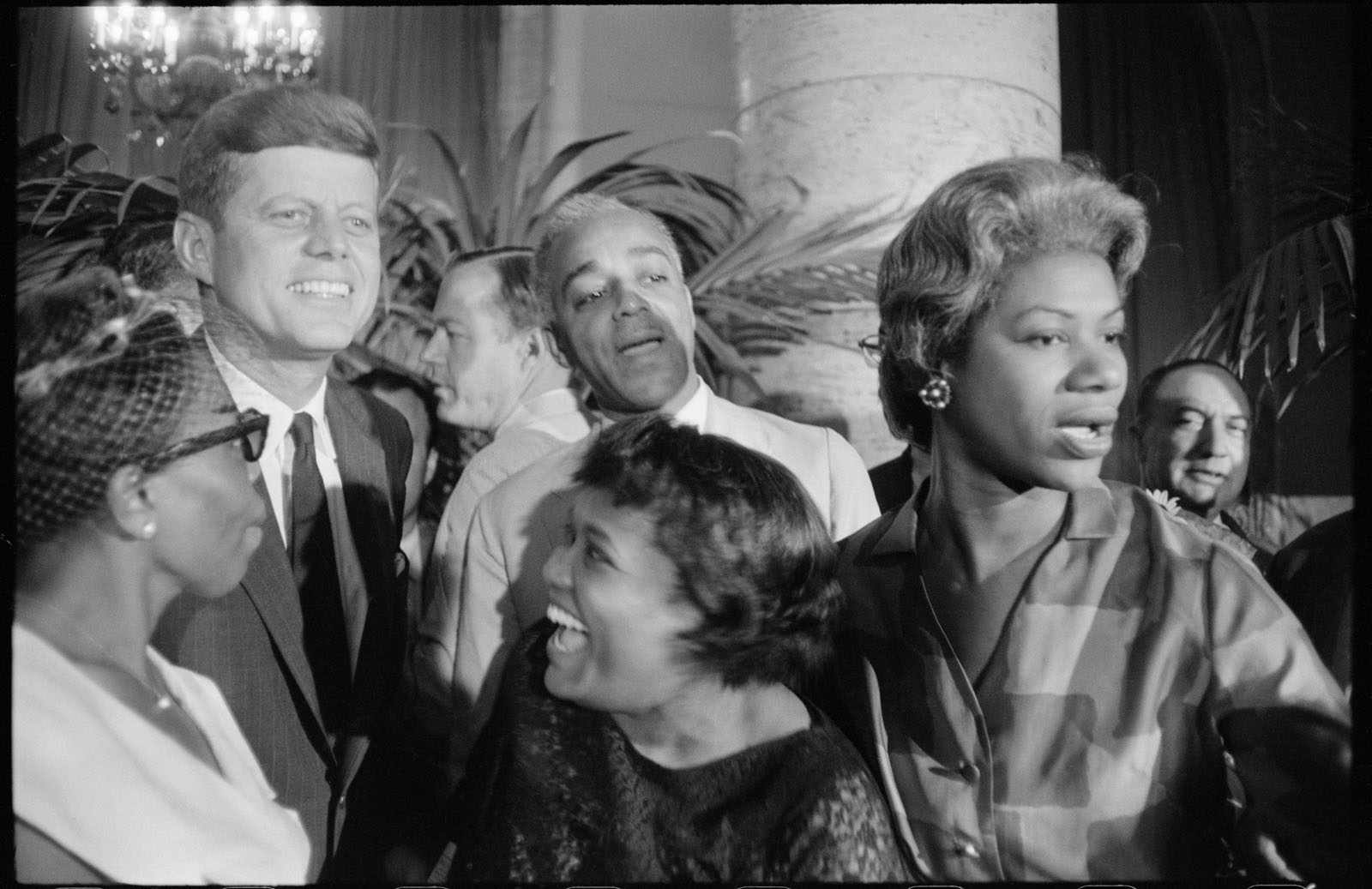
 

Garry Winogrand (American, 1928-1984) 'John F. Kennedy, Democratic National Convention, Los Angeles' 1960


Garry Winogrand (American, 1928-1984)
John F. Kennedy, Democratic National Convention, Los Angeles
1960
Posthumous digital reproduction from original negative
Garry Winogrand Archive, Center for Creative Photography, University of Arizona
© The Estate of Garry Winogrand, courtesy Fraenkel Gallery, San Francisco
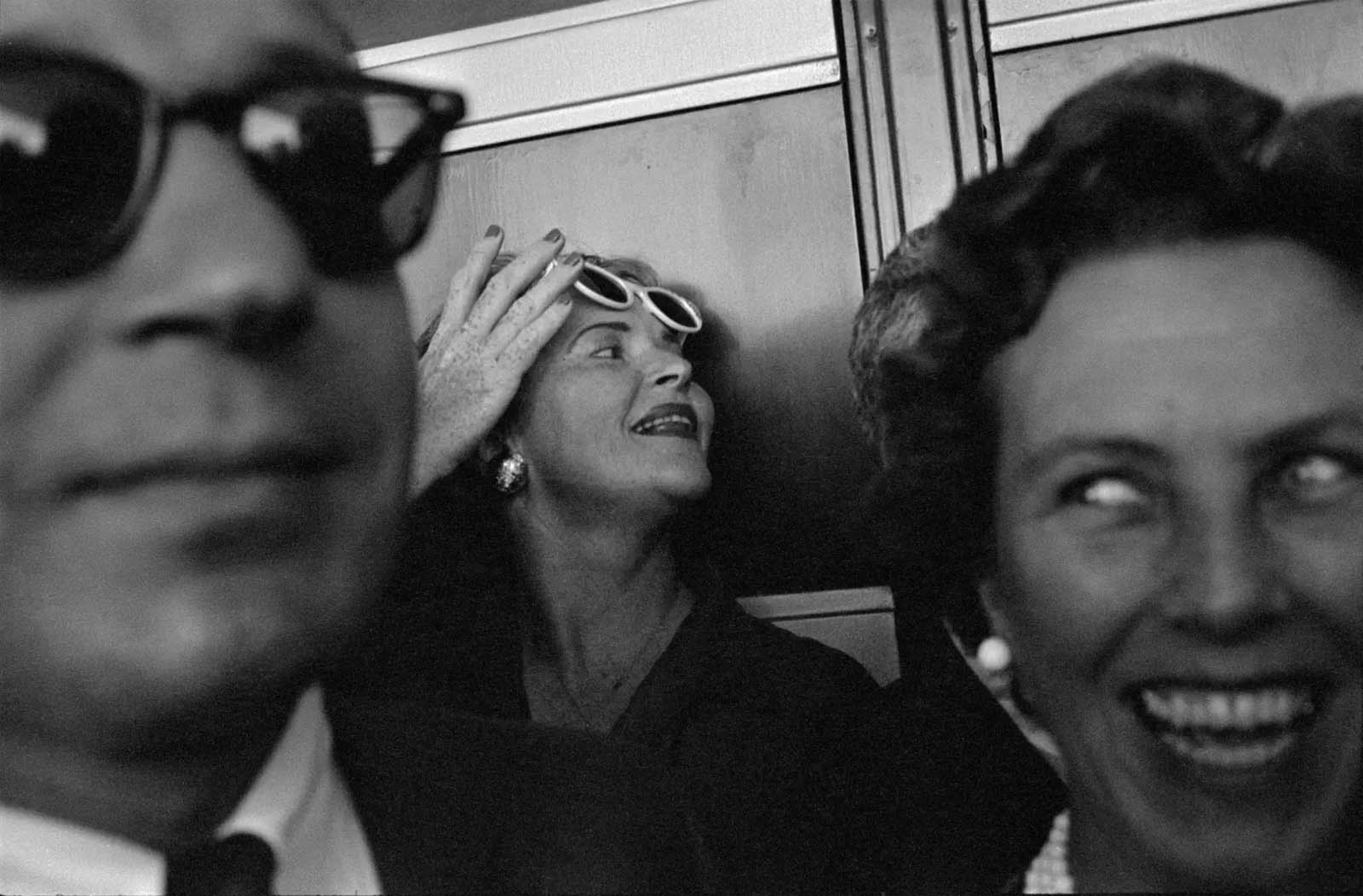
 

Garry Winogrand (American, 1928-1984) 'Democratic National Convention, Los Angeles' 1960


Garry Winogrand (American, 1928-1984)
Democratic National Convention, Los Angeles
1960
Silver gelatin photograph
© The Estate of Garry Winogrand
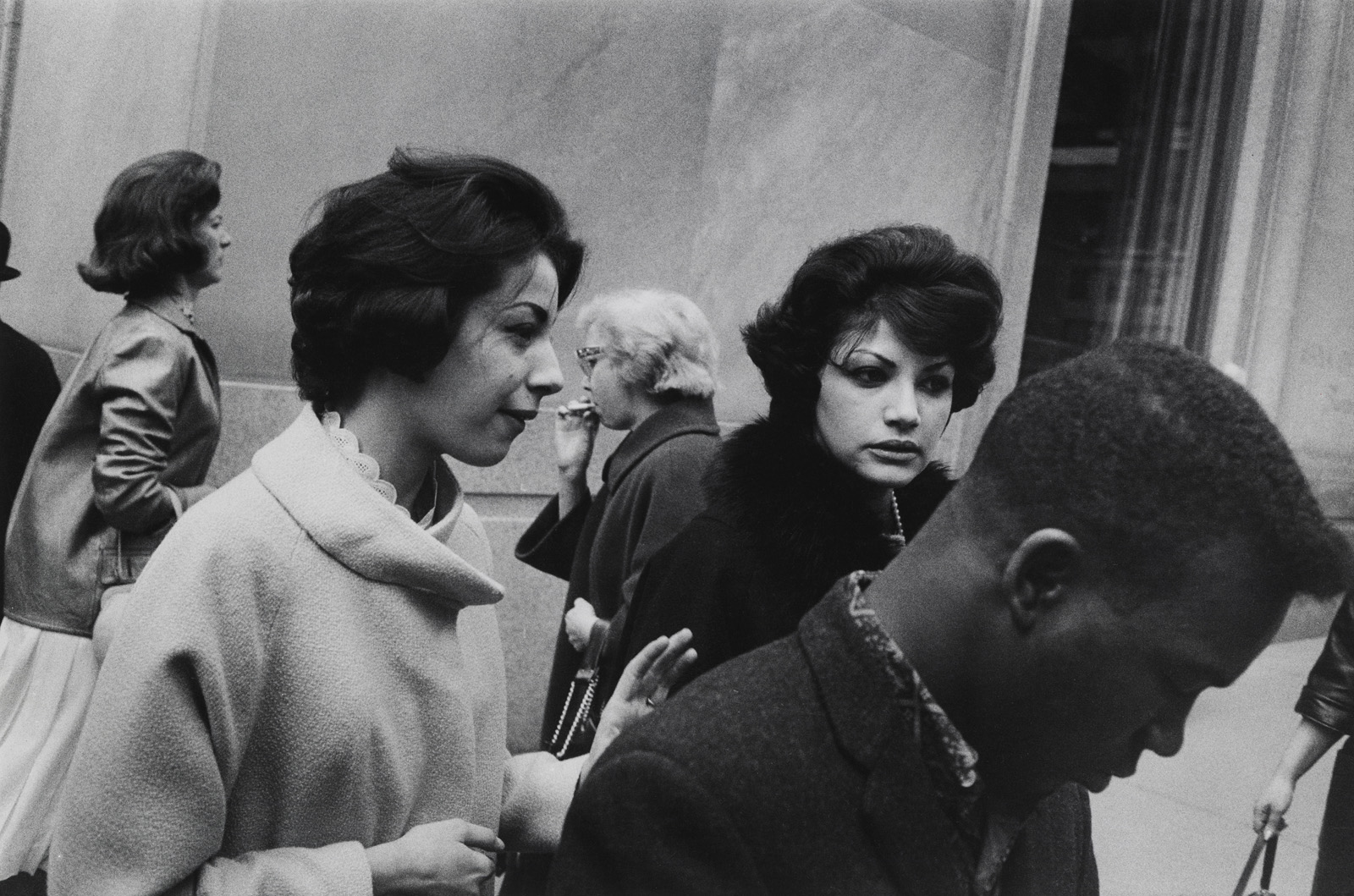
 

Garry Winogrand (American, 1928-1984) 'New York' c. 1960


Garry Winogrand (American, 1928-1984)
New York
c. 1960
Gelatin silver print
Garry Winogrand Archive, Center for Creative Photography, University of Arizona
© The Estate of Garry Winogrand, courtesy Fraenkel Gallery, San Francisco
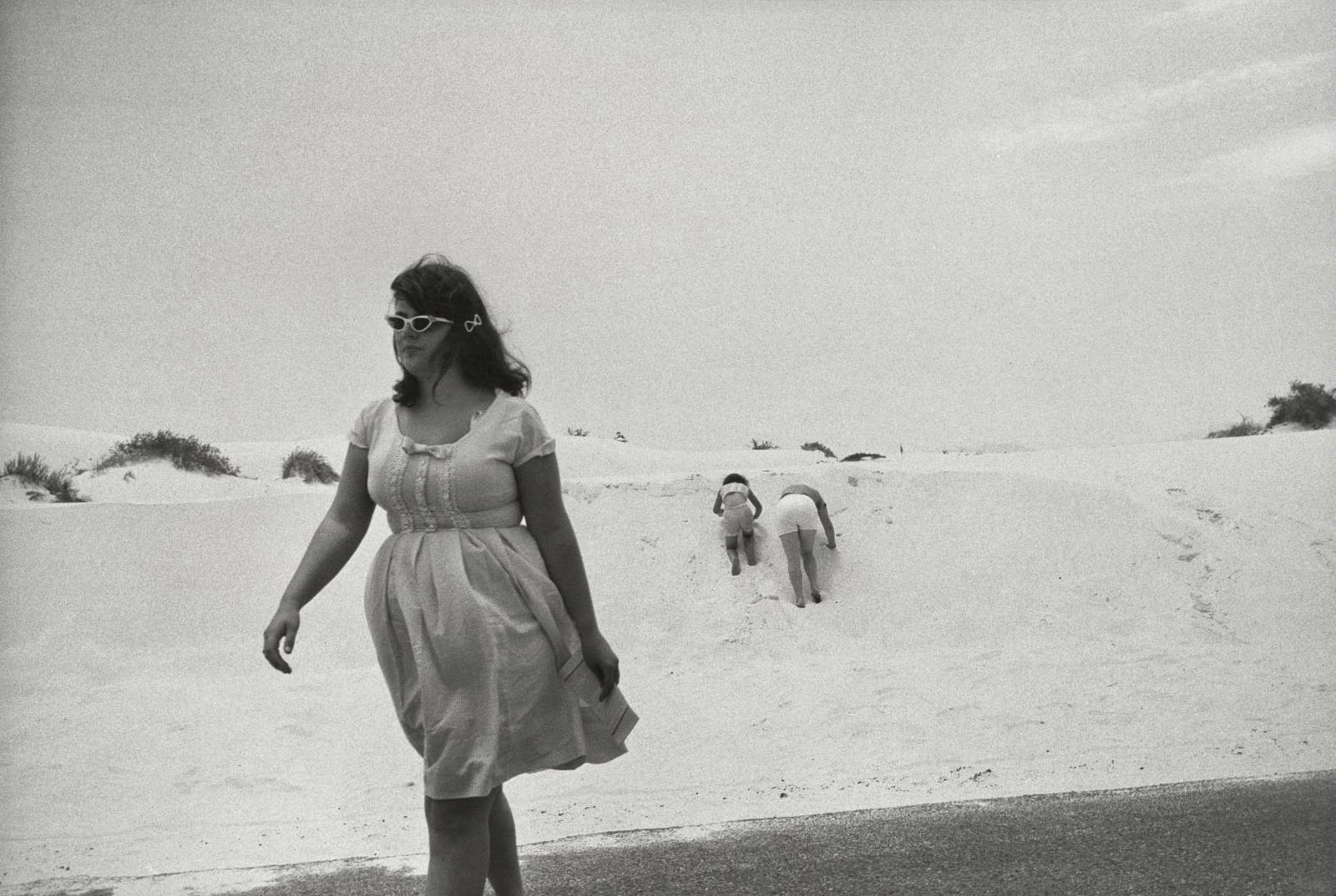
 

Garry Winogrand (American, 1928-1984) 'White Sands National Monument, New Mexico' 1964


Garry Winogrand (American, 1928-1984)
White Sands National Monument, New Mexico
1964
Gelatin silver print
© The Estate of Garry Winogrand, courtesy Fraenkel Gallery, San Francisco
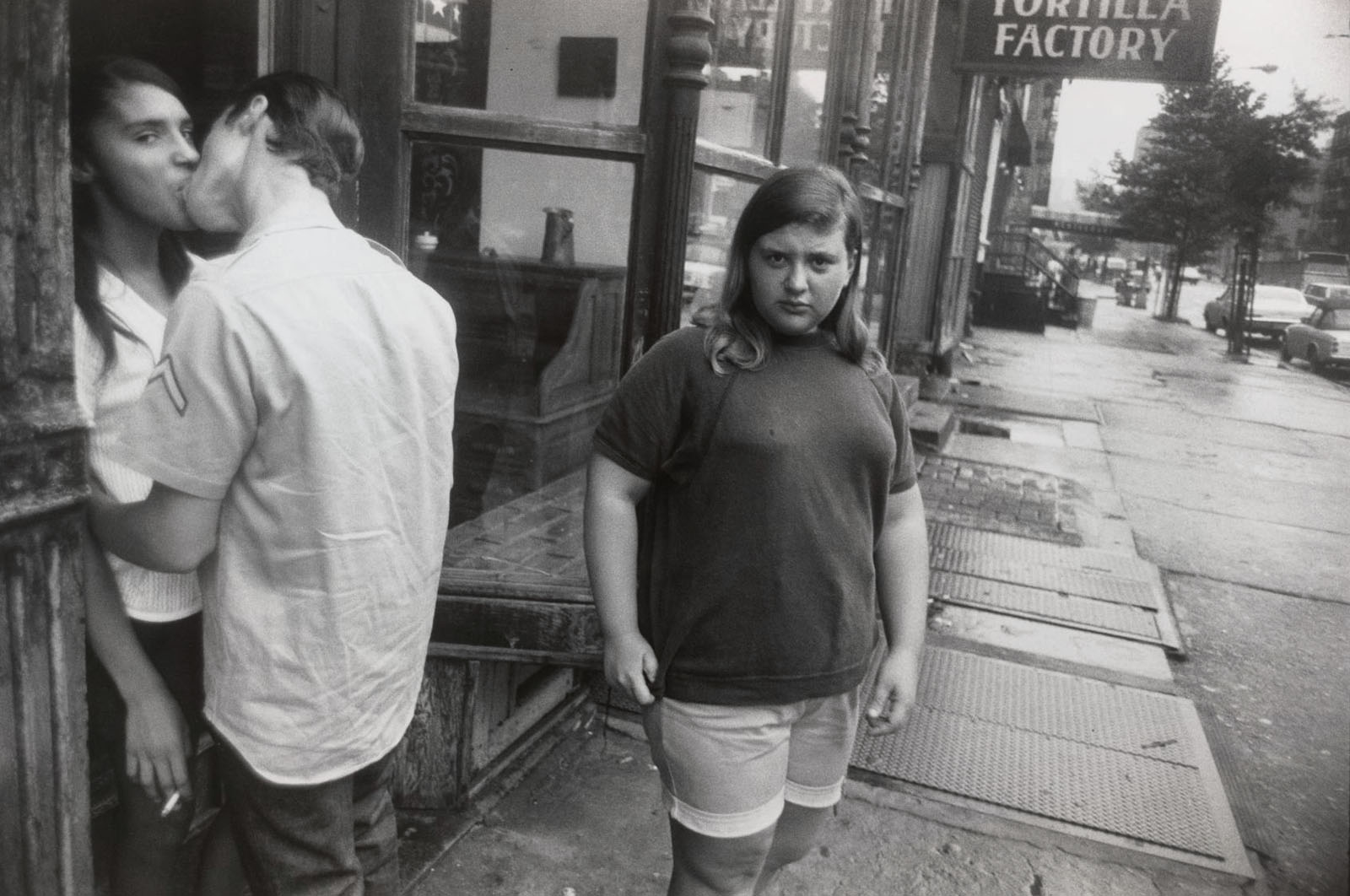
 

Garry Winogrand (American, 1928-1984) 'New York' 1969


Garry Winogrand (American, 1928-1984)
New York
1969
Gelatin silver print
© The Estate of Garry Winogrand, courtesy Fraenkel Gallery, San Francisco
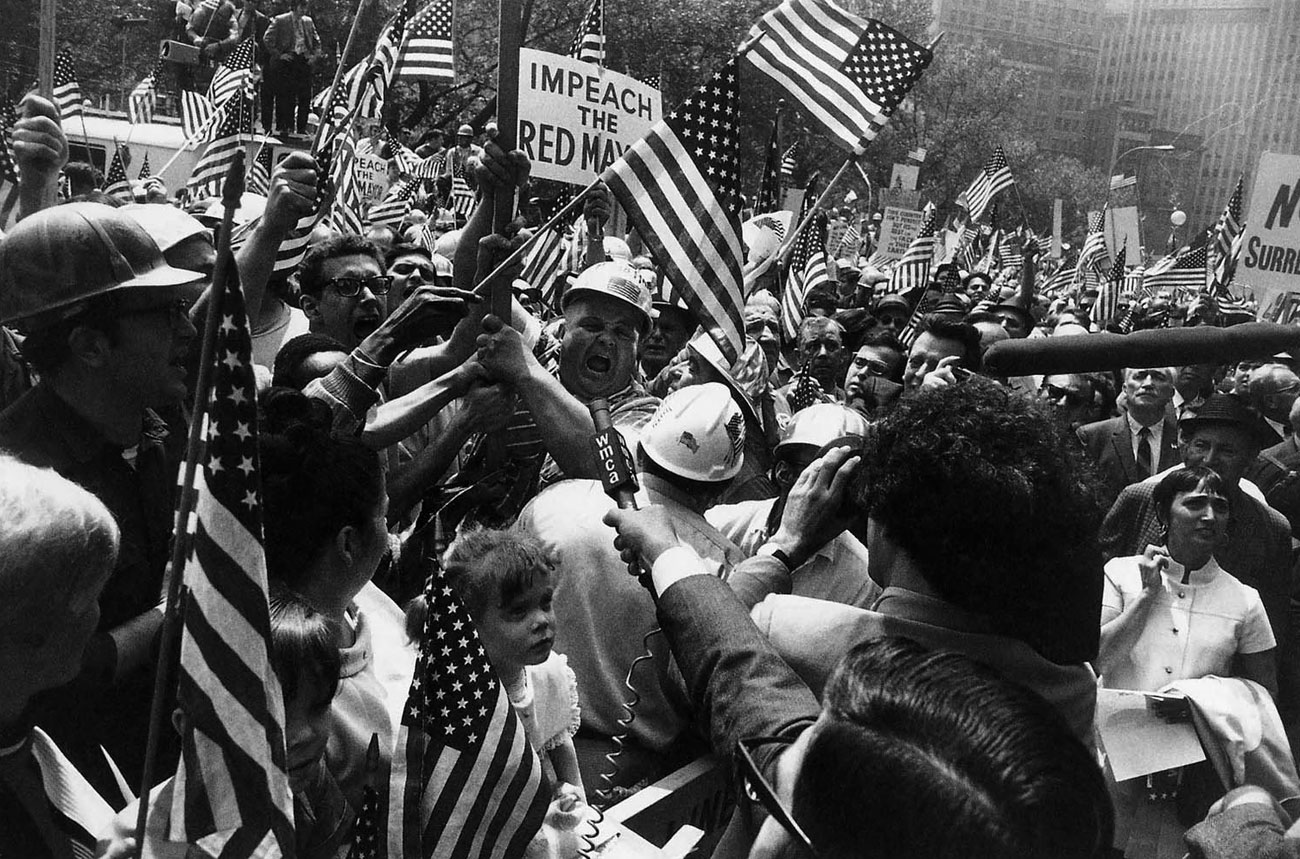
 

Garry Winogrand (American, 1928-1984) 'Elliot Richardson Press Conference, Austin, Texas' 1973


Garry Winogrand (American, 1928-1984)
Elliot Richardson Press Conference, Austin, Texas
1973
Silver gelatin photograph
© The Estate of Garry Winogrand


Elliot Lee Richardson (July 20, 1920 – December 31, 1999) was an American lawyer and politician who was a member of the cabinet of Presidents Richard Nixon and Gerald Ford. As U.S. Attorney General, he was a prominent figure in the Watergate Scandal, and resigned rather than obey President Nixon’s order to fire special prosecutor Archibald Cox.

Text from Wikipedia website
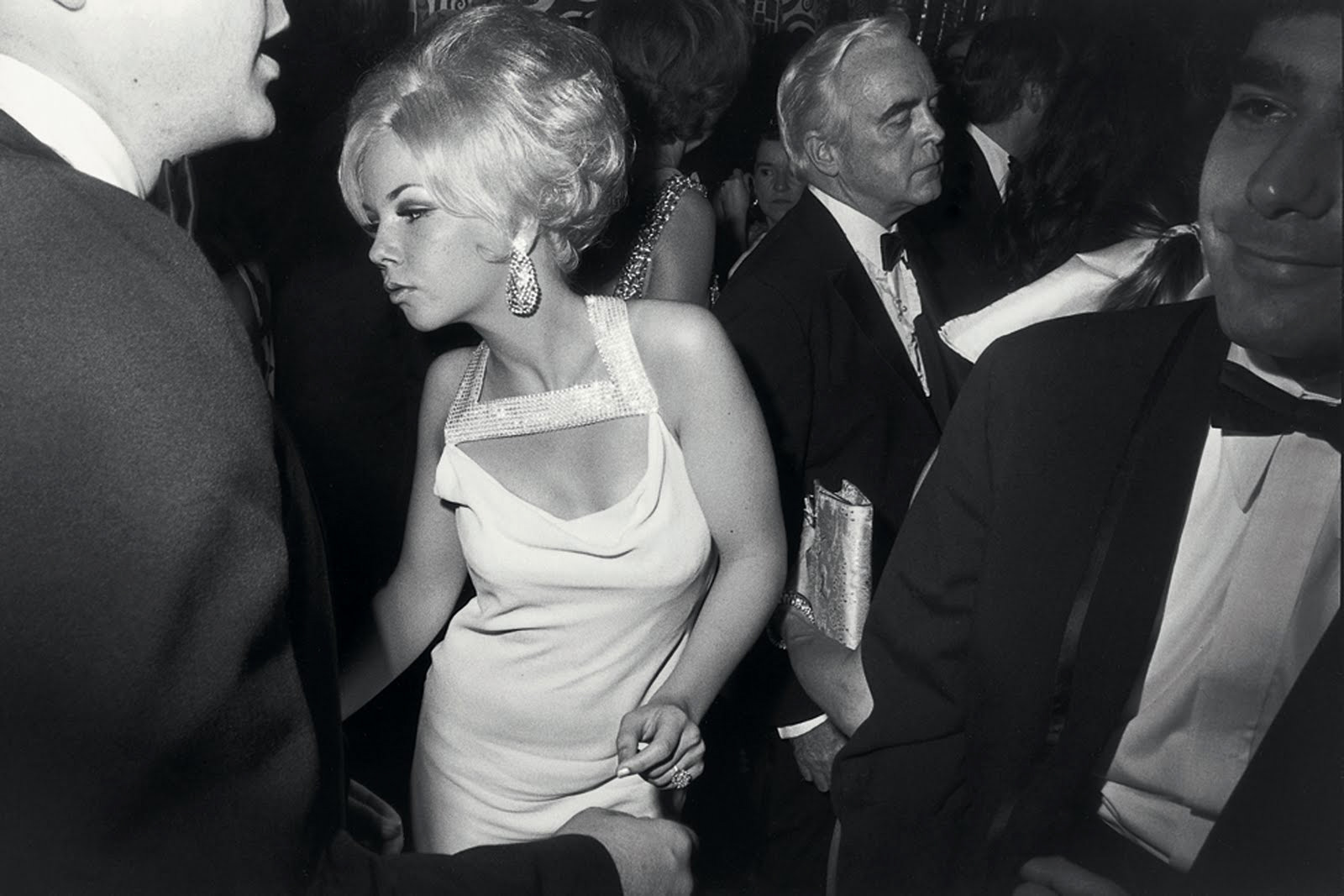
 

Garry Winogrand (American, 1928-1984) 'Centennial Ball, Metropolitan Museum, New York' 1969


Garry Winogrand (American, 1928-1984)
Centennial Ball, Metropolitan Museum, New York
1969
Silver gelatin photograph
© The Estate of Garry Winogrand
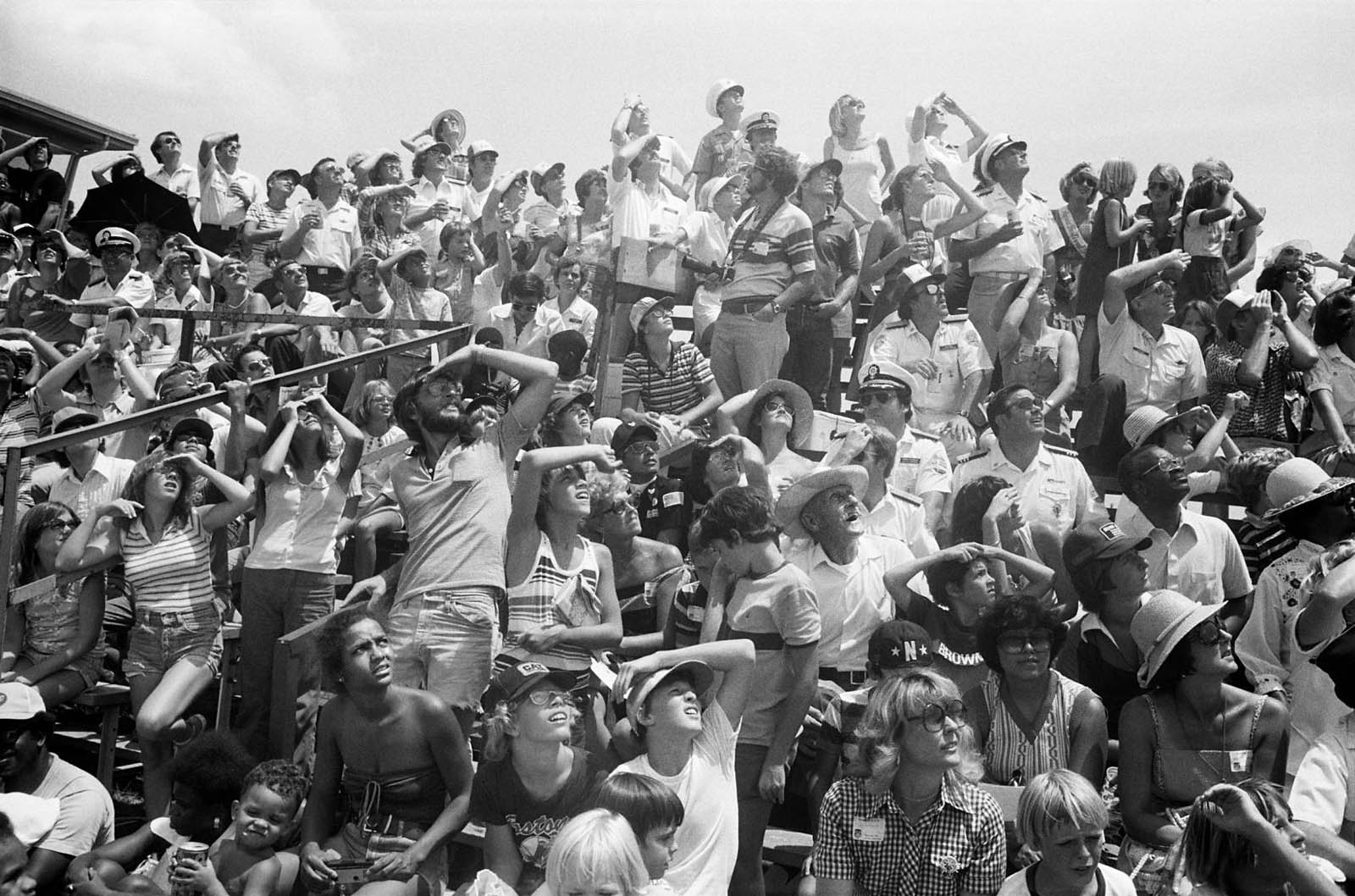
 

Garry Winogrand (American, 1928-1984) 'Point Mugu Naval Air-Station, California' 1979


Garry Winogrand (American, 1928-1984)
Point Mugu Naval Air-Station, California
1979
Silver gelatin photograph
© The Estate of Garry Winogrand
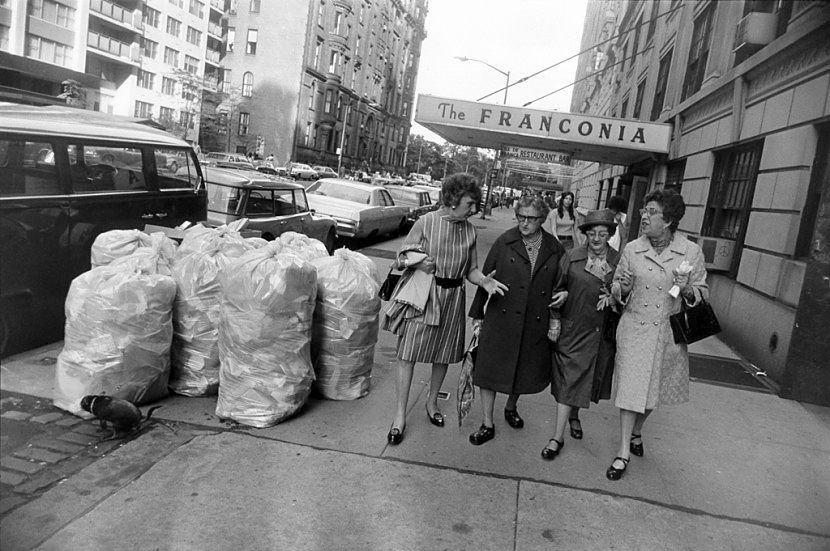
 

Garry Winogrand (American, 1928-1984) 'Untitled' 1970


Garry Winogrand (American, 1928-1984)
Untitled
1970
Silver gelatin photograph
© The Estate of Garry Winogrand


Garry Winogrand (American, 1928-1984) 'Venice Beach, Los Angeles' 1979


Garry Winogrand (American, 1928-1984)
Venice Beach, Los Angeles
1979
Silver gelatin photograph
© The Estate of Garry Winogrand


The first retrospective in 25 years of work by artist Garry Winogrand (1928-1984) – the renowned photographer of New York City and of American life from the 1950s through the early 1980s – will debut at the San Francisco Museum of Modern Art (SFMOMA) from March 9 through June 2, 2013. Jointly organised by SFMOMA and the National Gallery of Art, Washington, D.C., Garry Winogrand brings together the artist’s most iconic images with newly printed photographs from his largely unexamined archive of late work, offering a rigorous overview of Winogrand’s complete working life and revealing for the first time the full sweep of his career. More than 300 photographs in the exhibition and more than 400 in the accompanying catalogue will create a vivid portrait of the artist – a chronicler of postwar America on a par with such figures as Norman Mailer and Robert Rauschenberg who unflinchingly captured America’s wrenching swings between optimism and upheaval in the decades following World War II.

While Winogrand is widely considered one of the greatest photographers of the 20th century, his overall body of work and influence on the field remains incompletely explored. He was enormously prolific but largely postponed the editing and printing of his work. Dying suddenly at the age of 56, he left behind approximately 6,500 rolls of film (some 250,000 images) that he had never seen, as well as proof sheets from his earlier years that he had marked but never printed. Roughly half of the photographs in the exhibition have never been exhibited or published until now; over 100 have never before been printed.

“There exists in photography no other body of work of comparable size or quality that is so editorially unresolved,” says Rubinfien, who was among the youngest of Winogrand’s circle of friends in the 1970s. “This exhibition represents the first effort to comprehensively examine Winogrand’s unfinished work. It also aims to turn the presentation of his work away from topical editing and toward a freer organisation that is faithful to his art’s essential spirit, thus enabling a new understanding of his oeuvre, even for those who think they know him.”

The exhibition is divided into three parts, each covering a broad variety of subjects found in Winogrand’s art. “Down from the Bronx” presents photographs taken for the most part in New York from his start in 1950 until 1971; “A Student of America” looks at work made in the same period during journeys outside New York; and “Boom and Bust” addresses Winogrand’s late period – from when he moved away from New York in 1971 until his death in 1984 – with photographs from Texas and Southern California, as well as Chicago, Washington, Miami, and other locations. This third section also includes a small number of photographs Winogrand made on trips back to Manhattan, which express a sense of desolation unprecedented in his earlier work.

Winogrand was known as great talker with a flamboyant, forceful personality, and what he said accompanying his slide shows and lectures was often imaginative and very funny. A number of videos edited for presentation in the exhibition will allow visitors to experience the living Winogrand as audiences have rarely been able to do for 30-odd years. A short selection from Winogrand’s experimental 8mm footage taken in the late 1960s will also be on view.

After premiering at SFMOMA in spring 2013 Garry Winogrand will travel to the National Gallery of Art, Washington, D.C. (March 2 through June 8, 2014); The Metropolitan Museum of Art, New York (June 27 through September 21, 2014); the Jeu de Paume, Paris (October 14, 2014 through January 25, 2015); and the Fundacion MAPFRE, Madrid (March 3 through May 10, 2015).

An Epic Chronicler of Postwar America

Born in the Bronx, Winogrand did much of his best-known work in Manhattan during the 1960s, and in both the content of his photographs and his artistic style he became one of the principal voices of that eruptive decade – so much so that influential Museum of Modern Art curator John Szarkowski anointed him “the central photographer of his generation.”

Known primarily as a street photographer, Winogrand, who is often associated with famed contemporaries Diane Arbus and Lee Friedlander, photographed with dazzling energy and incessant appetite, exposing some 20,000 rolls of film in his short lifetime. He photographed business moguls, everyday women on the street, famous actors and athletes, hippies, rodeos, politicians, soldiers, animals in zoos, car culture, airports, and antiwar demonstrators and the construction workers who beat them bloody in view of the unmoved police. Daily life in postwar America – rich with new possibility and yet equally anxious, threatening to spin out of control – seemed to unfold for him in a continuous stream.

Yet if Winogrand was one of New York City’s prime photographers, he was also an avid traveller who roamed widely around the United States, bringing exquisite work out of locations that included Los Angeles, San Francisco, Ohio, Dallas, Houston, Chicago, Colorado, and the open country of the Southwest. “You could say that I am a student of photography,” he said, “and I am; but really I’m a student of America.” Winogrand’s expansive visual catalogue of the nation’s evolving social scene has led to comparisons to Walt Whitman, who also unspooled the world in endless lists of people, places, and things.

Winogrand’s pictures often bulge with twenty or thirty figures, and are fascinating both for their dramatic foregrounds and the sub-events at their edges. Even when crowded with people or at their most lighthearted – he was fond of visual puns and was drawn to the absurd – his pictures can convey a feeling of human isolation, hinting at something darker beneath the veneer of the American dream. Early on, some critics considered his pictures formally “shapeless” and “random,” but admirers and critics later found a unique poetry in his tilted horizons and his love of the haphazard.

“Winogrand was an artistic descendant of Walker Evans and Robert Frank, but differed sharply from them,” says Rubinfien. “He admired Frank’s The Americans, but felt the work missed the main story of its time, which in his mind was the emergence of suburban prosperity and isolation. The hope and buoyancy of middle-class life in postwar America is half of the emotional heart of Winogrand’s work. The other half is a sense of undoing. The tension between these qualities gives his work its distinct character.”

After serving in the military as a weather forecaster, Winogrand first began working as a photographer while studying painting on the G.I. Bill at Columbia University (1948-1951). During that time, he also studied briefly with Alexey Brodovitch at the New School for Social Research. While pursuing his personal work, he began supplying commercial photographs to a number of general-interest magazines such as Life, Look, Sports Illustrated, Collier’s, and Pageant, which were then at the height of their power and reach. His career was further shaped by the decline of those magazines and the rise of a new culture of photography centred in the art world.

“Winogrand worked at a moment when the boundaries between journalistic and artistic photography were less certain than they had ever been, yet it was also a time when the most advanced photographers were consciously abandoning journalistic values,” says Greenough. “The social landscape he photographed – the dislocation of urban life, the rise of the suburb with its growing alienation, the skepticism of youth, and the collusion of the press and the powerful – was of concern to many Americans. Yet Winogrand rarely pursued an obvious means to explicate these ideas, preferring poetic evocation over intelligible journalism.”

Winogrand went on to exhibit widely at prominent museums and achieved renown in his lifetime. Yet despite this recognition, he is perhaps the most inadequately understood of all his contemporaries.

“Unfinished” Late Work Thoroughly Investigated for the First Time

The act of taking pictures was far more fulfilling to Winogrand than making prints or editing for books and exhibitions – he often allowed others to perform these tasks for him. Near the end of his life, he spoke of reviewing and reediting all of his photographs, but never had a chance to oversee the shaping of his legacy, or even to review much of the output of his later years. Because of his working methods and his lack of interest in developing his film toward the end of his life, he left behind more than 2,500 rolls of exposed but undeveloped film, an additional 4,100 rolls that he had processed but never seen – an estimated total of 250,000 images that have remained virtually unknown.

Furthermore, Winogrand published just five modest books during his lifetime – The Animals (1969), Women Are Beautiful (1975), Garry Winogrand (1976), Public Relations (1977), and Stock Photographs (1980) – that represent only a fraction of his work and are mainly confined to narrow topical frames that don’t suggest the full scope of his importance.

“One reason that Winogrand is only now receiving the full retrospective treatment already devoted to peers of his era, including Diane Arbus, Lee Friedlander, and Robert Frank, is that any truly comprehensive consideration of his life’s work requires contending with the practical and ethical issues surrounding the vast archive he left behind,” says O’Toole. “In the absence of explicit instructions from him regarding how he wanted his work to be handled after he was gone, its posthumous treatment has been the subject of ongoing debate and raises provocative questions about the creative process and its relationship to issues specific to the medium.”

“Some argue that what was left behind should be left alone, and that no one should intrude upon the intentions of an artist,” adds Rubinfien. “But the quantity of Winogrand’s output, the incompleteness with which he reviewed it, and the suddenness of his death create a special case in which the true scope of an eminent photographer’s work cannot be known without the intervention of an editor.”

Now housed at the Center for Creative Photography of the University of Arizona, Tucson, Winogrand’s “unfinished” work was initially organized in the years just after his death by several colleagues and friends in preparation for the artist’s first major museum retrospective, held at the Museum of Modern Art, New York (MoMA) in 1988. Exhibition curator John Szarkowski felt the quality of Winogrand’s work had significantly deteriorated in the last 15 years of his life, and included only a small group of pictures from the mysterious late work in MoMA exhibition.

Nearly 30 years have elapsed since the last attempt to grapple with the complete arc of Winogrand’s career. Benefiting from new curatorial research undertaken for this project, the current exhibition will provide a long-awaited reevaluation of his accomplishments. As one of the first museums to recognise photography as a legitimate art form, SFMOMA has collaborated with the National Gallery of Art – who, like SFMOMA, is known for its photography scholarship – in a multi-year endeavour to spearhead the presentation of this important exhibition and publication.”

Press release from the SFMOMA website


Garry Winogrand (American, 1928-1984) 'New York' 1961


Garry Winogrand (American, 1928-1984)
New York
1961
Silver gelatin photograph
© The Estate of Garry Winogrand
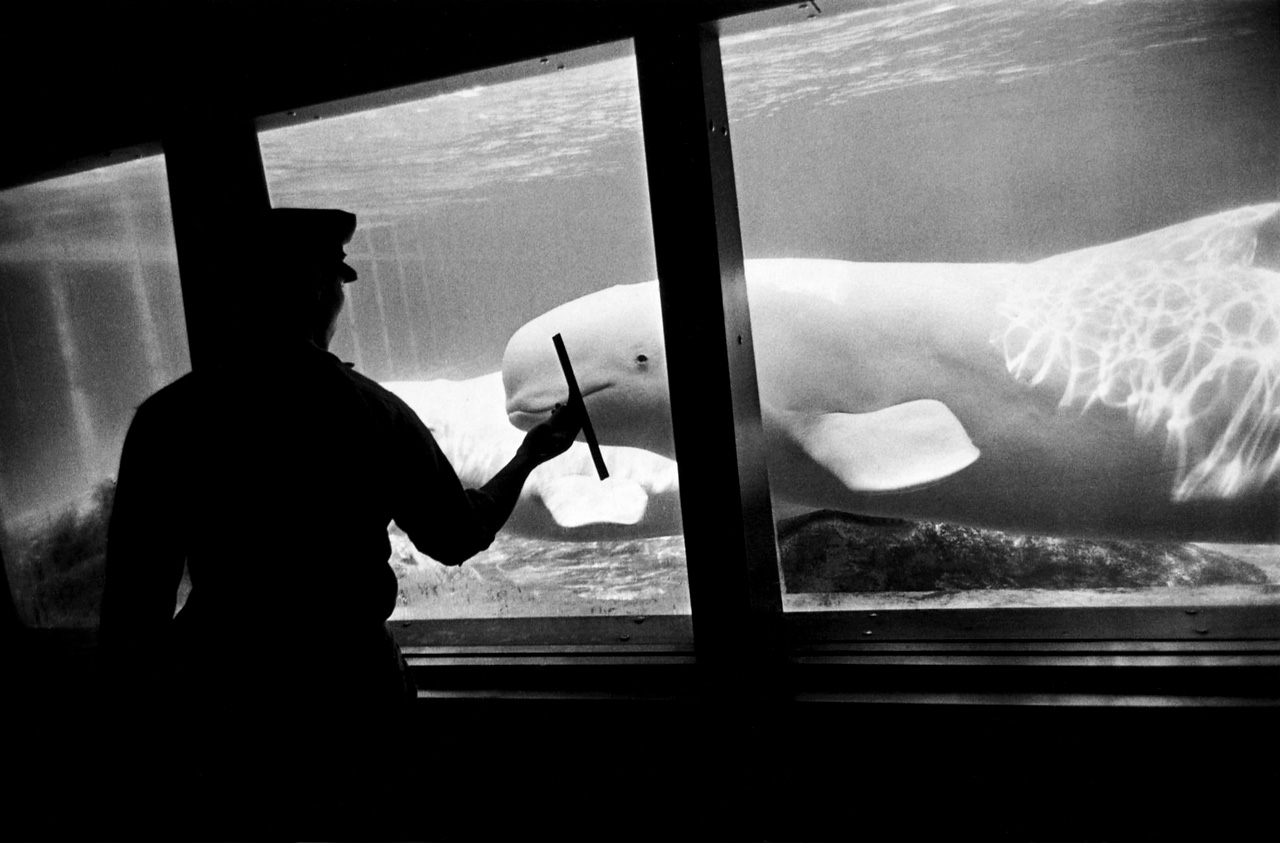
 

Garry Winogrand (American, 1928-1984) 'New York' 1963


Garry Winogrand (American, 1928-1984)
New York
1963
Silver gelatin photograph
© The Estate of Garry Winogrand


Garry Winogrand (American, 1928-1984) 'San Marcos, Texas' 1964


Garry Winogrand (American, 1928-1984)
San Marcos, Texas
1964
Silver gelatin photograph
© The Estate of Garry Winogrand
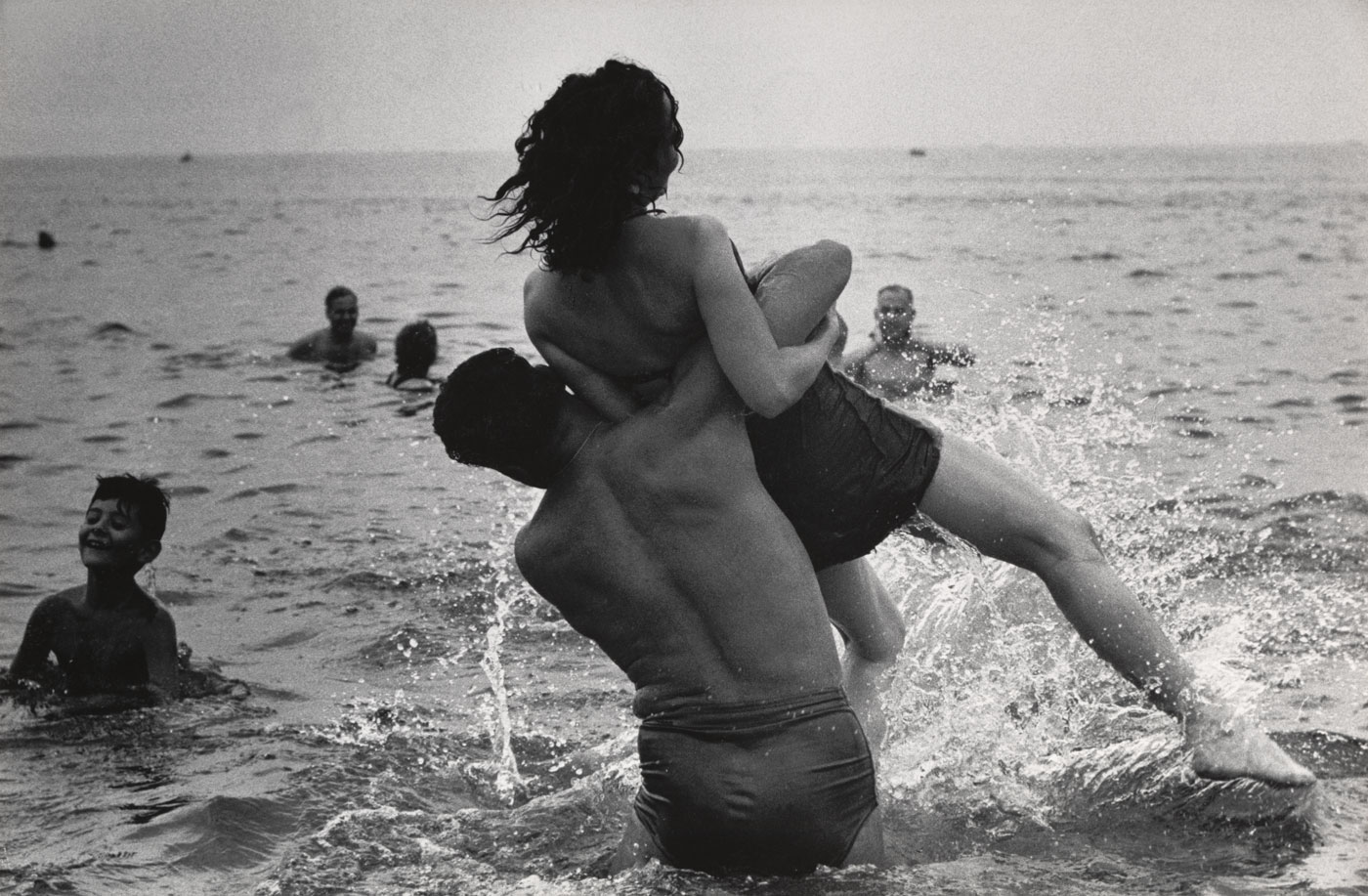
 

Garry Winogrand (American, 1928-1984) 'Coney Island, New York' c. 1952


Garry Winogrand (American, 1928-1984)
Coney Island, New York
c. 1952
Gelatin silver print
Collection The Museum of Modern Art, New York, purchase and gift of Barbara Schwartz in memory of Eugene M. Schwartz
© The Estate of Garry Winogrand, courtesy Fraenkel Gallery, San Francisco; digital image
© The Museum of Modern Art/ Licensed by SCALA / Art Resource, NY


Garry Winogrand (American, 1928-1984) 'Fort Worth, Texas' 1974-77


Garry Winogrand (American, 1928-1984)
Fort Worth, Texas
1974-1977
Gelatin silver print
Garry Winogrand Archive, Center for Creative Photography, University of Arizona
© The Estate of Garry Winogrand, courtesy Fraenkel Gallery, San Francisco
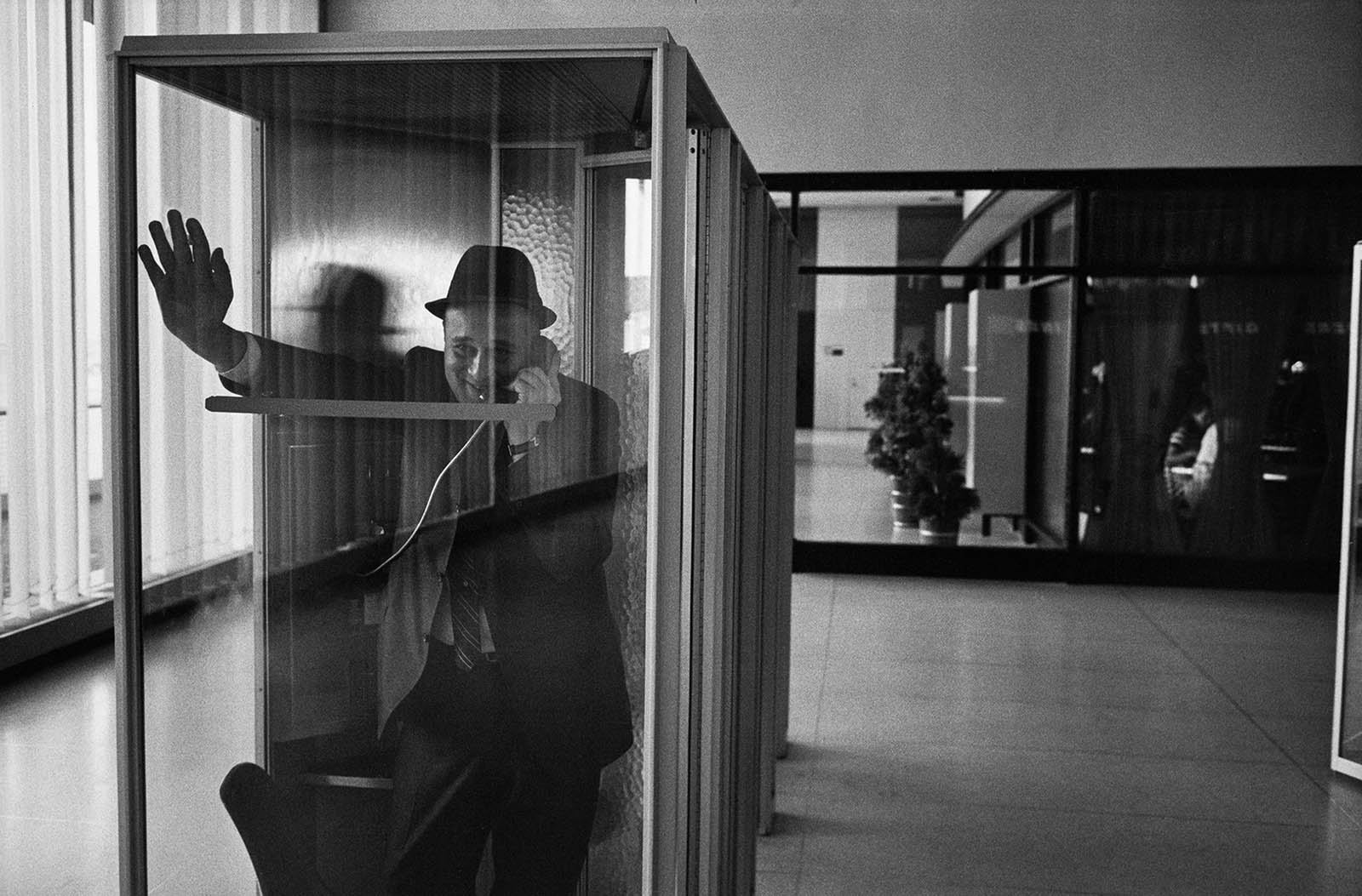
 

Garry Winogrand (American, 1928-1984) 'John F. Kennedy International Airport, New York' 1968


Garry Winogrand (American, 1928-1984)
John F. Kennedy International Airport, New York
1968
Silver gelatin photograph
© The Estate of Garry Winogrand
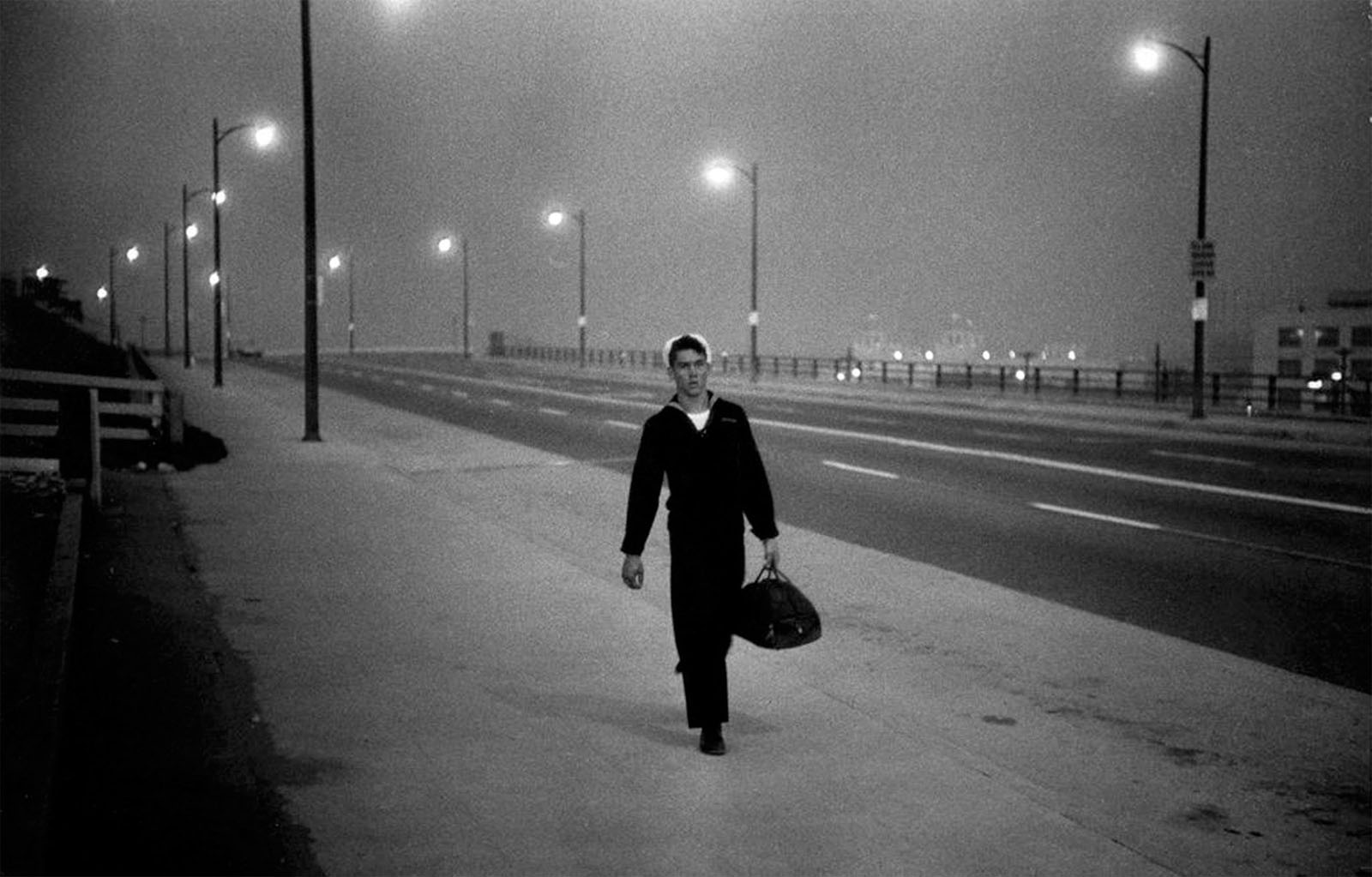
 

Garry Winogrand (American, 1928-1984) 'New York' 1950


Garry Winogrand (American, 1928-1984)
New York
1950
Gelatin silver print
Collection SFMOMA, fractional and promised gift of Carla Emil and Rich Silverstein
© The Estate of Garry Winogrand, courtesy Fraenkel Gallery, San Francisco


Garry Winogrand (American, 1928-1984) 'New York' c. 1962


Garry Winogrand (American, 1928-1984)
New York
c. 1962
Gelatin silver print
Garry Winogrand Archive, Center for Creative Photography, University of Arizona
© The Estate of Garry Winogrand, courtesy Fraenkel Gallery, San Francisco


Garry Winogrand (American, 1928-1984) 'Venice Beach, Los Angeles' 1980-1983


Garry Winogrand (American, 1928-1984)
Venice Beach, Los Angeles
1980-1983
Gelatin silver print
Garry Winogrand Archive, Center for Creative Photography, University of Arizona
© The Estate of Garry Winogrand, courtesy Fraenkel Gallery, San Francisco
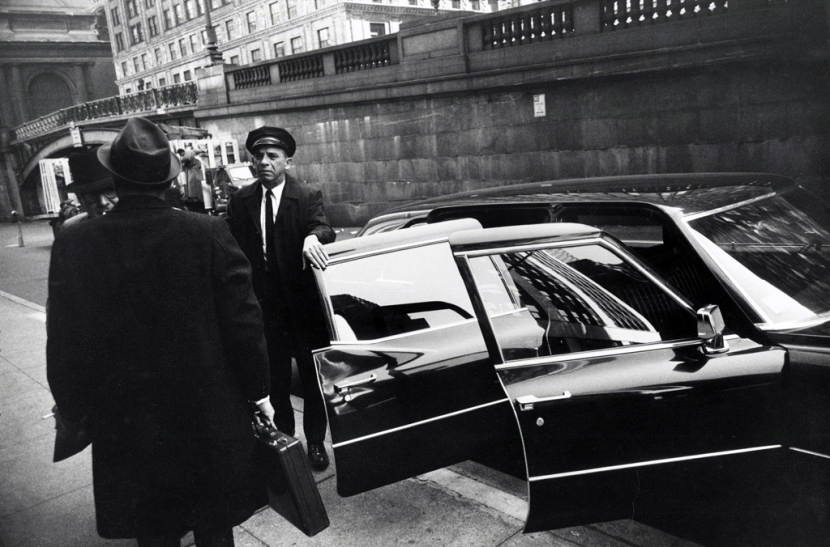
 

Garry Winogrand (American, 1928-1984) 'Grand Central Station' 1968


Garry Winogrand (American, 1928-1984)
Grand Central Station
1968
Silver gelatin photograph
© The Estate of Garry Winogrand


Garry Winogrand (American, 1928-1984) 'Los Angeles' 1964


Garry Winogrand (American, 1928-1984)
Los Angeles
1964
Silver gelatin photograph
© The Estate of Garry Winogrand
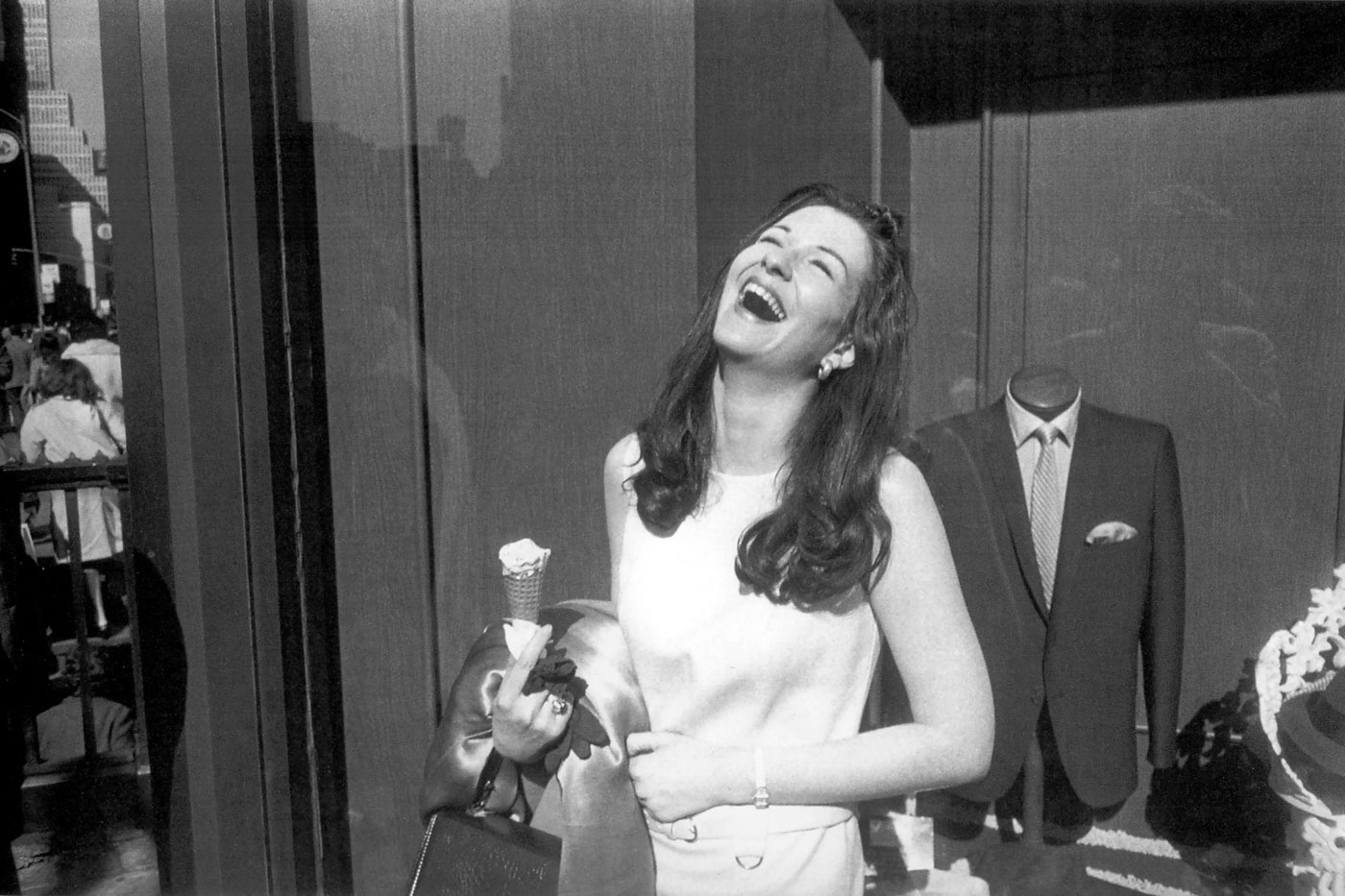
 

Garry Winogrand (American, 1928-1984) 'New York' 1968


Garry Winogrand (American, 1928-1984)
New York
1968
Silver gelatin photograph
© The Estate of Garry Winogrand
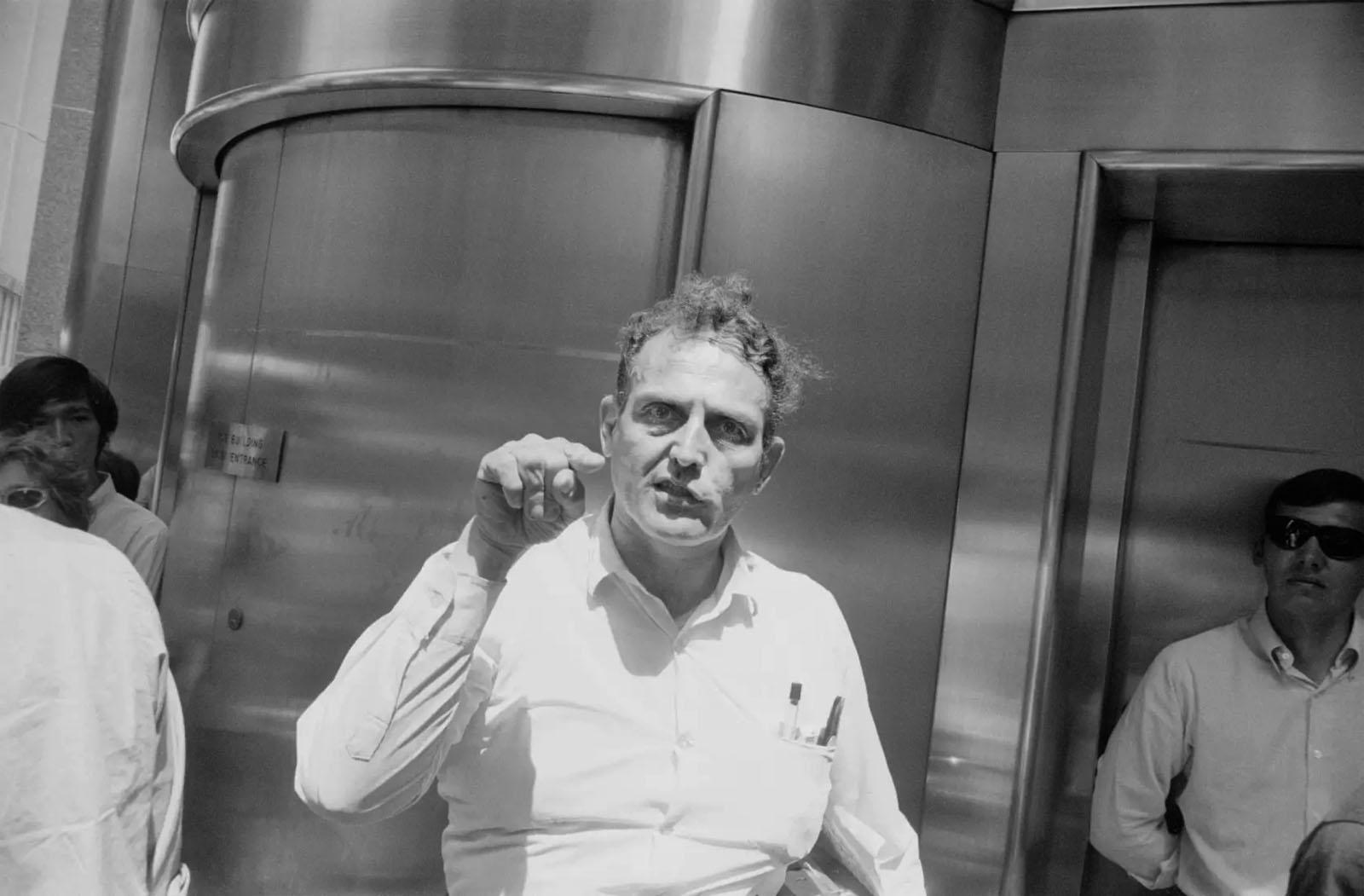
 

Garry Winogrand (American, 1928-1984) 'New York' c. 1969


Garry Winogrand (American, 1928-1984)
New York
c. 1969
Silver gelatin photograph
© The Estate of Garry Winogrand


San Francisco Museum of Modern Art
151 Third Street
San Francisco, CA 94103

Opening hours:
Monday – Tuesday: 10am – 5pm
Wednesday: Closed
Thursday: 12 – 8pm
Friday – Sunday: 10am – 5pm

San Francisco Museum of Modern Art website

LIKE ART BLART ON FACEBOOK

Back to top

Exhibition: ‘Concrete – Photography and Architecture’ at Fotomuseum Winterthur, Zurich

Exhibition dates: 2nd March – 20th May 2013


Anonymous photographer.
 'Hardstrasse with Hardbrücke in construction' 1972


Anonymous photographer
Hardstrasse with Hardbrücke in construction
1972
Gelatin silver print
8.8 x 12.6cm
Baugeschichtliches Archiv der Stadt Zürich


When creating this archive, so much of my time is spent cleaning up clearly inadequate media images, an example of which can be seen below. I have become very adept at this process and my thoughts are this: would you want to be the artist whose work is displayed to the public in a remarkably decomposed manner, one not up to a standard of any artist who cares about their prints and reputation? I certainly would not. It is a wonder to me that museums and galleries spend thousands of dollars staging exhibitions and producing costly catalogues and yet cannot spend a tiny proportion of time, money and care on their media images to promote artist and said exhibition. I had to spend a lot of time on over half of these images to bring them up to presentable standard.

Having said that, there are some cracking photographs in this posting. The Sugimoto is sublime, Walker Evans so muscular, Lucien Hervé a masterpiece of light and texture, and Moriz Nähr a symphony of light and tone, to name but a few. I hope you enjoy all the effort it takes to bring these images to you.

Dr Marcus Bunyan


Many thankx to the Fotomuseum Winterthur, Zurich for allowing me to publish the photographs in the posting. Please click on the photographs for a larger version of the image.


Michael Wesely (German, b. 1963)
 'Canadian Embassy, Leipziger Platz, Berlin (5.2.2003 – 28.4.2005)' 
C-print


Michael Wesely (German, b. 1963)
Canadian Embassy, Leipziger Platz, Berlin (5.2.2003 – 28.4.2005)

C-print
125 x 175cm
Galerie Fahnemann, Berlin
© Michael Wesely/Courtesy Galerie Fahnemann


Michael Wesely (born 1963 in Munich) is a German art photographer who is best known for his photos of cities, buildings, landscapes, and still lives of flowers taken with a special ultra-long exposure technique. …

Wesely’s works deal with the subject of time and the change that takes place over time. Due to the extremely long exposure and the special bulb he uses, those elements that move the least dominate his images, while those moving will later be seen as transparent figures or the outlines of newly erect buildings overlapping. The pictures “reveal the passage of time by showing the changing skyline, the skeletons of cranes. the rise of new buildings, and the disappearance of others. Beams of sunlight, the residue of the ever-changing positions (tithe earth and sun, are also evident, like a palimpsest of seasons”. Everything that ever happened on the scene during exposure (during weeks, months, or even up to two or three years) will be seen in one single picture. Wesely’s photographs have been described as a metaphor on the change of Berlin after 1989 because “at once strikingly energetic and ghostly and uninhabited. This formal paradox aptly describes Berlin, which had only been unified for ten years at the time the images were taken. In that way, the photographs offer a larger commentary on time’s passage.”

Text from the Wikipedia website


William Henry Fox Talbot (English, 1800-1877) 'The Bridge of Sighs, St. John’s College, 
Cambridge' 1845


William Henry Fox Talbot (English, 1800-1877)
The Bridge of Sighs, St. John’s College, 
Cambridge
1845
Salt print from calotype negative
16.4 x 20.6cm
Museum Folkwang Essen


Charles Marville (French, 1813-1879) '24, Rue Bièvre, Paris' 1865-1869


Charles Marville (French, 1813-1879)
24, Rue Bièvre, Paris
1865-1869
Albumin print
27.4 x 36.6cm
Collection Thomas Walther


Lucien Hervé (Hungarian, 1910-2007) 'Le Corbusier: Façade of the Secretariat Building, Chandigarh, 1961' 1961


Lucien Hervé (Hungarian, 1910-2007)
Le Corbusier: Façade of the Secretariat Building, Chandigarh, 1961
1961
Gelatin silver print
25.5 x 25.4cm
Canadian Centre for Architecture, Montréal
© Estate Lucien Hervé


Lucien Hervé is considered to be one of the great architectural photographers of the 20th century. He collaborated with Le Corbusier from 1949 until the architect’s death in 1965, developing a great rapport. Le Corbusier even once pronounced Hervé to have ‘the soul of an architect.’ In 1949, Hervé travelled from Paris to Marseille to see Le Corbusier’s recently designed housing complex, Unité d’Habitation. Awed by the groundbreaking modern design, Hervé took 650 photographs of it in a single day and it was from then onwards they worked closely with one another.

Through light and shadow, he defined the dialogue between substance and form. By delineating a strong contrast between the light and shadows in his subject as well as placing emphasis on building details, Hervé was able to communicate the depth of a room, the surface of a wall, or the strength of a building’s framework.

Born 1910 in Hungary, Hervé (born László Elkán) moved to Paris at the age of 19 and earned French citizenship in 1938. During World War II, he was captured by the Germans, escaped and became a member of the French Resistance under the name of Lucien Hervé, which he kept thereafter. After the war he left politics behind to write for art journals. It was one of his editors, in fact, who suggested he visit Unité d’Habitation. Hervé began experimenting with photography, over or underexposing images and often severely cropping them to attain unusual compositions following the work of avant-garde artists such as Piet Mondrian, László Moholy-Nagy, and Alexander Rodchenko.

Text from the Michael Hoppen Gallery website


F. C. Gundlach (German, 1926-2021) '"Op Art" bathing suit by Sinz, Vouliagmeni/Greece' 1966


F. C. Gundlach (German, 1926-2021)
“Op Art” bathing suit by Sinz, Vouliagmeni/Greece
1966
Gelatin silver print
50 x 50cm
F.C. Gundlach, Hamburg
© F.C. Gundlach


Laurence Bonvin (Swiss, b. 1967)
 'Blikkiesdorp, Cape Town, South Africa' 2009


Laurence Bonvin (Swiss, b. 1967)
Blikkiesdorp, Cape Town, South Africa
2009
Inkjet print
40 x 50cm
Courtesy the artist
© Laurence Bonvin


Laurence Bonvin (born 1967 in Sierre) is a Swiss photographer and director living between Berlin, Valais and Lisbon. Her documentary approach has for many years focused on the phenomena of transformation in urban and natural environments.


Architectures and cities are both volumes and images alike. We experience them directly, physically and sensually, as well as through pictures. Pictures speak a language of their own. They offer a discourse that is quite unlike the physical experience of architecture. They transform volume into surface; distil matter into forms and signs – rarely, if ever, leaving it as it is. That is probably why so many architects try to get involved in determining the image of their buildings. Concrete – Photography and Architecture seeks to approach the singular and complex relationship between architecture and photography in light-hearted, narrative and dialectical ways. The exhibition explores issues of history and ideology, as well as the specifics of form and material, in the photographic image.

The visual appeal of destroyed or dilapidated buildings is also addressed, as are their powerful demonstrations of power and exclusivity, fragility and beauty. To what extent does photography influence not only the way architecture is perceived, but also the way it is designed? How does an image bring architecture to life, and at what point does it become uncanny? How do settlements develop into cities? Or, in sociological terms: how do work and life interconnect differently in, say, Zurich and Winterthur, as opposed to, say, Calcutta? And how do skyscrapers and living spaces translate into the flat, two-dimensional world of photography?

Concrete – Photography and Architecture is not, however, chronologically arranged. Instead, it is based on compelling positions, counterpositions and thematic fields that connect various concrete, fundamental and historical aspects. Alongside everyday buildings and prestigious architecture, structured by horizontal and vertical axes, alongside homes and houses, utopian fantasies, design and reality, an important aspect of the exhibition is the compelling appeal of architectural decay due to the passage of time, through both natural and deliberate destruction. It is almost as though photography were providing a moral reminder even such magnificence and presence, whether hewn in stone or cast in concrete, has its weaknesses too.

Architecture has always been an important platform for the frequently heated discussion of ideas and views, zeitgeist and weltanschauung, everyday life and aesthetics. Architecture is the bold materialisation of private and public visions, functionality and avant-garde art alike. It is, as Slavoj Žižek puts it, ideology in stone. Photography and architecture both play an undisputed role in our everyday lives. They confront us on a daily basis, often without our even noticing, and they influence how we think, act and live in subliminal and lasting ways. Concrete – Photography and Architecture provides visual answers to the question of what it is that makes up the intimate yet complex relationship between architecture and photography, architect and photographer.

The exhibition presents more than 400 photographs and groups of works from the 19th, 20th and 21st centuries, including William Henry Fox Talbot, Domenico Bresolin and Charles Marville as well as Germaine Krull, Lucia Moholy and Julius Shulman, and spanning an arc to contemporary works by Georg Aerni, Iwan Baan, Luisa Lambri and Hiroshi Sugimoto. Projects such as the long-term observations of Schlieren photography or Wolfgang Scheppe’s Migropolis show how the art of photography is playing an increasingly important role as an instrument of research and knowledge. The exhibition is accompanied by a lavishly illustrated book published by Scheidegger & Spiess, with some 300 colour and black-and-white pictures, essays by Jochen Becker, Johannes Binotto, Verena Huber Nievergelt, Michael Jakob, Nicoletta Leonardi, Lorenzo Rocha, Caspar Schärer, Aveek Sen and Urs Stahel as well as a conversation with Annette Gigon, Meret Ernst and Armin Linke.

Press release from the Fotomuseum Winterthur website


Guido Guidi. '#1176 01 29 1997 3:30PM Looking Southeast' From 'Carlo Scarpa's Tomba Brion' 
1997


Guido Guidi (Italian, b. 1941)
#1176 01 29 1997 3:30PM Looking Southeast
From Carlo Scarpa’s Tomba Brion
1997
C print
19.5 x 24.6cm
Courtesy the artist
© Guido Guidi


Guido Guidi (born January 1, 1941) is an Italian photographer. His work, spanning over more than 40 years, has focused in particular on rural and suburban geographies in Italy and Europe. He photographs places that are normally overlooked. His published works include In Between Cities, Guardando a Est, A New Map of Italy and Veramente.

Guidi began experimenting in the late 1960s with pseudo-documentary images that interrogated photography’s objectivity. Influenced by neorealist film and conceptual art, in the 1970s he began investigating Italy’s man-altered landscape. Working in marginal and decayed spaces with an 8×10 large format camera, he creates dense sequences intended as meditations on the meaning of landscape, photography, and seeing. Later he investigated the life and death of modernist architecture, with projects on Scarpa, van der Rohe, and Le Corbusier. Photography for Guidi is something autobiographical. It is synonymous with inhabiting, and the camera is the instrument that allows him to observe, appropriate and collect what lies beyond his doorstep.

“Guidi was a leading voice in the resurgence of Italian photography of the 1970s and 1980s”. “Since then, working mostly in colour with a large-format camera, he has patiently returned to the same places – his native Romagna and the area around Venice – documenting the shift from a rural to a post-industrial landscape.”

Text from the Wikipedia website


Tobias Zielony (German, b. 1973)
 'Le Vele di Scampia' 2009


Tobias Zielony (German, b. 1973)
Le Vele di Scampia
2009
Blu Ray photoanimation
8.57 min
Courtesy Koch Oberhuber Wolff, Berlin
© Tobias Zielony/ KOW


Hiroshi Sugimoto (Japanese, b. 1948) 'Seagram Building, New York City' 1997


Hiroshi Sugimoto (Japanese, b. 1948)
Seagram Building, New York City
1997
Gelatin silver print
58.4 x 47cm
Canadian Centre for Architecture, Montreal
© Hiroshi Sugimoto/Courtesy of Gallery Koyanagi Tokyo


Aage Strüwing (Danish, 1913-1989) 'Arne Jacobsen: Rødovre Town Hall' 1955


Aage Strüwing (Danish, 1913-1989)
Arne Jacobsen: Rødovre Town Hall
1955
Gelatin silver print
23.7 x 17cm
EPFL Archives de la construction moderne, Lausanne
© Estate Strüwing


Moriz Nähr (Austrian, 1859-1945) 
'Stiegenhaus im Haus Stonborough-Wittgenstein' 1928 (composite cleaned)


Moriz Nähr (Austrian, 1859-1945)

Stiegenhaus im Haus Stonborough-Wittgenstein [Staircase in the house Stonborough-Wittgenstein] (composite cleaned)
1928


Moriz Nähr (Austrian, 1859-1945) '
Stiegenhaus im Haus Stonborough-Wittgenstein' 1928


Moriz Nähr (Austrian, 1859-1945)

Stiegenhaus im Haus Stonborough-Wittgenstein (Staircase in the house Stonborough-Wittgenstein)
1928
Silbergelatine Abzug
13.8 x 8.9cm
Albertina, Wien
© Estate Moriz Nähr


Moriz Nähr (1859-1945) is one of the most important innovators of photography in “Vienna around 1900”. His photographic oeuvre is mentioned today in the same breath as that of the famous Parisian photographer Eugène Atget. Nähr enjoyed a life-long artist’s friendship with Gustav Klimt and was connected with the artist through a special network of eminent personalities from the arts, culture and philosophy. Numerous portrait photographs of Klimt emphatically document the two artists’ bond. Klimt was also inspired by Nähr’s photographic motifs, as illustrated by the conformities in the photographer’s pictures and Klimt’s painting Beech Forest I created in 1902. The legends surrounding Moriz Nähr are based on the one hand on his close ties with Gustav Klimt and the Vienna Secession and on the other hand on his connections with the family of Ludwig Wittgenstein and the imperial Habsburg family, especially with the heir to the throne Archduke Franz Ferdinand, who appointed him court photographer in 1908. Owing to his work as a freelance photographer as well as to his various commissions, he has left behind a multi-faceted oeuvre comprising not only landscape-, architecture-, and portrait photography but also street photography (Scenes from the Naschmarkt, 1918) as well as photographs documenting exhibitions (Vienna Secession).

Anonymous. “Moriz Nähr: Photographer of Viennese Modernism,” on the Leopold Museum website 2018 [Online] Cited 14/07/2024


Haus Wittgenstein, also known as the Stonborough House and the Wittgenstein House) is a house in the modernist style designed and built on the Kundmanngasse, Vienna, by the Austrian architect Paul Engelmannand the Austrian philosopher Ludwig Wittgenstein.

In November 1925, Wittgenstein’s sister Margaret Stonborough-Wittgenstein commissioned Engelmann to design and build a large townhouse. Margaret also invited her brother to help with the design in part to distract him from an incident that had happened while he had been a primary school teacher: he had hit a boy for getting an answer wrong and the boy had collapsed. The architect was Paul Engelmann, someone Wittgenstein had come to know while training to be an Artillery Officer in Olmutz. Engelmann designed a spare modernist house after the style of Adolf Loos: three rectangular blocks. Wittgenstein showed a great interest in the project and in Engelmann’s plans and poured himself into the project for over two years. He focused on the windows, doors, door knobs, and radiators, demanding that every detail be exactly as he specified, to the point where everyone involved in the project was exhausted. One of the architects, Jacques Groag, wrote in a letter: “I come home very depressed with a headache after a day of the worst quarrels, disputes, vexations, and this happens often. Mostly between me and Wittgenstein.” When the house was nearly finished he had a ceiling raised 30mm so the room had the exact proportions he wanted.

Waugh writes that Margaret eventually refused to pay for the changes Wittgenstein kept demanding, so he bought himself a lottery ticket in the hope of paying for things that way. It took him a year to design the door handles, and another to design the radiators. Each window was covered by a metal screen that weighed 150 kg, moved by a pulley Wittgenstein designed. Bernhard Leitner, author of The Architecture of Ludwig Wittgenstein, said of it that there is barely anything comparable in the history of interior design: “It is as ingenious as it is expensive. A metal curtain that could be lowered into the floor.”

The house was finished by December 1928, and the family gathered there that Christmas to celebrate its completion. Describing the work, Ludwig’s eldest sister, Hermine, wrote: “Even though I admired the house very much, I always knew that I neither wanted to, nor could, live in it myself. It seemed indeed to be much more a dwelling for the gods than for a small mortal like me”. Paul Wittgenstein, Ludwig’s brother, disliked it, and when Margaret’s nephew came to sell it, he reportedly did so on the grounds that she had never liked it either. Wittgenstein himself found the house too austere, saying it had good manners, but no primordial life or health. He nevertheless seemed committed to the idea of becoming an architect: the Vienna City Directory listed him as “Dr Ludwig Wittgenstein, occupation: architect” between 1933 and 1938.

After World War II, the house became a barracks and stables for Russian soldiers. It was owned by Thomas Stonborough, son of Margaret until 1968 when it was sold to a developer for demolition. For two years after this the house was under threat of demolition. The Vienna Landmark Commission saved it – after a campaign by Bernhard Leitner – and made it a national monument in 1971, and since 1975 it has housed the cultural department of the Bulgarian Embassy.

Text from the Wikipedia website


Lala Aufsberg (German, 1907-1976) 'Cathedral of Light' c. 1937


Lala Aufsberg (German, 1907-1976)
Cathedral of Light
c. 1937
Gelatin silver print
24 x 18cm
Town Archive Nuremberg
© Photo Marburg


Lala Aufsberg (actually, Ida Louise Aufsberg, born 26 February 1907 in Sonthofen, May 18, 1976) was a well-known art photographer. After attending primary school and six years of school for Higher daughters in Immenstadt she began training for the 1932 photo dealer in Oberstdorf. After completion of the training Lala Aufsberg moved to Nuremberg, where she worked in the photographers’ studios of Seitz and Rosemary. In 1931 she joined the photo club of friends of photography in Nuremberg.

From April 1938 Lala Aufsberg attended the State School of Applied Arts and Crafts in Weimar, Department Lichtbildnerei at Walter Hege. In July 1938, she passed the exam for the master photographer’s craft, and in the same year returned to Sonthofen and opened a photographic studio. In the years 1937 and 1938 she documented the Nazi Party rallies in Nuremberg (see above photograph). She received her first artistic job in the years 1941-1942, in which she photographed the murals in churches and monasteries in Carinthia and Styria. Owned by the University of Marburg “German documentation center for art history” – Bildarchiv Foto Marburg (listed in UNESCO Archives Portal) acquired 1976/1977 and 1996, the Lala-Aufsberg archive with about 46,000 art history, black and white negatives in sizes 6 x 6 and 9 x 12 and 103,000 photos.


Walker Evans (American, 1903-1975) 
'Chrysler Building under construction, New York' 1929


Walker Evans (American, 1903-1975)

Chrysler Building under construction, New York
1929
Gelatin silver print
16.8 x 8.3cm
Canadian Centre for Architecture, Montréal
© Walker Evans Archive, The Metropolitan Museum of Art


Fotomuseum Winterthur
Grüzenstrasse 44 + 45
CH-8400
Winterthur (Zürich)

Opening hours:
Tuesday to Sunday 11am – 6pm
Wednesday 11am – 8pm
Closed on Mondays

Fotomuseum Winterthur website

LIKE ART BLART ON FACEBOOK

Back to top

Exhibition: ‘Picturing New York: Photographs from the Museum of Modern Art’ at the Art Gallery of Western Australia (AGWA), Perth

Exhibition dates: 26th January – 12th May 2013


Berenice Abbott (American, 1898-1991) 'Fifth Avenue, nos. 4, 6, 8, Manhattan' March 20, 1936


Berenice Abbott (American, 1898-1991)
Fifth Avenue, nos. 4, 6, 8, Manhattan
March 20, 1936
Gelatin silver print
15 x 19 1/4″ (38.1 x 48.9cm)
The Museum of Modern Art, New York
Thomas Walther Collection
© 2012 Berenice Abbott/Commerce Graphics


A second tranche of images from this touring exhibition of photographs from the MoMA collection, presented at the Art Gallery of Western Australia in Perth. My personal favourites in this posting are the tonal Abbott, mean streets Gedney, luminous Groover and the intimate Burckhardt. There are two photographers I don’t know at all (Gedney and Burckhardt) and one who is very underrated: Peter Hujar.

Dr Marcus Bunyan


Many thankx to the AGWA for allowing me to publish the photographs in the posting. Please click on the photographs for a larger version of the image.


William Gedney (American, 1924-1989) 'Brooklyn' 1966


William Gedney (American, 1924-1989)
Brooklyn
1966
Gelatin silver print
7 9/16 x 11 5/16″ (19.3 x 28.8cm)
The Museum of Modern Art, New York
Gift of the Duke University Rare Book, Manuscript, and Special Collections Library
© 2012 Estate of William Gedney


William Gale Gedney (October 29, 1932 – June 23, 1989) was an American photographer. It wasn’t until after his death that his work gained momentum and his work is now widely recognised… William Gedney died of AIDS in 1989, aged 56, in New York City and is buried in Greenville, New York, a few short miles from his childhood home. He left his photographs and writings to his lifelong friend Lee Friedlander.

Text from the Wikpedia website

See more photographs by William Gedney on the Duke Libraries website and on The Selvedge Yard website


Jan Groover (American, 1943-2012) 'Untitled' 1981


Jan Groover (American, 1943-2012)
Untitled
1981
Platinum/palladium print
7 5/8 x 9 1/2″ (19.4 x 24.2cm)
The Museum of Modern Art, New York
Gift of Howard Stein
© 2012 Jan Groover


“Depicting the iconic New York that captivates the world’s imagination and the idiosyncratic details that define New Yorkers’ sense of home, this exhibition from MoMA’s extraordinary photography collection celebrates the city in all its vitality, ambition and beauty. Made by approximately 90 artists responding to the city as well as professionals on assignment, including Henri Cartier-Bresson, Walker Evans, Lewis Hine, Helen Levitt, Cindy Sherman, Alfred Stieglitz, and Weegee, over 150 works reveal the deeply symbiotic relationship between photography and the ‘city that never sleeps’ – New York. Both an exploration of the life of the city and a documentation of photography’s evolution throughout the twentieth century, Picturing New York celebrates the great and continuing tradition of capturing the grit and glamour of one of the world’s greatest urban centres.

Artists include Berenice Abbott, Diane Arbus, Henri Cartier-Bresson, Walker Evans, Lee Friedlander, Nan Goldin, Helen Levitt, Cindy Sherman, Alfred Stieglitz, Paul Strand, Weegee, and Garry Winogrand, among many others.”

Text from the AGWA website


Lisette Model (American born Austria, 1901-1983) 'Times Square' 1940


Lisette Model (American born Austria, 1901-1983)
Times Square
1940
Gelatin silver print
15 9/16 x 19 9/16″ (39.6 x 49.7cm)
The Museum of Modern Art, New York
Gift of the photographer
© 2012 Estate of Lisette Model, courtesy Baudoin Lebon Gallery, Paris and Keitelman Gallery, Brussels


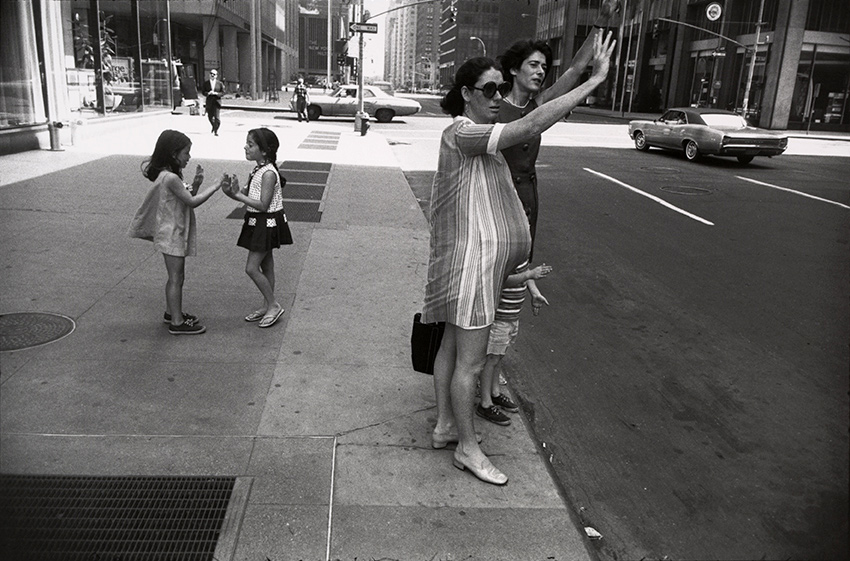
Garry Winogrand (American, 1928-1984) 'New York City' 1968


Garry Winogrand (American, 1928-1984)
New York City
1968
Gelatin silver print
8 7/8 x 13 3/16″ (22.5 x 33.5cm)
The Museum of Modern Art, New York
Purchase and gift of Barbara Schwartz in memory of Eugene M. Schwartz
© The Estate of Garry Winogrand, courtesy Fraenkel Gallery


Henri Cartier-Bresson (French, 1908-2004) 'Near the Hall of Records, New York' 1947


Henri Cartier-Bresson (French, 1908-2004)
Near the Hall of Records, New York
1947
Gelatin silver print
15 5/16 x 22 13/16″ (38.9 x 57.9cm)
The Museum of Modern Art, New York
Gift of the photographer
© 2012 Henri Cartier-Bresson/Magnum, courtesy Foundation HCB, Paris


Rudy Burckhardt (American born Switzerland, 1914-1999) 'A View From Brooklyn I' 1954


Rudy Burckhardt (American born Switzerland, 1914-1999)
A View From Brooklyn I
1954
Gelatin silver print
10 5/16 x 9 3/16″ (26.2 x 23.4cm)
The Museum of Modern Art, New York
Gift of CameraWorks, Inc. and Purchase
© 2012 Rudy Burckhardt / Artists Rights Society (ARS), New York


Rudy Burckhardt (1914, Basel – 1999) was a Swiss-American filmmaker, and photographer, known for his photographs of hand-painted billboards which began to dominate the American landscape in the nineteen-forties and fifties.

Burckhardt discovered photography as a medical student in London. He left medicine to pursue photography in the 1930s. He immigrated to New York City in 1935. Between 1934 and 1939, he traveled to Paris, New York and Haiti making photographs mostly of city streets and experimenting with short 16mm films. While stationed in Trinidad in the Signal Corps from 1941-1944, he filmed the island’s residents. In 1947, he joined the Photo League in New York City. Burckhardt married painter Yvonne Jacquette whom he collaborated with throughout their 40 year marriage. He taught filmmaking and painting at the University of Pennsylvania from 1967 to 1975.

On his 85th birthday, Burckhardt committed suicide by drowning in the lake on his property.

Text from the Wikipedia website


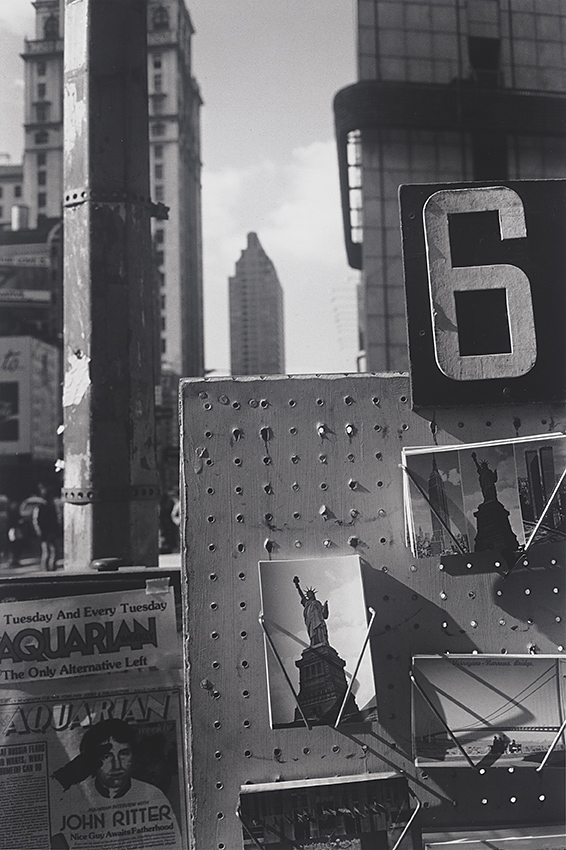
Rudy Burckhardt and Edwin Denby
The Climate of New York
1980


Trailer for Rudy Burckhardt Films from Tibor de Nagy Gallery on Vimeo.


Lee Friedlander (American, b. 1934) 'New York City' 1980


Lee Friedlander (American, b. 1934)
New York City
1980
Gelatin silver print
18 5/8 x 12 3/8″ (47.3 x 31.5cm)
The Museum of Modern Art, New York
The Family of Man Fund
© 2012 Lee Friedlander


Underwood and Underwood (American, active 1880-1934) 'Above Fifth Avenue, Looking North' 1905


Underwood and Underwood (American, active 1880-1934)
Above Fifth Avenue, Looking North
1905
Gelatin silver print
9 1/2 x 7 5/16″ (24.2 x 18.6cm)
The Museum of Modern Art, New York
The New York Times Collection


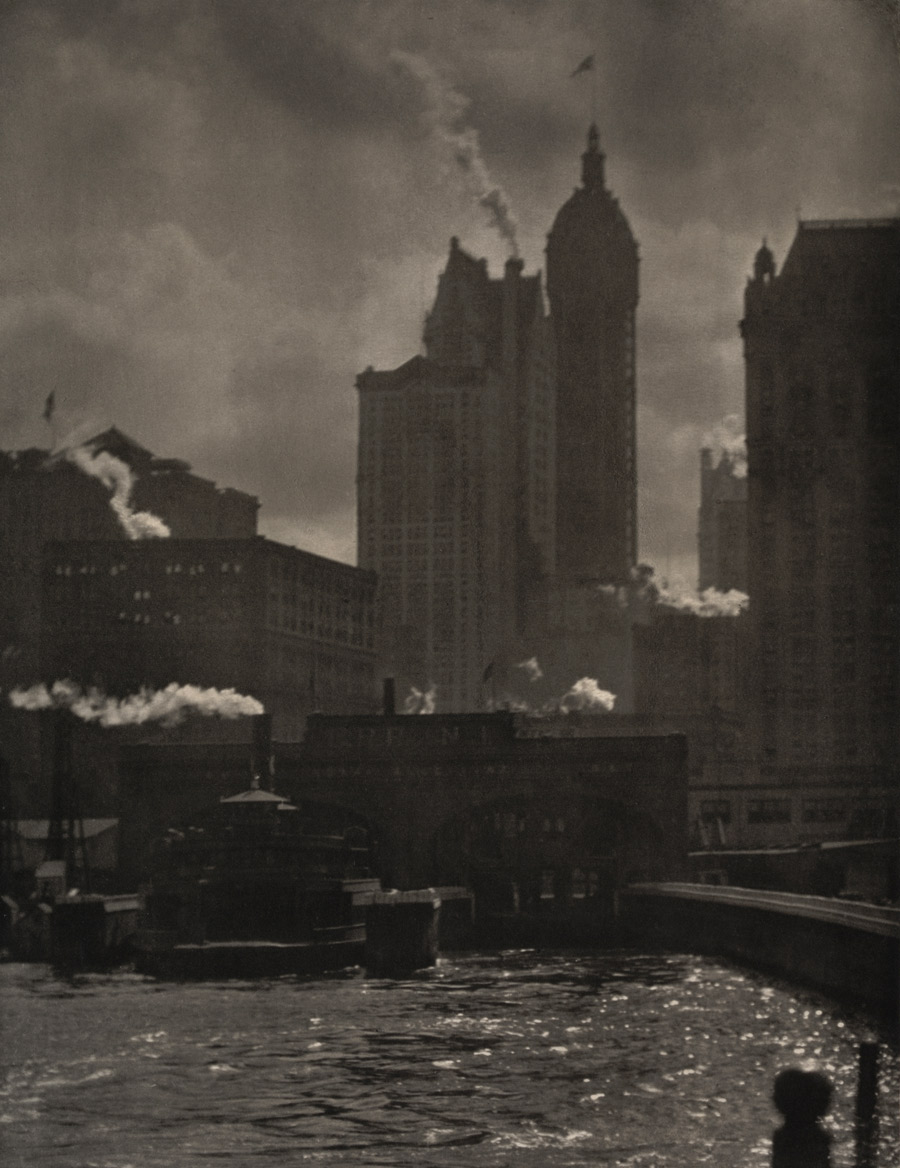
Alfred Stieglitz (American, 1864-1946) 'City of Ambition' 1910


Alfred Stieglitz (American, 1864-1946)
City of Ambition
1910
Photogravure
13 3/8 x 10 1/4″ (34 x 26.1cm)
The Museum of Modern Art, New York
© 2012 Estate of Alfred Stieglitz / Artists Rights Society (ARS), New York


Peter Hujar (American, 1934-1987) 'New York Series #22' 1976


Peter Hujar (American, 1934-1987)
New York Series #22
1976
Gelatin silver print
14 5/8 x 14 3/4″ (37.1 x 37.4cm)
The Museum of Modern Art, New York
Gift of the Estate of Peter Hujar and James Danziger Gallery, New York
© 2012 Peter Hujar Archive


Peter Hujar (October 11, 1934 – November 26, 1987) was an American photographer known for his black and white portraits. Born in Trenton, New Jersey, United States. Hujar later moved to Manhattan to work in the magazine, advertising, and fashion industries. His subjects also consisted of farm animals and nudes. His most famous photograph is Candy Darling on Her Deathbed which was later used by the group Antony and the Johnsons as cover for their album I Am a Bird Now. The one-time lover, friend and mentor of artist David Wojnarowicz, Hujar died of AIDS complications on November 26, 1987, aged 53.

See the more photographs on the Peter Hujar Archive website


Fairchild Aerial Surveys, Inc. 'The Mount Everest of Manhattan: The Silvered Peak of the Chrysler Building' 1930


Fairchild Aerial Surveys, Inc.
The Mount Everest of Manhattan: The Silvered Peak of the Chrysler Building
1930
Gelatin silver print
8 3/4 x 6 13/16″ (22.3 x 17.3cm)
The Museum of Modern Art, New York
The New York Times Collection


Walker Evans (American, 1903-1975) 'Girl in Fulton Street, New York 1929' 1929


Walker Evans (American, 1903-1975)
Girl in Fulton Street, New York 1929
1929
Gelatin silver print
7 1/2 x 4 5/8″ (19.1 x 11.7cm)
The Museum of Modern Art, New York
Gift of the photographer


Lewis W. Hine (American, 1874–1940) 'Italian Family Looking for Lost Baggage, Ellis Island, New York' 1905


Lewis W. Hine (American, 1874-1940)
Italian Family Looking for Lost Baggage, Ellis Island, New York
1905
Gelatin silver print
5 9/16 x 4 5/16″ (14.1 x 10.9cm)
The Museum of Modern Art, New York


Art Gallery of Western Australia
Perth Cultural Centre, James Street Mall, Perth

Opening hours:
Wednesday – Monday 10am – 5pm
Closed Tuesdays

AGWA website

LIKE ART BLART ON FACEBOOK

Back to top

Exhibition: ‘Gordon Parks: Centennial’ at Jenkins Johnson Gallery, San Francisco

Exhibition dates: 21st February – 27th April 2013


Gordon Parks (American, 1912-2006) 'Ondria Tanner and Her Grandmother Window-shopping, Mobile, Alabama' 1956


Gordon Parks (American, 1912-2006)
Ondria Tanner and Her Grandmother Window-shopping, Mobile, Alabama
1956
Edition 19 of 25
Pigment print
14 x 14 inches
Modern print
© The Gordon Parks Foundation


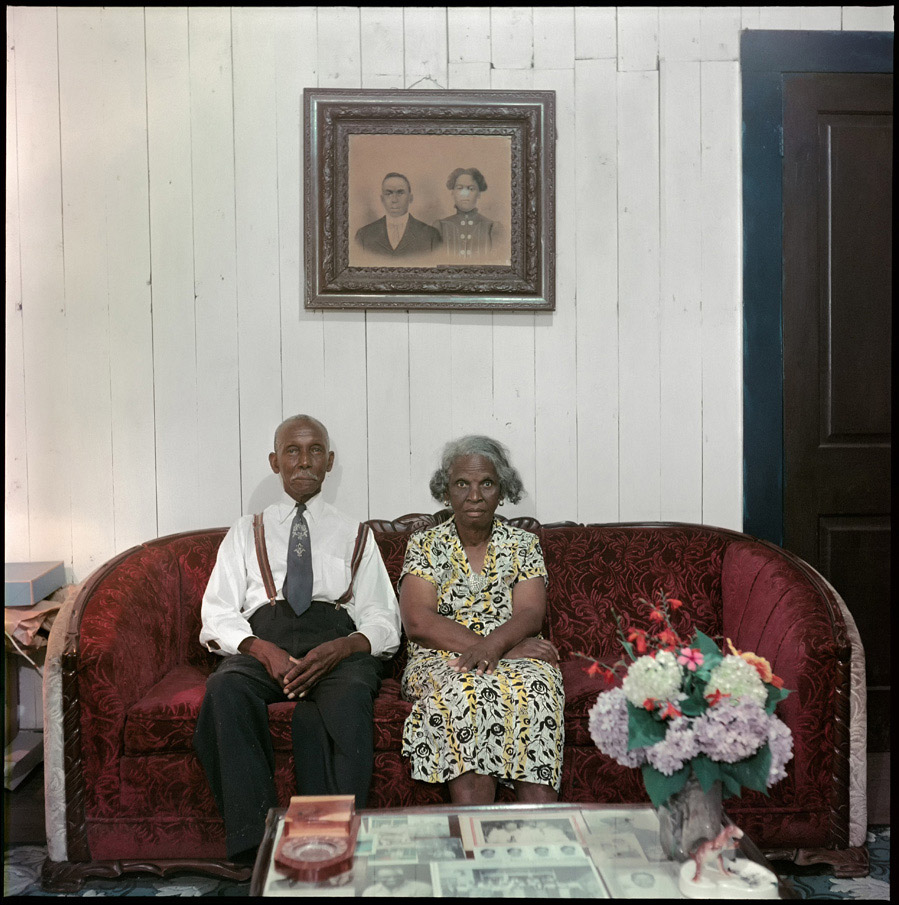
What an admirable photographer Gordon Parks was. It is a joy to see five of his colour photographs in this posting because I have never seen any before. They are glorious, complex compositions that ebb and flow like music whilst at the same time they are also damning indictments of the racially segregated society that was America in the 1950s (and still is today). Bitterness, discrimination and racism have deep roots in any country – just look at contemporary Australia. The little girl looks on in Ondria Tanner and Her Grandmother Window-shopping (1956, above), her left index finger bent upward on the pane of glass as the prettily dressed white, automaton mannequins march on, oblivious to her gaze; Mr. and Mrs. Albert Thornton, Mobile, Alabama  (1956, below) are surrounded by photographs, their pose mimicking that of their parents hanging behind them, while before them on the coffee table (under glass) are other, younger members of their extended family. Past, present and future coalesce in this one poignant image.

“Sensibility” is based on personal impressions of pleasure or pain. The sensibility of Parks photographs is a refined sensitivity based on experience – his experience of the discrimination of human beings toward each other. These hard-wired responses toward such a situation will vary from person to person.

These photographs were his hard-wired response. This was his feeling towards subject matter and that is why these insightful photographs still matter to us today.

Dr Marcus Bunyan


Many thankx to the Jenkins Johnson Gallery for allowing me to publish the photographs in the posting. Please click on the photographs for a larger version of the image.


Gordon Parks is the most important black photographer in the history of photojournalism. Long after the events that he photographed have been forgotten, his images will remain with us, testaments to the genius of his art, transcending time, place and subject matter.


Dr Henry Louis Gates


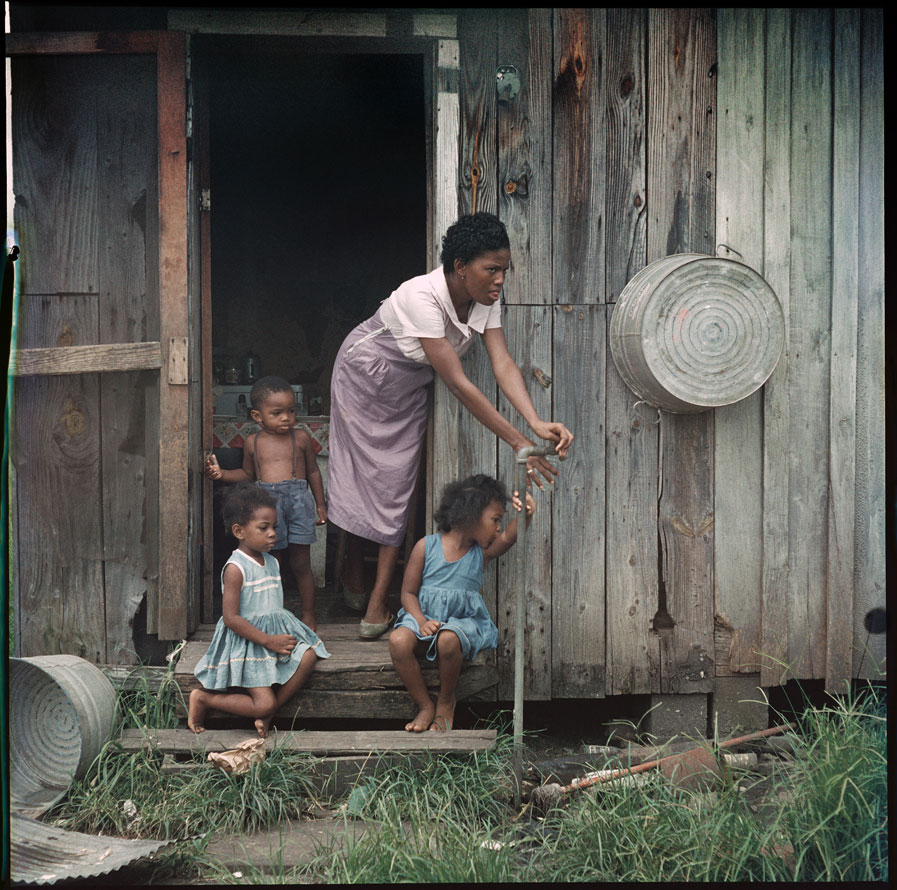
Gordon Parks (American, 1912-2006) 'At Segregated Drinking Fountain, Mobile, Alabama' 1956


Gordon Parks (American, 1912-2006)
At Segregated Drinking Fountain, Mobile, Alabama
1956
Edition 19 of 25
Pigment print
14 x 14 inches
Modern print
© The Gordon Parks Foundation


Gordon Parks (American, 1912-2006) 'Department Store, Mobile, Alabama' 1956


Gordon Parks (American, 1912-2006)
Department Store, Mobile, Alabama
1956
Edition 20 of 25
Pigment print
14 x 14 inches
Modern print
© The Gordon Parks Foundation


Gordon Parks (American, 1912-2006) 'Mother and Children, Mobile, Alabama' 1956


Gordon Parks (American, 1912-2006)
Mother and Children, Mobile, Alabama
1956
Edition 17 of 25
Pigment print
13 7/8 x 14 inches
Modern print
© The Gordon Parks Foundation


Gordon Parks (American, 1912-2006) 'Mr. and Mrs. Albert Thornton, Mobile, Alabama' 1956


Gordon Parks (American, 1912-2006)
Mr. and Mrs. Albert Thornton, Mobile, Alabama
1956
Edition 17 of 25
Pigment print
14 1/8 x 14 inches
Modern print
© The Gordon Parks Foundation


In celebration of the 100th birthday of Gordon Parks, one of the most influential African American photographers of the 20th century, Jenkins Johnson Gallery in collaboration with The Gordon Parks Foundation presents Gordon Parks: Centennial, on view from February 21 through April 27, 2013. Gordon Parks, an iconic photographer, writer, composer, and filmmaker, would have turned 100 on November 30, 2012. This will be the first solo exhibition for Parks on the West Coast in thirteen years. The exhibition will survey works spanning six decades of the artist’s career starting in 1940. The exhibition consists of more than seventy-five gelatin silver and pigment prints, including selections from Life magazine photo essays: Invisible Man, 1952; Segregation Story, 1956; The Black Panthers, 1970; and Flavio, 1960, about favelas in Brazil. Also included in the exhibition is his reinterpretation of American Gothic and his elegant depictions of artists like Alexander Calder, fashion models, and movie stars.

Noteworthy highlights include groundbreaking prints from the Invisible Man series which unfolds a visual narrative based on Ralph Ellison’s award winning novel. The images capture the essence of social isolation and the struggle of a black man who feels invisible to the outside world. Also on view will be a number of colour prints from Segregation Story, 1956, which are a part of a limited edition portfolio of twelve colour photographs with an essay by Maurice Berger. Newly released, these images were produced from transparencies found in early 2012, discovered in a storage box at The Gordon Parks Foundation. In the late 1960s Life magazine asked Gordon Parks to report on the Oakland, California-based Black Panther Party, including Eldridge Cleaver. Parks’ striking image of Eldridge Cleaver and His Wife, Kathleen, Algiers, Algeria, 1970 depicts Cleaver recovering from gun wounds after being ambushed by the Oakland police as well as an insert of Huey P. Newton, co-founder of the party along with Bobby Seale.

About Gordon Parks

Parks was born into poverty in Fort Scott, Kansas in 1912, the youngest of fifteen children. He worked several odd jobs until he bought a camera at a Pawn Shop in 1937 in Seattle and was hired to photograph fashion at a department store in Minneapolis. In 1942 Parks received a photography fellowship from the Farm Security Administration, succeeding Dorothea Lange among others. While at the F.S.A., Parks created American Gothic, now known as one of his signature images, in which he shows Ella Watson, a cleaning women, holding a mop and broom, standing in front of an American flag. The image makes a poignant commentary on social injustice whilst referencing Grant Wood’s celebrated painting American Gothic which it is also named after. He became a freelance photographer working for Vogue as well as publishing two books, Flash Photography (1947) and Camera Portraits: Techniques and Principles of Documentary Portraiture (1948). In 1948 Parks was hired by Life magazine to do a photographic essay on Harlem gang leader, Red Jackson, which led to a permanent position at Life, where he worked for twenty years. Parks developed his skills as a composer and author and in 1969 he became the first African American to direct a major motion picture, The Learning Tree based on his best selling novel and in 1971 he directed Shaft. A true Renaissance man, Gordon Parks passed away in 2006.

As Philip Brookman, curator of photography and media arts at the Corcoran, states, “Gordon Parks’ art has now changed the way we perceive and remember chronic issues, such as race, poverty, and crime, just as it has influenced our understanding of beauty: of nature, landscape, childhood, fashion, and memory.”

Press release from the Jenkins Johnson Gallery website


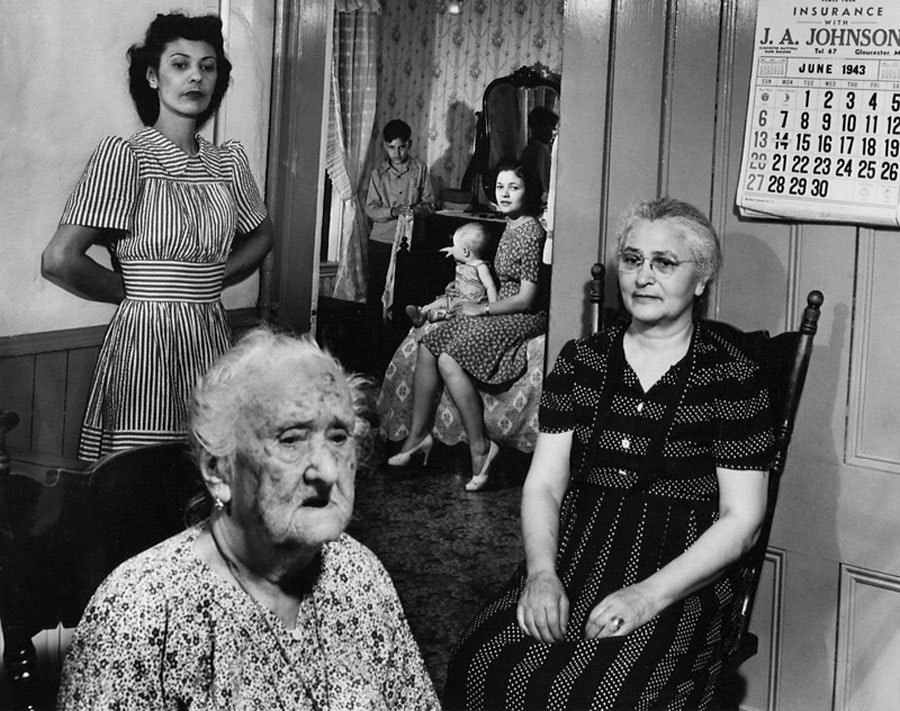
Gordon Parks (American, 1912-2006) 'Mary Machado, Mother of Isabell Lopez, and Family, Gloucester, Massachusetts' 1943


Gordon Parks (American, 1912-2006)
Mary Machado, Mother of Isabell Lopez, and Family, Gloucester, Massachusetts
1943
Gelatin silver print
© The Gordon Parks Foundation


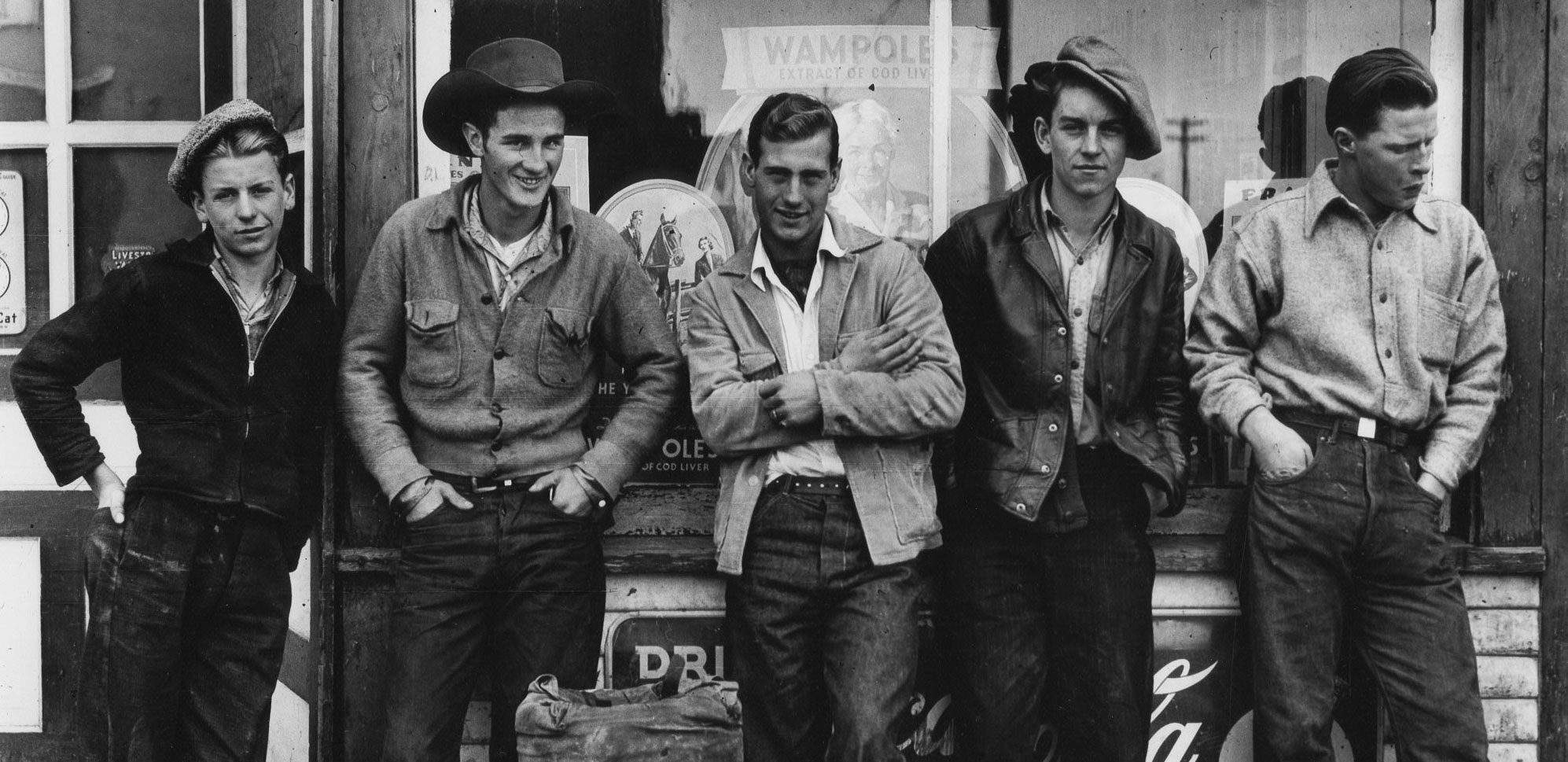
Gordon Parks (American, 1912-2006) 'Drugstore Cowboys, Turner Valley, Canada' 1945


Gordon Parks (American, 1912-2006)
Drugstore Cowboys, Turner Valley, Canada
1945
Gelatin silver print
9 7/8 x 12 7/8 inches
Modern print
© The Gordon Parks Foundation


Gordon Parks (American, 1912-2006) 'Untitled' 1950


Gordon Parks (American, 1912-2006)
Untitled
1950
Gelatin silver print
© The Gordon Parks Foundation


Gordon Parks (American, 1912-2006) 'Tenement Dwellers, Chicago, Illinois' 1950


Gordon Parks (American, 1912-2006)
Tenement Dwellers, Chicago, Illinois
1950
Gelatin silver print
7 x 9 inches
Modern print
© The Gordon Parks Foundation


Gordon Parks (American, 1912-2006) 'Mysticism, Harlem, New York' 1952


Gordon Parks (American, 1912-2006)
Mysticism, Harlem, New York
1952
Gelatin silver print
10 5/8 x 10 3/8 inches
Vintage print
© The Gordon Parks Foundation


Gordon Parks (American, 1912-2006) 'Harlem Neighborhood, Harlem, New York' 1952


Gordon Parks (American, 1912-2006)
Harlem Neighborhood, Harlem, New York
1952
Gelatin silver print
10 3/8 x 13 1/2 inches
Vintage print
© The Gordon Parks Foundation


Gordon Parks (American, 1912-2006) 'The Invisible Man, Harlem, New York' 1952


Gordon Parks (American, 1912-2006)
The Invisible Man, Harlem, New York
1952
Edition 1 of 10
Pigment print
14 1/8 x 14 inches
Modern print
© The Gordon Parks Foundation


Gordon Parks (American, 1912-2006) 'Muhammad Ali' 1966


Gordon Parks (American, 1912-2006)
Muhammad Ali
1966
Gelatin silver print
© The Gordon Parks Foundation


Gordon Parks (American, 1912-2006) 'Ellen's Feet, Harlem, New York' 1967


Gordon Parks (American, 1912-2006)
Ellen’s Feet, Harlem, New York
1967
Gelatin silver print
6 1/4 x 9 3/8 inches
Modern print
© The Gordon Parks Foundation


Gordon Parks (American, 1912-2006) 'Norman Fontenelle, Sr., Harlem, New York' 1967


Gordon Parks (American, 1912-2006)
Norman Fontenelle, Sr., Harlem, New York
1967
Gelatin silver print
13 x 9 1/8 inches
Modern print
© The Gordon Parks Foundation


Gordon Parks (American, 1912-2006) 'Bessie and Little Richard the Morning After She Scalded Her Husband, Harlem, New York, 1968' 1968


Gordon Parks (American, 1912-2006)
Bessie and Little Richard the Morning After She Scalded Her Husband, Harlem, New York, 1968
1968
Gelatin silver print
© The Gordon Parks Foundation


Jenkins Johnson Gallery
1275 Minnesota Street, #200
San Francisco, CA 94107
Phone: 415.677.0770

Opening hours:
Tuesday – Saturday 11am – 5pm

Jenkins Johnson Gallery website

LIKE ART BLART ON FACEBOOK

Back to top

Exhibition: ‘Lewis Hine: Photography for a Change’ at the Netherlands Museum of Photography, Rotterdam

Exhibition dates: 15th September – 6th January 2013


Lewis Hine
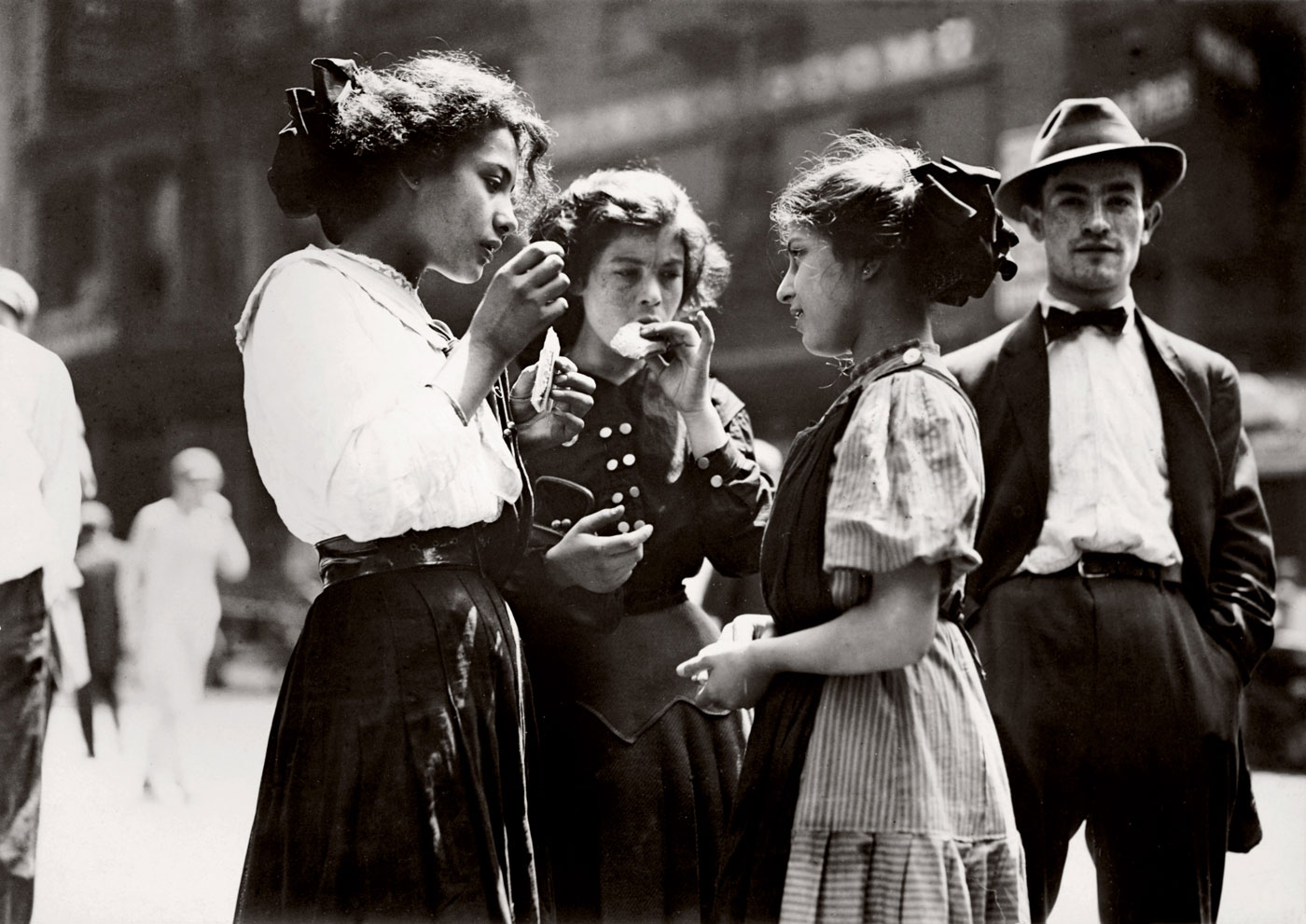
 (American, 1874-1940) 'Lunch Time, New York' 1910


Lewis Hine
 (American, 1874-1940)
Lunch Time, New York
1910
Gelatin silver print
© George Eastman House


“In the last analysis, good photography is a question of art.”

“I wanted to show the thing that had to be corrected: I wanted to show the things that had to be appreciated.”


Lewis Wickes Hines


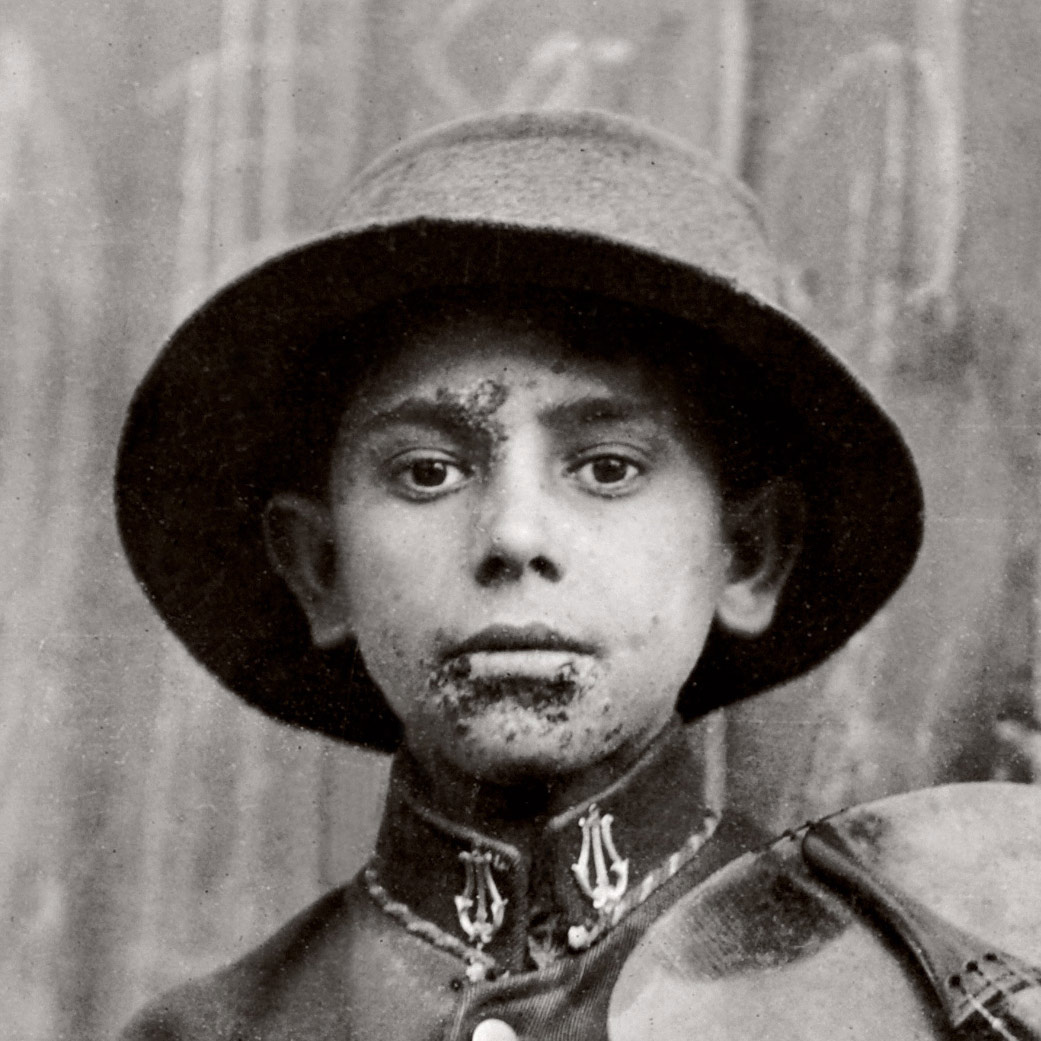
Something that you really don’t get in reproductions is the absolutely beautiful tonality of Hine’s social documentary photography. Even less so when the images provided by the institution are degraded by scratches, dust, spots and colour irregularities. Despite these media images being 300 dpi when I received them from the museum media department they were in very average condition. For example, the image of Christmas Fiddles (below) was in such poor condition when enlarged that I had to spend over half and hour cleaning up the image to make it pictorially legible to the viewer at a larger size.

This is not an unusual occurrence and, unbeknownst to the readers of the archive, I spend many hours quickly cleaning the digital files before they are presented to you. Some individual images and sets of images are of such poor quality that I simply cannot use them at all. I will do a posting on this issue soon, but suffice to say that museums that spend thousands of hours and dollars staging impressive photographic exhibitions really let themselves down in the promotion of the exhibition if they provide dodgy scans and unusable media images to people that promote the exhibition for free. In this world of media saturated images it should be the norm that the “quality” of the image outweighs the indifferent quantity. With faster and faster download speeds larger images can be viewed more readily online and therefore scans provided by institutions must live up to this enlarged capacity.

Hopefully you can get some idea of the work of this socially conscious photographer, an American photographer who saw the camera as both a research tool and an instrument of social reform, whose images helped change the world with regard to child labour. Unfortunately success and reputation counted for nought. He died totally impoverished in 1940, shortly before a resurgence of public interest in his work raised him to the highest level of American photographers. What an infinite sadness.

Dr Marcus Bunyan


Many thankx to the Netherlands Museum of Photography for allowing me to publish the photographs in the posting. Please click on the photographs for a larger version of the image.


Installation view of the exhibition 'Lewis Hine: Photography for a Change' at the Netherlands Museum of Photography, Rotterdam 


Installation view of the exhibition Lewis Hine: Photography for a Change at the Netherlands Museum of Photography, Rotterdam


Lewis Hine
 (American, 1874-1940) 'Belgrade. Christmas Fiddles' 1918


Lewis Hine
 (American, 1874-1940)
Belgrade. Christmas Fiddles
1918
Gelatin silver print
© George Eastman House


Lewis Hine
 (American, 1874-1940) 'Belgrade. Christmas Fiddles' 1918 (detail)


Lewis Hine
 (American, 1874-1940)
Belgrade. Christmas Fiddles (detail)
1918
Gelatin silver print
© George Eastman House


Lewis Hine
 (American, 1874-1940) 'Construction workers, Empire State Building, NYC' 1930-1931


Lewis Hine
 (American, 1874-1940)
Construction workers, Empire State Building, NYC
1930-1931
Gelatin silver print
© George Eastman House


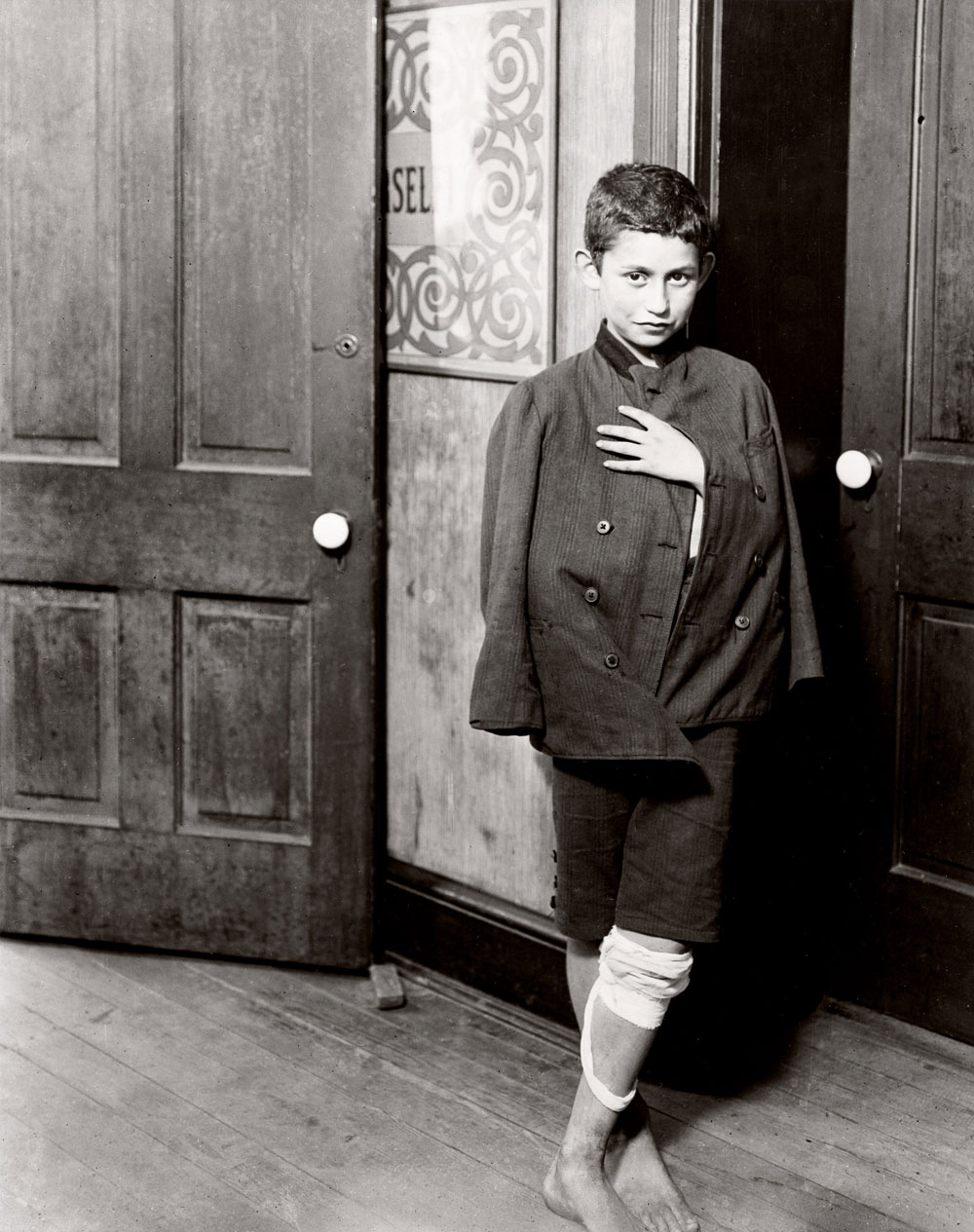
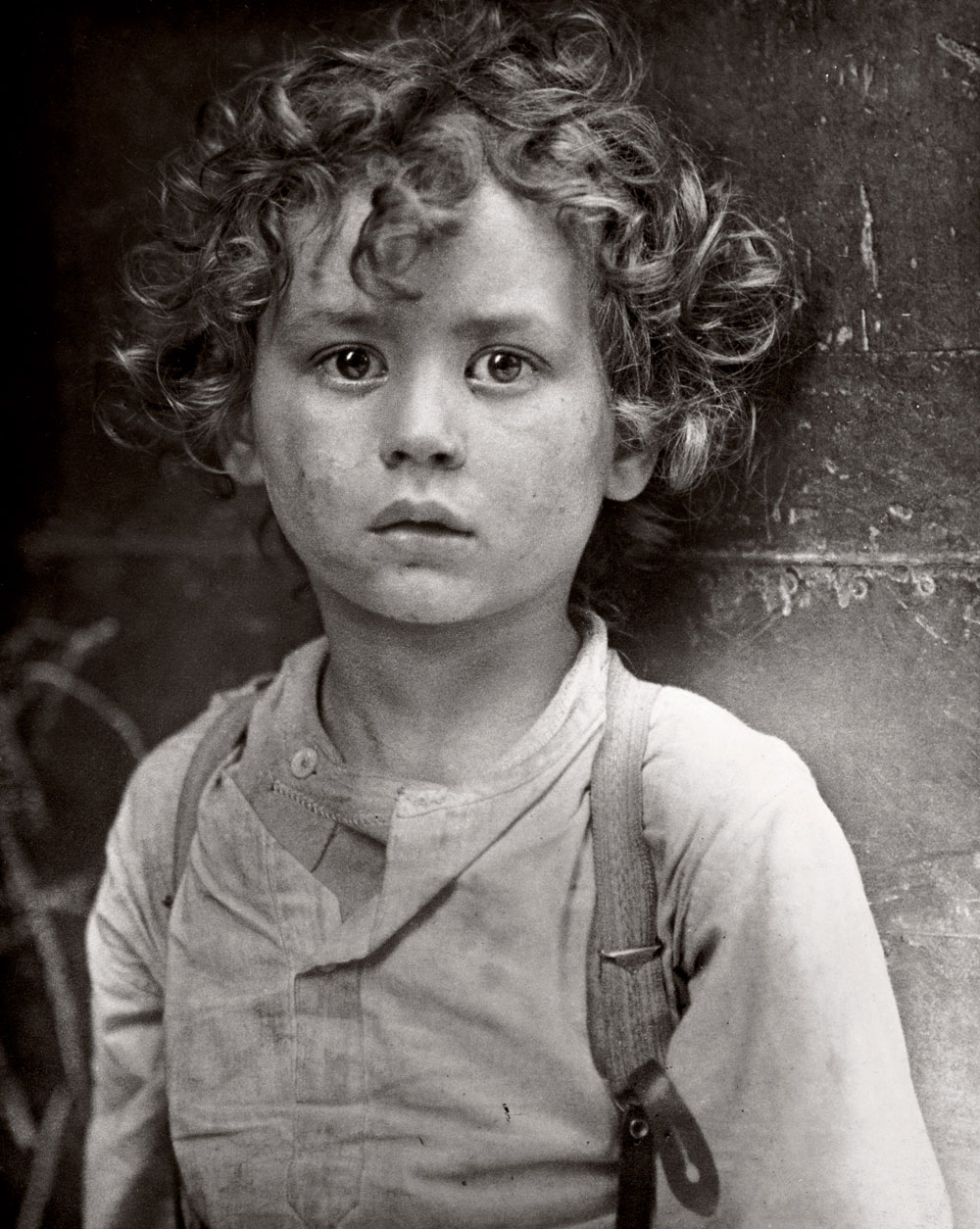
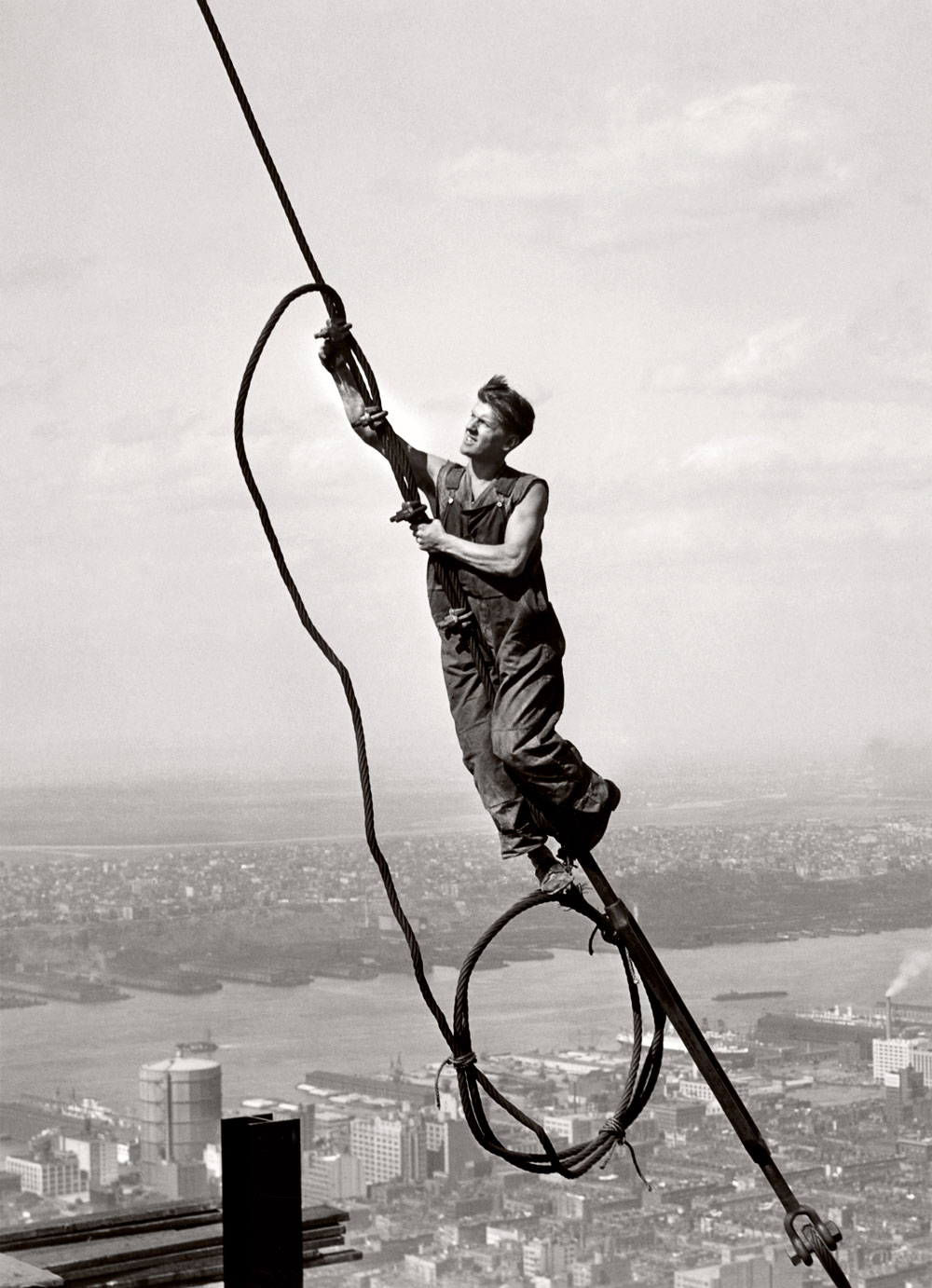
From 15 September 2012 to 6 January 2013, the Netherlands Museum of Photography will present the first large retrospective in the Netherlands of the work of the renowned American photographer Lewis Hine. Hine was an enthusiastic photographer who wished to improve people’s lives through his photos. His pictures of immigrants on Ellis Island, of child labour, and of workers busy on the Empire State Building high above New York belong to the visual icons of the 20th century. The internationally touring exhibition contains more than 200 photos and documents, many in their original state and originating from the collection of the George Eastman House in Rochester, New York State. Lewis Hine is an initiative of three European institutions: Fondation Henri Cartier-Bresson (Paris), Fundación MAPFRE (Madrid) and the Netherlands Museum of Photography (Rotterdam). It is with great pride that the Netherlands Museum of Photography can now present this exhibition that harmonises perfectly with its aim to pay attention to the canon of international documentary photography.

Lewis W. Hine (Wisconsin, 1874 – New York, 1940), a sociologist and photographer, belongs to the group of famous photographers such as Joel Meyerowitz, Robert Frank, Robert Capa, Eugène Atget to whom the Netherlands Museum of Photography has previously devoted impressive exhibitions. Hine is known as a 20th-century pioneer of social documentary photography. It is characteristic of Hine that he strongly believed in the camera’s powers of conviction. Thus, armed only with a heavy camera he fought for social justice. For the National Child Labor Committee he travelled more than 75,000 kilometres through the United States to photograph children working in agriculture, the mines, factories, sewing attics, and on the streets. His photos were partly responsible for reforms in these fields. The themes in Hine’s work – child labour, situations of human indignity, and the vulnerability of immigrants and refugees – are still current. Despite his present reputation, his early successes and the fact that many governmental organisations made use of his photos, he died totally impoverished in 1940.

Empire State Building and Building the Rotterdam

In 1932 Lewis Hine published the famous photographic book entitled Men at Work, which covered the construction of the Empire State Building. From the most audacious vantage points he took photos of the 381-metre building, showing the strength and willpower of humankind, man’s contribution to industry. The tall buildings on the Wilhelminapier have determined the skyline of Rotterdam for many years, just as the Empire State Building did in New York around 1930. The Wilhelminapier is now under full development. De Rotterdam Building, designed by Rem Koolhaas of OMA (Office for Metropolitan Architectural) will be completed in 2013-2014. The photographer Ruud Sies has followed the genesis of the largest building in the Netherlands for four years now. The project entitled Building the Rotterdam – a work in progress by Ruud Sies was inspired by the work of Lewis Hine and establishes the connection with the Wilhelminapier as a historical location. To the Netherlands Museum of Photography, this is a reason to include this project in the exhibition of the work of Lewis Hine.

Exhibition

With 170 vintage photos from the period 1903-1937 as well as 42 documents, this exhibition of Hine’s work is the first extensive and well-documented overview in the Netherlands and even in Europe. Hine’s entire oeuvre is on show, ranging from his earliest portraits of immigrants on Ellis Island to his work in Europe after the First World War. The Lewis Hine touring exhibition was on display in Paris toward the end of 2011, and in Madrid at the beginning of this year. For this international journey, Hine’s work has undergone preventative preservation treatment and is exposed to a minimum amount of light. After the exhibition in the Netherlands, the work will return to the George Eastman House in America to relax in a dark depot.”

Press release from the Netherlands Museum of Photography website


Lewis Hine
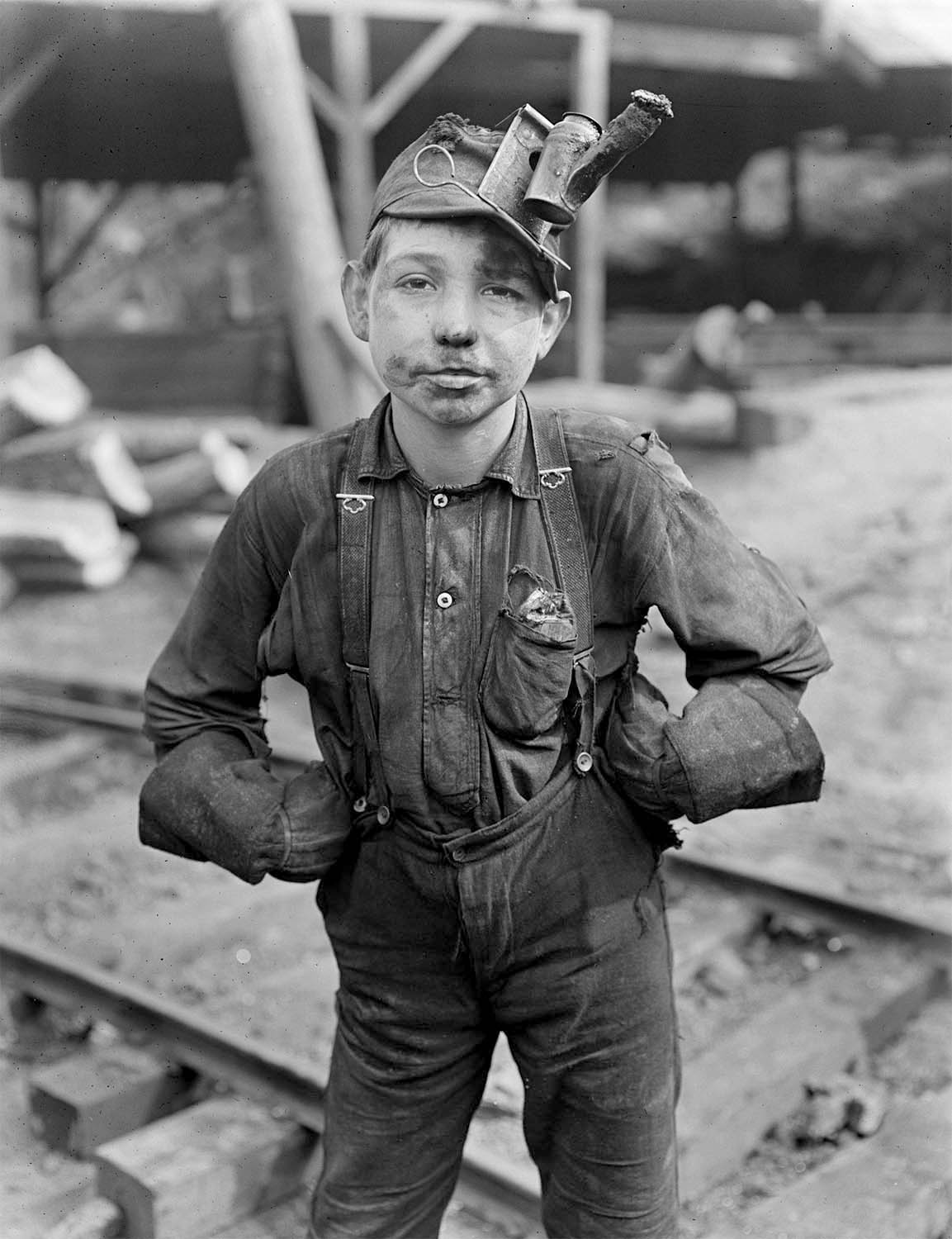
 (American, 1874-1940) 'Coal mine worker in West Virginia. Eleven year old boy. Tipple boy at the Turkey Knob coal mine in Macdonald, West Virginia' 1908


Lewis Hine
 (American, 1874-1940)
Coal mine worker in West Virginia. Eleven year old boy
Tipple boy at the Turkey Knob coal mine in Macdonald, West Virginia
1908
Gelatin silver print
© George Eastman House


Lewis Hine
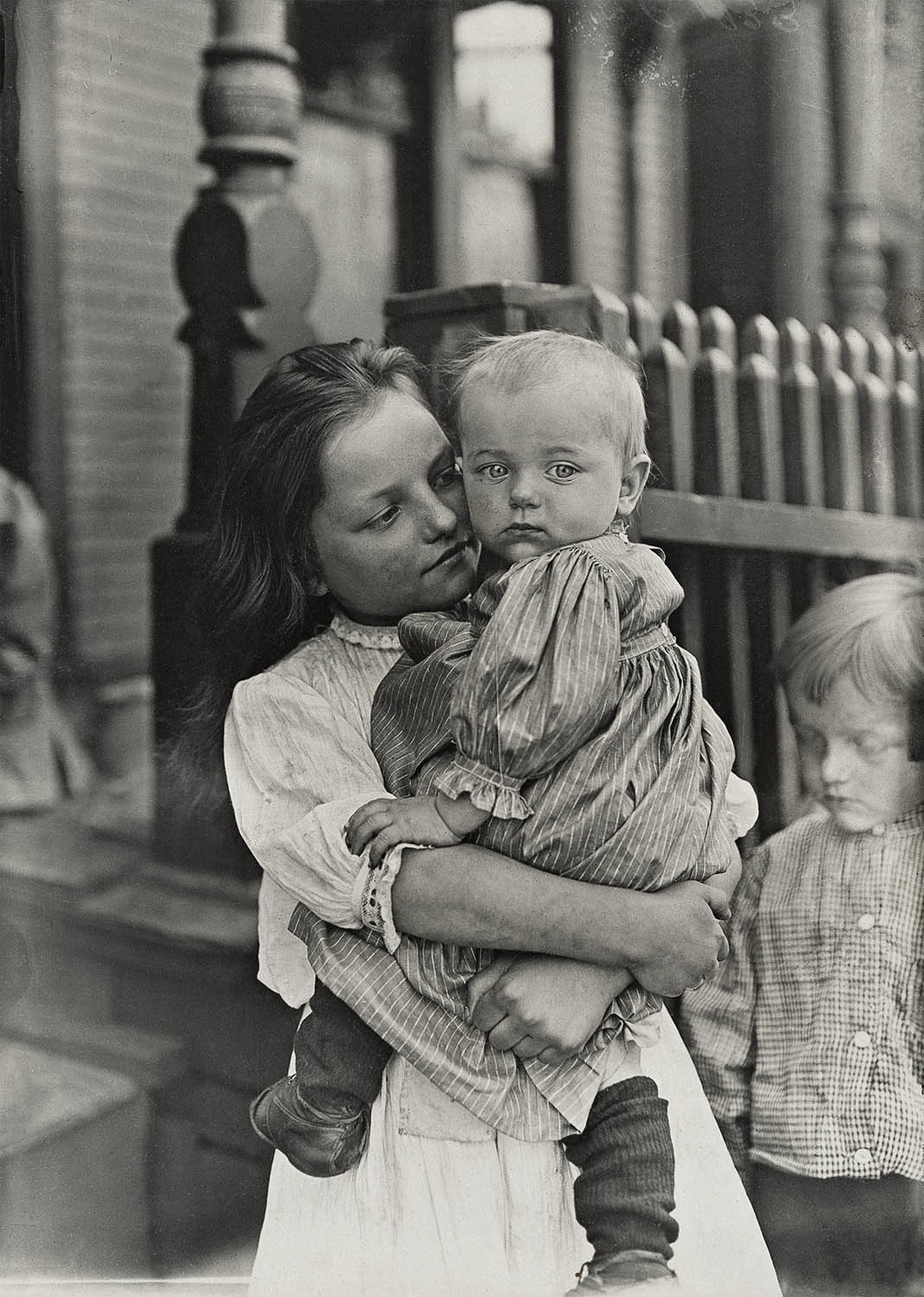
 (American, 1874-1940) 'Little Mother, Pittsburgh District' 1909


Lewis Hine
 (American, 1874-1940)
Little Mother, Pittsburgh District
1909
Gelatin silver print
© George Eastman House


Anonymous photographer (American) 'Lewis Hine photographing children in a slum' 1910


Anonymous photographer (American)
Lewis Hine photographing children in a slum
1910
© George Eastman House


Lewis Hine
 (American, 1874-1940) 'Waiting for the dispensary to open Hull House District, Chicago' 1910


Lewis Hine
 (American, 1874-1940)
Waiting for the dispensary to open Hull House District, Chicago
1910
Gelatin silver print
© George Eastman House


Lewis Hine was born in Oshkosh, Wisconsin, in 1874. He moved to New York City in 1901 to teach at the Ethical Culture School. There Hine used photographs as educational tools, and soon began to photograph immigrants at Ellis Island. He hoped his photographs would encourage people to “exert the force to right wrongs.” While continuing to teach at ECS, Hine began to do freelance work for the National Child Labor Committee, an association that transformed his professional life.

In 1908, the NCLC provided Hine a monthly salary to photographically document children in factories, mills, canneries, textile mills, street trades, and agricultural industries. Through his photographs he sought to alert the public to the extent of child labor in America, and the degree to which it denied these children their childhood, health, and education. In one year, Hine covered 12,000 miles in his quest to end abusive child labor. By 1913, Hine was considered the leading social welfare photographer in America.

Hine enjoyed a long and successful career following his work for the NCLC. He worked for the American Red Cross (1917-1920), photographing refugees and civilians in war-torn Europe, a new series of photographs of immigrants at Ellis Island (1926), a series of photographs documenting the construction of the Empire State Building (1930), photographs of drought-ridden communities in Arkansas and Kentucky (1931), as well as work for the Tennessee Valley Authority.

In 1936-1937 Hine was appointed head photographer for the National Research Project of the Works Progress Administration. The ageing Hine, however, was disappointed at the rebuff of his attempts to secure work with the Farm Services Administration, where director Roy Stryker considered Hine old fashioned and difficult. Lewis Hine died in 1940, shortly before a resurgence of public interest in his work raised him to the highest level of American photographers.

Text from Child Labour in Virginia: Photographs by Lewis Hine web page [Online] Cited 21/12/2012 no longer available online


Lewis Hine
 (American, 1874-1940) 'Paris Gamin' 1918


Lewis Hine
 (American, 1874-1940)
Paris Gamin
1918
Gelatin silver print
© George Eastman House


Lewis Hine
 (American, 1874-1940) 'Mechanic at steam pump in electric power house' 1920


Lewis Hine
 (American, 1874-1940)
Mechanic at steam pump in electric power house
1920
Gelatin silver print
© George Eastman House


Lewis Hine
 (American, 1874-1940) 'Candy Worker, New York' 1925


Lewis Hine
 (American, 1874-1940)
Candy Worker, New York
1925
Gelatin silver print
© George Eastman House


Lewis Hine
 (American, 1874-1940) 'Man on hoisting ball, Empire State building' 1931


Lewis Hine
 (American, 1874-1940)
Man on hoisting ball, Empire State building
1931
Gelatin silver print
© George Eastman House


Lewis Hine
 (American, 1874-1940) 'Steelworker standing on beam' 1931


Lewis Hine
 (American, 1874-1940)
Steelworker standing on beam
1931
Gelatin silver print
© George Eastman House


Lewis Hine
 (American, 1874-1940) 'The Sky Boy' 1931


Lewis Hine
 (American, 1874-1940)
The Sky Boy
1931
Gelatin silver print
© George Eastman House


Netherlands Museum of Photography
Wilhelminakade 332
3072 AR Rotterdam
The Netherlands

Opening hours
Tuesday – Sunday 11am – 5pm
Closed Mondays

Nederlands Museum of Photography website

LIKE ART BLART ON FACEBOOK

Back to top

Exhibition: ‘Edward Weston. Leaves of Grass’ at Museum of Fine Arts, Boston

Exhibition dates: 21st April 2012 – 31st December 2012


Edward Weston (American, 1886-1958) 'Grand Canyon, Arizona' 1941


Edward Weston (American, 1886-1958)
Grand Canyon, Arizona
1941
Gelatin silver print
The Lane Collection
Courtesy, Museum of Fine Arts, Boston


“Not I, nor anyone else can travel that road for you,
You must travel it for yourself.

It is not far, It is within reach,
Perhaps you have been on it since you were born, and did not know,
Perhaps it is every where on water and land.”


Walt Whitman. Part of Song of Myself from Leaves of Grass. 1855


Very little information about this exhibition on the website which is a pity because the photographs are exceptional, even if some do recall the style of other artists of the same era (Charles Sheeler, Berenice Abbott, Ansel Adams, Clarence John Laughlin, and Walker Evans for example).

In 1941, “Weston was commissioned to take photographs for a pricey two-volume edition of “Leaves of Grass.” So over the course of nearly 10 months, Weston and his wife, Charis, drove more than 24,000 miles, through 24 states. Of the nearly 700 photographs he developed, he sent 74 to the publisher. Forty-nine appeared in the book.” (Mark Feney) “Over the course of the project Weston managed to produce some of the most compelling images of his later career that took his photography in a new and important direction. Like Whitman’s epic poems, they draw us into the history of this nation, the beauty of its landscape and the forthrightness of its ordinary citizens.” (Encore)

“Leaves of Grass has its genesis in an essay called The Poet by Ralph Waldo Emerson, published in 1845, which expressed the need for the United States to have its own new and unique poet to write about the new country’s virtues and vices. Whitman, reading the essay, consciously set out to answer Emerson’s call as he began work on the first edition of Leaves of Grass. Whitman, however, downplayed Emerson’s influence, stating, “I was simmering, simmering, simmering; Emerson brought me to a boil.”

The first edition was published in Brooklyn at the Fulton Street printing shop of two Scottish immigrants, James and Andrew Rome, whom Whitman had known since the 1840s, on July 4, 1855. Whitman paid for and did much of the typesetting for the first edition himself. Sales on the book were few but Whitman was not discouraged. The first edition was very small, collecting only twelve unnamed poems in 95 pages. Whitman once said he intended the book to be small enough to be carried in a pocket. “That would tend to induce people to take me along with them and read me in the open air: I am nearly always successful with the reader in the open air.” About 800 were printed, though only 200 were bound in its trademark green cloth cover.

The title Leaves of Grass was a pun. “Grass” was a term given by publishers to works of minor value and “leaves” is another name for the pages on which they were printed. Whitman sent a copy of the first edition of Leaves of Grass to Emerson, the man who had inspired its creation. In a letter to Whitman, Emerson said “I find it the most extraordinary piece of wit and wisdom America has yet contributed.” He went on, “I am very happy in reading it, as great power makes us happy.”” (Amazon website)

Dr Marcus Bunyan


Many thankx to the Museum of Fine Arts, Boston for allowing me to publish the photographs in the posting. Please click on the photographs for a larger version of the image.


Edward Weston (American, 1886-1958) 'Boulder Dam' 1941


Edward Weston (American, 1886-1958)
Boulder Dam
1941
Gelatin silver print
The Lane Collection
Courtesy, Museum of Fine Arts, Boston


Edward Weston (American, 1886-1958) 'The Brooklyn Bridge' 1941


Edward Weston (American, 1886-1958)
The Brooklyn Bridge
1941
The Lane Collection
Courtesy, Museum of Fine Arts, Boston


Edward Weston (American, 1886-1958) 'From 515 Madison Avenue, New York' 1941


Edward Weston (American, 1886-1958)
From 515 Madison Avenue, New York
1941
Gelatin silver print
The Lane Collection
Courtesy, Museum of Fine Arts, Boston


Edward Weston (United States, 1886-1958) 'Schooner, Kennebunkport, Maine' 1941


Edward Weston (American, 1886-1958)
Schooner, Kennebunkport, Maine
1941
Gelatin silver print
Courtesy of the Museum of Fine Arts, Boston


Edward Weston (United States, 1886-1958) 'Wedding Cake House, Kennebunkport, Maine' 1941


Edward Weston (American, 1886-1958)
Wedding Cake House, Kennebunkport, Maine
1941
Gelatin silver print
Courtesy of the Museum of Fine Arts, Boston


Edward Weston (American, 1886-1958) 'Shenandoah Valley, Virginia' 1941


Edward Weston (American, 1886-1958)

Shenandoah Valley, Virginia
1941
Gelatin silver print
The Lane Collection
Courtesy, Museum of Fine Arts, Boston


Edward Weston (American, 1886-1958) 'Mammy’s Cupboard, Natchez, Mississippi' 1941


Edward Weston (American, 1886-1958)
Mammy’s Cupboard, Natchez, Mississippi
1941
Gelatin silver print
The Lane Collection
Courtesy, Museum of Fine Arts, Boston


Edward Weston (American, 1886-1958) 'Gulf Oil, Port Arthur, Texas' 1941


Edward Weston (American, 1886-1958)
Gulf Oil, Port Arthur, Texas
1941
Gelatin silver print
The Lane Collection
Courtesy, Museum of Fine Arts, Boston


Edward Weston (American, 1886-1958) 'White Sands, New Mexico' 1941


Edward Weston (American, 1886-1958)
White Sands, New Mexico
1941
Gelatin silver print
The Lane Collection
Courtesy, Museum of Fine Arts, Boston


Edward Weston (American, 1886-1958) 'Woodlawn Plantation House, Louisiana' 1941


Edward Weston (American, 1886-1958)
Woodlawn Plantation House, Louisiana
1941
Photograph, gelatin silver print
The Lane Collection
Courtesy, Museum of Fine Arts, Boston


In 1941, the Limited Editions Club of New York invited photographer Edward Weston to illustrate its deluxe edition of Walt Whitman’s epic poem Leaves of Grass. The commission inspired Weston and his wife, Charis, to take a cross-country trip, throughout the South, the Mid-Atlantic states, New England, and back to California, in their trusty Ford, which they nicknamed “Walt.” Weston’s photographs from this project – mostly made with large, 8 x 10 camera – are exceptionally wide-ranging, with a particular focus on urban and man-altered landscapes. Although he never wanted his images to literally reflect Whitman’s text, Weston did relate to the poet’s plainspoken style and his emphasis on the broad spectrum of human experience. Weston wrote of the Whitman book: “I do believe… I can and will do the best work of my life. Of course I will never please everyone with my America – wouldn’t try to.

Text from the MFA Boston website


Edward Weston (American, 1886-1958) 'Girod Cemetery, New Orleans, Louisiana' 1941


Edward Weston (American, 1886-1958)
Girod Cemetery, New Orleans, Louisiana
1941
Gelatin silver print
The Lane Collection
Courtesy, Museum of Fine Arts, Boston


Edward Weston (American, 1886-1958) 'Meraux Plantation House, Louisiana' 1941


Edward Weston (American, 1886-1958)
Meraux Plantation House, Louisiana
1941
Gelatin silver print
The Lane Collection
Courtesy, Museum of Fine Arts, Boston


Edward Weston (American, 1886-1958) 'Belle Grove Plantation House, Louisiana' 1941


Edward Weston (American, 1886-1958)
Belle Grove Plantation House, Louisiana
1941
Gelatin silver print
The Lane Collection
Courtesy, Museum of Fine Arts, Boston


Edward Weston (American, 1886-1958) 'Bessie Jones. St. Simons Island, Georgia' 1941


Edward Weston (American, 1886-1958)
Bessie Jones. St. Simons Island, Georgia
1941
Gelatin silver print
The Lane Collection
Courtesy, Museum of Fine Arts, Boston


Edward Weston (American, 1886-1958) 'Mr. and Mrs. W. P. Fry, Burnet, Texas' 1941


Edward Weston (American, 1886-1958)
Mr. and Mrs. W. P. Fry, Burnet, Texas
1941
Gelatin silver print
The Lane Collection
Courtesy, Museum of Fine Arts, Boston


Part of Walt Whitman 'Song of Myself' from 'Leaves of Grass' 1855


Walt Whitman (American, 1819-1892)
Part of Song of Myself
from Leaves of Grass
1855


Edward Weston (American, 1886-1958) 'Mr. Brown Jones, Athens, Georgia' 1941


Edward Weston (American, 1886-1958)
Mr. Brown Jones, Athens, Georgia
1941
Gelatin silver print
The Lane Collection
Courtesy, Museum of Fine Arts, Boston


Edward Weston (American, 1886-1958) 'Charis Wilson' 1941


Edward Weston (American, 1886-1958)
Charis Wilson
1941
Photograph, gelatin silver print
The Lane Collection
Courtesy, Museum of Fine Arts, Boston


Museum of Fine Arts, Boston
Avenue of the Arts
465 Huntington Avenue
Boston, Massachusetts

Opening hours:
Wednesday – Sunday 10am – 5pm
Closed Mondays and Tuesdays

Museum of Fine Arts, Boston website

LIKE ART BLART ON FACEBOOK

Back to top

Exhibition: ‘George Bellows’ at the National Gallery of Art, Washington

Exhibition dates: 10th June – 8th October 2012


George Bellows (American, 1882-1925 'Stag at Sharkey's' 1909


George Bellows (American, 1882-1925)
Stag at Sharkey’s
1909
Oil on canvas
92 x 122.6cm (36 1/4 x 48 1/4 in.)
The Cleveland Museum of Art, Hinman B. Hurlbut Collection


What a joy it is to be able to post this work!

Bellows is one of my favourite artists. The energy and vigour of his work is outstanding, whether it be crashing waves on a rocky shore, the straining musculature of the male body in the boxing paintings and drawings or the more subtle renditions of colour and atmosphere in his portraits and cityscapes. There are hints of the darkness of Goya (especially in the painting The Barricade, 1918 / Francisco Goya, The Third of May 1808, 1814), the frontality of the portraits of Bronzino (with an added air of vulnerability) and, towards the end of his life, portends of what might have been had he lived – the simplification of line, form and colour in works such as Dempsey and Firpo (1924, below), reminiscent of, but distinct from, the work of his friend Edward Hopper.

Bellows use of colour, light and form is extra ordinary. His use of chiaroscuro is infused with colour and movement, the volume of his modelling of the subjects depicted transcending their impressionistic base. The “shading” of his work is as much psychological as physical: the looming darkness of the buildings in Pennsylvania Station Excavation (1909, below), the churning foam of the desolate sea shore or the pensive look of Emma in the Purple Dress (1919, below). His understanding of the construction of the picture plane is exemplary. Note the use of diagonals and horizontals used in the construction of most of his paintings and drawings, especially the upraised hands, extended feet in his boxing portraits.

One can only wonder what this incredible artist would have achieved had he lived into the 1960s like his friend Edward Hopper. For me he remains an absolute hero of mine. From the first time I ever saw his work (and I have only ever seen it in reproduction, imagine seeing it in the flesh!) I fell in love with his sensibility, his love of the world and the people in it. I cannot explain it more fundamentally than that. A love affair where his work touched my heart and that, really, is the greatest compliment that you can give an artist. That their art moves you.

Dr Marcus Bunyan


Many thankx to the National Gallery of Art, Washington for allowing me to publish the reproductions of the paintings in this posting. Please click on the photographs for a larger version of the image.


George Bellows (American, 1882-1925) 'Both Members of This Club' 1909


George Bellows (American, 1882-1925)
Both Members of This Club
1909
Oil on canvas
133 x 177.8cm (52 3/8 x 70 in.)
National Gallery of Art, Washington, Chester Dale Collection


George Bellows (American, 1882-1925) 'The White Hope' 1921


George Bellows (American, 1882-1925)
The White Hope
1921
Lithograph
37.4 x 47.6cm (14 3/4 x 18 3/4 in.)
National Gallery of Art, Washington, Andrew W. Mellon Fund


George Bellows (American, 1882-1925) 'Counted Out, No.1' 1921


George Bellows (American, 1882-1925)
Counted Out, No.1
1921
Lithograph
31.8 x 28.5cm (12 1/2 x 11 1/4 in.)
National Gallery of Art, Washington, Andrew W. Mellon Fund


George Bellows (American, 1882-1925) 'Dempsey through the Ropes' 1923


George Bellows (American, 1882-1925)
Dempsey through the Ropes
1923
Black crayon
54.61 x 49.85cm (21 1/2 x 19 5/8 in.)
Lent by The Metropolitan Museum of Art, Rogers Fund, 1925


George Bellows (American, 1882-1925) 'Dempsey and Firpo' 1924


George Bellows (American, 1882-1925)
Dempsey and Firpo
1924
Oil on canvas
129.5 x 160.7cm (51 x 63 1/4 in.)
Whitney Museum of American Art, New York, Purchase, with funds from Gertrude Vanderbilt Whitney
© Photograph by Sheldan C. Collins


When George Bellows died at the age of forty-two in 1925, he was hailed as one of the greatest artists America had yet produced. In 2012, the National Gallery of Art will present the first comprehensive exhibition of Bellows’ career in more than three decades. Including some 130 paintings, drawings, and lithographs, George Bellows will be on view in Washington from June 10 through October 8, 2012, then travel to The Metropolitan Museum of Art, New York, November 15, 2012, through February 18, 2013, and close at the Royal Academy of Arts, London, March 16 through June 9, 2013. The accompanying catalogue will document and define Bellows’ unique place in the history of American art and in the annals of modernism.

“George Bellows is arguably the most important figure in the generation of artists who negotiated the transition from the Victorian to the modern era in American culture,” said Earl A. Powell III, director, National Gallery of Art. “This exhibition will provide the most complete account of his achievements to date and will introduce Bellows to new generations.”

Works in the exhibition

Mentored by Robert Henri, leader of the Ashcan School in New York in the early part of the 20th century, George Bellows (1882-1925) painted the world around him. He was also an accomplished graphic artist whose illustrations and lithographs addressed a wide array of social, religious, and political subjects. The full range of his remarkable artistic achievement is presented thematically and chronologically throughout nine rooms in the West Building.

The exhibition begins with Bellows’ renowned paintings and drawings of tenement children and New York street scenes. These iconic images of the modern city were made during an extraordinary period of creativity for the artist that began shortly after he left his hometown of Columbus, Ohio, for New York in 1904. Encouraged by Henri, his teacher at the New York School of Art, Bellows sought out contemporary subjects that would challenge prevailing standards of taste, depicting the city’s impoverished immigrant population in River Rats (1906, private collection) and Forty-Two Kids (1907, Corcoran Gallery of Art).

In addition to street scenes, Bellows painted more formal studio portraits of New York’s working poor. These startling, frank subjects – such as Paddy Flannigan (1908, Erving and Joyce Wolf) – reflect the artist’s profound understanding of the realist tradition of portraiture practiced by such masters as Diego Velázquez, Frans Hals, Edouard Manet, and James McNeill Whistler.

Bellows’ early boxing paintings chronicle brutal fights; to circumvent a state ban on public boxing, they were organised by private clubs in New York at that time. In his three acclaimed boxing masterpieces – Club Night (1907, National Gallery of Art), Stag at Sharkey’s (1909, Cleveland Museum of Art), and Both Members of This Club (1909, National Gallery of Art) – Bellows’ energetic, slashing brushwork matched the intensity and action of the fighters. These works will be on view together for the first time since 1982.

The series of four paintings Bellows devoted to the Manhattan excavation site for the Pennsylvania Railroad Station – a massive construction project that entailed razing two city blocks – focuses mainly on the subterranean pit in which workmen toiled. Never before exhibited together, these works range from a scene of the early construction site covered in snow in Pennsylvania Station Excavation (1909, Brooklyn Museum) to a view of the monumental station designed by McKim, Mead, and White coming to life in Blue Morning (1909, National Gallery of Art).

Bellows was fascinated with the full spectrum of life of the working and leisure classes in New York. From dock workers to Easter fashions paraded in the park, he chronicled a variety of subjects and used an array of palettes and painting techniques, from the cool grays and thin strokes of Docks in Winter (1911, private collection) to the jewel-like, encrusted surfaces of Snow-Capped River (1911, Telfair Museum of Art). While Bellows portrayed the bustling downtown commercial district of Manhattan in his encyclopaedic overview New York (1911, National Gallery of Art), he more often depicted the edges of the city near the shorelines of the Hudson and East Rivers in works such as The Lone Tenement (1909, National Gallery of Art) and Blue Snow, The Battery (1910, Columbus Museum of Art).

The artist visited Monhegan Island off the coast of Maine for the first time in 1911 and returned to Maine every summer from 1913 to 1916. In 1913 alone he created more than 100 outdoor studies. His seascapes account for half his entire output as a painter, with the majority done after the 1913 Armory Show. Shore House (1911, private collection) and The Big Dory (1913, New Britain Museum of American Art) are among Bellows’ most important seascapes and pay homage to his great American predecessor, Winslow Homer (1836-1910).

In 1912 Bellows started working more consistently as an illustrator for popular periodicals such as Collier’s and Harper’s Weekly, and in 1913 for the socialist magazine The Masses. These illustration assignments led him to record new aspects of American life ranging from sporting events to religious revival meetings, as seen in The Football Game (1912, Hirshhorn Museum and Sculpture Garden) and Preaching (Billy Sunday) (1915, Boston Public Library). Along with Bellows’ more affordable and widely available lithographs (he installed a printing press in his studio in 1916), the published illustrations broadened the audience for his work.

Bellows supported the United States’ entry into World War I, resulting in an outpouring of paintings, lithographs, and drawings in 1918. For this extensive series, he relied on the published accounts of German atrocities in Belgium found in the 1915 Bryce Committee Report commissioned by the British government. The paintings evoke the tradition of grand public history paintings, as seen in Massacre at Dinant (1918, Greenville County Museum of Art), while the drawings and lithographs recall Francisco de Goya’s 18th-century print series The Disasters of War.

Bellows’ late works on paper survey modern American life, from the prisons of Georgia to the tennis courts of Newport, and highlight complex relationships between his various media. Taken from direct experience as well as fictional accounts, they range in tone from lightly satirical and humorous (Business-Men’s Bath, 1923, Boston Public Library) to profoundly disturbing and tragic (The Law Is Too Slow, 1922-1923, Boston Public Library).

In Emma at the Piano (1914, Chrysler Museum of Art), Bellows depicts his wife and lifelong artistic muse. His portraits of women constitute a larger body of work than his more famous boxing paintings. They cover all stages of life and include both the naive, youthful Madeline Davis (1914, Lowell and Sandra Mintz) and the more refined, matronly Mrs. T in Wine Silk (1919, Cedarhurst Center for the Arts).

The show will end with paintings in a variety of styles made in 1924, the year before the artist’s sudden death from appendicitis. Painted in Bellows’ studio in rural Woodstock, New York, these last works, including Dempsey and Firpo (1924, Whitney Museum of American Art), Mr. and Mrs. Philip Wase (1924, Smithsonian American Art Museum), and The White Horse (1922, Worcester Art Museum), will prompt visitors to contemplate the artist Bellows might have become had he lived into the 1960s, as did his friend and contemporary Edward Hopper (1882-1967).

Press release from the National Gallery of Art website


George Bellows (American, 1882-1925) 'River Rats' 1906


George Bellows (American, 1882-1925)
River Rats
1906
Oil on canvas


George Bellows (American, 1882-1925) 'Forty-two Kids' 1907


George Bellows (American, 1882-1925)
Forty-two Kids
1907
Oil on canvas
106.7 × 153cm (42 × 60 1/4 in.)
Corcoran Collection (Museum Purchase, William A. Clark Fund)
National Gallery of Arts, Washington
Open access


George Bellows (American, 1882-1925) 'Beach at Coney Island' 1908


George Bellows (American, 1882-1925)
Beach at Coney Island
1908
Oil on canvas
106.7 x 152.4cm (42 x 60 in.)
Private collection


George Bellows (American, 1882-1925) 'Blue Morning' 1909


George Bellows (American, 1882-1925)
Blue Morning
1909
Oil on canvas
86.3cm (33.9 in) x 111.7cm (43.9 in)
National Gallery of Art
Chester Dale Collection


George Bellows (American, 1882-1925) 'New York' 1911


George Bellows (American, 1882-1925)
New York
1911
Oil on canvas
106.7 x 152.4cm (42 x 60 in.)
National Gallery of Art
Collection of Mr. and Mrs. Paul Mellon


George Bellows (American, 1882-1925) 'The Big Dory' 1913


George Bellows (American, 1882-1925)
The Big Dory
1913
Oil on panel
18 in (45.7cm) x 22 in (55.8cm)
New Britain Museum of American Art
Harriet Russell Stanley Fund


George Bellows (American, 1882-1925) 'Riverfront, No. 1' 1914


George Bellows (American, 1882-1925)
Riverfront, No. 1
1914
Oil on canvas
115.3 x 160.3cm (45 3/8 x 63 1/8 in.)
Columbus Museum of Art, Museum Purchase, Howald Fund
Public domain


George Bellows (American, 1882-1925) 'Preaching (Billy Sunday)' c. 1915-1923


George Bellows (American, 1882-1925)
Preaching (Billy Sunday)
c. 1915-1923
Crayon, ink, and wash on paper
Boston Public Library
Public domain


“I like to paint Billy Sunday, not because I like him, but because I want to show the world what I do think of him. Do you know, I believe Billy Sunday is the worst thing that ever happened to America? He is Prussianism personified. His whole purpose is to force authority against beauty. He is against freedom, he wants a religious autocracy, he is such a reactionary that he makes me an anarchist.” – GB, in “Touchstone,” p. 270. The artist’s intent to satirise Billy Sunday was evident to almost everyone but the evangelist himself. An earlier depiction of Billy Sunday in action is seen in “The Sawdust Trail” (M. 48) done in 1916 (below). (Mason)

Text from the Digital Commonwealth website


George Bellows (American, 1882-1925) 'The Saw Dust Trail' 1916


George Bellows (American, 1882-1925)
The Saw Dust Trail
1916
Oil on canvas
Milwaukee Art Museum, Layton Art Collection


The catalog quotes Bellows: “I paint Billy Sunday… to show the world what I do think of him. Do you know, I think Billy Sunday is the worst thing that ever happened to America? He is death to imagination, to spirituality, to art.”


George Bellows (American, 1882-1925) 'Tennis at Newport' 1920


George Bellows (American, 1882-1925)
Tennis at Newport
1920
Oil on canvas
109.2 x 137.2cm (43 x 54 in.)
James W. and Frances G. McGlothlin


George Bellows (American, 1882-1925) 'Return of the Useless' 1918


George Bellows (American, 1882-1925)
Return of the Useless
1918
Oil on canvas
149.9 x 167.6cm (59 x 66 in.)
Courtesy Crystal Bridges Museum of American Art, Bentonville


George Bellows (American, 1882-1925) 'The Barricade' 1918


George Bellows (American, 1882-1925)
The Barricade
1918
oil on canvas
124.8 x 211.5cm (49 1/8 x 83 1/4 in.)
Birmingham Museum of Art, Museum purchase with funds provided by the Harold and Regina Simon Fund, the Friends of American Art, Margaret Gresham Livingston, and Crawford L. Taylor, Jr.


George Bellows

American, 1882-1925

Throughout his childhood in Columbus, Ohio, George Bellows divided much of his time between sports and art. While attending Ohio State University, he created illustrations for the school yearbook and played varsity baseball and basketball. After college Bellows rejected an offer for a professional athletic career with the Cincinnati Reds baseball team, instead pursuing a career as an artist.

In opposition to his father’s wishes, Bellows enrolled in the New York School of Art in 1904. There Bellows elected to study not with the popular and flamboyant William Merritt Chase, but rather with the unorthodox realist Robert Henri. Henri led a radical group of artists, including John Sloan and William Glackens, who exhibited under the name “The Eight.” Although Bellows was elected to the National Academy of Design, he rejected the superficial portrayal of everyday life promoted by the academies. Instead he and his colleagues emphasised the existing social conditions of the early twentieth century, especially in New York. Because their subjects were considered crude and at times even vulgar, critics dubbed them the Ashcan school. Bellows never became an official member of The Eight, but his choice of subjects – docks, street scenes, and prizefights – were typical of the group. Unlike the members of The Eight, Bellows’ enjoyed popular success during his lifetime, particularly with the boxing images that demonstrate his passionate interest in sports and a bold understanding of the human figure.


George Bellows (American, 1882-1925) 'Pennsylvania Station Excavation' 1909


George Bellows (American, 1882-1925)
Pennsylvania Station Excavation
1909
Oil on canvas
79.38 x 97.16cm (31 1/4 x 38 1/4 in.)
Brooklyn Museum, A. Augustus Healy Fund


George Bellows (American, 1882-1925) 'The Lone Tenement' 1909


George Bellows (American, 1882-1925)
The Lone Tenement
1909
Oil on canvas
123.2 x 153.4 x 12.7cm (48 1/2 x 60 3/8 x 5 in.)
National Gallery of Art, Washington, Chester Dale Collection


George Bellows (American, 1882-1925) 'Rain on the River' 1908


George Bellows (American, 1882-1925)
Rain on the River
1908
Oil on canvas
81.3 x 96.5cm (32 x 38 in.)
Museum of Art, Rhode Island School of Design, Providence, Jesse Metcalf Fund
© Photography by Erik Gould, courtesy of the Museum of Art, Rhode Island School of Design, Providence


George Bellows (American, 1882-1925) 'Blue Snow, The Battery' 1910


George Bellows (American, 1882-1925)
Blue Snow, The Battery
1910
Oil on canvas
86.4 x 111.8cm (34 x 44 in.)
Columbus Museum of Art, Museum Purchase, Howald Fund


George Bellows (American, 1882-1925) 'Shore House' 1911


George Bellows (American, 1882-1925)
Shore House
1911
Oil on canvas
101.6 x 106.7cm (40 x 42 in.)
Private collection


George Bellows (American, 1882-1925) 'Men of the Docks' 1912


George Bellows (American, 1882-1925)
Men of the Docks
1912
Oil on canvas
Randolph College, founded as Randolph-Macon Women’s College, 1891, Lynchburg


George Bellows (American, 1882-1925) 'Summer Surf' 1914


George Bellows (American, 1882-1925)
Summer Surf
1914
Oil on board
62.6 x 72.7 x 4.8cm (24 5/8 x 28 5/8 x 1 7/8 in.)
Delaware Art Museum, Wilmington


George Bellows (American, 1882-1925) 'Forth and Back' 1913


George Bellows (American, 1882-1925)
Forth and Back
1913
Oil on panel
38.1 x 49.5cm (15 x 19 1/2 in.)
Private collection


George Bellows (American, 1882-1925) 'Churn and Break' 1913


George Bellows (American, 1882-1925)
Churn and Break
1913
Oil on panel
45.7 x 55.9cm (18 x 22 in.)
Columbus Museum of Art, Gift of Mrs. Edward Powell


George Bellows (American, 1882-1925) 'An Island in the Sea' 1911


George Bellows (American, 1882-1925)
An Island in the Sea
1911
Oil on canvas
87 x 112.7cm (34 1/4 x 44 3/8 in.)
Columbus Museum of Art, Museum Purchase, Howald Fund


George Bellows (American, 1882-1925) 'Emma in the Purple Dress' 1919


George Bellows (American, 1882-1925)
Emma in the Purple Dress
1919
Oil on panel
128.27 x 107.95 x 8.89cm (50 1/2 x 42 1/2 x 3 1/2 in.)
Los Angeles County Museum of Art, Gift of Raymond J. and Margaret Horowitz
© Digital Image (C) 2009 Museum Associates / LACMA / Art Resource, NY


George Bellows (American, 1882-1925) 'Emma in the Black Print' 1919


George Bellows (American, 1882-1925)
Emma in the Black Print
1919
Oil on canvas
101.9 x 81.9cm (40 1/8 x 32 1/4 in.)
Museum of Fine Arts, Boston, Bequest of John T. Spaulding
© Photograph 2012 Museum of Fine Arts, Boston


George Bellows (American, 1882-1925) 'Mrs. T in Wine Silk' 1919


George Bellows (American, 1882-1925)
Mrs. T in Wine Silk
1919
Oil on canvas
121.9 x 96.5cm (48 x 38 in.)
Cedarhurst Center for the Arts, Mt. Vernon, Gift of John R. and Eleanor R. Mitchell, 1973


George Bellows (American, 1882-1925) 'Margarite' 1919


George Bellows (American, 1882-1925)
Margarite
1919
Oil on panel
81.28 x 66.04cm (32 x 26 in.)
Private collection


George Bellows (American, 1882-1925) 'Emma at the Piano' 1914


George Bellows (American, 1882-1925)
Emma at the Piano
1914
Oil on panel
73cm (28.7 in) x 94cm (37 in)
Chrysler Museum of Art Blue
Gift of Walter P. Chrysler, Jr.


George Bellows (American, 1882-1925) 'Paddy Flannigan' 1908


George Bellows (American, 1882-1925)
Paddy Flannigan
1908
Oil on canvas
76.8 x 63.5cm (30 1/4 x 25 in.)
Erving and Joyce Wolf


George Bellows (American, 1882-1925) 'Frankie, The Organ Boy' 1907


George Bellows (American, 1882-1925)
Frankie, The Organ Boy
1907
The Nelson-Atkins Museum of Art, Kansas City
Purchase, acquired through the bequest of Ben and Clara Shlyen


George Bellows (American, 1882-1925) 'Little Girl in White (Queenie Burnett)' 1907


George Bellows (American, 1882-1925)
Little Girl in White (Queenie Burnett)
1907
158 x 87cm (62 3/16 x 34 1/4 in.)
National Gallery of Arts, Washington
Collection of Mr. and Mrs. Paul Mellon
Open access


Advised by his friend and teacher Robert Henri to select subjects that reflected the realism of modern urban life, George Bellows portrayed the recreational activities of New York City’s lower-class children in such paintings as River Rats (1906, private collection), and Forty-two Kids (1907). In 1907 he painted two full-length portraits of individual children: Little Girl in White and Frankie the Organ Boy (both now at the Nelson-Atkins Museum of Art, Kansas City, MO). Unlike his late 19th-century predecessors, who popularised the street urchin genre by representing well-scrubbed, idealised children playing with pets or engaged in entrepreneurial activities, Bellows portrayed his subjects in a bluntly realistic manner. The subject of this painting, Queenie Burnett, was the artist’s laundry delivery girl. Her underprivileged background is evident in her gaunt face, exaggeratedly large eyes, unkempt hair, and ungainly figure.

This was Bellows’s first figural work to be exhibited around the country – it was included in 15 public exhibitions during his lifetime – and he was awarded the first Hallgarten Prize when the painting was shown at the National Academy of Design in 1913.

Text from the National Gallery of Art website


George Bellows (American, 1882-1925) 'Business-Men's Bath' 1923


George Bellows (American, 1882-1925)
Business-Men’s Bath
1923
Lithograph
16 1/2 × 11 3/4in. (41.9 × 29.8cm)
Boston Public Library


George Bellows (American, 1882-1925) 'The Law Is Too Slow' 1922-1923


George Bellows (American, 1882-1925)
The Law Is Too Slow
1922-1923
Boston Public Library
Print Department, Albert H. Wiggin Collection


Based upon a 1903 newspaper story, dateline Wilmington, Delaware, about a black man who burns at the stake while a mob of perpetrators stand and watch.


George Bellows (American, 1882-1925) 'The White Horse' 1922


George Bellows (American, 1882-1925)
The White Horse
1922
Oil on canvas
86.6cm (34.1 in) x 111.7cm (44 in)
Worcester Art Museum


George Bellows (American, 1882-1925) 'Mr. and Mrs. Phillip Wase' 1924


George Bellows (American, 1882-1925)
Mr. and Mrs. Phillip Wase
1924
Oil on canvas
Smithsonian American Art Museum
Gift of Paul Mellon


George Bellows spent summers in Woodstock, New York, where Mrs. Wase worked as a cleaning woman and her husband was a gardener. Bellows chose to show the couple stiffly posed and strangely detached from one another. Mrs. Wase’s face shows the worries of a lifetime, and Mr. Wase stares off into the distance, as if thinking of another time or place. Between them, a portrait, perhaps of Mrs. Wase as a bride, hangs on the wall. Their clothes match the shadowy gray of the parlour. Bellows painted suggestions of a brilliantly green summer day beyond the closed shutters, as if to emphasise the distance between youthful optimism and the resignation of old age. The artist experimented with new ways to paint portraits throughout his career, and from 1915 to 1920 he exhibited with the National Association of Portrait Painters, whose mission was to separate from ​”the tiresomely conventional and perfunctory portrait.” (Myers, “‘The Most Searching Place in the World’: Bellows and Portraiture,” in Quick et al., The Paintings of George Bellows1992)

Text from the Smithsonian American Art Museum website


National Gallery of Art
National Mall between 3rd and 7th Streets
Constitution Avenue NW, Washington

Opening hours:
Daily 10.00am – 5.00pm

National Gallery of Art website

LIKE ART BLART ON FACEBOOK

Back to top

Exhibition: ‘Garry Winogrand. Women are beautiful’ at Fundació Foto Colectania, Barcelona

Exhibition dates: 23rd February – 4th June 2011


Many thankx to Fundació Foto Colectania for allowing me to publish the photographs in the posting. Please click on the photograph for a larger version of the image.


Garry Winogrand (American, 1928-1984) 'Centennial Ball, Metropolitan Museum' New York, 1969


Garry Winogrand (American, 1928-1984)
Centennial Ball, Metropolitan Museum
New York, 1969, printed 1981
Silver gelatin print
22 x 33cm
© The Estate of Garry Winogrand, courtesy Fraenkel Gallery, San Francisco


Garry Winogrand (American, 1928-1984) 'Untitled', New York, 1965


Garry Winogrand (American, 1928-1984)
Untitled
New York, 1965, printed 1981
Silver gelatin print
22 x 33cm
© The Estate of Garry Winogrand, courtesy Fraenkel Gallery, San Francisco


Garry Winogrand (American, 1928-1984) 'Untitled', New York, 1968


Garry Winogrand (American, 1928-1984)
Untitled
New York, 1968, printed 1981
Silver gelatin print
22 x 33cm
© The Estate of Garry Winogrand, courtesy Fraenkel Gallery, San Francisco


Foundation Foto Colectania presents for the first time in Barcelona the famous series Women Are Beautiful by Garry Winogrand.

Garry Winogrand is considered one of the greatest innovators of photography of the twentieth-century in America. He knew like no other how to capture the social transformation of females in the 60’s and 70’s through his portraits of women who stand as an allegory of women’s emancipation and their new role in society. The Foundation Foto Colectania presents his series Women Are Beautiful, including 85 photographs taken between 1960 and 1975 and collected in the book with the same title by the legendary director of photography at the MoMA, John Szarkowski. The exhibition from the collection of Lola Garrido, is part of the programming line of the foundation which is dedicated to authors who changed the course of the history of photography. The exhibition can be seen in Barcelona until June 4, 2011. In the 60’s ended the era of big images as symbols of timeless truths, by the devastating influence first from Walker Evans, and later from Robert Frank and William Klein. The pictures are focused on the reflection of reality, no retouching or other ideas added. Garry Winogrand and Lee Friedlander represent “the new American style” which broke new ground in the so-called Street Photography.

Winogrand combines spontaneity with an apparent confusion, which is more than aware of the complexity of the photography world: “I photograph to see what the world looks like in photographs.” The presence of human beings, contrasting with the crowds and the streets in his photographs reveals a new way of looking, in which the anarchy results in a wealth of shapes and structures. The biased and cold style of Winogrand is associated with Abstract Expressionism and its sharp diagonals are similar to paint brush strokes of those years. If the photographer Robert Frank was critical of the 50’s, Garry Winogrand is one of the largest photographers of the 60’s.

Press release from the Fundació Foto Colectania website


Garry Winogrand (American, 1928-1984) 'World's Fair', New York, 1964


Garry Winogrand (American, 1928-1984)
World’s Fair
New York, 1964, printed 1981
Silver gelatin print
22 x 33cm
© The Estate of Garry Winogrand, courtesy Fraenkel Gallery, San Francisco


Garry Winogrand (American, 1928-1984) 'New York City' 1967, printed 1981


Garry Winogrand (American, 1928-1984)
New York City
1967, printed 1981
Silver gelatin print
22 x 33cm
© The Estate of Garry Winogrand, courtesy Fraenkel Gallery, San Francisco


Garry Winogrand (American, 1928-1984) 'Central Park, New York' 1968, printed 1981


Garry Winogrand (American, 1928-1984)
Central Park, New York
1968, printed 1981
Silver gelatin print
22 x 33cm
© The Estate of Garry Winogrand, courtesy Fraenkel Gallery, San Francisco


Garry Winogrand (American, 1928-1984) 'Untitled' New York, c. 1970, printed 1981


Garry Winogrand (American, 1928-1984)
Untitled
New York, c. 1970, printed 1981
Silver gelatin print
22 x 33cm
© The Estate of Garry Winogrand, courtesy Fraenkel Gallery, San Francisco


Garry Winogrand (American, 1928-1984) 'New York' 1961, printed 1981


Garry Winogrand (American, 1928-1984)
New York
1961, printed 1981
Silver gelatin print
33 x 22cm
© The Estate of Garry Winogrand, courtesy Fraenkel Gallery, San Francisco


Garry Winogrand (American, 1928-1984) 'Untitled', New York, 1969


Garry Winogrand (American, 1928-1984)
Untitled
New York, 1969, printed 1981
Silver gelatin print
33 x 22cm
© The Estate of Garry Winogrand, courtesy Fraenkel Gallery, San Francisco


Garry Winogrand (American, 1928-1984) 'Untitled', New York, 1968


Garry Winogrand (American, 1928-1984)
Untitled
New York, 1968, printed 1981
Silver gelatin print
33 x 22 cm
© The Estate of Garry Winogrand, courtesy Fraenkel Gallery, San Francisco


Fundació Foto Colectania
Julián Romea 6, D2
08006
Barcelona

Opening hours:
Wednesday to Saturday: 11am – 2.30pm and 4pm – 8 pm
Sunday: 11am – 3pm

Fundació Foto Colectania website

LIKE ART BLART ON FACEBOOK

Back to top

Exhibition: ‘Paul Graham – a shimmer of possibility’ at Foam Fotografiemuseum, Amsterdam

Exhibition dates: 2nd April – 16th June 2010


Many thankx to Fenna Lampe and the Foam Fotografiemuseum Amsterdam for allowing me to publish the photographs in the post. Please click on the photographs for a larger version of the image.


Paul Graham (English, b. 1956) 'Las Vegas, 2005' from the series 'a shimmer of possibility' from the exhibition Exhibition: 'Paul Graham - a shimmer of possibility' at Foam Fotografiemuseum, Amsterdam, April - June 2010


Paul Graham (English, b. 1956)
Las Vegas, 2005
2005
From the series a shimmer of possibility
© Paul Graham


Paul Graham (English, b. 1956) 'New Orleans 2004 (Woman Eating)' from the series 'a shimmer of possibility' from the exhibition Exhibition: 'Paul Graham - a shimmer of possibility' at Foam Fotografiemuseum, Amsterdam, April - June 2010


Paul Graham (English, b. 1956)
New Orleans 2004 (Woman Eating)
2004
From the series a shimmer of possibility
© Paul Graham


Paul Graham (English, b. 1956) 'New Orleans 2004 (Woman Eating)' from the series 'a shimmer of possibility'


Paul Graham (English, b. 1956)
New Orleans 2004 (Woman Eating)
2004
From the series a shimmer of possibility
© Paul Graham


a shimmer of possibility is the latest project by influential British photographer Paul Graham. This work was created during Graham’s many travels through the United States since 2002. a shimmer of possibility consists of twelve sequences varying in number: from just a few images to more than ten. Each sequence offers an informal look at the life of ordinary, individual Americans – from a woman eating to a man waiting for the bus. The sequences focus attention on very ordinary things, which Graham has photographed with affection and curiosity.

Each sequence is a short, casual encounter, where we consider for a moment something that attracts our attention. Then life goes on, full of new possibilities. The way Graham presents the diverse sequences in the exhibition is crucial. Instead of being shown in a linear fashion, a sequence fans out over the wall like a cloud. Due to the carefully considered and inventive structure, no viewing direction or predominant hierarchy is imposed on the individual images. The eye of the viewer wanders over the photos, offering the opportunity to make personal connections in an associative manner.

a shimmer of possibility can be seen as the ultimate antithesis of what Henri Cartier-Bresson called ‘the decisive moment’. This French master endeavoured to record exactly those moments where subject matter and formal aspects combined perfectly in a single image. Paul Graham, by contrast, defends how we normally look around us. We move through the world and look from left to right, see something that grabs our attention, move towards it, glance to the side while en route, pass that by and continue on our way. Observation is a never-ending series of ‘non-decisive moments’, full of potential for anyone who is open to see it.”

Text from the Foam website [Online] Cited 06/06/2010 no longer available online


Paul Graham (English, b. 1956) 'California 2006 (Sunny Cup)' from the series 'a shimmer of possibility'


Paul Graham (English, b. 1956)
California 2006 (Sunny Cup)
2006
From the series a shimmer of possibility
© Paul Graham


Paul Graham (English, b. 1956) 'New Orleans 2005 (Cajun Corner)' from the series 'a shimmer of possibility' from the exhibition Exhibition: 'Paul Graham - a shimmer of possibility' at Foam Fotografiemuseum, Amsterdam, April - June 2010


Paul Graham (English, b. 1956)
New Orleans 2005 (Cajun Corner)
2005
From the series a shimmer of possibility
© Paul Graham


Graham walked the streets of residential neighbourhoods in Massachusetts, Pennsylvania, and Louisiana, and the sidewalks of New Orleans, Las Vegas, and New York, and when he encountered someone who caught his eye, he photographed them: an older woman retrieving her mail; a young man and woman playing basketball at dusk; a couple returning from the supermarket. Graham followed people navigating their way through crowded city sidewalks, and tracked and photographed lone figures crossing a busy roadway, unaware of the camera.

Reviewing several trips’ worth of photographs on the large, flat screen of his computer, Graham realised that the more or less randomly gathered pictures could be united into multipart works. As in a poem, where language and rhythm organise words, lines, and stanzas into an imaginative interpretation of a subject, Graham’s imposed yet open-ended structures imply – through close-ups, crosscutting, and juxtapositions of people and nature-specific narratives and overarching ideas. Images of people placed in tandem with other people and with nature suggest the flow of life, pointing to the unknown and the possibility of change, with nature acting as a balm, whether as raindrops, trees silhouetted against a burning sunset, or the bright green grass on a highway meridian.

In his reconstruction of the world in pictures, Graham describes an America at odds with itself, filled with contradictions and inconsistencies. Yet, through the gloom, the small felicities of life peek through. Fluid, filled with desire, and marked by extremes, his view is what the late curator, critic, and photographer John Szarkowski called, in another context, a “just metaphor” for our times.

Text from the Museum of Modern Art (MoMA) website [Online] Cited 14/08/2019


Paul Graham (English, b. 1956) 'Pittsburgh 2004 (Lawnmower Man)' from the series 'a shimmer of possibility'


Paul Graham (English, b. 1956)
Pittsburgh 2004 (Lawnmower Man)
2004
From the series a shimmer of possibility
© Paul Graham


Inspired by Chekhov’s short stories – and by his own contagious joy in the book form – photographer Paul Graham has created A Shimmer of Possibility, comprised of 12 individual books, each a photographic short story of everyday life. Some are simple and linear – a man smokes a cigarette while he waits for a bus in Las Vegas, or the camera tracks an autumn walk in Boston. Some entwine two, three or four scenes – while a couple carry their shopping home in Texas, a small child dances with a plastic bag in a garden. Some watch a quiet narrative break unexpectedly into a sublime moment – as a man cuts the grass in Pittsburgh it begins to rain, until the low sun breaks through and illuminates each drop. Graham’s filmic haikus shun any forceful summation or tidy packaging. Instead, they create the impression of life flowing around and past us while we stand and stare, and make it hard not to share the artist’s quiet astonishment with its beauty and grace. The 12 books gathered here are identical in trim size, but vary in length from just a single photograph to 60 pages of images made at one street corner.

Text from the Mack website [Online] Cited 14/08/2019


Paul Graham (English, b. 1956) 'Las Vegas (Smoking Man)' 2005 from the series 'a shimmer of possibility', 2003-2006


Paul Graham (English, b. 1956)
Las Vegas (Smoking Man)
2005
From the series a shimmer of possibility, 2003-2006
Colour coupler print
© Paul Graham


a shimmer of possibility by Paul Graham
12 volumes
376 pages, 167 colour plates
24.2 cm x 31.8 cm
12 cloth covered hardbacks
Limited edition of 1,000 sets
MACK
ISBN: 9783865214836
Publication date: October 2007


Foam Fotografiemuseum Amsterdam
Keizersgracht 609
1017 DS Amsterdam
Phone: + 31 (0)20 551 6500

Opening hours:
Monday – Wednesday 10.00 – 18.00
Thursday – Friday 10.00 – 21.00
Saturday – Sunday 10.00 – 18.00

Foam website

LIKE ART BLART ON FACEBOOK

Back to top