Exhibition: ‘In Focus: Animalia’ at the J. Paul Getty Museum, Getty Center, Los Angeles

Exhibition dates: 26th May – 18th October 2015


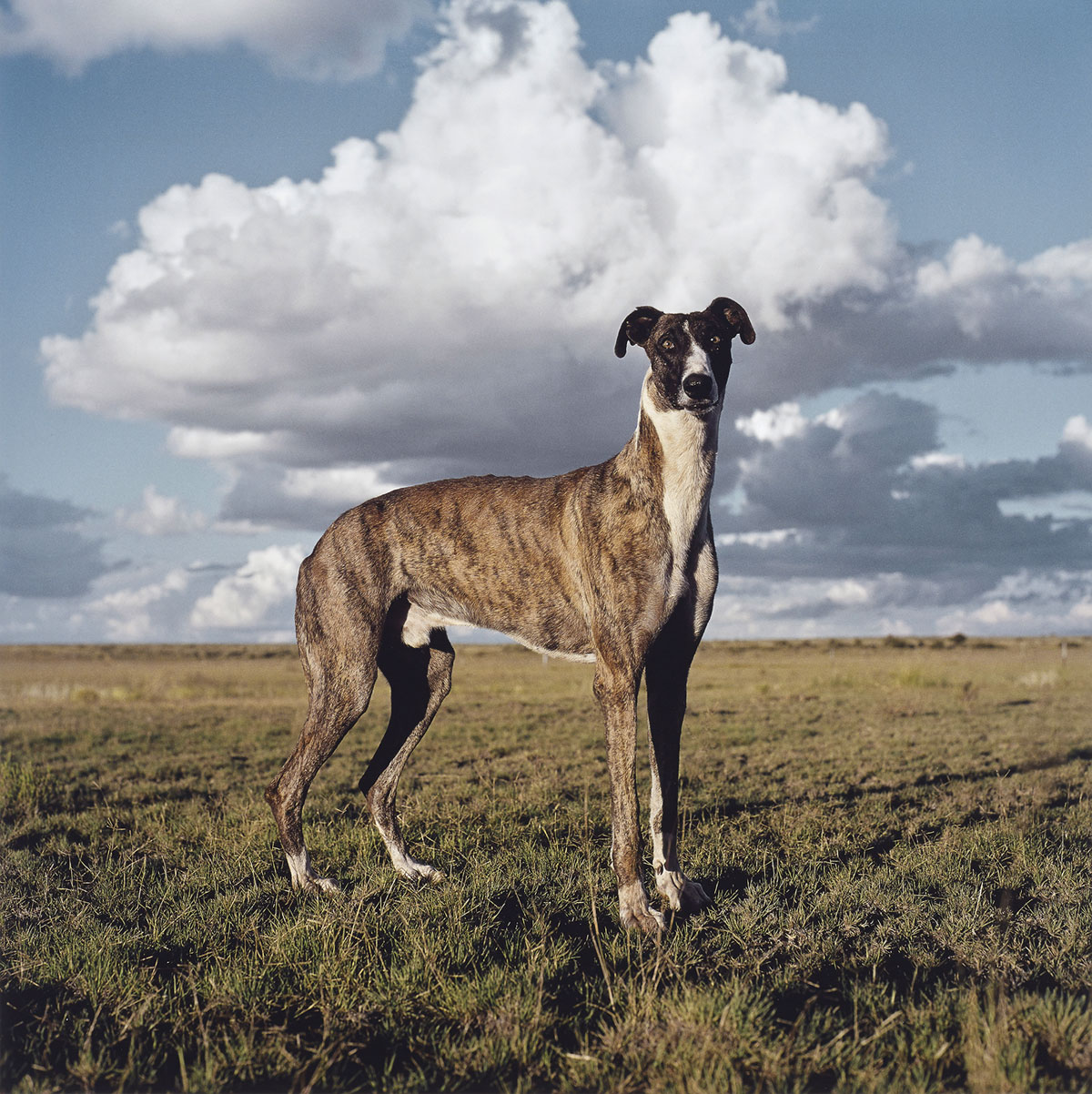
Daniel Naudé (South African, b. 1984) 'Africanis 17. Danielskuil, Northern Cape, 25 February 2010' 2010


Daniel Naudé (South African, b. 1984)
Africanis 17. Danielskuil, Northern Cape, 25 February 2010
2010
Chromogenic print
60 x 60cm (23 5/8 x 23 5/8 in.)
The J. Paul Getty Museum, Los Angeles
© Daniel Naudé


Some of the photographs in this postings are sad, others are just gruesome.

One animal’s in/humanity to many others.

Marcus


Many thankx to the J. Paul Getty Museum for allowing me to publish the photographs in the posting. Please click on the photographs for a larger version of the image.


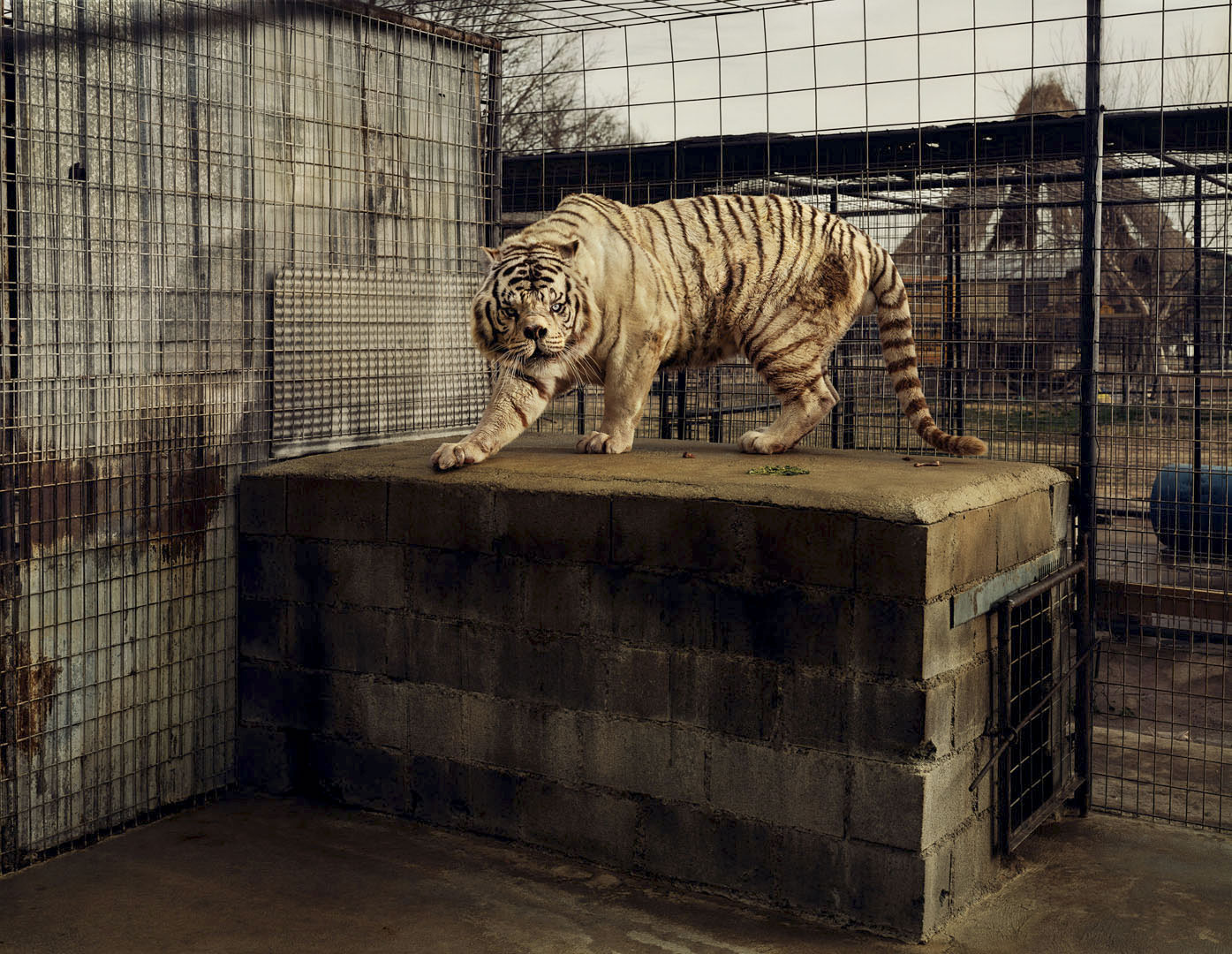
Taryn Simon (American, b. 1975) 'White Tiger (Kenny)' 2007


Taryn Simon (American, b. 1975)
White Tiger (Kenny), Selective Inbreeding Turpentine Creek Wildlife Refuge and Foundation Eureka Springs, Arkansas
2007
The J. Paul Getty Museum, Los Angeles
© Taryn Simon


In the United States, all living white tigers are the result of selective inbreeding to artificially create the genetic conditions that lead to white fur, ice-blue eyes and a pink nose. Kenny was born to a breeder in Bentonville, Arkansas on February 3, 1999. As a result of inbreeding, Kenny is mentally retarded and has significant physical limitations. Due to his deep-set nose, he has difficulty breathing and closing his jaw, his teeth are severely malformed and he limps from abnormal bone structure in his forearms. The three other tigers in Kenny’s litter are not considered to be quality white tigers as they are yellow-coated, crosseyed, and knock-kneed.


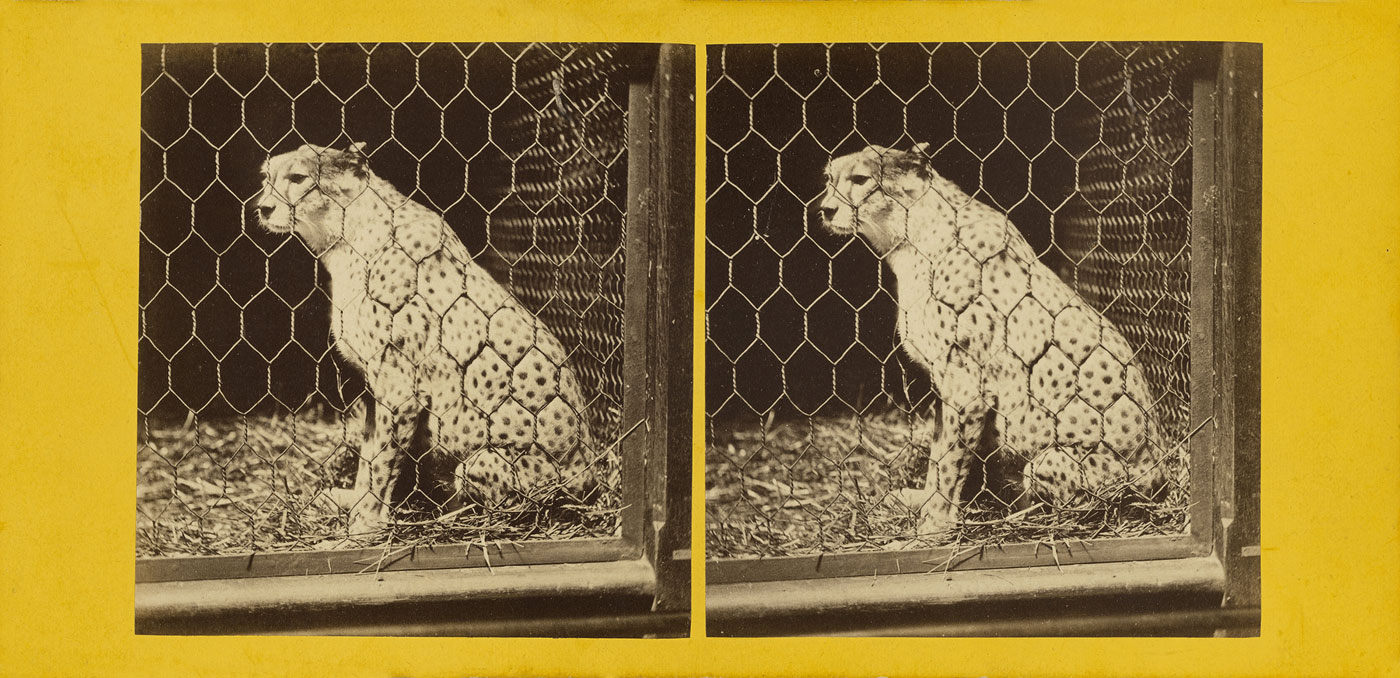
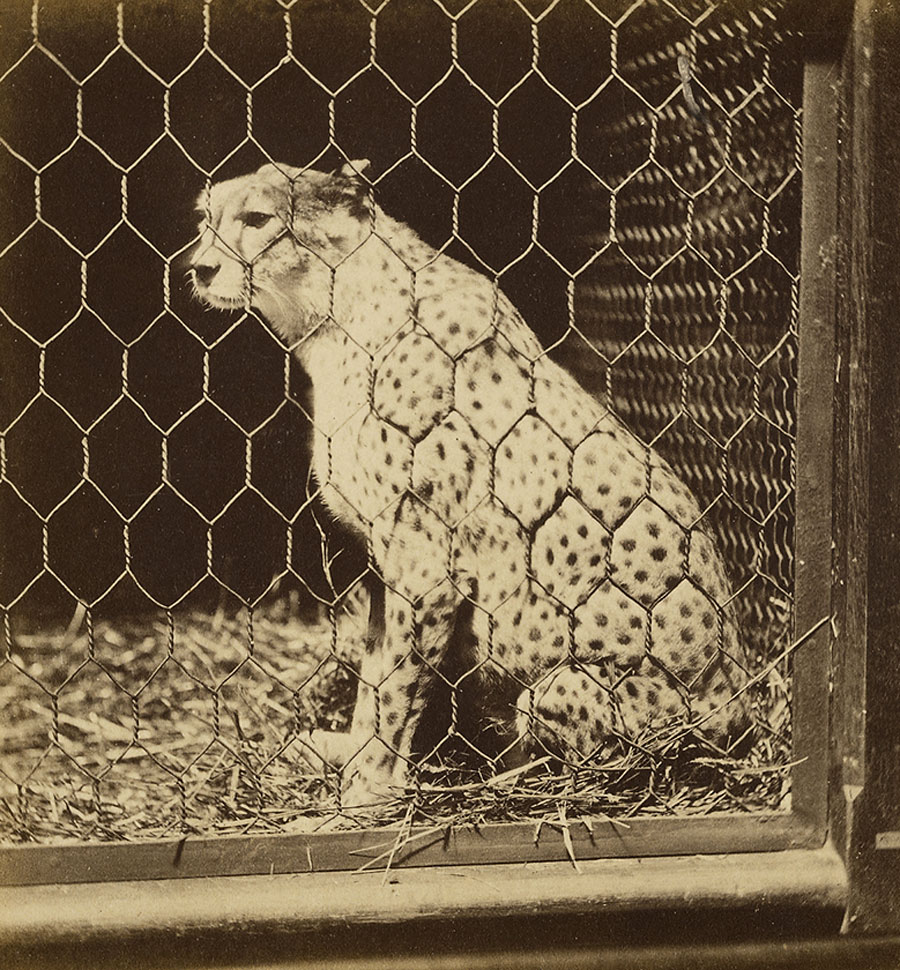
Frank Haes (British, 1832-1916) 'The South African Cheetah (Felis Jubata.)' c. 1865


Frank Haes (British, 1832-1916)
The South African Cheetah (Felis Jubata.)
c. 1865
Albumen silver print
8.2 x 17.2cm (3 1/4 x 6 3/4 in.)
The J. Paul Getty Museum, Los Angeles


Frank Haes (British, 1832-1916) 'The South African Cheetah (Felis Jubata.)' c. 1865 (detail)


Frank Haes (British, 1832-1916)
The South African Cheetah (Felis Jubata.) (detail)
c. 1865
Albumen silver print
8.2 x 17.2cm (3 1/4 x 6 3/4 in.)
The J. Paul Getty Museum, Los Angeles


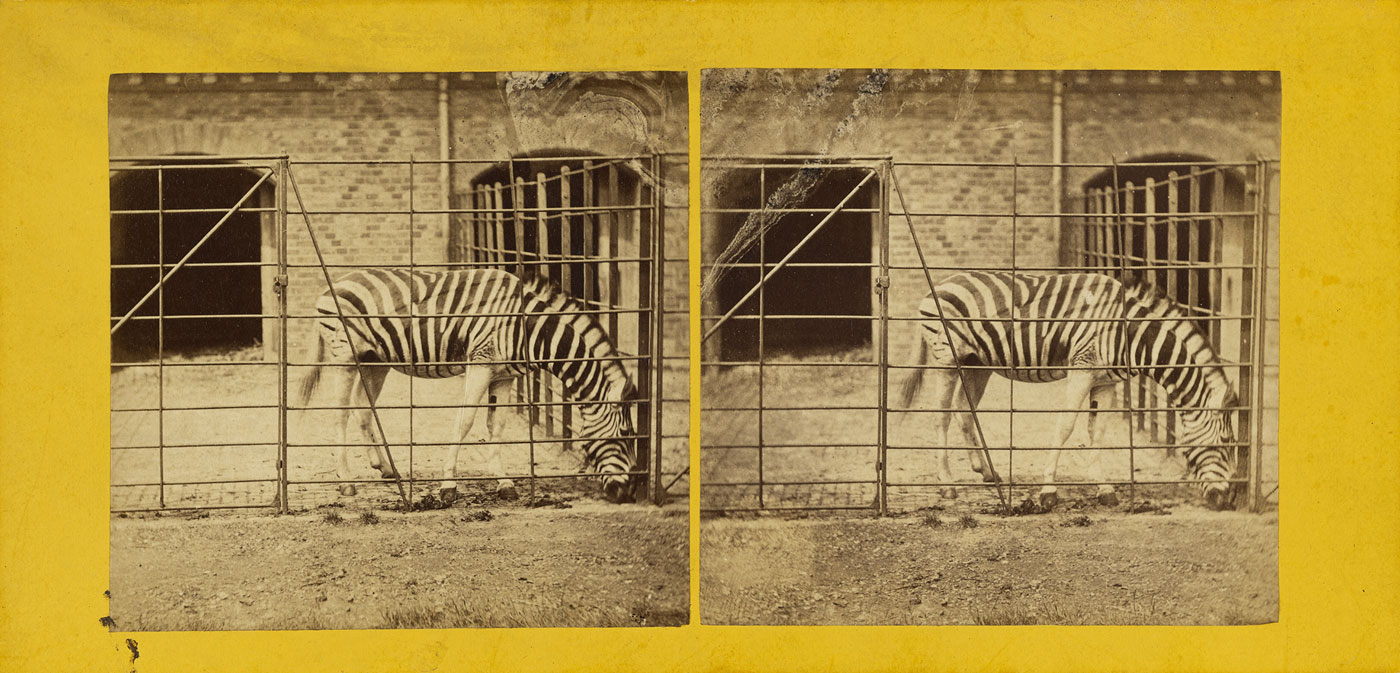
Frank Haes (British, 1832-1916) 'The Zebra, Burchell's, or Dauw. (Asinus Burchellii.)' c. 1865


Frank Haes (British, 1832-1916)
The Zebra, Burchell’s, or Dauw. (Asinus Burchellii.)
c. 1865
Albumen silver print
8.3 x 17.2cm (3 1/4 x 6 3/4 in.)
The J. Paul Getty Museum, Los Angeles


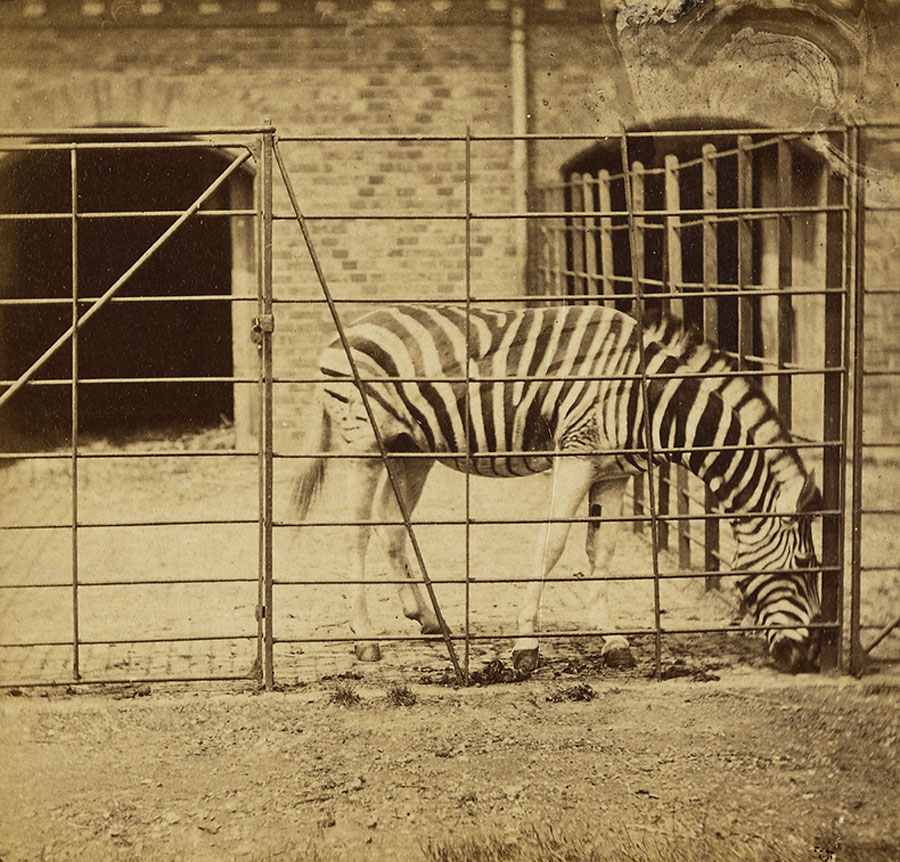
Frank Haes (British, 1832-1916) 'The Zebra, Burchell's, or Dauw. (Asinus Burchellii.)' c. 1865 (detail)


Frank Haes (British, 1832-1916)
The Zebra, Burchell’s, or Dauw. (Asinus Burchellii.) (detail)
c. 1865
Albumen silver print
8.3 x 17.2cm (3 1/4 x 6 3/4 in.)
The J. Paul Getty Museum, Los Angeles


Frank Haes (British, 1832-1916) 'The Tiger. (Felis Tigris.)' c. 1865


Frank Haes (British, 1832-1916)
The Tiger. (Felis Tigris.)
c. 1865
Albumen silver print
8.2 x 17.1cm (3 1/4 x 6 3/4 in.)
The J. Paul Getty Museum, Los Angeles


Frank Haes (British, 1832-1916) 'The Tiger. (Felis Tigris.)' c. 1865 (detail)


Frank Haes (British, 1832-1916)
The Tiger. (Felis Tigris.) (detail)
c. 1865
Albumen silver print
8.2 x 17.1cm (3 1/4 x 6 3/4 in.)
The J. Paul Getty Museum, Los Angeles


Capt. Horatio Ross (British, 1801-1886) '[Dead stag in a sling]' c. 1850s - 1860s


Capt. Horatio Ross (British, 1801-1886)
[Dead stag in a sling]
c. 1850s – 1860s
Albumen silver print
27.9 x 33.2cm (11 x 13 1/16 in.)
The J. Paul Getty Museum, Los Angeles


Capt. Horatio Ross (British, 1801-1886) '[Dead stag in a sling]' c. 1850s - 1860s (detail)


Capt. Horatio Ross (British, 1801-1886)
[Dead stag in a sling] (detail)
c. 1850s – 1860s
Albumen silver print
27.9 x 33.2cm (11 x 13 1/16 in.)
The J. Paul Getty Museum, Los Angeles


Animals have never been camera shy – almost since the introduction of the medium in 1839, they have appeared in photographs. While early photographs typically depicted animals that were tame, captive, or dead, modern and contemporary artists have delved into the interdependent relationship between man and beast.

Drawn entirely from the J. Paul Getty Museum’s photographs collection, In Focus: Animalia, on view May 26-October 18, 2015 at the Getty Center, illustrates some of the complex relationships between people and animals. From an intimate studio portrait with dog and owner to the calculated cruelty of inbreeding practices, these photographs offer nuanced views of the animal kingdom.

“It is easy to understand why artists choose animals for their subject matter – their lives are profoundly intertwined with our own, often eliciting powerful emotions,” says Timothy Potts, Director of the J. Paul Getty Museum. “Whether seen as beloved pets, kept in zoos, or threatened by human activity, animals continue to fascinate and act as catalysts for artistic creativity. This exhibition highlights the many different ways in which animals as subject matter have served as an endearing theme for photographers throughout history right up to the present day.”

Photographs of pets, working animals, taxidermied game, and exotic beasts in newly opened zoos circulated widely during the second half of the 19th century. Early daguerreotypes required a subject to remain still for several minutes to ensure that the image would not blur, so photographing moving animals posed a problem. In Study of a White Foal (about 1845) the Swiss nobleman and amateur daguerreotypist Jean-Gabriel Eynard (1775-1863), focused the lens of his camera on a foal at rest, a moment when its movements were limited, in order to make a successful picture.

By the early 1850s most major cities in Europe and America could boast studios specialising in daguerreotype photography. Customers sat for portraits in order to preserve their own images, and also commissioned photographs of their family members and loved ones, including pets. In Dog Sitting on a Table (about 1854; artist unknown) an eager dog is photographed sitting on a tasseled pedestal. The slight blurring of the head, indicating movement during exposure, betrays the barely contained energy of this otherwise well-trained animal.

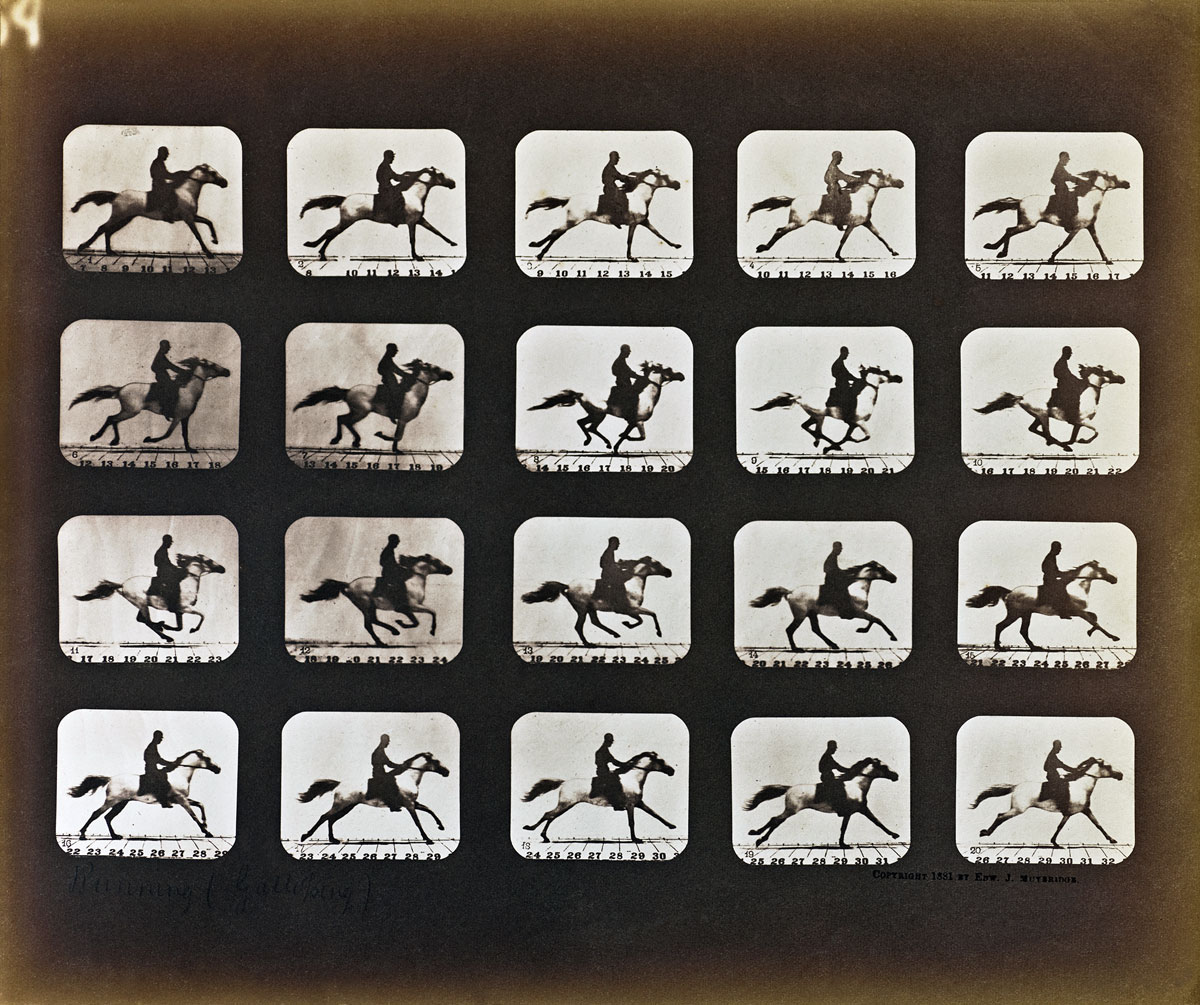
The mid-19th century saw increasing demand for stereoscopic photographs – two nearly identical prints made with a double lens camera that created a three-dimensional image when viewed in a stereoscope viewer. Frank Haes (British, 1832-1916) made a reputation for himself by photographing animals at the London Zoo, much to the delight of those fascinated by hippos, lions, zebras, and other exotic beasts. Eadweard J. Muybridge’s (American, born England, 1830-1904) pioneering work in motion studies are best remembered for his depictions of animals. Devising a system for successively tripping the shutters of up to 24 cameras, Muybridge created the illusion of movement in a galloping horse.

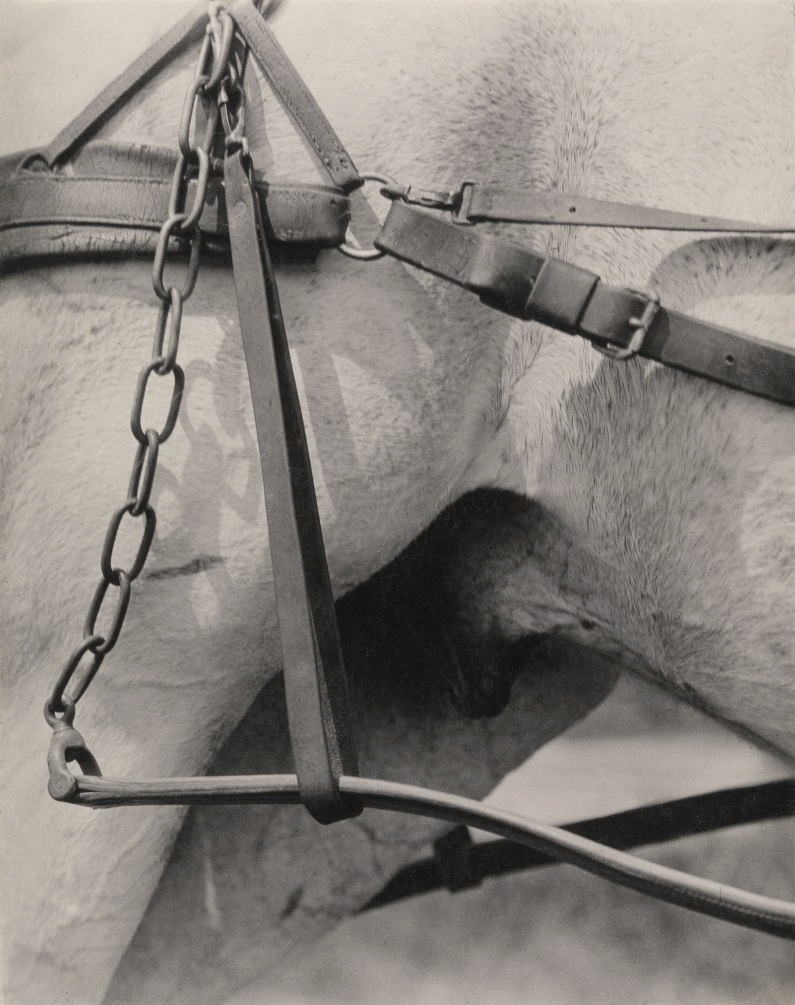
Artists have also relied on animals to convey symbolism and to represent fantastical worlds. A photograph by Alfred Stieglitz (American, 1864-1946) of a harnessed and castrated horse serves as a critical metaphor for American identity in the early 1920s, which Stieglitz viewed as materialist and culturally bankrupt. An elaborately staged photograph by Sandy Skoglund (American, b. 1946) presents a dreamlike atmosphere filled with handmade, larger-than-life sculptures of goldfish that create a scene at once playful and disturbing. Recently-acquired works by Daniel Naudé (South African, b. 1984) depict portraits of wild dogs the photographer found on the arid plains of South Africa. Made from a low vantage point, individual dogs are cast against broad views of the landscape, and the photographs harken back to the equestrian portrait tradition popular during the 17th century. Taryn Simon’s photograph of a caged white tiger (American, b. 1975) demonstrates the oftentimes debilitating results of the inbreeding practices utilised to obtain highly desired traits such as a white coat. This work illuminates the mistakes and failures of human intervention into a territory governed by natural selection.

In Focus: Animalia is on view May 26 – October 18, 2015 at the J. Paul Getty Museum, Getty Center. The exhibition will be accompanied by the publication of Animals in Photographs (Getty Publications) by Arpad Kovacs.

Press release from the J. Paul Getty Museum website


Sandy Skoglund (American, b. 1946) 'Revenge of the Goldfish' 1981


Sandy Skoglund (American, b. 1946)
Revenge of the Goldfish
1981
Color photograph
27 1/2″ x 35″
Individually hand-made ceramic goldfish by the artist, with live models in painted set
The J. Paul Getty Museum, Los Angeles
© 1981 Sandy Skoglund


Like many of her other works, such as Radioactive Cats and Fox Games, the piece is a set composed of props and human models, which Skoglund poses and then photographs. In the piece, a child sits on the edge of a bed while an adult sleeps next to him. The set of the scene is a monochromatic blue, with contrasting bright orange goldfish floating through the room. The goldfish in the piece were sculpted by Skoglund out of terracotta and bring an element of fantasy to an otherwise normal scene. According to Skoglund, “If the fish are eliminated the image shows nothing unusual; just a room with two people in bed.” The piece was first on display at the Saint Louis Art Museum in 1981. Since then, the piece has been in several collections at various museums, including Smith College Museum of Art, Dallas Museum of Art, Akron Art Museum, and Amon Carter Museum of American Art. Smith College Museum of Art also owns the original installation.

Text from the Wikipedia website


Eadweard J. Muybridge (American born England, 1830-1904) 'Running (Galloping)' 1878-1881


Eadweard J. Muybridge (American born England, 1830-1904)
Running (Galloping)
1878-1881
Iron salt process
18.9 x 22.6cm (7 7/16 x 8 7/8 in.)
The J. Paul Getty Museum, Los Angeles


Unknown maker (American) 'Portrait of a Girl with her Deer' c. 1854


Unknown maker (American)
Portrait of a Girl with her Deer
c. 1854
Daguerreotype 1/4 plate
Image: 6.9 x 9cm (2 11/16 x 3 9/16 in.)
Plate: 8.1 x 10.7cm (3 3/16 x 4 3/16 in.)
Mat: 8.2 x 10.6cm (3 3/16 x 4 3/16 in.)
The J. Paul Getty Museum, Los Angeles


Unknown maker (American) 'Portrait of a Girl with her Deer' c. 1854 (detail)


Unknown maker (American)
Portrait of a Girl with her Deer (detail)
c. 1854
Daguerreotype 1/4 plate
Image: 6.9 x 9cm (2 11/16 x 3 9/16 in.)
Plate: 8.1 x 10.7cm (3 3/16 x 4 3/16 in.)
Mat: 8.2 x 10.6cm (3 3/16 x 4 3/16 in.)
The J. Paul Getty Museum, Los Angeles


William Eggleston (American, b. 1939) 'Memphis' Negative 1971; print 1974


William Eggleston (American, b. 1939)
Memphis
Negative 1971; print 1974
Dye imbibition print
32.9 x 47.9cm (12 15/16 x 18 7/8 in.)
The J. Paul Getty Museum, Los Angeles
© Eggleston Artistic Trust


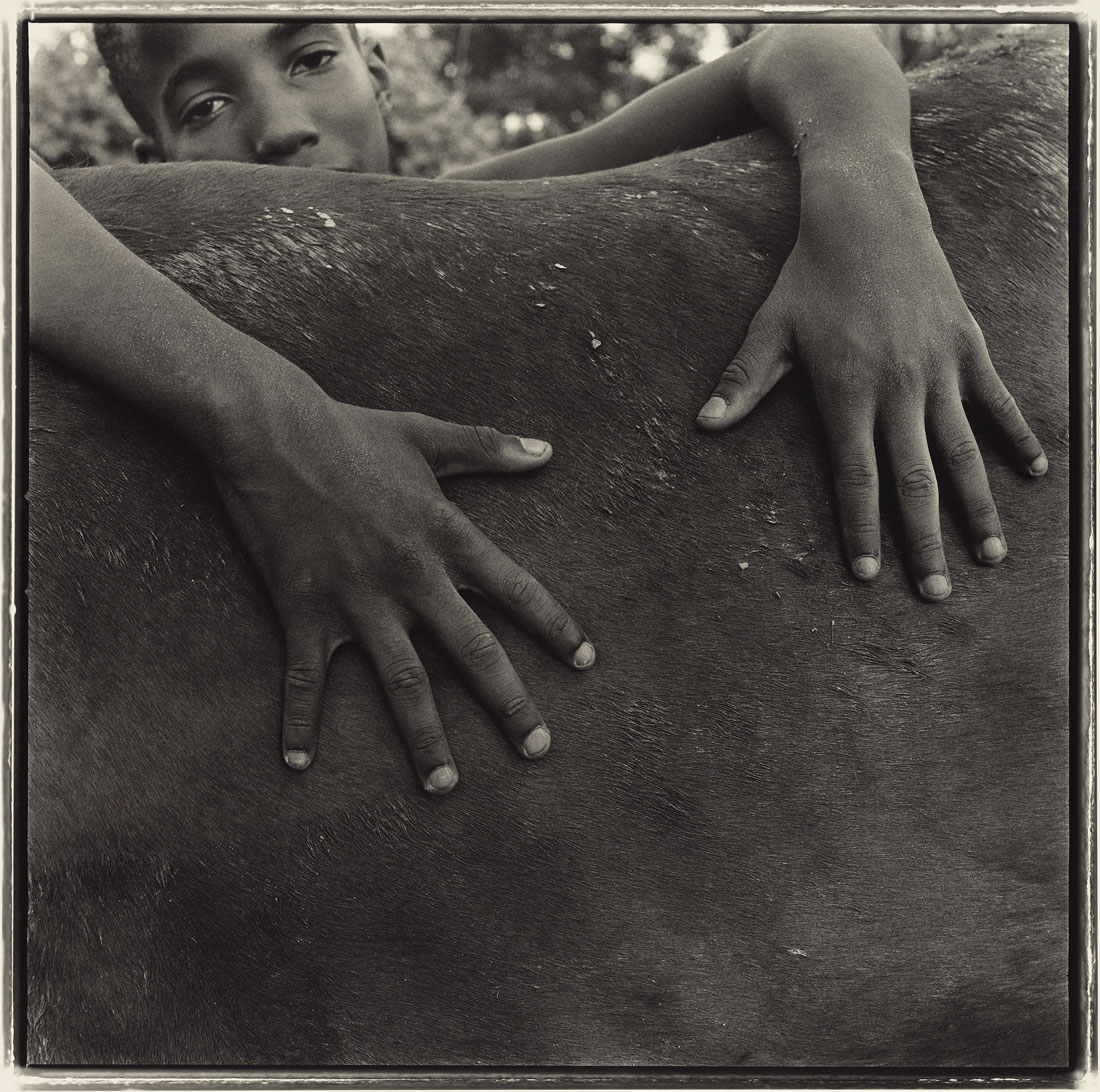
Keith Carter (American, b. 1948) 'Goodbye to a Horse' 1993


Keith Carter (American, b. 1948)
Goodbye to a Horse
1993
Gelatin silver print
39 x 39.2cm (15 3/8 x 15 7/16 in.)
The J. Paul Getty Museum, Los Angeles, Gift of Daniel Greenberg and Susan Steinhauser
© Keith Carter


André Kertész (American born Hungary, 1894-1985) '[Wooden Mouse and Duck]' 1929


André Kertész (American born Hungary, 1894-1985)
[Wooden Mouse and Duck]
1929
Gelatin silver print
20.9 x 16.7cm (8 1/4 x 6 9/16 in.)
The J. Paul Getty Museum, Los Angeles
© Estate of André Kertész


Alfred Stieglitz (American, 1864-1946) 'Spiritual America'
 1923


Alfred Stieglitz (American, 1864-1946)
Spiritual America

1923
Gelatin silver print
The J. Paul Getty Museum, Los Angeles


Unknown maker (American) '[Dog sitting on a table]' c. 1854


Unknown maker (American)
[Dog sitting on a table]
c. 1854
Hand-coloured daguerreotype 1/6 plate
Image: 6.8 x 5.7cm (2 11/16 x 2 1/4 in.)
Mat: 8.3 x 7cm (3 1/4 x 2 3/4 in.)
The J. Paul Getty Museum, Los Angeles


Hiro (American born China, 1930-2021) 'David Webb, Jeweled Toad, New York, 1963' 1963


Hiro (American born China, 1930-2021)
David Webb, Jeweled Toad, New York, 1963
1963
Dye imbibition print
50.2 x 39.1cm (19 3/4 x 15 3/8 in.)
The J. Paul Getty Museum, Los Angeles, Purchased with funds provided by the Photographs Council
© Hiro


Legendary photographer Yasuhiro Wakabayashi, known as “Hiro,” the man whose fashion photography revolutionized the medium as an art form and defined the aesthetic of a generation, died this week at the age of 90.

Though the son of Japanese parents, Hiro was born in Shanghai, China, in 1930, one year before the outbreak of the Sino-Japanese War. He and his family eventually repatriated to Japan in 1946, but it wasn’t long after that he relocated to New York City. There, Hiro became an apprentice to Richard Avedon, whose iconic and exclusively black-and-white photography brought a new facet to fashion photography: stark portraiture that bordered on the surreal and often showed celebrities and other high-profile figures as they were, not gilded by fashion editors.

By 1956, Hiro had become a staff photographer for the fashion magazine Harper’s Bazaar, where he remained until the mid-1970s. He opened his own New York studio in 1958, just months after the untimely death of fashion icon Christian Dior. A decade earlier, Dior had debuted his “New Look,” which was a strikingly architectural approach to fashion that emphasized the female figure by casting it in dresses designed to accentuate a “figure eight,” with pronounced shoulders and hips and a tiny waist. Dior’s simple silhouettes dominated the fashion and art world just as Hiro was coming of age into it.

Hiro, similar to his mentor Avedon, dealt in stark, clean images with elements of the surreal. One collector described his work as a “simple but elegant design with sophisticated technique and striking color.”

“A diamond-and-ruby Harry Winston necklace draped on the hoof of a Black Angus steer. A pyramid of Cartier watches set in a luminous lunar landscape of vivid green and shocking blue. A mysterious woman in the dunes at twilight, floating like a ghost off the ground in a windblown black nightgown,” wrote the New York Times’s Robert D. McFadden in a description of Hiro’s most famous images. His work was more “brilliant and infinitely more beautiful than reality.”

Beyond simply beautiful, Hiro’s photography is known for its precision: light, lines, objects all precisely placed and measured to create works reminiscent of surrealist artists such as Salvador Dali and Renee Magritte. The effect was something phantasmagorical but adamantly, elegantly real.

His life itself was surreal. His father was a Japanese linguist living in Shanghai putatively for the purpose of creating a Japanese-Chinese dictionary. However, the New York Times noted in Hiro’s obituary, his father might have actually been a spy. Following the end of World War II, Hiro and his family returned home to a changed, and occupied, Japan reeling in the aftermath of Hiroshima and Nagasaki. Amid that chaos, Hiro became “fascinated with Jeeps, Red Fox beer cans and other artifacts of American culture.” He collected fashion magazines and saved for a camera, honing his skills until he could travel to the United States, where he worked entry-level jobs until he was able to score the coveted New York apprenticeship with Avedon.

He became an American citizen in 1990.

Hiro eventually became so influential in fashion photography that American Photographer dedicated an issue entirely devoted to Hiro’s work, provocatively asking, “Is this man America’s greatest photographer?”

“Hiro stands as one of the pre-eminent photographers of his adopted country,” the 1982 magazine said. “With the pragmatic brilliance of a Renaissance master, Hiro has changed the way photographs look, and with an endlessly inventive technique has changed the way photographers work.”

Yasuhiro Wakabayashi is survived by his wife, designer Elizabeth Clark, two sons, and several grandchildren, as well as a remarkable body of work that will continue to live on far after.

Emily Zanotti. “Hiro Wakabayashi, 1930-2021,” on the Yahoo News! website August 20, 2021 [Online] Cited 25/12/2022. No longer available online


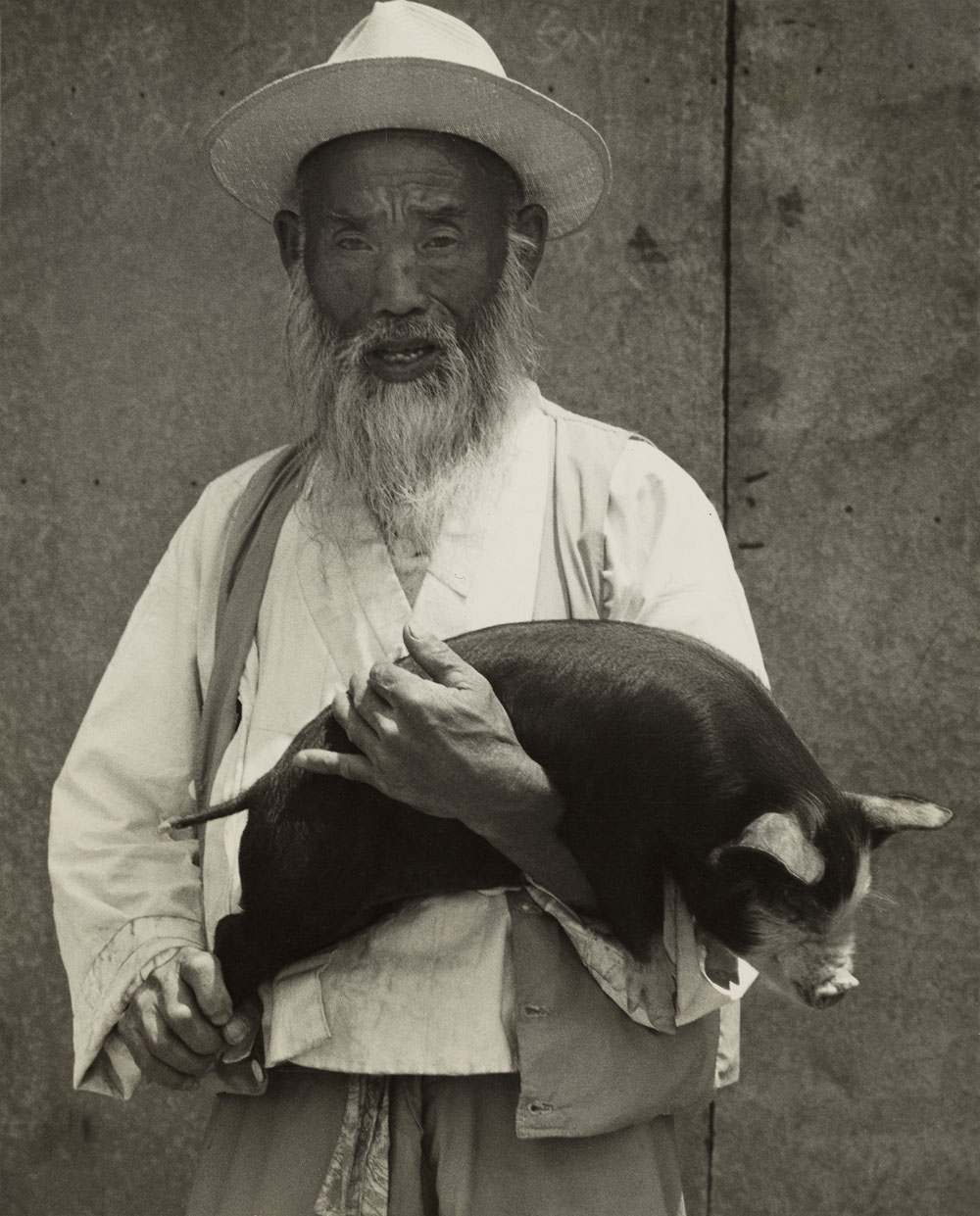
Soon Tae (Tai) Hong (South Korean, b. 1934) 'Chong Ju' 1970


Soon Tae (Tai) Hong (South Korean, b. 1934)
Chong Ju
1970
Gelatin silver print
24.8 x 20cm (9 3/4 x 7 7/8 in.)
The J. Paul Getty Museum, Los Angeles
© Hong Soon Tae (Tai)


William Wegman (American, b. 1943) 'In the Box/Out of the Box [right]' 1971


William Wegman (American, b. 1943)
In the Box/Out of the Box [right]
1971
Gelatin silver print
35.4 x 27.7cm (13 15/16 x 10 7/8 in.)
The J. Paul Getty Museum, Los Angeles
© William Wegman


William Wegman (American, b. 1943) 'In the Box/Out of the Box [left]' 1971


William Wegman (American, b. 1943)
In the Box/Out of the Box [left]
1971
Gelatin silver print
35.5 x 27.7cm (14 x 10 7/8 in.)
The J. Paul Getty Museum, Los Angeles
© William Wegman


The J. Paul Getty Museum
1200 Getty Center Drive
Los Angeles, California 90049

Opening hours:
Daily 10am – 5pm

The J. Paul Getty Museum website

LIKE ART BLART ON FACEBOOK

Back to top

Exhibition: ‘Light, Paper, Process: Revolutionizing Photography’ at the J. Paul Getty Museum, Getty Center, Los Angeles

Exhibition dates: 14th April – 6th September 2015


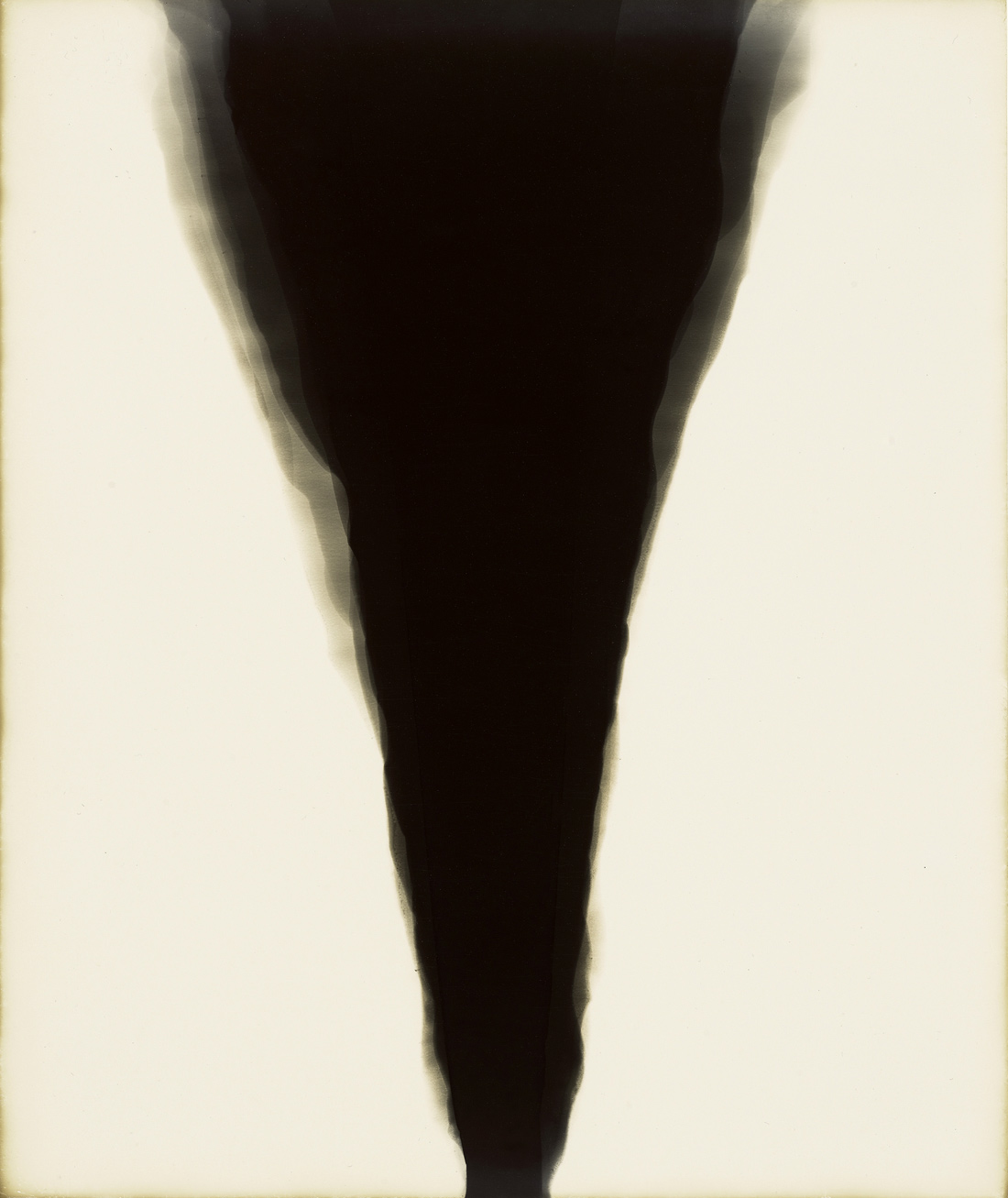
Man Ray (Emmanuel Radnitsky) (American, 1890-1976) 'Untitled (Smoke)' 1928


Man Ray (Emmanuel Radnitsky) (American, 1890-1976)
Untitled (Smoke)
1928
Gelatin silver print
24.6 x 19.8cm (9 11/16 x 7 13/16 in.)
The J. Paul Getty Museum, Los Angeles
© Man Ray Trust ARS-ADAG


These days, photography can be anything your imagination, concept and process desires…

Whether that makes for interesting / lasting (ie. memorable) / good, (post)photographic outcomes is up to you to decide.

Marcus


Many thankx to the J. Paul Getty Museum for allowing me to publish the photographs in the posting. Please click on the photographs for a larger version of the image.


Chargesheimer (Karl Heinz Hargesheimer) (German, 1924-1971) 'Picturesque' 1949


Chargesheimer (Karl Heinz Hargesheimer) (German, 1924-1971)
Picturesque
1949
Gelatin silver print
49.5 x 39.6cm (19 1/2 x 15 9/16 in.)
The J. Paul Getty Museum, Los Angeles
© Museum Ludwig, Cologne


Henry Holmes Smith (American, 1909-1986) 'Man and Woman' 1976


Henry Holmes Smith (American, 1909-1986)
Man and Woman
1976
Dye imbibition print
33.2 x 26.2cm (13 1/16 x 10 5/16 in.)
The J. Paul Getty Museum, Los Angeles, Gift of the Smith Family Trust
© J. Paul Getty Trust


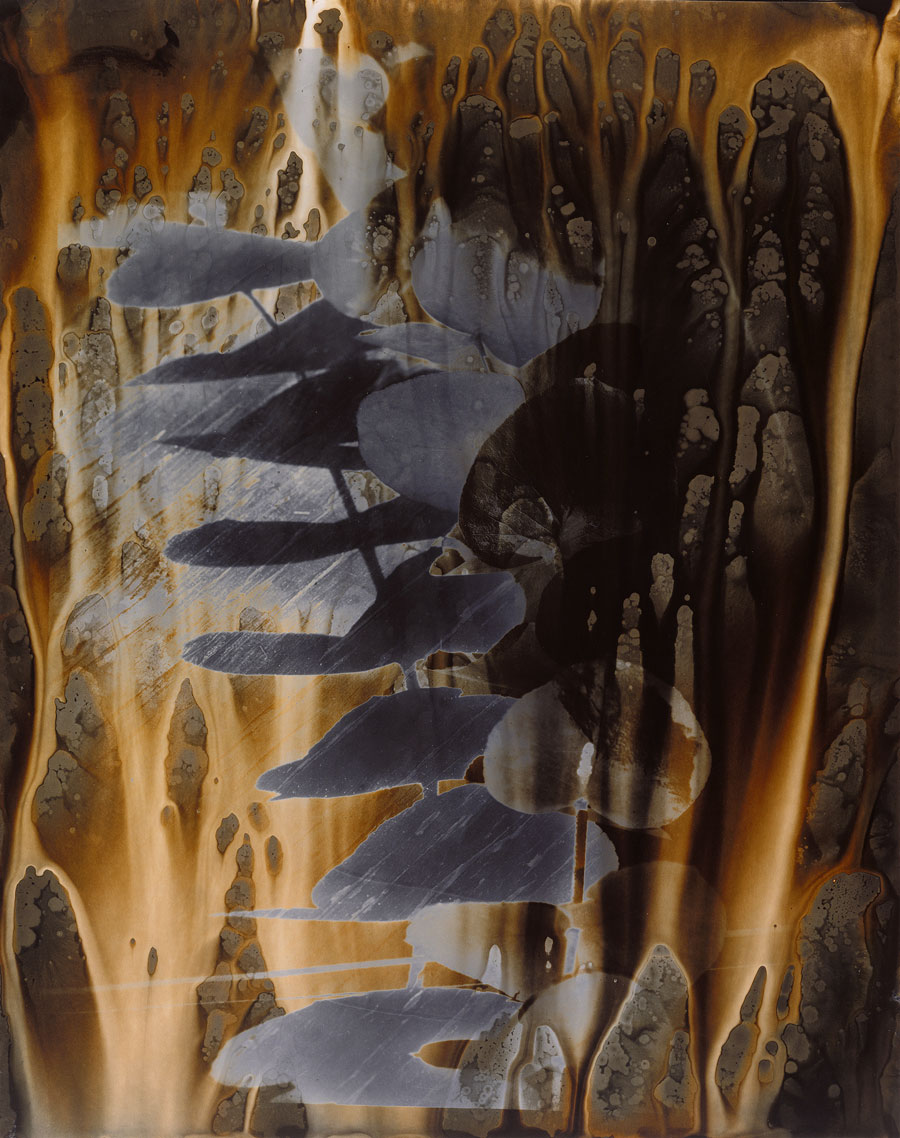
Edmund Teske (American, 1911-1996) 'Leaves on Glass, Topanga Canyon, California' 1952; print 1960s


Edmund Teske (American, 1911-1996)
Leaves on Glass, Topanga Canyon, California
1952; print 1960s
Gelatin silver duotone solarized print
35.4 x 27.9cm (13 15/16 x 11 in.)
The J. Paul Getty Museum, Los Angeles
© Edmund Teske Archives/Laurence Bump and Nils Vidstrand, 2001


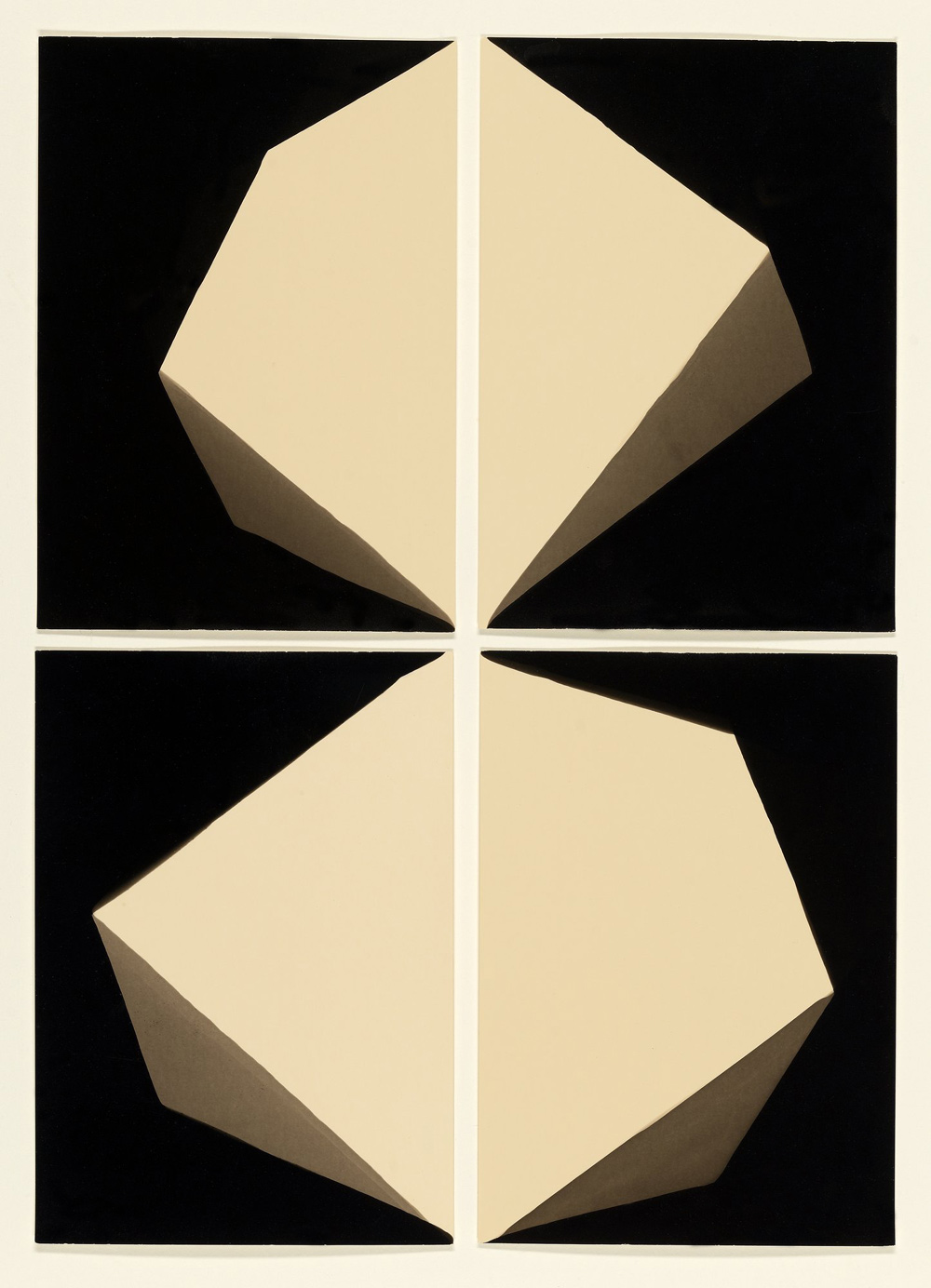
Alison Rossiter (American, b. 1953) 'Gevaert Gevarto 47, exact expiration date unknown, about 1960s, processed 2013 (#37)' 2013


Alison Rossiter (American, b. 1953)
Gevaert Gevarto 47, exact expiration date unknown, about 1960s, processed 2013 (#37)
2013
Four gelatin silver print
Each image: 10.8 x 8.3cm (4 1/4 x 3 1/4 in.)
Courtesy of the artist and Yossi Milo Gallery, New York
© Alison Rossiter


Chris McCaw (American, b. 1971) 'Sunburned GSP #202 (San Francisco Bay)' 2008


Chris McCaw (American, b. 1971)
Sunburned GSP #202 (San Francisco Bay)
2008
Gelatin silver print
37.5 x 47.6cm (14 3/4 x 18 3/4 in.)
Santa Barbara Museum of Art, Museum Purchase
© Chris McCaw


Pierre Cordier (Belgian, b. 1933) 'Chemigram II' 1976


Pierre Cordier (Belgian, b. 1933)
Chemigram II
1976
Gelatin silver print
23.8 x 17.9cm (9 3/8 x 7 1/16 in.)
The J. Paul Getty Museum, Los Angeles
© 2015 Artists Rights Society (ARS), New York / SABAM, Brussels


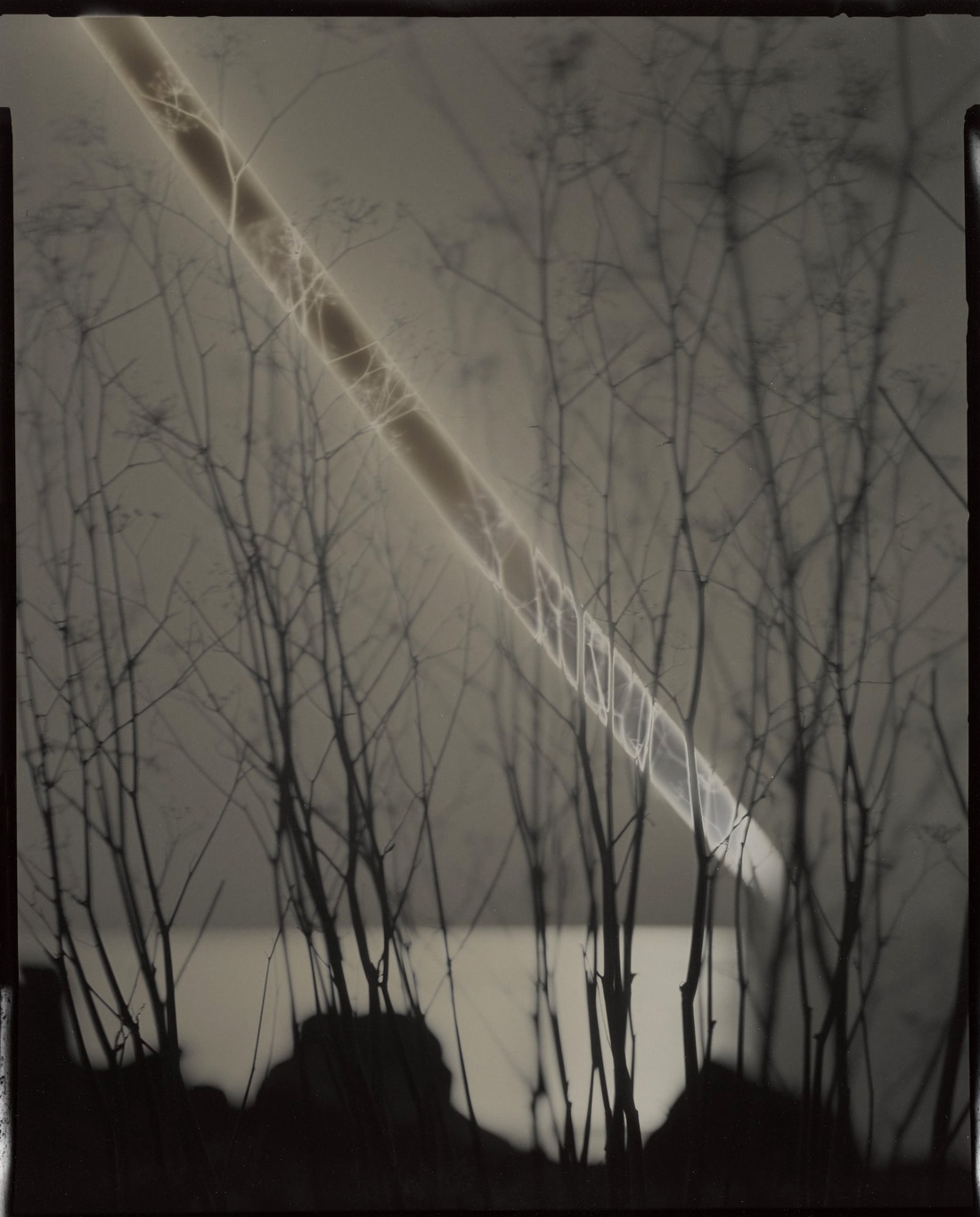
From its very beginnings in the 19th century, photography has been shaped by the desire of the artist to continually explore and expand its possibilities through experimentation. Taking that spirit of invention and discovery as a point of departure, some artists today have chosen to distill photography to its most essential components of light-sensitivity and the chemical processing of photographic papers, challenging viewers to see the medium anew. Light, Paper, Process: Reinventing Photography, on view at the Getty Center April 14-September 6, 2015, features the work of seven contemporary artists – Alison Rossiter, Marco Breuer, James Welling, Lisa Oppenheim, Chris McCaw, John Chiara, and Matthew Brandt – all of whom have created inventive photographs that reveal aspects of their making (or unmaking).

The artists in the exhibition utilize an extensive array of practices – often achieved through trial and error, accident, or chance – that shift the understanding of photography from a medium that accurately records the world to one that revels in its materiality. Whether they use handmade cameras or none at all, work with expired papers or toxic chemicals, the images remain latent until processed, fixed, or otherwise coaxed from the paper.

“Each of the artists in this exhibition engages in some way with the process by which the photographic medium captures and transmutes light into a two-dimensional image on paper,” says Timothy Potts, director of the J. Paul Getty Museum. “But rather than seeing this process as something to be ‘perfected,’ or even neutralised, they exploit its ability to be manipulated and deconstructed, thus collapsing process and product into a single creative activity. I am particularly pleased that the Getty Museum Photographs Council has provided funds to acquire works by Matthew Brandt, Marco Breuer, John Chiara, and Allison Rossiter for our permanent collection that are included in the exhibition.”

The exhibition begins with an overview of 20th-century practices that were experimental in nature, featuring works by Man Ray, László Moholy-Nagy, Nathan Lerner, Edmund Teske, and others. The renewed interest of artists of this period in techniques such as camera-less photograms, chemigrams, and solarisation serves as inspiration for today’s artists. Each of the subsequent galleries in the Getty Museum’s Center for Photographs will be dedicated to the work of one of the seven featured contemporary artists, and follows a progression from abstract, camera-less works to representative images made with custom-built cameras.

“This exhibition is an excellent opportunity to feature the work of living artists alongside earlier photographs from our permanent collection,” says Virginia Heckert, department head of the Getty Museum’s Department of Photographs and curator of the exhibition. “By focusing on work of a more experimental nature, visitors will be reminded that the exploration of materiality and process has been an important aspect of photography since its inception and continues to motivate and inspire artists working with the medium today.”

Alison Rossiter (American, born 1953) takes a minimalist approach to the materials she uses to create her photographic works. She does not use a camera, film, or light, but instead only uses unprocessed sheets of expired gelatin silver paper and photographic chemicals in the darkroom. Through the simple acts of immersing or dipping a sheet of paper in developer or pouring and pooling developer onto the paper’s surface, she achieves a rich array or results. Some suggest faint impressions of primitive mark-making, others resemble landscapes, and still others call to mind abstract painting of the mid-20th-century.

Working since the early 1990s without a camera or film, Marco Breuer (German, born 1966) subjects light-sensitive paper to various acts that abrade, burn, or scrape away the emulsion layer. Completely nonrepresentational, his “photographs” look like no others; they elicit the hues and textures of rare metals, mineral deposits, or oil spills, and display marks ranging from fine incisions and abrasions to scar-like burns and gashes. His deliberate misuse of black-and-white and photographic papers is the starting point for a negotiation between the paper as recording material, the hand, and the tools employed.

James Welling (American, born 1951) spent the first ten years of his career exploring painting, sculpture, performance art, video art, conceptual art, and installation before he committed to thinking of himself as a photographer. For the past four decades, he has explored photography, from documentary to experimental, with and without a camera, using black-and-white, colour, and Polaroid films and papers, as well as digital files and printing. Since 1995 he has worked increasingly with colour, filters, and camera-less photography. Three bodies of recent work presented in the exhibition include variations on the photogram, chemigram, and printing-out process.

Influenced by her background in structural/materialist filmmaking, Lisa Oppenheim (American, born 1975) is interested in exploring the ways in which a photograph can record both its subject and the process by which it was made. In three bodies of work dating from 2010 to present, she enlists the very entities depicted in the negatives – the sun, the moon, and smoke / fire – in the act of exposing them. Although they sound scientific, the titles of two of these bodies of work, Heliograms and Lunagrams, are made up, combining the name of the camera-less photogram technique and the source of light by which the enlarged negatives have been contact-printed.

Chris McCaw (American, born 1971) establishes an immediate, visceral relationship between his subject, the sun, and his process, which involves loading photographic paper directly into the camera. The photographs in his Sunburn series record the sun’s movement, which literally sears its path into the paper in the form of dots, lines, or arcs, depending on its position, the weather conditions, and the length of the exposure(s). McCaw uses customised cameras outfitted with vintage military lenses pointed directly at the sun to function like a magnifying glass that burns through the emulsion layer and paper base, leaving behind singe marks and solarised passages.

John Chiara’s (American, born 1971) large-scale colour prints convey a hands-on – rather than pristine, mechanised – aesthetic. For the past decade his subjects have been both uninhabited landscapes and the built environment. He works with large custom-built cameras that he loads with colour photographic paper that he then processes himself by pouring chemicals into a six-foot-long section of PVC sewer pipe, sealing the tube, and then rolling it back and forth on the floor. Irregular streaks and drips characterise his prints, as do areas of overexposure and underexposure, flare from light leaks, and unevenly saturated colours.

Matthew Brandt (American, born 1982) has created diverse bodies of work, some of which are realised with photographic means and others that are more tangentially related to photographic images, techniques, or ideas. He may begin with a photograph that he has made with a 4 x 5-inch view camera, a digital camera, or his iPhone, one that he has sourced from archives in public libraries, or one that he has clicked and dragged from Ebay. His fascination with early photographic processes has led him to experiment with salted paper prints, gum bichromate prints, and heliographs, examples of which will be on view. Brandt’s interest in both photographic/visual and the physical/material forms of representation has led him to bring the two together, incorporating physical elements from his subjects into his photographic representations of them.

Light, Paper, Process: Reinventing Photography, is on view April 14-September 6, 2015 at the J. Paul Getty Museum, Getty Center. The exhibition is curated by Virginia Heckert, department head of the Museum’s Department of Photographs. A related publication of the same title will be produced by Getty Publications.

Press release from the J. Paul Getty Museum website


Alison Rossiter (American, b. 1953) 'Haloid Platina, exact expiration date unknown, about 1915, processed 2010' 2010


Alison Rossiter (American, b. 1953)
Haloid Platina, exact expiration date unknown, about 1915, processed 2010
2010
Gelatin silver print
Image (each): 21.6 x 16.5cm (8 1/2 x 6 1/2 in.)
The J. Paul Getty Museum, Los Angeles, Purchased with funds provided by the Photographs Council
© Alison Rossiter


Alison Rossiter (American, b. 1953) 'Fuji gaslight, exact expiration date unknown, about 1920s, processed 2010' 2010


Alison Rossiter (American, b. 1953)
Fuji gaslight, exact expiration date unknown, about 1920s, processed 2010
2010
Gelatin silver print
30.5 x 25.4cm (12 x 10 in.)
The J. Paul Getty Museum, Los Angeles, Purchased with funds provided by the Photographs Council
© Alison Rossiter


Alison Rossiter (American, b. 1953) 'Kilbourn Acme Kruxo, exact expiration date unknown, about 1940s, processed 2013' 2013


Alison Rossiter (American, b. 1953)
Kilbourn Acme Kruxo, exact expiration date unknown, about 1940s, processed 2013
2013
Gelatin silver print
12.7 x 17.8cm (5 x 7 in.)
The J. Paul Getty Museum, Los Angeles, Purchased with funds provided by the Photographs Council
© Alison Rossiter


Marco Breuer (German, b. 1966) 'Untitled (Heat/Gun)' 2001


Marco Breuer (German, b. 1966)
Untitled (Heat/Gun)
2001
Gelatin silver paper, burned
27.9 x 21.6cm (11 x 8 1/2 in.)
The J. Paul Getty Museum, Los Angeles, Purchased with funds provided by the Photographs Council
© Marco Breuer


Marco Breuer (German, b. 1966) 'Untitled (C-62)' 2002


Marco Breuer (German, b. 1966)
Untitled (C-62)
2002
Chromogenic paper, exposed and abraded
35.6 x 27.9cm (14 x 11 in.)
Courtesy of the artist and Yossi Milo Gallery, New York
© Marco Breuer


Marco Breuer (German, b. 1966) 'Spin (C-824)' 2008


Marco Breuer (German, b. 1966)
Spin (C-824)
2008
Chromogenic paper, embossed and scratched
34.6 x 27cm (13 5/8 x 10 5/8 in.)
The J. Paul Getty Museum, Los Angeles, Purchased with funds provided by the Photographs Council
© Marco Breuer


James Welling (American, b. 1951) 'Water' 2009


James Welling (American, b. 1951)
Water
2009
Chromogenic print
60.3 x 50.2cm (23 3/4 x 19 3/4 in.)
Courtesy of the artist and Regen Projects, Los Angeles
© James Welling


James Welling (American, b. 1951) 'Water' 2009


James Welling (American, b. 1951)
Water
2009
Chromogenic print
58.7 x 49.5cm (23 1/8 x 19 1/2 in.)
Courtesy of the artist and Regen Projects, Los Angeles
© James Welling


James Welling (American, b. 1951) 'Chemical' 2013


James Welling (American, b. 1951)
Chemical
2013
Chemigram on chromogenic paper
35.6 x 27.9cm (14 x 11 in.)
Courtesy of the artist and David Zwirner, New York/London
© James Welling


Lisa Oppenheim (American, b. 1975) 'Heliograms July 8, 1876 / October 16, 2011' 2011


Lisa Oppenheim (American, b. 1975)
Heliograms July 8, 1876 / October 16, 2011
2011
Gelatin silver print exposed with sunlight, toned
30 x 27.9cm (11 13/16 x 11 in.)
The J. Paul Getty Museum, Los Angeles
© Lisa Oppenheim


Lisa Oppenheim (American, b. 1975) 'A Handley Page Halifax of No. 4 Group flies over the suburbs of Caen, France, during a major daylight raid to assist the Normandy land battle. 467 aircraft took part in the attack, which was originally intended to have bombed German strongpoints north of Caen, but the bombing area was eventually shifted nearer the city because of the proximity of Allied troops to the original targets. The resulting bombing devastated the northern suburbs, 1944/2012' 2012


Lisa Oppenheim (American, b. 1975)
A Handley Page Halifax of No. 4 Group flies over the suburbs of Caen, France, during a major daylight raid to assist the Normandy land battle. 467 aircraft took part in the attack, which was originally intended to have bombed German strongpoints north of Caen, but the bombing area was eventually shifted nearer the city because of the proximity of Allied troops to the original targets. The resulting bombing devastated the northern suburbs, 1944/2012
2012
Gelatin silver print
Framed (approx.): 71.1 x 86.4 cm (28 x 34 in.)
Overall: Five gelatin silver prints (photograms)
Overall (approx.): 24 × 110″ (61 × 279.4 cm)
The Museum of Modern Art, New York. Fund for the Twenty-First Century
Digital Image © The Museum of Modern Art / Licensed by SCALA / Art Resource, NY
© Lisa Oppenheim


Lisa Oppenheim (American, b. 1975) 'A Handley Page Halifax of No. 4 Group flies over the suburbs of Caen, France, during a major daylight raid to assist the Normandy land battle. 467 aircraft took part in the attack, which was originally intended to have bombed German strongpoints north of' 2012 (detail)


Lisa Oppenheim (American, b. 1975)
A Handley Page Halifax of No. 4 Group flies over the suburbs of Caen, France, during a major daylight raid to assist the Normandy land battle. 467 aircraft took part in the attack, which was originally intended to have bombed German strongpoints north of Caen, but the bombing area was eventually shifted nearer the city because of the proximity of Allied troops to the original targets. The resulting bombing devastated the northern suburbs, 1944/2012 (detail)
2012
Gelatin silver print
Framed (approx.): 71.1 x 86.4 cm (28 x 34 in.)
Overall: Five gelatin silver prints (photograms)
Overall (approx.): 24 × 110″ (61 × 279.4 cm)
The Museum of Modern Art, New York. Fund for the Twenty-First Century
Digital Image © The Museum of Modern Art / Licensed by SCALA / Art Resource, NY
© Lisa Oppenheim


Oppenheim produces experimental films and photograms (photographs made without a camera). In Smoke and related works she uses the techniques of documentary photography to call the premises of the genre into question. She begins with the photo-sharing site Flickr, as a source for images of fire caused by natural or industrial disasters or bombing attacks (such as those over occupied France during World War II), and outputs segments of these pictures to create digital negatives. She then exposes photographic paper through the negatives, using firelight instead of the typical darkroom enlarger as a light source, then develops the photographic paper in solarol, a specially designed developer that creates a solarised effect, reversing lights and darks. The schism between the optical expressiveness of the pictures and the scientism of the captions (which are long, descriptive, and include the date and location of the event), shows that one’s understanding of the world is partial, that photography can only represent the world, and that the documentary genre is ultimately fraught with uncertainty.

Gallery label from New Photography 2013, September 14, 2013 – January 6, 2014, Museum of Modern Art website.


Chris McCaw (American, b.1971) 'Sunburned GSP #609 (San Francisco Bay)' 2012


Chris McCaw (American, b. 1971)
Sunburned GSP #609 (San Francisco Bay)
2012
Gelatin silver paper negatives
76.1 x 101.6cm (30 x 40 in.)
The J. Paul Getty Museum, Los Angeles


Chris McCaw (American, b. 1971) 'Sunburned GSP #555 (San Francisco Bay)' 2012


Chris McCaw (American, b. 1971)
Sunburned GSP #555 (San Francisco Bay)
2012
Gelatin silver paper negative
20.3 x 25.4cm (8 x 10 in.)
Courtesy of Stephen Wirtz Gallery San Francisco
© Chris McCaw


Chris McCaw (American, b. 1971) 'Poly-optic #10' 2012


Chris McCaw (American, b. 1971)
Poly-optic #10
2012
Gelatin silver paper negative
20.3 x 25.4cm (8 x 10 in.)
Collection of Leslie, Judith and Gabrielle Schreyer, Courtesy of Stephen Wirtz Gallery
© Chris McCaw


John Chiara (American, b. 1971) 'Longview at Panorama' 2007


John Chiara (American, b. 1971)
Longview at Panorama
2007
Dye destruction photograph on Ilfochrome paper
50.8 x 40.6cm (20 x 16 in.)
Rose Gallery and Von Lintel Gallery
© John Chiara


John Chiara (American, b. 1971) 'Grandview at Elysian' 2012


John Chiara (American, b. 1971)
Grandview at Elysian
2012
Dye destruction photographs on Ilfochrome paper
Each image: 85.1 x 71.1cm (33 1/2 x 28 in.)
The J. Paul Getty Museum, Los Angeles, Gift of Trish and Jan de Bont
© John Chiara


John Chiara (American, b. 1971) 'Starr King: 30th: Coral' 2013


John Chiara (American, b. 1971)
Starr King: 30th: Coral
2013
Dye destruction photograph on Ilfochrome paper
83.8 x 71.1cm (33 x 28 in.)
Kerstin Morehead
© John Chiara


John Chiara (American, b. 1971) 'Sierra at Edison' 2012


John Chiara (American, b. 1971)
Sierra at Edison
2012
Chromogenic photograph on Kodak Professional Endura Metallic paper
127 x 182.9cm (50 x 72 in.)
The J. Paul Getty Museum, Los Angeles, Purchased with funds provided by the Photographs Council
© John Chiara


Matthew Brandt (American, b. 1982) '00036082-3 "Mathers Department Store, Pasadena, 1971"' 2013


Matthew Brandt (American, b. 1982)
00036082-3 “Mathers Department Store, Pasadena, 1971”
2013
Gum bichromate print with dust from AT&T parking structure level 2
110.5 x 143.5cm (43 1/2 x 56 1/2 in.)
The J. Paul Getty Museum, Los Angeles, Gift of the artist and M+B
© Matthew Brandt, Source image courtesy of the Los Angeles Public Library Photo Collection


Matthew Brandt (American, b. 1982) 'Rainbow Lake, WY A4' Negative 2012; print 2013


Matthew Brandt (American, b. 1982)
Rainbow Lake, WY A4
Negative 2012; print 2013
Chromogenic print, soaked in Rainbow Lake water
76.2 x 101.6cm (30 x 40 in.)
The J. Paul Getty Museum, Los Angeles, Purchased with funds provided by the Photographs Council
© Matthew Brandt


Matthew Brandt (American, b.1982) 'Rainbow Lake, WY A20' Negative 2012; print 2013


Matthew Brandt (American, b. 1982)
Rainbow Lake, WY A20
Negative 2012; print 2013
Chromogenic print, soaked in Rainbow Lake water
76.2 x 101.6cm (30 x 40 in.)
The J. Paul Getty Museum, Los Angeles, Purchased with funds provided by the Photographs Council
© Matthew Brandt


The J. Paul Getty Museum
1200 Getty Center Drive
Los Angeles, California 90049

Opening hours:
Tuesday – Sunday 10am – 5.30pm
Closed Mondays

The J. Paul Getty Museum website

LIKE ART BLART ON FACEBOOK

Back to top

Exhibition: ‘J.M.W. Turner: Painting Set Free’ at the J. Paul Getty Museum, Getty Center, Los Angeles

Exhibition dates: 24th February – 24th May 2015

Curators: Julian Brooks, curator of drawings, and Peter Björn Kerber, assistant curator of paintings


Water, Wind, and Whales


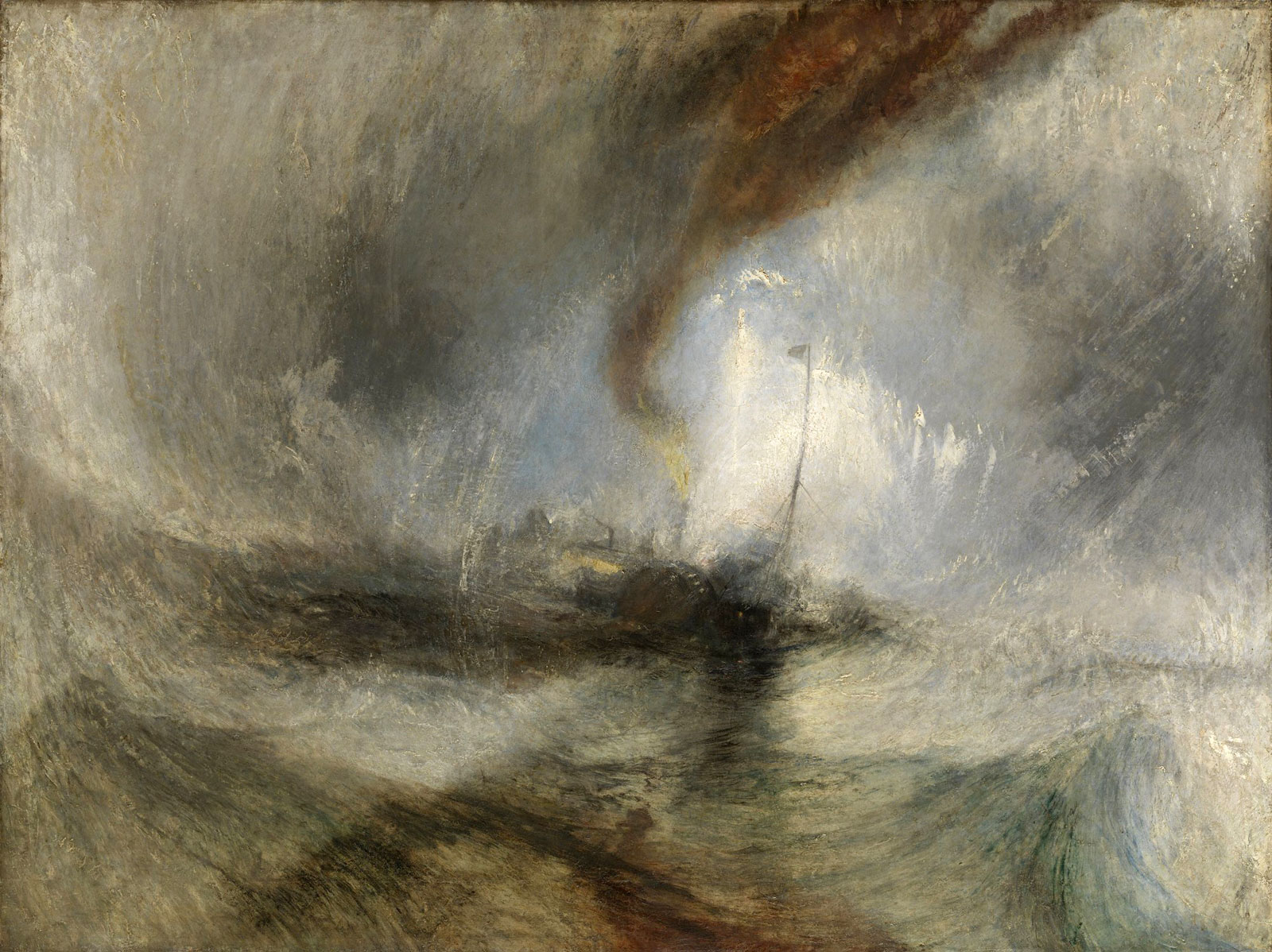
Joseph Mallord William Turner (British, 1775-1851) 'Snow Storm: Steam-Boat off a Harbour's Mouth' Exhibited 1842


Joseph Mallord William Turner (British, 1775-1851)
Snow Storm: Steam-Boat off a Harbour’s Mouth
Exhibited 1842
Oil on canvas
Unframed: 91.4 x 121.9cm (36 x 48 in.)
Tate: Accepted by the nation as part of the Turner Bequest 1856
Photo: © Tate, London 2014


No words are necessary.

Marcus


Many thankx to the J. Paul Getty Museum for allowing me to publish the photographs in the posting. Please click on the photographs for a larger version of the image.


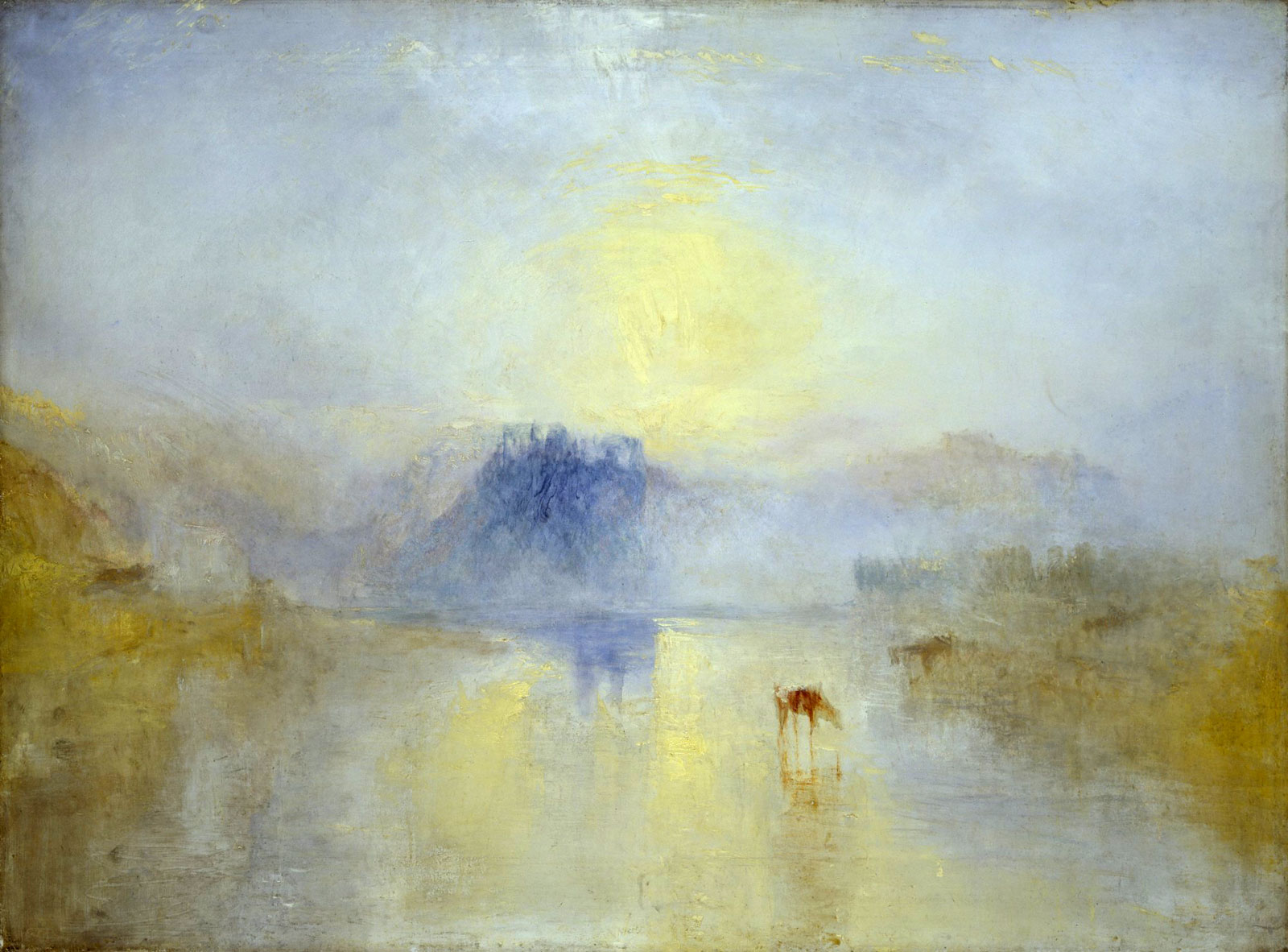
Joseph Mallord William Turner (British, 1775-1851) 'Norham Castle, Sunrise' About 1845


Joseph Mallord William Turner (British, 1775-1851)
Norham Castle, Sunrise
About 1845
Oil on canvas
Unframed: 90.8 x 121.9cm (35 3/4 x 48 in.)
Tate: Accepted by the nation as part of the Turner Bequest 1856
Photo: © Tate, London 2014


Turner first saw Norham, bordering Scotland on the river Tweed in Northumberland, in 1797. He was at the limits of his trip to northern England, when he also visited Buttermere, seen in the painting of nearly fifty years earlier shown nearby. After that first visit he made watercolours showing the ruin at sunrise, and visits in 1801 and 1831 resulted in further views. Here, finally, is one of a series of unfinished, unexhibited paintings reworking his monochrome Liber Studiorum landscape prints. Pure colours rather than contrasting tones express the blazing light as the historic building and landscape merge.


It is a hundred years since Turner’s painting, Norham Castle, Sunrise, went on display for the first time. The painting was among a group of twenty-one previously unknown, and essentially ‘unfinished’, canvases that were the focal point of a new Turner room inaugurated at the Tate Gallery (now Tate Britain) in February 1906.

These pictures had entered to the national collection in 1856, but remained uncatalogued. This was chiefly due to a lack of adequate hanging space for the many oil paintings in the collection. But a bigger issue was the concern that the images would not be properly understood by the public. Gallery officials themselves had serious reservations, considering them only ‘rude beginnings’ or even ‘mere botches’.

Consequently, it was not until 1906, when a new generation began to look at Turner afresh, that space was made for the first batch of pictures disinterred from the National Gallery’s basement. These revelatory ‘new’ works were quite unlike the detailed pictures that the artist had exhibited. Their unresolved brushwork and luminous palette seemed to confirm the patriotic belief that Turner (and John Constable) had paved the way for the French Impressionists.

During the last hundred years, Norham Castle has gradually become the embodiment of many ideas about Turner’s later style, above all, its reduction of content to a minimum giving emphasis to the play of colour and light. This display explores the origins of Turner’s interest in Norham Castle as a subject and charts the impact the picture has had during its recent history.

Norham Castle, Sunrise: from incomprehension to icon,” on the Tate website


Joseph Mallord William Turner (British, 1775-1851) 'Whalers', exhibited 1845


Joseph Mallord William Turner (British, 1775-1851)
Whalers
Exhibited 1845
Oil on canvas
Unframed: 91.1 x 121.9cm (35 7/8 x 48 in.)
Tate: Accepted by the nation as part of the Turner Bequest 1856
Photo: © Tate, London 2014


Continental Travels


Joseph Mallord William Turner (British, 1775-1851) 'The Dogano, San Giorgio, Citella from the Steps of the Europa' Exhibited 1842


Joseph Mallord William Turner (British, 1775-1851)
The Dogano, San Giorgio, Citella from the Steps of the Europa
Exhibited 1842
Oil on canvas
Unframed: 61.6 x 92.7cm (24 1/4 x 36 1/2 in.)
Tate: Presented by Robert Vernon 1847
Photo: © Tate, London 2014


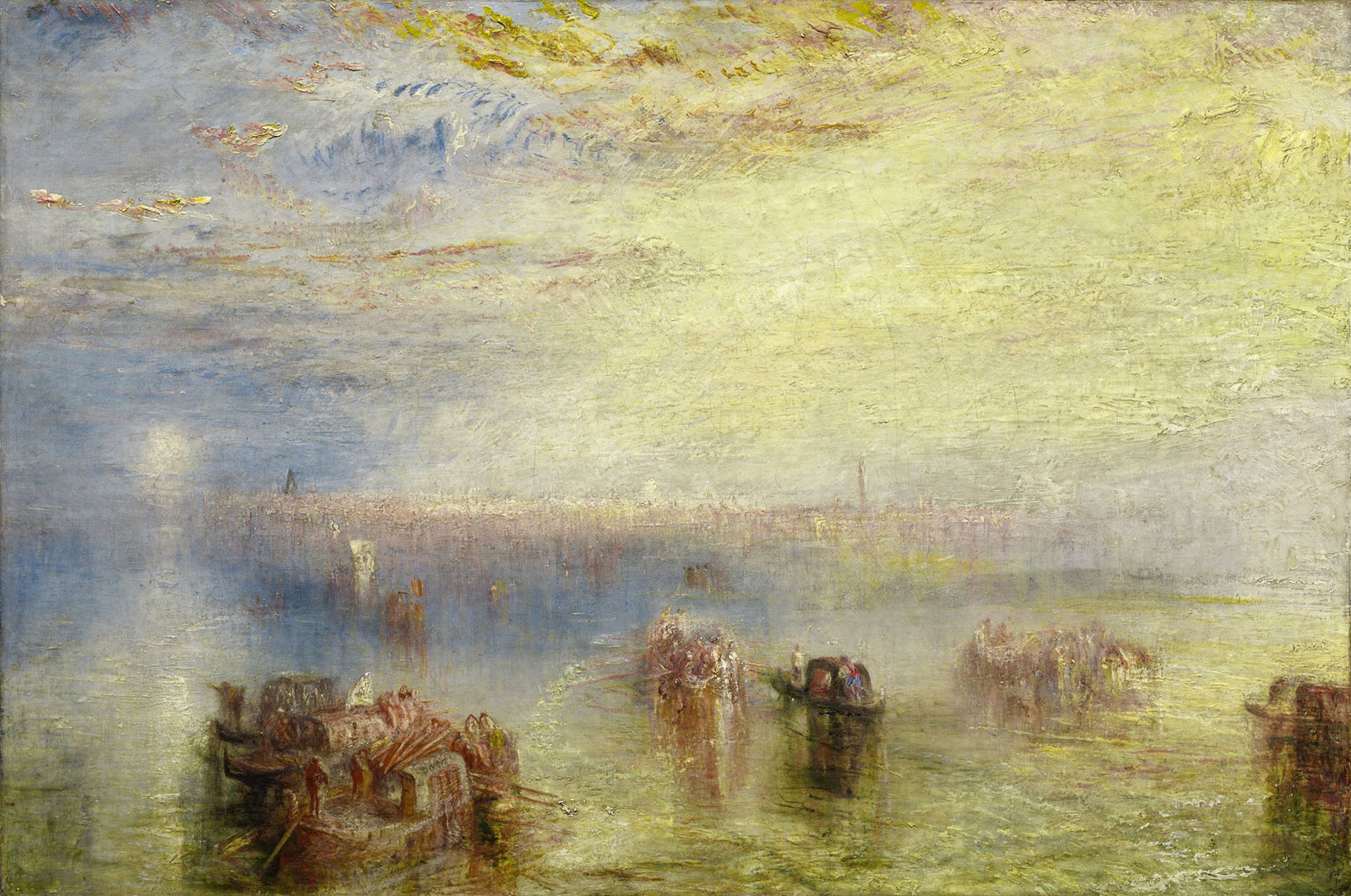
Joseph Mallord William Turner (British, 1775-1851) 'Approach to Venice' Exhibited 1844


Joseph Mallord William Turner (British, 1775-1851)
Approach to Venice
Exhibited 1844
Oil on canvas
Unframed: 62 x 94cm (24 7/16 x 37 in.)
National Gallery of Art, Washington, Andrew W. Mellon Collection
Image courtesy National Gallery of Art, Washington


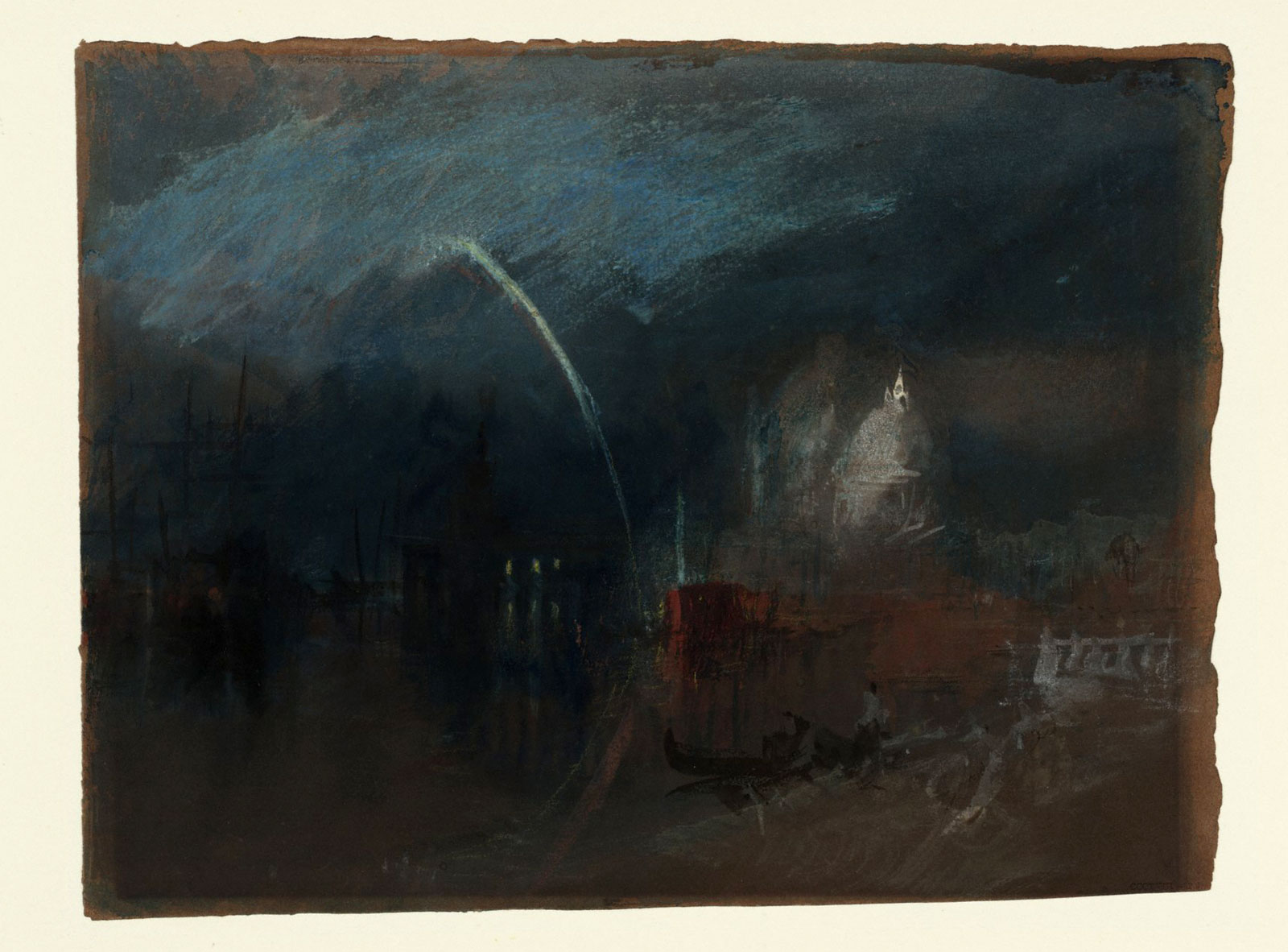
Joseph Mallord William Turner (British, 1775-1851) 'Venice: Santa Maria della Salute, Night Scene with Rockets' about 1840


Joseph Mallord William Turner (British, 1775-1851)
Venice: Santa Maria della Salute, Night Scene with Rockets
About 1840
Watercolour and bodycolor
Unframed: 24 x 31.5cm (9 7/16 x 12 3/8 in.)
Tate: Accepted by the nation as part of the Turner Bequest 1856
Photo: © Tate, London 2014


Joseph Mallord William Turner (British, 1775-1851) 'The Sun of Venice Going to Sea' Exhibited 1843


Joseph Mallord William Turner (British, 1775-1851)
The Sun of Venice Going to Sea
Exhibited 1843
Oil on canvas
Unframed: 61.6 x 92.1 cm (24 1/4 x 36 1/4 in.)
Tate: Accepted by the nation as part of the Turner Bequest 1856
Photo: © Tate, London 2014


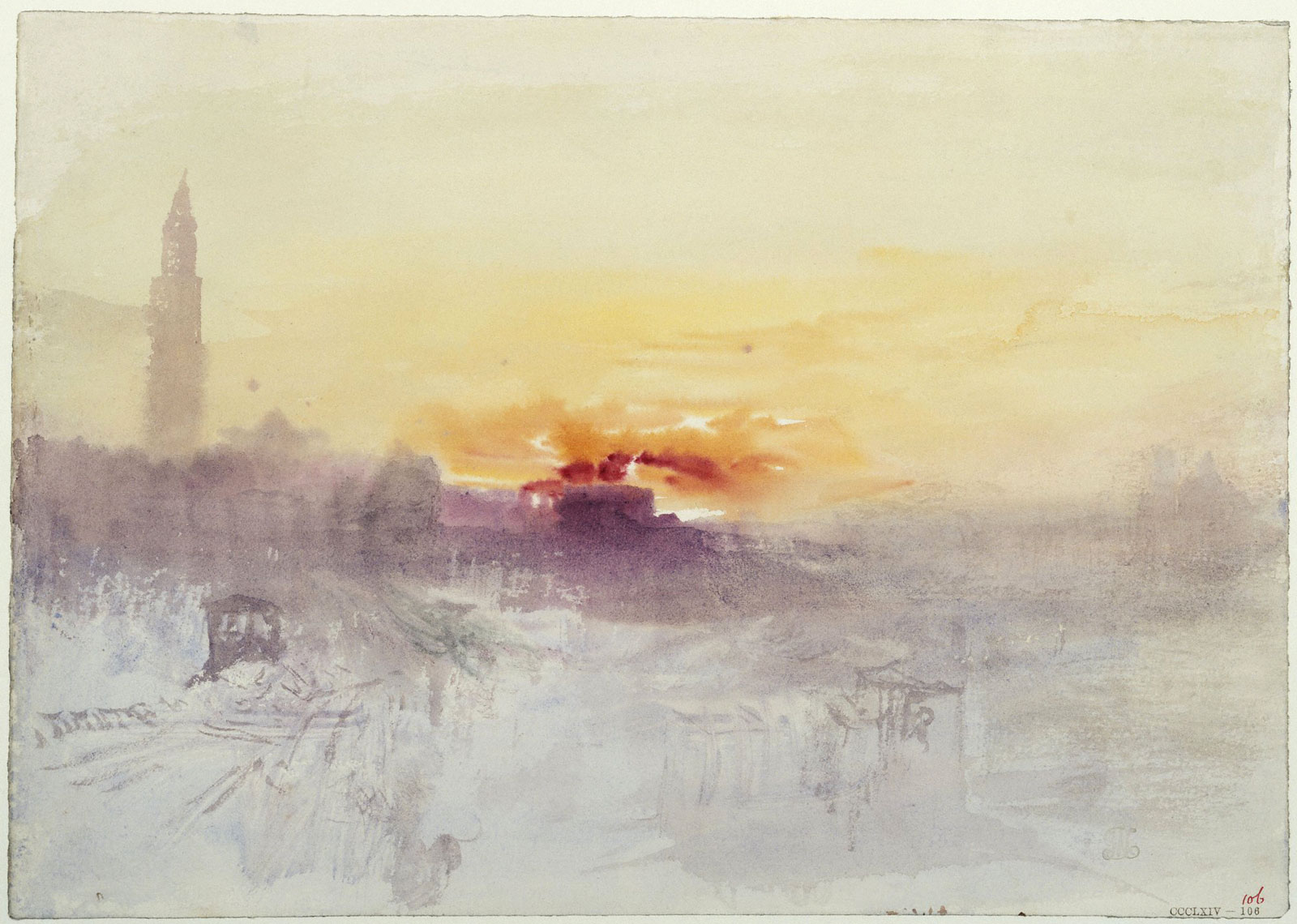
Joseph Mallord William Turner (British, 1775-1851) 'Venice at Sunrise from the Hotel Europa, with Campanile of San Marco' About 1840


Joseph Mallord William Turner (British, 1775-1851)
Venice at Sunrise from the Hotel Europa, with Campanile of San Marco
About 1840
Watercolor
Unframed: 19.8 x 28cm (7 13/16 x 11 in.)
Tate: Accepted by the nation as part of the Turner Bequest 1856
Photo: © Tate, London 2014


The large group of watercolours which resulted from Turner’s last visit to Venice in 1840 is characterised by a delicious liquidity which unifies air and water in layered, coloured mists. He stayed near the mouth of the Grand Canal at the Hotel Europe, from where he made sketches over the rooftops after dark. Alternatively, from a gongola off the great Piazzetta, he was able to see the sun set down the wide canal of the Giudecca.


Joseph Mallord William Turner (British, 1775-1851) 'Ehrenbreitstein' 1841


Joseph Mallord William Turner (British, 1775-1851)
Ehrenbreitstein
1841
Watercolour and pen and ink
Unframed: 23.7 x 30cm (9 5/16 x 11 13/16 in.)
Tate: Accepted by the nation as part of the Turner Bequest 1856
Photo: © Tate, London 2014


Joseph Mallord William Turner (British, 1775-1851) 'Rain Clouds' About 1845


Joseph Mallord William Turner (British, 1775-1851)
Rain Clouds
About 1845
Watercolour
Unframed: 29.1 x 44cm (11 7/16 x 17 5/16 in.)
Tate: Accepted by the nation as part of the Turner Bequest 1856
Photo: © Tate, London 2014


Joseph Mallord William Turner (British, 1775-1851) 'The Blue Rigi, Sunrise' 1842


Joseph Mallord William Turner (British, 1775-1851)
The Blue Rigi, Sunrise
1842
Watercolour
Unframed: 29.7 x 45cm (11 11/16 x 17 11/16 in.)
Tate: Purchased with assistance from the National Heritage Memorial Fund, the Art Fund (with a contribution from the Wolfson Foundation and including generous support from David and Susan Gradel, and from other members of the public through the Save the Blue Rigi appeal) Tate Members and other donors 2007
Photo: © Tate, London 2014


First major West Coast international loan exhibition focuses on Turner’s late work; Famed 19th-century master created many of his most renowned pieces after age 60.

One of the most influential painters of nature who ever lived, Joseph Mallord William Turner (English, 1775-1851) was especially creative and inventive in the latter years of his life, producing many of his most famous and important paintings after the age of 60. On view at the J. Paul Getty Museum February 24, 2015, through May 24, 2015, J.M.W. Turner: Painting Set Free brings together more than 60 key oil paintings and watercolours from this culminating period of his career, and is the West Coast’s first major exhibition of Turner’s work.

“J.M.W. Turner is the towering figure of British 19th century art, a ground-breaking innovator in his own day whose relevance and status as a seeming harbinger of 20th century ‘modernism; has made him an inspiration to generations of later artists up to the present day. A successful and well-known public figure in his own day, Turner produced some of his most innovative and challenging work during the last 16 years of his life,” explains Timothy Potts, director of the J. Paul Getty Museum. “He was frequently mocked and misunderstood for his choice of unusual subject matters, his experimentation with different canvas formats, and his pioneering free and spontaneous techniques in both oil and watercolour. While Turner could not knowingly have anticipated future artistic trends, he is seen today by many as a prophet of modernism because of his rough, gestural brushwork and quasi-abstract subject matter. His work captured the natural landscape’s atmosphere and colour like no other artist before him, and conveyed the awe-inspiring power of the elements as never before. This exhibition celebrates Turner as the most innovative and experimental artist of his time, and I have no doubt that it will be inspiring to a new generation of artists working in California today.”

“The exhibition shows an artist at the top of his game, totally at ease with his media, and still keen to push boundaries and challenge assumptions. We see how Turner was modern in his own time, but the results are astonishing even for us today,” said Julian Brooks, one of the exhibition curators.

The Sea

In his later years, Turner’s continuing fascination with the sea reached a zenith. Although he respected existing conventions of marine painting, particularly its 17th-century Dutch roots, he consistently moved beyond them, turning the water into a theatre for drama and effect. At the Royal Academy exhibitions, he confounded viewers with his bold portrayals of modern maritime action – whales and their hunters battling for survival – while striving to capture the mysterious depths and forces of the elements. Never having witnessed a whale hunt himself, he included a reference to “Beale’s Voyage” in the catalogues, acknowledging that his source of inspiration was Thomas Beale’s Natural History of the Sperm Whale (1839). (Herman Melville consulted the same book when writing Moby-Dick, published in 1851.)

The London press at the time greeted Turner’s whaling pictures, such as Hurrah! for the Whaler Erebus! Another Fish!, 1846, with scathing attacks, lambasting their yellow palette and lack of finish. The Almanack of the Month printed a cartoon of a Turner painting with a large mop and a bucket labeled “yellow,” and opined that his pictures resembled a lobster salad.

Travel

In addition to the sea, Turner’s insatiable appetite for history, different cultures, and sublime natural scenery drew him time and again to Continental Europe, where he observed not only spectacular sites such as ancient ruins, medieval castles, jagged mountain peaks, and meandering rivers, but also local customs and dress. On such travels he made numerous watercolour sketches, which effectively captured fleeting effects of nature on paper. These works display a complex layering of colour animated through the pulsing energy of turbulent handling. They demonstrate both Turner’s commitment to observed natural effects and his unwavering obsession with the vagaries and delights of watercolour, a medium he had indisputably made his own. Some of the finished watercolours he made for sale after his trips, such as The Blue Rigi, Sunrise, 1842, represent pinnacles in the use of watercolour technique.

Turner was especially captivated by the particular combination of light and colour he found in Venice, and revisited the city several times. He traveled lightly, usually alone, making few concessions to his age or failing strength, and drew constantly in his sketchbooks. Turner’s many images of Venice were among his most potent late works, influencing later artists such as James Abbott McNeill Whistler (American, 1834-1903) and Claude Monet (French, 1840-1926).

For Turner, watercolour was the perfect medium to capture Venice’s aqueous and luminous effects. While based on on-the-spot sketches done there in 1840, Turner’s later paintings of Venice drew out the city’s essence and spirit rather than its exact topography. His Venice was often touched with a melancholy that echoed the romantic fatalism popularised by writers such as Lord Byron, offering a warning from history to Britain’s rise as a commercial empire.

Poetry

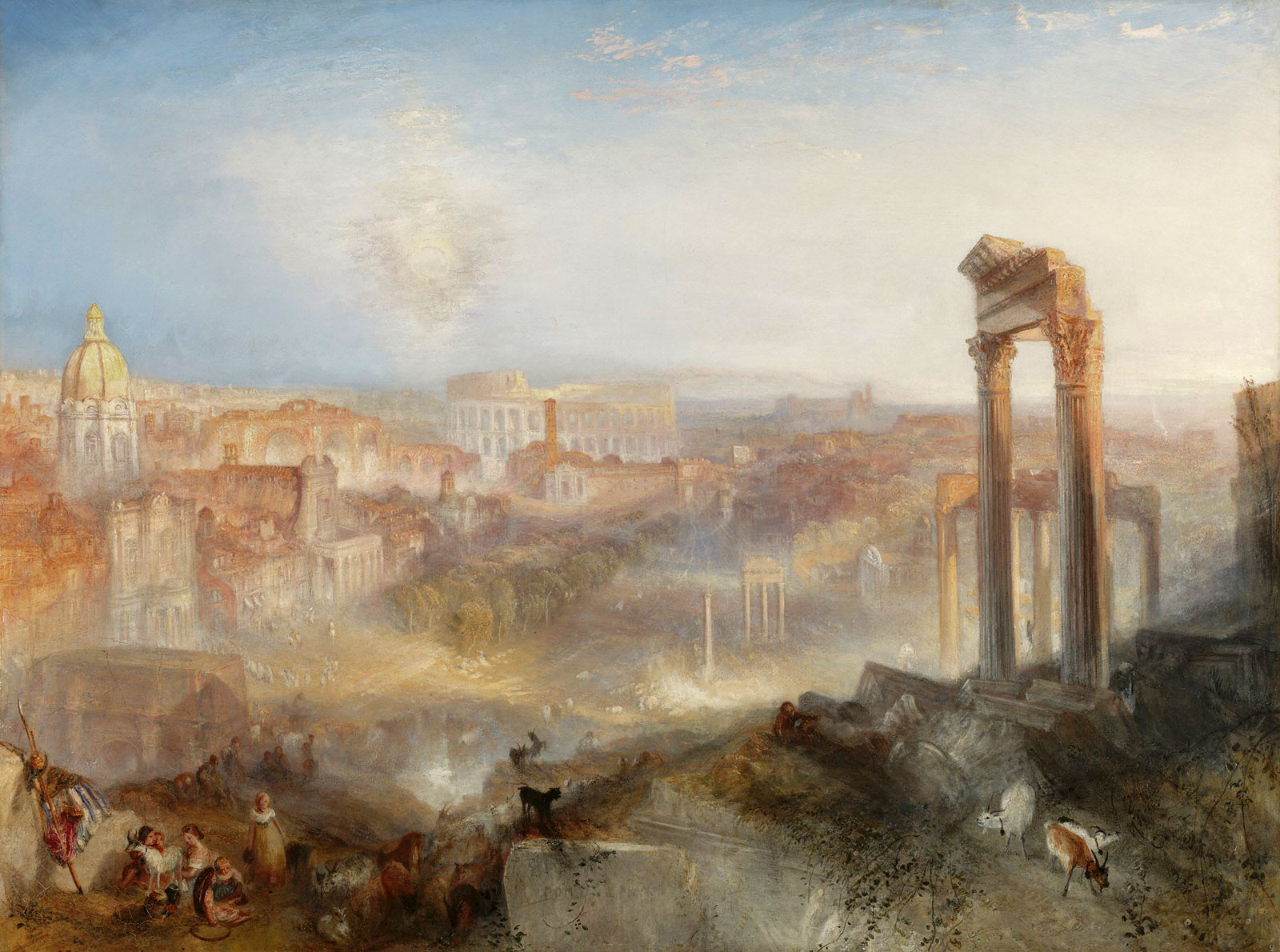
Turner was deeply interested in poetry and often paired his paintings with lines of text in order to elucidate their themes. In some cases he authored the poems himself but often he quoted celebrated 18th- and 19th-century British poets such as Thomas Gray and, most especially, Lord Bryon. Throughout the Getty exhibition, many of the lines of poetry or prose that he chose or wrote are reunited with his pictures on the gallery walls. For example, the lines “The moon is up, and yet it is not night/ The sun as yet disputes the day with her” from Byron’s Childe Harold’s Pilgrimage (1812-1818) were chosen, and slightly altered by Turner to accompany two paintings: Modern Rome – Campo Vaccino, exhibited 1839, and Approach to Venice, exhibited 1844, which both feature the setting sun and a rising moon but also evoke the rise and fall of empires.

Contemporary Events

Much of Tuner’s later work reflects on contemporary events including the modern state of Italy, the legacy of the Napoleonic Wars, and the spectacular fires that ravaged the Palace of Westminster and the Tower of London in 1834 and 1841, respectively. In addition, Turner was the first major European artist to engage with innovations such as steam power, as seen in Snow Storm: Steam-Boat off a Harbour’s Mouth, 1842, which shows this much-vaunted new technology at the mercy of the awesome power of the elements.

Technique

Perhaps nothing demonstrates Turner’s virtuosity as a painter better than the stories of his performances on “Varnishing Days.” The Royal Academy and the British Institution would set aside a short period of time for artists to put final touches on their work before an exhibition opened to the public. Turner revelled in the competitive jostling and repartee that occurred on these occasions. In his later years, he would frequently submit canvases with only the roughest indications of colour and form, speedily bringing them to completion on-site. Eyewitnesses record that Turner painted most of The Hero of a Hundred Fights, 1800-10, reworked and exhibited 1847, and Burning of the Houses of Lords and Commons, 16th October 1834, 1834-1835, on their respective varnishing days.

Pairs and Shapes

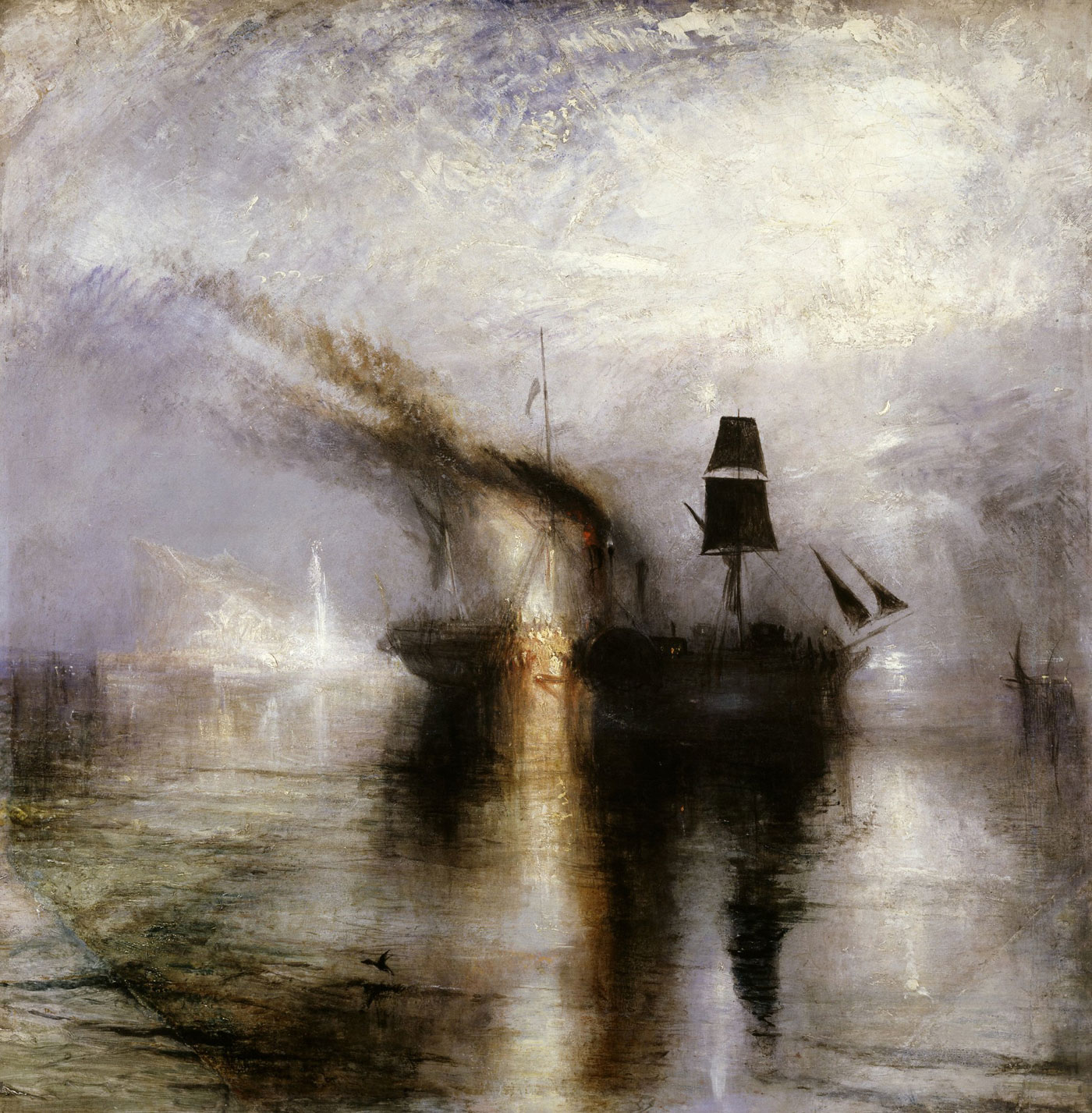
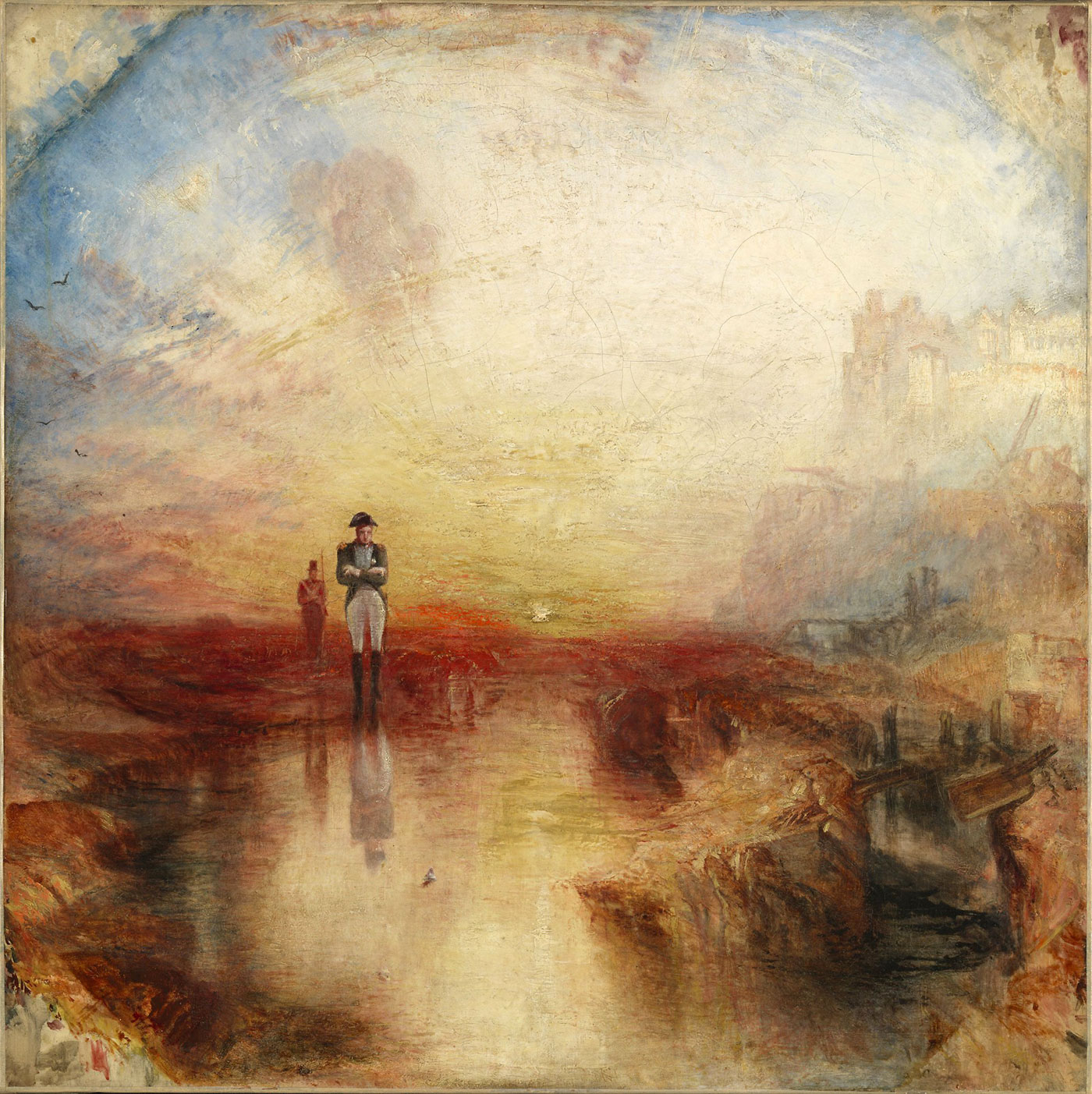
In his later years, Turner was as creative in his approach to media, materials, and techniques as he was in his choice of subject matter. He created works that offer some of his most dazzling displays of colour, audacious handling, and complex iconographies. From 1840 to 1846, the artist employed a smaller canvas size for a series of paintings, which were often conceived as pairs expressing opposites, such as two that were exhibited in 1842: Peace – Burial at Sea and War. The Exile and the Rock Limpet. These were principally square but could also be round or octagonal. Exploring states of consciousness, optics, and the emotive power of colour, they shocked and mystified his audience, who thought them the products of senility or madness. Painted near the end of his life, these inventive works are a coda to Turner’s career, representing a synthesis of his innovations in technique, composition and theme.

Turner died in 1851 at age 76, leaving the majority of his work to the English nation along with an intended bequest to support impoverished artists. In the years since, while popular and scholarly ideas about his work have changed, he inarguably emerges as one of the most beloved figures and popular painters in the history of the United Kingdom.

This exhibition was organised by Tate Britain in association with the J. Paul Getty Museum and the Fine Arts Museums of San Francisco. It is supported by an indemnity from the Federal Council on the Arts and the Humanities. The Getty Museum curators of the exhibition are Julian Brooks, curator of drawings, and Peter Björn Kerber, assistant curator of paintings.

The exhibition is accompanied by the publication J.M.W. Turner: Painting Set Free. Edited by David Blayney Brown, Amy Concannon, and Sam Smiles, this 250-page volume is richly illustrated.

~ Water, Wind, and Whales
~ Continental Travels
~ Contemporary Subjects
~ History, Myth, and Meaning
~ Pairs and Shapes


Press release from the J. Paul Getty Museum website


Contemporary Subjects


Joseph Mallord William Turner (British, 1775-1851) 'The Burning of the Houses of Lords and Commons, October 16, 1834' 1834-1835


Joseph Mallord William Turner (British, 1775-1851)
The Burning of the Houses of Lords and Commons, October 16, 1834
1834-1835
Oil on canvas
Unframed: 92.1 x 123.2cm (36 1/4 x 48 1/2 in.)
Philadelphia Museum of Art: The John Howard McFadden Collection, 1928


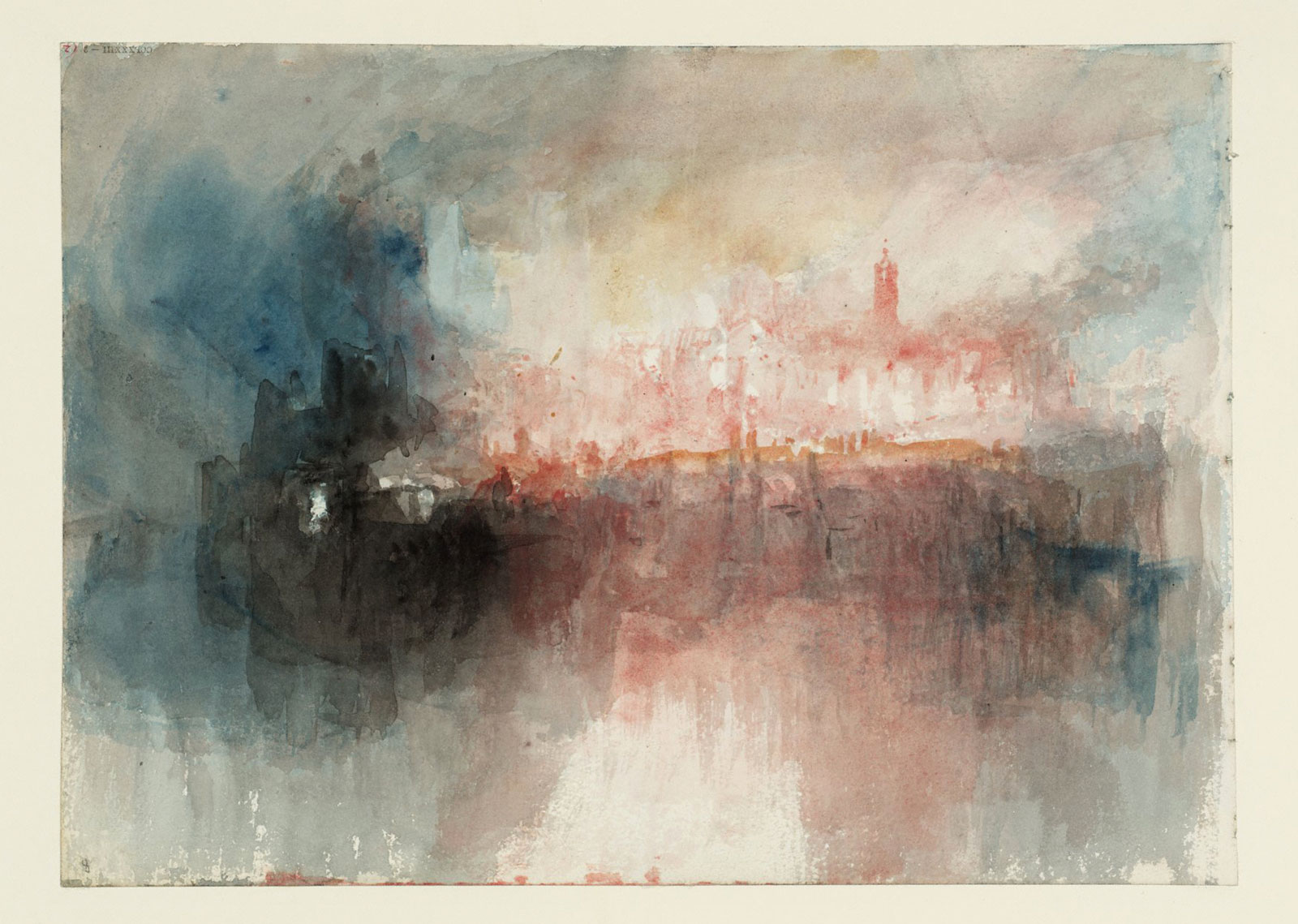
Joseph Mallord William Turner (British, 1775-1851) 'Fire at the Grand Storehouse of the Tower of London' 1841


Joseph Mallord William Turner (British, 1775-1851)
Fire at the Grand Storehouse of the Tower of London
1841
Watercolour
Unframed: 23.5 x 32.5cm (9 1/4 x 12 13/16 in.)
Tate: Accepted by the nation as part of the Turner Bequest 1856
Photo: © Tate, London 2014


This watercolour study was originally one of nine consecutive leaves (D27846 – D27854; Turner Bequest CCLXXXIII 1-9) in a sketchbook. They have previously been documented with varying degrees of certainty as showing the 1834 fire at the Houses of Parliament beside the River Thames in central London, but are here identified as representing the similarly large and dramatic fire which broke out at the moated Tower of London on 30 October 1841, destroying the late seventeenth-century Grand Storehouse (see the Introduction to the sketchbook for detailed discussion).

Conflagration of the Tower of London, on the Night of the 30th of October 1841, a colour lithograph published on 3 November of a view ‘drawn upon the spot by William Oliver’ (1804-1853) shows the Tower complex from the north, with flames and smoke pouring from the windows and rafters of the Grand Storehouse, largely obscuring the White Tower. This can be compared with the present work, the most precisely detailed of Turner’s studies in terms of architectural features. (See the Introduction for other comparisons between Turner’s studies and contemporary prints.) The pale blue form towards the left is presumably intended as the White Tower; otherwise lacking in detail, the inner faces of its corner turrets are shown receding in steep perspective, although in fact the north-west turret is cylindrical. Turner has included details of rafters, a pediment and what seems to be the clock tower of the Grand Storehouse (which fell in at quite an early stage of the fire), but it is not clear whether he intended to show the scene directly from the north, aligned directly on the façade of the storehouse, or obliquely from the north-east, which would explain the relative positions of the clock tower and the White Tower.

In addition to the newspaper stories extensively quoted in the sketchbook’s Introduction, the following details from the Times relate to the raising of the alarm late on the evening of Saturday 30 October:

[Sergeant] Edwards [‘of the 1st Battalion of Fusilier Guards’] states, that while he was in the Nag’s Head public-house, in Postern-row [opposite the north side of the Tower], he perceived, to his great surprise, a light through one of the windows, just above the bomb proof part of the Bowyer Tower. He went out and crossed to the railings at the top of the moat by which the Tower is surrounded, and watched the light for a minute or two. At first it appeared but little larger than the glimmer of a candle, but it suddenly increased to such an extent, that no doubt was left upon his mind that the place was on fire.1


The present Tower study is notable in being the only one of the nine to incorporate gouache: a touch of white is combined with scratching out to render a bright light through a window of the towers silhouetted towards the left. This may be an effect Turner observed or imagined, or perhaps the report caught his attention.

Addressing the sequence of studies in the context of the traditional former 1834 identification, Katherine Solender felt that only this and D27850, D27853 and D27854 included ‘shapes that can be remotely identified with the Parliamentary complex’, in this case possibly indicating the roof and lantern of Westminster Hall on the right, with the Towers of Westminster Abbey beyond to the left.2 In his extended catalogue entry for Turner’s painting The Burning of the House of Lords and Commons, 16th October, 1834, exhibited at the British Institution in 1835 (Philadelphia Museum of Art),3 Richard Dorment presented a sustained interpretation of the this and the other eight watercolour studies in terms of a sequence reflecting the topography and chronology of the 1834 Westminster fire.4

Matthew Imms, April 2014 from catalogue entry to David Blayney Brown (ed.), J.M.W. Turner: Sketchbooks, Drawings and Watercolours, September 2014

1/ ‘The Tower of London. Destructive Conflagration. (Additional Particulars.)’, The Times, Tuesday 2 November 1841, p. 5.
2/ Solender 1984, pp. 50-1; see also Lyles 1992, p. 72.
3/ Martin Butlin and Evelyn Joll, The Paintings of J.M.W. Turner, revised ed., New Haven and London 1984, pp. 207-10 no. 359, pl. 364 (colour).
4/ Dorment 1986, pp. 400-1; see also Lyles 1992, p. 72.


Joseph Mallord William Turner (British, 1775-1851) 'The Hero of a Hundred Fights' About 1800 - 1810, reworked and exhibited 1847


Joseph Mallord William Turner (British, 1775-1851)
The Hero of a Hundred Fights
About 1800-1810, reworked and exhibited 1847
Oil on canvas
Unframed: 90.8 x 121.3cm (35 3/4 x 47 3/4 in.)
Framed: 127.5 x 158.5 x 18cm (50 3/16 x 62 3/8 x 7 1/16 in.)
Tate: Accepted by the nation as part of the Turner Bequest 1856
Photo: © Tate, London 2014


This canvas was originally an exploration of industrial machinery, but it was reworked to show the moment when a bronze statue of the Duke of Wellington was removed from its mould. Using the intense light of the foundry to obscure the figure, Turner transforms Wellington into an ethereal presence. The image is in stark contrast to Turner’s carefully researched battle scenes. Here, tone and colour are employed to endow a national hero with elemental force.


Joseph Mallord William Turner (British, 1775-1851) 'The Disembarkation of Louis-Philippe at the Royal Clarence Yard, Gosport, 8 October 1844' About 1844-1845


Joseph Mallord William Turner (British, 1775-1851)
The Disembarkation of Louis-Philippe at the Royal Clarence Yard, Gosport, 8 October 1844
About 1844-1845
Oil on canvas
Unframed: 90.8 x 121.3cm (35 3/4 x 47 3/4 in.)
Framed: 128.4 x 159 x 8.3cm (50 9/16 x 62 5/8 x 3 1/4 in.)
Tate: Accepted by the nation as part of the Turner Bequest 1856
Photo: © Tate, London 2014


Turner visited Portsmouth to record the arrival of the French king, who was on a State Visit. He made numerous sketches of the event and also painted two unfinished oils: one showing the king’s arrival, the other his disembarkation. Both are principally concerned with the atmosphere of the occasion, concentrating on the crowd of onlookers. Turner had met Louis-Philippe when the king was living in exile at Twickenham in the 1810s. Contact between them was renewed in the mid-1830s and he was invited to dine with him at his château at Eu in 1845.


History, Myth, and Meaning


Joseph Mallord William Turner (British, 1775-1851) 'Regulus' 1828, reworked 1837


Joseph Mallord William Turner (British, 1775-1851)
Regulus
1828, reworked 1837
Oil on canvas
Unframed: 89.5 x 123.8cm (35 1/4 x 48 3/4 in.)
Framed: 113.5 x 146 x 9.3cm (44 11/16 x 57 1/2 x 3 11/16 in.)
Tate: Accepted by the nation as part of the Turner Bequest 1856
Photo: © Tate, London 2014


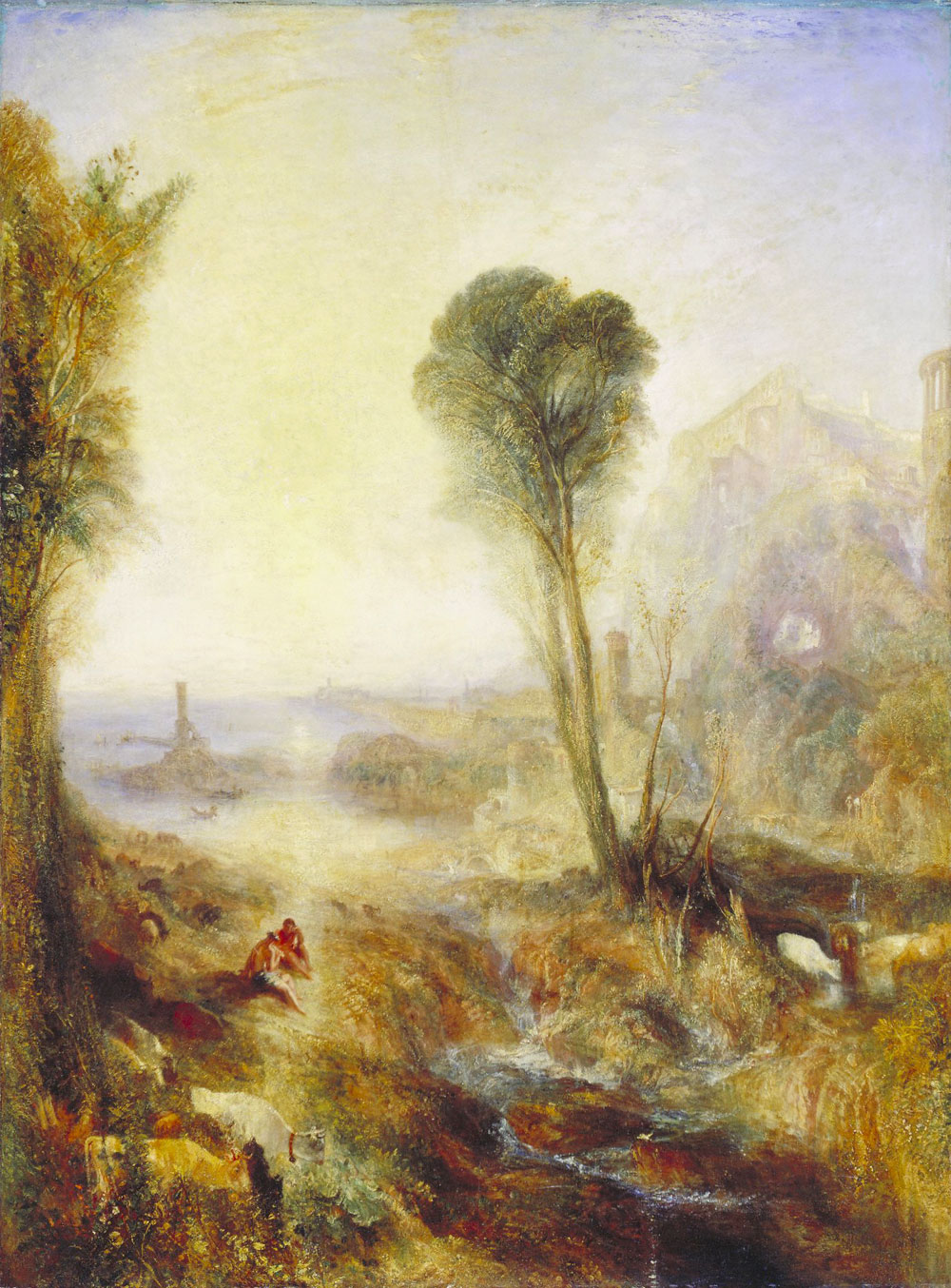
Joseph Mallord William Turner (British, 1775-1851) 'Mercury Sent to Admonish Aeneas' Exhibited 1850


Joseph Mallord William Turner (British, 1775-1851)
Mercury Sent to Admonish Aeneas
Exhibited 1850
Oil on canvas
Unframed: 90.2 x 120.6cm (35 1/2 x 47 1/2 in.)
Framed: 129.6 x 160.7 x 18.5cm (51 x 63 1/4 x 7 5/16 in.)
Tate: Accepted by the nation as part of the Turner Bequest 1856


Joseph Mallord William Turner (British, 1775-1851) 'Mercury and Argus' Before 1836


Joseph Mallord William Turner (British, 1775-1851)
Mercury and Argus
Before 1836
Oil on canvas
Unframed: 151.8 x 111.8cm (59 3/4 x 44 in.)
National Gallery of Canada, Ottawa, Purchased 1951
Photo: © National Gallery of Canada


Pairs and Shapes


Joseph Mallord William Turner (British, 1775-1851) 'Peace – Burial at Sea' Exhibited 1842


Joseph Mallord William Turner (British, 1775-1851)
Peace – Burial at Sea
Exhibited 1842
Oil on canvas
Unframed: 87 x 86.7cm (34 1/4 x 34 1/8 in.)
Tate: Accepted by the nation as part of the Turner Bequest 1856
Photo: © Tate, London 2014


Joseph Mallord William Turner (British, 1775-1851) 'War. The Exile and the Rock Limpet' Exhibited 1842


Joseph Mallord William Turner (British, 1775-1851)
War. The Exile and the Rock Limpet
Exhibited 1842
Oil on canvas
Unframed: 79.4 x 79.4cm (31 1/4 x 31 1/4 in.)
Tate: Accepted by the nation as part of the Turner Bequest 1856
Photo: © Tate, London 2014


Joseph Mallord William Turner (British, 1775-1851) 'Light and Color (Goethe's Theory) – The Morning After the Deluge – Moses Writing the Book of Genesis' Exhibited 1843


Joseph Mallord William Turner (British, 1775-1851)
Light and Color (Goethe’s Theory) – The Morning After the Deluge – Moses Writing the Book of Genesis
Exhibited 1843
Oil on canvas
Unframed: 78.7 x 78.7cm (31 x 31 in.)
Framed: 103.5 x 103.5 x 12cm (40 3/4 x 40 3/4 x 4 3/4 in.)
Tate: Accepted by the nation as part of the Turner Bequest 1856
Photo: © Tate, London 2014


The nine finished paintings are being shown in a dedicated room of the exhibition which brings new perspectives on Turner’s work during the final period of his life. At the time of their creation Turner’s square canvases were his most controversial and they were famously subjected to a hail of abuse in the press. Even Ruskin, a devoted fan, described Turner’s work by 1846 as ‘indicative of mental disease’. The show will reposition Turner in his old age as a challenging and daring artist who continued his lifelong engagement with the changing world around him right up until his death in 1851.

When Turner began painting on square canvases in the later years of his life between 1840 and 1846 they were a new format for the artist to be working in. In works known as Shade and Darkness and Light and Colour, both exhibited 1843, it can be seen how Turner developed his dramatic use of the vortex, a technique characteristic in his later work.

The display of the square canvases, along with one unfinished square composition, has been made possible by the important loans of Glaucus and Scylla 1841 (Kimbell Art Museum, Fort Worth, USA), and Dawn of Christianity 1841 (Ulster Museum, Belfast, UK). The group of works includes some of Turner’s most iconic pairings such as Peace andWar, both exhibited 1842 (Tate). The exhibition as a whole will also include a number of pairings from throughout this period of his life, showing Turner’s fondness for working in sets or sequences in his old age.

“Turner’s controversial square canvases to be brought together for the first time,” from the Tate website 13 March 2014


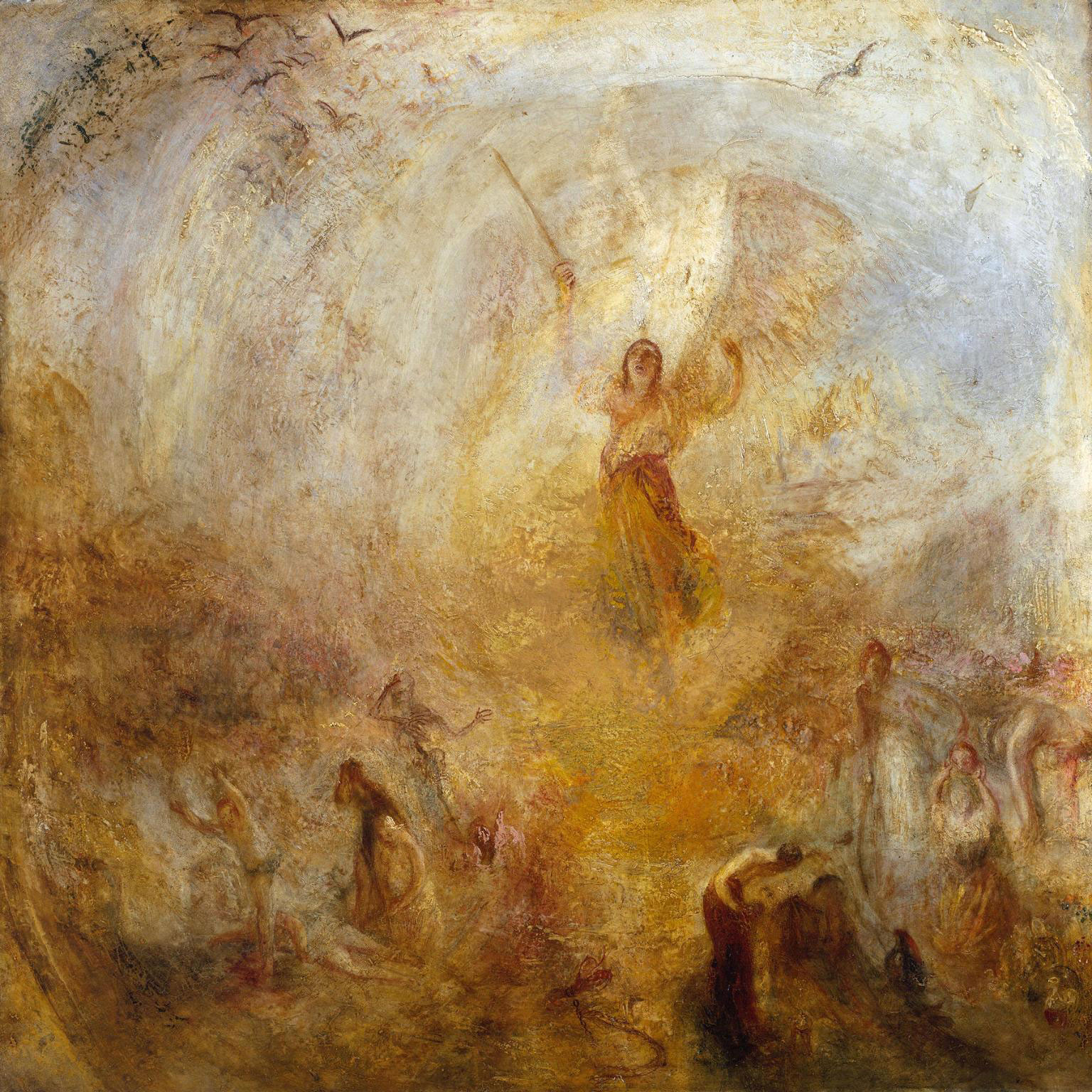
Joseph Mallord William Turner (British, 1775-1851) 'The Angel Standing in the Sun' Exhibited 1846


Joseph Mallord William Turner (British, 1775-1851)
The Angel Standing in the Sun
Exhibited 1846
Oil on canvas
Unframed: 78.7 x 78.7cm (31 x 31 in.)
Framed: 103.5 x 103.5 x 12cm (40 3/4 x 40 3/4 x 4 3/4 in.)
Tate: Accepted by the nation as part of the Turner Bequest 1856
Photo: © Tate, London 2014


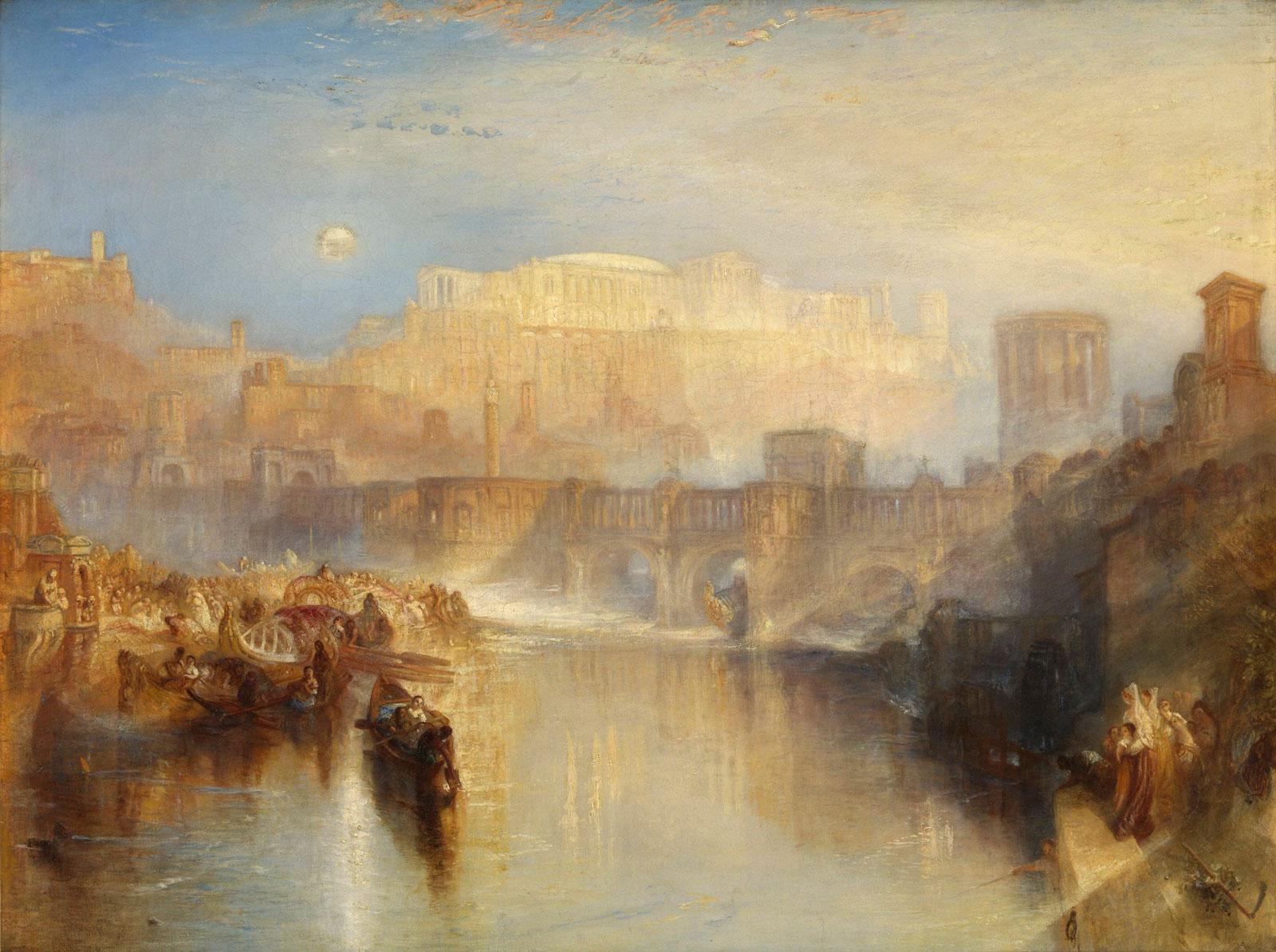
Joseph Mallord William Turner (British, 1775-1851) 'Ancient Rome: Agrippina Landing with the Ashes of Germanicus' Exhibited 1839


Joseph Mallord William Turner (British, 1775-1851)
Ancient Rome: Agrippina Landing with the Ashes of Germanicus
Exhibited 1839
Oil on canvas
Unframed: 91.4 x 121.9cm (36 x 48 in.)
Tate: Accepted by the nation as part of the Turner Bequest 1856
Photo: © Tate, London 2014


Joseph Mallord William Turner (British, 1775-1851) 'Modern Rome – Campo Vaccino' 1839


Joseph Mallord William Turner (British, 1775-1851)
Modern Rome – Campo Vaccino
1839
Oil on canvas
Unframed: 91.8 x 122.6cm (36 1/8 x 48 1/4 in.)
The J. Paul Getty Museum, Los Angeles


The J. Paul Getty Museum
1200 Getty Center Drive
Los Angeles, California 90049

Opening hours:
Daily 10am – 5pm

The J. Paul Getty Museum website

LIKE ART BLART ON FACEBOOK

Back to top

Exhibition: ‘In Focus: Play’ at the J. Paul Getty Museum at the Getty Center, Los Angeles

Exhibition dates: 23rd December 2014 – 10th May 2015

Curator: organised by assistant curator Arpad Kovacs in the Department of Photographs at the J. Paul Getty Museum
 

Herman F. Nielson (American, active Niagara Falls, New York 1883 - early 1900s) 'View of Niagara Falls in Winter' c. 1885


Herman F. Nielson (American, active Niagara Falls, New York 1883 – early 1900s)
View of Niagara Falls in Winter
c. 1885
Gelatin silver print
19.1 x 24.3cm (7 1/2 x 9 9/16 in.)
The J. Paul Getty Museum, Los Angeles


The J. Paul Getty Museum always puts on the most interesting photography exhibitions. This looks to be no exception.

Marcus


Many thankx to the J. Paul Getty Museum for allowing me to publish some of the photographs in the posting. Please click on the photographs for a larger version of the image.


Platt D. Babbitt (American, 1823-1879, active Niagara Falls, New York 1853-1870) '[Scene at Niagara Falls]' c. 1855


Platt D. Babbitt (American, 1823-1879, active Niagara Falls, New York 1853-1870)
[Scene at Niagara Falls]
c. 1855
Whole plate daguerreotype
The J. Paul Getty Museum
CC This work is in the public domain


In the 1800s Prospect Point at Niagara Falls was a popular destination for travellers in search of a transcendent encounter with nature. The falls were revered as a sacred place that was recognised by the Catholic Church in 1861 as a “pilgrim shrine,” where the faithful could contemplate the landscape as an example of divine majesty. Two well-dressed couples are seen from behind as they stand on the shore downstream from the falls, gazing at its majestic splendour. The silhouetted forms – women wearing full skirts and bonnets and carrying umbrellas and men in stovepipe hats – are sharply outlined against the patch of shore and expansive, white foam. Platt D. Babbitt would customarily set up his camera in an open-sided pavilion and photograph groups of tourists admiring the falls without their knowledge, as he appears to have done here. Later he would sell the unsuspecting subjects their daguerreotype likenesses alongside the natural wonder.


Roger Fenton (English, 1819-1869) 'The Billiard Room, Mentmore' c. 1858


Roger Fenton (English, 1819-1869)
The Billiard Room, Mentmore
c. 1858
Albumen silver print
Height: 303mm (11.93 in)
Width: 306mm (12.05 in).
The J. Paul Getty Museum
CC This work is in the public domain


A group of fashionable men and women enjoy a game of billiards in a richly furnished salon. The recently completed billiards room, which was designed as a conservatory, is flooded with sunlight, illuminating the lavish interior and creating a dramatic pattern of light and shadows. Indoor photography was rare in the mid-1800s, but the abundance of light and Fenton’s skill with the wet-collodion process created a remarkably detailed portrait of the space and its inhabitants. Behind the woman standing in the doorway at the very far end of the salon, a marble bust, mantelpiece, and mirror can be seen in an adjacent room.

Mentmore House was a country residence of the wealthy Rothschild family, but little is known as to how Fenton came to photograph its interior or who the depicted individuals might be. Fenton accepted commissions to document several other country homes, and his surviving photographs of Mentmore House – both interior and exterior views – may have formed part of a commissioned album. Like Fenton’s Orientalist scenes, this image reveals a high degree of staging. Only one figure actually holds a cue stick, and several of the women wear hats that seem unusual for the indoor setting.


Camille Silvy (French, 1834-1910, active in London) 'Group of their Royal Highnesses the Princess Clementine de Saxe Cobourg Gotha, her Sons and Daughter, the Duke d'Aumale, the Count d'Eu, the Duke d'Alencon, and the Duke de Penthievre [in England]' 1864


Camille Silvy (French, 1834-1910, active in London)
Group of their Royal Highnesses the Princess Clementine de Saxe Cobourg Gotha, her Sons and Daughter, the Duke d’Aumale, the Count d’Eu, the Duke d’Alencon, and the Duke de Penthievre [in England]
1864
Albumen silver print
10.2 x 17cm (4 x 6 11/16 in.)


Camille Silvy (French, 1834-1910, active in London) 'Group of their Royal Highnesses the Princess Clementine de Saxe Cobourg Gotha, her Sons and Daughter, the Duke d'Aumale, the Count d'Eu, the Duke d'Alencon, and the Duke de Penthievre [in England]' 1864 (detail)


Camille Silvy (French, 1834-1910, active in London)
Group of their Royal Highnesses the Princess Clementine de Saxe Cobourg Gotha, her Sons and Daughter, the Duke d’Aumale, the Count d’Eu, the Duke d’Alencon, and the Duke de Penthievre [in England] (detail)
1864
Albumen silver print
10.2 x 17cm (4 x 6 11/16 in.)


Man Ray (American, 1890-1976) '[Marcel Duchamp and Raoul de Roussy de Sales Playing Chess]' 1925


Man Ray (American, 1890-1976)
[Marcel Duchamp and Raoul de Roussy de Sales Playing Chess]
1925
Gelatin silver print
16.7 x 22.5cm (6 9/16 x 8 7/8 in.)
The J. Paul Getty Museum, Los Angeles
© Man Ray Trust ARS-ADAGP


Weegee (Arthur Fellig) (American born Austria, 1899-1968) '[Summer, The Lower East Side, New York City]' Summer 1937


Weegee (Arthur Fellig) (American born Austria, 1899-1968)
[Summer, The Lower East Side, New York City]
Summer 1937
Gelatin silver print 26.5 x 33.3cm (10 7/16 x 13 1/8 in.)
The J. Paul Getty Museum, Los Angeles
© International Center of Photography


André Kertész (American born Hungary, 1894-1985) '[Underwater Swimmer]' Negative 1917; print 1970s


André Kertész (American born Hungary, 1894-1985)
[Underwater Swimmer]
Negative 1917; print 1970s
Gelatin silver print 17 x 24.7cm (6 11/16 x 9 3/4 in.)
The J. Paul Getty Museum, Los Angeles
© Estate of André Kertész


In Focus: Play, on view at the J. Paul Getty Museum at the Getty Center from December 23, 2014 through May 10, 2015, presents photographs that explore how notions of leisure and play have been represented over the course of the medium’s history. The nearly thirty works from the Museum’s permanent collection highlight a wide range of amusing activities, from quiet games like chess to more boisterous forms of recreation like skateboarding and visits to amusement parks and circuses. All of the photographs included in the exhibition illustrate the many ways people have chosen to spend their free time. The images also demonstrate inventive and improvised approaches, like unusual vantage points and jarring juxtapositions that photographers have employed to help capture the spontaneity of playfulness.

Organised by assistant curator Arpad Kovacs in the Department of Photographs at the J. Paul Getty Museum, this exhibition spans almost 175 years of the medium’s history and features the work of a variety of well-known and lesser-known photographers, including Diane Arbus, Henri Cartier-Bresson, Imogene Cunningham, Larry Fink, T. Lux Feininger, Roger Fenton, Andre Kertész, Man Ray, Alexander Rodchenko, Masato Seto, Camille Silvy, and Weegee, among others.

“Capturing our everyday lives has been one of photography’s central themes ever since its invention in the mid-nineteenth century,” says Timothy Potts, Director of the J. Paul Getty Museum. “So it is no surprise that images of people playing games and having fun is a rich seam within the history of photography that this exhibition and accompanying book bring to life brilliantly. This is photography at its entertaining and uplifting best.”

The introduction of photography in 1839 coincided with a bourgeoning culture of leisure. Changes in working and living conditions brought on by the Industrial Revolution created an unprecedented amount of free time for large numbers of people in Europe and the United States. In the 1850s, photographic studios began to capitalize on the development and growth of the tourism industry, promoting recreation as a photographic subject. Technological advancements in film and camera equipment during the early twentieth century facilitated the recording of dynamic activities such as sports and visits to amusement parks. Domestic and public spaces alike became sites where people performed for the camera and documented a break from daily routines.

During the nineteenth century, the eminent photographer Roger Fenton, who was widely recognised for visually documenting the Crimean War (1853-1856), also photographed intimate scenes that reflected casual pastimes. Included in the exhibition is his photograph from 1858 entitled, The Billiard Room, Mentmore House, in which a group of six people act out a scene of domestic amusement in a billiard room lined with a row of large windows.

The desire for pictures of everyday life flourished during the early twentieth-century. The illustrated press, which had grown in popularity in the United States and Europe since the 1920s, was especially interested in photographs of recreation and leisure. Photojournalists often searched for high-impact images that could tell compelling or amusing stories. Weegee (Arthur Fellig), a well-known tabloid photographer, kept his camera focused on New York City’s neighbourhoods. In the photograph Summer, Lower East Side, New York City, 1937, he recorded the ecstatic faces of boys and girls cooling off in the water from an open fire hydrant as they briefly co-opted a street for their own delight.

Tourist destinations with sweeping vistas, like Niagara Falls and Yosemite Valley, had been attracting photographers continuously since the 1850s. In a 1980 photograph from his Sightseer series, Roger Minick comments on the phenomenon of taking in the sights through visual juxtaposition. A tourist, seen from behind, obstructs the famous view of Yosemite Valley from Inspiration Point, a spot that is practically synonymous with photography. The woman wears a souvenir headscarf illustrated with views of the valley, underscoring the commodification of nature that pervades modern life.

In the 1990s, the photographer Lauren Greenfield began an ambitious project documenting various subcultures in Los Angeles. These works examine the social pecking order and rites of passage associated with youth culture. In her photograph “Free Sex” Party Crew Party, East Los Angeles, 1993, one gets a glimpse into the potential dangers associated with these wild demonstrations of unrestricted freedom and machismo.

“The photographs chosen for this exhibition demonstrate the wide range of approaches photographers have employed to capture people at play, along with a variety of sites that have traditionally signalled leisure and entertainment,” said Kovacs. “Visiting a museum would be included on that list of leisure-time activities. I can’t think of a better way to spend an afternoon.”

In Focus: Play is on view at the J. Paul Getty Museum at the Getty Center beginning December 23, 2014, through May 10, 2015.

Press release from the J. Paul Getty Museum


Unknown photographer. '[Barnum and Bailey Circus Tent in Paris, France]' 1901-1902


Unknown photographer
[Barnum and Bailey Circus Tent in Paris, France]
1901-1902
Gelatin silver print
22.2 x 58.1cm (8 3/4 x 22 7/8 in.)
The J. Paul Getty Museum, Los Angeles
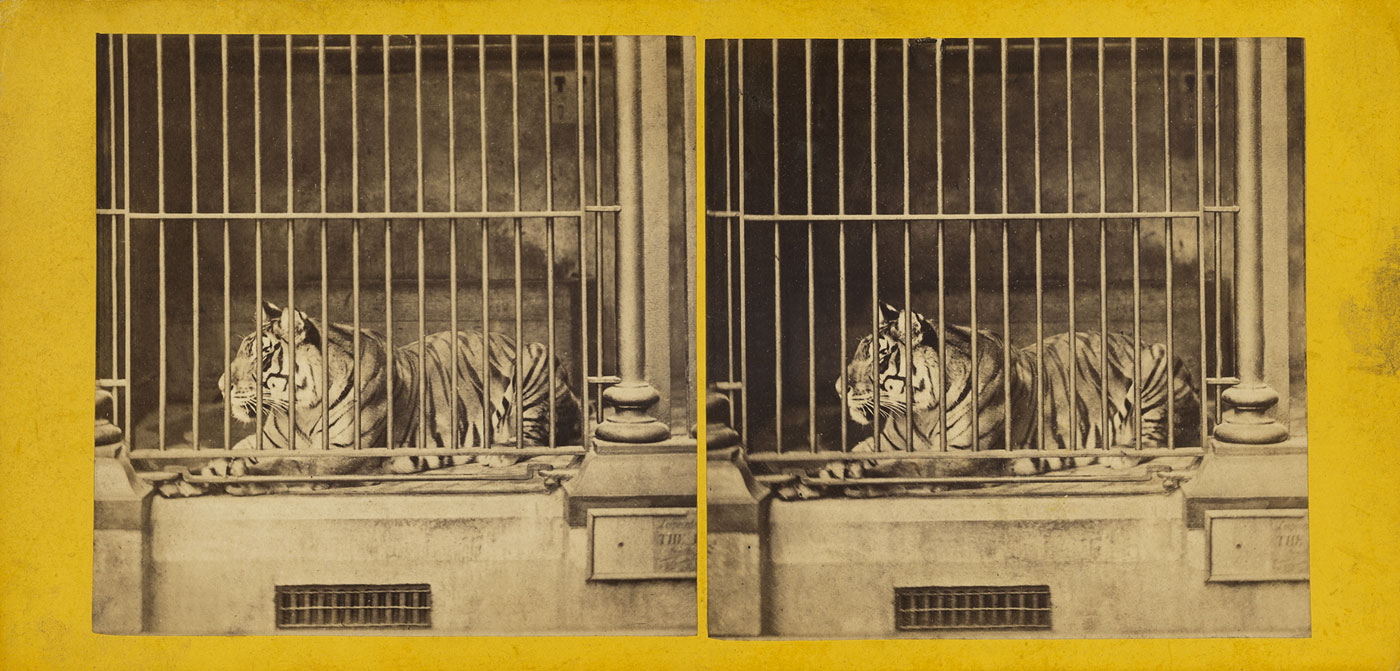
 

Max Yavno (American, 1911-1985) 'Card Players, Los Angeles, California' 1949


Max Yavno (American, 1911-1985)
Card Players, Los Angeles, California
1949
Gelatin silver print
26.5 x 27.9cm
© 1988 Center for Creative Photography, The University of Arizona Foundation


Joe Schwartz (American, 1913-2013) 'East L.A. Skateboarders' 1950s


Joe Schwartz (American, 1913-2013)
East L.A. Skateboarders
1950s
Toned gelatin silver print
30.2 x 39cm (11 7/8 x 15 3/8 in.)
The J. Paul Getty Museum, Los Angeles
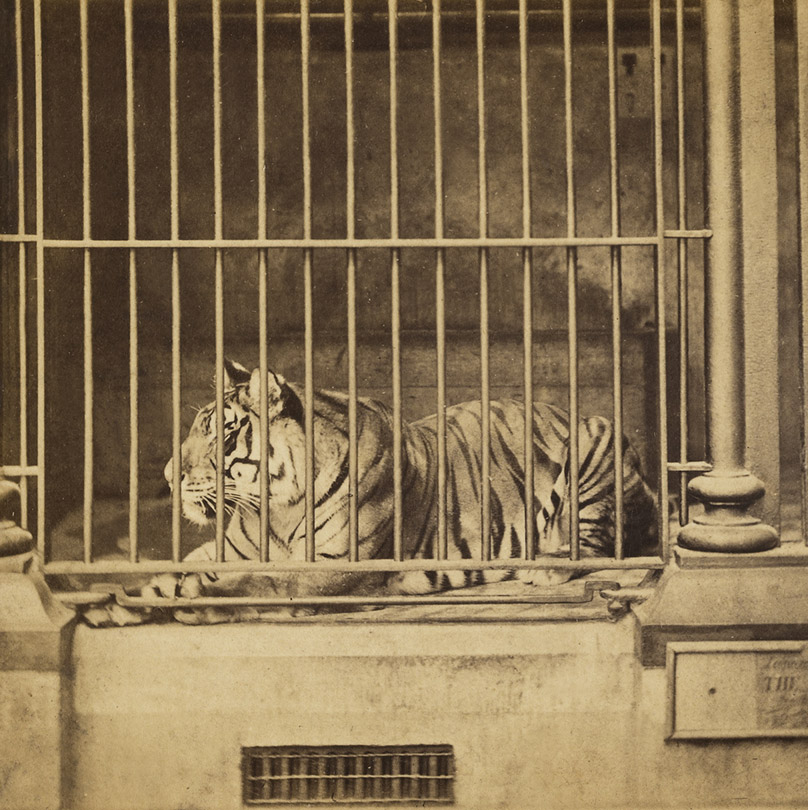
© Joe Schwartz


Bill Owens (American, b. 1938) 'Untitled (Swimming Pool)' 1973 or before


Bill Owens (American, b. 1938)
Untitled (Swimming Pool)
1973 or before
Gelatin silver print
17.1 x 21.5cm (6 3/4 x 8 7/16 in.)
The J. Paul Getty Museum, Los Angeles, Gift of Robert Harshorn Shimshak and Marion Brenner
© Bill Owens


Hiromi Tsuchida (Japanese, b. 1939) 'Counting Grains of Sand, Tsuruga' Negative 1985; print May 15, 1990


Hiromi Tsuchida (Japanese, b. 1939)
Counting Grains of Sand, Tsuruga
Negative 1985; print May 15, 1990
Gelatin silver print
28.1 x 42.5cm (11 1/16 x 16 3/4 in.)
The J. Paul Getty Museum, Los Angeles
© Hiromi Tsuchida


Roger Minick (American, b. 1944) 'Woman with Scarf at Inspiration Point, Yosemite National Park' 1980


Roger Minick (American, b. 1944)
Woman with Scarf at Inspiration Point, Yosemite National Park
1980
Chromogenic print
38.1 x 43.5cm (15 x 17 1/8 in.)
The J. Paul Getty Museum, Los Angeles
© Roger Minick


Lauren Greenfield (American, b. 1966) '"Free Sex" Party Crew Party, East Los Angeles' 1993


Lauren Greenfield (American, b. 1966)
“Free Sex” Party Crew Party, East Los Angeles
1993
Dye destruction print
32.4 x 48.9cm (12 3/4 x 19 1/4 in.)
The J. Paul Getty Museum, Los Angeles, Gift of Allison Amon & Lisa Mehling
© Lauren Greenfield/INSTITUTE


Masato Seto (Japanese born Thailand, b. 1953) 'picnic #32' 2005


Masato Seto (Japanese born Thailand, b. 1953)
picnic #32
2005
From the series picnic
Silver-dye bleach print
43.2 x 55cm
© Masato Seto


Photographer Masato Seto’s series picnic, produced between 1996 and 2005, takes a particularly intimate approach. Seto’s photographs get inside Tokyo’s private pockets of outdoor space, a highly coveted respite from the busy thrum of the Japanese urban lifestyle. They give us a glimpse of the hard-won leisure of local couples escaping the cramped quarters of high-rise living for the scarce green space of public parks.

The couples’ reactions to the camera’s intrusion range from shielding their faces to outright defiance, to simple staring curiosity. We feel like we’ve caught them in the act of doing something that we shouldn’t see. Representing one family, couple, or individual at a time, Seto situates his subjects in a detached reality of their own. He creates what critic Hiro Koike referred to as “invisible rooms” – plots of grass often defined by the customary plastic sheet – in which intimate moments have been openly displayed and captured.

Melissa Abraham, “An Intimate View of Tokyo,” on The Getty Iris blog, August 5, 2014 [Online] Cited 03/03/2015


T. Lux Feininger (American born Germany, 1910-2011) 'Am Strand (On the Beach)' c. 1929


T. Lux Feininger (American born Germany, 1910-2011)
Am Strand (On the Beach)
c. 1929
Gelatin silver print
23.8 x 17.8cm (9 3/8 x 7 in.)
The J. Paul Getty Museum, Los Angeles
© Estate of T. Lux Feininger


Brassaï (French born Hungary, 1899-1984) 'Kiss on the Swing' 1935-1937


Brassaï (French born Hungary, 1899-1984)
Kiss on the Swing
1935-1937
Gelatin silver print
29.7 x 23.3cm
© Estate Brassaï-RMN


Imogen Cunningham (American, 1883-1976) 'Self-Portrait with Grandchildren in Funhouse' 1955


Imogen Cunningham (American, 1883-1976)
Self-Portrait with Grandchildren in Funhouse
1955
Gelatin silver print
22.2 x 18.5cm (8 3/4 x 7 5/16 in.)
The J. Paul Getty Museum, Los Angeles
© Imogen Cunningham Trust


The J. Paul Getty Museum
1200 Getty Center Drive
Los Angeles, California 90049

Opening hours:
Daily 10am – 5pm

The J. Paul Getty Museum website

LIKE ART BLART ON FACEBOOK

Back to top

Exhibition: ‘In Focus: Architecture’ at the J. Paul Getty Museum, Getty Center, Los Angeles

Exhibition dates: 15th October 2013 – 2nd March 2014


William Henry Fox Talbot (English, 1800-1877) 'Boulevard des Italiens, Paris' 1843


William Henry Fox Talbot (English, 1800-1877)
Boulevard des Italiens, Paris
1843
Salted paper print from a Calotype negative
16.8 x 17.3cm
The J. Paul Getty Museum, Los Angeles


Another gem of a photography exhibition from the Getty. These In Focus exhibitions are just a treasure: from Making a Scene, Still Life and The Sky to Los Angeles, Picturing the Landscape and now Architecture. All fabulous. To have a photography collection such as the Getty possesses, and to use it. To put on these fantastic exhibitions…

I like observing the transition between epochs (or, in more architectural terms, ‘spans’ of time), photographers and their styles. From the directness and frontality of Fox Talbot’s Boulevard des Italiens, Paris (1843, below) to the atmospheric ethereality of Atget’s angular The Panthéon (1924, below) taken just three years before he died; from the lambent light imbued in Frederick Evans’ architectural study of the attic at Kelmscott Manor (1896, below) to the blocked, colour, geometric facade of William Christenberry’s Red Building in Forest, Hale County, Alabama (1964, below).

I love architecture, I love photography. Put the two together and I am in heaven.

Dr Marcus Bunyan


Many thankx to the J. Paul Getty Museum for allowing me to publish the photographs in the posting. Please click on the photographs for a larger version of the image.


Eugéne Atget (French, 1857-1927) 'The Panthéon' 1924


Eugéne Atget (French, 1857-1927)
The Panthéon
1924
Gelatin silver chloride print on printing-out paper
Image: 17.8 x 22.6cm
The J. Paul Getty Museum, Los Angeles


Eugène Atget made this atmospheric study across the place Sainte-Geneviève toward the back of the Panthéon, a church boldly designed to combine the splendour of Greece with the lightness of Gothic churches. The church’s powerful colonnaded dome, Atget’s primary point of interest, hovers in the background, truncated by the building in the left foreground.

In order to make the fog-veiled Panthéon visible when printing this negative, Atget had to expose the paper for a long period of time. As a consequence of the long printing, the two buildings in the foreground are overexposed, appearing largely as black silhouettes. Together they frame the Panthéon, rendered entirely in muted greys. This photograph exceeds documentation to become more a study of mood and atmospheric conditions than of architecture.


Frederick H. Evans (British, 1863-1943) 'Kelmscott Manor: In the Attics (No. 1)' 1896


Frederick H. Evans (British, 1863-1943)
Kelmscott Manor: In the Attics (No. 1)
1896
Platinum print
15.6 x 20.2cm
© Mrs Janet M. Stenner, sole granddaughter of Frederick H, Evans
The J. Paul Getty Museum, Los Angeles


Frederick Evans’s architectural study of the attic at Kelmscott Manor, a medieval house, part of which dates from 1280, is a visual geometry lesson. The composition is all angles and intersections, formed not only by the actual structure but also by the graphic definition of light within the space. Soft illumination bathes the area near the stairs, while the photograph’s foreground plunges into murky darkness. The sharp angles of intersecting planes are mediated by the rough-hewn craftsmanship of the beams and posts, almost sensuous in their sinewy imperfection and plainly wrought by hand. The platinum print medium favoured by Evans provides softened tonalities that further unify the triangles, squares, and diagonal lines of the dynamic composition.


William Christenberry (American, b. 1936) 'Red Building in Forest, Hale County, Alabama' 1964


William Christenberry (American, b. 1936)
Red Building in Forest, Hale County, Alabama
1964
44.5 x 55.9cm
© William Christenberry
The J. Paul Getty Museum, Los Angeles


William Christenberry began photographing this makeshift wooden structure in his native Alabama in 1974. Since that time, he has made nearly annual trips to document the facade of this isolated dwelling, located deep in the Talladega National Forest. Such vernacular structures were uncommon photographic subjects until Walker Evans, Ed Ruscha, William Eggleston, and other twentieth-century photographers elevated their stature. Like the edifices photographed by Eugène Atget, Bernd and HIlla Becher, and others, the buildings Christenberry recorded in the southern United States were often in disrepair and in danger of disappearing altogether.


Soon after its invention in 1839, photography surpassed drawing as the preferred artistic medium for recording and presenting architecture. Novel photographic techniques have kept pace with innovations in architecture, as both media continue to push artistic boundaries. In Focus: Architecture, on view October 15, 2013 – March 2, 2014 at the J. Paul Getty Museum, Getty Center, traces the long, interdependent relationship between architecture and photography through a selection of more than twenty works from the Museum’s permanent collection, including recently acquired photographs by Andreas Feininger, Ryuji Miyamoto, and Peter Wegner.

“Architectural photography was an integral part of the early days of the medium, with the construction of many of the world’s most important and magnificent structures documented from start to finish with the camera,” explains Timothy Potts, director of the J. Paul Getty Museum. “This exhibition demonstrates how architectural photography has grown from straightforward documentary style photographs in its early days to genre-bending works like those of Peter Wegner from 2009.”

Beginnings of Architectural Photography

Recognised for their accuracy and precision, photographs could render architectural details as never before and show the built environment during construction, after completion, or in ruin. Nineteenth-century photographers were eager to utilize the new medium to document historic sites and structures, as well as buildings that rose alongside them, or in their place. In 1859, Gustave Le Gray photographed the Mollien Pavilion, a structure that constituted part of the “New Louvre,” a museum expansion completed during the reign of Napoleon III. Le Gray’s picturesque composition highlighted the Pavilion’s ornamented façade and other intricate details that could inform the work of future architects. Louis-Auguste Bisson, a trained architect, worked with his brother Auguste-Rosalie to photograph grand architectural spaces such as Interior of Saint-Ouen Church in Rouen (1857). The Bisson brothers produced a monumental print, derived from a glass negative of the same size, to feature the nave of the structure in an interior view rarely depicted in 19th century photographs.

A burgeoning commercial market for tourist photographs emerged toward the end of the nineteenth century. Views of architectural landmarks and foreign ruins became popular souvenirs and tokens of the ancient world. Artists such as J.B. Greene, who ventured to exotic destinations, provided visions of historic sites in Egypt, while Louis-Émile Durandelle took a series of photographs that documented the construction of the Eiffel Tower in the years before it became a symbol of the modern era at the World’s Exposition of 1889. Durandelle’s frontal view of the structure underscored its perfect geometric form, and his photographs were the earliest of what became a popular motif for amateur and professional photographers. Other noted photographers of this period included Eugène Atget, who obsessively documented the streets and buildings of Paris before its modernisation, and Frederick H. Evans, who created poetic photographs of Romanesque and Gothic cathedrals.

The Rise of Modern Architectural Photography

As the commercial market for photographs expanded and technologies advanced, representations of architectural forms began to evolve as well. In the twentieth century, images of buildings developed in conjunction with the rise of avant-garde, experimental, documentary, and conceptual modes of photographic expression.

Andreas Feininger, who studied architecture in Weimar, followed what Bauhaus instructor László Moholy-Nagy called a “new vision” of photography as an autonomous artistic practice with its own laws of composition and lighting. In Portal in Greifswald (1928), Feininger created a negative print, or a photograph with reversed tonalities, resulting in a high contrast image that enhanced the mystery of the architectural subject and removed it from its ecclesiastical context.

“The experimental spirit that permeated photography in the first half of the twentieth century inspired new ways to look at architectural forms,” says Amanda Maddox, assistant curator of photographs at the J. Paul Getty Museum and curator of the exhibition. “As photographs could present buildings in abstracted, close-up, or fragmented views, they encouraged viewers to see the built environment around them as never before.”

At the same time the Bauhaus was influencing photographers throughout Europe, Walker Evans was at the forefront of vernacular photography in the United States, which elevated ordinary objects and events to photographic subjects. In keeping with this trend, architectural photography shifted its focus to ordinary domestic and functional buildings. Derelict and isolated dwellings feature prominently in the work of William Christenberry, whose photograph and “building construction” of Red Building in Forest, Hale County, Alabama (1994) will be on display in the exhibition.

Architecture as a photographic subject became more malleable at the end of the twentieth century, as artists continued to explore the symbolism and vitality of the modern cityscape. This transition is exemplified in Peter Wegner’s 32-part Building Made of Sky III (2009), in which the spaces between skyscrapers in New York, San Francisco and Chicago create buildings of their own. Wegner described the series as “the architecture of air, the space defined by the edges of everything else.” When presented as a grid, the works form a new, imaginary city.

Press release from the J. Paul Getty website


Gustave Le Gray (French, 1820 - 1884) 'Mollien Pavilion, the Louvre' 1859


Gustave Le Gray (French, 1820-1884)
Mollien Pavilion, the Louvre
1859
Albumen silver print
Image: 36.7 x 47.9cm
The J. Paul Getty Museum, Los Angeles


Standing opposite a newly built pavilion of the Louvre, Gustave Le Gray made this photograph when the sun’s position allowed him to best capture the details of the heavily ornamented facade, from the fluted columns on the ground level to the figurative group on the nearest gable. Paving stones lead the viewer’s eye directly to the corner of the pavilion, where the sunlit facade is further highlighted beside an area blanketed in shadow.

Though the extensive art collections of the Louvre had first been opened to the public in 1793, after the French Revolution, it was not until 1848 that the museum became the property of the state. Le Gray’s image shows the exuberance of the architecture undertaken shortly thereafter, during the reign of Napoléon III, when large sections of the building housed government offices.


Ryuji Miyamoto (Japanese, b. 1947) 'Kowloon Walled City' 1987


Ryuji Miyamoto (Japanese, b. 1947)
Kowloon Walled City
1987
Gelatin silver print
34.4 x 51.1cm
© Ryuji Miyamoto
The J. Paul Getty Museum, Los Angeles


Robert Adams (American, b. 1937) 'Longmont, Colorado' 1973


Robert Adams (American, b. 1937)
Longmont, Colorado
1973
Gelatin silver print
15.2 x 19.4cm
© Robert Adams
The J. Paul Getty Museum, Los Angeles


The long, interdependent relationship between photography and architecture is the subject of this survey drawn from the Getty Museum’s collection. Spanning the history of the medium, the exhibition features twenty-four works by such diverse practitioners as William Henry Fox Talbot, Eugène Atget, Walker Evans, Bernd and Hilla Becher, and Ryuji Miyamoto. Seen together, the varied photographic representations of secular and sacred structures on display reveal how the medium has impacted our understanding and perception of architecture.

In the nineteenth century, photography surpassed drawing as the preferred artistic medium for recording and presenting architecture. Recognised for their accuracy and precision, photographs could render architectural elements as never before. The intricate ornamented facade, the sprawling sunlit Napoléon Courtyard, and the classical design of the Louvre appear in magnificent detail in Gustave Le Gray’s picturesque image of the Mollien Pavilion, a structure completed in the 1850s during the reign of Napoléon III.

Photographers working in the nineteenth century documented historic structures on the verge of disappearance as well as contemporary buildings erected before their eyes. They also captured the built environment during construction, after completion, and in ruin. This photograph by Louis-Émile Durandelle shows the Eiffel Tower, the centrepiece of the 1889 World Exposition, in November 1888 when only its four columns, piers, and first two platforms were in place.

With the advancement of photographic technologies and the modernisation of the built environment around the turn of the twentieth century came innovative representations of architecture. Compositions and photographic processes began to reflect the avant-garde and modernist sensibilities of the time, and photographs of buildings, churches, homes, and other structures often showcased these developments. Andreas Feininger, who trained as an architect, utilised an experimental printing technique to depict gothic St. Nikolai cathedral in Greifswald in a nontraditional way.

Images of architecture by contemporary photographers Robert Adams, William Christenberry, and others working in the documentary tradition often underscore the temporality of buildings. Vernacular structures found in his native Alabama are among the subjects Christenberry has systematically recorded for the past six decades. By returning year-after-year to photograph the same places, such as the red building shown above, Christenberry chronicles the decay (and sometimes the ultimate disappearance) of stores, tenant houses, churches, juke joints, and other rural buildings.

Experimental and conceptual approaches toward the representation of architecture have been embraced by photographers. Peter Wegner used skyscrapers in New York, San Francisco, and Chicago as his framing devices to feature the spaces between high rises that form buildings of their own. By upending images of these canyons, he created buildings made of sky. When presented as a grid, they form a new, imaginary city.

Text from the J. Paul Getty website


Henri Le Secq (French, 1818 - 1882) 'Tour de Rois à Rheims' ('Tower of the Kings at Rheims Cathedral') 1851


Henri Le Secq (French, 1818-1882)
Tour de Rois à Rheims (Tower of the Kings at Rheims Cathedral)
1851
Salted paper print
35.1 x 25.9cm
The J. Paul Getty Museum, Los Angeles


Louis-Émille Durandelle (French, 1839 - 1917) 'The Eiffel Rower: State of Construction' 1888


Louis-Émille Durandelle (French, 1839-1917)
The Eiffel Rower: State of Construction
1888
Albumen silver print
43.2 x 34.6cm
The J. Paul Getty Museum, Los Angeles


The Centennial Exposition of 1889 was organised by the French government to commemorate the French Revolution. Bridge engineer Gustave Eiffel’s 984-foot (300-meter) tower of open-lattice wrought iron was selected in a competition to erect a memorial at the exposition. Twice as high as the dome of St. Peter’s in Rome or the Great Pyramid of Giza, nothing like it had ever been built before. This view was made about four months short of the tower’s completion. Louis-Émile Durandelle photographed the tower from a low vantage point to emphasise its monumentality. The massive building barely visible in the far distance is dwarfed under the tower’s arches. Incidentally, the tower’s innovative glass-cage elevators, engineered to ascend on a curve, were designed by the Otis Elevator Company of New York, the same company that designed the Getty Center’s diagonally ascending tram.


Andreas Feininger (American born France, 1906-1999) 'Portal in Greifswald' 1928


Andreas Feininger (American, born France, 1906-1999)
Portal in Greifswald
1928
Gelatin silver print
23.4 x 17.5cm
© Estate of Gertrud E. Feininger
The J. Paul Getty Museum, Los Angeles


William Eggleston (American, b. 1939) '(Untitled)' Negative about 1967-1974; print 1974


William Eggleston (American, b. 1939)
(Untitled)
Negative about 1967-1974; print 1974
Chromogenic print
Image: 22.2 x 15.2cm
© Eggleston Artistic Trust
The J. Paul Getty Museum, Los Angeles


The J. Paul Getty Museum
1200 Getty Center Drive
Los Angeles, California 90049

Opening hours:
Tues – Friday 10am – 5.30pm
Saturday 10am – 8pm
Sunday 10am – 5.30pm
Monday closed

The J. Paul Getty Museum website

LIKE ART BLART ON FACEBOOK

Back to top

Exhibition: ‘At the Window: The Photographer’s View’ at the J. Paul Getty Museum, Getty Center, Los Angeles

Exhibition dates: 1st October 2013 – 5th January 2014


Robert Frank (Swiss, 1924-2019) 'Trolley - New Orleans' 1955


Robert Frank (Swiss, 1924-2019)
Trolley – New Orleans
1955
Gelatin silver print
Image: 22.9 x 34cm (9 x 13 3/8 in.)
Trish and Jan de Bont


Another fascinating exhibition from the J. Paul Getty Museum that features classic photographs and some that I have never seen before. In my opinion, the two most famous photographs of windows have to be Minor White’s rhapsodic Windowsill Daydreaming, Rochester (1958, below) and Paul Strand’s Wall Street (1915, below, originally known as Pedestrians raked by morning light in a canyon of commerce) which, strangely, is not included in the exhibition. I can’t understand this omission as this is the seminal image of windows in the history of photography.

Dr Marcus Bunyan


Many thankx to the J. Paul Getty Museum for allowing me to publish the photographs in the posting. Please click on the photographs for a larger version of the image.


Paul Strand (American, 1890-1976 'Wall Street, New York' 1915


Paul Strand (American, 1890-1976)
Wall Street
1915
Platinum print


In this photo, taken by morning light 1915, the recently built J.P. Morgan Co. building appears sinister and foreboding and dwarfs (perhaps consumes even) the humanity of suited men and women, their long shadows dragging behind them, walked alongside its facade.

Paul Strand studied under Lewis Hine and Alfred Steiglitz. Although he set up in New York as a portrait photographer, Strand often visited Stieglitz’s gallery to see the new European painting which it exhibited. In 1914-1915, under the influence of this new form of art, Strand turned from soft-focus Pictoralism towards abstraction. It was in this spirit that the above photo was taken, originally named, “Pedestrians raked by morning light in a canyon of commerce”. Strand did not intended to show Wall Street in a bad light, he admitted. However, as the Great Depression happened (criticism was squarely towards Wall Street back then as it is today) and Strand turned more communist, he later spoke of “sinister windows” and “blind shapes” inherent in the above picture.

The photo, now simply titled “Wall Street”, was one of six Paul Strand pictures Stieglitz published in Camera Work. In three of the six pictures, humanity strides out from abstract ideas, and each figure was a study in itself – an irregular item complimented by modular formats that surround it. Another set of eleven Strand photos were published in the magazine’s final issue in 1917, and those pictures, overwhelmingly endorsed by Stieglitz as ‘brutally direct’ made Strand’s reputation.

Alex Selwyn-Holmes. “Wall Street by Paul Strand,” on the Iconic Photos blog, December 2010 [Online] Cited 12/01/2021


Arthur Rothstein (American, 1915-1985) 'Girl at Gee's Bend' 1937


Arthur Rothstein (American, 1915-1985)
Girl at Gee’s Bend
1937
Silver gelatin print
Image: 40 x 49.7cm (15 3/4 x 19 9/16 in.)
The J. Paul Getty Museum, Los Angeles


Edmund Collein (German, 1906-1992) '[Four Women Looking Through Window]' about 1928


Edmund Collein (German, 1906-1992)
[Four Women Looking Through Window]
about 1928
Gelatin silver print
Image: 8.2 x 11.1cm (3 1/4 x 4 3/8 in.)
The J. Paul Getty Museum, Los Angeles
© Ursula Kirsten-Collein, Berlin


Walker Evans (American, 1903-1975) 'Wall Street Windows' about 1929


Walker Evans (American, 1903-1975)
Wall Street Windows
about 1929
Gelatin silver print
Image: 29.8 x 19.2cm (11 3/4 x 7 9/16 in.)
The J. Paul Getty Museum, Los Angeles
© Walker Evans Archive, The Metropolitan Museum of Art


William Henry Fox Talbot (English, 1800-1877) '[The Milliner's Window]' before January 1844


William Henry Fox Talbot (English, 1800-1877)
[The Milliner’s Window]
before January 1844
Salted paper print from a Calotype negative
Image: 14.3 x 19.5cm (5 5/8 x 7 11/16 in.)
The J. Paul Getty Museum, Los Angeles


Paul Strand (American, 1890-1976) 'Barn Window and Ice, East Jamaica, Vermont' 1943


Paul Strand (American, 1890-1976)
Barn Window and Ice, East Jamaica, Vermont
1943
Gelatin silver print
Image (trimmed to mount): 19.4 x 24.3cm (7 5/8 x 9 9/16 in.)
The J. Paul Getty Museum, Los Angeles
© Aperture Foundation


Brett Weston (American, 1911-1993) 'Rain Drops' 1953


Brett Weston (American, 1911-1993)
Rain Drops
1953
Gelatin silver print
Image: 20.2 x 25cm (7 15/16 x 9 13/16 in.)
The J. Paul Getty Museum, Los Angeles, Gift of Christian K. Keesee
© The Brett Weston Archive


Sebastião Salgado (Brazilian, b. 1944) 'Ho Chi Minh City, Vietnam' Negative 1995; print 2009


Sebastião Salgado (Brazilian, b. 1944)
Ho Chi Minh City, Vietnam
Negative 1995; print 2009
Gelatin silver print
Image: 34.3 x 51.4cm (13 1/2 x 20 1/4 in.)
The J. Paul Getty Museum, Los Angeles
© Sebastião Salgado


In many respects, the window was where photography began. As early as 1826, the sill of an upstairs window in the home of the French inventor Joseph Nicéphore Niépce served as a platform for his photographic experiments. His View from the Window at Le Gras is today considered to be the first photograph. Since then, the window motif in photographs has functioned formally as a framing device and conceptually as a tool for artistic expression. It is also tied metaphorically to the camera itself which is, at its most rudimentary, a “room” (the word camera means “chamber”) and its lens a “window” through which images are projected and fixed. The photographs in At the Window: A Photographer’s View, on view October 1, 2013 – January 5, 2014 at the J. Paul Getty Museum, Getty Center, explore varying aspects of the window as frame or mirror – formally or metaphorically – for photographic vision.

“The Getty Museum’s extensive collection allows us to explore themes and subjects within the history of photography that highlight not only the most famous masters and iconic images they produced, but also less obvious subjects, methods and practitioners of the medium whose contributions have not yet been fully acknowledged. At the Window is one such an exhibition, and holds in store many surprises, even for those who know the field well,” explains Timothy Potts, director of the J. Paul Getty Museum. “The exhibition also allows us to celebrate a substantial body of work that was recently added to the collection with funds provided by the Museum’s Photographs Council, whose mission it is to help us support the growth of the collection, and a number of highly important loans from private collections.”

Shop Windows and Architecture

Featured in the exhibition is an exceedingly rare early photograph, William Henry Fox Talbot’s The Milliner’s Window (before January 1844) which depicts not an actual window but a carefully constructed one: shelves were placed outdoors and propped in front of black cloth, while various ladies’ hats were arranged to simulate the look of a shop display. Throughout the history of photography, actual shop fronts have been a popular subject and reflections in their windows a source for unexpected juxtapositions. This motif is well represented in the exhibition with photographs by William Eggleston, Eugène Atget, and Walker Evans.

Photographers have also taken an interest in the distinctive formal arrangements made possible by the architectural facades found in a cityscape. André Kertész’s Rue Vavin, Paris (1925), a view from his apartment window, is one of the first photographs he took upon arriving in Paris from Budapest. Photographers like Alfred Stieglitz carefully framed their views of urban exteriors, using the window as a unifying device within the composition.

The Window as Social Documentary

While windows provide an opportunity to observe life beyond a single room, the camera’s lens opens a window to the world at large. Arthur Rothstein believed in photography’s ability to enact social change – his Girl at Gee’s Bend (1937) features a young girl framed in the window of her log-and-earth home in Alabama, highlighting the schism between magazine images and the actual lives of most Americans at the time. Similarly, Robert Frank’s Trolley – New Orleans (1955) frames racial segregation through windows in a trolley, while Sebastião Salgado’s Ho Chi Minh City, Vietnam (negative 1995; print 2009) uses the barely separated windows of a housing structure to evoke the cramped quarters and dire economic situation of its inhabitants.

The Window as a Conceptual Tool

Artists have used the window in other novel ways, whether to create an enigmatic mood or suggest a suspenseful scene. In Gregory Crewdson’s Untitled (2002) from the series Twilight, the image of a woman standing in a room and turned toward a window creates a suspended, unsettling moment of anticipation that is never resolved. In her Stranger series (2000), Shizuka Yokomizo actively engages subjects by sending letters to randomly selected apartment residents, asking them to stand in front of a window at a particular date and time in order to be photographed. Uta Barth’s diptych …and of time (2000), where the path of a window’s light and shadow is followed across the wall of the artist’s living room, illustrates something the artist phrased as “ambient vision.”

“The window has been a recurrent and powerful theme for photographers from the beginning of the medium,” explains Karen Hellman, assistant curator of photographs at the J. Paul Getty Museum and curator of the exhibition. “In a collection such as the Getty’s that is particularly rich in work by important photographers from the beginnings of the medium to the present day, the motif provides a unique way to travel through the history of photography.”

The Window in Photographs (Getty Publications, $24.95, hardcover) investigates the recurrence of windows both as a figurative and literal theme throughout the history of photography. From the very vocabulary we use to describe cameras and photographic processes to the subjects of world-renowned photographers, windows have long held powerful sway over artists working in the medium. When documented on film, windows call into question issues of representation, the malleability of perception, and the viewer’s experience of the photograph itself, and the window’s evocative power is often rooted in the interplay between positive and negative, darkness and light, and inside and out.

Yet despite the ubiquity of windows in photography, this subject has been rarely addressed head on in a single exhibition or publication. From the birth of the Daguerreotype to the development of digital imagery, this volume presents a full account of the motif of the window as a symbol of photographic vision. Its eighty featured colour plates, all drawn from the Getty Museum’s permanent collection, are arranged thematically rather than chronologically, allowing the window’s many uses in photography to be highlighted and explored stylistically. Including images from all-star contributors such as Uta Barth, Gregory Crewdson, William Eggleston, Walker Evans, Robert Frank, and Minor White, The Window in Photographs is a remarkable examination of a theme that has inspired photographers for over a century. This book is published to coincide with the exhibition At the Window: The Photographer’s View at the J. Paul Getty Museum from October 1, 2013 to January 5, 2014.

Press release from the J. Paul Getty Museum website
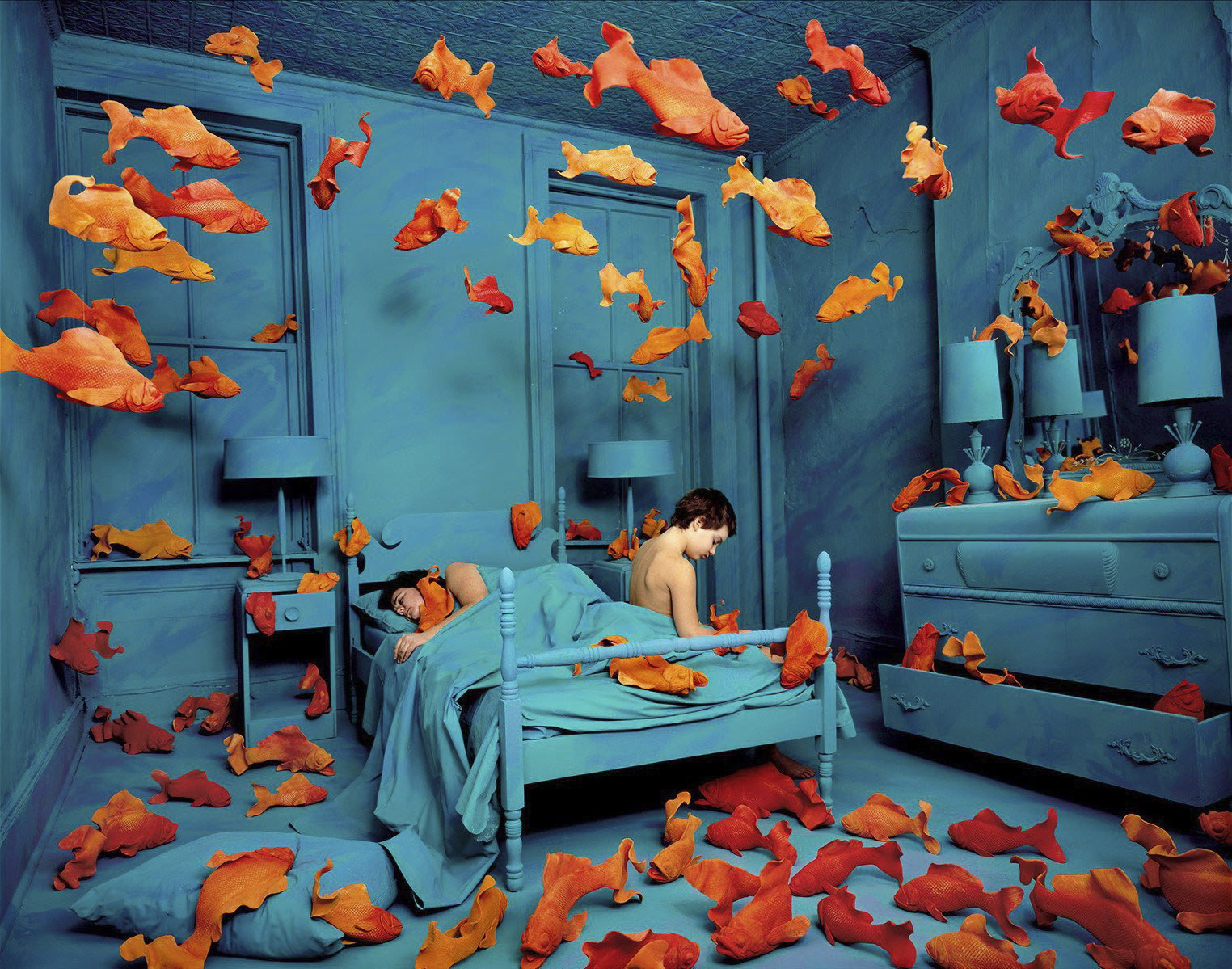
 

Minor White (American, 1908-1976) 'Windowsill daydreaming' 1958


Minor White (American, 1908-1976)
Windowsill Daydreaming, Rochester
Negative July 1958; print 1960
Gelatin silver print, selenium toned
Image: 28.6 x 22.2cm (11 1/4 x 8 3/4 in.)
The J. Paul Getty Museum, Los Angeles,
Purchased in part with funds provided by the Greenberg Foundation
© Trustees of Princeton University, Minor White Archive


Charles Swedlund (American, b. 1935) 'Buffalo, NY' about 1970


Charles Swedlund (American, b. 1935)
Buffalo, NY
about 1970
Gelatin silver print
Image: 18.7 x 15.9cm (7 3/8 x 6 1/4 in.)
The J. Paul Getty Museum, Los Angeles
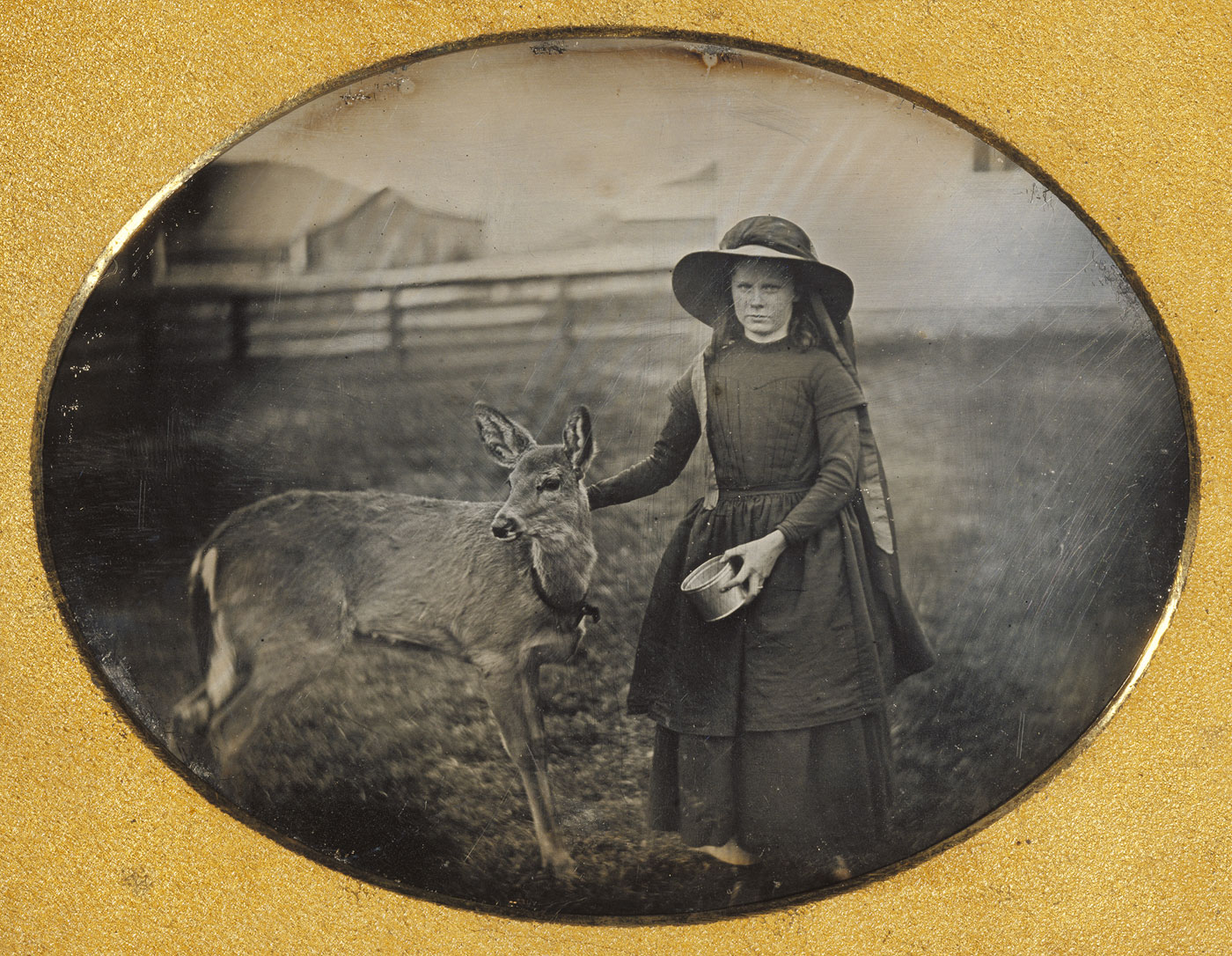
Purchased in part with funds provided by an anonymous donor in memory of James N. Wood
© Charles Swedlund


Walker Evans (American, 1903-1975) 'Penny Picture Display, Savannah' 1936


Walker Evans (American, 1903-1975)
Penny Picture Display, Savannah / Photographer’s Window Display, Birmingham, Alabama / Studio Portraits, Birmingham, Alabama
1936
Gelatin silver print
Image: 25.6 x 19.9cm (10 1/16 x 7 7/8 in.)
The J. Paul Getty Museum, Los Angeles
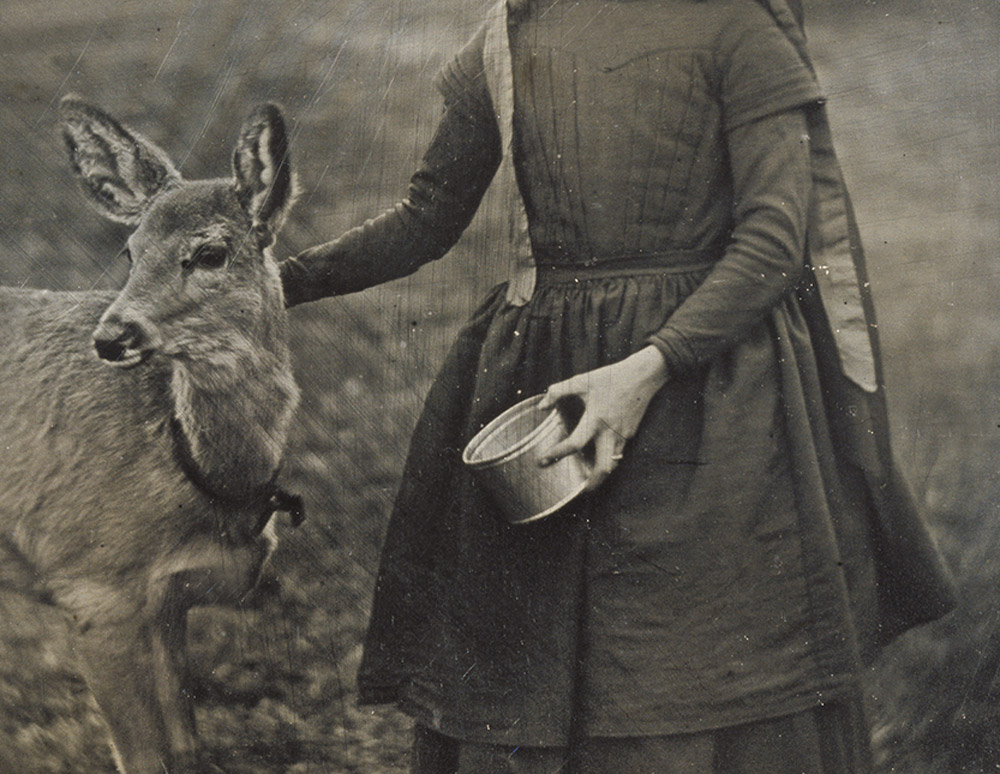
 

Eugène Atget (French, 1857-1927) 'Petit Bacchus, 61, rue St. Louis en l'Ile' (The Little Bacchus Café, rue St. Louis en l'Ile) 1901-1902


Eugène Atget (French, 1857-1927)
Petit Bacchus, 61, rue St. Louis en l’Ile (The Little Bacchus Café, rue St. Louis en l’Ile)
1901-1902
Albumen silver print
Image: 22.1 x 17.8cm (8 11/16 x 7 in.)
The J. Paul Getty Museum, Los Angeles
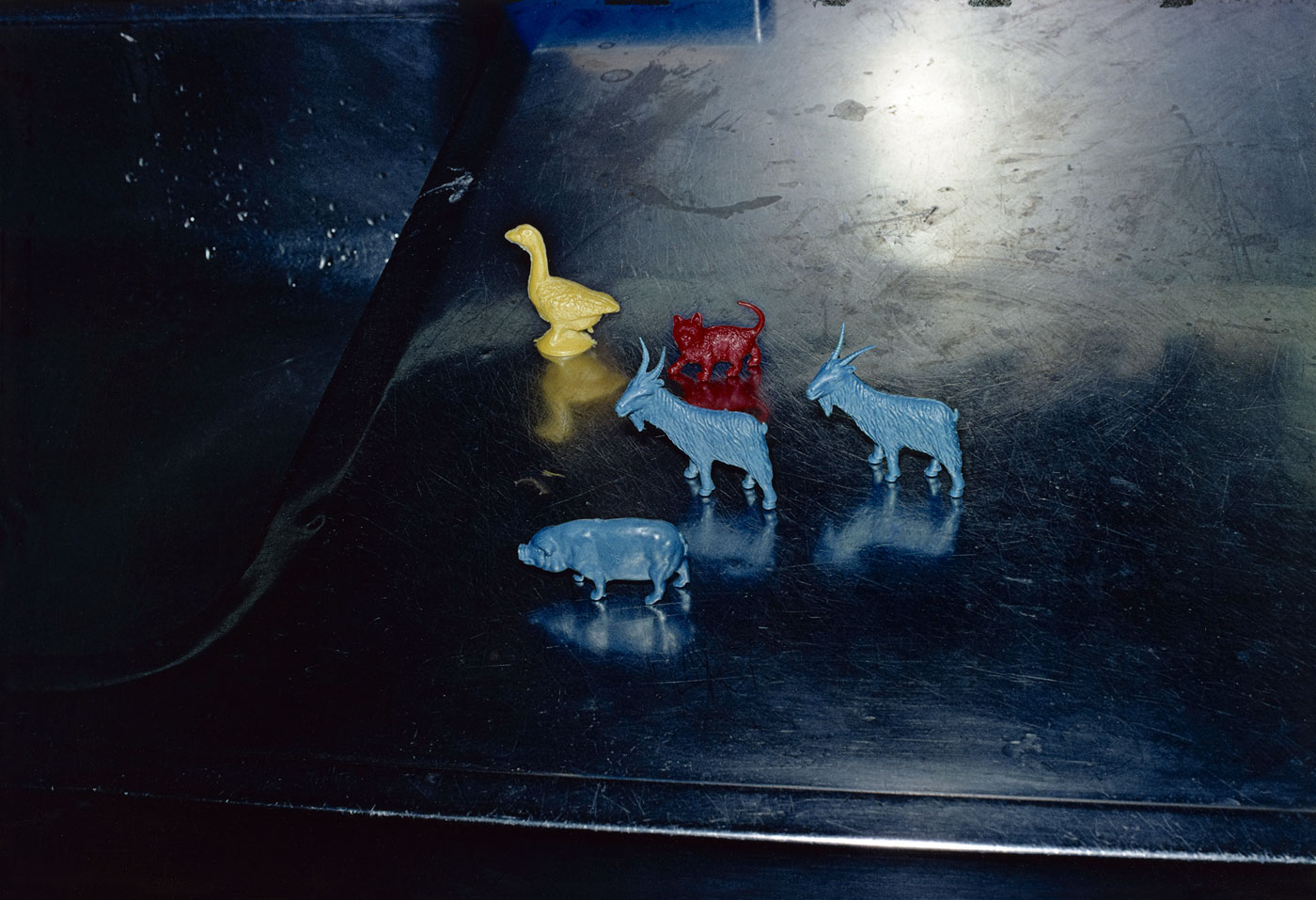
 

Alfred Stieglitz (American, 1864-1946) '[From My Window at the Shelton, North]' 1931


Alfred Stieglitz (American, 1864-1946)
[From My Window at the Shelton, North]
1931
Gelatin silver print
Image (trimmed to mount): 24.3 x 19.1cm (9 9/16 x 7 1/2 in.)
The J. Paul Getty Museum, Los Angeles
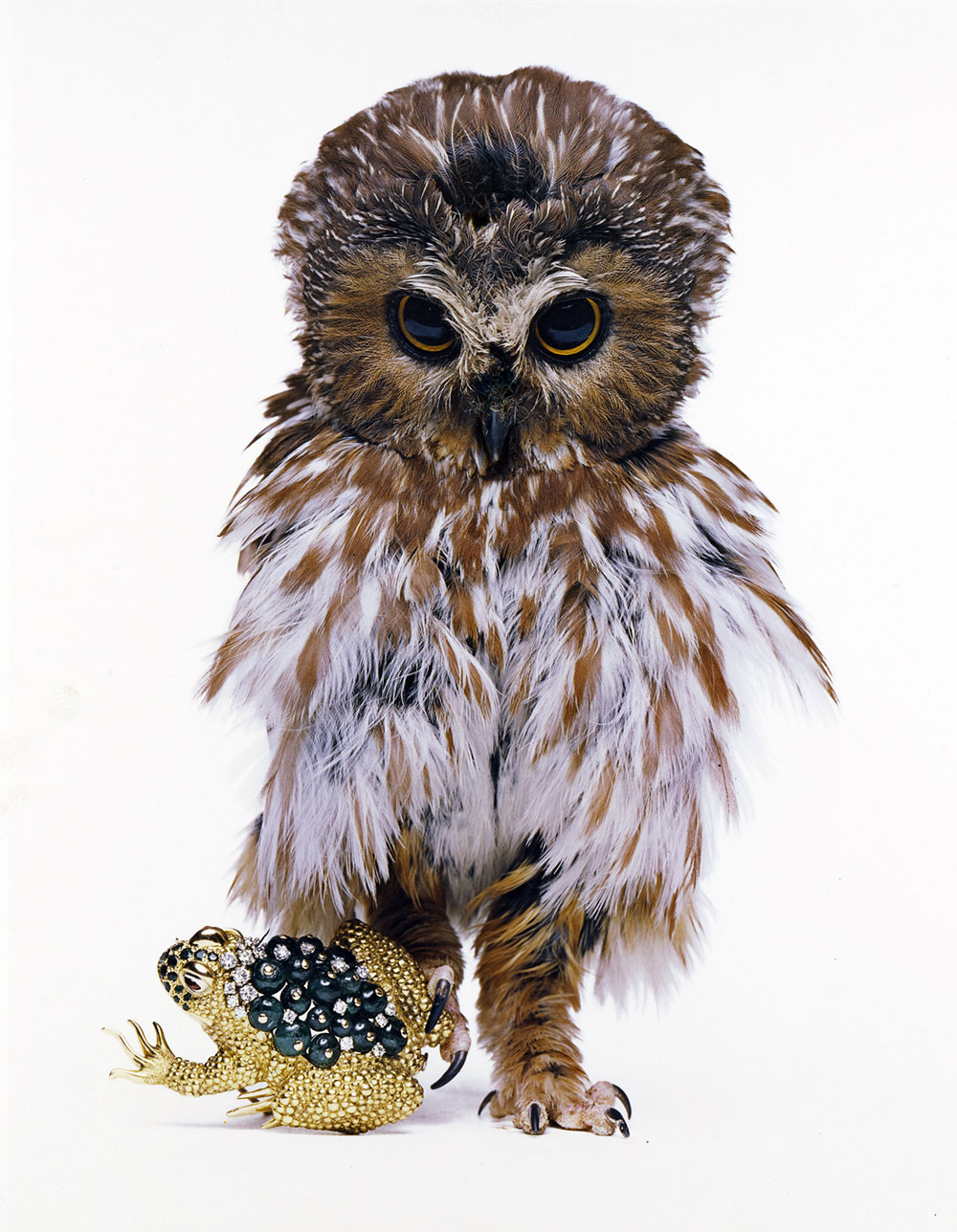
© Georgia O’Keeffe Museum


Yuki Onodera (Japanese, b. 1962) 'Look Out the Window, No. 18' 2000


Yuki Onodera (Japanese, b. 1962)
Look Out the Window, No. 18
2000
Gelatin silver print
Image: 59 x 49.2cm (23 1/4 x 19 3/8 in.)
The J. Paul Getty Museum, Los Angeles, Purchased with funds provided by the Photographs Council
© Yuki Onodera


Shizuka Yokomizo (Japanese, b. 1966) 'Stranger (15)' 1998-2000


Shizuka Yokomizo (Japanese, b. 1966)
Stranger (15)
1998-2000
Chromogenic print
Mount: 124.5 x 104.9cm (49 x 41 5/16 in.)
The J. Paul Getty Museum, Los Angeles,
Purchased with funds provided by the Photographs Council
© Shizuka Yokomizo


Alex Prager (American, b. 1979) 'Megan' 2007


Alex Prager (American, b. 1979)
Megan
2007
Chromogenic print
Framed: 125.7 x 62.9cm (49 1/2 x 24 3/4 in.)
Michael and Jane Wilson


Gregory Crewdson (American, b. 1962) 'Untitled' from the series 'Twilight' 2002


Gregory Crewdson (American, b. 1962)
Untitled from the series Twilight
2002
Chromogenic print
Image: 122 x 152cm (48 1/16 x 59 13/16 in.)
The J. Paul Getty Museum, Los Angeles
Gift of Trish and Jan de Bont
© Gregory Crewdson


Uta Barth (German, b. 1958) 'Untitled (...and of time. #4)' 2000


Uta Barth (German, b. 1958)
Untitled (…and of time. #4)
2000
Chromogenic print
Image: 88.9 x 114.3cm (35 x 45 in.)
The J. Paul Getty Museum, Los Angeles
© 2000 Uta Barth


The J. Paul Getty Museum
1200 Getty Center Drive
Los Angeles, California 90049

Opening hours:
Tuesday – Friday 10am – 5.30pm
Saturday 10am – 8pm
Sunday 10am – 5.30pm
Monday closed

The J. Paul Getty Museum website

LIKE ART BLART ON FACEBOOK

Back to top

Exhibition: ‘Abelardo Morell: The Universe Next Door’ at the J. Paul Getty Museum, Getty Center, Los Angeles

Exhibition dates: 1st October 2013 – 5th January 2014


Abelardo Morell (American born Cuba, b. 1948) 'Paper Bag' 1992


Abelardo Morell (American born Cuba, b. 1948)
Paper Bag
1992
Inkjet print
Image: 57.2 x 45.7cm (22 1/2 x 18 in.)
Courtesy of the artist and Edwynn Houk Gallery, New York
© Abelardo Morell, courtesy of Edwynn Houk Gallery, New York


The J. Paul Getty Museum puts on some amazing exhibitions, and this is no exception. For me the strength of this artist lies in his black and white work. I am not so enamoured with the camera obscura, unexpected juxtapositions of objects or tent-camera images. They seem prosaic and lack the magic of the black and white work.

The artist’s distinctive take on domestic interiors and family life is beguiling. Damp footprints on a bathroom floor with the most glorious light; the dark maw of a open paper bag; toy blocks ascending skywards; jumble of letters on a monolithic refrigerator door; the shadow of a house made into a house (amazing!); and the portents of darkness to come as Brady looks at his shadow. You cannot forget these images, they impinge on your consciousness. As for the colour images, they seem insignificant, superfluous when compared with these resonances.

Dr Marcus Bunyan


Many thankx to the J. Paul Getty Museum for allowing me to publish the photographs in the posting. Please click on the photographs for a larger version of the image.


Abelardo Morell (American born Cuba, b. 1948) 'Curiouser and Curiouser' 1998


Abelardo Morell (American born Cuba, b. 1948)
Curiouser and Curiouser
1998
Inkjet print
Image: 57.2 x 45.7cm (22 1/2 x 18 in.)
Courtesy of the artist and Edwynn Houk Gallery, New York
© Abelardo Morell, courtesy of Edwynn Houk Gallery, New York


Abelardo Morell (American born Cuba, b. 1948) 'Lisa and Brady Behind Glass' 1986


Abelardo Morell (American born Cuba, b. 1948)
Lisa and Brady Behind Glass
1986
Inkjet print
Image: 57.2 x 45.7cm (22 1/2 x 18 in.)
Courtesy of the artist and Edwynn Houk Gallery, New York
© Abelardo Morell, courtesy of Edwynn Houk Gallery, New York


Abelardo Morell (American born Cuba, b. 1948) 'Toy Blocks' 1987


Abelardo Morell (American born Cuba, b. 1948)
Toy Blocks
1987
Inkjet print
Image: 57.2 x 45.7cm (22 1/2 x 18 in.)
Courtesy of the artist and Edwynn Houk Gallery, New York
© Abelardo Morell, courtesy of Edwynn Houk Gallery, New York


Abelardo Morell (American born Cuba, b. 1948) 'Refrigerator' 1987


Abelardo Morell (American born Cuba, b. 1948)
Refrigerator
1987
Inkjet print
Image: 57.2 x 45.7cm (22 1/2 x 18 in.)
Courtesy of the artist and Edwynn Houk Gallery, New York
© Abelardo Morell, courtesy of Edwynn Houk Gallery, New York


Abelardo Morell (American born Cuba, b. 1948) 'Footprints' 1987


Abelardo Morell (American born Cuba, b. 1948)
Footprints
1987
Inkjet print
Image: 57.2 x 45.7 cm (22 1/2 x 18 in.)
High Museum of Art, Atlanta, purchased with funds from the Friends of Photography
© Abelardo Morell, courtesy of Edwynn Houk Gallery, New York


Abelardo Morell (American born Cuba, b. 1948) 'Laura and Brady in the Shadow of Our House' 1994


Abelardo Morell (American born Cuba, b. 1948)
Laura and Brady in the Shadow of Our House
1994
Gelatin silver print
Image: 45.7 x 57.2cm (18 x 22 1/2 in.)
The Art Institute of Chicago, gift of Abelardo Morell
© Abelardo Morell, courtesy of Edwynn Houk Gallery, New York


Abelardo Morell (American born Cuba, b. 1948) 'Book of Revolving Stars' 1994


Abelardo Morell (American born Cuba, b. 1948)
Book of Revolving Stars
1994
Inkjet print
Image: 45.7 x 57.2cm (18 x 22 1/2 in.)
Courtesy of the artist and Edwynn Houk Gallery, New York
© Abelardo Morell, courtesy of Edwynn Houk Gallery, New York


Abelardo Morell (American born Cuba, b. 1948) 'Light Bulb' 1991


Abelardo Morell (American born Cuba, b. 1948)
Light Bulb
1991
Gelatin silver print
Image: 45.7 x 57.2cm (18 x 22 1/2 in.)
The Art Institute of Chicago, Comer Foundation Fund
© Abelardo Morell, courtesy of Edwynn Houk Gallery, New York


Abelardo Morell (American born Cuba, b. 1948) 'Camera Obscura: Houses Across the Street in Our Bedroom, Quincy, MA' 1991


Abelardo Morell (American born Cuba, b. 1948)
Camera Obscura: Houses Across the Street in Our Bedroom, Quincy, MA
1991
Gelatin silver print
Image: 79.2 x 103.2 cm (31 3/16 x 40 5/8 in.)
The J. Paul Getty Museum, Los Angeles, promised gift of Daniel Greenberg and Susan Steinhauser
© Abelardo Morell, courtesy of Edwynn Houk Gallery, New York


Abelardo Morell (American born Cuba, b. 1948) 'Two Forks Under Water' 1993


Abelardo Morell (American born Cuba, b. 1948)
Two Forks Under Water
1993
Inkjet print
Image: 57.2 x 45.7cm (22 1/2 x 18 in.)
Courtesy of the artist and Edwynn Houk Gallery, New York
© Abelardo Morell, courtesy of Edwynn Houk Gallery, New York


Abelardo Morell (American born Cuba, b. 1948) 'Book with Wavy Pages' 2001


Abelardo Morell (American born Cuba, b. 1948)
Book with Wavy Pages
2001
Gelatin silver print
Image: 57.2 x 45.7cm (22 1/2 x 18 in.)
Lent by the artist, courtesy Edwynn Houk Gallery, New York
© Abelardo Morell, courtesy of Edwynn Houk Gallery, New York


Abelardo Morell (American born Cuba, b. 1948) 'Motion Study of Falling Pitchers' 2004


Abelardo Morell (American born Cuba, b. 1948)
Motion Study of Falling Pitchers
2004
Gelatin silver print
Image: 57.2 x 45.7cm (22 1/2 x 18 in.)
The Art Institute of Chicago, promised gift of Daniel Greenberg and Susan Steinhauser
© Abelardo Morell, courtesy of Edwynn Houk Gallery, New York


Abelardo Morell (American born Cuba, b. 1948) 'Brady Looking at his Shadow' 1991


Abelardo Morell (American born Cuba, b. 1948)
Brady Looking at his Shadow
1991
Inkjet print
Image: 57.2 x 45.7cm (22 1/2 x 18 in.)
High Museum of Art, Atlanta, purchased with funds from Bert and Cathy Clark
© Abelardo Morell, courtesy of Edwynn Houk Gallery, New York


Over the past 25 years, Abelardo Morell (American, born Cuba, 1948) has become internationally renowned for photographs that push the boundaries of the medium while exploring visual surprise and wonder. Throughout his career, he has looked at things with a fresh vision and investigated simple optics in myriad forms. Abelardo Morell: The Universe Next Door, on view October 1, 2013 – January 5, 2014 at the J. Paul Getty Museum, Getty Center, traces the artist’s innovative work as he has continued to mine the essential strangeness and complexity of photography. The exhibition was organised by The Art Institute of Chicago, in association with the J. Paul Getty Museum, Los Angeles, and the High Museum of Art, Atlanta.

“Abelardo Morell is one of this country’s great contemporary photographers whose very distinctive achievement is celebrated in this first major survey of his work,” explains Timothy Potts, director of the J. Paul Getty Museum. “The exhibition also celebrates the growth of the holdings of Morell at three major museums, which have recently been augmented through the generosity of Dan Greenberg and Susan Steinhauser, who have promised significant groups of works by the artist to each institution’s permanent collection.”

Morell came to the United States as a teenager. He attended Bowdoin College in Maine, and later completed an MFA in photography at Yale University. In 1986 he began creating large-format pictures around his home, examining common household objects with childlike curiosity. As a professor at the Massachusetts College of Art and Design, he experimented with optics in his teaching and initiated a series of images in which he turned entire rooms into camera obscuras, capturing the outside world as projected onto interior surfaces. These visual experiments and endless exploration of the medium are at the heart of the work on view in the exhibition.

From a Child’s Perspective

The earliest photographs in the exhibition date from the mid-1980s, when the birth of his son, Brady, led Morell to a radical shift in his work. Looking inward at his own family life, Morell found novel subject matter in domestic interiors. He set aside his hand-held camera in favor of a large-format view camera that necessitated a more deliberate style and elicited a wealth of tactile detail from his subjects. Of this shift, Morell writes: “I started making photographs as if I were a child myself. This strategy got me to look at things around me more closely, more slowly, and from vantage points I hadn’t considered before.” This technique can be seen in Refrigerator (negative, 1987; print, 2012), where Morell portrays a common refrigerator as a giant monolith with jumbled letters on it, evoking the preverbal vision of a child. This concept recurs in Toy Blocks (negative, 1987; print, 2012), where toy blocks photographed from a steep perspective on the floor are made to seem like a mysterious Tower of Babel, as they might to a small child.

Camera Obscura Experiments

The basis for all photography, the principle of the camera obscura (Latin for “dark chamber”) has been known since antiquity. In 1991, Morell began transforming entire rooms into cameras by covering the windows and inserting a small hole. He used a second camera to photograph the superimposition of the outside world as projected onto various interiors. Morell started by making black-and-white pictures in his own home before traveling before traveling in search of other compelling subjects for his uncanny, disorienting images. Morell made a pilgrimage to photograph Lacock Abbey, the country house of William Henry Fox Talbot (British, 1800-1877), one of the inventors of photography. Talbot’s era was an ideal model for the camera obscura work, as the general interest in a variety of intersecting subject matter at that time mirrored Morell’s own interest in uniting science, art, philosophy, and religion.

In 2005, Morell turned to creating camera obscura works in colour, eventually incorporating technical refinements that made his photographs less raw and immediate and more explicitly constructed. In View of the Brooklyn Bridge in the Bedroom (2009), bold red sheets serve as a reminder of the bed as a site of intimacy, contrasting with the public space of the Brooklyn Bridge. This strange juxtaposition also evokes a dreamlike state, as the outdoor image floats just above the bed.

Tent Camera Images

In 2010, following the example of 19th century photographers such as Carleton Watkins (American, 1829-1916) and William Henry Jackson (American, 1843-1942), Morell set out to capture the grandeur of the American wilderness. At Big Bend National Park in Texas, he began experimenting with a portable tent camera featuring a periscope lens on top, which projected the scene outside onto the ground. Morell found it appealing that what was overlooked because it was underfoot – something so common and shared – formed the backdrop for these images. In Tent Camera Image on Ground: El Capitan from Cathedral Beach, Yosemite National Park, California (2012), Morell followed Carleton Watkins’s path into Yosemite, where he used the tent camera to create a landscape that is no longer fresh and pristine, but set against such modern visual disruptions as bike tracks in the dirt.

Additional Experiments

Also on view in the exhibition are additional visual experiments employed by Morell, including a simulation of Eadweard Muybridge’s early use of stop-motion using a water pitcher and wine glass, as well as optical curiosities like dappled sunlight under trees, which Morell said results from hundreds of “tiny cameras” that form in the minute spaces between leaves. While in residence at two museums – the Isabella Stewart Gardner Museum in Boston in 1998, and the Yale University Art Gallery in New Haven in 2008 – Morell created photographs that involve unexpected juxtapositions that explore how the presentation of art affects its meaning. By moving sculptures and paintings in close proximity to one another, he created what he called “an impossible conversation” between works of art. In Nadelman / Hopper (negative, 2008; print, 2012), he positioned a bust by Elie Nadelman (American, 1882-1946) in front of a painting by Edward Hopper (American, 1882-1967) for a composition in the vein of Surrealist painter Giorgio de Chirico (Italian, 1888-1978).

“Morell is driven by his unflagging intellectual curiosity and his love of the medium of photography,” said Paul Martineau, associate curator of photographs and curator of the exhibition at the Getty Museum. “His work is grounded in the past, but it also contains an unexpected twist that causes us to reexamine what we think we know. I am delighted to be able to share this unique collection of photographs with our visitors.”

Abelardo Morell: The Universe Next Door is on view October 1, 2013 – January 5, 2014 at the J. Paul Getty Museum, Getty Center. The exhibition was on view at the the Art Institute of Chicago from June 1 – September 2, 2013, and will be on view at the High Museum of Art, Atlanta from February 22 – May 18, 2014. The exhibition is curated by Paul Martineau, associate curator in the Department of Photographs at the J. Paul Getty Museum, Elizabeth Siegel, associate curator of photography at the Art Institute of Chicago, and Brett Abbott, curator of photography at the High Museum of Art, Atlanta, where it travels after the Getty. Funding for the exhibition catalogue was provided by the Robert Mapplethorpe Foundation. Generous in-kind support for the exhibition was provided by Tru Vue Inc. and Gemini Moulding Incc.

Press release from the J. Paul Getty Museum website


Abelardo Morell (American born Cuba, b. 1948) 'Nadelman/Hopper, Yale University Art Gallery' 2008


Abelardo Morell (American born Cuba, b. 1948)
Nadelman/Hopper, Yale University Art Gallery
2008
Inkjet print
Image: 61 x 76.2cm (24 x 30 in.)
Courtesy of Bonni Benrubi Gallery, New York
© Abelardo Morell, courtesy of Edwynn Houk Gallery, New York


Abelardo Morell (American born Cuba, b. 1948) 'Tent-Camera Image On Ground: Rooftop View Of The Brooklyn Bridge' 2010


Abelardo Morell (American born Cuba, b. 1948)
Tent-Camera Image On Ground: Rooftop View Of The Brooklyn Bridge
2010
Inkjet print
Image: 76.2 x 101.6cm (30 x 40 in.)
Courtesy of the artist and Edwynn Houk Gallery, New York
© Abelardo Morell, courtesy of Edwynn Houk Gallery, New York


Abelardo Morell (American born Cuba, b. 1948) 'Tent-Camera Image on Ground: View of the Golden Gate Bridge from Battery Yates' 2012


Abelardo Morell (American born Cuba, b. 1948)
Tent-Camera Image on Ground: View of the Golden Gate Bridge from Battery Yates
2012
Inkjet print
Image: 57.2 x 76.2cm (22 1/2 x 30 in.)
Courtesy of the artist and Edwynn Houk Gallery, New York
© Abelardo Morell, courtesy of Edwynn Houk Gallery, New York


Abelardo Morell (American born Cuba, b. 1948) 'Tent-Camera Image on Ground: View of the Grand Canyon from Trailview Overlook' 2012


Abelardo Morell (American born Cuba, b. 1948)
Tent-Camera Image on Ground: View of the Grand Canyon from Trailview Overlook
2012
Inkjet print
Image: 57.2 x 76.2cm (22 1/2 x 30 in.)
Courtesy of Bonni Benrubi Gallery, New York
© Abelardo Morell, courtesy of Edwynn Houk Gallery, New York


Abelardo Morell (American born Cuba, b. 1948) 'Tent-Camera Image on Ground: View of the Yosemite Valley from Tunnel View' 2012


Abelardo Morell (American born Cuba, b. 1948)
Tent-Camera Image on Ground: View of the Yosemite Valley from Tunnel View
2012
Inkjet print
Image: 57.2 x 76.2cm (22 1/2 x 30 in.)
Courtesy of the artist and Edwynn Houk Gallery, New York
© Abelardo Morell, courtesy of Edwynn Houk Gallery, New York


Abelardo Morell (American born Cuba, b. 1948) 'Upright Camera Obscura Image of the Piazzeta San Marco Looking Southeast in Office' 2007


Abelardo Morell (American born Cuba, b. 1948)
Upright Camera Obscura Image of the Piazzeta San Marco Looking Southeast in Office
2007
Inkjet print
Image: 61 x 76.2cm (24 x 30 in.)
The Art Institute of Chicago, gift of the artist in memory of David Feingold, 2013.1
© Abelardo Morell, courtesy of Edwynn Houk Gallery, New York


Abelardo Morell (American born Cuba, b. 1948) 'Camera Obscura: View of the Brooklyn Bridge in Bedroom' 2009


Abelardo Morell (American born Cuba, b. 1948)
Camera Obscura: View of the Brooklyn Bridge in Bedroom
2009
Inkjet print
Image: 79 x 101.6cm (31 1/8 x 40 in.)
The J. Paul Getty Museum, Los Angeles, Purchased with funds provided by Richard and Alison Crowell, Daniel Greenberg and Susan Steinhauser and anonymous donors in honour of James N. Wood
© Abelardo Morell, courtesy of Edwynn Houk Gallery, New York


Abelardo Morell (American born Cuba, b. 1948) 'Camera Obscura Image of Santa Maria della Salute in Palazzo Bedroom, Venice, Italy' 2006


Abelardo Morell (American born Cuba, b. 1948)
Camera Obscura Image of Santa Maria della Salute in Palazzo Bedroom, Venice, Italy
2006
Inkjet print
Image: 101.6 x 76.2cm (40 x 30 in.)
Lent by the artist, courtesy Edwynn Houk Gallery, New York
© Abelardo Morell, courtesy of Edwynn Houk Gallery, New York


The J. Paul Getty Museum
1200 Getty Center Drive
Los Angeles, California 90049

Opening hours:
Tuesday – Friday 10am – 5.30pm
Saturday 10 am – 9pm
Sunday 10am – 5.30pm
Monday closed

The J. Paul Getty Museum website

LIKE ART BLART ON FACEBOOK

Back to top

Exhibition: ‘In Focus: Ed Ruscha’ at the J. Paul Getty Museum, Getty Center, Los Angeles

Exhibition dates: 9th April – 29th September 2013


Ed Ruscha (American, b. 1937) 'Contact sheet for Pacific Coast Highway' 1974


Ed Ruscha (American, b. 1937)
Contact sheet for Pacific Coast Highway
1974
Inkjet print
32.8 x 48.2cm (12 15/16 x 19 in.)
The Getty Research Institute, Los Angeles
© Edward Ruscha


“Yes, there’s a certain power to a photograph. The camera has a way of disorienting a person, if it wants to and, for me, when it disorients, it’s got real value.”

“My pictures are not that interesting, nor the subject matter. They are simply a collection of “facts”; my book is more like a collection of “Ready-mades”.”


Ed Ruscha


Cultural curiosities. A language of the street.

Dr Marcus Bunyan


Many thankx to the J. Paul Getty Museum for allowing me to publish some of the photographs in the posting. The rest I sourced from the internet (and spent hours cleaning) to make a better posting about the exhibition. Please click on the photographs for a larger version of the image.


Ed Ruscha (American, b. 1937) 'Camera-ready Maquette for Every Building on the Sunset Strip' 1966


Ed Ruscha (American, b. 1937)
Camera-ready Maquette for Every Building on the Sunset Strip
1966
Gelatin silver print on board
63.5 x 92.1cm (24 15/16 x 36 1/4 in.)
The Getty Research Institute, Los Angeles
© Edward Ruscha


Ed Ruscha (American, b. 1937) 'Beeline, Holbrook, Arizona' 1962


Ed Ruscha (American, b. 1937)
Beeline, Holbrook, Arizona
1962
Gelatin silver print
11.7 x 12.1cm
The J. Paul Getty Museum, Los Angeles
© Ed Ruscha


Ed Ruscha (American, b. 1937) 'Shell, Daggett, California' 1962


Ed Ruscha (American, b. 1937)
Shell, Daggett, California
1962
Gelatin silver print
11.9 x 12cm
The J. Paul Getty Museum, Los Angeles
© Ed Ruscha


Ed Ruscha (American, b. 1937) 'Standard, Figueroa Street, Los Angeles' 1962


Ed Ruscha (American, b. 1937)
Standard, Figueroa Street, Los Angeles
1962
Gelatin silver print
12.4 x 14.6cm
The J. Paul Getty Museum, Los Angeles
© Ed Ruscha


Ed Ruscha (American, b. 1937) 'Standard, Amarillo, Texas' 1962


Ed Ruscha (American, b. 1937)
Standard, Amarillo, Texas
1962
Gelatin silver print
11.8 x 12.1cm
The J. Paul Getty Museum, Los Angeles
© Ed Ruscha


In Focus: Ed Ruscha, on view at the J. Paul Getty Museum, at the Getty Center, April 9 – September 29, 2013, offers a concentrated look at Ruscha’s deep engagement with Los Angeles’s vernacular architecture and the urban landscape. The exhibition is part of Pacific Standard Time Presents: Modern Architecture in Los Angeles, and opens simultaneously with Overdrive: L.A. Constructs the Future, 1940-1990, another exhibition presented at the Getty Museum as part of this regional initiative. The Overdrive exhibition also contains images by Ruscha.

One of the most influential American artists working today, Ed Ruscha moved to Los Angeles in 1956 and continues to live and work in the city, incorporating local architecture, streets, and even the city’s attitude into paintings, prints, drawings, and photographs that are known for their graphic directness. Beginning in the 1960s, he began publishing photo books and using photographs to document thoroughfares in the Los Angeles area.

“Throughout his career, photography has played an important role in Ruscha’s exploration of the vernacular architecture, urban landscape, and car culture of Los Angeles,” commented Timothy Potts, director of the J. Paul Getty Museum. “By bringing together photographs from our collection and archival materials from the Getty Research Institute, we have been able to present a much richer understanding of Ruscha’s work and process.”

Highlighting an important joint acquisition of the artist’s work by the J. Paul Getty Museum and the Getty Research Institute in 2011, this exhibition features a selection of vintage prints related to Twentysix Gasoline Stations (1963) and Some Los Angeles Apartments (1965), the original camera-ready maquettes for Every Building on the Sunset Strip (1966), and contact sheets from this documentation of the Pacific Coast Highway (1974). The exhibition is co-­curated by Virginia Heckert, curator in the Department of Photographs at the Getty Museum, and John Tain, assistant curator in Collection Development at the Getty Research Institute.

“Gas stations and apartment buildings are among the quintessentially Southern Californian motifs that feature in Ruscha’s work,” says Heckert. “The Getty Museum’s acquisition of photographs made in conjunction with his photo books of the early 1960s gives us the opportunity to share his enthusiasm for the logos, signage, and language that enliven even the most banal architecture.”

Adds Tain, “What’s exciting about the photography that came out of Ruscha’s documentation of the Sunset Strip is that it really altered the sense of what was possible with street photography, which had always been from the viewpoint of the pedestrian. Today we have the Google Maps roving fleet of camera cars, but Ruscha was doing this kind of photography more than forty years ago.”

The exhibition gives visitors the opportunity to appreciate Ruscha’s photographs not as halftone reproductions in modest, mass-produced books, but as prints of the period. One of the best known images included in the exhibition is Standard, Amarillo, Texas (1962), which Ruscha used as the basis for his iconic oil painting Standard Station, Amarillo, Texas (1963). Other unpublished images from the iconic series of gasoline stations will be on view as well. Also included are the original camera-ready maquettes and press pulls for Every Building on the Sunset Strip, Ruscha’s fourth and arguably best-known photo book. Due to light sensitive annotations, each panel will be on view for eight weeks. The complete set of three maquettes will be on view during the first week of the exhibition only, April 9-14.

On display for the first time is a selection of contact sheets of the Pacific Coast Highway, representing a small sample of this monumental undertaking. Ruscha’s documentation captures the dramatically different landscapes of both the view west toward the Pacific Ocean and the view east toward the cliffs. The Pacific Coast Highway is just one of several streets that Ruscha has photographed over the past four and a half decades, beginning in 1965 with Sunset Boulevard. These contact sheets are part of Ruscha’s Streets of Los Angeles archive, including thousands of photographic negatives, proof sheets, contact prints, and related documents and ephemera, which was acquired by the Getty Research Institute in 2011. Nearly sixty photographs were acquired by the Getty Museum at the same time, making the Getty a preeminent resource for understanding the role of photography in Ruscha’s practice.

In Focus: Ed Ruscha is co-organised by the J. Paul Getty Museum and the Getty Research Institute, and features 50 works from both collections.

Press release from the J. Paul Getty Museum website


Ed Ruscha (American, b. 1937) '708 S. Barrington Ave. [The Dolphin]' 1965


Ed Ruscha (American, b. 1937)
708 S. Barrington Ave. [The Dolphin]
1965
Gelatin silver print
11.8 x 11.9cm
The J. Paul Getty Museum, Los Angeles
© Ed Ruscha


Ed Ruscha (American, b. 1937) '1018 S. Atlantic Blvd.,' 1965


Ed Ruscha (American, b. 1937)
1018 S. Atlantic Blvd.,
1965
Gelatin silver print
10.8 x 11.1cm
The J. Paul Getty Museum, Los Angeles
© Ed Ruscha


Ed Ruscha (American, b. 1937)'1323 Bronson' 1965


Ed Ruscha (American, b. 1937)
1323 Bronson
1965
Gelatin silver print
11.8 x 12cm
The J. Paul Getty Museum, Los Angeles
© Ed Ruscha


Ed Ruscha (American, born 1937) '1555 Artesia Blvd.,' 1965


Ed Ruscha (American, b. 1937)
1555 Artesia Blvd.,
1965
Gelatin silver print
11.1 x 11.4cm
The J. Paul Getty Museum, Los Angeles
© Ed Ruscha


Ed Ruscha (American, b. 1937) '4489 Murietta Ave.,' 1965


Ed Ruscha (American, b. 1937)
4489 Murietta Ave.,
1965
Gelatin silver print
11.4 x 11.4cm
The J. Paul Getty Museum, Los Angeles
© Ed Ruscha


Ed Ruscha (American, b. 1937) '5947 Carlton Way' 1965


Ed Ruscha (American, b. 1937)
5947 Carlton Way
1965
Gelatin silver print
11.9 x 12cm
The J. Paul Getty Museum, Los Angeles
© Ed Ruscha


Ed Ruscha (American, b. 1937) '6565 Fountain Ave.,' 1965


Ed Ruscha (American, b. 1937)
6565 Fountain Ave.,
1965
Gelatin silver print
11.8 x 11.8cm
The J. Paul Getty Museum, Los Angeles
© Ed Ruscha


Ed Ruscha (American, b. 1937) '10433 Wilshire Blvd.,' 1965


Ed Ruscha (American, b. 1937)
10433 Wilshire Blvd.,
1965
Gelatin silver print
11.7 x 11.8cm
The J. Paul Getty Museum, Los Angeles
© Ed Ruscha


Ed Ruscha (American, b. 1937) '818 Doheny Dr.,' 1965


Ed Ruscha (American, b. 1937)
818 Doheny Dr.,
1965
Gelatin silver print
11.6 x 11.7cm
The J. Paul Getty Museum, Los Angeles
© Ed Ruscha


Ed Ruscha (American, b. 1937) '3919 N. Rosemead Blvd.,' 1965


Ed Ruscha (American, b. 1937)
3919 N. Rosemead Blvd.,
1965
Gelatin silver print
12 x 12cm
The J. Paul Getty Museum, Los Angeles
© Ed Ruscha


The J. Paul Getty Museum
1200 Getty Center Drive
Los Angeles, California 90049

Opening hours:
Tues – Friday 10am – 5.30pm
Saturday 10am – 8pm
Sunday 10am – 5.30pm
Monday closed

The J. Paul Getty Museum website

LIKE ART BLART ON FACEBOOK

Back to top

Exhibition: ‘Japan’s Modern Divide: The Photographs of Hiroshi Hamaya and Kansuke Yamamoto’ at the J. Paul Getty Museum, Los Angeles

Exhibition dates: 26th March – 25th August 2013


Hiroshi Hamaya (Japanese, 1915-1999) 'The Village up on a Cay, Aomori Prefecture' 1955


Hiroshi Hamaya (Japanese, 1915-1999)
The Village up on a Cay, Aomori Prefecture
1955
Gelatin silver print
The J. Paul Getty Museum, Los Angeles
© Keisuke Katano


According to the press release, “Hamaya focused inward toward rural life on the back coast of Japan, [while] Yamamoto found inspiration in the art of European Surrealists,” the two artists responding differently to upheaval in their country in two different ways.  While Yamamoto is more obviously influenced by the Surrealists, almost becoming the Japanese version of Man Ray, for me Hamaya’s photographs are equally if more subtly influenced by the cultural movement. Observe Woman Planting Rice, Toyama Prefecture (1955, below). I relate this image to the atomisation of bodies during the conflagration of Hiroshima, however subconsciously the artist is expressing this feeling. Similarly, the faceless humans in Rice Harvesting, Yamagata Prefecture (1955, below), blind musicians, disembodied man in a raincoat or poet thinking the void all have an essential quality, that of a disturbing psychological undertow which juxtaposes two more or less distant realities – reality and dream – to form images of great emotional and poetic power.

Dr Marcus Bunyan


Many thankx to the J. Paul Getty Museum, Getty Center for allowing me to publish the photographs in the posting. Please click on the photographs for a larger version of the image.


Hiroshi Hamaya (Japanese, 1915-1999) 'The United States-Japan Security Treaty Protest, Tokyo, May 20, 1960' 1960


Hiroshi Hamaya (Japanese, 1915-1999)
The United States-Japan Security Treaty Protest, Tokyo, May 20, 1960
1960
Gelatin silver print
The J. Paul Getty Museum, Los Angeles
© Keisuke Katano


Hiroshi Hamaya (Japanese, 1915-1999) 'New Year's Ritual, Niigata Prefecture' 1940-1946


Hiroshi Hamaya (Japanese, 1915-1999)
New Year’s Ritual, Niigata Prefecture
1940-1946
Gelatin silver print
30.6 x 20.2cm
The J. Paul Getty Museum, Los Angeles
© Keisuke Katano


Japan’s Black Coast

“Knowledge of the back coast, along the Sea of Japan, is somewhat vague to those not living there, and in the minds of most people it is a country obscured by snow. In Japan, the back coast is where the old era still lingers on… The supporting industries of this back coast are primitive – agriculture, forestry, and fishing. The work involved is backbreaking physical labor. A narrow land, a heavy population, and climatic drawbacks invite a vicious circle of poverty. The basic Japanese foods are fish and rice. And they are obtained by these people only through hard labor.”

Hiroshi Hamaya, Ura Nihon (Japan’s Back Coast), 1957

A Chronicle of Grief and Anger

In 1959 the proposed ten-year renewal of the United States-Japan Security Treaty of 1952 meant the continuation of the presence of U.S. troops and the persistence of U.S. political and cultural influence. When Prime Minister Nobusuke Kishi, with the aid of the police, forced the Japanese parliament to ratify the treaty in May 1960, the public upheaval was immense. Hamaya, a pacifist living outside Tokyo, entered the fray with his camera, chronicling the demonstrations. His pictures were published both individually and in the form of a quickly assembled paperback under the title Ikari to kanashimi no kiroku (A Chronicle of Grief and Anger).

Portraiture

Japanese society had a pronounced respect for artists, authors, craftsmen, and scholars. As a freelance photographer, Hamaya was often enlisted to make portraits of them for publication. He compiled a selection of these portraits made since the 1940s for the 1983 book Japanese Scholars and Artists, which included the renowned poet, art historian, and calligrapher Yaichi Aizu. Hamaya also produced a series of genre studies that featured his wife, Asa Hamaya, who was a skilled master of the tea ceremony. After her death in 1985 Hamaya prepared a memorial to her in the form of a portfolio of prints, titled Calendar Days of Asa Hamaya, following the earlier ukiyo-e tradition of woodblock series such as bijin-ga (pictures of beautiful women).

Observing Nature

“I spent three years and four months on an extended walking tour to observe nature in Japan, from the drifting ice packs off the Shiretoko Peninsula to the coral reefs of Okinawa … Nature breathed, sometimes deeply and sometimes violently, with the climatic changes of the seasons, and with the changing face of daily weather, humidity, seasonal winds, and typhoons. In particular, the distribution of plants from the subarctic to the subtropical zones, and of lichen and mosses, was both complex and varied… I came to realise that natural features in Japan, like the nature of its people, were extremely diversified and complex. I intended to investigate this conclusion with my own eyes.”

Hiroshi Hamaya, My Fifty Years of Photography, 1982


Hiroshi Hamaya (Japanese, 1915-1999) 'Woman Planting Rice, Toyama Prefecture' 1955


Hiroshi Hamaya (Japanese, 1915-1999)
Woman Planting Rice, Toyama Prefecture
1955
Gelatin silver print
42.1 x 28cm
The J. Paul Getty Museum, Los Angeles
© Keisuke Katano


Hiroshi Hamaya (Japanese, 1915-1999) 'Rice Harvesting, Yamagata Prefecture' 1955


Hiroshi Hamaya (Japanese, 1915-1999)
Rice Harvesting, Yamagata Prefecture
1955
Gelatin silver print print
29.5 x 19.7cm (11 5/8 x 7 3/4 in.)
The J. Paul Getty Museum, Los Angeles
© Keisuke Katano


Hiroshi Hamaya (Japanese, 1915-1999) 'Blind Musicians, Niigata Prefecture' 1956


Hiroshi Hamaya (Japanese, 1915-1999)
Blind Musicians, Niigata Prefecture
1956
Gelatin silver print print
30.1 x 20cm (11 7/8 x 7 7/8 in.)
The J. Paul Getty Museum, Los Angeles
© Keisuke Katano


Hiroshi Hamaya (Japanese, 1915-1999) 'Man in a Traditional Minobashi Raincoat, Niigata Prefecture' 1956


Hiroshi Hamaya (Japanese, 1915-1999)
Man in a Traditional Minobashi Raincoat, Niigata Prefecture
1956
Gelatin silver print print
30.6 x 19.8cm (12 1/16 x 7 13/16 in.)
The J. Paul Getty Museum, Los Angeles
© Keisuke Katano


Hiroshi Hamaya (Japanese, 1915-1999) 'Yaichi Aizu, Poet, Calligrapher, and Japanese Art Critic' 1947


Hiroshi Hamaya (Japanese, 1915-1999)
Yaichi Aizu, Poet, Calligrapher, and Japanese Art Critic
1947
Gelatin silver print print
24 x 16cm (9 7/16 x 6 5/16 in.)
Estate of Hiroshi Hamaya, Oiso, Japan
© Keisuke Katano


The Taishō era (1912-1926) was a brief but dynamic period in Japan’s history that ushered in a modern state with increased industrialisation, shifting political parties, radical fashions, and liberal thinking in many areas. However, this era of heightened experimentation ended with the arrival of an international depression, the promotion of ultranationalism, and the country’s entry into what would become the Greater East Asia War.

Reflecting both sides of this dramatic transition, two disparate representations of modern Japan will be displayed together in Japan’s Modern Divide: The Photographs of Hiroshi Hamaya and Kansuke Yamamoto, on view March 26 – August 25, 2013, at the J. Paul Getty Museum, Getty Center. Curated by Judith Keller, senior curator of photographs, and Amanda Maddox, assistant curator of photographs, the exhibition includes photographs from the Getty Museum’s permanent collection, the Toyko Metropolitan Museum of Photography, the estate of Hiroshi Hamaya, the Nagoya City Art Museum, and other public and private lenders.

Born during the Taishō era, photographers Hiroshi Hamaya (1915-1999) and Kansuke Yamamoto (1914-1987) responded to Japan’s rapidly-changing sociopolitical climate in very different ways. While Hamaya focused inward toward rural life on the back coast of Japan, Yamamoto found inspiration in the art of European Surrealists. As the ebb and flow of Japan’s political, economic, and social structures persisted across the 20th century, Hamaya and Yamamoto continued to pursue divergent paths, thus embodying both sides of modern Japanese life: the traditional and the Western, the rural and the urban, the oriental and the occidental.

“Much is known about the Surrealists living and working in Europe, as well as the celebrated documentary tradition of 20th-century photography, but the Japanese artists who embraced these movements remain relatively unknown in the West,” says Timothy Potts, director of the J. Paul Getty Museum. “This exhibition illuminates the extraordinary work of two artists who responded to upheaval in their country in two different, but equally powerful ways.”

Hiroshi Hamaya

The son of a detective, Hamaya grew up in Tokyo’s Ueno neighbourhood during the rise and decline of the Taishō era. After attending Kanto Junior College, he began his photographic career by taking aerial images for the Practical Aeronautical Institute. He later photographed downtown Tokyo from street level, and provided images of daily city life and local events to a number of magazines. In 1939, an assignment that took him to Ura Nihon, or the rural back coast of the Sea of Japan, changed his view of photography and society.

Known for its unforgiving winter snowstorms and the difficult lives of its impoverished inhabitants, Ura Nihon was a mystery to most of Japan and the world. Moved by the customs and lifestyles of a much older era, Hamaya shifted from journalism toward a more humanistic and ethnographic approach to photography, capturing the everyday life of the region’s residents. This included documenting labourers in fields and at sea, as fish and rice were the primary sources of nourishment throughout the year.

From 1940 to 1955 Hamaya pursued a long-term personal interest in the region of Echigo (now known as Niigata Prefecture). He recorded the people, traditions, and landscape of a district that was, at the time, Japan’s chief rice-producing region in spite of a four-month long snow season. Among his many subjects, Hamaya focused on the winter in Kuwatoridani, a small agricultural village that practiced elaborate, long-standing New Year’s Eve rituals. In New Year’s Ritual, Niigata Prefecture (1940-1946), boys in the village are seated with their hands clasped and their eyes closed in prayer. The close-up of the boys’ faces in deep concentration emphasises the respect for customs of the region.

In late 1959, the proposed ten-year renewal of the United States-Japan Security Treaty of 1952 raised doubts about Japan’s sovereignty and its future prosperity. When Prime Minister Nobusuke Kishi, with the aid of police, forced the Japanese parliament to ratify the treaty in May 1960, the political upheaval was immense. While Hamaya was a pacifist, he felt obligated to return to his journalistic roots and entered the fray with his camera. He chronicled the demonstrations day by day, sometimes hour by hour.

“These demonstrations profoundly affected Hamaya, causing him, in the 1960s, to turn from the social landscape to an investigation of nature,” explains Judith Keller. “His disillusionment with Japan’s political apparatus provoked a rejection of the human subject. Much of the work he created in his late career depicts the volcanoes, seas, mountains, forests, and other natural wonders of Japan and other small island nations.”

Hamaya’s career also included portraiture of noted artists and scholars. As a freelance photographer, he was often enlisted to make portraits of well-known men and women, and in 1983 published Japanese Scholars and Artists, a book that included prominent novelist Junichiro Tanizaki, woodcut artist Shiko Manakata, literary critic Kenichi Yoshida, and renowned poet, art historian, and calligrapher Yaichi Aizu. He also documented the daily life of his beloved wife, Asa, and upon her death in 1985 created a portfolio of these sensitive photographs, Calendar Days of Asa Hamaya.

Kansuke Yamamoto

Kansuke Yamamoto (1914-1987) learned about photography from his father, an amateur pictorialist photographer and owner of the first photo supply store in the city of Nagoya. His interest in photography developed at a time when two movements based on experimentation and new modes of expression – Shinkō Shashin (New Photography) and Zen’ei Shashin (avant-garde photography) – were dominant. However, it was Surrealism – particularly Surrealist artists and writers such as René Magritte, Paul Éluard, Yves Tanguy, and Man Ray that appears to have made the most profound impact on his work.

Yamamoto was an influential figure in the avant-garde photography movement in Japan in the 1930s, helping to establish the group Nagoya Foto Avant-Garde by the end of that decade. In 1938 he created a journal, Yoru no Funsui (The Night’s Fountain), which promoted Surrealist poems, literature, ideas, and art in Japanese.

His first photographs date to the early 1930s and reveal an interest in myriad techniques and subjects, including abstract architectural studies, still life, and collage. From the outset, he created work suffused with mystery, provocation, and humour. He often utilised photography as a means to address controversial issues or express avant-garde ideas. For example, in Buddhist Temple’s Birdcage (1940), the telephone enclosed in the cage is possibly a metaphor for the control exercised by the Japanese government during the Showa Era (1926-1989), a theme that reappears in work produced throughout his career. The experience of being interrogated by the Tokkō (Thought Police) in 1939 for his journal, Yoru no Funsui, and its potentially subversive content made a profound impact on Yamamoto, but never deterred his avant-garde spirit.

Yamamoto remained part of the artistic vanguard in Japan during the 1940s and 1950s. He was a member of VOU, a club founded by poet Katue Kitasono that organised exhibitions and published a journal promoting visual “plastic” poetry, photography, literature, and other arts. In 1947 Yamamoto founded VIVI, a collective in Nagoya that allowed further dissemination and promotion of avant-garde ideologies. Yamamoto continued to produce innovative work during this period, experimenting with colour photography, combination printing, photograms, and sculpture.

“At the end of his career in the 1970s, Yamamoto maintained his ardent nonconformist spirit, employing art as a means of criticism, dialogue, and rebellion,” explains Amanda Maddox. “He never failed to generate provocative imagery in an effort to represent his convictions concerning war, liberty, and avant-garde ideologies.”

Press release from the J. Paul Getty Museum website


Kansuke Yamamoto (Japanese, 1914-1987) 'My Thin-aired Room' 1956


Kansuke Yamamoto (Japanese, 1914-1987)
My Thin-aired Room
1956
Gelatin silver print print
34.9 x 42.9cm (13 3/4 x 16 7/8 in.)
Private collection, entrusted to Tokyo Metropolitan Museum of Photography
© Toshio Yamamoto


Kansuke Yamamoto (Japanese, 1914-1987) 'Rose and Shovel' 1956


Kansuke Yamamoto (Japanese, 1914-1987)
Rose and Shovel
1956
Gelatin silver print print
31.9 x 34.9cm (12 9/16 x 13 3/4 in.)
© Toshio Yamamoto
Private collection, entrusted to Tokyo Metropolitan Museum of Photography


Kansuke Yamamoto (Japanese, 1914-1987) 'A Forgotten Person' 1958


Kansuke Yamamoto (Japanese, 1914-1987)
A Forgotten Person
1958
Chromogenic print
46.2 x 33cm (18 3/16 x 13 in.)
© Toshio Yamamoto
The J. Paul Getty Museum, Los Angeles


Kansuke Yamamoto (Japanese, 1914-1987) 'Stapled Flesh' 1949


Kansuke Yamamoto (Japanese, 1914-1987)
Stapled Flesh
1949
Gelatin silver print print
31.1 x 24.8cm (12 1/4 x 9 3/4 in.)
© Toshio Yamamoto
From the Collection of Gloria Katz and Willard Huyck


Kansuke Yamamoto (Japanese, 1914-1987) 'Buddhist Temple's Bird Cage' 1940


Kansuke Yamamoto (Japanese, 1914-1987)
Buddhist Temple’s Bird Cage
1940
Gelatin silver print
© Toshio Yamamoto
Private collection, entrusted to Tokyo Metropolitan Museum of Photography


Kansuke Yamamoto (Japanese, 1914-1987) 'Butterfly' 1970


Kansuke Yamamoto (Japanese, 1914-1987)
Butterfly
1970
Gelatin silver print print
16.4 x 11.4cm (6 7/16 x 4 1/2 in.)
© Toshio Yamamoto
Private collection, entrusted to Tokyo Metropolitan Museum of Photography


Kansuke Yamamoto (Japanese, 1914-1987) 'A Chronicle of Drifting' 1949


Kansuke Yamamoto (Japanese, 1914-1987)
A Chronicle of Drifting
1949
Collage print
30 x 24.8cm (11 13/16 x 9 3/4 in.)
© Toshio Yamamoto
Private collection, entrusted to Tokyo Metropolitan Museum of Photography


The J. Paul Getty Museum
1200 Getty Center Drive
Los Angeles, California 90049

Opening hours:
Tues – Friday 10am – 5.30pm
Saturday 10am – 8pm
Sunday 10am – 5.30pm
Monday closed

The J. Paul Getty Museum website

LIKE ART BLART ON FACEBOOK

Back to top

Exhibition: ‘Robert Mapplethorpe: XYZ’ at The Los Angeles County Museum of Art (LACMA)

Exhibition dates: 21st October 2012 – 24th March 2013


Robert Mapplethorpe (American, 1946-1989) 'Y Portfolio' 1978


Robert Mapplethorpe (American, 1946-1989)
Y Portfolio
1978
37.7 x 35.5 x 4.9cm closed
The J. Paul Getty Museum, Los Angeles, jointly acquired by the J. Paul Getty Trust and the Los Angeles County Museum of Art. Partial Gift of the Robert Mapplethorpe Foundation; partial purchase with funds provided by the David Geffen Foundation and the J. Paul Getty Trust
© Robert Mapplethorpe Foundation


“The X Portfolio centers on men engaged in gay sex, including hard-core sadomasochism. The subject wasn’t entirely new. In Greek vase decorations, Indian miniatures and pagan temple sculptures, candid and highly refined sex pictures, heterosexual and homosexual, have been around since before Alexander the Great and the Mahabharata.”


Christopher Knight, Los Angeles Times Art Critic


Robert Mapplethorpe made photographs of hard-core sadomasochistic gay sex. Robert Mapplethorpe made photographs of hard-core sadomasochistic gay sex. Robert Mapplethorpe made photographs of hard-core sadomasochistic gay sex. Robert Mapplethorpe made photographs of hard-core sadomasochistic gay sex.

A fist up an arse, a finger down the penis, a dildo up the bum. These photographs are seminal images in the work of the artist and yet we never get to see them online. Would it be too shocking for the sensibilities of the gallery or the Robert Mapplethorpe Foundation that these cause célèbre images, five of which were used as evidence in the obscenity trial of Director Dennis Barrie and the Cincinnati Contemporary Arts Center in 1990, were actually seen?

Instead we have two tame representations from the X Portfolio in the posting.

If you go to the slick Robert Mapplethorpe Foundation website, what do you find in the portfolio section: tasteful self portraits, male nudes, female nudes, flowers, portraits, statuary. Nothing to suggest that Mapplethorpe was one of the most transgressive artists of the twentieth century, an artist who documented an essential element of gay culture AS ART, who famously said that there was nothing shown in his photographs that he hadn’t done himself. Not an inkling, not a whisper, not a bull whip up the arse to be found. This is the sanitised vision of the artist – the desire, the pleasure, the release of living, re-shackled under the commercialisation of brand Mapplethorpe.

It’s like the Foundation is afraid of the artist’s shadow. On their website they state that the Foundation was set up by Mapplethorpe in part to protect his work and advance his creative vision. The X Portfolio and his early work are part of that vision, deserving to be seen by everyone – online!

Dr Marcus Bunyan


Many thankx to The Los Angeles County Museum of Art (LACMA) for allowing me to publish some of the photographs in the posting. Please click on the photographs for a a larger version of the image.


Robert Mapplethorpe (American, 1946-1989) 'Cedric, N.Y.C. (X Portfolio)' 1978


Robert Mapplethorpe (American, 1946-1989)
Cedric, N.Y.C. (X Portfolio)
1978
19.5 x 19.5cm
The J. Paul Getty Museum, Los Angeles, jointly acquired by the J. Paul Getty Trust and the Los Angeles County Museum of Art. Partial Gift of the Robert Mapplethorpe Foundation; partial purchase with funds provided by the David Geffen Foundation and the J. Paul Getty Trust
© Robert Mapplethorpe Foundation


Robert Mapplethorpe (American, 1946-1989) 'Irises, N.Y.C. (Y Portfolio)' 1977


Robert Mapplethorpe (American, 1946-1989)
Irises, N.Y.C. (Y Portfolio)
1977
19.5 x 19.5cm
The J. Paul Getty Museum, Los Angeles, jointly acquired by the J. Paul Getty Trust and the Los Angeles County Museum of Art. Partial Gift of the Robert Mapplethorpe Foundation; partial purchase with funds provided by the David Geffen Foundation and the J. Paul Getty Trust
© Robert Mapplethorpe Foundation


Robert Mapplethorpe (American, 1946-1989) 'Jim, Sausalito (X Portfolio)' 1977


Robert Mapplethorpe (American, 1946-1989)
Jim, Sausalito (X Portfolio)
1977
19.5 x 19.5cm
The J. Paul Getty Museum, Los Angeles, jointly acquired by the J. Paul Getty Trust and the Los Angeles County Museum of Art. Partial Gift of the Robert Mapplethorpe Foundation; partial purchase with funds provided by the David Geffen Foundation and the J. Paul Getty Trust
© Robert Mapplethorpe Foundation


Robert Mapplethorpe (1946-1989) 'Joe' 1978


Robert Mapplethorpe (American, 1946-1989)
Joe, N.Y.C
1978
Gelatin silver print
7 11/16 × 7 11/16 in
Los Angeles County Museum of Art
Jointly acquired by the Los Angeles County Museum of Art and The J. Paul Getty Trust; Partial gift of The Robert Mapplethorpe Foundation; partial purchase with funds provided by The David Geffen Foundation and The J. Paul Getty Trust
© Robert Mapplethorpe Foundation


Robert Mapplethorpe (American, 1946-1989) 'Patrice, N.Y.C.' 1977


Robert Mapplethorpe (American, 1946-1989)
Patrice, N.Y.C.
1977
Gelatin silver print
7 11/16 × 7 11/16 in.
Jointly acquired by the Los Angeles County Museum of Art and The J. Paul Getty Trust; Partial gift of The Robert Mapplethorpe Foundation; partial purchase with funds provided by The David Geffen Foundation and The J. Paul Getty Trust
© Robert Mapplethorpe Foundation


Robert Mapplethorpe (American, 1946-1989) 'Helmut, N.Y.C.' 1978


Robert Mapplethorpe (American, 1946-1989)
Helmut, N.Y.C.
1978
Gelatin silver print
7 3/4 × 7 11/16 in.
Jointly acquired by the Los Angeles County Museum of Art and The J. Paul Getty Trust; Partial gift of The Robert Mapplethorpe Foundation; partial purchase with funds provided by The David Geffen Foundation and The J. Paul Getty Trust
© Robert Mapplethorpe Foundation


The Los Angeles County Museum of Art (LACMA) presents three portfolios created by American photographer Robert Mapplethorpe (1946-1989). The exhibition, Robert Mapplethorpe: XYZ, features a total of thirty-nine black-and-white photographs, exploring three subject matters: homosexual sadomasochistic imagery (X, published in 1978); flower still lifes (Y, 1978); and nude portraits of African American men (Z, 1981). LACMA’s presentation will showcase the works in three rows – X above, Y in the middle, and Z along the bottom – an idea which was suggested by Mapplethorpe in 1989.

“Robert Mapplethorpe is among the most important photographic artists of the twentieth century,” comments Britt Salvesen, Department Head and Curator of the Wallis Annenberg Photography Department at LACMA. “The X, Y, and Z portfolios not only defined the artist’s career, but also played a role in an important moment of American cultural politics that is still pertinent to us today.”

This is the first presentation of Mapplethorpe’s work since last year’s widely publicised joint acquisition by LACMA, The J. Paul Getty Museum, and The Getty Research Institute of Mapplethorpe’s art and archives – including over 1,900 editioned prints and over 1,000 non-editioned prints, 200 unique mixed-media objects, over 160 Polaroids, 120,000 negatives, and extensive working materials, ephemera, and documents. The majority of the acquisition originated as a generous gift from the Robert Mapplethorpe Foundation, and the remainder of the funds provided by the David Geffen Foundation and the J. Paul Getty Trust.

Concurrent with the LACMA exhibition, The J. Paul Getty Museum presents In Focus: Robert Mapplethorpe, on view October 23, 2012 – March 24, 2013. This single-gallery exhibition reviews the artist’s work from the early 1970s to the late 1980s, and features editioned prints, rarely seen mixed-media objects, and Polaroids that depict a wide range of subject matter including self-portraits, nudes, and still lifes. A larger Mapplethorpe retrospective, jointly organised by LACMA and the Getty, is planned for 2016.

About the artist

Born in 1946, Robert Mapplethorpe grew up in the suburban area of Floral Park, Queens. As a student at the Pratt Institute in New York, he studied drawing, painting, and sculpture and experimented with various materials in mixed-media collages. When Mapplethorpe acquired a Polaroid camera in 1970, he began incorporating his own photos into his constructions. His first solo gallery exhibition, Polaroids, took place at Light Gallery in New York City in 1973.

Two years later he transitioned from the Polaroid to a Hasselblad medium format camera and began shooting his circle of friends and acquaintances. His subjects – artists, musicians, socialites, pornographic film stars, and members of the S & M underground – came from a variety of backgrounds. Mapplethorpe’s interest in documenting the New York S&M scene was strongest in the late 1970s, when he produced photographs with shocking content but remarkable technique and formal mastery. In 1978, the Robert Miller Gallery in New York City became his exclusive dealer. Throughout the 1980s, Mapplethorpe produced images that challenged and adhered to classical aesthetic standards including stylised compositions of male and female nudes, delicate flower still lifes, and studio portraits of artists and celebrities. He explored and refined different techniques and formats – including colour 20″ x 24″ Polaroids, photogravures, platinum prints on paper and linen, Cibachrome and dye transfer colour processes – but gelatin silver printing remained his primary medium.

In 1986, Robert Mapplethorpe was diagnosed with AIDS. Despite his illness, he accelerated his creative efforts, broadened the scope of his photographic inquiry, and accepted numerous commissions. The Whitney Museum of American Art mounted his first major American museum retrospective in 1988, one year before his death in 1989. Beyond the art historical and social significance of his work, his legacy lives on through the work of Robert Mapplethorpe Foundation, which he established in 1988 to promote photography, support museums that exhibit photographic art, and to find medical research in the fight against AIDS and HIV related infection.

Exhibition history

Mapplethorpe’s work has historically provoked strong reactions, most notably during the so-called Culture Wars of the 1980s, a period of conflict between conservative and liberal factions. The traveling retrospective, The Perfect Moment, opened at the Institute of Contemporary Art in Philadelphia in 1988. Among the 150 photographs and objects in the show were the sadomasochistic imagery of Mapplethorpe’s X portfolio, as well as the Y and Z portfolios; the show appeared in two venues without any incident. When it was due to open at the Corcoran Gallery of Art in Washington, D.C., during the summer of 1989, politicians who opposed federal funding for the arts became alarmed. The Corcoran canceled the exhibition, resulting in a protest against the gallery’s withdrawal of the show. Controversy ensued further at a subsequent venue, the Contemporary Arts Center in Cincinnati, where charges of obscenity were brought against director David Barrie. In this high-profile trial, five images from the X portfolio were used as evidence. Barrie was acquitted, and Mapplethorpe has been linked to debates about censorship ever since.

Press release from The Los Angeles County Museum of Art (LACMA) website


Robert Mapplethorpe (American, 1946-1989) 'Carnation, N.Y.C. (Y Portfolio)' 1978


Robert Mapplethorpe (American, 1946-1989)
Carnation, N.Y.C. (Y Portfolio)
1978
19.5 x 19.5cm
The J. Paul Getty Museum, Los Angeles, jointly acquired by the J. Paul Getty Trust and the Los Angeles County Museum of Art. Partial Gift of the Robert Mapplethorpe Foundation; partial purchase with funds provided by the David Geffen Foundation and the J. Paul Getty Trust
© Robert Mapplethorpe Foundation


Robert Mapplethorpe (American, 1946-1989) 'Alistair Butler, N.Y.C. (Z Portfolio)' 1980


Robert Mapplethorpe (American, 1946-1989)
Alistair Butler, N.Y.C. (Z Portfolio)
1980
Gelatin Silver Print
19.5 x 19.5cm
The J. Paul Getty Museum, Los Angeles, jointly acquired by the J. Paul Getty Trust and the Los Angeles County Museum of Art. Partial Gift of the Robert Mapplethorpe Foundation; partial purchase with funds provided by the David Geffen Foundation and the J. Paul Getty Trust
© Robert Mapplethorpe Foundation


Robert Mapplethorpe (American, 1946-1989) 'Leigh Lee, N.Y.C. (Z Portfolio)' 1980


Robert Mapplethorpe (American, 1946-1989)
Leigh Lee, N.Y.C. (Z Portfolio)
1980
Gelatin Silver Print
19.5 x 19.5cm
The J. Paul Getty Museum, Los Angeles, jointly acquired by the J. Paul Getty Trust and the Los Angeles County Museum of Art. Partial Gift of the Robert Mapplethorpe Foundation; partial purchase with funds provided by the David Geffen Foundation and the J. Paul Getty Trust
© Robert Mapplethorpe Foundation


Robert Mapplethorpe (American, 1946-1989) 'Philip Prioleau, N.Y.C.' 1979


Robert Mapplethorpe (American, 1946-1989)
Philip Prioleau, N.Y.C.
1979
Gelatin silver print
7 1/2 × 7 7/16 in. (19.05 × 18.89cm)
Jointly acquired by the Los Angeles County Museum of Art and The J. Paul Getty Trust; Partial gift of The Robert Mapplethorpe Foundation; partial purchase with funds provided by The David Geffen Foundation and The J. Paul Getty Trust
© Robert Mapplethorpe Foundation


Robert Mapplethorpe (American, 1946-1989) 'Rose, N.Y.C. (Y Portfolio)' 1977


Robert Mapplethorpe (American, 1946-1989)
Rose, N.Y.C. (Y Portfolio)
1977
Gelatin silver print
Image 19.5 x 19.5cm
The J. Paul Getty Museum, Los Angeles, jointly acquired by the J. Paul Getty Trust and the Los Angeles County Museum of Art. Partial Gift of the Robert Mapplethorpe Foundation; partial purchase with funds provided by the David Geffen Foundation and the J. Paul Getty Trust
© Robert Mapplethorpe Foundation


Robert Mapplethorpe (American, 1946-1989) 'Tulips' 1978


Robert Mapplethorpe (American, 1946-1989)
Tulips
1978
Gelatin silver print
7 11/16 × 7 3/4 in. (19.53 × 19.69cm)
Jointly acquired by the Los Angeles County Museum of Art and The J. Paul Getty Trust; Partial gift of The Robert Mapplethorpe Foundation; partial purchase with funds provided by The David Geffen Foundation and The J. Paul Getty Trust
© Robert Mapplethorpe Foundation


Robert Mapplethorpe (American, 1946-1989) 'Z Portfolio' 1978


Robert Mapplethorpe (American, 1946-1989)
Z Portfolio
1978
37.7 x 35.5 x 4.9 cm closed
The J. Paul Getty Museum, Los Angeles, jointly acquired by the J. Paul Getty Trust and the Los Angeles County Museum of Art. Partial Gift of the Robert Mapplethorpe Foundation; partial purchase with funds provided by the David Geffen Foundation and the J. Paul Getty Trust
© Robert Mapplethorpe Foundation


Los Angeles County Museum of Art (LACMA)
5905 Wilshire Boulevard (at Fairfax Avenue)
Los Angeles, CA, 90036
Phone: 323 857-6000

Opening hours:
Monday, Tuesday, Thursday: 11am – 5pm
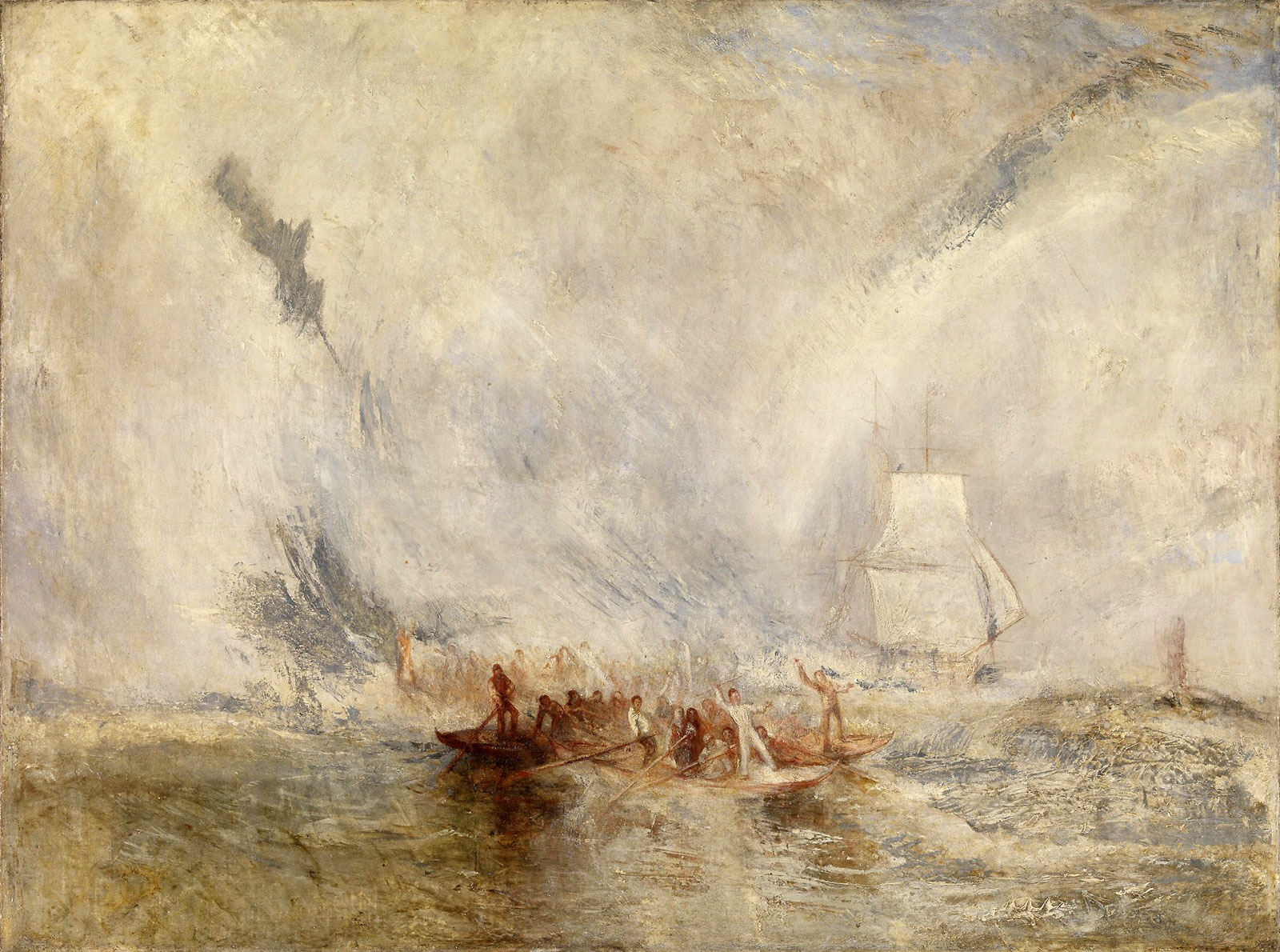
Friday: 11am – 8pm
Saturday, Sunday: 10am – 7pm
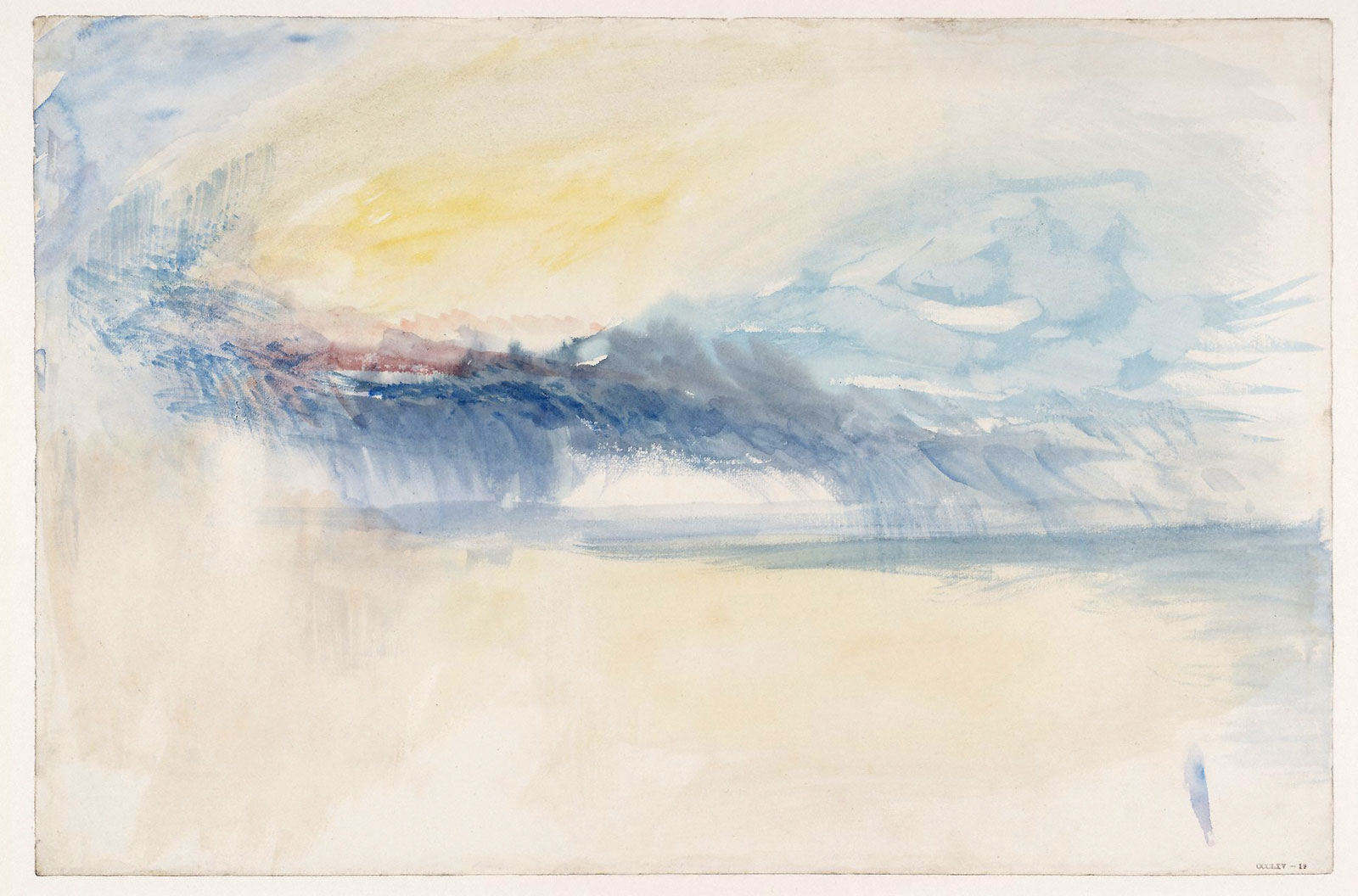
Closed Wednesday

LACMA website

LIKE ART BLART ON FACEBOOK

Back to top