Review: ‘Andrew Curtis: Moonlight Mile’ at Blockprojects, Melbourne

Exhibition dates: 6th February – 3rd March 2013


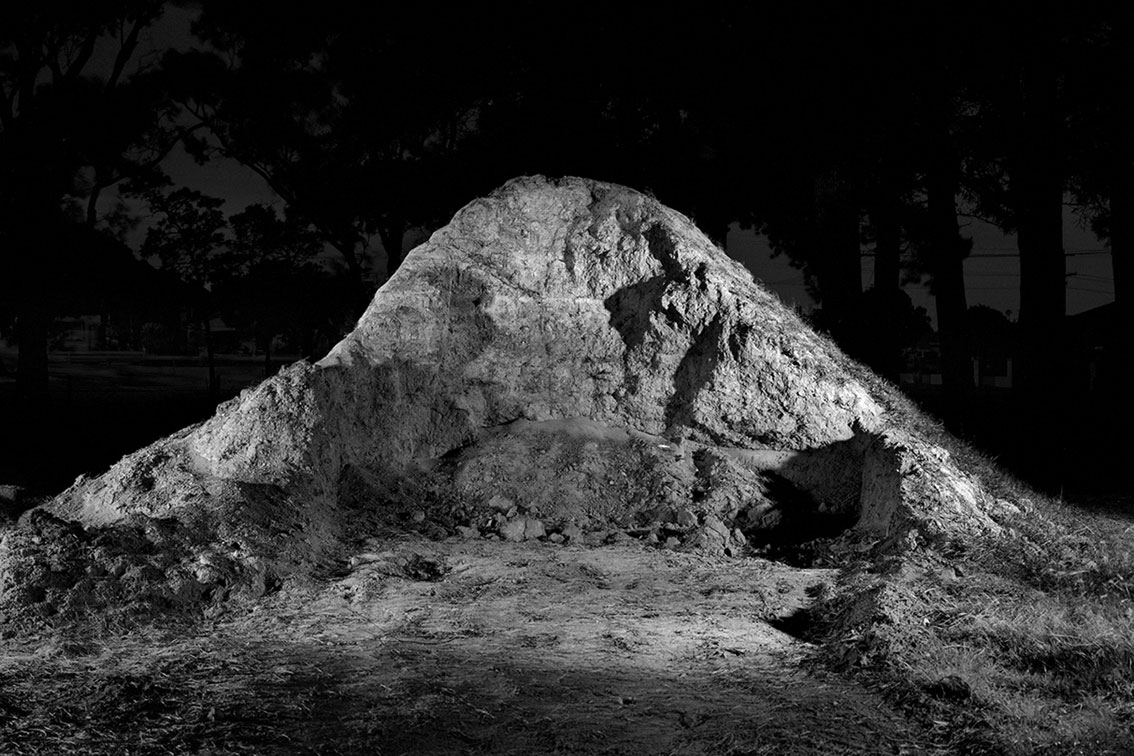
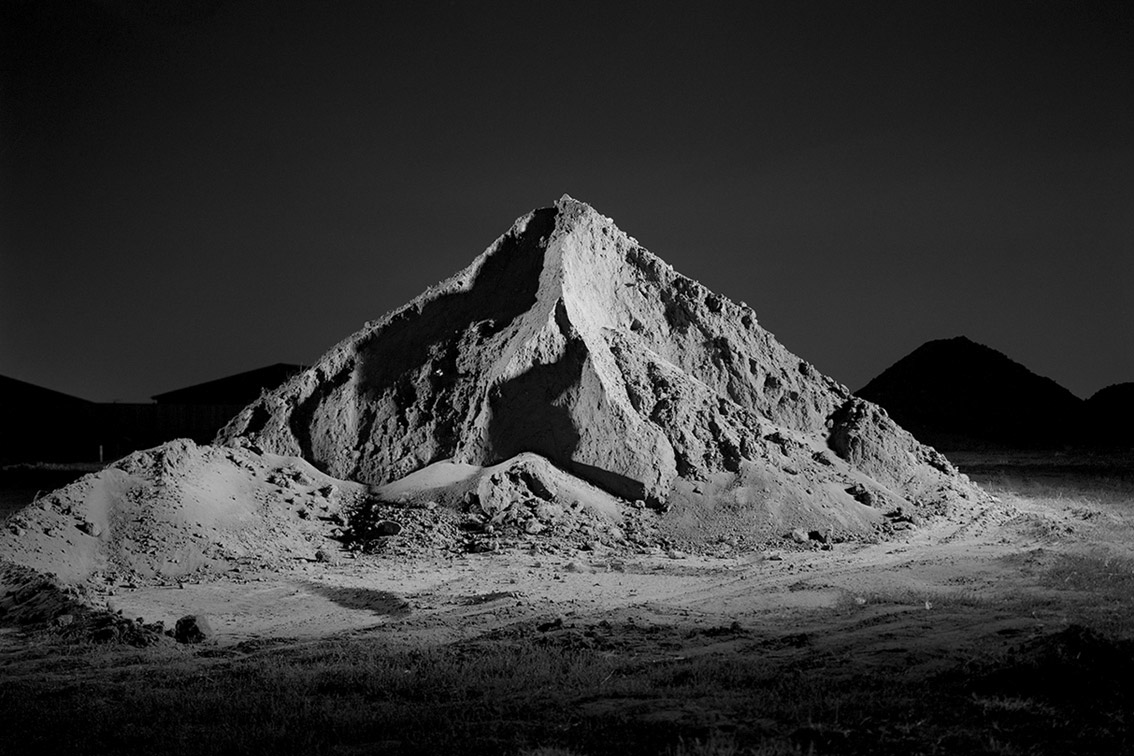
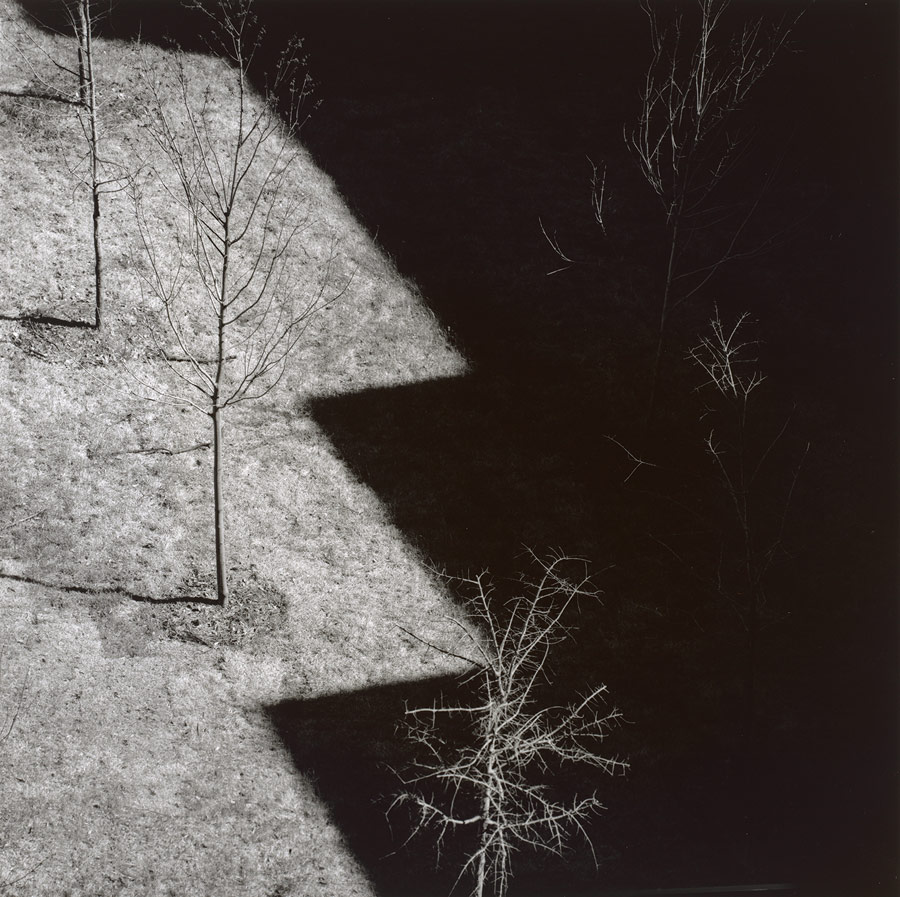
Andrew Curtis (Australian, b. 1966) 'Wonthaggi' 2012


Andrew Curtis (Australian, b. 1966)
Wonthaggi
2012
Archival pigment print on cotton rag
120 x 180cm


This is a strong exhibition of large scale hybrid black and white photographs by Andrew Curtis at Blockprojects, Cremone. The photographs look grand in the simple, beautiful exhibition space, perhaps too grand, too sympatico with the theme of the work: mountains made out of piles of earth dumped at building sites in the outer suburbs of Melbourne. There is humour and absurdity here as Dan Rule notes, but also more than a hint of the sublime. By playing with scale (narratives of the miniature, the gigantic) and light (these images have been studiously lit from different angles during a long time exposure), Curtis tricks the eye of the viewer, just for a split second (the punctum?), elucidating “the strength of the almost blinding role that expectation plays in our reading of an image.” (Dan Rule)

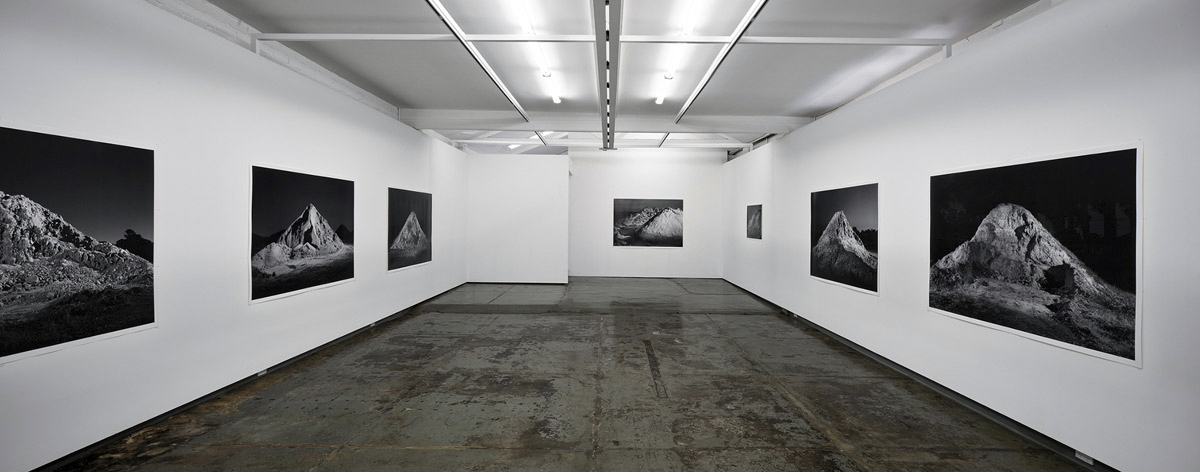
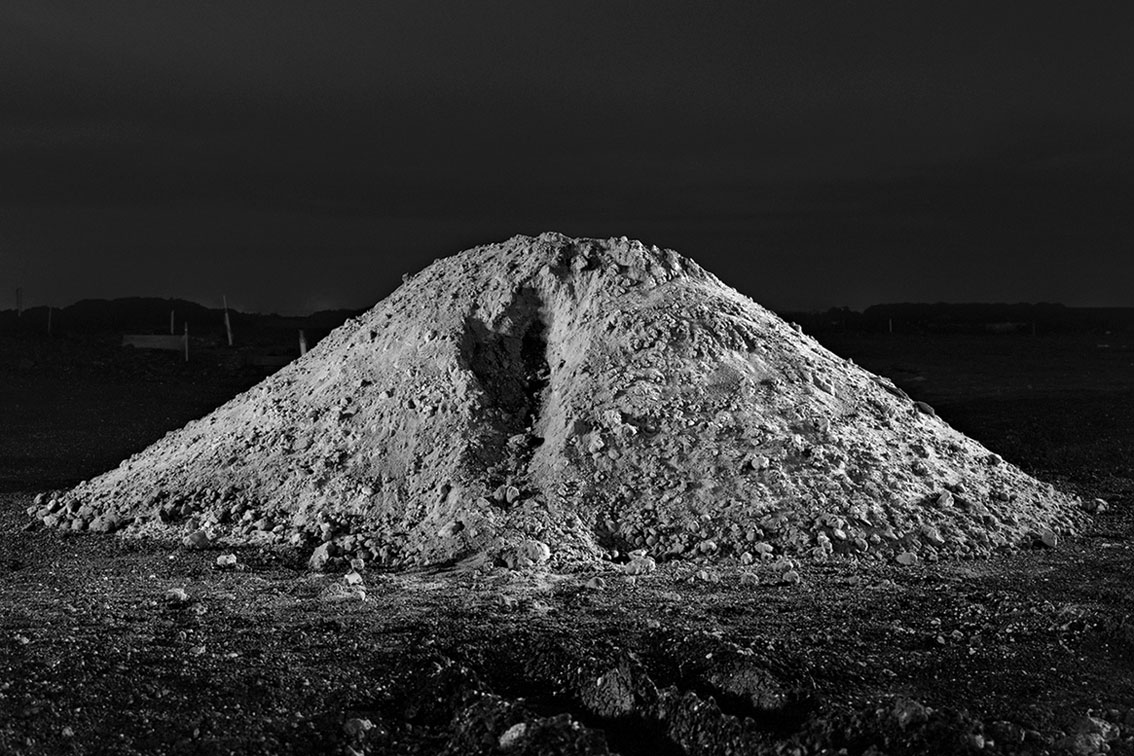
What do I mean by hybrid monochrome images – the work was shot on a 4 x 5 large format film camera and then printed digitally as an archival pigment print on cotton rag. Personally, if I went to all the trouble to shoot on film, then why wouldn’t I go the distance and get them printed the traditional way to preserve the optical veracity that large format brings? With this in mind I asked myself why the images had to be so big (the gigantism of most contemporary photography) for the smaller image, Point Cook 2 (2012, below) seemed at least as valid, perhaps more so as an image, than the larger photographs. It was almost as if the smaller size gave the subject more validity in terms of its abstractness (see installation photograph below). Perhaps a size in between the two presented in the exhibition and printed the analogue way would have been more appropriate to the spirit of the work.

The other thing that I found puzzling was the lack of depth of field from front to back of most of the images. The foregrounds were invariably out of focus (when you could actually see them) which is a strange choice when using a large format camera, where everything can be in focus front to back (a la F64). Curtis’ aesthetic choice is directly from the Pictorialist handbook, as is his decision to darken the out of focus foreground with an aura of black so that nothing is visible (see Hoppers Crossing 1, 2 and 3 below). This makes for a strange reading of the photographs where the mountain becomes isolated yet is the sole grounding of the image (save for a shadowy horizon line behind), a trope that didn’t really work for me.

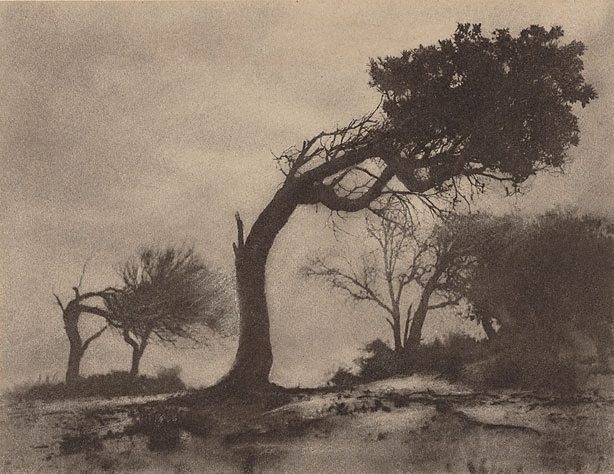
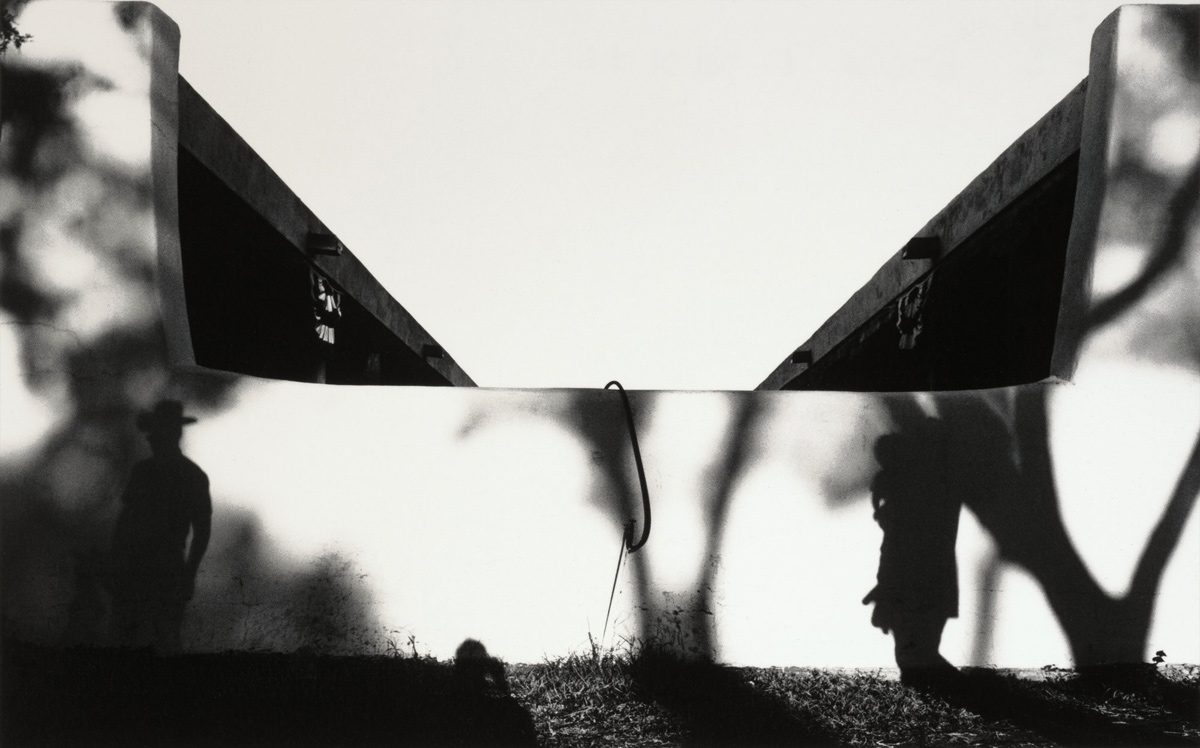
My favourite images where the more intimate images such as Point Cook 2 and Wonthaggi (both 2012). In both, the foreground is agreeably present to lead the eye into the image. In Point Cook 2 the eye is also led in from the right hand side by the spine of the mountain range, the light on the earth matching the ethereal light in the sky. A good image. Even better is Wonthaggi where the stand alone isolation of the monolithic mountains in most of the other images is broken by the “shoulders” of the mountain disappearing out of frame. This, combined with more subtle lighting and the presence of massed shadows of trees in the background, adds a valuable context to the image while at the same time referencing the history of Australian photography through the images of people such as Harold Cazneaux.

Dr Marcus Bunyan


PS. Just as a general point of interest. It is so difficult to make the right choice when displaying large, dark photographs in a gallery setting. If you pin them to the wall, as here, there tend to be waves in the photographs and a client who wants to purchase the print has to factor in where to get the print framed and how much this is going to cost: a lot of hassle for a potential client. If you do get the work framed there is the initial upfront cost plus the dark image is more than obscured by the glass in front of the image, lessening the photographs presence in front of the viewer. Finally there is the choice to have the photograph mounted on aluminium (dibond mounting) or facemounting a print onto acrylic. This gets rid of the need for framing and keeps the print flat but a serious collector of photography will not touch them because they have been stuck down with glue to these materials. A perplexing problem indeed.


Many thankx to Blockprojects for allowing me to publish the photographs in the posting. Please click on the photographs for a larger version of the image.


Harold Cazneaux (Australian, 1878-1953) 'The bent tree, Narrabeen' 1914


Harold Cazneaux (Australian, 1878-1953)
The bent tree, Narrabeen
1914
Bromoil photograph
14.6 x 18.9cm


Andrew Curtis (Australian, b. 1966) 'Point Cook 2' 2012


Andrew Curtis (Australian, b. 1966)
Point Cook 2
2012
Archival pigment print on cotton rag
66 x 100cm


Installation view of 'Andrew Curtis: Moonlight Mile' at Blockprojects, Melbourne


Installation view of Andrew Curtis: Moonlight Mile exhibition at Blockprojects, Melbourne


Andrew Curtis (Australian, b. 1966) 'Hoppers Crossing 1' 2012


Andrew Curtis (Australian, b. 1966)
Hoppers Crossing 1
2012
Archival pigment print on cotton rag
120 x 180cm


Andrew Curtis (Australian, b. 1966) 'Hoppers Crossing 2' 2012


Andrew Curtis (Australian, b. 1966)
Hoppers Crossing 2
2012
Archival pigment print on cotton rag
120 x 180cm


Andrew Curtis (Australian, b. 1966) 'Hoppers Crossing 3' 2012


Andrew Curtis (Australian, b. 1966)
Hoppers Crossing 3
2012
Archival pigment print on cotton rag
120 x 180cm


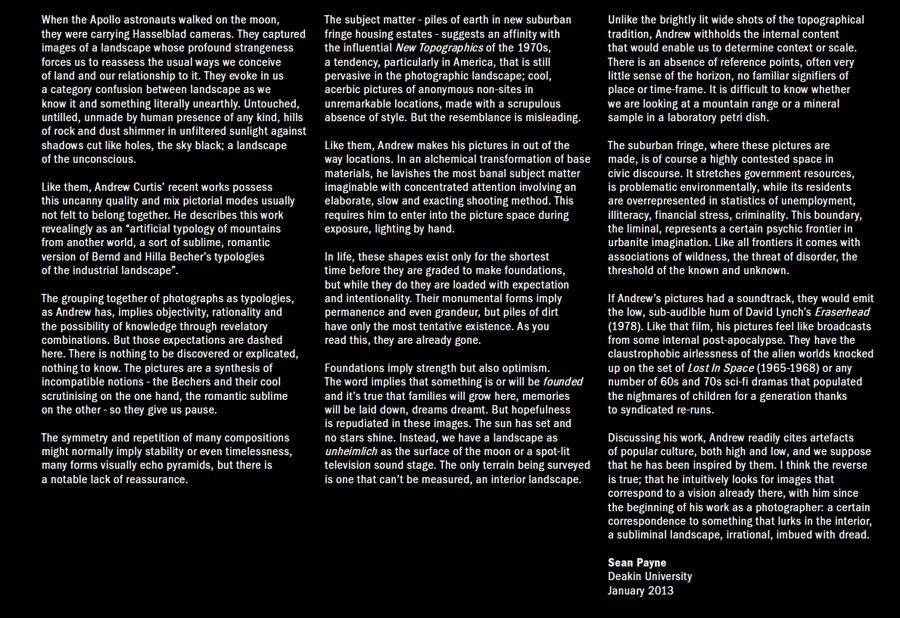
Catalogue essay by Sean Payne, Deakin University


Catalogue essay by Sean Payne, Deakin University (please enlarge to read)


Andrew Curtis (Australian, b. 1966) 'Point Cook 1' 2012


Andrew Curtis (Australian, b. 1966)
Point Cook 1
2012
Archival pigment print on cotton rag
120 x 180cm


Andrew Curtis (Australian, b. 1966) 'Almurta' 2011


Andrew Curtis (Australian, b. 1966)
Almurta
2011
Archival pigment print on cotton rag
120 x 180cm


Blockprojects
Level 1 / 252 Church Street
Richmond, VIC 3121
Phone: +61 3 8395 1028

Opening hours:
Wednesday to Saturday: 12am – 5pm

Blockprojects website

LIKE ART BLART ON FACBEOOK

Back to top

Exhibition: ‘The Photographs of Ray K. Metzker and the Institute of Design’ at the J. Paul Getty Museum, Los Angeles

Exhibition dates: 25th September, 2012 – 24th February, 2013


Ray K. Metzker (American, 1931-2014) 'New Mexico' negative 1972; print 1987


Ray K. Metzker (American, 1931-2014)
New Mexico
Negative 1972; print 1987
Gelatin silver print
17.8 x 27.9cm (7 x 11 in.)
The Nelson-Atkins Museum of Art, Gift of the Hall Family Foundation
© Ray K. Metzker


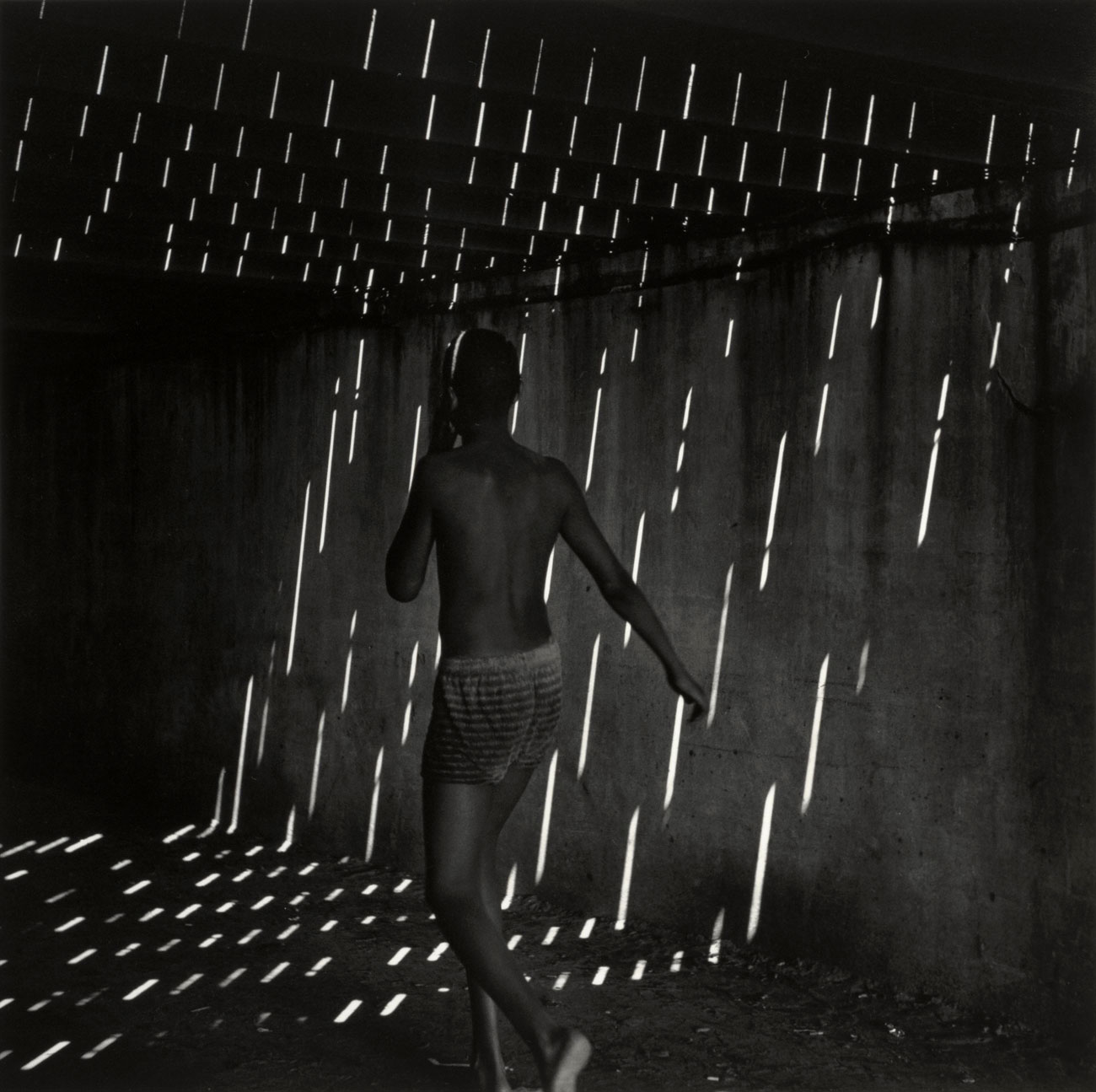
It is a pleasure to able to post more of the tough, no nonsense photographs of Ray. K. Metzker. Atlantic City (1966, below) is an absolute beauty – from the shards of light raining down at exaggerated speed on the right hand wall, to the colour of the body, the colouration of the sole of the uplifted foot matching that of the bathers, the out flung arm, the single ray of light hitting the top of the head, to the march into endless darkness at left of image. Imagine actually seeing that image and then capturing it on film…

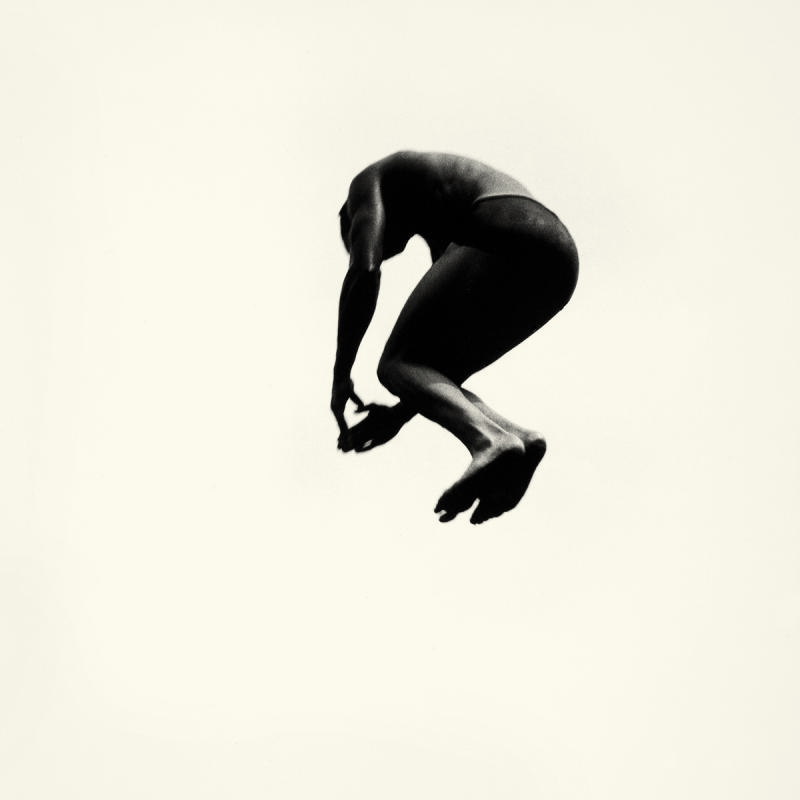
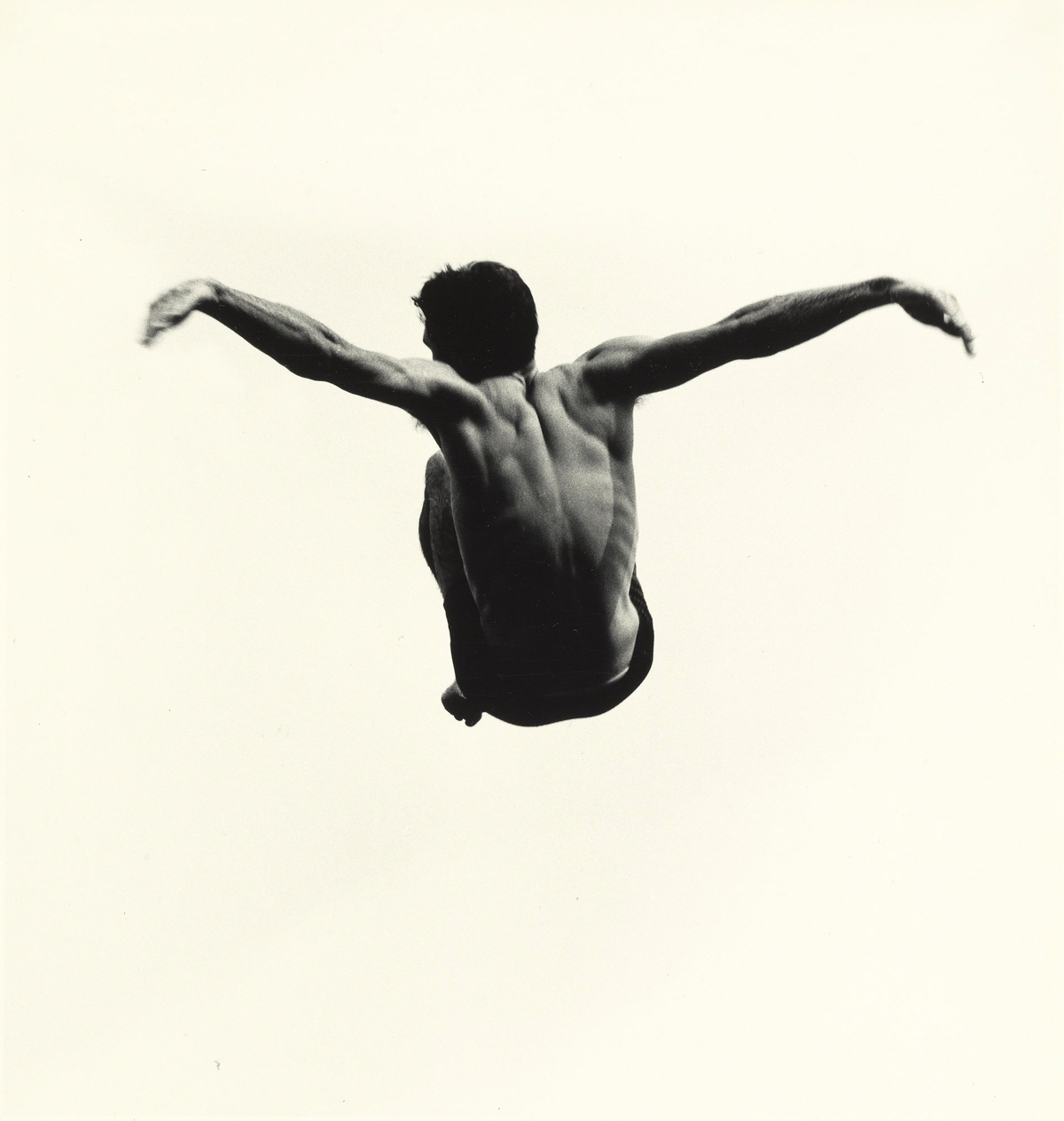
My personal favourite in the posting are the two photographs by Aaron Siskind. His monumental series, Pleasures and Terrors of Levitation, are photographs of divers leaping through the air captured from below to emphasise the abstract quality of their twisting shapes by isolating them against the sky:

“Highly formal, yet concerned with their subject as well as the idea they communicate, The Pleasures and Terrors of Levitation photographs depict the dark shapes of divers suspended mid-leap against a blank white sky. Shot with a hand-held twin-lens reflex camera at the edge of Lake Michigan in Chicago, the balance and conflict suggested by the series’ title is evident in the divers’ sublime contortions.” (Anonymous. “Aaron Siskind,” on the Museum of Contemporary Photography website 17/02/2013. No longer available online)

Such a simple idea, so well executed, the photographs become a single frame of Muybridge’s motion studies where the audience can imagine the rest of the sequence without seeing. Balance and conflict are in equilibrium and the pleasure and terror of jumping from the top board at the local swimming pool is caught in stasis, crystallised in a sublime field of existence under the gaze of the viewer.

Dr Marcus Bunyan


Many thankx to the J. Paul Getty Museum for allowing me to publish the photographs in the posting. Please click on the photographs for a larger version of the image.


Ray K. Metzker (American, 1931-2014) 'Valencia' 1961


Ray K. Metzker (American, 1931-2014)
Valencia
1961
Gelatin silver print
14.3 x 22.9cm (5 5/8 x 9 in.)
The Nelson-Atkins Museum of Art, Gift of the Hall Family Foundation
© Ray K. Metzker


Ray K. Metzker (American, 1931-2014) 'Atlantic City' negative, 1966; print, 2003


Ray K. Metzker (American, 1931-2014)
Atlantic City
negative, 1966; print, 2003
Gelatin silver print
20.3 x 20.3cm (8 x 8 in.)
The Nelson-Atkins Museum of Art, Gift of the Hall Family Foundation
© Ray K. Metzker


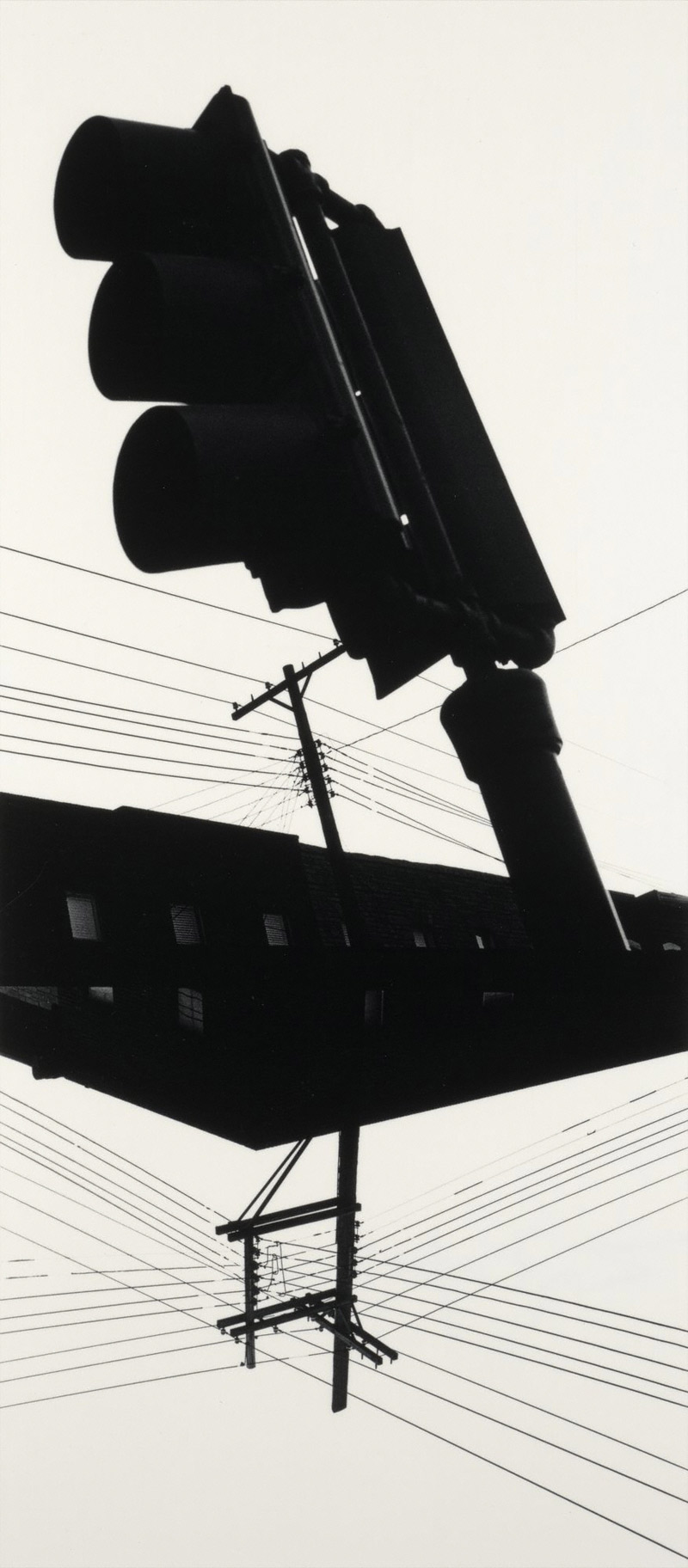
Ray K. Metzker (American, 1931-2014) 'Double Frame: Philadelphia' negative 1965; print 1972


Ray K. Metzker (American, 1931-2014)
Double Frame: Philadelphia
Negative 1965; print 1972
Gelatin silver print
21.6 x 9.8cm (8 1/2 x 3 7/8 in.)
The Nelson-Atkins Museum of Art, Gift of the Hall Family Foundation
© Ray K. Metzker


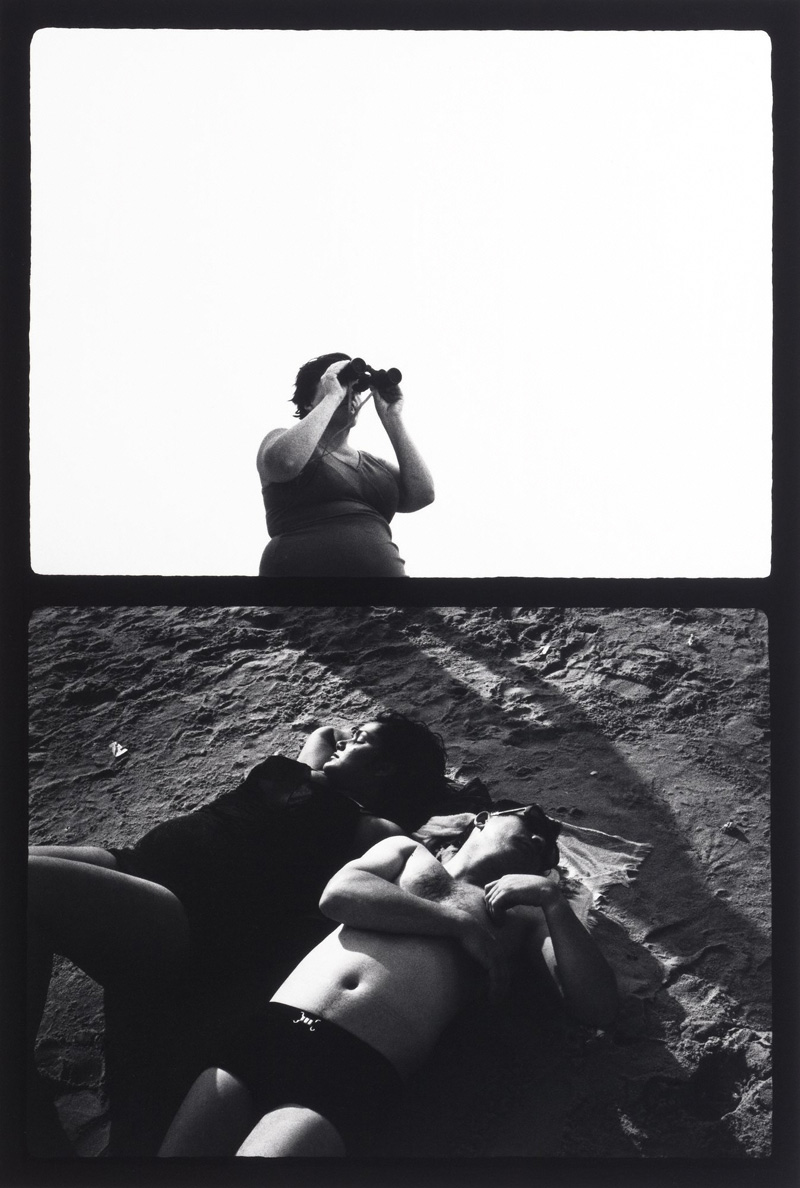
Ray K. Metzker (American, 1931-2014) 'Couplets: Atlantic City' negative 1969; print 1984


Ray K. Metzker (American, 1931-2014)
Couplets: Atlantic City
Negative 1969; print 1984
Gelatin silver print
22.9 x 15.6cm (9 x 6 1/8 in.)
The Nelson-Atkins Museum of Art, Gift of the Hall Family Foundation
© Ray K. Metzker


Ray K. Metzker (American, 1931-2014) 'City Whispers: Los Angeles' negative 1981; print 2006


Ray K. Metzker (American, 1931-2014)
City Whispers: Los Angeles
Negative 1981; print 2006
Gelatin silver print
26.8 x 41.4cm (10 9/16 x 16 5/16 in.)
The Nelson-Atkins Museum of Art, Gift of the Hall Family Foundation
© Ray K. Metzker


Ray K. Metzker (American, 1931-2014) 'City Whispers, Philadelphia' 1983


Ray K. Metzker (American, 1931-2014)
City Whispers, Philadelphia
1983
Gelatin silver print
24.5 x 24cm (9 5/8 x 9 7/16 in.)
The J. Paul Getty Museum, Los Angeles
© Ray K. Metzker


Metzker’s work is part of a revered tradition that emerged from the experimental approach of Chicago’s Institute of Design (ID), where he received his graduate degree in 1959. Inspired by instructors Harry Callahan and Aaron Siskind, Metzker fashioned an entirely personal synthesis of formal elegance, technical precision, and optical innovation. His composite works hold an important status in the history of creative photography: at the time of their making, they were unprecedented in ambition and perceptual complexity.

Metzker’s devotion to photographic seeing as a process of discovery is also deeply humanistic in its illumination of isolation and vulnerability. This exhibition offers a comprehensive overview of Metzker’s five-decade career, while also providing examples of work by instructors and fellow students at the Institute of Design in Chicago, where Metzker studied from 1956 to 1959. Learn more about Metzker’s diverse forays into photography as well as the ID and its profound influence.

Ray K. Metzker (American, 1931-2014) is one of the most dedicated and influential American photographers of the last half century. His photographs strike a distinctive balance between formal brilliance, optical innovation, and a deep human regard for the objective world. The Photographs of Ray K. Metzker and the Institute of Design, on view at the Getty Center September 25, 2012 – February 24, 2013, offers a comprehensive overview of Metzker’s five-decade career, while also providing examples of work by instructors and fellow students at the Institute of Design in Chicago, where Metzker studied from 1956 to 1959.

Organised in collaboration with Keith F. Davis, senior curator of photography at The Nelson-Atkins Museum of Art in Kansas City, Missouri, the exhibition is curated by Virginia Heckert, curator of photographs, and Arpad Kovacs, assistant curator of photographs, at the J. Paul Getty Museum. The exhibition features nearly 200 photographs, including approximately 80 from the holdings of The Nelson-Atkins Museum.

Ray K. Metzker

Dynamically composed, Metzker’s luminous black-and-white photographs feature subjects ranging from urban cityscapes to nature, all demonstrating the inventive potential of the photographic process. While a student at the ID, Metzker was mentored by renowned photographers Harry Callahan and Aaron Siskind. His curiosity led to experiments with high contrast, selective focus, and multiple images.

Metzker’s thesis project for the ID, a study of Chicago’s business district, or Loop, displayed many of these techniques. One image, a multiple exposure of commuters ascending a sun-bathed staircase, prefigures the novel Composites that he began to make in 1964. Whether documenting everyday life in an urban environment or exploring the natural landscapes, Metzker’s photographs often incorporate elements of abstraction. A longtime resident of Philadelphia, Metzker taught at the Philadelphia College of Art for many years. His frequent focus on Philadelphia and other cityscapes has yielded iconic images of automobiles, commuters, streets, sidewalks, and architectural facades.

“Metzker’s love of the photographic process has produced a rich body of work that suggests a vulnerability underlying the human condition,” explains Virginia Heckert, curator of photographs at the J. Paul Getty Museum. “With highlights and shadows pushed to extremes and multiple frames combined in innovative ways, his photographs create a graceful choreography of human interaction against urban settings.”

Metzker titles and groups his images based on their location or technique. The exhibition features Metzker’s most significant bodies of work, including Chicago (1956-59), Europe (1960-61), Early Philadelphia (1961-64), Double Frames and Couplets (1964-1969), Composites (1964-1984), Sand Creatures (1968-1977), Pictus Interruptus (1971-1980), City Whispers (1980-1983), Landscapes (1985-1996), and Late Philadelphia (1996-2009).

From the New Bauhaus to the Institute of Design

Revered for an energetic atmosphere of experimentation, the ID opened in the fall of 1937 under the name of the New Bauhaus. With the avant-garde artist and educator László Moholy-Nagy at the helm, the school was modelled after the German Bauhaus (1919-1933), which integrated principles of craft and technology into the study of art, architecture, and design. Photography quickly became an integral component of the curriculum.

Moholy-Nagy’s death in 1946 marked a pivotal moment in the school’s history. That year also saw the introduction of a new four-year photography program and the arrival of Harry Callahan, who was instrumental in hiring Aaron Siskind in 1951. The two became a formidable teaching duo and together created a graduate program that encouraged prolonged investigation of a single idea.

Callahan and Siskind served as Ray Metzker’s mentors during his graduate studies at the ID from 1956-59. Other key photography instructors at the ID included György Kepes, Nathan Lerner, Henry Holmes Smith, Arthur Siegel, Edmund Teske, Art Sinsabaugh, and Frederick Sommer. A selection from Metzker’s thesis project, along with those of fellow students Kenneth Josephson, Joseph Sterling, Joseph Jachna, and Charles Swedlund, was included in a 1961 issue of Aperture magazine devoted to the IDs graduate program in photography. Now a part of the Illinois Institute of Technology, the ID continues to educate students with the same innovative teaching philosophy that was a hallmark of the original Bauhaus.

Harry Callahan and Aaron Siskind

In 1946, the year of Moholy-Nagy’s death, the ID introduced a new four-year photography program and welcomed instructor Harry Callahan. Callahan was instrumental in hiring Aaron Siskind in 1951, and together they became a formidable teaching duo. Their work will be featured in two galleries within the exhibition, with a focus on photographs they created while at the ID.

Harry Callahan’s work benefitted greatly from the attitude of experimentation that was a hallmark of the ID, and his time at the school marked a particularly productive period in his own career. Architectural details, views of nature and intimate photographs of his wife, Eleanor and daughter, Barbara became subjects that defined his career. A central tenet of his teaching was to return to previously explored subjects, an approach that he himself practiced, as did Metzker.

Influenced by the Abstract Expressionist painters he befriended in the 1940s, Aaron Siskind’s work features abstracted textures and patterns excerpted from the real world. Often calligraphic in form, the urban facades, graffiti, stains, and debris he photographed capitalise on the flatness of the picture plane. In Pleasures and Terrors of Levitation, his studies of male divers against a blank sky experiments with the figure-ground relationship.

“Callahan and Siskind had vastly different visual styles and interests in subject matter” said Arpad Kovacs, assistant curator of photographs at the J. Paul Getty Museum. “However, both emphasised the expressive possibilities of the medium rather than the mechanics of producing a photograph. It was this shared interest in constantly challenging their students that came to define their influential presence at the ID.”

Also featured in the exhibition is work by a number of founding ID photography instructors and those who taught in the years Metzker attended the school, including György Kepes, Nathan Lerner, Henry Holmes Smith, Arthur Siegel, Edmund Teske, Art Sinsabaugh, and Frederick Sommer. Another gallery is dedicated to the work of ID students Kenneth Josephson, Joseph Sterling, Joseph Jachna, and Charles Swedlund, all of whom, together with Metzker, were featured in a 1961 issue of Aperture magazine that extolled the virtues of the ID’s photography program.”

Press release from the J. Paul Getty Museum website


Arthur Siegel (American, 1913-1978) 'State Street' 1949


Arthur Siegel (American, 1913-1978)
State Street
1949
Dye transfer print
21.9 x 26.4cm (8 5/8 x 10 3/8 in.)
The Nelson-Atkins Museum of Art, Gift of Hallmark Cards, Inc.,
© Estate of Arthur Siegel


Aaron Siskind (American, 1903-1991) 'Jerome, Arizona 21' 1949


Aaron Siskind (American, 1903-1991)
Jerome, Arizona 21
1949
Gelatin silver print
The J. Paul Getty Museum
© Aaron Siskind Foundation


Harry Callahan (American, 1912-1999) 'Eleanor, Chicago' 1952


Harry Callahan (American, 1912-1999)
Eleanor, Chicago
1952
Gelatin silver print
10.2 x 12.7cm (4 x 5 in.)
The J. Paul Getty Museum, Los Angeles
© Estate of Harry Callahan


Aaron Siskind (American, 1903-1991) 'Pleasures and Terrors of Levitation 25' 1957


Aaron Siskind (American, 1903-1991)
Pleasures and Terrors of Levitation 25
1957
Gelatin silver print
27.9 x 26.4cm (11 x 10 3/8 in.)
The J. Paul Getty Museum, Los Angeles
© Aaron Siskind Foundation


Aaron Siskind (American, 1903-1991) 'Pleasures and Terrors of Levitation 94' 1961


Aaron Siskind (American, 1903-1991)
Pleasures and Terrors of Levitation 94
1961
Gelatin silver print
27.9 x 26.1cm (11 x 10 1/4 in.)
The J. Paul Getty Museum, Los Angeles
© Aaron Siskind Foundation


Joseph Sterling (American, 1936-2010) 'Untitled' 1961


Joseph Sterling (American, 1936-2010)
Untitled
1961
Gelatin silver print
19.1 x 19.1cm (7 1/2 x 7 1/2 in.)
The Nelson-Atkins Museum of Art, Gift of Hallmark Cards, Inc.
Courtesy Stephen Daiter Gallery
© Deborah Sterling


Charles Swedlund (American, b. 1935) 'Buffalo, NY' about 1970


Charles Swedlund (American, b. 1935)
Buffalo, NY
about 1970
Gelatin silver print
18.7 x 15.9cm (7 3/8 x 6 1/4 in.)
The J. Paul Getty Museum, Los Angeles, Purchased in part with funds provided by an anonymous donor in memory of James N. Wood
© Charles Swedlund


The J. Paul Getty Museum
1200 Getty Center Drive
Los Angeles, California 90049

Opening hours:
Tuesday – Friday, Sunday 10am – 5.30pm
Saturday 10am – 8pm
Monday Closed

The J. Paul Getty Museum website

LIKE ART BLART ON FACEBOOK

Back to top

Marcus Bunyan black and white archive: ‘Circumnavigation’, 1992-1994

November 2012

*PLEASE NOTE THIS POSTING CONTAINS ART PHOTOGRAPHS OF MALE SEXUAL NUDITY- IF YOU DO NOT LIKE PLEASE DO NOT LOOK, FAIR WARNING HAS BEEN GIVEN*


The titles from this period tend to be poetic, pragmatic or composed, like Japanese haiku. The photographs are a mixture of personal narrative and universal archetype, hence the affinity to Frederick Sommer’s incantation: Circumnavigation of the blood is always Circumnavigation of the world.

I am scanning my negatives made during the years 1991-1997 to preserve them in the form of an online archive as a process of active memory, so that the images are not lost forever. These photographs were images of my life and imagination at the time of their making, the ideas I was thinking about and the people and things that surrounded me.

All images © Marcus Bunyan. Please click the photographs for a larger version of the image; remember these are just straight scans of the negatives!

Photographs are available from this series for purchase. As a guide, a vintage 8″ x 10″ silver gelatin print costs $700 plus tracked and insured shipping. For more information please see my Store web page.


Marcus Bunyan (Australian, b. 1958) 'Doll on chair' 1992-94


Marcus Bunyan (Australian, b. 1958)
Doll on chair
1992-1994
Silver gelatin photograph


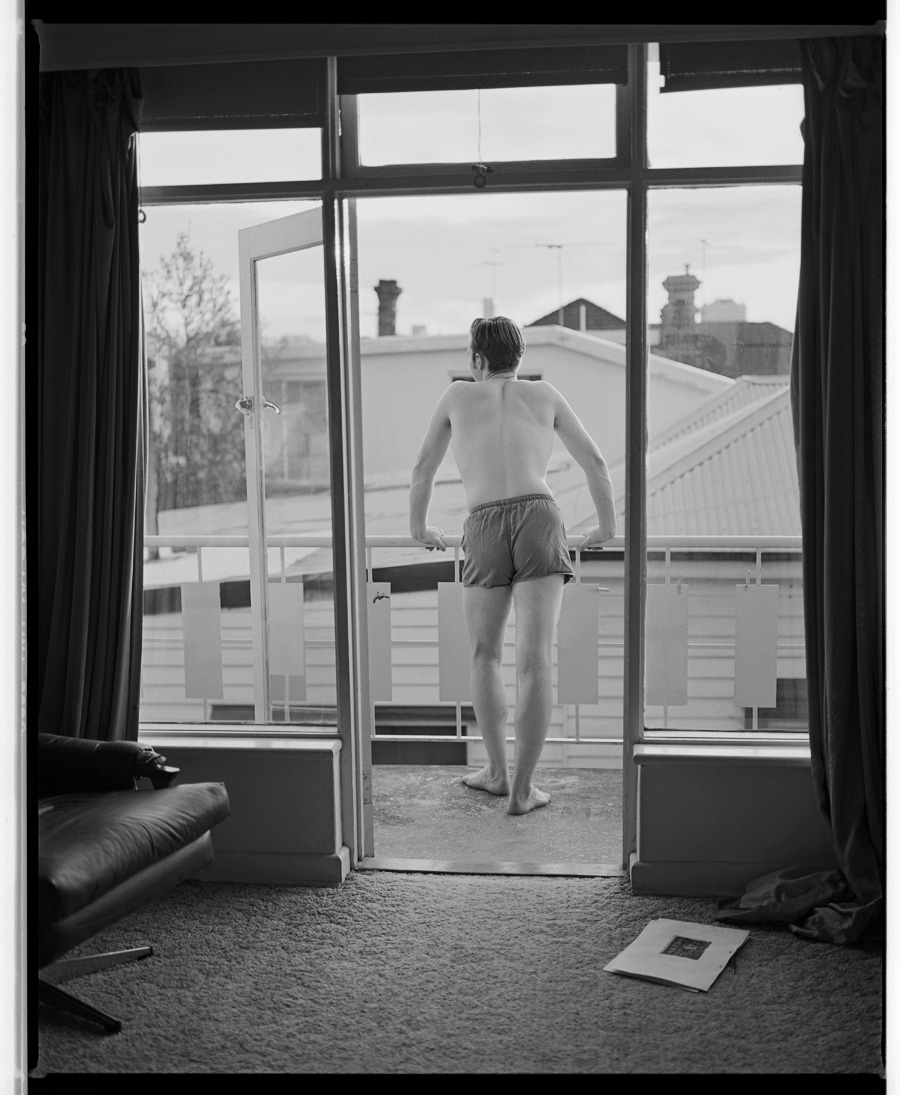
Marcus Bunyan (Australian, b. 1958) 'Paul on the balcony, Mcilwrick Street, Windsor' 1992-94


Marcus Bunyan (Australian, b. 1958)
Paul on the balcony, Mcilwrick Street, Windsor
1992-1994
Silver gelatin photograph


Marcus Bunyan (Australian, b. 1958) 'Paul resting' 1992-94


Marcus Bunyan (Australian, b. 1958)
Paul resting
1992-1994
Silver gelatin photograph


Marcus Bunyan (Australian, b. 1958) 'Marcus holding his cock' 1992-94


Marcus Bunyan (Australian, b. 1958)
Marcus holding his cock
1992-1994
Silver gelatin photograph


Marcus Bunyan (Australian, b. 1958) 'Post with finial, tree' 1992-94


Marcus Bunyan (Australian, b. 1958)
Post with finial, tree
1992-1994
Silver gelatin photograph


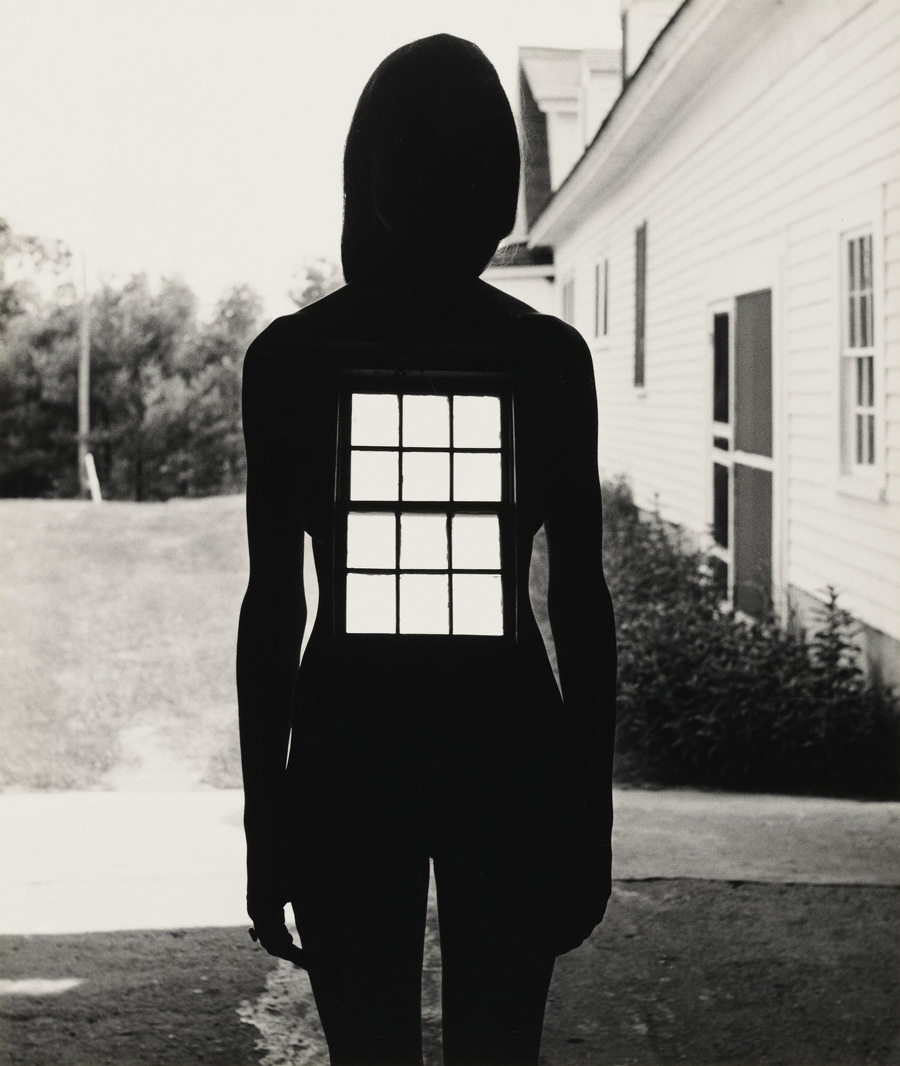
Marcus Bunyan (Australian, b. 1958) 'People who live in glass houses shouldn't throw stars' 1992-1994


Marcus Bunyan (Australian, b. 1958)
People who live
in glass houses
shouldn’t throw stars
1992-1994
Silver gelatin photograph


Marcus Bunyan (Australian, b. 1958) 'Paul, Windsor and the city' 1992-1994


Marcus Bunyan (Australian, b. 1958)
Paul, Windsor and the city
1992-1994
Silver gelatin photograph


Marcus Bunyan (Australian, b. 1958) 'Self portrait with punk jacket and flanny' 1992-1994


Marcus Bunyan (Australian, b. 1958)
Self portrait with punk jacket and flanny
1992-1994
Silver gelatin photograph


Marcus Bunyan (Australian, b. 1958) 'Release' 1992-1994


Marcus Bunyan (Australian, b. 1958)
Release
1992-1994
Silver gelatin photograph


Marcus Bunyan (Australian, b. 1958) 'Jesus, Mary and Joseph.' 1992-1994


Marcus Bunyan (Australian, b. 1958)
Jesus, Mary and Joseph.
1992-1994
Silver gelatin photograph


Marcus Bunyan (Australian, b. 1958) 'Circumnavigation of the blood is always Circumnavigation of the world (for Frederick Sommer)' 1992-1994


Marcus Bunyan (Australian, b. 1958)
Circumnavigation of the blood is always Circumnavigation of the world (for Frederick Sommer)
1992-1994
Silver gelatin photograph


Marcus Bunyan (Australian, b. 1958) 'Release (cock, hands, cum)' 1992-1994


Marcus Bunyan (Australian, b. 1958)
Release (cock, hands, cum)
1992-1994
Silver gelatin photograph


Marcus Bunyan (Australian, b. 1958) 'Madonna and child, skull' 1992-94


Marcus Bunyan (Australian, b. 1958)
Madonna and child, skull
1992-1994
Silver gelatin photograph


Marcus Bunyan black and white archive 1991-1997

LIKE ART BLART ON FACEBOOK

Back to top

Exhibition: ‘Edouard Baldus and the Modern Landscape. Important Salt Prints of Paris from the 1850s’ at James Hyman Gallery, London

Exhibition dates: 12th October – 9th November 2012


Edouard Baldus (French, 1813-1889) 'Vue generale de Paris pont neuf' c. 1855


Edouard Baldus (French, 1813-1889)
Vue generale de Paris pont neuf
c. 1855
Salt print mounted on card
33.6 x 43.9cm (13.20 x 17.25 ins)
Negative: Lower left inscribed in negative: no 82 Mount: Lower right beneath negative: stamped E. Baldus Lower left bottom: Vue generales des Paris pont neuf


A beautiful, complimentary post to the last one on the exhibition Eugène Atget: Old ParisIt is interesting to compare the styles of the two photographers and the change in photography that takes place between the 1850s and the 1890s. Baldus’ photographs are eloquent in their grandeur and frontality, tonality and texture. Atget’s photographs on the other hand are slightly claustrophobic in their intensity, the camera obliquely placed to capture old buildings, narrow cobbled streets and distant vanishing points. Both, in their own way, are very modern photographers. Baldus’ legacy, as Dr James Hyman correctly notes, was his influence on his German compatriots such as the Bechers, Thomas Struth and, to a lesser extent, Andreas Gursky. His rigorous frontality (the photographing of the thing itself) gives his photographs the simplicity of diagrams and emphasises their topographical state, while their density of detail offers encyclopaedic richness. This straightforward “objective” point of view was most notably used by Bernd and Hilla Becher in contemporary photography. Atget’s photographs, on the other hand, aroused an immediate interest “among the Surrealists because of the composition, ghosting, reflections, and its very mundanity.”

Conversely, it is the subjective signature of both artists that make their work truly great – not the mundanity, not the topographic objectivity but their intimate vision of this city, Paris. As I noted in an earlier posting on the Bechers,

“These are subjective images for all their objective desire. The paradox is the more a photographer strives for objectivity, the more ego drops away, the more the work becomes their own: subjective, beautiful, emotive… What makes great photographers, such as Eugène Atget, Walker Evans, August Sander and the Bechers, is the idiosyncratic “nature” of their vision: how Atget places his large view camera – at that particular height and angle to the subject – leaves an indelible feeling that only he could have made that image, to reveal the magic of that space in a photograph. It is their personal, unique thumbprint, recognisable in an instant.”

The same can be said of Baldus and these magnificent, ethereal photographs.

Dr Marcus Bunyan


Many thankx to James Hyman Gallery for allowing me to publish the photographs in the posting. Please click on the photographs for a larger version of the image.


Edouard Baldus (French, 1813-1889) 'Le Nouveau Louvre' c. 1857


Edouard Baldus (French, 1813-1889)
Le Nouveau Louvre
c. 1857
Salt print mounted on card
31.6 x 44.3cm (12.42 x 17.41 ins)
Le Nouveau Louvre series: 1855-1857 Negative: Lower left inscribed in negative: no 107 Mount: Lower right beneath negative: stamped E. Baldus Lower left bottom: Le Nouveau Louvre


Mid-nineteenth century Paris was a city in the midst of modernisation, and as such, was ripe for documentation of its changing landscape. Counted as one of the premier photographers of his day, Edouard Baldus captured the aesthetic of the Second Empire’s ideology in his monumental views of both old and new Parisian landmarks. In 1855, Baldus received his largest commission, to document the construction of the Musee du Louvre. This rich salt print is a survey of the project as it nears almost full completion. Baldus produced over two thousand images of each part of the new Louvre, from large pavilions to small decorative statue. This photograph, however, takes a step back from the individual pieces of the lengthy project, and allows the viewer to appreciate the endeavour as a whole.


Edouard Baldus (French, 1813-1889) 'Le Pantheon' 1853


Edouard Baldus (French, 1813-1889)
Le Pantheon
1853
Salt print mounted on card
33.8 x 43.5cm (13.28 x 17.10 ins)
Negative: Lower left inscribed in negative: Le Pantheon Lower right inscribed in negative: Baldus Mount: Lower right beneath negative: stamped E. Baldus Lower left bottom: Le Pantheon


Due to the strength of his architectural imagery and work with the Mission Heliographique, Baldus would go on to gain the support of a government commission, Les Villes de France Photographies, which focused on the landmarks of Paris in particular, such as the Pantheon. Similar in style to the frontal views of the Louvre pavilions, this image is a precursor to that project, and also includes Saint Etienne du Mont in its background. The Pantheon is one of Paris’ best-known landmarks, and was originally built as a church dedicated to Saint Genevieve. Looking out over the whole of the city, it is now a mausoleum that houses the remains of distinguished French citizens.


Edouard Baldus (French, 1813-1889) 'Arc de Caroussel' c. 1853


Edouard Baldus (French, 1813-1889)
Arc de Caroussel
c. 1853
Salt print mounted on card
34.1 x 44.3 cms (13.40 x 17.41 ins)
Negative: Lower left inscribed in negative: signature of E.Baldus Lower right inscribed in negative: no.81 Mount: Lower right beneath negative: stamped E.Baldus Lower left bottom: Arc de Caroussel
Mount: 43.9 x 61 cms
Image: 34.1 x 44.3 cms


One of Baldus’ greatest projects was to provide a photographic inventory of the New Louvre and adjoing Tuilleries. A number of these works are of particular interest, expecially those of the Tuilleries Palace, which would be burnt down in 1870-1871. All that remains today is the central triumphal arch, the Caroussel, which is depicted here, still with the palace visible in the background. Built between 1806 and 1808, the Arc de Caroussel is a monument commemorating Napolean’s military victories, with Peace riding a triumphal chariot atop the central archway. Two guards flank the sides of the arch, each atop their own horse, which not only provide for a sense of scale, but, being slightly blurred, also hint at the length of Baldus’ exposure. This enhances the effects of the delicately carved sculptures that adorn the archway, presented here with a clarity that defined the standard Baldus set with his architectural images.


James Hyman is proud to present a loan exhibition of one of the greatest photographers of the nineteenth century, Edouard Baldus. Remarkably, this is the first major exhibition of Edouard Baldus ever to be staged in London. Baldus was famed for his monumental photographs of the buildings of Paris at a time of massive transition under Napoleon III, Baron Haussman and Viollet Le Duc, as well as the depiction of the contemporary landscape of France. Acclaimed as the greatest architectural photographer of the nineteenth century, Baldus’s prints were some of the largest photographs in existence and pioneered an aesthetic of presenting modernity and the modern city that would have a profound influence on later photographers from the Bechers to John Davies.

Baldus was one of the great calotypists of the 1850s, producing works of an unprecedented range and scale. He moved to Paris in 1838 to study painting alongside other future photographers such as Le Gray, Le Secq, and Negre. He frequently retouched his paper negatives, adding pencil and ink, to add clouds or clarify details, then printing his own large-scale negatives. He was also adept at stitching several negatives together to re-create architectural views, most famously in his views of the cloisters of Saint Trophime.

Famed especially for his depiction of architecture, Baldus not only documented the modernisation of Paris but also travelled widely through France recording modernity and new construction – including new railways and aqueducts, as well as the building of the new Louvre. In 1851 the Commission des Monuments Historiques cited Baldus as one of the five best architectural photographers and he was commissioned to record the monuments of France for what became known as the Mission heliographic. His beginnings in photography are not well documented before his participation in the Mission heliographique, although it is known that he took photographs of Montmajour in 1849.

In 1852 he began Villes de France photographies to which the minister of Beaux-Arts subscribed until 1860. In 1854 he travelled with his student Petiot-Groffier in Auvergne and in 1855 the Baron James de Rothschild commissioned him to photograph the new Northern train line from Paris to Boulogne as a gift, in the form of a commemorative album, for Queen Victoria before her visit to the Exposition Universelle. Later, in his commission to document the reconstruction of the Louvre, Baldus took more than two thousand views in a period of three years. His last big commission was from 1861-1863 documenting the Paris-Lyon-Mediterranean train line illustrating seventy views of the train’s track. After this, Baldus tried to provide more commercial alternatives to his large-format works, creating smaller prints and heliogravures of his earlier work. Unfortunately, the effort was unsuccessful and Baldus passed away in bankruptcy and relative obscurity.

Press release from the James Hyman website


Edouard Baldus (French, 1813-1889) 'Pavillon Colbert, Nouveau Louvre, Paris' c.1855


Edouard Baldus (French, 1813-1889)
Pavillon Colbert, Nouveau Louvre, Paris
c. 1855
Salt print mounted on card
43.2 x 34.1cm (16.98 x 13.40 ins)
Stamped ‘E. Baldus’ on the lower right of the mount and titled lower left ‘Pavillon Colbert Nouveau Louvre’


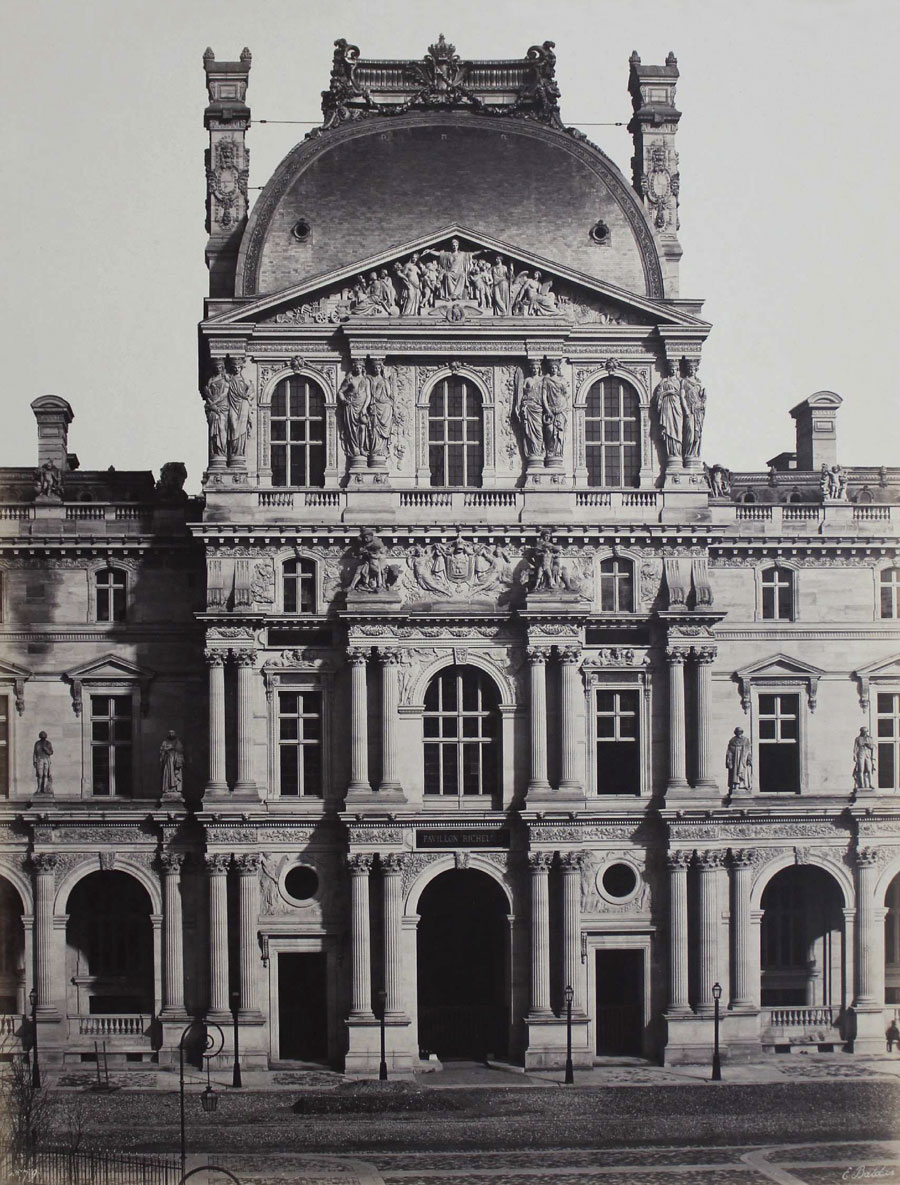
Of the many photographs Baldus took of the Louvre during the period 1855-1857, it is his large-format photographs of the main pavilions that best demonstrate the stretch of his artistic achievements. Commissioned by the French government once again, Baldus was charged with documenting every aspect of the new Palace’s construction, which was to be the Second Empire’s largest building project. Consequently, over the course of two years, it also evolved into the largest photographic commission to date, and Baldus took over two thousand photographs ranging in subject matter from individual statuary to the grand frontal views of each completed pavilion, such as this example of the Pavillon Colbert.

This particular photograph is an astounding example of the precision and clarity wet plate negatives afforded Baldus in capturing the texture of New Louvre’s stonework. Each part of the façade, from the temple relief statuary to the columns flanking the entryway, is bathed in a bright light that emphasises the three-dimensionality of the new pavilion. The sense of crisp stonework evident in this image is only heightened by the blurred tree in the bottom left corner, as well as the trace of a ghostly figure in the foreground – a horse and cart that paused long enough to be captured, just barely, in Baldus’ long exposure.

The subject of this picture brings to bear the importance of the symbolism of the architecture of the Nouveau Louvre for the reign of Napoleon III. The relief and figures on the façade of the Pavillon Colbert highlight France’s greatest realms of achievement, from the conquering of nature through to industry. The upmost relief represents Earth and Water, while the figures to either side personify Science and Industry. Baldus has also ensured that a human figure on the right-hand side of the central entrance has stood still long enough to provide the viewer with a sense of the imposing scale of the statuary, as well as the entire façade. The result is a striking image that is sharper than any contemporary enlargement, exemplary of Baldus’ ability to isolate and capture architecture while giving a slight hint to the life that continued to move around it.


Edouard Baldus (French, 1813-1889) 'Pavillon de la Bibliotheque, Rue de Rivoli, Paris' c. 1855


Edouard Baldus (French, 1813-1889)
Pavillon de la Bibliotheque, Rue de Rivoli, Paris
c. 1855
Salt print mounted on card
43.2 x 34.3cm (16.98 x 13.48 ins)
Inscribed ‘no 103’ in the negative, lower left. Stamped E. Baldus on the lower right of the mount and titled lower left ‘Nouveau Louvre Rue Rivoli’


Edouard Baldus (French, 1813-1889) 'Pavillon Richelieu, Nouveau Louvre, Paris' c. 1855


Edouard Baldus (French, 1813-1889)
Pavillon Richelieu, Nouveau Louvre, Paris
c. 1855
Salt print mounted on card
45 x 34.5cm (17.69 x 13.56 ins)
Inscribed ‘no 79’ in the negative, lower left and signed in the negative lower right ‘E. Baldus’ Stamped E. Baldus on the lower right of the mount and titled lower left ‘Pavillon Richelieu Nouveau Louvre’


An image that the Metropolitan Museum of Art describes as “among the most spectacular of all Baldus photographs,” it is clear that Baldus took full advantage of the opportunity to use larger equipment, which was necessary to capture his tremendous subject. The technical advantages afforded by glass plate negatives allowed him to create equally large contact prints without joining separate negatives, as was his practice with many of his earlier images. Here, the resulting photograph depicts the Pavillon Richelieu in a striking range of tonality, from the crisp texture of the street to the glowing reflection of the pavilion’s new tiled roof.


Edouard Baldus (French, 1813-1889) 'Pavillon Sully, Nouveau Louvre, Paris' c. 1857


Edouard Baldus (French, 1813-1889)
Pavillon Sully, Nouveau Louvre, Paris
c. 1857
Salt print mounted on card
44.5 x 34.5cm (17.49 x 13.56 ins)
Inscribed ‘no 92’ in the negative, lower left. Stamped E. Baldus on the lower right of the mount and titled lower left ‘Pavillon Sully Nouveau Louvre’


Baldus returned to this particular pavilion numerous times, his earliest images of the structure produced while he was photographing for the Mission Heliographique. The Pavillon Sully was originally built during the Classical Period of Louis XIV in 1625, and served as a model for the Second Empire additions. One of the grandest of all the completed facades, the Pavillon Sully acquired many sculptural additions during the reconstruction, but the central clock from which the pavilion derived its original name (Pavillon de l’Horloge) remained central.

Taking an elevated view, Baldus depicted the Pavillon Sully with exemplary precision that is sharper than any contemporary enlargement. The result is one of the most imposing images of the Nouveau Louvre pavilions, giving the entire façade a commanding sense of presence as it rises above trees in the foreground, which are just blurred enough to reveal Baldus’ long exposure.


Dr James Hyman text


Edouard Baldus (French, 1813-1889) 'Saint Etienne du Mont, Paris' c. 1858


Edouard Baldus (French, 1813-1889)
Saint Etienne du Mont, Paris
c. 1858
Salt print mounted on card
44.1 x 34.2cm (17.33 x 13.44 ins)
Stamped E Baldus on the lower right of the mount and titled lower left ‘St Etienne du Mont’
Mount: 61 x 43.9 cms
Image: 44.1 x 34.2 cms


Edouard Baldus (French, 1813-1889) 'Notre Dame, Facade Principale, Paris' 1857


Edouard Baldus (French, 1813-1889)
Notre Dame, Facade Principale, Paris
1857
Salt print mounted on card
44.5 x 34.2cm (17.49 x 13.44 ins)
Inscribed ‘no 34’ in the negative, lower right. Stamped E. Baldus on the lower right of the mount and titled lower left ‘Notre Dame Facade Principal’
Dimensions Mount: 61 x 44 cms Image: 44.5 x 34.2 cms


This iconic image of Notre Dame embodies the direct and frontal style that came to define Baldus’ architectural images. Here, he has captured the majesty of one of Paris’ most notable landmarks by elevating his vantage point and placing the viewer at eye level with its magnificent rose window. This print is a carefully executed example of the type of balance and symmetry Baldus aimed to capture while working on this commission.


James Hyman Gallery
16 Savile Row
London W1S 3PL
Telephone 020 7494 3857

Opening hours:
By appointment

James Hyman Gallery website

LIKE ART BLART ON FACEBOOK

Back to top

Exhibition: ‘Hijacked III: Contemporary Photography from Australia and the UK’ at Perth Institute of Contemporary Art (PICA)

Exhibition dates:  18th February – 8th April 2012


Hijacked III Interview with writer Anthony Luvera


The photographs in this posting highlight the conceptual diversity in contemporary art practice and emphasise the talent of the practitioners working today. Just an observation: how serious are the portraits – it’s as if no’body’ is allowed to laugh or smile anymore. Perhaps this is a reflection of the times in which we live, full of malaise, anxiety and little wonder. Fear of being replaced, fear of discrimination, fear of growing up, fear of dying. Or dressed up in a women’s dress and pink hat, having the “courage” or ignorance (the opposite of fear?) to look like a stunned mullet with a blank expression on the face (deadpan photography that I really can’t stand). Or, perhaps, simple effacement: defiance as body becomes mannequin, body hidden behind a mask or completely cloaked from view. These grand photographs have the intensity, perhaps not a lightness of being.

Dr Marcus Bunyan


Many thankx to PICA for allowing me to publish the photographs in the posting. Please click on the photographs for a larger version of the image.


Trish Morrissey (Irish, b. 1967) 'Hayley Coles, June 17th, 2006' 2006


Trish Morrissey (Irish, b. 1967)
Hayley Coles, June 17th, 2006
2006
Courtesy of the artist and Elaine Levy Project, commissioned by Impressions Gallery

Review of Trish Morrissey on Art Blart


Front deals with the notion of borders, boundaries and the edge; using the family group and the beach setting as metaphors. For this work, the artist travelled to beaches in the UK and around Melbourne. There, she approached families and groups of friends who had made temporary encampments, or marked out territories and asked if she could be part of their family temporarily. Morrissey took over the role or position of a woman within that group – usually the mother figure. The artist asked to take the place of the mother figure, and to borrow her clothes. The mother figure then took over the artist’s role and photographed her family using a 4 x 5 camera (which Morrissey had already carefully set up) under the artist’s instruction. While Morrissey, a stranger on the beach, nestled in with the mother figure’s loved ones.

These highly performative photographs are shaped by chance encounters with strangers, and by what happens when physical and psychological boundaries are crossed. Ideas around the mythological creature the ‘shape shifter’ and the cuckoo are evoked. Each piece within the series is titled by the name of the woman who the artist replaced within the group.

Text from the PICA website


Bindi Cole (Australian, b. 1975) 'Ajay' 2009


Bindi Cole (Australian, b. 1975)
Ajay
2009
From the series Sistagirls
Courtesy of Nellie Castan Gallery

Review of Sistagirls on Art Blart


The term ‘Sistagirl’ is used to describe a transgender person in Tiwi Island culture. Traditionally, the term was ‘Yimpininni’. The very existence of the word provides some indication of the inclusive attitudes historically extended towards Aboriginal sexual minorities. Colonisation not only wiped out many Indigenous people, it also had an impact on Aboriginal culture and understanding of sexual and gender expression.

As many traditions were lost, this term became a thing of the past. Yimpininni were once held in high regard as the nurturers within the family unit and tribe much like the Faafafine from Samoa. As the usage of the term vanished, tribes’ attitudes toward queer Indigenous people began to resemble that of the western world and the religious right. Even today many Sistagirls are excluded from their own tribes and suffer at the hands of others.

Text from the PICA website


Maciej Dakowicz (Polish, b. 1976) 'Pink Hat, 23:42. Cardiff' 2006


Maciej Dakowicz (Polish, b. 1976)
Pink Hat, 23:42. Cardiff
2006
Courtesy of the artist and Third Floor Gallery


St Mary Street is one of the main streets in central Cardiff, the capital city of Wales; a city as any other in the UK. Unassuming during the day, on weekend nights it becomes the main scene of the city night life, fuelled by alcohol and emotions. Some of Cardiff’s most popular clubs and pubs are located there or in its vicinity. The very popular Chippy Lane, with its numerous chip and kebab shops, is just a stone’s throw away. Sooner or later most party-goers end up in that area, whether looking for another drink, some food or in search of another dance floor.

Everything takes place in this public arena – from drinking, fighting, kissing to crying and sleeping. Supermen chat up Playboy Bunnies, somebody lies on the pavement taking a nap, the hungry ones finish their portions of chips and the policemen stop another argument before it turns into a fight. Nobody seems to worry about tomorrow, what matters is here and now, punctuated by another week at work, until the next weekend rolls around again.

Text from the PICA website


Laura Pannack (British, b. 1985) 'Shay' 2010


Laura Pannack (British, b. 1985)
Shay
2010
Courtesy of the artist
Represented by Lisa Pritchard Agency


What’s so special about this picture are the details. The tattoo – not just what it says but the way it mimics the Nike Swoosh on her shirt – and the cigarette, that although it is not in focus, one imagines has a large line of ash on it, as if time has stopped. This is echoed in the expression on her face, deep intensity and focused on something ahead although the car is obviously stationary. From a distance one could be mistaken that this is an American photograph from the 70s but on closer inspection – the piercing, the Nike Swoosh, the car door handles – one realises that this is contemporary and British. And yet of course that stare is timeless.

Harry Hardie on the Foto8 website [Online] Cited 22/03/2012 no longer available online


Adam Broomberg and Oliver Chanarin. 'Culture3/Sheet72/Frame3' 2011


Adam Broomberg and Oliver Chanarin
Culture3/Sheet72/Frame3
2011
Courtesy of the artists & Paradise Row, London


HIJACKED III interview with PICA curator Leigh Robb


… Artists are notorious for their ability to hijack; meaning to stop and hold up, to seize control by use of force in order to divert or appropriate, a deliberate attempt to action a change of direction.

Hijacked III: Contemporary Photography from Australia the UK draws on the success and unique energy of Hijacked I (Australia and USA) and Hijacked II (Australia and Germany), to once again bring together two geographically distant but historically connected communities through a range of diverse photographic practices.

This exhibition will be simultaneously presented across two sites: PICA in Perth, Western Australia and QUAD Gallery in Derby, United Kingdom, and has been timed to coincide with the launch of the luscious, full colour and 420 page Hijacked III compendium, published by Big City Press. Utilising portraiture, digital collage, archival images, documentary snap shots, internet grabs and refined photographic tableaux, the 24 artists and over 120 works in this exhibition explore themes as diverse as curious weekend leisure pursuits, gender politics and displaced Indigenous culture.

Artists: Tony Albert, Warwick Baker, Broomberg & Chanarin, Natasha Caruana, Bindi Cole, Maciej Dakowicz, Christopher Day, Melinda Gibson, Toni Greaves, Petrina Hicks, Alin Huma, Seba Kurtis, David Manley, Tracey Moffatt, Trish Morrissey, Laura Pannack, Sarah Pickering, Zhao Renhui, Simon Roberts, Helen Sear, Justin Spiers, Luke Stephenson, Christian Thompson, Tereza Zelenkova, Michael Ziebarth.

Press release from PICA website


Sarah Pickering (British, b. 1972) 'Land mine' 2005


Sarah Pickering (British, b. 1972)
Land mine
2005
Courtesy of the artist and Meessen De Clercq, Brussels


The Explosion pictures document the literal theatre of war – the detailed level of artifice used to prepare men and women for combat on the front lines. They also reveal the minutiae of packaging war as entertainment. The beauty of the pictures lies in their perverse seductiveness, and this attraction underscores the distance most of us have from real combat.

Pickering’s Explosion images, by distilling an aspect of the war that is a fiction, question the reliability of seemingly objective historical accounts, such as news reports and photographs that influence how war is communicated and remembered. By extension they question how we come to know what we know about it. We learn about war from a variety of sources, from history books, first-hand accounts, news media, and movies, all of which can get confused and merged in our minds as memory.

The dual purpose of the explosives – training and re-enacting – forms a fitting parallel to how we cope with trauma, a process of both anticipation and reconciliation.”

Sarah Pickering website


Simon Roberts (British, b. 1974) 'We English No. 56' 2007


Simon Roberts (British, b. 1974)
We English No. 56
2007

More Simon Roberts We English on Art Blart


Simon Roberts travelled across England in a motorhome between 2007 and 2008 for this portfolio of large-format tableaux photographs of the English at leisure. We English builds on his first major body of work, Motherland (2005), with the same themes of identity, memory and belonging resonating throughout. Photographing ordinary people engaged in diverse pastimes, Roberts aims to show a populace with a profound attachment to its local environment and homeland. He explores the notion that nationhood – that what it means to be English – is to be found on the surface of contemporary life, encapsulated by banal pastimes and everyday leisure activities. The resulting images are an intentionally lyrical rendering of a pastoral England, where Roberts finds beauty in the mundane and in the exploration of the relationship between people and place, and of our connections to the landscapes around us.

Text from the Simon Roberts website


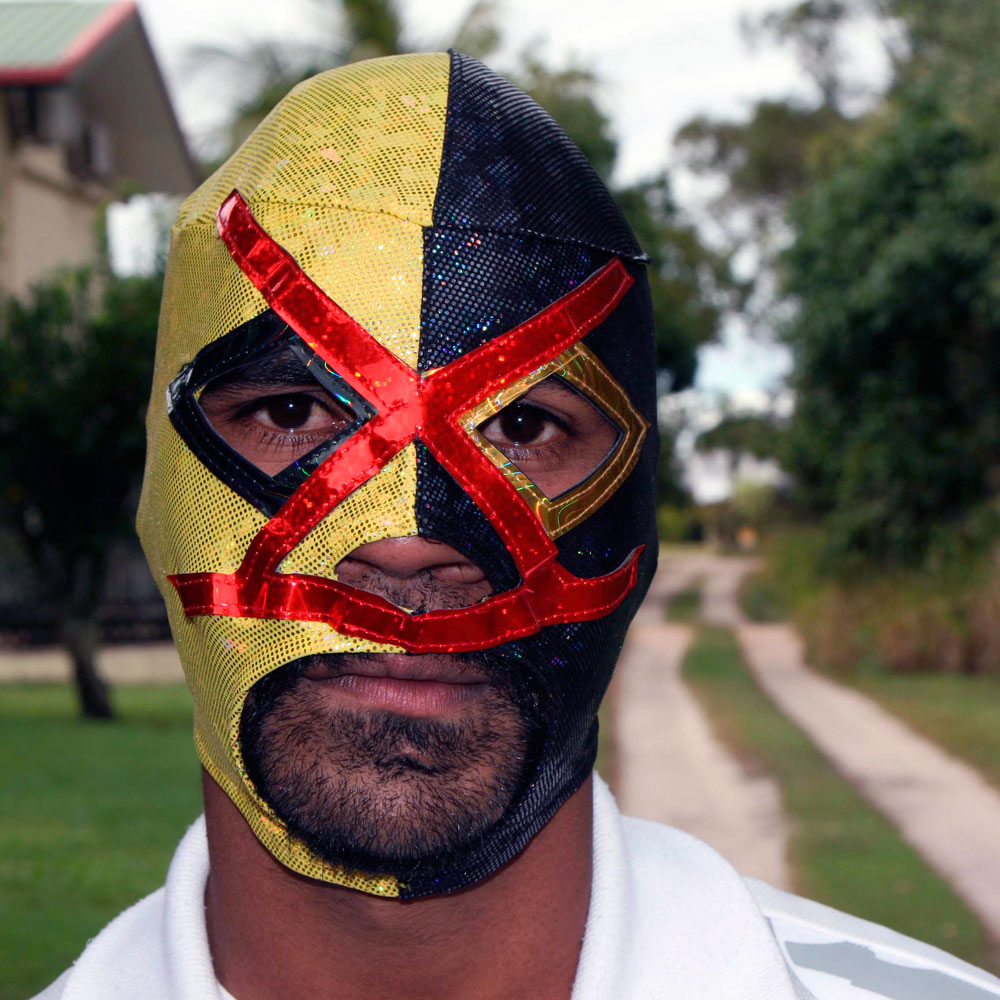
Tony Albert (Australian, b. 1981) 'No Place' 2009


Tony Albert (Australian, b. 1981)
No Place
2009
Courtesy of the artist


Tony Albert is a Girramay rainforest man from the Cardwell area… The No Place series references The Wizard of Oz ‘there’s no place like home’. For No Place Tony returns to his tropical paradise home with a group of Lucho Libre wrestling masks from Mexico. His family adorn these masks and again become warriors protecting their paradise. These seemingly playful masks share much with Aboriginal and particularly rainforest culture. Body and shield designs from this area represent animal gods or spirit beings. The use of these masks brings a prescient new layer of armour for a new generation of warrior.

The colour scheme of solid blocks of red, black and yellow also speak to traditional rainforest aesthetics. There are strong elements of the sublime and the fantastical within these works. Viewing Aboriginal people in iconic north Queensland locations masked in Mexican wrestling paraphernalia carries more than a hint of the surreal and absurd.

Anon. “Tony Albert and No Place,” on the Big Art website, 2010 [Online] Cited 22/03/2012 no longer available online


Christian Thompson (Australian / Bidjara, b. 1978) 'Untitled #7 from the King Billy Series' 2010


Christian Thompson (Australian / Bidjara, b. 1978)
Untitled #7 from the King Billy series
2010
Courtesy of the artist and Gallery Gabrielle Pizzi


King Billy, is an ode to his great great grandfather, King Billy of Bonnie Doon Lorne. The initial inspiration was a photograph of King Billy, standing alone wearing his ‘name plate’. Despite its colonial overtones, for Thompson, this image of the senior tribesman exudes wisdom and kindness and reminds him of his father. In much of Thompson’s work his processes are intuitive, he delves into a rich dream world and draws out fabulous images. He manifests his own mythological world. In this series his figures are clad in fabrics patterned with Indigenous motifs, mainly cheap hoodies in lurid colours; a modern / ancient skin for a magic youth culture. He has made a triptych, three views of a pink hooded figure spewing cascading pearl stands from the face; opulent, decadent, excessive and sensual.

Another image shows a crowned figure swathed in fabrics bearing the markings of various clans, perhaps indicating the domain of this regal form. In the hands a (poisoned?) chalice – the sawn off plastic bottle a warning about petrol sniffing? His self-portrait as psychedelic godhead/Carnaby Street dandy / flower child is spectacular and arresting. He is wearing a tailored suit, patterned with more Indigenous motifs and he cradles a bouquet. His skin is green and his eyes are purple flowers. What can this otherworldly creature tell us?

Thompson seems to emphasise a theme of disparity in this work; the ‘hoodie’ with the cascading pearls, the crown with the plastic bottle, the opulence with the desperate. These works are both beautiful and confronting.

Text from the PICA website


HIJACKED III interview with Christian Thompson


Petrina Hicks (Australian, b. 1972) 'Emily the Strange' 2011


Petrina Hicks (Australian, b. 1972)
Emily the Strange
2011
Courtesy of the artist and Stills Gallery


Petrina Hicks’ Beautiful Creatures appeals to our senses. Immediately alluring, the large-scale, hyper-real photographs, are all rendered so clearly and with such control they are reminiscent of advertisements. But with a series of little ruptures, within images and between them, Hicks disrupts our usually beguiled response to such artistry. For her, photography’s capability to both create and corrupt the process of seduction and consumption is of endless interest.

Hicks loads her images with history and associations but denies us a clear message. Along with the ambiguity, there is a visceral quality in these new works; her depiction of flesh, hair and veins stops the viewer short of being lulled into consumption. Hicks engages a playful yet confronting approach to confound our expectations. A cat, naked without fur, in the image Sphynx, contrasts a beautiful blonde with a face full of it in Comfort. In Emily the Strange the hairless creature reappears with a young girl whose piercing green eyes, skin-pink dress, and latent defiance, make her eerily akin to her pet. Alluded to, in the title of the exhibition, this duality is present in much of the work. Her subjects are not simply beautiful or simply creatures.

Text from the PICA website


HIJACKED III interview with photographer Petrina Hicks


Tereza Zelenkova (Czech, b. 1985) 'Cadaver' 2011


Tereza Zelenkova (Czech, b. 1985)
Cadaver
2011
Courtesy of the artist


Luke Stephenson (British, b. 1983) 'Diamond Sparrow #1' 2009


Luke Stephenson (British, b. 1983)
Diamond Sparrow #1
2009
Courtesy of the artist


Stephenson finds birds and the world surrounding them wonderfully fascinating. The birds he has photographed all belong to avid bird breeders who on the whole have been keeping birds their whole lives. It’s a hobby people generally don’t come into contact with, unless you are active within it. The artist does not keep birds but finds them beautiful in all their variations and colours, so has set out capture these birds in a way that would show them at their best.

There are many criteria to breeding a prize-winning bird, from shape and form to its pattern, and this is something Stephenson has tried to convey whilst also attempting to show some of their personalities. He set out to photograph every breed of bird within the ‘hobby’ of keeping birds but soon realised there were thousands of variations, so decided to keep this as an ongoing project; realising instalments every couple of years which people can collect and, hopefully one day, the dictionary will be complete.

Luke Stephenson website


Perth Institute of Contemporary Art (PICA)
Perth Cultural Centre
James Street Northbridge
Phone: + 61 (0) 8 9228 6300

Opening hours:
Tuesday – Sunday 10am – 5pm
Closed Mondays

PICA website

LIKE ART BLART ON FACEBOOK

Back to top

Exhibition: ‘Made in America 1900-1950. Photographs from the National Gallery of Canada’, Ottawa, Ontario

Exhibition dates: 9th December 2011 – 1st April 2012


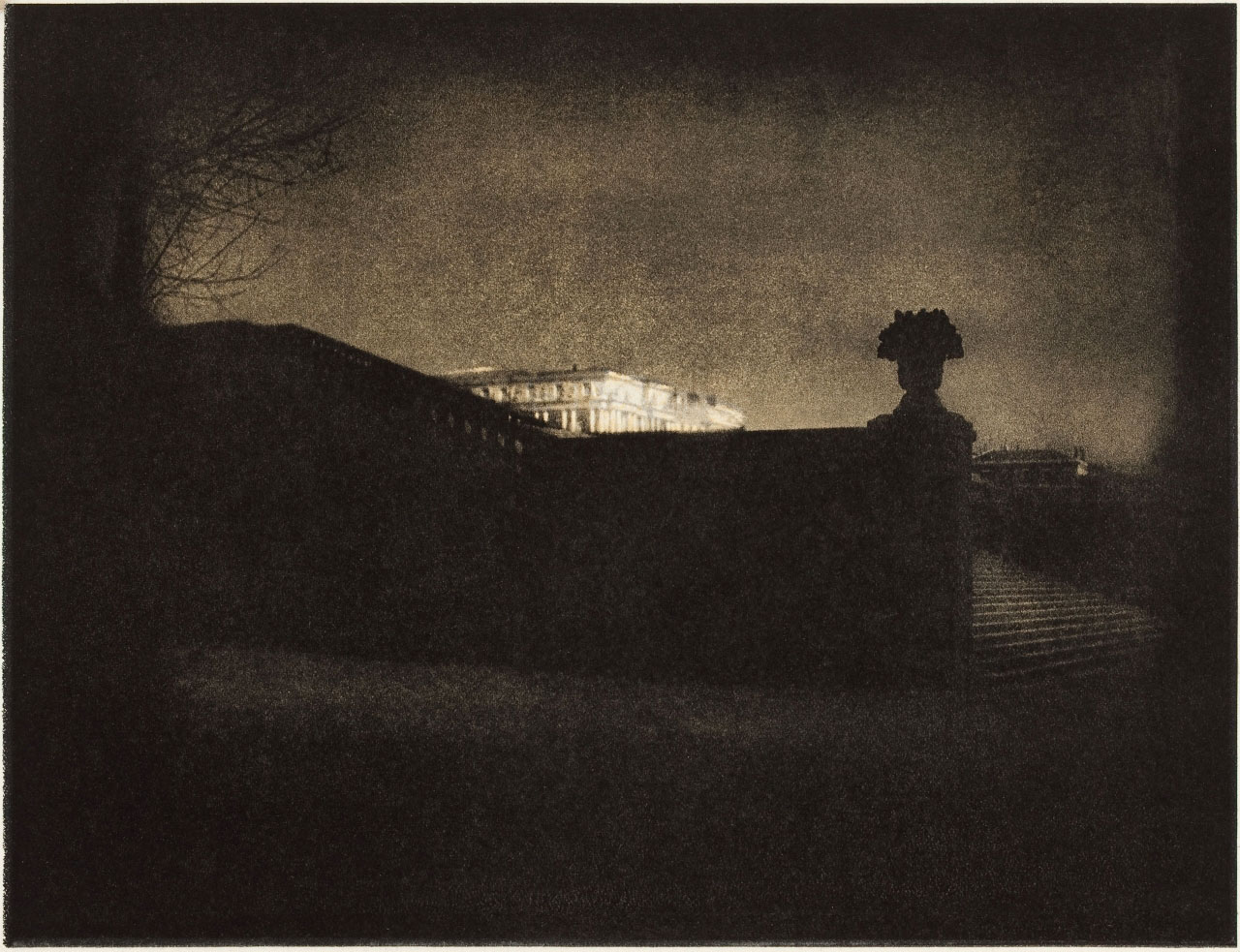
Edward Steichen
 (American, 1879-1973) 'Nocturne – Orangery Staircase, Versailles' 1908


Edward Steichen
 (American, 1879-1973)
Nocturne – Orangery Staircase, Versailles
1908
Purchased 1976
National Gallery of Canada, Ottawa


Stunning photographs in this posting: Steichen’s
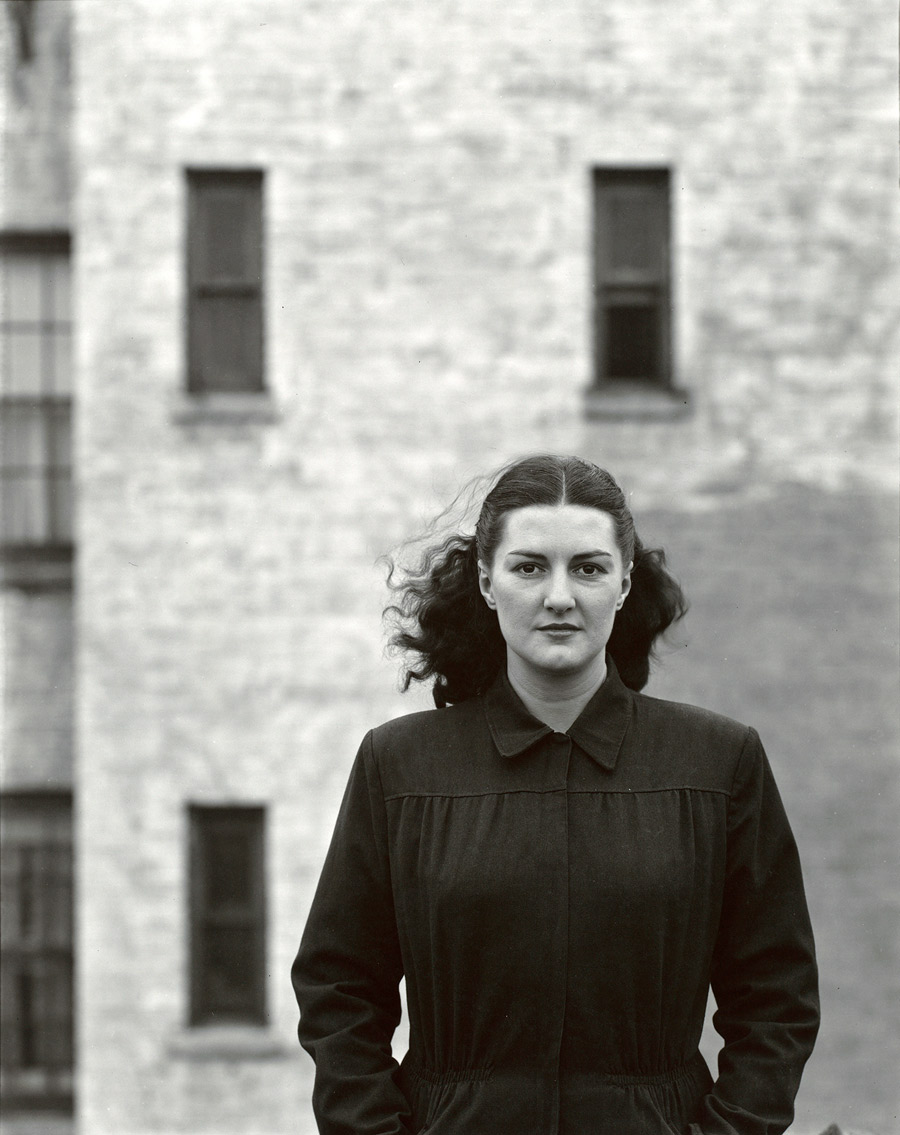
 Nocturne – Orangery Staircase, Versailles (1908) is just sublime; Sheeler’s Side of a White Barn (1917) is early Modernist perfection, rivalling Paul Strand’s The White Fence, Port Kent (1916); Barbara Morgan’s photograph of dancer Martha Graham (1940) portraying, radiantly, her divine dissatisfaction; and the most beautiful portrait by Imogen Cunningham of Frida Kahlo (1931). Every time I see this portrait I nearly burst into tears – the light falling from the right and from the left onto the boards behind her, the texture of her cloak, the languorous nature of her hands, her absolute poise and beauty – looking straight into the camera, looking straight into your soul. What a beautiful women, such strength and vulnerability. A stunning photograph of an amazing women. The photograph just takes your breath away…

Dr Marcus Bunyan

Many thankx to the National Gallery of Canada for allowing me to publish the photographs in the posting. Please click on the photographs for a larger version of the image.


Arthur Leipzig
 (American, 1918-2014) 'Opening Night at the Opera, New York' 1945


Arthur Leipzig
 (American, 1918-2014)
Opening Night at the Opera, New York
1945
Gelatin silver print
27 x 34.1cm
National Gallery of Canada, Ottawa
© Arthur Leipzig/Courtesy Howard Greenberg Gallery


Charles Sheeler (American, 1883-1965) 'Side of a White Barn, Pennsylvania' 1917


Charles Sheeler (American, 1883-1965)
Side of a White Barn, Pennsylvania
1917
Gelatin silver print
7 5/8 x 9 5/8 in.
The J. Paul Getty Museum


“Lines and texture define this view of the side of a white barn. In the photographic rendering, the white barn is a soft gray, punctuated by knots in the wood and shadows cast by the uneven boards. In the lower right corner of the image, a small window, a fence, and a chicken standing atop a pile of hay add visual weight yet surrender to the repetitive, vertical domination of the structure. Like every other line, the horizontal line dividing the areas of wood and plaster is drawn without a straight edge.”

Text from the Getty Museum website


Jerome Liebling (American, 1924-2011) 'Butterfly Boy, New York City' 1949


Jerome Liebling (American, 1924-2011)
Butterfly Boy, New York City
1949
Gelatin silver print
National Gallery of Canada, Ottawa


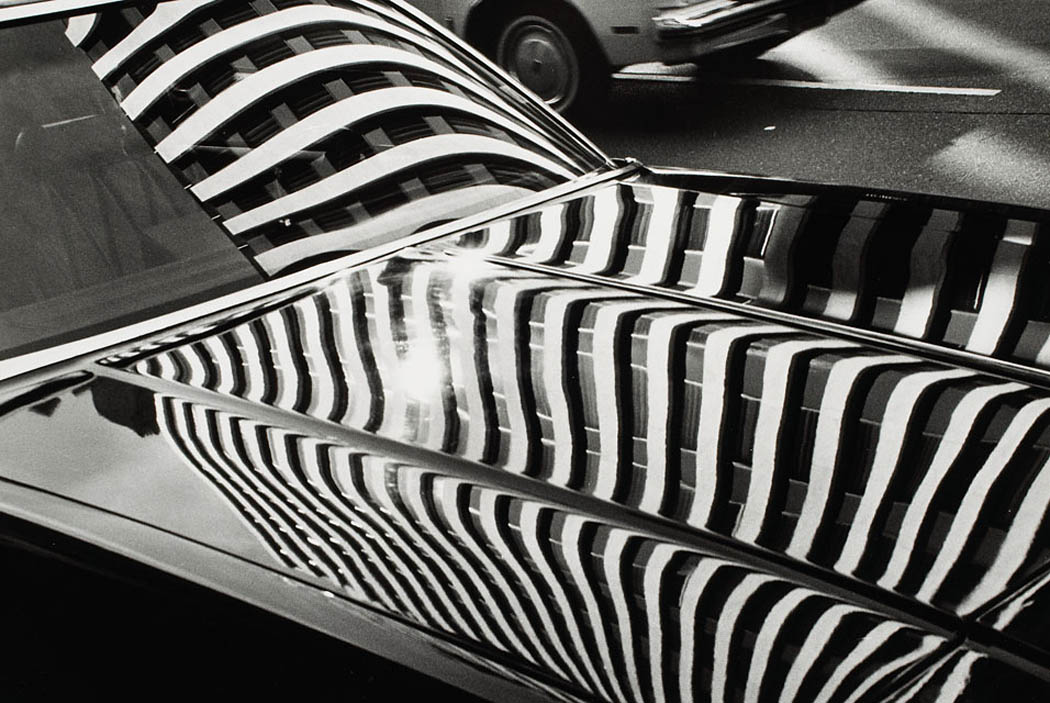
Andreas Feininger (American, 1906-1999) 'Reflection on a Car' 1980


Andreas Feininger (American, 1906-1999)
Reflection on a Car
1980
Gelatin silver print
38 x 48.2cm
National Gallery of Canada, Ottawa


Alfred Stiegitz (American, 1864-1946) 'The Steerage' 1907


Alfred Steiglitz (American, 1864-1946)
The Steerage
1907
Gelatin silver print


Walker Evans (American, 1903-1975)  'Corner of State and Randolph Streets, Chicago' c. 1946-1947


Walker Evans (American, 1903-1975)
Corner of State and Randolph Streets, Chicago
c. 1946-1947
Gelatin silver print
Image: 26.1 x 25cm
National Gallery of Canada, Ottawa
Gift of Benjamin Greenberg, Ottawa, 1981
© Walker Evans Archive, The Metropolitan Museum of Art


Barbara Morgan
 (American, 1900-1992)
 'Martha Graham, Letter to the World, "Kick"' 1940, printed c. 1945


Barbara Morgan
 (American, 1900-1992)
Martha Graham, Letter to the World, “Kick”
1940, printed c. 1945
Gelatin silver print
38.6 x 48.2cm
National Gallery of Canada, Ottawa


“There is a vitality, a life force, a quickening that is translated through you into action, and because there is only one of you in all time, this expression is unique. And if you block it, it will never exist through any other medium and be lost. The world will not have it. It is not your business to determine how good it is, nor how valuable it is, nor how it compares with other expressions. It is your business to keep it yours clearly and directly, to keep the channel open. You do not even have to believe in yourself or your work. You have to keep open and aware directly to the urges that motivate YOU. Keep the channel open… No artist is pleased… There is no satisfaction whatever at any time. There is only a queer, divine dissatisfaction; a blessed unrest that keeps us marching and makes us more alive than the others.”


Martha Graham to Agnes DeMille


In the first five decades of the 20th century photography came into its own – both as an art form and as a tool to document social and political change. American photographers were exploring both the poetic and transformative expressiveness of the medium, as well as recording the growth and change of the country in its various phases of industrial development. On view until April 1, 2012, Made in America 1900-1950: Photographs from the National Gallery of Canada looks at both approaches, and the divisions between the two, as they are necessarily porous and somewhat arbitrary.

“The Gallery’s collection is so rich in 20th century American photographs that it needs an exhibition in two parts and a catalogue in two volumes. This first presentation focuses on the period between 1900 and 1950,” noted NGC director Marc Mayer. “This comprehensive collection has been amassed in large part through the generosity of brilliant collectors.”

“Each of [the decades] is characterised by tremendous growth, change, and creative thought about the medium and its reception in the United States,” noted curator Ann Thomas in the catalogue, American Photographs 1900-1950.

It was a period of great technical and technological change: such as the introduction of the personal 35mm camera in the early 1920s, following the German model developed by Leica, and Ansel Adams’ and Fred Archer’s creation of the zone system to determine optimal film exposure and development.

Composed of over 130 photographs, two issues of Camera Work, one issue of Manuscripts, and several period cameras, the exhibition Made in America celebrates the exceptional contribution that American photographers made to the history of art in the 20th century. Made been 1900-1950, these photographs represent an extraordinarily fertile period in the evolution of photography. They include stunning works by Alfred Stieglitz, Edward Steichen, Clarence White, Paul Strand, Walker Evans, Margaret Bourke-White, Dorothea Lange, Berenice Abbott, Ansel Adams, Lisette Model, Weegee, and members of New York’s Photo League.

Made in America is the fourth in a series of exhibitions and catalogues presenting the Gallery’s outstanding collection of international photographs. It follows Modernist Photographs (2007), 19th Century French Photographs (2010), and 19th Century British Photographs (2011).

Made in America 1900-1950: Photographs from the National Gallery of Canada explores a dynamic period in the history of photography when the medium was emerging as both an art form and a tool for documenting social change. Presenting 134 works from the National Gallery’s extraordinary collection of American photographs, this exhibition chronicles the evolution of the medium, beginning with Pictorialism and moving through modernism, straight photography and documentary work. On the walls are some truly magnificent, iconic works by the most influential photographers, among them Alfred Stieglitz’s The Steerage, Edward Steichen’s Nocturne – Orangerie Staircase, Versailles, Ansel Adams’ Moonrise, Hernandez, New Mexico and Barbara Morgan’s Martha Graham, Letter to the World (Kick).

At the turn of the 20th century, American photographers were fully engaged in the Pictorialist aesthetic, creating pastoral landscapes, foggy street scenes and idealised portraits of women and children. With their soft focus and gentle lighting, the images convey a romantic moodiness. Pictorialist photographers often manipulated their negatives and prints to achieve painterly effects. Gertrude Käsebier’s Serbonne, for instance, is reminiscent of an Impressionist painting.

Around the mid-teens, artists such as Stieglitz, Paul Strand and Walker Evans came to reject the notion of photography imitating painting, and instead sought to take advantage of the medium’s inherent, unique characteristics, especially its ability to achieve sharp definition, even lighting and smooth surfaces. The result was ground-breaking modernist work such as Stieglitz’s Equivalent series, Alvin Langdon Coburn’s Vortograph and Charles Sheeler’s Side of White Barn.

Out on the west coast in the early 1930s, Group f.64 was committed to the ideal of pure, un-manipulated, or “straight” photography. Edward Weston’s nudes and juniper trees, and Imogen Cunningham’s portrait of Frida Kahlo demonstrate the hallmarks of f.64: crisp detail, sharp focus, and often a sensual minimalism.

The first decades of the 20th century also provided rich subject matter for documentary photographers, as social and economic changes dramatically transformed daily life. Lewis Hine’s photographs of immigrants and child labourers tell fascinating stories, as do images of the Depression by Dorothea Lange and Walker Evans. The Photo League sent its members out into New York’s streets to capture ordinary people on film. Helen Levitt, Jerome Liebling and Sol Libsohn chronicled small dramas unfolding on sidewalks.

Visitors familiar with Ansel Adams’ grand, sublime landscapes might be surprised by his more contemplative series of foaming Pacific waves, titled Surf Sequence. Sharing the gallery space is Minor White’s poetic series Song Without Words, made along the same coast. Both demonstrate an almost cinematic approach to photograph-making and plunge the viewer into seaside reverie.

Press release from the National Gallery of Canada website


Alvin Coburn (American, 1882-1966) 'Vortograph' 1917


Alvin Coburn (American, 1882-1966)
Vortograph
1917
Gelatin silver print
11 1/8 × 8 3/8″ (28.2 × 21.2cm)
Courtesy of George Eastman House, International Museum of Photography and Film


The intricate patterns of light and line in this photograph, and the cascading tiers of crystalline shapes, were generated through the use of a kaleidoscopic contraption invented by the American / British photographer Alvin Langdon Coburn, a member of London’s Vorticist group. To refute the idea that photography, in its helplessly accurate capture of scenes in the real world, was antithetical to abstraction, Coburn devised for his camera lens an attachment made up of three mirrors, clamped together in a triangle, through which he photographed a variety of surfaces to produce the results in these images. The poet and Vorticist Ezra Pound coined the term “vortographs” to describe Coburn’s experiments. Although Pound went on to criticise these images as lesser expressions than Vorticist paintings, Coburn’s work would remain influential.

Gallery label from Inventing Abstraction, 1910-1925, December 23, 2012 – April 15, 2013.


Gertrude Kasebier (American, 1852-1934) 'Serbonne' 1902, printed 1903


Gertrude Kasebier (American, 1852-1934)
Serbonne
1902, printed 1903
From Camera Work, January 1903
Gum bichromate, halftone
National Gallery of Canada, Ottawa


Imogen Cunningham (American, 1883-1976) 'Frida Kahlo' 1931


Imogen Cunningham (American, 1883-1976)
Frida Kahlo
1931
Gelatin silver print
National Gallery of Canada, Ottawa


Ralph Steiner
 (American, 1899-1986)
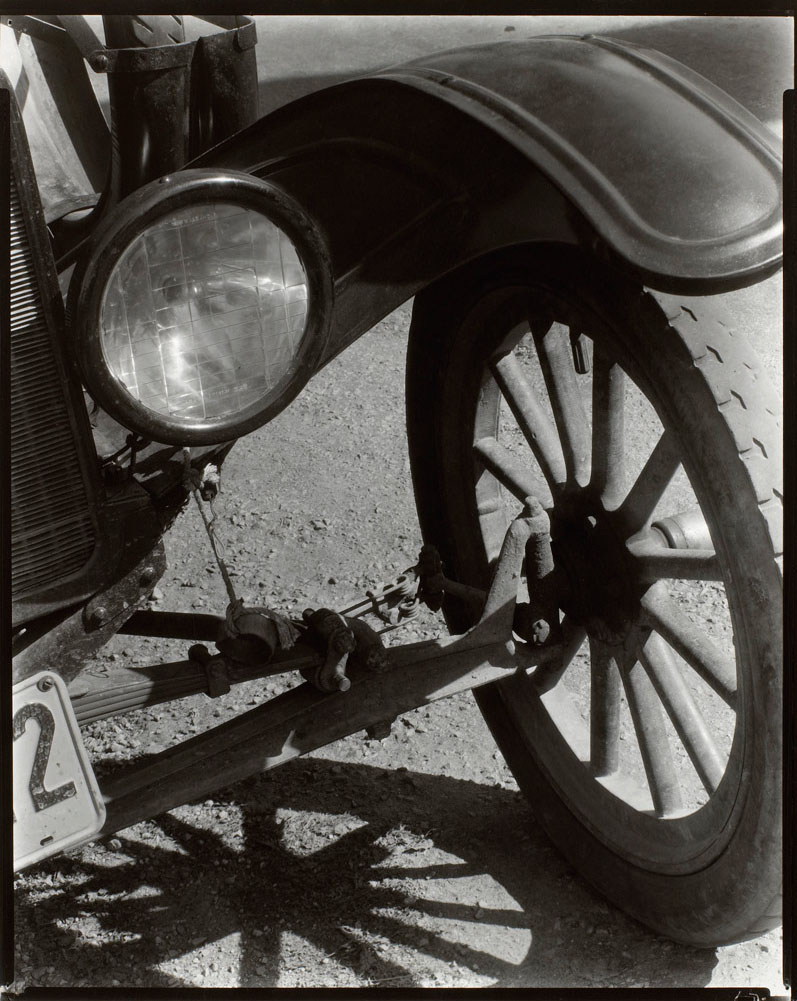
 'Model T' 1929


Ralph Steiner
 (American, 1899-1986)
Model T
1929, printed later
Gelatin silver print
Image: 24.2 x 19.7cm
National Gallery of Canada, Ottawa


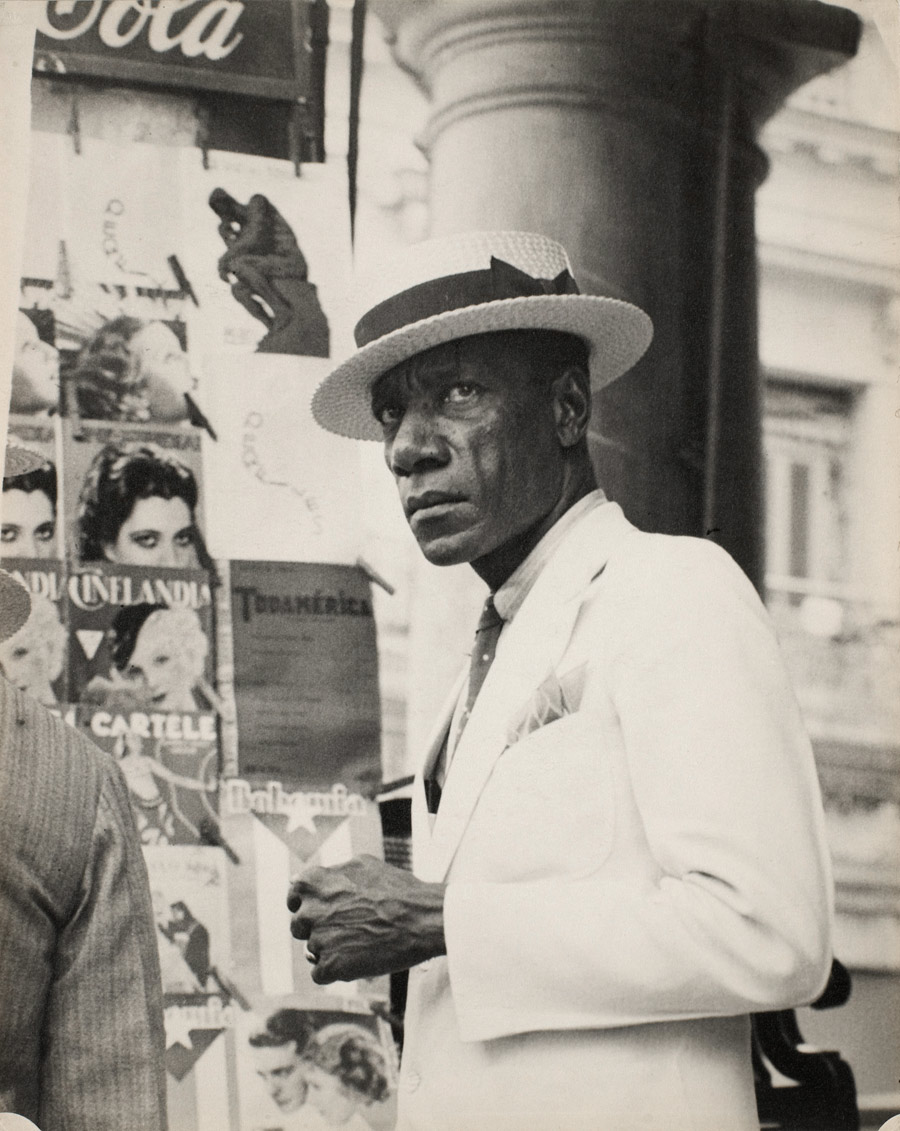
Walker Evans (American, 1903-1975) 'Citizen in Downtown Havana' 1933


Walker Evans (American, 1903-1975)
Citizen in Downtown Havana
1933
Gelatin silver print
25.1 x 20.1cm
National Gallery of Canada, Ottawa
Gift of Phyllis Lambert, Montreal, 1982
© Walker Evans Archive, The Metropolitan Museum of Art


National Gallery of Canada
380 Sussex Drive
P.O. Box 427, Station A
Ottawa, Ontario
Canada 
K1N 9N4

Opening hours:
Daily 9.30am – 5pm
Thursday 9.30am – 8pm

National Gallery of Canada website

LIKE ART BLART ON FACEBOOK

Back to top

Exhibition: ‘Lyonel Feininger: Photographs, 1928-1939’ at the J. Paul Getty Museum, Getty Center, Los Angeles

Exhibition dates: 25th October 2011 – 11th March 2012


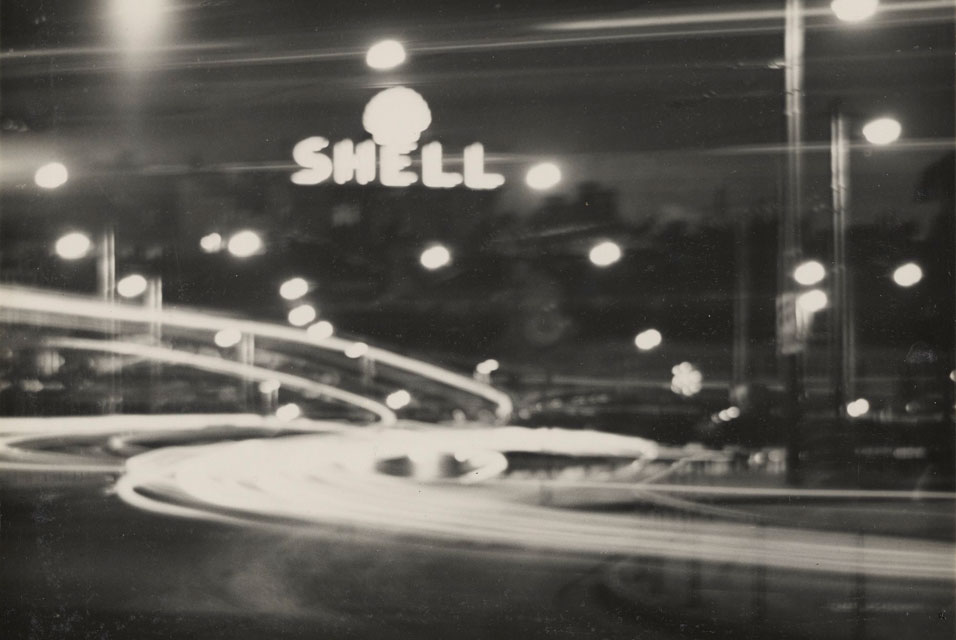
Lyonel Feininger (American, 1871-1956) 'Untitled [Street Scene, Double Exposure, Halle]' 1929-1930


Lyonel Feininger (American, 1871-1956)
Untitled [Street Scene, Double Exposure, Halle]
1929-1930
Gelatin silver print
Image: 17.8 x 23.7cm (7 x 9 5/16 in)
Gift of T. Lux Feininger, Houghton Library, Harvard University
© Artists Rights Society (ARS), New York / VG Bild-Kunst, Bonn


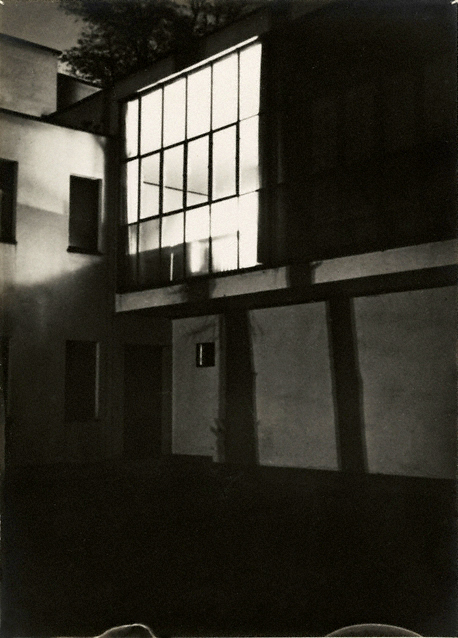
Another photographer whose work was largely unknown to me. His work can be seen to reference Pictorialism, Eugene Atget, Constructivism and Modernism, the latter in the last three photographs of the Bauhaus buildings at night which are just beautiful! The capture of form, light (emanating from windows) and atmosphere is very pleasing.

Dr Marcus Bunyan

P.S. Don’t be confused when looking at the photographs in the posting. Note the difference in the work of Lynonel and his two sons Andreas and Theodore (nicknamed Lux).


Many thankx to the J. Paul Getty Museum for allowing me to publish the photographs in the posting. Please click on the photographs for a larger version of the image.


Lucia Moholy (British born Czechoslovakia, 1894-1989) 'Untitled [Southern View of Newly Completed Bauhaus, Dessau]' 1926


Lucia Moholy (British born Czechoslovakia, 1894-1989)
Untitled [Southern View of Newly Completed Bauhaus, Dessau]
1926
Gelatin silver print
Sheet: 5.7 x 8.1cm (2 1/4 x 3 3/16 in)
The J. Paul Getty Museum, Los Angeles
© Artists Rights Society (ARS), New York / VG Bild-Kunst, Bonn


Lyonel Feininger (American, 1871-1956) 'Untitled [Train Station, Dessau]' 1928-1929


Lyonel Feininger (American, 1871-1956)
Untitled [Train Station, Dessau]
1928-1929
Gelatin silver print
Image: 17.7 x 23.7 cm (6 15/16 x 9 5/16 in.)
Gift of T. Lux Feininger, Houghton Library, Harvard University
© Artists Rights Society (ARS), New York / VG Bild-Kunst, Bonn


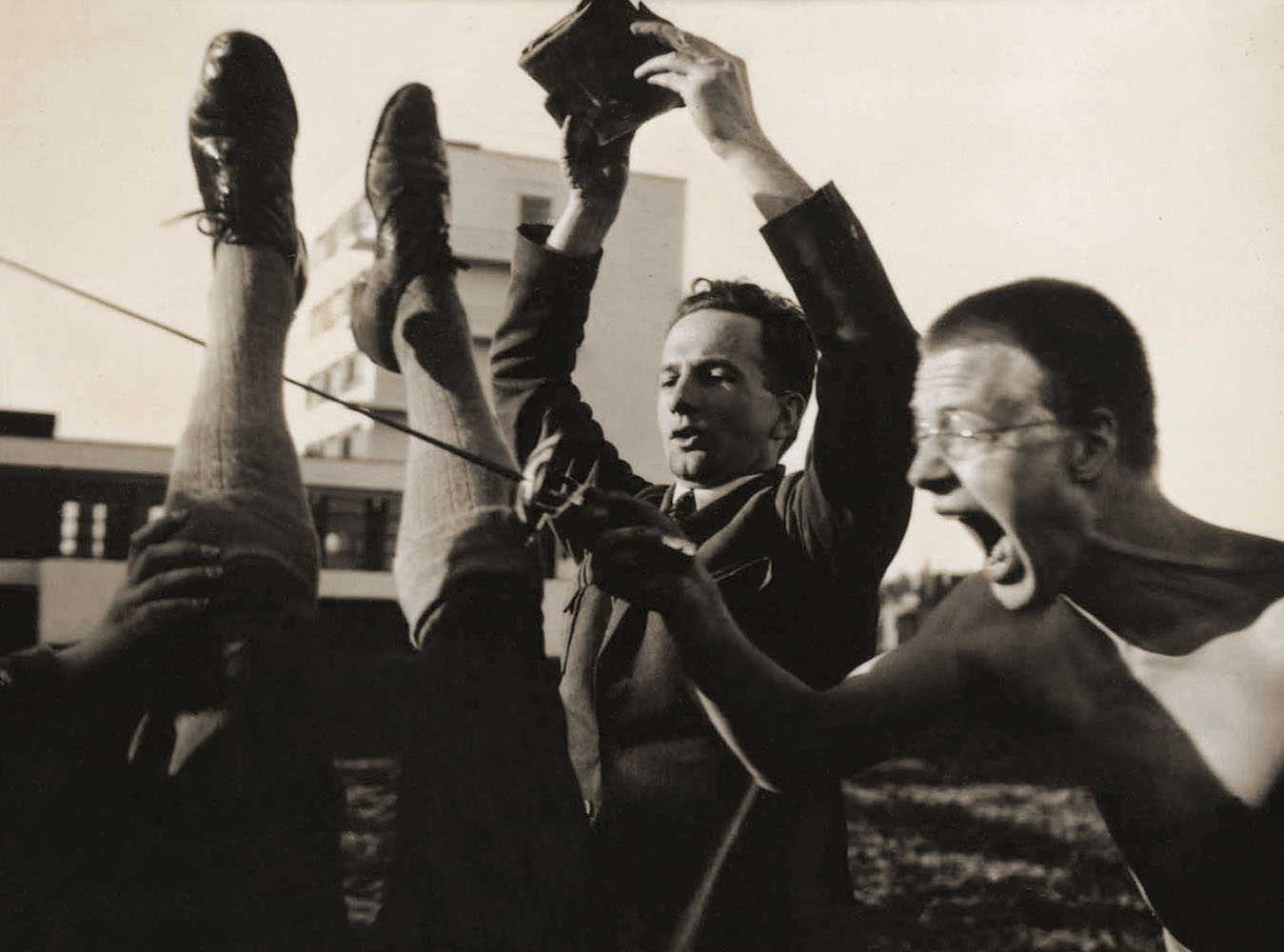
Werner Zimmermann (German, 1906-1975) 'In Der Werkstatt' about 1929


Werner Zimmermann (German, 1906-1975)
In Der Werkstatt [In The Workshop]
About 1929
Gelatin silver print
7.9 × 11cm (3 1/8 × 4 5/16 in.)
The J. Paul Getty Museum, Los Angeles


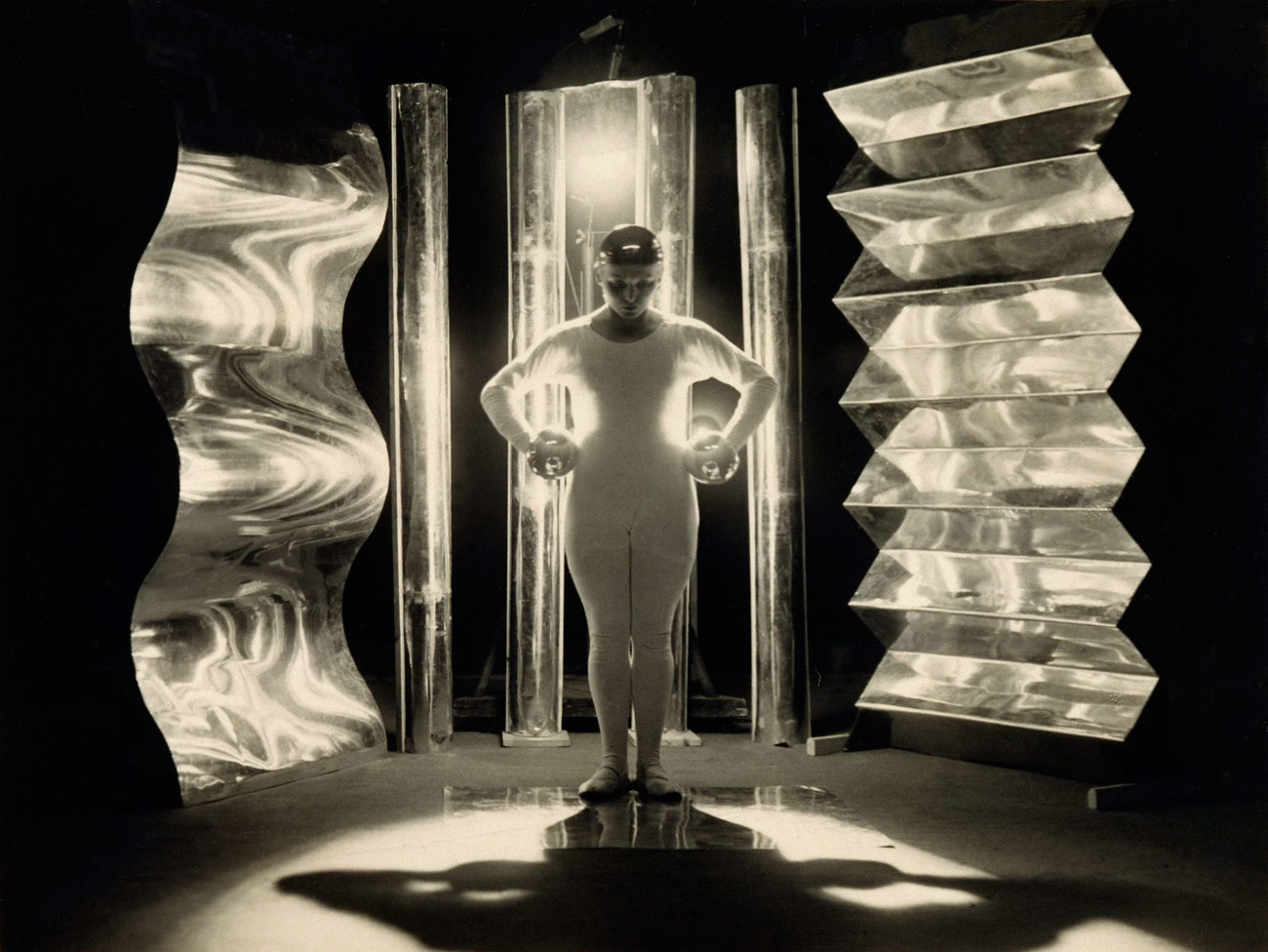
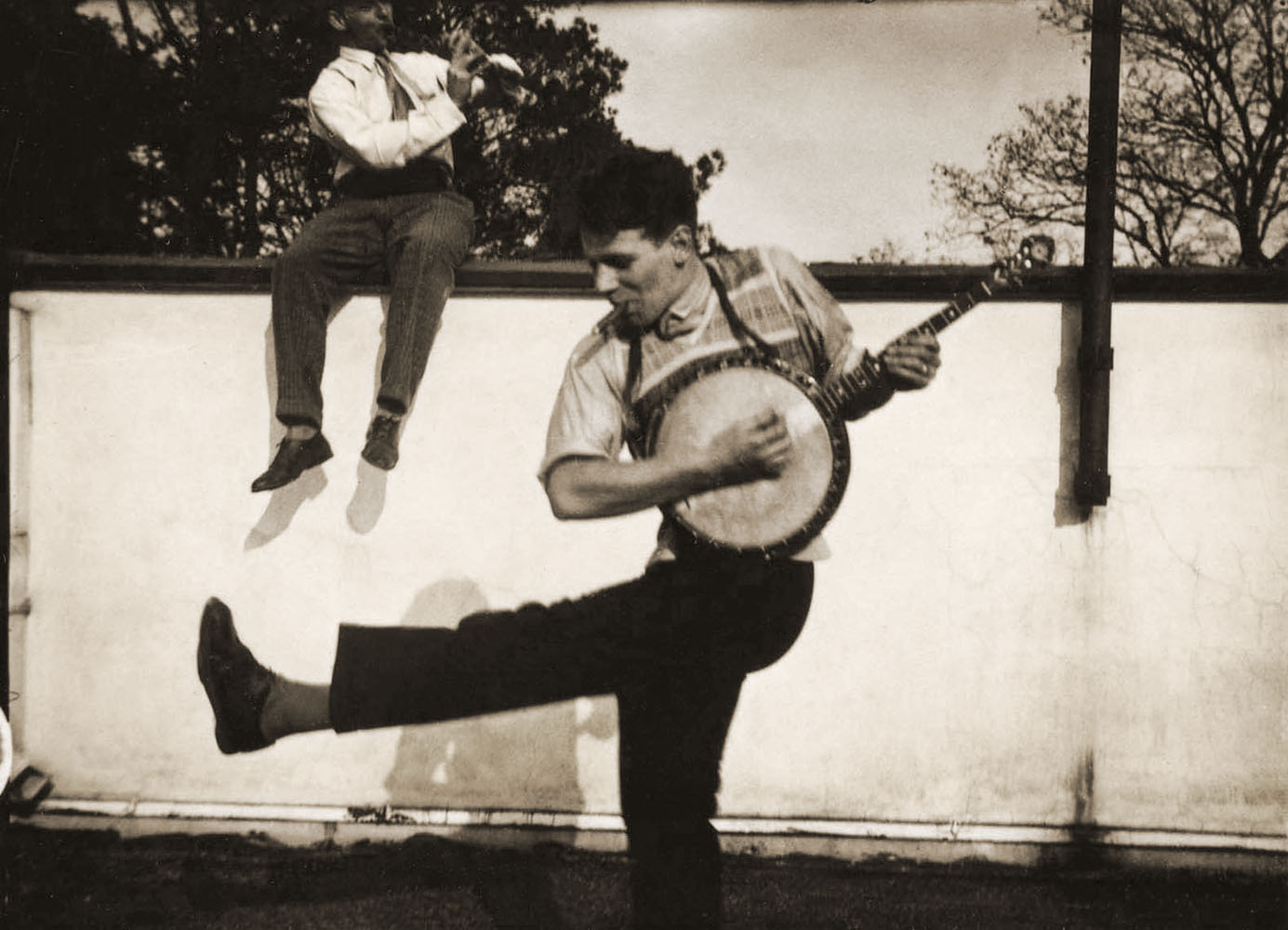
T. Lux Feininger (American born Germany, 1910-2011) 'Metalltanz' 1929


T. Lux Feininger (American born Germany, 1910-2011)
Metalltanz
1929
Gelatin silver print
Image: 10.8 x 14.4cm (4 1/4 x 5 5/8 in.)
The J. Paul Getty Museum, Los Angeles
© Estate of T. Lux Feininger


Widely recognised as a painter, printmaker, and draftsman who taught at the Bauhaus, Lyonel Feininger (American, 1871-1956) turned to photography later in his career as a tool for visual exploration. Drawn mostly from the collections at Harvard University in Cambridge, Massachusetts, Lyonel Feininger: Photographs, 1928-1939 at the J. Paul Getty Museum, Getty Center, October 25, 2011 – March 11, 2012, presents for the first time Feininger’s unknown body of photographic work. The exhibition is accompanied by a selection of photographs by other Bauhaus masters and students from the Getty Museum’s permanent collection. The Getty is the first U.S. venue to present the exhibition, which will have been on view at the Kupferstichkabinett, Staatliche Museen zu Berlin from February 26 – May 15, 2011 and the Staatliche Graphische Sammlung, Pinakothek der Moderne in Munich from June 2 – July 17, 2011. Following the Getty installation, the exhibition will be shown at the Harvard Art Museums from March 30 – June 2, 2012. At the Getty, the exhibition will run concurrently with Narrative Interventions in Photography.

“We are delighted to be the first U.S. venue to present this important exhibition organised by the Harvard Art Museums / Busch-Reisinger Museum,” says Virginia Heckert, curator of photographs at the J. Paul Getty Museum and curator of the Getty’s installation. “The presentation at the Getty provides a unique opportunity to consider Lyonel Feininger’s achievement in photography, juxtaposed with experimental works in photography at the Bauhaus from our collection.”

Lyonel Feininger Photographs

When Lyonel Feininger (1871-1956) took up the camera in 1928, the American painter was among the most prominent artists in Germany and had been on the faculty of the Bauhaus school of art, architecture, and design since it was established by Walter Gropius in 1919. For the next decade, he used the camera to explore transparency, reflection, night imagery, and the effects of light and shadow. Despite his early skepticism about this “mechanical” medium, Feininger was inspired by the enthusiasm of his sons Andreas and Theodore (nicknamed Lux), who had installed a darkroom in the basement of their house, as well as by the innovative work of fellow Bauhaus master, László Moholy-Nagy.

Although Lyonel Feininger would eventually explore many of the experimental techniques promoted by Moholy-Nagy and practiced by others at the school, he remained isolated and out of step with the rest of the Bauhaus. Working alone and often at night, he created expressive, introspective, otherworldly images that have little in common with the playful student photography more typically associated with the school. Using a Voigtländer Bergheil camera (on display in the exhibition), frequently with a tripod, he photographed the neighbourhood around the Bauhaus campus and masters’ houses, and the Dessau railway station, occasionally reversing the tonalities to create negative images.

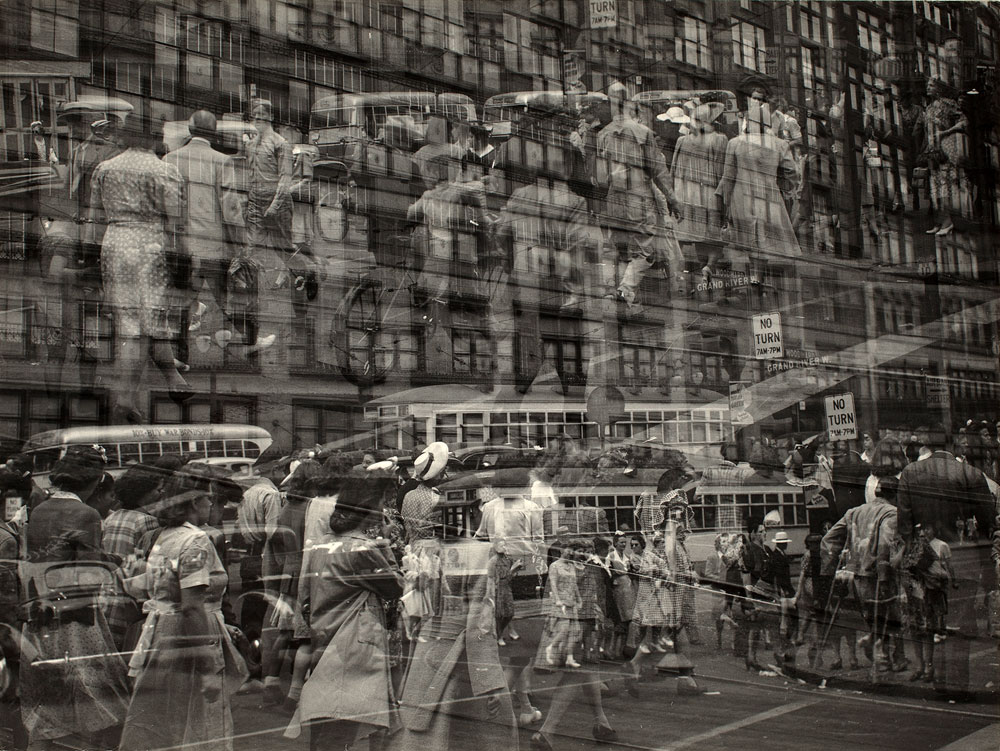
Lyonel Feininger: Photographs, 1928-1939 also includes the artist’s photographs from his travels in 1929-1931 to Halle, Paris, and Brittany, where he investigated architectural form and urban decay in photographs and works in other media. In Halle, while working on a painting commission for the city, Feininger recorded architectural sites in works such as Halle Market with the Church of St. Mary and the Red Tower (1929-1930), and experimented with multiple exposures in photographs such as Untitled (Street Scene, Double Exposure, Halle) (1929-1930), a hallucinatory image that merges two views of pedestrians and moving vehicles.

Since 1892 Feininger had spent parts of the summer on the Baltic coast, where the sea and dunes, along with the harbours, rustic farmhouses, and medieval towns, became some of his most powerful sources of inspiration. During the summers Feininger also took time off from painting, focusing instead on producing sketches outdoors or making charcoal drawings and watercolours on the veranda of the house he rented. Included in the exhibition are photographs Feininger created in Deep an der Rega (in present-day Poland) between 1929 and 1935 which record the unique character of the locale, the people, and the artistic and leisure activities he pursued.

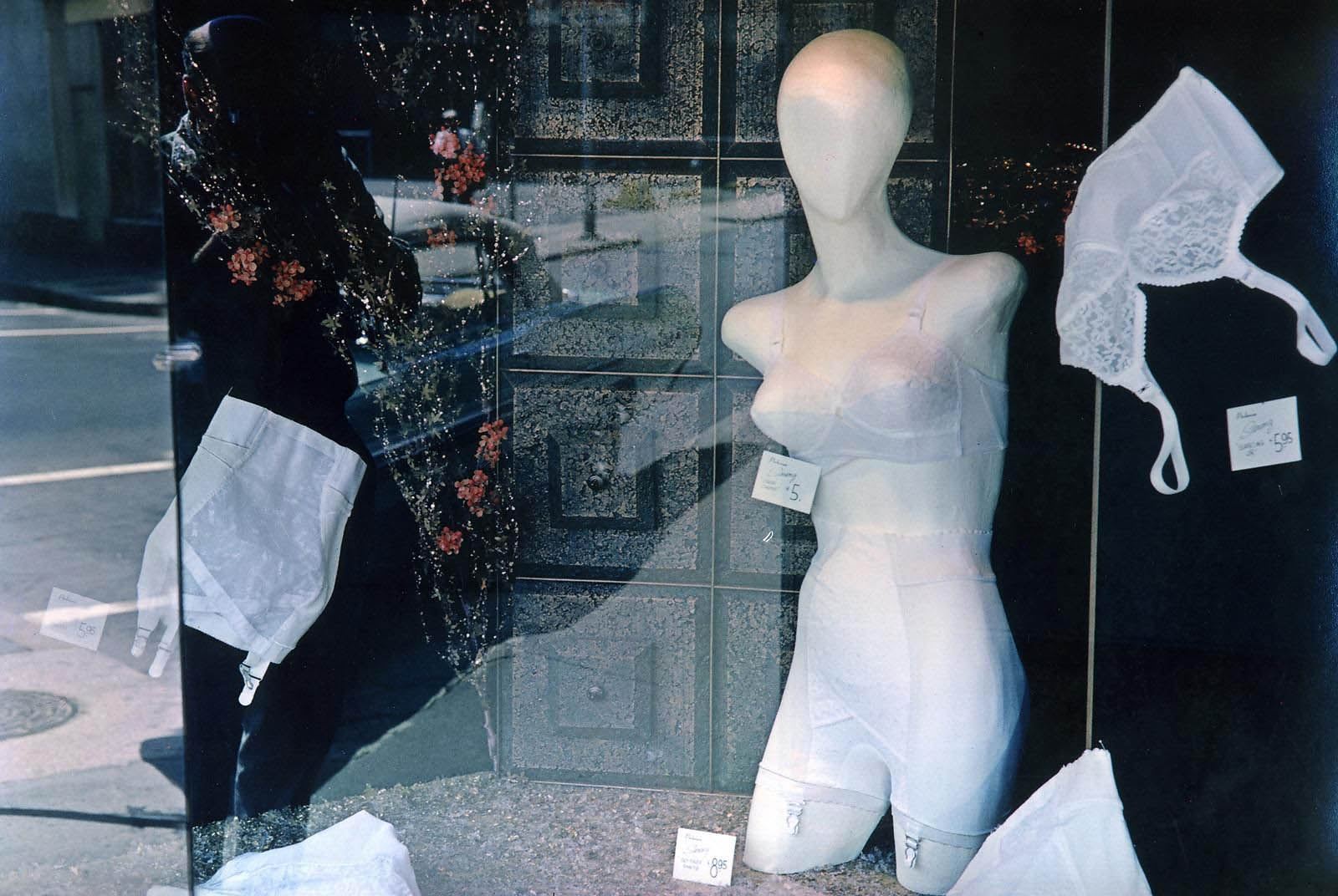
In the months after the Nazis closed the Bauhaus, and prior to Feininger’s departure from Dessau in March 1933, he made a series of unsettling photographs featuring mannequins in shop windows such as Drunk with Beauty (1932). Feininger’s images emphasise not only the eerily lifelike and strangely seductive quality of the mannequins, but also the disorienting, dreamlike effect created by reflections on the glass.

In 1937 Feininger permanently settled in New York City after a nearly 50-year absence, and photography served as an important means of reacquainting himself with the city in which he had lived until the age of sixteen. The off-kilter bird’s eye view he made from his eleventh-floor apartment of the Second Avenue elevated train tracks, Untitled (Second Avenue El from Window of 235 East 22nd Street, New York) (1939), is a dizzying photograph of an American subject in the style of European avant-garde photography, and mirrors the artist’s own precarious and disorienting position between two worlds, and between past and present.

The Bauhaus

Walter Gropius, director of the Bauhaus from 1919 to 1928, changed the face of art education with his philosophy of integrating art, craft, and technology with everyday life at the Bauhaus. When Gropius’s newly designed building in Dessau was completed in December 1926, its innovative structure did more than house the various components of the school; it became an integral aspect of life at the Bauhaus and a stage for its myriad activities, from studies and leisurely pursuits to theatrical performances. From the beginning, the camera recorded the architecture as the most convincing statement of Gropius’ philosophy as well as the fervour with which the students embraced it. The photographs in this complementary section of the exhibition also examine the various ways photography played a role at the Bauhaus, even before it became part of the curriculum.

In addition to the collaborative environment encouraged in workshops, students found opportunities to bond during their leisure time, whether in a band that played improvisational music or on excursions to nearby beaches, parks, and country fairs. One of the most active recorders of life at the Bauhaus was Lyonel Feininger’s youngest son, T. Lux, who was also a member of the jazz band.

Masters and students alike at the Bauhaus took up the camera as a tool with which to record not only the architecture and daily life of the Bauhaus, but also one another. Although photography was not part of the original curriculum, it found active advocates in the figures of László Moholy-Nagy and his wife Lucia Moholy. With his innovative approach and her technical expertise, the Moholy-Nagys provided inspiration for others to use the camera as a means of both documentation and creative expression. The resulting photographs, which included techniques such as camera-less photographs (photograms), multiple exposures, photomontage and collages (“photo-plastics”), and the combination of text and image (“typo-photo”), contributed to Neues Sehen, or the “new vision,” that characterised photography in Germany between the two world wars.

It was not until 1929 that photography was added to the Bauhaus curriculum by Hannes Meyer, the new director following Gropius’s departure. A part of the advertising department, the newly established workshop was led by Walter Peterhans, who included technical exercises as well as assignments in the genres of portraiture, still life, advertisement, and photojournalism in the three-year course of study.”

Press release from the J.Paul Getty Museum website


Lyonel Feininger (American, 1871-1956) 'Untitled [Night View of Trees and Street Lamp, Burgkühnauer Allee, Dessau]' 1928


Lyonel Feininger (American, 1871-1956)
Untitled [Night View of Trees and Street Lamp, Burgkühnauer Allee, Dessau]
1928
Gelatin silver print
Image: 17.7 x 23.7cm (6 15/16 x 9 5/16 in)
Gift of T. Lux Feininger, Houghton Library, Harvard University
© Artists Rights Society (ARS), New York / VG Bild-Kunst, Bonn


Andreas Feininger (American, 1906-1999) 'Stockholm (Shell sign at night)' 1935


Andreas Feininger (American, 1906-1999)
Stockholm (Shell sign at night)
1935
Gelatin silver print
17.4 x 24.2cm
The J. Paul Getty Museum, Los Angeles, Gift of the Estate of Gertrud E. Feininger
© Estate of Gertrud E. Feininger


Lyonel Feininger (American, 1871-1956) 'Drunk with Beauty' 1932


Lyonel Feininger (American, 1871-1956)
Drunk with Beauty
1932
Gelatin silver print
Image: 17.9 x 23.9cm (7 1/16 x 9 7/16 in)
Gift of T. Lux Feininger, Houghton Library, Harvard University
© Artists Rights Society (ARS), New York / VG Bild-Kunst, Bonn


Lyonel Feininger (American, 1871-1956) 'Bauhaus' March 22, 1929


Lyonel Feininger (American, 1871-1956)
Bauhaus
March 22, 1929
Gelatin silver print
Image: 17.8 x 23.9cm (7 x 9 7/16 in)
Harvard Art Museums/Busch-Reisinger Museum, Gift of Mr. and Mrs. Lyonel Feininger
© Artists Rights Society (ARS), New York / VG Bild-Kunst, Bonn


T. Lux Feininger (American born Germany, 1910-2011) 'Untitled (Georg Hartmann and Werner Siedhoff with Other Students)' 1929


T. Lux Feininger (American born Germany, 1910-2011)
Untitled (Georg Hartmann and Werner Siedhoff with Other Students)
1929
Gelatin silver print
© Estate of T. Lux Feininger


Lyonel Feininger and Photography

Lyonel Feininger took up the camera at the age of 58 in fall 1928. Despite his early skepticism about this “mechanical” medium, the painter was inspired by the enthusiasm of his sons Andreas and Theodore (nicknamed Lux), as well as by the innovative work of László Moholy-Nagy, a fellow master at the Bauhaus in Dessau, Germany.

Photography remained a private endeavour for Feininger. He never exhibited his prints, publishing just a handful during his lifetime and sharing them only with family and a few friends.

Bauhaus Experiments in Photography

Although Feininger explored many of the experimental photographic techniques being practiced at the Bauhaus, he remained isolated and out of step with the rest of the school. Working alone and often at night, he created expressive, introspective, otherworldly images that have little in common with the playful student photography more typically associated with the school.

Using a Voigtländer Bergheil camera (on display in the exhibition), frequently with a tripod, he photographed the neighbourhood around the masters’ houses, the Bauhaus campus, and the Dessau railway station, experimenting with night imagery, reversed tonalities, and severe weather conditions.

Halle, 1929-1931

In 1929 Feininger created numerous photographic sketches to prepare for a series of paintings he was commissioned to make of the city of Halle, Germany.

A photograph of Halle included in the exhibition, Untitled (Bölbergasse, Halle), was the basis for one of these paintings, which is now lost. It was perhaps the most inventive and photographic of the Halle series, transforming a view of an unremarkable street into a dramatic, almost abstract composition through tight framing and an unusual perspective. The painting is visible in a 1931 photograph of the artist’s studio also included in the exhibition

Feininger also made many photographs of his Halle studio and the paintings he produced there. While many are purely documentary, others are sophisticated compositions that explore formal relationships between a particular painting and the space in which it was created, such as the one shown at right.

Feininger would never again use photography so extensively in connection with his paintings as he did in conjunction with the Halle series.

France, 1931

After completing his painting commission in Halle, Feininger spent several weeks in June and July of 1931 in France. In Paris and in the village of Bourron, he created images with his Voigtländer Bergheil camera as well as with his newly acquired Leica (also on display in the exhibition), in which he used 35 mm film for the first time. He also sketched and photographed Brittany on a bicycle tour with his son Lux, capturing views of the architecture and seaside.

In Paris, primed by his recent experience of photographing historic buildings in the streets of Halle, Feininger was drawn to architectural views and urban scenes. On returning from a day trip, he wrote to his wife Julia: “I wandered on foot through the city, flâné! Armed with both cameras, I made photographs… From ‘Boul-Miche’ I crisscrossed through the Quartier Mouffetard… through all possible old narrow and fabulous lanes and I hope that I snapped some very, very good things. Luckily the ‘Leica’ functioned flawlessly” (June 16, 1931, Feininger Papers, Houghton Library).

The Baltic Coast, 1929-1935

Beginning in 1892 Lyonel Feininger spent parts of his summers on the Baltic coast, where the sea and dunes, along with the harbours, rustic farmhouses, and medieval towns, became some of his most powerful sources of inspiration.

Every summer between 1929 and 1935, he used the camera to document family trips to Deep an der Rega (in present-day Poland), where the beach became a playground for his three athletic sons, Andreas, Laurence, and Lux. Feininger looked forward to his time in Deep and the restorative, transformative effect it always had on him.

Shop Windows, 1932-1933

From September 1932, when the National Socialist majority of the Dessau city council voted to close the Bauhaus, through March 1933, when he and his family left for Berlin, Feininger made a series of unsettling photographs that feature mannequins in shop windows. Feininger’s images emphasise not only the eerily lifelike and strangely seductive quality of the mannequins but also the disorienting, dreamlike effect created by reflections on the glass.

In the work shown here, the reflection seems to transport the languid central figure – “drunk with beauty” and oblivious to the camera – beyond the confines of the glass.

Germany to America, 1933 to 1939

Feininger came under increasing scrutiny by the National Socialists, who had stepped up their campaign against the avant-garde after rising to power in January 1933. He produced few paintings during this oppressive period, but continued to photograph regularly in spite of having little access to darkroom facilities. In 1937 he and his wife moved to the United States, renting an apartment in Manhattan – marking his permanent return to New York after an absence of nearly 50 years.

In the years that followed, photography remained an important part of Feininger’s life, though few prints exist from his time in America.

Text from the J. Paul Getty Museum website


T. Lux Feininger (American born Germany, 1910-2011) 'Untitled (Bauhaus Band)' About 1928


T. Lux Feininger (American born Germany, 1910-2011)
Untitled (Bauhaus Band)
About 1928
Gelatin silver print
3 1/4 x 4 1/2 in.
The J. Paul Getty Museum
© Estate of T. Lux Feininger


Photography at the Bauhaus

The exhibition Lyonel Feininger: Photographs, 1928-1939 features a complementary selection of over 90 photographs from the Getty Museum’s permanent collection made at the Bauhaus.

The Bauhaus was founded in 1919 in Weimar, Germany, by the architect Walter Gropius. Students entered specialised workshops after completing a preliminary course that introduced them to materials, form, space, colour, and composition. Lyonel Feininger was one of the first masters appointed by Gropius.

The school moved to Dessau in 1925 and to Berlin in 1932, closing under pressure from the National Socialists in 1933.

The Bauhaus Building as Stage

Walter Gropius’s building in Dessau became an integral aspect of life at the Bauhaus. The camera recorded the architecture as the most convincing statement of Gropius’s philosophy of uniting art, design, and technology with everyday life, and captured the fervor with which the students embraced this philosophy.

Tight framing, dramatic use of light and shadow, and unusual angles from above and below underscored the dynamism generated by the program. The campus’s architecture was often incorporated into rehearsals and performances by the school’s theater workshop.

Masters and Students

Bauhaus masters and students alike took up the camera as a tool for documentation and creative expression.

Photography served as a medium to record student life at the Bauhaus. In addition to the collaborative environment encouraged in classes and workshops, students found opportunities to bond during their leisure time, whether in a band that played improvisational music, in excursions to nearby beaches, parks, and fairs, or at Saturday-night costume parties.

One of the most active recorders of life at the Bauhaus was Lyonel Feininger’s youngest son Theodore, nicknamed Lux, a student who also became a member of the jazz band.

László Moholy-Nagy

At the Bauhaus, photography found active advocates in the figures of László Moholy-Nagy and his wife Lucia Moholy. Hired in 1923 to head the metal workshop and teach the preliminary course, Moholy-Nagy promoted photography as a form of visual literacy and encouraged experimental techniques of what he called a “new vision,” which included dramatic camera angles, multiple exposures, negative printing, collage and photomontage (fotoplastik), the combination of text and image (typofoto), and cameraless photography (the photogram, made by placing objects on photosensitised paper).

Moholy-Nagy did not differentiate between commercial assignments and personally motivated projects; he used the same strategies in both sectors of his practice.

Walter Peterhans

A photography workshop was established at the Bauhaus in 1929, led by Walter Peterhans, a professional photographer and the son of the director of camera lens manufacturer Zeiss Ikon A.G. The three-year course of study included technical exercises as well as assignments in portraiture, still life, advertisement, and photojournalism.

In his own work, Peterhans created haunting still lifes and portraits that are at once straightforward and evocative. Titles such as Portrait of the Beloved, Good Friday Magic, and Dead Hare lend surrealistic overtones to the meticulous arrangements of richly textured, disparate objects that he photographed from above, resulting in ambiguous spatial relationships.

Text from the J. Paul Getty Museum website


Walter Peterhans (German, 1897-1960) 'Untitled (Composition with Nine Glasses and a Decanter)' 1929-1933


Walter Peterhans (German, 1897-1960)
Untitled (Composition with Nine Glasses and a Decanter)
1929-1933
Gelatin silver print
© Estate Walter Peterhans, Museum Folkwang, Essen


Lyonel Feininger (American, 1871-1956) 'Bauhaus' March 26, 1929


Lyonel Feininger (American, 1871-1956)
Bauhaus
March 26, 1929
Gelatin silver print
Image: 17.9 x 14.3cm (7 1/16 x 5 5/8 in)
Bauhaus-Archiv Berlin
© Artists Rights Society (ARS), New York / VG Bild-Kunst, Bonn


Lyonel Feininger (American, 1871-1956) '"Moholy’s Studio Window" around 10 p.m.' 1928


Lyonel Feininger (American, 1871-1956)
“Moholy’s Studio Window” around 10 p.m.
1928
Gelatin silver print
Image: 17.8 x 12.8 cm (7 x 5 1/16 in.)
Bauhaus-Archiv Berlin
© Artists Rights Society (ARS), New York / VG Bild-Kunst, Bonn


Lyonel Feininger (American, 1871-1956) 'On the Lookout, Deep an der Rega' 1932


Lyonel Feininger (American, 1871-1956)
On the Lookout, Deep an der Rega
1932
Gelatin silver print
Image: 17.7 x 12.7cm (6 15/16 x 5 in)
Gift of T. Lux Feininger, Houghton Library, Harvard University
© Artists Rights Society (ARS), New York / VG Bild-Kunst, Bonn


Irene Bayer-Hecht (American, 1898-1991) 'Untitled [Students on the Shore of the Elbe River, near Dessau]' 1925


Irene Bayer-Hecht (American, 1898-1991)
Untitled [Students on the Shore of the Elbe River, near Dessau (Georg Muche, Hinnerk Scheper, Herbert Bayer, Unknown, Unknown, Marcel Breuer, László Moholy Nagy, Unknown, Xanti Schawinsky)]
1925
Gelatin silver print
Image: 7.5 x 5.4cm (2 15/16 x 2 1/8 in)
The J. Paul Getty Museum, Los Angeles


The J. Paul Getty Museum
1200 Getty Center Drive
Los Angeles, California 90049

Opening hours:
Daily 10am – 5pm

The J. Paul Getty Museum website

LIKE ART BLART ON FACEBOOK

Back to top

Exhibition: ‘Harry Callahan at 100’ at the National Gallery of Art, Washington

Exhibition dates:  2nd October 2011 – 4th March 2012


Harry Callahan (American, 1912-1999) 'Detroit' 1943


Harry Callahan (American, 1912-1999)
Detroit
1943
Gelatin silver print
Overall (sheet, trimmed to image): 8.3 x 11cm (3 1/4 x 4 5/16 in)
National Gallery of Art, Washington
Gift of the Callahan Family
© Estate of Harry Callahan, courtesy Pace/MacGill Gallery, New York


For me, the early photographs of his wife Eleanor and Eleanor with their child Barbara and the most poignant, intimate and beautiful of Callahan’s work while the later modernist Cape Cod photographs presage the spirit and aesthetics of the New Topographics: Photographs of a Man-Altered Landscape of 1975. Mario Cutajar observes

“These pictures of strangely vacant, light haunted intersections of sky, land, and ocean are confrontations with the limits of both the ego and photography itself as the ego’s instrument. They are oriented toward death rather than life, intimating in a cold, unsentimental way passage to another world or, perhaps, the engulfing oblivion at the horizon.”

Dr Marcus Bunyan


Many thankx to the National Gallery of Art for allowing me to publish the photographs in the posting. Please click on the photographs for a larger version of the image.


Harry Callahan (American, 1912-1999) 'Chicago' 1950


Harry Callahan (American, 1912-1999)
Chicago
1950
Gelatin silver print
Sheet (trimmed to image): 19 x 24.2 cm (7 1/2 x 9 1/2 in.)
National Gallery of Art, Washington
© Estate of Harry Callahan, Collection of Pace/MacGill Gallery, New York


Harry Callahan (American, 1912-1999) 'Eleanor, Chicago' 1952


Harry Callahan (American, 1912-1999)
Eleanor, Chicago
1952
Gelatin silver print
National Gallery of Art, Washington
© Estate of Harry Callahan, Collection of Pace/MacGill Gallery, New York


Harry Callahan (American, 1912-1999) 'Ivy Tentacles on Glass, Chicago' c. 1952


Harry Callahan (American, 1912-1999)
Ivy Tentacles on Glass, Chicago
c. 1952
Gelatin silver print
Image (can’t tell sheet size due to matting): 19.21 x 24.13cm (7 9/16 x 9 1/2 in.)
National Gallery of Art, Washington
Gift of Susan and Peter MacGill
© Estate of Harry Callahan, Collection of Pace/MacGill Gallery, New York


Harry Callahan (American, 1912-1999) 'Eleanor and Barbara, Chicago' 1953


Harry Callahan (American, 1912-1999)
Eleanor and Barbara, Chicago
1953
Gelatin silver print
Overall (image): 19.5 x 24.45cm (7 11/16 x 9 5/8 in)
National Gallery of Art, Washington
Promised Gift of Susan and Peter MacGill
© Estate of Harry Callahan, courtesy Pace/MacGill Gallery, New York


Harry Callahan (American, 1912-1999) 'Cape Cod' 1972


Harry Callahan (American, 1912-1999)
Cape Cod
1972
Gelatin silver print
Overall (image): 23.7 x 23.9cm (9 5/16 x 9 7/16 in)
National Gallery of Art, Washington
Gift of Joyce and Robert Menschel
© Estate of Harry Callahan, courtesy Pace/MacGill Gallery, New York


Harry Callahan (American, 1912-1999) 'Cape Cod' 1974


Harry Callahan (American, 1912-1999)
Cape Cod
1974
Gelatin silver print
Overall (image): 21.8 x 22.6cm (8 9/16 x 8 7/8 in.)
National Gallery of Art, Washington
Gift of Joyce and Robert Menschel
© Estate of Harry Callahan, courtesy Pace/MacGill Gallery, New York


Harry Callahan (American, 1912-1999) 'Ansley Park, Atlanta' 1992


Harry Callahan (American, 1912-1999)
Ansley Park, Atlanta
1992
Gelatin silver print
Overall (image): 15.72 x 15.72cm (6 3/16 x 6 3/16 in)
National Gallery of Art, Washington
Gift of Susan and Peter MacGill
© Estate of Harry Callahan, courtesy Pace/MacGill Gallery, New York


The year 2012 marks the centenary of the birth of Harry Callahan (1912-1999), whose highly experimental, visually daring, and elegant photographs made him one of the most innovative artists of the 20th century.

On view in the West Building of the National Gallery of Art from October 2, 2011, through March 4, 2012, Harry Callahan at 100 explores all facets of his work in some 100 photographs, from its genesis in the early 1940s Detroit to its flowering in Chicago in the late 1940s and 1950s, and finally to its maturation in Providence and Atlanta from the 1960s through the 1990s. In 1996, the Gallery organised the exhibition Harry Callahan, which traveled to Philadelphia, Atlanta, Detroit, and Chicago, and included numerous works on loan from the artist.

“Using the rich holdings of the Gallery’s own collection of Callahan’s work, as well as a large collection of photographs on long-term loan from the artist’s widow, the exhibition will reveal the remarkable consistency of his vision and will demonstrate how his strong, inventive formal language repeatedly enriched his art,” said Earl A. Powell III, director, National Gallery of Art.

The Exhibition

Organised thematically and chronologically, Harry Callahan at 100 examines Callahan’s work in relation to the places where he lived and to his family, unveiling his unparalleled devotion to both his subjects and the medium of photography.

In his earliest photographs made in and around Detroit, Callahan explored the limits of the camera, constructing photographs of multiple exposures in both black-and-white and colour. In works such as Twig in Snow (c. 1942) and Store Front and Reflections (c. 1943), he sought to capture simultaneously the simplicity and complexity of nature and the theatre of urban life.

Callahan continued his aesthetic and technical experiments through photographs of his wife, Eleanor. His nudes play with dramatic contrasts of light and dark: his layered multiple exposures reveal Eleanor’s body against landscapes and frosted glass windows (Eleanor, Chicago, 1948). His photographs of his wife and their daughter, Barbara, in the lake, the city, and the woods (Eleanor and Barbara, Lake Michigan, c. 1953) exploit the spontaneity and intimacy of snapshots – yet, paradoxically, were made with a large, cumbersome 8- x 10-inch view camera.

Callahan’s twin interests in the city and the land expanded during his years in Chicago and Providence, where he created both spare and evocative photographs of the natural landscape and complex compositions of urban architecture and pedestrians. He began to document anonymous women on the streets of Chicago, first in close shots of squinting eyes, open mouths, and downcast faces seen in Chicago (1950), then in full-figure shots from a low angle that feature the women against backgrounds of skyscrapers and flagpoles, as in Chicago (1961).

In the 1970s Callahan returned to colour photography, continuing to push the boundaries of the medium, seen in the well-known Providence (1977). Taken in Atlanta and during travels abroad, his late photographs emphasised vibrant colours, long shadows, and the complex humanity of urban life, seen in Morocco (1981) and Atlanta (1985).

Harry Callahan (1912-1999)

Born in Detroit in 1912, Callahan began to photograph in 1938. Although he received no formal training in the medium, his exceptional talent was immediately recognised. In 1946 László Moholy-Nagy hired him to teach at the Institute of Design in Chicago. There and at the Rhode Island School of Design (he moved to Providence in 1961) he taught generations of younger photographers, inspiring them both with the creativity of his vision and his steadfast commitment to the medium. In a career that spanned nearly six decades, he repeatedly explored a few select themes – his wife Eleanor and daughter Barbara, nature, and the urban environment. Yet each time he returned to a familiar subject, he reinvented it, endowing each photograph with both a personal and symbolic significance.

Press release from the National Gallery of Art website


Harry Callahan (American, 1912-1999) 'Eleanor, New York' 1945


Harry Callahan (American, 1912-1999)
Eleanor, New York
1945
Gelatin silver print
Overall (image): 21.2 x 16.83cm (8 3/8 x 6 5/8 in)
National Gallery of Art, Washington
Gift of the Callahan Family
© Estate of Harry Callahan, courtesy Pace/MacGill Gallery, New York


Harry Callahan (American, 1912-1999) 'Eleanor' about 1947


Harry Callahan (American, 1912-1999)
Eleanor
Chicago, 1947
Gelatin silver print
National Gallery of Art, Washington
The Herbert and Nannette Rothschild Memorial Fund in memory of Judith Rothschild
© Estate of Harry Callahan, courtesy Pace/MacGill Gallery, New York


Harry Callahan (American, 1912-1999) 'Eleanor, Chicago' 1948


Harry Callahan (American, 1912-1999)
Eleanor, Chicago
1948
Gelatin silver print
Overall (image): 11.59 x 8.5cm (4 9/16 x 3 3/8 in)
National Gallery of Art, Washington
The Joyce and Robert Menschel Fund
© Estate of Harry Callahan, courtesy Pace/MacGill Gallery, New York


During the 1940s and ’50s, Callahan’s work was deeply affected by the resolutely humanizing presence of his wife, Eleanor, and daughter, Barbara. Frequent subjects, though consistently inscrutable, Eleanor and Barbara are the shadow puppets of his career, a direct testament to his family life, but always seen as if behind some kind of veil or scrim. They are markers of an intimacy that Callahan never violates by direct exposure.

Eleanor, in particular, is photographed down to the very last details of anatomy. She remembers that during these years, she might be cooking or cleaning, and suddenly Harry would announce: “‘Take off your clothes.’ And that would be that.”

The results are sometimes staggering. A 1947 image of what appears to be the lines created by Eleanor’s legs and buttocks looks like a Cycladic statue, relentlessly rectilinear but soft around the edges, freakishly modern and ancient at the same time. An 1953 image of Eleanor and Barbara bathing in Lake Michigan dissolves the horizon, fusing lake and sky into a field of shimmering gray. The two figures seem suspended in space, dematerialized, like characters in a dream.

It’s a small miracle that no matter how much Callahan’s camera dissects the world, the photographs never seem clinical. He divorces things from context, pulls out small vignettes from the larger city, but without violence, and without the gamesmanship of a photographer inclined to the cheap surreal.

Philip Kennicott. “Review: Harry Callahan photography exhibit at the National Gallery of Art,” on The Washington Post website October 4, 2011 [Online] Cited 22/02/2012


Harry Callahan (American, 1912-1999) 'Eleanor, Chicago' c. 1947


Harry Callahan (American, 1912-1999)
Eleanor, Chicago
c. 1947
Gelatin silver print
Overall (sheet, trimmed to image): 11.91 x 8.6cm (4 11/16 x 3 3/8 in)
National Gallery of Art, Washington
Promised Gift of Susan and Peter MacGill
© Estate of Harry Callahan, courtesy Pace/MacGill Gallery, New York


Harry Callahan (American, 1912-1999) 'Chicago' 1961


Harry Callahan (American, 1912-1999)
Chicago
1961
Gelatin silver print
Overall (image):
40.6 x 27.1cm (16 x 10 11/16 in)
National Gallery of Art, Washington
Gift of the Callahan Family
© Estate of Harry Callahan, courtesy Pace/MacGill Gallery, New York


Harry Callahan (American, 1912-1999) 'Store Window with Mannequin with Lingerie, Providence' 1962


Harry Callahan (American, 1912-1999)
Store Window with Mannequin with Lingerie, Providence
1962
Dye imbibition print
22.4 x 34.1cm (8 13/16 x 13 7/16 in.)
National Gallery of Art, Washington
Gift of Mary and Dan Solomon and Patrons’ Permanent Fund
© Estate of Harry Callahan, courtesy Pace/MacGill Gallery, New York


Harry Callahan (American, 1912-1999) 'Kansas City' 1981


Harry Callahan (American, 1912-1999)
Kansas City
1981
Dye imbibition print
Overall (image): 24.3 x 36.7cm (9 9/16 x 14 7/16 in.)
National Gallery of Art, Washington
Gift of The Very Reverend and Mrs. Charles U. Harris
© Estate of Harry Callahan, courtesy Pace/MacGill Gallery, New York


Harry Callahan (American, 1912-1999) 'Morocco' 1981


Harry Callahan (American, 1912-1999)
Morocco
1981
Dye imbibition print
Overall (image): 24.2 x 36.7cm (9 1/2 x 14 7/16 in.)
National Gallery of Art, Washington
Gift of the Collectors Committee
© Estate of Harry Callahan, courtesy Pace/MacGill Gallery, New York


Harry Callahan (American, 1912-1999) 'Atlanta' 1985


Harry Callahan (American, 1912-1999)
Atlanta
1985
Dye imbibition print
Overall (image): 24.4 x 36.7cm (9 5/8 x 14 7/16 in.)
National Gallery of Art, Washington
Gift of the Callahan Family
© Estate of Harry Callahan, courtesy Pace/MacGill Gallery, New York


National Gallery of Art
National Mall between 3rd and 7th Streets
Constitution Avenue NW, Washington

Opening hours:
Daily 10.00am – 5.00pm

National Gallery of Art website

LIKE ART BLART ON FACEBOOK

Back to top

Exhibition: ‘Daniel Meadows: Early Photographic Works’ at the National Science and Media Museum, Bradford

Exhibition dates: 30th September 2011 – 19th February 2012


Daniel Meadows (British, b. 1952) '25th wedding anniversary party. Farnborough Park, Kent. August 1985'


Daniel Meadows (British, b. 1952)
25th wedding anniversary party. Farnborough Park, Kent. August 1985
From Suburbia, 1984-1987
Gelatin silver print
© Daniel Meadows


In the 1970s, Daniel Meadows was at the forefront of the independent photography movement. His practice is complex, passionate and sometimes deeply autobiographical.

Daniel Meadows’ early work broke with tradition and infused the medium with new energies and ways of seeing. Between 1971 and 1987, he produced an astonishing record of urban society in Britain, working in a uniquely collaborative way through his interviews with – and writing about – his subjects.

Text from the National Science and Media Museum website


Many thankx to the National Media Museum, Bradford for allowing me to publish the photographs in the posting. Please click on the photographs for a larger version of the image. All pictures are copyright © Daniel Meadows except for the June Street, Salford which is copyright © Daniel Meadows and Martin Parr.

Daniel Meadows: Edited Photographs from the 70s and 80s authored by Val Williams


Daniel Meadows (British, b. 1952) and Martin Parr (British, b. 1952) 'Untitled' from 'June Street, Salford', February-April 1973


Daniel Meadows (British, b. 1952) and Martin Parr (British, b. 1952)
Untitled
From June Street, Salford, February – April 1973
Gelatin silver print
© Daniel Meadows and Martin Parr


Daniel Meadows (British, b. 1952) and Martin Parr (British, b. 1952) From the series 'June Street, Salford', photographed in Salford 1973


Daniel Meadows (British, b. 1952) and Martin Parr (British, b. 1952)
From the series June Street, Salford, photographed in Salford
1973
Gelatin silver print
© Daniel Meadows and Martin Parr


Daniel Meadows (British, b. 1952) 'Brighton, Sussex. May 1974' from 'the Free Photographic Omnibus', 1973-1974


Daniel Meadows (British, b. 1952)
Brighton, Sussex. May 1974
From the Free Photographic Omnibus, 1973-1974
Gelatin silver print
© Daniel Meadows


Daniel Meadows (British, b. 1952) 'Barrow-in-Furness, Cumbria'. Left: identified as James O'Connor. Right: David Balderstone. November 1974


Daniel Meadows (British, b. 1952)
Barrow-in-Furness, Cumbria
Left: identified as James O’Connor. Right: David Balderstone
November 1974
From the Free Photographic Omnibus, 1973-1974
Gelatin silver print
© Daniel Meadows


Daniel Meadows (British, b. 1952) From 'the Free Photographic Omnibus' portrait series, photographed in Hulme, Manchester 1974


Daniel Meadows (British, b. 1952)
From the Free Photographic Omnibus portrait series, photographed in Hulme, Manchester
1974
Gelatin silver print
© Daniel Meadows


Daniel Meadows (British, b. 1952) 'The Free Photographic Omnibus' 1974


Daniel Meadows (British, b. 1952)
The Free Photographic Omnibus
1974
From the Free Photographic Omnibus, 1973-1974
© Daniel Meadows


Daniel Meadows (British, b. 1952) From the 'Free Photographic Omnibus' portrait series, photographed in Barrow-in-Furness, Cumbria 1974


Daniel Meadows (British, b. 1952)
From the Free Photographic Omnibus portrait series, photographed in Barrow-in-Furness, Cumbria
1974
Gelatin silver print
© Daniel Meadows


Daniel Meadows (British, b. 1952) From the series 'National Portraits: Now & Then', mother and son Susie and Peter Gatesy, Brighton, Sussex 1974 and London 2000


Daniel Meadows (British, b. 1952)
From the series National Portraits: Now & Then, mother and son Susie and Peter Gatesy, Brighton, Sussex 1974 and London 2000
Gelatin silver print
© Daniel Meadows


Daniel Meadows (British, b. 1952) From the series 'National Portraits: Now & Then', twin brothers Michael (left) and Peter McParland, Barrow-in-Furness, Cumbria, 1974 and 1995


Daniel Meadows (British, b. 1952)
From the series National Portraits: Now & Then, twin brothers Michael (left) and Peter McParland, Barrow-in-Furness, Cumbria, 1974 and 1995
Gelatin silver print
© Daniel Meadows


Daniel Meadows (British, b. 1952) 'Untitled' from 'Butlin's Filey, Yorkshire', July-August 1972


Daniel Meadows (British, b. 1952)
Untitled
From Butlin’s Filey, Yorkshire, July – August 1972
© Daniel Meadows


Daniel Meadows (British, b. 1952) 'The Dome of Fun and Fortune' 1972


Daniel Meadows (British, b. 1952)
The Dome of Fun and Fortune
1972
From the series Butlin’s by the Sea, Filey, Yorkshire
© Daniel Meadows


Daniel Meadows (British, b. 1952) 'Falling' 1972


Daniel Meadows (British, b. 1952)
Falling
1972
From the series Butlin’s by the Sea, Filey, Yorkshire
© Daniel Meadows


The National Science and Media Museum presents the first retrospective of the career of Daniel Meadows – photographer, documentarian, digital storyteller and unofficial co-founder of a uniquely British photography movement. Daniel Meadows was one of a group of photographers who spearheaded the independent photography movement in the early 1970s, breaking with tradition and infusing the medium with new energies and ways of seeing. His practice is complex, passionate and sometimes deeply autobiographical.

Between 1971 and 1987, he produced an astonishing record of urban society in Britain, working in a uniquely collaborative way through his interviews with – and writing about – his subjects. Meadows is a documentarist and an exceptional storyteller. He reveals historic and culturally significant aspects of people’s lives, dating from the 1970s to the present day. This exhibition displays photographic works alongside oral testimonies by some of the people featured in the photographs and Digital Stories.

Meadows’ practice developed at Manchester Polythechnic, where he trained alongside fellow photographers Martin Parr, Brian Griffin, Charlie Meecham and Peter Fraser. Together they spearheaded a new documentary movement intent on establishing an independent method for making and disseminating photographs, outside the existing conventions of commercial practitioners and photojournalists. Meadows’ resulting work displays complexity and passion, and confers a personal and sometimes deeply autobiographical imprint. During his career he has produced an astonishing record of urban British society, working in a uniquely collaborative way, through photography, digital stories and recorded interviews, to capture extraordinary aspects of everyday life.

His career began in 1972, when he opened a photographic studio in a former barber’s shop in the Moss Side area of Manchester. The Shop on Greame Street features residents from the district who posed for a portrait which they then received free of charge. None has been previously exhibited, and a selection will be on public display for the first time from October.

Two further early projects are also included in the exhibition, both undertaken in partnership with Martin Parr. June Street, 1973, is an intimate portrayal of working class households in an area of Salford, which have since been demolished. Butlin’s by the Sea, 1972, presents a fascinating record of the holiday camp in Filey, North Yorkshire, just after the heyday of this style of British resort.

In 1973, Meadows, aged 21, also bought a 25-year-old Leyland PD1 double-decker bus for £360.20. He removed the seats to make space for a darkroom and living quarters and named it the Free Photographic Omnibus. He spent 14 months taking his Greame Street studio philosophy of free portraits on tour around England. Original photographs from the journey appear in the retrospective, along with a selection from a follow-up project in which Meadows sought out his Photobus subjects more than 20 years later to re-photograph them for National Portraits: Now and Then, 1995-2000.

Other notable works displayed include Decline in the Cotton Industry, 1975-1978, Welfare State International, 1976-1983, and Nattering in Paradise, 1984-1987. The gallery will also screen a selection of Meadows’ Digital Storytelling films. Condensing personal stories into two-minute features of approximately 250 heartfelt words and 12 images, he created “multimedia sonnets from the people”, leading American commentator J.D Lasica to call him “one of the icons of the Digital Storytelling movement.”

This exhibition and the accompanying publication is the product of research by Professor Val Williams as part of an ongoing study into British photography of 1970s and 1980s at the University of the Arts London. It is preceded by the research project, The New British Photography, 1968-1981, funded by the Arts and Humanities Research Council.

Together Val Williams and Daniel Meadows have brought to light the photographer’s incredible archive of prints and negatives, along with ephemera and audio recordings. They have unearthed unpublished and sometimes forgotten treasures which add to a remarkable document – a dramatic, moving and empathetic evocation of a recognisable, yet increasingly alien era.

Press release from the National Science and Media Museum website


Daniel Meadows: Early Photographic Work


Daniel Meadows (British, b. 1952) 'Foster mother and children' 1972


Daniel Meadows (British, b. 1952)
Foster mother and children
1972
From the free photographic studio on Greame Street, Moss Side, Manchester, February – April 1972
Gelatin silver print
© Daniel Meadows


Daniel Meadows (British, b. 1952) 'Portrait of Angela Loretta Lindsey, aged 8, with her brother Mark Emanuel Lindsey' 1972


Daniel Meadows (British, b. 1952)
Portrait of Angela Loretta Lindsey, aged 8, with her brother Mark Emanuel Lindsey
1972
From the free photographic studio on Greame Street, Moss Side, Manchester, February – April 1972
Gelatin silver print
© Daniel Meadows


Daniel Meadows (British, b. 1952) 'Hell's Angels' 1972


Daniel Meadows (British, b. 1952)
Hell’s Angels
1972
From the free photographic studio on Greame Street, Moss Side, Manchester, February – April 1972
Gelatin silver print
© Daniel Meadows


Daniel Meadows (British, b. 1952) 'Untitled' 1972


Daniel Meadows (British, b. 1952)
Untitled
1972
From the free photographic studio on Greame Street, Moss Side, Manchester, February – April 1972
Gelatin silver print
© Daniel Meadows


Daniel Meadows (British, b. 1952) From 'The Shop on Greame Street' portrait series, Moss Side, Manchester 1972


Daniel Meadows (British, b. 1952)
From The Shop on Greame Street portrait series, Moss Side, Manchester
1972
Gelatin silver print
© Daniel Meadows


National Science and Media Museum
Bradford,
West Yorkshire,
BD1 1NQ

Opening hours:
Daily 10.00 – 17.00

National Science and Media Museum website

LIKE ART BLART ON FACEBOOK

Back to top

Exhibition: ‘Diane Arbus’ at Jeu de Paume, Paris

Exhibition dates: 18th October, 2011 – 5th February, 2012


Diane Arbus, 'Child with a toy hand grenade in Central Park, N.Y.C. 1962' 1962 from the exhibition 'Diane Arbus' at Jeu de Paume, Paris, Oct 2011 - Feb 2012


Diane Arbus (American, 1923-1971)
Child with a toy hand grenade in Central Park, N.Y.C. 1962
1962
Gelatin silver print
© The Estate of Diane Arbus


A fabulous posting, with memorable thoughts and photographs!

These archetypal images have become deeply embedded in the collective conscience where conscience is pre-eminently the organ of sentiments and representations. The snap, snap, snap of the shutter evinces the flaws of human nature, reveals the presence of a quality or feeling to which we can all relate. As Arbus states, the subject of the picture is always more important than the picture. And more complicated. That is why these photographs always capture our attention – because we become, we inhabit, we are the subject.

Dr Marcus Bunyan


Many thankx to Jeu de Paume for allowing me to publish the photographs in the posting. Please click on the photographs for a larger version of the image.


“There are and have been and will be an infinite number of things on earth. Individuals all different, all wanting different things, all knowing different things, all loving different things, all looking different. Everything that has been on earth has been different from any other thing. That is what I love: the differentness, the uniqueness of all things and the importance of life… I see something that seems wonderful; I see the divineness in ordinary things.”


Diane Arbus. Paper on Plato, senior English seminar, Fieldston School, November 28, 1939


“I want to photograph the considerable ceremonies of our present because we tend while living here and now to perceive only what is random and barren and formless about it. While we regret that the present is not like the past and despair of its ever becoming the future, its innumerable inscrutable habits lie in wait for their meaning. I want to gather them, like somebody’s grandmother putting up preserves, because they will have been so beautiful.

There are the Ceremonies of Celebration (the Pageants, the Festivals, the Feasts, the Conventions) and the Ceremonies of Competition (Contests, Games, Sports), the Ceremonies of Buying and Selling, of Gambling, of the Law and the Show; the Ceremonies of Fame in which the Winners Win and the Lucky are Chosen or Family Ceremonies or Gatherings (the Schools, the Clubs, the Meetings). Then they are Ceremonial Places (The Beauty Parlor, The Funeral Parlor or, simply The Parlor) and Ceremonial Costumes (what waitresses wear, or Wrestlers), Ceremonies of the Rich, like the Dog Show, and of the Middle Class, like the Bridge Game. Or, for example: the Dancing Lesson, the Graduation, the Testimonial Dinner, the Séance, the Gymnasium and the Picnic, and perhaps the Waiting Room, the Factory, the Masquerade, the Rehearsal, the Initiation, the Hotel Lobby and the Birthday Party. The etcetera.

I will write whatever is necessary for the further description and elucidation of these Rites and I will go wherever I can to find them.

These are our symptoms and our monuments. I want simply to save them, for what is ceremonious and curious and commonplace will be legendary.”


Diane Arbus. “American Rites, Manners and Customs,” Plan for a Photographic Project, Guggenheim proposal


Diane Arbus (American, 1923-1971) 'Lady Bartender at Home with a Souvenir Dog, New Orleans, La.' 1964 from the exhibition 'Diane Arbus' at Jeu de Paume, Paris, Oct 2011 - Feb 2012


Diane Arbus (American, 1923-1971)
Lady Bartender at Home with a Souvenir Dog, New Orleans, La.
1964
Gelatin silver print
© The Estate of Diane Arbus


Diane Arbus (American, 1923-1971) 'A young Brooklyn family going for a Sunday outing, NYC., 1966' 1966


Diane Arbus (American, 1923-1971)
A young Brooklyn family going for a Sunday outing, NYC., 1966
1966
Gelatin silver print
© The Estate of Diane Arbus


Diane Arbus (American, 1923-1971) 'Two Ladies at the Automat, New York City' 1966


Diane Arbus (American, 1923-1971)
Two Ladies at the Automat, New York City
1966
Gelatin silver print
© The Estate of Diane Arbus


Diane Arbus. 'Identical twins, Roselle, N.J. 1967' 1967


Diane Arbus (American, 1923-1971)
Identical twins, Roselle, N.J. 1967
1967
Gelatin silver print
© The Estate of Diane Arbus


Diane Arbus (American, 1923-1971) 'Albino sword swallower at a carnival, Md' 1970


Diane Arbus (American, 1923-1971)
Albino sword swallower at a carnival, Md
1970
Gelatin silver print
© The Estate of Diane Arbus


On Photographs

“They are the proof that something was there and no longer is. Like a stain. And the stillness of them is boggling. You can turn away but when you come back they’ll still be there looking at you.”


Diane Arbus in response to request for a brief statement about photographs, March 15, 1971


Diane Arbus (New York, 1923-1971) revolutionised the art she practiced. Her bold subject matter and photographic approach produced a body of work that is often shocking in its purity, in its steadfast celebration of things as they are. Her gift for rendering strange those things we consider most familiar, and for uncovering the familiar within the exotic, enlarges our understanding of ourselves.

Arbus found most of her subjects in New York City, a place that she explored as both a known geography and as a foreign land, photographing people she discovered during the 1950s and 1960s. She was committed to photography as a medium that tangles with the facts. Her contemporary anthropology – portraits of couples, children, carnival performers, nudists, middle-class families, transvestites, zealots, eccentrics, and celebrities – stands as an allegory of the human experience, an exploration of the relationship between appearance and identity, illusion and belief, theatre and reality.

In this first major retrospective in France, Jeu de Paume presents a selection of two hundred photographs that affords an opportunity to explore the origins, scope, and aspirations of a wholly original force in photography. It includes all of the artist’s iconic photographs as well as many that have never been publicly exhibited. Even the earliest examples of her work demonstrate Arbus’s distinctive sensibility through the expression on a face, someone’s posture, the character of the light, and the personal implications of objects in a room or landscape. These elements, animated by the singular relationship between the photographer and her subject, conspire to implicate the viewer with the force of a personal encounter.

Biography

Diane Arbus was born in New York City on March 14, 1923, and attended the Ethical Culture and Fieldston Schools. At the age of eighteen she married Allan Arbus. Although she first started taking pictures in the early 1940s and studied photography with Alexey Brodovitch in 1954, it was not until 1955-1957, while enrolled in courses taught by Lisette Model, that she began to seriously pursue the work for which she has come to be known.

Her first published photographs appeared in Esquire in 1960 under the title The Vertical Journey. From that point on she continued to work intermittently as a free-lance photographer for Esquire, Harper’s Bazaar, Show, The London Sunday Times, and a number of other magazines, doing portraits on assignment as well as photographic essays, for several of which she wrote accompanying articles.

During the 1950s, like most of her contemporaries, she had been using a 35mm camera, but in 1962 she began working with a 6×6 Rolleiflex. She once said, in accounting for the shift, that she had grown impatient with the grain and wanted to be able to decipher in her pictures the actual texture of things. The 6×6 format contributed to the refinement of a deceptively simple, formal, classical style that has since been recognised as one of the distinctive features of her work.

She received Guggenheim Fellowships in 1963 and 1966 for projects on “American Rites, Manners and Customs” and spent several summers during that period traveling across the United States, photographing contests, festivals, public and private gatherings, people in the costumes of their professions or avocations, the hotel lobbies, dressing rooms and living rooms she had described as part of “the considerable ceremonies of our present.” “These are our symptoms and our monuments,” she wrote in her original application. “I want simply to save them, for what is ceremonious and curious and commonplace will be legendary.”

The photographs she produced in those years attracted a great deal of attention when a selected group of them were exhibited, along with the work of two other photographers, in the 1967 “New Documents” show at the Museum of Modern Art. Nonetheless, although several institutions subsequently purchased examples of her work for their permanent collections, her photographs appeared in only two other major exhibitions during her lifetime, both of them group shows.

In the late 1960s she taught photography courses at Parsons School of Design, the Rhode Island School of Design and Cooper Union and in 1971 gave a master class at Westbeth, the artists cooperative in New York City where she then lived. During the same period she initiated the concept and did the basic research for the Museum of Modern Art’s 1973 exhibition on news photography, “From the Picture Press.”

She made a portfolio of ten photographs in 1970, printed, signed and annotated by her, which was to be the first of a series of limited editions of her work. She committed suicide on July 26, 1971 at the age of forty-eight. The following year the ten photographs in her portfolio became the first work of an American photographer to be exhibited at the Venice Biennale.

In the course of a career that may be said to have lasted little more than fifteen years, she produced a body of work whose style and content have secured her a place as one of the most significant and influential photographers of our time. The major retrospective mounted by the Museum of Modern Art in 1972 was attended by more than a quarter of a million people in New York before it began its tour of the United States and Canada. The Aperture monograph Diane Arbus, published in conjunction with the show has sold over 300,000 copies. Beginning in 2003, Diane Arbus Revelations, an international retrospective organised by The San Francisco Museum of Modern Art travelled to museums throughout the United States and Europe between 2003 and 2006. Major exhibitions devoted exclusively to her work have toured much of the world including, Australia, Germany, Italy, Japan, the Netherlands, New Zealand, Spain, and the United Kingdom.

Press release from the Jeu de Paume website


Diane Arbus (American, 1923-1971) 'Retired man and his wife at home in a nudist camp one morning, N.J.' 1963


Diane Arbus (American, 1923-1971)
Retired man and his wife at home in a nudist camp one morning, N.J.
1963
Gelatin silver print
© The Estate of Diane Arbus


Diane Arbus (American, 1923-1971) 'Puerto Rican Woman with a Beauty Mark' 1965


Diane Arbus (American, 1923-1971)
Puerto Rican Woman with a Beauty Mark
1965
Gelatin silver print
© The Estate of Diane Arbus


Diane Arbus. 'Boy with a straw hat waiting to march in a pro-war parade, N.Y.C. 1967' 1967


Diane Arbus (American, 1923-1971)
Boy with a straw hat waiting to march in a pro-war parade, N.Y.C. 1967
1967
Gelatin silver print
© The Estate of Diane Arbus


Diane Arbus (American, 1923-1971) 'A child crying, N.J.' 1967


Diane Arbus (American, 1923-1971)
A child crying, N.J.
1967
Gelatin silver print
© The Estate of Diane Arbus


Diane Arbus (American, 1923-1971) 'A Jewish giant at home with his parents in the Bronx, N.Y., 1970' 1970


Diane Arbus (American, 1923-1971)
A Jewish giant at home with his parents in the Bronx, N.Y., 1970
1970
Gelatin silver print
© The Estate of Diane Arbus


Diane Arbus. 'Untitled (6) 1970-71'


Diane Arbus (American, 1923-1971)
Untitled (6) 1970-71
1970-1971
Gelatin silver print
© The Estate of Diane Arbus


On Freaks

“There’s a quality of legend about freaks. Like a person in a fairy tale who stops you and demands that you answer a riddle. Most people go through life dreading they’ll go through a traumatic experience. Freaks were born with their trauma. They’ve already passed their test in life. They’re aristocrats.”

“If you’ve ever talked to somebody with two heads you know they know something you don’t.”

The Gap between Attention and Affect

“You see someone on the street and essentially what you notice about them is the flaw. It’s just extraordinary that we should have been given these peculiarities. And, not content with what we were given, we create a whole other set. Our whole guise is like giving a sign to the world to think of us in a certain way but there’s a point between what you want people to know about you and what you can’t help people knowing about you. And that has to do with what I’ve always called the gap between intention and effect. I mean if you scrutinise reality closely enough, if in some way you really, really get to it, it becomes fantastic.”

Other Thoughts

“The thing that’s important to know is that you never know. You’re always sort of feeling your way.”

“Nothing is ever the same as they said it was. It’s what I’ve never seen before that I recognise.”

“A photograph is a secret about a secret. The more it tells you the less you know.”

“For me the subject of the picture is always more important than the picture. And more complicated. I do have a feeling for the print but I don’t have a holy feeling for it. I really think what it is, is what it’s about. I mean it has to be of something. And what it’s of it always more remarkable than what it is.”

“I really believe there are things which nobody would see unless I photographed them.”


Diane Arbus


Diane Arbus (American, 1923-1971) 'Teenage couple on Hudson Street, N.Y.C. 1963' 1963


Diane Arbus (American, 1923-1971)
Teenage couple on Hudson Street, N.Y.C. 1963
1963
Gelatin silver print
© The Estate of Diane Arbus


Diane Arbus (American, 1923-1971) 'Xmas tree in a living room in Levittown, L.I. 1963' 1963


Diane Arbus (American, 1923-1971)
Xmas tree in a living room in Levittown, L.I. 1963
1963
Gelatin silver print
© The Estate of Diane Arbus


Diane Arbus (American, 1923-1971) 'A young man in curlers at home on West 20th Street, N.Y.C. 1966' 1966


Diane Arbus (American, 1923-1971)
A young man in curlers at home on West 20th Street, N.Y.C. 1966
1966
Gelatin silver print
© The Estate of Diane Arbus


Diane Arbus (American, 1923-1971) 'Lady at a Masked Ball with Two Roses on Her Dress, NYC' 1967


Diane Arbus (American, 1923-1971)
Lady at a Masked Ball with Two Roses on Her Dress, NYC
1967
Gelatin silver print
© The Estate of Diane Arbus


Diane Arbus (American, 1923-1971) 'Mexican Dwarf in his hotel room, NYC' 1970


Diane Arbus (American, 1923-1971)
Mexican Dwarf in his hotel room, NYC
1970
Gelatin silver print
© The Estate of Diane Arbus


Diane Arbus (American, 1923-1971) 'Tattooed Man at a Carnival, Md.' 1970


Diane Arbus (American, 1923-1971)
Tattooed Man at a Carnival, Md.
1970
Gelatin silver print
© The Estate of Diane Arbus


Jeu de Paume
1, place de la Concorde
75008 Paris
métro Concorde
Phone: 01 47 03 12 50

Opening hours:
Tuesday – Friday 12am – 8pm
Saturday and Sunday 11am – 7pm
Closed Monday

Jeu de Paume website

LIKE ART BLART ON FACEBOOK

Back to top