Exhibition: ‘Ricky Maynard: Portrait of a Distant Land’ at Museum of Contemporary Art (MCA), Sydney

Exhibition dates: 4th June – 23rd August, 2009


Many thankx to the MCA for allowing me to publish the photographs in the posting. Please click on the photographs for a larger version of the image.
 

Ricky Maynard (Australian, b. 1953)
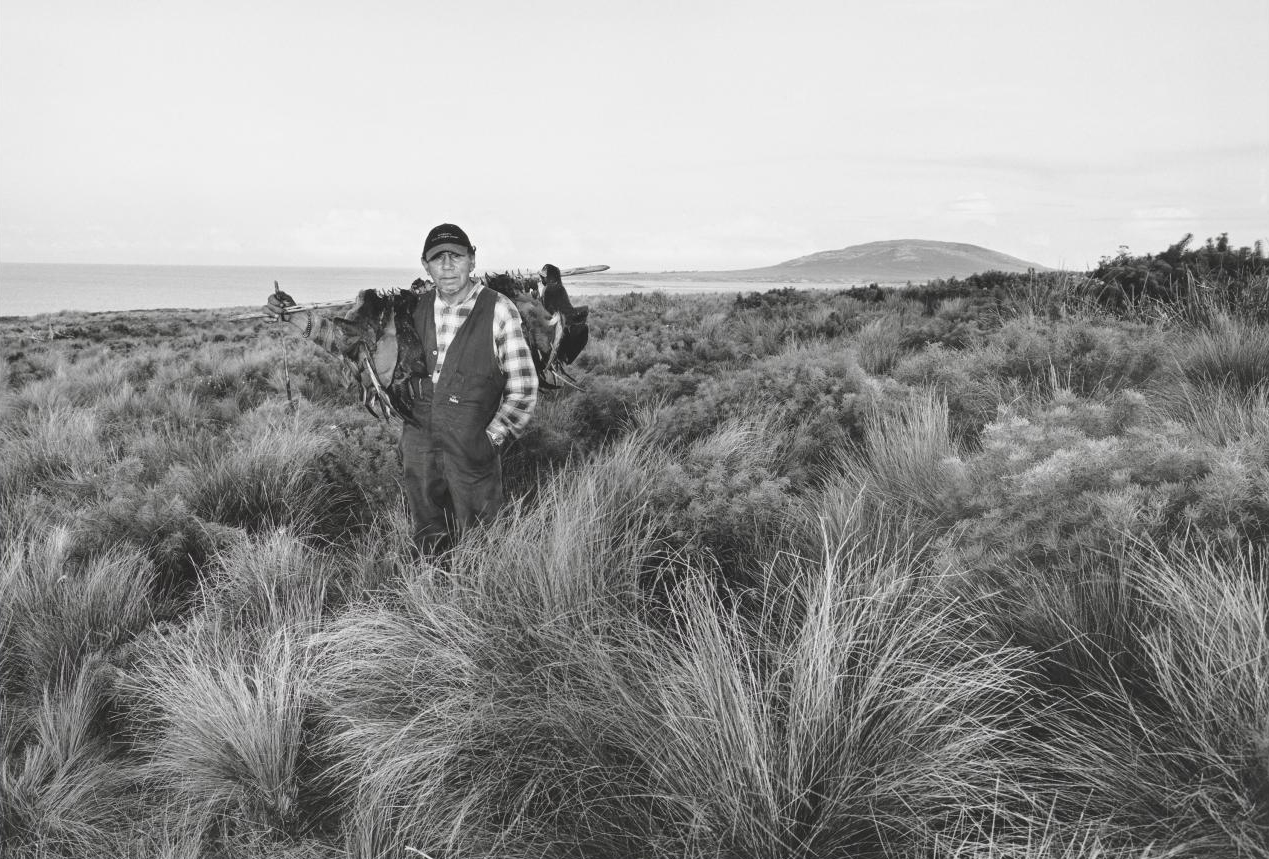
'Coming Home' 2005


Ricky Maynard (Australian, b. 1953)
Coming Home
2005
From the series Portrait of a Distant Land
Gelatin silver photograph, selenium toned
37.4 × 54.1cm
© Ricky Maynard


I can remember coming here as a boy in old wooden boats to be taught by my grandparents and my parents. I’ll be 57 this year and I have missed only one year when my daughter Leanne was born. Mutton birding is my life. To me it’s a gathering of our fellas where we sit and yarn, we remember and we honour all of those birders who have gone before us. Sometimes I just stand and look out across these beautiful islands remembering my people and I know I’m home. It makes me proud to be a strong Tasmanian black man. This is something that they can never take away from me.

Murray Mansell, Big Dog Island, Bass Strait, 2005
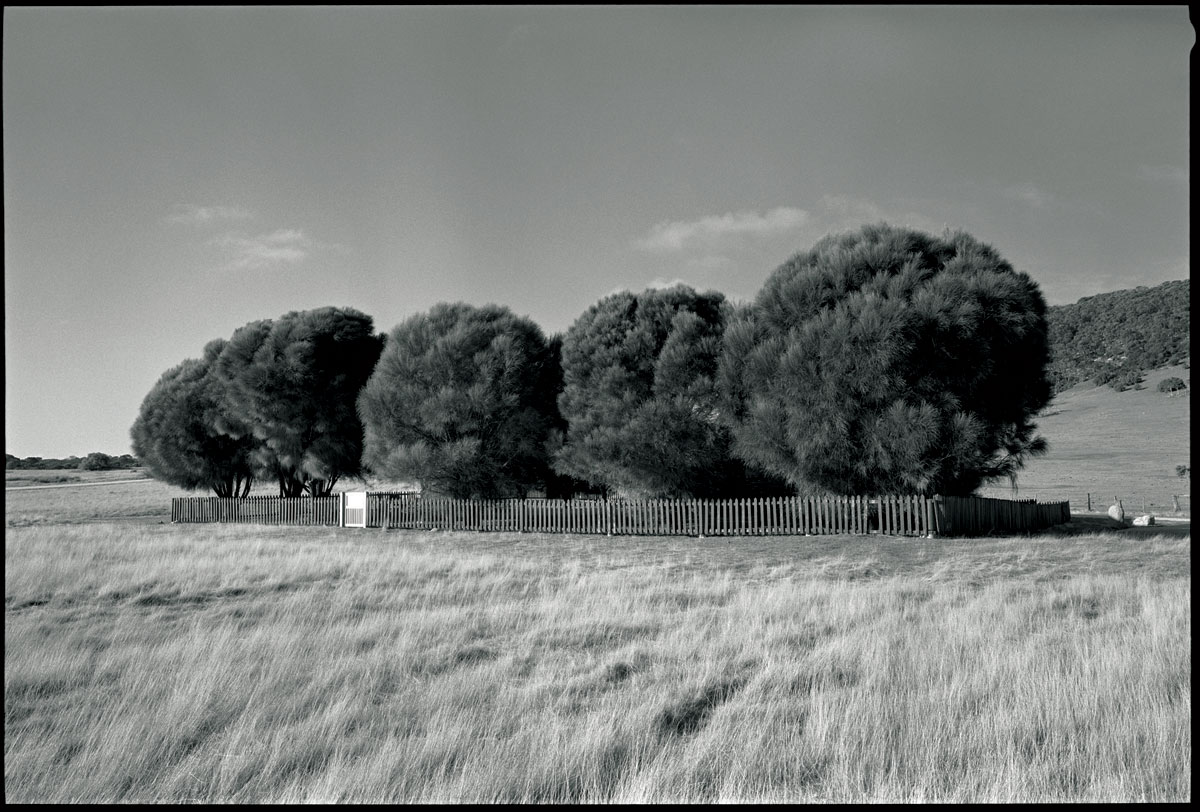
 

Ricky Maynard (Australian, b. 1953) 'The Healing Garden, Wybalenna, Flinders Island, Tasmania' 2005


Ricky Maynard (Australian, b. 1953)
The Healing Garden, Wybalenna, Flinders Island, Tasmania
2005
From the series Portrait of a Distant Land
Gelatin silver photograph, selenium toned
34.0 x 52.0 cm
© Ricky Maynard


This winter the Museum of Contemporary Art presents a major survey of photographic works by documentary photographer Ricky Maynard, encompassing more than two decades of the artist’s practice.

Portrait of a Distant Land features more than 60 evocative and captivating photographic works, drawn from six bodies of work, which document the lives and culture of Maynard’s people, the Ben Lomond and Cape Portland peoples of Tasmania.

The exhibition is curated by MCA Aboriginal and Torres Strait Islander Programs Keith Munro and is presented at the MCA from 4 June until 23 August 2009. Born in Launceston, Tasmania in 1953 Maynard is a self taught documentary photographer now based on Flinders Island in the Bass Strait between Tasmania and mainland Australia.

Maynard first came to prominence in the late 1980s with a photographic essay about Aboriginal mutton bird farmers and he has continued to document physical and social landscapes which form a visual record and representation of Aboriginal and Torres Strait Islander people in Australia.

“For me, photographs have always been personal and I hope to convey the intimacy of a diary. Photography has the ability to tell stories about the world and how the photograph has power to frame a culture,” said Maynard, describing his practice.

The works presented in Portrait of a Distant Land survey a broad range of themes and issues facing Aboriginal and Torres Strait Islander people today. It includes photographs which document sites significant to Maynard’s people: ranging from serenely beautiful landscapes which follow the song lines, tribal movements and historical displacement routes of his ancestors, to the confrontational and emotionally-charged images of Indigenous people incarcerated in the South Australian prison system.

The six photographic series by Maynard which are featured in the exhibition are The Moonbird People (1985-1988), No More Than What You See (1993), Urban Diary (1997), In The Footsteps of Others (2003), Returning To Places That Name Us (2000) and Portrait of a Distant Land (2005- ). Together these works create a form of visual diary of multiple landscapes derived from collective oral histories of Maynard’s people.”

Press release from the MCA website [Online] Cited 05/07/2009. No longer available online


Ricky Maynard (Australian, b. 1953) ‘Arthur, Wik elder’ from the series ‘Returning to places that name us’ 2000


Ricky Maynard (Australian, b. 1953)
Arthur, Wik Elder
2000
From the series Returning to Places that Name Us
Gelatin silver photograph
96.1 x 121.4cm
© Ricky Maynard


The owner of an enviable collection of antique cameras, Maynard is a lifelong student of the history of photography, particularly of the great American social reformers Jacob Riis, Lewis Hines, Dorothea Lange and Walker Evans. He is interested in the power of the uninflected image – of sheer veracity – as an agent of record and change. Maynard’s images cut through the layers of rhetoric and ideology that inevitably couch black history (particularly Tasmanian history) to present images of experience itself. ‘To know the meaning of a culture you must recognise the limits and meaning of your own,’ the artist explains. ‘You can see its facts but not its meaning. We share meaning by living it.’ Maynard’s photographs are, he says, about ‘leaving proof’ – about ‘… life in passing and in complicated times’.

The word ‘Wik’ has come to denote a historic decision of the High Court of Australia rather than the name of the Indigenous peoples from the western Cape York Peninsula in northern Queensland. In his intimate portraits of elders from these communities, Maynard aims to unpick this abstraction. Etched on each face is the complexity of an unspoken life story, delineated, one imagines, by hardship, perseverance and the burden – and wealth – of an extraordinary living memory. As he wrote in his artist’s statement for the exhibition Returning to Places that Name Us in 2001, ‘… I wanted a presence and portraits that spoke, and through this process to present an idea, rather than preach messages’. In this series, Maynard achieves his aim of capturing meanings that no other medium could convey.

Hannah Fink in ‘Tradition today: Indigenous art in Australia’, Art Gallery of New South Wales, Sydney, 2004

© Art Gallery of New South Wales. Text from the Art Gallery of New South Wales website [Online] Cited 14/03/2019


Ricky Maynard (Australian, b. 1953) 'Gladys Tybingoomba' 2001


Ricky Maynard (Australian, b. 1953)
Gladys Tybingoomba
2001
From the series Returning To Places That Name Us
Gelatin silver photograph
© Ricky Maynard


Ricky Maynard (Australian, b. 1953) 'Custodians' from the series 'Portrait of a Distant Land' 2005


Ricky Maynard (Australian, b. 1953)
Custodians
2005
From the series Portrait of a Distant Land
Gelatin silver photograph, selenium toned
43.0 x 41.2cm
© Ricky Maynard
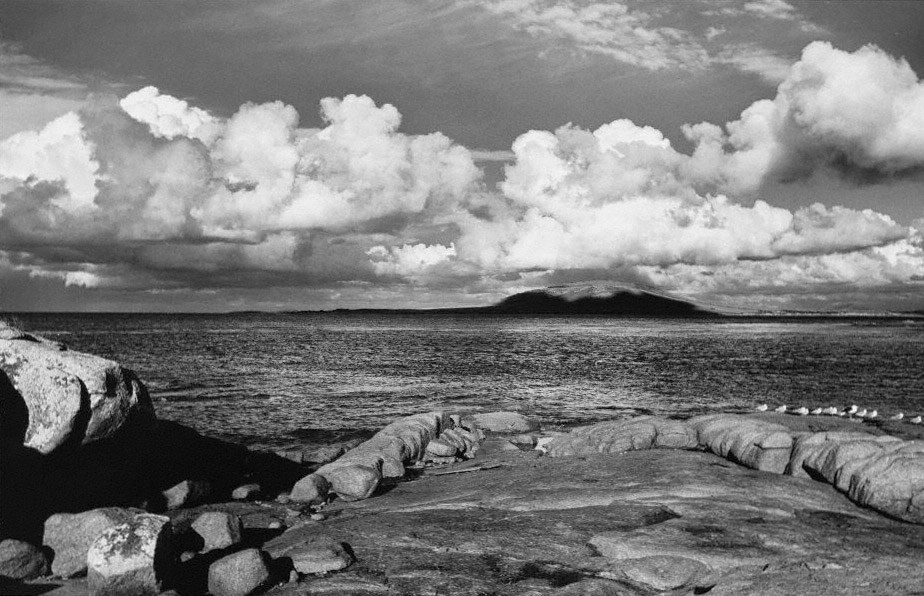
 

Ricky Maynard (Australian, b. 1953) 'Vansittart Island' from the series 'Portrait of a Distant Land' 2007


Ricky Maynard (Australian, b. 1953)
Vansittart Island
2007
From the series Portrait of a Distant Land
Gelatin silver photograph, selenium toned
33.9 x 52.1cm
© Ricky Maynard


Ricky Maynard (Australian, b. 1953) 'The Spit' from the series 'Portrait of a Distant Land' 2007


Ricky Maynard (Australian, b. 1953)
The Spit
2007
From the series Portrait of a Distant Land
Gelatin silver photograph, selenium toned
41.8 x 50.4cm
© Ricky Maynard


Ricky Maynard (Australian, b. 1953) 'The Mission' 2005 From the series 'Portrait of a Distant Land'


Ricky Maynard (Australian, b. 1953)
The Mission
2005
From the series Portrait of a Distant Land
Gelatin silver photograph, selenium toned
43.0 x 41.2cm
© Ricky Maynard


Maynard is a lifelong student of the history of photography, particularly of the great American social reformers Jacob Riis, Lewis Hines, Dorothea Lange and Walker Evans. Maynard’s images cut through the layers of rhetoric and ideology that inevitably couch black history (particularly Tasmanian history) to present images of experience itself. His visual histories question ownership; he claims that ‘the contest remains over who will image and own this history… we must define history, define whose history it is, and define its purpose as well as the tools used for the telling it’.

In Portrait of a distant land Maynard addresses the emotional connection between history and place. He uses documentary style landscapes to illustrate group portraits of Aboriginal peoples’ experiences throughout Tasmania. Each work combines several specific historical events, creating a narrative of shared experience – for example The Mission relies on historical records of a small boy whom Europeans christened after both his parents died in the Risdon massacre. This work highlights the disparity between written, oral and visual histories, as Maynard attempts to create ‘a combination of a very specific oral history as well as an attempt to show a different way of looking at history in general’.

Text from the Art Gallery of New South Wales website [Online] Cited 14/03/2019


Museum of Contemporary Art (MCA)
140 George Street
The Rocks, Sydney, Australia

Opening hours: 10am – 5pm daily
MCA website

LIKE ART BLART ON FACEBOOK

Back to top

Photographs: Marcus Bunyan. ‘The Shape of Dreams’ 2009

June 2009


Marcus Bunyan (Australian, b. 1958) 'Spire of der Dom, 1 - 52' 2009 from the series 'The Shape of Dreams'


Marcus Bunyan (Australian, b. 1958)
Spire of der Dom, 1 – 52
2009
From the series The Shape of Dreams
Gelatin silver print


The Shape of Dreams

I am pleased to announce a body of work, the second for 2009, is now online on my website.

The photographs are a sequence: one tone follows another (much like a piece of music) until the final coda. With this in mind please view the work sequentially. Below are a selection of photographs from the whole work.

Dr Marcus Bunyan


Please click on the photographs for a larger version of the image.

Photographs are available from this series for purchase. As a guide, a digital colour 16″ x 20″ costs $1000 plus tracked and insured shipping. For more information please see my Store web page.


Photographs from the series The Shape of Dreams 2009


“the form of formlessness
the shape of dreams”


Marcus Bunyan (Australian, b. 1958) 'Untitled' from the series 'The Shape of Dreams' 2009


Marcus Bunyan (Australian, b. 1958)
Untitled
2009
From the series The Shape of Dreams
Gelatin silver print


Marcus Bunyan (Australian, b. 1958) 'Untitled' from the series 'The Shape of Dreams' 2009


Marcus Bunyan (Australian, b. 1958)
Untitled
2009
From the series The Shape of Dreams
Gelatin silver print


Marcus Bunyan (Australian, b. 1958) 'Untitled' from the series 'The Shape of Dreams' 2009


Marcus Bunyan (Australian, b. 1958)
Untitled
2009
From the series The Shape of Dreams
Gelatin silver print


Marcus Bunyan (Australian, b. 1958) '9/24/52' from the series 'The Shape of Dreams' 2009


Marcus Bunyan (Australian, b. 1958)
9/24/52
2009
From the series The Shape of Dreams
Gelatin silver print


Marcus Bunyan (English-Australian, b. 1958) 'Untitled' from the series 'The Shape of Dreams' 2009


Marcus Bunyan (Australian, b. 1958)
Untitled
2009
From the series The Shape of Dreams
Gelatin silver print


Marcus Bunyan (Australian, b. 1958) 'Navy Base, Unidentified' from the series 'The Shape of Dreams' 2009


Marcus Bunyan (Australian, b. 1958)
Navy Base, Unidentified
2009
From the series The Shape of Dreams
Gelatin silver print


Marcus Bunyan (Australian, b. 1958) 'Untitled' from the series 'The Shape of Dreams' 2009


Marcus Bunyan (Australian, b. 1958)
Untitled
2009
From the series The Shape of Dreams
Gelatin silver print


Marcus Bunyan (Australian, b. 1958) 'Part of the French Riviera taken while Whit held me at the door!' from the series 'The Shape of Dreams' 2009


Marcus Bunyan (Australian, b. 1958)
Part of the French Riviera taken while Whit held me at the door!
2009
From the series The Shape of Dreams
Gelatin silver print


Marcus Bunyan (Australian, b. 1958) 'Untitled' from the series 'The Shape of Dreams' 2009


Marcus Bunyan (Australian, b. 1958)
Untitled
2009
From the series The Shape of Dreams
Gelatin silver print


Marcus Bunyan (Australian, b. 1958) 'Untitled' from the series 'The Shape of Dreams' 2009


Marcus Bunyan (Australian, b. 1958)
Untitled
2009
From the series The Shape of Dreams
Gelatin silver print


All the photographs from the series are now on my website.


Marcus Bunyan website

LIKE ART BLART ON FACEBOOK

Back to top

Review: ‘Blight’ photographs by Josephine Kuperholz at Gallery 101, Melbourne

Exhibition dates: 3rd June – 27th June, 2009


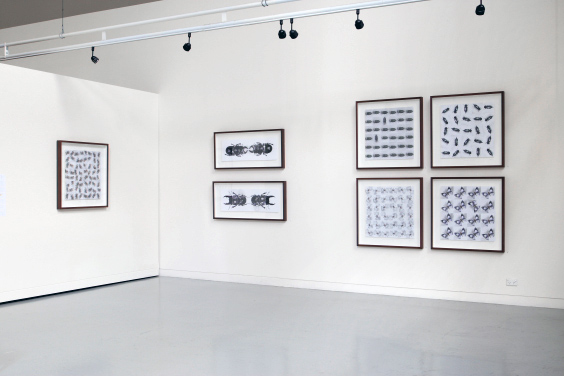
Josephine Kuperholz (Australian) 'Themognatha pascoci' 2008 from the exhibition 'Blight' at Gallery 101, Melbourne, June, 2009


Josephine Kuperholz (Australian)
Themognatha pascoci
2008
Woven hand coloured silver gelatin photographic image


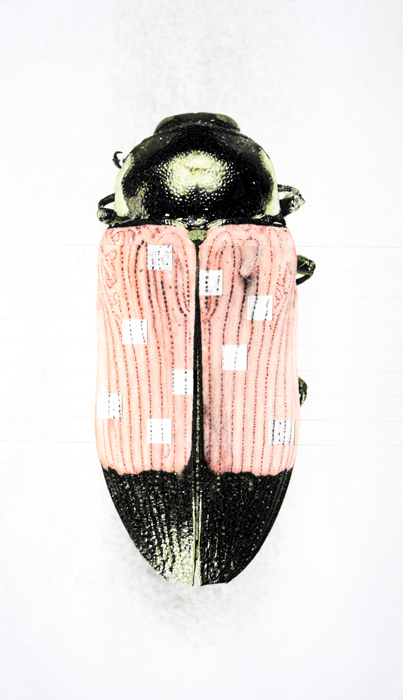
Josephine Kuperholz presents a beautifully engineered set of photographs in her exhibition Blight at Gallery 101, Melbourne. Featuring hand coloured silver gelatin photographs of endangered Australian insects sourced from the Entomology collection of the Victoria Museum, Kuperholz literally weaves multiple narratives into the photographs. The execution (an apt word for the circumstances of extinction facing these insects) of these images is fastidious, the weaving superlative, almost clinical.

The layering of the photographs disrupts their surface tension. There is a disjunction between the dead specimen and the singular photograph of it, a disruption of the smooth surface of the photograph by the hand colouring and a further fragmentation of the original photograph by cutting and weaving. Through these processes the photographs become intertextual in their construction, assemblages, creating new tissues of past citations: animal, colour, silver, artist, text, photograph, environment. At their best the work subverts the concept of the text as self-sufficient and hermetically sealed, blurring the outlines of the fixed image, “dispersing its image of totality into an unbounded, illimitable tissue of connections and associations, paraphrases and fragments, texts and con-texts.”1

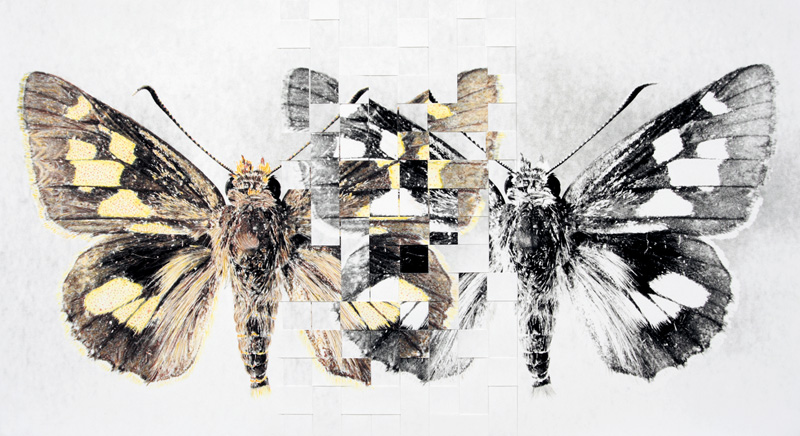
Kuperholz’s mutations, ‘differance’ in Derrida’s terminology, produce spaces that are both fluid and fixed at one and the same time; neither her nor there. Though the original specimens and photographs are already narrativised, already textualised, Kuperholz disrupts this marking, the continual reiteration of norms, by weaving a lack of fixity into her objects; in her reconceptualisations of space and matter Kuperholz redefines the significations of the body of the animal in the fold of inscription, through a process of materialisation. Kuperholz attempts to ground these re-inscriptions through the naming of these disrupted surfaces, equating the images back to the scientific labels for the original specimen, Trapezites eliena for example (see below), and through the box frames surrounding the work that are much like museum cases. Unfortunately I found the constant reference to the habitat of the insect, it’s Latin name inscribed in pencil under the images and the use of plain brown box frames somewhat irritating. These tropes are not necessary for the work is strong enough to stand on it’s own without having to tell the viewer what to think.

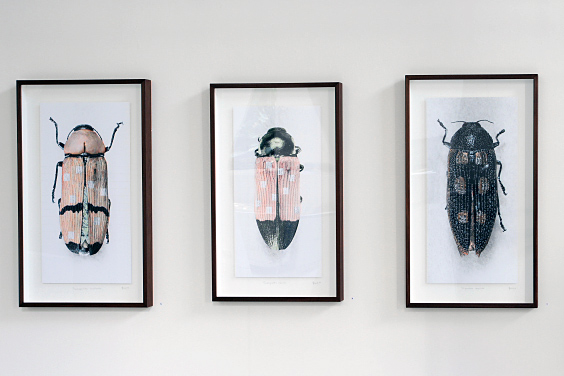
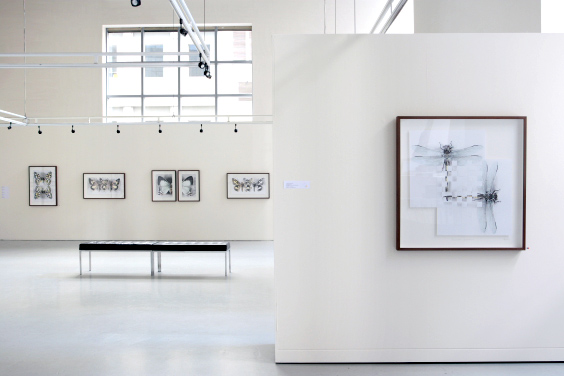
The singular beetles (as seen above) are beautiful images and the multiple images where the weaving intermingles, the self decentred and multiple, fluttering and vibrating like the strobing of a time lapse photograph caught in three-dimensional space, are fantastic. Other photographs are less successful: the reflected beetles are a little passe, while the grid photographs of insects lack presence and intensity (see bottom installation photograph below). Where the concept works it is pushed hard, the fragmentation and interweaving causes an anxiety of identity and a meditation on the problematic nature of existence, revealing the changing sizes, shapes and rhythms of space and structure.

Perhaps a loosening of the rigid structure surrounding the works (the text, the frame, the incantations) would have let the photographs ascend into the ether, further releasing the work from the constraints of author, text and earth. It will be interesting to see future developments of this work. Perhaps the incorporation of gentle, subtle physical elements into the photographs (through the sowing of patterns, through the sowing of objects directly onto the photograph?), will elevate these already beautiful photographs to an-other plane of existence.

Dr Marcus Bunyan


Many thankx to Gallery 101 for allowing me to publish the photographs in the posting. Please click on the photographs for a larger version of the image.


Josephine Kuperholz (Australian) 'Trapezites eliena' 2008 from the exhibition 'Blight' at Gallery 101, Melbourne, June, 2009


Josephine Kuperholz (Australian)
Trapezites eliena
2008
Common name – Eliena Skipper

Woven hand coloured silver gelatin photographic image


Josephine Kuperholz (Australian)  'Dryococelus australis' 2008


Josephine Kuperholz (Australian)
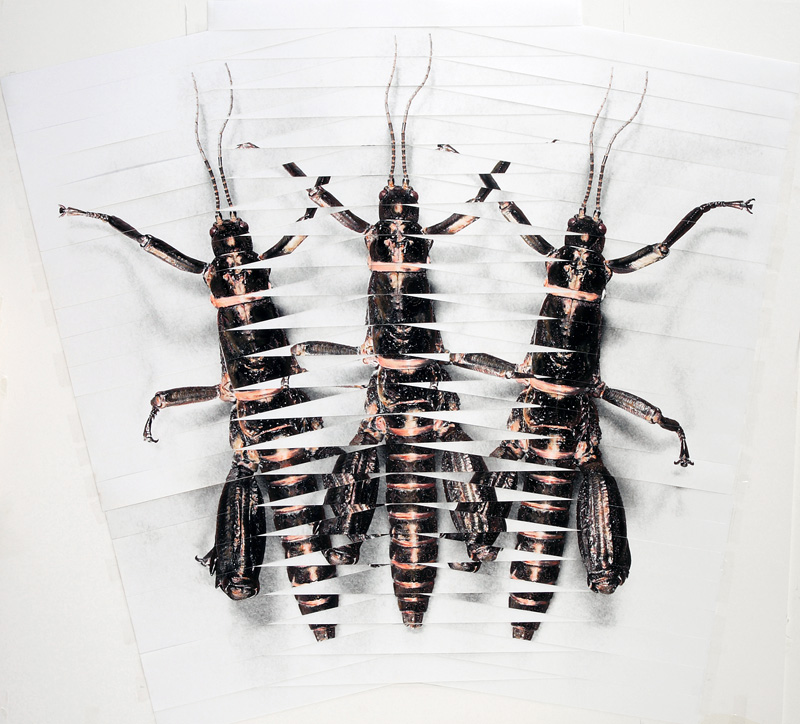
Dryococelus australis
2008
Common name – Lord Howe Island Phasmid
Woven hand coloured silver gelatin photographic image


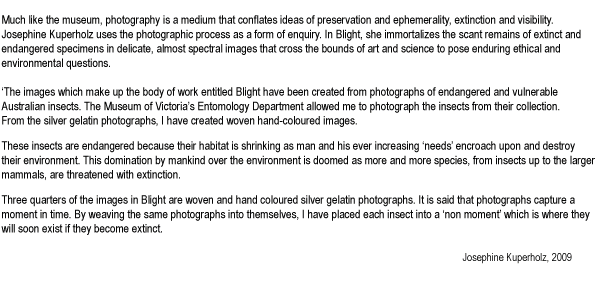
Josephine Kuperholz 'Blight' exhibition Gallery 101 website text


Josephine Kuperholz Blight exhibition, Gallery 101 website text


Josephine Kuperholz 'Blight' exhibition installation view at Gallery 101, Melbourne

Josephine Kuperholz 'Blight' exhibition installation view at Gallery 101, Melbourne

Josephine Kuperholz 'Blight' exhibition installation view at Gallery 101, Melbourne


Josephine Kuperholz Blight exhibition installation views at Gallery 101, Melbourne
Photos: Marcus Bunyan


Gallery 101

This gallery is now closed.

LIKE ART BLART ON FACEBOOK

Back to top

Exhibition: ‘Inheritance’ at the Australian Centre for Photography, Sydney

Exhibition dates: 1st May – 6th June, 2009

Artists: Bindi Cole, Tamara Dean, Lee Grant, June Indrefjord, Bronek Kozka, Ka-Yin Kwok, Tracey Moffatt, Fiona Morris, Aaron Seeto, Martin Smith and Toni Wilkinson

Installation photographs of the exhibition can be found on the Lee Grant – Photography blog website


Many thankx to the ACP for allowing me to publish the photographs in the posting. Please click on some of the photographs for a larger version of the image.


June Indrefjord. 'Piano' from the series 'Landaas' 2005


June Indrefjord
Piano
2005
From the series Landaas


Aaron Seeto (Australian) 'Oblivion' 2006


Aaron Seeto (Australian)
Oblivion
2006
From the series Oblivion
Daguerreotype


Aaron Seeto makes alternate historical positions and experiences visible through an exploration of archives, family photo albums and photographic records. In recent bodies of work Fortress and Oblivion, Seeto has utilised the daguerreotype, one of the earliest and most primitive photographic techniques, to highlight the malleability of narratives within archive records. Not only is the chemical process itself highly toxic and temperamental but the daguerreotype’s mirrored surface means the image appears as both positive and negative, depending on the angle of view. For Seeto, this mutability captures the essence of our experience of history and memory, reflecting how images degrade, how stories are formed and privileged, how knowledge and history are written. …

For his ongoing series Oblivion Seeto sourced details from images of the Cronulla riots – beachside riots around race and territory – of 2005 found on the internet. In reproducing these as daguerrotypes he seeks less to represent the incident than to look at how it was reported, understood and remembered. The instability of the virtual information found online is echoed in the photographic process.

Text from the Stills Gallery website [Online] Cited 14/02/2019


Tracey Moffatt (Australian, b. 1960) 'Useless 1974' 1994 from the exhibition 'Inheritance' at the Australian Centre for Photography, Sydney, May - June, 2009


Tracey Moffatt (Australian, b. 1960)
Useless 1974
1994
From the series Scarred for Life


Useless, 1974 is a photo-lithograph by the Australian artist Tracey Moffatt. The work shows a girl stooping down to wash a car, with one hand wiping a headlight with a sponge and the other resting on the bonnet. She looks towards the camera rather than at the car, her face bearing a serious and potentially hurt or angry expression. The caption accompanying the photograph explains that ‘Her father’s nickname for her was “useless”‘. Despite this, it seems that in this picture she is being put to use, and perhaps the car she washes is her father’s. The caption, her expression and the direction of her gaze may suggest that the viewer occupies the position of the girl’s father looking down on and supervising his daughter while she carries out her chore. …

The work’s title is a reference to the cruel nickname given to the girl in the photograph, and the date in the title, 1974, suggests the year according to which the photograph has been styled by Moffatt, who employs actors and constructed scenes to create her photographs. Curator Filippo Maggia has compared Moffatt’s photographic method to that of a film director, stating that she ‘often does not take the photographs herself but directs a sort of bona fide movie set that she organises and controls after having pictured it in her mind again and again, meticulously decomposing and recomposing it’ (Maggia 2006, p.12). As the artist has stated, ‘I often use technicians when I make my pictures. I more or less direct them. I stand back and call the shots.’ (Quoted in Maggia 2006, p.12.)

Moffatt’s photographic series often deal with themes such as race, gender and the politics of identity. Drawing on memories from the artist’s childhood, the Scarred for Life series mimics photo spreads from the American magazine Life, with their explanatory captions and focus on the family environment. The captions’ terse descriptions hint at the traumatic stories behind the images. Moffatt has commented: ‘a person can make a passing comment to you when you are young and this can change you forever. You can be “scarred for life” but it isn’t necessarily a bad thing. The photographs can be read as both tragic and comic – there is a thin line between both.’ (Quoted in display caption, Tracey Moffatt, Birth Certificate 1994, Tate P78101, accessed 28 August 2015.) Furthermore, Maggia has argued that the Scarred for Life series ‘gives us life as it is, the harshness and aridity of human relations, adolescence with its fears of not being accepted’ (Maggia 2006, p.13).

Louise Hughes
August 2015

Filippo Maggia, Tracey Moffatt: Between Dreams and Reality, exhibition catalogue, Spazio Oberdan, Milan 2006, p. 13, reproduced p. 117.

Extract from Louise Hughes. “Useless, 1974,” on the Tate website [Online] Cited 14/02/2019


Lee Grant (Korean-Australian, b. 1973) 'The Day Meg Wore a Dress '2007 from the exhibition 'Inheritance' at the Australian Centre for Photography, Sydney, May - June, 2009


Lee Grant (Korean-Australian, b. 1973)
The Day Meg Wore a Dress from the series Brothers and Sisters
2007


“You can choose your friends, but you can’t choose your family.”

From the tight nuclear unit to the multi-generational extended family, from refuges for the homeless to middle class suburbia, Inheritance examines the way our families shape the person we become; for better or for worse.

Taking Tracey Moffatt’s acclaimed series Scarred for Life as a starting point, the exhibition includes the work of eleven Australian artists who explore the modern family through a range of photographic disciplines, including documentary, portraiture and video. Sometimes serious and sometimes satirical, Inheritance is a family album that celebrates the skeletons and the psychodramas alongside the newborns and the nuptials.

Text from the Australian Centre for Photography website [Online] Cited 20/05/2009. No longer available online


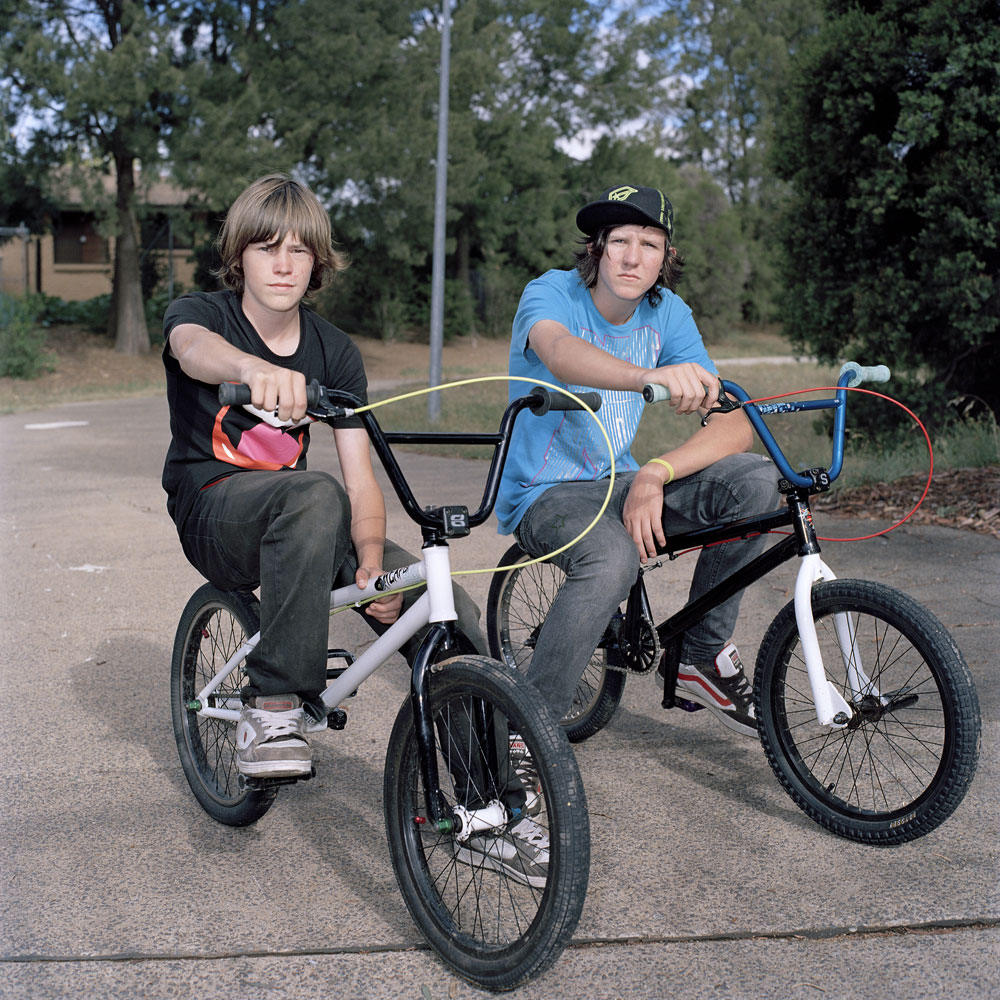
Lee Grant (Australian, b. 1973) 'Nathan & Mac, BMX bros' 2009


Lee Grant (Australian, b. 1973)
Nathan & Mac, BMX bros
2009
Archival pigment print
60 x 60cm
Edition of 8 + 2 AP


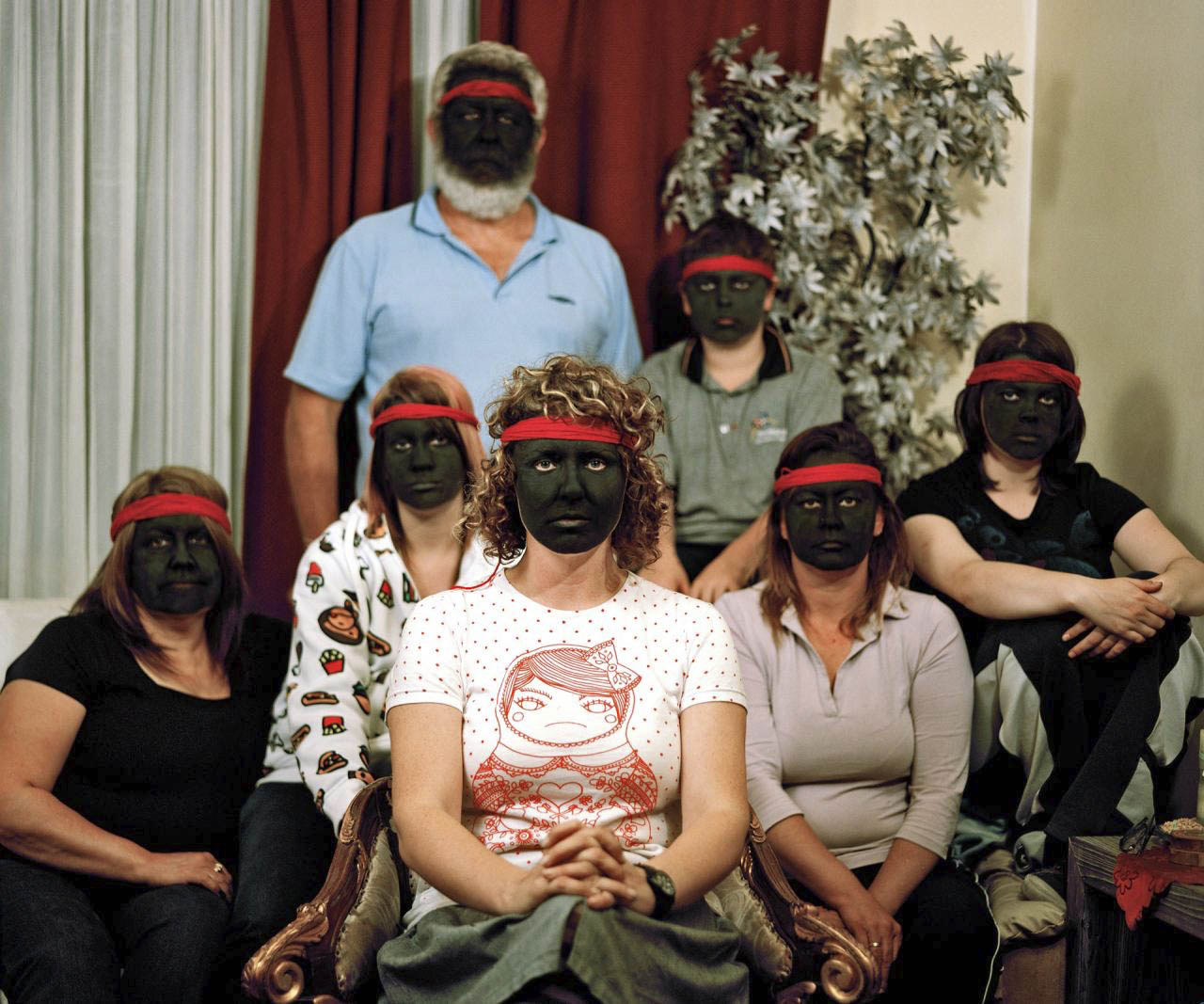
Bindi Cole Chocka (Australian / Wathaurung, b. 1975) 'Wathaurung Mob' 2008


Bindi Cole Chocka (Australian / Wathaurung, b. 1975)
Wathaurung Mob
2008
From the series Not really Aboriginal
Pigment print on rag paper
1035 x 1235cm


Our Past Is Our Strength – Culture and Identity

I’ve always been told that l was Aboriginal. I never questioned it because of the colour of my skin or where I lived. My Nan, one of the Stolen Generation, was staunchly proud and strong. She made me feel the same way. My traditional land takes in Ballarat, Geelong and Werribee and extends west past Cressy to Derrinallum. I’m from Victoria and I’ve always known this. All the descendants of traditional Victorian Aboriginal people are now of mixed heritage. I’m not black. I’m not from a remote community. Does that mean I’m not really Aboriginal? Or do Aboriginal people come in all shapes, sizes and colours and live in all areas of Australia, remote and urban?

Bindi Cole Chocka, Wathaurung text from the Culture Victoria website [Online] Cited 14/02/2019


Wathaurung Mob is a group portrait depicting members of Cole’s family sitting in their lounge room, their faces blackened with minstrel paint, and wearing red headbands traditionally worn by indigenous elders. The controversial practice of “blackfacing” refers to the populist minstrel shows of the 19th and 20th centuries in which a white actor put on blackface, then performed a racist caricature.

As we stand before the work, Alessi says he finds it confronting and uncomfortable. “Wathaurung Mob is quite powerful because what stands out are the eyes of each sitter; they look directly at the viewer, so you can’t help but feel challenged by that,” he says.

“There is also something quite uncomfortable about the work because, in some ways, you are being implicated in Andrew Bolt’s view, as white Australians having to own up to the broader history of the relationship between white and indigenous Australia.

“And more broadly it is about coming to grips with what is still a major issue in Australia around reconciliation and the way that we treat indigenous people. In one single frame this photograph captures 200 years of history, and I think it is an area that people like Bindi Cole are really courageous to navigate through because they have been open to criticism by people like Andrew Bolt, which is completely unfounded.”

Extract from Bronwyn Watson. “Facing up to the stereotypes,” on The Australian website November 16, 2013 [Online] Cited 14/02/2019


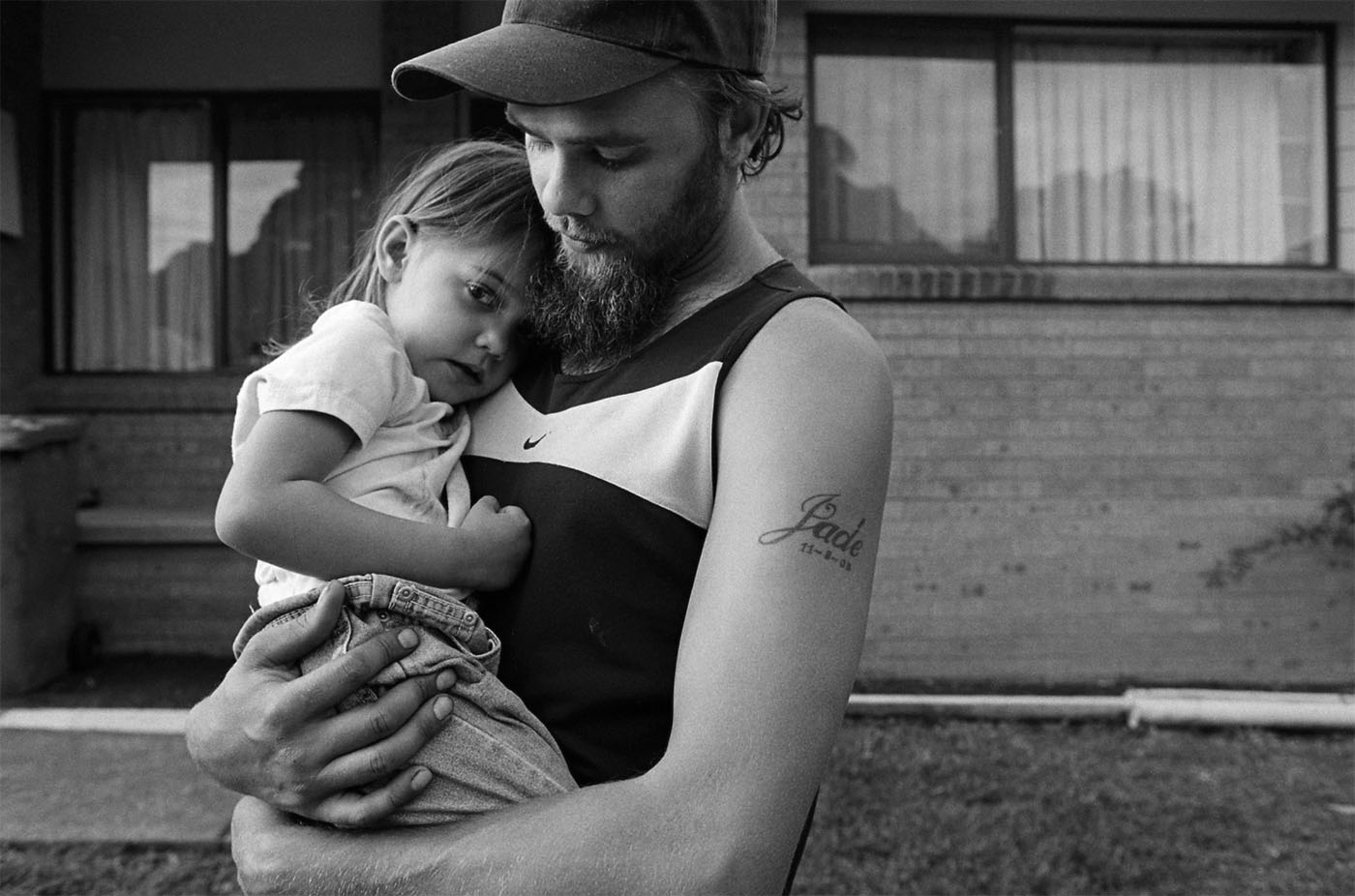
Fiona Morris. 'Sean and Jade, Wesley Mission' 2006


Fiona Morris (Australian)
Sean and Jade, Wesley Mission
2006


Sean with his daughter Jade outside their tempoary accomodation provided by Wesley Mission. They can only stay their for a maximum of two months. Leah and Sean became homeless with their children after increasing rent rises in Sydney and the cost of living.


Tamara Dean (Australian, b. 1976) 'Alex and Maeve' 2006


Tamara Dean (Australian, b. 1976)
Alex and Maeve
2006


Australian Centre for Photography

This gallery has now closed.

Lee Grant website

Tracey Moffatt on the Rosyln Oxley9 Gallery website

LIKE ART BLART ON FACEBOOK

Back to top

Review: ‘My Jesus Lets Me Rub His Belly’ exhibition by Martin Smith at Sophie Gannon Gallery, Melbourne

Exhibition dates: 21st April – 16th May, 2009


Martin Smith (Australian, b. 1972) 'Hot/humid/oppressive/stifling/still' 2009 from the exhibition 'My Jesus Lets Me Rub His Belly' by Martin Smith at Sophie Gannon Gallery, Melbourne, April - May, 2009


Martin Smith (Australian, b. 1972)
Hot/humid/oppressive/stifling/still
2009
Pigment print and collage
90 x 130cm


This is an interesting, well constructed exhibition of photographs, collage and sculpture by Martin Smith presented at Sophie Gannon Gallery, Melbourne that addresses issues of place and faith: memories of growing up within a religious framework. The work is well resolved, the themes explored are poignant, full of pathos, laden with sardonic humour and pull no punches.

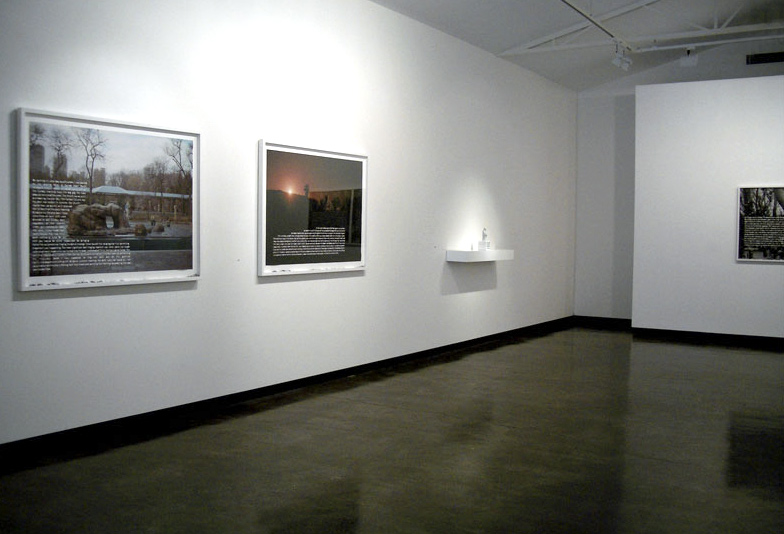
The main body of the exhibition are contemporary personal photographs of sunsets, landscapes and urban spaces (such as the photograph of Central Park in New York, above). Incised into the surface of the photograph, actually cut into the surface, are narratives of boredom, anger and the blind injustice of devotion, memories of stories of a fifteen year old boy. In some of the photographs the lettering follows the pictorial representation of the photograph, in others it overwrites it. The cut letters fall away to the bottom of the picture and are captured by the picture frame, sitting at the bottom of each image like the leaves of autumn – half remembered stories that become jumbled in the mind, played over and over again.

These images consolidate both photographic and written texts while at the same time undermining their veracity and referentiality. Image and text are performative, playing off of each other to provide a transgressive textuality that becomes a mode of agential resistance capable of fragmenting and releasing the subject. In this engagement between image and text the work becomes intertextual, the ritual of production engaging a network of texts, a discursive multiplicity that traverses the entire scope of social, cultural, and institutional production. The childhood taboo of not criticising ‘faith’ is cross/ed in the process of re-remembering, re-inscription.

In these assemblages the surface of the photograph and the body of the text are subverted through a ritualised cutting, like the incision of the stigmata into the body of Christ. They become sites of resistance. As Deleuze and Guittari have noted of this process the site of resistance is both a productive and disruptive re-territorialization and de-territorialization of meaning:

“For them (Deleuze and Guattari), assemblages are the processes by which various configurations of linked components function in an intersection with each other, a process that can be both productive and disruptive. Any such process involves a territorialization; there is a double movement where something accumulates meanings (re-territorialization), but does so co-extensively with a de-territorialization where the same thing is disinvested of meanings. The organization of a territory is characterized by such a double movement … An assemblage is an extension of this process, and can be thought of as constituted by an intensification of these processes around a particular site through a multiplicity of intersections of such territorializations.”1


The particular site, the particular intersection that Smith addresses in his work is that of memory, faith and place. The lack of fixity in this intersection provides the artist with abundant opportunity to reinscribe the already inscribed ritual of faith, subverting the iteration of the norms already attributed to it, providing a loss of original meaning and the gaining of new meanings. This productive, disruptive re-inscription provides the positionality of the work and the viewer struggles with the emotional conflicts that result from this territorialization: even if you don’t know these stories they challenge what you believe, now.

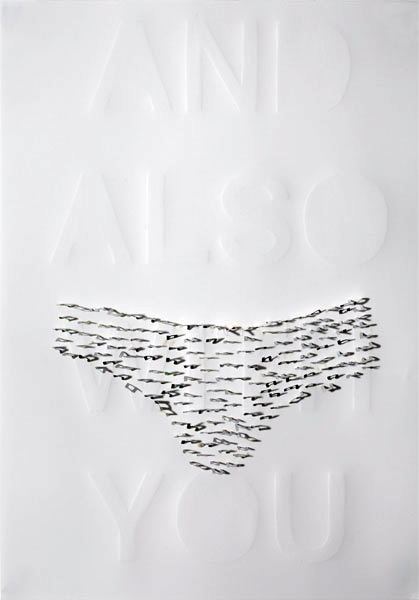
Counterbalancing the colour photographs are white collages that are embossed with the answer to the celebrants greeting “The Lord be with you” to which the people respond “And also with you.” Hovering in the background of the work the words are again subverted, this time in a resurrection of cut letters – instead of being cut into the photograph the letters project outwards towards the viewer forming commodified shapes such as cars, underpants and people. The joy doesn’t stop there: the two sculptures in the exhibition add to the chaos with a wonderful sense of humour.

Through their hypertexts the work “becomes more and more layered until they are architectural in design, until their relationship to the context from which they have grown cannot be talked about through the simple models offered by referentiality, or by attributions of cause and effect.”2

Without absolute attribution the work becomes a form of transubstantiation. The flexibility of memory and the orthodoxy of religion are transformed into a spirituality of the self that the child of fifteen with blood running down his arms from his personal stigmata of boredom could never have imagined. At the end of days, when all is said and done, the funny diatribes with their ambiguous photographs are homily and heretic, and together form a more inclusive body of bliss: ‘And also with you and you and you and you’.

Whatever your faith, whoever you are.

Dr Marcus Bunyan


1/ Wood, Aylish. “Fresh Kill: Information technologies as sites of resistance,” in Munt, Sally (ed.,). Technospaces: Inside the New Media. London: Continuum, 2001, p. 166

2/ Burnett, Ron. Cultures of Vision: Images, Media, & the Imaginary. Bloomington: Indiana University Press, 1995, pp. 137-138

Thank you to Edwin Nicholls for his help.


Martin Smith (Australian, b. 1972) 'Hot/humid/oppressive/stifling/still' 2009 (detail)


Martin Smith (Australian, b. 1972)
Hot/humid/oppressive/stifling/still (detail)
2009
Pigment print and collage
90 x 130cm


Installation view of Martin Smith's exhibition 'My Jesus Lets Me Rub His Belly' at Sophie Gannon Gallery, Melbourne


In the above installation photograph you can just see the cut letters lying at the bottom of the picture frame


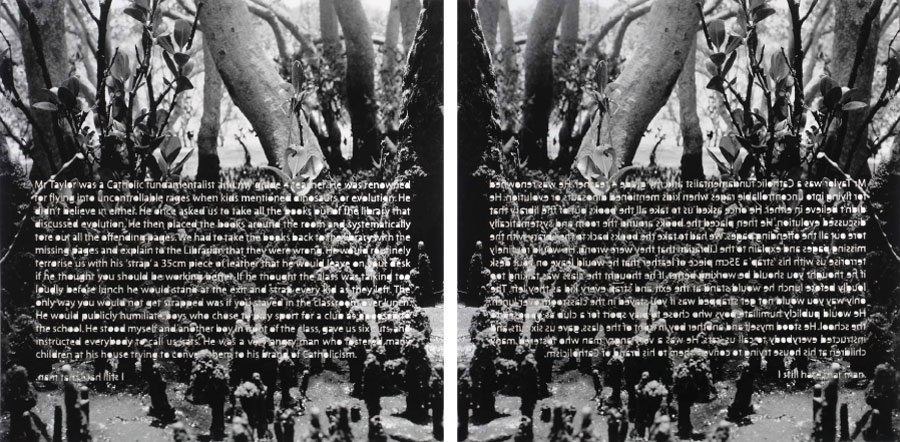
Martin Smith (Australian, b. 1972) 'I still hate that man' 2009 from the exhibition 'My Jesus Lets Me Rub His Belly' by Martin Smith at Sophie Gannon Gallery, Melbourne, April - May, 2009


Martin Smith (Australian, b. 1972)
I still hate that man
2009
Pigment print and collage
130 x 180cm


Martin Smith (Australian, b. 1972) 'My Frenetic, Anxiety Driven Snuffing' 2009


Martin Smith (Australian, b. 1972)
My Frenetic, Anxiety Driven Snuffing
2009
Pigment print and collage
90 x 130cm


Artist statement

I grew up in the bayside suburbs of Brisbane, Australia with a speech impediment. My teenage years were spent watching and observing, as I was too embarrassed to speak. My inability to express myself during this time left an indelible mark on my personal history and has provided the impetus for my artistic enquiries. Therefore it is no surprise that my art practice is primarily about language and the modes of representation used to express and interpret personal experience.

Among the studio methodologies that I employ are the combination of traditional story telling writing with vernacular photography. The text and the images have no literal relationship and I am very careful to avoid any obvious connection between the two. I write personal stories then hand-cut the text out of the image. The removed letters from the image are collected and captured by the picture frame, sitting at the bottom of each image like fallen leaves creating an Autumnal scene where visible change has occurred and the picture and the figure are going through a transition. The text punctures the surface of the image disrupting the way we view and read the work. We can’t fully view the image because of the text and we can’t read the text without the image creating a constant back and forth between the two. When viewing the visual and textual oscillation between the two narrative devices that have no literal connection we find balance outside the picture frame in a new discursive space. It is through this collision of narrative and languages that unique interpretations of personal experience are built. I am interested in exploring spaces of meaning that are created when two or more narrative devices are blended.

In other works the letters are also glued directly onto the wall of the gallery to form recognisable but featureless figures. These installations explore how meaning and identity are generated through language. The individual letters (the building blocks of language) combine together to form a representation of a life that exists only through the formulation of language.

Recently I performed a stand-up ‘comedy’ routine as another vehicle for exploring story-telling and personal histories. The routine titled “Hello Newmarket Hotel” was performed at an ‘open mic’ night in front of a regular comedy audience. The aim was to recreate and recontextualise a particularly painful childhood memory while incorporating known ‘comedy’ tropes. This work along with my whole practice is interested in the role that photography, and other forms of narrative, plays in the construction of our identity and how personal histories are written and interpreted.

Martin Smith 2017


Martin Smith (Australian, b. 1972) 'The Relationship Blossomed' 2009


Martin Smith (Australian, b. 1972)
The Relationship Blossomed
2009
Pigment print and collage
115 x 115cm


Martin Smith (Australian, b. 1972) 'The Relationship Blossomed' 2009 (detail)


Martin Smith (Australian, b. 1972)
The Relationship Blossomed (detail)
2009
Pigment print and collage
115 x 115cm


Martin Smith (Australian, b. 1972) 'The Homily' 2009


Martin Smith (Australian, b. 1972)
The Homily
2009
Pigment print and collage
130 x 90cm


Martin Smith (Australian, b. 1972) 'And also with you #2' 2009


Martin Smith (Australian, b. 1972)
And also with you #2
2009
Collage on paper, eva
42 x 30cm


Martin Smith (Australian, b. 1972) 'And also with you #3' 2009


Martin Smith (Australian, b. 1972)
And also with you #3
2009
Collage on paper, eva
42 x 30cm


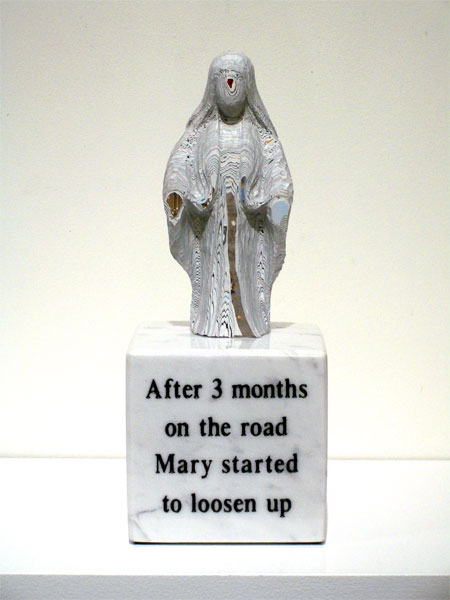
Martin Smith (Australian, b. 1972) 'After 3 months on the road Mary started to loosen up' 2009


Martin Smith (Australian, b. 1972)
After 3 months on the road Mary started to loosen up
2009
Photographic carving on marble base
18 x 10 x 10cm


Sophie Gannon Gallery
2, Albert Street
Richmond, Vic 3121

Opening hours:
Tuesday – Saturday 11am – 5pm

Sophie Gannon Gallery website

LIKE ART BLART ON FACEBOOK

Back to top

Opening 2: ‘Urban Edge’ photographs by John Bodin at Anita Traverso Gallery, Melbourne

Exhibition dates: 6th May – 30th May, 2009


Opening night crowd for John Bodin exhibition at Anita Traverso Gallery, Melbourne

John Bodin photographs at Anita Traverso Gallery, Melbourne


Opening and installation views of John Bodin’s exhibition Urban Edge at Anita Traverso Gallery, Melbourne


“Each one of us, then, should speak of his roads, his crossroads, his roadside benches; each one of us should make a surveyor’s map of his lost fields and meadows … Thus we cover the universe with drawings we have lived …

Space calls for action, and before action, the imagination is at work. It mows and ploughs. We should speak of the benefits of all these imaginary actions.”


Gaston Bachelard The Poetics of Space


More interesting are the eerie contemplative photographs of John Bodin presented at Anita Traverso Gallery, Melbourne, our second opening of the night. In a well presented show Bodin’s hyper-real photographs employ a limited colour palette to portray the constructed landscape of the urban fringe. The images work well because the artist leaves room for doubt in the mind of the viewer – what am I looking at, where is it, do I subconsciously remember these places? How do the photographs make me feel about the edges of the world, this strangeness that we inhabit? They engage the viewer in a fluid architecture of space and place.

Light and colour are important tools for Bodin and he plays with their form, darkening pavements, shooting at night, making subtle negative interpretations of roads and underground car-parks while desaturating buildings, landscapes and skies of ‘natural’ colour. Walls bleed in Witchhunt (2007) and then you work out the photograph is taken under a bridge with a pavement, graffiti providing the title of the work. Blue light emotes from behind the cloaked window of a house in Shrouded (2005) and you are left wondering by the crazed cellular like constructions of As if by Nature (2007).

Haunting and elegiac these compositions are worthy of your attention.

Lovely to meet Catherine Fogarty and John Bodin. Thank you for your help!

Dr Marcus Bunyan


John Bodin (Australian) 'Witchhunt' 2007 from the exhibition 'Urban Edge' photographs by John Bodin at Anita Traverso Gallery, Melbourne, May, 2009


John Bodin (Australian)
Witchhunt
2007


John Bodin (Australian) 'Shrouded' 2005 from the exhibition 'Urban Edge' photographs by John Bodin at Anita Traverso Gallery, Melbourne, May, 2009


John Bodin (Australian)
Shrouded
2005


John Bodin (Australian) 'As If By Nature' 2007


John Bodin (Australian)
As If By Nature
2007


Urban Edge continues on from the 2006 ‘Urban Abstraction’ exhibition at Anita Traverso Gallery by introducing contrasting elements and structure from the natural world alongside stark semi-abstracted urban scapes. Whilst we may at first perceive these as opposing forces, I contend that the integration is more harmonious than we think.”


John Bodin


When John Bodin takes a risk – which indeed he seems to do aplenty – he does so with a self-assurance that would make many photographers – and artists in general – weep.

All the clichés are there in his work – the towering skyscraper, the car traversing the road at dusk, the pitted track through the woods. But when Bodin frames his image something quite magical occurs. Rather than raise an eyebrow and say – ‘seen it all before’ – instead we are seduced into the deep chiaroscuro, the inarguably romantic, shadowy mis en scene.

Bodin has said that his photographs “comment on the conditioning process of familiarisation.” Indeed, the strange moment of familiarity is immediately cushioned by the sensual softness of tone he employs. If anything, it is the shock of the old.

Bodin has said that his study in philosophy and meditation serve as a visual source of reflection and are integral to his image making.

Whether it is a distinctly phallic office tower or the moments of surrealism in a found structure in the rural countryside, Bodin’s work exudes a strange peacefulness, a distinctly contemplative air. Everything he grabs from reality is given Bodin’s own air of tranquility. He doesn’t eschew colour exactly, but he tones it down, blanketing his subjects in a kind of downy, nostalgic but not quite melancholic fashion that links his entire oeuvre.

A work such as Lover’s Lane – a sandy track somewhere by the coast – links his sensual eye with a not altogether comforting sense of intimacy. The shadows of the trees encroach in an almost threatening tangle of dark shapes – the ideal place to reassure a trembling lass as they wander into the dark.

In 2006, the renowned fellow-photographer Les Horvat said in an opening speech that Bodin’s “stated interests in philosophy and meditation serve as a fertile source of reflection, integral to his image making. His images cleverly explore the contrast between the form and the aesthetic of the landscape. They do this by examining the utility of urban structure, and juxtaposing it against an aesthetic emotional sensibility that is evocatively expressed through his images.

“The paradox he lays before us is that on one hand, they ingeniously remind us of our human incursions in the natural world; on the other, they suggest that the significance of the landscape is actually assigned by these incursions,” stated Horvat.

Bodin has travelled extensively and in 2003 he served a short residency in New Delhi, India. Closer to home he held a solo show in May 2006 and participated in 11 group exhibitions over the last six years. He was a finalist in the 2005 New Social Commentaries Acquisitive Prize and the acclaimed Prometheus Visual Art Award in 2007. The respect Bodin holds amongst his peers is renowned and, as this show attests, will only grow with time.

Ashley Crawford. “John Bodin,” in Photofile 86 2009, p. 14


John Bodin in front of his work at the opening of his exhibition 'Urban Edge' at Anita Traverso Gallery, Melbourne


Artist John Bodin in front of his work Lover’s Lane (2007, left) and Object of Speculation (2008, right) at the opening of his exhibition Urban Edge at Anita Traverso Gallery, Melbourne


John Bodin (Australian) 'Midnight Solitude' 2005


John Bodin (Australian)
Midnight Solitude
2005


John Bodin (Australian) 'Stumbling into Grace' 2008


John Bodin (Australian)
Stumbling into Grace
2008
Type c print
120 x 80 cm


John Bodin (Australian) 'Mondrian in Berlin' 2005


John Bodin (Australian)
Mondrian in Berlin
2005
Type C-print
60 x 80cm


John Bodin (Australian) 'Adrenalin Addiction' 2006


John Bodin (Australian)
Adrenalin Addiction
2006
Type-C photograph
108 x 183cm


Anita Traverso Gallery
PO Box 7001, Hawthorn North 3122

Mobile: 0408 534 034

Anita Traverso Gallery website

LIKE ART BLART ON FACEBOOK

Back to top

Review: ‘Mark Strizic: Melbourne – A City in Transition (Rare Silver Gelatin Photographs)’ at Gallery 101, Melbourne

Exhibition dates: 8th April – 2nd May, 2009


Mark Strizic (Australian, 1908-2012) 'Eastern Market Destruction - 1' 1960 from the exhibition 'Mark Strizic: Melbourne – A City in Transition (Rare Silver Gelatin Photographs)' at Gallery 101, Melbourne, April - May, 2009


Mark Strizic (Australian, 1908-2012)
Eastern Market Destruction – 1
1960, printed 1996
Silver gelatin photograph
19 x 22.5cm


Social Fact and Urban Vision

This is an exhibition by the veteran Australian photographer Mark Strizic that plays like the coda at the end of a piece of music, the pensive full stop at the end of a well read book. There are some stunning highlight photographs among the 139 black and white silver gelatin prints on display, some good photographs and some fairly mundane images and prints. With some judicious editing of the photographs (perhaps by a third), the exhibition could have had a stronger artistic aesthetic and carried the voice of the photographer with greater projection. As it is the exhibition will be popular drawing in the crowds because of the photographs subject matter and their appeal to both an individual and collective nostalgia.

Examining Strizic’s photographs we note a traditional structure to the picture plane. Unlike the photographs of Eugene Atget who photographed Paris in the early 20th century there is little sublime spatial representation in Strizics photographs, that different angle of alignment that Atget achieved with the positioning of his camera. Further, we observe that unlike an immigrant to another country at around the same time, Robert Frank and America, the photographs follow traditional format: none of the revolutionary experimentation in handheld, grainy images of jukeboxes, cut up people or images of flags appear in this work. We can also say that unlike Helen Levitt’s early black and white images of New York from around the same period there is little ‘joie de vivre’, little engagement with the actual nitty gritty stuff of living in Strizic’s work. The quote below articulates what Strizic’s photographs both address and dismiss:

“To walk in the city is to experience the disjuncture of partial vision/partial consciousness. The narrativity of this walking is belied by a simultaneity we know and yet cannot experience. As we turn a corner, our object disappears around the next corner. The sides of the street conspire against us; each attention suppresses a field of possibilities. The discourse of the city is a syncretic discourse, political in its untranslatability. Hence the language of the state elides. Unable to speak all the city’s languages, unable to speak all at once, the state’s language become monumental, the silence of headquarters, the silence of the bank. In this transcendent and anonymous silence is the miming of corporate relations. Between the night workers and the day workers lies the interface of light; in the rotating shift, the disembodiment of lived time. The walkers of the city travel at different speeds, their steps like handwriting of a personal mobility. In the milling of the crowd is the choking of class relations, the interruption of speed, and the machine. Hence the barbarism of police on horses, the sudden terror of the risen animal.”1

We observe in the photographs an emphasis on surfaces, on a supreme understanding of light and shade coupled with a certain distance and emotional remoteness from the frenetic hubbub of city life. Empty streets and isolated people fall into shadow and their is little evidence of ‘play’ in the photographs. This is observation not interaction or integration as an immigrant observing Melbourne life. There is no up front presence of disembodied people as in Robert Franks photographs in The Americans. Here the alienation that pervades the photographs is the alienation of the photographer from the people as much as it is the alienation of the people from themselves. People are shot in silhouette against the sun or shop windows or peering in at unobtainable goods; desolate streets and working class suburbs all express the isolation of city life but at a structured distance from them.

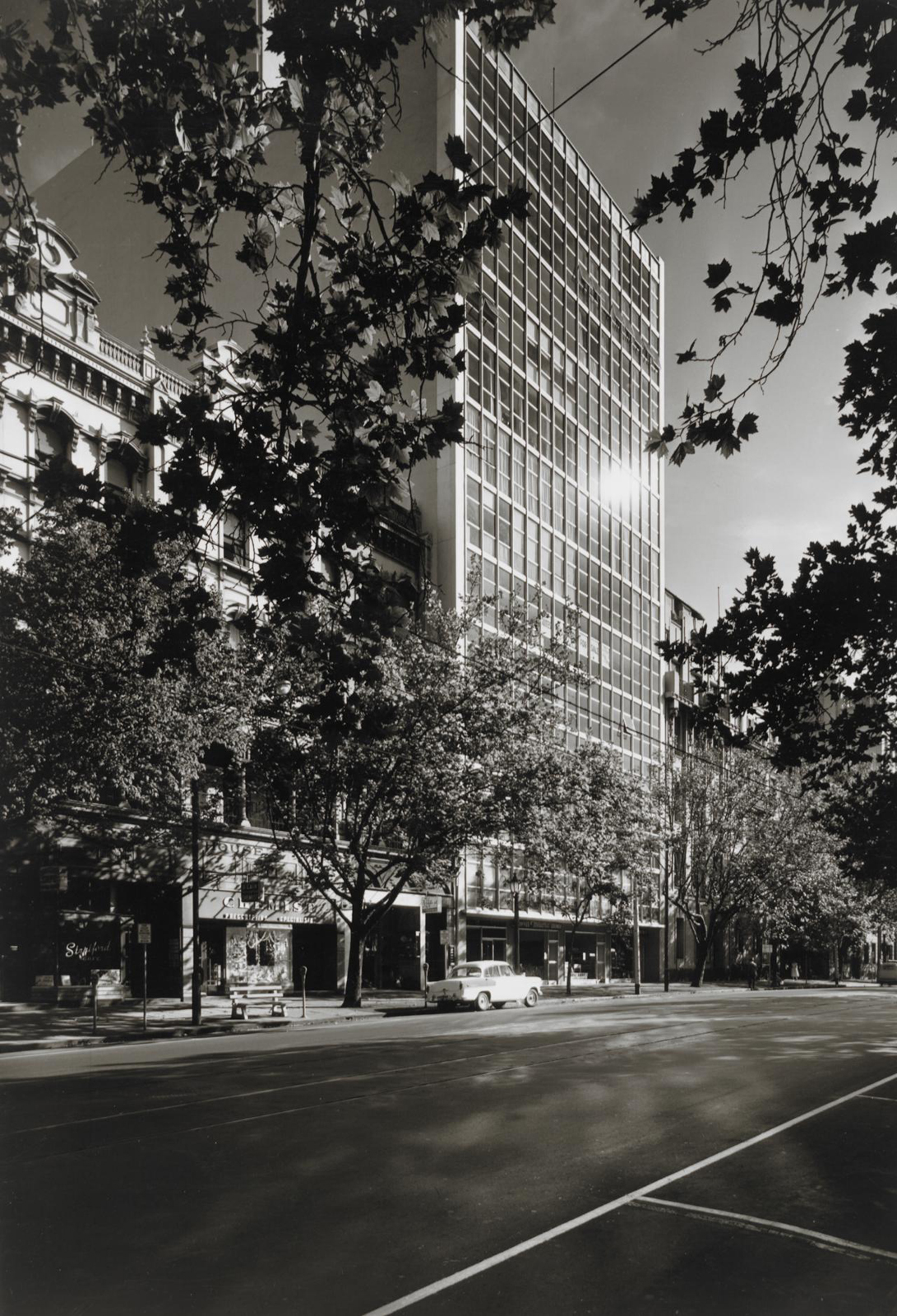
When Strizic’s photographs are good they are very good. His understanding of light is magnificent: light reflects off water, hazes and shimmers off city buildings. The mixing of shadows and sun and his use of the technique of ‘contre jour’ (shooting into the sun) the one thing Strizic does against traditional conventions works to good effect in some of the best photographs. His 1968 night time long exposure photograph of the old Gas and Fuel Building is rewarding for the black bulk of the end of the building looming over Flinders Street and the striations of car headlamps. The photograph Flinders Lane (1967, below) shows a delicate use of depth of field where the foreground of cars and person are out of focus, the light bouncing off the edges of the woman, the focus of the image in the far distance. The photograph McPhersons Building (1958, below) is one of my personal favourites in the exhibition and is a stunning photograph for the atmosphere the photographer has captured.

After a while the use of the ‘contre jour’ technique becomes tiresome. Other photographs simply document a city in transition. These photographs appeal both to an individual nostalgia (‘I used to work in that building’; ‘My grandmother used to live in that street’) and a collective nostalgia where people experience things collectively, “in the sense that [collective] nostalgia occurs when we are with others who shared the event(s) being recalled, and also in the sense that one’s nostalgia is often for the collective – the characteristics and activities of a group or institution in which the individual was a participant.”2

Collective nostalgia refers to that condition in which the symbolic objects are of a highly public, widely shared and familiar character, i.e. those symbolic resources from the past which can under proper conditions trigger off wave upon wave of nostalgic feeling in millions of persons at the same time3 and in this exhibition it is the photographs of a city in transition that trigger this nostalgia, a city now lost to the mists of time. Through these photographs we remember what Melbourne was like at this time collectively.

As Harper has observed

“Nostalgia combines bitterness and sweetness, the lost and the found, the far and near, the new and the familiar, absence and presence. The past which is over and gone, from which we have been or are being removed, by some magic becomes present again for a short while. But its realness seems even more familiar, because renewed, than it ever was, more enchanting and more lovely …”4

Does this collective nostalgia make the photographs good? This is a pertinent question.

Today, nostalgia has become a cultural phenomenon one centred on a longing for home (home is where you are happy to be!) in a collective sense and promoted through commercialisation and the realisation that nostalgia sells. The use of the value seeking word ‘rare’ in the exhibition title is instructive in this regard. Only about 25% of the photographs in this exhibition are “vintage” prints, in other words photographs printed within 3 years of the negative being taken. All other photographs have been printed within the last 15 years. Some are ‘Unique state’ gelatin photographs while others are not. What does this mean. Are they are unique state only in this size? What about the common or garden silver gelatin prints in the show? What does the status word “rare” imply for them?

I remember seeing an exhibition of the photographs of Henri Cartier-Bresson in Scotland about ten years ago. Three rooms had large prints of his work. One room just had vintage prints. The contrast was astounding. The room full of vintage prints had an intensity of vision, of his vision at the time he took the photographs evidenced in small jewel like photographs that the three other rooms photographs simply did not possess – through scale, printing and aesthetics. The same question, without any need for an answer, can be posed here. Only the word ‘rare’ demands that answer for the modern prints are just what they are and nothing more.

In conclusion this is a strong show by Strizic that could have been edited and focused in a more rewarding way. Strizic is one of Australia’s best photographers for understanding the significance of place. His use of light is superb but there always seems to be an emotional distance to his photographs. An element of collective nostalgia adds to their documentary appeal but the best photographs do not just record, they challenge and transcend the subject matter taking the work to an altogether different plane of existence.

Dr Marcus Bunyan


1/ Stewart, Susan. On Longing: Narratives of the Miniature, the Gigantic, the Souvenir, the Collection. Durham: Duke University Press, 1993, p. 2. Prologue

2/ Wilson, Janelle. “”Remember when …” a consideration of the concept of nostalgia,” in et Cetera. Concord: Fall 1999. Vol. 56, Iss. 3;  pg. 296, 9 pgs

3/ Davis, F. Yearning For Yesterday: A Sociology of Nostalgia. New York: The Free Press, 1979, p. 222

4/ Harper, R. Nostalgia: An Existential Exploration of Longing and Fulfilment in the Modern Age. The Press of Western Reserve University, 1966, p. 120 quoted in Wilson, Janelle. “”Remember when …” a consideration of the concept of nostalgia,” in et Cetera. Concord: Fall 1999. Vol. 56, Iss. 3;  pg. 296, 9 pgs


Many thankx to Gallery 101 for allowing me to publish the photographs in the posting. Please click on some of the photographs for a larger version of the image.


Installation view of the exhibition 'Mark Strizic: Melbourne - A City in Transition' exhibition at Gallery 101, Melbourne

Installation view of the exhibition 'Mark Strizic: Melbourne - A City in Transition' exhibition at Gallery 101, Melbourne

Installation view of the exhibition 'Mark Strizic: Melbourne - A City in Transition' exhibition at Gallery 101, Melbourne


Installation views of the exhibition Mark Strizic: Melbourne – A City in Transition exhibition at Gallery 101, Melbourne
Photos: Marcus Bunyan


Mark Strizic, one of Australia’s eminent photographic artists presents us with nostalgic views of Melbourne and the changing face of the city in rare silver gelatin photographs. The exhibition, Melbourne – A City in Transition will be held at Gallery 101 from 8th April – 2nd May. There will be an evening artist reception on Thursday 9th April to celebrate the opening of the exhibition. Strizic’s oeuvre represents a collection of iconic images of architecture and of life – a record of the changing face of a migrating society of new prosperity, youth and popular culture – taken with a sympathetic eye for humanistic detail.

The exhibition will coincide with the announcement of the forthcoming publication, Mark Strizic, Melbourne: Marvellous to Modern, published by Thames & Hudson in association with the State Library of Victoria. In 2007, the State Library of Victoria acquired Mark Strizic’s entire archive of approximately 5000 negatives, colour transparencies and slides. In addition, the Library holds a fine collection of Strizic photographs, including examples of all types of photographic print, from gelatin silver to digital, produced by the photographer during his long career.

Press release from Gallery 101


Mark Strizic photographs

Mark Strizic photographs

Mark Strizic photographs

Mark Strizic photographs

Mark Strizic photographs


“‘Melbourne – A City in Transition’ is a collection of iconic images of Melbourne city life taken with a sympathetic eye for humanist detail. Strizic accurately depicts the joys and hardships experienced in everyday life with a fresh and living memory. He successfully captures the vicarious essence of suburban life. His portrait of Melbourne includes the city, harbour and river banks – streets and trams, pavements, arcades and lanes, stations and bridges, billboards and facades and public sculpture. We see people going about their daily activities – commuting, shopping at leisure, trading, embracing, conversing, reading the newspaper and visiting the beach. Other works record the demolition and construction of building sites and the changing face of Melbourne, both in society and the urban landscape.”


Text from the exhibition flyer


“In these eloquent studies of light and shadow, Strizic finds beauty in the commonplace – Melbourne’s desolate lanes, street paving, derelict ferries – adopting interesting camera angles, viewpoints and cropping. Through his images, this visual humanist teaches us to observe, to see our surroundings, perhaps with the intention of stimulating us to a higher level of civilisation.”


Emma Matthews. Mark Strizic, Melbourne: Marvellous to Modern. Thames & Hudson in association with the State Library of Victoria, September, 2009.


“This magnificent collection of photographs arose from the creativity of a young photographer and his adoption of his new home town, Melbourne. His pictures were taken at a time when the Victorian elegance of the city once known as ‘Marvellous Melbourne’ was being punctuated by a wave of development and the modern architectural movement. Today Mark Strizic is renowned as a photographer. In the 1950s he was a young science student from Europe playing with the possibilities of the camera. As he gained work as a professional his commercial success was accompanied by the instincts and eye of an artist. His solid technicality was accompanied by the whimsy and wit that made him the ‘poet of the fleeting movement’. The versatility of his work shows us many aspects of Melbourne – its magnificent architectural heritage, its intimate and vibrant laneways, its grand arcades counter-posed against the sudden spaces of the wrecker, the brash intrusion of the glass and concrete skyscrapers, the poignancy of poverty in the rundown inner suburbs. We see the people, on grand occasions such as the 1954 Royal Visit, or just caught in their own world of travelling, shopping, resting, walking, working.”


Mark Strizic, Melbourne: Marvellous to Modern 
book cover


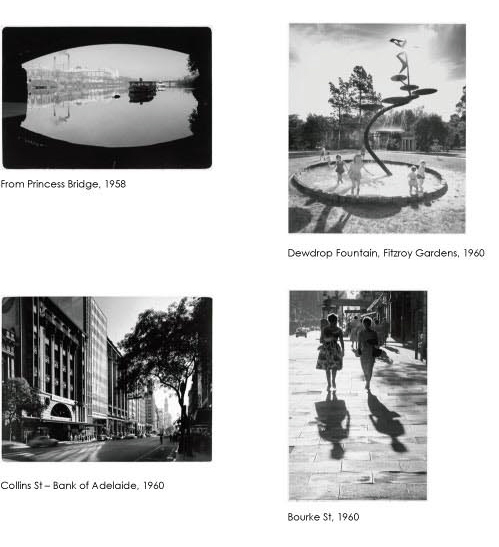
Mark Strizic (Australian, 1908-2012) 'From Princes Bridge' 1958


Mark Strizic (Australian, 1908-2012)
From Princes Bridge
1958, printed 2006
Silver gelatin photograph
58 x 39cm


Mark Strizic. 'Near Spencer Street - 1' 1950


Mark Strizic (Australian, 1908-2012)
Near Spencer Street – 1
1950
Silver gelatin photograph
27.5 x 38.5cm


Mark Strizic. 'At St. Pauls' 1954


Mark Strizic (Australian, 1908-2012)
At St. Pauls (St Paul’s Cathedral steps)
1954, printed 1999
Silver gelatin photograph
17.8 × 24.5cm


Mark Strizic (Australian, 1908-2012) 'St Paul's Cathedral steps' 1954


Mark Strizic (Australian, 1908-2012)
St Paul’s Cathedral steps
1954, printed 1999
Silver gelatin photograph
17.8 × 24.5cm


Mark Strizic (Australian, 1908-2012) 'Collins Street at Russell Street' 1957, printed 1997


Mark Strizic (Australian, 1908-2012)
Collins Street at Russell Street
1957, printed 1997
Unique silver gelatin photograph
39 x 56cm


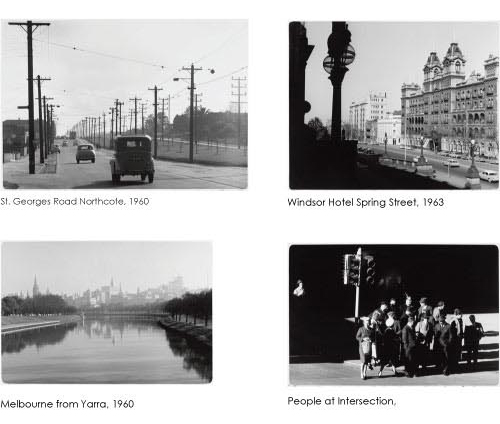
Mark Strizic (Australian, 1908-2012) 'St Georges Road, Northcote at Summer Av.' 1958


Mark Strizic (Australian, 1908-2012)
St Georges Road, Northcote at Summer Av.
1958, printed 1998
Silver gelatin photograph


Mark Strizic (Australian, 1908-2012) 'St. Patrick's Cathedral' January 1967


Mark Strizic (Australian, 1908-2012)
St. Patrick’s Cathedral
January 1967, printed 1998
Unique silver gelatin photograph
27 x 41cm


Mark Strizic (Australian, 1908-2012) 'Bourke Street from the Parliament' 1967


Mark Strizic (Australian, 1908-2012)
Bourke Street from the Parliament – 2
1967, printed 1998
Silver gelatin photograph
38 x 27cm


Mark Strizic (Australian, 1908-2012) 'Russell Street Pawn Shop' 1958


Mark Strizic (Australian, 1908-2012)
Russell Street Pawn Shop
1958
Silver gelatin photograph


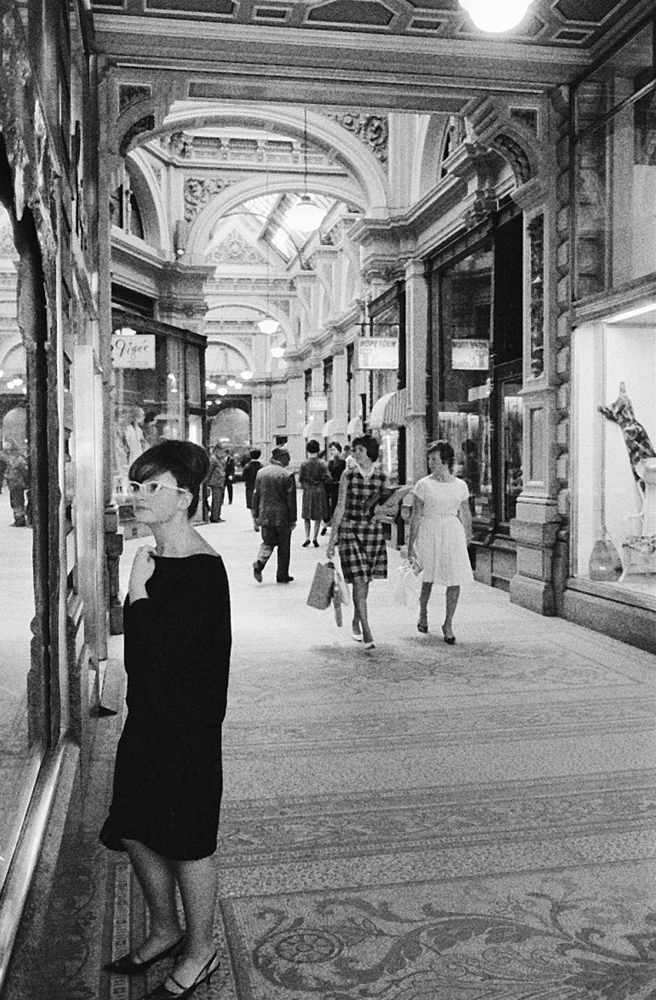
Mark Strizic (Australian, 1908-2012) 'Block Arcade' 1967


Mark Strizic (Australian, 1908-2012)
Block Arcade
1967, printed February 2008
Unique silver gelatin photograph
53.5 x 37cm


Mark Strizic (Australian, 1908-2012) 'From Princes Bridge' (Winter moorings from Princes Bridge) 1955


Mark Strizic (Australian, 1908-2012)
From Princes Bridge (Winter moorings from Princes Bridge)
1955, printed 2006
Silver gelatin photograph
58 x 39cm


Mark Strizic (Australian, 1908-2012) 'Flinders Lane' 1967


Mark Strizic (Australian, 1908-2012)
Flinders Lane
1967, printed 1998
Unique silver gelatin photograph
41 x 41cm


Mark Strizic (Australian, 1908-2012) 'Swan Street, Richmond, at Church Street' 1963


Mark Strizic (Australian, 1908-2012)
Swan Street, Richmond, at Church Street
1963
Silver gelatin photograph


Mark Strizic (Australian, 1908-2012) 'Queensberry Street at Errol Street, North Melbourne' 1963


Mark Strizic (Australian, 1908-2012)
Queensberry Street at Errol Street, North Melbourne
1963
Silver gelatin photograph


Mark Strizic (Australian, 1908-2012) 'Swan Street at Church Street' 1963


Mark Strizic (Australian, 1908-2012)
Swan Street at Church Street
1963, printed 1998
Silver gelatin photograph


Mark Strizic (Australian, 1908-2012) 'Coates Building' 1960


Mark Strizic (Australian, 1908-2012)
Coates Building
1960, printed 1961
Vintage silver gelatin photograph
23.5 x 15cm


Mark Strizic. 'Macphersons Building -1' 1958


Mark Strizic (Australian, 1908-2012)
Macphersons Building – 1
1958
Silver gelatin photograph


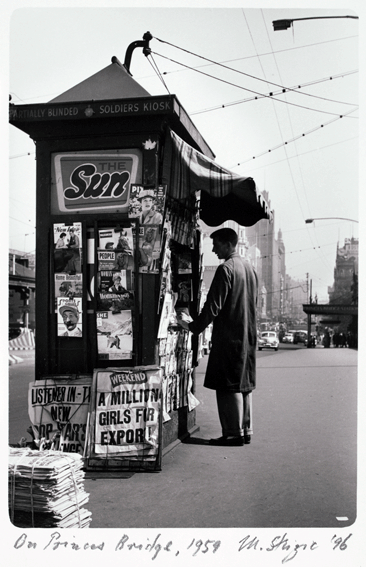
Mark Strizic. 'On Princes Bridge' 1959


Mark Strizic (Australian, 1908-2012)
On Princes Bridge
1959, printed 1996
Silver gelatin photograph
17 x 24cm


Gallery 101

This gallery is now closed.

LIKE ART BLART ON FACEBOOK

Back to top

Opening: ‘Nicola Loder: Tourist #3 sighted child 1-11’ at Helen Gory Gallery, Melbourne

Exhibition dates: 15th April – 2nd May, 2009


Installation photograph of the opening of Nicola Loder's exhibition 'Tourist #3 sighted child 1-11' at Helen Gory Gallery, Melbourne


Installation photograph of the opening of Nicola Loder’s exhibition Tourist #3 sighted child 1-11 at Helen Gory Gallery, Melbourne


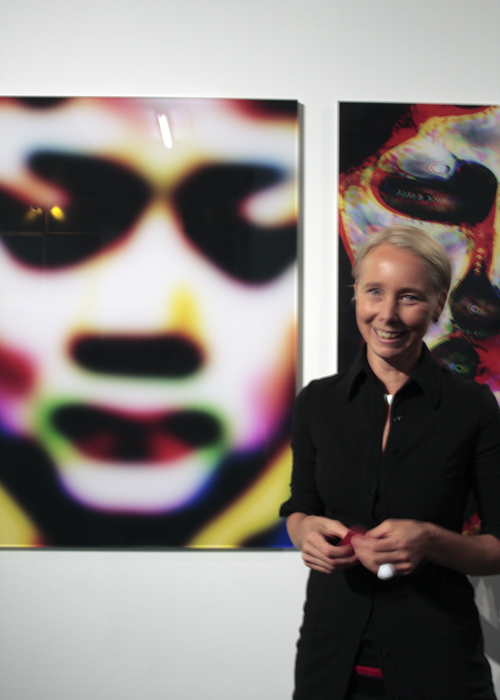
A wonderful, social opening at Helen Gory Gallery of Nicola Loder’s latest work in her ongoing Tourist photographic series. As always Loder’s work looks superb, the mounting of the images at the back of thick perspex giving the images an almost holographic 3D effect. I still remember her exhibition of black and white children’s faces at the sadly closed Stop 22 Gallery in St Kilda many years ago: those images still impinge on the subconscious. This work continues those themes of instability in the mapping of identity, how we begin to see, to represent ourselves as an individual entity. Speaking of Stop 22 it was great to see Marianne, ex curator of that gallery at the opening with new bub in tow! There is an excellent catalogue essay by Stuart Koop (below).

Dr Marcus Bunyan


Many thankx to Nicola Loder and Helen Gory Gallery for allowing me to publish the photographs in the posting. Please click on the photographs for a larger version of the image.


Installation photograph of the opening of Nicola Loder's exhibition 'Tourist #3 sighted child 1-11' at Helen Gory Gallery, Melbourne


Installation photograph of the opening of Nicola Loder’s exhibition Tourist #3 sighted child 1-11 at Helen Gory Gallery, Melbourne


“We might think of Loder’s work as ‘undoing’ visuality. She sets technology in reverse, working against the imperatives of photography to clarify, focus, refine and sharpen images, as if our eyes worked backwards, as if acuity worsened. The face is an obvious (originary) limit beyond which chaos prevails and other senses are engaged to interpret what looks like abstract static but which many now believe is an unstriated sensory realm, a liberated space of interrelated, undifferentiated holistic sensory experiences; the original synaesthesia from which perception emerges as a travesty according to 5 distinct categories.

So it’s not blindness after all that the work references, not the failing of vision, but the first moments of looking, when ‘seeing’ begins to separate from the other senses and consolidates into a face, a percept, then into a code, a genre, a representation.”

Stuart Koop


Installation photograph of the opening of Nicola Loder's exhibition 'Tourist #3 sighted child 1-11' at Helen Gory Gallery, Melbourne


I don’t know who the lady and the bub are but thank you for the wonderful photograph – children upon children!


Nicola Loder (Australian, b. 1964) 'Tourist #3 sighted children 1-11' 2009


Nicola Loder (Australian, b. 1964)
Tourist #3 sighted child 1-11
2009
1200mm x 900mm,
lambda digital prints,10mm acrylic


The radiant Nicola Loder in front of one of her works


The radiant Nicola Loder in front of one of her works


Helen Gory Gallery

This gallery has now closed.

Nicola Loder website

LIKE ART BLART ON FACEBOOK

Back to top

Review: ‘En Plein Air’ photographs by Siri Hayes at Gallerysmith, Melbourne

Exhibition dates: 12th March – 18th April, 2009


Siri Hayes (Australian, b. 1977) 'Gunnai man land' 2008 from the exhibition 'En Plein Air' photographs by Siri Hayes at Gallerysmith, Melbourne, March - April, 2009


Siri Hayes (Australian, b. 1977)
Gunnai man land
2008


A handsome group of large photographs in crisp white frames is displayed in the large space of Gallerysmith, Melbourne. Undoubtably they are well taken and printed photographs but conceptually their thematic development is confused. The photographs purport to investigate how industrialisation has changed the Gippsland landscape since colonisation whilst referencing human interactions that ‘are sometimes’ associated with Western art.

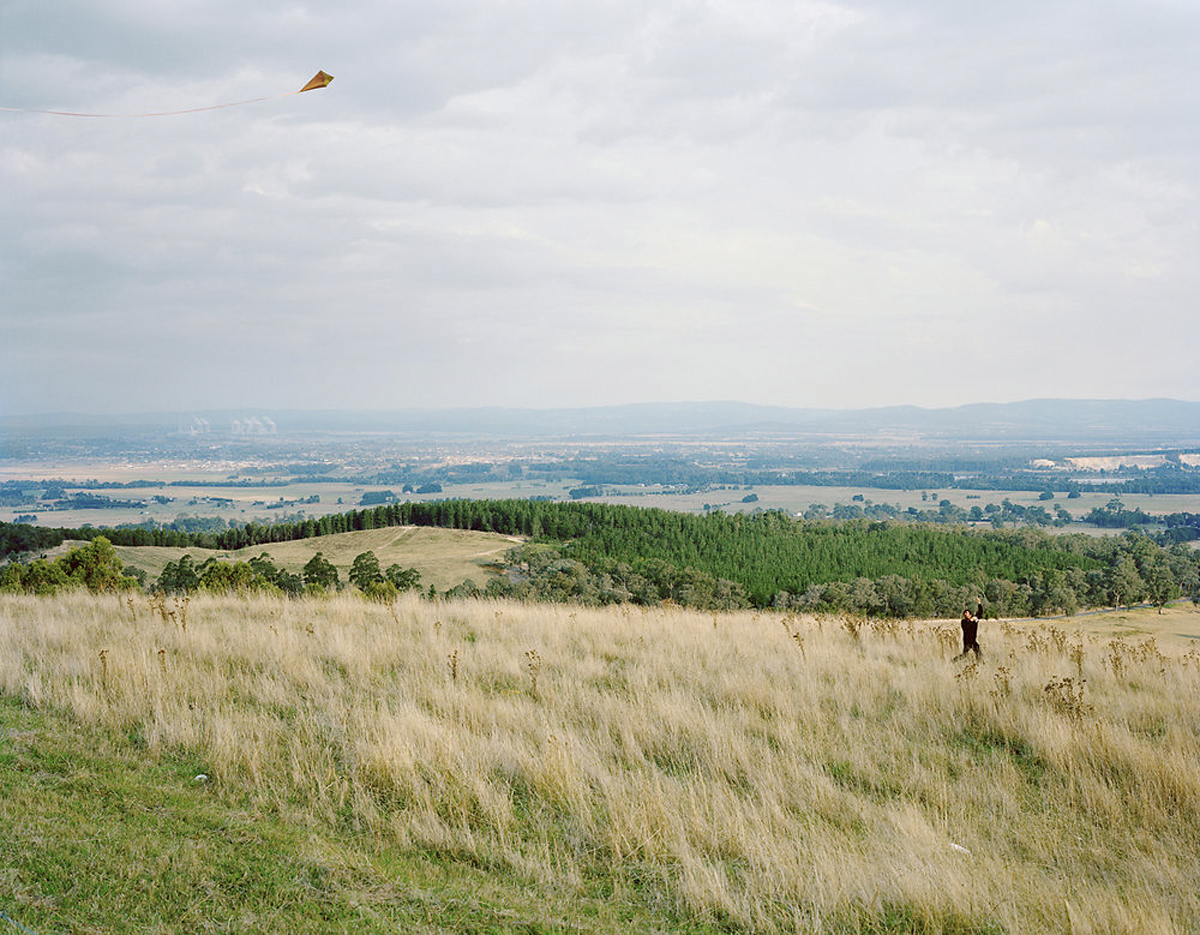
Gunnai land man (above) is very effective in this quest juxtaposing as it does an Indigenous Australian and fallen tree on a bare track with a smoke billowing power station (symbolic of the industrialisation of the area) looming in the background. Other photographs are less successful. What a man flying a kite has to do with the pre-colonial Gippsland landscape is beyond me and the juxtapositional incongruity sought by the artist simply does not work, despite the presence of the power station on the plains in the distance. The symbology has more to do with Japanese art than it has to do with Western art.

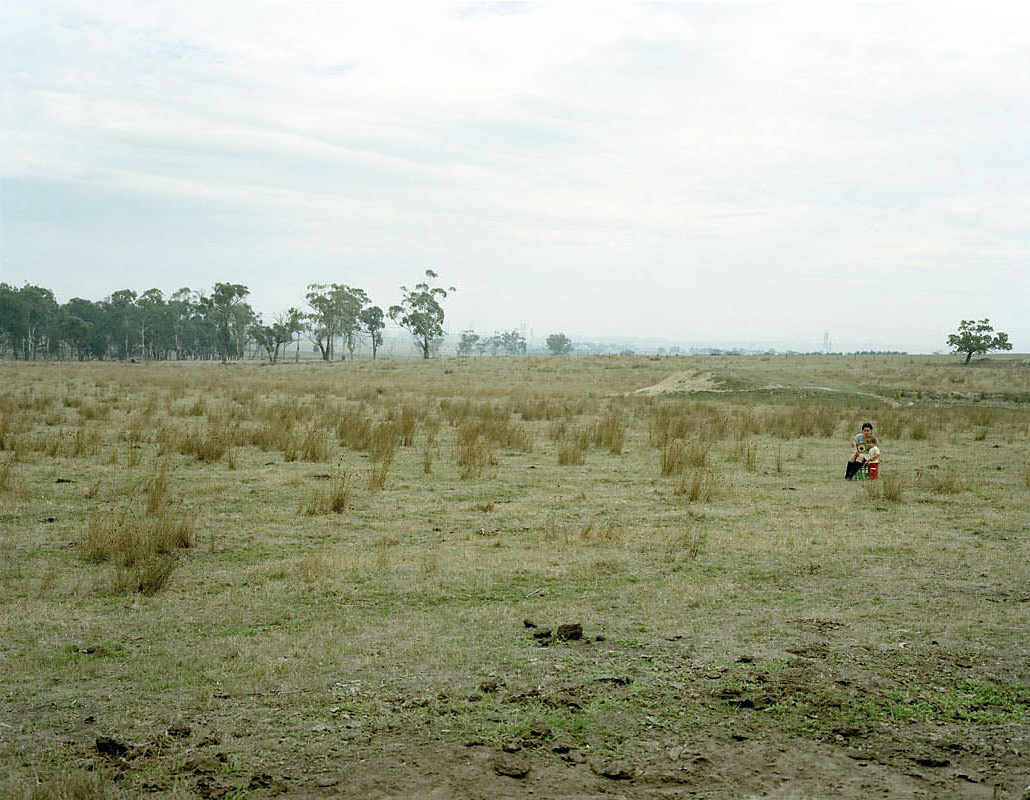
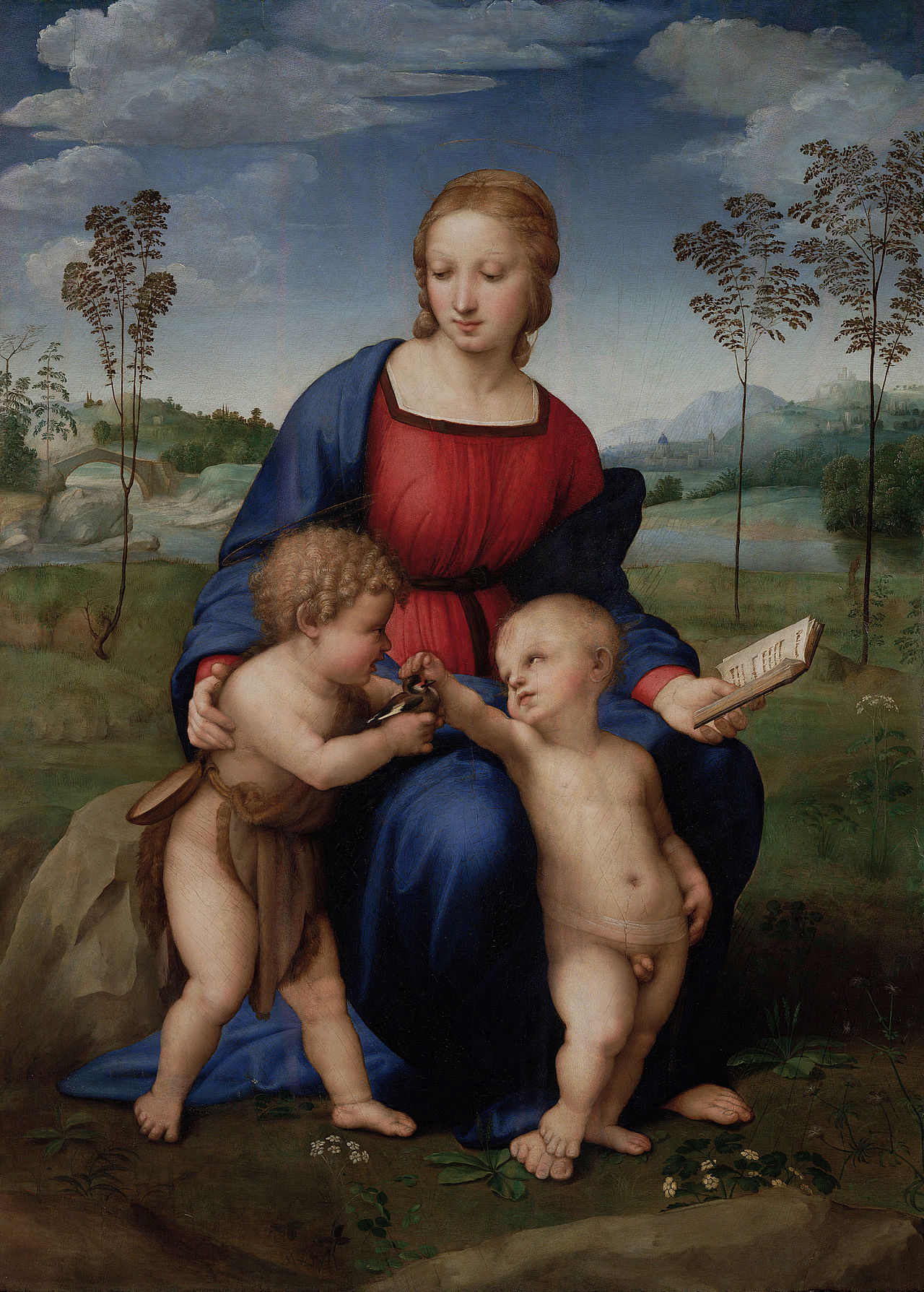
The conceptual narrative of the photograph Moe Madonna (below) works only partially as well. The destruction of the landscape has been caused by pastoralisation not industrialisation. In the image that Hayes is referencing the Madonna is front and centre set in an idyllic landscape. In the work by Hayes the incongruity has to be explained, has to be verbalised in text for the association to be didactically made. The interpretation leaves no room for personal reflection and when I looked at this image, the mother and child were so small in the landscape, the placement so obviously constructed that there incongruity turned to disbelief: namely that I simply did not believe the mise en scène being created.

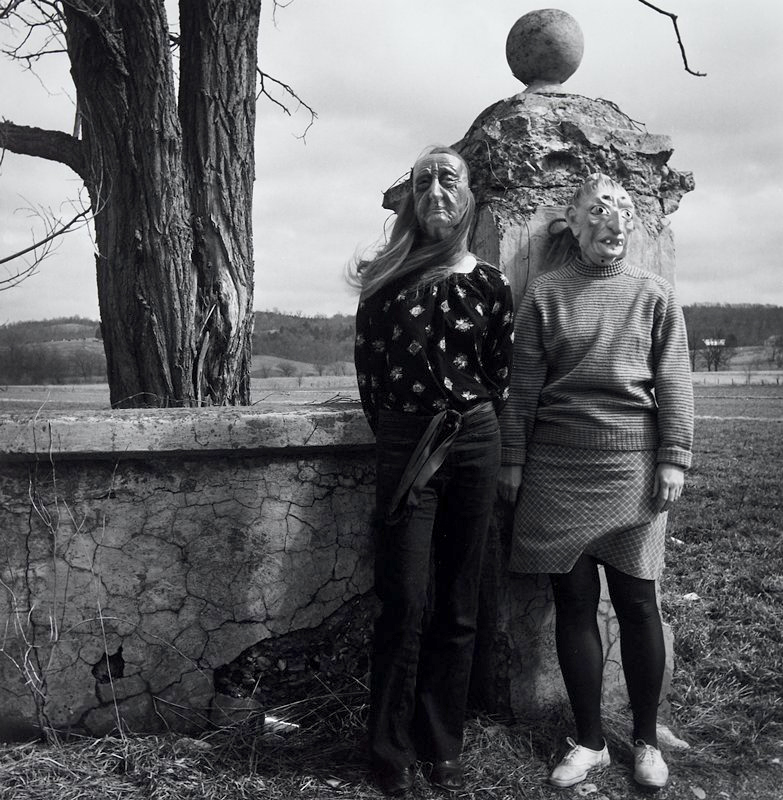
Other narratives are equally confusing. In Paper bag lovers (below) I had to ask the gallery director what was going on in the photograph because the bodies where so small in the landscape (in fact it looks like one body) and you can’t really see the paper bags on their heads because the bodies are just an amorphous mass containing no detail at all (you can just see the body in the photograph below in the mid distance just below the large central tree). Why paper bags anyway? If something intentionally odd and incongruous is sought to be portrayed in the landscape perhaps Hayes should look at the work of Eugene Meatyard (see below) to see a real subversion of the body/landscape dichotomy.

The one standout photograph of the exhibition is Plein air explorers (below). This is confirmed in the sales of the show as all six prints of this photograph have been sold. One can see why!

The title is perfect, the construction of the image faultless. The naked white man stands proudly surveying his conquered domain, the land, whilst around him artists (reminding me of the dilettantes of the Victorian age going on day trips), hunker down into the ground with their easels oblivious to the desiccated trees around them. Here the photographer just observes, doesn’t construct, the incongruity of it all. The artists draw the white man based on direct observation of him and not on their conceptions or conventional images or memories of him while ignoring their surroundings. Here is the paradox, the ironic perfect storm that the artist was conceptually seeking: the representation of landscape based upon direct observation “in the open air” ignored for a perfect white arse while on the horizon smoke stacks of a power station stand in silent witness to the present and imminent destruction of the world. What a photograph! Can I have one now please?

Dr Marcus Bunyan


Many thankx to Gallerysmith for allowing me to publish the photographs in the posting. Please click on the photographs for a larger version of the image.


Siri Hayes (Australian, b. 1977) 'Moe Madonna' 2008 from the exhibition 'En Plein Air' photographs by Siri Hayes at Gallerysmith, Melbourne, March - April, 2009


Siri Hayes (Australian, b. 1977)
Moe Madonna
2008


Siri Hayes (Australian, b. 1977) 'Kite' 2008


Siri Hayes (Australian, b. 1977)
Kite
2008


Raphael (Italian, 1483-1520) 'Madonna of the Goldfinch' 1505-1506


Raphael (Italian, 1483-1520)
Madonna of the Goldfinch
1505-1506
Oil on panel
107 x 77cm
Galleria degli Uffizi


Siri Hayes (Australian, b. 1977) 'Paper Bag Lovers' 2008


Siri Hayes (Australian, b. 1977)
Paper Bag Lovers
2008


Eugene Meatyard (American, 1925-1972) 'Lucybelle Crater & her 15-year-old son's friend, Lucybelle Crater' 1970-1971


Eugene Meatyard (American, 1925-1972)
Lucybelle Crater & her 15-year-old son’s friend, Lucybelle Crater
1970-1971


I have predominantly focused on the parts of the Gippsland landscape that have been impacted by white settlement. I have composed various human interactions that are sometimes associated with Western art and its construction. For example, Moe Madonna references Raphael’s Goldfinch Madonna. The narratives are intentionally odd and incongruous with the surrounding location. My son and I seem out-of-place in a barren paddock while the autumn mist shrouds distant gum trees and electricity pylons. The soil here has been compacted beyond repair by cattle hooves – an inappropriate animal in Australia’s delicate ecosystems. As we sit on this barren plain, I read to Oliver from a European pre-schooler book titled Autumn, creating an interesting juxtaposition with the antipodean equivalent season.

The work in this exhibition considers the pre-colonial Gippsland landscape and how industrial ‘progress’ has altered it. Hopefully it provides pause for thought.

Siri Hayes exhibition notes. March 2009


Siri Hayes (Australian, b. 1977) 'Plein air explorers' 2008


Siri Hayes (Australian, b. 1977)
Plein air explorers
2008


Gallerysmith
170-174 Abbotsford St,
North Melbourne,
Victoria, 3051 Australia

Opening hours:
Tuesday to Saturday, 11am – 5pm

Gallerysmith website

Siri Hayes website

LIKE ART BLART ON FACEBOOK

Back to top

Photograph: The Passing of Memory: resurrecting a photograph for the series ‘The Shape of Dreams’

March 2009


Marcus Bunyan (Australian born England, b. 1958) 'Oakland, 7-'51' from the series 'The Shape of Dreams' 2009


Marcus Bunyan (Australian born England, b. 1958)
Oakland, 7-’51 from the series The Shape of Dreams (restored)
2009


“Fragments of harmonic lines assemble and collapse as the meaning of each interval must be continually revised in light of the unfolding precession of further terms in an ultimately unsustainable syntax. The mind’s ear tries to remember the sum of passing intervals, but without the ability to incorporate them into larger identifiable units each note inevitably lapses back into silence, surrendered to the presence of the currently sounding tone, itself soon to give way to another newly isolated note in its turn.”


Craig Dworkin1


The Passing of Memory

Thinking about this photograph

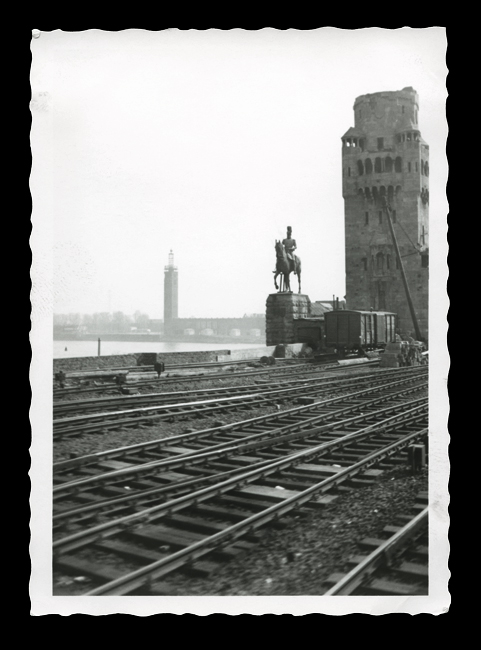
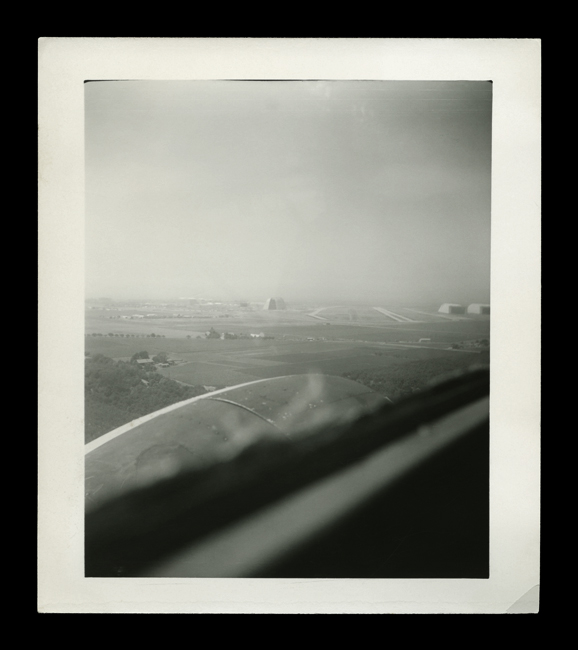
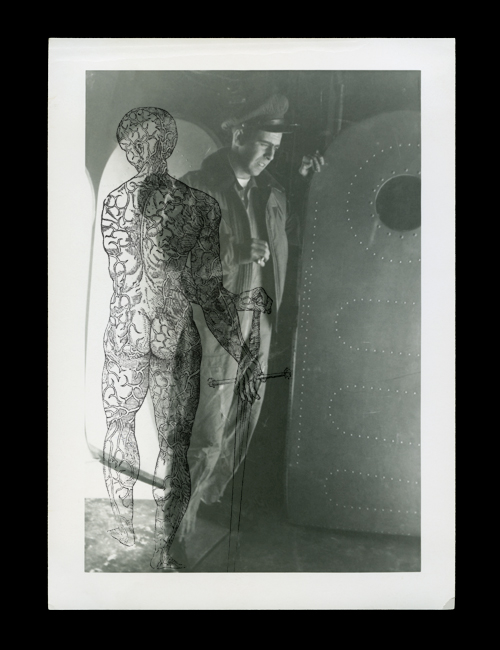
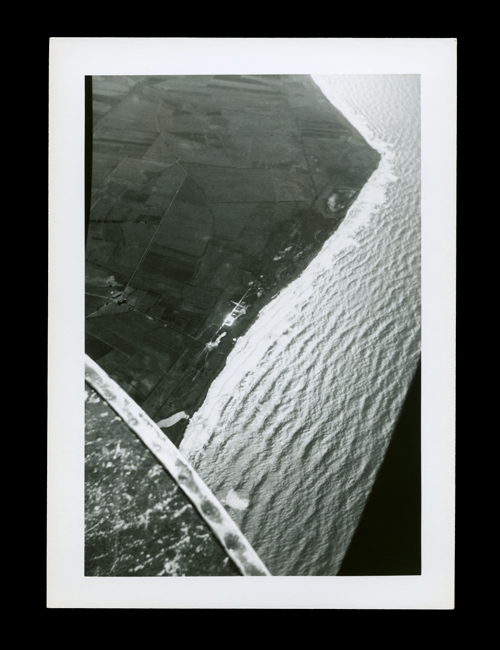
I bought an album on Ebay that contained an anonymous aviator with snapshots of his life: photographs of him in Oakland, California, Cologne in Germany and flying out of Italy – photos of his buddies and the work they did, the places they visited, the fun they had.

This one photograph has haunted me more than the rest.

Who was he? What was his life like? Do he get married and have children? Is he still alive?

When scanned the image was so dirty, so degraded, that I spent 7 weeks of my life cleaning and restoring the photograph working all hours of the day and night. I was obsessive almost to the point of obstinacy. Many times I nearly gave up as I thought the task impossible – thousands of dots and hairs inhabited the surface of the image and, surely, it was just another photograph one of millions that circle the world. Why expend so much energy just to resurrect this one particular image?

Some things that can be said about this photograph

It is small measuring only 9cm high by 7.5 cm wide

It is printed on cheap glossy photographic paper which now has a slight yellow tinge to it.

The image is creased at top left.

The back is annotated ‘Oakland, 7-’51’

The dark roundel with the wing on the side of the aircraft has faint text that spells out the words ‘AERO ACE’.

There is no engine in the aircraft and it looks from the parts lying on the ground that the aircraft is being broken up or used for spares.

The man is wearing work overalls with unidentifiable insignia on them, a worker on the aircraft being dismantled or just a fitter on the base.

Someone standing on the ground has obviously called out the man’s name and he has turned around in response to the call and lent forward and put out his hand in greeting – a beautiful spontaneous response – and the photograph has been taken.

Some other things that can be said about this photograph, in passing

The sun splashes the man’s face. He smiles at the camera.

His arm rests gently on the metal of the aircraft, shielded from the sun.

Perhaps he wears a ring on his fifth finger.

He is blind.

This photograph is an individual, isolated note in the fabric of time. It could easily pass into silence as memory and image fade from view. Memories of the individual form the basis for remembering and photographs act as an aide-memoire both for individual memory and the collective memory that flows from individual memory. Memory is always and only partial and fragmentary – who is remembering, what are they remembering, when do they remember, what prompts them to remember and how these memories are incorporated into the collective memory, an always mediated phenomenon that manifests itself in the actions and statements of individuals, are important questions.
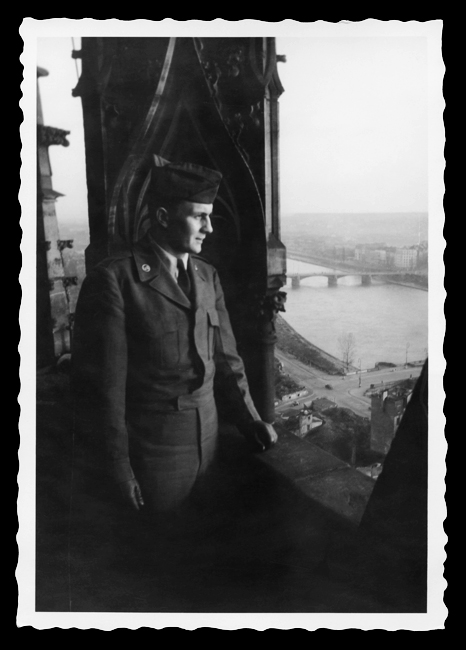
Images are able to trigger memories and emotional responses to a particular time and place, but since this photograph has no personal significance what is going on here? Why did I cry when I was restoring it? What emotional association was happening inside me?

“To remember is always to give a reading of the past, a reading which requires linguistic skills derived from the traditions of explanation and story-telling within a culture and which [presents] issues in a narrative that owes its meaning ultimately to the interpretative practices of a community of speakers. This is true even when what is remembered is one’s own past experience… [The] mental image of the past … becomes a phenomenon of consciousness only when clothed with words, and these owe their meaning to social practices of communication.”2


His blindness stares at us while underneath his body walks away into his passing.

I have become the speaker for this man, for this image.

His brilliant face is our brilliant face.

In this speaking, the phenomenon of making the image conscious, the gap between image and presence, between the photo and its shadow has collapsed. There is no past and present but a collective resonance that has presence in images.

“Such reasoning questions the separation of past and present in a fundamental way. As a consequence it becomes fruitless to discuss whether or not a particular event or process remembered corresponds to the actual past: all that matters are the specific conditions under which such memory is constructed as well as the personal and social implications of memories held.”3

‘The personal and social implications of memories held’. Or not held, if images are lost in passing.

It is such a joyous image, the uplifted hand almost in supplication. I feel strong connection to this man. I bring his presence into consciousness in my life, and by my thinking into the collective memory. Perhaps the emotional response is that as I get older photographs of youth remind me of the passing of time more strongly. Perhaps the image reminds me of the smiling father I never had. These are not projections of my own feelings but resonances held in the collective memory.

As Susan Sontag has observed,

“Remembering is an ethical act, has ethical value in and of itself. Memory is, achingly, the only relation we can have with the dead. So the belief that remembering is an ethical act is deep in our natures as humans, who know we are going to die, and who mourn those who in the normal course of things die before us – grandparents, parents, teachers and older friends.”4


Remembering is an ethical act. It is also a voluntary act. We can choose not to remember. We can choose to forget. In this photograph I choose to remember, to not let pass into the dark night of the soul. My mind, eyes and heart are open.

This is not a simulacra of an original image but an adaptation, an adaptation that tries to find resonances between past and present, between image and shadow. As such this photograph is no longer an isolated tone that inevitably lapses back into silence but part of a bracketing of time that is convulsingly beautiful in it’s illumination, it’s presence. The individual as collective, collected memory present for all to see.

The form of formlessness, the shape of dreams.

Dr Marcus Bunyan


1/ Dworkin, Craig. “Grammar Degree Zero (Introduction to Re-Writing Freud)” (2005) [Online] Cited 23rd March, 2009 (no longer available online)

2/ Holtorf, Cornelius. “Social Memory,” part of a doctoral thesis Monumental Past: The Life-histories of Megalithic Monuments in Mecklenburg-Vorpommern (Germany) submitted 1998 [Online] Cited 23/03/2009

3/ Ibid.,

4/ Sontag, Susan. Regarding the Pain of Others. London: Hamish Hamilton, 2003, p. 103


    Marcus Bunyan (Australian born England, b. 1958) 'Oakland, 7-'51' from the series 'The Shape of Dreams' 2009 (detail before cleaning)

    Before


    Marcus Bunyan (Australian born England, b. 1958) 'Oakland, 7-'51' from the series 'The Shape of Dreams' 2009 (detail after cleaning)

    After


    Marcus Bunyan (Australian born England, b. 1958) 'Oakland, 7-'51' from the series 'The Shape of Dreams' 2009 (detail before cleaning)

    Before


    Marcus Bunyan (Australian born England, b. 1958) 'Oakland, 7-'51' from the series 'The Shape of Dreams' 2009 (detail after cleaning)

    After


    Marcus Bunyan (Australian born England, b. 1958) 'Oakland, 7-'51' from the series 'The Shape of Dreams' 2009 (detail before cleaning)

    Before


    Marcus Bunyan (Australian born England, b. 1958) 'Oakland, 7-'51' from the series 'The Shape of Dreams' 2009 (detail after cleaning)

    After


    Marcus Bunyan (Australian born England, b. 1958) 'Oakland, 7-'51' from the series 'The Shape of Dreams' 2009 (detail before cleaning)

    Before


    Marcus Bunyan (Australian born England, b. 1958) 'Oakland, 7-'51' from the series 'The Shape of Dreams' 2009 (detail after cleaning)

    After


    Marcus Bunyan (Australian born England, b. 1958) 'Oakland, 7-'51' from the series 'The Shape of Dreams' 2009 (detail before cleaning)

    Before


    Marcus Bunyan. 'Oakland, 7-'51' from the series 'The Shape of Dreams' 2009

    After


    LIKE ART BLART ON FACEBOOK

    Back to top