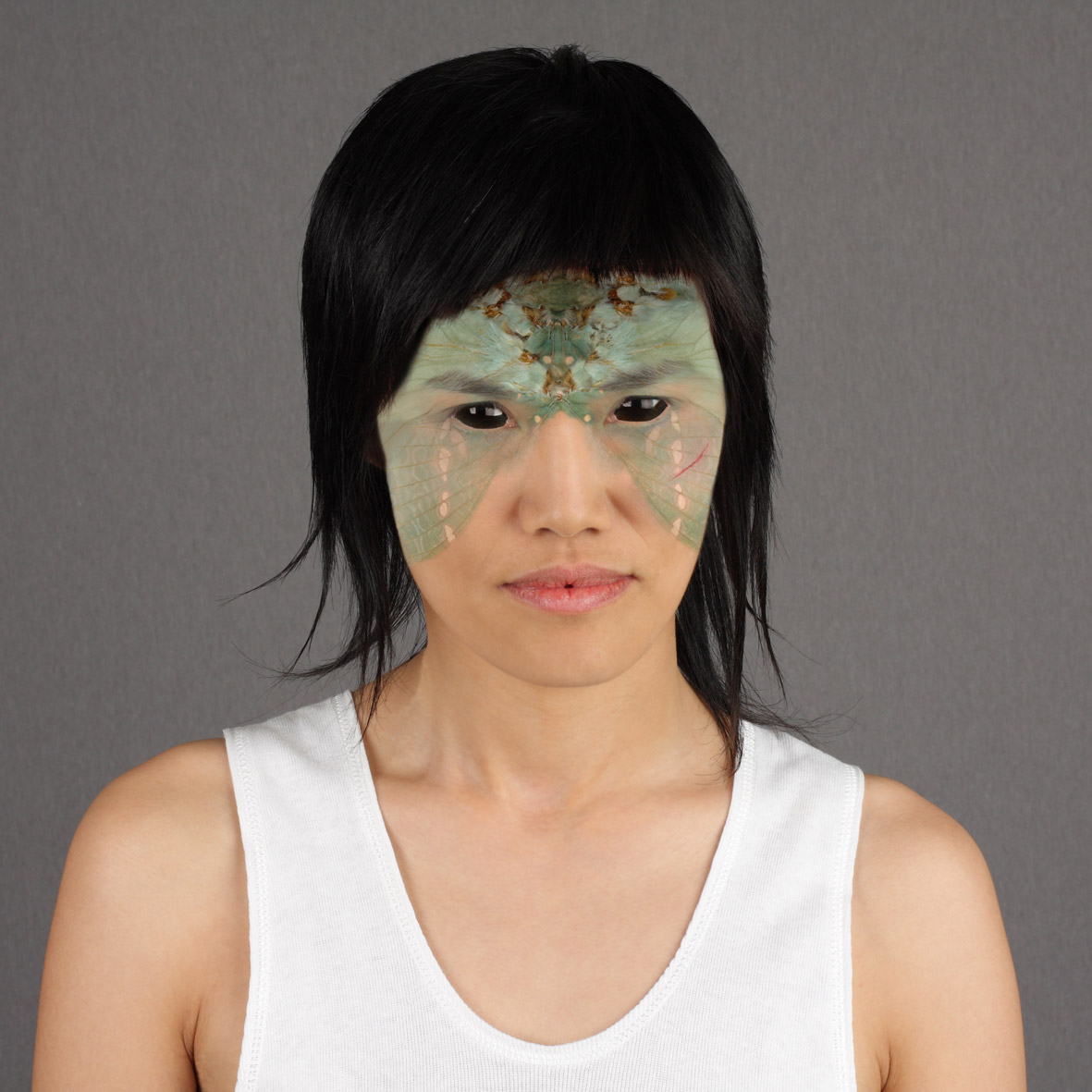
Owen Leong (Australian, b. 1979) Chi 2009-2010 Pigment print on archival paper 73 x 73cm, edition of 5 Courtesy of the artist and Anna Pappas Gallery
Apologies for the late posting on this exhibition but I only received the images for the posting today.
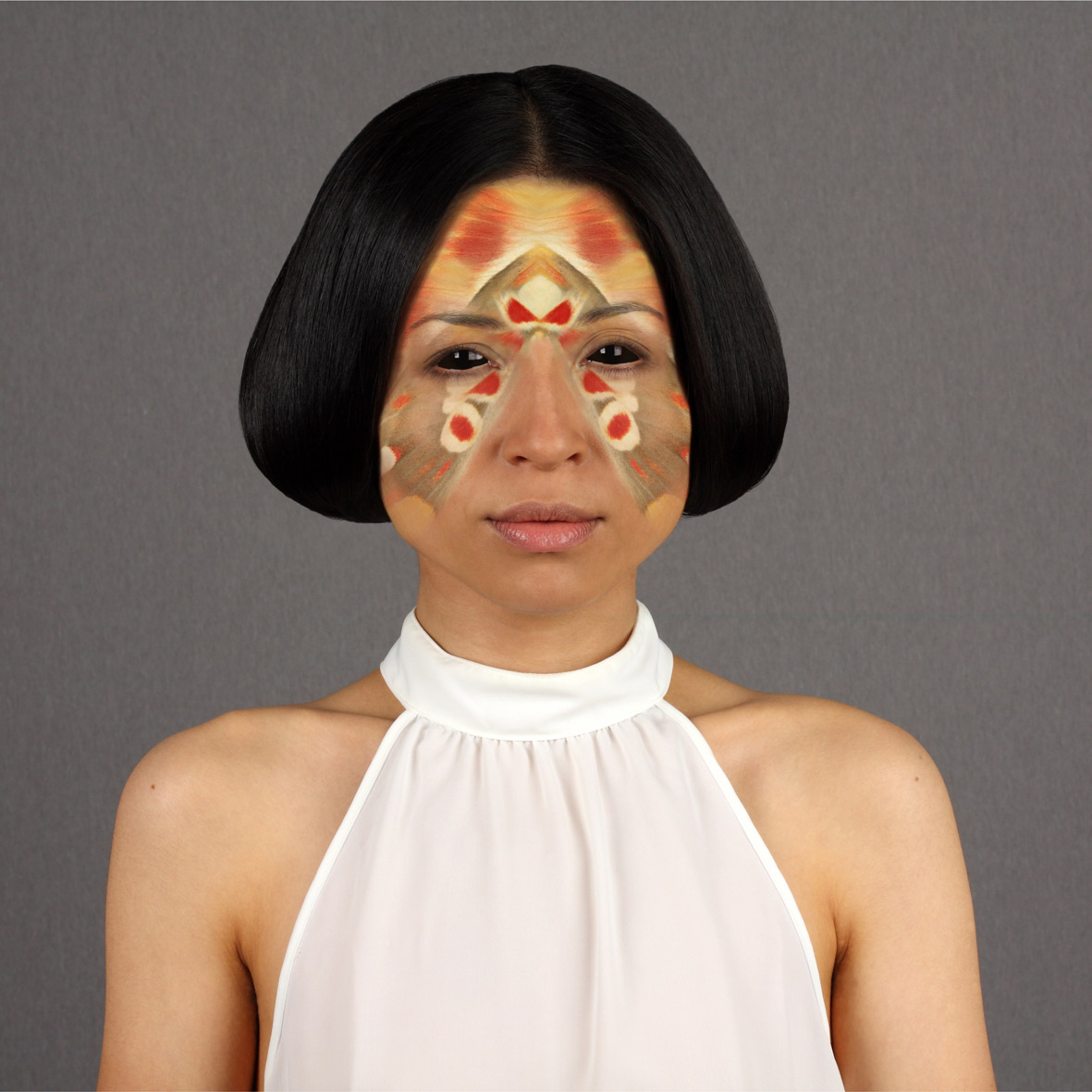
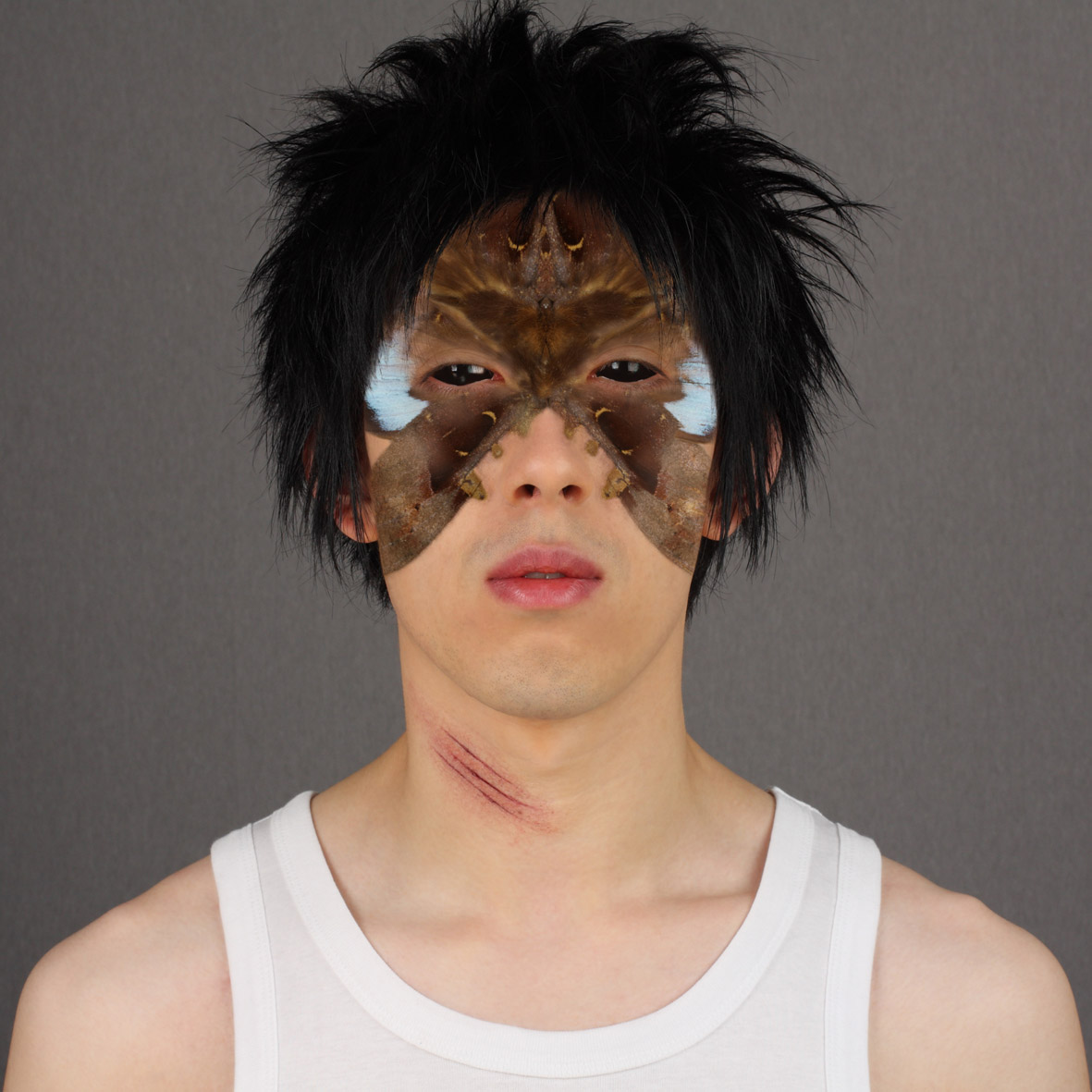
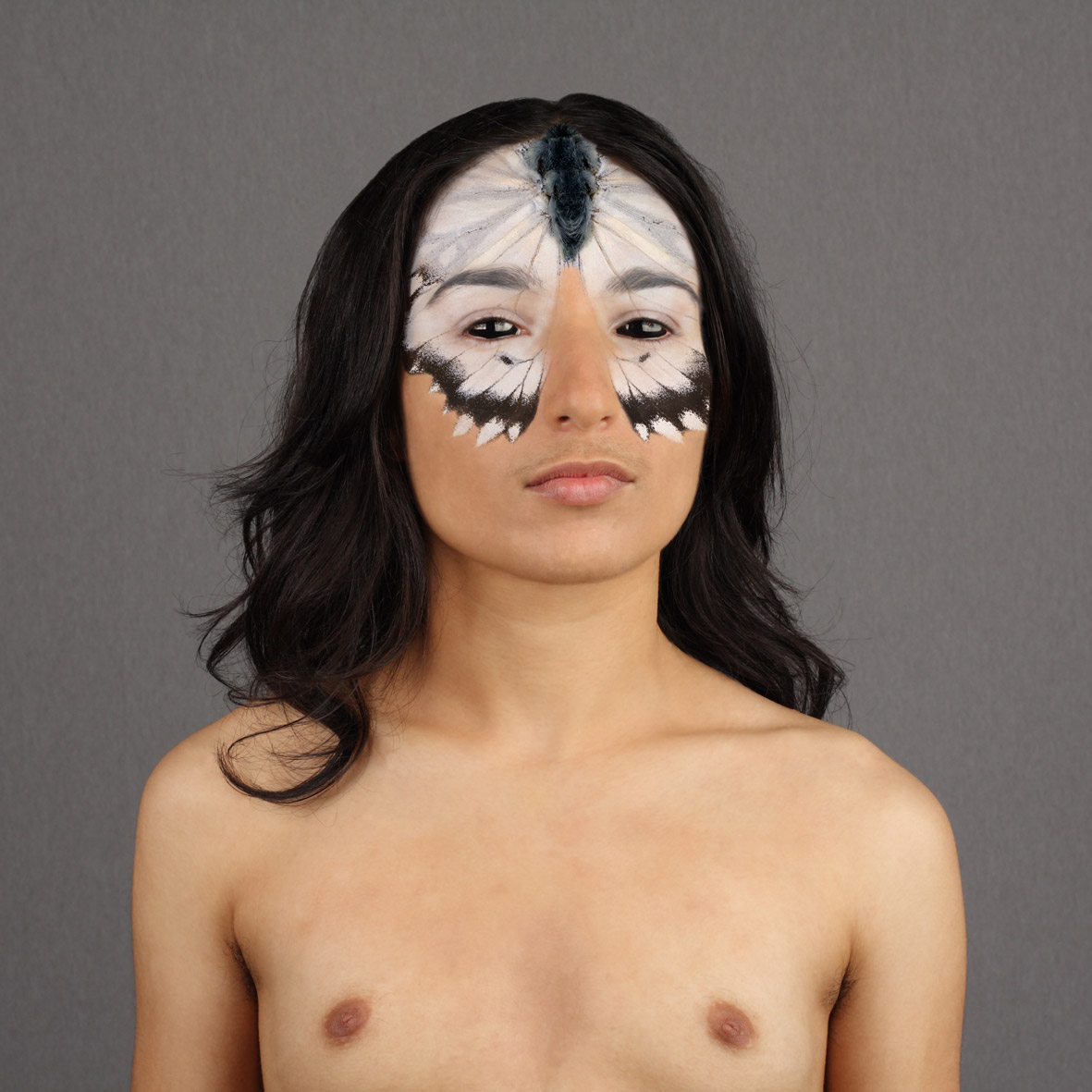
A strong body of work by Owen Leong, twelve portraits of Asian-Australians, their faces digitally overlaid with the unique wing patterns of the Bogong moth, an insect often seen as a pest in Australia. Uniformly lit, of consistent size and presented in modern white frames the series hangs quietly but impressively in the upstairs space of the Anna Pappas Gallery. Here the uniqueness of human physiognomy (and attendant modifications such as scars, piercings and tattoos) is symbiotically paired with that of the moth – it is almost as though one breathes the other – with the eyes of the humans occluded, becoming blackened pits.
The slightly amateurish digital blacking out of some of the eyes is my only point of contention: perhaps this was intentional (?) but sharp shape selections in Photoshop do not make for a good blend between layers of information. Be that as it may, Leong’s practice of selective breeding applied to humans has produced some beautiful, eloquent photographs that promote difference and diversity through a palpable intimacy with the subject matter.
Dr Marcus Bunyan
Many thankx to Anna Pappas, Leah Crossman and the Anna Pappas Gallery for allowing me to use the photographs in the posting. Please click on the photographs for a larger version of the image.
Owen Leong (Australian, b. 1979) Jac 2009-2010 Pigment print on archival paper 73 x 73cm, edition of 5 Courtesy of the artist and Anna Pappas Gallery
Owen Leong (Australian, b. 1979) Justin 2009-2010 Pigment print on archival paper 73 x 73cm, edition of 5 Courtesy of the artist and Anna Pappas Gallery
Owen Leong (Australian, b. 1979) Raina 2009-2010 Pigment print on archival paper 73 x 73cm, edition of 5 Courtesy of the artist and Anna Pappas Gallery
Paul Ogier (Australia born New Zealand, b. 1974) Saint Stephen 2009 Courtesy of the artist
Mark Hislop from the Monash Gallery of Art (MGA) has asked me to post details of the William and Winifred Bowness Photography Prize 2010. More than happy too. To see the standard take a look at the 2009 Finalists online. Details on how to enter are posted below. Have a go, get your entries in, you never know who will win!
Many thankx to the MGA for allowing me to publish the photographs in the posting. Please click on the photographs for a large version of the image.
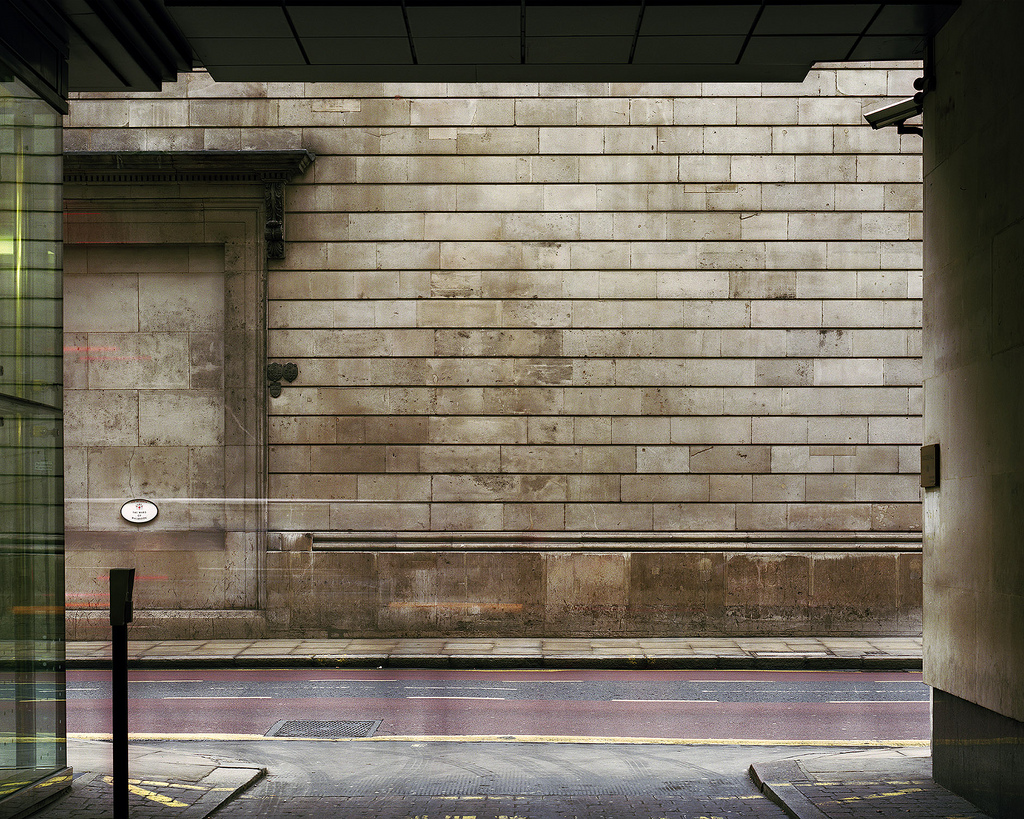
Simon Terrill (Australian, b. 1969) Bank of England 9AM 2009 Courtesy of the artist
The Monash Gallery of Art Foundation is pleased to announce the CALL FOR ENTRIES for the William and Winifred Bowness Photography Prize 2010.
The MGA Foundation will once again showcase the work of Australia’s best photographers in Australia’s most coveted photography award. Photographers from all over Australia are encouraged to submit entries to this year’s Bowness Photography Prize. Each year, finalists are drawn from the breadth of Australian photographic practice: editorial, commercial, street and fine art.
In recognition of the support shown the prize by Australian photographers, prize money for this year’s award has increased substantially. Last year, a record 459 photographers submitted entries in anticipation of the $20,000 non-acquisitive first prize. In 2010, photographers will be competing for $25,000 first prize and $1,000 People’s Choice Award.
The winner of the 2010 Bowness Photography Prize and Honourable Mentions will be announced on Thursday night 23 SEP 2010 during a cocktail party held at MGA. Winners and finalists will enjoy unprecedented visibility for their work. All finalists will be published on MGA’s flickr page and included in a substantial catalogue. The winner will receive the $25,000 first prize. And in recognition of the strength of the prize and MGA’s commitment to promoting the best of contemporary Australian photography, Honourable Mentions will have the opportunity to stage an exhibition at MGA.
This year’s entries will be judged by Gael Newton, Senior Curator of Photographs, National Gallery of Australia, Max Pam, Australian photographer, and Shaune Lakin, Director of MGA.
About the BOWNESS Photography Prize
Established in 2006 to promote excellence in photography, the annual non-acquisitive William and Winifred Bowness Photography Prize is an initiative of the MGA Foundation. The Bowness Photography Prize has quickly become Australia’s most coveted photography prize. It is also one of the country’s most open prizes for photography. In the past, finalists have included established and emerging photographers, art and commercial photographers. All film-based and digital work from amateurs and professionals is accepted. There are no thematic restrictions.
The 2009 Bowness Prize recipient was Paul Knight. Since winning the Prize, Knight has received an Australia Council for the Arts Skills and Development Grant and is currently presenting new work at the prestigious international artfair Art Cologne.
Jane Burton (Australian, b. 1966) Ivy # 3 2009 Courtesy of the artist and Karen Woodbury Gallery, Melbourne
Owen Leong (Australian, b. 1979) Justin 2009 Courtesy of the artist and Anna Pappas Gallery, Melbourne
Paul Knight (Australian, b. 1976) 14 months # 01 2008 Courtesy of the artist and Neon Parc, Melbourne Winner of the William and Winifred Bowness Photography Prize 2009
Monash Gallery of Art 860 Ferntree Gully Road Wheelers Hill Victoria 3150 Phone: +61 3 8544 0503
Marcus Bunyan (Australian born England, b. 1958) Missing in Action (horizontal kenosis) No.4 2010 Digital photograph
Missing in Action (horizontal kenosis)
A body of work, Missing in Action (horizontal kenosis) (2010) is now online on my website.
There are nineteen images in the series which can be viewed as a sequence, rising and falling like a piece of music.
Below are a selection of images from the series.
Marcus
Photographs are available from this series for purchase. As a guide, a digital colour 16″ x 20″ costs $1000 plus tracked and insured shipping. For more information please see my Store web page.
Kenosis
“In Christian theology, Kenosis is the concept of the ‘self-emptying’ of one’s own will and becoming entirely receptive to God and his perfect will.”
Marcus Bunyan (Australian born England, b. 1958) Missing in Action (horizontal kenosis) No.5 2010 Digital photograph
Marcus Bunyan (Australian born England, b. 1958) Missing in Action (horizontal kenosis) No.6 2010 Digital photograph
Marcus Bunyan (Australian born England, b. 1958) Missing in Action (horizontal kenosis) No.8 2010 Digital photograph
Marcus Bunyan (Australian born England, b. 1958) Missing in Action (horizontal kenosis) No.9 2010 Digital photograph
Marcus Bunyan (Australian born England, b. 1958) Missing in Action (horizontal kenosis) No.16 2010 Digital photograph
Marcus Bunyan (Australian born England, b. 1958) Missing in Action (horizontal kenosis) No.17 2010 Digital photograph
This is a strange survey exhibition of photographs by Malaysian-born Australian artist Simryn Gill at the Centre for Contemporary Photography, Melbourne – photographs that form distinctive bodies of work that support the artist’s other conversations in art but do not form the main backbone to her practice. Perhaps this is part of the problem and part of the beauty of the work. While the work investigates the concepts of presence and absence, space, place and identity and the cultural inhabitation of nature there is a feeling that this is the work of an artist not used to putting images together in a sequence or body of work, not connecting the dots between ideas and image. Intrinsically there is nothing wrong with the conceptual ideas behind the photographs or the individual photographs themselves. The photographs don’t strike one as particularly memorable and they fail to mark the mind of the viewer in their multitudinous framings of reality.
In the series Forest (1996-1998, see photograph above and below) a selective vision of nature is invaded by cultural texts, torn pages of books mimicking natural forms such as roots, flowers and variegated leaves. The ‘natural’ context is inhabited by the cultural con-text to form a double inhabitation – “this strange hybrid nature before the paper rots away, suggestive of how nature is culturally inscribed and the futility of this attempt at containment.”1
This is a nice idea but the photographs fail to hold the attention of the viewer mainly because of the inability of the viewer to read the text that has been grafted onto the natural forms. I literally needed more from the work to hang my hat on and this is how I felt about much of this work presented here. This feeling persists with another series Vegetation (1999, see photographs below). Mundane landscapes are inhabited by faceless human beings, their absence/presence marking the landscape while at the same time nature marks them. A good idea that needed to be pushed much further.
The main body of work in the exhibition is the series Dalam (2001, see photographs below), a 258 strong series of colour photographs presented in the gallery space in gridded formation (Dalam, in Malay, can mean ‘inside’, ‘interior’ or ‘deep’). Featuring a photographic record of the interior of numerous Malaysian homes these clinical yet someone hobby-like photographs record the minutiae of domestica – the intimacy of the interior balanced by a sense of isolation and loneliness through the absence of human presence. Here, “the living room may be seen here as a cultural and social mask for its inhabitants. It’s the space into which others are welcomed on our own terms and onto which we project a portrayal of ourselves.”3 Although the work asks us “to rethink our concepts of spaces and domesticity in relation to various aspects such as socio-cultural identities, history and memory,” as presented in the gallery space the viewer is initially overwhelmed by the number, colour and construction of the interiors.
Personally I found that in the mundanity / individuality of the repetition I soon lost interest in looking intimately at the work. The photographs lack a certain spark, a certain clarity of vision in the actual taking of the images. None of the wonderful angles and intelligence of camera positioning of Eugene Atget here and maybe this is the point – the stifling ‘personality’ and banality of human habitation echoed in the photographs – but I would have rather have looked at a single monumentally intimate, magical image by Candida Hofer than all of these photographs put together!
Unfortunately in this survey exhibition there is only one photograph from what I regard as Simryn Gill’s best body of work, A small town at the turn of the century (1999-2000, see photograph below). Perhaps this was an oversight as this series would seem to bind the others more holistically together. Photographs of this excellent series can be viewed on the Roslyn Oxley9 Gallery website and their presence in this exhibition would have certainly raised the bar in terms of the artist’s vision of nature, place and identity. The square colour format, the interior/exterior of the environments and naturalness of the photographs and their the fruitful bodies really have an eloquent power that most of the work at the Centre for Contemporary Photography seems to lack. Other than the last body of work, Inland (2009, see photograph below) that is.
In the smallest most intimate space at the CCP are some of the most intimate images of Australian place that you will ever see. Spread out on a table in small stacks of jewel-like black and white and Cibachrome images the viewer is asked to done white gloves (ah, the delicious irony of white hands on the Australian land!) to view the empty interiors, landscapes and (hands holding) rocks of the interior. These are beautifully seen and resolved images. The rocks are most poignant.
Gill digs beneath the surface of this thing called Australian-ness and exposes not the vast horizons, decorous landscapes or rugged people (as Naomi Cass states below) but small intimacies of space and place, identity and memory. In the ability to shuffle the deck of cards, to reorder the photographs to make their own narrative the viewer becomes as much the author of the story being told as the artist herself – an open-ended intertextual narrative guided by the artist that investigates the very root of what it is to be Australian on a personal level. I enjoyed this reordering, this subjective experience very much.
Dr Marcus Bunyan
Many thankx to the CCP for allowing me to publish the photographs in the posting. Please click on the photographs for a larger version of the image.
2/ Gill, Simryn. “May 2006,” in Off the Edge, Merdeka 50 years issue no. 33, September 2007, p. 83
3/ Day, Kate. “After Image: Photography at the Fruit Market Gallery,” on Culture 24 website. [Online] Cited 6th December 2009 no longer available online
“Both populating and haunting the patches of now feral vegetation evoking a sense of foreign/alien source that has been strained, even lost in the act of transplantation. It also parodies the fear of rampant occupation that historically imbues aspects of Australian to Northern neighbours.”10
In Rampant Gill photographed outbursts of introduced plant species in the Australian landscape such as bamboo and sugar cane, which now grow wild and uncontrolled in subtropical northern New South Wales. Again Gill incorporates performative elements, interacting with nature through ‘dressing’ the plants in garments such as lungis and sarongs which were worn by immigrant workers who harvested these crops. Gill explores of the connections between botany, geography and the idea of plants as ‘humanised’ entities – seen in these strange single or groups of ‘figures’ appearing displaced within the Australian landscape.
Text from the education resource for the exhibition Simryn Gill: Inland at the Centre for Contemporary Photography, Fitzroy [Online] Cited 12/05/2019
Upon close inspection, this series of large scale black and white photographs of lush tropical plants reveal strips of paper and fragments of text which are embedded into tree trunks, covering leaf surfaces, transforming into aerial mangrove roots, weaving their way up walls and mimicking banana flowers.
The artist states: “I decided I needed to echo my situation in my art activities, and started making small interventions in the very rare wild places around where we lived, like gardens of unoccupied houses, roadside growths of tapioca and yam”.7
Returning from Australia to Singapore with her family, Gill went into overgrown gardens and open spaces she was familiar with to construct these site interventions, armed with glue and a range of books – some given to her by friends, others sourced from garage sales – including the colonial texts of Charles Darwin’s The Origin of Species and Daniel Defoe’s Robinson Crusoe, and an Indonesian version of the Hindu tale Ramayana. These works were explorations by Gill into her personal sense of place and history, as an outsider in Singapore. Works in the same series were created in other similar environments in countries such as Malaysia. Although they originate from specific locations, they can be read as anywhere in the tropics.
The process of entering these ‘little bits of jungle’ to construct these works was referred to by Gill as her ‘guerrilla activities’,8 and were temporary site specific interventions which she sought to document.
Her friend and fashion photographer Nicholas Leong, chose the camera and film which required long exposure, suiting Gill’s requirements to create large, dense flat tonal images. Together they documented the works before the paper was to rot away and return nature. This introduced Gill to analogue photography and its slow processing, which she values and continues to use.
Text from the education resource for the exhibition Simryn Gill: Inland at the Centre for Contemporary Photography, Fitzroy [Online] Cited 12/05/2019
… In these works which were begun at a residency at Artpace in Texas, Gill begins the process of masking and disguising, of naturalising human figures into the landscape (in this case herself) through obscuring their heads with fruit and vegetation, that was to be so important in her later bodies of work such as A small town at the turn of the century.
Curator Sharmini Pereira has written: “In this series of photographs, her self-portrait dominates but only as a stream of disguises involving plants in various geographic locations; tumbleweed and aloe in Texas, mangrove and black boy in Australia, and bird’s nest fern in Singapore. The images bear an uncanny resemblance to a sequence of B-movie stills, where vengeful alien-plant-people threaten to over run the planet. Many Hollywood films have of course played out such narratives as a projection of Cold War anxieties fearful about the threat of Communist contamination. But if Vegetation represents the future through some fear located in the past, it does so through a mimetic representation of the present… Vegetation parodies the camera’s framing of today’s culture contact.
Beyond their still pathos, the enchanting appeal of these photographs lies in their somersaulting between the mythical moment of first contact and its reversal, which the mimetic moment of secondary contact ushers forth. The artist, “unrecognisable” in her jeans and desert boots and wearing her new plant hairstyle, lampoons the power of mimicry as a means of being both alien and indigenous at one and the same time. In as much as Vegetation offers us the chance to poke fun at the natives, it is also an image of the new 21st-century native – able to deliver the laughs rather than be controlled by them. It is here that we observe the breadth of relief that resides in the welcome opportunity to view imitation as a way of moving beyond the imitated…”
in “Simryn Gill – Selected Work”, AGNSW, 2002
Text from the Art Gallery of New South Wales website [Online] Cited 12/05/2019
“Nature becomes just another clichéd signifier of place and of localness, which one may adopt while passing through a ‘strange’ place, or migrating to a new place, or indeed as a cover for invasion.”9
In these small framed photographs, Gill is now the subject within the natural environment. The series was started in San Antonia, Texas in 1999 and was part of a two-month residency during which time she produced a new body of work. Gill was wondering if – in this mimicry of nature – she actually could ‘disappear into the landscape’. On field trips she collected a range of desert plant matter, including aloe and tumble weed and took this back to the studio to construct headdresses. Again, using Nicholas Leong as the photographer, Gill then went back to the location to shoot the series. She continued to work on the series in Singapore using the mangrove and in Australia, the grass tree occasionally referred to as a ‘black boy’. The series is closely related to A small town at the turn of the century in its playfulness and parody of ethnographic portraits.
Text from the education resource for the exhibition Simryn Gill: Inland at the Centre for Contemporary Photography, Fitzroy [Online] Cited 12/05/2019
Simryn Gill: Inland is a survey of photography and takes place in a photography gallery. It is important to declare at the outset, that while photography forms a significant and wondrous part of her practice, Simryn Gill does not consider herself a photographer; “For me, the taking of photographs is another tool in my bag of strategies, in that awkward pursuit of coherence we sometimes call art.”2 Simryn Gill: Inland embraces this conundrum as an entry point for considering Gill’s photography, and how photography might function more broadly as a way of engaging with the world.
Seven major series wind almost chronologically through the gallery – in this first survey of Gill’s photography – following a path, quite literally, from outside to inside, from found in nature to found in culture and back. Commencing with three series located outdoors, Forest (1996-1998), Rampant (1999) and Vegetation (1999), the survey moves to Gill’s sweeping interior series Dalam (2001). On the cusp of outside and inside is Power station (2004), which makes a curious and visceral analogy between the interior of her childhood home in Port Dickson, Malaysia and the interior of an adjacent power station. Like a medieval Book of Hours, the hand-sized concertina work Distance (2003-2009) is an attempt by Gill to convey the interior of her home in Marrickville, Sydney to someone residing outside Australia.
Gill’s most recent work Inland (2009), commissioned for this survey and photographed during a road trip from northern New South Wales to South Australia and across the bight to Western Australia, is at the heart of the exhibition. Gill’s only moving image work, Vessel (2004), commissioned for SBS Television, closes the exhibition’s journey with the almost imperceptible passage of a small fishing vessel across the horizon. To ground the exhibition, or perhaps to oversee our journey, one image is selected from Gill’s highly regarded series, A small town at the turn of the century (1999-2000).
Seeking an understanding of the politics of place informs her recent series. Inland confounds what is normally expected from photographs of Australia’s interior and eschews decorous landscapes, vast horizons or smiling rugged people, for modest interiors of homes. Indeed there are no people present, only the houses they have inhabited as evidence of their subjectivity.
Inland consists in piles of small jewel-like Cibachrome and black and white prints sitting on a table for viewers to peruse, heightening the provisional nature of its description, leaving open-ended the question of what can be known through photographic representation.
Naomi Cass, Exhibition Curator and Director Centre for Contemporary Photography
Dalam (Malay for ‘deep’, or ‘within’) is a suite of 260 photographic images, the result of Malaysian artist Simryn Gill’s sojourn across her home country over an eight-week period. She went up to the homes of complete strangers and asked to photograph their living spaces. Dalam is an expansive yet uncannily intimate survey of Malaysia at the turn of the century, a mélange of disparate ethnicities, religions, ideologies and allegiances. The title itself alludes to the depiction of interior spaces as signifiers of the individual lives that inhabit and activate them, but, even more importantly, it suggests an exploration of the social fabric of contemporary Malaysia. As the artist observes: “In conceiving the work I had wondered what the ‘inside’ of a place might look like. Do lots of people held together by geography add up to the idea of a nation or single unified group?” Dalam questions what historian Benedict Anderson famously dubbed “the imagined community”, or the various divergent structures that shape the modern nation-state.
Text from the Singapore Art Museum website [Online] Cited 12/05/2019
Dalam (Malay for deep; inside; interior), is a series of two hundred and sixty colour photographs arranged in grid formation on the gallery walls.
“Gill deliberately began Dalam with the intention to document the living rooms of residents of the Malay peninsula, and her focus in each photograph is to capture the sense of place conveyed by the living room of the occupants.”11
Accompanied by a close friend, Gill took these over an eight-week period as they travelled across the Malaysian Peninsula. In towns mainly outside the city regions she knocked on the doors of strangers and asked if she could enter their houses to photograph their living rooms. Surprisingly, almost everyone agreed, and the resulting series gives a fascinating insight into the character of the Malaysian Peninsula, made up of a broad mix of people from diverse cultural backgrounds. Gill was again exploring her conflicting experience of being both insider and outsider; raised in Malaysia but also having lived outside for a very long time.
Text from the education resource for the exhibition Simryn Gill: Inland at the Centre for Contemporary Photography, Fitzroy [Online] Cited 12/05/2019
How We Are in the World: The Photography of Simryn Gill
Simryn Gill: Inland is a survey of photography and takes place in a photography gallery. It is important to declare at the outset, that while photography forms a significant and wondrous part of her practice, Simryn Gill does not consider herself a photographer; “For me, the taking of photographs is another tool in my bag of strategies, in that awkward pursuit of coherence we sometimes call art”.1 Simryn Gill: Inland embraces this conundrum as an entry point for considering Gill’s photography, and how photography might function more broadly as a way of engaging with the world.
Seven major series wind almost chronologically through the gallery – in this first survey of Gill’s photography – following a path, quite literally, from outside to inside, from found in nature to found in culture and back. Commencing with three series located outdoors, Forest (1996-1998), Rampant (1999) and Vegetation (1999), the survey moves to Gill’s sweeping interior series Dalam (2001). On the cusp of outside and inside is Power station (2004), which makes a curious and visceral analogy between the interior of her childhood home in Port Dickson, Malaysia and the interior of an adjacent power station. Like a medieval Book of Hours, the hand-sized concertina work Distance (2003-2008) is an attempt by Gill to convey the interior of her home in Marrickville, Sydney to someone residing outside Australia. Gill’s most recent work Inland (2009), commissioned for this survey and photographed during a road trip from northern New South Wales to South Australia and across the bight to Western Australia, is at the heart of the exhibition. Gill’s only moving image work, Vessel (2004), screened on SBS Television, closes the exhibition’s journey with the almost imperceptible passage of a small fishing vessel across the horizon. To ground the exhibition, or perhaps to oversee our journey, one image is selected from Gill’s highly regarded series, A small town at the turn of the century (1999-2000).
Gill’s photography takes place within a broader practice that curator Russell Storer describes as “… subjecting found objects, books, local materials and sites – each of which carry specific meanings and histories – to a range of processes including photographing, collecting, erasing, casting, tearing, arranging, stitching, rubbing, wrapping and engraving”.2 Gill takes humble things in the world and shifts them; rearranges them with seemingly endless patience, craft and grace, to communicate something about how the object has come into being. This is not a matter of changing context to appreciate formal qualities as might a connoisseur, but rather a quest for understanding place.
Always evident in the found object is some kind of story that, as Gill gathers the item, is folded into the meaning of her work. The constituent parts of her installations – be they items found on the shore or collected from around her studios in Port Dickson or Sydney, or indeed a particular site Gill photographs – are gathered for their ability to evoke a history. Movement across the globe, of people and vegetation, both enforced and deliberate, if not the subject of her work is certainly a link. While not a unique story, resettlement is part of Gill’s individual and familial history. Her parents originally moved from India to Malaya prompted by the range of human predicaments, from political and economic upheaval, through to adventure and marriage. The displacement of objects echoes the journeys of people.
Naomi Cass Exhibition Curator and Director Centre for Contemporary Photography, extract from catalogue essay [Online] Cited 12/05/2019
A small town at the turn of the century 1999-2000 is a series of 40 type C photographs taken by Gill in the town the artist grew up in. The documentation of the people and place of ones past could be highly nostalgic. Added to this is the moment at which Gill chose to document – the turn of the 20th into the 21st century. Such references to time and memory, the past and the present are potent but Gill has covered each of her subjects’ heads with tropical fruit. Rather than being absurd or ironical the head coverings move the images away from being portraits and into the broader realm of context. The context however is not necessarily as revealing as the viewer might wish. There are numerous variations on dress, interiors, exteriors, pose, and accoutrements that suggest activities (whether work or play). While it is usually clear that the environment is tropical (because of the fruit and foliage) the images provoke a complex set of reactions to the possible messages. Faceless, Gill’s subjects are ciphers constructed by external objects, presented with affection.
Text from the Art Gallery of New South Wales website [Online] Cited 12/05/2019
Simryn Gill (Australian born Singapore, 1959) Distance 2003-2008 Artist book Installation views, Centre for Contemporary Photography
Distance (2003-2008)
Distance, an artist’s book of small colour photographs is produced as a hand-sized concertina work in an edition of just five. This beautiful work is “like a medieval Book of Hours”12 and is displayed in an elegant museum-like cabinet with a protective perspex covering. Distance was produced after many conversations Gill had with friends and family overseas and is an attempt to show them what her home is like. She took one hundred and thirty photographs, using a medium format camera, of everything in the interior of her home in Marrickville, Sydney; however the results seemed to fail in producing a truthful representation of her home, as Gill says, “the final result is almost like an incoherence, it’s too close, there is too much information”.13. Naomi Cass wrote with reference to this, ‘While Distance fails to communicate the gestalt of home, it is remarkable in its details and beauty’.14
Text from the education resource for the exhibition Simryn Gill: Inland at the Centre for Contemporary Photography, Fitzroy [Online] Cited 12/05/2019
Simryn Gill (Australian born Singapore, 1959) Inland 2009 Cibachrome and silver gelatin photographs Photographs (quantity variable) 13 x 13cm (each)
Inland (2009)
“Through an extraordinary ability to engage with strangers, Gill and her fellow traveller Mary Maguire photographed the living rooms of eighty homes ranging in geographical location, socio-economic and cultural background.”15
Inland (2009) is a new series, which was commissioned for this exhibition. Using the same process to produce Dalam, Gill photographed this series on a road trip; however this time in Australia, from northern New South Wales to South Australia and across the bight to Western Australia. The photographs include views of the horizon, skyscapes, interior still life compositions and close ups of stones collected by Gill during her travels. Inland is at the heart of the exhibition and the mode of presentation differs to all other series in the exhibition, as these precious handmade small scale colour and black and white images are assembled on a table in piles for the visitor to examine, with white gloves.
Text from the education resource for the exhibition Simryn Gill: Inland at the Centre for Contemporary Photography, Fitzroy [Online] Cited 12/05/2019
Centre for Contemporary Photography Level 2, Perry St Building Collingwood Yards, Collingwood Victoria 3066
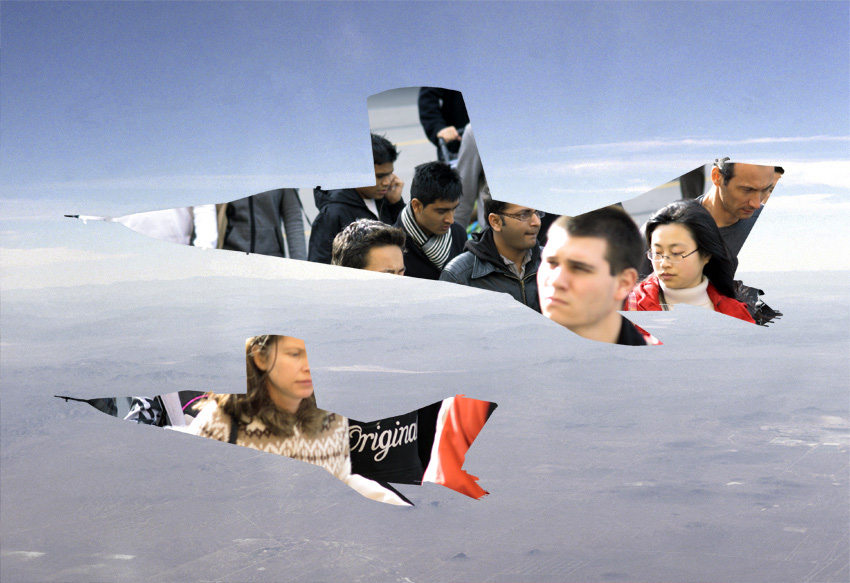
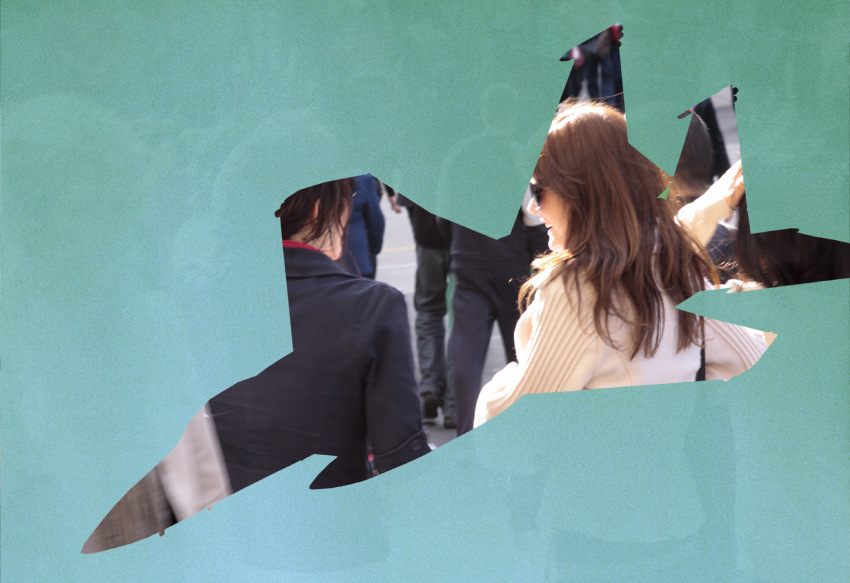
Marcus Bunyan (Australian, b. 1958) Untitled from the series There But For The Grace of You Go I 2009 Digital colour photograph
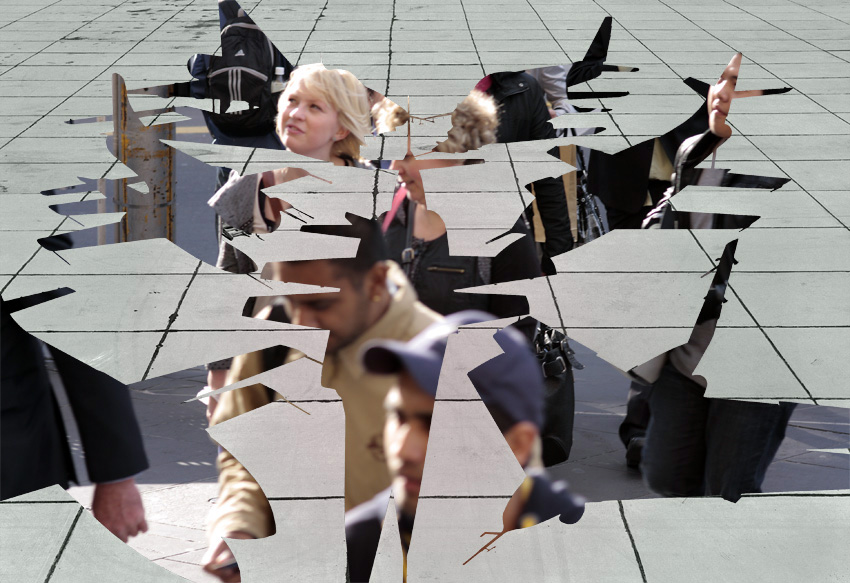
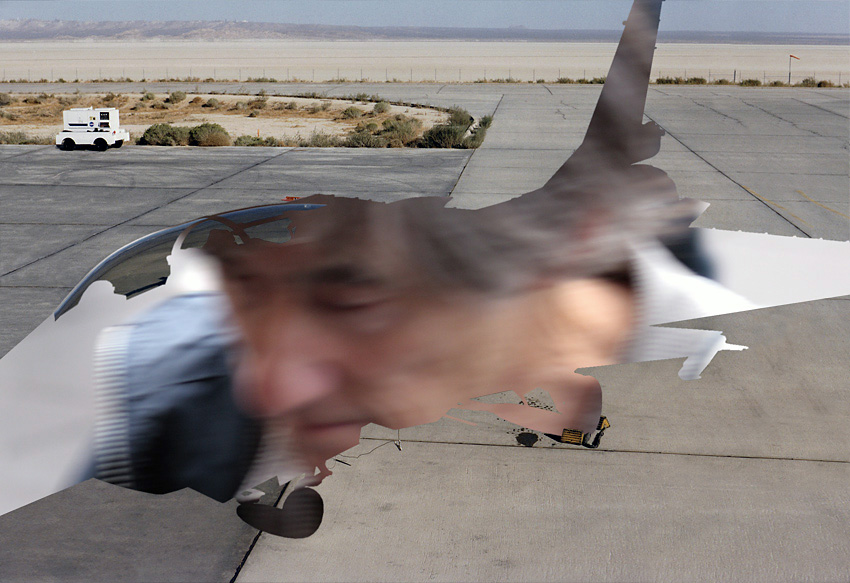
There But For The Grace of You Go I
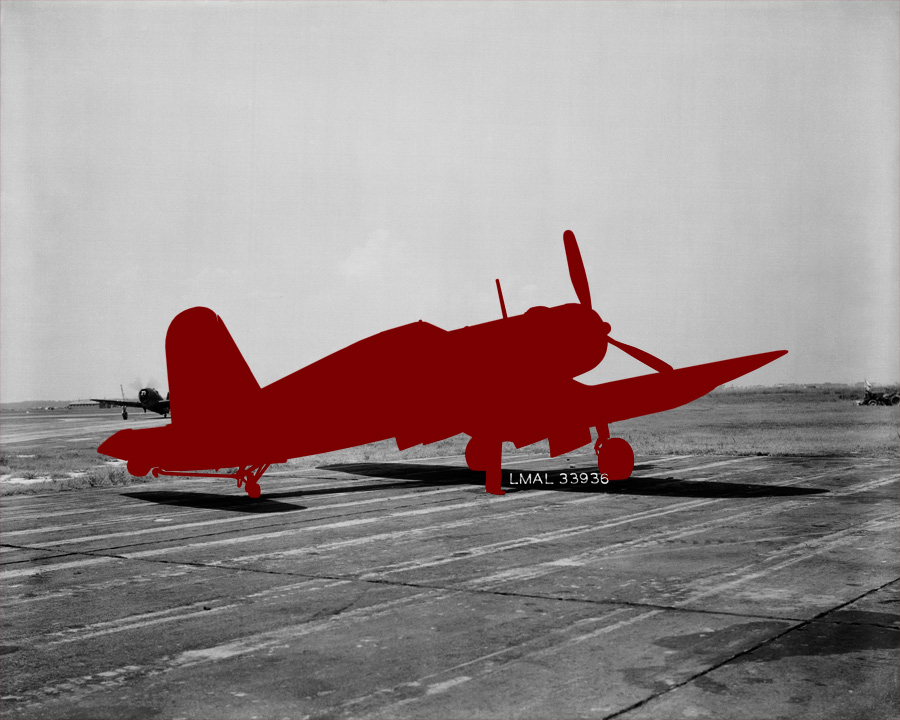
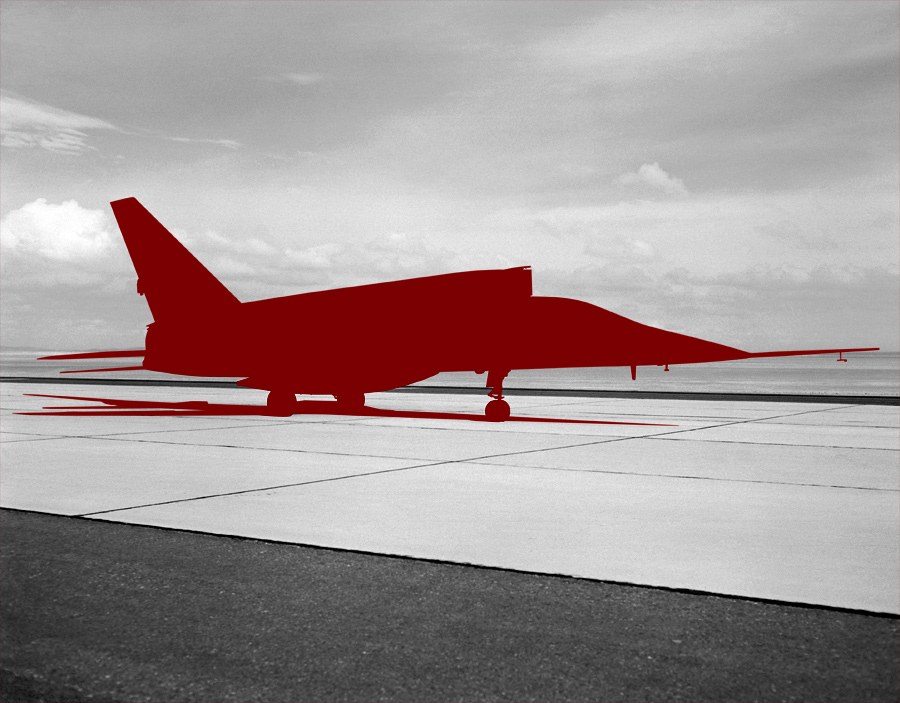
A body of work, There But For The Grace of You Go I (2009) is now online on my website.
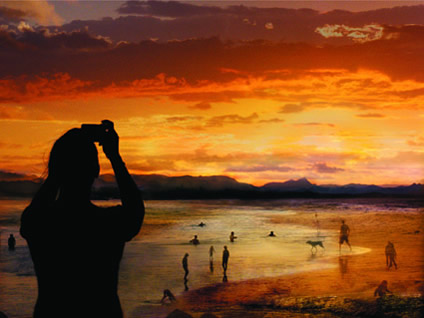
There are twenty images in the series which can be viewed as a sequence, rising and falling like a piece of music. Below are a selection of images from the series. The work continues an exploration into the choices human beings make. The silhouettes and landscapes of planes are taken from found copyright free images; the people from my photographs captured as they crossed the intersection outside Flinders Street Station, Melbourne. Other images are paintings from the Renaissance and POW’s during World War II.
I have always been creative from a very early age, starting as a child prodigy playing the piano at the age of five and going on to get my degree as a concert pianist at the Royal College of Music in London. I have always felt the music and being creative has helped me cope with life, living with bipolar.
These days as I reach my early 50’s ego is much less a concern – about being successful, about having exhibitions. I just make the work because I love making it and the process gives me happiness – in the thinking, in the making. I can loose myself in my work.
When Andrew Denton asked Clive James what brings him joy, James replies “The arts,“ and then qualified his answer. “What I mean is creativity. When I get lost in something that’s been made, it doesn’t matter who it is by. It could be Marvin Gaye singing ‘I Heard it Through the Grapevine’ or it could be the adagio of the Ninth Symphony …”
What a wise man.
Dr Marcus Bunyan
Please click on the photographs for a larger version of the image.
Photographs are available from this series for purchase. As a guide, a digital colour 16″ x 20″ costs $1000 plus tracked and insured shipping. For more information please see my Store web page.
Marcus Bunyan (Australian, b. 1958) Untitled from the series There But For The Grace of You Go I 2009 Digital colour photograph
Marcus Bunyan (Australian, b. 1958) Untitled from the series There But For The Grace of You Go I 2009 Digital colour photograph
Marcus Bunyan (Australian, b. 1958) Untitled from the series There But For The Grace of You Go I 2009 Digital colour photograph
Marcus Bunyan (Australian, b. 1958) Untitled from the series There But For The Grace of You Go I 2009 Digital colour photograph
Marcus Bunyan (Australian, b. 1958) Untitled from the series There But For The Grace of You Go I 2009 Digital colour photograph
Marcus Bunyan (Australian, b. 1958) Untitled from the series There But For The Grace of You Go I 2009 Digital colour photograph
Marcus Bunyan (Australian, b. 1958) Untitled from the series There But For The Grace of You Go I 2009 Digital colour photograph
Marcus Bunyan (Australian, b. 1958) Untitled from the series There But For The Grace of You Go I 2009 Digital colour photograph
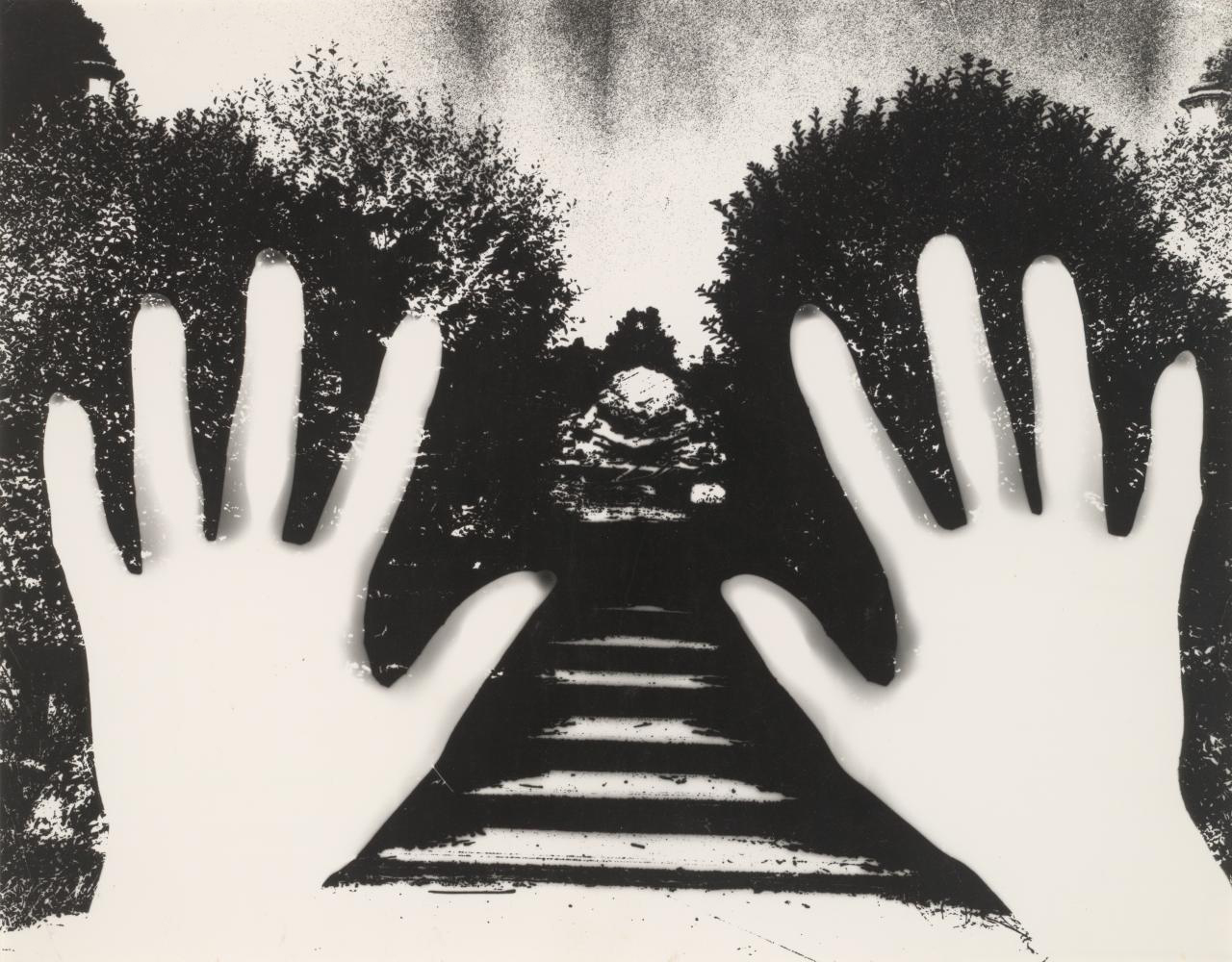
Sue Ford (Australian, 1943-2009) Dissolution 2006 From the Last Light series
One thing always struck me about Sue Ford’s work when I saw it. The work had integrity.
Whatever she produced it was always interesting, valid and had integrity. She followed her own path as we all do – and her voice was clear, focused and eloquent. I loved her series Shadow Portraits – an erudite investigation into the nature of Australian identity if ever there was one!
Vale Sue Ford.
Dr Marcus Bunyan
Please click on some of the photographs for a larger version of the image.
Sue Ford (Australian, 1943-2009) Silhouette 2006 From the Last Light series
Sue Ford (Australian, 1943-2009) Apparition 2007 From the Last Light series
Sue Ford (Australian, 1943-2009) Transparent 2007 From the Last Light series
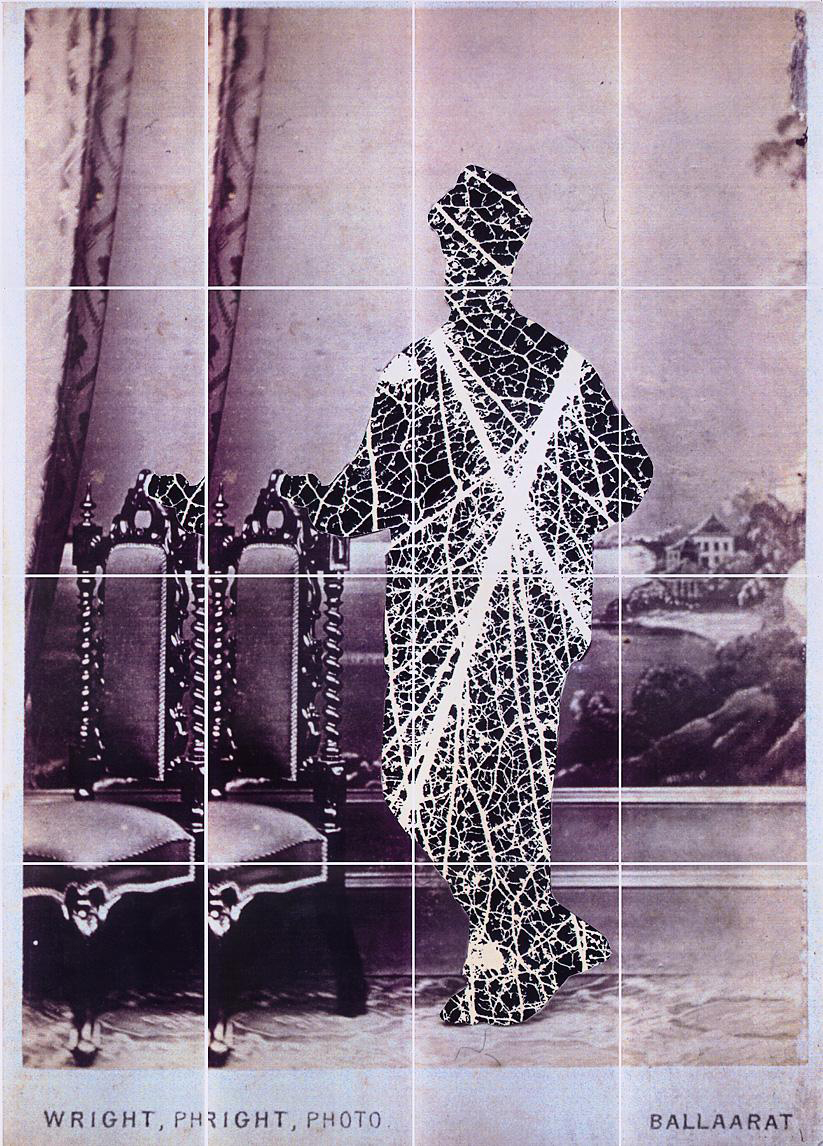
Sue Ford (Australian, 1943-2009) Shadow portraits (detail) 1994 Colour photocopies
Sue Ford (Australian, 1943-2009) Shadow portraits (detail) 1994 Colour photocopies
Sue Ford (Australian, 1943-2009) Shadow portraits (detail) 1994 Colour photocopies
For Shadow portraits, Ford, like numerous artists in this period, mined historical archives of photographs for her source material, decontextualising and reworking it. Her starting point was nineteenth-century studio portraits of settler Australians that were popular in colonial society. She exploded her previous practice and intense focus on the faces of individuals; in most cases the subjects of the original photographs used in Shadow portraits are unrecognisable. Their faces have been emptied out and replaced by Ford’s generic images of Australian foliage, especially fern fronds. All the details that define an individual, their character and appearance, have disappeared, just like the sitters themselves who have been dead for decades and exist only in ghosted form.
Individual works in Shadow portraits (above) rely on a dynamic relationship between historical and contemporary images to create something new. The original studio portrait is not intact, having undergone an extended process of transformation; being re-photographed, cut up and photocopied to eventually take the form of a large gridded image. Use of the grid – an obvious reference to European systems of containment and control – continues the experimentation evident in Yellowcake. Overlaps, like the doubled image of a stereoscopic card, are purposefully exploited. The aim is to destabilise a once-static historic image, to turn the small into big, the tones into colour, the positive into negative and so on. Through these means the colonial past is represented as having continuing reverberations: the loss of concreteness in the images and distortions of scale parallel the incompleteness, gaps and blow-outs characteristic of any historical narrative. As Zara Stanhope writes, Ford’s Shadow portraits ‘image the ongoing processes involved in the construction of histories, and the power to know and remember, that provides the opportunity to revisit or critique such accounts’.
Associate Professor Helen Ennis. “Sue Ford’s history,” in Art Journal 50, National Gallery of Victoria, 1 Jan 2013 [Online] Cited 11/05/2019
“I have always been interested in how actions taken in the past could affect and echo in peoples’ lives in the present. Most of my work is to do with thinking about human existence from this perspective.”
Sue Ford, “Project X’, in Helen Ennis & Virginia Fraser, Sue Ford: A Survey 1960-1995. Monash University Gallery, Clayton, 1995, p. 17
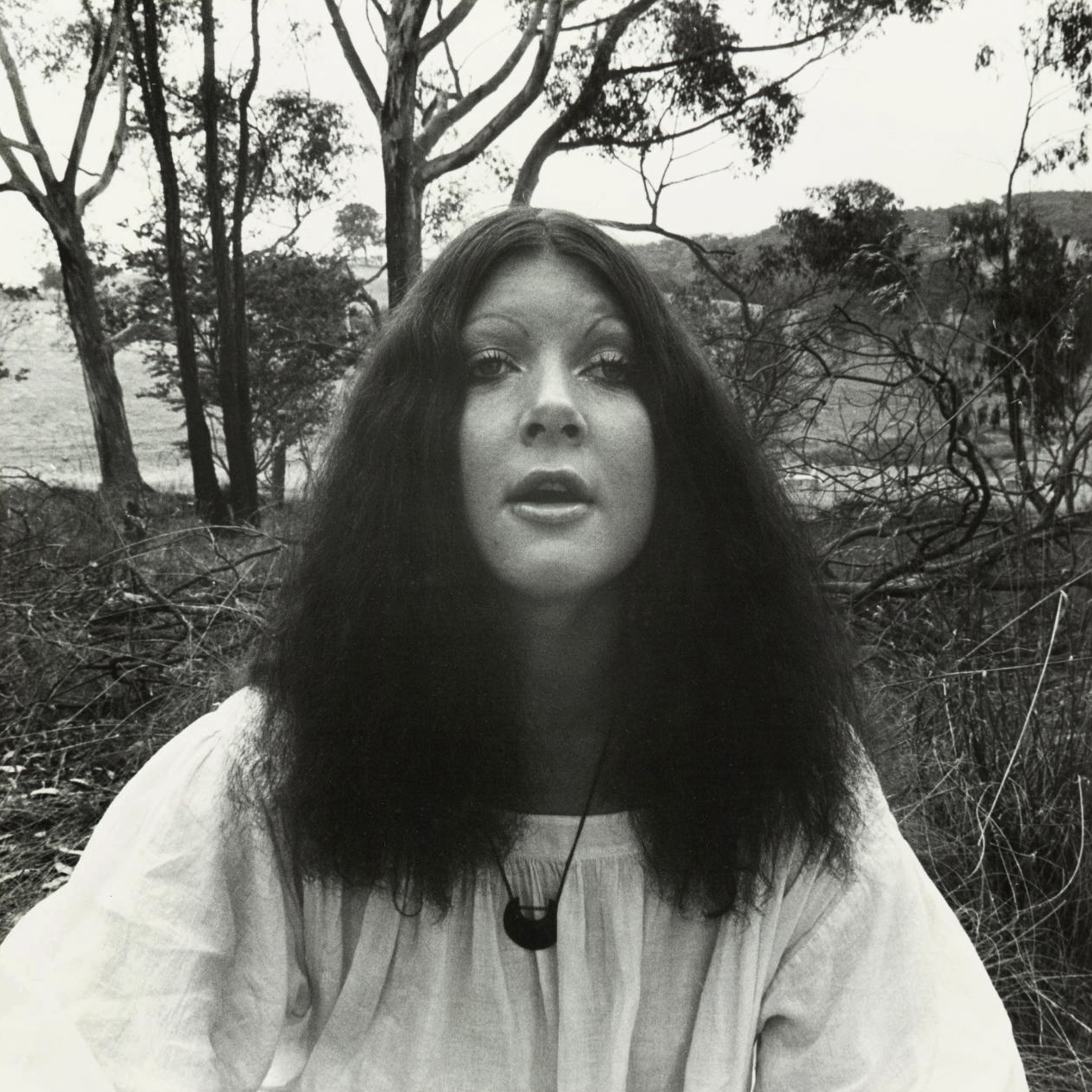
Until 1988 Ford was known principally for work that was motivated by feminist politics, that dealt with the lives of contemporary women and the politics of representation. She worked across media, using black and white photography, film and video. Her photography from the early 1960s onwards was based on what she regarded as photography’s objective capacity; in other words, she utilised the camera as a means of recording whatever she placed in front of it. This interest in ‘objectivity’ related more to the practices of conceptual art than to the heightened subjectivity, or subjective documentary that prevailed in art photography, especially during the seventies. Ford’s feminist photography can be regarded as objective but not as ‘documentary’ in the terms the latter is conventionally understood because there was nothing surreptitious or spontaneous about it. Her approach was non-exploitative and consensual in keeping with the politics of feminism and the counterculture. From the beginning of her career, her subjects were mostly friends and acquaintances; they knew they were being photographed and agreed to it. This consensual approach and its interrelated performative element were adopted by other feminist photographers, such as Carol Jerrems, Ponch Hawkes and Ruth Maddison, in their work during the 1970s.
In the 1970s and 80s Ford’s photography differed from mainstream practice in another fundamental way. It did not relate to the purist and fine art traditions that underpinned the case for photography’s acceptance as art. Her prints were grainy, rough and often very small. Ford conceived photography in radical terms, as a plastic medium that was entwined with other art practices. In an interview at the time she was awarded a scholarship to fund her studies at the Victorian College of the Arts in 1973-74, she emphasised her interest in artists’ use of photography: ‘Some artists are utilising phototechniques and are thinking in a photographic way. I want to use some of their techniques and materials to extend photography into other dimensions’.
Associate Professor Helen Ennis. “Sue Ford’s history,” in Art Journal 50, National Gallery of Victoria, 1 Jan 2013 [Online] Cited 11/05/2019
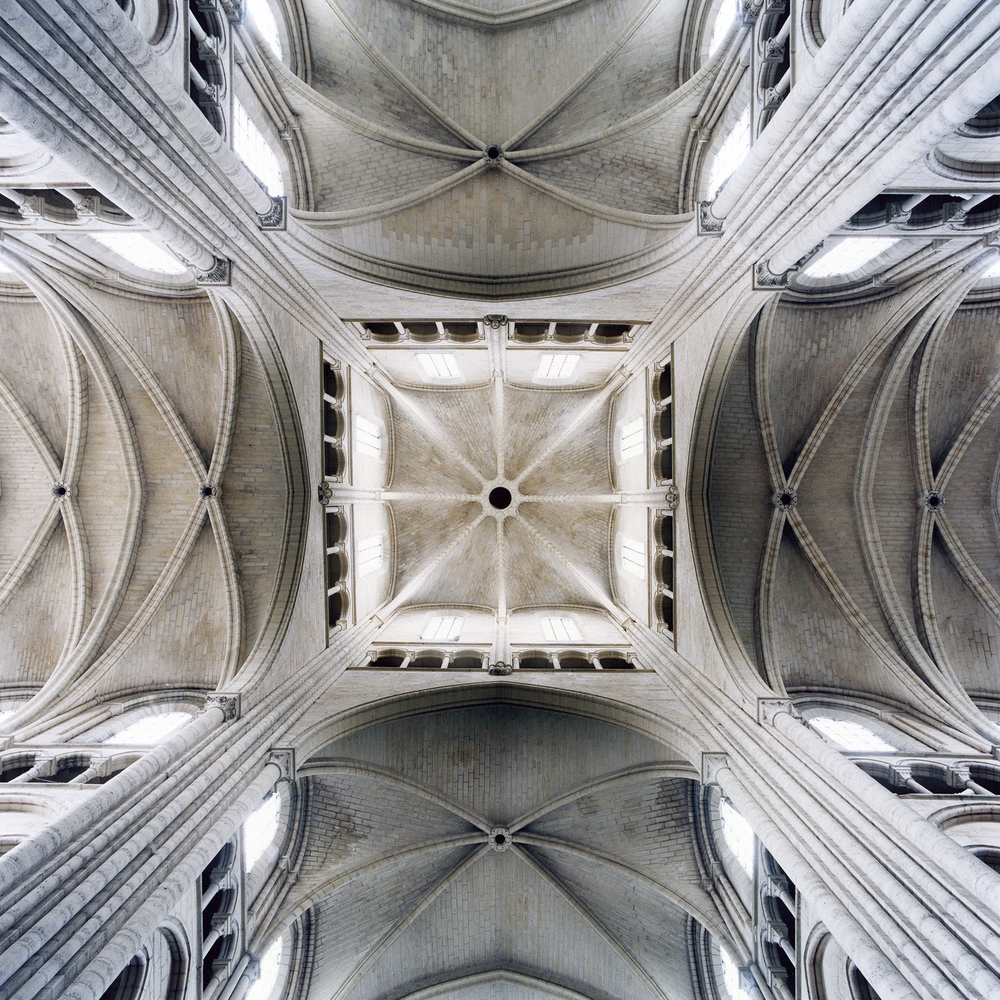
David Stephenson (Australian born America, b. 1955) Nave, Laon Cathedral, Laon, France 2006/2007
I remember many years ago, in the mid-1990’s, seeing the wonderful Domes of David Stephenson displayed in Flinders Lane in what is now fortfivedownstairs gallery. They were a revelation in this light filled space, row upon row of luminous domes seemingly lit from within, filled with the sense of the presence of divinity. On the opposite wall of the gallery were row upon row of photographs of Italian graves depicting the ceramic photographic markers of Italian dead – markers of the impermanence of life. The doubled death (the representation of identity on the grave, the momento mori of the photograph) slipped quietly into the earth while opposite the domes ascended into heaven through their numinous elevation. The contrast was sublime.
Unfortunately the same cannot be said of the latest exhibition Heavenly Vaults by David Stephenson at John Buckley Gallery, Richmond.
The problems start with the installation of the exhibition. As you walk into the gallery the 26 Cibachrome photographs are divided symmetrically down the axis of the gallery so that the prints reflect each other at both ends and each side of the gallery. It is like walking down the nave of a cathedral and observing the architectural restraint of the stained glass windows without their illumination. Instead of the punctum of light flooding through the stained glass windows, the varying of intensities, the equanimity of the square prints all exactly the same size, all reflecting the position of the other makes for a pedestrian installation. Some varying of the print size and placement would have added much life and movement to a static ensemble.
Another element that needed work were the prints themselves which, with a few notable exceptions, seemed remarkably dull and lifeless (unlike their digital reproductions which, paradoxically, seem to have more life!). They fail to adequately represent the aspirations of the vaults as they soar effortlessly overhead transposing the earth bound into the heaven sent. In the earlier work on the domes (which can be found in the book Visions of Heaven: The Dome in European Architecture) the symmetry of the mandala-like domes with their light-filled inner illumination worked well with the square format of the images making the photographs stand as equivalents for something else, other ineffable states of being.
“The power of the equivalent, so far as the expressive-creative photographer is concerned, lies in the fact that he can convey and evoke feelings about things and situations and events which for some reason or other are not or can not be photographed. The secret, the catch and the power lies in being able to use the forms and shapes of objects in front of the camera for their expressive-evocative qualities. Or to say this in another way, in practice Equivalency is the ability to use the visual world as the plastic material for the photographer’s expressive purposes. He may wish to employ the recording power of the medium, it is strong in photography, and document. Or he may wish to emphasize its transforming power, which is equally strong, and cause the subject to stand for something else too.”1
As Minor White further observes,
“When the image mirrors the man And the man mirrors the subject Something might take over”2
When the distance between object and image and image and viewer collapses then something else may be revealed: Spirit.
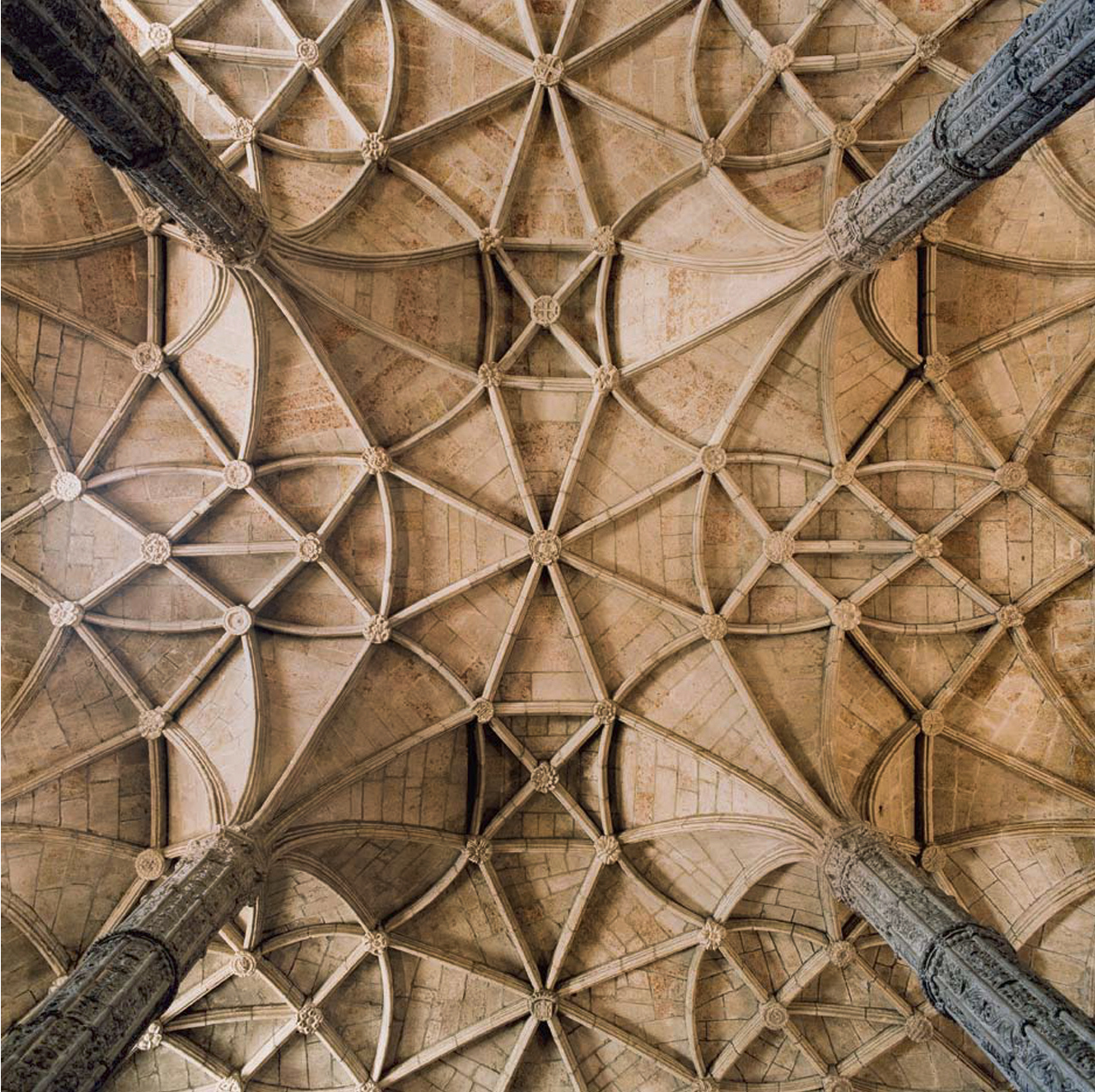
In this exhibition some of the singular images such as the Crossings, Choirs and Nave of the Church of Santa Maria, Hieronymite Monastery, Belém, Portugal (see photograph below) work best to achieve this revelation. They transcend the groundedness of the earthly plane through their inner ethereal light using a reductive colour palette and strong highlight/shadow detail. Conversely the diptychs and triptychs of Nave and Choir (see photographs below and above) fail to impress. The singular prints pinned to the gallery wall are joined together to form pairs and trios but in this process the ‘space between’ the prints (mainly white photographic paper), the breathing space between two or more photographs that balances their disparate elements, the distance that Minor White calls ‘ice / fire’, does not work. There is no tension, no crackle, no visual crossover of the arches and vaults, spandrels and flutes. Here it is dead space that drags all down with it.
I found myself observing without engagement, looking without wonder or feeling – never a good sign!
The photographs of Domes and Vaults have served David Stephenson well for numerous years but the concept has become tired, the inspiration in need of refreshment through other avenues of exploration – both physical and spiritual.
Many thankx to Daniel and John Buckley Gallery for allowing me to reproduce the photographs from the exhibition. Please click on the photographs for a larger version of the image.
David Stephenson (Australian born America, b. 1955) Choir, Laon Cathedral, Laon, France 2006/2007
David Stephenson (Australian born America, b. 1955) St. Hugh’s Choir, Lincoln Cathedral, Lincoln, England 2006/2007
Installation view of Heavenly Vaults by David Stephenson at John Buckley Gallery, Richmond Photo: Marcus Bunyan
David Stephenson (Australian born America 1955) Nave, Cathedral of St. Barbara, Kutná Hora, Czech Republic 2008/2009
David Stephenson (Australian born America 1955) Choir, Cathedral of St. Barbara, Kutná Hora, Czech Republic 2008/2009
“While the subject of my photographs has shifted… my art has remained essentially spiritual – furthermore than two decades I have been exploring a contemporary expression of the sublime – a transcendental experience of awe with the vast space and time of existence.”
David Stephenson
Internationally renowned photographer David Stephenson has dedicated his practice to capturing the sublime in nature and architecture. Fresh from a successful exhibition at Julie Saul Gallery in New York, Stephenson returns to John Buckley Gallery for his third highly anticipated exhibition Heavenly Vaults. The exhibition will feature 26 selected prints from his latest monograph published by Princeton Architectural Press; Heavenly Vaults: From Romanesque to Gothic in European Architecture. Shaun Lakin, Director of the Monash Gallery of Art, will launch the book and exhibition at the opening, November 7th.
Stephenson began to photograph Gothic vaults in Spain and Portugal in 2003, while completing the work for his Domes project, and his first monograph Visions of Heaven: the Dome in European Architecture. He began to focus on the Vaults project in 2006, photographing Gothic churches and cathedrals in England, Belgium and France. With the assistance of an Australia Council Artist Fellowship in 2008-2009, Stephenson completed extensive fieldwork for the Vaults project, intensively photographing Romanesque and Gothic architecture in Italy, France, Spain, Portugal, Austria, the Czech Republic, Poland, and Germany. The exhibition at John Buckley Gallery coincides with the launch of his second monograph, Heavenly Vaults: from Romanesque to Gothic in European Architecture, published by Princeton Architectural Press, New York.
Even though the traditional systems the underpinned church architecture have lost their unequivocal power, David Stephenson’s photographs capture the resonance of those times. More importantly his work also suggest that the feelings of aspiration, transcendence, and infinity these buildings evoke in the viewer have an ongoing relevance beyond the religious setting and help us understand who and what we are.
Excerpt from Foreword, Heavenly Vaults, by Dr Isobel Crombie 2009
David Stephenson’s new book of photography is a love letter to the intricate, seemingly sui generis vaults of Europe’s Romanesque and Gothic cathedrals and churches.
Press release from the John Buckley website [Online] Cited 11/11/2009 no longer available online
David Stephenson (Australian born America, b. 1955) Nave, Church of Santa Maria, Hieronymite Monastery, Belém, Portugal 2008/2009
‘While the subject of my photographs has shifted from the landscapes of the American Southwest and Tasmania, and the minimal horizons of the Southern Ocean, and the icy wastes of Antarctica, to sacred architecture and the sky at both day and night, my art has remained essentially spiritual – for more than two decades I have been exploring a contemporary expression of the sublime – a transcendental experience of awe with the vast space and time of existence.’
David Stephenson 1998.1
With poetic symmetry the Domes series considers analogous ideas. It is a body of work which has been ongoing since 1993 and now numbers several hundred images of domes in countries including Italy, Spain, Portugal, Turkey, England, Germany and Russia. The typological character of the series reveals the shifting history in architectural design, geometry and space across cultures and time, demonstrating how humankind has continually sought meaning by building ornate structures which reference a sacred realm.2 Stephenson photographs the oculus – the eye in the centre of each cupola. Regardless of religion, time or place, this entry to the heavens – each with unique architectural and decorative surround – is presented as an immaculate and enduring image. Placed together, the photographs impart the infinite variations of a single obsession, while also charting the passage of history, and time immemorial.
1. Van Wyk, S. 1998. “Sublime space: photographs by David Stephenson 1989-1998,” National Gallery of Victoria, Melbourne np 2. Hammond, V. 2005. “The dome in European architecture,” in Stephenson, D. 2005, Visions of heaven: the dome in European architecture, Princeton Architectural Press, New York p. 190
Exhibition dates: 2nd September – 26th September, 2009
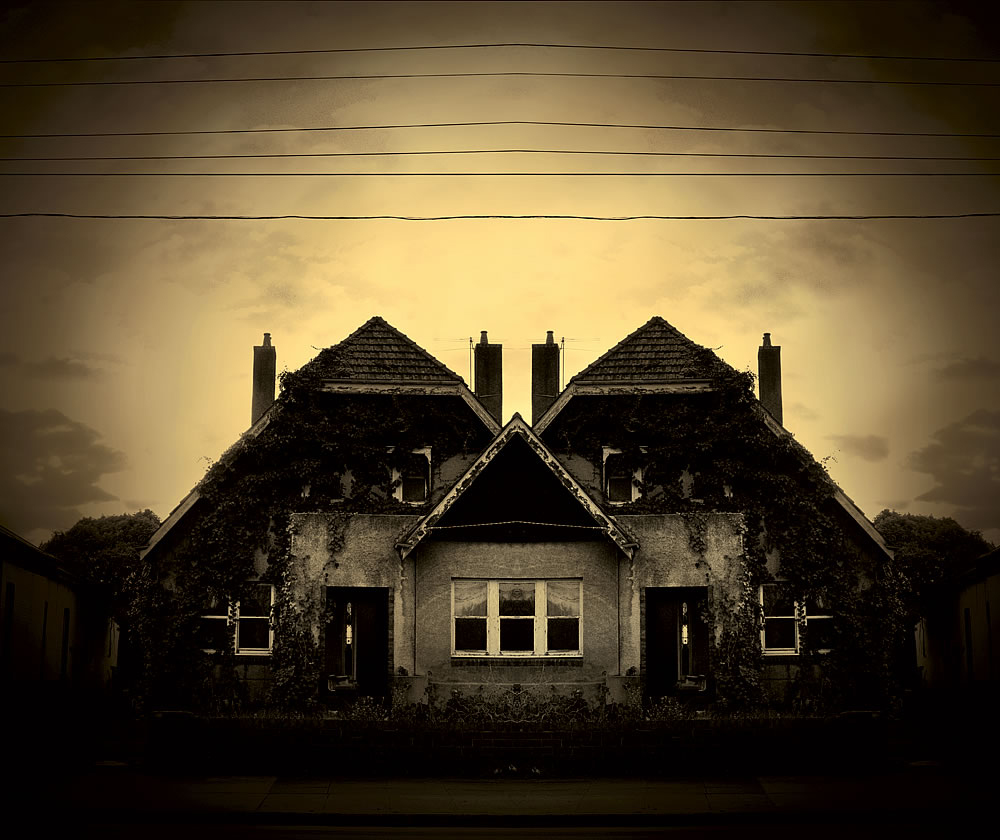
Jane Burton (Australian, b. 1966) Ivy #1 2009 Pigment print 89 x 75cm
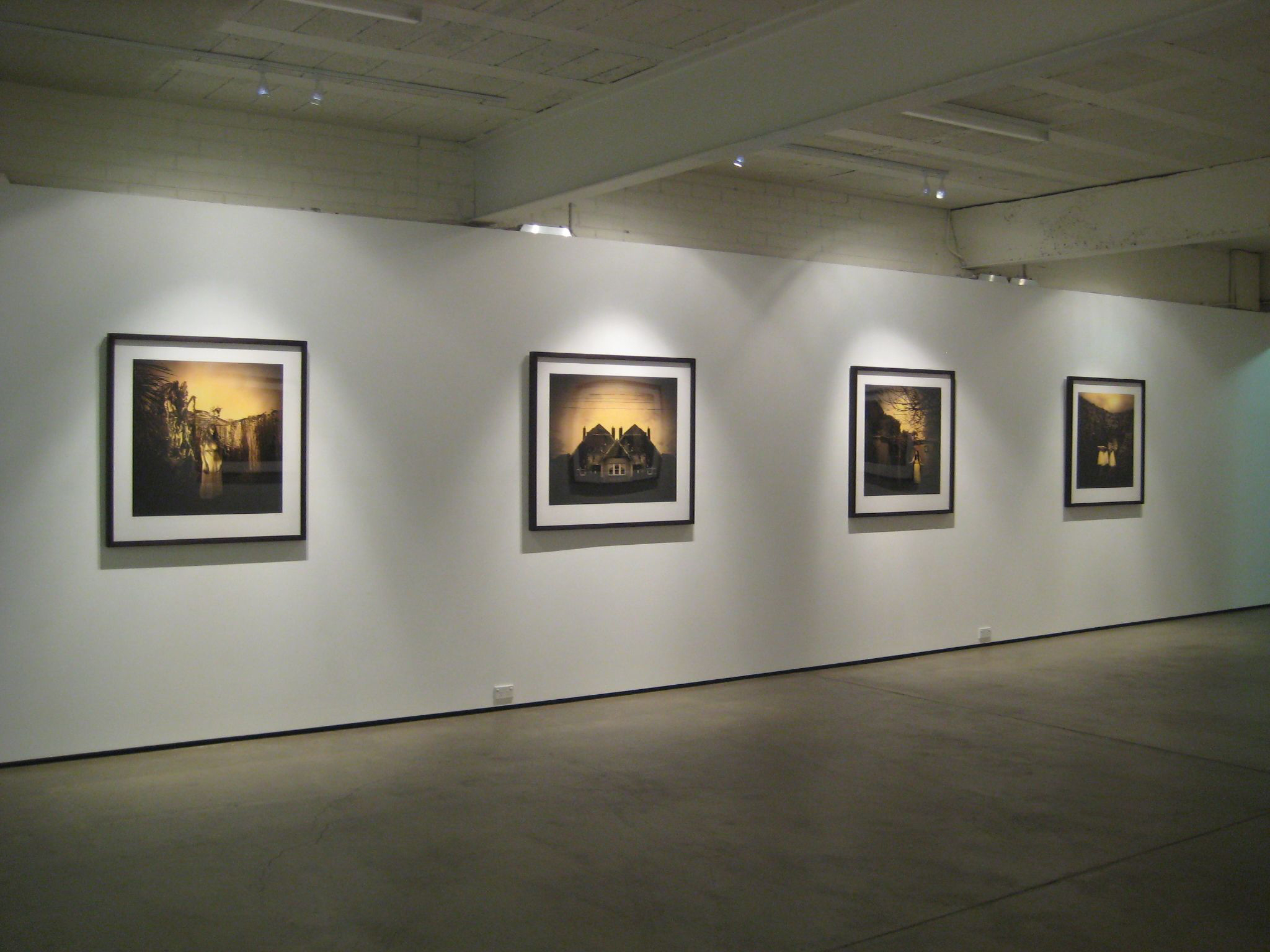
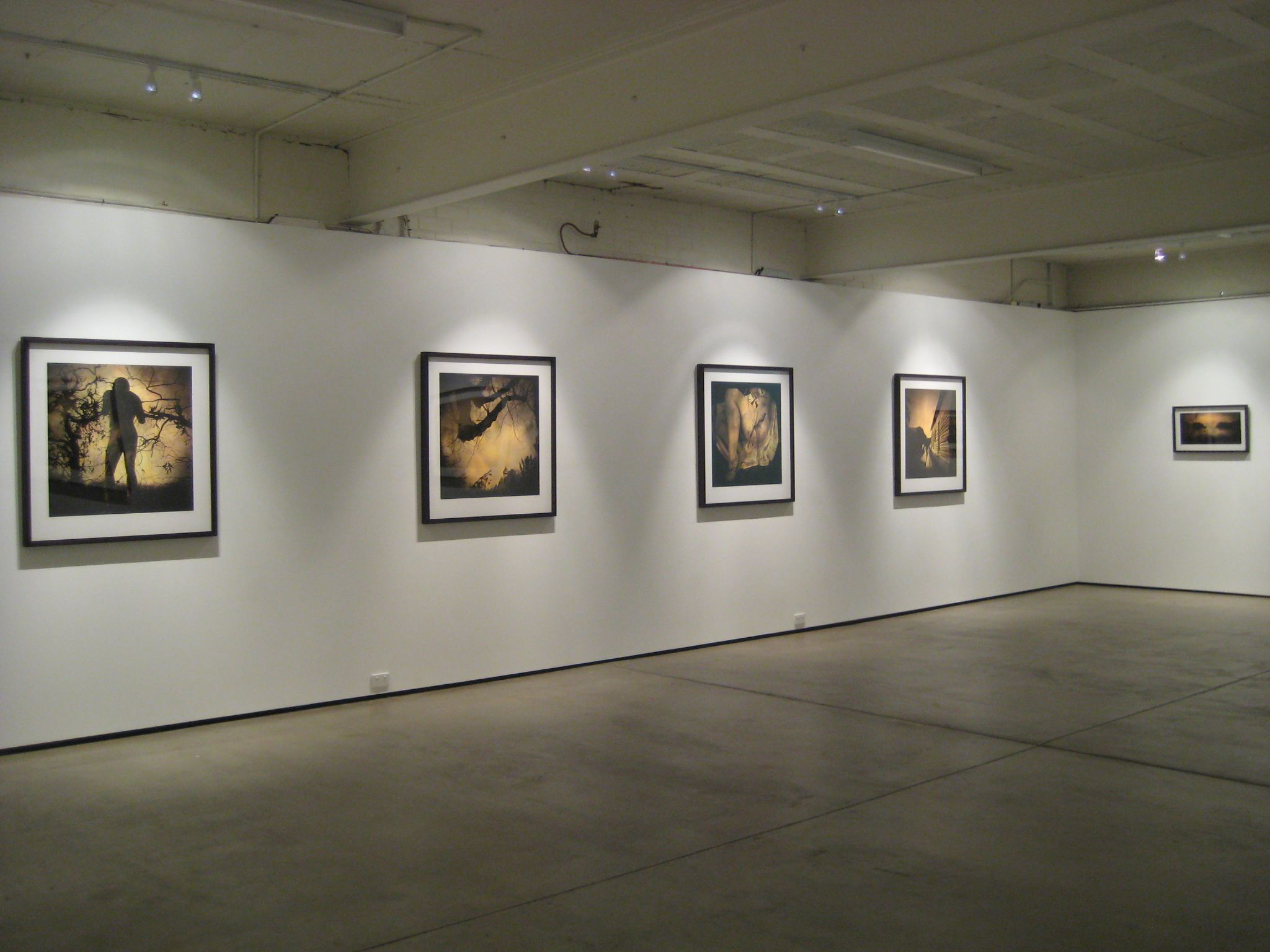
This is another outstanding body of photographic work on display in Melbourne. Featuring 10 large and 2 small sepia toned, vignetted pigment prints Burton’s work creates dark enchanted worlds of faceless female figures placed in the built environment that balance (meta)physical light and shade creating ambiguous narratives of innocence tinged with a darker edge.
The eponymous photograph Ivy #1 (above) is the seminal image of the series: a dark brooding house, hunched down positioned low in the photographic space, covered in ivy with black windows and dark eves has an ominous almost impenetrable presence and sets the tone for the rest of the work.
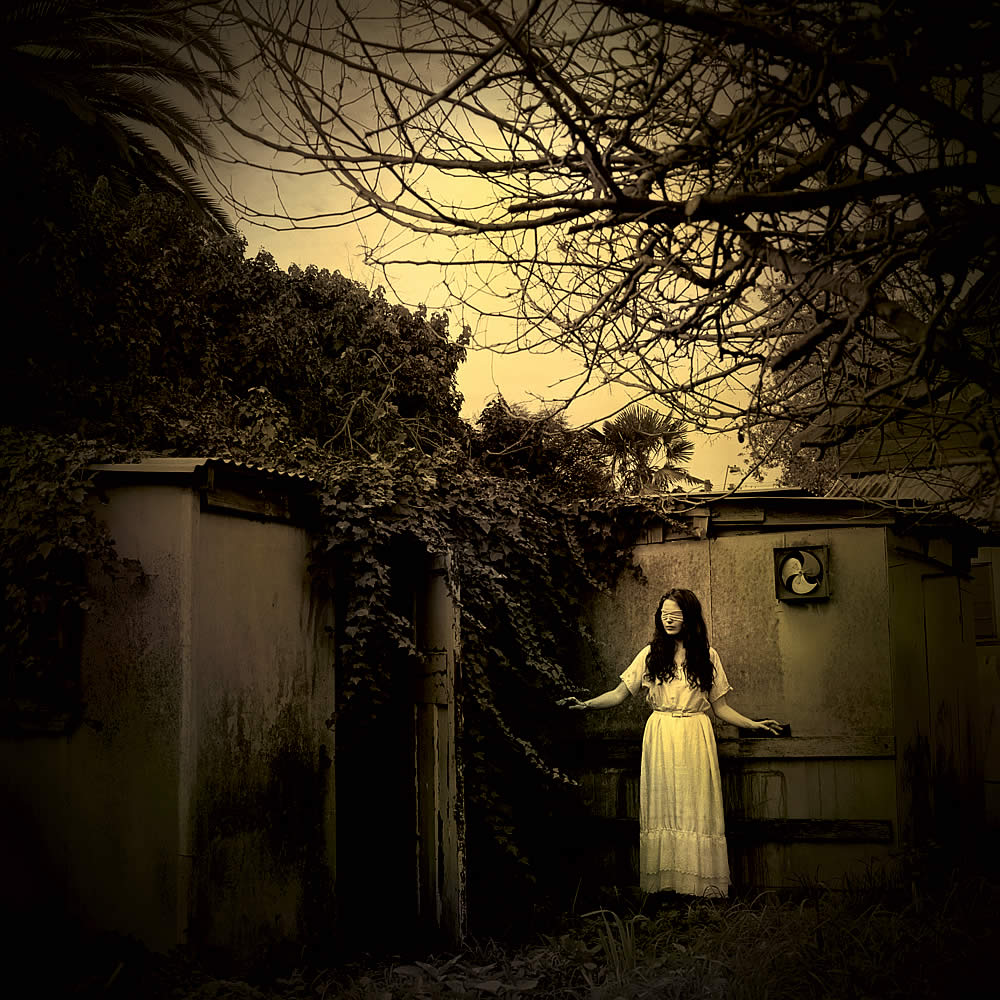
There are wonderful references to the history of photography if one cares to look (not simply generic references to Victorian daguerreotypes, postcards and family photographs). Ivy #2 (below) is a powerful photograph where the female figure is blindfolded, unable to see the encroaching tumescence of vegetation that surrounds and is about to engulf her. The placement of the hands is exquisite – unsure, reaching out, doubting her surroundings – with the 3-bladed fan hovering behind ready to devour the unwary. This photograph has resonances of the magical photographs of the garden by the Czech photographer Josef Sudek.
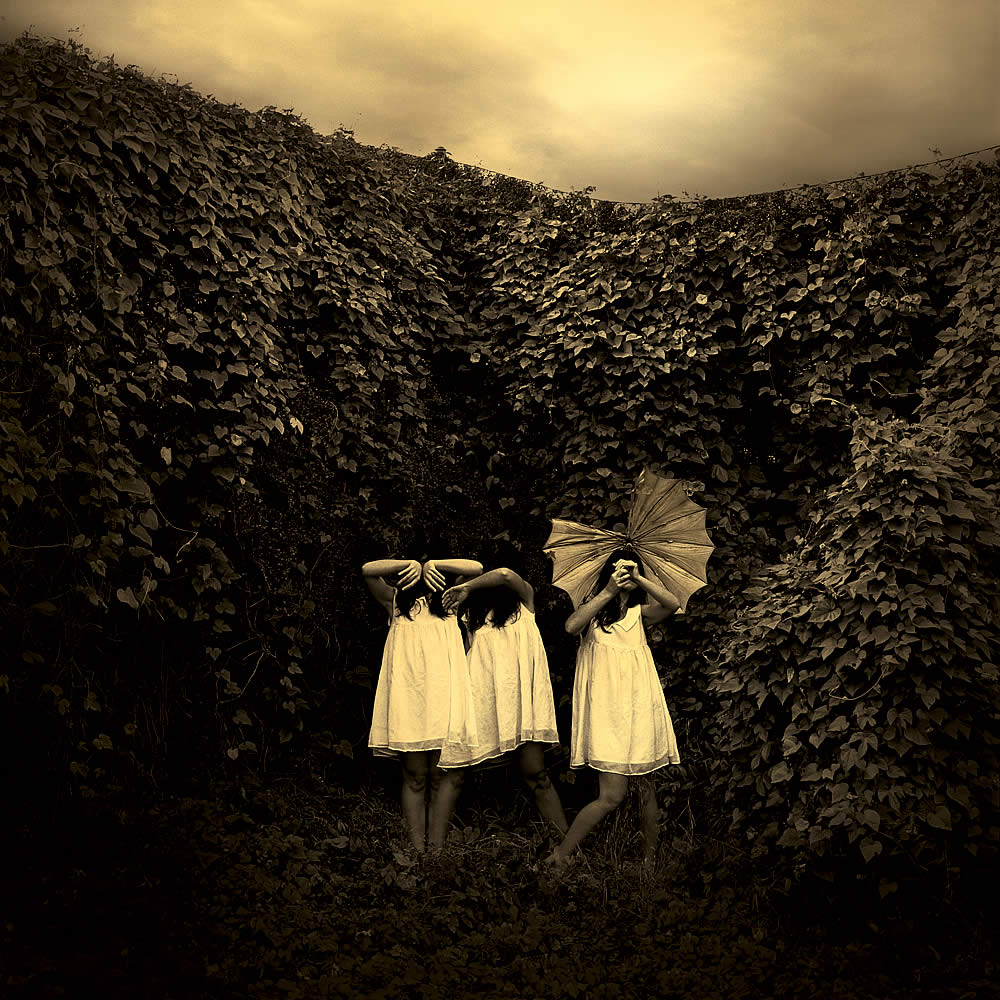
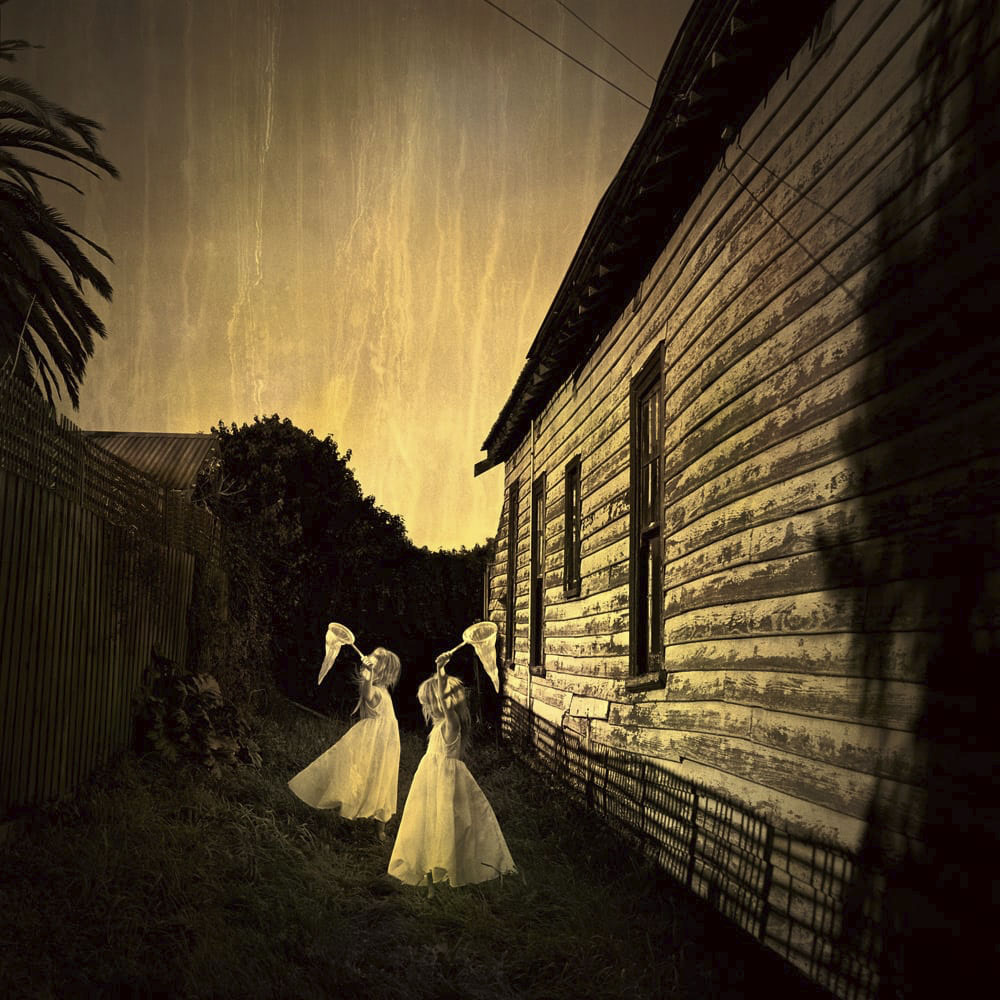
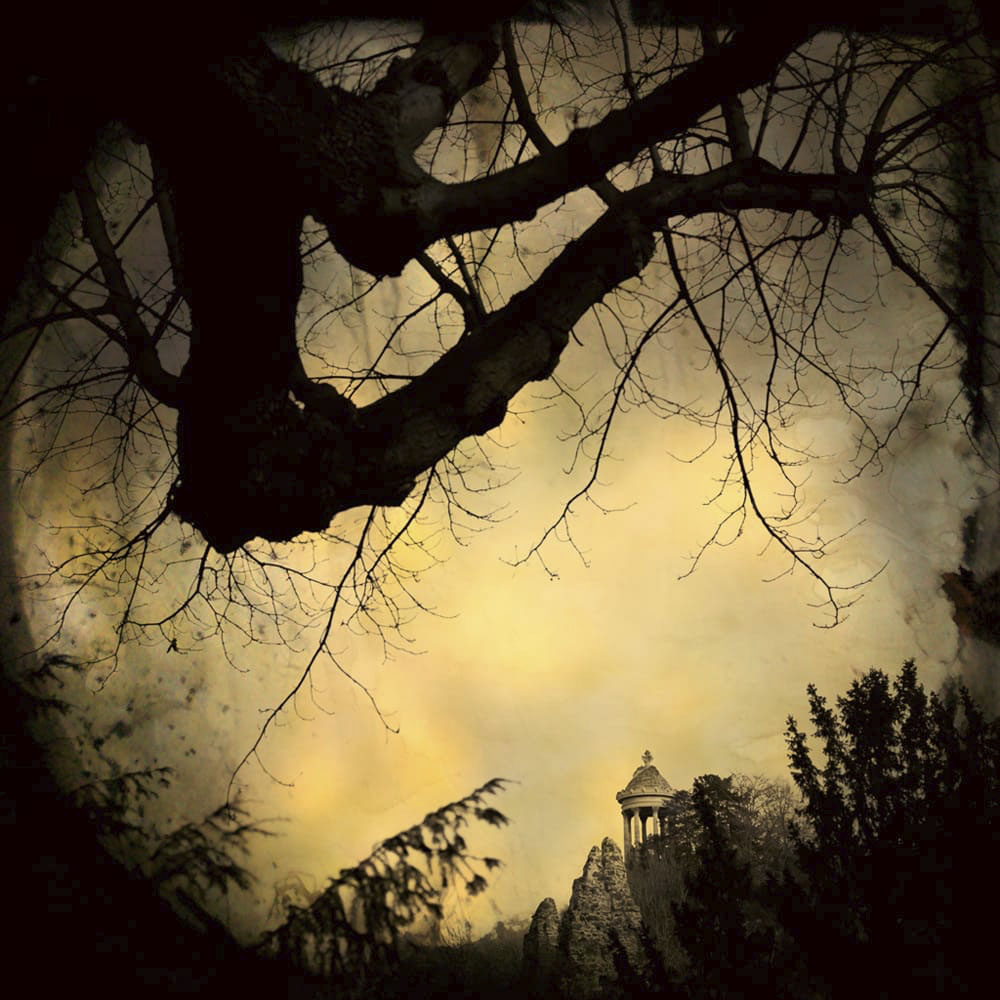
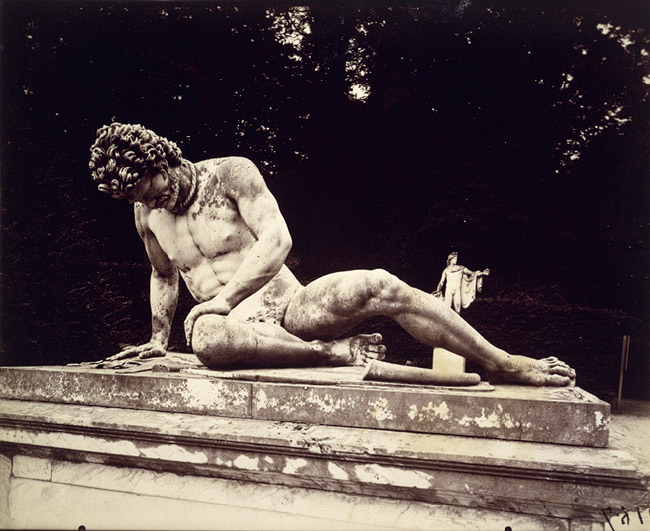
Ivy #3 (below) has echoes of the work of the American photographer Ralph Eugene Meatyard and his placement of masked people within built environments. In Burton’s photograph the broken umbrella becomes like insect wings, the faceless whiteness of the three-legged and three-armed creature cocooned among the overhanging predatory ivy, the luminescent sky offering the possibility of redemption. Other photographs such as Ivy #6 (below) and Ivy #7 with their wonderful colours, depth of field, heavy shadows and elegiac romantic feel have references to Eugene Atget and his photographs of the parks of Versailles (see photograph below).
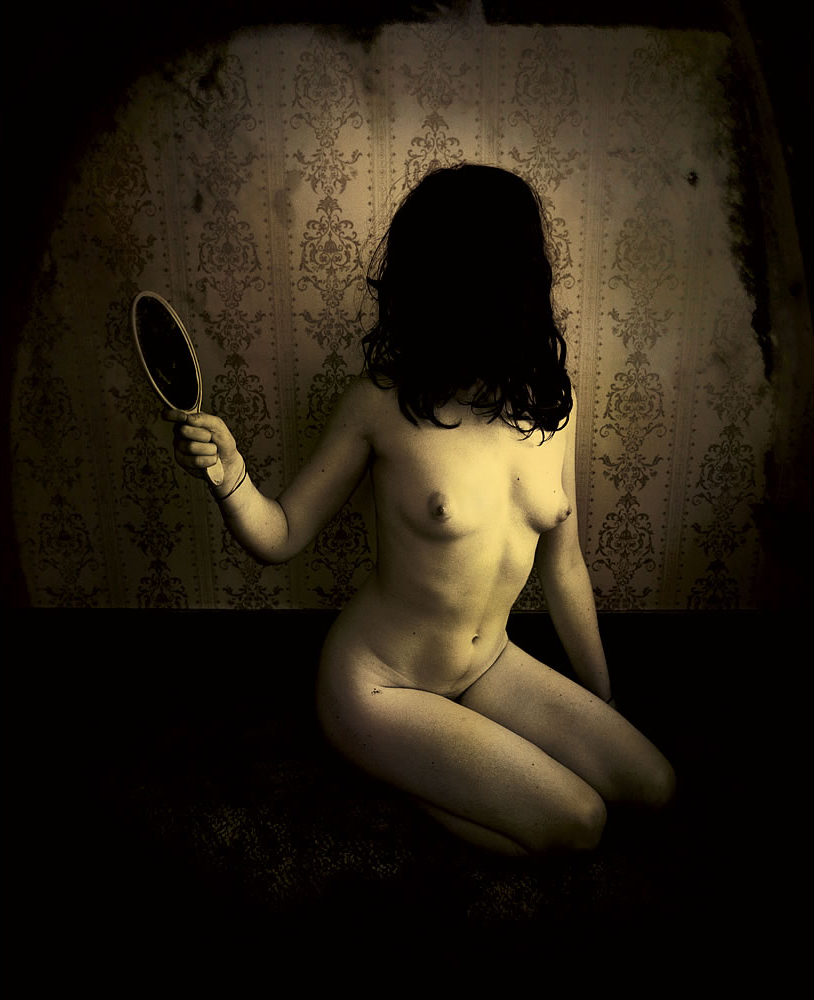
Still further references to the history of photography can be found in the photographs Ivy #9 and Ivy #10 (below). In Ivy #9 the intersection of the two female bodies through double exposure forms a slippage in (photographic) reality and the disappearance of original identity in the layering of the photographs and into the empty non-reflection of the mirror. This non-reflection is confirmed in Ivy #10 where the faceless nude woman holds a mirror with no reflection. These photographs remind me of the photographs of New Orleans prostitutes in the early years of the 20th century by the photographer Bellocq with their masked faces and the ornamentation of the wallpaper behind the figures (see below).
I feel that in these photographs with their facelessness and the non-reflection of the mirror investigate notions of ‘Theoria’ – a Greek emphasis on the vision or contemplation of God where theoria is the lifting up of the individual out of time and space and created being and through contemplative prayer into the presence of God.1 In fact the whole series of photographs can be understood through this conceptualisation – not just remembrances of past time, not a blind contemplation on existence but a lifting up out of time and space into the an’other’ dark but enlightening presence.
The greatest wonder of this series is that the photographs magically reveal themselves again and again over time. Despite (or because of) the references to other artists, the beauty of Burton’s work is that she has made it her own. The photographs have her signature, her voice as an artist and it is an informed voice; this just makes the resonances, the vibrations of energy within the work all the more potent and absorbing. I loved them.
Dr Marcus Bunyan
Many thankx to Karen Woodbury Gallery for allowing me to publish the photographs in the posting. Please click on the photographs for a larger version of the image.
Installation views of Ivy by Jane Burton at Karen Woodbury Gallery, Melbourne Photos: Marcus Bunyan
Jane Burton (Australian, b. 1966) Ivy #2 2009 Pigment print 75 x 75cm
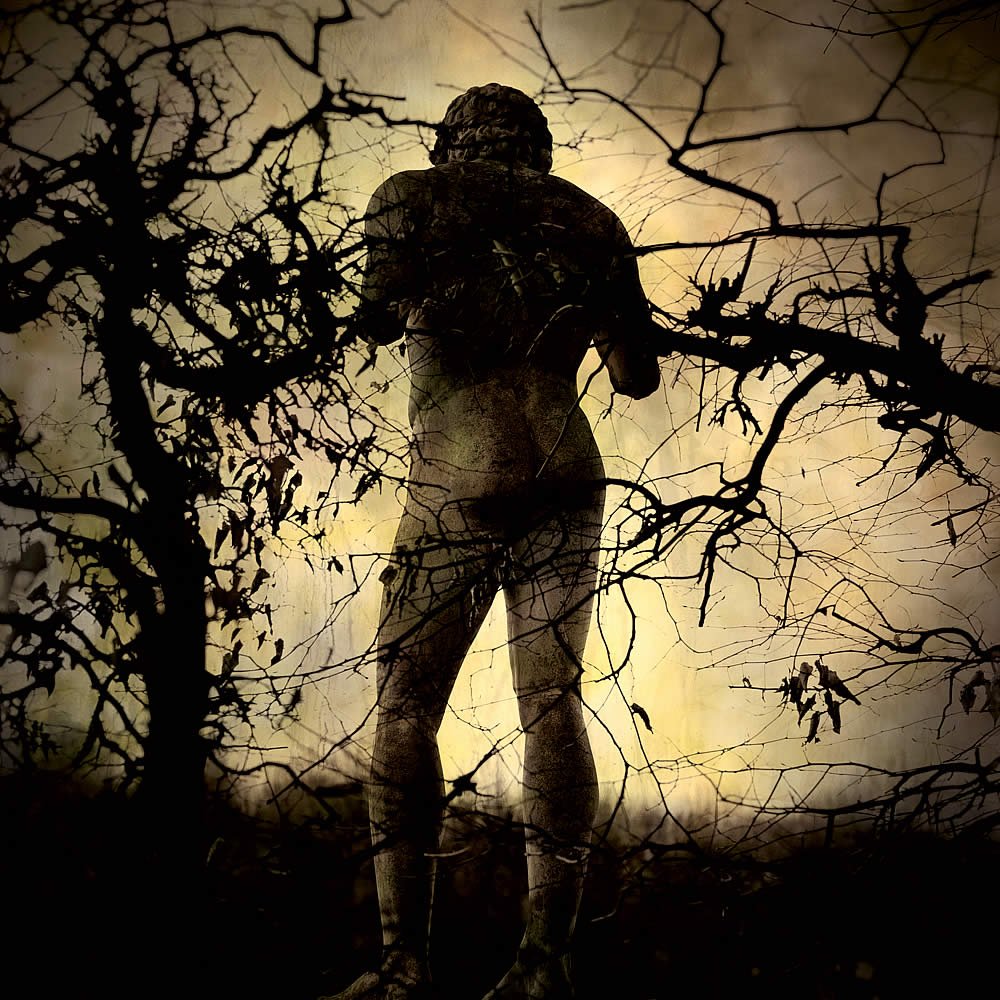
Jane Burton (Australian, b. 1966) Ivy #3 2009 Pigment print 75 x 75cm
Jane Burton (Australian, b. 1966) Ivy #5 2009 Pigment print 75 x 75cm
Jane Burton (Australian, b. 1966) Ivy #7 2009 Pigment print 75 x 75cm
Jane Burton’s exhibition, Ivy comprises a series of photographs captured in black and white. The final prints are rendered with a sepia, peach-champagne tone, with many displaying a mottled hand-coloured effect in faded pastels of pink and green. These works hope to suggest an era past, perhaps Victorian. The imagery is evocative of old picture postcards from Europe and old photographs from the pages of family albums.
Central to the series is an image of a house covered with ivy. Depicted as dark and malevolent, the house is ‘haunted’ by the traces and stains of family history, habitation, and the buried secrets of all that occurred within.
Anonymous female figures are seen in garden settings where the foliage is rampant and encroaching and the shadows deep. There is an air of enchantment perceived with unspecified darker edge. The figures are innocent and playful. The viewer is asked to question if the and girls aware of the camera capturing their activity? Are the poses staged or caught spontaneously. In another photograph, a dilapidated male statue stands broken and armless, the texture of stone worn, and bruised with dark lichen and moss.
In the interior photographs, several nudes are depicted in the style of 19th century French daguerreotype photographs. These vignetted images display women against wall-papered backdrops with theatrical props reminiscent of earlier works by Burton such as the series ‘The other side’ (2003). Posed suggestively for the camera and the viewer’s gaze, the subjects themselves are faceless, their own gaze and features hidden behind dark hair. The surface and texture of these particular works suggests the patina of decay and the damage and wear of time.
Text from the Karen Woodbury Gallery website [Online] Cited 20/09/2009. No longer available online
E. J. Bellocq (American, 1873-1949) Untitled [prostitute of Storyville, New Orleans] 1912
Jane Burton (Australian, b. 1966) Ivy #10 2009 Pigment print
Eugene Atget (French, 1857-1927) Versailles, France 1923 Albumen print
Jane Burton (Australian, b. 1966) Ivy #6 2009 Pigment print 75 x 75cm
Exhibition dates: 7th August – 27th September, 2009
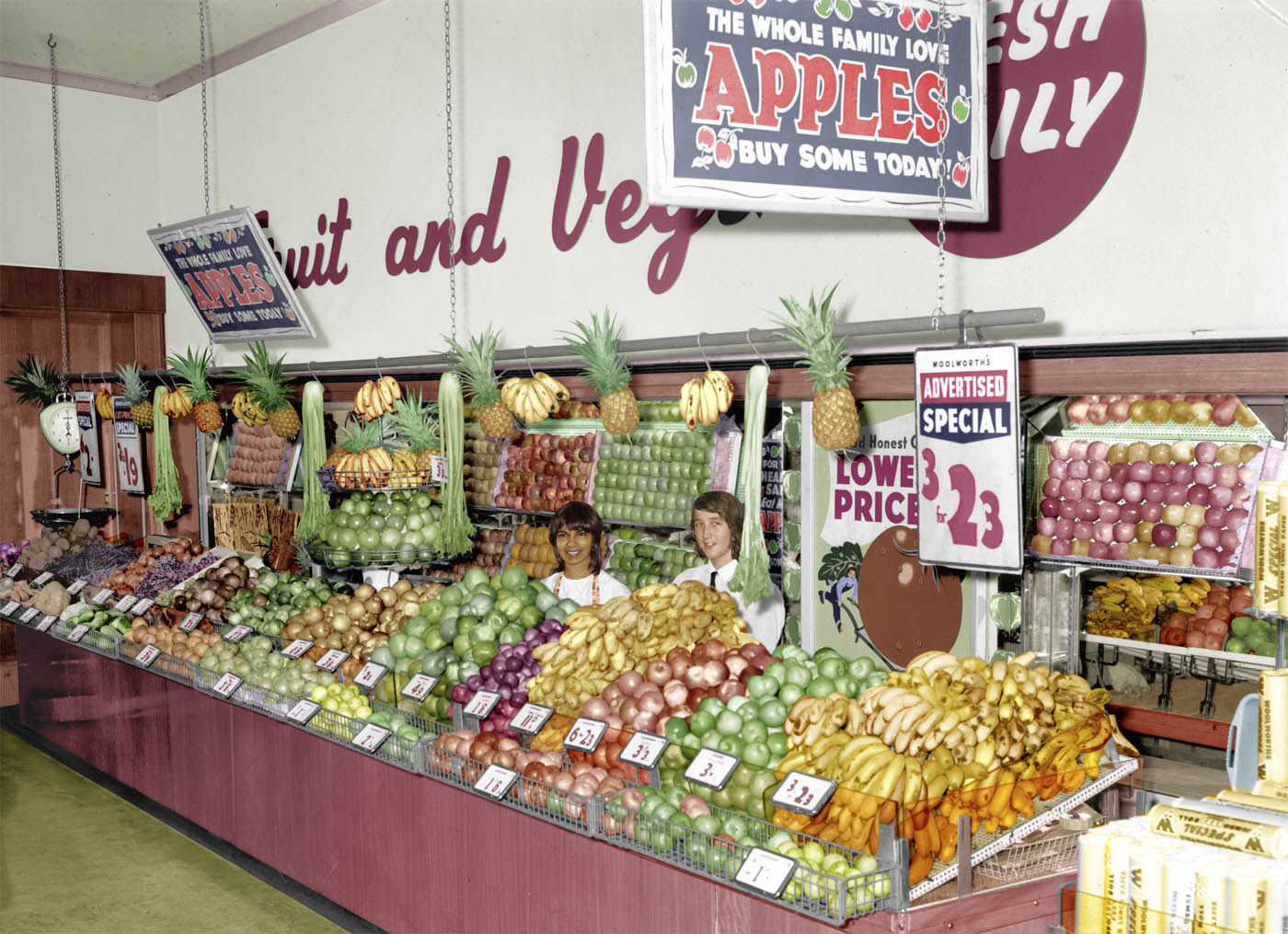
Tracey Moffat (Australian, b. 1960) First Jobs, Fruit Market 1975 Archival pigments on rice paper with gel medium 71 × 91.5cm
There are some wonderful bodies of photographic work on show around Melbourne at the moment and this is one of them.
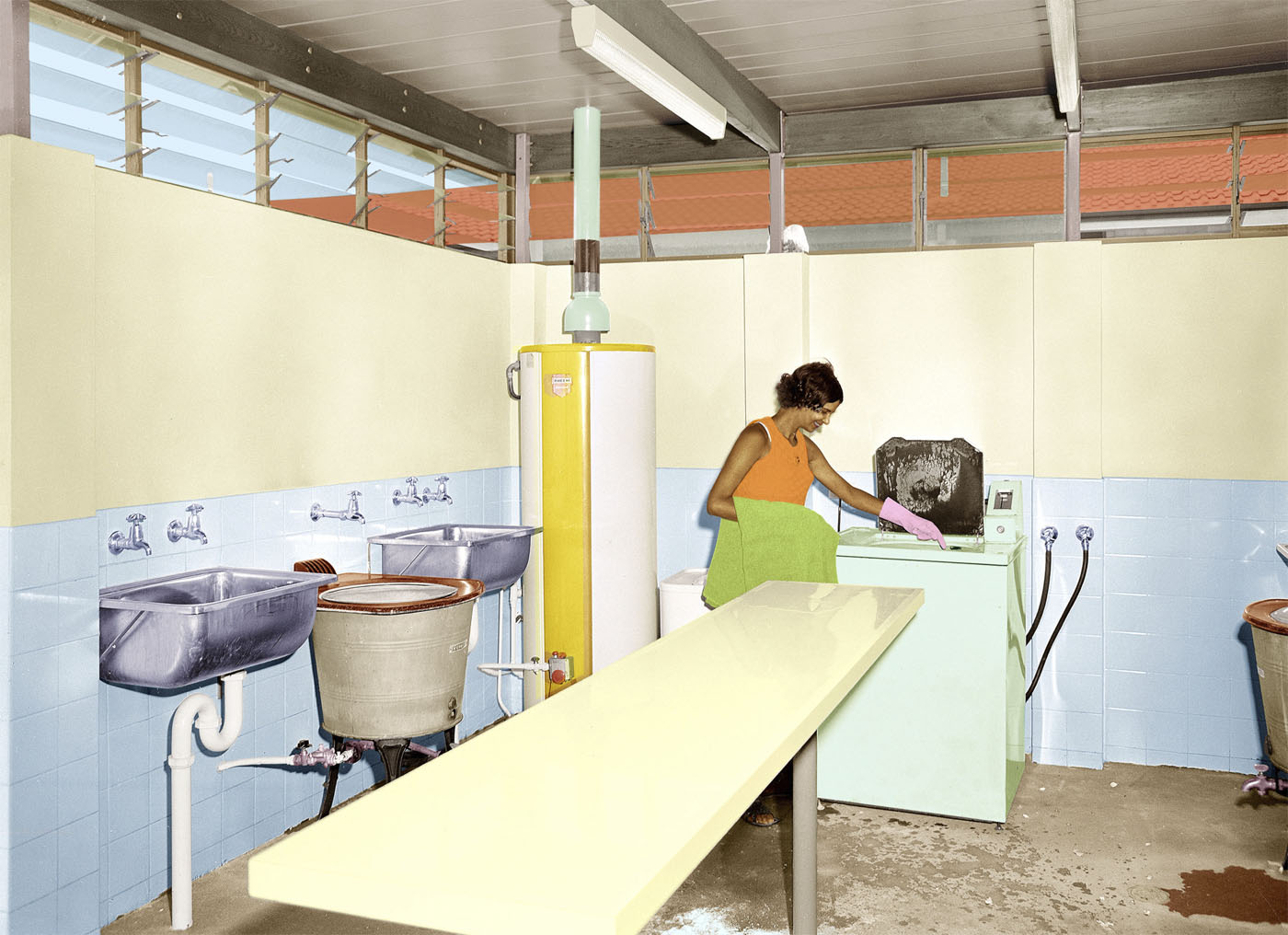
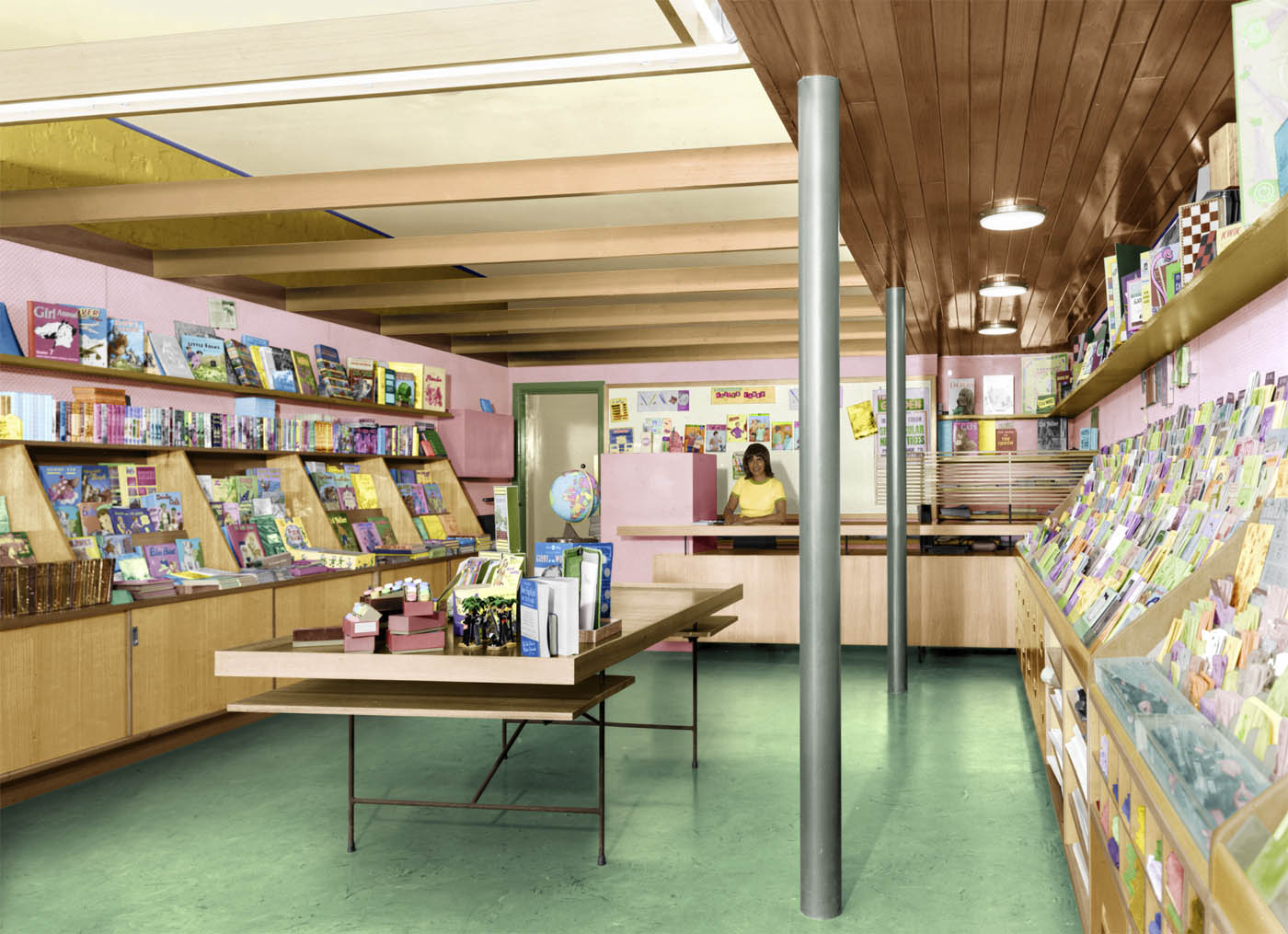
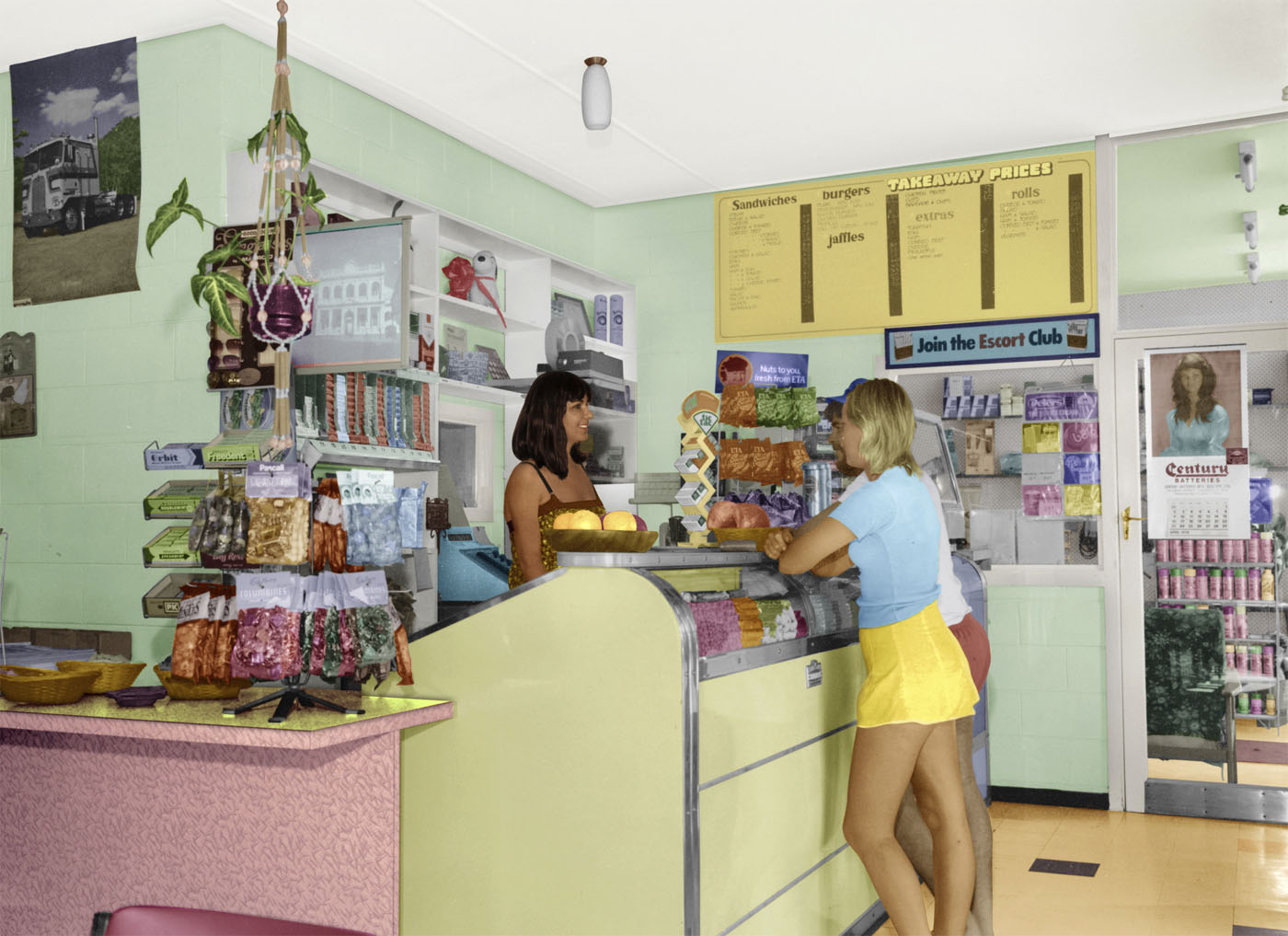
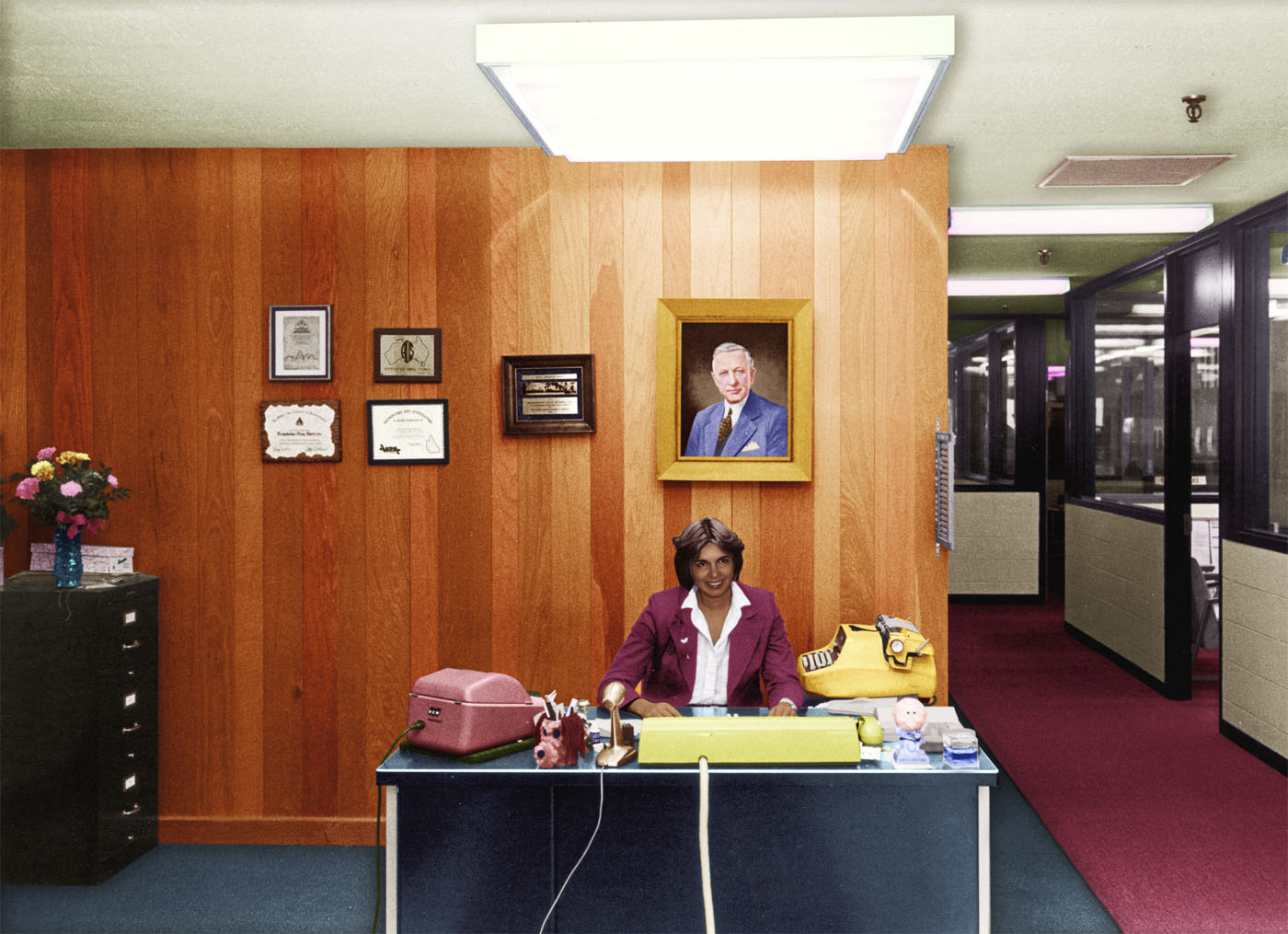
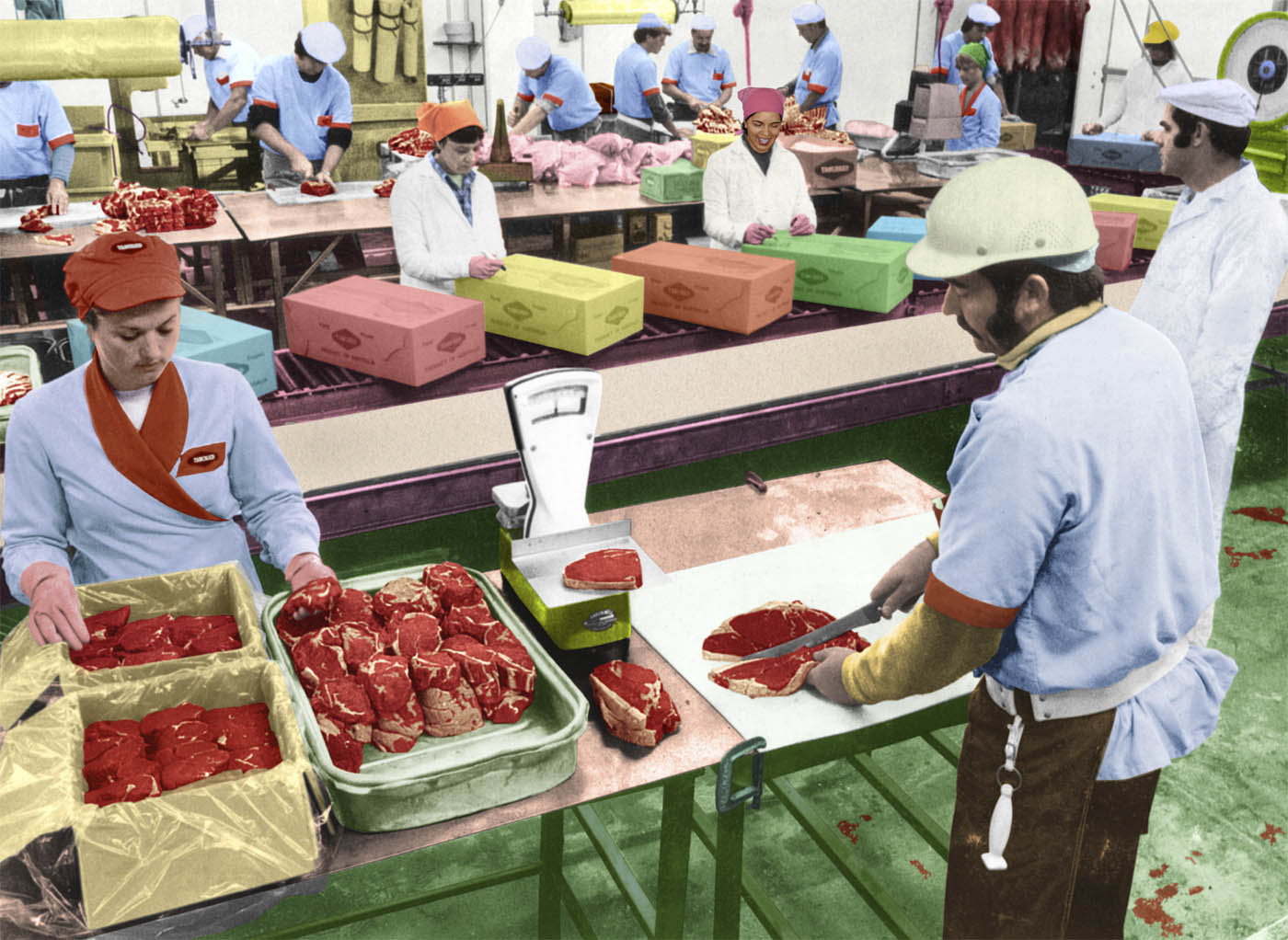
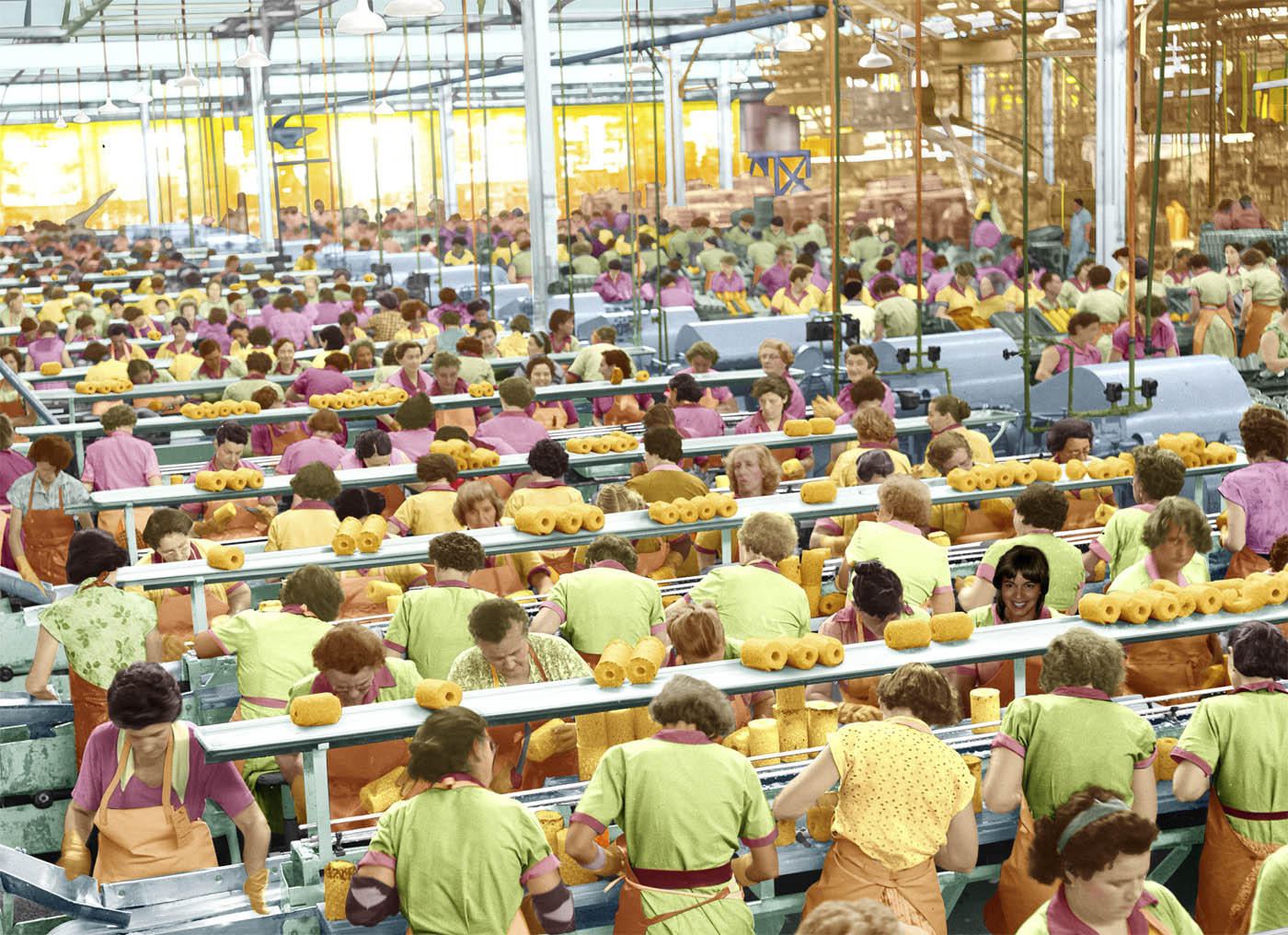
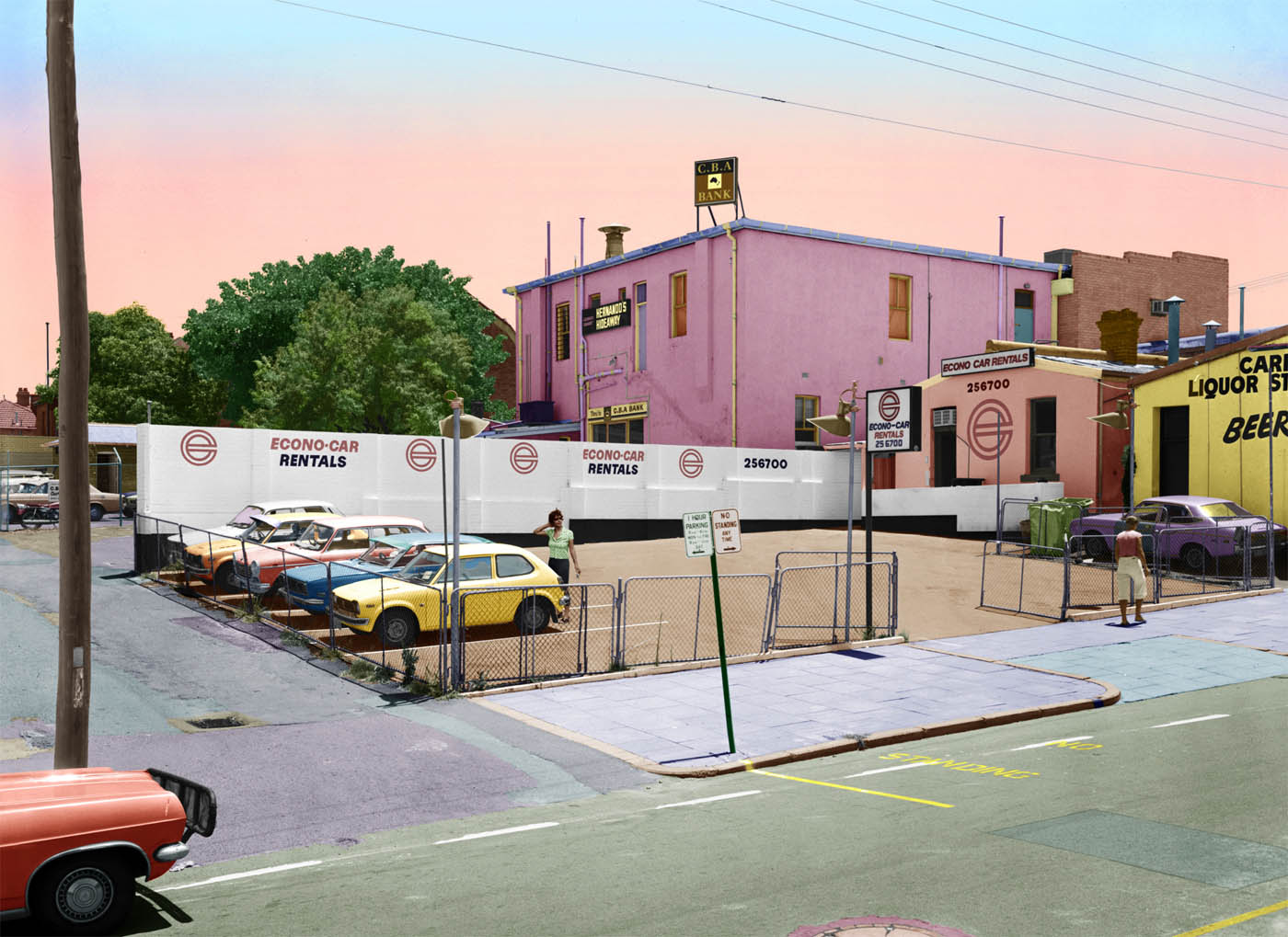
Featuring twelve archival pigment on rice paper with gel medium prints, Tracey Moffatt’s series First Jobs (2008) is a knockout. Images of the artist are inserted into found photographs which are then “hand coloured” (like old postcards) in Photoshop. Moffatt’s series conceptualises the early jobs that she had to do to survive – investigating the banality of the jobs, the value of friendships that were formed coupled with an implicit understanding of the dictum ‘work is life’.
Moffatt’s images hark back to the White Australia policy of the 1950s and the home and living books of that period. With their hyper-real colours, strange coloured skies, green washing machines and purple tarmac Moffatt amps up the voltage of these images and subverts their idealisation. Here is the re-presentation of the physical and spatial isolation of the figure (store clerk / housekeeper) or the sublimation of the usually female figure into the amorphous mass of the whole (meat packing / pineapple cannery) in quintessentially Australian environments. Here also is comment on the nature of a patriarchal society – the smiling receptionist sitting under the portrait of her male boss, awaiting his command.
The spaces of these photographs seem to (literally) consume the artist and her remembrance of these jobs. Despite her smiling face in each of the images we implicitly understand the banality of the jobs for we have done them ourselves. We know these spaces intimately: the spaces inhabit us as much as we inhabit them. As the viewer we experience the being of these images, their reverberation, where the two kinds of space – the space of intimacy and the world space – blend.1
The only sour note of the series comes not in the work itself but in the accompanying artist statement (see below). In this churlish expose of the ‘woe is me, I’m a full time artist and isn’t it so difficult to be a full time artist’ variety, Moffatt complains about the miserable voices in her head and about having to get up off the couch because she is the only person able to make the work and the money. Oh to be so lucky to actually make a living as a full time artist and have the time and space to be creative 7 days a week! Would I have her situation anytime soon? Ha, um, yes.
Dr Marcus Bunyan
1/ Bachelard, Gaston. The Poetics of Space. Boston: Beacon Press, 1969, p. 203.
Many thankx to the Centre for Contemporary Photography for allowing me to publish the photographs in the posting.
Tracey Moffat (Australian, b. 1960) First Jobs, Housekeeper 1975 Archival pigments on rice paper with gel medium 71 × 91.5cm
Tracey Moffat (Australian, b. 1960) First Jobs, Store Clerk 1975 Archival pigments on rice paper with gel medium 71 × 91.5cm
Tracey Moffat (Australian, b. 1960) First Jobs, Corner Store 1977 Archival pigments on rice paper with gel medium 71 × 91.5cm
Tracey Moffat (Australian, b. 1960) First Jobs, Receptionist 1977 Archival pigments on rice paper with gel medium 71 × 91.5cm
Tracey Moffat (Australian, b. 1960) First Jobs, Meat Packing 1978 Archival pigments on rice paper with gel medium 71 × 91.5cm
Over the years my friends and I joke about our dreadful past jobs. Jobs we worked as teenagers and young students. Awful jobs that we would rather forget about such as cleaning out the local cinema after a screening of The Exorcist in 1974.
When I was a kid I always had jobs and I always made my own money whether it was receiving a dollar for pulling up the weeds in the yard or baby sitting for neighbours or working at the local green grocers. The thing about making a bit of your own cash was that you could buy your own clothes and not have to wear the clothes that your mother picked out.
In 1978 at seventeen I worked in factories peeling pineapples. I also packed meat and shelled prawns. Such back breaking labour was exhausting but the money was good. After one year I saved enough money to travel to Europe and backpacked around for nine months. Then in 1980 I went to art school in Brisbane but continued part-time work as a waitress to pay for art materials.
After art school I was desperate for money to pay the rent and I worked many jobs. Some were: scrubbing floors in a women’s refuge, washing dishes in a canteen and parking cars in a car park beneath a restaurant called Dirty Dicks (I had no driver’s licence, but the patrons were always drunk and didn’t care.)
I am resentful and appalled at the work I had to do to survive. I hold a grudge towards rich kids who never had to slave like I did. Secretly though I’m proud of myself. When I think of those early years I realise that I was learning to be tough and work whether I liked it or not. I put my head down and was forced to be productive. I was learning how to get on with other people and learning to handle a boss. These days I do nothing but make art and have exhibitions. Being an artist feels like being on a permanent but jittery holiday in comparison to those early working days. Now I sleep in until 9.30am and press the ‘ignore’ button on my phone if I don’t feel like talking to anyone. But, as Bette Davis put it, it is ‘The Lonely Life’. You have come up with the ideas and make them happen. No-one else is going to do it for you.
But I remember the good things about the factory floor. Walking into work everyday and saying hi to people you knew, there was a camaraderie. The work was mindless but it didn’t mean that your mind couldn’t go places. Then there was knock-off time. The bell would ring and you would be out the door with a wad of cash in your hand and not a care in the world.
In being a full-time artist there never is any knock-off time. There’s always a nagging, miserable voice of ideas in your head and you MUST get up off the sofa and produce work. The bell never rings and you never know where your next buck is coming from. Your mind is constantly wound up. You’re never really physically tired not like when you had a real honest job. But would I go back to working in a factory just to get good a night’s sleep? Ha, um, no.”
Exhibition dates: 20th August – 5th September, 2009
Little Treasures Toby Richardson, Will Nolan, CJ Taylor and Steve Wilson
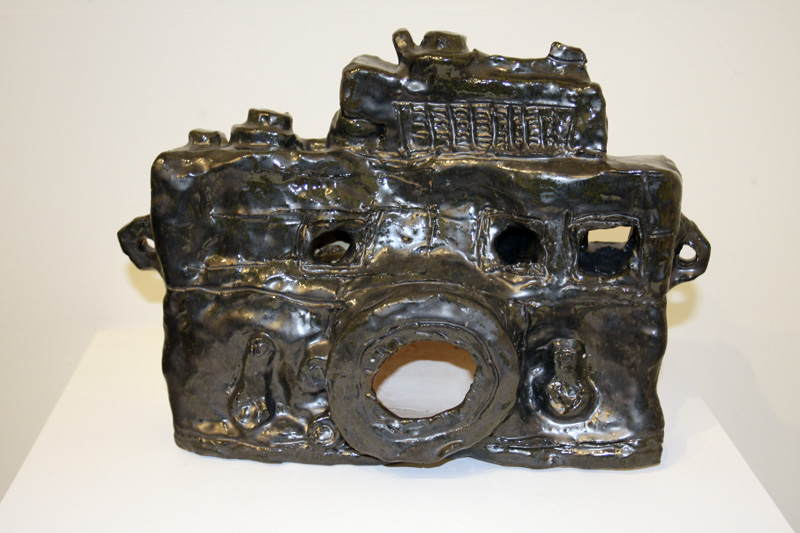
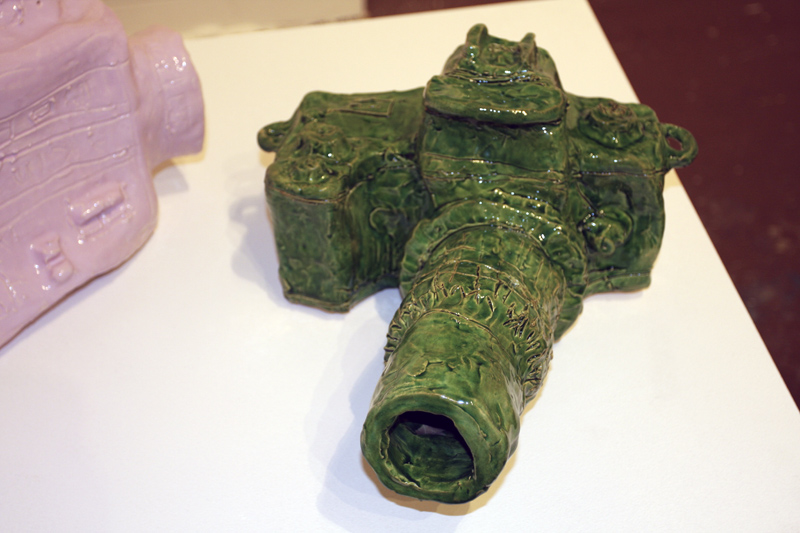
Clay Cameras Alan Constable
Alan Constable (Australian, b. 1956) Not titled (ALE SLR) 2008 Ceramic Photo: Marcus Bunyan
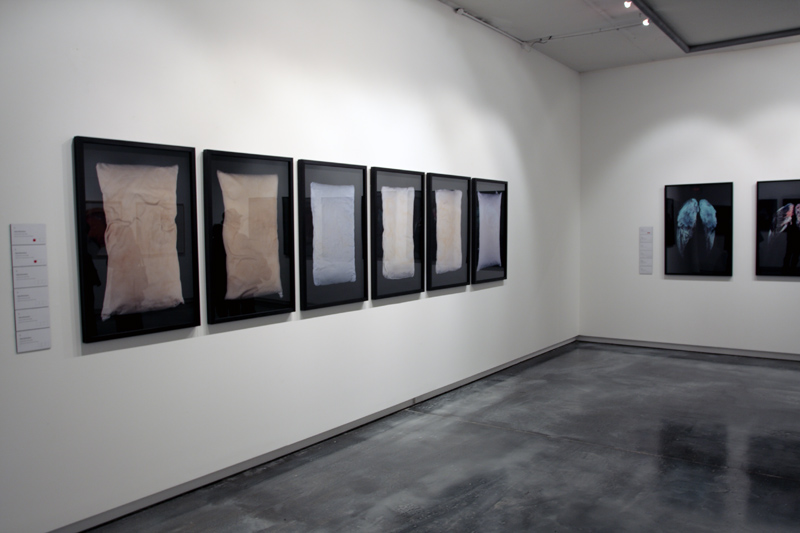
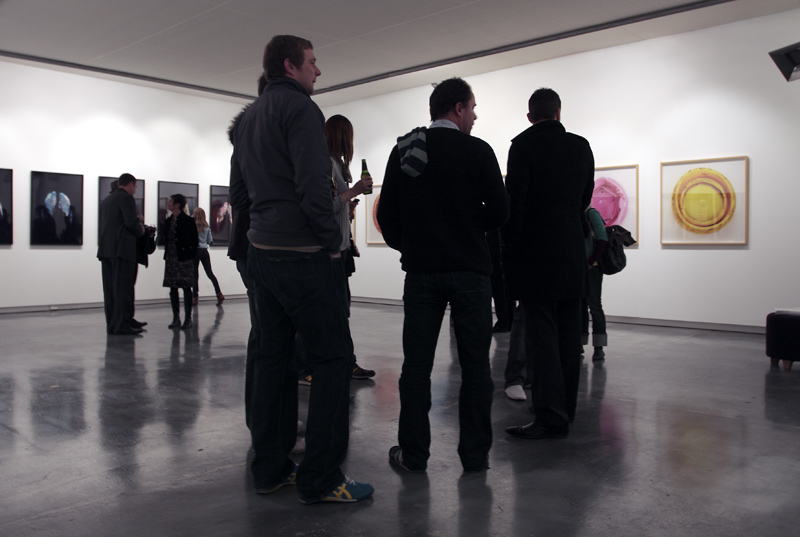
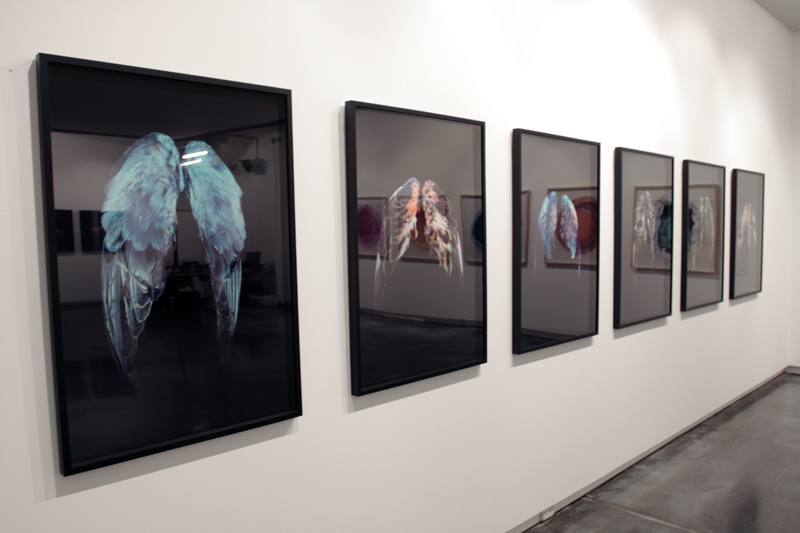
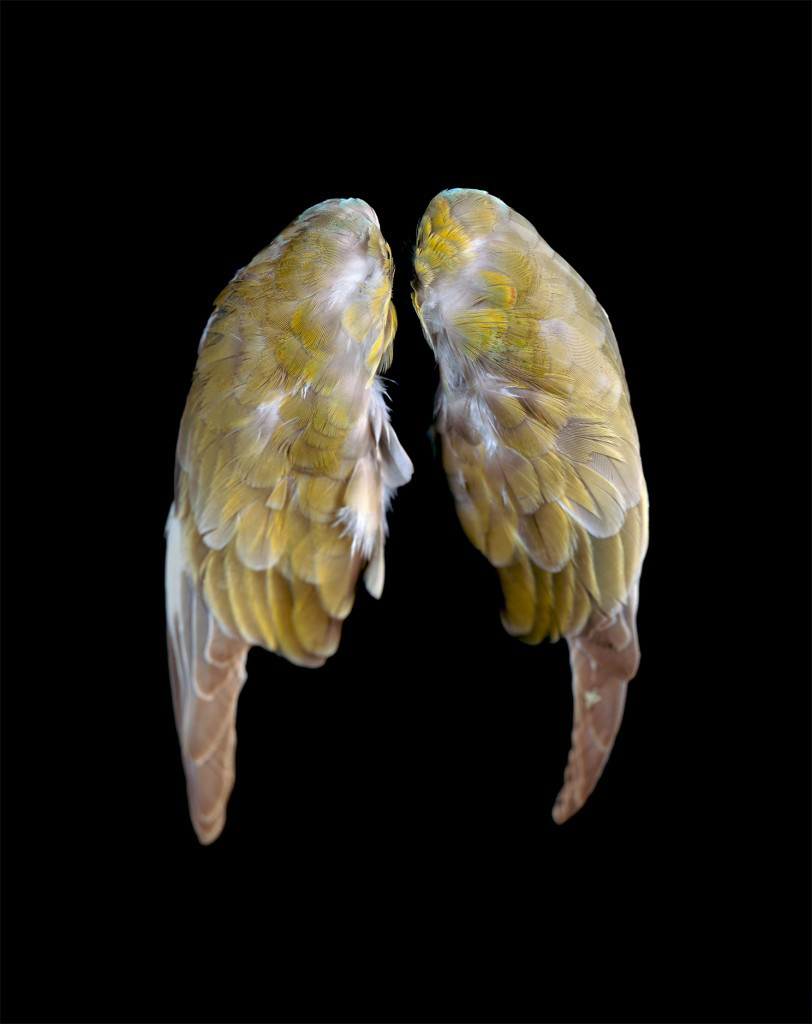
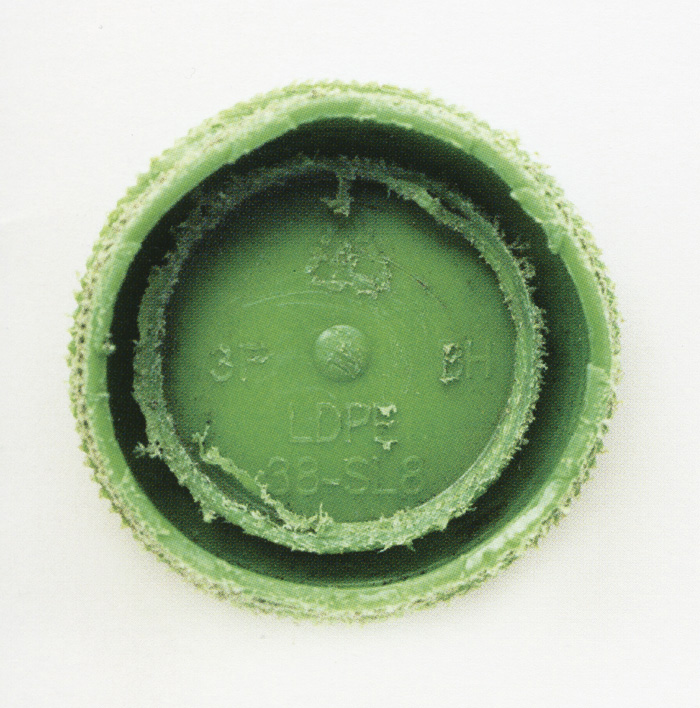
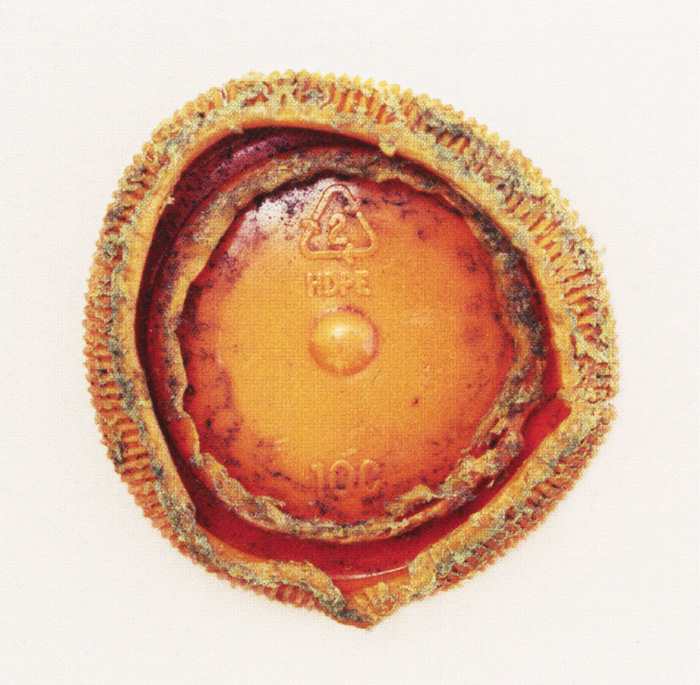
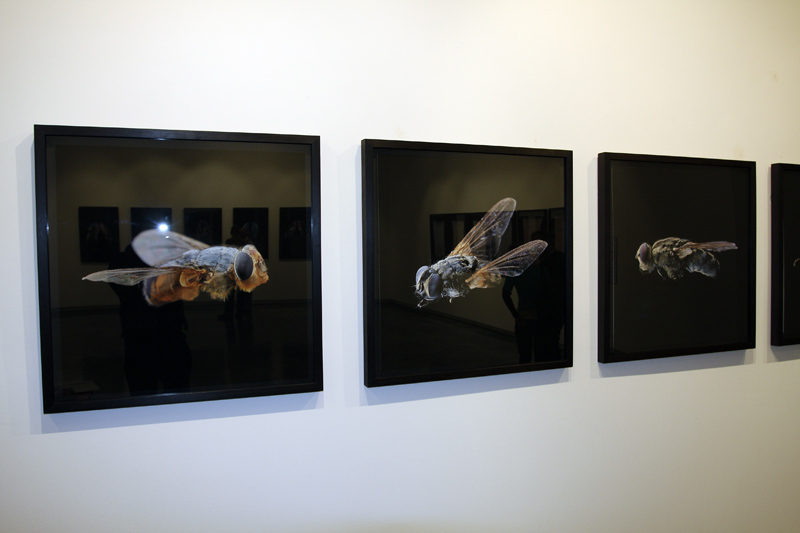
A small crowd was in attendance for the opening of two new exhibitions at Helen Gory Galerie (due to two auctions, one at Sotheby’s and the other at Deutscher-Menzies). Despite this the crowd was appreciative of the beautifully printed and well presented work. In the main exhibition Little Treasures four photographers show various bodies of work. Toby Richardson’s stained pillows (Portrait of the artist) from the years 1986-2003 were effective in their muted tones and ‘thickened’ spatio-temporal identity. CJ Taylor’s winged detritus from the taxidermist were haunting in their mutilated beauty. Steve Wilson’s sometimes legless flies were startling in their precision, attitude/altitude and, as someone noted, they looked like jet fighters! Finally my favourite of this quartet were the recyco-pop iridescent bottle tops of Will Nolan – “these objects remain enigmatic, resonating with a sense of mystery, hidden thoughts and unknown histories.” (Lauren Tomczak, catalogue text).
Some good work then in this take on found, then lost and found again treasure trove, work that retrieves and sustains traces of life, history and memory in the arcana of discarded and dissected objects.
The hit of the night for me was the work of Alan Constable, his “objects that see”. I found his clay cameras intoxicating – I wanted to own one (always a good sign). I loved the exaggerated form and colours, the playfulness of the creativity on display. Being a photographer I went around trying to work out the different makes of these scratched and highly glazed cameras without looking at the exhibition handout. For a very reasonable price you could own one of these seductive (is that the right word, I think it is) viewfinders and they were selling like hot cakes!
Dr Marcus Bunyan
Many thankx to Helen Gory Galerie for allowing me to publish the photographs in the posting. Please click on the photographs for a larger version of the image.
Little Treasures
“Wings, pillows, flies and bottle tops are blown up vastly in stunning large scale prints that take the viewer through the looking glass into another universe, their brilliant colour and rich detail revealing unexpected beauty and delight in these forgotten things. Unmanipulated and finely printed, these images are the product of each artist’s technical mastery and inquisitive eye finding beauty in the cast off and delight in the ignored.” (Jemima Kemp, 2009)
Installation view of Little Treasures showing Toby Richardson’s Portrait of the Artist series (2009, left) Photo: Marcus Bunyan
Installation view of Little Treasures showing the work of CJ Taylor (2009, left) and Will Nolan’s Bottle Top series (2009, right) Photos: Marcus Bunyan
Installation view of Little Treasures showing the work of CJ Taylor (2009) Photo: Marcus Bunyan
CJ Taylor (Australian, b. 1951) Blue, turquoise yellow green 2009 Acrylic glass pigment print 110 x 79cm
CJ Taylor (Australian, b. 1951) Blue, Blue, Grey 2009 Acrylic glass pigment print 110 x 79cm
Installation view of Little Treasures showing Will Nolan’s Bottle Top series (2009) Photo: Marcus Bunyan
Will Nolan (Australian) Bottle top #10 2009
Will Nolan (Australian) Bottle top #1 2009
Installation view of Little Treasures showing Steve Wilson’s Fly series (2009) Photo: Marcus Bunyan
Clay Cameras
“From the box brownie to disposables, VHS to SLR, these works explore Alan Constable’s fascination with cameras. Unlike the streamlined design of the originals, Constable’s cameras appear soft, organic and malleable.”
Alan Constable (Australian, b. 1956) Not titled (pearlescent gold/black Leica) 2008 Ceramic Photo: Marcus Bunyan
Installation view of Clay Cameras by Alan Constable Photo: Marcus Bunyan
Alan Constable (Australian, b. 1956) Not titled (Hasselblad) 2008 Ceramic Photo: Marcus Bunyan
Alan Constable (Australian, b. 1956) Not titled (Digital with zoom lens) 2009 Ceramic Photo: Marcus Bunyan






















![E. J. Bellocq (American, 1873-1949) 'Untitled [prostitute of Storyville, New Orleans]' 1912](https://artblart.com/wp-content/uploads/2009/09/bellocq_1912_g.jpg "E. J. Bellocq (American, 1873-1949) 'Untitled [prostitute of Storyville, New Orleans]' 1912")






 Art Blart _ art and cultural memory archive
You must be logged in to post a comment.