Exhibition: ‘On the Street Where I Live: Viva Gibb’ at the City Gallery, Melbourne

“Viva Gibb’s passion project… powerful, intimate photographs of a Melbourne now vanished from our sight through gentrification.” Dr Marcus Bunyan

Exhibition dates: 5th March – 7th August, 2026

Curator: Savannah Smith
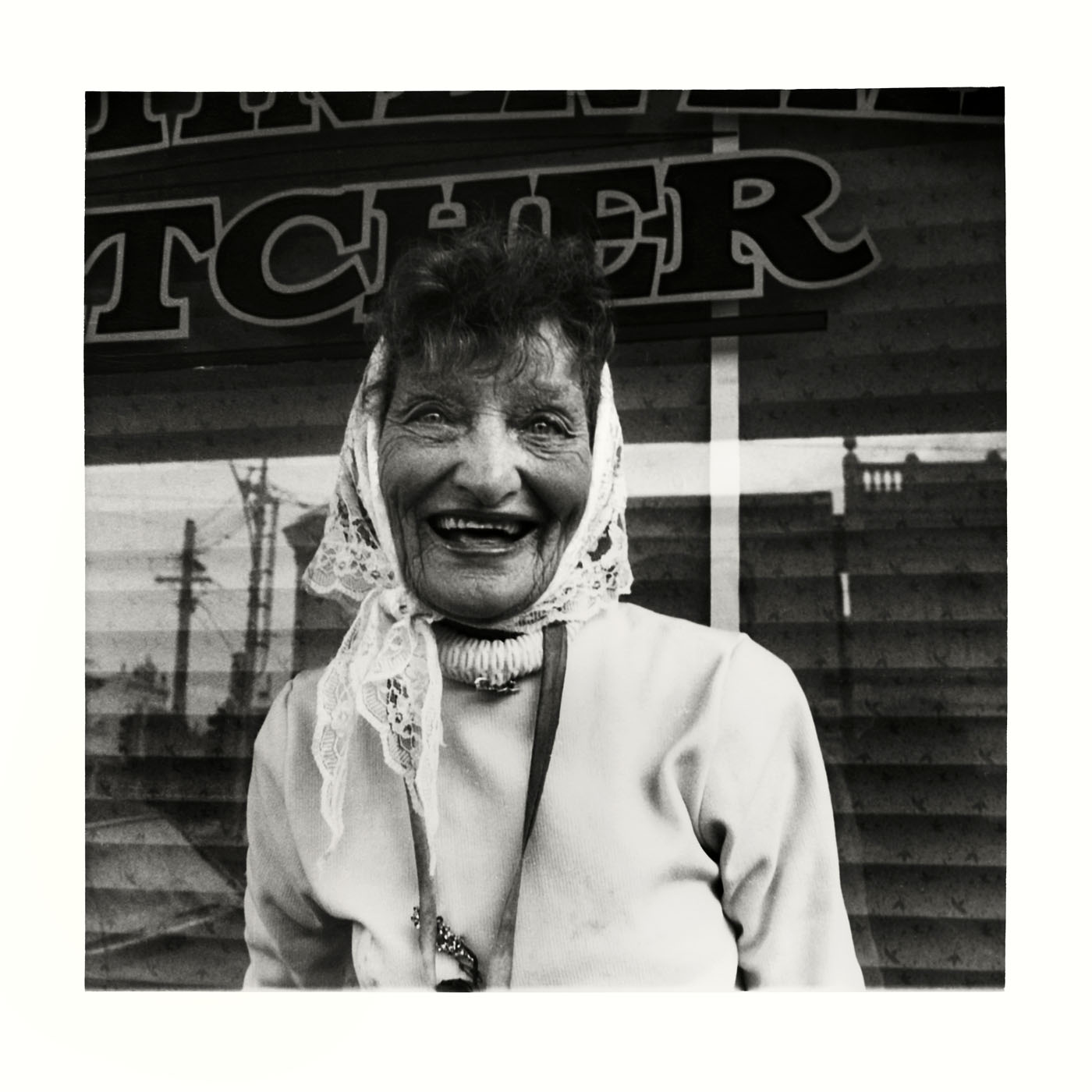
 

Viva Gibb (Australian, 1945-2017) ''Lolly seller', Victoria Street, West Melbourne' 1985


Viva Gibb (Australian, 1945-2017)
‘Lolly seller’, Victoria Street, West Melbourne
1985
Silver gelatin print
30.5 x 30.5cm
Donated by Sybil Gibb and Rupert Duffy to the Melbourne Art Trust in memory of Viva Gibb 2025
© Courtesy of the Estate of Viva Gibb


Please handle with care –


I read a comment about the exhibition On the Street Where I Live: Viva Gibb at the City Gallery, Melbourne on Instagram the other day. It described the exhibition as “charming”.

What does that mean? charming… it’s almost as bad as calling an artist’s work “nice”. I’m sure if someone called my work “charming” I would take a turn and I think that Viva Gibb would be rolling in her grave if she heard the comment.

Let us be clear. Viva Gibb’s 1970s-1980s social documentary portraits of the people of inner city Melbourne (specifically North and West Melbourne) centred around her studio in Capel Street are direct, tough, intimate, compassionate, empathetic, feminist, political (in a socialist sense) and strongly humanist photographs of the people of her neighbourhoods and the working class suburbs in which they lived. Everyday people, human dignity, and social connection.

Through “mid or long shots, with the subject captured in relation to their environment,” Gibb’s photographs picture the day-to-day lives of the people that surrounded her, people that she had a connection with and wanted to photograph. As she said, “I only ask them for a photograph if I am interested in that person, if there is something in the whole story about them.”

Gibb photographed the people of these suburbs, people who formed countercultural communities of artists and intellectuals, cafe owners and customers, butchers and bakers, the old, the young, punks, dating couples and the homeless. She photographed facets of their life revealing within the images their innate dignity (every person has high value and deep worth simply because they are human), often using a multi-image convention to capture their essence, returning to photograph them over an extended time period. She built a relationship with people for however short or long a time in order to tell their story.

“The people in my photographs are those who have survived at all odds – socially, racially, and economically – in our essentially bourgeois society; the lonely man next door, the old people who have lived in the area all their lives and are threatened with eviction, the homeless man whose only dream is to have a room of his own.”

Through her photographs we can feel the transformation of a moment into a story unfolded by observation.

As Walker Evans observed, “Leaving aside the mysteries and the inequities of human talent, brains, taste, and reputations, the matter of art in photography may come down to this: it is the capture and projection of the delights of seeing; it is the defining of observation full and felt.”

The defining of observation full and felt. There goes Viva…

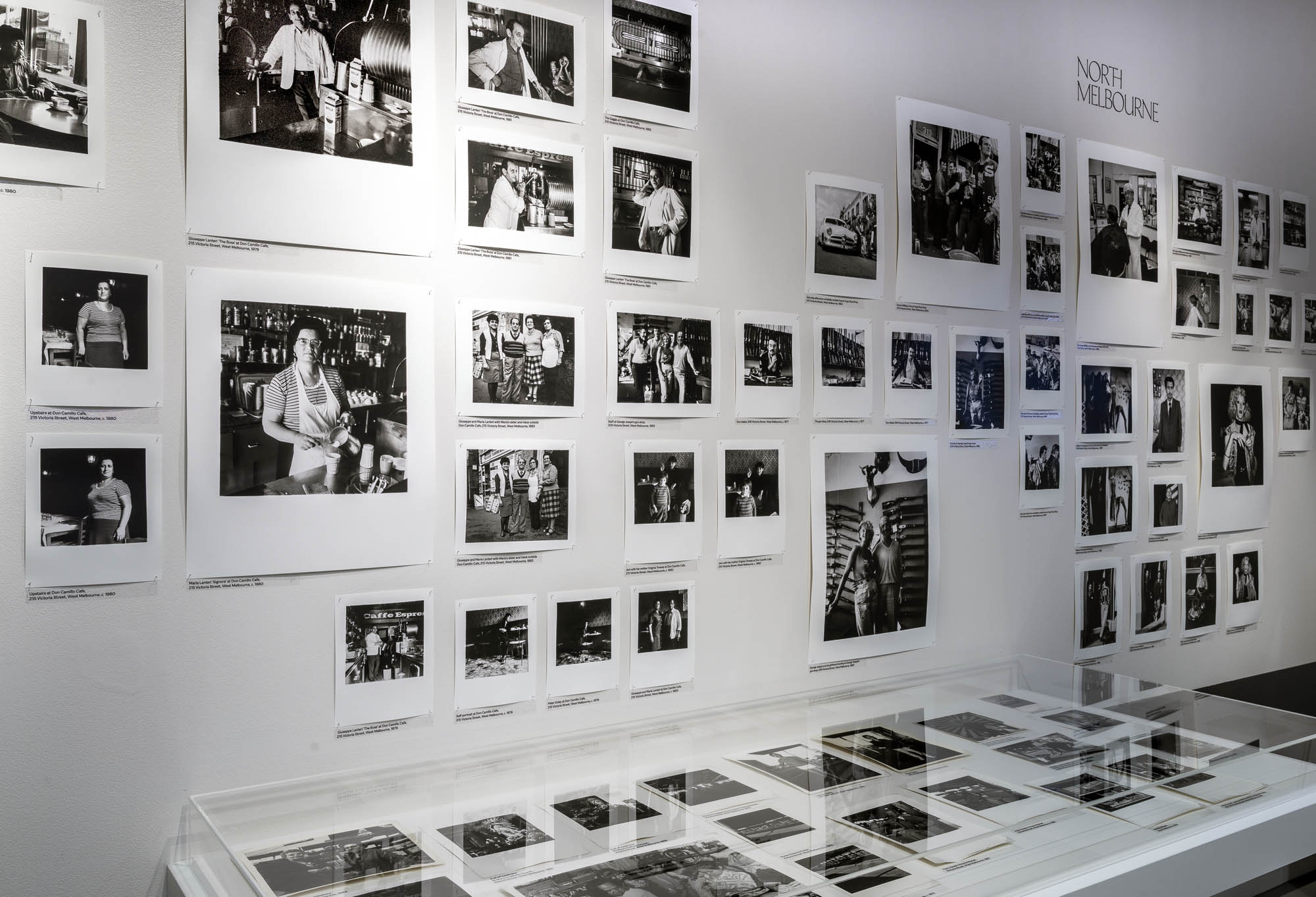
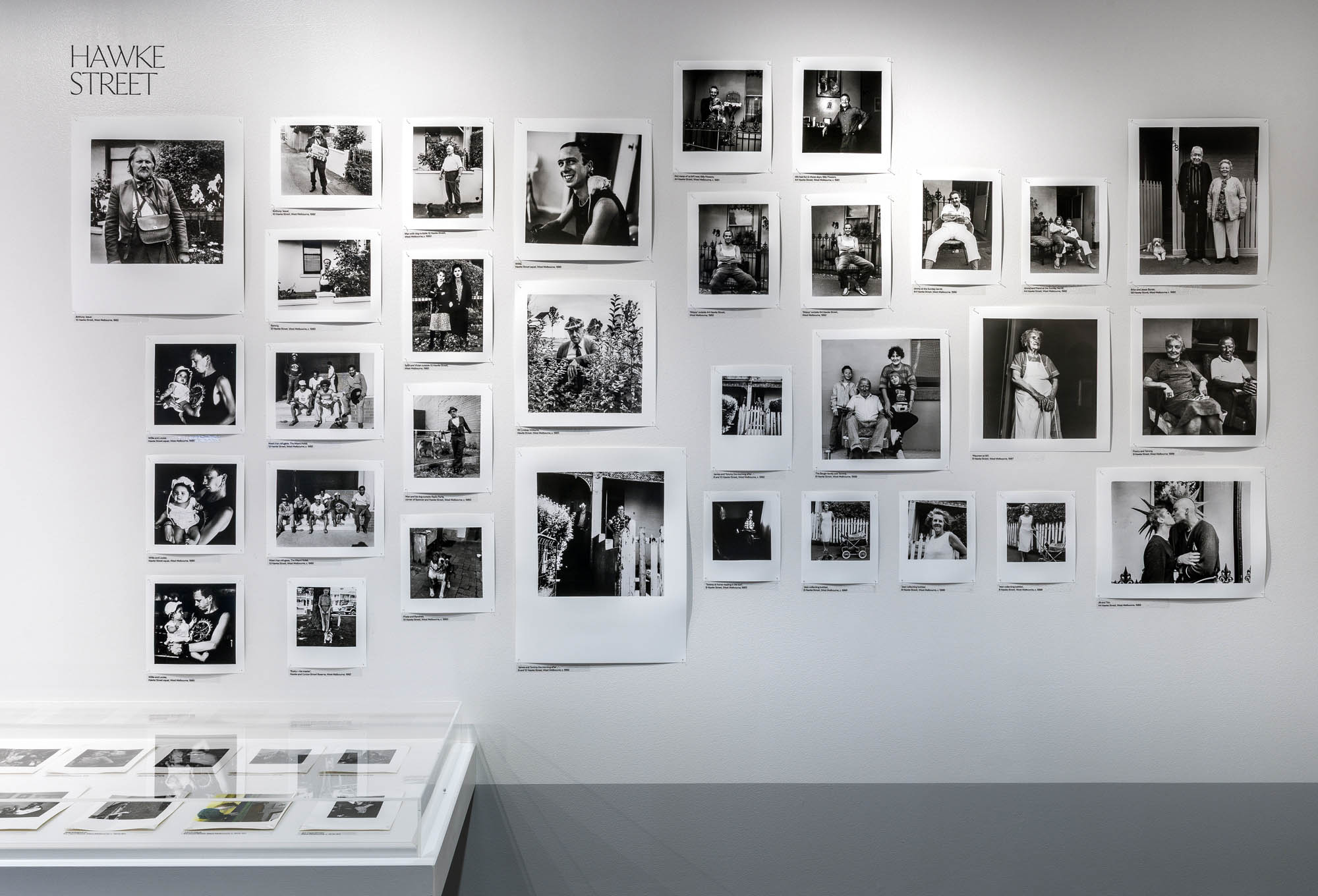
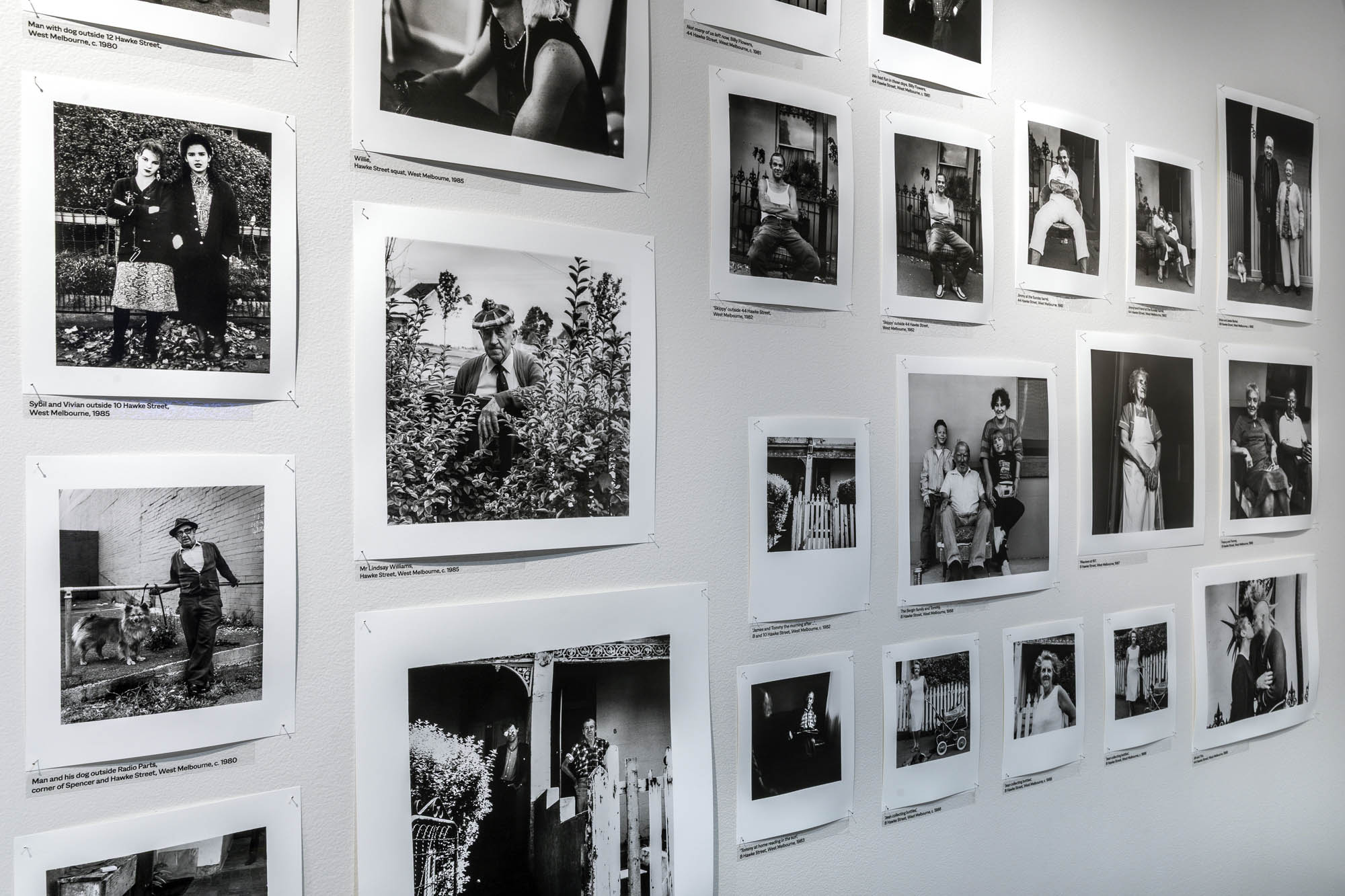
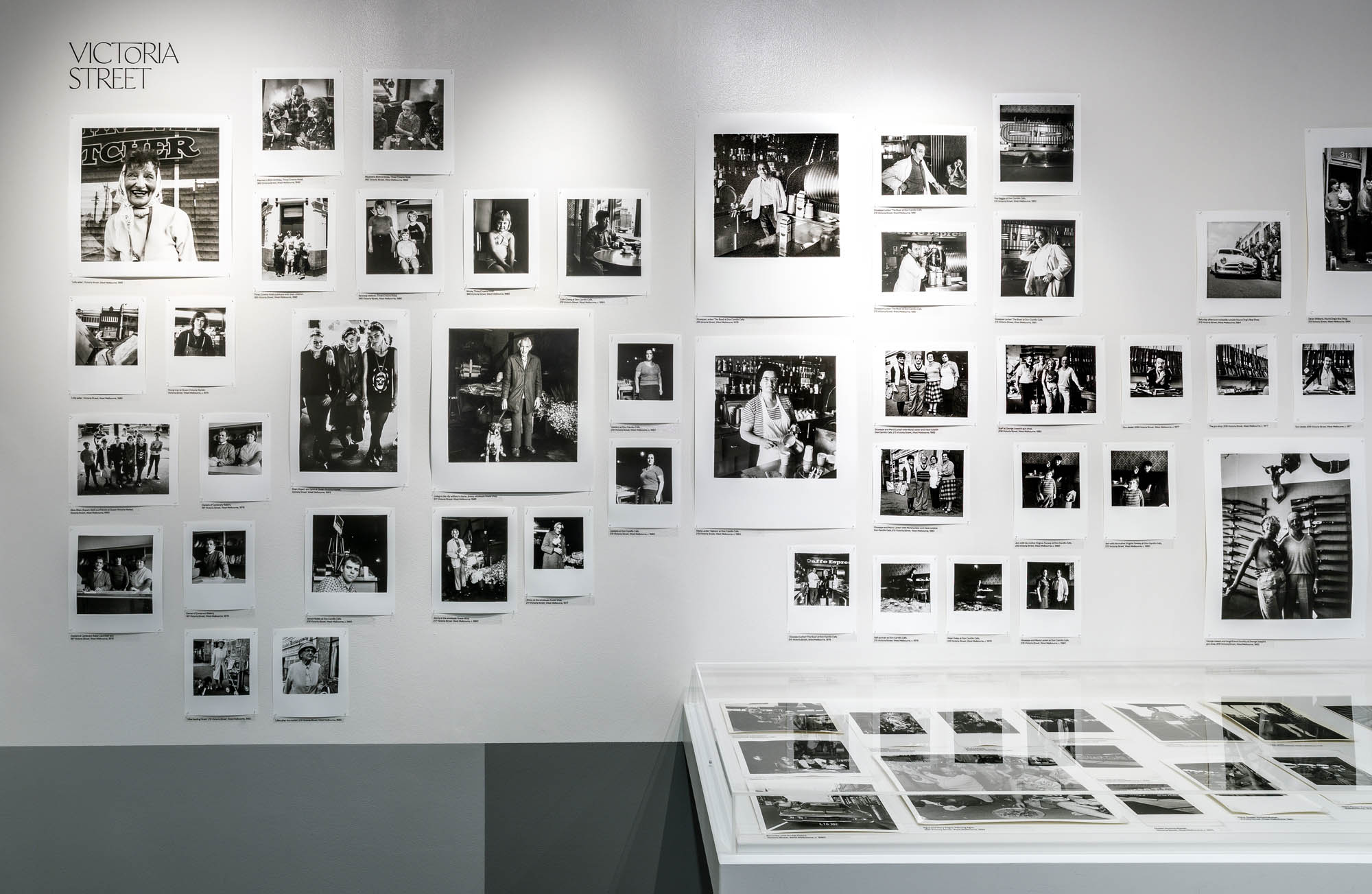
In one sense the hang of the exhibition, in photo cloud form, emphasises the interconnectedness of all people and all things within these communities, but conversely the viewer can become overwhelmed by the amount of photographs. Collectively, they become more of a sociological project rather than photographs with an individual aura. It is only when one stops and slows down and contemplates the individual portraits does one begin to admire the majesty of Gibb’s achievement.

Using a Rolleiflex medium-format camera for most of her portraiture so that she could look down into the camera while having a direct relationship to the person being photographed (not a camera held to the eye) one can see how, as James McArdle observes, she built the trust of the person being photographed. “… one can see how Viva is standing above her camera or beside it, in eye contact with her subject, perhaps talking to them, calmly or animatedly depending on the reaction desired, as she presses the shutter.”

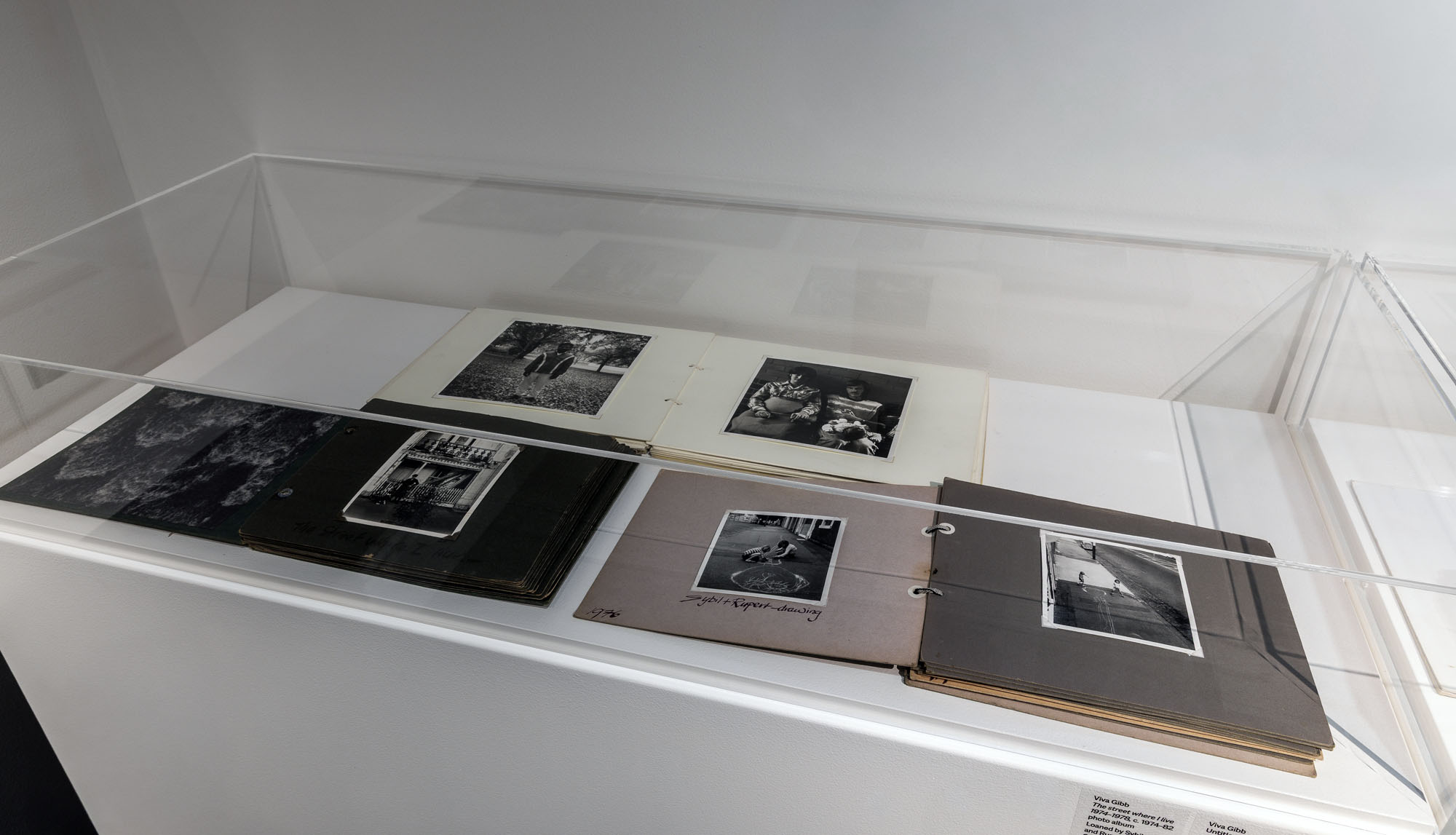
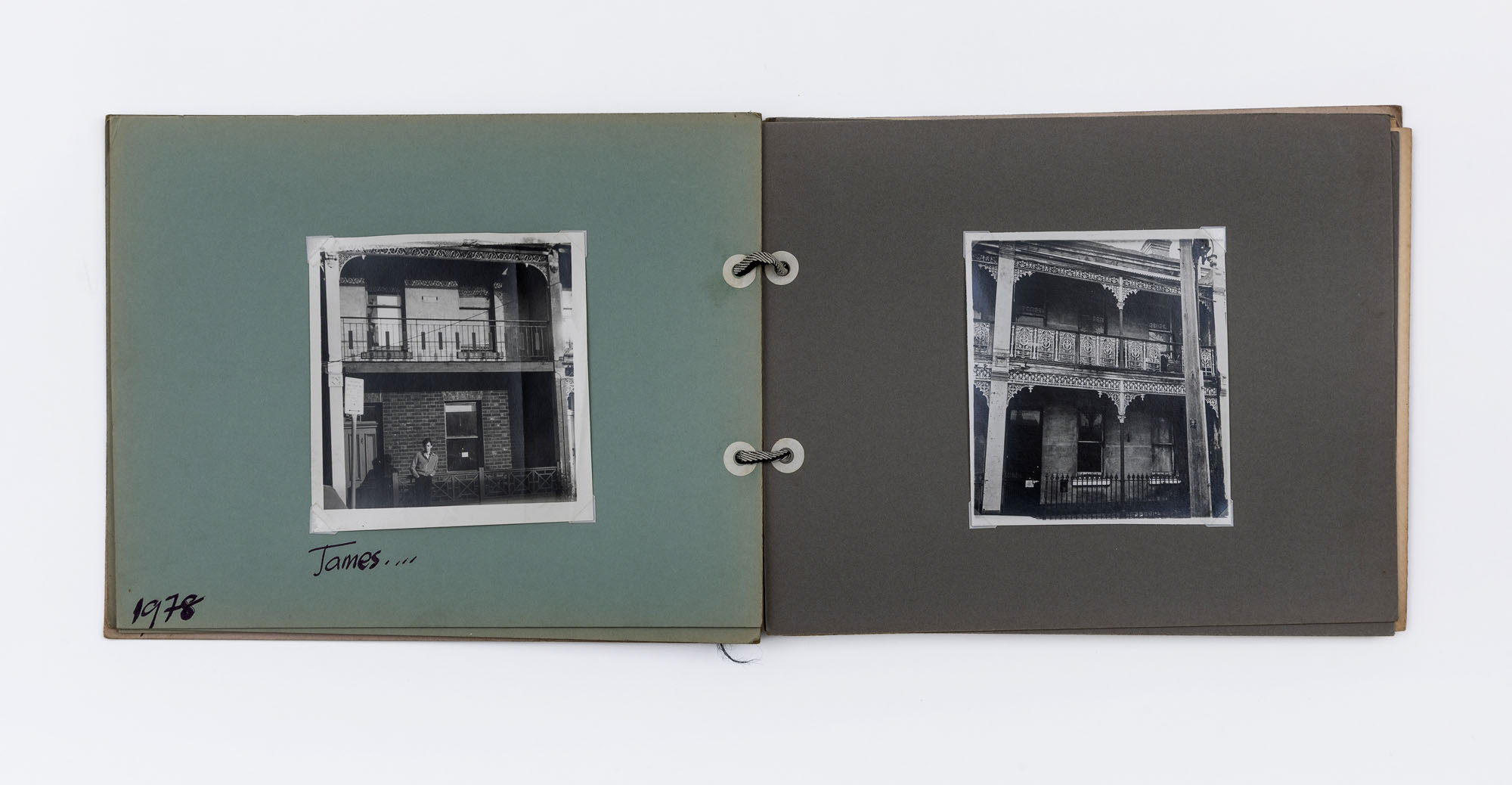
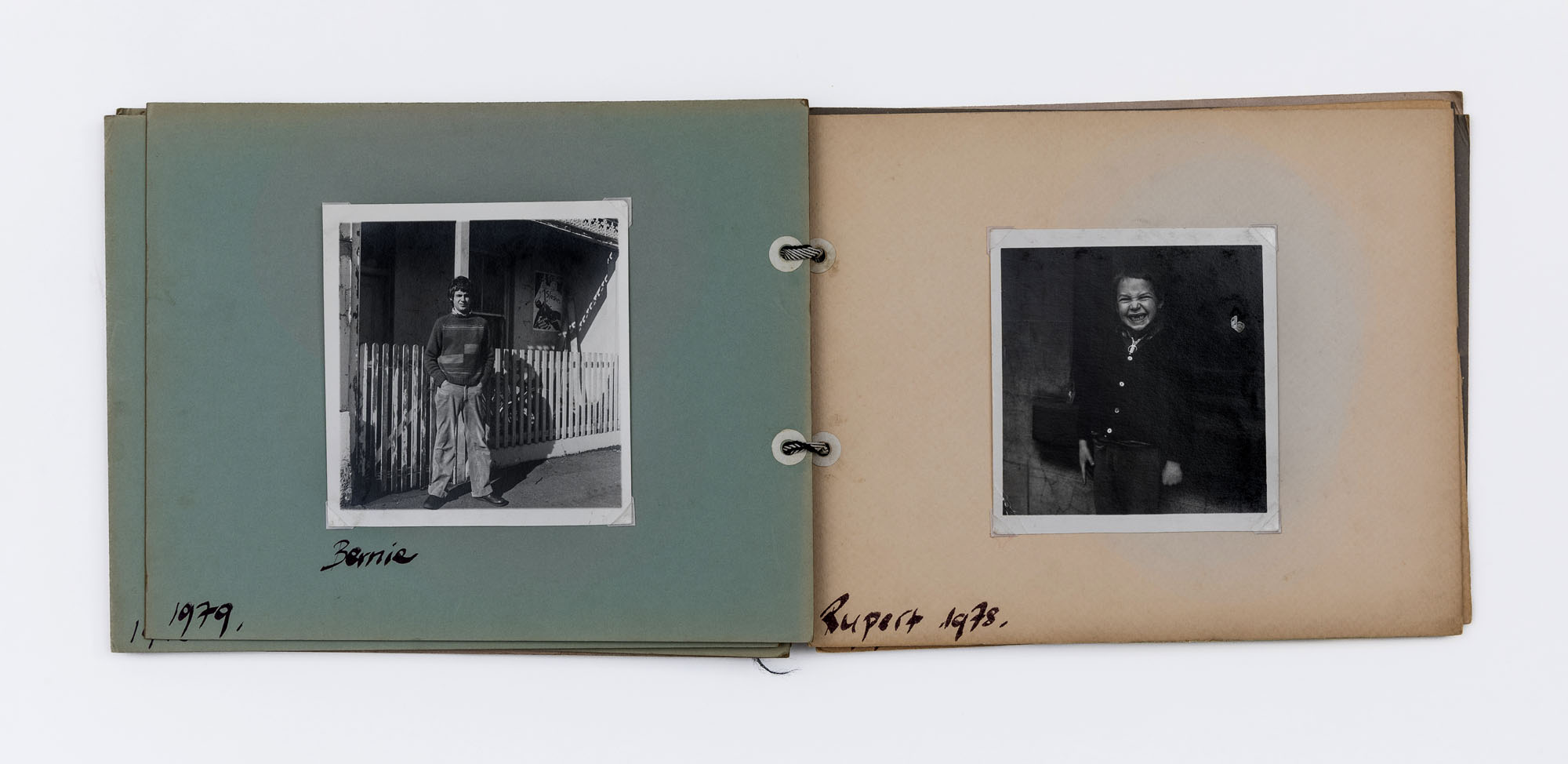
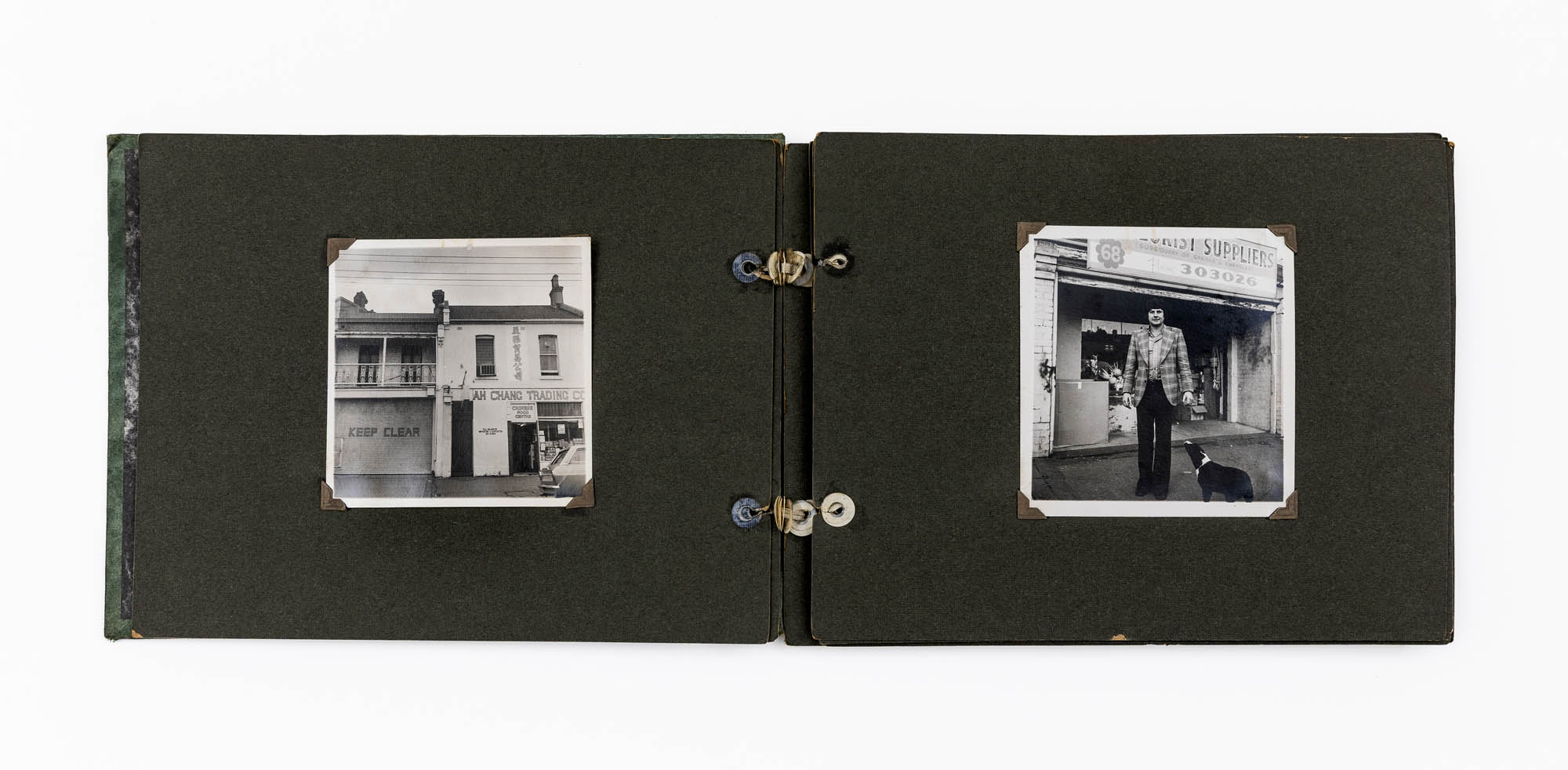
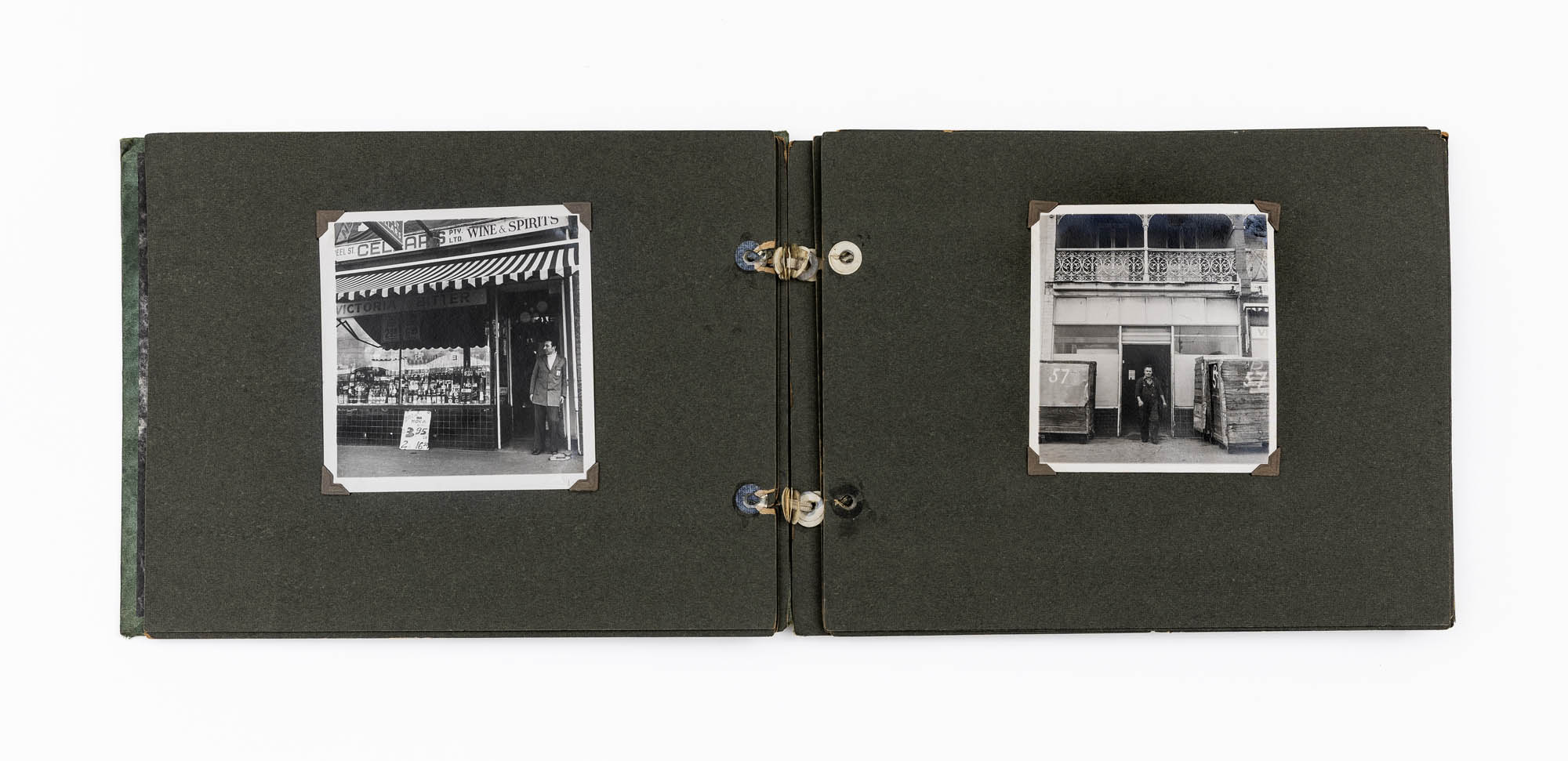
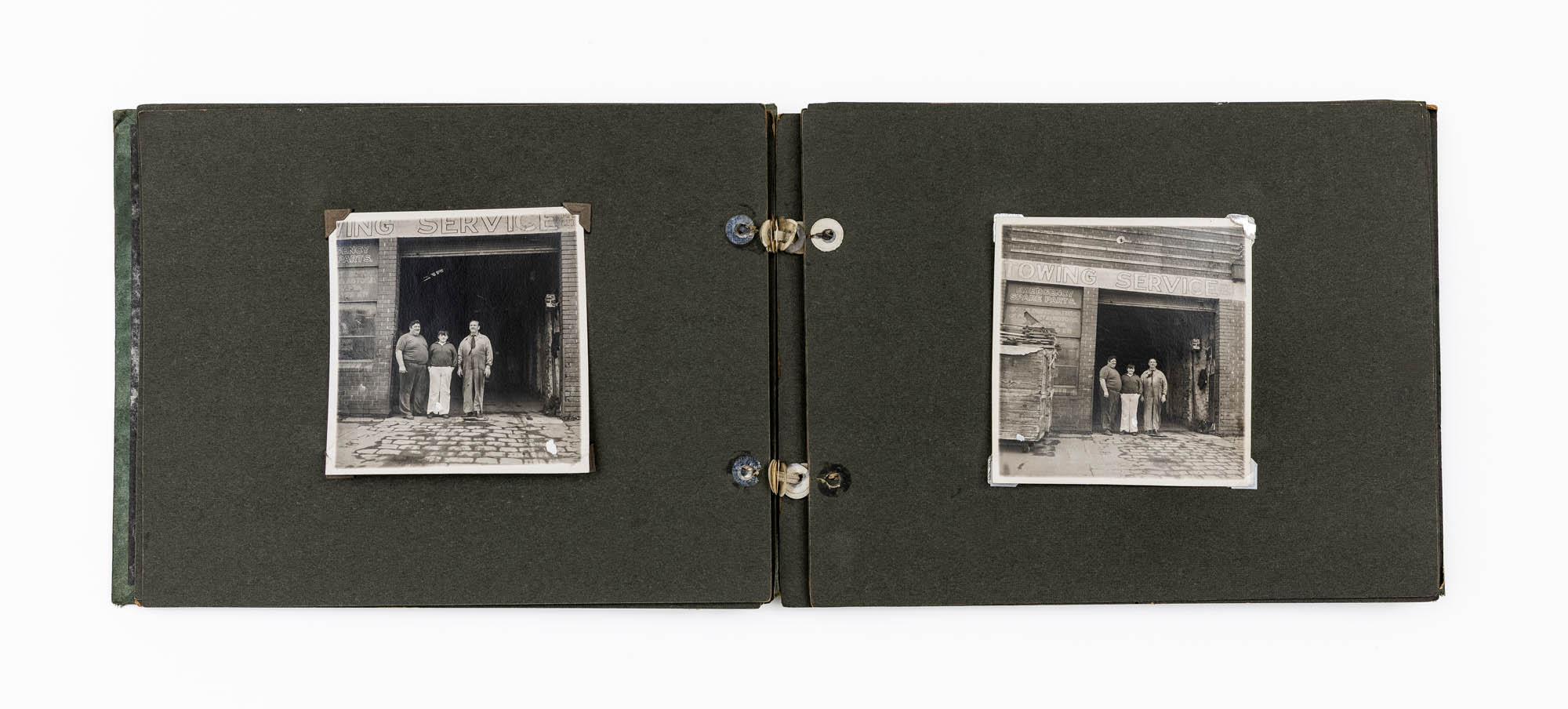
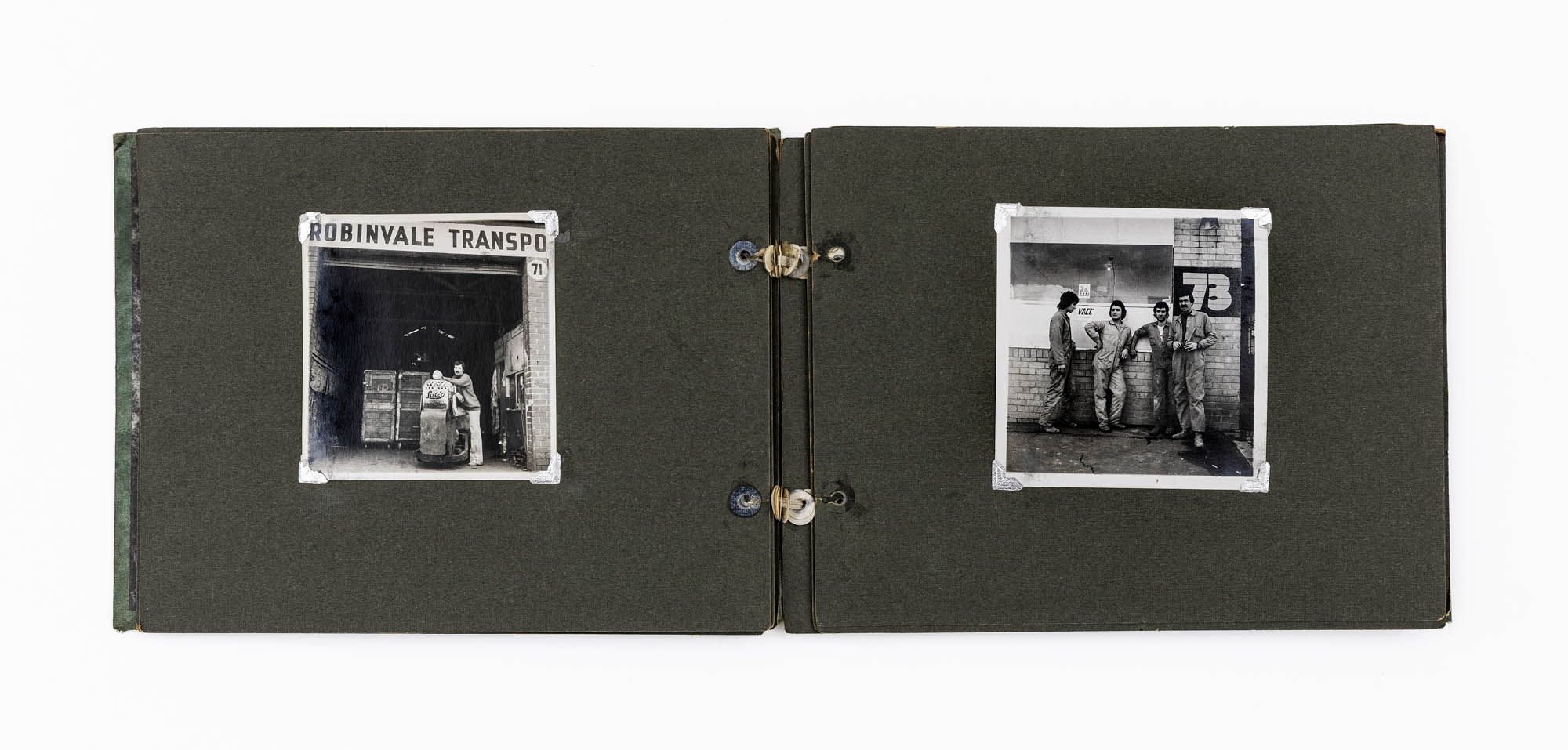
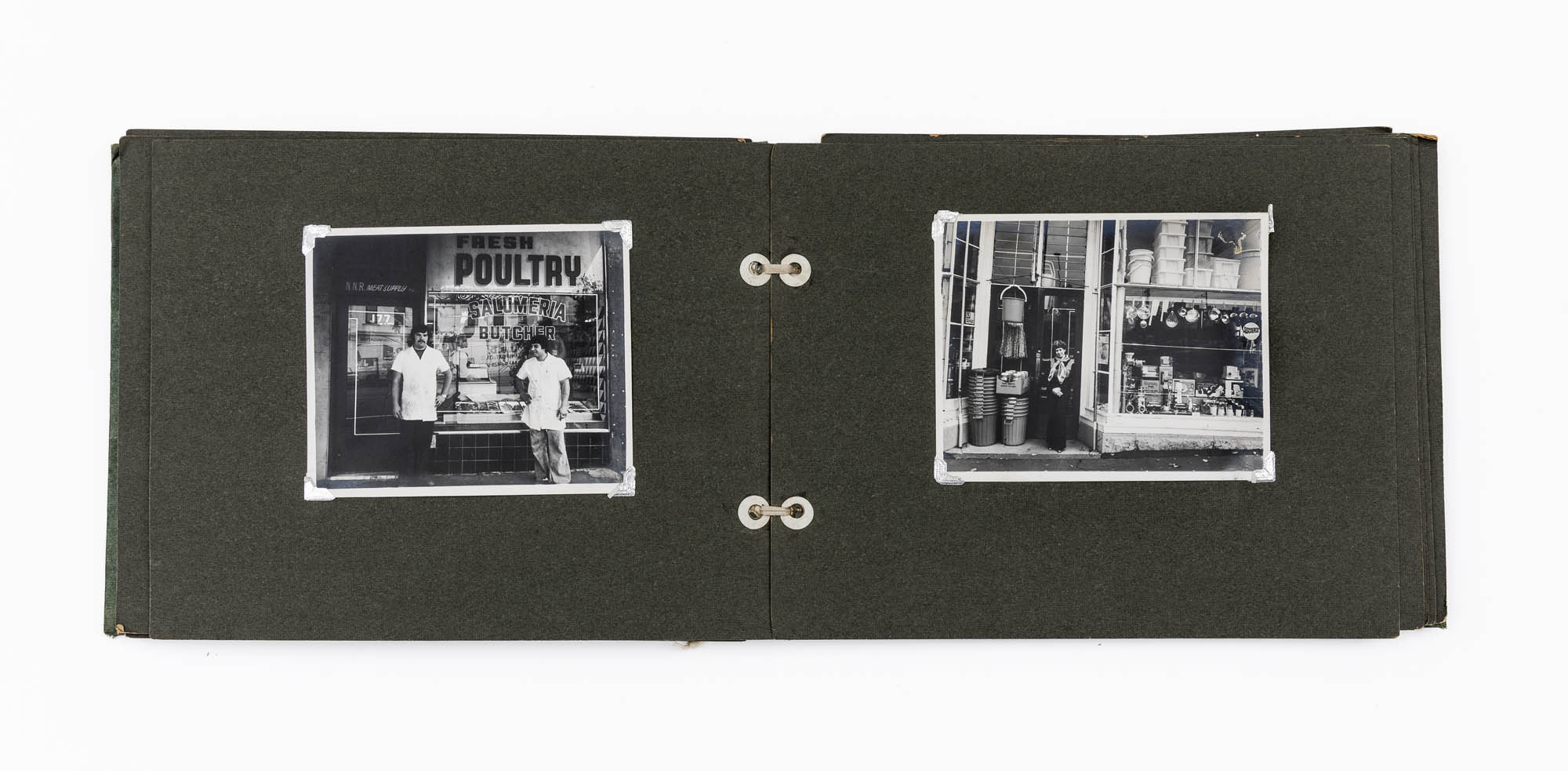
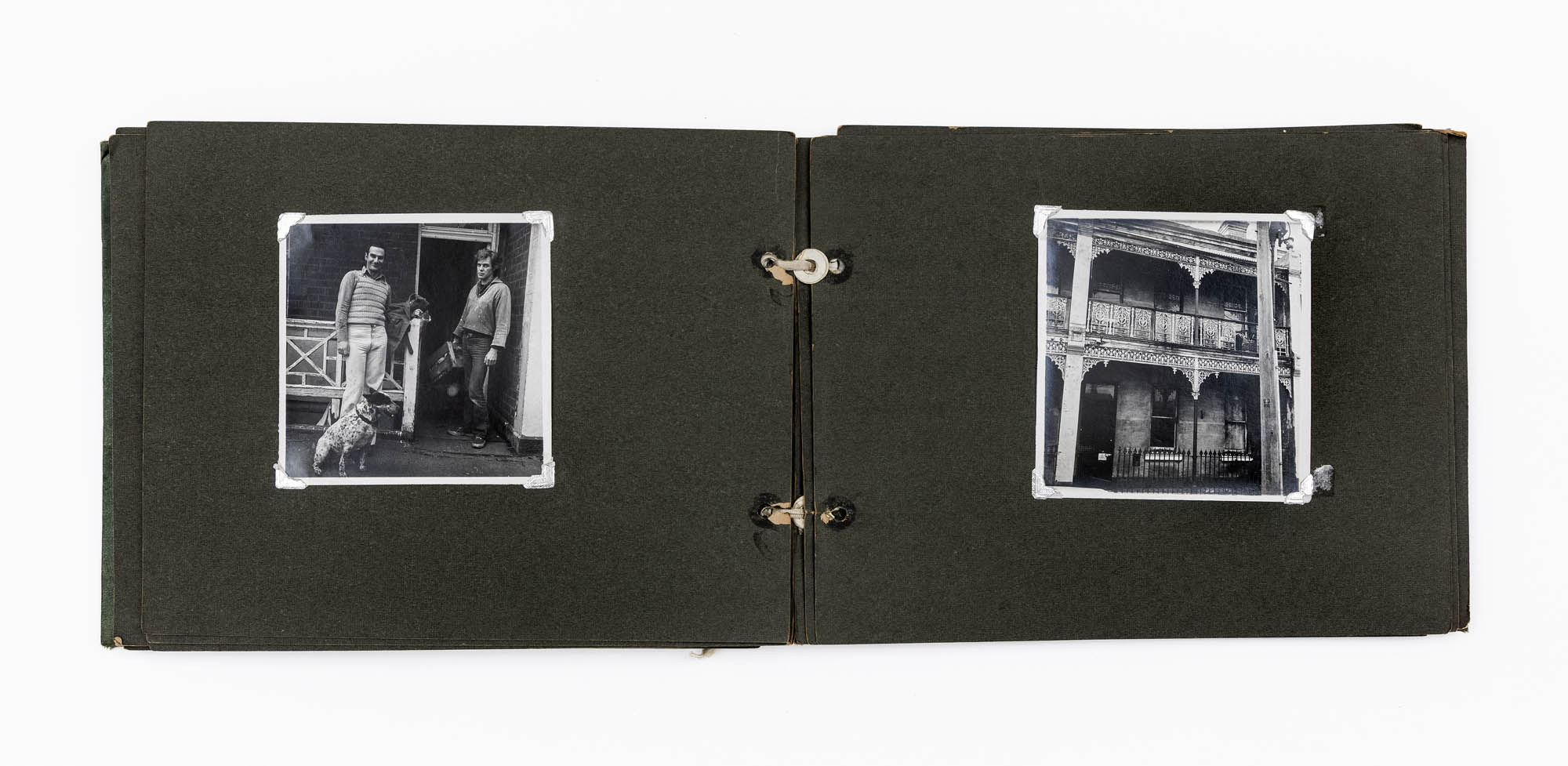
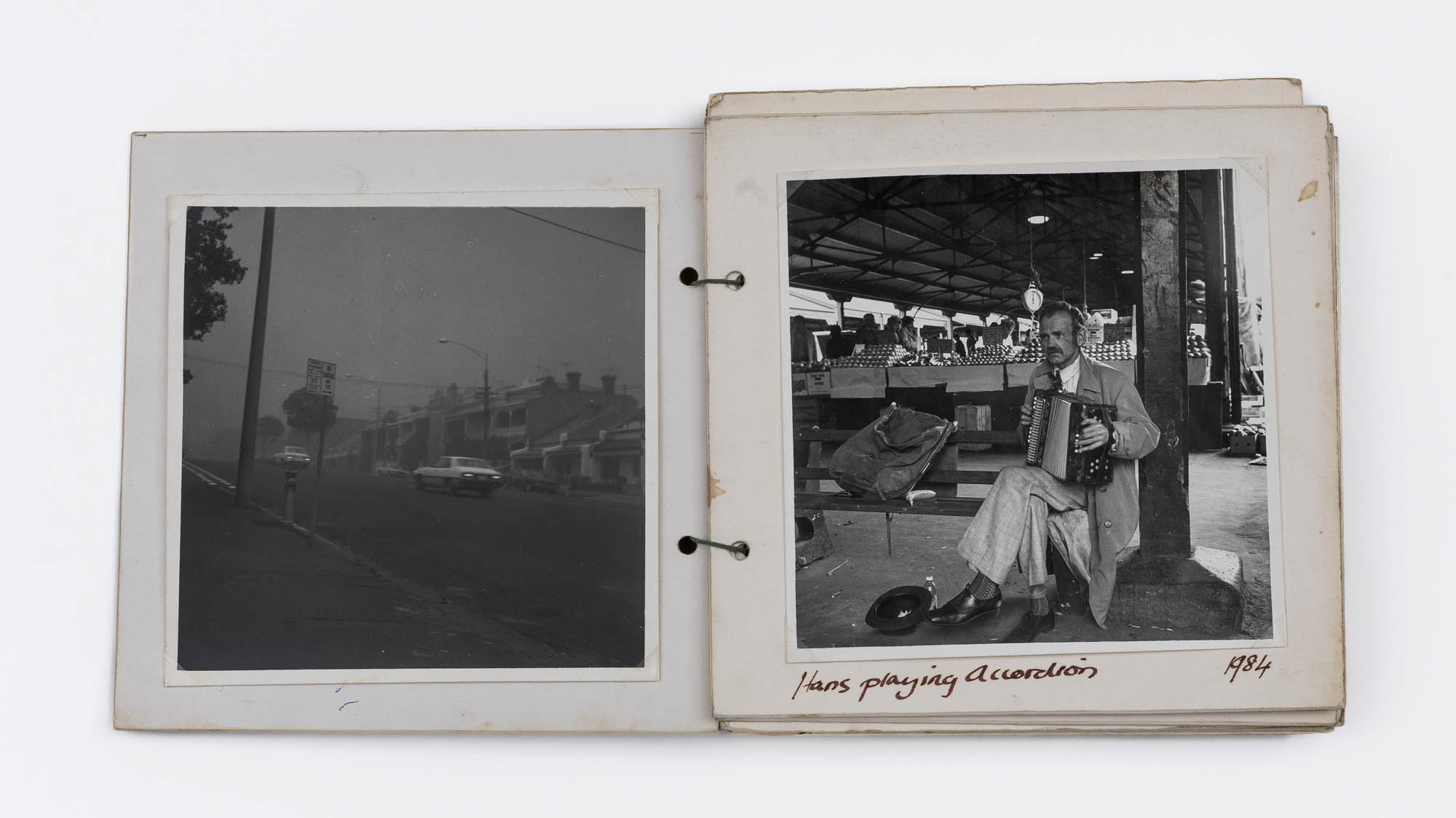
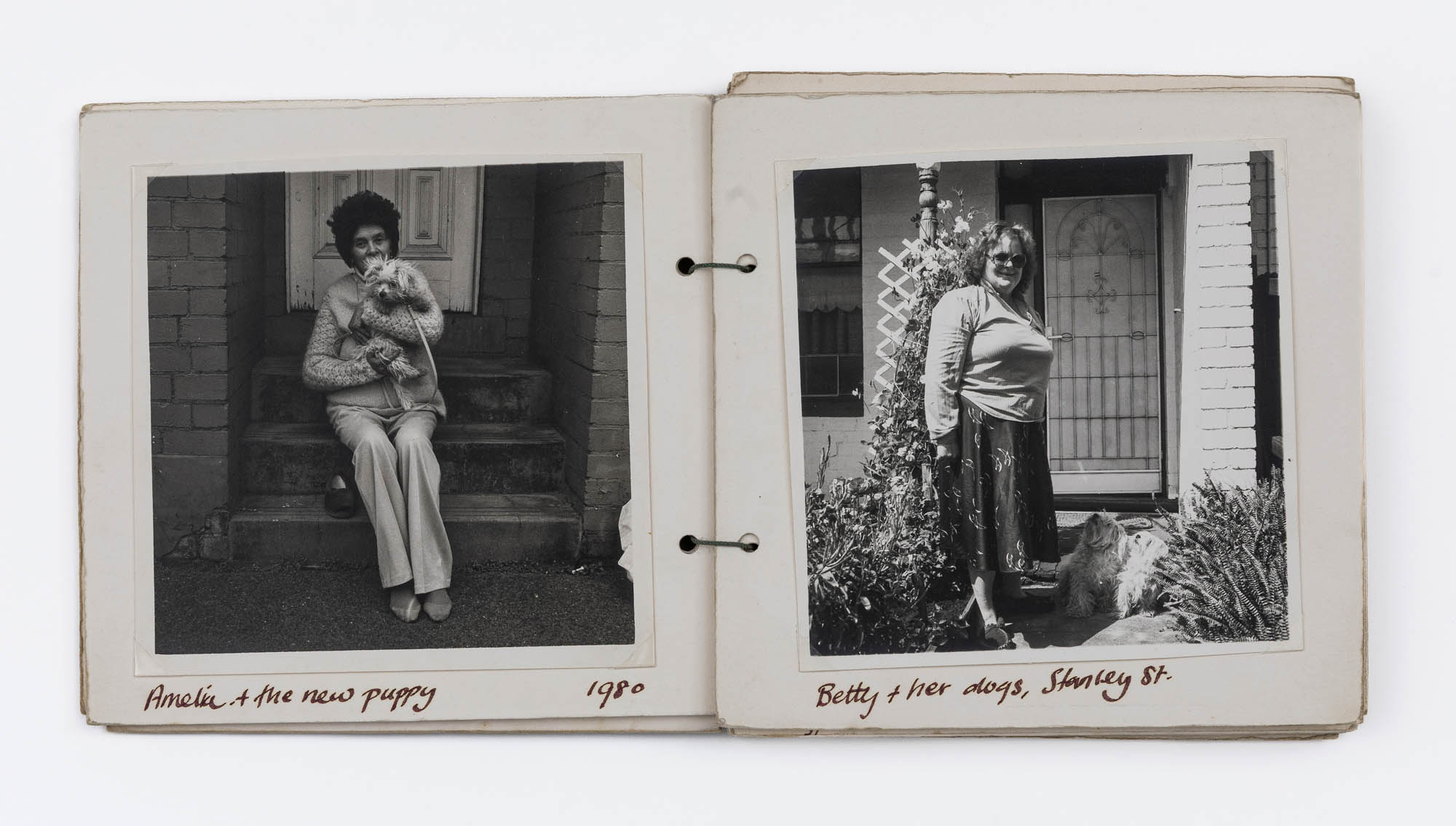
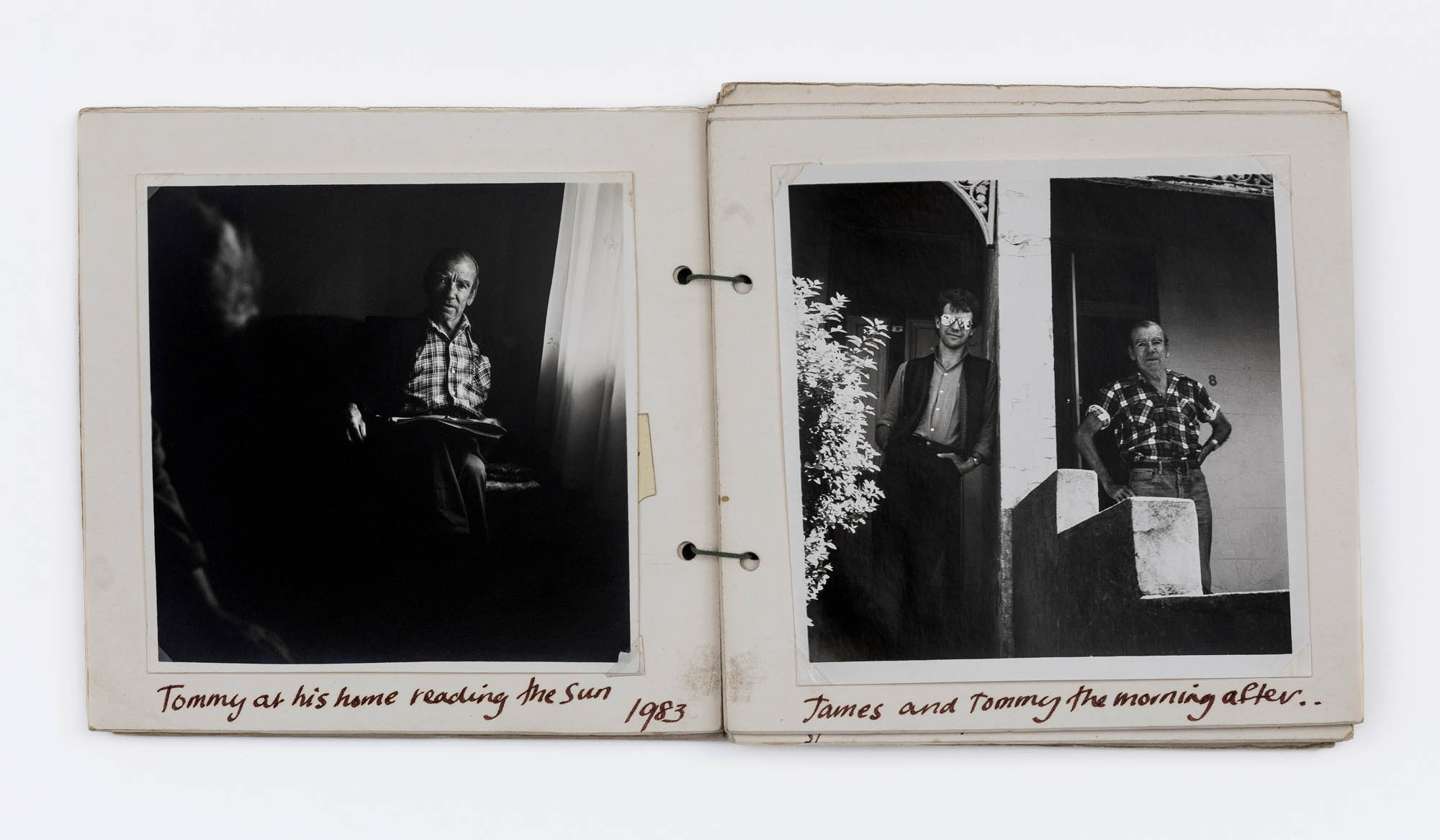
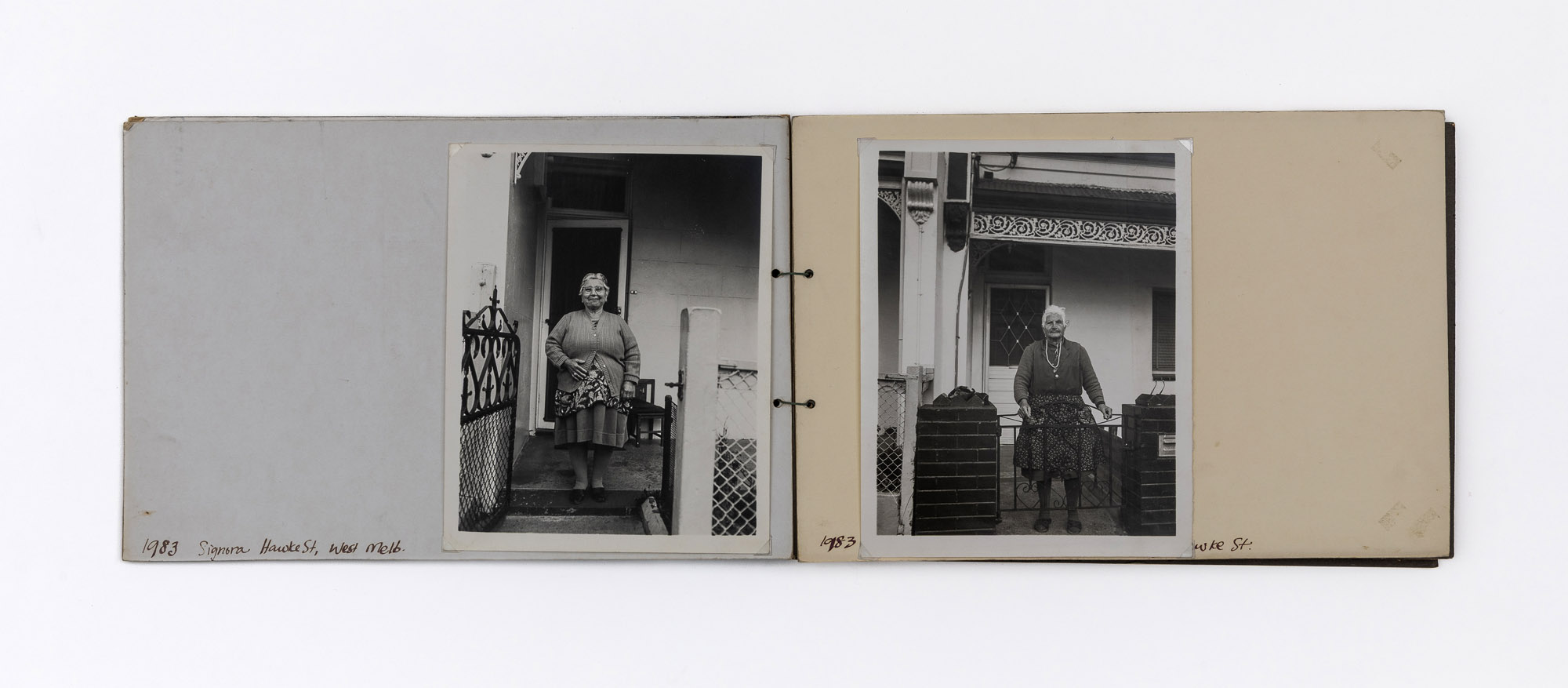
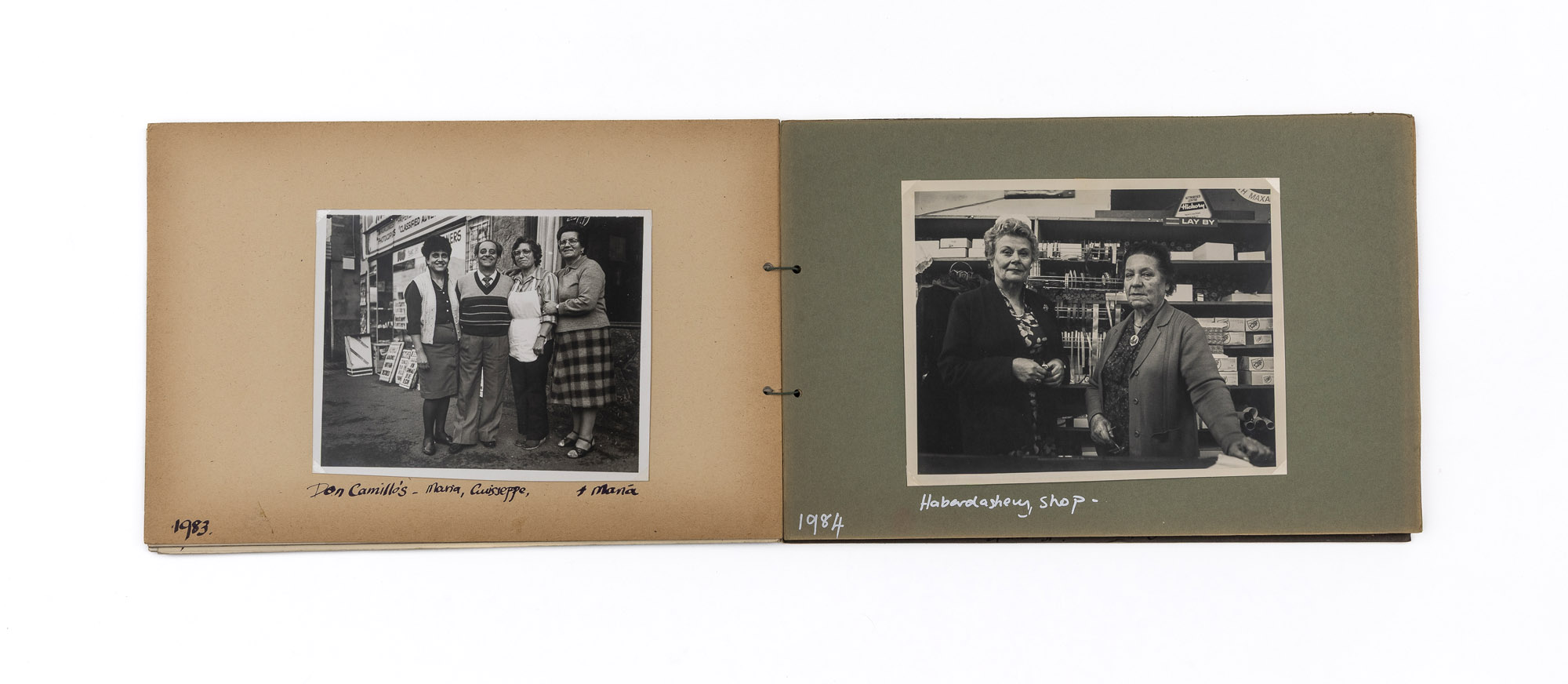
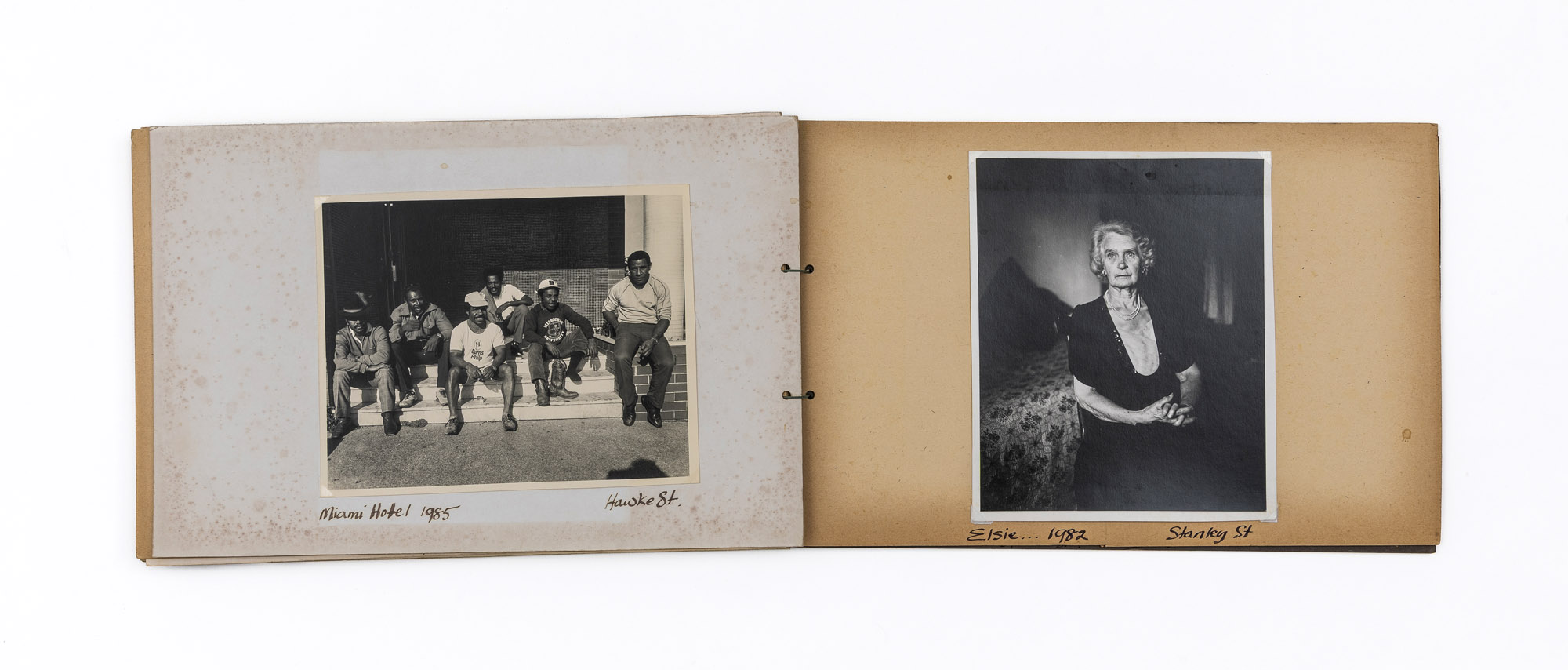
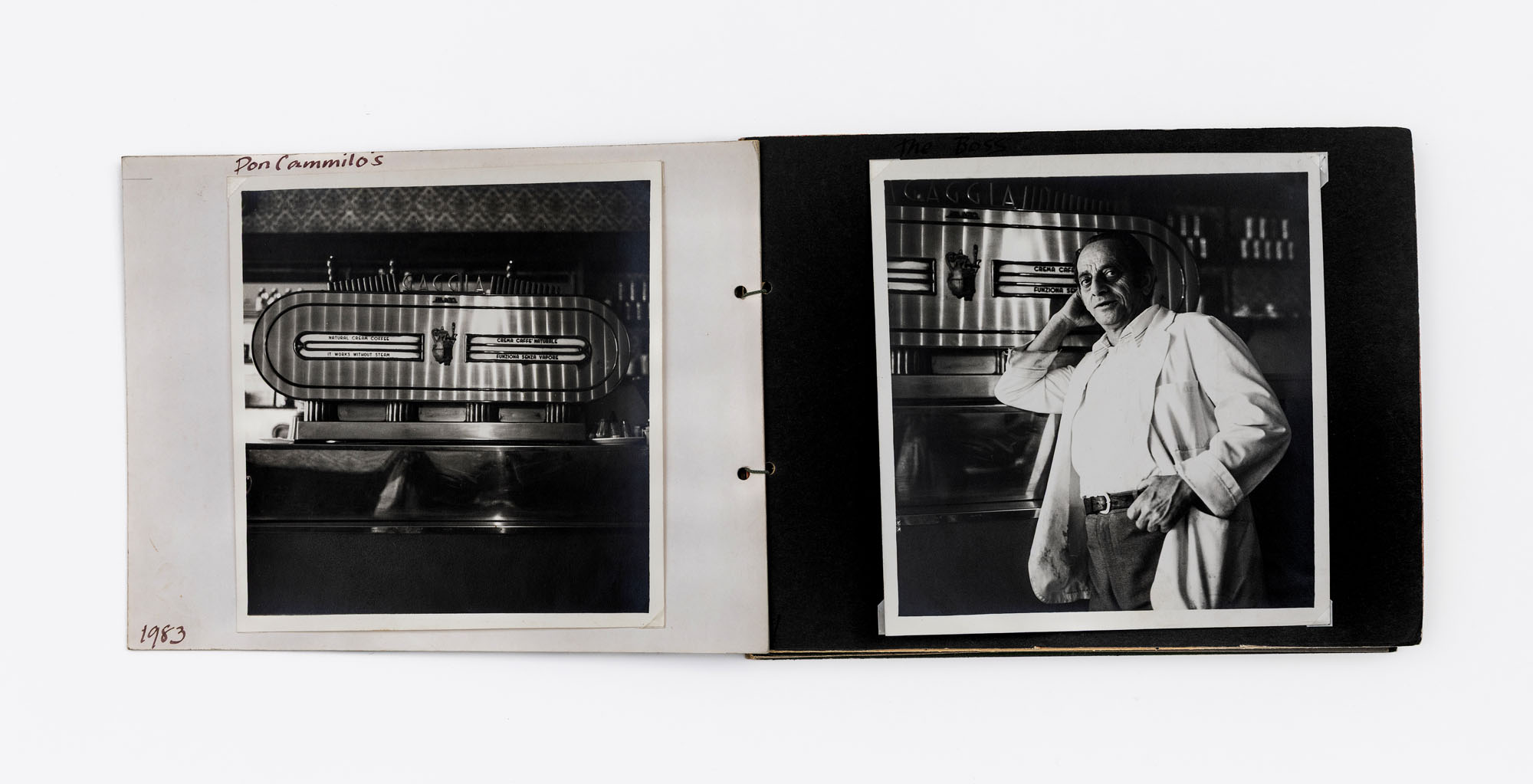
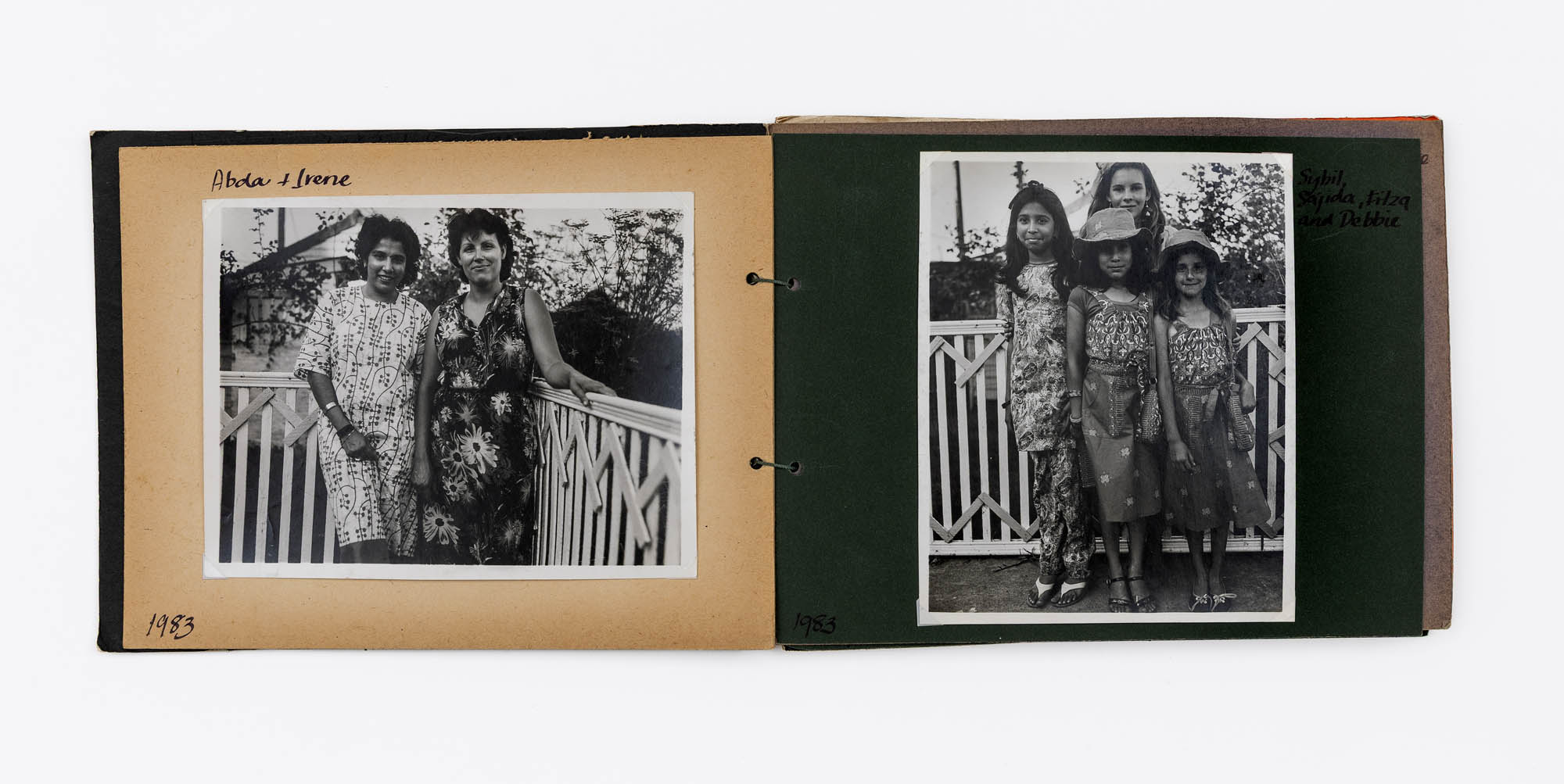
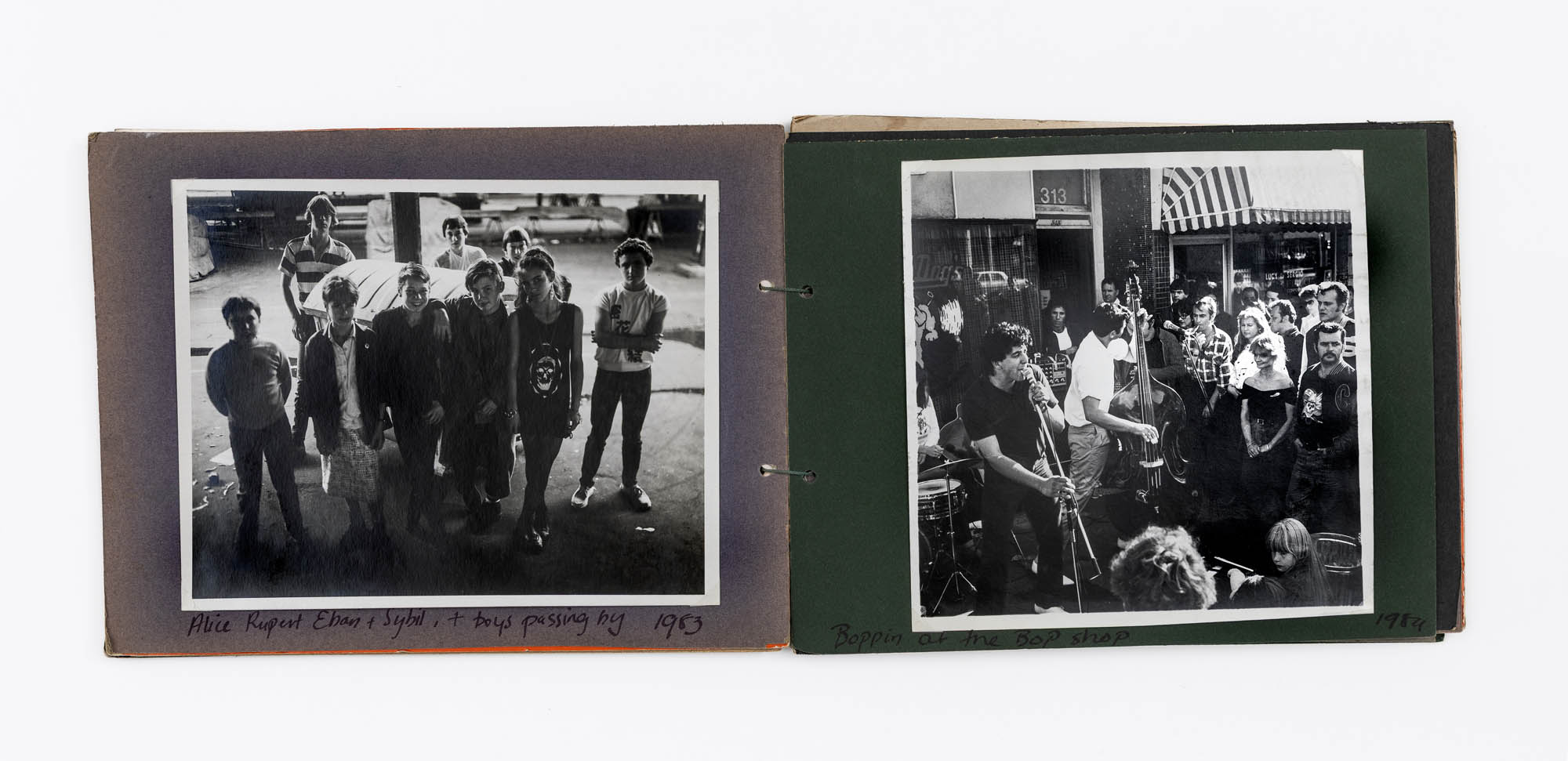
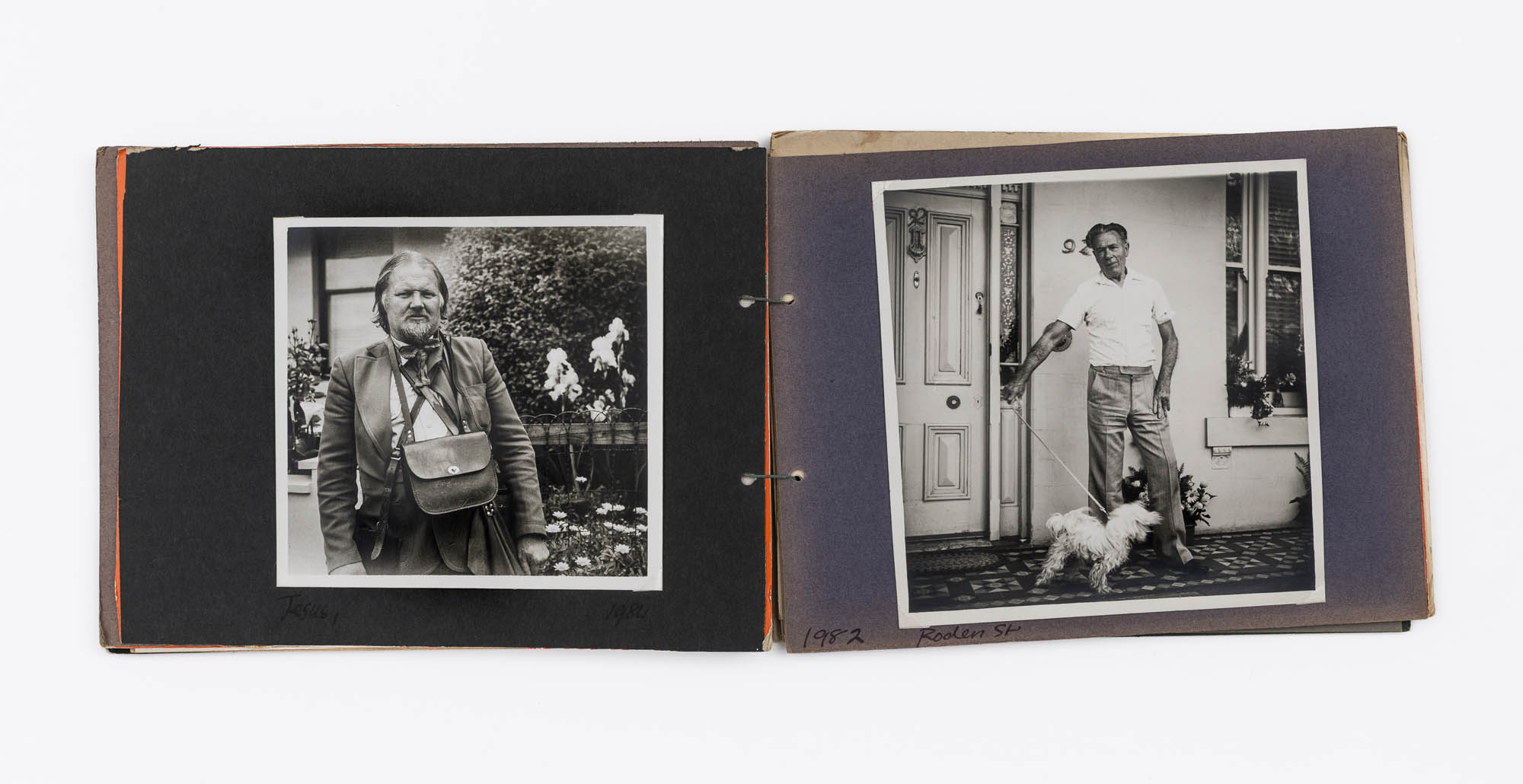
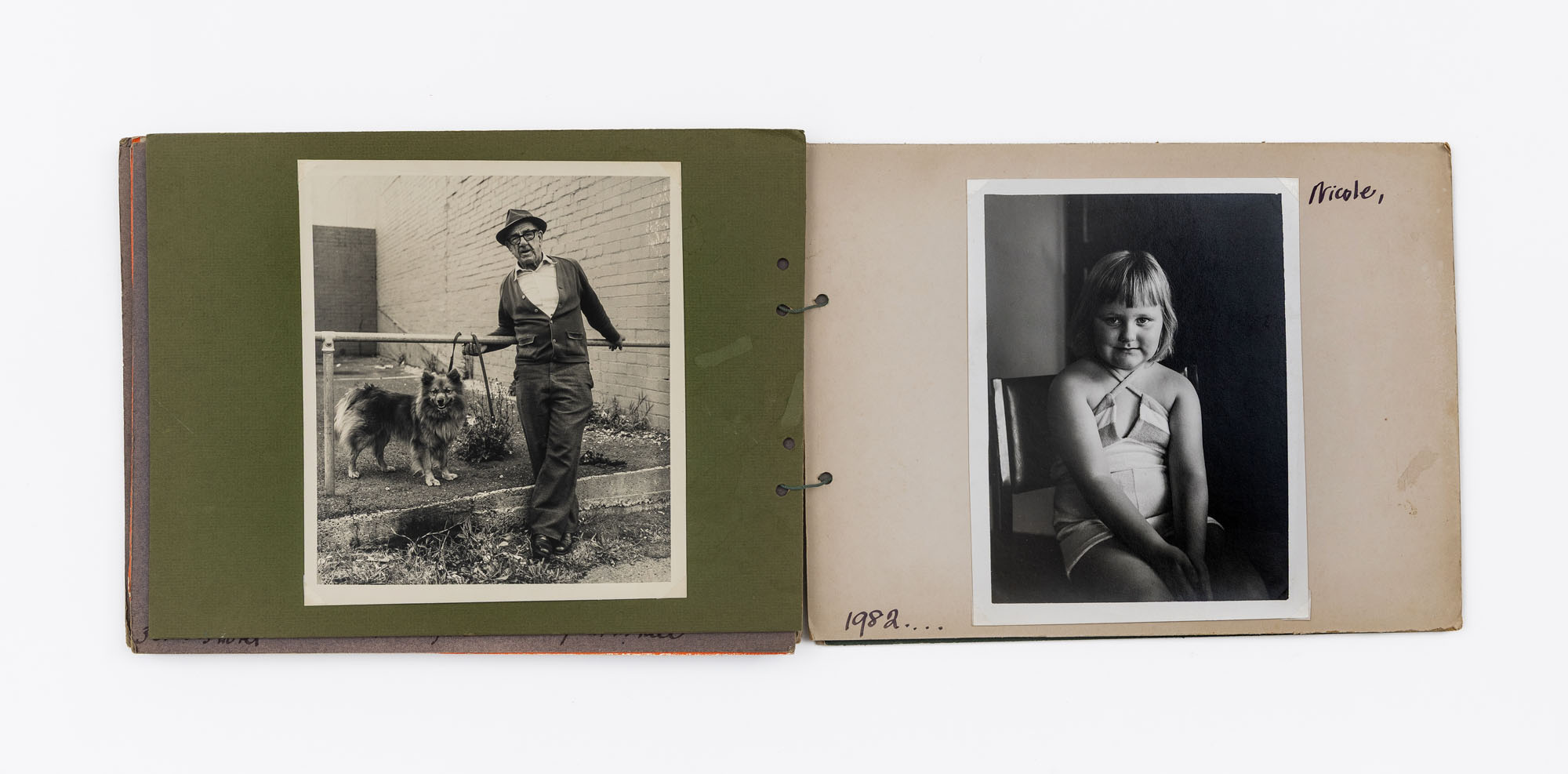
Much like Diane Arbus using a Rolleiflex in New York, here in Gibb’s photographs there is a direct engagement with the reality of the world. This is never more evident than in my favourite part of the exhibition, her personal photo albums: The Street Where I Live 1974-1978; Boppin’ in West Melbourne; West Melb. 1980-1985; Those were the days my friend (below).

In the small photographs stuck into personal photo albums we can viscerally feel the power and intimacy of Gibb’s passion project. We can observe in the sequencing of images of the city, houses, streets, businesses and people, how she created stories about the people and places for which she cared dearly. And her love of dogs! Always people with dogs – Amelia and the new puppy; Betty and her dogs, Stanley St. Here, no overblown gigantic photographs that have no need to be that big, that have no presence, instead powerful, intimate photographs of a Melbourne now vanished from our sight through gentrification.

I remember coming to live in Melbourne in the mid-1980s from England and these suburbs, these characters, were still alive and present. No longer. While community groups tried to protect their suburbs and ways of life at the time, and the heritage buildings survived, council auctioned off the properties it had accumulated. “Most residents, unable to afford their properties, were forced to move on.” Caring communities built up over decades were destroyed.

Much the same is happening in contemporary Melbourne suburbs with the destruction of long standing community housing throughout the city. Under the guise of modernisation and money, and the increase in high density living in the city, communities are being torn apart with little or no recourse for low income human beings or their wishes. Public housing blocks are being torn down all over the city, the land given by the government to private developers for “mixed housing development” which combines private market-rate homes with affordable or social housing. Except social housing only ever makes up about 20% of the project. As usual it’s all about the money, ignoring the fact that it is destroying communities that have been there for decades. Shame on councils, supposed community housing associations and unscrupulous developers (please see Marcus Bunyan. “Frederick Oswald Barnett (Australian, 1883-1972),” on the Art Blart website, 23rd February, 2024; and Rachael Dexter. “Developer quietly guts ‘affordable’ housing promise in northern suburbs,” on The Age website, March 3, 2026 [Online] both cited 24/07/2026).

This brings me to the title of this piece of text taken from the front of Gibb’s photo album West Melb. 1980-1985: “Please handle with care -” followed by the admonishment “these photos are delicate”. These words can serve as metaphor for the de/generations of society that Gibb photographed and the subsequent loss of culture and community … a process that is only increasing today. While Gibb was “deeply aware, socially engaged and heartfelt” in her interactions with community and the stories she was telling – and this passion is embodied, embedded in her images – her photos are, still, delicate as she states, much like the lives of the people and communities depicted in them. Human beings need nature and nurture surrounding them, not huge four wheel drives, grand designs and high density living where you don’t even know your neighbour.

Caring for the counterculture, caring for the people around you, is a sign of a robust, flourishing society. Gibb’s tangible photographs convince us that such a proposition is true.

Dr Marcus Bunyan


PS. If you would like to know about the history, cultural and political background of this inspirational artist please read my friend James McArdle’s in depth research on Viva Gibb in the text “Stance,” on the On This Date In Photography website, March 19, 2026.

PPS. I love how people are smiling in the photographs!


Many thankx to the City Gallery for allowing me to publish the photographs in the posting. Please click on the photographs for a larger version of the image.


“I don’t really deal with people I don’t know… I only ask them for a photograph if I am interested in that person, if there is something in the whole story about them.”


Viva Gibb


“The people in my photographs are those who have survived at all odds – socially, racially, and economically – in our essentially bourgeois society; the lonely man next door, the old people who have lived in the area all their lives and are threatened with eviction, the homeless man whose only dream is to have a room of his own. In photographing the commonplace of the apparently trivial event of a woman holding her baby or a man standing in front of his home, I can see the transformation of a moment into a story unfolded by observation; the little dog by her side, the tender way the man puts his hand on her shoulder, the expression in her eyes, the garden, the ornaments on the mantelpiece, the city skyscrapers in the background and the traffic zooming past. The details fit together like pieces of a jigsaw, presenting a story of a lifetime and a constant reminder of the fragility of life itself. As an individual and an artist I can only hope to present a reality other than that presented by TV and the media. I believe that with humanity, compassion, and a re-examination of past values we can counter the destructive forces that threaten the very existence of a living environment on this earth.”


Viva Gibb, “In the Land of the Living (1981),” in Virginia Coventry (ed.), The Critical Distance: work with photography, politics, writing, exh. cat., Hale & Iremonger, Sydney, 1986, p. 92 quoted in Smith, Savannah; Garner, Helen; Maddison, Ruth (2026). On the streets where I live : Viva Gibb’s portrait of North and West Melbourne. Melbourne, Vic.: City of Melbourne, p. 15. Exhibition catalogue


“Gibb’s sympathetic representation of the urban environment was undergirded by her socio-political beliefs and compassionate worldview. She was alive to the forces of change impacting the lives of those around her and fiercely critical of one social class or race dominating another. Gibb was increasingly angered by wealth and expansion being valued at the expense of all else. She was troubled by environmental degradation and was an animal welfare advocate – a vegetarian from the age of 16 and a vegan later in life. She was also deeply concerned about the treatment and deprivations of First Nations people and the plight of those establishing new lives in Australia.”


Smith, Savannah; Garner, Helen; Maddison, Ruth (2026). On the streets where I live : Viva Gibb’s portrait of North and West Melbourne. Melbourne, Vic.: City of Melbourne, p. 14. Exhibition catalogue


West Melbourne
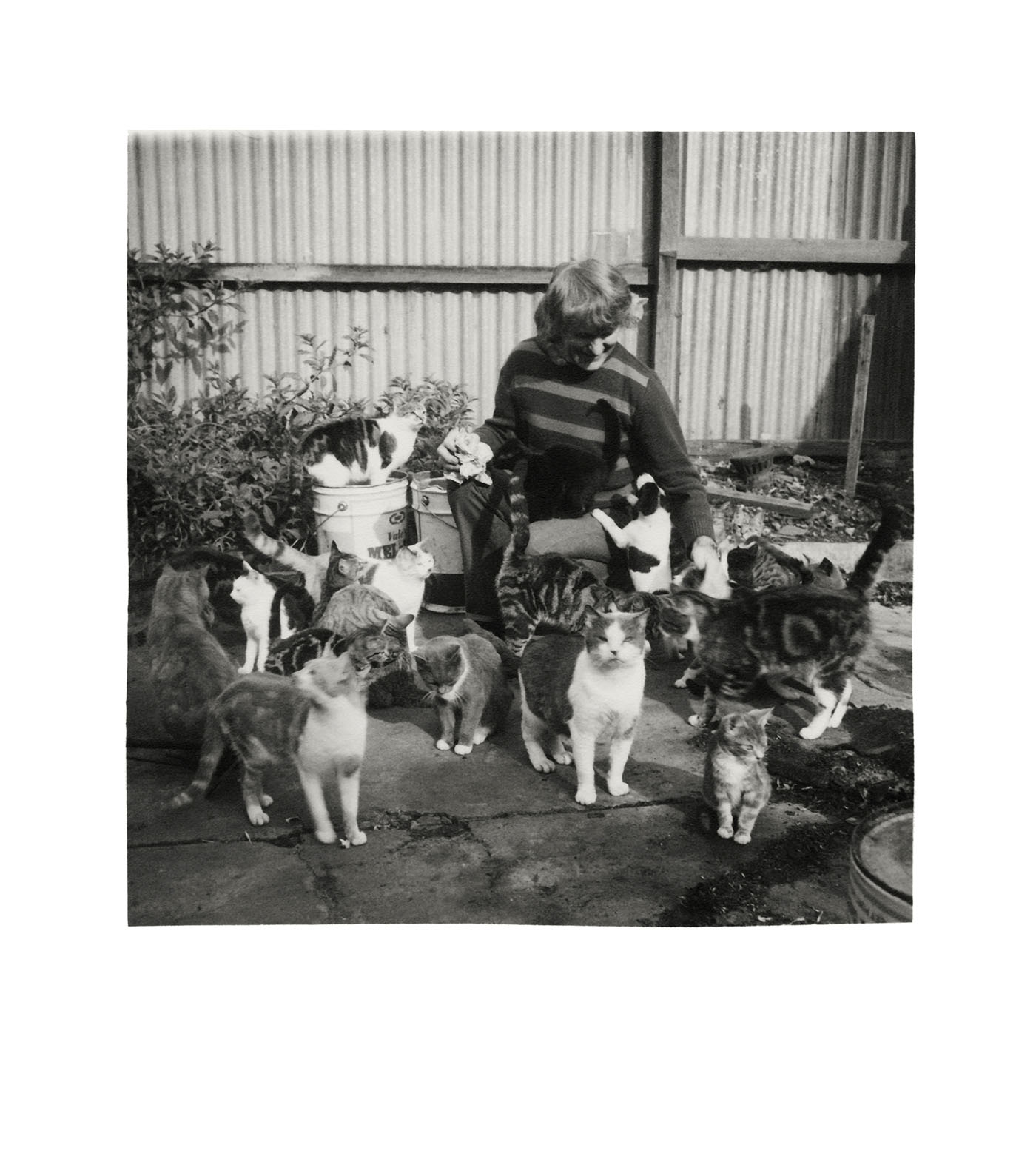
Viva Gibb (Australian, 1945-2017) 'Brian and his cats, 65 Capel Street, West Melbourne' 1978


Viva Gibb (Australian, 1945-2017)
Brian and his cats, 65 Capel Street, West Melbourne
1978
Silver gelatin print
20 x 16.5 cm
Donated by Sybil Gibb and Rupert Duffy to the Melbourne Art Trust in memory of Viva Gibb 2025
© Courtesy of the Estate of Viva Gibb


Gibb’s portrait of North and West Melbourne is an important record of an inner urban area during a transformative moment in Melbourne’s history. On the city’s streets, radical countercultural ideals for a progressive society flourished through the activism of young people, while at the same time another chapter of the city’s history would close. In the 1970s and 1980s, amid the gentrification of the inner suburbs, West Melbourne flew under the radar for longer than most. It provided a countercultural community, which included artists and intellectuals, with low-cost space in which to live and work. Gibb’s house and studio were central to this community, a ‘social hub’ for ‘artists of all kinds, from the Pram Factory or the nascent Circus Oz’.10 For a period, they lived alongside longtime residents of the semi-industrial suburb. West Melbourne’s proximity to the railway, the docks and CBD meant it had been home to many working-class and migrant people who laboured in nearby industries or at Queen Victoria Market. Gibb’s photographs capture this amalgamated community – old and new – at this precise moment in time.

Capel Street was a focal point in this story of inner-suburban transformation. Many dilapidated properties in the area were leased out by Melbourne City Council following their acquisition ahead of the proposed redevelopment of the Queen Victoria Market. Gibb herself had moved to Capel Street as a council tenant. When the market redevelopment was abandoned in 1976, council’s continued property acquisition caused alarm among residents and business owners alike regarding the undisclosed intentions for the area. In response, the Capel Street and Peel Street Action Group was formed, of which Gibb was an active member. The group’s two concerns were the conservation of the Victorian-era terraces and cottages and compulsory eviction of long-term residents. Many of the heritage buildings survived, but the group was ultimately unsuccessful in protecting the community. Council began auctioning off the properties in December 1990. Most residents, unable to afford their properties, were forced to move on. …

Viva Gibb’s photographs express the sophisticated practice of an artist who cared deeply for her community and the world at large. Through her work we come to know a vibrant group of individuals, captured in their day-to-day lives. Her photographs are an important historical and cultural record that reminds us of the importance of people in our city’s history and future. But these images also offer a glimpse of Viva herself and her unique perspective on the world: her genuine compassion and affection for people, for animals and for the environment. Viva’s portrait of North and West Melbourne is distinctively hers – deeply aware, socially engaged and heartfelt.

10/ Niels Hutchison, ‘Appendix Five: Interview with Niels Hutchison, 13 February 2019’, in Jean Ely (ed.), Preserving Melbourne’s Colonial Past: Capel Street West Melbourne, 2019, p. 60

Smith, Savannah; Garner, Helen; Maddison, Ruth (2026). On the streets where I live : Viva Gibb’s portrait of North and West Melbourne. Melbourne, Vic.: City of Melbourne, pp. 16-17. Exhibition catalogue
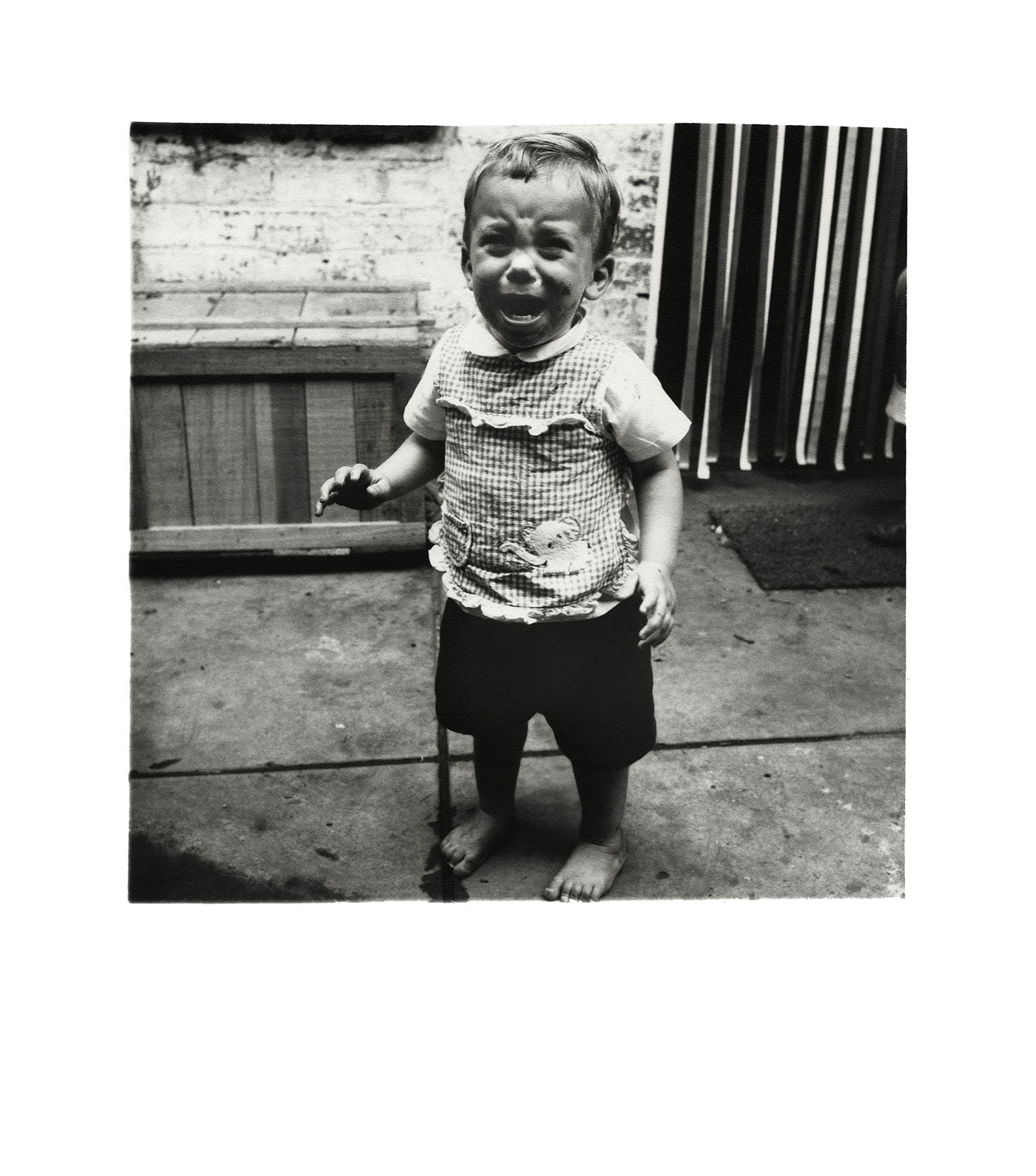
 

Viva Gibb (Australian, 1945-2017) 'Jem Towsey, 64 Capel Street, West Melbourne' 1978


Viva Gibb (Australian, 1945-2017)
Jem Towsey, 64 Capel Street, West Melbourne
1978
Silver gelatin print
20.5 x 16cm
Donated by Sybil Gibb and Rupert Duffy to the Melbourne Art Trust in memory of Viva Gibb 2025
© Courtesy of the Estate of Viva Gibb
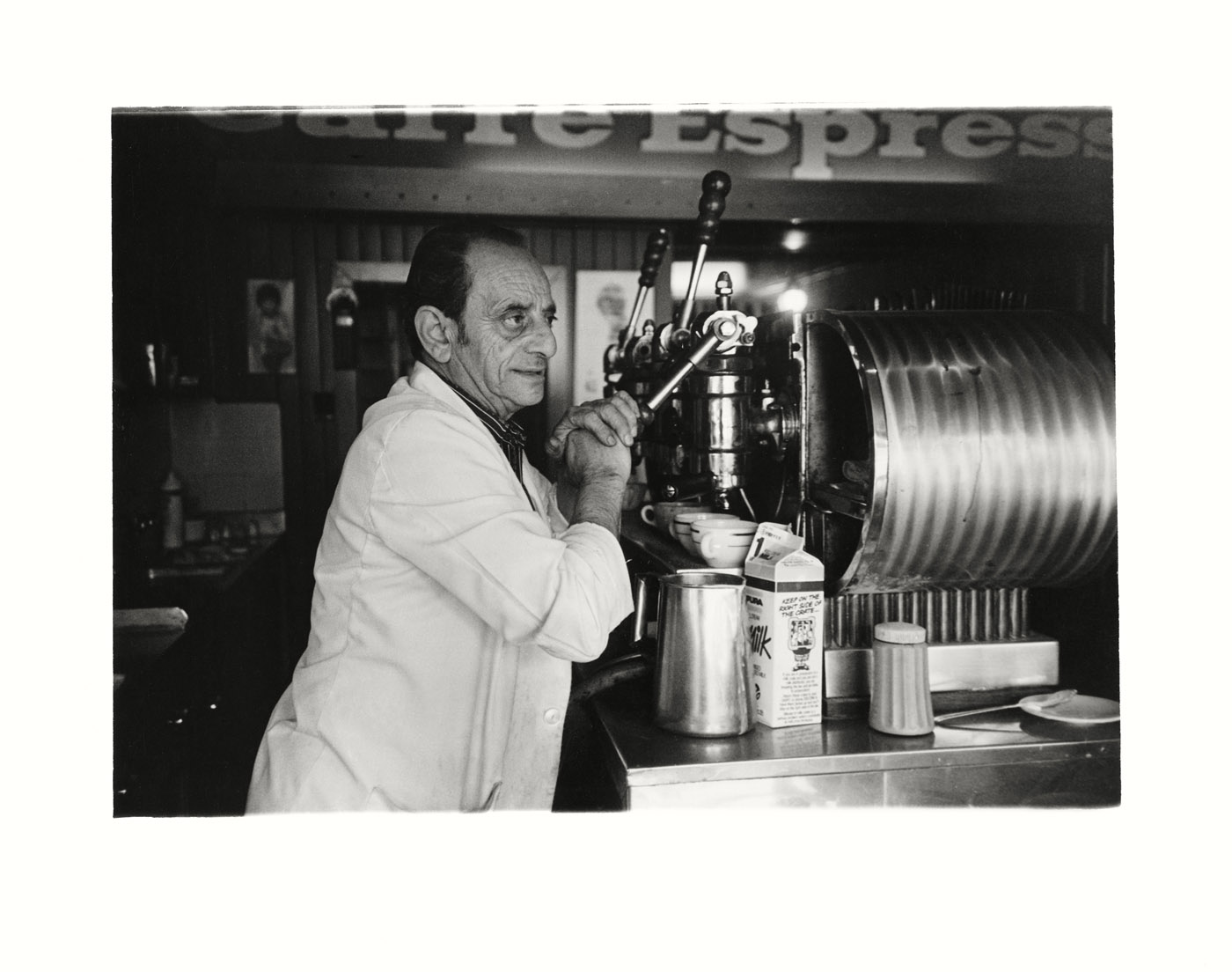
 

Viva Gibb (Australian, 1945-2017) 'Giuseppe Lanteri 'The Boss' at Don Camillo Cafe, 215 Victoria Street, West Melbourne' 1979


Viva Gibb (Australian, 1945-2017)
Giuseppe Lanteri ‘The Boss’ at Don Camillo Cafe, 215 Victoria Street, West Melbourne
1979
Silver gelatin print
20 x 25.5cm
Donated by Sybil Gibb and Rupert Duffy to the Melbourne Art Trust in memory of Viva Gibb 2025
© Courtesy of the Estate of Viva Gibb
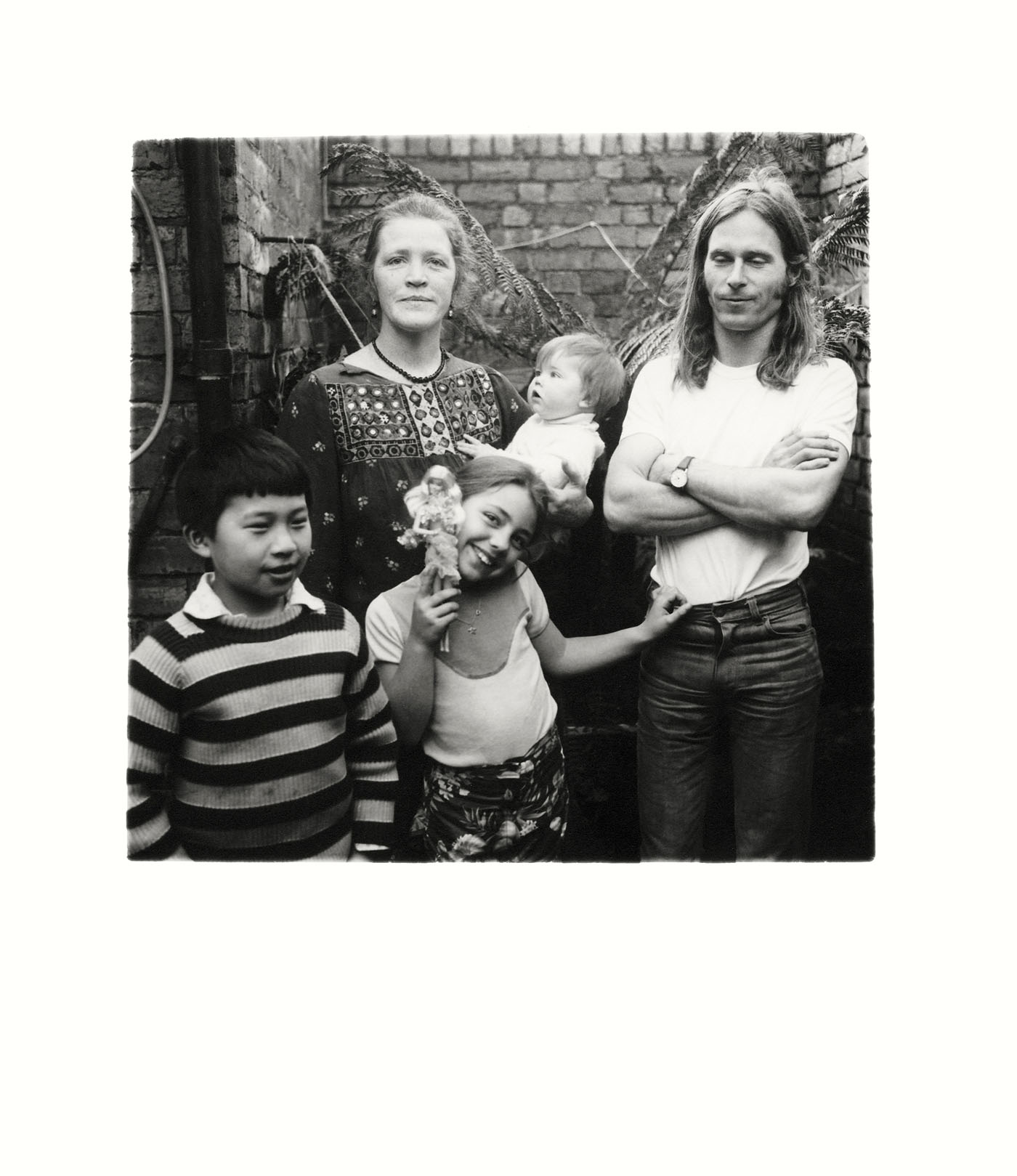
 

Viva Gibb (Australian, 1945-2017) 'Carmel Begun and Peter Starkey with Ruby, Alice and Lawrence, 24 Capel Street, West Melbourne' c. 1975-80


Viva Gibb (Australian, 1945-2017)
Carmel Begun and Peter Starkey with Ruby, Alice and Lawrence, 24 Capel Street, West Melbourne
c. 1975-80
Silver gelatin print
17.5 x 12.5cm
Donated by Sybil Gibb and Rupert Duffy to the Melbourne Art Trust in memory of Viva Gibb 2025
© Courtesy of the Estate of Viva Gibb
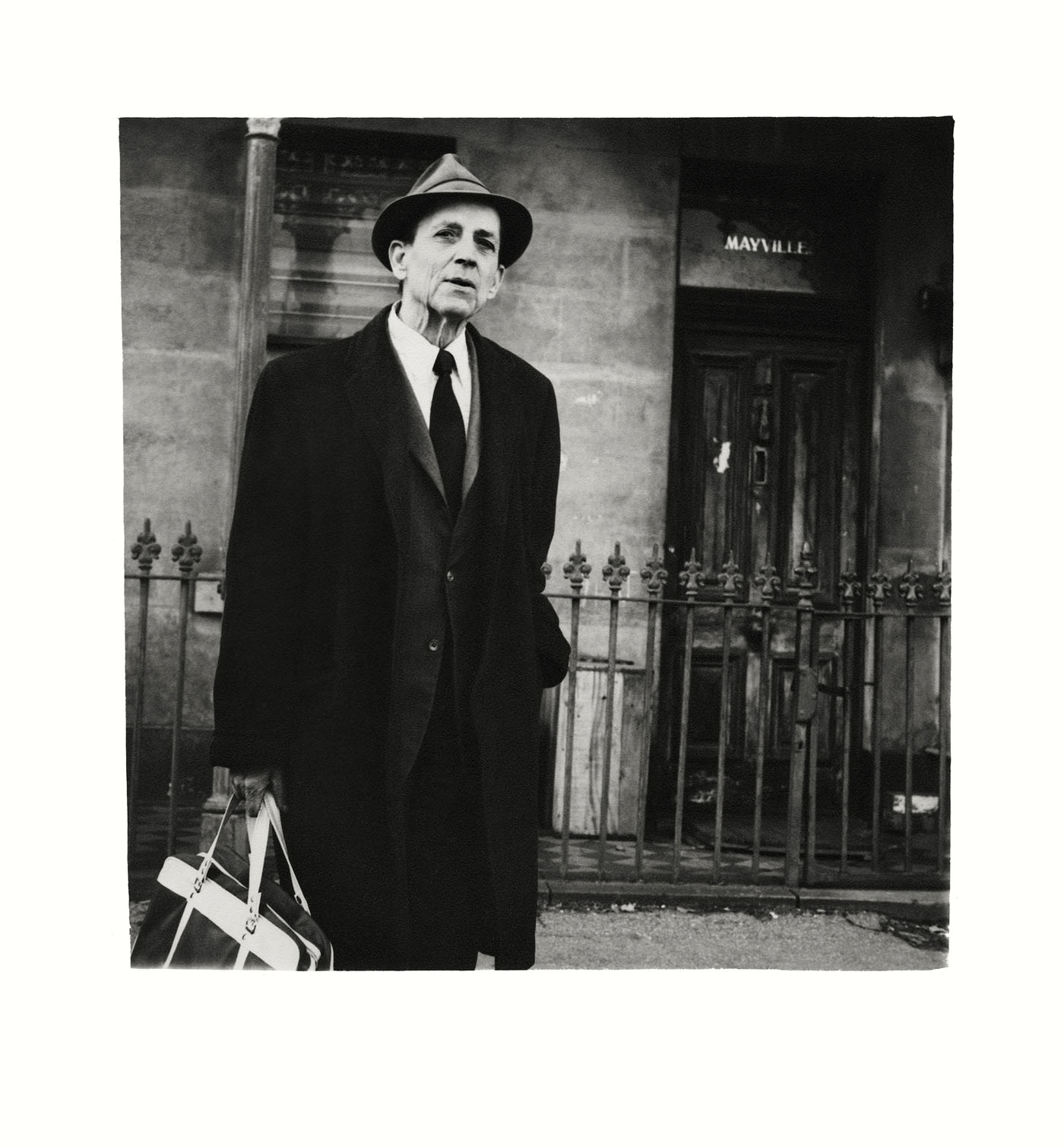
 

Viva Gibb (Australian, 1945-2017) 'Man outside 18 Capel Street, West Melbourne' c. 1975-80


Viva Gibb (Australian, 1945-2017)
Man outside 18 Capel Street, West Melbourne
c. 1975-80
Silver gelatin print
25 x 20cm
Donated by Sybil Gibb and Rupert Duffy to the Melbourne Art Trust in memory of Viva Gibb 2025
© Courtesy of the Estate of Viva Gibb
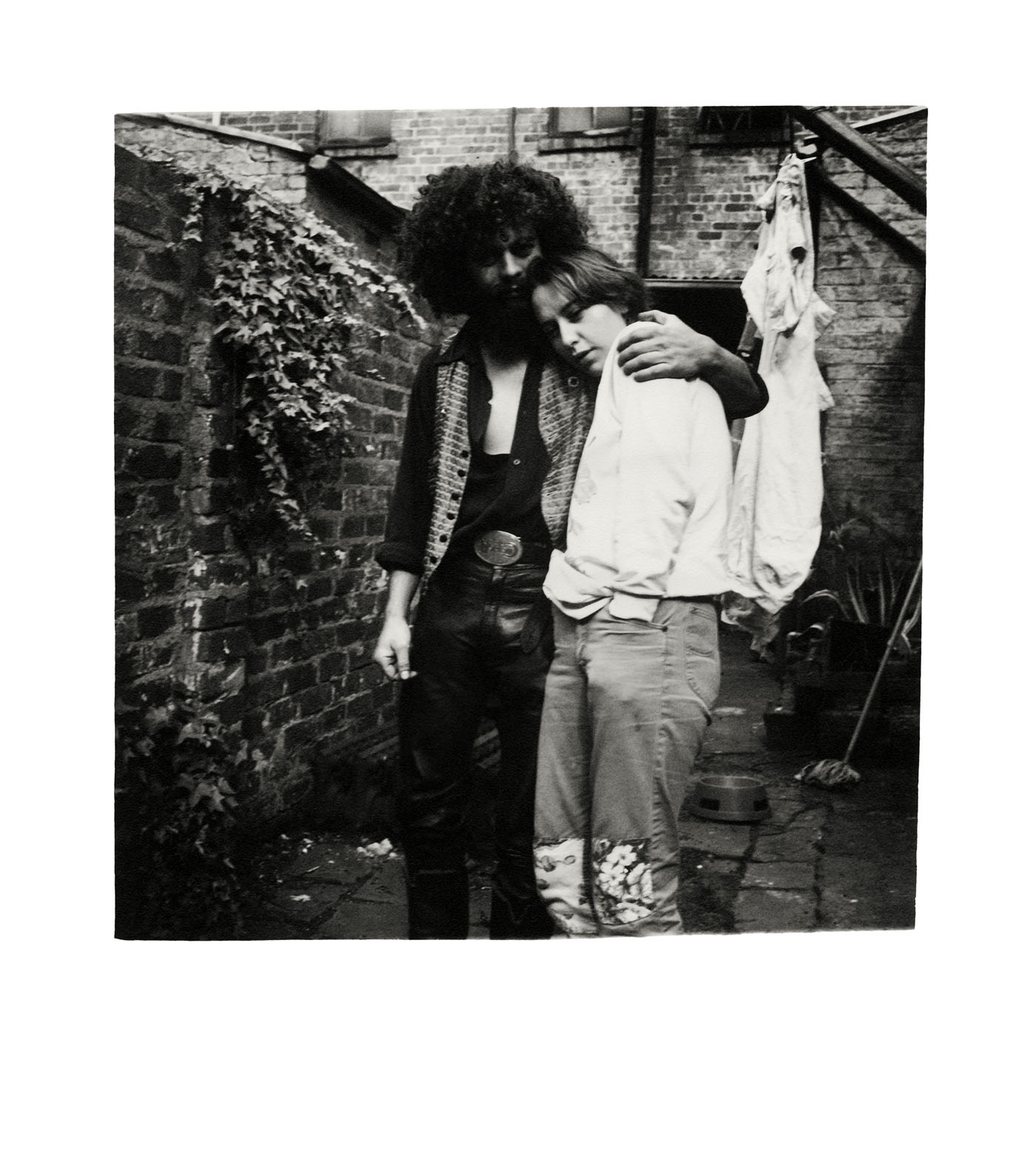
 

Viva Gibb (Australian, 1945-2017) ''Moonstruck', Joanne Healy and her boyfriend Harry, Capel Street, West Melbourne' c. 1977-78


Viva Gibb (Australian, 1945-2017)
‘Moonstruck’, Joanne Healy and her boyfriend Harry, Capel Street, West Melbourne
c. 1977-78
Silver gelatin print
25 x 20.5cm
Donated by Sybil Gibb and Rupert Duffy to the Melbourne Art Trust in memory of Viva Gibb 2025
© Courtesy of the Estate of Viva Gibb
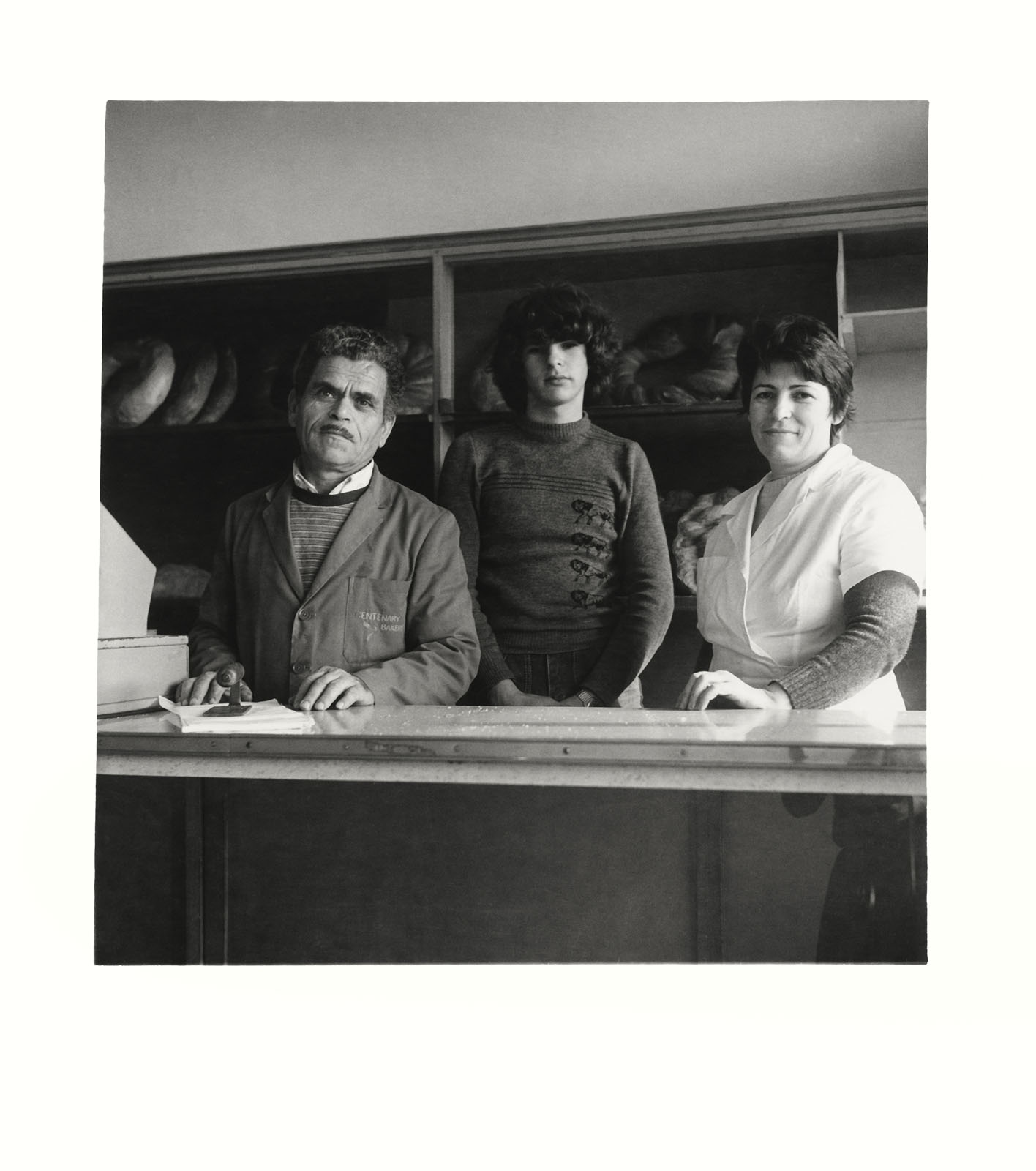
 

Viva Gibb (Australian, 1945-2017) 'Owners of Centenary Bakery and their son, 197 Victoria Street, West Melbourne' 1978


Viva Gibb (Australian, 1945-2017)
Owners of Centenary Bakery and their son, 197 Victoria Street, West Melbourne
1978
Silver gelatin print
25.5 x 20.5 cm
Donated by Sybil Gibb and Rupert Duffy to the Melbourne Art Trust in memory of Viva Gibb 2025
© Courtesy of the Estate of Viva Gibb
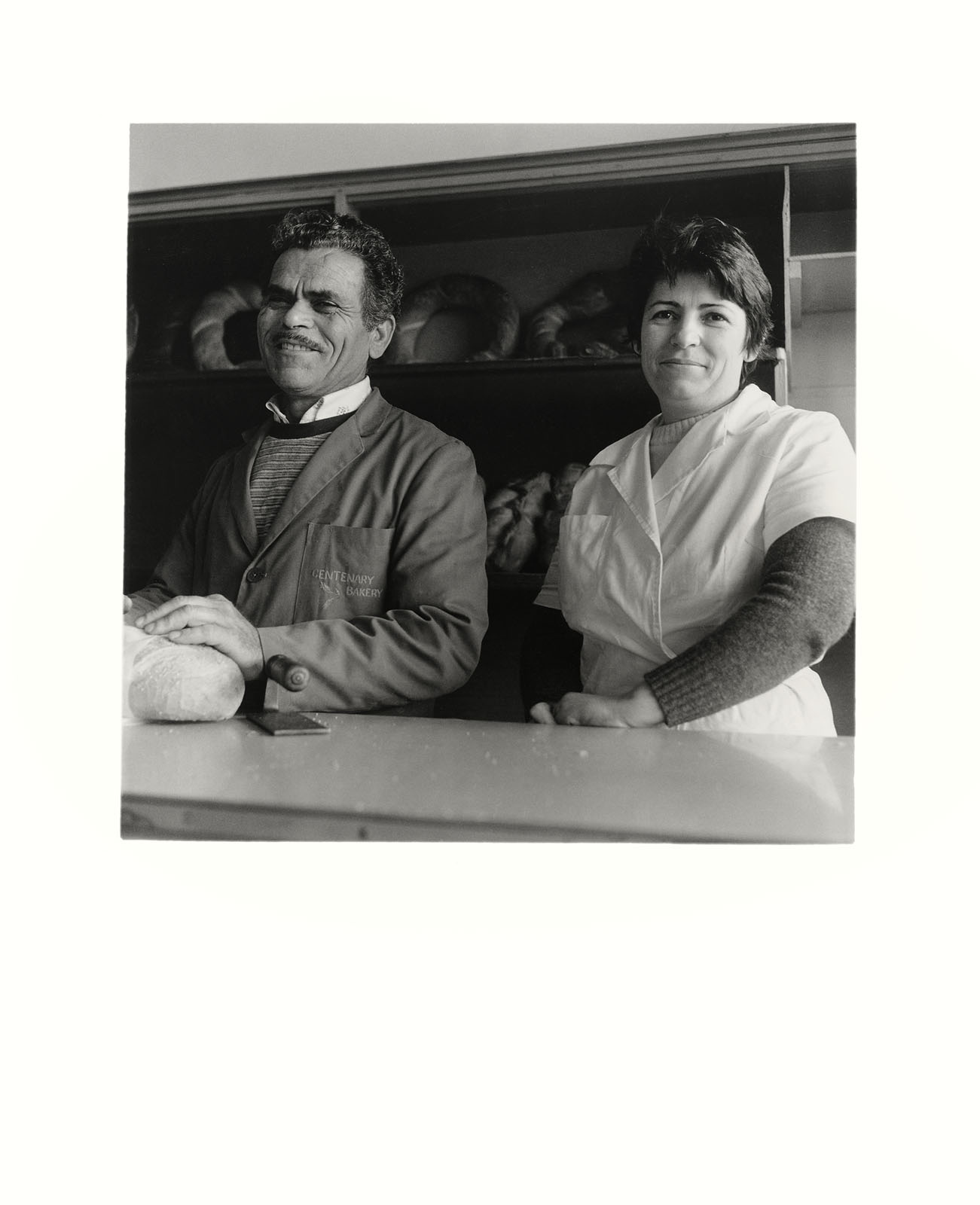
 

Viva Gibb (Australian, 1945-2017) 'Owners of Centenary Bakery, 197 Victoria Street, West Melbourne' 1978 


Viva Gibb (Australian, 1945-2017)
Owners of Centenary Bakery, 197 Victoria Street, West Melbourne
1978
Silver gelatin print
21.5 x 16.5cm
Donated by Sybil Gibb and Rupert Duffy to the Melbourne Art Trust in memory of Viva Gibb 2025
© Courtesy of the Estate of Viva Gibb
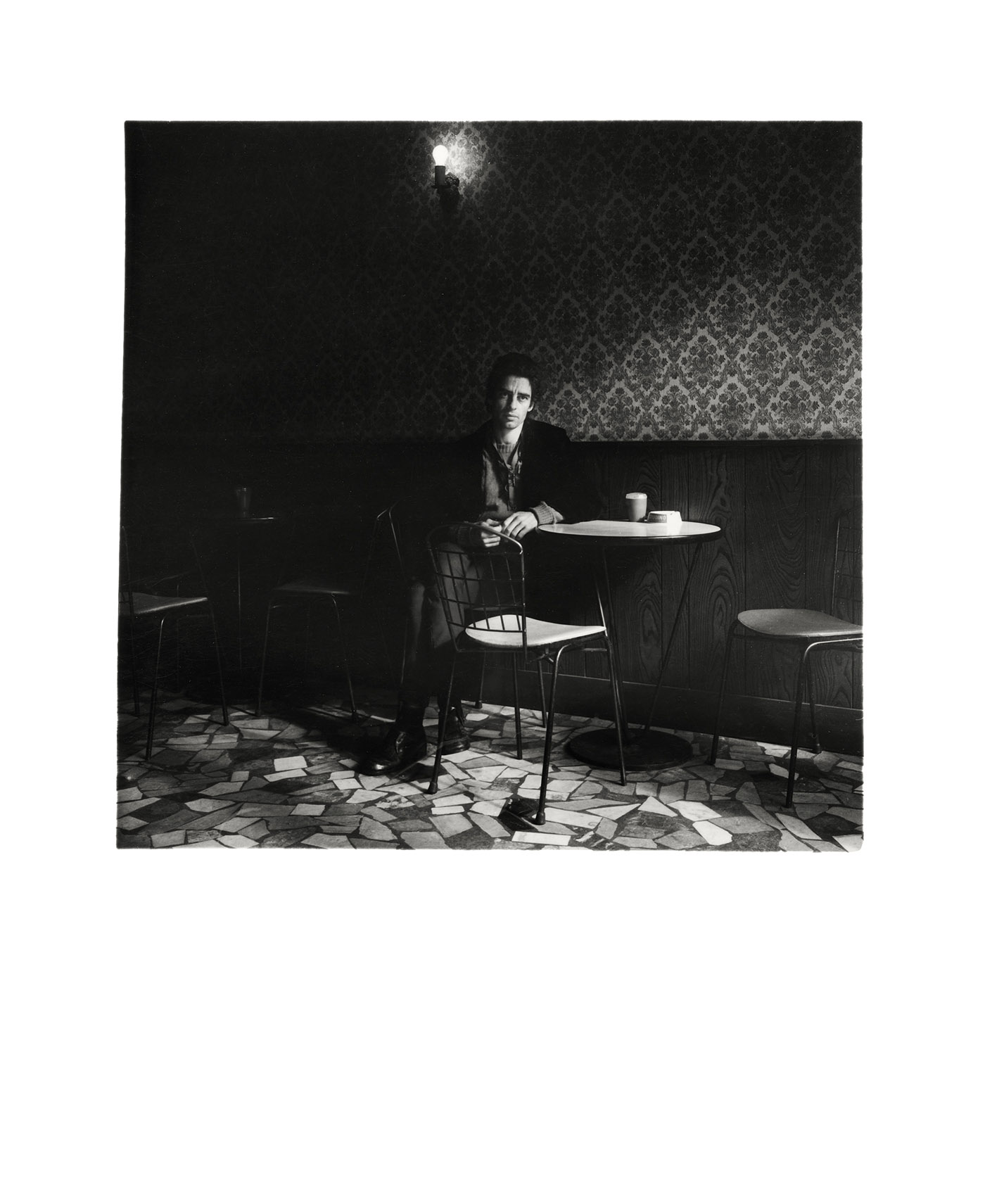
 

Viva Gibb (Australian, 1945-2017) 'Peter Doley at Don Camillo Cafe, 215 Victoria Street, West Melbourne' c. 1979


Viva Gibb (Australian, 1945-2017)
Peter Doley at Don Camillo Cafe, 215 Victoria Street, West Melbourne
c. 1979
Silver gelatin print
18 x 12.5cm
Donated by Sybil Gibb and Rupert Duffy to the Melbourne Art Trust in memory of Viva Gibb 2025
© Courtesy of the Estate of Viva Gibb
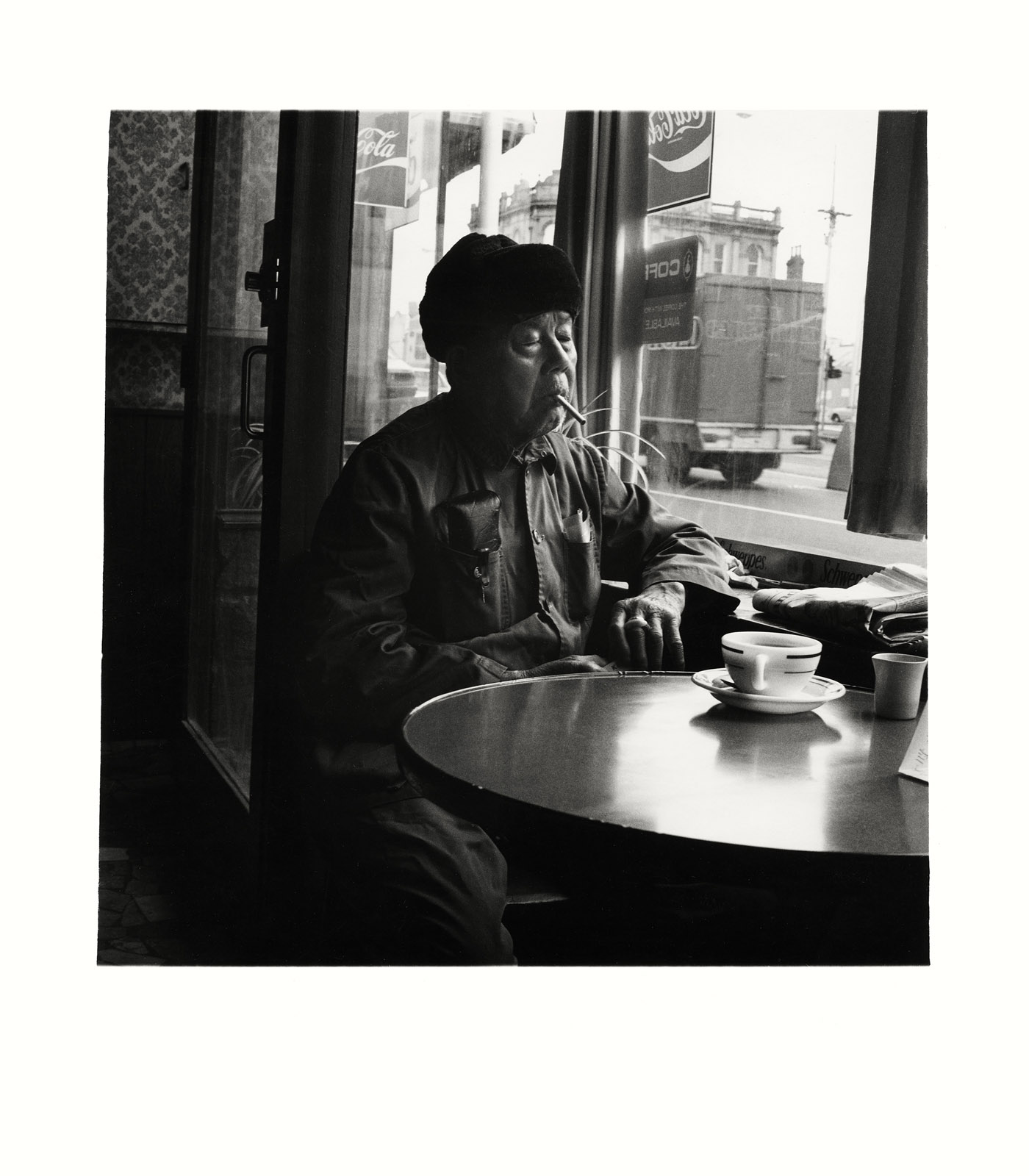
 

Viva Gibb (Australian, 1945-2017) 'Colin Cheng at Don Camillo Cafe, 215 Victoria Street, West Melbourne' c. 1980


Viva Gibb (Australian, 1945-2017)
Colin Cheng at Don Camillo Cafe, 215 Victoria Street, West Melbourne
c. 1980
Silver gelatin print
25.5 x 20.5cm
Donated by Sybil Gibb and Rupert Duffy to the Melbourne Art Trust in memory of Viva Gibb 2025
© Courtesy of the Estate of Viva Gibb
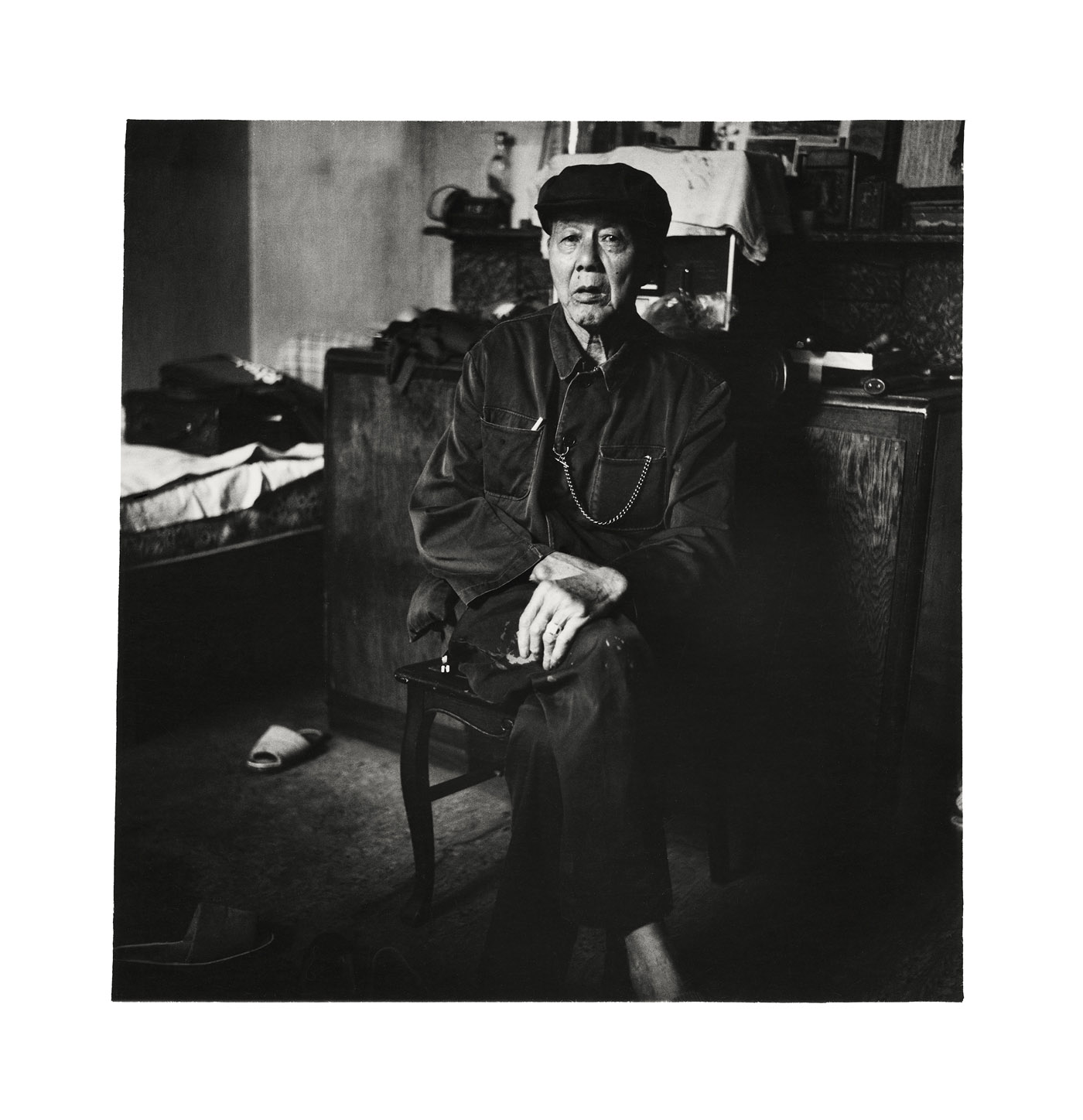
 

Viva Gibb (Australian, 1945-2017) 'Colin Cheng at home, 26 Capel Street, West Melbourne' c. 1980


Viva Gibb (Australian, 1945-2017)
Colin Cheng at home, 26 Capel Street, West Melbourne
c. 1980
Silver gelatin print
20 x 19 cm
Donated by Sybil Gibb and Rupert Duffy to the Melbourne Art Trust in memory of Viva Gibb 2025
© Courtesy of the Estate of Viva Gibb
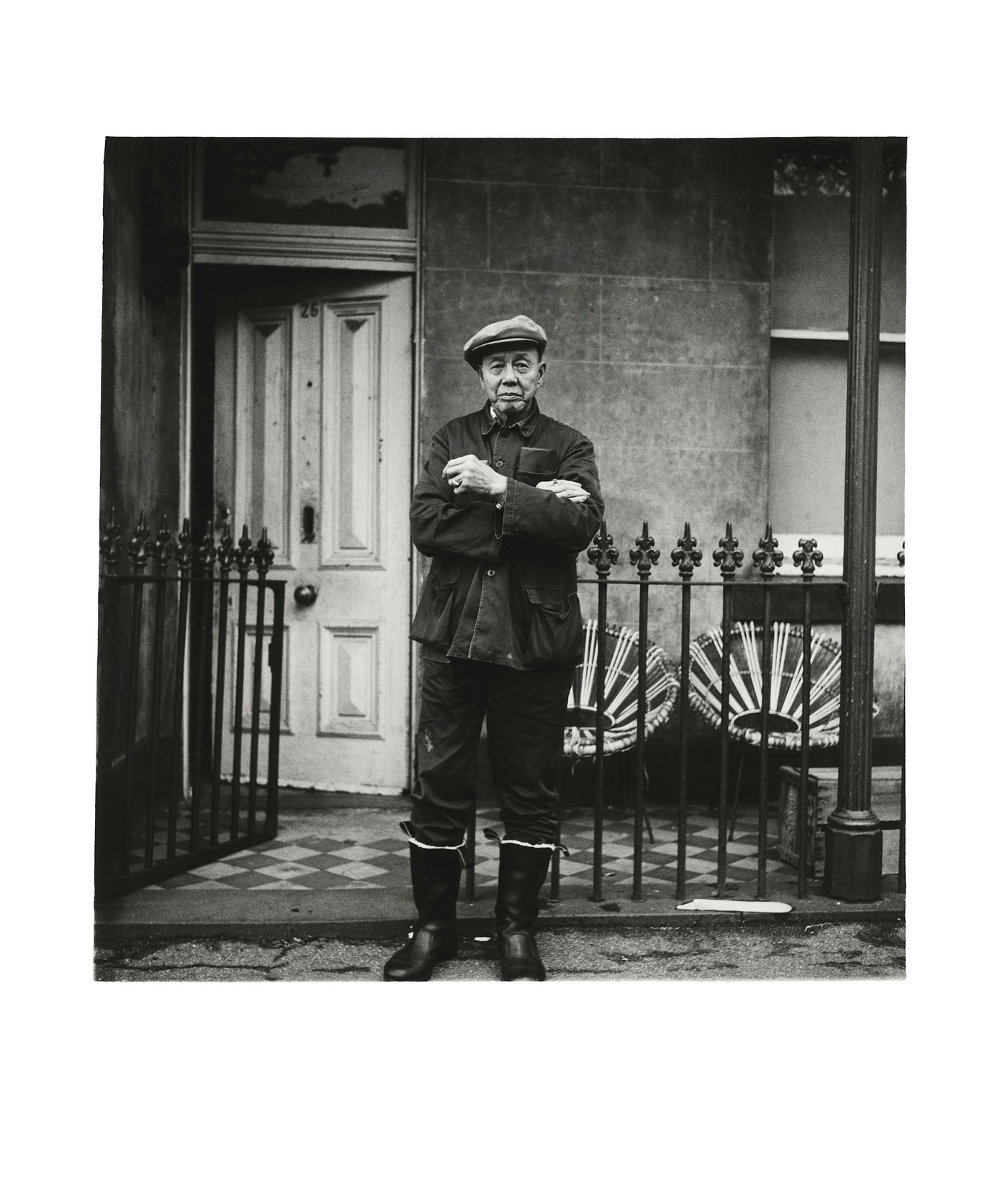
 

Viva Gibb (Australian, 1945-2017) 'Colin Cheng outside his home, 26 Capel Street, West Melbourne' 1980


Viva Gibb (Australian, 1945-2017)
Colin Cheng outside his home, 26 Capel Street, West Melbourne
1980
Silver gelatin print
21.5 x 16.5cm
Donated by Sybil Gibb and Rupert Duffy to the Melbourne Art Trust in memory of Viva Gibb 2025
© Courtesy of the Estate of Viva Gibb
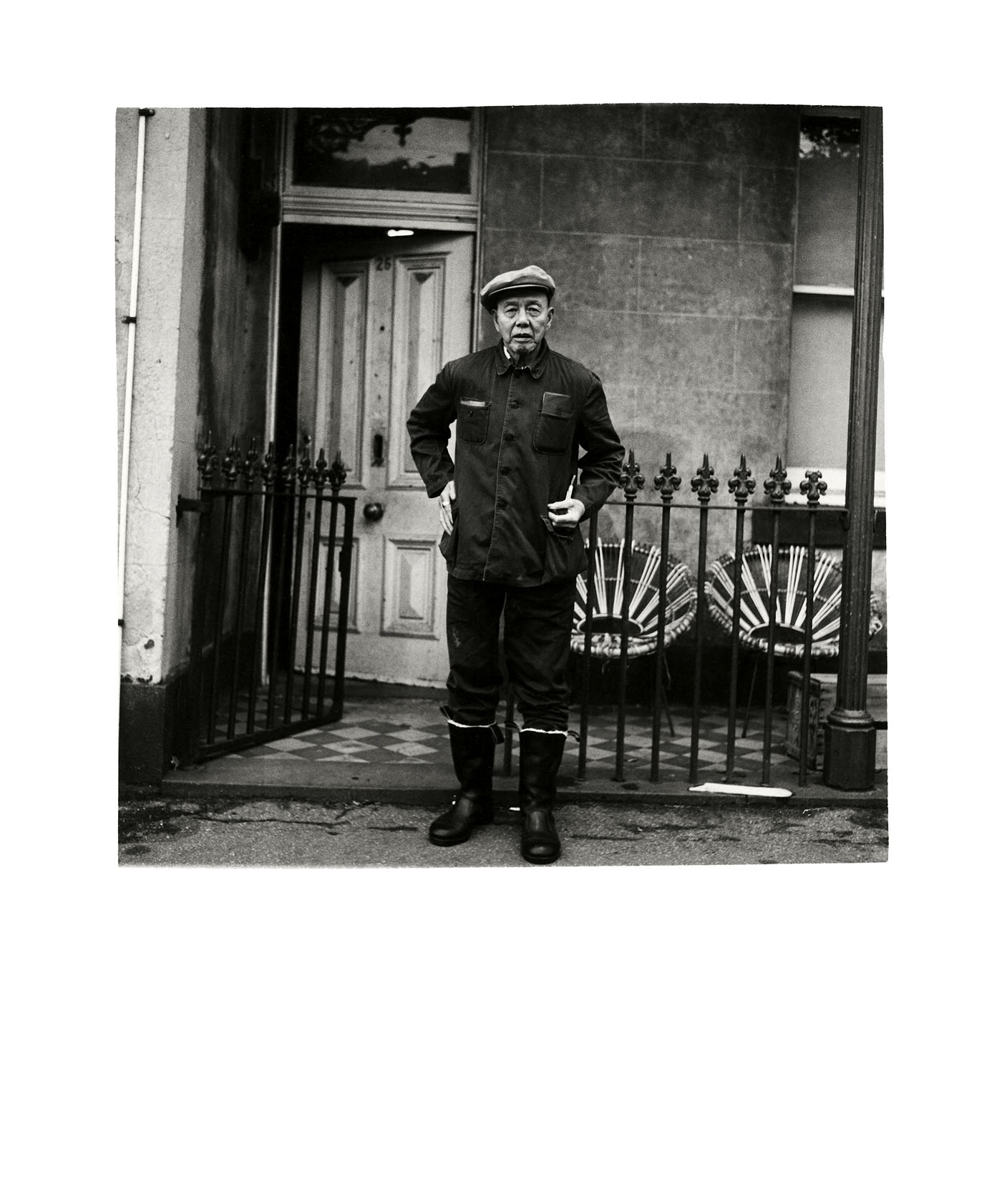
 

Viva Gibb (Australian, 1945-2017) 'Colin Cheng outside his home, 26 Capel Street, West Melbourne' 1980


Viva Gibb (Australian, 1945-2017)
Colin Cheng outside his home, 26 Capel Street, West Melbourne
1980
Silver gelatin print
25.4 x 20.3cm
Donated by Sybil Gibb and Rupert Duffy to the Melbourne Art Trust in memory of Viva Gibb 2025
© Courtesy of the Estate of Viva Gibb
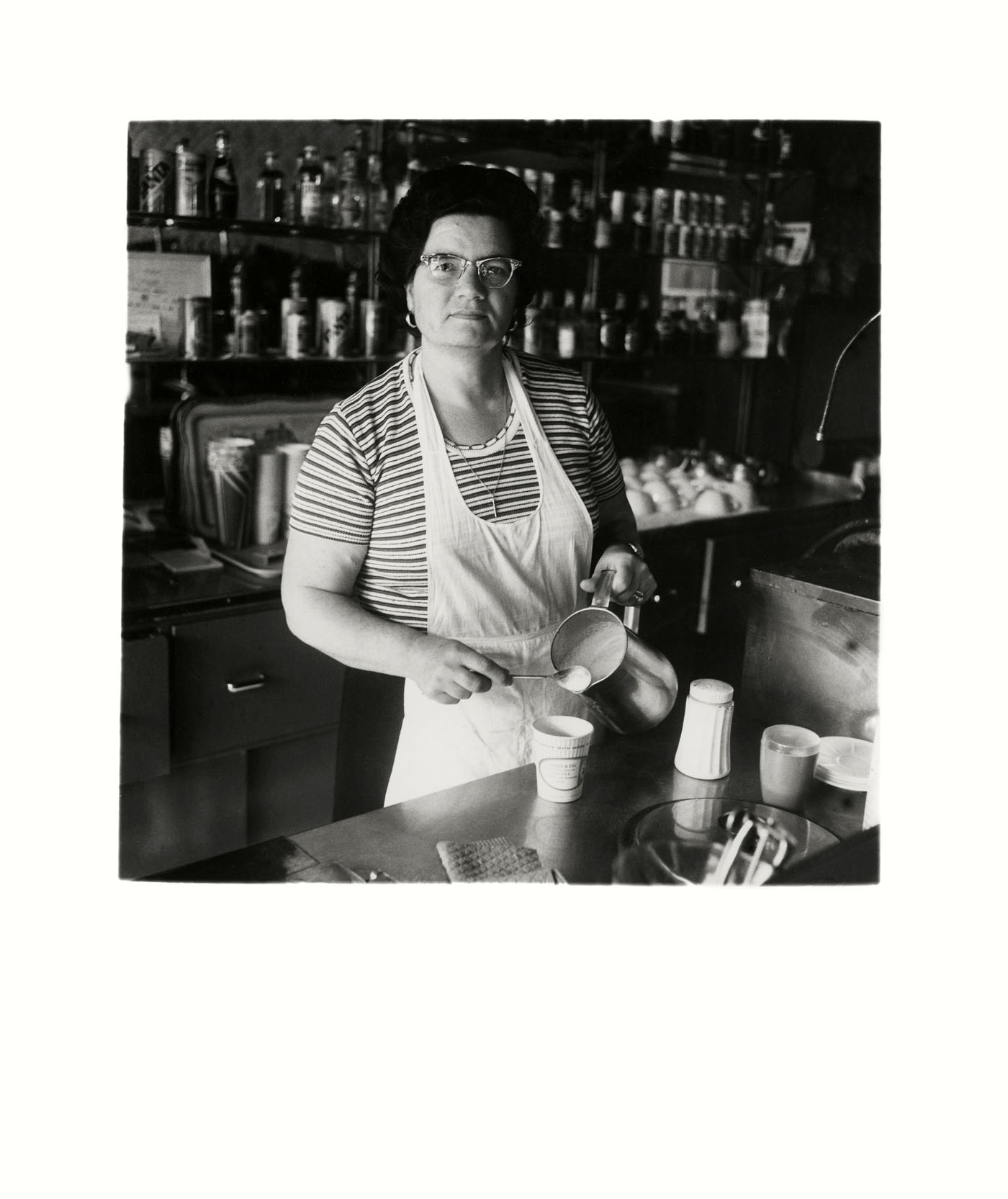
 

Viva Gibb (Australian, 1945-2017) 'Maria Lanteri 'Signora' at Don Camillo Cafe, 215 Victoria Street, West Melbourne' c. 1980


Viva Gibb (Australian, 1945-2017)
Maria Lanteri ‘Signora’ at Don Camillo Cafe, 215 Victoria Street, West Melbourne
c. 1980
Silver gelatin print
21.5 x 16.5 cm
Donated by Sybil Gibb and Rupert Duffy to the Melbourne Art Trust in memory of Viva Gibb 2025
© Courtesy of the Estate of Viva Gibb
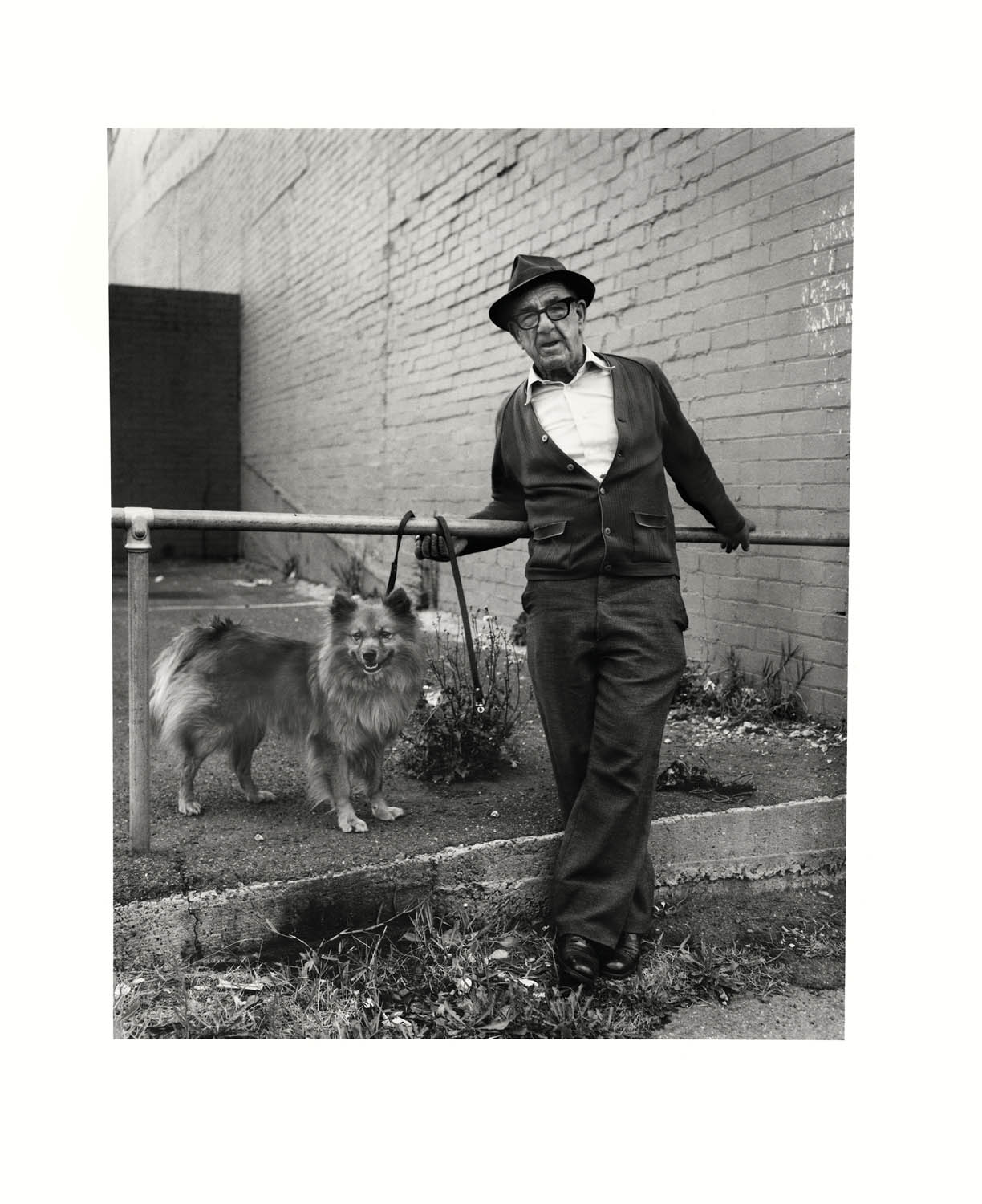
 

Viva Gibb (Australian, 1945-2017) 'Man and his dog outside Radio Parts, corner of Spencer and Hawke Street, West Melbourne' c. 1980


Viva Gibb (Australian, 1945-2017)
Man and his dog outside Radio Parts, corner of Spencer and Hawke Street, West Melbourne
c. 1980
Silver gelatin print
25 x 20cm
Donated by Sybil Gibb and Rupert Duffy to the Melbourne Art Trust in memory of Viva Gibb 2025
© Courtesy of the Estate of Viva Gibb
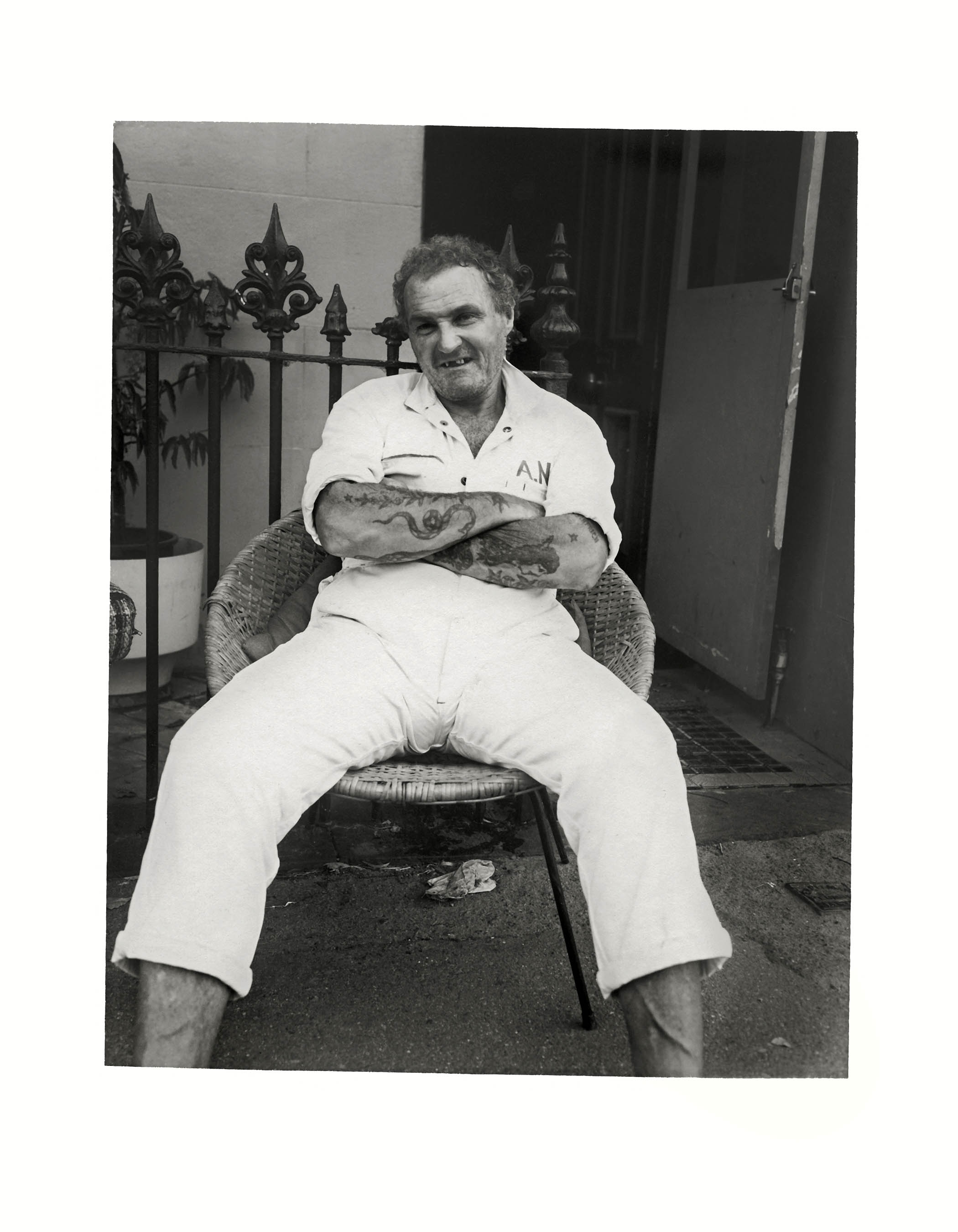
 

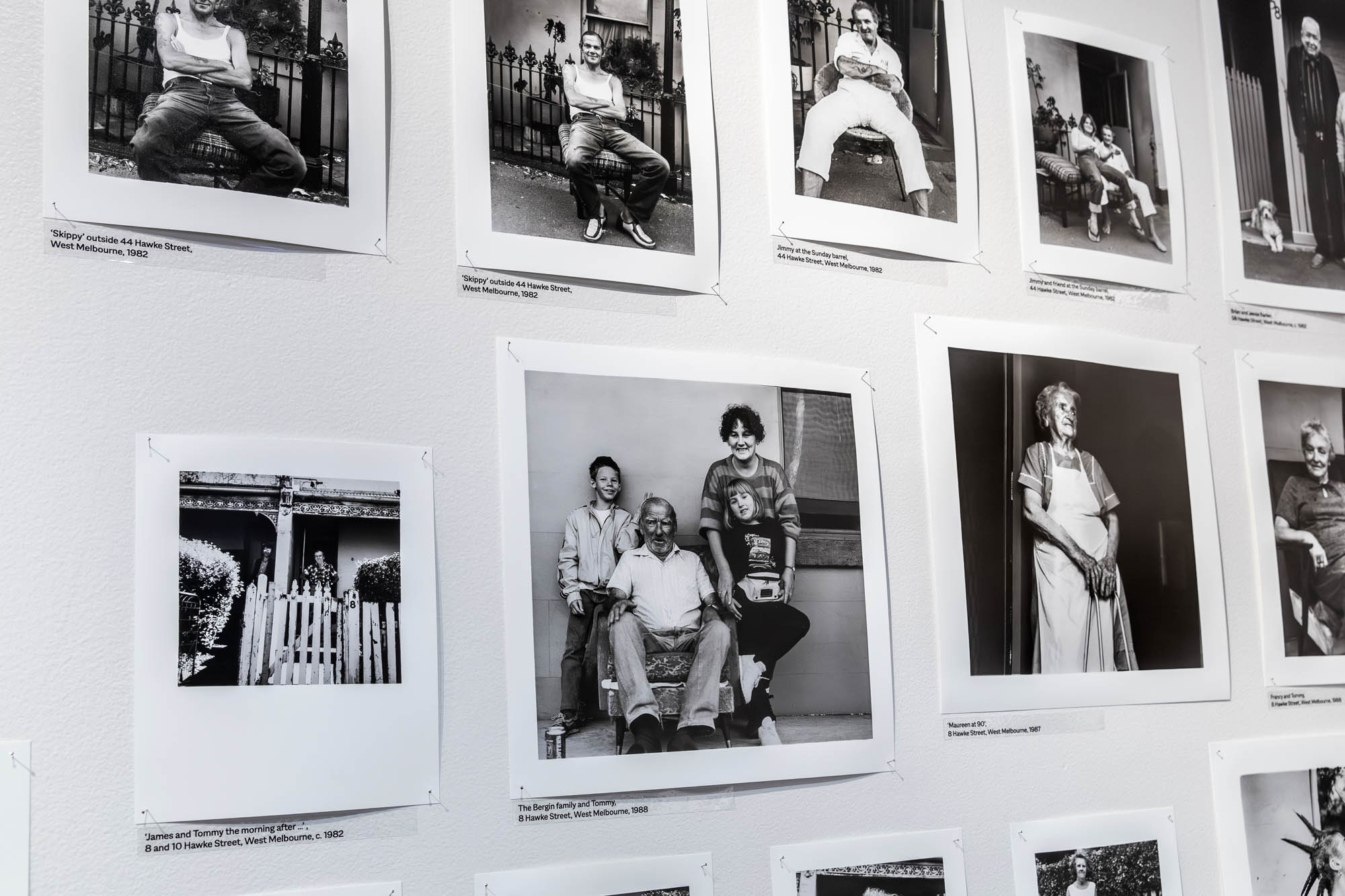
Viva Gibb (Australian, 1945-2017) 'Jimmy at the Sunday barrel, 44 Hawke Street, West Melbourne' 1982


Viva Gibb (Australian, 1945-2017)
Jimmy at the Sunday barrel, 44 Hawke Street, West Melbourne
1982
Silver gelatin print
24 x 18cm
Donated by Sybil Gibb and Rupert Duffy to the Melbourne Art Trust in memory of Viva Gibb 2025
© Courtesy of the Estate of Viva Gibb
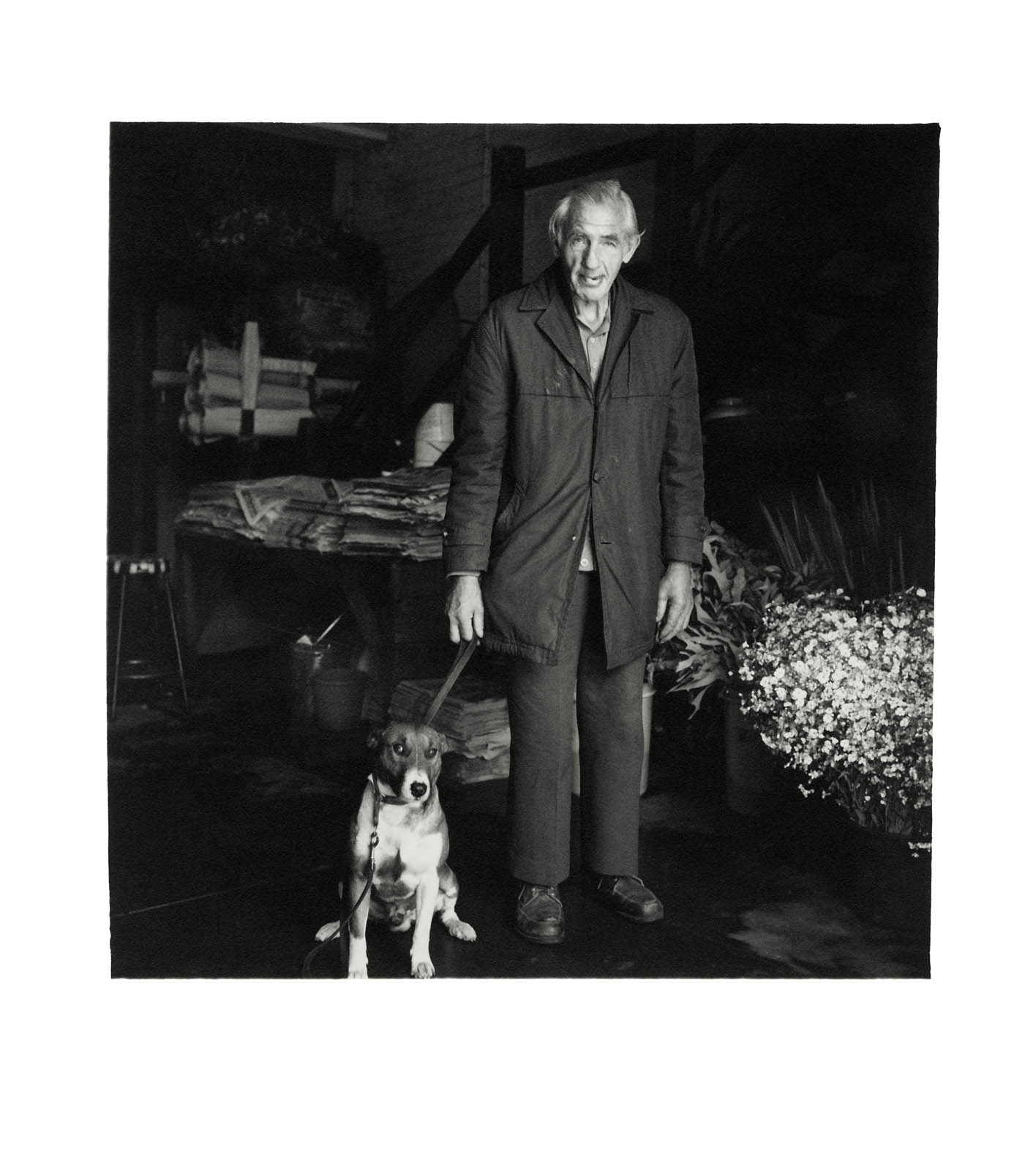
 

Viva Gibb (Australian, 1945-2017) '‘Living in the city without a home’, Jimmy at the wholesale flower shop, 217 Victoria Street, West Melbourne' 1982


Viva Gibb (Australian, 1945-2017)
‘Living in the city without a home’, Jimmy at the wholesale flower shop, 217 Victoria Street, West Melbourne
1982
Silver gelatin print
25 x 20.5cm
Donated by Sybil Gibb and Rupert Duffy to the Melbourne Art Trust in memory of Viva Gibb 2025
© Courtesy of the Estate of Viva Gibb
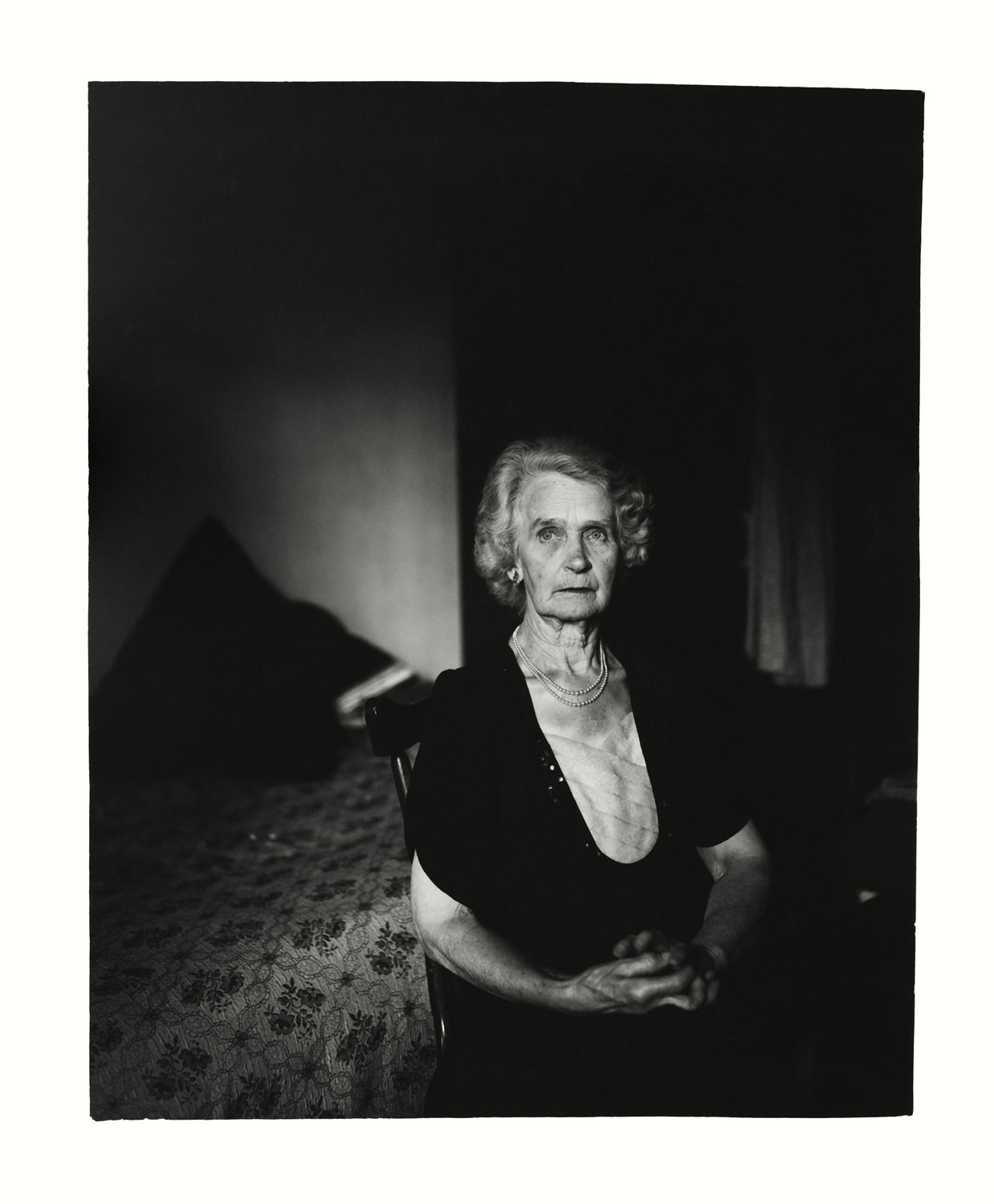
 

Viva Gibb (Australian, 1945-2017) ''It is the price of life’, Elsie, 55 Stanley Street, West Melbourne' 1982


Viva Gibb (Australian, 1945-2017)
‘It is the price of life’, Elsie, 55 Stanley Street, West Melbourne
1982
Silver gelatin print
37 x 30cm
Donated by Sybil Gibb and Rupert Duffy to the Melbourne Art Trust in memory of Viva Gibb 2025
© Courtesy of the Estate of Viva Gibb
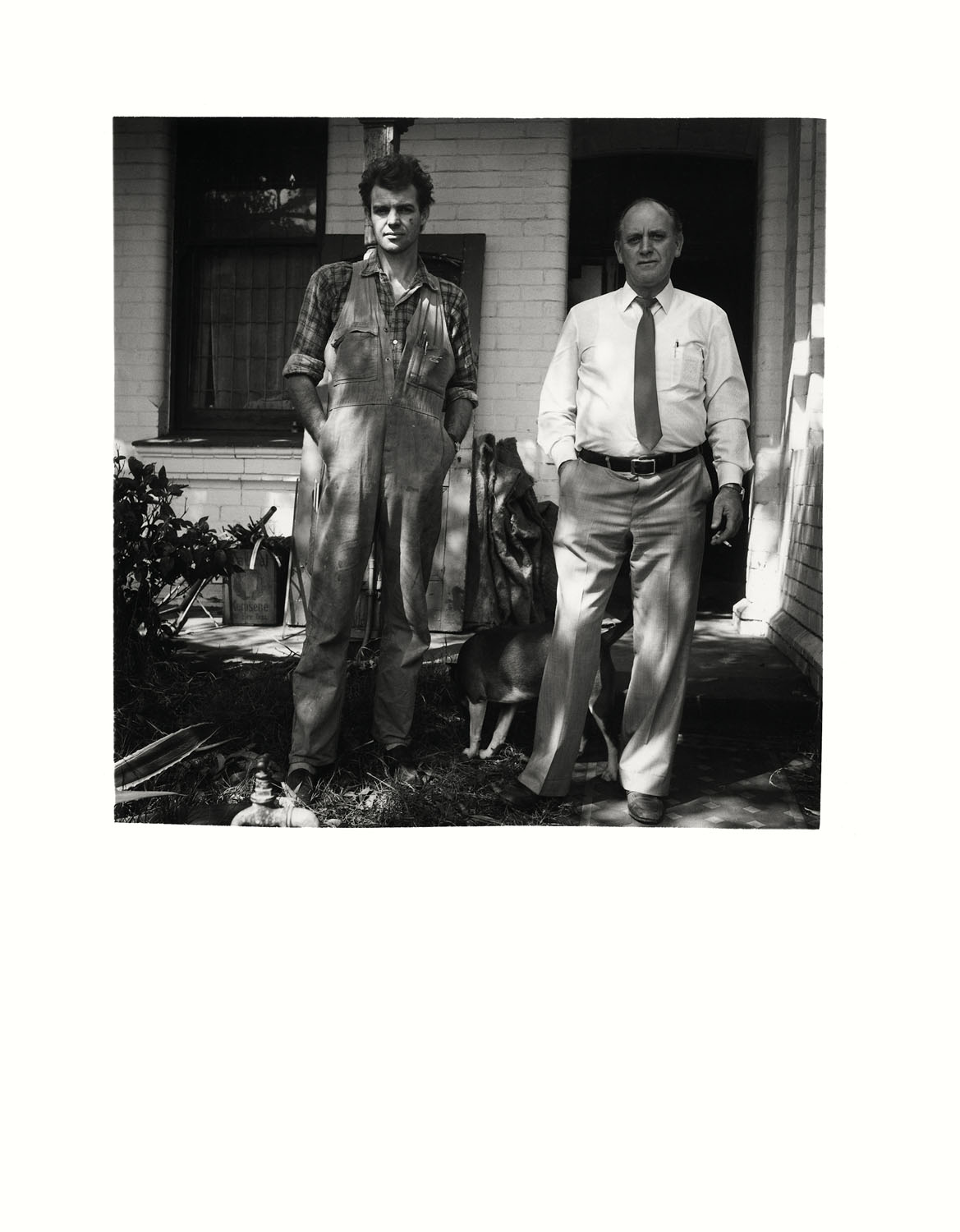
 

Viva Gibb (Australian, 1945-2017) 'James and Jim Healey at Viva's studio, 57 Stanley Street, West Melbourne' c. 1982


Viva Gibb (Australian, 1945-2017)
James and Jim Healey at Viva’s studio, 57 Stanley Street, West Melbourne
c. 1982
24 x 17.5cm
Donated by Sybil Gibb and Rupert Duffy to the Melbourne Art Trust in memory of Viva Gibb 2025
© Courtesy of the Estate of Viva Gibb
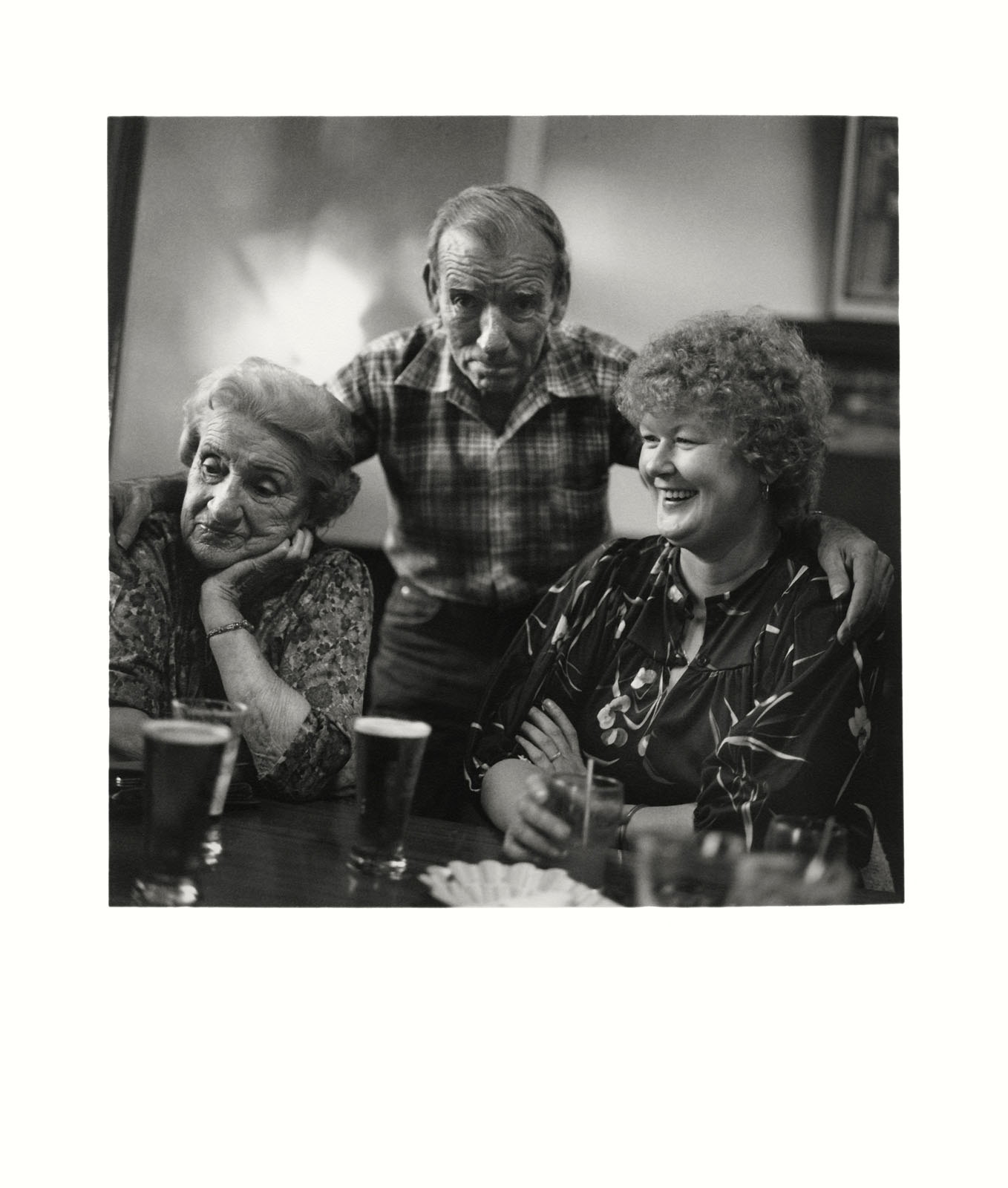
 

Viva Gibb (Australian, 1945-2017) 'Maureen’s 85th birthday, Three Crowns Hotel, 365 Victoria Street, West Melbourne' 1982


Viva Gibb (Australian, 1945-2017)
Maureen’s 85th birthday, Three Crowns Hotel, 365 Victoria Street, West Melbourne
1982
Silver gelatin print
25 x 20cm
Donated by Sybil Gibb and Rupert Duffy to the Melbourne Art Trust in memory of Viva Gibb 2025
© Courtesy of the Estate of Viva Gibb
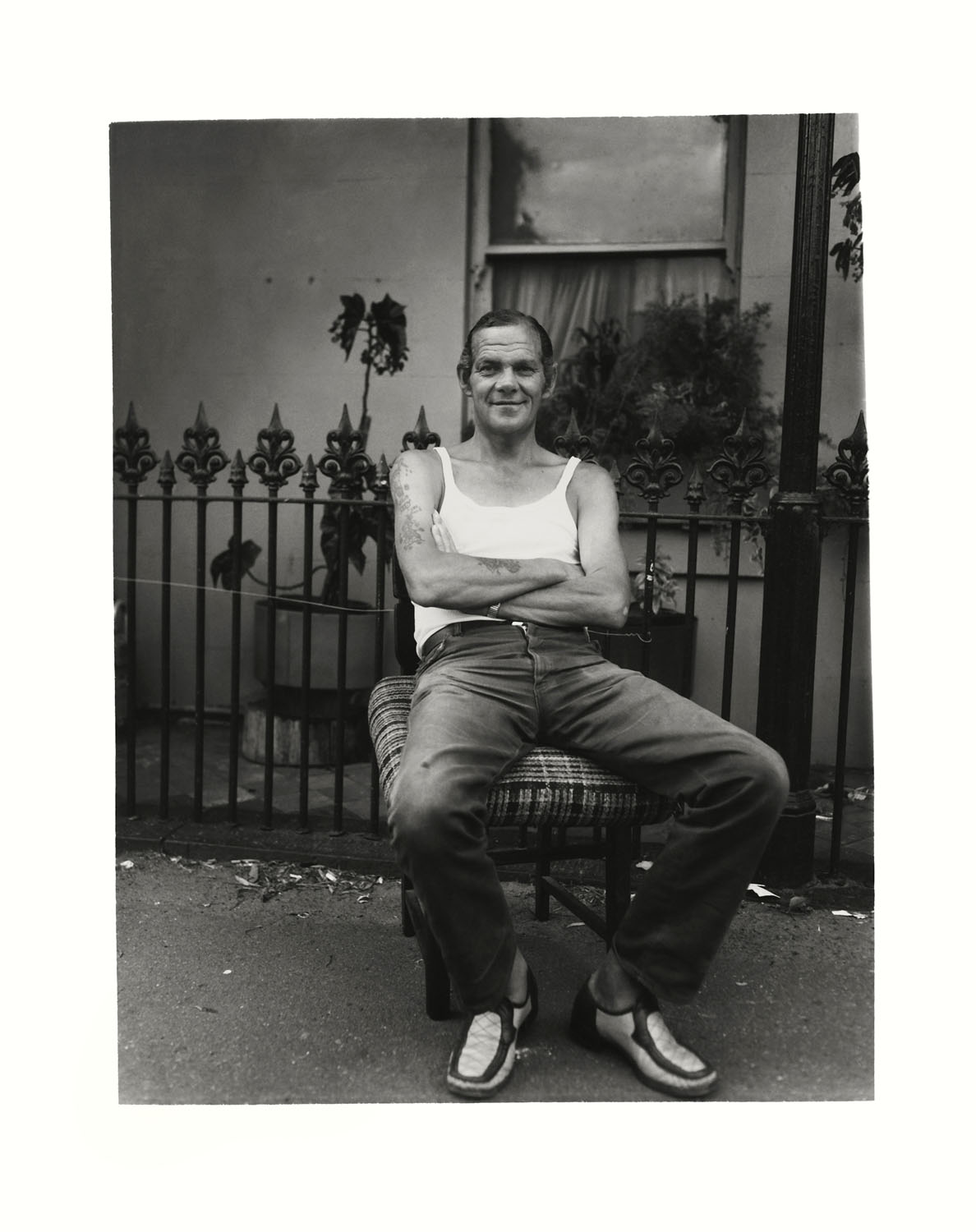
 

Viva Gibb (Australian, 1945-2017) 'Skippy' outside 44 Hawke Street, West Melbourne' 1982


Viva Gibb (Australian, 1945-2017)
‘Skippy’ outside 44 Hawke Street, West Melbourne
1982
Silver gelatin print
24 x 18 cm
Donated by Sybil Gibb and Rupert Duffy to the Melbourne Art Trust in memory of Viva Gibb 2025
© Courtesy of the Estate of Viva Gibb
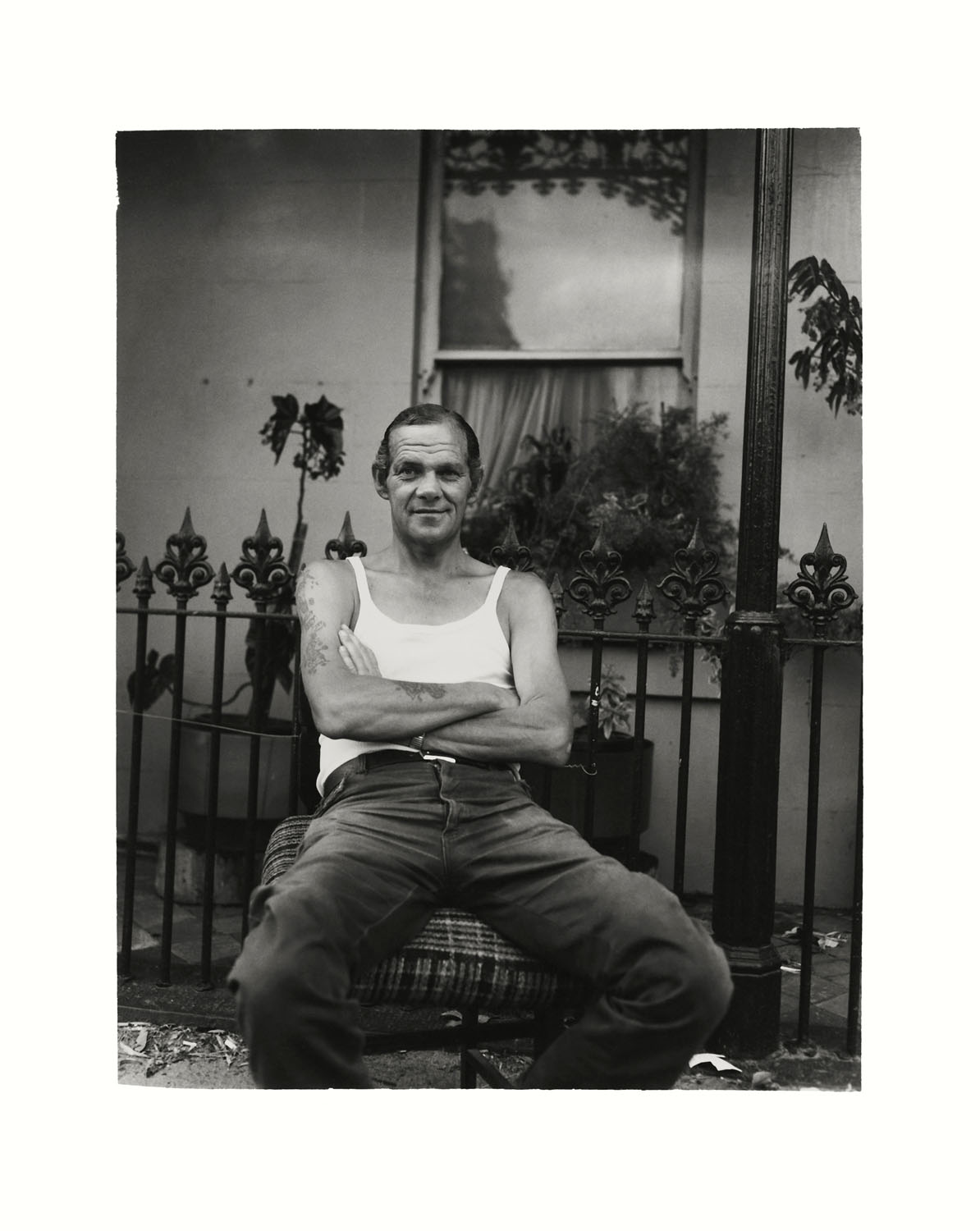
 

Viva Gibb (Australian, 1945-2017) 'Skippy' outside 44 Hawke Street, West Melbourne' 1982


Viva Gibb (Australian, 1945-2017)
‘Skippy’ outside 44 Hawke Street, West Melbourne
1982
Silver gelatin print
24 x 18 cm
Donated by Sybil Gibb and Rupert Duffy to the Melbourne Art Trust in memory of Viva Gibb 2025
© Courtesy of the Estate of Viva Gibb
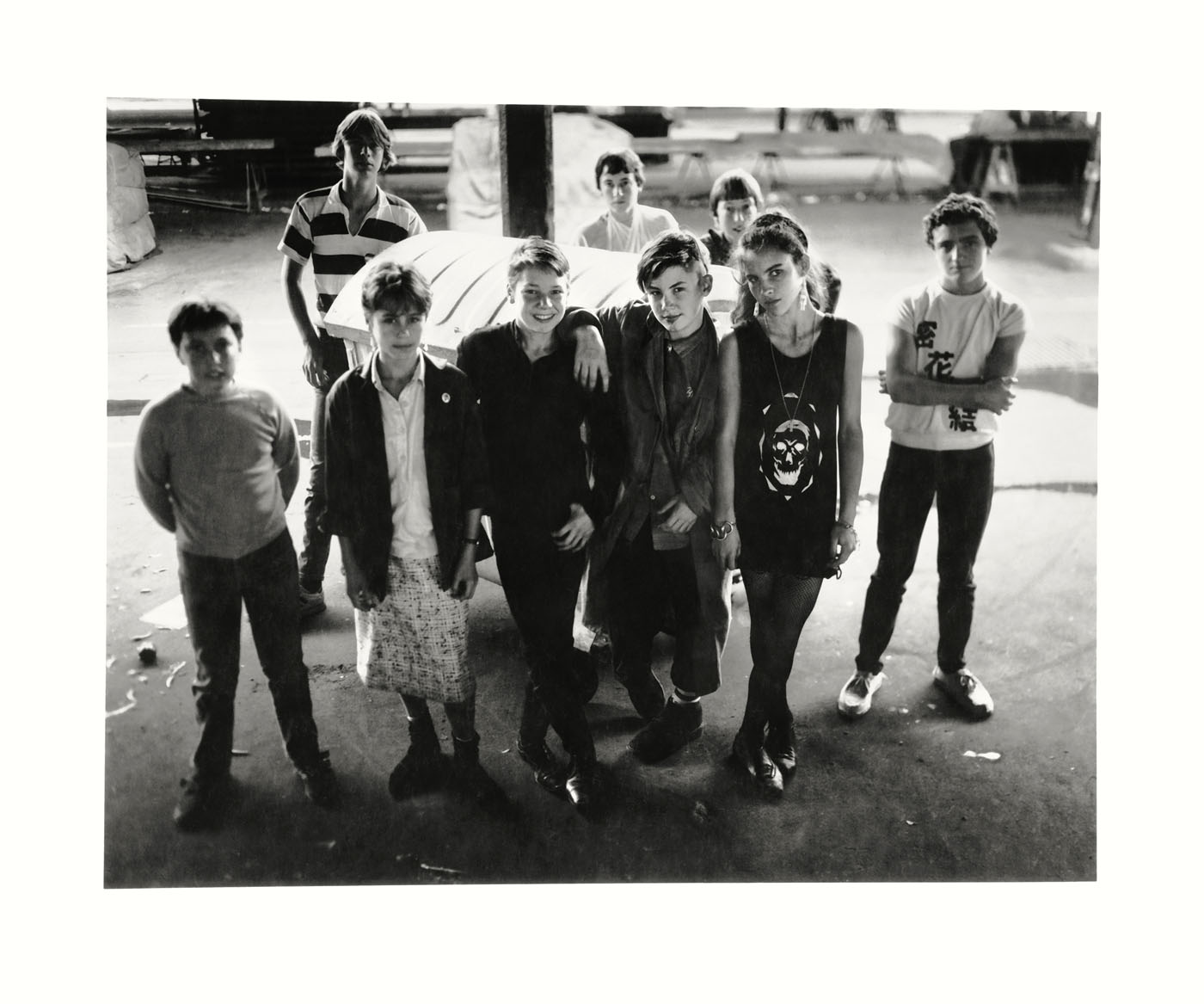
 

Viva Gibb (Australian, 1945-2017) 'Alice, Eben, Rupert, Sybil and friends at Queen Victoria Market, Victoria Street, West Melbourne' 1983


Viva Gibb (Australian, 1945-2017)
Alice, Eben, Rupert, Sybil and friends at Queen Victoria Market, Victoria Street, West Melbourne
1983
Silver gelatin print
20.5 x 25.5 cm
Donated by Sybil Gibb and Rupert Duffy to the Melbourne Art Trust in memory of Viva Gibb 2025
© Courtesy of the Estate of Viva Gibb
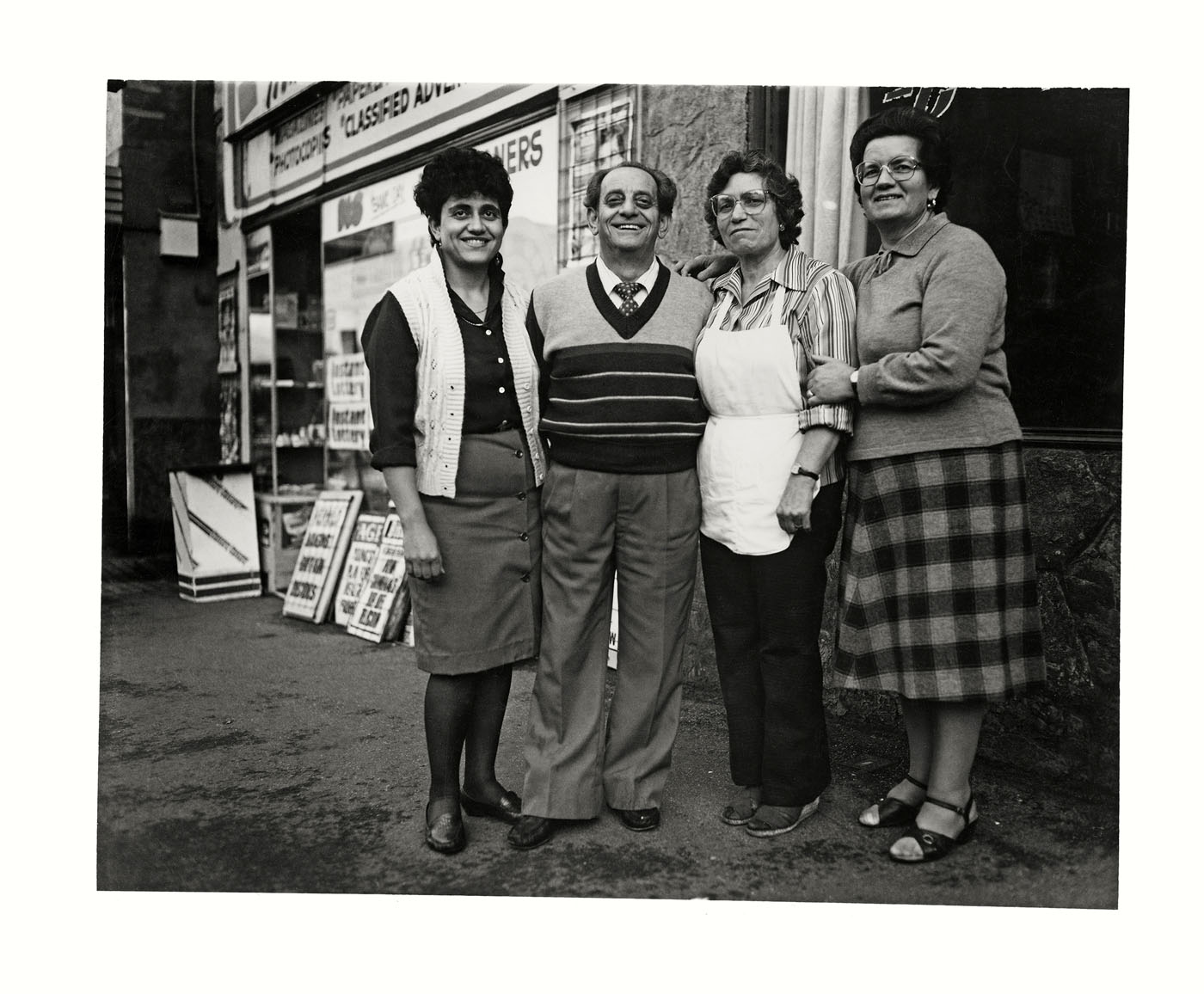
 

Viva Gibb (Australian, 1945-2017) 'Giuseppe and Maria Lanteri with Maria's sister and niece outside Don Camillo Cafe, 215 Victoria Street, West Melbourne' 1983


Viva Gibb (Australian, 1945-2017)
Giuseppe and Maria Lanteri with Maria’s sister and niece outside Don Camillo Cafe, 215 Victoria Street, West Melbourne
1983
Silver gelatin print
17.5 x 24cm
Donated by Sybil Gibb and Rupert Duffy to the Melbourne Art Trust in memory of Viva Gibb 2025
© Courtesy of the Estate of Viva Gibb
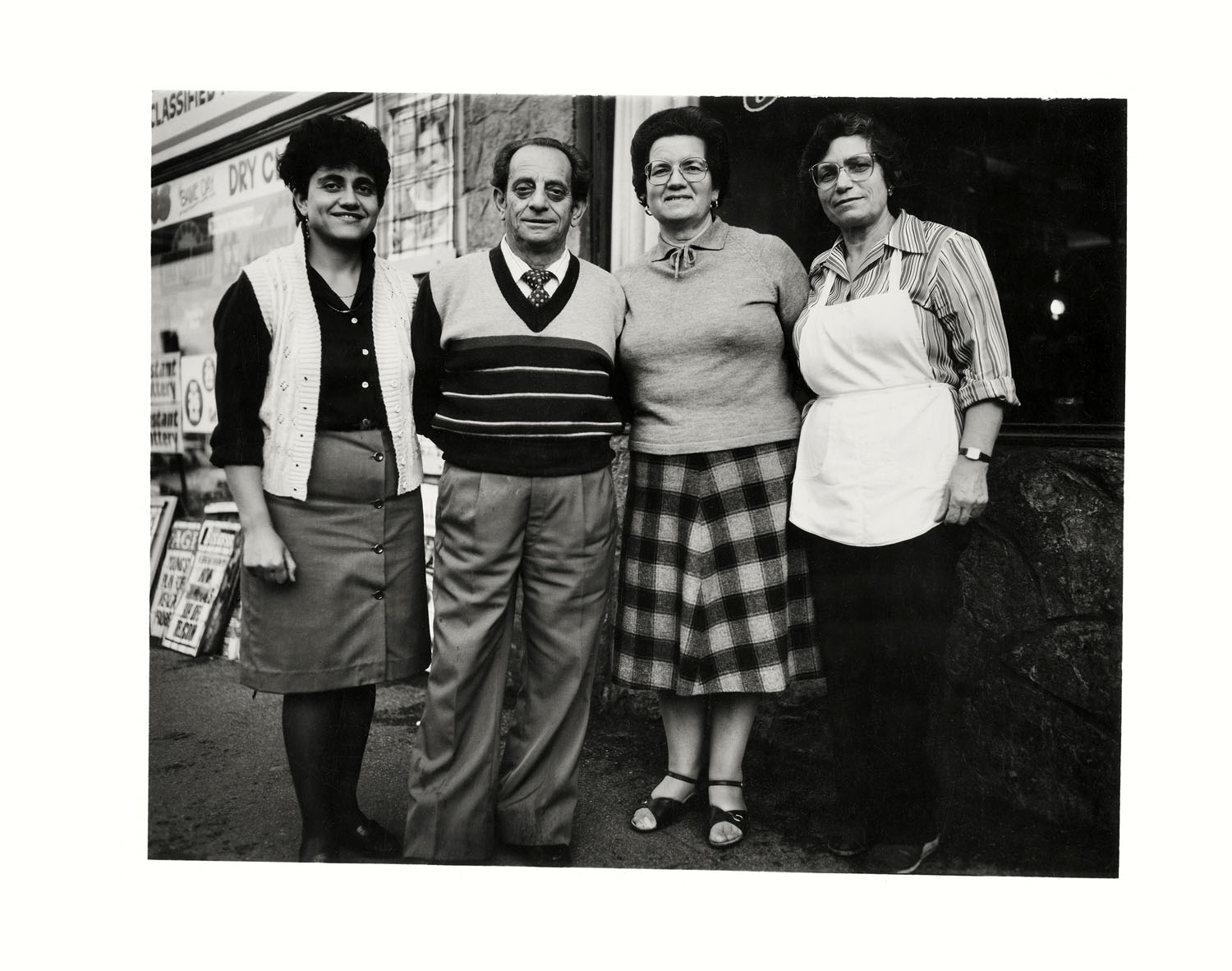
 

Viva Gibb (Australian, 1945-2017) 'Giuseppe and Maria Lanteri with Maria's sister and niece outside Don Camillo Cafe, 215 Victoria Street, West Melbourne' 1983


Viva Gibb (Australian, 1945-2017)
Giuseppe and Maria Lanteri with Maria’s sister and niece outside Don Camillo Cafe, 215 Victoria Street, West Melbourne
1983
Silver gelatin print
17.5 x 24cm
Donated by Sybil Gibb and Rupert Duffy to the Melbourne Art Trust in memory of Viva Gibb 2025
© Courtesy of the Estate of Viva Gibb
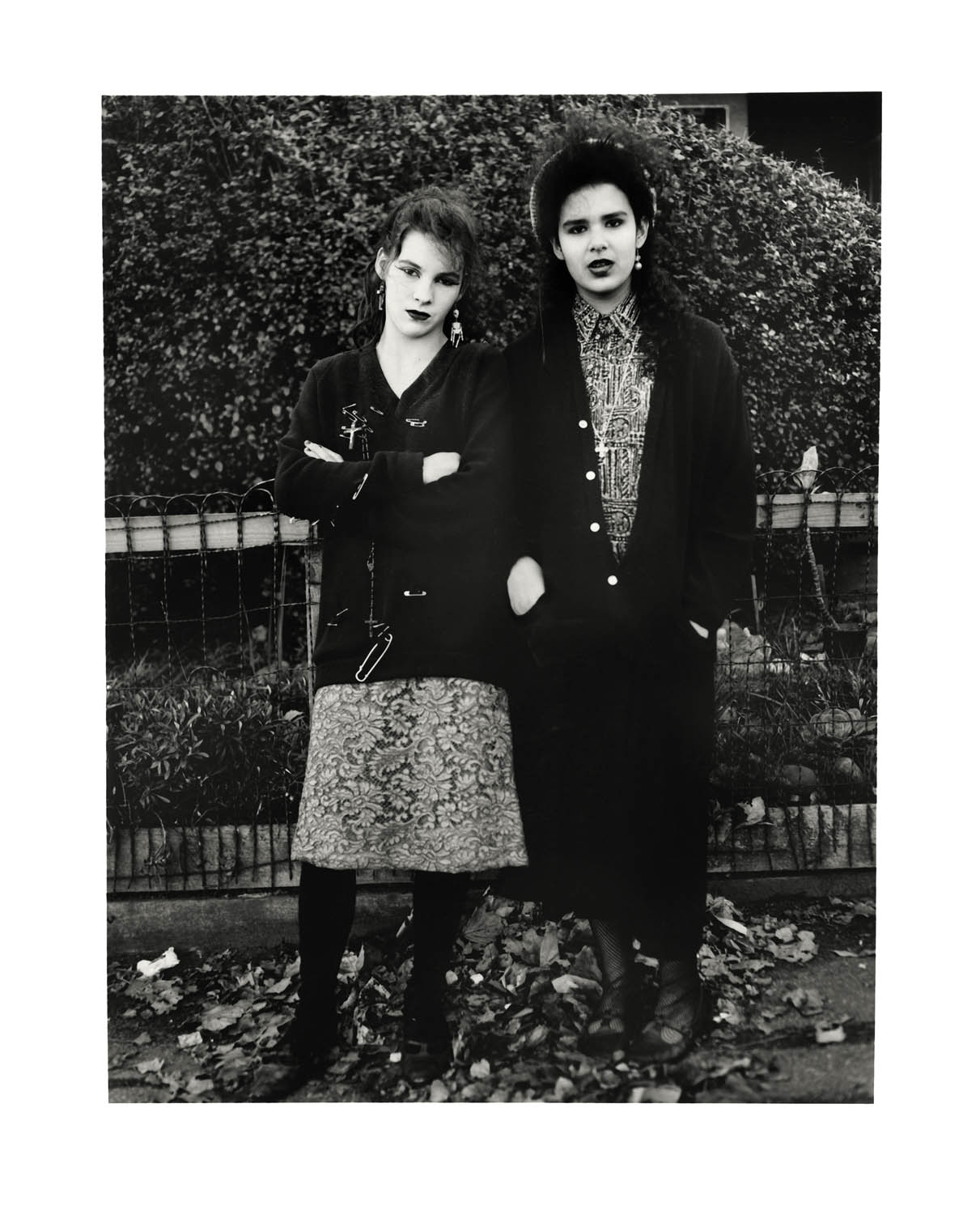
 

Viva Gibb (Australian, 1945-2017) 'Sybil and Vivian outside 10 Hawke Street, West Melbourne' 1985


Viva Gibb (Australian, 1945-2017)
Sybil and Vivian outside 10 Hawke Street, West Melbourne
1985
Silver gelatin print
25.5 x 20.5cm
Donated by Sybil Gibb and Rupert Duffy to the Melbourne Art Trust in memory of Viva Gibb 2025
© Courtesy of the Estate of Viva Gibb
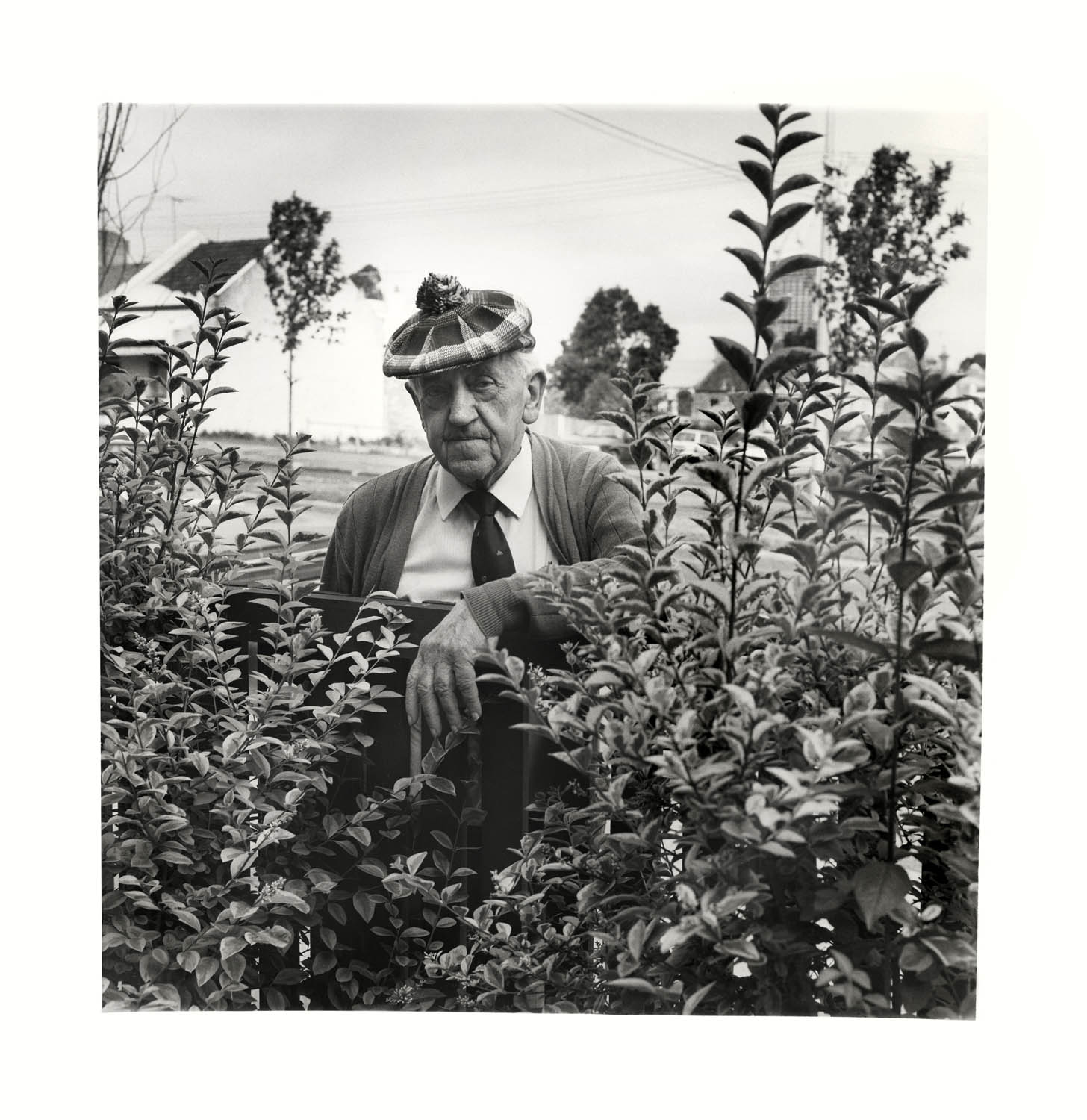
 

Viva Gibb (Australian, 1945-2017) 'Mr Lindsay Williams, Hawke Street, West Melbourne' c. 1985


Viva Gibb (Australian, 1945-2017)
Mr Lindsay Williams, Hawke Street, West Melbourne
c. 1985
Silver gelatin print
30 x 30cm
Donated by Sybil Gibb and Rupert Duffy to the Melbourne Art Trust in memory of Viva Gibb 2025
© Courtesy of the Estate of Viva Gibb
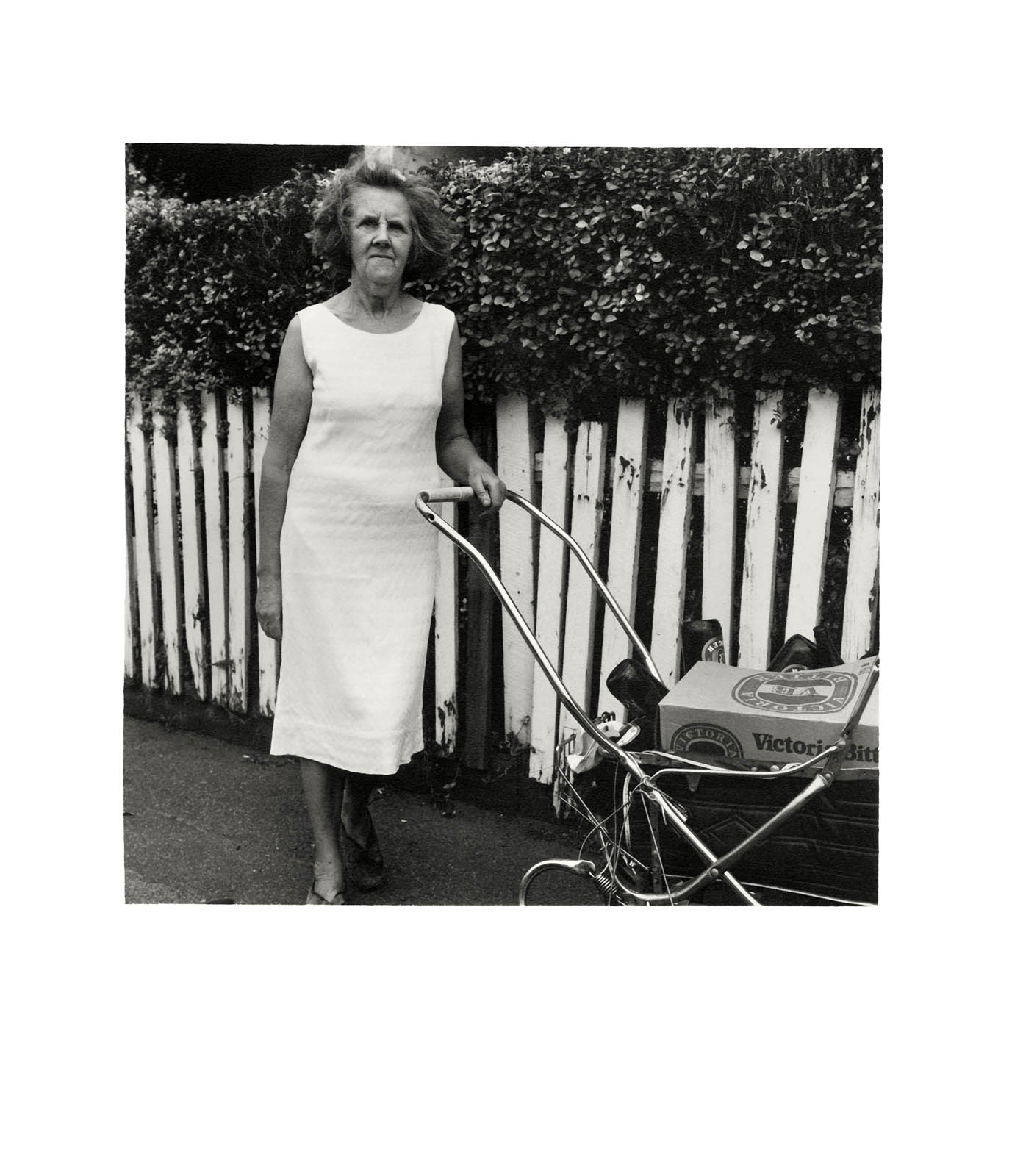
 

Viva Gibb (Australian, 1945-2017) 'Jean collecting bottles outside 8 Hawke Street, West Melbourne' c. 1986


Viva Gibb (Australian, 1945-2017)
Jean collecting bottles outside 8 Hawke Street, West Melbourne
c. 1986
Silver gelatin print
20 x 16cm
Donated by Sybil Gibb and Rupert Duffy to the Melbourne Art Trust in memory of Viva Gibb 2025
© Courtesy of the Estate of Viva Gibb
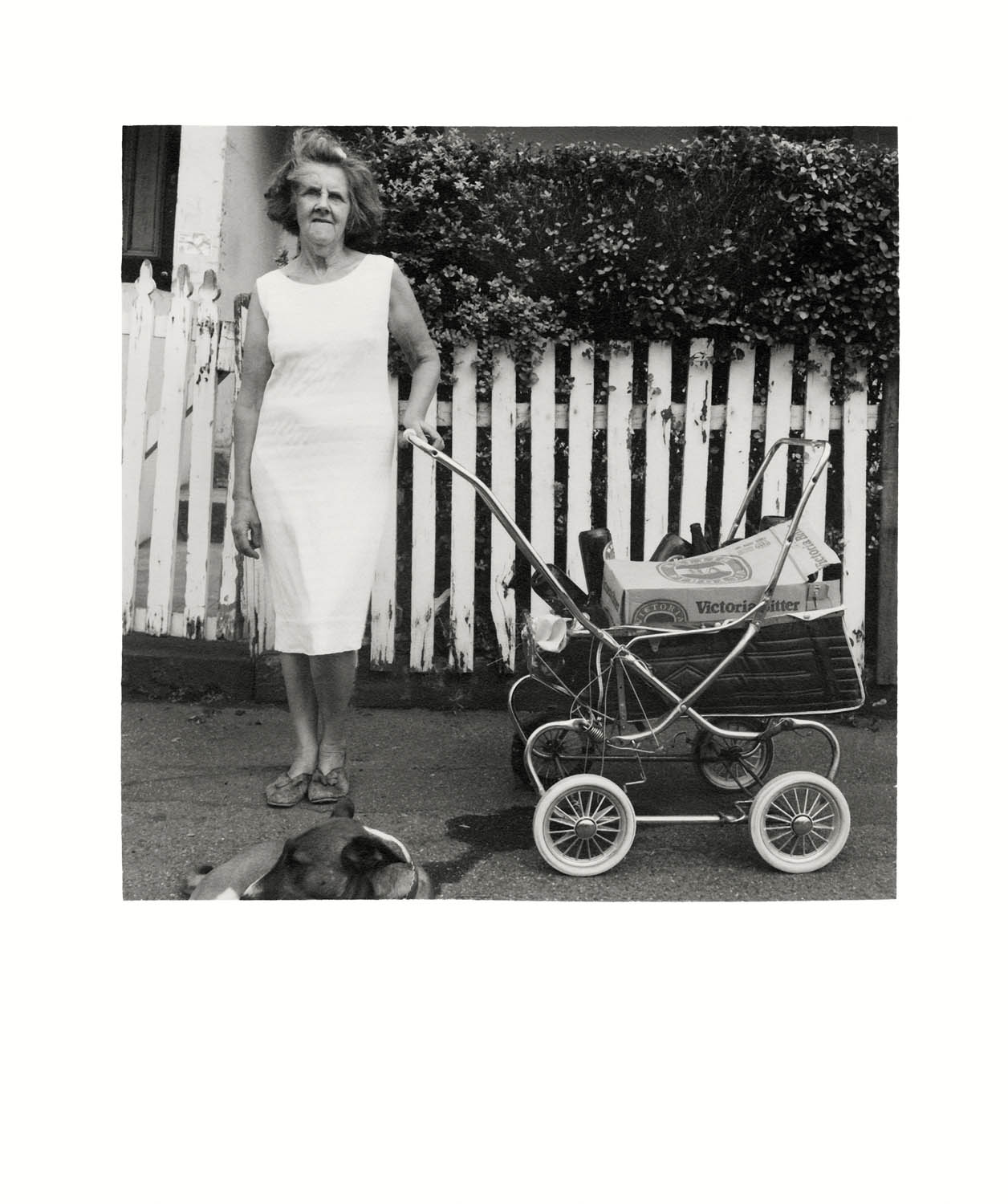
 

Viva Gibb (Australian, 1945-2017) 'Jean collecting bottles outside 8 Hawke Street, West Melbourne' c. 1986


Viva Gibb (Australian, 1945-2017)
Jean collecting bottles outside 8 Hawke Street, West Melbourne
c. 1986
Silver gelatin print
20 x 16cm
Donated by Sybil Gibb and Rupert Duffy to the Melbourne Art Trust in memory of Viva Gibb 2025
© Courtesy of the Estate of Viva Gibb
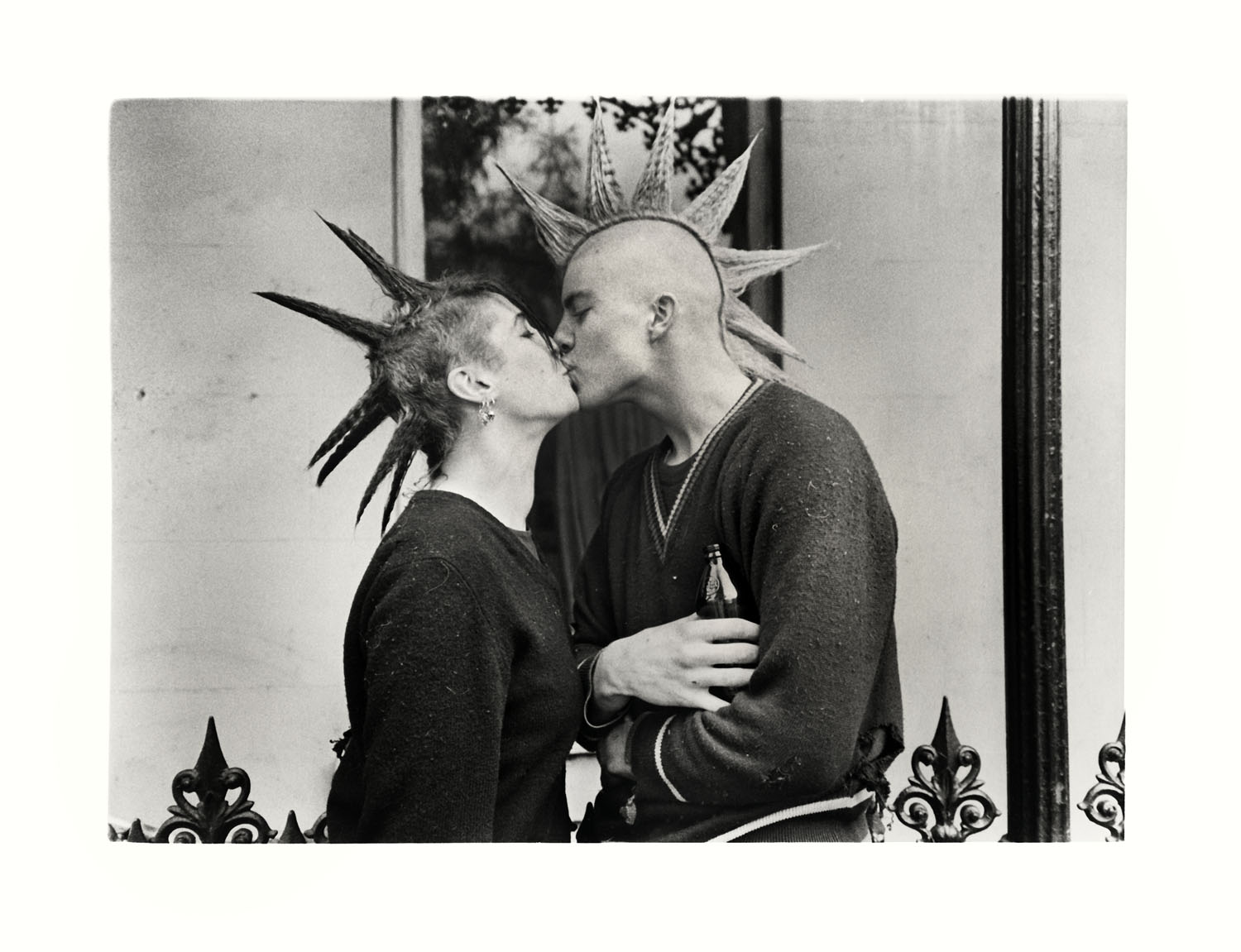
 

Viva Gibb (Australian, 1945-2017) 'Jill and Tim, 44 Hawke Street, West Melbourne' 1988 


Viva Gibb (Australian, 1945-2017)
Jill and Tim, 44 Hawke Street, West Melbourne
1988
Silver gelatin print
20 x 25.5cm
Loaned to the City of Melbourne by Sybil Gibb and Rupert Duffy
© Courtesy of the Estate of Viva Gibb
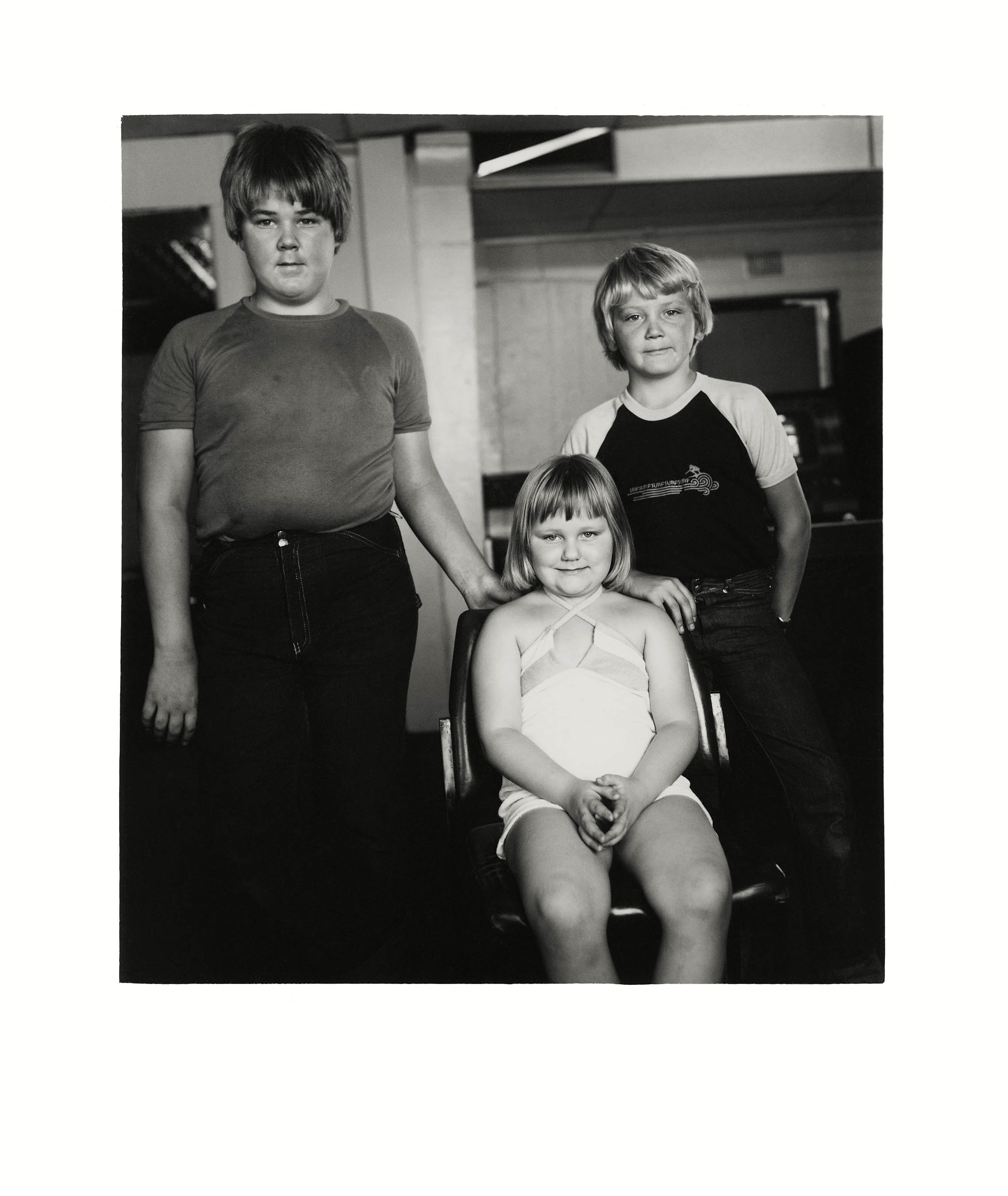
 

Viva Gibb (Australian, 1945-2017) 'The Kennedy children, Three Crowns Hotel, 365 Victoria Street, West Melbourne' 1982


Viva Gibb (Australian, 1945-2017)
The Kennedy children, Three Crowns Hotel, 365 Victoria Street, West Melbourne
1982
Silver gelatin print
24 x 18cm
Donated by Sybil Gibb and Rupert Duffy to the Melbourne Art Trust in memory of Viva Gibb 2025
© Courtesy of the Estate of Viva Gibb
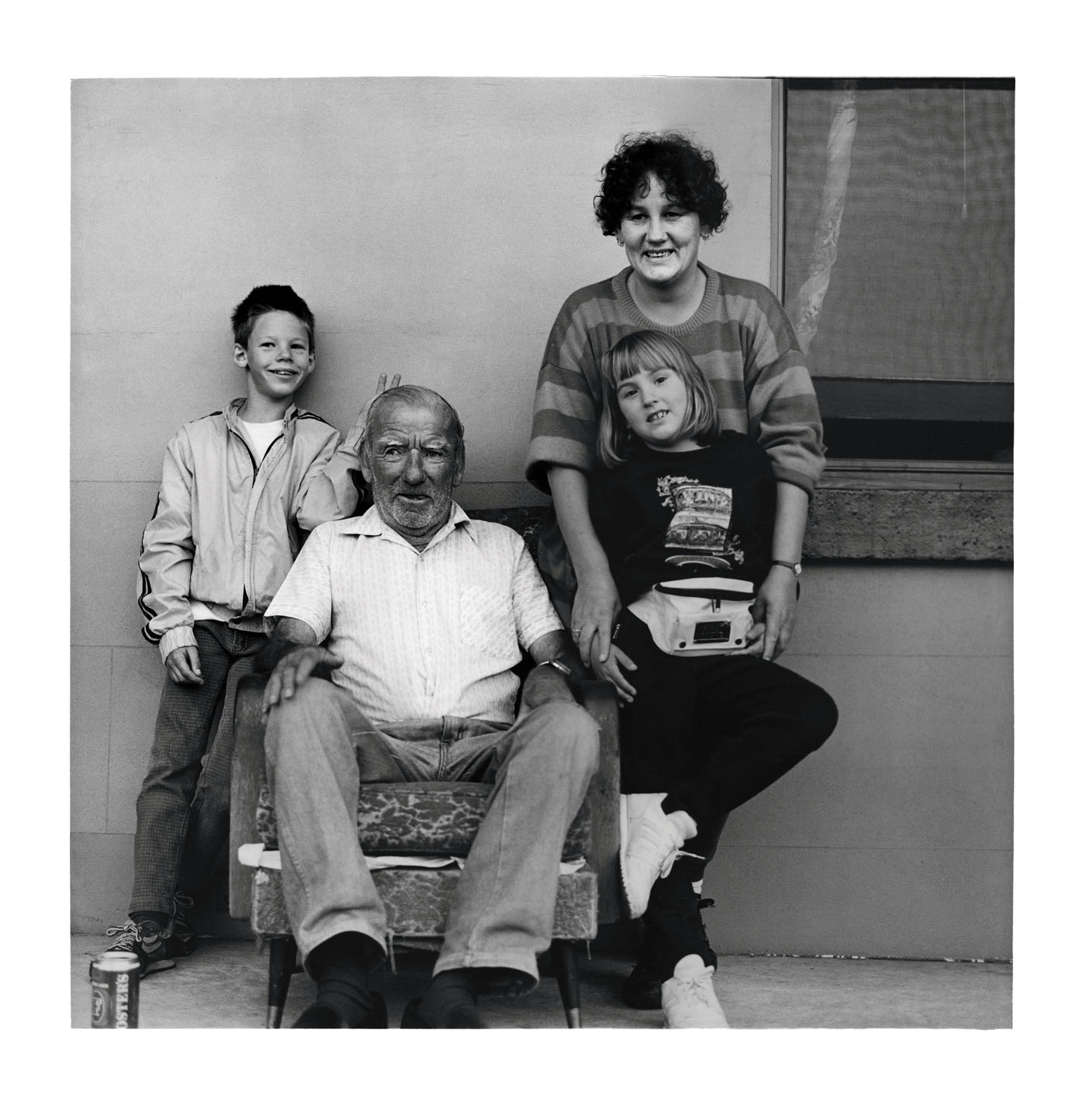
 

Viva Gibb (Australian, 1945-2017) 'The Bergin family and Tommy, 8 Hawke Street, West Melbourne' 1988


Viva Gibb (Australian, 1945-2017)
The Bergin family and Tommy, 8 Hawke Street, West Melbourne
1988
Silver gelatin print
31.5 x 30.5cm
Donated by Sybil Gibb and Rupert Duffy to the Melbourne Art Trust in memory of Viva Gibb 2025
© Courtesy of the Estate of Viva Gibb
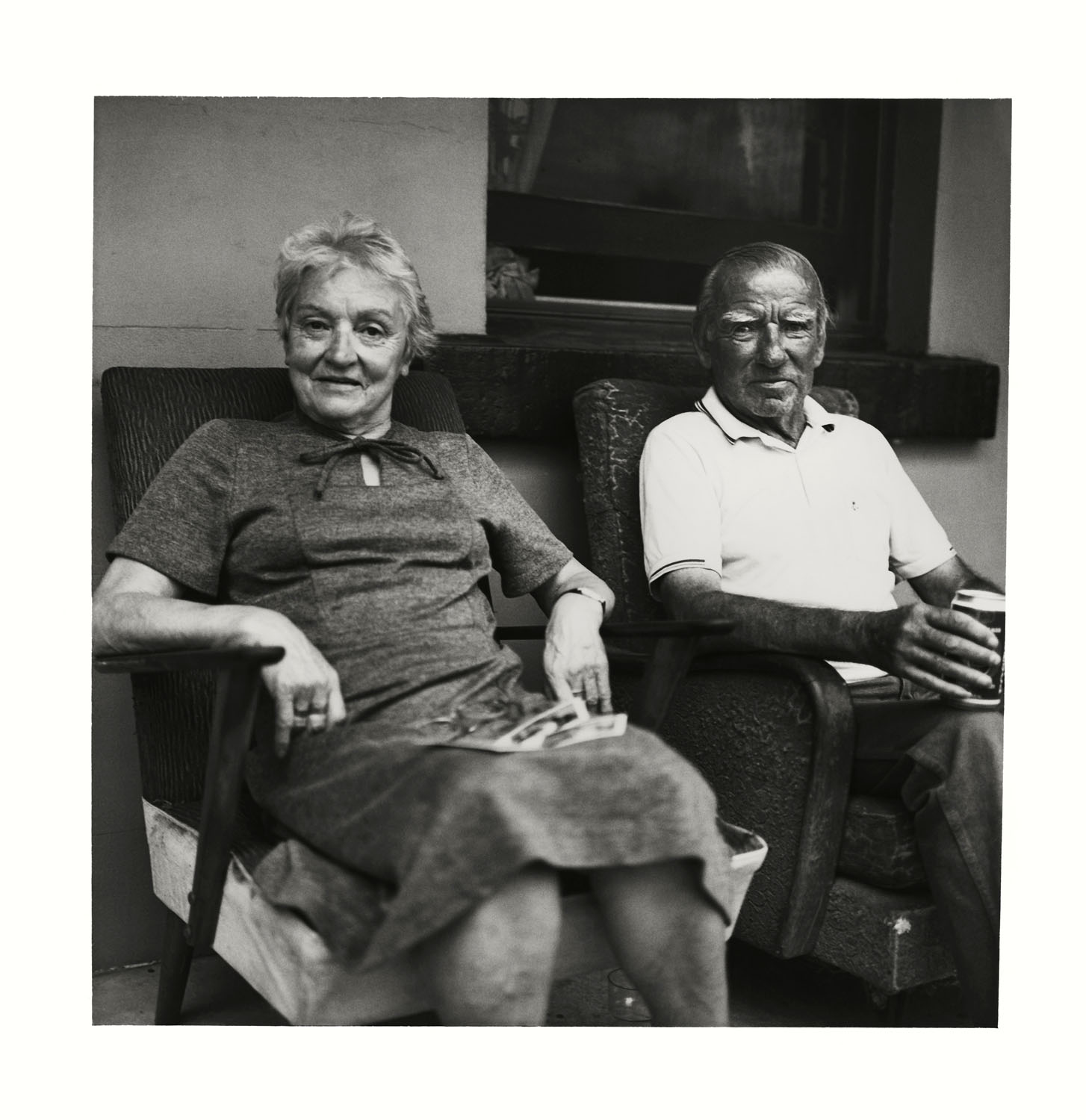
 

Viva Gibb (Australian, 1945-2017) 'Francy and Tommy, 8 Hawke Street, West Melbourne' 1988 


Viva Gibb (Australian, 1945-2017)
Francy and Tommy, 8 Hawke Street, West Melbourne
1988
Silver gelatin print
31.5 x 30.5cm
Donated by Sybil Gibb and Rupert Duffy to the Melbourne Art Trust in memory of Viva Gibb 2025
© Courtesy of the Estate of Viva Gibb


Viva Gibb was a part of the group of ‘northside’ social documentary photographers of the 1970s and 1980s (Ruth Maddison, Ponch Hawkes, Micky Allan, Helen Grace). She documented the suburbs of North and West Melbourne – where she lived – creating a distinctive, sympathetic portrait of her community during a transformative period in Melbourne’s history.

The exhibition has come about following a major donation of over 200 of Gibb’s photographs made to the Melbourne Art Trust in 2025, and will be the largest display of her work in over 30 years. The show features more than 250 images, including the artist’s photo albums. We have also published a small catalogue for the exhibition, which includes reflections written by Ruth Maddison and Helen Garner.

Text from the City Gallery website


“[Gibb] worked with a Rolleiflex medium-format camera for most of her portraiture, and a large-format 4 x 5-inch Graflex Speed Graphic press camera, tools that supported her patience and purpose, and built the trust of the person being photographed. The use of both offsets that sense of being scrutinised directly by the photographer that is imposed by an eye-level viewfinder or reflex camera, and one can see how Viva is standing above her camera or beside it, in eye contact with her subject, perhaps talking to them, calmly or animatedly depending on the reaction desired, as she presses the shutter.”

 Associate Professor James McArdle. “Stance,” on the On This Date In Photography website, March 19, 2026 [Online] Cited 06/07/2026. Used under fair use conditions for the purposes of education and research


North Melbourne
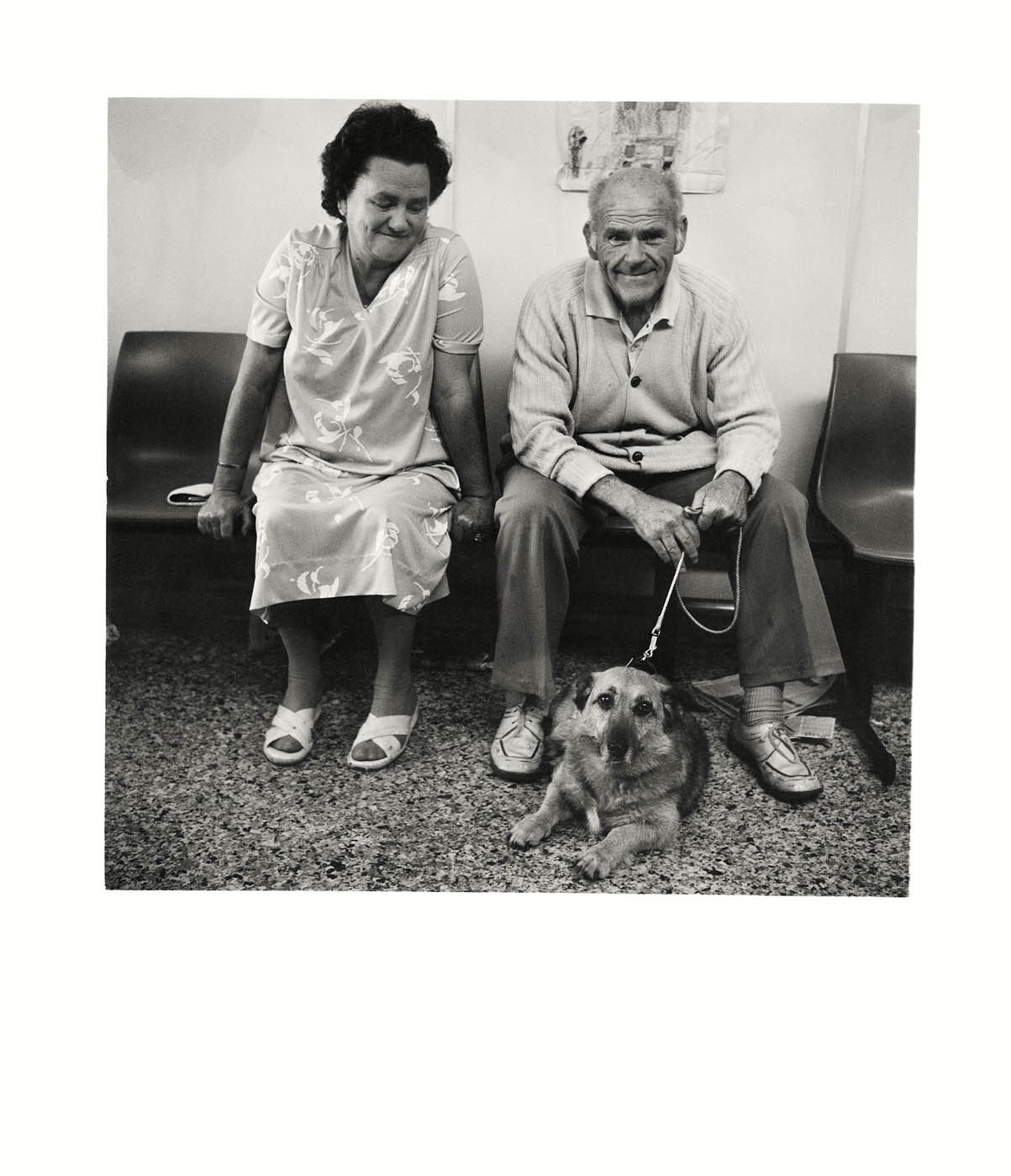
Viva Gibb (Australian, 1945-2017) 'Couple with dog at Lort Smith Animal Hospital, 24 Villiers Street, North Melbourne' c. 1977 


Viva Gibb (Australian, 1945-2017)
Couple with dog at Lort Smith Animal Hospital, 24 Villiers Street, North Melbourne
c. 1977
Silver gelatin print
24 x 18cm
Donated by Sybil Gibb and Rupert Duffy to the Melbourne Art Trust in memory of Viva Gibb 2025
© Courtesy of the Estate of Viva Gibb
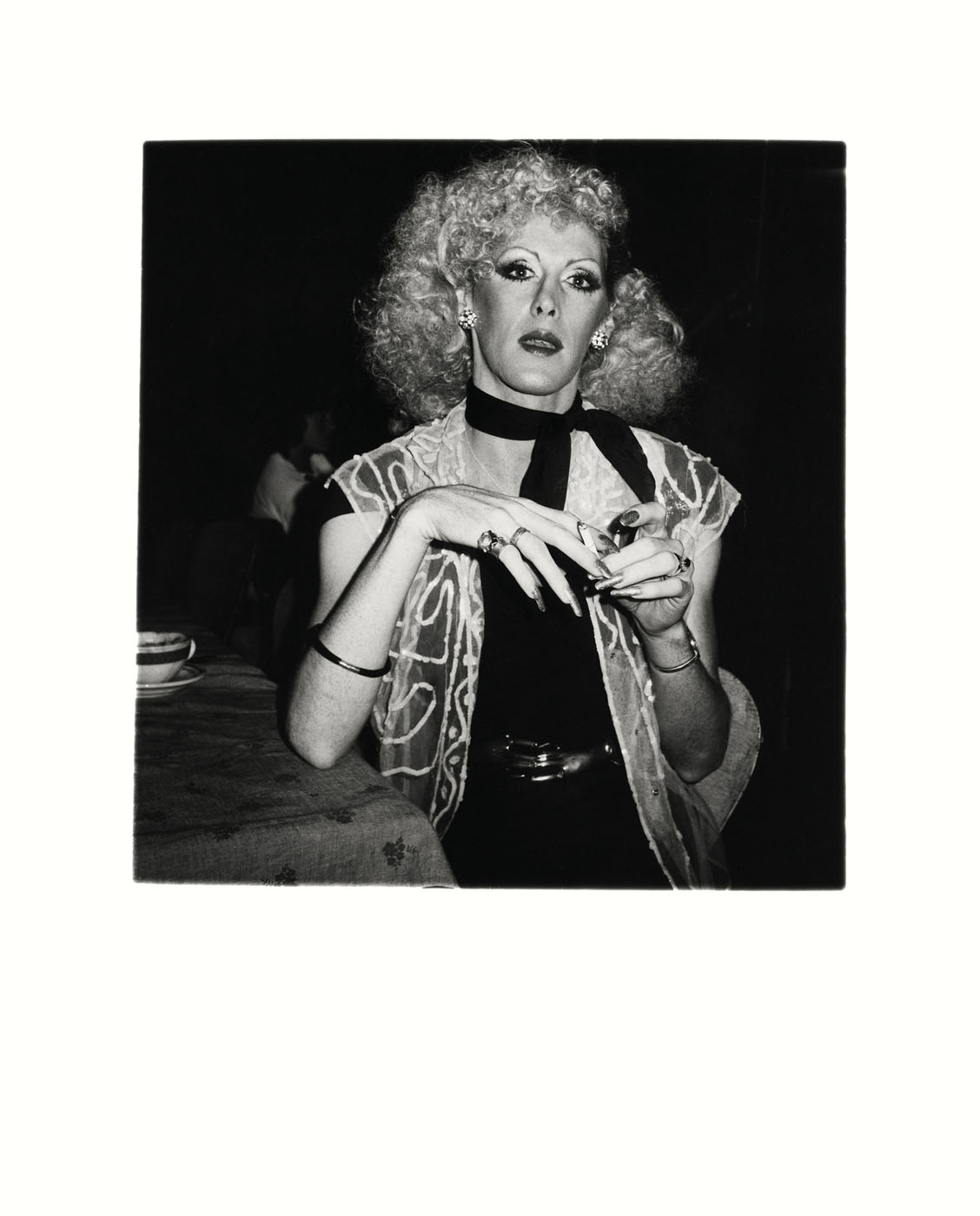
 

Viva Gibb (Australian, 1945-2017) 'Maxine Du Barry at Trish's Coffee Lounge, 126 Peel Street, North Melbourne' 1979


Viva Gibb (Australian, 1945-2017)
Maxine Du Barry at Trish’s Coffee Lounge, 126 Peel Street, North Melbourne
1979
Silver gelatin print
25 x 20.5cm
Donated by Sybil Gibb and Rupert Duffy to the Melbourne Art Trust in memory of Viva Gibb 2025
© Courtesy of the Estate of Viva Gibb
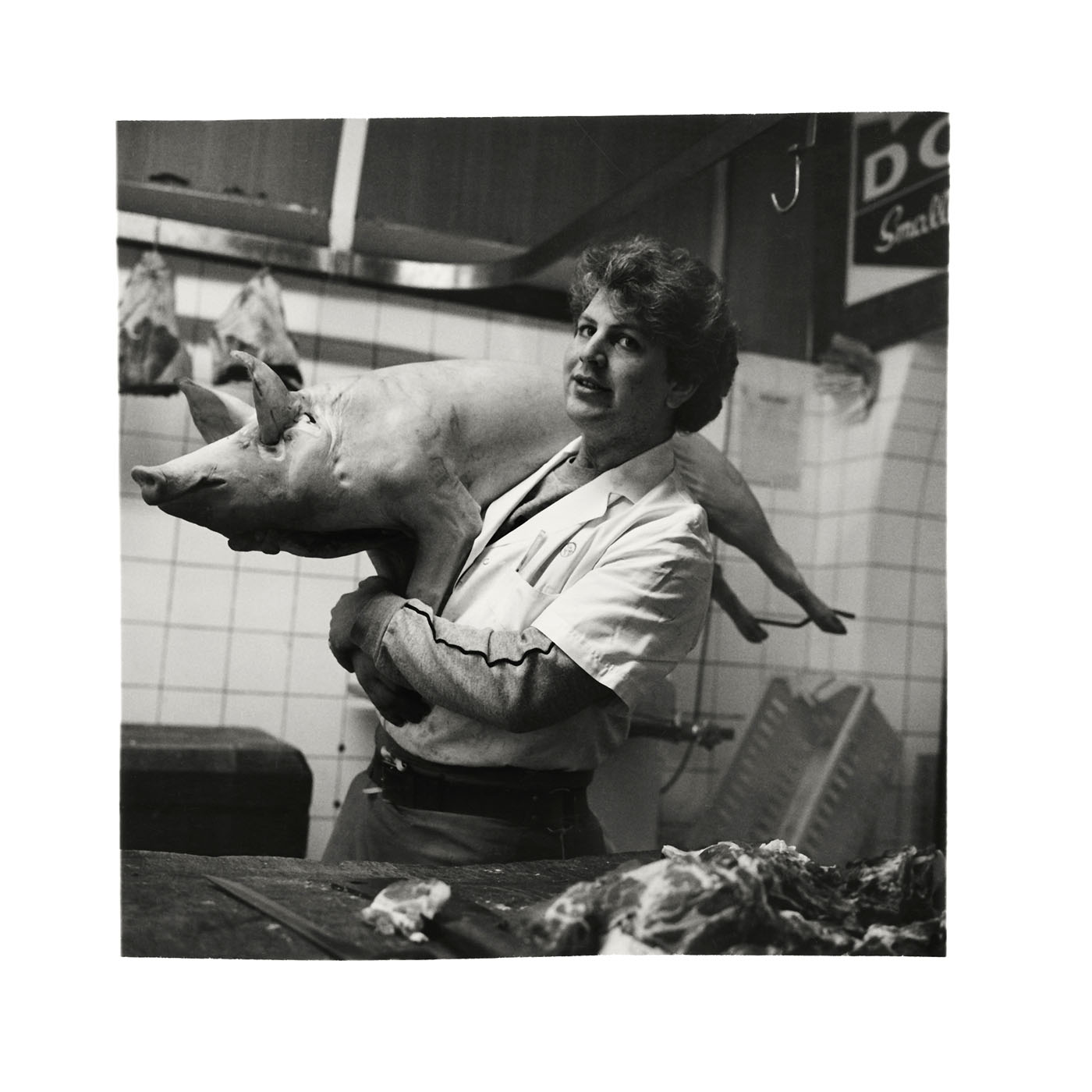
 

Viva Gibb (Australian, 1945-2017) 'Butcher, Errol Street, North Melbourne' c. 1980


Viva Gibb (Australian, 1945-2017)
Butcher, Errol Street, North Melbourne
c. 1980
Silver gelatin print
17 x 15cm
Donated by Sybil Gibb and Rupert Duffy to the Melbourne Art Trust in memory of Viva Gibb 2025
© Courtesy of the Estate of Viva Gibb
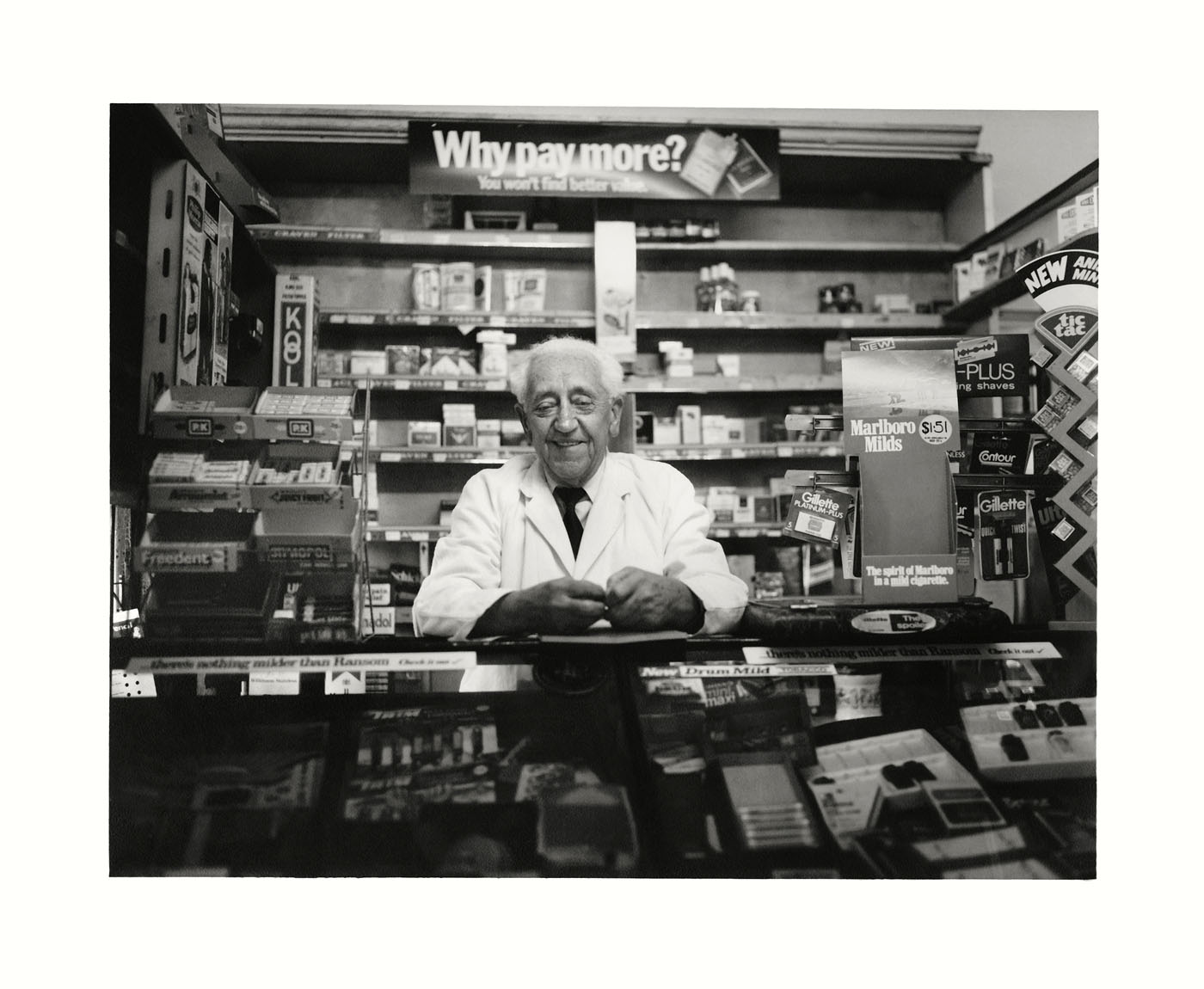
 

Viva Gibb (Australian, 1945-2017) 'Mr Lindsay Williams at his barber and tobacconist shop, Errol Street, North Melbourne' c. 1982


Viva Gibb (Australian, 1945-2017)
Mr Lindsay Williams at his barber and tobacconist shop, Errol Street, North Melbourne
c. 1982
Silver gelatin print
20 x 25cm
Donated by Sybil Gibb and Rupert Duffy to the Melbourne Art Trust in memory of Viva Gibb 2025
© Courtesy of the Estate of Viva Gibb
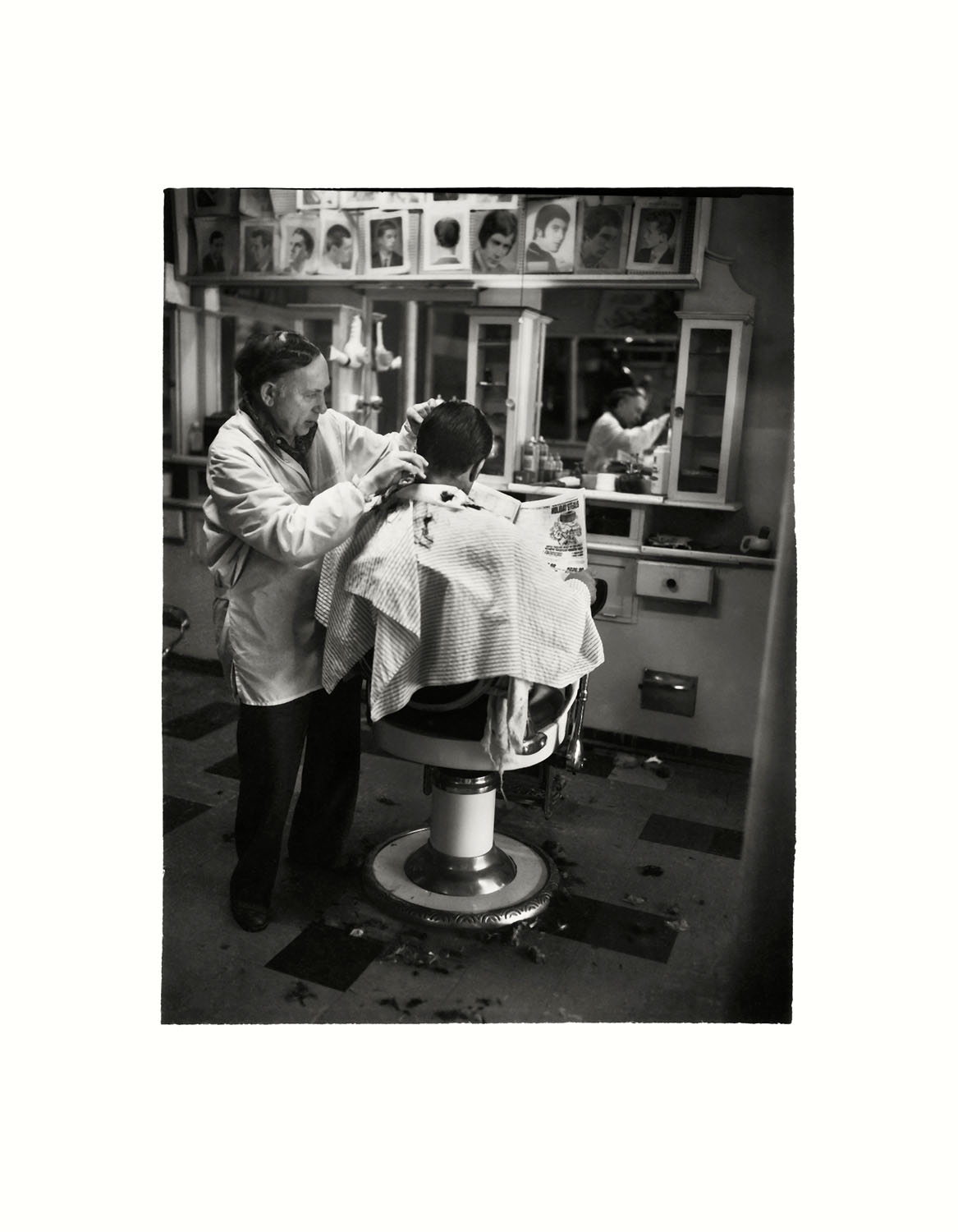
 

Viva Gibb (Australian, 1945-2017) 'Jack Rozen at his barber shop, 9 Errol Street, North Melbourne' 1983


Viva Gibb (Australian, 1945-2017)
Jack Rozen at his barber shop, 9 Errol Street, North Melbourne
1983
Silver gelatin print
17.5 x 12.5cm
Donated by Sybil Gibb and Rupert Duffy to the Melbourne Art Trust in memory of Viva Gibb 2025
© Courtesy of the Estate of Viva Gibb
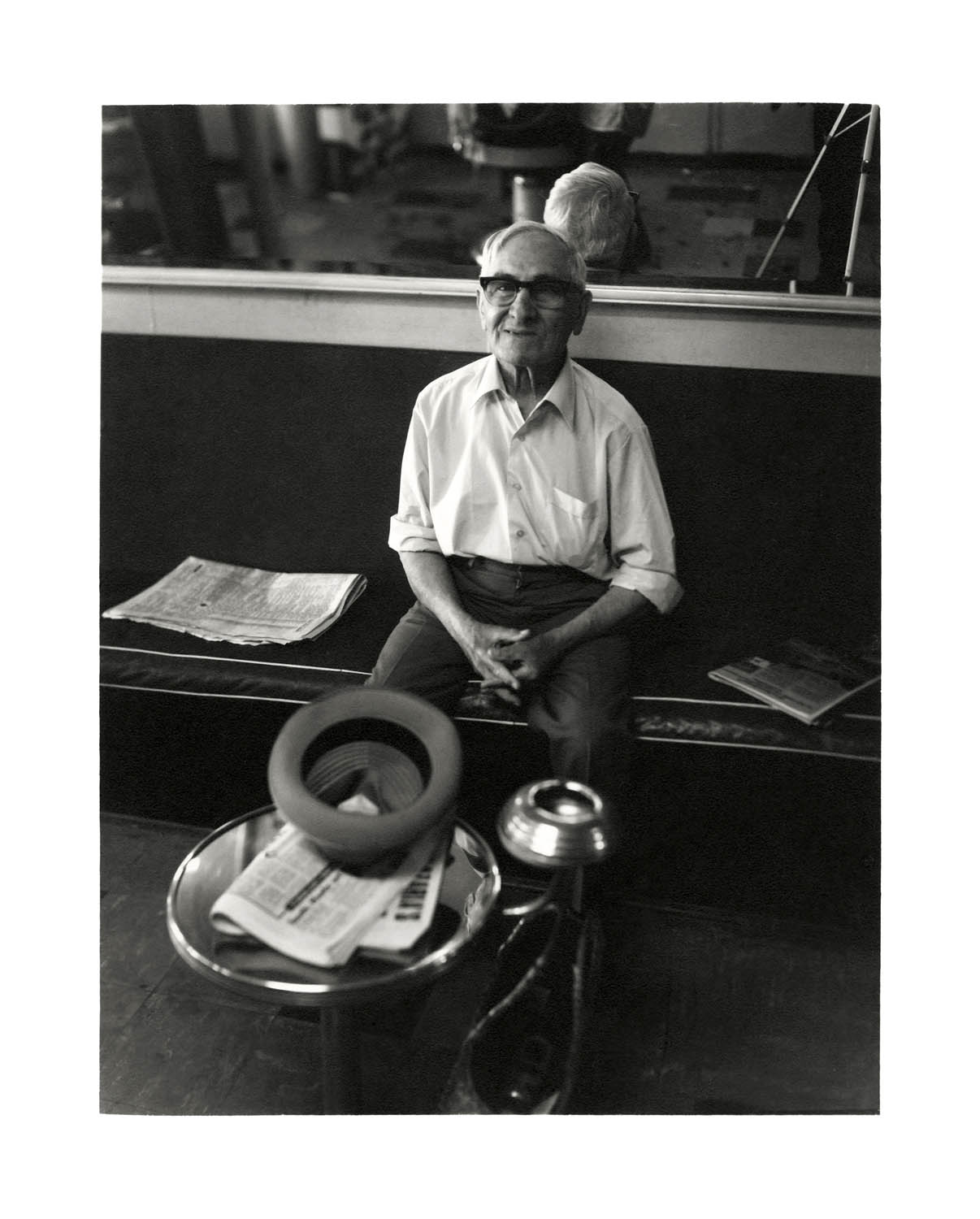
 

Viva Gibb (Australian, 1945-2017) 'Man at Jack Rozen's barber shop, 9 Errol Street, North Melbourne' c. 1983


Viva Gibb (Australian, 1945-2017)
Man at Jack Rozen’s barber shop, 9 Errol Street, North Melbourne
c. 1983
Silver gelatin print
22 x 17.5cm
Donated by Sybil Gibb and Rupert Duffy to the Melbourne Art Trust in memory of Viva Gibb 2025
© Courtesy of the Estate of Viva Gibb


In 2025, Melbourne Art Trust acquired a major donation by artist and social-documentary photographer Viva Jillian Gibb (1945-2017). Generously made by the artist’s children, Sybil Gibb and Rupert Duffy, it comprises more than 200 silver gelatin photographs taken between the mid-1970s and the early 1990s. On the street where I live showcases works from this donation, alongside several prints and photo albums loaned from the artist’s family. Taking its title from one of these albums, the exhibition re-examines this period of Gibb’s practice, reintroducing an artist whose vast body of work has largely lain dormant for three decades.

Born in Bobinawarrah, Victoria, Gibb was first and foremost an artist. She was unwavering in her pursuit of this. She undertook a diploma of art at Wangaratta Technical College (1961-65); moved to Melbourne to study painting at the National Gallery Art School (1965-68); and studied printmaking at the Victorian College of the Arts (VCA; 1973-74). Photography became the focus of her practice only after her postgraduate study. 

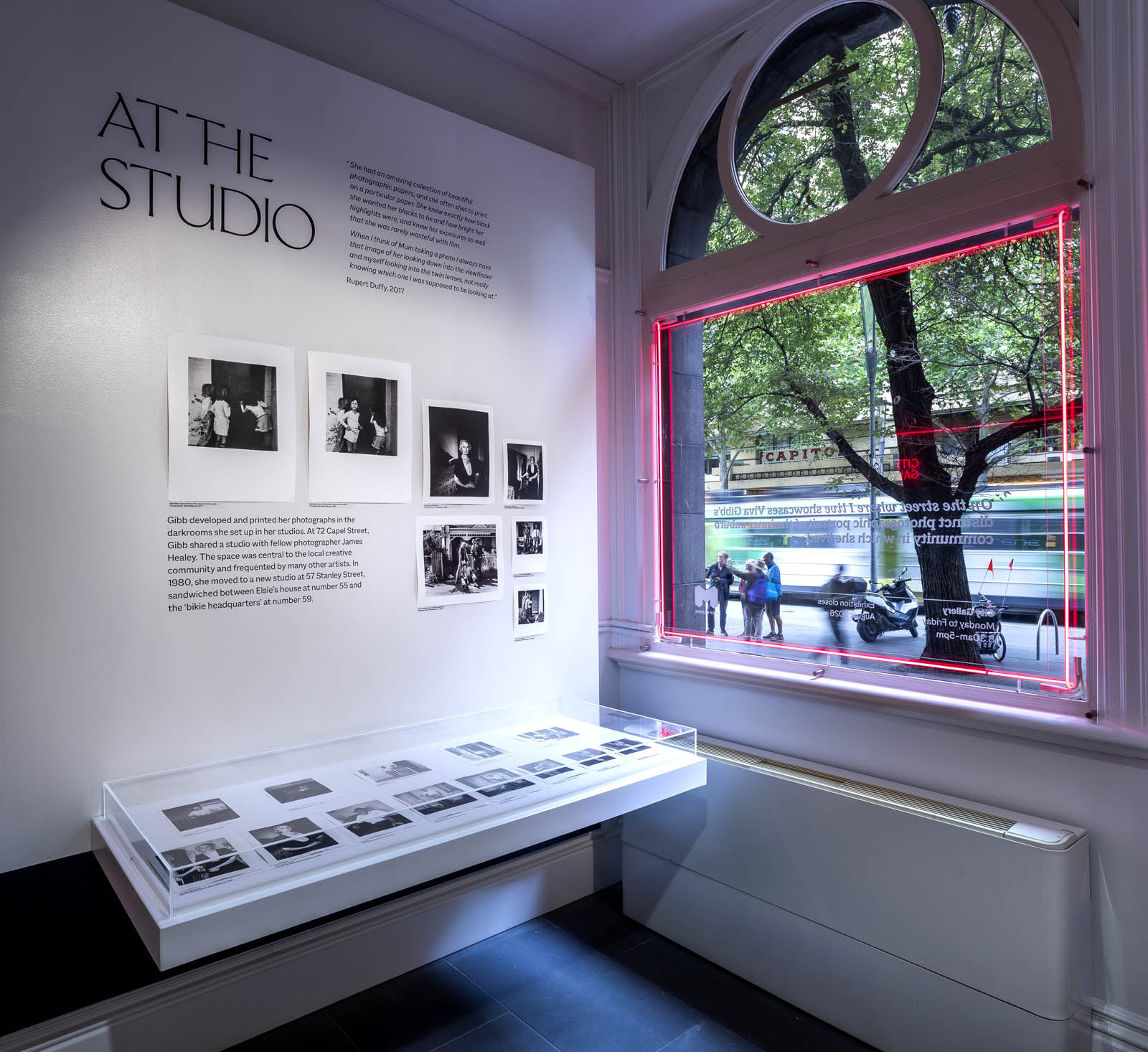
Moving to West Melbourne in 1975, Gibb quickly established her first dedicated darkroom at 72 Capel Street. Her technical printmaking skills carried over to photography’s hands-on processes. She had an array of photographic papers, often shooting to print on a particular paper. Her son Rupert recalls, “she knew exactly how black she wanted her blacks to be and how bright her highlights were and knew her exposures so well that she was rarely wasteful with film’.1 She worked with a Rolleiflex medium-format camera and a large-format 4 x 5” Graflex Speed Graphic press camera.

The community of North and West Melbourne was Gibb’s foremost subject between the mid-1970s and early 1990s. Her sustained documentation of those living and working in this area remains unmatched. The prolific nature of her practice is evident in the number of photographs – more than 250 – on display in this exhibition, a small fraction of the work she produced.

In the late 1980s, Gibb’s commitment to social justice led her to South Africa, where she documented people’s lives in towns and villages under apartheid. She also travelled to Hong Kong and China, photographing markets and sacred sites for a series titled Of Gods and Animals, which commented on the contrast between spiritual traditions and lived realities.

Returning to Australia, Gibb noted the lack of photographic training opportunities for Aboriginal women. In response, she approached the Victorian Women’s Trust for funding to facilitate a photography cadetship program. The first recipients of these funded cadetships were Maree Clarke and Kim Kruger. 

Gibb began what would become her last photographic series in the 1990s. The Way: Religious Ceremonies in Victoria documented the ceremonies and events of multicultural communities. She wanted to draw attention to the historical significance of these events, especially for migrants, who she saw as having managed, against great odds, to maintain their cultural practices in Australia.

The premature end of Gibb’s practice, around 2000, was likely brought about by the digital turn in photography, changes to which she never adapted. She kept photographically documenting her friends and family but returned to painting until she passed away in 2017. 

From her first solo exhibition in 1978, Gibb’s work was exhibited throughout the 1980s, including at the National Gallery of Victoria (NGV) and National Gallery of Australia. Today, her photographs are held in significant public collections across the country. In 2019, the Museum of Australian Photography was the first public gallery to show her work in more than 30 years. On the street where I live builds on this, situating Gibb’s work in relation to her contemporaries and the broader social, political and cultural context of the time.

Text from Smith, Savannah; Garner, Helen; Maddison, Ruth (2026). On the streets where I live: Viva Gibb’s portrait of North and West Melbourne. Melbourne, Vic.: City of Melbourne, pp. 6-7. Exhibition catalogue
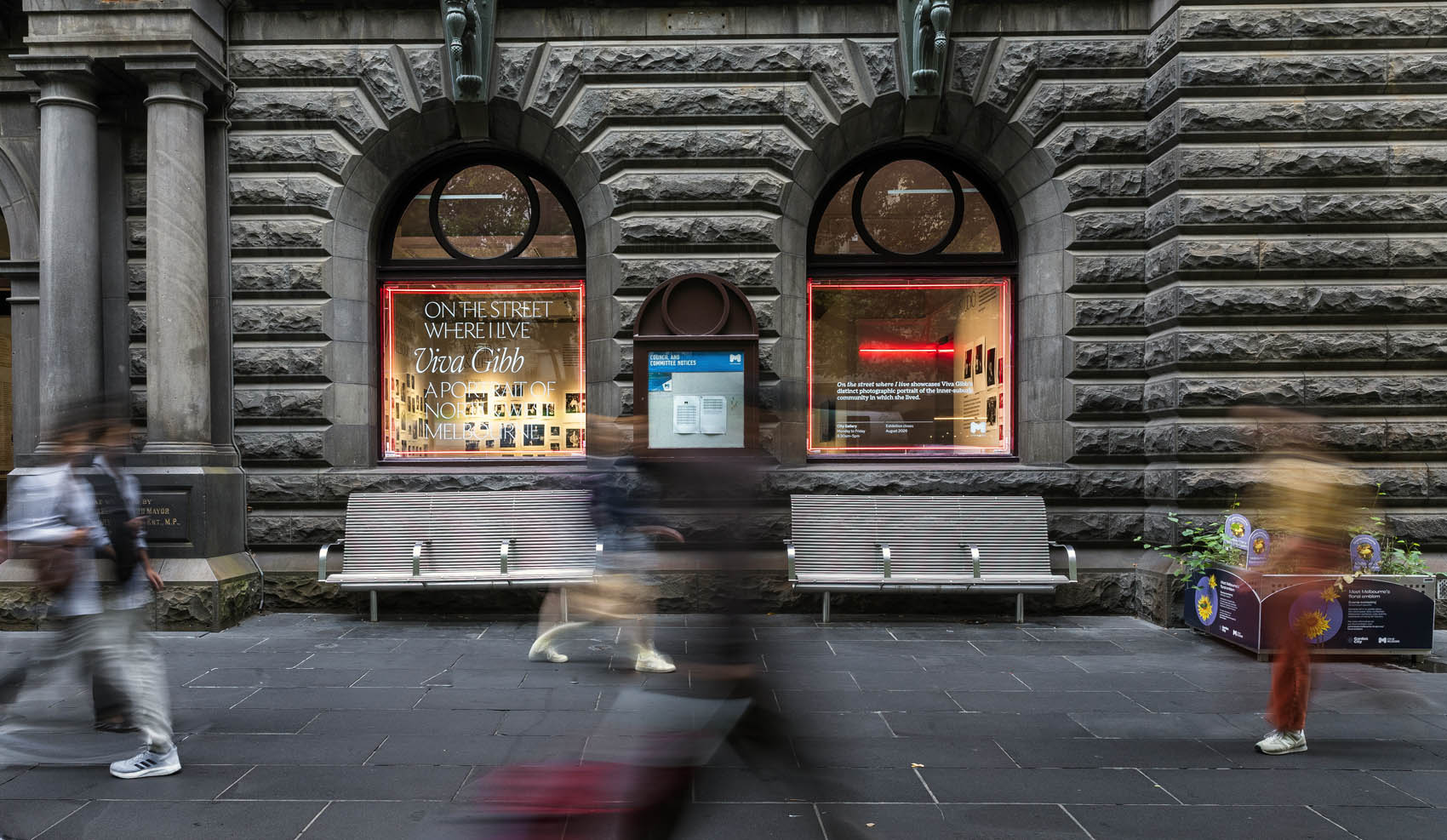
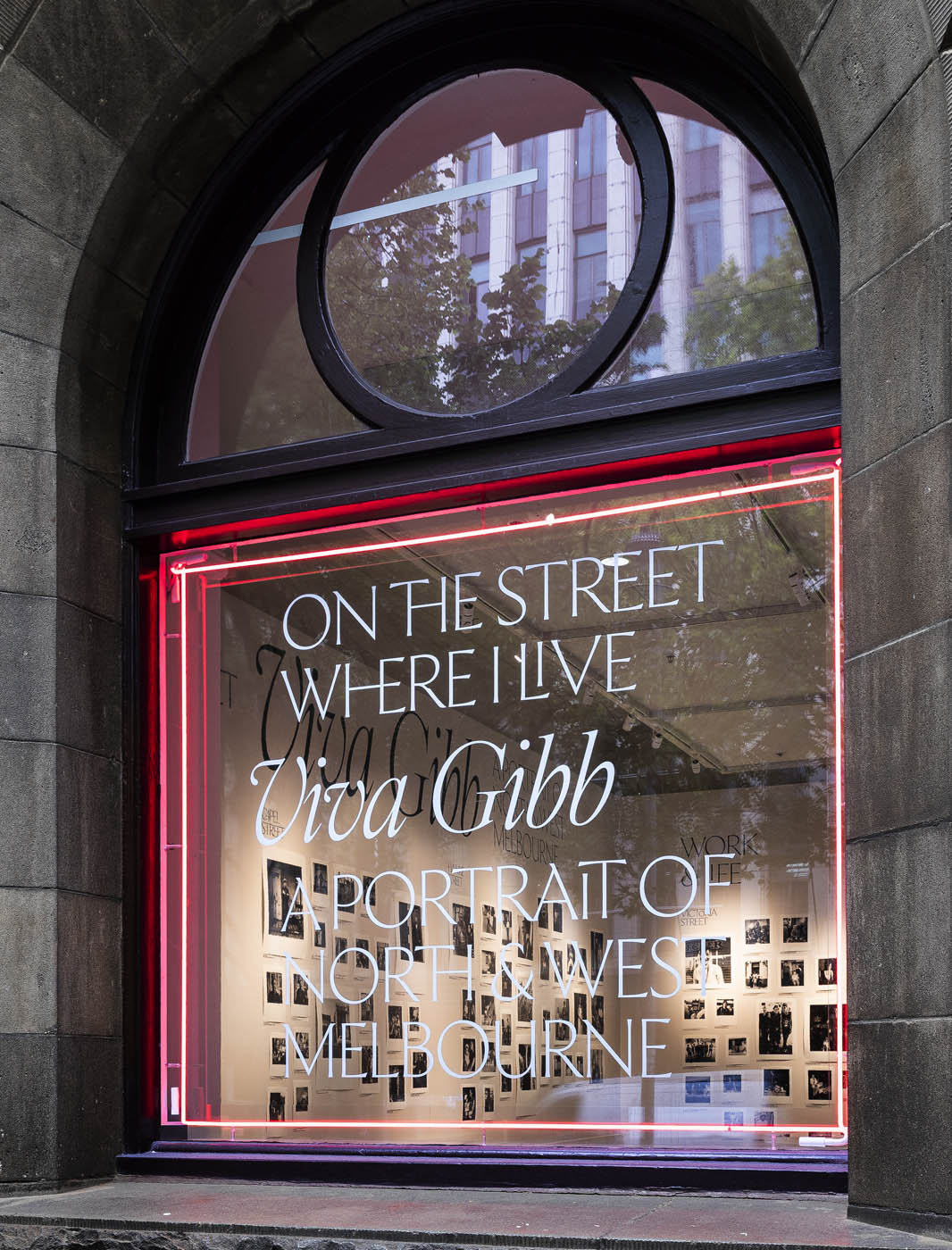
 

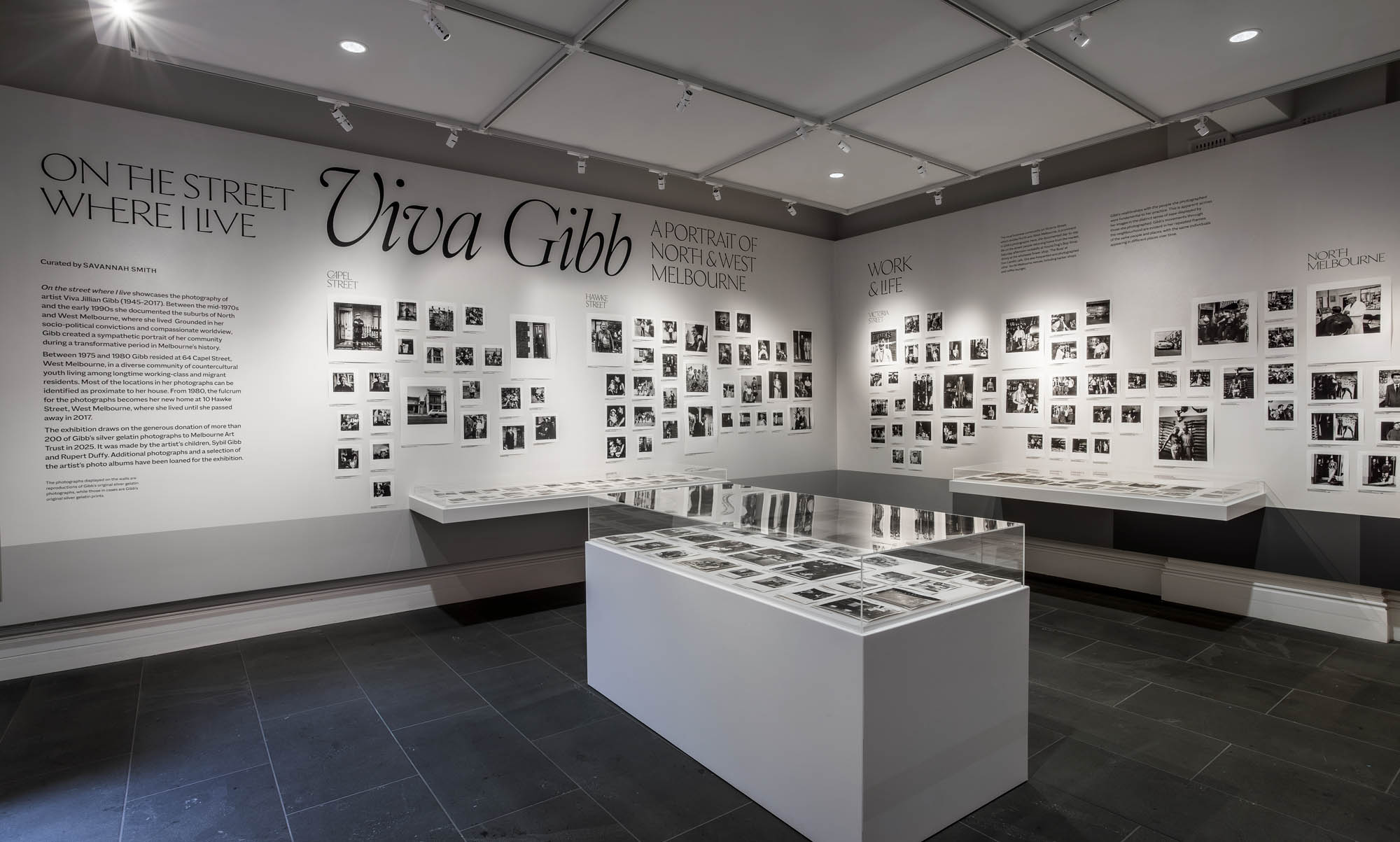
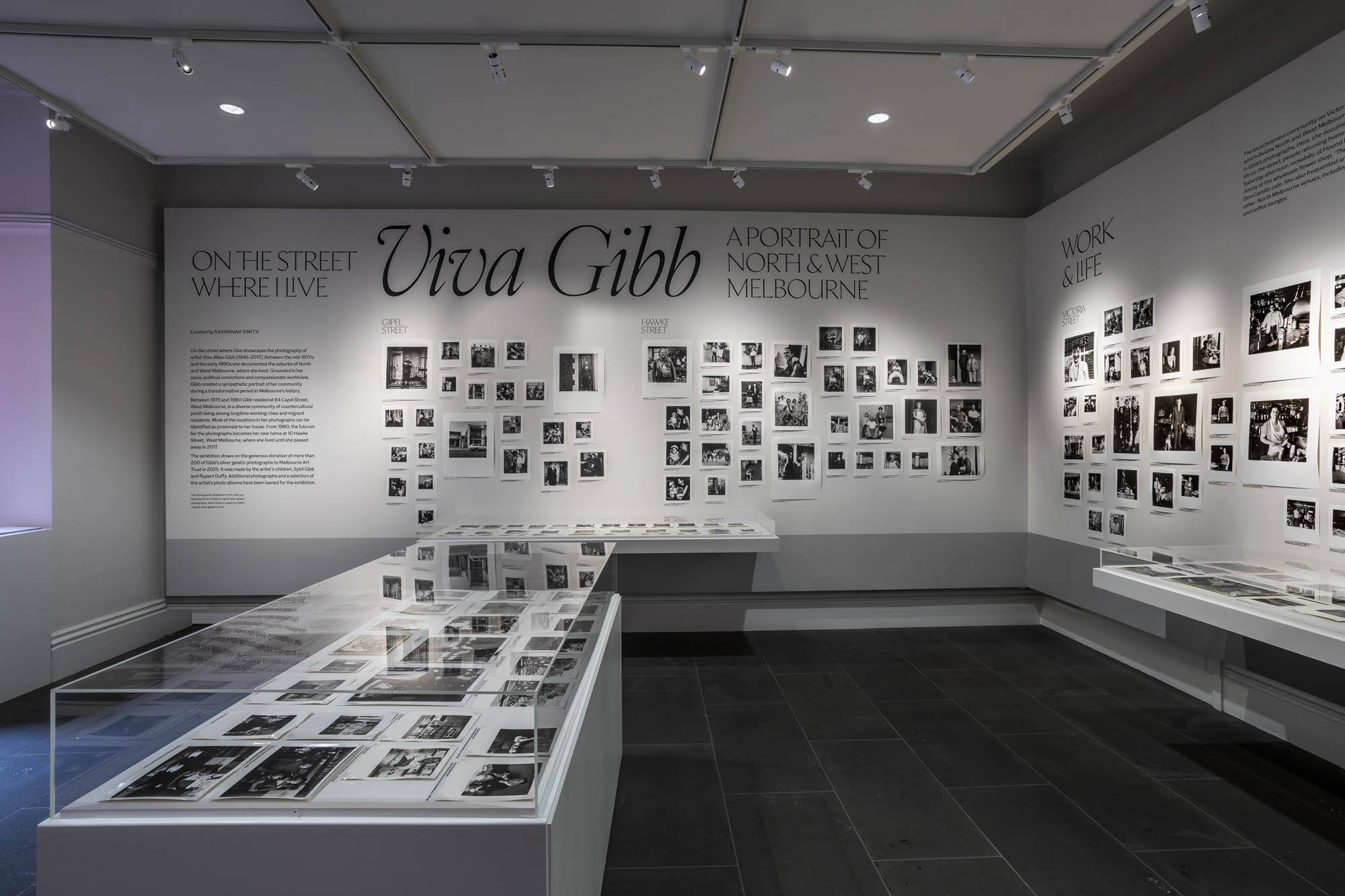
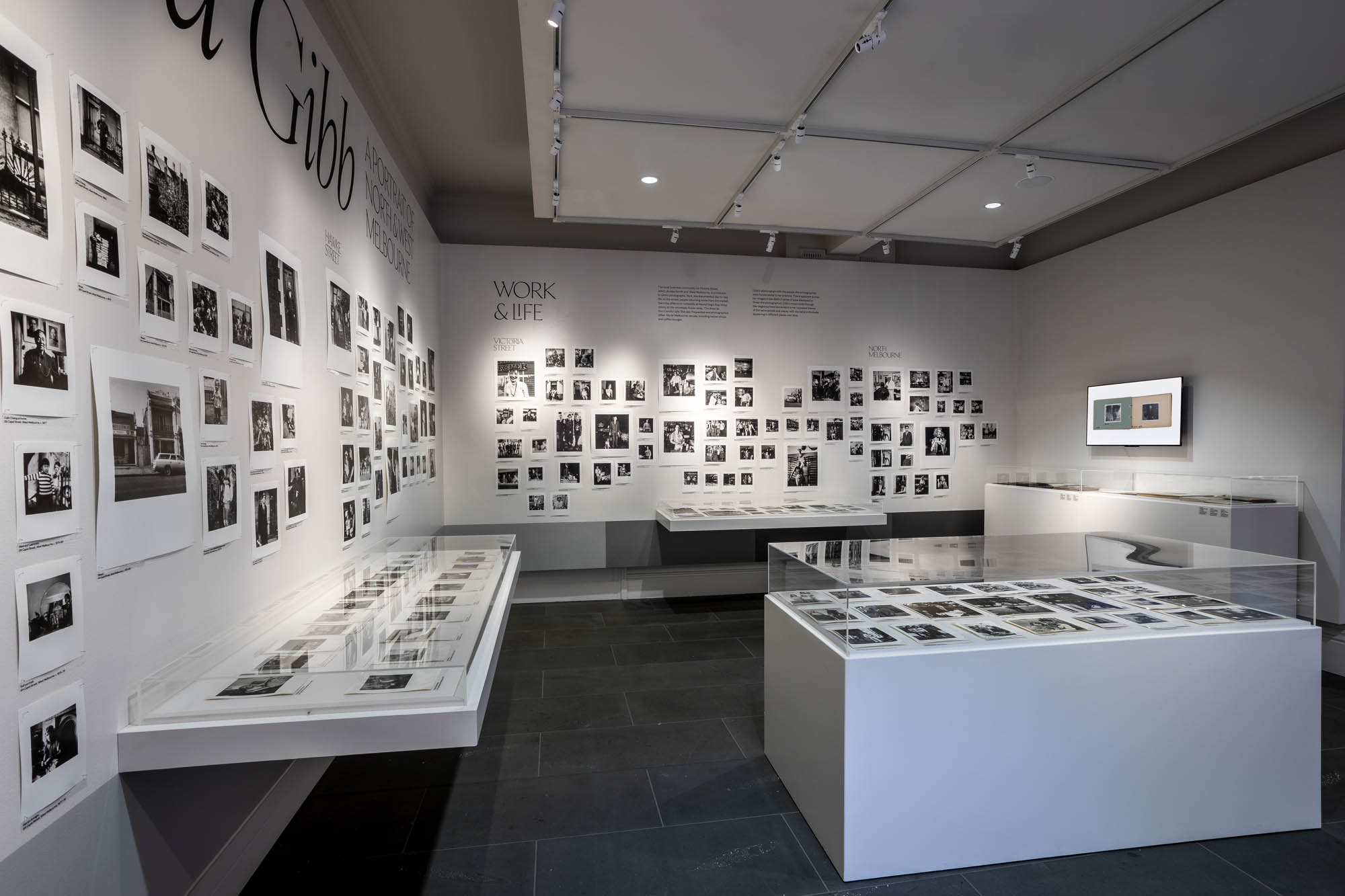
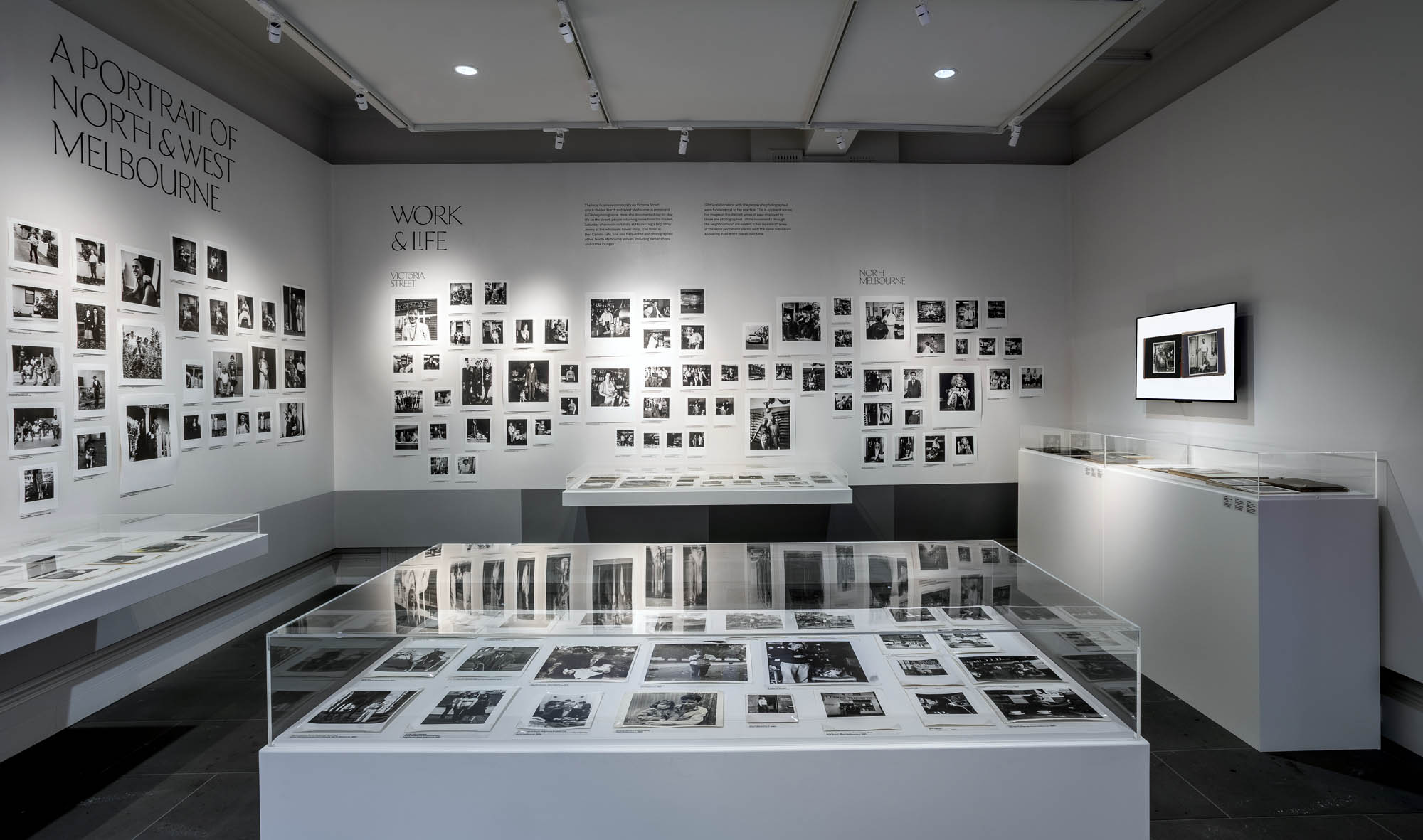
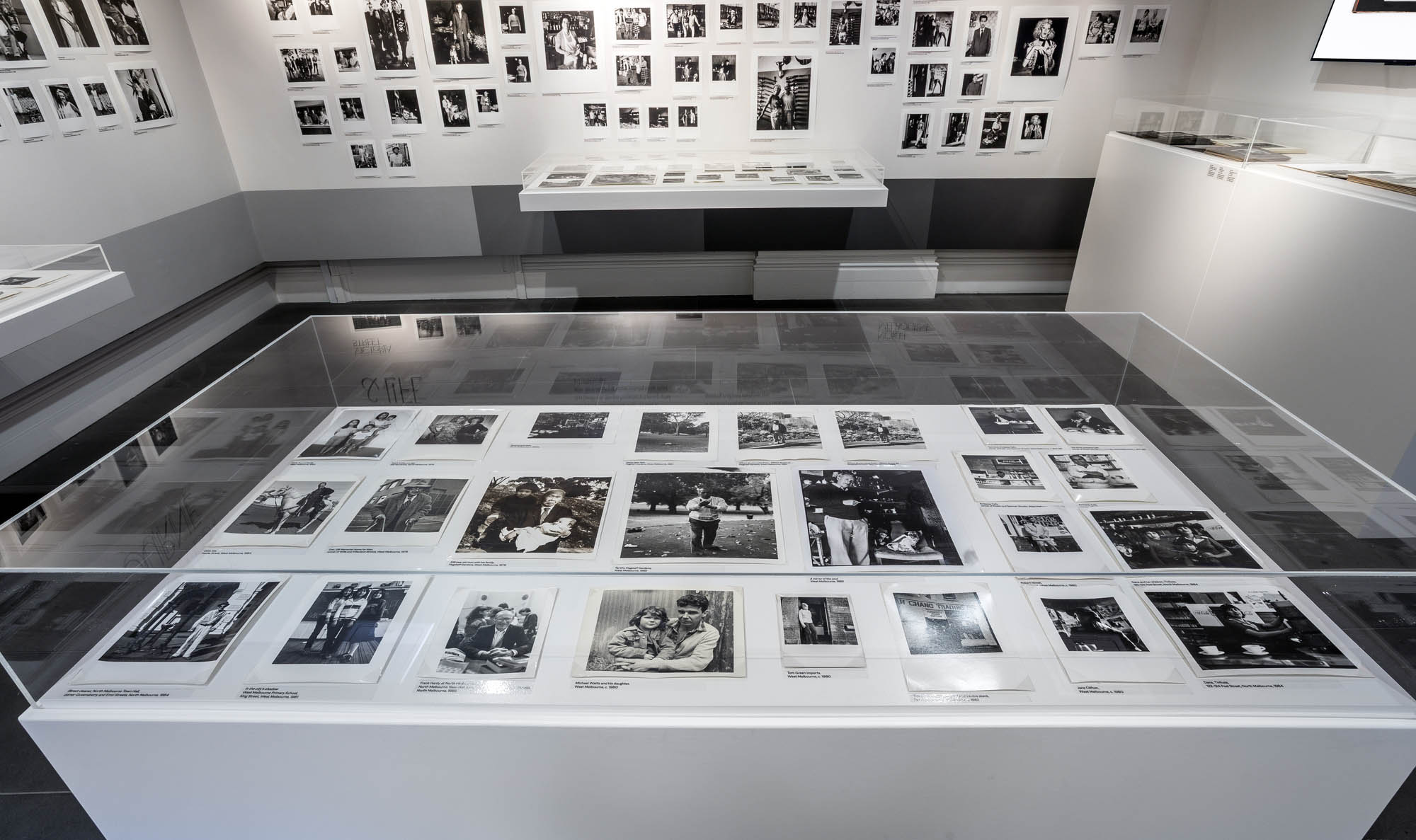
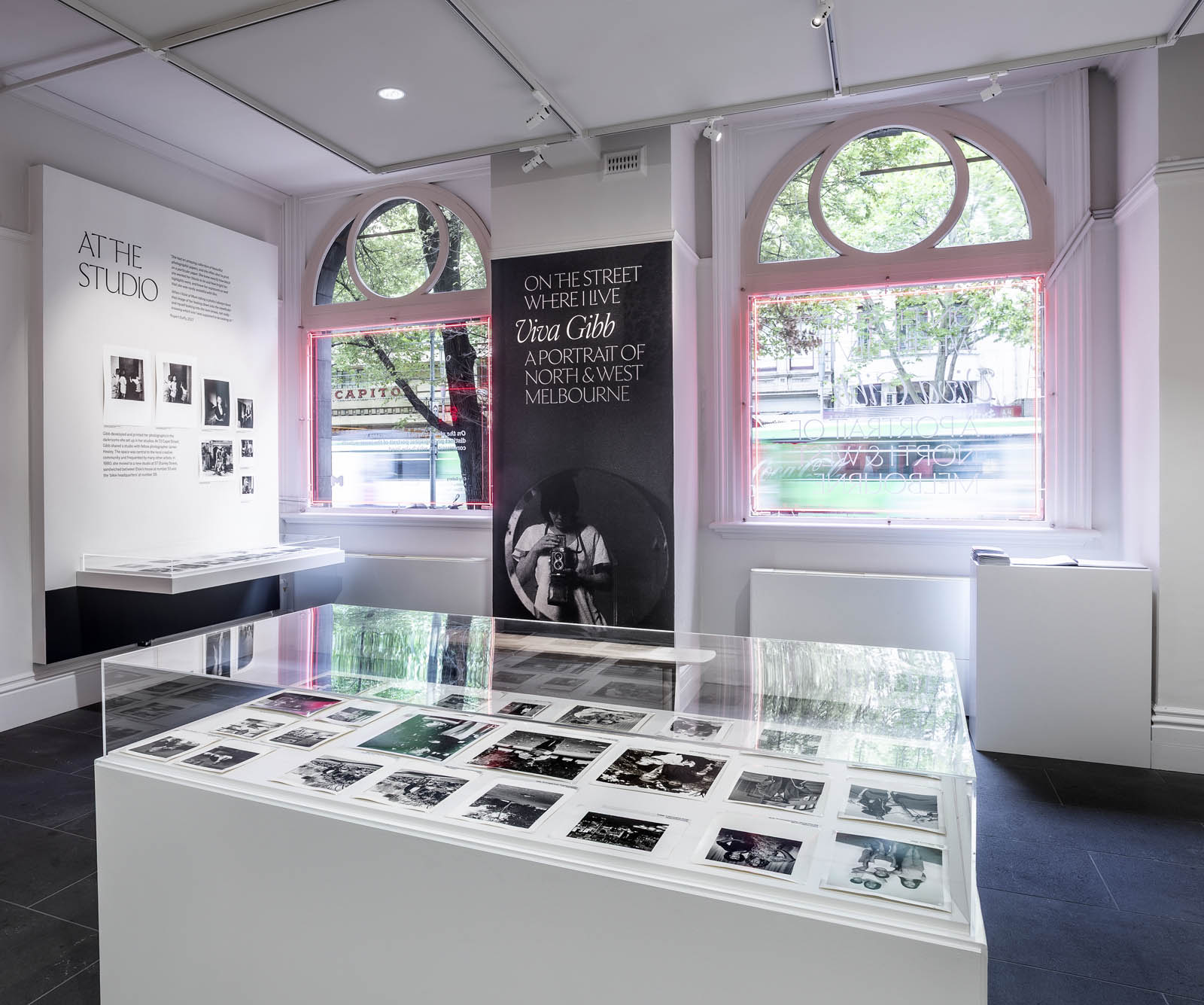
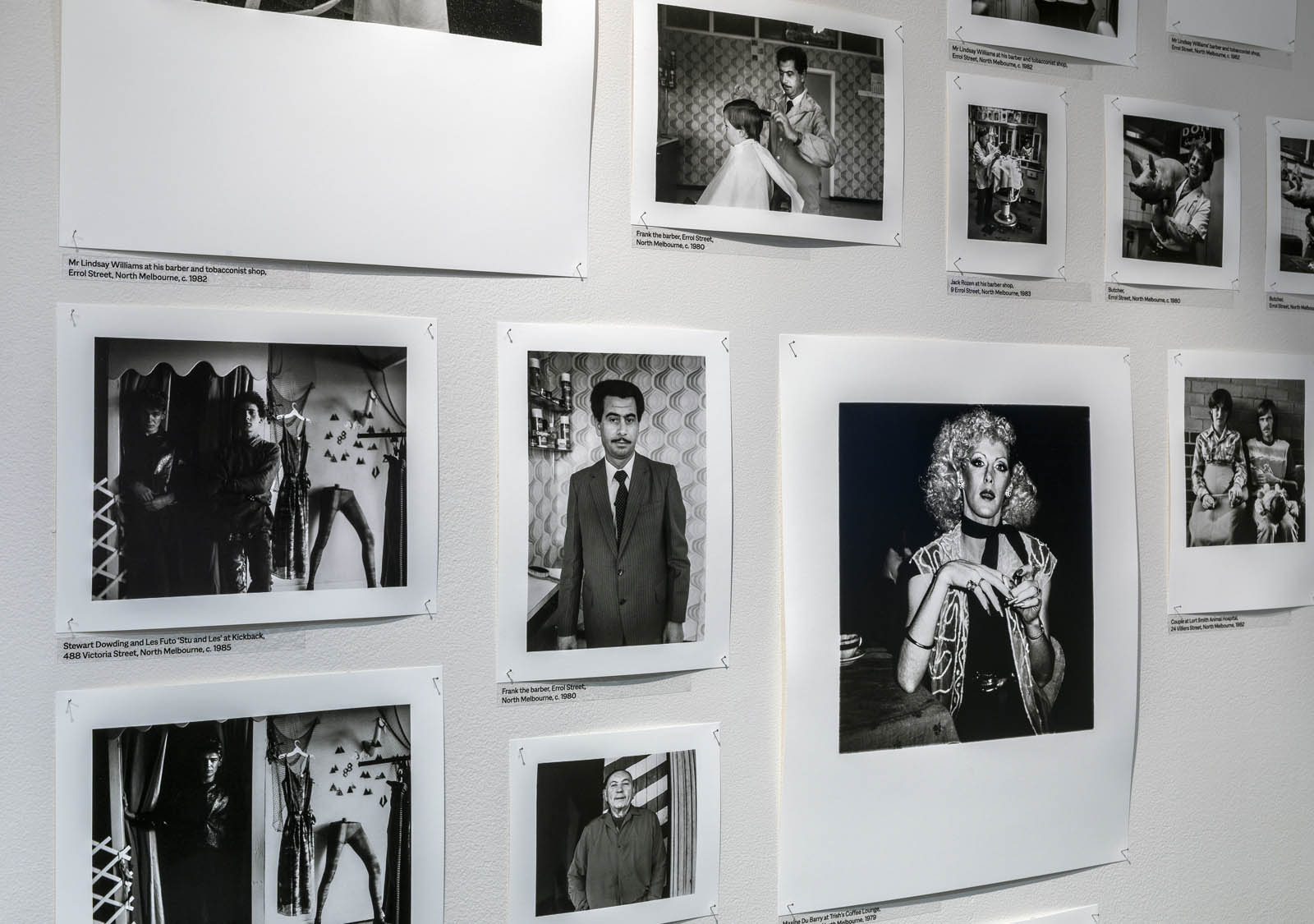
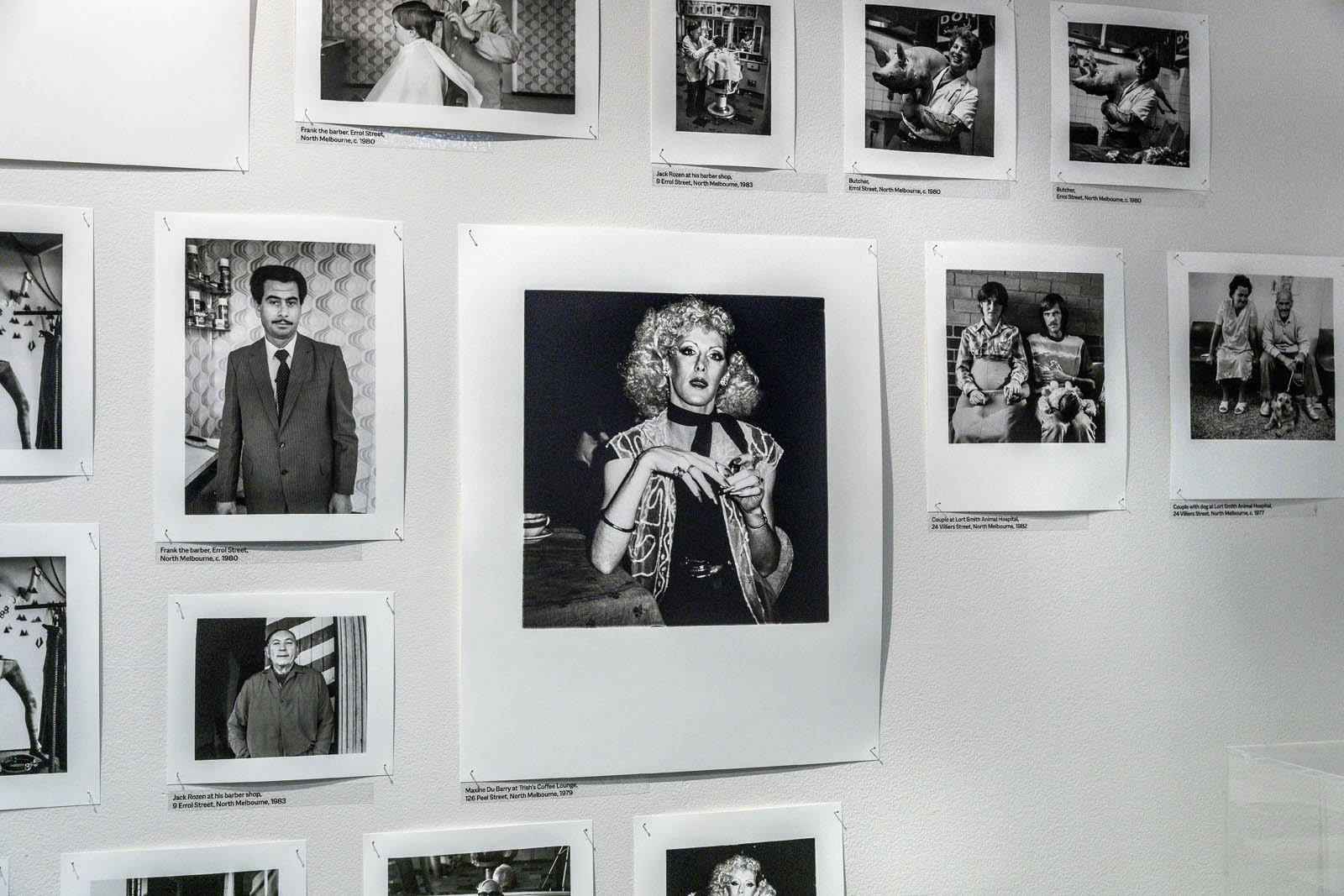
Installation view of the exhibition 'On the Street Where I Live: Viva Gibb' at the City Gallery, Melbourne, March - August, 2026

Work and Life

Installation view of the exhibition 'On the Street Where I Live: Viva Gibb' at the City Gallery, Melbourne, March - August, 2026

At the Studio

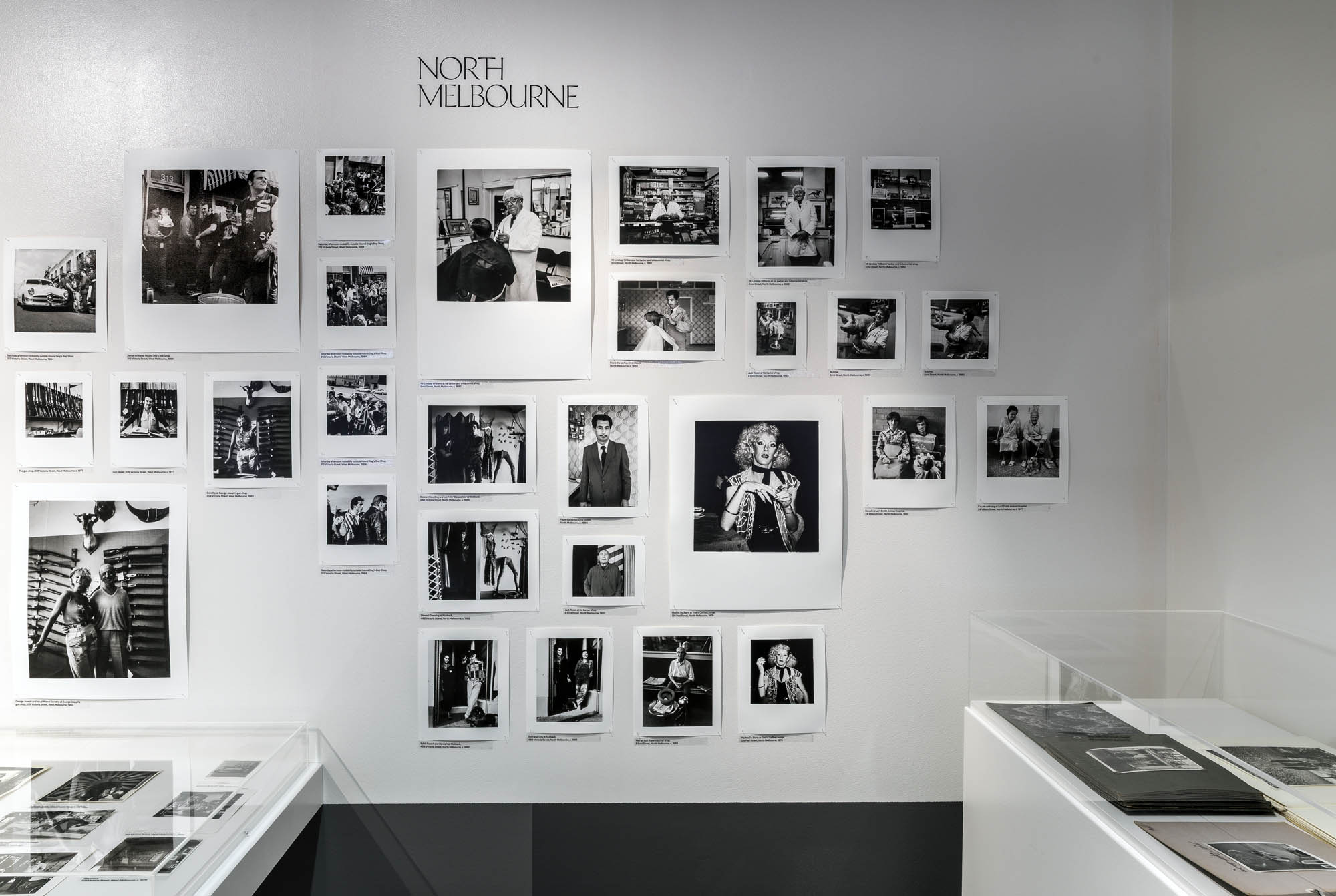
Installation view of the exhibition 'On the Street Where I Live: Viva Gibb' at the City Gallery, Melbourne, March - August, 2026

North Melbourne

Installation view of the exhibition 'On the Street Where I Live: Viva Gibb' at the City Gallery, Melbourne, March - August, 2026

Hawke Street

Installation view of the exhibition 'On the Street Where I Live: Viva Gibb' at the City Gallery, Melbourne, March - August, 2026

Victoria Street

Installation view of the exhibition 'On the Street Where I Live: Viva Gibb' at the City Gallery, Melbourne, March - August, 2026


Installation views of the exhibition On the Street Where I Live: Viva Gibb at the City Gallery, Melbourne, March – August, 2026
Photos: Tobias Titz


The rehabilitation of Gibb’s reputation has come in two stages, each through a different institutional imperative. The first was the 2019 donation by her children, Sybil Gibb and Rupert Duffy, of a significant body of work to the Monash Gallery of Art (now the Museum of Australian Photography, or MAPh). This gift – silver gelatin prints from the West and North Melbourne years – led directly to A Place in Time: Photographs by Viva Gibb, which opened at MAPh in July 2019. It was, as the institution noted, the first public gallery showing of her work in more than thirty years. MAPh’s interest was in photography’s history: Gibb as a figure in Australian documentary practice, her technical mastery of the silver gelatin print, her place in the feminist photography network of the 1970s and ’80s.

The second act of institutional recognition came in 2025, when Sybil and Rupert donated over 200 silver gelatin prints to the Melbourne Art Trust – managed by the City of Melbourne’s Art and Heritage Collection. This donation, which came about through a stroke of chance (a separate donor mentioned Sybil Gibb to curator Savannah Smith, who then made contact), led to On the Street Where I Live: Viva Gibb’s Portrait of North and West Melbourne, which opened at City Gallery in Melbourne Town Hall on 12 March 2026 and runs until 7 August.

The City of Melbourne’s interest is civic and historical: Gibb’s photographs are a record of what West Melbourne was before gentrification arrived, before council auctioned off the properties it had accumulated, before the working-class and migrant community was priced out and dispersed. The exhibition is partly an act of municipal memory – an acknowledgement of what was lost when, in Gibb’s own words, “all those interesting faces which told a story” were gone.

These are not contradictory interests, but distinct, and reveal how photographic reputations may be restored: through the convergence of estate generosity, curatorial initiative, and institutional need. The photographs remain the same; what changed was who needed them, and why.

Associate Professor James McArdle. “Stance,” on the On This Date In Photography website, March 19, 2026 [Online] Cited 06/07/2026. Used under fair use conditions for the purposes of education and research


Viva Gibb albums
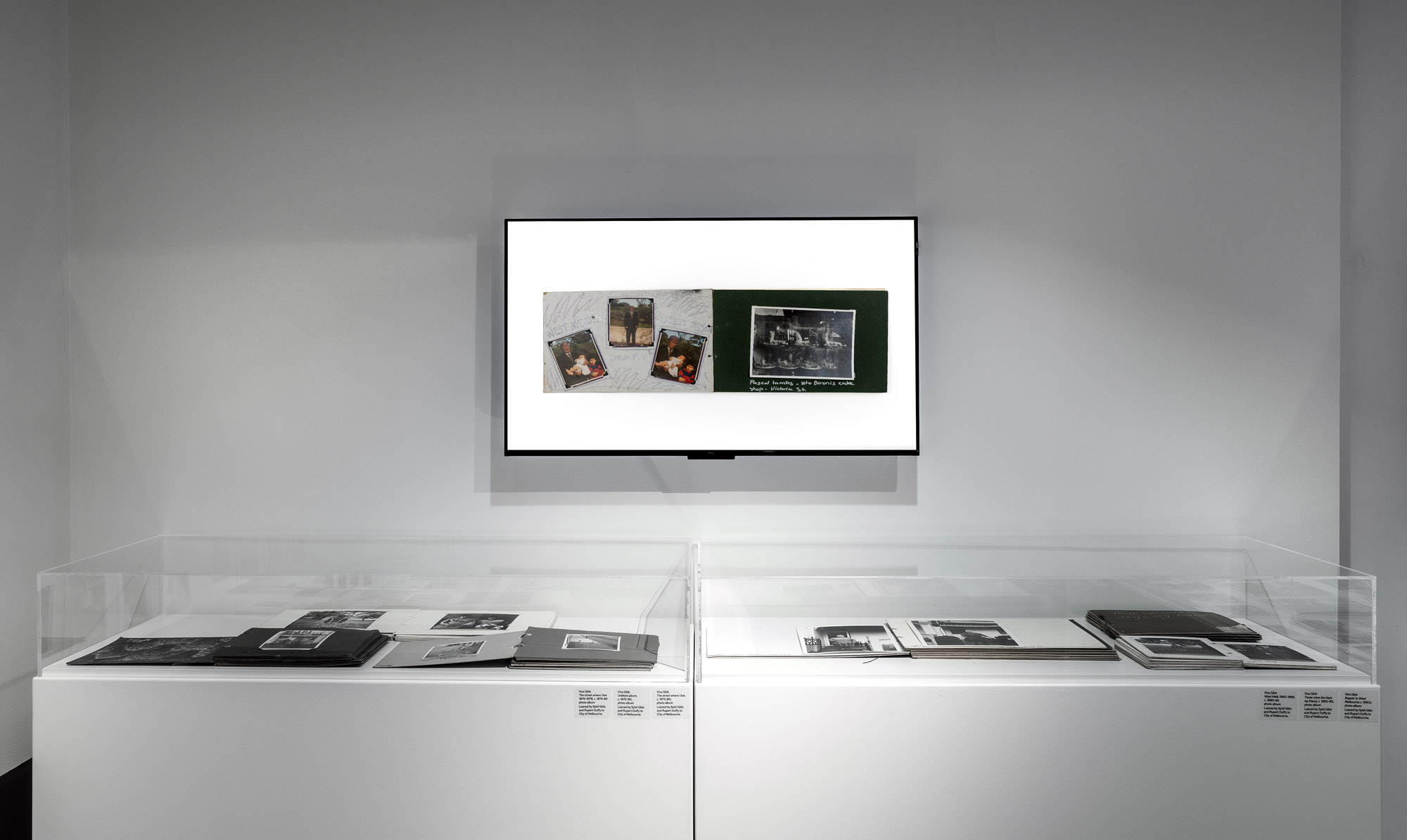
Installation view of the exhibition 'On the Street Where I Live: Viva Gibb' at the City Gallery, Melbourne, March - August, 2026 showing Viva Gibb's photo albums in a display case


Installation view of the exhibition On the Street Where I Live: Viva Gibb at the City Gallery, Melbourne, March – August, 2026 showing Viva Gibb’s photo albums in a display case
Photos: Tobias Titz


The Street Where I Live 1974-1978 photo album
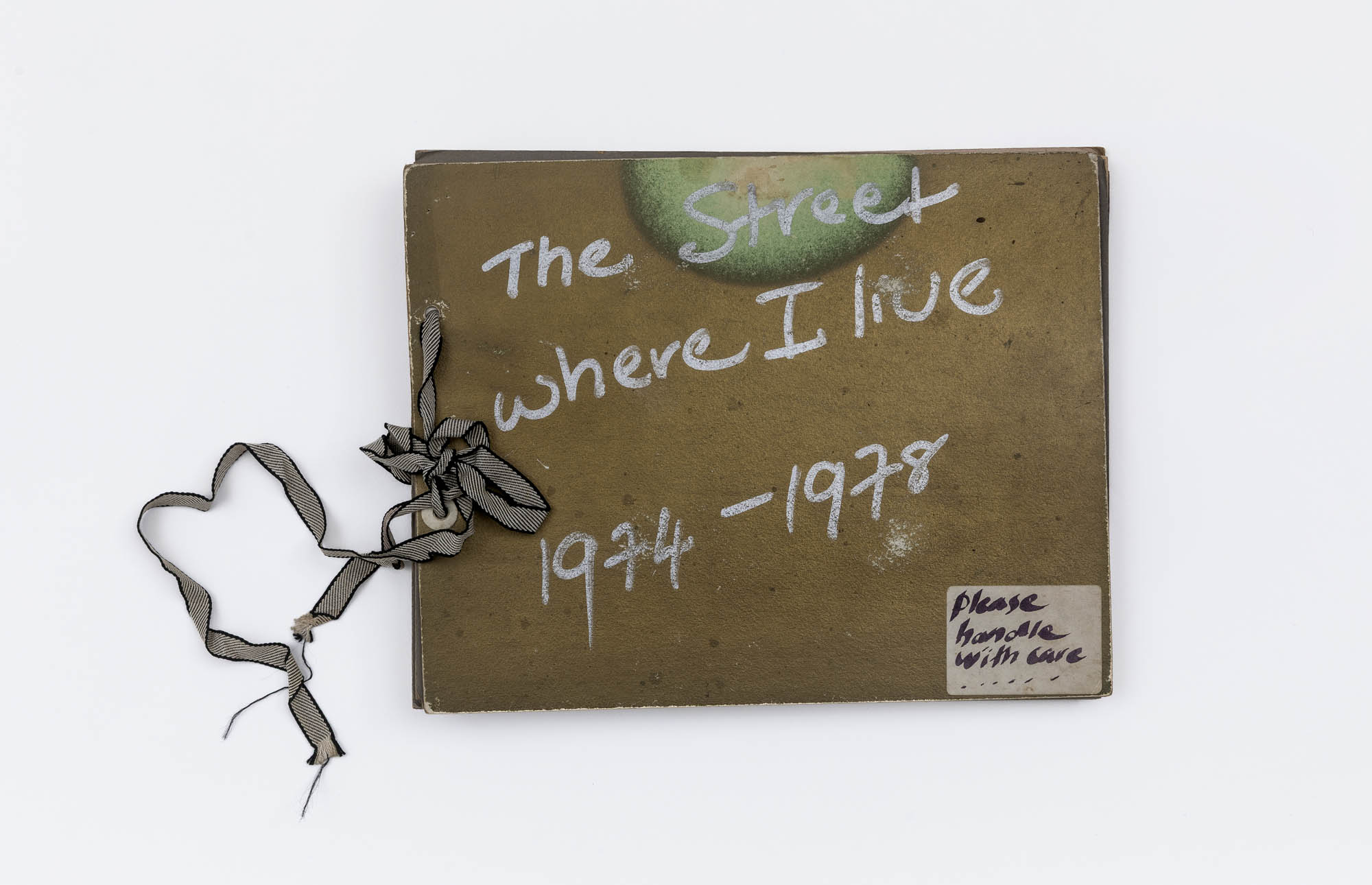
Viva Gibb (Australian, 1945-2017) 'The Street Where I Live 1974-1978' photo album

 The Street Where I Live photo album
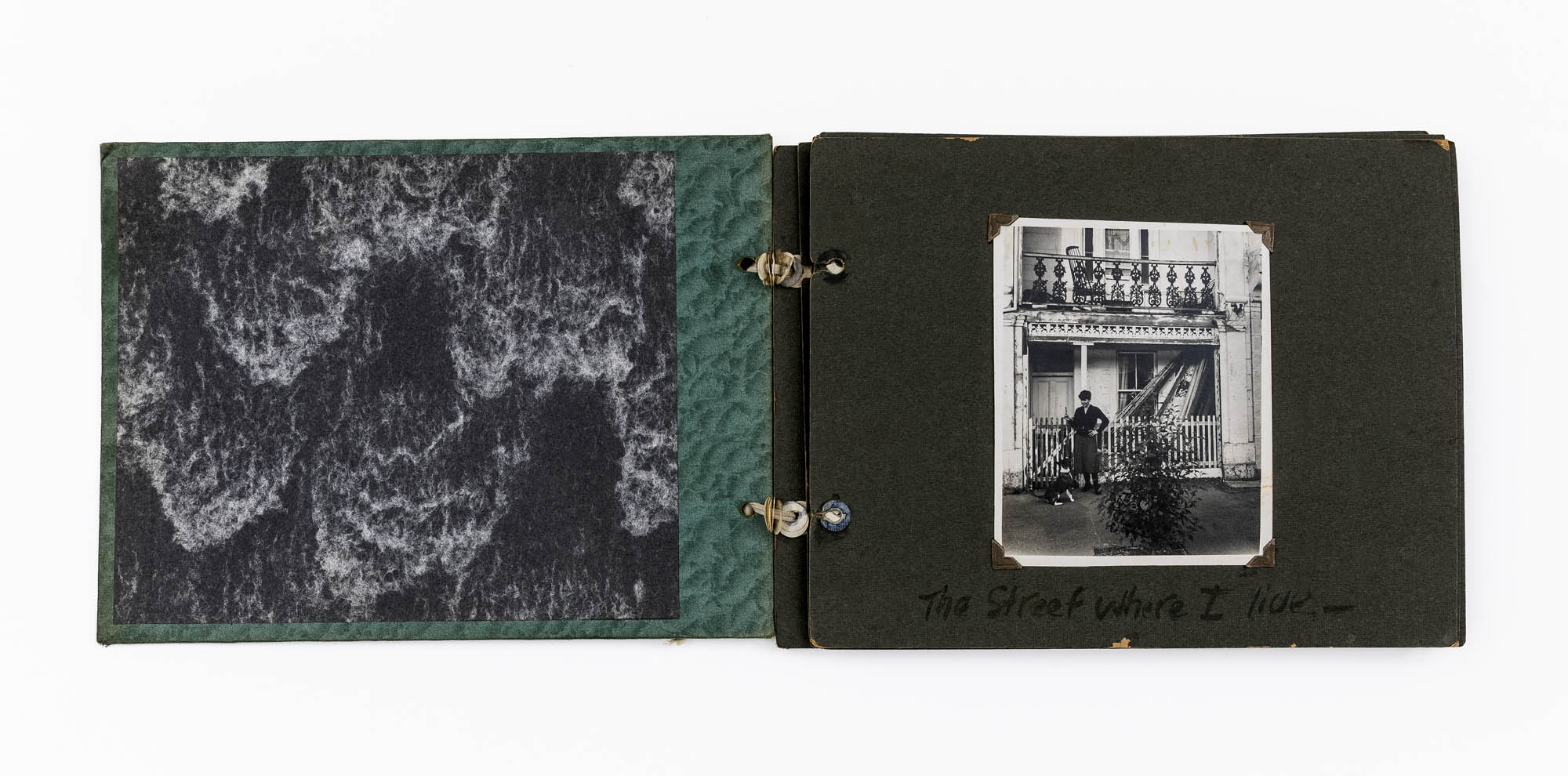
Viva Gibb (Australian, 1945-2017) 'The Street Where I Live ' photo album

Boppin’ in West Melbourne photo album
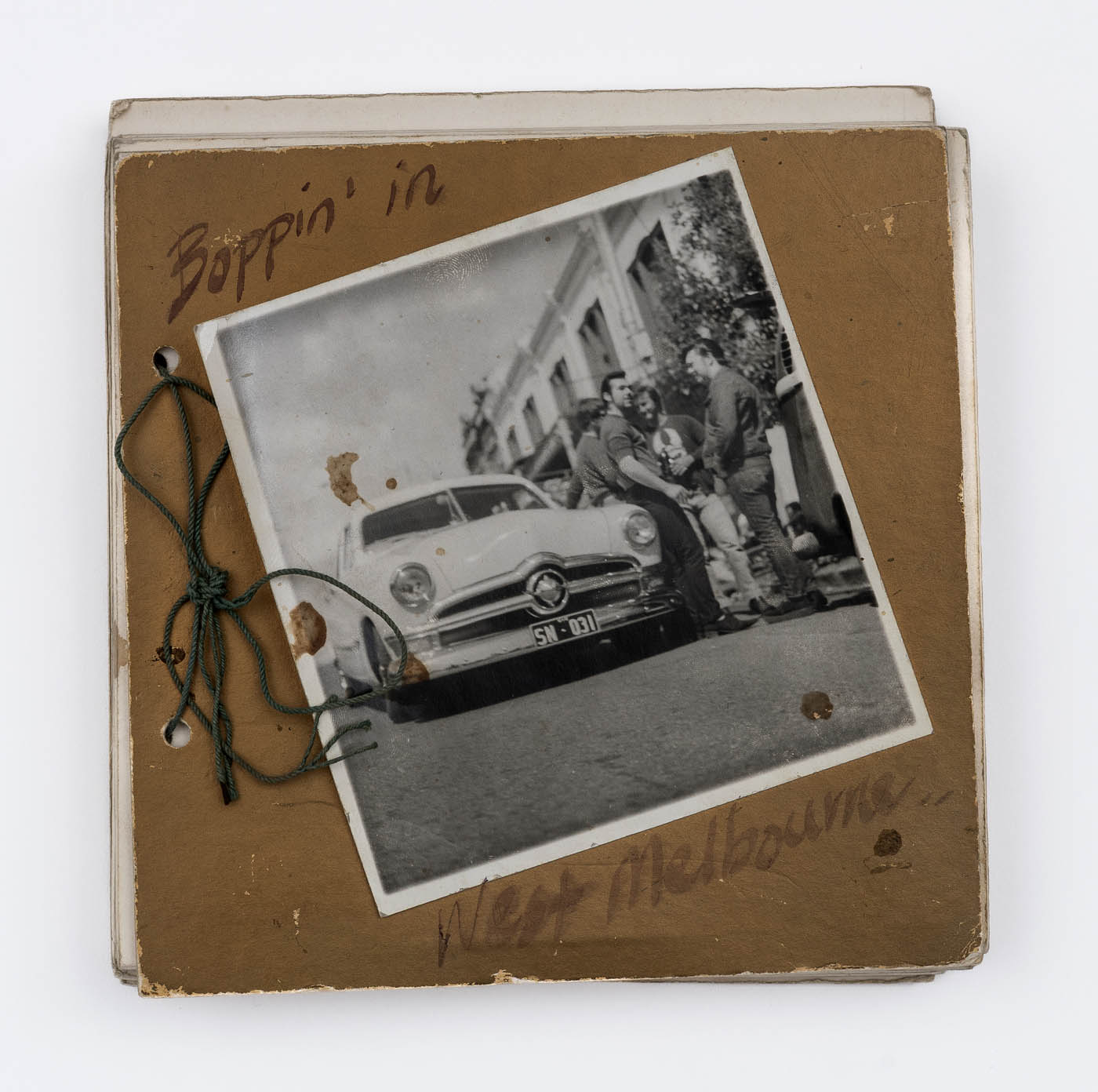
Viva Gibb (Australian, 1945-2017) 'Boppin' in West Melbourne' photo album

Viva Gibb (Australian, 1945-2017) 'Boppin' in West Melbourne' photo album

West Melb. 1980-1985 photo album
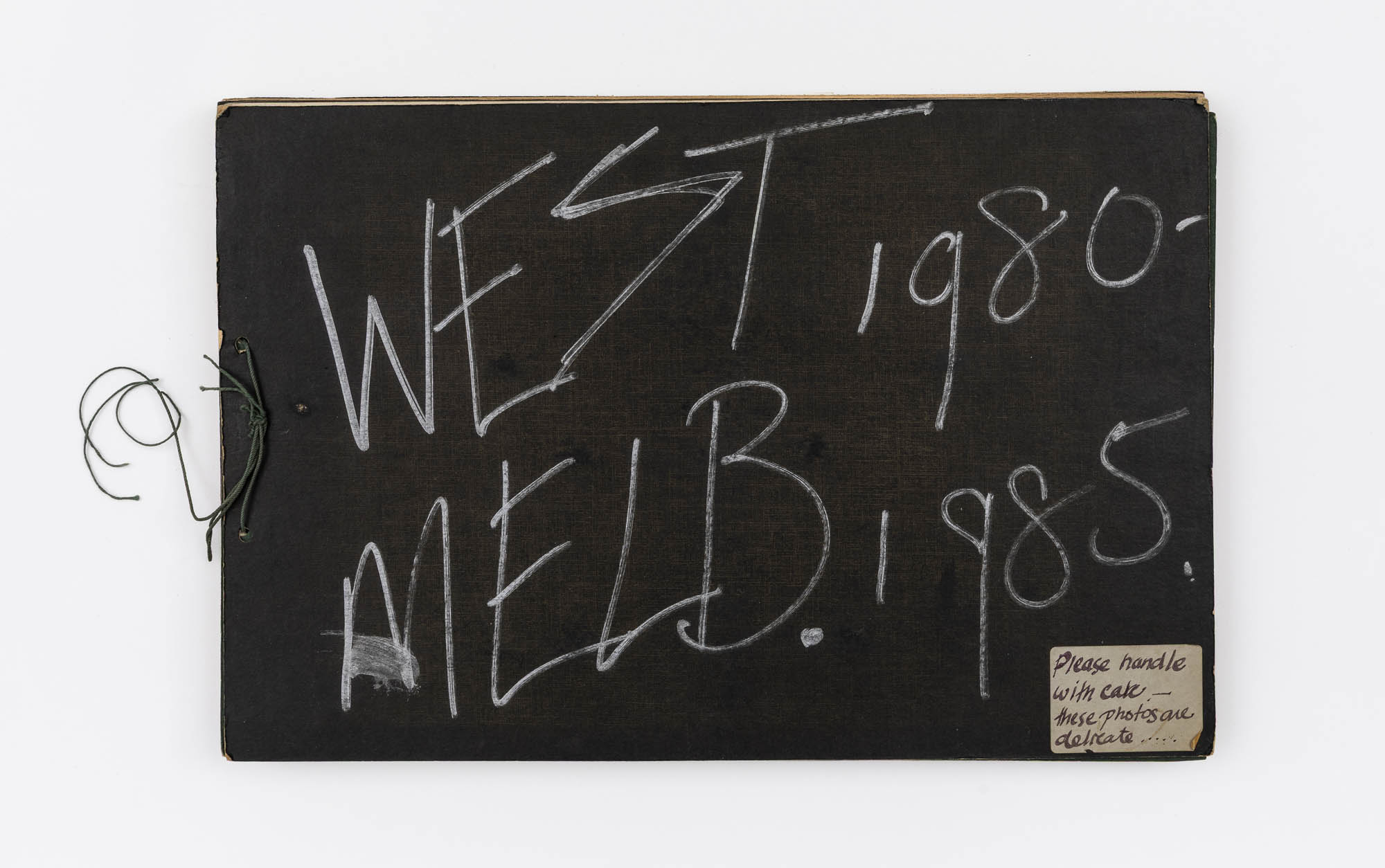
Viva Gibb (Australian, 1945-2017) 'West Melb. 1980-1985' photo album

Those were the days my friend photo album
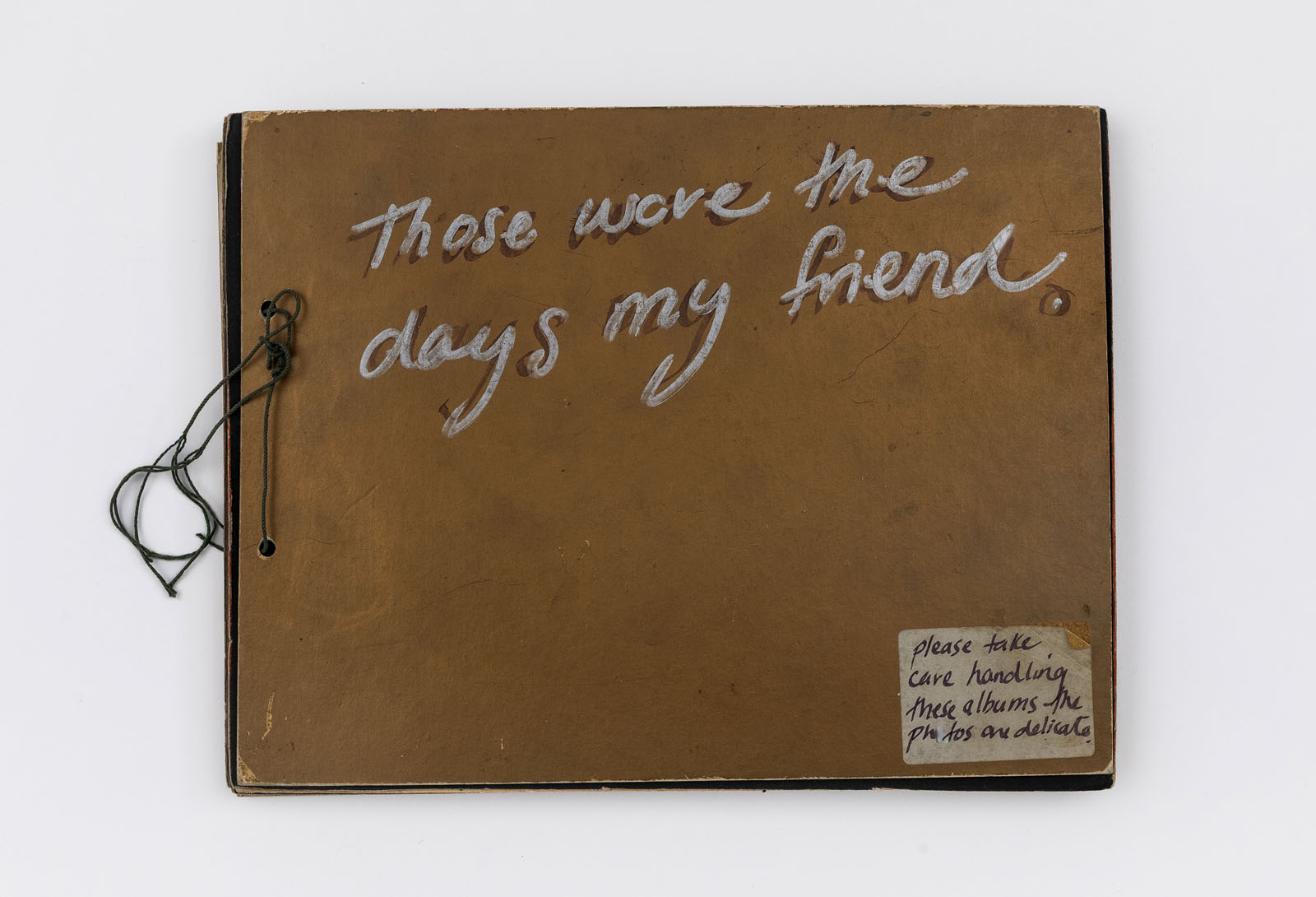
Viva Gibb (Australian, 1945-2017) 'Those were the days my friend' photo album


City Gallery
Enter via Customer Service
City Gallery
110 Swanston St
Melbourne 3000

Opening hours:
Monday – Friday 8.30am – 5pm
City Gallery website

LIKE ART BLART ON FACEBOOK

Back to top

Exhibition: ‘Summers Past: Golden Days in the Sun 1950-1970’ at The Victorian Archives Centre, North Melbourne

Exhibition dates:  15th November 2011 – 15th April 2012


Many thankx to The Victorian Archives Centre for allowing me to publish the photographs in the posting. Please click on the photographs for a larger version of the image.


Unknown photographer (Australian) 'Waves breaking into the pool' 1945


Unknown photographer (Australian)
Waves breaking into the pool
1945
Australian News and Information Bureau collection
National Archives of Australia


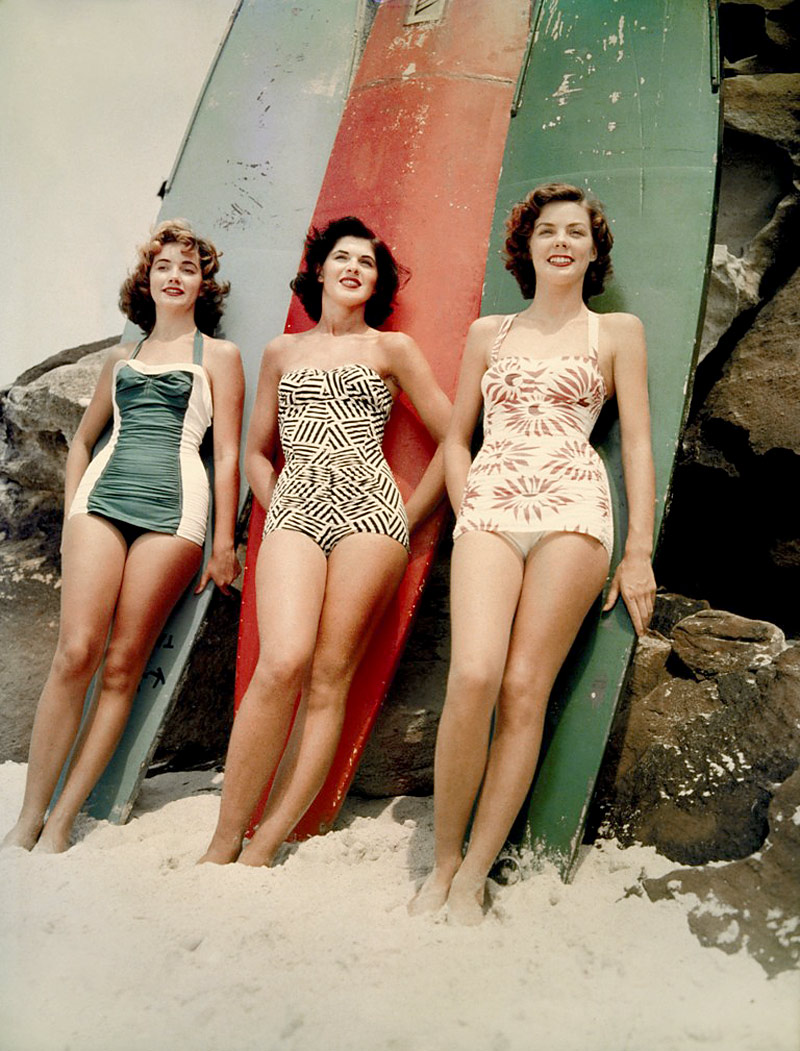
Anonymous photographer (Australian). '1952 Miss Pacific finalists Mary Clifton, Pamela Jansen and Judy Worrad, stand in front of surfboards on Bondi Beach, Sydney' 1952


Anonymous photographer (Australian)
1952 Miss Pacific finalists Mary Clifton, Pamela Jansen and Judy Worrad, stand in front of surfboards on Bondi Beach, Sydney
1952
National Archives of Australia


Anonymous photographer (Australian). 'Sunbathing, Sydney Beach, NSW' c. 1955


Anonymous photographer (Australian)
Sunbathing, Sydney Beach, NSW
c. 1955
National Archives of Australia


Cossies, togs and bathers

Until the 1940s, Australian women wore decidedly modest, albeit colourful, one-piece swimsuits. But the bikini was already in vogue overseas and by the early 1950s Australian women were daring to wear it. Discover the many fashion statements that could be made by wearing a favourite pair of cossies, togs or bathers!


Anonymous photographer (Australian). 'Christmas party on Bondi Beach, Sydney' 1959


Anonymous photographer (Australian)
Christmas party on Bondi Beach, Sydney
1959
National Archives of Australia


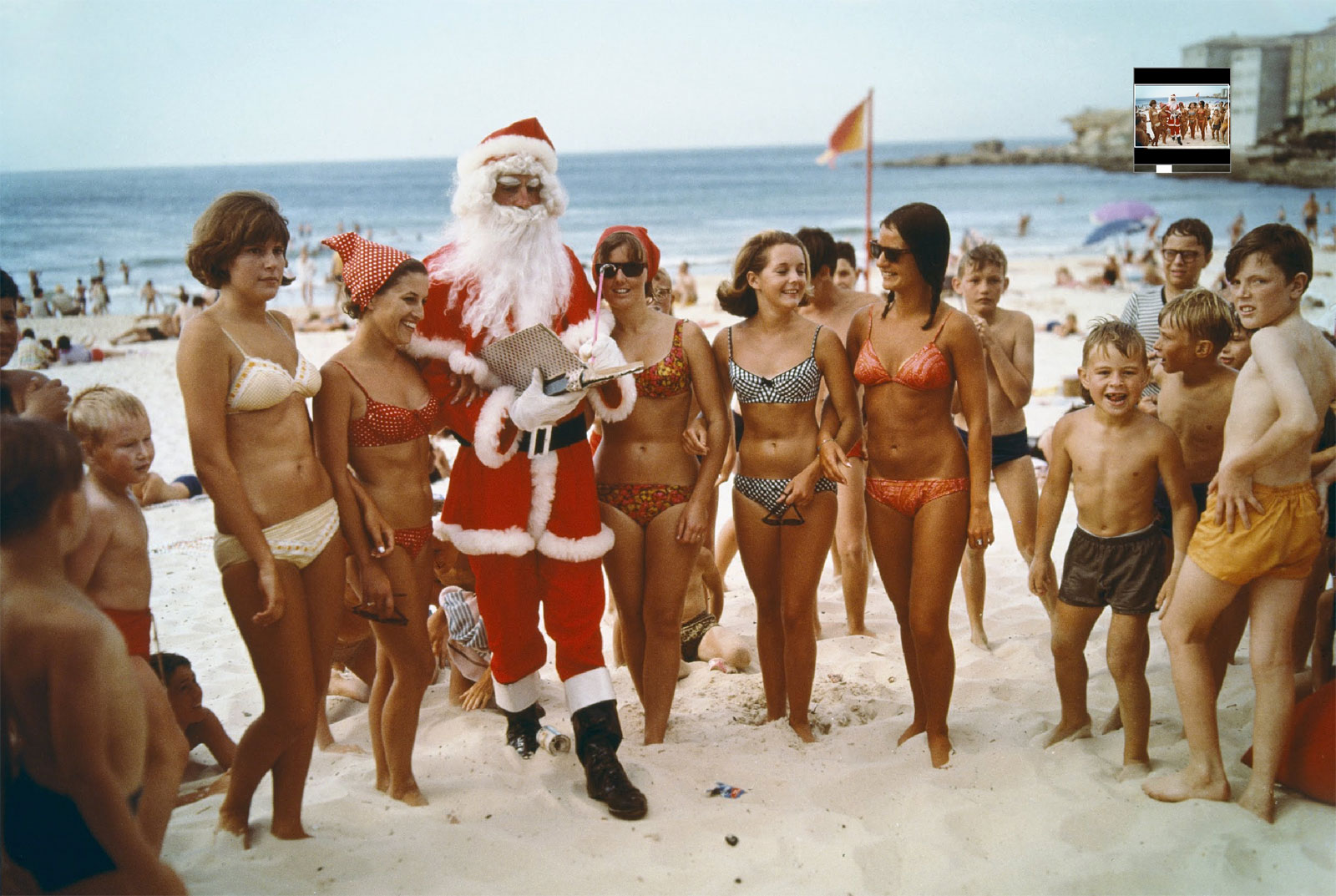
Anonymous photographer (Australian) 'Santa Claus visits a Sydney beach' 1969


Anonymous photographer (Australian)
Santa Claus visits a Sydney beach
1969
Australian News and Information Bureau collection
National Archives of Australia


At the beach

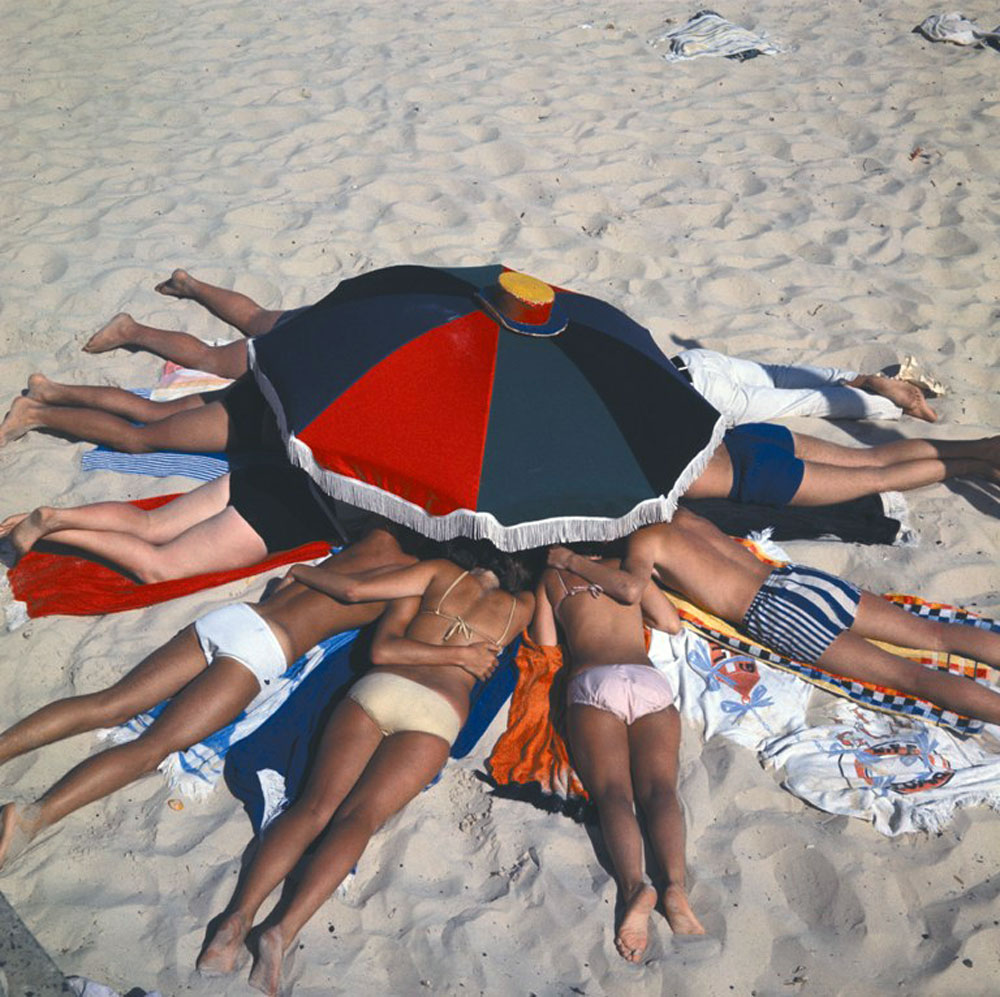
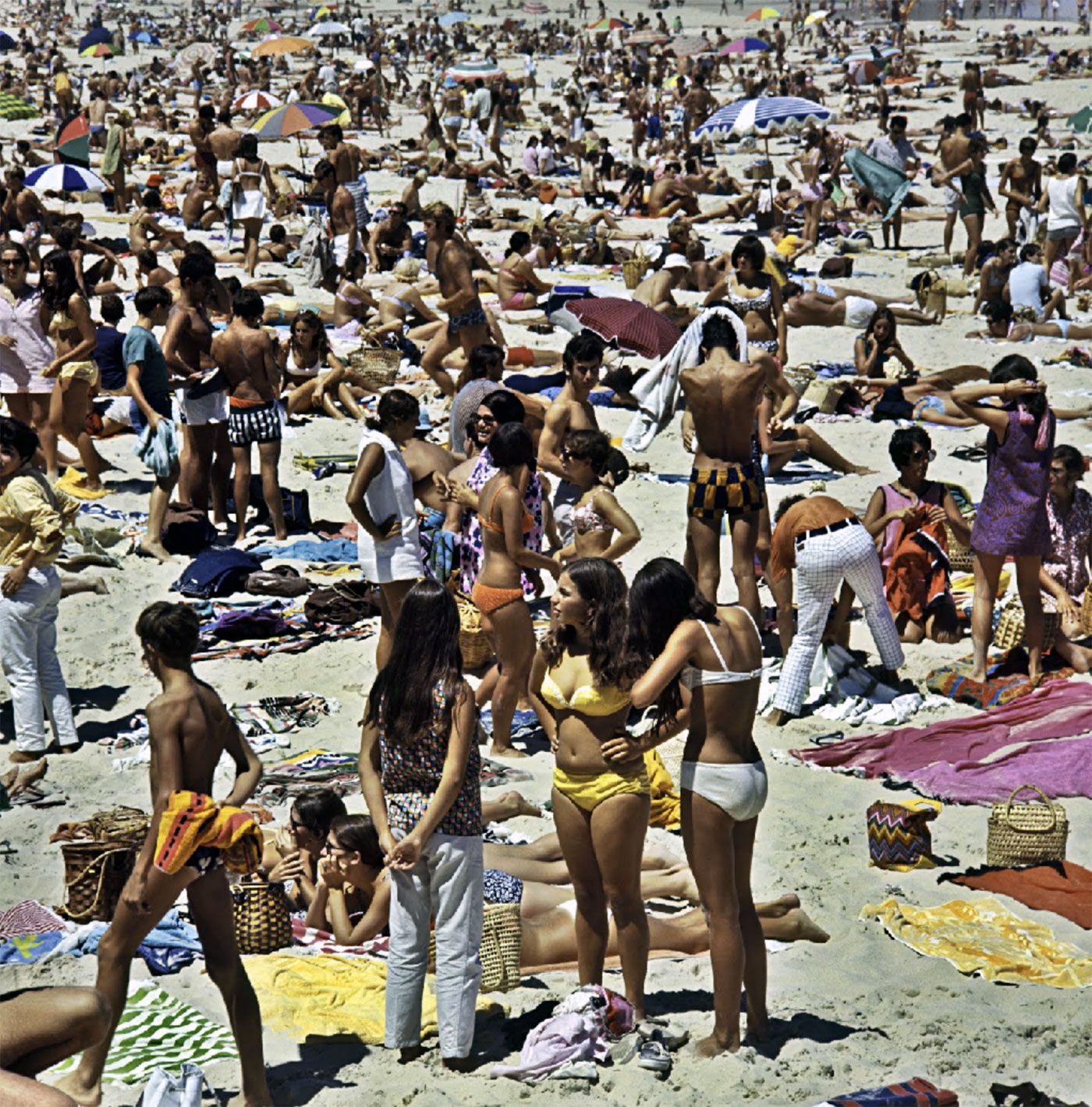
In the 1950s and 1960s, Christmas heralded the start of annual summer holidays for many Australian families. Those who didn’t already live near the coast usually headed towards it, mostly in Holdens and sometimes hauling a caravan. They made tracks to seaside places such as the Gold Coast, Manly, Byron Bay and Sorrento, plonking their bodies on the warm sand, transistors to their ears, to bake in the summer sun. Back then most people seemed unconcerned about sunburn and, as the images show, even beach umbrellas were in short supply.


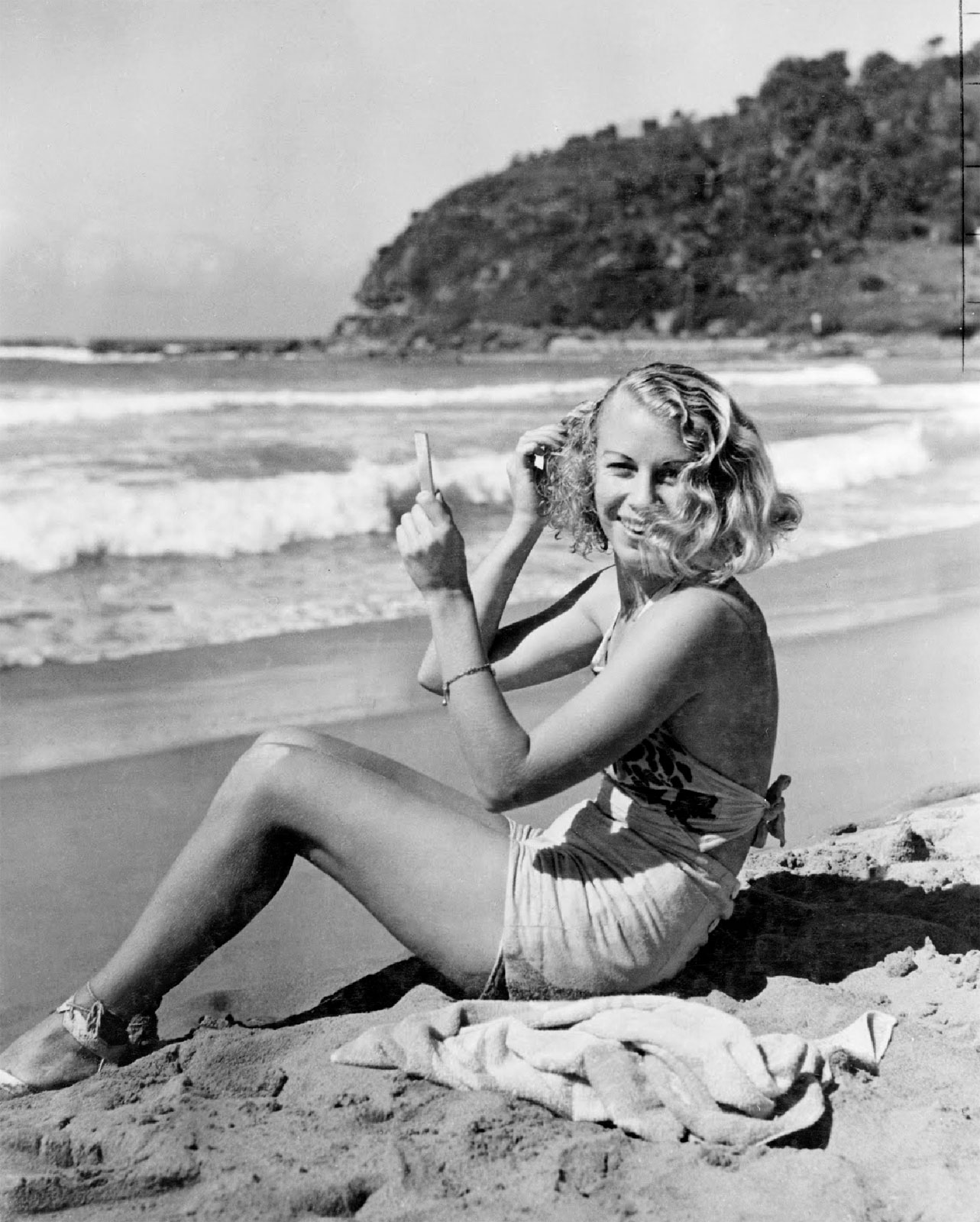
Anonymous photographer (Australian) 'Bathing beauty' 1955


Anonymous photographer (Australian)
Bathing beauty
1955
Australian Travel Industry Association collection
National Archives of Australia


This image comes from the Australian Travel Industry Association collection, now held in the National Archives. This series consists of black and white prints and negatives of photographs used in publications, notably Walkabout magazine, produced by the Australian National Travel Association (ANTA).


The Victorian Archives Centre plays host to regular displays of original records from our collection as well as touring exhibitions about Victorian stories. Over Summer, the Victorian Archives Centre will present Summers Past: Golden Days in the Sun 1950-1970, a fascinating photographic exhibition highlighting Australia’s fascination with the sun and sea.

Summers Past will explore our enduring love affair of all things summer, invoking memories of carefree sunny days at the beach in the 1950s, 1960s and 1970s. This is your last chance to view this exhibition before it returns to the National Archives of Australian in April 2012.

So slip on your cossie, slop on the sunscreen and head down to the Victorian Archives Centre this summer!

Summers Past: Golden Days in the Sun 1950-1970 will be on display until April 2012. Entry is free.


Anonymous photographer (Australian). 'Sunbathers relax under a low umbrella at Bondi, NSW' 1956


Anonymous photographer (Australian)
Sunbathers relax under a low umbrella at Bondi, NSW
1956
National Archives of Australia


Anonymous photographer (Australian) 'Sydney beach scene' 1969


Anonymous photographer (Australian)
Sydney beach scene
1969
Australian News and Information Bureau collection
National Archives of Australia


Anonymous photographer (Australian). 'Surfer and bikini girl on the sand' 1969


Anonymous photographer (Australian)
Surfer and bikini girl on the sand
1969
National Archives of Australia


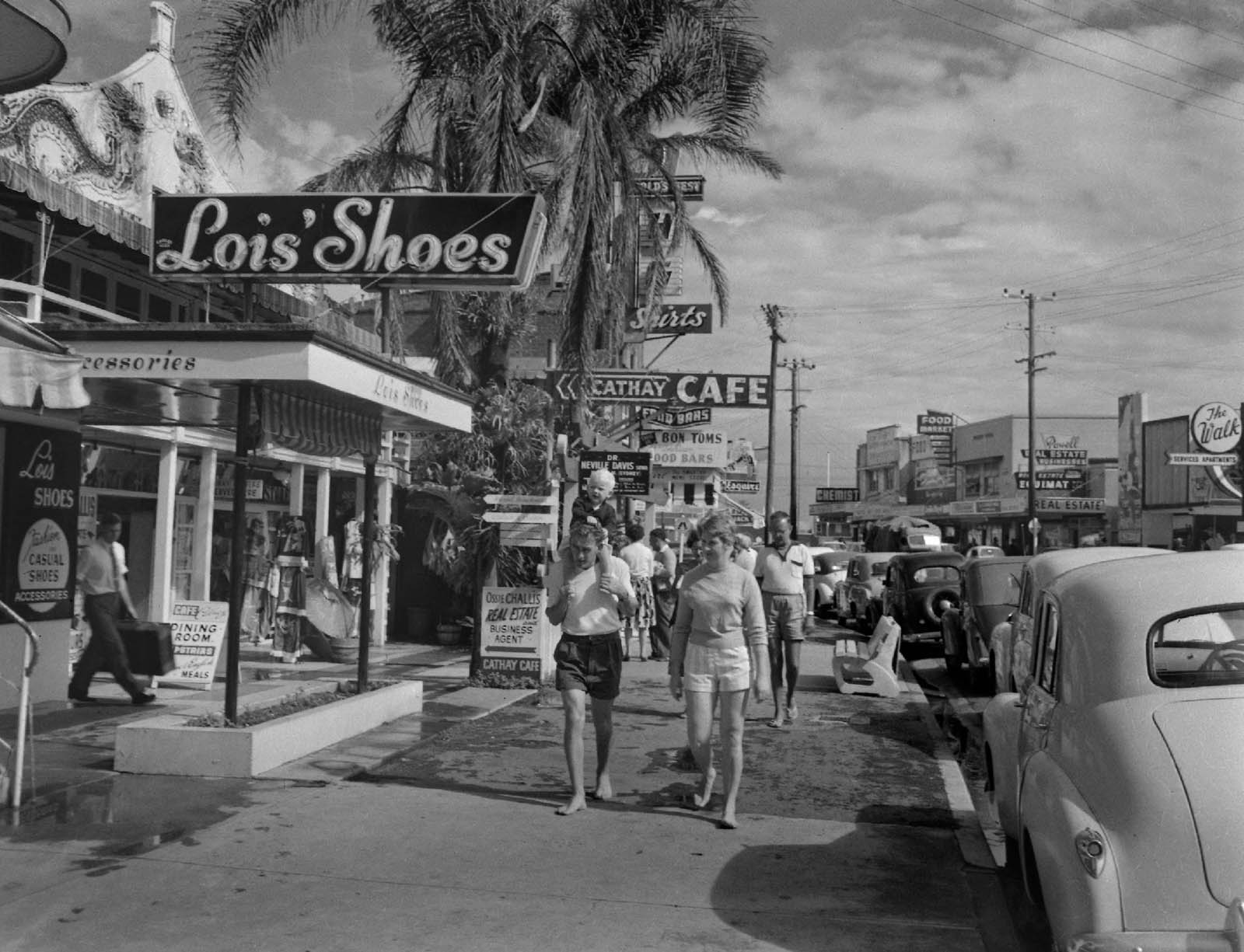
Anonymous photographer (Australian) 'Holiday makers at Surfers Paradise' 1959


Anonymous photographer (Australian)
Holiday makers at Surfers Paradise
1959
Australian News and Information Bureau collection
National Archives of Australia


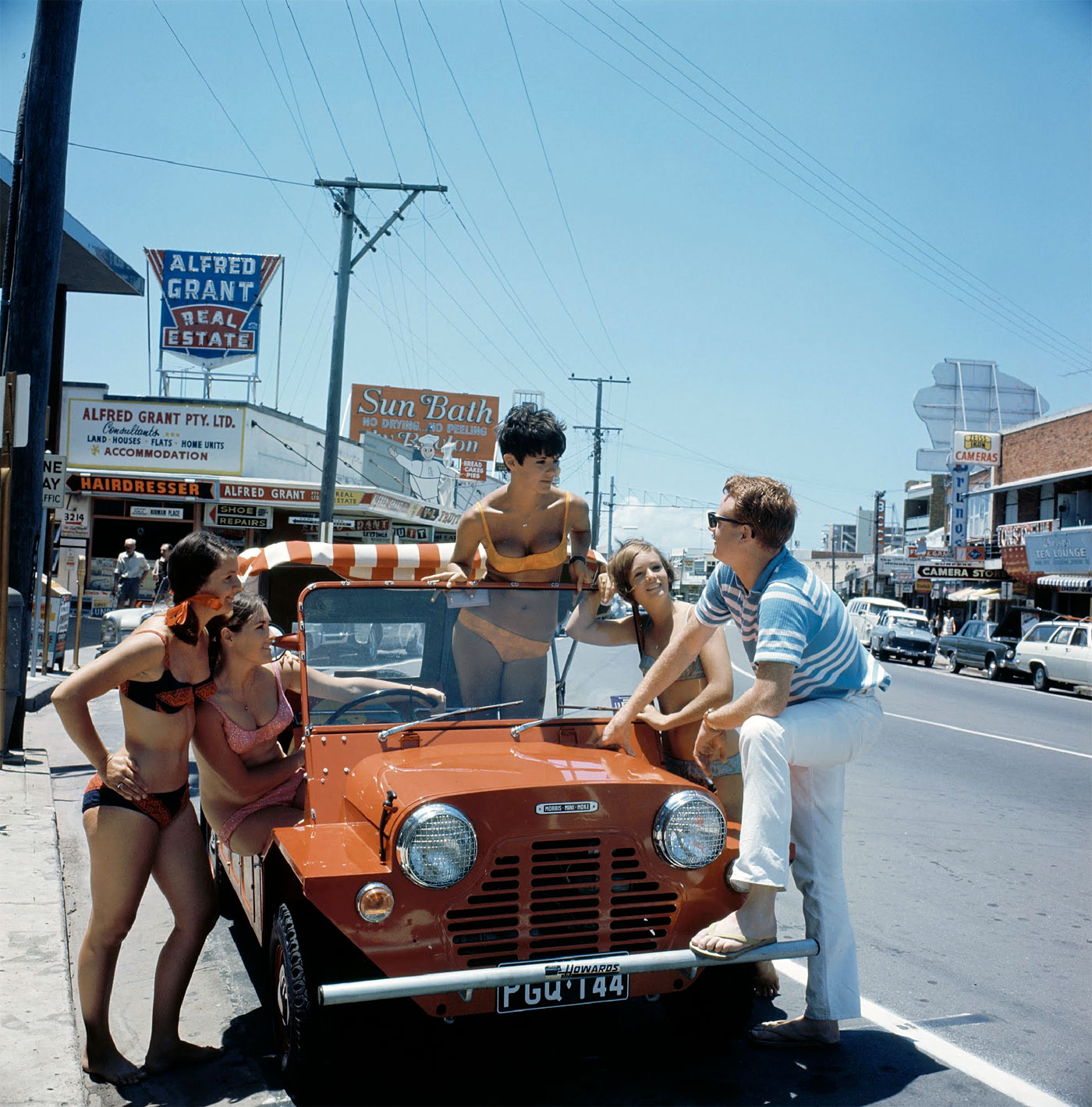
Anonymous photographer (Australian). 'Snack bar, Surfers Paradise, QLD' 1971


Anonymous photographer (Australian)
Snack bar, Surfers Paradise, QLD
1971
National Archives of Australia


Out and about

Australians have always been fairly laid back and never more so than in summer. Looking at these images from the 1950s and 1960s, it’s plain that sophistication was seldom a consideration when choosing what to wear. On holidays, most people preferred to be comfortable rather than trendy, and bare feet were common on coastal streets, as were unbuttoned shirts and even swimwear.


Anonymous photographer (Australian) 'Holiday makers gather around a car on a hot summer's day' 1964


Anonymous photographer (Australian)
Holiday makers gather around a car on a hot summer’s day
1964
Australian News and Information Bureau collection
National Archives of Australia


Anonymous photographer (Australian). 'Surf lifesaving, Bondi Beach' 1960


Anonymous photographer (Australian)
Surf lifesaving, Bondi Beach
1960
National Archives of Australia


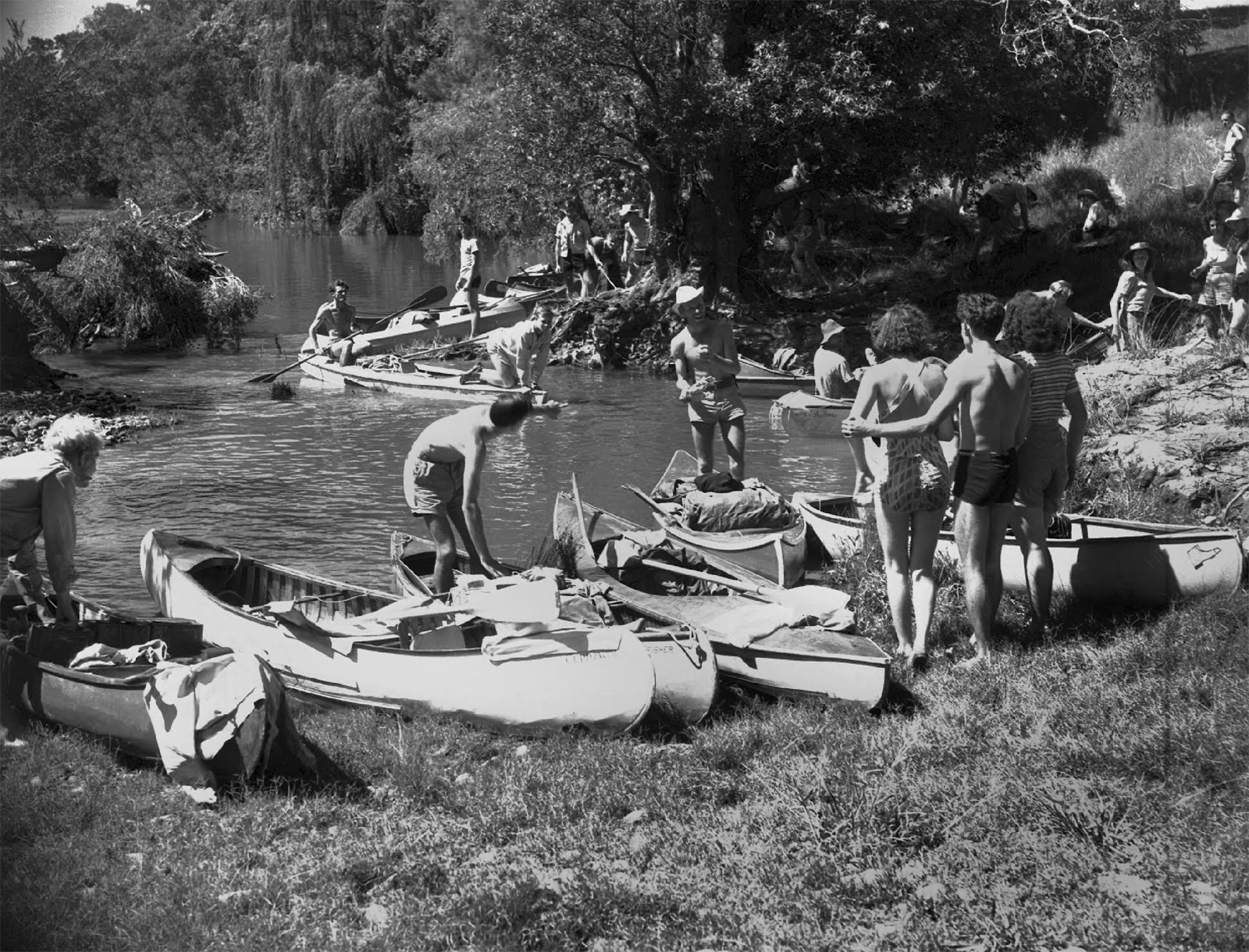
Cliff Bottomley (Australian, c. 1907-1981) 'Preparing canoes' 1948


Cliff Bottomley (Australian, c. 1907-1981)
Preparing canoes
1948
Australian News and Information Bureau collection
National Archives of Australia


This image comes from the Australian News and Information Bureau collection, now held in the National Archives. This vast archival resource is the legacy of nearly half a century’s work by Bureau photographers who captured hundreds of thousands of photographs of Australians at work and play.


Cooling off

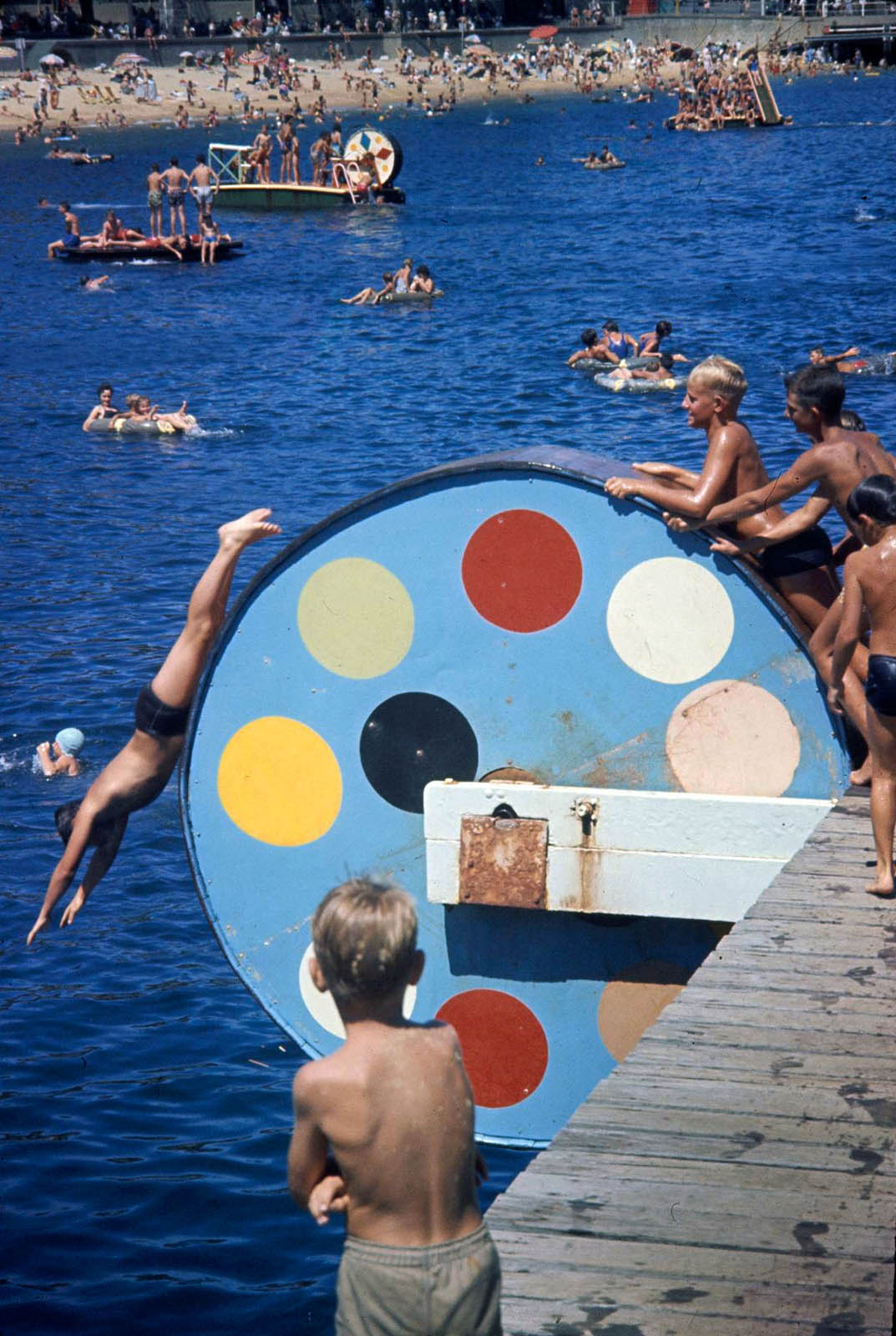
It’s no secret that Australia can be very hot, especially in summer. As the song says, we are girt by sea, and for 85 per cent of Australians a blissful dip in the ocean has always been less that two hours’ drive away. For those living further inland, sanctuary was found in a nearby river or lake, or the town’s public swimming pool.


Anonymous photographer (Australian) 'Harbour swimming pool, Manly, New South Wales' 1960


Anonymous photographer (Australian)
Harbour swimming pool, Manly, New South Wales
1960
Australian News and Information Bureau collection
National Archives of Australia


This image comes from the Australian News and Information Bureau collection, now held in the National Archives. This vast archival resource is the legacy of nearly half a century’s work by Bureau photographers who captured hundreds of thousands of photographs of Australians at work and play.


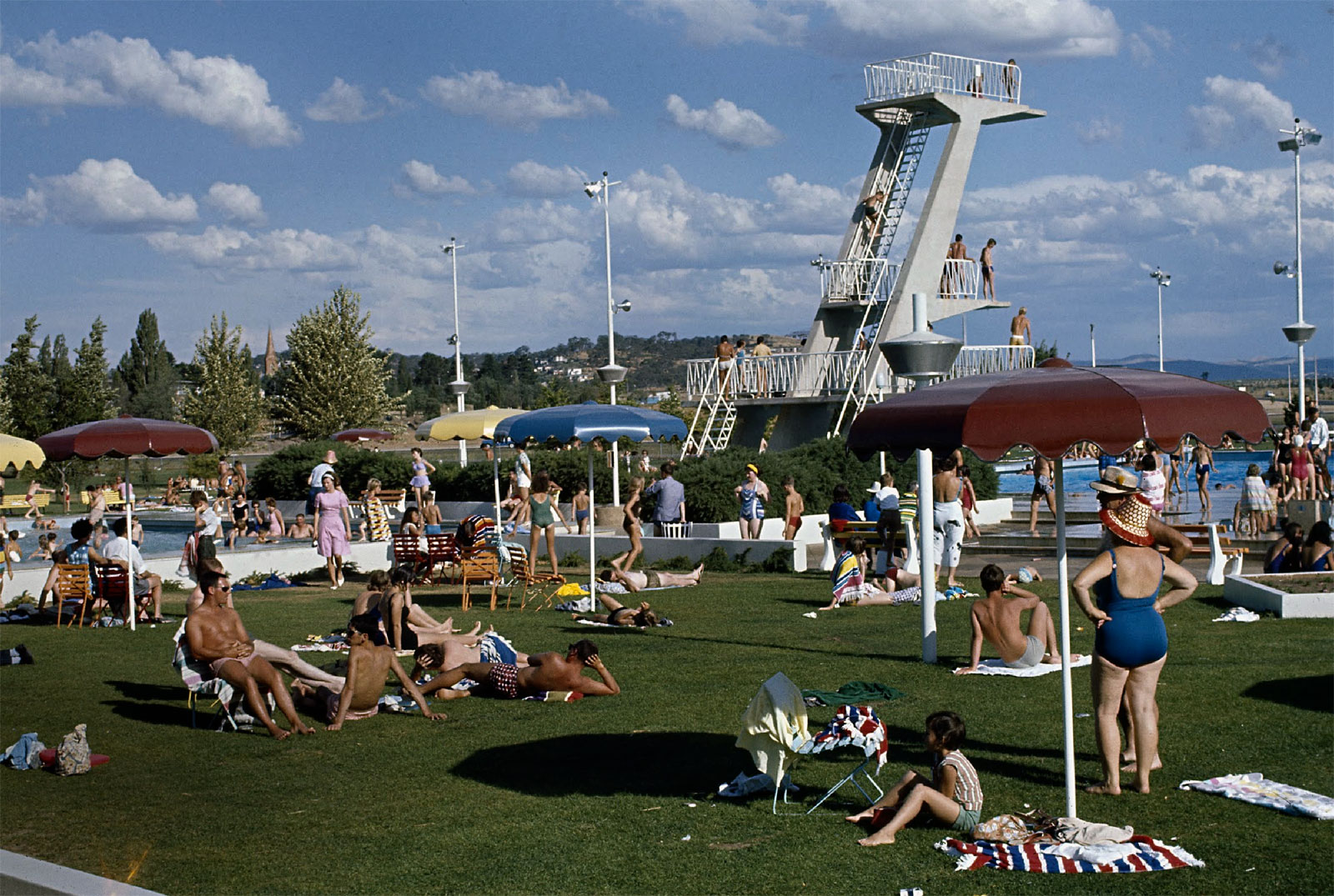
Anonymous photographer (Australian) 'Sunbathers relax on the lawn at the Olympic Pool, Canberra, Australian Capital Territory' 1966


Anonymous photographer (Australian)
Sunbathers relax on the lawn at the Olympic Pool, Canberra, Australian Capital Territory
1966
Australian News and Information Bureau collection
National Archives of Australia


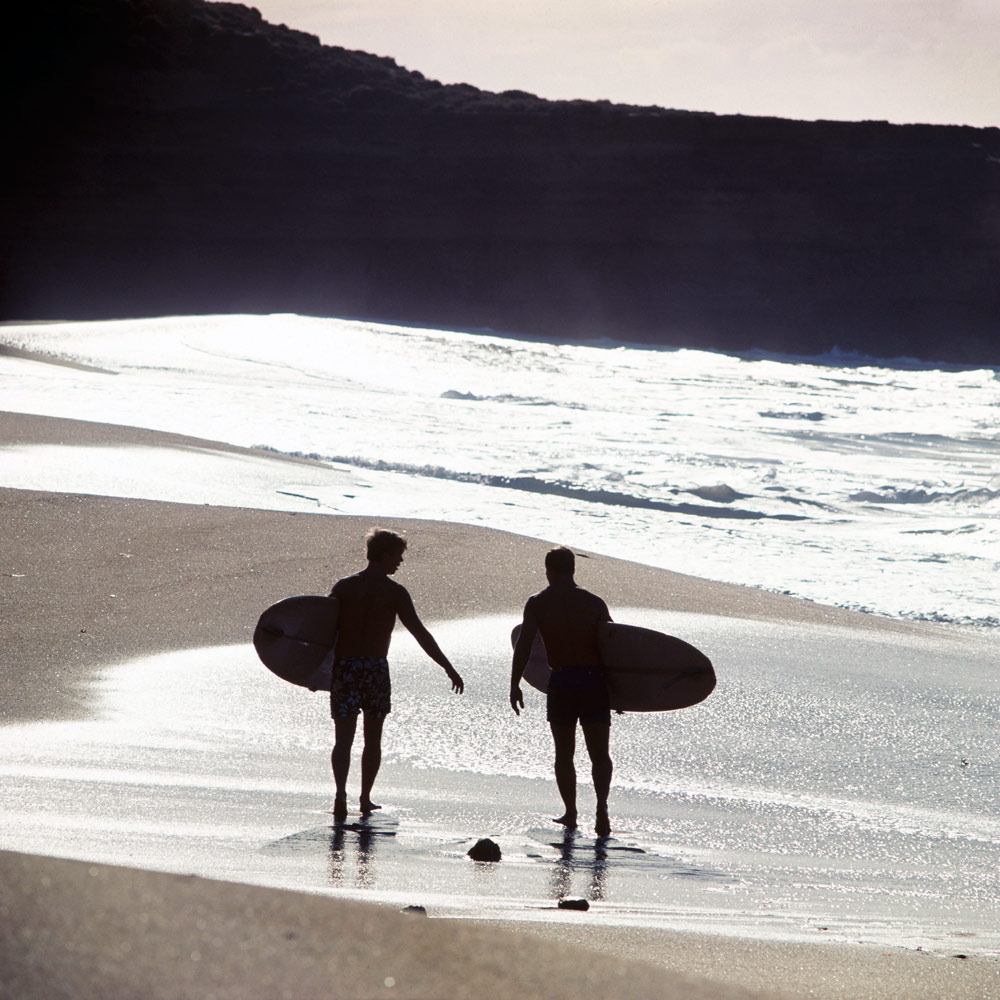
Anonymous photographer (Australian). 'Surf board riders, Torquay, VIC' 1967


Anonymous photographer (Australian)
Surf board riders, Torquay, VIC
1967
National Archives of Australia


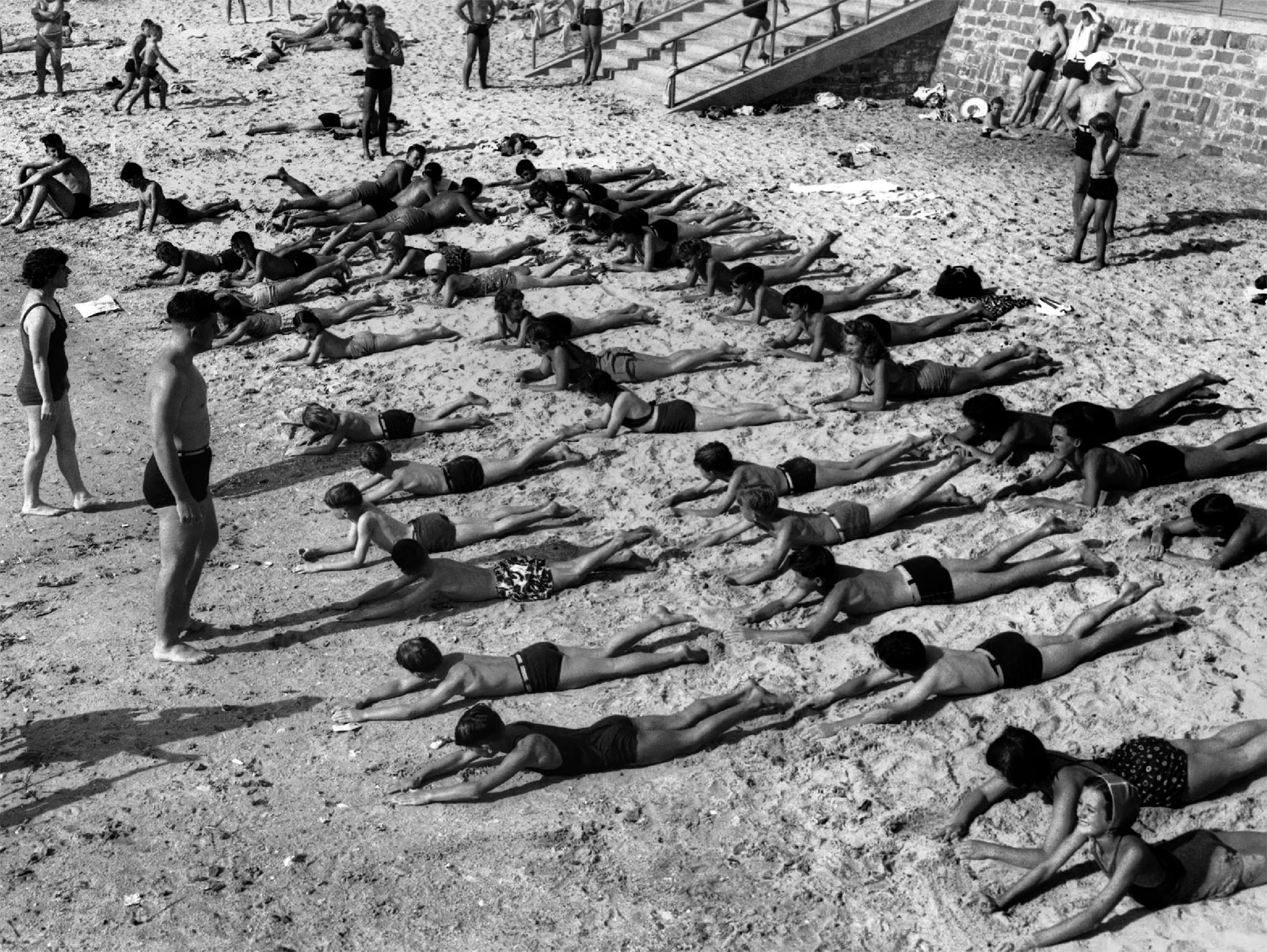
Anonymous photographer (Australian) 'Children learning to swim' 1945


Anonymous photographer (Australian)
Children learning to swim
1945
Australian News and Information Bureau collection
National Archives of Australia


Nice one, sport!

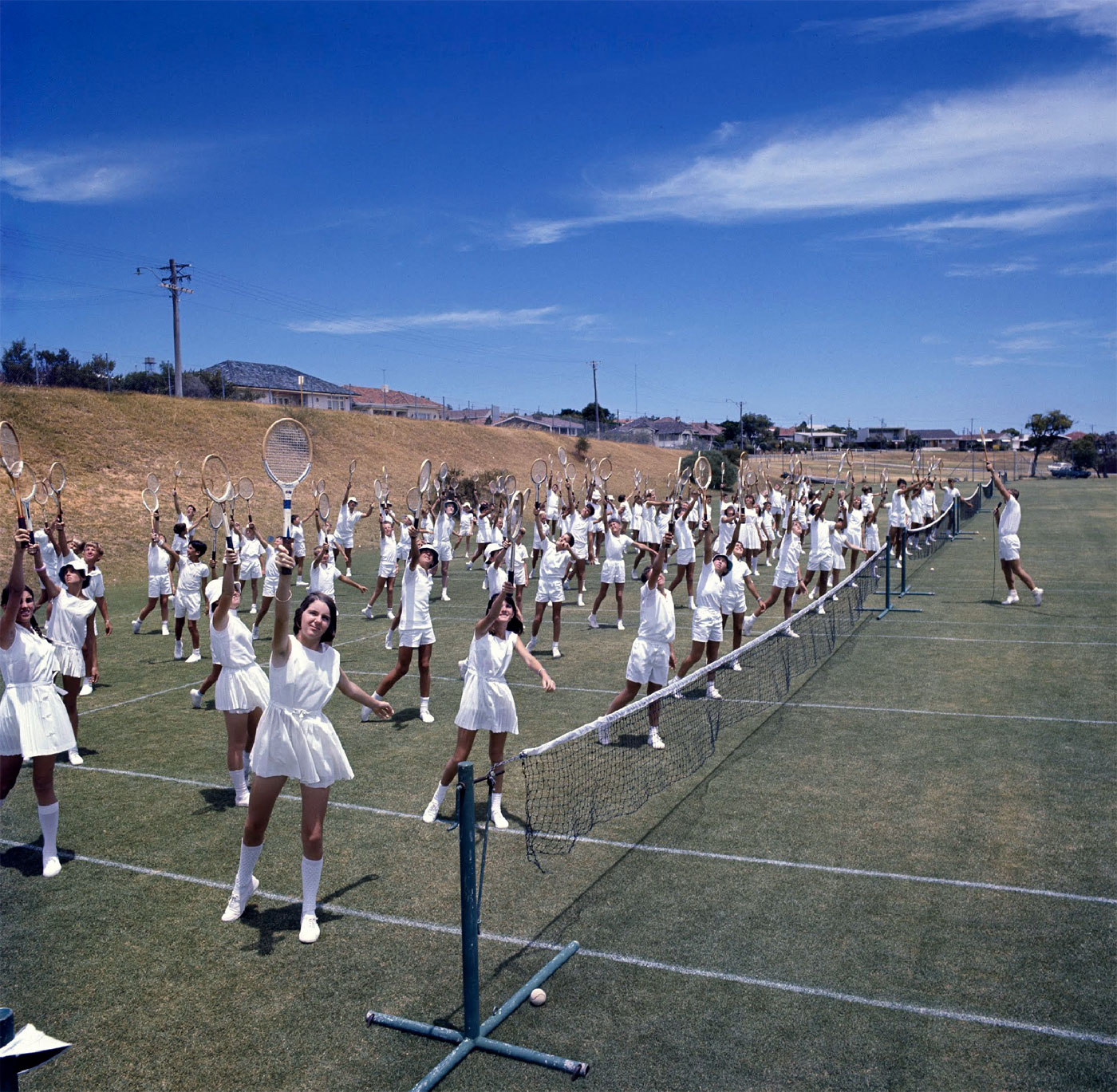
Between 1950 and 1970, Australia was triumphant in all the sports we loved. We dominated in the pool, won the Davis Cup a remarkable 15 times, and boasted an impressive record against every Test cricket nation. As these images show, Australian youngsters were keen to play the game, and on most summer Saturdays all around the country, boys and girls would play tennis or cricket, or swim like champions.


Anonymous photographer (Australian) 'Boys with kites' 1965


Anonymous photographer (Australian)
Boys with kites
1965
Australian News and Information Bureau collection
National Archives of Australia


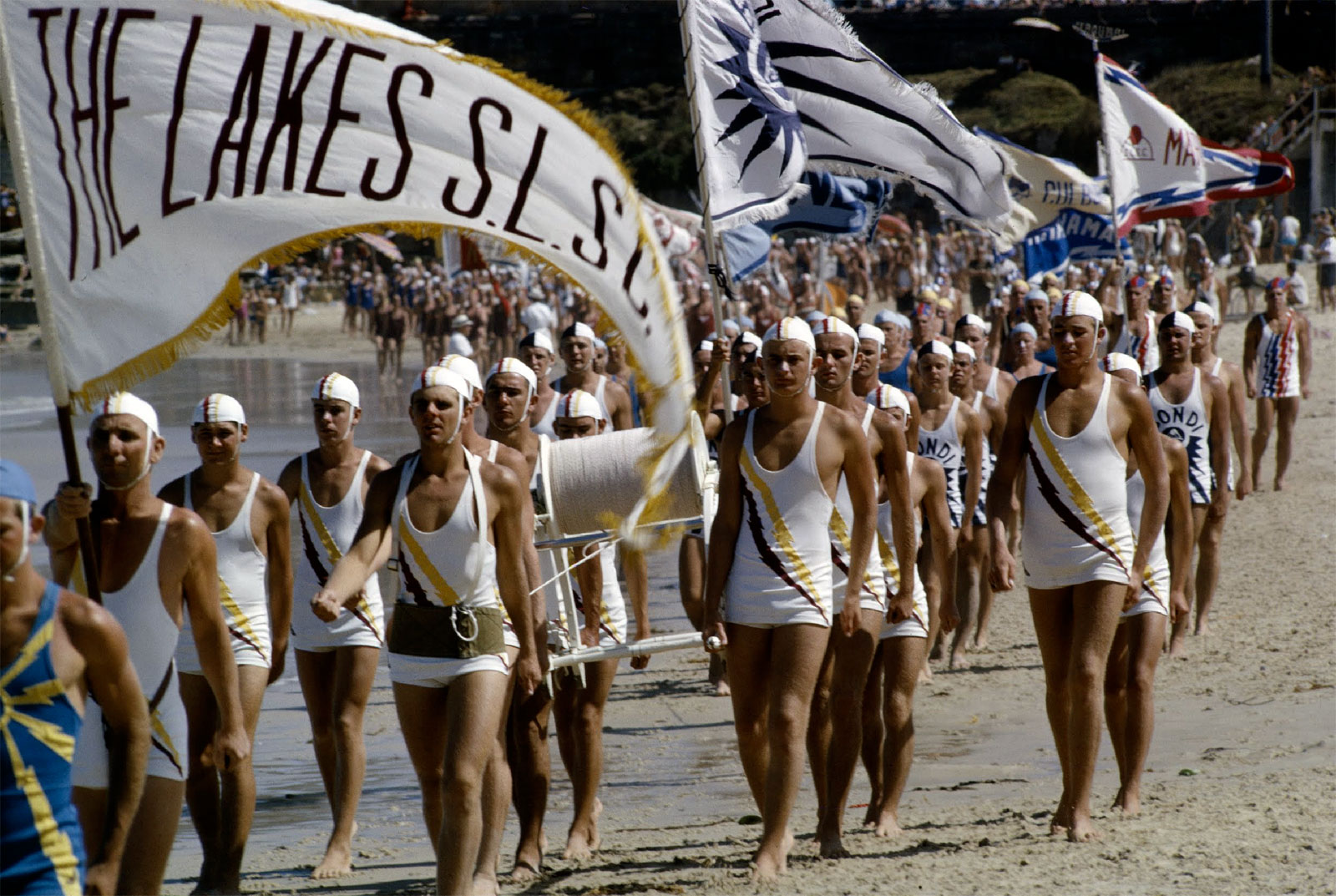
Anonymous photographer (Australian) 'Surf carnival' 1966


Anonymous photographer (Australian)
Surf carnival
1966
Australian News and Information Bureau collection
National Archives of Australia


Anonymous photographer (Australian) 'Mass tennis class' 1967


Anonymous photographer (Australian)
Mass tennis class
1967
Australian News and Information Bureau collection
National Archives of Australia


The Victorian Archives Centre
99 Shiel Street
North Melbourne, Victoria 3051
Australia

The Victorian Archives Centre website

LIKE ART BLART ON FACEBOOK

Back to top

Review: ‘Mark Strizic: Melbourne – A City in Transition (Rare Silver Gelatin Photographs)’ at Gallery 101, Melbourne

Exhibition dates: 8th April – 2nd May, 2009


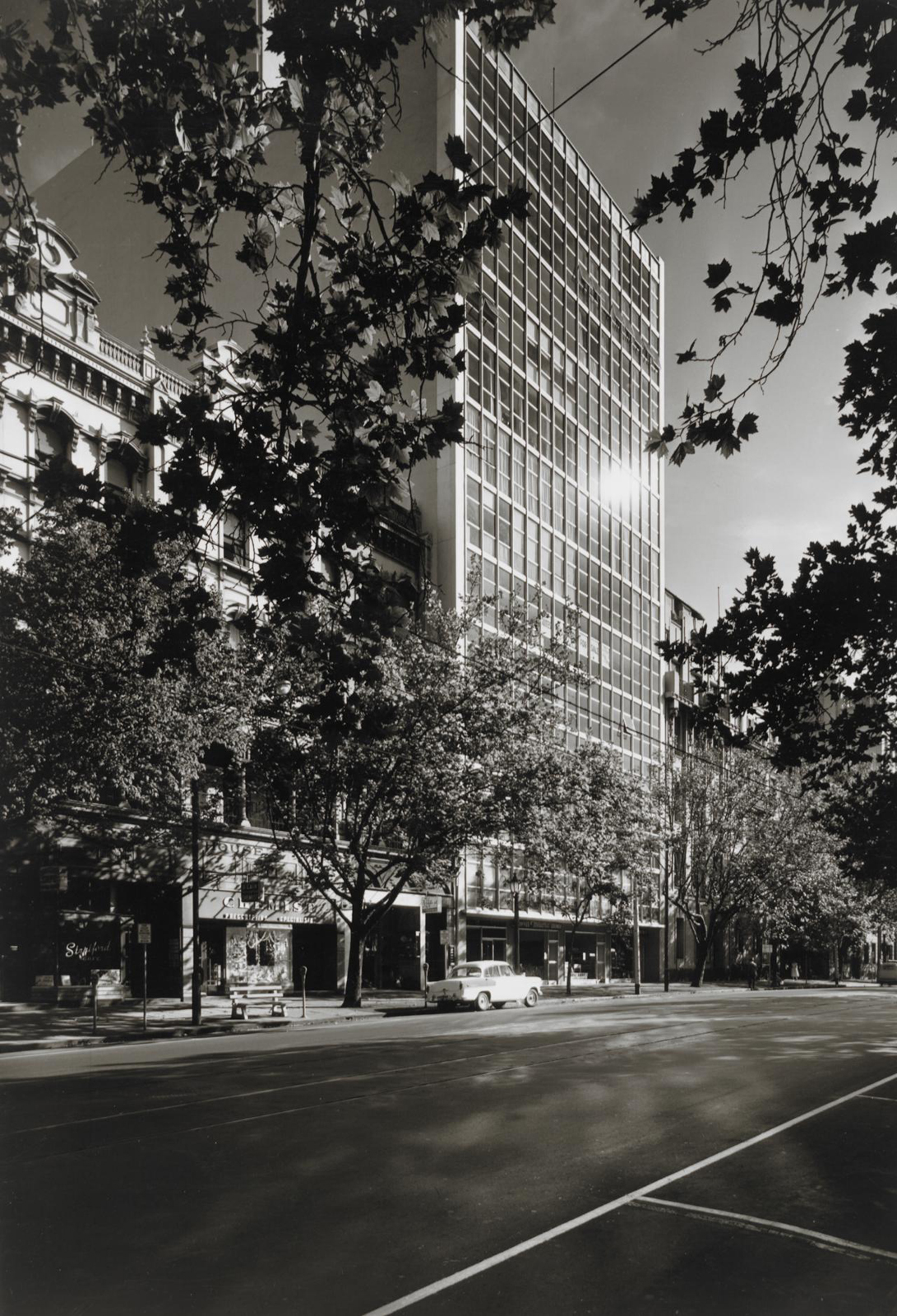
Mark Strizic (Australian, 1908-2012) 'Eastern Market Destruction - 1' 1960 from the exhibition 'Mark Strizic: Melbourne – A City in Transition (Rare Silver Gelatin Photographs)' at Gallery 101, Melbourne, April - May, 2009


Mark Strizic (Australian, 1908-2012)
Eastern Market Destruction – 1
1960, printed 1996
Silver gelatin photograph
19 x 22.5cm


Social Fact and Urban Vision

This is an exhibition by the veteran Australian photographer Mark Strizic that plays like the coda at the end of a piece of music, the pensive full stop at the end of a well read book. There are some stunning highlight photographs among the 139 black and white silver gelatin prints on display, some good photographs and some fairly mundane images and prints. With some judicious editing of the photographs (perhaps by a third), the exhibition could have had a stronger artistic aesthetic and carried the voice of the photographer with greater projection. As it is the exhibition will be popular drawing in the crowds because of the photographs subject matter and their appeal to both an individual and collective nostalgia.

Examining Strizic’s photographs we note a traditional structure to the picture plane. Unlike the photographs of Eugene Atget who photographed Paris in the early 20th century there is little sublime spatial representation in Strizics photographs, that different angle of alignment that Atget achieved with the positioning of his camera. Further, we observe that unlike an immigrant to another country at around the same time, Robert Frank and America, the photographs follow traditional format: none of the revolutionary experimentation in handheld, grainy images of jukeboxes, cut up people or images of flags appear in this work. We can also say that unlike Helen Levitt’s early black and white images of New York from around the same period there is little ‘joie de vivre’, little engagement with the actual nitty gritty stuff of living in Strizic’s work. The quote below articulates what Strizic’s photographs both address and dismiss:

“To walk in the city is to experience the disjuncture of partial vision/partial consciousness. The narrativity of this walking is belied by a simultaneity we know and yet cannot experience. As we turn a corner, our object disappears around the next corner. The sides of the street conspire against us; each attention suppresses a field of possibilities. The discourse of the city is a syncretic discourse, political in its untranslatability. Hence the language of the state elides. Unable to speak all the city’s languages, unable to speak all at once, the state’s language become monumental, the silence of headquarters, the silence of the bank. In this transcendent and anonymous silence is the miming of corporate relations. Between the night workers and the day workers lies the interface of light; in the rotating shift, the disembodiment of lived time. The walkers of the city travel at different speeds, their steps like handwriting of a personal mobility. In the milling of the crowd is the choking of class relations, the interruption of speed, and the machine. Hence the barbarism of police on horses, the sudden terror of the risen animal.”1

We observe in the photographs an emphasis on surfaces, on a supreme understanding of light and shade coupled with a certain distance and emotional remoteness from the frenetic hubbub of city life. Empty streets and isolated people fall into shadow and their is little evidence of ‘play’ in the photographs. This is observation not interaction or integration as an immigrant observing Melbourne life. There is no up front presence of disembodied people as in Robert Franks photographs in The Americans. Here the alienation that pervades the photographs is the alienation of the photographer from the people as much as it is the alienation of the people from themselves. People are shot in silhouette against the sun or shop windows or peering in at unobtainable goods; desolate streets and working class suburbs all express the isolation of city life but at a structured distance from them.

When Strizic’s photographs are good they are very good. His understanding of light is magnificent: light reflects off water, hazes and shimmers off city buildings. The mixing of shadows and sun and his use of the technique of ‘contre jour’ (shooting into the sun) the one thing Strizic does against traditional conventions works to good effect in some of the best photographs. His 1968 night time long exposure photograph of the old Gas and Fuel Building is rewarding for the black bulk of the end of the building looming over Flinders Street and the striations of car headlamps. The photograph Flinders Lane (1967, below) shows a delicate use of depth of field where the foreground of cars and person are out of focus, the light bouncing off the edges of the woman, the focus of the image in the far distance. The photograph McPhersons Building (1958, below) is one of my personal favourites in the exhibition and is a stunning photograph for the atmosphere the photographer has captured.

After a while the use of the ‘contre jour’ technique becomes tiresome. Other photographs simply document a city in transition. These photographs appeal both to an individual nostalgia (‘I used to work in that building’; ‘My grandmother used to live in that street’) and a collective nostalgia where people experience things collectively, “in the sense that [collective] nostalgia occurs when we are with others who shared the event(s) being recalled, and also in the sense that one’s nostalgia is often for the collective – the characteristics and activities of a group or institution in which the individual was a participant.”2

Collective nostalgia refers to that condition in which the symbolic objects are of a highly public, widely shared and familiar character, i.e. those symbolic resources from the past which can under proper conditions trigger off wave upon wave of nostalgic feeling in millions of persons at the same time3 and in this exhibition it is the photographs of a city in transition that trigger this nostalgia, a city now lost to the mists of time. Through these photographs we remember what Melbourne was like at this time collectively.

As Harper has observed

“Nostalgia combines bitterness and sweetness, the lost and the found, the far and near, the new and the familiar, absence and presence. The past which is over and gone, from which we have been or are being removed, by some magic becomes present again for a short while. But its realness seems even more familiar, because renewed, than it ever was, more enchanting and more lovely …”4

Does this collective nostalgia make the photographs good? This is a pertinent question.

Today, nostalgia has become a cultural phenomenon one centred on a longing for home (home is where you are happy to be!) in a collective sense and promoted through commercialisation and the realisation that nostalgia sells. The use of the value seeking word ‘rare’ in the exhibition title is instructive in this regard. Only about 25% of the photographs in this exhibition are “vintage” prints, in other words photographs printed within 3 years of the negative being taken. All other photographs have been printed within the last 15 years. Some are ‘Unique state’ gelatin photographs while others are not. What does this mean. Are they are unique state only in this size? What about the common or garden silver gelatin prints in the show? What does the status word “rare” imply for them?

I remember seeing an exhibition of the photographs of Henri Cartier-Bresson in Scotland about ten years ago. Three rooms had large prints of his work. One room just had vintage prints. The contrast was astounding. The room full of vintage prints had an intensity of vision, of his vision at the time he took the photographs evidenced in small jewel like photographs that the three other rooms photographs simply did not possess – through scale, printing and aesthetics. The same question, without any need for an answer, can be posed here. Only the word ‘rare’ demands that answer for the modern prints are just what they are and nothing more.

In conclusion this is a strong show by Strizic that could have been edited and focused in a more rewarding way. Strizic is one of Australia’s best photographers for understanding the significance of place. His use of light is superb but there always seems to be an emotional distance to his photographs. An element of collective nostalgia adds to their documentary appeal but the best photographs do not just record, they challenge and transcend the subject matter taking the work to an altogether different plane of existence.

Dr Marcus Bunyan


1/ Stewart, Susan. On Longing: Narratives of the Miniature, the Gigantic, the Souvenir, the Collection. Durham: Duke University Press, 1993, p. 2. Prologue

2/ Wilson, Janelle. “”Remember when …” a consideration of the concept of nostalgia,” in et Cetera. Concord: Fall 1999. Vol. 56, Iss. 3;  pg. 296, 9 pgs

3/ Davis, F. Yearning For Yesterday: A Sociology of Nostalgia. New York: The Free Press, 1979, p. 222

4/ Harper, R. Nostalgia: An Existential Exploration of Longing and Fulfilment in the Modern Age. The Press of Western Reserve University, 1966, p. 120 quoted in Wilson, Janelle. “”Remember when …” a consideration of the concept of nostalgia,” in et Cetera. Concord: Fall 1999. Vol. 56, Iss. 3;  pg. 296, 9 pgs


Many thankx to Gallery 101 for allowing me to publish the photographs in the posting. Please click on some of the photographs for a larger version of the image.


Installation view of the exhibition 'Mark Strizic: Melbourne - A City in Transition' exhibition at Gallery 101, Melbourne

Installation view of the exhibition 'Mark Strizic: Melbourne - A City in Transition' exhibition at Gallery 101, Melbourne

Installation view of the exhibition 'Mark Strizic: Melbourne - A City in Transition' exhibition at Gallery 101, Melbourne


Installation views of the exhibition Mark Strizic: Melbourne – A City in Transition exhibition at Gallery 101, Melbourne
Photos: Marcus Bunyan


Mark Strizic, one of Australia’s eminent photographic artists presents us with nostalgic views of Melbourne and the changing face of the city in rare silver gelatin photographs. The exhibition, Melbourne – A City in Transition will be held at Gallery 101 from 8th April – 2nd May. There will be an evening artist reception on Thursday 9th April to celebrate the opening of the exhibition. Strizic’s oeuvre represents a collection of iconic images of architecture and of life – a record of the changing face of a migrating society of new prosperity, youth and popular culture – taken with a sympathetic eye for humanistic detail.

The exhibition will coincide with the announcement of the forthcoming publication, Mark Strizic, Melbourne: Marvellous to Modern, published by Thames & Hudson in association with the State Library of Victoria. In 2007, the State Library of Victoria acquired Mark Strizic’s entire archive of approximately 5000 negatives, colour transparencies and slides. In addition, the Library holds a fine collection of Strizic photographs, including examples of all types of photographic print, from gelatin silver to digital, produced by the photographer during his long career.

Press release from Gallery 101


Mark Strizic photographs

Mark Strizic photographs

Mark Strizic photographs

Mark Strizic photographs

Mark Strizic photographs


“‘Melbourne – A City in Transition’ is a collection of iconic images of Melbourne city life taken with a sympathetic eye for humanist detail. Strizic accurately depicts the joys and hardships experienced in everyday life with a fresh and living memory. He successfully captures the vicarious essence of suburban life. His portrait of Melbourne includes the city, harbour and river banks – streets and trams, pavements, arcades and lanes, stations and bridges, billboards and facades and public sculpture. We see people going about their daily activities – commuting, shopping at leisure, trading, embracing, conversing, reading the newspaper and visiting the beach. Other works record the demolition and construction of building sites and the changing face of Melbourne, both in society and the urban landscape.”


Text from the exhibition flyer


“In these eloquent studies of light and shadow, Strizic finds beauty in the commonplace – Melbourne’s desolate lanes, street paving, derelict ferries – adopting interesting camera angles, viewpoints and cropping. Through his images, this visual humanist teaches us to observe, to see our surroundings, perhaps with the intention of stimulating us to a higher level of civilisation.”


Emma Matthews. Mark Strizic, Melbourne: Marvellous to Modern. Thames & Hudson in association with the State Library of Victoria, September, 2009.


“This magnificent collection of photographs arose from the creativity of a young photographer and his adoption of his new home town, Melbourne. His pictures were taken at a time when the Victorian elegance of the city once known as ‘Marvellous Melbourne’ was being punctuated by a wave of development and the modern architectural movement. Today Mark Strizic is renowned as a photographer. In the 1950s he was a young science student from Europe playing with the possibilities of the camera. As he gained work as a professional his commercial success was accompanied by the instincts and eye of an artist. His solid technicality was accompanied by the whimsy and wit that made him the ‘poet of the fleeting movement’. The versatility of his work shows us many aspects of Melbourne – its magnificent architectural heritage, its intimate and vibrant laneways, its grand arcades counter-posed against the sudden spaces of the wrecker, the brash intrusion of the glass and concrete skyscrapers, the poignancy of poverty in the rundown inner suburbs. We see the people, on grand occasions such as the 1954 Royal Visit, or just caught in their own world of travelling, shopping, resting, walking, working.”


Mark Strizic, Melbourne: Marvellous to Modern 
book cover


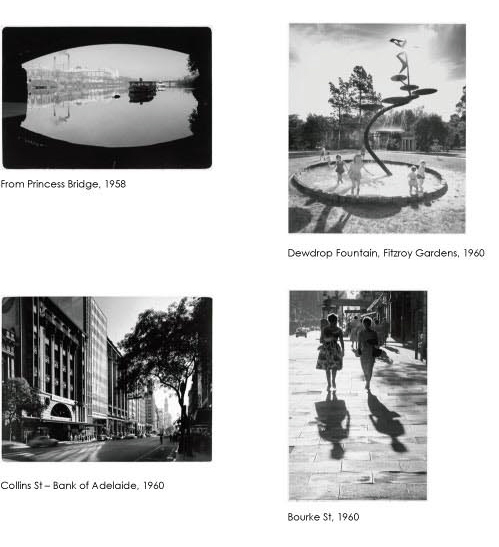
Mark Strizic (Australian, 1908-2012) 'From Princes Bridge' 1958


Mark Strizic (Australian, 1908-2012)
From Princes Bridge
1958, printed 2006
Silver gelatin photograph
58 x 39cm


Mark Strizic. 'Near Spencer Street - 1' 1950


Mark Strizic (Australian, 1908-2012)
Near Spencer Street – 1
1950
Silver gelatin photograph
27.5 x 38.5cm


Mark Strizic. 'At St. Pauls' 1954


Mark Strizic (Australian, 1908-2012)
At St. Pauls (St Paul’s Cathedral steps)
1954, printed 1999
Silver gelatin photograph
17.8 × 24.5cm


Mark Strizic (Australian, 1908-2012) 'St Paul's Cathedral steps' 1954


Mark Strizic (Australian, 1908-2012)
St Paul’s Cathedral steps
1954, printed 1999
Silver gelatin photograph
17.8 × 24.5cm


Mark Strizic (Australian, 1908-2012) 'Collins Street at Russell Street' 1957, printed 1997


Mark Strizic (Australian, 1908-2012)
Collins Street at Russell Street
1957, printed 1997
Unique silver gelatin photograph
39 x 56cm


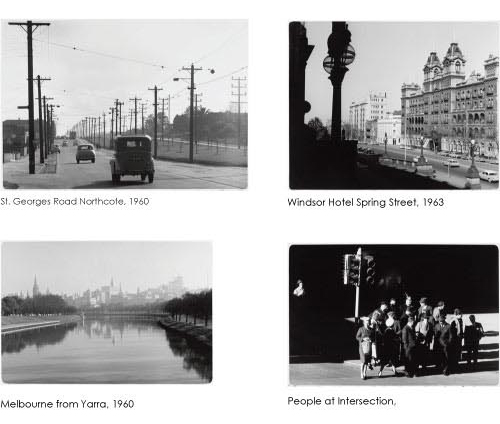
Mark Strizic (Australian, 1908-2012) 'St Georges Road, Northcote at Summer Av.' 1958


Mark Strizic (Australian, 1908-2012)
St Georges Road, Northcote at Summer Av.
1958, printed 1998
Silver gelatin photograph


Mark Strizic (Australian, 1908-2012) 'St. Patrick's Cathedral' January 1967


Mark Strizic (Australian, 1908-2012)
St. Patrick’s Cathedral
January 1967, printed 1998
Unique silver gelatin photograph
27 x 41cm


Mark Strizic (Australian, 1908-2012) 'Bourke Street from the Parliament' 1967


Mark Strizic (Australian, 1908-2012)
Bourke Street from the Parliament – 2
1967, printed 1998
Silver gelatin photograph
38 x 27cm


Mark Strizic (Australian, 1908-2012) 'Russell Street Pawn Shop' 1958


Mark Strizic (Australian, 1908-2012)
Russell Street Pawn Shop
1958
Silver gelatin photograph


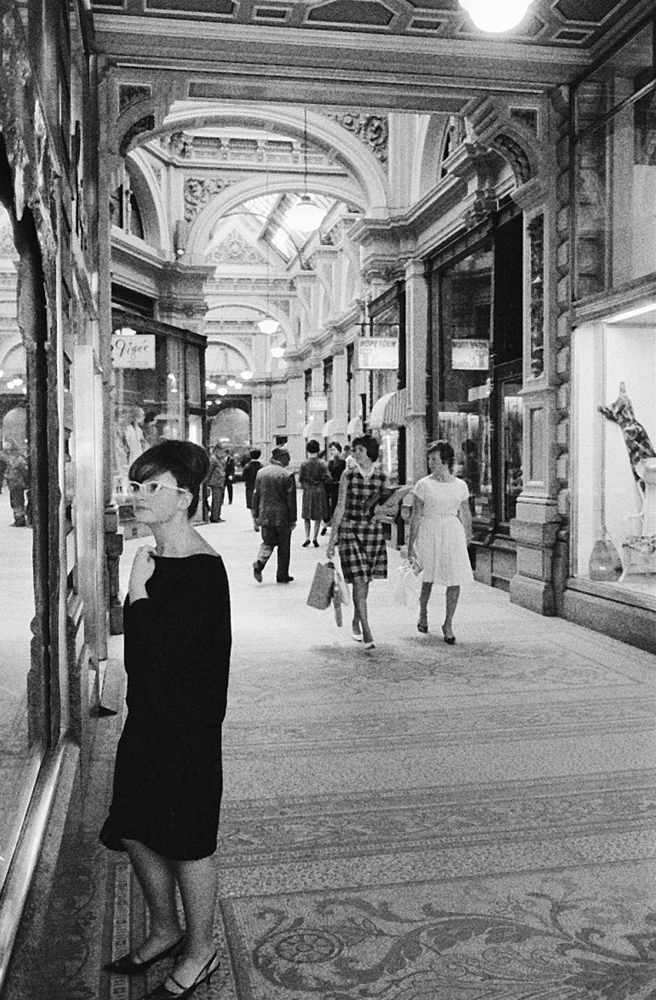
Mark Strizic (Australian, 1908-2012) 'Block Arcade' 1967


Mark Strizic (Australian, 1908-2012)
Block Arcade
1967, printed February 2008
Unique silver gelatin photograph
53.5 x 37cm


Mark Strizic (Australian, 1908-2012) 'From Princes Bridge' (Winter moorings from Princes Bridge) 1955


Mark Strizic (Australian, 1908-2012)
From Princes Bridge (Winter moorings from Princes Bridge)
1955, printed 2006
Silver gelatin photograph
58 x 39cm


Mark Strizic (Australian, 1908-2012) 'Flinders Lane' 1967


Mark Strizic (Australian, 1908-2012)
Flinders Lane
1967, printed 1998
Unique silver gelatin photograph
41 x 41cm


Mark Strizic (Australian, 1908-2012) 'Swan Street, Richmond, at Church Street' 1963


Mark Strizic (Australian, 1908-2012)
Swan Street, Richmond, at Church Street
1963
Silver gelatin photograph


Mark Strizic (Australian, 1908-2012) 'Queensberry Street at Errol Street, North Melbourne' 1963


Mark Strizic (Australian, 1908-2012)
Queensberry Street at Errol Street, North Melbourne
1963
Silver gelatin photograph


Mark Strizic (Australian, 1908-2012) 'Swan Street at Church Street' 1963


Mark Strizic (Australian, 1908-2012)
Swan Street at Church Street
1963, printed 1998
Silver gelatin photograph


Mark Strizic (Australian, 1908-2012) 'Coates Building' 1960


Mark Strizic (Australian, 1908-2012)
Coates Building
1960, printed 1961
Vintage silver gelatin photograph
23.5 x 15cm


Mark Strizic. 'Macphersons Building -1' 1958


Mark Strizic (Australian, 1908-2012)
Macphersons Building – 1
1958
Silver gelatin photograph


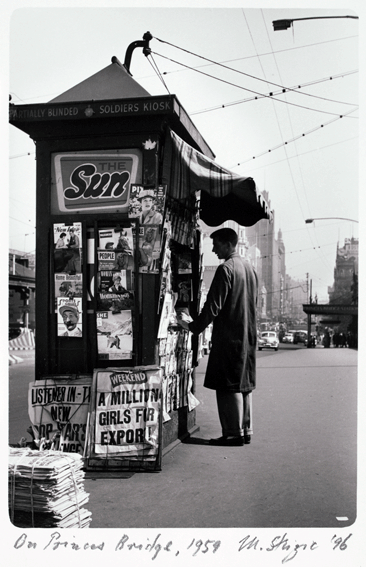
Mark Strizic. 'On Princes Bridge' 1959


Mark Strizic (Australian, 1908-2012)
On Princes Bridge
1959, printed 1996
Silver gelatin photograph
17 x 24cm


Gallery 101

This gallery is now closed.

LIKE ART BLART ON FACEBOOK

Back to top