
Exhibition dates: 5th March – 7th August, 2026
Curator: Savannah Smith
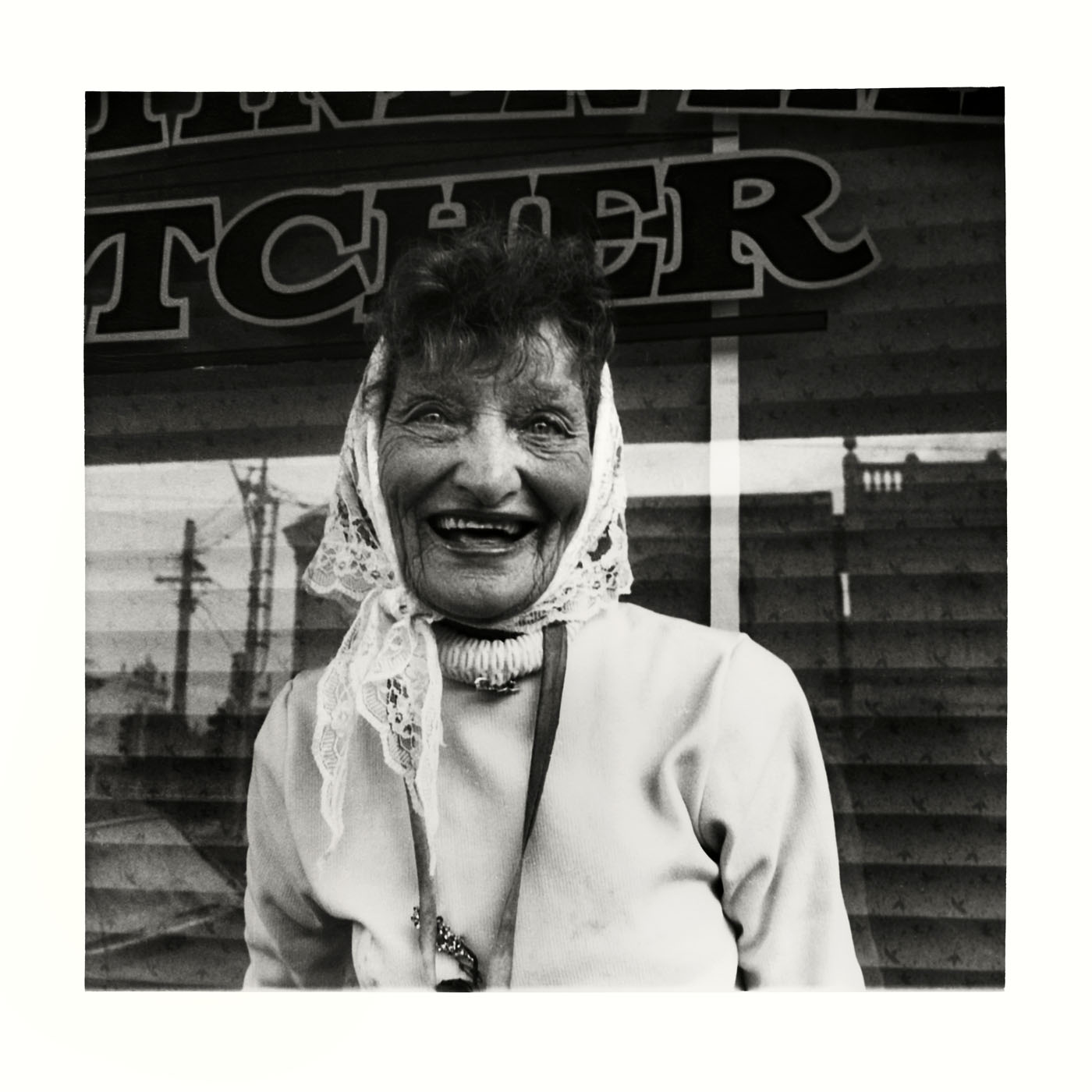
Viva Gibb (Australian, 1945-2017)
‘Lolly seller’, Victoria Street, West Melbourne
1985
Silver gelatin print
30.5 x 30.5cm
Donated by Sybil Gibb and Rupert Duffy to the Melbourne Art Trust in memory of Viva Gibb 2025
© Courtesy of the Estate of Viva Gibb
Please handle with care –
I read a comment about the exhibition On the Street Where I Live: Viva Gibb at the City Gallery, Melbourne on Instagram the other day. It described the exhibition as “charming”.
What does that mean? charming… it’s almost as bad as calling an artist’s work “nice”. I’m sure if someone called my work “charming” I would take a turn and I think that Viva Gibb would be rolling in her grave if she heard the comment.
Let us be clear. Viva Gibb’s 1970s-1980s social documentary portraits of the people of inner city Melbourne (specifically North and West Melbourne) centred around her studio in Capel Street are direct, tough, intimate, compassionate, empathetic, feminist, political (in a socialist sense) and strongly humanist photographs of the people of her neighbourhoods and the working class suburbs in which they lived. Everyday people, human dignity, and social connection.
Through “mid or long shots, with the subject captured in relation to their environment,” Gibb’s photographs picture the day-to-day lives of the people that surrounded her, people that she had a connection with and wanted to photograph. As she said, “I only ask them for a photograph if I am interested in that person, if there is something in the whole story about them.”
Gibb photographed the people of these suburbs, people who formed countercultural communities of artists and intellectuals, cafe owners and customers, butchers and bakers, the old, the young, punks, dating couples and the homeless. She photographed facets of their life revealing within the images their innate dignity (every person has high value and deep worth simply because they are human), often using a multi-image convention to capture their essence, returning to photograph them over an extended time period. She built a relationship with people for however short or long a time in order to tell their story.
“The people in my photographs are those who have survived at all odds – socially, racially, and economically – in our essentially bourgeois society; the lonely man next door, the old people who have lived in the area all their lives and are threatened with eviction, the homeless man whose only dream is to have a room of his own.”
Through her photographs we can feel the transformation of a moment into a story unfolded by observation.
As Walker Evans observed, “Leaving aside the mysteries and the inequities of human talent, brains, taste, and reputations, the matter of art in photography may come down to this: it is the capture and projection of the delights of seeing; it is the defining of observation full and felt.”
The defining of observation full and felt. There goes Viva…
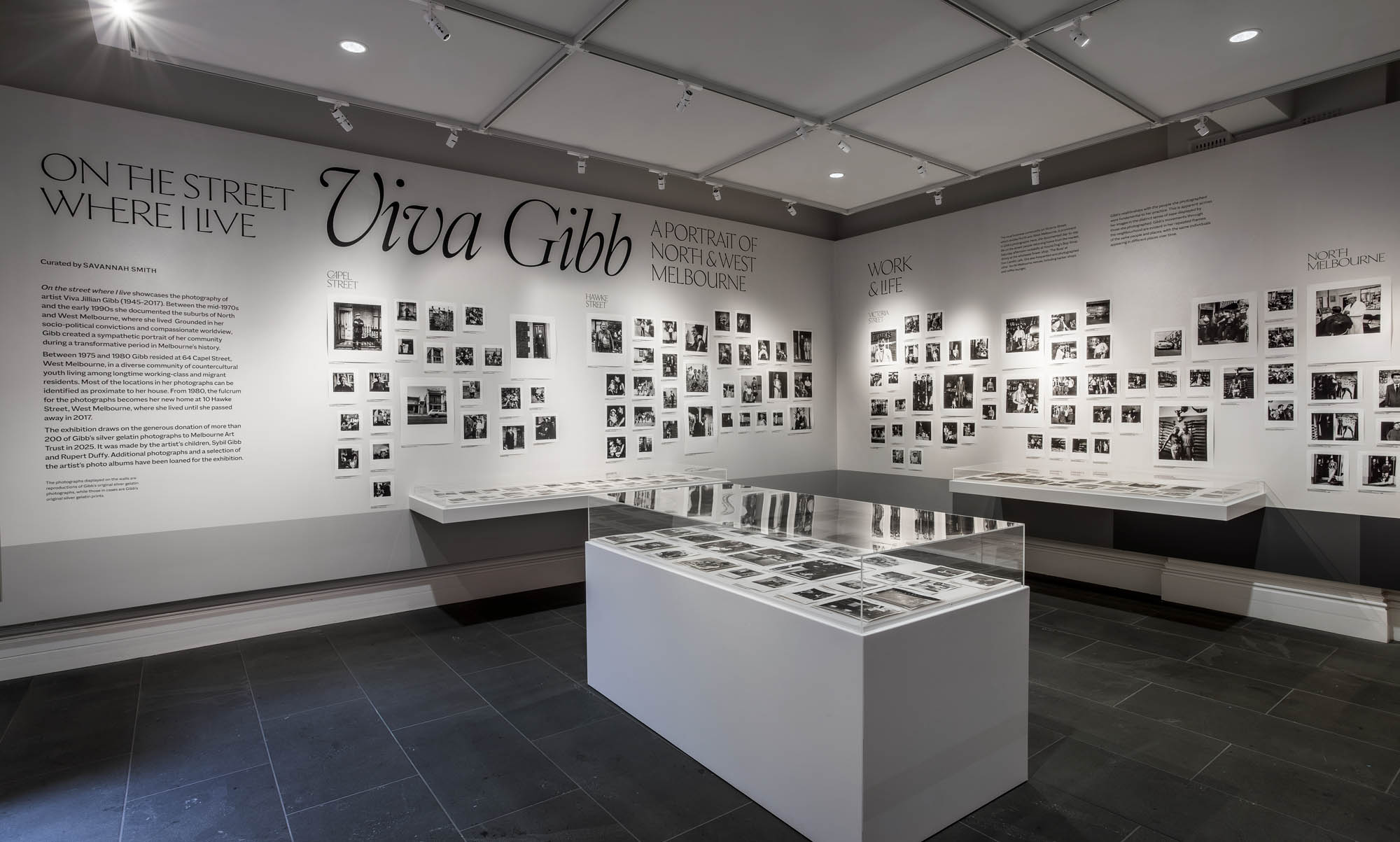
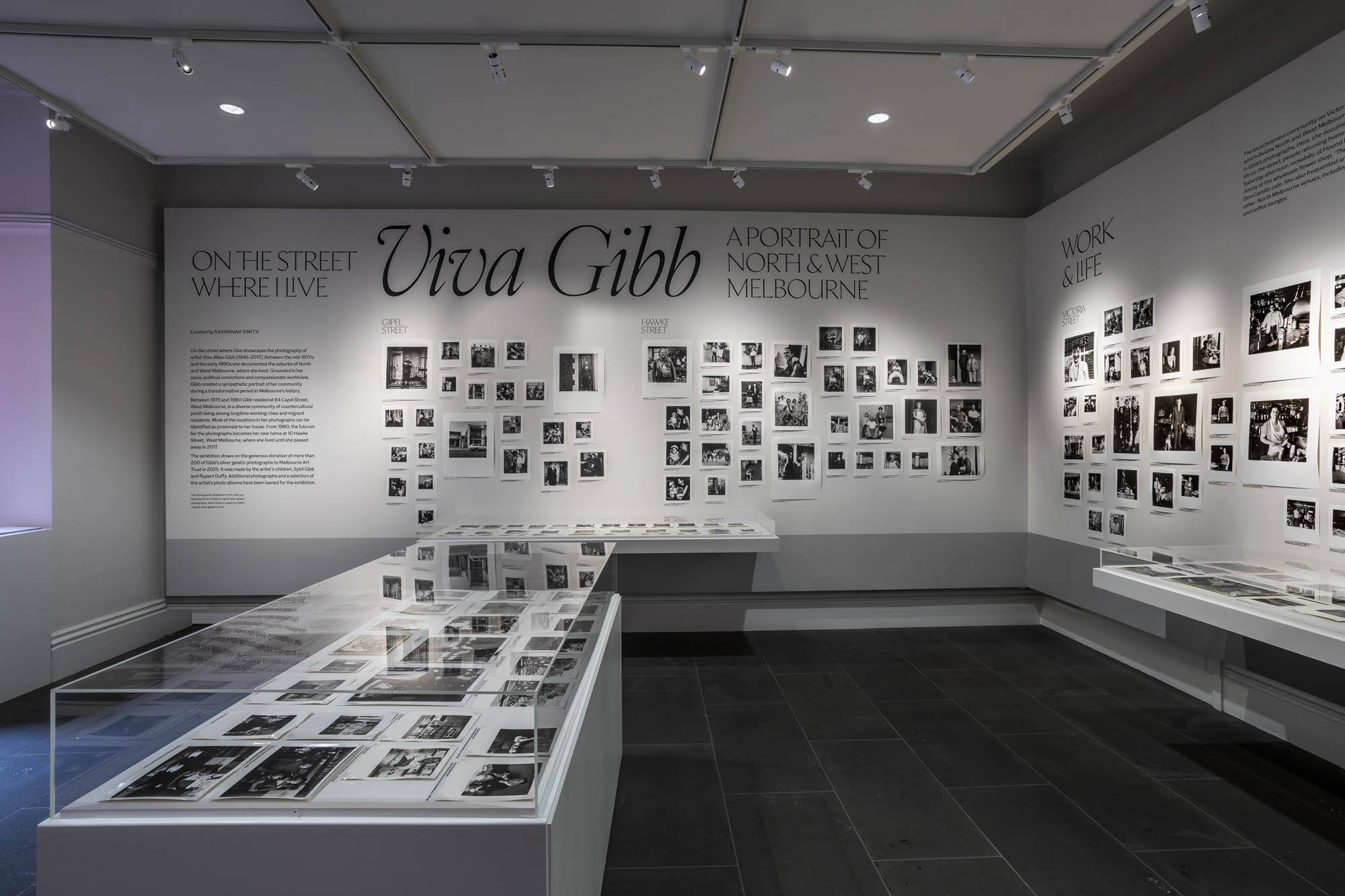
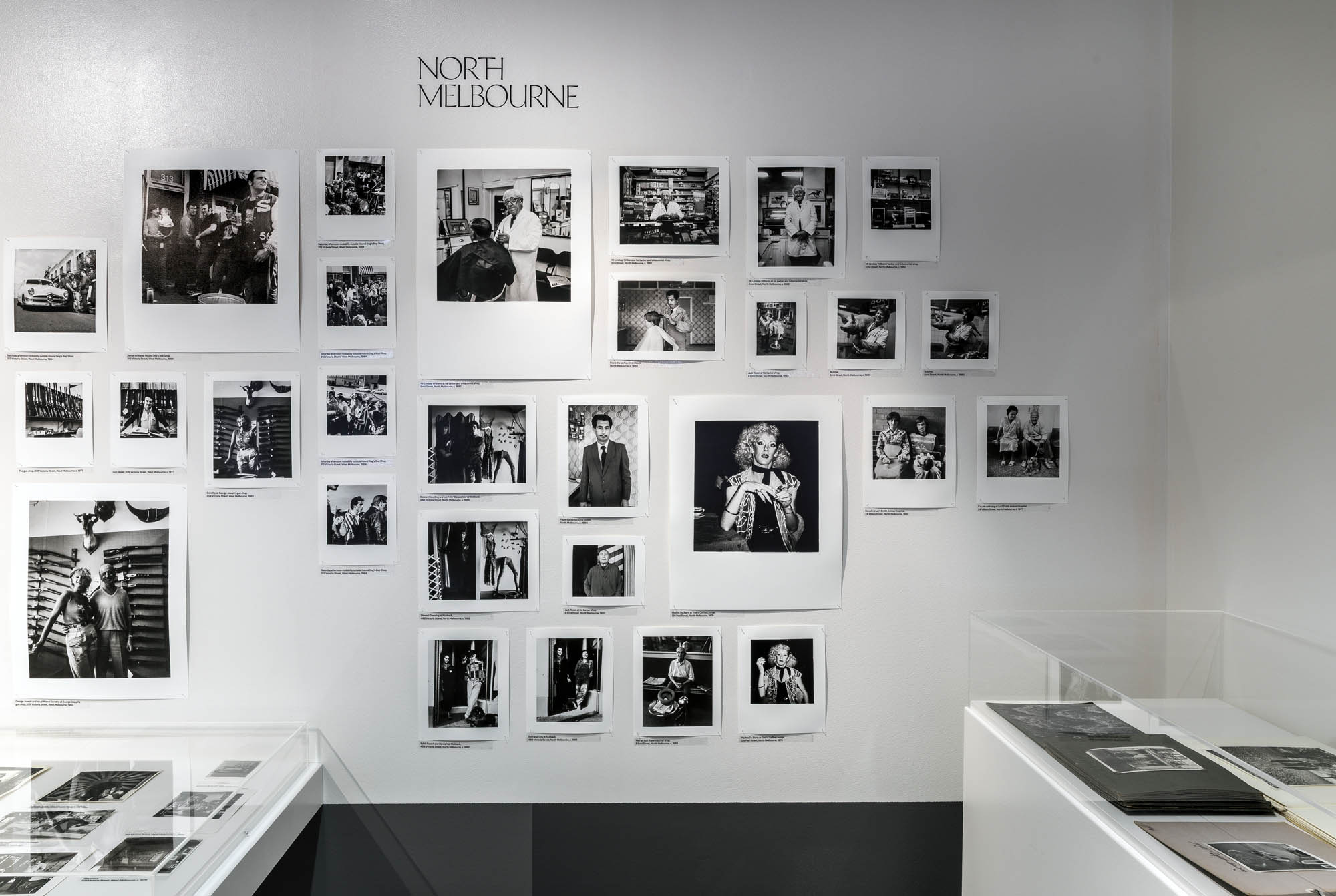
In one sense the hang of the exhibition, in photo cloud form, emphasises the interconnectedness of all people and all things within these communities, but conversely the viewer can become overwhelmed by the amount of photographs. Collectively, they become more of a sociological project rather than photographs with an individual aura. It is only when one stops and slows down and contemplates the individual portraits does one begin to admire the majesty of Gibb’s achievement.
Using a Rolleiflex medium-format camera for most of her portraiture so that she could look down into the camera while having a direct relationship to the person being photographed (not a camera held to the eye) one can see how, as James McArdle observes, she built the trust of the person being photographed. “… one can see how Viva is standing above her camera or beside it, in eye contact with her subject, perhaps talking to them, calmly or animatedly depending on the reaction desired, as she presses the shutter.”
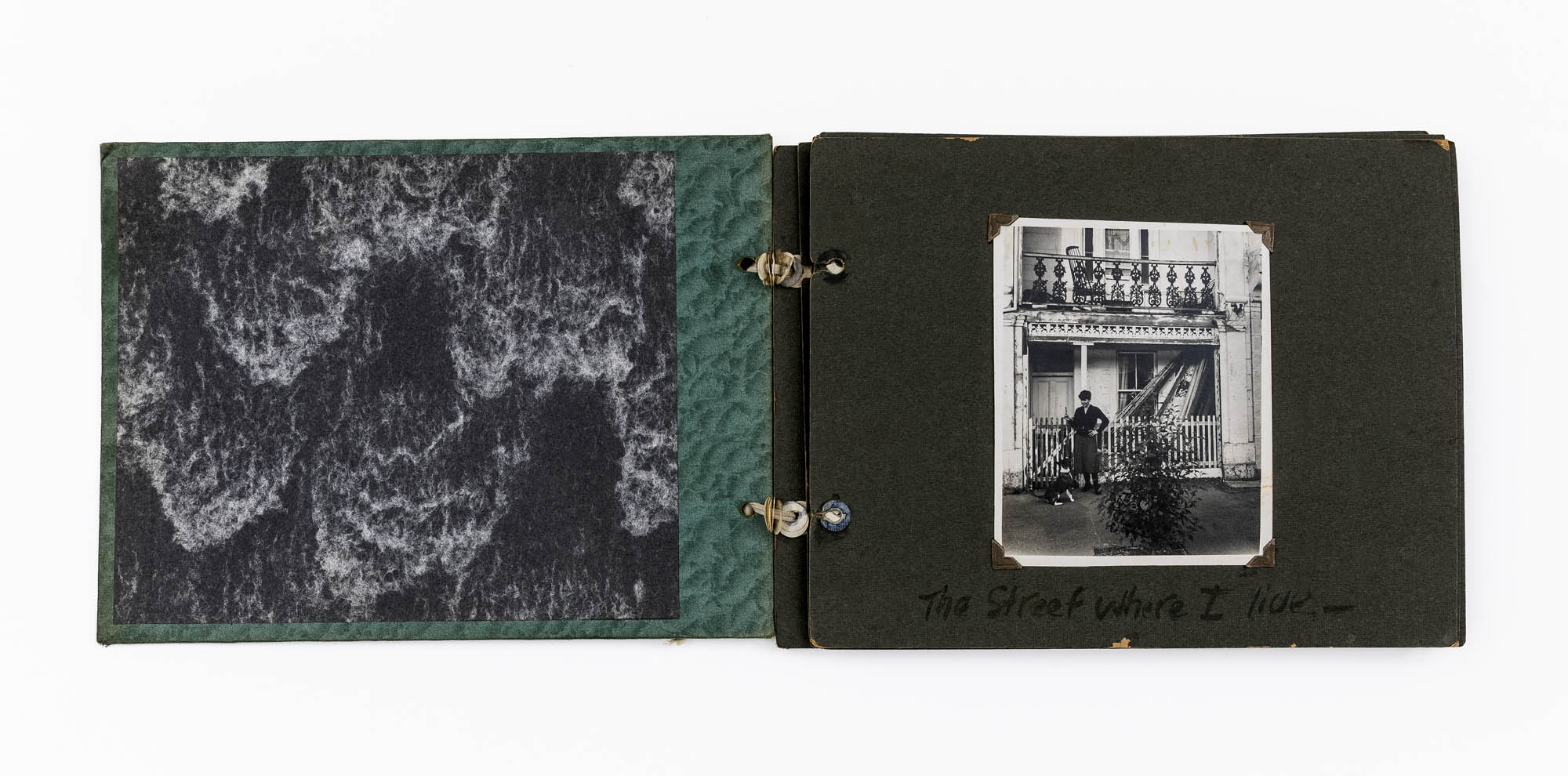
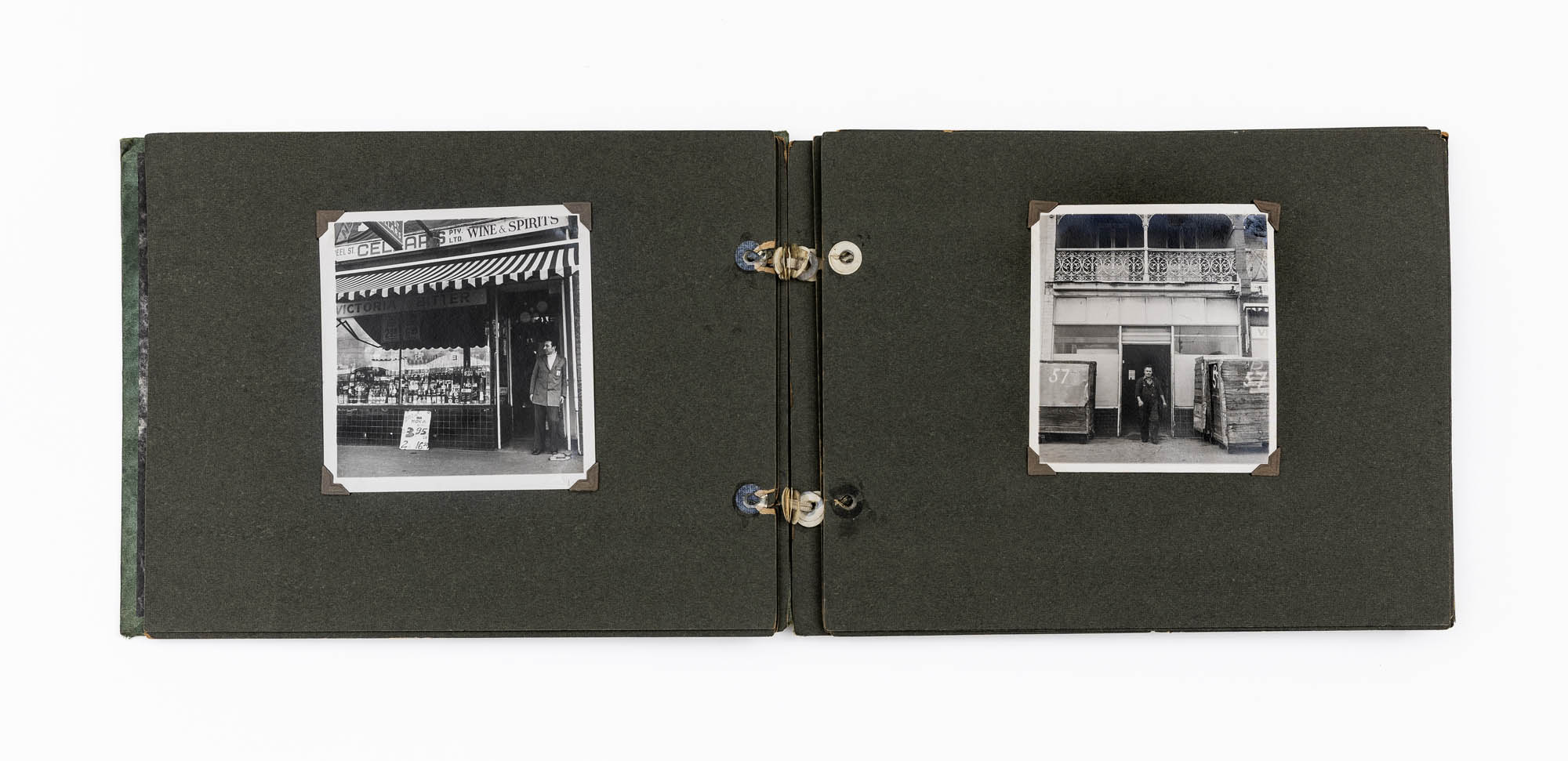
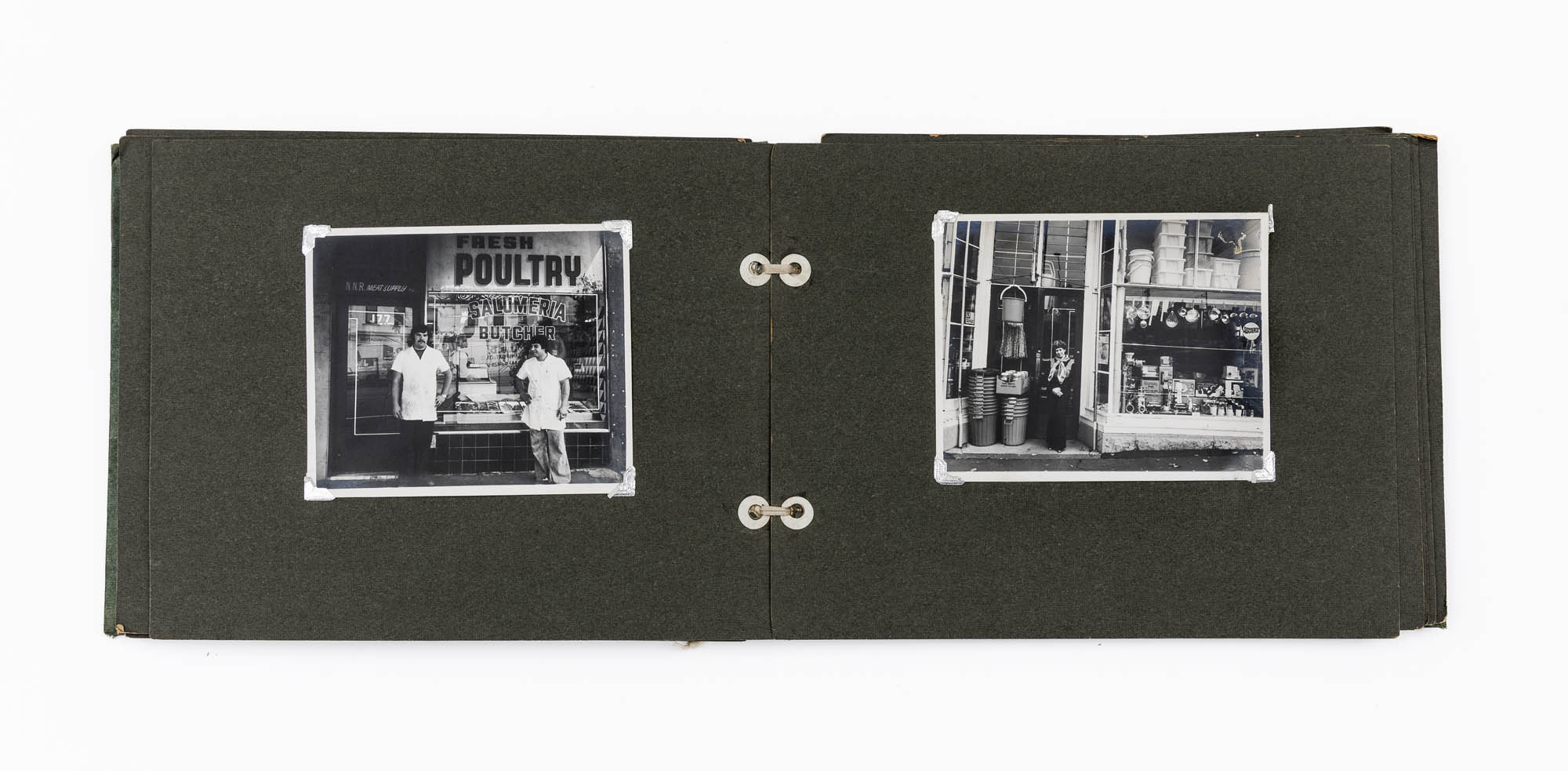
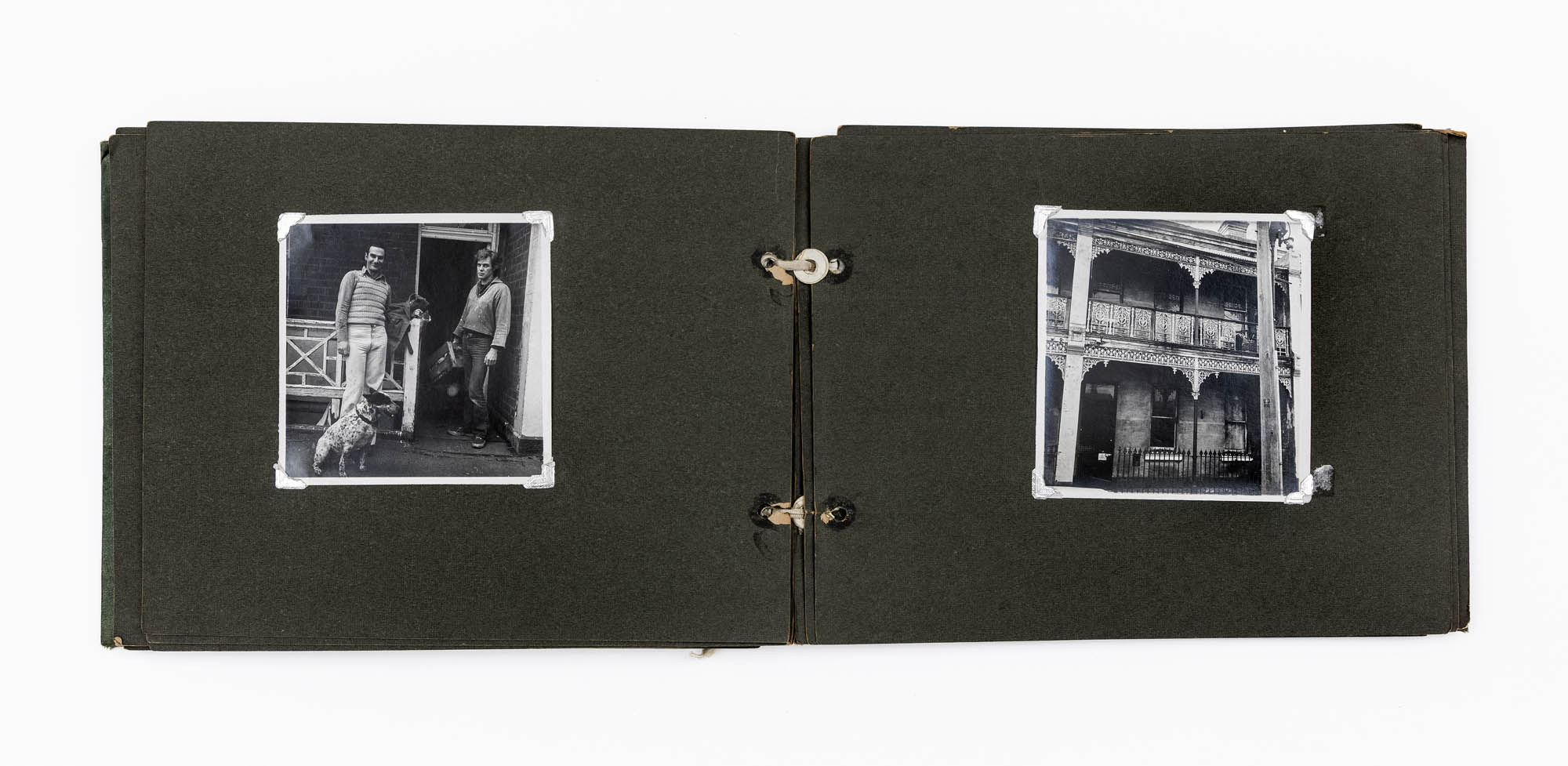
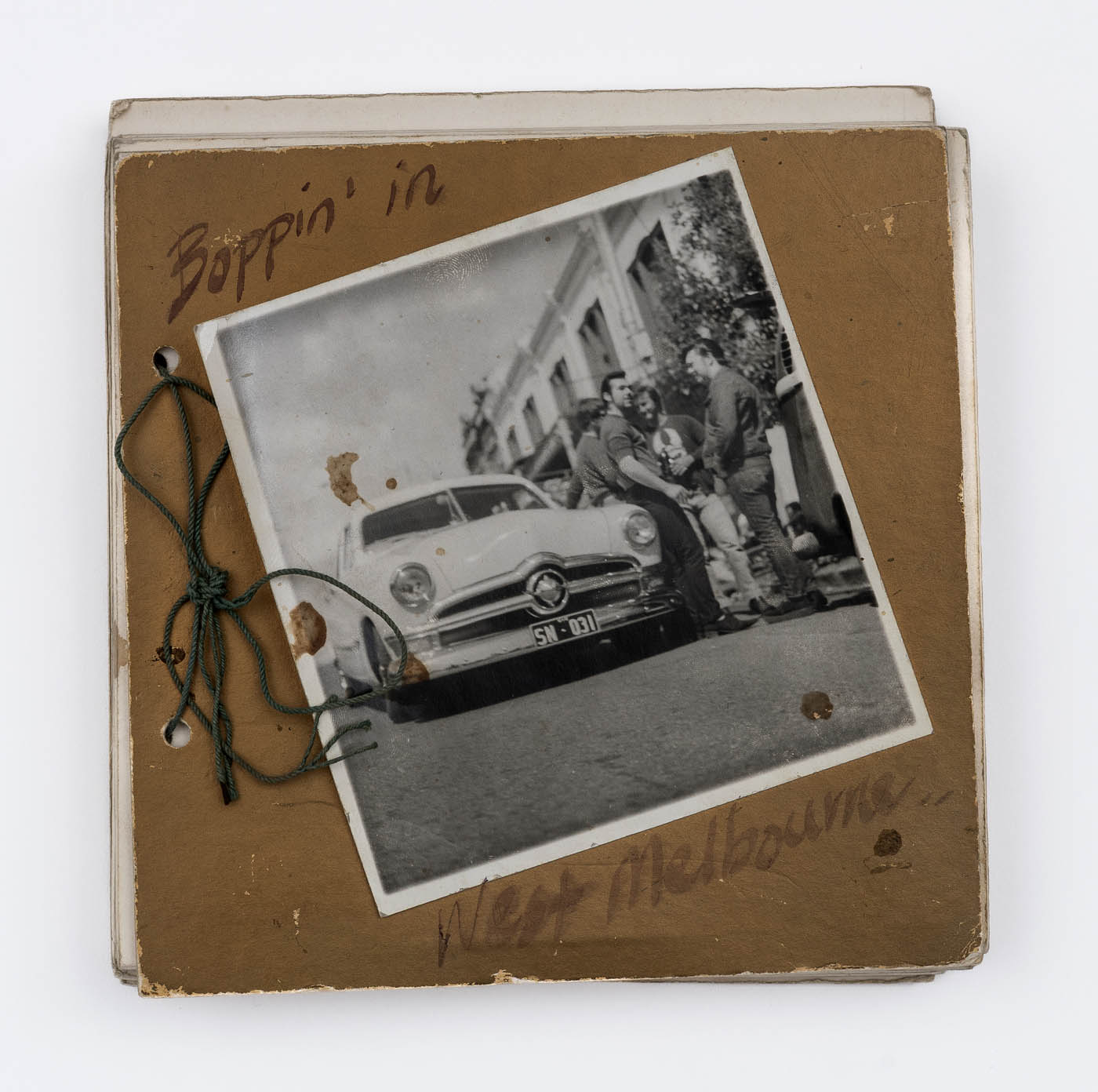
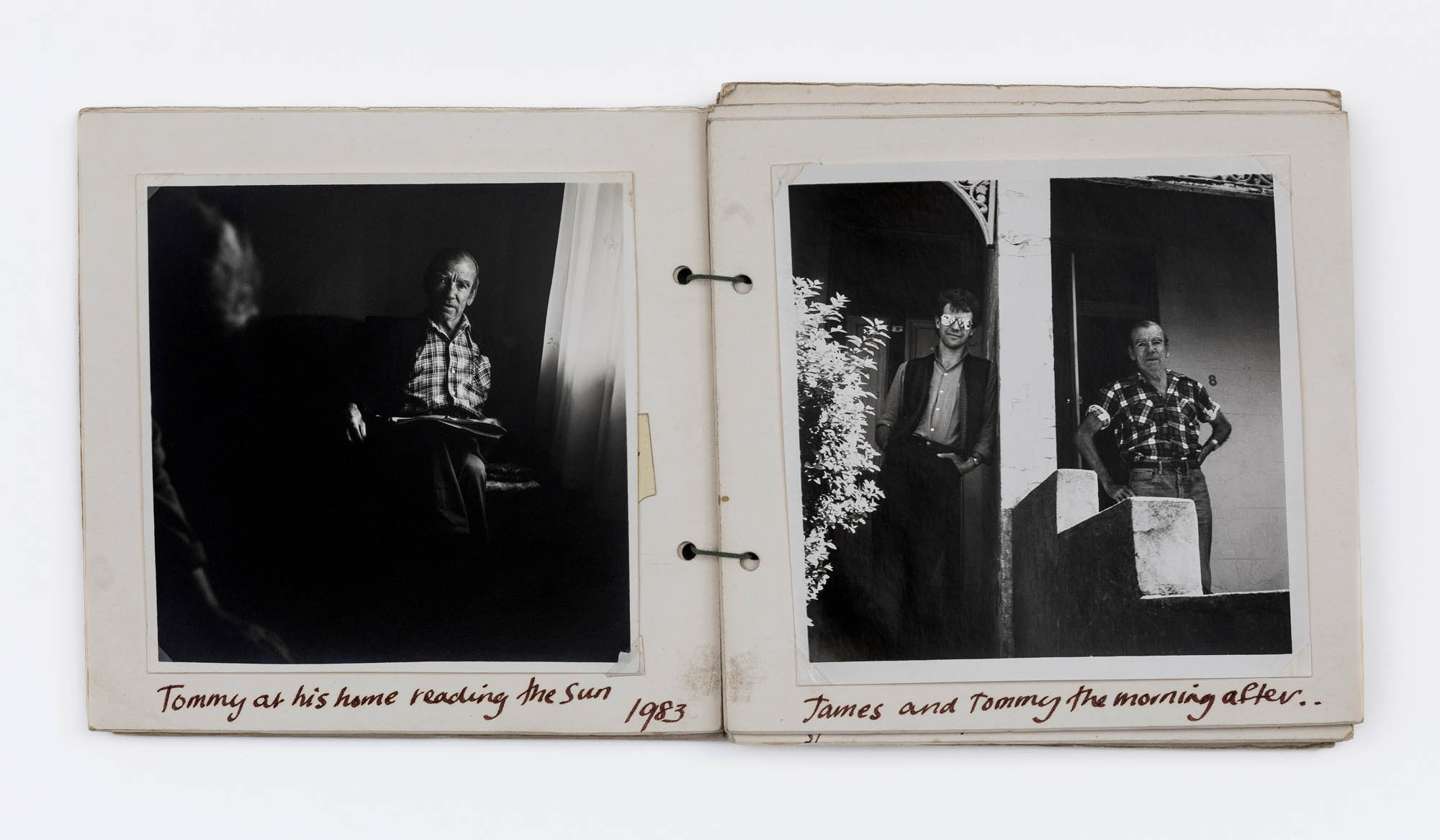
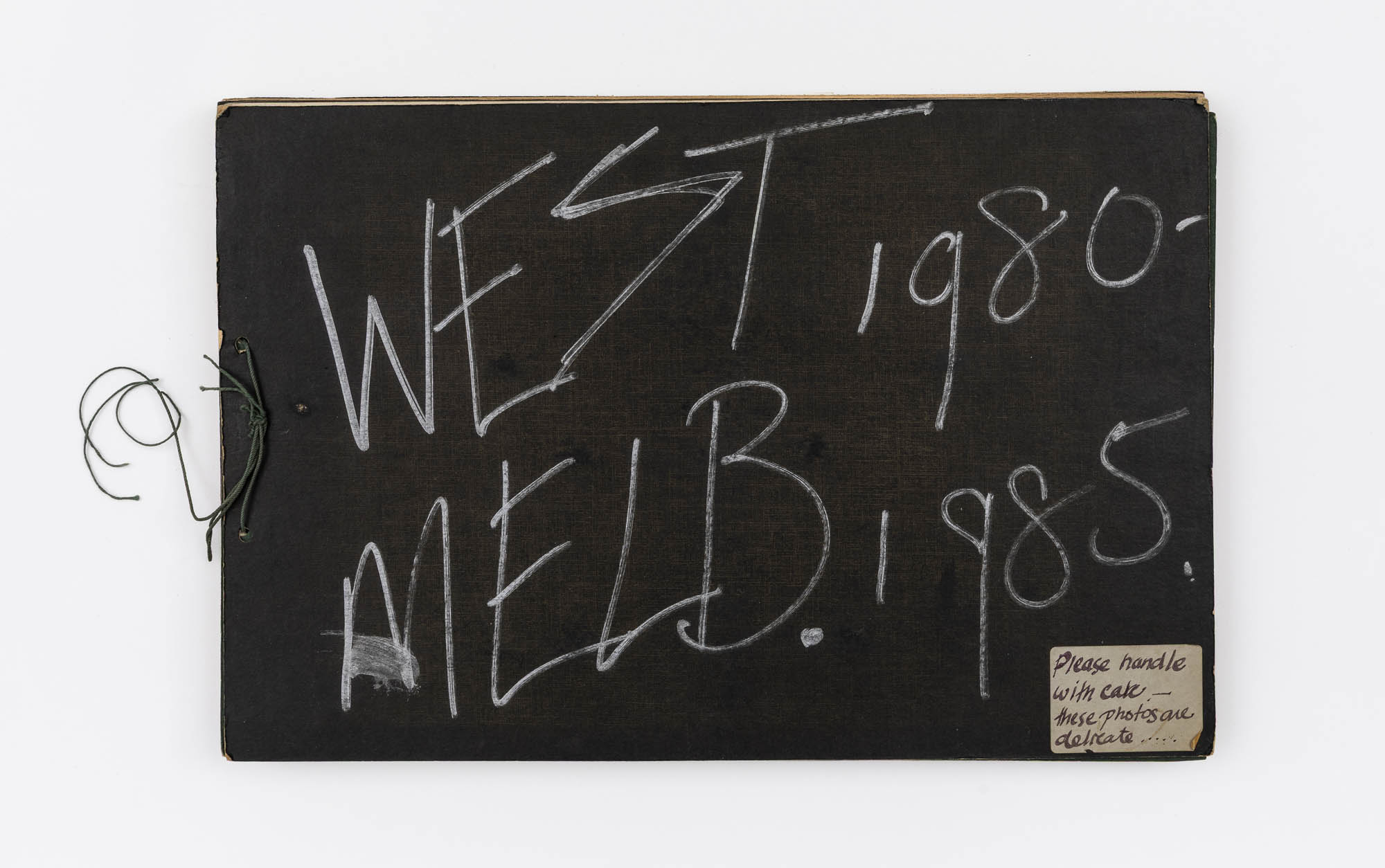
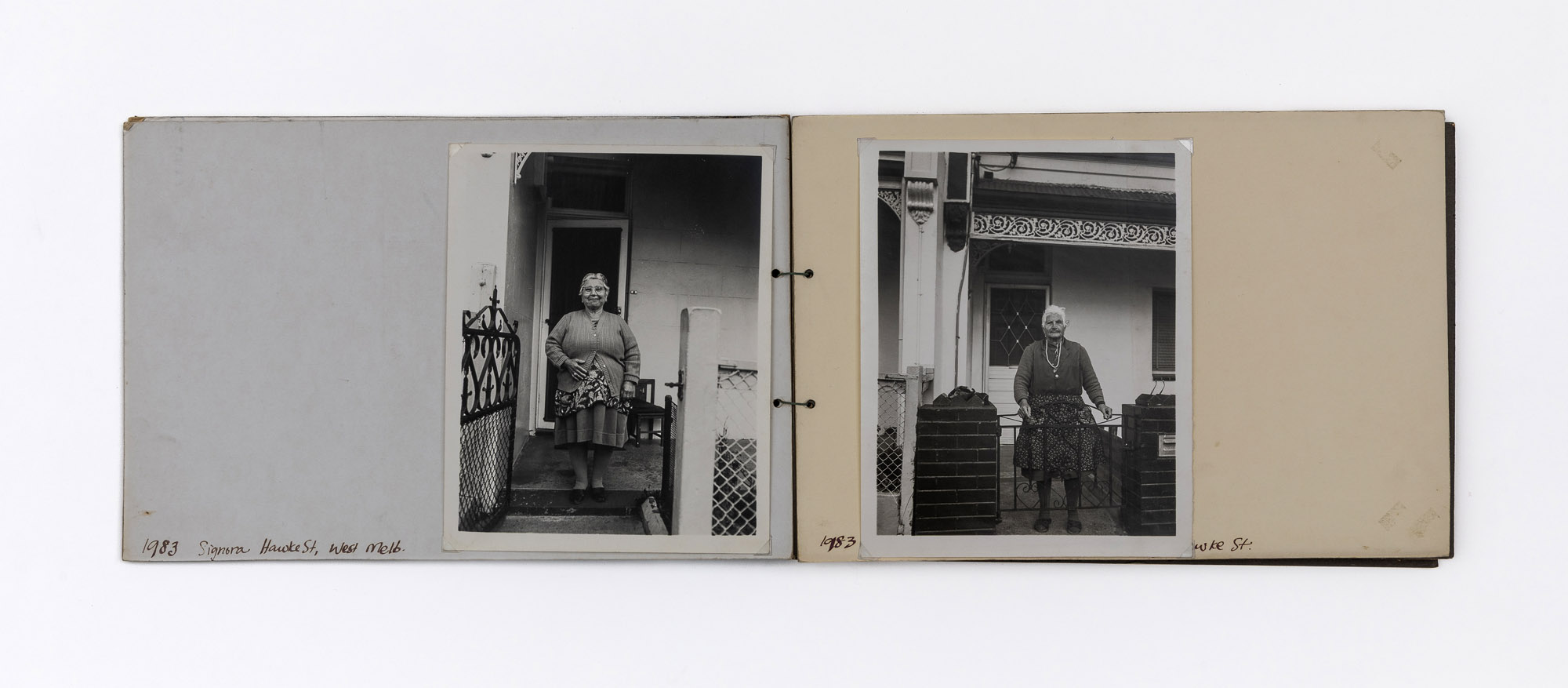
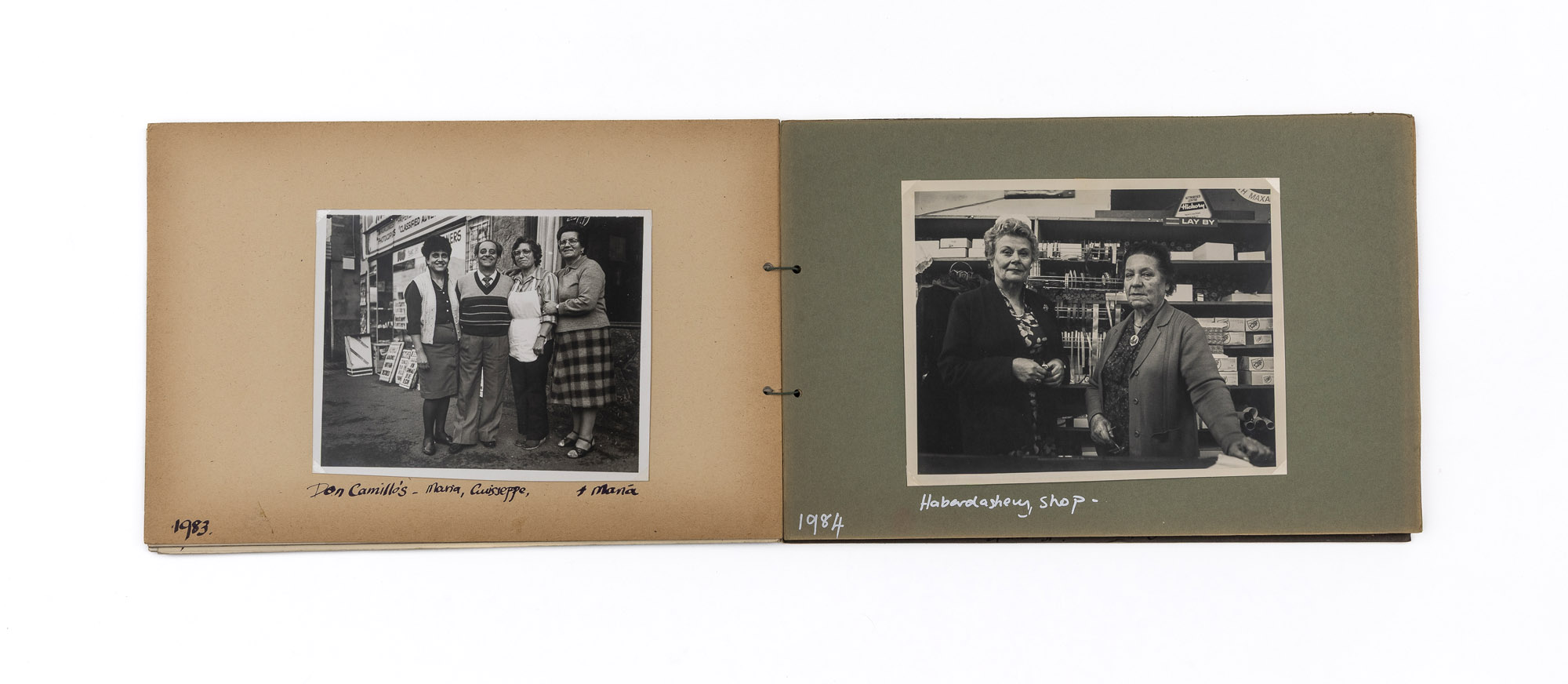
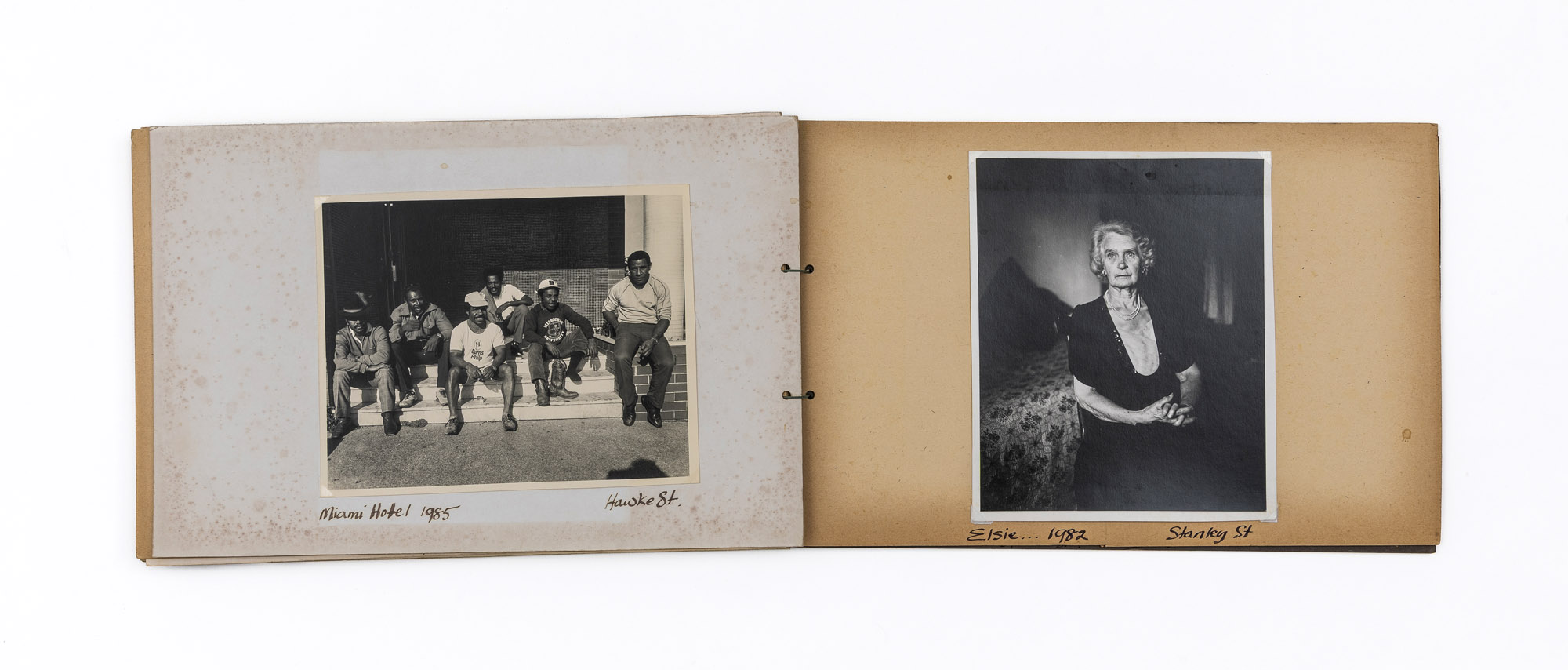
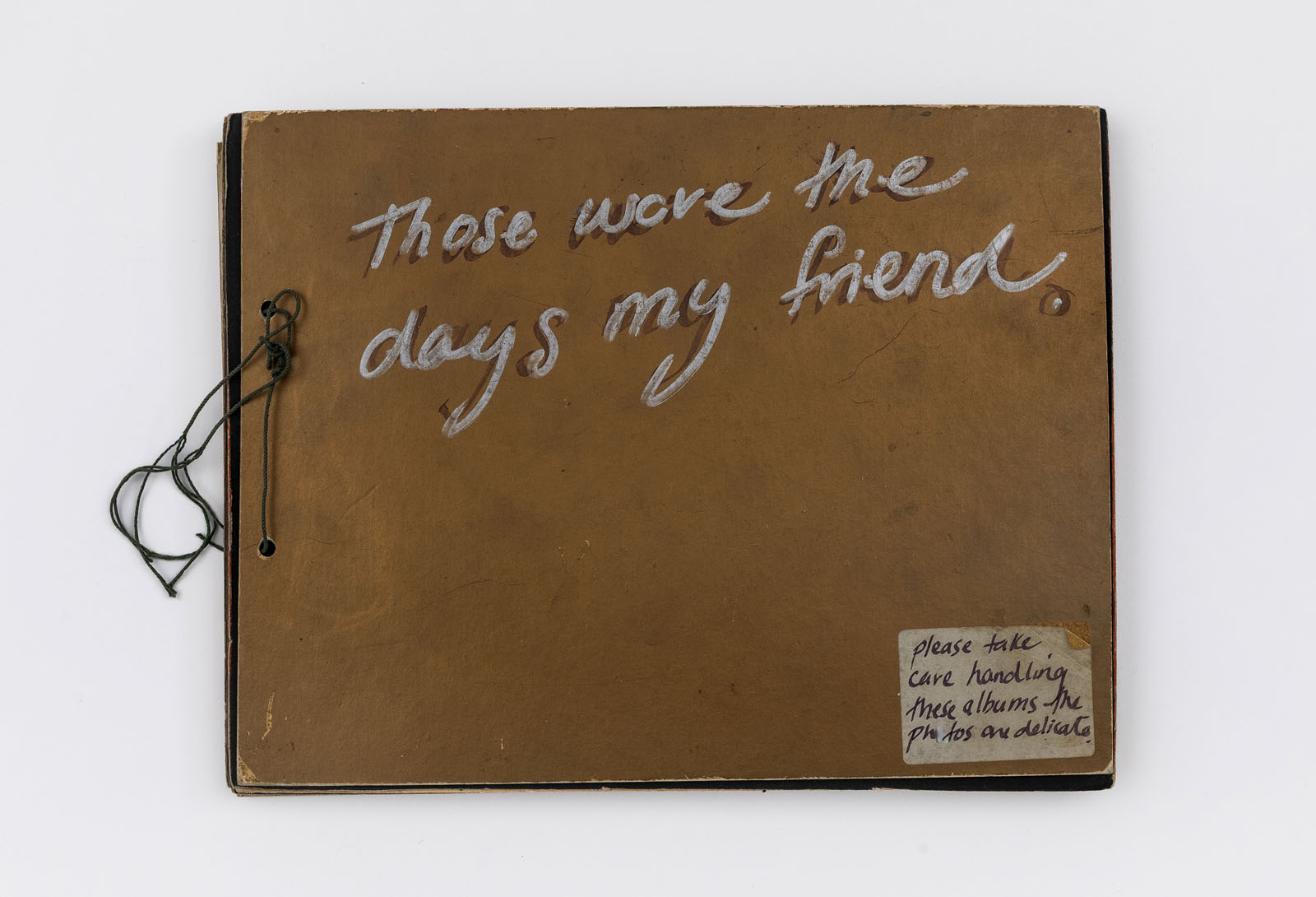
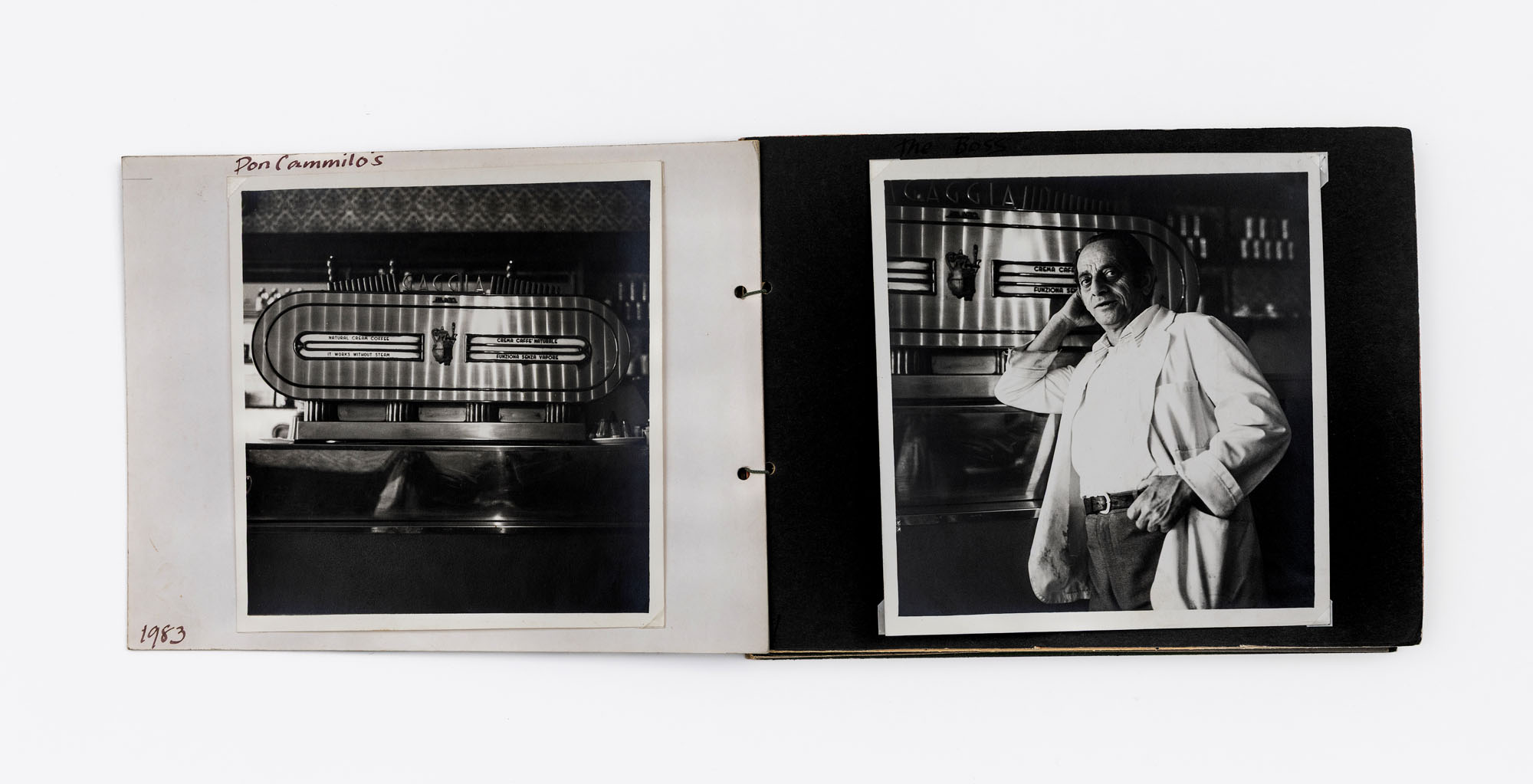
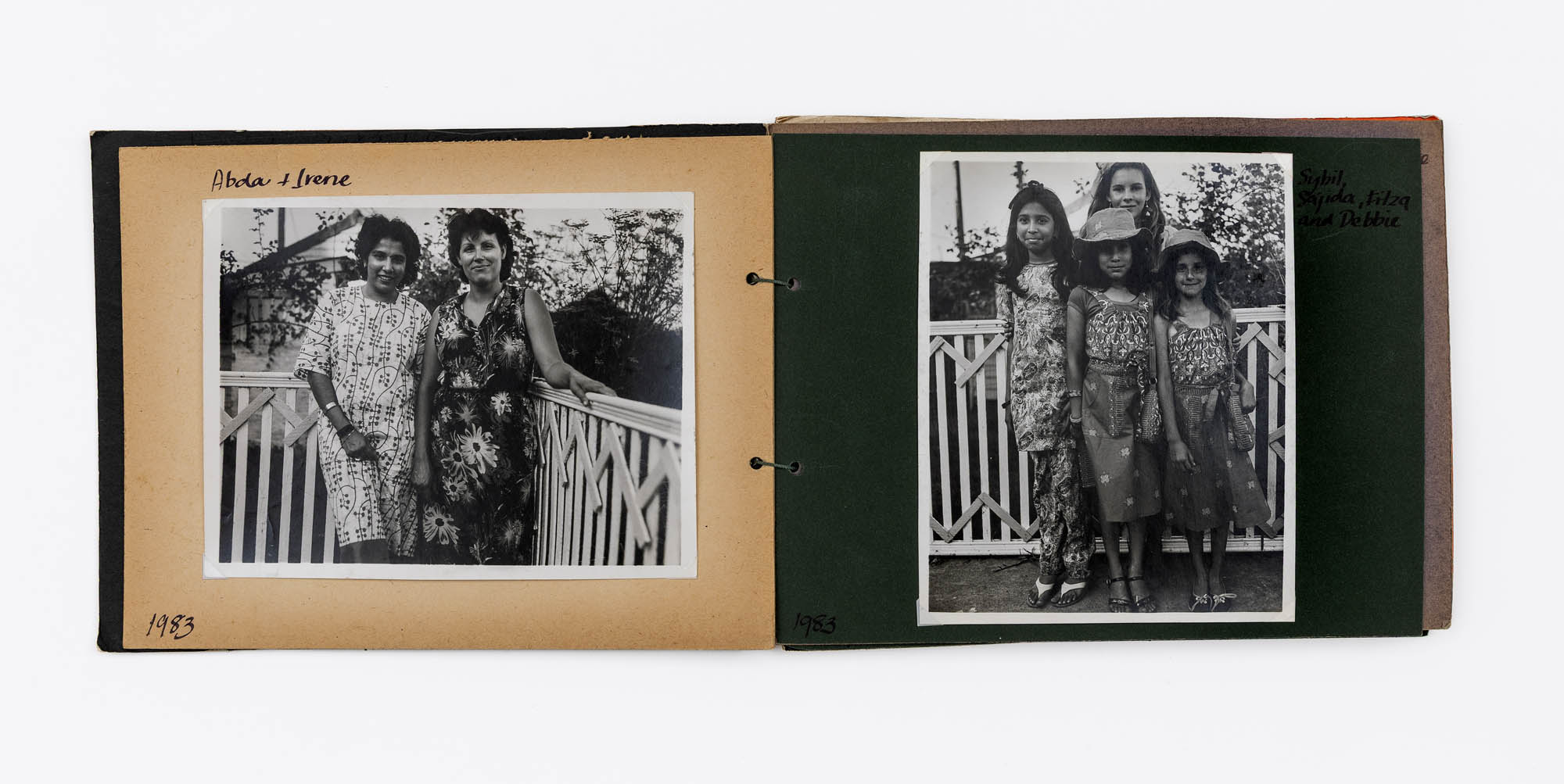
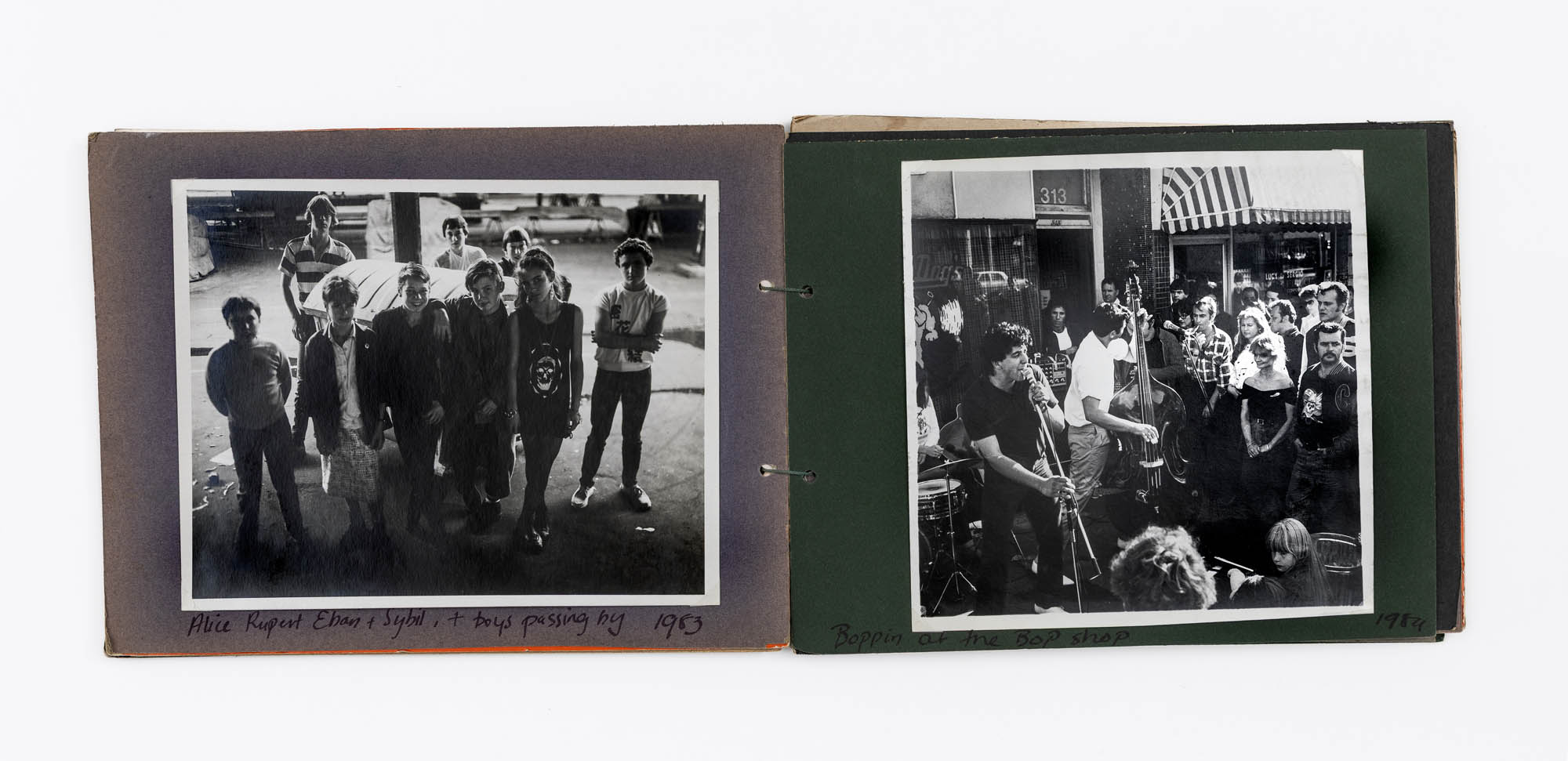
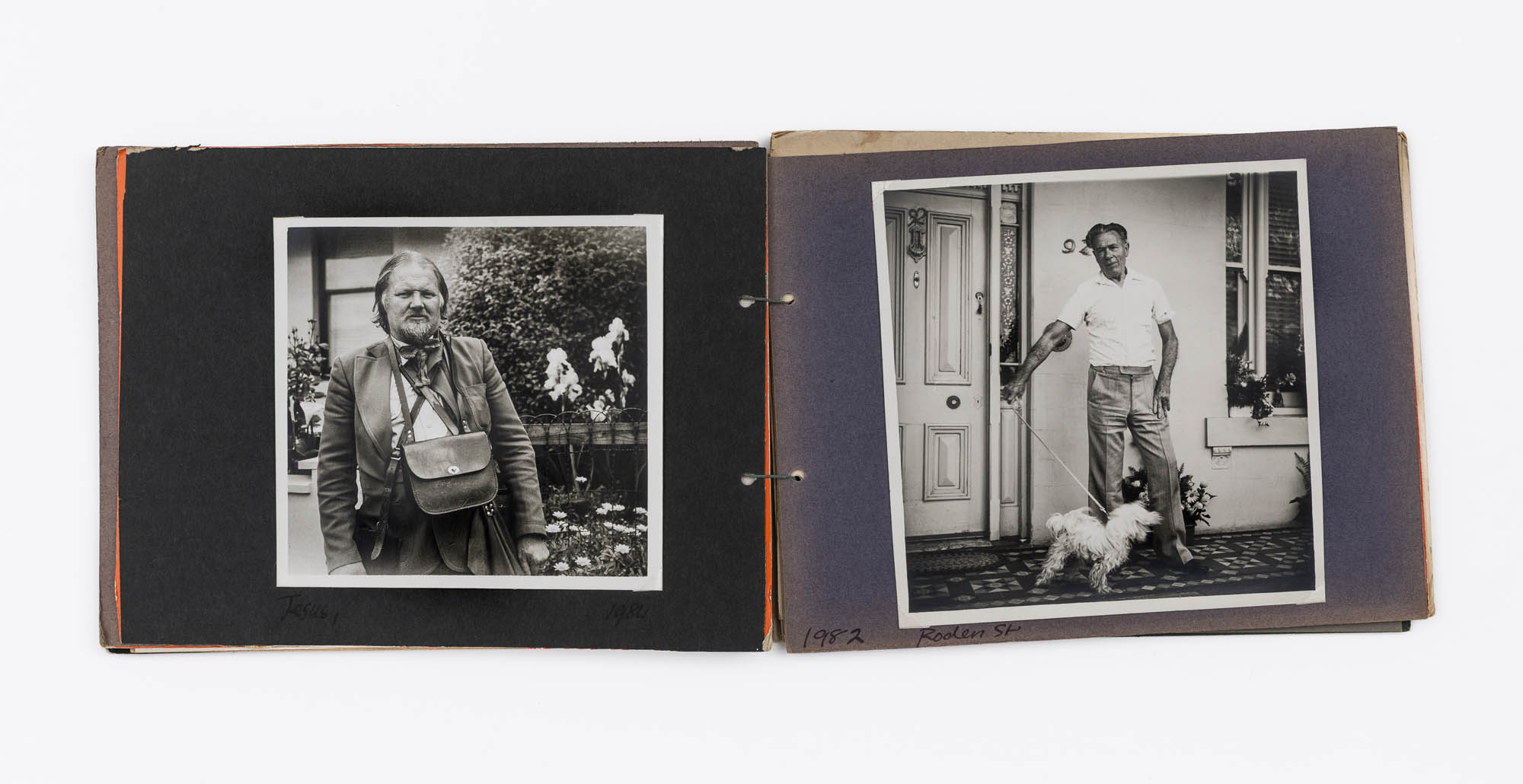
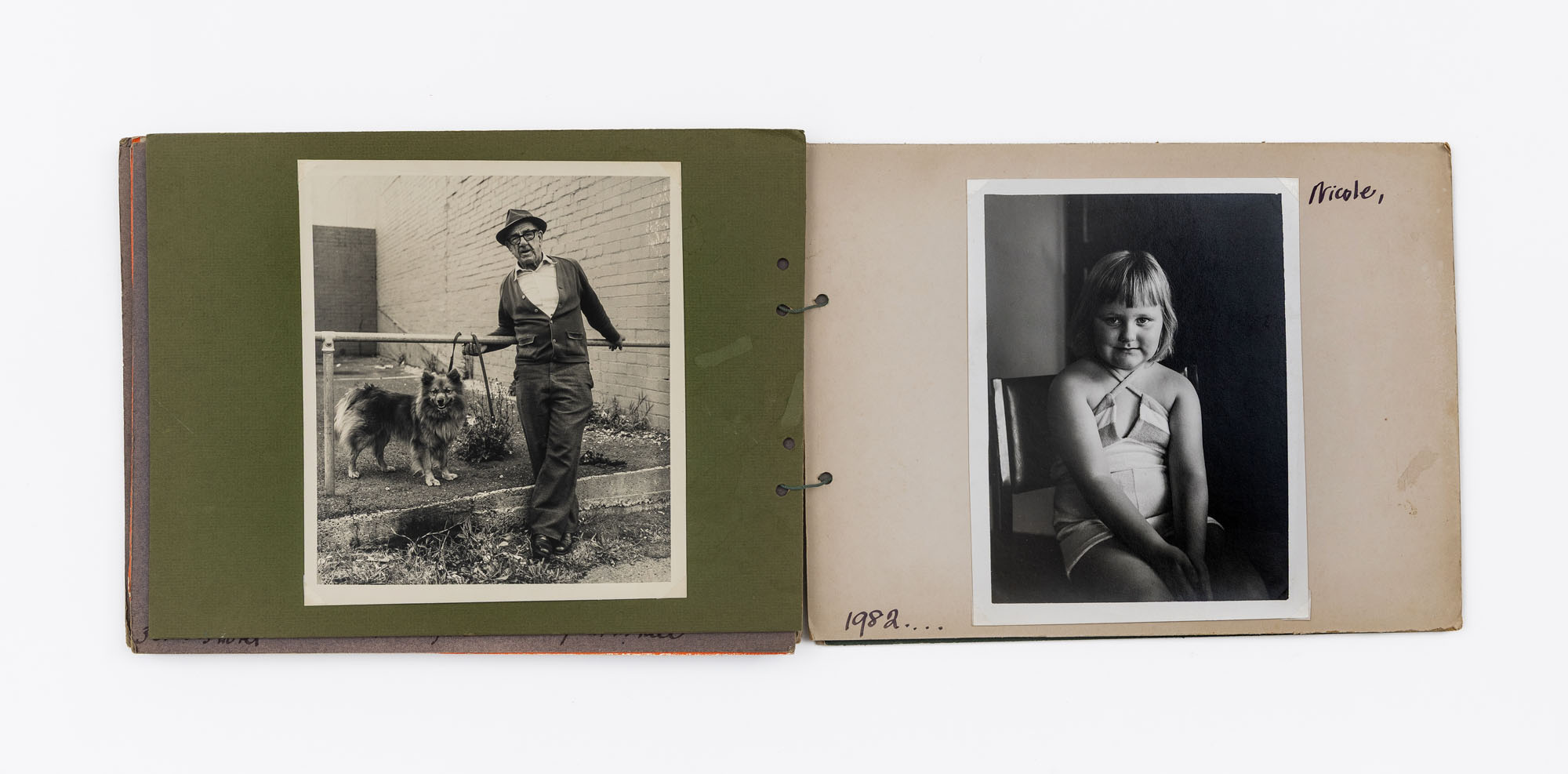
Much like Diane Arbus using a Rolleiflex in New York, here in Gibb’s photographs there is a direct engagement with the reality of the world. This is never more evident than in my favourite part of the exhibition, her personal photo albums: The Street Where I Live 1974-1978; Boppin’ in West Melbourne; West Melb. 1980-1985; Those were the days my friend (below).
In the small photographs stuck into personal photo albums we can viscerally feel the power and intimacy of Gibb’s passion project. We can observe in the sequencing of images of the city, houses, streets, businesses and people, how she created stories about the people and places for which she cared dearly. And her love of dogs! Always people with dogs – Amelia and the new puppy; Betty and her dogs, Stanley St. Here, no overblown gigantic photographs that have no need to be that big, that have no presence, instead powerful, intimate photographs of a Melbourne now vanished from our sight through gentrification.
I remember coming to live in Melbourne in the mid-1980s from England and these suburbs, these characters, were still alive and present. No longer. While community groups tried to protect their suburbs and ways of life at the time, and the heritage buildings survived, council auctioned off the properties it had accumulated. “Most residents, unable to afford their properties, were forced to move on.” Caring communities built up over decades were destroyed.
Much the same is happening in contemporary Melbourne suburbs with the destruction of long standing community housing throughout the city. Under the guise of modernisation and money, and the increase in high density living in the city, communities are being torn apart with little or no recourse for low income human beings or their wishes. Public housing blocks are being torn down all over the city, the land given by the government to private developers for “mixed housing development” which combines private market-rate homes with affordable or social housing. Except social housing only ever makes up about 20% of the project. As usual it’s all about the money, ignoring the fact that it is destroying communities that have been there for decades. Shame on councils, supposed community housing associations and unscrupulous developers (please see Marcus Bunyan. “Frederick Oswald Barnett (Australian, 1883-1972),” on the Art Blart website, 23rd February, 2024; and Rachael Dexter. “Developer quietly guts ‘affordable’ housing promise in northern suburbs,” on The Age website, March 3, 2026 [Online] both cited 24/07/2026).
This brings me to the title of this piece of text taken from the front of Gibb’s photo album West Melb. 1980-1985: “Please handle with care -” followed by the admonishment “these photos are delicate”. These words can serve as metaphor for the de/generations of society that Gibb photographed and the subsequent loss of culture and community … a process that is only increasing today. While Gibb was “deeply aware, socially engaged and heartfelt” in her interactions with community and the stories she was telling – and this passion is embodied, embedded in her images – her photos are, still, delicate as she states, much like the lives of the people and communities depicted in them. Human beings need nature and nurture surrounding them, not huge four wheel drives, grand designs and high density living where you don’t even know your neighbour.
Caring for the counterculture, caring for the people around you, is a sign of a robust, flourishing society. Gibb’s tangible photographs convince us that such a proposition is true.
Dr Marcus Bunyan
PS. If you would like to know about the history, cultural and political background of this inspirational artist please read my friend James McArdle’s in depth research on Viva Gibb in the text “Stance,” on the On This Date In Photography website, March 19, 2026.
PPS. I love how people are smiling in the photographs!
Many thankx to the City Gallery for allowing me to publish the photographs in the posting. Please click on the photographs for a larger version of the image.
“I don’t really deal with people I don’t know… I only ask them for a photograph if I am interested in that person, if there is something in the whole story about them.”
Viva Gibb
“The people in my photographs are those who have survived at all odds – socially, racially, and economically – in our essentially bourgeois society; the lonely man next door, the old people who have lived in the area all their lives and are threatened with eviction, the homeless man whose only dream is to have a room of his own. In photographing the commonplace of the apparently trivial event of a woman holding her baby or a man standing in front of his home, I can see the transformation of a moment into a story unfolded by observation; the little dog by her side, the tender way the man puts his hand on her shoulder, the expression in her eyes, the garden, the ornaments on the mantelpiece, the city skyscrapers in the background and the traffic zooming past. The details fit together like pieces of a jigsaw, presenting a story of a lifetime and a constant reminder of the fragility of life itself. As an individual and an artist I can only hope to present a reality other than that presented by TV and the media. I believe that with humanity, compassion, and a re-examination of past values we can counter the destructive forces that threaten the very existence of a living environment on this earth.”
Viva Gibb, “In the Land of the Living (1981),” in Virginia Coventry (ed.), The Critical Distance: work with photography, politics, writing, exh. cat., Hale & Iremonger, Sydney, 1986, p. 92 quoted in Smith, Savannah; Garner, Helen; Maddison, Ruth (2026). On the streets where I live : Viva Gibb’s portrait of North and West Melbourne. Melbourne, Vic.: City of Melbourne, p. 15. Exhibition catalogue
“Gibb’s sympathetic representation of the urban environment was undergirded by her socio-political beliefs and compassionate worldview. She was alive to the forces of change impacting the lives of those around her and fiercely critical of one social class or race dominating another. Gibb was increasingly angered by wealth and expansion being valued at the expense of all else. She was troubled by environmental degradation and was an animal welfare advocate – a vegetarian from the age of 16 and a vegan later in life. She was also deeply concerned about the treatment and deprivations of First Nations people and the plight of those establishing new lives in Australia.”
Smith, Savannah; Garner, Helen; Maddison, Ruth (2026). On the streets where I live : Viva Gibb’s portrait of North and West Melbourne. Melbourne, Vic.: City of Melbourne, p. 14. Exhibition catalogue
West Melbourne
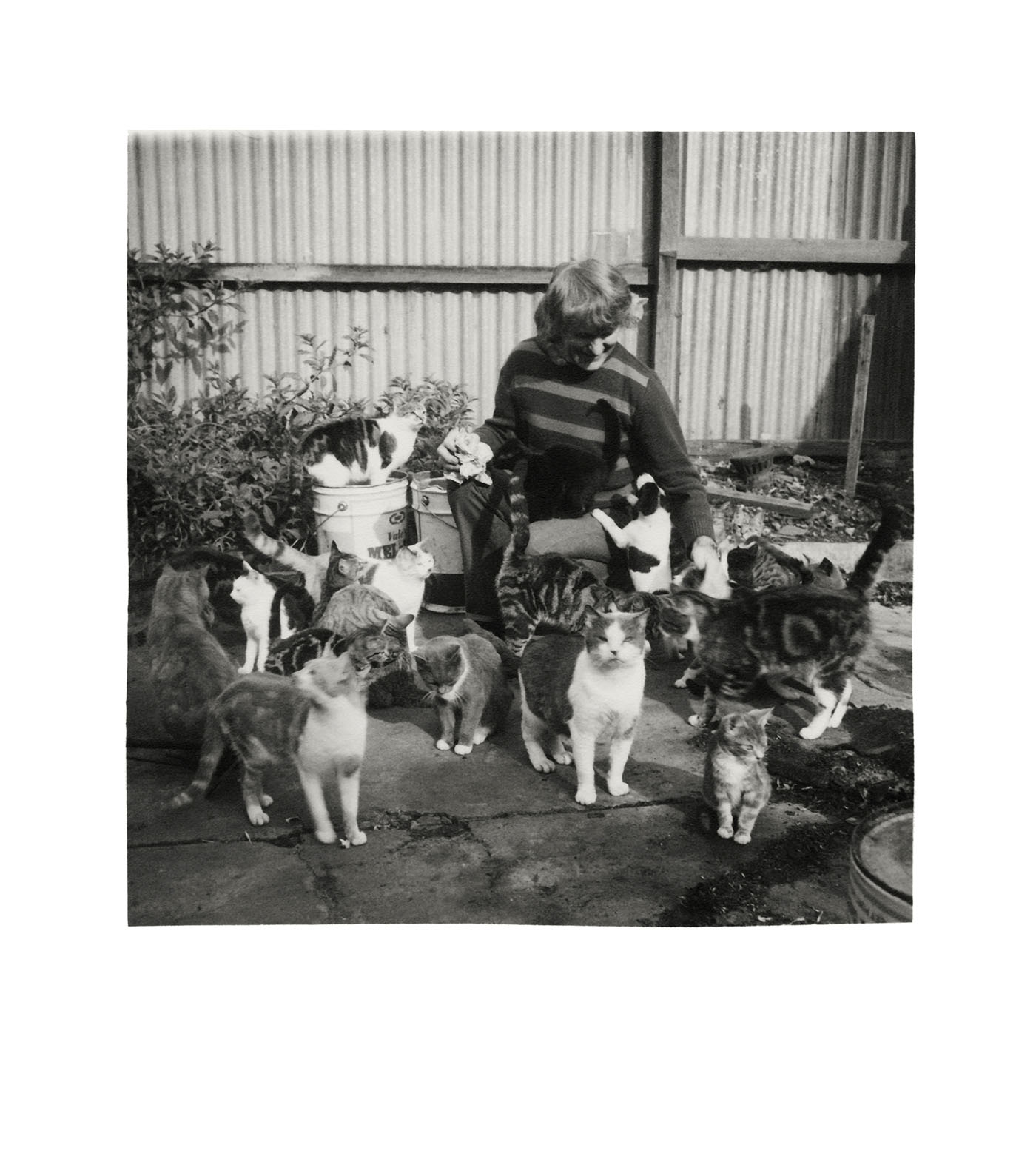
Viva Gibb (Australian, 1945-2017)
Brian and his cats, 65 Capel Street, West Melbourne
1978
Silver gelatin print
20 x 16.5 cm
Donated by Sybil Gibb and Rupert Duffy to the Melbourne Art Trust in memory of Viva Gibb 2025
© Courtesy of the Estate of Viva Gibb
Gibb’s portrait of North and West Melbourne is an important record of an inner urban area during a transformative moment in Melbourne’s history. On the city’s streets, radical countercultural ideals for a progressive society flourished through the activism of young people, while at the same time another chapter of the city’s history would close. In the 1970s and 1980s, amid the gentrification of the inner suburbs, West Melbourne flew under the radar for longer than most. It provided a countercultural community, which included artists and intellectuals, with low-cost space in which to live and work. Gibb’s house and studio were central to this community, a ‘social hub’ for ‘artists of all kinds, from the Pram Factory or the nascent Circus Oz’.10 For a period, they lived alongside longtime residents of the semi-industrial suburb. West Melbourne’s proximity to the railway, the docks and CBD meant it had been home to many working-class and migrant people who laboured in nearby industries or at Queen Victoria Market. Gibb’s photographs capture this amalgamated community – old and new – at this precise moment in time.
Capel Street was a focal point in this story of inner-suburban transformation. Many dilapidated properties in the area were leased out by Melbourne City Council following their acquisition ahead of the proposed redevelopment of the Queen Victoria Market. Gibb herself had moved to Capel Street as a council tenant. When the market redevelopment was abandoned in 1976, council’s continued property acquisition caused alarm among residents and business owners alike regarding the undisclosed intentions for the area. In response, the Capel Street and Peel Street Action Group was formed, of which Gibb was an active member. The group’s two concerns were the conservation of the Victorian-era terraces and cottages and compulsory eviction of long-term residents. Many of the heritage buildings survived, but the group was ultimately unsuccessful in protecting the community. Council began auctioning off the properties in December 1990. Most residents, unable to afford their properties, were forced to move on. …
Viva Gibb’s photographs express the sophisticated practice of an artist who cared deeply for her community and the world at large. Through her work we come to know a vibrant group of individuals, captured in their day-to-day lives. Her photographs are an important historical and cultural record that reminds us of the importance of people in our city’s history and future. But these images also offer a glimpse of Viva herself and her unique perspective on the world: her genuine compassion and affection for people, for animals and for the environment. Viva’s portrait of North and West Melbourne is distinctively hers – deeply aware, socially engaged and heartfelt.
10/ Niels Hutchison, ‘Appendix Five: Interview with Niels Hutchison, 13 February 2019’, in Jean Ely (ed.), Preserving Melbourne’s Colonial Past: Capel Street West Melbourne, 2019, p. 60
Smith, Savannah; Garner, Helen; Maddison, Ruth (2026). On the streets where I live : Viva Gibb’s portrait of North and West Melbourne. Melbourne, Vic.: City of Melbourne, pp. 16-17. Exhibition catalogue
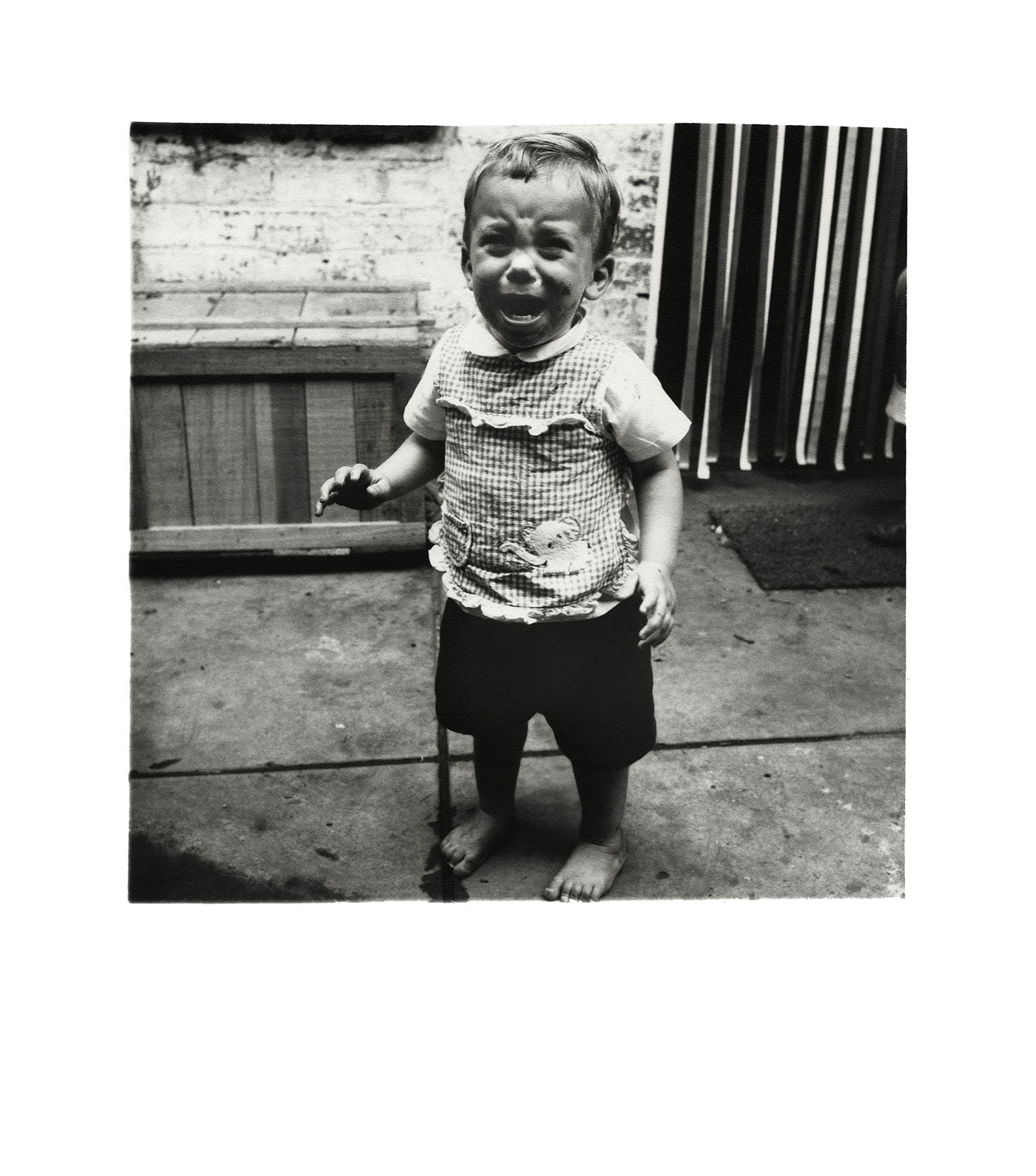
Viva Gibb (Australian, 1945-2017)
Jem Towsey, 64 Capel Street, West Melbourne
1978
Silver gelatin print
20.5 x 16cm
Donated by Sybil Gibb and Rupert Duffy to the Melbourne Art Trust in memory of Viva Gibb 2025
© Courtesy of the Estate of Viva Gibb
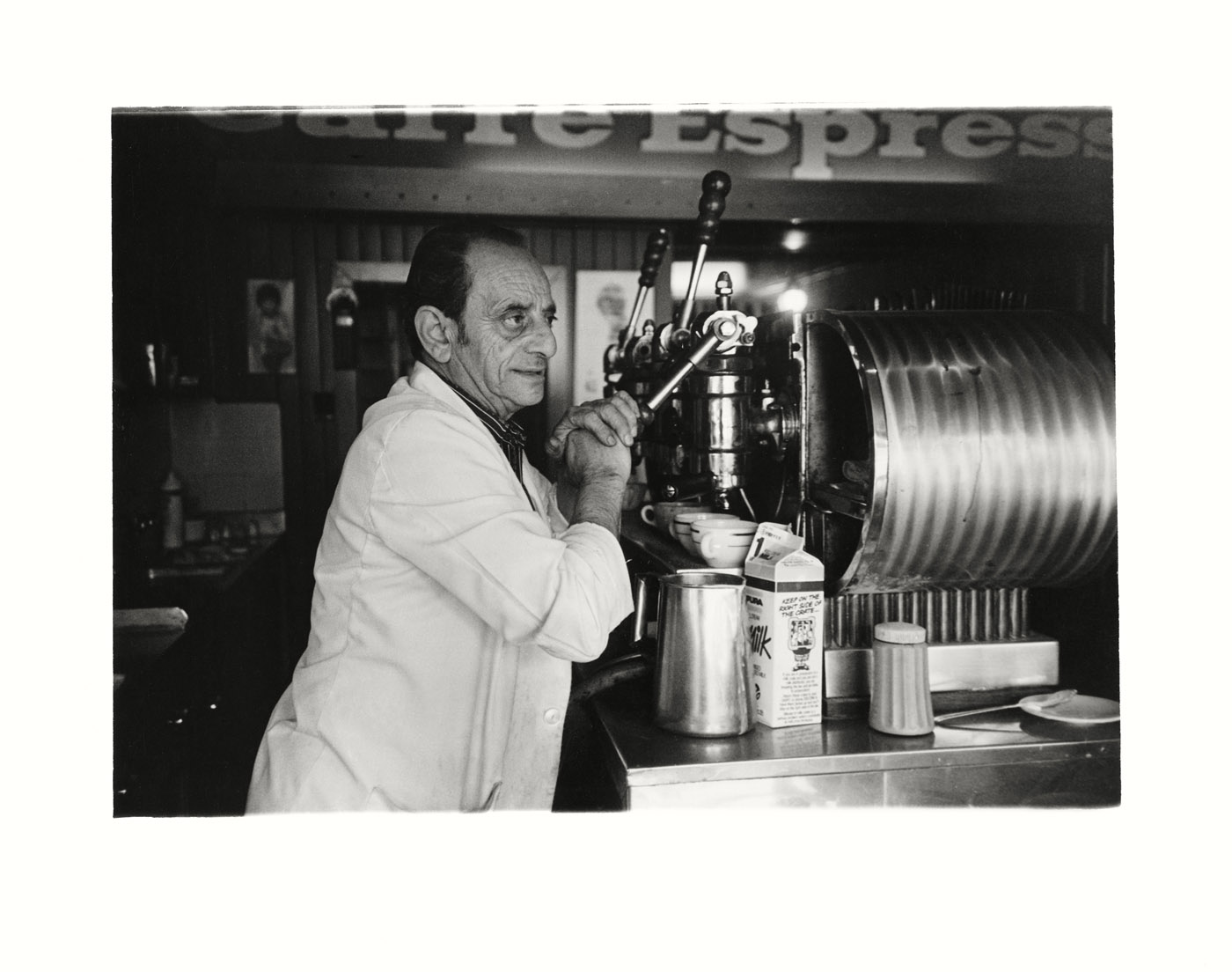
Viva Gibb (Australian, 1945-2017)
Giuseppe Lanteri ‘The Boss’ at Don Camillo Cafe, 215 Victoria Street, West Melbourne
1979
Silver gelatin print
20 x 25.5cm
Donated by Sybil Gibb and Rupert Duffy to the Melbourne Art Trust in memory of Viva Gibb 2025
© Courtesy of the Estate of Viva Gibb
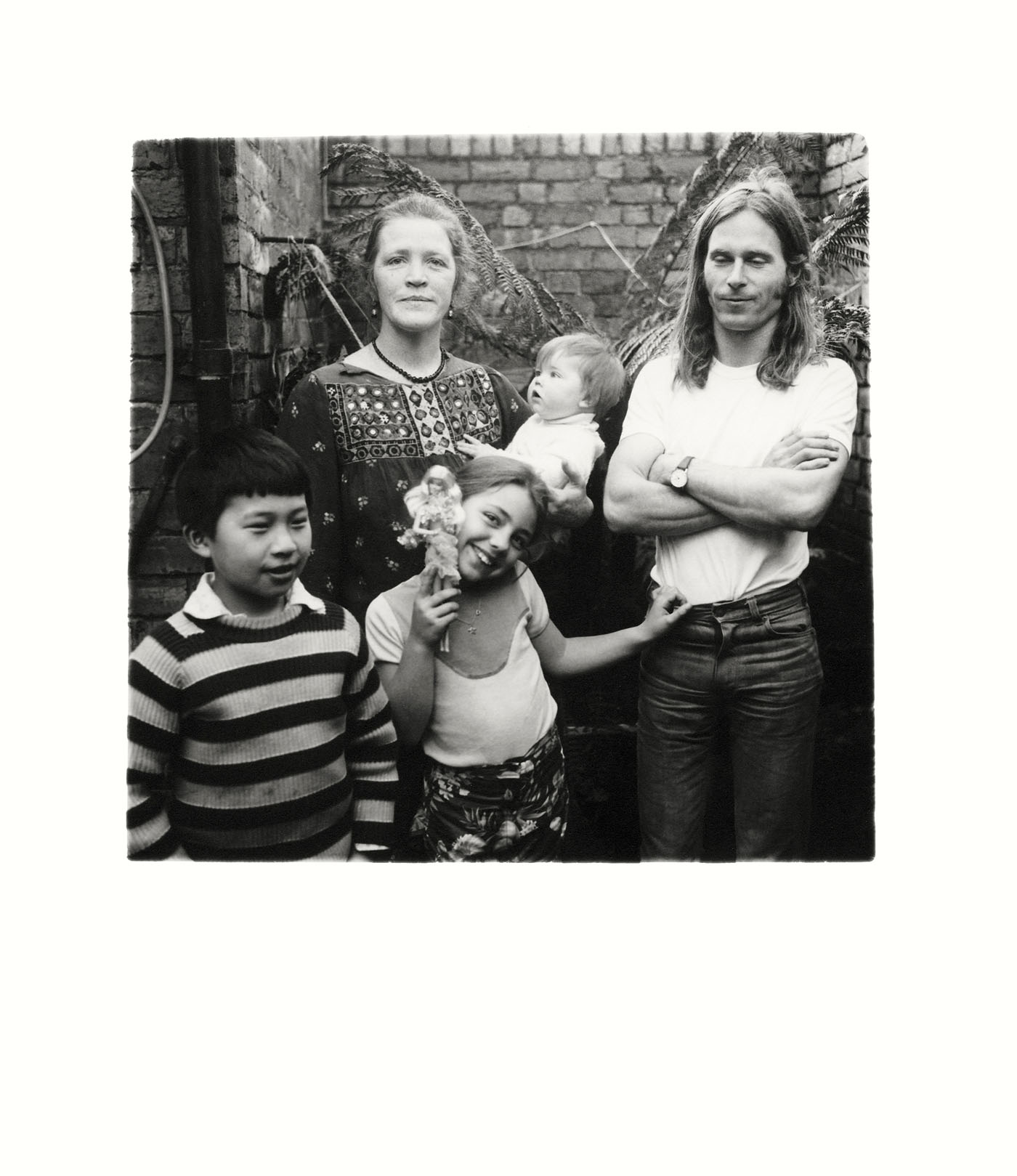
Viva Gibb (Australian, 1945-2017)
Carmel Begun and Peter Starkey with Ruby, Alice and Lawrence, 24 Capel Street, West Melbourne
c. 1975-80
Silver gelatin print
17.5 x 12.5cm
Donated by Sybil Gibb and Rupert Duffy to the Melbourne Art Trust in memory of Viva Gibb 2025
© Courtesy of the Estate of Viva Gibb
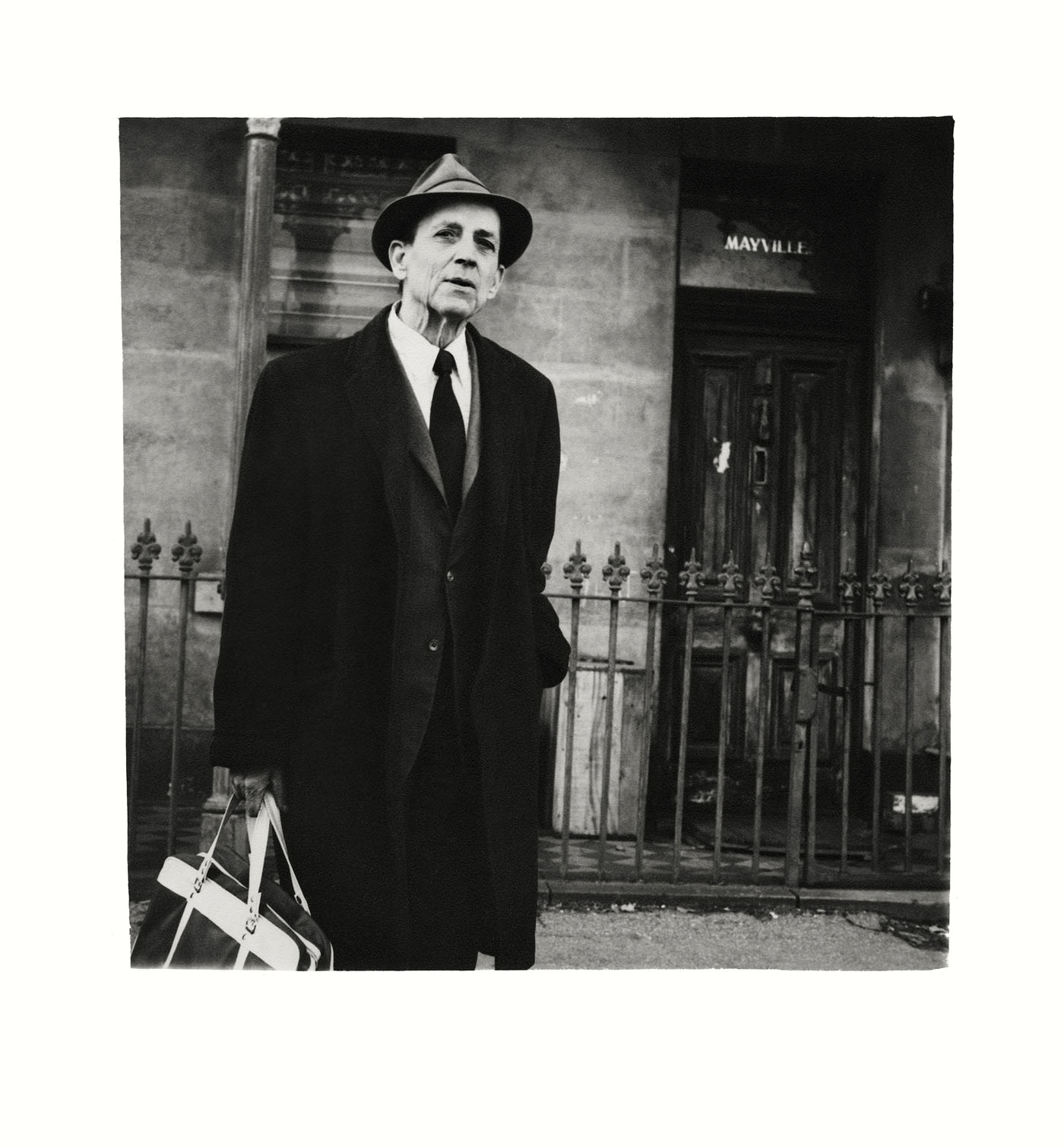
Viva Gibb (Australian, 1945-2017)
Man outside 18 Capel Street, West Melbourne
c. 1975-80
Silver gelatin print
25 x 20cm
Donated by Sybil Gibb and Rupert Duffy to the Melbourne Art Trust in memory of Viva Gibb 2025
© Courtesy of the Estate of Viva Gibb
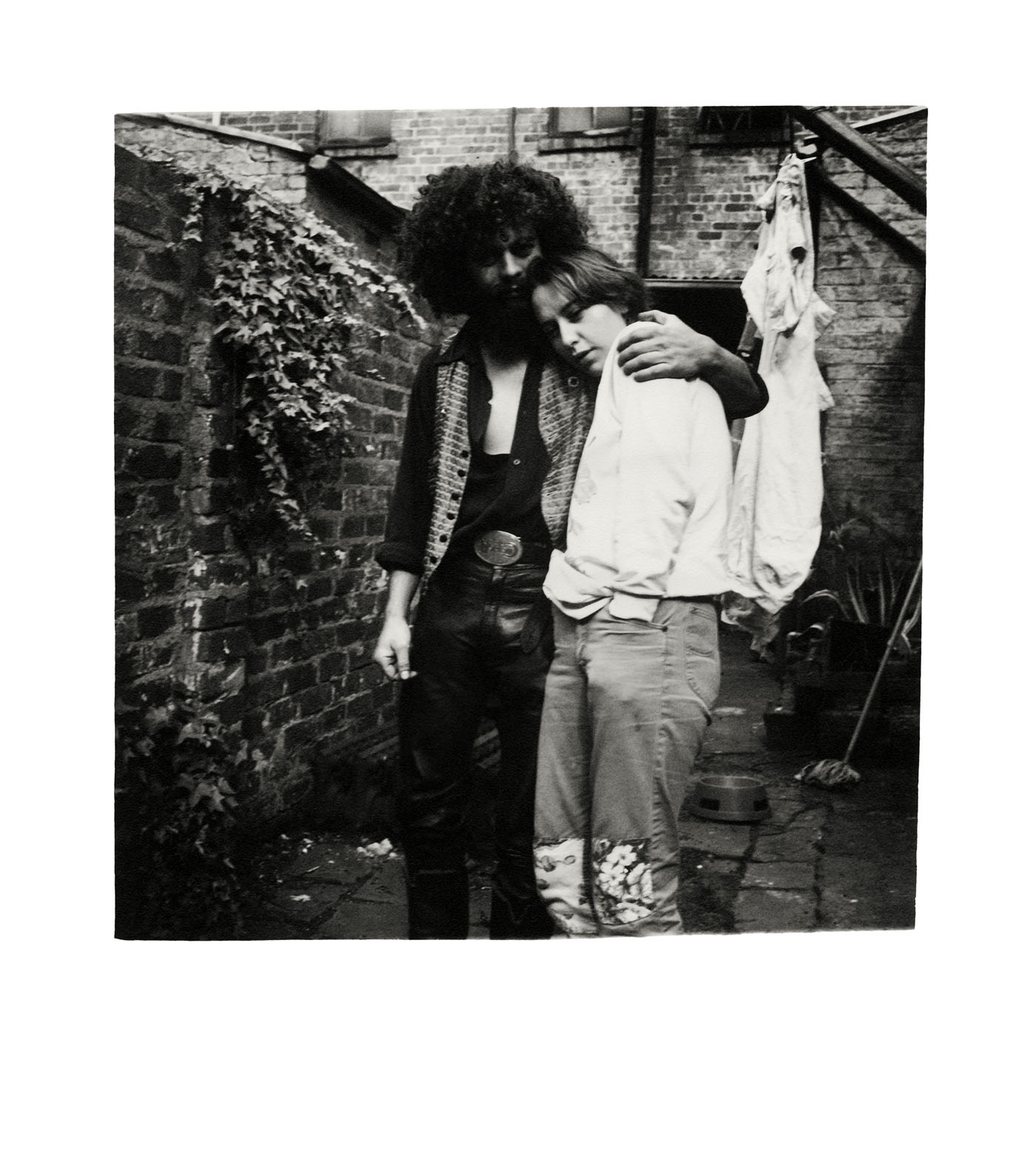
Viva Gibb (Australian, 1945-2017)
‘Moonstruck’, Joanne Healy and her boyfriend Harry, Capel Street, West Melbourne
c. 1977-78
Silver gelatin print
25 x 20.5cm
Donated by Sybil Gibb and Rupert Duffy to the Melbourne Art Trust in memory of Viva Gibb 2025
© Courtesy of the Estate of Viva Gibb
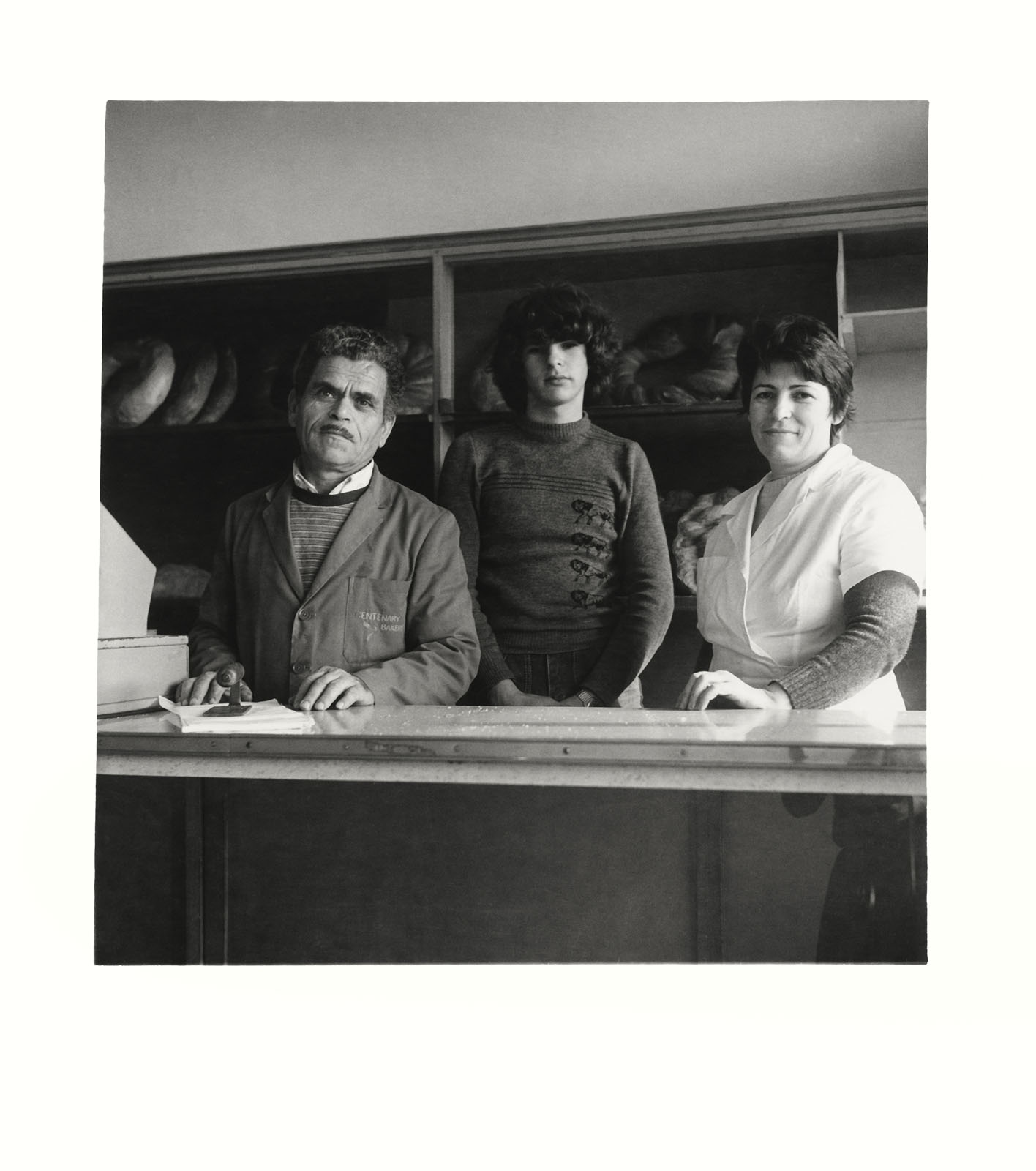
Viva Gibb (Australian, 1945-2017)
Owners of Centenary Bakery and their son, 197 Victoria Street, West Melbourne
1978
Silver gelatin print
25.5 x 20.5 cm
Donated by Sybil Gibb and Rupert Duffy to the Melbourne Art Trust in memory of Viva Gibb 2025
© Courtesy of the Estate of Viva Gibb
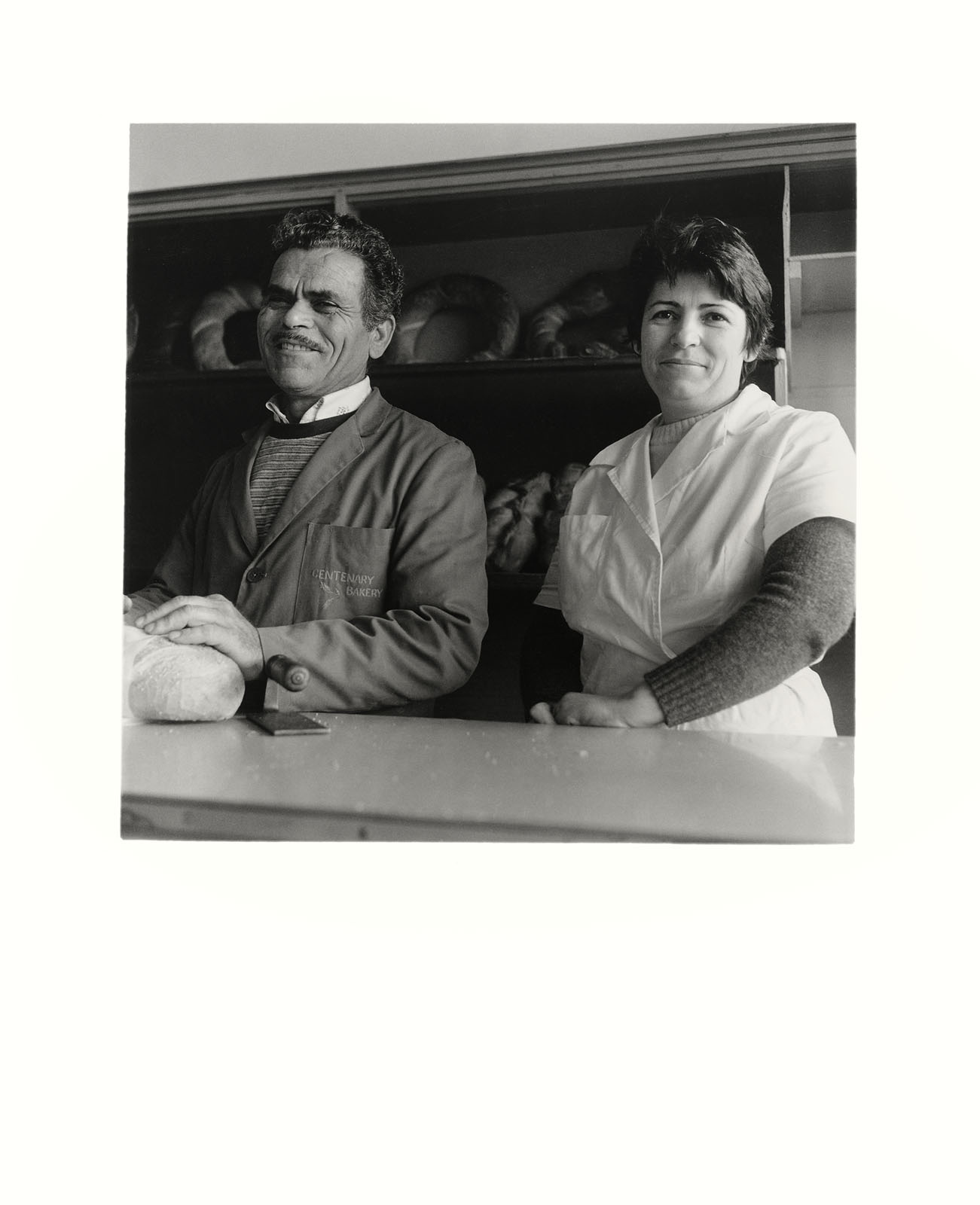
Viva Gibb (Australian, 1945-2017)
Owners of Centenary Bakery, 197 Victoria Street, West Melbourne
1978
Silver gelatin print
21.5 x 16.5cm
Donated by Sybil Gibb and Rupert Duffy to the Melbourne Art Trust in memory of Viva Gibb 2025
© Courtesy of the Estate of Viva Gibb
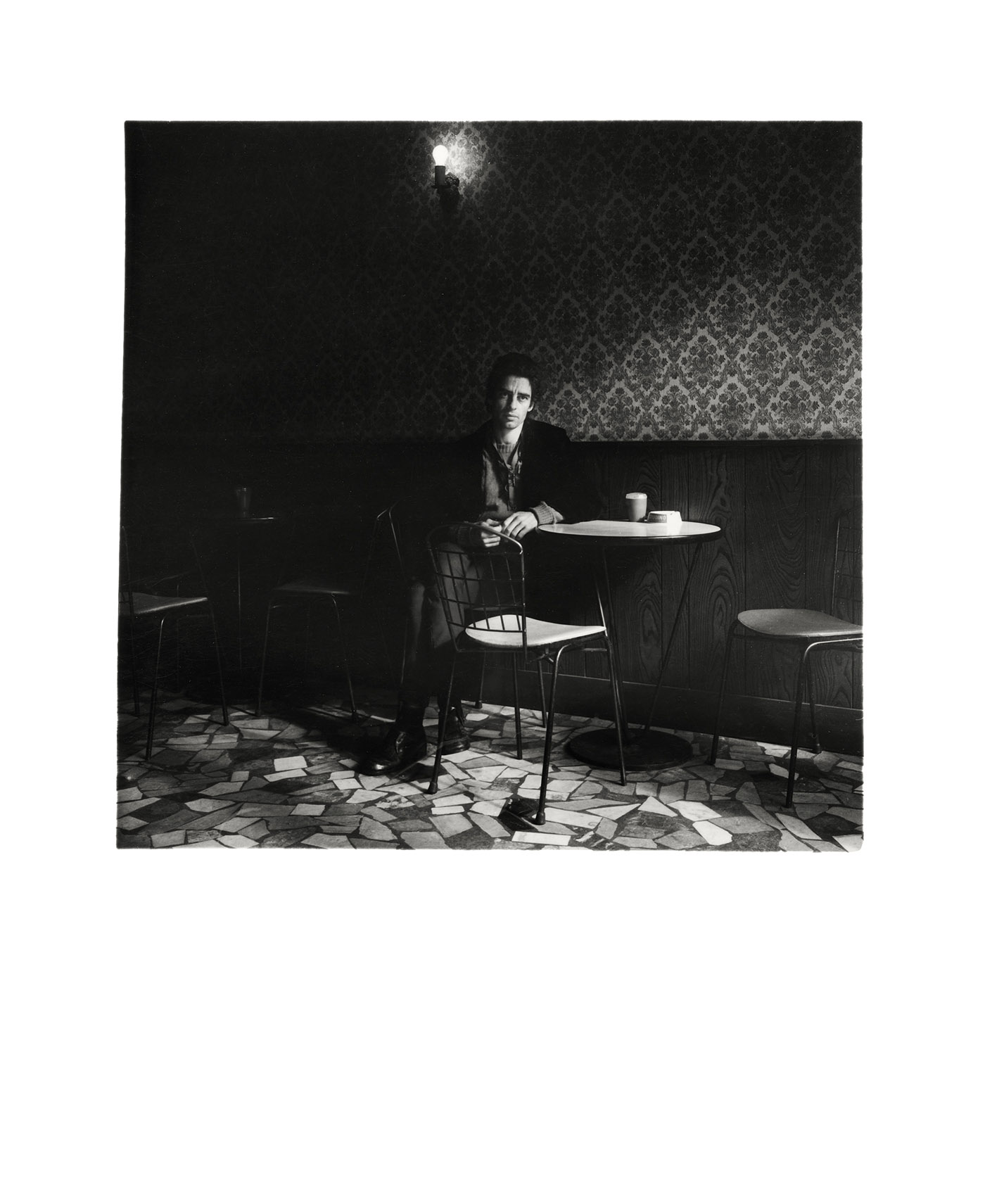
Viva Gibb (Australian, 1945-2017)
Peter Doley at Don Camillo Cafe, 215 Victoria Street, West Melbourne
c. 1979
Silver gelatin print
18 x 12.5cm
Donated by Sybil Gibb and Rupert Duffy to the Melbourne Art Trust in memory of Viva Gibb 2025
© Courtesy of the Estate of Viva Gibb
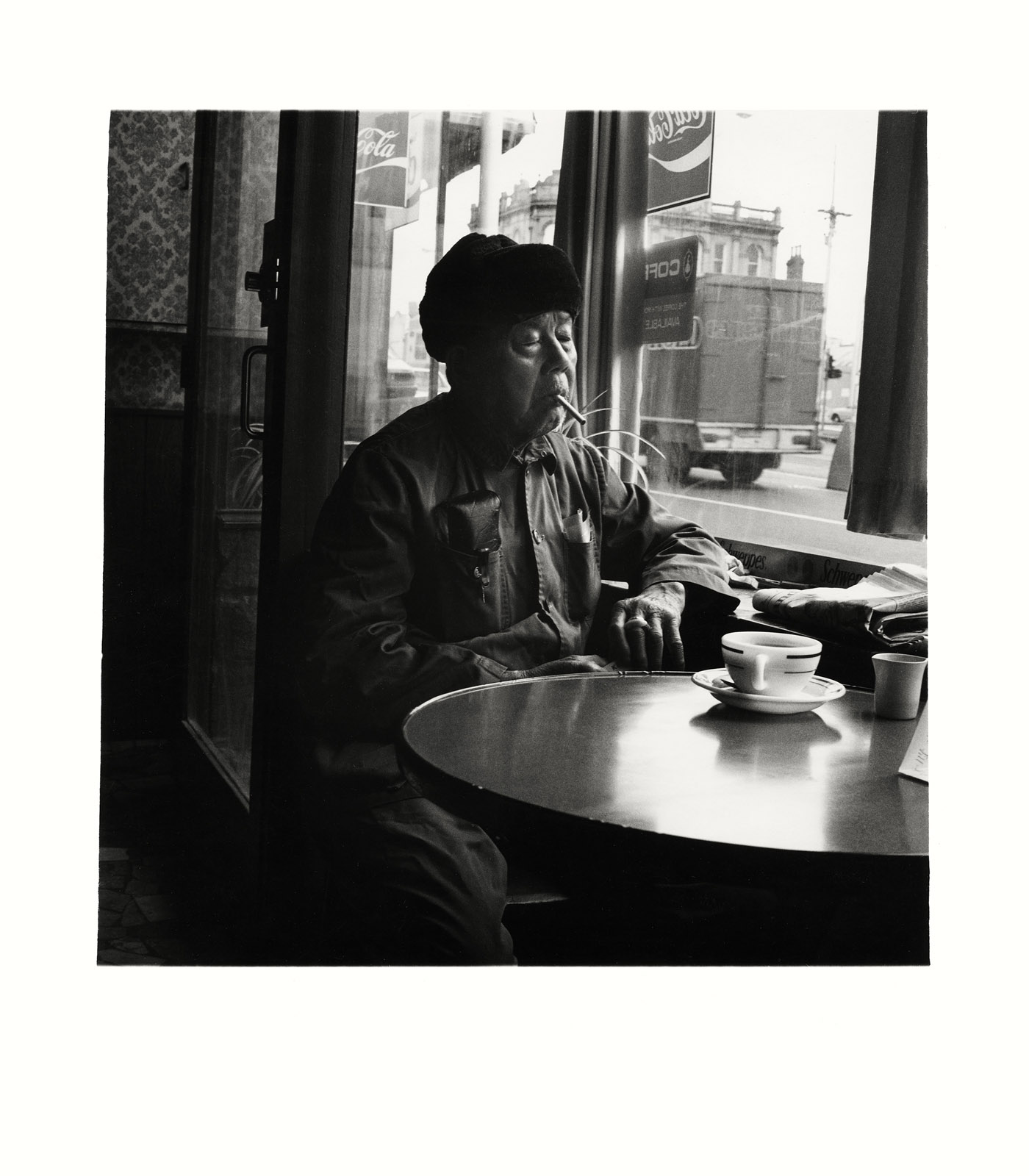
Viva Gibb (Australian, 1945-2017)
Colin Cheng at Don Camillo Cafe, 215 Victoria Street, West Melbourne
c. 1980
Silver gelatin print
25.5 x 20.5cm
Donated by Sybil Gibb and Rupert Duffy to the Melbourne Art Trust in memory of Viva Gibb 2025
© Courtesy of the Estate of Viva Gibb
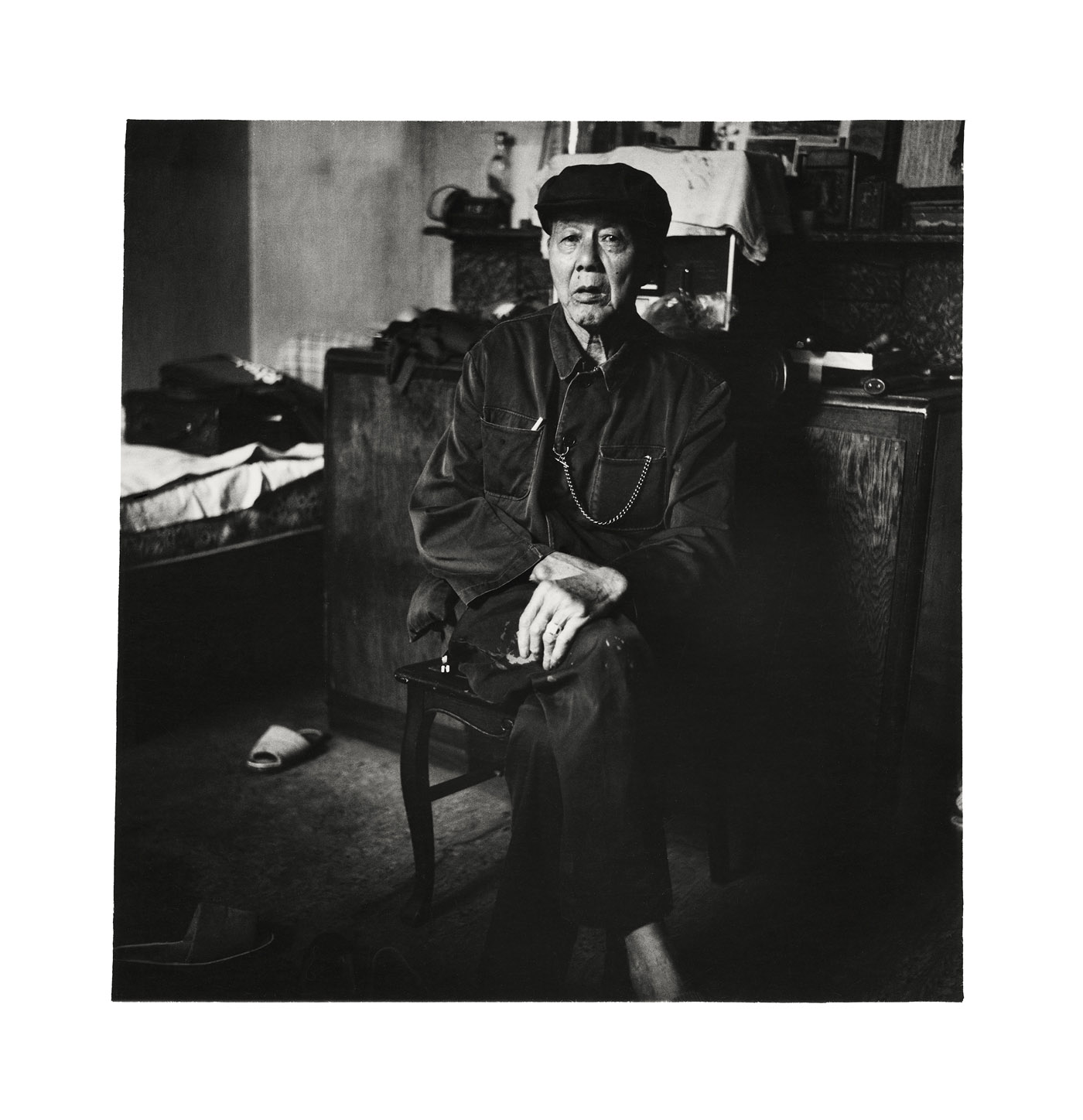
Viva Gibb (Australian, 1945-2017)
Colin Cheng at home, 26 Capel Street, West Melbourne
c. 1980
Silver gelatin print
20 x 19 cm
Donated by Sybil Gibb and Rupert Duffy to the Melbourne Art Trust in memory of Viva Gibb 2025
© Courtesy of the Estate of Viva Gibb
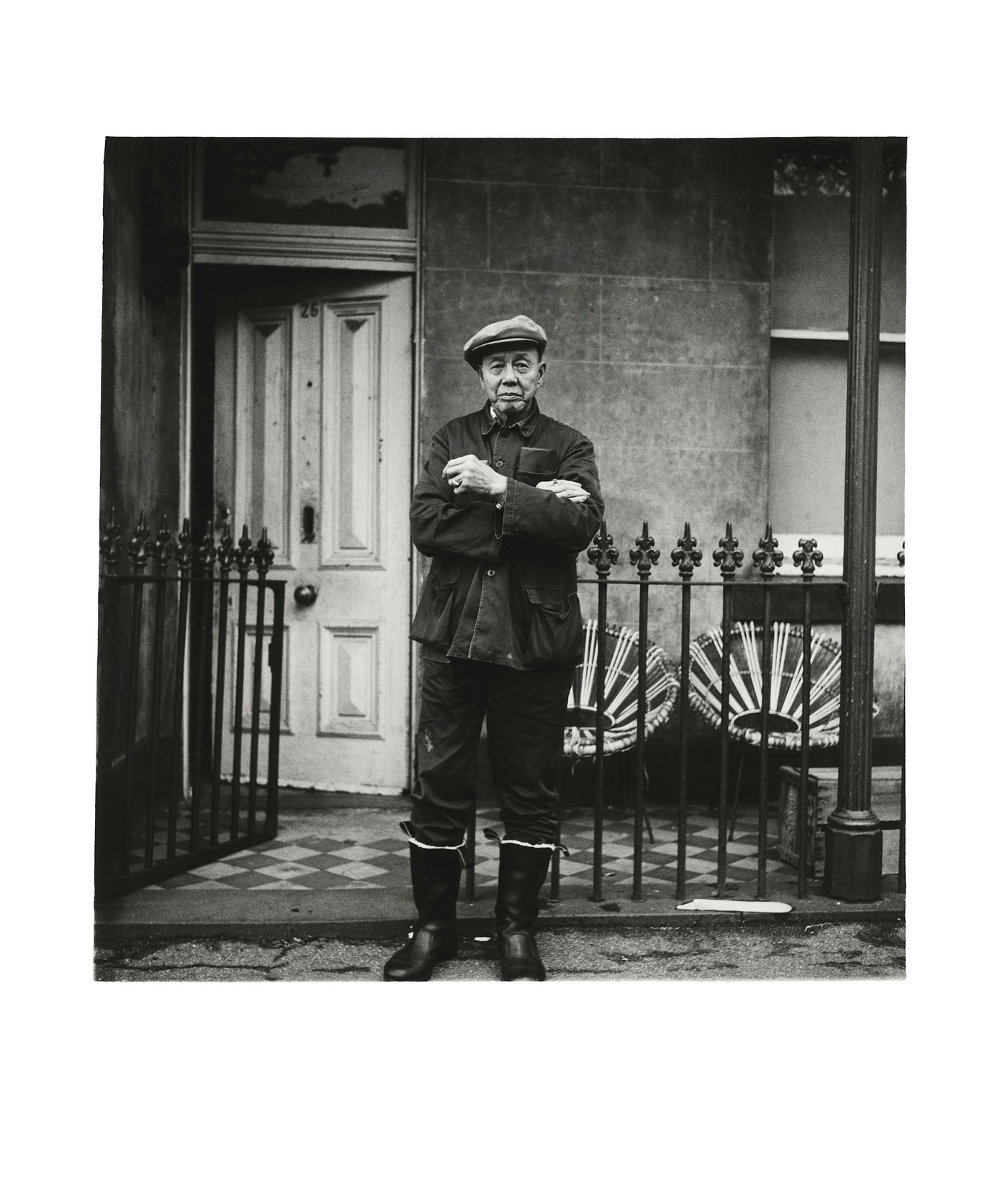
Viva Gibb (Australian, 1945-2017)
Colin Cheng outside his home, 26 Capel Street, West Melbourne
1980
Silver gelatin print
21.5 x 16.5cm
Donated by Sybil Gibb and Rupert Duffy to the Melbourne Art Trust in memory of Viva Gibb 2025
© Courtesy of the Estate of Viva Gibb
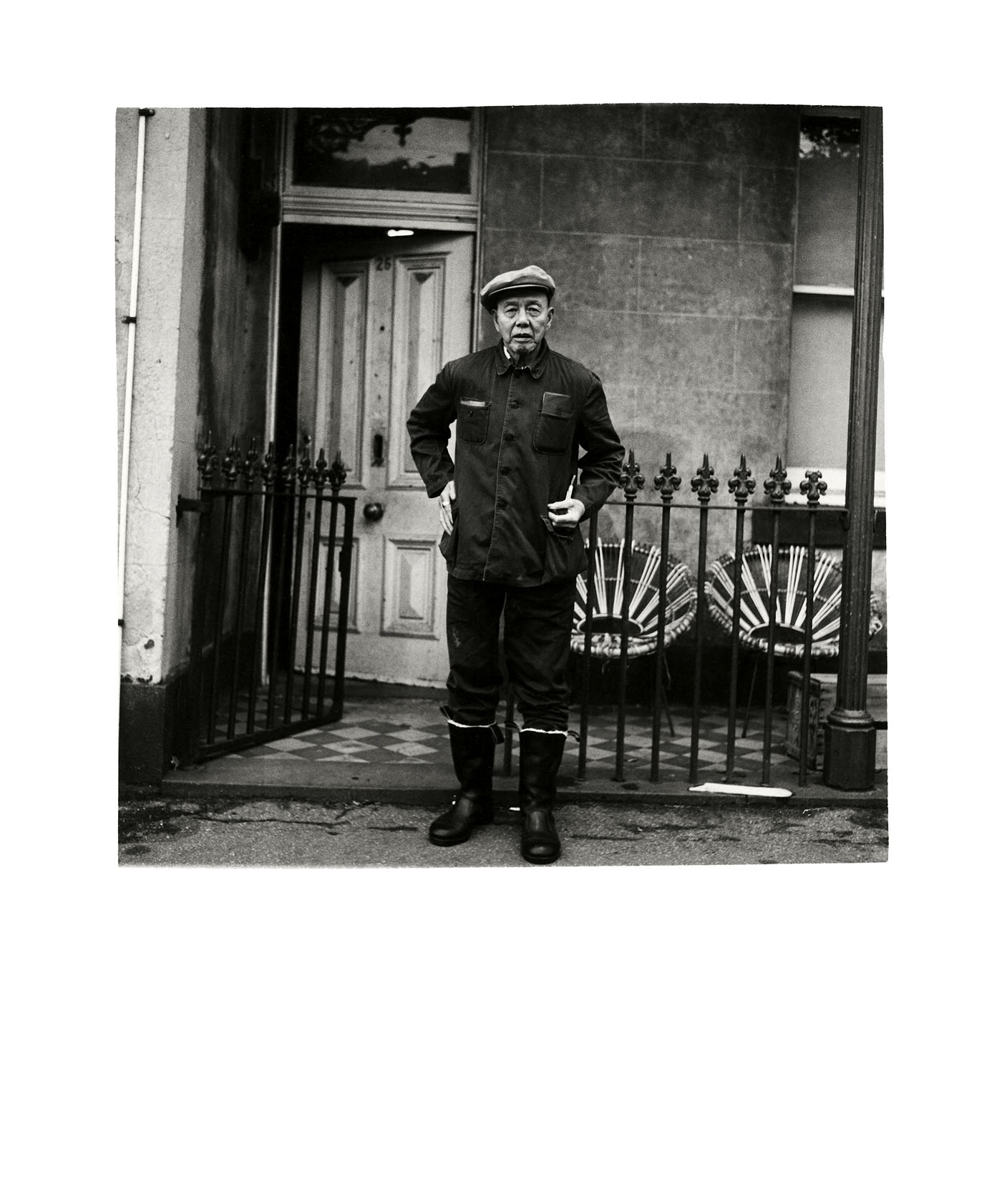
Viva Gibb (Australian, 1945-2017)
Colin Cheng outside his home, 26 Capel Street, West Melbourne
1980
Silver gelatin print
25.4 x 20.3cm
Donated by Sybil Gibb and Rupert Duffy to the Melbourne Art Trust in memory of Viva Gibb 2025
© Courtesy of the Estate of Viva Gibb
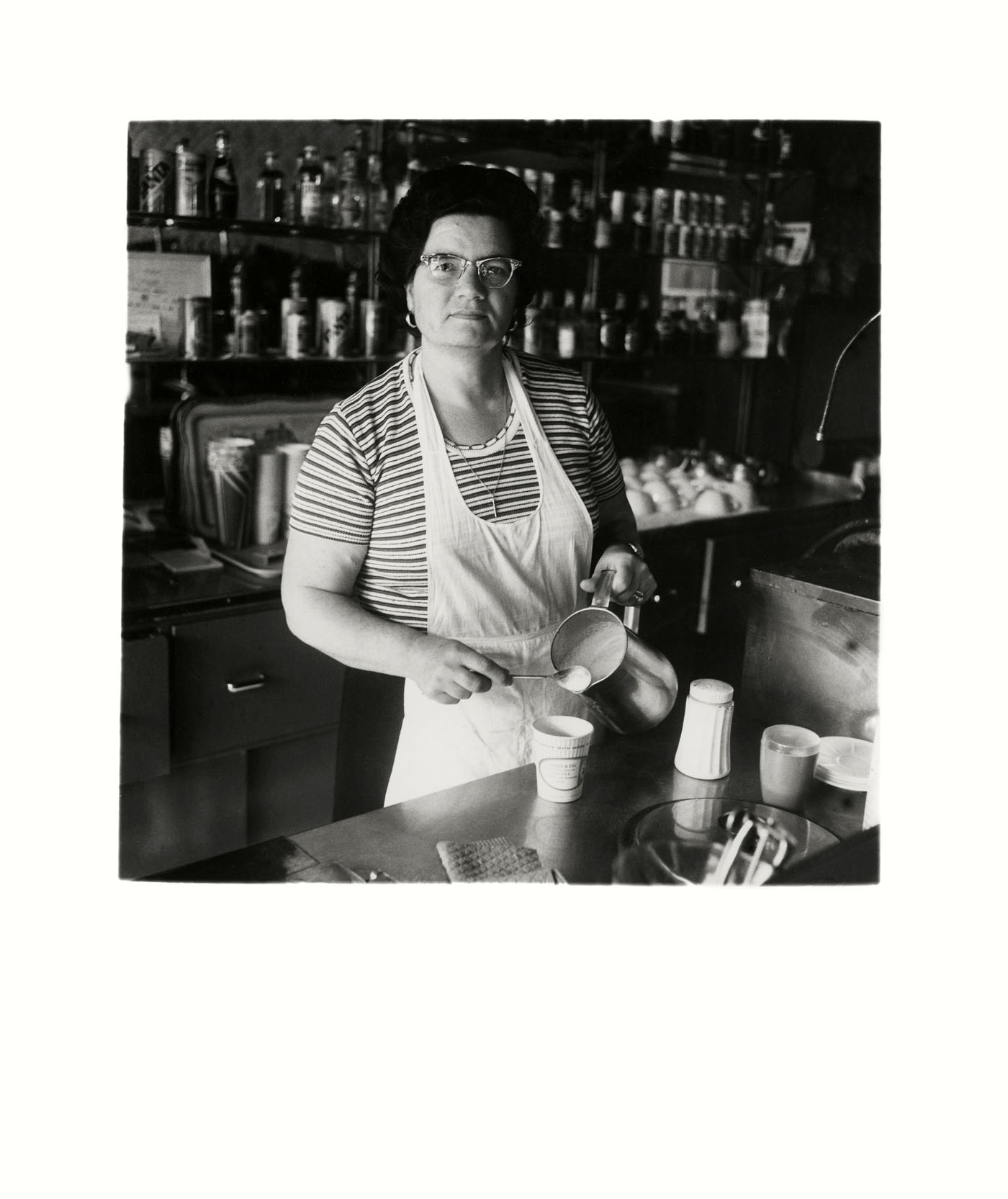
Viva Gibb (Australian, 1945-2017)
Maria Lanteri ‘Signora’ at Don Camillo Cafe, 215 Victoria Street, West Melbourne
c. 1980
Silver gelatin print
21.5 x 16.5 cm
Donated by Sybil Gibb and Rupert Duffy to the Melbourne Art Trust in memory of Viva Gibb 2025
© Courtesy of the Estate of Viva Gibb
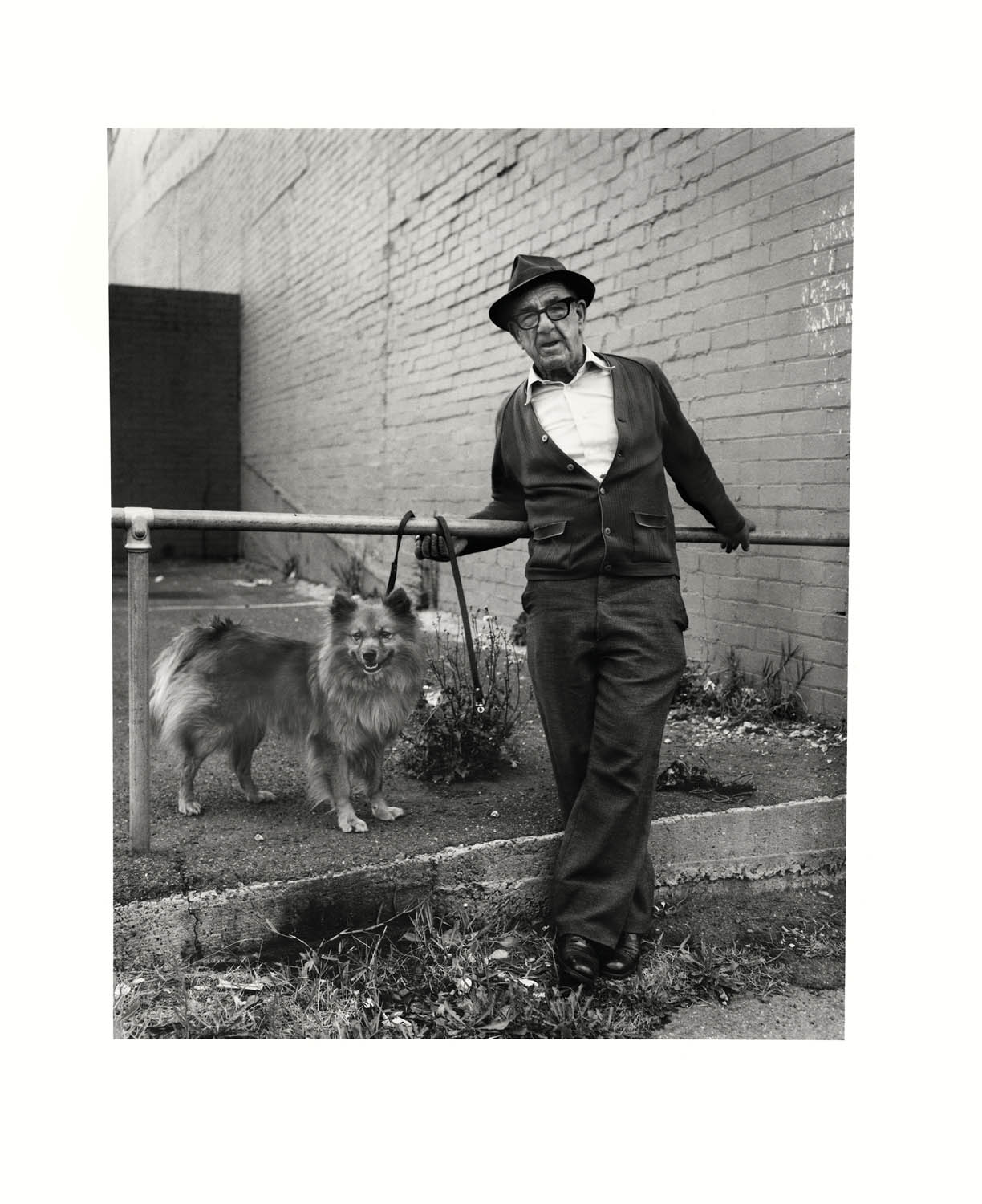
Viva Gibb (Australian, 1945-2017)
Man and his dog outside Radio Parts, corner of Spencer and Hawke Street, West Melbourne
c. 1980
Silver gelatin print
25 x 20cm
Donated by Sybil Gibb and Rupert Duffy to the Melbourne Art Trust in memory of Viva Gibb 2025
© Courtesy of the Estate of Viva Gibb
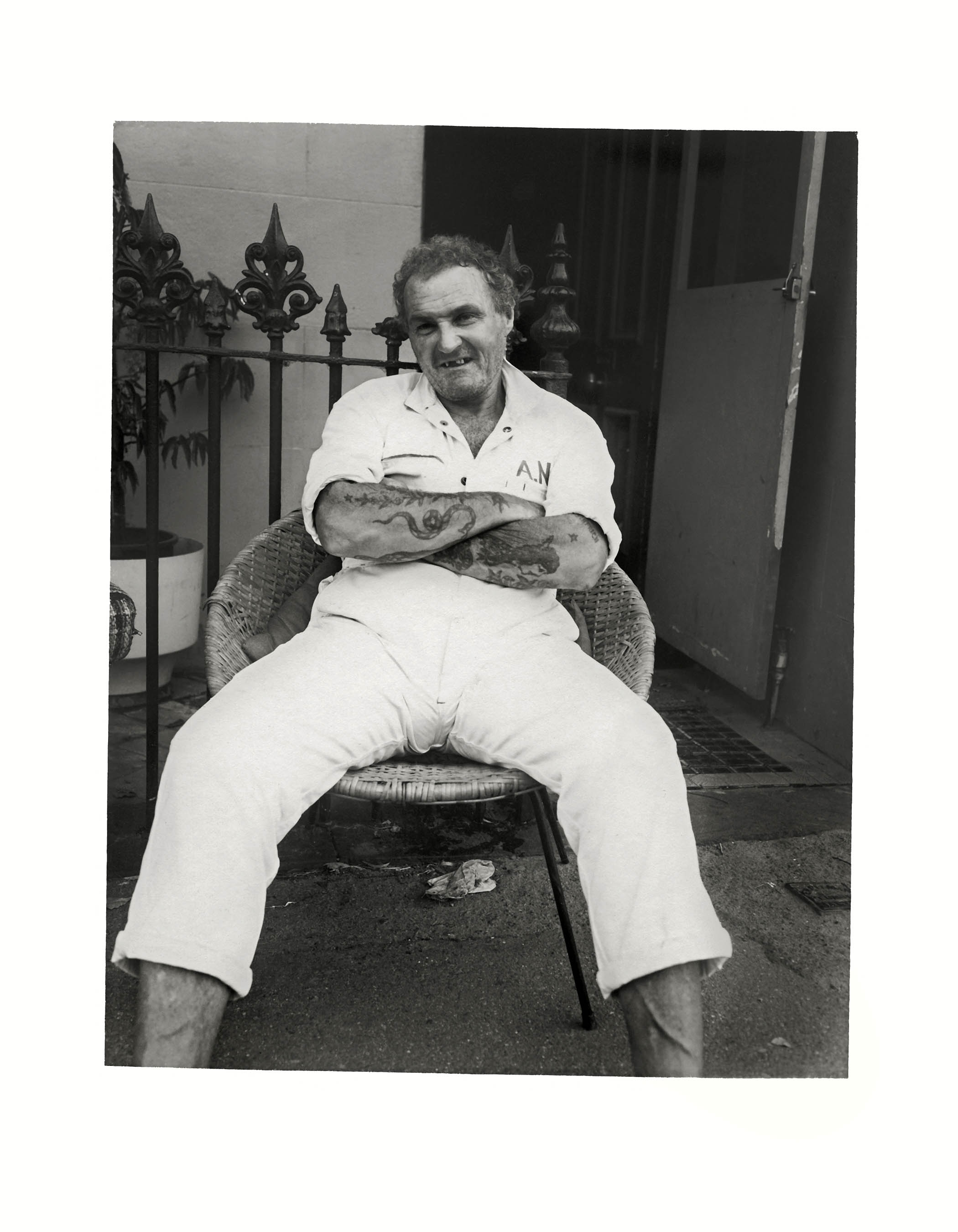
Viva Gibb (Australian, 1945-2017)
Jimmy at the Sunday barrel, 44 Hawke Street, West Melbourne
1982
Silver gelatin print
24 x 18cm
Donated by Sybil Gibb and Rupert Duffy to the Melbourne Art Trust in memory of Viva Gibb 2025
© Courtesy of the Estate of Viva Gibb
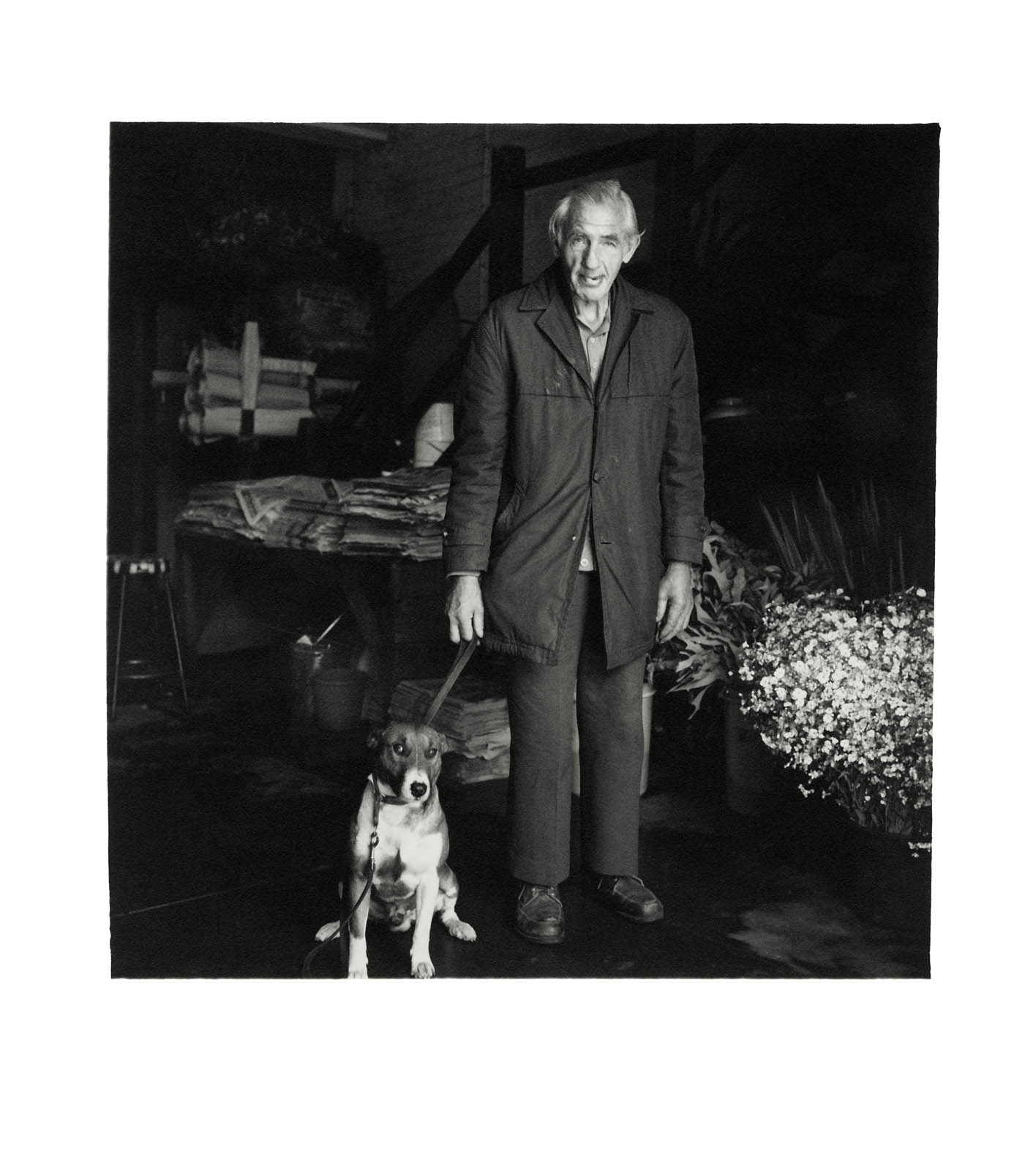
Viva Gibb (Australian, 1945-2017)
‘Living in the city without a home’, Jimmy at the wholesale flower shop, 217 Victoria Street, West Melbourne
1982
Silver gelatin print
25 x 20.5cm
Donated by Sybil Gibb and Rupert Duffy to the Melbourne Art Trust in memory of Viva Gibb 2025
© Courtesy of the Estate of Viva Gibb
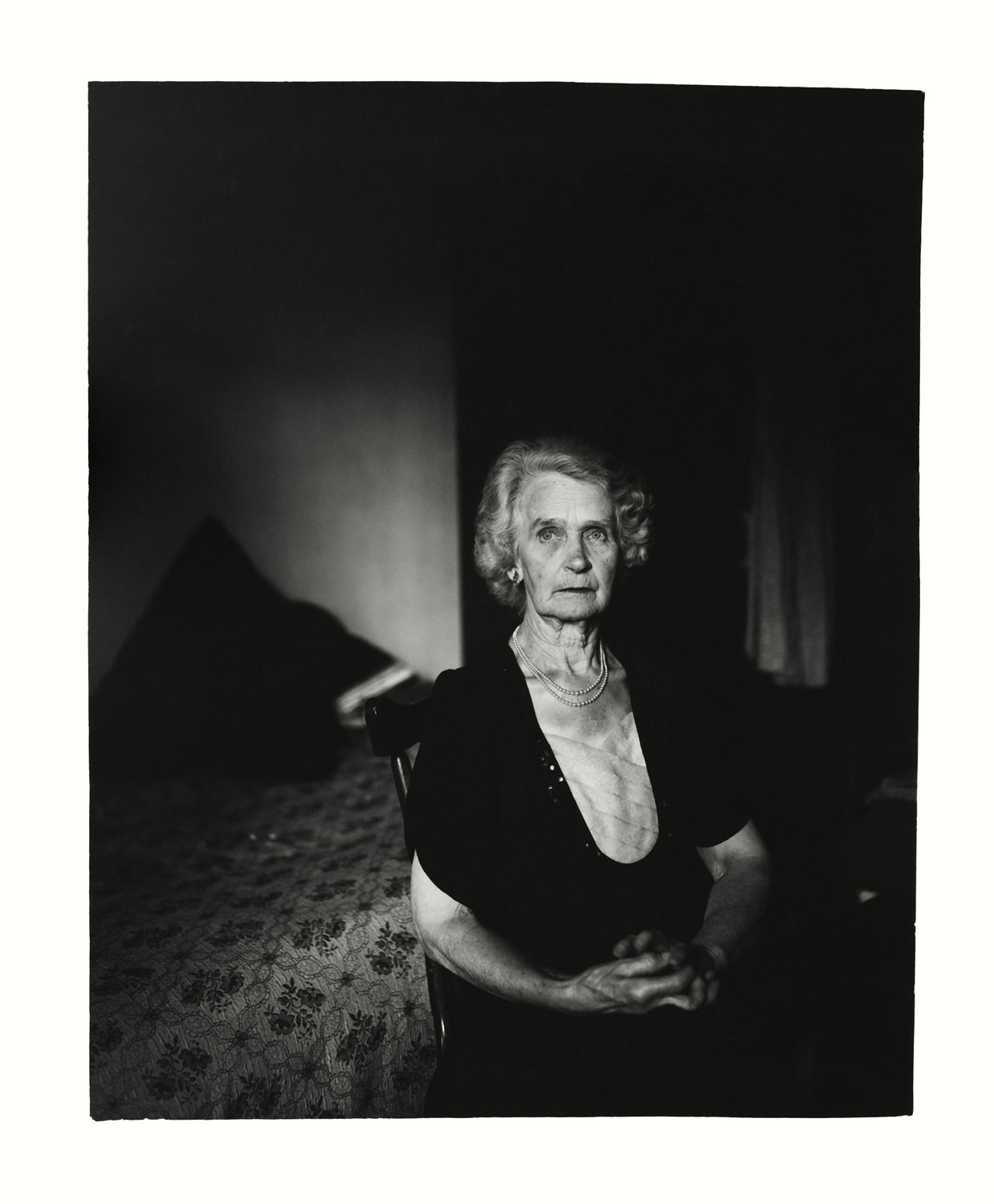
Viva Gibb (Australian, 1945-2017)
‘It is the price of life’, Elsie, 55 Stanley Street, West Melbourne
1982
Silver gelatin print
37 x 30cm
Donated by Sybil Gibb and Rupert Duffy to the Melbourne Art Trust in memory of Viva Gibb 2025
© Courtesy of the Estate of Viva Gibb
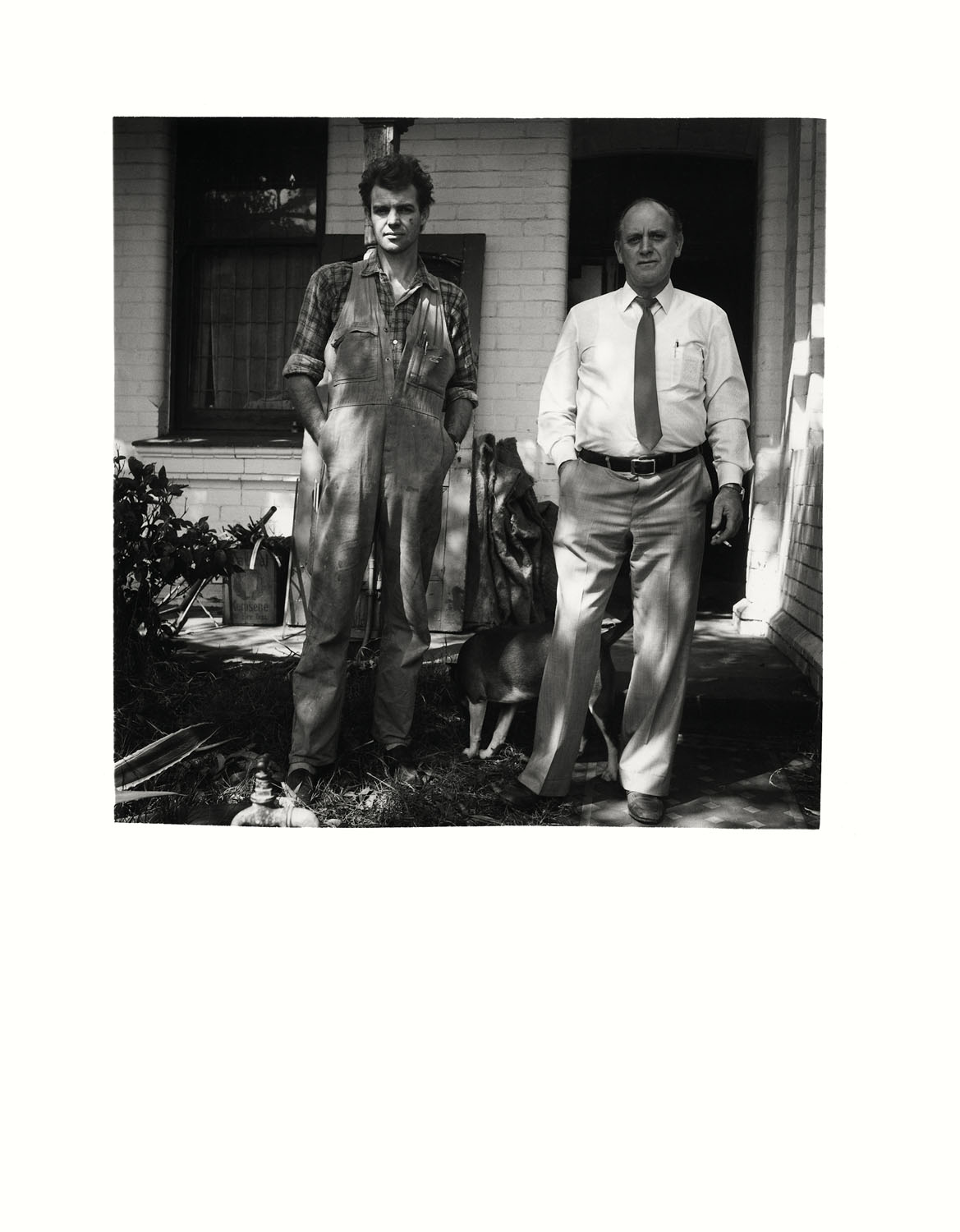
Viva Gibb (Australian, 1945-2017)
James and Jim Healey at Viva’s studio, 57 Stanley Street, West Melbourne
c. 1982
24 x 17.5cm
Donated by Sybil Gibb and Rupert Duffy to the Melbourne Art Trust in memory of Viva Gibb 2025
© Courtesy of the Estate of Viva Gibb
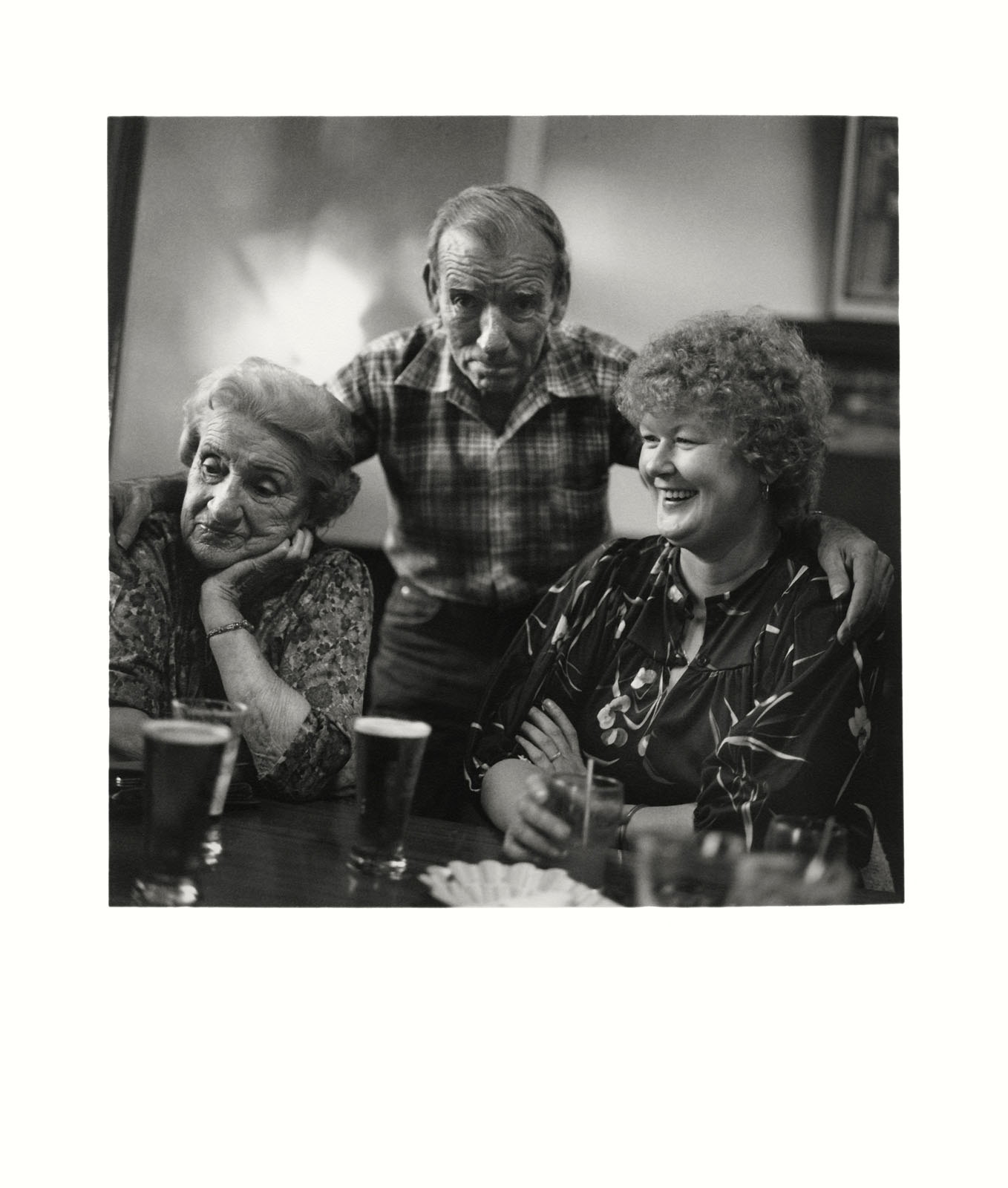
Viva Gibb (Australian, 1945-2017)
Maureen’s 85th birthday, Three Crowns Hotel, 365 Victoria Street, West Melbourne
1982
Silver gelatin print
25 x 20cm
Donated by Sybil Gibb and Rupert Duffy to the Melbourne Art Trust in memory of Viva Gibb 2025
© Courtesy of the Estate of Viva Gibb
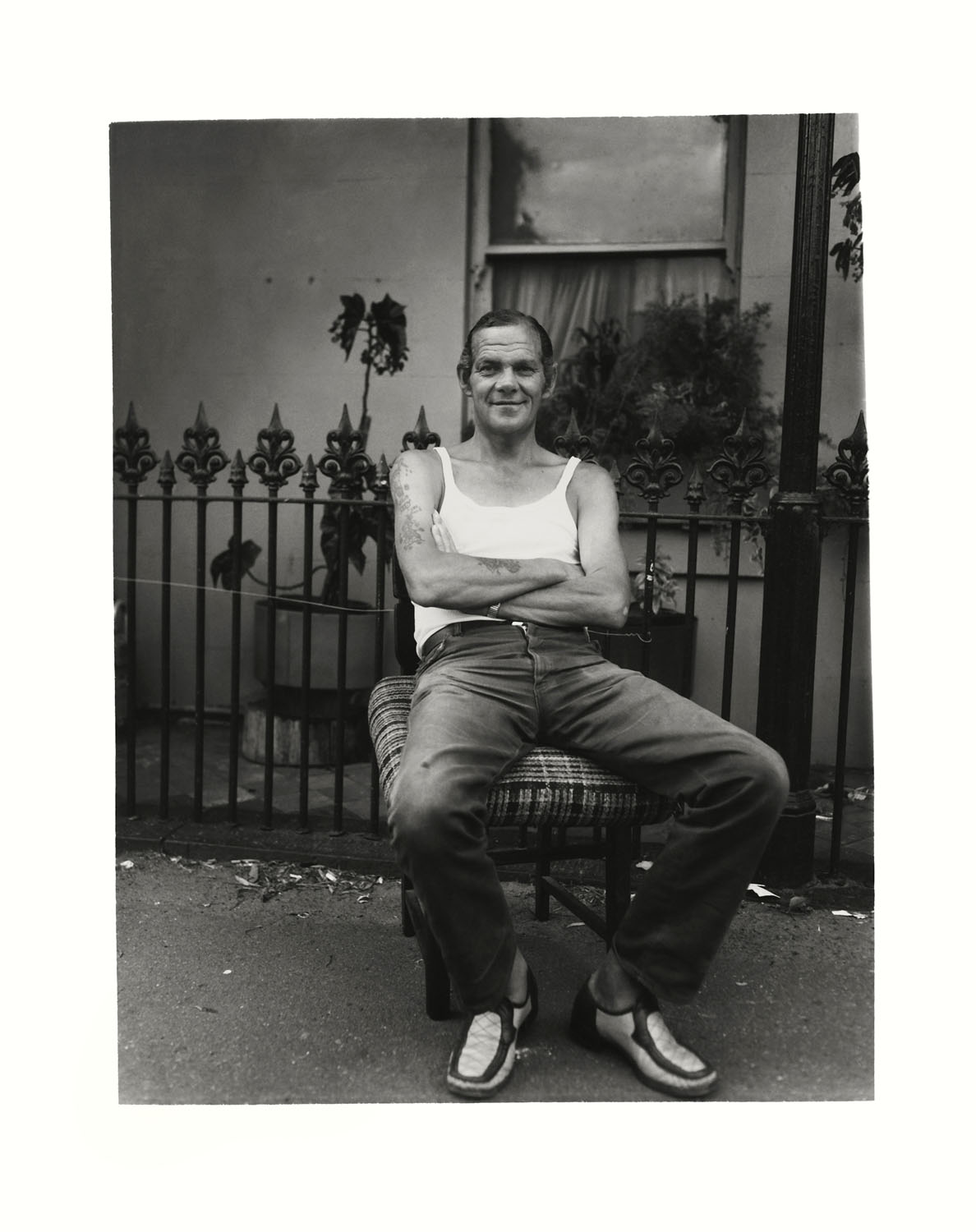
Viva Gibb (Australian, 1945-2017)
‘Skippy’ outside 44 Hawke Street, West Melbourne
1982
Silver gelatin print
24 x 18 cm
Donated by Sybil Gibb and Rupert Duffy to the Melbourne Art Trust in memory of Viva Gibb 2025
© Courtesy of the Estate of Viva Gibb
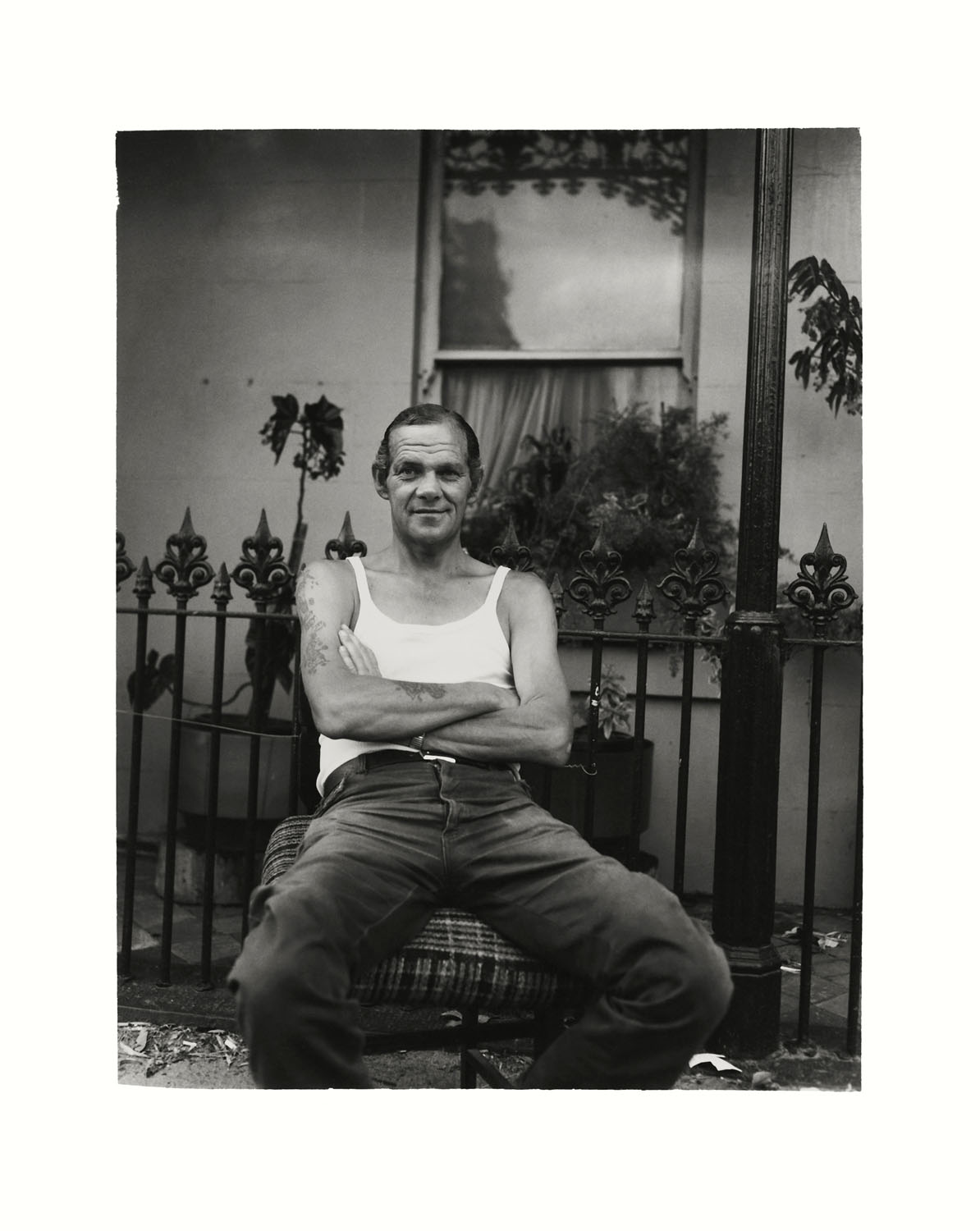
Viva Gibb (Australian, 1945-2017)
‘Skippy’ outside 44 Hawke Street, West Melbourne
1982
Silver gelatin print
24 x 18 cm
Donated by Sybil Gibb and Rupert Duffy to the Melbourne Art Trust in memory of Viva Gibb 2025
© Courtesy of the Estate of Viva Gibb
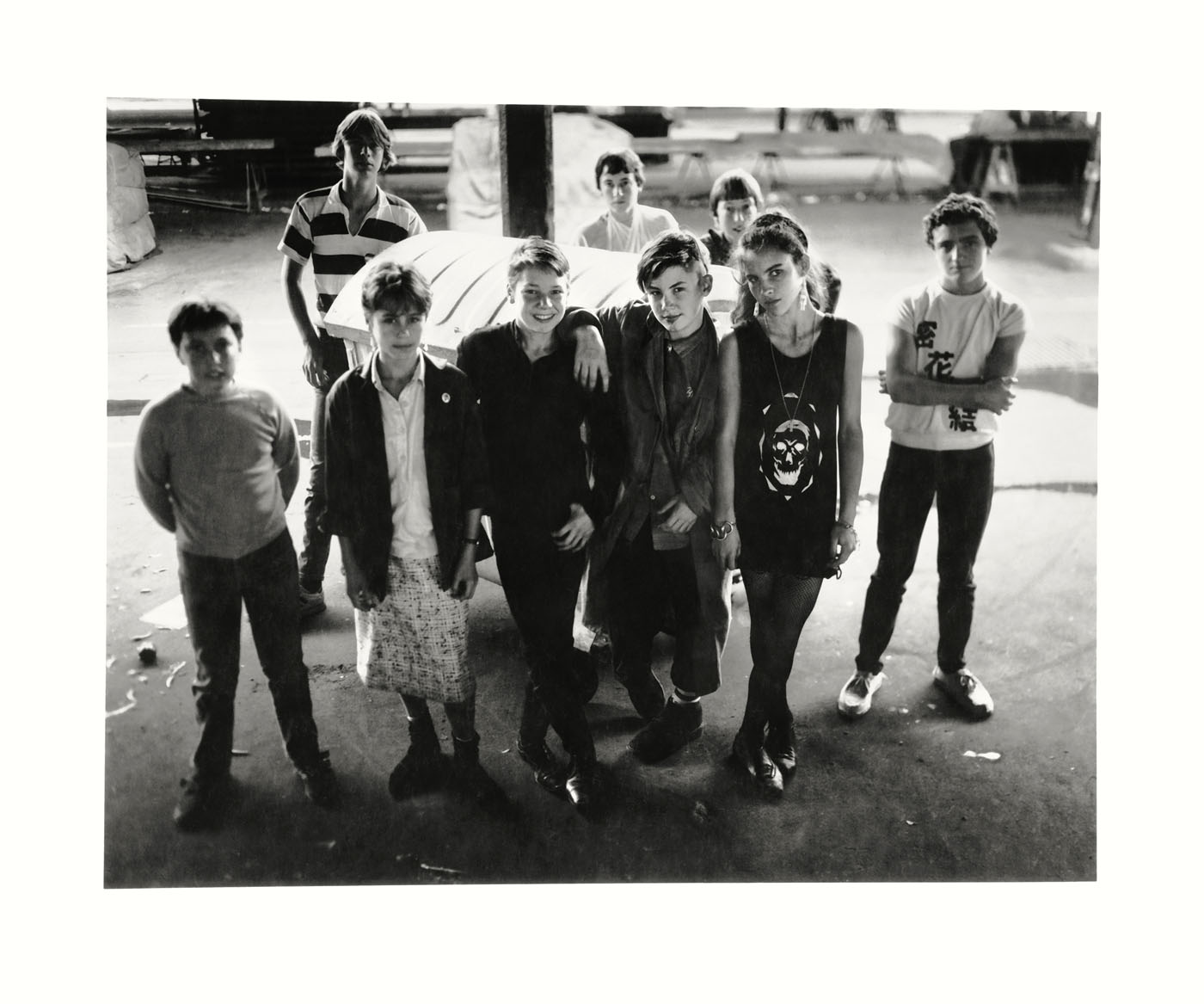
Viva Gibb (Australian, 1945-2017)
Alice, Eben, Rupert, Sybil and friends at Queen Victoria Market, Victoria Street, West Melbourne
1983
Silver gelatin print
20.5 x 25.5 cm
Donated by Sybil Gibb and Rupert Duffy to the Melbourne Art Trust in memory of Viva Gibb 2025
© Courtesy of the Estate of Viva Gibb
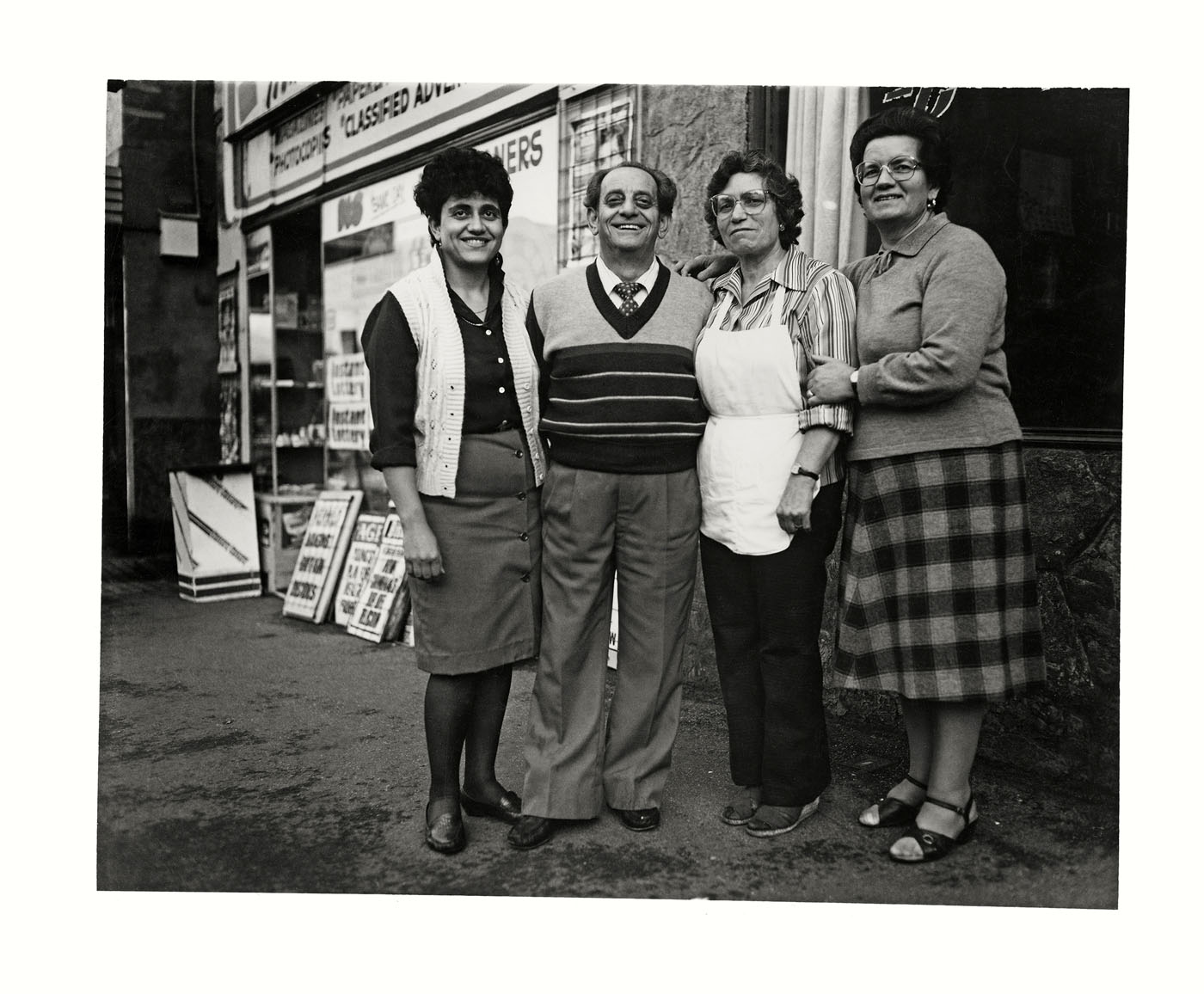
Viva Gibb (Australian, 1945-2017)
Giuseppe and Maria Lanteri with Maria’s sister and niece outside Don Camillo Cafe, 215 Victoria Street, West Melbourne
1983
Silver gelatin print
17.5 x 24cm
Donated by Sybil Gibb and Rupert Duffy to the Melbourne Art Trust in memory of Viva Gibb 2025
© Courtesy of the Estate of Viva Gibb
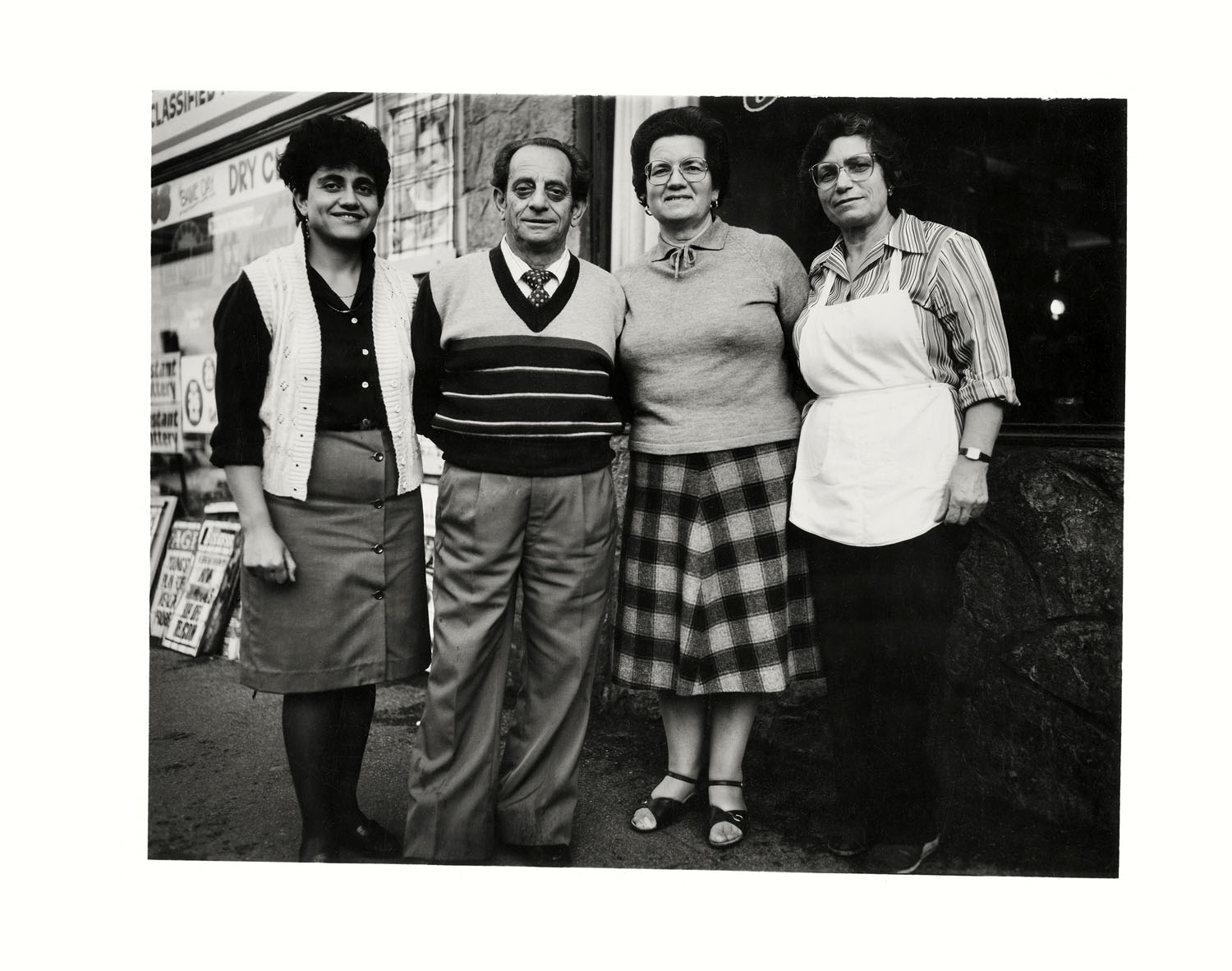
Viva Gibb (Australian, 1945-2017)
Giuseppe and Maria Lanteri with Maria’s sister and niece outside Don Camillo Cafe, 215 Victoria Street, West Melbourne
1983
Silver gelatin print
17.5 x 24cm
Donated by Sybil Gibb and Rupert Duffy to the Melbourne Art Trust in memory of Viva Gibb 2025
© Courtesy of the Estate of Viva Gibb
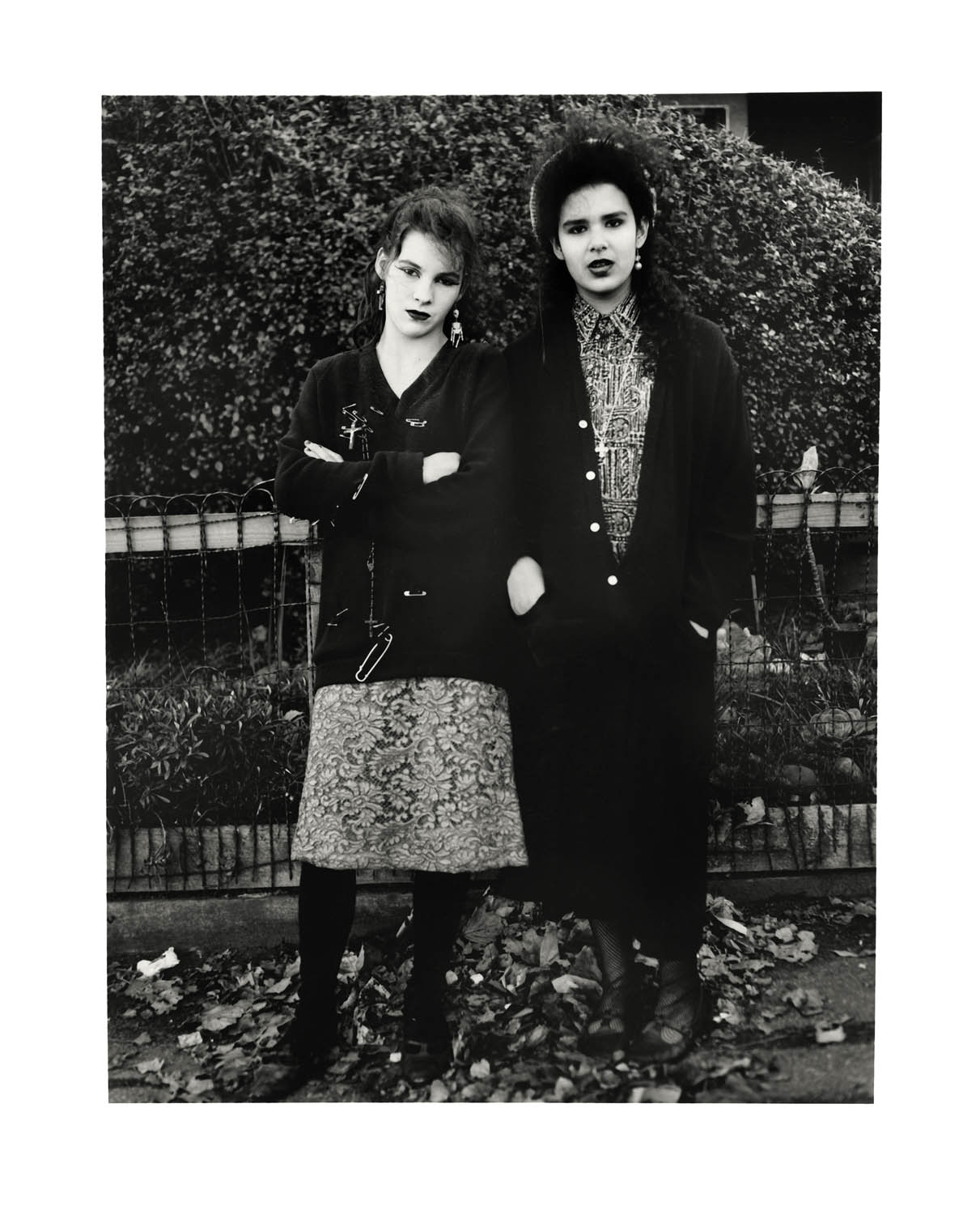
Viva Gibb (Australian, 1945-2017)
Sybil and Vivian outside 10 Hawke Street, West Melbourne
1985
Silver gelatin print
25.5 x 20.5cm
Donated by Sybil Gibb and Rupert Duffy to the Melbourne Art Trust in memory of Viva Gibb 2025
© Courtesy of the Estate of Viva Gibb
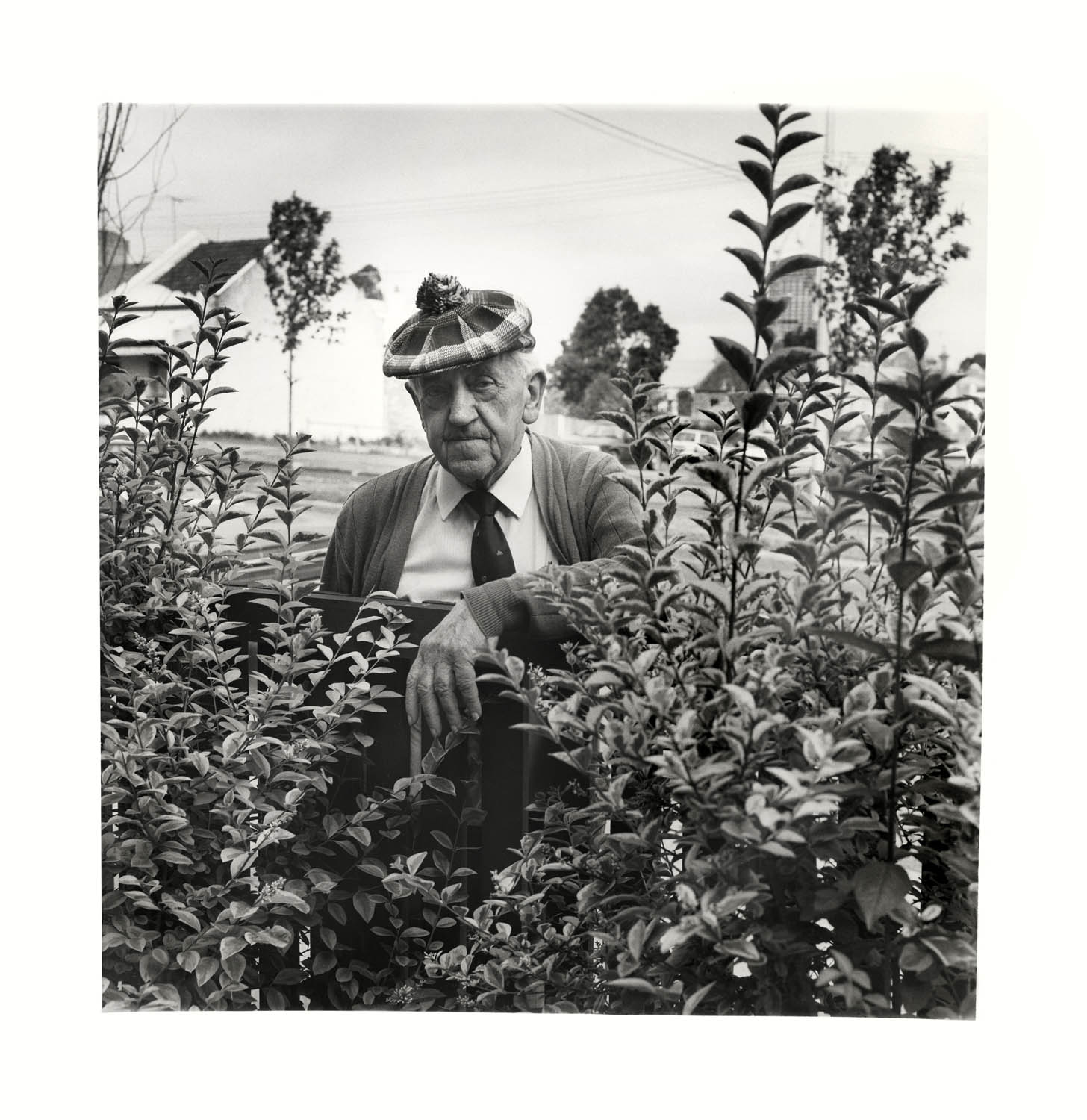
Viva Gibb (Australian, 1945-2017)
Mr Lindsay Williams, Hawke Street, West Melbourne
c. 1985
Silver gelatin print
30 x 30cm
Donated by Sybil Gibb and Rupert Duffy to the Melbourne Art Trust in memory of Viva Gibb 2025
© Courtesy of the Estate of Viva Gibb
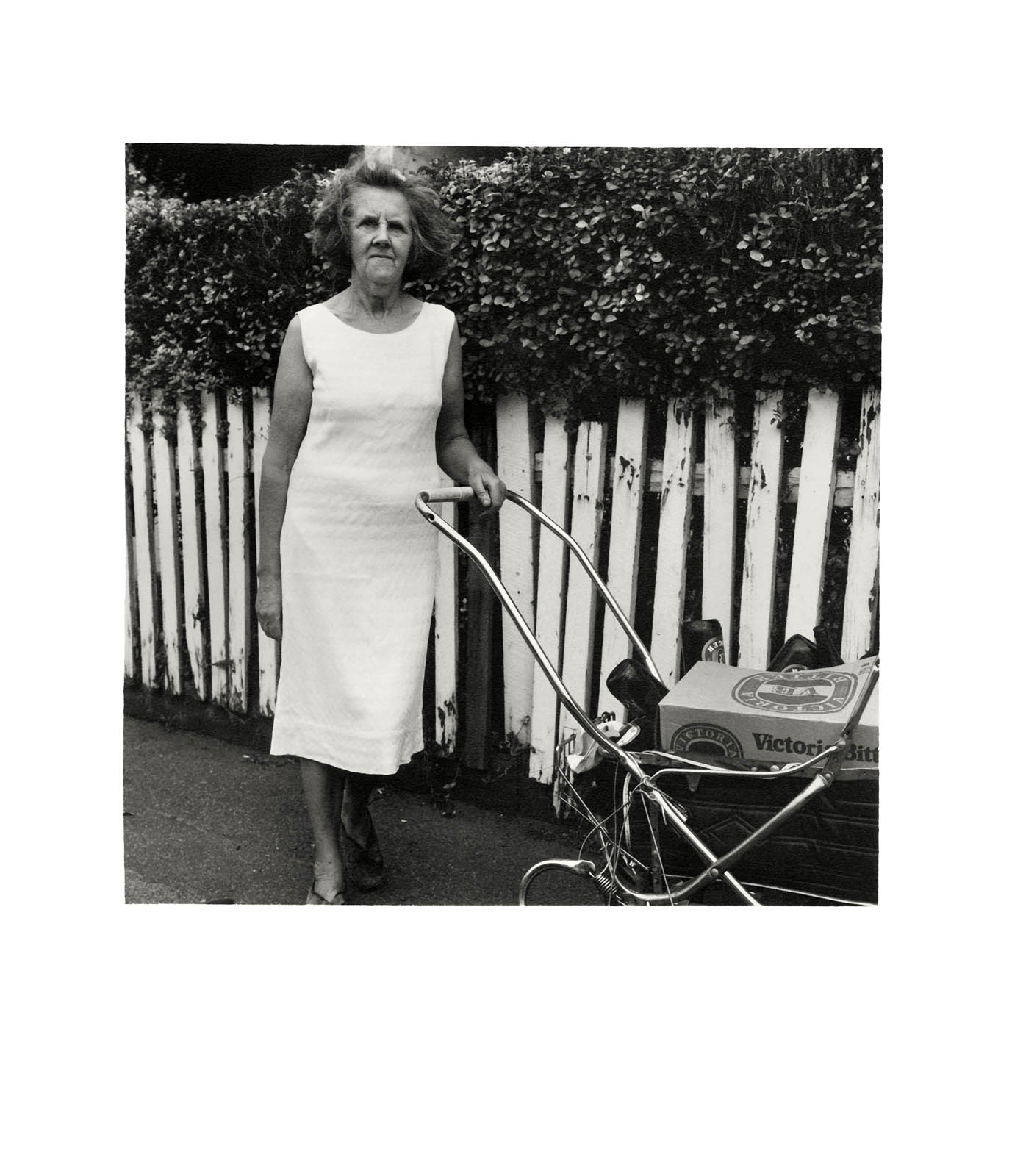
Viva Gibb (Australian, 1945-2017)
Jean collecting bottles outside 8 Hawke Street, West Melbourne
c. 1986
Silver gelatin print
20 x 16cm
Donated by Sybil Gibb and Rupert Duffy to the Melbourne Art Trust in memory of Viva Gibb 2025
© Courtesy of the Estate of Viva Gibb
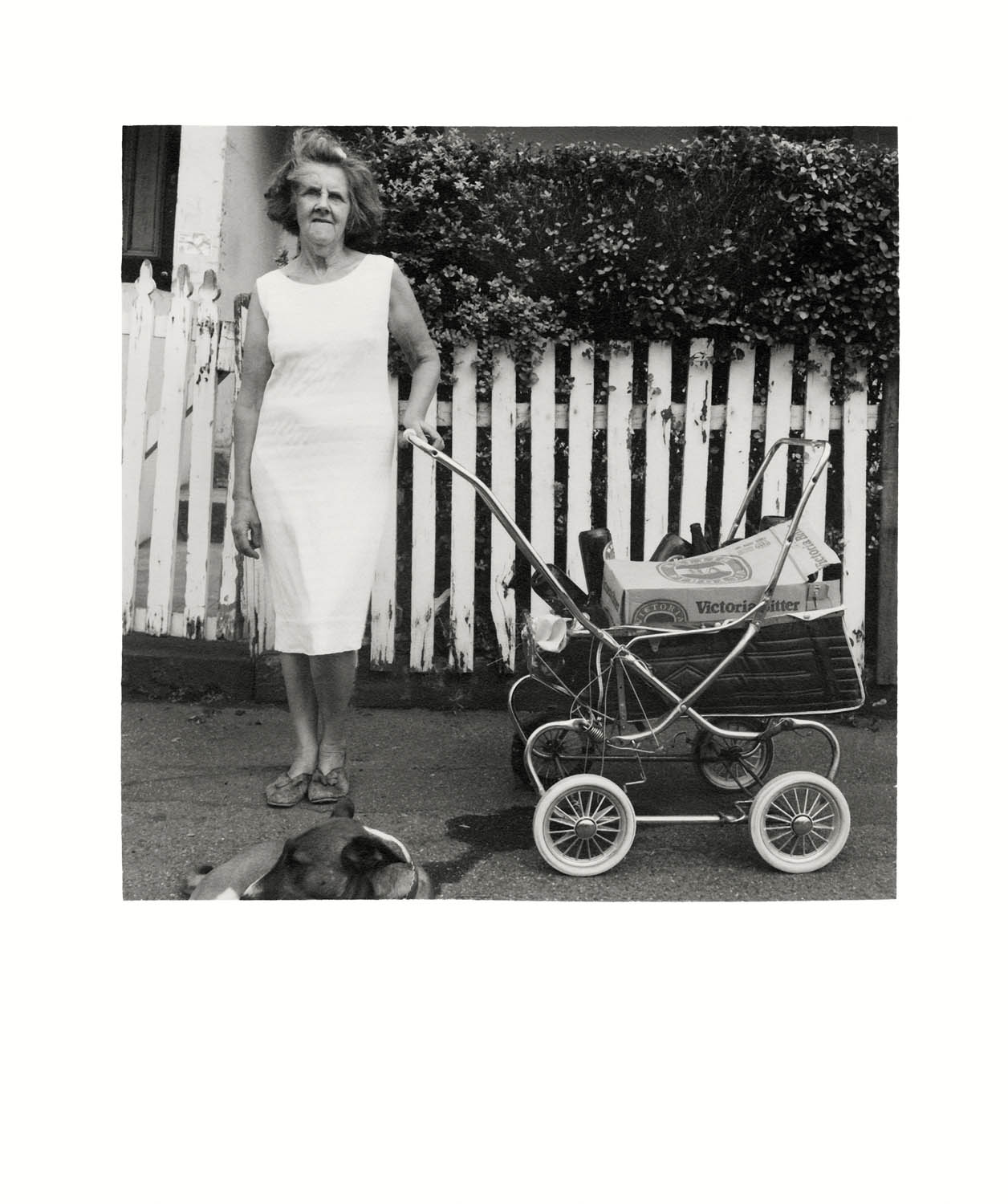
Viva Gibb (Australian, 1945-2017)
Jean collecting bottles outside 8 Hawke Street, West Melbourne
c. 1986
Silver gelatin print
20 x 16cm
Donated by Sybil Gibb and Rupert Duffy to the Melbourne Art Trust in memory of Viva Gibb 2025
© Courtesy of the Estate of Viva Gibb
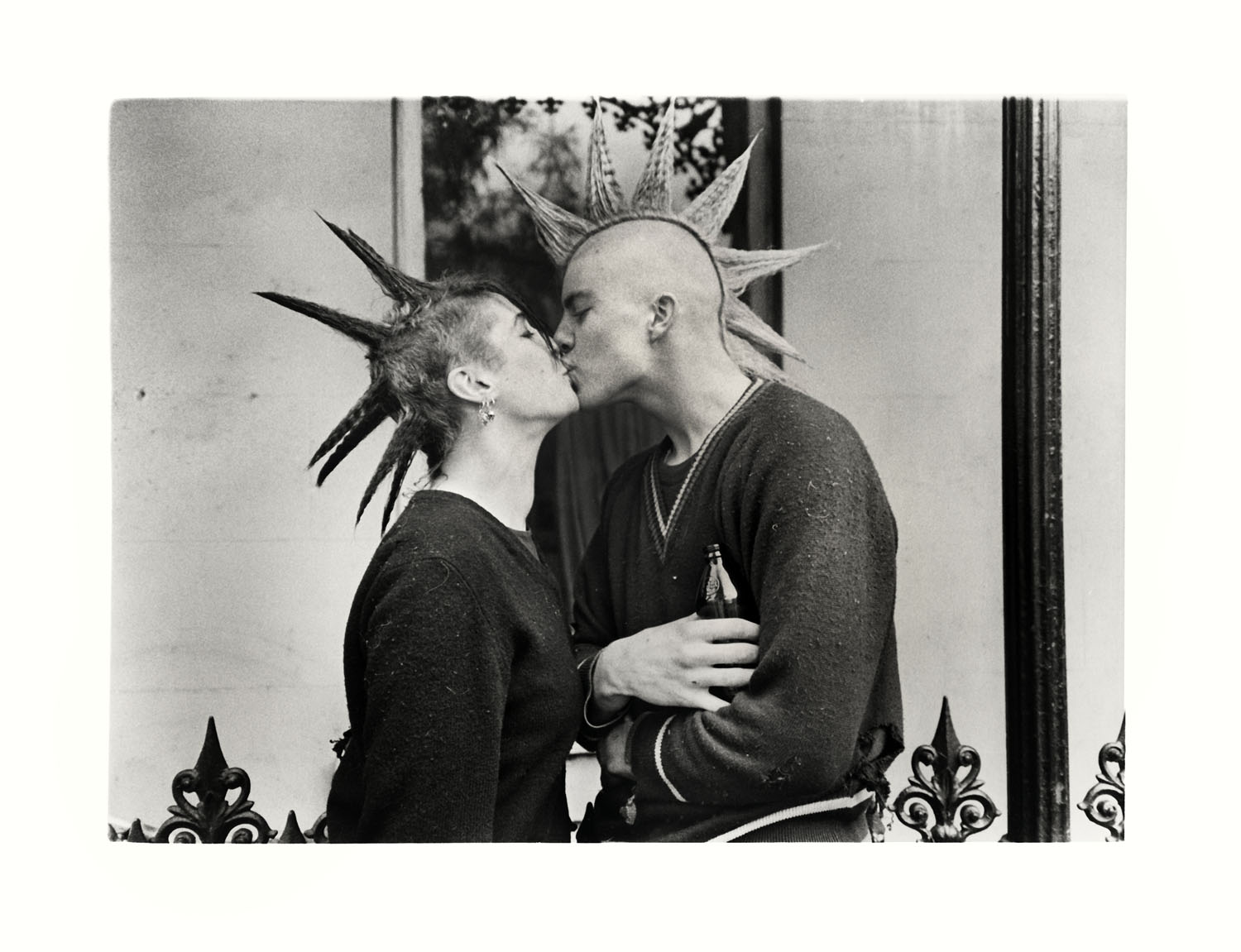
Viva Gibb (Australian, 1945-2017)
Jill and Tim, 44 Hawke Street, West Melbourne
1988
Silver gelatin print
20 x 25.5cm
Loaned to the City of Melbourne by Sybil Gibb and Rupert Duffy
© Courtesy of the Estate of Viva Gibb
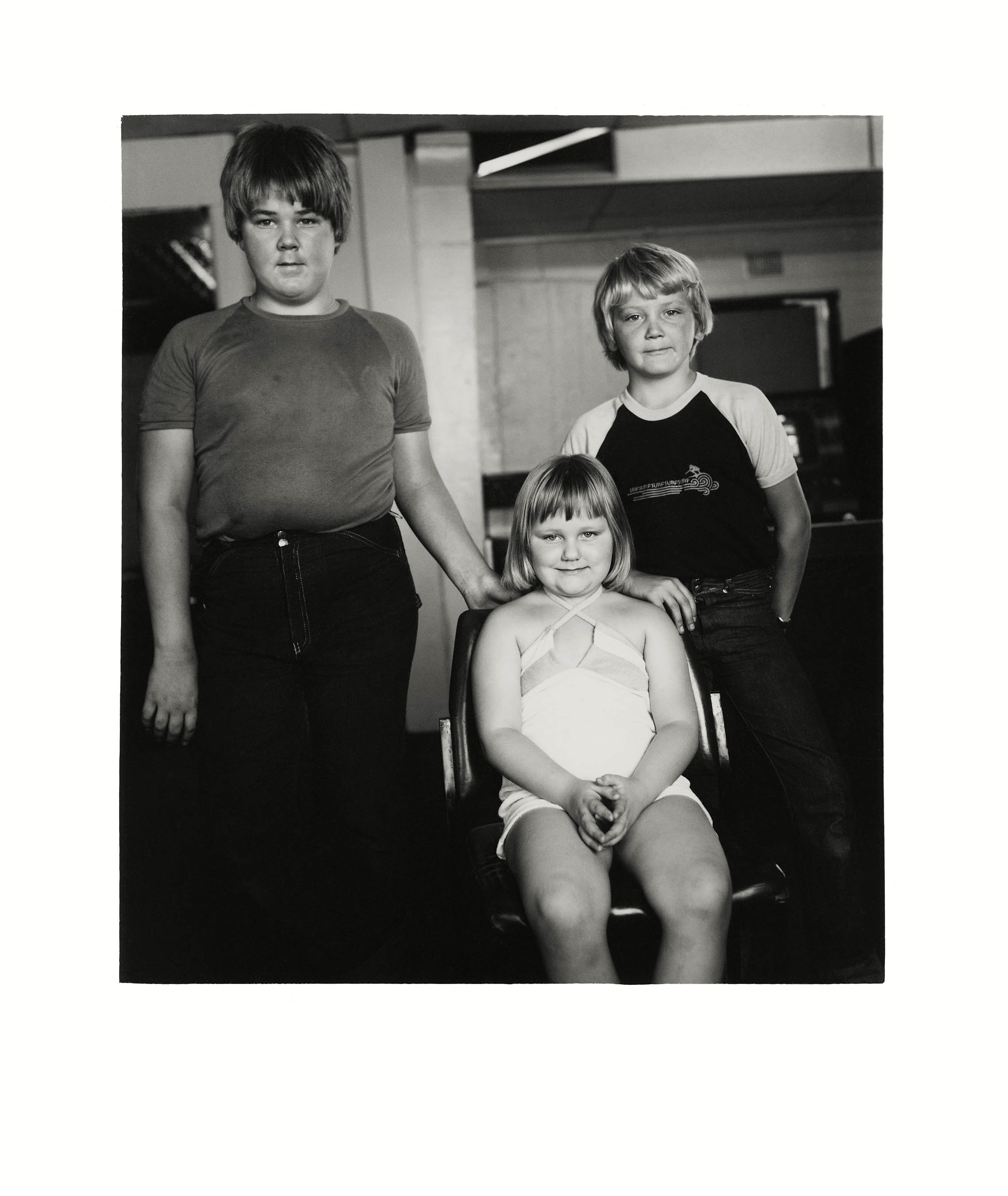
Viva Gibb (Australian, 1945-2017)
The Kennedy children, Three Crowns Hotel, 365 Victoria Street, West Melbourne
1982
Silver gelatin print
24 x 18cm
Donated by Sybil Gibb and Rupert Duffy to the Melbourne Art Trust in memory of Viva Gibb 2025
© Courtesy of the Estate of Viva Gibb
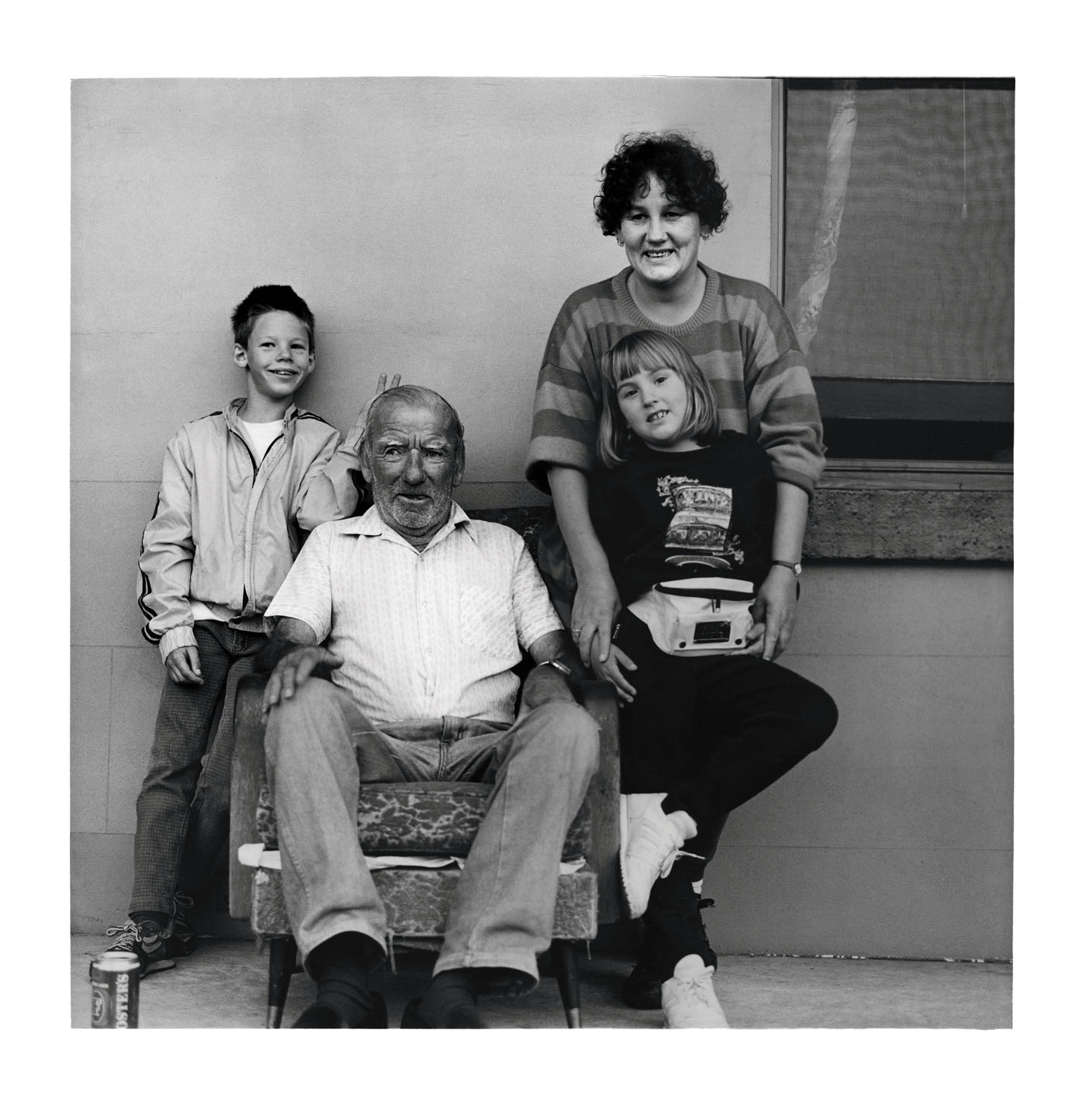
Viva Gibb (Australian, 1945-2017)
The Bergin family and Tommy, 8 Hawke Street, West Melbourne
1988
Silver gelatin print
31.5 x 30.5cm
Donated by Sybil Gibb and Rupert Duffy to the Melbourne Art Trust in memory of Viva Gibb 2025
© Courtesy of the Estate of Viva Gibb
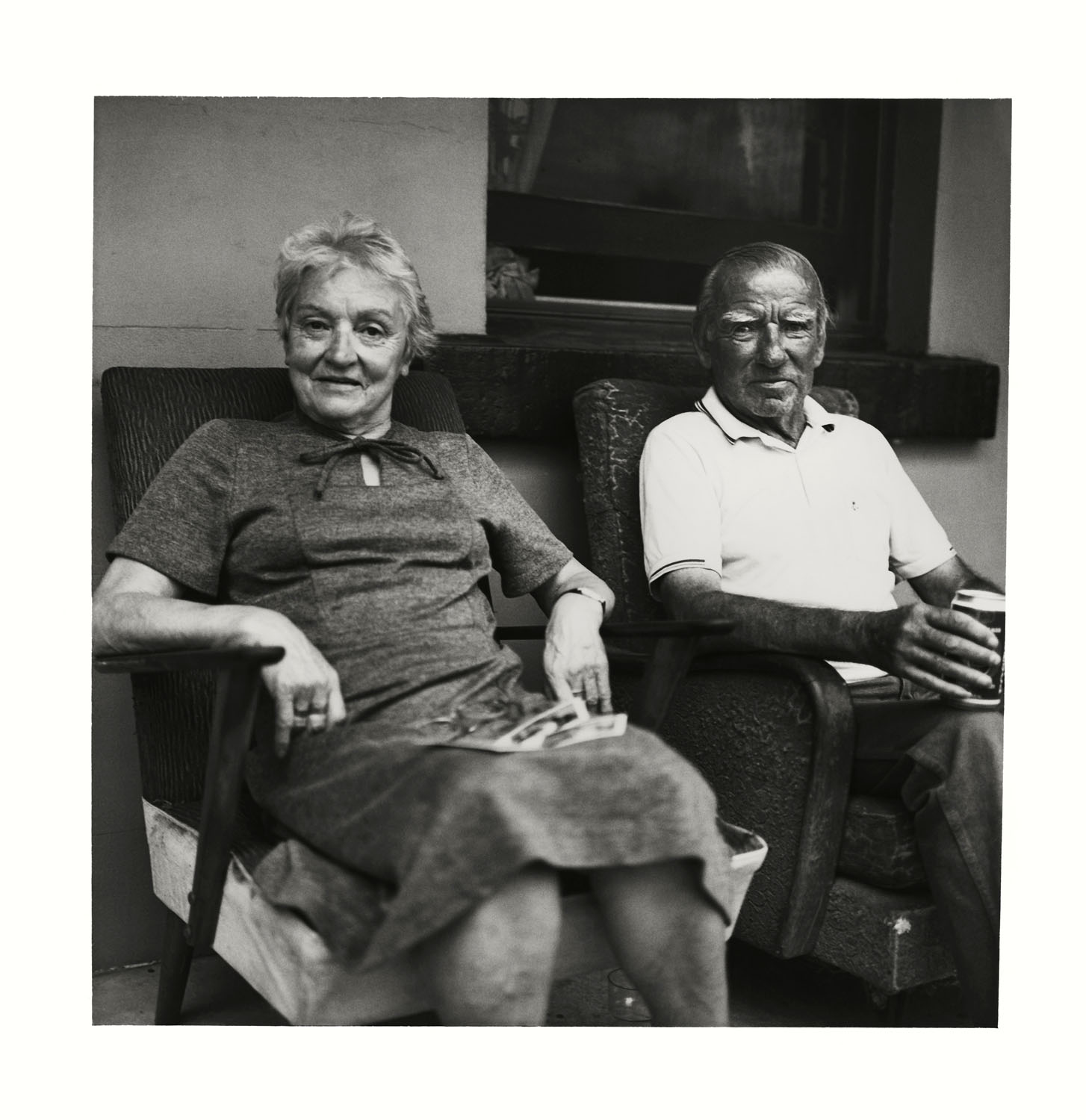
Viva Gibb (Australian, 1945-2017)
Francy and Tommy, 8 Hawke Street, West Melbourne
1988
Silver gelatin print
31.5 x 30.5cm
Donated by Sybil Gibb and Rupert Duffy to the Melbourne Art Trust in memory of Viva Gibb 2025
© Courtesy of the Estate of Viva Gibb
Viva Gibb was a part of the group of ‘northside’ social documentary photographers of the 1970s and 1980s (Ruth Maddison, Ponch Hawkes, Micky Allan, Helen Grace). She documented the suburbs of North and West Melbourne – where she lived – creating a distinctive, sympathetic portrait of her community during a transformative period in Melbourne’s history.
The exhibition has come about following a major donation of over 200 of Gibb’s photographs made to the Melbourne Art Trust in 2025, and will be the largest display of her work in over 30 years. The show features more than 250 images, including the artist’s photo albums. We have also published a small catalogue for the exhibition, which includes reflections written by Ruth Maddison and Helen Garner.
Text from the City Gallery website
“[Gibb] worked with a Rolleiflex medium-format camera for most of her portraiture, and a large-format 4 x 5-inch Graflex Speed Graphic press camera, tools that supported her patience and purpose, and built the trust of the person being photographed. The use of both offsets that sense of being scrutinised directly by the photographer that is imposed by an eye-level viewfinder or reflex camera, and one can see how Viva is standing above her camera or beside it, in eye contact with her subject, perhaps talking to them, calmly or animatedly depending on the reaction desired, as she presses the shutter.”
Associate Professor James McArdle. “Stance,” on the On This Date In Photography website, March 19, 2026 [Online] Cited 06/07/2026. Used under fair use conditions for the purposes of education and research
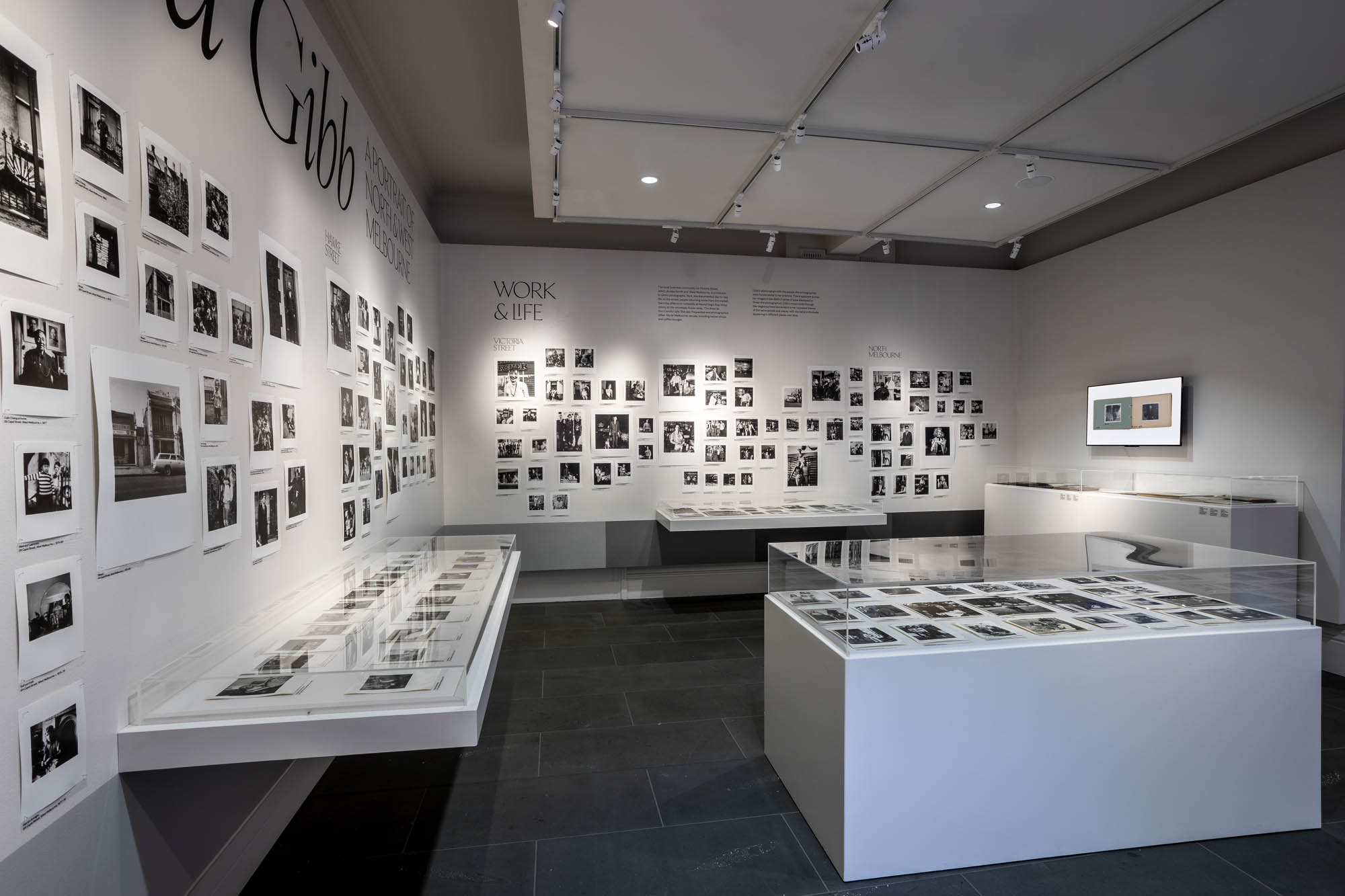
North Melbourne
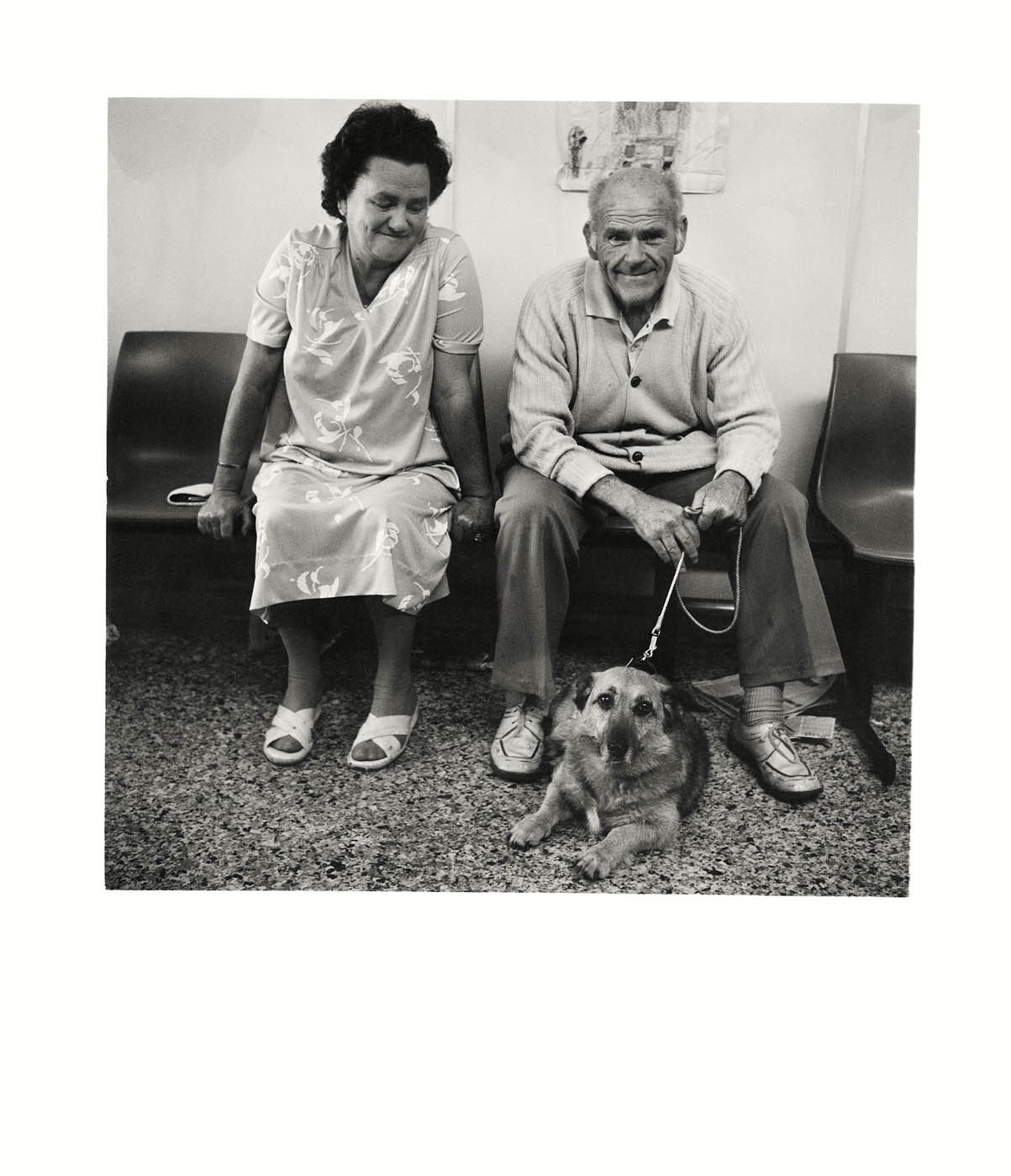
Viva Gibb (Australian, 1945-2017)
Couple with dog at Lort Smith Animal Hospital, 24 Villiers Street, North Melbourne
c. 1977
Silver gelatin print
24 x 18cm
Donated by Sybil Gibb and Rupert Duffy to the Melbourne Art Trust in memory of Viva Gibb 2025
© Courtesy of the Estate of Viva Gibb
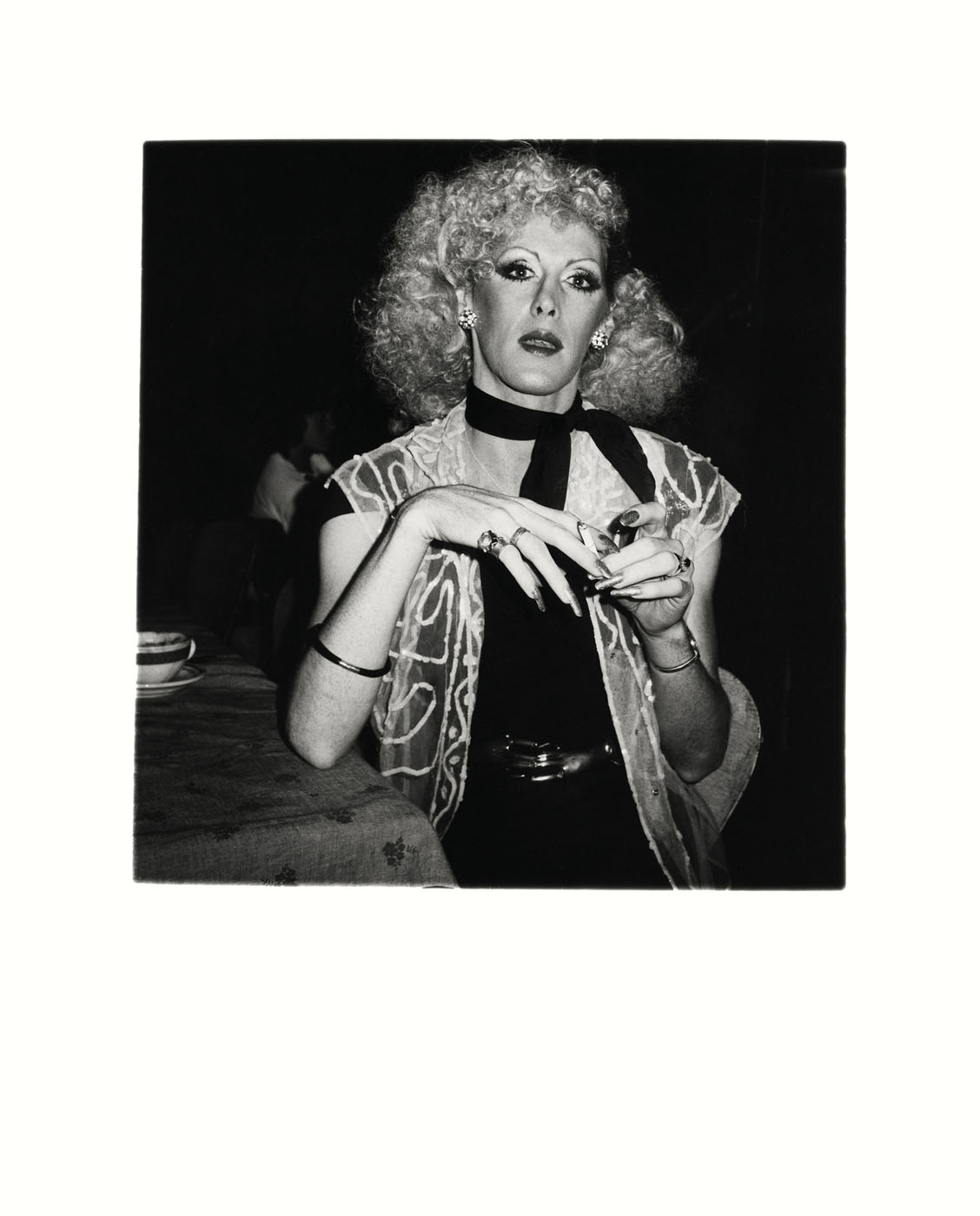
Viva Gibb (Australian, 1945-2017)
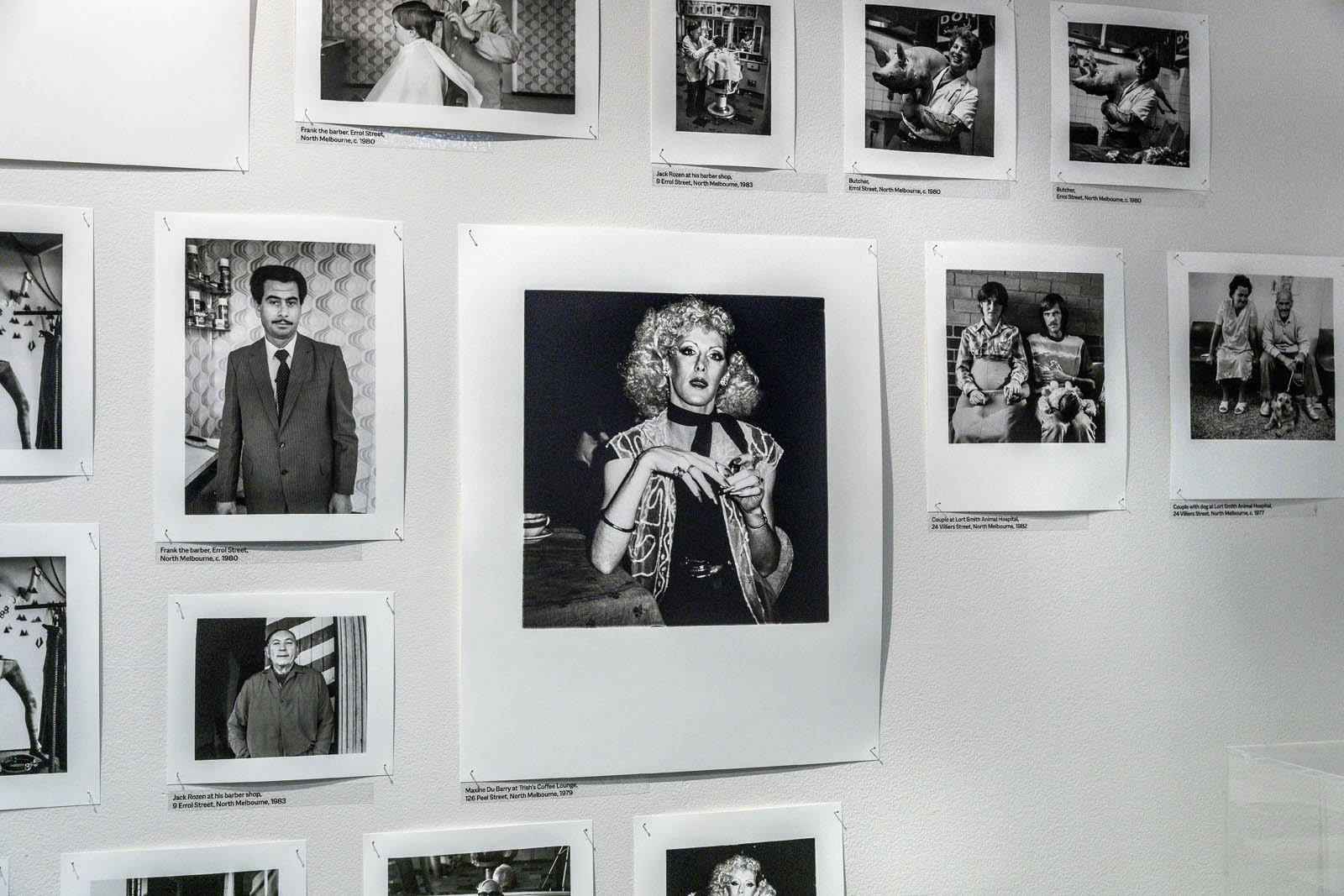
Maxine Du Barry at Trish’s Coffee Lounge, 126 Peel Street, North Melbourne
1979
Silver gelatin print
25 x 20.5cm
Donated by Sybil Gibb and Rupert Duffy to the Melbourne Art Trust in memory of Viva Gibb 2025
© Courtesy of the Estate of Viva Gibb
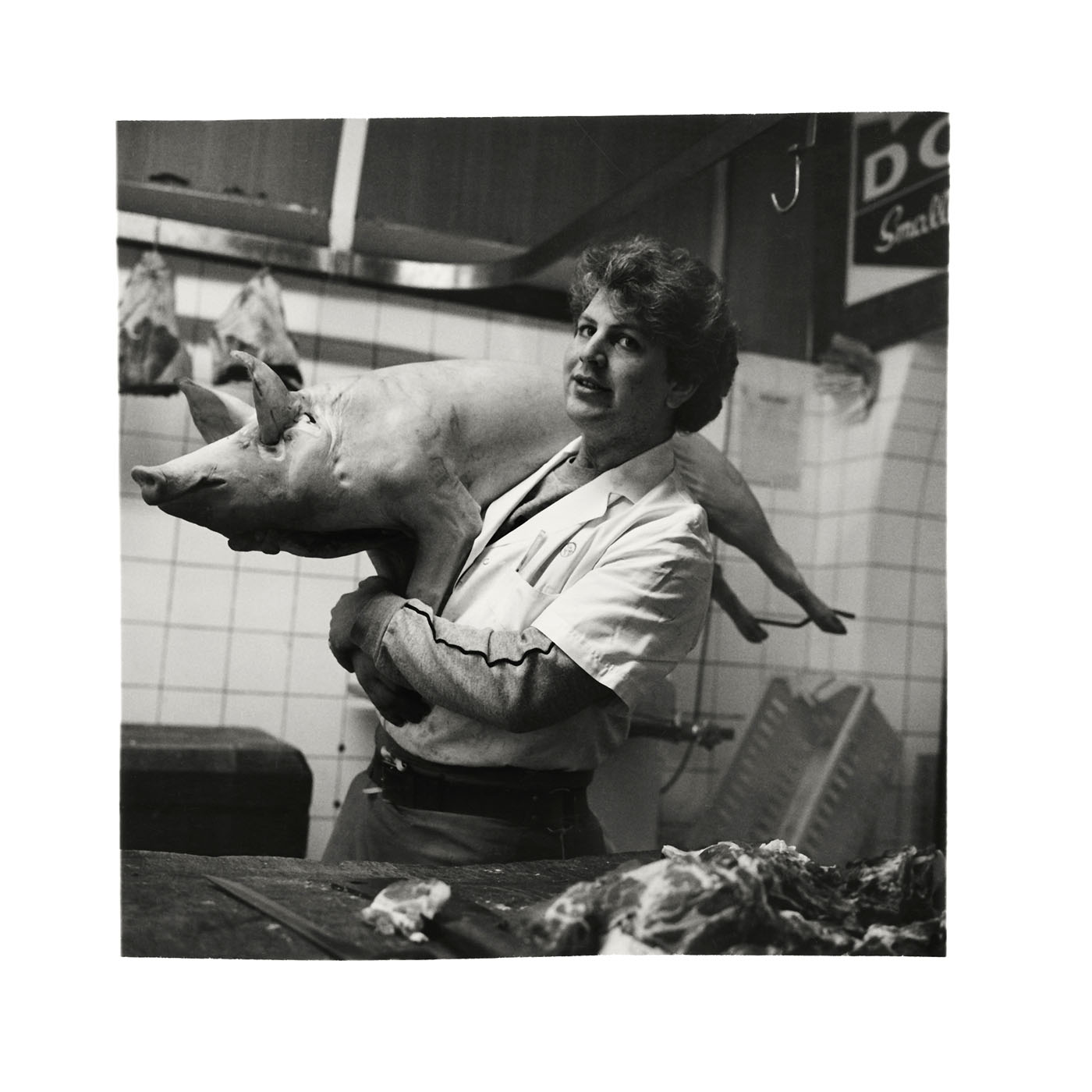
Viva Gibb (Australian, 1945-2017)
Butcher, Errol Street, North Melbourne
c. 1980
Silver gelatin print
17 x 15cm
Donated by Sybil Gibb and Rupert Duffy to the Melbourne Art Trust in memory of Viva Gibb 2025
© Courtesy of the Estate of Viva Gibb
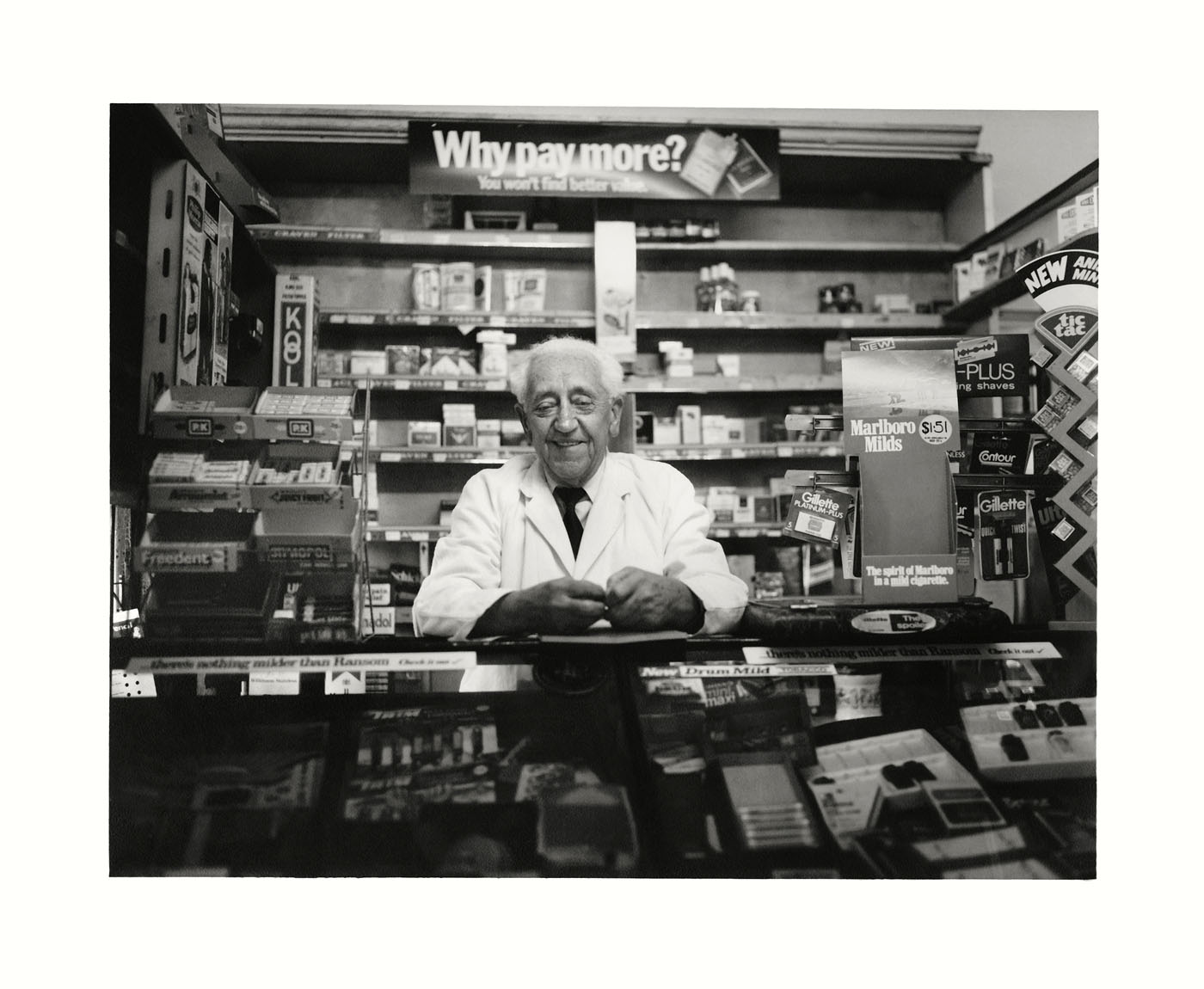
Viva Gibb (Australian, 1945-2017)
Mr Lindsay Williams at his barber and tobacconist shop, Errol Street, North Melbourne
c. 1982
Silver gelatin print
20 x 25cm
Donated by Sybil Gibb and Rupert Duffy to the Melbourne Art Trust in memory of Viva Gibb 2025
© Courtesy of the Estate of Viva Gibb
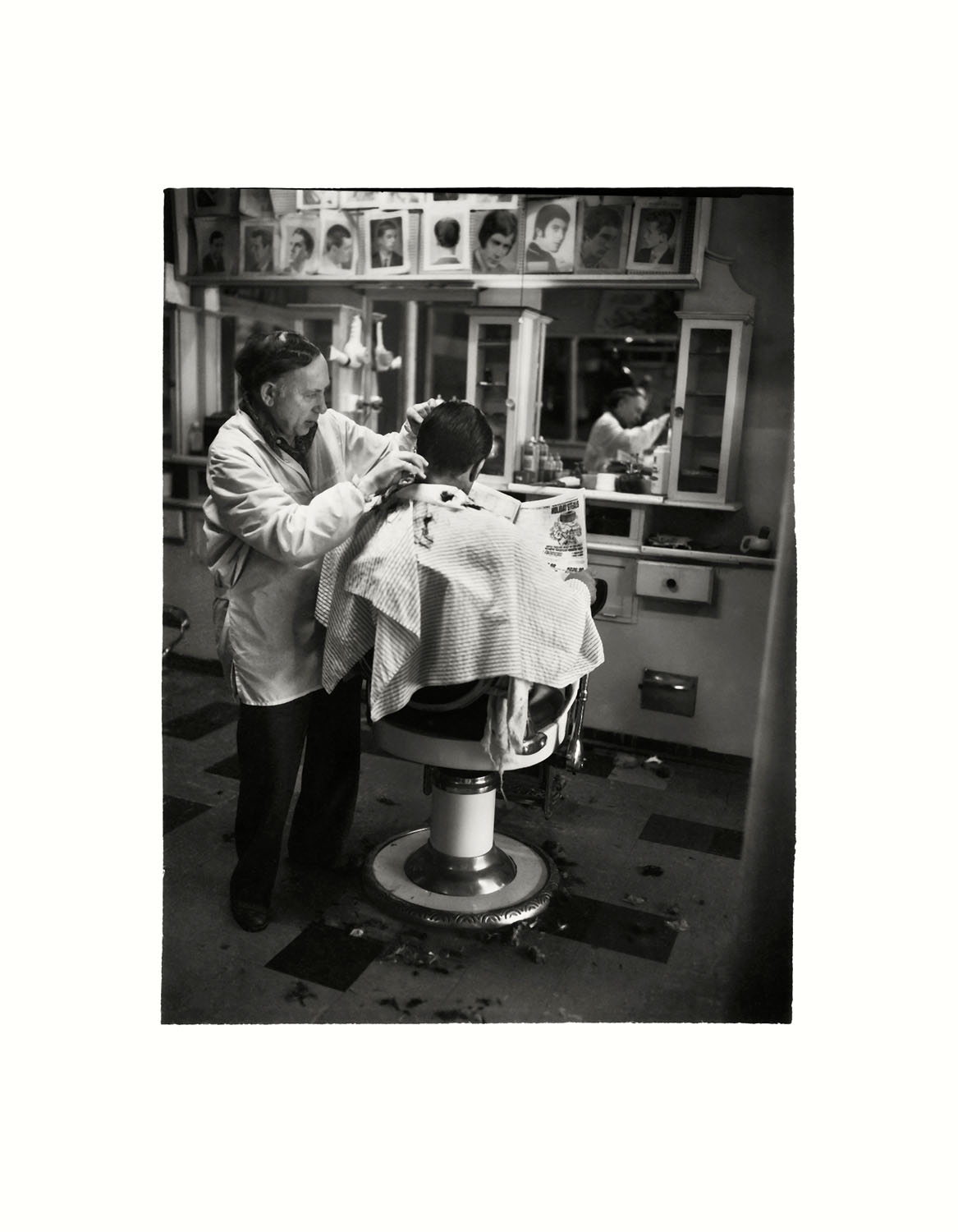
Viva Gibb (Australian, 1945-2017)
Jack Rozen at his barber shop, 9 Errol Street, North Melbourne
1983
Silver gelatin print
17.5 x 12.5cm
Donated by Sybil Gibb and Rupert Duffy to the Melbourne Art Trust in memory of Viva Gibb 2025
© Courtesy of the Estate of Viva Gibb
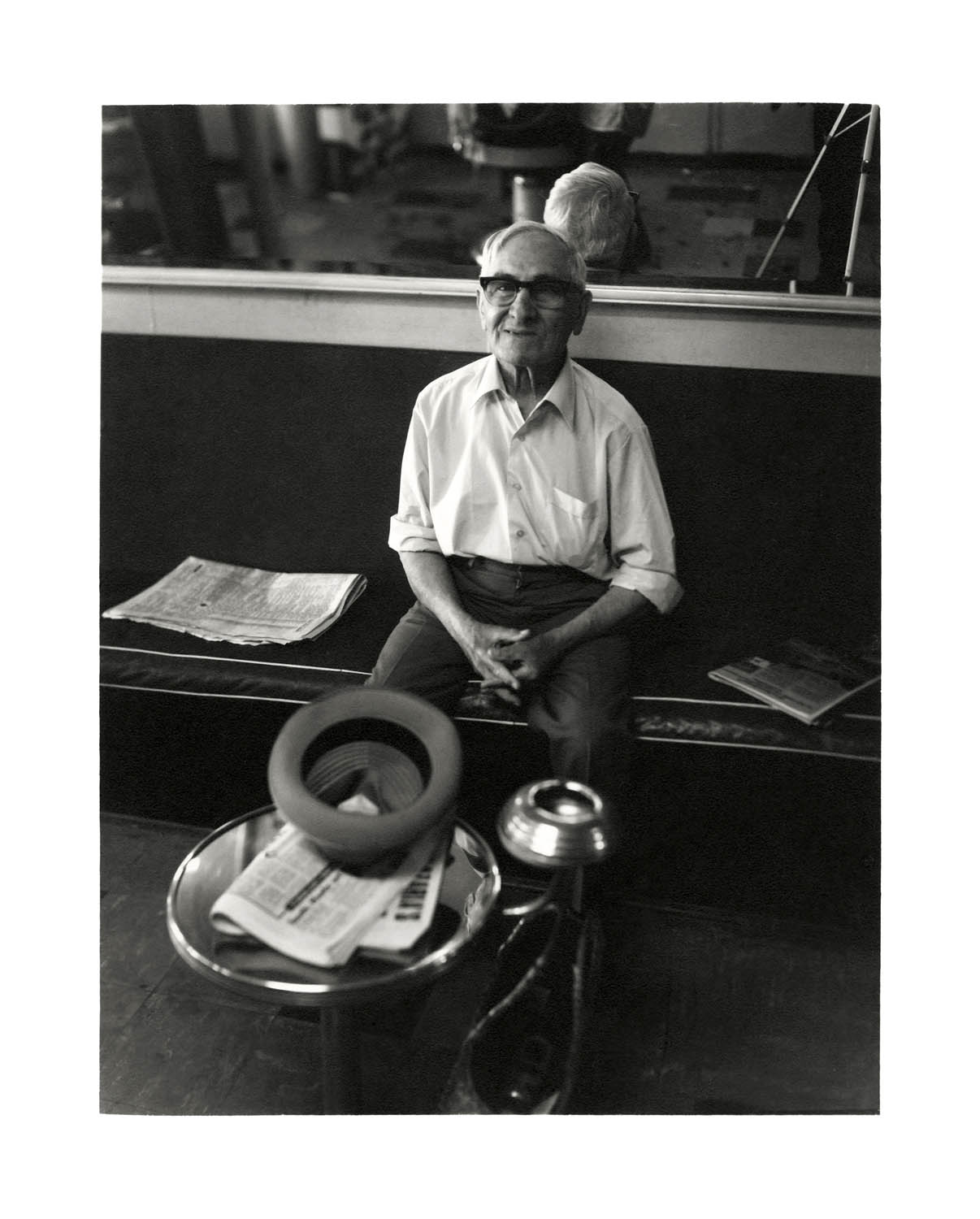
Viva Gibb (Australian, 1945-2017)
Man at Jack Rozen’s barber shop, 9 Errol Street, North Melbourne
c. 1983
Silver gelatin print
22 x 17.5cm
Donated by Sybil Gibb and Rupert Duffy to the Melbourne Art Trust in memory of Viva Gibb 2025
© Courtesy of the Estate of Viva Gibb
In 2025, Melbourne Art Trust acquired a major donation by artist and social-documentary photographer Viva Jillian Gibb (1945-2017). Generously made by the artist’s children, Sybil Gibb and Rupert Duffy, it comprises more than 200 silver gelatin photographs taken between the mid-1970s and the early 1990s. On the street where I live showcases works from this donation, alongside several prints and photo albums loaned from the artist’s family. Taking its title from one of these albums, the exhibition re-examines this period of Gibb’s practice, reintroducing an artist whose vast body of work has largely lain dormant for three decades.
Born in Bobinawarrah, Victoria, Gibb was first and foremost an artist. She was unwavering in her pursuit of this. She undertook a diploma of art at Wangaratta Technical College (1961-65); moved to Melbourne to study painting at the National Gallery Art School (1965-68); and studied printmaking at the Victorian College of the Arts (VCA; 1973-74). Photography became the focus of her practice only after her postgraduate study.
Moving to West Melbourne in 1975, Gibb quickly established her first dedicated darkroom at 72 Capel Street. Her technical printmaking skills carried over to photography’s hands-on processes. She had an array of photographic papers, often shooting to print on a particular paper. Her son Rupert recalls, “she knew exactly how black she wanted her blacks to be and how bright her highlights were and knew her exposures so well that she was rarely wasteful with film’.1 She worked with a Rolleiflex medium-format camera and a large-format 4 x 5” Graflex Speed Graphic press camera.
The community of North and West Melbourne was Gibb’s foremost subject between the mid-1970s and early 1990s. Her sustained documentation of those living and working in this area remains unmatched. The prolific nature of her practice is evident in the number of photographs – more than 250 – on display in this exhibition, a small fraction of the work she produced.
In the late 1980s, Gibb’s commitment to social justice led her to South Africa, where she documented people’s lives in towns and villages under apartheid. She also travelled to Hong Kong and China, photographing markets and sacred sites for a series titled Of Gods and Animals, which commented on the contrast between spiritual traditions and lived realities.
Returning to Australia, Gibb noted the lack of photographic training opportunities for Aboriginal women. In response, she approached the Victorian Women’s Trust for funding to facilitate a photography cadetship program. The first recipients of these funded cadetships were Maree Clarke and Kim Kruger.
Gibb began what would become her last photographic series in the 1990s. The Way: Religious Ceremonies in Victoria documented the ceremonies and events of multicultural communities. She wanted to draw attention to the historical significance of these events, especially for migrants, who she saw as having managed, against great odds, to maintain their cultural practices in Australia.
The premature end of Gibb’s practice, around 2000, was likely brought about by the digital turn in photography, changes to which she never adapted. She kept photographically documenting her friends and family but returned to painting until she passed away in 2017.
From her first solo exhibition in 1978, Gibb’s work was exhibited throughout the 1980s, including at the National Gallery of Victoria (NGV) and National Gallery of Australia. Today, her photographs are held in significant public collections across the country. In 2019, the Museum of Australian Photography was the first public gallery to show her work in more than 30 years. On the street where I live builds on this, situating Gibb’s work in relation to her contemporaries and the broader social, political and cultural context of the time.
Text from Smith, Savannah; Garner, Helen; Maddison, Ruth (2026). On the streets where I live: Viva Gibb’s portrait of North and West Melbourne. Melbourne, Vic.: City of Melbourne, pp. 6-7. Exhibition catalogue
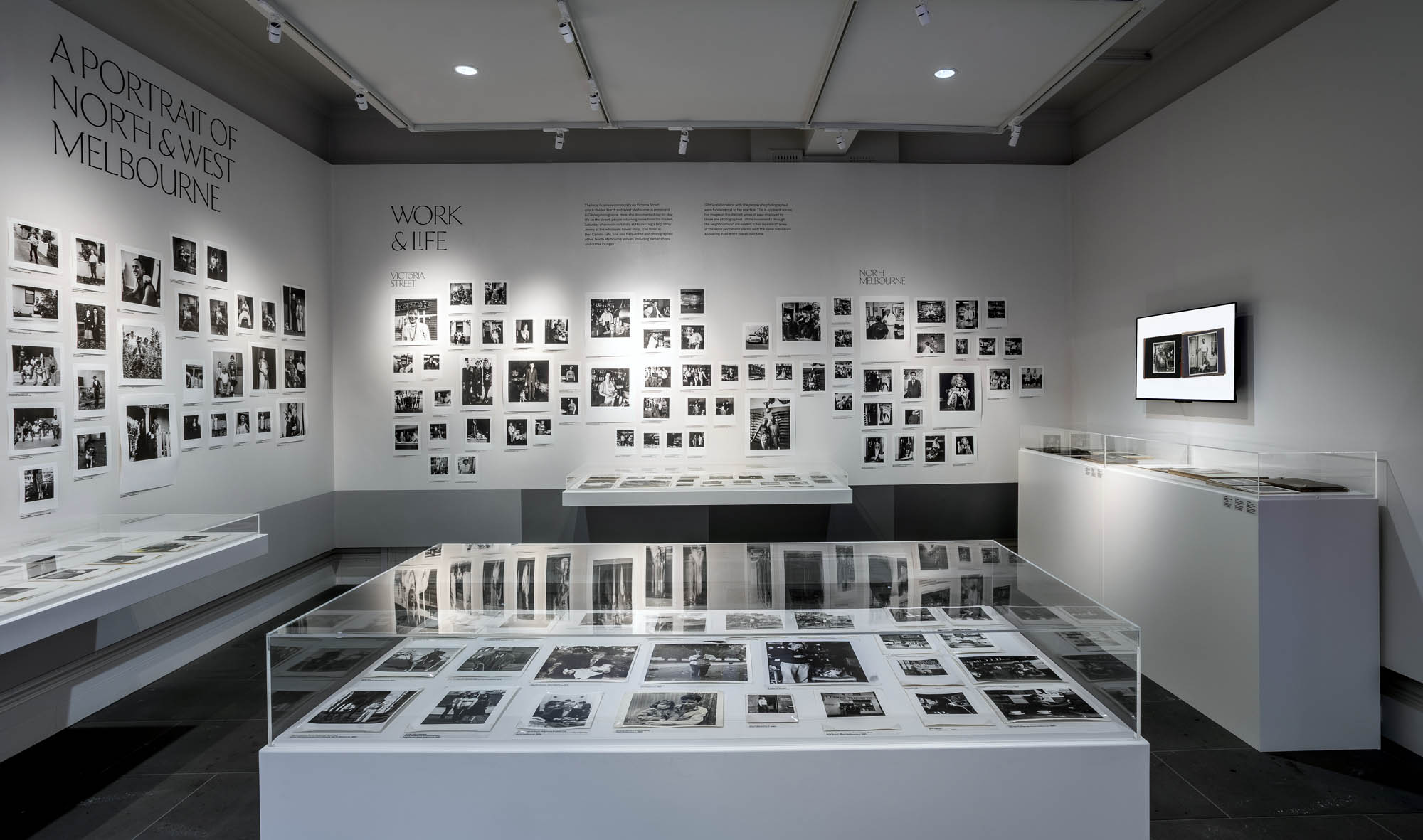
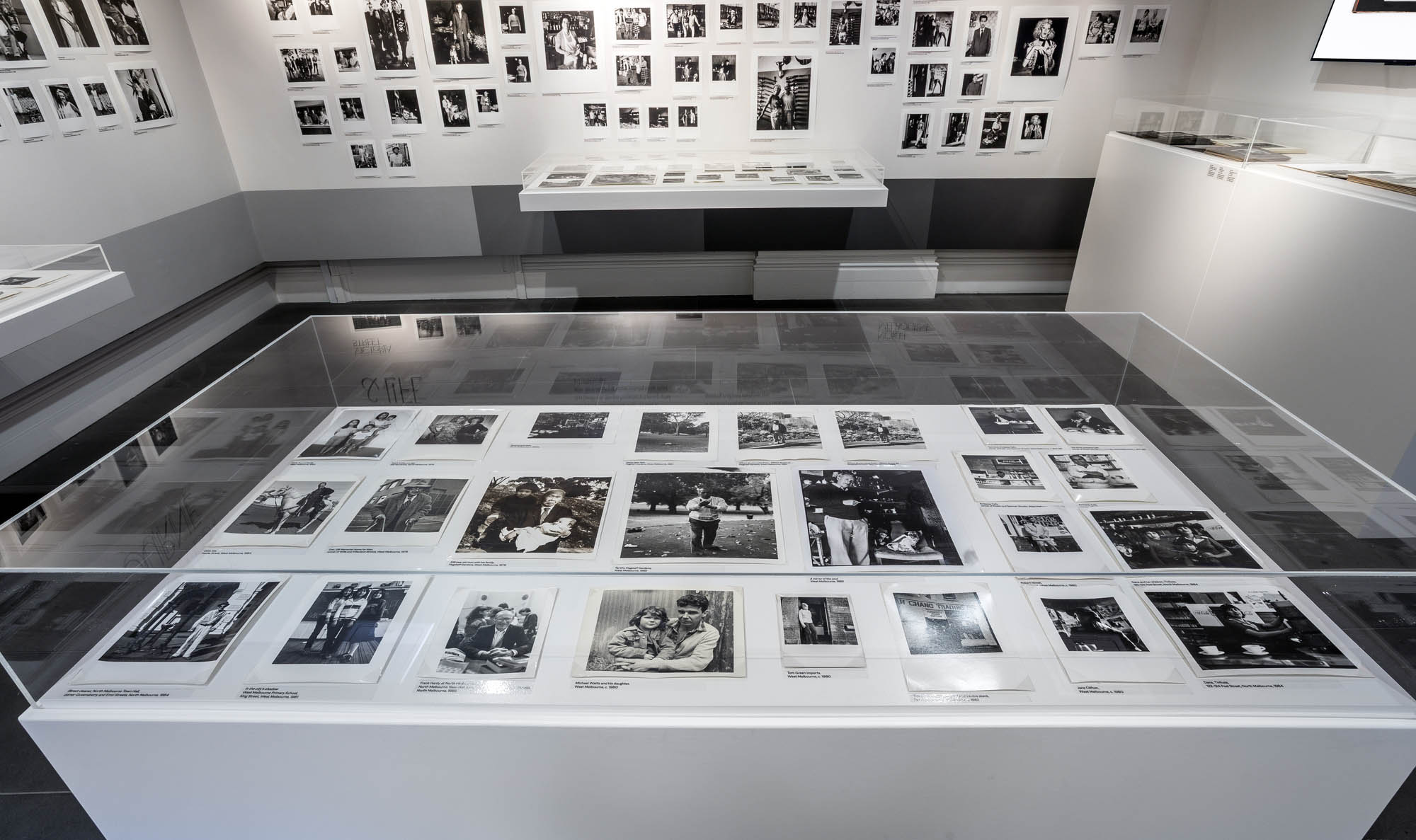
Work and Life
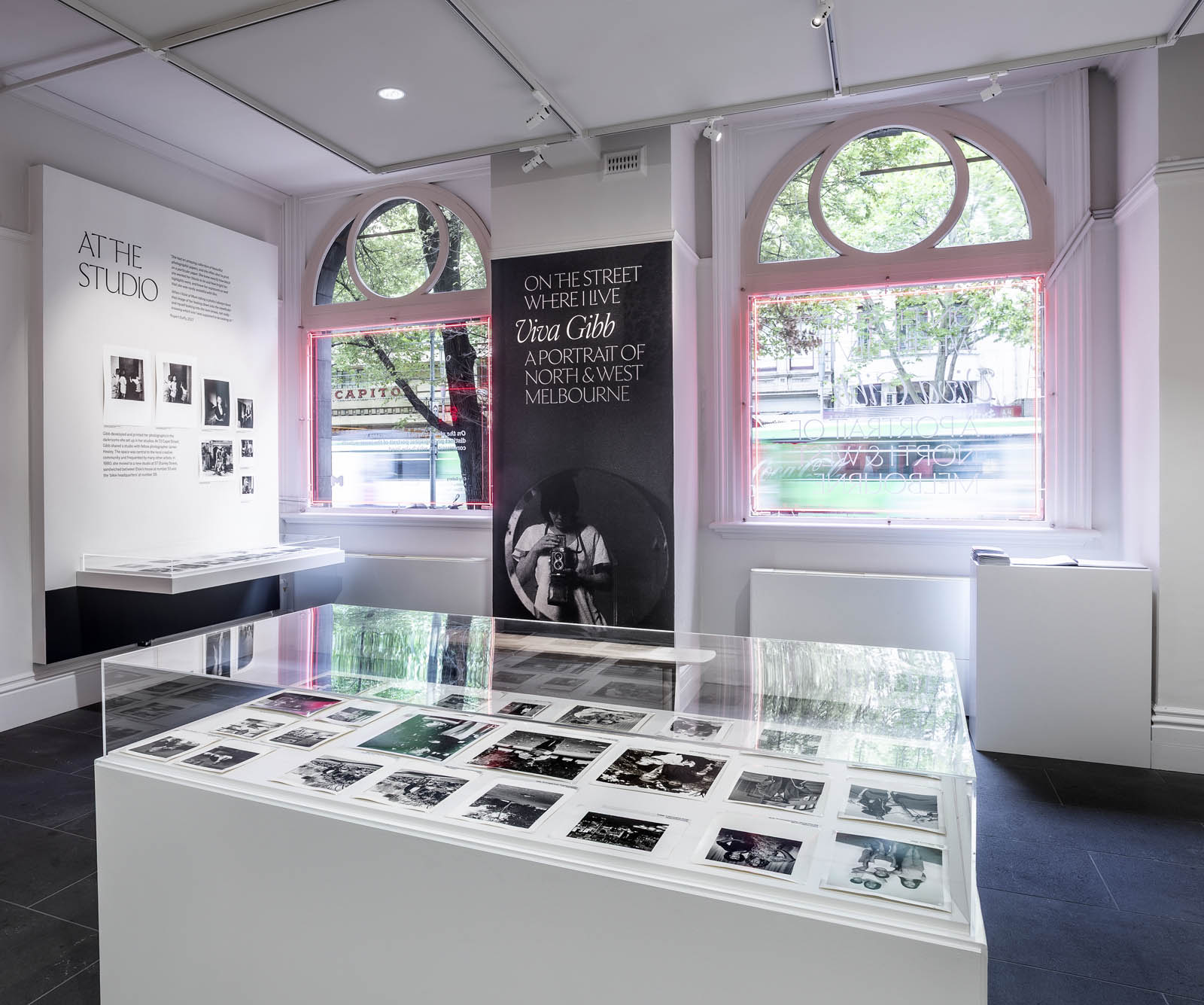
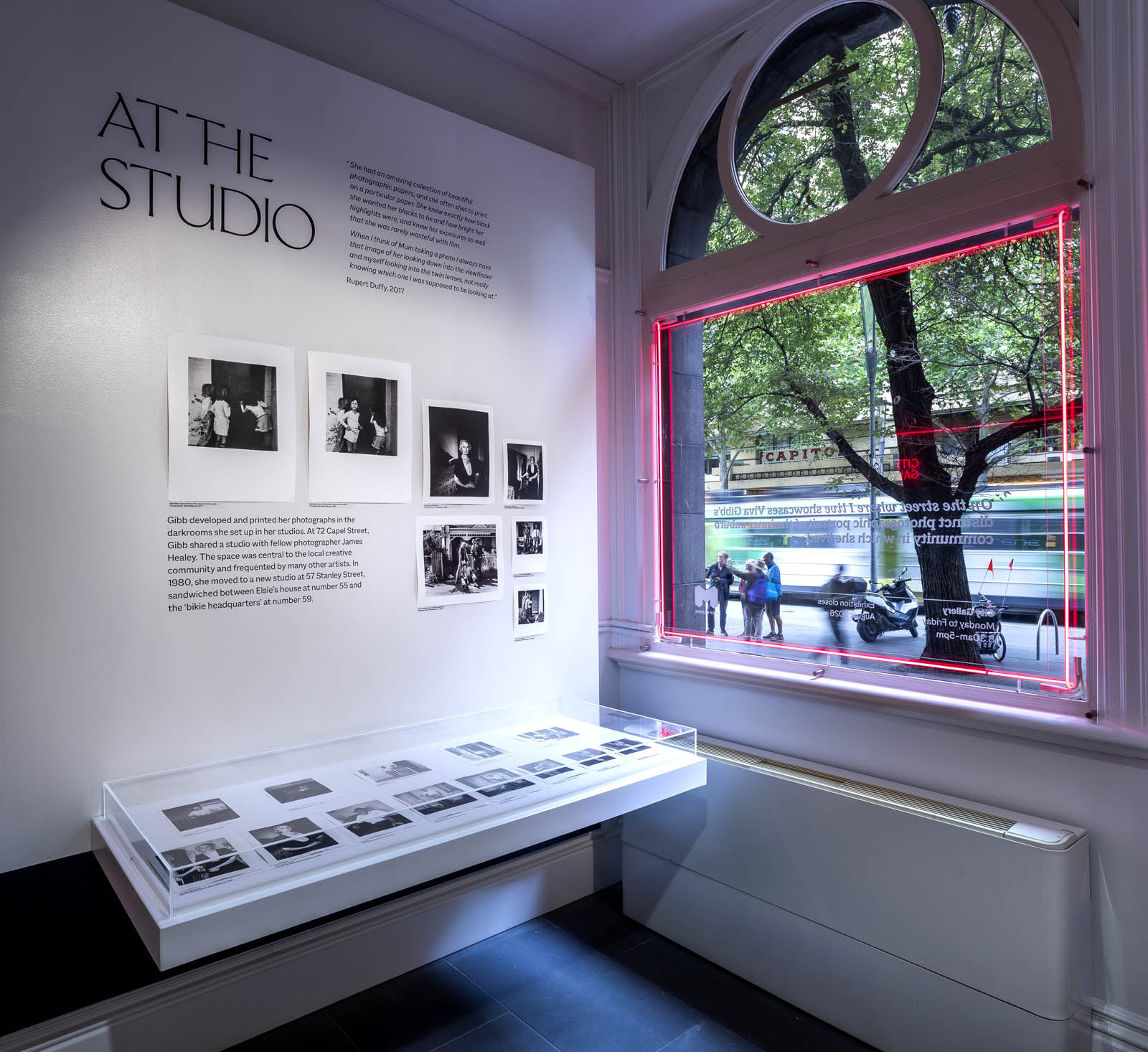
At the Studio
North Melbourne
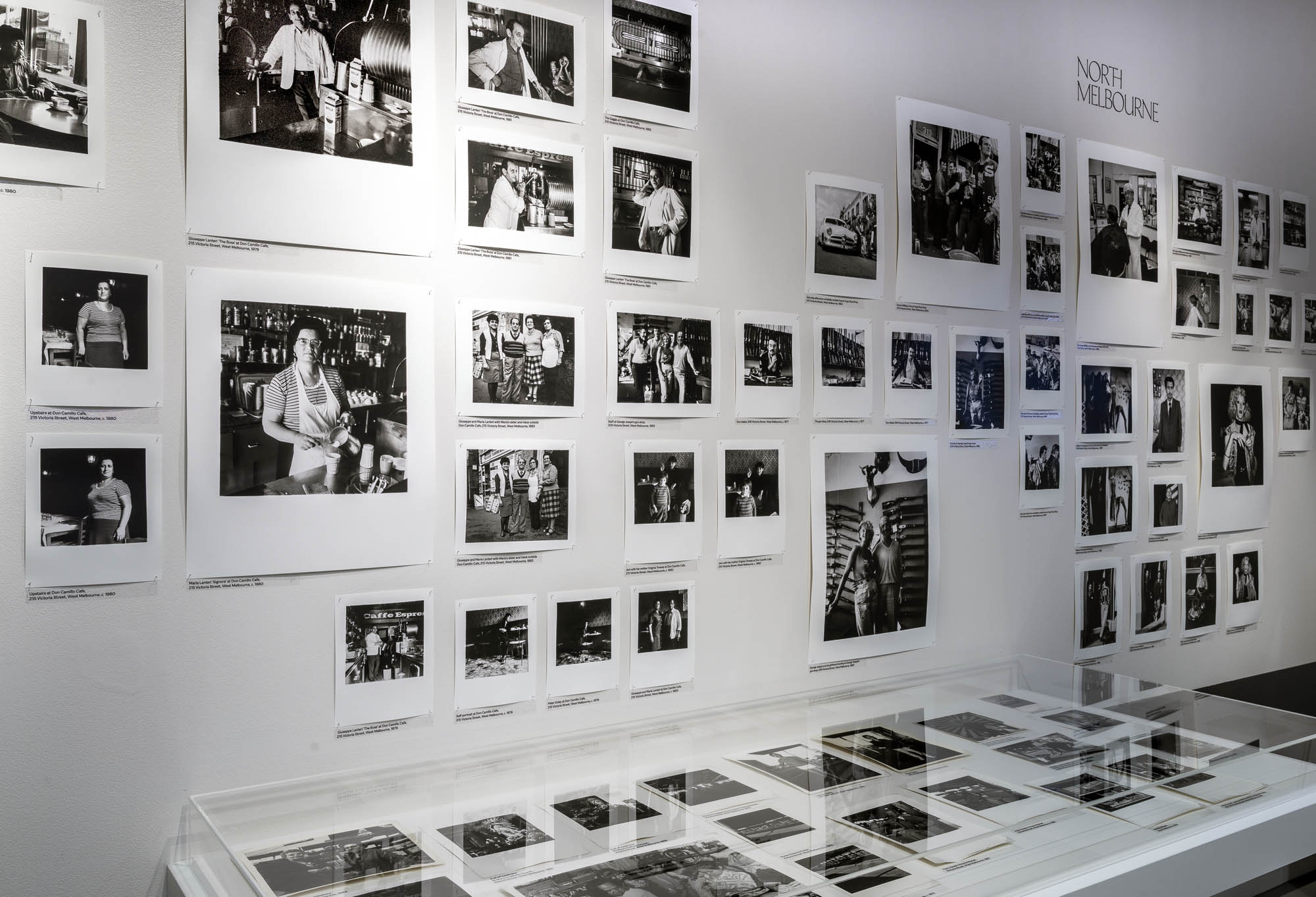
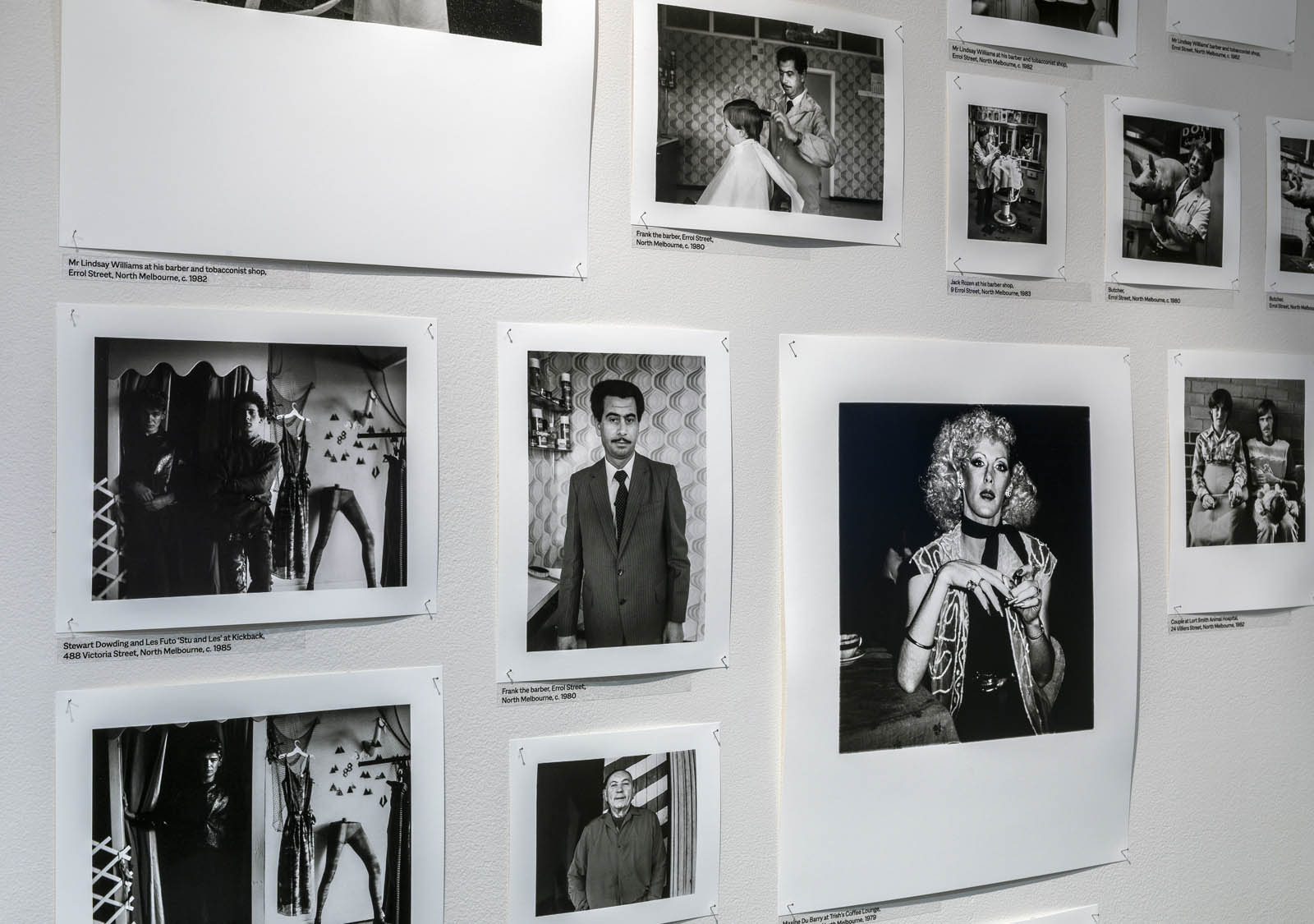
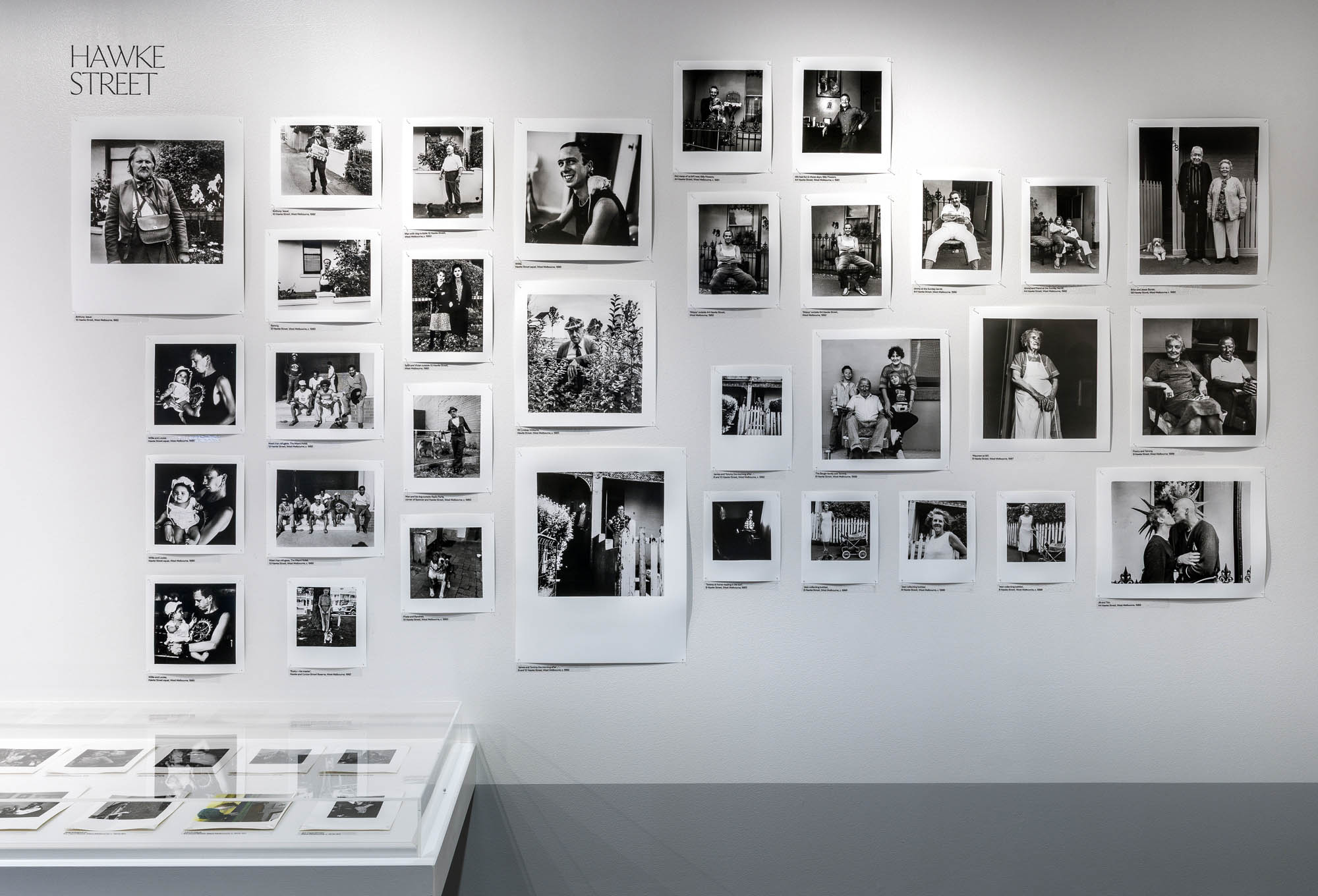
Hawke Street
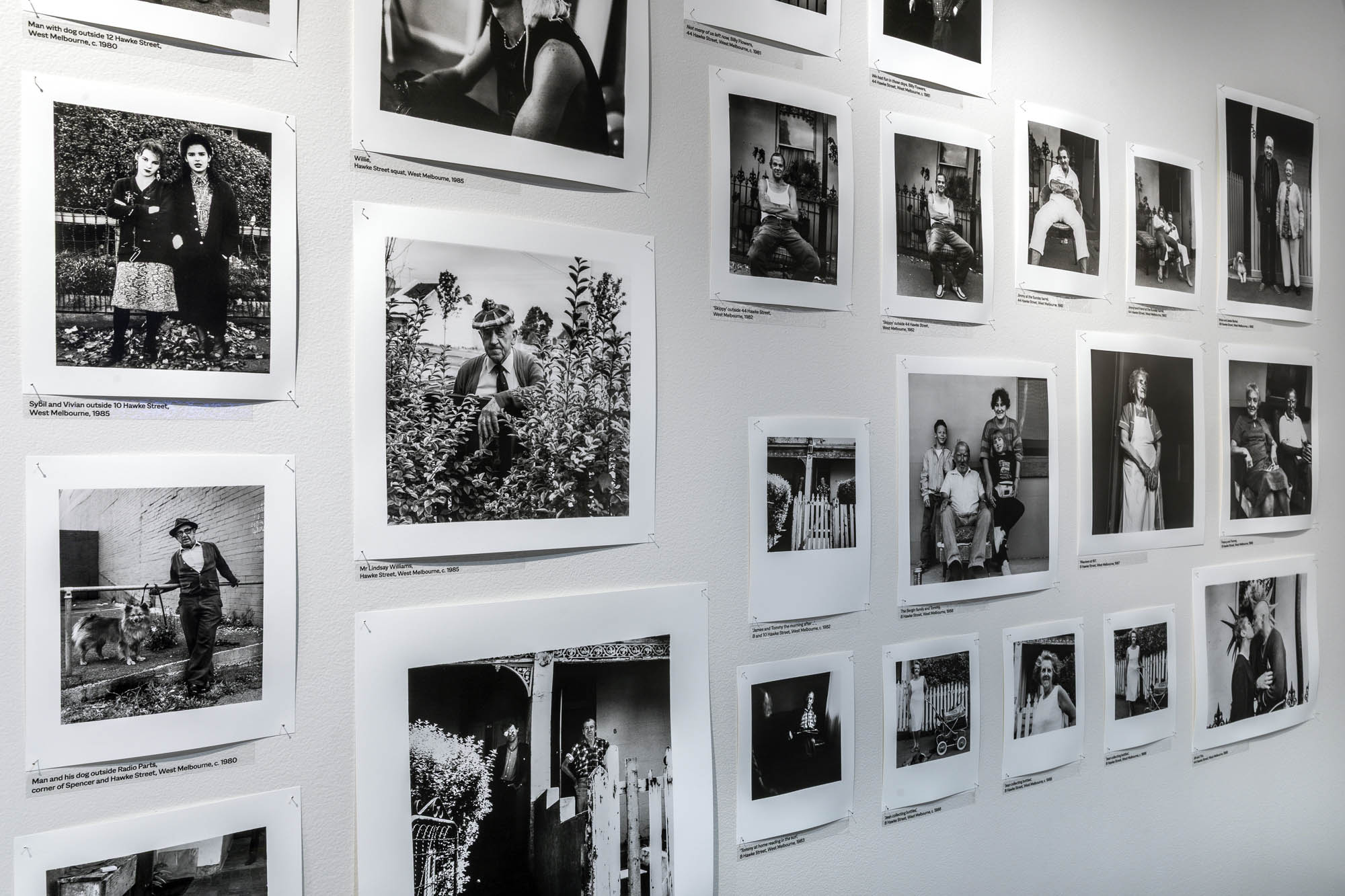
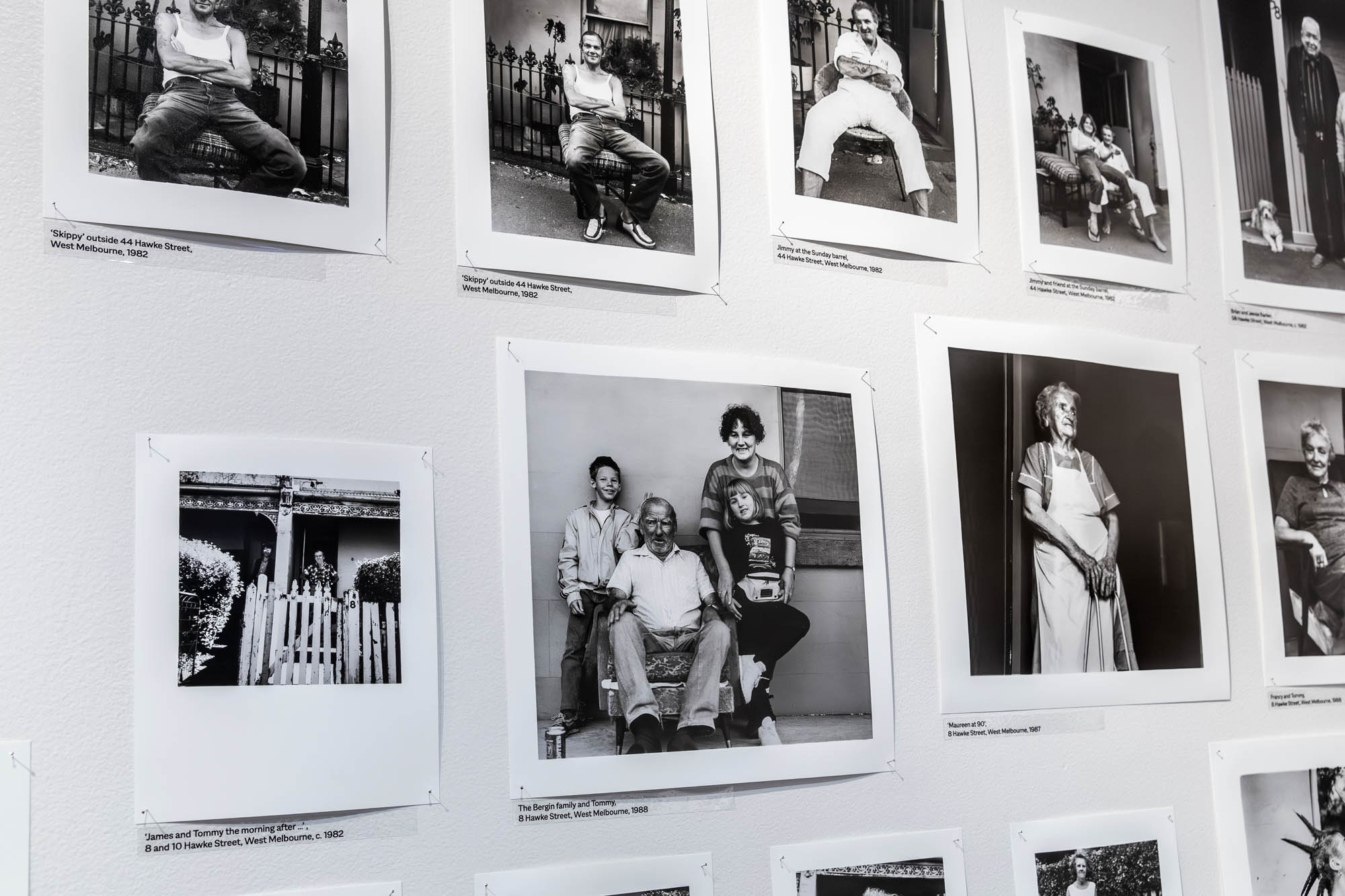
Victoria Street
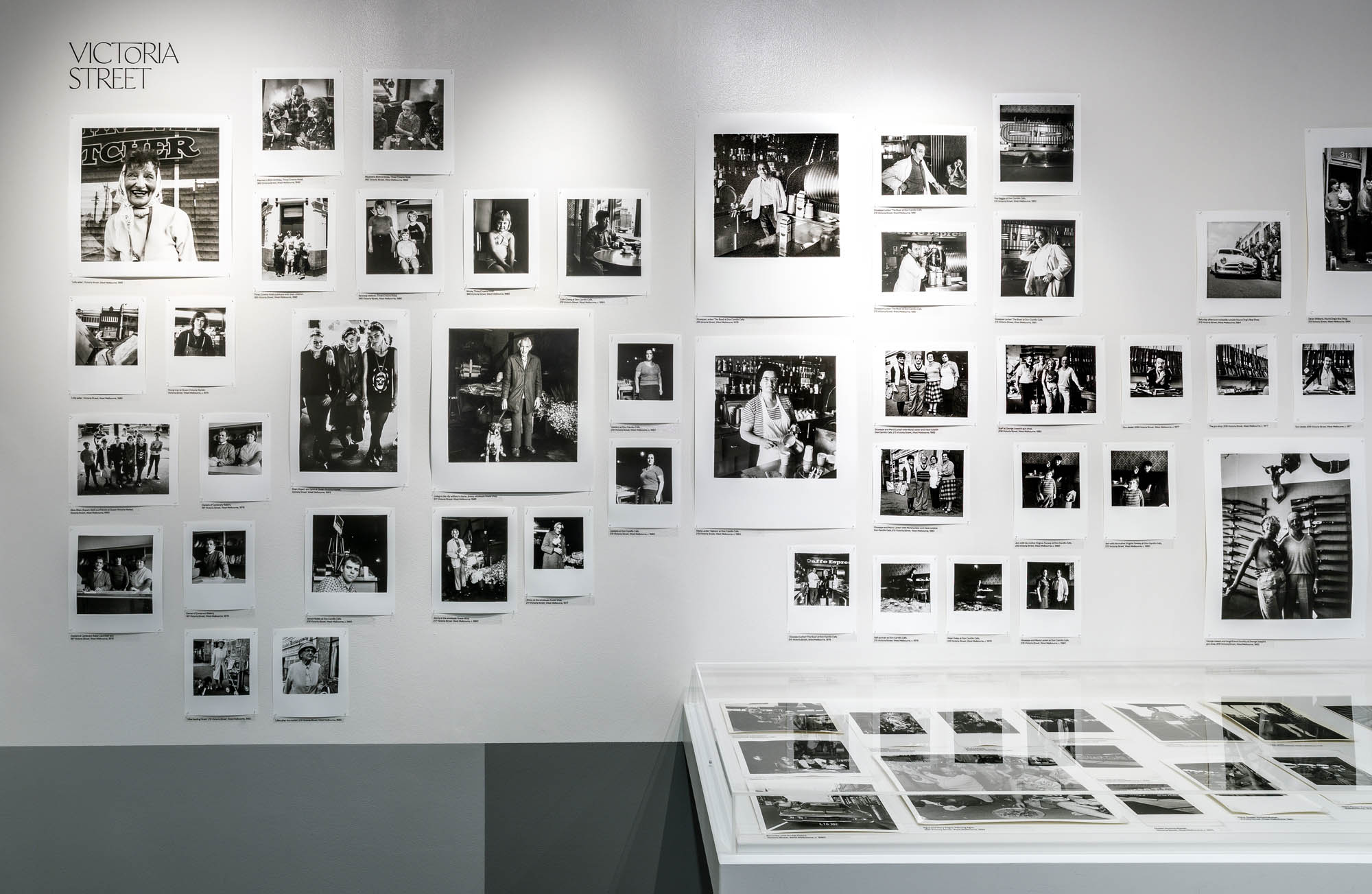
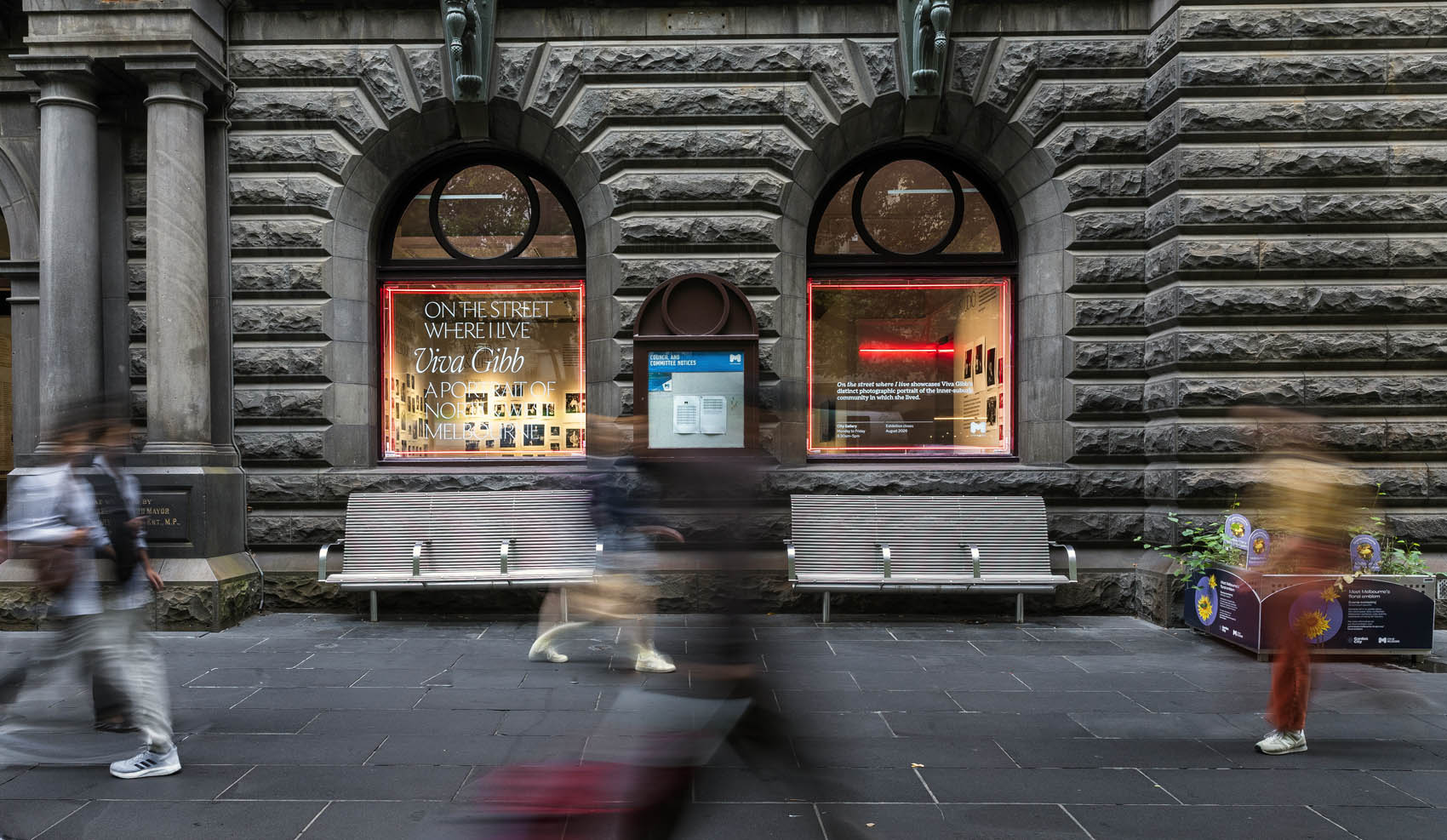
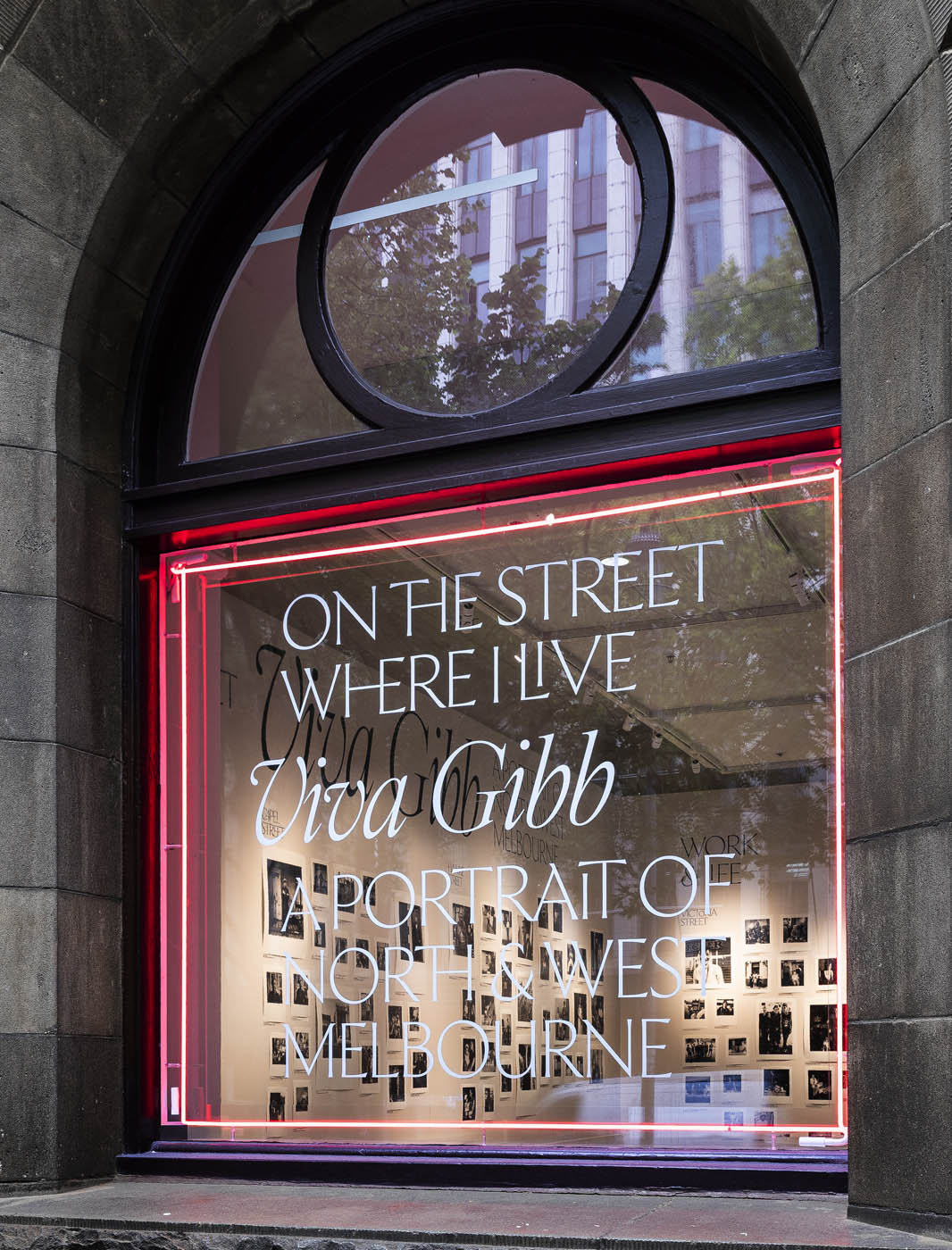
Installation views of the exhibition On the Street Where I Live: Viva Gibb at the City Gallery, Melbourne, March – August, 2026
Photos: Tobias Titz
The rehabilitation of Gibb’s reputation has come in two stages, each through a different institutional imperative. The first was the 2019 donation by her children, Sybil Gibb and Rupert Duffy, of a significant body of work to the Monash Gallery of Art (now the Museum of Australian Photography, or MAPh). This gift – silver gelatin prints from the West and North Melbourne years – led directly to A Place in Time: Photographs by Viva Gibb, which opened at MAPh in July 2019. It was, as the institution noted, the first public gallery showing of her work in more than thirty years. MAPh’s interest was in photography’s history: Gibb as a figure in Australian documentary practice, her technical mastery of the silver gelatin print, her place in the feminist photography network of the 1970s and ’80s.
The second act of institutional recognition came in 2025, when Sybil and Rupert donated over 200 silver gelatin prints to the Melbourne Art Trust – managed by the City of Melbourne’s Art and Heritage Collection. This donation, which came about through a stroke of chance (a separate donor mentioned Sybil Gibb to curator Savannah Smith, who then made contact), led to On the Street Where I Live: Viva Gibb’s Portrait of North and West Melbourne, which opened at City Gallery in Melbourne Town Hall on 12 March 2026 and runs until 7 August.
The City of Melbourne’s interest is civic and historical: Gibb’s photographs are a record of what West Melbourne was before gentrification arrived, before council auctioned off the properties it had accumulated, before the working-class and migrant community was priced out and dispersed. The exhibition is partly an act of municipal memory – an acknowledgement of what was lost when, in Gibb’s own words, “all those interesting faces which told a story” were gone.
These are not contradictory interests, but distinct, and reveal how photographic reputations may be restored: through the convergence of estate generosity, curatorial initiative, and institutional need. The photographs remain the same; what changed was who needed them, and why.
Associate Professor James McArdle. “Stance,” on the On This Date In Photography website, March 19, 2026 [Online] Cited 06/07/2026. Used under fair use conditions for the purposes of education and research
Viva Gibb albums
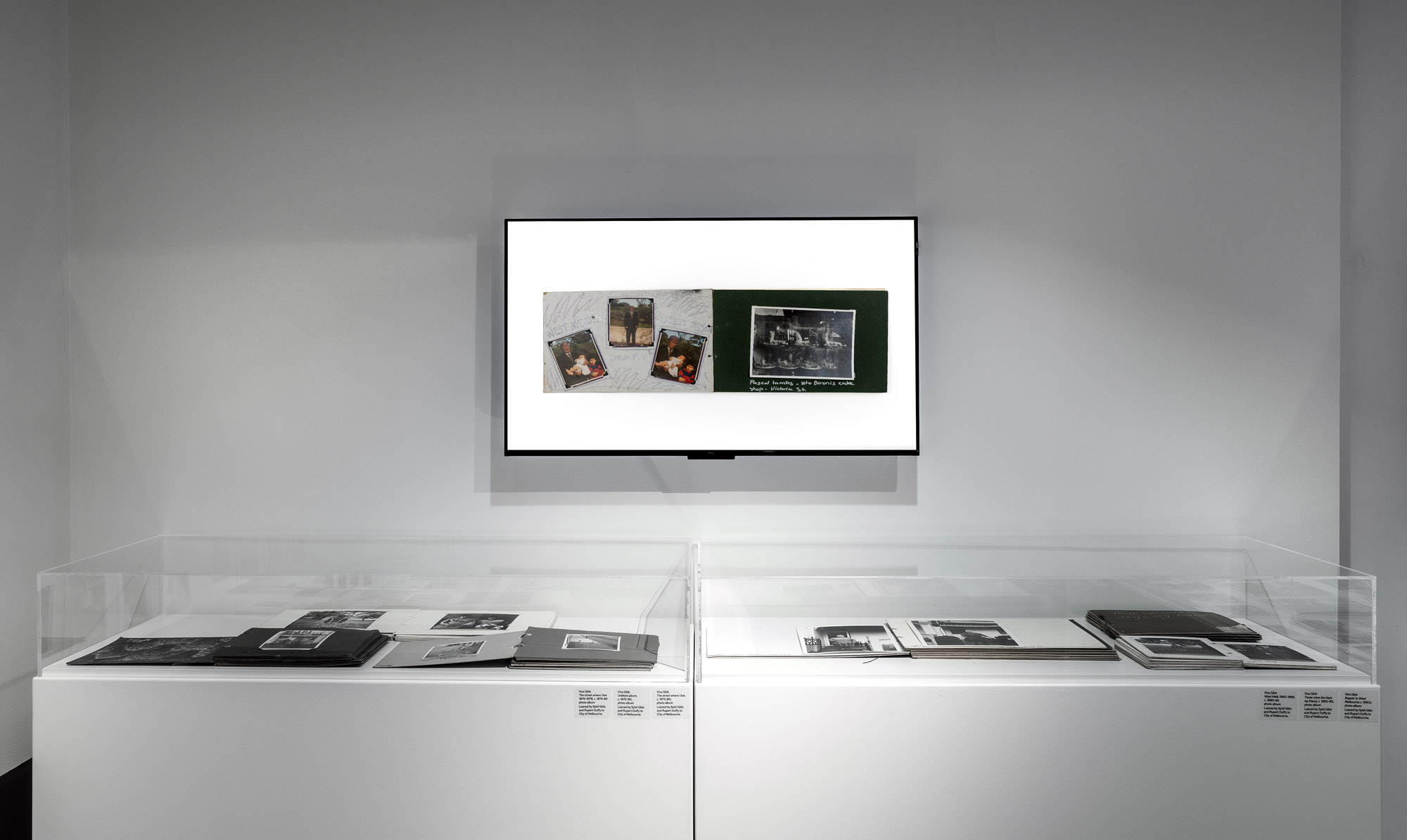
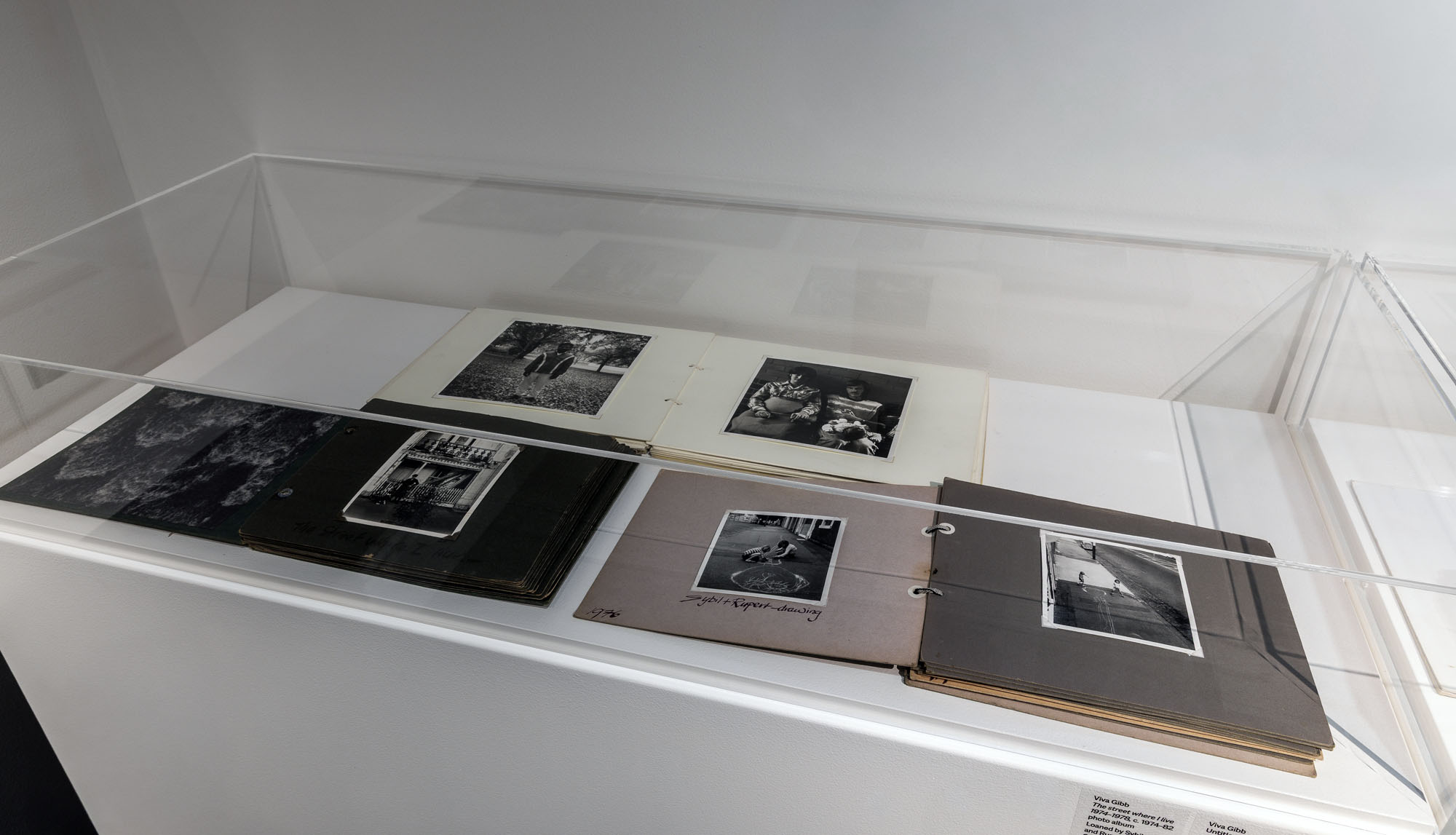
Installation view of the exhibition On the Street Where I Live: Viva Gibb at the City Gallery, Melbourne, March – August, 2026 showing Viva Gibb’s photo albums in a display case
Photos: Tobias Titz
The Street Where I Live 1974-1978 photo album
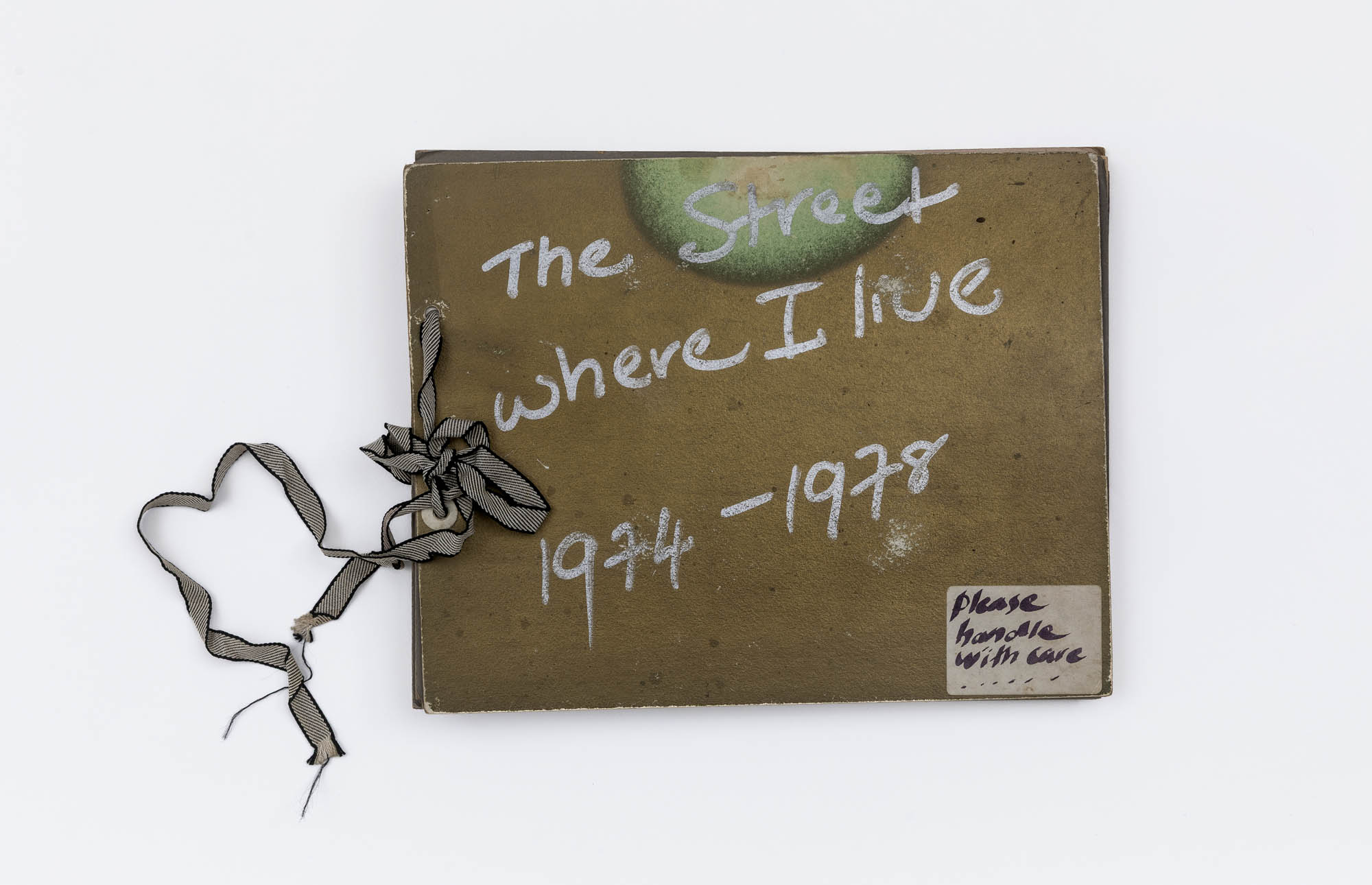
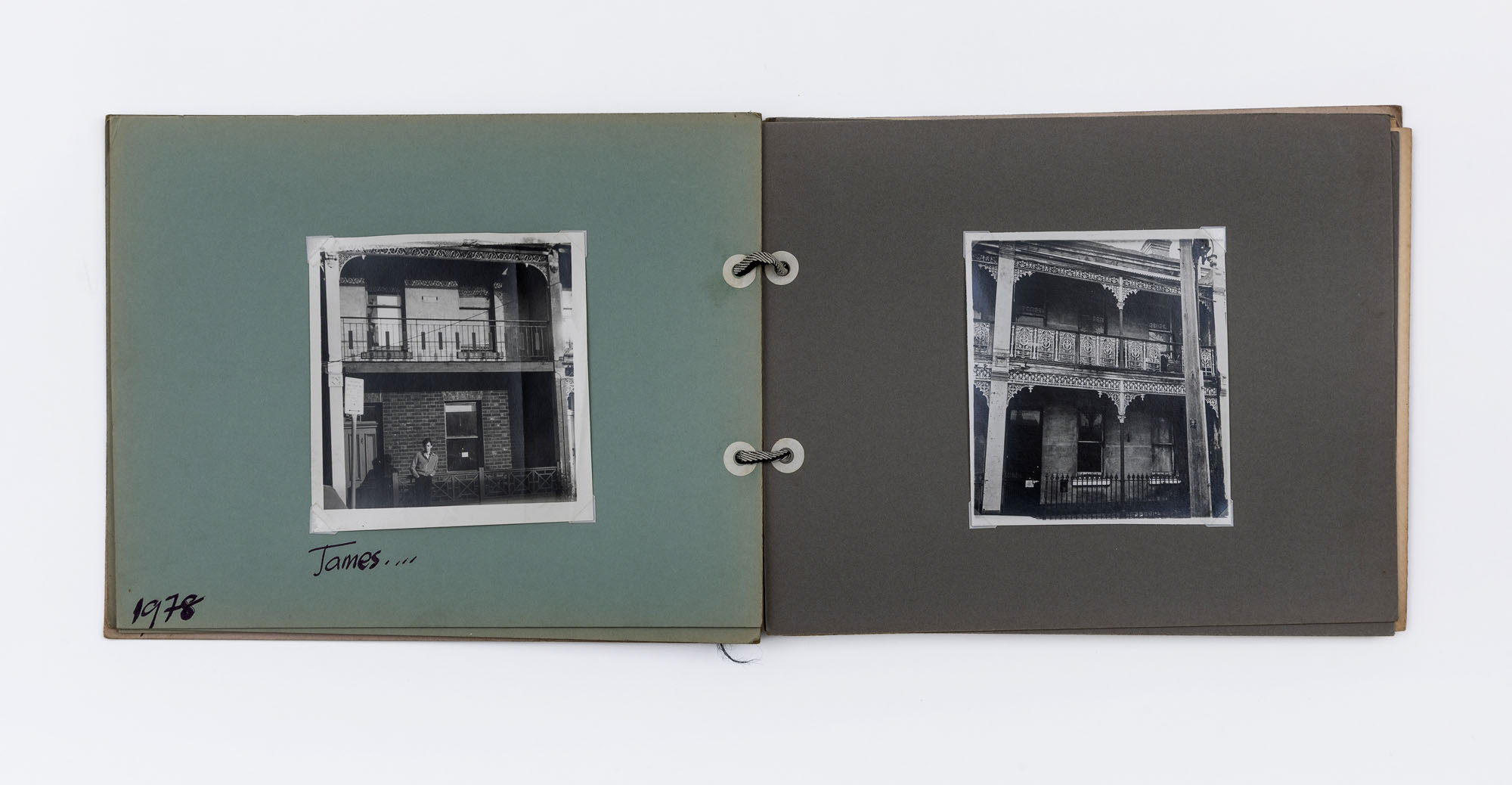
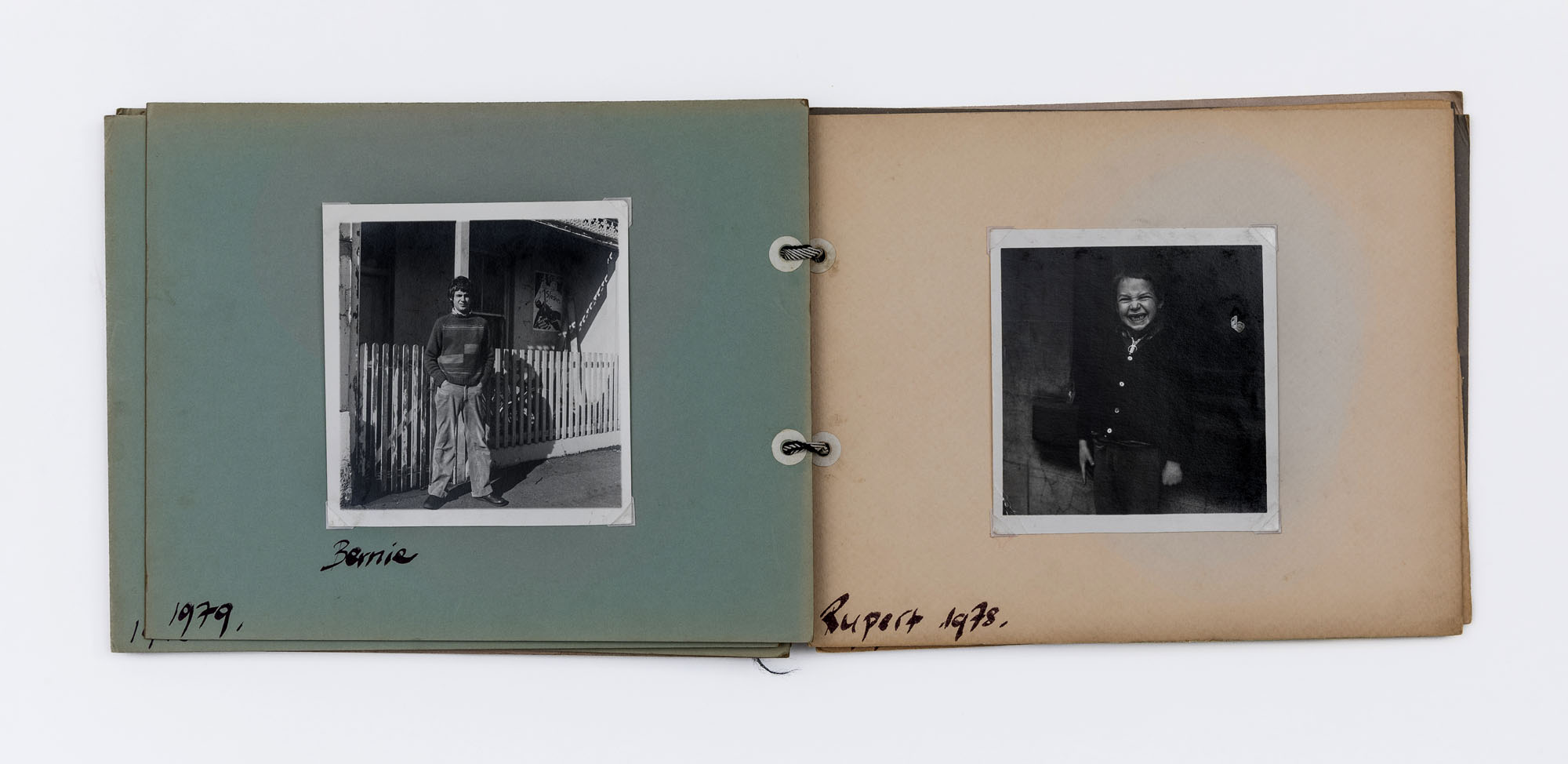
The Street Where I Live photo album
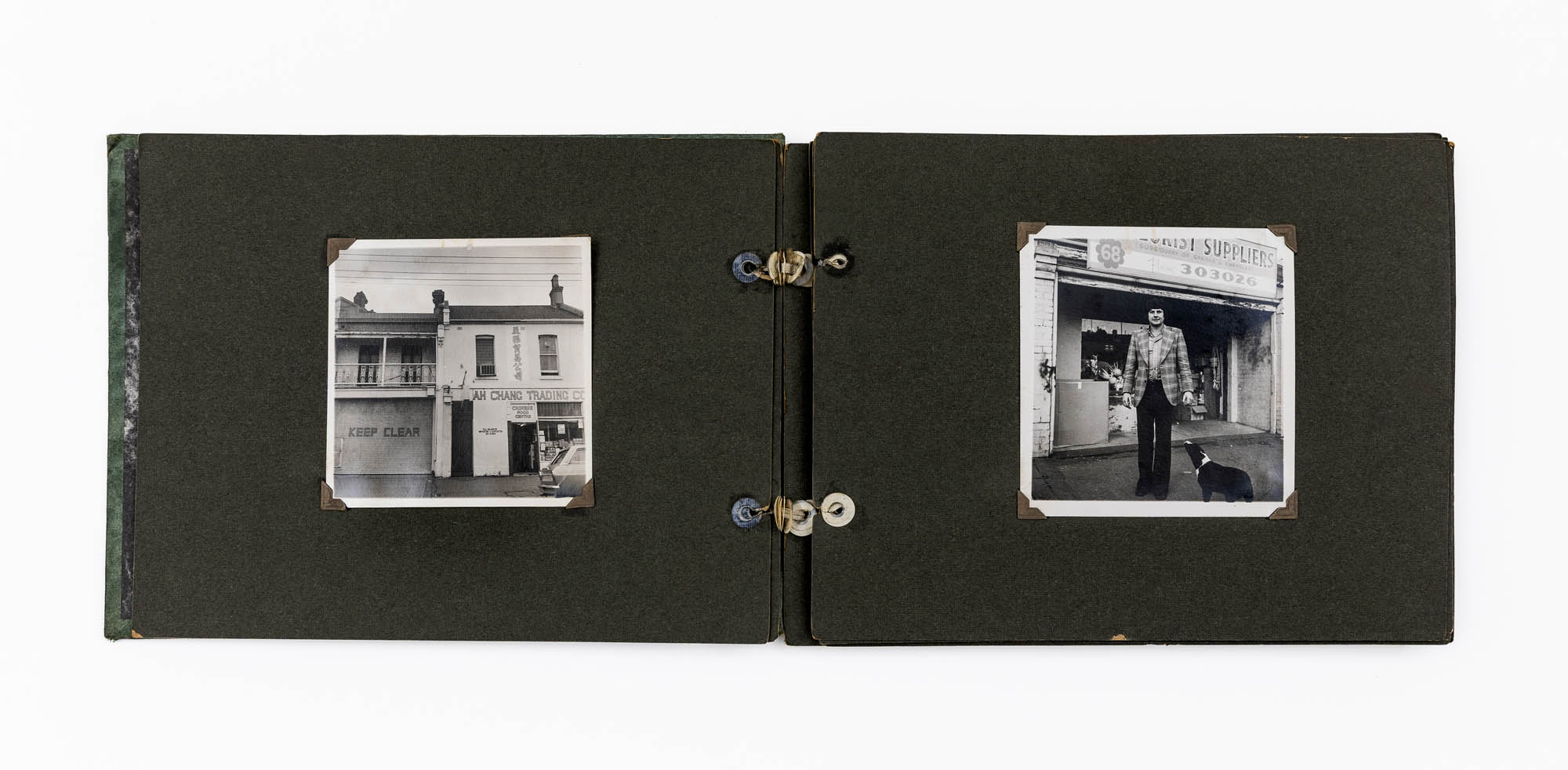
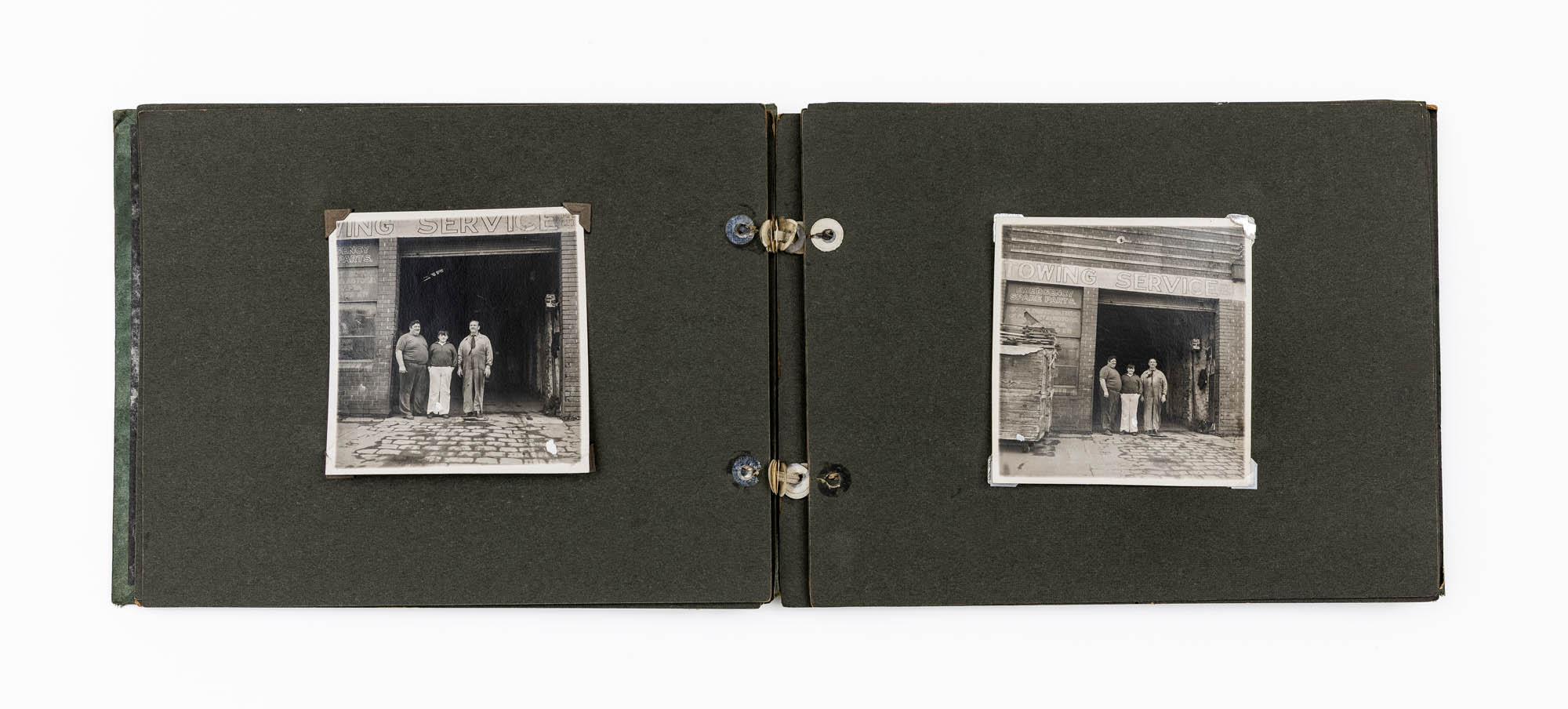
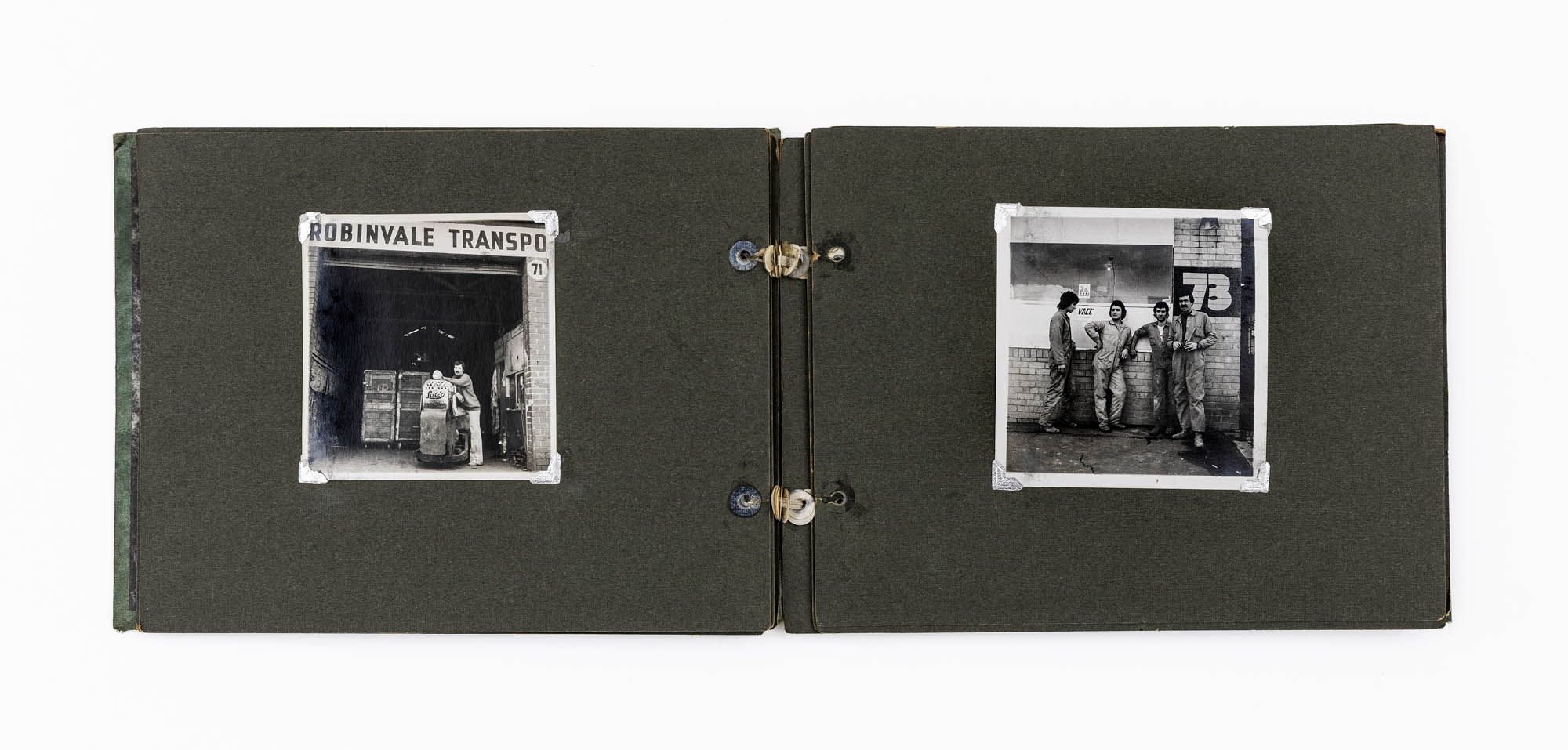
Boppin’ in West Melbourne photo album
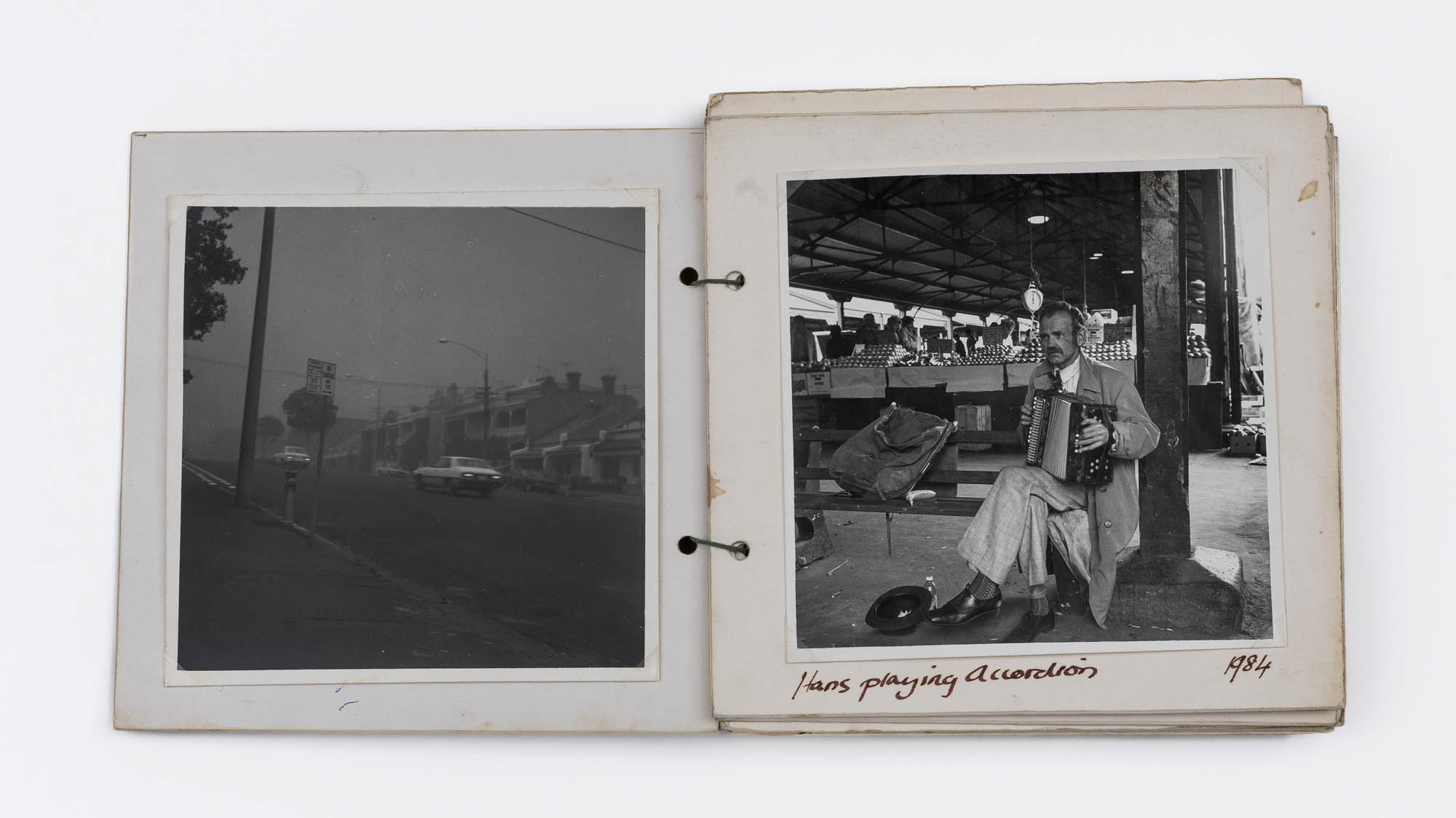
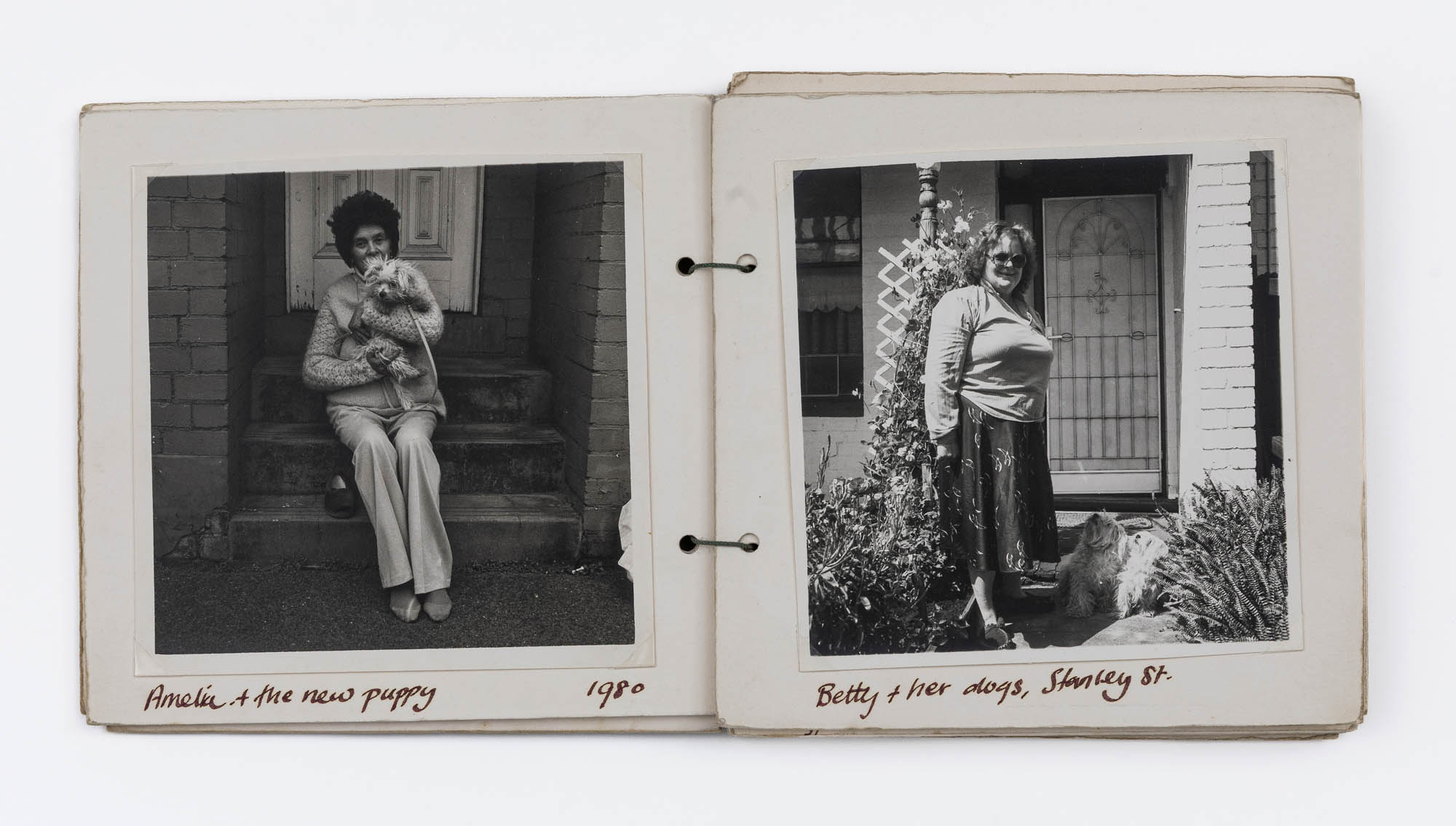
West Melb. 1980-1985 photo album
Those were the days my friend photo album
City Gallery
Enter via Customer Service
City Gallery
110 Swanston St
Melbourne 3000
Opening hours:
Monday – Friday 8.30am – 5pm


You must be logged in to post a comment.