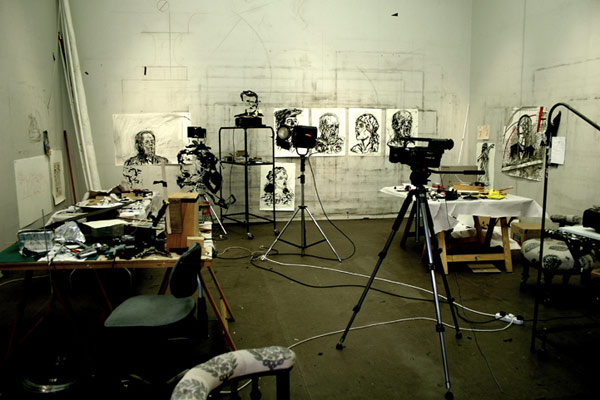
“When we stop and think about it, we all are naked underneath our clothes.”
(Heinrich Heine, Travel Pictures, 1826)
A great posting. I used to have a print of Querelle by Andy Warhol on my wall when I was at university in London aged 17 years old – that and We Two Boys Together Clinging by David Hockney. My favourite in this posting is the painting Seated Youth (morning) by Austrian expressionist painter Anton Kolig. Such vivacity, life and colour, perhaps a post-coital glow (was he straight, bisexual, gay? who cares, it is a magnificent painting).
There is very little information on Kolig on the web. Upon recommendation by Gustav Klimt and Carl Moll Kolig received a 1912 scholarship for a stay in Paris, where Kolig studied modern painting at the Louvre. He enlisted in the First World War in 1916 and survived, continuing to work in paint, tapestries and mosaic during the postwar years and the 1920s. He received two offers for professorships in Prague and Stuttgart, he opted for the Württemberg Academy in Stuttgart, where he trained a number of important painters. In addition, his work was also shown internationally at numerous exhibitions.
He was persecuted by the Nazis and his art destroyed because it was thought to be “degenerate” art. Kolig, who was essentially apolitical, remained until the fall of 1943 in Stuttgart, where he felt less and less well, however, and eventually returned to Nötsch. On 17 December 1944 Kolig was buried with his family in a bomb attack and seriously injured. Much of his work was destroyed there. He died in 1950.
Dr Marcus Bunyan
Many thankx for the Leopold Museum, Vienna for allowing me to publish the text and photographs in the posting. Please click on the photographs for a larger version of the image.
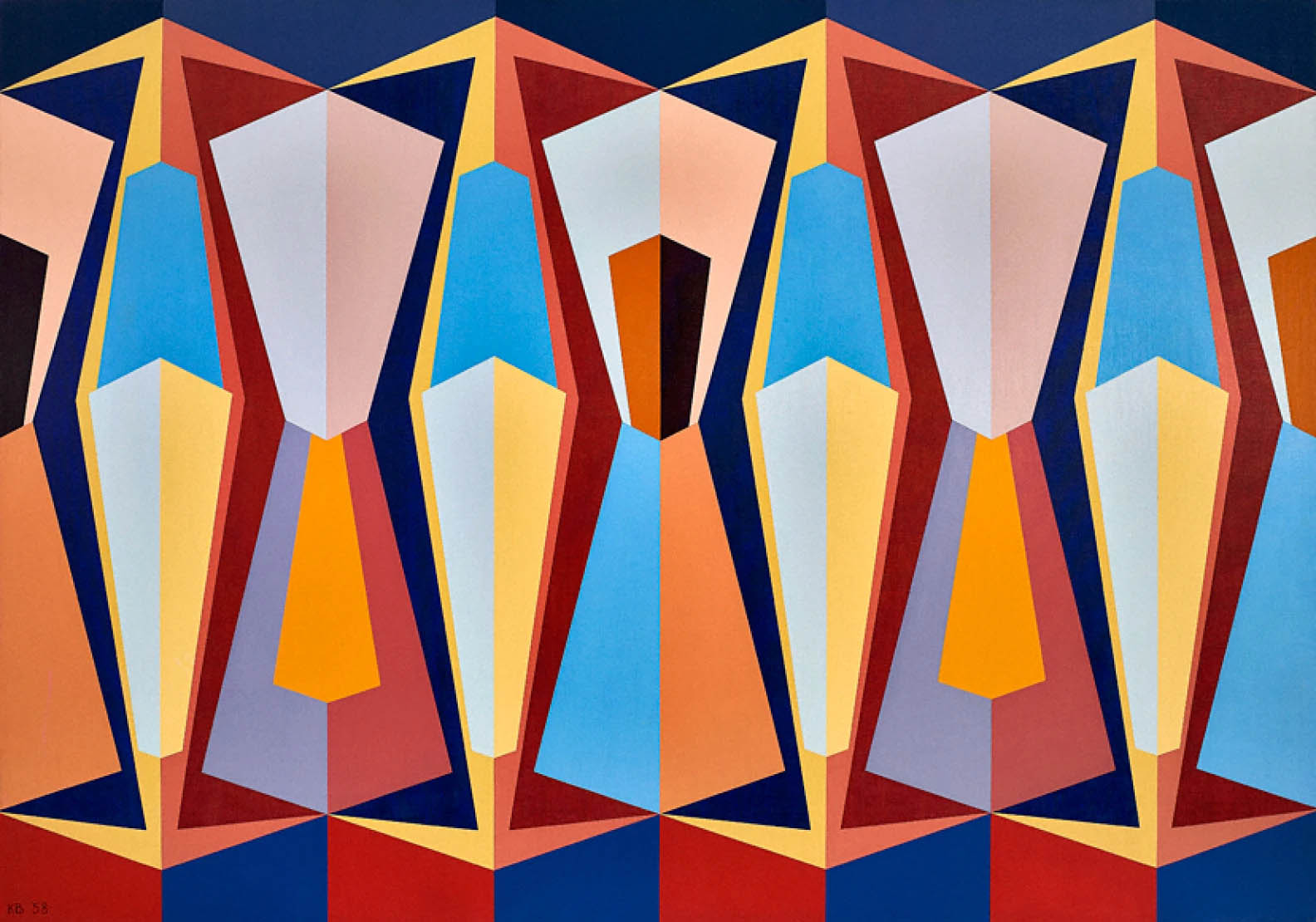
Previous exhibitions on the theme of nudity have mostly been limited to female nudes. With the presentation “naked men” in the autumn of 2012 the Leopold Museum will be showing a long overdue exhibition on the diverse and changing depictions of naked men from 1800 to the present.
Thanks to loans from all over Europe, the exhibition “naked men” will offer an unprecedented overview of the depiction of male nudes. Starting with the period of Enlightenment in the 18th century, the presentation will focus mainly on the time around 1800, on tendencies of Salon Art, as well as on art around 1900 and after 1945. At the same time, the exhibition will also feature important reference works from ancient Egypt, examples of Greek vase painting and works from the Renaissance. Spanning two centuries, the presentation will show different artistic approaches to the subject, competing ideas of the ideal male model as well as changes in the concept of beauty, body image and values.
The exhibition, curated by Tobias G. Natter and Elisabeth Leopold, traces this theme over a long period and draws a continuous arc from the late 18th century to the present. Altogether, the showing brings together around 300 individual works by nearly 100 female and male artists from Europe and the USA. The objective of the two curators Tobias G. Natter and Elisabeth Leopold was “to clearly show the differing artistic approaches, competing models of masculinity, the transformation of ideas about the body, beauty and values, the political dimension of the body, and last but not least the breaking of conventions.”
“Over the past few years, portrayals of nude males have achieved a hitherto unseen public presence,” says Elisabeth Leopold. To which Tobias G. Natter adds, “At the same time, this exhibition is our way of reacting to the fact that categories which had previously seemed established, such as ‘masculinity’, ‘body’ and ‘nakedness’, have today become unstable for a broad swath of society.”
Diversity and abundance: showing for what “nude men” could stand
Elisabeth Leopold remarks that, “In the run-up to our project, we were very surprised to note that some commentators expected a ‘delicate’ exhibition. But in fact, we had no intention of treating the theme in such a way – with reserve, with tact, or in any other way delicately. And we did not understand this topic to be at all delicate in terms of an exhibition on art history somehow requiring a degree of discretion.” A project like nude men would be entirely unthinkable without the experiences and impulses of feminist art as well as cultural history, cultural studies and gender studies. With the exhibition nude men, the Leopold Museum seeks to react to the circumstance that societal categories commonly thought to be firmly established – such as “masculinity”, “body” and “nakedness” – are currently undergoing major changes.
By seizing on these developments, we understand the museum to be an institution which is relevant to today’s society – that is to say, a place for both the present and the future. Tobias G. Natter: “Our objective is to show the diversity and transformation of the portrayal of nude men in light of clearly defined thematic focuses. With fresh curiosity, without traditional scholarly prejudices, and with fascination for an inexhaustibly rich field, we use this exhibition to draw an arc spanning over 200 years which, not least, make a theme of the long shadow cast by the fig leaf.”
The exhibition
The exhibition traces its theme from the late 18th century to the present day. It has three key historical themes: the classical era and the Age of Enlightenment around 1800, classical modernism around 1900, and post-1945 art. These three themes are introduced by a prologue.
Prologue
The exhibition’s three focuses are preceded by a prologue. Using five outstanding sculptures from European art history, the prologue illuminates this theme’s long tradition. It runs from the “oldest nude in town” – a larger-than-life freestanding figure from ancient Egypt – and the statue known as the Jüngling vom Magdalensberg to Auguste Rodin and Fritz Wotruba, and on to a display window mannequin which Heimo Zobernig reworked to create a nude self-portrait.
Tobias G. Natter: “The curatorial intention behind prologue was to have the audience stroll through nearly five millennia of Western sculptural art in just a few steps. This is meant both to communicate both the long tradition of such images and to highlight the degree to which nude men were taken for granted to be the foundation of our art. These five thousand years form the exhibition’s outer referential frame. Strictly speaking, the showing begins in earnest with the Age of Enlightenment and the period around 1800.”
Theme 1: Classicism and the Power of Reason
In the 18th century and beginning in France, the emancipation of the bourgeois class and the swan song of the Ancien Régime occasioned a renegotiation of concepts of masculinity with both societal and aesthetic implications. The naked male hero was defined anew as a cultural pattern. It became the embodiment of the new ideals.
Theme 2: Classical Modernism
A new and independent pictorial world arose in the late 19th century with the casual depiction of naked men bathing in natural, outdoor settings. The various ways in which artists dealt with this topic can be viewed together as a particularly sensitive gauge of societal moods. In the exhibition, the genre is represented with prominent examples by Paul Cézanne, Edvard Munch, Wilhelm von Gloeden, Max Liebermann, Ernst Ludwig
Kirchner and others. Classical modernism’s quest for a new artistic foundation also had its impact on the topics of nakedness and masculinity. But what happened when the painter’s gaze wandered on from the naked other to the naked self? A principle witness with regard to this phenomenon in turn-of-the-20th-century Vienna is Egon Schiele. With his taboo-breaking self-reflections, he radicalised artists’ self-understanding in a way that nobody had before him. Elisabeth Leopold: “The shift of the painter’s gaze from the naked opposite to the exposed self gave rise to the nude self-portrait – a shining beacon of modernism.”
Theme 3: Post-1945 Developments
In light of the abundance of interesting works from which to choose, the exhibition’s third theme comprises three specific focuses. Common to all three is the way in which the political potential of the naked body is explored. The first of these focuses concentrates on the battle fought by women for legal and social equality during the 20th century.
Outstanding examples of the intense way in which feminist artists have dealt with their own bodies as foils for the projection of gender roles can be found in the output of Maria Lassnig and Louise Bourgeois, whose works are included in the exhibition alongside others by younger woman artists. It was pioneers such as Lassnig and Bourgeois who set in motion the process which, today, underlies feminist art’s steadily increasing presence in terms of interpretation, resources, norms, power, and participation in the art business. The second area introduces artistic works that interlock nude self-portraits and the culture of protest, which bears great similarities to feminist criticism – the naked self between normativity and revolt.
The one issue is the nude self-portrait as a field for experimentation and a phenomenon which questions artistic and societal identities. The other issue has to do with substantive contributions to the gender debate, as well as with artists who take the crisis of obsolete male images as an opportunity to put forth self-defined identities. The third focus, finally, lies in the shift in roles in which the man goes from being the subject to being the object, in fact becoming an erotically charged object – perhaps one of the most fundamental shifts in terms of the forms via which nude men have been portrayed from 1800 to the present. Gay emancipation, in particular, served to radically cast doubt upon normative concepts of masculinity, which it opposed with its own alternative models. In this exhibition, these are represented above all in paintings that feature intimate closeness and male couples.
As the opening of this exhibition neared, a frequently-asked question was that of why the project is being undertaken. Tobias G. Natter’s response: “There are many reasons. But most importantly: because it is overdue.”
Press release from the Leopold Museum website
Three out of five characters from the Prologue “naked men”
Exhibition dates: 28th November – 15th December, 2012
Curator: the artist
Installation photograph of Ikea by Janina Green at Edmund Pearce Gallery, Melbourne
“It is necessary to revisit what Walter Benjamin said of the work of art in the age of its mechanical reproducibility. What is lost in the work that is serially reproduced, is its aura, its singular quality of the here and now, its aesthetic form (it had already lost its ritual form, in its aesthetic quality), and, according to Benjamin, it takes on, in its ineluctable destiny of reproduction, a political form. What is lost is the original, which only a history itself nostalgic and retrospective can reconstitute as “authentic.” The most advanced, the most modern form of this development, which Benjamin described in cinema, photography, and contemporary mass media, is one in which the original no longer even exists, since things are conceived from the beginning as a function of their unlimited reproduction.”
Jean Baudrillard. Simulacra and Simulation. 1981 (English translation 1994)
“To apprehend myself as seen is, in fact, to apprehend myself as seen in the world and from the standpoint of the world. The look does not carve me out in the universe; it comes to search for me at the heart of my situation and grasps me only in irresolvable relations with instruments. If I am seen as seated, I must be seen as “seated-on-a-chair,” … But suddenly the alienation of myself, which is the act of being-looked-at, involves the alienation of the world which I organise. I am seated on this chair with the result that I do not see it at all, that it is impossible for me to see it …”
Jean-Paul Satre. Being and Nothingness (trans. Hazel Barnes). London: Methuen, 1966, p. 263
“It must be possible to concede and affirm an array of “materialities” that pertain to the body, that which is signified by the domains of biology, anatomy, physiology, hormonal and chemical composition, illness, age, weight, metabolism, life and death. None of this can be denied. But the undeniability of these “materialities” in no way implies what it means to affirm them, indeed, what interpretive matrices condition, enable and limit that necessary affirmation. That each of those categories [BODY AND MATERIALITY] have a history and a historicity, that each of them is constituted through the boundary lines that distinguish them and, hence, by what they exclude, that relations of discourse and power produce hierarchies and overlappings among them and challenge those boundaries, implies that these are both persistent and contested regions.”
Judith Butler. Bodies That Matter. New York: Routledge, 1993, pp. 66-67
Fable = invent (an incident, person, or story)
Simulacrum = pretends to be a faithful copy, but it is a copy with no original
Performativity = power of discourse, politicisation of abjection, ritual of being
Intimate, conceptually robust and aesthetically sensitive. The association of the images was emotionally overwhelming. An absolute gem. One of the highlights of the year.
Dr Marcus Bunyan
Many thankx to Edmund Pearce Gallery for allowing me to publish the photographs in the posting. Please click on the photographs for a larger version of the image.
Janina Green (Australian born Germany, b. 1944) Waterfall 1990 Silver gelatin print on Kentmere Parchment paper, tinted with coffee and photo dyes 58 x 48cm Vintage print
Janina Green (Australian born Germany, b. 1944) Pink vase 1990, reprinted 2012 Silver gelatin print on fibre based paper, hand tinted with pink photo dye 85 x 70cm
Janina Green (Australian born Germany, b. 1944) Blue vase 1990, reprinted 2012 Silver gelatin print on fibre based paper, hand tinted with blue photo dye 85 x 70cm
Janina Green (Australian born Germany, b. 1944) Nude 1986 Silver gelatin print on fibre based paper, hand tinted with blue photo dye 60 x 45cm Vintage print
My photographs are always about the past.
The Barthesian slogan, “this has been,” is for me, “I was there.” This series of images of a vase from Ikea consists of silver gelatin prints tinted in different coloured photographic dyes; photographs of a simple mass produced vase – its form the familiar vessel which so dominates Art History. “Ikea” for me is symbolic of the useful homely object and of the ideal home. The vase from Ikea no longer exists. The picture of that vase stands in for the vase that once existed. The photograph can be seen now – at this moment. It will continue to exist in the future. Its representation crosses time barriers.
My photographs are always documentations of a private performance.
Every photograph records what is in front of the camera, but my interest is in the occasion and the complex conditions of the making of the photograph – first the negative then the print. Each photograph ends up being a documentation of my state of mind during this intensely private moment as well as something for other people to look at. Because of changing conditions, every one of these prints from that same negative is different. For me each analogue print is an unsteady thing. They are now relics from another era, as is the vase.
As a counterpoint to the repetition of the vase prints, I have selected four vintage works from my archive.
Janina Green (Australian born Germany, b. 1944) Orange vase 1990, reprinted 2012 Silver gelatin print on fibre based paper, hand tinted with orange photo dye 85 x 70cm
Janina Green (Australian born Germany, b. 1944) Green vase 1990, reprinted 2012 Silver gelatin print on fibre based paper, hand tinted with green photo dye 85 x 70cm
Janina Green (Australian born Germany, b. 1944) Interior 1992 C Type print 38 x 30cm Vintage print / edition of 5
Janina Green (Australian born Germany, b. 1944) Telephone 1986, reprinted 2010 Silver gelatin print on fibre based paper, tinted with coffee 58 x 48cm
Janina Green (Australian born Germany, b. 1944) Yellow vase 1990, reprinted 2012 Silver gelatin print on fibre based paper, hand tinted with yellow photo dye 85 x 70cm
The glorious paintings of Fritz Winter show a beautiful synergy with the abstract photographs. The relationship between painting and photography has always been a symbiotic one, a close mutualist relationship that has benefited both art forms.
This is fully evidenced in this outstanding posting, where I have tried to sequence the artworks to reflect the nature of their individuality and their interdependence.
Great blessings on the curators that assembled this exhibition: an inspired concept!
Dr Marcus Bunyan
Many thankx to the Pinakothek der Moderne, Munich for allowing me to publish the photographs in the posting. Please click on the photographs for a larger version of the image.
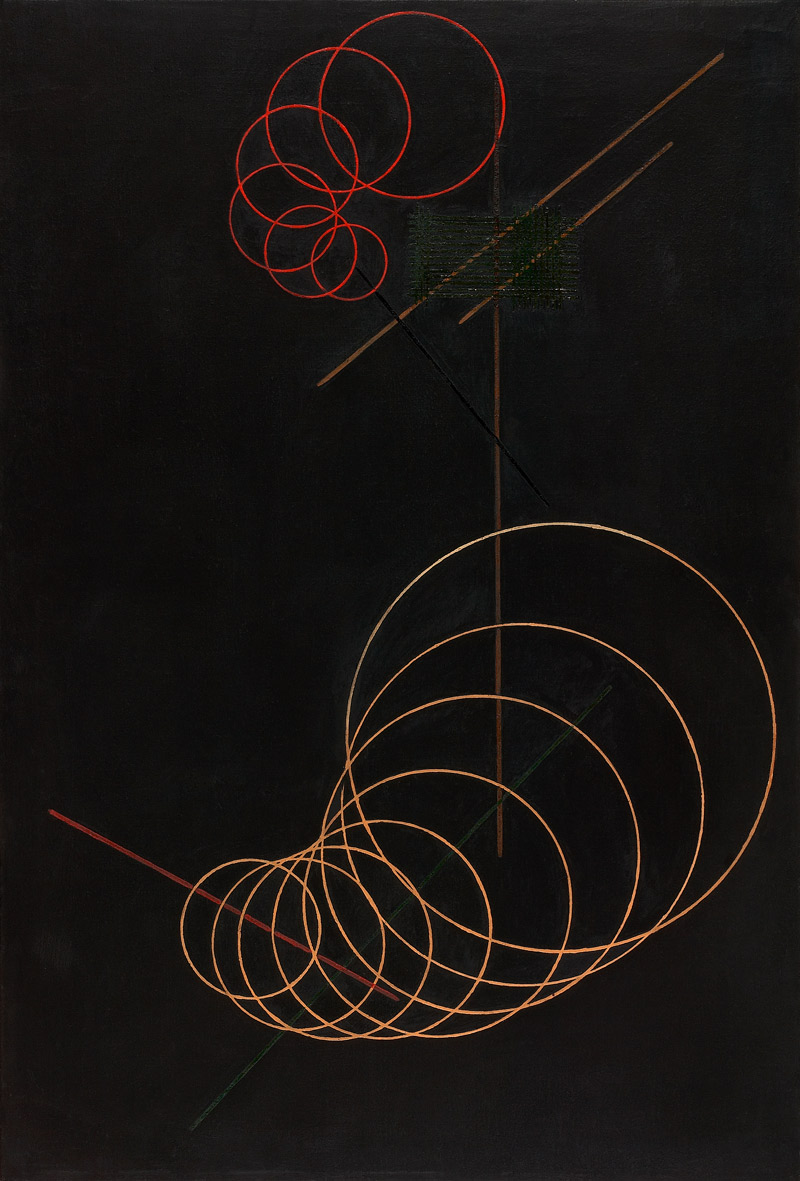
In his lesser known early work, the German painter Fritz Winter (1905-1976) made an obsessive analysis of the aesthetic aspects of light. As a Bauhaus student he was influenced by the international avant-garde’s boundless euphoria for light between Expressionism and Constructivism. The light of large cities with headlights, cinemas and illuminated advertisements gave a new impulse to aesthetics; x-rays, radioactivity and microphotography made it possible to perceive previously unknown sources of energy and natural phenomena.
In his pictures of light beams and crystals created in 1934-1936, Winter devoted himself with virtuosity to aspects such as the reflection, radiation and refraction of light. His virtually monochrome paintings incorporate crystal shapes and bundles of rays; they focus on the earth’s interior and the infinite expanse of the cosmos; they block the pictorial space with dark grids or lend it a glass-like transparency.
For the first time, 25 Licht-Bilder by Fritz Winter will be juxtaposed with an international selection of 40 of the earliest abstract photographs in history of art. In the 1910s to 1930s artists experimented with the most varied of photographic techniques to ascertain the genuine qualities of photography beyond the merely representative. The New Vision in photography and abstract painting become immediately obvious through the display of vintage prints and paintings side by side.
The exhibition combines 25 exceptional paintings by Fritz Winter from German museums and private collections as well as 40 international lenders of photographic works including Centre Pompidou, Paris, George Eastman House in Rochester, New York, Museum Folkwang, Essen, Museum für Kunst und Gewerbe, Hamburg, Neue Galerie Kassel, Kunsthalle Mannheim, Ann and Jürgen Wilde Foundation, Munich and Kunstmuseum Stuttgart.
Press release from the Pinakothek der Moderne website
Curator: Susan van Wyk, Curator of Photography at the National Gallery of Victoria
Installation view of Thomas Demand at NGVI showing, at right, Lichtung/Clearing 2003 Photo: Marcus Bunyan
You saw it here first on Art Blart!
Beautiful installation shots of the new Thomas Demand exhibition at NGVI. Jeff Wall installation photographs to follow in the next posting on Saturday. Reviews to follow in due course.
These are all cardboard models created in Thomas Demand’s studio and then photographed. The models are destroyed afterwards leaving the photographs as artefacts and remembrances, both a performance in their own right, but also a record of another performance, that of the creation of the models. Double self, double performativity, double ritual.
Many thankx to Jemma Altmeier and all the media team at NGV for all their wonderful help and congratulations to the curator, Susan van Wyk, for their restrained yet contemporary installations and for getting the exhibitions to Melbourne. They look magnificent. Well done!
Thomas Demand is regarded as one of the world’s leading contemporary artists whose work in photography and, most recently stop-animation films, is at the forefront of contemporary art. Demand initially worked as a sculptor who used photography to document his ephemeral creations. From 1993 his creative practice changed and, from then on, he made sculptures for the sole purpose of photographing them. Demand begins with an image, often taken from media sources and frequently dealing with traumatic or politically important events, and creates a life-size replica of the image using paper and cardboard. The effect of these uncanny reconstructions is to destabilise our understanding of the sites which we ‘know’ so well through reproduction. This exhibition features a selection of photographs and 35mm films as chosen by the artist.
Jeff Wall & Thomas Demand: In Conversation, National Gallery of Victoria
When you step through the door into the Thomas Demand exhibition you enter a realm that was conceived, meticulously planned, and built to his exacting specifications. Demand designed every aspect of this exhibition. Having selected the photographs and films that he wanted to show in Melbourne, he then went on to design the exhibition space itself.
He was quite specific that the secondary walls had to be full height to create a sense of beautiful rooms rather than a space that has been partitioned. Once this was done he began work on the layout of the show. He carefully planned the sequence in which you would encounter each work, setting up an interesting play between the works. How we read these is an entirely individual experience. Recently someone said to me that they thought the placement of Lichtung / Clearing next to Paneel / Pegboard was an interesting comment on forest clearing and the devastating impact that pulp mills can have on the environment. Until then I had never seen those works in that way.
In conversation during the installation, Thomas explained that he was not interested in putting together an exhibition that then toured around the world. The usual practice of curating an exhibition and then ‘fitting’ it into different exhibition spaces in a number of venues holds little interest for him. So each time you see a Thomas Demand exhibition it has been curated, designed and installed for that particular space.
This is perhaps most obvious when you enter the rooms where the films are showing. From the brightly lit first room you can see through the door way into a darkened room lined with floor to ceiling curtains, but not really. What you see is a darkened room hung with wallpaper that the artist made to look like the kind of sweeping curtains that you might find in a cinema or theatre. It’s theatrical and spectacular but once you enter this space the real treat is Demands films.
Susan van Wyk, 6 February 2013 on the NGV website [Online] Cited 05/09/2020
One of the world’s most influential contemporary artists, Thomas Demand, will be the subject of a new exhibition announced by the National Gallery of Victoria.
The exhibition will be the first major Australian survey of the artist’s work and will comprise large scale photographs and films never before shown in Australia.
NGV Director, Tony Ellwood said the addition of Thomas Demand to the NGV’s exhibition schedule is part of an exciting and ambitious summer program.
“When the opportunity came up to hold an exhibition of Thomas Demand’s work this summer, it was just too good to miss. Thomas Demand will be part of a great summer program at the NGV and has been timed to coincide with the Jeff Wall Photographs exhibition being held at NGV Australia.
“We are offering a two-for-one ticket for Thomas Demand and Jeff Wall Photographs, so visitors to the NGV can experience the work of two major artists of international contemporary photography for one ticket price,” said Mr Ellwood.
Works in the exhibition will span the artist’s career from 1997 to 2012. Recent works presented in the exhibition include Control Room (pictured below), which depicts the Fukushima Daiichi nuclear power plant and Tribute, a work based on images taken at the site of tragic mass panic at Europe’s biggest rave party.
Susan van Wyk, NGV Curator of Photography said Thomas Demand is widely regarded as one of the world’s leading contemporary artists.
“Thomas has a unique style in which he creates paper models of objects and scenes, often taken from media sources like flickr or newspaper reports. These intricate life size models are then photographed.
“The results are disquieting images that subvert our understanding of reality and fiction and draws attention to how we engage with the media and modern technologies,” said Ms Van Wyk.
Press release from the NGV website
Installation view of Thomas Demand at NGVI showing, at left, Vault 2012 and, at centre, Kontrollraum/Control Room 2011 Photo: Marcus Bunyan
Curator: Felix Krämer, head of the department of modern art at the Städel Museum, Frankfurt
Many thankx to the Städel Museum for allowing me to publish the reproductions of the artwork in the posting. Please click on the photographs for a larger version of the image.
This slideshow requires JavaScript.
Installation photographs of the exhibition Dark Romanticism. From Goya to Max Ernst at the Städel Museum, Frankfurt Photos: Norbert Miguletz
Installation views of the exhibition Dark Romanticism. From Goya to Max Ernst at the Städel Museum, Frankfurt showing at left in the bottom image, Thomas Cole Expulsion: Moon and Firelight (c. 1828, below); at centre, Johann Henry Fuseli The Nightmare (The Incubus) (1781-1782, below); at second right, Samuel Colman The Edge of Doom (1836-1838, below); and at right, William Blake The Great Red Dragon and the Woman Clothed with the Sun (c. 1803-1805, below) Photos: Norbert Miguletz
Thomas Cole (American born England, 1801-1848) Expulsion: Moon and Firelight c. 1828 Oil on canvas 91.4 x 122cm (36.0 in x 48.0 in) Thyssen-Bornemisza Museum, Madrid
Johann Henry Fuseli (Swiss, 1741-1825) The Nightmare (The Incubus) 1781-1782 Oil on canvas 77cm (30.3 in) x 64cm (25.1 in) Goethehaus (Frankfurt) collection
Samuel Colman (British, 1780-1845) The Edge of Doom 1836-1838 Oil on canvas 54 x 78 1/2 in. (137.2 x 199.4cm) Brooklyn Museum
William Blake (British, 1757-1827) The Great Red Dragon and the Woman Clothed with the Sun c. 1803-1805 Watercolour, graphite and incised lines 43.7 x 34.8cm Brooklyn Museum, Gift of William Augustus White
Installation view of the exhibition Dark Romanticism. From Goya to Max Ernst at the Städel Museum, Frankfurt showing Paul Delaroche’s The Wife of the Artist, Louise Vernet, on her Death Bed (1845, below) Photo: Norbert Miguletz
Installation view of the exhibition Dark Romanticism. From Goya to Max Ernst at the Städel Museum, Frankfurt showing Gabriel von Max’s The White Woman (1900, below) Photo: Norbert Miguletz
Gabriel von Max (Austrian, 1840-1915) The White Woman 1900 Oil on canvas 100 x 72cm Private Collection
Johann Henry Fuseli (Swiss, 1741-1825) Sin Pursued by Death 1794-1796 Oil on canvas Kunsthaus, Zürich
Théodore Géricault (French, 1791–1824) Cuirassier blessé quittant le feu / The Wounded Cuirassier 1814 Oil on canvas 358cm (11.7 ft) x 294cm (115.7 in) Louvre Museum
The Wounded Cuirassier (French: Le Cuirassier blessé quittant le feu) is an oil painting of a single anonymous soldier descending a slope with his nervous horse by the French Romantic painter and lithographer Théodore Géricault (1791–1824). In this 1814 Salon entry, Géricault decided to turn away from scenes of heroism in favour of a subject that is on the losing side of the battle. On display in the aftermath of France’s disastrous military campaign in Russia, this life-size painting captured the feeling of a nation in defeat. There are no visible wounds on the figure, and the title has sometimes been interpreted to refer to soldier’s injured pride. The painting stood in stark contrast with Géricault’s Charging Chasseur, as it didn’t focus on glory or the spectacle of battle. Only his Signboard of a Hoofsmith, which is currently in a private collection, bears any resemblance in form or function to this painting.
The final salon version of The Wounded Cuirassier is at the Musée du Louvre and the smaller, study version, is located at the Brooklyn Museum.
Caspar David Friedrich (German, 1774-1840) Kügelgen’s Tomb 1821-1822 Oil on canvas 41.5 x 55.5cm Die Lübecker Museen, Museum Behnhaus Drägerhaus, on loan from private collection
Ernst Ferdinand Oehme (German, 1797-1855) Procession in the Fog 1828 Oil on canvas 81.5 x 105.5cm Galerie Neue Meister, Staatliche Kunstsammlungen Dresden
A veritable hymn to voluptuousness, The Indolent Woman is a painting which relies on contrasts: the title already clashes with the young woman’s posture. Her body with its tense muscles – the left foot is literally hooked on to the right thigh – belies any idea of rest or laziness. Similarly, the modest gesture of the arm across the breasts is contradicted by the spread thighs. Sinuous lines run throughout the composition, materialised by the dark shadows on the sheets still bearing the undulating line of the bodies and the heavy jumble of the bedclothes. The electric blue “smoke” drifting across the woman’s thigh and ankle and the sumptuous dark hair spread across the bed accentuate the painting’s erotic charge.
This woman spread out for all to see after lovemaking is the epitome of unveiled intimacy, violent, passionate and sombre and, in the end, very “fin de siècle”. We are also struck by the modernity of the composition seen from above, with its monumental bed which seems to tip towards the viewer. The woman’s body, gnawed by shadows, has a tonic vibrant texture which gives it a strong timeless presence.
This is a crucial work in Bonnard’s career because it is one of the first nudes he painted, previously showing little interest in the theme. It can be compared with two other canvases from the same period: Blue Nude from the Kaganovitch collection and Man and Woman.
After seeing this painting, the famous art dealer and publisher Ambroise Vollard asked Bonnard to illustrate a collection of Paul Verlaine’s poetry, Parallèlement, which was published in 1900.
The Städel Museum’s major special exhibition Dark Romanticism. From Goya to Max Ernst will be on view from September 26th, 2012 until January 20th, 2013. It is the first German exhibition to focus on the dark aspect of Romanticism and its legacy, mainly evident in Symbolism and Surrealism. In the museum’s exhibition house this important exhibition, comprising over 200 paintings, sculptures, graphic works, photographs and films, will present the fascination that many artists felt for the gloomy, the secretive and the evil. Using outstanding works in the museum’s collection on the subject by Francisco de Goya, Eugène Delacroix, Franz von Stuck or Max Ernst as a starting point, the exhibition is also presenting important loans from internationally renowned collections, such as the Musée d’Orsay, the Musée du Louvre, both in Paris, the Museo del Prado in Madrid and the Art Institute of Chicago. The works on display by Goya, Johann Heinrich Fuseli and William Blake, Théodore Géricault and Delacroix, as well as Caspar David Friedrich, convey a Romantic spirit which by the end of the 18th century had taken hold all over Europe. In the 20th century artists such as Salvador Dalí, René Magritte or Paul Klee and Max Ernst continued to think in this vein. The art works speak of loneliness and melancholy, passion and death, of the fascination with horror and the irrationality of dreams. After Frankfurt the exhibition, conceived by the Städel Museum, will travel to the Musée d’Orsay in Paris.
The exhibition’s take on the subject is geographically and chronologically comprehensive, thereby shedding light on the links between different centres of Romanticism, and thus retracing complex iconographic developments of the time. It is conceived to stimulate interest in the sombre aspects of Romanticism and to expand understanding of this movement. Many of the artistic developments and positions presented here emerge from a shattered trust in enlightened and progressive thought, which took hold soon after the French Revolution – initially celebrated as the dawn of a new age – at the end of the 18th century. Bloodstained terror and war brought suffering and eventually caused the social order in large parts of Europe to break down. The disillusionment was as great as the original enthusiasm when the dark aspects of the Enlightenment were revealed in all their harshness. Young literary figures and artists turned to the reverse side of Reason. The horrific, the miraculous and the grotesque challenged the supremacy of the beautiful and the immaculate. The appeal of legends and fairy tales and the fascination with the Middle Ages competed with the ideal of Antiquity. The local countryside became increasingly attractive and was a favoured subject for artists. The bright light of day encountered the fog and mysterious darkness of the night.
The exhibition is divided into seven chapters. It begins with a group of outstanding works by Johann Heinrich Fuseli. The artist had initially studied to be an evangelical preacher in Switzerland. With his painting The Nightmare (Frankfurt Goethe-Museum) he created an icon of dark Romanticism. This work opens the presentation, which extends over two levels of the temporary exhibition space. Fuseli’s contemporaries were deeply disturbed by the presence of the incubus (daemon) and the lecherous horse – elements of popular superstition – enriching a scene set in the present. In addition, the erotic-compulsive and daemonic content, as well as the depressed atmosphere, catered to the needs of the voyeur. The other six works by Fuseli – loans from the Kunsthaus Zürich, the Royal Academy London and the Staatsgalerie Stuttgart – represent the characteristics of his art: the competition between good and evil, suffering and lust, light and darkness. Fuseli’s innovative pictorial language influenced a number of artists – among them William Blake, whose famous water colour The Great Red Dragon from the Brooklyn Museum will be on view in Europe for the first time in ten years.
The second room of the exhibition is dedicated to the Spanish artist Francisco de Goya. The Städel will display six of his works – including masterpieces such as The Witches’ Flight from the Prado in Madrid and the representations of cannibals from Besançon. A large group of works on paper from the Städel’s own collection will be shown, too. The Spaniard blurs the distinction between the real and the imaginary. Perpetrator and victim repeatedly exchange roles. Good and evil, sense and nonsense – much remains enigmatic. Goya’s cryptic pictorial worlds influenced numerous artists in France and Belgium, including Delacroix, Géricault, Victor Hugo and Antoine Wiertz, whose works will be presented in the following room. Atmosphere and passion were more important to these artists than anatomical accuracy.
Among the German artists – who are the focus of the next section of the exhibition – it is Carl Blechen who is especially close to Goya and Delacroix. His paintings are a testimony to his lust for gloom. His soft spot for the controversial author E. T. A. Hoffmann – also known as “Ghost-Hoffmann” in Germany – led Blechen to paint works such as Pater Medardus (Alte Nationalgalerie, Berlin) – a portrait of the mad protagonist in The Devil’s Elixirs. The artist was not alone in Germany when it came to a penchant for dark and disturbing subjects. Caspar David Friedrich’s works, too, contain gruesome elements: cemeteries, open graves, abandoned ruins, ships steered by an invisible hand, lonely gorges and forests are pervasive in his oeuvre. One does not only need to look at the scenes of mourning in the sketchbook at the Kunsthalle Mannheim for the omnipresent theme of death. Friedrich is prominently represented in the exhibition with his paintings Moon Behind Clouds above the Seashore from the Hamburger Kunsthalle and Kügelgen’s Grave from the Lübecker Museums, as well as with one of his last privately owned works, Ship at Deep Sea with full Sails.
Friedrich’s paintings are steeped in oppressive silence. This uncompromising attitude anticipates the ideas of Symbolism, which will be considered in the next chapter of the exhibition. These ‘Neo-Romantics’ stylised speechlessness as the ideal mode of human communication, which would lead to fundamental and seminal insights. Odilon Redon’s masterpiece Closed Eyes, a loan from the Musée d’Orsay in Paris, impressively encapsulates this notion. Paintings by Arnold Böcklin, James Ensor, Fernand Khnopff or Edvard Munch also embody this idea. However, as with the Romantics, these restrained works are face to face with works where anxiety and repressed passions are brought unrestrainedly to the surface; works that are unsettling in their radicalism even today. While Gustave Moreau, Max Klinger, Franz von Stuck and Alfred Kubin belong to the art historical canon, here the exhibition presents artists who are still to be discovered in Germany: Jean-Joseph Carriès, Paul Dardé, Jean Delville, Julien-Adolphe Duvocelle, Léon Frédéric, Eugène Laermans and Lucien Lévy-Dhurmer.
The presentation concludes with the Surrealist movement, founded by André Breton. He inspired artists such as Ernst, Brassaϊ or Dalí, to create their wondrous pictorial realms from the reservoir of the subconscious and celebrated them as fantasy’s victory over the “factual world”. Max Ernst vehemently called for “the borders between the so-called inner and outer world” to be blurred. He demonstrated this most clearly in his forest paintings, four of which have been assembled for this exhibition, one of them the major work Vision Provoked by the Nocturnal Aspect of the Porte Saint-Denis (private collection). The art historian Carl Einstein considered the Surrealists to be the Romantics’ successors and coined the phrase ‘the Romantic generation’. In spite of this historical link the Surrealists were far from retrospective. On the contrary: no other movement was so open to new media; photography and film were seen as equal to traditional media. Alongside literature, film established itself as the main arena for dark Romanticism in the 20th century. This is where evil, the thrill of fear and the lust for horror and gloom found a new home. In cooperation with the Deutsches Filmmuseum the Städel will for the first time present extracts from classics such as Frankenstein (1931), Dracula (1931), Faust (1926), Vampyr (1931-32) and The Phantom Carriage (1921) within an exhibition.
The exhibition, which presents the Romantic as a mindset that prevailed throughout Europe and remained influential beyond the 19th century, is accompanied by a substantial catalogue. As is true for any designation of an epoch, Romanticism too is nothing more than an auxiliary construction, defined less by the exterior characteristics of an artwork than by the inner sentiment of the artist. The term “dark Romanticism” cannot be traced to its origins, but – as is also valid for Romanticism per se – comes from literary studies. The German term is closely linked to the professor of English Studies Mario Praz and his publication La carne, la morte e il diavolo nella letteratura romantica of 1930, which was published in German in 1963 as Liebe, Tod und Teufel. Die schwarze Romantik (literally: Love, Death and Devil. Dark Romanticism).
Witches’ Flight (Spanish: Vuelo de Brujas, also known as Witches in Flight or Witches in the Air) is an oil-on-canvas painting completed in 1798 by the Spanish painter Francisco Goya. It was part of a series of six paintings related to witchcraft acquired by the Duke and Duchess of Osuna in 1798. It has been described as “the most beautiful and powerful of Goya’s Osuna witch paintings.” …
At center point are three semi-nude witches wearing penitential coroza bearing aloft a writhing nude figure, their mouths close to their victim, as if to devour him or suck his blood. Below, two figures in peasants’ garb recoil from the spectacle: one has thrown himself to the ground covering his ears, the other attempts to escape by covering himself with a blanket, making the fig hand gesture to ward off the evil eye. Finally, a donkey emerges on the right, seemingly oblivious to the rest of the scene.
The general scholarly consensus is that the painting represents a rationalist critique of superstition and ignorance, particularly in religious matters: the witches’ corozas are not only emblematic of the violence of the Spanish Inquisition (the upward flames indicate that they have been condemned as unrepentant heretics and will be burned at the stake), but are also reminiscent of episcopal mitres, bearing the characteristic double points. The accusations of religious tribunals are thus reflected back on themselves, whose actions are implicitly equated with superstition and ritualised sacrifice. The bystanders can then be understood either as appalled but unable to do anything or wilfully ignorant and unwilling to intervene.
The donkey, finally, is the traditional symbol of ignorance.
Francisco de Goya (Spanish, 1746-1828) Flying Folly (Disparate Volante) From “The proverbs (Los proverbios)”, plate 5, 1816-1819, 1 Edition, 1864 Etching and aquatint 21.7 x 32.6cm Städel Museum, Frankfurt am Main
“I am not afraid of witches, goblins, apparitions, boastful giants, evil spirits, leprechauns, etc., nor of any other kind of creatures except human beings.”
Francisco Goya
An enthusiastic champion of Enlightenment values, Goya was also on close terms with the progressive nobility, but his doubts and disillusionment increased as the French Revolution was succeeded by the Terror, and Europe was torn apart by warring armies.
The deceptively clear distinction between enlightenment and obscurantism was now supplanted by the vision of a new, grey, frightening and uncertain world, in which no sharp line could be drawn between good and evil, reality and fantasy, reason and absurdity, the beliefs of the past and the revolutionary fervour of the present.
But instead of living in the past or doing nothing, Goya swapped his court painter’s brush for the etcher’s unsparing needle. Black in all its shades was the keynote of the many series of engravings he now produced on freely chosen themes, with only the Inquisition’s censors to contend with.
The Caprices, a series produced at the end of the 18th century, reflects his amazement and exasperation at the imaginative wealth of Spanish popular culture, steeped in the superstition, fanaticism and ignorance promoted by the Jesuits.
Ten years later, the atrocities which marked the war against Napoleon inspired The Disasters of War – a cry of outrage and horror at the barbaric excesses of the “Grande Nation” and the terrifying emptiness of a world with no God or morality.
Louis Candide Boulanger (French, 1806-1867) Les Fantômes 1829 Oil on canvas Maison de Victor Hugo
Carl Blechen (German, 1798-1840) Scaffold in Storm 1834 Oil on canvas and on board 29.5cm (11.6 in) x 46cm (18.1 in) Galerie Neue Meister
Carl Eduard Ferdinand Blechen (29 July 1798 – 23 July 1840) was a German landscape painter and a professor at the Academy of Arts, Berlin. His distinctive style was characteristic of the Romantic ideals of natural beauty.
Eugène Delacroix (French, 1798-1863) Hamlet and Horatio in the Graveyard 1839 Oil on canvas 29.5cm (11.6 in) x 36cm (14.1 in) Louvre Museum
Gustave Moreau (French, 1826-1898) Galatea c. 1880 Oil on panel 85.5cm (33.6 in) x 66cm (25.9 in) Musée d’Orsay
Jean Delville (Belgium, 1867-1953) L’Idole de la Perversité (The Idol of Perversity) 1891 81.5 x 48.5cm Museum Wiesbaden, Collection Ferdinand Wolfgang Neess
Eugène Grasset (French, 1845-1917) Trois Femmes et Trois Loups 1892 Pencil, watercolour, Indian ink and gold highlights on paper 35.3 x 27.3cm Musée des Arts Décoratifs, Paris
Franz Ritter von Stuck (February 23, 1863 – August 30, 1928), born Franz Stuck, was a German painter, sculptor, printmaker, and architect. Stuck was best known for his paintings of ancient mythology, receiving substantial critical acclaim with The Sin in 1892. In 1906, Stuck was awarded the Order of Merit of the Bavarian Crown and was henceforth known as Ritter von Stuck.
Odilon Redon (French, 1840-1916) La Mort: C’est moi qui te rends sérieuse: Enlaçons-nous (Death: It is I who Makes You Serious; Let Us Embrace) 1896 Plate 20 from the series “La Tentation de Saint-Antoine” (The Temptation of Saint Anthony) Lithograph Sheet: 17 1/8 in. x 13 in. (43.5 x 33cm)
La Mort: C’est moi qui te rends sérieuse: Enlaçons-nous is one of twenty-four prints by the French artist Odilon Redon (1840-1916) that illustrated Flaubert’s play Temptation of Saint Anthony, a lesser-known work of the literary giant but one that Flaubert laboured on painstakingly throughout his life. A contemporary to Flaubert, Redon had worked in lithography for about two decades when the final version of Temptation of Saint Anthony was published. Already working with a repertoire of dark and absurd subjects, Redon was drawn to the grotesque characters described by Flaubert and wrote fondly of the play, calling it “a literary marvel and a mine for me.”
La Mort depicts a scene in the play where Death and Lust, disguised respectively as an emaciated old woman and a fair young one, reveal their real likenesses after failed attempts to seduce Saint Anthony:
The winding-sheet flies open, and reveals the skeleton of Death. The robe bursts open, and presents to view the entire body of Lust, which has a slender figure, with an enormous development behind, and great, undulating masses of hair, disappearing towards the end.
Death tries to lead Saint Anthony to step into the abyss under the cliff and take his own life, thereby ending all pain. “It is I who make you serious, let us embrace each other,” she says, telling Saint Anthony that, by destroying himself, a work of God, he will become God’s equal.
Redon’s accomplished use of chiaroscuro, the sharp contrast between light and dark, underscores the dramatic nature of this moment. Death’s winding-sheet is enveloped by the dazzling rays of light radiating from the voluptuous body of Lust, and Lust’s hair vanishes into the darkness that seeps through Death;s skeletal body. Although the appearance of Lust differs greatly from that of Death, the overlap of their bodies suggests that they are but different phantoms created by the Devil.
Ningyi Xi. “Odilon Redon,” on the Davis Museum website 2017 [Online] Cited 11/08/2024. Used under fair use conditions for the purposes of education and research
Paul Dardé (French, 1888-1963) Eternelle douleur (Eternal Pain) 1913 Plaster, direct carving 50cm Musée de Lodève
Paul Dardé created Eternal Pain at 25, even though he had only just finished his year of training. Having gone through the Paris National School of Beaux-Arts and Rodin’s workshop, it is probably his journey to Italy and his mythological reading which fixed the theme of the Medusa in the mind of the artist. Carved from a block of plaster gleaned on the heights of Lodève, the piece would be exhibited seven years later side by side with the great Faun, at the Salon of French artists in 1920.
Hamzeh Carr So the Bright Ones came 1926 From Sir Edwin Arnold. The Light of Asia. London: John Lane The Bodley Head Ltd, 1926, p.19 Limited edition of 3,000 copies
Absolutely divine. In the flesh, the colouring and radiance of these plates has to be seen to be believed.
God they knew how to print back then!
I shall be posting more of these stunning works. They deserve to be seen and meditated upon. Please click on the artwork for a larger version of the image.
Exhibition dates: 5th September – 2nd December, 2012
Curator: Klaus Albrecht Schröder, Director of the Albertina
Ishiuchi Miyako (Japanese, b. 1947) 1906#38 Nd Courtesy by The Third Gallery Aya
“The past neglect of the body in social theory was a product of Western mind-body dualism that divided human experience into bodily and cognitive realms. The knowledge-body distinction identifies knowledge, culture, and reason with masculinity and identifies body, nature, and emotion with femininity. Viewing human reason as the principal source of progress and emancipation, it perceives “the rational” as separate from, and exalted over, the corporeal. In other words, consciousness was grasped as separate from and preceding the body (Bordo 1993; Davis 1997). Following feminist thinking about women’s bodies in patriarchal societies, contemporary social theories shifted focus from cognitive dimensions of identity construction to embodiment in the constitution of identities (Davis 1997). Social construction theories do not view the body as a biological given but as constituted in the intersection of discourse, social institutions, and the corporeality of the body. Body practices, therefore, reflect the basic values and themes of the society, and an analysis of the body can expose the intersubjective meaning common to society. At the same time, discourse and social institutions are produced and reproduced only through bodies and their techniques (Frank 1991, 91). Thus, social analysis has expanded from studying the body as an object of social control and discipline “in order to legitimate different regimes of domination” (Bordo 1993; Foucault 1975, 1978, 1980) to perceiving it as a subject that creates meaning and performs social action (Butler 1990). The body is understood as a means for self-expression, an important feature in a person’s identity project (Giddens 1991), and a site for social subversiveness and self-empowerment (Davis 1997).”
Orna Sasson-Levy and Tamar Rapoport. “Body, Gender, and Knowledge in Protest Movements: The Israeli Case,” in ‘Gender & Society’ 17, 2003, p. 381. No longer available online. Used under fair use conditions for the purposes of education and research
Despite my great admiration for John Coplans’ photographs of his body, on the evidence of these press photographs and the attached video, this exhibition seems a beautiful if rather tame affair considering the subject matter.
Of course these photographs of the body can be understood as a means for self-expression and self-empowerment but there seems little social subversiveness in the choice of work on display.
The two Mapplethorpe’s are stylised instead of stonkingly subversive. The exhibition could have been taken photographs from his ‘X’ portfolio (the self portrait of him with a bull whip up his arse would have been particularly pleasing to see in this context). The exhibition could also have included some of the many artists using the body as protest during the AIDS crisis (perhaps some photographs by David Wojnarowicz or William Yang’s Sadness), the famous Burning Monk – The Self-Immolation (1963) by Malcolm Browne, photographs by Stellarc, Arthur Tress, Duane Michals, Nan Goldin, Diane Arbus, Francesca Woodman, Sally Mann, Cindy Sherman to name but a few; even the Farm Security Administration photographs of share cropper families by Walker Evans and Dorothea Lange would have had more impact than some of the photographs on display here.
Having not seen the entire exhibition it is hard to give an overall reading, but on the selection presented here it would seem that this was a missed opportunity, an exhibition where the body did not protest enough.
Dr Marcus Bunyan
Many thankx to the Albertina, Vienna for allowing me to publish the photographs in the posting. Please click on the photographs for a larger version of the image.
John Coplans (British, 1920-2003) Self Portrait Interlocking Fingers No 6 1999 Silver gelatin paper Albertina, Wien
The exhibition The Body as Protest highlights the photographic representation of the human body – a motif that has provided a wide variety of photographers with an often radical means of expression for their visual protest against social, political, but also aesthetic norms.
The show centres on an outstanding group of works by the artist John Coplans from the holdings of the Albertina. In his serially conceived large-format pictures, the photographer focused on the rendering of his own nude body, which he defamiliarised through fragmentation far from current forms of idealisation. Relying on extremely sophisticated lighting, he presented himself in a monumental and sculptural manner over many years. His photographs can be understood as amalgamations of theoretical and artistic ideas, which in the show are accentuated through selective juxtapositions with works by other important exponents of body-related art.
The body also features prominently in the work of other artists such as Hannah Wilke, Ketty La Rocca, Hannah Villiger, Vito Acconci, Bruce Nauman, Robert Mapplethorpe, and Miyako Ishiuchi. By means of these positions, such diverse themes as self-dramatisation, conceptual photography, feminism, body language, and even transience are analysed within an expanded artistic range. Moreover, the exhibition offers a differentiated view of the critical depiction of the human body as it has been practiced since 1970.
Text from the Albertina website
Ketty La Rocca (Italian, 1938-1976) Craniologia 1973 Radiografie mit überblendeter Fotografie SAMMLUNG VERBUND
Hamzeh Carr Lord Buddha 1926 Frontispiece From Sir Edwin Arnold. The Light of Asia. London: John Lane The Bodley Head Ltd Limited edition of 3,000 copies
Absolutely divine. In the flesh, the colouring and radiance of these plates has to be seen to be believed.
God they knew how to print back then!
I shall be posting more of these stunning works over the coming weeks. They deserve to be seen and meditated upon. Please click on the artwork for a larger version of the image.
Dr Marcus Bunyan
Please click on the image for a larger version of the art work.
Exhibition dates: 8th September – 16th October, 2012
Curator: Dr. Cheryl Daye
Valerio Ciccone (Australian, b. 1970) Not titled (After Holbein) 1991 Pastel on paper 50 x 66cm Courtesy of MADMusee, Belgium
This is a beautiful and vibrant exhibition by Arts Project Australia artist Valerio Ciccone. As you can see from the reproductions in the posting the art work is engaging and enveloping. The work makes me happy, it makes me smile. Arts Project Australia does a wonderful job promoting their artists. It must be very difficult for the curators to append a conceptual idea onto an artist’s work without much input from the artist themselves. Such is the case here. Talking with curator of the exhibition Dr Cheryl Daye, she told me that the title of the exhibition was as much about the person Valerio Ciccone as the work itself; how Valerio circles around people before coming up to say hello, before approaching the subject directly. He is always “keeping an eye out” for what is going on around him.
In the top quotation below – the only paragraph in the two catalogue essays that addresses the conceptual idea of the exhibition – the terms peripheral gaze, peripheral viewer and by extension the title of the exhibition (peripheral observer), are conjoined. Personally, I think that there is a distinct difference between each term that caused me some conceptual unease when they are used together as such.
1/ The peripheral gaze is a temporary, short state of uncertainty, before and between the active or passive state – perhaps! In studying social interaction, Michael Watson (1970) found cultural variability in the intensity of gaze. He distinguished between three forms of gaze:
~ sharp: focusing on the other person’s eyes ~ clear: focusing about the other person’s head and face ~ peripheral: having the other person within the field of vision, but not focusing on his head or face1
2/ A peripheral viewer is active, recipient and creative; sometimes part of the thing itself. They are able to transform into 3, passive.
3/ A peripheral observer can be passive, sometimes unconsciously so, as when someone is watching TV commercials, pictures on a channel that they do not like. Given more choice over control of the channels they become more active and the retain more interest in the program they are watching. The analogy could be that of a flaneur, strolling, looking but not interacting. They are able to transform into 2, active.
According to Jules Romains, “Seeing, and its spatio-temporal organisation, precede gesture and speech and their co-ordination in knowing, recognising, making known (as images of our thoughts), our thoughts themselves and cognitive functions, which are never passive …”2 and Merleau-Ponty notes in an important formulation that, “Everything I see is in principle within my reach, at least within reach of my sight, marked on the map of the ‘I can’.”3
Marked on the map of ‘I can’: active. This is what Valerio does in his artwork, he marks his vision on the map of ‘I can’; not the centre or the periphery (for in postmodernism there is no centre, no periphery for the periphery is the centre!) but an equal balance between what passes before his eyes: background and subject given equal wait / weight within the picture plane where, “in the new democracy of images everything is equal and everything is the same.”
This is not a peripheral observer but an artist who actively/passively addresses with equal importance the elements placed before his vision, a passing flow over which he has little control. Sight is decentred and becomes seeing on the field of the other, seeing under the Gaze.
“In the same way, when I see, what I see is formed by paths or networks laid down in advance of my seeing. It may be the case that I feel myself to inhabit some kind of center in my speech, but what decentres me is the network of language. It may be similarly be that I always feel myself to live at the center of my vision – somewhere (where?) behind my eyes; but, again, that vision is decentred by the networks of signifiers that come to me from the social milieu …
Lacan’s analysis of vision unfolds in the same terms: the viewing subject does not stand at the center of the perceptual horizon, and cannot command the chains and series of signifiers passing across the visual domain. Vision unfolds to the side of, in tangent to, the field of the other. And to that form of seeing Lacan gives a name: seeing on the field of the other, seeing under the Gaze.”4
For me Valerio’s work is a result of a direct looking from a tangental position, not the other way around. His subjects and backgrounds are frontal to the viewer, his figures only rarely looking off to the side. The viewing subject, the artist in this case, stands not at the centre of the perceptual horizon and he cannot command what he sees, when he sees it. But what Valerio so brilliantly and sympathetically does is capture the visions that unfold in front of him with a wonderful joy of life that is breathtaking in its tangental difference, in its recognition of Otherness.
Dr Marcus Bunyan
1/ Watson, Michael. Proxemic Behavior: A Cross-Cultural Study. The Hague: Mouton, 1970 quoted in Chandler, Daniel. “Notes on “The Gaze”,” on the Aberystwyth University website [Online] Cited 05/10/2012 No longer available online
2/ Romains, Jules. La Vision extra-rétinienne et le sens paroptique. Paris: Gallimard, 1964 quoted in Virilio, Paul. The Vision Machine (trans. Julie Rose). Bloomington: Indiana University Press, 1994, p. 7
3/ Merleau-Ponty, Maurice. “Eye and Mind” (trans. Carleton Dallery) in The Primacy of Perception: And Other Essays on Phenomenological Psychology. Northwest University Press, 1964, p. 162
4/ Foster, Hal (ed.,). Vision and Visuality. Bay Press, Seattle: Dia Art Foundation Discussions in Contemporary Culture, Number 2, 1988, p. 94
Many thankx to the artist and Arts Project Australia for allowing me to publish the reproductions of the art in the posting. Please click on the photographs for a larger version of the image.
“Whatever medium he chooses, Ciccone’s work reflects a quiet connection with his subject, as well as a delicate poignancy or gentle sense of irony. There is a certain likeness between the peripheral gaze of his subjects and the way in which Ciccone, whilst remaining focused on his work, is able to keep a watchful eye on all that is happening around him. The subjects in Ciccone’s portraits rarely look directly at the viewer. They seem absorbed by action that is taking place off to the side, beyond the picture plane. Yet there is intentness in the expression, the feeling that the peripheral viewer does not miss a trick.”
Dr Cheryl Daye, “Valerio Ciccone: Peripheral Observer,” Arts Project Australia catalogue, 2012, p. 14
“When his gaze moves out into the world. whilst paradoxically he stays in the same spot, we realise that in the new democracy of images everything is equal and everything is the same. Gary Ablett is next to John Howard who sidles up the Kuwaiti Crown Prince. Cathedrals are as important as the corner of a studio, and lions lie with mice, elephants with koala bears. That expands out to other images too, like that of old standard ‘the nude’ or ‘the model’ from life drawing class. Or fluid instinctual portraits of his studio colleagues. Again, not moving far, finding magic around the corner or across the room.”
Glenn Barkly. “This is me – some thoughts on the art of Valerio Ciccone,” Arts Project Australia catalogue, 2012, p. 8
Valerio Ciccone (Australian, b. 1970) Not titled 1991 Pastel on paper 56 x 76.5cm Arts Project Australia Permanent Collection
Valerio Ciccone (Australian, b. 1970) Not titled 1991 Pastel on paper 76 x 57cm Arts Project Australia Permanent Collection
Valerio Ciccone (Australian, b. 1970) Not titled (Gary Ablett) 1998 Pastel on paper 66 x 50cm Arts Project Australia Permanent Collection
Spanning a career of almost thirty years, Valerio Ciccone is an artist of complexity and subtly and this major survey exhibition is a testament to the varied terrain he has covered on his rich artistic journey. Valerio Ciccone:Peripheral Observer is a major survey exhibition that has been curated by Dr Cheryl Daye and will be officially opened by Glenn Barkley, Curator, Museum of Contemporary Art Australia on Saturday 8 September 2012.
Ciccone’s work reflects his fascination with the world around him. With drawing as his primary mode of expression, Ciccone also effectively employs ceramics and animation to create whimsical figures and narratives. Since commencing at Arts Project Australia in 1984, Ciccone’s work has undergone a series of changes: from his earliest watercolours through the powerful text-based monochromatic pastel portraits, to his colourful recreation of scenes from AFL and his enduring repertoire of animals, still life and pop culture icons, he continues to delight with his gentle insights.
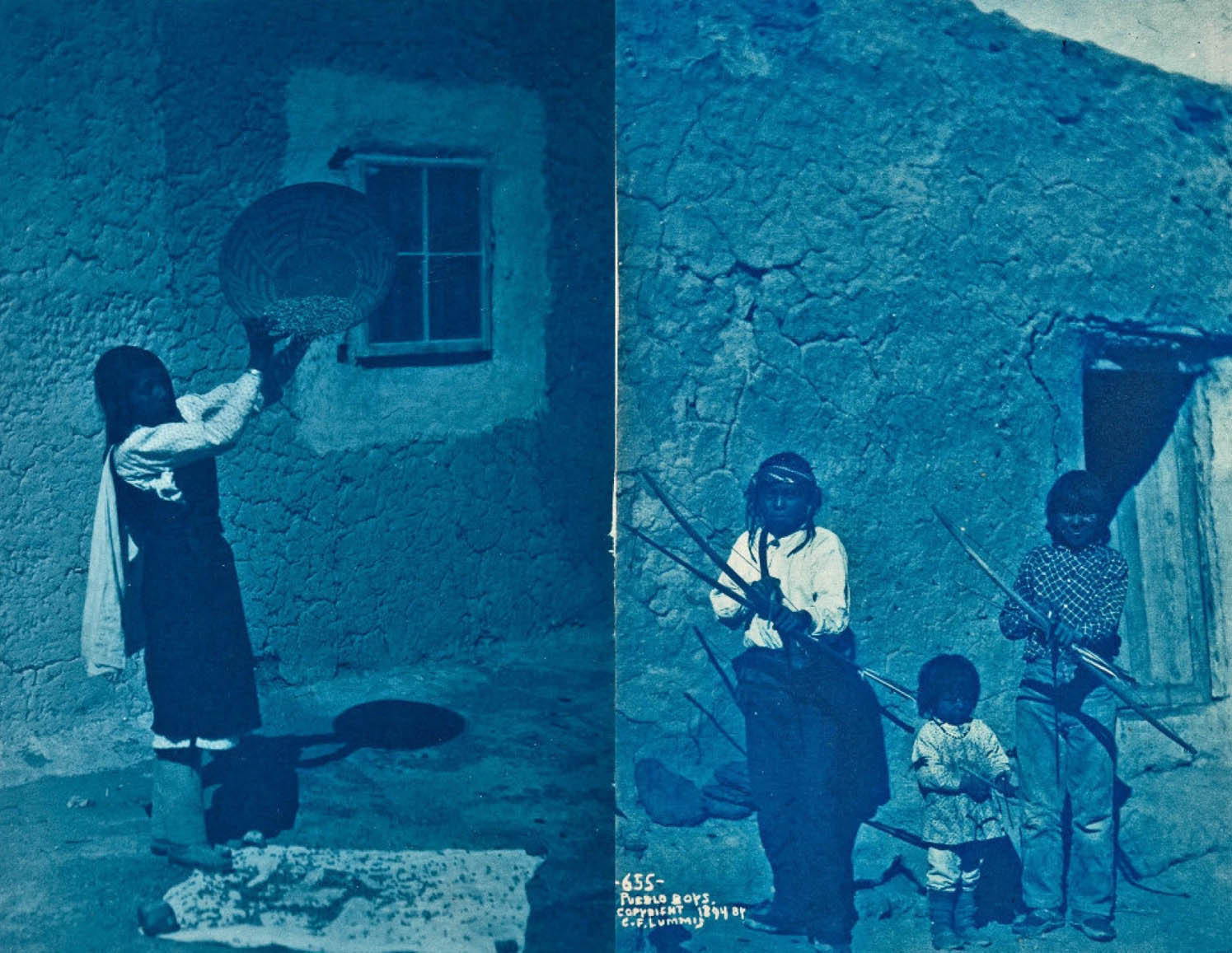
Although warm and gregarious, Ciccone likes to place himself as a peripheral observer in relation to his subjects, quietly transforming what he sees into unique visual statements. Curator Dr Cheryl Daye first meet Ciccone in 1984 and says, “Ciccone is a man of few words… He cannot tell you about his artwork, what it means, how he made it or why. He cannot tell you about the subjects or why he chose them, but the deliberation of each mark made speaks of that which is important to him, his interpretation of the world and desire to share his experience of it.”
Accompanying this exhibition is the Leonard Joel Series catalogue Valerio Ciccone: Peripheral Observer, which is the second publication proudly supported by Leonard Joel.
Press release from the Arts Project Australia website
Valerio Ciccone (Australian, b. 1970) Not titled (life model) 1990 Ink on paper 76 x 57cm Arts Project Australia Permanent Collection
Valerio Ciccone (Australian, b. 1970) Not titled (Notre Dame) 1990 Acrylic on paper 66 x 50cm Arts Project Australia Permanent Collection
Valerio Ciccone (Australian, b. 1970) Not titled 1987 Pastel and felt pen on paper 66 x 50cm
Valerio Ciccone (Australian, b. 1970) Not titled (still life) 1990 Pastel on paper 66 x 50cm
Valerio Ciccone (Australian, b. 1970) Not titled (seated figure) 1997 Pastel on paper 66 x 50cm
Valerio Ciccone (Australian, b. 1970) Not titled (life drawing) 1996 Pastel on paper 66 x 50cm
Arts Project Australia
Studio 24 High Street Northcote Victoria 3070 Phone: + 61 3 9482 4484
Gallery Level 1 Perry Street building Collingwood Yards Enter via 35 Johnson Street or 30 Perry Street, Collingwood Phone: +61 477 211 699
Curator: Charles Brock, Associate Curator of American and British paintings at the National Gallery of Art, Washington
George Bellows (American, 1882-1925) Stag at Sharkey’s 1909 Oil on canvas 92 x 122.6cm (36 1/4 x 48 1/4 in.) The Cleveland Museum of Art, Hinman B. Hurlbut Collection
What a joy it is to be able to post this work!
Bellows is one of my favourite artists. The energy and vigour of his work is outstanding, whether it be crashing waves on a rocky shore, the straining musculature of the male body in the boxing paintings and drawings or the more subtle renditions of colour and atmosphere in his portraits and cityscapes. There are hints of the darkness of Goya (especially in the painting The Barricade, 1918 / Francisco Goya, The Third of May 1808, 1814), the frontality of the portraits of Bronzino (with an added air of vulnerability) and, towards the end of his life, portends of what might have been had he lived – the simplification of line, form and colour in works such as Dempsey and Firpo (1924, below), reminiscent of, but distinct from, the work of his friend Edward Hopper.
Bellows use of colour, light and form is extra ordinary. His use of chiaroscuro is infused with colour and movement, the volume of his modelling of the subjects depicted transcending their impressionistic base. The “shading” of his work is as much psychological as physical: the looming darkness of the buildings in Pennsylvania Station Excavation (1909, below), the churning foam of the desolate sea shore or the pensive look of Emma in the Purple Dress (1919, below). His understanding of the construction of the picture plane is exemplary. Note the use of diagonals and horizontals used in the construction of most of his paintings and drawings, especially the upraised hands, extended feet in his boxing portraits.
One can only wonder what this incredible artist would have achieved had he lived into the 1960s like his friend Edward Hopper. For me he remains an absolute hero of mine. From the first time I saw his work (and I have only ever seen it in reproduction, imagine seeing it in the flesh!) I fell in love with his sensibility, his love of the world and the people in it. I cannot explain it more fundamentally than that. A love affair where his work touched my heart and that, really, is the greatest compliment that you can give an artist. That their art moves you.
Dr Marcus Bunyan
Many thankx to the National Gallery of Art, Washington for allowing me to publish the reproductions of the paintings in this posting. Please click on the photographs for a larger version of the image.
George Bellows (American, 1882-1925) Both Members of This Club 1909 Oil on canvas 133 x 177.8cm (52 3/8 x 70 in.) National Gallery of Art, Washington, Chester Dale Collection
George Bellows (American, 1882-1925) The White Hope 1921 Lithograph 37.4 x 47.6cm (14 3/4 x 18 3/4 in.) National Gallery of Art, Washington, Andrew W. Mellon Fund
George Bellows (American, 1882-1925) Counted Out, No.1 1921 Lithograph 31.8 x 28.5cm (12 1/2 x 11 1/4 in.) National Gallery of Art, Washington, Andrew W. Mellon Fund
George Bellows (American, 1882-1925) Dempsey through the Ropes 1923 Black crayon 54.61 x 49.85cm (21 1/2 x 19 5/8 in.) Lent by The Metropolitan Museum of Art, Rogers Fund, 1925
When George Bellows died at the age of forty-two in 1925, he was hailed as one of the greatest artists America had yet produced. In 2012, the National Gallery of Art will present the first comprehensive exhibition of Bellows’ career in more than three decades. Including some 130 paintings, drawings, and lithographs, George Bellows will be on view in Washington from June 10 through October 8, 2012, then travel to The Metropolitan Museum of Art, New York, November 15, 2012, through February 18, 2013, and close at the Royal Academy of Arts, London, March 16 through June 9, 2013. The accompanying catalogue will document and define Bellows’ unique place in the history of American art and in the annals of modernism.
“George Bellows is arguably the most important figure in the generation of artists who negotiated the transition from the Victorian to the modern era in American culture,” said Earl A. Powell III, director, National Gallery of Art. “This exhibition will provide the most complete account of his achievements to date and will introduce Bellows to new generations.”
Works in the exhibition
Mentored by Robert Henri, leader of the Ashcan School in New York in the early part of the 20th century, George Bellows (1882-1925) painted the world around him. He was also an accomplished graphic artist whose illustrations and lithographs addressed a wide array of social, religious, and political subjects. The full range of his remarkable artistic achievement is presented thematically and chronologically throughout nine rooms in the West Building.
The exhibition begins with Bellows’ renowned paintings and drawings of tenement children and New York street scenes. These iconic images of the modern city were made during an extraordinary period of creativity for the artist that began shortly after he left his hometown of Columbus, Ohio, for New York in 1904. Encouraged by Henri, his teacher at the New York School of Art, Bellows sought out contemporary subjects that would challenge prevailing standards of taste, depicting the city’s impoverished immigrant population in River Rats (1906, private collection) and Forty-Two Kids (1907, Corcoran Gallery of Art).
In addition to street scenes, Bellows painted more formal studio portraits of New York’s working poor. These startling, frank subjects – such as Paddy Flannigan (1908, Erving and Joyce Wolf) – reflect the artist’s profound understanding of the realist tradition of portraiture practiced by such masters as Diego Velázquez, Frans Hals, Edouard Manet, and James McNeill Whistler.
Bellows’ early boxing paintings chronicle brutal fights; to circumvent a state ban on public boxing, they were organised by private clubs in New York at that time. In his three acclaimed boxing masterpieces – Club Night (1907, National Gallery of Art), Stag at Sharkey’s (1909, Cleveland Museum of Art), and Both Members of This Club (1909, National Gallery of Art) – Bellows’ energetic, slashing brushwork matched the intensity and action of the fighters. These works will be on view together for the first time since 1982.
The series of four paintings Bellows devoted to the Manhattan excavation site for the Pennsylvania Railroad Station – a massive construction project that entailed razing two city blocks – focuses mainly on the subterranean pit in which workmen toiled. Never before exhibited together, these works range from a scene of the early construction site covered in snow in Pennsylvania Station Excavation (1909, Brooklyn Museum) to a view of the monumental station designed by McKim, Mead, and White coming to life in Blue Morning (1909, National Gallery of Art).
Bellows was fascinated with the full spectrum of life of the working and leisure classes in New York. From dock workers to Easter fashions paraded in the park, he chronicled a variety of subjects and used an array of palettes and painting techniques, from the cool grays and thin strokes of Docks in Winter (1911, private collection) to the jewel-like, encrusted surfaces of Snow-Capped River (1911, Telfair Museum of Art). While Bellows portrayed the bustling downtown commercial district of Manhattan in his encyclopaedic overview New York (1911, National Gallery of Art), he more often depicted the edges of the city near the shorelines of the Hudson and East Rivers in works such as The Lone Tenement (1909, National Gallery of Art) and Blue Snow, The Battery (1910, Columbus Museum of Art).
The artist visited Monhegan Island off the coast of Maine for the first time in 1911 and returned to Maine every summer from 1913 to 1916. In 1913 alone he created more than 100 outdoor studies. His seascapes account for half his entire output as a painter, with the majority done after the 1913 Armory Show. Shore House (1911, private collection) and The Big Dory (1913, New Britain Museum of American Art) are among Bellows’ most important seascapes and pay homage to his great American predecessor, Winslow Homer (1836-1910).
In 1912 Bellows started working more consistently as an illustrator for popular periodicals such as Collier’s and Harper’s Weekly, and in 1913 for the socialist magazine The Masses. These illustration assignments led him to record new aspects of American life ranging from sporting events to religious revival meetings, as seen in The Football Game (1912, Hirshhorn Museum and Sculpture Garden) and Preaching (Billy Sunday) (1915, Boston Public Library). Along with Bellows’ more affordable and widely available lithographs (he installed a printing press in his studio in 1916), the published illustrations broadened the audience for his work.
Bellows supported the United States’ entry into World War I, resulting in an outpouring of paintings, lithographs, and drawings in 1918. For this extensive series, he relied on the published accounts of German atrocities in Belgium found in the 1915 Bryce Committee Report commissioned by the British government. The paintings evoke the tradition of grand public history paintings, as seen in Massacre at Dinant (1918, Greenville County Museum of Art), while the drawings and lithographs recall Francisco de Goya’s 18th-century print series The Disasters of War.
Bellows’ late works on paper survey modern American life, from the prisons of Georgia to the tennis courts of Newport, and highlight complex relationships between his various media. Taken from direct experience as well as fictional accounts, they range in tone from lightly satirical and humorous (Business-Men’s Bath, 1923, Boston Public Library) to profoundly disturbing and tragic (The Law Is Too Slow, 1922-1923, Boston Public Library).
In Emma at the Piano (1914, Chrysler Museum of Art), Bellows depicts his wife and lifelong artistic muse. His portraits of women constitute a larger body of work than his more famous boxing paintings. They cover all stages of life and include both the naive, youthful Madeline Davis (1914, Lowell and Sandra Mintz) and the more refined, matronly Mrs. T in Wine Silk (1919, Cedarhurst Center for the Arts).
The show will end with paintings in a variety of styles made in 1924, the year before the artist’s sudden death from appendicitis. Painted in Bellows’ studio in rural Woodstock, New York, these last works, including Dempsey and Firpo (1924, Whitney Museum of American Art), Mr. and Mrs. Philip Wase (1924, Smithsonian American Art Museum), and The White Horse (1922, Worcester Art Museum), will prompt visitors to contemplate the artist Bellows might have become had he lived into the 1960s, as did his friend and contemporary Edward Hopper (1882-1967).
Press release from the National Gallery of Art website
George Bellows (American, 1882-1925) River Rats 1906 Oil on canvas
George Bellows (American, 1882-1925) Forty-two Kids 1907 Oil on canvas 106.7 x 153cm (42 x 60 1/4 in.) Corcoran Collection (Museum Purchase, William A. Clark Fund) National Gallery of Arts, Washington Open access
George Bellows (American, 1882-1925) Beach at Coney Island 1908 Oil on canvas 106.7 x 152.4cm (42 x 60 in.) Private collection
George Bellows (American, 1882-1925) Blue Morning 1909 Oil on canvas 86.3cm (33.9 in) x 111.7cm (43.9 in) National Gallery of Art Chester Dale Collection
George Bellows (American, 1882-1925) New York 1911 Oil on canvas 106.7 x 152.4cm (42 x 60 in.) National Gallery of Art Collection of Mr. and Mrs. Paul Mellon
George Bellows (American, 1882-1925) The Big Dory 1913 Oil on panel 18 in (45.7cm) x 22 in (55.8cm) New Britain Museum of American Art Harriet Russell Stanley Fund
George Bellows (American, 1882-1925) Riverfront, No. 1 1914 Oil on canvas 115.3 x 160.3cm (45 3/8 x 63 1/8 in.) Columbus Museum of Art, Museum Purchase, Howald Fund Public domain
George Bellows (American, 1882-1925) Preaching (Billy Sunday) c. 1915-1923 Crayon, ink, and wash on paper Boston Public Library Public domain
“I like to paint Billy Sunday, not because I like him, but because I want to show the world what I do think of him. Do you know, I believe Billy Sunday is the worst thing that ever happened to America? He is Prussianism personified. His whole purpose is to force authority against beauty. He is against freedom, he wants a religious autocracy, he is such a reactionary that he makes me an anarchist.” – GB, in “Touchstone,” p. 270. The artist’s intent to satirise Billy Sunday was evident to almost everyone but the evangelist himself. An earlier depiction of Billy Sunday in action is seen in “The Sawdust Trail” (M. 48) done in 1916 (below). (Mason)
Text from the Digital Commonwealth website
George Bellows (American, 1882-1925) The Saw Dust Trail 1916 Oil on canvas Milwaukee Art Museum, Layton Art Collection
The catalog quotes Bellows: “I paint Billy Sunday… to show the world what I do think of him. Do you know, I think Billy Sunday is the worst thing that ever happened to America? He is death to imagination, to spirituality, to art.”
George Bellows (American, 1882-1925) Tennis at Newport 1920 Oil on canvas 109.2 x 137.2cm (43 x 54 in.) James W. and Frances G. McGlothlin
George Bellows (American, 1882-1925) Return of the Useless 1918 Oil on canvas 149.9 x 167.6cm (59 x 66 in.) Courtesy Crystal Bridges Museum of American Art, Bentonville
George Bellows (American, 1882-1925) The Barricade 1918 Oil on canvas 124.8 x 211.5cm (49 1/8 x 83 1/4 in.) Birmingham Museum of Art, Museum purchase with funds provided by the Harold and Regina Simon Fund, the Friends of American Art, Margaret Gresham Livingston, and Crawford L. Taylor, Jr.
George Bellows (American, 1882-1925)
Throughout his childhood in Columbus, Ohio, George Bellows divided much of his time between sports and art. While attending Ohio State University, he created illustrations for the school yearbook and played varsity baseball and basketball. After college Bellows rejected an offer for a professional athletic career with the Cincinnati Reds baseball team, instead pursuing a career as an artist.
In opposition to his father’s wishes, Bellows enrolled in the New York School of Art in 1904. There Bellows elected to study not with the popular and flamboyant William Merritt Chase, but rather with the unorthodox realist Robert Henri. Henri led a radical group of artists, including John Sloan and William Glackens, who exhibited under the name “The Eight.” Although Bellows was elected to the National Academy of Design, he rejected the superficial portrayal of everyday life promoted by the academies. Instead he and his colleagues emphasised the existing social conditions of the early twentieth century, especially in New York. Because their subjects were considered crude and at times even vulgar, critics dubbed them the Ashcan school. Bellows never became an official member of The Eight, but his choice of subjects – docks, street scenes, and prizefights – were typical of the group. Unlike the members of The Eight, Bellows’ enjoyed popular success during his lifetime, particularly with the boxing images that demonstrate his passionate interest in sports and a bold understanding of the human figure.
George Bellows (American, 1882-1925) Pennsylvania Station Excavation 1909 Oil on canvas 79.38 x 97.16cm (31 1/4 x 38 1/4 in.) Brooklyn Museum, A. Augustus Healy Fund
George Bellows (American, 1882-1925) The Lone Tenement 1909 Oil on canvas 123.2 x 153.4 x 12.7cm (48 1/2 x 60 3/8 x 5 in.) National Gallery of Art, Washington, Chester Dale Collection
George Bellows (American, 1882-1925) Blue Snow, The Battery 1910 Oil on canvas 86.4 x 111.8cm (34 x 44 in.) Columbus Museum of Art, Museum Purchase, Howald Fund
George Bellows (American, 1882-1925) Shore House 1911 Oil on canvas 101.6 x 106.7cm (40 x 42 in.) Private collection
George Bellows (American, 1882-1925) Men of the Docks 1912 Oil on canvas Randolph College, founded as Randolph-Macon Women’s College, 1891, Lynchburg
George Bellows (American, 1882-1925) Summer Surf 1914 Oil on board 62.6 x 72.7 x 4.8cm (24 5/8 x 28 5/8 x 1 7/8 in.) Delaware Art Museum, Wilmington
George Bellows (American, 1882-1925) Forth and Back 1913 Oil on panel 38.1 x 49.5cm (15 x 19 1/2 in.) Private collection
George Bellows (American, 1882-1925) Churn and Break 1913 Oil on panel 45.7 x 55.9cm (18 x 22 in.) Columbus Museum of Art, Gift of Mrs. Edward Powell
George Bellows (American, 1882-1925) An Island in the Sea 1911 Oil on canvas 87 x 112.7cm (34 1/4 x 44 3/8 in.) Columbus Museum of Art, Museum Purchase, Howald Fund
George Bellows (American, 1882-1925) Mrs. T in Wine Silk 1919 Oil on canvas 121.9 x 96.5cm (48 x 38 in.) Cedarhurst Center for the Arts, Mt. Vernon, Gift of John R. and Eleanor R.Mitchell, 1973
George Bellows (American, 1882-1925) Margarite 1919 Oil on panel 81.28 x 66.04cm (32 x 26 in.) Private collection
George Bellows (American, 1882-1925) Emma at the Piano 1914 Oil on panel 73cm (28.7 in) x 94cm (37 in) Chrysler Museum of Art Blue Gift of Walter P. Chrysler, Jr.
George Bellows (American, 1882-1925) Paddy Flannigan 1908 Oil on canvas 76.8 x 63.5cm (30 1/4 x 25 in.) Erving and Joyce Wolf
George Bellows (American, 1882-1925) Frankie, The Organ Boy 1907 The Nelson-Atkins Museum of Art, Kansas City Purchase, acquired through the bequest of Ben and Clara Shlyen
George Bellows (American, 1882-1925) Little Girl in White (Queenie Burnett) 1907 158 x 87cm (62 3/16 x 34 1/4 in.) National Gallery of Arts, Washington Collection of Mr. and Mrs. Paul Mellon Open access
Advised by his friend and teacher Robert Henri to select subjects that reflected the realism of modern urban life, George Bellows portrayed the recreational activities of New York City’s lower-class children in such paintings as River Rats (1906, private collection), and Forty-two Kids (1907). In 1907 he painted two full-length portraits of individual children: Little Girl in White and Frankie the Organ Boy (both now at the Nelson-Atkins Museum of Art, Kansas City, MO). Unlike his late 19th-century predecessors, who popularised the street urchin genre by representing well-scrubbed, idealised children playing with pets or engaged in entrepreneurial activities, Bellows portrayed his subjects in a bluntly realistic manner. The subject of this painting, Queenie Burnett, was the artist’s laundry delivery girl. Her underprivileged background is evident in her gaunt face, exaggeratedly large eyes, unkempt hair, and ungainly figure.
This was Bellows’s first figural work to be exhibited around the country – it was included in 15 public exhibitions during his lifetime – and he was awarded the first Hallgarten Prize when the painting was shown at the National Academy of Design in 1913.
Text from the National Gallery of Art website
George Bellows (American, 1882-1925) Business-Men’s Bath 1923 Lithograph 16 1/2 x 11 3/4in. (41.9 x 29.8cm) Boston Public Library
George Bellows (American, 1882-1925) The Law Is Too Slow 1922-1923 Boston Public Library Print Department, Albert H. Wiggin Collection
Based upon a 1903 newspaper story, dateline Wilmington, Delaware, about a black man who burns at the stake while a mob of perpetrators stand and watch.
George Bellows (American, 1882-1925) The White Horse 1922 Oil on canvas 86.6cm (34.1 in) x 111.7cm (44 in) Worcester Art Museum
George Bellows (American, 1882-1925) Mr. and Mrs. Phillip Wase 1924 Oil on canvas Smithsonian American Art Museum Gift of Paul Mellon
George Bellows spent summers in Woodstock, New York, where Mrs. Wase worked as a cleaning woman and her husband was a gardener. Bellows chose to show the couple stiffly posed and strangely detached from one another. Mrs. Wase’s face shows the worries of a lifetime, and Mr. Wase stares off into the distance, as if thinking of another time or place. Between them, a portrait, perhaps of Mrs. Wase as a bride, hangs on the wall. Their clothes match the shadowy gray of the parlour. Bellows painted suggestions of a brilliantly green summer day beyond the closed shutters, as if to emphasise the distance between youthful optimism and the resignation of old age. The artist experimented with new ways to paint portraits throughout his career, and from 1915 to 1920 he exhibited with the National Association of Portrait Painters, whose mission was to separate from ”the tiresomely conventional and perfunctory portrait.” (Myers, “‘The Most Searching Place in the World’: Bellows and Portraiture,” in Quick et al., The Paintings of George Bellows,1992)
Text from the Smithsonian American Art Museum website
National Gallery of Art National Mall between 3rd and 7th Streets Constitution Avenue NW, Washington
You must be logged in to post a comment.