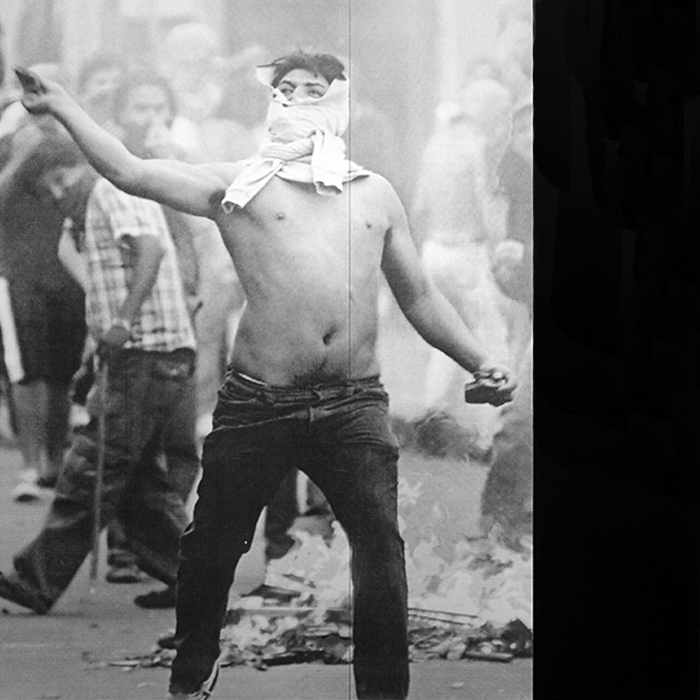
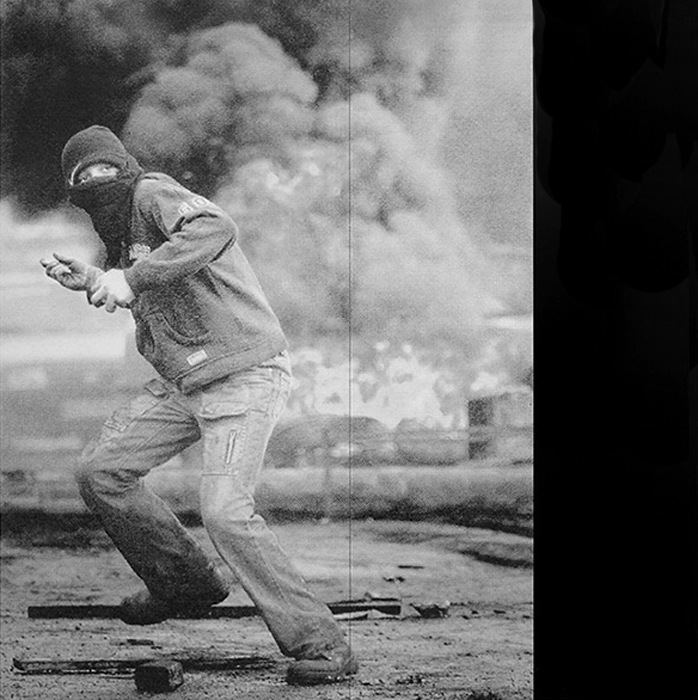
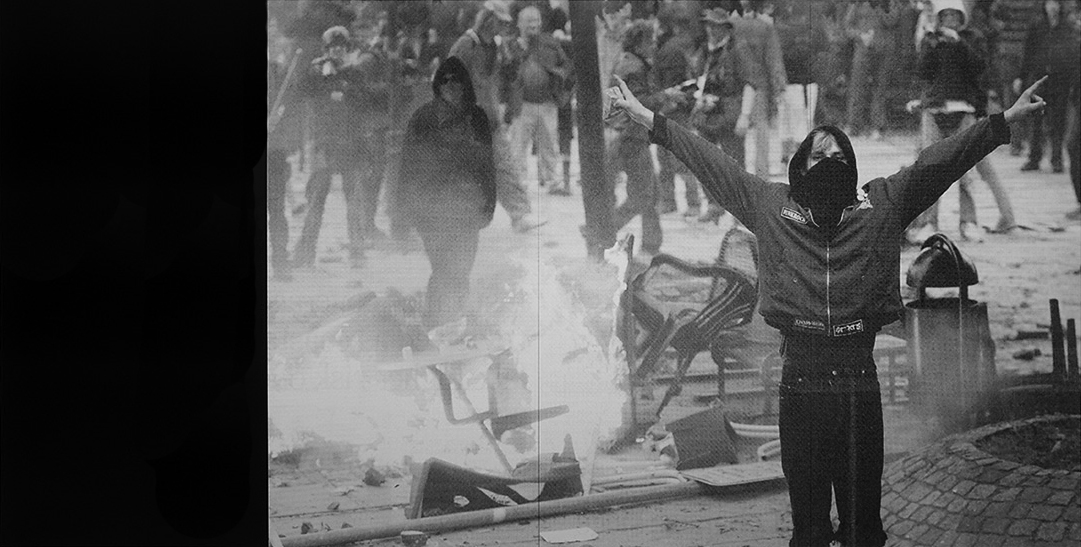
Marco Fusinato (Australian, b. 1964) Double Infinitive 3 2009
Double Infinitives by Marco Fusinato at Anna Schwartz Gallery, Melbourne is an excellent exhibition of large UV ink on aluminium images sourced by Fusinato from the print media.
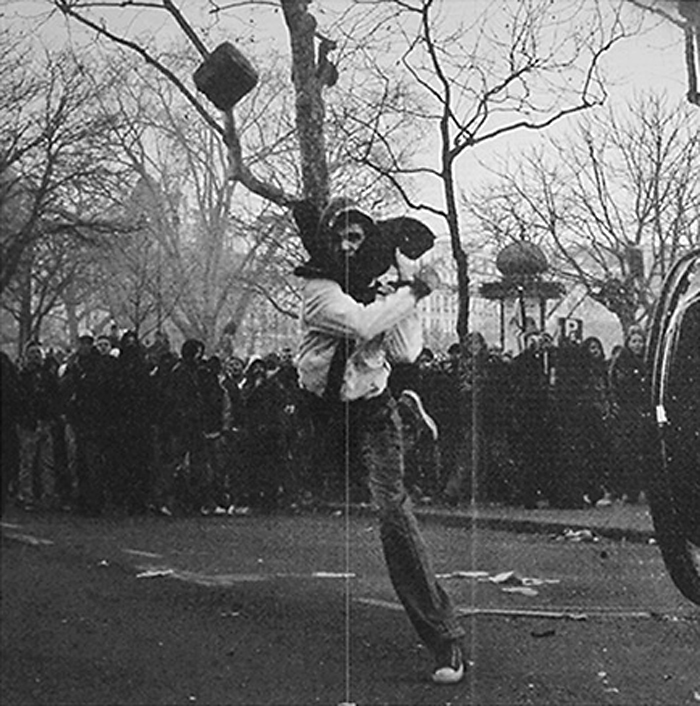
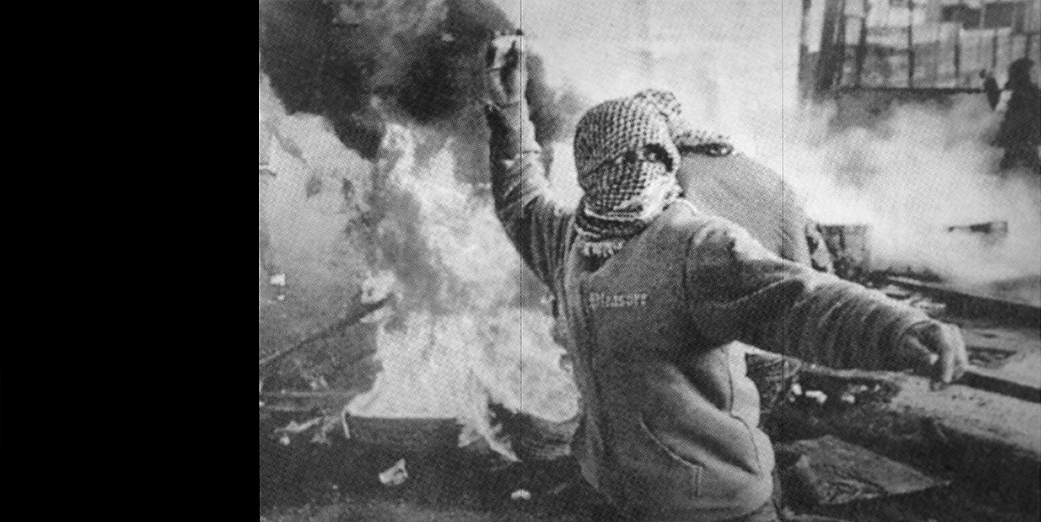
The images are made up of a dot pattern familiar to those who have examined photographs in the print media closely. Larger and smaller clusters of dots form the light and shade of the image. As you move closer to the works they dissolve into blocks of dots and become and optical illusion like Op Art from the 1960s. Fusinato contrasts this dot structure with the inclusion of flat panels of black ink to the left and right hand side of the images. The section lines that run through the images (for they are not one single image but made up of panels) also adds to the optical nature of the work as the lines cut the conflagrations, literally stitching the seams/scenes together.
Each image contains an individual holding a rock enclosed in the milieu and detritus of a riot; the figures are grounded in the earth and surrounded by fire but in their obscurity, in the veiling of their eyes, the figures seem present but absent at one and the same time. They become ghosts of the fire.
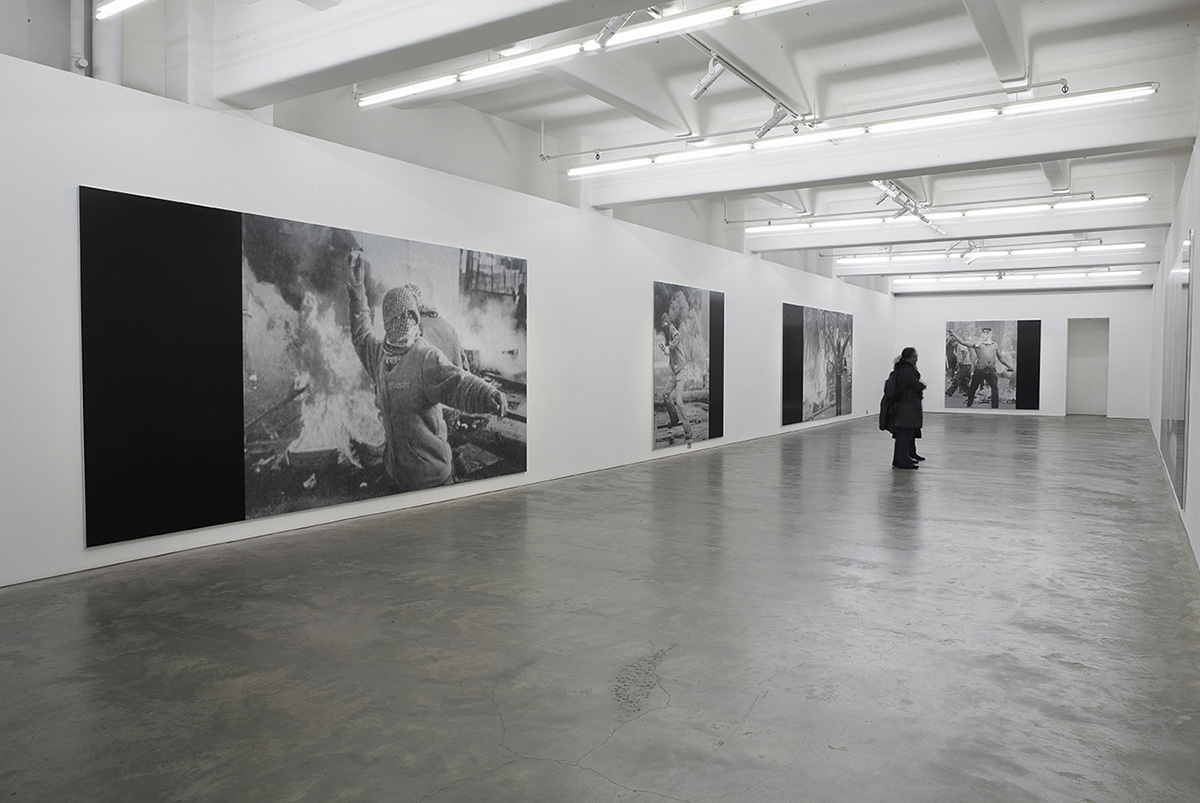
Fire consumes the bodies. The almost cut out presence of the figures, their hands clutching, throwing, saluting become mute. Here the experience of the sound, colour and movement of an actual riot is silenced in the flatness and smoothness of the images. The images possess the intensity of a newspaper reality ‘blown up’ to a huge scale by Fusinato (see the installation photograph below to get an idea of the effect). The punctum of the riot, that prick of consciousness that Barthes so liked, is translated into a silenced studium of the aluminium surface; an aural history (the sound) / oral history (the telling of the story) trapped in the structure of silence.
There is a double jeopardy – the dissolution of the image into dots and the disintegration of the body into fire. In one of the images the upraised arm and hand of one of the rioters holds a rock with what appears to be a figure on it, surrounded by fire. To me the arm turned into one of the burning Twin Towers with smoke and fire pouring from it (see the first photograph in the installation photograph below).
My only concern about the images were the black panels, perhaps too obvious a tool for the purpose the artist intended. Maybe the needed some small texture, like a moire pattern to reference the contours of a map and continue the topographical and optical theme. Perhaps they just needed to be smaller or occasionally placed as thin strips down the actual image itself but these are small quibbles. Overall this is an fantastic exhibition that I enjoyed immensely. The images are literally ripped from the matrix of time and space and become the dot dot dot of the addendum. What Fusinato does so excellently is to make us pause and stare, to recognise the flatness of these figures and the quietness of violence that surrounds us.
Music – Noise – Silence Flatness – Advertising – Earth – Fire Rock – Space – Memory
Dr Marcus Bunyan
Many thankx to Anna Schwartz Gallery for allowing me to publish the photographs in the posting. Please click on the photographs for a larger version of the image.
Marco Fusinato (Australian, b. 1964) Double infinitive 1 2009
Marco Fusinato (Australian, b. 1964) Double Infinitive 4 2009
A selection of images from the print media of the decisive moment in a riot in which a protagonist brandishes a rock against a backdrop of fire. Each image is from a different part of the world, from the early twenty-first century, and is blown up to history-painting scale using the latest commercial print technologies.
Text by Marco Fusinato on his website
Installation of Marco Fusinato Double Infinitives exhibition at Anna Schwartz Gallery, Melbourne
Double Infinitives
“Unheard music is better than heard.”
Greek proverb of late antiquity
“That music be heard is not essential – what it sounds like may not be what it is.”
Charles Ives, Essays Before a Sonata
“The proposition of Jacques Attali’s Noise is different. He says that while noise is a deadly weapon, silence is death.”
David Rattray, “How I Became One of the Invisible,” Semiotext(e), 1992.
The explosive communal act of rioting is most commonly delivered to an audience suspended in the stillness and silence of a photographic image. Noise is not removed in this process, it is almost amplified: the sound and action that deliver this singularly captured moment into existence are infinite, as all things remain while they are imagined, before they are anchored down by express articulation.
Photographic representation can easily be accused of subverting the truth of events, not because what is seen in the image has not transpired, but because static images leave so much space around them for multiple narratives to be constructed. The still image is totally contingent on the consciousness that confronts it. By contrast, the near-totality of videos can give too much away …
Sourced by Fusinato from print media published in the last few years, these images of rioting all contain an individual clutching a rock, bathed in the refractory glow of a nearby fire. The image has become prototypical, so much so that it lacks the sensation of spontaneity requisite to produce a riot. (Apropos to this predictability, Fusinato would check global newspapers after every forum or conference of global financial authorities, often finding the image he was looking for).
Double Infinitives is a succinct allegory for the reluctance to compromise comfort overpowering radical impulses. Conversations suggest this is a conflict frequently experienced by artists. Deprived of a volatile political reality, we experience radicalism through images that act as small ruptures, reminders that the world we live in might be more severely charged than our individual experiences allow. Fusinato’s works flatten these images of volatility onto a smooth slate: they are similar and radiate with the vexed beauty of sameness. A riot is a mad and brutal spectacle, a theatre that is often documented as if it were a play. Hugely expanded in scale and rendered in the suffused gloss of advertising, the real possibility of violence that these works infer deepens the layers of the fiction rather than comprising an indicator of human concern. Those things with which we come into such gentle contact that their thorns barely prick …
Liv Barrett June 2009
Text from the Anna Schwartz Gallery website [Online] Cited 10/07/2009. No longer available online
Marco Fusinato (Australian, b. 1964) Double Iinfinitive 2 2009
Marco Fusinato (Australian, b. 1964) Double Iinfinitive 2 (detail) 2009
Marco Fusinato (Australian, b. 1964) Double Iinfinitive 5 2009
Anna Schwartz Gallery 185 Flinders Lane Melbourne, Victoria 3000
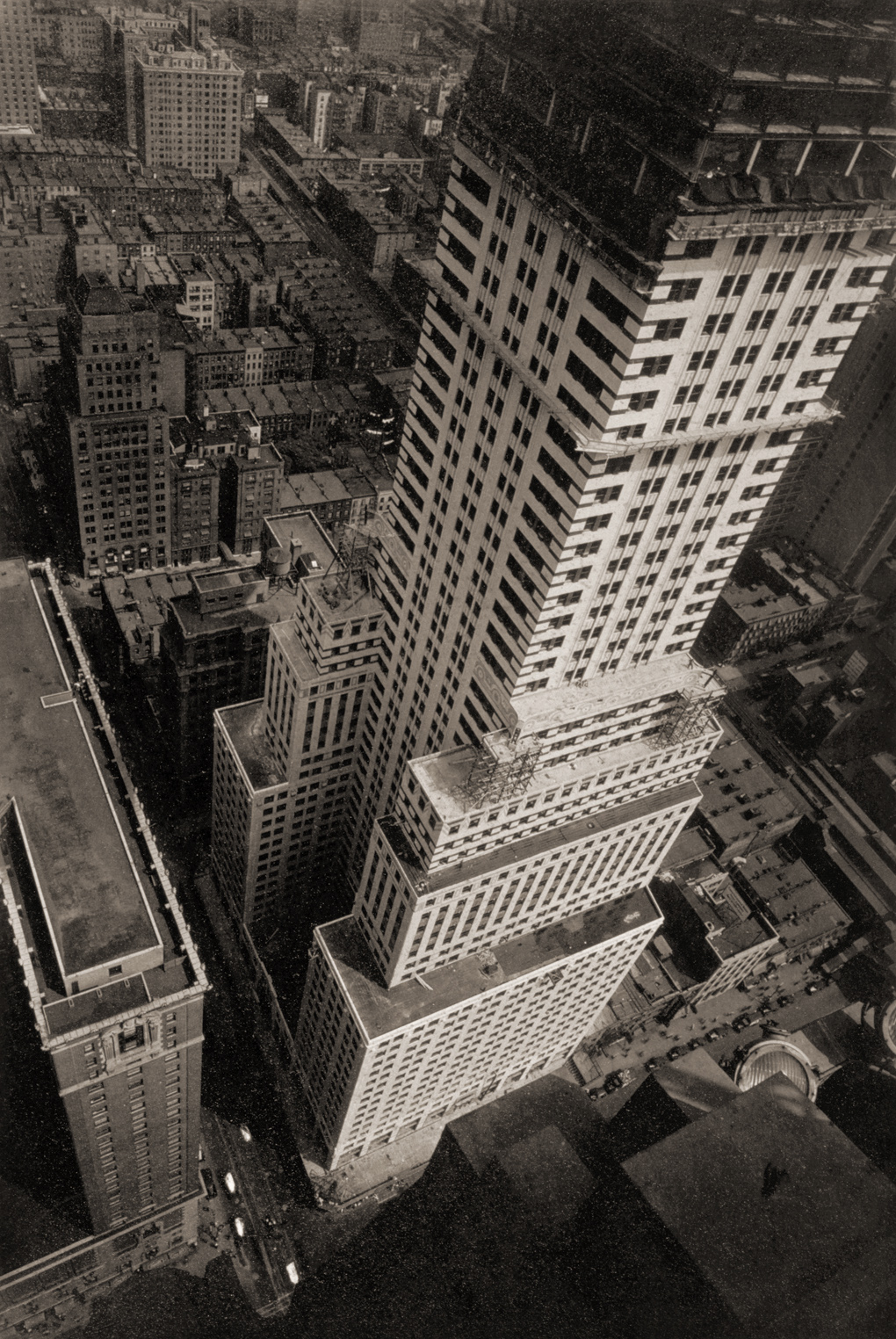
Berenice Abbott (American, 1898-1991) Untitled (New York City) 1929-1933 Gelatin silver print 6 1/2 x 4 7/16 inches Philadelphia Museum of Art The Lynne and Harold Honickman Gift of the Julien Levy Collection, 2001
What a fantastic exhibition! Thank you to the Philadelphia Museum of Art for allowing me to reproduce the wonderful photographs below, many from photographers that I have never heard of before.
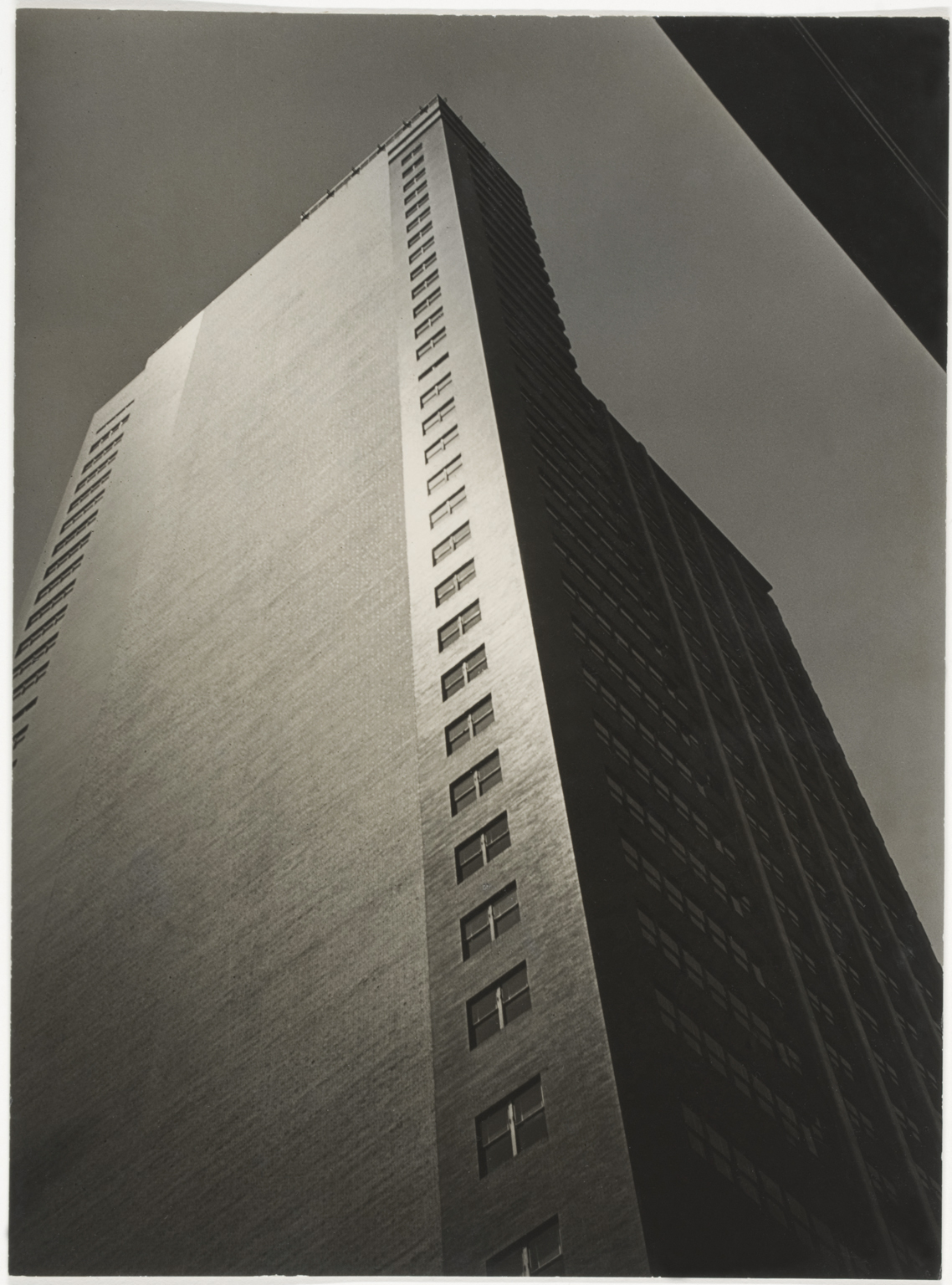
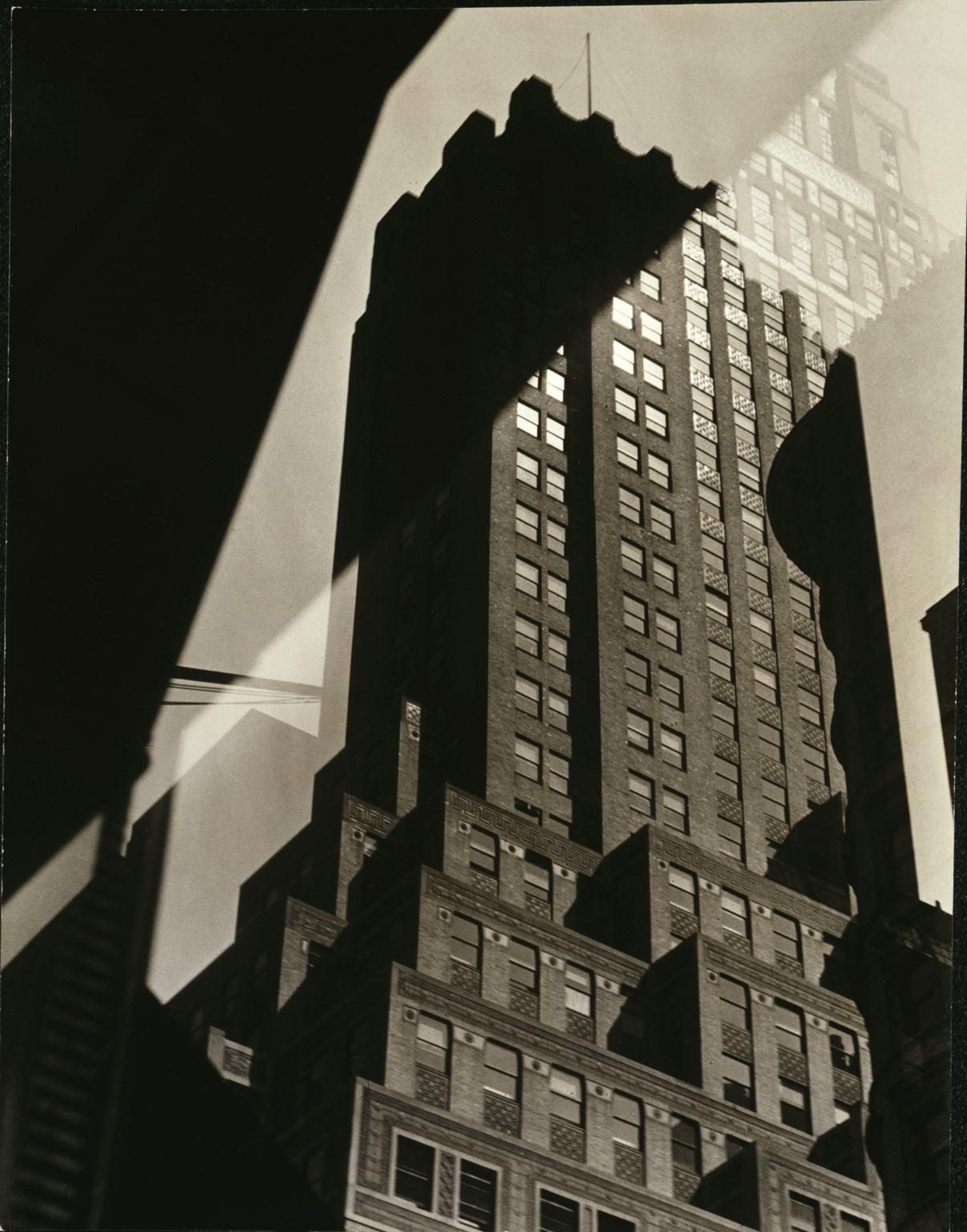
Lloyd Ullberg (American, 1904-1996) PSFS Building, Philadelphia c. 1932-1933 Gelatin silver print Image and sheet: 10 x 7 3/8 inches Philadelphia Museum of Art Purchased with the Lola Downin Peck Fund, 1999
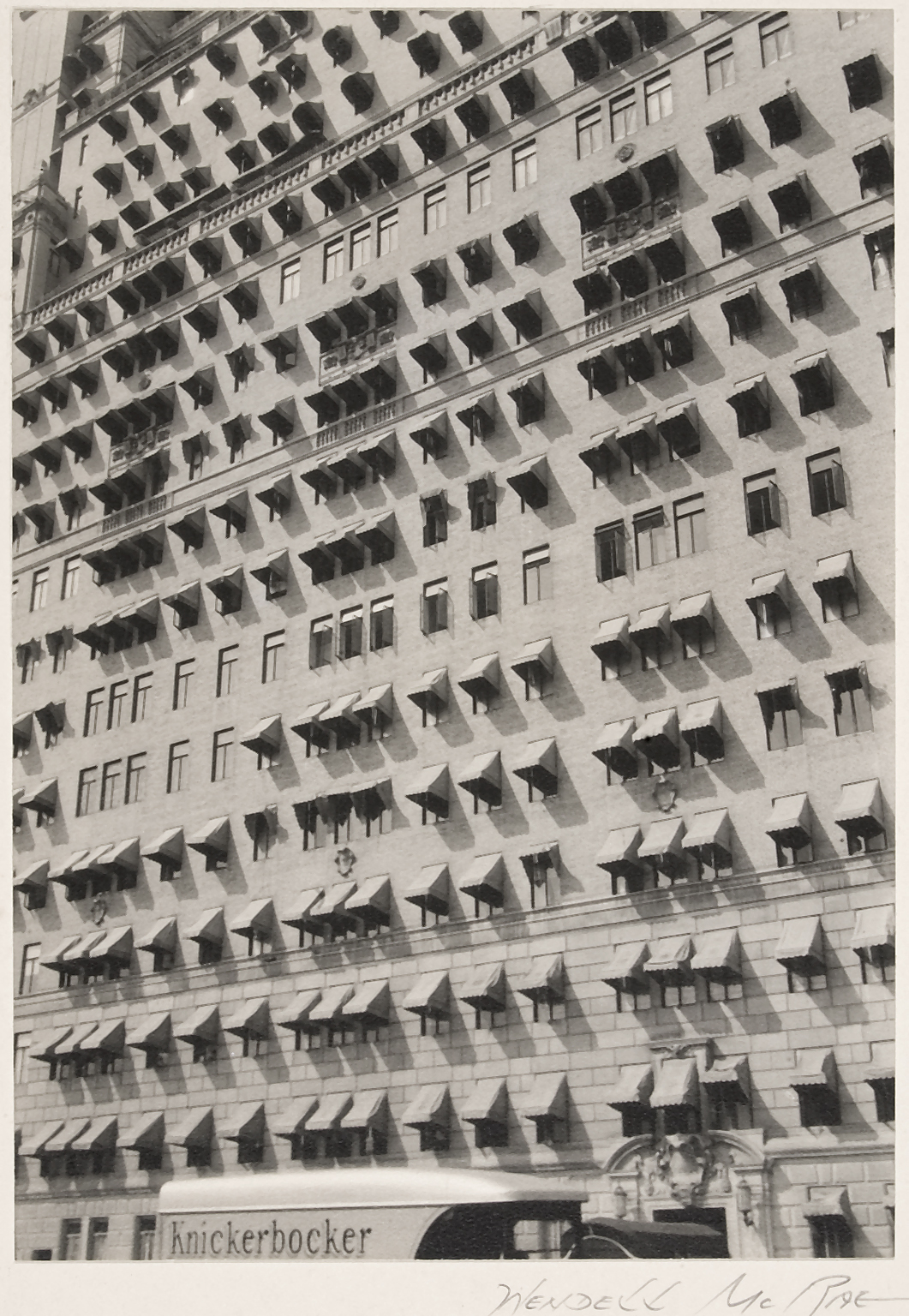
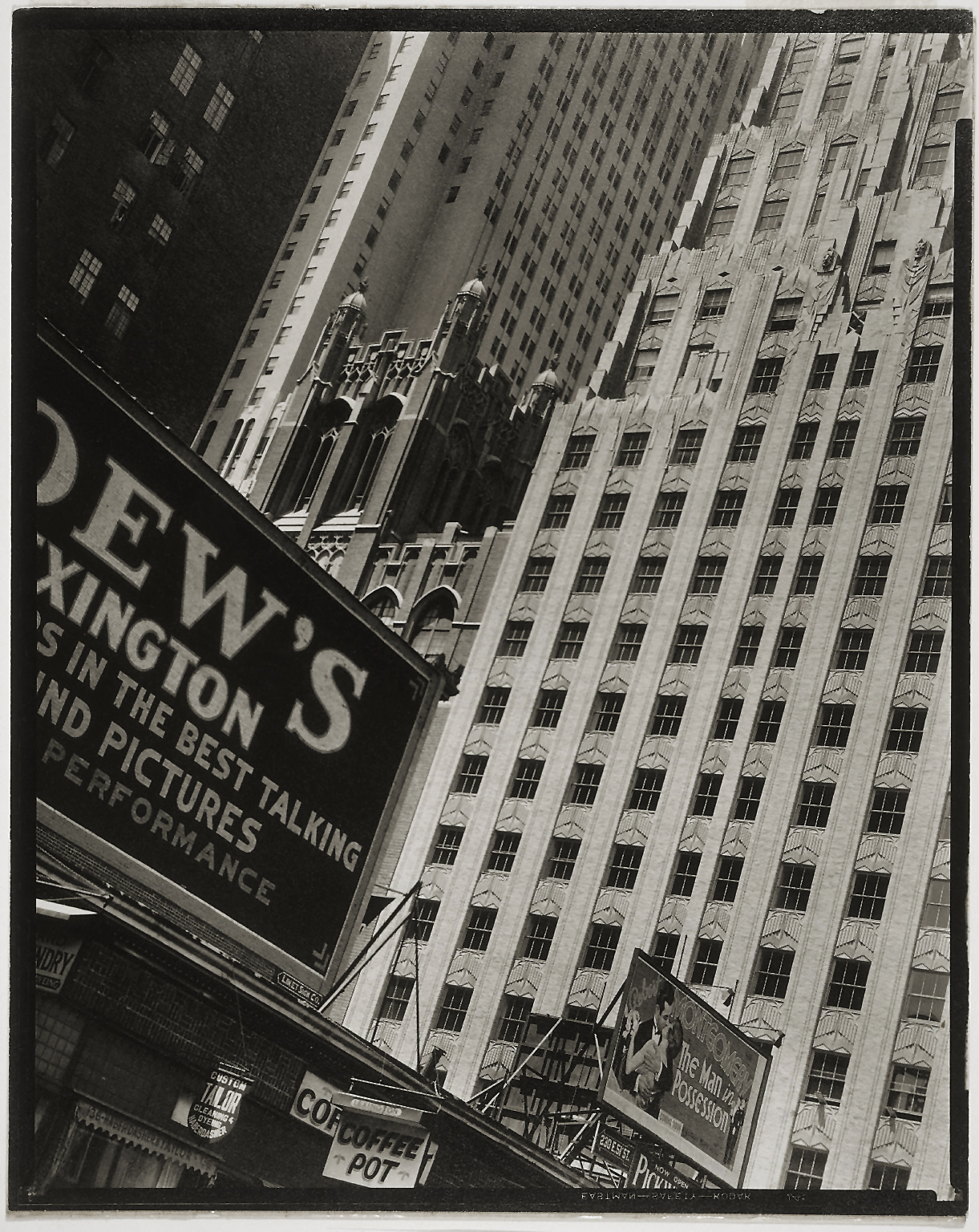
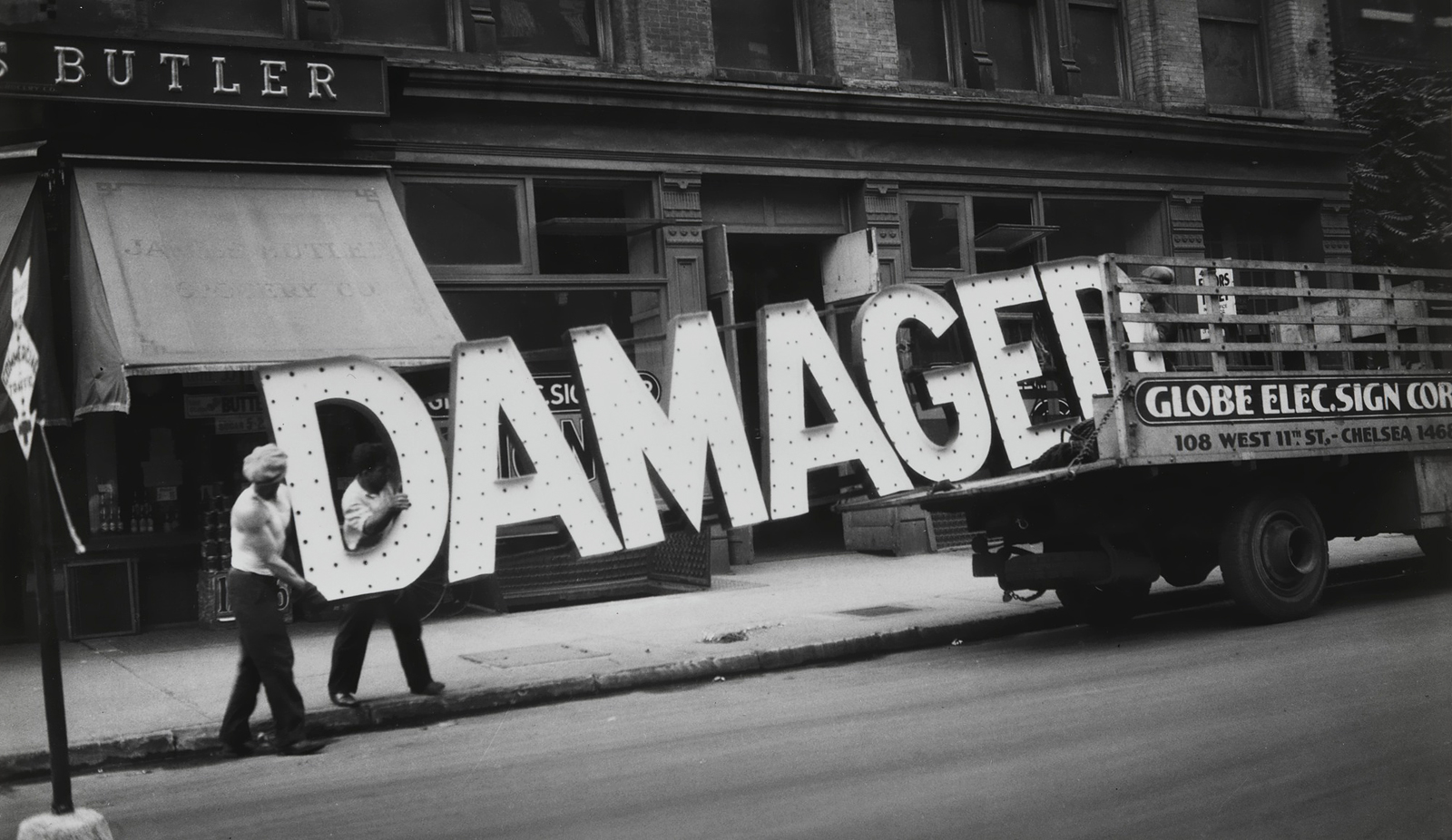
At the turn of the 20th century when they first began to appear, skyscrapers were seen as symbols of modernity and testaments to human achievement. Stretching the limits of popular imagination, they captured the attention of visual artists working in a variety of mediums. This summer the Philadelphia Museum of Art presents Skyscrapers: Prints, Drawings, and Photographs of the Early Twentieth Century, an exhibition that traces the rise of the American skyscraper as an iconic image. The exhibition will feature more than 50 works from the Museum’s collection, dating from 1908 to 1941, which demonstrate the many ways artists chose to portray the new giants in their landscape.
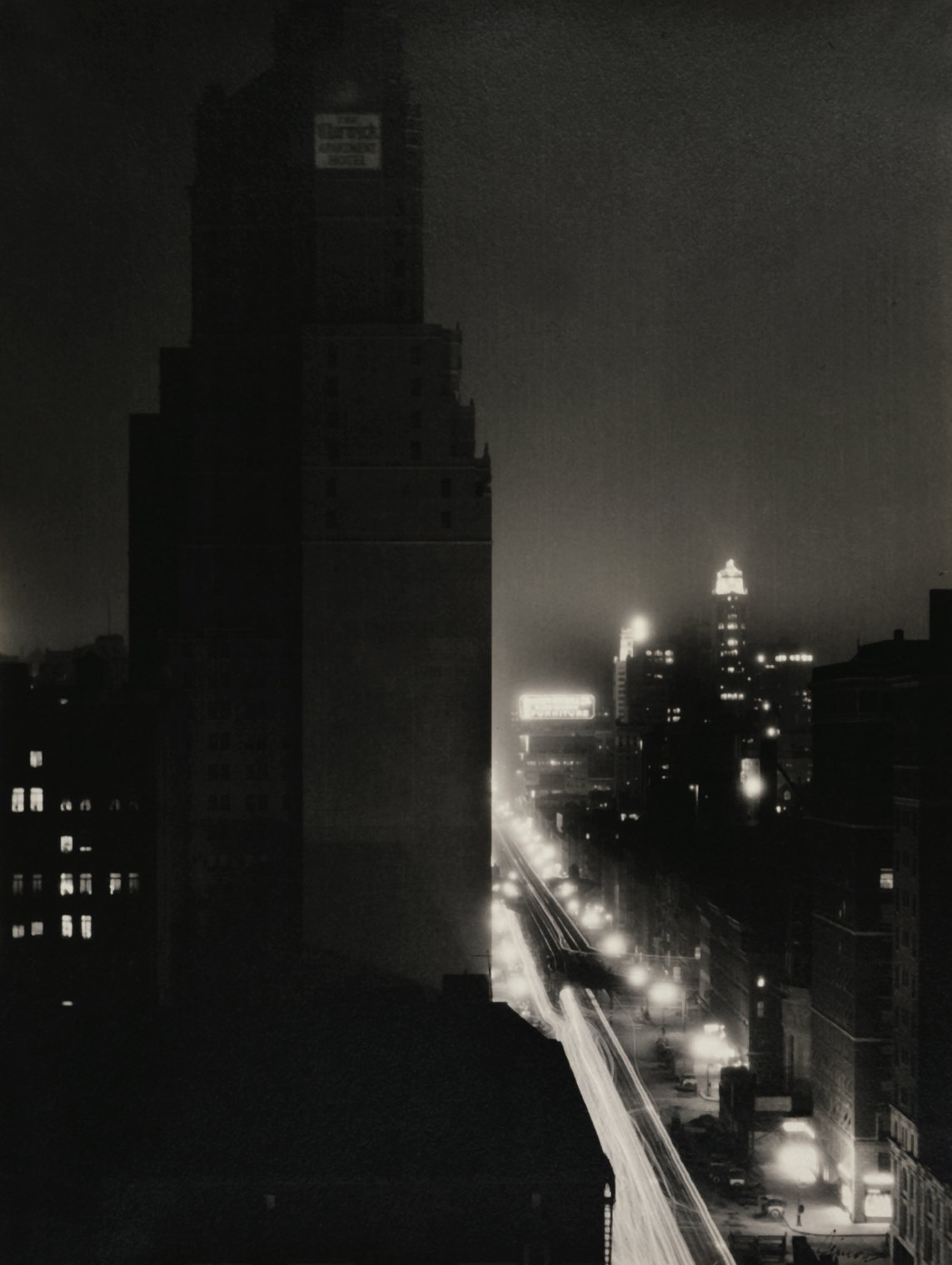
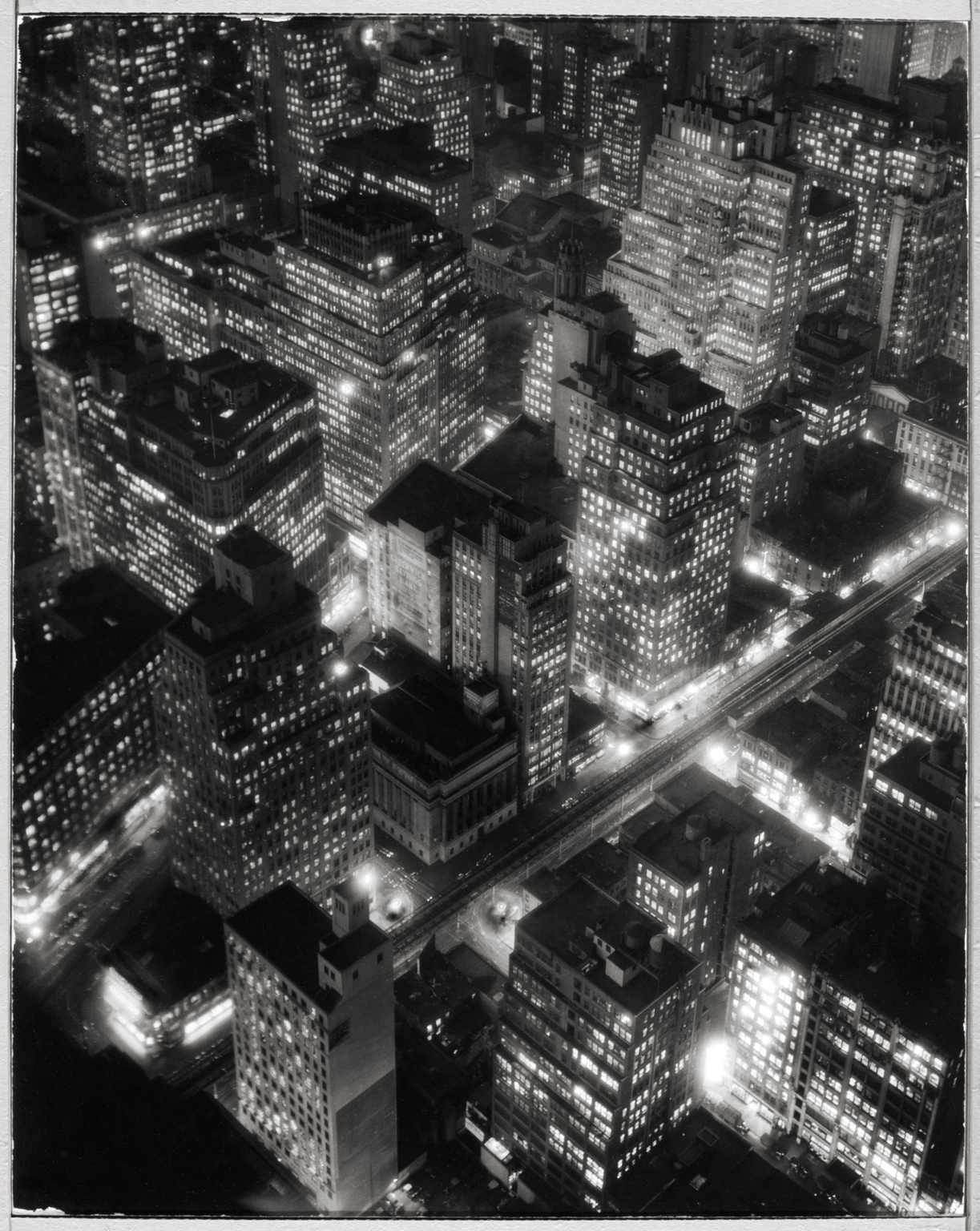
Skyscrapers includes prints by John Marin and Charles Sheeler, photographs by Berenice Abbott and Alfred Stieglitz, and drawings by Earl Horter and Abraham Walkowitz. The works in Skyscrapers reflect a wide range of styles and practices, from Walkowitz’s loosely drawn “New York Improvisations” (1910) to Abbott’s luminous photograph “New York at Night” (c. 1932), which captures the dazzling allure of the city’s glowing evening skyline. The combination of mediums included in the show allows the viewer to consider the relationship between drawing, printmaking, and photography in this dynamic period.
“The visual impact of skyscrapers on the modern urban landscape is unmistakable, and for more than a century artists have been engaging with this theme,” John Vick, The Margaret R. Mainwaring Curatorial Fellow in the Department of Prints, Drawings, and Photographs and the exhibition’s organiser, said, noting that the Museum’s collection includes well over 500 works related to skyscrapers. Vick added that “their distinctive contours and exaggerated scale offered artists both a chance to experiment with modernist aesthetics and a subject on which to project personal or collective ideas and emotions.”
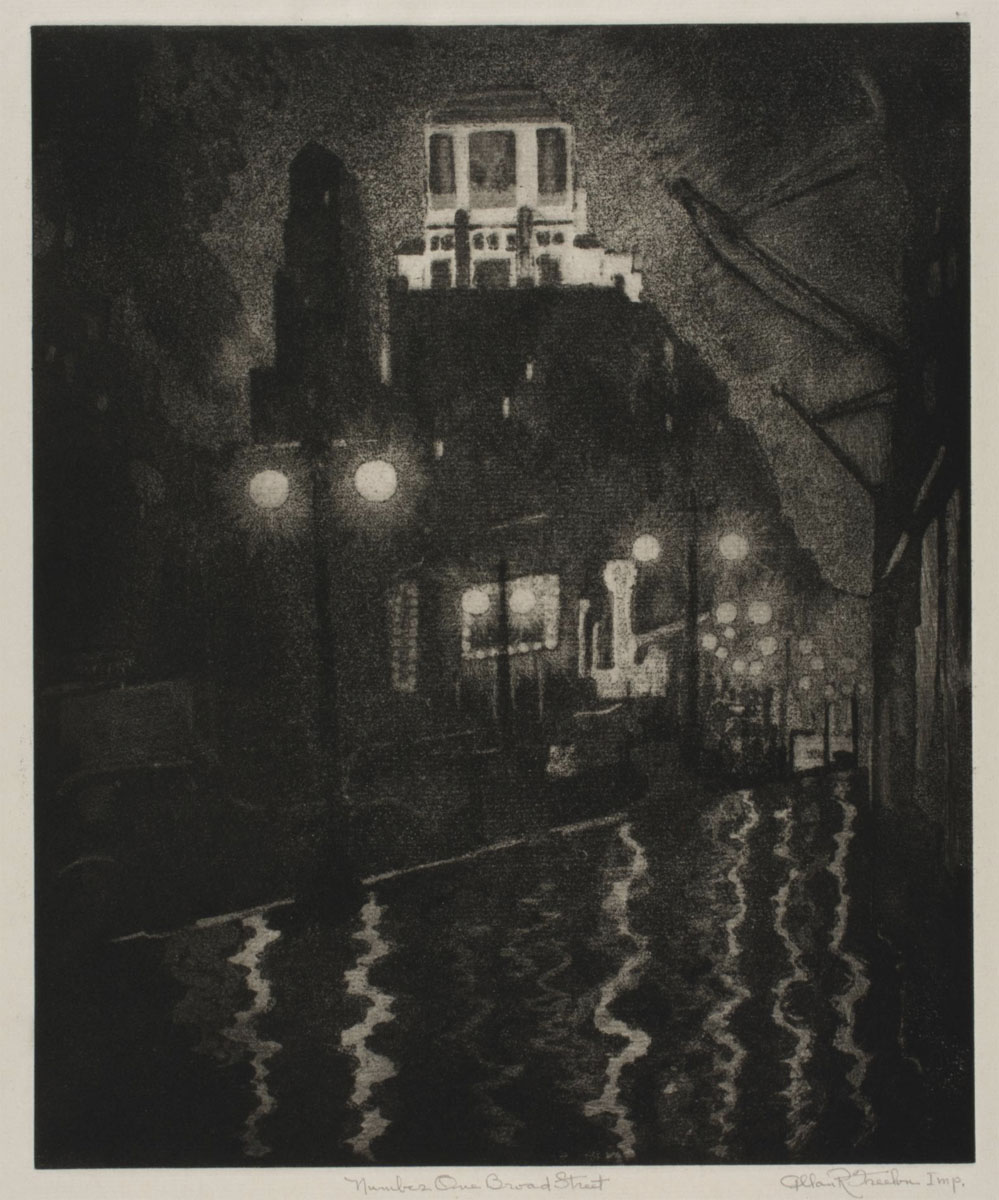
The exhibition also offers a view into the interaction of architecture and urban development with art’s role as a form of documentation. Among the famous buildings featured are Chicago’s gothic-ornamented Tribune Tower, New York City’s Art Deco Empire State Building, and Philadelphia’s modernist PSFS Building. An atmospheric etching of a rainy nighttime scene at One Broad Street in Philadelphia by artist Allan Randall Freelon (American, 1895-1960) shows how this important intersection at the heart of the city would have appeared in the 1930s.
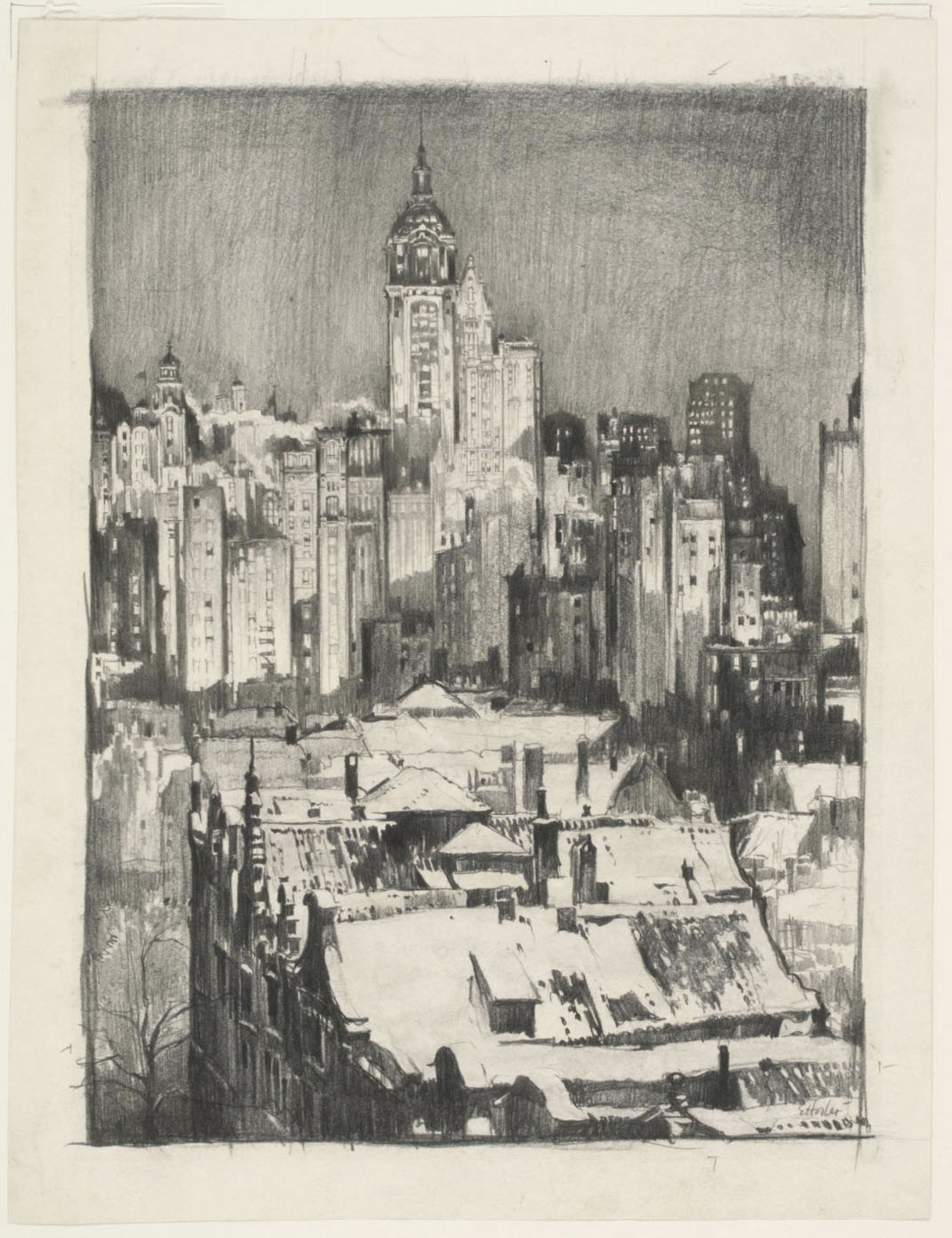
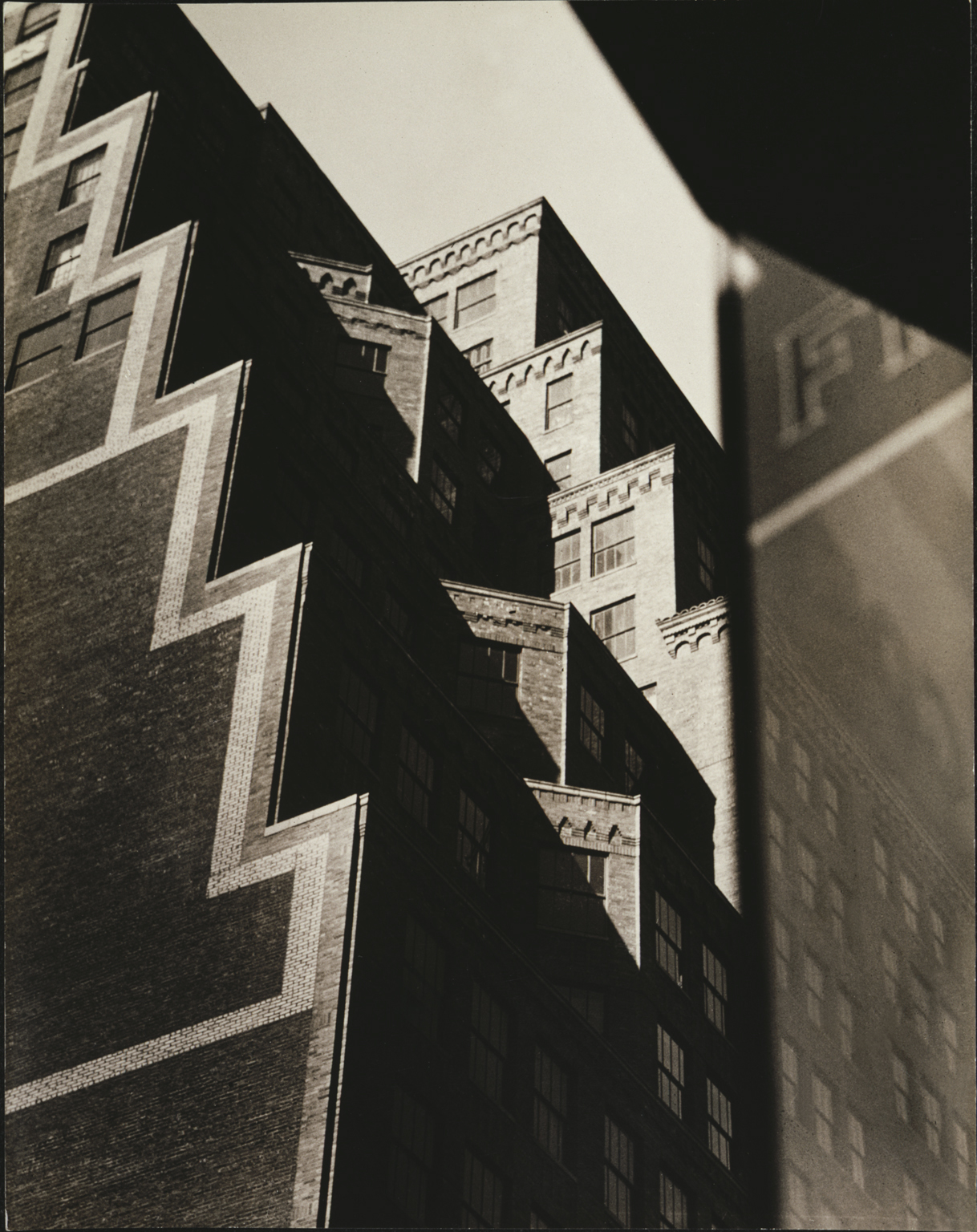
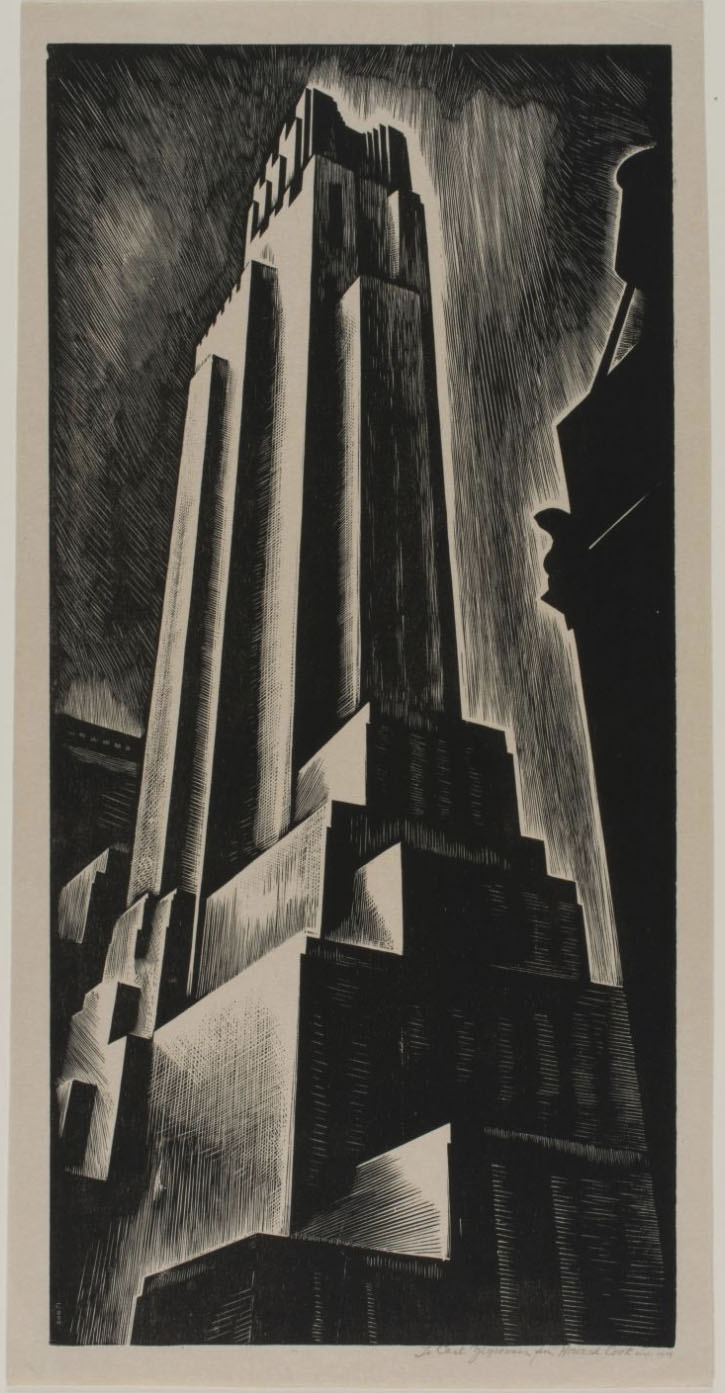
The towering, occasionally menacing, physical presence of these structures is a frequent visual theme in the works – whether in Howard Norton Cook’s woodcut “Skyscraper” (1929, below) or Sherril Schell’s photograph “Window Reflection – French Building” dating from 1930-1932. Horter’s graphite drawing “Manhattan Skyline” (1916) shows a row of newly-built towers thrusting skyward in strong, vertical lines and overshadowing the residential rooftops in the foreground, an image that suggests the city’s emergence as a financial and commercial giant.
Other works take a more abstract approach, exploring the visual exciting patterns created by these massive new structures. Such works include Marin’s 1913 and 1917 prints of the Woolworth Building and Herbert Johnson’s aerial photograph of building rooftops from c. 1930-1932.
Philadelphia Museum of Art press release [Online] Cited 19/06/2009. No longer available online
Earl Horter (American, 1880-1940) Manhattan Skyline c. 1916 Graphite on cream wove paper Sheet: 11 7/16 x 8 3/4 inches (29.1 x 22.2cm) Philadelphia Museum of Art Gift of Carl Zigrosser, 1953
Like many of the drawings and etchings of New York made by Horter while he lived in the city during the first two decades of this century, this view of the Manhattan skyline was shown in his first one-man exhibition at the New York gallery of Frederick Keppel and Company in 1916. It was organised by Carl Zigrosser, research librarian at Keppel, who later became this Museum’s first curator of prints and drawings. Zigrosser bought the drawing from the exhibition and donated it to the Philadelphia Museum of Art thirty-seven years later.
Wendell MacRae (American, 1896-1980) Summer c. 1930-1932 Gelatin silver print Image and sheet: 6 9/16 x 4 5/8 inches Philadelphia Museum of Art The Lynne and Harold Honickman Gift of the Julien Levy Collection, 2001
Stella Simon (American, 1878-1973) 6th Avenue c. 1930-1932 Gelatin silver print Image and sheet: 9 1/2 x 7 3/16 inches Philadelphia Museum of Art The Lynne and Harold Honickman Gift of the Julien Levy Collection, 2001
Allan Randall Freelon (American, 1895-1960) Number One Broad Street c. 1934 Aquatint with roulette and burnishing Plate: 11 7/8 × 9 13/16 inches (30.2 × 24.9cm) Sheet: 15 1/8 × 12 1/16 inches (38.4 × 30.6cm) Philadelphia Museum of Art Purchased with the Thomas Skelton Harrison Fund, 1943
Sherril Schell (American, 1877-1964) Buildings on West 35th Street c. 1930-1932 Gelatin silver print Image and sheet: 8 x 6 5/16 inches Philadelphia Museum of Art The Lynne and Harold Honickman Gift of the Julien Levy Collection, 2001
Howard Norton Cook (American, 1901-1980) Skyscraper 1929 Woodcut Image: 17 15/16 x 8 5/8 inches (45.6 x 21.9cm) Sheet: 19 1/16 x 9 3/4 inches (48.4 x 24.8cm) Philadelphia Museum of Art Gift of Carl Zigrosser, 1960
Sherril Schell (American, 1877-1964) Window Reflection – French Building c. 1930-1932 Gelatin silver print Image and sheet: 7 15/16 x 6 1/8 inches Philadelphia Museum of Art The Lynne and Harold Honickman Gift of the Julien Levy Collection, 2001
Ralph Steiner (American, 1899-1986) Untitled (New York City) 1931 Gelatin silver print Image/Sheet/Mount (With Black Border from Negative): 9 15/16 x 7 15/16 inches Philadelphia Museum of Art The Lynne and Harold Honickman Gift of the Julien Levy Collection, 2001
Berenice Abbott (American, 1898-1991) New York at Night c. 1932 Gelatin silver print Image and sheet: 13 3/8 x 10 5/8 inches Philadelphia Museum of Art Gift of Theodore T. Newbold in memory of Lee Witkin, 1984
Philadelphia Museum of Art 26th Street and the Benjamin Franklin Parkway Philadelphia, PA 19130
Many thankx to the Fotomuseum Winterthur for allowing me to publish the photographs in the posting. Please click on the photographs for a larger version of the image.
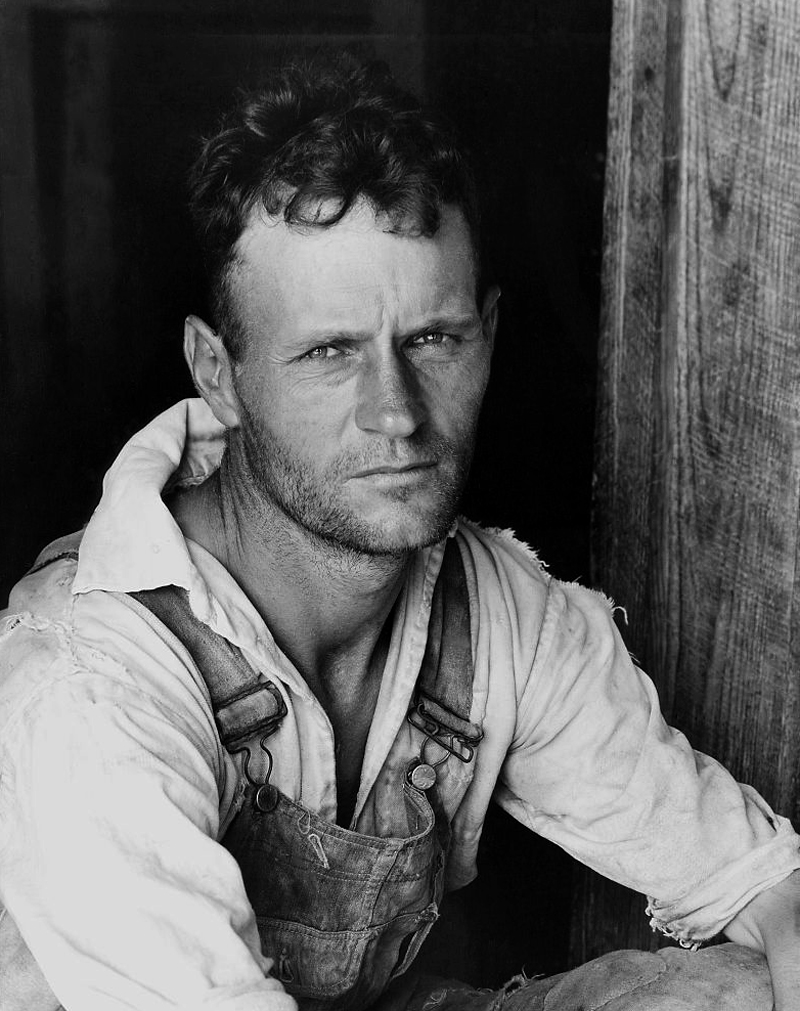
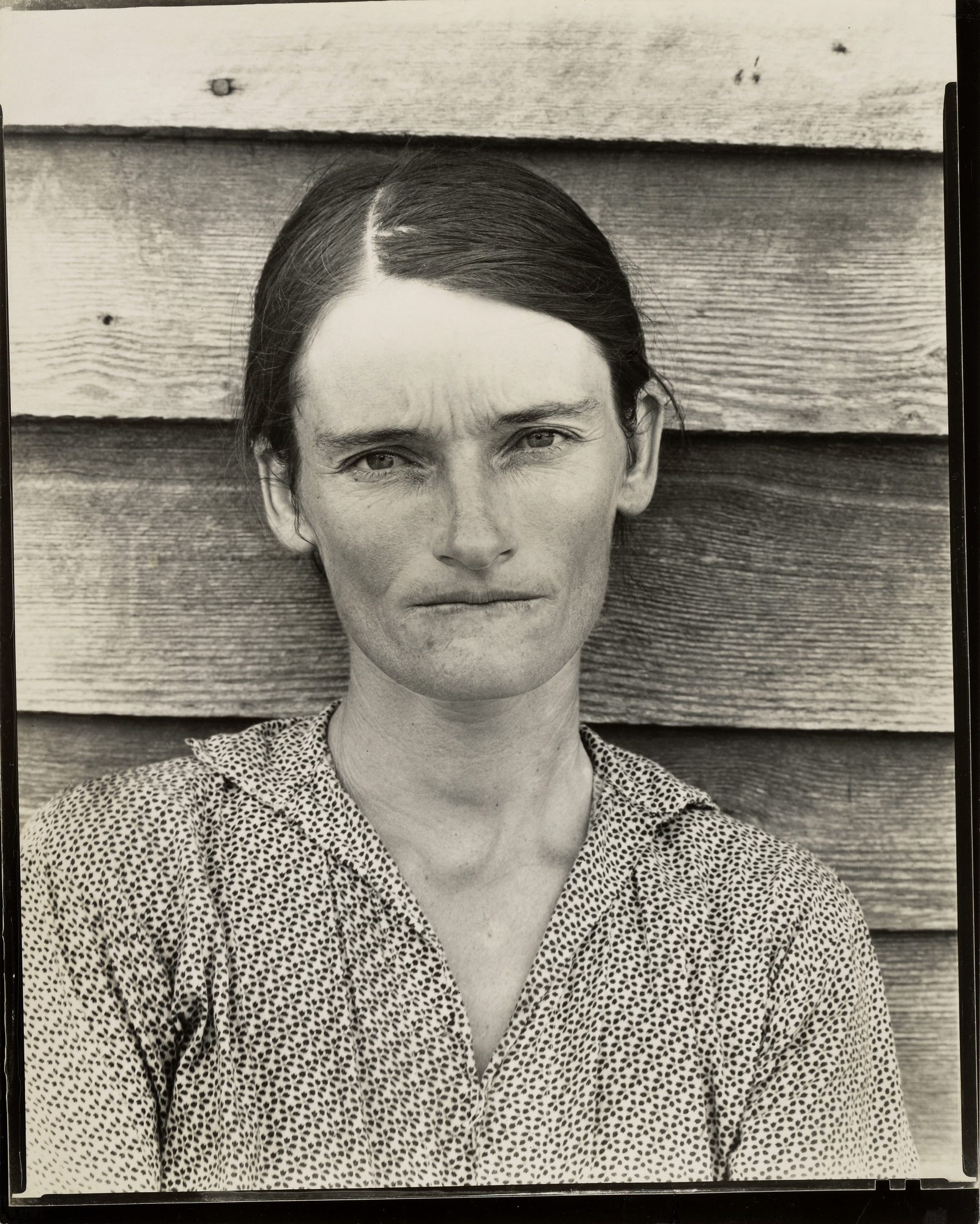
With this retrospective of the work of Walker Evans (1903-1975) Fotomuseum Winterthur presents one of the twentieth century’s pre-eminent photographers. His lucid and detailed portrayals of American life, especially his images of rural poverty during the Great Depression, made photographic history and went on to influence countless photographers. Walker Evans took an extremely innovative approach, capturing the very essence of the American way of life.
The exhibition, featuring some 120 works (the majority of which are from the most important private collection of Walker Evans’ works) represents every phase of his career: his early street photographs of the 1920s, his poignant documentation of 1930s America and pre-revolutionary Cuba, his landscapes and architectural photography, his subway portraits, storefronts, signage, the later colour Polaroids and more besides. As early as the 1930s, Walker Evans, in a departure from conventional notions of art and style, sought a new direct approach to reality. It is this that makes him a truly modern photographer.
The exhibition was curated by Jeff L. Rosenheim and Carlos Gollonet. Realisation in Winterthur: Urs Stahel. A cooperation with the Fundación MAPFRE, Madrid.
With this major retrospective of the work of Walker Evans (1903-1975) Fotomuseum Winterthur pays homage to one of the twentieth century’s pre-eminent photographers. His insightful and detailed portrayals of American life, especially his images of rural poverty during the Great Depression, made photographic history and went on to influence countless photographers. The 130 works in this retrospective exhibition represent every phase of his career: his early street photographs of the 1920s, his poignant documentation of 1930s America and pre-revolutionary Cuba, his landscapes and architectural photography, his subway portraits, storefronts, signage, and more besides.
On his return from France, where he had tried unsuccessfully to launch a literary career inspired by his love of Flaubert and Baudelaire, Walker Evans turned to photography. From the very start, with his keen eye for street life and the visual freshness of his unexpected slant on what he saw, his work spoke the language of European Modernism. But it was not long before Evans found his true voice – and it was at once profoundly personal and unequivocally American.
Some years before, the direct, undistorted and innovative gaze of Eugène Atget (1857-1927), whose work Evans knew and admired, had quietly paved the way for the split between documentary auteur photography and the purely descriptive photographic tradition. Atget’s unconventional angles, his de-centralised view and his focus on the seemingly trivial all had a major impact on Evans.
Walker Evans’ work is a far remove from what had, until then, been accepted as art photography. He was not interested in superficial beauty, but in a new objectivity. He subscribed to a style that observed undistorted facts and sought to capture things precisely as they were, seemingly without intervention, emotion or idealisation. For the first time in art photography, there were such unusual subjects as a pair of old boots or a subway passenger lost in thought. The artistic quality was based solely on the clarity, intelligence and authenticity of the photographer’s gaze. In this, Walker Evans’ oeuvre represents both a high point and a turning point in the formal and visual evolution of photography.
As the creator of this new, direct style, often referred to as straight photography, which drew upon scenes of sometimes blatant banality and rolled back the boundaries between the ‘important’ and the ‘trivial’, Walker Evans introduced the aesthetics of Modernism into American photography. This seemingly cold detachment spawned a style rich in expressive substance that was not only capable of embracing the lyricism and complexity of the American tradition, but of doing so without a trace of false romanticism, sentimentality or nostalgia. At long last, there was a forward-looking and enduring alternative to the traditional conventions of photography.
Press release from the Fotomuseum Winterthur website [Online] Cited 05/06/2009. No longer available online
Edward Weston (American, 1886-1958) Palma Cuernavaca 1925 Gelatin silver print Sheet: 24.4 x 16.5cm (9 5/8 x 6 1/2 in.) The Lane Collection Museum of Fine Arts, Boston
What a privilege to be able to post these photographs that appear in the exhibition. Breathe, look, enjoy!
Marcus
Many thankx to the Museum of Fine Arts, Boston for allowing me to publish the photographs in the posting. Please click on the photographs for a larger version of the image.
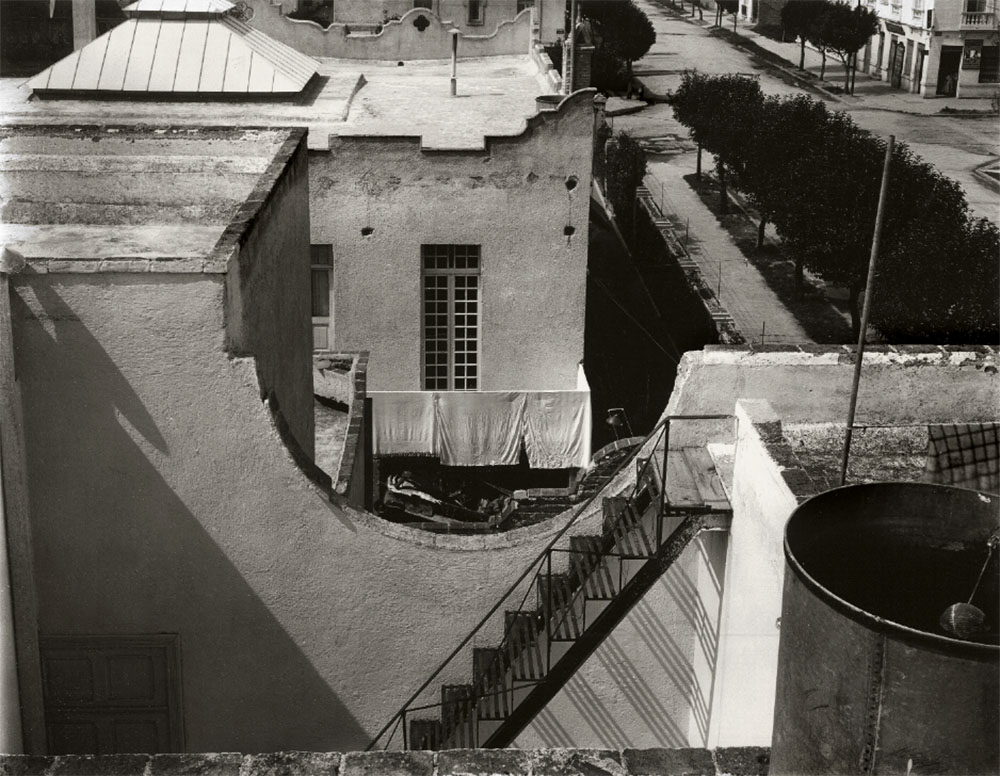
Edward Weston (American, 1886-1958) Desde la Azotea 1924 Platinum or palladium print Sheet: 19.4 x 24.4cm (7 5/8 x 9 5/8 in.) The Lane Collection Museum of Fine Arts, Boston
In the decades following the Revolution of 1910, foreign artists and intellectuals flocked to Mexico in order to experience its warm climate and lively cultural scene. They were inspired by Mexico‘s exotic tropical landscape, its ancient monuments and colonial architecture, the work of its modern muralists, and the country‘s indigenous arts and crafts. During two extended trips to Mexico made between 1923 and 1926, American photographer Edward Weston (1886-1958) created some of his earliest modernist photographs, which form the core of the exhibition, Viva Mexico! Edward Weston and His Contemporaries, at the Museum of Fine Arts, Boston (MFA). Featured are approximately 45 works, among them about 30 rare photographs by Weston and selected images by Tina Modotti, Brett Weston, Manuel Alvarez Bravo, and Paul Strand. These photographs from the 1920s and ’30s are drawn from the Museum’s own collection, as well as The Lane Collection, which is on long-term loan to the MFA. Additionally, a compelling 1939 portrait of Frida Kahlo by Hungarian-born photographer Nickolas Muray has been lent from a local private collection. Viva Mexico! is on view May 30 through November 2 in the MFA’s Herb Ritts Gallery.
“Viva Mexico! highlights Weston’s pivotal years in this highly creative environment, which had a lasting impact on his work and inspired some of his earliest experiments in still life, landscape, and cloud studies,” said Malcolm Rogers, Ann and Graham Gund Director of the MFA. “This exhibition allows us to focus on a critical juncture in Weston’s career, and to present one of the strengths of The Lane Collection – its holdings of the photographer’s early modernist work.”
The Lane Collection, which includes gifts and loans to the MFA, comprises modern American paintings, photographs, and works on paper assembled by the late William H. Lane and his wife, Saundra B. Lane, a Trustee of the MFA. During the late 1960s, the Lanes acquired a large number of Weston’s vintage photographs, which are now widely acknowledged to be the most important collection of the photographer’s work in private hands.
“Acquiring more than 2,000 Edward Weston photographs directly from his sons was an amazing learning experience for us and we were thrilled to be able to immerse ourselves in the work of such a major artist in such great depth,” said collector Saundra Lane. “The Mexico pictures by Edward, Brett, and Tina Modotti are some of my personal favourites. These works inspired me to more recently acquire two early Manuel Alvarez Bravo photographs, El soñador (The Dreamer) and Nude, included in the exhibition, each of them a quintessentially Mexican subject and clearly made under the influence of Weston and Modotti.”
In an early biography of Edward Weston, writer and editor Nancy Newhall described Mexico as his “Paris,” the place where he greatly expanded his range as an artist. His total of more-than two years in Mexico – Weston’s only travel outside the US – offered him the opportunity to move away from his Pictorialist style, with its soft focus and ethereal, romantic qualities, toward more abstract forms and sharper resolution of detail. Heroic portrait heads, avant-garde nudes, urban views, cloud studies and landscapes, and images of Mexican toys and folk art are among the subjects he captured with his large-format camera. This period of experimentation with isolated objects also resulted in some of Weston’s earliest forays into still life, as can be seen in Chayotes (1924), a close-up of the beautiful, spiny squash arranged in a painted wooden bowl.
In 1923, Weston made the difficult decision to close his portrait photography studio in Tropico (now Glendale), California, and move to Mexico, as he wrote in his journal – to start life anew. He left behind his wife and three of his four young sons and traveled to Mexico City with his lover, Italian-born actress Tina Modotti (1896-1942) and his oldest son Chandler. Modotti ran Weston’s new studio, served as his translator and muse, and under his tutelage began to make highly accomplished photographs of her own. Together they became immersed in the vibrant community of artists and intellectuals centred there, which included painters Diego Rivera, Jean Charlot, Xavier Guerrero, and Rafael Salas, as well as the poet Luis Quintanilla, writer D.H. Lawrence, anthropologist Frances Toor, and journalist Carleton Beals. Although Weston and Modotti always remained outsiders looking in, the several exhibitions of their work during their Mexican sojourn helped spark a lively interest in modernist photography in their adopted country, where until this time photography had been admired mainly as a documentary tool, rather than a fine art.
“This exhibition will be a wonderful opportunity for our visitors to experience Weston’s stunning Mexican photographs firsthand, many of which are rarely seen platinum prints taken in the period just before he made his classic black-and-white images of peppers and shells,” said Karen Haas, The Lane Collection Curator of Photographs, who organised Viva Mexico! “These rich, warm-toned prints, when seen in context with photographs by his contemporaries in Mexico during the 1920s and ’30s, promise to be a revelation even to those who know Weston’s work well.”
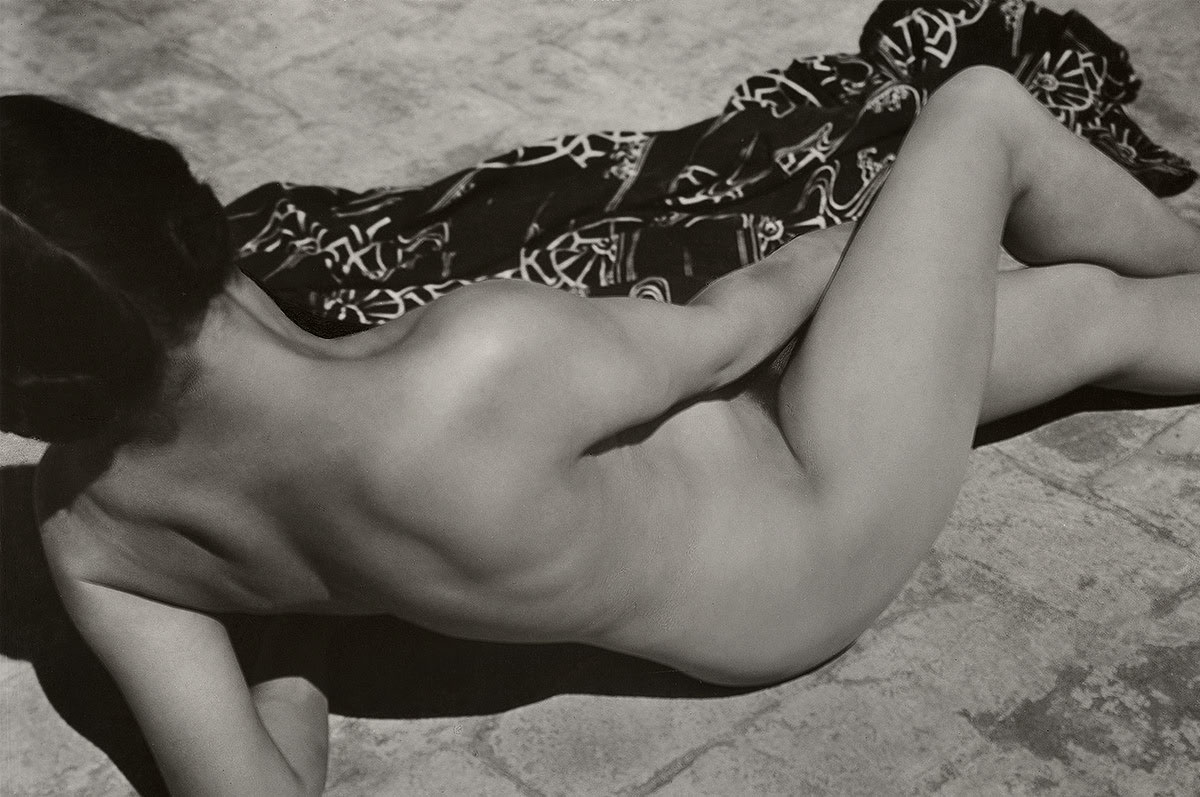
Many of the earliest images that Weston produced in Mexico were portraits and nudes, both subjects that he had specialised in previously but now took on a very different look and feel. Soon after his arrival, he began a series of monumental portraits of friends and acquaintances, all of them shot very close-up and from slightly below eye level, their heads filling the picture frame and their features heroicised. These include Galván Shooting (1924), Tina Modotti (1924), Victoria Marin (1926), and Rose Roland Covarrubias (1926). He also made a stunning group of nudes of Modotti posing on their sun-baked rooftop patio, all three of which he titled Tina on the Azotea (1924), as well as an incredibly simple and sculptural image, Nude (1926) of fellow American expatriate Anita Brenner. The Brenner nude, along with Palma Cuernavaca (1925), Aqueduct (1924), and Excusado (1925) all share a similarly stark, abstract, and timeless quality – what Weston described as an attempt to render “the very substance and quintessence of the thing itself.”
Abstract architectural details began to make their way into Weston’s work as well and he was drawn to capture light and shadow on a variety of surfaces, from the zigzag stone patterns of the ancient Ruinas de Mitla (1926) to the angled forms of the convent stairwell and skylight in San Pedro y San Pablo (1924). Viva Mexico! also showcases Weston’s experimentation with landscape photography, both urban and rural. The striking view from his studio roof is recorded in Desde la Azotea (1924), in which the geometry of the buildings below is heightened by the elevated vantage point and steeply raking light, and in Michoacán (1926), where he captures the beautifully undulating silhouette of the pastoral countryside. Much less common among his subjects from this period are some of Weston’s little-known photographs made in outdoor markets and fairs, such as Mercado, Oaxaca (1926) and Bowls, Oaxaca (1926). These open-air street images closely relate to another group of pictures, including Torito (1925), a playful little papier-maché bull, and Fish Gourd and Striped Serape (1926), which reflect Weston’s newfound interest in the vernacular Mexican toys and folk objects that he collected and lovingly documented in his studio while waiting for clients to arrive for portrait sittings. These whimsical photographs also serve as fascinating precursors to Weston’s high modernist still lifes of less than a decade later.
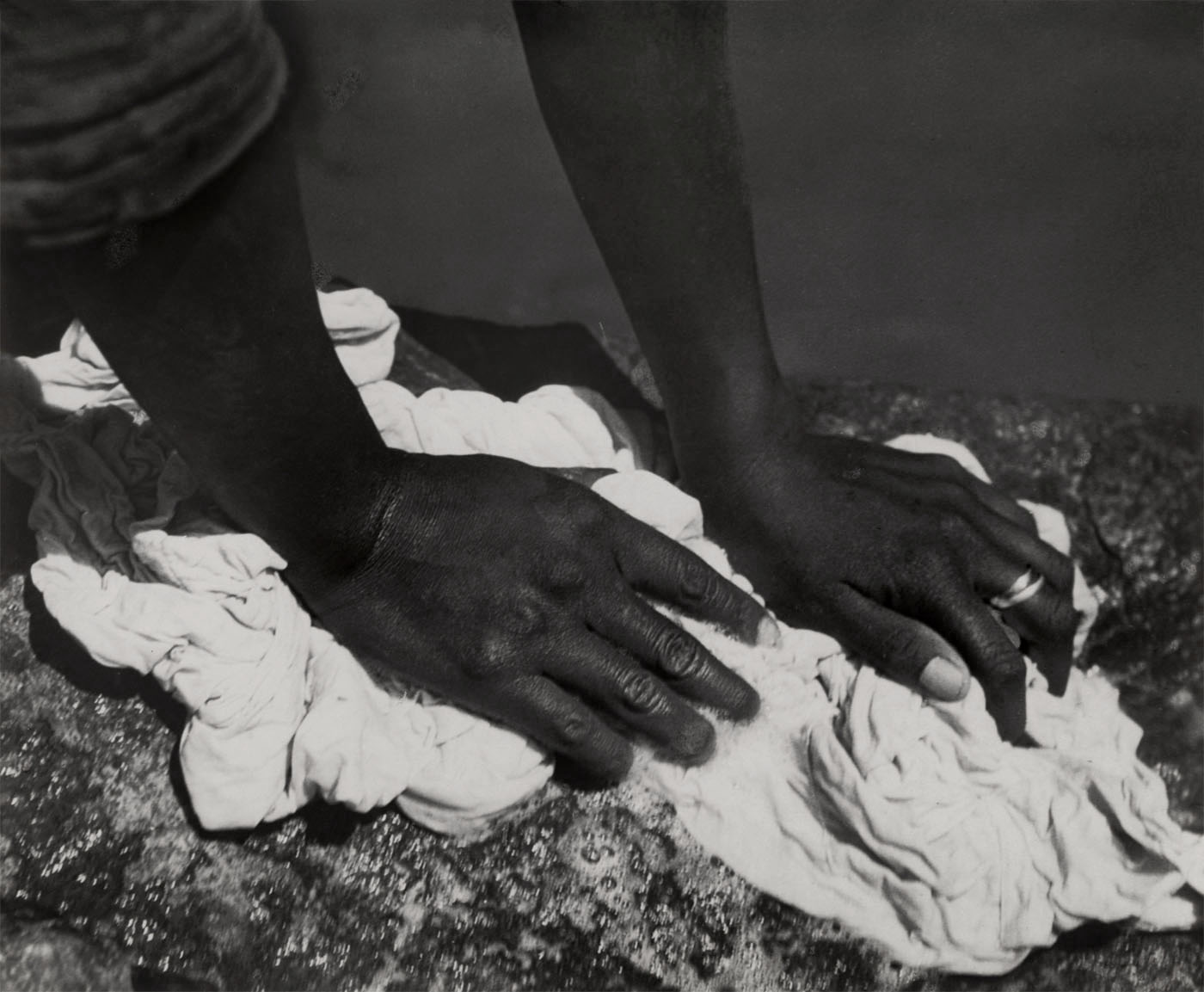
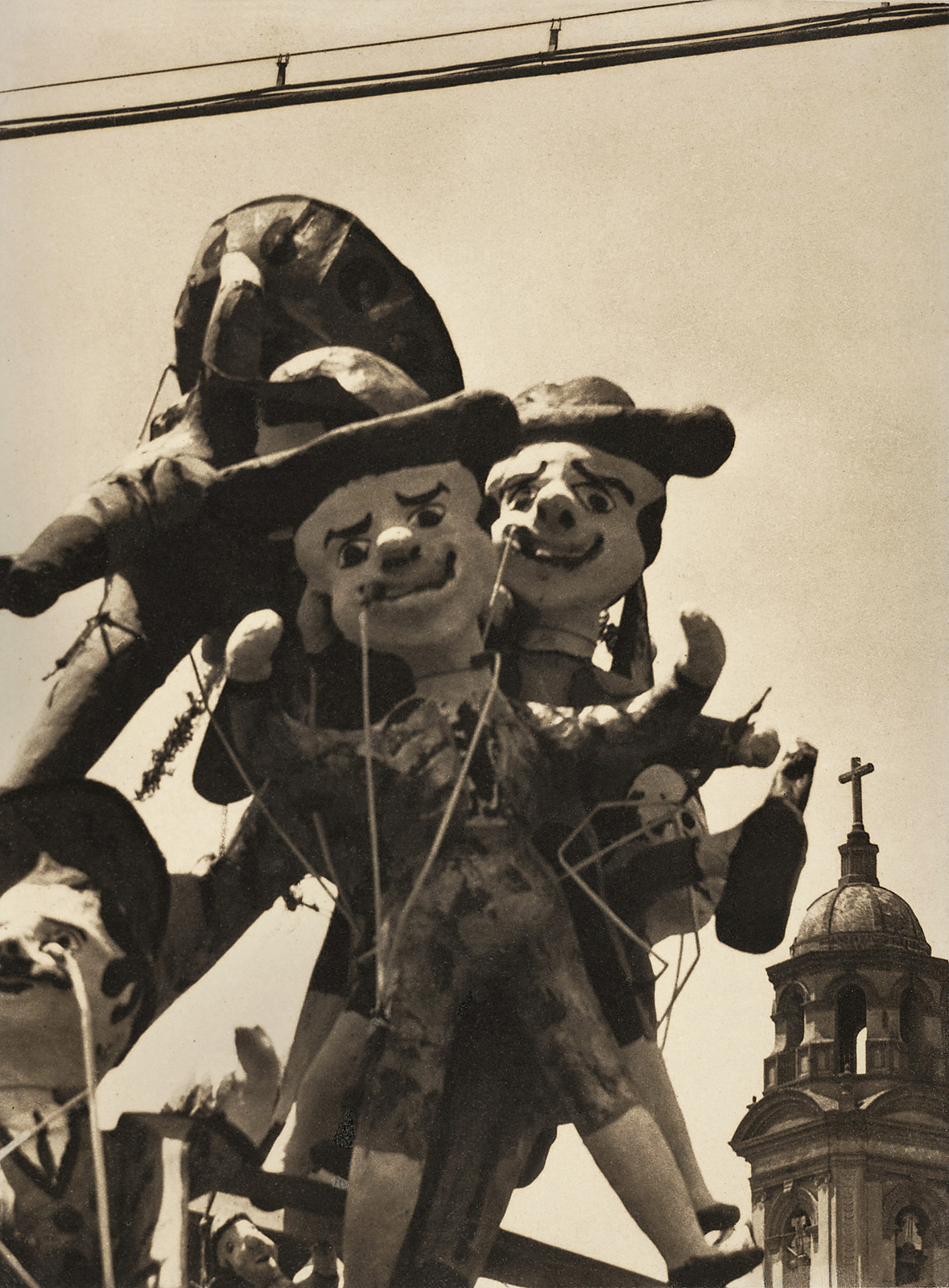
Over the course of her time in Mexico, Modotti rapidly went from photographer’s apprentice and model to fine art photographer in her own right. Although her career as a photographer was relatively brief, her powerful pictures from this period sometimes rival those of her lover and teacher, Edward Weston. Modotti was a rare woman in a mostly male profession, but she brought to her work a deep-seated interest in the people and the politics of Mexico in the 1920s. Unlike Weston, who preferred to work in the studio rather than the street, Modotti straddled the worlds of fine art photography and radical social activism. Her commitment to the struggles of the people can be seen in her iconic Worker’s Hands (1927), and her fascination with Mexico’s public demonstrations and celebrations is captured in Effigies of Judas (1924). She was so impassioned by these causes, in fact, that Modotti joined the Communist party and continued to work in Mexico for several years after Weston finally returned home in 1926. Before he left for California, however, Weston and Modotti collaborated on a photographic commission to illustrate a book on Mexican history and culture entitled Idols Behind Altars, which was written by their friend Anita Brenner and published in 1929. A copy of the book is among the case materials featured in the exhibition, as is American photographer Laura Gilpin’s book, Temples in Yucatan: A Camera Chronicle of Chichén Itzá (1948), which showcases her pictures of the ancient Mayan ruins taken during her two trips there in the early 1930s and mid ’40s.
Viva Mexico! also offers visitors to the MFA a rare chance to see some of Brett Weston’s (1911-1993) earliest serious photographs made during Edward Weston’s second extended trip to Mexico in 1925 and 1926 (after an eight-month-long hiatus in California). The second eldest of Weston’s four sons was only 14 years old when he accompanied his father to Mexico City and went with him to live in the house and studio that Weston shared with Modotti. Rather than the large-format camera and platinum prints that his father preferred, Brett Weston was given a 3 1/4 x 4 1/4 Graflex camera and printed his pictures on less expensive gelatin silver papers, which captured the precise detail and texture that his father admired in his work. The boy quickly fell under the spell of photography and his time in Mexico proved to be an ideal preparation for his own future as a professional photographer. Two of Brett Weston’s highly abstract architectural views, Tin rooftops (1926) and Ventilator (1926), are on view in the exhibition.
The only Mexican-born artist in the exhibition, Manuel Alvarez Bravo (1902-2002), is represented with three works, El soñador (The Dreamer) (1931), Nude (1935), and Las lavanderas sobreentendidas (Washerwomen Implied), Draped Yucca Plants, Mexico (1932). As a young, aspiring photographer in Mexico City, Bravo first met Modotti in 1927, soon after Weston’s departure. He was greatly inspired by the look and spirit of Modotti’s work as well as the Weston prints that she shared with him. Bravo is perhaps best-known for the stunning female nudes that he made over the course of his long career, but Viva Mexico! features a rare male figure study, Nude (1935). With its androgynous curves and simplified form, it clearly relates to Weston’s nudes of his son Neil made a decade earlier. Bravo’s photographs always have a profoundly Mexican essence to them, but especially during the 1920s and ’30s; they also demonstrate the influence of the European Surrealists as can be seen in the slightly unsettling, yet lovely work El soñador (The Dreamer).“
Viva Mexico! also showcases the work of American photographer and documentary filmmaker Paul Strand (1890-1976), who lived in Mexico during the mid-1930s. Although he and Weston had met in New York in 1922 and were aware of each other’s careers, their sojourns in Mexico did not coincide. The situation that Strand found on crossing the border in 1932 was very different than the more optimistic period of cultural Renaissance that Weston had experienced during the mid-1920s. Like Modotti, whose social concerns and unsentimental approach he shared, Strand was inspired to make portraits of Mexico’s indigenous peoples and the country’s dramatic landscapes. Landscape, Near Saltillo (1932) was one of the earliest images Strand shot in Mexico; taken in the north of the country on his initial trip down to Mexico City, it features the glowing white form of an adobe building set off by spiny, tall cacti and a vast expanse of sky. Also on view is Día de Fiesta (1933), a starkly simple image of three men and a child standing against a sunlit wall, which was made just prior to the production of Redes (Nets, or The Wave, in the US), his documentary film focusing on the struggles of a group of fisherman near Veracruz.”
Press release from the Museum of Fine Arts, Boston [Online] Cited 03/06/2009 no longer available online
Edward Weston (American, 1886-1958) Chayotes 1924 Platinum or palladium print Sheet: 19.4 x 24.3cm (7 5/8 x 9 9/16 in.) The Lane Collection Museum of Fine Arts, Boston
Edward Weston (American, 1886-1958) Ruinas de Mitla 1926 Platinum or palladium print Sheet: 19.1 x 24.1cm (7 1/2 x 9 1/2 in.) The Lane Collection Museum of Fine Arts, Boston
Edward Weston (American, 1886-1958) San Pedro y San Pablo 1924 Platinum or palladium print Sheet: 19.4 x 24.4cm (7 5/8 x 9 5/8 in.) The Lane Collection Museum of Fine Arts, Boston
Edward Weston (American, 1886-1958) Tina on the Azotea, with kimono 1924 Gelatin silver print Sheet: 16.2 x 23.8cm (6 3/8 x 9 3/8 in.) The Lane Collection Museum of Fine Arts, Boston
Edward Weston (American, 1886-1958) Tina On The Azotea c. 1924 Palladium print Sheet: 22.2 x 17.5cm (8 3/4 x 6 7/8 in.) The Lane Collection Museum of Fine Arts, Boston
Edward Weston (American, 1886-1958) Tina Modotti 1924 Palladium print Sheet: 22.7 x 17cm (8 15/16 x 6 11/16 in.) The Lane Collection Museum of Fine Arts, Boston
Pure your gentle name, pure your fragile life, bees, shadows, fire, snow, silence and foam, combined with steel and wire and pollen to make up your firm and delicate being.
Part of Modotti’s epitaph which can be found on her tombstone, composed by Pablo Neruda,
Edward Weston (American, 1886-1958) Galván Shooting (Manuel Hernández Galván, Mexico) 1924 Gelatin silver print 22.5 x 18.7cm (8 7/8 x 7 3/8 in.) Mary L. Smith Fund Museum of Fine Arts, Boston
Edward Weston (American, 1886-1958) Rosa Rolanda (de Covarrubias) 1926 Gelatin silver print 21.9 x 16.5 cm (8 5/8 x 6 1/2 in.) Sophie M. Friedman Fund Museum of Fine Arts, Boston
Edward Weston (American, 1886-1958) Excusado (Toilet) 1925 Gelatin silver print Sheet: 24.3 x 19.1cm (9 9/16 x 7 1/2 in.) The Lane Collection Museum of Fine Arts, Boston
Tina Modotti (American born Italy, died Mexico, 1896-1942) Manos de trabajador, Mexico (Worker’s Hands, Mexico) 1927 Gelatin silver print 19.2 x 21.7cm (7 9/16 x 8 9/16 in.) Sophie M. Friedman Fund Museum of Fine Arts, Boston
Tina Modotti’s closely cropped picture of a worker’s dusty hands conveys the realities of hard work. In 1923, the Italian-born film actress accompanied her lover, photographer Edward Weston, to Mexico City, where Weston taught her to use a large-format camera. She worked as his studio assistant, quickly mastering the technique and making striking portraits, close-up images of flowers, and still lifes of her own. Modotti’s compassion for the indigenous culture and political struggles of the Mexican people led her to join the Communist Party in 1927 and to focus on socially concerned subjects, using her camera as a tool to document the proud faces and weathered hands of the peasant labourers, artisans, and revolutionaries of her adopted country.
Text from the Museum of Fine Arts, Boston website
Screenshot
Tina Modotti (American born in Italy, died in Mexico, 1896-1942) Hands Washing 1927 Gelatin silver print
Tina Modotti (American born Italy, died Mexico, 1896-1942) Effigies of Judas 1924 Gelatin silver print
Perhaps it’s just me, but I seem to have become a little jaded towards the recent photographs of William Eggleston.
Other than the green reflection of lights in rainwater (above) the photographs seem to have lost their unique voice, the social insight that gave his earlier work it’s zing – provocative images that challenged how we live through a meditation on subject matter, construction of space, and tone of “colour”. How the colour that surrounds us inflects our very being.
In these photographs it feels like there has been little development in his style over the years with a consequent lessening of their visual impact. Now Eggleston’s colour just feels like a party trick, performed by rote with little consequential meaning to either the colour or the image. Perhaps the way we look at the world (and how we picture it) has finally overtaken the director’s prescient creative vision – his auteurship, his authorship.
Dr Marcus Bunyan
Many thankx to the Fondation Cartier for allowing me to publish the photographs in the posting.
“In Eggleston’s best work, the work that made him famous, color is intrinsic to the meaning of the photograph. Its not simply a garnish to draw the eye. His best photographs are not ‘about’ the color; they are about larger issues that the color is used in the service of. This is whats missing in his Paris pictures. The color here is pure ornament, eye candy to seduce you into forgetting that the picture has nothing to say.”
Anonymous. “William Eggleston Mails It In From Paris,” on the Leicaphilia website April 21, 2014 [Online] Cited 06/02/2019
For the last three years, American photographer William Eggleston has photographed the city of Paris as part of a commission for the Fondation Cartier pour l’art contemporain. Taken throughout different seasons, these new images by one of the fathers of colour photography portray the local and the cosmopolitan, the glamorous and the gritty, the everyday and the extraordinary.
This exhibition also provides an exceptional occasion to bring together William Eggleston’s distinctive pictures and his recent paintings, an unknown aspect of his work that has never before been presented to the public.
William Eggleston’s recent book Paris, published by Steidl and commissioned by FoundationCartier, is a collective body of work that comprises his oeuvre of color drawings and recent Paris photographs. Similar to Ben Shahn, Charles Scheeler, Diego Rivera, Man Ray, Robert Rauschenberg and Ed Ruscha, Eggleston has reached out beyond photography to express his creative talents.
The photographs and drawings are intertwined throughout the book, creating an interesting visual cadence. The page spreads illustrate various layout designs, including a single image of either a photograph or drawing on a spread, pairs of drawings and photographs and pairs of drawing facing a photograph. All of the drawings and photographs are contained within the boundaries of the page. …
We know mostly of Eggleston’s photographs, but from the dating on one of the drawings included in this book, we can determine that Eggleston has been working with the drawing medium since 1968. It is interesting to speculate as to how one medium may have influenced the other for Eggleston. As an example, the earlier photographs by Shahn and Scheeler seem to have had an influence on how these two artists subsequently worked their framing, pictorial space, mass & line quality in their subsequent paintings.
The Paris photographs that Eggleston made of graffiti or his tight framing in conjunction with a longer lens to compress the pictorial space are visually similar in style to his drawings. The subjects he photographs are framed to create similar vibrant color masses and lines as his drawing, abstracting reality into basic graphic components. …
Eggleston’s photographs are constructed like spontaneous glances; partial views of what might be consider a traditional subject, creating color abstractions of lines, patterns and mass. Trees, pipes, people, walls, garbage, décor, wall paper, display windows are bisected and truncated, with edges and lines following out of the photographs borders. These images seem to be created by a restless and nervous energy.
With these drawings, paintings and photographs, Eggleston shows a interesting handling of these mediums and offers an insight as to how influential the period of Abstract Expressionism is to his photographic process.
Extract from Douglas Stockdale. “William Eggleston – Paris,” on The PhotoBook Journal website September 12, 2009 [Online] Cited 06/02/2019
Helen Levitt (American, 1913-2009) New York, NY 1945 Gelatin silver print
Further to my earlier posting about the passing of renowned New York photographer Helen Levitt comes this wonderful exhibition at the Laurence Miller Gallery in New York. How I wish I was in that city to see it – what a joy!
Below are a selection of 1940’s black and white photographs from the exhibition.
Dr Marcus Bunyan
Many thankx to Laurence Miller Gallery for allowing me to publish the photographs in the posting. Please click on the photographs for a larger version of the image.
Helen Levitt (American, 1913-2009) Kids Dancing, New York c. 1940 Gelatin silver print
Helen Levitt (American, 1913-2009) Kids graffiti, New York c. 1938 Gelatin silver print
Laurence Miller Gallery will present a memorial tribute to Helen Levitt from May 9 – June 26, 2009. Helen Levitt passed away in her Greenwich Village home on March 29, at the age of 95. Ironically, or perhaps fittingly, a show of her work entitled Passages, which Helen had approved, was already in the works, and her death caused a momentary pause in how to proceed. It was decided that Helen would not have wanted her passing to intrude upon best laid plans. Hence, guided by her spirit, we celebrate her legacy with this exhibition, her twelfth at Laurence Miller Gallery.
Helen Levitt: A Memorial Tribute will present a series of passages, in both colour and black-and-white, from her extraordinary 70-year career. Featured will be her pictures of animals, which were among her earliest as well as last pictures taken; a little-known series of portraits taken on the subway using Walker Evans’ camera; children’s street drawings; elderly folks in conversation; and children at play, the photographs for which she is most well-known. Helen Levitt’s classic and rarely seen silent film, In the Street, from 1948, will be shown as well.
One of the tribute’s highlights will be a selection of never-before-exhibited “first proofs.” These early documents of her working methods are often unique. Some are vintage, others were printed as late as the 1970’s, but all were printed by Helen in her bathroom that doubled as the darkroom. Often they are variants of iconic images, and often they are sequences of several shots taken at the same time. They all reveal the photographer’s “dance” as she observes boys climbing up a tree, a large family gathering on the front stoop, two men seated beside a curious cat, or four boys peering into a pool hall. In combination with the film In the Street, the early sequences reinforce her reputation as a cinematographer, and are genuine and valuable records of the working methods of a canny and poetic photographer.”
Text from the Laurence Miller Gallery website [Online] Cited 12/05/2009. No longer available online
In the Street 1948 Directed and edited by Helen Levitt Cinematography by NYC photographers James Agee, Helen Levitt, Janice Loeb Re-edited version rereleased by Levitt in 1952 with musical score by Arthur Kleiner 16mm film photographed in Harlem
Helen Levitt (American, 1913-2009) New York c. 1942 Gelatin silver print
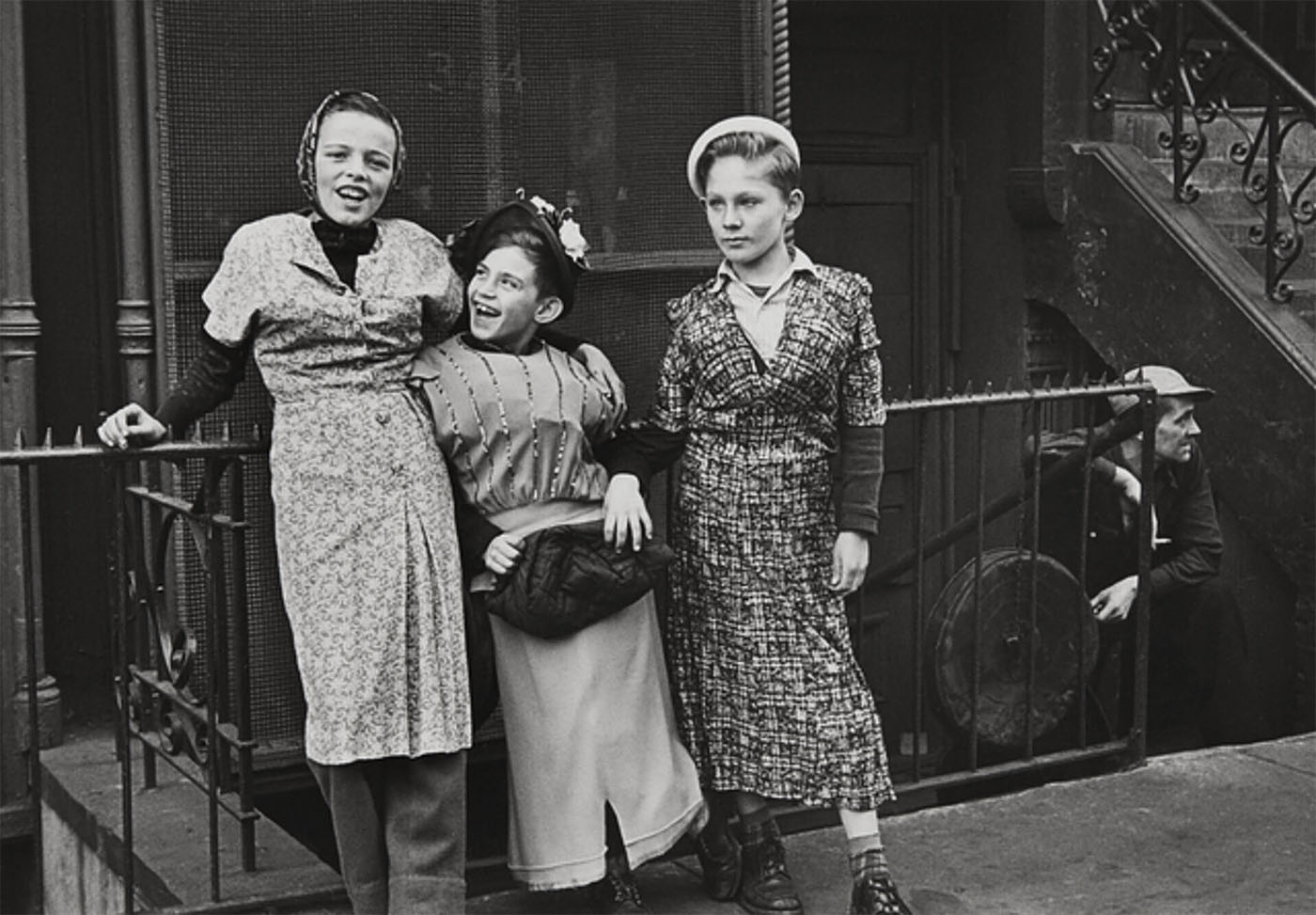
Helen Levitt (American, 1913-2009) Three Girls Playing Dress Up, New York c. 1940 Gelatin silver print
Helen Levitt (1913-2009) short biography
Helen Levitt’s playful and poetic photographs, made over the course of sixty years on the streets of New York City, have delighted generations of photographers, students, collectors, curators, and lovers of art in general. The New York Times described her as: “a major photographer of the 20th century who caught fleeting moments of surpassing lyricism, mystery and quiet drama on the streets of her native New York”. Throughout her long career, Helen Levitt’s photographs have consistently reflected her poetic vision, humour, and inventiveness as much as they have honestly portrayed her subjects – men, women, and children acting out a daily drama on the sidewalks and stoops of New York City’s tenements.
She shot and edited the film In the Street with Janice Loeb and James Agee, providing a moving portrait of her still photography. Levitt’s first major museum exhibition was at the Museum of Modern Art in 1943, and a second solo show, of colour work only, was held there in 1974. Major retrospectives of her work have been held at several museums: first in 1991, jointly at the San Francisco Museum of Modern Art and the Metropolitan Museum of Art in New York; in 1997 at the International Center for Photography in New York; and in 2001 at the Centre National la Photographie in Paris.
In 2007 “Helen Levitt: Un Art de l’accident poetique” opened at the Fondation Henri Cartier-Bresson in Paris; in 2008, the Sprengel Museum, Hannover, Germany chose Ms. Levitt as the recipient for the Spectrum International Photography Prize which was accompanied by a major retrospective; and FOAM Museum Amsterdam, mounted another major retrospective in October, 2008. She was a 2008 recipient of the Francis Greenburger award for excellence in the arts.
Curator:Sarah Hermanson Meister, associate curator of MoMA’s Department of Photography
Many thankx to La Casa Encendida for allowing me to publish the photographs in the posting. Please click on the photograph for a larger version of the image.
Paul Strand (American, 1890-1976) Wall Street 1915 Platinum palladium print
Wall Street is a platinum palladium print photograph by the American photographer Paul Strand taken in 1915. There are currently only two vintage prints of this photograph with one at the Whitney Museum of American Art (printed posthumously) and the other, along with negatives, at the Philadelphia Museum of Art. This photograph was included in Paul Strand, circa 1916, an exhibition of photographs that exemplify his push toward modernism.
It depicts a scene of everyday life in Manhattan’s Financial District. Workers are seen walking past the J.P. Morgan & Co. building in New York City on the famous Wall Street, of which the photograph takes its name. The photograph is famous for its reliance on the sharpness and contrast of the shapes and angles, created by the building and the workers, that lead to its abstraction. This photograph is considered to be one of Strand’s most famous works and an example of his change from Pictorialism to straight photography. Strand moved from the posed to portraying the purity of the subjects. It is one of several images that stand as marks of the turn to modernism in photography. …
Technique
This photograph depicts the J.P. Morgan building in New York City. Strand photographed “people hurrying to work past the banking building” situated on Wall Street, from which the photo takes its name. the subject depicted is a real-life subject without manipulation. The depiction of the real nature of the medium and the subject is an example of straight photography. There is no focal point, with the lines converging off of the frame of the image. The financial building take majority of the frame. Emphasis is placed on the strong shapes created by the architecture of the building. The workers are included in the image, but are faceless and are trumped in size by the massive square shapes from the building they walk past. Also, the workers are captured in motion which on film makes them appear blurry. This aesthetic that Strand creates in Wall Street is his break toward the modern, the straight photography, demonstrating that Pictorialism is no longer part of his aesthetic. Strand captured the building with clean, sharp lines. The building is covered in the high contrast, chiaroscuro. It is heavily in the shadows, but still creates an overwhelming presence over the people that walk past it. These people are also shrouded in the contrast made evident with the clean lines and black and white nature of his photos and photography as a medium. The people jump from their places, being the dark figures in the light of the sun that beams in from the left of the frame.
Strand fills the image with his recognisable aesthetic. The photo is platinum print, one of the materials frequently used by photographers of the time. Strand was unique in how he printed his photos. As stated on the George Eastman House website section Notes on Photography, Strand would make large prints from small negatives. He also left them in their matte condition that was inherent with platinum print. With his printing techniques, he “added a richness to the image.” As with the time, the photo is entirely black and white. There is a heavy contrast with the black and white areas of the photo. Strand creates diagonal shapes that pull emphasis to subject of the building and away from the people.
Aspects
Having taken Hine’s class at the Ethical Culture Fieldston School, social change became important to Strand and appeared often in his art. As a pupil of Hine, Strand learned of the social aspect his work could have. With Wall Street, he sought to portray a social message. He captured the faceless people next to the looming financial building in order to give a warning. Strand shows “the recently built J.P. Morgan Co. building, whose huge, dark recesses dwarf the passersby with the imposing powers of uniformity and anonymity.” The people cannot escape the overwhelming power that this modern establishment will have on their future and the future of America. He warns us to not be the small people that look almost ant-like next to this building that has a massive amount of control over the American economy.
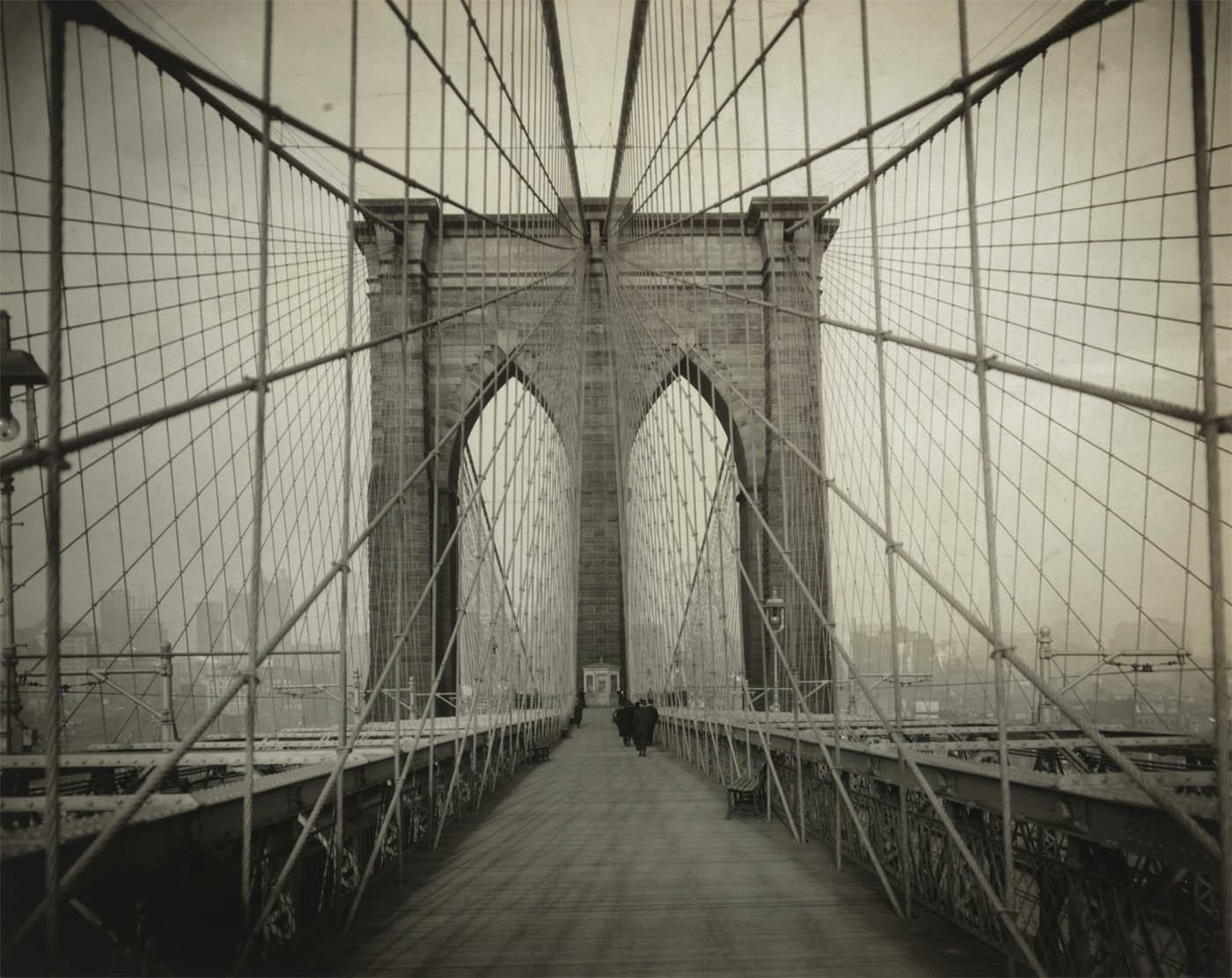
Unidentified photographer Brooklyn Bridge c. 1914 Gelatin silver print 7 5/8 × 9 9/16″ (19.4 × 24.3cm) Museum of Modern Art, New York The New York Times Collection
La Casa Encendida presents an exhibition organised by the Museum of Modern Art (MoMA), New York, which showcases a fundamental part of the institution’s assets: its photography collection. Portraits of New York: Photographs from the MoMA offers an overview of the history of photography against the backdrop of this iconic metropolis through the work of more than 90 artists.
For the show’s curator Sarah Hermanson Meister, associate curator of the MoMA’s Department of Photography, “Portraits of New York amply reflects the history of synergies between this medium and the Big Apple during a period of important transformations for both. The photographs generated by the restless and constant commitment of numerous photographs to New York City have played a fundamental role in determining how New Yorkers perceive the city and themselves. These photographs have also defined the city’s image in the world’s imagination.”
Featured artists include Berenice Abbott, Diane Arbus, Richard Avedon, Margaret Bourke-White, Henri Cartier-Bresson, Harry Callahan, Walker Evans, Andreas Feininger, Larry Fink, Robert Frank, Lee Friedlander, Lewis W. Hine, William Klein, Irving Penn, Cindy Sherman, Edward Steichen, Thomas Struth and Garry Winogrand.
Text from the La Casa Encendida website
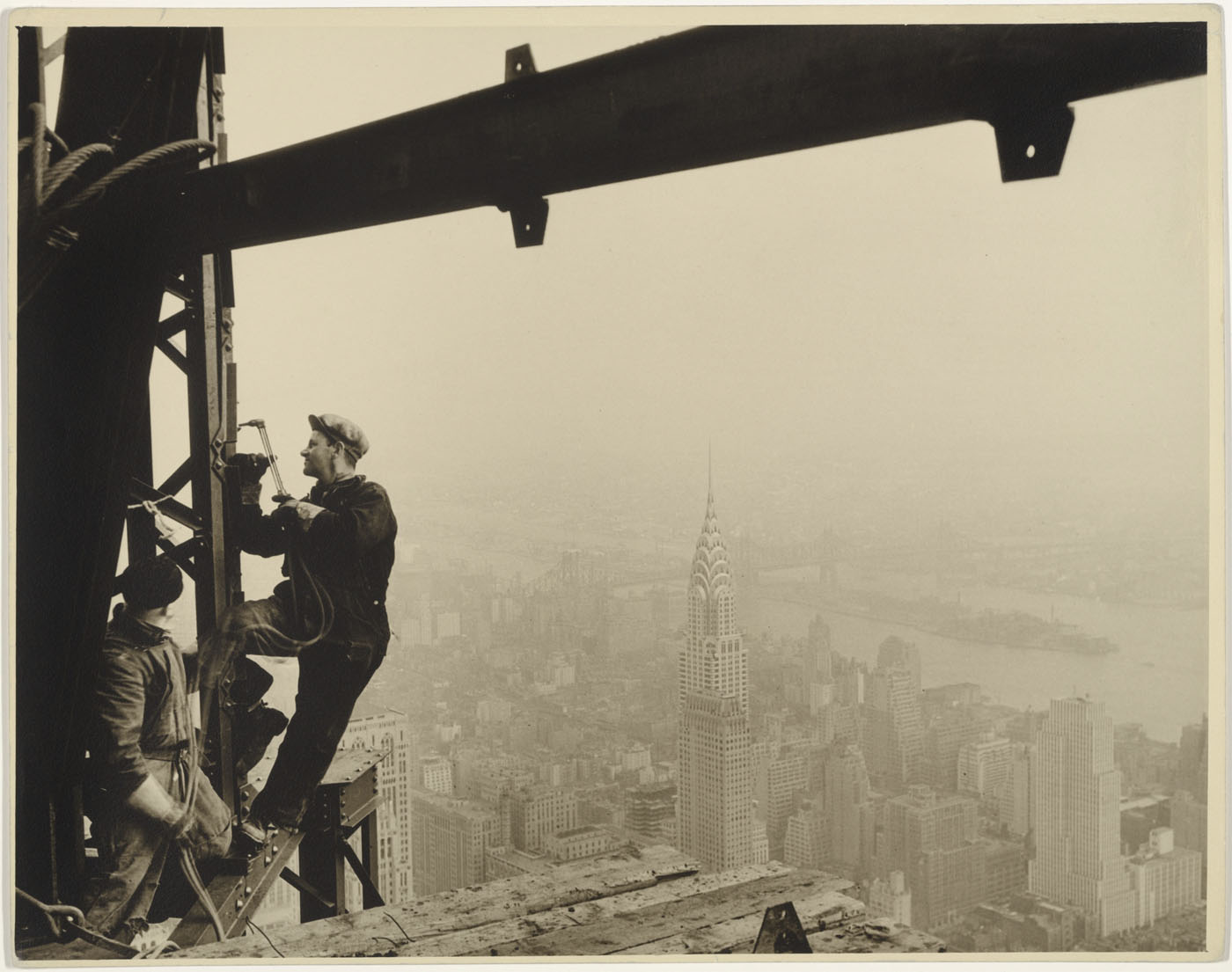
Lewis Wickes Hine (American, 1874-1940) Welders on the Empire State Building c. 1930 Gelatin silver print 10 5/8 × 13 5/8″ (27 × 34.6cm) Museum of Modern Art, New York Committee on Photography Fund
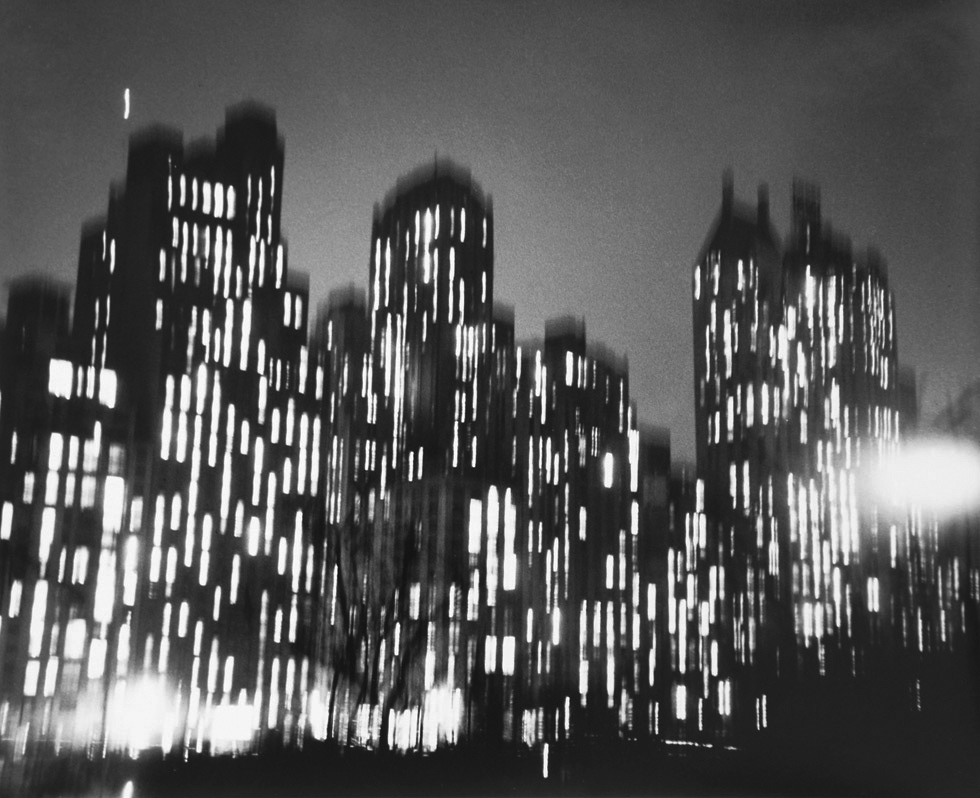
Ted Croner (American, 1922–2005) Central Park South 1947-1948 Silver gelatin print 10 15/16 x 13 3/4″ (27.8 x 34.9cm) Gift of the photographer Museum of Modern Art, New York
Ted Croner (1922-2005) was an American photographer, described as an influential member of the New York school of photography during the 1940s and 1950s. His images are said to represent the best example of this movement.
Born in Baltimore in 1922 and raised in North Carolina, Croner developed an interest in photography while in high school. He honed his skills while serving as an aerial photographer in World War II before settling in New York City in 1947. At the urging of fashion photographer Fernand Fonssagrives, he enrolled in Alexey Brodovitch’s class at The New School where he studied with Diane Arbus, Richard Avedon and Lisette Model. During this period he produced many of his most memorable images including “Taxi, New York Night, 1947-48”, which appears on the cover of Bob Dylan’s 2006 album, Modern Times. Another of Croner’s photographs was used on the cover of Luna’s album Penthouse.
Croner also had a successful career as a fashion and commercial photographer – his work was published in Harper’s Bazaar and Vogue. He also worked extensively with corporations such as Coca-Cola and Chase Manhattan Bank. Croner is best known for his haunting night images of New York City taken in the 1940s and 1950s. He was one of several important photographers who belonged to the New York school of photography.
Photographs from the MoMA, which will provide an in-depth look at an essential component of the MoMA’s assets: its photography collection. Curated by Sarah Hermanson Meister, associate curator of the museum’s department of photography, the exhibition offers an overview of the history of photography through the work of over 90 artists, with the iconic city as a backdrop. It includes some of the most prestigious names in photography, such as Berenice Abbott, Diane Arbus, Harry Callahan, Henri Cartier-Bresson, Walter Evans, Lee Friedlander, Helen Levitt, Cindy Sherman, Irving Penn and Alfred Stieglitz.
For Sarah Hermanson Meister, associate curator of the MoMA’s Department of Photography, “Portraits of New York amply reflects the history of synergies of this medium and of the Big Apple during a period of important transformations for both. The photographs generated by the restless and constant commitment of numerous photographers to the city of New York have played a fundamental role in determining how New Yorkers perceive the city and themselves. These photographs have also defined the city’s image in the world’s imagination.
[…] The urban landscape of the city is a combination of the old and the new in constant evolution, and these physical transformations are repeated in the demographic changes that have characterised the city since the 1880s, when massive waves of immigrants began to arrive. This same diversity can be seen in the photography of New York of the past four decades. Just as its architects are inspired and limited by surrounding structures and building codes, and just as its inhabitants learn and rub up against each other and previous generations, so too the photographers of New York transport the visual memory of a an extensive and extraordinary repertoire of images of the city. They take on the challenge of creating new works that go beyond traditions and respond to what is new in New York.”
The exhibition curator continues: “Throughout the 20th century, numerous artists have felt inspired by New York’s combination of glamour and rawness. The city – which acquired its modernity at the same pace as photography, and in an equally impetuous and undisciplined way – has always been a theme of particular vitality for photographers, both those who have visited the city and those who live in it. On one occasion, faced with the challenge of capturing the essence of New York with a camera, the photographer Berenice Abbott wondered, “How shall the two-dimensional print in black and white suggest the flux of activity of the metropolis, the interaction of human beings and solid architectural constructions, all impinging upon each other in time?” Each of the photographs reproduced here is a unique response to that question.
New York may not be the capital of the United States, but it prides itself on being the capital of the world. Its inhabitants are intimate strangers, its avenues are constantly teeming and its buildings are absolutely unmistakeable, though they are packed so close together that it is impossible to see just one. The New York subway runs twenty-four hours a day, which has earned it the sobriquet of “the city that never sleeps.” It is the model for Gotham City, the disturbing metropolis that Batman calls home, and a symbol of independence and a wellspring of opportunities in a wide variety of films, from Breakfast at Tiffany‘s to Working Girl. And this is just a sample of the captivating and abundant raw material that the city offers to artists, regardless of the medium in which they work. However, it is the convergence of photographers in this city – in this place that combines anonymity and community, with its local flavour and global ambitions – that has created the ideal setting for the development of modern photography.
Text from the La Casa Encendida website [Online] Cited 28/04/2009. No longer available online
Each of Sherman’s sixty-nine Untitled Film Stills (1977-80), presents a female heroine from a movie we feel we must have seen. Here, she is the pert young career girl in a trim new suit on her first day in the big city. Among the others are the luscious librarian (#13), the chic starlet at her seaside hideaway (#7), the ingenue setting out on life’s journey (#48), and the tough but vulnerable film noir idol (#54). To make the pictures, Sherman herself played all of the roles or, more precisely, played all of the actresses playing all of the roles. In other words, the series is a fiction about a fiction, a deft encapsulation of the image of femininity that, through the movies, took hold of the collective imagination in postwar America – the period of Sherman’s youth, and the crucible of our contemporary culture.
In fact, only a handful of the Untitled Film Stills are modelled directly on particular roles in actual movies, let alone on individual stills of the sort that the studios distribute to publicise their films. All the others are inventive allusions to generic types, and so our sure sense of recognition is all the more telling. It tells us that, knowingly or not, we have absorbed the movie culture that Sherman invites us to examine as a powerful force in our lives.
Publication excerpt from The Museum of Modern Art, MoMA Highlights, New York: The Museum of Modern Art, revised 2004, originally published 1999, p. 295.
Diane Arbus (American, 1923-1971) Woman with Veil on Fifth Avenue, N.Y.C 1968 Silver gelatin print Museum of Modern Art, New York
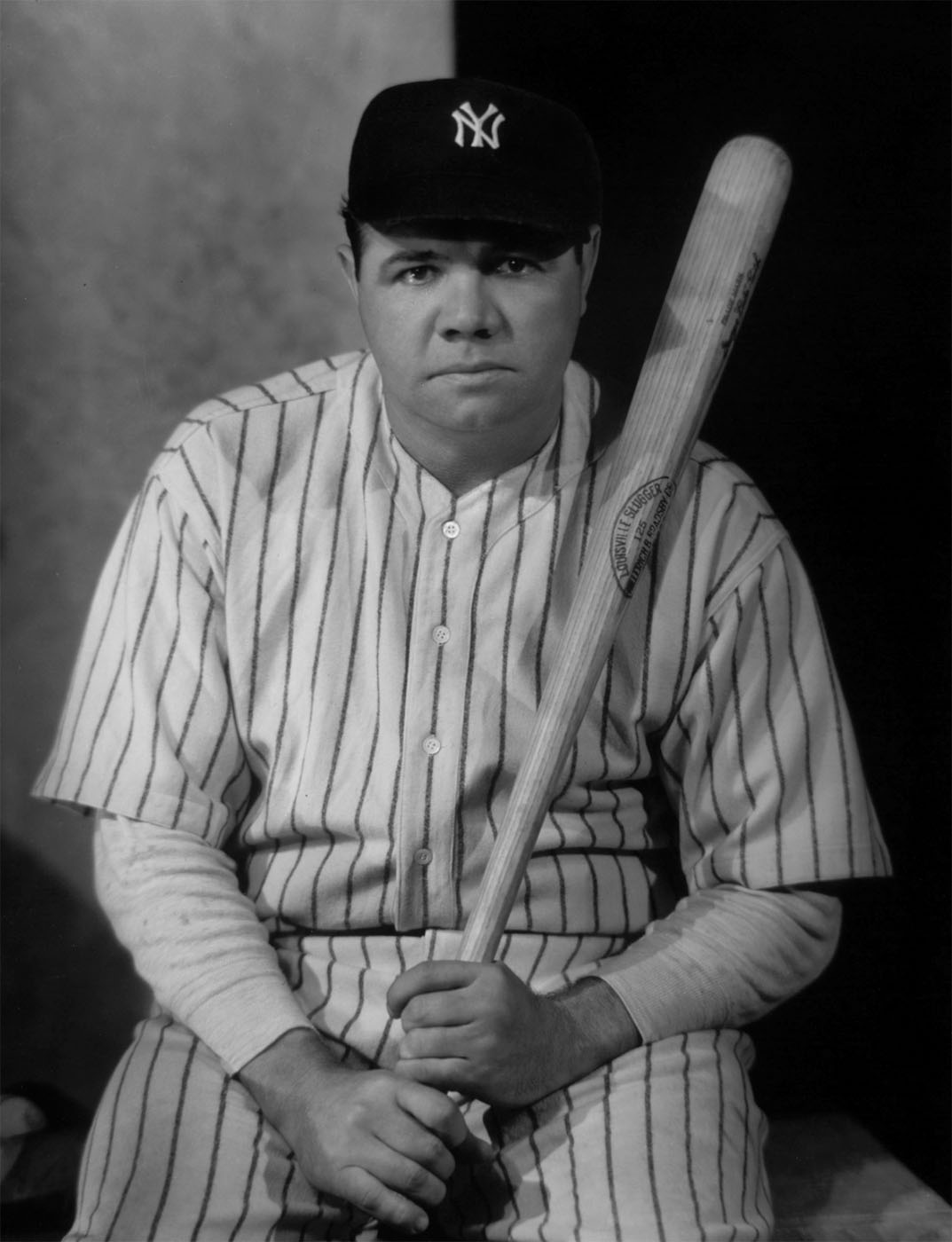
Nickolas Muray (American, 1892-1965) Babe Ruth c. 1927 Gelatin silver print 13 3/8 × 10 7/16″ (33.9 × 26.5cm) Museum of Modern Art, New York Gift of Mrs. Nickolas Muray
Opening hours: La Casa Encendida is open from Monday to Sunday from 10am to 10pm every day of the year except national and Community of Madrid holidays
Mark Strizic (Australian, 1908-2012) Eastern Market Destruction – 1 1960, printed 1996 Silver gelatin photograph 19 x 22.5cm
Social Fact and Urban Vision
This is an exhibition by the veteran Australian photographer Mark Strizic that plays like the coda at the end of a piece of music, the pensive full stop at the end of a well read book. There are some stunning highlight photographs among the 139 black and white silver gelatin prints on display, some good photographs and some fairly mundane images and prints. With some judicious editing of the photographs (perhaps by a third), the exhibition could have had a stronger artistic aesthetic and carried the voice of the photographer with greater projection. As it is the exhibition will be popular drawing in the crowds because of the photographs subject matter and their appeal to both an individual and collective nostalgia.
Examining Strizic’s photographs we note a traditional structure to the picture plane. Unlike the photographs of Eugene Atget who photographed Paris in the early 20th century there is little sublime spatial representation in Strizics photographs, that different angle of alignment that Atget achieved with the positioning of his camera. Further, we observe that unlike an immigrant to another country at around the same time, Robert Frank and America, the photographs follow traditional format: none of the revolutionary experimentation in handheld, grainy images of jukeboxes, cut up people or images of flags appear in this work. We can also say that unlike Helen Levitt’s early black and white images of New York from around the same period there is little ‘joie de vivre’, little engagement with the actual nitty gritty stuff of living in Strizic’s work. The quote below articulates what Strizic’s photographs both address and dismiss:
“To walk in the city is to experience the disjuncture of partial vision/partial consciousness. The narrativity of this walking is belied by a simultaneity we know and yet cannot experience. As we turn a corner, our object disappears around the next corner. The sides of the street conspire against us; each attention suppresses a field of possibilities. The discourse of the city is a syncretic discourse, political in its untranslatability. Hence the language of the state elides. Unable to speak all the city’s languages, unable to speak all at once, the state’s language become monumental, the silence of headquarters, the silence of the bank. In this transcendent and anonymous silence is the miming of corporate relations. Between the night workers and the day workers lies the interface of light; in the rotating shift, the disembodiment of lived time. The walkers of the city travel at different speeds, their steps like handwriting of a personal mobility. In the milling of the crowd is the choking of class relations, the interruption of speed, and the machine. Hence the barbarism of police on horses, the sudden terror of the risen animal.”1
We observe in the photographs an emphasis on surfaces, on a supreme understanding of light and shade coupled with a certain distance and emotional remoteness from the frenetic hubbub of city life. Empty streets and isolated people fall into shadow and their is little evidence of ‘play’ in the photographs. This is observation not interaction or integration as an immigrant observing Melbourne life. There is no up front presence of disembodied people as in Robert Franks photographs in The Americans. Here the alienation that pervades the photographs is the alienation of the photographer from the people as much as it is the alienation of the people from themselves. People are shot in silhouette against the sun or shop windows or peering in at unobtainable goods; desolate streets and working class suburbs all express the isolation of city life but at a structured distance from them.
When Strizic’s photographs are good they are very good. His understanding of light is magnificent: light reflects off water, hazes and shimmers off city buildings. The mixing of shadows and sun and his use of the technique of ‘contre jour’ (shooting into the sun) the one thing Strizic does against traditional conventions works to good effect in some of the best photographs. His 1968 night time long exposure photograph of the old Gas and Fuel Building is rewarding for the black bulk of the end of the building looming over Flinders Street and the striations of car headlamps. The photograph Flinders Lane (1967, below) shows a delicate use of depth of field where the foreground of cars and person are out of focus, the light bouncing off the edges of the woman, the focus of the image in the far distance. The photograph McPhersons Building (1958, below) is one of my personal favourites in the exhibition and is a stunning photograph for the atmosphere the photographer has captured.
After a while the use of the ‘contre jour’ technique becomes tiresome. Other photographs simply document a city in transition. These photographs appeal both to an individual nostalgia (‘I used to work in that building’; ‘My grandmother used to live in that street’) and a collective nostalgia where people experience things collectively, “in the sense that [collective] nostalgia occurs when we are with others who shared the event(s) being recalled, and also in the sense that one’s nostalgia is often for the collective – the characteristics and activities of a group or institution in which the individual was a participant.”2
Collective nostalgia refers to that condition in which the symbolic objects are of a highly public, widely shared and familiar character, i.e. those symbolic resources from the past which can under proper conditions trigger off wave upon wave of nostalgic feeling in millions of persons at the same time3 and in this exhibition it is the photographs of a city in transition that trigger this nostalgia, a city now lost to the mists of time. Through these photographs we remember what Melbourne was like at this time collectively.
As Harper has observed
“Nostalgia combines bitterness and sweetness, the lost and the found, the far and near, the new and the familiar, absence and presence. The past which is over and gone, from which we have been or are being removed, by some magic becomes present again for a short while. But its realness seems even more familiar, because renewed, than it ever was, more enchanting and more lovely …”4
Does this collective nostalgia make the photographs good? This is a pertinent question.
Today, nostalgia has become a cultural phenomenon one centred on a longing for home (home is where you are happy to be!) in a collective sense and promoted through commercialisation and the realisation that nostalgia sells. The use of the value seeking word ‘rare’ in the exhibition title is instructive in this regard. Only about 25% of the photographs in this exhibition are “vintage” prints, in other words photographs printed within 3 years of the negative being taken. All other photographs have been printed within the last 15 years. Some are ‘Unique state’ gelatin photographs while others are not. What does this mean. Are they are unique state only in this size? What about the common or garden silver gelatin prints in the show? What does the status word “rare” imply for them?
I remember seeing an exhibition of the photographs of Henri Cartier-Bresson in Scotland about ten years ago. Three rooms had large prints of his work. One room just had vintage prints. The contrast was astounding. The room full of vintage prints had an intensity of vision, of his vision at the time he took the photographs evidenced in small jewel like photographs that the three other rooms photographs simply did not possess – through scale, printing and aesthetics. The same question, without any need for an answer, can be posed here. Only the word ‘rare’ demands that answer for the modern prints are just what they are and nothing more.
In conclusion this is a strong show by Strizic that could have been edited and focused in a more rewarding way. Strizic is one of Australia’s best photographers for understanding the significance of place. His use of light is superb but there always seems to be an emotional distance to his photographs. An element of collective nostalgia adds to their documentary appeal but the best photographs do not just record, they challenge and transcend the subject matter taking the work to an altogether different plane of existence.
Dr Marcus Bunyan
1/ Stewart, Susan. On Longing: Narratives of the Miniature, the Gigantic, the Souvenir, the Collection. Durham: Duke University Press, 1993, p. 2. Prologue
2/ Wilson, Janelle. “”Remember when …” a consideration of the concept of nostalgia,” in et Cetera. Concord: Fall 1999. Vol. 56, Iss. 3; pg. 296, 9 pgs
3/ Davis, F. Yearning For Yesterday: A Sociology of Nostalgia. New York: The Free Press, 1979, p. 222
4/ Harper, R. Nostalgia: An Existential Exploration of Longing and Fulfilment in the Modern Age. The Press of Western Reserve University, 1966, p. 120 quoted in Wilson, Janelle. “”Remember when …” a consideration of the concept of nostalgia,” in et Cetera. Concord: Fall 1999. Vol. 56, Iss. 3; pg. 296, 9 pgs
Many thankx to Gallery 101 for allowing me to publish the photographs in the posting. Please click on some of the photographs for a larger version of the image.
Installation views of the exhibition Mark Strizic: Melbourne – A City in Transition exhibition at Gallery 101, Melbourne Photos: Marcus Bunyan
Mark Strizic, one of Australia’s eminent photographic artists presents us with nostalgic views of Melbourne and the changing face of the city in rare silver gelatin photographs. The exhibition, Melbourne – A City in Transition will be held at Gallery 101 from 8th April – 2nd May. There will be an evening artist reception on Thursday 9th April to celebrate the opening of the exhibition. Strizic’s oeuvre represents a collection of iconic images of architecture and of life – a record of the changing face of a migrating society of new prosperity, youth and popular culture – taken with a sympathetic eye for humanistic detail.
The exhibition will coincide with the announcement of the forthcoming publication, Mark Strizic, Melbourne: Marvellous to Modern, published by Thames & Hudson in association with the State Library of Victoria. In 2007, the State Library of Victoria acquired Mark Strizic’s entire archive of approximately 5000 negatives, colour transparencies and slides. In addition, the Library holds a fine collection of Strizic photographs, including examples of all types of photographic print, from gelatin silver to digital, produced by the photographer during his long career.
Press release from Gallery 101
“‘Melbourne – A City in Transition’ is a collection of iconic images of Melbourne city life taken with a sympathetic eye for humanist detail. Strizic accurately depicts the joys and hardships experienced in everyday life with a fresh and living memory. He successfully captures the vicarious essence of suburban life. His portrait of Melbourne includes the city, harbour and river banks – streets and trams, pavements, arcades and lanes, stations and bridges, billboards and facades and public sculpture. We see people going about their daily activities – commuting, shopping at leisure, trading, embracing, conversing, reading the newspaper and visiting the beach. Other works record the demolition and construction of building sites and the changing face of Melbourne, both in society and the urban landscape.”
Text from the exhibition flyer
“In these eloquent studies of light and shadow, Strizic finds beauty in the commonplace – Melbourne’s desolate lanes, street paving, derelict ferries – adopting interesting camera angles, viewpoints and cropping. Through his images, this visual humanist teaches us to observe, to see our surroundings, perhaps with the intention of stimulating us to a higher level of civilisation.”
Emma Matthews. Mark Strizic, Melbourne: Marvellous to Modern. Thames & Hudson in association with the State Library of Victoria, September, 2009.
“This magnificent collection of photographs arose from the creativity of a young photographer and his adoption of his new home town, Melbourne. His pictures were taken at a time when the Victorian elegance of the city once known as ‘Marvellous Melbourne’ was being punctuated by a wave of development and the modern architectural movement. Today Mark Strizic is renowned as a photographer. In the 1950s he was a young science student from Europe playing with the possibilities of the camera. As he gained work as a professional his commercial success was accompanied by the instincts and eye of an artist. His solid technicality was accompanied by the whimsy and wit that made him the ‘poet of the fleeting movement’. The versatility of his work shows us many aspects of Melbourne – its magnificent architectural heritage, its intimate and vibrant laneways, its grand arcades counter-posed against the sudden spaces of the wrecker, the brash intrusion of the glass and concrete skyscrapers, the poignancy of poverty in the rundown inner suburbs. We see the people, on grand occasions such as the 1954 Royal Visit, or just caught in their own world of travelling, shopping, resting, walking, working.”
Mark Strizic, Melbourne: Marvellous to Modern book cover
Mark Strizic (Australian, 1908-2012) From Princes Bridge 1958, printed 2006 Silver gelatin photograph 58 x 39cm
Mark Strizic (Australian, 1908-2012) Near Spencer Street – 1 1950 Silver gelatin photograph 27.5 x 38.5cm
Mark Strizic (Australian, 1908-2012) At St. Pauls (St Paul’s Cathedral steps) 1954, printed 1999 Silver gelatin photograph 17.8 × 24.5cm
Mark Strizic (Australian, 1908-2012) St Paul’s Cathedral steps 1954, printed 1999 Silver gelatin photograph 17.8 × 24.5cm
Mark Strizic (Australian, 1908-2012) Collins Street at Russell Street 1957, printed 1997 Unique silver gelatin photograph 39 x 56cm
Mark Strizic (Australian, 1908-2012) St Georges Road, Northcote at Summer Av. 1958, printed 1998 Silver gelatin photograph
Mark Strizic (Australian, 1908-2012) St. Patrick’s Cathedral January 1967, printed 1998 Unique silver gelatin photograph 27 x 41cm
Mark Strizic (Australian, 1908-2012) Bourke Street from the Parliament – 2 1967, printed 1998 Silver gelatin photograph 38 x 27cm
Mark Strizic (Australian, 1908-2012) Russell Street Pawn Shop 1958 Silver gelatin photograph
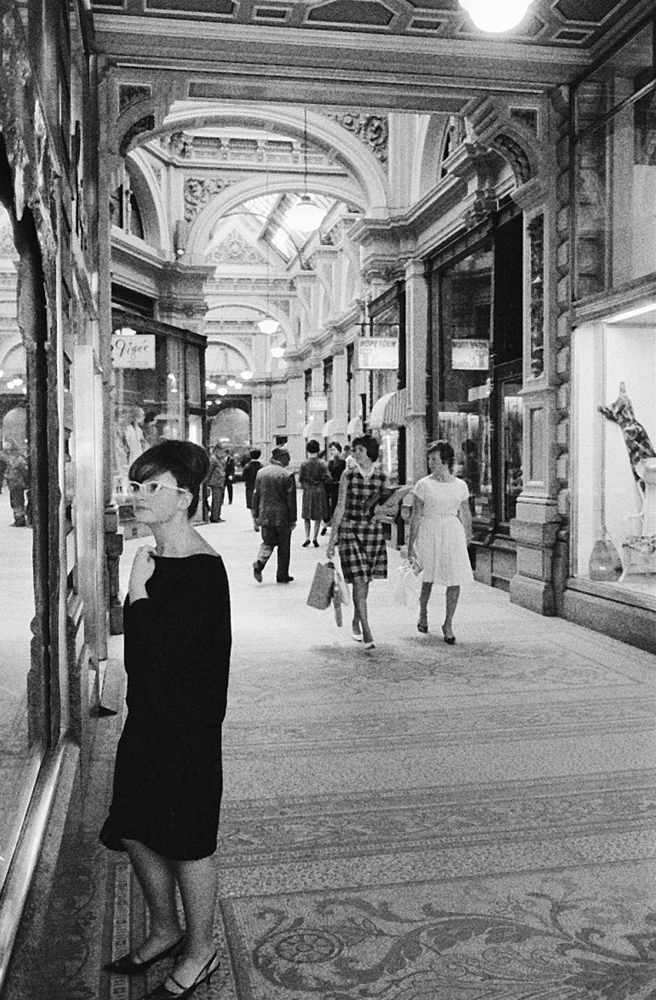
Mark Strizic (Australian, 1908-2012) Block Arcade 1967, printed February 2008 Unique silver gelatin photograph 53.5 x 37cm
Mark Strizic (Australian, 1908-2012) From Princes Bridge (Winter moorings from Princes Bridge) 1955, printed 2006 Silver gelatin photograph 58 x 39cm
Mark Strizic (Australian, 1908-2012) Flinders Lane 1967, printed 1998 Unique silver gelatin photograph 41 x 41cm
Mark Strizic (Australian, 1908-2012) Swan Street, Richmond, at Church Street 1963 Silver gelatin photograph
Mark Strizic (Australian, 1908-2012) Queensberry Street at Errol Street, North Melbourne 1963 Silver gelatin photograph
Mark Strizic (Australian, 1908-2012) Swan Street at Church Street 1963, printed 1998 Silver gelatin photograph
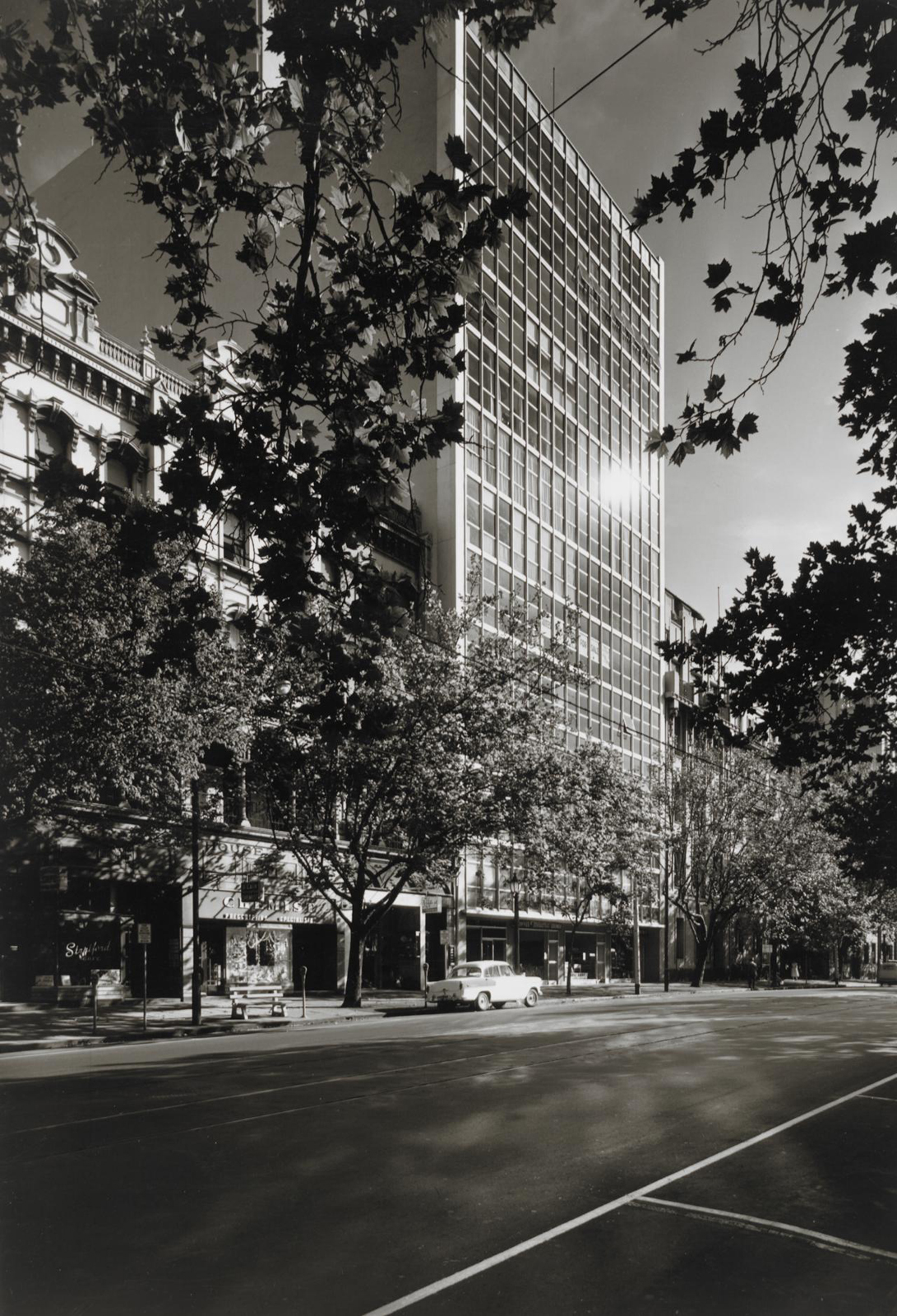
Mark Strizic (Australian, 1908-2012) Coates Building 1960, printed 1961 Vintage silver gelatin photograph 23.5 x 15cm
Mark Strizic (Australian, 1908-2012) Macphersons Building – 1 1958 Silver gelatin photograph
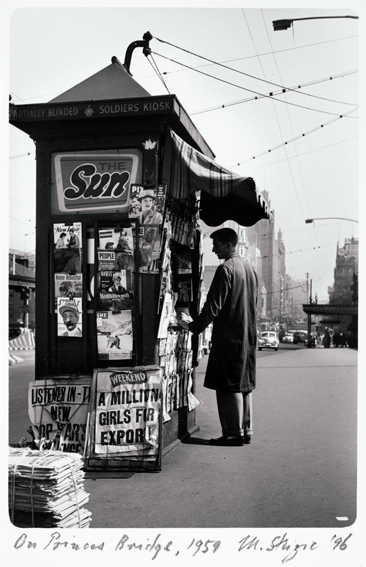
Mark Strizic (Australian, 1908-2012) On Princes Bridge 1959, printed 1996 Silver gelatin photograph 17 x 24cm
“For the perfect flaneur, for the passionate spectator, it is an immense joy to set up house in the heart of the multitude, amid the ebb and flow of movement, in the midst of the fugitive and infinite. To be away from home and yet to feel oneself everywhere at home; to see the world, to be at the centre of the world, and yet to remain hidden from the world … Thus the lover of universal life enters into the crowd as though it were an immense reservoir of electrical energy …”
Charles Baudelaire. The Painter of Modern Life 1863
“At least a dozen of Helen Levitt’s photographs seem to me as beautiful, perceptive, satisfying, and enduring as any lyrical work that I know. In their general quality and coherence, moreover, the photographs as a whole body, as a book, seem to me to combine into a unified view of the world, an uninsistent but irrefutable manifesto of a way of seeing, and in a gently and wholly unpretentious way, a major poetic work.”
James Agee
Speaking of pioneers of colour photography the wonderful American photographer Helen Levitt died recently at the end of March. Here is a selection of her colour work from the 1970s – 1980s. With two Guggenheim Foundation grants in 1959 and 1960 she switched from black and white to colour dye-transfer prints photographing the theatre of the street, the serendipity of the decisive moment previsualised and captured through awareness and an intimate knowledge of her subject matter. Unfortunately in a burglary in 1970 most of her colour transparencies and prints were stolen from that initial period.
What remains, as Sally Mann would say, are the eloquent bones of the matter: superb lush colour photographs taken after 1970 that engage the viewer not in memory but in the moment, not in nostalgia but in joy. In colour she found “beauty in correspondences.”
Dr Marcus Bunyan
Please click on some of the photographs for a larger version of the image.
… Her pictures were mostly of Spanish Harlem and the Lower East Side. She shot them in black and white, as silver gelatin prints, in the 1930s and 1940s and in colour dye-transfer prints in the 1960s and 1970s. In between, she got into movie-making for a while. Her theme was the same, the streets of New York. Apart from a trip in 1941 to Mexico City, she never found a better subject in her life.
The grittier parts were her particular joy. Her world was run-down streets, rubble-filled building sites, warehouses and litter-strewn front steps. This was urban photography with a vengeance: small scraps of sky, no trees. When she was going with Walker Evans in 1938, borrowing his camera as well (“of course”) as sleeping with him, he used to be afraid of going as far uptown as she did. Some of her young male subjects, lounging around in their zoot suits and fedoras, had an unmistakable air of menace. But mostly she brought back images of gossiping women and her favourite, scrambling children. A right-angle viewfinder allowed her to take the picture without them knowing, even, as Evans showed her, when riding right beside them in the subway.
Here and there
Her birthplace was in Brooklyn, where her father was in the wholesale knitwear business. She aspired to something more artistic, but found she couldn’t draw. For a time she trained in ballet, which taught her to appreciate the musculature of posing bodies and the spontaneous grace of her child subjects. After dropping out of high school she went to work in the darkroom of Florian Mitchell’s commercial portrait-photography studio on $6 a week. There she was hooked.
A good image, she thought, was just lucky. But her New Yorker’s instinct seemed to tell her exactly where to wait for one. A broken-down car would soon attract people to lie under it, peer under the hood or try to push it. A cane chair, put out on the sidewalk, would draw an elderly man with cigar and newspaper, or a plump young woman in a housecoat wilting in the heat. With luck dogs would come out too, rough-haired mutts or poodles with fresh-shampooed coats. The open back of a truck would reveal delivery men moping on piles of sacks, or dozing among pink and blue bales of cloth. Any abandoned thing – a tea-chest, a mirror frame, the pillared entry of an empty building – would soon sport knots of children diving in, climbing up, fighting and contorting their small bodies in every kind of way.
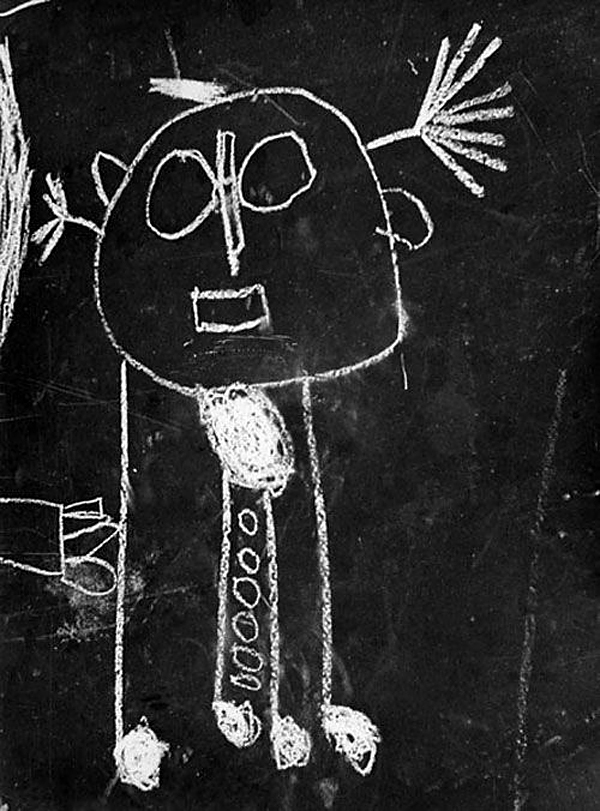
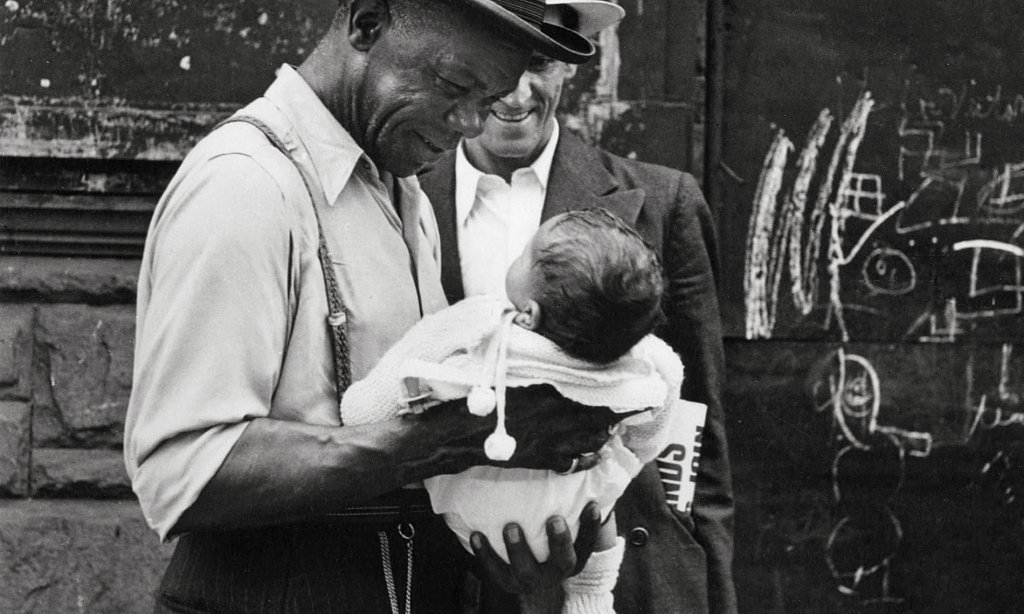
Her pictures did not have names. “New York”, and the year, was the label on most of them. They did not need explaining; they were “just what you see”. Many had a backdrop of posters, graffiti or billboards, which gave a commentary of sorts. “Special Spaghetti 25 cents.” “Post No Bills.” “Nuts roasted daily.” “Buttons and Notions, One Flight Up.” “Bill Jones Mother is a Hore.” Her earliest project with her first, secondhand camera was to photograph children’s chalk drawings on the pavements. She never tried to speculate on them. What mattered was the patterns they made.
In the 1960s, when she got two Guggenheim grants, she began to shoot the streets in colour. The tricky developing ultimately frustrated her, and the streets, too, had changed. The children had retreated indoors to watch television. But where she had found grace and texture in black and white, colour now provided beauty in correspondences. The multi-coloured balls in bubble-gum machines could be picked up in a girl’s dress, or the red of a stiletto shoe matched with the frame of a shop window. Her broken-down cars were now lurid beasts against the stucco walls. And out of her peeling, greenish doorways could come women in furs, or pink hair-curlers, or orange-striped socks.
She did not rate her own work highly. Though her original prints eventually sold for tens of thousands of dollars, she let them pile up in her apartment in boxes labelled “Nothing good” or “Here and there”. Her hopes when she started were for photographs that would make a socialist statement of some sort, but she abandoned that on Cartier-Bresson’s advice. A “nice picture”, as she reluctantly admitted some of hers were, was a work of art that had value in itself, as well as a celebration of the random, teeming work of art that is the city of New York.
Anonymous. “Helen Levitt,” on The Economist website April 8th 2009 [Online] Cited 16/04/2009. No longer available online
Slide Show: The Color Photographs of Helen Levitt by John Szarkowski, Powerhouse Books, 2005 is available from the Amazon website. The photograph above is used on the cover of the book.
“During my journeys, I took over sixteen thousand photographs. All but two thousand were confiscated and, presumably, destroyed – although perhaps they will reappear someday. I hope my photographs enable the reader to envision a time and place that worthy of remembrance.”
Roman Vishniac
Hardly any photographs by Jeffrey Gusky online but he has provided some via email. I will post them asap. Thank you very much Jeff for contacting me. I knew little about the photographer Roman Vishniac but after more research I know much more now. What a photographer!
Just look at the image below to see a masterpiece of classical photography. Look at the space between the figures, the tension almost palpable, the look on the granddaughters face and the wringing of her hands a portent of the despair to come. A good archive of his photographs is on the International Center of Photography website.
Dr Marcus Bunyan
Many thankx to The Detroit Institute of Arts for allowing me to publish the photographs in the posting. Please click on the photographs for a larger version of the image.
This previously unpublished photograph attests to Vishniac’s bold and innovative use of composition: the slim, vertical register of kindling wood, offset by a corner of Yiddish newspaper on a table and triangle of lace at the window, is balanced by the young boy’s sideways glance peering out from the corner of the frame, reflecting a modern sensibility not usually associated with Vishniac’s work in Eastern Europe.
Text from the International Center of Photography website
Examining each photographer separately, Vishniac and Gusky have very distinctive photographic styles. Due to the nature of his project and the ever-escalating semblance of anti-semitism, Vishniac’s photographs are less polished and more emotionally raw in an attempt to tell the stories of people’s individual lives. By contrast, Gusky finds inspiration in the physical places which made up the world of now entirely absent communities of Jews.
While each photographer had an individual style and statement to make, it is both the relationship with and stark difference between the two that provides the greatest emotional poignancy. The exhibition pairs many Vishniac and Gusky photographs, illuminating the individual lives lost, culture destroyed, and environments degraded by decades of neglect in Poland, as Gusky photographed the desecrated cemeteries, crumbling synagogues, and empty streets that served as the backdrop for Vishniac’s scenes of mid-century Jewish life.
There are also several points of convergence in the biographies of Vishniac and Gusky. Like Vishniac, Gusky is of Russian Jewish descent, and both men were compelled to their photographic projects in part by personal reasons springing from their Jewish heritage. The photographers also have professional ties to biological science which embody their work through illustration of the fragility of human life.
Text from the Santa Barbara Museum website [Online] Cited 01/04/2009. No longer available online
This exhibition, organised by the Santa Barbara Museum of Art, includes around 90 black-and-white photographs taken by two photographers: Roman Vishniac, who photographed throughout Poland’s Jewish communities in the mid-1930s, and Jeffrey Gusky who photographed many of the same Polish sites during the 1990s.
In 1935, Russian-born photographer Roman Vishniac was commissioned by the American Joint Distribution Committee (a Paris-based relief agency) to photograph Jewish communities in the cities and villages of Poland as well as other areas of Eastern Europe. He took over 16,000 photographs (around 2,000 have survived) depicting the people, life, homes, schools, and trades of these communities. The photographs, in turn, were to be used to help raise money for humanitarian aid for individuals in areas that were becoming increasingly destitute.
In 1996, Jeffrey Gusky, an amateur photographer and doctor of Russian-Jewish descent set out on a personal journey in search of Jewish identity and culture in Eastern Europe. He made the first of four trips to Poland where he traveled to cities and villages where Jews had lived and worked for centuries. Gusky photographed what remained of Jewish culture in Poland focusing on the ruins of synagogues, cemeteries – many of which were desecrated, and the empty and still streets.
Text from the Detroit Institute of Arts website [Online] Cited 01/04/2009. No longer available online
Roman Vishniac (Russian-American, 1897-1990) A Boy with a toothache. Next year another child will inherit the tattered schoolbook. Slonim c. 1935-1938 Gelatin silver print
Poignant, haunting photographs of Poland’s Jewish communities taken in the 1930s by Roman Vishniac, and images of many of the same areas taken in the 1990s by Jeffrey Gusky are the subject of the moving exhibition Of Life and Loss: The Polish Photographs of Roman Vishniac and Jeffrey Gusky. The exhibition, at the Detroit Institute of Arts (DIA) from April 19 to July 12, includes 90 black-and-white photographs and is free with museum admission.
Through their photographs, Vishniac (1897-1990) and Gusky (born 1953), two very different photographers from very different eras, bore witness to the Jewish experience in Poland during the 20th century, preserving memories and documenting life experiences for future generations. Although taken 60 years apart, their images share themes of memory, life, and loss and are evidence of people and places that once were, and what remains in their absence.
Vishniac and Gusky have very distinctive styles. Due to the nature of his project and the escalation of anti-Semitism in 1930s Poland, Vishniac made photographs in the documentary tradition. With great empathy, he recorded the places and lives of individuals exactly as he found them, in their homes and in the streets. Almost 60 years later, Gusky, by contrast, interpreted former Jewish sites throughout Poland with a sensitive eye on the past. His misty and haunting images are devoid of human presence, and show former sites from many Jewish communities that once thrived throughout Poland.
While each photographer had an individual style and statement to make, it is both the relationship with and stark difference between the two that provides the greatest emotional impact. Brought together for the first time, Vishniac’s and Gusky’s photographs illuminate the individual lives lost, culture destroyed, and environments degraded by decades of neglect in Poland, as Gusky photographed the desecrated cemeteries, crumbling synagogues, and empty streets that served as the backdrop for Vishniac’s scenes of vibrant, mid-century Jewish life.
Vishniac was born in Russia, and fled to Berlin with his family in 1920. He worked as a biologist and supplemented his income as a photographer. Eventually he became compelled to use photography to document people and communities throughout Europe. In the 1930s Vishniac was commissioned by the Joint Distribution Committee, a Paris-based relief agency, to photograph Jewish life in Poland, where he took over 16,000 photographs (only 2,000 survived the war) over a three-year period. He photographed vibrant communities filled with people in their homes and schools, at their trades and in their streets, markets and temples. His poignant works are evidence of communities filled with life despite the lack of food, medical care and livelihood that prevailed.
Gusky is a physician in rural Texas who began photographing as a way to explore Jewish identity. Although a Jew of Russian decent, he became interested in the history of Jews in Poland after hearing a radio interview with Ruth Ellen Gruber, an American journalist who documented the ruins of Jewish communities in Eastern Europe. His photographs depict the vacant and somber sites of once-thriving Jewish communities throughout the country. With these images, Gusky reveals a powerful, dramatic message about a lost culture that was once part of Poland’s Jewish past. This initial photographic work has led him to further examine “the void of modern life,” and the threat of genocide that continues to haunt humankind of all ethnicities and cultures in the past and present. This exhibition is organised by the Santa Barbara Museum of Art.
Many of the children wear Jewish star pins and necklaces as they wait in the Schlachtensee transit bureau offices and courtyards in the American sector of occupied Berlin. By 1952, more than 136,000 Jewish Displaced Persons (DPs) had immigrated to Israel, and over 80,000 to the United States, aided by the Jewish Joint Distribution Committee (JDC), the United Jewish Appeal (UJA), and other nongovernmental agencies that played an important role in lobbying for and providing economic, educational, and emigration assistance to DPs.
Text from the International Center of Photography website
Housed in a 1722 château outside Paris, the Hénonville Displaced Persons camp was administered by the Jewish Joint Distribution Committee (JDC), the Society for Trades and Agricultural Labor (ORT), and Agudath Israel (the umbrella organisation for Orthodox and ultra-Orthodox Jews), from 1946 to 1952. Hénonville was a homogeneous religious community of Orthodox Jews that included a relocated Lithuanian yeshiva, a home for Jewish orphans, and an Orthodox kibbutz, and was directed by a charismatic leader, Rabbi Solomon Horowitz. Vishniac photographed daily life in the camp, including a series documenting the preparation of matzoh for the Passover holiday.
Text from the International Center of Photography website
Detroit Institute of Arts 5200 Woodward Avenue Detroit, Michigan 48202 Phone: 313.833.7900
You must be logged in to post a comment.