Exhibition: ‘Eugène Atget: Old Paris’ at the Art Gallery of New South Wales, Sydney

Exhibition dates: 24th August – 4th November 2012


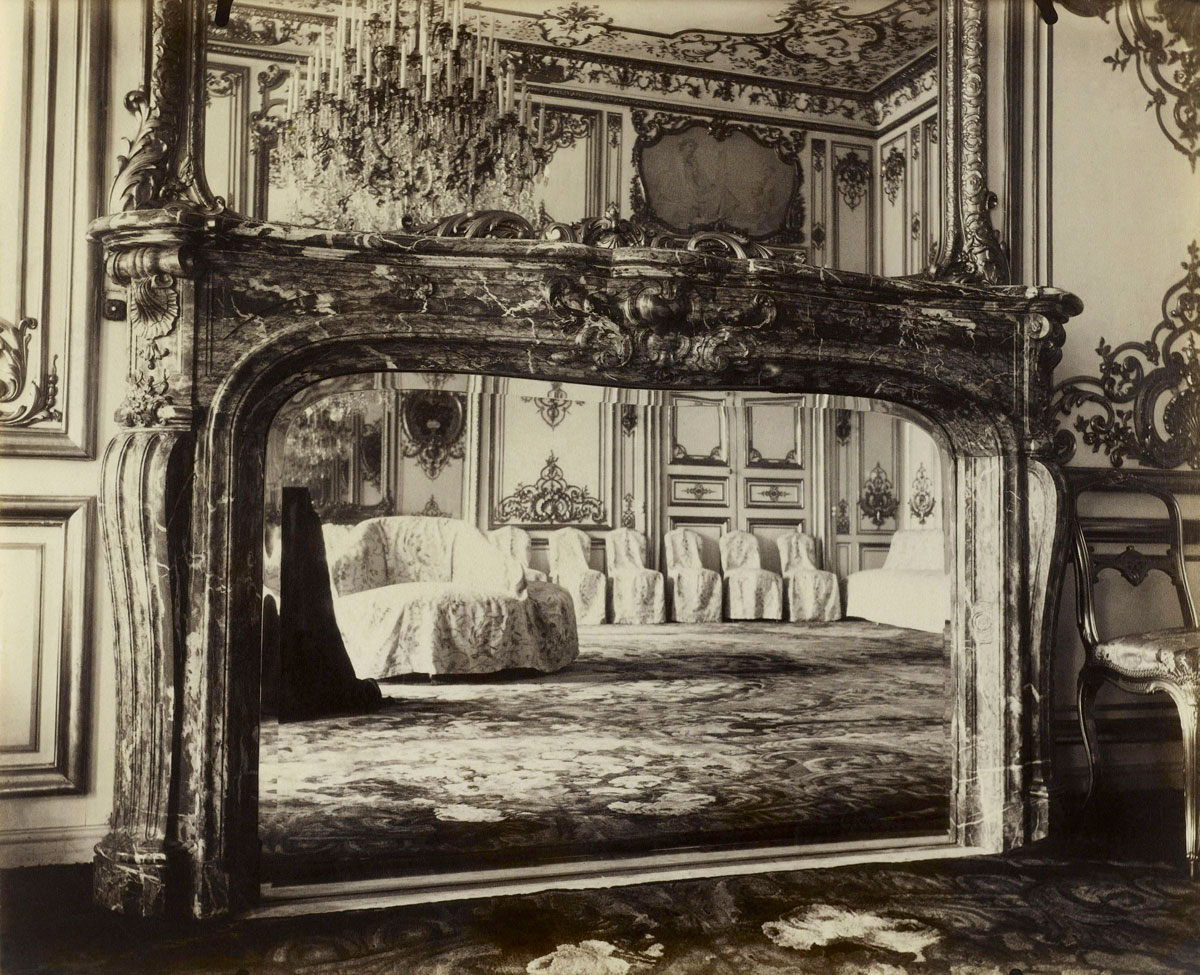
Eugène Atget (French, 1857-1927) 'Fireplace, Hôtel Matignon, former Austrian embassy, 57 rue de Varenne, 7th arrodissement' 1905


Eugène Atget (French, 1857-1927)
Fireplace, Hôtel Matignon, former Austrian embassy, 57 rue de Varenne, 7th arrodissement
1905
Albumen photograph
© Musée Carnavalet, Paris / Roger-Viollet / TopFoto


“… I have assembled photographic glass negatives… in all the old streets of Old Paris, artistic documents showing the beautiful civil architecture from the 16th to the 19th century. The old mansions, historic or interesting houses, beautiful façades, lovely doors, beautiful panelling, door knockers, old fountains, stylish staircases (wrought iron and wood) and interiors of all the churches in Paris… This enormous documentary and artistic collection is now finished. I can say that I possess the whole of Old Paris.”


Eugène Atget 1920


“The first time I saw photographs by Eugène Atget was in 1925 in the studio of Man Ray in Paris. Their impact was immediate and tremendous. There was a sudden flash of recognition – the shock of realism unadorned. The subjects were not sensational, but nevertheless shocking in their very familiarity. The real world, seen with wonderment and surprise, was mirrored in each print.”


Berenice Abbott 1964


Spaces That Matter…

[In revelatio, in revelation] the photographers trained eye is perhaps more of a hindrance than may at first be thought. The photographer may struggle with, “a sense of intense inevitability, insofar as this kind of image seems to be one that the photographer ‘could not not photograph’.”9 Awareness may become a double bind for the photographer. It may force the photographer to photograph because he can do nothing else, because he is aware of the presence of ‘punctum’ within a space, even an empty ‘poetic space’, but this awareness may then blind him, may ossify the condition of revealing through his directed gaze, unless he is very attentive and drops, as Harding says, “memory and imagination and desire, and just take what’s given.”10 The object, as Baudrillard notes,”isolates itself and creates a sense of emptiness … and then it irradiates this emptiness,”11 but this irradiation of emptiness does require an awareness of it in order to stabilise the transgressive fluctuations of the ecstasy of photography (which are necessarily fluid), through the making of an image that, as Baudrillard notes, “may well retrieve and immobilise subjective and objective punctum from their ‘thunderous surroundings’.”12 Knowledge of awareness is a key to this immobilisation and image making. The philosopher Krishnamurti has interesting things to say about this process, and I think it is worth quoting him extensively here:

“Now with that same attention I’m going to see that when you flatter me, or insult me, there is no image, because I’m tremendously attentive … I listen because the mind wants to find out if it is creating an image out of every word, out of every contact. I’m tremendously awake, therefore I find in myself a person who is inattentive, asleep, dull, who makes images and gets hurt – not an intelligent man. Have you understood it at least verbally? Now apply it. Then you are sensitive to every occasion, it brings its own right action. And if anybody says something to you, you are tremendously attentive, not to any prejudices, but you are attentive to your conditioning. Therefore you have established a relationship with him, which is entirely different from his relationship with you. Because if he is prejudiced, you are not; if he is unaware, you are aware. Therefore you will never create an image about him. You see the difference?”13


Now apply this attention to the awareness of the photographer. If he does not create images that are prejudice, could this not stop a photographer ‘not not’ photographing because he sees spaces with clarity, not as acts of performativity, spaces of ritualised production overlaid with memory, imagination, desire, and nostalgia?

Here an examination of the work of two photographers is instructive. The first, the early 20th century Parisian photographer Eugène Atget, brings to his empty street and parkscapes visions that elude the senses, visions that slip between dreaming and waking, between conscious and subconscious realms. These are not utopian spaces, not felicitous spaces that may be grasped and defined with the nostalgic fixity of spaces we love,14 but spaces of love that cannot be enclosed because Atget made no image of them.

I believe Atget moved his photographs onto a different spatio-temporal plane by not being aware of making images, aware-less-ness, dropping away the appendages of image making (technique, reality, artifice, reportage) by instinctively placing the camera where he wanted it, thus creating a unique artistic language. His images become a blend of the space of intimacy and world-space as he strains toward, “communion with the universe, in a word, space, the invisible space that man can live in nevertheless, and which surrounds him with countless presences.”15 These are not just ‘localised poetics’16 nor a memento of the absent, but the pre-essence of an intimate world space re-inscribed through the vision (the transgressive glance not the steadfast gaze) of the photographer. Atget is not just absent or present, here or there,17 but neither here nor there. His images reverberate (retentir), in Minkowski’s sense of the word, with an essence of life that flows onward in terms of time and space independent of their causality.18”

Dr Marcus Bunyan

Excerpt from the paper Spaces That Matter: Awareness and Entropia in the Imaging of Place (2002). Read the full paper…


Endnotes

9/ Barthes, Roland. Camera Lucida. (trans. Richard Howard). New York: Hill and Wang, 1981, p. 47, quoted in Zurbrugg, Nicholas. “‘Apocalyptic’? ‘Negative’? ‘Pessimistic’?: Baudrillard, Virilio, and techno-culture,” in Koop, Stuart (ed.,). Photography Post Photography. Melbourne: Centre for Contemporary Photography, 1995, p. 79.

10/ See Endnote 2. I believe that this form of attentiveness to present experience is not the same as Featherstone’s fragmentation of time into affect-charged experiences of the presentness of the world in postmodern culture. “Postmodern everyday culture is … a culture of stylistic diversity and heterogeneity (comprising different parts or qualities), of an overload of imagery and simulations which lead to a loss of the referent or sense of reality. The subsequent fragmentation of time into a series of presents through a lack of capacity to chain signs and images into narrative sequences leads to a schizophrenic emphasis on vivid, immediate, isolated, affect-charged experiences of the presentness of the world – of intensities.”
Featherstone, Mike. Consumer Culture and Postmodernism. London: Sage Publications, 1991, p. 124.

11/ Baudrillard, Jean. The Transparency of Evil. (trans. James Benedict). London: Verso, 1993, quoted in Zurbrugg, Nicholas. “‘Apocalyptic’? ‘Negative’? ‘Pessimistic’?: Baudrillard, Virilio, and techno-culture,” in Koop, Stuart (ed.,). Photography Post Photography. Melbourne: Centre for Contemporary Photography, 1995, p. 80.

12/ Baudrillard, Jean. The Art of Disappearance. (trans. Nicholas Zurbrugg). Brisbane: Institute of Modern Art, 1994, p.9, quoted in Zurbrugg, Nicholas. “‘Apocalyptic’? ‘Negative’? ‘Pessimistic’?: Baudrillard, Virilio, and techno-culture,” in Koop, Stuart (ed.,). Photography Post Photography. Melbourne: Centre for Contemporary Photography, 1995, p. 83.

13/ Krishnamurti. Beginnings of Learning. Harmondsworth: Penguin Books, 1978, pp. 130-131.

14/ Bachelard, Gaston. The Poetics of Space. (trans Maria Jolas). Boston: Beacon Press, 1994, p. xxxv.

15/ Ibid., p. 203.

16/ Palmer, Daniel. “Between Place and Non-Place: The Poetics of Empty Space,” in Palmer, Daniel (ed.,). Photofile Issue 62 (‘Fresh’). Sydney: Australian Centre for Photography, April 2001, p. 47.

17/ Bachelard, Gaston. The Poetics of Space. (trans Maria Jolas). Boston: Beacon Press, 1994, p. 212.

18/ See the editor’s note by Gilson, Etienne (ed.,) in Bachelard, Gaston. The Poetics of Space. (trans Maria Jolas). Boston: Beacon Press, 1994, p. xvi.


Many thankx to the Art Gallery of New South Wales for allowing me to publish the photographs in this posting. Please click on the photographs for a larger version of the image.


Eugene Atget: Old Paris

Lose yourself in the beauty of old Paris with over 200 rare and original prints from the founder of documentary photography.

His bellows camera, glass plates and printing technique may link him to earlier 19th-century photography, but the vision of Eugène Atget (1857-1927) was an astonishingly modern one.

The best of Atget’s work is revealed through his images of the streets of Old Paris. In a time of rapid transformation, Atget captured the buildings, gardens, old shops and streets that had not been touched by Baron Haussmann’s 19th-century modernisation program. We are shown a city remote from the clichés of the Belle Époque, a genuine glimpse into the past of this iconic metropolis.

Considered the founder of documentary photography, Atget and his enigmatic images inspired numerous artists including Brassaï, the Surrealists, Walker Evans and Berenice Abbott, as well as Man Ray, who collected some of the photographs included in the exhibition.


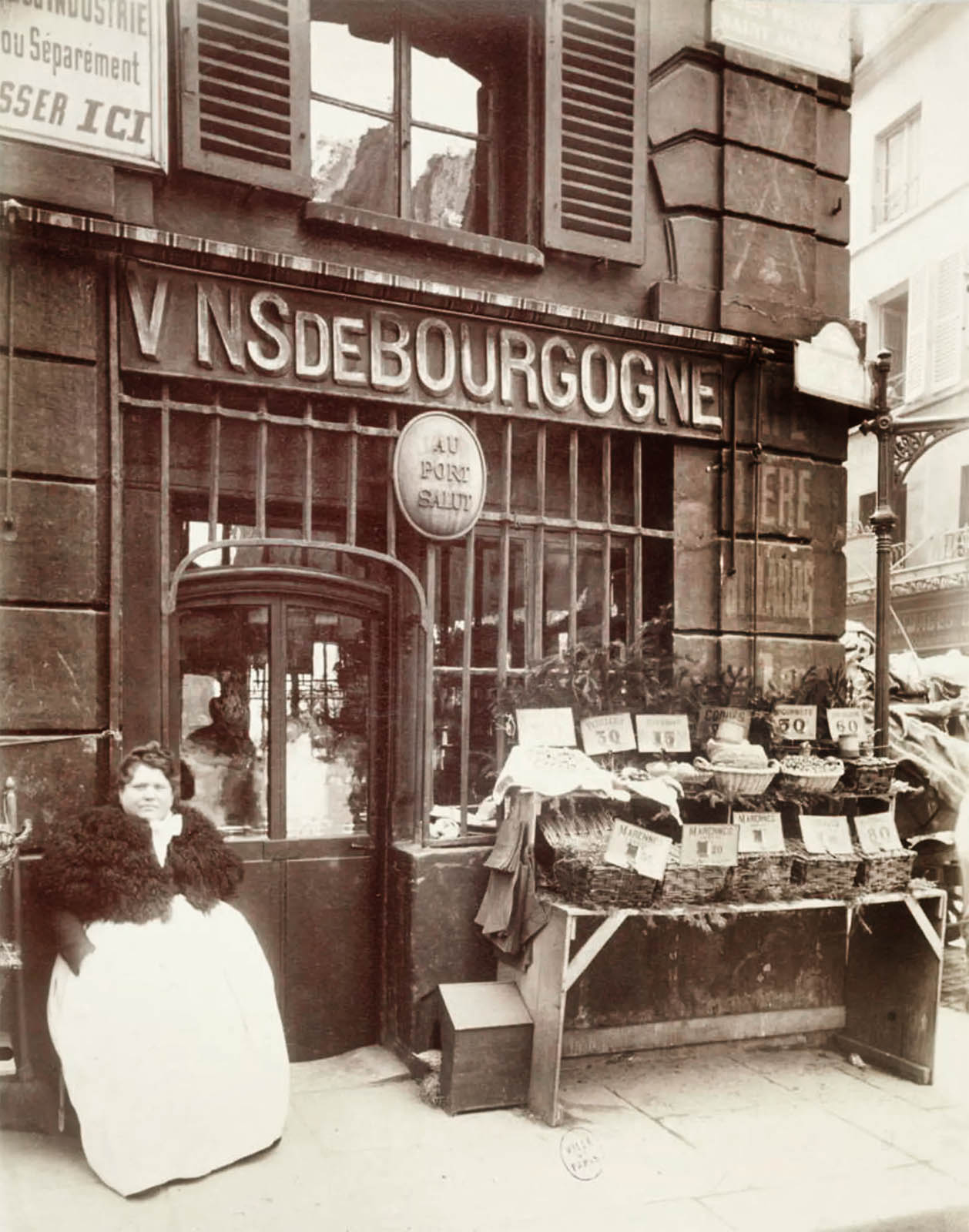
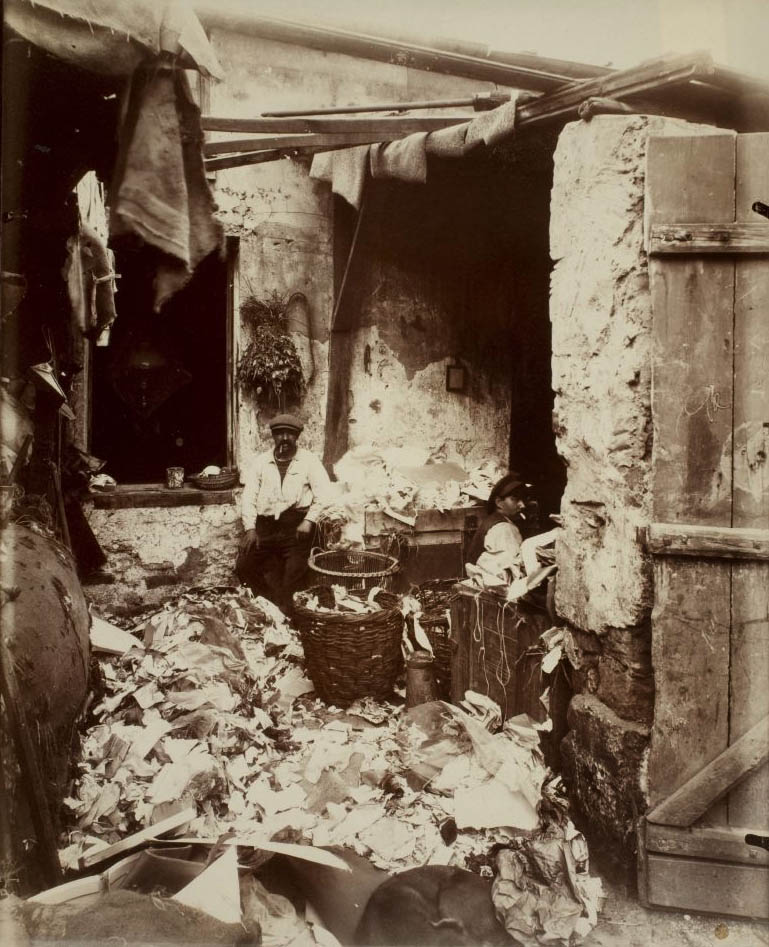
Eugène Atget (French, 1857-1927) 'Street vendor, place Saint-Médard, 5th arrondissement' September 1898


Eugène Atget (French, 1857-1927)
Street vendor, place Saint-Médard, 5th arrondissement
September 1898
Albumen photograph
© Musée Carnavalet, Paris / Roger-Viollet / TopFoto


Eugène Atget (French, 1857-1927) 'Street vendor selling shellfish' 1903


Eugène Atget (French, 1857-1927)
Street vendor selling shellfish
1903
Albumen print


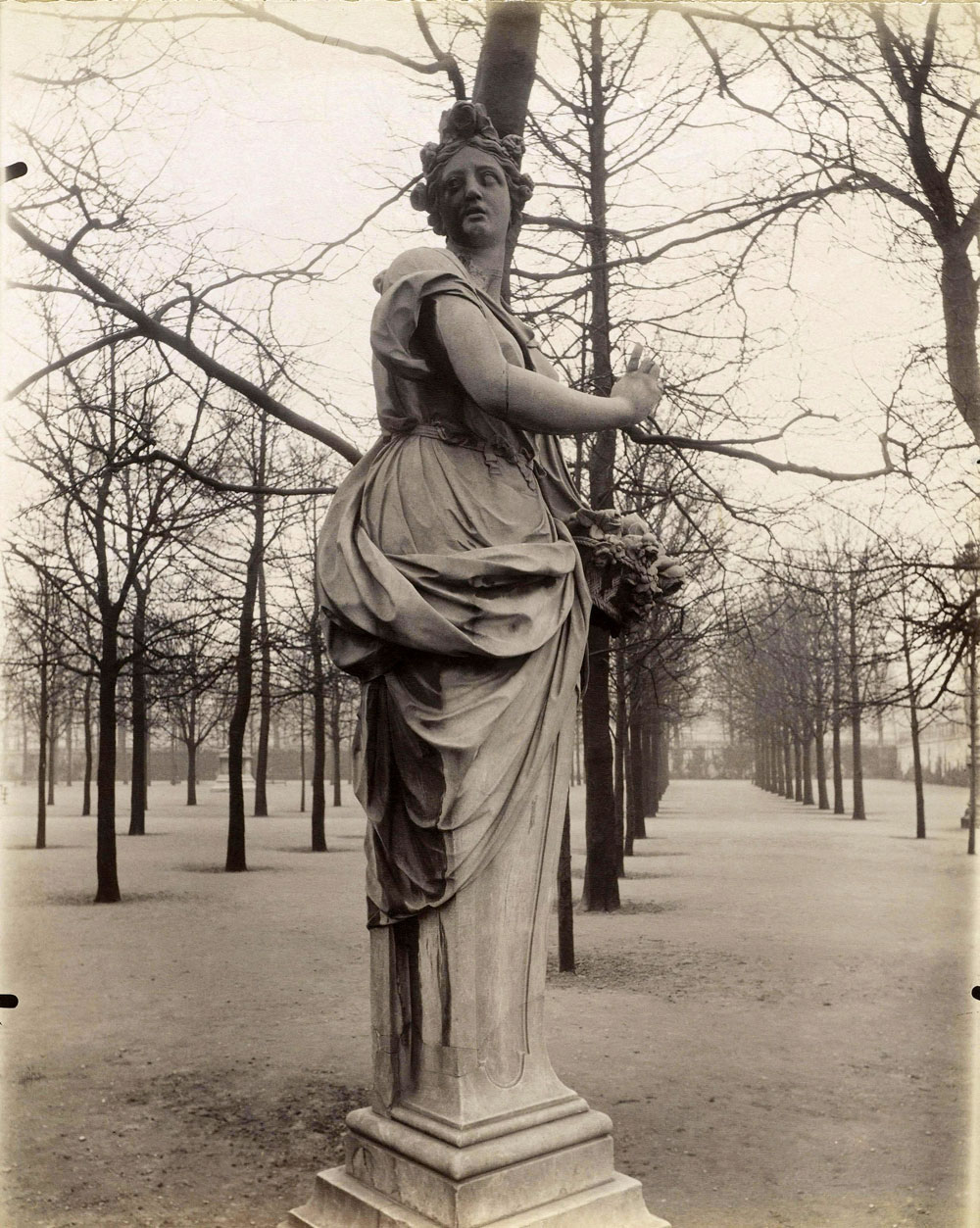
Eugène Atget (French, 1857-1927) "'Spring', by the sculptor François Barois, jardin des Tuileries, 1st arrondissement" 1907


Eugène Atget (French, 1857-1927)
‘Spring’, by the sculptor François Barois, jardin des Tuileries, 1st arrondissement
1907
Albumen photograph
© Musée Carnavalet, Paris / Roger-Viollet / TopFoto


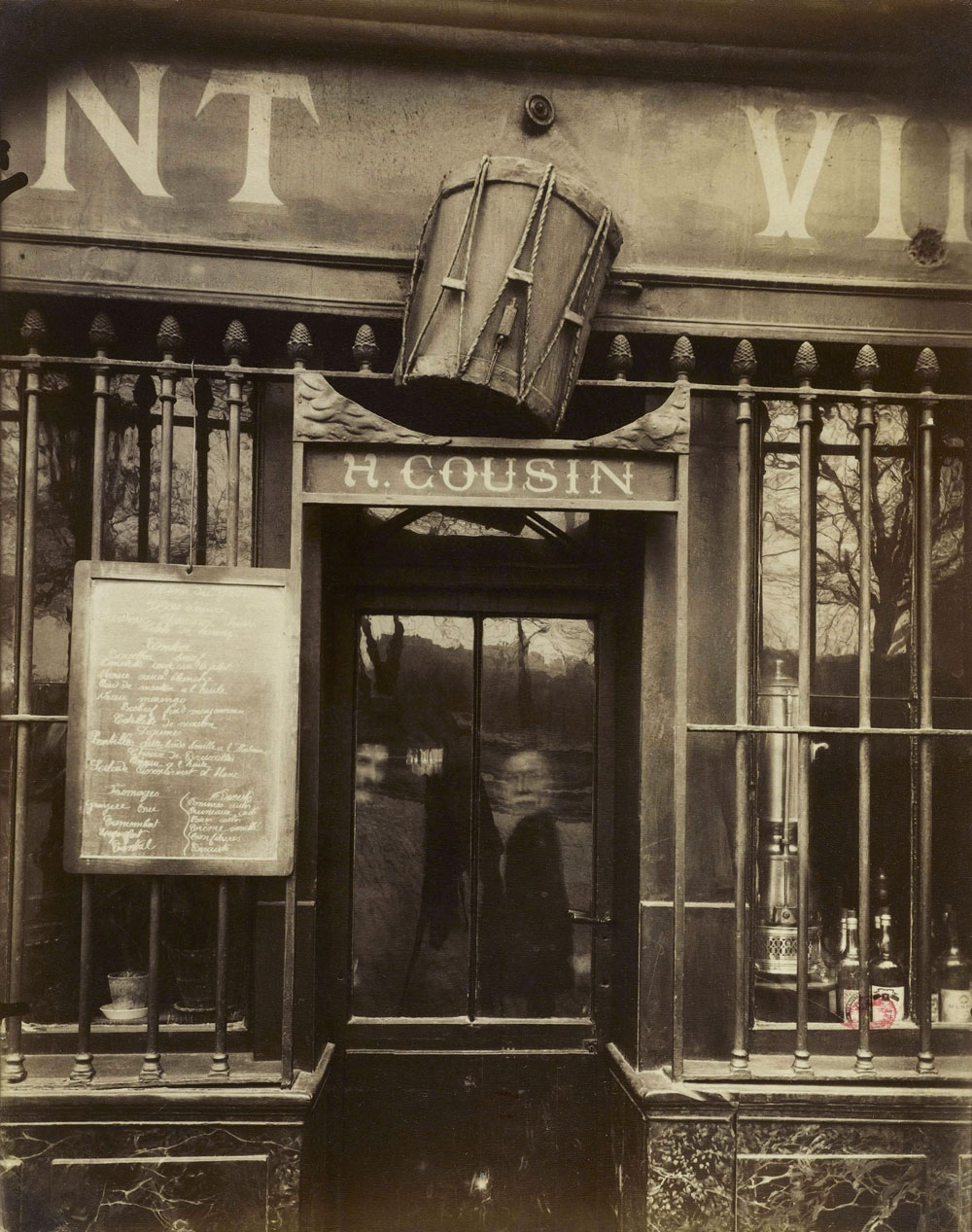
Eugène Atget (French, 1857-1927) 'Cabaret au Tambour, 62 quai de la Tournelle, 5th arrodissement' 1908


Eugène Atget (French, 1857-1927)
Cabaret au Tambour, 62 quai de la Tournelle, 5th arrodissement
1908
Albumen photograph
© Musée Carnavalet, Paris / Roger-Viollet / TopFoto


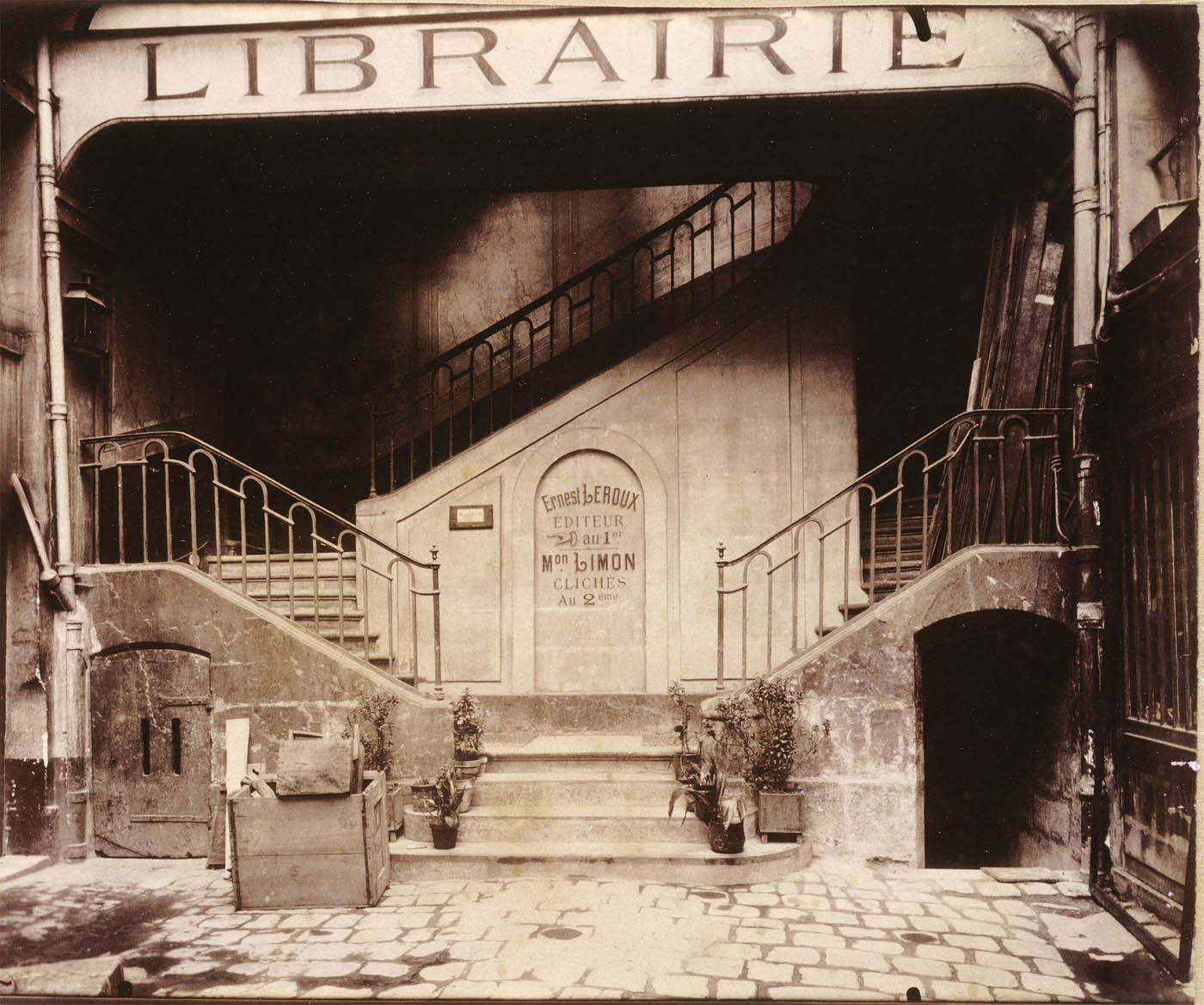
Eugène Atget (French, 1857-1927) 'Cour, 28 rue Bonaparte dépendant de l'abbaye de Saint-Germain, Editeur Ernest Leroux, 6ème arrondissement, Paris' 1910


Eugène Atget (French, 1857-1927)
Cour, 28 rue Bonaparte dépendant de l’abbaye de Saint-Germain, Editeur Ernest Leroux, 6ème arrondissement, Paris
1910
Albumen photograph
Musée Carnavalet, Histoire de Paris


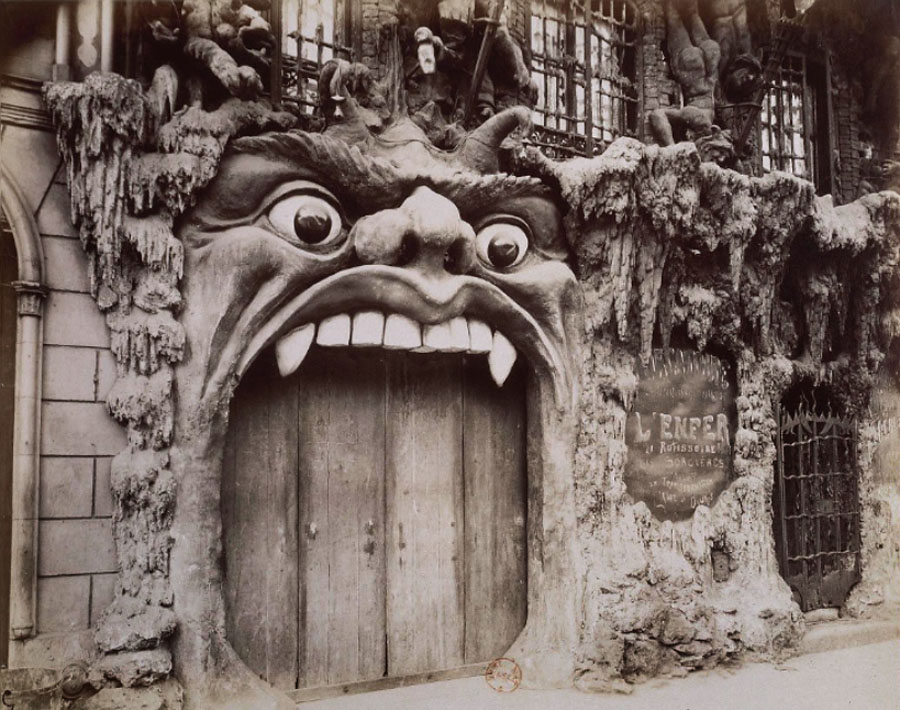
Eugène Atget (French, 1857-1927) 'Cabaret de l'Enfer, Boulevard de Clichy, Paris' c. 1910


Eugène Atget (French, 1857-1927)
Cabaret de l’Enfer, Boulevard de Clichy, Paris
c. 1910
Albumen photograph


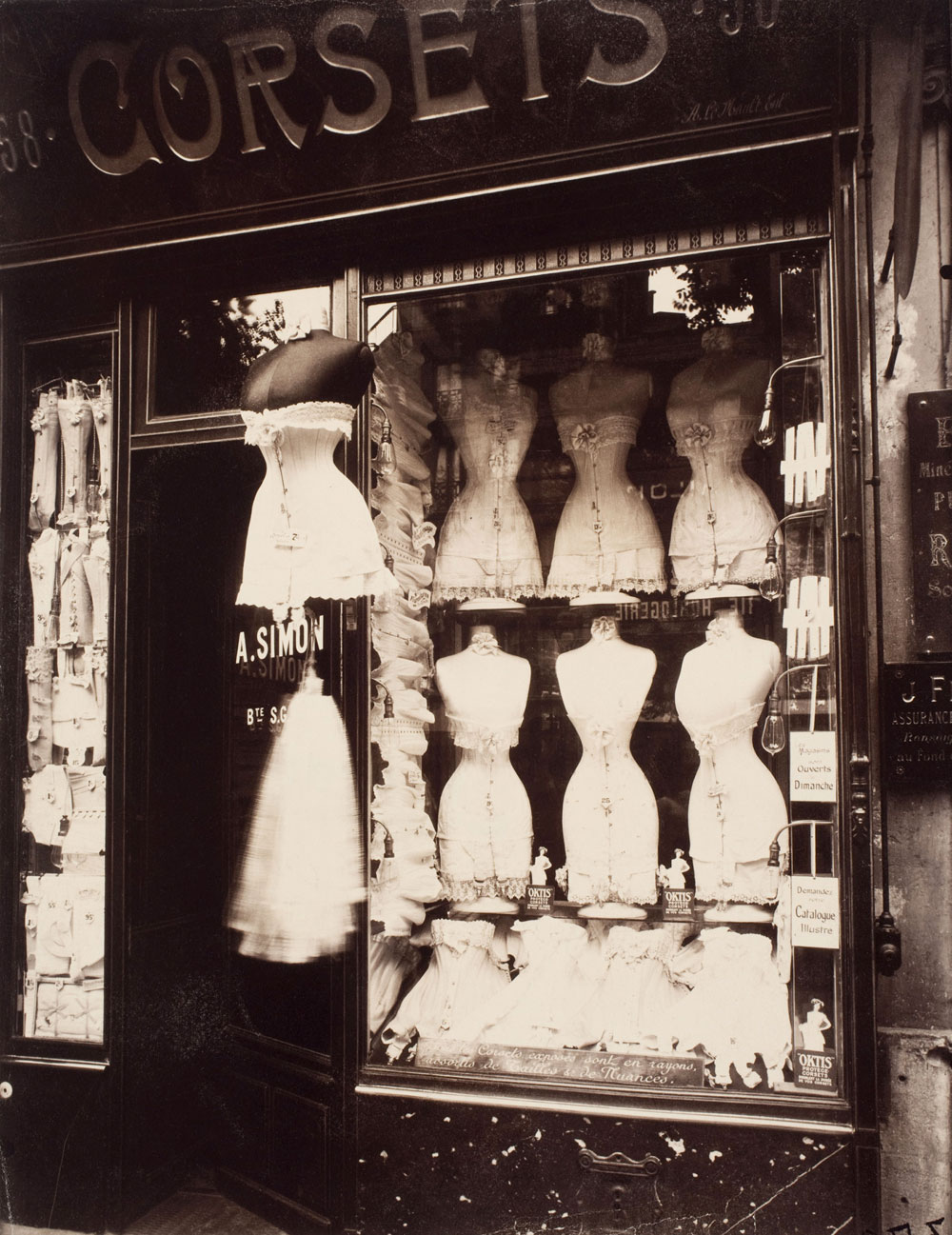
Eugène Atget (French, 1857-1927) 'Boulevard de Strasbourg' 1912


Eugène Atget (French, 1857-1927)
Boulevard de Strasbourg
1912
Albumen photograph
George Eastman House, International Museum of Photography and Film, Rochester


Eugène Atget (French, 1857-1927) 'Boutique Coiffeur, Boulevard de Strasbourg' 1912


Eugène Atget (French, 1857-1927)
Boutique Coiffeur, Boulevard de Strasbourg
1912
Albumen photograph


Eugène Atget (French, 1857-1927) 'Courtyard, 7 Rue de Valence, 5th arr.' June 1922


Eugène Atget (French, 1857-1927)
Courtyard, 7 Rue de Valence, 5th arr.
June 1922
Albumen photograph


Eugène Atget (French, Libourne 1857-1927 Paris) 'Quai d’Anjou, 6h du matin' 1924


Eugène Atget (French, 1857-1927)
Quai d’Anjou, 6h du matin
1924
Albumen photograph


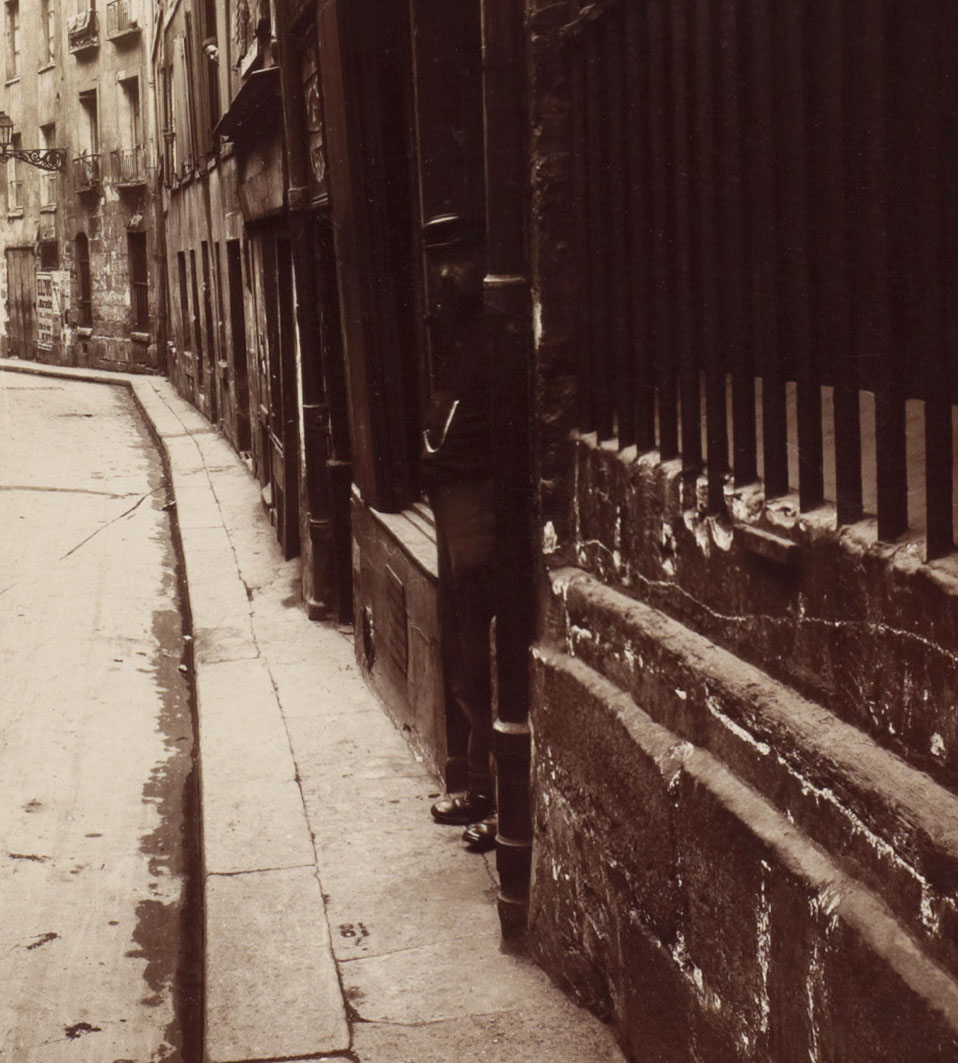
Eugène Atget (French, 1857-1927) 'Rue du Figuier' 1924


Eugène Atget (French, 1857-1927)
Rue du Figuier
1924
Albumen photograph


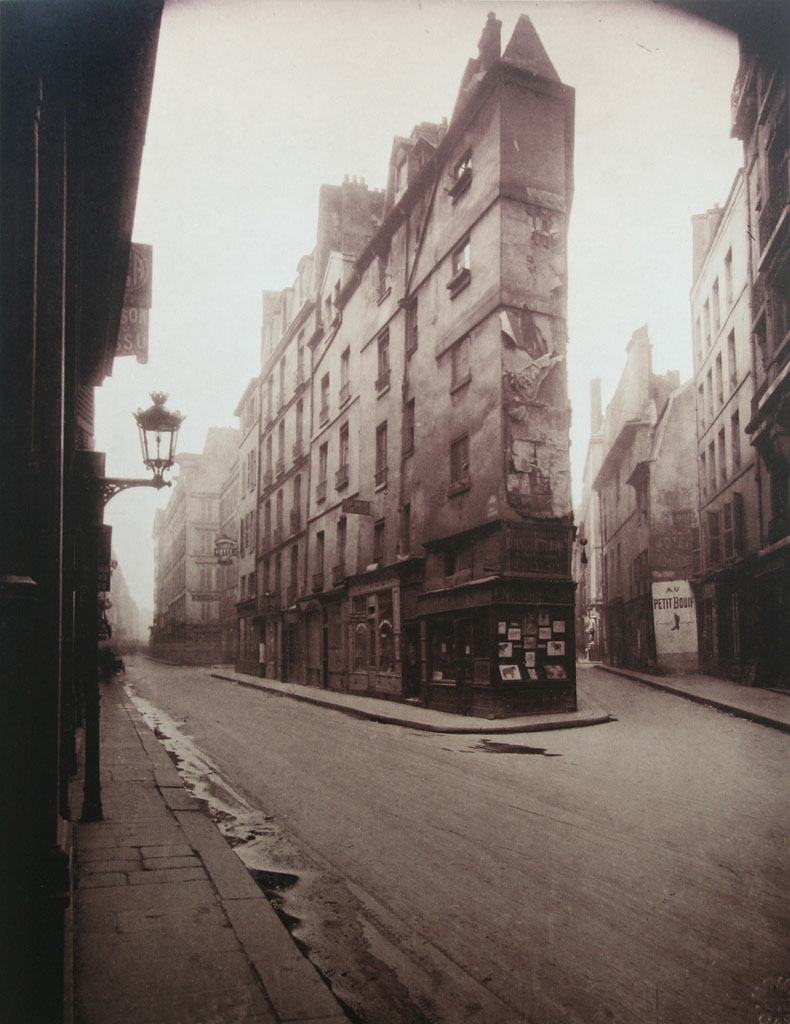
Eugène Atget (French, 1857-1927) 'Un coin, rue de Seine' 1924


Eugène Atget (French, 1857-1927)
Un coin, rue de Seine
1924
Albumen photograph


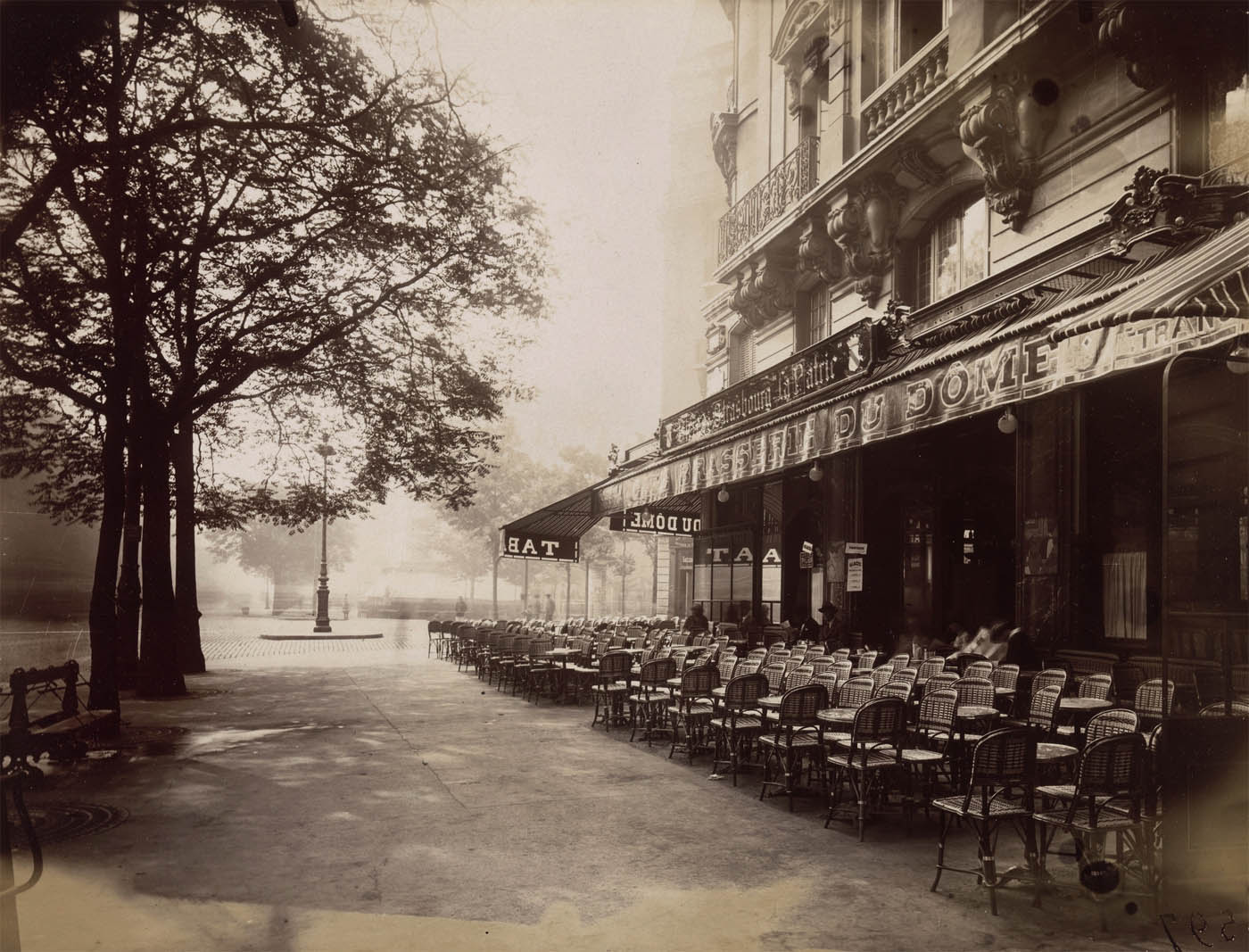
Eugène Atget (French, 1857-1927) 'Le Dôme, boulevard Montparnasse' June 1925


Eugène Atget (French, 1857-1927)
Le Dôme, boulevard Montparnasse
June 1925
Albumen photograph


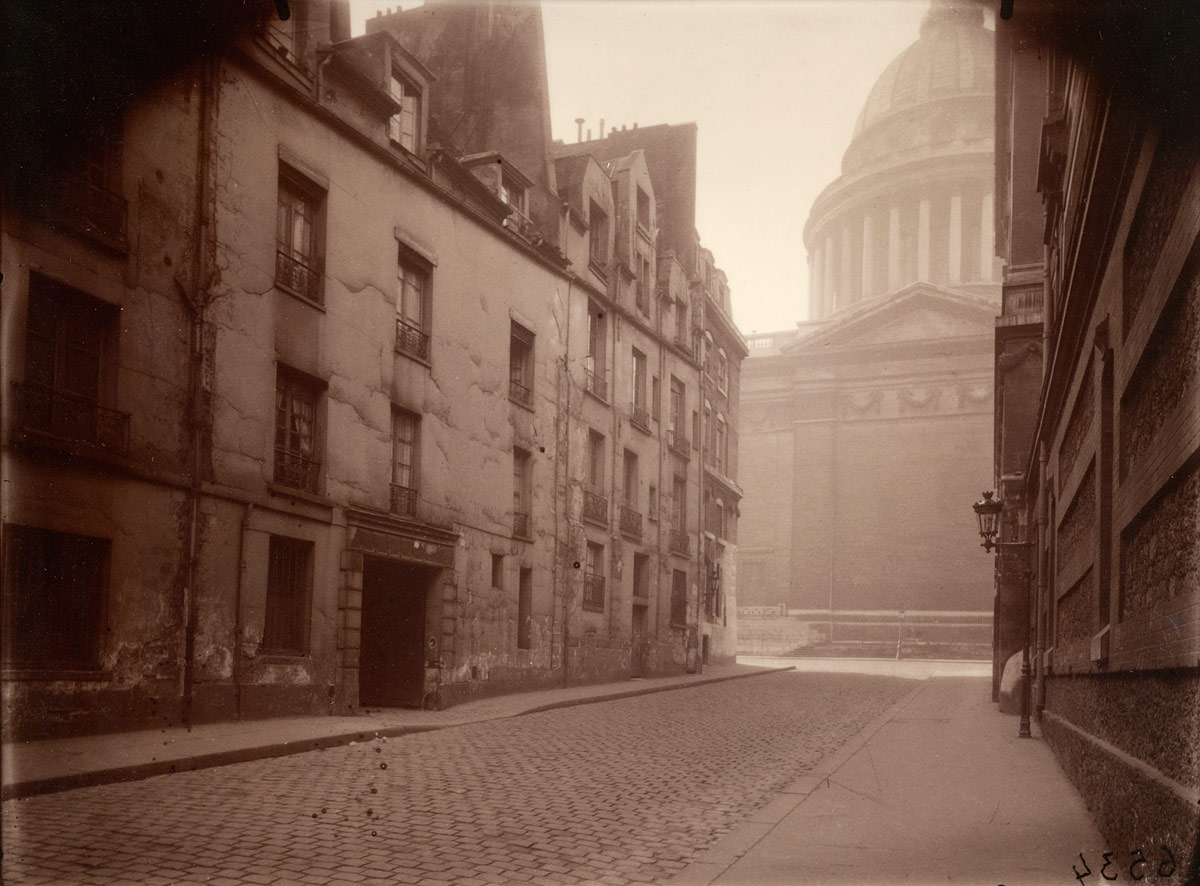
Eugène Atget (French, 1857-1927) 'Coin de la rue Valette et Pantheon, 5e arrondissement, matinee de mars' 1925


Eugène Atget (French, 1857-1927)
Coin de la rue Valette et Pantheon, 5e arrondissement, matinee de mars
1925, printed 1978
Albumen photograph


The first comprehensive exhibition in Australia of Eugène Atget’s (1857-1927) work will showcase over 200 photographs primarily from the more than 4000 strong collection of Musée Carnavalet, Paris with the important inclusion of Atget’s work, as compiled by Man Ray, from the collection of George Eastman House, Rochester, USA.

Atget was considered a commercial photographer who sold what he called ‘documents for artists’, ie. photographs of landscapes, close-up shots, genre scenes and other details that painters could use as reference. As soon as Atget turned his attention to photographing the streets of Paris, his work attracted the attention of leading institutions such as Musée Carnavalet and the Bibliothèque Nationale which became his principal clients. It is in these photographs of Paris that we find the best of Atget, the artist who shows us a city remote from the clichés of the Belle Époque. Atget’s images of ‘old Paris’ depict areas that had not been touched by Baron Haussmann’s 19th century modernisation program of the city. We see empty streets and buildings, details that usually pass unnoticed, all presented as rigorous, original compositions that offer a mysterious group portrait of the city.

The exhibition is organised into 11 sections that correspond to the thematic groupings used by Atget himself. They are: small trades, Parisian types and shops 1898-1922; the streets of Paris 1898-1913; ornaments 1900-1921; interiors 1901-1910; vehicles 1903-1910; gardens 1898-1914; the Seine 1900-1923; the streets of Paris 1921-1924; and outside the city centre 1899-1913.

The equipment and techniques deployed by Atget link him to 19th-century photography. He had an 18 x 24cm wooden, bellows camera which was heavy and had to be supported on a tripod. The use of glass plates allowed Atget to capture every tiny detail with great precision. Also traditional was his printing method, usually on albumen paper made light-sensitive with silver nitrate, exposed under natural light and subsequently gold-tinted. Atget’s vision of photography was, however, an astonishingly modern one. The photographs selected by Man Ray, who met Atget in the 1920s, indicate the immediate interest that the work aroused among the Surrealists because of the composition, ghosting, reflections, and its very mundanity. The first to appreciate his talents and importance as an artist were the photographer Berenice Abbott and Man Ray himself, both of whom lobbied to preserve Atget’s photographs.

As a result, he inspired artists and photographers such as Brassaï, the Surrealists, Walker Evans and Bernd & Hilla Becher amongst many others, and he can also be considered a starting-point for 20th-century documentary photography.

Press release from the AGNSW website


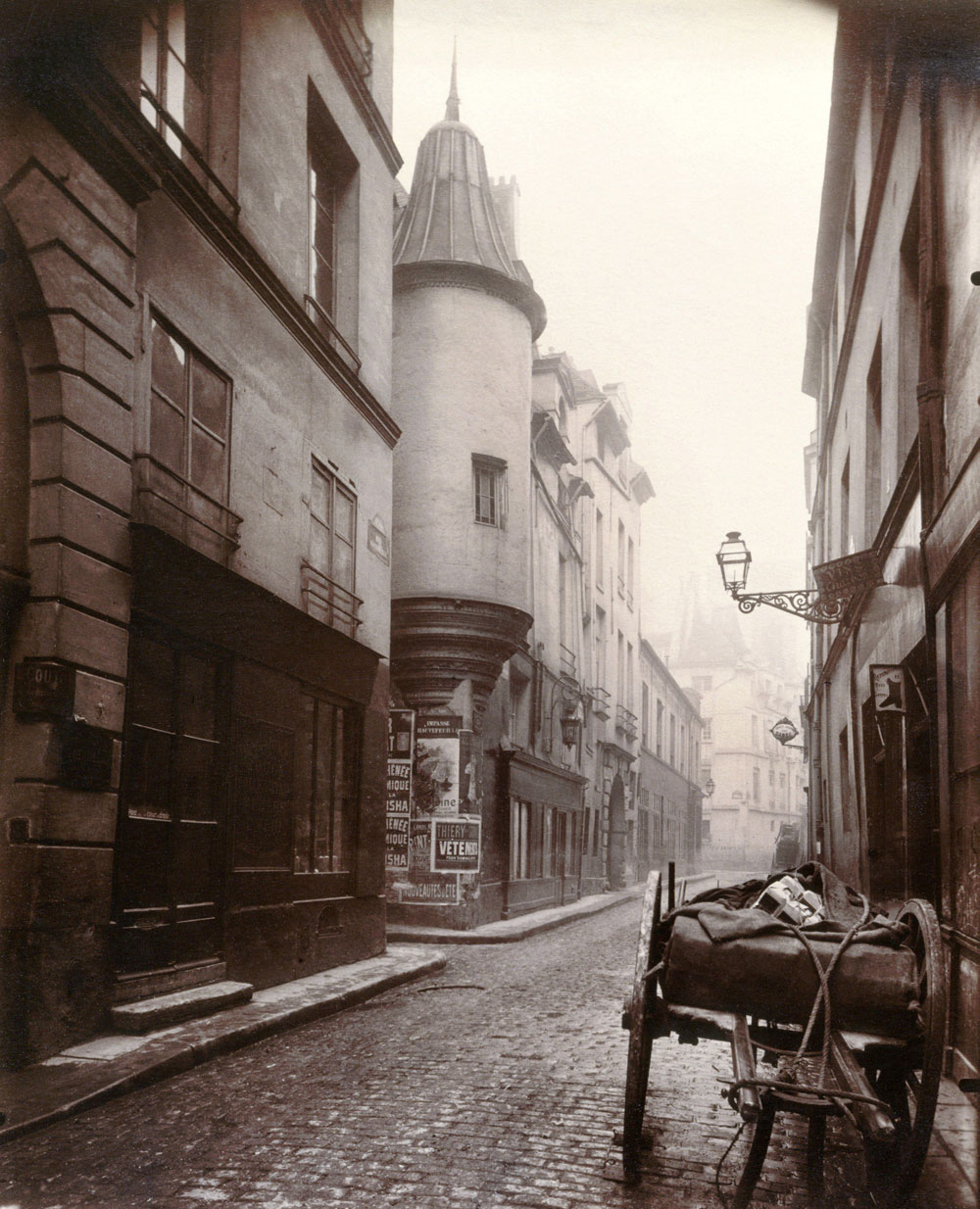
Eugène Atget (French, 1857-1927) 'Rue Hautefeuille, 6th arrondissement' 1898


Eugène Atget (French, 1857-1927)
Rue Hautefeuille, 6th arrondissement
1898
Albumen photograph
© Musée Carnavalet, Paris / Roger-Viollet / TopFoto


Eugène Atget (French, 1857-1927) 'Shop sign, au Rémouleur' 1899


Eugène Atget (French, 1857-1927)
Shop sign, au Rémouleur on the corner of the rue des Nonnains-d’Hyères and rue de l’Hôtel-de-Ville, 4th arrondissement
July 1899
Albumen photograph
© Musée Carnavalet, Paris / Roger-Viollet / TopFoto


Eugène Atget (French, 1857-1927) 'The former Collège de Chanac, 12 rue de Bièvre, 5th arrondissement' 1900


Eugène Atget (French, 1857-1927)
The former Collège de Chanac, 12 rue de Bièvre, 5th arrondissement
August 1900
Albumen photograph
© Musée Carnavalet, Paris / Roger-Viollet / TopFoto


Eugène Atget (French, 1857-1927) 'Porte d'Asnieres – cité Trébert' 1913


Eugène Atget (French, 1857-1927)
Porte d’Asnieres – cité Trébert
1913
Albumen print
21.7 x 18.0cm (trimmed)
Collection of George Eastman House, International Museum of Photography and Film, Rochester


Eugène Atget (French, 1857-1927) 'Rue de l'Hôtel de Ville' 1921


Eugène Atget (French, 1857-1927)
Rue de l’Hôtel de Ville
1921
Gelatin silver photograph
22.8 x 17.7cm
Collection Art Gallery of New South Wales


Eugène Atget (French, 1857-1927) 'Rue de l'Hôtel de Ville' 1921 (detail)


Eugène Atget (French, 1857-1927)
Rue de l’Hôtel de Ville (detail)
1921
Gelatin silver photograph
22.8 x 17.7cm
Collection Art Gallery of New South Wales


Art Gallery of New South Wales
Art Gallery Road, The Domain
Sydney NSW 2000, Australia

Opening hours:
Open every day 10am – 5pm
except Christmas Day and Good Friday

Art Gallery of New South Wales website

LIKE ART BLART ON FACEBOOK

Back to top

Review: ‘Gregory Crewdson: In A Lonely Place’ at the Centre for Contemporary Photography (CCP), Fitzroy, Melbourne

Exhibition dates: 28th September – 11th November 2012


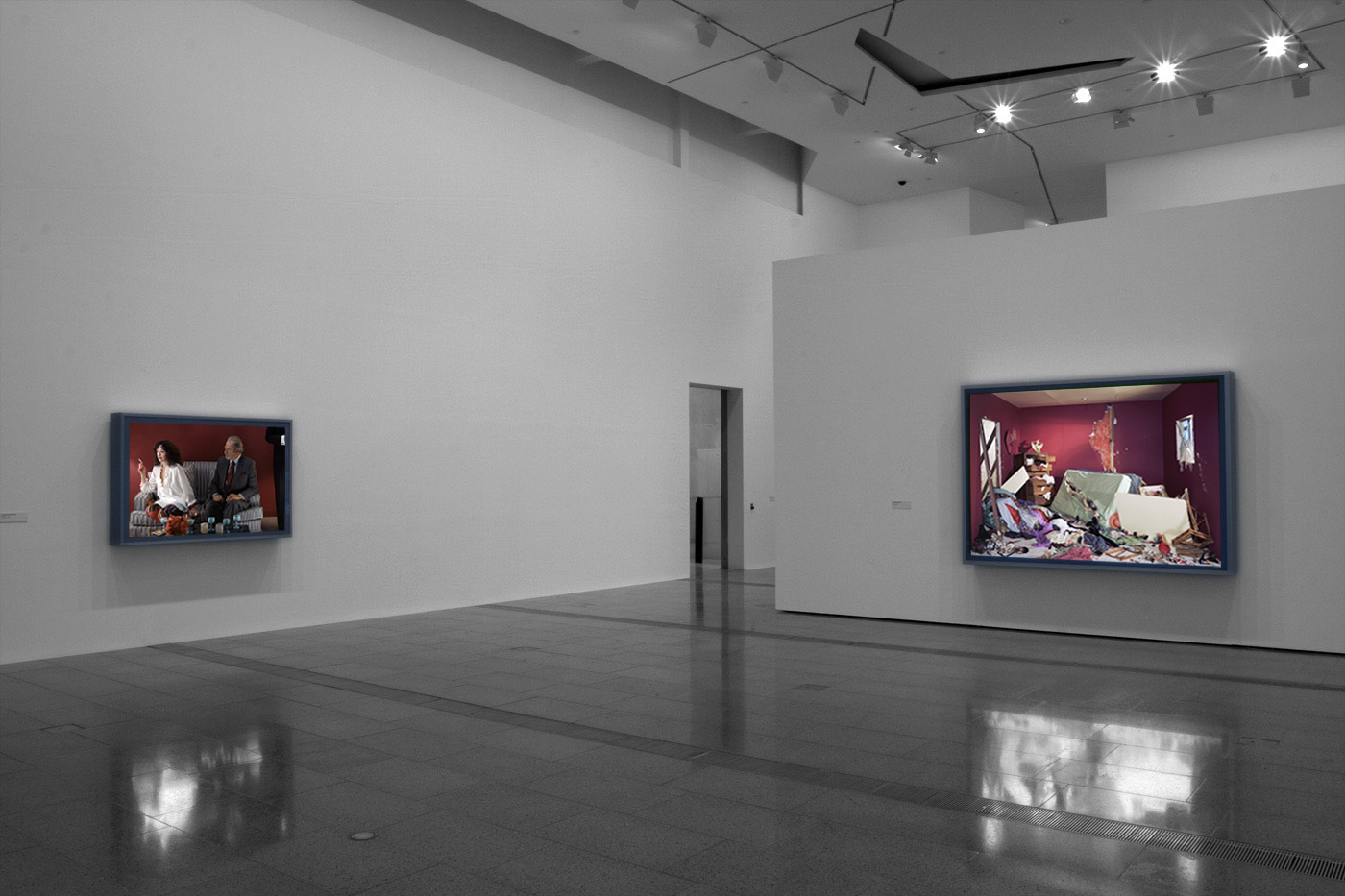
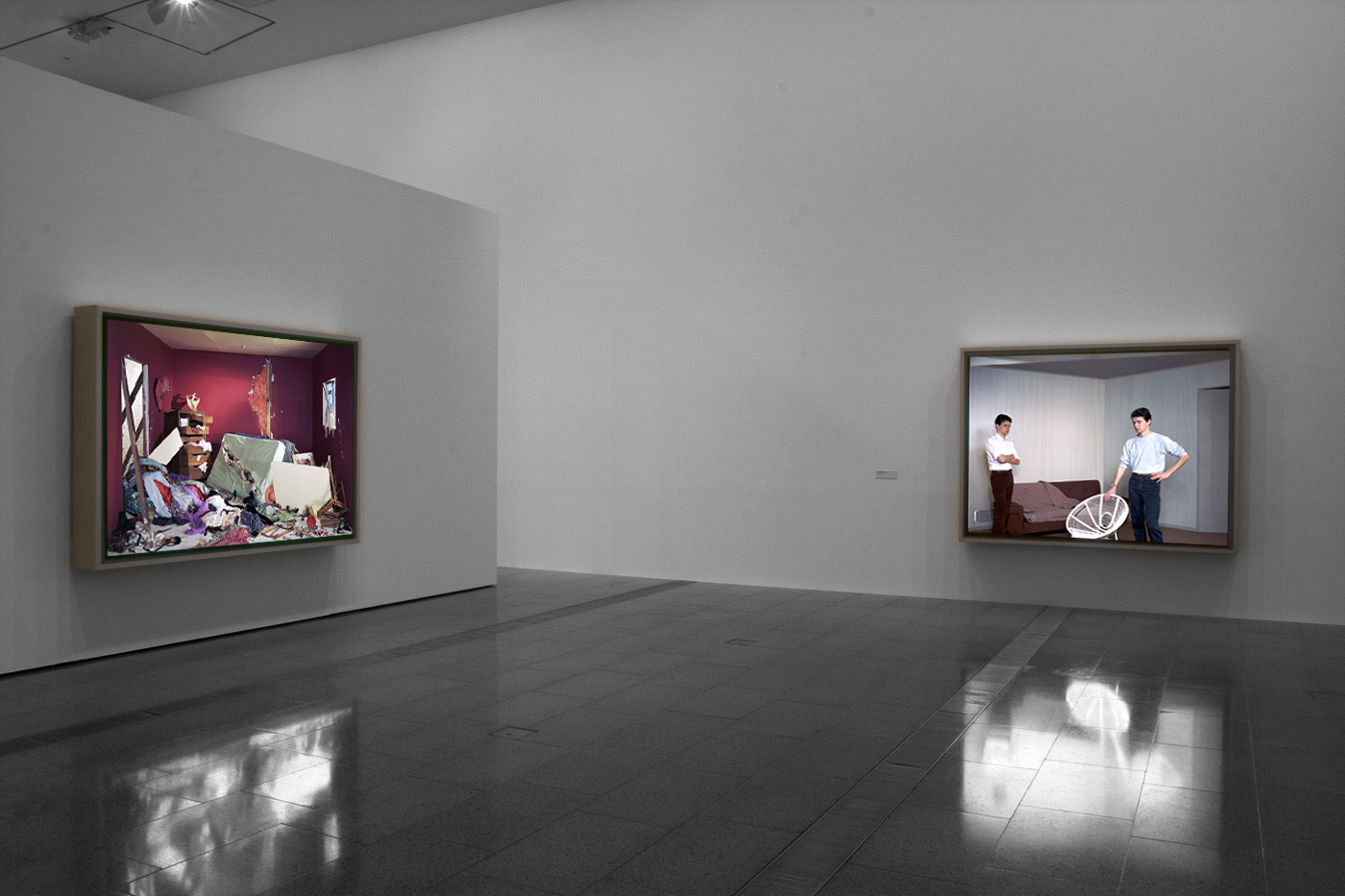
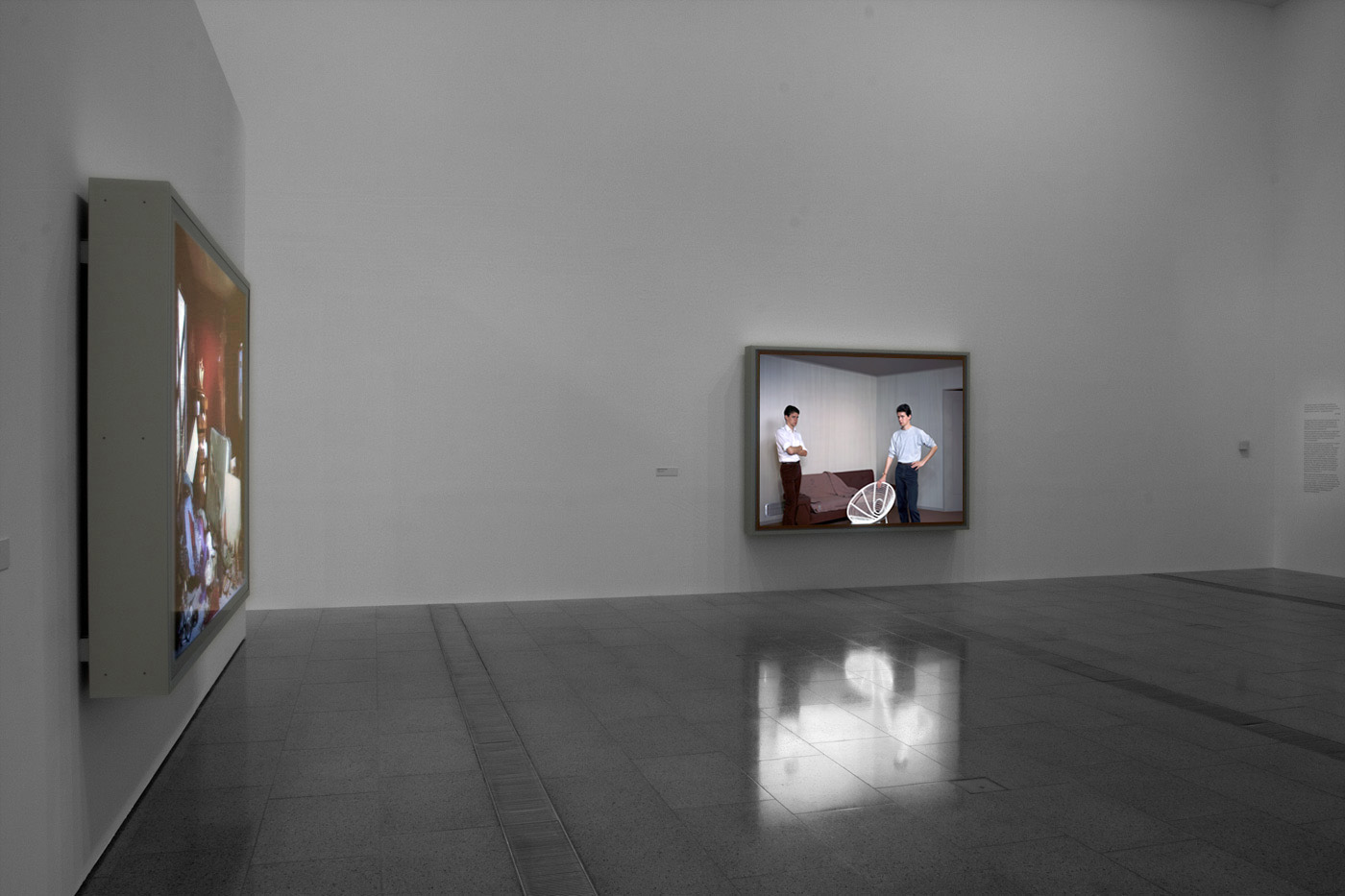
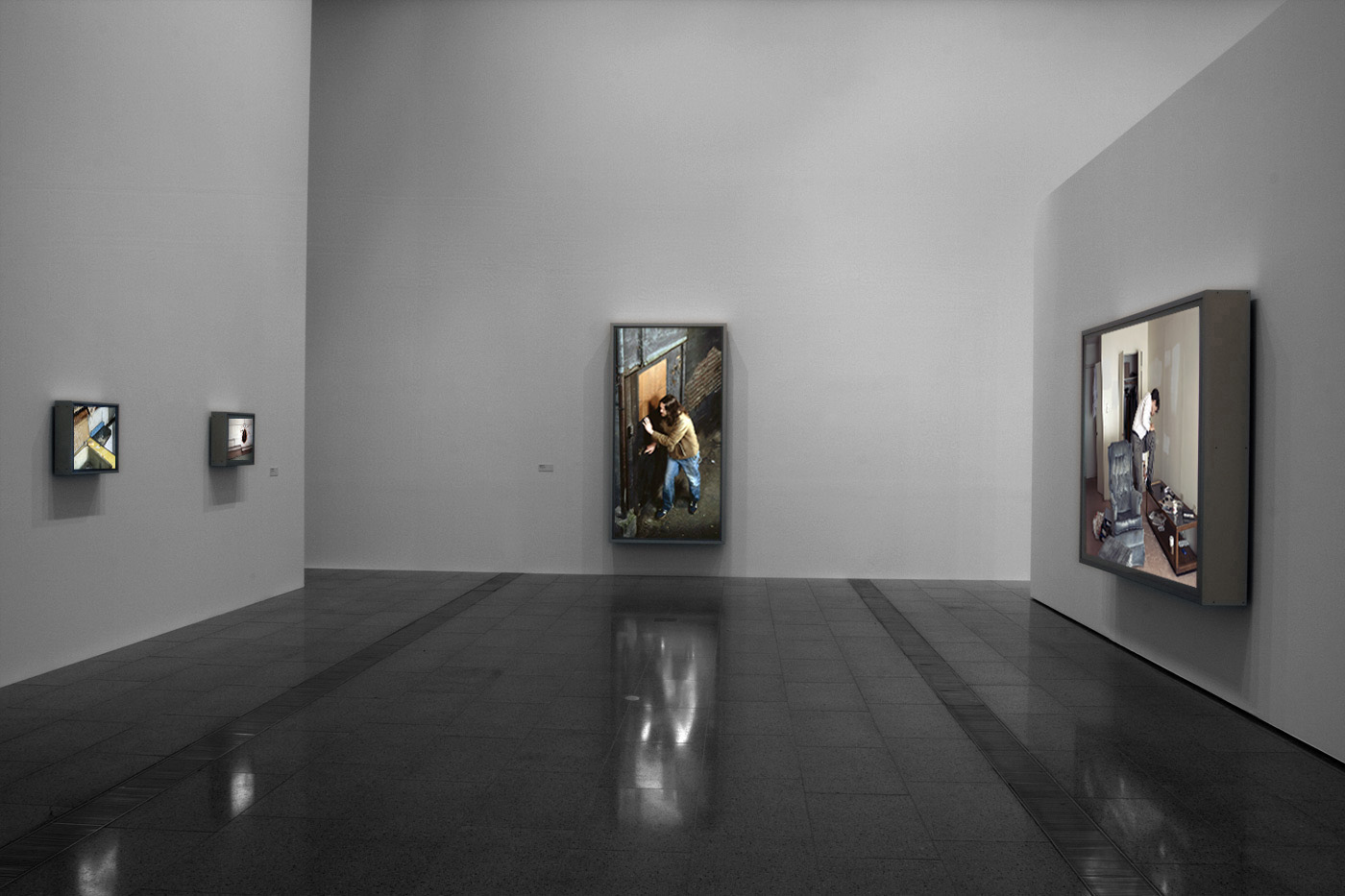
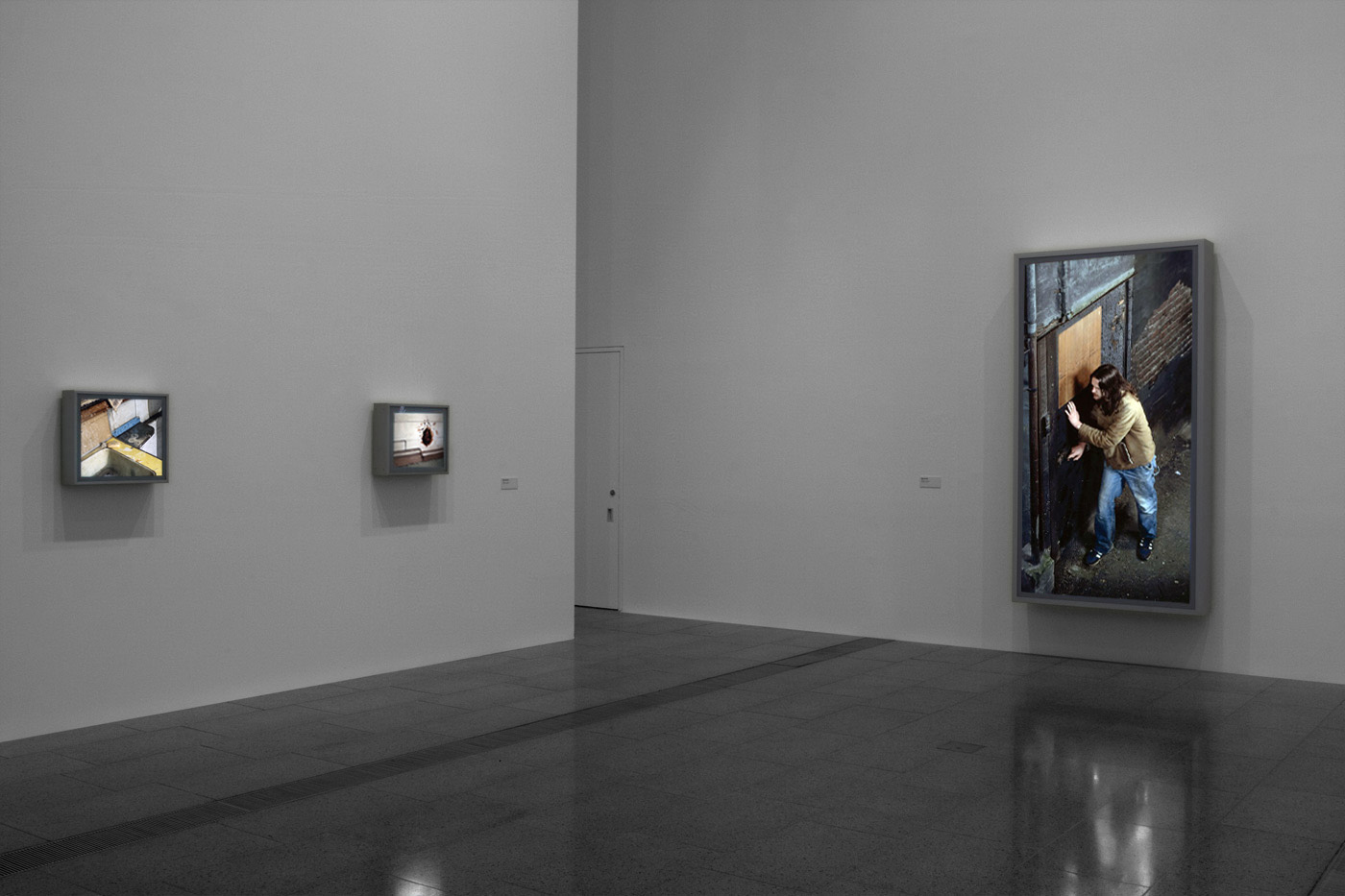
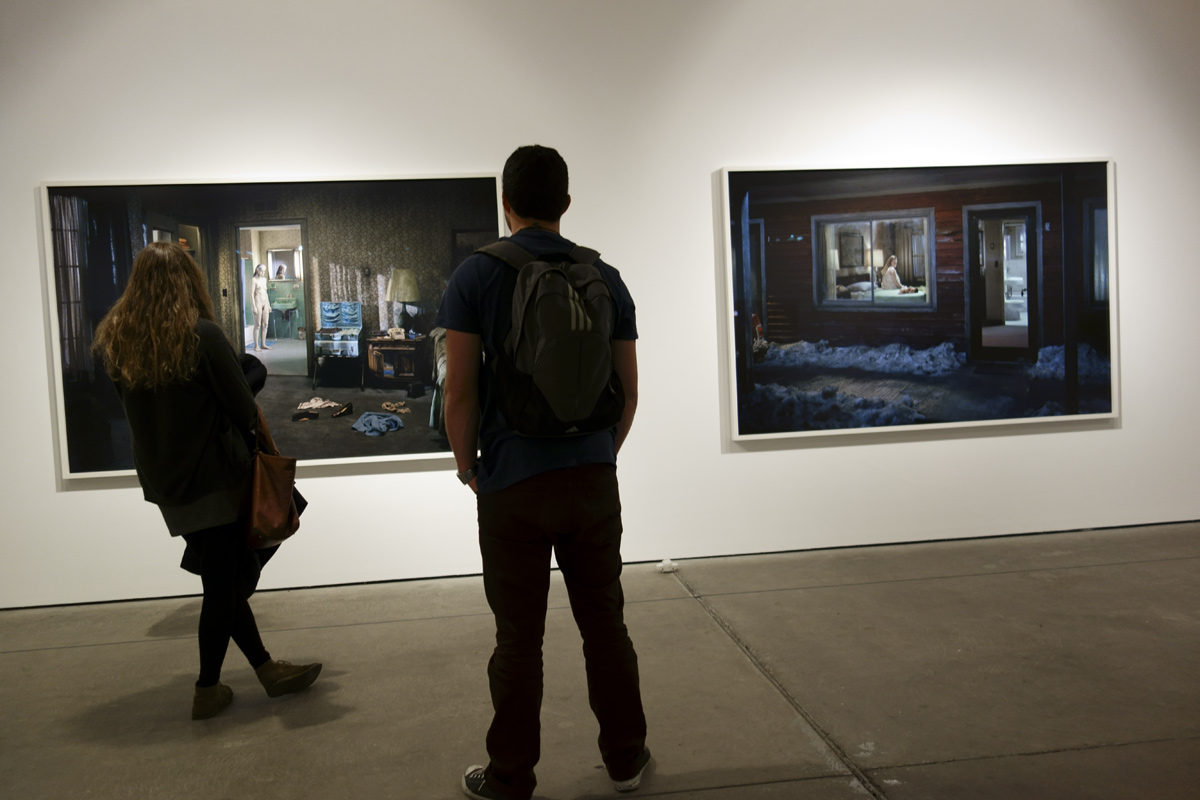
Installation photograph of the series 'Beneath the Roses' (2003-2008) from the exhibition 'Gregory Crewdson: In A Lonely Place' at the Centre for Contemporary Photography (CCP), Fitzroy, Melbourne

Installation photograph of the series 'Beneath the Roses' (2003-2008) from the exhibition 'Gregory Crewdson: In A Lonely Place' at the Centre for Contemporary Photography (CCP), Fitzroy, Melbourne


Installation photographs of the series Beneath the Roses (2003-2008) from the exhibition Gregory Crewdson: In A Lonely Place at the Centre for Contemporary Photography (CCP), Fitzroy, Melbourne
Photos: Dr Marcus Bunyan


Downfall of a dream: (n)framing the enigma in Gregory Crewdson’s Beneath the Roses

After the excoriating diatribe by Robert Nelson in The Age newspaper (“Unreal stills, unmoving images” Wednesday October 17 2012) I hope this piece of writing will offer greater insight into the work of this internationally renowned artist. With some reservations, I like Crewsdon’s work, I like it a lot – as do the crowds of people flocking to the Centre for Contemporary Photography, Fitzroy to see the exhibition. Never have I seen so many people at the CCP looking at contemporary photography before and that can only be a good thing.

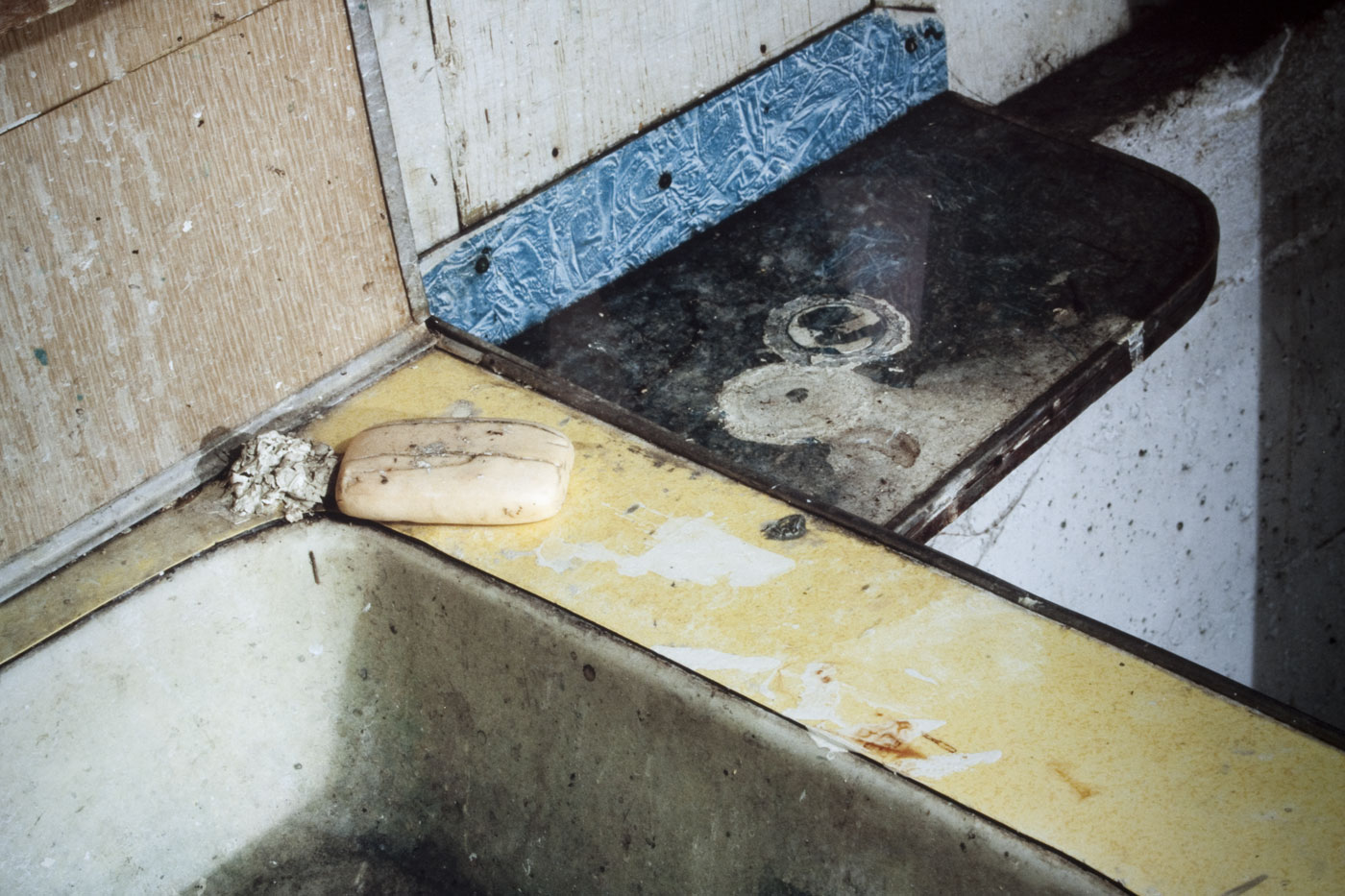
Let’s get the basics out of the way first. The early series Fireflies are small silver gelatin photographs that capture “the tiny insects’ transient moments of light as they illuminate the summer night.” These are minor works that fail to transcend the ephemeral nature of photography, fail to light the imagination of the viewer when looking at these scenes of dusky desire and discontinuous lives. The series of beautiful photographs titled Sanctuary (2010) evidence the “ruin of the legendary Cinecittà studios, which was founded by Mussolini in the 1930s and is associated with the great Italian film director Federico Fellini.” Wonderful photographs of doorways, temples, dilapidated stage sets with excellent use of soft miasmic light creating an atmosphere of de/generation (as though a half-remembered version of Rome had passed down through the generations) interfaced with contemporary Rome as backdrop. The digital prints show no strong specular highlights, no deep blacks but a series of transmutable grey and mid tones that add to the overall feeling of romantic ruin. It is a pity that these photographs are not printed as silver gelatin photographs, for they would have had much more depth of feeling than they presently possess. They just feel a little “thin” to me to sustain the weight of atmosphere required of them.

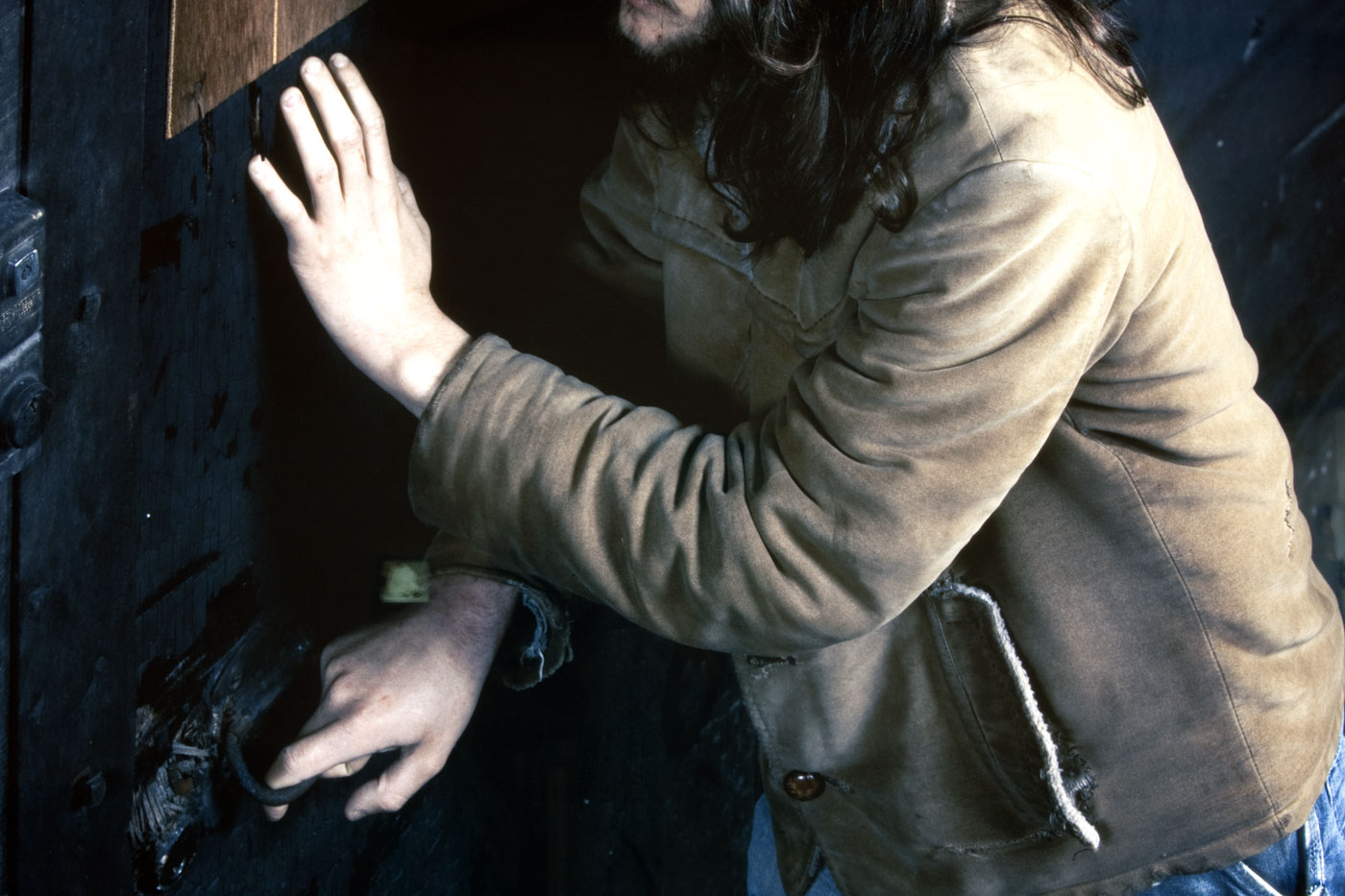
But it is the series Beneath the Roses (2003-2008) that has made Crewdson truly famous. Shot using a large format camera, Crewdson makes large-scale photographs of elaborate and meticulously staged tableaux, which have been described as “micro-epics” that probe the dark corners of the psyche. Working in the manner of a film director, he leads a production crew, which includes a director of photography, special effects and lighting teams, casting director and actors. He typically makes several exposures that he later digitally combines to produce the final image. Photographs in the series of “brief encounters” include external dioramas (shot in a down at heel Western Massachusetts town), where Crewdson shuts down streets and lights the whole scene; to interior dialogues where houses are built on sound stages and the artist can control every detail of the production. Influences on these works include, but are not limited to:

David Lynch (Blue Velvet, Twin Peaks), Alfred Hitchcock (Vertigo), Steven Spielberg (Close Encounters), the paintings of Edward Hopper, Diane Arbus (the detritus of her photographic interiors), film noir, psychoanalysis, American suburbia, the American dream, the photographs of Walker Evans, Cindy Sherman and surrealism. Concepts that you could link to the work include loneliness, alienation, apathy, resignation, mystery, contemplation and confusion, identity, desire, memory and imagination.


Now to the nuts and bolts of the matter.

Another major influence that I will add is that of the great Italian director Federico Fellini (La Dolce Vita – The Sweet Life) who shot most of that film on the sets at Cinecittà studios in Rome. It is perhaps no coincidence that Crewdson, on his first overseas film shoot, shot the series Sanctuary at the very same location. Crewdson’s photographs in the series Beneath the Roses are an American form of  “The Sweet Life.” In 1961, the New York Times film critic Bosley Crowther praised Fellini’s “brilliantly graphic estimation of a whole swath of society in sad decay and, eventually, a withering commentary on the tragedy of the over-civilized… Fellini is nothing if not fertile, fierce and urbane in calculating the social scene around him and packing it onto the screen. He has an uncanny eye for finding the offbeat and grotesque incident, the gross and bizarre occurrence that exposes a glaring irony. He has, too, a splendid sense of balance and a deliciously sardonic wit that not only guided his cameras but also affected the writing of the script. In sum, it is an awesome picture, licentious in content but moral and vastly sophisticated in its attitude and what it says.”1 The same could equally be said of the Crewdson and his masterpieces in Beneath the Roses. Crewdson is in love with Fellini’s gesture – of the uplifting of the characters and their simultaneous descent into “sweet” hedonism, debauchery and decadence using the metaphor of downfall (downfall links each scene in La Dolce Vita, that of a “downward spiral that Marcello sets in motion when descending the first of several staircases (including ladders) that open and close each major episode.”)2 Crewdson’s “spectacular apocalypses of social enervation”3 mimic Fellini’s gestural flourishes becoming Crewdson’s theme of America’s downfall, America as a moral wasteland. Crewdson’s is “an aesthetic of disparity” that builds up a cumulative impression on the viewer that finds resolution in an “overpowering sense of the disparity between what life has been or could be, and what it actually is.”4

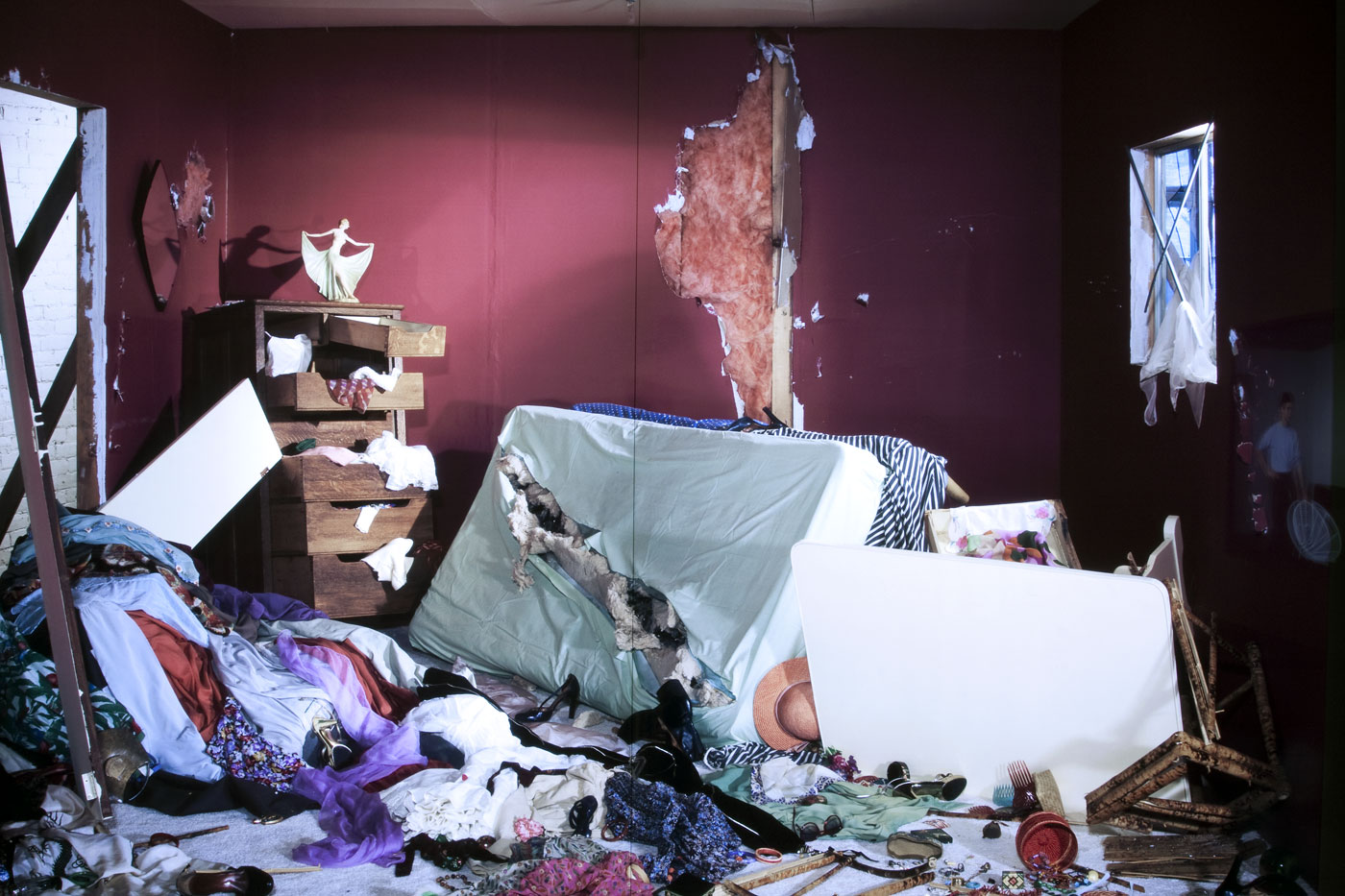
Crewdson’s cinematic encounters are vast and pin sharp when seen in the flesh. No reproduction on the web can do their physical presence justice; it is the details that delight in these productions. You have to get up close and personal with the work. His dystopic landscapes are not narratives as such, not stills taken from a movie (for that implies an ongoing story) but open-ended constructions that allow the viewer to imagine the story for themselves. They do not so much evoke a narrative as invite the viewer to create one for themselves – they are an “invitation” to a narrative, one that explores the anxiety of the (American) imagination, an invitation to empathise with the dramas at play within contemporary environments. For me, Crewdson’s extra ordinary photographs are a form of enigma (a puzzling or inexplicable occurrence or situation), the picture as master puzzle (where all the pieces fit perfectly together in stillness) that contains a riddle or hidden meaning. Clues to this reading can be found in one of the photographs from the series (Blue Period, see detail image, below) where Crewdson deliberately leaves the door of a bedside cupboard open to reveal a “Perfect PICTURE PUZZLE” box inside. The viewer has to really look into the image and understand the significance of this artefact.

Another reading that I have formulated is of the transience of space and time within Crewdson’s series. In the disquieting, anonymous townscapes people look out from their porches (or the verandas are lit and empty), they abandon their cars or walk down desolate streets hardly ever looking directly out at the viewer. The photographs become sites of mystery and wonder hardly anchored (still precisely anchored?) in time and space. This disparity is emphasised in the interior dialogues. The viewer (exterior) looks at a framed doorway or window (exterior) looking into an scene (interior) where the walls are usually covered with floral wallpaper (interior / exterior) upon which hangs a framed image of a Monet-like landscape (exterior) (see detail image, above). Exterior, exterior, interior, interior / exterior, exterior. The trees of the landscape invade the home but are framed; exterior/framed, interior/mind. There is something mysterious going on here, some reflection of an inner state of mind.

In his visual mosaics Crewdson engages our relationship with time and space to challenge the trace of experience. His tableaux act as a kind of threshold or hinge of experience – between interior and exterior, viewer and photograph. His photographs are a form of monism in which two forces (interior / exterior) try to absorb each other but ultimately lead to a state of equilibrium. It is through this “play” that the context of the photographs and their relationship to each other and the viewer are “framed.” This device emphasises the aesthetic as much as information and encourages the viewer to think about the relationship between the body, the world of which it is part and the dream-reason of time.5 This intertextual (n)framing (n meaning unspecified number in mathematics) encourages the viewer to explore the inbetween spaces in the non-narrative / meta-narrative,”and by leaps (intuitive leaps, poetic leaps, leaps of faith)”6 encourage escapism in the imagination of the viewer. It is up to us as viewers to seek the multiple, disparate significances of what is concealed in each photograph as “felt knowledge” (Walter Benjamin), recalling to mind the sensory data placed before our eyes, something that can be experienced but cannot be explained by man: “the single moment of the present amidst the transience of life and searching for some kind of eternal truth.”7

Finally, in a more adverse reading of the photographs from the series Beneath the Roses, I must acknowledge the physically (not mentally) static nature of the images where every detail of the mise-en-scène is fully articulated and locked down: from the perfect trickle of blood running from the woman’s vagina in Blue Period, to the reflections in mirrors, the detritus of living scattered on the bedroom floor, the dirty telephone, packed suitcases and keys in locks to the desolate looks of the participants that never engage with the viewer. Despite allusions of despair, in their efficacy (their static and certain world order), there is no real chthonic madness here, no real messiness of the capture of death, murder and the wastage of human life (famine, AIDS, cancer or the blood running over the pavement in one of Weegee’s murder scenes for example). This is Fellini’s gross and bizarre LITE. Americurbana “is being addressed with the same reserve and elegance that ensures that the institution – artistic, political, what you will – is upheld and never threatened. It is pre-eminently legible, it elicits guilt but not so much as to cause offence.”8 I must also acknowledge the male-orientated viewpoint of the photographs, where men are seated, clothed, lazy or absent and all too often women are doing the washing or cooking, are naked and vulnerable. In their portrayal of (usually) half dressed or naked females the photographs evidence a particularly male view of the world, one that his little empathy or understanding of how a female actually lives in the world. For me this portrait of the feminine simply does not work. The male photographer maintains control (and power) by remaining resolutely (in)visible.

Overall this is a outstanding exhibition that thoroughly deserves that accolades it is receiving. Sitting in the gallery space for an hour and a half and soaking up the atmosphere of these magnificent works has been for me one of the art experiences of 2012. Make sure that you do not miss these mesmerising prophecies.

Dr Marcus Bunyan


1/ Crowther’s review first published in The New York Times, April 20, 1961. In Fava and Vigano, 105 quoted in Anon. “La Dolce Vita,” on Wikipedia Footnote 30 [Online] Cited 20/10/2012. en.wikipedia.org/wiki/La_Dolce_Vita

2/ Anon. “La Dolce Vita,” on Wikipedia Footnote 30 [Online] Cited 20/10/2012. en.wikipedia.org/wiki/La_Dolce_Vita

3/ Sultanik, Aaron. Film, a Modern Art. Cranbury, N.J: Cornwall Books, 1986, p. 408

4/ Richardson, Robert. “Waste Lands: The Breakdown of Order,” in Bondanella (ed.), Federico Fellini: Essays in Criticism, p. 111 quoted in Anon. “La Dolce Vita,” on Wikipedia Footnote 30 [Online] Cited 20/10/2012. en.wikipedia.org/wiki/La_Dolce_Vita

5/ Bacon, Julie Louise. “Liquid Archive: On Ambivalence,” in Liquid Archive. Melbourne: Monash University Museum of Art (MUMA), 2012, p. 119

6/ Kirshenblatt-Gimblett, Barbara. “The Museum – A Refuge for Utopian Thought,” in Rüsen, Jörn; Fehr Michael, and Ramsbrock, Annelie (eds.). Die Unruhe der Kultur: Potentiale des Utopischen. Velbrück Wissenschaft, 2004. In German.

7/ Kataoka, Mami commenting on the work of Allan Kaprow. “Transient Encounters,” in Broadsheet: Criticism, Theory, Art Vol 41.3, September 2012, p. 174

8/ Geczy, Adam. “A dish served lukewarm,” in Broadsheet: Criticism, Theory, Art Vol 41.3, September 2012, p. 177

Many thankx to the artist, Gagosian Gallery and the Centre for Contemporary Photography for allowing me to publish the photographs in the posting. Special thankx to Director of the CCP Naomi Cass and Ms. James McKee from Gagosian Gallery for facilitating the availability of the media images. Please click on the photographs for a larger version of the image.

All photographs © Gregory Crewdson. Courtesy Gagosian Gallery.

Installation and detail photographs © Dr Marcus Bunyan


Gregory Crewdson (American, b. 1962) 'Untitled (Blue Period)' 2003-2005


Gregory Crewdson (American, b. 1962)
Untitled (Blue Period)
2003-2005
© Gregory Crewdson. Courtesy Gagosian Gallery


Gregory Crewdson (American, b. 1962) 'Untitled (Blue Period)' 2003-2005 (detail)

Gregory Crewdson (American, b. 1962) 'Untitled (Blue Period)' 2003-2005 (detail)

Gregory Crewdson (American, b. 1962) 'Untitled (Blue Period)' 2003-2005 (detail)


Details from Gregory Crewdson’s Untitled (Blue Period) (2003-2005, above) from the series Beneath the Roses (2003-2008)
Photos: Dr Marcus Bunyan


“The American middle-class nightmare: nothing is clean, orderly, idyllic, or romantic. In his perfectly staged, hyperrealistic tableaux, photographer Gregory Crewdson reveals the claustrophobic limbo and abyss of spiritual repression that is the typical suburb. Here, hushed-up violence, alienation, isolation, and emptiness are nothing new or unfamiliar, but rather part of the everyday neighbourhood experience.”

Gregory Crewdson, In a Lonely Place, Abrams Publishing, New York, 2011


“I have always been fascinated by the poetic condition of twilight. By its transformative quality. Its power of turning the ordinary into something magical and otherworldly. My wish is for the narrative in the pictures to work within that circumstance. It is that sense of in-between-ness that interests me.”


Gregory Crewdson


Gregory Crewdson (American, b. 1962) 'Untitled (Maple Street)' 2003-2005


Gregory Crewdson (American, b. 1962)
Untitled (Maple Street)
2003-2005
© Gregory Crewdson. Courtesy Gagosian Gallery


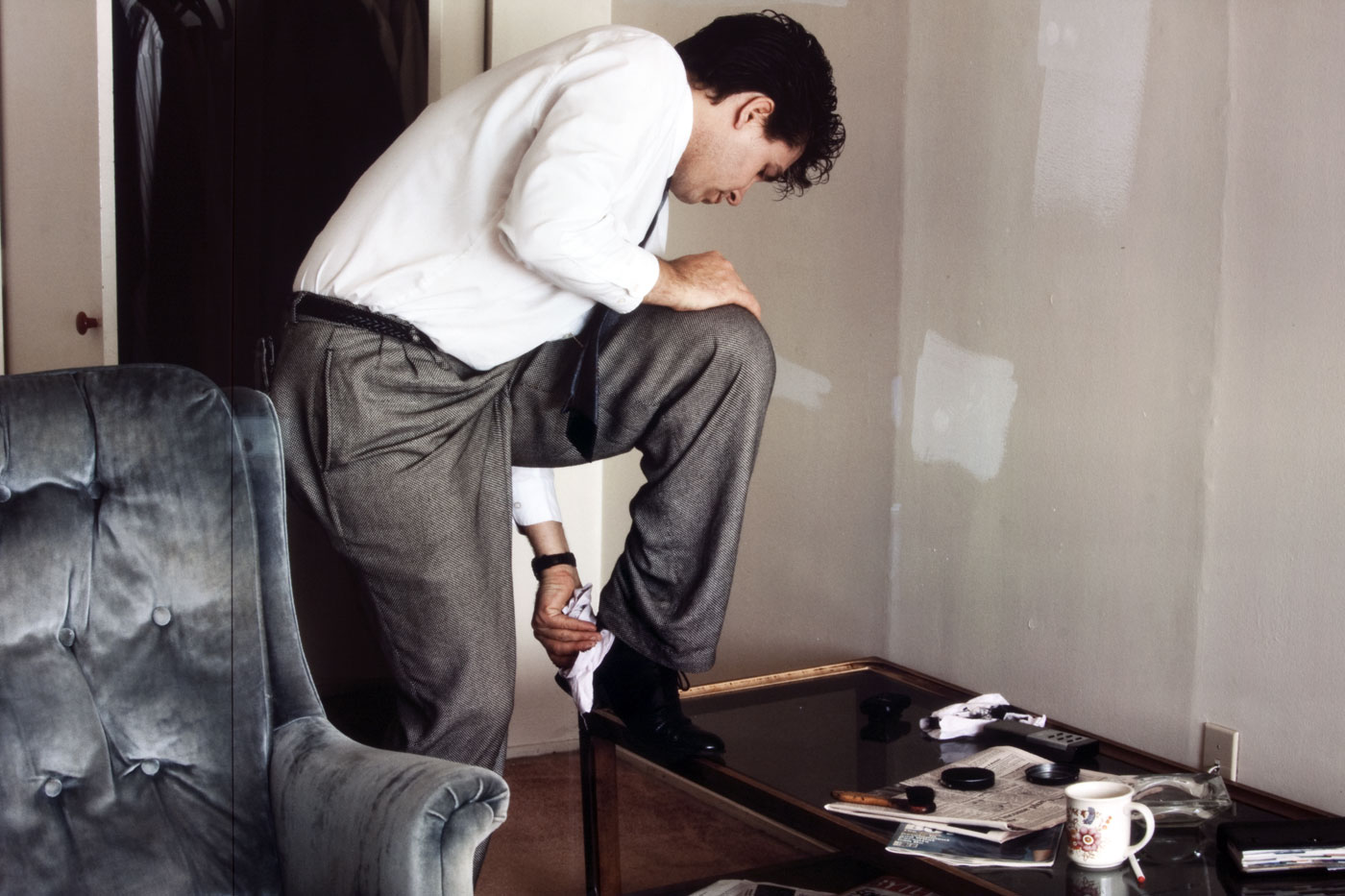
Gregory Crewdson (American, b. 1962) 'Untitled (Shane)' 2006


Gregory Crewdson (American, b. 1962)
Untitled (Shane)
2006
© Gregory Crewdson. Courtesy Gagosian Gallery


Gregory Crewdson (American, b. 1962) 'Untitled (Brief Encounter)' 2006


Gregory Crewdson (American, b. 1962)
Untitled (Brief Encounter)
2006
© Gregory Crewdson. Courtesy Gagosian Gallery


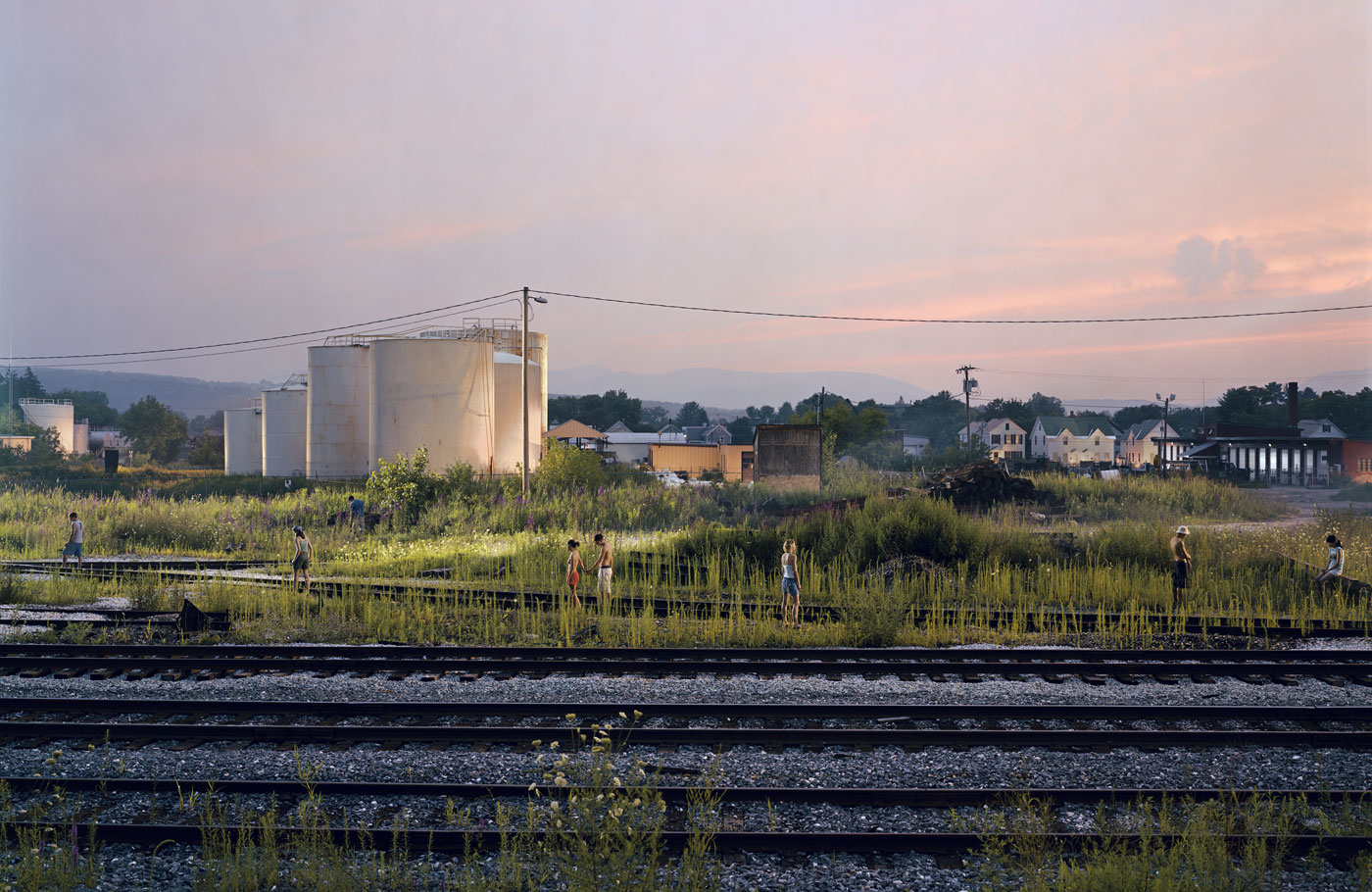
Gregory Crewdson (American, b. 1962) 'Untitled (Railway Children)' 2003-2005


Gregory Crewdson (American, b. 1962)
Untitled (Railway Children)
2003-05
© Gregory Crewdson. Courtesy Gagosian Gallery


In a Lonely Place presents selections from three major series by Gregory Crewdson, Fireflies (1996), Beneath the Roses (2003-2008), Sanctuary (2010) and, presented for the first time, the video Field Notes (2009). The exhibition title comes from Nicholas Ray’s 1950s film noir of the same name, one of many films that inspired Crewdson. In a Lonely Place is evocative of an underlying mood-a quiet feeling of alienation and loneliness that links the three series selected by curators Estelle Af Malmborg, Jens Erdman Rasmussen and Felix Hoffmann. In a Lonely Place presents the first comprehensive exhibition of Crewdson’s work in Australia.

In Beneath the Roses, anonymous townscapes, forest clearings and broad, desolate streets are revealed as sites of mystery and wonder; similarly, ostensibly banal interiors become the staging grounds for strange human scenarios. Crewdson’s scenes are tangibly atmospheric: visually alluring and often deeply disquieting. Never anchored precisely in time or place, these and the other narratives of Beneath the Roses are located in the dystopic landscape of the anxious American imagination. Crewdson explores the American psyche and the dramas at play within quotidian environments.

In his most recent series, Sanctuary (2010), Crewdson has taken a new direction, shooting for the first time outside the US. During a trip to Rome, he visited the legendary Cinecittà studios, which was founded by Mussolini in the 1930s and is associated with the great Italian film director Federico Fellini. Crewdson discovered fragments of a past glory, with occasional unexpected views of the surrounding contemporary Roman suburbia. Cinecittà is a lonely place deserted by the film crews who once used the site to recreate settings of ancient Rome, medieval Italy and nineteenth-century New York.

In the intimate photographs of Fireflies, Crewdson portrays the mating ritual of fireflies at dusk, capturing the tiny insects’ transient moments of light as they illuminate the summer night. Unlike the theatrical scale of the Beneath the Roses and Sanctuary series, Fireflies is a quiet meditation on the nature of light and desire, as the images reflect not only upon the fleeting movements of the insects in their intricate mating ritual, but upon the notion of photography itself, in capturing a single ephemeral moment.

Gregory Crewdson received a BA from the State University of New York, Purchase, New York in 1985 and an MFA in Photography from Yale School of Art, Yale University, New Haven, Connecticut in 1988. He has exhibited widely in the United States and Europe. He is Associate Professor and Director of Graduate Studies in Photography at the Yale School of Art, Yale University. Gregory Crewdson is represented by Gagosian Gallery and White Cube Gallery.

Press release from the Gagosian Gallery website


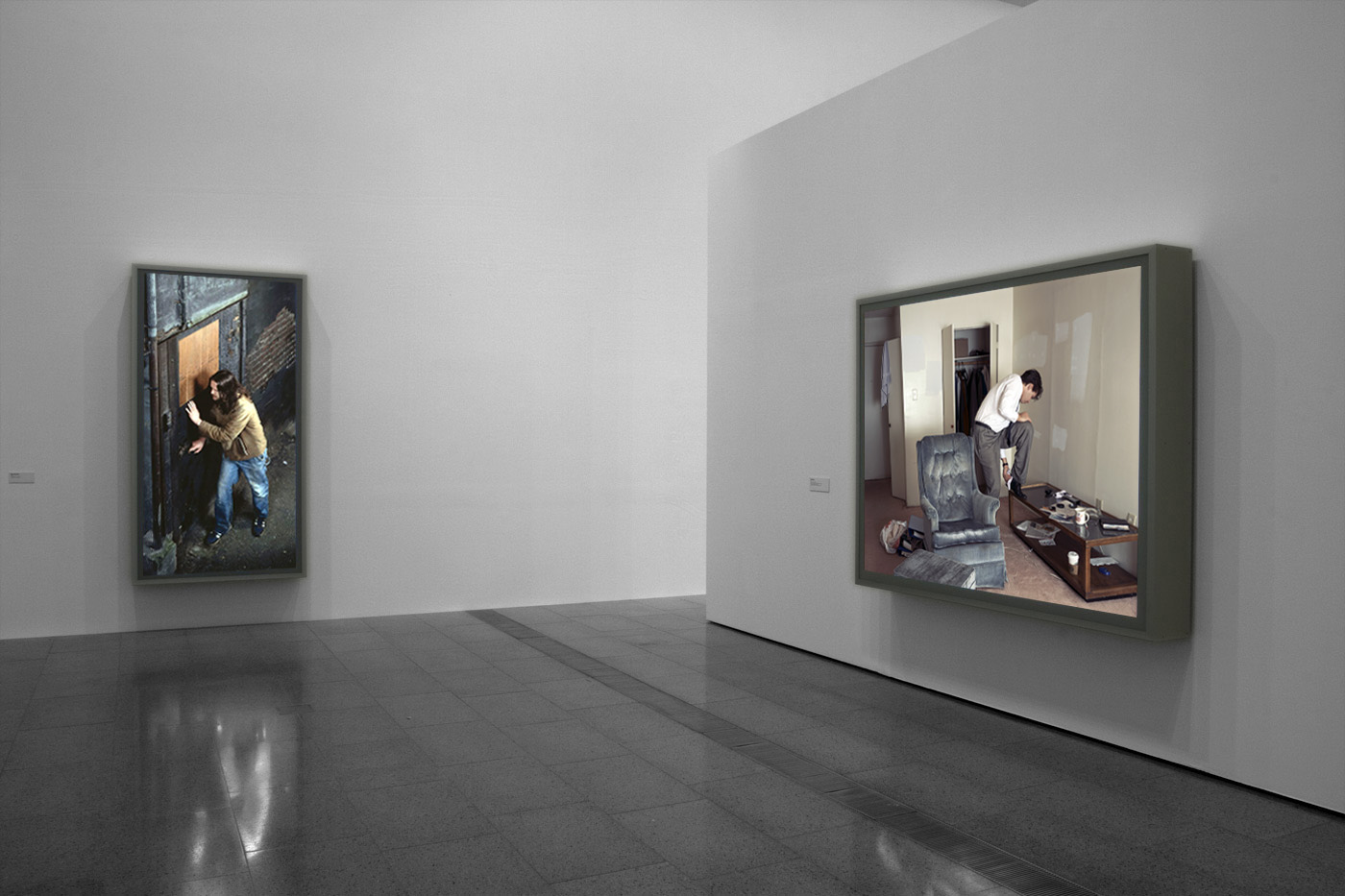
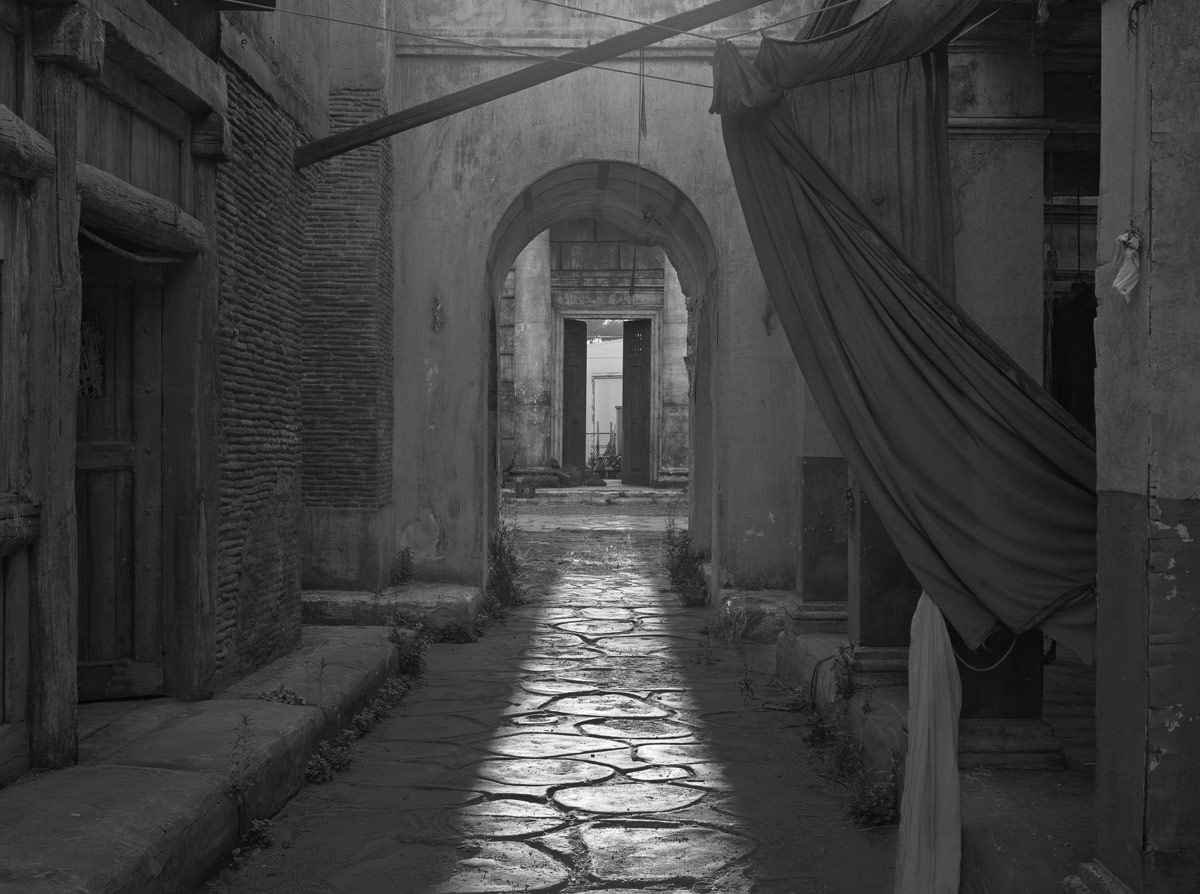
Installation photograph of the series 'Sanctuary' (2010) from the exhibition 'Gregory Crewdson: In A Lonely Place' at the Centre for Contemporary Photography (CCP), Fitzroy, Melbourne

Installation photograph of the series 'Sanctuary' (2010) from the exhibition 'Gregory Crewdson: In A Lonely Place' at the Centre for Contemporary Photography (CCP), Fitzroy, Melbourne


Installation photographs of the series Sanctuary (2010) from the exhibition Gregory Crewdson: In A Lonely Place at the Centre for Contemporary Photography (CCP), Fitzroy, Melbourne
Photos: Dr Marcus Bunyan


Gregory Crewdson (American, b. 1962) 'Untitled (1)' 2009


Gregory Crewdson (American, b. 1962)
Untitled (1)
2009
© Gregory Crewdson. Courtesy Gagosian Gallery


Gregory Crewdson (American, b. 1962) 'Untitled (17)' 2009


Gregory Crewdson (American, b. 1962)
Untitled (17)
2009
© Gregory Crewdson. Courtesy Gagosian Gallery


Gregory Crewdson (American, b. 1962) 'Untitled (8)' 2009


Gregory Crewdson (American, b. 1962)
Untitled (8)
2009
© Gregory Crewdson. Courtesy Gagosian Gallery


Gregory Crewdson (American, b. 1962) 'Untitled (2)' 2009


Gregory Crewdson (American, b. 1962)
Untitled (2)
2009
© Gregory Crewdson. Courtesy Gagosian Gallery


Gregory Crewdson (American, b. 1962) 'Untitled' 1996


Gregory Crewdson (American, b. 1962)
Untitled
1996
© Gregory Crewdson. Courtesy Gagosian Gallery


Gregory Crewdson – Close Up – Ovation

In this Ovation TV original special, acclaimed photographers Albert Maysles, Sylvia Plachy, Andrew Moore and Timothy Greenfield-Sanders discuss the impact their work has on their lives and on culture as a whole.

Gregory Crewdson is an American photographer who is best known for elaborately staged, surreal scenes of American homes and neighborhoods.

In this interview, acclaimed photographer, Gregory Crewdson shares with us insight into his techniques.


Centre for Contemporary Photography

No permanent exhibition space at the moment

Gagosian Gallery website

Centre for Contemporary Photography website

LIKE ART BLART ON FACEBOOK

Back to top

Paper: ‘Traversing the unknown’ by Dr Marcus Bunyan, Faculty of Arts, The University of Melbourne presented at the ‘Travel Ideals’ international conference, July 2012

International conference: Travel Ideals: Engaging with Spaces of Mobility, Faculty of Arts at the University of Melbourne, 18th – 20th July 2012


All cdv and cabinet cards © Joyce Evans collection © Marcus Bunyan.

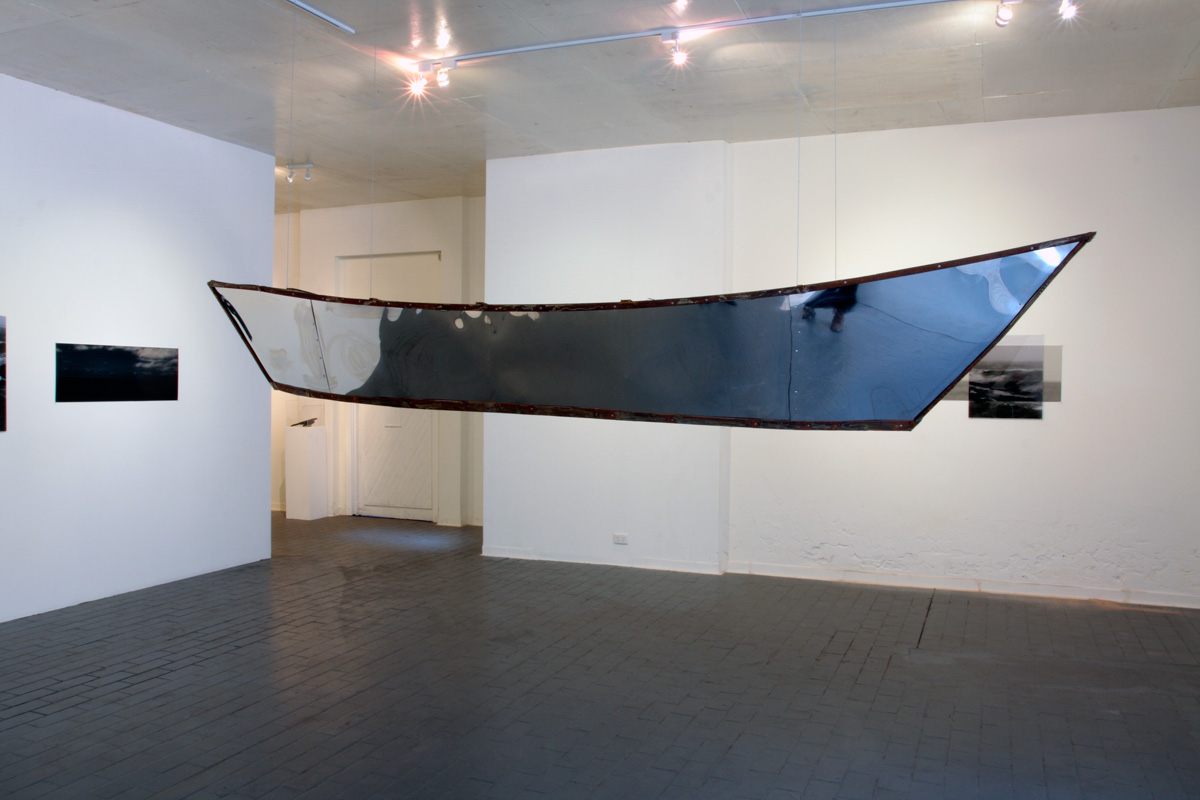
Installation photographs of the exhibition Traverse by Kim Percy at Stockroom, Kyneton, 10th March – 8th April 2012.

Please click on the photographs for a larger version of the image.

Keywords: refugees, asylum seekers, boat people, spaces of mobility, travel, early colonial photography, cartes de visite, cabinet cards, Second Fleet, John Dell, aborigine, Australia, white Australia, immigration, photography, early Australian photography, Foucault, non-place, Panopticon, inverted Panopticon, (in)visibility, visual parentheses, axis of visibility, symbolic capital, context of reason.


Installation of 'Traverse' by Kim Percy at Stockroom, Kyneton

Installation of 'Traverse' by Kim Percy at Stockroom, Kyneton

Installation of 'Traverse' by Kim Percy at Stockroom, Kyneton


Installation of Traverse by Kim Percy at Stockroom, Kyneton
Installation photographs by Marcus Bunyan
© Kim Percy and Marcus Bunyan


Traversing the unknown

Dr Marcus Bunyan July 2012

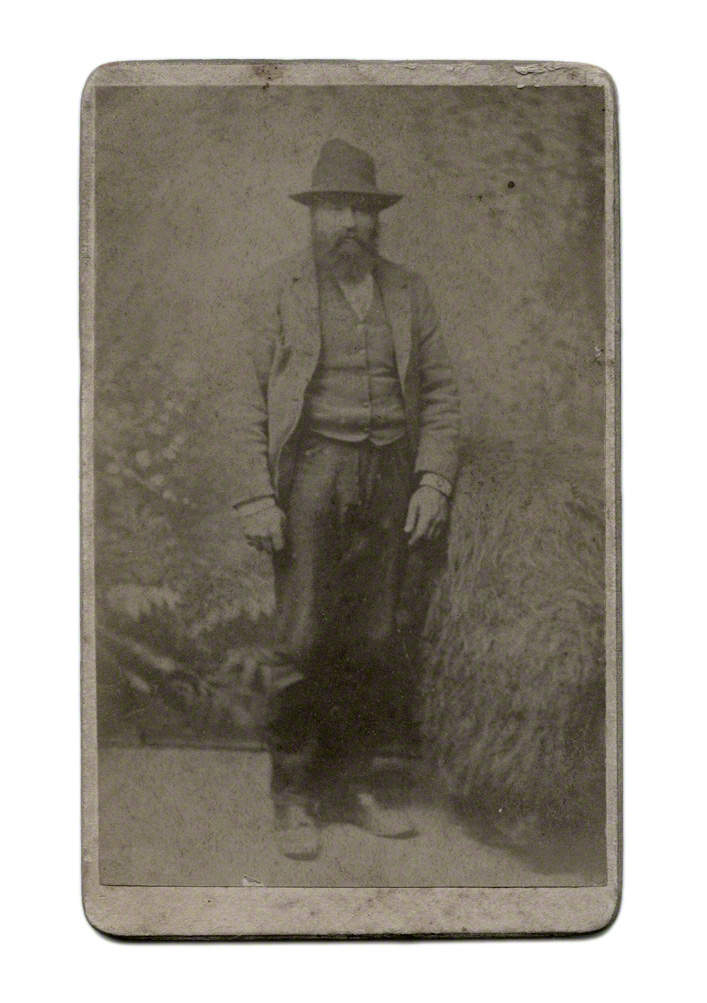
What I am about to say, my musings if you like, are inspired by Kim Percy’s exhibition which took place at Stockroom gallery in Kyenton in March – April 2012. The work is the basis of my inquiry. The images that illustrate the paper are installation shots from the exhibition and Victorian cartes de visite, photographic portraits of an emerging nation taken from the 1850s-1890s. Unlike the business cards of today (where identity is represented by the name of the business owner and the printer of the card remains anonymous), in cartes de visite the name of the people or place being photographed is usually unknown and the name of the photographer is (sometimes) recorded. In other words the inverse of contemporary practice. Another point to note is that most of the photographers were immigrants to this country. I use these cards to illustrate the point that the construction of national identity has always been multifarious and, in terms of the representation of identity, unknown and unknowable.


I would like to take you on a journey, at first personal and then physical, metaphorical and maybe even philosophical. I want to asks questions of the world, questions about the journey we all take as human beings. I would like to tell you two personal things.

First, I have nearly drowned three times in my life. Once, aged 12 years, my mother dove into the swimming pool and pulled my out as I was going under for the third time. The second time was in Australia at Squeaky Beach on Wilsons Prom and the third up at Byron Bay. All three times there was shear blind panic as the water tried to consume me, as my feet scrabbled to touch the bottom, seeking any purchase, the minutest toe hold so that I could pull myself to safety, so that I could save myself. Panic. Fear. Nothingness.

Second, I still vividly remember being dumped by my parents at boarding school in England at the age of twelve years. I watched disconsolately as they drove away and promptly burst into tears, terrified of being alone in an alien environment, with a different accent than everyone else (having grown up on a rural farm) and being different from other boys (just discovering that I was gay). Those were horrible years, suffering from depression that crept up on me, isolated with few friends and struggling with my nascent sexuality. Thoughts of suicide and self-harm were constant companions. Fast forward, arriving in Australia in 1986, again with no friends, living in a foreign culture. Even though I was white I felt alienated, isolated, alone. I hated my first years in Australia. Now imagine being an asylum seeker arriving here.


Anonymous photographer. 'Untitled [Borough of Clunes Notice Strike ..rm Rate]' Nd


Anonymous photographer (Australian)
Untitled [Borough of Clunes Notice Strike ..rm Rate]
Nd
Cabinet card
Albumen print
16.5cm x 10.7cm
Blank verso
© Joyce Evans collection


Anonymous photographer. 'Mrs Dean, Dean & Co, Hay, Corn & Produce Merchants, Rea St, North Fitzroy' Nd


Anonymous photographer (Australian)
Mrs Dean, Dean & Co, Hay, Corn & Produce Merchants, Rea St, North Fitzroy
Nd
Cartes de visite
Albumen print
10.4cm x 6.3cm
Blank verso
© Joyce Evans collection


National Photo Company. 'Untitled [Group of bricklayers holding their tools and a baby]' Nd


National Photo Company
Untitled [Group of bricklayers holding their tools and a baby]
Nd
140 Queen Street,
Woollahra,
Sydney
Cartes de visite
Albumen print
10.4cm x 6.3cm
© Joyce Evans collection


Imagine being an asylum seeker living in an (in)between space, living in a refugee camp over there. Marc Augé coined the phrase “non-place” to refer to places of transience that do not hold enough significance to be regarded as “places”.1 These camps are such places. Put yourself in that predicament, seeking a better life, seeking to escape persecution, war, prejudice and death, deliberately placing yourself and your family in a fragile boat, like a seed pod floating upon the waters, taking the dangerous journey to reach Australia. Imagine the emotional and intellectual turmoil that must surround such a decision, the decision to place your life in the hands of the ocean. Important decisions affecting the entire course of one’s life are rarely made without some form of mental distress.

Nurtured in water, some baptised in it, water is the life-blood of the world and the asylum seeker must trust to its benevolence. Marc Auge “argues that we are in transit through non-place for more and more of our time, as if between immense parentheses.”2 This is the journey that the asylum seeker takes over water, a journey through an interstitial space that has no beginning and no end caught between a set of parentheses [insert life here / or not]. And now let us move our line of sight. What about a visual parentheses?

Asylum seekers are almost invisible from Australia living over there. They are over the horizon, out of sight and out of mind. When they journey across the sea – an open ended journey passing through a liminal space, a forgotten space – they suddenly appear as if by magic washed up on the shore, unseen despite surveillance planes, ships and other forms of tracking and reconnaissance. Think, for example, of the sudden and surprising arrival of the boat SIEV-221 when it was washed onto the rocks of Christmas Island in December 2010. The invisible made visible caught in a non-place.

This (in)visibility can be evidenced in other ways. The specks of humanity waving from the deck of the Tampa, the asylum seekers being escorted from arriving boats, seen for a few brief seconds on the evening news and then disappearing from view, almost like being sucked into the depths of the sea. Here and not here; here and there. Halfway between nothingness and being: they walk between one state and another, forward and backward, backward and forward.

Displacement
Diaspora
Disruption


There is much discussion in political circles in relation to the retrieval, processing and housing of detainees, that is, the control of the artefact within space (of Australia) and, consequently, the impact on the citizens of Australia and that of public sentiment. The axis of visibility3 that operates in relation to subject, object, and space is not interrogated as to the representations that are constructed. This is what I am interested in here.

The spectacle of the asylum seekers is despectacularised by and for the viewer. We remove ourselves from the emotion of these people, the presence of these images. They become ordinary as if seen from far away – glimpsed every so often as though viewing the world of another. They become Other. The movement of the ship, the movement of the sky, the movement of vision is a constant decentering through a push/pull with something else – some other order of the world. The journey into the unknown is a journey to submit to the ordering of another: the socially constructed system of classification: “refugee,” “asylum seeker.”

These vital, alive human beings come from one taxonomic system (of ordered death, persecution, injustice), become visible from a brief instance, and are then fed into another taxonomic system of order – that of the detention centre. Through the journey and in the detention centres there is an effacement of specific religious, political or personal symbolic features as the refugees become part of a disciplinary system whereby they can be viewed as symbolic capital (both political and economic tools). This process of effacement and simultaneous self-negation, this neutralisation of original context and content is hidden in the forgotten spaces, of the sea and of the processing centres.

And then the seekers are naturalised, becoming one with the body of Australia, as though they were unnatural before.


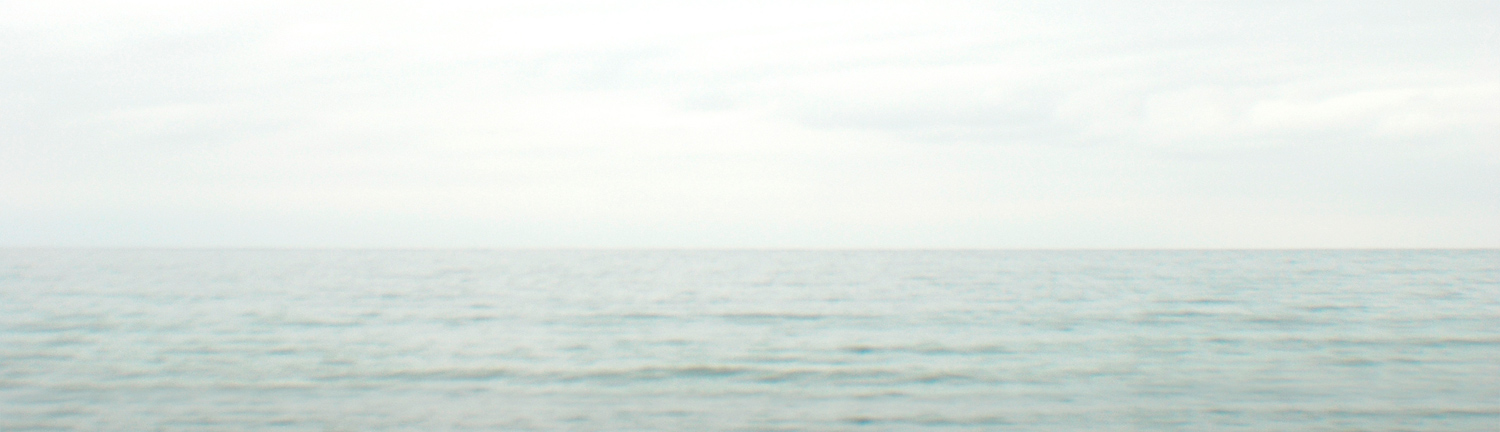
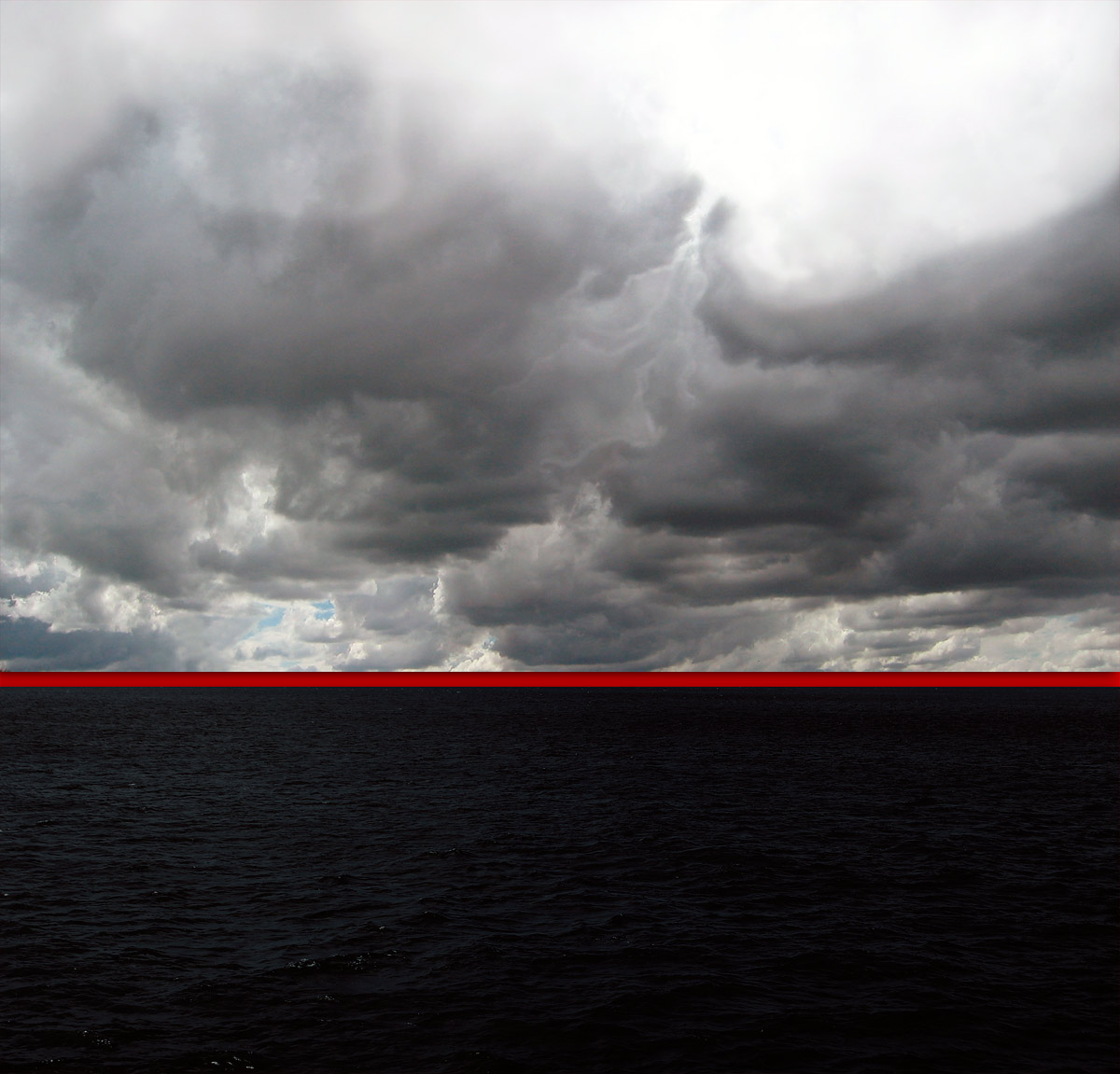
Kim Percy (Australian) 'Pale Sea' 2012


Kim Percy (Australian)
Pale Sea
2012
Digital photograph


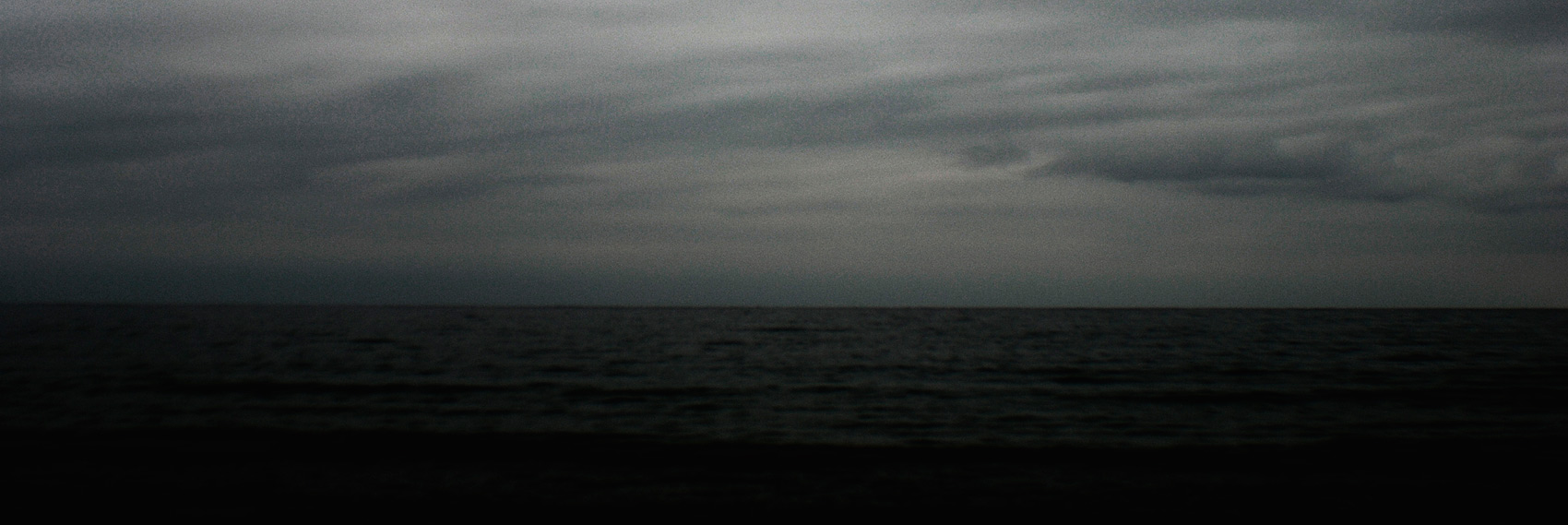
Kim Percy (Australian) 'Where' 2012


Kim Percy (Australian)
Where
2012
Digital photograph


Kim Percy (Australian) 'Rough Water' 2012 Digital photograph


Kim Percy (Australian)
Rough Water
2012
Digital photograph


Anon. 'Untitled' Nd


Anonymous photographer
Untitled
Nd
Cartes de visite
Albumen print
6.3cm x 10.4cm
Blank verso
© Joyce Evans collection


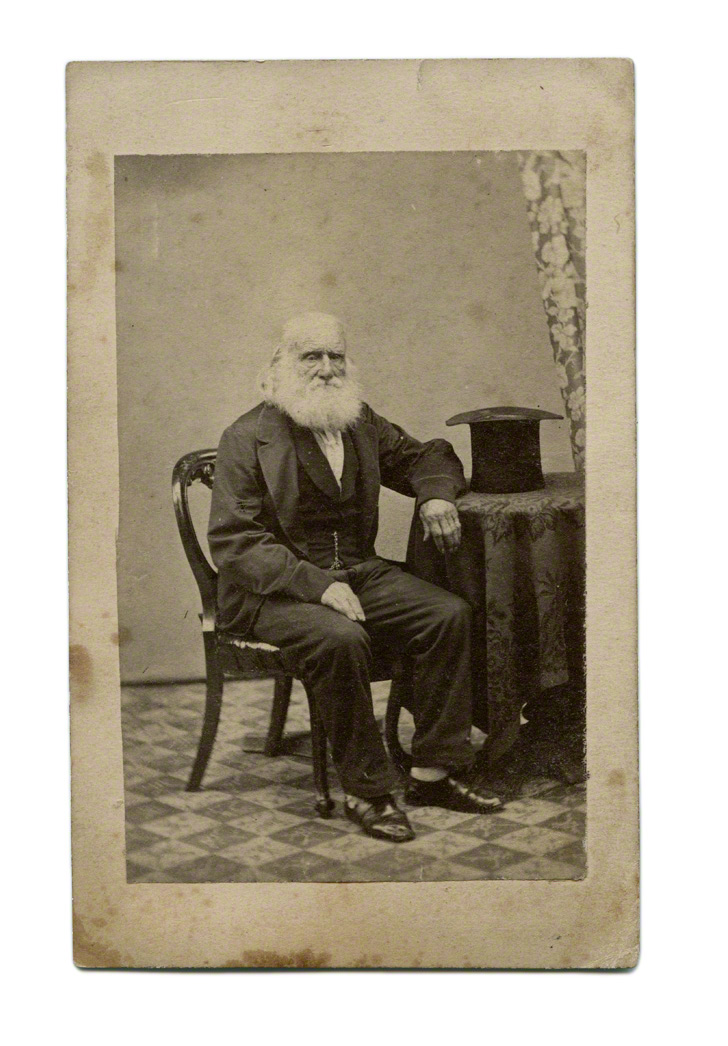
E. B. Pike. 'Untitled [Older man with moustache and parted beard]' Nd


E. B. Pike
Untitled [Older man with moustache and parted beard]
Nd
Cartes de visite
Verso of card
6.3cm x 10.4cm
© Joyce Evans collection


Otto von Hartitzsch (Australian born Germany. 1838-1910) 'Untitled [Man with quaffed hair and very thin tie]' 1867-1883


Otto von Hartitzsch (Australian born Germany. 1838-1910)
Artist & Photographer
Untitled [Man with quaffed hair and very thin tie]
1867-1883
Verso of card
Established 1867, 127 Rundle Street, Adelaide, South Australia
Cartes de visite
6.3cm x 10.4cm
© Joyce Evans collection


Kim Percy (Australian) 'Traverse' 2012 Digital photograph


Kim Percy  (Australian)
Traverse
2012
Digital photograph


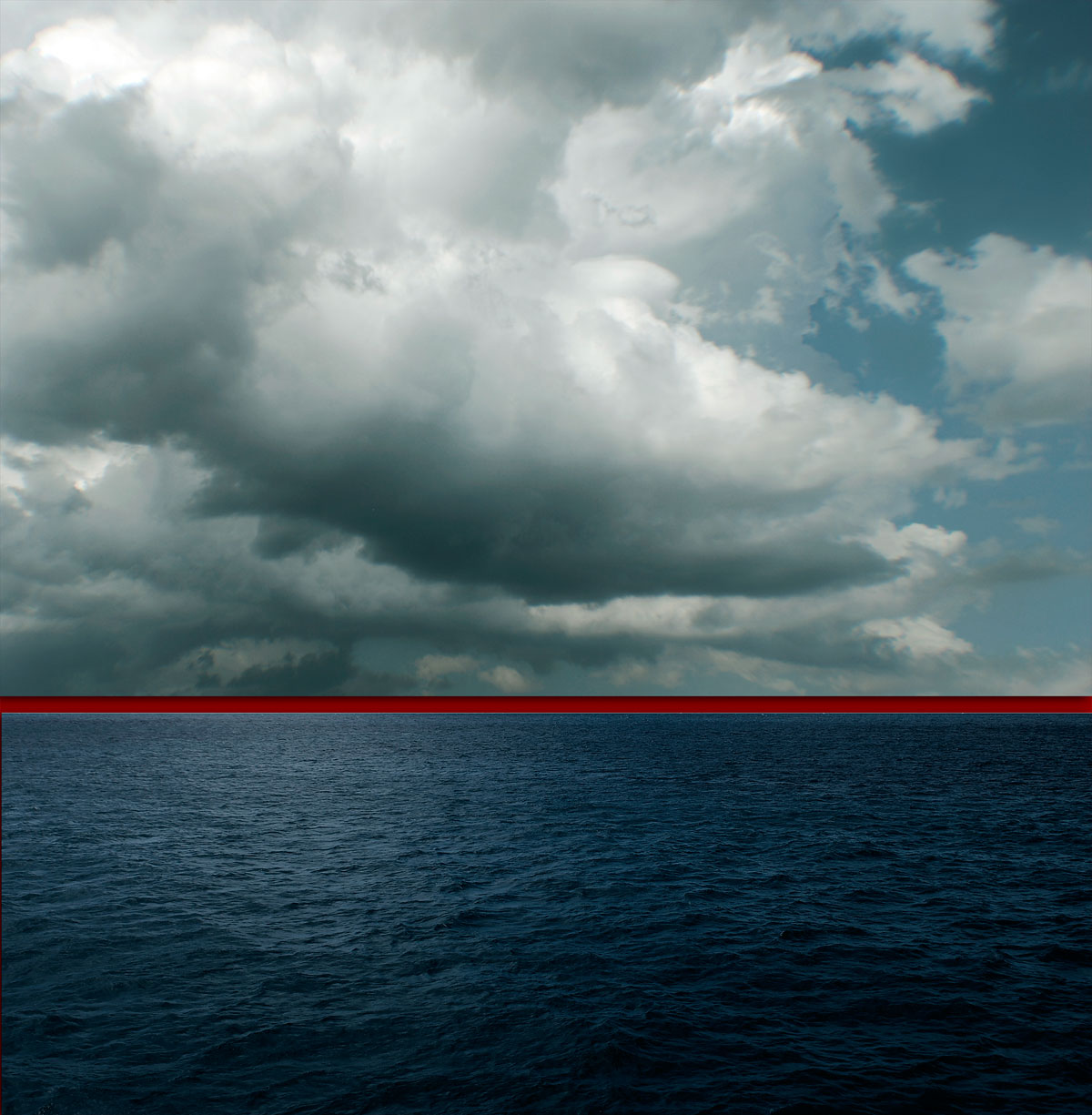
Kim Percy (Australian) 'Red Horizon No.1' 2012 Digital photograph


Kim Percy (Australian)
Red Horizon No.1
2012
Digital photograph


Kim Percy (Australian) 'Red Horizon No.2' 2012 Digital photograph


Kim Percy (Australian)
Red Horizon No.2
2012
Digital photograph


Taking the metaphor of the horizon line further, I would argue that the detention centres are like that of an inverted Panopticon. The Panopticon is a type of institutional building, a prison, designed by English philosopher and social theorist Jeremy Bentham in the late eighteenth century. The concept of the design is to allow an observer to observe all inmates of an institution without them being able to tell whether or not they are being watched.4 The guard sits in a central tower and can observe and inspect all prisoners on the outer 360 degree circle, while the prisoners cannot see the guard and can only presume he is there (an omnipresent God) and hence they behave. Let us invert this concept. Now the asylum seekers sit in the tower looking outwards, seeing the promised land but unable to touch it and the guards (prison officers, government, the Australian people) are all around but most are blind. They look inwards but cannot see / they look outwards and most go about their daily business. The perimeter fence of the detention centre becomes the horizon line of the sea. Over the horizon is out of sight and out of mind.

This regime of acceptability, the common-sense world within which we all live and usually take for granted, this form of rationality has a historical specificity. Think convict for example: such branding appeared at a time of historic specificity. What we take to be rational, the bearer of truth, is rooted in domination and subjugation, and is constituted by the relationship of forces and powers. But, as Foucault observes “what counts as a rational act at one time will not so count at another time, and this is dependent on the context of reason that prevails.”5

Hence no more convicts, in the future one hopes no more refugees.


Profesor Hawkins (Australian, active 1861-1875) 'Untitled [Chinese women with handkerchief]' c. 1858-1875


Profesor Hawkins (Australian, active 1861-1875)
Photographic Artist
Untitled [Chinese women with handkerchief]
c. 1858-1875
20, Queensbury St Et. near Dight’s Mills, Melbourne
Cartes de visite
Albumen print
6.3cm x 10.4cm
© Joyce Evans collection


Jeffrey Hawkins was a professional photographer based in Melbourne.


J. R. Tanner (Australian, active 1866-1899) 'Untitled [Two woman wearing elaborate hats]' 1875


J. R. Tanner (Australian, active 1866-1899)
Untitled [Two woman wearing elaborate hats]
1875
96 Elizabeth Street
“Truth in a Pleasing Form”
Photographer and Photo-Enameler
“Permanent Pictures in Carbon”
“Imperishable Portrais on Enamel”
Cartes de visite
Albumen print
6.3cm x 10.4cm
© Joyce Evans collection


What Kim’s eloquent, minimal, brooding installation does is hold our attention and ask certain questions of us as human beings. If photography is a mode of visually addressing a certain order in the world – be it horror, war, peace, human tragedy, public, private – and then destabilising it, then Kim’s images destabilise the binary sea/sky through fragmentation and isolation. She redlines our experience and asks us to inhabit the non-space, the non-place of the gallery, allowing us to hover between boat and image, between sea and sky, between seeing and sky. Through her work she asks us to become more aware. She asks us to see things more clearly. Above all she asks us to have faith in the compassion of human beings. The asylum seekers have faith: faith to get into a fragile boat to venture upon the sea in search of a better life.

I will finish with a quote from Jeff Brown

“Sometimes we have to surrender to the not knowing. At other times, it is helpful to adventure outward and explore new possibilities. Like swashbucklers of the spirit, we bravely seek out any experience that might inform our path. When we are afraid of something, we live it fully and see what floats to the surface in the doing. We participate in our own revealing. We have faith in the shaping of what we cannot see.”6


The seekers surrender to the not knowing and have faith in the shaping of what they cannot see. These risk takers are the strong ones that are going to make a difference in a new society by the very fact of their strength and determination to survive and live in a free society, for the very fact of the risks undertaken. This exhibition and this paper informs their path as it informs our path. Be aware of the doing, be bold and forthright in the being.

Dr Marcus Bunyan, July 2012


Endnotes

1/ Augé, Marc (trans. John Howe). Non-Places: Introduction to an Anthropology of Supermodernity. London: Verso, 1995

2/ Ibid.,

3/ Hooper-Grenhill, Eilean. Museums and the Shaping of Knowledge. London: Routledge, 2000, p. 7

4/ Anon. “Panopticon,” on Wikipedia. [Online] Cited 09/03/2012 en.wikipedia.org/wiki/Panopticon

5/ Hooper-Grenhill Op cit., p. 8

6/ Brown, Jeff quoted on Stroud, Jeff. The reluctant blogger website. [Online] Cited 09/03/2012 jeffstroud.wordpress.com/2012/02/11/884/


Please click on the photographs for a larger version of the image.


~ ~ ~ ~ ~ ~ ~ ~ ~ ~ ~ ~ ~ ~ ~ ~ ~ ~ ~ ~ ~ ~ ~ ~ ~ ~ ~ ~ ~ ~ ~ ~ ~ ~ ~ ~ ~ ~ ~ ~ ~

Addendum – Australia from settlement to subjugation

The cartes de visite below is one of the most important cards that I have ever held.

Private John Dell (1763-1866) of the The New South Wales Corps. (Rum Corps.) “Renamed 1st /102nd Regiment of Foot” arrived on the ship Surprize of the Second Fleet on the 26 June 1790 (not, as stated in pencil on the verso of the card, in 1788). The Second Fleet has been regarded as being the three convict ships which arrived together at Sydney Cove in June 1790: these ships were the Surprize , Neptune, and Scarborough.

The Surprize weighed 400 tons, she was the smallest ship of the fleet, she proved an unsuitable vessel as for her size and she was a wet vessel even in clam waters. Sailing from England on January 19th 1790 with 254 male convicts. Her master was Nicholas Antis, formerly chief mate on the Lady Penrhyn in the First Fleet. The surgeon was William Waters. 36 convicts died on the voyage. Soldiers of the New South Wales Corps on board may have stayed. Some where convicts who later enlisted.

Private John Dell served in 102nd Foot Regiment. He was discharged aged 42 after 21 years 10 months of service. Covering dates give year of enlistment to year of discharge: 1789-1811. He enlisted on 3rd July 1789 and was discharged in May 1810. He married three times and had numerous children, dying in Tasmania on the 2nd March 1866. He was born on 5th of November 1763 so this would make him over the age of 87 when this photograph could have first been taken or, if later, between the age of 96-103. We can date this photograph from the time that W. Paul Dowling worked in Launceston (1851-1852 / 1859-1866).

We are looking at one of the first English migrants to ever settle in Australia during the invasion of the supposed terra nullius. This is an important photograph. The photographer obviously thought it was important to document the appearance of this person, present in the first two years of colonial settlement and later injured by an aborigine spear. For us, the photograph traverses the history of white Australia, from settlement to subjugation, from 1790 to 1866. One can only imagine the agony, the death and destruction that occurred during this man’s lifetime.


THE LATE MR. JOHN DELL (From the Melbourne Spectator)

The following reminiscences of the olden times were furnished to us by a gentleman who took them down as they fell from the lips of John Dell, the Greenwich pensioner, a few months before his, death, which happened at Launceston, in the early part of the present year: He was born, he said, at Reading, in Berkshire, on the 5th of November, 1763. He was one of a family of twenty four children. He remembered the excitement occasioned by the Gordon riots, and how the people gathered round the London coach which brought down the tidings of the tumult, incendiarism, and bloodshed. He was apprenticed with another Reading lad, to a veneer cutter in London; and as he and his fellow-apprentice were one day staring in at a shop window in Fleet-street, and observing to each other that there was nothing like that in Reading, they were accosted by a respectably dressed man, who said his wife was from Reading, and would so like to have a chat with them about the dear old place; would they go home to tea with him? They cheerfully assented; and were taken to a house in an obscure neighbourhood, at the back of the Fleet Prison…

“THE LATE MR. JOHN DELL,” in Launceston Examiner (Tas.: 1842-1899), 25 July 1866, p. 2. [Online] Cited 15 July, 2012 on the Trove website. nla.gov.au/nla.news-article36636642

DEATH OF MR JOHN DELL (From the The Cornwall Chronicle)

It is with feelings of sincere regret that we record tbe death of Mr. John Dell, at the patriarchal age of 102 years and four months. He had been ailing but a very short time, and had the use of his faculties to the last hour of his life. He was reading as usual without the use of spectacles, and out of bed on Thursday night, but be breathed his last yesterday, at the residence of his son-in-law, Mr. William Brean, of Brisbane Street, and his remains are to be interred on Monday.

Mr. Dell was born at Reading, in Berkshire, in 1763, and arrived in New South Wales with the 102nd Regiment of Foot, in 1790, in the ship ‘Surprize,’ the first of the fleet which brought convicts to Botany Bay, and he was present in Sydney during the whole of the period of the government of Governor Phillip, and at the arrest of Governor Bligh, who it will be remembered by those who have read the early history of New South Wales, was arrested by Colonel Johnson, the Colonel of the regiment in which Dell served, the 102nd. This corps was raised specially for service in New South Wales, and Mr. Dell returned with in 1808, and on board the vessel in which Governor Bligh died on the passage to England. He was pensioned in 1815, and has been in life receipt of a pension for more than half a century.

He arrived in this colony in 1818, and was for some time Chief Constable of Launceston, but retired many years ago from office, to a large farm at Norfolk Plains. Mr. Dell was the owner of very valuable property in this colony, though be did not die wealthy, the Court House Square belonged to him at one time, and he fenced it in, but subsequently he returned it to the Government in exchange for a grant of six hundred and forty acres of land in the country. Mr. Dell was a temperate man but not a teetotaller. It is strange that throughout his eventful career, be never learned to smoke, but this may account for the steadiness of his nerves to the latest day of his long life. He had encountered great hardships in New South Wales, having been in the bush there for three day disabled by a spear wound inflicted by an aborigine. He was in a very exhausted state when discovered, but his iron constitution enabled him to rally, and he was soon in as sound a state of health as ever.

For some years past his sight keener and his hair of a darker colour than they had been twenty years previous. He was rather eccentric of late, but no one from his hale appearance would suppose him to be much above seventy years of age. His voice was a good strong firm bass without a quaver in it. Very few men have ever been blessed with such a long period of interrupted sound health as Mr Dell. He will be missed and his death lamented by a wide circle of relatives and friends.

“DEATH OF MR JOHN DELL,” in The Cornwall Chronicle (Launceston, Tas.: 1835-1880) Saturday 3rd March 1866. [Online] Cited 15 July, 2012 on the Trove website. trove.nla.gov.au/ndp/del/article/72358170

See the Rootsweb website for more information on John Dell.


W. Paul Dowling (Australian, 1824-1877) Photographer. 'John Dell' 1851-1852 / 1859-1866


W. Paul Dowling (Australian, 1824-1877)
Photographer
John Dell
1851-1852 / 1859-1866
Launceston, Tasmania
Cartes de visite
Albumen print
6.3cm x 10.4cm
© Joyce Evans collection

John Dell
Born at Reading, Berkshire
5 Nov 1763
came out with his regiment (the 102nd) to Sydney in 1788
Nov 5th 1763

In pencil on verso


William Paul Dowling was a painter, engraver and photographer. In 1849 he was transported to Hobart Town as a political prisoner. Dowling worked in partnership with his photographer brother, Matthew Patrick Dowling until the latter accused William of selling his photographs as his own.


W. Paul Dowling (Australian, 1824-1877) Photographer. 'John Dell' 1851-1852 / 1859-1866


W. Paul Dowling (Australian, 1824-1877)
Photographer
John Dell
1851-1852 / 1859-1866
Launceston, Tasmania
Cartes de visite
Albumen print
6.3cm x 10.4cm
© Joyce Evans collection


LIKE ART BLART ON FACEBOOK

Back to top

Exhibition: ‘Dennis Hopper – The Lost Album. Vintage Photographs of the 1960s’ at Martin-Gropius-Bau, Berlin

Exhibition dates: 20th September – 17th December 2012


Dennis Hopper (American, 1936-2010) 'Guy With 5 Hogs' 1961-67


Dennis Hopper (American, 1936-2010)
Guy With 5 Hogs
1961-1967
Location: USA
6.97 x 9.85 inch
© The Dennis Hopper Trust, Courtesy of The Dennis Hopper Trust


Unlike an earlier posting of photographs by a well known film director (the underwhelming, in fact pretty awful, Wim Wenders: Places, Strange and Quiet), these “lost” photographs by Dennis Hopper are very good. I love their quiet, intimate strength, their fun, wit and vivacity; and the portraits capture the essence of the sitter with a decisive elegance and eloquence.

The photographs perfectly capture the social milieu of the time and the pervading ethos of the fracturing of the image plane, a la Gary Winogrand or Lee Friedlander. Nice to see the work full frame as well, meaning that the photographers’ previsualisation was strong in camera; that Hopper had an excellent understanding of the construction of the pictorial frame negating the necessity for cropping of the image.

Enlarging the face of Martin Luther King Jr., (below) and then looking into his eyes, I felt I had a connection with this person. Nostalgia, longing, sadness and joy at his life and the feeling that I was looking into the eyes of one of the great human beings of the twentieth century.

Dr Marcus Bunyan


Many thankx to Martin-Gropius-Bau for allowing me to publish the photographs in the posting. Please click on the photographs for a larger version of the image.


“I never made a cent from these photos. They cost me money but kept me alive. These are my photos. I started at eighteen taking pictures. I stopped at thirty-one. (…) These represent the years from twenty-five to thirty-one, 1961 to 1967. I didn’t crop my photos. They are full frame natural light Tri-X. I went under contract to Warner Brothers at eighteen. I directed Easy Rider at thirty-one. I married Brooke at twenty-five and got a good camera and could afford to take pictures and print them. They were the only creative outlet I had for these years until Easy Rider. I never carried a camera again.”


Dennis Hopper 1986


“The necessity to make these photos and paintings came from a real place – a place of desperation and solitude – with the hope that someday these objects, paintings, and photos would be seen filling the void I was feeling.”


Dennis Hopper 2001


Dennis Hopper (American, 1936-2010) 'Double Standard' 1961


Dennis Hopper (American, 1936-2010)
Double Standard
1961
Location: Los Angeles, Ca USA
6.87 x 9.79 inch
© The Dennis Hopper Trust, Courtesy of The Dennis Hopper Trust


Dennis Hopper (American, 1936-2010) 'Andy Warhol, Henry Geldzahler, David Hockney, and Jeff Goodman' 1963


Dennis Hopper (American, 1936-2010)
Andy Warhol, Henry Geldzahler, David Hockney, and Jeff Goodman
1963
Location: USA
17.25 x 24.74cm
© The Dennis Hopper Trust, Courtesy of The Dennis Hopper Trust


'Dennis Hopper The Lost Album – Vintage Prints From the Sixties' book. Prestel, 2012, p. 78 


Dennis Hopper The Lost Album – Vintage Prints From the Sixties book. Prestel, 2012, p. 78


Dennis Hopper (American, 1936-2010) 'James Rosenquist' 1964


Dennis Hopper (American, 1936-2010)
James Rosenquist
1964
Location: Billboard Factory, Los Angeles, Ca USA
6.81 x 9.68 inch
© The Dennis Hopper Trust, Courtesy of The Dennis Hopper Trust


Dennis Hopper (American, 1936-2010) 'Artist Ed Ruscha' 1964


Dennis Hopper (American, 1936-2010)
Artist Ed Ruscha
1964
© The Dennis Hopper Trust, Courtesy of The Dennis Hopper Trust


Dennis Hopper (American, 1936-2010) 'Roger Vadim and Jane Fonda at their wedding, Las Vegas' 1965


Dennis Hopper (American, 1936-2010)
Roger Vadim and Jane Fonda at their wedding, Las Vegas
1965
Location: Las Vegas, USA
© The Dennis Hopper Trust, Courtesy of The Dennis Hopper Trust


Dennis Hopper (American, 1936-2010) 'Tuesday Weld' 1965


Dennis Hopper (American, 1936-2010)
Tuesday Weld
1965
© The Dennis Hopper Trust, Courtesy of The Dennis Hopper Trust


Dennis Hopper (American, 1936-2010) 'Jane Fonda (with bow & arrow), Malibu' 1965


Dennis Hopper (American, 1936-2010)
Jane Fonda (with bow & arrow), Malibu
1965
© The Dennis Hopper Trust, Courtesy of The Dennis Hopper Trust


Dennis Hopper (American, 1936-2010) 'Bruce Conner (in tub), Toni Basil, Teri Garr, and Ann Marshall' 1965


Dennis Hopper (American, 1936-2010)
Bruce Conner (in tub), Toni Basil, Teri Garr, and Ann Marshall
1965
© The Dennis Hopper Trust, Courtesy of The Dennis Hopper Trust


Dennis Hopper (American, 1936-2010) 'Untitled (Blue Chips Stamps)' 1961-1967


Dennis Hopper (American, 1936-2010)
Untitled (Blue Chips Stamps)
1961-1967
© The Dennis Hopper Trust, Courtesy of The Dennis Hopper Trust


'Dennis Hopper The Lost Album – Vintage Prints From the Sixties' p. 154


Dennis Hopper The Lost Album – Vintage Prints From the Sixties book. Prestel, 2012, p. 154


Dennis Hopper (American, 1936-2010) 'Untitled (Hippie Girl Dancing)' 1967


Dennis Hopper (American, 1936-2010)
Untitled (Hippie Girl Dancing)
1967
© The Dennis Hopper Trust, Courtesy of The Dennis Hopper Trust


The exhibition shows a spectacular portfolio of over four hundred vintage photographs taken by Dennis Hopper in the 1960s. Tucked away in five crates and forgotten, they were discovered after his death. There can be no doubt that these works are those personally selected by Hopper from the wealth of shots he took between 1961 and 1967 for the first major exhibition of his photography. The pictures themselves document how the works were installed in the Fort Worth Art Center Museum, Texas, in 1970 by himself and Henry T. Hopkins, the museum’s director at the time. None of these works have been displayed in Europe before. The portfolio that has now come to light is a treasure. It consists of small plates, sometimes numbered on the back with brief notes in Hopper’s hand and showing traces of wear. Mounted on cardboard, without frame of glass, they were attached directly to the wall.

The images have a legendary quality. Spontaneous, intimate, poetic, unabashedly political and keenly observed, they document an exciting epoch, its protagonists and milieus. These photographs reflect the atmosphere of an era, being outstanding testimonials to America’s dynamic cultural scene in the 1960s. On the viewer they exercise an irresistible attraction, bearing him away on a journey into the past, often into his own history.

Many of these pictures are icons, such as the portraits of Robert Rauschenberg, Andy Warhol, Paul Newman and Jane Fonda. They also cover a wide range of subjects. Dennis Hopper is interested in everything. Wherever he happens to be, whether in Los Angeles, New York, London, Mexico or Peru, he takes in his surroundings with empathy, enthusiasm and intense curiosity. He seeks and savours the “essential moment”, capturing the celebrities and types of his time with the camera: actors, artists, musicians, his family, bikers and hippies. He leaves an impressive photographic record of the “street life” of Harlem, of cemeteries in Mexico, and of bullfights in Tijuana. Hopper accompanies Martin Luther King Jr. on the march from Selma to Montgomery, Alabama, and, in images of great beauty and serenity, he converts the every day life and the neglected into a picture of beauty and silence as if converting Abstract Expressionism from the language of painting into that of photography.

Between 1961 and 1967 Hopper applied himself intensely on photography.

Hopper’s photographs are legendary images, spontaneous, intimate, and poetic as well as decidedly political and keenly observant – documents of an exciting period, its protagonists and milieus. Many of these photos have become iconic: the portraits of Robert Rauschenberg, Andy Warhol, Paul Newman or Jane Fonda. They also cover a range of topics and motifs. Hopper was interested in everything. Wherever he was, in Los Angeles, New York, London, Mexico or Peru, he was a precise observer, full of empathy and curiosity. He captured the geniuses of his day, the actors, artists, musicians and poets, his family and friends, the “scene”, bikers and hippies. He wandered the streets of Harlem and the graveyards of Durango and watched the bullfights in Tijuana with fascination. Hopper followed Martin Luther King Jr. with his camera on the march from Selma to Montgomery, Alabama. And he paid attention to things small, ordinary, and neglected, transforming the “remains of our world” into images of great beauty and tranquility, as if converting Abstract Expressionist painting into the language of photography.

Press release from the Martin-Gropius-Bau website


Dennis Hopper (American, 1936-2010) 'Beverly Renee on Bed' 1961


Dennis Hopper (American, 1936-2010)
Beverly Renee on Bed
1961
© The Dennis Hopper Trust, Courtesy of The Dennis Hopper Trust


'Dennis Hopper The Lost Album – Vintage Prints From the Sixties' book. Prestel, 2012, p. 62


Dennis Hopper The Lost Album – Vintage Prints From the Sixties book. Prestel, 2012, p. 62


Dennis Hopper (American, 1936-2010) 'Andy Warhol and Members of The Factory (Gregory Markopoulos, Taylor Mead, Gerard Malanga, Jack Smith)' 1963


Dennis Hopper (American, 1936-2010)
Andy Warhol and Members of The Factory (Gregory Markopoulos, Taylor Mead, Gerard Malanga, Jack Smith)
1963
Location: in The Factory, NYC, NY USA
6.57 x 9.87 inch
© The Dennis Hopper Trust, Courtesy of The Dennis Hopper Trust


Dennis Hopper (American, 1936-2010) 'Niki de Saint Phalle (kneeling)' 1963


Dennis Hopper (American, 1936-2010)
Niki de Saint Phalle (kneeling)
1963
Location: USA
6.66 x 9.83 inch
© The Dennis Hopper Trust, Courtesy of The Dennis Hopper Trust


Dennis Hopper (American, 1936-2010) 'Art dealer Irving Blum with model Peggy Moffitt' 1964


Dennis Hopper (American, 1936-2010)
Art dealer Irving Blum with model Peggy Moffitt
1964
© The Dennis Hopper Trust, Courtesy of The Dennis Hopper Trust


The Lost Album

Gelatine silver vintage prints, 1970
Collection of the Dennis Hopper Art Trust

More than four hundred photos came to light after Hopper’s death. He had selected them for his first photography exhibition in 1970 at the Fort Worth Art Center Museum. They show signs of wear: fingerprints, scratches, discolouration, a frayed corner or tiny dent. Mounted on cardboard, numbered on the back with notes in Hopper’s handwriting, they were hung directly on the wall from small wooden strips without frames or glass. The hanging in the Martin-Gropius-Bau is based on the original installation of 1970.

The vintage prints, in portrait and landscape format, are all of a similar size, c. 24 x 16cm; twenty of them are in a larger format (c. 33 x 23cm). Of the 429 Hopper chose for his first exhibition, eleven are believed lost; they are replaced here by new prints, which will be clearly indicated. In only two cases was it impossible to locate the corresponding negative, and a placeholder with the title is mounted instead. The rediscovered boxes contained an additional nineteen, unnumbered vintage prints along with the 429, which Hopper took with him to Fort Worth but probably never hung in the exhibition. They have been incorporated into the “Album” here (I-XIX).

Additional information on the photographs

1. Brooke Hayward, Marin Hopper

Brooke Hayward, born and raised in Los Angeles, was at home in the glamorous world of Hollywood through her parents, the film producer Leland Hayward and Hollywood star Margaret Sullavan, and Hopper in turn knew a lot of extraordinary people through his involvement in the acting and art worlds. Hopper and Hayward’s home became the center of an illustrious group of actors, artists, musicians, writers, and film producers. Soon after moving [into their house] they threw a “movie star party” for Andy Warhol to celebrate his second exhibition at the Ferus Gallery (1963).

“Since I was a small child, growing up in L.A., I remember that my dad was always capturing the scene around him through the lens of his camera. What he always described as taking the most pleasure in exploring, or focusing on, much like Marcel Duchamp signing the Hotel-Green-Sign for him on the night of his opening at the Pasadena Art Museum in 1963, and Rauschenberg’s practice, was the philosophy that an artist can point to something and claim it’s art because in that moment it is to them.” (Marin Hopper, 2012)

2. Los Angeles Art Scene

Walter Hopps and Edward Kienholz founded the Ferus Gallery at 736A North La Cienega Boulevard in March 1957. Ferus was very underground, like a crazy club with exhibitions, readings and fashion shows. “The openings were wild, everybody had a blast, and nobody made a penny.” Hopper attended every opening and went to performances and happenings, whether it was Oldenburg’s Los Angeles performance Autobodys in 1963, Robert Rauschenberg’s performance Pelican at the Culver City Ice Rink in 1966, or Allan Kaprow’s Fluids in 1967, when with the help of friends he stacked blocks of ice to form enclosures at different sites in Los Angeles.

In 1966, Claes Oldenburg made a piece of plaster wedding cake (which he stamped on the back) for each guest at the wedding party for Jim Elliot, curator at the Los Angeles County Museum of Art. Rauschenberg was wearing this stamp on his tongue when Hopper photographed him at the wedding.

3. New York

Hopper frequently traveled to New York, strolling through the Museum of Modern Art and the galleries, sometimes in the company of Henry Geldzahler, curator at the Metropolitan Museum of Art, and visited Warhol, at whose Factory he encountered Gerard Malanga, Taylor Mead or David Hockney. Hopper met Robert Rauschenberg in New York and visited Roy Lichtenstein in his studio.

In London, where he exhibited his assemblages at the Robert Fraser Gallery in 1964, he made the acquaintance of Peter Blake, one of the key figures of British Pop Art, David Hemmings, the star of Michelangelo Antonioni’s Blow up (1966), and Brian Jones of the Rolling Stones.

4. Civil Rights Marches

The Selma to Montgomery March: “[Marlon] Brando got me involved [in the march] … He pulled up in his car and said, ‘What are you doing day after tomorrow?’ and I said ‘Nothing’, and he said, ‘You want to go to Selma?’ And I said, ‘Sure, man. Thanks for asking me!’ [Then at the march, police] dogs were biting, and people were being bombed, and it was like, ‘Where are we?'” (Dennis Hopper)

The third march from Selma to Montgomery, the capital of Alabama, began on March 21, 1965, extended for 54 miles, took five days, and involved 4,000 marchers led by Martin Luther King Jr. and allies such as Ralph David Abernathy, Sr. It was the highpoint of the American Civil Rights Movements. Hundreds of ministers, priests, nuns, and rabbis followed King’s call to Selma. “It was like a holy crusade …” Numerous photographers, such as Spider Martin, James Karales, Steve Shapiro, and Bruce Davidson, documented the largest ever gathering of people during the civil rights movement in the South.

5. Mexico

He was completely obsessed with bullfighting and began attending fights regularly at the Tijuana arena in the 1950s. Hopper went to Mexico as an actor in 1965 when Henry Hathaway surprisingly offered him a role in his film The Sons of Katie Elder (1965).

A Western town was erected in the middle of Durango. Of course, Hopper had his camera with him. He photographed John Wayne and Dean Martin on the set and natives who were part of the crew or who just stopped by to watch, but he also roamed the area and the streets of Durango and Mexico City. In the 1920s and 1930s Mexico had held a great fascination for European as well as American avant-garde painters, photographers, and writers. Edward Weston lived in Mexico City; Henri Cartier-Bresson went there for a year in 1934, befriending the young photographer Manuel Álvarez Bravo. Their images have shaped our perception of that country, a perception that is also echoed by some of Hopper’s photographs.

Wall texts from the exhibition


Dennis Hopper (American, 1936-2010) 'Paul Newman' 1964


Dennis Hopper (American, 1936-2010)
Paul Newman
1964
Location: Malibu, Ca USA
9.7 x 6.66 inches
© The Dennis Hopper Trust, Courtesy of The Dennis Hopper Trust


Dennis Hopper (American, 1936-2010) 'Ike and Tina Turner' 1965


Dennis Hopper (American, 1936-2010)
Ike and Tina Turner
1965
© The Dennis Hopper Trust, Courtesy of The Dennis Hopper Trust


Dennis Hopper (American, 1936-2010) 'Martin Luther King, Jr.' 1965


Dennis Hopper (American, 1936-2010)
Martin Luther King, Jr.
1965
Location: Montgomery, Alabama, USA
9.2 x 13.6 inch
© The Dennis Hopper Trust, Courtesy of The Dennis Hopper Trust


Dennis Hopper (American, 1936-2010) 'Martin Luther King, Jr.,' 1965 (detail)


Dennis Hopper (American, 1936-2010)
Martin Luther King, Jr. (detail)
1965
Location: Montgomery, Alabama, USA
9.2 x 13.6 inch
© The Dennis Hopper Trust, Courtesy of The Dennis Hopper Trust


Dennis Hopper (American, 1936-2010) 'James Brown' 1966


Dennis Hopper (American, 1936-2010)
James Brown
1966
Location: USA
9.7 x 6.77 inch
© The Dennis Hopper Trust, Courtesy of The Dennis Hopper Trust


Dennis Hopper (American, 1936-2010) 'Self-portrait at porn stand' 1962


Dennis Hopper (American, 1936-2010)
Self-portrait at porn stand
1962
© The Dennis Hopper Trust, Courtesy of The Dennis Hopper Trust


'Dennis Hopper The Lost Album – Vintage Prints From the Sixties' book cover


Dennis Hopper The Lost Album – Vintage Prints From the Sixties book cover

Lying hidden away in Dennis Hopper’s home until their discovery months after the artist’s death in 2010, this collection of spectacular photographs, exhibited only once in 1969-70 at the Fort Worth Art Center Museum, is a testament to Hopper’s prolific and enormous talent behind the camera. These photographs are spontaneous, intimate, poetic, observant, and decidedly political. While some are portraits of figures within Hopper’s circle of actor, artist, musician, and poet friends – including Jane Fonda, Paul Newman, and Robert Rauschenberg – they also include images from his extensive travels in Los Angeles, New York, London, Mexico, and Peru. Hopper’s abiding support of the Civil Rights movement and social justice is evident in his shots from the march on Selma and Harlem street scenes. In images of beauty and stillness he transfers Abstract Expressionism into the artistic language of photography. Throughout this stunning volume Hopper’s sensitive, keenly observant eye shines through, making it clear that he was a deeply committed chronicler of the events that were unfolding around him.

Author: Petra Giloy-Hirtz
Prestel
240 pages
25 x 2.5 x 30cm
25 September 2012

Purchase on the Amazon website


Martin-Gropius-Bau Berlin
Niederkirchnerstraße 7
Corner Stresemannstr. 110
10963 Berlin
Phone: +49 (0)30 254 86-0

Opening hours:
Wednesday – Monday 10 – 19
Tuesday closed
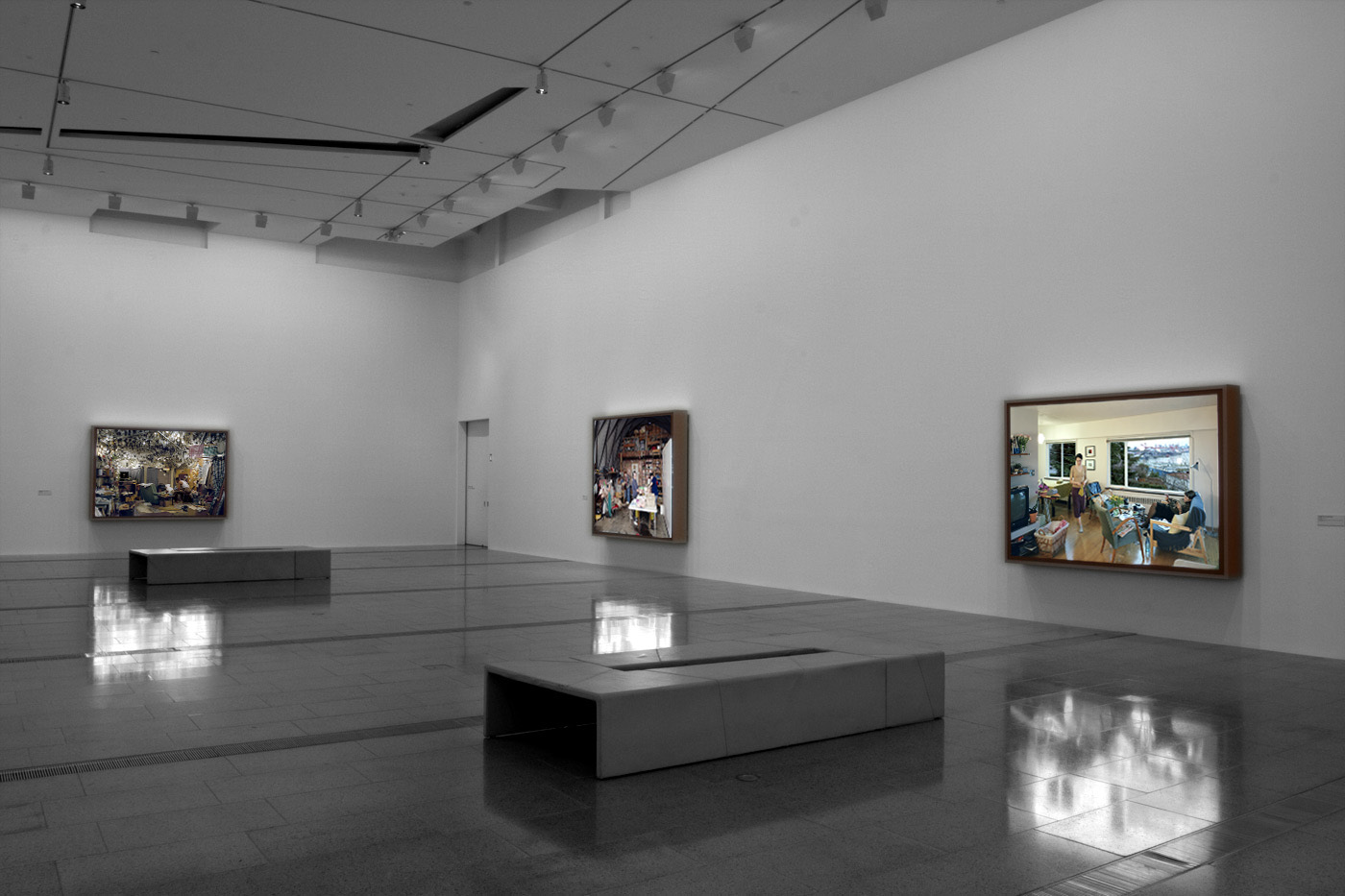
Martin-Gropius-Bau website

LIKE ART BLART ON FACEBOOK

Back to top

Review: ‘Valerio Ciccone: Peripheral Observer’ at Arts Project Australia, Melbourne

Exhibition dates: 8th September – 16th October 2012


Valerio Ciccone (Australian, b. 1970) 'Not titled (After Holbein)' 1991


Valerio Ciccone (Australian, b. 1970)
Not titled (After Holbein)
1991
Pastel on paper
50 x 66cm
Courtesy of MADMusee, Belgium


This is a beautiful and vibrant exhibition by Arts Project Australia artist Valerio Ciccone. As you can see from the reproductions in the posting the art work is engaging and enveloping. The work makes me happy, it makes me smile. Arts Project Australia does a wonderful job promoting their artists. It must be very difficult for the curators to append a conceptual idea onto an artist’s work without much input from the artist themselves. Such is the case here. Talking with curator of the exhibition Dr Cheryl Daye, she told me that the title of the exhibition was as much about the person Valerio Ciccone as the work itself; how Valerio circles around people before coming up to say hello, before approaching the subject directly. He is always “keeping an eye out” for what is going on around him.

In the top quotation above – the only paragraph in the two catalogue essays that addresses the conceptual idea of the exhibition – the terms peripheral gaze, peripheral viewer and by extension the title of the exhibition (peripheral observer), are conjoined. Personally, I think that there is a distinct difference between each term that caused me some conceptual unease when they are used together as such.

1/ The peripheral gaze is a temporary, short state of uncertainty, before and between the active or passive state – perhaps! In studying social interaction, Michael Watson (1970) found cultural variability in the intensity of gaze. He distinguished between three forms of gaze:

~ sharp: focusing on the other person’s eyes
~ clear: focusing about the other person’s head and face
~ peripheral: having the other person within the field of vision, but not focusing on his head or face1

2/ A peripheral viewer is active, recipient and creative; sometimes part of the thing itself. They are able to transform into 3, passive.

3/ A peripheral observer can be passive, sometimes unconsciously so, as when someone is watching TV commercials, pictures on a channel that they do not like. Given more choice over control of the channels they become more active and the retain more interest in the program they are watching. The analogy could be that of a flaneur, strolling, looking but not interacting. They are able to transform into 2, active.


According to Jules Romains, “Seeing, and its spatio-temporal organisation, precede gesture and speech and their co-ordination in knowing, recognising, making known (as images of our thoughts), our thoughts themselves and cognitive functions, which are never passive …”2 and Merleau-Ponty notes in an important formulation that, “Everything I see is in principle within my reach, at least within reach of my sight, marked on the map of the ‘I can’.”3

Marked on the map of ‘I can’: active. This is what Valerio does in his artwork, he marks his vision on the map of ‘I can’; not the centre or the periphery (for in postmodernism there is no centre, no periphery for the periphery is the centre!) but an equal balance between what passes before his eyes: background and subject given equal wait / weight within the picture plane where, “in the new democracy of images everything is equal and everything is the same.” This is not a peripheral observer but an artist who actively/passively addresses with equal importance the elements placed before his vision, a passing flow over which he has little control. Sight is decentred and becomes seeing on the field of the other, seeing under the Gaze.

“In the same way, when I see, what I see is formed by paths or networks laid down in advance of my seeing. It may be the case that I feel myself to inhabit some kind of center in my speech, but what decentres me is the network of language. It may be similarly be that I always feel myself to live at the center of my vision – somewhere (where?) behind my eyes; but, again, that vision is decentred by the networks of signifiers that come to me from the social milieu …

Lacan’s analysis of vision unfolds in the same terms: the viewing subject does not stand at the center of the perceptual horizon, and cannot command the chains and series of signifiers passing across the visual domain. Vision unfolds to the side of, in tangent to, the field of the other. And to that form of seeing Lacan gives a name: seeing on the field of the other, seeing under the Gaze.”4


For me Valerio’s work is a result of a direct looking from a tangental position, not the other way around. His subjects and backgrounds are frontal to the viewer, his figures only rarely looking off to the side. The viewing subject, the artist in this case, stands not at the centre of the perceptual horizon and he cannot command what he sees, when he sees it. But what Valerio so brilliantly and sympathetically does is capture the visions that unfold in front of him with a wonderful joy of life that is breathtaking in its tangental difference, in its recognition of Otherness.

Dr Marcus Bunyan


1/ Watson, Michael. Proxemic Behavior: A Cross-Cultural Study. The Hague: Mouton, 1970 quoted in Chandler, Daniel. “Notes on “The Gaze”,” on the Aberystwyth University website [Online] Cited 05/10/2012 No longer available online

2/ Romains, Jules. La Vision extra-rétinienne et le sens paroptique. Paris: Gallimard, 1964 quoted in Virilio, Paul. The Vision Machine (trans. Julie Rose). Bloomington: Indiana University Press, 1994, p. 7

3/ Merleau-Ponty, Maurice. “Eye and Mind” (trans. Carleton Dallery) in The Primacy of Perception: And Other Essays on Phenomenological Psychology. Northwest University Press, 1964, p. 162

4/ Foster, Hal (ed.,). Vision and Visuality. Bay Press, Seattle: Dia Art Foundation Discussions in Contemporary Culture, Number 2, 1988, p. 94


Many thankx to the artist and Arts Project Australia for allowing me to publish the reproductions of the art in the posting. Please click on the photographs for a larger version of the image.


“Whatever medium he chooses, Ciccone’s work reflects a quiet connection with his subject, as well as a delicate poignancy or gentle sense of irony. There is a certain likeness between the peripheral gaze of his subjects and the way in which Ciccone, whilst remaining focused on his work, is able to keep a watchful eye on all that is happening around him. The subjects in Ciccone’s portraits rarely look directly at the viewer. They seem absorbed by action that is taking place off to the side, beyond the picture plane. Yet there is intentness in the expression, the feeling that the peripheral viewer does not miss a trick.”


Dr Cheryl Daye, “Valerio Ciccone: Peripheral Observer,” Arts Project Australia catalogue, 2012, p. 14


“When his gaze moves out into the world. whilst paradoxically he stays in the same spot, we realise that in the new democracy of images everything is equal and everything is the same. Gary Ablett is next to John Howard who sidles up the Kuwaiti Crown Prince. Cathedrals are as important as the corner of a studio, and lions lie with mice, elephants with koala bears. That expands out to other images too, like that of old standard ‘the nude’ or ‘the model’ from life drawing class. Or fluid instinctual portraits of his studio colleagues. Again, not moving far, finding magic around the corner or across the room.”


Glenn Barkly. “This is me – some thoughts on the art of Valerio Ciccone,” Arts Project Australia catalogue, 2012, p. 8


Valerio Ciccone (Australian, b. 1970) 'Not titled' 1991


Valerio Ciccone (Australian, b. 1970)
Not titled
1991
Pastel on paper
56 x 76.5cm
Arts Project Australia Permanent Collection


Valerio Ciccone (Australian, b. 1970) 'Not titled' 1991


Valerio Ciccone (Australian, b. 1970)
Not titled
1991
Pastel on paper
76 x 57cm
Arts Project Australia Permanent Collection


Valerio Ciccone (Australian, b. 1970) 'Not titled (Gary Ablett)' 1998


Valerio Ciccone (Australian, b. 1970)
Not titled (Gary Ablett)
1998
Pastel on paper
66 x 50cm
Arts Project Australia Permanent Collection


Spanning a career of almost thirty years, Valerio Ciccone is an artist of complexity and subtly and this major survey exhibition is a testament to the varied terrain he has covered on his rich artistic journey. Valerio Ciccone: Peripheral Observer is a major survey exhibition that has been curated by Dr Cheryl Daye and will be officially opened by Glenn Barkley, Curator, Museum of Contemporary Art Australia on Saturday 8 September 2012.

Ciccone’s work reflects his fascination with the world around him. With drawing as his primary mode of expression, Ciccone also effectively employs ceramics and animation to create whimsical figures and narratives. Since commencing at Arts Project Australia in 1984, Ciccone’s work has undergone a series of changes: from his earliest watercolours through the powerful text-based monochromatic pastel portraits, to his colourful recreation of scenes from AFL and his enduring repertoire of animals, still life and pop culture icons, he continues to delight with his gentle insights.

Although warm and gregarious, Ciccone likes to place himself as a peripheral observer in relation to his subjects, quietly transforming what he sees into unique visual statements. Curator Dr Cheryl Daye first meet Ciccone in 1984 and says, “Ciccone is a man of few words…  He cannot tell you about his artwork, what it means, how he made it or why. He cannot tell you about the subjects or why he chose them, but the deliberation of each mark made speaks of that which is important to him, his interpretation of the world and desire to share his experience of it.”

Accompanying this exhibition is the Leonard Joel Series catalogue Valerio Ciccone: Peripheral Observer, which is the second publication proudly supported by Leonard Joel.

Press release from the Arts Project Australia website


Valerio Ciccone (Australian, b. 1970) 'Not titled (life model)' 1990


Valerio Ciccone (Australian, b. 1970)
Not titled (life model)
1990
Ink on paper
76 x 57cm
Arts Project Australia Permanent Collection


Valerio Ciccone (Australian, b. 1970) 'Not titled (Notre Dame)' 1990


Valerio Ciccone (Australian, b. 1970)
Not titled (Notre Dame)
1990
Acrylic on paper
66 x 50cm
Arts Project Australia Permanent Collection


Valerio Ciccone (Australian, b. 1970) 'Not titled' 1987


Valerio Ciccone (Australian, b. 1970)
Not titled
1987
Pastel and felt pen on paper
66 x 50cm


Valerio Ciccone (Australian, b. 1970) 'Not titled (still life)' 1990


Valerio Ciccone (Australian, b. 1970)
Not titled (still life)
1990
Pastel on paper
66 x 50cm


Valerio Ciccone (Australian, b. 1970) 'Not titled (seated figure)' 1997


Valerio Ciccone (Australian, b. 1970)
Not titled (seated figure)
1997
Pastel on paper
66 x 50cm


Valerio Ciccone (Australian, b. 1970) 'Not titled (life drawing)' 1996


Valerio Ciccone (Australian, b. 1970)
Not titled (life drawing)
1996
Pastel on paper
66 x 50cm


Arts Project Australia

Studio
24 High Street
Northcote Victoria 3070
Phone: + 61 3 9482 4484

Gallery
Level 1 Perry Street building
Collingwood Yards
Enter via 35 Johnson Street or 30 Perry Street, Collingwood
Phone: +61 477 211 699

Opening hours:
Wednesday – Friday 11am – 5pm
Saturday & Sunday 12 – 4pm

Arts Project Australia website

LIKE ART BLART ON FACEBOOK

Back to top

Exhibition: ‘Joel Sternfeld: Colour photographs since 1970’ at Albertina, Vienna

Exhibition dates: 27th June – 7th October 2012


Many thankx to the Albertina for allowing me to publish the photographs in the posting. Please click on the photographs for a larger version of the image.


Joel Sternfeld (American, b. 1944) 'A Railroad Artifact, 30th Street, May 2000' 2000


Joel Sternfeld (American, b. 1944)
A Railroad Artifact, 30th Street, May 2000
2000
© Courtesy of the artist, Luhring Augustine, New York and The Friends of the High Line, New York


Joel Sternfeld (American, b. 1944) 'Ken Robson's Christmas Tree, January 2001' 2001


Joel Sternfeld (American, b. 1944)
Ken Robson’s Christmas Tree, January 2001
2001
© Courtesy of the artist, Luhring Augustine, New York and The Friends of the High Line, New York


Joel Sternfeld (American, b. 1944) 'After A Flash Flood, Rancho Mirage, California 1979' 1979


Joel Sternfeld (American, b. 1944)
After A Flash Flood, Rancho Mirage, California 1979
1979
© Courtesy of the artist and Luhring Augustine, New York, 2012


Joel Sternfeld (American, b. 1944) 'Wet 'n Wild Aquatic Theme Park, Orlando, Florida, September 1980' 1980


Joel Sternfeld (American, b. 1944)
Wet ‘n Wild Aquatic Theme Park, Orlando, Florida, September 1980
1980
© Courtesy of the artist and Luhring Augustine, New York, 2012


Joel Sternfeld (American, b. 1944) 'The Space Shuttle Columbia Lands at Kelly Lackland Air Force Base, San Antonio, Texas, March 1979' 1979


Joel Sternfeld (American, b. 1944)
The Space Shuttle Columbia Lands at Kelly Lackland Air Force Base, San Antonio, Texas, March 1979
1979
© Courtesy Buchmann Galerie Berlin, Luhring Augustine, New York and  the artist


Joel Sternfeld (American, b. 1944) 'McLean, Virginia, December 1978' 1978


Joel Sternfeld (American, b. 1944)
McLean, Virginia, December 1978
1978
© Courtesy of the artist and Luhring Augustine, New York, 2012


This exhibition offers the first survey of the US artist Joel Sternfeld’s work in Austria. The Albertina shows eleven series by the photographer dating from between the early 1970s and 2007. Influenced by William Eggleston, but also by the colour theories of the Bauhaus, Joel Sternfeld, who was born in New York in 1944, began to experiment with colour photography in the 1970s and soon developed his own style. He brought colour to bear on a subject that had a long photographic tradition in the United States: the American social landscape. A critical observer, Sternfeld travelled across the USA for years, capturing the country and its inhabitants in all their peculiarities and contradictions. Most of his pictures explore political and social issues by representing their subjects’ relationship to nature or the landscape around them. Sternfeld’s photographs combine a documentary objective with an artist’s view. Their visual language has its predecessors in Walker Evans and Robert Frank, who were advocates of black-and-white photography, though. Seen against this background, Sternfeld’s photographs are to be understood not only as a chronicle of the last forty years’ American history, but also evidence a development process in the course of which colour came to bring forth an entirely specific visual language.

Nags Head

Next to William Eggleston and Stephen Shore, Joel Sternfeld ranks among the most important representatives of New Color Photography, a quite heterogeneous group of photographers who have relied on colour as a stylistic device for artistic photography since the 1970s. A perfectly natural means of expression today, colour was frowned upon in artistic photography in those days. While colour was used in popular photography, like in the fields of advertising and fashion, traditional artistic photographs were black-and-white. William Eggleston’s exhibition in the Museum of Modern Art New York in 1976, which was regarded as scandalous when it opened, proved to be a landmark event for the recognition of colour photography. Dating from 1975, Joel Sternfeld’s series Nags Head clearly testifies to the role of colour as a means of artistic expression. Precise colour areas are as important for the pictures’ composition as the motifs the photographer encountered on the beach of the town Nags Head in North Carolina.

First Pictures

Next to Nags Head, two series of colour photographs from the 1970s, Happy Anniversary Sweetie Face! and Rush Hour, stand for Joel Sternfeld’s early work. Following in the tradition of street photography, these series explore various scenes of American everyday culture in a humorous vein, capturing them in a seemingly spontaneous and random visual language. Supposed exposure mistakes and blurs as well as angles fragmentising the subjects suggest an intuitive and dynamic view of the world. The instantaneous character of the photographs manifests itself in the Rush Hour series in a particularly striking manner. Using a manual flash lighting up the faces of the passers-by for his compositions, Sternfeld emphasises the fleeting moment a photograph snatches from the continuum of time.

Colour proves to be key for the composition. Rich and full colour areas not only rhythmise and structure the arrangement, but represent pictorial values in their own right, which are not integrated in a homogeneous whole. This kind of photography which connects everyday motifs with the autonomy of colour has been influenced not least by William Eggleston, whom Sternfeld got to know in Harvard in 1976.

American Prospects

Sternfeld shot the series American Prospects while travelling through the United States in a Volkswagen bus for some years. Dating from between 1978 and 1987, the pictures explore people’s relationship to the American landscape as formed and informed by them. The microcosm of often bizarre everyday events that becomes visible here does more than just illustrate man’s problematic use and transformation of the landscape: it also offers a possibility for drawing conclusions on contemporary political and social conditions in the United States.

In American Prospects, Sternfeld frequently renders critical contents by relying on the sovereign use of sublime, vivid colour values and contrasts that seem to contradict the depicted serious circumstances. Colour, format, and static composition are grounded in Sternfeld’s use of a large-format camera. While he photographed his early series with a small-format camera, which allowed flexible movements and, thus, a spontaneous visual language, the more complicated handling of a large-format camera slows down the picture-taking process. Sternfeld selected his motifs very carefully and precisely planned his pictures’ composition in advance. Both the composition and the general motif of people in a landscape were essentially inspired by solutions of traditional painting like Pieter Bruegel the Elder’s and Jacob van Ruisdael’s.

Stranger Passing

Photographed within a period of fourteen years starting in 1987, Joel Sternfeld’s series Stranger Passing makes the human portrait its crucial issue. Depicted in situ, the subjects are characterised through their outward appearance, their clothes and poses, and the environs in which they present themselves. The pictures show a wide variety of social groups and milieus and centre on different life styles. Maintaining a reserved and detached view throughout, Sternfeld keeps a visible distance from his motifs and does not express a judgment – an artistic strategy already pursued by August Sander in his famous photographic project Menschen des 20. Jahrhunderts (People of the 20th Century) in the 1920s. But whereas Sander subsumed his models under their professional functions, Sternfeld focuses on representing the portrayed people’s individuality. Their often bizarre (self-) representation visualises comprehensive social contexts which, in total, offer a manifold and differentiated portrait of American society.

On This Site

Between 1993 and 1996, Joel Sternfeld photographed crime scenes hidden behind apparently everyday places. By depicting such places of destiny, Sternfeld has retrieved suppressed, concealed, or deliberately buried events for the collective memory and thus dismantled patriotic self-presentations of the US. The pictures reveal a conceptual approach to documentary photography. The comparatively neutral and detached shots show “only” the crime scenes and do not offer any details on the sequence of events. The particulars of the crime are to be found in a text which is part of the work. Image and text provide different contents, which the viewer is asked to put together.

Oxbow Archive

In Oxbow Archive (2005-2007), Sternfeld has made the scenery his sole subject by photographing an area near Northampton in Massachusetts through the changing seasons. The work explores the tradition of cultural norms and phenomena of US culture: the representation of landscapes in pictures has always been an essential dimension of American identity and cultural self-understanding. Wilderness and pristine nature are frequently depicted in stunning, idealised views – for which Ansel Adams and Edward Weston may be cited as examples. A famous painting by the American artist Thomas Cole from 1836 renders the region shown in Oxbow Archive as a heroic landscape in dramatic weather conditions seen from an elevated point of view. Sternfeld clearly rejects this visual language: he documents the uniqueness of the seasons’ changes beyond the sublime and picturesque of traditional landscape pictures from a low point of view and confronts the viewer with the clearly visible effects of man’s intervention in nature.

When it changed

After Sternfeld’s early series had already been informed by a socio-critical attitude, the projection When it changed unmistakably shows the photographer to be a documentarist with great political engagement. When it changed comprises fifty-three portraits of participants in a United Nations conference on climate change in Montreal in 2005. A text with prognoses and statements on climate change by scientists from the last twenty years provides a comment on the persons’ often serious and pessimistic faces.

Treading on Kings

For his project Treading on Kings Joel Sternfeld photographed the protests during the G8 summit in Genoa in 2001. During this meeting of the eight most powerful industrial nations in the world, which was accompanied by severe clashes between the demonstrators and the police, numerous protesters were wounded and one of the activists, Carlo Giuliani, was killed. Sternfeld’s thirty-three photographs portray the scenes of the confrontation as well as the protesters themselves. Accompanying texts offer statements by various participants of the demonstrations and explain the reasons for their engagement.

Walking the High Line

Walking the High Line (2000-2001) examines landscape as an indicator of ecologic and social transformations from a new perspective. The High Line is an abandoned railroad track in Manhattan, New York, a little over two kilometres long, which the photographer describes as a motific contrast between apparently untouched nature and urban development. While Sternfeld’s earlier series visualise the colonisation of nature by man, the relationship is reverted here. Nature has reconquered an urban space, the only sporadically visible rails hinting at the once busy traffic. In the case of Walking the High Line, the socio-political dimension characteristic of all of Sternfeld’s works has produced concrete results: the disused track was transformed into a public park in 2009 not least because of Sternfeld’s successful photographs.

Sweet Earth

The series Sweet Earth from 2006 shows Joel Sternfeld pursuing his photographic investigation of the American social landscape. Informed by the atmosphere of the 1990s, of the period immediately following the collapse of the Communist states, the photographs confront us with models of alternative communities. Texts provide us with information on the social experiments and their political, ecological, or religious reasons. By visualising historical and contemporary utopias, the artist offers a historical survey spanning from nineteenth-century communities to the counterculture of the 1960s and today’s new forms of living together. By confronting the viewer with heterogeneous life plans, Sternfeld not only fathoms the different values of present-day American society, but also questions the background and development of social norms and conventions.

Press release from the Albertina website


Joel Sternfeld (American, b. 1944) 'Washington D.C., August 1974' 1974


Joel Sternfeld (American, b. 1944)
Washington D.C., August 1974
1974
© Courtesy of the artist and Luhring Augustine, New York, 2012


Joel Sternfeld (American, b. 1944) 'Summer Interns Having Lunch, Wall Street, New York, August 1987' 1987


Joel Sternfeld (American, b. 1944)
Summer Interns Having Lunch, Wall Street, New York, August 1987
1987
© Courtesy of the artist and Luhring Augustine, New York, 2012


Joel Sternfeld (American, b. 1944) 'New York City (#1)' 1976


Joel Sternfeld (American, b. 1944)
New York City (#1)
1976
© Courtesy of the artist and Luhring Augustine, New York, 2012


Joel Sternfeld (American, b. 1944) 'Young Man Gathering Shopping Carts, Huntington, New York, July 1993' 1993


Joel Sternfeld (American, b. 1944)
Young Man Gathering Shopping Carts, Huntington, New York, July 1993
1993
© Courtesy of the artist and Luhring Augustine, New York, 2012


Joel Sternfeld (American, b. 1944) 'A Woman at Home in Malibu After Exercising, California, August 1988' 1988


Joel Sternfeld (American, b. 1944)
A Woman at Home in Malibu After Exercising, California, August 1988
1988
© Courtesy of the artist and Luhring Augustine, New York, 2012


Joel Sternfeld (American, b. 1944) 'A Woman Out Shopping with Her Pet Rabbit, Santa Monica, California, August 1988' 1988


Joel Sternfeld (American, b. 1944)
A Woman Out Shopping with Her Pet Rabbit, Santa Monica, California, August 1988
1988
© Courtesy of the artist and Luhring Augustine, New York, 2012


Albertina
Albertinaplatz 1
1010 Vienna, Austria
Phone: +43 (0)1 534 83-0

Opening hours:
Daily 10am – 6pm

Albertina website

LIKE ART BLART ON FACEBOOK

Back to top

Exhibition: ‘In Focus: Picturing the Landscape’ at the J. Paul Getty Museum, Los Angeles

Exhibition dates: 22nd May – 7th October 2012

Curator: Brett Abbott


Francis Frith (English, 1822-1898) 'The Pyramids of Dahshoor, From the East' 1857


Francis Frith (English, 1822-1898)
The Pyramids of Dahshoor, From the East
1857
Albumen silver print
11.6 x 16.2cm
The J. Paul Getty Museum, Los Angeles


“Hence the photographer’s most important and likewise most difficult task is not learning to manage his camera, or to develop, or to print. It is learning to see photographically.”


Edward Weston. The Complete Photographer. January 20, 1943


Many thankx to the J. Paul Getty Museum, Los Angeles for allowing me to publish the photographs in the posting. Please click on the photographs for a larger version of the image.


Sir John Frederick William Herschel (British, 1792-1871) 'Valley of the Saltina near Brieg at Entrance of the Simplon' 1821


Sir John Frederick William Herschel (British, 1792-1871)
Valley of the Saltina near Brieg at Entrance of the Simplon
1821
Graphite drawing made with the aid of a camera lucida
19.7 × 29.7cm (7 3/4 × 11 11/16 in.)
Gift of the Graham and Susan Nash Collection
The J. Paul Getty Museum, Los Angeles


Dr Samuel A. Bemis (American, 1793-1881) 'View within Crawford Notch, New Hampshire' c. 1840


Dr Samuel A. Bemis (American, 1793-1881)
View within Crawford Notch, New Hampshire
c. 1840
Daguerreotype
The J. Paul Getty Museum, Los Angeles


Boston dentist Samuel Bemis, one of the first Americans to use a daguerreotype outfit successfully, practiced photography during his summer months in the White Mountains of New Hampshire. His landscape views of the area are the earliest surviving American photographs to depict untamed nature. Here he depicts a scene of rugged beauty.

An innovative amateur, Bemis was not a masterful technician of the complicated daguerreotype process. The dark tone of the sky and the light areas along the slope of the mountain indicate inadequate processing of the daguerreotype plate.


John Beasly Greene
 (American, 1832-1856) 'Thebes, Village of Ghezireh' 1853-1854


John Beasly Greene
 (American, 1832-1856)
Thebes, Village of Ghezireh
1853-1854
Salted paper print from a waxed paper negative
9 1/8 x 12 inches
The J. Paul Getty Museum, Los Angeles


John Greene was an archaeologist, the well-to-do son of a banker from Boston who lived in Paris, and a photographer. By 1853 the twenty-one-year-old Greene had learned to use Le Gray’s waxed-paper process, the technique of choice for traveling Frenchmen. That same year he made the first of two expeditions to Egypt and Nubia, bringing back more than two hundred negatives of monuments and landscapes, some ninety-four of which, printed by Blanquart-Evrard in 1854, comprise the album “Le Nil, monuments, paysages, explorations photographiques par J. B. Greene.” So rare are these albums that we assume that Greene published them at his own expense. On his second trip, in 1854-1855, he not only photographed but also excavated, especially at Medinet-Habou. During an archaeological and photographic expedition to Algeria the following winter, this exceptionally talented young man died of an undisclosed illness.

Greene’s Egyptian landscapes are startlingly barren. Coalescing from large, softly nuanced tonal planes, the views seem to shimmer above the page almost to the point of evaporating, like distant desert mirages. Generally, Greene placed the geological or archeological structure of these pictures at a distance, surrounded by sand and sky. This, the most minimal of his visions, sums up the Egyptian landscape. Stretching between the great river and the endless expanse of sky, and between the great river and the desert, is a thin band of fertile earth – the ligament of life that gave rise to a great civilisation. That the picture functions like a diagram may owe to Greene’s knowledge of hieroglyphics; the Egyptian pictograph for “country” is a flat, floating disk, hardly more than a horizontal line.

Text from the Metropolitan Museum of Art website


Charles Marville (French, 1813-1879) 'Fontainebleau' 1854


Charles Marville (French, 1813-1879)
Fontainebleau
1854
Salted paper print
15.9 × 21.3cm (6 1/4 × 8 3/8 in.)
The J. Paul Getty Museum, Los Angeles


Francis Frith (English, 1822-1898) 'The Pyramids of Dashour' 1856-1857


Francis Frith (English, 1822-1898)
The Pyramids of Dashour
1856-1857
Albumen silver print
6.8 × 6.5cm (2 11/16 × 2 9/16 in.)
The J. Paul Getty Museum, Los Angeles
Gift of Weston J. and Mary M. Naef


Ansel Adams (American, 1902 - 1984) 'Sugar Pine Cones' Negative 1925-1930; print 1931-1932


Ansel Adams (American, 1902-1984)
Sugar Pine Cones
Negative 1925-1930; print 1931-1932
Gelatin silver print
11.6 x 16.2cm
The J. Paul Getty Museum, Los Angeles
© The Ansel Adams Publishing Rights Trust


Edward Weston (American, 1886-1958) 'Kelp on Tide Pool, Point Lobos' 1939


Edward Weston (American, 1886-1958)
Kelp on Tide Pool, Point Lobos
1939
The J. Paul Getty Museum, Los Angeles


Rather than depicting a traditionally picturesque vista or capturing accurate perspective, photographers of the 20th century began to explore the various but particularly photographic ways that the natural world could be seen through the camera lens. Often this led to spatial experimentation. Taken at Point Lobos in California, this image by Edward Weston plays with the perception, and misperception, of space. The photographer cropped his photograph of a tide pool to show kelp puncturing the water’s surface in the foreground, while in the upper register an underwater landscape appears simultaneously near and far.


Harry Callahan (American, 1912-1999) '[Detroit]' 1941


Harry Callahan (American, 1912-1999)
[Detroit]
1941
Gelatin silver print
8.1 × 11.4cm (3 3/16 × 4 1/2 in.)
The J. Paul Getty Museum, Los Angeles
© Estate of Harry Callahan


Callahan referred to this photograph, made shortly after an inspiring encounter with Ansel Adams, as “my first good picture.” Unlike Adams’s dramatic landscapes, Callahan’s composition focuses on an overlooked pedestrian setting in his native Detroit. Raising the horizon line, the artist achieved a delicate, calligraphic interplay among the reeds and telephone poles and their reflections across the surface of a bog.


Wynn Bullock (American, 1902–1975) 'Point Lobos Tide Pool' 1957


Wyn Bullock (American, 1902-1975)
Point Lobos Tide Pool
1957
Gelatin silver print
19.1 × 24.1cm (7 1/2 × 9 1/2 in.)
The J. Paul Getty Museum, Los Angeles
© Bullock Family Photography LLC. All rights reserved


In Focus: Picturing Landscape, at the J. Paul Getty Museum, the Getty Center, May 22 – October 7, 2012, offers a rich trove of landscape photography from some of the most innovative photographers in the genre. Drawn exclusively from the Getty Museum’s permanent collection, the exhibition brings together the work of twenty photographers, spanning the medium from the mid-1800s to the current decade, including Ansel Adams, Robert Adams, Manuel Alvarez Bravo, Imogen Cunningham, William Garnett, John Beasly Greene, Eliot Porter, Clifford Ross, Toshio Shibata and Edward Weston.

“The range of photographs chosen for this exhibition were selected from hundreds of extraordinary landscape works in the Getty Museum’s photography collection with an eye towards the various ways that photographers have responded to the daunting challenge of depicting the natural landscape photographically,” says Karen Hellman, assistant curator, Department of Photographs, the J. Paul Getty Museum, and curator of the exhibition.

Since the invention of the medium, photographers have turned to the landscape as a source of inspiration. Changing artistic movements and continual technical advancements have provided opportunities for camera artists to approach the subject in diverse and imaginative ways. The Getty originally presented In Focus: The Landscape in June 2008, curated by Brett Abbott. Expanding on the first presentation of photographs, this second exhibition on landscape in the Getty Museum’s In Focus series examines how photographers have sought to capture the breadth and perspective of the landscape through a camera lens. The exhibition is organised around three main themes: nineteenth-century technical developments by photographers such as Francis Frith who captured intriguing views of the Egyptian Pyramids in the 1850s; works that show purely photographic approaches such as those by Edward Weston and Harry Callahan; and more recent ways in which photographers have framed the landscape to make environmental and conceptual statements.

One of the earliest works in the exhibition is actually not a photograph but a drawing made by Sir John Frederick Herschel in 1821 with the aid of a camera lucida, an optical device sometimes used as a drawing aid by artists of the period. The exhibition also includes a very early full-plate daguerreotype of a landscape made by Boston dentist Samuel Bemis in 1840. During the first decades of the 20th century, artistic experimentation flourished and tested the boundaries of the genre. Photographers such as Edward Weston and Harry Callahan sought to explore the landscape as abstraction and pure form. In the second half of the 20th century, photographers began to explore the landscape in more socially conscious ways. Eliot Porter devoted himself to publishing work in concert with conservation efforts. Virginia Beahan has delved into the landscape as a site of human history, rather than simply a subject of aesthetic contemplation.

Contemporary artists continue to be inspired by the rich tradition of landscape photography. Also included in the exhibition is a large-scale photograph by Clifford Ross from his 2006 Mountain series, produced from extremely high-resolution digital files in order to make prints that came as close as possible to replicating reality. Several works will be on view for the first time, including a photograph taken in the forest of Fontainebleau, outside of Paris, by Charles Marville in the 1850s, and a photograph from Point Lobos, California, by Wynn Bullock, as well as a work by the Japanese photographer Toshio Shibata acquired with funds from the Getty Museum Photographs Council.

In Focus: Picturing Landscape is the eleventh installation of the ongoing In Focus series of thematic presentations of photographs from the Getty’s permanent collection, and includes twenty-two works by twenty photographers.

Press release from the J. Paul Getty Museum website


William A. Garnett (American, 1916-2006) 'Sandbars, Cape Cod, Massachusetts' 1966


William A. Garnett (American, 1916-2006)
Sandbars, Cape Cod, Massachusetts
1966
Cibachrome print
34.4 x 51cm
The J. Paul Getty Museum, Los Angeles
© Estate of William A. Garnett


Nature and photography have been linked since the inception of the medium. Whether driven by the challenge of capturing the expanse and perspective of a vista or by the myriad possibilities of creating a unique artistic experience, the act of depicting the natural landscape has inspired photographers from the 1800s to the present.

To create this image, photographer William Garnett piloted his plane over sand bars in Cape Cod. In addition to the natural beauty of the ocean, the photographer invites us to explore space and perception in a unique way. The undulating forms of the sandbars play with the boundaries between foreground and background. Changing tones of blue challenge us to know if we look at water, sky, or even a view from outer space.


Eliot Porter (American, 1901-1990) 'Aspens and Grass, Elk Mountain Road, New Mexico, October 3, 1972' 1972


Eliot Porter (American, 1901-1990)
Aspens and Grass, Elk Mountain Road, New Mexico, October 3, 1972
1972
Dye transfer print
26.2 x 20.6cm
The J. Paul Getty Museum, Los Angeles
Gift of Daniel Greenberg and Susan Steinhauser
Bequest of the artist
© 1990 Amon Carter Museum of American Art, Fort Worth, Texas


Toshio Shibata (Japanese, b. 1949) 'Tsuru City, Yamanashi Prefecture' 1989


Toshio Shibata (Japanese, b. 1949)
Tsuru City, Yamanashi Prefecture
1989
Gelatin silver print
44.5 × 55.5cm (17 1/2 × 21 7/8 in.)
The J. Paul Getty Museum, Los Angeles
Purchased with funds provided by the Photographs Council
© Toshio Shibata


Virginia Beahan (American, b. 1946) and Laura McPhee (American, b. 1958) 'Apple Orchard, Manzanar Japanese-American Relocation Camp, Owens Valley, California' 1995


Virginia Beahan (American, b. 1946) and Laura McPhee (American, b. 1958)
Apple Orchard, Manzanar Japanese-American Relocation Camp, Owens Valley, California
1995
Chromogenic print
75.3 × 95.3cm (29 5/8 × 37 1/2 in.)
The J. Paul Getty Museum, Los Angeles
Gift of Nancy and Bruce Berman
© Virginia Beahan and Laura McPhee


Here Beahan and McPhee delve into the landscape as a site of human history and conflict. With the High Sierra as a backdrop, rusty remnants of the Manzanar relocation camp, used to detain Japanese Americans during World War II, occupy the foreground. In the middle ground stand the desiccated trunks of an orchard, part of an 1860s settlement that was abandoned after the land’s water was diverted in the 1920s to irrigate Los Angeles. The orchard, in turn, had uprooted a community of Paiute Indians, who had lived there for generations.


Virginia Beahan (American, born 1946) and Laura McPhee (American, born 1958) 'Mount Rainier, Washington' 2000


Virginia Beahan (American, b. 1946) and Laura McPhee (American, b. 1958)
Mount Rainier, Washington
2000
Chromogenic dye coupler print
75.5 x 96.5cm
The J. Paul Getty Museum, Los Angeles
Gift of Nancy Goliger and Bruce Berman
© Virginia Beahan and Laura McPhee


Clifford Ross (American, b. 1952) 'Mountain IV' 2004


Clifford Ross (American, b. 1952)
Mountain IV
2004
Chromogenic colour print
63 x 118 in
The J. Paul Getty Museum, Los Angeles
© Clifford Ross Studio


A persistent aspect of picturing a landscape has been the concept of the ideal. Recent photographers have framed nature not only to emphasise its beauty but also to highlight its unattainability in a modern context.

Photographer Clifford Ross was inspired to create this image of Mount Sopris while on a family holiday. In order to, as the photographer put it, “grab as much of the mountain as [he] possibly could in one shot,” Ross invented a camera, the R1, which exposes 9 x 18 inch aerial film. When processed by hand and scanned, the negatives produce files with a hundred times higher resolution than those made with the average professional digital camera. Yet even though he pursues a near replica of reality, Ross also manipulates the digital file to re-create the landscape as he remembers experiencing it. Viewers have the ability to examine the scene in greater detail than they might even in person.


The J. Paul Getty Museum
1200 Getty Center Drive
Los Angeles, California 90049

Opening hours:
Daily 10am – 5pm

The J. Paul Getty Museum website

LIKE ART BLART ON FACEBOOK

Back to top

Exhibition: ‘Lutz Bacher / MATRIX 242’ at the Berkeley Art Museum and Pacific Film Archive (BAMPFA), University of California, Berkeley, San Francisco

Exhibition dates: 18th July – 7th October 2012


Many thankx to BAM/PFA for allowing me to publish the photographs in the posting. Please click on the photographs for a larger version of the image.


Lutz Bacher (American, 1943-2019) 'Bien Hoa' 2006-2007 (detail)

Lutz Bacher (American, 1943-2019) 'Bien Hoa' 2006-2007 (detail)


Lutz Bacher (American, 1943-2019)
Bien Hoa (detail)
2006-2007
inkjet print mounted on aluminium
24 x 36 in.
Courtesy of Ratio 3, San Francisco


Lutz Bacher (American, 1943-2019) 'Bien Hoa' 2006-2007 (detail)


Lutz Bacher (American, 1943-2019)
Bien Hoa (detail)
2006-2007
inkjet print mounted on aluminium
24 x 36 in.
Courtesy of Ratio 3, San Francisco


Since Lutz Bacher’s first MATRIX exhibition in 1993, the Berkeley-based artist has become a leading figure in contemporary art; she was the subject of a retrospective at MoMA PS1 in 2009 and was included in the 2012 Whitney Biennial. MATRIX 242 presents an important but rarely seen series from 2006-2007 that sheds light on the artist’s often elusive practice.

Bien Hoa is is based on a set of ten photographs Bacher discovered at a Berkeley salvage store. All of the photographs were created by an American soldier named Walter, who was stationed at Bien Hoa Air Base during the Vietnam War. Walter inscribed the backs of all but two of the pictures before mailing them home to his partner in Oakland. Bacher has enlarged and reprinted the photographs to hang above the verso of the originals, which disclose Walter’s annotations. These have a surprisingly casual tone, given what must have been the harrowing experience of being a soldier stationed in Vietnam. In some cases, Walter’s inscriptions sound almost like a tourist writing a postcard; in others, he seems to have been more concerned with the composition of the image than with the grisly content of a scene. “This is Bien Hoa looking at it from the Air Base. This is a pretty good picture. Now do you think that’s beautiful? Can you see the wire, keeping the people from attacking the Air Base? That’s what those fences are out there for.”

By strategically juxtaposing these images and texts, and placing them in a museum setting, Bacher reveals the slippery nature of perception. She prompts us to wonder, Why was Walter so concerned with the quality of his images? Why were these photographs discarded? What became of Walter?”

Text from the BAM/PFA website


Lutz Bacher (American, 1943-2019) 'Bien Hoa' 2006-2007 (detail)

Lutz Bacher (American, 1943-2019) 'Bien Hoa' 2006-2007 (detail)


Lutz Bacher (American, 1943-2019)
Bien Hoa (detail)
2006-2007
inkjet print mounted on aluminium
24 x 36 in.
Courtesy of Ratio 3, San Francisco


The ten photographic sets that make up Lutz Bacher’s Bien Hoa (2006-2007) are deceptively simple. Large colour inkjet images, reproductions of yellowed black-and-­white photographs, are presented above handwritten notes written on the backs of the original prints. The annotations were made by a man stationed at Vietnam’s Bien Hoa Air Force Base in 1969, identified only as Walter, who is alternately the author and the subject of the images. We see Walter posing at a military desk with his section chief, in an armed helicopter adorned with a playboy bunny, in front of sand ­bagged barracks, and at gunpoint, “surrendering” to a Vietnamese woman. Other photographs depict the bleak situation – burned-out helicopters, fire drills, and fences separating the base from the local town. Bacher found the cache of photographs, which had been mailed from Vietnam, at a Berkeley salvage store. Originally meant for an intimate audience, the photos are displaced by Bacher’s decision to remake them as her art. She channels the voice of an African American man fighting in the Vietnam War, decisively situating that voice, through her own authorship, in a new time and context.

On their own, the images are charged with America’s uneasy history of armed aggression and recall our complex legacy of racism and popular unrest; with Walter’s notes, however, that general discomfort becomes deeply personal. Referring to an image of himself seated inside a helicopter he writes: “This is a Huey Cobra, the badest [sic] Helicopter in Vietnam. Those are rockets on the side of the ship. I wish I could take off and come home. Your Man, Walter.” With his comments, Walter reveals feelings of complicity in the military apparatus of the war, as well as his desire to return home. It is hard not to wonder how Walter wound up in Vietnam and what became of him: was he drafted or enlisted by the many recruiters targeting African American neighbourhoods at the time, promising subsidies? Did he return home safely?

Presented, as they are here, in a museum setting, Walter’s self-conscious commentaries on his photographs take on new relevance. In some cases, Walter’s inscriptions sound almost like a tourist writing a postcard; in others, he seems to have been more concerned with the composition of the image than with the grisly content of a scene: “This is a practice session that the Fire Department has every now and then. They are practicing on a burning helicopter. I messed up on my border at the top of the picture.” Bacher’s enlargements invite us to hone in on these details and scrutinise the photographs aesthetically, as Walter directs: “This is Bien Hoa looking at it from the Air Base. This is a pretty good picture. Now do you think that’s beautiful? Can you see the wire, keeping the people from attacking the Air Base?” Walter’s grim interjections foil our sense of detached aesthetic judgment.

Likewise, Bacher, conspiring with Walter, complicates easy explanations of her work. Curiously, the only two photographs in the series that remain unannotated feature a gun. In the first, Walter poses solemnly in front of sandbagged barracks in full military uniform. In the second, he is dressed in Vietnamese garb, playfully surrendering at gunpoint to a local woman. This reversal, from American soldier to Vietnamese prisoner, illustrates not only the paradox of Walter’s situation, but also Bacher’s. Without captions to describe Walter’s feelings, it is unclear if he fought willingly or if, like many soldiers at that time, he was ambivalent about our presence in Vietnam, or perhaps even sympathised with the local’s desire to enact political change. Faced with these gaps in explanation, viewers are left to wonder about Walter’s intentions in setting up the photographs as he did, with this strange role reversal. The reasons for Bacher’s own reversal, exchanging her voice for Walter’s, is also left ambiguous.

Shifting between Walter, of whom nothing is known, and Bacher, Bien Hoa’s narrative refuses to be fixed in any one time or place. For that reason, the work feels contemporary, alive with the contradictions that make up our present moment. Bacher uses found images, objects, and text to confound easy understandings of authorship, gender, race, violence, and power. Despite being composed of discarded photographs, Bien Hoa resonates as a pivotal description of a fraught moment in United States history, yet this history still feels open to interpretation. Bacher, exhuming the photographs and aligning her voice with Walter’s, inverts any sense of their cohesion.”

Dena Beard
Assistant Curator
Exhibition brochure


Lutz Bacher (American, 1943-2019) 'Bien Hoa' 2006-2007 (detail)


Lutz Bacher (American, 1943-2019)
Bien Hoa (detail)
2006-2007
inkjet print mounted on aluminium
24 x 36 in.
Courtesy of Ratio 3, San Francisco


Lutz Bacher (American, 1943-2019) 'Bien Hoa' 2006-2007 (detail)


Lutz Bacher (American, 1943-2019)
Bien Hoa (detail)
2006-2007
inkjet print mounted on aluminium
24 x 36 in.
Courtesy of Ratio 3, San Francisco


Berkeley Art Museum and Pacific Film Archive

BAMPFA is located at 2155 Center Street
between Oxford Street and Shattuck Avenue, in downtown Berkeley
Phone: (510) 642-0808

Opening hours:
Thursday – Sunday, 11am – 7pm
Closed Mondays and Tuesdays

Berkeley Art Museum and Pacific Film Archive website

LIKE ART BLART ON FACEBOOK

Back to top

Exhibition: ‘Elliott Erwitt. Retrospective’ at Kunst Haus Wein, Vienna

Exhibition dates: 14th June – 30th September 2012


Elliott Erwitt (American, 1928-2023) 'USA. Fort Dix, New Jersey. 1951' 1951


Elliott Erwitt (American, 1928-2023)
USA. Fort Dix, New Jersey. 1951
1951
Gelatin silver print
© Elliott Erwitt/Magnum Photos


There is something whimsical and abidingly Chaplinesque about Elliott Erwitt’s photographs (see the feet in FRANCE. Paris. 1989, below) – that is until he lands a knockout blow flush on the chin with a devastatingly serious, weighty image like USSR. Moscow. 1959. Nikita Khrushchev and Richard Nixon (even though the two protagonists were apparently talking about banalities). Erwitt’s “art of observation” is a gift of the eye and the mind, where the artist must be truly aware of the world around them in order to capture the mosaic of reality.

As the press release astutely observes, “Erwitt has a gift that few photographers possess, the gift of conveying a subtext with each photo: sentiment, anger, a little happiness; an emotion that can only be recognised by looking very closely; a “before” and an “after”. Erwitt himself calls this the “essence of what happens”. For Erwitt, photography is about really seeing things: “You either see, or you don’t see.”

Very perceptive and so very true.

Dr Marcus Bunyan


Many thankx to the Kunst Haus Wein, Vienna for allowing me to publish the photographs in the posting. Please click on the photographs for a larger version of the image.


“It’s not the subject, it’s how you treat the subject.”

“I take a lot of pictures of dogs because I like dogs and because they don’t object to being photographed and they also don’t ask for prints.”


Elliott Erwitt


Elliott Erwitt @ Kunst Haus Wien


Elliott Erwitt (American, 1928-2023) 'Small dog standing by woman, New York City' 1946


Elliott Erwitt (American, 1928-2023)
Small dog standing by woman, New York City
1946
Gelatin silver print
© Elliott Erwitt/Magnum Photos


Elliott Erwitt (American, 1928-2023) 'ENGLAND. Brighton. 1956. Elizabeth Allan' 1956


Elliott Erwitt (American, 1928-2023)
ENGLAND. Brighton. 1956. Elizabeth Allan
1956
Gelatin silver print
© Elliott Erwitt/Magnum Photos


Elliott Erwitt (American, 1928-2023) 'France' 1965


Elliott Erwitt (American, 1928-2023)
France
1965
Gelatin silver print
© Elliott Erwitt/Magnum Photos


Elliott Erwitt (American, 1928-2023) 'Netherlands' 1973


Elliott Erwitt (American, 1928-2023)
Netherlands
1973
Gelatin silver print
© Elliott Erwitt/Magnum Photos


Elliott Erwitt (American, 1928-2023) 'USA. New York. 1974. Felix, Gladys and Rover' 1974


Elliott Erwitt (American, 1928-2023)
USA. New York. 1974. Felix, Gladys and Rover
1974
Gelatin silver print
© Elliott Erwitt/Magnum Photos


Elliott Erwitt (American, 1928-2023) 'FRANCE. Paris. 1989' 1989


Elliott Erwitt (American, 1928-2023)
FRANCE. Paris. 1989
1989
Gelatin silver print
© Elliott Erwitt/Magnum Photos


Elliott Erwitt (American, 1928-2023) 'New York City, USA' 2000


Elliott Erwitt (American, 1928-2023)
New York City, USA
2000
Gelatin silver print
© Elliott Erwitt/Magnum Photos


Elliott Erwitt, the “Woody Allen of photography”, who views his subjects with his heart as much as with his eye, captures human – sometimes all-too-human – situations in his oeuvre. Kunst Haus Wien presents pieces of the mosaic that is Erwitt’s reality, taken from over half a century of his photographic work. This comprehensive retrospective includes about 150 works by a highly active photographer. Erwitt embodies a type of photographer that has become extremely rare, one who views his subjects with his heart as much as with his eye and thereby sees things that most people rarely notice: the little humorous situations and passions of everyday life, the tiny moments in which gestures and facial expressions say more than a thousand words.

Erwitt is one of the leading photographers of his generation. Extremely versatile, with a broad spectrum of interests, he points his camera at human – sometimes all-too-human – situations: Some of them involve animals, others are political, still others capture a touching moment. Photography, for Erwitt, is above all an “art of observation” that depends first and foremost on the special way in which one views the world. In our world of fast-moving TV images and digitally enhanced pictorially compositions in advertising and fashion, Erwitt’s works restore to the photographic medium its original power. His snapshots are pieces of the mosaic of reality. Erwitt has a gift that few photographers possess, the gift of conveying a subtext with each photo: sentiment, anger, a little happiness; an emotion that can only be recognised by looking very closely; a “before” and an “after”. Erwitt himself calls this the “essence of what happens”. For Erwitt, photography is about really seeing things: “You either see, or you don’t see.”

Kitchen Debate

The ability to tell a whole story in one picture is Elliott Erwitt’s strength – as in the summer of 1959, when US Vice President Richard Nixon met Soviet leader Nikita Khrushchev at the American National Exhibition in Moscow. Erwitt’s snapshot documents how Capitalism and Socialism collided head-on in the form of the volatile Nixon and the surly Khrushchev. Actually, what he photographed was – as he later discovered – merely a conversation about banalities between two politicians during the Cold War, and yet this turned out to be the political photograph that would make him famous. Erwitt’s photo of the so-called Kitchen Debate cemented Nixon’s image as a hardliner and Erwitt’s own reputation as a journalistic photographer who had the qualities of an “invisible insider”.

Dogging Dogs

Erwitt has always taken photographs for his own pleasure as well: street scenes, people – and dogs. The photographer relates to dogs on a very friendly basis; he barks at them and photographs them in situations that show how “human” they can be. He takes some of these photos on walks in Central Park in New York, others at dog fairs and dog pageants. Erwitt’s dog photos have filled whole books and he could probably pride himself on having created the first image of dogs as cultural creatures.

Museum Watching

The “art of observation” has led Erwitt to take numerous photographs of people in museums: He portrays people in their silent dialogue with art when they pause – engrossed or sceptical – to take a closer look at an artwork. The particular environment of the museum is an ideal one for his sharp and at the same time affectionately ironic eye for people.

Naked

When Elliott Erwitt mingles with nudists and takes photographs, the result is very different from the usual photographs of nudes. Erwitt shows people unclothed and undisguised, far from ideals of beauty and staged poses. These photos form a kind of sociogram of nudist culture and are perhaps Erwitt’s most extreme attempt to capture the “conditio humana” in photographs.

Personal Exposures

Between politics and irony, between concerned photography and street photography, these works reveal touching moments that Erwitt has encountered and observed. These photographs allow room for intimacy. They include pictures of his family as well as famous portraits of actors and artists.

Photographs and Anti-Photographs

Elliott Erwitt, the son of Russian émigrés, was born in 1928 in Paris. After his birth, the family moved to Milan, where Elliott spent the first ten years of his life. In 1938, the Erwitts fled the Italian fascists and returned to Paris, after which they escaped the Nazis on the last passenger ship to the USA. The family landed in New York, but Elliot’s father soon decided he did not want to stay there. The family travelled all the way across the USA to California and started a new life in Los Angeles. Today, Elliott Erwitt lives in New York.

As a photographer, Erwitt has always worked for the advertising industry and at the same time realised his own photographic projects. This double context of assignment photography and authorship photography has typified his entire career, although the borders between the two fields have often been fuzzy. In 1948, Erwitt met the photographic legend Robert Capa, who invited him to join Magnum Photos. In 1954 he became a full member of the agency, where he soon felt completely at home. He served as President of Magnum Photos from 1966 to 1969.

Elliott Erwitt is one of an elite group of photographers whose pictorial language has heavily influenced American photojournalism. In decades of successful work as a photographer and as a director of documentaries and television films, Erwitt has always also remained an “amateur” – in the sense of its Latin root, meaning “lover” – of photography. In his photos he combines irony with insight and lightness with profundity, thereby creating humorous images that can often make life just a little bit easier for the beholder.

Press release from Kunst Haus Wein, Vienna


Elliott Erwitt (American, 1928-2023) 'USA. Pennsylvania. Pittsburgh. 1950' 1950


Elliott Erwitt (American, 1928-2023)
USA. Pennsylvania. Pittsburgh. 1950
1950
Gelatin silver print
© Elliott Erwitt/Magnum Photos


Elliott Erwitt (American, 1928-2023) 'Eric Ambler' 1952


Elliott Erwitt (American, 1928-2023)
Eric Ambler
1952
Gelatin silver print
© Elliott Erwitt/Magnum Photos


Elliott Erwitt (American, 1928-2023) 'USSR. Moscow. 1959. Nikita Khrushchev and Richard Nixon' 1959


Elliott Erwitt (American, 1928-2023)
USSR. Moscow. 1959. Nikita Khrushchev and Richard Nixon
1959
Gelatin silver print
© Elliott Erwitt/Magnum Photos


Elliott Erwitt (American, 1928-2023) 'Shreveport, LA' 1962


Elliott Erwitt (American, 1928-2023)
Shreveport, LA
1962
Gelatin silver print
© Elliott Erwitt/Magnum Photos


Elliott Erwitt (American, 1928-2023) 'USA. California. Pasadena. 1963' 1963


Elliott Erwitt (American, 1928-2023)
USA. California. Pasadena. 1963
1963
Gelatin silver print
© Elliott Erwitt/Magnum Photos


Elliott Erwitt (American, 1928-2023) 'USA. New York. 1963. 57th Street Gallery' 1963


Elliott Erwitt (American, 1928-2023)
USA. New York. 1963. 57th Street Gallery
1963
Gelatin silver print
© Elliott Erwitt/Magnum Photos


Elliott Erwitt (American, 1928-2023) 'USA. California. Elliott Erwitt. 1976' 1976


Elliott Erwitt (American, 1928-2023)
USA. California. Elliott Erwitt. 1976
1976
Gelatin silver print
© Elliott Erwitt/Magnum Photos


Elliott Erwitt (American, 1928-2023) 'London, England' 1978


Elliott Erwitt (American, 1928-2023)
London, England
1978
Gelatin silver print
© Elliott Erwitt/Magnum Photos


Elliott Erwitt (American, 1928-2023) 'USA. California. Bakersfield. 1983' 1983


Elliott Erwitt (American, 1928-2023)
USA. California. Bakersfield. 1983
1983
Gelatin silver print
© Elliott Erwitt/Magnum Photos


Elliott Erwitt (American, 1928-2023) 'Rio de Janeiro, Brazil' 1984


Elliott Erwitt (American, 1928-2023)
Rio de Janeiro, Brazil
1984
Gelatin silver print
© Elliott Erwitt/Magnum Photos


Elliott Erwitt (American, 1928-2023) 'GB. ENGLAND. Kent. 1984' 1984


Elliott Erwitt (American, 1928-2023)
GB. ENGLAND. Kent. 1984
1984
Gelatin silver print
© Elliott Erwitt/Magnum Photos


KUNST HAUS WIEN
Museum Hundertwasser
Untere Weißgerberstraße 13
1030 Vienna
Phone: +43-1-712 04 91

Opening hours:
Daily 10am – 6pm

Kunst Haus Wein website

LIKE ART BLART ON FACEBOOK

Back to top

Exhibition: ‘Eva Besnyö 1910-2003: The Sensuous Image’ at Jeu de Paume, Paris

Exhibition dates: 22nd May – 23rd September 2012


Eva Besnyö (Dutch-Hungarian, 1910-2003) 'Self Portrait' 1932


Eva Besnyö (Dutch-Hungarian, 1910-2003)
Self Portrait
1932
Silver gelatin photograph
Private Collection, Berlin
© Eva Besnyö / Maria Austria Instituut Amsterdam


One of the purposes of this archive is to bring relatively unknown artists into the spotlight. Eva Besnyö is one such artist. Leaving the repressive atmosphere of Hungary in 1930, Besnyö joined László Moholy-Nagy, Martin Munkácsi, György Kepes and Endre Friedmann (Robert Capa) in Berlin before, sensing the danger of National Socialism, she moved to the Netherlands in 1932. After the invasion of the Netherlands by Nazi Germany in 1940 Besnyö survived four long years in hiding before obtaining false papers in 1944 that allowed her to emerge into the open. She was Jewish.

Exploring elements of the New Vision and New Objectivity in her work, Besnyö explored “the different terrains that photography was opening up” through various bodies of work: “ranging from experimental to the photojournalistic, from street scenes to portraits, and from new architecture to the aftermath of the aerial bombardment of Rotterdam.” As John Yau observes in the quote at the top of the posting, “The various bodies of work make it difficult to characterise her… she seems to have no signature body of work, which is one of her abiding strengths. Just when you think you have gotten some sense of her, she slips through your fingers.”

Continuing the conversation from my recent review of the work of Pat Brassington (where I noted that curators and collectors alike try to pigeon hole artists into one particular style, mainly so that they can compartmentalise and order the work that they produce: such and such produces this kind of work – and that the work produced in this style is not necessarily their best), Besnyö can be seen to be a transmogrifying artist, one that experimented and investigated the same themes through different subject matter – hence no signature body of work. One of my friends observed that this kind of art making could be mistaken for a strange form of nihilism (in which nothing in the world has a real existence). It could be argued that the artist keeps changing subject matter, just dabbling really, pleasing herself with the images that she took, without committing to a particular style. Without seeing the 120 vintage prints it is hard to make a judgement.

From the work posted here it would seem that for Besnyö, observation and exploration of the lines of sight of life were the most critical guide to her art. In other words her shifting viewpoints create a multi-dimensional narrative that coalesces in a holistic journey that challenges our point of view in a changing world. As Victor Burgin notes in Thinking Photography, “The structure of presentation – point-of-view and frame – is intimately implicated in the reproduction of ideology (the ‘frame of mind’ of our ‘points-of-view’)” (1982, p. 146). The frame of mind of our points of view… this is what Eva’s work challenges, the reproduction of our own ideology. Her morphology (the philosophical study of forms and structures) challenges the cameras and our own point of view. As Paul Virilio observes,

“In calling his first photographs of his surroundings ‘points of view’, around 1820, their inventor, Nicéphore Nièpce came as close as possible to Littré’s rigorous definition: ‘The point of view is a collection of objects to which the eye is directed and on which it rests within a certain distance.'” (Virilio, Paul. The Vision Machine (trans. Julie Rose). Bloomington: Indiana University Press, 1994, p. 19.)

Besnyö changes the collection of objects to which the eye is directed as she also changes the distance and feeling of the objects upon which the eye rests. Notice how in most of the photographs the human subjects all have their back to the camera or are looking away from the instrument of objectification (or looking down into it). Even in the two self portraits Besnyö – formal in one with bobbed hair and skirt, wild in the other with a shock of tousled hair – she avoids the gaze of the camera. Like most of her subjects she remains hard to pin down. What Besnyö does so well (and why she isn’t just pleasing herself) is to construct a mythology of the city, a mythology of life which resonates through the ages. She creates a visual acoustics (if you like), a vibration of being that is commensurate with an understanding of the vulnerability of existence.

Dr Marcus Bunyan


Many thankx to Jeu de Paume for allowing me to publish the photographs in the posting. Please click on the photographs for a larger version of the image.


“Ranging from the experimental to the photojournalistic, from street scenes to portraits, and from new architecture to the aftermath of the aerial bombardment of Rotterdam, July 1940, Besnyö explored the different terrains that photography was opening up, while at the same time helping to define them. The various bodies of work make it difficult to characterise her… she seems to have no signature body of work, which is one of her abiding strengths. Just when you think you have gotten some sense of her, she slips through your fingers.”


John Yau. “Something Special About Her, Eva Besnyö at the Jeu de Paume” on the Hyperallergic website, July 8th 2012


Eva Besnyö (Dutch-Hungarian, 1910-2003) 'Self Portrait' Nd


Eva Besnyö (Dutch-Hungarian, 1910-2003)
Self Portrait
Nd
Silver gelatin photograph
© Eva Besnyö / Maria Austria Instituut Amsterdam


Eva Besnyö (Dutch-Hungarian, 1910-2003) 'Untitled Untitled [boy with a violoncello, Balaton, Hungary]' 1931


Eva Besnyö (Dutch-Hungarian, 1910-2003)
Untitled [boy with a violoncello, Balaton, Hungary]
1931
Silver gelatin photograph
29.4 x 24.3cm
Rijksmuseum, Amsterdam
© Eva Besnyö / Maria Austria Instituut Amsterdam


Eva Besnyö (Dutch-Hungarian, 1910-2003) 'Gypsies' 1931


Eva Besnyö (Dutch-Hungarian, 1910-2003)
Gypsies
1931
Silver gelatin photograph
© Eva Besnyö / Maria Austria Instituut Amsterdam


Eva Besnyö (Dutch-Hungarian, 1910-2003) 'Der Monteur am Ladenfenster' Berlin, 1931


Eva Besnyö (Dutch-Hungarian, 1910-2003)
Der Monteur am Ladenfenster
Berlin, 1931
Silver gelatin photograph
20.1 x 17.7cm
Collection Iara Brusse, Amsterdam.
© Eva Besnyö / Maria Austria Instituut Amsterdam


Eva Besnyö (Dutch-Hungarian, 1910-2003) 'Starnberger Straße' Berlin, 1931


Eva Besnyö (Dutch-Hungarian, 1910-2003)
Starnberger Straße
Berlin, 1931
Silver gelatin photograph
© Eva Besnyö / Maria Austria Instituut Amsterdam


Renger-Patzsch was associated with the Neue Sachlichkeit (New Objectivity), an attitude towards life and art that many Germans understood as distinctly American: the cult of the objective. Along with Regner-Patzsch, August Sander is another photographer associated with this tendency. (Karl Hubbuch, Otto Dix and Christian Schad are among the painters associated with it). The difference between the two photographers is that the human being is at the center of Sander’s work, while the world of things is at the center of Renger-Patcsch’s. Besnyö situates herself between the two, finding her own way.

The other influence on Besnyö was Låslø Moholy-Nagy’s New Vision, a term he coined to define his belief that photography enabled the viewer to see the world in ways the eyes could not. In 1930, at the age of 20, she moved to Berlin, rather than to Paris, where Hungarian photographers such as Andre Kertesz and Brassaï had gone. According to Besnyö, “The whole German side interested me. Paris was the Romantic, old-fashioned trend. The second reason was Gyørgy Kepes, who was a good friend of mine and had gone to Berlin as an assistant to Moholy.”

It was Gyørgy Kepes who said to Besnyö; “If you want to be a photographer, you must go to Berlin.” It was from this relationship and the circle around Moholy-Nagy that Besnyö learned of Russian Constructivism and began incorporating the diagonal into her photographs.

John Yau. “Something Special About Her, Eva Besnyö at the Jeu de Paume” on the Hyperallergic website, July 8th 2012


Eva Besnyö (Dutch-Hungarian, 1910-2003) 'Untitled [Shadow play]' Hungary 1931


Eva Besnyö (Dutch-Hungarian, 1910-2003)
Untitled [Shadow play]
Hungary 1931
Silver gelatin photograph
© Eva Besnyö / Maria Austria Instituut Amsterdam


Eva Besnyö (Dutch-Hungarian, 1910-2003) 'Untitled [dockers on the Spree]' Berlin, 1931


Eva Besnyö (Dutch-Hungarian, 1910-2003)
Untitled [dockers on the Spree]
Berlin, 1931
Silver gelatin photograph
© Eva Besnyö / Maria Austria Instituut Amsterdam


Eva Besnyö (Dutch-Hungarian, 1910-2003) 'Untitled [Vertigo #3]' Nd


Eva Besnyö (Dutch-Hungarian, 1910-2003)
Untitled [Vertigo #3]
Nd
Silver gelatin photograph
© Eva Besnyö / Maria Austria Instituut Amsterdam


Eva Besnyö (1910-2003) is one of those women who found in photography not just a profession but also a form of liberation, and of those cosmopolitan avant-garde artists who chose Europe as their playing field for both play and work. Immediately after her photographic training in the studio of József Pécsi in Budapest, Eva Besnyö left the repressive, anti-progressive environment of her native Hungary for ever. Then aged 20, she decided, like her compatriots László Moholy-Nagy, Martin Munkácsi, György Kepes and Endre Friedmann (Robert Capa), to go to Berlin. As soon as she arrived in autumn 1930, she discovered there a dynamic photographic scene, open to experimentation and placed under the double sign of the New Vision and the New Objectivity, whose modern language would allow her to develop her personal style.

Of Jewish origins, Eva Besnyö, who foresaw the threat of National Socialism, moved to the Netherlands in 1932 where she met again her companion the film director John Fernhout. There she was welcomed into the circle of international artists around the painter Charley Toorop, and rapidly became known in Amsterdam, where she had her own photographic studio. A solo exhibition at the Kunstzaal van Lier in 1933 gained the attention notably of the Dutch followers of the “Neues Bauen” (New Building), whose architecture she recorded, in a highly personal manner, over a long period. The invasion of the Netherlands by Nazi Germany in 1940 marked a dramatic turning point in Eva Besnyö’s life. If she managed to come out of hiding in 1944, thanks to an invented genealogy, the traces of this experience would remain acute throughout the postwar decades. During the 1950s and 60s, her family life led her to abandon street photography for commissions. Finally, in the twilight of her career, the photographer militated in the Dolle Mina feminist movement, whose street actions she chronicled in the 1970s.

With more than 120 vintage prints, some modern prints and numerous documents, this first French retrospective devoted to Eva Besnyö aims to show the public the different facets of her work, which is situated between New Vision, New Objectivity and social documentary, at the crossroads between poetry and political activism.

With other eyes

In 1929, during her second year of apprenticeship to József Pécsi, portrait and advertising photographer in Budapest, Eva Besnyö received the book of photographs Die Welt ist schön (The World is Beautiful), published a few months earlier in Munich. Its author, Albert Renger-Patzsch, is the precursor of New Objectivity in photography. While pictorialism reigned in Hungary, Eva Besnyö discovered the world with other eyes: from up close and under unexpected angles. With these new models in mind and her Rolleiflex in hand, she strode along the banks of the Danube in search of subjects and daring viewpoints, showing concern for a precise, close-up description of the most diverse objects, as well as a taste for fragmentation and for the repetition of the motif in the frame.

As soon as she finished her studies, Eva Besnyö went to Berlin on the advice of the painter and photographer György Kepes – and against the wishes of her father who would have preferred that she chose Paris. The Berlin years, between 1930 and 1932, were for her those of a political and aesthetic awakening. Besides the influence of the revolutionary aesthetic of Russian cinema, she came under that of the New Vision, which took off with László Moholy-Nagy and his book Painting Photography Film (1925), using a whole stylistic grammar, advocating downward perspectives or low-angle shots, a taste for the isolated object and its repetition, as well as optical manipulations revealing an unknown, but very real, world. The activity of the town or the empty crossroads of Starnberger Straße, portraits and images of summer on the banks of Lake Wannsee count among Besnyö’s most successful compositions.

Worker and social photography

At the Marxist Workers’ School in Berlin, Eva Besnyö schooled her social and political conscience. In her circle of friends gathered around fellow Hungarian György Kepes, she discussed passionately the role of the workers’ movements. In Berlin, as earlier in Budapest, Eva Besnyö took her camera to the principal sites of trade and business, where she photographed labourers hard at work: dockers on the Spree, coalmen in the street, fitters perched on ladders; in the city centre, she followed the workers at Alexanderplatz, in around 1930 the largest construction site in Europe. In Hungary, where she returned from time to time from Berlin, she carried out an extraordinary documentary project on the people of Kiserdö, in the suburbs of Budapest. Blessed with a heightened political awareness, she had already understood by 1932 that, as a Jew, her future was not in this country, and left Berlin for Amsterdam.

New Vision and New Building

In 1933, the solo show devoted by the Kunstzaal van Lier to Eva Besnyö just one year after her arrival in Amsterdam aroused the enthusiasm of numerous architects – her principal clients in the years to come. Mostly members of the group de 8 in Amsterdam and the radical abstract collective Opbouw in Rotterdam, they discerned in her images, which emphasised the functional side of objects, their structure and their texture, a suitable approach for explaining their buildings.

Equipped with a Linhof 9 x 12 cm plate camera acquired especially for the purpose, Eva Besnyö went to building sites and photographed public and private buildings, notably the studios of the Dutch radio station AVRO at Hilversum, the Cineac cinema in Amsterdam and a summer house in Groet, in the north of the country. Become, in the 1930s, the preferred photographer of Dutch New Building, Eva Besnyö made most of her income at the time from architectural photography.

Bergen and Westkapelle

From Amsterdam, where from 1935 to 1939 she shared a studio at Keizersgracht 522 with the photographer Carel Blazer and the architect Alexander Bodon, Eva Besnyö went regularly to Bergen and Westkapelle, two villages where many artists gathered. In Bergen, north of Amsterdam, Charley Toorop, Expressionist painter and mother of the film director John Fernhout, whom Eva had married in 1933, held an artistic salon in the De Vlerken studio. It was at Westkapelle, a centuries-old village built on a polder in Zealand, that the family often spent their holidays. In this landscape shaped by the natural elements, Eva Besnyö returned to a free photographic practice, with views of vast beaches of white sand, of black silhouettes against a background of old windmills and cut-out shadows.

Rotterdam

In July 1940, Eva Besnyö photographed the old town of Rotterdam destroyed by German airforce bombing. Far from classic photo-journalism, these images of ruins and traces of devastation – from which, in retrospect, she distanced herself – are today silent, bare statements of the wounds and scars of history.

Dolle Mina

The Dolle Mina feminist movement gathered both men and women, mainly from the student protest movement. In the 1970s, Eva Besnyö militated actively within it, alongside sympathisers of all ages. In a second phase, she focused on photographic documentation of the movement’s actions and activities, taking responsibility for sending out images daily, like a press agency.

Text by Marion Beckers and Elisabeth Moortgat, curators of the exhibition


Eva Besnyö (Dutch-Hungarian, 1910-2003) 'Untitled' 1934


Eva Besnyö (Dutch-Hungarian, 1910-2003)
Untitled
1934
Collection Iara Brusse, Amsterdam
© Eva Besnyö / Maria Austria Instituut Amsterdam


Eva Besnyö (Dutch-Hungarian, 1910-2003) 'Untitled [Summer house in Groet, North Holland. Architects Merkelbach & Karsten]' 1934


Eva Besnyö (Dutch-Hungarian, 1910-2003)
Untitled [Summer house in Groet, North Holland. Architects Merkelbach & Karsten]
1934
18.2 x 24.2cm
Collection Iara Brusse, Amsterdam
© Eva Besnyö / Maria Austria Instituut Amsterdam


Eva Besnyö (Dutch-Hungarian, 1910-2003) 'Stadion, Berlin, 1931' 1931


Eva Besnyö (Dutch-Hungarian, 1910-2003)
Stadion, Berlin, 1931
1931
16.8 x 23.9cm
Collection Iara Brusse, Amsterdam
© Eva Besnyö / Maria Austria Instituut Amsterdam


Eva Besnyö (Dutch-Hungarian, 1910-2003) 'Untitled [Lieshout, The Netherlands]' 1954


Eva Besnyö (Dutch-Hungarian, 1910-2003)
Untitled [Lieshout, The Netherlands]
1954
Silver gelatin photograph
25.3 x 17.7cm
Collection Iara Brusse, Amsterdam
© Eva Besnyö / Maria Austria Instituut Amsterdam


In 1930, when Eva Besnyö arrived in Berlin at the age of only twenty, a certificate of successful apprenticeship from a recognised Budapest photographic studio in her bag, she had made two momentous decisions already: to turn photography into her profession and to put fascist Hungary behind her forever.

Like her Hungarian colleagues Moholy-Nagy, Kepes and Munkacsi and – a little later – Capa, Besnyö experienced Berlin as a metropolis of deeply satisfying artistic experimentation and democratic ways of life. She had found work with the press photographer Dr. Peter Weller and roamed the city with her camera during the day, searching for motifs on construction sites, by Lake Wannsee, at the zoo or in the sports stadiums, and her photographs were published – albeit, as was customary at the time, under the name of the studio. Besnyö’s best-known photo originates from those years: the gypsy boy with a cello on his back – an image of the homeless tramp that has become familiar all over the world.

Eva Besnyö had a keen political sense, evidenced by the fact that she fled in good time from anti-Semitic, National Socialist persecution, leaving Berlin for Amsterdam in autumn 1932. Supported by the circle surrounding woman painter Charley Toorop, filmmaker Joris Ivens and designer Gerrit Rietveld, Besnyö – meanwhile married to cameraman John Fernhout – soon enjoyed public recognition as a photographer. An individual exhibition in the internationally respected Van Lier art gallery in 1933 made her reputation in the Netherlands practically overnight. Besnyö experienced a further breakthrough with her architectural photography only a few years later: translating the idea of functionalist “New Building” into a “New Seeing.” In the second half of the 30s, Besnyö demonstrated an intense commitment to cultural politics, eg. at the anti-Olympiad exhibition “D-O-O-D” (De Olympiade onder Diktatuur) in 1936; in the following year, 1937, she was curator of the international exhibition “foto ’37” in the Stedelijk Museum Amsterdam.

The invasion of German troops in May 1940 meant that as a Jew, Eva Besnyö was compelled to go into hiding underground. She was attracted to a world view shaped by humanism in the post-war years, and her photographs became stylistically decisive for neo-Realism and immensely suitable for the moralising exhibition, the “Family of Man” (1955). The mother of two children, she had experienced the classic female conflict between bringing up children and a profession career as a crucial and very personal test. Consequentially, Besnyö became an activist in the Dutch women’s movement “Dolle Mina” during the 70s, making a public commitment to equal rights and documenting demonstrations and street protests on camera.

This first retrospective exhibition, showing approximately 120 vintage prints, aims to introduce the public to the life and work of this emigrant and “Berliner by choice”, a convinced cosmopolitan and the “Grande Dame” of Dutch photography. “Like many other talents, that of Eva Besnyö was lost to Germany and its creative art as a direct consequence of the National Socialists’ racial mania.” (Karl Steinorth, DGPh, 1999)

Press release from the Jeu de Paume website


Eva Besnyö (Dutch-Hungarian, 1910-2003) 'Narda, Amsterdam' 1937


Eva Besnyö (Dutch-Hungarian, 1910-2003)
Narda, Amsterdam
1937
Private collection, Berlin
40 x 50cm
© Eva Besnyö / Maria Austria Instituut Amsterdam


Eva Besnyö (Dutch-Hungarian, 1910-2003) 'Untitled' Berlin, 1931


Eva Besnyö (Dutch-Hungarian, 1910-2003)
Untitled
Berlin, 1931
17.4 x 17.4cm
Collection Stedelijk Museum, Amsterdam
© Eva Besnyö / Maria Austria Instituut Amsterdam


Eva Besnyö (Dutch-Hungarian, 1910-2003) 'Berlin' 1931


Eva Besnyö (Dutch-Hungarian, 1910-2003)
Berlin
1931
© Eva Besnyö / Maria Austria Instituut Amsterdam


Eva Besnyö (Dutch-Hungarian, 1910-2003) 'Untitled [John Fernout with Rolleiflex at the Baltic seaside]' 1932


Eva Besnyö (Dutch-Hungarian, 1910-2003)
Untitled [John Fernout with Rolleiflex at the Baltic seaside]
1932
44.2 x 39.5cm
Private collection, Berlin
© Eva Besnyö / Maria Austria Instituut Amsterdam


Eva Besnyö (Dutch-Hungarian, 1910-2003) 'Untitled [Magda, Balaton, Hungary]' 1932


Eva Besnyö (Dutch-Hungarian, 1910-2003)
Untitled [Magda, Balaton, Hungary]
1932
40.5 x 30.6cm
Collection Iara Brusse, Amsterdam
© Eva Besnyö / Maria Austria Instituut Amsterdam


Eva Besnyö (Dutch-Hungarian, 1910-2003) 'Untitled [The shadow of John Fernhout, Westkapelle, Zeeland, Netherlands]' 1933


Eva Besnyö (Dutch-Hungarian, 1910-2003)
Untitled [The shadow of John Fernhout, Westkapelle, Zeeland, Netherlands]
1933
25.3 x 20.4cm
Collection Iara Brusse, Amsterdam
© Eva Besnyö / Maria Austria Instituut Amsterdam


Eva Besnyö (Dutch-Hungarian, 1910-2003) 'Borgerstraat, Amsterdam' 1961


Eva Besnyö (Dutch-Hungarian, 1910-2003)
Borgerstraat, Amsterdam
1961
Gelatin silver print
© Eva Besnyö / Maria Austria Instituut Amsterdam


Jeu de Paume
1, Place de la Concorde
75008 Paris
métro Concorde
Phone: 01 47 03 12 50

Opening hours:
Tuesday – Friday 12 – 8pm
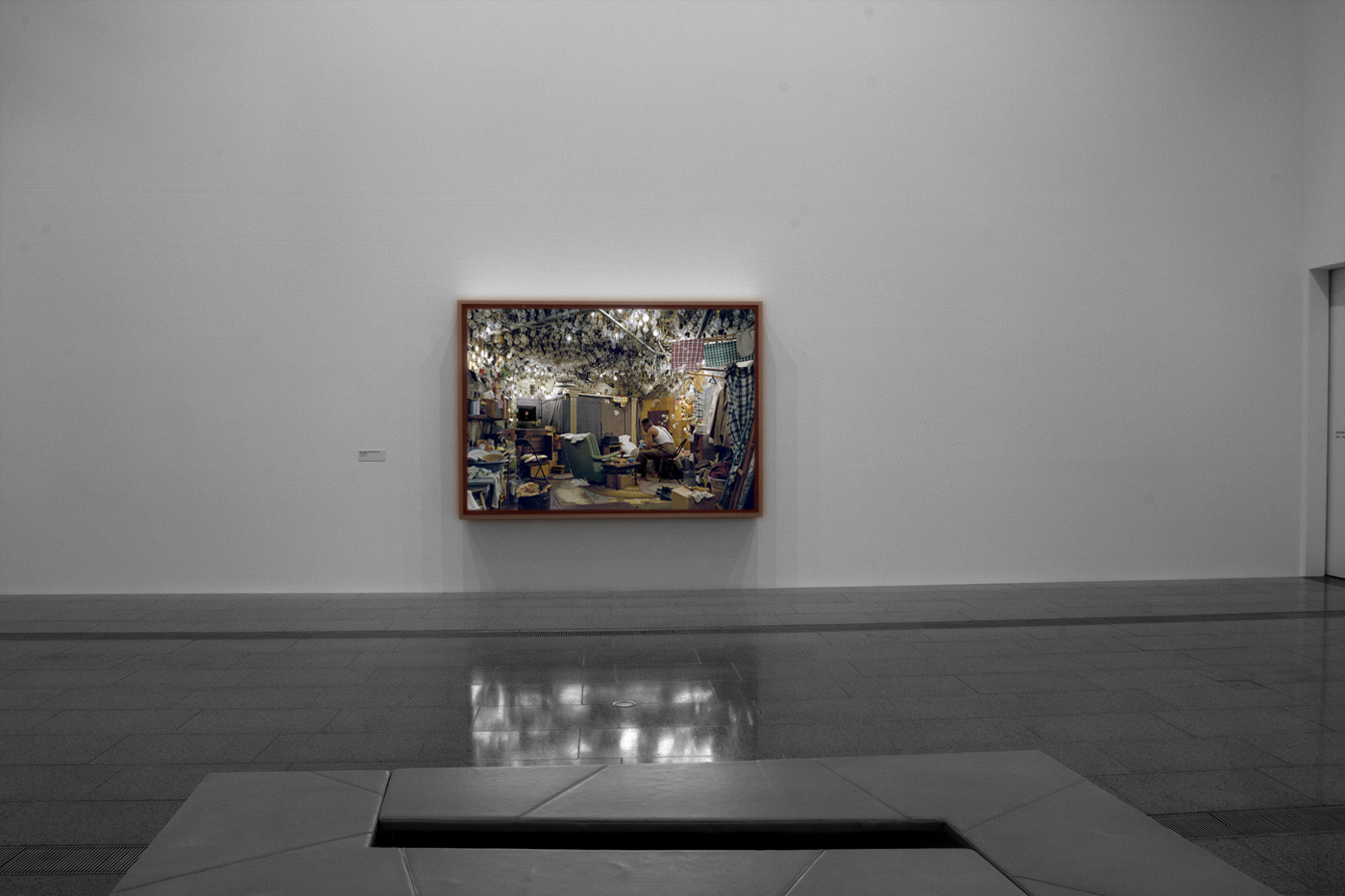
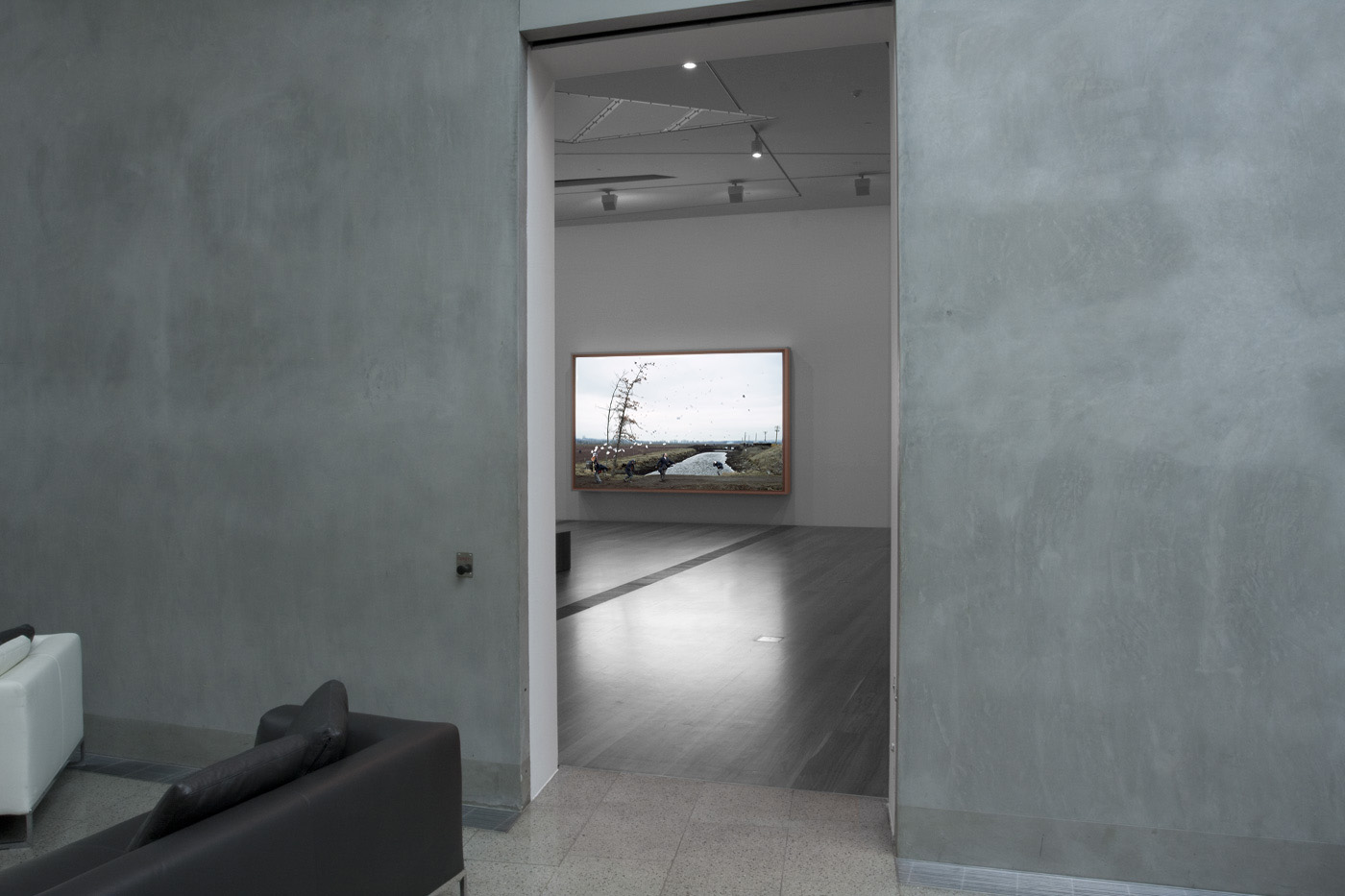
Saturday – Sunday 11am – 7pm
Closed Monday
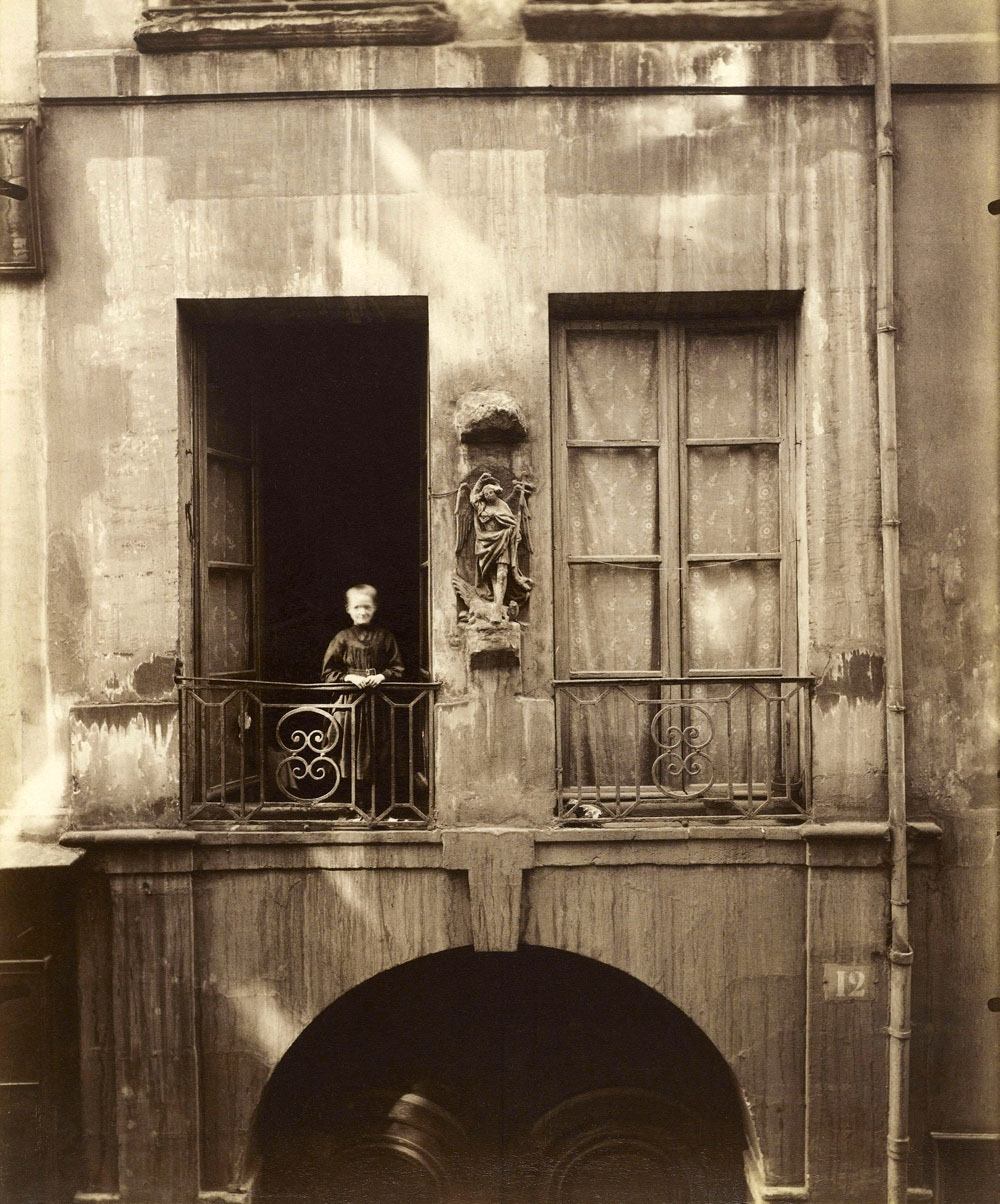
Jeu de Paume website

LIKE ART BLART ON FACEBOOK

Back to top