Whether there was, or he understood there to be, a “decisive” moment when Eugène Atget took a photograph is unknown… but I think that what he was trying to achieve was something different.
In Atget there is a decisive exposure – or (seemingly extended) time – of the image. In Cartier-Bresson this perception has shrunk to a millisecond but it is still there. Not so different, just this intensity – COMPRESSED.
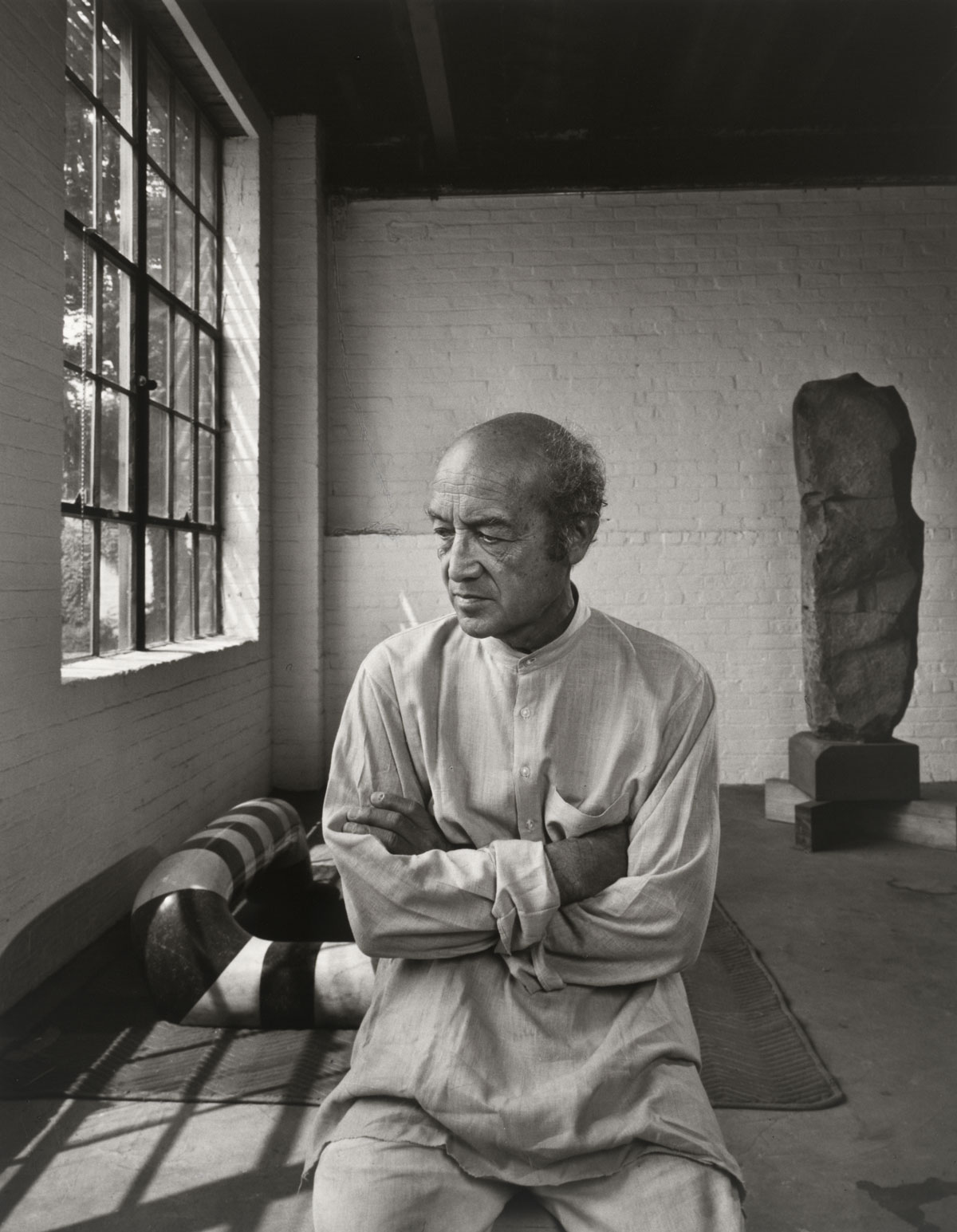
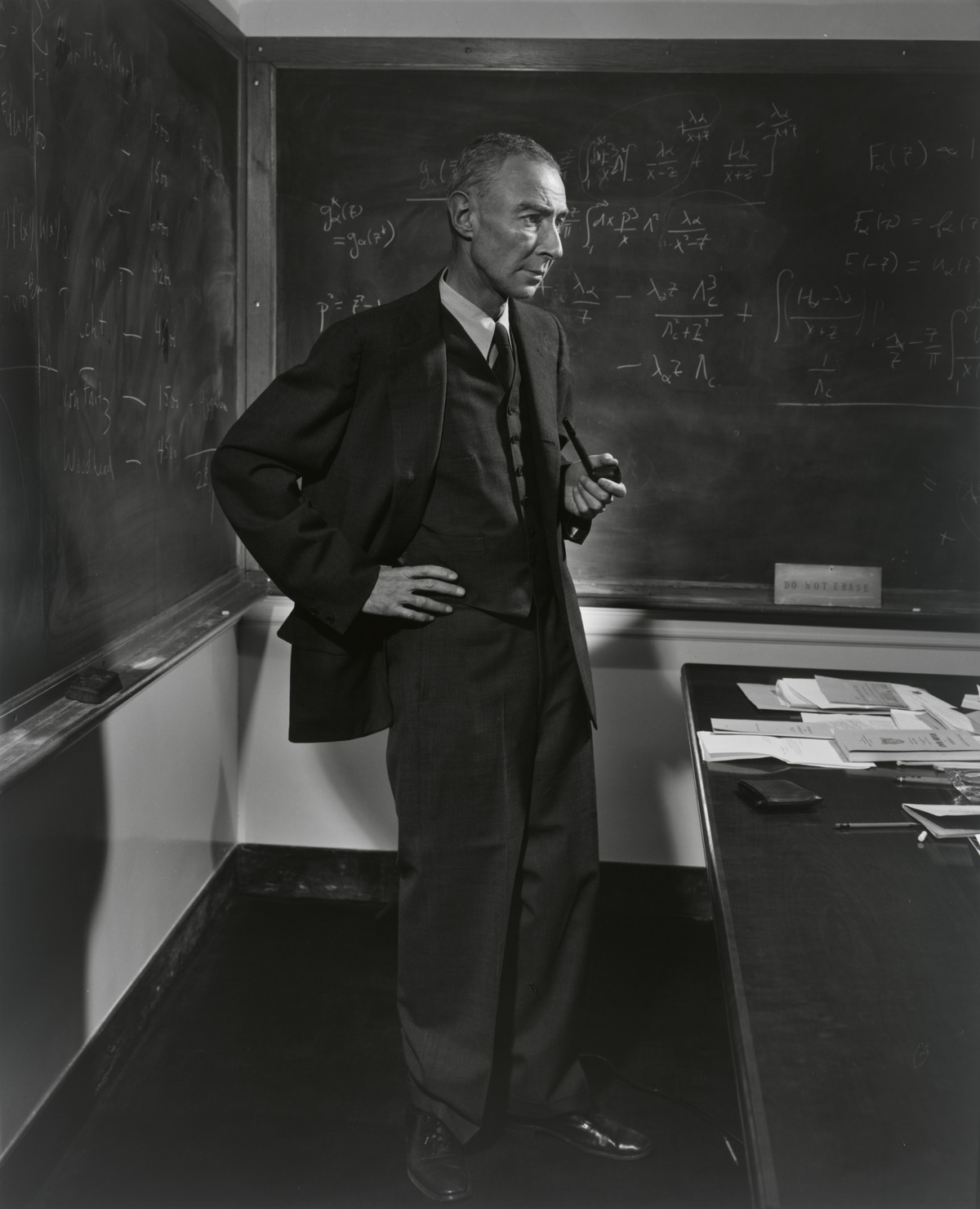
In Yousuf Karsh I believe that there is more an EXPANSION of time in the portraits – the decisive exposure is drawn out over the length of his engagement and dialogue with his sitters (with out seeing the caption you KNOW that is Robert Oppenheimer – I had not seen the image before butI sensed it instinctively, intuitively, it could be nobody else).
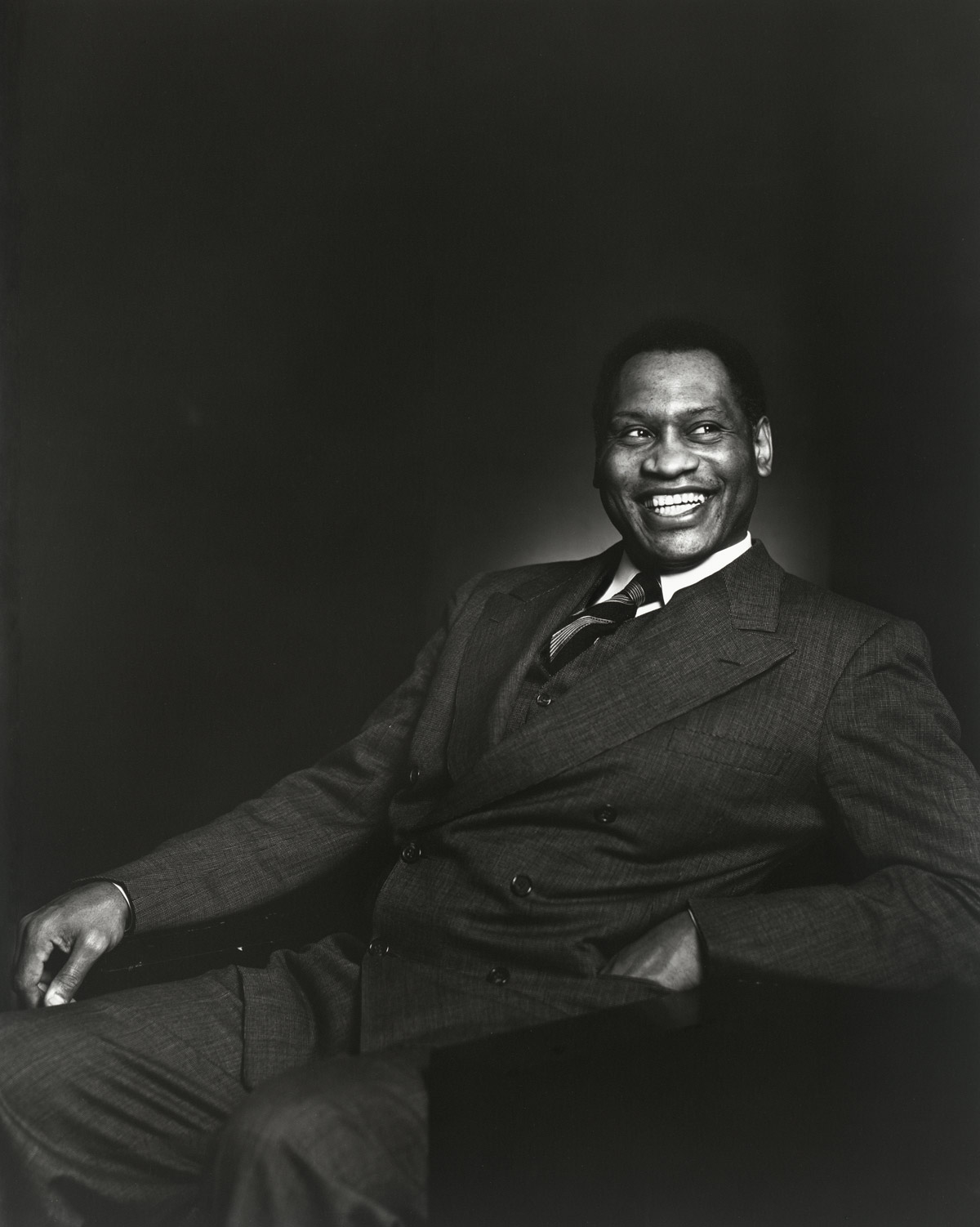
Karsh seems to ‘draw out’ some magical element in all of his sitters = they never just ‘sit’ for him, but actively engage in a dialogue that evidences some sense of being that is unique and timeless… an expansion of consciousness? an expansion of decisive exposure. Decisive – immediate; exposure – time / representation.
These are thoughts still forming in my head, a new way of looking at photography that relies less on instant gratification and more on intensities – of feeling, of thinking, of time, of representation.
Dr Marcus Bunyan
Many thankx to the National Portrait Gallery for allowing me to publish the photographs in the posting. Please click on the photographs for a larger version of the image.
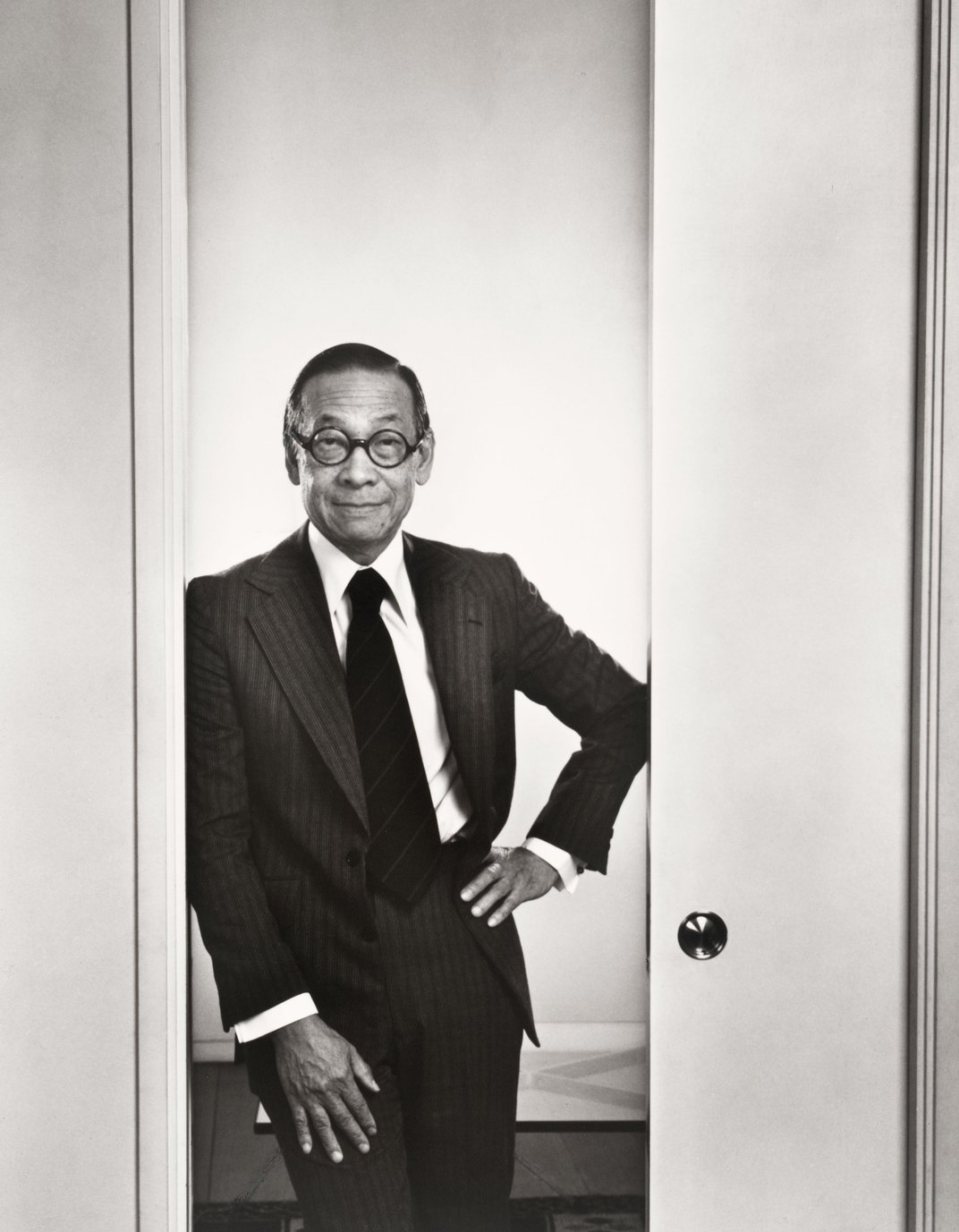
In celebration of a major gift to its collection of more than 100 portraits created by renowned photographer Yousuf Karsh (1908-2002), this exhibition features iconic photographs of Americans who have distinguished themselves in fields as diverse as business, medicine, entertainment, politics and the arts. Among the portraits included are those of artist Georgia O’Keeffe, physician and virologist Jonas Salk, singer Marian Anderson, actress Grace Kelly, businesswoman Elizabeth Arden, architect I. M. Pei and first lady Eleanor Roosevelt. Yousuf Karsh: American Portraits is the museum’s first exhibition devoted entirely to the work of this internationally recognised portrait photographer, and it will be presented in two installations.
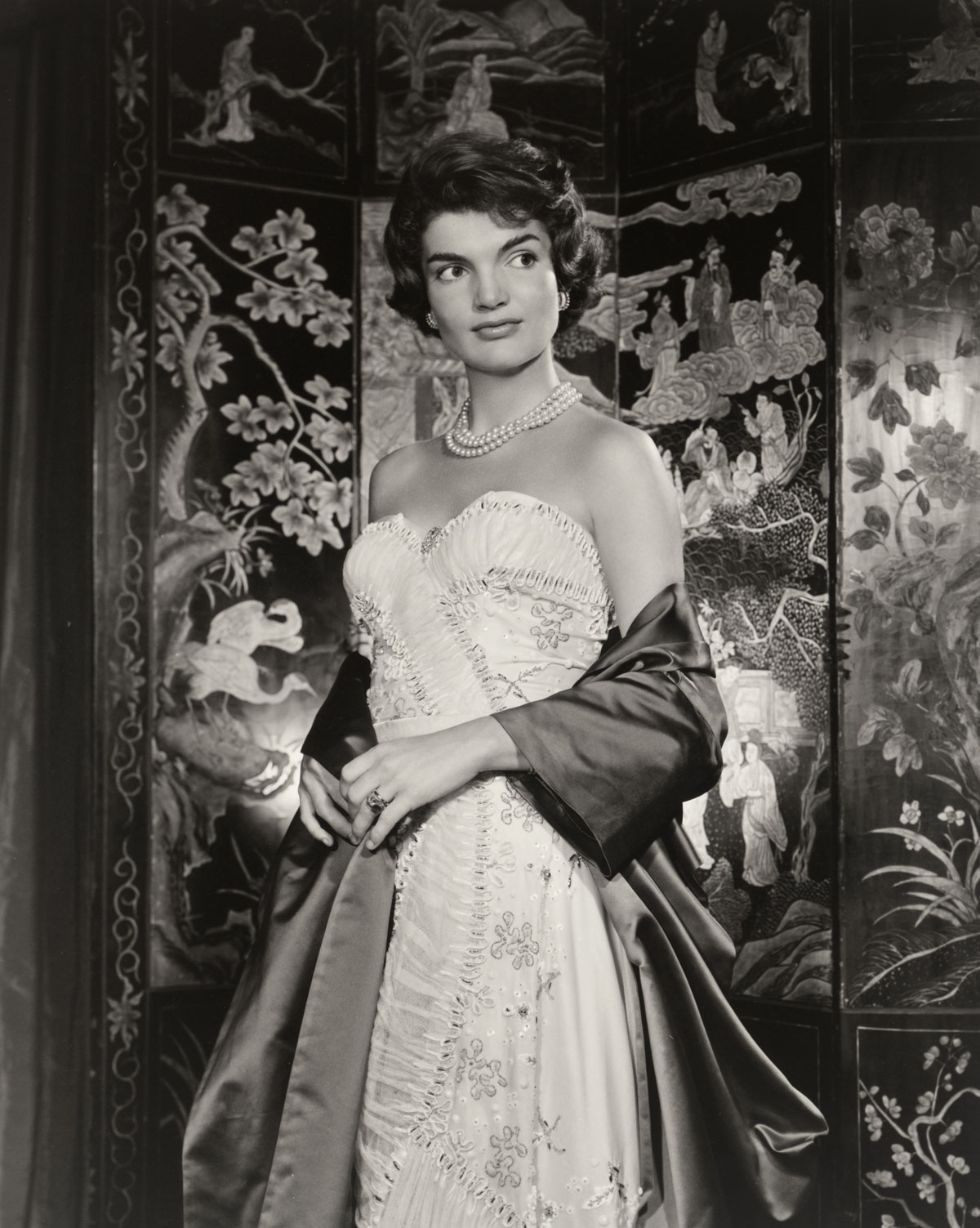
A luminous beauty whose film career spanned just six years (1951-1956), Grace Kelly left an indelible legacy with her performances in eleven motion pictures, many of which remain Hollywood classics. After her 1951 film debut in a minor role, she received wide notice for her performance opposite Gary Cooper in High Noon (1952). A year later, Kelly garnered her first Academy Award nomination for her work in Mogambo (1953). In 1954 she starred in four major releases, including the Alfred Hitchcock thrillers Dial M for Murder and Rear Window, and the drama The Country Girl, for which she won the Best Actress Oscar. Kelly scored additional hits with To Catch a Thief (1955) and the musical High Society (1956) before ending her Hollywood career to marry Monaco’s Prince Rainier in April 1956.
When Grace Kelly posed for Karsh’s camera, she was recently engaged and about to begin her new life as Monaco’s Princess Grace.
In 1954, when Ernest Hemingway received the Nobel Prize in Literature, the committee cited his “mastery of the art of modern narration.” In fact, through his short stories and such novels as The Sun Also Rises (1926) and For Whom the Bell Tolls (1940), Hemingway had, with his terse, powerful prose, in large measure invented a new literary style as he chronicled the disillusionment of the post-World War I “lost generation.” Hemingway’s own experiences – reporting foreign wars, living the bohemian life in Paris, and adventuring in Africa, Spain, and Cuba – fuelled his imagination and helped foster his larger-than-life public persona.
When Karsh traveled to Cuba in 1957 to photograph Hemingway, he “expected to meet in the author a composite of the heroes of his novels.” Instead, the photographer recalled, “I found a man of peculiar gentleness, the shyest man I ever photographed – a man cruelly battered by life but seemingly invincible.”
Albert Einstein transformed the world of physics with his groundbreaking theory of relativity, and in 1921 he received the Nobel Prize for “his services to theoretical physics” and “his discovery of the law of photoelectric effect.” The German-born physicist was visiting the United States when Hitler and the Nazis came to power in his homeland in 1933. Einstein never returned to Germany. Instead, he accepted a position at the Institute for Advanced Study in Princeton, New Jersey – the newly established academic institution that would become a major centre for research in theoretical physics. In residence at the institute for the remainder of his life, Einstein continued to publish, work on the interpretation of quantum theory, and wrestle without success on his unified field theory. He became a U.S. citizen in 1940.
Karsh relished the opportunity to photograph Einstein, whose face, “in all its rough grandeur, invited and challenged the camera.”
In 1941, as war raged in Europe and the Pacific, British prime minister Winston Churchill traveled to Washington for meetings with President Franklin Roosevelt before continuing on to Ottawa, where he delivered a rousing speech before the Canadian Parliament on December 30. Canada’s prime minister, Mackenzie King – an early admirer of Yousuf Karsh’s work – arranged for Karsh to attend Churchill’s address and to be in position to photograph the British leader as he later passed through the Speaker’s Chamber. Surprised to discover that he was to be photographed, Churchill grudgingly agreed to give Karsh two minutes for the shot but declined the photographer’s gentle entreaty to relinquish his freshly lit cigar. Undeterred, Karsh deftly removed the cigar from Churchill’s mouth and quickly made his exposure as Britain’s “roaring lion” glowered at the camera. The resulting image – one of the 20th century’s most iconic portraits – effectively launched Karsh’s international career.
In 1963, Churchill became the first foreign national to be granted honorary U.S. citizenship by the U.S. Congress.
One of the most influential architects to emerge in the decades following World War II, I. M. Pei is recognised throughout the world for his striking, high-modernist designs. Drawn to the United States to study architecture in 1935, Pei earned his undergraduate degree from MIT and later completed graduate work at Harvard. After first directing the architectural division of a large real-estate concern, Pei founded his own architecture firm in 1955, one year after becoming a U.S. citizen. As his reputation grew, important projects – such as the 1964 commission for the John F. Kennedy Memorial Library – came his way. Pei went on to create such iconic structures as the critically acclaimed East Wing of the National Gallery of Art (1978) and the distinctive glass pyramid that forms the entrance to the Louvre (1988). He has received many major awards, including the coveted Pritzker Prize (1983).
In celebration of a major gift to its collection of more than 100 portraits created by master photographer Yousuf Karsh (1908-2002), the Smithsonian’s National Portrait Gallery is installing a special exhibition on the first floor of the museum, Yousuf Karsh: American Portraits. This is the second of two installations and will run from May 2 through Nov. 2. Yousuf Karsh: American Portraits is the museum’s first exhibition devoted entirely to the work of this internationally recognised photographer. Each phase of the installation displays 27 photographs. The photographs were a gift to the museum by Estrellita Karsh.
“Yousuf Karsh created some of the most iconic photographic portraits of our time,” said Kim Sajet, director of the National Portrait Gallery. “He not only had the uncanny ability to amplify a person’s character, but also offered everyday people the opportunity to glimpse into the private lives of the men and women who shaped the 20th century in a way that feels both personal and real. I am thrilled to have his important work play an integral part in building the nation’s collection of portraits.”
A refugee from persecution in his native Armenia, Karsh immigrated to Canada in 1925. His uncle, a professional photographer, facilitated Karsh’s apprenticeship with the renowned Boston portrait photographer John H. Garo in 1928. By the time Karsh returned to Canada, he had “set [his] heart on photographing those men and women who leave their mark on the world.” In May 1933, he opened his portrait studio in Ottawa.
Karsh developed his distinctive portrait style by drawing inspiration from a variety of sources. Introduced to stage lighting techniques through his association with the Ottawa Drama League, he experimented with artificial lighting to achieve the dramatic effects that became the hallmark of his portraiture. Believing that “the heart and mind are the true lens of the camera,” Karsh also developed a genuine rapport with his sitters and partnered with them to fashion portraits that were both revealing and respectful.
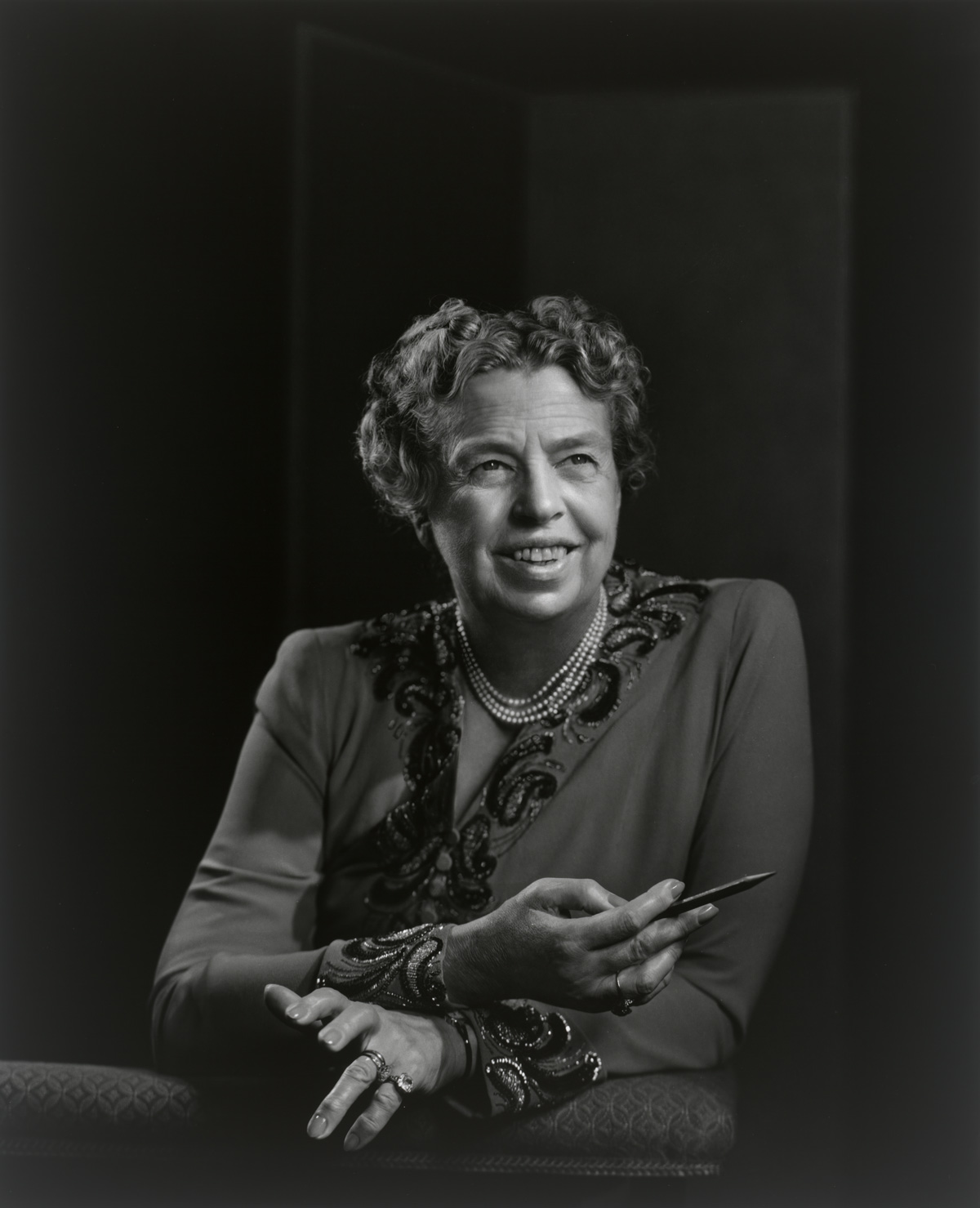
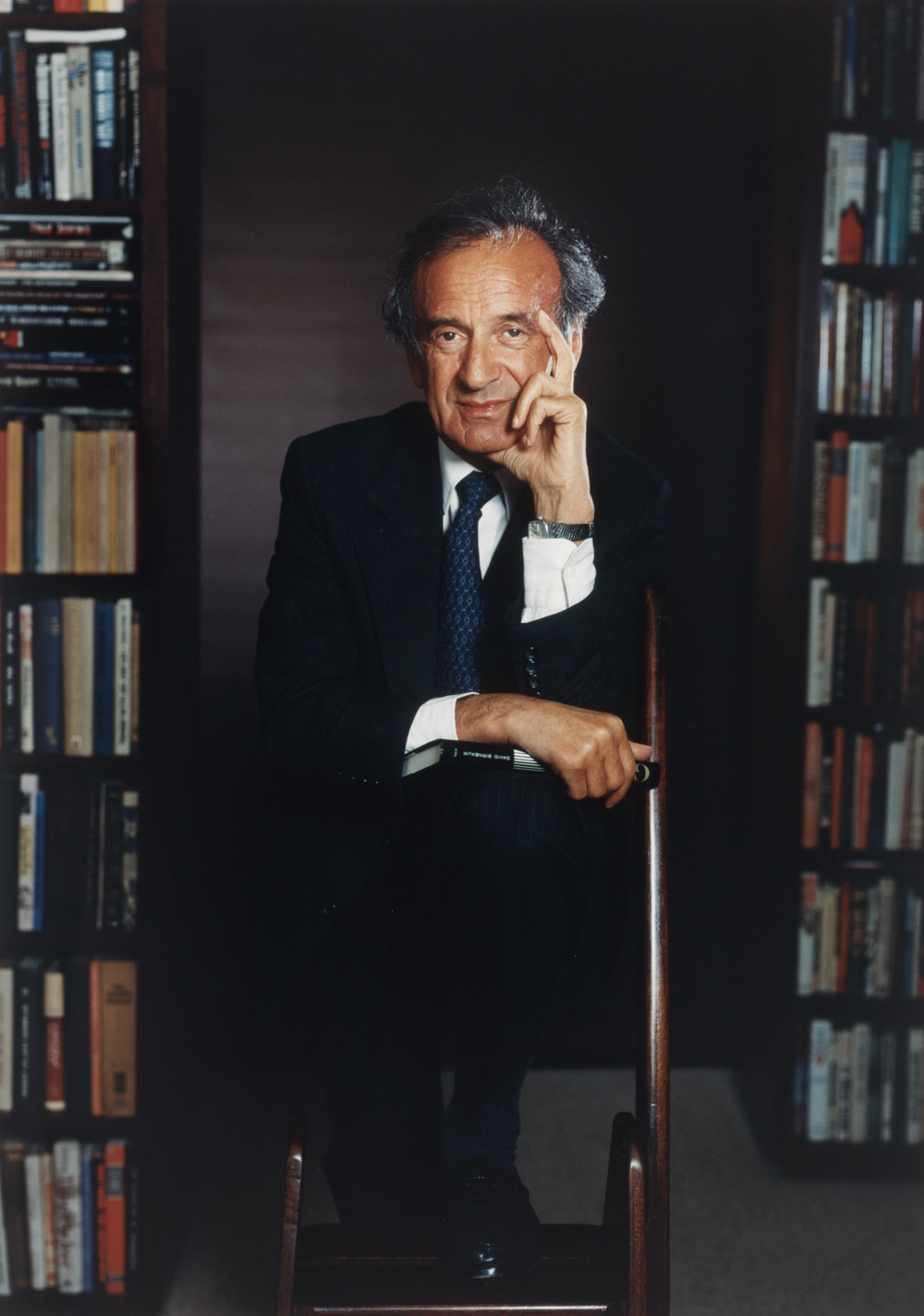
During a distinguished career that spanned more than six decades, Karsh believed that “the heart and mind are the true lens of the camera,” and he developed a genuine rapport with his subjects to fashion evocative and revealing portraits. This installation features Americans who have distinguished themselves in fields as diverse as business, medicine, entertainment, politics and the arts. Among the portraits included are Martha Graham, Helen Keller, Jackie Kennedy, Andy Warhol, Ellie Wiesel, Muhammad Ali and First Lady Eleanor Roosevelt. The museum has previously collected seven photographs by Karsh, including one of the most famous photographs of Winston Churchill, which became known as the “roaring lion,” and a colour photograph of the beloved creator of Peanuts, Charles Schultz. While the photographer is known for his work in black and white, the museum is also showing several works in colour.
Press release from the National Portrait Gallery website
As the nation’s first lady, Eleanor Roosevelt rapidly expanded her role from hostess to advocate and emerged as a vital force in her husband Franklin’s administration. She took public stands on issues ranging from exploitative labor practices to civil rights, but more important, she often urged her husband toward measures he might otherwise have avoided. When the challenges of World War II drew the president’s attention from domestic affairs, she continued to be a strong voice for the New Deal’s social welfare policies. The activism that characterised Eleanor Roosevelt’s years as first lady did not end with her departure from the White House. As a U.S. delegate to the United Nations (1945-1953), she was instrumental in formulating the Universal Declaration of Human Rights and securing its ratification by the General Assembly in 1948.
Eleanor Roosevelt’s hands were seldom still, and Karsh captured their expressive qualities in this portrait.
Curators: Anne Wilkes Tucker, the Gus and Lyndall Wortham Curator of Photography; Will Michels, collections photographer and exhibition co-curator; Natalie Zelt, curatorial assistant
Roger Fenton (British, 1819-1869) The Valley of the Shadow of Death 1855
This is the biggest posting on one exhibition that I have ever undertaken on Art Blart!
As befits the gravity of the subject matter this posting is so humongous that I have had to split it into 4 separate postings. This is how to research and stage a contemporary photography exhibition that fully explores its theme (NGV please note!). The curators reviewed more than one million photographs in 17 countries, locating pictures in archives, military libraries, museums, private collections, historical societies and news agencies; in the personal files of photographers and service personnel; and at two annual photojournalism festivals producing an exhibition that features 26 sections (an inspired and thoughtful selection) that includes nearly 500 objects that illuminate all aspects of WAR/PHOTOGRAPHY.
I have spent hours researching and finding photographs on the Internet to support the posting. It has been a great learning experience and my admiration for photographers of all types has increased. I have discovered the photographs and stories of new image makers that I did not know and some hidden treasures along the way. I hope you enjoy this monster posting on a subject matter that should be consigned to the history books of human evolution.
**Please be aware that there are graphic photographs in all of these postings.**Part 2, Part 3, Part 4
Dr Marcus Bunyan
Many thankx to the Museum of Fine Arts, Houston for allowing me to publish some of the photographs in the posting. Please click on the photographs for a larger version of the image.
On November 11, 2012, the Museum of Fine Arts, Houston, debuts an unprecedented exhibition exploring the experience of war through the eyes of photographers. WAR / PHOTOGRAPHY: Images of Armed Conflict and Its Aftermath features nearly 500 objects, including photographs, books, magazines, albums and photographic equipment. The photographs were made by more than 280 photographers, from 28 nations, who have covered conflict on six continents over 165 years, from the Mexican-American War of 1846 through present-day conflicts. The exhibition takes a critical look at the relationship between war and photography, exploring what types of photographs are, and are not, made, and by whom and for whom. Rather than a chronological survey of wartime photographs or a survey of “greatest hits,” the exhibition presents types of photographs repeatedly made during the many phases of war – regardless of the size or cause of the conflict, the photographers’ or subjects’ culture or the era in which the pictures were recorded. The images in the exhibition are organised according to the progression of war: from the acts that instigate armed conflict, to “the fight,” to victory and defeat, and images that memorialise a war, its combatants and its victims. Both iconic images and previously unknown images are on view, taken by military photographers, commercial photographers (portrait and photojournalist), amateurs and artists.
“‘WAR/PHOTOGRAPHY’ promises to be another pioneering exhibition, following other landmark MFAH photography exhibitions such as ‘Czech Modernism: 1900-1945’ (1989) and ‘The History of Japanese Photography’ (2003),” said Gary Tinterow, MFAH director. “Anne Tucker, along with her co-curators, Natalie Zelt and Will Michels, has spent a decade preparing this unprecedented exploration of the complex and profound relationship between war and photography.” “Photographs serve the public as a collective memory of the experience of war, yet most presentations that deal with the material are organised chronologically,” commented Tucker. “We believe ‘WAR / PHOTOGRAPHY’ is unique in its scope, exploring conflict and its consequences across the globe and over time, analysing this complex and unrelenting phenomenon.”
The earliest work in the exhibition is from 1847, taken from the first photographed conflict: the Mexican-American War. Other early examples include photographs from the Crimean War, such as Roger Fenton’s iconic The Valley of the Shadow of Death (1855) and Felice Beato’s photograph of the devastated interior of Fort Taku in China during the Second Opium War (1860). Among the most recent images is a 2008 photograph of the Battle Company of the 173rd Airborne Brigade in the remote Korengal Valley of Eastern Afghanistan by Tim Hetherington, who was killed in April 2011 while covering the civil war in Libya. Also represented with two photographs in the exhibition is Chris Hondros, who was killed with Hetherington. While the exhibition is organised according to the phases of war, portraits of servicemen, military and political leaders and civilians are a consistent presence throughout, including Yousuf Karsh’s classic 1941 image of Winston Churchill, and the Marlboro Marine (2004), taken by embedded Los Angeles Times photographer Luis Sinco of soldier James Blake Miller after an assault in Fallujah, Iraq. Sinco’s image was published worldwide on the cover of 150 publications and became a 2005 Pulitzer Prize finalist.
The exhibition was initiated in 2002, when the MFAH acquired what is purported to be the first print made from Joe Rosenthal’s negative of Old Glory Goes Up on Mount Suribachi, Iwo Jima (1945). From this initial acquisition, the curators decided to organise an exhibition that would focus on war photography as a genre. During the evolution of the project, the museum acquired more than a third of the prints in the exhibition. The curators reviewed more than one million photographs in 17 countries, locating pictures in archives, military libraries, museums, private collections, historical societies and news agencies; in the personal files of photographers and service personnel; and at two annual photojournalism festivals: World Press Photo (Amsterdam) and Visa pour l’Image (Perpignan, France). The curators based their appraisals on the clarity of the photographers’ observation and capacity to make memorable and striking pictures that have lasting relevance. The pictures were recorded by some of the most celebrated conflict photographers, as well as by many who remain anonymous. Almost every photographic process is included, ranging from daguerreotypes to inkjet prints, digital captures and cell-phone shots.
Press release from the Museum of Fine Arts, Houston
WAR/PHOTOGRAPHY: Images of Armed Conflict and Its Aftermath is organised into 26 sections, which unfold in the sequence that typifies the stages of war, from the advent of conflict through the fight, aftermath and remembrance. Each section showcases images appropriate to that category while cutting across cultures, time and place. Outside of this chronological approach are focused galleries for “Media Coverage and Dissemination” (with an emphasis on technology); “Iwo Jima” (a case study); and “Photographic Essays” (excerpts from two landmark photojournalism essays, by Larry Burrows and Todd Heisler).
Media Coverage and Dissemination
1. Media Coverage and Dissemination provides an overview of how technology has profoundly affected the ways that pictures from the front reach the public: from Roger Fenton and his horse-drawn photography van (commissioned by the British government to document the Crimean War), to Joe Rosenthal’s 1940s Anniversary Speed Graphic (4 x 5) camera, to pictures taken with the Hipstamatic app of an iPhone by photojournalist Michael Christopher Brown in Egypt during the protests and clashes of the Arab Spring. (22 images / objects)
Roger Fenton (British, 1819-1869) The artist’s van [Marcus Sparling, full-length portrait, seated on Roger Fenton’s photographic van] 1855 Salted paper print 17.5 x 16.5cm Library of Congress, Prints & Photographs Division
Manufactured by Graflex, active 1912-1973 Anniversary Speed Graphic (4 x 5), “Scott S. Wigle camera” (First American-made D-Day picture) c. 1940 Camera Collection of George Eastman House (Gift of Graflex, Inc.)
An Advent of War
2. The photographs in An Advent of War depict the catalytic events of war. These moments of instigation are rarely captured, as photographers are not always present at the initial attack or provocation. Photographs that Robert Clark took on the morning of September 11, 2001, and the aerial view of torpedoes approaching Battleship Row during the Pearl Harbor attack, taken by an unknown Japanese airman on December 7, 1941, both convey with clarity the concept of war’s advent. (11 images).
Unknown photographer (Japanese) War in Hawaiian Water. Japanese Torpedoes Attack Battleship Row, Pearl Harbor December 7, 1941 Gelatin silver print The Museum of Fine Arts, Houston, gift of Will Michels
Recruitment & Embarkation
3. Recruitment & Embarkation shows mobilisation: the movement toward the front. Mikhail Trakhman captures a Russian mother kissing her son goodbye in Kolkhoz farmer M. Nikolaïeva bids her son Ivan goodbye before he joins the partisans (1942), while a 1916 photograph by Josiah Barnes, known as the “Embarkation Photographer,” shows an archetypal moment: young Australian soldiers waving goodbye from a ship as they depart their home country to fight in World War I. (7 images)
Josiah Barnes (Australian, 1858-1921) Embarkation of HMAT Ajana, Melbourne July 8, 1916 Gelatin silver print (printed 2012) On loan from the Australian War Memorial
Known as “the embarkation photographer”, the Kew, Melbourne photographer Josiah Barnes took an interest in photographing Australian troopships as they departed for war from Melbourne. He had two sons, “Norm and Victor, who left for war in 1916 (both returned to Australia after their service),” which may have fuelled his interest.
Mikhail Trakhman (Russian, 1918-1976) Kolkhoz farmer M. Nikolaïeva bids her son Ivan goodbye before he joins the partisans 1942 Gelatin silver print
A kolkhoz was a form of collective farm in the Soviet Union which, alongside sovkhoz (state farm), formed the main components of the socialised farm sector which emerged after the October Revolution of 1917 as an antithesis to feudalism, aristocratic landlords, serfdom and individual farming.
Mikhail Trakhman
Mikhail Trakhman was born in Moscow in 1918. After graduating from school, he began working at the newsreel studio and at the same time studying for courses in the field of assistant operator. From 1938 he became the photo reporter of the Uchitelskaya Gazeta, and in 1939 he was drafted into the army and participated in the Soviet-Finnish war. During the Great Patriotic War, Mikhail Trakhman worked as a press photographer for the Soviet Information Bureau. His main instrument was the famous “Leica” camera, but often military weapons fell into his hands. He shot in besieged Leningrad, in Pskov and in Belarus, participated in the liberation of Poland and Hungary. The most famous are his photographs from the partisan series taken in the rear of the German troops. In his diaries, he wrote: “I take a lot of things, although I know that 80% of the shot will go to the basket, but I need to shoot it, since such things happen once in a lifetime.” Thanks to these photos, he entered the history of war reporting. Mikhail Trakhman was awarded the Order of the Red Star and the medal “For the Defense of Leningrad” and “Partisan Medal”, which he especially valued.
Anonymous. “Mikhail Trakhman,” on the Lumiere Brothers Gallery website [Online] Cited 06/09/2020. Used under fair use conditions for the purposes of education and research
Training
4. Training explores photographs of soldiers in boot camp or more-advanced phases of instruction and exercise. World War II Royal Navy officers gather around a desk to study different types of aircraft in a photograph by Sir Cecil Beaton. Also included is the iconic Vietnam-era photograph of a U.S. Marine drill sergeant reprimanding a recruit in South Carolina, from Thomas Hoepker’s series US Marine Corps boot camp, 1970. In one photograph, shot by a Japanese soldier and published in 1938 by Look magazine, Japanese soldiers use living Chinese prisoners in bayonet practice. (13 images)
5. Daily Routine features moments of boredom, routine and playfulness. A member of the U.S. Army Signal Corps wears a gas mask as he peels onions. A 1942 photograph by Sir Cecil Beaton catches the off-guard expression of a Royal Navy man at a sewing machine, mending a signal flag. (13 images)
Anonymous photographer Soldiers trying out their gas masks in every possible way. Putting the respirator to good use while peeling onions. 40th Division, Camp Kearny, San Diego, California 1918 National Archives and Records Administration
HMS Alcatara was an RML passenger liner of 22,209 tons and 19 knots launched in 1926, and taken up by the Royal Navy for conversion to an armed merchant cruiser to counter the threat posed by German surface raiders against shipping. When Jim Hingston joined her as an ordinary seaman at Freetown she was still largely in merchant dress, with wood panelling throughout. Much to the regret of her crew this was removed during their stay at Simonstown – the wisdom of that was apparent to them only too soon.
There were some 53 such ships in all, poorly armed, in Alcantara‘s case with eight 6 inch and two 3 inch guns, the former having a range of some 14,200 yards (13,000 metres). Such armament could not be much more than defensive, the intention being that the AMCs should radio the position of the German ship and not only give merchant shipping a chance to escape but delay the commerce raider long enough to allow regular RN warships to get to the scene.
Alcantara‘s opponent, the Thor, was laid down in 1938 as a freighter of 9,200 tons displacement and a speed of 18 knots, but commissioned as a commerce raider on 14 March 1940. Though she had only 6 150 mm guns they had a much greater range, at 20,000 yards, than Alcantara and other British AMCs. She also carried a scout floatplane. During the engagement with Alcantara on 28 July 1940 the Thor inflicted significant damage but the Alcantara successfully closed, and after being hit the Thor withdrew in order to avoid the risk of being crippled or being forced to abort her mission. In later encounters with AMCs the Thor severely damaged the Carnarvon Castle and sank Voltaire.
HMS Alcantara later had her 6 in armament upgraded and was equipped with a seaplane, but as the threat of surface raiders receded she was converted to her more natural role of troopship in 1943.
Reconnaissance, Resistance and Sabotage
6. Images of Reconnaissance, Resistance and Sabotage are scarce by nature, as they reveal spies in the act and could be used against those depicted or their families. A U.S. soldier on night watch sits atop a mountain in Afghanistan, wrapped in a blanket and peering into night-vision equipment, in a photograph by Adam Ferguson. A photograph by T. E. Lawrence (known as Lawrence of Arabia) documents the bombing of the Hejaz Railway during the Arab Revolt. Cas Oorthuys’ photograph Under German Occupation (Dutch Worker’s Front), Amsterdam (c. 1940-1945), taken with a camera hidden in his jacket, shows the back of a fellow countryman who is helping to conceal the photographer, with German troops in the distance. Also included is Arkady Shaikhet’s 1942 photograph Partisan Girl depicting Olga Mekheda, who was renowned for her ability to get through German roadblocks – even while pregnant. (10 images)
T.E. Lawrence (British, 1888-1935) Untitled [A Tulip bomb explodes on the railway Hejaz Railway, near Deraa, Hejaz, Ottoman Empire] 1918 Collection of the MFA Houston
Cas Oorthuys (Dutch, 1908-1975) Under German Occupation (Dutch Worker’s Front), Amsterdam c. 1940-1945 Gelatin silver print 13 7/8 × 11 5/8 in. (35.2 × 29.5cm) Museum of Fine Arts, Houston Museum purchase funded by Anne Wilkes Tucker in honor of the 50th wedding anniversary of Max and Isabell Smith Herzstein
Adam Ferguson (Australian, b. 1978) September 4, Tangi valley, Wardak province, Afghanistan, a soldier of the U.S. Army 10th Mountain Division was attentively monitoring a highway September 4, 2009
“To me, this picture epitomises the abstract idea of the ‘enemy’ that exists within the U.S. led war in Afghanistan: a young infantryman watches a road with a long-range acquisition sight surveying for insurgents planting Improvised Explosive Devices. U.S. Army Infantrymen rarely knowingly come face to face with their enemy, combat is fleeting and fought like cat and mouse, and the most decisive blows are determined by intelligence gathering, and then delivered through technology that maintains a safe distance, just like a video game.”
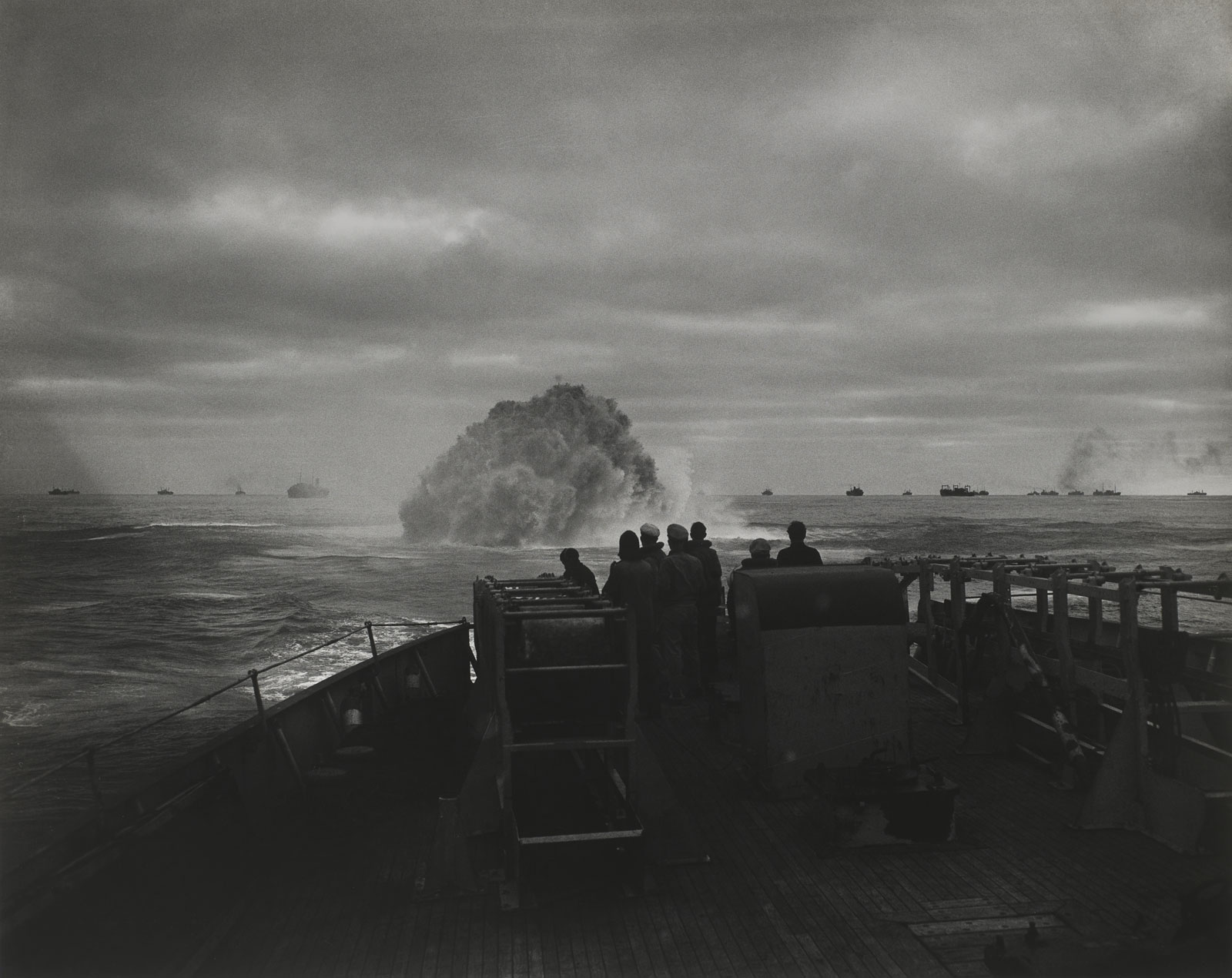
7. Patrol & Troop Movement conveys the mass movements of peoples and personnel by land, sea and air, from the movement of troops and supplies to patrols by all five divisions of military service: Army, Navy, Marine Corps, Coast Guard and Air Force. Combat patrols are detachments of forces sent into hostile terrain for a range of missions, and they – as well as the photographers accompanying them – face considerable danger. João Silva’s three sequenced frames show, through his eyes, the tilted earth just after he was felled by an IED while on patrol in Afghanistan in 2010; he lost both legs in the incident. A tranquil, 1917 image by Australian James Frank Hurley depicts silhouetted soldiers walking in a line, their reflections captured in a body of water. A 1943 photograph by American Warrant Photographer Jess W. January USCGR shows members of the U.S. Coast Guard observing a depth-charge explosion hitting a German submarine that stalked their convoy. (14 images)
Frank Hurley (Australian, 1885-1962) Supporting troops of the 1st Australian Division walking on a duckboard track 1917
Warrant Photographer Jess W. January USCGR, American USCG Cutter Spencer destroys Nazi sub April 17, 1943 Gelatin silver print The Museum of Fine Arts, Houston
The Wait
8. The Wait depicts a common situation of wartime. Susan Meiselas captures a tense moment during a 1978 street fight in Nicaragua, when muchachos with Molotov cocktails line up in an alleyway, ready to initiate an attack on the National Guard. Robert Capa shows two female French ambulance drivers in Italy during World War II, leaning against their vehicle, knitting, as they wait to be called. (8 images)
9. The Fight is one of the most extensive sections in the exhibition. Dmitri Baltermants shot Attack – Eastern Front WWII (cover image of the exhibition catalogue) in 1941 from the trench, as men charged over him. Sky Over Sevastopol (1944), by Evgeny Khaldey, is an aerial photograph of planes on their way to a bombing raid of the strategically important naval point. Joe Rosenthal’s Over the Top – American Troops Move onto the Beach at Iwo Jima (1945) pictures infantrymen emerging from the protection of their landing craft into enemy fire. Staged photographs, presented as authentic documents, tend to proliferate during wartime, and several examples are included here. In 1942 the Public Relations Department of the War issued an assignment to photographers to create “representative” images of combat in North Africa for more dynamic images; official British photographer Len Chetwyn staged an Australian officer leading the charging line in the battle of El Alamein, using smoke in the background from the cookhouse to create a lively image. (21 images)
Len Chetwyn (English, 1909-1980) Australians approached the strong point, ready to rush in from different sides November 3, 1942 Silver gelatin photograph
Dmitri Baltermants (Russian, 1912-1990) Attack – Eastern Front WWII 1941 Silver gelatin photograph
The Wait and Rescue
10. The Wait and Rescue bookend The Fight. Among the photographs in Rescue are Ambush of the 173rd AB, South Vietnam (1965), by Tim Page, showing soldiers immediately combing through a battleground to assist the wounded; American Lt. Wayne Miller’s image of a wounded gunner being lifted from the turret of a torpedo bomber; and Life magazine photographer W. Eugene Smith’s 1944 photograph of an American soldier rescuing a dying Japanese infant. Smith wrote about that moment, stating “hands trained for killing gently… extricated the infant” to be transported to medical care. (8 images)
Lt. Wayne Miller (American, 1918-2013) Crewmen lifting Kenneth Bratton out of turret of TBF on the USS SARATOGA after raid on Rabaul November 1943 Silver gelatin photograph
More information: Kenneth C. Bratton – Mississippi (WWII vet). He was born in Pontotoc, MS, December 17, 1918. He passed away April 15, 1982. Lt. Bratton won a purple heart for his bravery during the attack on Rabaul November 11, 1943.
Wayne Forest Miller (September 19, 1918 – May 22, 2013) was an American photographer known for his series of photographs The Way of Life of the Northern Negro. Active as a photographer from 1942 until 1975, he was a contributor to Magnum Photos beginning in 1958. …
War photographer
Miller then served as a lieutenant in the U.S. Navy where he was assigned to Edward Steichen’s World War II Naval Aviation Photographic Unit. He was among the first Western photographers to document the destruction at Hiroshima.
The Grumman TBF Avenger (designated TBM for aircraft manufactured by General Motors) is an American World War II-era torpedo bomber developed initially for the United States Navy and Marine Corps, and eventually used by several air and naval aviation services around the world.
The Avenger entered U.S. service in 1942, and first saw action during the Battle of Midway. Despite the loss of five of the six Avengers on its combat debut, it survived in service to become the most effective and widely-used torpedo bomber of World War II, sharing credit for sinking the super-battleships Yamato and Musashi (the only ships of that type sunk exclusively by American aircraft while under way) and being credited for sinking 30 submarines. Greatly modified after the war, it remained in use until the 1960s.
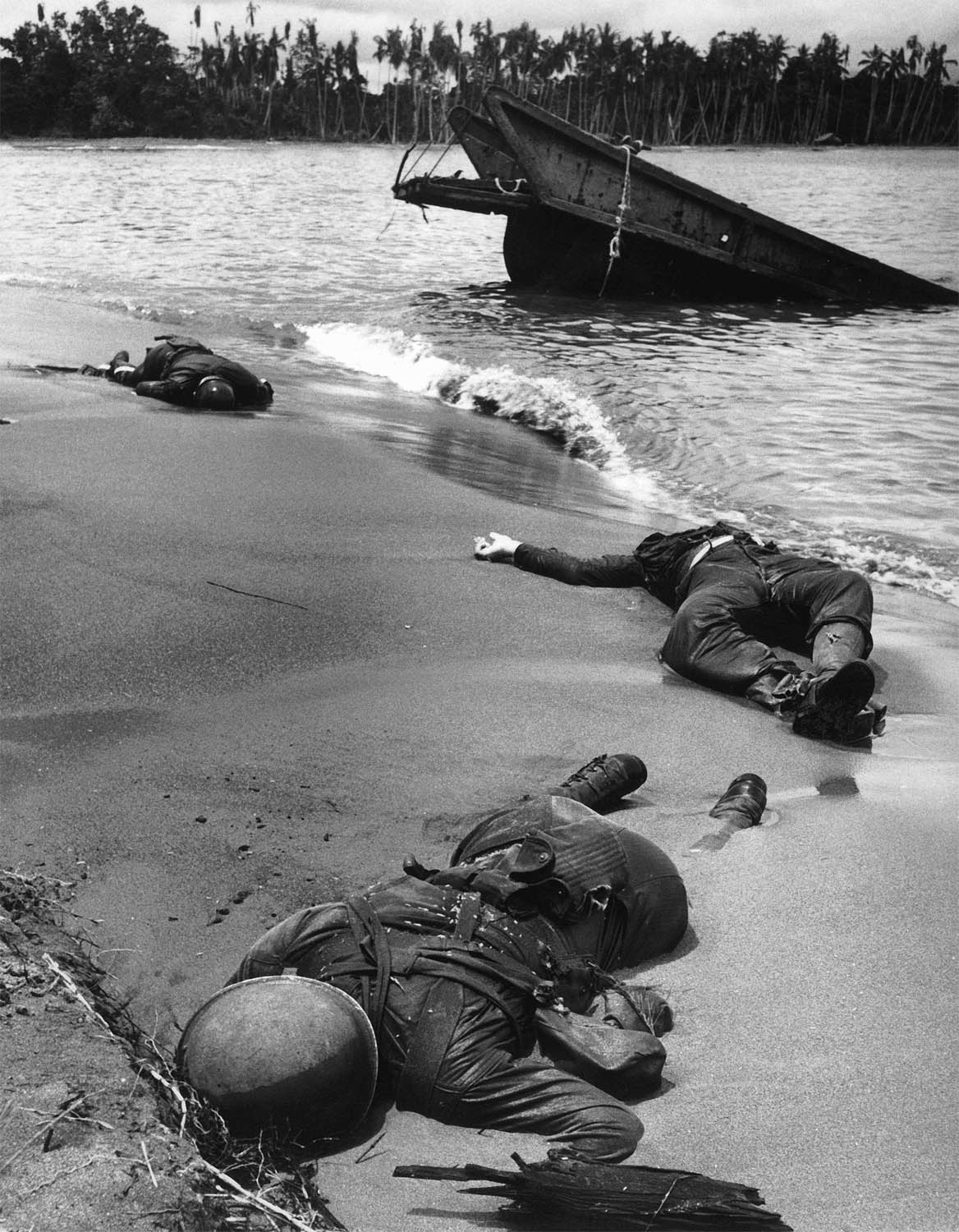
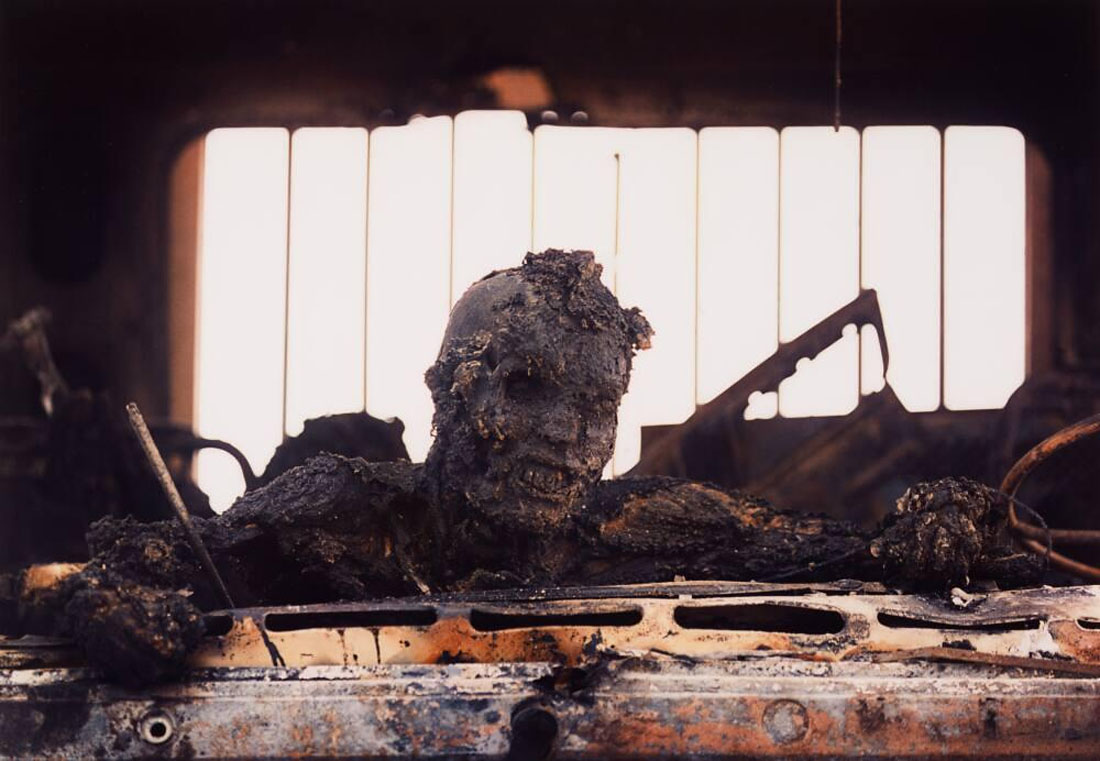
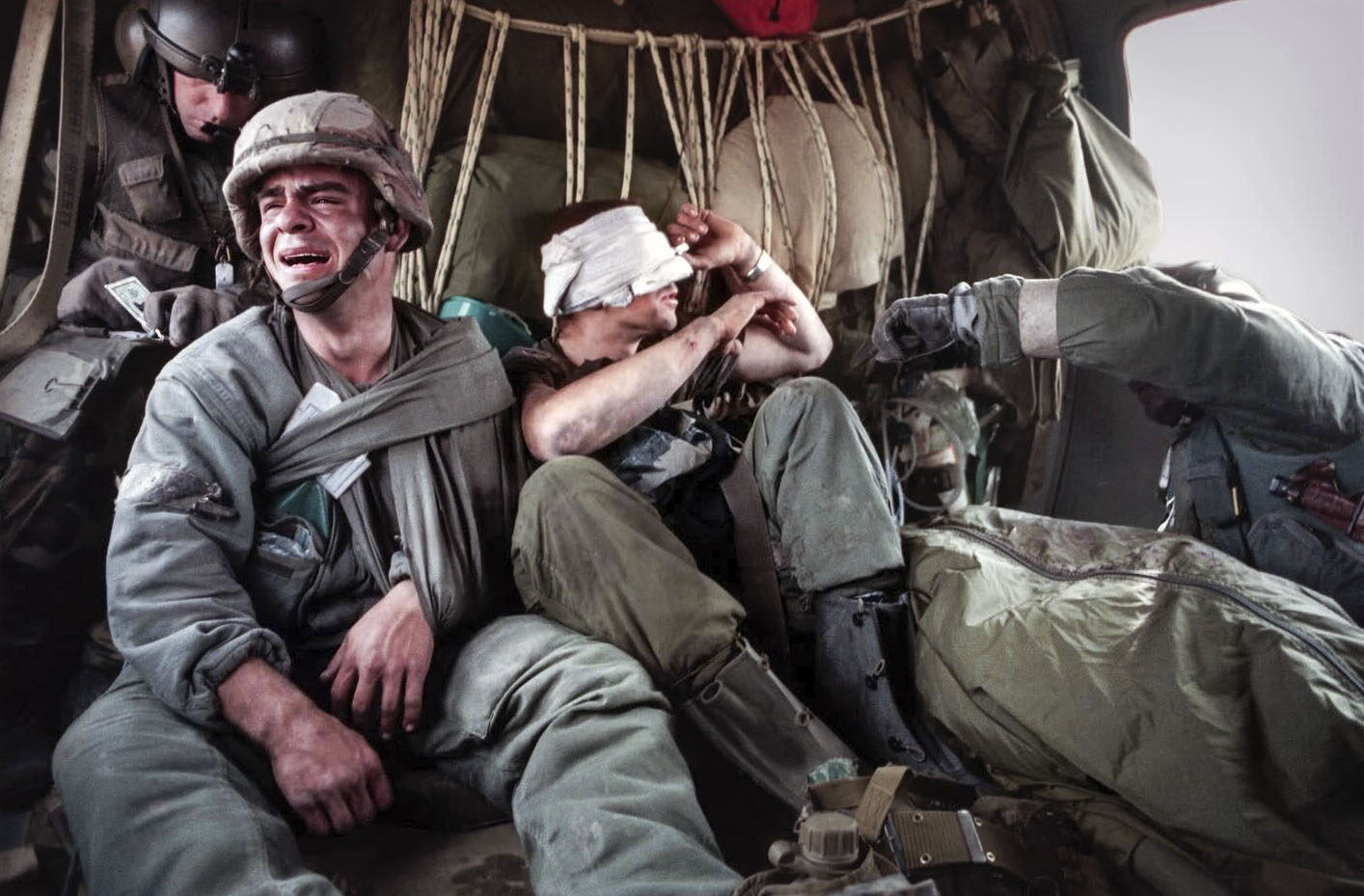
11. Aftermath, with four subsections, features photographs taken after the battle has ended. “Death” on the battlefield is one of the earliest types of war images: Felice Beato photographed the dead in the interior of Fort Taku in the Second Opium War (1860). George Strock’s Dead GIs on Buna Beach, New Guinea (1943), which ran in Life magazine with personal details about the casualties, was the first published photograph from any conflict of American dead in World War II. In 1966, Associated Press photographer Henri Huet documented an American paratrooper, who was killed in action, being raised to an evacuation helicopter. Incinerated Iraqi, Gulf War, Iraq, taken by Kenneth Jarecke, was published in Europe, but the American Associated Press editors withheld it in the United States. “Shell Shock and Exhaustion” shows impenetrable exhaustion after battle. In Don McCullin’s Shell-shocked soldier awaiting transportation away from the front line, Hué, Vietnam (1968), the man looks forward with the “thousand-yard stare.” Robert Attebury photographed Marines so exhausted after a 2005 battle in Iraq that lasted 17 hours that they fell asleep where they had been standing, amid the rubble of a destroyed building. “Grief and Battlefield Burial” were taken at the site of the conflict, including David Turnley’s 1991 picture of a weeping soldier who has just learned that the remains in a nearby body bag are those of a close friend. “Destruction of Property” shows collateral damage from war. Christophe Agou, for instance, photographed the smouldering steel remains of the twin towers of the World Trade Center in 2001. (39 images)
David Turnley (American, b. 1955) American Soldier Grieving for Comrade Iraq, 1991
Ken Kozakiewicz (left) breaks down in an evacuation helicopter after hearing that his friend, the driver of his Bradley Fighting Vehicle, was killed in a “friendly fire” incident that he himself survived. Michael Tsangarakis (centre) suffers severe burns from ammunition rounds that blew up inside the vehicle during the incident. All of the soldiers were exposed to depleted uranium as a result of the explosion. They and the body of the dead man are on their way to a MASH (Mobile Army Surgical Hospital).
Prisoners of War (Civilian and Military)/Interrogation
12. Prisoners of War (Civilian and Military)/Interrogation is a frequently photographed subject because such pictures can be made outside an area of conflict. Moreover, the people in control often documented their prisoners as a show of power. The photographs in this section include the official recording of a prisoner of war before his execution by the Khmer Rouge, taken by Nhem Ein. (14 images)
13. Iwo Jima is a case study within the exhibition that presents the complete thematic narrative in photographs from a specific battle. Included in this section is the inspiration for the exhibition: Joe Rosenthal’s iconic, Pulitzer Prize-winning Old Glory Goes Up on Mount Suribachi, Iwo Jima, a photograph he took as an Associated Press photographer in World War II showing U.S. Marines and one Navy medic raising the American flag on the remote Pacific island. (25 images)








![Roger Fenton (English, 1819-1869) 'The artist's van [Marcus Sparling, full-length portrait, seated on Roger Fenton's photographic van]' 1855](https://artblart.com/wp-content/uploads/2012/12/roger_fentons_waggon2.jpg "Roger Fenton (English, 1819-1869) 'The artist's van [Marcus Sparling, full-length portrait, seated on Roger Fenton's photographic van]' 1855")


![T.E. Lawrence. 'Untitled [A Tulip bomb explodes on the railway Hejaz Railway, near Deraa, Hejaz, Ottoman Empire]' 1918](https://artblart.com/wp-content/uploads/2026/06/lawrence-a-tulip-bomb-explodes-on-the-railway-hejaz-railway.jpg)









 Art Blart _ art and cultural memory archive
You must be logged in to post a comment.