Exhibition: ‘Capa in Color’ at Jeu de Paume – Château de Tours

Exhibition dates: 21st November, 2015 – 29th May, 2016

Curator: Cynthia Young, curator at Robert Capa archives


Robert Capa (American, 1913-1954) 'American crewmen stand in front of a B-17 bomber' England 1942 from the exhibition 'Capa in Color' at Jeu de Paume – Château de Tours, Nov 2015 - May 2016


Robert Capa (American, 1913-1954)
American crewmen stand in front of a B-17 bomber that is being prepared to take off from a Royal Air Force base for a daylight bombing raid over occupied France. This B-17 was one of the first 300 to be brought overseas by the US Army Air Forces
England, 1942
International Center of Photography, New York
© Robert Capa/International Center of Photography/Magnum Photos


To be honest, Robert Capa was not the most natural colour photographer, especially when you compare him to the likes of Paul Outerbridge and Saul Leiter who were working at around the same time. Even the official text from Jeu de Paume that accompanies the exhibition is littered with descriptions like “uninspired”, “the color photographs lack focus”, or worse, “Fleur Cowles at Look and Len Spooner at Illustrated were disappointed with the color images.”

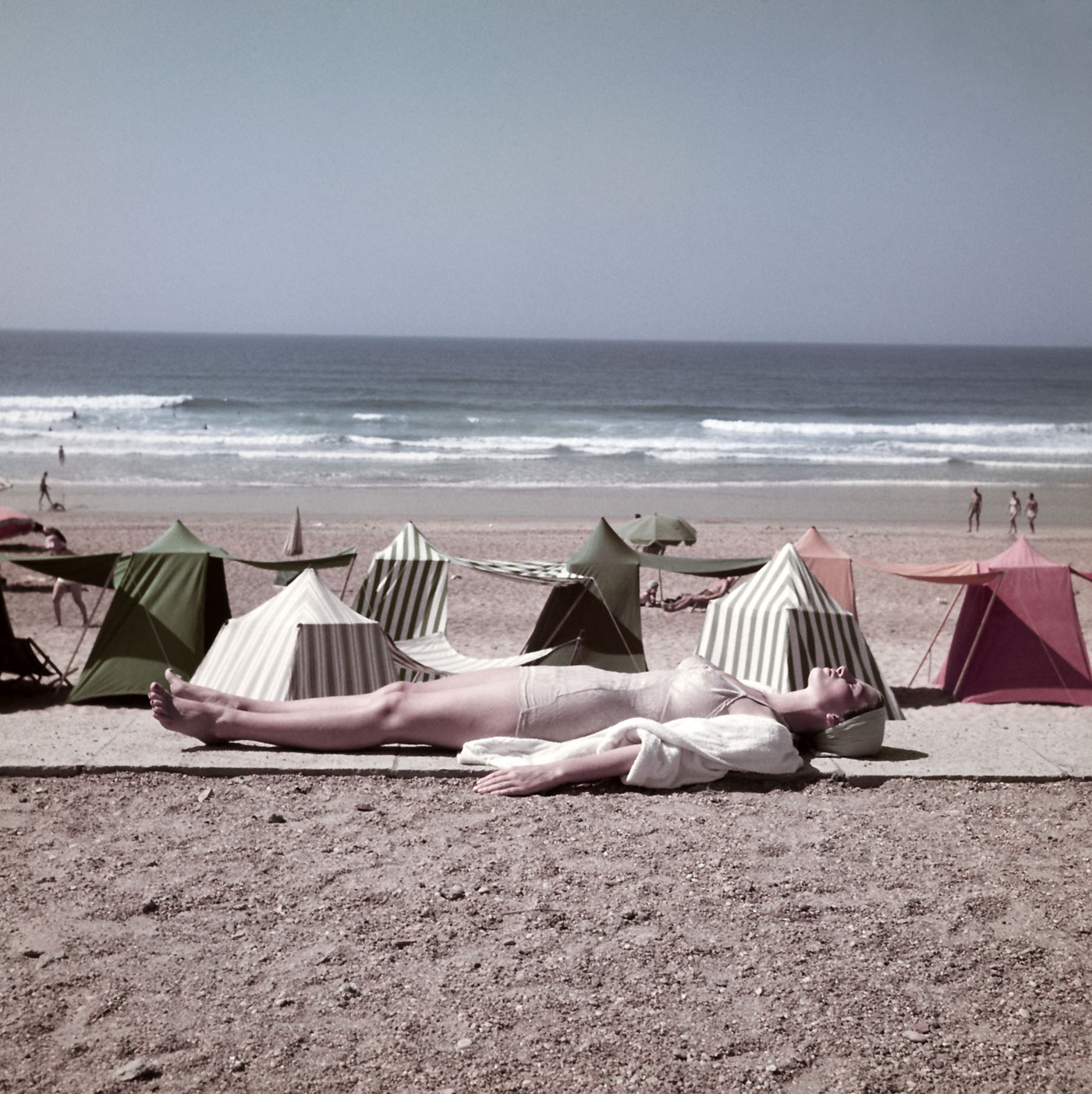
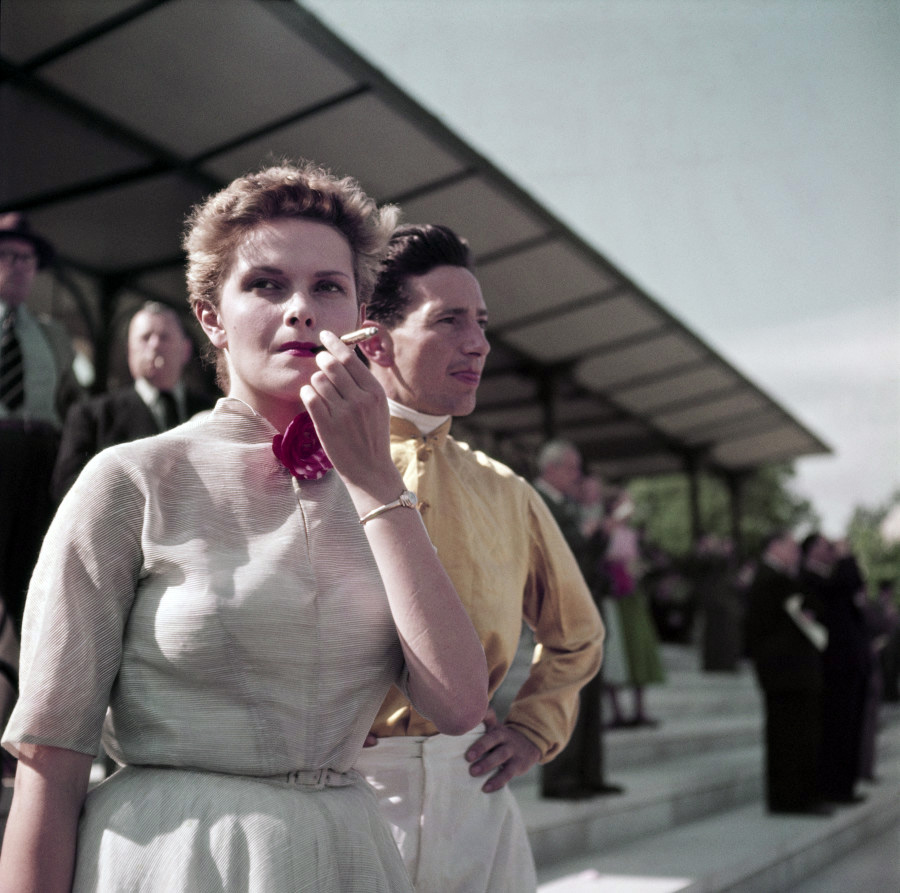
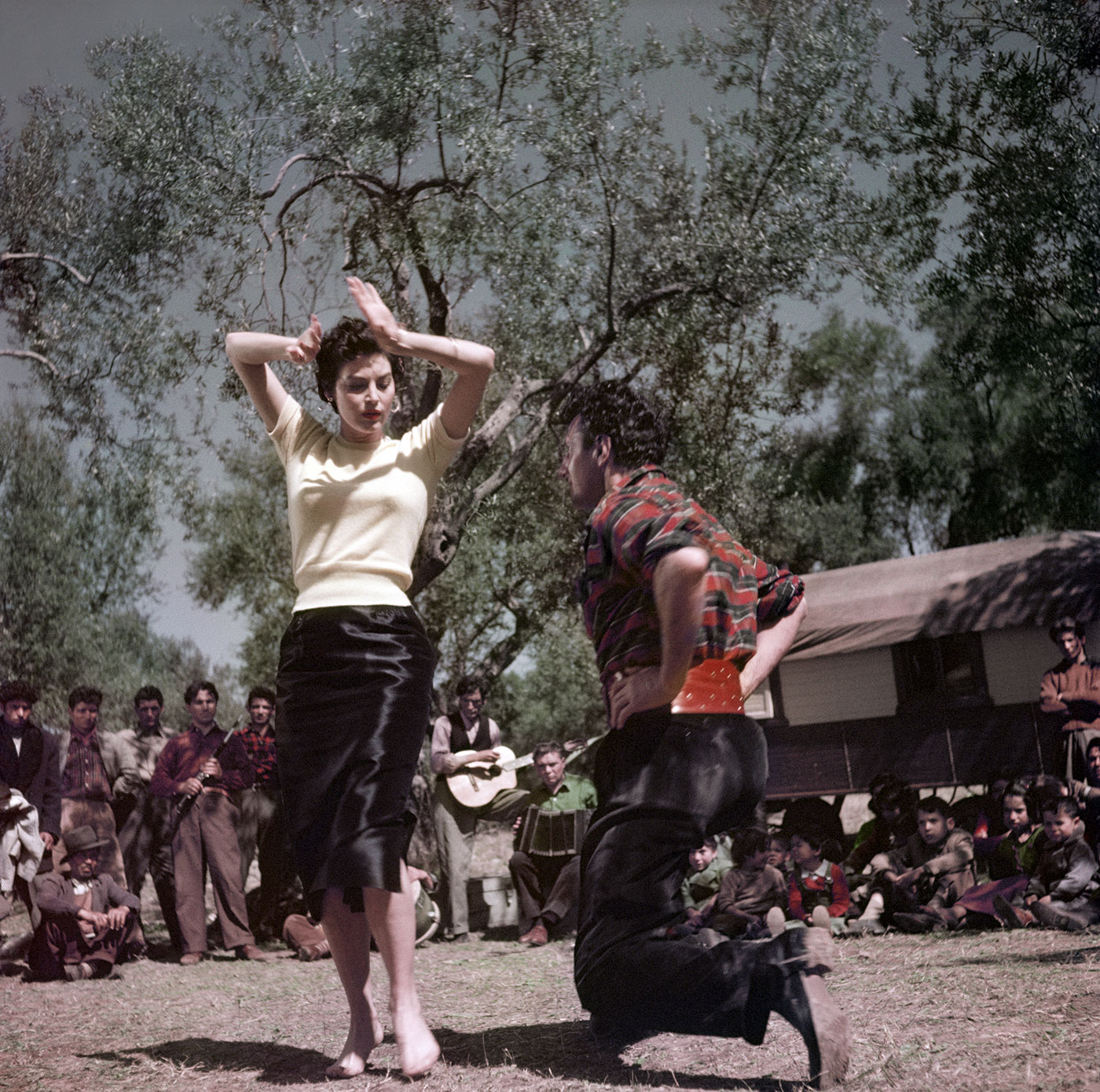
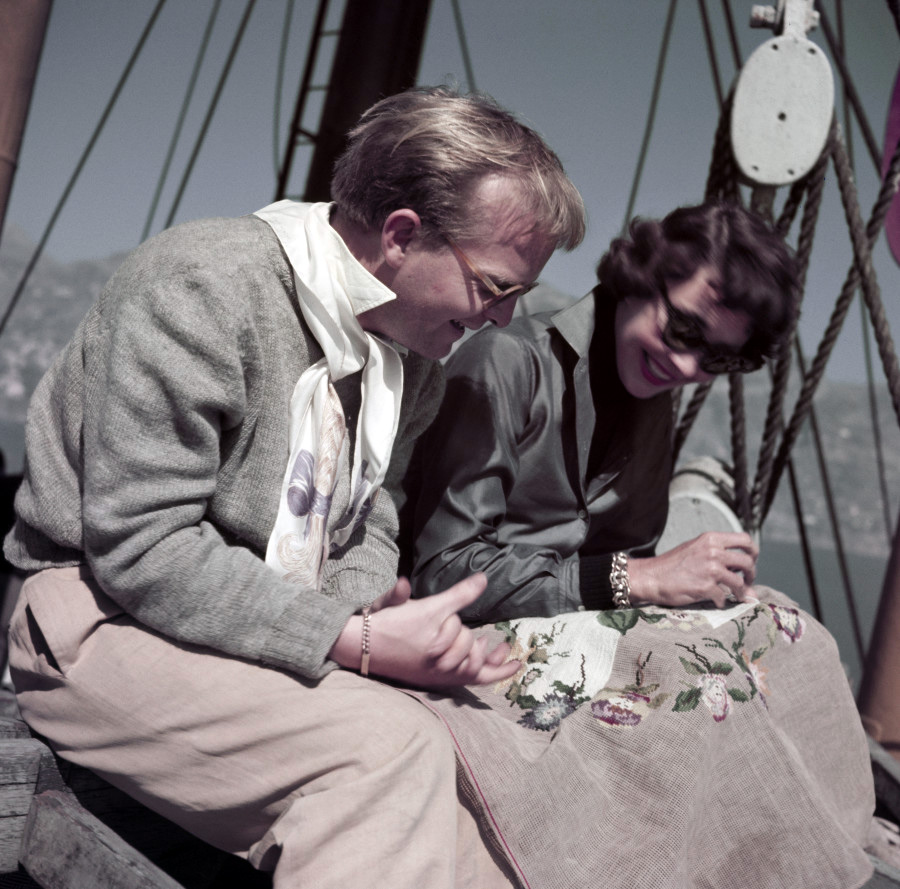
His work in this medium is what I would call “observational” colour photography. The images are best when the subject is intimate, human and ‘on set’, preferably using a limited palette with splashes of subdued colour – such as in the gorgeous Model wearing Dior on the banks of the Seine, Paris, France (1948), the delicate Woman on the beach, Biarritz, France (1951), and the simpatico duo of Humphrey Bogart and Peter Lorre on the set of ‘Beat the Devil’, Ravello, Italy (April 1953) and Truman Capote and Jennifer Jones on the set of ‘Beat the Devil’, Ravello, Italy (April 1953). The photographs of Ava Gardner on set are also cracking images for their vitality and overall balance, as is the almost monochromatic Gen X girl, Colette Laurent, at the Chantilly racetrack, France (1952). Other ensemble tableaux might as well have been shot in black and white, such as Spectators at the Longchamp Racecourse, Paris, France (c. 1952).

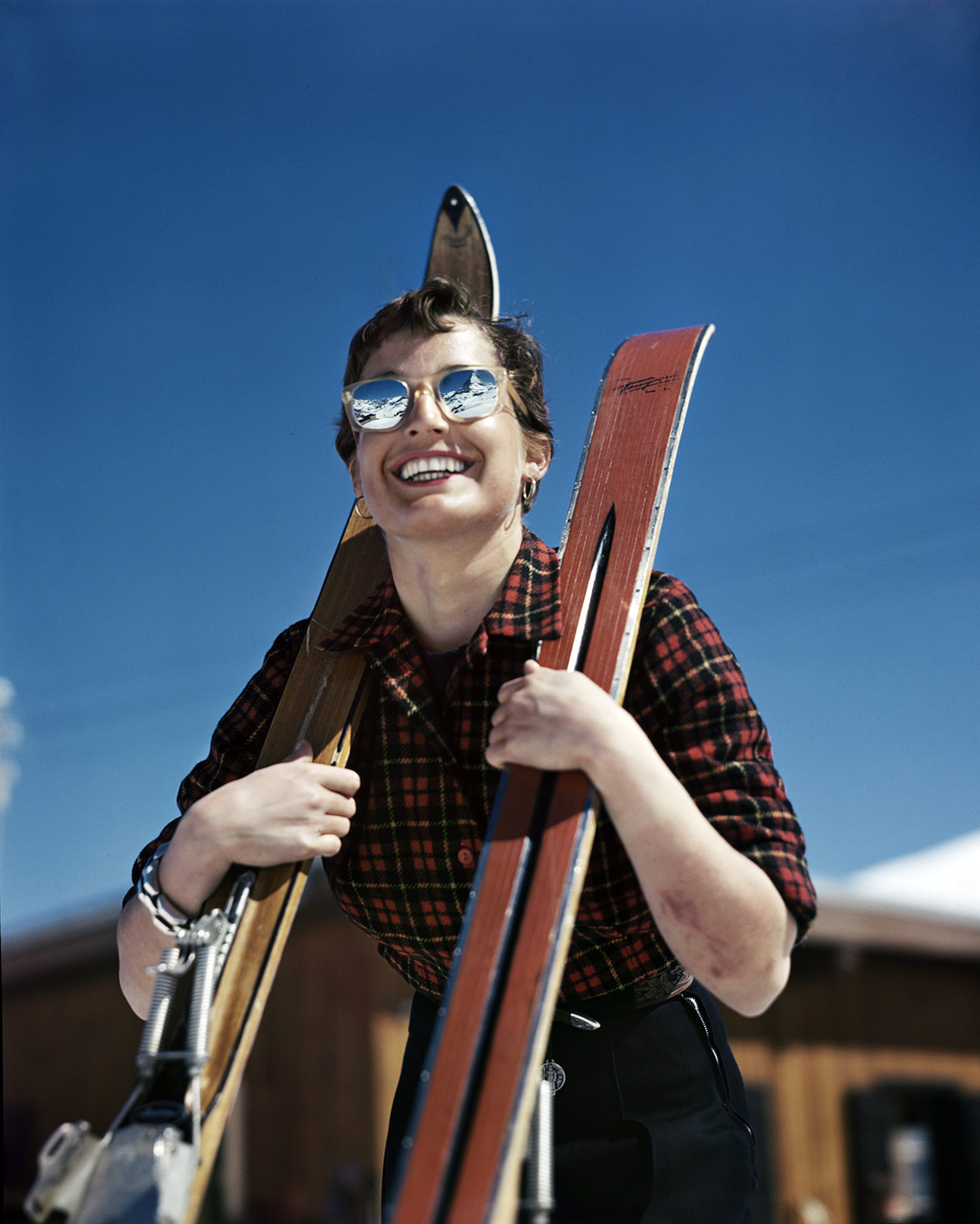
Capa too often resorts to one or two strong primary colours for effect, as in Capucine, French model and actress, on a balcony, Rome, Italy (August 1951), Rambaugh Family Circus, Indiana, USA (1949) or American Judith Stanton, Zermatt, Switzerland (1950). In the the former two images the composition doesn’t work with the colour; only in the latter does it become a vigorous and joyous structural element.

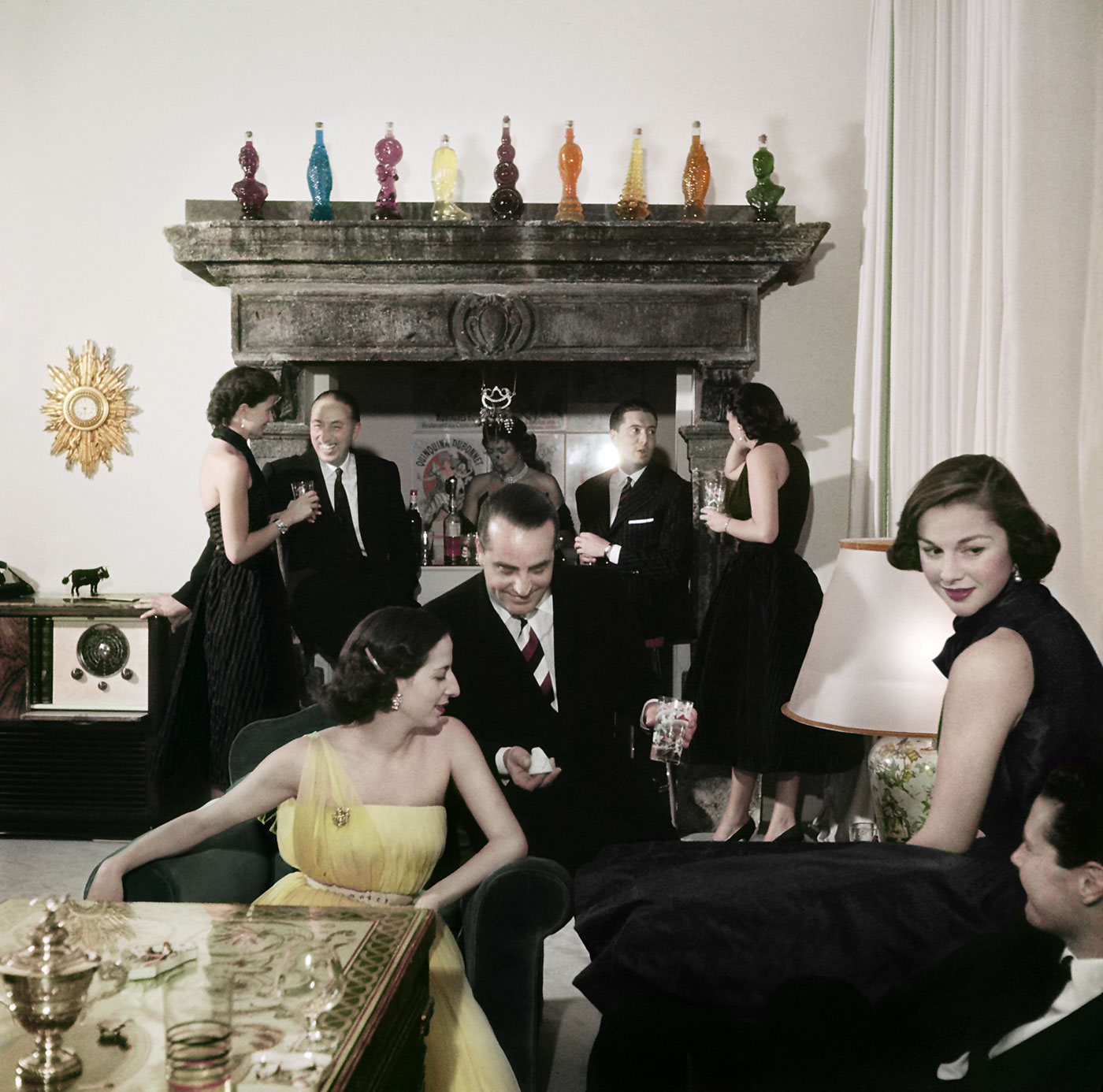
Sometimes I think that Capa didn’t exactly know what to do with colour – Woman at an ice bar, Zürs, Austria (1949-1950) and Party, Rome, Italy (August 1951) are not very good at all – but here we must acknowledge an artist experimenting with a relatively new commercial medium, even as he seeks to sell these images to his clients.

Capa in Color is at his best when he employs subtlety, constructing strong human compositions with nuanced placement of shades and hues.

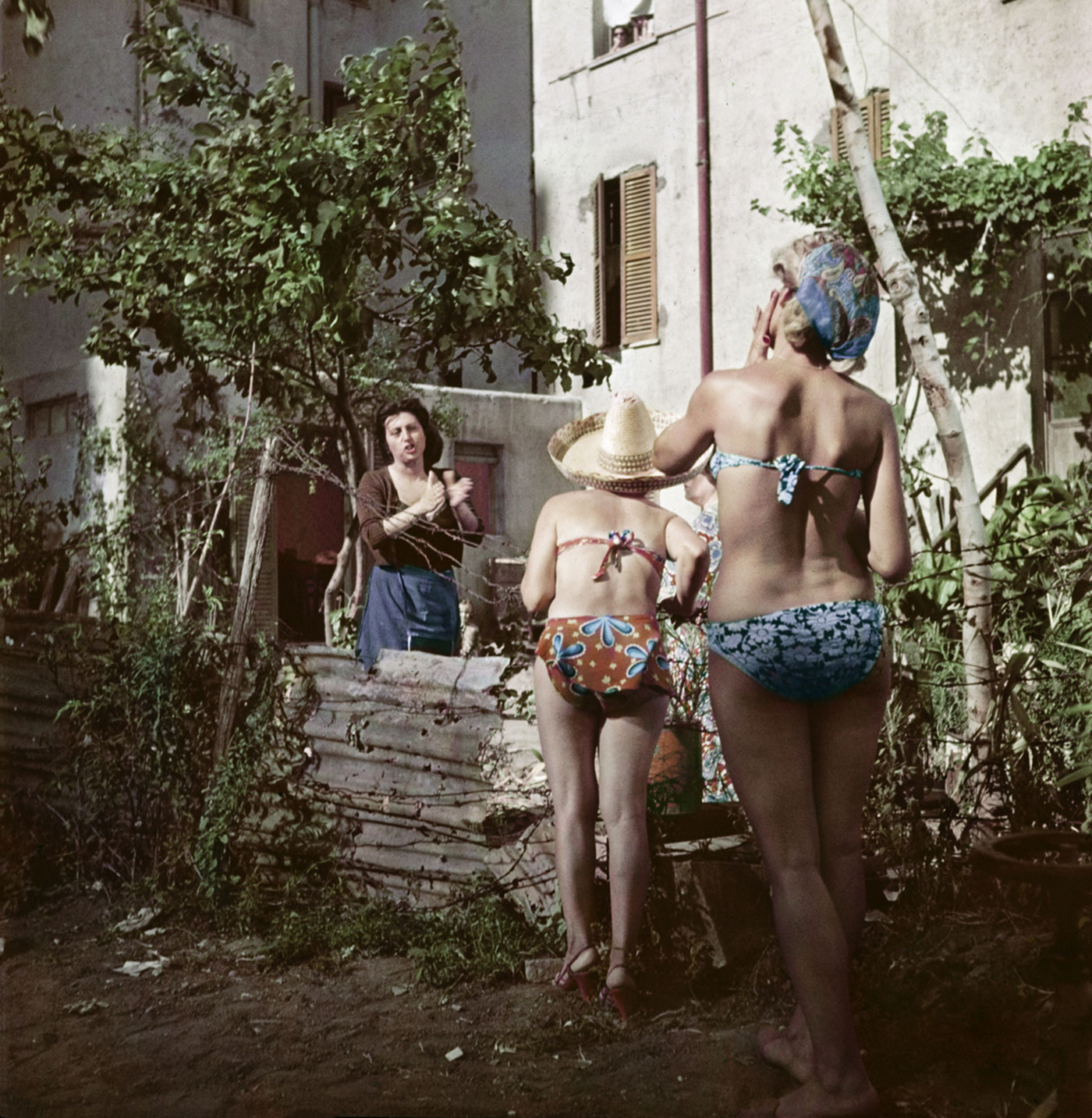
One of the most complex images in the posting is Anna Magnani on the set of Luchino Visconti’s ‘Bellissima’ (Rome, 1951-1952). Just look at this image: your eye plays over the surface, investigating every nook and cranny, every modular plane. The blue of the skirt, the brown of the top, the patterns of the two bikinis and the earthiness of tree and earth. I am reminded of the paintings of Paul Cézanne.

Dr Marcus Bunyan


Many thankx to Jeu de Paume for allowing me to publish the photographs in the posting. Please click on the photographs for a larger version of the image.


The first exhibition dedicated to Capa’s fourteen years of color photographs, Capa in Color has an ambition to evaluate and place these photographs in the timeline of his career and of their period. Capa in Color shows how color photography renewed his vision and how his work gained from a new sensibility after the war, by readapting his compositions in colour, but also to a public attracted to entertainment and to the discovery of new types of images.


Robert Capa et la couleur – Portrait filmé/videoportrait from Jeu de Paume / magazine on Vimeo.


Robert Capa (American, 1913-1954) 'Regata, Lofoten Island, Hankoe' Norway, 1951 from the exhibition 'Capa in Color' at Jeu de Paume – Château de Tours, Nov 2015 - May 2016


Robert Capa (American, 1913-1954)
Regata, Lofoten Island, Hankoe
Norway, 1951
International Center of Photography, New York
© Robert Capa/International Center of Photography/Magnum Photos


Recently presented at the International Center of Photography and now available for travel, Capa in Color presents Robert Capa’s colour photographs to the European public for the first time. Although he is recognised almost exclusively as a master of black-and-white photography, Capa began working regularly with colour film in 1941 and used it until his death in 1954. While some of this work was published in the magazines of the day, the majority of these images have never been printed or seen in any form.

Capa in Color includes over 150 contemporary colour prints by Capa, as well as personal papers and tear sheets from the magazines in which the images originally appeared. Organised by Cynthia Young, curator of Capa Collections at ICP, the exhibition presents an unexpected aspect of Capa’s career that has been previously edited out of posthumous books and exhibitions, and show how he embraced colour photography and integrated it into his work as a photojournalist in the 1940s and 1950s.

Robert Capa’s (1913-1954) reputation as one of history’s most notable photojournalists is well established. Born Endre Ernö Friedmann in Budapest and naturalised as a U.S. citizen in 1946, he was deemed “The Greatest War Photographer in the World” by Picture Post in a late 1938 publication of his Spanish Civil War photographs. During World War II, he worked for such magazines as Collier’s and Life, extensively portraying preparation for war as well as its devastating aftermath. His best-known images symbolised for many the brutality and valour of war and changed the public perception of, and set new standards for, war photography.

July 27, 1938, while in China for eight months covering the Sino-Japanese war, Robert Capa wrote to a friend at his New York agency, “… send 12 rolls of Kodachrome with all instructions; … Send it “Via Clipper” because I have an idea for Life“. Although no colour film from China survives except for four prints published in the October 17, 1938, issue of Life, Capa was clearly interested in working with colour photography even before it was widely used by many other photojournalists.

In 1941, he photographed Ernest Hemingway at his home in Sun Valley, Idaho, in colour, and used colour for a story about crossing the Atlantic on a freighter with an Allied convoy, published in the Saturday Evening Post. While Capa is best known for the black-and-white images of D-Day, he also used colour film sporadically during World War II, most notably to photograph American troops and the French Camel Corps in Tunisia in 1943.

Capa’s use of colour film exploded in his postwar stories for magazines such as Holiday (USA ), Ladies’ Home Journal (USA ), Illustrated (UK), and Epoca (Italy). These photographs, which until now have been seen only in magazine spreads, brought the lives of ordinary and exotic people from around the world to American and European readers alike, and were markedly different from the war reportage that had dominated Capa’s early career. Capa’s technical ability coupled with his engagement with human emotion in his prewar black-and-white stories enabled him to move back and forth between black and white and colour film and integrate colour to complement the subjects he photographed. These early stories include photographs of Moscow’s Red Square from a 1947 trip to the USS R with writer John Steinbeck and refugees and the lives of new settlers in Israel in 1949-50. For the Generation X project, Capa traveled to Oslo and northern Norway, Essen, and Paris to capture the lives and dreams of youth born before the war.

Capa’s photographs also provided readers a glimpse into more glamorous lifestyles that depended on the allure and seduction of colour photography. In 1950, he covered fashionable ski resorts in the Swiss, Austrian, and French Alps, and the stylish French resorts of Biarritz and Deauville for the burgeoning travel market capitalised on by Holiday magazine. He even tried fashion photography by the banks of the Seine and on the Place Vendôme. Capa also photographed actors and directors on European film sets, including Ingrid Bergman in Roberto Rossellini’s Viaggio in Italia, Orson Welles in Black Rose, and John Huston’s Moulin Rouge. Additional portraiture in this period included striking images of Picasso, on the beach near Vallauris, France with his young son Claude.

Capa carried at least two cameras for all of his postwar stories: one with black-and-white film and one with colour, using a combination of 35mm and 4 x 5 Kodachrome and medium-format Ektachrome film, emphasising the importance of this new medium in his development as a photographer. He continued to work with colour until the end of his life, including in Indochina, where he was killed in May 1954. His colour photographs of Indochina presage the colour images that dominated the coverage from Vietnam in the 1960s.

Capa in Color is the first museum exhibition to explore Capa’s fourteen-year engagement with colour photography and to assess this work in relation to his career and period in which he worked. His talent with black-and-white composition was prodigious, and using colour film halfway through his career required a new discipline. Capa in Color explores how he started to see anew with colour film and how his work adapted to a new postwar sensibility. The new medium required him to readjust to colour compositions, but also to a postwar audience, interested in being entertained and transported to new places.

Press release from Jeu de Paume


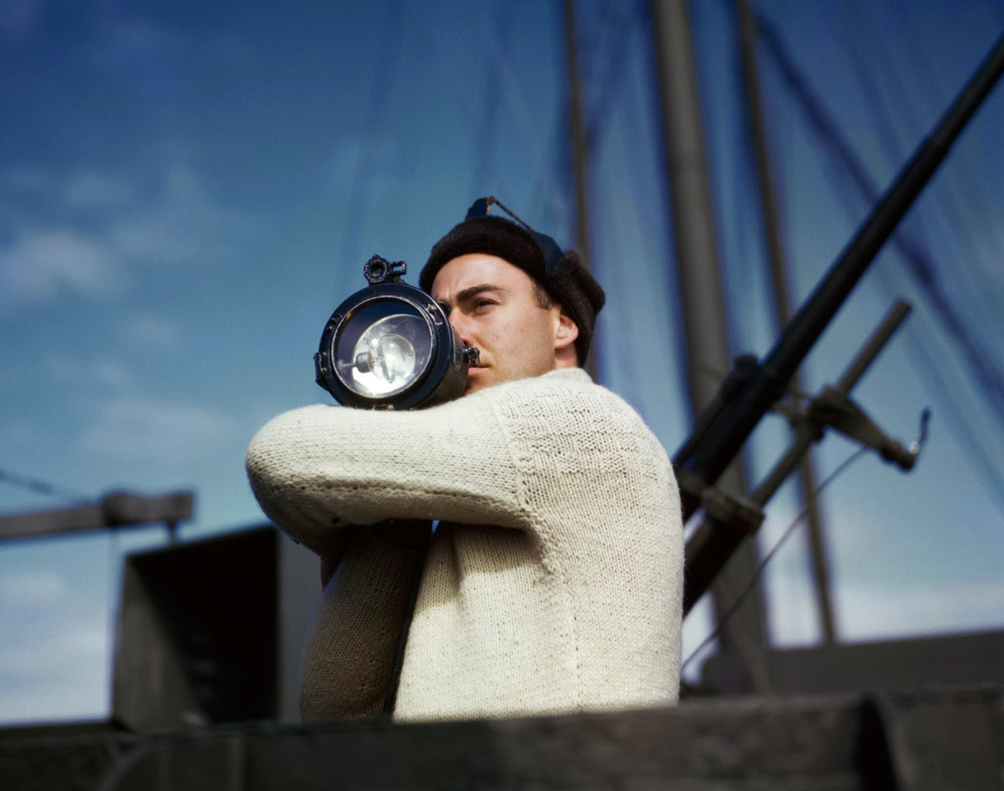
Robert Capa (American, 1913-1954) 'A crewman signals another ship of an Allied convoy across the Atlantic from the US to England' 1942


Robert Capa (American, 1913-1954)
A crewman signals another ship of an Allied convoy across the Atlantic from the US to England
1942
International Center of Photography, New York
© Robert Capa/International Center of Photography/Magnum Photos


It is surprising, even shocking to some, that famous photojournalist Robert Capa (born Budapest 1913, died Indochina 1954) photographed in colour, and not just occasionally, but regularly after 1941. His coloured work is essentially unknown. Capa is considered a master of black-and-white war photography, a man who documented some of the most important political events of Western Europe in the mid-twentieth century. His photographs of 1930s Paris, the Spanish Civil War, World War II, postwar Europe, and his last images in Indochina are known to us in black-and-white. None of the posthumous retrospective projects of his work have included colour, with a few rare exceptions..

Capa first experimented with colour in 1938, two years after Kodak developed Kodachrome, the first colour roll film. While in China covering the Sino-Japanese War, he wrote to a friend at his New York agency, Pix, “Please immediately send 12 rolls of Kodachrome with all instructions; whether special filters are needed, etc. – in short, all I should know. Send it ‘Via Clipper’, because I have an idea for Life“. Only four colour images from China were published, but Capa’s enthusiasm for colour was born. He photographed with colour film again in 1941 and for the next two years he fought hard to persuade editors to buy his colour images in addition to the black-and-white. After the war, the magazines were eager to include colour and his colour assignments increased. For the rest of his life, he almost always carried at least two cameras: one for black-and-white and one for colour film.


Robert Capa (American, 1913-1954) 'American Captain Jay F. Shelley stands in front of "The Goon," a B-17 bomber, before a raid over Italy, Tunisia, 1943' 1943


Robert Capa (American, 1913-1954)
American Captain Jay F. Shelley stands in front of “The Goon,” a B-17 bomber, before a raid over Italy, Tunisia, 1943
1943
International Center of Photography, New York
© Robert Capa/International Center of Photography/Magnum Photos


Jay F. Shelley, Sr., 88, of Yuma,formerly of Scottsdale, Arizona, entered Eternity on June 6, 2004. Jay was born May 16, 1916, in Long Beach, California. He was a decorated B-17 Bomber Pilot during WWII and flew 54 combat missions. He received a degree in business administration with a major in accounting from University of Montana. Jay worked as an accountant until 1979 when he retired with his wife to Scottsdale, Arizona. Capt. Jay F Shelley was assigned to the 301st BG 32nd Squadron.


Robert Capa (American, 1913-1954) 'Damaged plane hosed down with chemicals after landing on belly following a raid over Occupied France, England, July 1941' 1941


Robert Capa (American, 1913-1954)
Damaged plane hosed down with chemicals after landing on belly following a raid over Occupied France, England, July 1941
1941
International Center of Photography, New York
© Robert Capa/International Center of Photography/Magnum Photos


The plane is a Bristol Blenheim.


Robert Capa (American, 1913-1954) 'An American B-17 gunner awaits take off from a Royal Air Force base for a daylight bombing raid over occupied France' England, 1942


Robert Capa (American, 1913-1954)
An American B-17 gunner awaits take off from a Royal Air Force base for a daylight bombing raid over occupied France
England, 1942
International Center of Photography, New York
© Robert Capa/International Center of Photography/Magnum Photos


World War II

In 1941, Capa produced his first colour film story for the Saturday Evening Post, about crossing the Atlantic from New York on a convoy. Once in England, he was also able to sell these images to the English magazine Illustrated, because the two magazines did not have the same readerships.

He made the crossing again the next year, carrying a larger format camera that made bigger, more spectacular portraits of the ship’s crew. The turnaround time for Kodachrome film was several weeks. As Kodak maintained secrecy surrounding the formula, the undeveloped film had to go to a special Kodak processing plant and then returned to the photographer. It was not ideal for timely news. The magazines published few of Capa’s colour images from the UK, but he persisted in using it. In 1943, he entered the battlefields of World War II in North Africa, first traveling on a troop ship from England to Casablanca. His last colour images from the war were taken on a boat from Tunisia to Sicily in July 1943, where he debarked and moved up to Naples with America soldiers over the following months. It appears that for the rest of the war he did not use colour film, apparently discouraged by a combination of the slow shutter speed of the film, long processing times, and the uneven commitment to his colour images by the magazines.


Robert Capa (American, 1913-1954) 'Rambaugh Family Circus, Indiana, USA' 1949


Robert Capa (American, 1913-1954)
Rambaugh Family Circus, Indiana, USA
1949
International Center of Photography, New York
© Robert Capa/International Center of Photography/Magnum Photos


USA

Soon after his return from England, in the fall of 1941, Capa traveled to Sun Valley, Idaho, to do a story for life on his friends, the writers Ernest Hemingway and Martha Gellhorn, whom he had met during the Spanish Civil War. After World War II, Capa sought out new relationships with magazines and holiday became one of his most important supporters.

A glamorous travel magazine that featured New Yorker – caliber writers, Holiday was launched in 1946 by the Philadelphia-based Curtis Publishing Company, which also carried The Saturday Evening Post and Ladies’ Home Journal. Born in full colour, it was a peacetime publication catering to an ideal of American postwar prosperity. Holiday covered American cities, but immediately assigned stories on stylish international hot spots, places readers could dream of visiting with the advent in 1947 of nonstop transatlantic flights. In 1950, Holiday sent Capa to Indianapolis, and while his pictures of a nuclear family of five exploring the city are uninspired, he also photographed a family-run traveling circus. Despite Capa’s lukewarm attitude toward American culture, the colour images present a strong vision of American small-town life.


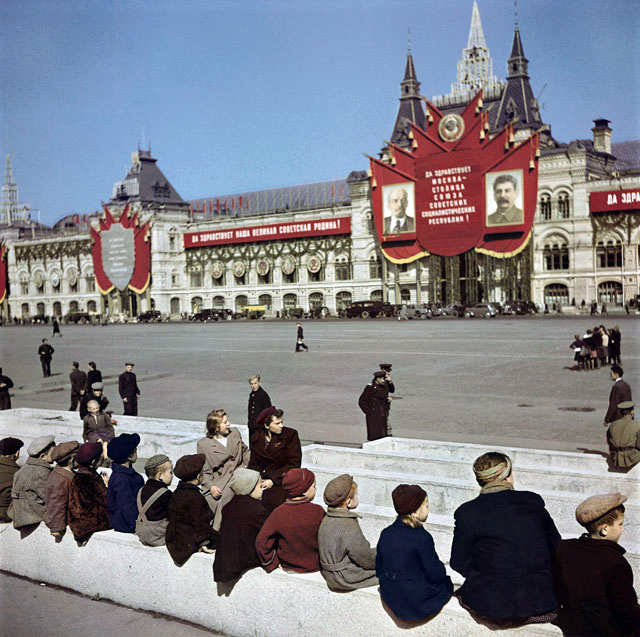
Robert Capa (American, 1913-1954) 'Young visitors waiting to see Lenin's Tomb at Red Square' Moscow 1947


Robert Capa (American, 1913-1954)
Young visitors waiting to see Lenin’s Tomb at Red Square
Moscow, 1947
International Center of Photography, New York
© Robert Capa/International Center of Photography/Magnum Photos


USSR

The year 1947 was a turning point in Capa’s life. He founded Magnum, the photographers cooperative agency he had dreamed of since 1938. The same year, he traveled to the Soviet Union, a trip that he had wanted to make in 1937 and then in 1941, both times unable to obtain a visa or magazine support for the trip.

He teamed up with writer John Steinbeck to report on the lives and opinions of ordinary Russians in opposition to Cold War rhetoric. Their adventures were published in the book A Russian Journal the following year and syndicated in newspapers and international picture magazines. Although the colour images were well represented in the magazines and on the cover of Illustrated for a special issue, Capa did not shoot much colour film in the Soviet Union, and no colour was included in A Russian Journal, except for the cover. Either he deemed only a few places worthy of the new medium format Ektachrome colour film that did not require special processing – chiefly Moscow and collective farms in the Ukraine and Georgia – or he had only a limited amount of film and used it sparingly. The images of Red Square take full advantage of colour film.


Robert Capa (American, 1913-1954) 'Pablo Picasso playing in the water with his son Claude, near Vallauris, France' 1948


Robert Capa (American, 1913-1954)
Pablo Picasso playing in the water with his son Claude, near Vallauris, France
1948
International Center of Photography, New York
© Robert Capa/International Center of Photography/Magnum Photos


Picasso

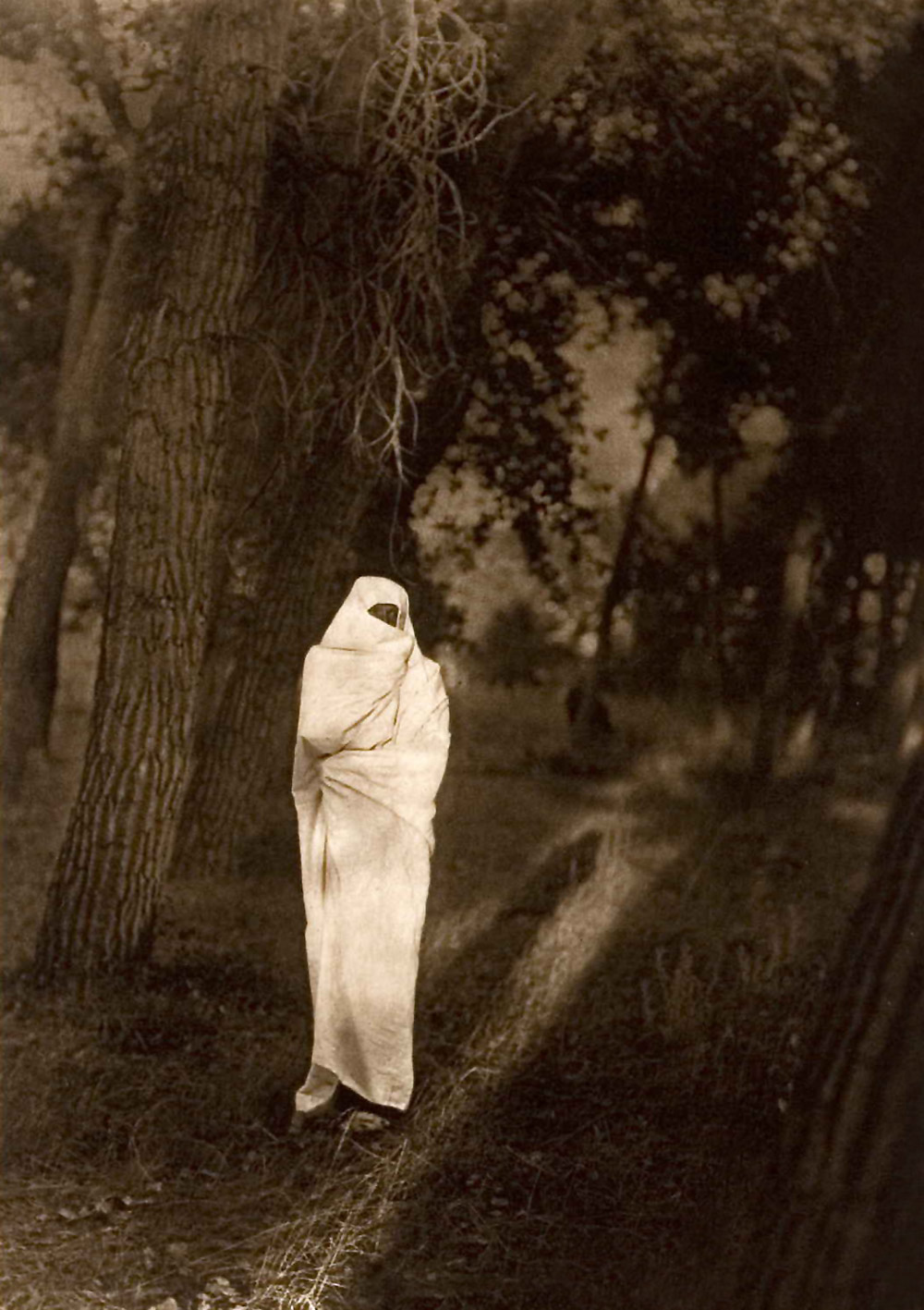
Some of Capa’s colour works were considerably less successful than his black-and-white photographs. This was the case with his 1948 feature on Picasso, originally sold to look as a story about the artist’s pottery, but as Capa failed to take pictures of the pottery, it became a story about Picasso and his family.

He instructed his Magnum colleague Maria Eisner: “Look gave me a definite assignment but no price so you have to insist on $200 pro black and white and $300 pro coloured page, and $250 for expenses. If they are not willing to pay a reasonable sum, you can withdraw, but Madame Fleurs Cowles was so positive on this matter and the pictures are so exclusive that I could be very surprise[d] if this doesn’t work”. Both Fleur Cowles at Look and Len Spooner at Illustrated were disappointed with the colour images, although delighted with the story, which included Capa’s now famous picture of Picasso holding a sun umbrella over his ravishing young artist girlfriend, Françoise Gilot, parading on the beach.

Hungary

In 1948, Holiday sent Capa to his native Budapest and commissioned him to write the accompanying article. Capa had been widely praised for the hilarious and self-deprecating 1947 book about his wartime exploits, slightly out of focus, so the editors were hardly taking risk by asking him to write a long article.

Holiday used four colour images in the November 1949 issue. Unlike the glamorous destinations the magazine usually covered or that Capa would later cover for them, the images and accompanying article, one of the strongest texts he wrote about a place, functioned more as a letter from Budapest. He observes with fascination and humour the clashing end of one empire with the start of another, bittersweet against the reality of what his childhood city had become. While he seemed to have had more colour film on this assignment than in Russia, it was expensive to buy and process, so he still conserved, and there are many more black-and-white negatives of similar scenes than in colour.

Morocco

Capa’s 1949 trip to Morocco was one of the few postwar stories he made concerning a political subject, but it was a complicated sell and failed as an international news story.

The assignment was muddled from the start, as it combined Moroccan politics, lead mines, and the filming of The Black Rose with Orson Welles. Paris Match first published some of the pictures in a piece about the annual tour of the country by the Moroccan leader Sultan Sidi Mohammed. Illustrated published a story with only black-and-white images about the strange effects of the Marshall Plan, in which as a French colony Morocco received American aid through France, although the French General was not recognised as the leader in charge by the U.S. State Department. Some of the best images are portraits of the Moroccan people.


Robert Capa (American, 1913-1954) 'Construction of the new settlements for workers, Neguev Desert, outside Be'er Sheva, Israel' 1949-1950


Robert Capa (American, 1913-1954)
Construction of the new settlements for workers, Neguev Desert, outside Be’er Sheva, Israel
1949-1950
International Center of Photography, New York
© Robert Capa/International Center of Photography/Magnum Photos


Robert Capa (American, 1913-1954) 'Former shop near Jaffa gate, Jerusalem, Israel' 1949


Robert Capa (American, 1913-1954)
Former shop near Jaffa gate, Jerusalem, Israel
1949
International Center of Photography, New York
© Robert Capa/International Center of Photography/Magnum Photos


Israel

Capa’s big geopolitical assignment of the late 1940s took him to Israel. He first traveled there in 1948 to cover the Arab-Israeli war, then returned in 1949, for Holiday and Illustrated, with writer Irwin Shaw.

He came back in 1950 to continue photographing the new nation in transition, focusing on the influx of refugees arriving from Europe and neighbouring Arab countries, the ongoing repair of the physical destruction, portraits of immigrants, agricultural work, kibbutzim, and various Jewish festivities. While there is only one colour image from the 1948 trip, of the Altalena ship burning in the water off the beach in Tel Aviv – a result of the conflict between extreme right-wing Irgunists and the Israeli government – by the time Capa arrived in 1949, he seemed to have all the colour film he needed. His Israel stories were picked up by all the major international picture news magazines, spurred by the 1950 publication Report on Israel, with text by Shaw and photos by Capa.


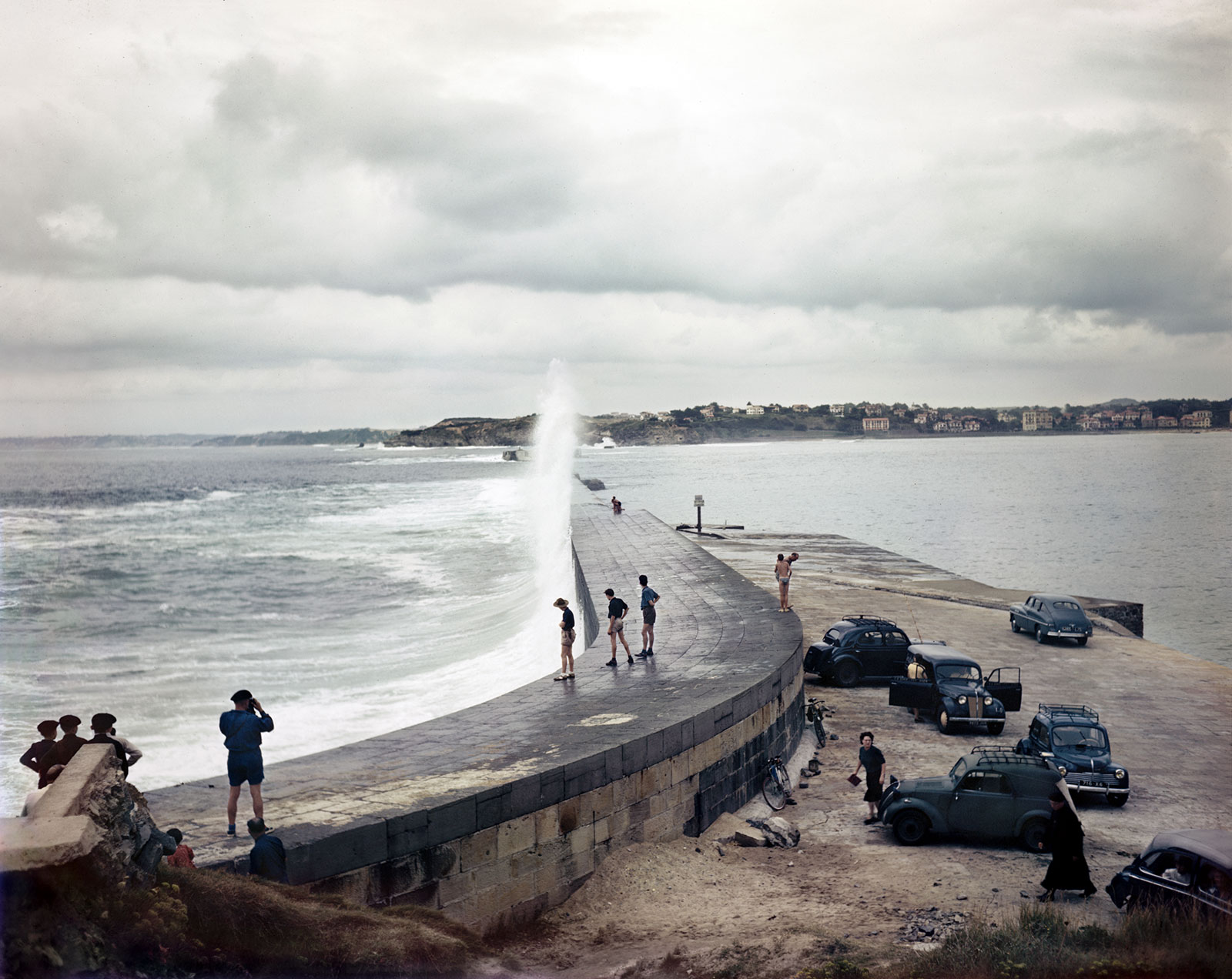
Robert Capa (American, 1913-1954) 'Jetty, Socoa, near Saint-Jean-de-Luz, France' August 1951


Robert Capa (American, 1913-1954)
Jetty, Socoa, near Saint-Jean-de-Luz, France
August 1951
International Center of Photography, New York
© Robert Capa/International Center of Photography/Magnum Photos


Robert Capa (American, 1913-1954) 'Woman on the beach, Biarritz, France' August 1951


Robert Capa (American, 1913-1954)
Woman on the beach, Biarritz, France
August 1951
International Center of Photography, New York
© Robert Capa/International Center of Photography/Magnum Photos


Deauville and Biarritz

Following the success of his skiing story, Capa proposed a piece on French seaside resorts. In the summer of 1950, he traveled to Deauville in Normandy, with its racetrack and casino, photographing only in black-and-white (all that appeared in Illustrated).

He knew he could do more with the story and pitched it to Holiday as a double feature with Biarritz, in Basque Country. A year later, he returned to Deauville with colour film to photograph the scene, capturing the mix of social classes at the horse races. He then traveled to Biarritz, covering the beach, nightlife, and traditional folklore. For this story, the black-and-white and colour images complement each other – the colour adding details to the black-and-white, which set the stage. The layout, not published until September 1953, balances the colour and black-and-white with Capa’s humorous, self-deprecating text about his time in each resort.


Robert Capa (American, 1913-1954) 'Capucine, French model and actress, on a balcony, Rome, Italy' August 1951


Robert Capa (American, 1913-1954)
Capucine, French model and actress, on a balcony, Rome, Italy
August 1951
International Center of Photography, New York
© Robert Capa/International Center of Photography/Magnum Photos


Capucine (French, 1928-1990)

Capucine (6 January 1928 – 17 March 1990) was a French fashion model and actress known for her comedic roles in The Pink Panther (1963) and What’s New Pussycat? (1965). She appeared in 36 films and 17 television productions between 1948 and 1990. At age 17, while riding in a carriage in Paris, she was noticed by a commercial photographer. She became a fashion model, working for fashion houses Givenchy and Christian Dior. She adopted the name, “Capucine” (French for nasturtium). She met Audrey Hepburn while modelling for Givenchy in Paris. The two would remain close friends for the rest of Capucine’s life.

In 1957, film producer Charles K. Feldman spotted Capucine while she was modelling in New York City. Feldman brought her to Hollywood to learn English and study acting under Gregory Ratoff. She was signed to a contract with Columbia Pictures in 1958 and landed her first English-speaking role in the film Song Without End (1960) for which she was nominated for a Golden Globe Award. Over the next few years, Capucine made six more major motion pictures. They included North to Alaska (1960), a comedy, as a prostitute who becomes the love interest of John Wayne, and Walk on the Wild Side (1962), in which she portrayed a redeemed hooker, before moving to Switzerland in 1962.

Much of 1963’s hit film The Pink Panther was shot in Europe. A crime comedy that led to a number of sequels, the film starred David Niven and Peter Sellers along with Capucine. The risqué comedy What’s New Pussycat? (1965), which co-starred Sellers and Peter O’Toole, was filmed entirely in France. She continued making films in Europe until her death.

Text from the Wikipedia website


Robert Capa (American, 1913-1954) 'Party, Rome, Italy' August 1951


Robert Capa (American, 1913-1954)
Party, Rome, Italy
August 1951
International Center of Photography, New York
© Robert Capa/International Center of Photography/Magnum Photos


Rome

In his article on Norway for Holiday, Capa wrote: “I have revisited Budapest because i happen to have been born there, and because the place offered only a short season for revisiting. I even got to Moscow, which usually offers no revisiting at all. I kept on revisiting Paris because I used to live there before the war; London, because I lived there during the war; and Rome, because I was sorry that I had never lived there at all.”

Capa traveled to Rome for Holiday in 1951 and his pictures were published in April 1952, with a text authored by Alan Moorehead. A writer for The New Yorker at the time of the Rome assignment, Moorehead had been a correspondent for the Daily Express of London during World War II, and he and Capa had been together in North Africa, Sicily, and Normandy. Capa’s accompanying colour photographs pursued a glamorous city filled with beautiful people engaged in endless partying, reflecting a Rome removed from postwar destruction and entering the period of La Dolce Vita.


Robert Capa (American, 1913-1954) 'American Judith Stanton, Zermatt, Switzerland' 1950


Robert Capa (American, 1913-1954)
American Judith Stanton, Zermatt, Switzerland
1950
International Center of Photography, New York
© Robert Capa/International Center of Photography/Magnum Photos


Robert Capa (American, 1913-1954) 'Woman at an ice bar, Zürs, Austria' 1949-1950


Robert Capa (American, 1913-1954)
Woman at an ice bar, Zürs, Austria
1949-1950
International Center of Photography, New York
© Robert Capa/International Center of Photography/Magnum Photos


Skiing

Skiing was one of Capa’s favourite pastimes and he vacationed annually in Klosters, Switzerland, to relax and recuperate. In 1948, he and a Magnum colleague were trying to drum up a story on Megève, France, a popular ski resort for Parisians, on its “dual personality … simple peasant life and gay, café society set.”

Capa photographed in Zürs, Austria, in early 1949, for a Life story, although the magazine ultimately killed it. Holiday pulled in after Life dropped out and, in late 1949, signed on to a feature about the great skiing resorts of Austria, Switzerland, and France, which would become one of Capa’s most joyous and successful colour stories. In fact, it was arguably better in colour, which provided the additional elements of glitter and humour that black-and-white often missed. For two months, he traveled from the Austrian resorts of Kitzbühel, St. Anton, Zürs, and Lech, to the Swiss towns of Davos, Klosters, and Zermatt, then over the French border to Val d’Isère. In each place, he found a glamorous circle to depict: director Billy Wilder and writer Peter Viertel from Hollywood, young international ski champions, and current and ex-European royalty, including the Queen and Prince of Holland. Everyone was healthy and the mood festive. Capa found a relaxed, casual confidence in his subjects.


Robert Capa (American, 1913-1954) 'Spectators at the Longchamp Racecourse, Paris, France' c. 1952


Robert Capa (American, 1913-1954)
Spectators at the Longchamp Racecourse, Paris, France
c. 1952
International Center of Photography, New York
© Robert Capa/International Center of Photography/Magnum Photos


Robert Capa (American, 1913-1954) 'Model wearing Dior on the banks of the Seine, Paris, France' 1948


Robert Capa (American, 1913-1954)
Model wearing Dior on the banks of the Seine, Paris, France
1948
International Center of Photography, New York
© Robert Capa/International Center of Photography/Magnum Photos


Paris

Paris was Capa’s de facto home from 1933 to 1939 and then as his postwar base, usually in a back room of the elegant Hotel Lancaster off the Champs-Élysées, where he was friend with the owner.

Holiday‘s editor Ted Patrick commissioned Capa to provide photographs for a special issue on Paris in 1952, and Capa brought in other Magnum colleagues – Henri Cartier-Bresson, Chim, and the young Dennis Stock. The magazine included texts by Irwin Shaw, Paul Bowles, Ludwig Bemelmans, Art Buchwald, and Colette, among others, and is a romantic paean to the city, almost a stage set for romance, gastronomy, and history. Some of Capa’s best images from this story are the quirkiest ones and play with the contrasts that he seemed to revel in, between the young and old, human and animal, high-life and low-life, particularly at the horse races, about which he noted: “The sport of kings is also the sport of concierges”. For his photographs of plein air painters, Capa wrote: “Place du Tertre is a painter’s paradise. A few stops from Sacré Coeur we find an old gentleman in beard and beret looking like an American movie producer’s idea of the kind of French painter found in Montmartre”.


Robert Capa (American, 1913-1954) 'Gen X girl, Colette Laurent, at the Chantilly racetrack, France' 1952


Robert Capa (American, 1913-1954)
Gen X girl, Colette Laurent, at the Chantilly racetrack, France
1952
International Center of Photography, New York
© Robert Capa/International Center of Photography/Magnum Photos


Generation X

Capa developed Generation X, also known as Gen X, for Magnum on the mark of the half century in late 1949. McCall’s was originally behind the project, but had pulled out by 1951, when Capa insisted on injecting more political content.

Holiday filled the void and supported the project all the way to a three-part series published in early 1953. Capa observed, “it was one of those projects, of which many are born in the minds of people who have big ideas and little money. The funny thing about this project is that it was accomplished.” He assigned the photographers, including Chim, Cartier-Bresson, and Eve Arnold, to each create a portrait of a boy and/or girl in countries where they were already working or had worked. Each subject answered a detailed questionnaire about his or her life, family, personal beliefs, and goals. The project eventually included twenty-four individuals in fourteen countries on five continents. Capa photographed all his subjects – a French girl, a German boy, and Norwegian boy and girl – in colour and black-and-white, but only the Norwegian photos were published in colour. Capa’s biographer Richard Whelan suggested that Capa’s depiction of the French girl, Colette Laurent, was an oblique portrait of himself at the time: “Her life is superficial, artificial on the surface and holds none of the good things except the material ones.”


Robert Capa (American, 1913-1954) 'Ava Gardner on the set of 'The Barefoot Contessa', Tivoli, Italy' 1954


Robert Capa (American, 1913-1954)
Ava Gardner on the set of ‘The Barefoot Contessa’, Tivoli, Italy
1954
International Center of Photography, New York
© Robert Capa/International Center of Photography/Magnum Photos


Robert Capa (American, 1913-1954) 'Ava Gardner on the set of The Barefoot Contessa, Tivoli, Italy' 1954


Robert Capa (American, 1913-1954)
Ava Gardner on the set of ‘The Barefoot Contessa’, Tivoli, Italy
1954
International Center of Photography, New York
© Robert Capa/International Center of Photography/Magnum Photos


Robert Capa (American, 1913-1954) 'Humphrey Bogart and Peter Lorre on the set of Beat the Devil, Ravello, Italy' April 1953


Robert Capa (American, 1913-1954)
Humphrey Bogart and Peter Lorre on the set of ‘Beat the Devil’, Ravello, Italy
April 1953
International Center of Photography, New York
© Robert Capa/International Center of Photography/Magnum Photos


Robert Capa (American, 1913-1954) 'Truman Capote and Jennifer Jones on the set of Beat the Devil, Ravello, Italy' April 1953


Robert Capa (American, 1913-1954)
Truman Capote and Jennifer Jones on the set of ‘Beat the Devil’, Ravello, Italy
April 1953
International Center of Photography, New York
© Robert Capa/International Center of Photography/Magnum Photos


Robert Capa (American, 1913-1954) 'Jeffrey Hunter on the set of 'Single-Handed (Sailor of the King)'' Malta, 1952


Robert Capa (American, 1913-1954)
Jeffrey Hunter on the set of ‘Single-Handed (Sailor of the King)’
Malta, 1952
International Center of Photography, New York
© Robert Capa/International Center of Photography/Magnum Photos


Robert Capa (American, 1913-1954) 'John Huston at the café Les Deux Magots during the filming of 'Moulin Rouge'' Paris, 1952


Robert Capa (American, 1913-1954)
John Huston at the café Les Deux Magots during the filming of ‘Moulin Rouge’
Paris, 1952
International Center of Photography, New York
© Robert Capa/International Center of Photography/Magnum Photos


Robert Capa (American, 1913-1954) 'Anna Magnani on the set of Luchino Visconti's 'Bellissima'' Rome, 1951-1952


Robert Capa (American, 1913-1954)
Anna Magnani on the set of Luchino Visconti’s ‘Bellissima’
Rome, 1951-1952
International Center of Photography, New York
© Robert Capa/International Center of Photography/Magnum Photos


Robert Capa (American, 1913-1954) 'Ingrid Bergman and George Sanders on the set of 'Viaggio in Italia'' Naples, April 1953


Robert Capa (American, 1913-1954)
Ingrid Bergman and George Sanders on the set of ‘Viaggio in Italia’
Naples, April 1953
International Center of Photography, New York
© Robert Capa/International Center of Photography/Magnum Photos


On the set

Capa was friends with a number of movie stars and directors and incorporated them into his professional work. He met John Huston in Naples in 1944, while Huston was making films for the Army Signal Corps, and Ingrid Bergman in 1945 when she was filming in Paris, before beginning a one-year love affair.

As part of his 1948 trip to Morocco, he included a story on The Black Rose and its star Orson Welles. He photographed the set of Huston’s Beat the Devil, written by Truman Capote and filmed in the hillside town of Ravello, Italy. The cast visited the set of Viaggio in Italia in nearby Almalfi with Bergman, Roberto Rossellini, and George Sanders and Capa also dipped down to Paestum with his friend Martha Gellhorn, casting her as a caryatid in the ancient ruins. Capa covered another Huston film, Moulin Rouge, about the life of painter Toulouse Lautrec, shot in Paris and at Shepparton Studios near London. Capa’s colour portraits of the actors eschew traditional head shots and capture the varied pace and playful moments on the set.


Robert Capa (American, 1913-1954) 'Spectators along the procession route in Piccadilly Circus before the coronation of Queen Elizabeth II, London, England' February 6, 1953


Robert Capa (American, 1913-1954)
Spectators along the procession route in Piccadilly Circus before the coronation of Queen Elizabeth II, London, England
February 6, 1953
International Center of Photography, New York
© Robert Capa/International Center of Photography/Magnum Photos


London and Japan

In 1953, Capa traveled to London to cover the coronation of the young Elizabeth II with friends Humphrey Bogart and John Huston. His colour images of crowds waiting for the parade of guests before the coronation, for which he used 35mm Kodachrome, suggest a new interest in colour for colour’s sake.

In 1954, he received an invitation from Mainichi Press to travel to Japan for six weeks with Japanese cameras and an unrestricted amount of film to shoot what he liked in return for images they could publish. The trip was an easy one, but the colour photographs lack focus. He wandered around markets, documented foreign signs, watched people visiting temples and shrines, and photographed Children’s Day in Osaka, but they are little better than tourist snaps. Only a few images of a May Day workers’ celebration in Tokyo, in bright colours, show some engagement, reminiscent of his 1930s images of workers in France and Spain.


Robert Capa (American, 1913-1954) 'On the road from Namdinh to Thaibinh, Indochina (Vietnam)' May 1954


Robert Capa (American, 1913-1954)
On the road from Namdinh to Thaibinh, Indochina (Vietnam)
May 1954
International Center of Photography, New York
© Robert Capa/International Center of Photography/Magnum Photos


Robert Capa (American, 1913-1954) 'West of Namdinh, Indochina (Vietnam)' May 1954


Robert Capa (American, 1913-1954)
West of Namdinh, Indochina (Vietnam)
May 1954
International Center of Photography, New York
© Robert Capa/International Center of Photography/Magnum Photos


Indochina

In 1953, Capa expressed his readiness “to get back to real work, and soon. What and where I do not know, but the Deauville and Biarritz and motley movie period is over.”

In the same letter, he writes of his desire to go to “Indochina, or any other proposition which would get me back to reporting on my own type of territory”. While in Japan the next year, Capa received a cable from Life asking him to cover for their photographer in Indochina. The assignment was only for a few weeks and would bring in some needed money. He reached Hanoi on May 9 and on May 25, with Time reporter John Mecklin and Scripps-Howard correspondent John Lucas, left Mandihn with two cameras, a Contax with black-and-white film, and a Nikon with colour film. Their convoy traveled along a dirt road lined by rice paddies. Moving toward Thaibinh, Capa left the convoy and walked on by himself. He photographed the soldiers advancing through the fields, and as he climbed the dike along the road, he stepped on a land mine and was killed. While the colour images are some of the strongest war pictures he made, none were used in the press at the time, probably in part because of the extra time required to process the colour film.


Jeu de Paume – Château de Tours
25 avenue André Malraux
37000 Tours

Opening hours:
Tuesday to Sunday: 2pm – 6pm
Closed Mondays

Jeu de Paume – Château de Tours

LIKE ART BLART ON FACEBOOK

Back to top

Exhibition: ‘François Kollar. A Working Eye’ at Jeu de Paume, Paris

Exhibition dates: 9th February – 22nd May, 2016

Curators: Matthieu Rivallin, collections officer, Médiathèque de l’architecture et du patrimoine, Paris, and Pia Viewing, curator – researcher at the Jeu de Paume, Paris.


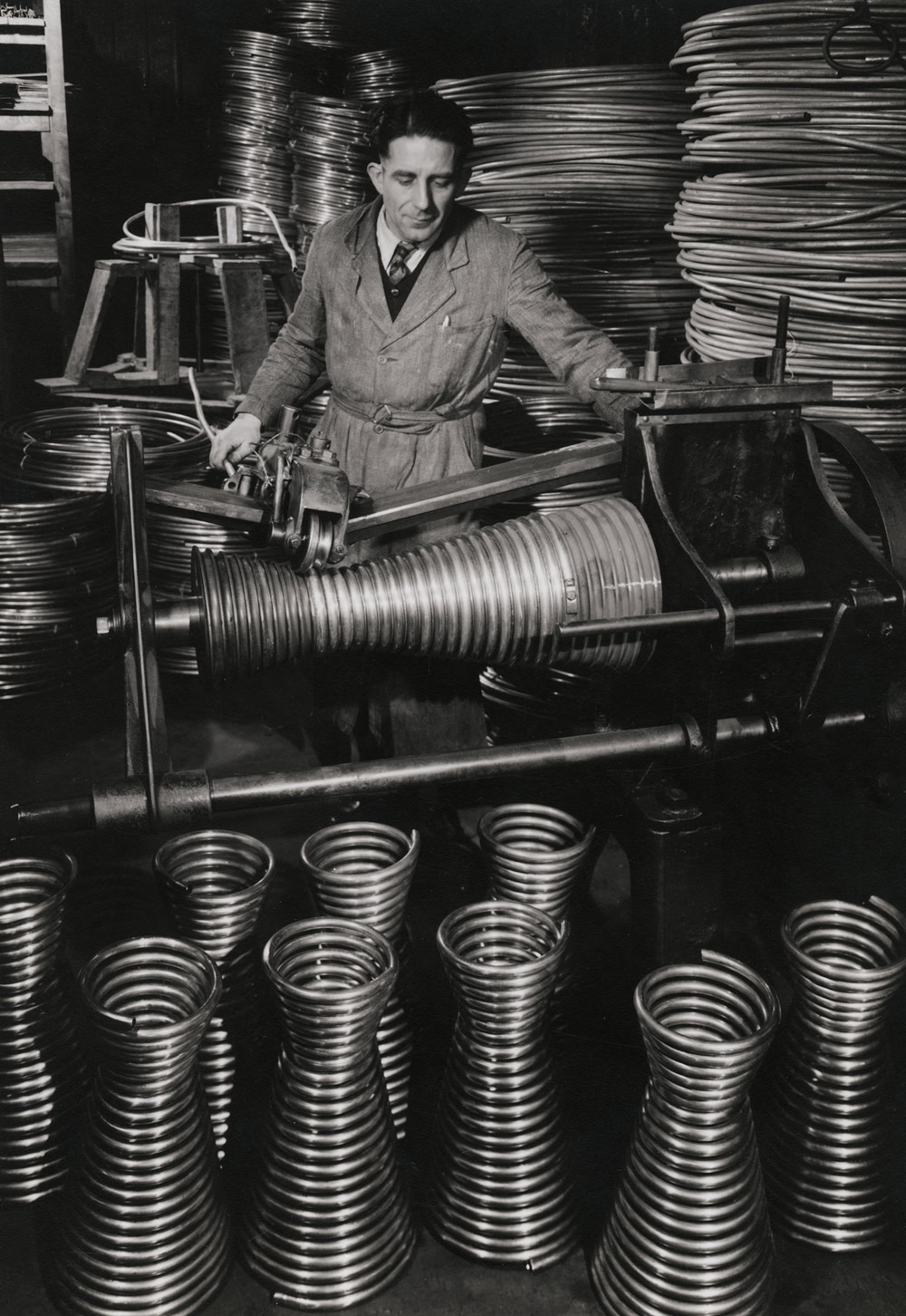
François Kollar (French born Slovakia, 1904-1979) 'Nettoyage des lampes. Société des mines de Lens. Lens (Pas-de-Calais)' 1931-1934 from the exhibition Exhibition: 'François Kollar. A Working Eye' at Jeu de Paume, Paris, Feb - May, 2016


François Kollar (French born Slovakia, 1904-1979)
Nettoyage des lampes. Société des mines de Lens. Lens (Pas-de-Calais)
Cleaning lamps. The mining company of Lens. Lens (Pas-de-Calais)
1931-1934
From the booklets La France travaille
Vintage silver gelatin photograph
18 x 24cm
Bibliothèque Forney. Ville de Paris
© François Kollar / Bibliothèque Forney / Roger-Viollet


François Kollar is a magnificent photographer. He produced strong images that possess few histrionics, even less ego. They simply just are.

People quoted in this posting comment that in his photographs “human measure is omnipresent”; that you never loose the sense of scale; that there are “frequent contrasts between near and far, the intimate and the monumental”; that his photographs are “an anthropological investigation into the behaviour, gestures and postures of people at work”; that “Men and women and their functions and roles in the production process are recurrent elements.”

All these statements are true.

Further, his images are sensitive, beautiful, show no traces of any social movements, and little sign of emotion. As Dominique Vautrin observes, “François Kollar is a photographer who resembles his images: somewhat mysterious, beautiful, and discreet…” And as the text from Jeu de Paume states, “He revealed himself to be a temperate photographer, somewhere between the barebones modernism of Bauhaus and a humanist approach to photography.” Other photographers who could fit into this playlist could be Bill Brandt in England, Walker Evans in America and Wolfgang Sievers in Australia.

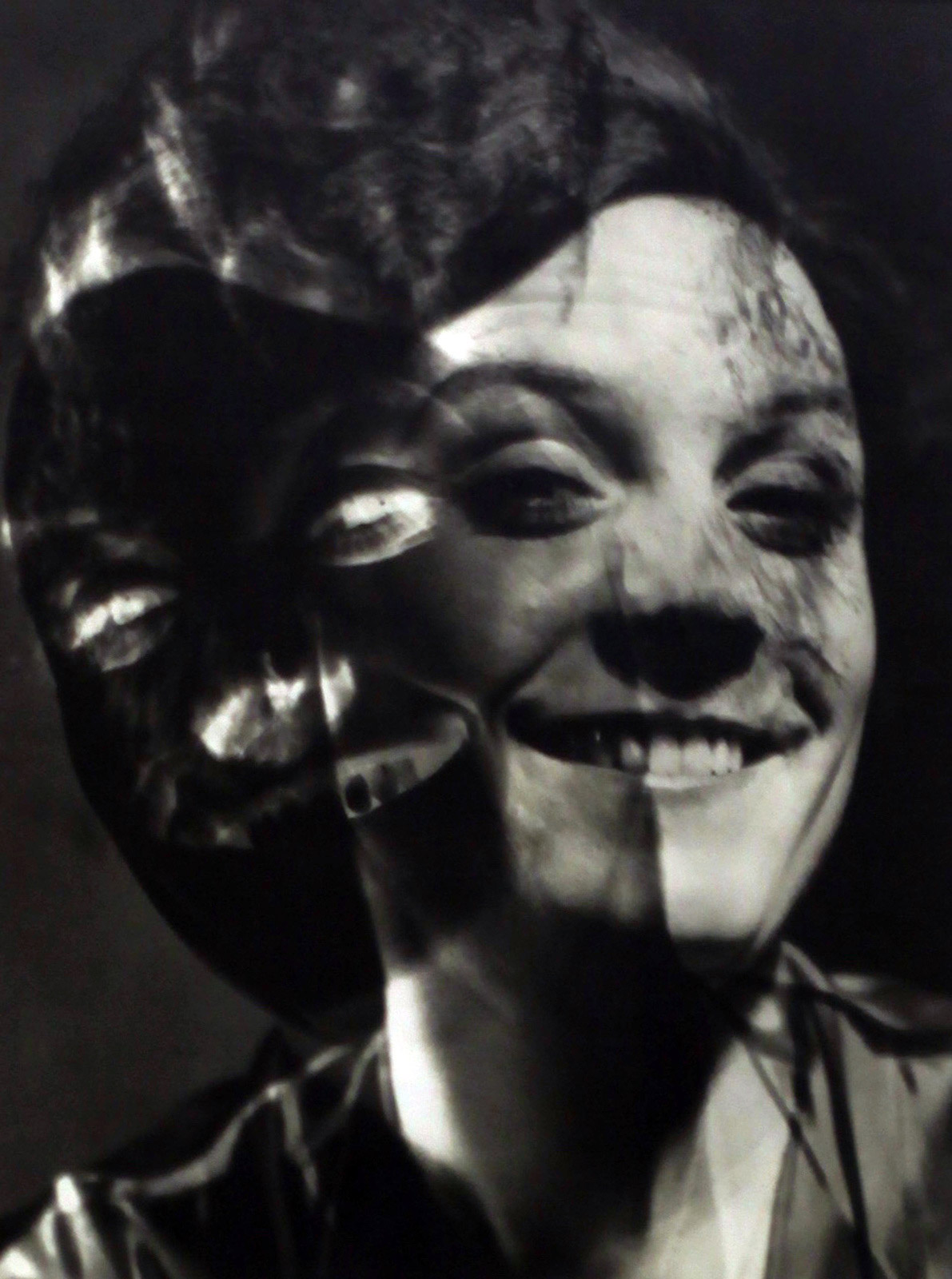
But what a splendid description – a “temperate photographer”. Showing moderation and self-restraint… there is far too little of that in contemporary photography. A humanist with an avant-garde edge, a photographer whose vision was clear and consistent throughout his oeuvre, who could turn his hand to anything: advertising, fashion, avant-garde, double exposures, solarisation, photomontage, documentary reportage, surrealism, constructivism, modernism.

Joseph Nechvatal comments that Kollar’s work is poignant. This is an incorrect word to describe the work, for the photographs never evoke a keen sense of sadness or regret. They are of a different order altogether. Let me explain.

There is a wonderful stoicism about the people who Kollar chooses to photograph, who inhabit his world of work. The endurance of work without the display of feelings and without complaint. Labour is not represented in any glorified way, not as a noble undertaking, and certainly not heroic (although the worker can be represented as intimate and monumental). The workers are represented as an adjunct to the machine but not in a cyborg fashion. In his photographs there is a distinctness about the worker which sets the human apart from the machine, even as he is “deeply embedded within their functions and roles in the production process.” I don’t believe that people understand this separation, preferring instead to comment on the embedding of the human within machine processes. But something was bothering me when I looked at these images and I have pondered long and hard over how to interpret them. There was something I could not put my finger on and it is this…

In the work of Lewis Hine, the workers are in the present looking to the future. In the work of François Kollar there is no justification for the work it is just work… being there in the present. No ego, no elevation of experience or emotion, and the photographs are just so. Just being in the world. The thing itself. Nothing more, nothing less. It seems simple when you say it like that, but the concept is very complex – to allow the photograph to materialise from consciousness, as a sort of previsualisation of experience – of being a poor, working class immigrant (which Kollar was) picturing his own.

That he achieved such photographs “with his 5 x 7 large-format camera and cumbersome lighting equipment” is a testament to the dedication to his craft, to his work, and to his roots – a connection to the working man and woman. These are honest and forthright photographs of what most humans do for most of their life: work at a job they may not like – to pay the bills, to put food on the table. The lighting is superb, the compositions eloquent, the characters in his images unforgettable (Kollar particularly likes portraits of men shot from below with their arms folded) but it is the balance between the subjective and objective which is so finely honed in his work. The dispassionate nature of humans when at work is balanced by the aesthetics of the artist and the humanity of the individual.

Dr Marcus Bunyan


Many thankx to Jeu de Paume for allowing me to publish the photographs in the posting. Please click on the photographs for a larger version of the image. View an interesting video of the exhibition and the work of François Kollar on Vimeo.


This retrospective features an ensemble of 130 vintage prints, some of which are previously unseen, as well as others from the photographer’s family’s bequest to the state. It puts Kollar’s work in the spotlight and shows how he managed to lift the veil on the working world in the 20th century. As visitors discover the documentary, artistic and historical qualities of the material on show, they will be able to observe how individuals found their place in society by the means of their occupation and realise the profound changes that took place in industry between the 1930s and the 1960s.


François Kollar. Courtesy Jeu de Paume


François Kollar. Courtesy Jeu de Paume


“Without falling into hammy Socialist Realism style, Kollar rendered French working class heroes in beautiful, discreet, lush black-and-white tones. These images of the working person endow them with qualities of excellence, nobility, and respect, and evoked in me mixed sensations of hard materialistic capability and human tenderness. These images of men and women, such as “Nettoyage des lampes. Société des mines de Lens, Lens (Pas-de-Calais)” [1931-34, below], show people deeply embedded within their functions and roles in the production process. In that sense, they contrast with Dorothea Lange’s famous and beautiful Migrant Mother series and the uninhabited, rigorously stark industrial scenes photographed by Bernd and Hilla Becher…

Kollar’s distinctive aesthetic provides a strong, sweet spot amid the sour struggles for employment taking place today in economies shaped by histories of slavery, colonialism, union-busting, sexual exploitation, and corporate capitalism. His artistic style, one that colorlessly abstracts, unifies, and embeds the worker within his or her technological environment, broadens the social politics of employment beyond the heroic human. Rather, he depicts through his unifying, ashen tones the conjunction of laborer and machine. In these photographs, the human worker is bound up with non-human apparatuses in cyborg fashion, depicting a complex technological laborer who is no less real and worthy of our aesthetic delectation.”


Joseph Nechvatal. “A Photographer Who Captured Workers Without Romanticizing Them,” on the Hyperallergic website May 4, 2016 [Online] Cited 11/05/2016


François Kollar (French born Slovakia, 1904-1979) 'Porteur de rails. Arles' 1933 from the exhibition Exhibition: 'François Kollar. A Working Eye' at Jeu de Paume, Paris, Feb - May, 2016


François Kollar (French born Slovakia, 1904-1979)
Porteur de rails. Arles
1933
Reproduction d’après négatif original sur plaque de verre
Print from the original glass plate negative
13 x 18cm
Bibliothèque Forney. Ville de Paris
© François Kollar / Bibliothèque Forney / Roger-Viollet


François Kollar (French born Slovakia, 1904-1979) 'Construction des grands paquebots, Rivetage de tôles d‘un pont de navire, chantier et ateliers de Saint-Nazaire à Penhoët' (Construction of large ships, riveting the sheets of a ships deck, site workshops of Saint Nazaire Penhoët) 1931-1932


François Kollar (French born Slovakia, 1904-1979)
Construction des grands paquebots, Rivetage de tôles d’un pont de navire, chantier et ateliers de Saint-Nazaire à Penhoët
Construction of large ships, riveting the sheets of a ships deck, site workshops of Saint Nazaire Penhoët
1931-1932
Vintage silver gelatin photograph
28.9 x 23.5cm
Donation François Kollar, Médiathèque de l’architecture et du patrimoine


François Kollar: “A Working Eye” from 09 February 2016 until 22 May 2016 at Jeu de Paume, Paris


François Kollar (French born Slovakia, 1904-1979) 'Dans le port, à bord. Super Ile de France: cisaillage au chalumeau oxhydrique' (In port, on board. Super Ile de France: cutting using the welding torch. Company building sites and workshops of Saint Nazaire Penhoët) 1931


François Kollar (French born Slovakia, 1904-1979)
Dans le port, à bord. Super Ile de France: cisaillage au chalumeau oxhydrique. Société des chantiers et ateliers de Saint-Nazaire à Penhoët
In port, on board. Super Ile de France: cutting using the welding torch. Company building sites and workshops of Saint Nazaire Penhoët

1931
Vintage silver gelatin photograph


François Kollar (French born Slovakia, 1904-1979) 'Dans le port, à bord. Champlain : grattage du pont' (In port, on board. Champlain: scraping the bridge. Company building sites and workshops of Saint Nazaire Penhoët) 1931


François Kollar (French born Slovakia, 1904-1979)
Dans le port, à bord. Champlain: grattage du pont. Société des chantiers et ateliers de Saint-Nazaire à Penhoët
In port, on board. Champlain: scraping the bridge. Company building sites and workshops of Saint Nazaire Penhoët

1931
Vintage silver gelatin photograph


François Kollar (French born Slovakia, 1904-1979) 'Dans le port, à bord. "Negre" soutier, Bordeaux (Gironde)' (In port, on board. "Negro" help, Bordeaux (Gironde)) 1931


François Kollar (French born Slovakia, 1904-1979)
Dans le port, à bord. “Negre” soutier, Bordeaux (Gironde)
In port, on board. “Negro” help, Bordeaux (Gironde)
1931
Vintage silver gelatin photograph


François Kollar was born in Szenc, Hungary in 1904 (now the Slovakian town of Senec) and died in Créteil, France in 1979. He was first employed on the railways in his native country and then worked as a lathe operator at Renault’s Boulogne-Billancourt factory, before becoming a professional photographer at the age of 24 after gaining solid experience as a studio manager at the Parisian printer’s, Draeger. His in-depth knowledge of the world of work, in sectors as diverse as advertising, fashion, industry, handicrafts and agriculture, allowed him to portray tools, materials and gestures with exceptional professional expertise.

This retrospective features an ensemble of 130 vintage prints, some of which are previously unseen, as well as others from the photographer’s family’s bequest to the state. It puts Kollar’s work in the spotlight and shows how he managed to lift the veil on the working world in the 20th century. As visitors discover the documentary, artistic and historical qualities of the material on show, they will be able to observe how individuals found their place in society by the means of their occupation and realise the profound changes that took place in industry between the 1930s and the 1960s.

In 1930 Kollar got married and set up his own studio in Paris. His wife, who was his first model, worked faithfully by his side throughout his life. He worked for advertising agencies and famous luxury brands and excelled in showcasing the qualities of his models, forms and fabrics thanks to his feeling for light and texture. François Kollar worked with several fashion magazines, notably Harper’s Bazaar for which, over the course of more than fifteen years, he produced many photographic series, particularly images shot on location. Whether he was photographing the period’s fashion celebrities (Coco Chanel, Elsa Schiaparelli, Pierre Balmain) or models and adverts for the major fashion houses (Hermès, Molyneux, Oméga, Christofle and Worth et Coty perfumes…), he experimented with a wide variety of modern photographic techniques, freely creating original compositions using backlighting, double exposures, overprinting and solarisation…

In 1930, after exhibiting at “Das Lichtbild”, an international photography exhibition in Munich alongside Florence Henri, André Kertész, Germaine Krull and Ergy Landau, François Kollar received a major commission from a publishing company, Horizons de France entitled La France travail (1931-1934) that would establish his reputation as one of the period’s greatest industrial reporters. During the war he refused to collaborate with the powers that be during the German occupation and left the public eye, moving with his wife and three children to the Poitou-Charentes region and only returning to photography in 1945 on his return to Paris. In the 1950s and 1960s, Kollar covered numerous industrial subjects in France and abroad.

Text from the Jeu de Paume website


François Kollar (French born Slovakia, 1904-1979) 'La Tour Eiffel' (The Eiffel Tower) 1930


François Kollar (French born Slovakia, 1904-1979)
La Tour Eiffel (The Eiffel Tower)
1930
Montage of a negative and interpositive, period photomontage
18 x 24cm
Donation François Kollar, Médiathèque de l’architecture et du patrimoine


François Kollar (French born Slovakia, 1904-1979) 'Aux sources de l'énergie. Enseignes lumineuses. Paris' (The sources of energy. Neon signs. Paris) 1931


François Kollar (French born Slovakia, 1904-1979)
Aux sources de l’énergie. Enseignes lumineuses. Paris
The sources of energy. Neon signs. Paris
1931
Vintage silver gelatin photograph
18 x 24cm
Bibliothèque Forney. Ville de Paris
© François Kollar / Bibliothèque Forney / Roger-Viollet


François Kollar (French born Slovakia, 1904-1979) 'Bouche du tunnel Sainte-Catherine, Sotteville-lés-Rouen' (St. Catherine tunnel mouth, Sotteville-lés-Rouen) 1931-1932


François Kollar (French born Slovakia, 1904-1979)
Bouche du tunnel Sainte-Catherine, Sotteville-lés-Rouen
St. Catherine tunnel mouth, Sotteville-lés-Rouen
1931-1932
Vintage silver gelatin photograph
Donation François Kollar, Médiathèque de l’architecture et du patrimoine


François Kollar (French born Slovakia, 1904-1979) 'Étude publicitaire pour Magic Phono, portrait de Marie Bell en photomontage' (Advertising study for Magic Photo, Marie Bell portrait photomontage) 1930


François Kollar (French born Slovakia, 1904-1979)
Étude publicitaire pour Magic Phono, portrait de Marie Bell en photomontage
Advertising study for Magic Photo, Marie Bell portrait photomontage

1930
Vintage silver gelatin photograph
Donation François Kollar, Médiathèque de l’architecture et du patrimoine


François Kollar (French born Slovakia, 1904-1979) 'Publicité pour machine à écrire Hermès' (Advertising for the Hermes typewriter) 1930


François Kollar (French born Slovakia, 1904-1979)
Publicité pour machine à écrire Hermès
Advertising for the Hermes typewriter
1930
Vintage silver gelatin photograph
30.1 x 23.7cm
Donation François Kollar, Médiathèque de l’architecture et du patrimoine


François Kollar (French born Slovakia, 1904-1979) 'Escalier chez Chanel' (Staircase at Chanel) 1937


François Kollar (French born Slovakia, 1904-1979)
Escalier chez Chanel
Staircase at Chanel

1937
Vintage silver gelatin photograph
Donation François Kollar, Médiathèque de l’architecture et du patrimoine


François Kollar (French born Slovakia, 1904-1979) 'Gabrielle Chanel' 1938
 

François Kollar (French born Slovakia, 1904-1979)
Gabrielle Chanel
1938
Silver gelatin photograph


François Kollar (French born Slovakia, 1904-1979) 'Le mannequin Muth, Balenciaga' (The model Muth, Balenciaga) 1930


François Kollar (French born Slovakia, 1904-1979)
Le mannequin Muth, Balenciaga
The model Muth, Balenciaga
1930
Vintage silver gelatin photograph
Donation François Kollar, Médiathèque de l’architecture et du patrimoine


François Kollar (French born Slovakia, 1904-1979) 'Haute couturière Elsa Schiaparelli in a window of her showroom at 21 Place Vendôme in Paris' 1938


François Kollar (French born Slovakia, 1904-1979)
Haute couturière Elsa Schiaparelli in a window of her showroom at 21 Place Vendôme in Paris
1938
Vintage silver gelatin photograph
Courtesy Jeu de Paume


The design of the three large exhibition halls, which sometimes suffers from inadequate lighting, is completed by numerous documents (leaflets, magazines, personal albums) and an extensive slide show. The rooms are color-coded: white, blue-grey, and light beige, corresponding to the curators’ pedagogical intention. The beige in the last room is particularly interesting because it nearly blends in with the wooden frames, thereby intensifying the magical black-and-white tones in François Kollar’s work.

In addition to the documentary dimension of his work, the power of this photographer lies in his evocation of a “journey”: hence the exhibition walls are brimming with gems such as Les enseignes lumineuses (“Illuminated signs”, above), La bouche du tunnel (“The entrance of the tunnel”, above), or La fabrique à papier (“Paper factory”), advertisements for Hermès or Chanel (above), and many other photographs which, I have no doubt, will resonate with the visitor.

François Kollar is a photographer who resembles his images: somewhat mysterious, beautiful, and discreet, such as his small picture of a river outside the city of Abidjan. A Working Eye which conveys the nobility of men who, one day, had to travel far from home to earn their living.

Dominique Vautrin. “Paris : Francois Kollar, A Working Eye,” on The Eye of Photography website February 18, 2016 [Online] Cited 12/05/2016.


François Kollar (French born Slovakia, 1904-1979) 'Alsthom: assemblage des volants alternateurs de Kembs. Société Alsthom. Belfort (Territoire de Belfort)' (Alsthom: assembly of alternator flywheels at Kembs. Société Alsthom. Belfort) 1931-1934


François Kollar (French born Slovakia, 1904-1979)
Alsthom: assemblage des volants alternateurs de Kembs. Société Alsthom. Belfort (Territoire de Belfort)
Alsthom: assembly of alternator flywheels at Kembs. Société Alsthom. Belfort
1931-1934
Reproduction d’après négatif original sur plaque de verre
Print from the original glass plate negative
13 x 18cm
Bibliothèque Forney. Ville de Paris
© François Kollar / Bibliothèque Forney / Roger-Viollet


François Kollar (French born Slovakia, 1904-1979) 'Automobiles Renault. D'une main l'ouvrier fait tomber le sable. Billancourt (Hauts-de-Seine)' (Renault automobiles. Using his hand the worker brings down the sand. Billancourt (Hauts-de-Seine)) 1931-1934


François Kollar (French born Slovakia, 1904-1979)
Automobiles Renault. D’une main l’ouvrier fait tomber le sable. Billancourt (Hauts-de-Seine)
Renault automobiles. Using his hand the worker brings down the sand. Billancourt (Hauts-de-Seine)
1931-1934
Reproduction d’après négatif original sur plaque de verre
Print from the original glass plate negative
13 x 18cm
Bibliothèque Forney. Ville de Paris
© François Kollar / Bibliothèque Forney / Roger-Viollet


François Kollar (French born Slovakia, 1904-1979) 'Untitled' 1931-1934


François Kollar (French born Slovakia, 1904-1979)
Untitled
1931-1934
Vintage silver gelatin photograph
Courtesy Jeu de Paume
© Photo Éric Simon


LA FRANCE TRAVAILLE, 1931-1934

François Kollar was commissioned by the publishers Horizons de France for a major documentary investigation into the world of work. He took a large number of photos, a part of which were published in a work that has since become famous: La France travaille. This ensemble comprises the main part of the exhibition. The photographer criss-crossed the whole of France, observing the country through the prism of work. Kollar delivered more than 2,000 images covering agricultural and industrial activity in twenty regions of France, including Paris and its suburbs. Horizons de France published La France travaille between 1932 and 1934 in the form of fifteen separate booklets, which are presented in the exhibition in relation to a selection of around sixty prints. The images are organised by theme. Each theme corresponds to a type of raw material used in industry: coal, iron, products of the sea, glass, textiles etc. Slideshows are used to underline the extent of this archive and the variety of photos it contains, as well as analysing it from a contemporary point of view.

The fifteen booklets that comprise La France Travaille constitute “an anthropological investigation into the behaviour, gestures and postures of people at work” (Jean-François Chevrier, ‘La France travaille: les vertus de l’illustration’, Jeu de Paume, Editions de La Martinière). These fifteen volumes touch on the revolutions taking place across the country – factories, hydroelectric installations etc – as well as the place of the workers in these infrastructures. Apart from the recognition that he had earned in the world of fashion and luxury products, it was through his work to fulfil this commission, the most important in France in the 1930s, that Kollar distinguished himself as a photographer and an ‘industrial reporter’.

Text from Jeu de Paume


François Kollar (French born Slovakia, 1904-1979) 'La trieuse reste coquette. Lens, Pas-de-Calais. Société des mines de Lens' (The sorter remains coquette. Lens, Pas-de-Calais. Mining company of Lens) 1931-1934


François Kollar (French born Slovakia, 1904-1979)
La trieuse reste coquette. Lens, Pas-de-Calais. Société des mines de Lens
The sorter remains coquette. Lens, Pas-de-Calais. Mining company of Lens
1931-1934
Reproduction d’après négatif original sur plaque de verre
Print from the original glass plate negative
13 x 18cm
Bibliothèque Forney. Ville de Paris
© François Kollar / Bibliothèque Forney / Roger-Viollet


François Kollar (French born Slovakia, 1904-1979) 'Untitled [mine worker]' 1931-1934


François Kollar (French born Slovakia, 1904-1979)
Untitled [mine worker]
1931-1934
Reproduction d’après négatif original sur plaque de verre
Print from the original glass plate negative
13 x 18cm
Bibliothèque Forney. Ville de Paris
© François Kollar / Bibliothèque Forney / Roger-Viollet


François Kollar (French born Slovakia, 1904-1979) 'Pêcheurs. Femme de pêcheurs, Sardinier Breton. Audiernes' (Fishermen. Woman fishing, sardine canner Breton. Audiernes) 1931


François Kollar (French born Slovakia, 1904-1979)
Pêcheurs. Femme de pêcheurs, Sardinier Breton. Audiernes
Fishermen. Woman fishing, sardine canner Breton. Audiernes

1931
Reproduction d’après négatif original sur plaque de verre
Print from the original glass plate negative
13 x 18cm
Courtesy Jeu de Paume
© Photo Éric Simon


From 1931 to 1934, just before the major protests led by the Popular Front, François Kollar (1904-1979) traveled across France meeting its working population. This wide-ranging survey of the working world, which featured 1400 illustrations, was published in 1934 in booklets entitled La France Travaille (France at Work). With his 5 x 7 large-format camera and cumbersome lighting equipment, this Slovak immigrant of humble origins convinced miners, winemakers, boatmen and railroad men to pose for him during their daily routines. The images from La France Travaille, negatives and positives, are preserved at the Bibliothèque Forney and distributed exclusively by the Agence Roger-Viollet.

Text from The Eye of Photography website


François Kollar (French born Slovakia, 1904-1979) 'Le bâtiment. Pose des ardoises. Paris. Entreprise Ch. Lavillauguet' (Building. Laying slate. Paris. Company Ch. Lavillaugouet) 1931


François Kollar (French born Slovakia, 1904-1979)
Le bâtiment. Pose des ardoises. Paris. Entreprise Ch. Lavillauguet
Building. Laying slate. Paris. Company Ch. Lavillaugouet

1931
Reproduction d’après négatif original sur plaque de verre
Print from the original glass plate negative
13 x 18cm
Bibliothèque Forney. Ville de Paris
© François Kollar / Bibliothèque Forney / Roger-Viollet


François Kollar (French born Slovakia, 1904-1979) 'Vignerons. Porteurs de bénatons. Bourgogne, Morey-Saint-Denis (Côte- d'Or)' (Winemakers. Carriers of grapes. Burgundy Morey-Saint-Denis (Côte- d'Or)) 1931


François Kollar (French born Slovakia, 1904-1979)
Vignerons. Porteurs de bénatons. Bourgogne, Morey-Saint-Denis (Côte- d’Or)
Winemakers. Carriers of grapes. Burgundy Morey-Saint-Denis (Côte- d’Or)

1931
Reproduction d’après négatif original sur plaque de verre
Print from the original glass plate negative
13 x 18cm
Bibliothèque Forney. Ville de Paris
© François Kollar / Bibliothèque Forney / Roger-Viollet


François Kollar’s body of work covers two major periods in photographic history and the history of the 20th century: the 1930s and the 1950s-1960s. This retrospective at the Jeu de Paume is part of a cycle of exhibitions devoted to the emblematic photographers of the period, such as Laure Albin Guillot, André Kertész, Claude Cahun and Germaine Krull. The exhibition gives pride of place to the photographer’s three children’s bequest of negatives, prints, magazines, press cuttings and advertising pamphlets that was accepted by the French state in 1987.

The exhibition is organised chronologically following the photographer’s life and career, starting with his experimentations in the 1930s (self-portraits and photomontages) with his wife and close collaborator, Fernande. Right from the start of his photographic work in the field of advertising and fashion, François Kollar asserted his talent with photo shoots for Oméga, Christofle, Hermès and Worth et Coty perfumes. For many years he worked with such magazines as Harper’s Bazaar, L’Illustration, VUVoilà, Le Figaro Illustré and Plaisir de France. Following his coverage of the transformation of the working world in the 1930s, during the 1950s and 60s industrial reports in French West Africa and in France set the tempo for the later years of his career.

Thanks to his experience as a manual worker in Renault, François Kollar’s photography demonstrates his awareness of the world of industry and industrial spaces. ‘Un ouvrier du regard’ bears witness to his high level of technical expertise, both in the studio and on location and his deep-seated interest for industrial trades. It highlights the wide variety of subjects photographed by François Kollar throughout his career, a variety that is mirrored in the techniques he used, as well as the evolutions in the working world as it transitioned from handicrafts and cottage industries to industrial production.

The central part of the exhibition is devoted to the high point of François Kollar’s career, La France travaille. This commission from the publishing company Horizons de France comprises some fifteen booklets produced between 1931 and 1934. The reports, indexed by sector – from agriculture to the steel industry, including the maritime industry and electricity production – were produced with the aim of showcasing France’s leading companies and the figure of the working man, contributing in this way to idealising the image of men and women at work. Taken as a whole, these reports constitute a unique chronicle in images of the world of work and French society from the beginning of the 1930s up until the 1960s. During this entire period, François Kollar endeavoured to photograph the mechanised world of serial production, standardisation and the rationalisation of production.

Through a play with light, transparency and chiaroscuro effects, as well as compositions that highlighted different textures, François Kollar managed to reveal a sensitive side to industrial landscapes. He revealed himself to be a temperate photographer, somewhere between the barebones modernism of Bauhaus and a humanist approach to photography. At the beginning of his career, François Kollar had immortalised dresses, jewellery and objets d’art for Harper‘s Bazaar in a manner that demonstrated his attention to the gesture and the ‘intelligence of the hand’. Kollar’s work is characterised by an approach that is simultaneously sensitive and distant: sensitive to shape and light in the situations in which objects and human bodies are portrayed; distant because of this lens between him and the general population. The camera’s lens distanced him from the ordinary men and women and their demands, which explains why his work shows no traces of any social movements, although they were frequent at the time (1929 and 1931-1936).

The retrospective provides the means to fully-apprehend the diversity of a photographer who was himself a ‘worker’ (ouvrier) at the service of his clients – whether advertising companies, clients from the world of fashion and the media, or industrialists – but who nevertheless managed to preserve a strong photographic identity and a unique view on his times. Throughout his body of work, François Kollar bears witness to the ideology of progress that drives the capitalist economy, whilst preserving his characteristic objectivity.

First part

The first part of the exhibition features Kollar’s experimental period including self-portraits taken in his Parisian studio, as well as his work for advertising firms and the fashion industry. This section is made up of photos that reflect the spirit of the modern world he lived in and bear witness to Kollar’s desire to develop an experimental and expressive style of photography through an almost playful approach to his models, objects, lighting and composition. Detailed documentary resources enable visitors to understand the context of his advertising work and the photos for the blossoming illustrated magazine sector, which were published in L’Illustration, Vu, Voilà, Art et Médecine and Plaisir de France, amongst others.

Second part

The central part of the exhibition, devoted to La France travaille (1931-1934), features vintage prints and slideshows, as well as archives and publications. This photographic commission constitutes a unique record of the world of work in the 1930s. Kollar photographed every sector of activity: industry, agriculture, aviation, handicrafts, as well as the automobile, maritime and railway industries. Men and women and their functions and roles in the production process are recurrent elements in François Kollar’s images. Published in the form of fifteen themed booklets, printed in photogravure by Editions Horizons de France, Kollar’s photographs were used to illustrate texts by popular authors from the period (Paul Valéry, Pierre Hamp, Lucien Favre…) dealing with the main professions in French industry.

Third part

The third part of the exhibition presents works by Kollar from the period following on from La France travaille, notably fashion photography and commissions for industrial reporting assignments. Thanks to his reputation as a talented advertising photographer, François Kollar was much in demand for portrait work and he notably photographed Coco Chanel, Elisa Schiaparelli and the Duchess of Windsor. Although his collaboration with Harper’s Bazaar came to an end in 1955, Kollar continued to enjoy a successful career in industrial photography. Amongst his numerous photographic series, the Jeu de Paume has chosen to show in particular the 1951 commission from the French State for a report on French West Africa (now Burkina Faso, Ivory Coast, Mali and Senegal), as well as a series of photos showing the workshops of the Union Aéromaritime de Transport. In this way, the exhibition highlights the transformations in the world of work during the 20th century and the place occupied by men and women at a time when the world was in a state of upheaval because of global conflicts, as well as in the midst of rebuilding itself.

Text from Jeu de Paume


François Kollar (French born Slovakia, 1904-1979) 'Untitled' 1930


François Kollar (French born Slovakia, 1904-1979)
Untitled
1930


François Kollar (French born Slovakia, 1904-1979) 'Untitled' 1930


François Kollar (French born Slovakia, 1904-1979)
Untitled
1930


François Kollar (French born Slovakia, 1904-1979) 'Ciel' 1931


François Kollar (French born Slovakia, 1904-1979)
Ciel (Sky)
1931
Courtesy Jeu de Paume
© Photo Éric Simon


François Kollar (French born Slovakia, 1904-1979) 'Fleur d'ail' (Garlic flower) 1930


François Kollar (French born Slovakia, 1904-1979)
Fleur d’ail (Garlic flower)
1930
Vintage silver gelatin photograph
29.4 x 22.6cm
Donation François Kollar, Médiathèque de l’architecture et du patrimoine


François Kollar (French born Slovakia, 1904-1979) 'Untitled' Nd


François Kollar (French born Slovakia, 1904-1979)
Untitled
Nd
Silver gelatin photograph
Courtesy Jeu de Paume
© Photo Éric Simon


François Kollar (French born Slovakia, 1904-1979) 'Untitled' Nd


François Kollar (French born Slovakia, 1904-1979)
Untitled
Nd
Silver gelatin photograph
Courtesy Jeu de Paume
© Photo Éric Simon


Portrait of François Kollar


Portrait of François Kollar


FRENCH WEST AFRICA (A.O.F.) COMMISSION ED BY THE FRENCH STATE, 1951

When France invested massively in the 1950s in the construction of infrastructures in French West Africa, Kollar went to document this milestone in the relationship between France and its colonies, notably today’s Burkina Faso, Ivory Coast, Mali and Senegal. His photos were published in the magazines of French West Africa to portray France’s initiatives in a positive light. Continuing to play his part in the ‘manufacture’ of consensual, positive images, Kollar continued his career by taking photos of men and women at work in factories, building roads or on ships plying their trade… “What François Kollar wants to portray is a sort of gradual disengagement of the colonial power, (…) but also how behind the ‘modernity’ (which is the subject of his remit) lies a form of tradition, rather as if he wanted to show how the two aspects are in contradiction with each other” (Pascal Blanchard, ‘Francois Kollar. Afrique 50. Dans l’oeil de la propagande’, Jeu de Paume, Editions de La Martinière).

Text from Jeu de Paume


INDUSTRIAL REPORTS 1950-1960

Back in Paris in 1945, François Kollar re-established his contacts and started receiving commissions from French industry once more. His photos powerfully document the relationship between the human body, the machine and the working environment. “In Kollar’s images, the human measure is omnipresent; one almost never loses the sense of scale […] with frequent contrasts between near and far, the intimate and the monumental”. (Jean-François Chevrier, ‘La France travaille: les vertus de l’illustration’, Jeu de Paume, Editions de La Martinière). Indeed the design of new industrial buildings took the question of ergonomics into account, which went hand-in-hand with the evolutions in the roles and tasks of factory workers. Amongst others, François Kollar worked for the Union Aéromaritime de Transport, (an airline that mainly served Africa, and French West Africa in particular, later to become UTA); the potash mines of Alsace; Moulinex; Christofle; and Poliet-et-Chausson. Kollar, who learnt how to use colour photography techniques early on, used this new medium for some of these reports.

Text from Jeu de Paume


François Kollar (French born Slovakia, 1904-1979) 'Chaussures Bata, Rufisque, Senegal' (Bata Shoes, Rufisque, Senegal) 1951


François Kollar (French born Slovakia, 1904-1979)
Chaussures Bata, Rufisque, Senegal
Bata Shoes, Rufisque, Senegal
1951
Vintage silver gelatin photograph
22.6 x 24.8cm
Donation François Kollar, Médiathèque de l’architecture et du patrimoine


François Kollar (French born Slovakia, 1904-1979) 'Poliet et Chausson, Gargenville' 1957-1958


François Kollar (French born Slovakia, 1904-1979)
Poliet et Chausson, Gargenville
1957-1958
Vintage silver gelatin photograph
29.7 x 21.6cm
Donation François Kollar, Médiathèque de l’architecture et du patrimoine


François Kollar (French born Slovakia, 1904-1979) Untitled [Emplacement de traverses, usine Cima, Croix]' [Replacement of sleepers, Cima factory, Croix] c. 1954


François Kollar (French born Slovakia, 1904-1979)
Untitled [Emplacement de traverses, usine Cima, Croix] [Replacement of sleepers, Cima factory, Croix]
c. 1954
Vintage silver gelatin photograph
29.7 x 21.6cm
Donation François Kollar, Médiathèque de l’architecture et du patrimoine


François Kollar (French born Slovakia, 1904-1979) 'Type de laiterie dans une ferme Normande' (Type of dairy farm in Normandy) 1950


François Kollar (French born Slovakia, 1904-1979)
Type de laiterie dans une ferme Normande
Type of dairy farm in Normandy
1950
Vintage silver gelatin photograph
15.5 x 11.5cm
Donation François Kollar, Médiathèque de l’architecture et du patrimoine


François Kollar (French born Slovakia, 1904-1979) 'Fabrication de corps de chauffe de chauffe-eau, usine Brandt, France' (Manufacturing water heater, heater factory Brandt, France) 1950


François Kollar (French born Slovakia, 1904-1979)
Fabrication de corps de chauffe de chauffe-eau, usine Brandt, France
Manufacturing water heater, heater factory Brandt, France
1950
Vintage silver gelatin photograph
13.6 x 8.9cm
Donation François Kollar, Médiathèque de l’architecture et du patrimoine


François Kollar (French born Slovakia, 1904-1979) 'Untitled [Fabrication des moulins à légumes, usine Moulinex, Alençon]' [Production of vegetable mills, Moulinex factory, Alençon] 1950


François Kollar (French born Slovakia, 1904-1979)
Untitled [Fabrication des moulins à légumes, usine Moulinex, Alençon] [Production of vegetable mills, Moulinex factory, Alençon]
1950
Vintage silver gelatin photograph
29.6 x 21.6cm
Donation François Kollar, Médiathèque de l’architecture et du patrimoine


François Kollar (French born Slovakia, 1904-1979) 'Untitled [Emboutissage des couverts, Christofle, France]' [Stamping cutlery, Christofle, France] 1957-1958


François Kollar (French born Slovakia, 1904-1979)
Untitled [Emboutissage des couverts, Christofle, France] [Stamping cutlery, Christofle, France]
1957-1958
Vintage silver gelatin photograph
30 x 21.6cm
Donation François Kollar, Médiathèque de l’architecture et du patrimoine


Other François Kollar photographs


François Kollar (French born Slovakia, 1904-1979) 'Untitled' 1931


François Kollar (French born Slovakia, 1904-1979)
Untitled
1931
Silver gelatin photograph


François Kollar (French born Slovakia, 1904-1979) 'Untitled' 1936


François Kollar (French born Slovakia, 1904-1979)
Untitled
1936
Silver gelatin photograph


François Kollar (French born Slovakia, 1904-1979) 'Construction' 1936


François Kollar (French born Slovakia, 1904-1979)
Construction
1936
Silver gelatin photograph


Jeu de Paume
1, Place de la Concorde
75008 Paris
métro Concorde
Phone: 01 47 03 12 50

Opening hours:
Tuesday: 11.00 – 21.00
Wednesday – Sunday: 11.00 – 19.00
Closed Monday

Jeu de Paume website

LIKE ART BLART ON FACEBOOK

Back to top

Exhibition: ‘Gerda Wegener’ at ARKEN Museum for Moderne Kunst, Ishøj, Denmark

Exhibition dates: 7th November, 2015 – 8th January, 2017

GERDA WEGENER: The unusual story of a love between painter and muse that transcends gender boundaries


Gerda Wegener (Danish, 1885-1940) 'Lili with a Feather Fan' 1920 from the exhibition 'Gerda Wegener' at ARKEN Museum for Moderne Kunst, Ishøj, Denmark, nov 2015 - Jan 2017


Gerda Wegener (Danish, 1885-1940)
Lili with a Feather Fan
1920
Photo: Morten Pors


Just a small comment on this posting as I am still recovering from a root canal operation at the dentist.

A fascinating, historically significant, love affair. Beautiful, stylish art painted with panache and flare. The two intertwined as, “The depictions of Lili are quite central to Gerda Wegener’s oeuvre.”

Much admiration and love to both.

Marcus


Many thankx to ARKEN for allowing me to publish the art work and texts in the posting. Please click on the photographs for a larger version of the image. Read an extract from the catalogue on ISSU.


“Woman must unleash her womanly instincts and qualities, play on her feminine charm, and win the competition with man by virtue of her womanliness – never by trying to imitate him.”


Gerda Wegener, 1934


“Einar Wegener felt like a person who was forced to go around in a costume that stifled him and in which he felt ridiculous.”


Lili Elbe, 1931


“Once one has found Paris, one cannot imagine living anywhere else. Although I love Italy, when I return and smell Paris, then I am happy.”


Gerda Wegener, 1924


Gerda Wegener (1885-1940) is an outstanding figure in Danish art. As a woman artist she uniquely depicts the beauty of women with equal proportions of empathy and desire. Flirting girls, glamorous divas and sensual women are among Gerda Wegener’s favourite subjects. And to these we can add the pictures of her transgender spouse, Lili Elbe, who developed her female identity as a model in Gerda Wegener’s art. Gerda Wegener’s ambivalent sexuality and the story of her spouse were too difficult for people to relate to in her time. On the whole, she broke down the boundaries of gender and sexual identity.

Today the themes of her works are highly topical. Transgender people have loomed large in the mass media, and trans icons like Laverne Cox and Caitlyn Jenner give the transgendered a voice in popular culture. Hollywood has seized on the story of Lili and Gerda, and the film The Danish Girl will have its Danish premiere in February 2016. In the biggest exhibition so far of the work of this pioneering artist we meet an experimental zest for life from the colourful, abandoned 1920s which hits a nerve in our own time.


Gerda Wegener (Danish, 1885-1940) 'Lady in a large hat' 1909 from the exhibition 'Gerda Wegener' at ARKEN Museum for Moderne Kunst, Ishøj, Denmark, nov 2015 - Jan 2017


Gerda Wegener (Danish, 1885-1940)
Lady in a large hat
1909


Painter and muse

In 1904 Gerda Wegener, born Gottlieb, married the landscape painter Einar Wegener (1882-1931), who is known today as the trans woman Lili Elbe. Lili was Gerda Wegener’s favourite model, and together they created a place of freedom in art where Lili could live out her female identity. In 1930 Gerda Wegener supported her spouse when Lili became one of the first in history to undergo a series of gender-modifying operations in order to become a woman both physically and legally. She died the next year as a result of complications after a last operation.

In her art Gerda Wegener is profoundly fascinated by people’s games with identity through dressing-up, masks and theatre. In the depictions of Lili, Lili poses as a woman in make-up, a succession of wigs, dresses, shoes and exotic fans. We come close to the couple’s friendship and love as each other’s painter and muse across the normal gender boundaries.


Gerda Wegener (Danish, 1885-1940) 'Portrait of Ellen von Kohl' 1906


Gerda Wegener (Danish, 1885-1940)
Portrait of Ellen von Kohl
1906


A controversial work rediscovered

“After many years in the wilderness a harbinger of spring has once more appeared in Danish art.”

The artist Gudmund Hentze on Gerda Wegener’s Portrait of Ellen von Kohl in Politiken in 1907.


One of the biggest disputes in the history of Danish art followed from the rejection of Gerda Wegener’s Portrait of Ellen von Kohl (above) by both the Charlottenborg Exhibition and Den Frie Udstilling in 1907. It led to a storm of contributions to the newspaper Politiken for and against the spiritualised, refined Symbolism that the picture was taken to represent. The opponents were given the name “the Peasant Painters”. Wegener herself remained outside the “Peasant Painter Feud” but organised her own exhibition of the picture at an art dealer’s. Afterwards the work has never been shown, but now it has been rediscovered and hangs at ARKEN so everyone can see it for themselves and think about how the portrait could divide opinion so much on the Danish art scene in 1907.

Ever since the work has been known from an old black-and-white photograph, but in 2015 it has been found for ARKEN’s exhibition and photographed in colour, and it is now being exhibited again for the first time since 1907. This provides a suitable occasion to note that there is nothing wrong with the technical execution. Ellen von Kohl sits like a Renaissance woman in a 16th-century portrait, viewed obliquely from the side with her face turned towards us. The dress, the background and the hair are in the darker colour, while the face, the skin in the neck opening of the dress and the beautiful hands are in lighter shades. The long, slender fingers are typical of Gerda Wegener’s visual idiom, elegant and mannered. To these we can add the strangest thing in the picture, the only thing that our eyes tell us may have seemed objectionable – the eyes and the woman’s gaze. The eyes are not clearly open. Ellen von Kohl both sees and does not see. She appears to be half in a trance, present not only in this world, but also in the one she sees with her mind’s eye. The model is not a worn-out old women “with mittens and a back bent by work”, but a well-dressed, highly cultivated and sensitive being, so sensitive that for better or worse she seems sensual and erotic to the viewers of the time…

The portrait has several resemblances to a number of other portraits by Gerda Wegener in these early years in Copenhagen, which typically show women who were themselves active in various arts such as literature, dance, or theatre. Many have a similar gaze, and they are all shown with the greatest possible beauty.

Andrea Rygg Karberg. “When a woman paints women,” in Gerda Wegener (exhibition catalogue). Arken, 2015, p. 17


Gerda and Einar Wegener in front of Gerda’s painting Sur la route d'Anacapri during the exhibition in Ole Haslunds Hus,1924. Photo The Royal Library, Denmark


Gerda and Einar Wegener in front of Gerda’s painting Sur la route d’Anacapri during the exhibition in Ole Haslunds Hus, 1924
Photo: The Royal Library, Denmark


Gerda Wegener (Danish, 1885-1940) 'Sur la route d'Anacapri (On the Way to Anacapri)' 1922


Gerda Wegener (Danish, 1885-1940)
Sur la route d’Anacapri (On the Way to Anacapri)
1922


Gerda Wegener also drew and painted several pictures of Gerda and Lili together. In 1922 she painted one of the finest examples on one of the couple’s many journeys to Italy, including several to Capri – the double portrait On the Way to Anacapri (above). Gera and Lili are seen standing in profile in front of a magnificent view of a sea bay in moonlight surrounded by mountains and with the town below. Lili turns her head and looks directly at the viewer, holding her arm fondly and protectively around Gerda. Gerda looks forward dreamily with an apple in her hand. Both women wear make-up as well as jewellery and dresses in red shades. Lili is tallest and brownest; their rings are identical. The picture is painted in delicate colours and has an almost ethereal, dreamlike lightness as if the moment is timeless. Again there is a certain Renaissance atmosphere, especially in the strict profile of the self-portrait…

It is as if this particular borrowing of the formal language of of a bygone time elevates the scenario beyond time and space and gives it the character of the eternal. The works take on a special meaning, showing both Gerda’s and the couple’s love of Italy, art, beauty and each other.

Andrea Rygg Karberg. “When a woman paints women,” in Gerda Wegener (exhibition catalogue). Arken, 2015, p. 21


Gerda Wegener (Danish, 1885-1940) 'Two Cocottes with Hats' c. 1925


Gerda Wegener (Danish, 1885-1940)
Two Cocottes with Hats
c. 1925
Photo: Morten Pors


In Gerda Wegener’s Two Cocottes with Hats, 1920s, it is presumably Lili in the light-coloured wig with flowers and feathers in her hair, who looks at us with seductive bedroom eyes. In her hands she holds the symbol of the female sex, a rose whose scent permeates the atmosphere of the picture and probably helps to attract the other woman’s attention. The two stand close to each other and are further united by the compositions close cropping of the subject.

Andrea Rygg Karberg. “When a woman paints women,” in Gerda Wegener (exhibition catalogue). Arken, 2015, p. 26


Gerda Wegener (Danish, 1885-1940) 'On the banks of the Loire' (the artists' colony at Beaugency), Paris, 1926


Gerda Wegener (Danish, 1885-1940)
On the banks of the Loire (the artists’ colony at Beaugency)
Paris, 1926


The female gender role in transition

In Gerda Wegener’s On the banks of the Loire, 1926, we see innumerable Bohemians from the artists’ colony on a summer’s day in swimsuits far from the city of Paris…

For female artists just a generation before Gerda Wegener’s it was not possible at all for a woman to move around freely in the spaces of the city without being accosted and misunderstood. The definition of the Impressionists as ‘the painters of modern life’, for example, is therefor problematic in the case of an artist like Berthe Morisot. Gerda Wegener on the other hand romped freely through city life, whether this was well received or not. At any rate it became normal – not least during the First World War, when the french men were at the front, and the women had to take over many of the men’s former tasks. The women grew stronger… After World War One, Europe was traumatised, and the survivors lived wilder lives than before – quite simply so they could feel alive. The 1920 were thus typified by festivities and amusements and by gender roles in transition. Everything was permitted, much more so than before.

Andrea Rygg Karberg. “When a woman paints women,” in Gerda Wegener (exhibition catalogue). Arken, 2015, p. 28


Gerda Wegener (Danish, 1885-1940) 'A Summer Day' (Einar Wegener behind the easel, Lili nude, Elna Tegner with accordion, publisher wife Mrs. Guyot with book) 1927


Gerda Wegener (Danish, 1885-1940)
A Summer Day (Einar Wegener behind the easel, Lili nude, Elna Tegner with accordion, publisher wife Mrs. Guyot with book)
1927
Photo: © Bruun Rasmussen Auctioneers


The painter and illustrator Gerda Wegener aroused a furore in Denmark, but was fêted in Paris because of her sophisticated line and her elegant portraits of women. In November ARKEN presents the biggest exhibition so far of works by the pioneering artist whose life and works strike a chord in our own time.

Gerda Wegener (1885-1940) was a woman ahead of her time. It was not in the cards that this minister’s daughter from eastern Jutland would become Denmark’s foremost exponent of Art Deco and one of the most colourful personalities of her time. In 1904, she married the landscape painter Einar Wegener (1882-1931) who today is better known as the trans woman Lili Elbe. Paris was to be the city where they unfolded their artistic careers. There the couple lived a fashionable life, enabled to a great extent by Gerda’s success as a portrait painter and an illustrator for the leading fashion magazines. Decadent, frivolous Paris also made it possible for them to live out their controversial love affair in which playing with gender and identity became the central focus.

A tale of metamorphosis

La Vie Parisienne, La Baïonnette and Le Rire – Gerda Wegener’s technically superb and sometimes daring drawings could be found in the leading French periodicals of the time, and often it was her spouse who posed for her. The depictions of Lili are quite central to Gerda Wegener’s oeuvre. Gerda Wegener idealised Lili’s tall, elegant figure, the gloved hands and the wistful face crowned by a succession of wigs. But outside the canvas too Einar dreamed of merging with his wife’s depictions of Lili. He was unhappy in his male body and Gerda supported her husband in having the operations done that were to effect the physical transformation from man to woman, but ended in Lili’s early death.

Renewed topicality

ARKEN’s exhibition is a tribute to a strong artist whose works and extraordinary life strike a chord in our own time. With 178 works the exhibition will be the biggest ever of her work – and one of the first at any art museum. While in Paris Gerda Wegener won great recognition and fame – among other things three of her works were incorporated in the Louvre’s collection and are today at the Centre Pompidou – she never achieved the same status here in Denmark, because she was a woman, because she also expressed herself in commercial mass culture, and because her ambivalent sexuality and the story of her marriage were too difficult to relate to.

Press release from ARKEN


Gerda Wegener (Danish, 1885-1940) advertisement for powder in the French magazine 'La Vie Parisienne', 5 June 1920


Gerda Wegener (Danish, 1885-1940)
Advertisement for powder in the French magazine La Vie Parisienne, 5 June 1920


Illustration by Gerda Wegener (Danish, 1885-1940) for the erotic book 'Les Délassements de l’Éros' 1925


Gerda Wegener (Danish, 1885-1940)
Illustration for the erotic book Les Délassements de l’Éros
1925
Photo: Morten Pors


Illustration by Gerda Wegener (Danish, 1885-1940) for the erotic book 'Les Délassements de l’Éros' 1925


Gerda Wegener (Danish, 1885-1940)
Illustration for the erotic book Les Délassements de l’Éros
1925


Front page illustration by Gerda Wegener (Danish, 1885-1940) for the Danish magazine 'Vore Damer', 19 October, 1927


Gerda Wegener (Danish, 1885-1940)
Front page illustration for the Danish magazine Vore Damer, 19 October, 1927


Gerda Wegener (Danish, 1885-1940) ' Girl and pug in an Automobile' (sketch for front page illustration in 'Vore Damer', 1927) c. 1927


Gerda Wegener (Danish, 1885-1940)
Girl and pug in an Automobile (sketch for front page illustration in Vore Damer, 1927)
c. 1927


Gerda Wegener (Danish, 1885-1940) 'The Carnival' c. 1925


Gerda Wegener (Danish, 1885-1940)
The Carnival
c. 1925
Photo: Morten Pors


A Danish Parisienne

Gerda Wegener divided opinion in Copenhagen, but enjoyed great success in Paris, where she and Lili lived for two decades from 1912. They participated enthusiastically in the Parisian entertainment world, as is evident from Gerda Wegener’s many depictions of festivities and carnivals. Gerda quickly became a popular portrait painter and exhibited at the most important annual art exhibitions in Paris, and even in the French Pavilion at the World Exposition in 1925, where she won two gold medals. She provided illustrations, especially of erotic literature, and designed glass mosaics for Parisian shops and prosperous homes.

None of the major Danish art museums bought any of Gerda Wegener’s works, but the French State bought three. Today these are in the Centre Pompidou’s collection – and two of them can be seen at ARKEN’s major exhibition.

Artist, illustrator and cartoonist

Throughout her artistic life Gerda Wegener worked with both art in the traditional sense and popular mass culture. She alternated between participating in important art exhibitions, primarily in Paris, and supplying huge numbers of advertisements, newspaper and magazine drawings and book illustrations in the fields of fashion, satire, humour and the erotic.

Gerda Wegener had her breakthrough as an illustrator in 1908 when she won a drawing competition in Politiken with the set task of portraying ‘Copenhagen Woman’ and again in 1909 with ‘Figures of the Street’. After this she had a regular association with Politiken as an artist. At the same time Gerda Wegener supplied drawings to several other magazines such as Klods Hans, Tik-Tak and Vore Damer, and in France her drawings for leading French magazines were her primary source of income until the middle of the 1920s.


Gerda Wegener (Danish, 1885-1940) 'Lili Elbe' c. 1928


Gerda Wegener (Danish, 1885-1940)
Lili Elbe
c. 1928
Watercolour


Gerda Wegener (Danish, 1885-1940) 'Queen of Hearts (Lili)' 1928


Gerda Wegener (Danish, 1885-1940)
Queen of Hearts (Lili)
1928
Photo: Morten Pors


Gerda Wegener was a curious observer in this whole period as she participated in life in the metropolis of Paris. In her innumerable pictures of women she accordingly revealed very different female types, just as the pictures of Lili send out a wide variety of signals. Lili who is often sweet and innocent looks rather like a provocative sinner in Queen of Hearts from 1928. Here she is playing cards, which in the history of art has always been symbolic of a life of sin, and in the sixteenth century was regarded as ungodly. An ashtray, a bottle and a glass are on the table, and Lili has a cigarette in her mouth. She has her feet up on two different chairs and is wearing snakeskin shoes and a red dress that has slipped slightly down along her legs, revealing the petticoat. The room in which Lili sits is more well-defined than in most other Lili portraits and is full of realistic details. The picture is no longer detached from time and place or ethereal. The hands are not long and graceful. It is the real Lili of flesh and blood that we see here, an emancipated and erotically self-assured woman. And so it is naturally the Queen of Hearts that she holds in her hand.

Andrea Rygg Karberg. “When a woman paints women,” in Gerda Wegener (exhibition catalogue). Arken, 2015, p. 28


Gerda Wegener (Danish, 1885-1940) 'The Ballerina Ulla Poulsen in the Ballet Chopiniana' Paris, 1927


Gerda Wegener (Danish, 1885-1940)
The Ballerina Ulla Poulsen in the Ballet Chopiniana
Paris, 1927
Photo: The Theatre Museum at The Court Theatre


In Poulsen, Gerda Wegener cultivated the perfect classical ideal of beauty for a woman. Ulla Poulsen was well known for her pure, oval face and could have posed from the most beautiful Madonnas of the Italian Renaissance. She met the Wegeners during a tour of Paris in 1927 and ever afterwards appeared in many of Wegener’s works, both when she has posed and when Gerda depicted her from memory.

In the best known and most monumental portrait of Ulla Poulsen the ballerina takes her bow after a performance of the ballet Chopiniana. A typical Wegener bouquet lies on the edge of the stage, and in Toulouse-Lautrec fashion a little piece of a bass or cello projects from the orchestral pit. Again the light beams shine down over the main figure in a fan pattern, and the ballet skirt spreads around her in a circle. The ballerina is set up as the most beautiful imaginable object for the viewer’s gaze, as is the point of ballet and theatre, for the delectation of everyone. The awareness that someone is looking is so to speak a condition of all theatre, and for that matter of the existence of the phenomenon of fashion – another of Gerda Wegener’s favourite fields.

Andrea Rygg Karberg. “When a woman paints women,” in Gerda Wegener (exhibition catalogue). Arken, 2015, p. 32


Gerda Wegener (Danish, 1885-1940) 'Eva Heramb' 1934


Gerda Wegener (Danish, 1885-1940)
Eva Heramb
1934
Photo: Photo: The Theatre Museum at The Court Theatre


Eva Betty Koefoed Heramb (24th November 1899 in Aarhus – 9th January 1957 in Copenhagen ) was a Danish actress. She made her debut in 1921 at Odense Theatre, at which theatre she was employed the following six years. From 1927-1935 she was engaged to the People’s Theatre, where she received a variety of roles, including appearances in this period with several other Copenhagen theatres. She also recorded a few films.


Gerda Wegener (Danish, 1885-1940) 'Young Man, Bare Chested' 1938 and 'Adrienne Sipska' Paris 1925


Gerda Wegener (Danish, 1885-1940)
Young Man, Bare Chested
1938

Gerda Wegener (Danish, 1885-1940)
Adrienne Sipska
Paris 1925


The mixture of sources of inspiration and materials is yet another characteristic of Art Deco – and in the portrait of the short-haired, long-necked Adrienne Sipska from 1925 Gerda Wegener has painted the hard with gold. The young man she paints with a bare chest in 1938, on the other hand, has soft locks on his brow and marked, almost feminine facial features. Men and women cross over imperceptibly in many of Gerda Wegener’s pictures as the boundaries between the normal gender roles are gradually erased more and more.

Andrea Rygg Karberg. “When a woman paints women,” in Gerda Wegener (exhibition catalogue). Arken, 2015, p. 30


Gerda Wegener (Danish, 1885-1940) 'Carnival, Lily' Paris, 1928


Gerda Wegener (Danish, 1885-1940)
Carnival, Lily
Paris, 1928


Gerda Wegener (Danish, 1885-1940) 'At the mirror' 1931-1936


Gerda Wegener (Danish, 1885-1940)
At the mirror
1931-1936


In Gerda Wegener’s At the mirror, 1931-1936 (above), the directions of the gazes are more complicated. A woman sits in front of the mirror and forms a beautiful S-shape with the low-cut back and neck of her dress and the turning of her head. She looks herself deep in the eyes. We see he both from the back in front of the mirror and her face from the front in the mirror. In the mirror we also see an elegantly dressed man, presumably standing more or less where we are conceived as standing, looking at the woman’s beautiful neck with a slightly worried expression. For she is not looking at him, although she is well aware that he is there. Nor is it certain that it is only for him that she is putting on make-up. He is like a perplexed voyeur who has been discovered. He seems a little superfluous as a moment of profound solidarity arises between the woman and her ‘sister’ in the mirror.

Gerda Wegener does not only depict empty decorative dolls, but also strong personalities who stage themselves as beautiful women and exercise much of the power at play in their relations with other people. ‘Girl Power’, quite simply.

As mentioned, a viewer is always latently present in Wegener’s works, as the figures are so aware of the signals they are sending out. The women display themselves with a clear exhibitionistic tendency which is taken to extremes in the pictures of theatre, masquerade and disguise. At the same time the very act of looking at themselves in the mirror is associated with narcissism. This beautiful woman in front of the mirror and in the mirror exhibits and enjoys herself at one and the same time. As always the work is charged with an intense eroticism. This woman is attracted by herself and is also ready to attract others. And these others could be of either sex depending on who is looking at the picture.

Andrea Rygg Karberg. “When a woman paints women,” in Gerda Wegener (exhibition catalogue). Arken, 2015, pp. 32-34


Arken Museum for Moderne Kunst
Skovvej 100, 2635 Ishøj, Denmark

Opening hours:
Wednesday – Sunday: 11 – 17
Thursday: 11 – 21
Monday – Tuesday: Closed

Arken Museum for Moderne Kunst website

LIKE ART BLART ON FACEBOOK

Back to top

Photograph: ‘Hobart Town – from Kangaroo Point 1891’

4th May, 2016


Unknown photographer (Australian) 'Hobart Town – from Kangaroo Point 1891' 1891


Unknown photographer (Australian)
Hobart Town – from Kangaroo Point 1891
1891
Albumen photograph
34.5 x 22.2cm


This albumen photograph of Hobart, Tasmania was taken in 1891 by an unknown photographer. Mount Wellington is behind the city. The photograph is one that is possibly not known before of this place. Kangaroo Point is now known as Kangaroo Bluff. I have scanned and lightly cleaned the image.

A memory of a different time and place.

Dr Marcus Bunyan


Many thankx to Nick Henderson for allowing me to scan this wonderful image.

Please click on the image to enlarge.


LIKE ART BLART ON FACEBOOK

Back to top

Exhibition: ‘Darron Davies: The Travellers’ at the Centre for Theology and Ministry, Melbourne

Exhibition dates: 9th April – 10th May, 2016


Darron Davies (Australian) 'Voyager' 2016 from the exhibition 'Darron Davies: The Travellers' at the Centre for Theology and Ministry, Melbourne, April - May, 2016


Darron Davies (Australian)
Voyager
2016
From the series The Travellers
Pigment print


I opened this exhibition for Darron Davies at the Centre for Theology and Ministry, Melbourne. I can’t remember exactly what I said but it went something like this…

When artists find themselves on a path to new ways of seeing the world, to new forms of enlightenment, then that is a magical and energising place to be. And so it is with this new body of work by Darron Davies. A path of many patterns and possibilities.

I spoke of synaesthesia – the production of a sense impression relating to one sense or part of the body by stimulation of another sense or part of the body. Here, colour and form produce music. As in Messiaen’s music, rather than being a decorative element Davies shows that colour can be a structural, a fundamental element which is the material of the music itself. Little vibrations of energy (in the universe), are caught in time and space and brought forth into consciousness through colour.

I extemporised on the question – is the [origami] model immanent in the paper, or is the paper a blank slate to be written on by the creator? – by asking, are these images already in Davies’ mind before he creates them as a kind of subconscious previsualisation, before he looks through the camera lens, before he relies on the serendipity and happenstance to capture what emerges out of the ether. Does the artist’s consciousness bring forth what he needs to see as an artist so that he can recognise it as such, forms that are already buried in the structure of the cosmos itself.

Perhaps this recognition does allow the artist (and subsequently the viewer) to go on a journey, to travel into other realms of being, of existence, to probe the boundaries of what is possible and what is probable. This work is about just that – being in the world and transcending it, and recognising that we can exist between the phenomenal and the noumenal. As has been said of Joseph Cornell’s boxes, “They partake of both dream and reality, and of something else that doesn’t have a name. They tempt the viewer in two opposite directions. One is to look and admire… and the other is to make up stories about what one sees… Neither (way) by itself is sufficient. It’s the mingling of the two that makes up the third image.”1

The Thirdspace – in which “everything comes together… subjectivity and objectivity, the abstract and the concrete, the real and the imagined, the knowable and the unimaginable, the repetitive and the differential, structure and agency, mind and body, consciousness and the unconscious, the disciplined and the transdisciplinary, everyday life and unending history”2 – allows that none of these couples, such as the phenomenal and the noumenal, can be divided by an either-or attitude. “This… does not mean differences are denied, instead, it most of all means the inevitable reciprocity of any pair of definitions. In such a case both leave a mark on the other. It is a question of both-and – how each of the pair influences the other.”3 In the case of Davies’ work, this reciprocity allows the images to possess a multivalent narrative, which is neither here nor there. It allows the work to be accessible to different interpretations, meanings, and values: a new door or path opens up on the basis of very diverse needs and objectives. For the artist the possibilities are endless.

Dr Marcus Bunyan


Footnotes

1/ Simic, Charles. “First, there are,” in Dime Store Alchemy. New York: The Ecco Press, 1992, p. 60 quoted in Heaney, Seamus. The Redress of Poetry. Faber and Faber, London, 1995, p. 181.

2/ Soja, Edward W. Thirdspace. Malden (Mass.): Blackwell, 1996, p. 57 quoted in “Edward Soja” on the Wikipedia website [Online] Cited 01/05/2016.

3/ Hannula, Mika. “Third space – a merry-go-round of opportunity,” on the Kiasma Magazine website No 12 Vol 4, 2001 [Online] Cited 01/05/2016. No longer available online


Many thankx to Darron Davies for allowing me to publish the photographs in the posting. Please click on the photographs for a larger version of the image.


Darron Davies (Australian) 'Horizon' 2016 from the exhibition 'Darron Davies: The Travellers' at the Centre for Theology and Ministry, Melbourne, April - May, 2016


Darron Davies (Australian)
Horizon
2016
From the series The Travellers
Pigment print


Darron Davies (Australian) 'Unbridle' 2016


Darron Davies (Australian)
Unbridle
2016
From the series The Travellers
Pigment print


Darron Davies (Australian) 'Emanation' 2016


Darron Davies (Australian)
Emanation
2016
From the series The Travellers
Pigment print


Darron Davies (Australian) 'The Break' 2016


Darron Davies (Australian)
The Break
2016
From the series The Travellers
Pigment print


The Travellers is a series exploring light, in particular its abstractions as it passes through glass. Utilising a framework that supports glass sheets, a light, filters, and all manner of glass ranging from old ash trays to vases, I use a macro lens to focus on patterns created by the interaction of light. The prismatic effects are extraordinary. The narrow depth of field allows patterns to be further discovered within the glass.

Based on the experiments of photographers such as Wynn Bullock – his much under-recognised light abstraction work from 1959 to 1965 utilising similar experimentation – this project uses a digital camera to create fascinating landscapes. These landscapes in their variety of forms, at times volcanic, primordial, celestial, or atomic, are a metaphor for the ancient and current travellers – perhaps the subatomic world – that shape and have shaped our world.

Apart from slightly adjusting the blowing out of light caused by the delicate uneveneness of light within the macro image none of these images are highly photoshopped. What is captured is pretty much true to what is seen through the lens – an extraordinary world at play within light and colour fields. I have a heard the story that the experimental filmmaker Stan Brakhage once changed a film about the interior of a house to a pure focus of patterns that he found in ashtrays lying on a table. Fantastic! See the film The Text of Light. This is an interesting tradition embracing the likes of Brakhage, Bullock , Len Lye and the Cantrills.

At the discussion session after the premiere of his film The Text of Light at the Carnegie Institute, Pittsburgh in 1974, he (Brakhage) paraphrased the later English ‘Light Philosopher’ Robert Grosseteste: “all that sense can comprehend, is Light: because it partakes of that which it is. To comprehend dark, or a shape, it must withdraw from its own nature – it must withdraw or turn against its own electrical illuminating nature in order to comprehend a shape”.

Courtesy Cantrill’s Filmnotes, 21/22, (April 1975) photography. (Arthur was my lecturer at Melb State College in the early 80s and he and Corinne live now in Castlemaine, where I live, so have discussed these ideas on many occasions, as well as assisted them with their screenings).

Extract from the artist’s statement


Darron Davies (Australian) 'Manifest' 2016


Darron Davies (Australian)
Horizon
2016
From the series The Travellers
Pigment print


Darron Davies (Australian) 'Embodiment' 2016


Darron Davies (Australian)
Embodiment
2016
From the series The Travellers
Pigment print


Darron Davies (Australian) 'Guise' 2016


Darron Davies (Australian)
Guise
2016
From the series The Travellers
Pigment print


Darron Davies (Australian) 'Frame' 2016


Darron Davies (Australian)
Frame
2016
From the series The Travellers
Pigment print


Darron Davies (Australian) 'The Self Returning' 2016


Darron Davies (Australian)
The Self Returning
2016
From the series The Travellers
Pigment print


Darron Davies (Australian) 'Advent' 2016


Darron Davies (Australian)
Advent
2016
From the series The Travellers
Pigment print


Darron Davies (Australian) 'The Mainspring' 2016


Darron Davies (Australian)
The Mainspring
2016
From the series The Travellers
Pigment print


Darron Davies (Australian) 'Designer' 2016


Darron Davies (Australian)
Designer
2016
From the series The Travellers
Pigment print


The Centre for Theology and Ministry
29 College Crescent, Parkville,
Melbourne, Victoria
Phone: (03) 9340 8800

Gallery hours:
Monday to Friday 9am – 5pm (not weekends)

Centre for Theology and Ministry website

Darron Davies website

LIKE ART BLART ON FACEBOOK

Back to top

In memory: ‘Port Arthur, Tasmania, 1891’

28th April, 2016


Unknown photographer. 'Port Arthur, Tasmania' 1891


Unknown photographer (Australian)
Port Arthur, Tasmania
1891
Albumen photograph
34.5 x 22.2cm


In memory of all those that lost their lives 20 years ago today at Port Arthur, Tasmania.

This albumen photograph of Port Arthur, Tasmania was taken in 1891 by an unknown photographer. I have scanned and lightly cleaned the image. The photograph is one that is possibly not known before of this place.

Looking down on St. David’s Anglican Church with Mason Cove in the distance, with rowing boats in the river and sailing boats hidden at left behind the trees.

In front of the church a man and boy pose for the camera, the man with his hands on his hips head topped with pork pie hat, the boy wearing an oversized hat, possibly a boater, with his hands hanging limply by his side.

To the left, washing hangs on the line to dry with, behind, weeping willows and an ornamental, circular stone fountain in the middle of a sparse garden paddock.

To the right is Settlement Road with The Commandant’s Garden in the distance.

A memory of a different time and place.

Dr Marcus Bunyan


Many thankx to Nick Henderson for allowing me to scan this wonderful image.

Please click on the image to enlarge.


LIKE ART BLART ON FACEBOOK

Back to top

Exhibition: ‘Roger Ballen’s Theatre of the Mind’ at SCA Galleries, Sydney College of the Arts, Sydney

Exhibition dates: 16th March – 7th May, 2016

Curator: Professor Colin Rhodes, Dean of SCA


Roger Ballen (South African born America, b. 1950) 'Caged' 2011 from the exhibition 'Roger Ballen's Theatre of the Mind' at SCA Galleries, Sydney College of the Arts, Sydney, March - May, 2016


Roger Ballen (South African born America, b. 1950)
Caged
2011
Image courtesy of the artist and Stills Gallery


Taken as a whole, the artist Roger Ballen’s body of work is exceptionally strong. From his early documentary series Dorps (1986) and Platteland (1996) which featured alienated and poverty poverty stricken whites in South Africa struggling with their place in the world after Apartheid; through my favourite series Outland (2001), Shadow Chamber (2005) and Boarding House (2009) which portrayed down and out whites on the fringe of South African society in a surrealist, performative art; to the more recent Animal Abstraction (2011), I Fink U Freeky (2013) and Asylum of the Birds (2014) … through each of these series you can trace the development of this preternatural artist, whose work seems to exist almost beyond nature itself.

The move from documentary photographer to director / collaborator / actor / observer was critical to the development of Ballen’s art. As the text on the Outland web page on Roger Ballen’s website states, “Where previously his pictures, however troubling, fell firmly into the category of documentary photography, these pictures move into the realms of fiction. Ballen’s characters act out dark and discomfiting tableaux, providing images which are exciting and disturbing in equal measure. One is forced to wonder whether they are exploited victims, colluding directly in their own ridicule, or newly empowered and active participants within the drama of their representation.” [No longer available online]

From the videos included in this posting, it is obvious that the latter statement is the correct interpretation. Through this thematic development, the viewer may come to understand the nature of the artist’s collaboration with the people, places and things that he photographs. The empathy that these photographs and videos evidence, the interchangeable director/actor roles, and the connection that he has with his subject matter gives insight into the compassion of this man. He never judges anyone. He accepts them for who they are and works with them to create these challenging art works.

Apparently these photographs, “have a singular ability to cause disquiet to the viewer.” Personally, they have never caused me disquiet for I find them quite fascinating. They follow on from a long line of photographers who have observed the marginalised in society, from the circus freak show photographs, through Diane Arbus and Arthur Tress (who also has a book called Theater of the Mind) to Joel Peter-Witkin and Roger Ballen. Much like the earlier Robert Frank’s seminal book The Americans, which featured an outsider photographing a world from a different point of view, Ballen moved to South Africa from America in 1982 and has never fully lost that outsider status. As John McDonald observes, “He has been there long enough to be an insider, but retains the probing eye of an outsider, able to see a side of life that native-born can’t see, or don’t wish to see.” And that is the point: all of these artists, with their probing eyes, can perceive difference and accept it on its own terms. They portray the world through a horizontal consciousness (an equal “living field” if you like), not a hierarchical system of privilege, power and control, where some are better, more worthy than others.

But what nature is he investigating? Is it human nature and its ability to survive under the most dire circumstances? Is it the nature of the relationship of the body to its environment, or the human to animals, or the relationship between our souls and our subconscious? It’s all of these and more. Ballen probes these nexus, the strands that connect and link our lives together: our dreams, nightmares and desires. His photographs act as a form of binding together, bringing the periphery of society into the centre (of attention). He creates an extant reality in which we are asked to question: how do we feel towards these people and how do we feel about our own lives?

He achieves this creation through the use of what I call “heightened awareness” – both situationally and subconsciously. Ballen is fully aware and receptive towards the conditions of his environment and his dreams. Instead of a desire to possess the object of his longing and then to be possessed by that desire (desire to possess / possessed by desire) Ballen has learnt, as Krishnamurti did, not to make images out of every word, out of every vision and desire. Ballen understands that he must be attentive to the clarity of not making images – of desire, of prejudice, of flattery – because only then might you become aware of the world that surrounds us, just for what it is and nothing more. He accepts what he can create and what is given to him by being fully aware. Then you are sensitive to every occasion, it brings its own right action.1 His images become a blend of the space of intimacy and world-space as he strains toward, “communion with the universe, in a word, space, the invisible space that man can live in nevertheless, and which surrounds him with countless presences.”2

His photographs become an enveloping phenomenon in which the viewer is draped in their affect… this ‘wearing of images’ is both magical and all encompassing.

We are the people in his pictures. We are their dreams.

Dr Marcus Bunyan


Footnotes

1/ Concepts from KrishnamurtiBeginnings of Learning. Harmondsworth: Penguin Books, 1978, pp. 130-131.

2/ Bachelard, Gaston. The Poetics of Space. (trans Maria Jolas). Boston: Beacon Press, 1994, p. xxxv.


Many thankx to SCA Galleries for allowing me to publish the photographs in the posting. Please click on the photographs for a larger version of the image.


“Archetypal levels of the deeper subconscious pervade my photographs… When I create my photographs I often travel deep into my own interior, a place where dreams and many of my images originate. I see my photographs as mirrors, reflectors, connectors into the mind… The light comes from the dark.”

“These pictures are a very complex way of seeing, a very complex way of viewing the world and you know perhaps this went back to the time I was in my mother’s stomach… I can’t really say what exactly is the primary cause of what I do.”

“So the thing is is my pictures, my better pictures or a lot of my pictures, embed themselves deeply in the subconscious, because the mind isn’t ready for those photographs, they don’t have any corresponding experience in some way or another, so the pictures tend to have more of an impact on the person’s deeper mind than something we would normally think of as disturbing because the pictures get into the mind. People aren’t used to having things get in there and stay in there and threaten their image of themselves in some way or another and so that’s why they call them disturbing, they’re not actually disturbing a better way of saying it is that if somebody has some kind of consciousness they’re actually enlightening.”


Roger Ballen


Roger Ballen’s Asylum of the Birds (full film)

To mark the publication of his long-awaited new monograph Asylum of the Birds, photographer Roger Ballen, with director Ben Crossman, has produced this psychologically powerful, unforgettable film that follows Roger into a world synonymous with his photographs, as never before seen on film.


Roger Ballen’s Outland (2015)

Phaidon Press has released a revised version of the iconic book Outland by photographer Roger Ballen. Film maker Ben Jay Crossman takes us on a journey to the Outland to show us the mind inside the mind.


ROGER BALLEN: PHOTOGRAPHS 1982-2009 Part 3: Outland

Roger Ballen talks about his past projects leading up to his current work in the celebrated exhibition ROGER BALLEN: PHOTOGRAPHS 1982-2009, on display at George Eastman House from Feb. 27 – June 6, 2010. Hear more from the curator of the exhibition, Eastman House director Dr. Anthony Bannon, discussing Ballen’s work in ‘Embracing Difficult Art’


His raw, black & white images are alluring, fascinating and disturbing. He is one of the most important and exciting photographers of the 21st century. The intriguing work of Roger Ballen is coming to Australia, to Sydney College of the Arts (SCA), this March in the artist’s first major Sydney exhibition. Staged to coincide with the 20th Biennale of Sydney, Roger Ballen’s Theatre of the Mind is a provocative exhibition of 75 contemporary works created by the artist over the last two decades.

Professor Colin Rhodes, Dean of the University of Sydney’s contemporary art school and curator of the exhibition, said: “For a long time Roger Ballen’s photography has trodden a path where others are too timid to tread, toying with our innermost dreams, nightmares and desires. The raw, atmospheric exhibition spaces at Sydney College of the Arts [the site of the former Rozelle Psychiatric Hospital] are the ideal setting to articulate this core aspect of Ballen’s work.”

Born in New York in 1950, Ballen has lived in Johannesburg since the 1970s. His work as a geologist took him across the countryside and led him to explore, through the camera lens, the smaller South African towns. His early photographs of the hidden lives of people living on the fringes of society made considerable impact, receiving acclaim from American writer and filmmaker Susan Sontag among others.

Through the medium of black and white photography, Ballen has achieved a unique integration of drawing, painting and installation that have been compared to the masters of art brut. His peculiar and somewhat shocking imagery confronts the viewer and drags them into the work. Viewers are participants in the work – not merely observers – taking them on a journey into the recesses of their minds, as Ballen explores his own.

Roger Ballen’s Theatre of the Mind consists of five sections that see people, birds, animal and inanimate subjects become the ‘cast’ in an exhibition that is hard-hitting, psychological theatre. The Sydney exhibition includes a new installation work created onsite at SCA by Ballen in response to the site’s mental health history, in the labyrinth of underground cells of the former Rozelle hospital.

The show includes Ballen’s award-winning music video ‘I Fink U Freeky’ (2012) by South African rap-rave group Die Antwoord, which has received over 76 million hits on YouTube and earned a cult following. In addition, the public will be able to access his equally remarkable video works Outland and Asylum of the Birds.

The worldwide impact of Ballen’s work was celebrated in major retrospective exhibition at Washington DC’s Smithsonian National Museum of African Art from 2013 to 2014. It was this exhibition that drove Rhodes’ interest to bring Ballen’s work to Australia.

“When I first saw Ballen’s work en masse, I was struck by the role of drawing in his photos and what seemed to me a relationship with Art Brut or Outsider Art. The artist’s interest in and knowledge of Outsider Art is a key part of understanding the growth of Ballen’s identity as an international artist,” said Professor Rhodes.

Roger Ballen will present a public talk in Sydney at SCA on 9 March, ahead of the official opening of his Sydney exhibition on Tuesday 15 March. Roger Ballen’s Theatre of the Mind is showing at SCA Galleries from 16 March to 7 May 2016. A 96-page book will accompany the exhibition featuring Ballen’s photography and an essay by Professor Rhodes.

Press release from SCA Galleries


Roger Ballen (South African born America, b. 1950) 'Bewitched' 2012 from the exhibition 'Roger Ballen's Theatre of the Mind' at SCA Galleries, Sydney College of the Arts, Sydney, March - May, 2016


Roger Ballen (South African born America, b. 1950)
Bewitched
2012
Image courtesy of the artist and Stills Gallery


Roger Ballen (South African born America, b. 1950) 'Untitled' 2015


Roger Ballen (South African born America, b. 1950)
Untitled
2015
Image courtesy of the artist and Stills Gallery


Roger Ballen (South African born America, b. 1950) 'Twirling Wires' 2001


Roger Ballen (South African born America, b. 1950)
Twirling Wires
2001
Image courtesy of the artist and Stills Gallery


Roger Ballen (South African born America, b. 1950) 'Mirrored' 2012


Roger Ballen (South African born America, b. 1950)
Mirrored
2012
Image courtesy of the artist and Stills Gallery


Ballen has no qualms about creating dramatic scenarios in his search for “archetypal” symbols that speak to the viewer’s subconscious. He began as a documentary photographer but over the years his pictures have become filled with drawings, paintings and sculptural brac-a-brac, created by the artist himself, or by his subjects. In works such as Collision (2005) or Deathbed (2010), there are no figures, but the human presence is implied by a face drawn on a pillow or the broken head of a doll. The walls in both photos are covered in crude drawings and dirty marks – signs of previous occupation…

[Ballen] argues that these images are primarily psychological, not sociological. He wants to address that deep, dark part of the mind that Freud called “the Id”. As a concept it’s more poetic than biological – a shared repository of instinctive drives that remains buried under the trappings of civilisation…

Despite the extreme nature of her work, Diane Arbus remained within the documentary tradition, whereas a figure such as Joel-Peter Witkin constructs his own theatrical tableaux in the studio. Ballen’s work is somewhere between these two poles. The subjects of his photographs are society’s misfits, but his approach is shamelessly theatrical. His figures are not posing passively, they are collaborating with someone who has won their trust, creating a form of ad hoc performance art in bare, filthy rooms…

It’s more interesting to ask what Ballen feels when he enters such environments. To take these photos he has immersed himself in a world of violence and madness. If he has built up a rapport with his subjects it is by treating them not as freaks, but as people with their own sense of dignity. He refuses to buy into conventional distinctions about what is normal and abnormal, presumably as a legacy of his early exposure to the counterculture and the anti-psychiatry movement.

John McDonald. “Roger Ballen,” on the John McDonald website April 7, 2016 [Online] Cited 25/04/2016


Roger Ballen (South African born America, b. 1950) 'Lunchtime' 2001


Roger Ballen (South African born America, b. 1950)
Lunchtime
2001
Image courtesy of the artist and Stills Gallery


Roger Ballen (South African born America, b. 1950) 'Take off' 2012


Roger Ballen (South African born America, b. 1950)
Take off
2012
Image courtesy of the artist and Stills Gallery


Roger Ballen (South African born America, b. 1950) 'Cat and Mouse' 2001


Roger Ballen (South African born America, b. 1950)
Cat and Mouse
2001
Image courtesy of the artist and Stills Gallery


Roger Ballen (South African born America, b. 1950) 'School Room' 2003


Roger Ballen (South African born America, b. 1950)
School Room
2003
Image courtesy of the artist and Stills Gallery


Roger Ballen (South African born America, b. 1950) 'Portrait of sleeping girl' 2000


Roger Ballen (South African born America, b. 1950)
Portrait of sleeping girl
2000


Roger Ballen (South African born America, b. 1950) 'Deathbed' 2010


Roger Ballen (South African born America, b. 1950)
Deathbed
2010


Roger Ballen (South African born America, b. 1950) 'Three hands' 2006


Roger Ballen (South African born America, b. 1950)
Three hands
2006


Roger Ballen (South African born America, b. 1950) 'Head inside shirt' 2001


Roger Ballen (South African born America, b. 1950)
Head inside shirt
2001


SCA Galleries
Sydney College of the Arts (University of Sydney)
Kirkbride Way, off Balmain Road, Lilyfield (enter opposite Cecily Street)
Phone: +61 2 9351 1008

Opening hours:
Monday to Friday, 11am – 5pm
Saturday, 12 – 4pm (during exhibitions)

SCA Galleries website

LIKE ART BLART ON FACEBOOK

Back to top

Exhibition: ‘Provoke: Between Protest and Performance – Photography in Japan 1960-1975’ at the Albertina, Vienna

Exhibition dates: 29th January – 8th May, 2016

Curators: Lead Curator: Diane Dufour (Director of Le Bal); Co-Curators / Organisers: Matthew Witkovsky (Art Institute of Chicago), Walter Moser (Fotomuseum Winterthur), and Duncan Forbes.


Installation photograph of the exhibition 'Provoke: Between Protest and Performance – Photography in Japan 1960-1975' at the Albertina, Vienna


Installation photograph of the exhibition Provoke: Between Protest and Performance – Photography in Japan 1960-1975 at the Albertina, Vienna


I absolutely love Japanese photography from this period.

Subjective photographs with a gutsy pictorial language: rough, grainy, and blurred intimations of a postwar reality mated with “the search for a new Japanese identity.”

An identity (pop!) art with an elemental, chthonic twist containing a dark sensuality which produced images that pull no punches. Wonderful stuff.

Dr Marcus Bunyan


Many thankx to the Albertina for allowing me to publish the photographs in the posting. Please click on the photographs for a larger version of the image.


The Japanese photo magazine Provoke, which ran for three issues in 1968 and 1969, is viewed as a one-of-a-kind agglomeration of post-war artistic efforts. In the world’s first-ever exhibition on this topic, the Albertina examines the complex genesis of this magazine and thereby presents a representative cross-section of photographic trends present in Japan between the 1960s and 1970s.

With around 200 objects, this showing unites works by Japan’s most influential photographers including Daidō Moriyama, Yutaka Takanashi, Shomei Tomatsu, and Nobuyoshi Araki. In light of the massive protest movements active in Japan during this period, their photographs arose at a historical turning point between societal collapse and the search for a new Japanese identity. These images thus represent both an expression of this political transformation and the renewal of prevalent aesthetic norms.

This exhibition is a coproduction between Albertina, Fotomuseum Winterthur, Le Bal (Paris), and Art Institute of Chicago.


Daido Moriyama, Takuma Nakahira, Okada Takahiko, Yukata Takanashi, Kōji Taki. 'Provoke 3' cover, 1969


Daido Moriyama, Takuma Nakahira, Okada Takahiko, Yukata Takanashi, Kōji Taki
Provoke 3 cover
1969
© Nakahira Gen/Moriyama Daido/Takahiko Okada/Takanashi Yukata/Taki Koji


The three numbers of Provoke were printed in small editions of only one thousand copies each. Takuma Nakahira, Yutaka Takanashi, Kōji Taki, and Takahiko Okada founded the magazine; Daidō Moriyama joined the group with the magazine’s second issue. While the first two numbers were dedicated to the subjects Summer 1968 and Eros, the last issue had no focal theme.

The photographers of Provoke worked spontaneously and dynamically, often without looking through the viewfinder of their small-format cameras. This made for a rough, grainy, and blurred (“are,” “bure,” “boke”) pictorial language influenced by Ed van der Elsken and William Klein. This language broke with traditional photography defined by sophisticated compositions, perfect tonal values, and the vintage print. The tonal quality of pictures reproduced through printing differed from that of traditional photographic prints, and the pictures were regarded as independent works in their own right. Contrary to the objectives of the traditional matter-of-fact documentary photography, they mirrored their authors’ subjective experience of Japan’s postwar reality. The manifesto in the first Provoke issue defined photography as an autonomous medium independent of spoken language and aimed at “provoking” thoughts and ideas. The title of the magazine Provoke: Provocative Materials for Thought expresses this intention.

Wall text


Takuma Nakahira (1938-2015) | For a Language to Come

The photographer, theorist, and critic Takuma Nakahira and Kōji Taki were responsible for the discursive orientation of Provoke. Nakahira’s works rejected the rules of photojournalism and its claim of rendering facts in a generally valid, objective way. They were also critical of the visual mass media which increasingly pervaded the everyday life of Japan’s consumerist society. According to Nakahira, the media, having lost all relation to reality through the information explosion, were only concerned with presenting a virtual reality. Nakahira did not regard the photograph as an artist photographer’s means of expression but as a mere mechanical document of his subjective perception.

It is the relationship between photography and language which is central for Nakahira’s photography. This is not only evident in Provoke but also in his book For a Language to Come published in 1970. This volume assembles a non-linear and unhierarchical sequence of snapshots evoking imaginary, post-apocalyptic sceneries which not least reveal the photographer’s skepsis about the US consumerist culture spreading throughout Japan.

Wall text from the exhibition


Three Waves of Protest Books

The protest books can be divided into three groups. From the 1960s, mainly collective publishing projects highlighted social unrest such as mass demonstrations and strikes organised by the trade unions against the ratification of the Security Treaty. The trade union publication Rope Ladder and Iron Helmet, for example, documents the occupation of a publishing house by its employees. The second wave saw primarily individual publications by various photographers such as Kazuo Kitai’s book Resistance. It depicts the students’ activities, and its rough and grainy pictorial language became important for Provoke. The third wave of protest books, generally designed by students and published from 1967 on, focused on violent street fights in Tokyo directed against the Vietnam War. The collectively produced volume Sanrizuka – The Hokusō Plateau on Fire. Document 1966-71 deals with the protests against the construction of the airport in Sanrizuka, in which students joined forces with the local farmers.

Wall text from the exhibition


Installation photograph of the exhibition 'Provoke: Between Protest and Performance – Photography in Japan 1960-1975' at the Albertina, Vienna

Installation photograph of the exhibition 'Provoke: Between Protest and Performance – Photography in Japan 1960-1975' at the Albertina, Vienna

Installation photograph of the exhibition 'Provoke: Between Protest and Performance – Photography in Japan 1960-1975' at the Albertina, Vienna


Installation photographs of the exhibition Provoke: Between Protest and Performance – Photography in Japan 1960-1975 at the Albertina, Vienna


Shōmei Tōmatsu (Japanese, 1930-2012) 'Blood and Rose, Tokyo, 1969' 1969 from the exhibition 'Provoke: Between Protest and Performance – Photography in Japan 1960-1975' at the Albertina, Vienna, Jan - May, 2016


Shōmei Tōmatsu (Japanese, 1930-2012)
Blood and Rose, Tokyo, 1969
1969
Gelatin silver print
Albertina, Vienna; permanent loan of the Austrian Ludwig Foundation for Art and Science
© Shōmei Tōmatsu Estate, courtesy | PRISKA PASQUER, Cologne


Shōmei Tōmatsu (1930-2012)

Shōmei Tōmatsu is seen as a key figure for Provoke. He photographed the sociopolitical changes in Japan from the 1950s on, depicting US military bases, the consequences of dropping a nuclear bomb on Nagasaki, and the student protests in a new, symbolic documentary style. The pictures’ subjective approach revolutionised traditional documentary and reportage photography, which strove to convey a comprehensible story and a clear social message. The strategies developed by Tōmatsu are to be found in the Provoke artists’ works in a pointed form.

Tōmatsu also supported the Provoke photographers as an exhibition organiser and editor. Together with Takuma Nakahira and Kōji Taki, he prepared the first major exhibition of Japanese photography in 1968, which was to stimulate the founders of the magazine to explore the medium. Tōmatsu and Nakahira edited the photo galleries I am a King in the magazine Gendai no me (The Contemporary Eye), which for the first time assembled works by the photographers who would form the Provoke group.

Wall text from the exhibition


Eikoh Hosoe (Japanese, 1933-2024) '"Kamaitachi" #31' 1968 from the exhibition 'Provoke: Between Protest and Performance – Photography in Japan 1960-1975' at the Albertina, Vienna, Jan - May, 2016


Eikoh Hosoe (Japanese, 1933-2024)
“Kamaitachi” #31
1968
Gelatin silver print
Albertina, Vienna – permanent loan of the Austrian Ludwig Foundation for Art and Science
© Eikoh Hosoe/Taka Ishii Gallery


Performance

Pictures taken in the context of performances breach the boundary between photographic documentation and live action and emphasize performative aspects of the medium like the brief act of pictorial production and the materiality of the picture. For his series Kamaitachi, Eikō Hosoe portrayed the butoh and performance artist Tatsumi Hijikata from 1965 on. The performer incorporated the demon Kamaitachi in scenes specifically staged for the camera, visualising the photographer’s memories of World War II. As Hosoe used his camera in a very dynamic way, the shooting may be seen as a happening involving two artists.

Competing with Provoke, Nobuyoshi Araki produced a number of Xerox photography books from 1970 on. Araki and his assistants xeroxed photographs and sent the copies bound between black covers to colleagues and friends. The production process resembling a happening, the use of technically inadequate means, and the preference of copies over the original defied classical photography in ways to be found in the Provoke magazines.

Also inspired by Provoke, Jirō Takamatsu turned to conceptual photography. For Photograph of Photograph he employed a photographer to take pictures of pictures from his family albums. The snapshot-like pictorial language manifesting itself in reflections and random image sections defamiliarises the album pictures. Like in Daidō Moriyama’s series Accident, processes connected with the production of prints become a visible element of work that questions the supposed factuality of the medium.

Wall text from the exhibition


Anonym (Bild 1) 'Protest Surrounding the Construction of Narita Airport' c. 1969


Anonym (Bild 1)
Protest Surrounding the Construction of Narita Airport
c. 1969
Gelatin silver print
Collection of the Art Institute of Chicago © AIC


Protest

In the 1960s and early 1970s, Japan was shaken by massive, partly violent waves of protests. The key event was the ratification of the Security Treaty between Japan and the United States in 1960. Japan’s role as a military base for the war against Vietnam, the construction of Narita Airport in Sanrizuka, and the neoliberal activities of big concerns also led to protests. The years between 1960 and 1975 saw the publication of about eighty publications on the protests and the assessment of Japan’s recent history, particularly the US nuclear bombing of Hiroshima and Nagasaki, connected with it.

Published by artist photographers, student associations, trade unions, and professional photo journalists, the protest books were produced in different ways. They were aimed at spreading information and mobilising people for further protests. The strategies of subversive self-representation were characterised by an innovative design: appeal-like combinations of texts and images, suggestive sequences, dynamic croppings, and an interplay of inferior materials and sophisticated layouts.

Though the members of Provoke, excepting Moriyama, were active politically, they held the opinion that the possibilities of protest photography had been exhausted and that it could not bring about political change. Nevertheless, Provoke followed the models developed by it. The most striking feature next to layout and printing techniques is the protest photographers’ abstract and blurry aesthetic resulting from technical shortcomings.

Wall text from the exhibition


Anonym (Bild 2) 'Protest Surrounding the Construction of Narita Airport' c. 1969


Anonym (Bild 2)
Protest Surrounding the Construction of Narita Airport
c. 1969
Gelatin silver print
Collection of the Art Institute of Chicago © AIC


The Japanese photo magazine Provoke, which ran for three issues in 1968 and 1969, is regarded as a highlight of post-war photography. The Albertina, in the world’s first-ever exhibition on this topic, is taking a close look at this publication’s creators and its long genesis. The presentation encompasses a representative cross-section of Japanese photographic trends during the 1960s and 1970s. With around 200 objects, the exhibition Provoke unites works by Japan’s most influential photographers – including Daidō Moriyama, Yutaka Takanashi, Shōmei Tōmatsu, and Nobuyoshi Araki. Before the backdrop of the massive protest activities in Japan during this period, they created their images out of an awareness of being at a historical turning point between societal collapse and the search for a new Japanese identity. These works thus represent both an expression of this political transformation and a renewal of prevalent aesthetic norms.

This exhibition places Provoke in a historical context, focussing on the dialogue between the group’s photography in particular and contemporary protest photography and performance art in general.

Photography is examined as a document of – and/or a call to – protest against injustice: the period around 1960 saw numerous books published in connection with the first great wave of protests in Japan against renewal of the alliance with the USA. A few of them document the demonstrations themselves, while others deal with related themes – above all with the nuclear bombing of Hiroshima and Nagasaki. The years during which Provoke was published saw these protests, which were staged employing great creativity, give rise to a captivating visual world of resistance to the illegal actions of large corporations and the despotism of the neoliberal Japanese state.

As the 1960s wore on, the protest movements intensified, leading to a flood of photo volumes and prints. The makers of Provoke – critic Kōji Taki, author Takuma Nakahira, critic and photographer Takuma Nakahira, and photographers Yutaka Takanashi and Daidō Moriyama – were of the opinion that journalistic photography had exhausted itself and that it was impossible to effect long-term change through direct political action. But even so, in their texts and their photos, they oriented themselves on the aesthetic strategies to which Japan’s protest photography had given rise: their works feature strikingly innovative graphic design that employs image sequences, pithy text/image combinations, dynamic outtakes, and the interplay of specifically chosen cheap materials (rough paper, low-resolution printing) with fold-outs and unusual formats.

The exhibition concludes by examining the Japanese photography of its chosen period as a variant of performance art and/or as documentation of live actions: Daidō Moriyama, Takuma Nakahira, and Nobuyoshi Araki are among those photographers who, around 1970, developed great interest in portraying darkroom work or other processes connected to the production of photographic prints as visible and active components of photographic creativity. They were preceded in their efforts by dance performers such as Tatsumi Hijikata, who worked with filmmakers and photographers, as well as by groups like the Hi-Red Center, which blurred the distinctions between photographic documentation and live actions in which photography and other media played a role.

But such influences worked both ways: directly inspired by the activities of the photographers of Provoke, Hi-Red Center member Jiro Takamatsu and Koji Enokura turned to photographic conceptual art in the early 1970s.

Press release from the Albertina


Shōmei Tōmatsu (Japanese, 1930-2012) 'Editor, Takuma Nakahira, Shinjuku, Tokyo, 1964' 1964


Shōmei Tōmatsu (Japanese, 1930-2012)
Editor, Takuma Nakahira, Shinjuku, Tokyo, 1964
1964
Gelatin silver print
Collection of the Art Institute of Chicago
© Shōmei Tōmatsu Estate – INTERFACE


Yutaka Takanashi (Japanese, b. 1935) 'The Beatles' 1965


Yutaka Takanashi (Japanese, b. 1935)
The Beatles
1965
From the series Tokyoites
Gelatin silver print
Albertina, Vienna
© Takanashi Yutaka


Yutaka Takanashi (b. 1935) | Towards the City

From the mid-1960s, Yutaka Takanashi focused on the urban change of the metropolis. Tokyo’s massive expansion, the modernisation of its infrastructure, and its ruthless industrialisation were captured in spontaneous pictures often shot from a driving car. Unlike his Provoke colleagues’ works, Takanashi’s photographs are easier to read, less pessimistic, and show a stronger affinity to classical documentary photography. He composed all his pictures by looking through the viewfinder.

In close collaboration with the book designer Kōhei Sugiura, Takanashi published the artist book Toshi e (Towards the City). Embedded in a cardboard box, its two volumes comprise a number of different, partly overlapping work groups: while the smaller one, titled Tokyo-jin (Tokyoites) contains pictures of the city’s inhabitants from 1966, the larger one explores Tokyo’s new topography, documenting its outlying districts. Shot in the Provoke era, the pictures’ blurriness and apparent exposure mistakes testify to the group’s influence.

Wall text


Yutaka Takanashi (Japanese, b. 1935) 'Ohne Titel (Toshi-e)' 1969


Yutaka Takanashi (Japanese, b. 1935)
Ohne Titel (Toshi-e)
1969
Gelatin silver print
© Takanashi Yutaka/Taka Ishii Gallery


Yutaka Takanashi (Japanese, b. 1935) 'Untitled (Tatsumi Hijikata)' 1969


Yutaka Takanashi (Japanese, b. 1935)
Untitled (Tatsumi Hijikata)
1969
Gelatin silver print
© Takanashi Yutaka / Taka Ishii Gallery
© Keio University Art Center / Courtesy of Butoh Laboratory Japan


Daidō Moriyama (Japanese, b. 1938) 'Untitled' from the series 'Akushidento (Accident)' 1969


Daidō Moriyama (Japanese, b. 1938)
Untitled, from the series Akushidento (Accident)
1969
Gelatin silver print
© Daidō Moriyama / Shadai Gallery, Tokyo Polytechnic University


Daidō Moriyama (b. 1938) | Accident

Daidō Moriyama’s series Accident interlinks sociopolitical subjects, references to Western art, and media-analytical considerations. Against the background of Japan’s strengthening consumerist culture, Moriyama, inspired by Andy Warhol’s pop art pictures, relied on everyday mass media. Next to demonstrations and pop culture motifs, Moriyama, alluding to Warhol’s work Silver Car Crash of 1963, photographed police posters that campaigned for safe driving with deterrent pictures of car accidents. Reflections on the material and blurs resulting from the pictures’ enlargement emphasise the reproduction process. Moriyama questions the illusionary nature of photography and underlines their material quality. Regarding contents, the series investigates the conflict between the US consumerist culture’s attraction and the quest for a Japanese identity.

Wall text from the exhibition


Albertina
Albertinaplatz 1
1010 Vienna, Austria
Phone: +43 (0)1 534 83-0

Opening hours:
Daily 10am – 6pm
Wednesday 10am – 9pm

Albertina website

LIKE ART BLART ON FACEBOOK

Back to top

Cabinet card: William Bardwell, photographer – Alfred William Howitt, William Barak and unidentified man

April 2016

Caution: Art Blart advises that the subject of this posting may include images and names of deceased people that may cause distress to Aboriginal and Torres Strait Islander peoples.


William Bardwell (Australian, active 1858-1895) Untitled (Alfred William Howitt, William Barak and unidentified man)' Melbourne, 1880-1888


William Bardwell (Australian, active 1858-1895)
Untitled (Alfred William Howitt, William Barak and unidentified man)
Melbourne, 1866-1870(?)
Albumen photograph
Cabinet card


This cabinet card (above) was offered for sale recently and went for a large sum of money. I have never seen this photograph before and, although I have searched for it on the National Library of Australia Trove website and online, I cannot find it anywhere. But I thought I recognised the figure in the middle of the photograph. Some research ensued…

Firstly, according to Alan Davis’ seminal 1985 book The mechanical eye in Australia: photography 1841-1900 William Bardwell, photographer, operated from 21 Collins Street East, Melbourne between 1880-88. But Bardwell was at 21 Collins Street from at least 1877, and may well have been there earlier, as he was listed as insolvent there in 1879 before reopening his business. It could have been the case that Bardwell took the photograph in the early 1870s and that he only issued it as a cabinet photograph after he recovered from bankruptcy.

Secondly – and I might be mistaken – I thought I recognised the distinctive countenance and piercing stare of that inspirational Indigenous leader, William Barak (c. 1824 – 15 August 1903) in the centre of the image. We can see he is wearing a roughly hewn jacket with waistcoat, stripped shirt and zigzag patterned necktie. His presence dominates the photograph – central, frontal, tallest and flanked by two sitting people, all placed idyllically against a lush backdrop of trees and an Arcadian stone fence. “Those who knew Barak described him unanimously as wise and dignified, with penetrating eyes and firm principles.”

If it is Barak, dating the photograph is something of a conundrum since Bardwell was known to be at 21 Collins Street officially from 1877 onwards but he could have taken this photograph much earlier. If we compare this cabinet card to other images of Barak from 1866 and 1875 and 1876 (see below), Barak’s hair and beard colour, with tinges or grey in the 1866 image and our cabinet card – compared to the grey bearded man in the 1875 images – leads us to the supposition that this image was taken between approximately 1866-1870(?). Florence Ada Fuller’s oil painting of Barak dated 1885 (LaTrobe Picture Collection, below) also shows his hair as being slightly grizzled but his beard as being fully white. What also supports the dating of the cabinet card to the mid-late 1860s is a comparison of the hair and beard of the other person we definitely know is in the photograph, that of Alfred William Howitt. If you compare Batchelder & O’Neill’s portrait of Alfred William Howitt (below) with the cabinet card, we can see that the hair and beard in both are very similar. Barak did travel to Gippsland in 1882 and 1884 to meet up with Howitt, so it is possible they knew each other much earlier.

My initial identification that the Indigenous Australian in the cabinet card was Barak was made on a comparison of the shape of the beard; the strong flared nose; the fact that the beard comes down over his cheek bones in both the 1866 and cabinet card images; the furrowed shape of the brow which to me is very distinctive; and those penetrating eyes. Admittedly the hair is slightly different and we also cannot see the scar on the right hand cheek of Barak which is present in the 1866 image, because of the size of the enlargement of the cabinet card. But I still stand by my recognition of Barak until we can prove substantially otherwise.

At the time this photograph was taken, Barak would have been anywhere between 42-46 years old, depending on the exact year it was taken.

Ahead in Barak’s life would be leadership, creativity … and heartache. From 1874 onwards, Barak would have been the sole ngurungaeta (clan-head) of the Wurundjeri-balluk clan of Woi wurrung,2 and would lead his people living on the Coranderrk Station, near Healesville. But there were unsettling times ahead. In 1866, sixty people were evicted from the station and the station lost half its land in 1893. So much for the Aboriginal Protection Board, what a misnomer the title of that organisation turned out to be. As Barak famously said, “Me no leave it, Yarra, my country. There’s no mountains for me on the Murray.”

All of this was happening when Barak was going through the most tremendous personal hardship as well. In 1882, his son David (see photograph by Fred Kruger below) fell ill from tuberculosis and arrangements were made to admit him to hospital in Melbourne. These were thwarted by Captain Page, secretary of the Aboriginal Protection Board, and Barak had to carry his sick child all the way from Coranderrk to Melbourne and the home of his supporter Anne Bon. David was admitted to hospital but died soon after, with his father not even allowed to be by his bedside. After David’s death there is a heavy sadness noticeable in Barak’s eyes (see the book First Australians by Rachel Perkins, Marcia Langton, p. 104).

I have much admiration for this man, for the hardships he personally endured and which his people went through, and continue to go through to this day.

And thirdly, the pith helmet was the give away to the identity of the person sitting at left in the photograph: Alfred William Howitt (1830-1908), explorer, natural scientist and pioneer authority on Aboriginal culture and social organisation. As an explorer, Howitt led the relief exhibition (June 1861) to rescue Robert O’Hara Burke, William Wills, John King and Charley Gray, to find only King alive and bring him back to Melbourne. He then returned a second time to Cooper’s Creek to repatriate the bodies of Burke and Wills (December 1861).

In 1863 he began a distinguished career of thirty-eight years as a public official, twenty-six of them as magistrate. In 1889 he became acting secretary of mines and water supply and in 1895 commissioner of audit and a member of the Public Service Board. But his real passion was as an anthropologist, his work stretching through fours phases between 1861-1907 (see the full biography for details).

“On his expedition to the Barcoo Howitt had met members of the Yantruwanta, Dieri and other tribes while they were uninfluenced by Europeans. He learned, though inexpertly, something of their ecology, languages, beliefs and customs. The experience confirmed in him a dissociation between the Aboriginals as an object of scientific interest and as a challenge to social policy. Family letters show that he went to central Australia sharing the racial and social prejudices of the day. His attitudes softened later but nothing in his writings suggests that he ever agreed with the condemnation of Europeans for their treatment of native peoples expressed in his father’s polemical Colonization and Christianity (1838). Even in official roles – he was for a time a local guardian of Aboriginals in Gippsland and in 1877 sat on the royal commission which inquired into their whole situation – his attitude appears always to have been that of the dispassionate scientist. His view of their problems did not extend beyond charitable paternalism and segregated training in institutions. His dealings with Aboriginals were cordial and appreciative if somewhat calculated, and he had no difficulty in finding long-serving helpers among them in all his inquiries. But he saw them as a people doomed to extinction by an extraordinary primitivity, and this quality aroused his scientific interest…

“More appreciative eyes … now recognise that Howitt greatly widened the base, improved the methods and deepened the insights of a nascent science. He wrote in a careful, informed way on a wealth of empirical topics – boomerangs, canoes, name-giving, cannibalism, migrations, wizardry, songs, message-sticks, sign-language – but most valuably on the kinship structures and intergroup relations of social life.”2

This is a fascinating cabinet card for its cultural implications… and for what it leaves unsaid of the attitudes and history of the men pictured in this bucolic scene. William Barak was a man, a leader and an elder who kept the flame of his people and his culture alive. Who after all of his travails, turned to creativity and painting to record his culture for future generations. Culture and creativity in any language is a powerful healing force in what is an ongoing story of injustice and persecution. I would have very much liked to have meet this wise man.

Dr Marcus Bunyan


1/ Box 1053/2 (b/c), ‘Notes by Howitt on the Kulin nation from information provided by William Barak’ c. 1882 quoted in Ian D. Clark. “The A.W. How Papers,” in La Trobe Journal No 43, Autumn 1989, p. 30 on the La Trobe Journal website [Online] Cited 06/10/2021.

2/ W. E. H. Stanner. “Howitt, Alfred William (1830-1908),” on the Australian Dictionary of Biography website Volume 4, (MUP), 1972 [Online] Cited 09/04/2016.


Carl Walter (Australian, 1831-1907) 'William Barak – age 42 – Yarra Yarra Tribe' 1866


Carl Walter (Australian, 1831-1907)
William Barak – age 42 – Yarra Yarra Tribe
1866
Albumen silver photograph
Approx. 10.0 x 6.7cm
State Library of Victoria


Carl Walter (c. 1831 – 7 October 1907), also known as Charles Walter, was a German-born botanist and photographer who worked in Australia. Walter was born in Mecklenburg, Germany in about 1831 and arrived in Victoria in the 1850s.

Walter set up a photographic studio in Melbourne, promoting himself as a “Country Photographic Artist” or “Landscape Photographic Artist”. For a twenty-year period starting from about 1862, he would periodically travel to eastern and alpine regions of Victoria with camera equipment and camping gear in a backpack.

In 1866 Walter took 106 photographs of Aboriginal people at Coranderrk east of Melbourne, which were exhibited at the Intercolonial Exhibition of Australasia in Melbourne in 1866-67.

Text from the Wikipedia website


Fred Kruger (Australian born Germany, 1831-1888) 'William and Annie Barak with their son, David, at Coranderrk Aboriginal Station' c. 1875


Fred Kruger (Australian born Germany, 1831-1888)
William and Annie Barak with their son, David, at Coranderrk Aboriginal Station
c. 1875


Fred Kruger (Australian born Germany, 1831-1888) 'William and Annie Barak with their son David at Coranderrk Aboriginal Station' c. 1875


Fred Kruger (Australian born Germany, 1831–1888)
William and Annie Barak with their son David at Coranderrk Aboriginal Station
c. 1875
Yarra Ranges Regional Museum, 9499


Fred Kruger (Australian born Germany, 1831-1888)

Fred Kruger (born Johan Friedrich Carl Kruger, 18 April 1831 – 15 February 1888) was a German-born photographer noted for his early photography of landscape and indigenous peoples in Victoria, Australia. …

In 1866, Kruger first registered his photography business at 133 Cardigan Street, Carlton, Melbourne, before moving it in August 1867 to High Street, Prahran, Melbourne, continuing there until 1871, then relocating in Preston to High Street and again to Regent Street in that suburb.

During this period, Kruger was achieving international recognition for his landscape photography, including the award of medals from both the 1872 Vienna Exhibition and the 1876 Philadelphia Centennial Exhibition. He became the first photographer to take group photos of the first Aboriginal cricket team in 1866, which became one of his most recognised images, and was subsequently commissioned in 1877 by the Aboriginal Protection Board to create a collection of work including portraits of the Aboriginal residents of the Coranderrk reserve, an Aboriginal reserve run by the colonial government of Victoria, which was made public in 1883. Kruger won more awards; a gold medal for the best collection of landscape views and another, for the best panoramic view of Geelong, at the Geelong Industrial and Juvenile Exhibition in 1879.

In March 1879 Kruger was photographing groups of Geelong residents, ensuring each person could easily be identified in his detailed views, as he did when photographing the Corio Bay rowing crew in November 1879. …

Kruger then settled in Geelong permanently, and his photography studio is registered on 29 December 1887 at Skene Street, in the Geelong suburb of Newtown. He created a collection in 1880 of twelve views of the streets and buildings of Geelong, winning him an award at the Melbourne International Exhibition (1880). The government of Victoria engaged him to photograph the Yan Yean Waterworks for the Colonial and Indian Exhibition in London. Kruger gained commissions from house owners to photograph their homes, most famous of which was from Lady Loch, the wife of the Governor.

Kruger made three visits to the Queenscliff region in 1881, 1882 and 1885, capturing views to include the buildings of the settlement and its marine setting. On 15 February 1888, Kruger died of peritonitis (inflammation of the membranes of abdominal wall and organs). Large holdings of his work have been showcased at the National Gallery of Victoria.

Text from the Wikipedia website

Read more about Fred Kruger:

1/ Fred Kruger (1831-88) by Jennie Boddington 1980 on the National Gallery of Victoria website
2/ Review on Art Blart by Dr Marcus Bunyan: Fred Kruger: Intimate Landscapes at The Ian Potter Centre: NGV Australia, Melbourne, 2012


Unknown photographer. 'William Barak' 1876


Unknown photographer
William Barak
1876
National Archives of Australia, A1200, L22062


Florence Ada Fuller (Australian born South Africa, 1867-1946) 'Barak – last chief of the Yarra Yarra tribe of Aborigines' 1885


Florence Ada Fuller (Australian born South Africa, 1867-1946)
Barak – last chief of the Yarra Yarra tribe of Aborigines
1885
Oil on board
State Library of Victoria
LaTrobe Picture Collection


William Barak (Australian, c. 1824-1903) and Coranderrk

William Barak (or Beruk), was the last traditional ngurungaeta (elder) of the Wurundjeri-willam clan, first inhabitants of present-day Melbourne, Australia. He became an influential spokesman for Aboriginal social justice and an important informant on Wurundjeri cultural lore.

Barak was born in the early 1820s at Brushy Creek near present-day Croydon, in the country of the Wurundjeri people… Barak attended the government’s Yarra Mission School from 1837 to 1839. When he joined the Native Mounted Police in 1844, he was given the name of William Barak. He was Police Trooper No.19. In early 1863, Barak moved to Coranderrk Station, near Healesville, Victoria with about thirty others… Upon the death of Simon Wonga in 1875, Barak became the Ngurungaeta of the clan. He worked tirelessly for his people and was a successful negotiator on their behalf. He was a highly respected man and leader, with standing amongst the Indigenous people and the European settlers.

Coranderrk Station

Coranderrk Station ran successfully for many years as an Aboriginal enterprise, selling wheat, hops and crafts on the burgeoning Melbourne market. Produce from the farm won first prize at the Melbourne International Exhibition in 1881; and other awards in previous years, such as 1872. By 1874, the Aboriginal Protection Board (APB) was looking for ways to undermine Coranderrk by moving people away due to their successful farming practices. Neighbouring farmers also wanted the mission closed as the land was now deemed ‘too valuable’ for Aboriginal people to occupy. Photographer Fred Kruger was commissioned to document the site and its inhabitants.

Coranderrk Petition

In the 1870s and ’80s, Coranderrk residents sent deputations to the Victorian colonial government protesting their lack of rights and the threatened closure of the reserve. A Royal Commission in 1877 and a Parliamentary Inquiry in 1881 on the Aboriginal ‘problem’ led to the Aborigines Protection Act 1886, which required ‘half-castes under the age of 35’ to leave the reserve.

Activist William Barak and others sent a petition on behalf of the Aboriginal people of Coranderrk to the Victorian Government in 1886, which reads: “Could we get our freedom to go away Shearing and Harvesting and to come home when we wish and also to go for the good of our Health when we need it … We should be free like the White Population there is only few Blacks now rem[a]ining in Victoria, we are all dying away now and we Blacks of Aboriginal Blood, wish to have now freedom for all our life time … Why does the Board seek in these latter days more stronger authority over us Aborigines than it has yet been?”

As a result of the Aborigines Protection Act of 1886, around 60 residents were ejected from Coranderrk on the eve of the 1890s Depression. Their forced departure crippled Coranderrk as an enterprise, with only around 15 able-bodied men left to work the hitherto successful hop gardens. Almost half the land was reclaimed by government in 1893, and by 1924 orders came for its closure as an Aboriginal Station, despite protests from Wurundjeri returned servicemen who had fought in World War I.

Barak is now best remembered for his artworks, which show both traditional Indigenous life and encounters with Europeans. Most of Barak’s drawings were completed at Coranderrk during the 1880s and 1890s. They are now highly prized and exhibited in leading public galleries in Australia. His work is on permanent display in the National Gallery of Victoria Ian Potter Centre at Federation Square, Melbourne.”

Text from the “William Barak” and “Coranderrk” Wikipedia web pages.


Fred Kruger (Australian born Germany, 1831-1888) 'David Barak at Coranderrk Aboriginal Station' c.1876


Fred Kruger (Australian born Germany, 1831-1888)
David Barak at Coranderrk Aboriginal Station
c.1876
Museum Victoria


“This small, carte de visite sized photograph says more to me than most of the other photographs in the exhibition put together. It is almost as though the photographer had a personal attachment and connection to the subject. This poignant (in light of following events) dark, brown-hued photograph shows the son of elder and leader William Barak about the age of 9 years old in 1876. In 1882, David fell ill from tuberculosis and arrangements were made to admit him to hospital in Melbourne. These were thwarted by Captain Page, secretary of the Aboriginal Protection Board, and Barak had to carry his sick child all the way from Coranderrk to Melbourne and the home of his supporter Anne Bon. David was admitted to hospital but died soon after, with his father not even allowed to be by his bedside. After David’s death there is a heavy sadness noticeable in Barak’s eyes (see the book First Australians by Rachel Perkins, Marcia Langton, p. 104).

Unlike other photographs of family groups taken at Coranderrk, Kruger places David front on to the camera in the lower 2/3 rds of the picture plane on his own, framed by the symmetry of the steps and door behind. David glasps his hands in a tight embrace in front of him (nervously?), his bare feet touching the earth, his earth. The only true highlight in the photograph is a white neckerchief tied around his throat. There is an almost halo-like radiance around his head, probably caused by holding back (dodging) during the printing process. Small, timid but strong, in too short trousers and darker jacket, this one image – of a child, a human being, standing on the earth that was his earth before invasion – has more intimacy than any other image Kruger ever took, even as he tried to engender a sense of intimacy with the environment.”

Dr Marcus Bunyan. Review of “‘Fred Kruger: Intimate Landscapes” at the Ian Potter Centre: NGV Australia, Melbourne” on the Art Blart website 01/07/2012 [Online] Cited 08/04/2016.


Fred Kruger (born Germany 1831, arrived Australia 1860, died 1888) 'Aboriginal cricketers at Coranderrk' c.1877


Fred Kruger (born Germany 1831, arrived Australia 1860, died 1888)
Aboriginal cricketers at Coranderrk
c.1877
albumen silver photograph
13.3 x 18.6cm
National Gallery of Victoria, Melbourne
Gift of Mrs Beryl M. Curl, 1979


Unknown photographer. '[A group of Aboriginal men at Coranderrk Station, Healesville]' Nd


Unknown photographer
[A group of Aboriginal men at Coranderrk Station, Healesville]
Nd [perhaps c. 1895-1900 looking at the age of Barak]
Silver gelatin photograph
15.6 x 20.1cm
Collection of the State Library of Victoria


Studio portrait of sixteen Aboriginal men, five standing, five seated on chairs, the rest on the ground, all except two full face, wearing European dress. Barak back row 2nd left. Information provided by Aunty Joy Murphy, Wurundjeri Senior Elder confirming that Barak is correctly identified. Preferred title supplied by the Aboriginal Liaison Officer, Museum of Victoria.


Talma & Co. (1893-1932) 119 Swanston St. Melbourne 'Barak, Chief of the Yarra Yarra Tribe. [Barak drawing a corroboree]' c. 1895-1898


Talma & Co. (1893-1932) 119 Swanston St. Melbourne
Barak, Chief of the Yarra Yarra Tribe [Barak drawing a corroboree]
c. 1895-98
Gelatin silver photograph
13.3 x 8.5cm., on mount 22.7 x 16.5cm
Inscribed in ink on mount l.l.: From Mrs. A. Bon, / “Wappan”.
Collection of the State Library of Victoria


Barak working on a drawing attached to the wall of a vertical slab hut. There is a wooden picket fence at the right hand side.


William Barak (Yarra Yarra chief, 1824-1903) 'Aboriginal ceremony' c. 1880 - c. 1890


Barak (Yarra Yarra chief, 1824-1903)
Aboriginal ceremony
c. 1880 – c. 1890
Brown ochre and charcoal on cardboard
73.2 x 55.5cm
Collection of the State Library of Victoria


William Barak (Yarra Yarra chief, 1824-1903) 'Aboriginal ceremony, with wallaby and emu' c. 1880 - c. 1890


William Barak (Yarra Yarra chief, 1824-1903)
Aboriginal ceremony, with wallaby and emu
c. 1880 – c. 1890
Brown ochre and charcoal on cardboard
73.0 x 56.0cm
Collection of the State Library of Victoria


Alfred William Howitt (Australian born England, 1830-1908)

Alfred William Howitt (1830-1908), explorer, natural scientist and pioneer authority on Aboriginal culture and social organisation, was born on 17 April 1830 at Nottingham, England, the oldest surviving son of William Howitt and his wife Mary, née Botham. He was educated in England, Heidelberg and University College School, London. In 1852, under the press of family needs, he went with his father and brother Charlton to Melbourne where they had been preceded in 1840 by William’s youngest brother Godfrey. A reunion was one purpose of the visit but William and his sons also intended to try their fortunes on the new goldfields. They did so with modest success at intervals in the next two years. The experience turned the course of Alfred’s life. He learned to live with confidence in the bush, and its natural phenomena, so strange and as yet so little studied, stimulated his mind to their scientific study. In 1854 his father and brother returned to England but Howitt elected to remain, thoroughly at home in the Australian scene.

Young and handsome, of short and wiry build and notably calm and self-possessed, he fulfilled his mother’s prophecy that ‘someday Alfred will be a backwoodsman’. For a time he farmed his uncle’s land at Caulfield but, unattracted by the life, turned again to the bush and as a drover on the route from the Murray to Melbourne made the passing acquaintance of Lorimer Fison. An experienced bushman and ardent naturalist, Howitt was sent in 1859 by a Melbourne syndicate to examine the pastoral potential of the Lake Eyre region on which Peter Warburton had reported rosily. He led a party with skill and speed from Adelaide through the Flinders Ranges into the Davenport Range country but found it desolated by drought and returned to warn his sponsors. His ability as a bushman and resourceful leader came to public notice when, after briefly managing a sheep station at Hamilton and prospecting in Gippsland, he took a government party through unexplored alpine country to gold strikes on the Crooked, Dargo and Wentworth Rivers. He was an obvious choice as leader when in 1861 the exploration committee of the Royal Society of Victoria decided to send an expedition to relieve or, as the worst fears sensed, to rescue Robert O’Hara Burke, William Wills, John King and Charley Gray. Howitt’s discharge of this assignment was exemplary. Without blunder or loss he twice led large parties on the long journey to Cooper’s Creek. He soon found King, the only survivor, and took him to a public welcome in Melbourne but avoided the limelight for himself. Then, at request, he returned to bring the remains of Burke and Wills to the capital for interment. On the second expedition he had explored a large tract of the Barcoo country.

For his services Howitt was appointed police magistrate and warden of the Omeo goldfields, and in 1863 began a distinguished career of thirty-eight years as a public official, twenty-six of them as magistrate. In 1889 he became acting secretary of mines and water supply and in 1895 commissioner of audit and a member of the Public Service Board. He retired in January 1902 on a pension but served on the royal commission which in 1903 examined sites for the seat of government of the Commonwealth, and was chairman of the royal commission on the Victorian coal industry in 1905-06.

Such a career would have sufficed an ordinary man but Howitt attained greater things within it. Physical and intellectual fatigue seemed unknown to him. ‘What are they?’ he asked drily at 75 when Fison inquired if he never felt the infirmities of old age. In his long magistracy he travelled enormous distances annually (in one year, it was said, 7000 miles [11,265 km]) on horseback throughout Victoria. He read while in the saddle and studied the natural scene with such assiduous care that from 1873 onward he began to contribute to official reports, scientific journals and learned societies papers of primary value on the Gippsland rocks. He pioneered the use in Australia of thin-section petrology and chemical analysis of rocks. His fundamental contribution was his discovery and exploration of the Upper Devonian series north of Bairnsdale. He also made important studies of the Lower Devonian volcanics in East Gippsland and compiled magnificent geological maps of the area. In botany his Eucalypts of Gippsland (1889) became a standard authority and he collected hundreds of varieties of ferns, grasses, acacias and flowering plants. But his greatest eminence came from his work in anthropology, which was his main interest and relaxation after 1872…

Read the full biography by W. E. H. Stanner. “Howitt, Alfred William (1830-1908),” on the Australian Dictionary of Biography website Volume 4, (MUP), 1972 [Online] Cited 09/04/2016.


Alfred Howitt, the leader of the party to rescue Burke and Wills, circa 1861, from William Strutt album illustrating the Burke and Wills exploring expedition crossing the continent of Australia from Cooper's Creek to Carpentaria, June 1861, DL PXX 3


Alfred Howitt, the leader of the party to rescue Burke and Wills, circa 1861, from William Strutt album illustrating the Burke and Wills exploring expedition crossing the continent of Australia from Cooper’s Creek to Carpentaria, June 1861, DL PXX 3


Batchelder & O'Neill. 'Alfred William Howitt' c. 1863


Batchelder & O’Neill
Alfred William Howitt
c. 1863
Albumen silver carte-de-visite
9.0 x 5.2cm
Collection of the State Library of Victoria


Howitt full length in the photographers’ studio, leaning on a button-backed chair, wearing a three-piece winter suit, with a watch-chain and holding a pair of gloves in his right hand.


Batchelder & O'Neill. 'Alfred William Howitt' Nd


Batchelder & O’Neill
Alfred William Howitt
Nd
Albumen silver carte-de-visite
on mount 10.7 x 6.5cm approx.
Collection of the State Library of Victoria


LIKE ART BLART ON FACEBOOK

Back to top