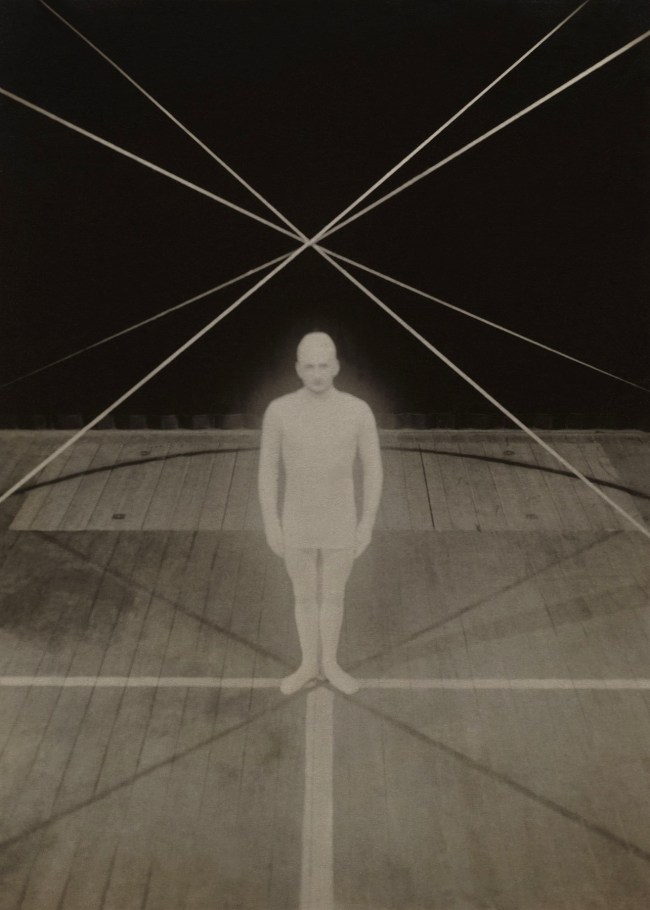
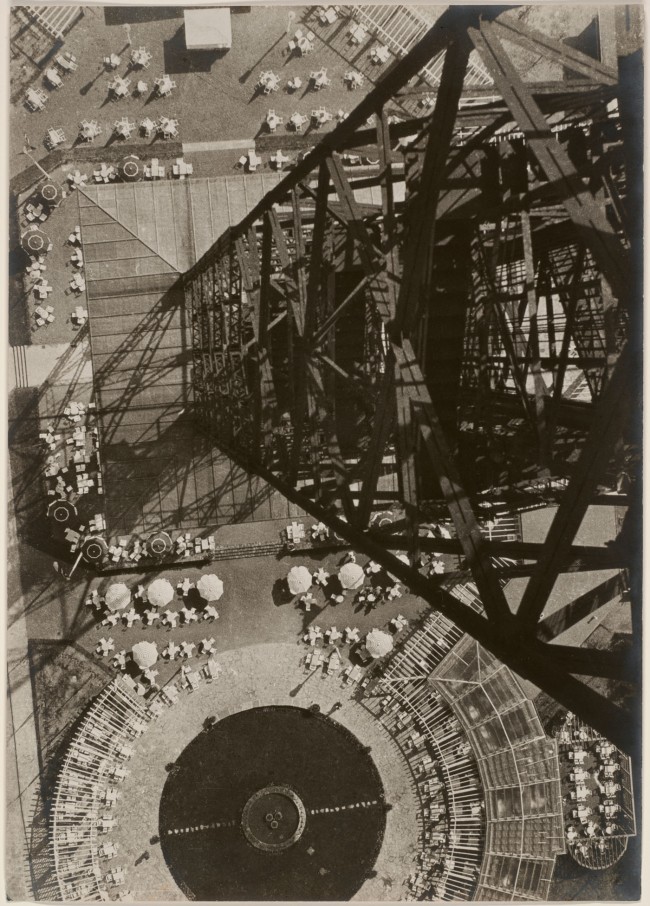
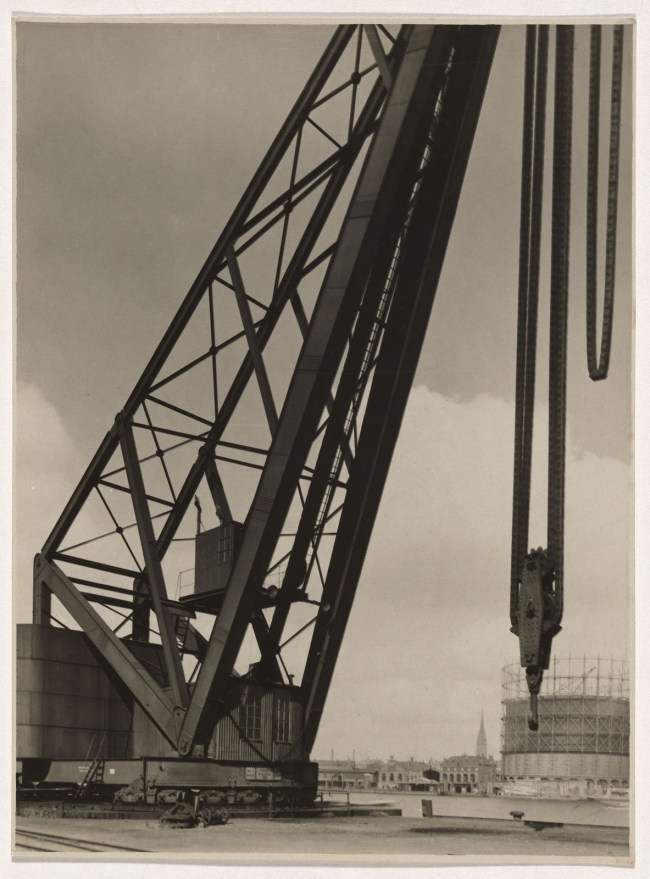
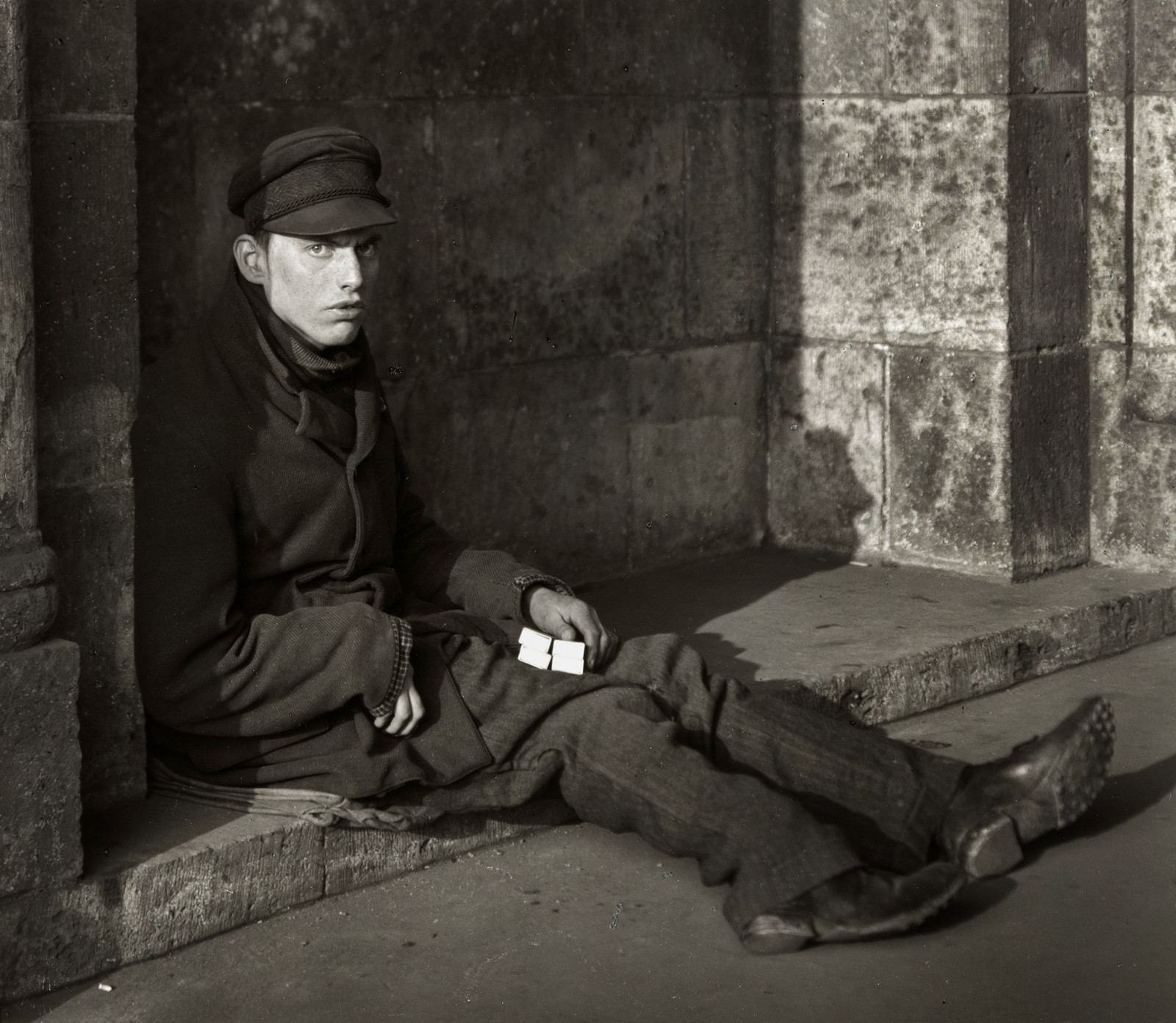
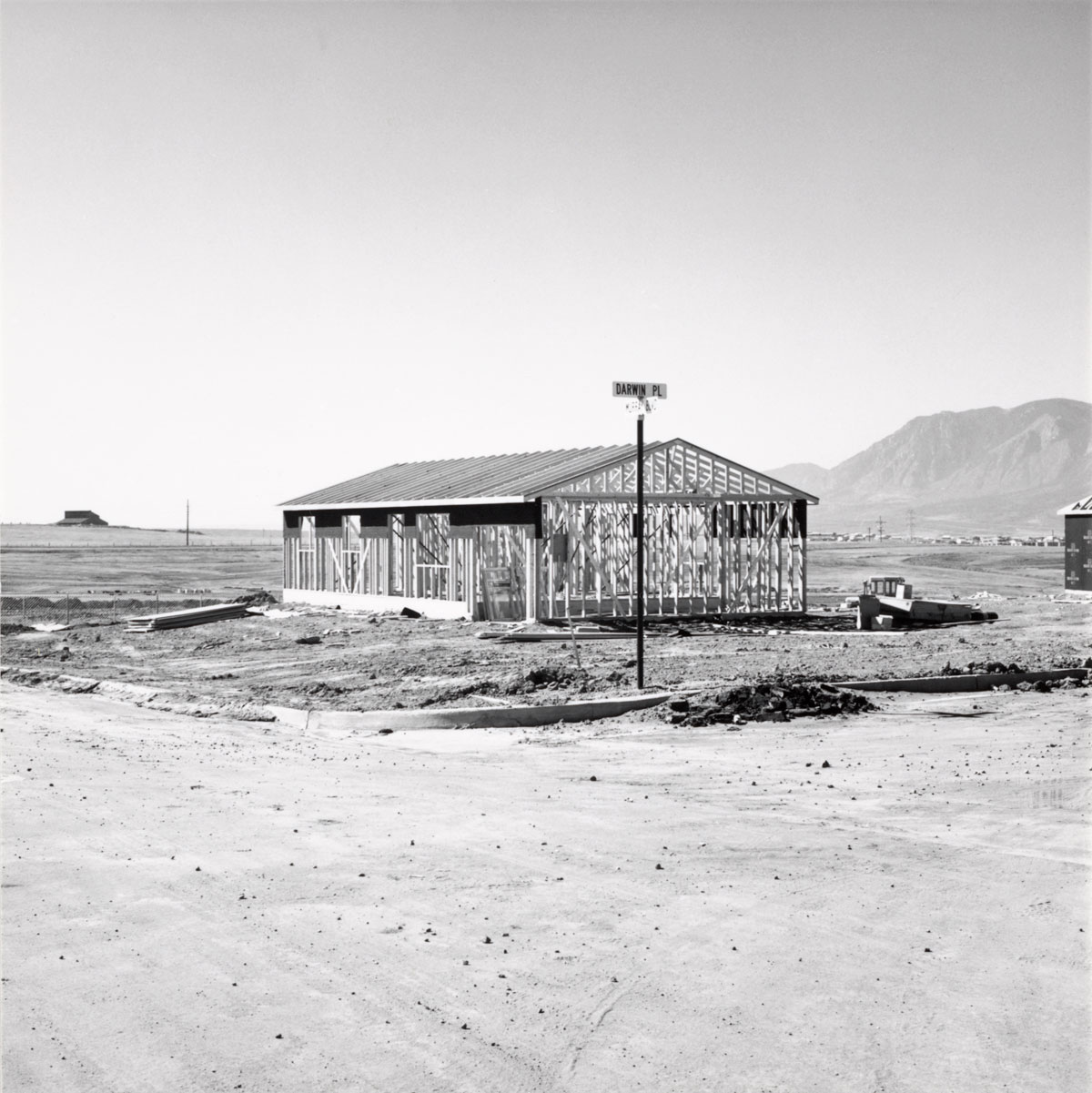
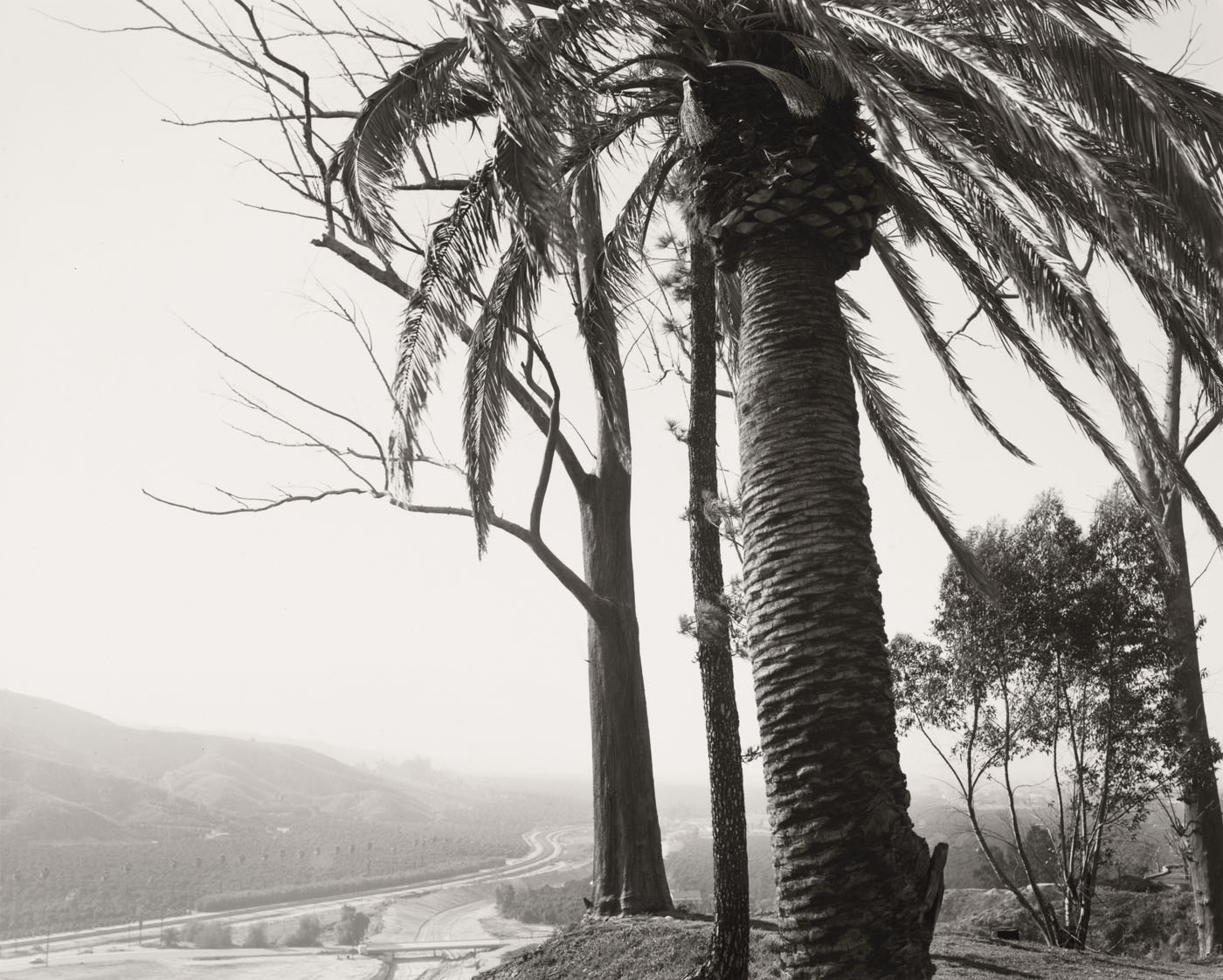
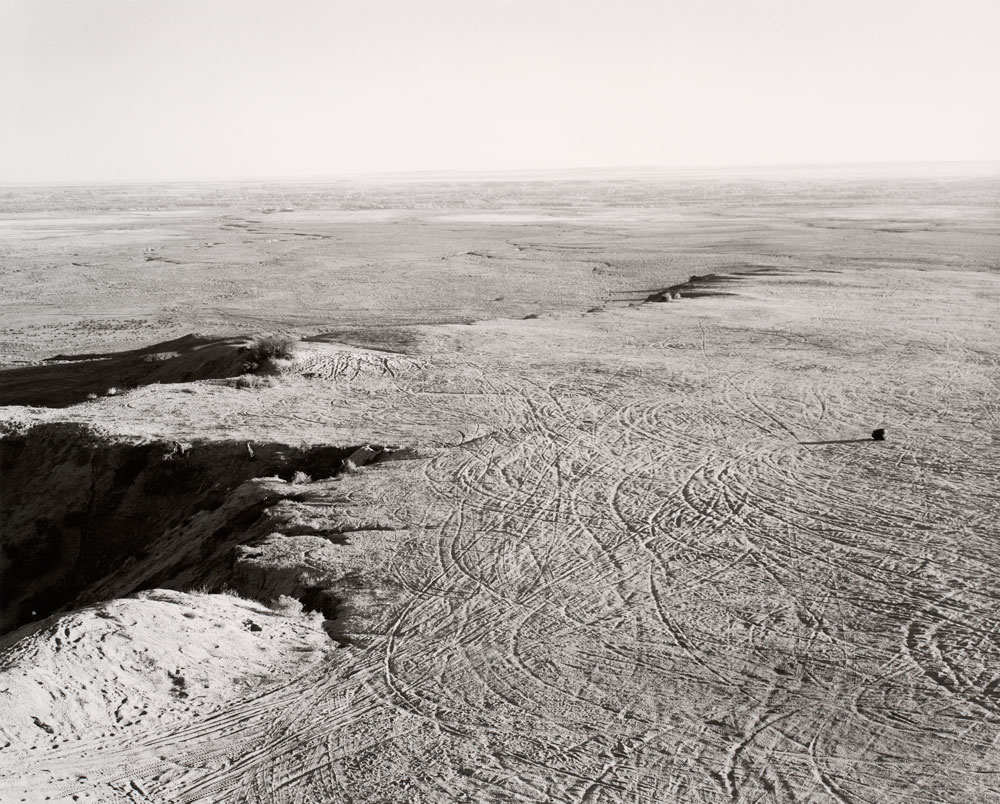
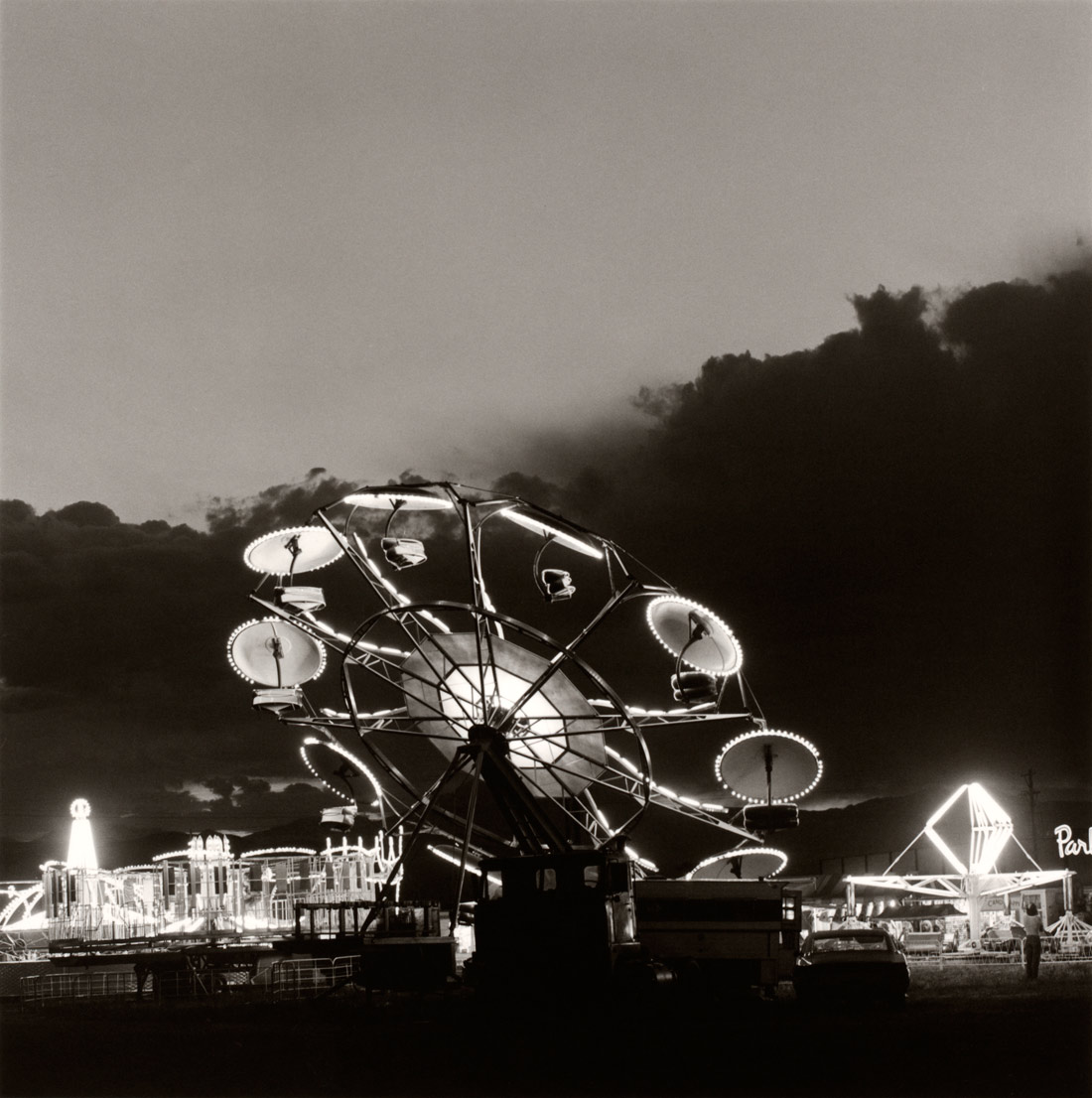
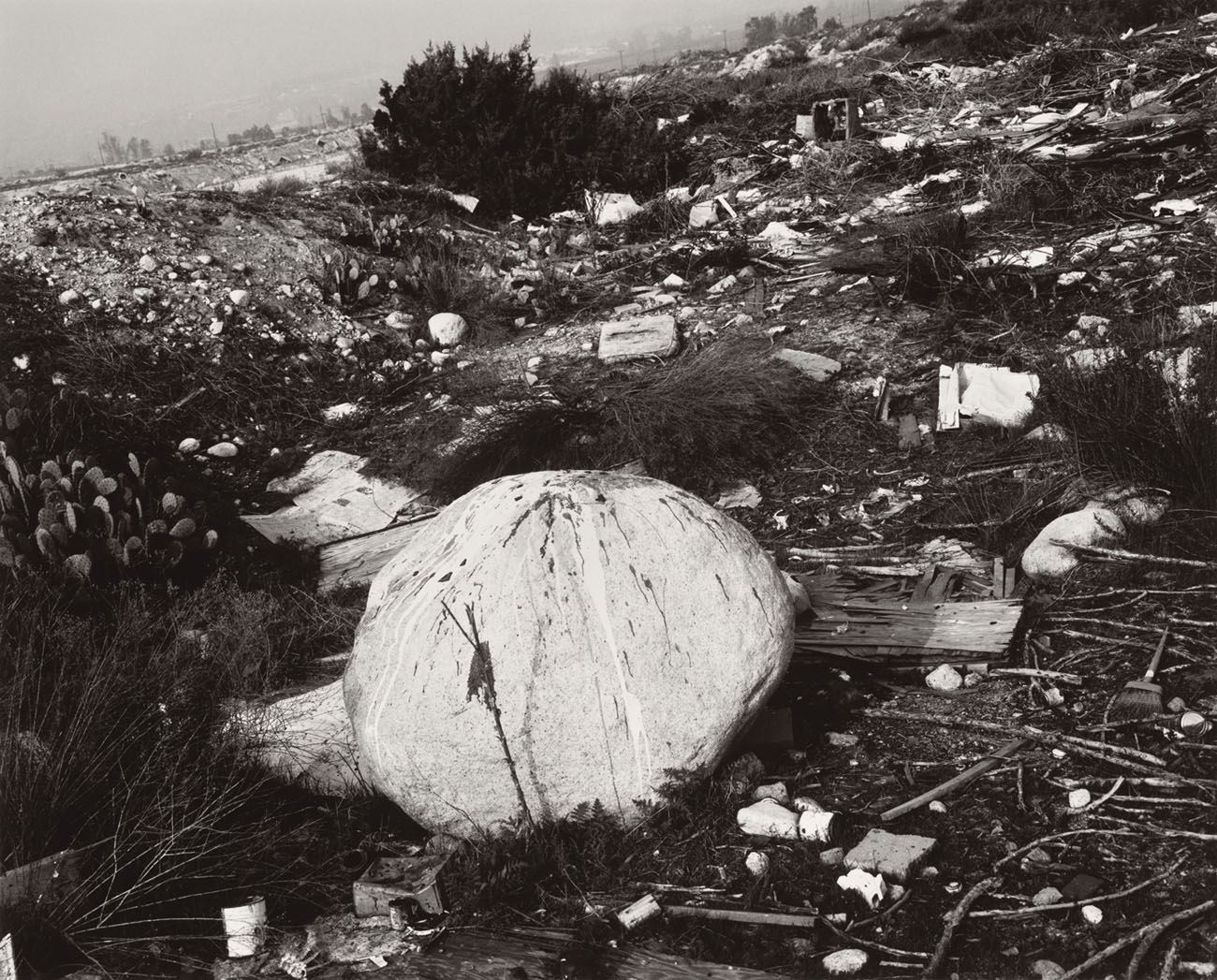
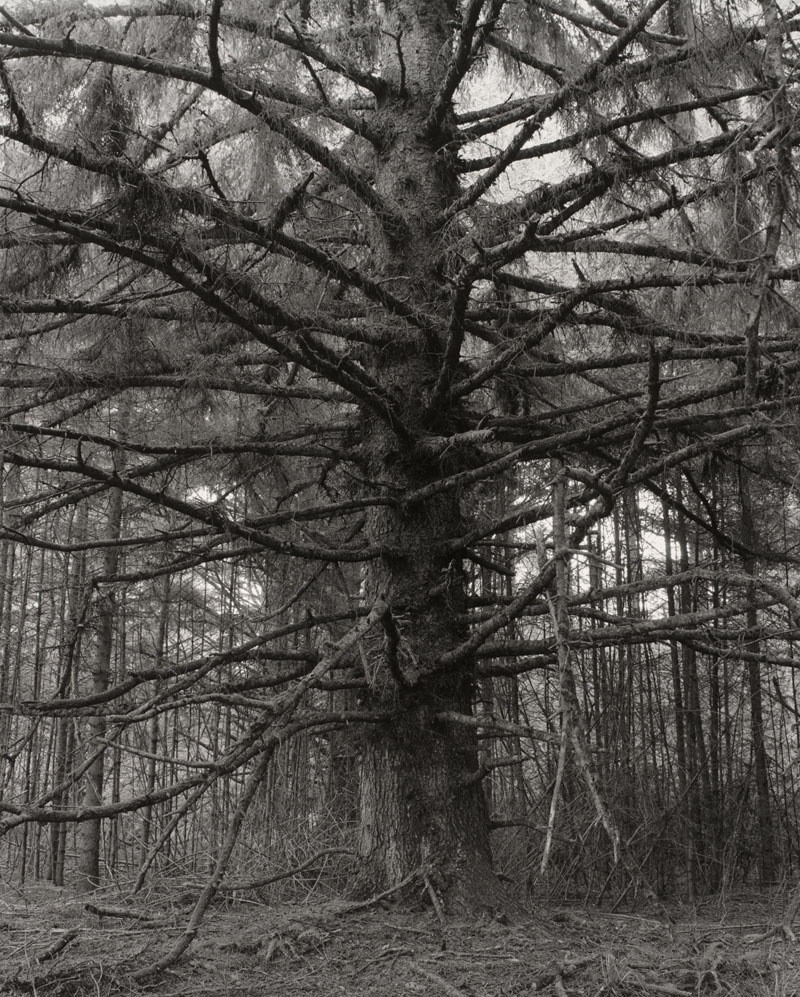
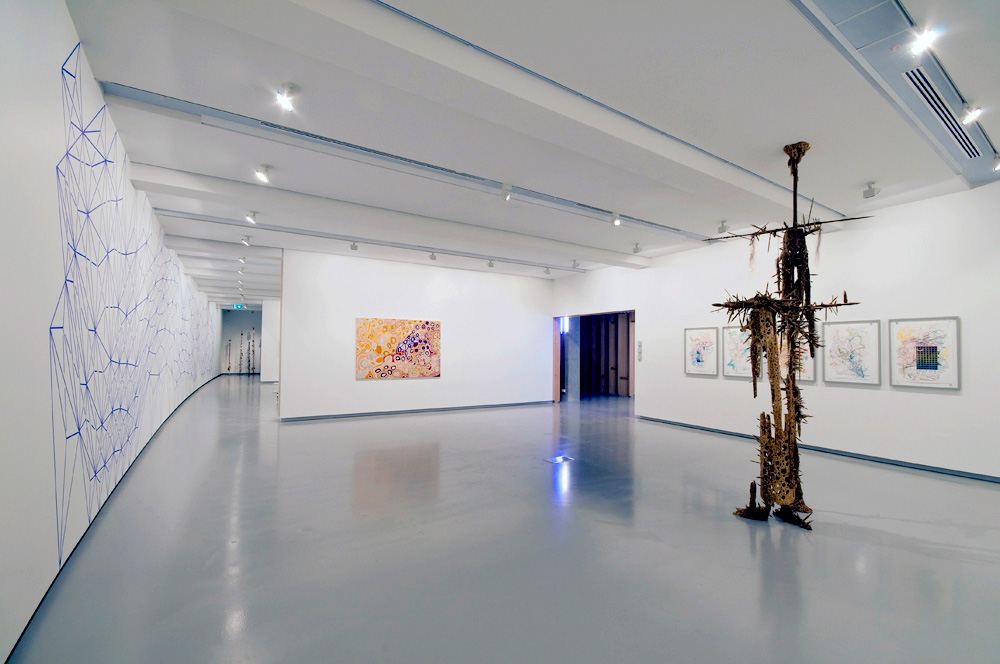
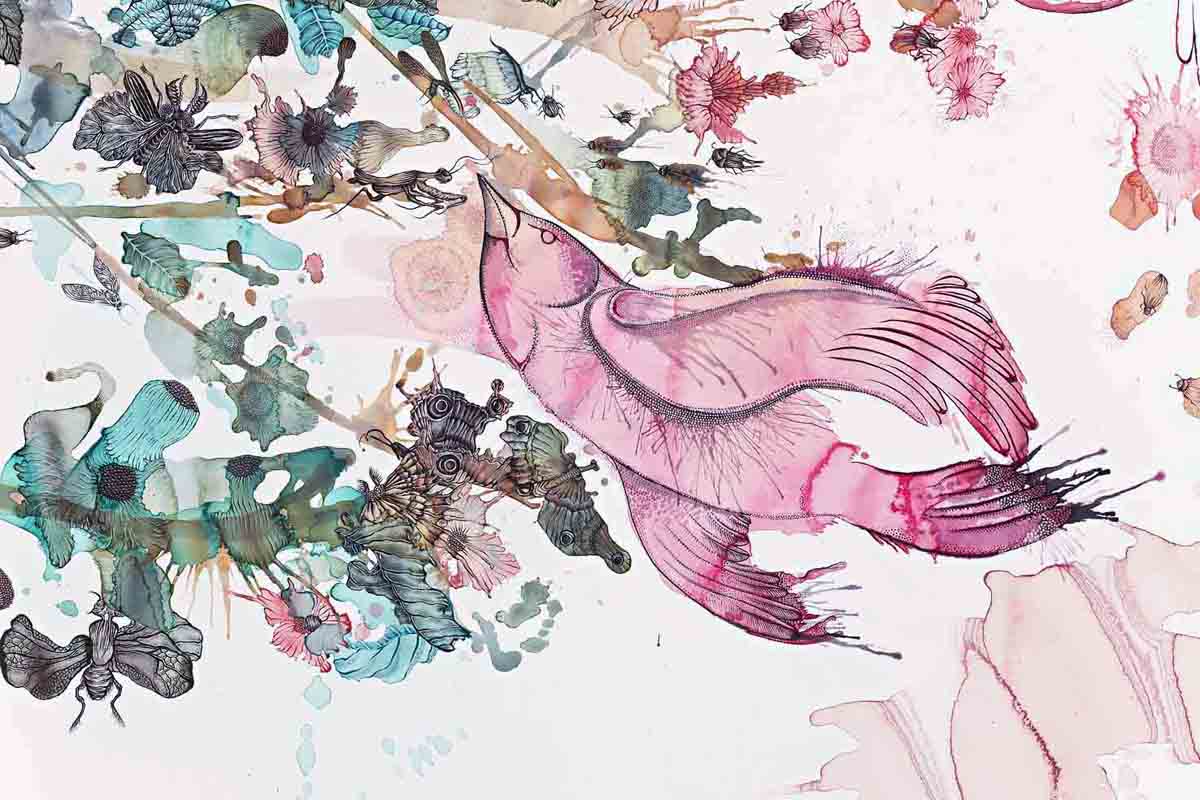
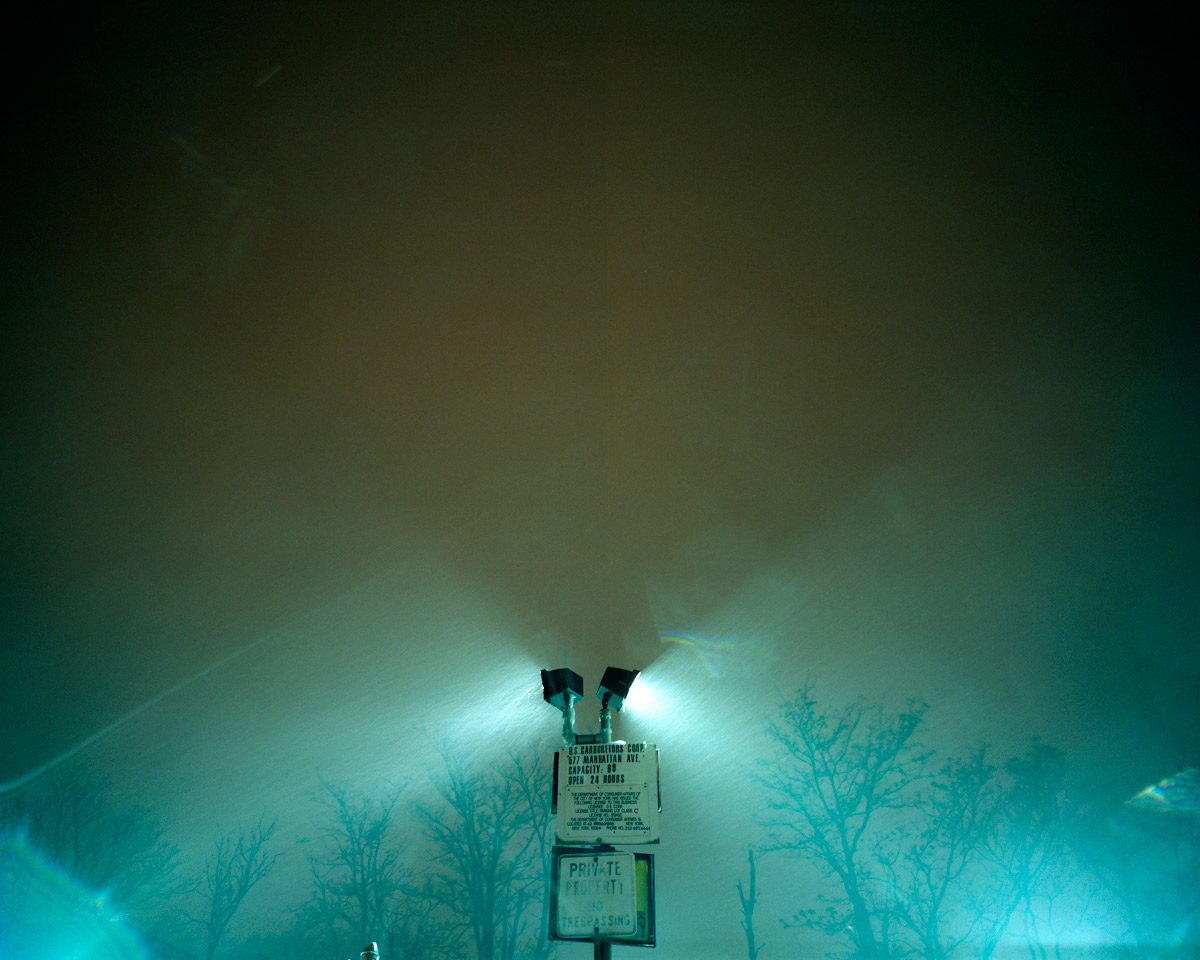
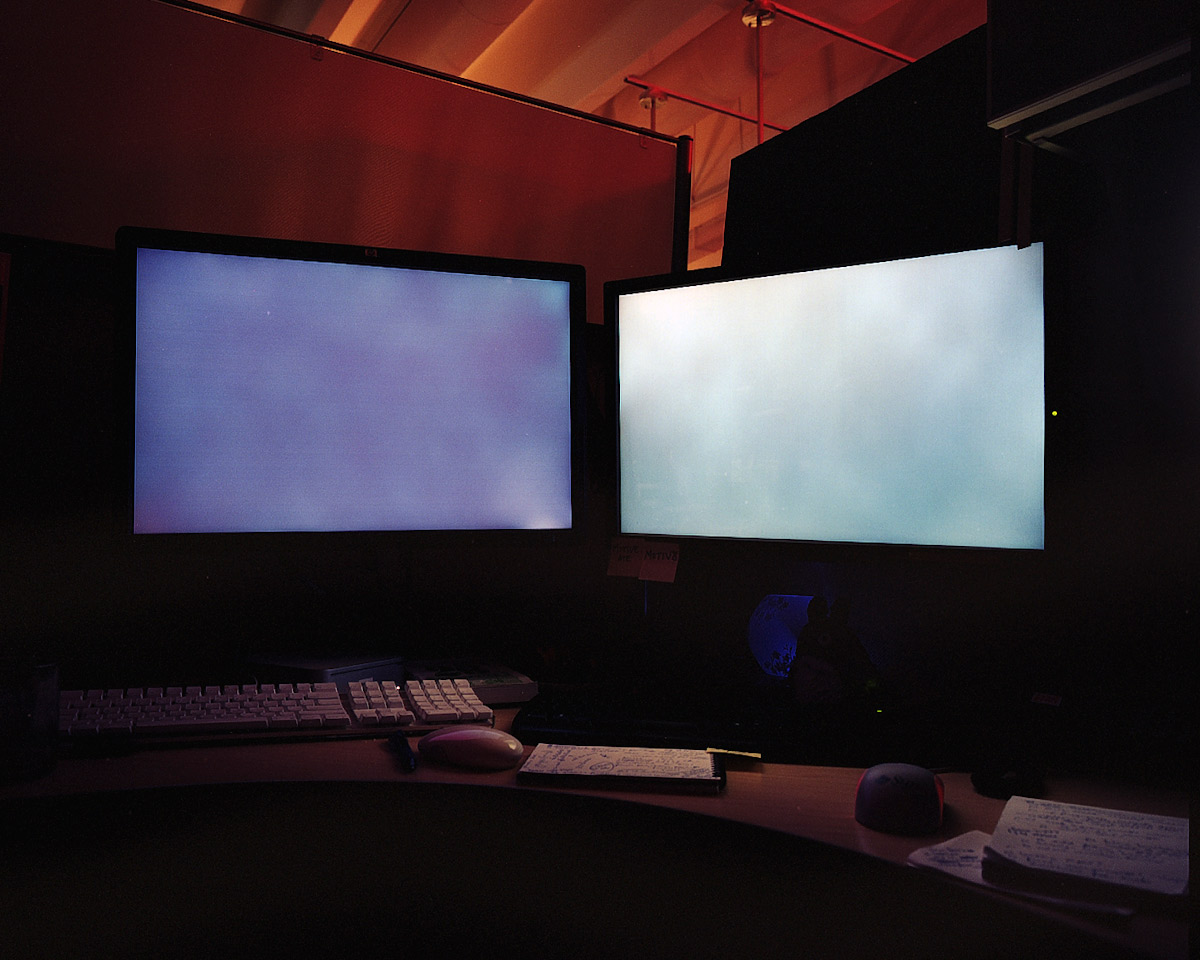
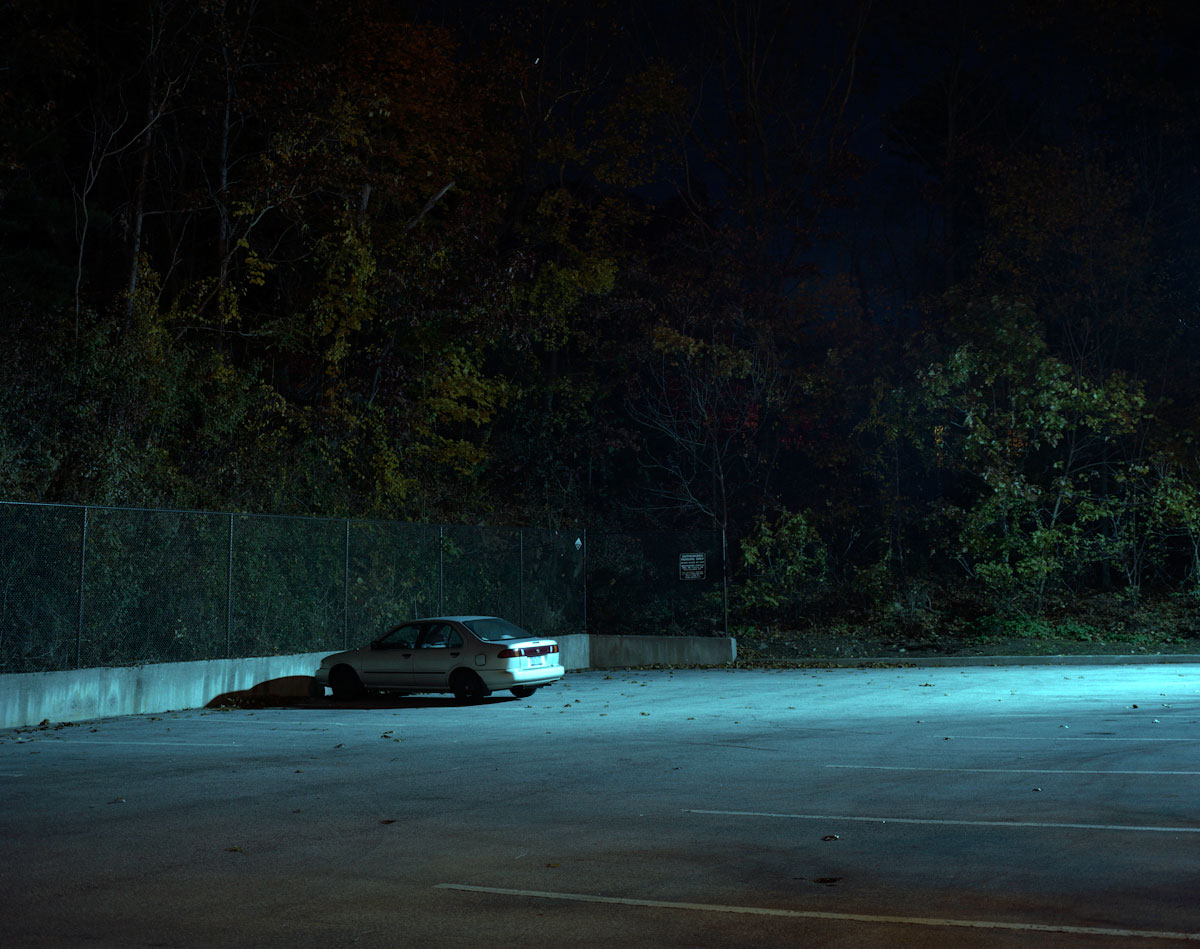
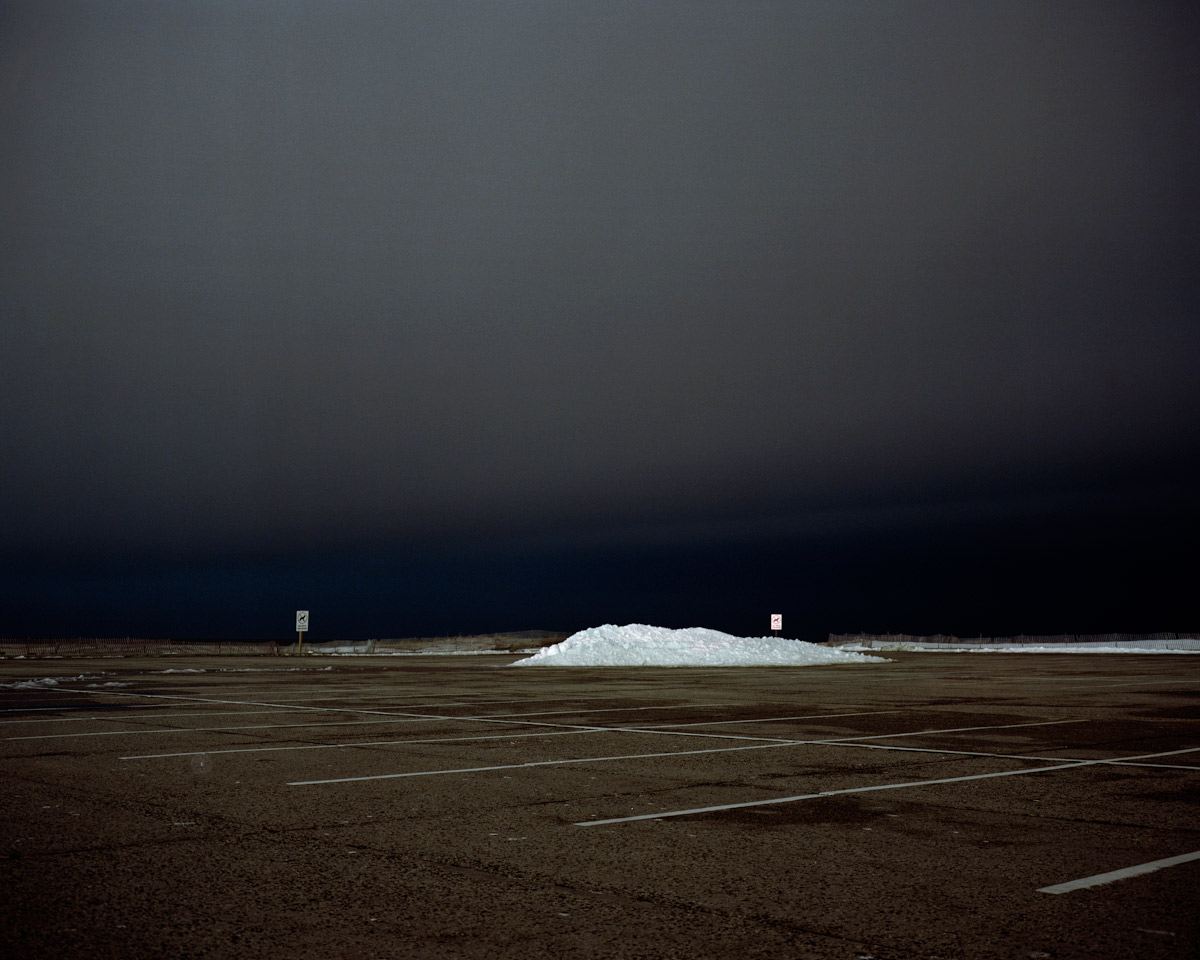
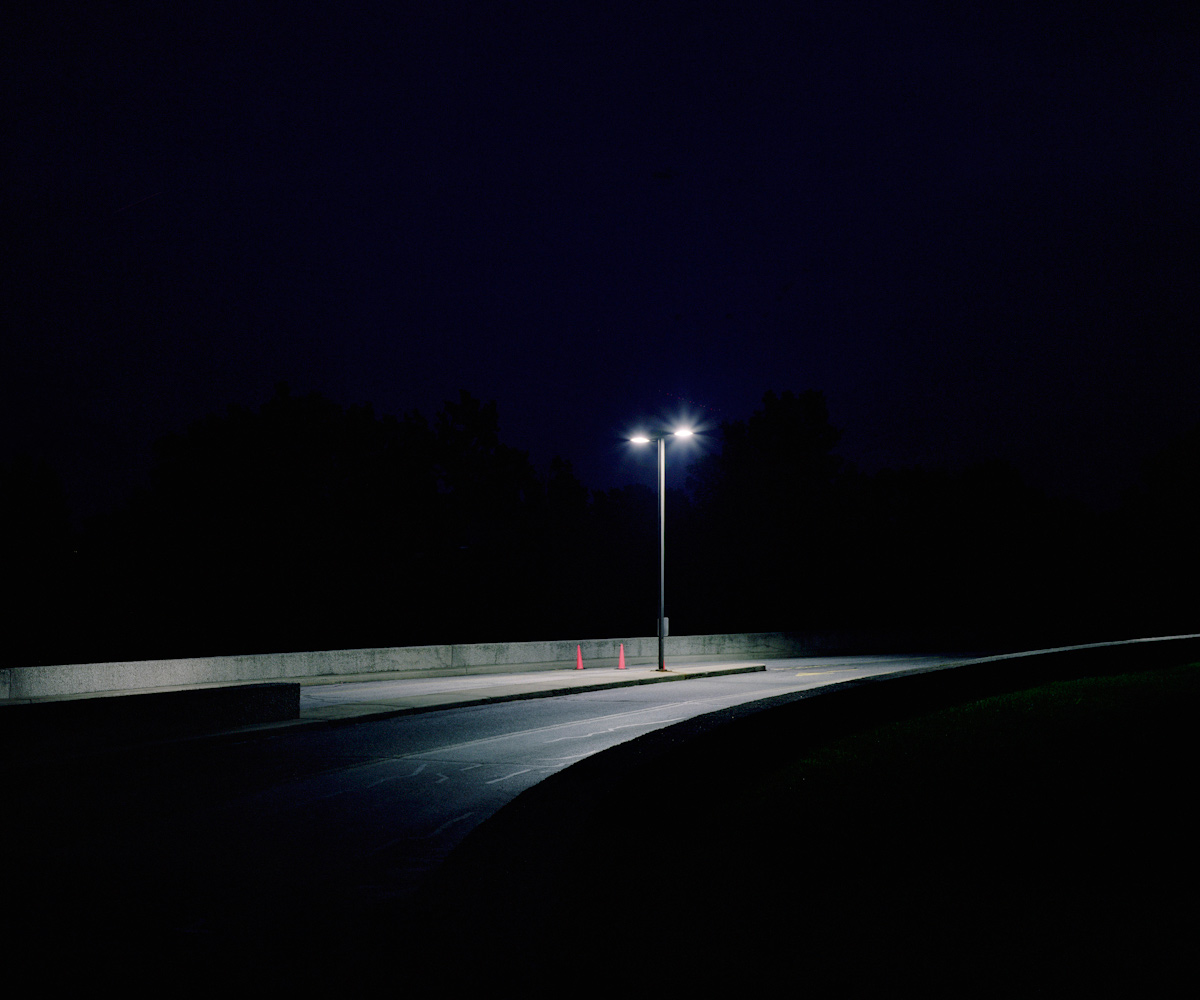
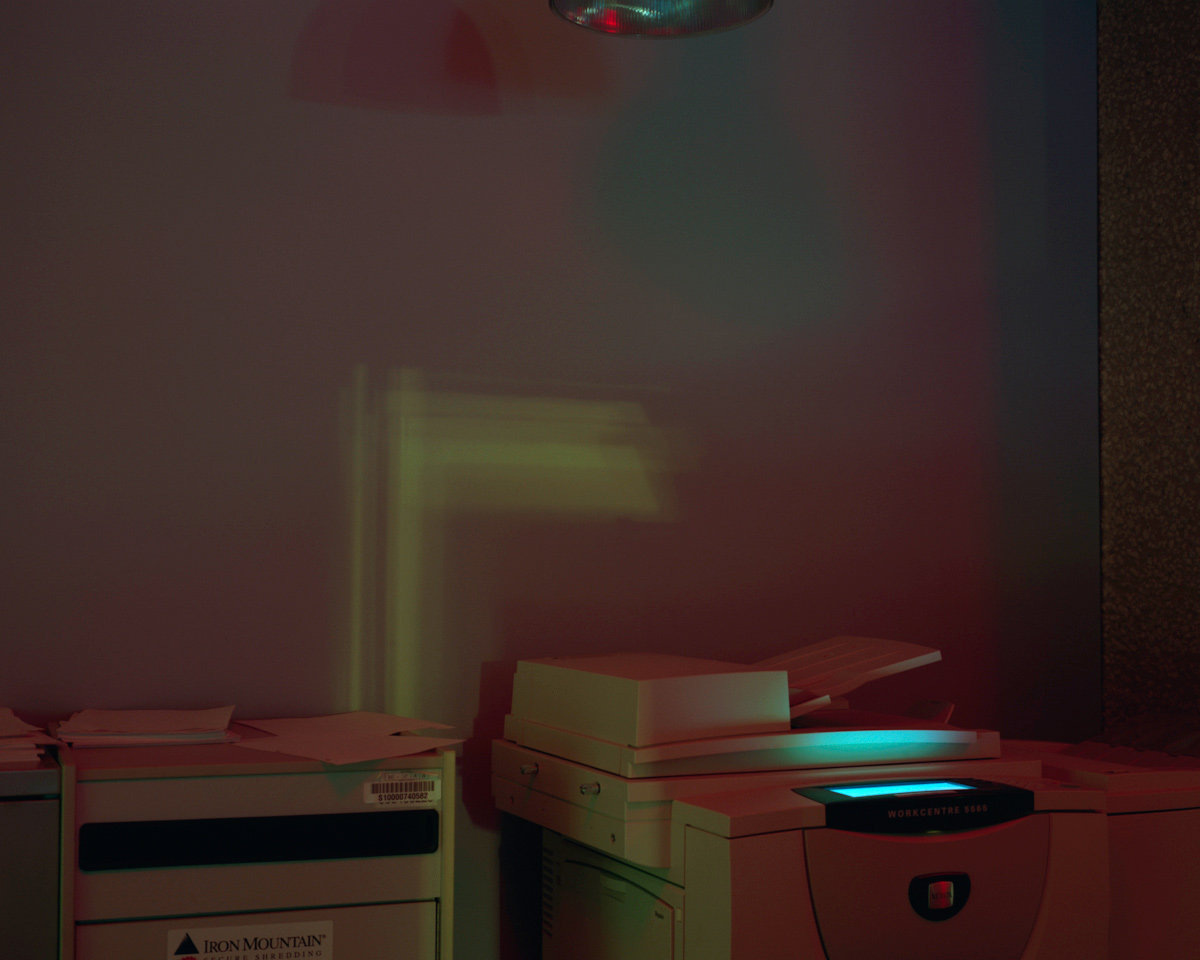
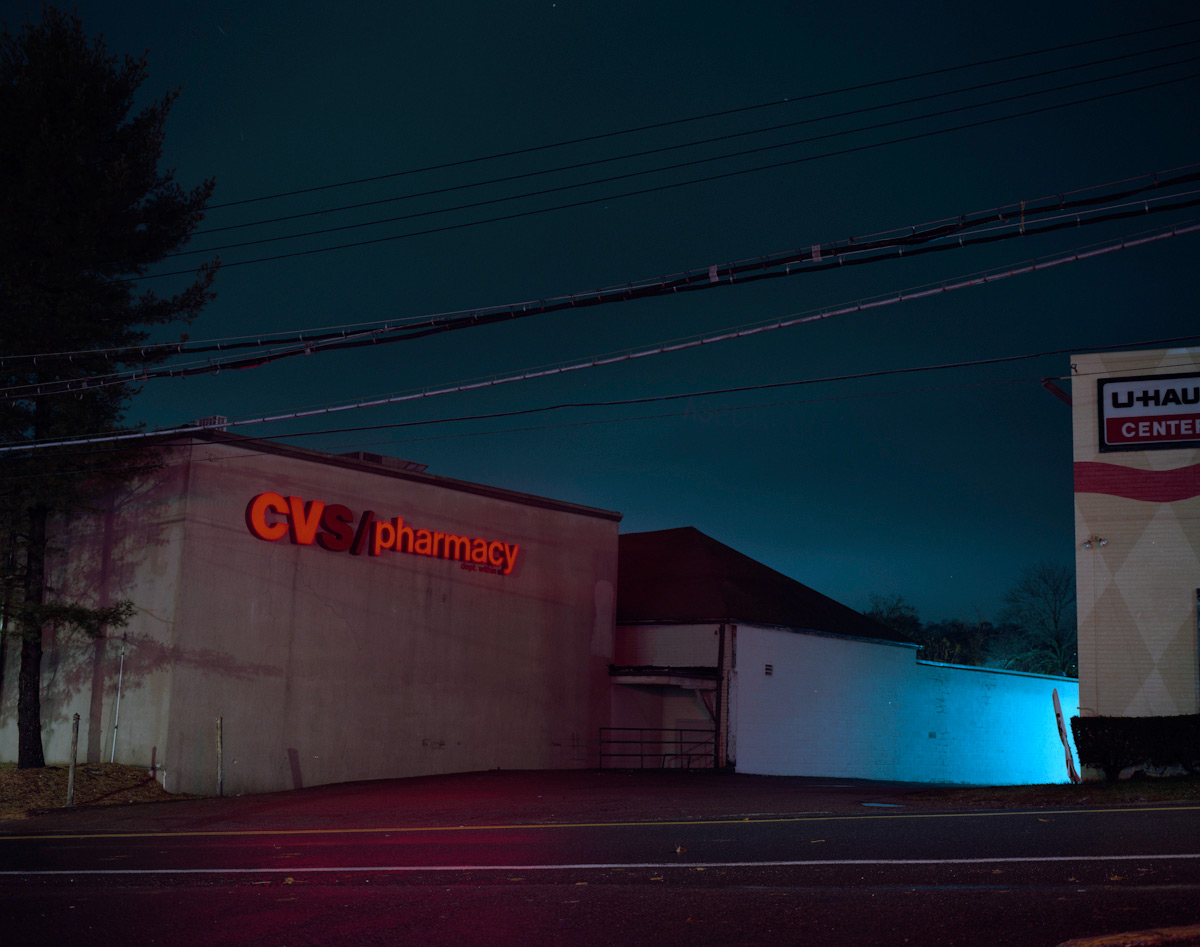
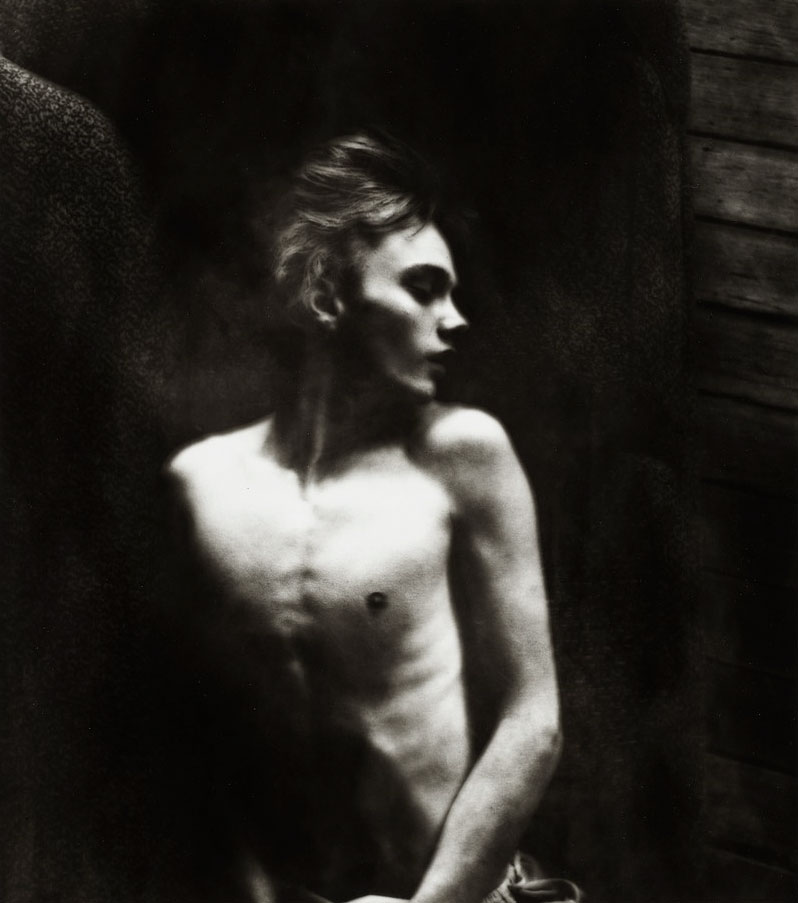
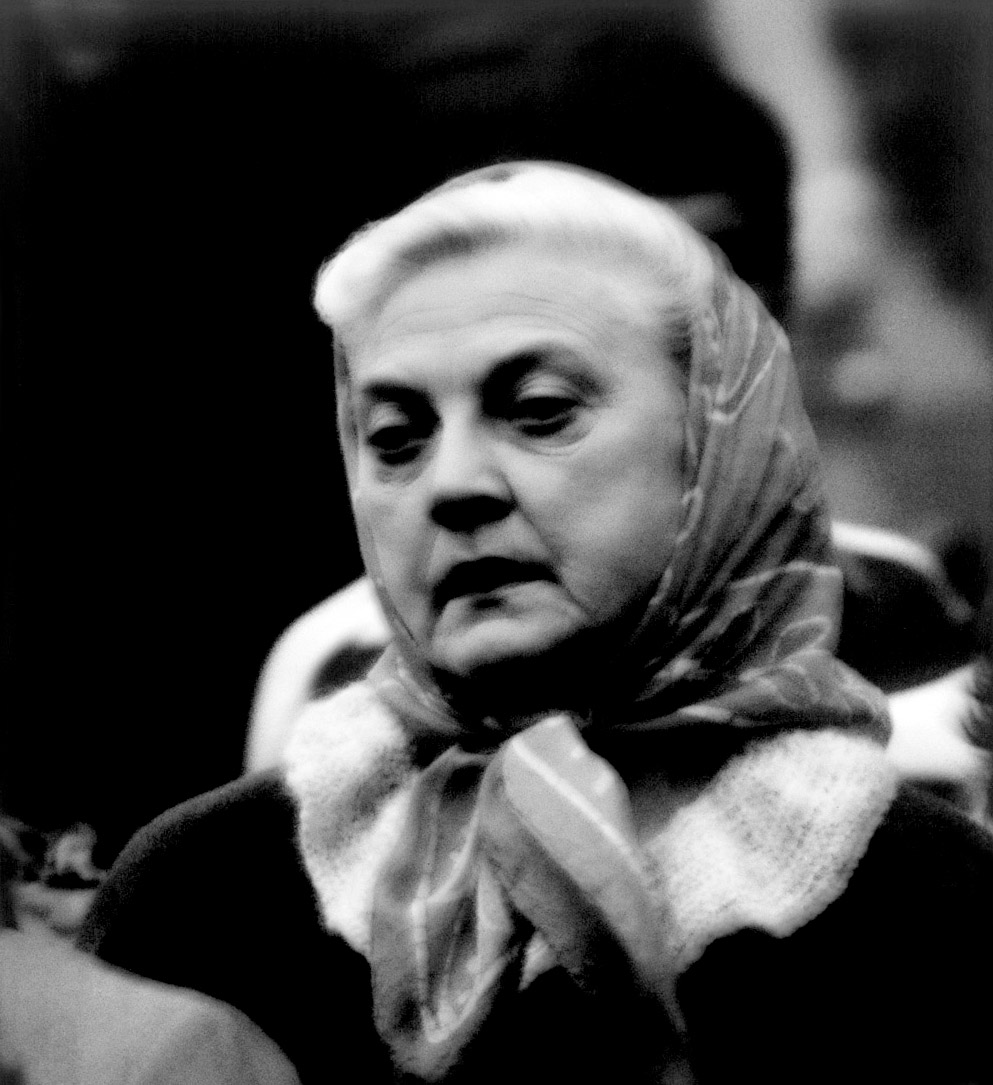
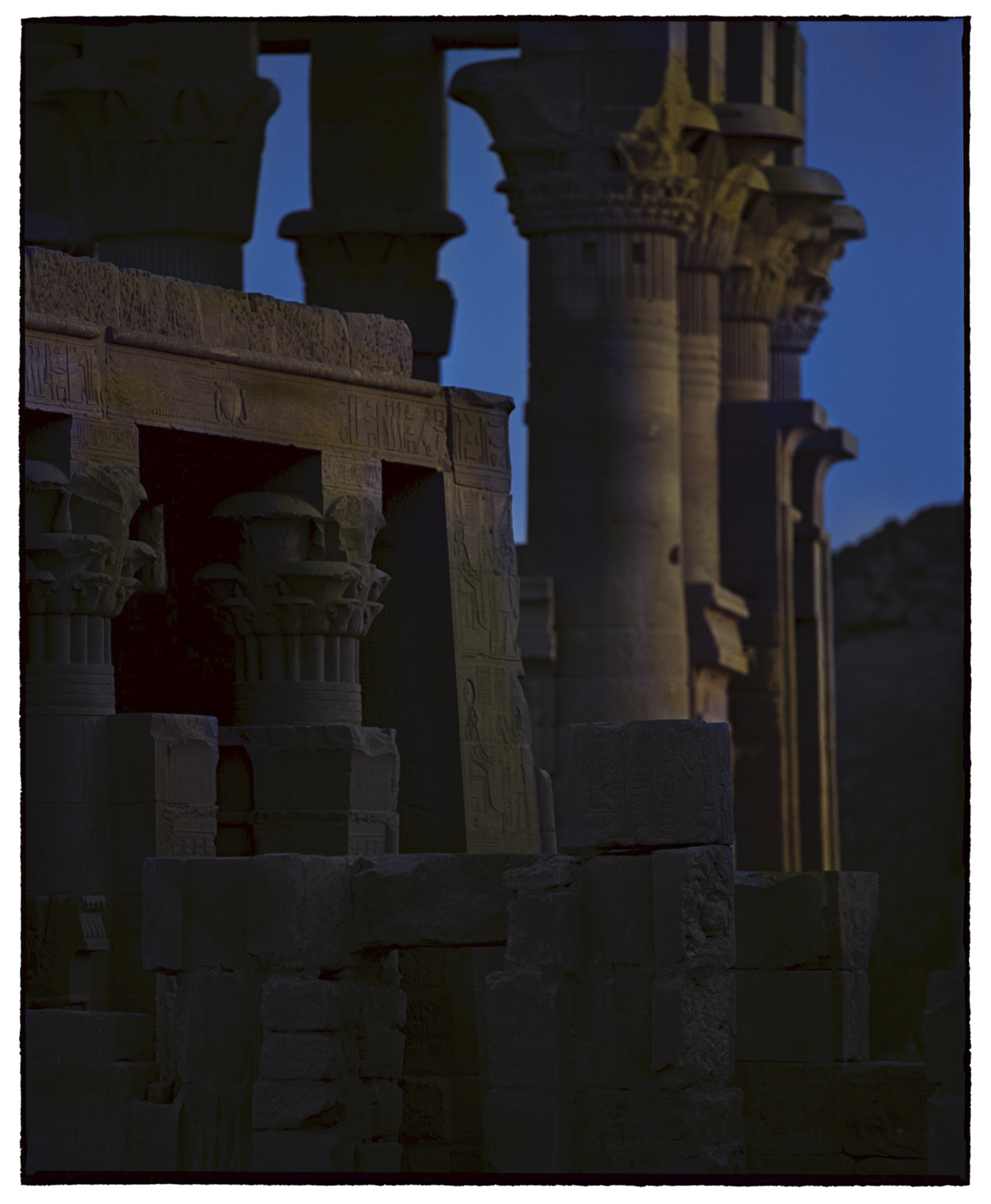
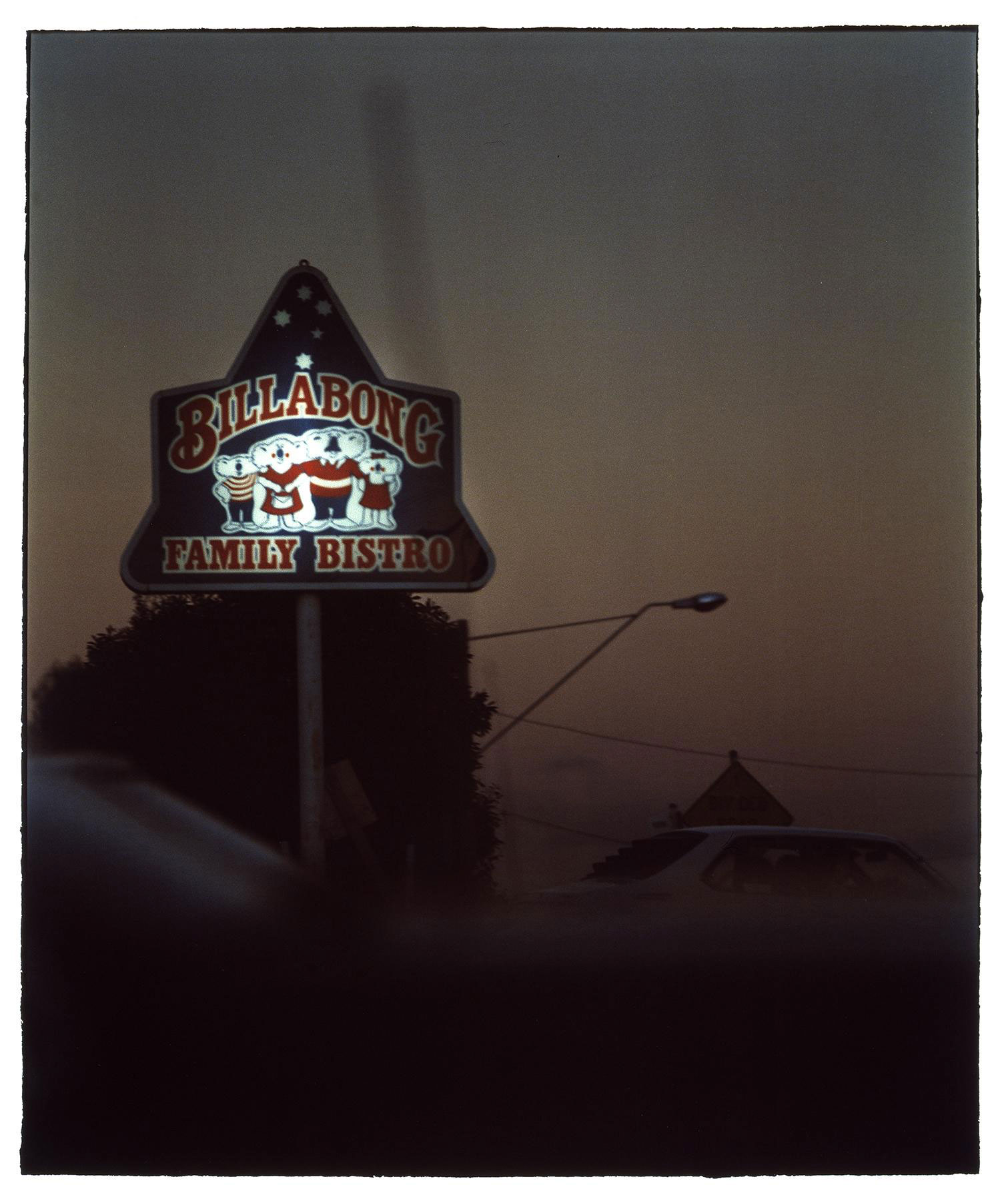
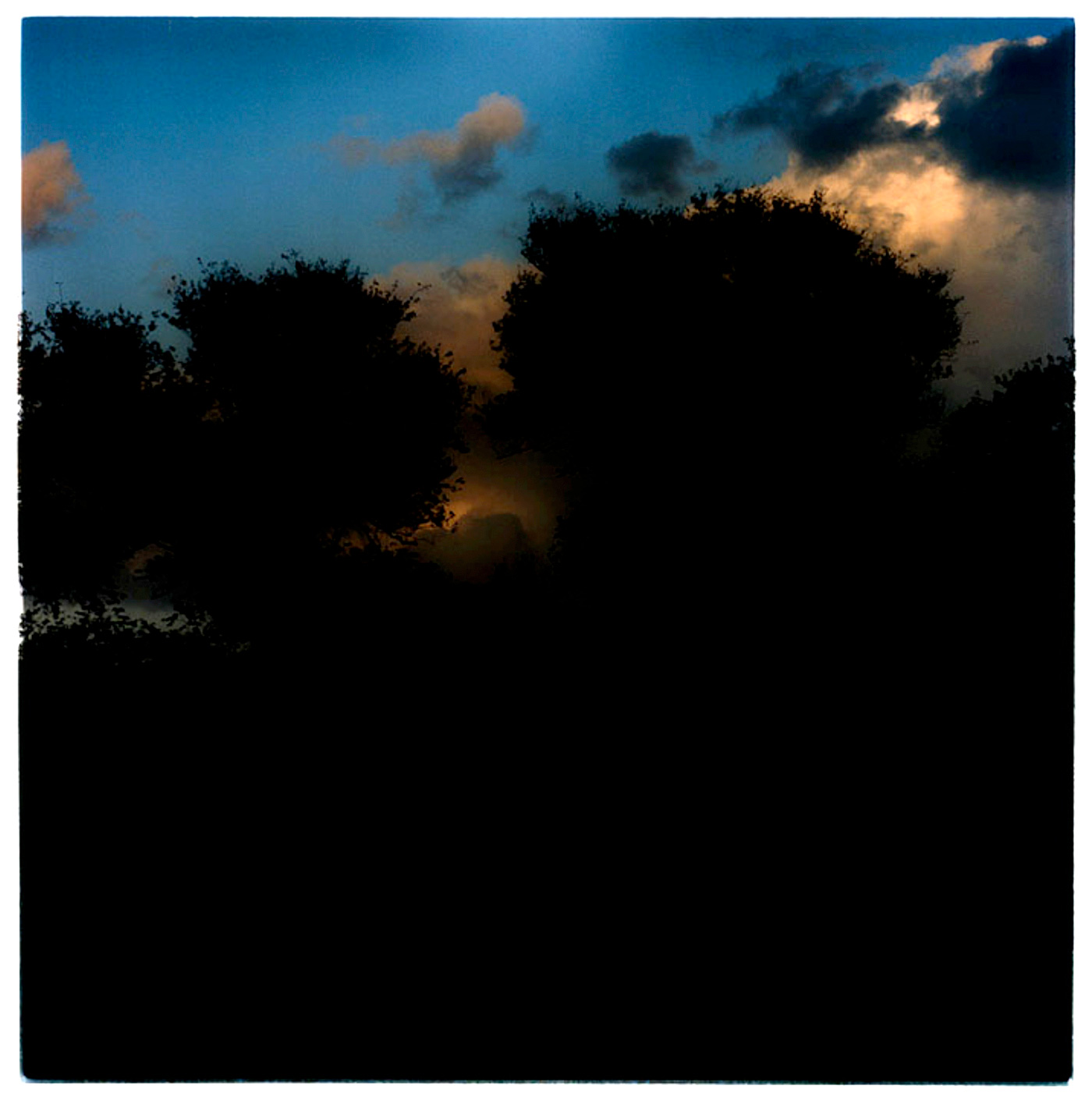
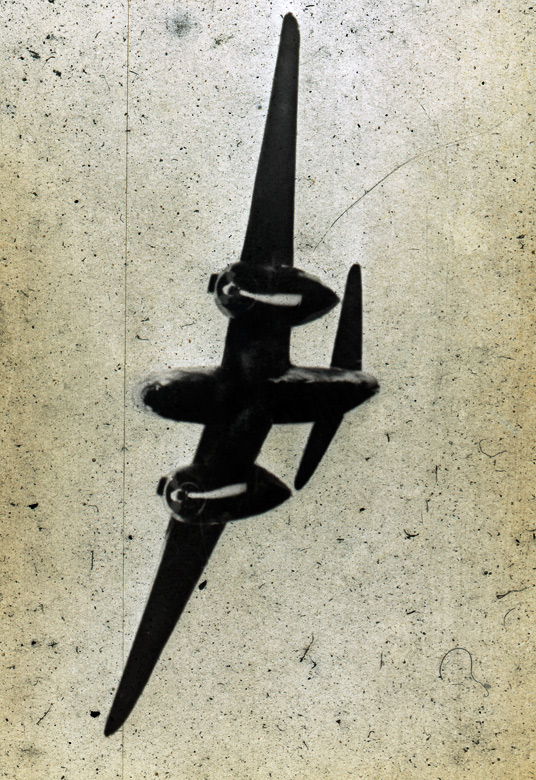
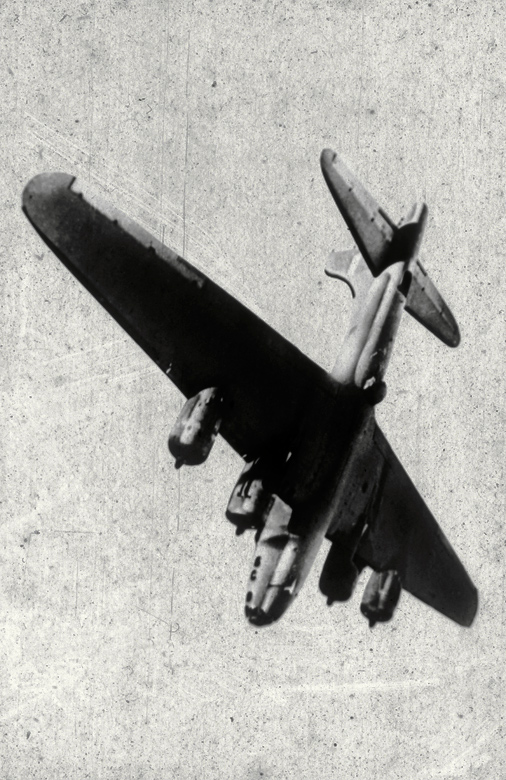
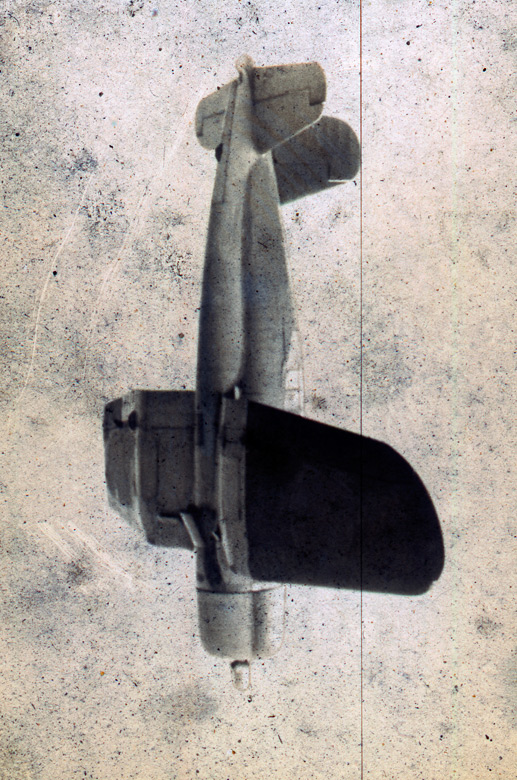
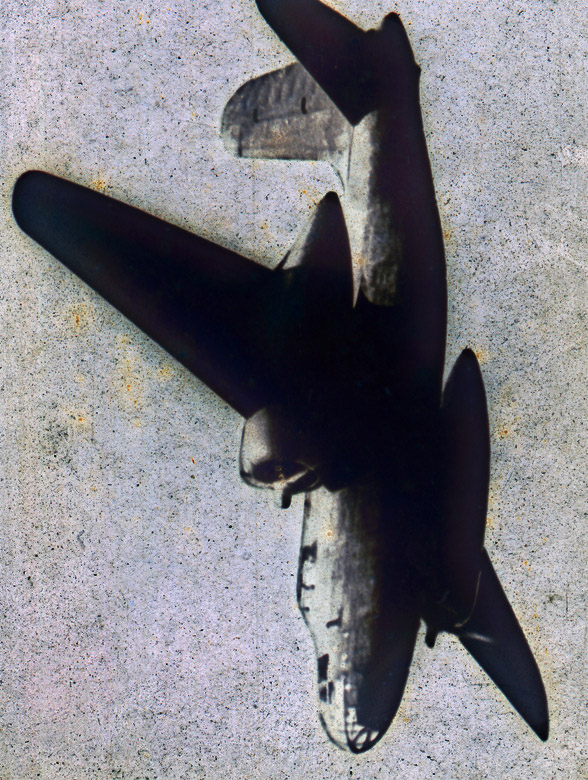
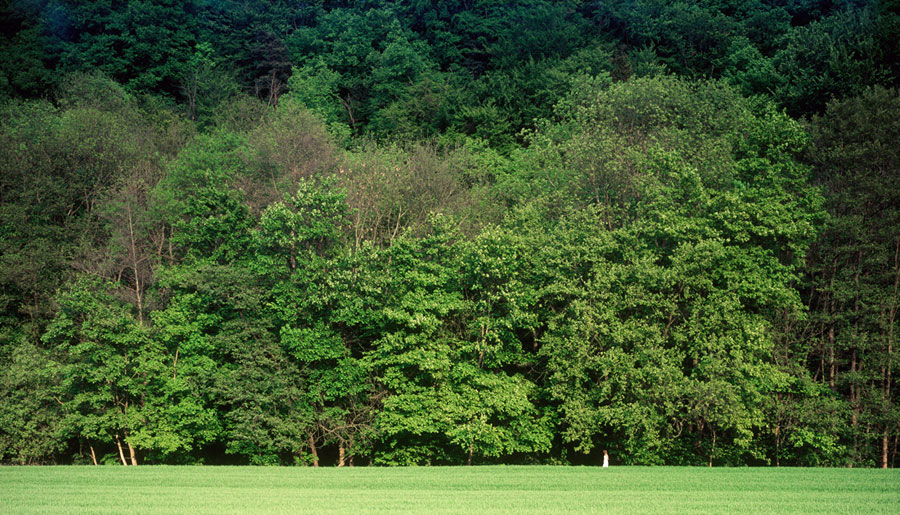
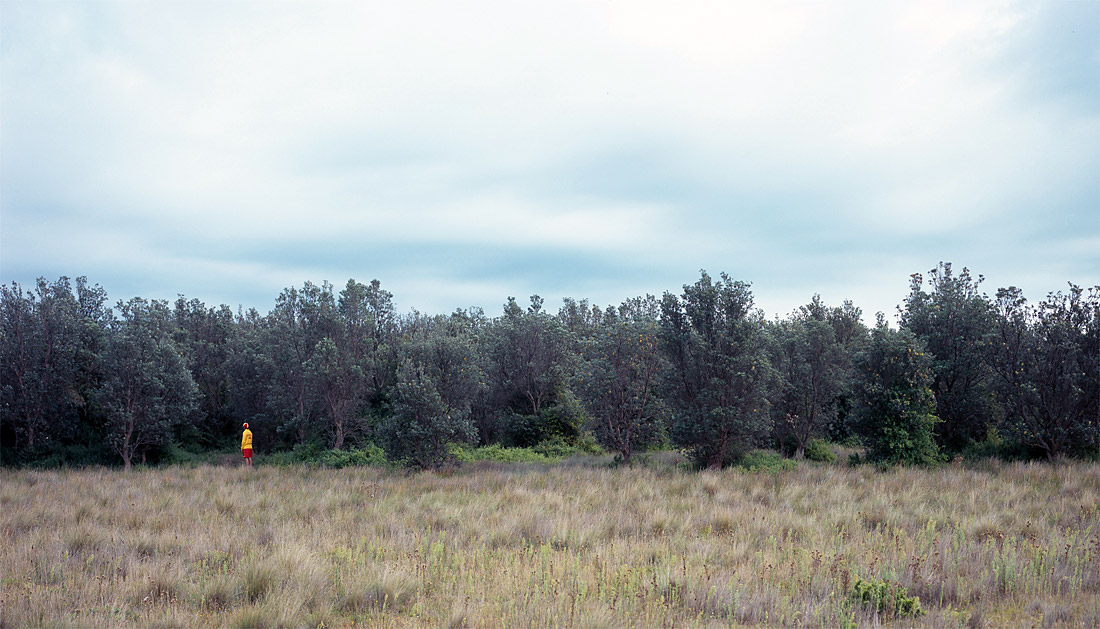
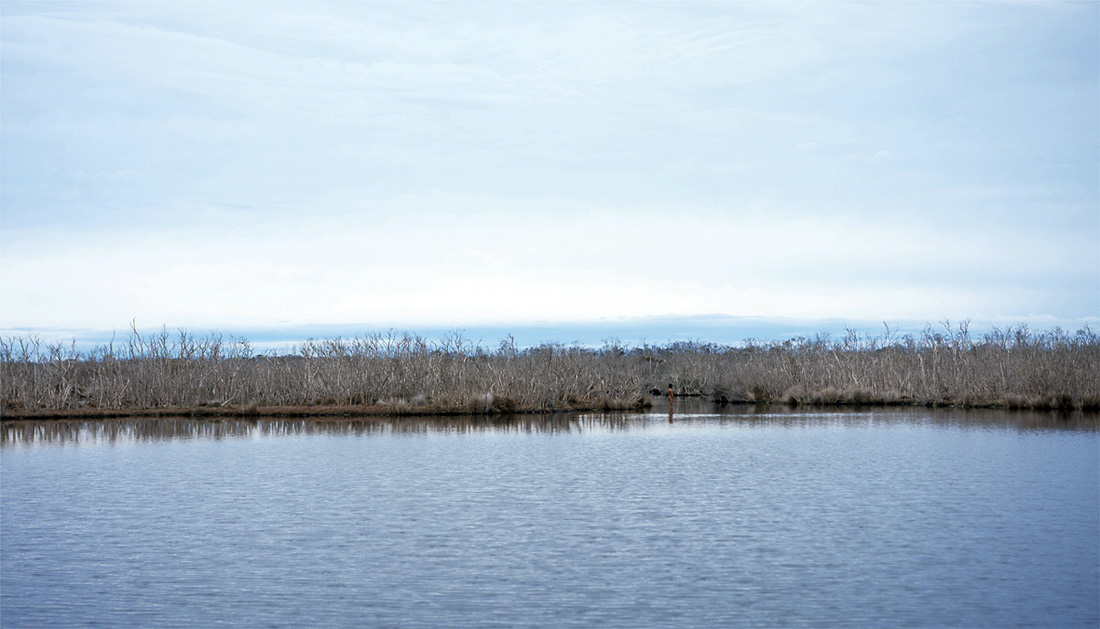
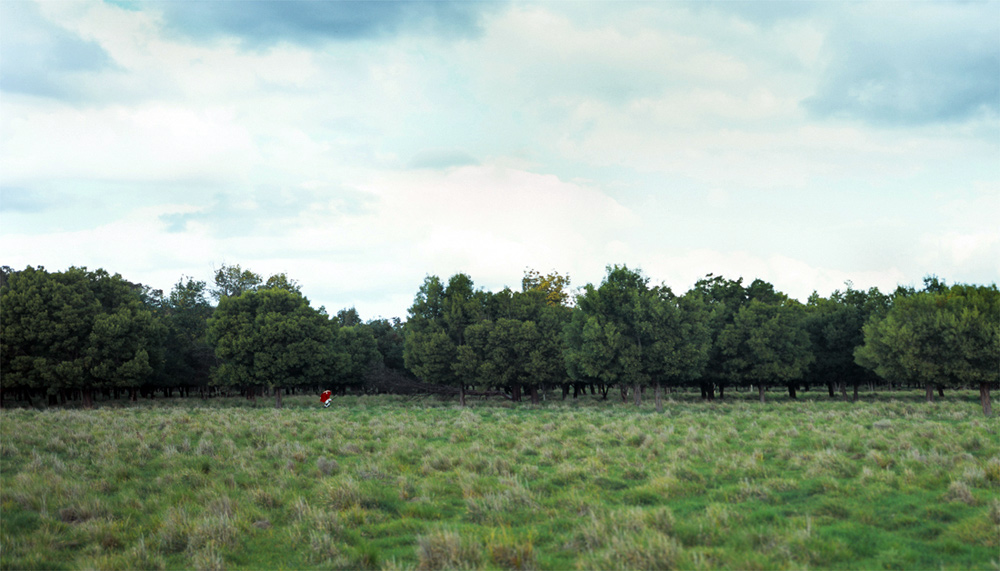
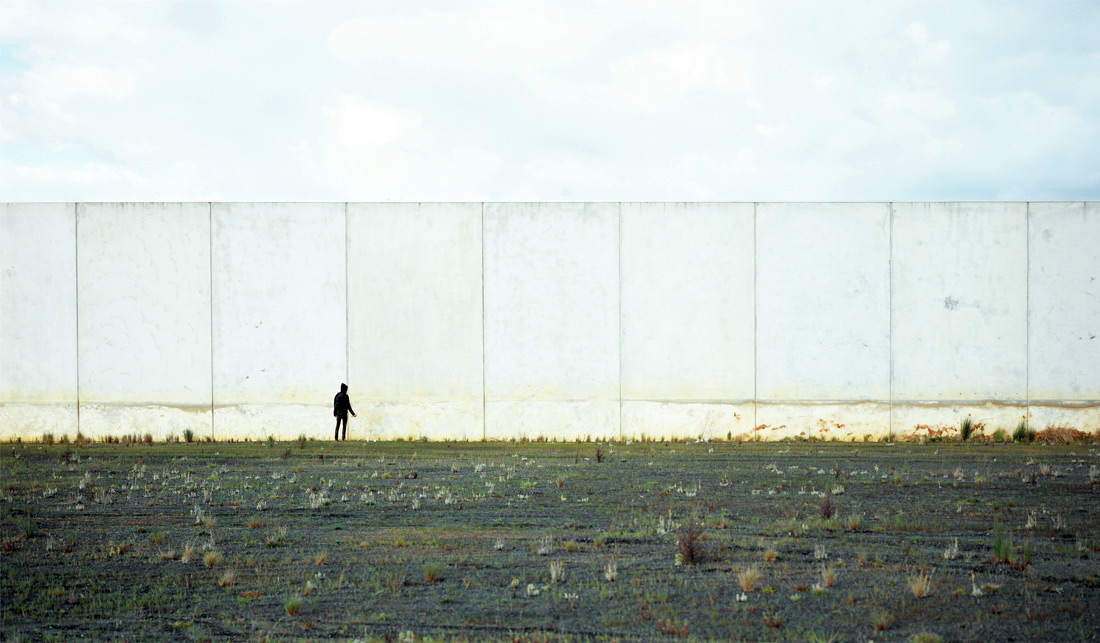
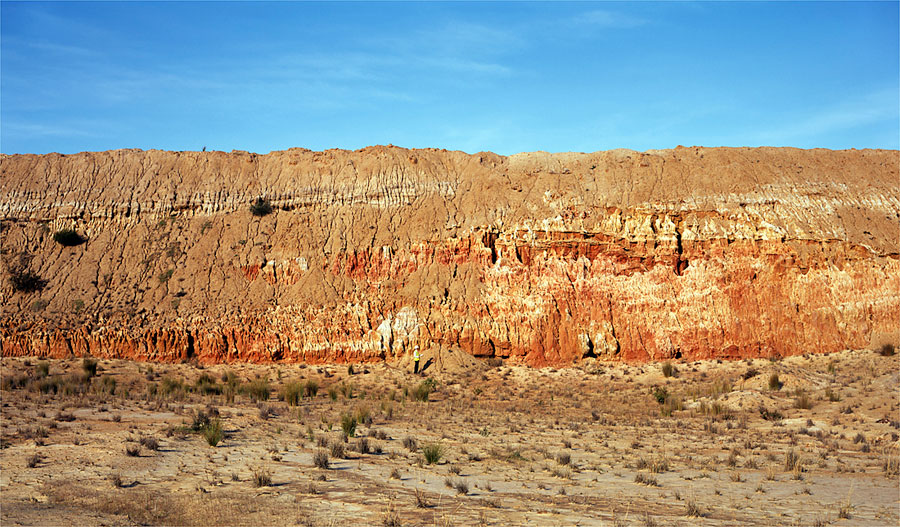
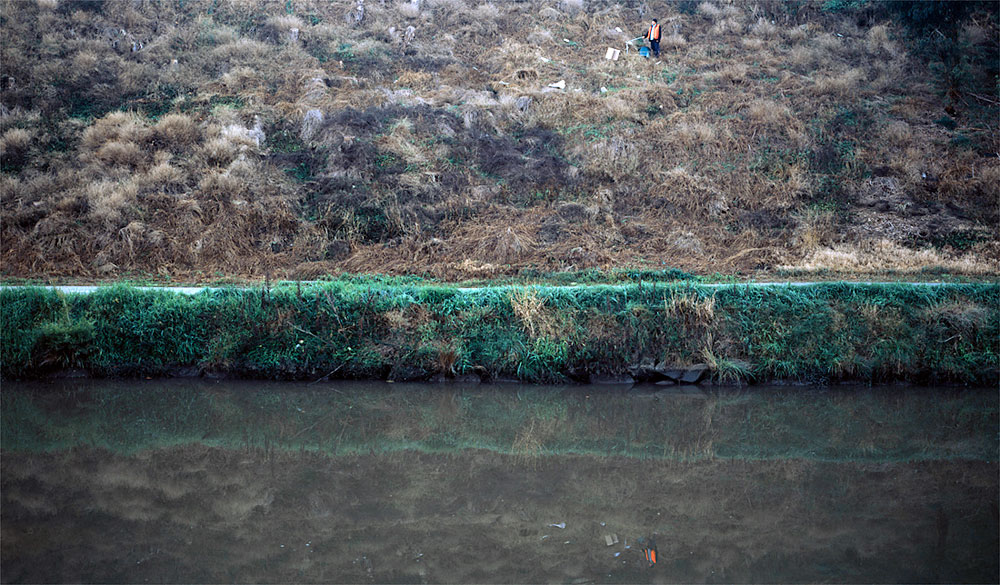
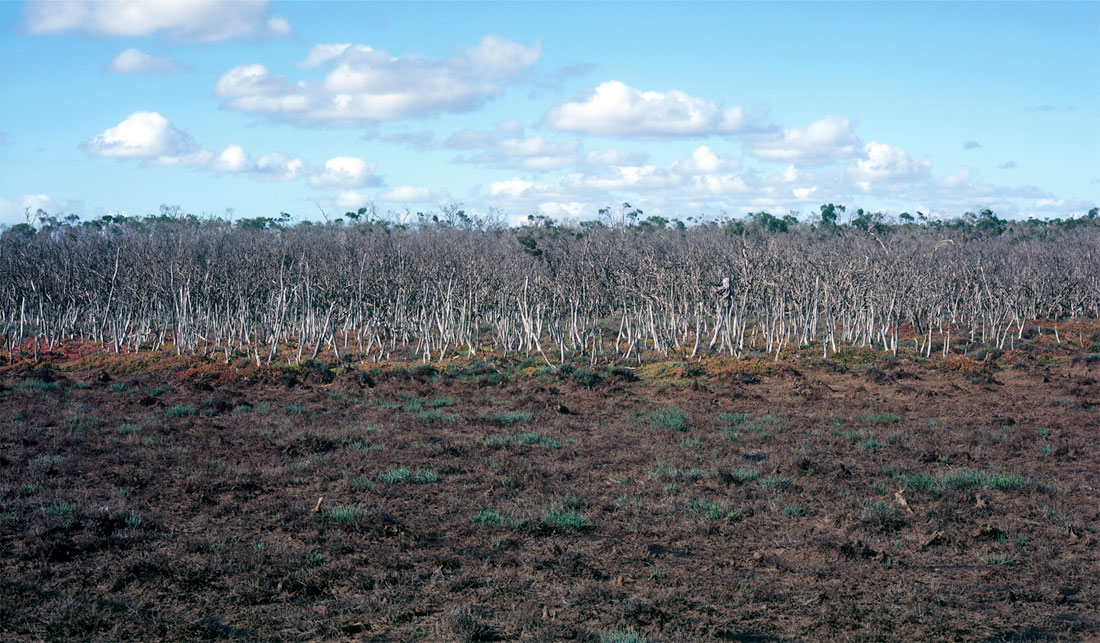
Photographs: Marcus Bunyan. ‘Vertical’ 2011

December 2011


This slideshow requires JavaScript.


Vertical

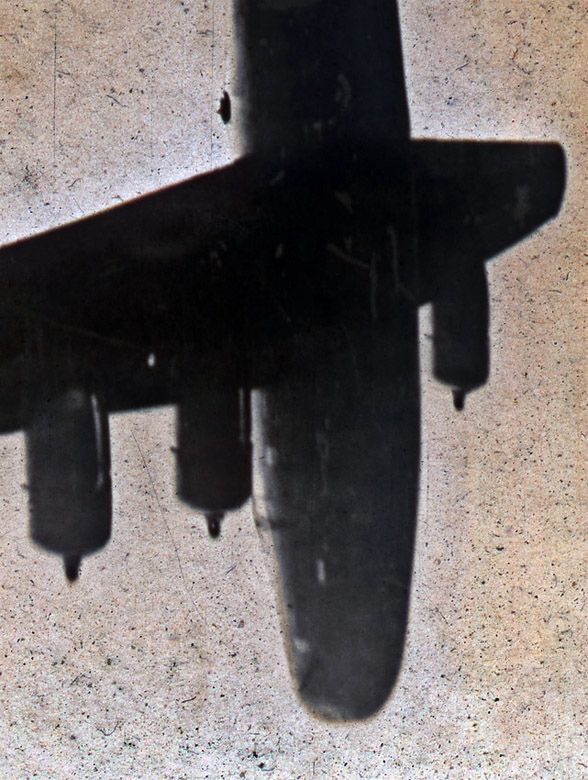
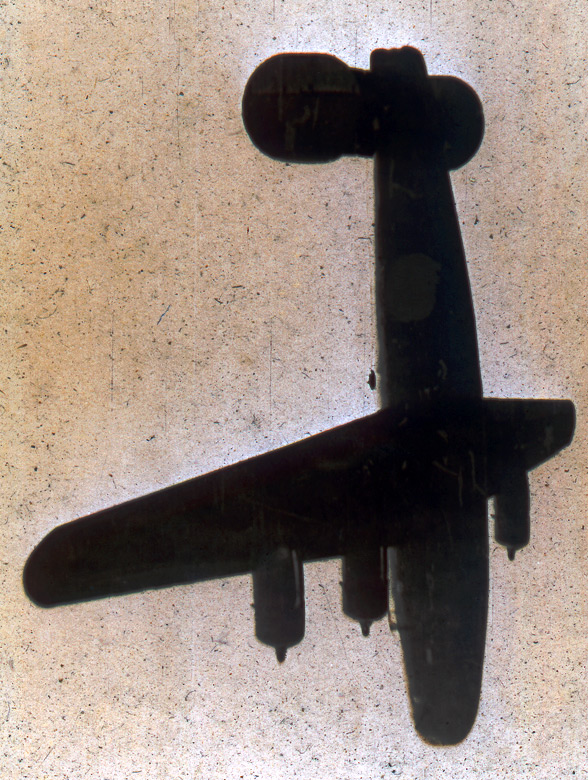
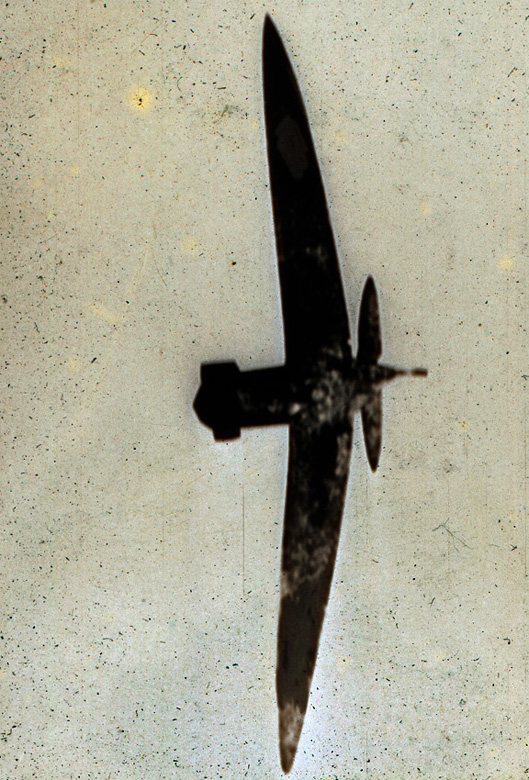
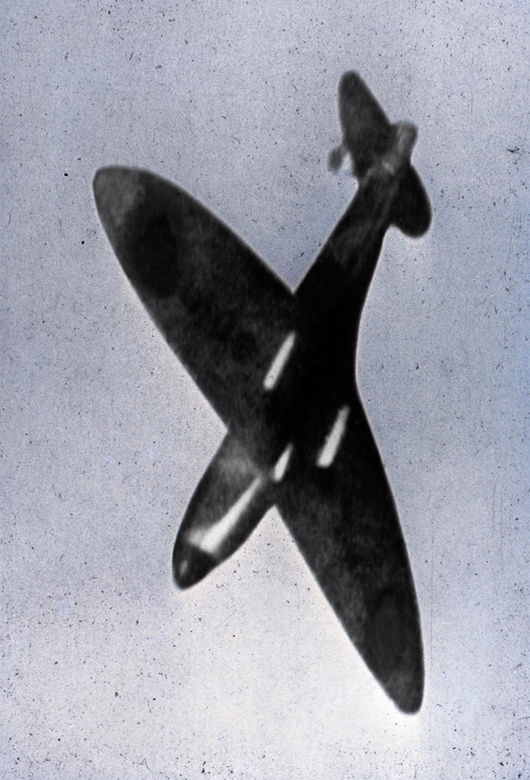
More planes, this time a series of work titled Vertical (2011). The series is now online on my website.

There are 22 images in the series formed as a sequence. Below is a selection of images from the series. I hope you like the work!

Marcus


Please click on the photographs for a larger version of the image.

Photographs are available from this series for purchase. As a guide, a digital colour 16″ x 20″ costs $1000 plus tracked and insured shipping. For more information please see my Store web page.


Marcus Bunyan (Australian, b. 1958) 'Untitled' from the series 'Vertical' 2011


Marcus Bunyan (Australian, b. 1958) 'Untitled' from the series 'Vertical' 2011


Marcus Bunyan (Australian, b. 1958) 'Untitled' from the series 'Vertical' 2011


Marcus Bunyan (Australian, b. 1958) 'Untitled' from the series 'Vertical' 2011


Marcus Bunyan (Australian, b. 1958) 'Untitled' from the series 'Vertical' 2011


Marcus Bunyan (Australian, b. 1958) 'Untitled' from the series 'Vertical' 2011


Marcus Bunyan (Australian, b. 1958) 'Untitled' from the series 'Vertical' 2011


Marcus Bunyan (Australian, b. 1958) 'Untitled' from the series 'Vertical' 2011


Marcus Bunyan (Australian, b. 1958)
Untitled
2011
From the series Vertical
Digital prints


Marcus Bunyan website

LIKE ART BLART ON FACEBOOK

Back to top

Exhibition: ‘In Focus: The Sky’ at the J. Paul Getty Museum, Getty Center, Los Angeles

Exhibition dates: 26th July – 4th December 2011


Col. Henry Stuart Wortley (British, 1832-1890) 'The Day is Done, and the Darkness Falls from the Wings of Night.' about 1862


Col. Henry Stuart Wortley (British, 1832-1890)
The Day is Done, and the Darkness Falls from the Wings of Night.,
about 1862
Albumen silver print
29.5 x 35.2cm (11 5/8 x 13 7/8 in.)
The J. Paul Getty Museum, Los Angeles


Many thankx to Melissa Abraham for her help and to the J. Paul Getty Museum for allowing me to publish the photographs in the posting. Please click on the photographs for a larger version of the image.


With its immensity, immateriality, and variability, the sky has been an enduring subject in art history, fascinating and challenging generations of artists. As soon as the medium of photography was introduced in 1839, photographers attempted to represent the sky and its natural phenomena.

Atmospheric light and its constant mutability have always been hard to capture, but by the 1850s the greater light sensitivity of collodion negatives (compared to the daguerreotype and calotype processes) allowed the spectacles of the sky to be more easily transposed to photography.

With further technical improvements such as the development of instantaneous processes in the 1880s and the advent of Kodachrome colour film around 1935, photographers have continued to explore this theme in diverse and imaginative ways.

Text from the J. Paul Getty Museum website


Gustave Le Gray (French, 1820-1884) 'Cloudy Sky – Mediterranean Sea' 1857


Gustave Le Gray (French, 1820-1884)
Cloudy Sky – Mediterranean Sea
1857
Albumen silver print
12 1/4 x 16 7/16 in.
The J. Paul Getty Museum, Los Angeles


Clouds

The collodion process (in which a syrupy, light-sensitive mixture was applied to glass-plate negatives) was advantageous for its short exposure time and sharpness, but its sensitivity to blue light could also pose a challenge. By the time the camera captured detail in the foreground, the sky was often overexposed and thus printed as blank space.

To create his sweeping seascape, Cloudy Sky – Mediterranean Sea, Gustave Le Gray combined two slightly overlapping negatives: one for the sky and one for the sea.

Text from the J. Paul Getty Museum website


Carleton Watkins (American, 1829-1916) '[Solar Eclipse]' January 1, 1889


Carleton Watkins (American, 1829-1916)
[Solar Eclipse]
January 1, 1889
Albumen silver print
16.5 × 21.6cm (6 1/2 × 8 1/2 in.)
The J. Paul Getty Museum, Los Angeles


Standing atop Mount Santa Lucia in northern California at approximately 3.50 p.m. on January 1, 1889, Carleton Watkins was able to make only one exposure during the instant of complete eclipse. Accompanied by professors from the newly created University of California and the United States Naval Observatory, Watkins waited slightly more than an hour for the moon to begin its movement and assume its temporary position directly in front of the sun. The radiating sun, its brilliance hidden by the black moon, lies suspended over a sea of clouds whose rippling waves dominate the sky. Only the inclusion of the treetops in the foreground serves to ground the image in a familiar reality.

Text from the J. Paul Getty Museum website


The J. Paul Getty Museum presents In Focus: The Sky, a thematically-installed exhibition of permanent collection photographs, on view at the Getty Center from July 26 – December 4, 2011.

“The sky has fascinated and challenged photographers since the invention of the medium,” said Anne Lyden, associate curator, Department of Photographs, the J. Paul Getty Museum, and curator of the exhibition. “This exhibition showcases a wide range of approaches to capturing the many moods and effects of the sky – things we usually take for granted.”

The selection of 22 artworks provides visitors with an opportunity to explore the Getty Museum’s world-renowned photographs collection through the pictorial subject of the sky, with the works loosely organised under four different themes: urban skies, clouds, dark skies, and colourful skies.

The exhibition features photographs by artists such as: Ansel Adams, John Divola, André Kertész, Joel Meyerowitz, Alfred Stieglitz, and Carleton Watkins, among others. The Getty’s collection includes exemplary objects that demonstrate both technological and aesthetic innovations in photography. Among the different processes highlighted are daguerreotypes, albumen silver prints, palladium prints, platinum prints, and more contemporary inkjet prints.

One of the most well-known works in the exhibition is Ansel Adams’ Moonrise, Hernandez, New Mexico, (negative made November 1, 1941; printed December 16, 1948). Traveling by car through New Mexico, Adams was inspired by light from the setting sun illuminating crosses in the graveyard at the side of the road. By carefully considering the composition, visualising the printed image before creating the photograph, understanding the required exposure needed in response to the available light, and exerting a certain degree of control in the printing process so that detail and shadows were retained, Adams succeeded in capturing the fleeting moment when the sun was setting and the bright moon appeared in the darkening sky.

The summer sky of Cape Cod features in Meyerowitz’s photograph Fence, Truro, negative 1976; printed 1992. Having recently acquired a large view camera, Meyerowitz spent two summers recording the structures and light of the coastal area that ultimately resulted in the 1978 book, Cape Light. Noting the shifting shadows as they played across the picket fence, his use of colour aptly describes the very subject of light itself.

Included in the exhibition is a selection from John Divola’s Zuma Beach series. In the fall of 1977, after discovering an abandoned lifeguard headquarters at Zuma Beach, California, Divola began visiting the site mornings and evenings to photograph. Bringing paints, using flash, and depending on the Pacific Ocean and the ever-changing sky for a dramatic backdrop, he created spontaneous scenes in this seaside theatre.

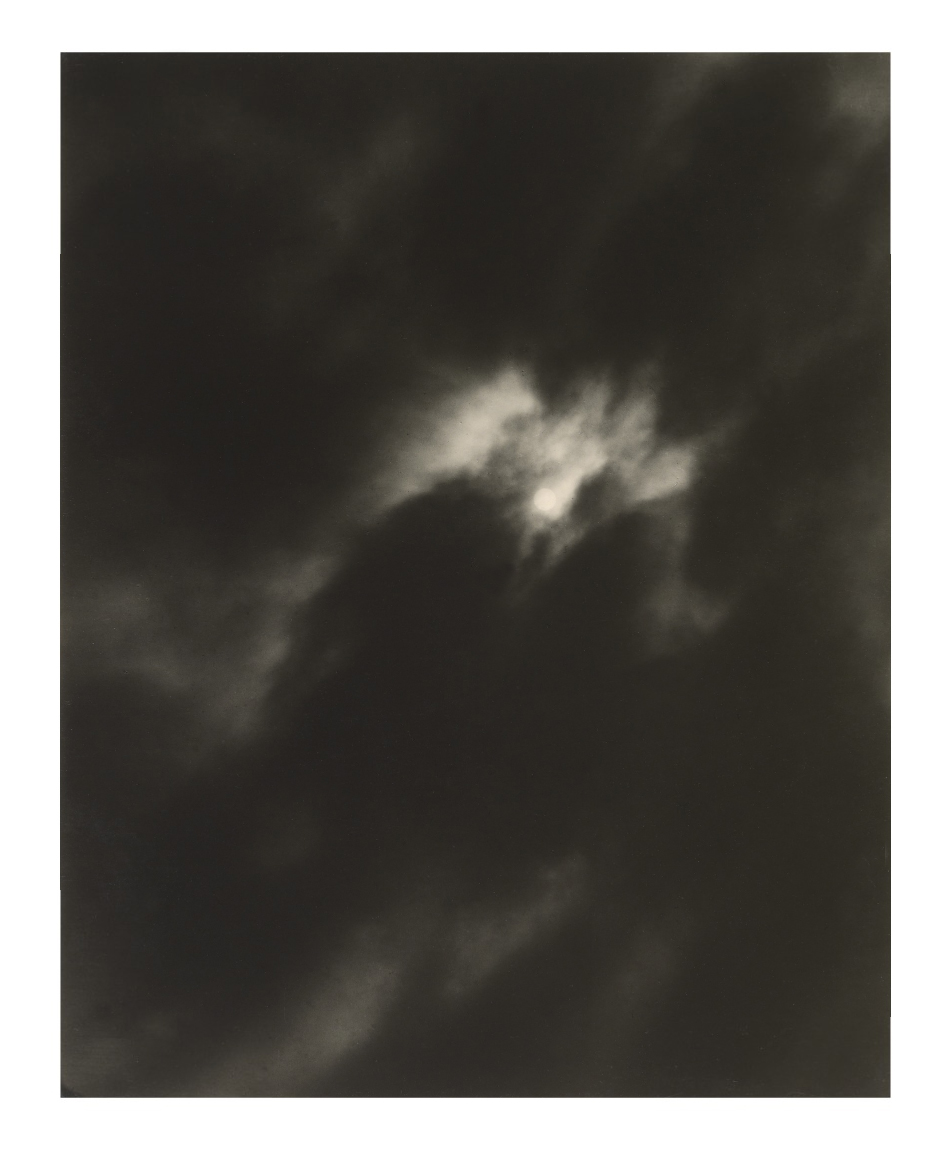
Also on view is a small group of three photographs by Alfred Stieglitz. From 1922 to 1934, Stieglitz photographed clouds and created a series of abstract configurations which reflected the fluctuation of his subjective state. By simply titling each piece Equivalent, he invited an open reading of the images and their content.

In Focus: The Sky is the ninth installation of the ongoing In Focus series of exhibitions, thematic presentations of photographs from the Getty’s permanent collection.

Press release from the J. Paul Getty Museum website


Alfred Stieglitz (American, 1864-1946) 'Songs of the Sky' 1924


Alfred Stieglitz (American, 1864-1946)
Songs of the Sky
1924
Gelatin silver print
11.7 x 9.2cm (4 5/8 x 3 5/8 in.)
The J. Paul Getty Museum, Los Angeles
© J. Paul Getty Trust


Edward Weston (American, 1886-1958) 'Cloud, Mexico' 1926


Edward Weston (American, 1886-1958)
Cloud, Mexico
1926
Palladium print
14.9 × 24cm (5 7/8 × 9 7/16 in.)
© 1981 Arizona Board of Regents, Center for Creative Photography


The first image with artistic intention that Edward Weston made in Mexico was of a cloud. Stopped in the port of Mazatlan on his way to Mexico City in 1923, Weston, for the first time in his career, was moved to photograph the sky, a theme that would occupy him intermittently throughout his entire sojourn in Mexico. Working with his Graflex, which allowed for greater flexibility than his tripod-mounted eight-by-ten-inch camera, he shot clouds spontaneously and maintained a personal collection of prints that he referred to as his “cloud series.” He noted in his daybook, “Next to the recording of a fugitive expression, or revealing the pathology of some human being, is there anything more elusive to capture than cloud forms! And the Mexican clouds are so swift and ephemeral, one can hardly allow the thought, ‘Is this worth doing?’ or, ‘ls this placed well?’ – for an instant of delay and what was, is not!”

The economy of form achieved in this 1926 image through the isolation of a single strip of stratus clouds oriented diagonally within the frame was not new to Weston’s aesthetic; his 1924 picture of Tina Modotti (1896-1942) nude on the roof of their home (see 86.XM.710.8) employs a remarkably similar composition. If Mexico provided Weston the inspiration to explore and expand the range of his oeuvre, adding clouds, still lifes, and landscapes to his repertoire of portraits and nudes, it simultaneously served as the place where his visual approach to the world was honed. His time in Mexico came to an end the same year he made this picture, but many of the principles he developed there would last him throughout his career.

Brett Abbott. Edward Weston, In Focus: Photographs from the J. Paul Getty Museum (Los Angeles: J. Paul Getty Museum, 2005), 48. ©2005, J. Paul Getty Trust


Alfred Stieglitz (American, 1864-1946) 'Equivalent' 1926


Alfred Stieglitz (American, 1864-1946)
Equivalent
1926
Gelatin silver print
11.6 × 9.1cm (4 9/16 × 3 9/16 in.)
The J. Paul Getty Museum, Los Angeles
© Georgia O’Keeffe Museum


Alfred Stieglitz (American, 1864-1946) 'Equivalent' 1926


Alfred Stieglitz (American, 1864-1946)
Equivalent
1926
Gelatin silver print
11.7 × 9.2cm (4 5/8 × 3 5/8 in.)
The J. Paul Getty Museum, Los Angeles


Paul Strand (American, 1890-1976) 'Sangre de Cristo, New Mexico' 1930


Paul Strand (American, 1890-1976)
Sangre de Cristo, New Mexico
1930
Platinum print
9.2 × 11.9cm (3 5/8 × 4 11/16 in.)
© Aperture Foundation


Berenice Abbott (American, 1898-1991) 'Night View, New York City' 1932


Berenice Abbott (American, 1898-1991)
[The West Side, Looking North from the Upper 30s / Nightview]
1932
Gelatin silver print
33.8 × 26.8cm (13 5/16 × 10 9/16 in.)
© Estate of Berenice Abbott


“If [photography] is to be utterly honest and direct, it should be related to the pulse of the times – the pulse of today.” ~ Berenice Abbott

Nowhere is Berenice Abbott’s statement better demonstrated than in this photograph of the pulsating vibrancy of New York City, alive at night with thousands of glittering lights. The flashes of illumination perforate the frame, reflecting the dynamism of the world’s fastest-changing city. Abbott set about documenting New York when she returned there in 1929 after nine years spent in Europe. Abbott made this photograph from a high vantage point in the Empire State Building on Fifth Avenue looking north.

Text from the J. Paul Getty Museum website


André Kertész (American born Hungary, 1894-1985) 'The Lost Cloud, New York' negative 1937; print 1970s


André Kertész (American born Hungary, 1894-1985)
The Lost Cloud, New York
Negative 1937; print 1970s
Gelatin silver print
24.8 x 16.5cm
The J. Paul Getty Museum, Los Angeles
© Estate of André Kertész


Urban Skies

Soon after arriving in New York in October 1936, André Kertész spent time searching the city streets for fresh material, just as he had done in Paris for a decade. One afternoon he observed a solitary white cloud in a vast blue sky, dwarfed by the monolithic presence of the Rockefeller Center. Kertész later recounted that he was “very touched when he saw the cloud, as it “didn’t know which way to go” (Bela Ugrin, Dialogues with Kertész, ” 1978-1985, the Getty Research Institute) – a sentiment he strongly identified with as a new immigrant.

From the lyrical to the abstract, photography has often been an apt medium with which to capture the fleeting nature of skies.

Text from the J. Paul Getty Museum website


The impenetrable façade of Rockefeller Center in New York dominates the frame of this photograph, filling the lower and right sides of the image with its cold, hard, modern lines. The other third of the composition belongs to the sky, in which a lone puff of white cloud hangs isolated like a cotton ball, holding sway against the force of the skyscraper. The brilliant white form is “lost” in this scene that is otherwise devoid of natural, spirited shapes. The cloud possesses an innate impermanence; it will be gone with the next gust of wind, blown along on its path to some other expanse of sky. Andre Kertész’s juxtaposition of the whimsical cloud and unforgiving architecture seems to emphasise his own sense of isolation; the photograph was made soon after he had emigrated from Europe.

Text from the J. Paul Getty Museum website


Ansel Adams (American, 1902-1984) 'Moonrise, Hernandez, New Mexico' 1941


Ansel Adams (American, 1902-1984)
Moonrise, Hernandez, New Mexico
Negative November 1, 1941; print December 16, 1948
Gelatin silver print
34.9 × 44cm (13 3/4 × 17 5/16 in.)
© The Ansel Adams Publishing Rights Trust


Arguably Ansel Adams’s most famous image, this photograph is titled Moonrise rather than Sunset, even though the moon technically does not rise in the sky. As a scholar noted: The factuality and, moreover, the meaning of the setting sun were rejected by him in favour of the expressive symbolism of the rising moon; of the shining luminescence ablaze with greatness in its primal mystery, dramatically isolated in the infinity of darkness.

Instead of making an unmanipulated print from the negative, Adams selectively printed the sky black and the foreground dark in order to achieve a particular illumination and spiritual transcendence. The photographer’s skill and vision transformed the tiny town of Hernandez, dotted with glowing white cemetery and church crosses, into a spectral landscape.

Text from the J. Paul Getty Museum website


William A. Garnett (American, 1916-2006) 'Smog, Los Angeles' 1949


William A. Garnett (American, 1916-2006)
Smog, Los Angeles
1949
Gelatin silver print
25.2 × 34cm (9 15/16 × 13 3/8 in.)
© Estate of William A. Garnett


An ardent conservationist, Garnett became concerned about land use and air pollution in the early 1940s. He made this photograph in an attempt to raise public awareness. Over the years Garnett came to believe that he was more likely to inspire positive change by pointing out nature’s enduring beauty than by showing the ugliness caused by poor choices.

Text from the J. Paul Getty Museum website


Dorothea Lange (American, 1895-1965) 'Full Moon, Southwestern Utah' 1953


Dorothea Lange (American, 1895-1965)
Full Moon, Southwestern Utah
1953
Gelatin silver print
15.6 x 15.3cm (6 1/8 x 6 in.)
The J. Paul Getty Museum, Los Angeles, Gift of the John Dixon Collection
© Oakland Museum of California, the City of Oakland


Dorothea Lange suffered health problems in the late 1940s, but she wanted to travel again and be part of the current documentary effort. Since the federal government was no longer funding such projects, this meant working for the thriving picture magazines. Lange proposed to Life that she and Ansel Adams do a project in Utah. They would travel with her son Daniel, who would write text for the article, and her husband, who had a continuing interest in the survival of utopian communities. Their purpose was to record the landscape, built environment and inhabitants of three towns in southwestern Utah settled in the mid-nineteenth century by Mormons. The grandchildren of some of these pioneers were Lange’s subjects during her visit to Gunlock, Toquerville, and St. George in 1953.

Adapted from Judith Keller, Dorothea Lange, In Focus: Photographs from the J. Paul Getty Museum (Los Angeles: J. Paul Getty Museum, 2002), p. 64. © 2002 J. Paul Getty Trust


Joel Meyerowitz (American, b. 1938) 'Fence, Truro' negative 1976; print 1992


Joel Meyerowitz (American, b. 1938)
Fence, Truro
negative 1976; print 1992
Chromogenic print
59.7 x 47.3cm (23 1/2 x 18 5/8 in.)
The J. Paul Getty Museum, Los Angeles, Gift of Nancy and Bruce Berman
© Joel Meyerowitz, courtesy Edwynn Houk Gallery, NY


John Divola (American, b. 1949) 'Untitled' 1977 From the 'Zuma Beach' series


John Divola (American, b. 1949)
Untitled
From the Zuma Beach series
1977
Chromogenic print
24.8 x 30.4cm (9 3/4 x 11 15/16 in.)
The J. Paul Getty Museum, Los Angeles, Gift of Michael and Jane Wilson
© John Divola


Skies in Color

In the fall of 1977, after discovering an abandoned lifeguard headquarters at Zuma Beach, California, John Divola began visiting the site to photograph. Painting the walls, incorporating props, using flash, and depending on the Pacific Ocean and the sky for a dramatic backdrop, he created a series of makeshift scenes.

Discussing his work in 1980, Divola said, “These photographs are the product of my involvement with an evolving situation. The house evolving in a primarily linear way toward its ultimate disintegration, the ocean and light evolving and changing in a cyclical and regenerative manner.”

Text from the J. Paul Getty Museum website


John Divola (American, b. 1949) 'Untitled' 1977 From the 'Zuma Beach' series


John Divola (American, b. 1949)
Untitled
1977
From the Zuma Series
Chromogenic print
24.6 × 30.5cm (9 11/16 × 12 in.)
The J. Paul Getty Museum, Los Angeles, Gift of Michael and Jane Wilson
© John Divola


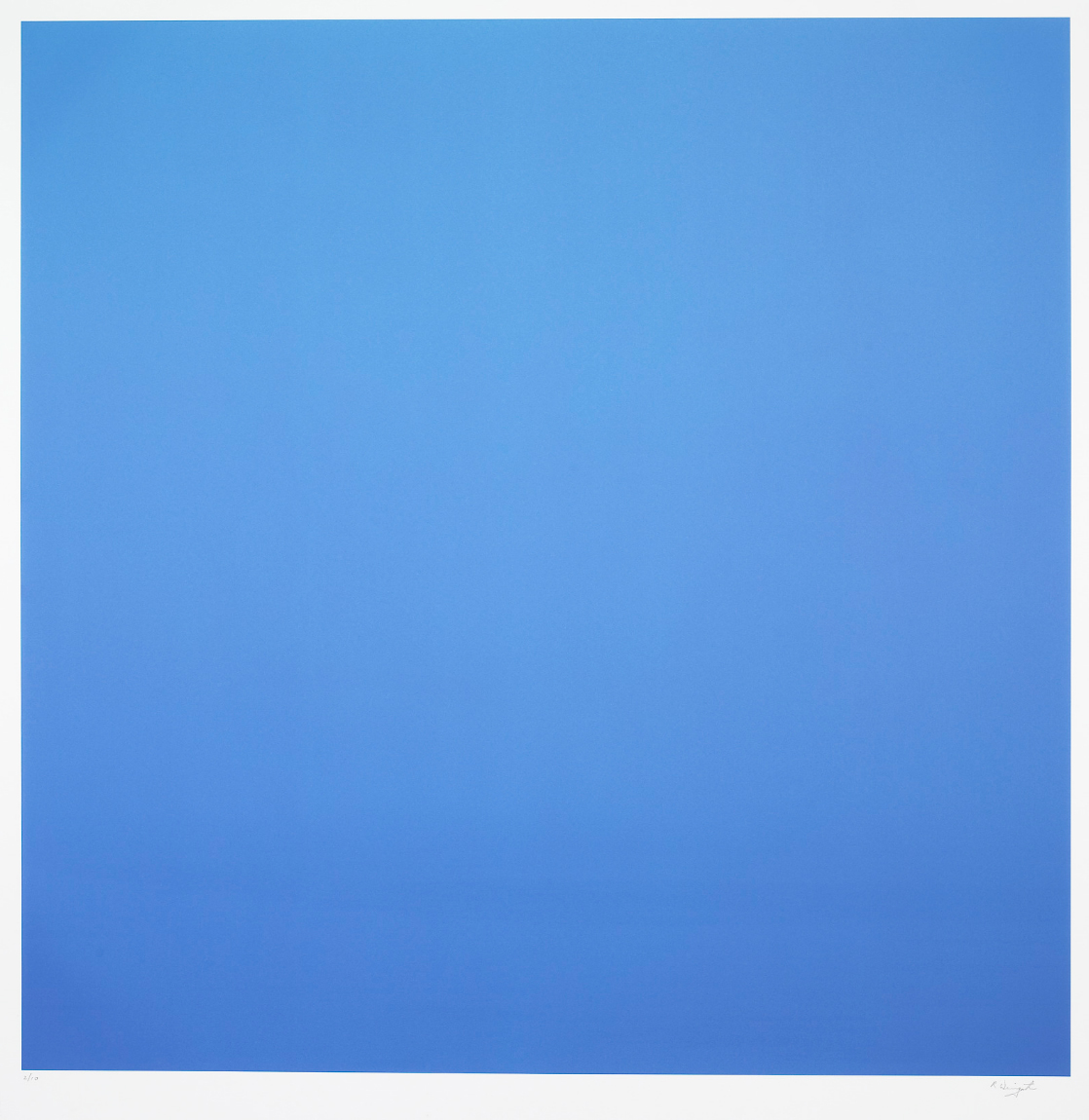
Robert Weingarten (American, b. 1941) '6:30 A.M. 10/06/03, #98, Malibu, CA' 2003


Robert Weingarten (American, b. 1941)
6:30 A.M. 10/06/03, #98, Malibu, CA
2003
Inkjet print
76.4 × 76.4cm (30 1/16 × 30 1/16 in.)
© Robert Weingarten
Gift of Alvin and Heidi Toffler


The horizon at dawn, looking southeast over Santa Monica Bay, from the artist’s home in Malibu.


The J. Paul Getty Museum
1200 Getty Center Drive
Los Angeles, California 90049

Opening hours:
Tuesday – Friday, Sunday 10am – 5.30pm
Saturday 10am – 8pm
Monday Closed

The J. Paul Getty Museum website

LIKE ART BLART ON FACEBOOK

Back to top

Exhibition: ‘Postwar Propliners in Miniature: Models from the Collection of Anthony J. Lawler’ at SFO Museum (SFOM), San Francisco International Airport

Exhibition dates: June 2011 – December 2011

Location: Aviation Museum and Library 1 – Front Wall Cases


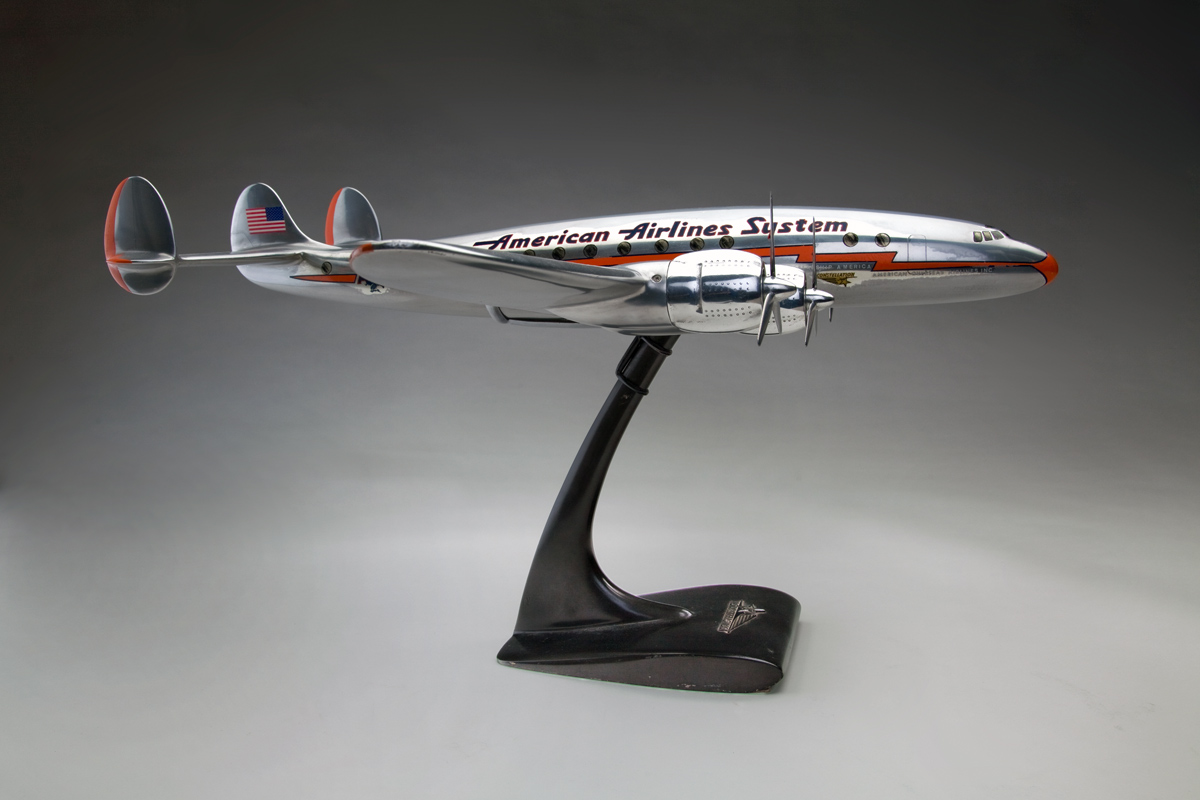
Lockheed Aircraft Co., Burbank, California. 'American Overseas Airlines Lockheed L-049 Constellation' c. 1946


Lockheed Aircraft Co., Burbank, California
American Overseas Airlines Lockheed L-049 Constellation
c. 1946
Scale 1:44
Metal, paint
Collection of Anthony J. Lawler


One of my favourite postings in a long while. As an inveterate collector how I would love to have these in my collection. What beautiful aircraft; what graceful models; what simple, gorgeous photographs by photographer Chad Michael Anderson. The Lockheed Constellation has to be one of the most delicious aircraft ever made. But the model I would take is the gorgeous Air France Breguet 763 Provence, because of it’s aerodynamic beauty and angle of flight.

Dr Marcus Bunyan


Many thankx to John Hill, Assistant Director, Aviation for his help and to SFO Museum for allowing me to publish the text and the photographs. Attribution for the photographs is to the SFO Museum (actual photographer unknown). Please click on the photographs for a larger version of the image.


Lockheed Aircraft Co., Burbank, California. 'American Overseas Airlines Lockheed L-049 Constellation' c. 1946


Lockheed Aircraft Co., Burbank, California
American Overseas Airlines Lockheed L-049 Constellation
c. 1946
Scale 1:44
Metal, paint
Collection of Anthony J. Lawler


In 1945, in an effort to gain transatlantic routes to Europe, American Airlines purchased American Export Airlines (founded in 1937 as a subsidiary of the shipping company American Export Lines) and renamed it American Overseas Airlines (AOA). The airline then began purchasing suitable aircraft for its new subsidiary. The best choice for the lengthy route to Europe was the Lockheed Model 047 Constellation, one the longest-range and fastest airliners produced at the time. Like other airliner manufacturers, Lockheed had its own in-house model factory that constructed highly-accurately scaled models for its customers. It produced this 1:44 scale model for AOA in polished sheet aluminium and painted in the airline’s earliest livery scheme.

Text from the SFO Museum website


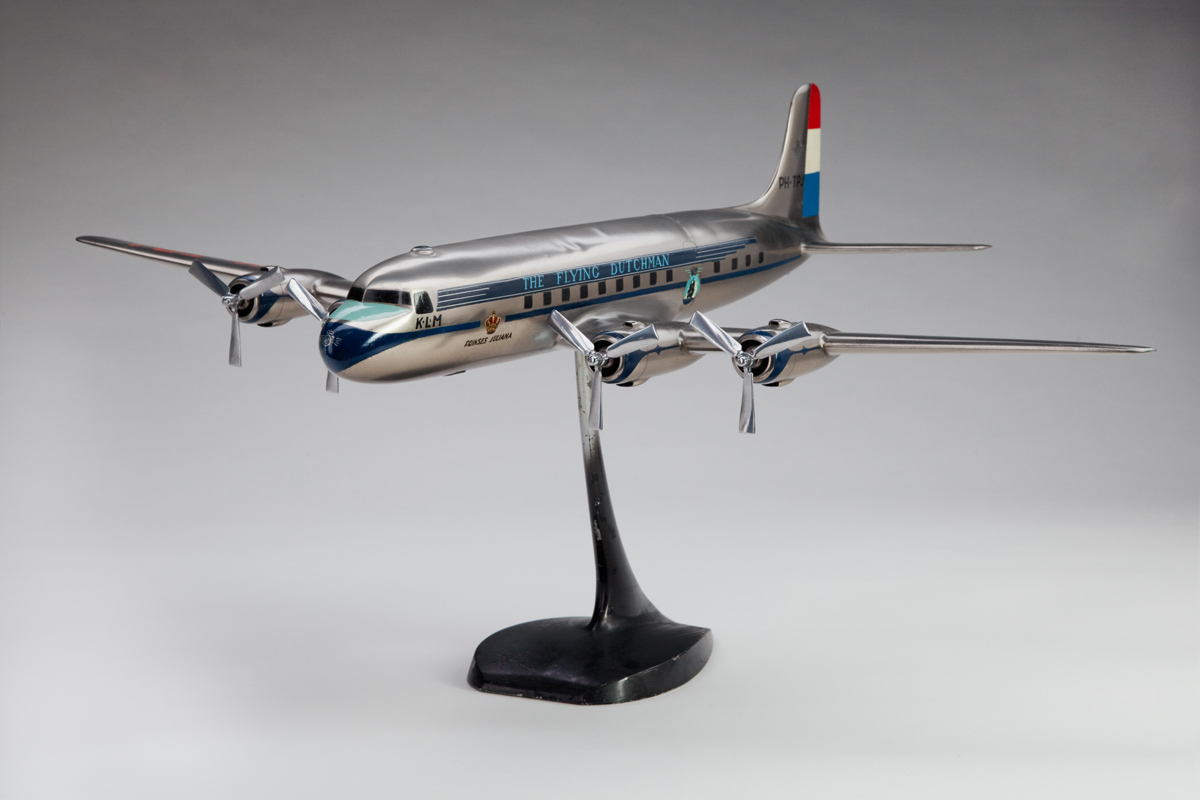
Maarten Matthys Verkuyl (Dutch). 'KLM (Koninklijke Luchtvaart Maatschappij) Royal Dutch Airlines Douglas DC-6' c. 1950


Maarten Matthys Verkuyl (Dutch)
KLM (Koninklijke Luchtvaart Maatschappij) Royal Dutch Airlines Douglas DC-6
c. 1950
Scale 1:48
Metal, paint
Collection of Anthony J. Lawler


KLM (Koninklijke Luchtvaart Maatschappij) Royal Dutch Airlines commenced service in 1920. After ceasing operations during World War II, the airline rapidly emerged to become a leading European and international carrier during the postwar era. KLM received its first deliveries of the Douglas DC-6, both freighter and passenger versions, in 1948. The DC-6 was the first American-produced airliner to be introduced after the war. The model represents the DC-6 Princess Juliana (Koningin Juliana), which was the second aircraft Douglas delivered of the passenger version. The Dutch model maker Maarten Matthys Verkuyl fabricated the model from sheet zinc for a KLM pilot around 1950. It is one of only two produced by Verkuyl of the type using this material during this period.

Text from the SFO Museum website


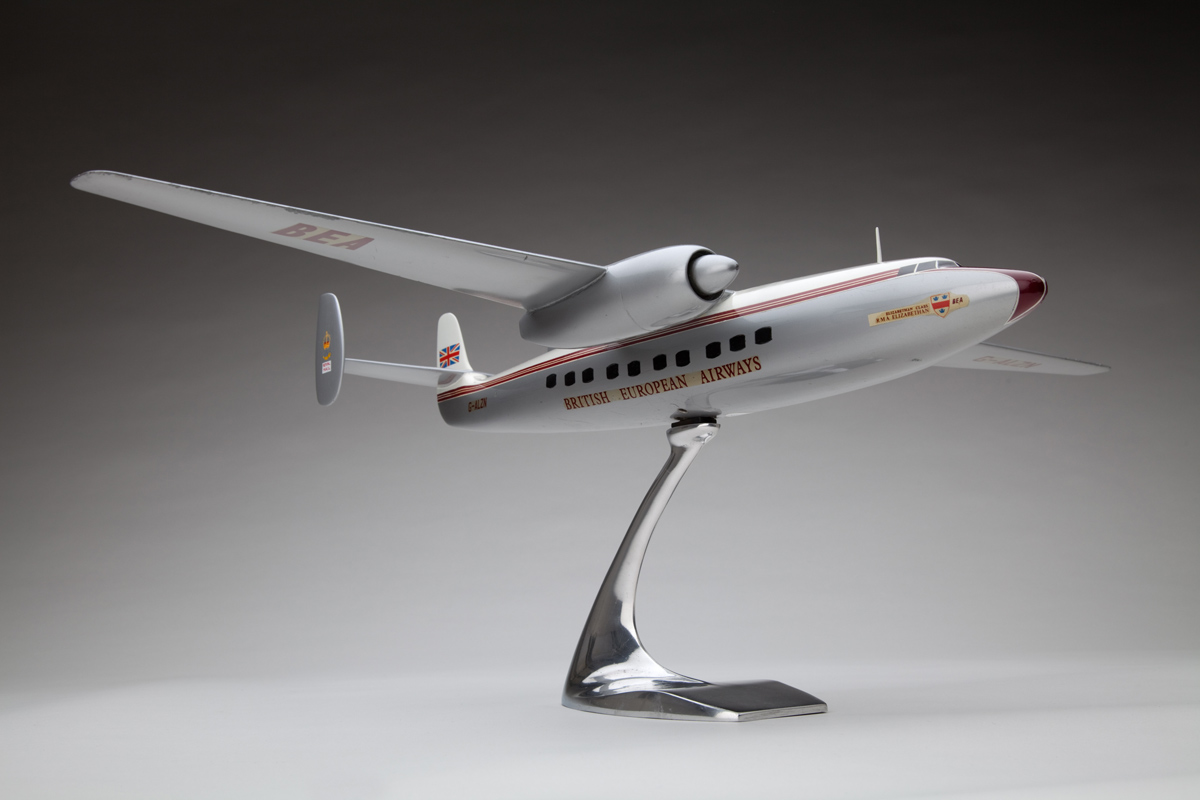
Shawcraft Models, Uxbridge, England. 'BEA Airspeed AS.57 Ambassador' 1950s


Shawcraft Models, Uxbridge, England
BEA Airspeed AS.57 Ambassador
1950s
Scale 1:48
Wood, metal, paint
Collection of Anthony J. Lawler


In 1946, BEA (British European Airways) was formed as the British flag carrier for domestic and Continental Europe flights. By 1947, a number of independent airlines, including Scottish Airways, had merged with the company. In 1948, BEA placed an order for twenty of the Ambassador, a Douglas DC-3 replacement that had been under development by Airspeed of Great Britain since the latter years of World War II. This high-wing, tripletail, two-engine, mid-range aircraft was introduced in 1952 and operated by the airline until 1958. Shawcraft of Great Britain crafted the model of wood during the same decade, which accurately represents the Ambassador RMA Elizabethan, the flagship of the fleet. BEA’s comfortable Ambassador service, which was named “Elizabethan Class,” became highly popular among commuters between Britain and the Continent.

Text from the SFO Museum website


Peter V. Nelson, Reading, England 'Ethiopian Air Lines Convair 240 model aircraft' Early 1950s


Peter V. Nelson, Reading, England
Ethiopian Air Lines Convair 240 model aircraft
Early 1950s
Scale 1:48
Metal, paint
Collection of Anthony J. Lawler


Ethiopian Air Lines was founded in 1946 and began operating out of Addis Ababa Airport in 1947, with administrative, managerial, and flight crew support from TWA (Transcontinental & Western Airlines). In 1950, the airline acquired three Convair 240s in order to expand its routes and offer international service to Europe and Asia. These aircraft were produced by Convair of San Diego, California and developed to replace the Douglas DC-3. The sand-casted metal model represents the first aircraft to be delivered, ET-T-20, and was crafted by Peter V. Nelson in Great Britain during the same period. It was accurately painted in Ethiopian Air Lines’ vibrant early livery with the national colours of red, yellow, and green, and the Lion of Judah, the symbol of Ethiopia’s former ruler Haile Selassie – whose family traces their origins to King Solomon. Selassie played a major role in establishing the national airline, which was considered vital to the modernisation of Ethiopia after World War II.

Text from the SFO Museum website


Walkers Westway Models, London, England 'Capital Airlines Vickers Viscount model aircraft' 1950s


Walkers Westway Models, London, England
Capital Airlines Vickers Viscount model aircraft
1950s
Scale 1:48
Metal, paint
Collection of Anthony J. Lawler


Capital Airlines originated out of a merger between Pennsylvania and Central Airlines to form Pennsylvania Central Airlines or PCA in 1936. In 1941, the airline moved its headquarters to the newly built Washington National Airport, and in 1948, changed its name to Capital Airlines. In 1955, in an effort to attract more passengers by offering technologically advanced aircraft, it became the first U.S. carrier to inaugurate turboprop-powered airliner service with the introduction of the British produced Vickers Viscount. The aircraft was originally introduced by BEA (British European Airways) in 1950, which made it the first of its kind to go into service, and moreover, it was years ahead of the introduction of other turboprop airliners. Capital purchased sixty of the aircraft and realised an increased market share nearly everywhere the Viscount flew. This sand-cast metal model was produced in the 1950s by Walkers Westway in London, England, and accurately painted in Capital’s iconic 1950s red, white, and blue livery with eagle logo.

Text from the SFO Museum website


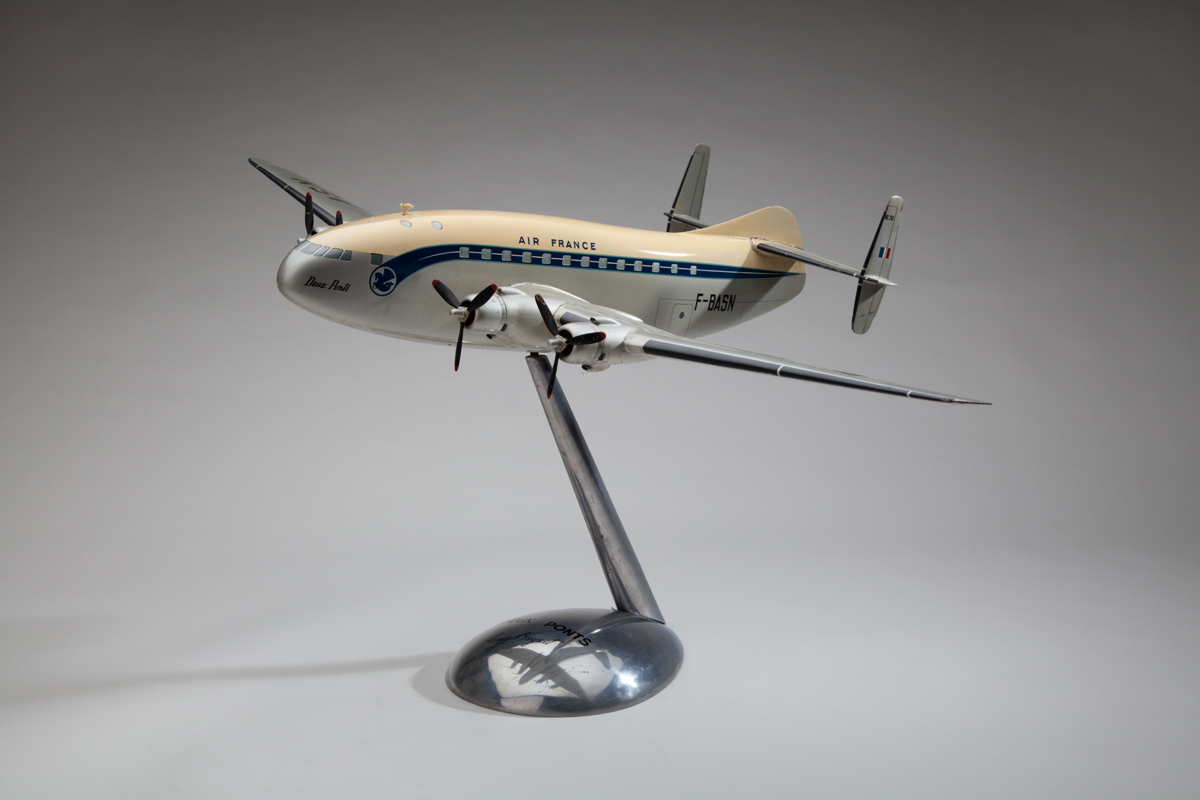
La Maquette d'Etude et d'Exposition à Aubervilliers, France. 'Air France Breguet 763 Provence' 1950s


La Maquette d’Etude et d’Exposition à Aubervilliers, France
Air France Breguet 763 Provence
1950s
Scale 1:50
Wood, plastic, metal, paint
Collection of Anthony J. Lawler


Created in 1933 through a merger of several French aviation concerns, Air France became one of the largest airlines in Europe by the late 1930s, with routes throughout Europe and to French colonies in North Africa and Asia. During World War II, the carrier moved its base of operation to Morocco, and by 1946, became nationalized by the French government and opened its first terminal in central Paris. During the latter years of the war, the French aircraft manufacturer Breguet began designing a large capacity, mid-range airliner that would ultimately become the double deck (Deux Ponts in French), twin-tail, four-engine 763 Provence. Air France ordered twelve of the aircraft, which entered service in 1953 and were operated on routes to Algiers and Southern Europe for carrying both passengers and freight. Crafted from wood by the French model maker La Maquette d’Etude et d’Exposition à Aubervilliers, the model represents the first aircraft delivered to Air France, F-BASN.

Text from the SFO Museum website


Immediately following the end of World War II in 1945, airlines and passengers benefited from a surplus of inexpensive, advanced propeller-driven transport aircraft, or “propliners.” Over the next fifteen years, commercial aviation expanded rapidly as airlines persistently requested improved propliner designs to lower costs, attract new customers, and gain advantages over competitors. In meeting these demands the manufacturers of North America and Europe developed increasingly superior aircraft. These included the jet-powered turboprop airliners that flew successively faster, higher, and farther.

Making scale models of these airliners was an important part of the design, manufacturing, and marketing process during this period. Crafted by in-house model shops or independent model makers, they represented the new designs in miniature for convenient three-dimensional analysis. Accurately painted livery schemes on the models helped the airlines to imagine the new airliner operating within their fleet. Carriers also commissioned the making of models to promote their improved services in airline offices and travel agencies. During the late 1940s and early 1950s, they were usually made of sheet or cast metal and complemented with metal bases often formed into unique streamline shapes. By the late 1950s, models began to be produced from plastic, which was easier to mold into intricate shapes and reflected the proliferation of new synthetic resins.

These models represent the age of postwar propliners, which lasted until the 1960s when faster, more fuel-efficient and propeller-less turbojet airliners began to supersede them. They are from the collection of Anthony J. Lawler, an aviation industry professional and avid airplane model collector since first seeing the De Havilland Comet – the world’s first jetliner – fly over his boyhood home in Rhodesia. Mr. Lawler has spent decades assembling one of the finest collections of scale airliner display models, most of which were acquired while working as a senior sales representative for Airbus North America during the 1980s and 1990s. His collection spans a century of commercial aviation design innovation.

Text from the SFO Museum website


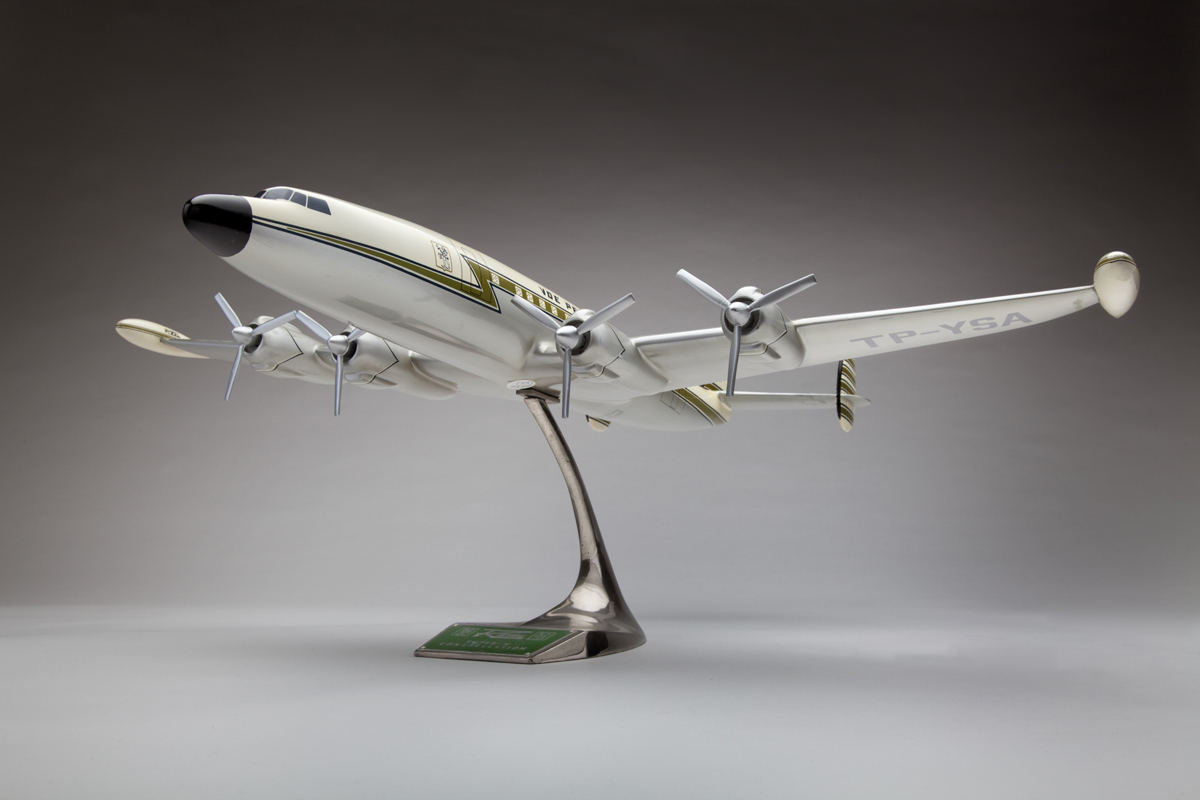
Raise-Up Models, Rotterdam, Netherlands. 'REAL (Redes Estaduais Aéreas Limitadas) Transportes Aéreos Lockheed 1049H Super Constellation' 1950s


Raise-Up Models, Rotterdam, Netherlands
REAL (Redes Estaduais Aéreas Limitadas) Transportes Aéreos Lockheed 1049H Super Constellation
1950s
Metal, paint
Collection of Anthony J. Lawler


In 1945, Vicente Mammana Netto and Linneu Gomes formed REAL (Redes Estaduais Aéreas Limitadas) Transportes Aéreos, as a small regional Brazilian airline. By the mid-1950s, the airline had grown substantially by acquiring numerous other Brazilian airlines and expanding its routes through South America. In 1958, in order to compete with its rival Varig, REAL acquired three long-range Lockheed 1049H Super Constellations. The next year, the airline inaugurated international service between Rio de Janeiro and Los Angeles with stops in Manaus-Ponta Pelada, Bogotá, and Mexico City. By 1960, REAL had expanded its Constellation service to include trans-pacific flights to Tokyo. Ultimately, however, the international service proved too costly for the airline, and in 1961, amid financial difficulties, it was acquired by Varig. Raise-Up Models of the Netherlands produced the cast-metal model of the REAL Super Constellation. It was painted in the airline’s eye-catching green livery of the late 1950s, with the slogan “Voe Pela REAL,” meaning, “Fly on REAL” in Portuguese.

Text from the SFO Museum website


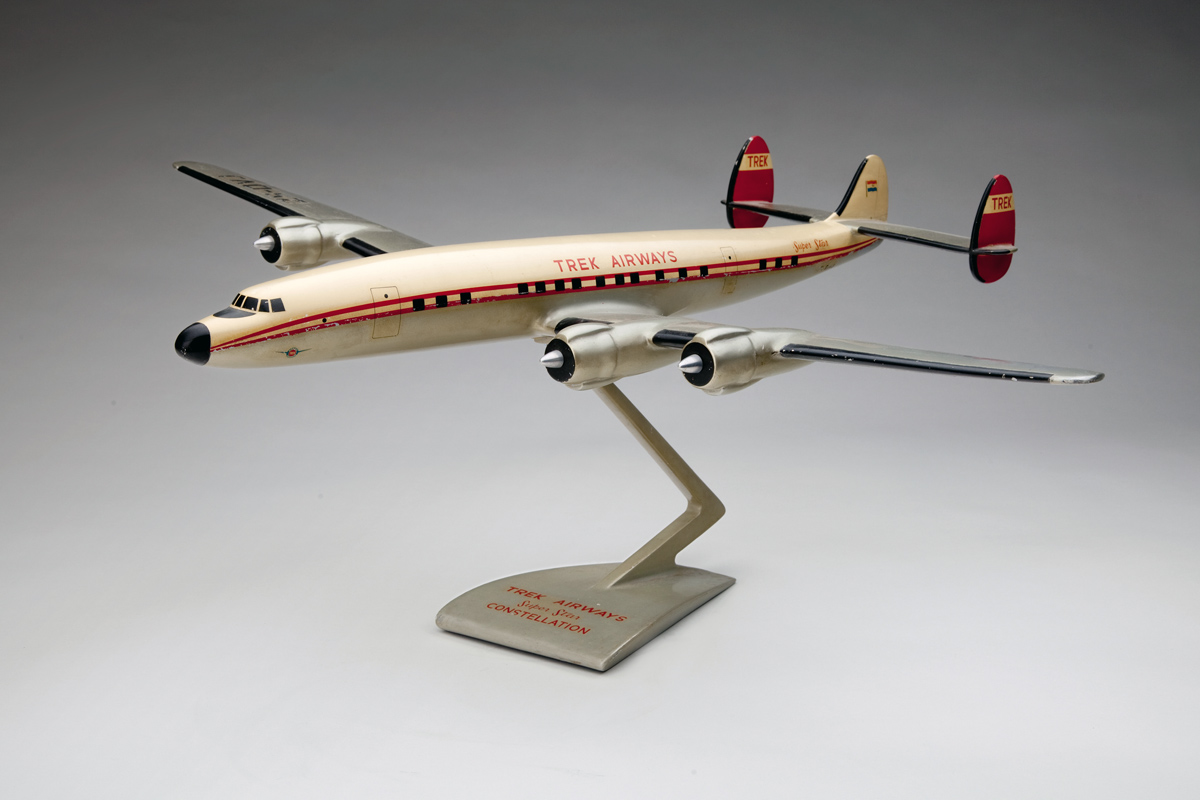
Peter V. Nelson, Reading, England. 'Trek Airways Lockheed 1649 Starliner' early 1960s


Peter V. Nelson, Reading, England
Trek Airways Lockheed 1649 Starliner
Early 1960s
Scale 1:62
Metal, paint
Collection of Anthony J. Lawler


Founded in 1953, Trek Airways was a South African airline based out of Johannesburg with service to Northern Europe. Initially, Trek was equipped with Vickers Vikings, which required overnight stops on routes to Europe. By the early 1960s, the airline began acquiring long-range Lockheed 1649 Starliners from carriers like TWA (Trans World Airlines) and Lufthansa, which had begun to replace these models with jetliners such as the Boeing 707 and Douglas DC-8. The Starliner provided fast, smooth, and comfortable service, along with the range and speed necessary for limited stops on routes to Düsseldorf, Vienna, and Luxembourg. British model maker Peter V. Nielson crafted the Starliner model for the airline in the early 1960s. At the time of acquisition, the heavy, all-metal model was used as a doorstop for the airline’s storeroom.

Text from the SFO Museum website


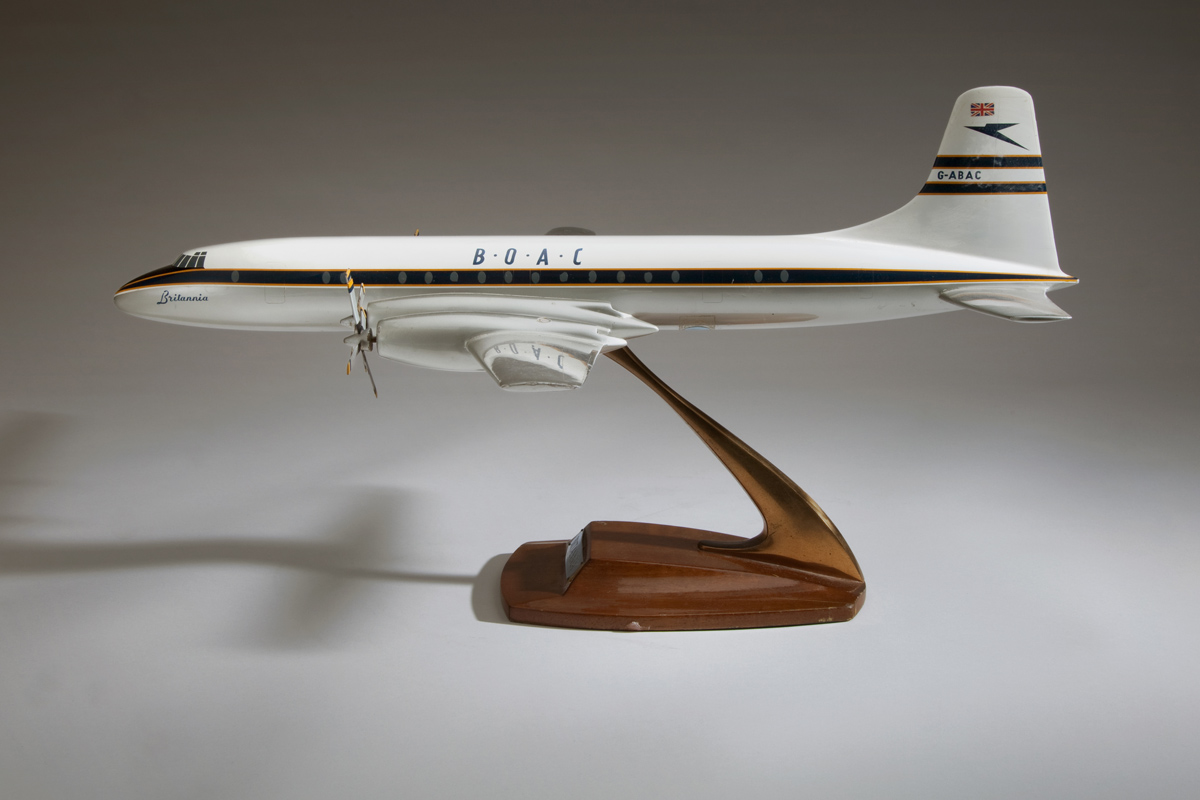
Westway Models, London, England. 'BOAC Bristol Britannia 300' late 1950s


Westway Models, London, England
BOAC Bristol Britannia 300
Late 1950s
Scale 1:72
Metal, plastic, wood, paint
Collection of Anthony J. Lawler


In 1957, Britain’s long-haul international flag carrier BOAC (British Overseas Airways Corporation) introduced the Bristol Aircraft Company’s turboprop Britannia on its routes to South Africa and New York. Two years later, the airline inaugurated the first regular round-the-world Britannia service via San Francisco, Hong Kong, and Tokyo. The large capacity, long-range, jet-prop-powered airliner, nicknamed the “Whispering Giant,” was significantly quieter than piston-engine airliners of the period and provided smooth, fast service with comfortable accommodations. Due to many delays in its development, the airliner was introduced later than anticipated and only operated into the early 1960s, before it was replaced by faster jetliners with similar range and capacity, such as the Boeing 707. The all-metal model was crafted in England by Westway, a prominent builder of airliner models for the British aerospace industry during the 1950s.

Text from the SFO Museum website


Raise-Up Models, Rotterdam, the Netherlands 'Western Airlines Lockheed L-188 Electra model aircraft'
Late 1950s


Raise-Up Models, Rotterdam, the Netherlands
Western Airlines Lockheed L-188 Electra model aircraft
Late 1950s
Scale 1:40
Metal, paint
Collection of Anthony J. Lawler


Western Air Express was founded in 1925, and after several mergers and name changes, became Western Air Lines in 1941. During the postwar era, Western quickly grew as a regional airline serving routes from Minneapolis, Minnesota, to the West Coast. In 1959, the airline began receiving delivery of the Lockheed L-188 Electra, a new, revolutionary turboprop airliner developed and produced by Lockheed Aircraft of Burbank, California. With medium range, a cruise speed of nearly four hundred miles per hour, and a capacity for approximately one hundred passengers, the Electra was ideal for Western’s regional needs and, initially, was instrumental in attracting a larger customer base. This large-scale model was fabricated of metal by Raise-Up Models of Rotterdam, Holland, and was painted to represent one of the first aircraft received from Lockheed in Western’s late 1950s red-and-white livery with the Native American logo.

Text from the SFO Museum website


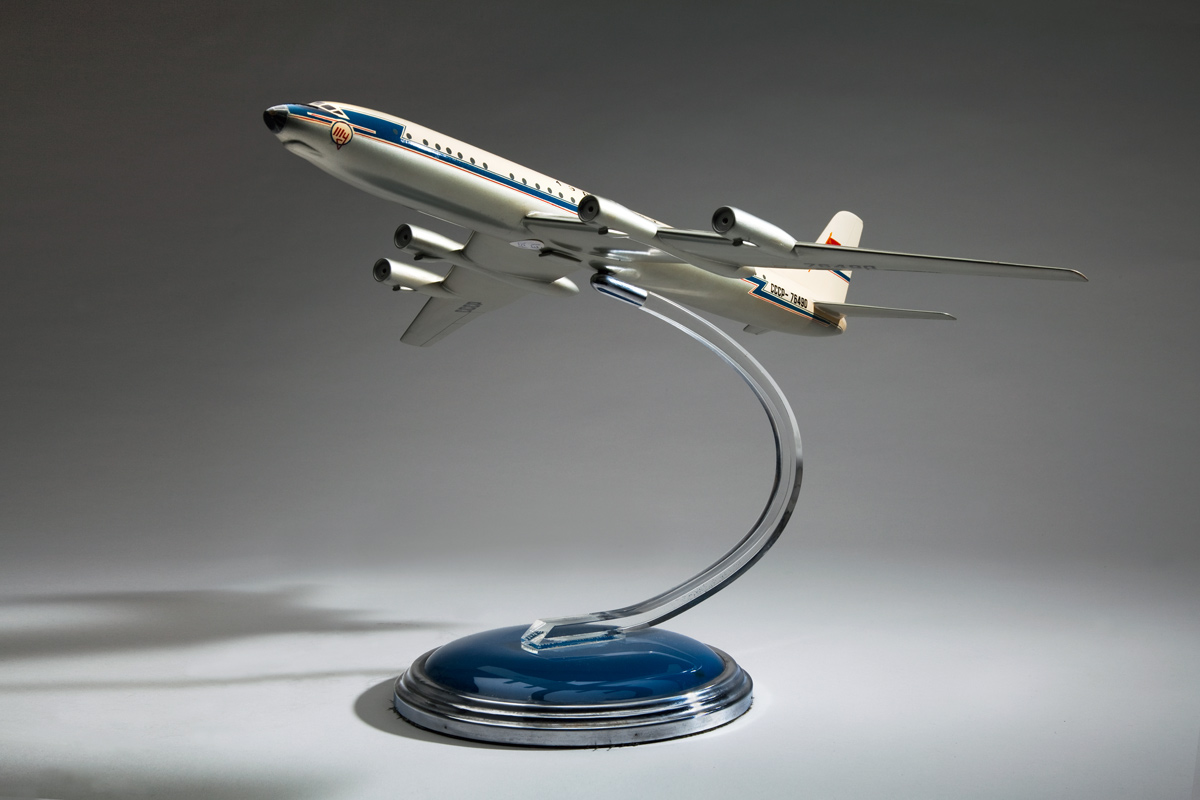
U.S.S.R. 'Aeroflot Tupolev Tu-114 Rossiya' early 1960s


U.S.S.R.
Aeroflot Tupolev Tu-114 Rossiya
Early 1960s
Scale 1:100
Metal, paint, plastic
Collection of Anthony J. Lawler


SFO Museum 
San Francisco International Airport
P.O. Box 8097
San Francisco, CA 94128 USA
Phone: 650.821.6700

SFO Museum website

LIKE ART BLART ON FACEBOOK

Back to top

Exhibition: ‘W. Eugene Smith – Photographs A retrospective’ at Martin-Gropius-Bau, Berlin

Exhibition dates: 27th August – 27th November 2011


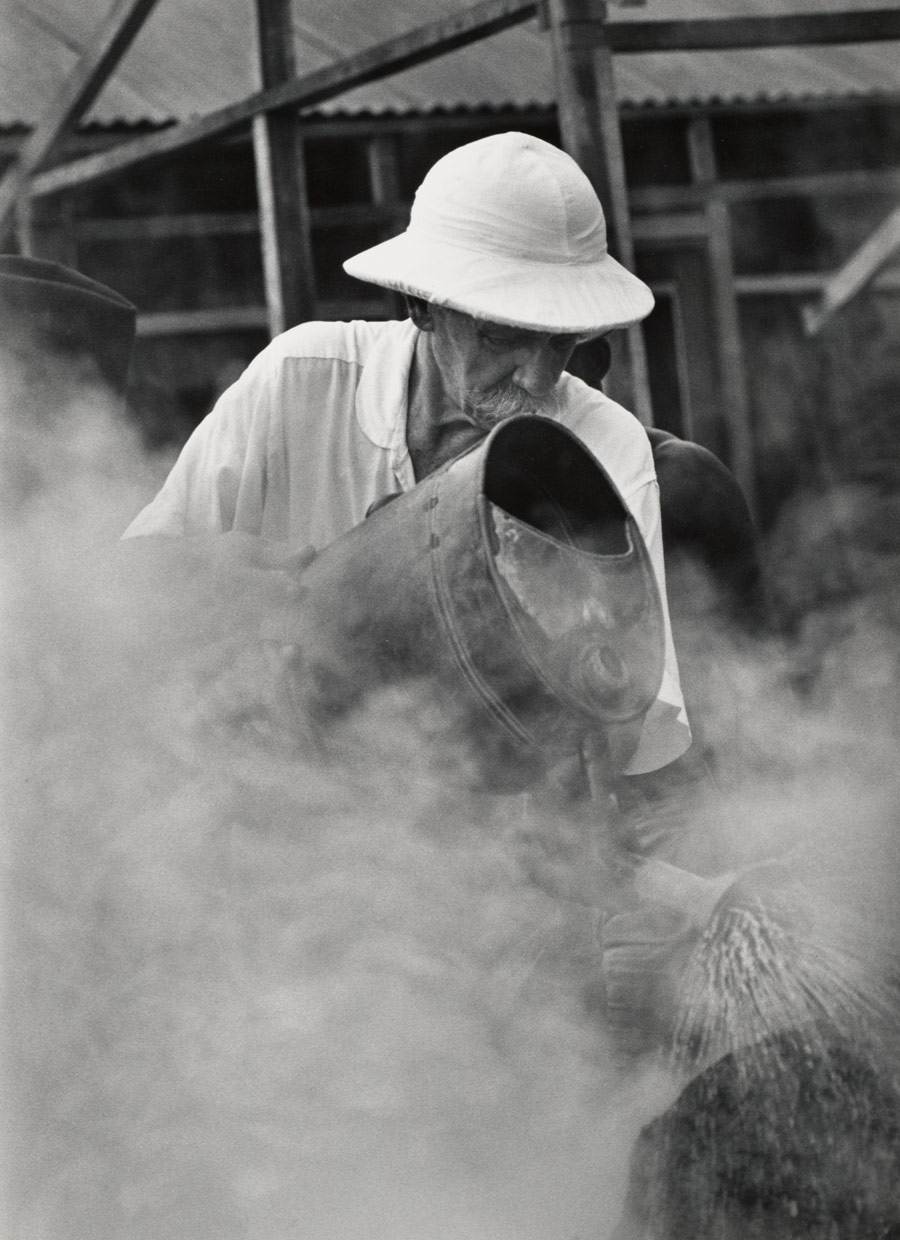
W. Eugene Smith (American, 1918-1978) 'Dance of the Flaming Coke' 1955


W. Eugene Smith (American, 1918-1978)
Dance of the Flaming Coke
1955
Gelatin silver print
20.6 x 33cm
Center for Creative Photography, University of Arizona: W. Eugene Smith Archive / Gift of the artist
© The Heirs of W. Eugene Smith, courtesy Black Star, Inc., New York


This man is legend. He created some of the most memorable and moving photographs in the history of the medium. Once seen, for example his seminal photograph Tomoko Uemura in Her Bath (1972, below), they are never forgotten. Look at the photographs, really look deeply at them. The compositions are flawless, peerless. Smith’s use of chiaroscuro makes his images sing and flow, like a Bach fugue. In spite of everything, “in spite of all the wars and all I had gone through that day, I wanted to sing a sonnet to life and to the courage to go on living it.”

Through that courage he left us a body of work that will live forever as masterpieces of the art of photography. Applause.

Dr Marcus Bunyan


Many thankx to the Martin-Gropius-Bau for allowing me to publish the photographs in the posting. Please click on the photographs for a larger version of the image.


W. Eugene Smith (American, 1918-1978) 'Albert Schweitzer, Aspen, Colorado' 1949


W. Eugene Smith (American, 1918-1978)
Albert Schweitzer, Aspen, Colorado
1949
Gelatin silver print
24.7 x 33.2cm
Center for Creative Photography, University of Arizona: W. Eugene Smith Archive / Gift of the artist
© The Heirs of W. Eugene Smith, courtesy Black Star, Inc., New York


W. Eugene Smith (American, 1918-1978) 'Guardia Civil, Spain' 1950


W. Eugene Smith (American, 1918-1978)
Guardia Civil, Spain
1950
Gelatin silver print
25.1 x 32.1cm
Center for Creative Photography, University of Arizona: W. Eugene Smith Archive / Gift of the artist
© The Heirs of W. Eugene Smith, courtesy Black Star, Inc., New York


W. Eugene Smith (American, 1918-1978) 'The Wake' 1950


W. Eugene Smith (American, 1918-1978)
The Wake
1950
Gelatin silver print
22.2 x 33.1cm
Center for Creative Photography, University of Arizona: W. Eugene Smith Archive / Gift of the artist
© The Heirs of W. Eugene Smith, courtesy Black Star, Inc., New York


W. Eugene Smith (American, 1918-1978) 'Steel Mill Worker, Pittsburgh' 1955


W. Eugene Smith (American, 1918-1978)
Steel Mill Worker, Pittsburgh
1955
Gelatin silver print
15.1 x 21.5cm
Center for Creative Photography, University of Arizona: W. Eugene Smith Archive / Gift of the artist
© The Heirs of W. Eugene Smith, courtesy Black Star, Inc., New York


W. Eugene Smith (American, 1918-1978) 'Untitled' 1954


W. Eugene Smith (American, 1918-1978)
Untitled
1955
Gelatin silver print
22.2 x 34cm
Center for Creative Photography, University of Arizona: W. Eugene Smith Archive / Gift of the artist
© The Heirs of W. Eugene Smith, courtesy Black Star, Inc., New York


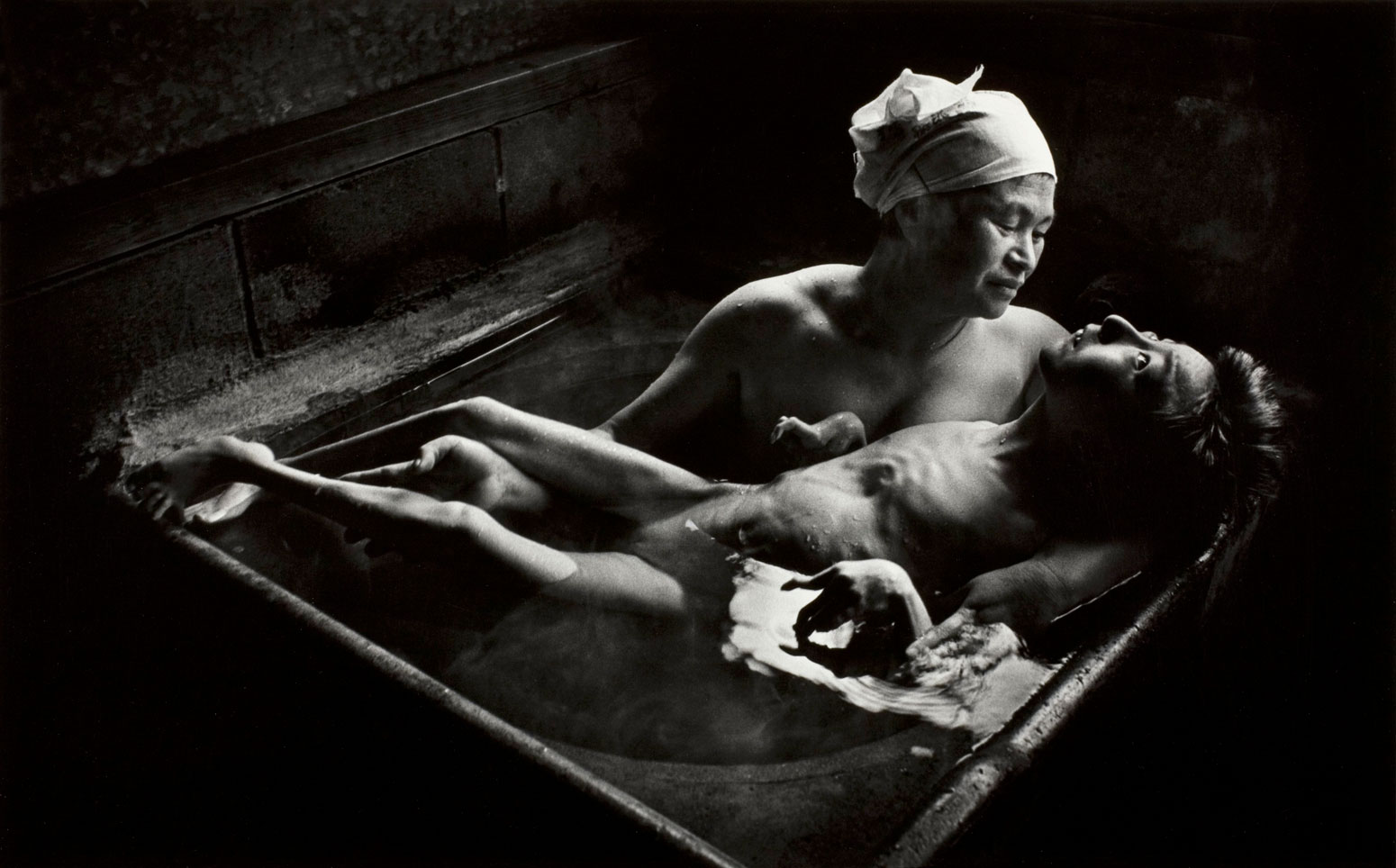
W. Eugene Smith (American, 1918-1978) 'Tomoko Uemura in Her Bath' 1972


W. Eugene Smith (American, 1918-1978)
Tomoko Uemura in Her Bath Minamata, Japan
1972
Gelatin silver print
Center for Creative Photography, University of Arizona: W. Eugene Smith Archive / Gift of the artist
© The Heirs of W. Eugene Smith, courtesy Black Star, Inc., New York


One of the most well-known photojournalists in the 20th century, Eugene Smith, with his wife at that time Aileen, took this photograph of Tomoko Uemura bathed by her mother, Ryoko. Tomoko was severally disabled, as a result of mercury poisoning, through her mother who ate fish caught in the nearby bay, contaminated by industrial wastewater from a chemical factory. The Smiths lived in a small fishng village in Southern Japan for four years, and documented the human victims and the natural environments destroyed by industrial pollution.

This photograph was carefully posed and lit by the photographers to create a composition similar to that of Michelangelo’s Pietà, a sculpture in which Mary holds the dead body of her son Jesus. The Smiths created the photograph as a tool to raise the public’s awareness of mercury poisoning and to help the victims’ fight against the polluting corporation and ultimately the Japanese government.

Text from the Minneapolis Institute of Art Collection website


W. Eugene Smith, who was born in 1918 in Wichita, Kansas, and died in 1978 in Tucson, Arizona, first made a name for himself as a politically and socially committed photojournalist in the USA in the 1940s. Many of his photographic reports appeared in Life, the leading picture magazine that had been launched in New York in 1936. Smith saw in photography more than just an illustration to a text and had often asked editors for a greater say in the composition of a photo-essay. His painstakingly researched and emotionally moving features set new standards of photojournalism in the 1940s and 1950s.

Smith had begun to take photographs as a fifteen-year-old, having been inspired by his mother, a keen amateur photographer. In 1936, following the suicide of his father as a result of the Great Crash, Smith initially enrolled at the University of Notre Dame, Indiana. But he dreamed of becoming a photographer and moved to New York, where he attended the New York Institute of Photography. He embarked on his professional career in 1937 as a photo reporter for Newsweek.

A year later he began to work as a freelance for the Black Star Agency, and his pictures appeared in Harper’s Bazaar, Collier’s, Time and Life. With Life he was to have a close association that went on for years.

When the USA found itself at war at the end of 1941 Smith initially took propaganda shots for the magazine Parade to support the American troops. Then, as a correspondent for Flying magazine, he took part in reconnaissance flights, taking photos from the air. In 1944 he was back on the staff of Life – this time as a war correspondent – documenting the battle of Saipan and the American landings on the islands of Iwo Jima and Okinawa. In the course of the fighting the style of his photos changed. Instead of being gung ho they tended to focus on the terrible sufferings of the civilian population and were shot in a way that involved the viewer emotionally. On 22 May 1945 Smith himself was seriously injured, forcing him to submit to a series of operations that went on until 1947.

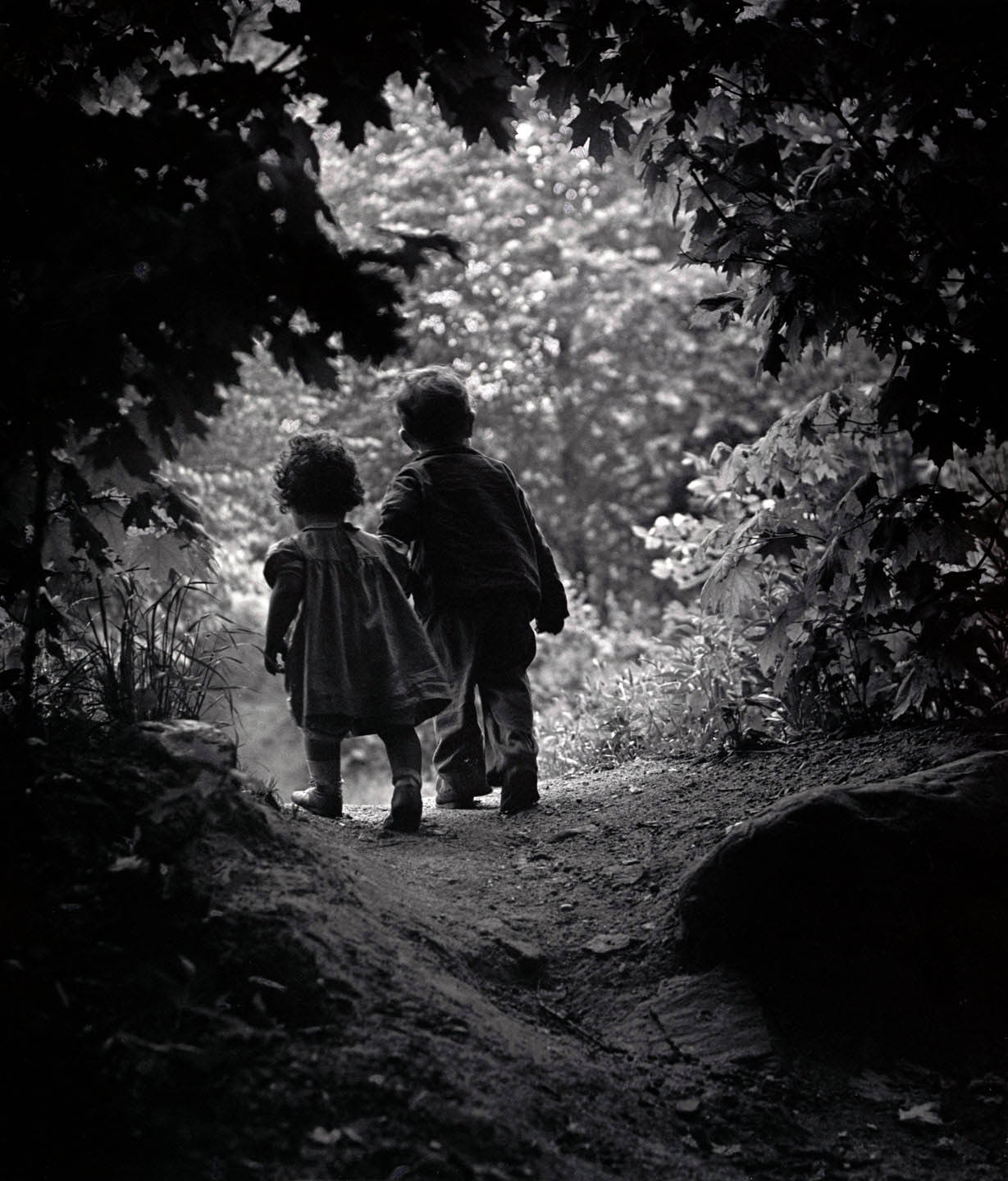
His new lease of life was symbolised by the first photograph he took after his wound. A Walk to Paradise Garden depicts his two youngest children walking towards a sun-bathed clearing. “While I followed my children into the undergrowth and the group of taller trees – how they were delighted at every little discovery! – and observed them, I suddenly realized that at this moment, in spite of everything, in spite of all the wars and all I had gone through that day, I wanted to sing a sonnet to life and to the courage to go on living it.” (1954)

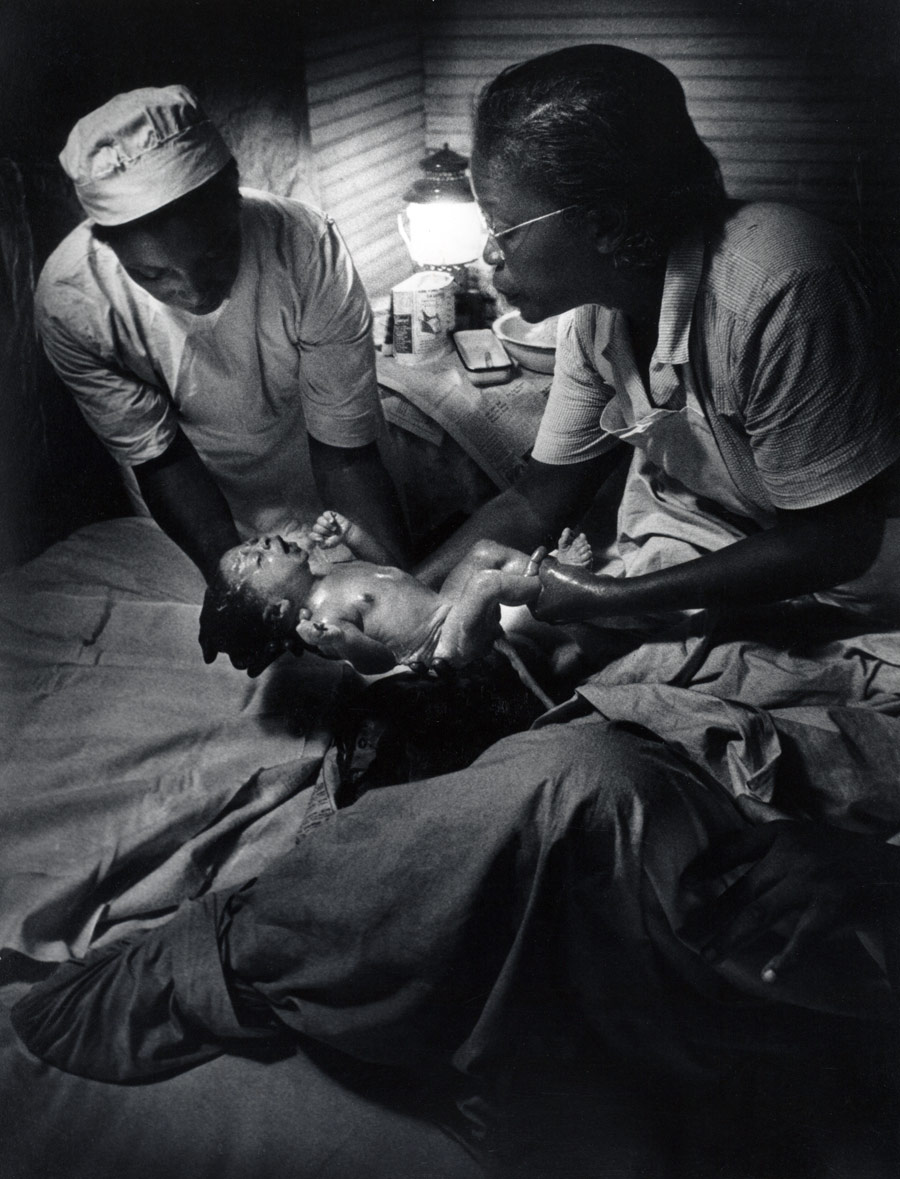
After his recovery he went back to work for Life again. Documentary features showing the dedicated work of ordinary people were particularly popular with readers. In The Country Doctor (1948) he accompanied a young country doctor from the Denver area on his rounds for several weeks. His report Nurse Midwife (1951) on the black midwife Maud Callen was produced against a background of racial discrimination and the brazen activities of the Ku Klux Klan in the Deep South. In developing the prints Smith adjusted the lighting so as to enhance the emotional atmosphere – during a birth, for example – and so arouse sympathy for the selfless efforts of the midwife. His social commitment, however, did not always meet with approval, as in the case of the unpublished report (1950) on the re-election campaign of Clement Attlee, the candidate of the British Labour Party.

Life intended the report to strengthen indirectly the position of the Conservatives by presenting the results of Attlee’s nationalisation policies in a critical light. Smith’s coverage, however, aroused sympathy for Attlee’s programme and the candidate himself. Smith had more success with his Spanish Village feature (1951). He wanted to convey an impression of living conditions under a fascist regime. After obtaining the necessary shooting permission, he spent two months studying the Spanish countryside before finally selecting a remote village in the Estremadura as his subject. Not a few of the photographs, with their chiaroscuro and clearly structured composition, are reminiscent of classical paintings and convey by means of this stylistic device a sense of the hardships but also the beauty of life there.

Smith’s feature on the work of Albert Schweitzer in Lambaréné was to be his last for Life whose refusal to give him a say in the selection and layout of pictures had become unacceptable, and he left the periodical after the appearance of his photo essay Albert Schweitzer – Man of Mercy in November 1955.

A career alternative offered itself in the shape of membership of Magnum, the photographers’ agency founded in 1947. Stefan Lorant commissioned Smith to do an extensive feature on the city of Pittsburgh and its iron foundries, which occupied him for the next few years and nearly exhausted his financial and personal resources. Instead of the 100 prints agreed with Lorant, there arose 13,000 shots out of which he wanted to compose an essay which would be entirely in line with his convictions. In 1958 88 photographs were published in Popular Photography’s Annual Guide, although the essay never appeared in its entirety.

In 1957 Smith, who was known for his excessive devotion to his work, had left his family and moved to 821 Sixth Avenue in New York. The house was visited and used for rehearsals by many well-known jazz musicians, and Smith, who was a passionate music lover, photographed and documented this creative milieu over the next few years, while also keeping an audio record on 1,740 tapes, which were only discovered among his posthumous effects in 1998. At the same time he photographed street scenes from his window while also working on the construction of a psychiatric clinic in Haiti.

In 1961 a commission from the Cosmos PR Agency to photograph the company Hitachi Ltd. took Smith to Japan for a year. This was followed in 1963 by a book which contrasted modern Japan with its deeply rooted traditions. A decade later he again turned to the forced modernisation of Japan and its grave consequences with a shocking series about the Minamata epidemic which had been triggered by the environmental pollution caused by the chemical concern Chisso, which had discharged mercurial waste into the sea near the town of Minamata. The Committee for the Defence of the Victims hired Smith to document the human and ecological dimensions of the catastrophe, and the photographer, who threw himself heart and soul into the project, moved with his second wife, Aileen Mioko Smith, to Minamata. In the course of his researches he was beaten up by company security guards and severely injured. The pictures he took, which appeared in Life and his book Minamata: A Warning to the World largely contributed to publicising the scandal.

By the early 1970s Smith’s photographic work was attracting the attention of museums. His photo A Walk to Paradise Garden had already been selected by Edward Steichen as a symbolic climax to the exhibition The Family of Man (1955), but it was not until 1971 that the first retrospective Let Truth Be the Prejudice was held in the Jewish Museum in New York. In 1977 Smith, by this time seriously ill, moved to Tucson, Arizona, to take up a teaching post at the university there in what was to be the last year of his life.

Text from the Martin-Gropius-Bau website


W. Eugene Smith (American, 1918-1978) 'A Walk to Paradise Garden' 1946


W. Eugene Smith (American, 1918-1978)
A Walk to Paradise Garden
1946
Gelatin silver print
Center for Creative Photography, University of Arizona: W. Eugene Smith Archive / Gift of the artist
© The Heirs of W. Eugene Smith, courtesy Black Star, Inc., New York


W. Eugene Smith (American, 1918-1978) 'Dr. Ernest Ceriani Following the Loss of a Mother and Child During Childbirth' 1948


W. Eugene Smith (American, 1918-1978)
Dr. Ernest Ceriani Following the Loss of a Mother and Child During Childbirth
1948
Gelatin silver print
28 x 20.2cm
Center for Creative Photography, University of Arizona: W. Eugene Smith Archive / Gift of the artist
© The Heirs of W. Eugene Smith, courtesy Black Star, Inc., New York


W. Eugene Smith (American, 1918-1978) 'Untitled' 1954


W. Eugene Smith (American, 1918-1978)
Untitled
1954
Gelatin silver print
33.5 x 23.6cm
Center for Creative Photography, University of Arizona: W. Eugene Smith Archive / Gift of the artist
© The Heirs of W. Eugene Smith, courtesy Black Star, Inc., New York


W. Eugene Smith (American, 1918-1978) 'The Spinner' 1950


W. Eugene Smith (American, 1918-1978)
The Spinner
1950
Gelatin silver print
32.4 x 23cm
Center for Creative Photography, University of Arizona: W. Eugene Smith Archive / Gift of the artist
© The Heirs of W. Eugene Smith, courtesy Black Star, Inc., New York


W. Eugene Smith (American, 1918-1978) 'Maude – Delivery' 1951


W. Eugene Smith (American, 1918-1978)
Maude – Delivery
1951
32.7 x 25cm
Gelatin silver print
Center for Creative Photography, University of Arizona: W. Eugene Smith Archive / Gift of the artist
© The Heirs of W. Eugene Smith, courtesy Black Star, Inc., New York


W. Eugene Smith (American, 1918-1978) 'Untitled' 1954


W. Eugene Smith (American, 1918-1978)
Untitled
1954
Gelatin silver print
34.6 x 25.2cm
Center for Creative Photography, University of Arizona: W. Eugene Smith Archive / Gift of the artist
© The Heirs of W. Eugene Smith, courtesy Black Star, Inc., New York


Martin-Gropius-Bau Berlin
Niederkirchnerstraße 7
Corner Stresemannstr. 110
10963 Berlin
Phone: +49 (0)30 254 86-0

Opening hours:
Wednesday to Monday 10 – 19 hrs
Tuesday closed

Martin-Gropius-Bau website

LIKE ART BLART ON FACEBOOK

Back to top

Exhibition: ‘Rückenfigur’ by David Ashley Kerr at Dear Patti Smith ARI, Fitzroy

Exhibition dates: 17th November – 27th November 2011


David Ashley Kerr (Australian, b. 1986) 'I hear the River
' 2009


David Ashley Kerr (Australian, b. 1986)
I hear the River

2009
Lightjet photographic print
80 x 140cm


Congratulations to David-Ashley Kerr on his first solo exhibition: the photographs and concept are very interesting.

Marcus


Many thankx to David for allowing me to publish the photographs in the posting. Please click on the photographs to see a larger version of the image.


David Ashley Kerr (Australian, b. 1986) 'I hear the Sea' 2010


David Ashley Kerr (Australian, b. 1986)
I hear the Sea
2010
Lightjet photographic print
80 x 140cm


David Ashley Kerr (Australian, b. 1986) 'I hear the Wind' 2010


David Ashley Kerr (Australian, b. 1986)
I hear the Wind
2010
Lightjet photographic print
80 x 140cm


Although rückenfigur is popularly associated with the German romantic painter Caspar David Friedrich, its appearances in art very much pre-date his time. Early forms of it were attributed to Giotto but it became a more substantial style in the 15th century, creeping into the works of painters such as Jan van Eyck and later with Allaert van Everdingen and Jan Luiken.

Often these uses were simply to direct the viewer to behold the landscape in the scene. Friedrich’s approach transfigured this into a different concept, sometimes referred to as “the halted traveller”, where the lonely wanderer has appeared to have been “stopped” by the view of the landscape. This implies to us as a viewer that there is perhaps more to the landscape than we see, but those thoughts may remain unknown to us… privately contained in the mind of the rückenfigur in the scene.

It appears to me that in looking at rückenfigur art, there are two distinct thematic conveyances. The first is the aforementioned “halted traveller” lost in the contemplation of the landscape. In gazing upon the landscape, the rückenfigur is quite separate from the scene being viewed. Although s/he is anonymous and without identity, there is still a distinct identity from that of the landscape.

The second appears, to me at least, to be quite the opposite. Another form of rückenfigur seems to be where the figure(s) are distantly placed deep within the landscape itself. You’ve still got “back figures” in contemplation, but the composition makes them part of the landscape rather than separate. While we still identify with them as a viewer, the identity of the figures are very much subsumed into the grandeur of the landscape, maybe even biblically so.

Text by Christian Were, Melbourne


David Ashley Kerr (Australian, b. 1986) 'I hear Them' 2010


David Ashley Kerr (Australian, b. 1986)
I hear Them
2010
Lightjet photographic print
80 x 140cm


David Ashley Kerr (Australian, b. 1986) 'Territory' 2010


David Ashley Kerr (Australian, b. 1986)
Territory
2010
Lightjet photographic print
80 x 140cm


David Ashley Kerr is a Melbourne based visual artist working with large-format photography. This is his first Australian solo show, a selection of landscape studies completed since 2009 that began as a photographic investigation of the Rückenfigur, or back figure. This visual device is commonly associated with German Romantic painter Caspar David Friedrich. It involves depicting a human figure that does not engage the viewer, introspectively contemplating the natural world or landscape before them.

David Ashley Kerr’s photographic practice is a visual inquiry into the relationship between cultural identity and physical environment, site, or place. He currently investigates the use of a staged lone figure in contemporary landscape photography, attempting a symbolic representation of belonging to ‘place’ in a national context, in relation to both indigenous and non-indigenous Australian ownership and connection to land.

David Ashley Kerr completed a Bachelor of Contemporary Art at Deakin University (2009) and a Master of Fine Art at RMIT University (2010). He is currently undertaking a PhD at Monash University on an Australian Postgraduate Award Scholarship, his research inquiring into place theory through photography, investigating the visual relationship between Australian cultural identity and physical environment.

Text from the Dear Patti Smith website


David Ashley Kerr (Australian, b. 1986) 'Ore' 2010


David Ashley Kerr (Australian, b. 1986)
Ore
2010
Lightjet photographic print
80 x 140cm


David Ashley Kerr (Australian, b. 1986) 'Trash' 2010


David Ashley Kerr (Australian, b. 1986)
Trash
2010
Lightjet photographic print
80 x 140cm


David Ashley Kerr (Australian, b. 1986) 'Game' 2009


David Ashley Kerr (Australian, b. 1986)
Game
2009
Lightjet photographic print
80 x 140cm


Dear Patti Smith

This gallery has now closed.

David-Ashley Kerr website

LIKE ART BLART ON FACEBOOK

Back to top

Review: ‘Selina Ou: New York’ at Sophie Gannon Gallery, Richmond

Exhibition dates: 25th October – 19th November 2011


Selina Ou (Australian born Malaysia, b. 1977) 'Tim, Hair Stylist, Lower East Side, New York' 2011


Selina Ou (Australian born Malaysia, b. 1977)
Tim, Hair Stylist, Lower East Side, New York
2011
C-type print
100 x 100cm


A strong, nuanced body of work by Selina Au at Sophie Gannon Gallery in Richmond. In the flesh these large colour photographs have a wonderful, polyvocal presence. The solo portraits are stronger in terms of composition and intertextuality than the double portraits.

Derived from the Latin intertexto, meaning to intermingle while weaving, intertextuality is a term first introduced by French semiotician Julia Kristeva in the late sixties.1 Intertextuality “is always an iteration which is also a re-iteration, a re-writing which foregrounds the trace of the various texts it both knowingly and unknowingly places and dis-places.”2 Intertexuality is how a text is constituted. It fragments singular readings. The reader’s own previous readings, experiences and position within the cultural formation influences these re-inscriptions.

Reminding me of a contemporary redefinition of the work of Diane Arbus, Ou’s reconceptualisations of space “produce a plurality of meanings and signifying / interpretive gestures that escape the reduction of knowledge to fixed, monological re-presentations, or presences.”3 Through a process of materialisation, using the technique of assemblage, Ou weaves a lack of fixity into her photographs. She creates a kind of tapestry in the surfaces of her images, a play of pattern / randomness that redefines the significations of the body in the fold of inscription.

Take the first three portraits in this posting, for example. The photograph Tim, Hair Stylist, Lower East Side, New York weaves space, time and memory within the pictorial frame. The physical space between the portrait on the wall at rear, Tim and the clock at right is crucial to a reading of this photograph, as is the disjuncture between the appearance of the man in the framed photograph (in jacket and tie) and the casual attire of Tim. Just as important is the memorialisation of both men within the same space (where both presumably work/ed), the collapsing of past and present into a fluid space that is neither here nor there (the past of the man in the framed photograph, the moment of passing of Tim when the photograph was ‘taken’ and the present of the photograph being looked at). There is no fixed, monological representation here: the reading of this photograph hovers between past and present, between memory and reality and haunts the body of the subject, Tim.

Similarly, Raquel, Waitress and Fashion Designer, Nolita, New York and Jerome, Retail Assistant and Fashion Designer, Soho, New York offer radical re-iterations of space, this time with less temporal associations. In Raquel, two red chevrons at top left and right frame the face of the subject, playing off the colour-changing hair of the waitress/fashion designer, the title of the photograph an ironic comment on the intertextual nature of contemporary life: a waitress (low paid, menial labourer) and a fashion designer (famous, highly visible entrepreneur). The nonchalantly limp-wristed, ringed hand and over large glasses, coupled with the bedraggled threads of the black shorts – echoing the tousled nature of the subjects hair – also belies the statement “fashion designer.” The word Cervesas (beer) offers a dichotomy with the coloured bottles of flavoured water that surround the lower half of the subject while the reflection in the window behind Raquel provides a metaphorical vista into this distorted world view.

In Jerome, the same problem in a person’s relationship with self and others is evident: the context of Jerome as both a retail assistant (low paid, menial labourer) and a fashion designer (famous, highly visible entrepreneur). The narcissistic, self-importance of Jerome is beautifully portrayed by Ou as she balances the context of his body in space – his polka-dot shirt reflecting the dotted neon of the shops name, his logo emblazoned necklace doing the same, while the reflections in the shop window again hint at outside forces (the car and consumerism) and other worlds. The defiant, could not give a shit gaze of the subject into the camera lens hints at years of subjugation and unrequited ambition for this is not his shop, these are not his clothes despite the label “fashion designer.” He is just a retail assistant, the subject of his own con(text).

The strength of these photographs is that they blur the outlines of the fixed image dispersing an image of totality, “into an unbounded, illimitable tissue of connections and associations, paraphrases and fragments, texts and con-texts.”4 In this sense the solo portraits are much more successful than the rest of the work as Ou magically weaves the tapestry of life into her compositions, ready for the reader to bring their own experiences to these re-inscriptions. In a word these photographs are, literally, breath-taking.

Dr Marcus Bunyan


Many thankx to Sophie Gannon Gallery for allowing me to publish the photographs in the posting. Please click on the photographs for a larger version of the image.


Endnotes

1/ Keep, Christopher, McLaughlin, Tim and Parmar, Robin. “Intertextuality,” on The Electronic Labyrinth website [Online] Cited 13/11/2011. No longer available online

2/ Ibid.,

3/ Thumlert, Kurt. Intervisuality, Visual Culture, and Education. [Online] Cited 10/08/2006. No longer available online

4/ Keep Op cit.,


Selina Ou (Australian born Malaysia, b. 1977) 'Raquel, Waitress and Fashion Designer, Nolita, New York' 2011


Selina Ou (Australian born Malaysia, b. 1977)
Raquel, Waitress and Fashion Designer, Nolita, New York
2011
C-type print
100 x 100cm


Selina Ou (Australian born Malaysia, b. 1977) 'Jerome, Retail Assistant and Fashion Designer, Soho, New York' 2011


Selina Ou (Australian born Malaysia, b. 1977)
Jerome, Retail Assistant and Fashion Designer, Soho, New York
2011
C-type print
100 x 100cm


Selina Ou (Australian born Malaysia, b. 1977) 'Darren, Model and Carlito, Artist, Soho, New York' 2011


Selina Ou (Australian born Malaysia, b. 1977)
Darren, Model and Carlito, Artist, Soho, New York
2011
C-type print
100 x 100cm


Selina Ou (Australian born Malaysia, b. 1977) 'Carolyn and Jane, Lolitas, Brooklyn Botanical Garden, New York' 2011


Selina Ou (Australian born Malaysia, b. 1977)
Carolyn and Jane, Lolitas, Brooklyn Botanical Garden, New York
2011
C-type print
100 x 100cm


Selina Ou (Australian born Malaysia, b. 1977) 'Issa and Lamine, Taxi Mechanics, Upper West Side, New York' 2011


Selina Ou (Australian born Malaysia, b. 1977)
Issa and Lamine, Taxi Mechanics, Upper West Side, New York
2011
C-type print
100 x 100cm


Selina Ou (Australian born Malaysia, b. 1977) 'Clementine, Liz and Billy Bob, Mercer-Houston Dog Run, Greenwich Village, New York' 2011


Selina Ou (Australian born Malaysia, b. 1977)
Clementine, Liz and Billy Bob, Mercer-Houston Dog Run, Greenwich Village, New York
2011
C-type print
100 x 100cm


Selina Ou (Australian born Malaysia, b. 1977) 'Derek, Student, Chrystie st, New York' 2011


Selina Ou (Australian born Malaysia, b. 1977)
Derek, Student, Chrystie st, New York
2011
Chromogenic photograph
100 x 100cm


Sophie Gannon Gallery
2, Albert Street
Richmond, Melbourne

Opening hours:
Tues – Saturday 11am – 5pm

Sophie Gannon Gallery website

LIKE ART BLART ON FACEBOOK

Back to top

Exhibition: ‘Bare Witness: Photographs by Gordon Parks’ at the Phoenix Art Museum

Exhibition dates: 20th August – 6th November 2011


Many thankx to the Phoenix Art Museum for allowing me to publish the photographs in the posting. Please click on the photographs for a larger version of the image.


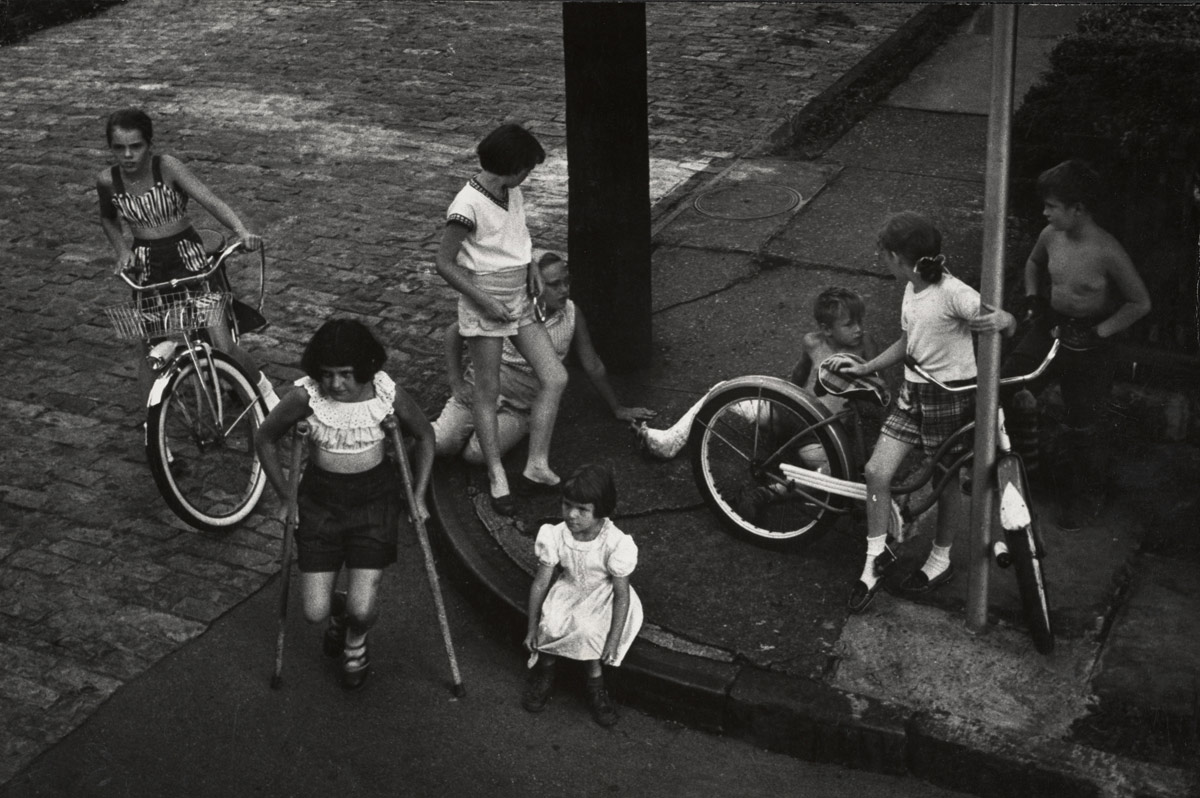
Gordon Parks (American, 1912-2006) 'Children with Doll (Ella Watson’s Grandchildren)' 1942


Gordon Parks (American, 1912-2006)
Children with Doll (Ella Watson’s Grandchildren)
1942
Gelatin silver print
11 x 14 inches
Lent by The Capitol Group Foundation
© 2006 The Gordon Parks Foundation


Gordon Parks (American, 1912-2006) 'Ingrid Bergman at Stromboli' 1949


Gordon Parks (American, 1912-2006)
Ingrid Bergman at Stromboli
1949
Gelatin silver print
16 x 20 inches
Lent by The Capitol Group Foundation
© 2006 The Gordon Parks Foundation


Gordon Parks (American, 1912-2006) 'Black Muslim Rally' New York, 1963


Gordon Parks (American, 1912-2006)
Black Muslim Rally
New York, 1963
Gelatin silver print
16 x 20 inches
Lent by The Capitol Group Foundation
© 2006 The Gordon Parks Foundation


Gordon Parks (American, 1912-2006) 'Alberto Giacometti, Paris' 1951


Gordon Parks (American, 1912-2006)
Alberto Giacometti, Paris
1951
Gelatin silver print
16 x 20 inches
Lent by The Capitol Group Foundation
© 2006 The Gordon Parks Foundation


Gordon Parks spent the majority of his professional career at the crossroads of the glamorous and the ghetto – two extremes the noted photographer knew well.  Perhaps best recognised for his works chronicling the African-American experience, Parks was also an accomplished fashion photographer. Bare Witness: Photographs by Gordon Parks provides a revealing look at the diversity and breadth of Parks’s most potent imagery. Featuring 73 works specifically selected by Parks for the photographic collection of the Los Angeles-based Capital Group, Bare Witness divulges heart wrenching images, iconic moments, celebrities and slices of everyday life.

Born in 1912 in Fort Scott, Kansas, Parks, who died in 2006 at age 93, was an African American photographer who began working professionally in the 1930’s. Parks tackled the harsh truth and dignity of the black urban and rural poor in the United States. He photographed aspects of the Civil Rights movements and individuals associated with the Black Panthers and Black Muslims. For nearly 25 years, from 1948 to 1972, he served as staff photographer for Life magazine. He also established himself as a foremost fashion photographer, providing spreads for respected magazines such as Vogue.

Bare Witness features many of Parks’s most memorable images such as “American Gothic.” Taken during Parks’s brief time with the Farm Security Agency, the photograph depicts a black cleaning woman named Ella Watson standing stiffly in front of an American flag, a mop in one hand and a broom in the other. Also included in the exhibition is a series of photos from Parks’s most famous Life magazine essay about Flavio da Silva, a malnourished and asthmatic boy living in a Rio de Janerio slum. Portraits of Muhammad Ali, Duke Ellington, Alexander Calder, Ingrid Bergman, Langston Hughes and Malcolm X among others will also be on view.

“Whether photographing celebrities or common folk, children or the elderly, Harlem gang leaders or fellow artists, Parks brought his straightforward, sympathetic ear and mind to bear witness to late 20th century civilisation,” commented Hilarie Faberman, the Robert M. and Ruth L. Halperin Curator of Modern and Contemporary Art at Cantor Arts Center and organiser of the exhibition. “His photographs balance the dichotomies of black and white, rich and poor, revealing his strengths and struggles as an artist and a man.”

In addition to his documentary and fashion photography, Parks was a filmmaker, author, musician and publisher. He was the first black artist to produce and direct a major Hollywood film, “The Learning Tree” in 1969, which was based on his early life experiences. He subsequently directed the popular action films “Shaft” and “Shaft’s Big Score.” He was a founder and editorial director of Essence magazine and wrote several autobiographies, novels and poems. In 1988, he received the National Medal of Arts award and throughout his lifetime was the recipient of 40 honorary doctorates from colleges and universities in the United States and England.

“Parks was a renaissance man whose career embodied the American ideal of equality and whose art was deeply personal. This exhibition is an exciting opportunity for Museum visitors to experience the poignant images he made over five decades,” commented Rebecca Senf, Norton Curator of Photography, Phoenix Art Museum.

The exhibition includes an illustrated catalogue with an essay by photography scholar Maren Stange who writes frequently on modern American culture. This exhibition has already enjoyed a five-venue tour, where the photographs were received with great excitement. The exhibition has been revived for a final showing at the Phoenix Art Museum. Bare Witness: Photographs by Gordon Parks was organised by the Iris & B. Gerald Cantor Center for Visual Arts at Stanford University. The exhibition and its accompanying catalogue are made possible by generous support from The Capital Group Foundation, the Cantor Arts Center’s Hohbach Family Fund, and Cantor Arts Center’s Members.

Press release from the Phoenix Museum of Art website


Gordon Parks (American, 1912-2006) 'American Gothic' 1942


Gordon Parks (American, 1912-2006)
American Gothic
1942
Gelatin silver print
24 x 20 inches
Lent by The Capitol Group Foundation
© 2006 The Gordon Parks Foundation


Gordon Parks (American, 1912-2006) 'Red Jackson, Harlem' 1948


Gordon Parks (American, 1912-2006)
Red Jackson, Harlem
1948
Gelatin silver print
Lent by The Capitol Group Foundation
© 2006 The Gordon Parks Foundation


Gordon Parks (American, 1912-2006) 'Mrs. Jefferson, Fort Scott' 1949


Gordon Parks (American, 1912-2006)
Mrs. Jefferson, Fort Scott
1949
Gelatin silver print
20 x 16 inches
Lent by The Capitol Group Foundation
© 2006 The Gordon Parks Foundation


Gordon Parks (American, 1912-2006) 'A Gambling Woman, Caribe Hilton Hotel, San Juan, Puerto Rico' December 1949


Gordon Parks (American, 1912-2006)
A Gambling Woman, Caribe Hilton Hotel, San Juan, Puerto Rico
December 1949
Gelatin silver print
20 x 16 inches
Lent by The Capitol Group Foundation
© 2006 The Gordon Parks Foundation


Gordon Parks (American, 1912-2006) 'Mário da Silva, Crying after Being Bitten by Dog, Rio de Janeiro, Brazil' 1961


Gordon Parks (American, 1912-2006)
Mário da Silva, Crying after Being Bitten by Dog, Rio de Janeiro, Brazil
1961
Gelatin silver print
14 x 11 inches
Lent by The Capitol Group Foundation
© 2006 The Gordon Parks Foundation


Gordon Parks (American, 1912-2006) 'Malcolm X at Rally, Chicago, Illinois' 1963


Gordon Parks (American, 1912-2006)
Malcolm X at Rally, Chicago, Illinois
1963
From the series Chicago Muslim Story (1963)
Gelatin silver print
Lent by The Capitol Group Foundation
© 2006 The Gordon Parks Foundation


Gordon Parks relocated from Minnesota to Chicago’s South Side in 1940, immersing himself in the local art community while operating a portrait studio out of the South Side Community Art Center. In 1941 he was awarded a Rosenwald Fellowship for a portfolio of photographs he created on the South Side; the award gave him the means to move east to Washington, DC. By 1948 Life magazine hired him as its first African American staff photographer.

In 1963 Parks returned to Chicago on assignment for Life to report on the Nation of Islam, newly headquartered in the city. Parks gained unprecedented access to this radical civil rights movement through his friendship with Malcolm X, who arranged a meeting with Elijah Muhammad, the group’s leader, so that Parks could obtain permission to proceed with the story. Parks spent weeks with the Black Muslim community, documenting a range of its activities – from self-defense training to religious services led by Malcolm X.

Parks’s photo-essay ran in the May 31, 1963, issue of Life, along with an essay by Parks that reflects on his dual status as insider and outsider. The text begins with his return to Chicago after nearly a decade and his memories of “the hopelessness that seeped into the black souls of that jungle.” Parks goes on to describe his current position: “I was a Black Man in White Man’s clothing, sent by the very ‘devils’ [Elijah Muhammad] criticized so much… . I wondered whether or not my achievements in the white world had cost me a certain objectivity.” He concludes, “I sympathize with much of what they say, but I also disagree with much of what they say… . Nevertheless, I acknowledge that the circumstance of common struggle has willed us brothers.”

Text from the Art Institute of Chicago website 
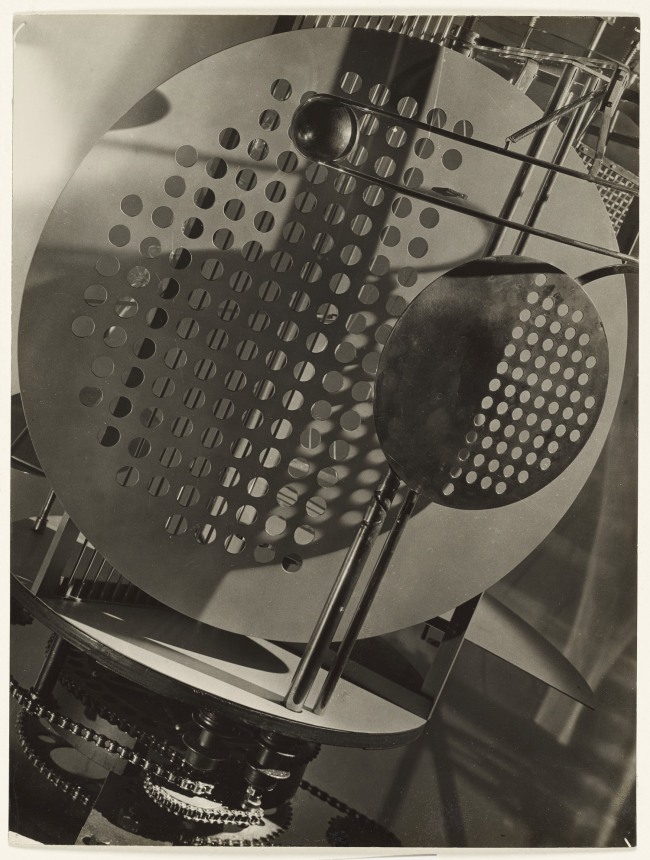
 

Gordon Parks (American, 1912-2006) 'Muhammad Ali' c. 1970


Gordon Parks (American, 1912-2006)
Muhammad Ali
c. 1970
Gelatin silver print
24 x 20 inches
Lent by The Capitol Group Foundation
© 2006 The Gordon Parks Foundation


Gordon Parks (American, 1912-2006) 'Muhammad Ali' 1970


Gordon Parks (American, 1912-2006)
Muhammad Ali
1970
Cibachrome
20 x 16 inches
Lent by The Capitol Group Foundation
© 2006 The Gordon Parks Foundation


Phoenix Art Museum
McDowell Road & Central Avenue
1625 N. Central Avenue
Phoenix, AZ 85004

Opening hours:
Monday Closed
Tuesday Closed
Wednesday 10am – 9pm
Thursday – Sunday 10am – 5pm

Phoenix Art Museum website

LIKE ART BLART ON FACEBOOK

Back to top

Exhibition: ‘Joel Meyerowitz – Aftermath’ at the Miami Art Museum

Exhibition dates: 19th August – 6th November 2011


Joel Meyerowitz (American, b. 1938) 'Searchers in Rubble' 2001


Joel Meyerowitz (American, b. 1938)
Searchers in Rubble
2001
Vintage contact print
Collection Miami Art Museum, gift of Steven E. and Phyllis Gross


And do you know what “the world” is to me? Shall I show it to you in my mirror? This world: a monster of energy, without beginning, without end; a firm, iron magnitude of force that does not grow bigger or smaller, that does not expend itself but only transforms itself; as a whole, of unalterable size, a household without expenses or losses, but likewise without increase or income; enclosed by “nothingness” as by a boundary; not something blurry or wasted, not something endlessly extended, but set in a definite space as a definite force, and not a space that might be “empty” here or there, but rather a force throughout, as a play of forces and waves of forces, at the same time one and many, increasing here and at the same time decreasing there …


Frederick Nietzsche, The Will to Power


Sadness. And light. Hope. Amidst the inferno. Study the masterpiece Finding More Fireman (below) in the enlarged version and you cannot fail to be moved. It is all there: monumental, intimate, hellish, redemptive – a modern, “disastrous” form of the Rembrandt’s The Night Watch.

Dr Marcus Bunyan


Many thanxk to the Miami Art Museum for allowing me to publish the photographs in the posting. Please click on the photographs for a larger version of the image.


Joel Meyerowitz (American, b. 1938) 'Flower Offering' 2001


Joel Meyerowitz (American, b. 1938)
Flower Offering
2001
Vintage contact print
Collection Miami Art Museum, gift of Steven E. and Phyllis Gross


Joel Meyerowitz (American, b. 1938) 'Pit Looking North' 2002


Joel Meyerowitz (American, b. 1938)
Pit Looking North
2002
Vintage contact print
Collection Miami Art Museum, gift of Steven E. and Phyllis Gross


Joel Meyerowitz (American, b. 1938) 'Smoke and Spray' 2001


Joel Meyerowitz (American, b. 1938)
Smoke and Spray
2001
Vintage contact print
Collection Miami Art Museum, gift of Jeffrey Hugh Newman


Joel Meyerowitz (American, b. 1938) 'Moving the Monument' 2001


Joel Meyerowitz (American, b. 1938)
Moving the Monument
2001
Vintage contact print
Collection Miami Art Museum, gift of Jeffrey Hugh Newman


Joel Meyerowitz (American, b. 1938) 'Finding More Fireman' 2001


Joel Meyerowitz (American, b. 1938)
Finding More Fireman
2001
Vintage contact print
Collection Miami Art Museum, gift of Charles S. and Elynne B. Zucker


Joel Meyerowitz (American, b. 1938) 'Searchers' 2002


Joel Meyerowitz (American, b. 1938)
Searchers
2002
Vintage contact print
Collection Miami Art Museum, gift of Charles S. and Elynne B. Zucker


Joel Meyerowitz (American, b. 1938) 'Welders in South Tower' 2001


Joel Meyerowitz (American, b. 1938)
Welders in South Tower
2001
Vintage contact print
Collection Miami Art Museum, gift of Charles S. and Elynne B. Zucker


In commemoration of the 10th anniversary of 9/11, Miami Art Museum presents Focus Gallery: Joel Meyerowitz – Aftermath, an exhibition of photographs taken by the only photographer granted right of entry into Ground Zero after the September 11, 2001 attacks on the World Trade Center in New York City. For nine months during the day and night, Meyerowitz photographed “the pile,” as the World Trade Center came to be known, and the over 800 people a day that were working in it. The exhibition consists of 24, recently-donated photographs, presented in the Focus Gallery section of the Museum’s Permanent Collection installation. Admission to Miami Art Museum will be free to all emergency personnel, including police and firefighters, and their guests throughout the exhibition’s run, August 19 – November 6, 2011. A special preview for emergency personnel will be held on Thursday, August 18, 2011, 4-7pm. Author and photography critic Vicki Goldberg will give a lecture entitled “What Remains” on Thursday, September 8, 2011, beginning at 6:30pm.

After September 11, 2001, the Ground Zero site in New York City was classified as a crime scene and only those directly involved in the recovery efforts were allowed inside. The press was prohibited from the site. Influenced by Walker Evans’s and Dorothea Lange’s work for the Farm Security Administration during the Great Depression, Meyerowitz, long recognised as one of the pioneers of colour photography, was convinced that if a photographic record of the unprecedented recovery efforts was not made, “there would be no history.” With the help of sympathetic officials, he managed to become the only photographer granted right of entry into Ground Zero.

“I was making photographs for everyone who didn’t have access to the site,” says Meyerowitz, “I wanted to communicate what it felt like to be in there as well as what it looked like: to show the pile’s incredible intricacy and visceral power. I could provide a window for everyone else who wanted to be there, too, to help, or to grieve, or simply to try to understand what had happened to our city.”

Armed with a large-format wooden camera, Meyerowitz spent nine months photographing the site. In the first few weeks, he was chased off the site repeatedly, but over time, with the help of officials on and off site, the use of forged workers’ passes, and by assuming the “uniform” of hard hat, goggles, respirator, gloves, boots and duct taped pants, Meyerowitz became “woven into the fabric of the site.”

About the experience, Meyerowitz has written, “The nine months I worked at Ground Zero were among the most rewarding of my life. I came in as an outsider, a witness bent on keeping the record, but over time I began to feel a part of the very project I’d been intent on recording… the intense camaraderie I experienced at Ground Zero inspired me, changing both my sense of myself and my sense of responsibility to the world around me. September 11th was a tragedy of almost unfathomable proportions. But living for nine months in the midst of those individuals who faced that tragedy head-on, day after day, and did what they could to set things right, was an immense privilege.”

The photographs in MAM’s collection are from a unique set of contact prints (photographs printed on a 1:1 scale from the negatives) issued by the artist in 2006. As a group, they span the entire nine month period that Meyerowitz was on site, presenting a poignant, condensed view of the clean up effort, including portraits of the workers involved. The set is introduced by a single image of the World Trade Center towers taken by the artist in the 1980s from his apartment window.

The entire set of more than 8,000 photographs taken by Meyerowitz form an archive at the Museum of the City of New York. The Aftermath series was the focus of a 2006 book, Aftermath: World Trade Center Archives published by Phaidon (reissued this year in a special 10th anniversary edition) and an exhibition organised by the US Department of State that traveled worldwide from 2002 to 2005.

Press release from the Miami Art Museum website


Joel Meyerowitz (American, b. 1938) 'Explosion Squad Detective' 2001


Joel Meyerowitz (American, b. 1938)
Explosion Squad Detective
2001
Vintage contact print
Collection Miami Art Museum, gift of Steven E. and Phyllis Gross


Joel Meyerowitz (American, b. 1938) 'Steps Down to Plaza' 2001


Joel Meyerowitz (American, b. 1938)
Steps Down to Plaza
2001
Vintage contact print
Collection Miami Art Museum, gift of Jeffrey Hugh Newman


Joel Meyerowitz (American, b. 1938) 'Fireman at Last Column' 2002


Joel Meyerowitz (American, b. 1938)
Fireman at Last Column
2002
Vintage contact print
Collection Miami Art Museum, gift of Charles S. and Elynne B. Zucker


Joel Meyerowitz (American, b. 1938) 'Building #5 and Woolworth' 2001


Joel Meyerowitz (American, b. 1938)
Building #5 and Woolworth
2001
Vintage contact print
Collection Miami Art Museum, gift of Simon and Bonnie Levin


Joel Meyerowitz (American, b. 1938) 'Welder and Rubble' 2001


Joel Meyerowitz (American, b. 1938)
Welder and Rubble
2001
Vintage contact print
Collection Miami Art Museum, gift of Steven E. and Phyllis Gross


Miami Art Museum
101 W Flagler St., Miami, FL 33130

Opening hours:
Monday 11am – 6pm
Tuesday – Wednesday Closed
Thursday 11am – 9pm
Friday – Sunday 11am – 6pm

Miami Art Museum website

LIKE ART BLART ON FACEBOOK

Back to top

Exhibition: ‘A Perfect Price For Donny’ by Martin Smith at Ryan Renshaw Gallery, Brisbane

Exhibition dates: 12th October – 12th November 2011


Martin Smith (Australian, b. 1971) 'My Father Doesn't Relate Well With Other Men' 2011


Martin Smith (Australian, b. 1971)
My Father Doesn’t Relate Well With Other Men
2011


Martin Smith is one of my favourite photo artists working in Australia at the moment. Smith produces consistently intriguing, stimulating art. Having had a particularly fractious relationship with my own father I appreciate the pathos and humour that Smith achieves in his work. Fantastic!

Marcus


Many thankx to Ryan Renshaw gallery for allowing me to publish the photographs in the posting. Please click on the photographs for a larger version of the image.


Martin Smith (Australian, b. 1971) 'My Father is a Deeply Flawed Human Being' 2011


Martin Smith (Australian, b. 1971)
My Father is a Deeply Flawed Human Being
2011


Martin Smith’s artwork focuses on those small moments that glance into a life. Tending to gather photographs as opposed to taking them, his works offer wry observations rather than grand statements. The loss or absence inherent in photographic images, which are suggestive of another time and place, is echoed in the physical loss of the words cut into the surface of the works. One story is inscribed on another; just like one memory is laid upon another or one version of a story embellishes another. The resulting works are replete with the same ambiguity, melancholy and richness as one’s memory.

‘The storytelling came from when I started looking at my old family photos and thinking about what goes with them,’ Smith explains. ‘You know when you’re looking at family photos, there are particular stories that go with them – that’s that person, that’s the time when your uncle turned up for Christmas, and so on.’

Smith’s stories that are painstakingly hand-cut into the photographic image give a whimsical and highly personal account of his life, like his ill-fated attempt to become an actor with the Sandgate Amateur Theatre Group or the time he worked in the cutlery crew at Australian Airlines, combining the text of these stories with photographs. The scarring of the photographic image with Smith’s scalpel blade ensures a unique artwork, a notion at odds with the reproducible aspects of photography.

Martin’s exhibition stems from his reflection of his experiences as an actor in Roger Fagan’s play A Perfect Price For Donny and questions the legacy of what we ‘leave behind’ for others to read.

‘Tanya was from the past of my amateur theatre days when I was 17 years old and possessed with deluded dreams of being an actor. We were both new members of the Sacred Heart Players and we both landed the leads in the production of A Perfect Price for Donny written by Roger Fagan. Roger was an elderly member of the group and had joined years earlier to gain practical experience so he could finish his play. The Perfect Price for Donny was his first and only play. Roger had worked at the Railways for 32 years and had been writing A Perfect Price for Donny on and off over the 32 years. He had not started another play, he hadn’t written any short stories, prose or even a Haiku. Since he had retired two years ago he was finally able to realise his dream of finishing A Perfect Price for Donny at the age of 68′.

‘The memories are left behind and then reconstituted and turned into other things, it’s a language constantly getting churned up. Memories are things that inform taking the photo,’ Smith says ‘and I’m bringing some of the intrinsic aspects of the photograph with me. Photography captures the classic moments of life, like your first day at school,’ he continues, ‘but it doesn’t capture the other parts of your life that are sometimes way more significant.’

People spend a lot of time in a Martin Smith exhibition reading the works and then laughing or sighing in recognition. The photographs are all of fairly impersonal exteriors, almost crime scenes, not postcards, not picturesque snaps but odd disregarded corners of the world. In some way they are reminiscent of album covers or slightly lame posters but are brought into the present by Smith’s honest and often very funny tales of modern living.

Press release from the Ryan Renshaw Gallery website


Martin Smith (Australian, b. 1971) 'My Father's Talents Will Never Make Me Wealthy' 2011


Martin Smith (Australian, b. 1971)
My Father’s Talents Will Never Make Me Wealthy
2011


Martin Smith (Australian, b. 1971) 'My Father Fails' 2011


Martin Smith (Australian, b. 1971)
My Father Fails
2011


Martin Smith (Australian, b. 1971) 'Revelation #2' 2011


Martin Smith (Australian, b. 1971)
Revelation #2
2011


Ryan Renshaw Gallery

This gallery has now closed.

LIKE ART BLART ON FACEBOOK

Back to top

Exhibition: ‘Polly Borland: Smudge’ at Paul Kasmin Gallery, New York

Exhibition dates: 22nd September – 29th October 2011


Many thankx to Paul Kasmin Gallery for allowing me to publish the text and photographs in the posting. Each photograph has been printed in three editions (small: 44 x 38.5cm, edition of 3 plus 3 APs; medium: 76 x 65cm, edition of 6 plus 3 APs; and large-scale prints: 147.5 x 122cm, edition of 3 plus 3 APs).


Polly Borland (Australian, b. 1959) 'Untitled III' 2010


Polly Borland (Australian, b. 1959)
Untitled III
2010
C-print


Polly Borland (Australian, b. 1959) 'Untitled IV' 2010


Polly Borland (Australian, b. 1959)
Untitled IV
2010
C-print


Polly Borland (Australian, b. 1959) 'Untitled XIII' 2010


Polly Borland (Australian, b. 1959)
Untitled XIII
2010
C-print


Polly Borland (Australian, b. 1959) 'Untitled XXXIV' 2010


Polly Borland (Australian, b. 1959)
Untitled XXXIV
2010
C-print


Paul Kasmin Gallery is pleased to present an exhibition of photographs by Polly Borland from her Smudge series, curated by Danny Moynihan. Opening on September 22, 2011 at 511 W. 27th Street, this will be the artist’s first show with the gallery.

In this body of arresting portraits, Borland dresses and directs her models; manipulating their various costumes, makeup and body positioning to create her own visual language. With faces obscured by wigs, nylon hose and masks, her anonymous subjects are captured in moments of great openness and vulnerability.

Of his experience modelling for Borland, the musician Nick Cave writes, “I am struck by Polly’s deep love for her subjects and the dignity that exists in their dysmorphia. Because her pictures are never voyeuristic, never observational and never merely shocking. Rather, Polly seems to me to be shooting into a distorted mirror and simply bringing back heartbreaking refracted images of herself.”

Borland’s captivating, intimate portraits convey a keen sensitivity to her subjects. “It’s a long time that the camera has been bringing us news about zanies and pariahs, their miseries and their quirks. Showing the banality of the non-normal. Making voyeurs of us all…” writes Susan Sontag in her essay accompanying Borland’s The Babies catalogue, “… But this is particularly gifted, authoritative, intelligent work. Borland’s pictures seem very knowing, compassionate; and too close, too familiar, to suggest common or mere curiosity.”

Borland was born in Melbourne, Australia in 1959, and moved to the United Kingdom in 1989. She has recently relocated to Los Angeles.

Text from the Paul Kasmin Gallery website


Polly Borland (Australian, b. 1959) 'Untitled XXIV' 2010


Polly Borland (Australian, b. 1959)
Untitled XXIV
2010
C-print


Polly Borland (Australian, b. 1959) 'Untitled XL' 2010


Polly Borland (Australian, b. 1959)
Untitled XL
2010
C-print


Polly Borland (Australian, b. 1959) 'Untitled XXVI' 2010


Polly Borland (Australian, b. 1959)
Untitled XXVI
2010
C-print


Polly Borland (Australian, b. 1959) 'Untitled XXXVIII' 2010


Polly Borland (Australian, b. 1959)
Untitled XXXVIII
2010
C-print


Paul Kasmin Gallery
297 Tenth Ave.
New York, NY 10001
509 W. 27th Street
New York, NY 10001
Phone: 212.563.4474

Opening hours:
Monday – Thursday, 10am – 5pm
Friday, 10am – 4pm

Paul Kasmin Gallery website

LIKE ART BLACK ON FACEBOOK

Back to top