Curator: conceived and curated by Leipzig-based curator and artist Helmut Völter
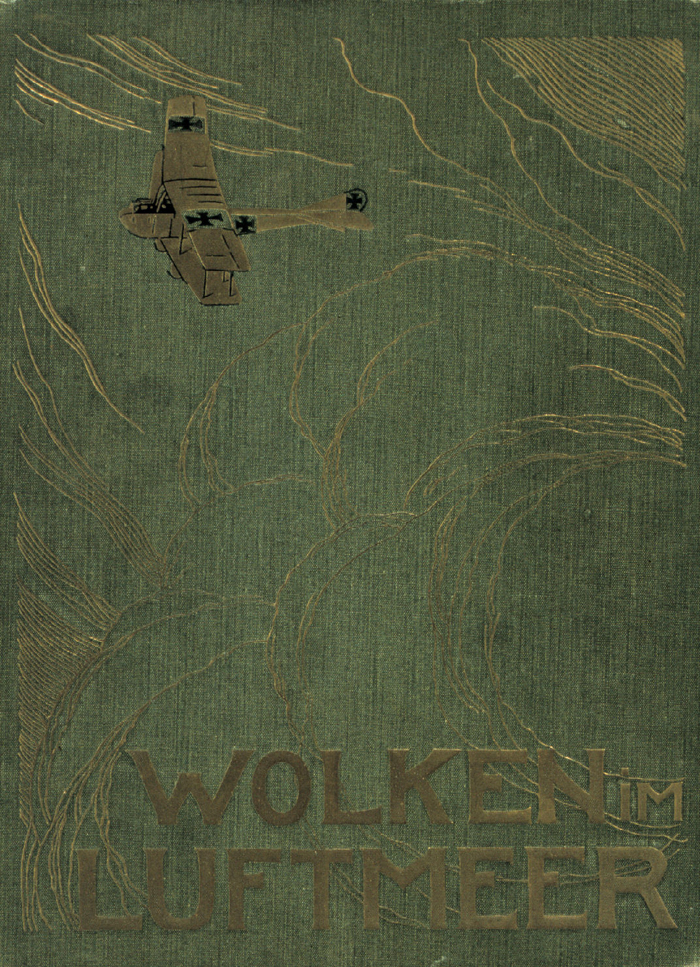
Wolken im Luftmeer (Clouds in a sea of air) (cover) 1917
I desire (I feel that is the correct word) to own a copy of the above book. Has anyone got a one for sale?
Please let me know as I would love to own one!
Update: I now own a copy of Wolken im Luftmeer purchased from a lovely person in Germany 🙂
Dr Marcus Bunyan
Many thankx to the Fotomuseum Winterthur, Zurich for allowing me to publish the photographs in the posting. Please click on the photographs for a larger version of the image.
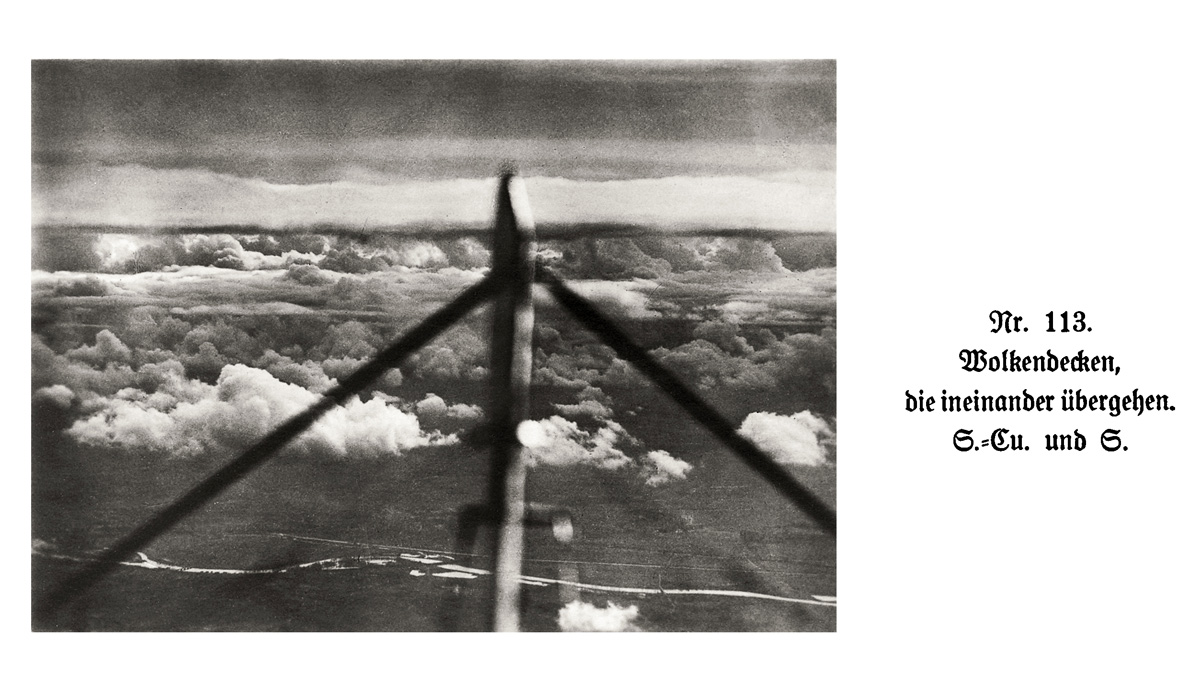
Unknown photographer Wolkendecken, die ineinander übergehen. S.-Cu. und S., from: Wolken im Luftmeer (Merging cloud covers. S.-Cu. and S., from: Clouds in a sea of air) Photographs taken by German fighter pilots during WW1, Berlin, 1917
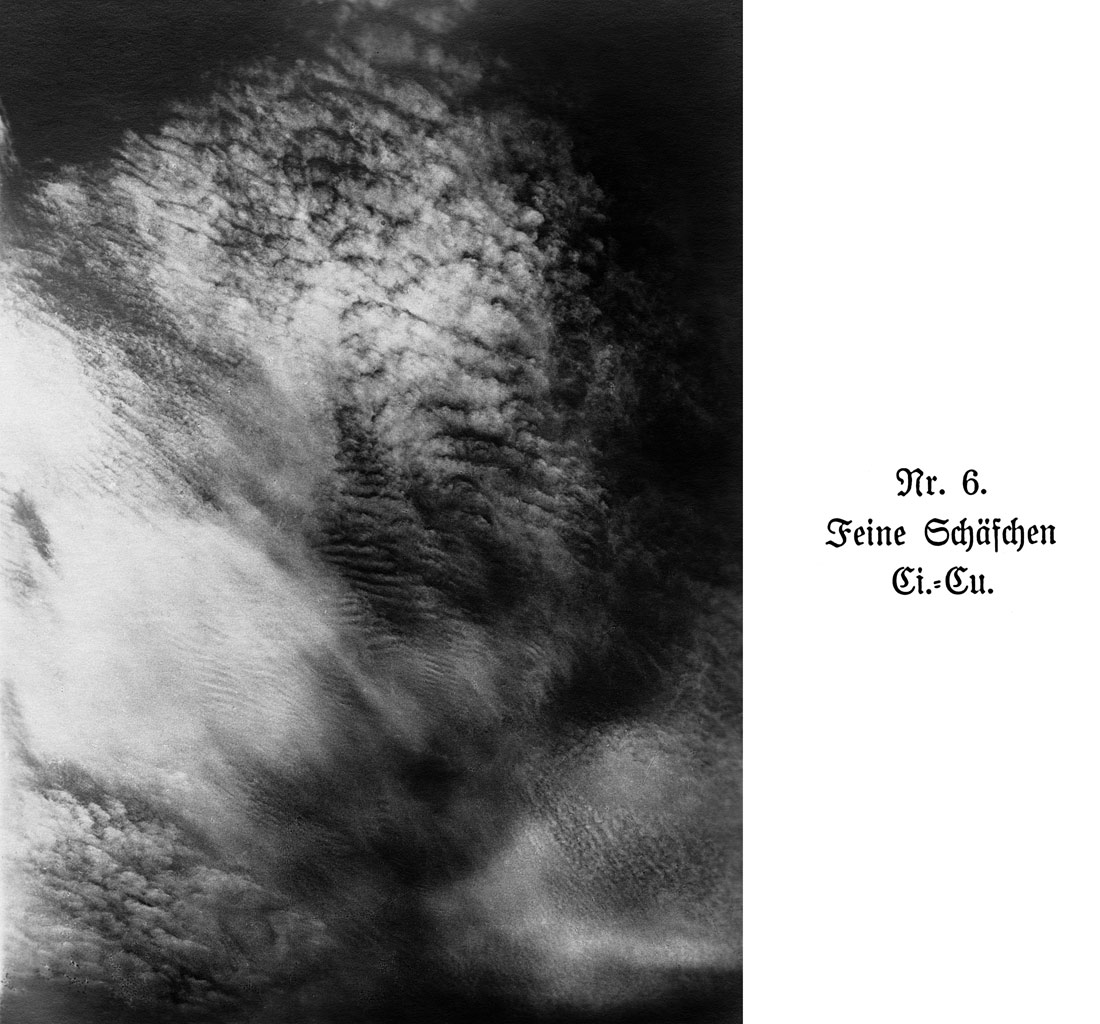
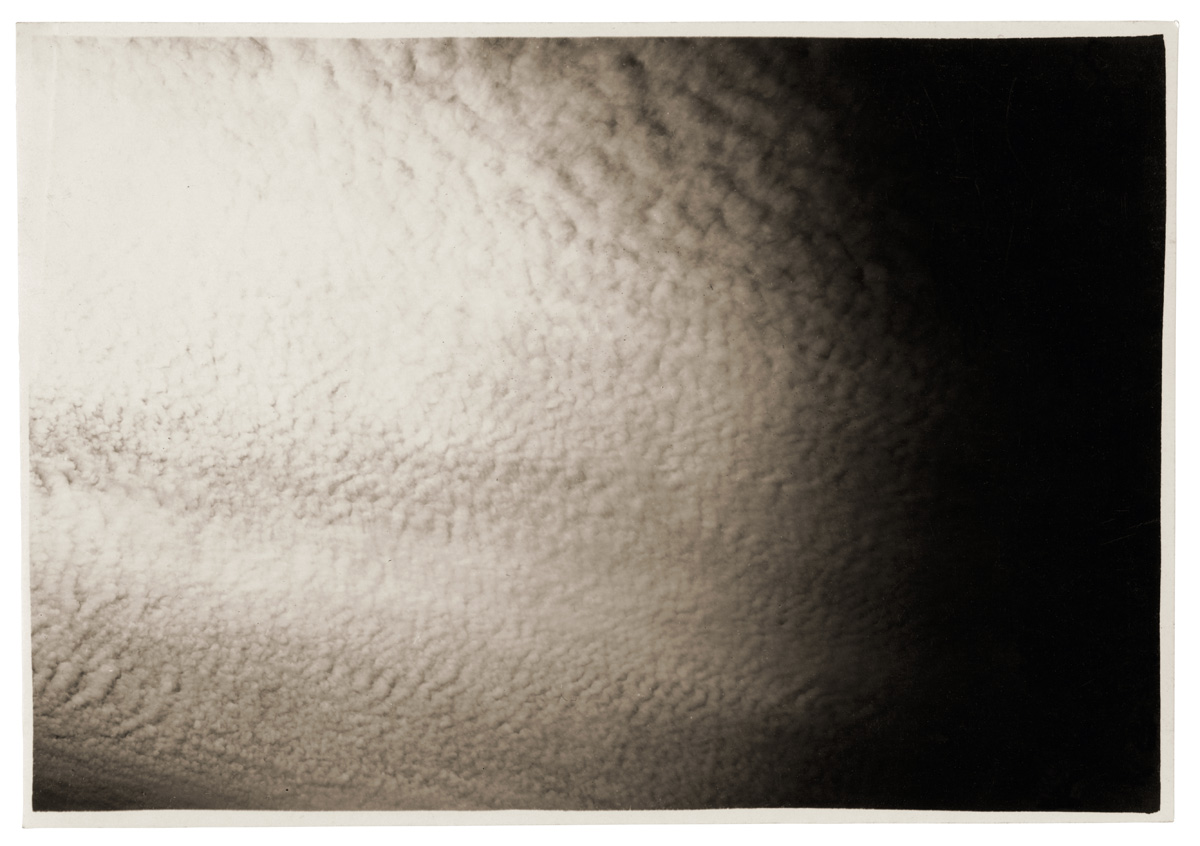
Unknown photographer Feine Schäfchen. Ci.-Cu, from: Wolken im Luftmeer (Delicate fluffy clouds. Ci.-Cu, from: Clouds in a sea of air) Photographs taken by German fighter pilots during WW1, Berlin, 1917
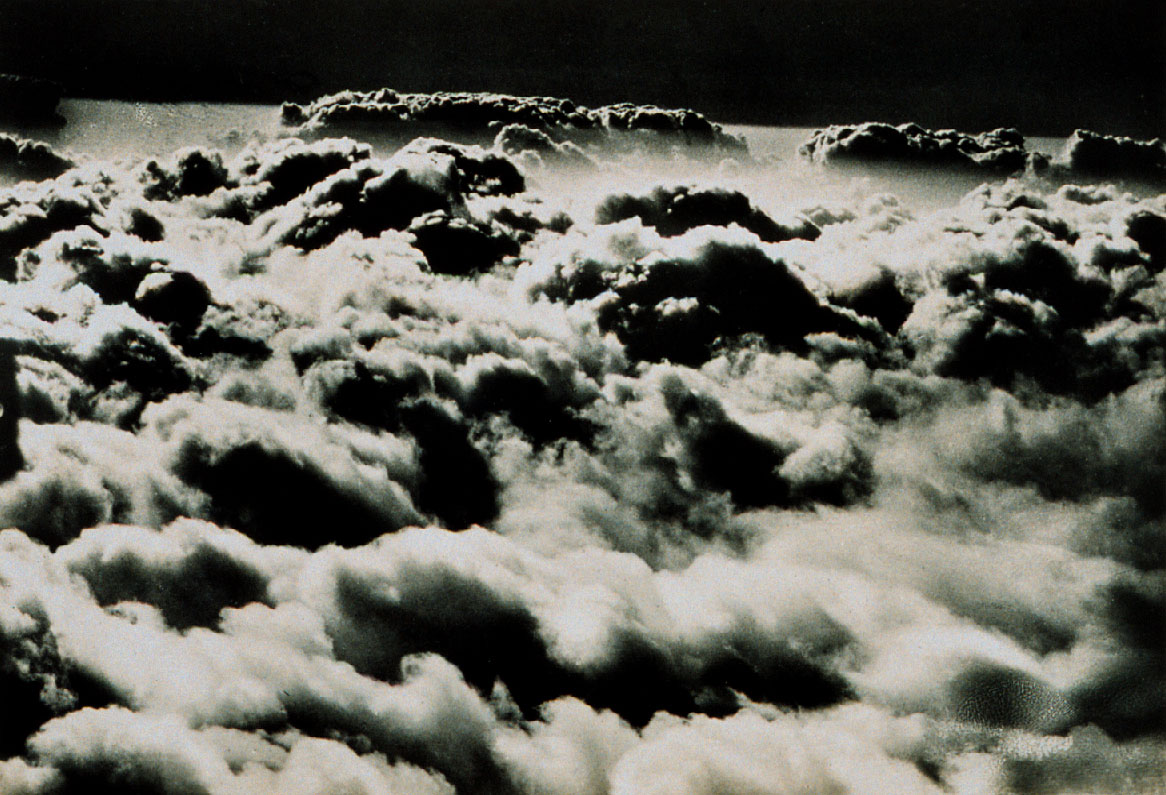
Unknown photographer Flying above a sea of clouds – altostratus from an aircraft (Plate Nr. 103 from: Wolken im Luftmeer / Clouds in a sea of air) Photographs taken by German fighter pilots during WW1, Berlin, 1917
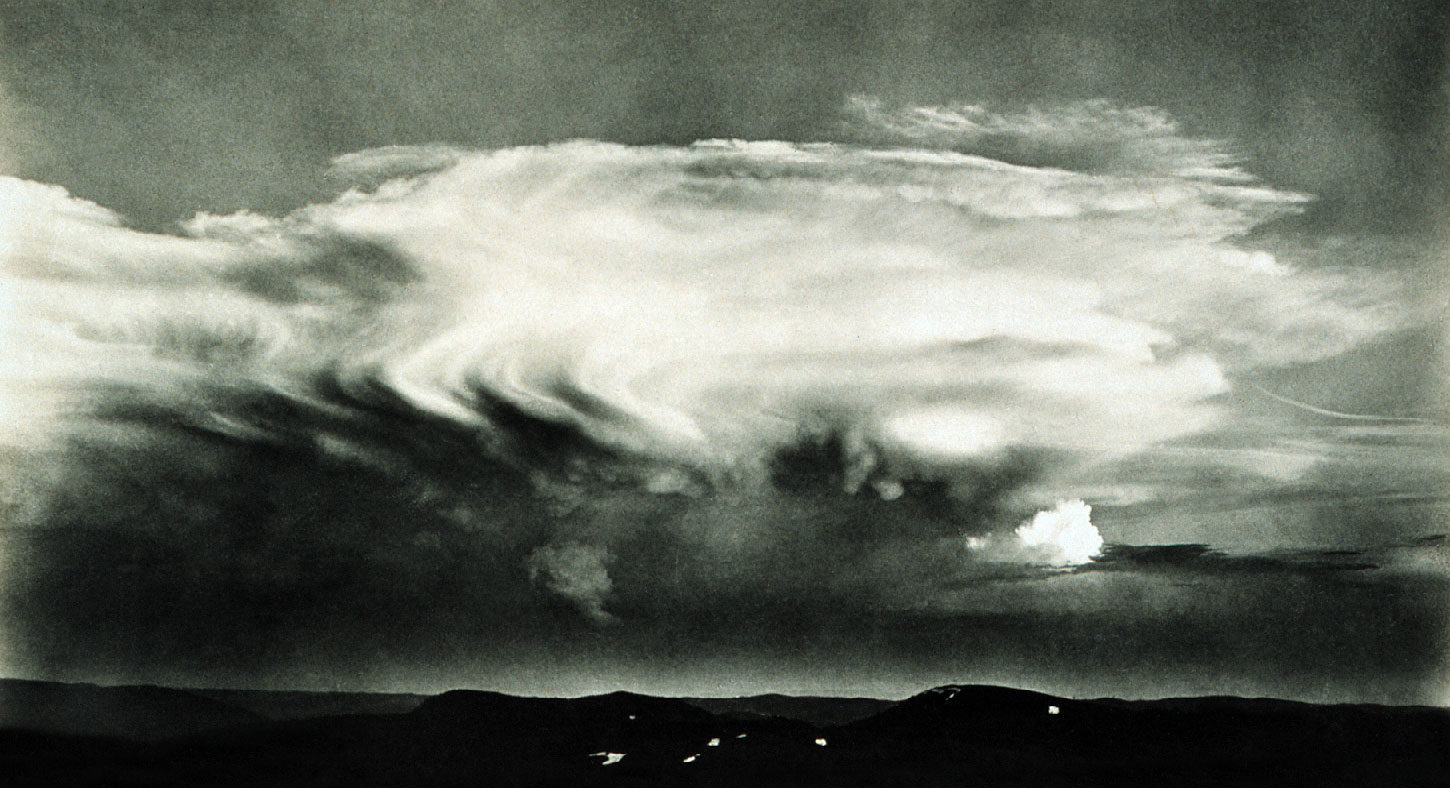
Unknown photographer (Plate Nr. 90 from: Wolken im Luftmeer / Clouds in a sea of air) Photographs taken by German fighter pilots during WW1, Berlin, 1917
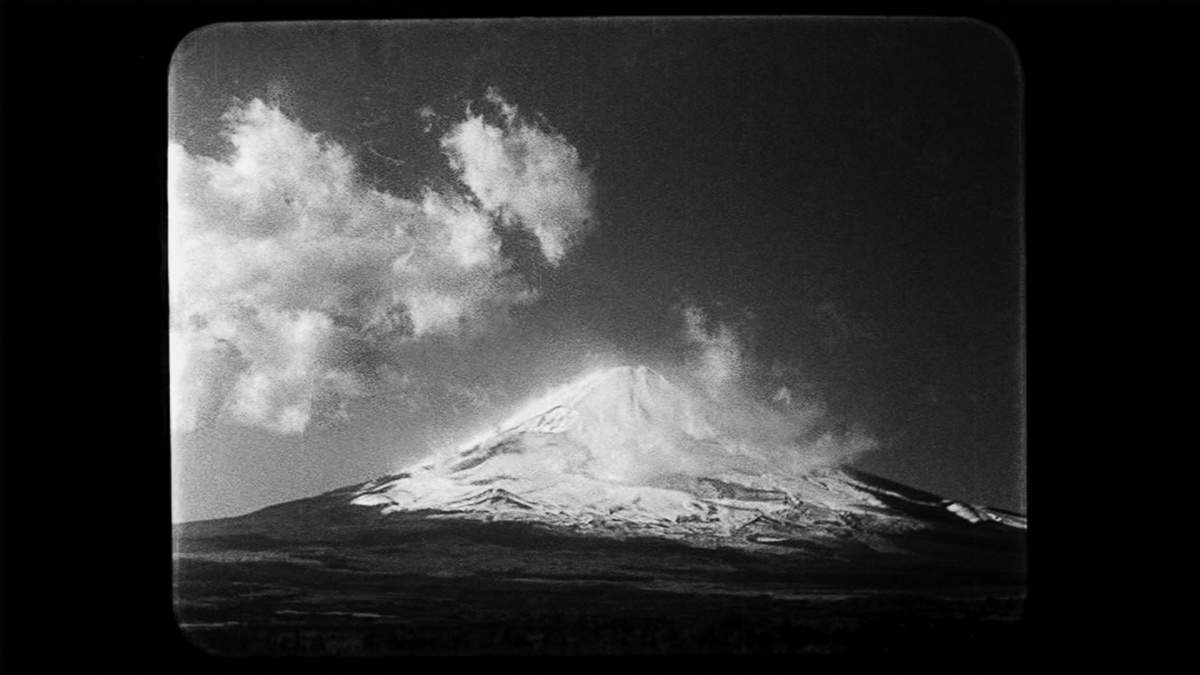
The English pharmacist and meteorologist Luke Howard wrote in 1802 in the preface to his manuscript On the Modification of Clouds: “Clouds are subject to certain distinct modifications, produced by the general causes which affect all the variations of the atmosphere; they are commonly as good visible indicators of the operation of these causes, as is the countenance of the state of a person’s mind or body.” Eighty years later, meteorologists had still not reached a consensus on how to classify, label, and read the forms of clouds. It was during this time that scientists first began using photography to record and measure clouds. With its help, they attempted to gain precise and accurate images that would provide insight on the interplay between clouds and the atmosphere and which could be used to create and convey a classification of cloud forms.
The exhibition CLOUD STUDIES – The Scientific View of the Sky presents six stages of meteorological cloud photography, from its infancy in the 1880s – in Switzerland with the first images by Albert Riggenbach photographed from Mount Säntis – up to the newspaper images in the United States that were captured by the first weather satellites in the 1960s. At the beginning of the 20th century, cloud formations and cloud systems were investigated foremost by the military and led to fundamental insights into interrelated weather situations.
CLOUD STUDIES – The Scientific View of the Sky is a rich collection of photographs, notes, records and atlases from diverse research sources and depicts the origins of contemporary weather forecasting. Each of the six parts of the exhibition represents a different scientific and photographic view of clouds while reflecting on the “history of the gaze” as well as the history of the medium with its various photographic mechanisms and reproductive technologies.
An additional theme running throughout the exhibition is the development of science and its varying ideas about clouds. The protagonists and working methods change over time – from the ambitious, wealthy amateur Ralph Abercromby to the anonymous teams of weather satellite technicians. Whereas Riggenbach still wished to capture images of ideal cloud types, the view of the cloud constellations and their chaotic systems expands with the introduction of film, at the latest, and with the constant recording and measuring capacities of digital cameras, which transmit images to earth, where they are evaluated and publicised.
Conceived by curator Helmut Völter (Leipzig), the exhibition CLOUD STUDIES – The Scientific View of the Sky explores the question as to how all these changes influenced the intentions, concepts, and technical developments associated with images of the clouds. It shows how similar or dissimilar photographs of clouds can be, when photographed according to individual specifications. Ultimately it is left to the viewer to decide if and how scientific cloud photography differs from related and frequently published motifs from the history of art and photography.
Press release from the Fotomuseum Winterthur, Zurich website
Curator: Anne Lyden, Associate Curator in the Department of Photographs at the J. Paul Getty Museum
Many thankx to Melissa Abraham for her help and to the J. Paul Getty Museum for allowing me to publish the photographs in the posting. Please click on the photographs for a larger version of the image.
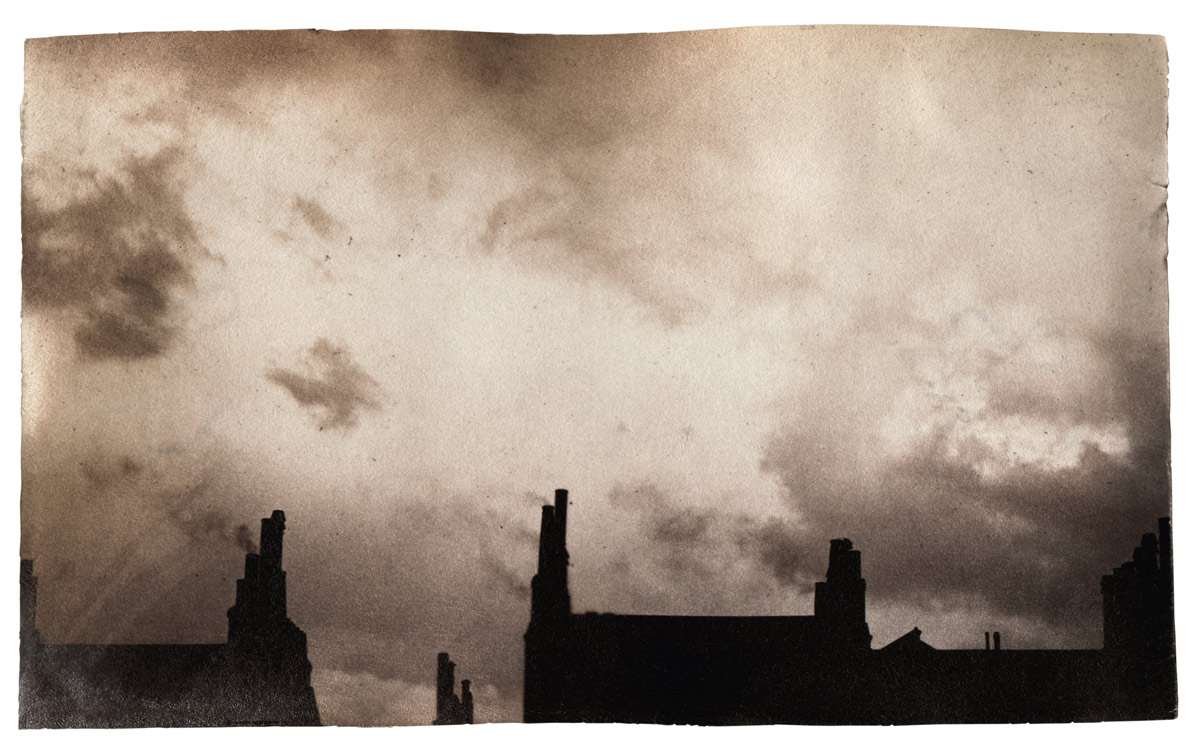
Col. Henry Stuart Wortley (British, 1832-1890) The Day is Done, and the Darkness Falls from the Wings of Night., About 1862 Albumen silver print 29.5 x 35.2cm (11 5/8 x 13 7/8 in.) The J. Paul Getty Museum, Los Angeles
With its immensity, immateriality, and variability, the sky has been an enduring subject in art history, fascinating and challenging generations of artists. As soon as the medium of photography was introduced in 1839, photographers attempted to represent the sky and its natural phenomena.
Atmospheric light and its constant mutability have always been hard to capture, but by the 1850s the greater light sensitivity of collodion negatives (compared to the daguerreotype and calotype processes) allowed the spectacles of the sky to be more easily transposed to photography.
With further technical improvements such as the development of instantaneous processes in the 1880s and the advent of Kodachrome colour film around 1935, photographers have continued to explore this theme in diverse and imaginative ways.
Text from the J. Paul Getty Museum website
Gustave Le Gray (French, 1820-1884) Cloudy Sky – Mediterranean Sea 1857 Albumen silver print 12 1/4 x 16 7/16 in. The J. Paul Getty Museum, Los Angeles
Clouds
The collodion process (in which a syrupy, light-sensitive mixture was applied to glass-plate negatives) was advantageous for its short exposure time and sharpness, but its sensitivity to blue light could also pose a challenge. By the time the camera captured detail in the foreground, the sky was often overexposed and thus printed as blank space.
To create his sweeping seascape, Cloudy Sky – Mediterranean Sea, Gustave Le Gray combined two slightly overlapping negatives: one for the sky and one for the sea.
Text from the J. Paul Getty Museum website
Carleton Watkins (American, 1829-1916) [Solar Eclipse] January 1, 1889 Albumen silver print 16.5 x 21.6cm (6 1/2 x 8 1/2 in.) The J. Paul Getty Museum, Los Angeles
Standing atop Mount Santa Lucia in northern California at approximately 3.50 p.m. on January 1, 1889, Carleton Watkins was able to make only one exposure during the instant of complete eclipse. Accompanied by professors from the newly created University of California and the United States Naval Observatory, Watkins waited slightly more than an hour for the moon to begin its movement and assume its temporary position directly in front of the sun. The radiating sun, its brilliance hidden by the black moon, lies suspended over a sea of clouds whose rippling waves dominate the sky. Only the inclusion of the treetops in the foreground serves to ground the image in a familiar reality.
Text from the J. Paul Getty Museum website
The J. Paul Getty Museum presents In Focus: The Sky, a thematically-installed exhibition of permanent collection photographs, on view at the Getty Center from July 26 – December 4, 2011.
“The sky has fascinated and challenged photographers since the invention of the medium,” said Anne Lyden, associate curator, Department of Photographs, the J. Paul Getty Museum, and curator of the exhibition. “This exhibition showcases a wide range of approaches to capturing the many moods and effects of the sky – things we usually take for granted.”
The selection of 22 artworks provides visitors with an opportunity to explore the Getty Museum’s world-renowned photographs collection through the pictorial subject of the sky, with the works loosely organised under four different themes: urban skies, clouds, dark skies, and colourful skies.
The exhibition features photographs by artists such as: Ansel Adams, John Divola, André Kertész, Joel Meyerowitz, Alfred Stieglitz, and Carleton Watkins, among others. The Getty’s collection includes exemplary objects that demonstrate both technological and aesthetic innovations in photography. Among the different processes highlighted are daguerreotypes, albumen silver prints, palladium prints, platinum prints, and more contemporary inkjet prints.
One of the most well-known works in the exhibition is Ansel Adams’ Moonrise, Hernandez, New Mexico, (negative made November 1, 1941; printed December 16, 1948). Traveling by car through New Mexico, Adams was inspired by light from the setting sun illuminating crosses in the graveyard at the side of the road. By carefully considering the composition, visualising the printed image before creating the photograph, understanding the required exposure needed in response to the available light, and exerting a certain degree of control in the printing process so that detail and shadows were retained, Adams succeeded in capturing the fleeting moment when the sun was setting and the bright moon appeared in the darkening sky.
The summer sky of Cape Cod features in Meyerowitz’s photograph Fence, Truro, negative 1976; printed 1992. Having recently acquired a large view camera, Meyerowitz spent two summers recording the structures and light of the coastal area that ultimately resulted in the 1978 book, Cape Light. Noting the shifting shadows as they played across the picket fence, his use of colour aptly describes the very subject of light itself.
Included in the exhibition is a selection from John Divola’s Zuma Beach series. In the fall of 1977, after discovering an abandoned lifeguard headquarters at Zuma Beach, California, Divola began visiting the site mornings and evenings to photograph. Bringing paints, using flash, and depending on the Pacific Ocean and the ever-changing sky for a dramatic backdrop, he created spontaneous scenes in this seaside theatre.
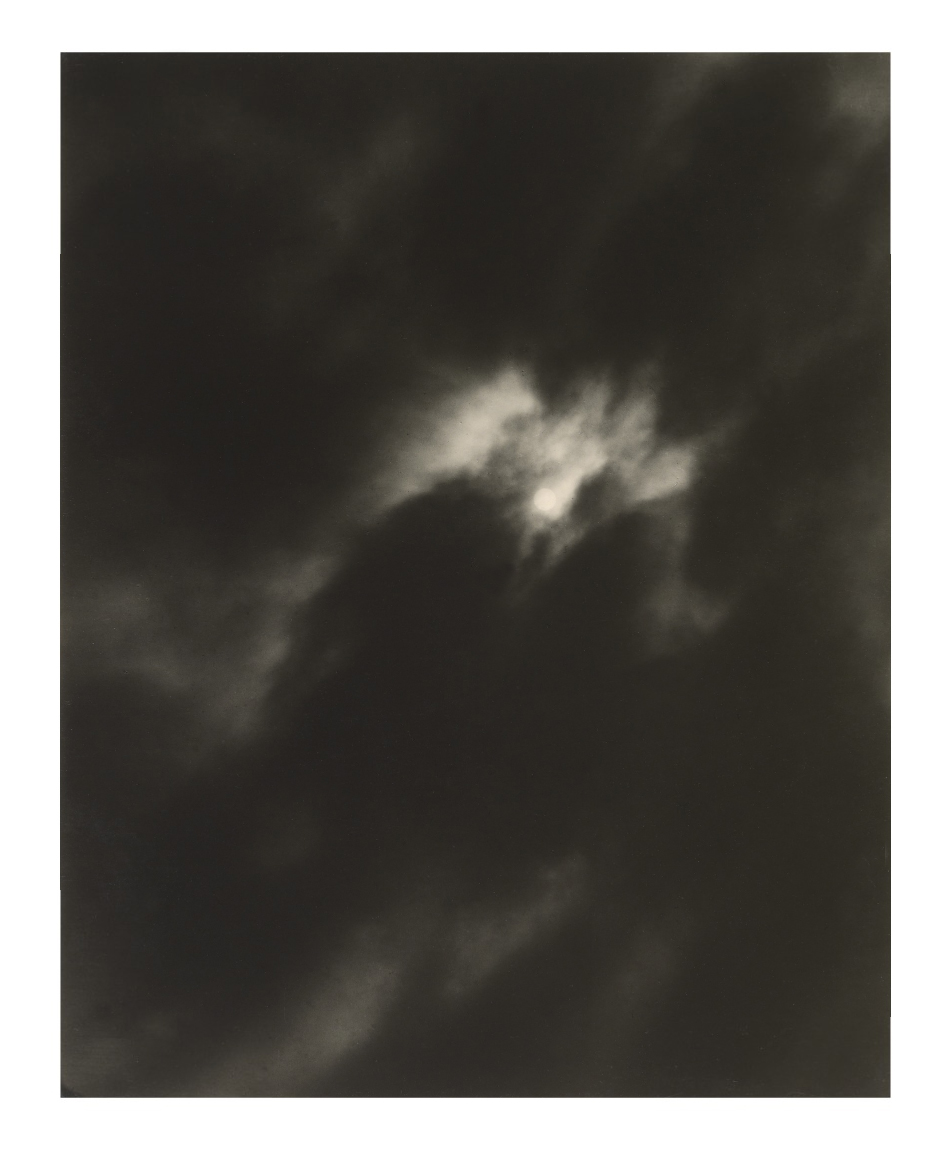
Also on view is a small group of three photographs by Alfred Stieglitz. From 1922 to 1934, Stieglitz photographed clouds and created a series of abstract configurations which reflected the fluctuation of his subjective state. By simply titling each piece Equivalent, he invited an open reading of the images and their content.
In Focus: The Sky is the ninth installation of the ongoing In Focus series of exhibitions, thematic presentations of photographs from the Getty’s permanent collection.
Press release from the J. Paul Getty Museum website
The first image with artistic intention that Edward Weston made in Mexico was of a cloud. Stopped in the port of Mazatlan on his way to Mexico City in 1923, Weston, for the first time in his career, was moved to photograph the sky, a theme that would occupy him intermittently throughout his entire sojourn in Mexico. Working with his Graflex, which allowed for greater flexibility than his tripod-mounted eight-by-ten-inch camera, he shot clouds spontaneously and maintained a personal collection of prints that he referred to as his “cloud series.” He noted in his daybook, “Next to the recording of a fugitive expression, or revealing the pathology of some human being, is there anything more elusive to capture than cloud forms! And the Mexican clouds are so swift and ephemeral, one can hardly allow the thought, ‘Is this worth doing?’ or, ‘ls this placed well?’ – for an instant of delay and what was, is not!”
The economy of form achieved in this 1926 image through the isolation of a single strip of stratus clouds oriented diagonally within the frame was not new to Weston’s aesthetic; his 1924 picture of Tina Modotti (1896-1942) nude on the roof of their home (see 86.XM.710.8) employs a remarkably similar composition. If Mexico provided Weston the inspiration to explore and expand the range of his oeuvre, adding clouds, still lifes, and landscapes to his repertoire of portraits and nudes, it simultaneously served as the place where his visual approach to the world was honed. His time in Mexico came to an end the same year he made this picture, but many of the principles he developed there would last him throughout his career.
“If [photography] is to be utterly honest and direct, it should be related to the pulse of the times – the pulse of today.” ~ Berenice Abbott
Nowhere is Berenice Abbott’s statement better demonstrated than in this photograph of the pulsating vibrancy of New York City, alive at night with thousands of glittering lights. The flashes of illumination perforate the frame, reflecting the dynamism of the world’s fastest-changing city. Abbott set about documenting New York when she returned there in 1929 after nine years spent in Europe. Abbott made this photograph from a high vantage point in the Empire State Building on Fifth Avenue looking north.
Soon after arriving in New York in October 1936, André Kertész spent time searching the city streets for fresh material, just as he had done in Paris for a decade. One afternoon he observed a solitary white cloud in a vast blue sky, dwarfed by the monolithic presence of the Rockefeller Center. Kertész later recounted that he was “very touched when he saw the cloud, as it “didn’t know which way to go” (Bela Ugrin, Dialogues with Kertész, ” 1978-1985, the Getty Research Institute) – a sentiment he strongly identified with as a new immigrant.
From the lyrical to the abstract, photography has often been an apt medium with which to capture the fleeting nature of skies.
Text from the J. Paul Getty Museum website
The impenetrable façade of Rockefeller Center in New York dominates the frame of this photograph, filling the lower and right sides of the image with its cold, hard, modern lines. The other third of the composition belongs to the sky, in which a lone puff of white cloud hangs isolated like a cotton ball, holding sway against the force of the skyscraper. The brilliant white form is “lost” in this scene that is otherwise devoid of natural, spirited shapes. The cloud possesses an innate impermanence; it will be gone with the next gust of wind, blown along on its path to some other expanse of sky. Andre Kertész’s juxtaposition of the whimsical cloud and unforgiving architecture seems to emphasise his own sense of isolation; the photograph was made soon after he had emigrated from Europe.
Arguably Ansel Adams’s most famous image, this photograph is titled Moonrise rather than Sunset, even though the moon technically does not rise in the sky. As a scholar noted: The factuality and, moreover, the meaning of the setting sun were rejected by him in favour of the expressive symbolism of the rising moon; of the shining luminescence ablaze with greatness in its primal mystery, dramatically isolated in the infinity of darkness.
Instead of making an unmanipulated print from the negative, Adams selectively printed the sky black and the foreground dark in order to achieve a particular illumination and spiritual transcendence. The photographer’s skill and vision transformed the tiny town of Hernandez, dotted with glowing white cemetery and church crosses, into a spectral landscape.
An ardent conservationist, Garnett became concerned about land use and air pollution in the early 1940s. He made this photograph in an attempt to raise public awareness. Over the years Garnett came to believe that he was more likely to inspire positive change by pointing out nature’s enduring beauty than by showing the ugliness caused by poor choices.
Dorothea Lange suffered health problems in the late 1940s, but she wanted to travel again and be part of the current documentary effort. Since the federal government was no longer funding such projects, this meant working for the thriving picture magazines. Lange proposed to Life that she and Ansel Adams do a project in Utah. They would travel with her son Daniel, who would write text for the article, and her husband, who had a continuing interest in the survival of utopian communities. Their purpose was to record the landscape, built environment and inhabitants of three towns in southwestern Utah settled in the mid-nineteenth century by Mormons. The grandchildren of some of these pioneers were Lange’s subjects during her visit to Gunlock, Toquerville, and St. George in 1953.
In the fall of 1977, after discovering an abandoned lifeguard headquarters at Zuma Beach, California, John Divola began visiting the site to photograph. Painting the walls, incorporating props, using flash, and depending on the Pacific Ocean and the sky for a dramatic backdrop, he created a series of makeshift scenes.
Discussing his work in 1980, Divola said, “These photographs are the product of my involvement with an evolving situation. The house evolving in a primarily linear way toward its ultimate disintegration, the ocean and light evolving and changing in a cyclical and regenerative manner.”




![Carleton Watkins (American, 1829-1916) '[Solar Eclipse]' January 1, 1889](https://artblart.com/wp-content/uploads/2011/11/carleton-watkins-solar-eclipse.jpg "Carleton Watkins (American, 1829-1916) '[Solar Eclipse]' January 1, 1889")






You must be logged in to post a comment.