Artists: Andrew Blythe, Kellie Greaves, Julian Martin, Jack Napthine, Lisa Reid, Martin Thompson and Terry Williams
Curator: Joanna Bosse
Martin Thompson (New Zealand, b. 1956) Untitled 2014 Ink on paper 52.5 x 105cm Courtesy the artist and Brett McDowell Gallery, Dunedin
This is a gorgeous exhibition at The Ian Potter Museum of Art. Walking through the show you can’t help but have a smile on your face, because the work is so inventive, so fresh, with no pretension to be anything other than, well, art.
There are big preconceptions about ‘Outsider art’, originally art that was made by institutionalised mentally ill people, but now more generally understood as art that is made by anyone outside the mainstream of art production – “artworks made by folk artists and those who are self-taught, disabled, or on the edges of society” who are disenfranchised in some way or other, either by their own choice or through circumstance or context.
Outsider art promotes contemporary art while still ‘tagging’ the artists as “Outsider” – just as you ‘tag’ a blog posting so that a search engine can find a specific item if it is searched for online. It is a classification I have never liked (in fact I abhor it!) for it defines what you are without ever understanding who you are and who you can become – as an artist and as a human being. One of the good things about this exhibition is that it challenges the presumptions of this label (unfortunately, while still using it).
As Joanna Bosse notes in her catalogue essay, “Most attempts to define the category of Outsider art include caveats about the elasticity of borders and the impact of evolving societal and cultural attitudes… The oppositional dialectic of inside/outside is increasingly acknowledged as redundant and, in a world marked by cultural pluralism, many question the validity of the category.”1 Bosse goes on to suggest that, with its origins in the term art brut (the raw and unmediated nature of art made by the mentally ill), Outsider art reinforces the link between creativity, marginality and mental illness, proffering “the notion of a pure form of creativity that expresses an artist’s psychological state [which] is a prevailing view that traverses the divergent range of creative practice that falls under the label.”2
The ambiguities of art are always threatened by a label, never more so than in the case of “Outsider art”. For example, how many readers who visited the Melbourne Now exhibition at NGV International and saw the magnificent ceramic cameras by Alan Constable would know that the artist is intellectually disabled, deaf and nearly blind. Alan holds photographs of cameras three inches away from his eyes and scans the images, then constructs his cameras by feel with his hands, fires them and glazes them. The casual viewer would know nothing of this backstory and just accepts the work on merit. Good art is good art no matter where it comes from. It is only when you enquire about the history of the artist – whether mainstream or outsider – that their condition of becoming (an artist) might affect how you contextualise a work or body of work.
Bosse makes comment about the rationale for the exhibition: “The decision to focus on artists’ engagement with the exterior, everyday world was to counter one of the common assumptions about artists in this category – that they are disconnected from society and that their work is solely expressionistic, in that it relates almost exclusively to the self and the expression of the artist’s emotional inner life.”3 Bosse agrees with the position that to simply eliminate the designation would be a different kind of marginalisation – “one where the unique world view and specific challenges the individual faces would become lost in a misguided attempt at egalitarianism.”4
As chair of a panel session at the international conference Contemporary Outsider Art: The Global Context, 23-26th October at The University of Melbourne, curator Lynne Cooke also sees the classification “Outsider” as valuable, for “Outsider art is the condition that contemporary art wants to be” – that is imaginative, free, intuitive, visceral and living on the edge. She sees contemporary art as having run up the white flag leaving Outsider art – however you define that (not the white, middle class male establishment, and belonging to the right galleries) – to be the vanguard, the new avant-garde.5 The exhibition catalogue concludes with her observation that, while current curatorial strategies breakdown the distinctions between ‘inside’ and ‘outside’ – making significant headway concerning stigmatisation – these might have the effect of loosing what she describes as the “‘unique and crucial agency’ that this art has to challenge the ‘monocultural frame’.”6 These artists positions as ‘circuit breakers’, holding counter culture positions, may be threatened as their work is made ready for market, especially if they have little knowledge of it themselves.
And there’s the rub, right there. On the one hand Outsider art wants to be taken seriously, the people promoting it (seldom the artists) want it to be shown in mainstream galleries like the National Gallery of Victoria, and so it should be. Good art is good art not matter what. But they also want to have their cake and eat it too; they want to stand both inside and outside the frame of reference.7 In other words, they promote Outsider art within a mainstream context while still claiming “marginal” status, leveraging funding, philanthropy, international conferences and standing in the community as evidence of their good work. And they do it very successfully. Where would we be without fantastic organisations such as Arts Project Australia and Arts Access Victoria to help people with a disability make art? Can you imagine the Melbourne Art Fair without one of the best stands of the entire proceedings, the Arts Project Australia stand? While I support them 100% I am playing devil’s advocate here, for I believe it’s time that the label “Outsider art” was permanently retired. Surely, if we live in a postmodern, post-human society where there is no centre and no periphery, then ‘other’ can occupy both the centre and the margins at one and the same time WITHOUT BEING NAMED AS SUCH!
[Of course, naming “Outsider art” is also a way of controlling it, to have agency and power over it – the power to delineate, classify and ring fence such art, power to promote such artists as the organisations own and bring that work to market.]
Getting rid of the term Outsider art is not a misguided attempt at egalitarianism as Joanna Bosse proposes, for there will always be a narrative to the work, a narrative to the artist. The viewer just has to read and enquire to find out. Personally, what I find most inspiring when looking at this art is that you are made aware of your interaction with the artist. The work is so immediate and fresh and you can feel the flowering of creativity within these souls jumping off the page.
For any artist, for any work, what we must do is talk about the specific in relation to each individual artist, in relation to the world, in relation to reality and resist the temptation to apply any label, resist the fetishisation of the object (and artist) through that label, absolutely. This is the way forward for any art. May the nomenclature “outsider” and its discrimination be gone forever.
Dr Marcus Bunyan
Footnotes
1/ Bosse, Joanna. Everyday imagining: new perspectives on Outsider art. Catalogue essay. The Ian Potter Museum of Modern Art.
2/ Ibid.,
3/ Ibid.,
4/ Ibid.,
5/ Cooke, Lynne. Senior Curator, Special Projects in Modern Art, National Gallery of Art, Washington, DC. My notes from the panel session “Outsider Art in the Centre: Museums and Contemporary Art,” at Contemporary Outsider Art: The Global Context, 23-26th October at The University of Melbourne.
6/ Cooke, Lynne. “Orthodoxies undermined,” in Great and mighty things: Outsider art from the Jill and Sheldon Bonovitz collection. Philadelphia Museum of Art, 2013, p. 213 quote in Bosse, Joanna, op. cit.,
7/ An example of this can be seen in the launch of the new magazine artsider – “Arts Access Victoria in Partnership with Writers Victoria invites you to the Launch of artsider, a magazine devoted to outsider art and writing.” What a clumsy title that seeks to have a foot in both camps. Email received from Arts Access Victoria 19/11/2014.
Many thankx to The Ian Potter Museum of Art for allowing me to publish the photographs in the posting. Please click on the photographs for a larger version of the image.
Andrew Blythe (New Zealand, b. 1962) Untitled 2012 Synthetic polymer paint on paper 88 x 116cm Courtesy the artist and Tim Melville Gallery, Auckland
Terry Williams (Australian, b. 1952) Stereo 2011 Vinyl fabric, cotton, stuffing and fibre-tipped pen 21 x 43 x 14cm Private collection, Melbourne. Courtesy the artist and Arts Project Australia, Melbourne
Terry Williams (Australian, b. 1952) Telephone 2011 Fabric, cotton, stuffing and fibre-tipped pen 18 x 13 x 20cm Private collection, Melbourne. Courtesy the artist and Arts Project Australia, Melbourne
An exhibition of Australian and New Zealand ‘Outsider’ artists which challenges a key existing interpretation of the genre will be presented at the Potter Museum of Art at The University of Melbourne, from 1 October 2014 to 15 January 2015. Everyday imagining: new perspectives on Outsider art, features the work of artists Andrew Blythe, Kellie Greaves, Julian Martin, Jack Napthine, Lisa Reid, Martin Thompson and Terry Williams.
The term ‘Outsider art’ was coined by British art historian Roger Cardinal in 1972 expanding on the 1940s French concept of art brut – predominantly artworks made by the institutionalised mentally ill – to include artworks made by folk artists and those who are self-taught, disabled, or on the edges of society. The work of Outsider artists is often interpreted as expressing a unique inner vision unsullied by social or cultural influences. Everyday imagining: new perspectives on Outsider art counters this view by presenting contemporary Outsider artists whose works reveal their proactive engagement with the everyday world through artworks that focus on day-to-day experiences.
Curator Joanna Bosse says the exhibition questions a key interpretive bias of Outsider art that is a legacy of its origins in art brut.
“The association with an interior psychological reality that is unsullied by social or cultural influences remains deeply embedded within the interpretations of Outsider art today, and can lead audiences to misinterpret the agency and intention of the artist. Everyday imagining: new perspectives on Outsider art questions this key interpretive bias, and presents the work of Australian and New Zealander outsider artists that demonstrate a clear and proactive engagement with the world. The work of artists Andrew Blythe, Kellie Greaves, Julian Martin, Jack Napthine, Lisa Reid, Martin Thompson and Terry Williams reveals their blatant interest in the here and now,” Ms Bosse said.
Terry Williams’ soft fabric sculptures of everyday items such as fridges, cameras and clocks convey his keen observation of the world and urgent impulse to replicate what is meaningful through familiarity or fascination. Kellie Greaves’ paintings are based on book cover illustrations with the addition of her own compositional elements and complementary tonal colour combinations. The traditional discipline of life-drawing provides Lisa Reid with a structure to pursue her interest in recording the human figure. Her pen and ink drawings are carefully observed yet intuitive renderings.
Jack Napthine produces drawn recollections of his past and present daily life in the form of visual diaries. Light fittings from remembered environments feature prominently as do doors with multiple and varied locks. Napthine’s work has a bold economy of means; he uses thick texta pen to depict simplified designs accompanied by text detail that often records the names of friends and family.
The work of Martin Thompson and Andrew Blythe also displays a similarly indexical approach. Both artists produce detailed repetitive patterns that are borne out of a desire for order and control. Thompson uses large-scale grid paper to create meticulous and intricate geometric designs whereas Blythe uses select motifs – the word ‘no’ and the symbol ‘x’ – to fill the pictorial plane with dense yet orderly markings that result in graphic and rhythmic patterns.
“In the last decade in particular there has been much debate about the term ‘outsider art’: who does it define? What are the prerequisite conditions for its production? What is it outside of, and who decides? This exhibition doesn’t seek to resolve these ambiguities or establish boundaries, but looks beyond definitions to challenge a key assumption underlying contemporary interpretations of outsider art,” Ms Bosse said.
Everyday imagining: new perspectives on Outsider art is held in conjunction with the international conference Contemporary Outsider art: the global context, presented Art Projects Australia and The University of Melbourne and held 23-26 October at The University of Melbourne. The conference proposes an inter-disciplinary exploration of the field, drawing on the experience and knowledge of Australian and international artists, collectors, curators and scholars.
Press release from The Ian Potter Museum of Art
Julian Martin (Australian, b. 1969) Untitled 2011 Pastel on paper 38 x 28cm Courtesy the artist and Arts Project Australia, Melbourne
Kelly Greaves My little Japan 2010 Synthetic polymer paint on paper 59.4 x 42cm Courtesy the artist and Art Unlimited, Geelong
Jack Napthine (Australian, b. 1975) Untitled 2013 Fibre-tipped pen on paper 59.4 x 42cm Courtesy the artist and Art Unlimited, Geelong
Jack Napthine (Australian, b. 1975) Untitled 2013 Fibre-tipped pen on paper 42 x 59.4cm Courtesy the artist and Art Unlimited, Geelong
Lisa Reid (Australian, b. 1975) Queen of hearts 2010 Pencil on paper 35 x 25cm Courtesy the artist and Arts Project Australia, Melbourne
The Ian Potter Museum of Art The University of Melbourne, Corner Swanston Street and Masson Road Parkville, Victoria 3010
Exhibition dates: 17th October – 7th December, 2014
Artists: Micky Allan, Pat Brassington, Virginia Coventry, Sandy Edwards, Anne Ferran, Sue Ford, Christine Godden, Helen Grace, Janina Green, Fiona Hall, Ponch Hawkes, Carol Jerrems, Merryle Johnson, Ruth Maddison, Julie Rrap, Robyn Stacey.
Curator: Shaune Lakin
Christine Godden (Australian, b. 1947) Joanie pregnant 1972 From the series Family Gelatin silver print 15.3 x 22.6cm Courtesy of the artist
With the National Gallery of Victoria’s photography exhibition program sliding into oblivion – the apparent demise of its only dedicated photography exhibition space on the 3rd floor of NGV International; the lack of exhibitions showcasing ANY Australian artists from any era; and the exhibition of perfunctory overseas exhibitions of mediocre quality (such as the high gloss, centimetre deep Alex Prager exhibition on show at the moment at NGV International) – it is encouraging that Monash Gallery of Art consistently puts on some of the best photography exhibitions in this city. This cracker of an exhibition, the last show curated by Shaune Lakin before his move to the National Gallery of Australia (and his passionate curatorial concept), is no exception. It is one of the best photography exhibitions I have seen all year in Melbourne.
Most of the welcome, usual suspects are here… but seeing them all together is a feast for the eyes and the intellect. While most are social documentary based photographers what I like about this exhibition is that there is little pretension here. The artists use photography as both a means and an end, to tell their story – of mothers, of workers, of dancers, of lovers – and to depict a revolution in social consciousness. What we must remember is the period in which this early work appeared. In the 1970s in Australia there were no formal photography programs at university and photography programs in techs and colleges were only just beginning: Photography Studies College (1973) in South Melbourne, Prahran College of Advanced Education (Paul Cox, John Cato, 1974) and Preston Tech (c. 1973, later Phillip Institute) were all set up in the early 1970s. The National Gallery of Victoria photography department was only set up in 1969 (the third ever in the world) with Jenny Boddington, Assistant Curator of Photography, was appointed in 1972 (later to become the first full time photography curator). There were three commercial photography galleries showing Australian and international work in Melbourne: Brummels (Rennie Ellis), Church Street Photographic Centre (Joyce Evans) and The Photographers Gallery (Paul Cox, John Williams, William Heimerman and Ian Lobb). While some of the artists attended these schools and others were self taught, few had their own darkroom. It was not uncommon for people to develop their negatives and print in bathrooms, toilets, backyard sheds and alike – and the advise was to switch on the shower before printing to clear the dust out of the air, advise in workshops that people did no bat an eyelid at.
What these women did, as Julie Millowick (another photographer who should have been in this exhibition, along with Elizabeth Gertsakis and Ingeborg Tyssen for example) observes of the teaching of John Cato, was “bring to the work knowledge that extended far beyond picking up a camera or going into a darkroom. He [Cato] believed that you must bring to every image you create a wide depth of insight across social, cultural and historical concerns. John was passionate in his belief that an understanding of humanity and society was crucial to our growth as individuals, and ultimately our success as photographers.”1 And so it is with these artists. Never has there been a time in Australian photography when so much social change has been documented by so few for such great advantage. In all its earthiness and connection, the work of these artists is ground breaking. It speaks from the heart for the abused, for the disenfranchised and downtrodden. The work is not only for women by women, as Ponch Hawkes states, but also points the way towards a more enlightened society by opening the eyes of the viewer to multiple points of view, multiple perspectives.
There are few “iconic” images among the exhibition and, as Robert Nelson notes in his review in The Age, little pretension to greatness. One of the surprising elements of the exhibition is how the four photographs by Carol Jerrems (including the famous Vale Street, 1975), seem to loose a lot of their power in this company. They are out muscled in terms of their presence by some of the more essential and earthy series – such as Women at work by Helen Grace and Our mums and us by Ponch Hawkes – and out done in terms of their sensuality by the work of Christine Godden. These were my two favourite bodies of work: Our mums and us and Christine Godden’s sequence of 44 images and the series Family.
Hawkes’ objective series of mother/daughter relationships are deceptively simple in their formal structure (mother and daughter positioned in family homes usually looking directly at the camera), until you start to analyse them. Their unpretentious nature is made up of the interaction that Hawkes elicits from the pairing and the objet trouvé that are worn (the cowgirl boots in Ponch and Ida, 1976) or surround them (the carpet, the table, the plant and the painting in Mimi and Dany, 1976). This relationship adds to the power of the assemblage, juxtaposition of energy and form being a guiding principle in the construction of the image. While the environment might be ‘natural’ it is very much constructed, both physically and psychologically, by the artist.
The work of Christine Godden was a revelation to me. These small, intense images have a powerful magnetism and I kept returning to look at them again and again. There is sensitivity to subject matter, but more importantly a sensuality in the print that is quite overwhelming. Couple this with the feeling of light, space, form and texture and these sometimes fragmentary photographs are a knockout. Just look at the sensitivity of the hands in Untitled,c. 1976. To see that, to capture it, to reveal it to the world – I was almost in tears looking at this photograph. The humanity of that gesture is something that I will treasure.
The only criticism of the exhibition is the lack of a book that addresses one of the most challenging times in Australian photographic history. This important work deserves a fully researched, scholarly publication that includes ALL the players in the story, not just those represented here. It’s about time. As a good friend of mine recently said, “Circles must expand as history moves away from a generation and cohort and, hopefully, the future will ask its own questions” … and I would add, without putting the blinkers on and creating more ideology.
Dr Marcus Bunyan
Footnotes
1/ Julie Millowick and Christopher Atkins. “Dr John Cato – Educator,” in Paul Cox and Bryan Gracey (eds.,). John Cato Retrospective. Melbourne: Wilkinson Publishing, 2013.
“As feminism took off among intellectuals of both sexes, art history would sometimes be interrogated to account for the reasons why there were relatively few great female artists.
While art historians would create reasonable apologies and impute the deficit to centuries of disadvantage to women, it was left to women artists to construct a view of art that redefined the stakes.
They sought a vision that didn’t see art as line-honours in transcendent inventions but a conversation that furthered the sympathy and consciousness of the community”
Robert Nelson The Age Wednesday November 5, 2014
Pat Brassington (Australian, b. 1942) Untitled 1984 (1) From the series 1 + 1 = 3 Gelatin silver print 18 x 28cm Monash Gallery of Art, City of Monash Collection Courtesy of the artist, ARC ONE Gallery (Melbourne), Stills Gallery (Sydney) and Bett Gallery (Hobart)
Pat Brassington‘s photographs have often made use of the artist’s home and family life as subject matter. The photographs included in this exhibition were taken during the early 1980s and, with their tight cropping and diagonal obliques, suggest that family life is an anxious and ambivalent place. Erotically charged body parts – whether partner’s or offspring – are left to hang, like fetish objects drifting through a dream. Brassington is consciously mining the clichés of psychoanalysis, with her focus on shoes, panties and an ominous father figure, but she reworks this symbolism with a comical lightness that is closer to a teen horror film than the analyst’s couch.
Helen Grace Women at work, Newcastle 1976 From the series Series 1 Gelatin silver prints 17.5 x 11.6cm (each) Courtesy of the artist
Helen Grace Women at work, Newcastle 1976 From the series Series 2 Gelatin silver prints 11.6 x 17.5cm (each) Courtesy of the artist
Helen Grace Women at work, Newcastle (detail) 1976 From the series Series 2 Gelatin silver prints 11.6 x 17.5cm (each) Courtesy of the artist
Helen Grace was a member of the Sydney-based feminist collective Blatant Image (which also included Sandy Edwards), which formed around the Tin Sheds at Sydney University. The collective was interested in examining and reconfiguring the representation of women in popular culture, and also in developing alternative venues for socially conscious art and film. The photographs displayed here point to the two interconnected preoccupations of Grace’s work at this time: the social and cultural construction of motherhood and femininity (and the way that each of these categories are produced by and through consumerism and popular culture), and the documentation of women’s labour. An active member of Sydney’s labour movement, Grace photographed women working in a range of workplaces (including factories and hospitals) for both the historical record and as promotional aids for activist organisations.
Grace’s Women seem to adapt to repetitive-type tasks was widely shown in Sydney and Melbourne, including the exhibition The lovely motherhood show (1981). This work of seven panoramas depicting a string of nappies on a washing line at once points towards the inexorable tediousness of motherhood, and at the same time attempts to demystify the romantic myths of motherhood found in contemporary advertising and popular culture. Grace’s photographs were also widely used in posters produced by trade union and women’s groups. During the 1970s and 1980s screen printing was a cheap and effective way to incorporate photographic imagery into posters. Community groups also embraced screen printing because its aesthetic stood in opposition to commercial advertising, and the process lent itself to a do-it-yourself work ethic.
Merryle Johnson (Australian, b. 1949) Outside the big top 1979-1980 From the series Circus Hand coloured gelatin silver prints Monash Gallery of Art, City of Monash Collection Donated by Merryle Johnson, 2014
Merryle Johnson‘s photographic feminism sits alongside her contemporaries Micky Allan and Ruth Maddison. In the first instance, it is expressed in the autobiographical nature of her images, which often refer to her family history. And like Allan and Maddison, Johnson also used hand-colouring to reinvigorate documentary photography and to bring a decidedly female perspective to the medium. Johnson’s contribution to feminist photography in Australia is also reflected in her use of photographic sequences – multiple images printed on the same sheet. In these works, the single, perfectly realised photographic image of Modernist photography was replaced with a series of images that draw attention to the fragmentary, contingent and inconclusive nature of photography. The serialisation of photographs also engages a more embodied, spatialised and assertive experience than single pictures alone.
Christine Godden (Australian, b. 1947) Joanie and baby Jade, Larkspur 1973 From the series Family Gelatin silver print 8.4 x 13.8cm Courtesy of the artist
Christine Godden (Australian, b. 1947) Untitled c. 1976 Gelatin silver print 15.3 x 22.8cm Courtesy of the artist
Christine Godden (Australian, b. 1947) Untitled c. 1976 Gelatin silver print 15.2 x 22.7cm Courtesy of the artist
Christine Godden (Australian, b. 1947) Untitled c. 1976 Gelatin silver print 15.2 x 22.8cm Courtesy of the artist
Christine Godden‘s Untitled c. 1976 is part of a sequence of 44 images that represented fragments and textures that combine tenderness and formal rigour in a way that evokes a sense of poetry. The series Family c. 1973 details the domestic environment and experience of young families in the American West.
As well as presenting subjects that engaged a ‘feminine’ subject, Godden’s photographs critically interrogate many of the claims for a distinctly ‘feminine sensibility’ being made by and for women artists at this time. The ‘Untitled’ prints on display here were originally exhibited in 1976 at George Paton Gallery, Melbourne and the Australian Centre for Photography in Sydney. These pictures were originally shown as part of a tightly organised sequence of 44 photographs intended to show ‘how women see [and] how women think’. The tightly cropped glimpses of bodies and textures combine tenderness and formal rigour in a way that evokes a sense of visual poetry.
Christine Godden’s Family series comprises a large number of images detailing the domestic environment and experience of young families living in the American west. Godden was at this time a student at the San Francisco Art Institute and was very active in feminist networks, including the Advocates for Women organisation, for whom she photographed events and actions. Godden’s Family series documents her experience of the counter-cultural families of America’s west coast, who provided and celebrated a new model of family life and women’s work.
Installation view of Photography Meets Feminism at the Monash Gallery of Art with, at right, Anne Ferran’sScenes on the death of nature, scene I and II (1980-1986) Photo: Marcus Bunyan
Anne Ferran (Australian, b. 1949) Scenes on the death of nature, scene I 1980-1986 Gelatin silver print 122 x 162cm Monash Gallery of Art, City of Monash Collection Courtesy the artist and Sutton Gallery (Melbourne)
Anne Ferran‘s series Scenes on the death of nature presents five tableau-like scenes showing the artist’s daughter and her friends in classical dress. When they were first exhibited, commentators noted the enigmatic quality of the images, and how they resisted clear meaning, narrative and any attribute of personal style. To many, they represented a significant shift away from documentary photography. This might well be the ‘death’ to which the titles refer. For the critic Adrian Martin, the pictures appeared to evoke myth, while also being ambivalent about a photograph’s capacity to point to or allude to anything outside of itself; in this way, they can be seen to exemplify a certain post-modern approach to photography.
All the same, it is possible to see these important pictures as signposts for another kind of death. The photographs allude to some of the ways that the subject of girl/woman has been produced through visual culture, whether the monumental friezes of classical or Victorian architecture, or Pre-Raphaelite tableaux. In this way, they evoke the idea of ‘femininity’ as a source of meaning. Rather than rejoicing in, resisting or critiquing ‘femininity’ as earlier feminist photographers might have done, Ferran’s pictures remain steadfastly, even ‘passively’ ambivalent. As the artist wrote at the time, the works reveal ‘very little of a personal vision or private sensibility’.
Wall text
Installation view of four Carol Jerrems photographs with Vale Street (1975) at left and Lynn (1976) at right in the exhibition Photography Meets Feminism at the Monash Gallery of Art Photo: Marcus Bunyan
Carol Jerrems was one of a number of Australian women whose work during the 1970s challenged the dominant ideas of what a photographer was and how they worked. She adopted a collaborative approach to making photographs, which often featured friends and associates, and sought a photographic practice that would bring about social change. For Jerrems, as for many of her contemporaries, the photograph was an agent of social change, a means of both bringing people together and creating active and engaged social relationships. As she stated:
“I really like people … I try to reveal something about people, because they are so separate, so isolated; maybe it’s a way of bringing people together … I care about [people], I’d like to help them if I could, through my photographs…”
The iconic Vale Street shows Jerrems’s friend Catriona Brown standing in front of Mark Lean and Jon Bourke, teenage boys from Heidelberg Technical School where Jerrems was teaching at the time. The photograph was taken at a house in Vale Street, St Kilda. Although it is unclear if Jerrems conceived of this image as a feminist gesture, the subject’s assertive, bare-chested pose and Venus symbol led to this photograph being interpreted as a statement of feminist power.
Installation views of Photography Meets Feminism at the Monash Gallery of Art Photos: Marcus Bunyan
Installation view of Ponch Hawkes series Our mums and us at the exhibition Photography Meets Feminism. Her photographs were made by women, of women, for women Photo: Marcus Bunyan
Ponch Hawkes (Australian, b. 1946) Ponch and Ida 1976 From the series Our mums and us Gelatin silver print 17.7 x 12.7cm Monash Gallery of Art, City of Monash Collection Donated through the Australian Government’s Cultural Gifts Program by Ian Bracegirdle 2012 Courtesy of the artist
Ponch Hawkes (Australian, b. 1946) Lorna and Mary 1976 From the series Our mums and us Gelatin silver print 17.7 x 12.7cm Monash Gallery of Art, City of Monash Collection Donated through the Australian Government’s Cultural Gifts Program by Ian Bracegirdle 2012 Courtesy of the artist
Ponch Hawkes (Australian, b. 1946) Mimi and Dany 1976 From the series Our mums and us Gelatin silver print 17.7 x 12.7cm Monash Gallery of Art, City of Monash Collection Donated through the Australian Government’s Cultural Gifts Program by Ian Bracegirdle 2012 Courtesy of the artist
Ponch Hawkes‘s best-known series Our mums and us documents a selection of the photographer’s contemporaries standing with their mothers. The photographs were taken at each subject’s family home and record generational shifts in personal style and domestic decor. Originally shown at Brummels Gallery of Photography in 1976, which was Hawkes’s first solo exhibition, Our mums and us has become one of the most celebrated examples of feminist photography in Australia.
The use of pronouns in the title suggests the series was made by women, of women and for women; it is a defiant and celebratory feminist gesture, which foregrounds women as at once independent and connected to each other. Reflecting on the series, Hawkes explains that ‘feminism helped me to understand that my mother was actually a woman too, and not just a mother, and Our mums and us came out of that realisation.’
Ephemera and books from Ponch Hawkes personal collection, including the cover of the seminal book A Book About Australian Women by Carol Jerrems and Virginia Fraser (Melbourne, 1974) Photos: Marcus Bunyan
Ruth Maddison (Australian, b. 1945) Vehicle Builders Union Ball, Collingwood Town Hall, Melbourne 1979 From the series Let’s dance Gelatin silver print 27.0 x 18.0cm Collection of the artist Courtesy of the artist
Ruth Maddison (Australian, b. 1945) Women’s dance, St Kilda Town Hall, Melbourne 1985 Gelatin silver print 36.5 x 24.5cm Courtesy of the artist
Ruth Maddison photographed the social spaces that had been important to activist communities but which were in the process of passing away. These were mainly commissioned projects for labour and social movements, otherwise these histories would have been lost.
Dancing and entertainment were features of Ruth Maddison’s work throughout the 1980s. These photographs reflected Maddison’s own social life, which often revolved around Melbourne’s pubs and nightclubs. But there was also a classical documentary function to her photographs of trade union dances and the annual women’s dance at St Kilda Town Hall. These pictures reflected social spaces that had been important to activist communities, but which by the mid-1980s were in the process of passing away; as women’s groups began to fragment, and as the membership of labour organisations changed. The photographs shown here of the Vehicle Builders’ Union Ball at Collingwood Town Hall were part of a commission. Like many photographers in this exhibition (including Helen Grace, Sandy Edwards and Ponch Hawkes), political affiliation and professional practice often came together in commissioned projects for labour and social movements.
Virginia Coventry (Australian, b. 1942) Miss World televised 1974 Gelatin silver print 15.5 x 13.5cm (each) Courtesy of the artist
Miss World televised is typical of Virginia Coventry‘s photographic work from this period, which tended to revolve around tightly organised sequences of pictures of the same subject (swimming pools in a Queensland town; the spaces between houses) or an event (a car moving through a carwash; a receding flood).
At the time, Coventry shared a house with Micky Allan. One night, while watching Allan’s black-and-white television, she saw footage of the 1974 Miss World pageant on the news. Immediately taken by the way the poor reception distorted the bodies of the contestants, Coventry began to photograph the footage. Once she developed the film, she realised the visual ‘disruption’ caused by the incongruity of the telecast process and the camera’s shutter speed obscured the figures and the beauty of the contestants, without necessarily deriding or critiquing the women themselves. As Coventry has written of the pictures: “I remember discussions with other women at the time about the way that the distortions offered a protection to the integrity of the actual person in the photo-images. Because of the radical slippage between reportage and reception, the individual is no longer the subject. The title operates to focus attention on Miss World telecast as a quite abstract construction – as do the black-and-white, grainy, prints.”
PHOTOGRAPHY MEETS FEMINISM: Australian women photographers 1970s-80s looks at the vital relationship of photography and feminism in Australia during the 1970s and ’80s.
Given the vitality of both feminist politics and art photography during the 1970s, it is not surprising that they entered into a lively exchange that extended into the 1980s. On the one hand, feminists used the highly informative and accessible medium of photography to raise awareness of critical social issues.
On the other hand, photographic artists embraced feminist themes as a way of making their practice less esoteric and more engaged with contemporary life. This productive intersection of feminism and photography fostered a range of technical innovations and critical frameworks that made a significant contribution to the direction of visual culture in Australia.
PHOTOGRAPHY MEETS FEMINISM: Australian women photographers 1970s-80s will feature vintage prints of important photographs, many of which have not been seen for decades.
MGA Interim Director, Stephen Zagala states, “We are proud to present this exhibition, which provides an as-yet untold account of Australian photography and draws heavily on MGA’s nationally significant collection of Australian photography.”
Press release from the Monash Gallery of Art
This exhibition explores the encounter between photography and feminist politics during the 1970s and into the 1980s.
Both photography and feminism thrived during this period. Feminist politics of the 1970s expanded on its earlier fight for equal rights by illuminating discrimination against women in various contexts. This included addressing domestic violence, inequality in the workplace, sexism in the media, and the economics of parenting. Alongside this expanded critique of patriarchy, feminist politics also celebrated ‘sisterhood’ by drawing attention to the undervalued achievements of women and by taking pride in distinctly female perspectives on the world.
Photographic practice also expanded its parameters during the 1970s. Together with other art forms such as painting and sculpture, photography became more experimental and irreverent. Most photographic artists rejected the tradition of highbrow fine art photography and invested the medium with personal sentiment and everyday content. The camera also became a useful tool for a generation of artists more interested in social engagement than aesthetic finesse.
Given the vitality of both feminist politics and art photography during the 1970s, it is not surprising that they entered into a lively exchange that extended into the 1980s. On the one hand, feminists used the highly informative and accessible medium of photography to raise awareness of critical social issues. On the other hand, photographic artists embraced feminist themes as a way of making their practice less esoteric and more engaged with contemporary life. This productive intersection of feminism and photography fostered a range of technical innovations and critical frameworks that made a significant contribution to the direction of visual culture in Australia.
Text from the Monash Gallery of Art website
Sue Ford (Australian, 1943-2009) Untitled 1969-1971 From the series The Tide Recedes Selenium toned gelatin silver print
Sue Ford (Australian, 1943-2009) Untitled 1969-1971 From the series The Tide Recedes Selenium toned gelatin silver print
Sue Ford‘s series The Tide Recedes 1969-1971 was made for her first solo exhibition at the Hawthorn City Art Gallery in 1971. People were becoming more removed from nature but Ford felt that woman share a particular biological and cultural affinity with nature. The contrasty black and white photographs of bodies melding with rocks in montage prints that are as rough as guts work magnificently.
These prints were made as preparation for Sue Ford’s ambitious series The tide recedes, shown as part of Ford’s first solo exhibition at the Hawthorn City Art Gallery in 1971. Throughout this body of work, images of naked women and of men and women embracing merge with a marine landscape. The series expresses Ford’s concern that people were becoming too removed from nature, and allude to the idea that women share a particular biological and cultural affinity with nature. It also draws on a technique that was central to feminist photographic practice – montage, where two disparate fragments are brought together to produce new and often unexpected meanings. While this reflects Ford’s work as a film maker, where montage is often used in storytelling, this strategy also embeds her pictures in the field of activist art. With montage, it is the viewer who ultimately makes sense of a work, as they find and see connections between disparate fragments.
While the prints presented in the 1971 exhibition were ambitious in scale and resolution, Ford preferred prints that were – in her terms – ‘rough as guts’. Prints such as those shown here represented an explicit rejection of the maleness of both the camera as a technological instrument and the arcane knowledge of the darkroom.
Robyn Stacey (Australian, b. 1952) Queensland out west 1982 Hand-coloured gelatin silver prints 9.2 x 15.2cm (each) Courtesy of the artist and Stills Gallery (Sydney)
Robyn Stacey (Australian, b. 1952) Queensland out west (details) 1982 Hand-coloured gelatin silver prints 9.2 x 15.2cm (each) Courtesy of the artist and Stills Gallery (Sydney)
Robyn Stacey (Australian, b. 1952) Untitled (Geoff in Bondi) 1981 From the series Modified myths 1938-1988 Hand-coloured gelatin silver print 39.0 x 38.3cm Courtesy of the artist and Stills Gallery (Sydney)
Robyn Stacey (Australian, b. 1952) Untitled (Picnic) 1981 From the series Modified myths 1938-1988 Hand-coloured gelatin silver print 39.0 x 38.3cm Courtesy of the artist and Stills Gallery (Sydney)
Robyn Stacey established a reputation for her hand- coloured prints in the late 1970s and early ’80s. Introduced to the process by Micky Allan, Stacey’s early hand-coloured prints examined the life and culture of Australia, especially her native Queensland. Stacey hand-coloured her photographs so as to invest them with personal attributes: “At the time I was interested in hand colouring [because it was] a technique associated with women’s work and craft. This approach seemed a good way to visually re-enforce the personal and intimate quality of the prints.”
Among Stacey’s most important contributions to the feminist tradition of hand colouring photographs are her pictures of Queensland architecture, taken during a road trip to western Queensland made with her mother. These images refer to an heroic subject in Australian culture – the stoicism of the outback and the people who populate it. But Stacey revises these myths, by presenting the images as intimate and personal.
Robyn Stacey (Australian, b. 1952) Ice 1989 From the series Redline 7000 Silver dye bleach print 104.0 x 175.3cm Monash Gallery of Art, City of Monash Collection Donated through the Australian Government’s Cultural Gifts Program 2012 Courtesy of the artist and Stills Gallery (Sydney)
Robyn Stacey (Australian, b. 1952) Jet 1989 From the series Redline 7000 Silver dye bleach print 164 x 103cm Monash Gallery of Art, City of Monash Collection Donated through the Australian Government’s Cultural Gifts Program 2012 Courtesy of the artist and Stills Gallery (Sydney)
In the late 80s, Stacey began to hand colour her transparencies rather than the print, thereby incorporating an aspect of reproducibility to the images. In this way the work shifted from the unique print, with its references to nostalgia and the careful rendering of places and times, to something resembling the glossy images found in 1980s’ mass media, especially Hollywood cinema.
Julie Rrap (Australian, b. 1950) Persona and shadow: Madonna 1984 Silver dye bleach print 203.0 x 126.5cm Monash Gallery of Art, City of Monash Collection acquired 1997 Courtesy of the artist and Arc One Gallery (Melbourne) and Roslyn Oxley9 Gallery (Sydney)
This photograph is from the series of nine works titled Persona and shadow. Julie Rrap produced this series after visiting a major survey of contemporary art in Berlin (Zeitgeist, 1982) which only included one woman among the 45 artists participating in the exhibition. Rrap responded to this curatorial sexism with a series of self-portraits in which she mimics stereotypical images of women painted by the Norwegian artist Edvard Munch (1863-1944). Each pose refers to a female stereotype employed by Munch: the innocent girl, the mother, the whore, the Madonna, the sister, and so on.
Appropriating the work of other artists is one of the strategies that characterises the work of so-called ‘postmodern’ artists active during the 1980s. The practice of borrowing, quoting and mimicking famous artworks was employed as a way of questioning notions of authenticity. Feminist artists tended to use appropriation to specifically question the authenticity of male representations of females. In more straightforward terms, Rrap reclaims Munch’s clichéd images of women and makes them her own. Rrap ultimately becomes an imposter, stealing her way into these masterpieces of art history, but the remarkable thing about these works is the way that the artist foregrounds the process of reappropriation itself. The procedure of restaging, collage, overpainting, and rephotographing becomes part of the final image, testifying to a do-it-herself politic.
Micky Allan’s two series Babies and Old age were shown in Melbourne and Sydney around 1976-1977; their reception revealed much about the anxieties that informed photographic criticism and practice at the time, with critics dismissing the works as ‘slight’ and ‘feminine photographs par excellence’. Across a series of exhibitions between 1976 and 1980, Allan challenged many of the established conventions of fine art photography, in both technique and subject. Allan overpainted the black-and-white print with watercolour, gouache and pencil to the extent of both acknowledging the under recognised history of women’s photographic work – historically, women were employed by studios to hand-paint or tone photographic prints – and transgressing the smooth surface of photographic prints that was prized by traditional art photographers.
For Allan, overpainting rejected the technical sameness of modern photography and introduced an emotional warmth. Allan’s hand-colouring also interrupted the myth of photographic transparency – the notion of the photograph as a ‘disinterested’ window onto the world. Overpainted, the photograph became subjective, contingent and fallible. The lightness of many of Allan’s interventions enhances this sense of fallibility.
Wall text
With a body of work ranging across painting, photography and performance, investigations of subjectivity have been central to Micky Allan’s practice. Allan has consistently drawn on feminist strategies which emphasise the personal and autobiographical. In the early 1970s she became involved with the experimental performance and collective activities based at The Pram Factory in Melbourne, working there as both a set designer and a photographer, documenting early feminist work. Of this time Allan has said that she saw “photography as a form of social encounter … that in comparison with painting it [was] much more integrated to what was going on.”1
Allan has acknowledged social documentary as the basis of her photographic work. For a short period she recorded political figures and the surrounding social changes in which she was both a participant and an observer. Old age, the second of three series whose focus is lifecycles (the other two being Babies 1976 and The prime of life 1979-1980), comprises 40 hand-coloured individual portraits. Allan introduced the technique of hand-colouring in her work in 1976, a technique taken up by many women photographers at that time to counter the then dominant modes of masculine production. While there is stylistic variation across the series, each portrait, close-up in viewpoint, is meticulously rendered in pastel colours. The images do not capture a simple moment but rather work together to poignantly symbolise a rich regard for age. Of this Allan has said: “Altogether they are an attempt to familiarise and personalise “age”, in a society which tends to ignore or stereotype the old.”2
1/ ‘On paper – survey 12’, National Gallery of Victoria, Melbourne, 21 Jun ‘ 20 Jul 1980, as quoted in 1987, Micky Allan: perspective 1975-1987, Monash University Gallery, Clayton p. 4
2/ Ibid p. 19
Micky Allan (b. Australia 1944) studied Fine Art at the University of Melbourne, and painting at the National Gallery School in the 1960s. Allan began taking photographs in 1974 after joining the loosely formed feminist collective at Melbourne’s experimental arts and theatre space the Pram Factory. During this time Allan was part of a vibrant community of feminist artists that included Virginia Coventry, who taught her how to take and print photographs. Allan returned to painting as her primary medium in the early 1980s.
Pat Brassington (b. Australia 1942) is a Hobart-based artist who studied printmaking and photography at the Tasmanian School of Art, graduating with a Master of Fine Arts in 1985. Brassington draws on a personal archive of visual material to compose her images. This archive includes both photographic and non-photographic material, which has either been found or produced by Brassington. Her work takes inspiration from surrealist photography, with its recurring interest in fetish objects and uncanny domestic scenes. Brassington typically employs digital collage to manufacture disjointed compositions, and she exhibits her work in elliptical series that suggest dream-like narratives.
Virginia Coventry (b. Australia 1942) studied painting at the Royal Melbourne Institute of Technology during the early 1960s, before undertaking postgraduate studies at the Slade School of Fine Art, University College, London. While painting and drawing have been constant features of Coventry’s practice, she started taking photographs during the mid-1960s and developed a significant reputation for her photo-based work during the 1970s. Her photographic work typically engages with socio-political issues and often incorporates textual elements that give it a discursive form.
Sandy Edwards (b. New Zealand 1948 arr. Australia 1961) has been an important figure in Australian photography as both a maker and advocate since the 1970s. Edwards’s practice has paid particular attention to women and their relationship with the media of photography and film. Most of her work is documentary in nature but her photographic prints are often presented in sequences that elaborate conceptual points. Edwards has also been a prolific curator of exhibitions promoting the work of contemporary photographers, especially in Sydney.
Anne Ferran (b. Australia 1949) is a Sydney-based photographer and academic. She studied humanities and teaching before training in photography at Sydney College of the Arts. She began exhibiting her work in the mid-1980s and has become one of Australia’s most critically acclaimed photographers. Ferran’s practice is largely concerned with using photography to reclaim forgotten pasts, with a specific interest in the histories of women and children in colonial Australia. In pursuing this interest, Ferran often develops her projects through archival research and fieldwork.
Sue Ford (Australia 1943-2009) studied photography at RMIT and was the first Australian photographer to be given a solo exhibition at the National Gallery of Victoria in 1974. Over the course of her artistic career Ford worked with still photography and moving images, beginning with traditional analogue film and then embracing the possibilities offered by photomedia and digital technologies. In this respect, Ford is a key figure in the history of avant-garde photographic experimentation. Ford’s artworks are also remarkable for their critical engagement with contemporary social issues, while also expressing deeply personal perspectives on the world.
Christine Godden (b. Australia 1947) has played a significant role in Australian photography as a maker, curator and advocate. After studying in Melbourne, Godden completed a Bachelor of Fine Arts at the San Francisco Art Institute in 1975 and a Master of Fine Arts at the Visual Studies Workshop in Rochester, New York in 1980. On her return to Australia, she became director of the Australian Centre for Photography, Sydney, and was consequently a prominent spokesperson for Australian photography during the 1980s. Her own photography is couched in a highly personal and poetic form of documentary practice.
Helen Grace (b. Australia 1949) is a self-taught artist who began making work as an active member of feminist and labour organisations in Sydney during the mid-1970s. Often straight-forwardly documentary in style, Grace’s approach to photography is closely aligned with political consciousness raising. Her work for the labour and women’s movements was widely circulated around the time of its production, both in the pages of publications and in posters produced by trade unions and women’s groups. Grace’s writing on photography and film, history and politics have also made a significant contribution to the critical discussion that surrounds feminist practice in Australia.
Janina Green (b. Germany 1944 arr. Australia 1949) studied Fine Arts at Melbourne University and Victoria College before training as a printmaker at RMIT. In the 1980s she taught herself photography and subsequently specialised in this medium. Green held her first solo exhibition of photography in 1986 and has exhibited regularly since then, participating in over 30 group exhibitions and producing over 20 solo shows. Green’s photographs are distinguished by their sophisticated and often sensuous surfaces, which testify to her early training in printmaking. In her role as a teacher in the photography department at the Victorian College of the Arts, Green has also played a significant role as a mentor for younger photographers.
Fiona Hall (b. Australia 1953) initially trained as a painter, and has ultimately become a celebrated sculptor, but photography was her primary medium in the late 1970s and early 1980s. Hall developed an interest in photography at art school and worked as an assistant to the well-known landscape photographer Fay Godwin while she lived in London between 1977-78. Hall subsequently studied photography at the Visual Studies Workshop in New York during 1982. Hall’s photographic practice demonstrates a fascination with decoration and style, which is informed by a critical interest in the premise of a ‘feminine’ sensibility.
Ponch Hawkes (b. Australia 1946) took up photography in 1972 while working as a journalist for the counter-cultural magazines Digger and Rolling Stone. Her early photography was informed by her role as a commentator on alternative social issues, and she has often used her images to engage with contemporary critical debates. During the 1970s Hawkes was part of a loosely formed feminist collective based at Melbourne’s experimental arts and theatre space the Pram Factory. Since that time she has continued to work closely with community groups around Australia and remains a key figure in contemporary photographic practice.
Carol Jerrems (Australia 1949-80) was born in Melbourne and studied photography at Prahran Technical College under Paul Cox and Athol Shmith between 1967 and 1970. Although she practised as an artist for only a decade, Jerrems has acquired a celebrated place in the annals of Australian photography. Her reputation is based on her compassionate, formally striking pictures, her intimate connection with the people involved in social movements of the day, and her role in the promotion of ‘art photography’ in this country.
Merryle Johnson (b. Australia 1949) graduated from Bendigo College of Advanced Education in 1969 with a major in painting. She took up photography in 1970 and it subsequently became central to her professional life, both as an arts educator and an exhibiting artist. Johnson’s approach to photography is informed by her broader training as an artist. This is particularly evident in her use of hand-colouring and sequencing. While the subject matter of her images is largely drawn from everyday life, she employs artistic devices to bring a sense of drama and fantasy to documentary photography.
Ruth Maddison (b. Australia 1945) is a self-taught photographer and artist. Maddison began working as a professional photographer in 1976, and she has been regularly exhibiting her work since 1979. Photography has been her primary medium, but in later years her artistic practice has expanded to include moving-image, textiles and sculpture. An interest in personal biography and the celebration of everyday existence informs her artistic practice. She is most well-known for her hand-coloured photographs of domestic life. In 1996 Maddison relocated from Melbourne to Eden, on the south coast of NSW.
Julie Rrap (b. Australia 1950) studied humanities at the University of Queensland (1969-71) before establishing her career as an exhibiting artist in Sydney during the 1980s. Rrap’s involvement with performance art and avant-garde politics during the 1970s laid the foundations for her later work in photography, painting, sculpture and video, which is largely concerned with the representation and experience of women’s bodies. The photographic objectification of female bodies is a persistent theme in Rrap’s work, but her highly expressive self-portraits invest the medium with a subjective intensity that affronts the clinical quality of voyeurism.
Robyn Stacey (b. Australia 1952) is a Sydney-based photographer who has been exhibiting since the mid-1980s. During the 1980s Stacey produced staged or ‘directorial’ photographs that drew on the visual language of cinema and television. Through the 1990s Stacey engaged in further training and study, and experimented extensively with new media including digital photography and lenticular prints. In 2000 Stacey began working with natural history collections in Australia and overseas, using photography to bring the contents of these archives to life. Throughout her career, Stacey has been interested in photography as an expressive medium that can be used to reiterate, remix and reanimate visual information.
Monash Gallery of Art 860 Ferntree Gully Road, Wheelers Hill Victoria 3150 Australia Phone: + 61 3 8544 0500
Exhibition dates: 29th October – 29th November, 2014
Polixeni Papapetrou (Australian, 1960-2018) The Day Dreamer 2014 Pigment print 100 x 150cm
“Art does not reproduce the visible; rather, it makes visible.”
Paul Klee. Creative Credo [Schöpferische Konfession] 1920
When “facing” adversity, it is a measure of a person’s character how they hold themselves, what face they show to the world, and how their art represents them in that world. So it is with Polixeni Papapetrou. The courage of this artist, her consistency of vision and insightful commentary on life even while life itself is in the balance, are inspiring to all those that know her.
Papapetrou has always created her own language, integrating the temporal dissemination of the historical “case” into a two-dimensional space of simultaneity and tabulation (the various archetypes and ancient characters), into an outline against a ground of Cartesian coordinates.1 In her construction, in her observation and under her act of surveillance, Papapetrou moves towards a well-made description of the states of the body in the tables and classification of the psychological landscape. Her tableaux (the French tableau signifies painting and scene (as in tableau vivant), but also table (as in a table used to organise data)) are a classification and tabulation that is an exact “portrait” of “the” illness, the lost psyche of the title. Her images lay out, in a very visible way, the double makeover: of the outer and inner landscape.
These narratives are above all self-portraits. The idea that image, archetype and artist might somehow be one and the same is a potent idea in Papapetrou’s work. What is “rendered” visible in her art is her own spirit, for these visionary works are nothing less than concise, intimate, focused self-portraits. They speak through the mask of the commedia dell’ arte of a face half turned to the world, half immersed in imaginary worlds. The double skin (as though human soul, the psyche, is erupting from within, forcing a face-off) and triple skin (evidenced in the lack of depth of field of the landscape tableaux) propose an opening up, a revealing of self in which the anatomy (anatemnein: to tear, to open a body, to dissect) of the living is revealed. The images become an autopsy on the living and the dead: “a series of images, that would crystallize and memorize for everyone the whole time of an inquiry and, beyond that, the time of a history.”2
Papapetrou’s images become the “true retina” of seeing, close to a scientific description of a character placed on a two dimensional background (notice how the stylised clouds in The Antiquarian, 2014 match the fur hat trim). In the sense of evidence, the artist’s archetypes proffer a Type that is balanced on the edge of longing, poetry, desire and death, one that the objectivity of photography seeks to fix and stabilise. These images serve the fantasy of a memory: of a masked archetype in a made over landscape captured “exact and sincere” by the apparatus of the camera. A faithful memory of a tableau in which Type is condensed into a unique image: the visage fixed to the regime of representation,3 the universal become singular. This Type is named through the incorporated Text, the Legend: I am Day Dreamer, Immigrant, Merchant, Poet, Storyteller.
But even as these photographs seek to fix the Type, “even as the object of knowledge is photographically detained for observation, fixed to objectivity,”4 the paradox is that this kind of knowledge slips away from itself, because photography is always an uncertain technique, unstable and chaotic, as ever the psyche. In the cutting-up of bodies, cutting-up on stage, a staging aimed at knowledge – the facticity of the masked, obscured, erupting face; the corporeal surface of the body, landscape, photograph – the image makes visible something of the movements of the soul. In these heterotopic images, sites that relate to more stable sites, “but in such a way as to suspect, neutralise, or invert the set of relations that they happen to designate, mirror or reflect,”5 Papapetrou’s psyche, “creates the chain of tradition which passes a happening on from generation to generation.”6 In her commedia dell’ arte, an improvised comedy of craft, of artisans (a worker in a skilled trade), the artist fashions the raw material of experience in a unique way.7 We, the audience, intuitively recognise the type of person being represented in the story, through their half masks, their clothing and context and through the skilful dissemination of collective memory and experience.
Through her storytelling Papapetrou moves towards a social and spiritual transformation, one that unhinges the lost psyche. Her landscape narratives are a narrative of a recognisable, challenging, unstable non-linear art, an art practice that embraces “the speculative mystery of ancient roles… They’re all souls with divided emotions, torn between dream and reality, who like us, converge on the collective stage that is the world.” They are archetype as self-portrait: portraits of a searching, erupting, questioning soul, brave and courageous in a time of peril. And the work is for the children (of the world), for without art and family, extinction.
Dr Marcus Bunyan
Footnotes
1/ Adapted from Didi-Huberman, Georges. Invention of Hysteria: Charcot and the Photographic Iconography of the Salpetriere (trans. Alisa Hartz). Cambridge, Mass.: MIT Press, 2003, p. 24-25. I am indebted to the ideas of Georges Didi-Huberman for his analysis of the ‘facies’ and the experiments of Jean-Martin Charcot on hysteria at the Hôpital Salpêtrière in Paris in the 1880s.
2/ Ibid., p. 48
3/ Ibid., p. 49
4/ Ibid., p. 59
5/ Foucault, Michel. “Of Other Spaces,” in Diacritics Spring 1986, p. 24 quoted in Fisher, Jean. “Witness for the Prosecution: The Writings of Coco Fusco,” in Fusco, Coco. The Bodies That Were Not Ours. London: Routledge, 2001, pp. 226-227
6/ Fisher, Ibid., p. 227-228
7/ “One can go on and ask oneself whether the relationship of the storyteller to his material, human life, is not in itself a craftsman’s relationship, whether it is not his very task to fashion the raw material of experience, his own and that of others, in a solid, useful, and unique way.”
Benjamin, Walter. Illuminations (trans. by Harry Zohn; edited by Hannah Arendt). New York: Schocken Books, 1968 (2007), p. 108
Many thankx to Polixeni Papapetrou and Stills Gallery for allowing me to publish the photographs in the posting. Please click on the photographs for a larger version of the image. All images copyright of the artist.
“For her, history indicates a view of culture that is more congruent with mortality, with the biological swell of great things arising and perishing, brilliant and melancholy, august and yet brittle. Without judgement, she reorients history as phenomenology: it contains a bracing dimension of loss which is congruent with that fatal sentiment lodged in our unconscious, that our very being – our psyche – is ultimately lost…
Lost Psyche is always about lost cultural innocence, where culture gets too smart and ends by messing with an earlier equilibrium. Papapetrou identifies these moments not to promote gloom but to recognise all the parallels that make for redemption. Parts of the psyche are undoubtedly lost; but Papapetrou proposes and proves that they can still be poetically contacted.”
Robert Nelson 2014
Polixeni Papapetrou (Australian, 1960-2018) The Immigrant 2014 Pigment print 100 x 150cm
Polixeni Papapetrou (Australian, 1960-2018) The Merchant 2014 Pigment print 100 x 150cm
Polixeni Papapetrou (Australian, 1960-2018) The Orientalist
2014
Pigment print
100 x 150cm
Polixeni Papapetrou (Australian, 1960-2018) The Poet 2014 Pigment print 100 x 150cm
Polixeni Papapetrou (Australian, 1960-2018) The Storyteller 2014 Pigment print 100 x 150cm
In Lost Psyche, Polixeni Papapetrou portrays emblematic figures that have come to the end of their tradition, their rationale, their place in the world. These intriguing and charismatic characters – the poet, the tourist, the immigrant, among others – bring to life antique Victorian paper masks. Yet, despite being cast beyond our immediate reality, their costumes harking back to earlier times, their settings to fantastical places, these archetypal figures live on in the cultural imagination.
Internationally celebrated for an oeuvre that has consistently tested the boundaries of performance and photography, reality and fantasy, childhood and adulthood, Lost Psyche marks a significant return for Papapetrou. Having extensively explored the Australian landscape as a stage for her photographic fictions, and working in response to the natural and historical dramas of our country, this series takes us back into her studio and the expansive scope of imaginary worlds.
Expressive, luscious and knowingly naïve, the painted backdrops bring to mind the simple seduction of children’s storybooks. At the same time, they reference the painting heavyweights and photographic forerunners that are celebrated within art history. Papapetrou’s image The Duchess, for instance, echoes Goya’s commanding oil painting of the Duchess of Alba (1797). Yet, in this newly imagined version, the ‘role’ of Duchess is playfully acted not endured, and like the melodrama of theatre, the dark sky and downcast actor are softened to become illustrative and symbolic – a scene in a universal story. So too, The Orientalist evokes Felix Beato’s 19th Century photographic forays in Japan, recalling his hand-colouring techniques and depictions of social ‘types’.
Consciously foregrounding this ever-present potential for art to present stereotyped representations, Papapetrou reminds us how these social roles and ‘masks’ play out within our souls and psyche’s just as they do on the cultural stage. As a metaphor for the loss of childhood, a time in which we openly switch between characters, identities and roles, this work evokes the persistence of that imagination, as it lives on within the adult world.
In Lost Psyche, the speculative mystery of ancient roles enjoys a fantastical and touching afterlife. In the contemporary world we may also entertain the inner poet, the storyteller, the clown, the connoisseur, the courtesan, the day dreamer or the dispossessed. They’re all souls with divided emotions, torn between dream and reality, who like us, converge on the collective stage that is the world.
Polixeni Papapetrou is an internationally acclaimed artist. Her works feature in significant curated exhibitions, including recently the 13th Dong Gang International Photo Festival, Korea, the TarraWarra Biennale, VIC, Remain in Light, Museum of Contemporary Art, and Melbourne Now, National Gallery of Victoria. She exhibits worldwide, including in Paris, New York, Tokyo, Seoul, Athens and Berlin. Recent solo exhibitions include Under My Skin, Northern Centre for Contemporary Art, 2014, Between Worlds in Fotogràfica Bogotá, 2013, and A Performative Paradox,Centre for Contemporary Photography, 2013. Her work is held in numerous institutional collections, including the National Gallery of Australia, National Gallery of Victoria, Museum of Contemporary Art Australia, Monash Gallery of Art, Artbank, Fotomuseo, Colombia, and the Museum of Fine Arts, Florida, USA.
Press release from Stills Gallery
Polixeni Papapetrou (Australian, 1960-2018) The Antiquarian 2014 Pigment print 150 x 100cm
Polixeni Papapetrou (Australian, 1960-2018) The Duchess 2014 Pigment print 150 x 100cm
Polixeni Papapetrou (Australian, 1960-2018) The Summer Clown 2014 Pigment print 150 x 100cm
Polixeni Papapetrou (Australian, 1960-2018) The Troubadour 2014 Pigment print 150 x 100cm
Exhibition dates: 19th September – 13th December, 2014
Artists: Thomas Barrow, Wayne Belger, Stephen Berkman, Matthew Brandt, Dan Burkholder, Darryl Curran, Binh Danh, Rick Dingus, Dan Estabrook, Robert Fichter, Robert Flynt, Judith Golden, Betty Hahn, Robert Heinecken, Robert Hirsch, Catherine Jansen, Harold Jones, Tantana Kellner, Les Krims, William Larson, Dinh Q. Lê, David Lebe, Martha Madigan, Curtis Mann, Stephen Marc, Scott McCarney, Chris McCaw, John Metoyer, Duane Michals, Vik Muniz, Joyce Neimanas, Bea Nettles, Ted Orland, Douglas Prince, Holly Roberts, Clarissa Sligh, Keith Smith, Jerry Spagnoli, Mike & Doug Starn, Brian Taylor, Maggie Taylor, Jerry Uelsmann, Todd Walker, Joel-Peter Witkin, John Wood.
Curator: Robert Hirsch
Vik Muniz (Brazilian, b. 1961) Picture of Dust (Barry Le Va, Continuous and Related Activities; Discontinued by the Act of Dropping, 1967, Installed at the Whitney Museum in New Sculpture 1965-1975: Between Geometry and Gesture, February 20-June 3, 1990) 2000 From the series The Things Themselves: Picture of Dust Framed, overall: 51 x 130 1/2 inches Two silver dye bleach prints (Ilfochrome) Whitney Museum of American Art, New York;/Licensed by VAGA, New York, NY
The resurgence of handmade photography in the 1960s had several sources and influences. It looked back to the “anti-tradition” of nineteenth-century romanticism, which accentuated the importance of making a highly personal response to experience and a critical response to society. It drew on contemporary popular culture. Many of the artists engaged in this movement were baby-boomers brought up on television and film, media that often portrayed photography as hip and sexy – eg. the film Blow-Up (1966) – and which drove home the significance of constructed photographic images. In addition, the widespread atmosphere of rebellion against social norms propelled the move toward handwork. The rejection of artistic standards in photography was consistent with the much broader exploration of sexual mores and gender roles that took place in the sixties. It was also consistent with the exploration of consciousness. The latter was encouraged by such counter-culture figures as Ken Kesey who, with his band of Merry Pranksters, boarded a Day-Glo bus called “Further” and took an LSD-fuelled trip across the country that echoed Dr. Timothy Leary’s decree “to tune in, turn on, and drop out.” On a broader level, the society-at-large was exposed to psychedelic exploration through Stanley Kubrick’s film 2001: A Space Odyssey (1968), which youthful audiences saw as a mysterious consciousness-expanding trip into humanity’s future. Finally, handmade photography was supported by the general growth of photographic education in the university. The ubiquity and importance of the medium in the culture at large, as well as pressure from those who championed photography from within art institutions gave credence in the post-war decades to the idea that people could study photography seriously. As new photography programs mushroomed in the universities, they produced graduates who took teaching positions in even newer programs. Many of these young teachers, who had grown up to the adage of “do your own thing,” were responsive to unconventional ways of seeing and working, and they encouraged these attitudes in their students, many of whom turned to handmade photography.
Despite the attractions of handmade photography there were in the sixties, and still are to some degree, emphatic objections to the open engagement of the hand in photographic art. One common objection is that such art constitutes a dishonest method to cover up aesthetic and technical inadequacies. Another comes from those who believe strongly in the Western tradition of positivism. These people tend to reject handmade photography on the grounds that it is unnecessarily ambiguous or irrational in its meanings. Nevertheless, more artists than ever are currently using the flexible, experiential methods of handwork. In addition to opening up an avenue to inner experience, artists find handwork attractive because it promotes inventiveness, allows for the free play of intuition beyond the control of the intellect, extends the time of interaction with an image (on the part of both the maker and the viewer), and allows for the inclusion of a wide range of materials and processes within the boundaries of photography…
[Curator] Peter C. Bunnell’s innovative exhibitions [MoMA: Photography as Printmaking (1968) and Photography Into Sculpture (1970)] demonstrated that in essence photography is nothing more than light sensitive material on a surface. The exhibitions also recognized that the way a photograph is perceived and interpreted is established by artistic and societal preconceptions about how a photographic subject is supposed to look and what is accepted as truthful. The work in the Bunnell exhibitions was indicative of a larger zeitgeist of the late 1960s that involved leaving the safety net of custom, exploring how to be more aware of and physically connected to the world, and critically examining expectations with regard to lifestyles…
In spite of post-modernism’s assault on the myth of authorship and its sardonic outlook regarding the human spirit, artists who produce handmade photography continue to believe that individuals can make a difference, that originality matters, and that we learn and understand by doing. They think that a flexible image is a human image, an imperfect and physically crafted one that possesses its own idiosyncratic sense of essence, time, and wonder. Their work can be aesthetically difficult, as it may not provide the audience-friendly narratives and well-mannered compositions some people expect. But sometimes this is necessary to get us to set aside the ordained answers to the question: “What is a photograph?” and allow us to recognise photography’s remarkable diversity in form, structure, representational content, and meaning. This acknowledgment grants artists the freedom and respect to explore the full photographic terrain, to engage the medium’s broad power of inquiry, and to present the wide-ranging complexity of our experiences, beliefs, and feelings for others to see and contemplate.
Many thankx to CEPA Gallery for allowing me to publish the photographs in the posting. Please click on the photographs for a larger version of the image.
Thomas Barrow (American, b. 1938) Dart, Albuquerque 1974 Fuji Crystal Archive Print
Barrow scratched through his landscape negatives, calling attention to the materiality of the medium itself and the fact that regardless of how much information is given, reality remains an accumulation of belief, knowledge, and one’s own experience.
Les Krims (American, b. 1942) The Static Electric Effect of Minnie Mouse on Mickey Mouse Balloons 1968 Kodalith Print
“Kodak Kodalith paper was a thin, matt, orthochromatic graphic arts paper that was not intended for pictorial purposes. However, when it was used for pictorial expression its responsiveness to time and temperature controls during development enabled one to produce a wide range of grainy, high-contrast, and sepia tonal effects. Its unusual handling characteristics also meant that photographers had to pull the print at precisely the “right” moment from the developer and quickly get it into the stop bath, making each print unique.”
Din Q Le (Vietnamese American, b. 1968) Ezekial’s Whisper 2014 C-print, linen tape
Ted Orland (American, b. 1941) Meteor! 1998 Hand coloured gelatin silver print
Brian Taylor (American) Our Thoughts Wander 2005 From the series Open Books Hand bound book
Open Books
I create photographically illustrated books springing from my fascination with the book format and a love of texture in art. My imagery is inspired by the surreal and poetic moments of living in our fast-paced, modern world. I’m fascinated by how daily life in the 21st Century presents us with incredible experiences in such regularity that we no longer differentiate between what is natural and what is coloured with implausibility, humour, and irony.
These hard cover books are hand bound with marbleised paper and displayed fully opened to a photographically illustrated two-page folio spread. Each book is framed in a wooden shadowbox and presented as a wall piece. I like the idea of making art that contains some imagery which can be sensed but not seen. The underlying pages contain my photographs, snapshots, and work prints that “gave their lives” for the imagery visible in the open spread. These images lie beneath the open pages like history.
Text from the Brian Taylor Photography website [Online] Cited 12/11/2022. Used under fair use conditions for the purposes of education and research
David Lebe (American, b. 1948) Angelo On The Roof 1979
Robert Heinecken (American, 1931-2006) Are You Rea #15 1968 Offset lithography
David Levinthal (American, b. 1949) andGarry Trudeau (American, b. 1948) Untitled, from the series Hitler Moves East 1977 8 x 10 inches Gelatin silver (Kodalith) print Courtesy Paul Morris Gallery, New York City
My favourite story comes from the early days of Levinthal’s career, when he was a college student working on Hitler Moves East with Garry Trudeau. They worked with childlike enthusiasm, purchasing smoke bombs from a local theatre supply shop and growing grass inside David’s apartment to achieve maximum realism. This culminated in a huge explosion of smoke, and the photograph above. Forever making jokes, Levinthal had this to say about the situation: “I’m not even sure we had 911 those days, so that was probably helpful.” He sometimes describes incidents in which things went wrong, but thankfully this wasn’t one of those situations. Instead he successfully produced this photo and began a transition from the early works, which show toys rearranged on his linoleum floor, to photographs that are sophisticated and deceptively real looking.
Ashleigh Ferran. “From Toys to Art: Learning from David Levinthal,” on the Corcoran website August 7, 2013 [Online] Cited 02/07/2021. No longer available online. Used under fair use conditions for the purposes of education and research
Joel-Peter Witkin (American, b. 1939) Poussin in Hell 1999 Toned gelatin silver print
Douglas Prince (American, b. 1943) Untitled 1969 Film and Plexiglas 5 x 5 x 2.5 inches
Mike and Doug Starn (American, b. 1961) Double Rembrandt with Steps 1987-1988 Toned gelatin silver print, toned ortho film, wood, Plexiglas, and glue. 108 x 108 inches Collection of the Museum of Modern Art, New York, NY
CEPA Gallery is pleased to announce Transformational Imagemaking: Handmade Photography Since 1960, a companion exhibition to Robert Hirsch’s recently published book of the same title (Focal Press). This extraordinary exhibition features work by some of the most innovative photographers and imagemakers of the mid- 20th century through today; artists who redefined the notion of photography as a medium and left an indelible mark on contemporary photographic practices.
This extensive survey will include more than 140 works by over 40 artists spanning nearly 50 years of artistic practice unified by a curatorial arc rooted in notions that deviate from the purview of traditional photographic practice. Citing Robert Heinecken’s practice as the genesis of conceptual handmade photography, this exhibition charts an intricate universe of artists whose practice dispenses with the self-prescribed limitations of conventional photography in order to mine the boundless potential of the photographic medium as a conceptual conveyance.
Transformational Imagemaking is the culmination of Hirsch’s lifelong exploration into handmade photography and the artists whose practices were formed on the principle of unearthing new possibilities. Hirsch sites the catalyst for the project as an article he published in exposure in 2003 entitled “Flexible Images: Handmade American Photography, 1969-2002”. It has since expanded into a comprehensive publication that includes personal conversations with each artist conducted over a six-month period during 2013. CEPA will now elaborate further by mounting an exhibition that features a selection of each artist’s work.
In addition to Transformational Imagemaking, CEPA will also show the complete folio of Robert Heinecken’s seminal series Are You Rea (1966). Considered to be the grandfather of post-modern photographic practices and a major figure of 20th century art, Heinecken was a key figure in promoting new sentiments about photography as an art form, influencing artists such Richard Prince, Barbara Kruger, Sherrie Levine, and others. Heinecken’s rebellious spirit challenged conventions about the ways photographs represent the tangible world: “We constantly tend to misuse or misunderstand the term reality in relation to photographs. The photograph itself is the only thing that is real.”
Are You Rea (1966), created by contact printing magazine tear-outs onto photographic paper, are ghostly compositions that layer sexually suggestive images of women with fractured text. This provocative body of work, sexually charged and evocatively ambiguous, reflects an awareness of desire as a commercial commodity that begs us to question the very root of our own desires.
Press release from CEPA Gallery
Keith Smith (American, b. 1938) Untitled 1972
Binh Danh (American born Vietnam, b. 1977) The Botany of Tuol Sleng Genocide Museum #2 2008 From the Immortality: The Remnants of the Vietnam and American War series Chlorophyll print and resin
The chlorophyll process is an organic alternative photography process akin to the anthotype process. However, instead of printing on the crushed extract of fruit or plant matter, the prints are bleached by sunlight directly onto the surface of leaves using a positive. The resulting images are stunningly delicate and beautiful, ranging from haunting silhouettes to crisp definition. Despite the simplicity of the finished product, the process itself can be tedious with plenty of trial and error.
Drawing on the anthotype process, Danh refined a method for securing a positive directly to a live leaf and allowing sunlight to bleach the image onto its surface naturally. He has also addressed a fundamental challenge with natural photography processes; that of fixing the image to prevent further bleaching and deterioration over time. To save his work, Dah casts his finished pieces in a layer of resin allowing them to be enjoyed for years to come.
Tiffany Pereira. “The chlorophyll process,” on the Alternative Photography website [Online] Cited 02/07/2021. Used under fair use conditions for the purposes of education and research
Dinh Q. Lê (Vietnamese, b. 1968) Untitled, from the series Cambodia: Splendor and Darkness 1998 C-print and linen tape
Dan Estabrook (American, b. 1969) Fever 2004 Salt print with ink and watercolor
Robert Fichter (American, b. 1939) Roast Beast 3 1968 Verifax transfer with rundowns, stamping, and crayon
Robert Heinecken (American, 1931-2006) Are You Rea #1 1966 Offset lithography
Chris McCaw (American, b. 1971) Sunburned GSP #676 (San Francisco Bay) 2013 Gelatin Silver paper negative
Curtis Mann (American, b. 1979) Photographer, Scratch 2009 Bleached c-print with synthetic polymer varnish
Vik Muniz (Brazilian, b. 1961) Atlas (Carlao) 2008 Digital C-print
CEPA Gallery 617 Main Street Buffalo, NY 14203 Phone: (716) 856-2717
C0-curators: Anaïs Lellouche (lead curator), working alongside Tim Fisher (co-curator and editor of the exhibition)
Victor Hugo (French, 1802-1885) Les Misérables vol. 1 1845-1862 Autograph manuscript Bibliothèque nationale de France
Devour the main course but don’t stay for dessert
This is an exhibition in two galleries. In the first you are not allowed to take photographs but in the second you can take as many as you want. You are told this as you enter the exhibition but the import of this incantation only becomes apparent much later in your visit.
The first gallery is a profound experience: manuscripts, letters, photographs, paintings, and posters that all relate to the great man and his work Les Misérables. The Charles Marville photographs are sublime (as always) with the width of the vertical prints being the element that I noticed most on this viewing. The space that Marville manages to capture in these vertical images makes them seem almost as wide as they are high giving them an almost panoramic feel, as though the space of the image goes on forever, from side to side and into the distance. There is a wonderful sense of volume in the atmosphere, tones and textures of these images. One juxtaposition is particularly tantalising, the pairing of Marville’s Rue Tirechape (1865) with engravings such as the demolition work for constructing the Boulevard St. Germain by Maxine Lalanne (1827-1886). The illusion that one could be the other is enlightening, and there is an established association (especially in Pictorialist photography) between representation in etching and photography.1
As Philip Ebury observes,
“It has often been said that Pictorial photographs resemble works in other media. The analogy with etchings is especially striking and the comparison is more than physical. Between 1890 and the late 1920s, etching and Pictorial photography had a shared history and many similar aims. Parallels between the two disciplines in Australia had their antecedents in England. In the late nineteenth century many photographers in that country were consciously promoting artistic, as opposed to documentary work. At the same time, printmakers were reviving the art of original etching as an expressive rather than a reproductive medium.”2
But the Charles Marville photographs are not the star of the show, oh no. That is left to five things:
a) An album of which you can see only one leaf in the exhibition, Les Proscrits (‘The Exiles’) (1856, below), but that one leaf is enough. The enigma, light and intimacy of this one page is just magnificent.
b) Equally impressive are the very small intense portraits of Victor Hugo such as the silver gelatin photograph attributed to Arsène Garnier (1820-1909) – dark, atmospheric with Neo-classical sculptures and chandeliers reflected in expansive mirrors, VH propped up by a favourite chair; or Charles Hugo’s salted paper print from a collodion negative of his father in Jersey leaning on the back of a chair (1853-1855). The intensity of these portraits is remarkable.
c) Victor Hugo’s own paintings, usually pen and brown ink wash on paper, are also very powerful. In images such as Ma destinée (My destiny) (1867, below) where VH wrote in direct conversation with the ocean and The bowels of the Leviathan (1866) – dark, dank labyrinthine Parisian sewers – Hugo draws you into a world of the disenfranchised, the poor, the destitute and their (and his) destiny.
d) The beautiful theatre posters (1880s-1910s) worth the price of admission on their own
e) Leaving the best till last, the autographed manuscript Volume 1 of Les Misérables in all its glory (the first time it has ever left France), complete with revisions, crossings out and the final version in red, resting innocuously in a glass display cabinet. The psychological weight of the volume is immense. This is getting as close to the ‘source’ as you can possibly get without touching it. I remember once holding a first edition of Oscar Wilde’s The Ballad of Reading Gaol in my hand. This had that same spine tingling effect.
The first gallery assembles this incredible story and builds a glorious intensity of experience. I was on such an elevated level it was great.
And then, in literally two minutes, it was gone… No, no, no, no!
The second gallery is such a let down. It features costumes, posters, pamphlets and video in an exploration of the musical ‘phenomena’ this is the (Disney-fied) Les Misérables. A stage set from the musical with cut our heads so people can have their photo taken, and for performances; very poor quality black and white images of the sets of the theatrical productions of Les Misérables; a cardboard cut-out two-wheeled cart that is the worst thing that you could possibly see; and videos of workshops with men explaining how they are using a bandsaw to create the stage for the musical (as if I want to see that after what has gone before!). From the sublime to the ridiculous. I’m sure the kids might like it but after seeing such an amazing first half of the exhibition, for me this was like being tied with a ball and chain and dropped over the side to sink like a stone. Why do curators insist on doing this. Do they think that they always have to have a “popular” space for the family and the kids these days. That more is really more?
In this case it quite ruined what was up till then an incredible experience. So visit the exhibition for the main course (and don’t take any photos), but if I were you I would turn around after the first gallery and walk out the way I came in, thinking to myself ‘less is more!
Dr Marcus Bunyan
1/ See Ebury, Frances. “Engravers and Etchers, Pictorialists and Photographers,” Part 2, Chapter 2 in Making Pictures: Australian Pictorial Photography as Art 1897 – 1957 Volume 1. Phd thesis, The University of Melbourne, 2001, p. 73.
2/ Ibid.,
Many thankx to the State Library of Victoria for allowing me to publish the photographs in the posting. Please click on the photographs for a larger version of the image.
“As long as social damnation exists, through laws and customs, artificially creating hell at the heart of civilization and muddying a destiny that is divine with human calamity; as long as the three problems of the century – man’s debasement through the proletariat, woman’s demoralisation through hunger, the wasting of the child through darkness – are not resolved … as long as ignorance and misery exist in this world, books like the one you are about to read are, perhaps, not entirely useless.”
Victor Hugo, Hauteville House, 1 January 1862
Victor Hugo (French, 1802-1885) Title page ofLes Misérables vol. 1 1845-1862 Autograph manuscript Bibliothèque nationale de France
Victor Hugo (French, 1802-1885) Paris Paris, 1867 Maison Littéraire de Victor Hugo
Les Proscrits (‘The Exiles’) 1856 Album of photographs Bibliothèque nationale de France
Album The Exiles – Victor Hugo and his circle of friends in exile started in Guernsey on the 1st January 1856. The album creates an allegorical portrait of VH. His family is represented by Victor Hugo’s hand (left), Adele’s hand (right), Marine Terrace their home in Jersey 1852-1856 (centre) and VH posing at his desk in his study at Hauterville House, Guernsey, where he completed Les Misérables surrounded by sunlight. The page appears in the posting the correct way up, as it appears in the album.
Victor Hugo’s hand From the albumLes Proscrits (‘The Exiles’) (detail of page) 1856 Album of photographs Bibliothèque nationale de France
Victor Hugo posing at his desk in his study at Hauterville House, Guernsey From the albumLes Proscrits (‘The Exiles’) (detail of page) 1856 Album of photographs Bibliothèque nationale de France
Auguste Rodin (French, 1840-1917) Victor Hugo, buste dit À l’Illustre Maître (Victor Hugo, bust known as ‘To the illustrious master’) 1883 Musée Rodin
Rodin states that Hugo would not pose. “I worked out on the veranda. I observed him swiftly, but carefully as he refused to pose. He accepted to be looked at, from all angles, but he would not pose. And so I looked at his conscience. And this is how I was able to capture the real Hugo.”
When the first two volumes of Les Misérables arrived in Paris in April 1862, all 6000 copies sold in a day. Public readings were organised when copies sold out. Everyone was reading it, from the literary intelligentsia to the common people. It was also quickly translated into nine languages to reach a global audience. After only three months, 100,000 authorised copies (and countless editions on the black market) had been sold worldwide, making the novel into an unprecedented literary bestseller of western literature. In 1870 after the fall of Napoleon III, Hugo returned to France and was hailed a national hero.
Victor Hugo’s legacy and the iconic story of Les Misérables endure to this day with various adaptations being created around the world. There have been at least 48 films, 14 animated films or TV series, radio plays, 12 television miniseries, numerous comic books, and at least 286 editions of Les Misérables published, sung and spoken. The stage musical of Boublil and Schönberg’s Les Misérables is in itself a worldwide phenomenon. It is the longest running theatre performance in London and has been seen by over 65 million people in 43 countries and in 21 languages. It returns to Melbourne in June 2014.
About Victor Hugo
Victor Hugo is considered one of the most important and influential authors of the 19th century. Through his transformative literary works and political activism, French society’s most vulnerable were given a voice in a nation ruled by those with power and privilege. Best known for his novels Les Misérables and The Hunchback of Notre Dame Hugo is also acclaimed for his theatre, essays, drawings and poetry.
Born in Besançon, France in 1802, Hugo was the son of an atheist and anti-monarchist French General and a Catholic pro-monarchist mother. A precocious talent, Hugo’s first work was published at the age of 15. His debut as a professional writer soon followed with the release of his first volume of romantic poems; Ode et poésies diverses in 1822. Many of his early romantic works drew inspiration from his childhood sweetheart and wife Adele Foucher, with whom he had four children. Another powerful female influence on Hugo’s writings was his mistress of more than fifty years, Juliette Drouet.
As Hugo’s career progressed, his aptitude and fondness for romantic literature was matched by his passion for addressing themes of disadvantage and poverty. Hugo’s first major masterpiece The Hunchback of Notre Dame published in 1831 reflected his interest in highlighting such prejudices. However, it was his greatest masterpiece, Les Misérables, that first challenged and then changed the social and political understanding of poverty, disadvantage and inherited privilege in society. In Les Misérables Hugo casts an ex-convict, Jean Valjean, as the revered protagonist and paints a villain of the character representing authority and privilege, Inspector Javert.
Hugo dedicated 17 years of his life to plan and write the epic three part story beginning in the early 1840s and finally publishing the novel in 1862. In addition to his social and political sympathies, Hugo drew from many of his own personal experiences and professional turmoil to inform the characters and themes in Les Misérables. These included the tragic drowning of his eldest daughter, Leopoldine, in a boating accident in 1843, and Hugo’s exile from France by Louis Napoleon III in 1851 – a result of his public opposition to the increasingly authoritarian rule of the self-declared emperor.
From his exile on the Channel Islands of Jersey and Guernsey where he lived for 19 years, Hugo maintained his trenchent opposition to the political status quo and the death penalty, while also publishing widely and spending three years finishing his magnum opus Les Misérables. When Les Misérables finally hit the stands in Paris in 1862 the response by the public was explosive. All 6000 copies sold out in a day, and three months later the book was an international best seller and had been translated into nine languages. Following the success of Les Misérables Hugo returned to France in 1870 after the fall of Napoleon III and was hailed a national hero. He continued to work until he died on 22 May 1885. At his state funeral it was estimated that close to two million people attended. Hugo’s wish to be buried in a pauper’s coffin was granted and his body lay in state under the Arc de Triomphe until he was interred in the Panthéon.
Today Victor Hugo’s extraordinary legacy continues. Les Misérables has been published in at least 250 editions since 1862, 48 films have been made of the story and the Boublil and Schönberg Les Misérables musical has been seen by over 65 million people worldwide in 42 countries and 22 languages, and is one of the most popular musicals of all time. Victor Hugo is remembered as an international literary giant and a French national hero.
Themes
The possibility that the condemned can rise above poverty and degradation to become good and honourable, and perhaps above all to fight for freedom of body and soul.
Charles Marville (French, 1813-1879) Percement de l’avenue de l’Opéra (Clearing of the Avenue de l’Opéra) c. 1876 State Library of Victoria
Charles Marville (French, 1813-1879) Rue Soufflot (pendant la démolition) (Rue Soufflot [during demolition]) c. 1876-1877 State Library of Victoria
Charles Marville (French, 1813-1879) Avenue d’Iéna c. 1877 State Library of Victoria
Charles Marville (French, 1813-1879) Boulevard Haussmann c. 1877 State Library of Victoria
Charles Marville (French, 1813-1879) Cour du Dragon, Rue de Taranne c. 1863-1869 State Library of Victoria
Charles Marville (French, 1813-1879) Rue Tirechape c. 1863-1869 State Library of Victoria
Charles Marville (French, 1813-1879) Rue de Fontaines c. 1863-1869 State Library of Victoria
Charles Marville (French, 1813-1879) Rue du Marche aux fleurs c. 1863-1869 State Library of Victoria
Charles Méryon (French, 1821-1868) Le petit pont (The little bridge) 1850 National Gallery of Victoria, purchased 1891
Ottavio Rodella Tavio (Italian, 1864-1910) Poster for I Miserabili di Victor Hugo (Les Misérables by Victor Hugo) 1890 Bibliothèque nationale de France
Les Misérables by Victor Hugo New York, Classics Illustrated no. 9 1950 State Library of Victoria
Design bySlawomir Kitowski Les Misérables poster 1989-2000 Teatr Muzyczny, Gdynia, Poland Courtesy Cameron Mackintosh Ltd
State Library of Victoria 328 Swanston St, Melbourne VIC 3000 Phone: (03) 8664 7000
Brave man, hanging over the side of a rickety biplane at 15,000 feet taking aerial photographs during World War One but just look at the images he brought back, especially the hellish Untitled (Vaux) (1918-1919, below). I’m still not that convinced by his portraiture. The technical proficiency is magnificent (lighting, set, costume) but they are just too styled for me – the cat in the top left corner of Noel Coward (1932, below), the bowler hat of Charles Chaplin (1931, below) and the double shadow of Fred Astaire in Funny Face (1927, below) coupled with bands of light/dark and tons of “atmosphere” (certainly not sharp and clear!) which echo the mannerisms of Pictorialism. I see little modernist aesthetics and advertising tactics in these photographs. They are beautiful but they leave me unengaged. I much prefer the advertising photography in the next posting, much more angular and modern. You will have to wait and see what it is!
Dr Marcus Bunyan
Many thankx to The Art Institute of Chicago for allowing me to publish the photographs in the posting. Please click on the photographs for a larger version of the image.
At the start of World War I in 1914, Edward Steichen was a pioneering champion of art photography – catapulting to fame as a leading member of the Photo Secessionists and as cofounder of the trailblazing magazine Camera Work. Yet by the early 1920s, Steichen had rejected the soft focus, dreamy landscapes and portraits of his early years in favour of realist photographs made for informational purposes or popular consumption. This turning point was first marked by his role in World War I as chief of the Photographic Section of the American Expeditionary Forces from 1917 to 1919; and was fully realised in his subsequent work as lead photographer at Condé Nast publications from 1923 to 1937.
While on military duty, Steichen helped adapt aerial photography for intelligence purposes, implementing surveillance programs that had a lasting impact on modern warfare. He later reflected: “The wartime problem of making sharp, clear pictures from a vibrating, speeding airplane ten to twenty thousand feet in the air had brought me a new kind of technical interest in photography… Now I wanted to know all that could be expected from photography.” Steichen began to value photography’s capacity to transmit and encode information, and he soon proved his savvy as a collaborator and producer rather than a solitary auteur – new skills that enabled his subsequent groundbreaking career in magazines. Upon his return to New York in 1923, Steichen joined Condé Nast publications, creating iconic fashion photographs and celebrity portraits for Vogue and Vanity Fair. Over a period of nearly 15 years he created images that redefined the field through their clever use of modernist aesthetics and advertising tactics, becoming an influential impresario who promoted photography as a mass-media tool.
Focusing on rarely seen Steichen photographs drawn from the Art Institute’s collection, this exhibition includes a unique album of over 80 World War I aerial photographs assembled and annotated by Steichen himself as well as a group of iconic glamour portraits and fashion photographs done for Condé Nast, featuring notable figures such as Greta Garbo, Fred Astaire, and Gloria Swanson.
Throughout his extensive career, famed photographer Edward Steichen (1879-1973) championed photography’s multiple roles – from his earliest efforts to promote American photography as an equal among the modern fine arts, to his groundbreaking work for the magazine industry. A new exhibition at the Art Institute of Chicago, Sharp, Clear Pictures: Edward Steichen’s World War I and Condé Nast Years, on view from June 28 – September 28, 2014, in Galleries 1-4, examines a crucial period in Steichen’s career, when he rejected the painterly Pictorialist aesthetic of his early years in favour of a straight, information-based approach. This turning point was first signalled by Steichen’s role in World War I, as chief of the Photographic Section of the American Expeditionary Forces from 1917 to 1919, and was fully realised in his work as lead photographer at Condé Nast Publications from 1923 to 1937.
Focusing on rarely seen Steichen photographs drawn from the Art Institute’s collection, this exhibition includes a unique album of over 80 World War I aerial photographs assembled and annotated by Steichen himself as well as a group of iconic glamour portraits and fashion photographs done for Condé Nast, featuring such early Hollywood royalty as Mary Pickford, Greta Garbo, Fred Astaire, Charlie Chaplin and Gloria Swanson, as well as key historical figures like Winston Churchill.
Prior to WWI, Edward Steichen was a pioneering champion of art photography – he had a leading reputation in the Photo Secession movement in New York, and, along with his mentor Alfred Stieglitz, had cofounded its trail-blazing fine-art journal Camera Work. Together, they opened the Little Galleries of the Photo-Secession, later 291, which first presented Picasso, Bråncusi, and a range of progressive photographers to the American public. In 1906, seeking a change, Steichen moved to Voulangis, France, with his family, where he immersed himself in European modern art. They remained there until the outbreak of the war in 1914, when, under the threat of advancing German troops, they fled home to the United States.
In July 1917, Steichen entered active duty with the goal of becoming “a photographic reporter, as Mathew Brady had been in the Civil War,” but he quickly abandoned this romantic notion to help implement the newest weapon of war – aerial photography. While on military duty, Steichen helped adapt aerial photography for intelligence purposes, implementing surveillance programs that had a lasting impact on modern warfare. He later reflected: “The wartime problem of making sharp, clear pictures from a vibrating, speeding airplane ten to twenty thousand feet in the air had brought me a new kind of technical interest in photography… Now I wanted to know all that could be expected from photography.” Steichen began to value photography’s capacity to transmit and encode information, and he soon proved his savvy as a collaborator and producer rather than a solitary auteur – new skills that enabled his subsequent groundbreaking career in magazines.
Following his military discharge in 1919, Steichen returned to Voulangis, where for a period of three years he created work that embraced clear focus, close cropping, and other techniques of modernist photography. Upon his return to New York in 1923, Steichen joined Condé Nast Publications, creating iconic fashion photographs and celebrity portraits for Vogue and Vanity Fair. In undertaking this challenging endeavour, the organisational and technical skills Steichen gained during his time in the military and in Voulangis proved invaluable.
Steichen championed the cultural and economic potential of celebrity, fashion, and advertising photography, creating images that became the foundation for contemporary magazine photography. Over a period of nearly 15 years he created images that redefined the field through their clever use of modernist aesthetics and advertising tactics, becoming an influential impresario who promoted photography as a mass-media tool.
Press release from The Art Institute of Chicago website
Frank Stella was an American artist best known for his use of geometric patterns and shapes in creating both paintings and sculptures. Arguably one of the most influential living American artists, Stella’s works utilise the formal properties of shape, colour, and composition to explore non-literary narratives… “Abstraction didn’t have to be limited to a kind of rectilinear geometry or even a simple curve geometry. It could have a geometry that had a narrative impact. In other words, you could tell a story with the shapes,” he explained. “It wouldn’t be a literal story, but the shapes and the interaction of the shapes and colours would give you a narrative sense. You could have a sense of an abstract piece flowing along and being part of an action or activity.”
Text from the Artnet website
Think about the big 4 colours: Red Green Blue Yellow – and then there are the browns, the purples, magenta, cyan etc etc… Then have a look at the Gerhard Richter (Abstract Painting (613-3), 1986 below) in that light. A great colourist – but very reliant on the big four. Now compare him to Helen Frankenthaler (Belfry, 1979 below) – with this artist it’s a sort of a green, a sort of a red. And she used that palette in her watercolours as well.
They are both certainly aware of the presence of something else. I don’t know if Helen Frankenthaler would say that, and Gerhard Richter certainlywouldn’t, but there is an energy that is not human in the work of both of these artists. My benchmark in photography has always been the first Paul Caponigro exhibition which was called “In the presence of …” : hardly the vibrancy or thezeitgeist of Frankenthaler and Richter, but he had it right in front of his camera.
Dr Marcus Bunyan
Many thankx to the Princeton University Art Museum for allowing me to publish the art work in the posting. Please click on the art work for a larger version of the image.
Study for Homage to the Square reveals a great deal about the series that has done more than any other to establish Josef Albers’s reputation in the United States. More than one thousand Homages to the Square exist, some paintings, others prints. Launched in 1950, the series forecasts many of the key concerns of the 1960s, including seriality and repetition. In its predilection for regular shapes and methodical compositions, as well as spatial and chromatic illusionism, Homage to the Square also lays the foundation for that decade’s romance with geometric abstraction. Importantly, Homages to the Square are rooted in interwar Constructivism. Albers spent more than ten years at the Bauhaus, from 1920 to 1933, experimenting with glass, typography, furniture design, photography, printmaking, and painting. There he was weaned on the insights of artists like Piet Mondrian and fellow teachers Laslo Moholy-Nagy and Walter Gropius. Albers also played an important role in transmitting European modernism to a younger generation of American artists, first at Black Mountain College, where he taught between 1933 and 1949, and then at Yale, where he was an instructor from 1950 to 1958.1
Each work in the Homage to the Square series conforms to one of four formats, all based on nested squares. What distinguishes one format from another is the mathematical ratio governing the intervals between the squares.2 Within this standardised program, however, Albers extracts incredible variety. The squares are rendered in a range of hues that vary in their degree of brightness and saturation, creating “optical reversals” that cause some squares to project and others to recede. Albers once described the Homage to the Square series as a stage on which colour might “act.”3 While individual works experiment with different “colour climates,” the cycle in its entirety explores the “relational” character of colour.4 Colour, Albers believed, is one of the most mutable, contingent, even deceptive phenomena in the world: any one colour is invariably affected by the colours around it, altering its identity and manipulating perception in the process.5 What we see is never what we see in the Homage to the Square cycle. The paint handling in Study is much looser than in other works from the series, whose smooth, fastidious surfaces are free of what Albers called “hand-writing,” by which he meant texture, impasto, and visual incident.6 However, the very informality of this smaller piece underscores an often overlooked feature of the series as a whole: the gentle, imprecise edges separating one square from another. In finessing the boundaries between shapes, Albers also finessed the boundaries between colours, investing his works with maximum visual intensity.
Kelly Baum
1/ Richard Anuszkiewicz studied with Albers at Yale between 1953 and 1955. 2/ See Werner Spies, Josef Albers (New York: Abrams, 1970), pp. 48-50. 3/ See Sewell Sillman, Josef Albers: Paintings, Prints, Projects (New York: Clarke and Way / Associates in Fine Arts, 1956), p. 36. 4/ See Spies, Josef Albers, 44. In 1963, Albers published the important Interaction of Color. 5/ In this respect, Albers sought to exploit the “discrepancy” between “physical fact” and “psychic effect.” See Hal Foster, “The Bauhaus Idea in America,” in Albers and Moholy-Nagy: From the Bauhaus to the New World, ed. Achim Borchardt-Hume (New Haven, CT: Yale University Press, 2006), p. 99. 6/ Kynaston L. McShine, Josef Albers: Homage to the Square (New York: Museum of Modern Art, 1964), n.p. In the same publication, Albers describes his painting technique, which involved applying paint directly from the tube with a palette knife in one thin, even coat to create a “homogenous” “paint film.”
Woman II and Untitled (Woman) attest to de Kooning’s pursuit of fluidity and irresolution. Over the course of the 1960s, he altered his materials so as to facilitate his protracted editing process and increase the speed, vitality, and fluency of his brushwork – smooth supports reduced drag while safflower oil and kerosene slowed the drying time of his paints. As de Kooning said in 1960, “I was never interested … [in] how to make a good,” as in a perfect, finished “painting.” “I didn’t want to pin it down at all.”
An intriguing paradox lies at the heart of Helen Frankenthaler’s work. In 1952 the artist started to create paintings that were gestural in appearance but not in fact. Thanks to a novel technique called staining, in which paint is poured onto canvas, Frankenthaler made marks that mimicked the sweeping strokes of Abstract Expressionism but indexed neither her hand nor her distinctive personality. Insofar as she minimised the role of will, choice, and subjectivity, Frankenthaler heralded a paradigm shift in postwar painting, breaking with Abstract Expressionism and planting a wedge between gesture and hand, art and artist. Frankenthaler’s technique, which evolved over time to include implements as unconventional as rags, mops, basters, sponges, squeegees, and windshield wipers,1 also has bearing on the equally paradoxical space of her paintings. In one respect, Frankenthaler strove to acknowledge, through the very act of painting, the feature that distinguishes painting from every other medium – flatness.2 This she did by thinning her paint and applying it to unprimed canvas, allowing the paint to penetrate the fabric. What results is not only a flat surface that reiterates the flat support on which it resides but also an image that is identified exactly with its ground. At the same time,
Frankenthaler’s work generates undoubtedly atmospheric effects. As the artist said in 1971, “Pictures are flat and part of the nuance and often the beauty or the drama that makes a work, or gives it life … is that it presents such an ambiguous situation of an undeniably flat surface, but on it and within it an intense play and drama of space, movements, light, illusion, [and] different perspectives.”3 Belfry and February’s Turn, both from the midpoint of Frankenthaler’s career, rely on just such an ambiguous sensation of space and depth. In their case, however, this ambiguity is exacerbated by the intrusion of marks that contradict the illusion of “aerated” flatness.4 Take the anomalous, almost gratuitous brushstroke in the centre right of Belfry, for instance, or the beige clump and the area of black impasto in February’s Turn, all of which lie obstinately on the surface of otherwise dyed canvases.
These marks very clearly qualify as painterly touches. As such, they introduce a degree of materiality to Frankenthaler’s mostly disembodied paintings and recall traditional Abstract Expressionism. Belfry and February’s Turn likewise exemplify a theme that concerned Frankenthaler from the very beginning of her career: landscape. Although abstract, these paintings evoke, through format, palette, and composition, the environments in which the artist lived and traveled, including the waterfront property she bought in Connecticut in 1978 and the arid, sunburned deserts of Arizona, which she visited in 1976 and 1977.
Kelly Baum
1/ Susan Cross, “The Emergence of a Painter,” (New York: Guggenheim Museum, 1998), p. 41. 2/ See, for instance, Clement Greenberg’s, “Modernist Painting [1960-65],” in Art in Theory, 1900-1990: An Anthology of Changing Ideas, ed. Charles Harrison and Paul Wood (Oxford, UK: Blackwell, 1993), pp. 754-60. 3/ Cindy Nemser, “Interview with Helen Frankenthaler,” Arts Magazine 46 (November 1971), p. 54. 4/ John Elderfield, Frankenthaler (New York: Abrams, 1989), 66, 255. See also E. A. Carmean, “On Five Paintings by Helen Frankenthaler,” Art International 22, No. 4 (1978): pp. 28-32; and Karen Wilkin, Frankenthaler: The Darker Palette (Savannah, GA: Savannah College of Art and Design), 1998.
Paul Caponigro (American, 1932-2024) Monument Valley, Utah 1970 From Portfolio II Gelatin silver print
Paul Caponigro (American, 1932-2024) Rock Wall, Connecticut 1959 Gelatin silver print
Few artists have tackled the subject of painting with more self-consciousness, with greater sensitivity to the history, dilemmas, and possibilities of the medium, than Gerhard Richter. For the last five decades, Richter has explored the very nature of painting with and in paint, making his an especially reflexive enterprise. In many ways, contradiction defines his prolific body of work, as does diversity, whether of mode, style, technique, or content. A student of two very different art academies, one in Dresden and the other in Düsseldorf, where he trained with Joseph Beuys, Richter was weaned on Eastern European Social Realism as well as Western Pop and Fluxus. His earliest mature canvases, from the early 1960s, consist of blurry renditions of mostly ready-made photographs representing subjects both banal and chilling, from automobiles and Nazi officials to military aircraft and aerial cityscapes. By 1966, Richter had begun to experiment with abstraction. To this day, he still alternates between objective and nonobjective painting.
The groundwork for pieces like Abstract Painting (613-3) was laid in the early 1970s, when Richter began a series of nonrepresentational paintings based on photographic enlargements of brushstrokes.1 Because they depict, in a highly illusionistic manner, reproductions of otherwise abstract marks, such paintings confuse the handmade and the technological, the original and the copy. Richter continued to duplicate brushstrokes until 1980, when he started to make actual abstract paintings, albeit in unconventional ways.2 Abstract Painting (613-3) exemplifies the technique for which Richter is recognised today, one in which editing, subtraction, and cancellation play crucial roles.3 Here as elsewhere, the artist fleshed out a preliminary composition with ordinary brushes. As it was drying, he covered the hard edge of a squeegee with paint and dragged it across the surface of the canvas, an action that blended some layers but removed others, thereby revealing what was previously concealed.4 The resulting works are tapestries of abrasions and palimpsests, heterogeneous fields of visual incident. Discontinuity is particularly evident in Abstract Painting (613-3), due to variations in the directionality of paint, the combination of cool and warm hues, and the presence of a vertical seam near the middle of the canvas. To the extent that it cedes some control to chance and introduces the spectre of mechanicity, Richter’s process “muffles singular signs of personal expression”5 and trades existential drama for moderation, unlike the gestural, virtuosic canvases his paintings superficially resemble. As with many of his abstractions after 1980, Abstract Painting (613-3)‘s palette is bright and sumptuous in appearance but not necessarily in tone.6 For Richter, colour does not signify “happiness,” he once said, but instead a “tense” or “artificial” “cheeriness” associated with “gritted teeth.”7
Kelly Baum
1/ See Robert Storr, Gerhard Richter: Forty Years of Painting (New York: Museum of Modern Art, 2002), 53, pp. 68-69. 2/ These new abstractions coincided with a revival of Expressionism, called Neo-Expressionism, in the United States and Europe, a tradition from which Richter felt alienated and to which his works stand in pointed contrast. See “MoMA Interview with Robert Storr, 2002,” in Gerhard Richter: Writings, 1961-2007, ed. Dietmar Elger and Hans Ulrich Obrist (New York: D.A.P., 2009), p. 428. 3/ See ibid., pp. 71–74. 4/ Richter’s squeegees are essentially long pieces of rectangular plastic, often as wide as his canvases, to which handles are attached. While abrading a surface with the squeegee, Richter will sometimes use a brush or a knife to further blend and scrape. See Gerhard Richter Painting, directed by Corinna Belz (Berlin: Zero One Film, 2011), dvd. 5/ Hal Foster, “Semblance According to Gerhard Richter,” Raritan 22 (Winter 2003): 160. See also Benjamin H. D. Buchloh, Gerhard Richter: Abstract Paintings 2009 (Cologne: Walther Kônig, 2009), 89, 95. Richter does not always agree with this reading of his work. See “Interview with Benjamin H. D. Buchloh, 1986,” in Gerhard Richter: Writings, p. 180. 6/ The stringent quality of this and other abstractions by Richter is due as much to his predilection for bright, sharply contrasting colours as it is to his avoidance of earth tones. 7/ See “Interview with Benjamin H. D. Buchloh, 2004,” p. 489.
The paintings in Rothko to Richter narrate a history of postwar art whose greatest points of tension and most important moments of breakthrough revolve around facture, from the Latin facere, meaning “to make.”3 Together they demonstrate a fundamental fact: when painting’s prerogatives change, so too do its procedures. Focusing on select works from the Haskell Collection, this essay explores the nature of marks and mark-making in abstract painting after World War II. In the case of the artists seen here, mark-making was an activity of incredible consequence. The success or failure of any one painting might rest on something as elementary as the choice between oil paint and acrylic paint or a brush and a palette knife. It might depend on the difference between staining and smearing, between choppy strokes and fluid swipes, or between painting dry-on-dry and wet-on-wet.
With this in mind, my essay examines how and what marks signify within a single artist’s work as well as in postwar painting as a whole. How do shifts in the way marks are made signal broader shifts in artistic practice? What are the different, often competing logics of mark-making at any given moment? How do marks reflect or, alternately, disavow the impact of mass media, technology, and photomechanical reproduction in the mid- to late twentieth century? Such an investigation is premised on a particular understanding of the word “mark.” First and foremost, “mark” is a product as well as a process – more specifically, it is an end that cannot be separated from its means. Marks are also structural – as well as vocal – components of any given painting. Not only do they reveal a great deal about a painting’s meaning, they also shape that meaning, give it form and substance, for the viewer. For the purposes of this essay, then, I consider the mechanics of mark-making to be socially, physically, symbolically, and historically important.
Marks are the constituent feature, the backbone, of painting. A painting may be comprised of hundreds, if not thousands, of marks. In most cases, these marks are made in paint, on a support, by the hands of an artist. Even when those hands wield an implement – a brush or palette knife, for example – a physical connection still obtains between artist and mark.4 (What are implements like these, after all, but prostheses that extend the hand’s reach and capability?) Many of the artists in Rothko to Richter exploit this very character of the mark. In their paintings, a direct, transparent relationship exists between mark and method, a one-to-one correspondence between every stroke of paint and every movement of the artist’s hand. Here mark and method are tautological: the former records the latter. However, not every artist in Rothko to Richter subscribes to this approach. Several developed techniques designed to depersonalise the act of mark-making, to literally divorce the mark from the artist’s hand. Some even went so far as to erase the traces their tools left behind, effacing marks as soon as they were created. Instead of flaunting the process by which their paintings were produced, these artists dissimulated.
Dominating the Haskell Collection are Abstract Expressionist painters and their counterparts in Europe, including Appel, de Kooning, Goldberg, Kline, Riopelle, Rothko, and Tworkov.5 To varying degrees, these artists prized immediacy, virtuosity, and expression. Autographic gestures play a key role in their paintings.6 Such marks constitute a kind of painterly handwriting that indexes the artist’s distinct will, personality, and psychological state – his or her very self.
Etymologically, “gesture” derives from the Medieval Latin gestura, meaning “to carry.” In its original form, gesture denoted bearing – that is, the manner in which human beings deport themselves physically. It was also affiliated with rhetoric: in the past, gesture delineated a set of “bodily movements, attitudes, expression of countenance” intended to “giv[e] effect to oratory.”7 Gesture was a supplement to speech, a kind of accent or embellishment, in other words. All such connotations are relevant to the Expressionist canvases in the Haskell Collection: for artists like Goldberg and Kline, gestures were overtures, forms of communication that served to address viewers directly and invite them to participate in a subjective exchange. Gesturing involved gesticulating in the sense we understand that word today. In Appel’s Dans la Tempête (1960) or de Kooning’s Woman II (1961), for instance, the artist’s hand, wrist, and arm – sometimes his entire body – are marshalled so as to externalise otherwise private impulses, instincts, and passions. The affective power of such gestures was in direct proportion to their muscularity, fluidity, and dynamism, traits enthusiastically embraced by American and European Expressionists, who equated intensity of spirit with intensity of brushwork.
As art historian Meyer Schapiro astutely argued in 1957, the new emphasis on gesture among abstract painters of the postwar generation precipitated concomitant changes in technique. “The consciousness of the personal and spontaneous” in painting, Schapiro wrote, “stimulates the artist to invent devices of handling, processing, surfacing, which confer to the utmost degree the aspect of the freely made. Hence the great importance of the mark, the stroke, the brush, the drip, the quality of the substance of paint itself, and the surface of the canvas as a texture and field of operation.”8 This holds true of Appel’s Dans la Tempête (1960), de Kooning’s Untitled (Woman) (1965), Goldberg’s The Keep (1958), and Kline’s Untitled (1960), among other works, whose richly impastoed surfaces and bold, impetuous brushwork register not only heightened emotion but also the presence of the artist.
If Schapiro championed these paintings as enthusiastically as he did, it was because they represented, in his view, the “last hand-made personal objects within our culture.”9 Insofar as Rothko’s and de Kooning’s canvases preserved increasingly obsolete methods of fabrication, privileging manual over industrial forms of production, they “affirmed the individual in opposition to the contrary qualities of the ordinary experience of working and doing.”10 For Schapiro, the importance of painters like Goldberg and Tworkov lay precisely in their efforts to humanise art at a moment when the subject was under assault from the dehumanising forces of science, technology, and mass media. In his view, Abstract Expressionism represented the last bastion of freedom and individuality in an increasingly homogenous, mechanised world, a bulwark against the intrusion of standardisation into every walk of life.
However, by the late 1950s, when Schapiro made this claim, a sea change was already well under way in the world of art. Even then, a younger generation of artists, represented by Rauschenberg and Stella, was beginning to embrace at the level of technique the very shifts in society and subjectivity that Schapiro and the Abstract Expressionists decried. As the 1950s gave way to the 1960s, increasing numbers of artists would cease to identify either physically or emotionally with their canvases. Simultaneously, they began to align painting with fabrication, deriving insight from the fields of design and engineering. Gradually, the taste for “the machine-made, the impersonal, and reproducible,” likewise “an air of coolness and mechanical control,” would infiltrate art, heralding a break with Abstract Expressionism.11
3/ Sometimes reduced to “texture,” facture designates the way a work of art has been made and the manner in which its material components have been manipulated. 4/ As much as possible, I have tried to avoid falling into the all-too-common trap of fetishising the painted mark. Although much can be learned about a painting by deciphering the marks that comprise it, the mark is often conflated with something more problematic, the artist’s touch, a supposed symbol of singularity and authenticity that is inextricably related to the work’s exchange value and its status as a commodity on the market. 5/ For more information on Expressionism in Europe, see Serge Guilbaut, “Disdain for the Stain: Abstract Expressionism and Tachisme,” in Abstract Expressionism: The International Context, ed. Joan Marter (New Brunswick, NJ: Rutgers University Press, 2007). 6/ As Michael Leja argues, this was a historically, culturally, and ideologically specific self that invested great importance in “irrationality” and reflected new knowledge about the human mind, psyche, and condition. See his Reframing Abstract Expressionism: Subjectivity and Painting in the 1940s (New Haven, CT: Yale University Press, 1993), pp. 2-9, pp. 36-41. See also Ann Eden Gibson, Abstract Expressionism: Other Politics (New Haven, CT: Yale University Press, 1997). 7/ Oxford English Dictionary Online, s.v. “Gesture,” http://www.oed.com/search?searchType=dictionary&q=gesture&_searchBtn=Search. 8/ Meyer Schapiro, “Recent Abstract Painting (1957),” in Modern Art: 19th and 20th Centuries (New York: George Braziller, 1978), p. 218. 9/ Ibid., p. 217. 10/ Ibid., p. 218. 11/ Ibid., p. 219. As Schapiro notes, if science and engineering were “distasteful” to the Abstract Expressionists, it was due largely to the role they played in World War II and the Holocaust.
Hans Hofmann is generally associated with the New York School, but he actually belongs to an earlier generation of artists based in Europe. Indeed, Hofmann witnessed firsthand the invention of abstraction while living in Paris from 1904 to 1914. Between 1933 and 1958, he would impart the lessons of Henri Matisse and Pablo Picasso as well as those of Wassily Kandinsky and Piet Mondrian to the students who attended his art schools in New York and Provincetown, Massachusetts.1 Later in life, after the works in the Haskell Collection were made, Hofmann helped broker the transition from Abstract Expressionism to Minimalism, a movement that shared his more recent predilection for restraint, objectivity, and pictorial problem-solving.2
Hofmann was never wedded to any one approach to painting. Indeed, “diversity” was in many respects his signature style. Before the late 1940s, he produced paintings of abstracted interiors, still lifes, landscapes, and figure studies, all of which bear the imprint of Cubism and Fauvism. By 1950, however, his paintings were reliably abstract: no, or almost no, recognisable content remained. Characterised by radiant luminosity, brilliant colour contrasts, and tactile surfaces, Composition #3 and Midday were created just a few years before the artist closed his two schools, a moment that coincided with his critical recognition as a painter. Colour serves a structural role in both paintings, generating form and defining space. In Composition #3, paint is added and subtracted, sometimes ferociously, with implements ranging from fingertips and spatulas to thick brushes and sharp paintbrush handles, all of which register clearly on the canvas. Clement Greenberg could have been describing this work when he wrote, “Klee and Soutine were perhaps the first to address the picture surface consciously as a responsive rather than inert object, and painting itself as an affair of prodding and pushing, scoring and marking, rather than of simply inscribing or covering. Hofmann has taken this approach further, and made it do even more.”3 For its part, Midday exemplifies Hofmann’s distinctive brand of “grandiose Pointillism,” a manner adopted around 1954.4 Covered in a dense crust of paint, the work is made of staccato brush marks that extend from edge to edge, resulting in an atomised, decomposed surface whose impasto projects into space.5 Midday‘s resemblance to a mosaic is more than coincidental: in 1950 and 1956, Hofmann received commissions to create monumental mosaics for public spaces.
Kelly Baum
1/ On the ways in which Hofmann divests the tradition of abstraction embodied by Mondrian and Kandinsky of its social and utopian aspirations, see Sam Hunter, “Introduction,” in Hans Hofmann, ed. James Yohe (New York: Rizzoli, 2002), pp. 15-16. 2/ Like many of his contemporaries in Europe and the United States, Hofmann often linked the creation of art to spirituality, on the one hand, and to the artist’s personal temperament, on the other. However, these priorities were far less pronounced in his work than in that of artists such as Mondrian and Rothko. Hofmann’s concern was more for the mechanics – the grammar – of art. Ibid., p. 16, 20. 3/ “Hans Hofmann [1958],” in Art and Culture: Critical Essays (Boston: Beacon Press, 1961), p. 195. 4/ Hunter, “Introduction,” p. 29. 5/ On the art historical importance of Hoffmann’s “fat” surfaces, which contribute to the perception of his pictures as “objects,” see Clement Greenberg, Hofmann (Paris: G. Fall, 1961), p. 32, 34.
IN THE WAKE OF ABSTRACT EXPRESSIONISM by Hal Foster
This selection from the Haskell Collection focuses on Abstract Expressionism and its aftermath and, as such, provides an occasion to reflect on the fate of these two terms, abstraction and expression, in the advanced painting of this period. I want to do so briefly here, one term at a time.
In Western painting at least since Rembrandt, we look for expression, first and foremost, in brushwork, especially brushwork that exceeds the task of representation, brushwork that appears as gesture. Gesture in excess of representation tends to be read as the mark of the artist, not only of his distinctive touch but of that touch at a particular moment. We thus take gesture to be singular, original, authentic, in a word, individual – an indication, perhaps, of the very subjectivity of the artist at that instant in time. Now, what happens to this set of associations when we jump two hundred and fifty years, from Rembrandt to Van Gogh (to stay on a Dutch axis), and then move fifty years further, from Van Gogh to Willem de Kooning (who is represented in the Haskell Collection by two oil studies for his great Woman paintings)? In what ways do these associations, these conventions (for that is what they are), come under pressure?
Pitched in this way, the question is too general; so consider the works in the Haskell Collection produced by 1960 or so by Karel Appel, Michael Goldberg, Hans Hofmann, Franz Kline, Jean-Paul Riopelle, and Jack Tworkov. Can we agree that, in each case, the artist appears to believe in his gesture as defined above, that is, as a bearer of a uniquely subjective touch? All of these pieces, even when not large, conceive the picture as an “arena” for “action” (per the famous account of Abstract Expressionism given by the critic Harold Rosenberg in 1952).1 At the same time, this action is always qualified by calculation: note, for example, how Hofmann minds the edges of his canvases; and this gesture is sometimes wilful: note, for instance, how Goldberg seems a little forced in his painterly attack.
Once reiterated, a gesture, whether within one painting or from one painting to another, becomes a performance (not simply an action) as well as a sign (not simply an expression), and in this way it becomes divided from the very presence that it appeared to register in the first place. Jackson Pollock struggled with this conundrum – it was one factor that led to his partial return to figuration as early as 1951 – and we can sense this struggle in some of the works in the Haskell Collection, too (I see it in the Riopelle, among others). This problem of the reiteration of gesture is compounded by the greater difficulty of the repetition of style, that is, the repetition of the set of conventions that is Expressionism. For if de Kooning, Pollock, and friends worked in the wake of German Expressionism, so their followers laboured in the aftermath of Abstract Expressionism; thus they were belated Expressionists, in effect, twice over. As gesture came under existential pressure and Expressionism under art historical pressure, they could not help but see that the former might not be as singular, nor the latter as original, as they had once thought.2
Note what occurs after 1960, in part in response to this predicament, in the Color Field painting of Helen Frankenthaler, Paul Jenkins, and Morris Louis: gesture becomes muted, and the paint is loosened from the brush. Letting paint flow is what Frankenthaler learned from the drip paintings of Pollock, and what Louis and others learned from Frankenthaler (they exploited the new fluidity of acrylics here). And yet, however liberated, this paint speaks less of the expressive presence of the painter than of the material conditions of the painting – the fact that acrylic paint runs, mixes, responds to gravity, and stains the canvas (if it is not gessoed) in such a way that its weave becomes apparent and its flatness is foregrounded. “Flatness and the delimitation of flatness”: according to the critic Clement Greenberg, these are, respectively, the essential attribute of painting in general and the distinctive capability of abstract painting in particular.3 In this respect, see how Louis, in the 1962 painting in the Haskell Collection, lets his long bands of paint develop in a way that declares not only the vertical hang of the painting but also its flat surface; here the physical characteristics of paint, colour, and canvas are the sole subjects. Indeed, the painting seems to be produced as though by gravity alone, as though it were almost automatic; in comparison with Abstract Expressionism, the expressivity of the artist is here suppressed.
Such is the lesson that Frank Stella took from Louis in paintings like Double Scramble (1978) – a late example of work initiated in the mid-1960s. The critic Michael Fried termed such compositions “deductive structures” because they seemed to derive strictly from the rectangle of the support and the width of the stretcher, that is, they were deduced from the given structure of the painting alone.4 Here we are even further from the expressivity of Abstract Expressionism than we were with Louis: the composition seems to draw itself. Expressivity appears to return in the abstractions of Gerhard Richter, who is also represented in the Haskell Collection, yet the victory is a Pyrrhic one: like his canvases, his gestures are so numerous and so reiterative that they seem to cancel one another out and so to nullify as much as to register any expressive self.
Like expression, abstraction also comes under pressure during the period surveyed by the Haskell Collection. Although presented in transcendental terms by pioneers of abstract painting such as Wassily Kandinsky in the 1910s, it was largely drained of this metaphysics by the 1960s, to the point where Stella could describe his work in the most positivist of terms: “What you see is what you see.”5 At the same time, abstraction was still endowed with great consequence for art history in general. In 1936, when the curator Alfred H. Barr Jr. presented his famous diagram of “Cubism and Abstract Art” for his show of that title at the new Museum of Modern Art in New York, abstraction served as the through-line of twentieth-century art, one that Greenberg made not only coherent but also ineluctable through his narrative of the progressive self-refinement of “modernist painting.” This story provided continuity as well as goal to twentieth-century art: “I cannot insist enough,” Greenberg wrote in “Modernist Painting” (1961), “that Modernism has never meant, and does not mean now, anything like a break with the past.”6
However, this story soon hit a large bump in the road. As abstract painting focused evermore on its own materiality, its status as an object became impossible to avoid; clearly the next step, it seemed to some avant-gardists, was to dispense with paintings altogether and to produce objects instead. Greenberg already glimpsed this heretical possibility with Stella, and this is why he never included Stella in his canon. Even if Fried still regarded Stella as the exemplar of “modernist painting,” for others, such as his close friend Carl Andre, Stella was on the other side, their side, the side of the Minimalist object as defined by the artist-critic Donald Judd. At this point, then, a “deductive structure” by Stella could be read – was read – as pure painting by some and as specific object by others.
This ambiguous status of abstract painting – as both transcendental force and mere thing, as both full and null – was already glimpsed in its first years. For example, for Kazimir Malevich, the monochrome, in its ideality, pointed to a world beyond this one; for his compatriot Aleksandr Rodchenko, however, the monochrome, in its materiality, underscored that this world was the only one we have. (At times these poles switched their charge: for some artists, transcendental abstraction suggested an emptying out of painting, a sort of Zen nullity of its own, while for others, mundane abstraction suggested a thingly presence, a fullness of its own, but the ambiguous status remained constant.) The paradox of abstraction as both full and null returns in the period surveyed by the Haskell Collection: the canvases by Robert Motherwell, Mark Rothko, and others clearly hold to the metaphysical power of abstract painting, whereas the paintings by Richter, Stella, and others manifestly do not.
Abstract painting was challenged by more than its own objecthood; it also faced an external threat, one that was even more grave. This problem runs back to its early days too, for abstraction emerged, circa 1912-1913, along with two other avant-garde inventions, the collage and the readymade, which brought the mass-media image and the mass-produced object into the frame of high art. For many artists and critics, abstract painting was all the more important for the stout resistance it offered to these troublesome incursions (this is certainly what Greenberg believed), yet it could not fend off such mediation forever, and in the 1950s and 1960s it mostly gave up.7 De Kooning, for example, used bits of collage in his Woman series, and Robert Rauschenberg, who is also represented in the Haskell Collection, added massive amounts of mediated images to his paintings.8 By the time of Richter, such mediation is fully folded into painting: almost from the start of his career, he has moved back and forth between abstract paintings and figurative ones based on photographs (both appropriated and his own); moreover, as suggested above, his abstract paintings appear mediated in their own ways. And this always-already mediated condition is the very point of departure of the spectacular paintings by Jack Goldstein in the Haskell Collection: however abstract they appear, they are worked up entirely from appropriated images. At this point the categories of abstraction and expression are transformed beyond recognition.9
1/ Harold Rosenberg, “The American Action Painters,” Art News 51 (December 1952). 2/ As represented in the Haskell Collection, some artists, such as Sam Francis and Joan Mitchell, carried on as if these problems didn’t matter much. 3/ Clement Greenberg, “After Abstract Expressionism,” Art International 25 (October 1962), p. 30. 4/ Michael Fried, Three American Painters: Kenneth Noland, Jules Olitski, Frank Stella (Cambridge, MA: Fogg Art Museum, 1965). 5/ Frank Stella, quoted in Bruce Glaser, “Questions to Stella and Judd,” Art News 65 (September 1966), p. 59. 6/ Clement Greenberg, “Modernist Painting,” Arts Yearbook 4 (1961), p. 108. 7/ It is not clear how opposed abstraction was to these other forms in the first place. For example, a monochrome or a grid painting is already a kind of readymade, and as soon as paint comes from an industrial tube, it is a sort of readymade too. 8/ De Kooning was rarely fully abstract; Greenberg comments on his “homeless representation” in “After Abstract Expressionism,” p. 25. 9/ These complications continue in the current work of Wade Guyton, Amy Sillman, Christopher Wool, and many others; indeed, they are largely what sustain advanced painting in the present.
“We live always in a tremendous chaos,” Karel Appel stated to an interviewer in 1986, “and who can make the chaos positive anymore? Only the artist.”1 Registering, but also redeeming, social, political, and psychic conflict was an ethical imperative for Appel, who came of age as an artist in the 1940s. Appel witnessed firsthand the brutalisation of human beings by war, prejudice, deprivation, and occupation, and he sought to visualise these experiences through art. His canvases are ravaged, quite literally, by brushes, palette knives, and fingers. Choked by thick layers of impasto, their surfaces are as agitated as the animals and figures the paintings depict. Form, colour, content, and technique all serve as corollaries to the period of profound turmoil in which Appel worked. Importantly, the artist’s approach to historical trauma was dialectical. The devastation of pre- and postwar Europe, he believed, was a tabula rasa making possible the rebirth of both art and human beings.2
Appel was a founding member of Cobra (1948-1951), a group of Expressionist painters from Amsterdam, Brussels, and Copenhagen. Appel shared with other Cobra artists an appreciation for the art of the untutored, including children and the mentally ill, whose supposed alienation from Western, classical tradition granted them privileged access to the wellsprings of creativity: fantasy, passion, and instinct.3 Believing that society had been betrayed by logic and science, Appel turned to the irrational for inspiration. His predilection for the primal aligned him with Jean Dubuffet and Art Brut, an association formalised by his appearance in French critic Michel Tapié’s 1952 exhibition Un Art autre.Dans la Tempête was painted in 1960, three years after Appel relocated temporarily to New York, where he socialised with Abstract Expressionists such as Willem de Kooning and Franz Kline. Upon arriving in Manhattan, Appel was struck not only by the spontaneous, improvisatory spirit of jazz but also by the city’s “unfinished quality.”4 He subsequently sought to translate this contingency into paintings like Dans la Tempête. Trapped in a state of arrested development, this work also demonstrates Appel’s longstanding fascination with the “creaturely,” that is, with the reduction of humans to the condition of animals.5 Here as elsewhere, the artist elides the one and the other, manufacturing from their cross-pollination a grotesque bestiary of mutants whose anatomical deformations evoke distress. Much as Appel blends pigment by painting wet-on-wet, so too does he blur the boundaries between things and the grounds they inhabit: permeability trumps both spatial and physical integrity, as seen in Dans la Tempête, where a yellow zoomorphic shape at the left and a barely legible demi-human at the right thrash amongst swirls of paint.6
Kelly Baum
1/ Sam Hunter, “Karel Appel in the Spirit of Our Time,” Arts Magazine 62 (January 1988), p. 60. 2/ Hal Foster, “Creaturely, Cobra,” October 141 (Summer 2013), p. 7. 3/ See Karel Appel, Psychopathological Notebook: Drawings and Gouaches, 1948-1950 (Bern: Gachnang and Springer, 1999). 4/ Hunter, “Karel Appel,” p. 62. 5/ Foster, “Creaturely, Cobra,” pp. 6-8. 6/ Appel described his work from 1955 to 1960 as “nightscapes” that merge “paysage” and “visage.” Helena Kontova and Giancarlo Politi, “Karel Appel,” Flash Art, no. 134 (May 1987), p. 53.
Modularity, seriality, and repetition – three of his main concerns here – ground us firmly in modernity, in the realm of synthetics and industrial production. Importantly, the title of the series, Mires, has both televisual and physiological connotations: it is French for “test pattern” (a signal used to calibrate television sets), but it also means “sight” as well as “aim,” as in “the sense of focusing sight on a point in an unlimited continuum.” Instead of the visionary, then, the Mires address vision itself. As the artist once wrote, the Mires “represent the spectacles that are offered to our eyes,” by which he meant the myriad optical enticements that bombard viewers in the form of signs, displays, and advertisements. Following from this, we might say that Dubuffet sought in works like Mire G119 to fashion an artistic equivalent for the “mobile,” “dynamic,” “impulsive,” and wholly mediated character of vision in the late twentieth century.
Although his paintings seem to share a great deal with those of Morris Louis and Helen Frankenthaler, Paul Jenkins never counted himself a member of the Color Field school – or indeed, of any school at all. Jenkins moved to New York in 1948, during the heyday of Abstract Expressionism, but relocated to Paris just five years later, joining an artistic community that included Joan Mitchell, Jean-Paul Riopelle, Michel Tapiés, and Wols. Throughout the 1950s and 1960s, Jenkins absorbed a dizzying array of writing on matters ranging from art and magic to psychoanalysis and Zen Buddhism.1 From this heady brew, he developed a distinctly mystical art that sought to make the invisible visible. The role of the artist, Jenkins believed, was to serve as a conduit, or “medium,” through which memories, emotions, and experiences passed directly onto canvas.2
In 1959-1960, Jenkins’s work took a dramatic turn: after visiting a small port on the northeast coast of Spain, near the Cap de Creus, he began to prioritise fluidity as both a style and a concept, a decision that led him to experiment with water-based acrylic. Method played a crucial role in creating the effect of flux that Jenkins sought. In Phenomena Spanish Cape paint is poured directly onto the canvas from a can or watering pot, allowing for continuous, uninterrupted shapes to emerge.3 The downward flow of paint was hastened by gravity but controlled by the artist, who tilted the support right and left, up and down, to encourage the medium in one direction or another. Jenkins used water to mute or lighten tones and ivory knives, which left no discernible trace on the canvas, to spread the paint as it pooled.4 The result is a paradox: a painting born of the artist but from which all evidence of his hand – his labor – has been effaced. Phenomena Spanish Cape suggests expansion, radiation, and suspension. Evoking eddies, clouds, and tides, the sheets of colour seem to swell and drift like the natural events whose appearances they distill.5 We might also recognise in the work’s composition – with its veils of colour that project out from a dominant red mass into areas of white-primed canvas – an aerial view of a peninsula, perhaps the Spanish cape referenced in the title. In all of Jenkins’s paintings after 1960, the title of the work is prefaced by the word “phenomena,” meaning an event of spiritual and subjective import, a snapshot of “ever-changing reality” objectified on canvas.6
Kelly Baum
1/ For more on Jenkins’s spiritual and intellectual background, see Albert Elsen, Paul Jenkins (New York: Harry N. Abrams, 1973), pp. 20-21, p. 35, 46, 67. 2/ Ibid., p. 19. 3/ Ibid., p. 56. Jenkins first experimented with pouring paint in 1953-54. 4/ For more on the artist’s technique and materials, which he honed, quite literally, to a science, see ibid., pp. 65-76. 5/ On the role of nature in his work, see Jean Cassou, Jenkins (New York: Harry N. Abrams, 1963), pp. 13-14. 6/ Ibid., p. 6.
Princeton University Art Museum McCormick Hall, Princeton, NJ Phone: (609) 258-3788
The Museum is located on the Princeton University campus, a short walk from Nassau Street in downtown Princeton. Once on campus, simply follow the lamppost Museum banners.
Many thankx to Wien Museum for allowing me to publish the art work and photographs in the posting. Please click on them for a larger version of the image.
After “The struggle for the city”, a major exhibition on politics, art and everyday life around 1930, Wien Museum presents another panoramic view of an era. This time, the spotlight is trained on the years around 1870, a crucial transformative phase in Vienna’s development towards becoming a major modern metropolis. From 550,000 around 1850, Vienna’s population had almost doubled to about one million by the 1870s.
For Vienna, 1873 became the key year of the era. Like the construction of the new Ringstraße, the World Exhibition symbolised the city’s ambitions of attaining international standing. It was the first event of its kind not to be held in London or Paris, and an ostentatious display of superlatives: an area five times as large as the previous show in Paris, 53,000 exhibitors from 35 nations, 194 extravagantly designed pavilions, and crowning it all the Palace of Industry with its 85-metre-high Rotunda, then the world’s largest domed structure and a new Viennese landmark, and the 800-metre-long Engine Hall. The Exhibition attracted more than seven million visitors between 1 May and 2 November, yet its objectives were only partially met. 1873 was also the year of the great stock exchange crash which brought the phase of economic prosperity and optimistic hopes for the future to an abrupt end.
The Wien Museum exhibition tells the story of large-scale building projects and the movers and shakers of the Gründerzeit era, of miserable social conditions, migration and the advent of the mass political parties, of increased mobility thanks to faster transport, of the advances made in medicine and technology and of the fashions of the period, which was a golden age in the decorative arts. Most of the 1000 or so objects on display are from the Wien Museum collections, with the focus on the extensive holdings of over 1600 photos from the Vienna Photographers’ Association, many of which feature here. Also on show are a large number of original exhibits from the 1873 World Exhibition.
A “festival of progress”: how the World Exhibition came about
1867 marked a turning point. After a number of disastrous years the economy made a sudden recovery. A “miracle harvest” opened up opportunities for export, while the state reform that created the Austro-Hungarian Dual Monarchy (the “Compromise” with Hungary) placed trade, customs and fiscal policy on a new basis. Iron production, mechanical engineering and the construction industry were the drivers behind the upswing. Vienna also established itself as a centre of finance, with countless sometimes dubious joint stock companies springing up in the period before 1873.
These boom years presented industrialists, tradespeople and commercial policy-makers, as well as the proponents of reform in the applied arts, with the opportunity to put into action a plan they had long held dear, namely that of staging a World Exhibition in Vienna. Since the “Great Exhibition of the Works of Industry of All Nations” held in London in 1851 there had been three further World Exhibitions (1855 and 1867 in Paris, 1862 in London). These “festivals of progress” not only acted as a forum for global exchange of expertise among engineers and manufacturers but also presented bourgeois society and the respective host country with an ideal platform for self-presentation and image boosting. The Vienna of the Gründerzeit era was “on the fast track” and intended to present itself to the world as a large modern city on its way to becoming a major metropolis.
It was not until 1870 – barely three years before the opening – that Emperor Franz Joseph enacted a sovereign resolution on the holding of the World Exhibition, in the face of resistance from the City Council, the municipal authorities and Mayor of Vienna Cajetan Felder, who cautioned against excessive costs. The influence of the local politicians was still limited at this point, though their scope for action expanded from the 1860s onwards with the end of the neo-absolutist regime. A prominent symbol of the heightened self-confidence of the civic administration vis-à-vis the imperial house was Vienna’s monumental new City Hall, on which work started in 1873.
The city as construction site
The municipal politicians of the liberal age laid the groundwork for a modern technical infrastructure which became a prime driver of the economic boom and radically transformed the city. One of the key projects was the regulation of the Danube, which was undertaken for flood protection purposes as well as with a view to the city’s further expansion. The cutting of a new channel to shift the Danube closer to the city was expected to entail advantages in terms of trade, commerce and transport, the aim being to make the Danube into a navigable waterway. The idea of containing the main arm of the river in a uniform, perfectly straight bed was not a new one, but it was not until now, with the aid of modern steam engines, that it became possible to implement the plan within the space of a few years, from 1869 to 1875.
The most costly of the urban infrastructure projects was the construction of Vienna’s first mountain spring water pipeline (1870-1873), which tapped the Alpine springs of the Rax-Schneeberg massif to supply water to the city and its million-plus inhabitants. Repeated water shortages nevertheless ensued as a result of planning errors coupled with escalating water consumption. Besides water supply and sewage disposal the city fathers also tackled another hygienic problem: like the city as a whole, Vienna’s “communal” cemeteries were in urgent need of expansion by the middle of the century. In 1863 the City Council introduced a system of central planning, and the new Central Cemetery in Simmering was officially opened eleven years later. The “burial question” was fraught with technical, religious and cultural implications that prompted heated debate in Vienna.
Last but not least, Vienna’s transport infrastructure also underwent a radical transformation: the years around 1870 saw the construction of four of the city’s six major Gründerzeit railway termini (Südbahnhof, Nordwestbahnhof, Franz-Josefs-Bahnhof and Staatsbahnhof (later Ostbahnhof)), and within a period of six years five new bridges were built over the newly regulated Danube, among them the Kaiser-Franz-Josefs-Brücke (later Floridsdorfer Brücke) and the Kronprinz-Rudolf-Brücke (which became the Reichsbrücke). To coincide with the World Exhibition, the City Council also had several bridges over the Danube Canal and the River Wien renovated or rebuilt. A task not considered to be within the remit of the civic authorities was the expansion of the public transport network, which was left to private investors: by 1873 a basic tramway system consisting of the Ringstraße lines and some initial links to the suburbs was in place, still operated by horse-drawn trams. The municipal politicians were likewise little concerned with the housing market, with the result that the speculation-driven expansion of new districts on the outskirts was dominated by “American-style” gridiron streets lined with low-standard tenement blocks. Mass immigration of people looking for work and soaring living costs swiftly exacerbated the housing shortage and the squalid living conditions of the urban poor.
Boulevard of grandiose ambitions: the Ringstraße
Alongside the World Exhibition itself, the Ringstraße is another central theme of the exhibition. The Emperor ordered the demolition of the city walls and fortifications in 1857, and an international urban planning competition held a year later yielded the “master plan” which served as the blueprint for the key public buildings, green spaces, vistas and squares. The construction of the Ringstraße was a state-controlled, centrally managed, large-scale project. The overall supervisory role lay with the Ministry of the Interior, with the City of Vienna reduced to the status of onlooker while still being required to finance the new road and sewer network. The building of “New Vienna” became a bone of contention between the imperial court, government, military administration and civic authorities. Compromise was achieved, inter alia, through the assignment of parcels of land free of charge for the laying out of Stadtpark and Rathausplatz. The proceeds from the sale of building plots to private individuals enabled the state to finance representative public buildings like the State Opera House.
1 May 1865 saw the official opening ceremony for the Ringstraße – despite the fact that the major part of the boulevard was not yet built and still at the planning stage. Buildings, most of them inhabited, were already standing on Opernring, Kärntnerring and Schubertring, however, and the economic boom meant that intensive private-sector building activity continued right up until 1873. The clay beneath Vienna was thus transformed into “gold”, as illustrated by the meteoric career of brick manufacturer Heinrich Drasche: after founding the “Wienerberger” joint stock company in 1869, he subsequently rose to become the richest man in Vienna, commissioning the building of the “Heinrichhof”, a huge new-style luxury apartment building directly opposite the opera house. By 1873 all the main public buildings were already under construction or discussion, including the new City Hall, the Parliament and the museums. Vienna’s leading architects, notably Heinrich Ferstel, Theophil Hansen and Friedrich Schmidt, designed the first major buildings in “Viennese style”, an especially opulent variant of the neo-Renaissance style which caused an international furore.
A city within a city: the World Exhibition
Once the Emperor had given his approval for the World Exhibition, a planned city of gigantic proportions sprung up within a very short period of time in Vienna’s Prater area (the site occupied by today’s City Hall had also been discussed as a possible alternative), whose considerable distance from the city centre gave rise to substantial costs. The exhibition grounds not only housed the vast Palace of Industry, Engine Hall and Hall of the Arts and almost 200 national and corporate pavilions, but were also equipped with state-of-the-art infrastructure including a sewer network, rail tracks and their own railway station. At the same time, a side project also saw the long-established Wurstelprater remodelled and expanded into the modern Volksprater amusement park.
The preparatory phase scheduled for the World Exhibition was incredibly brief. Thanks to the latest developments in transport and communications (telegraphy), however, it proved possible, within a very short space of time, to organise worldwide participation, overcome the logistical problems associated with the transport of vast numbers of exhibits and mobilise huge streams of visitors. World Exhibitions were conceived as popular encyclopaedias of humanity, designed to cover an enormous spectrum of different aspects – industry, technology, science, the arts, culture, and so on. At the Vienna Exhibition, the task of representing the world with attributes such as progress, productivity and speed combined with the emotional experience provided by a huge variety of commodities, luxury and exoticism. The World Exhibition not only served as an economic stimulus, but also offered the broader public a global showcase of experiences on a whole new scale: Visitors embarked on a “sightseeing tour” of the Industrial Age, gazed in wonder at the clattering steam engines, looms and sewing machines and found out about innovations in the worlds of transport and science. A society fond of consumption revelled in the assembled profusion of craftsman-made objects and devoted itself to the pursuit of “good taste”, which from the Austrian point of view primarily meant luxury goods in the internationally acclaimed “Viennese Renaissance” style. Artistic designs by sculptors and architects, executed with precise craftsmanship, were a consequence of the reform of the applied arts – and formed the basis for the latter’s success.
But the aim was not only to educate the public: it was also about entertainment and the fascination of faraway places. At the Prater exhibition grounds visitors were able to take an architectural tour of the world; foreigners in exotic costume and authentic dishes from all over the globe became the talk of the town, and cocktails were served in a North American Indian wigwam. The oriental and Asian pavilions exerted the greatest attraction: a defining characteristic of the Vienna World Exhibition, they spawned trends in fashion, lifestyle and the applied arts.
The 1873 World Exhibition is remembered by posterity chiefly for the huge financial deficit it incurred – just 4.2 million gulden in revenues against expenditures of 19 million gulden. In the speculative fever that gripped the age, the hopes of vast attendance figures, not to mention the substantial influx of capital, had led to excessively inflated expectations. Exploding costs, the stock exchange crash and fewer visitors than anticipated – not least due to the cholera epidemic – resulted in sober disillusionment after the event. Ultimately, the only parties who really profited were individual exhibitors from the successful promotion of trade and industry and visitors from the effective transfer of knowledge. This notwithstanding, the capital of the Austro-Hungarian Empire succeeded in returning itself to centre stage in the eyes of the world for the first time since the Congress of Vienna.
Besides the themes outlined above, the Wien Museum exhibition also turns the spotlight on mass entertainments of the Gründerzeit period, innovations in home furnishings and engineering, the role played by the illustrated media, inventions such as pneumatic post and, not least, on the great arts debate of the time. As the capital city of music, Vienna around 1870 provided the stage for a musical “clash of the Titans” between the “consummator” of Viennese Classicism, Johannes Brahms, and the New German School represented by Anton Bruckner and Richard Wagner. The early 1870s also saw Austria’s first ever environmental campaign, to save the Vienna Woods from logging, as well as the expedition to the North Pole, which returned in 1874 after two years trapped in the ice. Grand hotels like the Metropol and Imperial opened their doors, while Lobmeyr unveiled the first “Arabian-style” range of glassware. The latest fashions were imported from the world’s major cities, among them ornate gowns with extravagant bustles.”
Press release from the Wien Museum
Installation views of the exhibition The Metropolis Experiment: Vienna and the 1873 World Exhibition at Wien Museum, Vienna, May – September, 2014
Curators: by José Roca and María Wills Londoño (adjunct curator)
Oscar Muñoz (Colombian, b. 1951) El juego de las probabilidades [The Game of Probabilities]
2007
12 colour photographs
47 x 40cm each with frame
Courtesy of the artist and Sicardi Gallery, Houston
Another artist investigating the medium of photography in totally fascinating ways… breaking the glass, deconstructing the support, fragmenting the image, questioning the imprint of photography – in memory, in the photographs physicality, in what leaves an impression, in what remains. The un/stable image, in flux, in sediment, investigated through “work [that] defies systematic classification because he works in so many different media: photography, printmaking, drawing, installations, video and sculpture.”
Such inventiveness over such a long period of time “developing special techniques to produce images that reveal themselves as a kind of counterpoint to photography and the “decisive moment” it once claimed to capture.”
Ephemeral photography that is truly remarkable.
Dr Marcus Bunyan
Many thankx to the Jeu de Paume for allowing me to publish the photographs in the posting. Please click on the photographs for a larger version of the image.
This summer, the Jeu de Paume, which is celebrating 10 years devoted to the image, will be inviting the public to discover Oscar Muñoz (born in 1951), Colombia’s most emblematic artist, who has been producing a body of work for nearly forty years that centres on the capacity of images to preserve memory.
CALI-DOSCOPE: CITY FRAGMENTS
Oscar Muñoz (Colombian, b. 1951) Ambulatorio [Ambulatory] 1994 Aerial photograph enclosed in security glass, wood and aluminium, 36 units 100 x 100cm each Courtesy O.K. Centrum, Linz
Muñoz emerged on the Colombian art scene with his series of large-format hyperrealist drawings in charcoal on paper that revealed his interest in the social implications of empty or deteriorating spaces. This group includes drawings from the series entitled Inquilinatos [Tenement Houses] (1979) and Interiores [Interiors] (1980-1981). Also on display are works referring to Cali’s urban life, such as Ambulatorio [Ambulatory] (1994), El Puente [The Bridge] (2004), Archivo Porcontacto [Bycontact Archive] (2004-2008), which are images of a specific period and specific places in the city, and A través del cristal [Through the Glass] (2008-2009), the latter a way of introducing an absent cultural reference through sound.
Cali recurs in Muñoz’s work as a contextual reference or a support. This is literally the case with Ambulatorio, an aerial photograph of the city blown up to a monumental scale and laid out in a regular grid. Each segment of the photograph is fixed to a piece of security glass, which breaks into pieces when the viewer walks on the work. Each break creates another random mesh of lines over the urban image of a chaotic city in which rational planning and the unstructured coexist in a way typical of all modern South American cities.
THE SUPPORT RECONSIDERED
Oscar Muñoz (Colombian, b. 1951) Cortinas de Baño [Shower curtains] 1985-1986 Acrylic on plastic, 5 elements 190 x 140 cm and 190 x 70cm each, dimensions variable Banco de la República collection, Bogotá
Having achieved international renown as an exceptional draughtsman, in the 1980s Muñoz gradually abandoned paper as a support and experimented with new techniques of drawing and printmaking, using unconventional materials and supports such as acrylic applied to damp plastic and charcoal dust on water. This group includes the series Cortinas de Baño [Shower Curtains] (1985-1986), Tiznados [Tainted] (1990), Narcisos secos [Dry Narcissi] (1994-1995) and Simulacros [Simulacra] (1999).
In Cortinas de baño Muñoz experimented for the first time with an unconventional support, in this case an everyday plastic shower curtain, in order to construct an image from a photograph transferred onto a silkscreen mesh. In the printing process, executed with an airbrush through previously prepared silkscreen, the image was transferred onto an unstable surface, with the artist preventing the pigment from being totally fixed by sprinkling water on it.
Oscar Muñoz (Colombian, b. 1951) Narcisos(en proceso)[Narcissi (in process)] 1995-2011 Charcoal dust and paper on water, Plexiglas, 6 elements 10 x 50 x 50cm each Overall dimensions: 10 x 70 x 400cm Courtesy of the artist
Narcisos was a key series in the artist’s quest to dematerialise the support of the photographic image. Muñoz developed a new technique unprecedented in the history of art and probably never to be encountered again – that of printing on water. The earliest photographic images emerged from water, from the chemical baths that fixed the silver salts in different gradations of intensity produced by the action of light. The support was an incidental necessity. Muñoz has referred to the three phases in the process of Narcissi as allegories of an individual’s progress through life: creation, at the moment when the charcoal dust touches the surface of the water; the changes that come about during evaporation; and death, at the moment when the dried out dust finally settles at the bottom of the container. The result, which the artist has called Narcisos secos, is both the final image and the death of the process: the remains of a photograph that possessed a life after it was fixed for posterity. In this sense, Dry Narcissi are the record of a double death of the image.
Oscar Muñoz (Colombian, b. 1951) Narciso [Narcissus]
2001
Single-channel video 4:3, colour, sound, 3 min
Courtesy of the artist
Muñoz’s first work in video was Narciso, in which he dramatically presented the processes developed in his Narcissi of the 1990s (in which the evaporation was invisible to the naked eye) by making the water disappear in a few minutes. As in those earlier works, a self-portrait floats on the surface of the water but the drain in the sink and the sound of running water foretell for the viewer what the image’s final fate will be. In reality, there are two images here: that of the subject and that of its shadow on the white bottom of the basin. The images gradually come closer together, as if to suggest that life is a constant quest for self-understanding. However, at the moment when the two images are about to coincide, it is already too late: they fuse into a single distorted stain that disappears down the drain.
Oscar Muñoz (Colombian, b. 1951) Re/trato [Portrait/I Try Again] 2004 Single-channel video projection 4:3, colour, no sound, 28 min Courtesy of the artist
About the exhibition
“Through a multifaceted body of work that moves freely between photography, printmaking, drawing, installation, video and sculpture, eliminating the borderlines between these disciplines through innovative practices, Oscar Muñoz (Popayán, Colombia, 1951) explores the capacity of images to retain memory.
In 1826, for the first time in history the French inventor Nicéphore Niépce succeeded in fixing the elusive image produced by the camera obscura, a device known since antiquity. In contrast to painting or drawing, the camera obscura was able to obtain an image from life without the assistance of the human hand and in real time: what it could not do was freeze it or fix it onto a support in order to extract it from the passing of time. It could thus be said that the essence of the photographic act does not lie in taking the image but in permanently fixing it. What, then, is the status of the image in the instant prior to the moment when it is fixed for posterity?
If the ontology of photography lies in fixing a moving image for all time, extracting it from life, we might say that Oscar Muñoz’s work is located in the temporal space prior (or subsequent) to the true decisive moment when the image is fixed: that proto-moment when the image is finally about to become photography. In that sense, it could be said that Muñoz’s work is protographic.
The exhibition
Born in 1951 in Popayán (Colombia), Oscar Muñoz is regarded as one of the country’s most important contemporary artists, whilst also garnering attention on the international art scene. A graduate of the Escuela de Bellas Artes in Cali, he has built up over a period of four decades a body of work whose images deal with the realm of memory, loss and the precarious nature of human life. Muñoz’s work defies systematic classification because he works in so many different media: photography, printmaking, drawing, installations, video and sculpture.
“Protographs” (a term coined to evoke the instant just before or just after that split-second when the photographic image is captured and frozen for ever) presents his major series grouped by theme. These themes poetically and metaphorically juxtapose Muñoz’s own past and the different material states of the image. For example, he combines the dissolution, deterioration or disintegration of the image with the inherent fragility of memory and the impossibility of making time stand still; or the image’s evaporation and transformation with the tension between rationality and chaos in our urban societies. Finally, in the main part of his work, he creates ephemeral images that, as they disappear, invite the spectator to share in an experience that is simultaneously rational and sensual.
Oscar Muñoz began his career in the 1970s in Cali in a period when a whirlwind of cultural and cross-disciplinary activity saw the emergence of a generation of writers, photographers and filmmakers who today play a leading role in the contemporary art scene (with Carlos Mayolo, Luis Ospina, Fernell Franco and Andrés Caicedo to name but a few). At that time, Muñoz was drawing with charcoal on large-format supports presenting a cast of sad and sometimes sordid characters with a deep emotional charge. The main characteristics of his work emerged at an early stage. These include a profound and tireless interest in social questions, an original approach to materials, the use of photography as an aid to memory and the exploiting of the dramatic possibilities afforded by the play of shadow and light in defining the image. Moreover, the artist developed a phenomenological approach to minimalism by insisting on the relationship between the artwork, the spectator and the surrounding exhibition space.
In the mid-1980s, Oscar Muñoz moved away from traditional artistic methods and began to experiment with innovative processes that created a real interactive exchange with the spectator. This was the time of a radical reassessment of his artistic practices, whether drawing, printmaking, or photography, and a questioning of the relationship between the artwork and its surroundings. He abandoned traditional formats and techniques, whilst preserving something of their roots and wellsprings, to investigate ephemerality, highlighting the very essence of the materials themselves and their poetic associations. His use of the fundamental elements – water, air and fire – refers to the processes, the cycles and the transcendental manifestations of life, our very existence and death itself. “My work attempts to understand why the past and the present are so full of violent acts,” says the artist. By choosing to use a diverse selection of media and to apply innovative and unique processes, Oscar Muñoz blurs the boundaries between artistic disciplines.
The “Protographs” exhibition showcases a career that has lasted nearly forty years. It presents series of works grouped around the artist’s major themes, starting with his works on paper and his series of large format hyperrealist drawings in charcoal (1976-1981) – bearing witness to his deep interest in social context – and the drawings and engravings that he started making in the 1980s, which marked the relinquishing of paper for an exploration of unconventional materials and processes (printing on damp plastic, the use of sugar and coffee, etc.); continuing with his experiments in the 1990s and 2000s on the stability of the image and its relationship to the processes of memory; and including his latest works (2009-2014), characterised by a continual process of appearance and disappearance, including a new work produced specifically for the exhibition.”
Text by José Roca and María Wills Londoño
IMPRINTS
Over the last decade, Muñoz has created a series of works on the indicative relationship between the object and its image, making use of contact printing, a characteristic printmaking process. This was the case with La mirada del Cíclope [The Cyclops’ Gaze] (2001-2002), Intervalos (mientras respiro) [Intervals (While I Breathe)] (2004) and Paístiempo [Countrytime] (2007), as well as series from a number of other periods.
Oscar Muñoz (Colombian, b. 1951)
Aliento [Breath]
1995
Metal mirrors, screen-printed with grease, 7 mirrors Diameter: 20 cm each
Courtesy of the artist
The series Aliento comprises portraits printed in photo-silkscreen with grease on small round metal mirrors located at eye level. The mirrors initially seem blank and the printed image only reveals itself when the viewer, having recognised himself / herself, breathes onto the circular mirror. During this brief moment the reflected image is replaced by the printed image (photographs taken from obituaries) of a deceased person who fleetingly returns through the viewer’s breath.
Oscar Muñoz (Colombian, b. 1951) La mirada del cíclope [The Cyclops’ Gaze]
2002
Digital print on paper, 6 photographs
50 x 50 cm each one
Courtesy of the artist
La mirada del cíclope, in which the subject is considered in relation to death, uses one of the oldest techniques of portraiture and printmaking: a mould made by direct contact, in this case of the artist’s own face. This sculptural object (inspired by the ancient Roman tradition of funerary masks) becomes two-dimensional when it is captured by the camera’s single eye (hence the title). Lacking references to volume, the viewer’s eye cannot decide if the object represented is concave or convex, in a play of perceptual opposites: negative / positive, presence / absence, reality or illusions. Quoting Pierre Bourdieu, Muñoz has noted that “the imagines of ancient Rome are exactly equivalent to the social nature of some modern photographs; they play an important role in the tortuous act of mourning: we accept a reality by ‘becoming accustomed to the unreality of its images’.”
Oscar Muñoz (Colombian, b. 1951) Horizonte [Horizon] 2011 From the series Impresiones débiles [Weak Impressions] Charcoal dust print on methacrylate 4 elements, 85 x 73.5cm each Galerie mor. charpentier, Paris
The earliest successful images taken by Niépce were proto-photographs that did not survive intact as images because the light that had created them continued to affect them until they eventually succumbed to darkness in an inexorable fade to black. This is what happens in film photography when a photograph is not properly rinsed and the developing agent continues to act, or when the photographic paper is directly exposed to the action of light. However, the image can also move towards clarity. In Impresiones débiles, Muñoz employs photographs of great historical and political significance for Colombia and subjects them to a process that makes them seem like “washed out” photos in which over-exposure to light has made the image deteriorate to the point of near invisibility. The works that make up this series are in fact prints rather than photographs, given that they are silkscreens made with charcoal dust on acrylic. The variable distance between the silkscreen mesh and the support allows the artist to single out a different element from the original photograph in each print, making it more highly defined than the rest. The “variable focus” in this series questions another of the supposedly essential characteristics of photography, namely the camera’s systematic, technical objectivity in relation to its subjects.
THE IMAGE IN FLUX
In his most recent works, Muñoz depicts images in a process of continual appearance and disappearance. These are subtle impressions with varying emphases on the different parts of the image that are literally in flux and cannot be fixed, such as those produced by a camera obscura. This section includes the video Cíclope [Cyclops] (2011), the installation Editor solitario [Solitary Editor] and the work Sedimentaciones [Sedimentations] (2011), the latter comprising three tables with projections of documents that are constantly created and destroyed. The exhibition ends with the highly personal Fundido al blanco [Fade to White] (2010).
Oscar Muñoz (Colombian, b. 1951) Fundido a blanco (dos retratos)[Fade to White (Two Portraits)] 2010 HD Video, colour, sound, 7 min 40 s Courtesy of the artist
Fundido a blanco (dos retratos) is an autobiographical work: a family portrait with Muñoz behind the camera, constituting the third side of a temporal triangle that includes his mother and father. It is, in other words, a memorial. Rather than making their features more clear, the strong light that bathes the scene makes them imprecise and ethereal. Muñoz has referred to the intense light in Cali at a certain time of day, when people seem to “disintegrate”, and also to the blinding brilliance of the sun when the artist came out after seeing a film at the city’s film club. The central figure in Fundido a blanco momentarily falls asleep now and then, entering into the light. Rather than fixing that figure at a precise moment of its existence, in the manner of a photographic portrait or snapshot, Muñoz creates a portrait that develops in time. Fundido a blanco is one of the artist’s most moving works, an image that touches the viewer. Its power may perhaps lie in the fact that for the first time in his extensive output, we are here seeing a specific subject rather than the generic representation of one.
Oscar Muñoz (Colombian, b. 1951) Sedimentaciones [Sedimentations] 2011 2 HD video projections, colour, sound, 42 min 27 s, 41 min 42 s, on wooden tables Courtesy of the artist
The strategy of dissolving the image reappears in Sedimentaciones, a photographic development table on which there are numerous photographs arranged in lines, with various blank sheets between them. The photos are extremely varied in nature, ranging from universally known images to others that are very specific to a Colombian context, personal portraits by the artist and anonymous, generic images. There are two developing trays at opposite corners. A hand takes a photograph from the table and puts it in a plastic tray filled with liquid in which the image dissolves. The paper emerges white and is then randomly placed in one of the lines. On the other side of the table another hand takes up one of the empty sheets and slides it into another tray. On taking out the sheet, the image has magically re-formed on it and the hand places it in the line of photographs. The process starts again in the other corner. Through this alternation we thus witness the ceaseless life and death of the image (see video below).
More work
Oscar Muñoz (Colombian, b. 1951) Línea del destino [Line of Destiny] 2006 Single-channel video 4:3, black and white, no sound, 1 min 54 s Courtesy of the artist
Oscar Muñoz (Colombian, b. 1951) Pixeles [Pixels] 1999-2000 Coffee stains on sugar cubes, Plexiglas 9 panels 35 x 35 x 3cm each Courtesy of the artist and Sicardi Gallery, Houston
The magazine’s camera has gone behind the scenes of Oscar Muñoz’ exhibition Protographs at the Jeu de Paume. It attempts to show how the artist and his assistant, Juliana Guevara, produce unstable images, using unconventional materials and supports such as water, charcoal dust, grease on metal, the spectator’s breath, and shower curtains. Since the early 80s, Muñoz has been developing special techniques to produce images that reveal themselves as a kind of counterpoint to photography and the “decisive moment” it once claimed to capture.
Narcissi (1995), Breath (1995), Simulacra (1999), The Collector (2014): all these works question the fragile status of images and the way they live - and die – in our memory.
Jeu de Paume 1, Place de la Concorde 75008 Paris métro Concorde Phone: 01 47 03 12 50
Exhibition dates: 21st February – 1st September, 2014
Curator: Vivien Greene, Senior Curator of 19th- and Early 20th-Century Art at the Guggenheim
Many thankx to the Solomon R. Guggenheim Museum for allowing me to publish the art work in the posting. Please click on the photographs for a larger version of the art.
Around 1902, [Balla] taught Divisionist techniques to Umberto Boccioni and Gino Severini. Influenced by Filippo Tommaso Marinetti, Giacomo Balla adopted the Futurism style, creating a pictorial depiction of light, movement and speed. He was a signatory of the Futurist Manifesto in 1910. Typical for his new style of painting is Dynamism of a Dog on a Leash (1912) and his 1914 work Abstract Speed + Sound (Velocità astratta + rumore) (below). In 1914, he began to design Futurist furniture, as well as so-called Futurist “antineutral” clothing. Balla also began working as a sculptor, creating, in 1915, the well-known work titled Boccioni’s Fist, based on ‘lines of force’ (Linee di forza del pugno di Boccioni).
During World War I, Balla’s studio became a meeting place for young artists.
Balla’s most famous works, such as his 1912 Dynamism of a Dog on a Leash where efforts to express movement – and thus the passage of time – through the medium of painting. One of Balla’s main inspirations was the chronophotography of Étienne-Jules Marey. Balla’s 1912 The Hand of the Violinist (above) depicts the frenetic motion of a musician playing, and draws on inspiration from Cubism and the photographic experiments of Marey and Eadweard Muybridge.
In his abstract 1912-1914 series Iridescent Interpenetration, Balla attempts to separate the experience of light from the perception of objects as such. Abstract Speed + Sound (1913-14, below) is a study of speed symbolised by the automobile. Originally, it may have been part of a triptych.
Neapolitan writer and painter who made an important contribution to Futurism’s experiments in poetry and drama.
The Napolitano artist was born on January 27th, 1884 and was largely self-taught. He joined the Futurist movement in 1910 and took part in the important Futurist exhibition in Rome in 1914, creating art collaboratively with both Filippo Tommaso Marinetti and Giacomo Balla. Cangiullo created his best-known artwork in 1915; in Café-Concert: Unexpected Alphabet he playfully portrays a lively evening at the theatre in his hometown of Naples in which the singers, dancers, acrobats, and comedians are composed of letters, numbers, and mathematical sings. In 1924 he distanced himself form the Futurists, but still continued a friendship with Marinetti. Fondly reminiscing on his experiences with the art movement, Cangiullo published Futurist Evenings recounting his memories with the group.
Filippo Masoero (Italian, 1894-1969) Descending over Saint Peter (Scendendo su San Pietro) c. 1927-1937 (possibly 1930-1933) Gelatin silver print 24 x 31.5cm Touring Club Italiano Archive
Ivo Pannaggi (Italian, 1901-1981) Speeding Train (Treno in corsa) 1922 Oil on canvas 100 x 120cm Fondazione Carima – Museo Palazzo Ricci, Macerata, Italy Photo: Courtesy Fondazione Cassa di risparmio della Provincia di Macerata
Ivo Pannaggi (Italian, 1901-1981)
Futurism
Pannaggi joined the Futurist movement in 1918, but left soon after because of disagreements with Fillippo Marinetti. In 1922, he and Vinicio Paladini [it] published their “Manifesto of Futurist Mechanical Art.” The manifesto emphasised the importance of machine aesthetics (arte meccanica), which became one of the dominant strands of Futurism in the 1920s. He and Paladini also staged the Mechanical Futurist Ballet (Ballo meccano futurista) at Anton Giulio Bragaglia’s Casa d’Arte.
Around the same time he painted Speeding Train (Treno in corsa), perhaps his most famous work (above). He also created many photomontage works. In Postal Collages (1925), Pannaggi created a series of unfinished photomontages that would be completed through the inevitable addition of stamps and seals by postal workers – an early instance of mail art.
Germany and the Bauhaus
In 1927, Pannaggi traveled to Berlin, where he would live until 1929. He became friends with Kurt Schwitters and Walter Benjamin and published photomontage works in German newspapers. Between 1932 and 1933, Pannaggi attended the Bauhaus, the only Futurist other than Nicolaj Diugheroff to do so.
From February 21 through September 1, 2014, the Solomon R. Guggenheim Museum presents Italian Futurism, 1909-1944: Reconstructing the Universe, the first comprehensive overview in the United States of one of Europe’s most important 20th-century avant-garde movements. Featuring over 360 works by more than 80 artists, architects, designers, photographers, and writers, this multidisciplinary exhibition examines the full historical breadth of Futurism, from its 1909 inception with the publication of Filippo Tommaso Marinetti’s first Futurist manifesto through its demise at the end of World War II. The exhibition includes many rarely seen works, some of which have never traveled outside of Italy. It encompasses not only painting and sculpture, but also the advertising, architecture, ceramics, design, fashion, film, free-form poetry, photography, performance, publications, music, and theatre of this dynamic and often contentious movement that championed modernity and insurgency.
About Futurism
Futurism was launched in 1909 against a background of growing economic and social upheaval. In Marinetti’s “The Founding and Manifesto of Futurism,” published in Le Figaro, he outlined the movement’s key aims, among them: to abolish the past, to champion modernisation, and to extol aggression. Although it began as a literary movement, Futurism soon embraced the visual arts as well as advertising, fashion, music and theatre, and it spread throughout Italy and beyond. The Futurists rejected stasis and tradition and drew inspiration from the emerging industry, machinery, and speed of the modern metropolis. The first generation of artists created works characterised by dynamic movement and fractured forms, aspiring to break with existing notions of space and time to place the viewer at the centre of the artwork. Extending into many mediums, Futurism was intended to be not just an artistic idiom but an entirely new way of life. Central to the movement was the concept of the opera d’arte totaleor “total work of art,” in which the viewer is surrounded by a completely Futurist environment.
More than two thousand individuals were associated with the movement over its duration. In addition to Marinetti, central figures include: artists Giacomo Balla, Benedetta (Benedetta Cappa Marinetti), Umberto Boccioni, Carlo Carrà, Fortunato Depero, and Enrico Prampolini; poets and writers Francesco Cangiullo and Rosa Rosà; architect Antonio Sant’Elia; composer Luigi Russolo; photographers Anton Giulio Bragaglia and Tato (Guglielmo Sansoni); dancer Giannina Censi; and ceramicist Tullio d’Albisola. These figures and other lesser-known ones are represented in the exhibition.
Futurism is commonly understood to have had two phases: “heroic” Futurism, which lasted until around 1916, and a later incarnation that arose after World War I and remained active until the early 1940s. Investigations of “heroic” Futurism have predominated and comparatively few exhibitions have explored the subsequent life of the movement; until now, a comprehensive overview of Italian Futurism had yet to be presented in the U.S. Italian art of the 1920s and ’30s is little known outside of its home country, due in part to a taint from Futurism’s sometime association with Fascism. This association complicates the narrative of this avant-garde and makes it all the more necessary to delve into and clarify its full history.
Exhibition overview
Italian Futurism unfolds chronologically, juxtaposing works in different mediums as it traces the myriad artistic languages the Futurists employed as their practice evolved over a 35-year period. The exhibition begins with an exploration of the manifesto as an art form, and proceeds to the Futurists’ catalytic encounter with Cubism in 1911, their exploration of near-abstract compositions, and their early efforts in photography. Ascending the rotunda levels of the museum, visitors follow the movement’s progression as it expanded to include architecture, clothing, design, dinnerware, experimental poetry, and toys.
Along the way, it gained new practitioners and underwent several stylistic evolutions – shifting from the fractured spaces of the 1910s to the machine aesthetics (or arte meccanica) of the ’20s, and then to the softer, lyrical forms of the ’30s. Aviation’s popularity and nationalist significance in 1930s Italy led to the swirling, often abstracted, aerial imagery of Futurism’s final incarnation, aeropittura. This novel painting approach united the Futurist interest in nationalism, speed, technology, and war with new and dizzying visual perspectives. The fascination with the aerial spread to other mediums, including ceramics, dance, and experimental aerial photography.
The exhibition is enlivened by three films commissioned from documentary filmmaker Jen Sachs, which use archival film footage, documentary photographs, printed matter, writings, recorded declamations, and musical compositions to represent the Futurists’ more ephemeral work and to bring to life their words-in-freedom poems. One film addresses the Futurists’ evening performances and events, called serate, which merged “high” and “low” culture in radical ways and broke down barriers between spectator and performer. Mise-en-scène installations evoke the Futurists’ opera d’arte totale interior ensembles, from those executed for the private sphere to those realized under Fascism.
Italian Futurism concludes with the five monumental canvases that compose the Syntheses of Communications (1933-1934) by Benedetta (Benedetta Cappa Marinetti), which are being shown for the first time outside of their original location. One of few public commissions awarded to a Futurist in the 1930s, the series of paintings was created for the Palazzo delle Poste (Post Office) in Palermo, Sicily. The paintings celebrate multiple modes of communication, many enabled by technological innovations, and correspond with the themes of modernity and the “total work of art” concept that underpinned the Futurist ethos.
Text from the Solomon R. Guggenheim Museum website
In 1928 Crali flew for the first time. His enthusiasm for flying and his experience as a pilot influenced his art. In 1929, through Sofronio Pocarini, he made contact with Marinetti, the founder of Futurism, and joined the movement. In the same year aeropittura was launched in the manifesto, Perspectives of Flight, signed by Benedetta, Depero, Dottori, Fillia, Marinetti, Prampolini, Somenzi and Guglielmo Sansoni (Tato). The manifesto stated that “The changing perspectives of flight constitute an absolutely new reality that has nothing in common with the reality traditionally constituted by a terrestrial perspective” and that “Painting from this new reality requires a profound contempt for detail and a need to synthesise and transfigure everything.”
Despite his relative youth, Crali played a significant part in aeropittura. His earliest aeropitture represent military planes, Aerial Squadron and Aerial Duel (both 1929). In the 1930s, his paintings became realistic, intending to communicate the experience of flight to the viewer. His best-known work, Nose Dive on the City (1939), shows an aerial dive from the pilot’s point of view, the buildings below drawn in dizzying perspective.
Crali exhibited in Trieste and Padua. In 1932 Marinetti invited him to exhibit in Paris in the first aeropittura exhibition there. He participated in the Rome Quadrennial in 1935, 1939 and 1943 and the Venice Biennale of 1940. At that time Crali was researching signs and scenery, leading in 1933 to his participation in the film exhibition Futuristi Scenotecnica in Rome. In 1936 he exhibited with Dottori and Prampolini in the International Exhibition of Sports Art at the Berlin Olympics.
Crali’s declamatory abilities and his friendship with Marinetti led him to organise Futurist evenings at Gorizia, Udine and Trieste, where he read the manifesto Plastic Illusionism of War and Protecting the Earth which he had co-authored with Marinetti. He also published a Manifesto of Musical Words – Alphabet in Freedom.
After the Second World War
Crali lived in Turin after the war, where he continued to promote Futurist events. Despite the ending of the Futurist movement with the death of Marinetti in 1944 and its Fascist reputation, Crali remained attached to its ideals and aesthetic.
Between 1950 and 1958 he lived in Paris, making occasional visits to Britain. He moved to Milan in 1958 where he remained (apart from a five-year period teaching at the Italian Academy of Fine Arts, Cairo) for the rest of his life. In Milan he began to collect and catalogue documents relating to his life and work. He donated his archive and several of his works to the Museo di arte moderna e contemporanea di Trento e Rovereto.
Gerardo Dottori (11 November 1884 – 13 June 1977) was an Italian Futurist painter. He signed the Futurist Manifesto of Aeropainting in 1929. He was associated with the city of Perugia most of his life, living in Milan for six months as a student and in Rome from 1926-39. Dottori’s’ principal output was the representation of landscapes and visions of Umbria, mostly viewed from a great height. Among the most famous of these are Umbrian Spring and Fire in the City, both from the early 1920s; this last one is now housed in the Museo civico di Palazzo della Penna in Perugia, with many of Dottori’s other works. His work was part of the art competitions at the 1932 Summer Olympics and the 1936 Summer Olympics.
Umberto Boccioni (19 October 1882 – 17 August 1916) was an influential Italian painter and sculptor. He helped shape the revolutionary aesthetic of the Futurism movement as one of its principal figures. Despite his short life, his approach to the dynamism of form and the deconstruction of solid mass guided artists long after his death. His works are held by many public art museums, and in 1988 the Metropolitan Museum of Art in New York City organised a major retrospective of 100 pieces. …
Boccioni moved to Milan in 1907. There, early in 1908, he met the Divisionist painter Gaetano Previati. In early 1910 he met Filippo Tommaso Marinetti, who had already published his Manifesto del Futurismo (“Manifesto of Futurism”) in the previous year. On 11 February 1910 Boccioni, with Balla, Carlo Carrà, Luigi Russolo and Severini, signed the Manifesto dei pittori futuristi (“Manifesto of Futurist painters”), and on 8 March he read the manifesto at the Politeama Chiarella theatre in Turin.
Boccioni became the main theorist of the artistic movement. “Only when Boccioni, Balla, Severini and a few other Futurists traveled to Paris toward the end of 1911 and saw what Braque and Picasso had been doing did the movement begin to take real shape.” He also decided to be a sculptor after he visited various studios in Paris, in 1912, including those of Georges Braque, Alexander Archipenko, Constantin Brâncuși, Raymond Duchamp-Villon, August Agero and, probably, Medardo Rosso. In 1912 he exhibited some paintings together with other Italian futurists at the Galerie Bernheim-Jeune, and the following year returned to show his sculptures at the Galerie La Boétie: all related to the elaboration of what Boccioni had seen in Paris, where he had visited the studios of Cubist sculptors, including those of Constantin Brâncuși, Raymond Duchamp-Villon and Alexander Archipenko to further his knowledge of avant-garde sculpture.
In 1914 he published Pittura e scultura futuriste (dinamismo plastico) explaining the aesthetics of the group:
“While the impressionists paint a picture to give one particular moment and subordinate the life of the picture to its resemblance to this moment, we synthesise every moment (time, place, form, colour-tone) and thus paint the picture.”
Development of Futurism
Boccioni worked for nearly a year on La città sale or The City Rises, 1910, a huge (2m by 3m) painting, which is considered his turning point into Futurism. “I attempted a great synthesis of labor, light and movement” he wrote to a friend. Upon its exhibition in Milan in May 1911, the painting attracted numerous reviews, mostly admiring. By 1912 it had become a headline painting for the exhibition traveling Europe, the introduction to Futurism. It was sold to the great pianist, Ferruccio Busoni for 4,000 lire that year, and today is frequently on prominent display at the Museum of Modern Art in New York, at the entrance to the paintings department.
La risata (1911, The Laugh) is considered Boccioni’s first truly Futurist work. He had fully parted with Divisionism, and now focused on the sensations derived from his observation of modern life. Its public reception was quite negative, compared unfavourably with Three Women, and it was defaced by a visitor, running his fingers through the still fresh paint. Subsequent criticism became more positive, with some considering the painting a response to Cubism. It was purchased by Albert Borchardt, a German collector who acquired 20 Futurist works exhibited in Berlin, including The Street Enters the House (1911) which depicts a woman on a balcony overlooking a busy street. Today the former also is owned by the Museum of Modern Art, and the latter by the Sprengel Museum in Hanover.
Boccioni spent much of 1911 working on a trilogy of paintings titled “Stati d’animo” (“States of Mind”), which he said expressed departure and arrival at a railroad station – The Farewells, Those Who Go, and Those Who Stay. All three paintings were originally purchased by Marinetti, until Nelson Rockefeller acquired them from his widow and later donated them to the Museum of Modern Art in New York.
Beginning in 1912, with Elasticità or Elasticity (above), depicting the pure energy of a horse, captured with intense chromaticism, he completed a series of Dynamist paintings: Dinamismo di un corpo umano (Human Body), ciclista (Cyclist), Foot-baller, and by 1914 Dinamismo plastico: cavallo + caseggiato (Plastic Dynamism: Horse + Houses).While continuing this focus, he revived his previous interest in portraiture. Beginning with L’antigrazioso (The antigraceful) in 1912 and continuing with I selciatori (The Street Pavers) and Il bevitore (The Drinker) both in 1914.
In 1914 Boccioni published his book, Pittura, scultura futuriste (Futurist Painting and Sculpture), which caused a rift between himself and some of his Futurist comrades. As a result, perhaps, he abandoned his exploration of Dynamism, and instead sought further decomposition of a subject by means of colour. With Horizontal Volumes in 1915 and the Portrait of Ferruccio Busoni in 1916, he completed a full return to figurative painting. Perhaps fittingly, this last painting was a portrait of the maestro who purchased his first Futurist work, The City Rises.
Enrico Prampolini and Maria Ricotti, with cover by Enrico Prampolini Program for the Theater of Futurist Pantomime (Théâtre de la Pantomine Futuriste) Illustrated leaflet (Paris: M. et J. De Brunn, 1927) 27.5 x 22.7cm Fonds Alberto Sartoris, Archives de la Construction Moderne-Ecole polytechnique fédérale de Lausanne (EPFL), Switzerland By permission of heirs of the artist Photo: Jean-Daniel Chavan
Carlo Carrà (Italian, February 11, 1881 – April 13, 1966) was an Italian painter and a leading figure of the Futurist movement that flourished in Italy during the beginning of the 20th century. In addition to his many paintings, he wrote a number of books concerning art. He taught for many years in the city of Milan.
In 1899-1900, Carrà was in Paris decorating pavilions at the Exposition Universelle, where he became acquainted with contemporary French art. He then spent a few months in London in contact with exiled Italian anarchists, and returned to Milan in 1901. In 1906, he enrolled at Brera Academy (Accademia di Brera) in the city, and studied under Cesare Tallone. In 1910 he signed, along with Umberto Boccioni, Luigi Russolo and Giacomo Balla the Manifesto of Futurist Painters, and began a phase of painting that became his most popular and influential.
Luigi Russolo (Italian, 1885-1947) “The Art of Noises: Futurist Manifesto” (“L’arte dei rumori: Manifesto futurista”) Leaflet (Milan: Direzione del Movimento Futurista, 1913) 29.2 x 23cm Wolfsoniana – Fondazione regionale per la Cultura e lo Spettacolo, Genoa By permission of heirs of the artist Photo: Courtesy Wolfsoniana – Fondazione regionale per la Cultura e lo Spettacolo, Genoa
Luigi Russolo (Italian, 1885-1947)
Luigi Carlo Filippo Russolo (30 April 1885 – 6 February 1947) was an Italian Futurist painter, composer, builder of experimental musical instruments, and the author of the manifesto The Art of Noises (1913). He is often regarded as one of the first noise music experimental composers with his performances of noise music concerts in 1913–14 and then again after World War I, notably in Paris in 1921. He designed and constructed a number of noise-generating devices called Intonarumori.
Luigi Russolo was perhaps the first noise artist. His 1913 manifesto, L’Arte dei Rumori (The Art of Noises), stated that the industrial revolution had given modern men a greater capacity to appreciate more complex sounds. Russolo found traditional melodic music confining, and he envisioned noise music as its future replacement.
Russolo designed and constructed a number of noise-generating devices called Intonarumori, and assembled a noise orchestra to perform with them. A performance of his Gran Concerto Futuristico (1917) was met with strong disapproval and violence from the audience, as Russolo himself had predicted.
Benedetta Cappa (14 August 1897 – 15 May 1977) was an Italian futurist artist who has had retrospectives at the Walker Art Center and the Solomon R. Guggenheim Museum. Her work fits within the second phase of Italian Futurism.
Though she was an artist active in Futurist circles, Cappa felt labels were restrictive and initially rejected the designation. In a 1918 correspondence with F.T. Marinetti she writes, “I am too free and rebellious – I do not want to be restricted. I want only to be me.” Despite entering her marriage with such determined independence, the considerable contributions made by Cappa are often overshadowed by the figure of Marinetti and the vociferous manner with which he directed the movement. Cappa’s body of work spanned a range of media that included pen, paper, paint, metal and textiles. She wrote poetry and prose, signed, and spoke as an individual, but only recently has she garnered independent recognition.
In 1919, Cappa published Spicologia di 1 Uomo, a collection of poetry which incorporates “unusual word placement, typographic experimentation, and visual and auditory correspondences.” Subsequently published in 1924, Le Forze Umane: Romanzo Astratto con Sintesi Grafiche (Human Forces: Abstract Novel with Graphic Synthesis), has a similar structure presented in an extrapolated form. Two images from this novel provide an interesting conceptual contrast. The first, Forze Feminile: Spirale di Dolcezza + Serpe di Fascino (Feminine Forces: Spiral of Sweetness + Serpent of Charm) consists simply of three curved lines, one of which provides a central axis for the other two. The linear composition of the second drawing, Forze Maschili: Armi e Piume (Masculine Forces: Weapons and Feathers), has numerous straight lines and arcs arranged in an impenetrable tangle.
Cappa’s publication of Le Forze Umane was one of three books she has written. The release of her book made many futurists question her allegiance with Futurism, for her book seemed to align more with Neo-Plasticism at the time by many male Futurists who have written reviews on Cappa’s book. Cappa collected all of the reviews in her Librone which can be found at the Getty Research Institute. It was a decision made from many reviewers that Cappa’s first book represents the unwillingness from the reviewers to accept a women’s work as part of Futurism.
The action and aesthetic of the machine age is a trope within Futurism that appears frequently in Cappa’s artwork. One early abstract painting, Velocità di Motoscafo, (Velocity of a Motorboat), (1923-24), contains many of the elements that would come to mark Cappa’s painting style. Well defined, curvilinear shapes, painted in gradient tones are compositionally arranged to imply objects in motion: “… the interplay of ‘force lines,’ become the subject.” The artist’s exploration of the machine continued with Luci + Rumori di un Treno Notturno, (Lights + Sounds of a Night Train), (c. 1924) and with Aeropittura (1925). A trip to Latin America in 1926 was followed by a series of abstract paintings done in gouache on paper.
As Cappa developed her artistic practice, her influence within the Futurist Movement expanded. Between the end of World War I and the early 1930s, there was an ideological transformation which led to the period commonly known as Second Wave Futurism. The notably misogynistic tone of the foundation texts was largely muted as the number of female Futurists increased. Several other themes, such as Technology, Speed, and Mechanisation carried over into this new incarnation of Futurism. For this reason, Cappa’s oil painting Il Grande X (1931) is considered the culmination of one era and the prelude to another. In the two decades since F.T. Marinetti’s manifesto, the brash avant-garde movement had largely become the establishment.
It was the Futurists’ affiliation with the state establishment that would lead to one of Cappa’s most recognisable paintings, her mural series for the Conference Room at the Palazzo delle Poste in Palermo, Sicily. The building is an amalgam of works by several Futurist artists. Designed by the Rationalist architect, Angiolo Mazzoni, the Poste Italiane houses tile wall mosaics by Luigi Colombo Filìa and Enrico Prampolini in addition to the murals by Benendetta. The shared themes of synthesis and communication are critical to the aesthetic program of the Futurist structure. Completed between 1933 and 1934, each painting depicts a form of information transfer, including terrestrial, maritime, aerial, radio, telegraphic and telephonic communication. The pale blue and green colour palette, along with the use of tempera and encaustic media, were designed to invoke resonances with Pompeian frescos. The collection represents the idealised speed and efficiency of message delivery in the modern world.


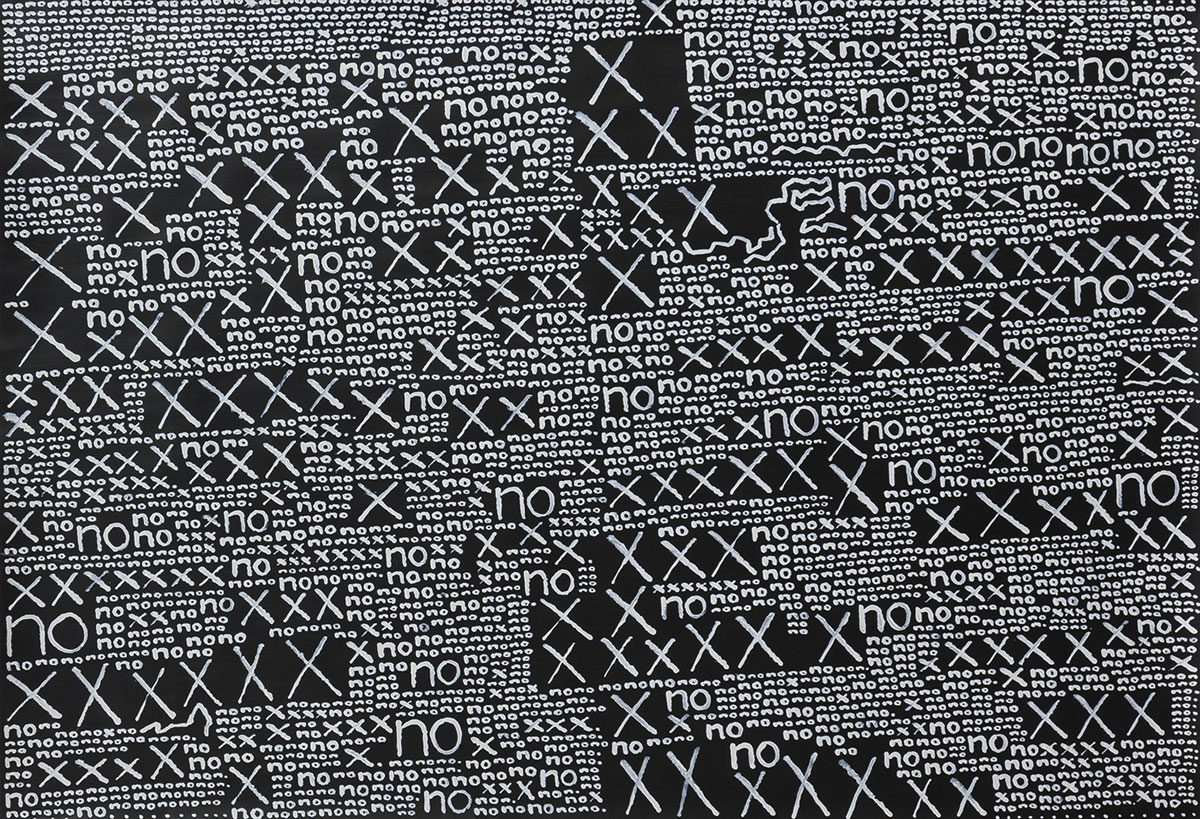


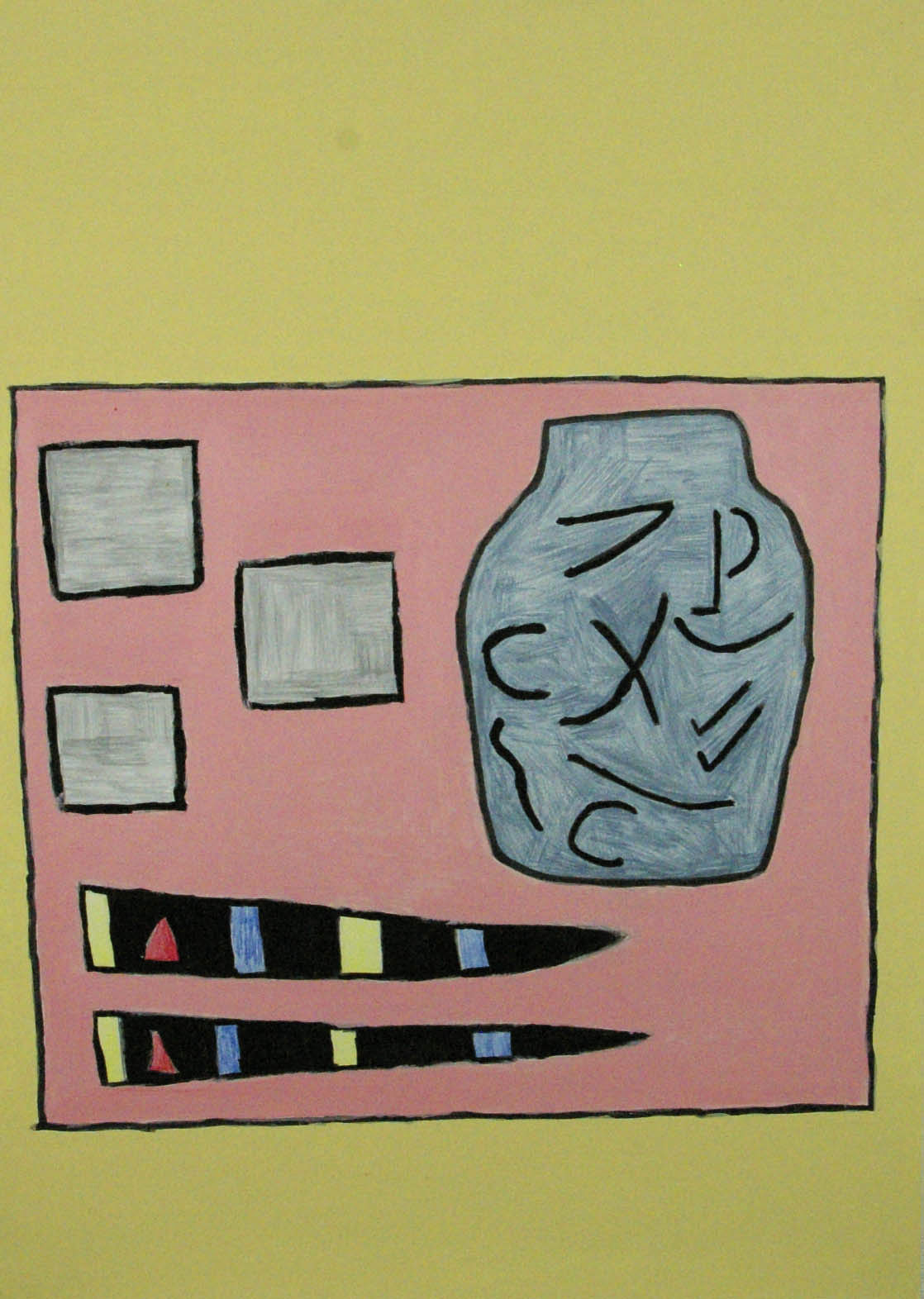


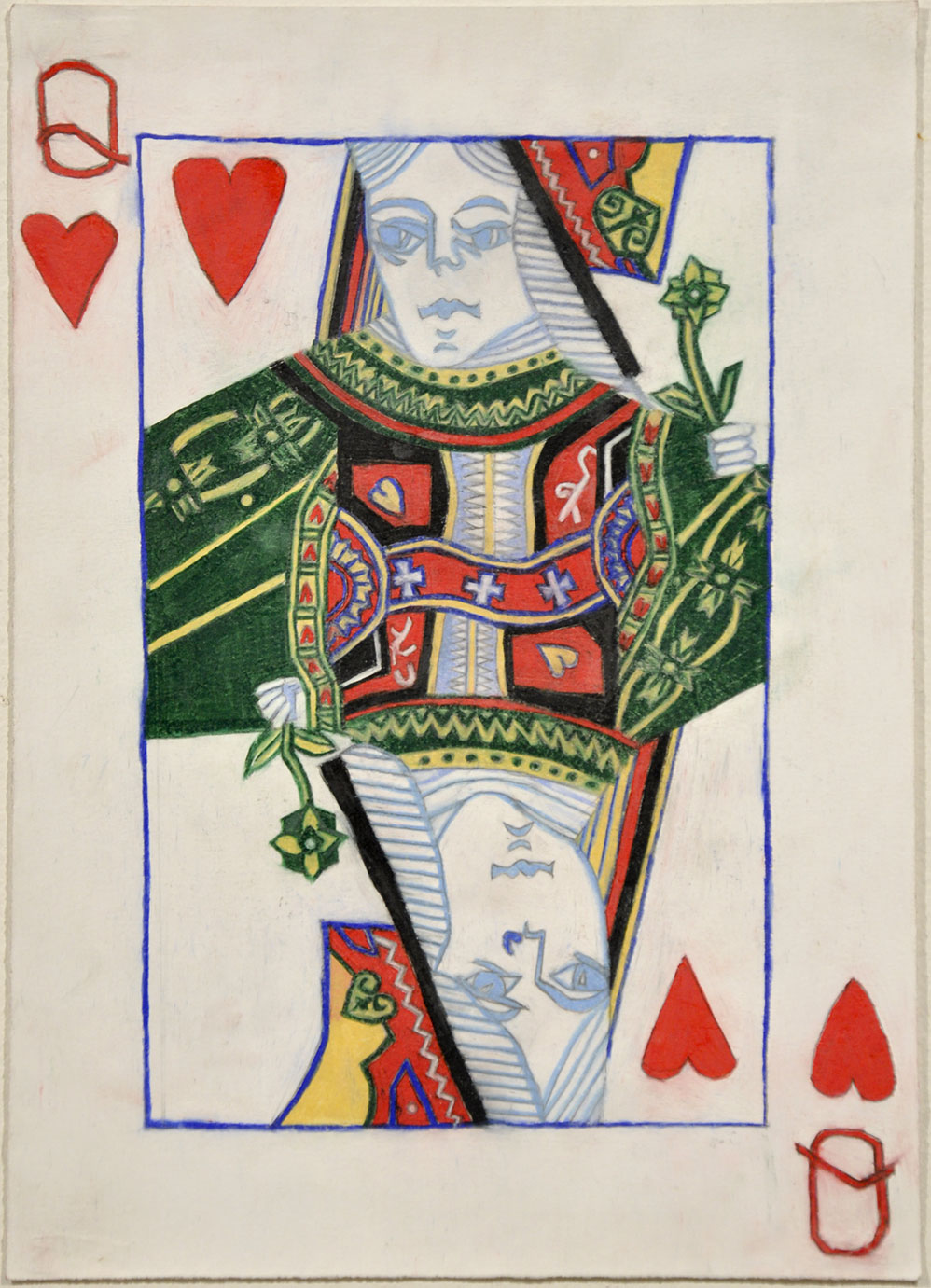

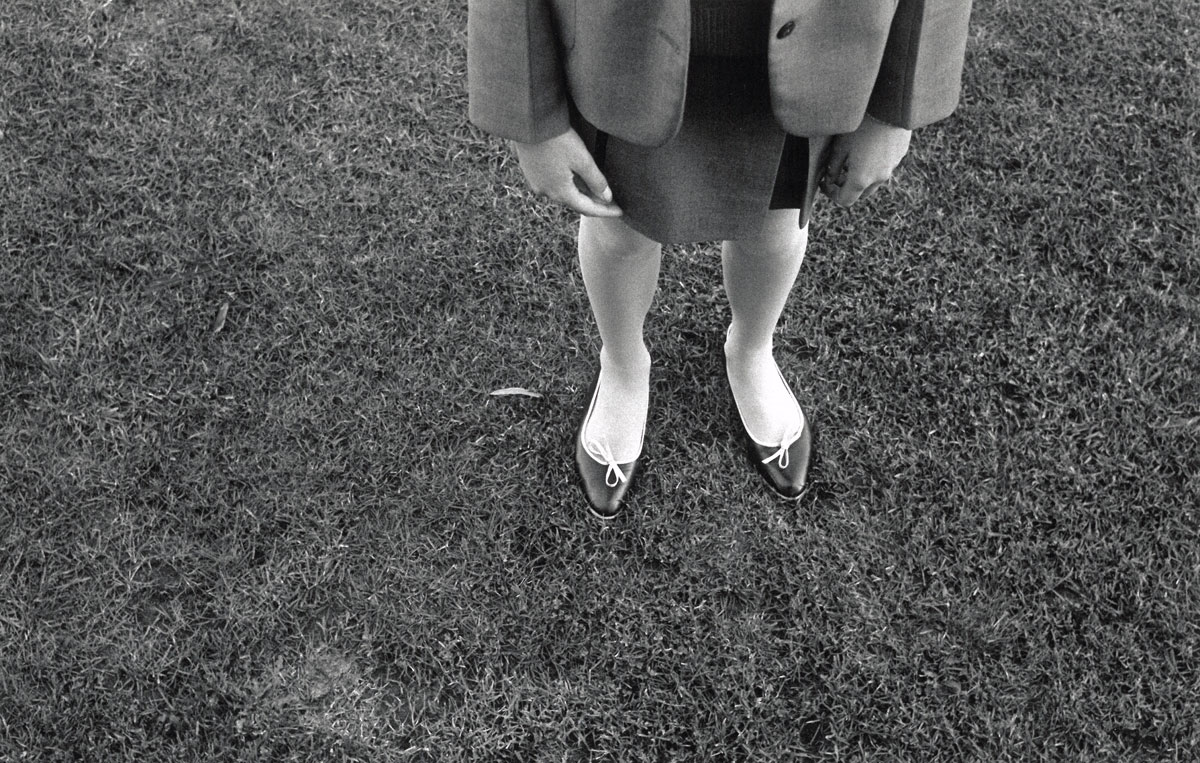


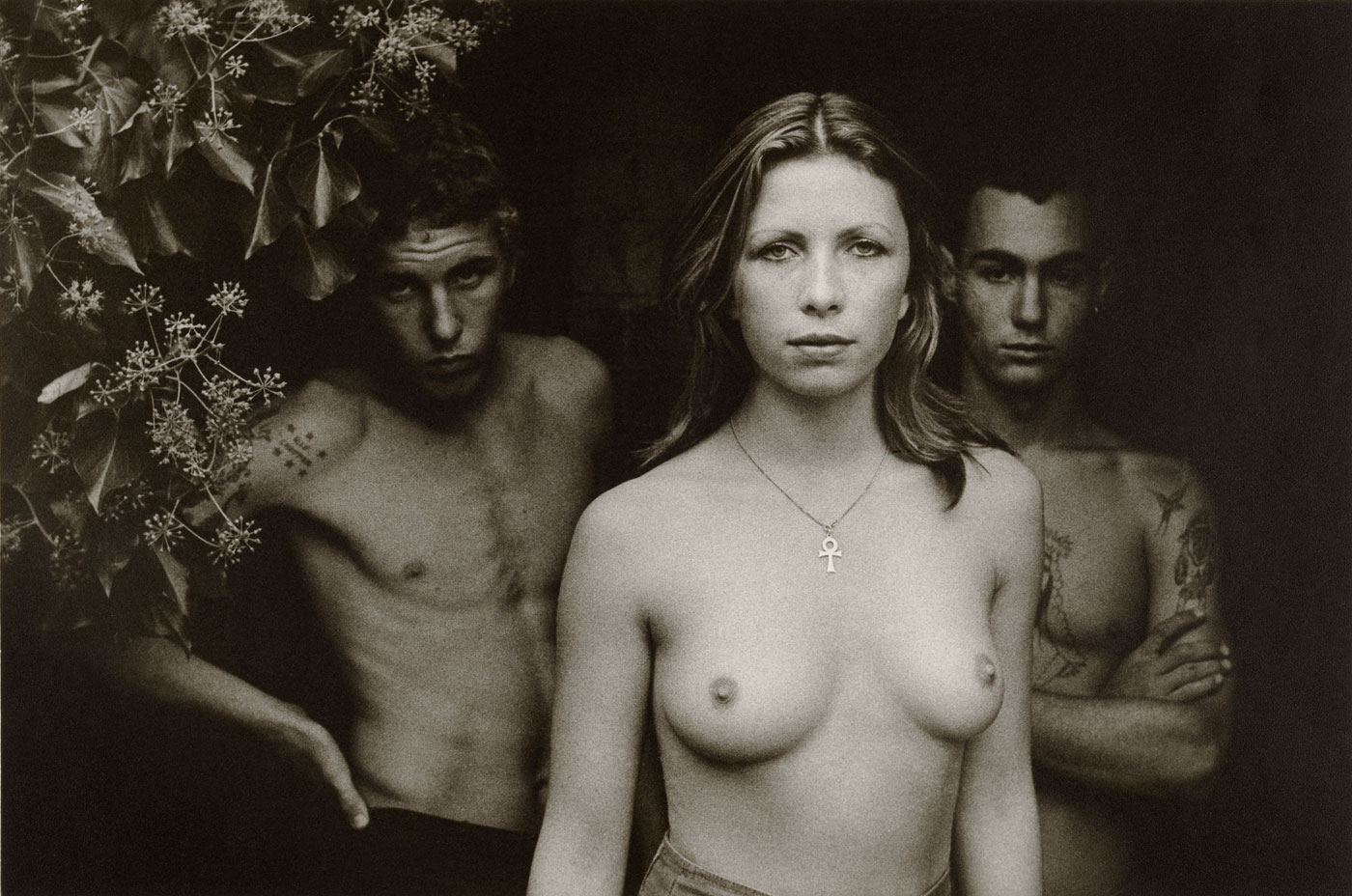


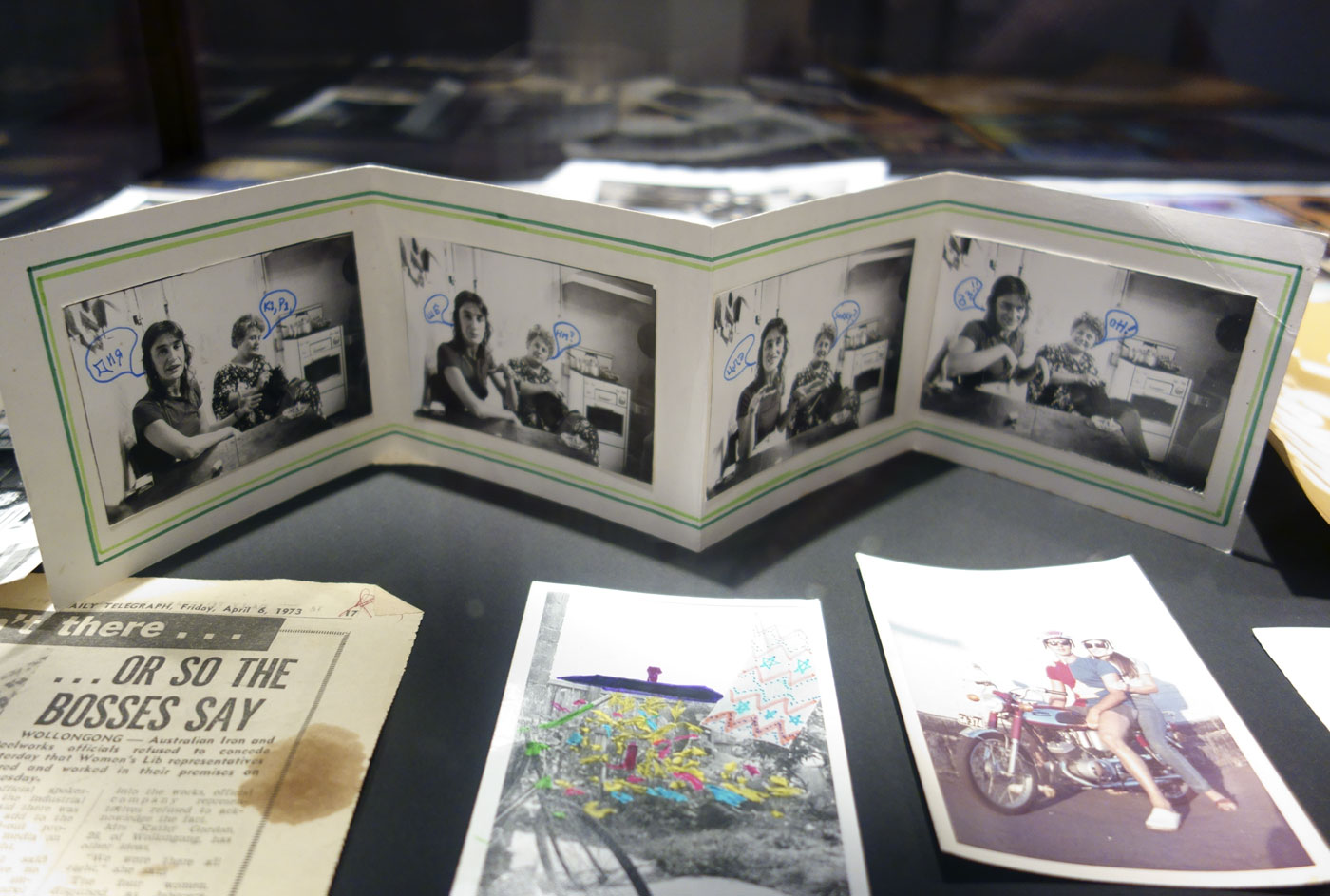


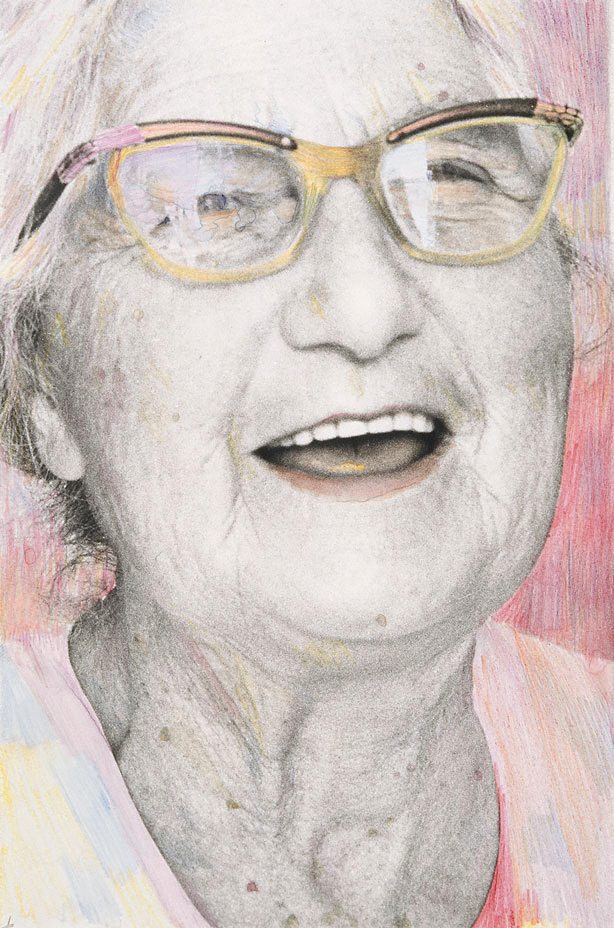


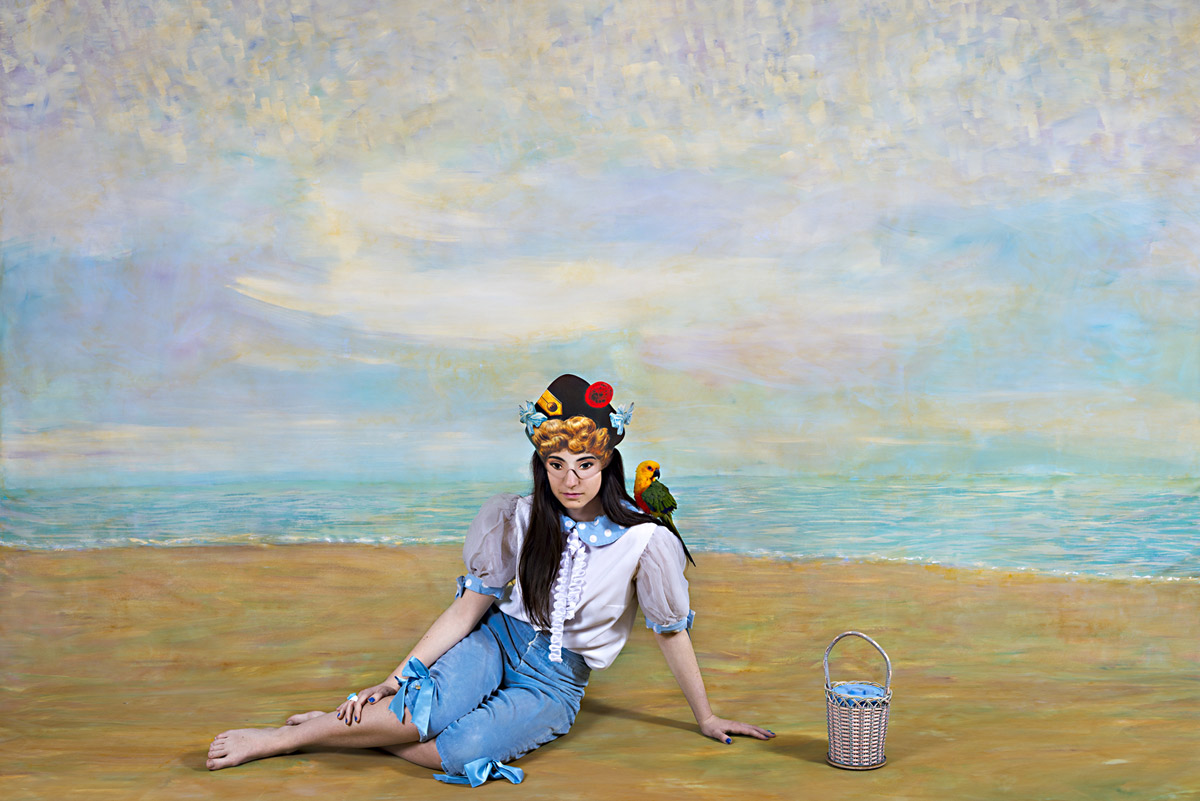
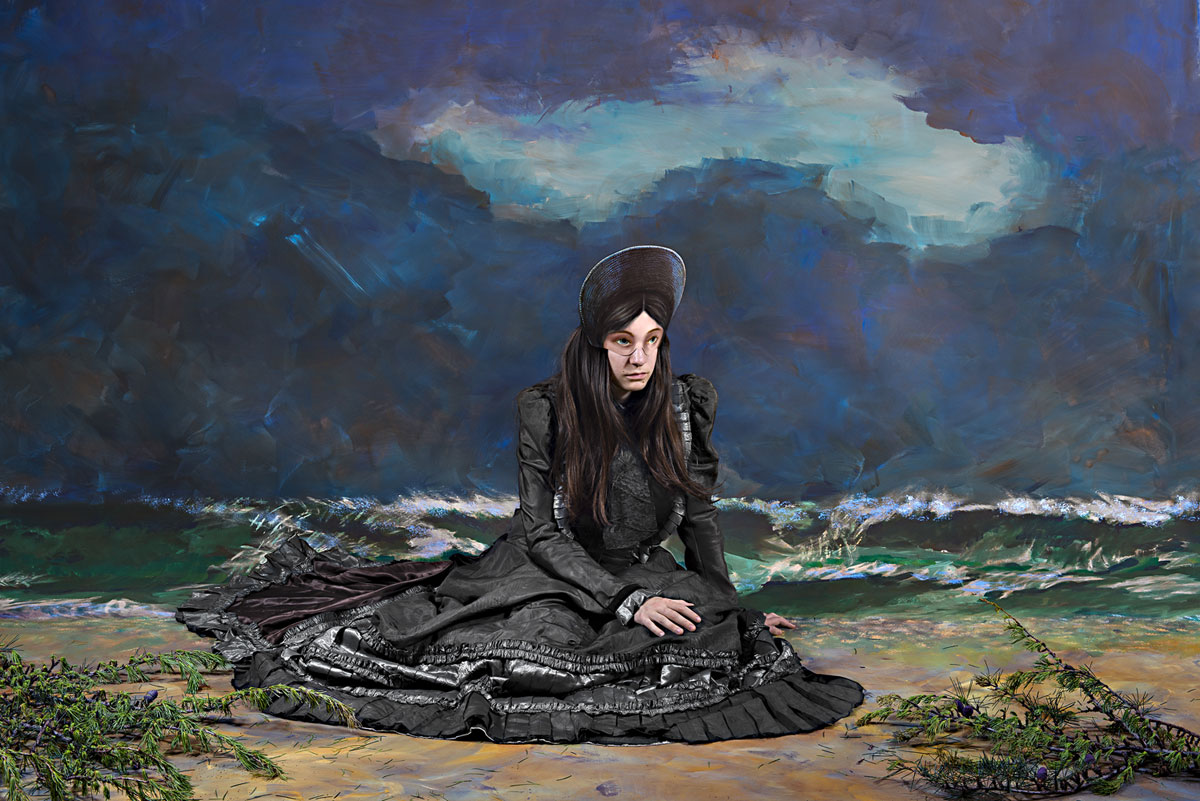
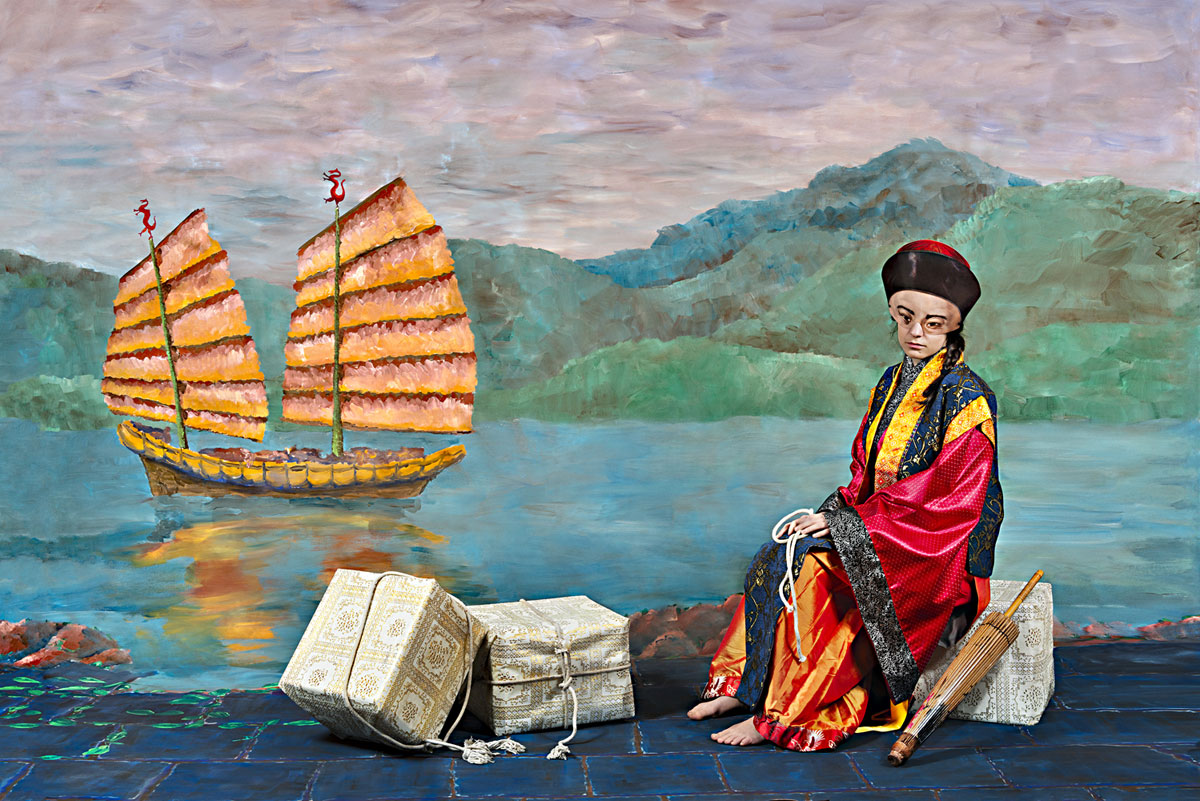
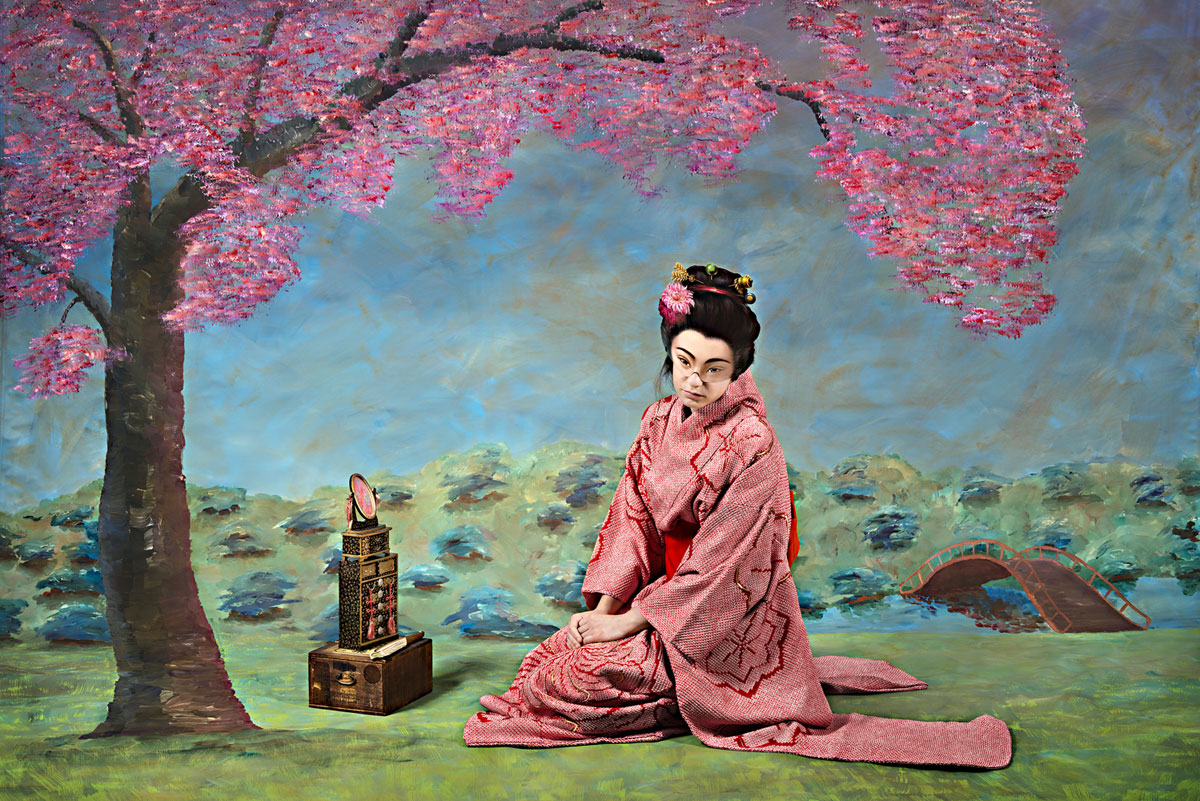
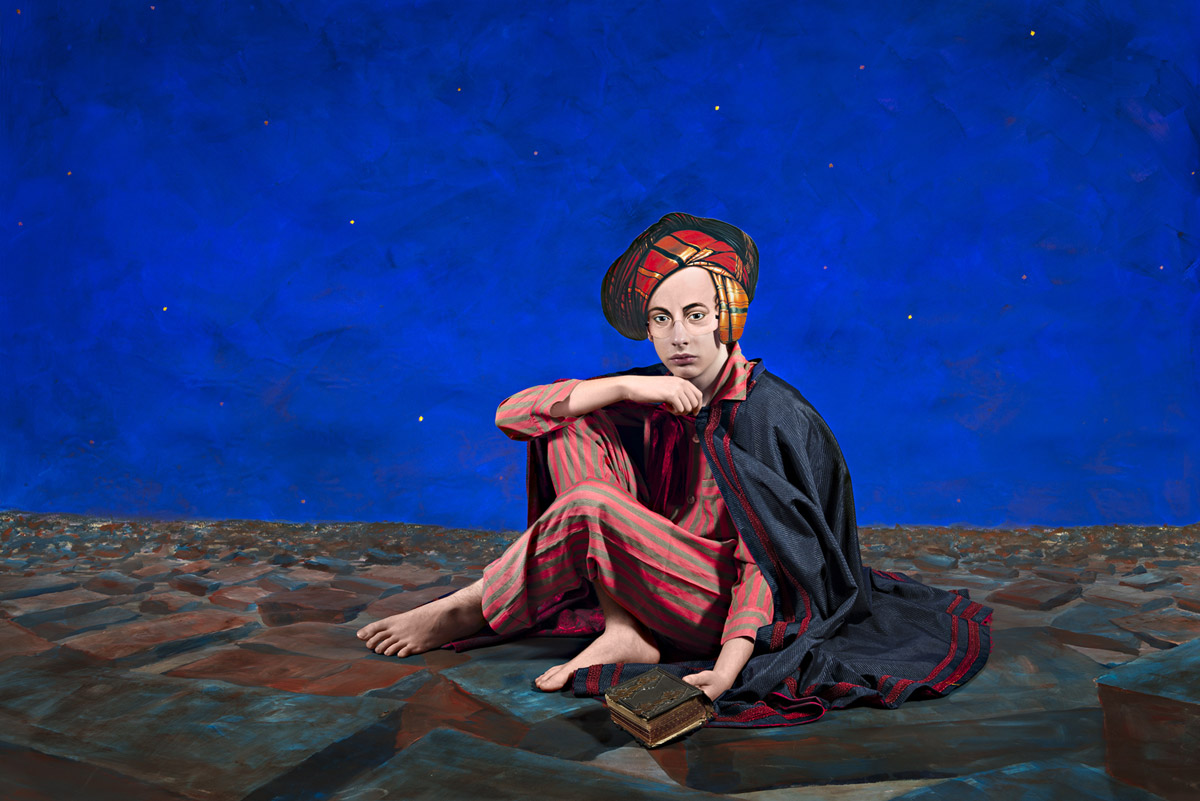
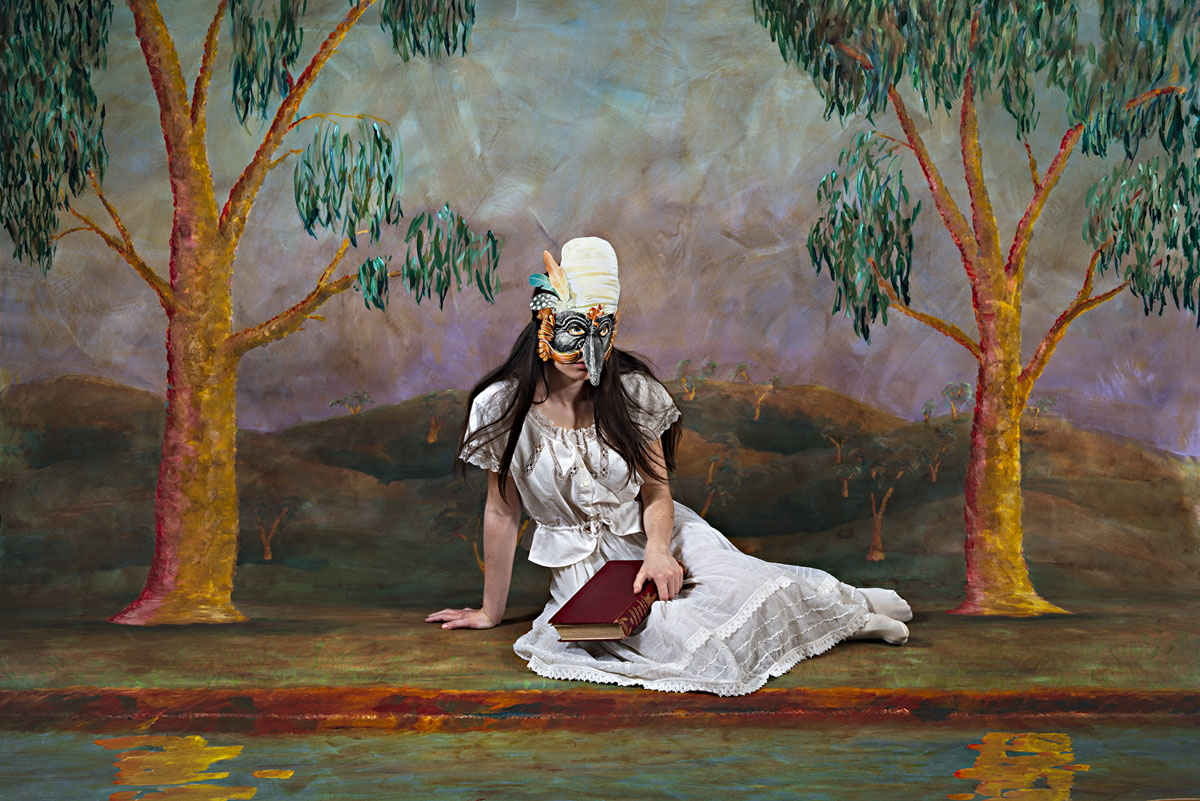
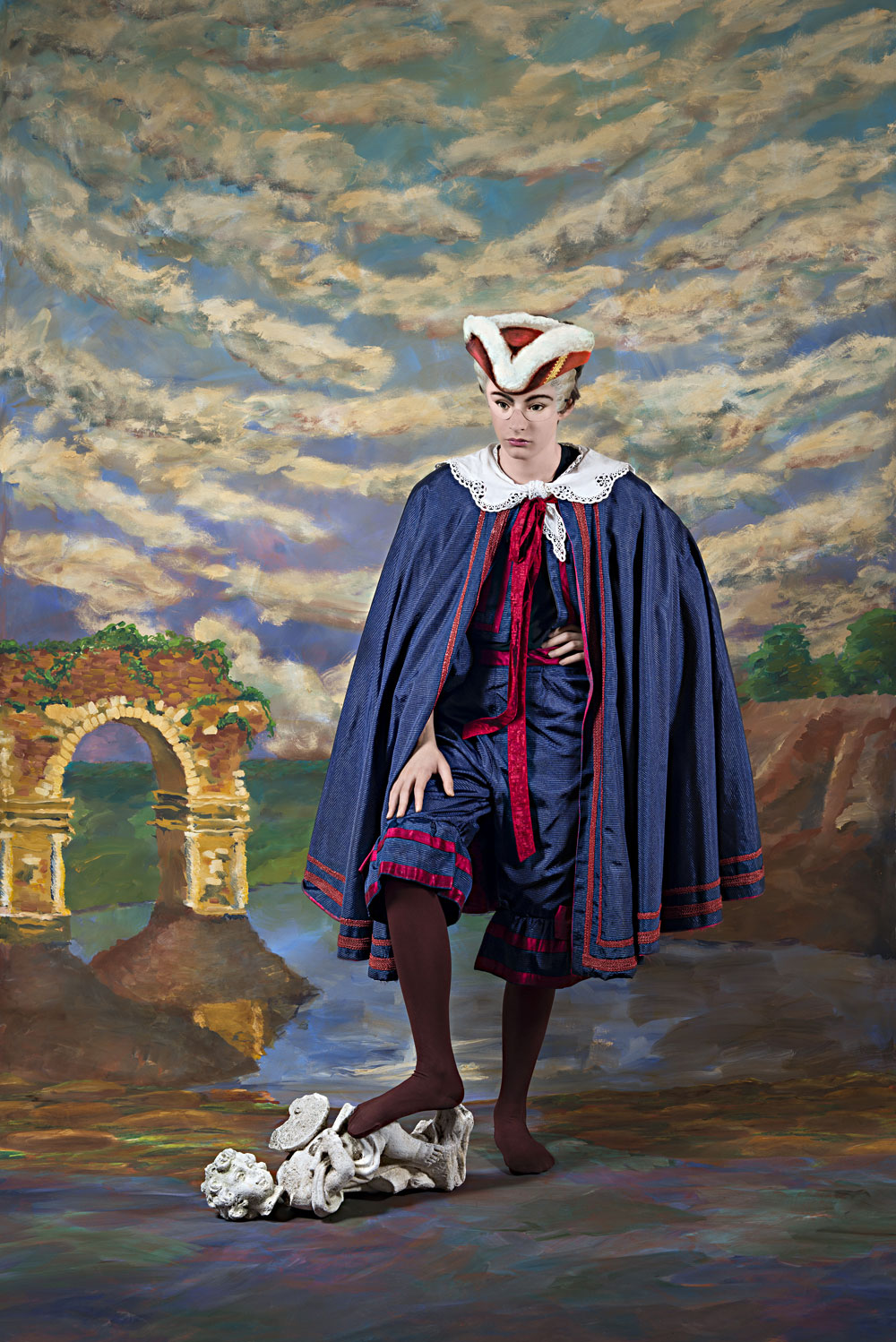

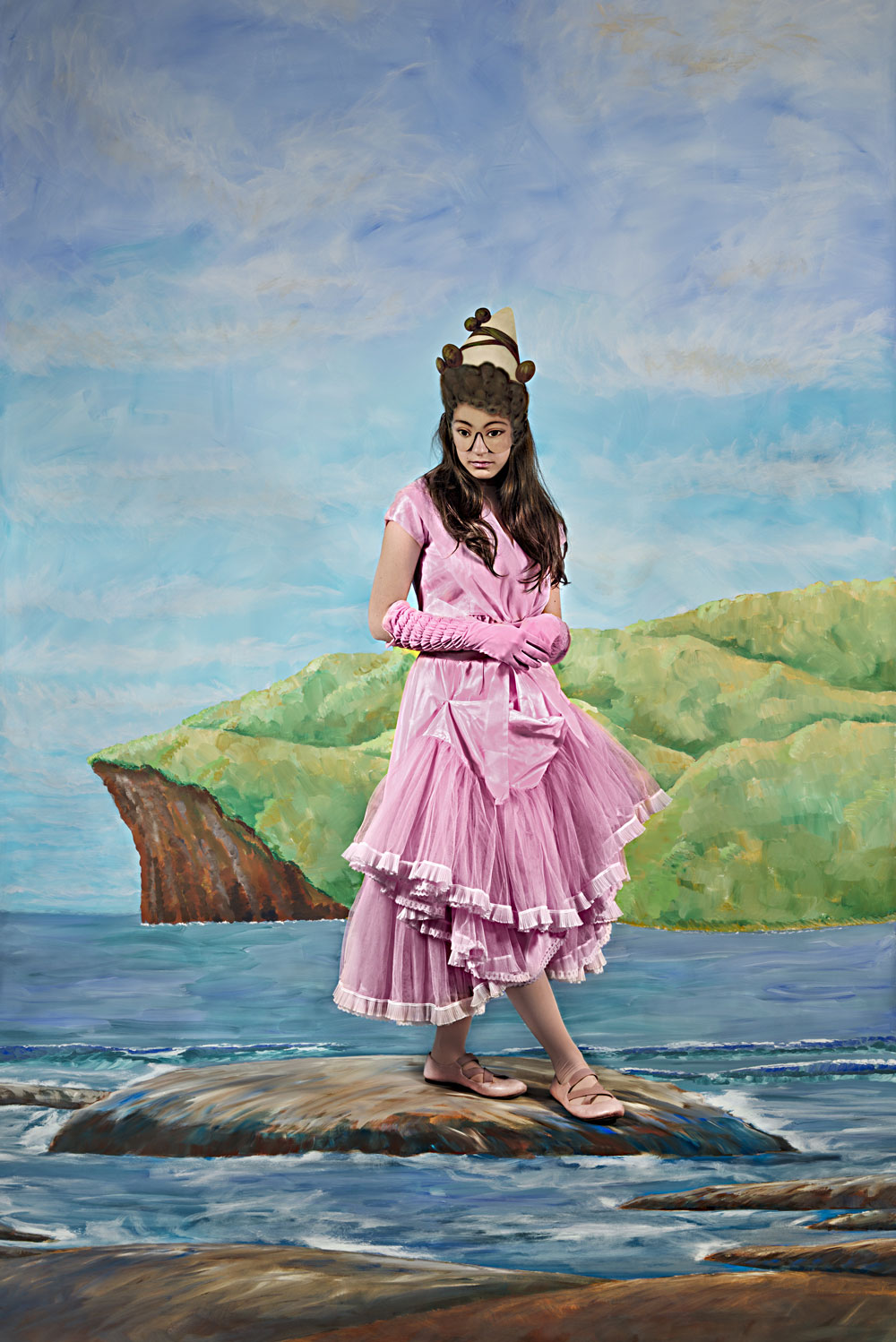
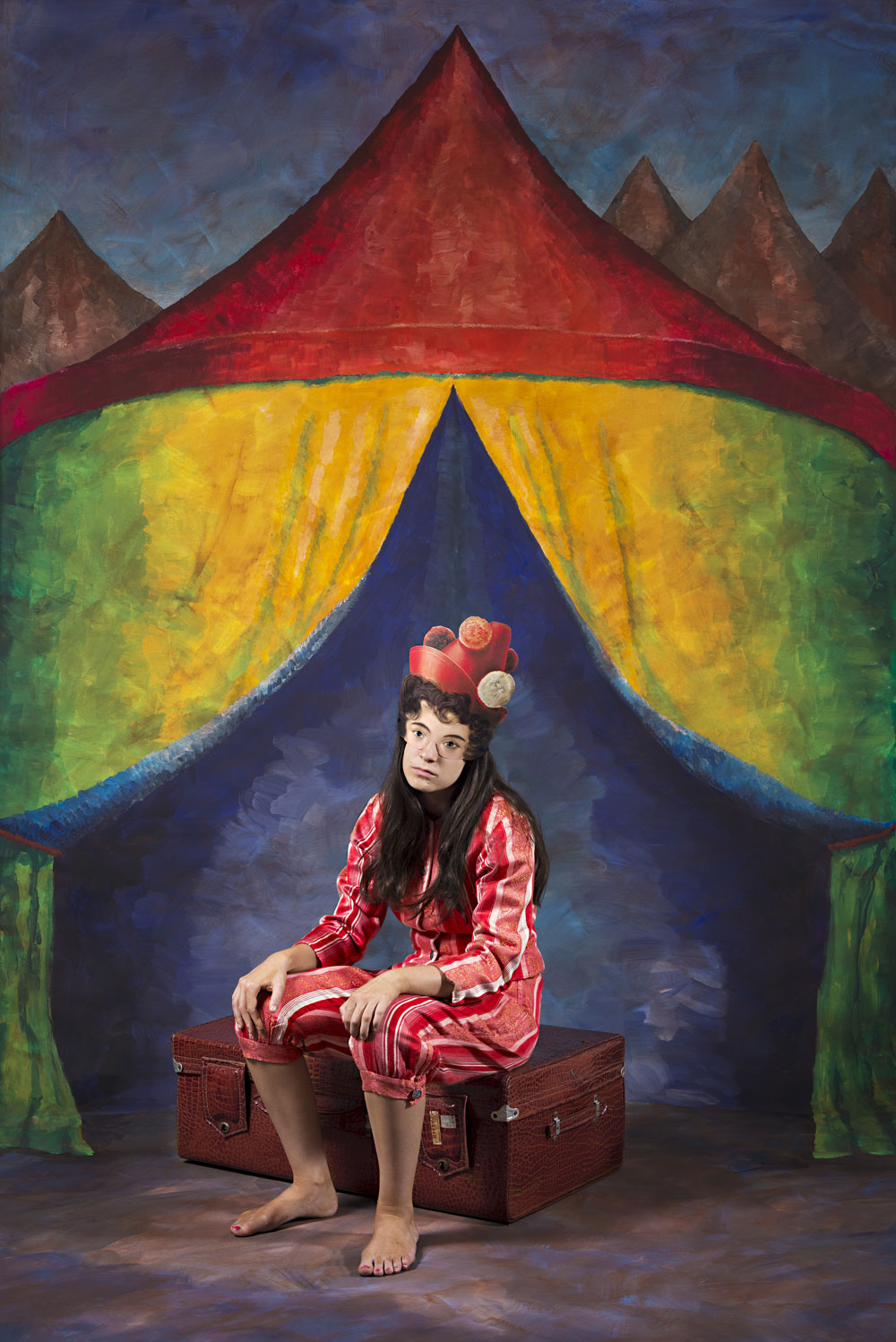
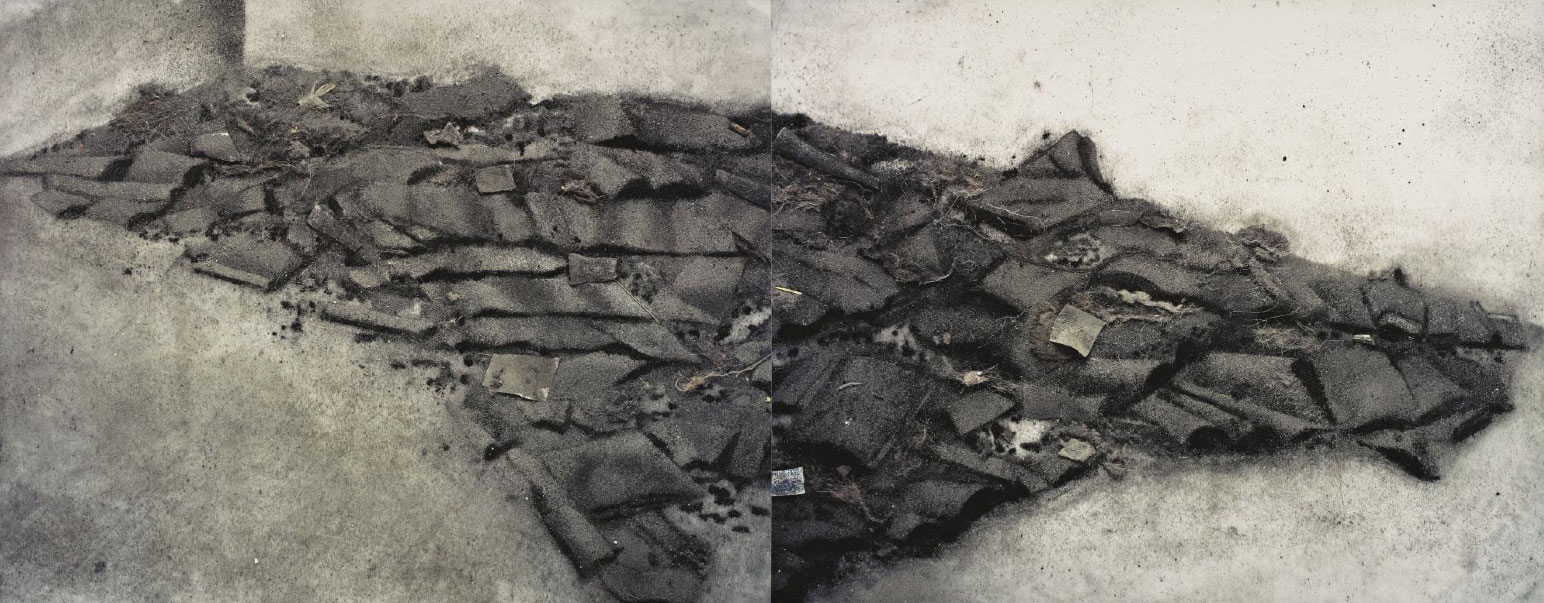
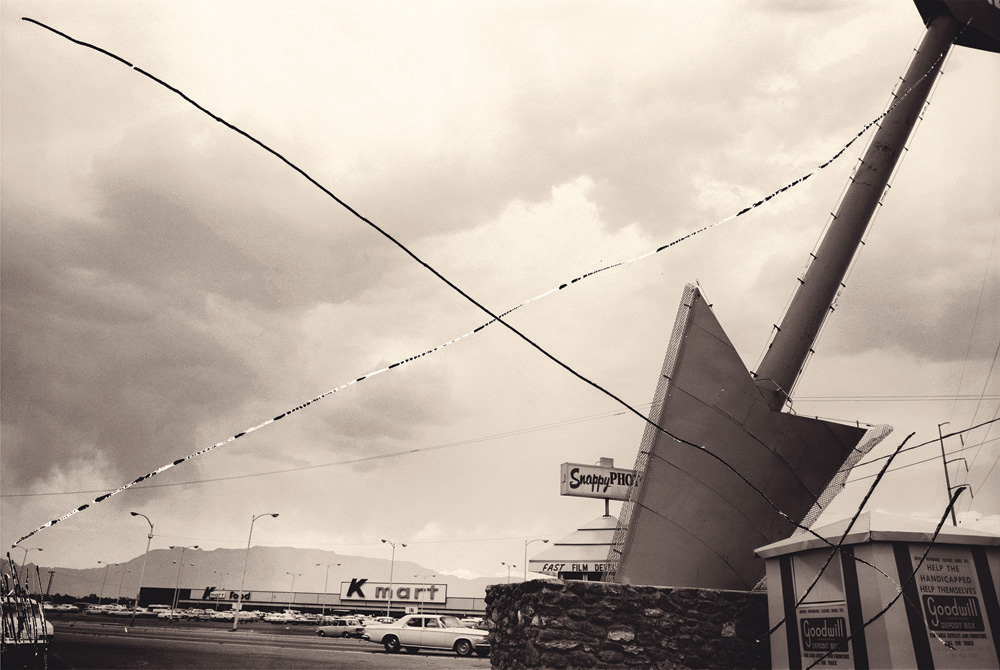

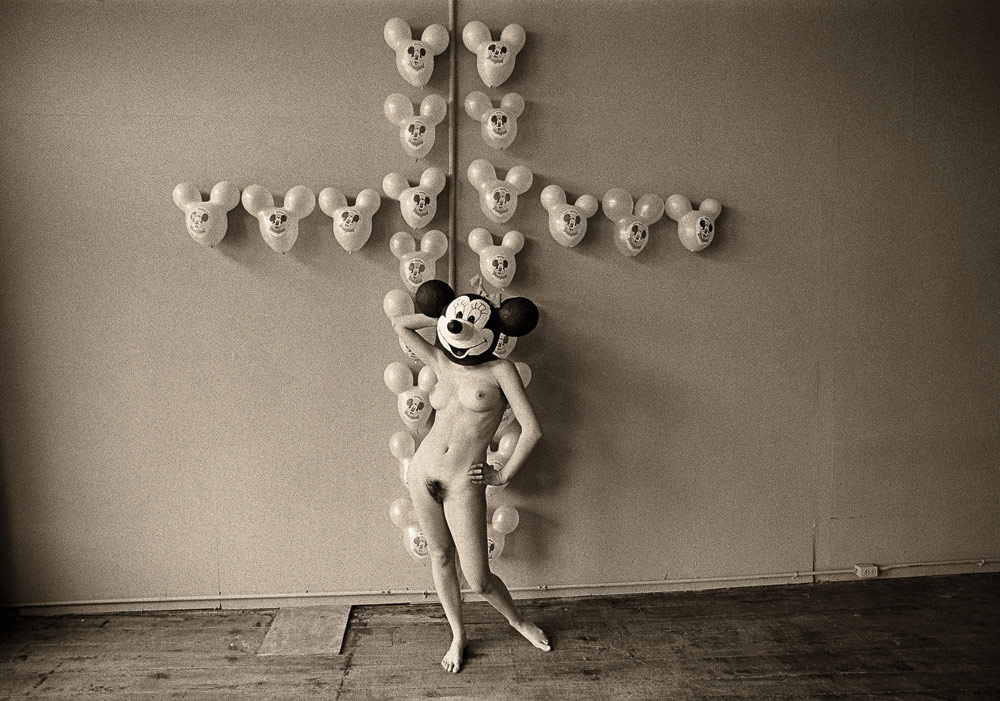


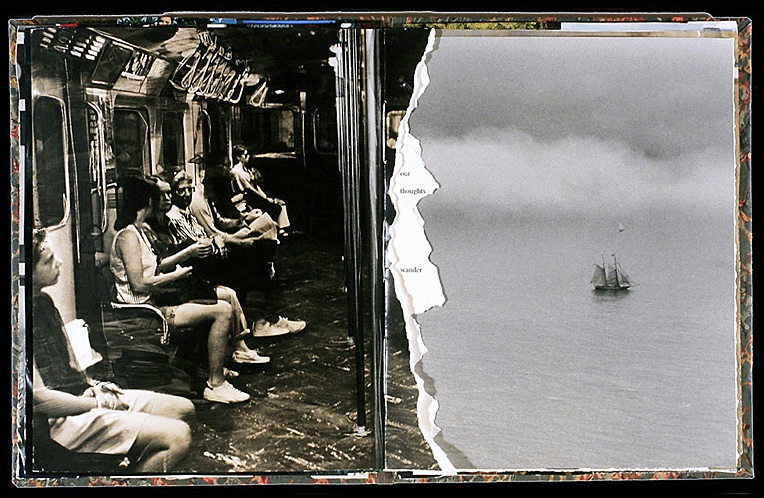
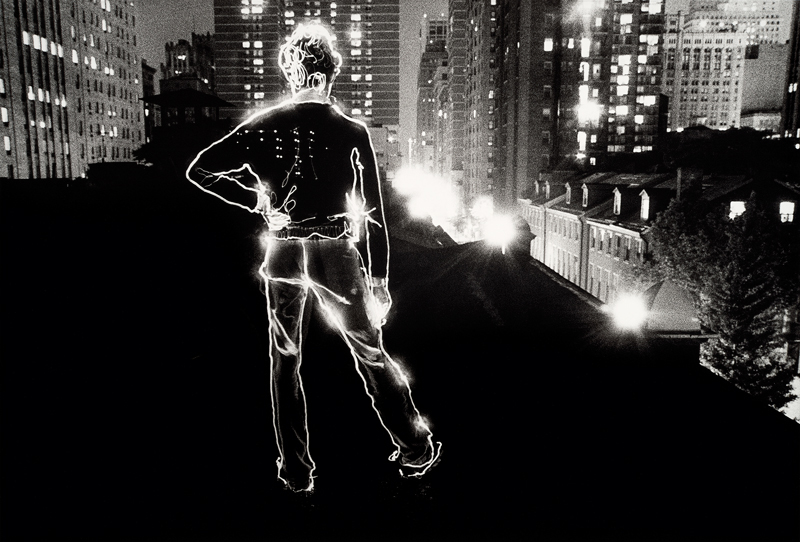
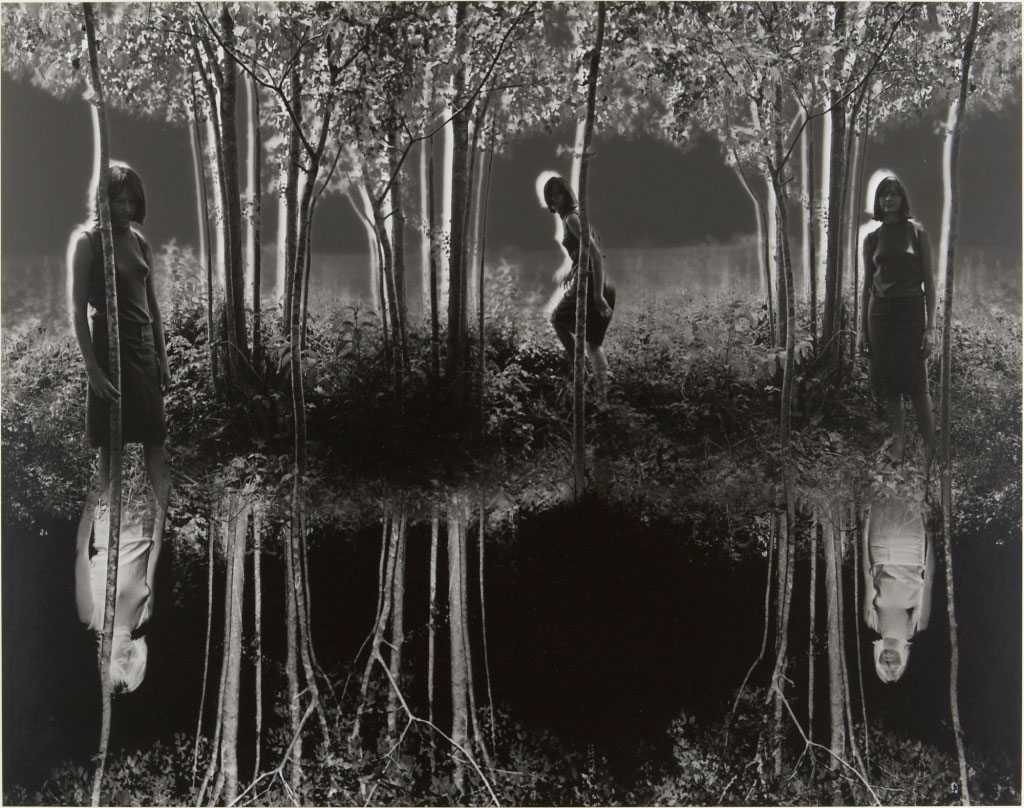
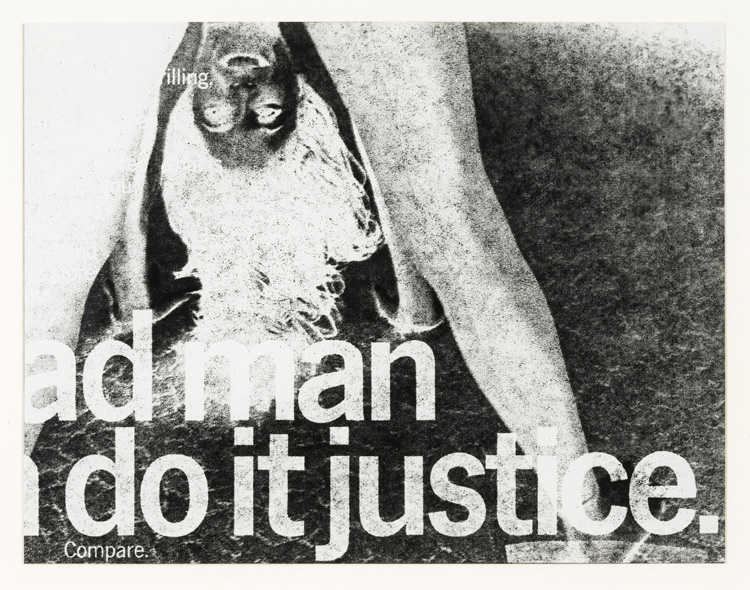
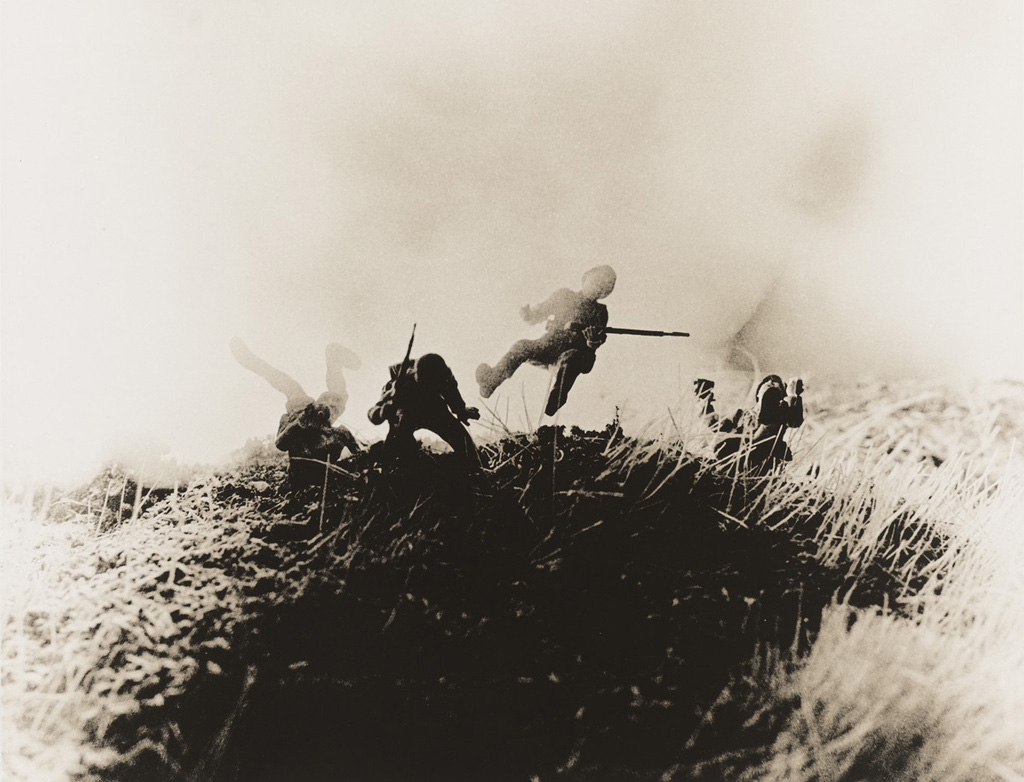

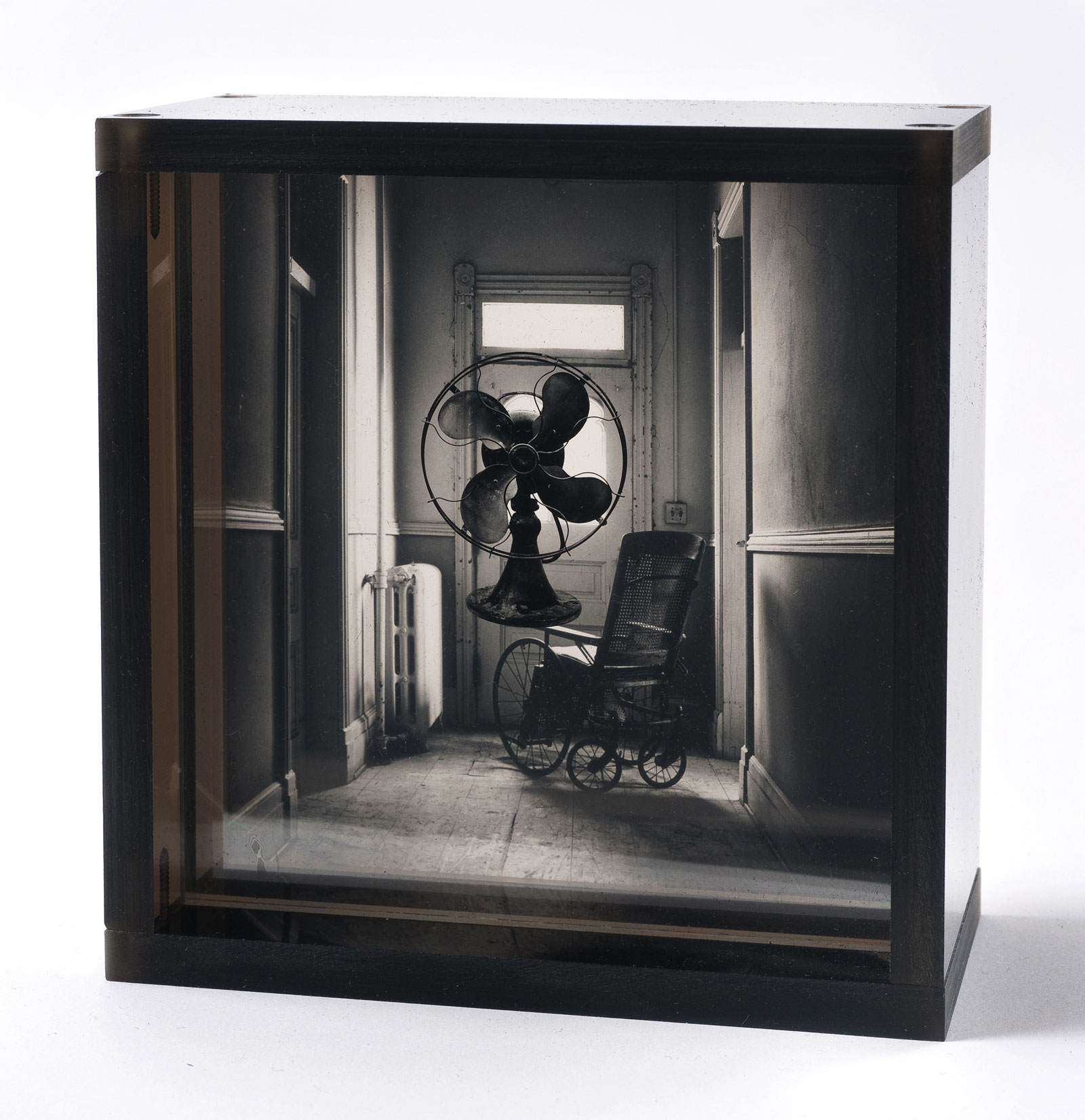
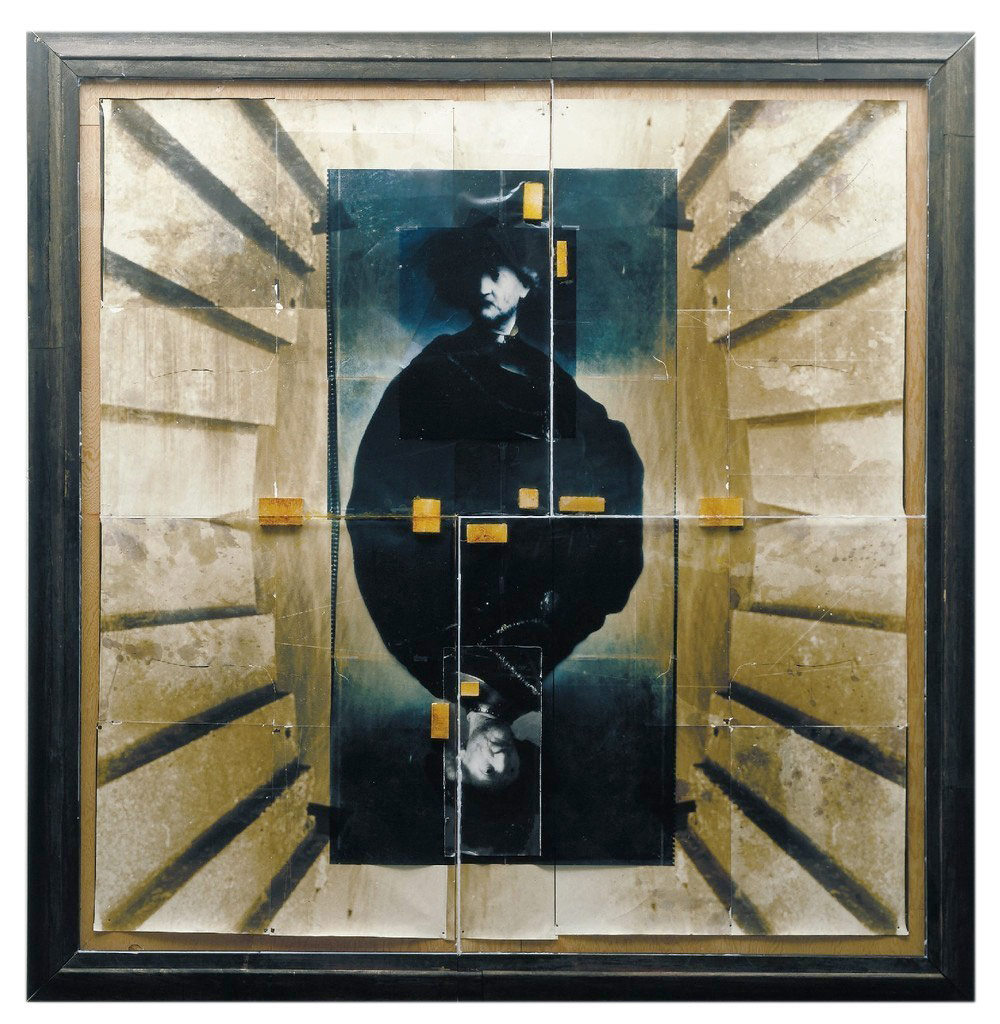
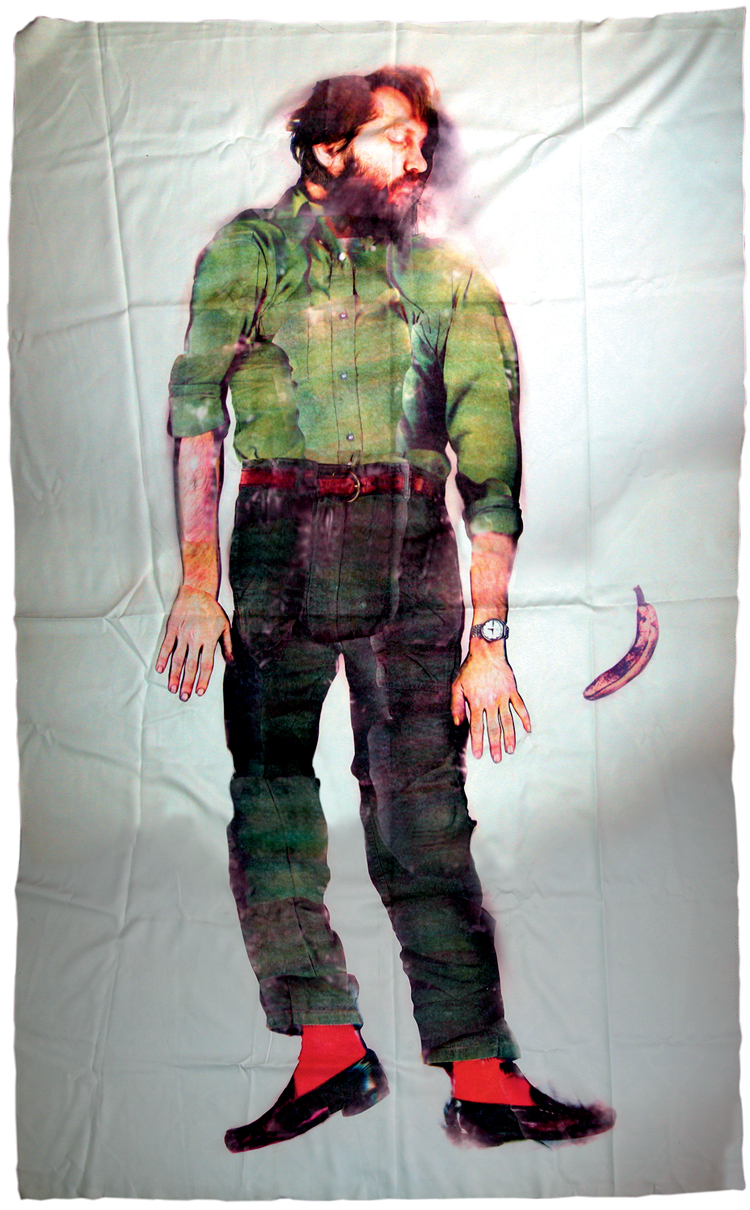
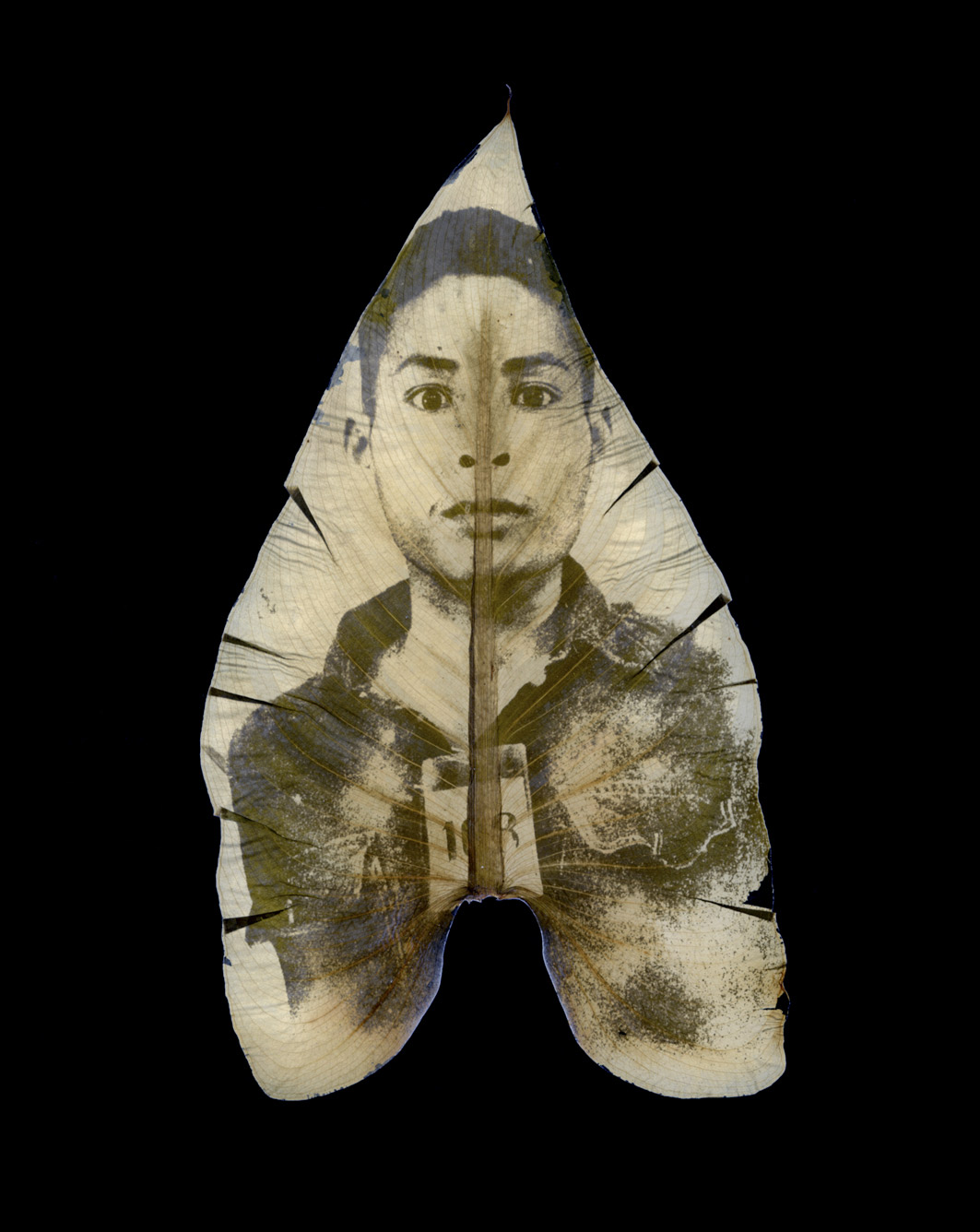

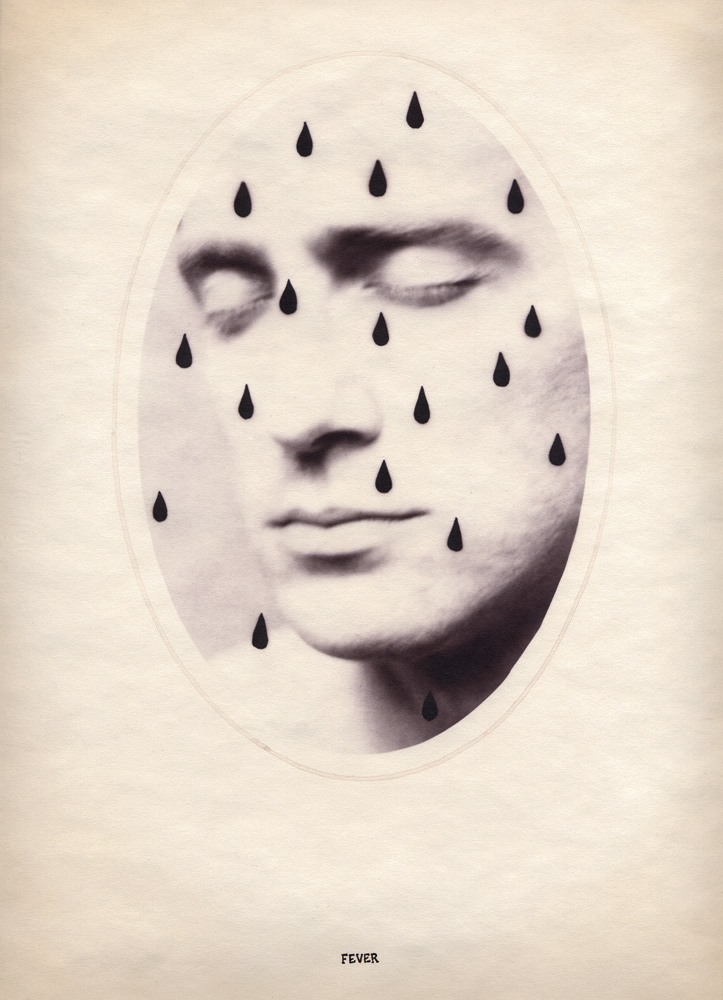
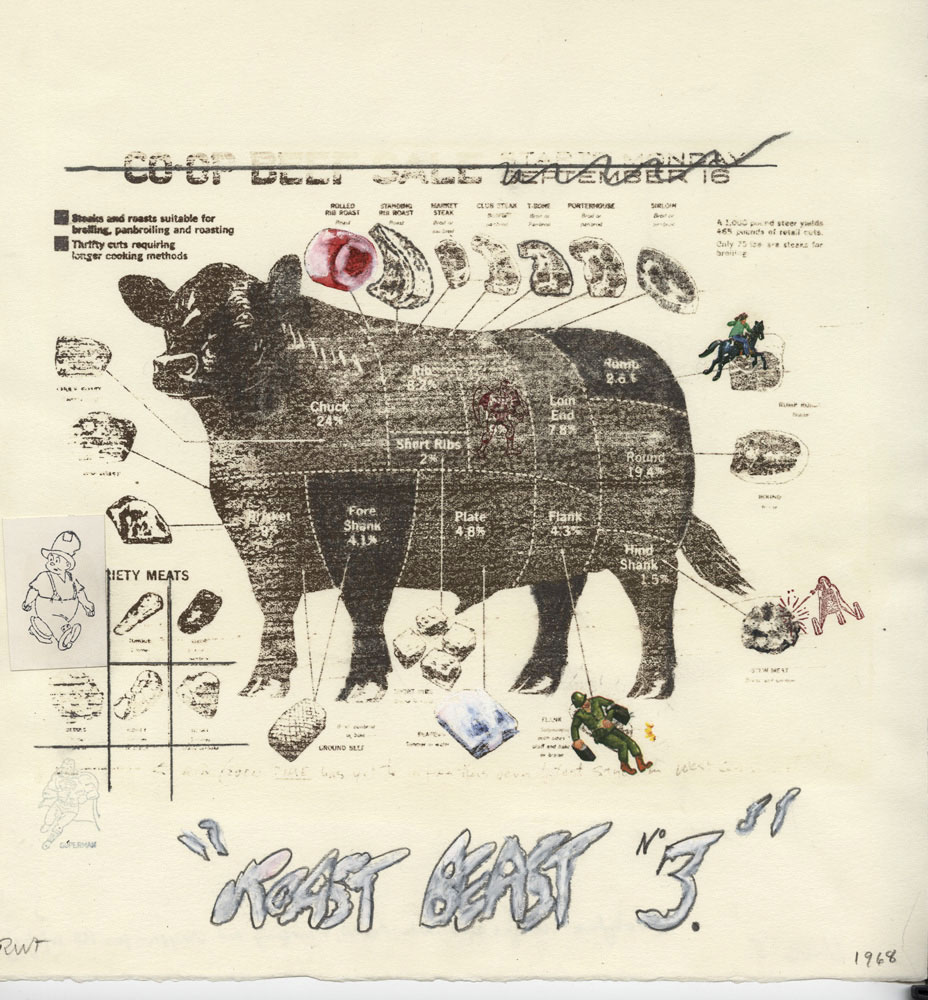

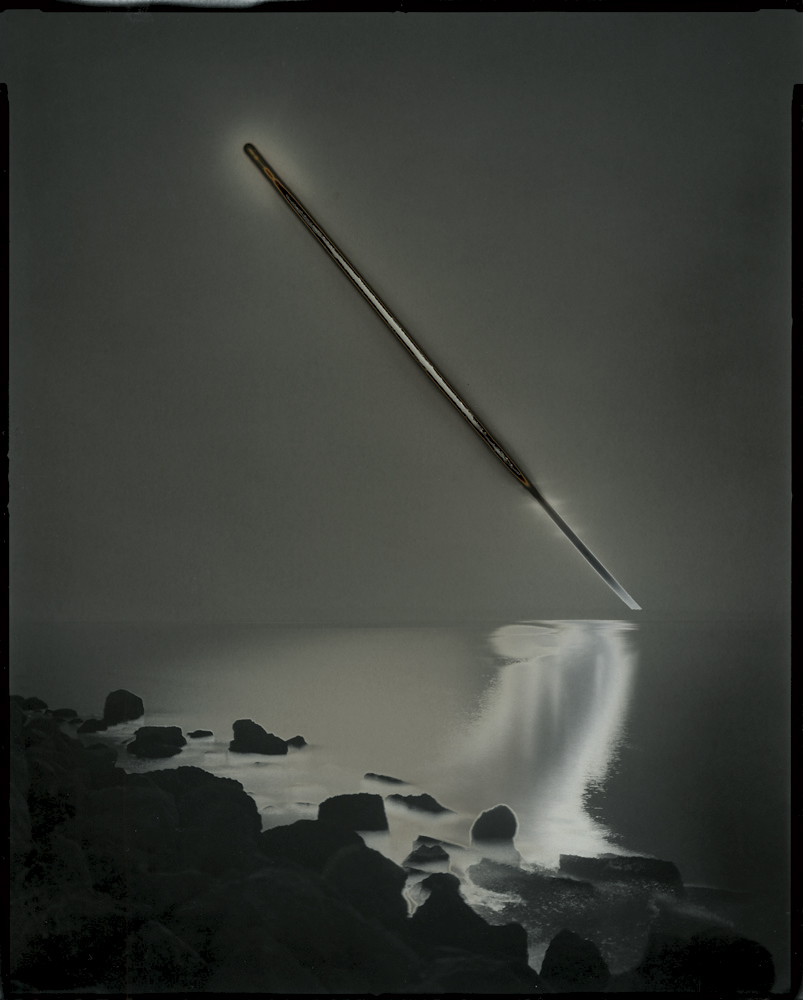

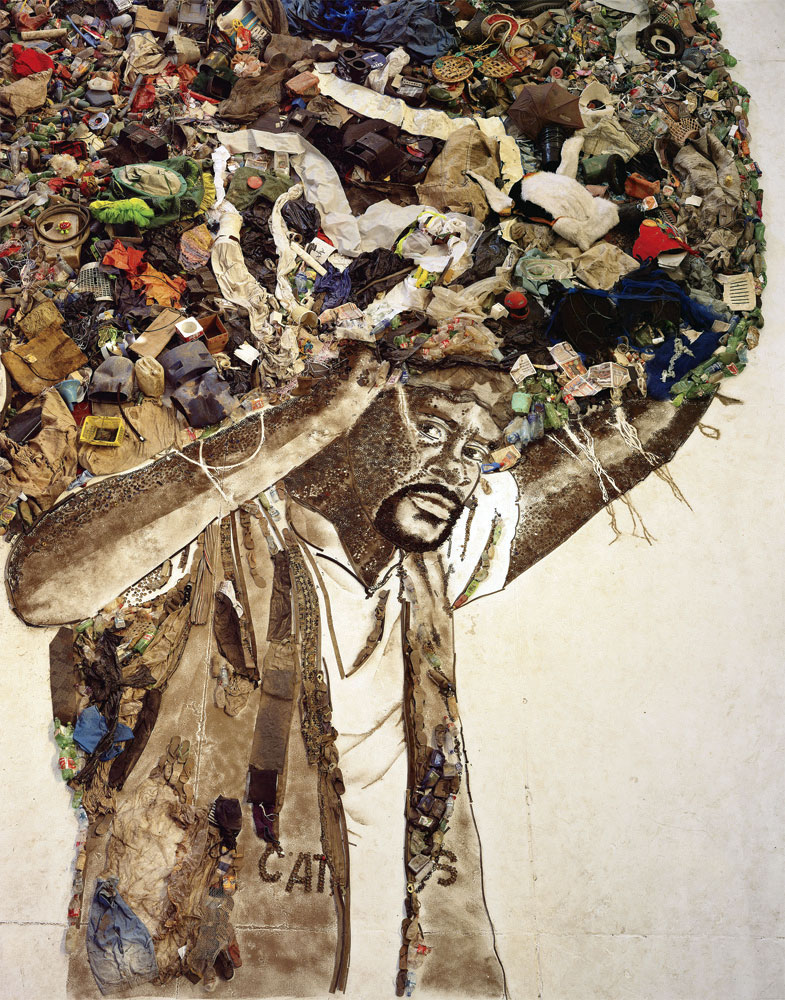

![Charles Marville (French, 1813-1879) 'Rue Soufflot (pendant la démolition)' (Rue Soufflot [during demolition]) c. 1876-1877](https://artblart.com/wp-content/uploads/2014/10/210_slv_marville_rue-soufflot-web.jpg "Charles Marville (French, 1813-1879) 'Rue Soufflot (pendant la démolition)' (Rue Soufflot [during demolition]) c. 1876-1877")



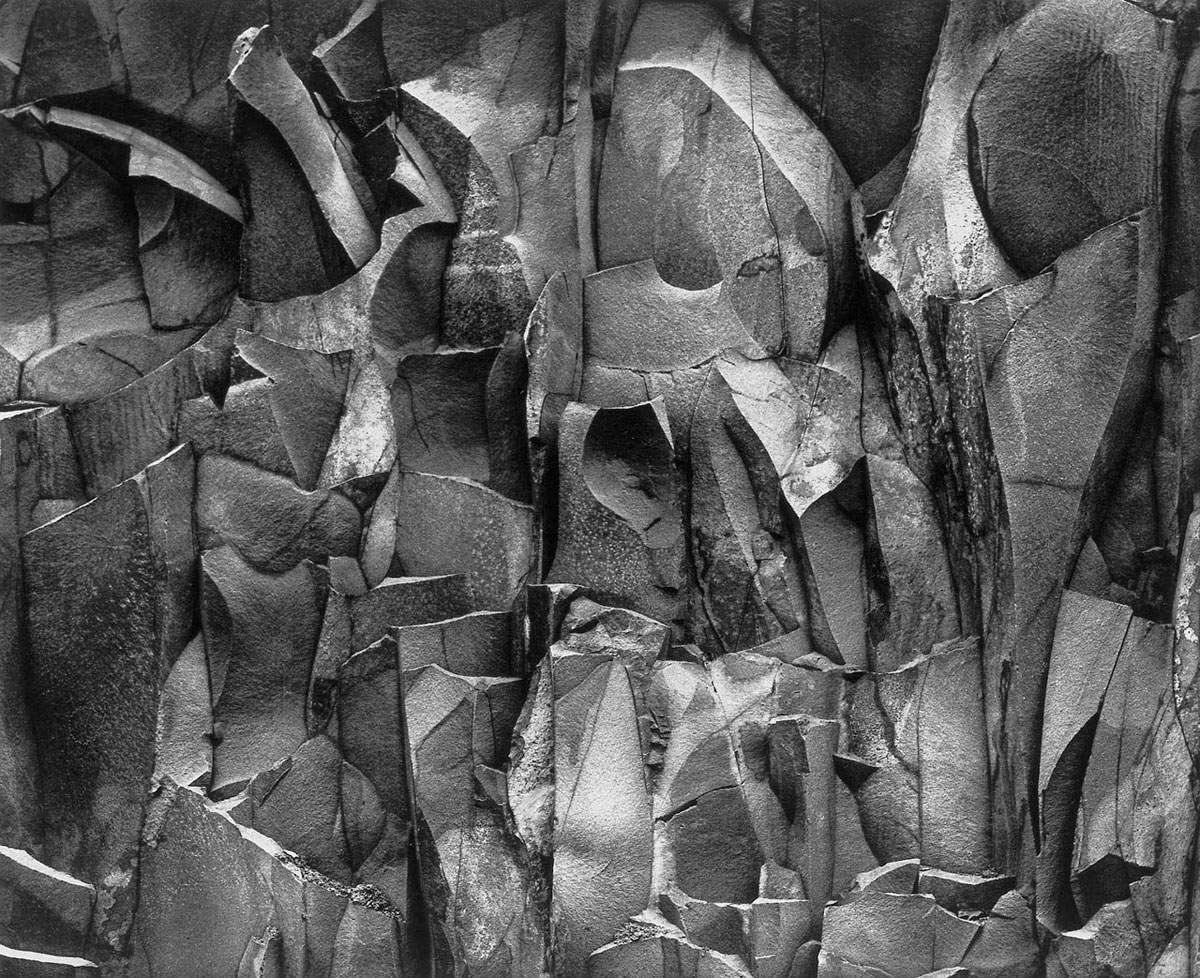
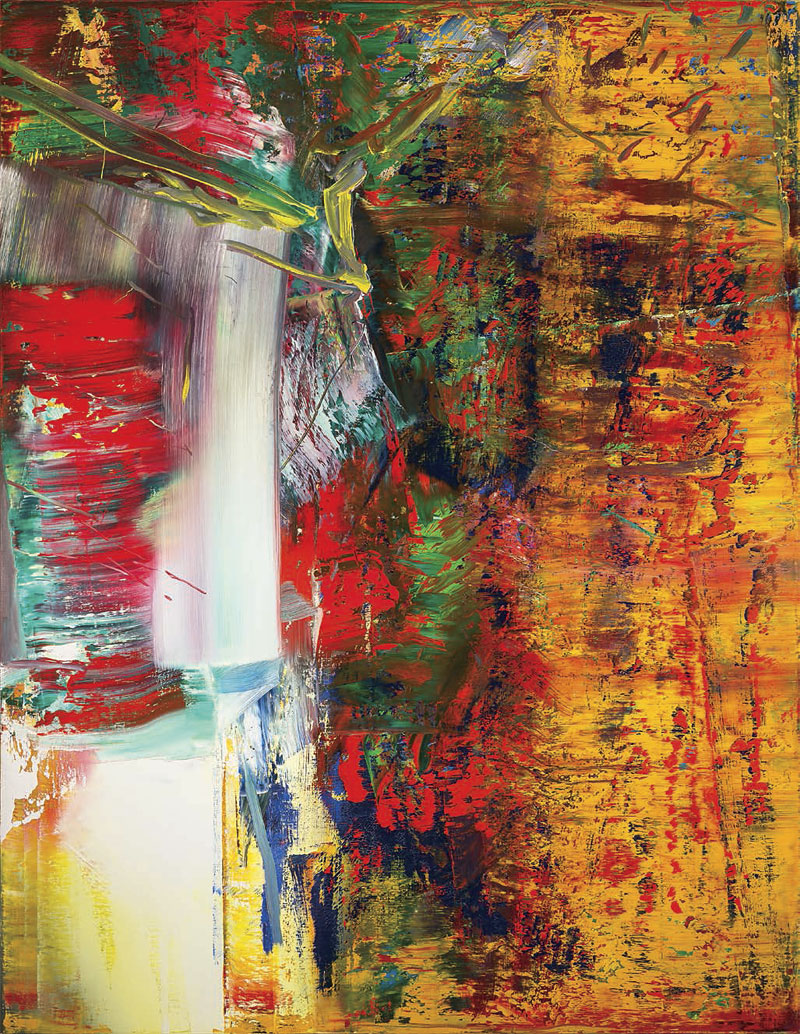
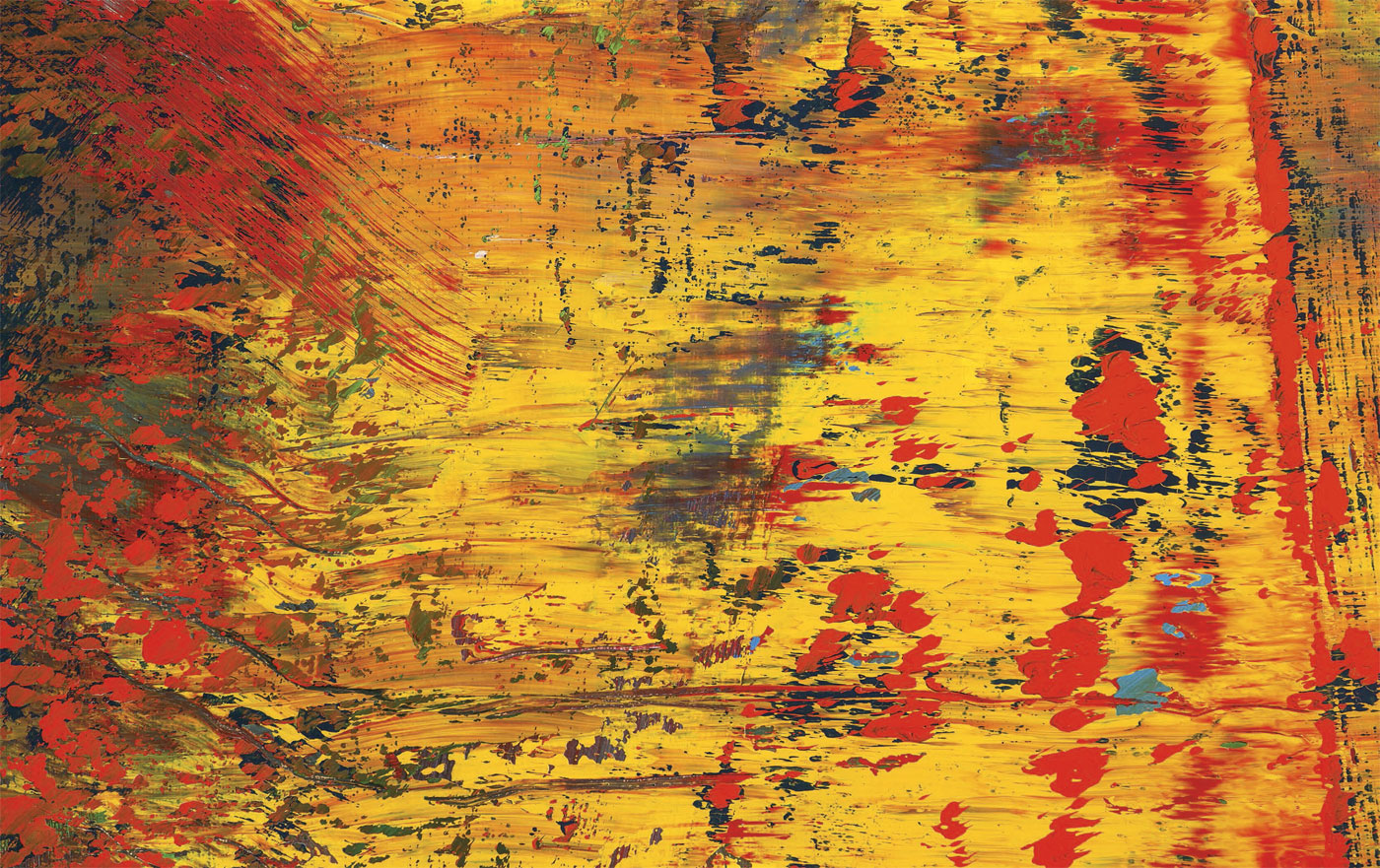
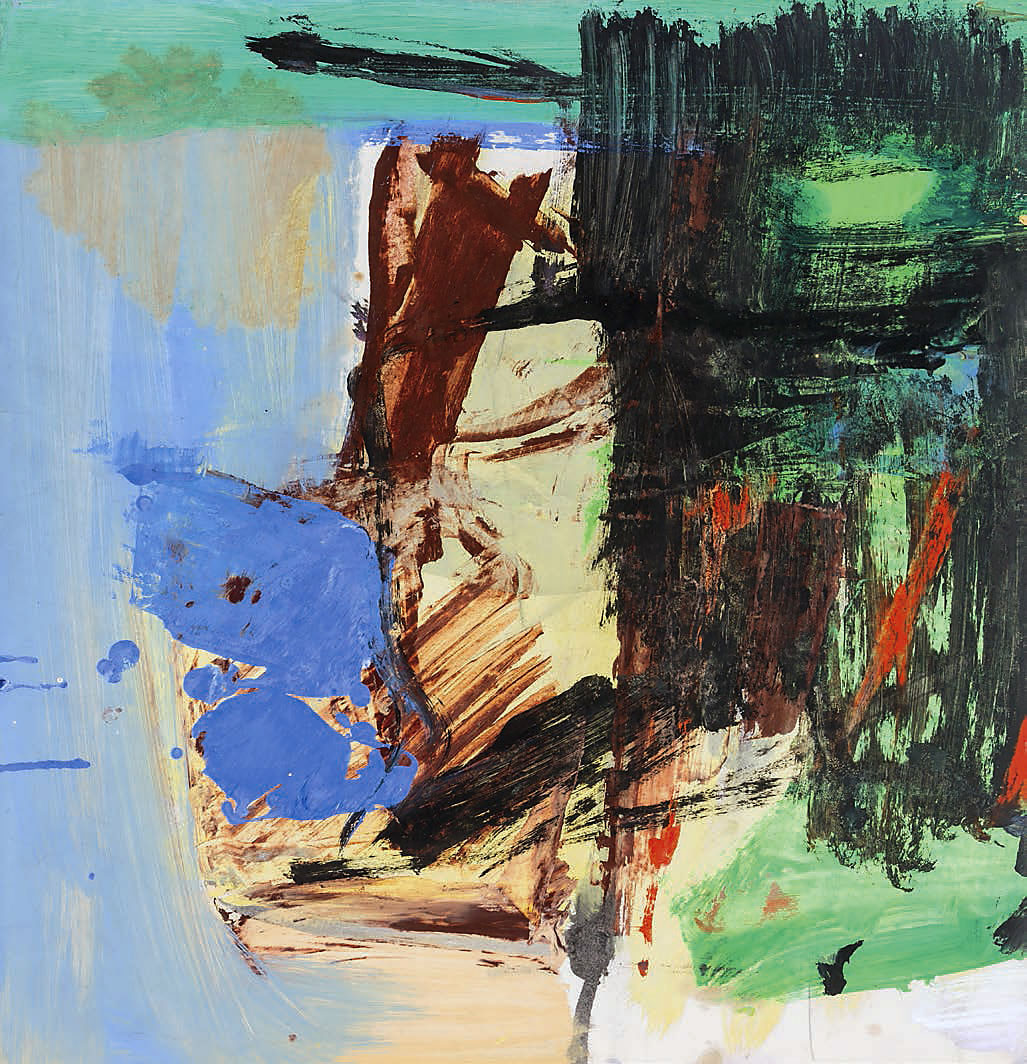







![Oscar Muñoz (Colombian, b. 1951) 'El juego de las probabilidades' [The Game of Probabilities] 2007 from the exhibition Exhibition: 'Oscar Muñoz: Protographies' at Jeu de Paume, Paris, June - September, 2014](https://artblart.com/wp-content/uploads/2014/09/el-juego-de-las-probabilidades-web.jpg "Oscar Muñoz (Colombian, b. 1951) 'El juego de las probabilidades' [The Game of Probabilities] 2007 from the exhibition Exhibition: 'Oscar Muñoz: Protographies' at Jeu de Paume, Paris, June - September, 2014")
![Oscar Muñoz (Colombian, b. 1951) 'Ambulatorio' [Ambulatory] 1994](https://artblart.com/wp-content/uploads/2014/09/ambulatorio-web.jpg "Oscar Muñoz (Colombian, b. 1951) 'Ambulatorio' [Ambulatory] 1994")
![Oscar Muñoz (Colombian, b. 1951) 'Cortinas de Baño' [Shower curtains] 1985-1986](https://artblart.com/wp-content/uploads/2014/09/cortinas-de-bac3b1o-web.jpg "Oscar Muñoz (Colombian, b. 1951) 'Cortinas de Baño' [Shower curtains] 1985-1986")
![Oscar Muñoz (Colombian, b. 1951) 'Narcisos (en proceso)' [Narcissi (in process)] 1995-2011](https://artblart.com/wp-content/uploads/2014/09/narcisos-web.jpg "Oscar Muñoz (Colombian, b. 1951) 'Narcisos (en proceso)' [Narcissi (in process)] 1995-2011")
![Oscar Muñoz (Colombian, b. 1951) 'Narciso' [Narcissus] 2001](https://artblart.com/wp-content/uploads/2014/09/narciso-web.jpg "Oscar Muñoz (Colombian, b. 1951) 'Narciso' [Narcissus] 2001")
![Oscar Muñoz (Colombian, b. 1951) 'Re/trato' [Portrait/I Try Again] 2004](https://artblart.com/wp-content/uploads/2014/09/re_trato-web.jpg "Oscar Muñoz (Colombian, b. 1951) 'Re/trato' [Portrait/I Try Again] 2004")
![Oscar Muñoz (Colombian, b. 1951) 'Aliento' [Breath] 1995](https://artblart.com/wp-content/uploads/2014/09/aliento-web.jpg "Oscar Muñoz (Colombian, b. 1951) 'Aliento' [Breath] 1995")
![Oscar Muñoz (Colombian, b. 1951) 'La mirada del cíclope' [The Cyclops' Gaze] 2002](https://artblart.com/wp-content/uploads/2014/09/la-mirada-del-cc3adclope-web.jpg "Oscar Muñoz (Colombian, b. 1951) 'La mirada del cíclope' [The Cyclops' Gaze] 2002")
![Oscar Muñoz (Colombian, b. 1951) 'Horizonte [Horizon]' 2011](https://artblart.com/wp-content/uploads/2014/09/horizonte-web.jpg "Oscar Muñoz (Colombian, b. 1951) 'Horizonte [Horizon]' 2011")
![Oscar Muñoz (Colombian, b. 1951) 'Fundido a blanco (dos retratos)' [Fade to White (Two Portraits)] 2010](https://artblart.com/wp-content/uploads/2014/09/fade-to-white-web.jpg "Oscar Muñoz (Colombian, b. 1951) 'Fundido a blanco (dos retratos)' [Fade to White (Two Portraits)] 2010")
![Oscar Muñoz (Colombian, b. 1951) 'Sedimentaciones' [Sedimentations] 2011](https://artblart.com/wp-content/uploads/2014/09/sedimentaciones-web.jpg "Oscar Muñoz (Colombian, b. 1951) 'Sedimentaciones' [Sedimentations] 2011")
![Oscar Muñoz (Colombian, b. 1951) 'Línea del destino' [Line of Destiny] 2006](https://artblart.com/wp-content/uploads/2014/09/lc3adnea-del-destino-web.jpg "Oscar Muñoz (Colombian, b. 1951) 'Línea del destino' [Line of Destiny] 2006")
![Oscar Muñoz (Colombian, b. 1951) 'Línea del destino' [Line of Destiny] 2006](https://artblart.com/wp-content/uploads/2014/09/lc3adnea-del-destino-b-web.jpg "Oscar Muñoz (Colombian, b. 1951) 'Línea del destino' [Line of Destiny] 2006")
![Oscar Muñoz (Colombian, b. 1951) 'Línea del destino' [Line of Destiny] 2006](https://artblart.com/wp-content/uploads/2014/09/lc3adnea-del-destino-c-web.jpg "Oscar Muñoz (Colombian, b. 1951) 'Línea del destino' [Line of Destiny] 2006")
![Oscar Muñoz (Colombian, b. 1951) 'Pixeles' [Pixels] 1999-2000](https://artblart.com/wp-content/uploads/2014/09/pixeles-web.jpg "Oscar Muñoz (Colombian, b. 1951) 'Pixeles' [Pixels] 1999-2000")
![Giacomo Balla (Italian, 1871-1958) 'The Hand of the Violinist (The Rhythms of the Bow)' (La mano del violinista [I ritmi dell’archetto]) 1912 from the exhibition 'Italian Futurism, 1909-1944: Reconstructing the Universe' at the Solomon R. Guggenheim Museum, New York, February - September, 2014](https://artblart.com/wp-content/uploads/2014/08/01_balla_handoftheviolinist-web.jpg "Giacomo Balla (Italian, 1871-1958) 'The Hand of the Violinist (The Rhythms of the Bow)' (La mano del violinista [I ritmi dell’archetto]) 1912 from the exhibition 'Italian Futurism, 1909-1944: Reconstructing the Universe' at the Solomon R. Guggenheim Museum, New York, February - September, 2014")




 Art Blart _ art and cultural memory archive
You must be logged in to post a comment.