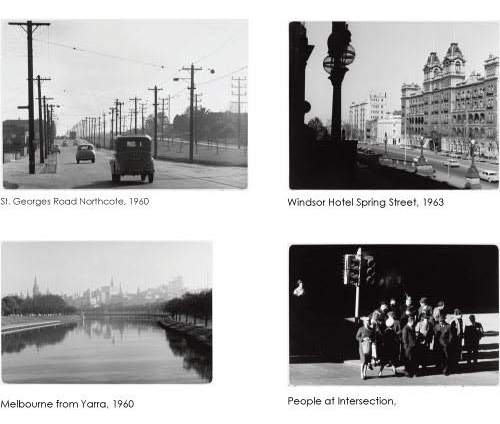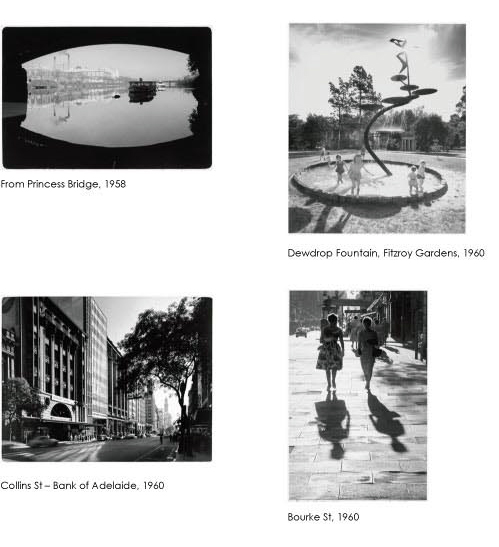
Review: ‘Mark Strizic: Melbourne – A City in Transition (Rare Silver Gelatin Photographs)’ at Gallery 101, Melbourne

“The best photographs do not just record, they challenge and transcend the subject matter taking the work to an altogether different plane of existence.” Dr Marcus Bunyan

Exhibition dates: 8th April – 2nd May, 2009

Curator: Dianna Gold, who served as the director and curator of Gallery 101 from 1991 to 2010


Mark Strizic (Australian, 1908-2012) 'Eastern Market Destruction - 1' 1960 from the exhibition 'Mark Strizic: Melbourne – A City in Transition (Rare Silver Gelatin Photographs)' at Gallery 101, Melbourne, April - May, 2009


Mark Strizic (Australian, 1908-2012)
Eastern Market Destruction – 1
1960, printed 1996
Silver gelatin photograph
19 x 22.5cm


Social Fact and Urban Vision

This is an exhibition by the veteran Australian photographer Mark Strizic that plays like the coda at the end of a piece of music, the pensive full stop at the end of a well read book. There are some stunning highlight photographs among the 139 black and white silver gelatin prints on display, some good photographs and some fairly mundane images and prints. With some judicious editing of the photographs (perhaps by a third), the exhibition could have had a stronger artistic aesthetic and carried the voice of the photographer with greater projection. As it is the exhibition will be popular drawing in the crowds because of the photographs subject matter and their appeal to both an individual and collective nostalgia.

Examining Strizic’s photographs we note a traditional structure to the picture plane. Unlike the photographs of Eugene Atget who photographed Paris in the early 20th century there is little sublime spatial representation in Strizics photographs, that different angle of alignment that Atget achieved with the positioning of his camera. Further, we observe that unlike an immigrant to another country at around the same time, Robert Frank and America, the photographs follow traditional format: none of the revolutionary experimentation in handheld, grainy images of jukeboxes, cut up people or images of flags appear in this work. We can also say that unlike Helen Levitt’s early black and white images of New York from around the same period there is little ‘joie de vivre’, little engagement with the actual nitty gritty stuff of living in Strizic’s work. The quote below articulates what Strizic’s photographs both address and dismiss:

“To walk in the city is to experience the disjuncture of partial vision/partial consciousness. The narrativity of this walking is belied by a simultaneity we know and yet cannot experience. As we turn a corner, our object disappears around the next corner. The sides of the street conspire against us; each attention suppresses a field of possibilities. The discourse of the city is a syncretic discourse, political in its untranslatability. Hence the language of the state elides. Unable to speak all the city’s languages, unable to speak all at once, the state’s language become monumental, the silence of headquarters, the silence of the bank. In this transcendent and anonymous silence is the miming of corporate relations. Between the night workers and the day workers lies the interface of light; in the rotating shift, the disembodiment of lived time. The walkers of the city travel at different speeds, their steps like handwriting of a personal mobility. In the milling of the crowd is the choking of class relations, the interruption of speed, and the machine. Hence the barbarism of police on horses, the sudden terror of the risen animal.”1

We observe in the photographs an emphasis on surfaces, on a supreme understanding of light and shade coupled with a certain distance and emotional remoteness from the frenetic hubbub of city life. Empty streets and isolated people fall into shadow and their is little evidence of ‘play’ in the photographs. This is observation not interaction or integration as an immigrant observing Melbourne life. There is no up front presence of disembodied people as in Robert Franks photographs in The Americans. Here the alienation that pervades the photographs is the alienation of the photographer from the people as much as it is the alienation of the people from themselves. People are shot in silhouette against the sun or shop windows or peering in at unobtainable goods; desolate streets and working class suburbs all express the isolation of city life but at a structured distance from them.

When Strizic’s photographs are good they are very good. His understanding of light is magnificent: light reflects off water, hazes and shimmers off city buildings. The mixing of shadows and sun and his use of the technique of ‘contre jour’ (shooting into the sun) the one thing Strizic does against traditional conventions works to good effect in some of the best photographs. His 1968 night-time long exposure photograph of the old Gas and Fuel Building is rewarding for the black bulk of the end of the building looming over Flinders Street and the striations of car headlamps. The photograph Flinders Lane (1967, below) shows a delicate use of depth of field where the foreground of cars and person are out of focus, the light bouncing off the edges of the woman, the focus of the image in the far distance. The photograph McPhersons Building (1958, below) is one of my personal favourites in the exhibition and is a stunning photograph for the atmosphere the photographer has captured.

After a while the use of the ‘contre jour’ technique becomes tiresome. Other photographs simply document a city in transition. These photographs appeal both to an individual nostalgia (‘I used to work in that building’; ‘My grandmother used to live in that street’) and a collective nostalgia where people experience things collectively, “in the sense that [collective] nostalgia occurs when we are with others who shared the event(s) being recalled, and also in the sense that one’s nostalgia is often for the collective – the characteristics and activities of a group or institution in which the individual was a participant.”2

Collective nostalgia refers to that condition in which the symbolic objects are of a highly public, widely shared and familiar character, i.e. those symbolic resources from the past which can under proper conditions trigger off wave upon wave of nostalgic feeling in millions of persons at the same time3 and in this exhibition it is the photographs of a city in transition that trigger this nostalgia, a city now lost to the mists of time. Through these photographs we remember what Melbourne was like at this time collectively.

As Harper has observed

“Nostalgia combines bitterness and sweetness, the lost and the found, the far and near, the new and the familiar, absence and presence. The past which is over and gone, from which we have been or are being removed, by some magic becomes present again for a short while. But its realness seems even more familiar, because renewed, than it ever was, more enchanting and more lovely …”4

Does this collective nostalgia make the photographs good? This is a pertinent question.

Today, nostalgia has become a cultural phenomenon one centred on a longing for home (home is where you are happy to be!) in a collective sense and promoted through commercialisation and the realisation that nostalgia sells. The use of the value seeking word ‘rare’ in the exhibition title is instructive in this regard. Only about 25% of the photographs in this exhibition are “vintage” prints, in other words photographs printed within 3 years of the negative being taken. All other photographs have been printed within the last 15 years. Some are ‘Unique state’ gelatin photographs while others are not. What does this mean. Are they are unique state only in this size? What about the common or garden silver gelatin prints in the show? What does the status word “rare” imply for them?

I remember seeing an exhibition of the photographs of Henri Cartier-Bresson in Scotland about ten years ago. Three rooms had large prints of his work. One room just had vintage prints. The contrast was astounding. The room full of vintage prints had an intensity of vision, of his vision at the time he took the photographs evidenced in small jewel like photographs that the three other rooms photographs simply did not possess – through scale, printing and aesthetics. The same question, without any need for an answer, can be posed here. Only the word ‘rare’ demands that answer for the modern prints are just what they are and nothing more.

In conclusion this is a strong show by Strizic that could have been edited and focused in a more rewarding way. Strizic is one of Australia’s best photographers for understanding the significance of place. His use of light is superb but there always seems to be an emotional distance to his photographs. An element of collective nostalgia adds to their documentary appeal but the best photographs do not just record, they challenge and transcend the subject matter taking the work to an altogether different plane of existence.

Dr Marcus Bunyan


1/ Stewart, Susan. On Longing: Narratives of the Miniature, the Gigantic, the Souvenir, the Collection. Durham: Duke University Press, 1993, p. 2. Prologue

2/ Wilson, Janelle. “”Remember when …” a consideration of the concept of nostalgia,” in et Cetera. Concord: Fall 1999. Vol. 56, Iss. 3; pg. 296, 9 pgs

3/ Davis, F. Yearning For Yesterday: A Sociology of Nostalgia. New York: The Free Press, 1979, p. 222

4/ Harper, R. Nostalgia: An Existential Exploration of Longing and Fulfilment in the Modern Age. The Press of Western Reserve University, 1966, p. 120 quoted in Wilson, Janelle. “”Remember when …” a consideration of the concept of nostalgia,” in et Cetera. Concord: Fall 1999. Vol. 56, Iss. 3; pg. 296, 9 pgs


Many thankx to Gallery 101 for allowing me to publish the photographs in the posting. Please click on some of the photographs for a larger version of the image.


Installation view of the exhibition 'Mark Strizic: Melbourne - A City in Transition' exhibition at Gallery 101, Melbourne

Installation view of the exhibition 'Mark Strizic: Melbourne - A City in Transition' exhibition at Gallery 101, Melbourne

Installation view of the exhibition 'Mark Strizic: Melbourne - A City in Transition' exhibition at Gallery 101, Melbourne


Installation views of the exhibition Mark Strizic: Melbourne – A City in Transition exhibition at Gallery 101, Melbourne
Photos: Marcus Bunyan


Mark Strizic, one of Australia’s eminent photographic artists presents us with nostalgic views of Melbourne and the changing face of the city in rare silver gelatin photographs. The exhibition, Melbourne – A City in Transition will be held at Gallery 101 from 8th April – 2nd May. There will be an evening artist reception on Thursday 9th April to celebrate the opening of the exhibition. Strizic’s oeuvre represents a collection of iconic images of architecture and of life – a record of the changing face of a migrating society of new prosperity, youth and popular culture – taken with a sympathetic eye for humanistic detail.

The exhibition will coincide with the announcement of the forthcoming publication, Mark Strizic, Melbourne: Marvellous to Modern, published by Thames & Hudson in association with the State Library of Victoria. In 2007, the State Library of Victoria acquired Mark Strizic’s entire archive of approximately 5000 negatives, colour transparencies and slides. In addition, the Library holds a fine collection of Strizic photographs, including examples of all types of photographic print, from gelatin silver to digital, produced by the photographer during his long career.

Press release from Gallery 101


Mark Strizic photographs

Mark Strizic photographs

Mark Strizic photographs

Mark Strizic photographs

Mark Strizic photographs


“‘Melbourne – A City in Transition’ is a collection of iconic images of Melbourne city life taken with a sympathetic eye for humanist detail. Strizic accurately depicts the joys and hardships experienced in everyday life with a fresh and living memory. He successfully captures the vicarious essence of suburban life. His portrait of Melbourne includes the city, harbour and river banks – streets and trams, pavements, arcades and lanes, stations and bridges, billboards and facades and public sculpture. We see people going about their daily activities – commuting, shopping at leisure, trading, embracing, conversing, reading the newspaper and visiting the beach. Other works record the demolition and construction of building sites and the changing face of Melbourne, both in society and the urban landscape.”


Text from the exhibition flyer


“In these eloquent studies of light and shadow, Strizic finds beauty in the commonplace – Melbourne’s desolate lanes, street paving, derelict ferries – adopting interesting camera angles, viewpoints and cropping. Through his images, this visual humanist teaches us to observe, to see our surroundings, perhaps with the intention of stimulating us to a higher level of civilisation.”


Emma Matthews. Mark Strizic, Melbourne: Marvellous to Modern. Thames & Hudson in association with the State Library of Victoria, September, 2009.


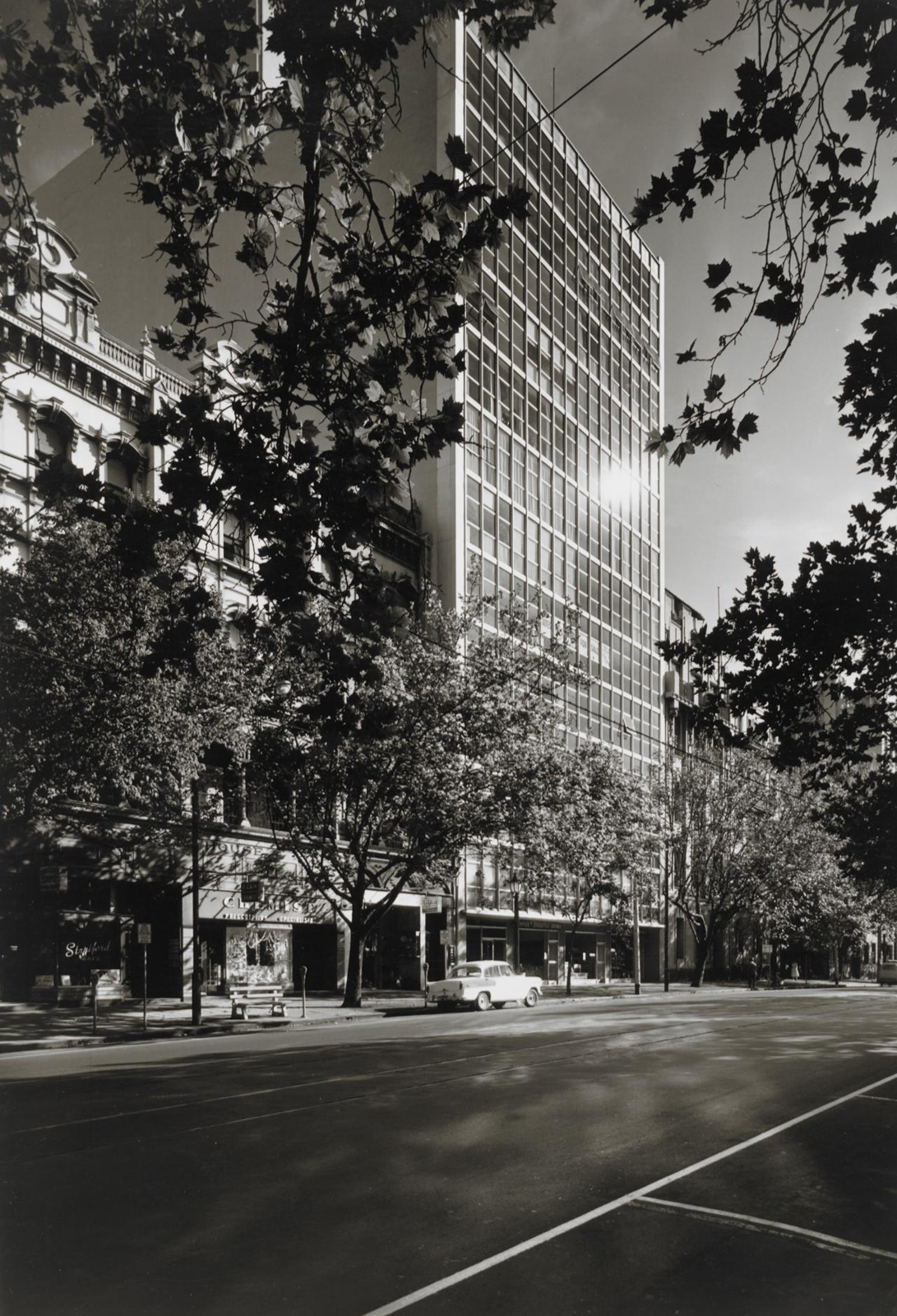
“This magnificent collection of photographs arose from the creativity of a young photographer and his adoption of his new home town, Melbourne. His pictures were taken at a time when the Victorian elegance of the city once known as ‘Marvellous Melbourne’ was being punctuated by a wave of development and the modern architectural movement. Today Mark Strizic is renowned as a photographer. In the 1950s he was a young science student from Europe playing with the possibilities of the camera. As he gained work as a professional his commercial success was accompanied by the instincts and eye of an artist. His solid technicality was accompanied by the whimsy and wit that made him the ‘poet of the fleeting movement’. The versatility of his work shows us many aspects of Melbourne – its magnificent architectural heritage, its intimate and vibrant laneways, its grand arcades counter-posed against the sudden spaces of the wrecker, the brash intrusion of the glass and concrete skyscrapers, the poignancy of poverty in the rundown inner suburbs. We see the people, on grand occasions such as the 1954 Royal Visit, or just caught in their own world of travelling, shopping, resting, walking, working.”


Mark Strizic, Melbourne: Marvellous to Modern 
book cover


Mark Strizic (Australian, 1908-2012) 'From Princes Bridge' 1958


Mark Strizic (Australian, 1908-2012)
From Princes Bridge
1958, printed 2006
Silver gelatin photograph
58 x 39cm


Mark Strizic. 'Near Spencer Street - 1' 1950


Mark Strizic (Australian, 1908-2012)
Near Spencer Street – 1
1950
Silver gelatin photograph
27.5 x 38.5cm


Mark Strizic. 'At St. Pauls' 1954


Mark Strizic (Australian, 1908-2012)
At St. Pauls (St Paul’s Cathedral steps)
1954, printed 1999
Silver gelatin photograph
17.8 × 24.5cm


Mark Strizic (Australian, 1908-2012) 'St Paul's Cathedral steps' 1954


Mark Strizic (Australian, 1908-2012)
St Paul’s Cathedral steps
1954, printed 1999
Silver gelatin photograph
17.8 × 24.5cm


Mark Strizic (Australian, 1908-2012) 'Collins Street at Russell Street' 1957, printed 1997


Mark Strizic (Australian, 1908-2012)
Collins Street at Russell Street
1957, printed 1997
Unique silver gelatin photograph
39 x 56cm


Mark Strizic (Australian, 1908-2012) 'St Georges Road, Northcote at Summer Av.' 1958


Mark Strizic (Australian, 1908-2012)
St Georges Road, Northcote at Summer Av.
1958, printed 1998
Silver gelatin photograph


Mark Strizic (Australian, 1908-2012) 'St. Patrick's Cathedral' January 1967


Mark Strizic (Australian, 1908-2012)
St. Patrick’s Cathedral
January 1967, printed 1998
Unique silver gelatin photograph
27 x 41cm


Mark Strizic (Australian, 1908-2012) 'Bourke Street from the Parliament' 1967


Mark Strizic (Australian, 1908-2012)
Bourke Street from the Parliament – 2
1967, printed 1998
Silver gelatin photograph
38 x 27cm


Mark Strizic (Australian, 1908-2012) 'Russell Street Pawn Shop' 1958


Mark Strizic (Australian, 1908-2012)
Russell Street Pawn Shop
1958
Silver gelatin photograph


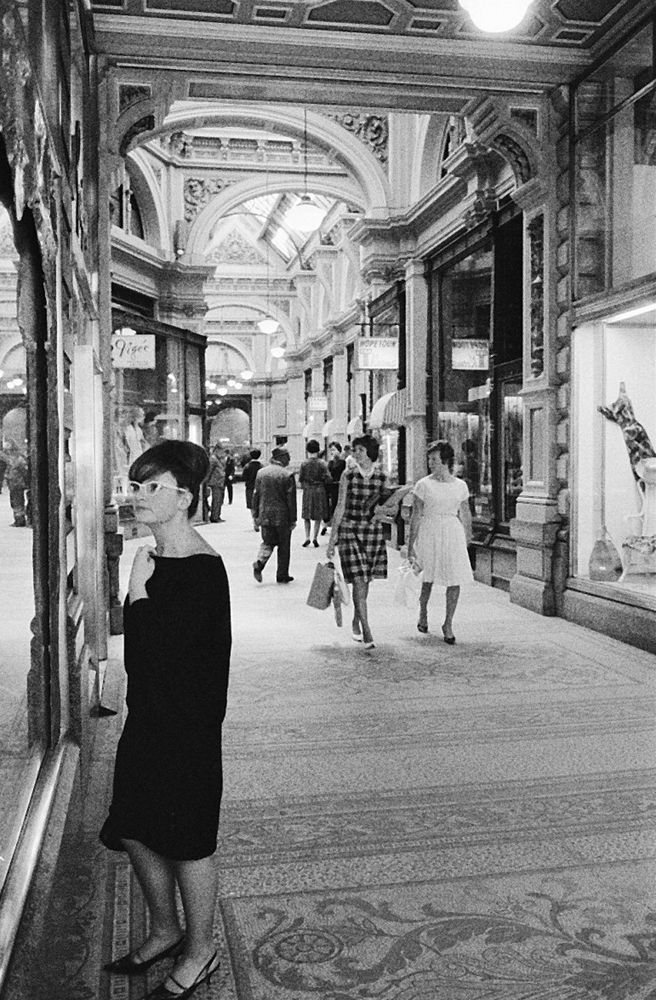
Mark Strizic (Australian, 1908-2012) 'Block Arcade' 1967


Mark Strizic (Australian, 1908-2012)
Block Arcade
1967, printed February 2008
Unique silver gelatin photograph
53.5 x 37cm


Mark Strizic (Australian, 1908-2012) 'From Princes Bridge' (Winter moorings from Princes Bridge) 1955


Mark Strizic (Australian, 1908-2012)
From Princes Bridge (Winter moorings from Princes Bridge)
1955, printed 2006
Silver gelatin photograph
58 x 39cm


Mark Strizic (Australian, 1908-2012) 'Flinders Lane' 1967


Mark Strizic (Australian, 1908-2012)
Flinders Lane
1967, printed 1998
Unique silver gelatin photograph
41 x 41cm


Mark Strizic (Australian, 1908-2012) 'Swan Street, Richmond, at Church Street' 1963


Mark Strizic (Australian, 1908-2012)
Swan Street, Richmond, at Church Street
1963
Silver gelatin photograph


Mark Strizic (Australian, 1908-2012) 'Queensberry Street at Errol Street, North Melbourne' 1963


Mark Strizic (Australian, 1908-2012)
Queensberry Street at Errol Street, North Melbourne
1963
Silver gelatin photograph


Mark Strizic (Australian, 1908-2012) 'Swan Street at Church Street' 1963


Mark Strizic (Australian, 1908-2012)
Swan Street at Church Street
1963, printed 1998
Silver gelatin photograph


Mark Strizic (Australian, 1908-2012) 'Coates Building' 1960


Mark Strizic (Australian, 1908-2012)
Coates Building
1960, printed 1961
Vintage silver gelatin photograph
23.5 x 15cm


Mark Strizic. 'Macphersons Building -1' 1958


Mark Strizic (Australian, 1908-2012)
Macphersons Building – 1
1958
Silver gelatin photograph


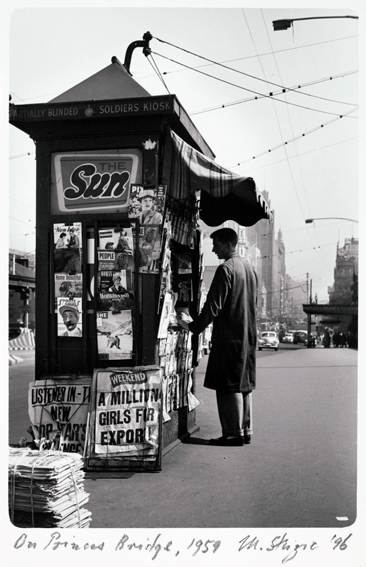
Mark Strizic. 'On Princes Bridge' 1959


Mark Strizic (Australian, 1908-2012)
On Princes Bridge
1959, printed 1996
Silver gelatin photograph
17 x 24cm


Gallery 101

This gallery is now closed.

LIKE ART BLART ON FACEBOOK

Back to top

Vale Helen Levitt: Always ‘Here and There’

“Levitt’s superb lush colour photographs taken after 1970 engage the viewer not in memory but in the moment, not in nostalgia but in joy.” Dr Marcus Bunyan

April 2009


Helen Levitt (American, 1913-2009) 'New York' c. 1971


Helen Levitt (American, 1913-2009)
New York
c. 1971
© Helen Levitt


“For the perfect flaneur, for the passionate spectator, it is an immense joy to set up house in the heart of the multitude, amid the ebb and flow of movement, in the midst of the fugitive and infinite. To be away from home and yet to feel oneself everywhere at home; to see the world, to be at the centre of the world, and yet to remain hidden from the world … Thus the lover of universal life enters into the crowd as though it were an immense reservoir of electrical energy …”


Charles Baudelaire. The Painter of Modern Life 1863


“At least a dozen of Helen Levitt’s photographs seem to me as beautiful, perceptive, satisfying, and enduring as any lyrical work that I know. In their general quality and coherence, moreover, the photographs as a whole body, as a book, seem to me to combine into a unified view of the world, an uninsistent but irrefutable manifesto of a way of seeing, and in a gently and wholly unpretentious way, a major poetic work.”


James Agee


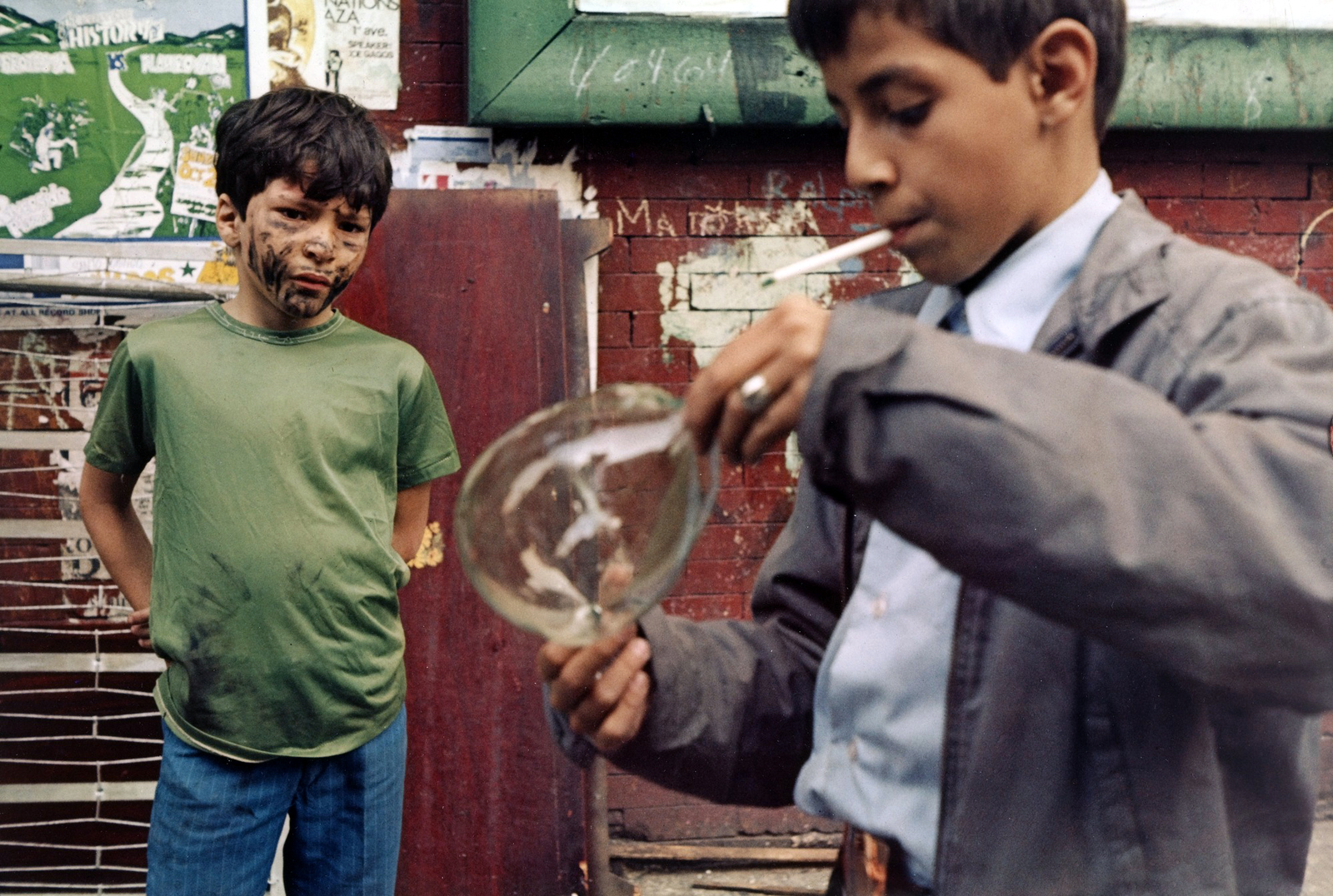
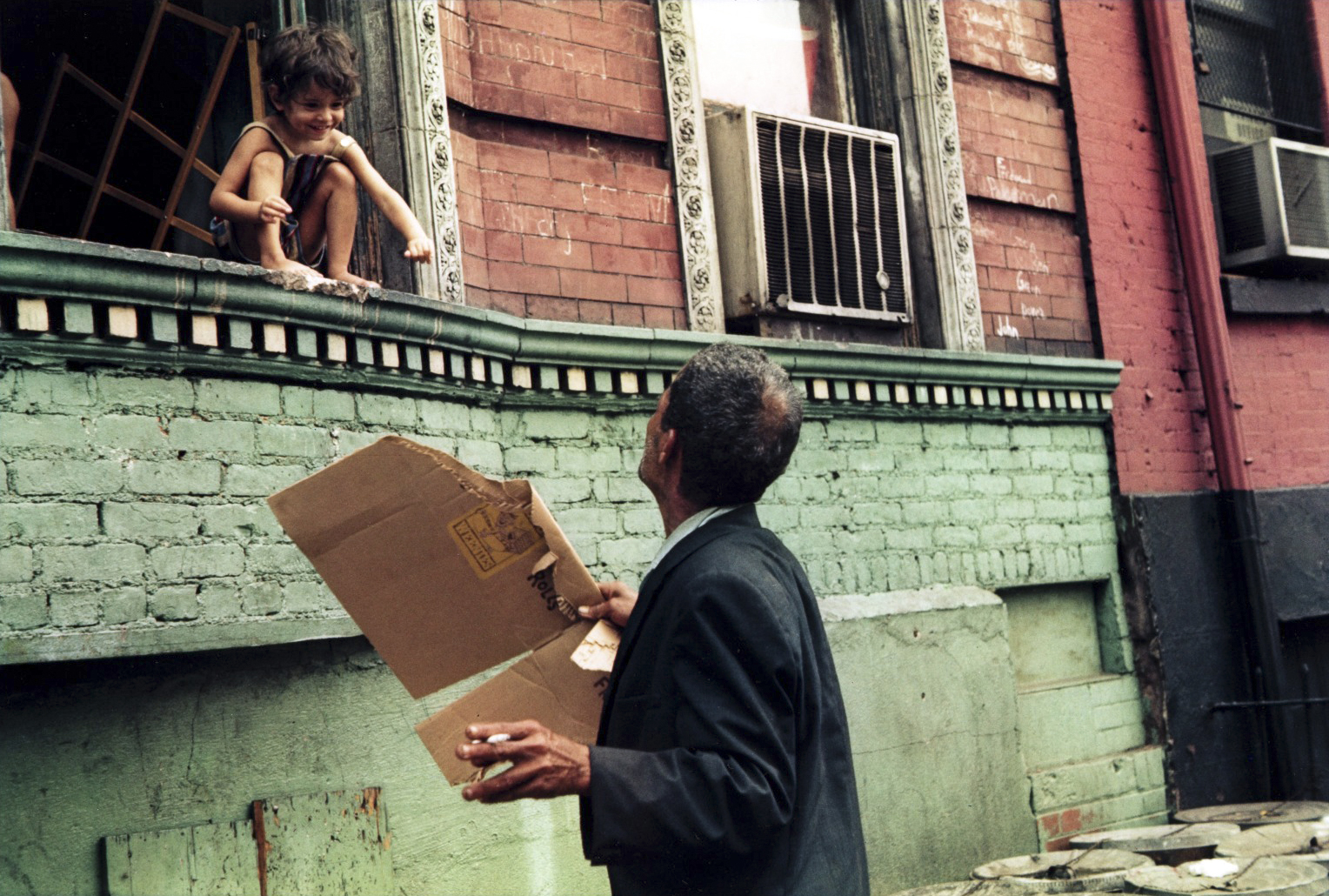
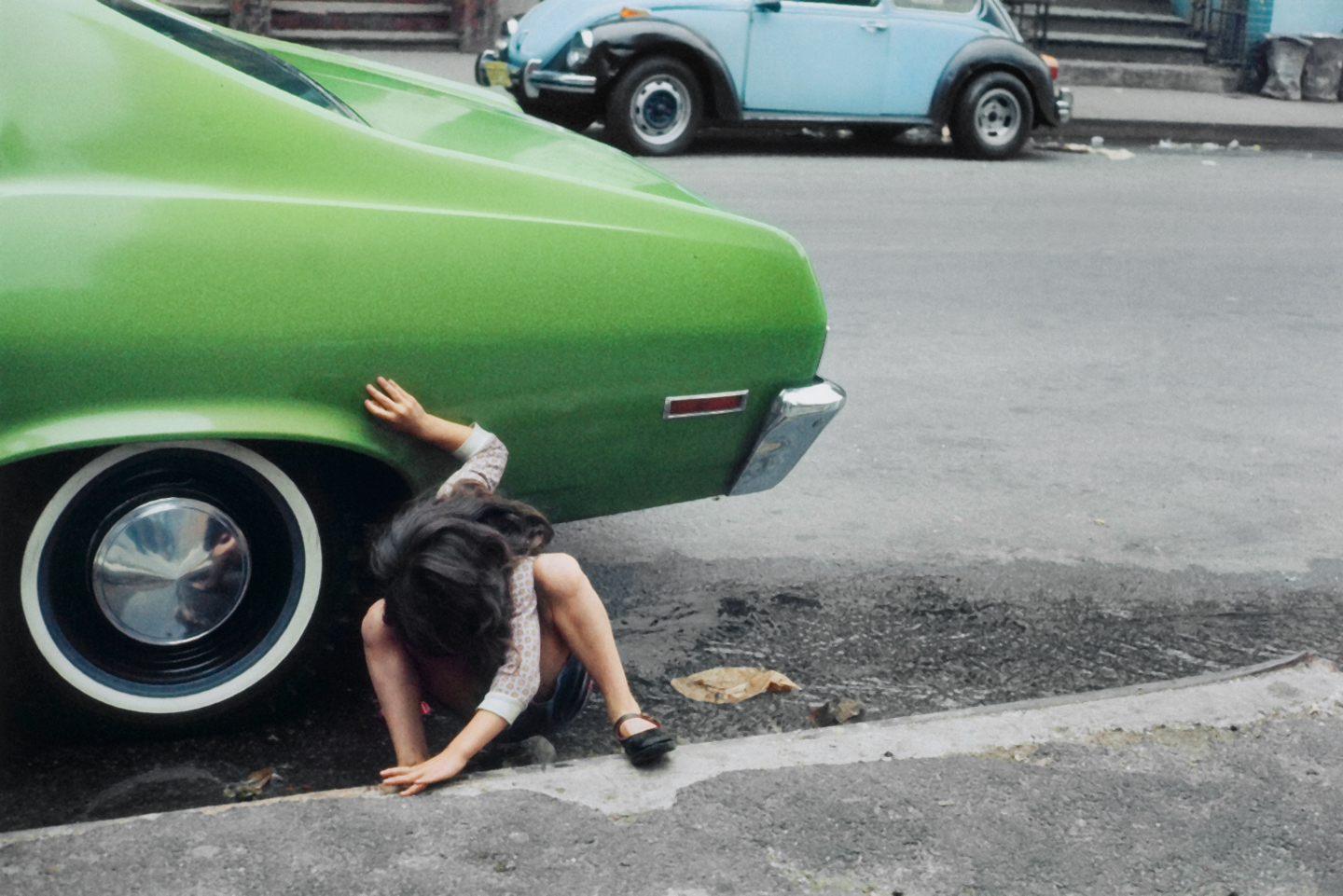
Speaking of pioneers of colour photography the wonderful American photographer Helen Levitt died recently at the end of March.

Here is a selection of her colour work from the 1970s – 1980s. With two Guggenheim Foundation grants in 1959 and 1960 she switched from black and white to colour dye-transfer prints photographing the theatre of the street, the serendipity of the decisive moment previsualised and captured through awareness and an intimate knowledge of her subject matter. Unfortunately in a burglary in 1970 most of her colour transparencies and prints were stolen from that initial period.

What remains, as Sally Mann would say, are the eloquent bones of the matter: superb lush colour photographs taken after 1970 that engage the viewer not in memory but in the moment, not in nostalgia but in joy.

In colour she found “beauty in correspondences.”

Dr Marcus Bunyan


Please click on some of the photographs for a larger version of the image.


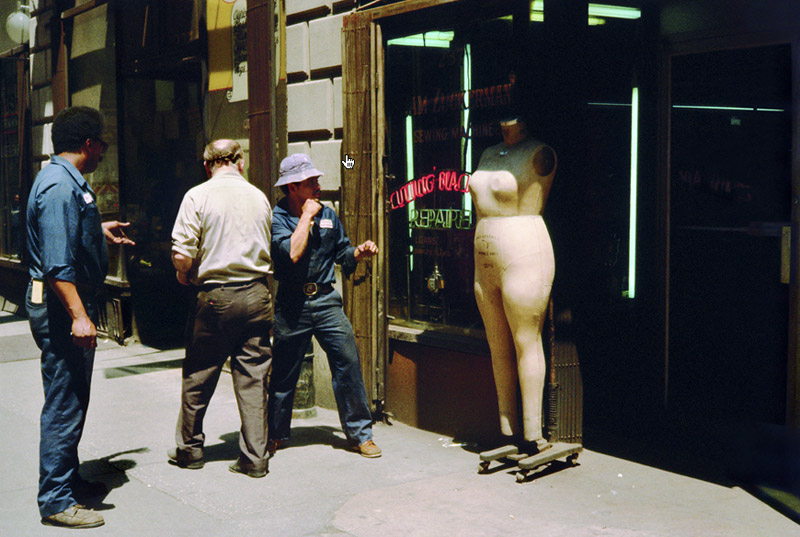
Helen Levitt (American, 1913-2009) 'New York' c. 1971


Helen Levitt (American, 1913-2009)
New York
c. 1971
© Helen Levitt


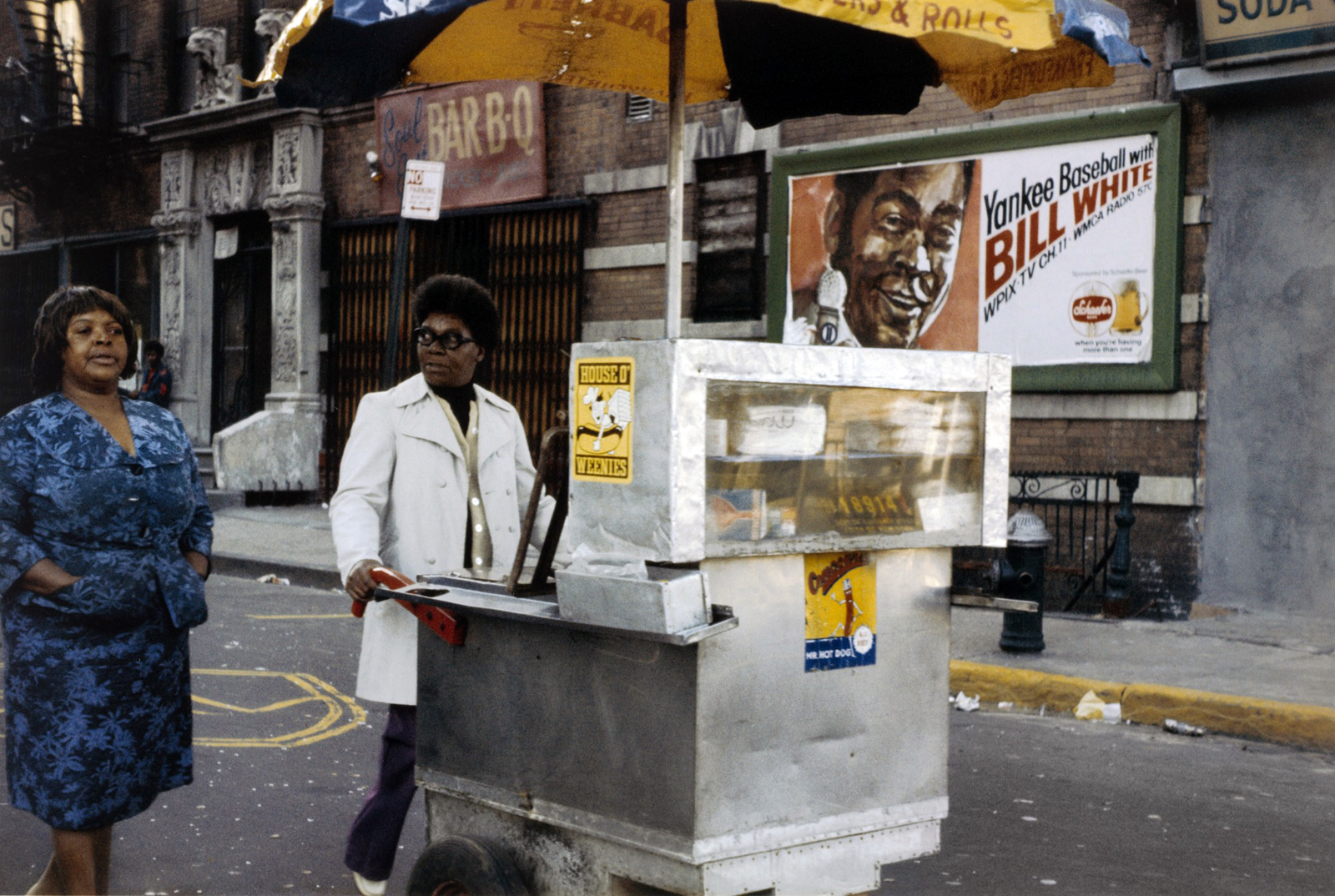
Helen Levitt (American, 1913-2009) 'New York' 1972


Helen Levitt (American, 1913-2009)
New York
1972
© Helen Levitt


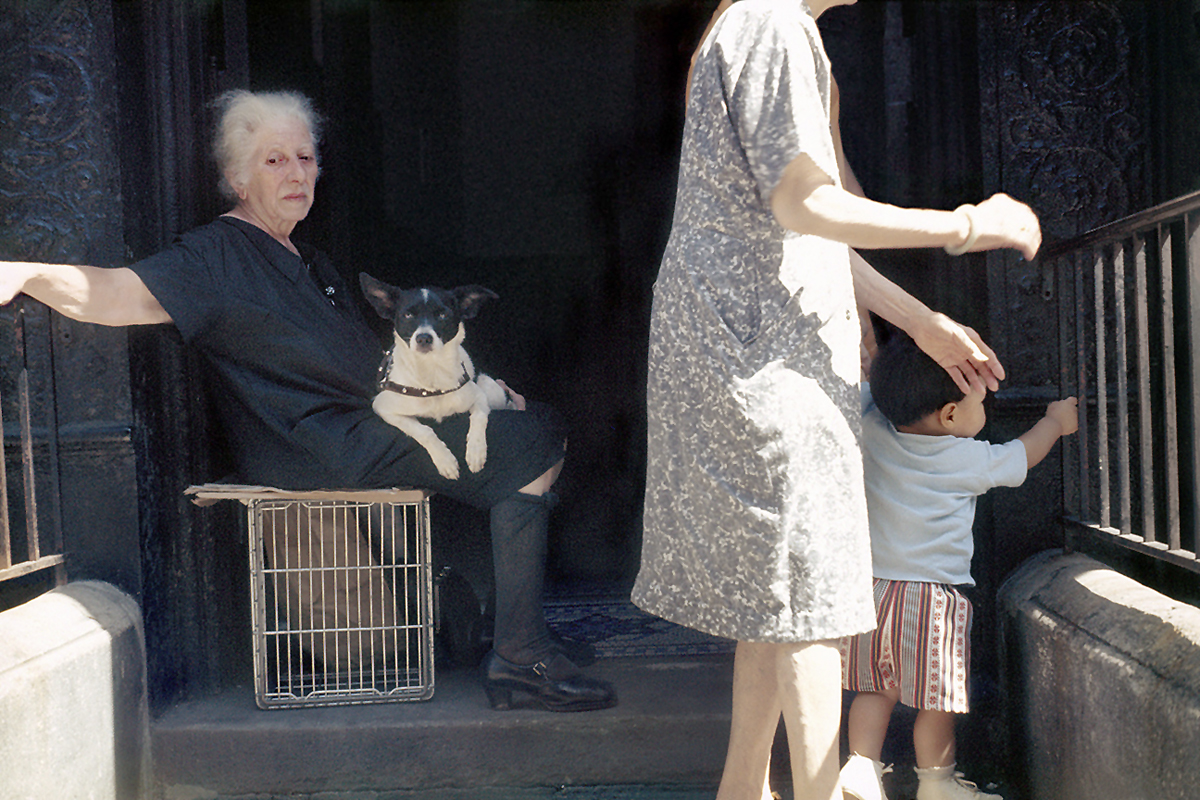
Helen Levitt (American, 1913-2009) 'New York' c. 1971


Helen Levitt (American, 1913-2009)
New York
c. 1971


Helen Levitt (American, 1913-2009) 'New York' 1971


Helen Levitt (American, 1913-2009)
New York
1971
© Helen Levitt


Helen Levitt

… Her pictures were mostly of Spanish Harlem and the Lower East Side. She shot them in black and white, as silver gelatin prints, in the 1930s and 1940s and in colour dye-transfer prints in the 1960s and 1970s. In between, she got into movie-making for a while. Her theme was the same, the streets of New York. Apart from a trip in 1941 to Mexico City, she never found a better subject in her life.

The grittier parts were her particular joy. Her world was run-down streets, rubble-filled building sites, warehouses and litter-strewn front steps. This was urban photography with a vengeance: small scraps of sky, no trees. When she was going with Walker Evans in 1938, borrowing his camera as well (“of course”) as sleeping with him, he used to be afraid of going as far uptown as she did. Some of her young male subjects, lounging around in their zoot suits and fedoras, had an unmistakable air of menace. But mostly she brought back images of gossiping women and her favourite, scrambling children. A right-angle viewfinder allowed her to take the picture without them knowing, even, as Evans showed her, when riding right beside them in the subway.

Here and there

Her birthplace was in Brooklyn, where her father was in the wholesale knitwear business. She aspired to something more artistic, but found she couldn’t draw. For a time she trained in ballet, which taught her to appreciate the musculature of posing bodies and the spontaneous grace of her child subjects. After dropping out of high school she went to work in the darkroom of Florian Mitchell’s commercial portrait-photography studio on $6 a week. There she was hooked.

A good image, she thought, was just lucky. But her New Yorker’s instinct seemed to tell her exactly where to wait for one. A broken-down car would soon attract people to lie under it, peer under the hood or try to push it. A cane chair, put out on the sidewalk, would draw an elderly man with cigar and newspaper, or a plump young woman in a housecoat wilting in the heat. With luck dogs would come out too, rough-haired mutts or poodles with fresh-shampooed coats. The open back of a truck would reveal delivery men moping on piles of sacks, or dozing among pink and blue bales of cloth. Any abandoned thing – a tea-chest, a mirror frame, the pillared entry of an empty building – would soon sport knots of children diving in, climbing up, fighting and contorting their small bodies in every kind of way.

Her pictures did not have names. “New York”, and the year, was the label on most of them. They did not need explaining; they were “just what you see”. Many had a backdrop of posters, graffiti or billboards, which gave a commentary of sorts. “Special Spaghetti 25 cents.” “Post No Bills.” “Nuts roasted daily.” “Buttons and Notions, One Flight Up.” “Bill Jones Mother is a Hore.” Her earliest project with her first, secondhand camera was to photograph children’s chalk drawings on the pavements. She never tried to speculate on them. What mattered was the patterns they made.

In the 1960s, when she got two Guggenheim grants, she began to shoot the streets in colour. The tricky developing ultimately frustrated her, and the streets, too, had changed. The children had retreated indoors to watch television. But where she had found grace and texture in black and white, colour now provided beauty in correspondences. The multi-coloured balls in bubble-gum machines could be picked up in a girl’s dress, or the red of a stiletto shoe matched with the frame of a shop window. Her broken-down cars were now lurid beasts against the stucco walls. And out of her peeling, greenish doorways could come women in furs, or pink hair-curlers, or orange-striped socks.

She did not rate her own work highly. Though her original prints eventually sold for tens of thousands of dollars, she let them pile up in her apartment in boxes labelled “Nothing good” or “Here and there”. Her hopes when she started were for photographs that would make a socialist statement of some sort, but she abandoned that on Cartier-Bresson’s advice. A “nice picture”, as she reluctantly admitted some of hers were, was a work of art that had value in itself, as well as a celebration of the random, teeming work of art that is the city of New York.

Anonymous. “Helen Levitt,” on The Economist website April 8th 2009 [Online] Cited 16/04/2009. No longer available online. Used under fair use conditions for the purposes of education and research


Helen Levitt (American, 1913-2009) 'New York' c. 1972


Helen Levitt (American, 1913-2009)
New York
c. 1972
© Helen Levitt


Helen Levitt (American, 1913-2009) 'New York' c. 1972


Helen Levitt (American, 1913-2009)
New York
c. 1972
© Helen Levitt


Helen Levitt (American, 1913-2009) 'New York' 1972


Helen Levitt (American, 1913-2009)
New York
1972
© Helen Levitt


Helen Levitt (American, 1913-2009) 'New York' 1980


Helen Levitt (American, 1913-2009)
New York
1980
© Helen Levitt


Helen Levitt (American, 1913-2009) 'New York' 1971


Helen Levitt (American, 1913-2009)
New York
1971
© Helen Levitt


Slide Show: The Color Photographs of Helen Levitt by John Szarkowski, Powerhouse Books, 2005 is available from the Amazon website. The photograph above is used on the cover of the book.

LIKE ART BLART ON FACEBOOK

Back to top

Exhibition: ‘Into the Sunset: Photography’s Image of the American West’ at The Museum of Modern Art (MoMA), New York

Exhibition dates: 29th March – 8th June, 2009

Curator: Eva Respini, Associate Curator, Department of Photography, The Museum of Modern Art


Carelton Watkins (American, 1829-1916) 'View from the Sentinel Dome, Yosemite' 1865-1866 from the exhibition 'Into the Sunset: Photography's Image of the American West' at The Museum of Modern Art (MoMA), New York, March - June, 2009

Carelton Watkins (American, 1829-1916) 'View from the Sentinel Dome, Yosemite' 1865-1866

Carelton Watkins (American, 1829-1916) 'View from the Sentinel Dome, Yosemite' 1865-1866


Carelton Watkins (American, 1829-1916)
Views from the Sentinel Dome, Yosemite
1865-1866
Albumen silver prints from glass negatives
Museum of Modern Art, New York


The Museum of Modern Art presents Into the Sunset: Photography’s Image of the American West, a survey of 138 photographic works dating from 1850 to 2008 that chart the West’s complex, rich, and often compelling mythology via photography. The exploration of a large part of the American West in the mid-nineteenth century by European Americans coincided with the advent of photography, and photography and the West came of age together. The region’s seemingly infinite bounty and endless potential symbolised America as a whole, and photography, with its ability to construct persuasive and seductive images, was the perfect medium with which to forge a national identity. This relationship has resulted in a complex association that shapes the perception of the West’s social and physical landscape to this day. With political, cultural, and social attitudes constantly shifting in the region over the last 150 years, Into the Sunset further examines the way photographers have responded to these changes. The exhibition is organised by Eva Respini, Associate Curator, Department of Photography, The Museum of Modern Art, and is on view in the Special Exhibitions Gallery on the third floor from March 29 to June 8, 2009.

Organised thematically rather than chronologically, Into the Sunset brings together the work of over 70 photographers, including Robert Adams, John Baldessari, Dorothea Lange, Timothy O’Sullivan, Cindy Sherman, Joel Sternfeld, Carleton E. Watkins, and Edward Weston, among others. The exhibition draws extensively from MoMA’s collection, along with private and public collections in the United States, and features new acquisitions from Adam Bartos, Katy Grannan, and Dennis Hopper, with each work also on view for the first time at the Museum.

Ms. Respini states: “Ranging from grand depictions of paradise to industrial development, from pictures taken on the road to prosaic suburban scenes, the photographs included in Into the Sunset do not all picture the West from the same point of view, or even perhaps, picture the same West. Rather, each is one part in a continually shifting and evolving composite image of a region that has itself been growing and changing since the opening of the frontier.”

Into the Sunset begins with the birth of photography and the American West. In the mid-nineteenth century, the region’s seemingly infinite bounty and endless potential symbolised America as a whole, and Carleton E. Watkins (American, 1829-1916) captured the grand depictions of an American paradise in his photographs of Yosemite Valley in California. Arguably the world’s first renowned landscape photographer, Watkins made his first photographs there in 1861 – large sized prints made with an 18-by-22-inch mammoth plate camera, well suited to the grandeur of the land. Included are the three contiguous photographs that make up his extraordinarily detailed View from the Sentinel Dome (1865-1866).

The exhibition balances the early work of landscape photographers with the twentieth century focus on the failure of the West’s promised bounty. In Joel Sternfeld’s (American, b. 1944) After a Flash Flood, Rancho Mirage, California (1979), the photographer documents the impact of a natural disaster, specifically a landslide, shot with neutral tones softly camouflaging the extent of flash flood on this suburban neighbourhood. And in Karin Apollonia Müller’s (German, b. 1963) Civitas (1997), the photographer shows a very different view of California than that of Watkins, with Müller revealing a contemporary Los Angeles as a littered wasteland of freeways and anonymous glass towers.

As highways and interstate travel became more prevalent, the automobile and the open road became synonymous with the region, with Edward Weston (American, 1886-1958) as the first great photographer of these open roads. Included is Weston’s iconic Hot Coffee, Mojave Desert (1937), a humorous black-and-white photograph of a road sign revealing a greater thematic shift to the highway and its signage as an inescapable element in picturing the West in the twentieth century.

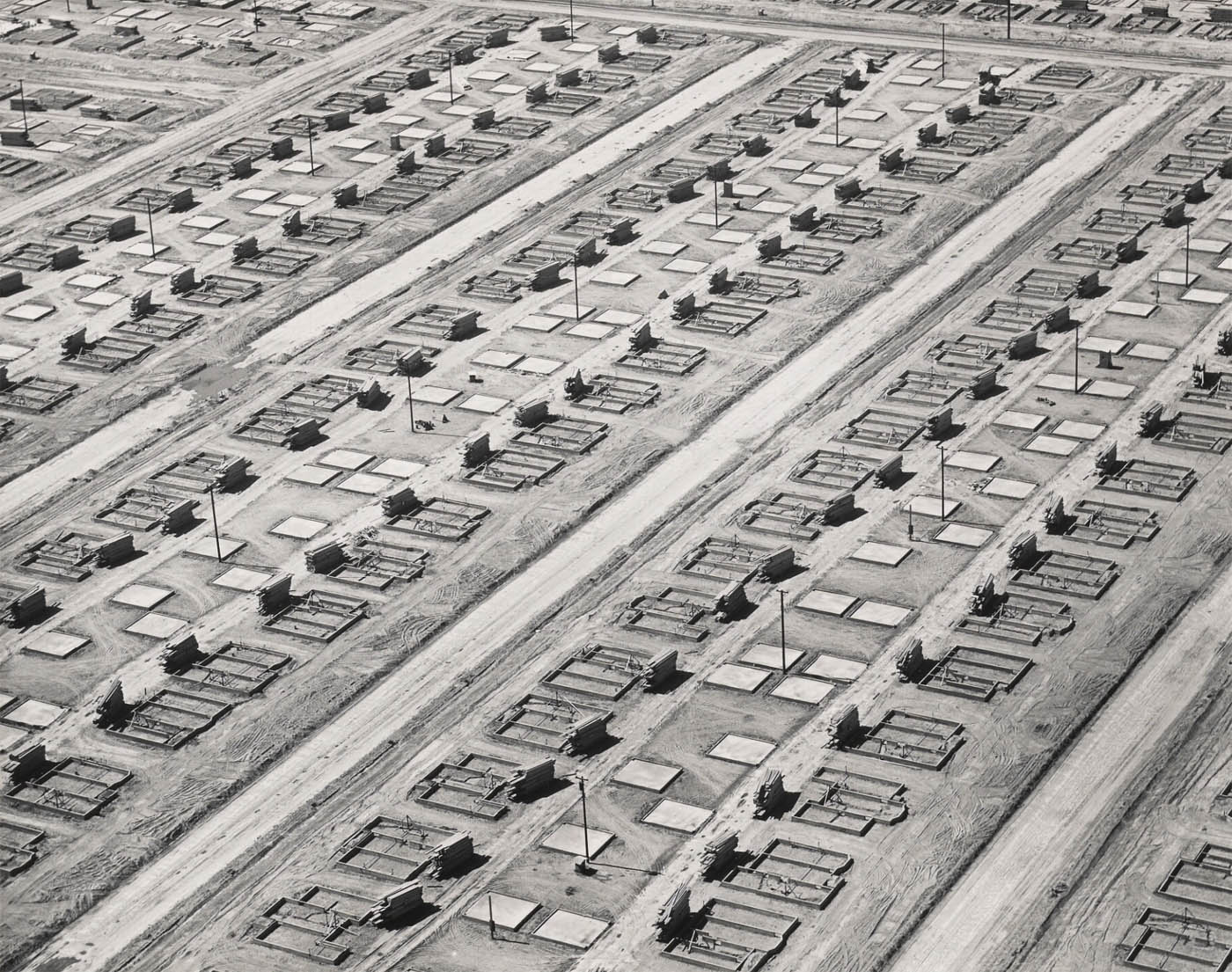
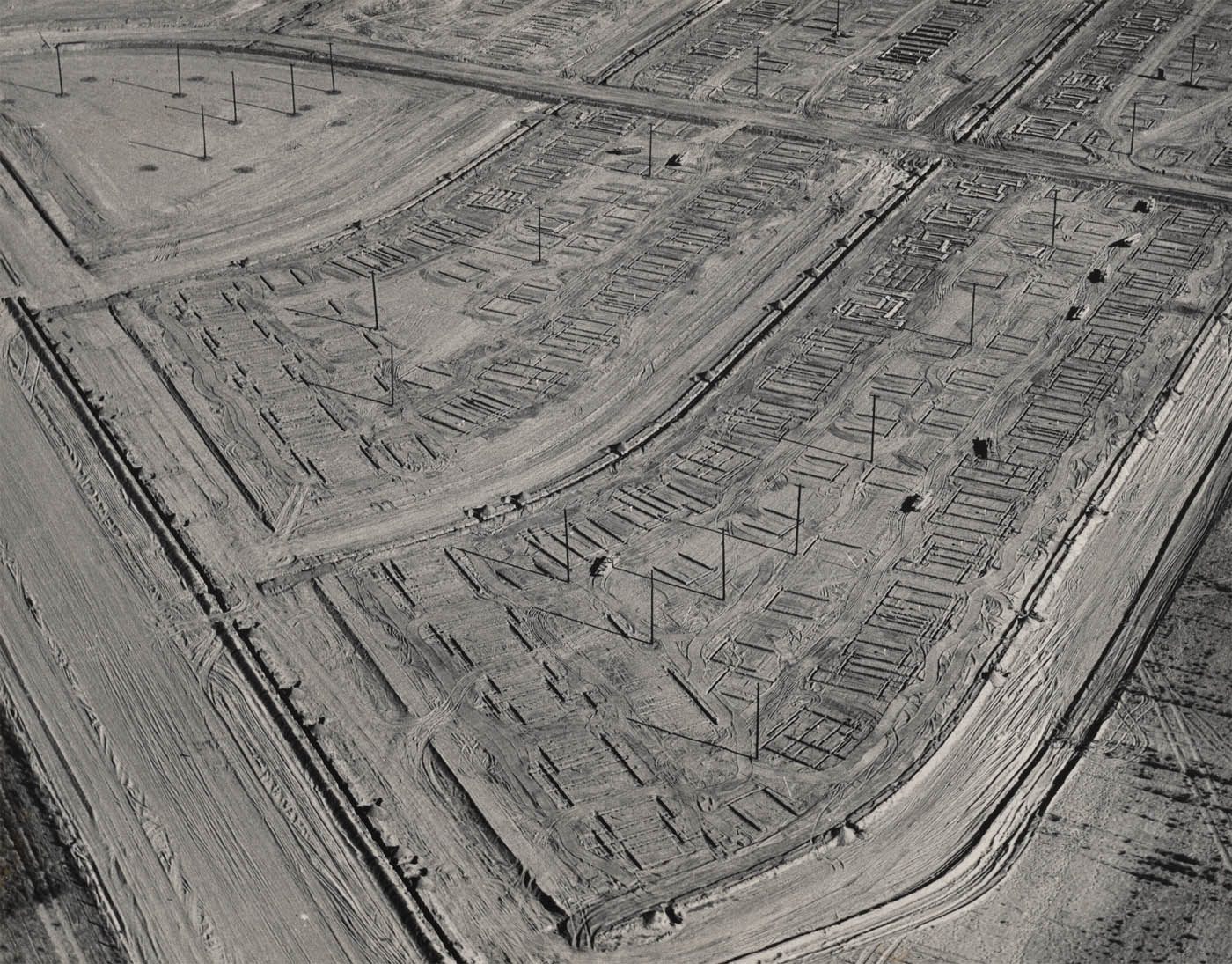
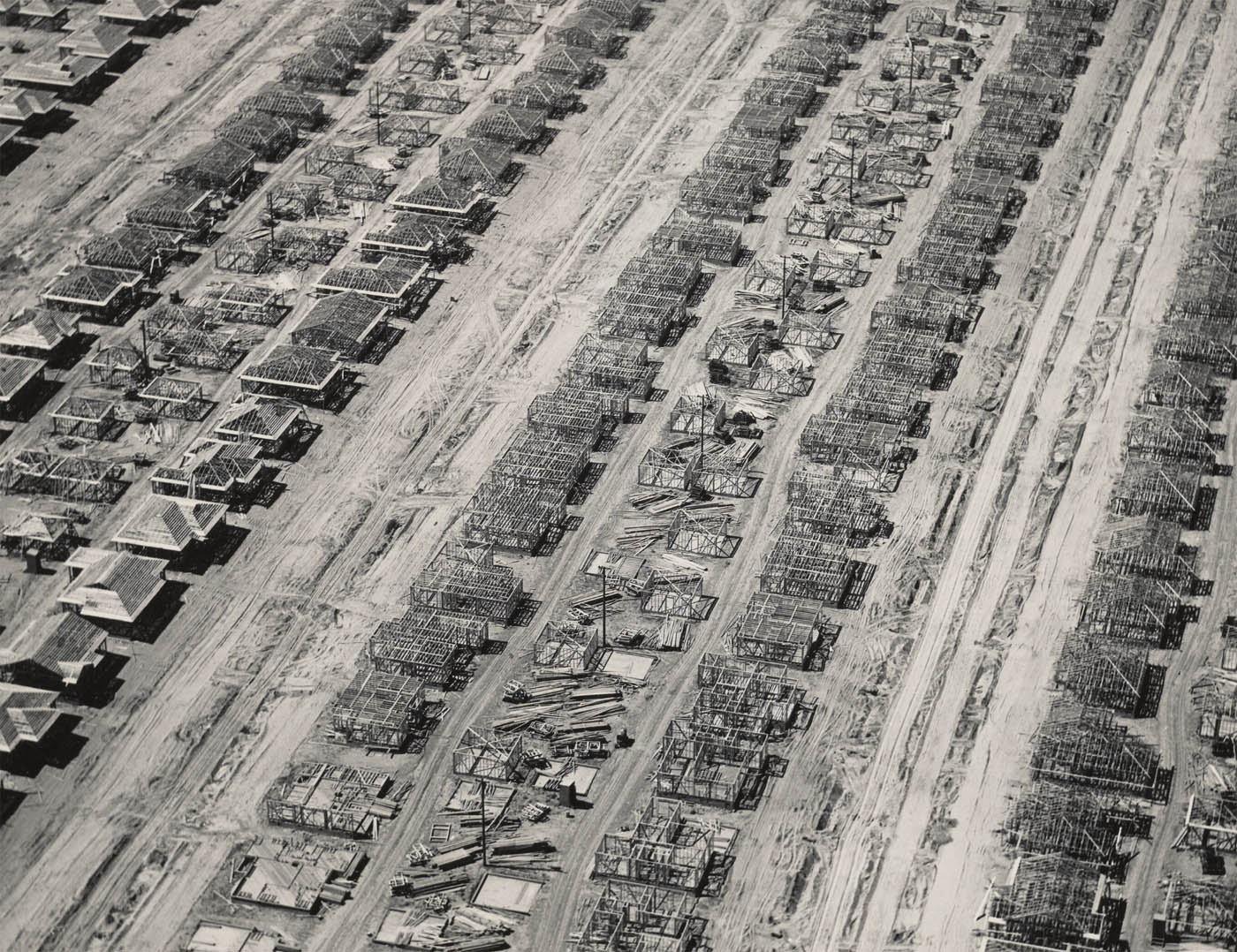
Once the West became more populated, photographers began to showcase humans’ effects on the land, including images of industrial development. In the 1950s William Garnett (American, 1916-2006) was hired by a real estate company to record the efficiency of mass-produced housing. For this series, Lakewood, California (1950), Garnett took photographs of the neighbourhood from an airplane, resulting in images that are completely devoid of people and focus on the progress of mass-produced construction. However, the series subsequently came to represent all that was wrong with such development and the massive sprawl of the West in the eyes of its critics.

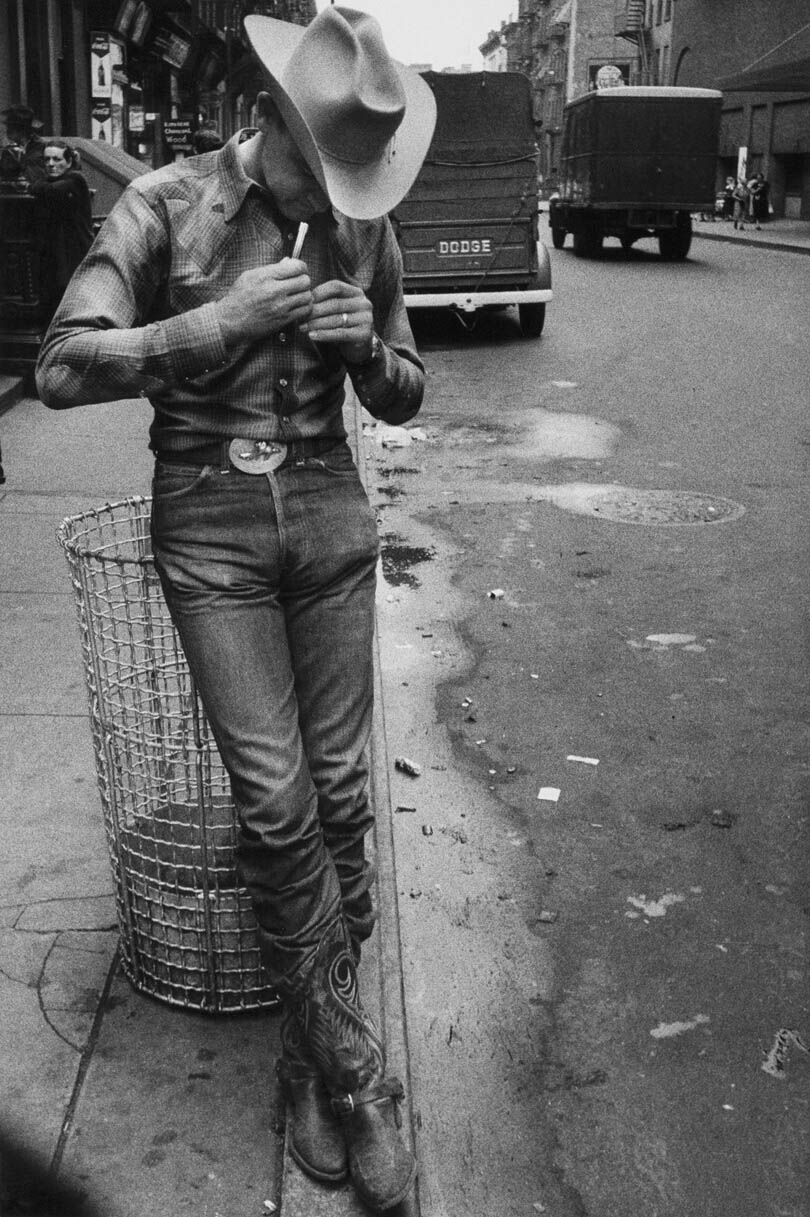
Photographs of the people of the West represent a diversity of archetypes: gold miners and loggers, Native Americans, cowboys, suburbanites, city dwellers, starlets, dreamers, and drifters. Into the Sunset explores these archetypes, and their mutability into the twenty-first century. Included is Half Indian / Half Mexican (1991), from the photographer James Luna (Native American, Pooyukitchum / Luiseno, b. 1950), an artist of Native American ancestry. This tongue-in-cheek self-portrait captures in profile both an identity photograph and a mug shot, and works as a counterpoint to the tokenised portrayals of Native Americans from the past 150 years.

A similar reevaluation of past archetypes occurs in Richard Prince’s (American, b. 1949) Cowboy series from 1980, with one work from the series included in the exhibition. For that series Prince famously photographed Marlboro advertisements, cutting out the text, cropping the images, and enlarging them, highlighting the artifice of the virile image of the cowboy and its potency as a deeply ingrained figure in American mythology.

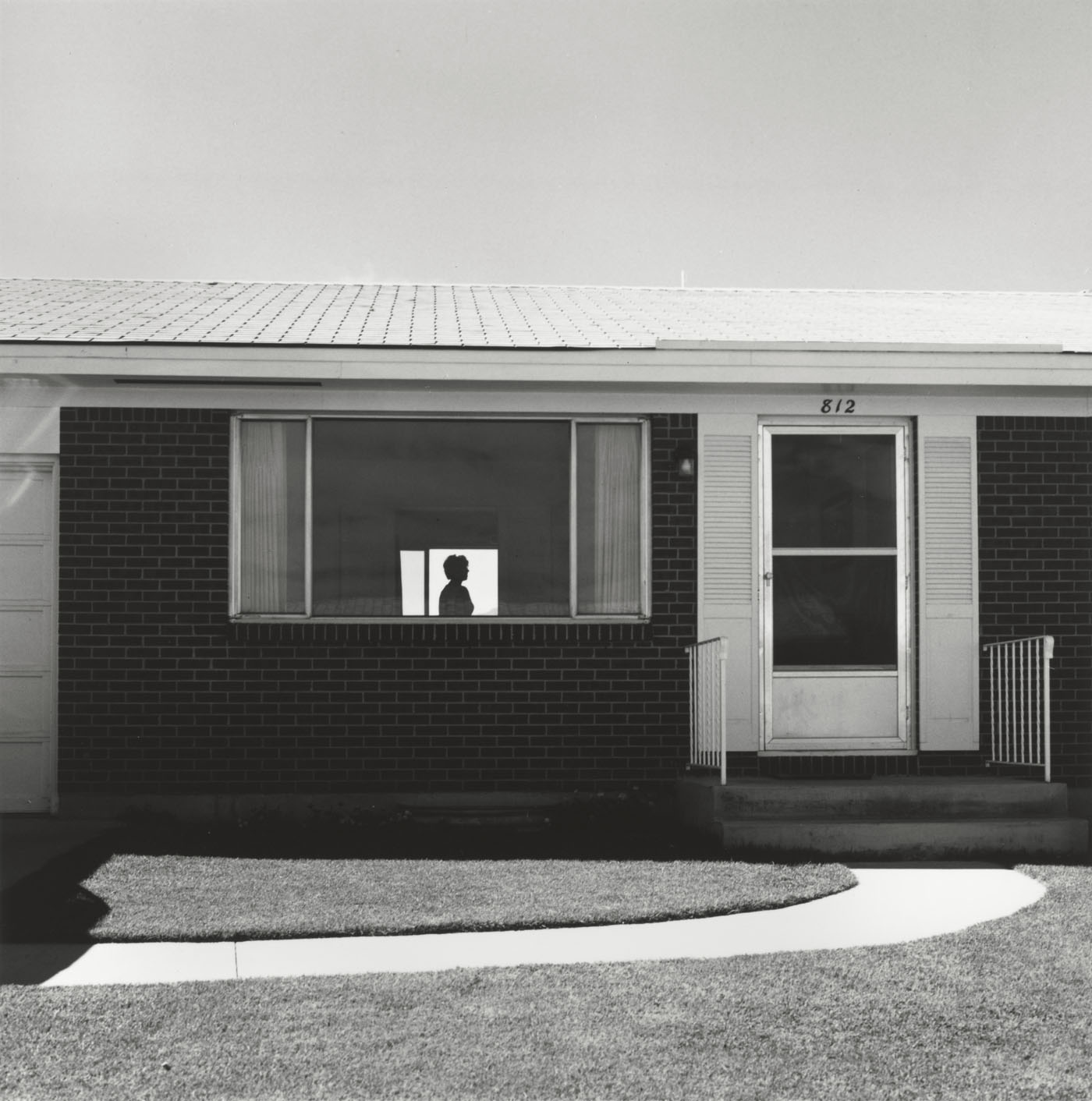
The suburbs and their inhabitants have been a rich subject for photographers of the West, and included are Larry Sultan’s (American, b. 1946) Film Stills from the Sultan Family Home Movies (1943-1972), in which Sultan chose individual frames from his family’s home movies and enlarged them. Although the images feature the activities that epitomise suburban life, a sense of unease lurks beneath the surface of these images; cropped and grainy, they resemble surveillance or evidence photographs.

Into the Sunset concludes with the theme of the failed promise of Western migration. Dorothea Lange’s well-known 1936 photograph Migrant Mother, Nipomo, California, photographed when Lange was employed by the Farm Security Administration, is included and documents the conditions of the West in rural areas during the Great Depression. Her photographs had a humanist purpose and resulted in putting a face on the hardships of that era.

This tradition of capturing the downtrodden of the West continues into this century with Katy Grannan (American, b. 1969), a photographer who recently completed a series of new pioneers, individuals struggling to define themselves in the West of today. In Nicole, Crissy Field Parking Lot (I) (2006), a woman, “Nicole,” poses seductively on a gravel parking lot, with her makeup-streaked face and harsh light alluding to her perilous existence on the fringe of society.”

Text from the MoMA website [Online] Cited 12/04/2009. No longer available online. Used under fair use conditions for the purposes of education and research


Many thankx to MoMA for allowing me to publish the photographs in the posting. Please click on the photographs for a larger version of the image.


Installation view of the exhibition 'Into the Sunset: Photography's Image of the American West' at The Museum of Modern Art (MoMA), New York showing Ed Ruscha's 'Every Building on the Sunset Strip' 1966


Installation view of the exhibition Into the Sunset: Photography’s Image of the American West at The Museum of Modern Art (MoMA), New York showing Ed Ruscha’s Every Building on the Sunset Strip 1966


Joel Sternfeld (American, b. 1944) 'After a Flash Flood, Rancho Mirage, California' 1979 from the exhibition 'Into the Sunset: Photography's Image of the American West' at The Museum of Modern Art (MoMA), New York, March - June, 2009


Joel Sternfeld (American, b. 1944)
After a Flash Flood, Rancho Mirage, California
1979
Chromogenic colour print, printed 1987
15 15/16 x 20″ (40.5 x 50.8cm)
Museum of Modern Art, New York
Gift of Beth Goldberg Nash and Joshua Nash


During the 1970s, Joel Sternfeld’s work reflected a trend towards a newly dispassionate, less idealised approach to nature and culture. His photographs have a seductive beauty, even though they often focus on those places where the natural and man-made worlds come together in uncomfortable ways. Working with a large-format camera and luminous colour to create images that are frequently ironic or even humorous, his compositions appear simple but in fact are surprisingly complex and often unsettling. In this photograph of a suburban California neighbourhood in the aftermath of a flash flood, the lovely monochrome tones trick us into not immediately seeing the car that has toppled into the gaping sinkhole or realising that the buildings above could be on the verge of falling, too.

Text from the Museum of Fine Arts Boston website


Apollonia Müller (German, b. 1963) 'Civitas' 1997


Apollonia Müller (German, b. 1963)
Civitas
1997
From Angels in Fall
Chromogenic colour print
19 3/4 x 24 1/2″ (50.1 x 62.2cm)
Gift of Howard Stein
Museum of Modern Art, New York
© 2018 Karin Apollonia Müller


William A. Garnett (American, 1916-2006) 'Foundations and Slabs, Lakewood, California' 1950


William A. Garnett (American, 1916-2006)
Foundations and Slabs, Lakewood, California
1950
Gelatin silver print
18.9 x 23.8cm (7 7/16 x 9 3/8 in.)
© J. Paul Getty Museum


William A. Garnett (American, 1916-2006) 'Grading, Lakewood, California' 1950


William A. Garnett (American, 1916-2006)
Grading, Lakewood, California
1950
Gelatin silver print
18.9 x 24cm (7 7/16 x 9 7/16 in.)
© J. Paul Getty Museum


William A. Garnett (American, 1916-2006) 'Trenching, Lakewood, California' 1950


William A. Garnett (American, 1916-2006)
Trenching, Lakewood, California
1950
Gelatin silver print
7 5/16 x 9 7/16 in.
© J. Paul Getty Museum


“I was hired commercially to illustrate the growth of that housing project. I didn’t approve of what they were doing. Seventeen thousand houses with five floor plans, and they all looked alike, and there was not a tree in sight when they got through.”

“I was discharged and heard you could hitchhike on the transport taking GIs home. The airplane was full, but the captain let me sit in the navigator’s seat so I had a command view. I was amazed at the variety and beauty of these United States. I had never seen anything like that – in a book, in school, or since then. So I changed my career.”


William A. Garnett


Lakewood, located on the outskirts of Los Angeles, was the location for the second major postwar housing development built in the United States. Some 17,500 tract houses were constructed assembly-line style on 3,500 acres of cleared farmland. Mass production made the houses affordable, so a greater number of people could take part in the American dream of home ownership. The developers hired William Garnett to document different phases of the subdivision’s construction from his Cessna airplane. He often photographed his subjects early in the day, so the angled light would emphasise their otherwise flat-looking forms. The photographs serve a utilitarian purpose but also demonstrate Garnett’s impeccable sense of design. In Trenching Lakewood, California, stacked lumber appears for the foundations, utility poles are installed, and the main roads are carved out. …

William Garnett took his first cross-country flight after serving as a United States Army Signal Corps cameraman during World War II. What he saw below inspired him to learn how to pilot a plane so he could photograph the American landscape. Garnett’s aerial photographs resemble abstract expressionist paintings or views through a microscope. As landscapes, they do not have the conventional grounding of a horizon line. All reveal astonishing patterns that are not seen from the ground. Garnett honed his elegant design sensibility well before earning a pilot’s license. Before the war, he attended Art Center College of Design in Los Angeles. Later, he headed the Pasadena Police Department’s photography lab. In the 1940s and 1950s, he began to rack up flying hours around Los Angeles, speaking out about the area’s increasing air pollution. He illustrated Nathaniel Owings’s American Aesthetic, a book about land-use practices. During ten thousand hours of flying, Garnett simultaneously piloted a plane while photographing out the window – traveling above every state and many parts of the world. His light 1956 Cessna plane allowed him to fly to just the right location to capture subjects with precision. At first, he experimented with a variety of camera formats and films but found that two 35mm cameras (one loaded with black-and-white film, the other with colour film) best suited his needs. Garnett’s work defies the stereotype of aerial photography as purely scientific and devoid of artistry. He became the first aerial photographer to earn a prestigious Guggenheim fellowship.

Anonymous. “Historical Witness, Social Messaging,” from the J. Paul Getty Museum Education Department [Online] Cited 13/01/2019. Used under fair use conditions for the purposes of education and research


William A. Garnett (American, 1916-2006) 'Framing, Lakewood, California' 1950


William A. Garnett (American, 1916-2006)
Framing, Lakewood, California
1950
Gelatin silver print
18.4 x 24.1cm (7 1/4 x 9 1/2 in.)
© J. Paul Getty Museum


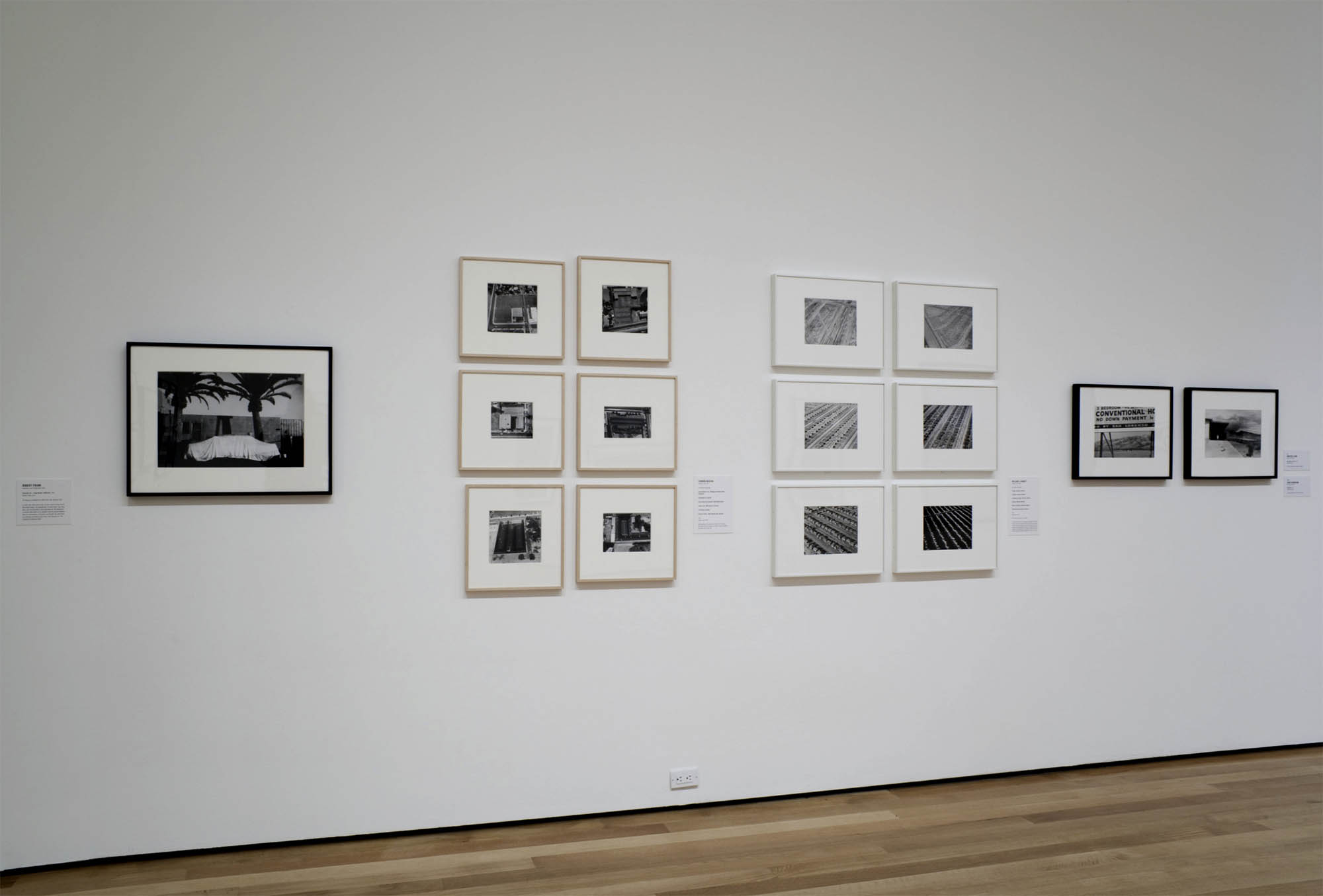
Installation view of the exhibition 'Into the Sunset: Photography's Image of the American West' at The Museum of Modern Art (MoMA), New York showing at left, Robert Frank's 'Covered Car - Long Beach, California' (1956); and at centre right, photographs by William A. Garnett


Installation view of the exhibition Into the Sunset: Photography’s Image of the American West at The Museum of Modern Art (MoMA), New York showing at left, Robert Frank’s Covered Car – Long Beach, California (1956, below); and at centre right, photographs by William A. Garnett (above)


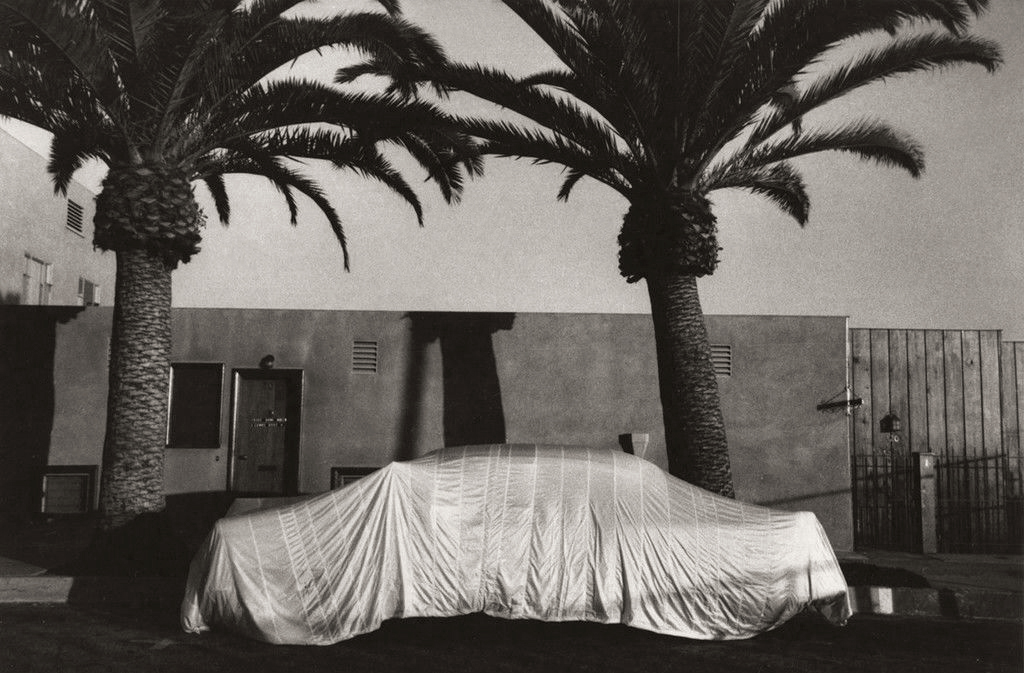
Robert Frank (American, 1924-2019) 'Covered Car - Long Beach, California' 1956


Robert Frank (American, 1924-2019)
Covered Car – Long Beach, California
1956
From The Americans (1955-1956)
Gelatin silver print
Museum of Modern Art, New York


Robert Frank (American, 1924-2019) 'Rodeo - New York City' 1954


Robert Frank (American, 1924-2019)
Rodeo – New York City
1954
From The Americans (1955-1956)
Gelatin silver print
Museum of Modern Art, New York


Dorothea Lange (American, 1895-1965) 'Migrant Mother, Nipomo, California' 1936


Dorothea Lange (American, 1895-1965)
Migrant Mother, Nipomo, California
1936
Gelatin silver print
11 1/8 x 8 9/16″ (28.3 x 21.8cm)
Museum of Modern Art, New York


Dorothea Lange took this photograph on assignment for the U.S. government’s Farm Security Administration (FSA) program, formed during the Great Depression to provide aid to impoverished farmers. FSA photographers documented the conditions that Americans faced throughout the course of the Great Depression, a period of economic crisis. Lange’s photograph suggests the impact of these harsh conditions on a 32-year-old mother of seven. She took a number of pictures of the mother with her children and chose this image as the most effective. Her keen sense of composition and attentiveness to the power of historical images of the Madonna and Child have helped this photograph transcend its original documentary function and become an iconic work of art.

Text from the MoMA website


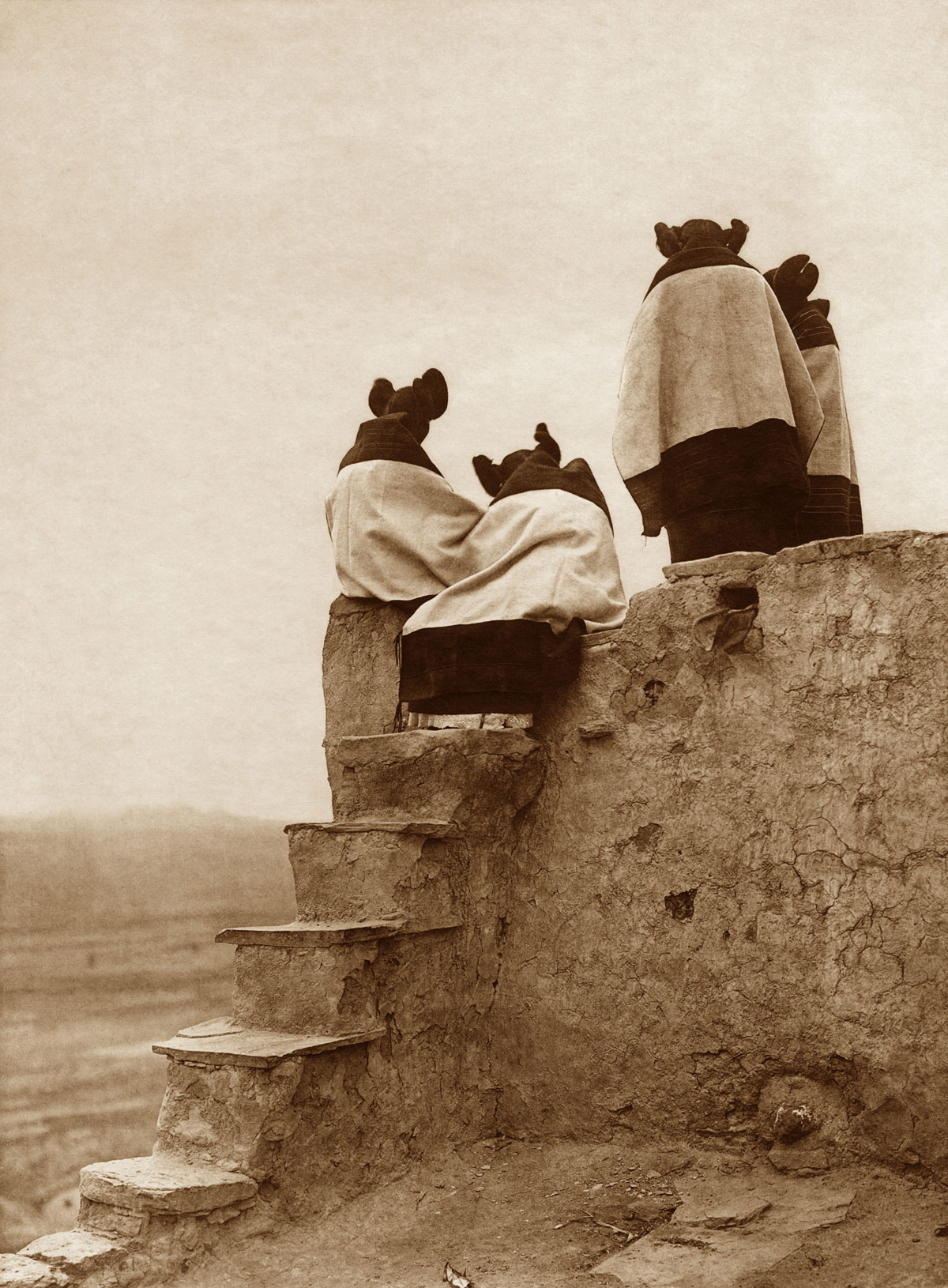
Edward S. Curtis (1868 - 1952) 'Watching the Dancers' 1906


Edward S. Curtis (American, 1868-1952)
Watching the Dancers
1906
Photogravure
Museum of Modern Art, New York


James Luna (American, 1950-2018) 'Half Indian/Half Mexican' 1991


James Luna (American, 1950-2018)
Half Indian/Half Mexican (installation view)
1991
Gelatin silver print


James Luna (February 9, 1950 – March 4, 2018) was a Payómkawichum, Ipi, and Mexican-American performance artist, photographer and multimedia installation artist. His work is best known for challenging the ways in which conventional museum exhibitions depict Native Americans. With recurring themes of multiculturalism, alcoholism, and colonialism, his work was often comedic and theatrical in nature. In 2017 he was awarded a Guggenheim Fellowship.


Richard Prince (American, b. 1949) 'Untitled (Cowboy)' 1989


Richard Prince (American, b. 1949)
Untitled (Cowboy)
1989
Chromogenic print
127 x 177.8cm (50 x 70in.)
The Metropolitan Museum of Art
Purchase, The Horace W. Goldsmith Foundation Gift, through Joyce and Robert Menschel, and Jennifer and Joseph Duke Gift, 2000
© Richard Prince


In the mid-1970s Prince was an aspiring painter who earned a living by clipping articles from magazines for staff writers at Time-Life Inc. What remained at the end of the day were the advertisements, featuring gleaming luxury goods and impossibly perfect models; both fascinated and repulsed by these ubiquitous images, the artist began rephotographing them, using a repertoire of strategies (such as blurring, cropping, and enlarging) to intensify their original artifice. In so doing, Prince undermined the seeming naturalness and inevitability of the images, revealing them as hallucinatory fictions of society’s desires.

“Untitled (Cowboy)” is a high point of the artist’s ongoing deconstruction of an American archetype as old as the first trailblazers and as timely as then-outgoing president Ronald Reagan. Prince’s picture is a copy (the photograph) of a copy (the advertisement) of a myth (the cowboy). Perpetually disappearing into the sunset, this lone ranger is also a convincing stand-in for the artist himself, endlessly chasing the meaning behind surfaces. Created in the fade-out of a decade devoted to materialism and illusion, “Untitled (Cowboy)” is, in the largest sense, a meditation on an entire culture’s continuing attraction to spectacle over lived experience.

Text from the Metropolitan Museum of Art website


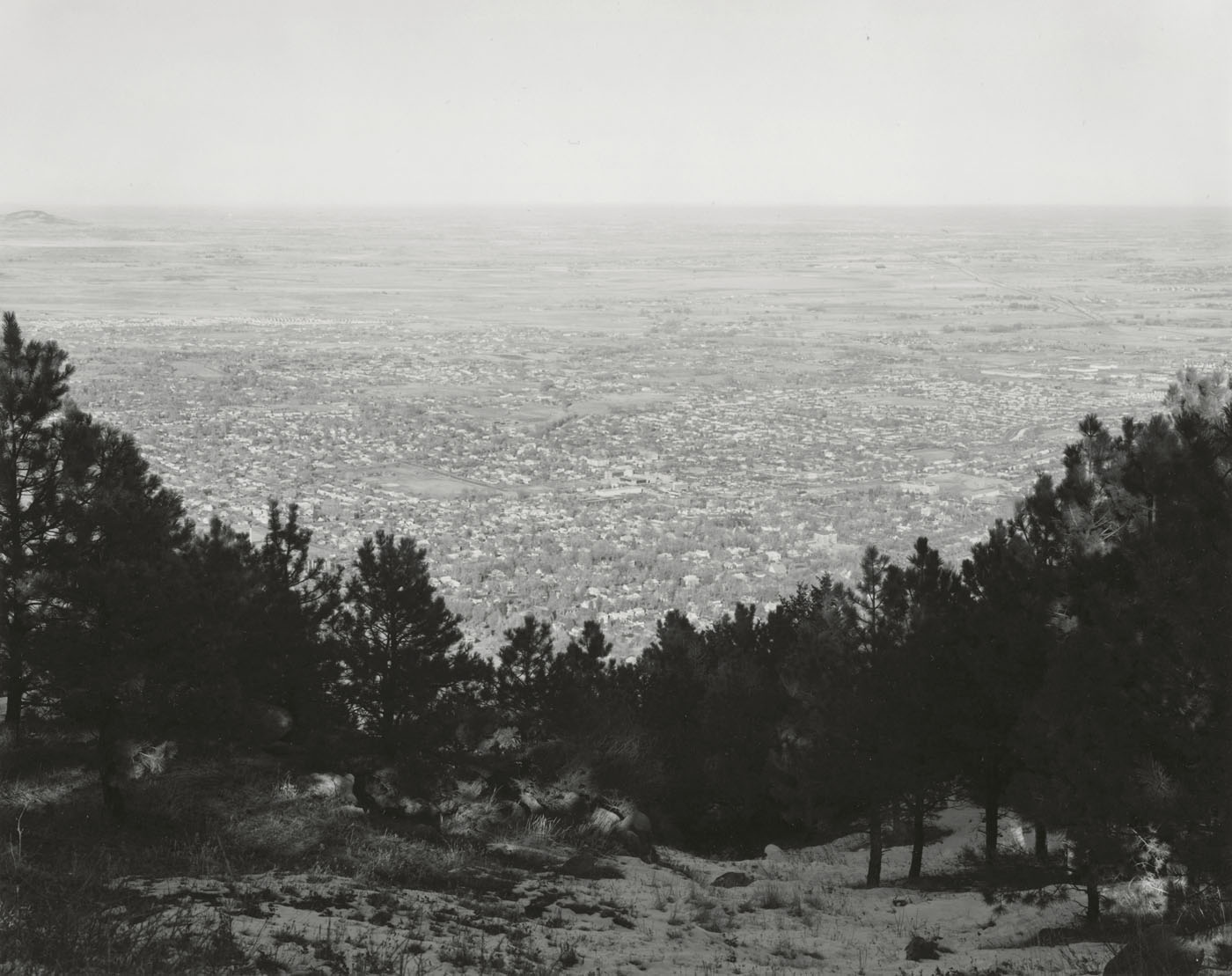
Robert Adams (American, b. 1937) 'East from Flagstaff Mountain, Boulder County, Colorado' 1975


Robert Adams (American, b. 1937)
East from Flagstaff Mountain, Boulder County, Colorado
1975
Gelatin silver print
Museum of Modern Art, New York


Robert Adams (American, b. 1937) 'Colorado Springs' 1968


Robert Adams (American, b. 1937)
Colorado Springs
1968
Gelatin silver print
Museum of Modern Art, New York


Robert Adams (American, b. 1937)
'Burning oil sludge, north of Denver, Colorado' 1973-1974


Robert Adams (American, b. 1937)
Burning oil sludge, north of Denver, Colorado
1973-1974
Gelatin silver print
Museum of Modern Art, New York


Stephen Shore (American, b. 1947) 'Beverly Boulevard and La Brea Avenue, Los Angeles, California, June 21, 1975' From the series 'Uncommon Places', 1973-1986


Stephen Shore (American, b. 1947)
Beverly Boulevard and La Brea Avenue, Los Angeles, California, June 21, 1975
1975
From the series Uncommon Places, 1973-1986
Museum of Modern Art, New York


Katy Grannan (American, b. 1969) 'Nicole, Crissy Field Parking Lot (I)' 2006


Katy Grannan (American, b. 1969)
Nicole, Crissy Field Parking Lot (I)
2006
Pigmented inkjet print
40 x 50″ (101.6 x 127cm)
Cornelius N. Bliss Memorial Fund
Museum of Modern Art, New York
© Katy Grannan


Cindy Sherman (American, b. 1954) 'Untitled Film Still #43' 1979


Cindy Sherman (American, b. 1954)
Untitled Film Still #43
1979
Gelatin silver print
7 9/16 x 9 7/16″ (19.2 x 24cm)
Acquired through the generosity of Sid R. Bass
Museum of Modern Art, New York


Cindy Sherman’s Untitled Film Stills is a suite of seventy black-and-white photographs in which the artist posed in the guises of various generic female film characters, among them, ingénue, working girl, vamp, and lonely housewife. Staged to resemble scenes from 1950s and ’60s Hollywood, film noir, B movies, and European art-house films, the printed images mimic in format, scale, and quality the often-staged “stills” used to promote films. By photographing herself in such roles, Sherman inserts herself into a dialogue about stereotypical portrayals of women. Whether she was the one to release the camera’s shutter or not, she is considered the author of the photographs. However, the works in Untitled Film Stills are not considered self-portraits.

Text from the MoMA website


Bill Owens (American, b. 1938) 'We're really happy. Our kids are healthy, we eat good food, and we have a really nice home' 1972


Bill Owens (American, b. 1938)
We’re really happy. Our kids are healthy, we eat good food, and we have a really nice home
1972
Gelatin silver print
8 1/16 x 9 15/16″ (20.4 x 25.3cm)
Gift of the photographer
Museum of Modern Art, New York
© Bill Owens


Richard Avedon (American, 1923-2004) 'Carl Hoefert, unemployed blackjack dealer, Reno, Nevada', from the series 'In the American West' August 30, 1983


Richard Avedon (American, 1923-2004)
Carl Hoefert, unemployed blackjack dealer, Reno, Nevada
August 30, 1983
From the series In the American West
Gelatin silver print
Museum of Modern Art, New York


The Museum of Modern Art
11 West 53 Street
New York, NY 10019
Phone: (212) 708-9400

Opening hours:
Sun – Fri 10.30am – 5.30pm
Sat 10.30am – 7.00pm

Monday mornings from 10.30am to 1.00pm are reserved exclusively for members and their guests.

MoMA website

LIKE ART BLART ON FACEBOOK

Back to top

Josef Sudek: Master of Photography

April 2009


Josef Sudek (Czech, 1896-1976) 'A Summer Shower in the Magic Garden' 1954-1959


Josef Sudek (Czech, 1896-1976)
A Summer Shower in the Magic Garden
1954-1959
Gelatin silver print


Further to the last post I have collected some images from the Czech photographer Josef Sudek (1896-1976), one of my favourite photographers.

The images of this master photographer are a delight. Like the photographs of Eugène Atget they evince generosity in the understanding of light, space and humanity.

Insightful writing on Josef Sudek by Charles Sawyer is included in the post.

A good collection of Josef Sudek photographs can be found on the Museum of Fine Arts Boston website. Go to the site and enter ‘Josef Sudek’ in the Collection Search box to the right and then click on the arrow.

Dr Marcus Bunyan


Please click on the photographs for a larger version of the image.


“Everything around us, dead or alive, in the eyes of a crazy photographer mysteriously takes on many variations, so that a seemingly dead object comes to life through light or by its surroundings. And if the photographer has a bit of sense in his head maybe he is able to capture some of this – and I suppose that’s lyricism.”

“I believe a lot in instinct. One should never dull it by wanting to know everything. One shouldn’t ask too many questions but do what one does properly, never rush, and never torment oneself.”

“It would have bored me extremely to have restricted myself to one specific direction for my whole life, for example, landscape photography. A photographer should never impose such restrictions upon himself.”


Josef Sudek


Josef Sudek (Czech, 1896-1976) 'In the enchanted garden' 1954-1959


Josef Sudek (Czech, 1896-1976)
In the enchanted garden
1954-1959
From the series Remembrances
Gelatin silver print


Josef Sudek (Czech, 1896-1976) 'Untitled' 1967


Josef Sudek (Czech, 1896-1976)
Untitled
1967
Gelatin silver print


“The systematic approach, and the dogged aesthetic experimentation of Sudek are akin to the working habits of Cezanne. But these alone are insufficient to make great art or even good art. On the contrary, if these are all one sees in a work, then the cumulative burden of so much plain labor would be unbearable. Sudek’s devotion to work may have integrated his shattered life but it could not have offered him the spiritual redemption he was seeking; only his aesthetic quest could bring this. It is the struggle for spiritual redemption through his aesthetic quest that gives Sudek’s best photographs their true power. Two qualities characterise his best work: a rich diversity of light values in the low end of the tonal scale, and the representation of light as a substance occupying its own space. The former, the diversity of light values, requires very delicate treatment of the materials, especially the negative, but also the paper (Sudek used silver halide papers in the main). The latter, the portrayal of light as substance, is a more original trait than his tonal palette, which one sees in occasional prints of other photographers. Flaubert once expressed an ambition to write a book which would have no subject, “a book dependent on nothing external … held together by the strength of its style.” Photographers have sometimes expressed parallel aspirations to make light itself the subject of their photographs, leaving the banal, material world behind. Both ideals are, of course, unobtainable, but nonetheless they may be worth pursuing. (Artists, in their pursuit of the unobtainable, are not so likely to be called pathological as others, of us, though recent developments in the philosophy of science tend to view the scientist’s quest for truth as equally quixotic).

Sudek has come closer than any other photographer to catching this illusive goal. His devices for this effect are simple and highly poetic: the dust he raised in a frenzy when the light was just right, a gossamer curtain draped over a chair back, the mist from a garden sprinkler, even the ambient moisture in the atmosphere when the air is near dew point. The eye is usually accustomed to seeing not light but the surfaces it defines; when light is reflected from amorphous materials, however, perception of materiality shifts to light itself. Sudek looked for such materials everywhere. And then he usually balanced the ethereal luminescence with the contra-bass of his deep shadow tonalities. The effect is enchanting, and strongly conveys the human element which is the true content of his photographs. For, throughout all his photography, there is one dominant mood, one consistent viewpoint, and one overriding philosophy. The mood is melancholy and the point of view is romanticism. And overriding all this is a philosophic detachment, an attitude he shares with Spinoza. The attitude of detachment that characterises Sudek’s art accounts for both its strength and weakness: the strength which lies in the ideal of utter tranquility and the weakness which is found in the paucity of human intimacy. Some commentators find Sudek’s photos mysterious but I think this is a mistake: the air of mystery vanishes once we see in Sudek’s photography a person’s private salvation from despair.”

Charles Sawyer. “Josef Sudek” in Creative Camera April 1980, Number 190 [Online] Cited 14/04/2009. No longer available online. Used under fair use conditions for the purposes of education and research


Josef Sudek (Czech, 1896-1976) From the series 'Vanished Statues in Mionsi' 1969


Josef Sudek (Czech, 1896-1976)
From the series Vanished Statues in Mionsi
1969
Gelatin silver print


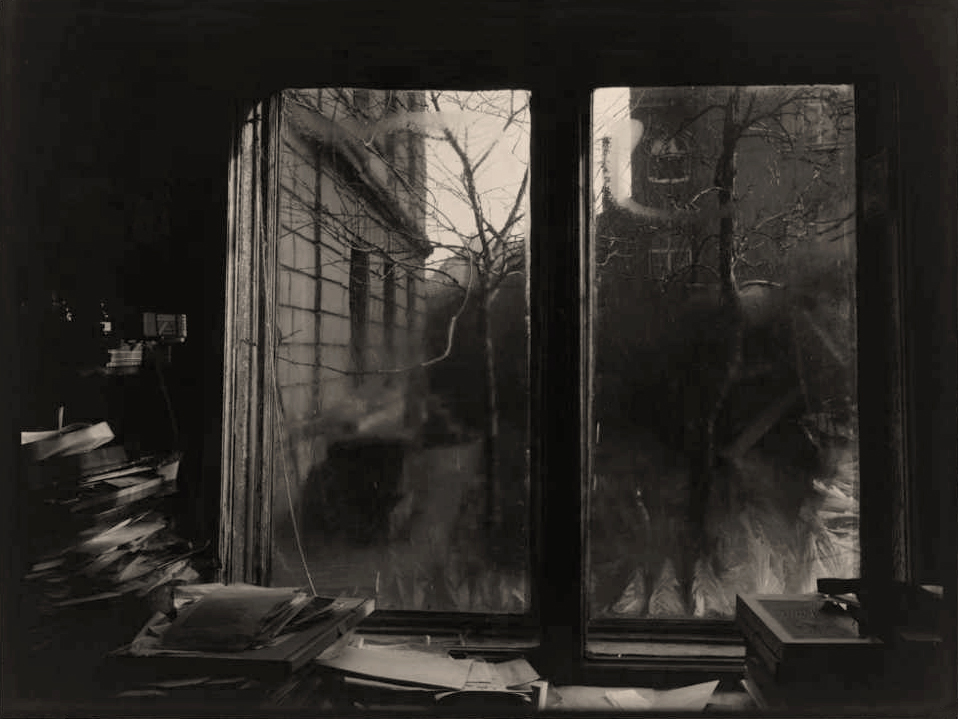
Josef Sudek (Czech, 1896-1976) 'The Window of My Atelier' 1969


Josef Sudek (Czech, 1896-1976)
The Window of My Atelier
1969
Gelatin silver print


Josef Sudek (Czech, 1896-1976) 'Still-life after Caravaggio, Variation No 2 (or a night-time Variation)' 1956


Josef Sudek (Czech, 1896-1976)
Still-life after Caravaggio, Variation No 2 (or a night-time Variation)
1956
Gelatin silver print


Josef Sudek (Czech, 1896-1976) 'Untitled (Still Life According to Caravaggio)' 1956


Josef Sudek (Czech, 1896-1976)
Untitled (Still Life According to Caravaggio)
1956
Gelatin silver print


Josef Sudek (Czech, 1896-1976) 'Remembrance of Mr. Magician (the garden of architect Rothmayer)' 1959


Josef Sudek (Czech, 1896-1976)
Remembrance of Mr. Magician (the garden of architect Rothmayer)
1959
Gelatin silver print


Otto Rothmayer (architect)

Otto Rothmayer was born during 1892 into a family of carpenters. He took up that trade, following in his father’s footsteps. Rothmayer studied at the Academy of Applied Arts in Prague under Jože Plečník’s guidance, and the Slovenian architect would inspire Rothmayer throughout his entire life. In fact, the design of the Rothmayer Villa was greatly influenced by Plečník’s Villa Stadion in Ljubljana. Rothmayer’s skill at carpentry came in handy as he designed much furniture. He made furniture for the gurus of Czech Cubism, architects Pavel Janák and Josef Gočár. Furniture he designed that does not fall under the category of Cubism but is rather simple and practical can be found in his villa and garden, for instance. His white chairs forged from rough steel were a big hit.

Work at Prague Castle

Plečník would not only be Rothmayer’s mentor but also his colleague. Rothmayer started working as Plečník’s assistant architect at Prague Castle in 1921, when Tomáš G. Masaryk was president of a young, democratic Czechoslovakia. Rothmayer even built a spiral staircase at Prague Castle, using what was then a new material – faux marble. When Plečník left his Castle post after 1930, Rothmayer continued to draw plans for the Castle until his retirement in 1958.

Other projects and the academic world

Rothmayer’s résumé does not only include his tenure at Prague Castle. He took up other projects, too. For instance, he designed three family houses and a side altar for a church in the Vinohrady district of Prague. He also designed museum exhibitions. Rothmayer went into teaching as well. He held the post of Professor of Interior Design at Prague’s Academy of Applied Arts in the late 1940s and early 1950s, when he left for political reasons. Rothmayer also was friends with photographer Josef Sudek, who took many snapshots at Otto’s Břevnov residence. Sudek’s photos set in the villa’s garden are particularly impressive. Otto Rothmayer died in 1966.

Tracy A. Burns. “The Rothmayer Villa: A gem of modern architecture,” on the Private Prague Guide website [Online] Cited 11/01/2019. Used under fair use conditions for the purposes of education and research


Josef Sudek (Czech, 1896-1976) 'Labyrinths' 1969


Josef Sudek (Czech, 1896-1976)
Labyrinths
1969
Gelatin silver print


Josef Sudek (Czech, 1896-1976) 'Labyrinth of Spring' 1968


Josef Sudek (Czech, 1896-1976)
Labyrinth of Spring
1968
Gelatin silver print
22.5 x 28.7cm (8 7/8 x 11 1/4 in)


Josef Sudek (Czech, 1896-1976) 'Remembrances of Architect Rothmayer, Mr. Magician' 1960


Josef Sudek (Czech, 1896-1976)
Remembrances of Architect Rothmayer, Mr. Magician
1960
Gelatin silver print


LIKE ART BLART ON FACEBOOK

Back to top

Exhibition: ‘Czech Photography of the 20th Century’ at the Exhibition Hall of the Federal Republic of Germany, Bonn

Exhibition dates: 13th March – 26th July, 2009

Co-curators: Vladimir Birgus, photography professor and head of the Institute of Creative Photography at Silesian University in Opava, and Jan Mlčoch, the curator of the Photography Collection at the Museum of Decorative Arts in Prague


Jindřich Štreit (Czech, b. 1946) 'Arnoltice' 1985 from the exhibition 'Czech Photography of the 20th Century' at the Exhibition Hall of the Federal Republic of Germany, Bonn,  March - July, 2009


Jindřich Štreit (Czech, b. 1946)
Arnoltice
1985
From the Village Life series
Gelatin silver print


Jindřich Štreit (born 5 September 1946 in Vsetín) is a Czech photographer and pedagogue known for his documentary photography. He concentrates on documenting the rural life and people of Czech villages. He is considered one of the most important exponents of Czech documentary photography.


This looks like to be an interesting exhibition. I wish I had been able to see it.

Wouldn’t it be such a grand job flying around the world, reviewing photography exhibitions and bringing you my thoughts.

I can only wish…

Dr Marcus Bunyan


Many thankx to the Exhibition Hall of the Federal Republic of Germany for allowing me to publish the photographs in the posting. Please click on the photographs for a larger version of the image.


František Drtikol (Czech, 1883-1961) 'Wave' 1925 from the exhibition 'Czech Photography of the 20th Century' at the Exhibition Hall of the Federal Republic of Germany, Bonn,  March - July, 2009


František Drtikol (Czech, 1883-1961)
Wave
1925
Gelatin silver print


Czech photography produced and produces leading figures in all areas of photography – from classical documentary photojournalism to surrealism, realism or avant-garde works. From 13 March 2009 on, the Art and Exhibition Hall of the Federal Republic of Germany is presenting over 400 photographic works, a historical mosaic of Czech photography from 1900 until the late 20th century that underlines the international reputation enjoyed by Czech photography today. That reputation is not only apparent in the outstanding contributions by such renowned artists as Josef Sudek, Karel Hájek, Václav Jírů, Vilém Reichmann, Jan Reich, Jindřich Štreit, Frantisek Drtikol, Jaromír Funke, Jaroslav Rossler, Josef Koudelka and Jan Saudek, but also in works from a host of younger photographers. The exhibition does not only showcase famous names but also less well-known photographers, providing an overall impression of the variation and innovation in Czech photography.

From Surrealism and other avant-garde experimentation to realism and classic photo reportage, Czech photographers have long played a key role in all areas of photography and continue to do so to this day.

This exhibition is the first in Germany to present the history and development of Czech photography from 1900 to the turn of the millennium. Beginning with Art Nouveau-inspired Pictorialism, the comprehensive survey traces the rise of avant-garde photography and the development of photo montage in the 1920s to the 1940s. It examines the influence of ideological pressure on photography during the Second World War, the Stalinist 1950s and the period of Communist ‘normalisation’ after the occupation in 1968 and introduces the visitor to the multifaceted range of contemporary trends.

Text from the Exhibition Hall of the Federal Republic of Germany website [Online] Cited 10/04/2009. No longer available online. Used under fair use conditions for the purposes of education and research


František Drtikol (Czech, 1883-1961) 'Nude' 1927


František Drtikol (Czech, 1883-1961)
Nude
1927
Gelatin silver print


František Drtikol (3 March 1883, Příbram – 13 January 1961, Prague) was a Czech photographer of international renown. He is especially known for his characteristically epic photographs, often nudes and portraits.

From 1907 to 1910 he had his own studio, until 1935 he operated an important portrait photostudio in Prague on the fourth floor of one of Prague’s remarkable buildings, a Baroque corner house at 9 Vodičkova, now demolished. Jaroslav Rössler, an important avant-garde photographer, was one of his pupils. Drtikol made many portraits of very important people and nudes which show development from pictorialism and symbolism to modern composite pictures of the nude body with geometric decorations and thrown shadows, where it is possible to find a number of parallels with the avant-garde works of the period. These are reminiscent of Cubism, and at the same time his nudes suggest the kind of movement that was characteristic of the futurism aesthetic.

Text from the Wikipedia website


Eugen Wiskovsky (Czech, 1888-1964) 'Lunar Landscape or Collars' 1929


Eugen Wiskovsky (Czech, 1888-1964)
Lunar Landscape or Collars
1929
Gelatin silver print


The oeuvre of the leading Czech avant-garde photographer Eugen Wiskovsky (1888-1964) is not large in size or subject range, but it is noteworthy in its originality, depth of ideas, and mastery. Wiskovsky’s early New Objectivist works, from the late 1920s and early 1930s, sought artistic effect in apparently non-aesthetic objects: His inventive lighting and cropping allowed their elementary lines to stand out, to lose their worldly associations and take on potential metaphorical meanings. In his dynamic diagonal compositions, Wiskovsky was among the most radical practitioners of Czech Constructivism. His landscape work is similarly distinctive.


Jaroslav Rössler (Czech, 1902-1990) 'Untitled' 1931


Jaroslav Rössler (Czech, 1902-1990)
Untitled
1931
Gelatin silver print


Jaroslav Rössler (25 May 1902, Smilov – 5 January 1990, Prague) was a pioneer of Czech avant-garde photography and a member of the association of Czech avant-garde artists Devětsil (Butterbur).

Rössler was born to the Czech-German father, Eduard Rössler, and a Czech mother, Adela Nollova. From 1917 to 1920, Rössler studied in the atelier of the company owned by renowned Czech photographer František Drtikol. Subsequently, he worked with the company as a laboratory technician. As a 21 years old, he began collaboration with the art theorist Karel Teige, who assigned him to create typographic layout for magazines Pásmo, Disk, Stavba and ReD (Revue Devětsilu). While working on these tasks, Rössler deepened his knowledge of photographic methods. In his works he utilised and combined the techniques of photogram, photomontage, collage and drawing. The beginnings of his photographic work were influenced by Cubism and Futurism, but he also attempted to create the first abstract photographs. In 1923, he became a member of the avant-garde association Devětsil.

In 1925, he went on a six-month study visit to Paris. The same year he began working as a photographer in the Osvobozené divadlo in Prague. Before his second departure to Paris, he co-worked as a commercial photographer with the pictorial magazine Pestrý týden.

In 1927, Rössler moved to Paris together with his wife, Gertruda Fischerová (1894-1976). Initially, he focused on commercial photography. He collaborated with the experimental studio of Lucien Lorell, and worked on commissions for notable companies such as Michelin and Shell. However, later he found an interest in the “street life” of Paris, which influenced his future stay in the city. During a demonstration, he encountered the protesters and took photographs of the event. Shortly after that he was arrested, and after a six-month imprisonment he was expelled from the country, in 1935. The alleged reason for his expulsion was his German-sounding surname.

After his return from Paris, Rössler and his wife resided in Prague, Žižkov. He opened a small photographic atelier, but difficulties associated with the management of the studio caused a significant gap in his artistic work, lasting for almost two decades.

In the 1950s, he resumed his previous activities and again began experimenting with the camera and photographic techniques. He created so-called “prizmata” (prisms), photographs taken through a birefringent prism. Additionally, he experimented with solarisation and explored the possibilities of the Sabatier effect.

Text from the Wikipedia website


Jindřich Štyrský (Czech, 1899-1942) From the 'Man with Blinkers' series 1934


Jindřich Štyrský (Czech, 1899-1942)
From the Man with Blinkers series
1934
Museum of Decorative Arts, Prague


Eugen Wiskovsky (Czech, 1888-1964) 'Disaster' 1939


Eugen Wiskovsky (Czech, 1888-1964)
Disaster
1939
Gelatin silver print


Josef Sudek (Czech, 1896-1976) 'The Last Rose' 1956


Josef Sudek (Czech, 1896-1976)
The Last Rose from the Rose series
1956
Gelatin silver print


Josef Sudek (17 March 1896, Kolín, Bohemia – 15 September 1976, Prague) was a Czech photographer, best known for his photographs of Prague.

Sudek was originally a bookbinder. During the First World War he was drafted into the Austro-Hungarian Army in 1915 and served on the Italian Front until he was wounded in the right arm in 1916 which led to the limb being amputated at the shoulder. After the war he studied photography for two years in Prague under Jaromir Funke. His army disability pension gave him leeway to make art, and he worked during the 1920s in the romantic Pictorialist style. Always pushing at the boundaries, a local camera club expelled him for arguing about the need to move forwards from ‘painterly’ photography. Sudek then founded the progressive Czech Photographic Society in 1924. Despite only having one arm, he used large, bulky cameras with the aid of assistants.

Sudek’s photography is sometimes said to be modernist. But this is only true of a couple of years in the 1930s, during which he undertook commercial photography and thus worked “in the style of the times”. Primarily, his personal photography is neo-romantic.

Text from the Wikipedia website


Josef Sudek was a Czech photographer best known for his elegiac black-and-white images of Prague, interiors, still lifes, and the landscapes of Bohemian forests. Many of Sudek’s most memorable images were taken from the window of his small studio, documenting his humble courtyard during changing weather and light conditions. “Everything around us, dead or alive, in the eyes of a crazy photographer mysteriously takes on many variations,” he explained, “so that a seemingly dead object comes to life through light or by its surroundings.”

Text from the artnet website [Online] Cited 10/01/2019


Jan Saudek (Czechoslovakia, b. 1935) 'Life' 1966


Jan Saudek (Czech, b. 1935)
Life
1966
Gelatin silver print


Josef Koudelka (Czech, b. 1938) 'France' 1987


Josef Koudelka (Czech, b. 1938)
France
1987
Gelatin silver print


The Art and Exhibition Hall of the Federal Republic of Germany
Museumsmeile Bonn
Helmut-Kohl-Allee 4
53113 Bonn
Telephone: +49 228 9171-200

Opening hours:
Thursday – Sunday and Tuesday 10am – 7pm
Closed Mondays

Exhibition Hall of the Federal Republic of Germany website

LIKE ART BLART ON FACEBOOK

Back to top

Opening 1: ‘Territories’ at Project Space/Spare Room, Melbourne

Exhibition dates: 3rd April – 1st May, 2009

Curator: Shane Hulbert
Opening: Thursday 2nd April, 2009

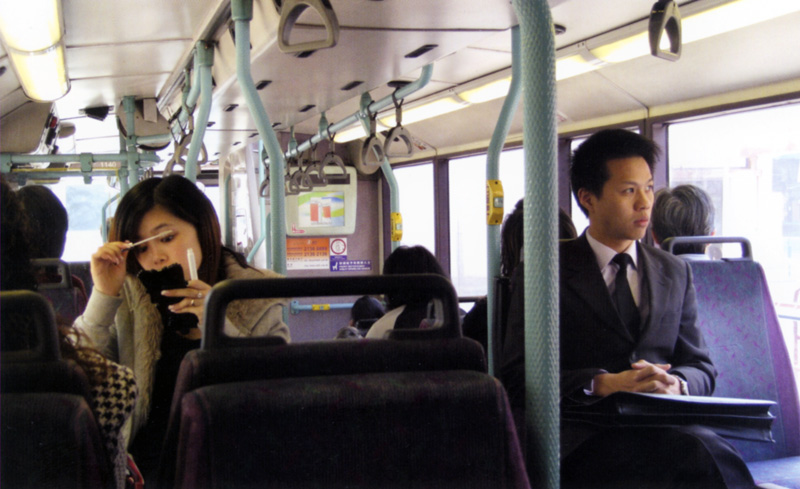
Group photography show with artists: Shane Hulbert (Aus), John Billan (Aus), So Hing Keung (HK), Stephanie Neoh (Aus), Darren Sylvester (Aus), Ming Tse Ching (HK), Kellyann Geurts (Aus), Andrew Guthrie (HK), Kim Lawler (Aus), Law Sum Po Jamsen (HK), and Lyndal Walker (Aus).


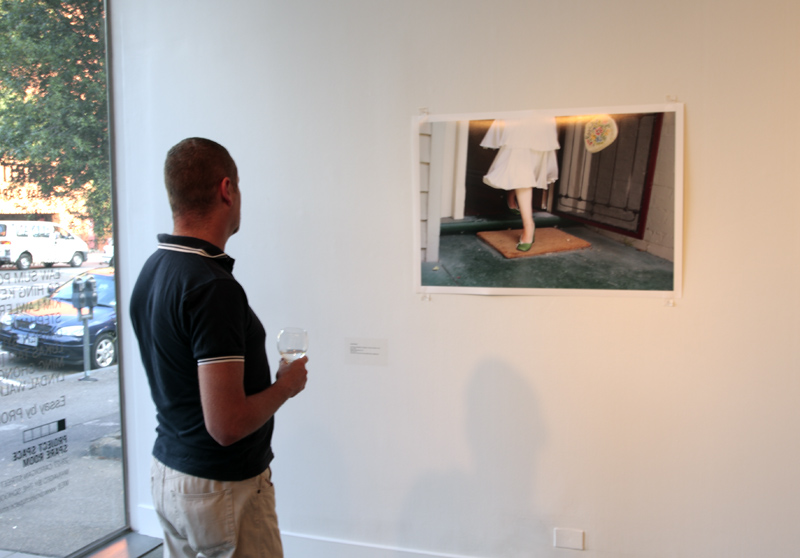
Sculptor Fredrick White in front of Lyndal Walker's 'The Time to Hesitate is Trough, no Time to Wallow in the Mire' 2009


Sculptor Fredrick White in front of Lyndal Walker’s The Time to Hesitate is Through, no Time to Wallow in the Mire 2009


Great to catch up again with John Billan, Shane Hulbert and Les Walkling!

Marcus


Please click on the photographs for a larger version of the image.


Lyndal Walker (Australian, b. 1973) 'The Time to Hesitate is Through, no Time to Wallow in the Mire' 2009 from the exhibition 'Territories' at Project Space/Spare Room, Melbourne, April - May, 2009


Lyndal Walker (Australian, b. 1973)
The Time to Hesitate is Through, no Time to Wallow in the Mire
2009


“The images in this show all reflect on an exploration of intersecting territories within Australia and the Chinese Special Administration Region [SAR] of Hong Kong. Central to this exploration are the cultural linkages between claimed and reclaimed territories, social territories and psychological territories and the way this in turn influences national identity. The claim is that these things of importance, and the way we respond to the notion of territory, have recurring similarities between different cultures.

Despite the broadness of the title, the notion of territories is becoming increasingly relevant in a global community, as the traditional borderlines and barriers that define who we are and what we stand for as a culture change in response to internal and external shifts.”

Shane Hulbert 2009


'Territories' opening night crowd at Project Space/Spare Room, Melbourne


Territories opening night crowd at Project Space/Spare Room, Melbourne


Ming Tse Chong (Chinese, b. 1960) 'City Still Life II' 2008 from the exhibition 'Territories' at Project Space/Spare Room, Melbourne, April - May, 2009


Ming Tse Chong (Chinese, b. 1960)
City Still Life II
2008


Project Space/Spare Room

PROJECT SPACE and SPARE ROOM closed in March 2022

LIKE ART BLART ON FACEBOOK

Back to top

Exhibition: ‘Picturing America: Photorealism in the 1970s’ at Deutsche Guggenheim, Berlin

Exhibition dates: 7th March – 10th May, 2009

Curator: Valerie L. Hillings, Assistant Curator at the Solomon R. Guggenheim Museum


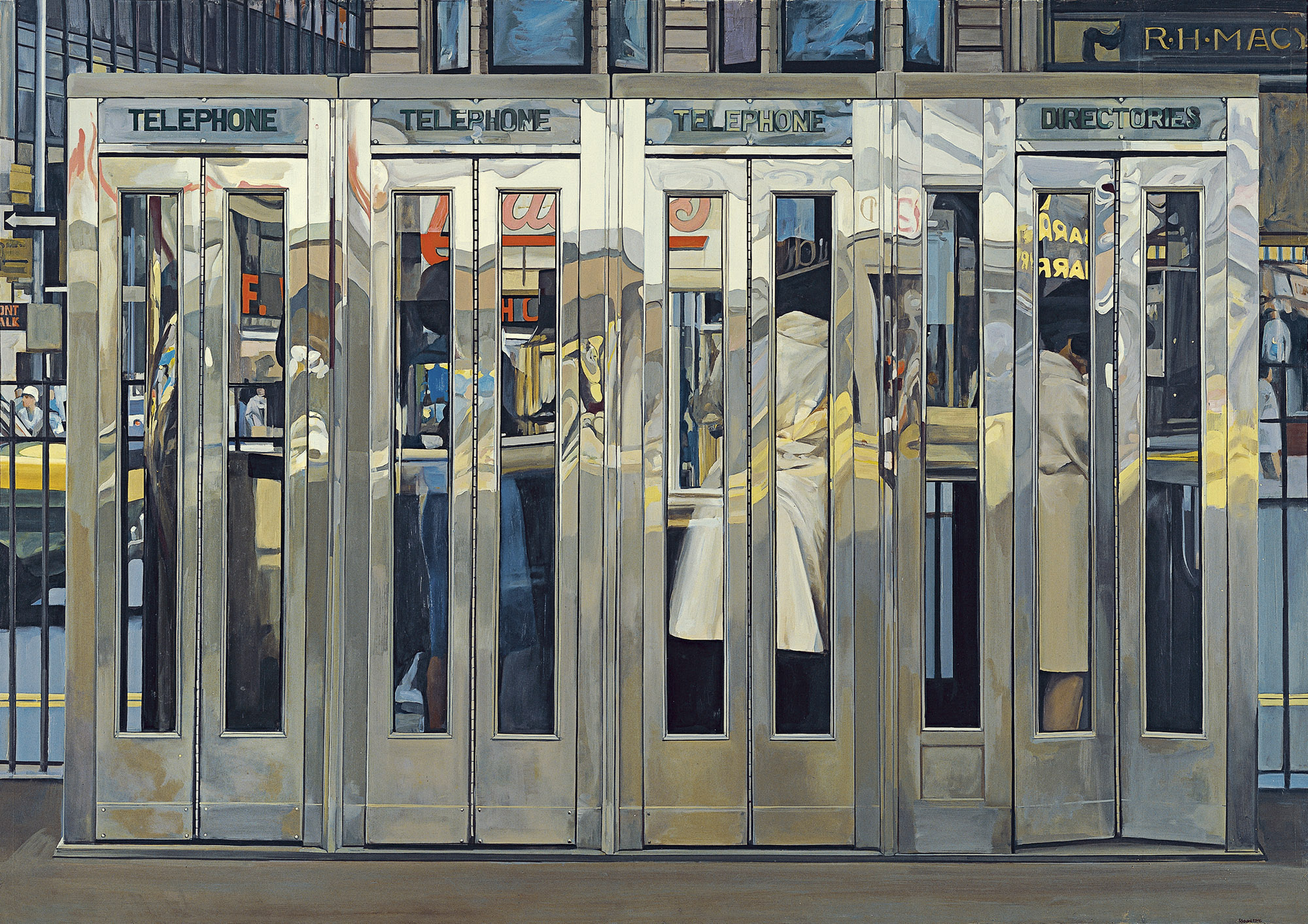
Richard Estes (American, b. 1932) 'Telephone Booths' 1967 from the exhibition 'Picturing America: Photorealism in the 1970s' at Deutsche Guggenheim, Berlin, March - May, 2009


Richard Estes (American, b. 1932)
Telephone Booths
1967


Many thankx to the Deutsche Guggenheim for allowing me to publish the art work in the posting. Please click on the artwork for a larger version of the image.


“My paintings are about light, about the way things look in their environment and especially about how things look painted. Form, colour and space are at the whim of reality, their discovery and organisation is the assignment of the realist painter.”


Ralph Goings


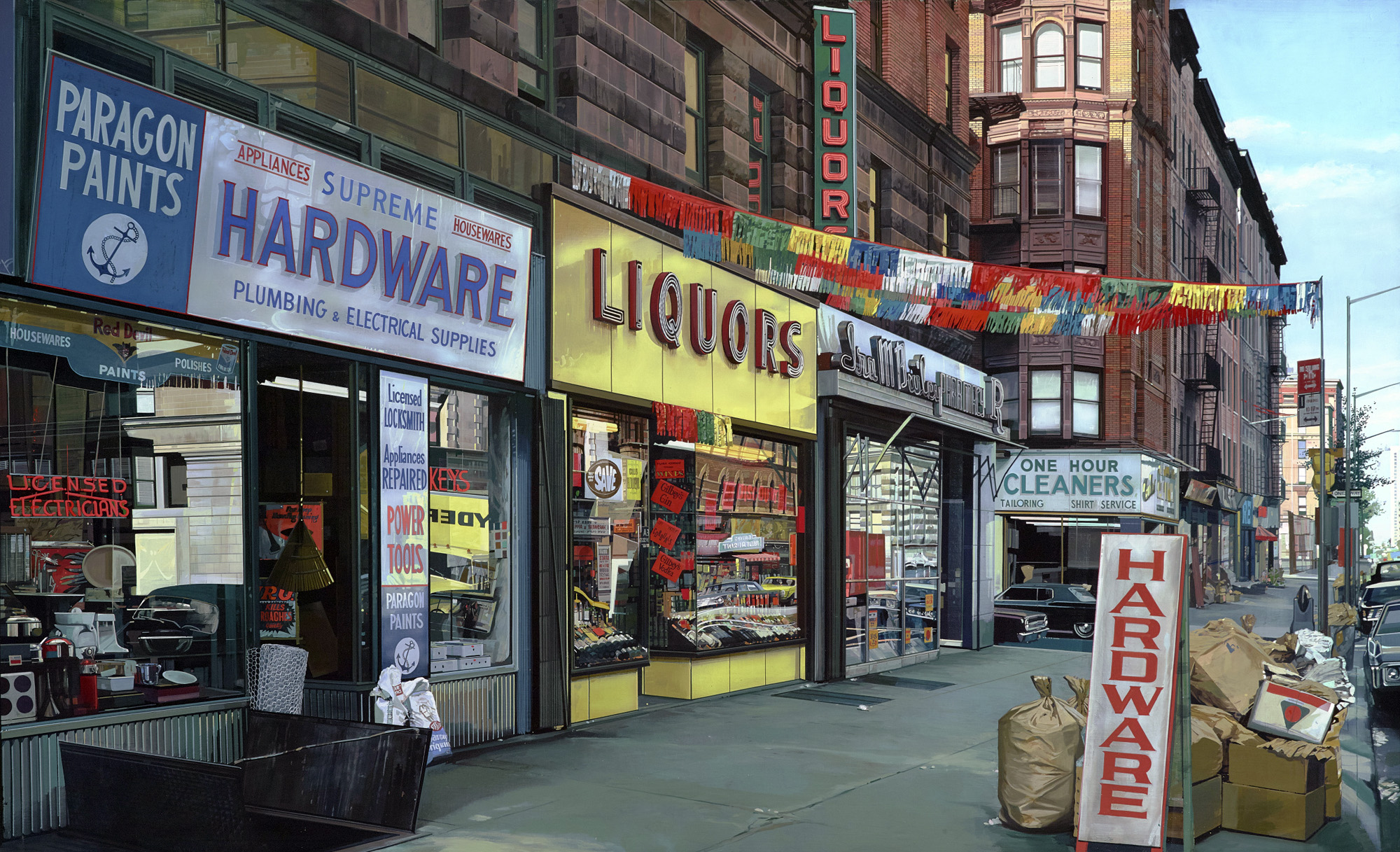
Richard Estes (American, b. 1932) 'Supreme Hardware' 1974 from the exhibition 'Picturing America: Photorealism in the 1970s' at Deutsche Guggenheim, Berlin, March - May, 2009


Richard Estes (American, b. 1932)
Supreme Hardware
1974


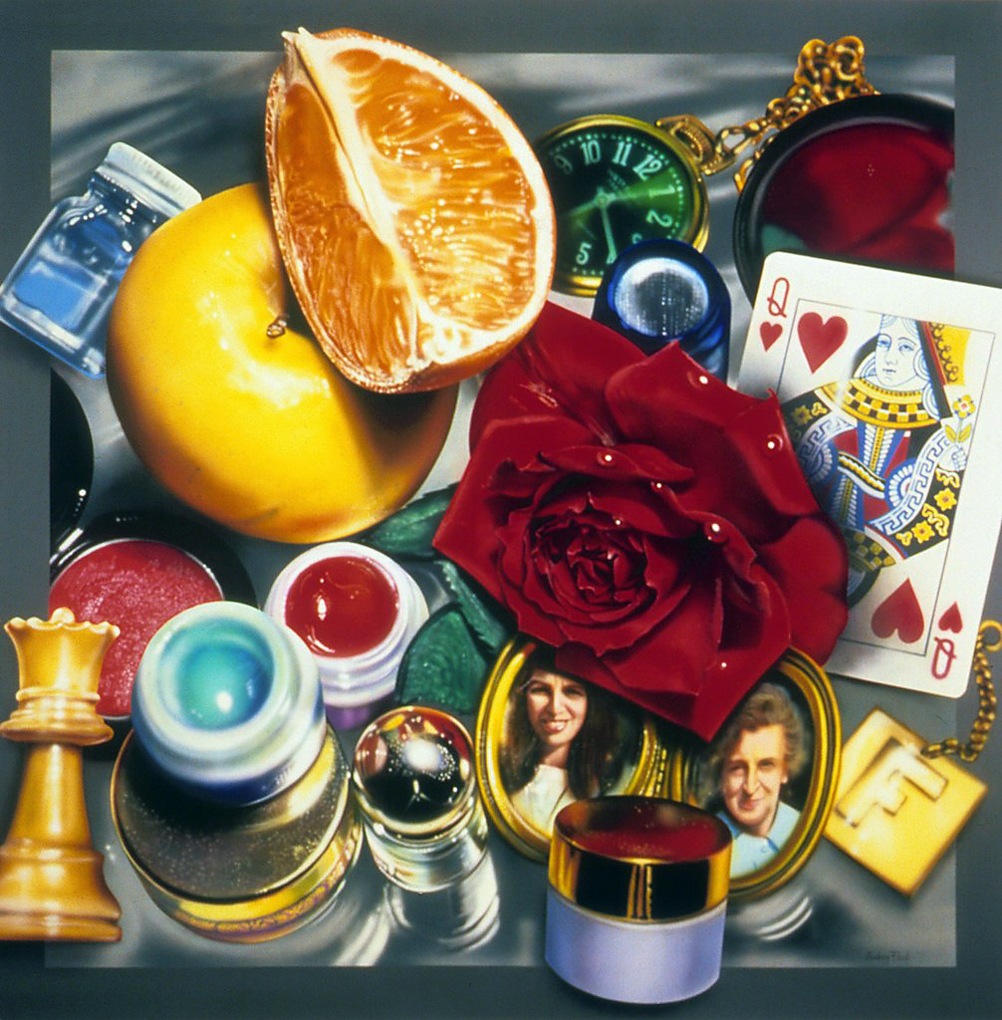
Audrey Flack (American, b. 1931) 'Queen' 1976


Audrey Flack (American, 1931-2024)
Queen
1976


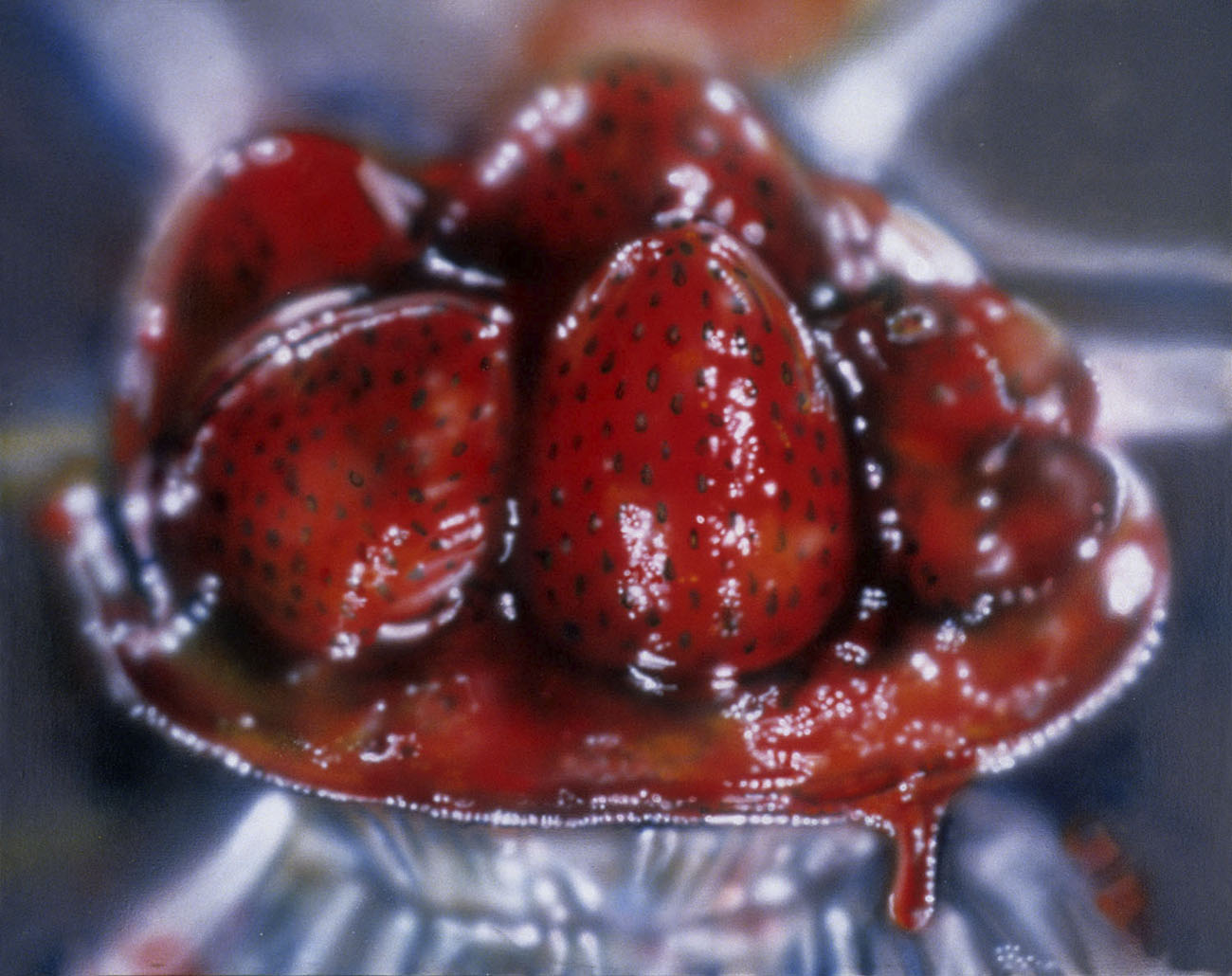
Audrey Flack (American, 1931-2024) 'Strawberry Tart' 1974


Audrey Flack (American, 1931-2024)
Strawberry Tart
1974
Oil on canvas
24 x 30 inches


Don Eddy (American, b. 1944) 'Untitled' 1971


Don Eddy (American, b. 1944)
Untitled
1971


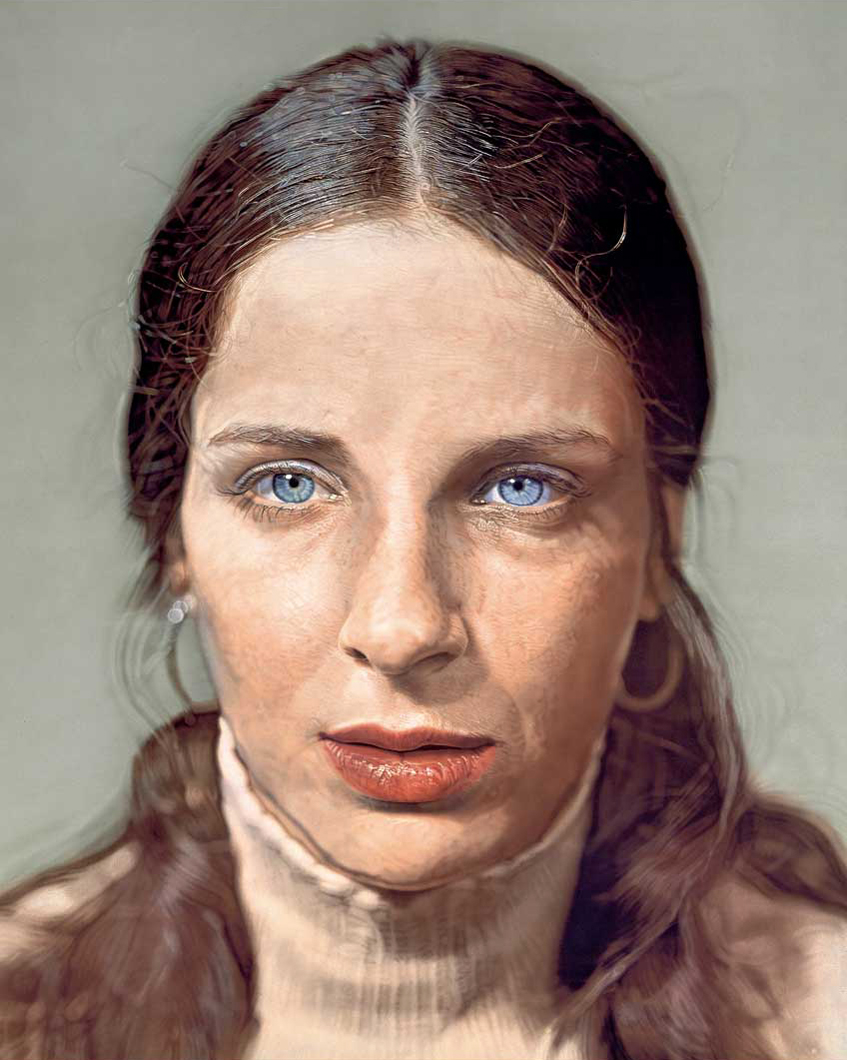
Chuck Close (American, 1940-2021) 'Leslie' 1973


Chuck Close (American, 1940-2021)
Leslie
1973


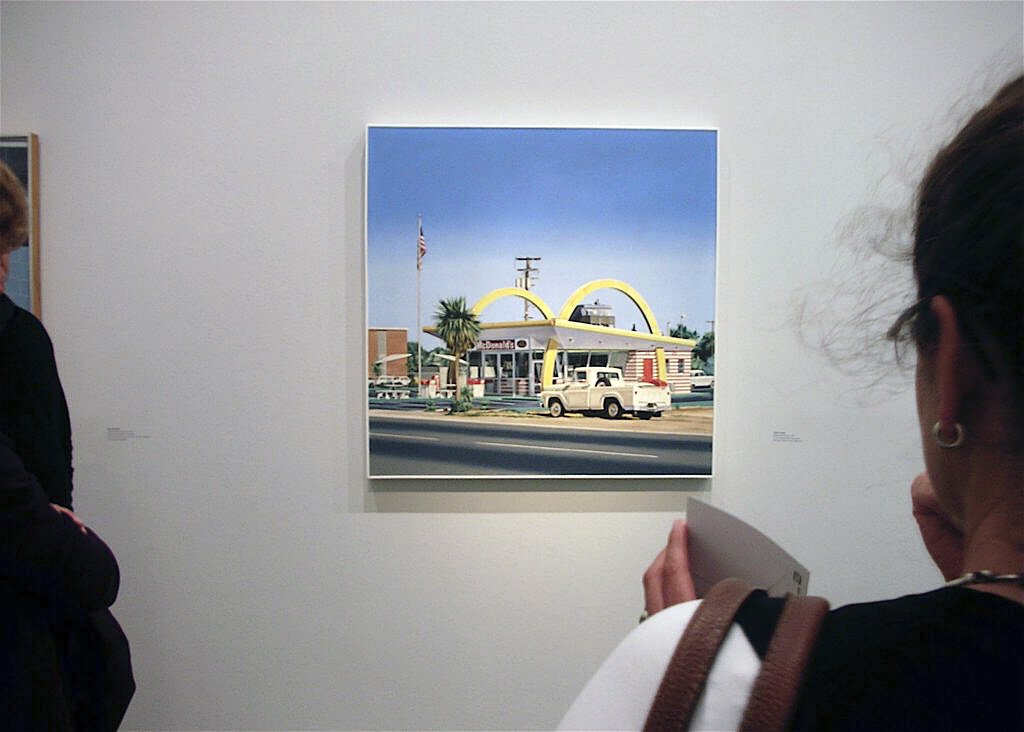
Ralph Goings (American, 1928-2016) 'McDonalds Pick Up' 1970 (installation view)


Ralph Goings (American, 1928-2016)
McDonalds Pick Up (installation view)
1970
41 x 41 inches
Oil on canvas
Collection of Marilyn and Ivan Karp


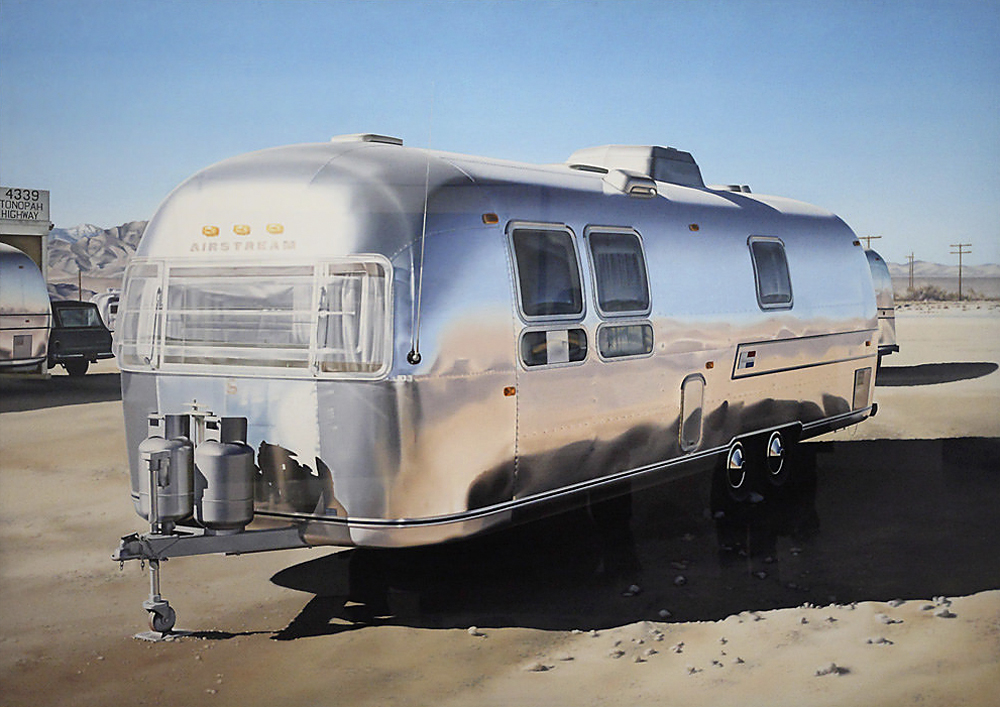
Ralph Goings (American, 1928-2016) 'Airstream' 1970


Ralph Goings (American, 1928-2016)
Airstream
1970


Ralph Goings (American, 1928-2016) 'Dicks Union General' 1971


Ralph Goings (American, 1928-2016)
Dicks Union General
1971
Oil on canvas


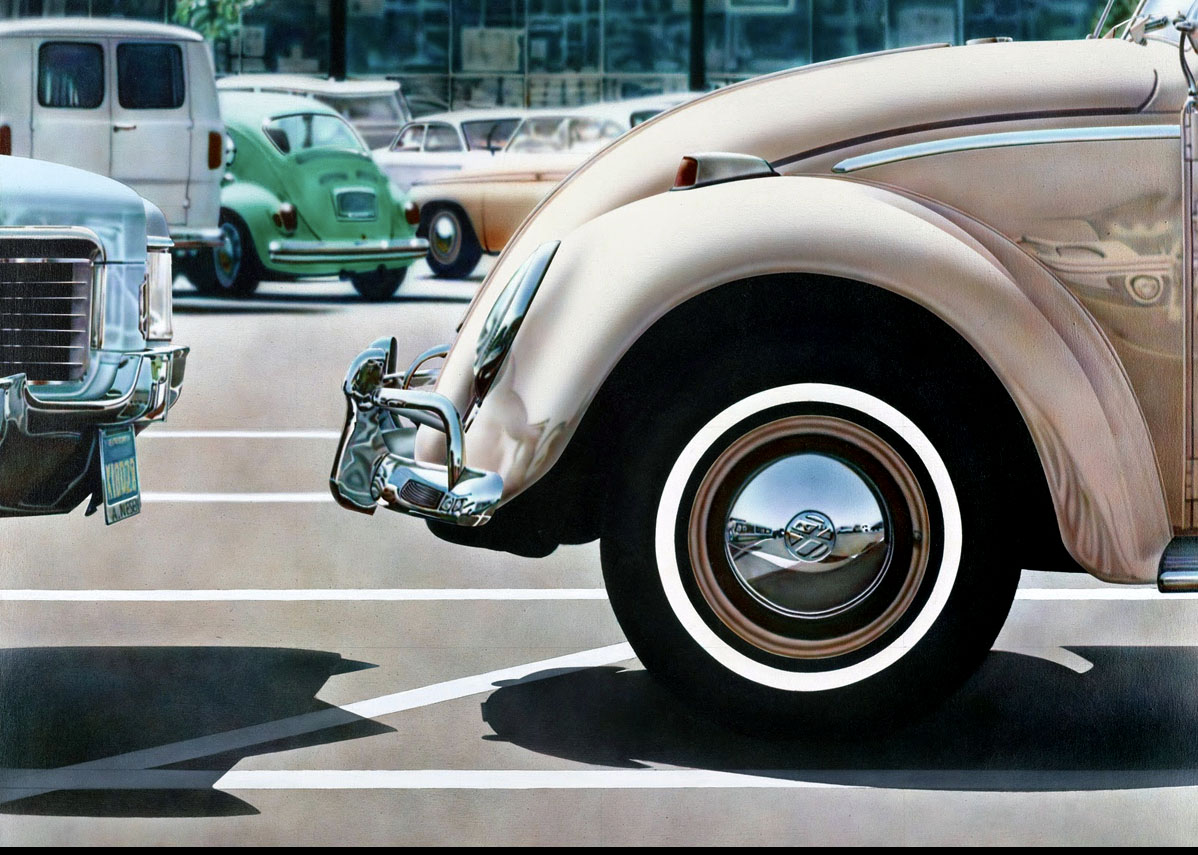
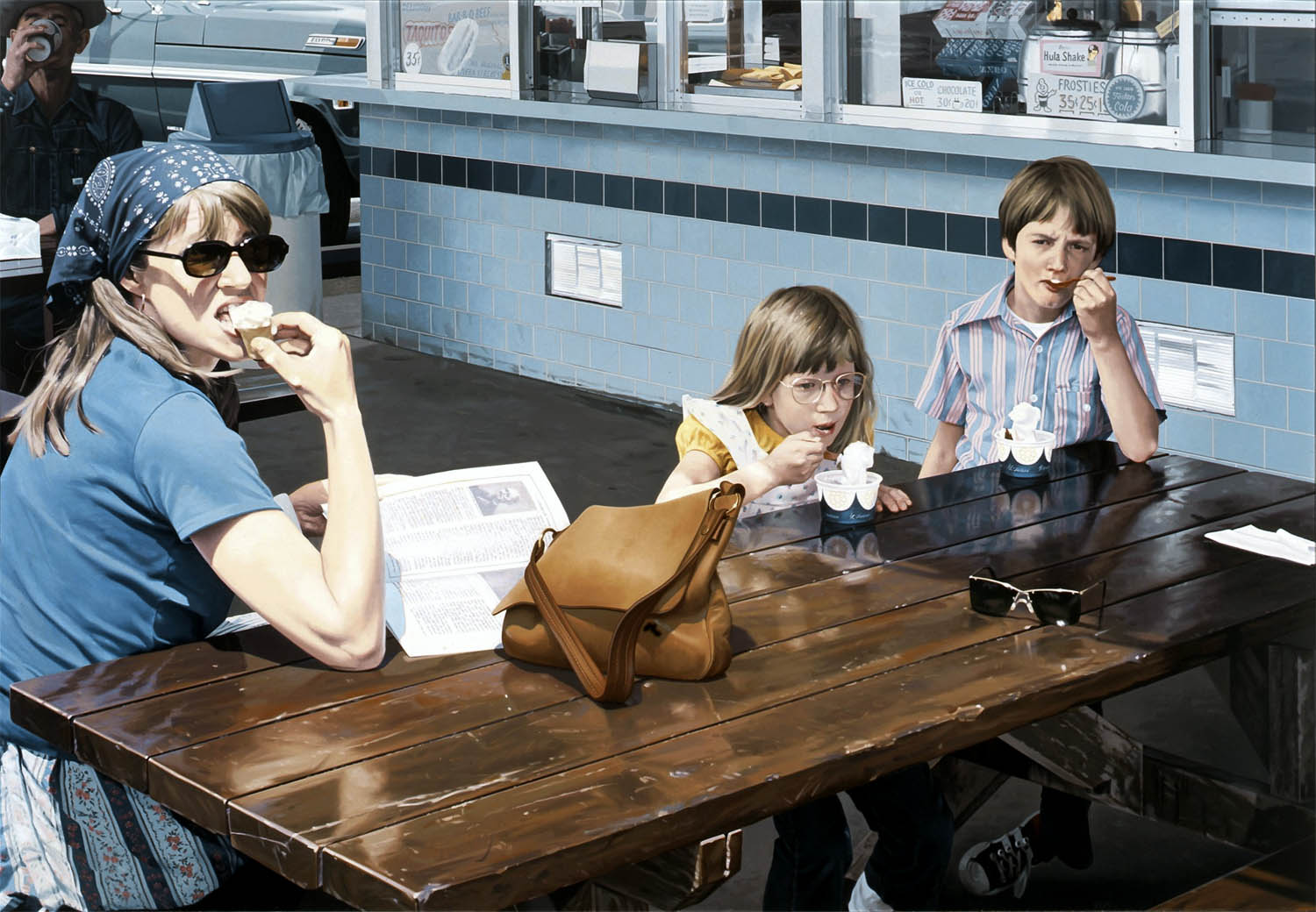
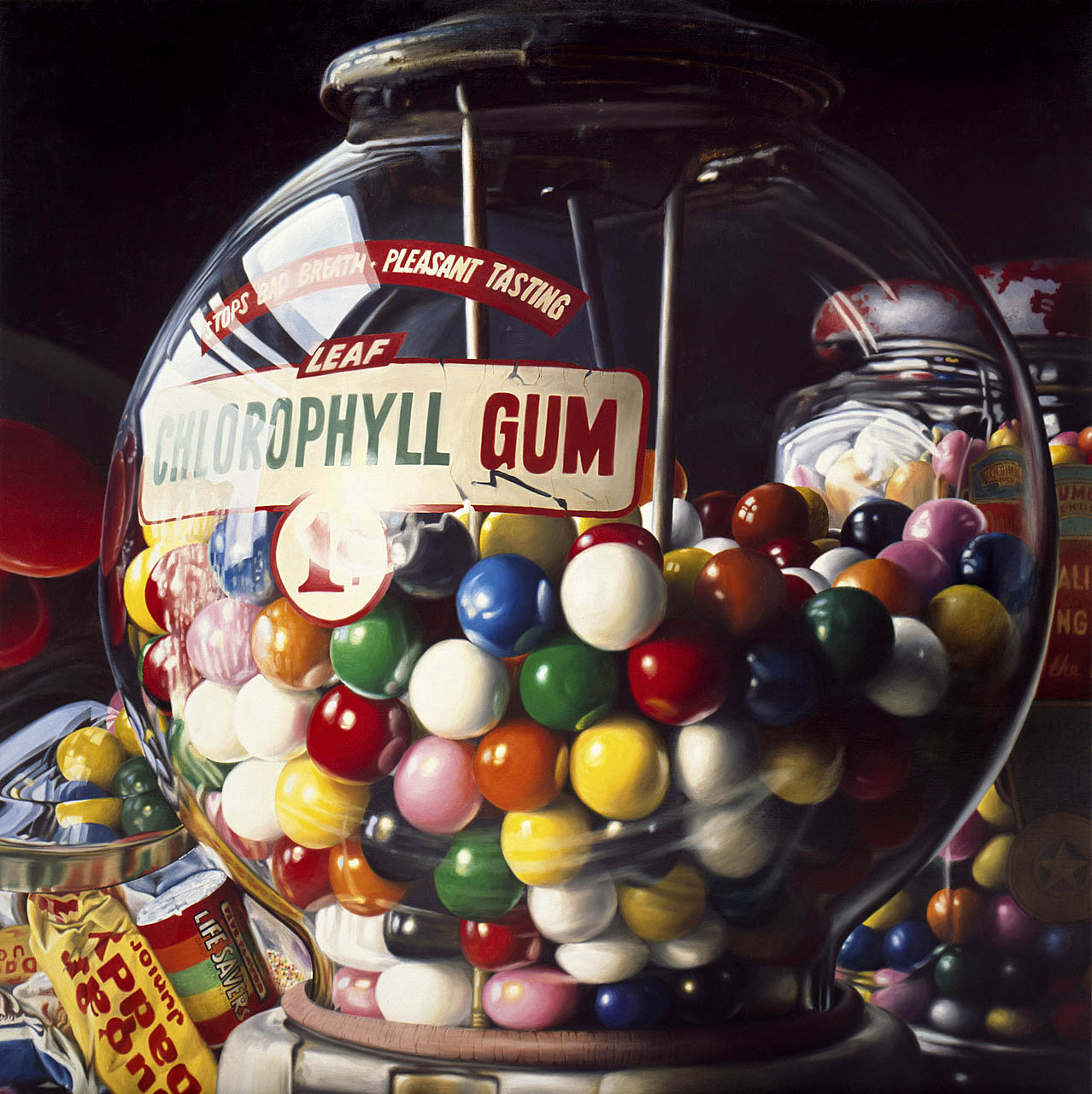
By the end of the 1960s, a number of young artists working in the United States had begun making large-scale realist paintings directly from photographs. With often meticulous detail, they portrayed the objects, places, and people that defined urban and suburban everyday life in America. In contrast to the Pop artists, they did not present their ubiquitous, often mundane, subject matter in a glamorised or ironic manner. They sought instead to achieve a great degree of objectivity and precision in the execution of their work in an effort to stay more or less faithful to the mechanically generated images that served as their source material. They developed various means of systematically translating photographic information onto canvas. In prioritising the way the camera sees over the way the eye sees, they underscored the complexity of the relationship between the reproduction and the reproduced as well as the impact of photography on the perception of both daily life and reality in general.

A number of terms were proposed in quick succession to describe this novel approach to painting, chief among them Super-Realism, Hyperrealism, and Photorealism. The artists identified as Photorealists neither formed a coherent group nor considered themselves to be part of a movement, and a number of them actively challenged their association with the label. Nevertheless, in the late 1960s and 1970s, the seventeen artists in Picturing America: Photorealism in the 1970s – Robert Bechtle, Charles Bell, Tom Blackwell, Chuck Close, Robert Cottingham, Don Eddy, Richard Estes, Audrey Flack, Franz Gertsch, Ralph Goings, Ron Kleemann, Richard McLean, Malcolm Morley, Stephen Posen, John Salt, Ben Schonzeit, and Paul Staiger – were exploring a related set of issues, methods, and subjects that led critics, curators, and art historians to both exhibit and write about their work as a coherent trend in contemporary art. Picturing America focuses on this formative, defining period in the history of Photorealism.

The exhibition includes thirty-one paintings, a number of them the most iconic and masterful works of 1967-1982, for example Richard Estes’s Telephone Booths (1967, above) and Chuck Close’s Leslie (1973, above). Picturing America is divided into four sections, three exploring key themes of Photorealist painting during the 1970s – Reflections on the City, Culture of Consumption, and American Life – and a fourth dedicated to a portfolio of ten lithographs made on the occasion of Documenta 5 in 1972, which featured the first major group showing of Photorealism.

Text from the Deutsche Guggenheim website


Picturing Americas – American Photorealism in the 70s

Vernissage video of “Picturing Americas”, an art exhibition about American Photorealism in the 1970s, presented in Berlin by Deutsche Guggenheim, a joint venture between Deutsche Bank and the Solomon R. Guggenheim Foundation in New York. The exhibition (March – May 2009) was the first major showing of American Photorealism in Germany since “documenta 5” in 1972.

The video includes interviews of Valerie Hillings, Assistant Curator, Solomon R. Guggenheim Museum, and interviews with the following artists: Ron Kleemann, Robert Bechtle, Tom Blackwell. You can also enjoy stills of selected pictures shown at the exhibition. Video courtesy of VernissageTV (VTV).

Text from the YouTube website


Robert Bechtle (American, 1932-2020) 'Foster's Freeze, Escalon' 1975


Robert Bechtle (American, 1932-2020)
Foster’s Freeze, Escalon
1975


Charles Bell (American, 1935-1995) 'Gum Ball No. 10: "Sugar Daddy"'
1975


Charles Bell (American, 1935-1995)
Gum Ball No. 10: “Sugar Daddy”
1975
Oil on canvas
66 x 66 inches


Charles Bell was born in 1935 in Tulsa, Oklahoma. Although Bell became interested in art at a young age, he never received formal training. In 1957, he completed a BBA at the University of Oklahoma, Norman, and did not decide to pursue an artistic career until the early 1960s after touring in the U.S. Navy. At this point in time, he was working in the San Francisco Bay Area, where he was drawn to the vibrantly colored paintings of Richard Diebenkorn and Wayne Thiebaud. Other artistic influences Bell has cited range from Pop art to the realisms of Jan Vermeer and Salvador Dalí. It was through the painter Donald Timothy Flores, however, that Bell learned technique, most notably trompe l’oeil, while working in the former’s San Francisco studio. Under Flores, Bell painted mostly small-scale landscapes and still lifes, which earned him the Society of Western Artists Award in 1968.

In 1967 Bell relocated to New York, where he set up his first studio. Two years later he began showing at New York’s Meisel Gallery run by Louis K. Meisel, who popularized the term “Photorealism” and helped establish the style as a movement. Bell embraced a photo-based technique in his work not only for the way it renders imperceptible details visible, but also for how he saw the close-up photographic view as emblematic of contemporary visual experience steeped in a daily bombardment of media imagery. Bell carried out his Photorealist works by photographing his subjects in still-life compositions and painting from his image. 

Although Photorealism emerged as a national phenomenon, certain general qualities distinguish the coastal approaches to the movement. While the majority of the West Coast Photorealists preferred landscapes, particularly images of cars, trucks, and homes within an overall landscape, Bell, like many of the New York–based Photorealists, focused on still life. Bell transformed everyday subject matter by enlarging ordinary objects like Raggedy Ann dolls and gumball machines to an unusually grand scale. His subjects are typically familiar objects associated with childhood, consumer culture, and play, and thus capable of resonating with a broad audience. By focusing on larger-than-life subjects, Bell’s paintings also deny narrative readings of his work. He has described his approach to selecting subject matter as more of an emotional than intellectual process. The hyperrealistic precision of his technique, combined with an exaggerated scale, produces a sensation that oscillates between familiarity and unfamiliarity, thus engaging the viewer sensually and emotionally. The exploration of light remains a persistent theme throughout Bell’s oeuvre, from his earliest treatments of light on mostly opaque surfaces to his interest in reflected and refracted light on transparent materials, as seen in the gumball machine series (1971-77). These investigations gave way to his subsequent interest in objects illuminated from within, such as pinball machines, which he began in 1977.

Text from the Guggenheim website [Online] Cited 01/04/2009. Used under fair use conditions for the purposes of education and research


Robert Bechtle (American, 1932-2020) 'Alameda Gran Torino' 1974


Robert Bechtle (American, 1932-2020)
Alameda Gran Torino
1974


Ron Kleemann (American, 1937-2014) 'Big Foot Cross' 1977-1978


Ron Kleemann (American, 1937-2014)
Big Foot Cross
1977-1978
Acrylic on canvas
54 x 78 inches


Deutsche Guggenheim

This museum closed in 2013.

LIKE ART BLART ON FACEBOOK

Back to top

Exhibition: ‘Francis Bacon’ at the Museo Nacional del Prado, Madrid

Exhibition dates: 3rd February – 19th April, 2009

Curator: Manuela Mena, co-curator of the exhibition at the Prado


Francis Bacon (British, 1909-1992) 'Triptych inspired by T.S. Eliot's 'Sweeney Agonistes'' 1967 from the exhibition 'Francis Bacon' at the Museo Nacional del Prado, Madrid, Feb - April, 2009


Francis Bacon (British, 1909-1992)
Triptych inspired by T.S. Eliot’s ‘Sweeney Agonistes’
1967
Oil on canvas
198 x 147.5cm (each)
Washington, D.C. Hirshhorn Museum and Sculpture Garden, Smithsonian Institution. Gift of the Joseph H. Hirshhorn Foundation, 1972


Looks like an amazing exhibition of Francis Bacon’s work, one of my favourite artists – I wish I could see it!


Many thankx to the Museo Nacional del Prado for allowing me to publish the art work in the posting. Please click on the photographs for a larger version of the image.


The exhibition is constructed in different sections:

~ Animal
~ Zone
~ Apprehension
~ Crucifixion
~ Crisis
~ Archive
~ Portrait
~ Memorial
~ Epic
~ Late


Bacon’s work demonstrates marked similarities to that of many of the Spanish artists he admired. (Manuela Mena, co-curator of the exhibition at the Prado, has written an excellent essay on this topic that can be found in the exhibition’s catalog.) The retrospective at the Prado provides a rare opportunity to compare Bacon to some of the Spanish masters that influenced him.

Start by meandering through the vast Bacon exhibition. Spread between two floors of the new wing of the Prado, the exhibition has brought together Bacon’s most important works from nearly his entire artistic production. It begins with the work that put Bacon on the map, “Three Studies for Figures at the Foot of a Crucifixion” (1944), and follows his work through the interpretations of Velázquez, crucifixion triptychs, his unique portraits and the late works through the years shortly before his death.

Text from the Prado website


Francis Bacon (British, 1909-1992) 'Three Studies for Figures at the Base of a Crucifixion' c. 1944 from the exhibition 'Francis Bacon' at the Museo Nacional del Prado, Madrid, Feb - April, 2009


Francis Bacon (British, 1909-1992)
Three Studies for Figures at the Base of a Crucifixion
c. 1944
Oil on board
94 x 73.7cm
London, Tate, presented by Eric Hall 1953


Animal

A philosophical attitude to human nature first emerges in Francis Bacon’s works of the 1940s. They reflect his belief that, without God, humans are subject to the same natural urges of violence, lust and fear as any other animal. He showed Figure in a Landscape and Three Studies for Figures at the Base of a Crucifixion in April 1945, and exhibited consistently thereafter. The bestial depiction of the human figure was combined with specific references to recent history and especially the devastating events of the Second World War. Bacon often drew his inspiration from reproductions, acquiring a large collection of books, catalogues and magazines. He repeatedly studied key images in order to probe beneath the surface appearance captured in photographs. Early concerns that would persist throughout his work include the male nude, which reveals the frailty of the human figure, and the scream or cry that expresses repressed and violent anxieties. These works are among the first in which he sought to balance psychological insights with the physical identity of flesh and paint.


Francis Bacon (British, 1909-1992) 'Study after Velázquez’s Portrait of Pope Innocent X' 1953


Francis Bacon (British, 1909-1992)
Study after Velázquez’s Portrait of Pope Innocent X
1953
Oil on canvas
153 x 118cm
Des Moines, Nathan Emory Coffin Collection of the Des Moines Arts Center, purchased with funds from the Coffin Fine Arts Trust


Zone

In his paintings from the early 1950s, Bacon engaged in complex experiments with pictorial space. He started to depict specific details in the backgrounds of these works and created a nuanced interaction between subject and setting. Figures are boxed into cage-like structures, delineated ‘space-frames’ and hexagonal ground planes, confining them within a tense psychological zone. In 1952 he described this as “opening up areas of feeling rather than merely an illustration of an object”. Through his technique of ‘shuttering’ with vertical lines of paint that merge the foreground and background, Bacon held the figure and the setting together within the picture surface, with neither taking precedence in what he called “an attempt to lift the image outside of its natural environment”.

A theme that emerged in the 1950s was the extended series of variants of Velázquez’s Portrait of Pope Innocent X, 1650 (Rome, Galleria Doria Pamphilj), a work Bacon knew only from illustrations. He used this source to expose the insecurities of the powerful – represented most often in the scream of the caged figure. Through the open mouth Bacon exposed the tension between the interior space of the body and the spaces of its location, which is explored more explicitly in the vulnerability of the ape-like nudes.


Francis Bacon (British, 1909-1992) 'Chimpanzee' 1955


Francis Bacon (British, 1909-1992)
Chimpanzee
1955
Oil on canvas
152.5 x 117cm
Stuttgart, Staatsgalerie


Apprehension

Implicit throughout Bacon’s work of the mid 1950s is a sense of dread pervading the brutality of everyday life. Not only a result of Cold War anxiety, this seems to have reflected a sense of menace at a personal level emanating from Bacon’s chaotic affair with Peter Lacy (who was prone to drunken violence) and the wider pressures associated with the continuing illegality of homosexuality. The Man in Blue series captures this atmosphere, concentrating on a single anonymous male figure in a dark suit sitting at a table or bar counter on a deep blue-black ground. Within their simple painted frames, these awkwardly posed figures appear pathetically isolated.

Bacon’s interest in situations that combine banality with acute apprehension was also evident in other contemporary works. From figures of anxious authority, his popes took on malevolent attributes and physical distortions that were directly echoed in the paintings of animals, whose actions are also both sinister and undignified. Some of these images derived from Bacon’s close scrutiny of the sequential photographs of animals and humans taken by Eadweard Muybridge (1830-1904), which he called “a dictionary” of the body in motion.


Francis Bacon (British, 1909-1992) 'Three Studies for a Crucifixion' 1962


Francis Bacon (British, 1909-1992)
Three Studies for a Crucifixion
1962
Oil on canvas
198.2 x 144.8cm
New York, Solomon R. Guggenheim Museum


Crucifixion

Bacon made paintings related to the Crucifixion at pivotal moments in his career, which is why these key works are gathered here. The paradox of an atheist choosing a subject laden with Christian significance was not lost on Bacon, but he claimed, “as a non-believer, it was just an act of man’s behaviour”. Here the instincts of brutality and fear combine with a deep fascination with the ritual of sacrifice. Bacon had already made a very individual crucifixion image in 1933 before returning to the subject with his break-through triptych Three Studies for Figures at the Base of a Crucifixion in 1944. This is a key precursor to later themes and compositions, containing the bestial distortion of human figures within the triptych format. These monstrous creatures displace the traditional saints and Bacon later related them to the Eumenides – the vengeful furies in Greek mythology. In resuming the theme in the 1960s, especially in 1962 as the culmination of his first Tate exhibition, Bacon used references to Cimabue’s 1272-1274 Crucifixion to introduce a more explicitly violent vision. Speaking after completing the third triptych in 1965 he simply stated: “Well, of course, we are meat, we are potential carcasses”.


Francis Bacon (British, 1909-1992) 'Paralytic Child Walking on All Fours (from Muybridge)' 1961


Francis Bacon (British, 1909-1992)
Paralytic Child Walking on All Fours (from Muybridge)
1961
Oil on canvas
198 x 142cm
The Hague, Collection Gemeentemuseum Den Haag


Crisis

Between 1956 and 1961, Bacon travelled widely. He spent time in places marginal to the art world, in Monaco, the South of France and Africa, and particularly with Peter Lacy in the ex-patriot community in Tangier. In this rather unsettled context, he explored new methods of production, shifting to thicker paint, violently applied and so strong in colour as to indicate an engagement with the light of North Africa. This was most extreme in his series based on a self-portrait of Van Gogh, The Painter on the Road to Tarascon (1888, destroyed), which became an emblem of the modern predicament. Despite initial acclaim, Bacon’s Van Gogh works were soon criticised for their “reckless energy” and came to be viewed as an aberration. They can now be recognised as pivotal to Bacon’s further development, however, and allow glimpses into his search for new ways of working. His innovations were perhaps in response to American Abstract Expressionism, of which he was publicly critical. Although he eventually returned to a more controlled approach to painting, the introduction of chance and the new vibrancy of colour at this moment would remain through out his career.


Montage of material from Bacon's Studio (including pictures of Velázquez's Innocent X, The Thinker by Rodin etc.) 7 Cromwell Place, c. 1950


Montage of material from Bacon’s Studio (including pictures of Velázquez’s Innocent X, The Thinker by Rodin etc.)
7 Cromwell Place
c. 1950
© Sam Hunter


Archive

The posthumous investigation of Bacon’s studio confirmed the extent to which he used and manipulated photographic imagery. This practice was already known from montages recorded in 1950 by the critic Sam Hunter. Often united by a theme of violence, the material ranges between images of conflict, big game, athletes, film stills and works of art.

An important revelation that followed the artist’s death was the discovery of lists of potential subjects and preparatory drawings, which Bacon had denied making. Throughout his life, he asserted the spontaneous nature of his work, but these materials reveal that chance was underpinned by planning.

Photography offered Bacon a dictionary of poses. Though he most frequently referred to Eadweard Muybridge’s (1830-1904) survey of human and animal locomotion, images of which he combined with the figures of Michelangelo, he remained alert to photographs of the body in a variety of positions.

A further extension of Bacon’s preparatory practices can be seen in his commissioning of photographs of his circle of friends from the photographer John Deakin (1912-1972). The results – together with self-portraits, photo booth strips, and his own photographs – became important prompts in his shift from generic representations of the human body to portrayals of specific individuals.

A matrix of images

Bacon’s use of photographic sources has been known since 1950 when the critic Sam Hunter took three photographs of material he had selected from a table in Bacon’s studio in Cromwell Place, South Kensington. Hunter observed that the diverse imagery was linked by violence, and this fascination continued throughout Bacon’s life. Images of Nazis and the North African wars of the 1950s were prominent in his large collection of sources. Films stills and reproductions of works of art, including Bacon’s own, were also common. The dismantling of Bacon’s later studio, nearby at Reece Mews, after his death confirmed that the amassing of photographic material had remained an obsession. While some images were used to generate paintings, he also seems to have collected such an archive for its own sake.

The mediated image

From the 1960s, Bacon’s accumulation of chance images began to include a more deliberate strategy of using photographs of his close circle. They became key images for the development of the portraits that dominated his paintings at this time. Snap shots and photo booth strips were augmented by the unflinching photographs taken by his friend John Deakin. Bacon specifically commissioned some of these from Deakin as records of those close to him – notably his partner from 1962, George Dyer – and they served as sources for likenesses and for poses for the rest of his career.

The Physical Body

Bacon drew more from Eadweard Muybridge’s sequential photographs of human and animal locomotion than from any other source. These isolated the naked figure in a way he clearly found stimulating. He also, however, spoke of projecting on to them Michelangelo’s figures which for him had more “ampleness” and “grandeur of form”.

His fascination in photography’s freezing of the body in motion led him to collect sports photographs, particularly boxing, cricket and bullfighting. It was not just movement but the physicality of the body that Bacon scrutinised, using found images to provoke new ways of picturing its strength and vulnerability.


Francis Bacon (British, 1909-1992) 'Portrait of Isabel Rawsthorne Standing in a Street in Soho' 1967


Francis Bacon (British, 1909-1992)
Portrait of Isabel Rawsthorne Standing in a Street in Soho
1967
Oil on canvas
198 x 147.5cm
Berlin, Staatliche Museen zu Berlin, Nationalgalerie


Portrait

During the 1960s, the larger part of Bacon’s work shifted focus to portraits and paintings of his close friends. These works centre on two broad concerns: the portrayal of the human condition and the struggle to reinvent portraiture. Bacon drew upon the lessons of Van Gogh and Velázquez, but attempted to rework their projects for a post-photographic world. His approach was to distort appearance in order to reach a deeper truth about his subjects. To this end, Bacon’s models can be seen performing different roles. In the Lying Figures series, Henrietta Moraes is naked and exposed. This unprecedented raw sexuality reinforces Bacon’s understanding of the human body simply as meat. By contrast Isabel Rawsthorne, a fellow painter, always appears in control of how she is presented. With a mixture of contempt and affection, Bacon depicted George Dyer, his lover and most frequent model, as fragile and pathetic. This is especially evident in Dyer’s first appearance in Bacon’s work, in Three Figures in a Room, in which he represents the absurdities, indignities and pathos of human existence. Everyday objects occasionally feature in these works, hollow props for lonely individuals which reinforce the sense of isolation that Bacon associated with the human condition.


Francis Bacon (British 1909-1992) 'Triptych in Memory of George Dyer' 1971


Francis Bacon (British 1909-1992)
Triptych in Memory of George Dyer
1971
Oil on canvas


Francis Bacon (British, 1909-1992) 'Triptych - August 1972' 1972


Francis Bacon (British, 1909-1992)
Triptych – August 1972
1972
Oil on canvas
198 x 147.5cm
London, Tate


Memorial

This room is dedicated to George Dyer who was Bacon’s most important and constant companion and model from the autumn of 1963. He committed suicide on 24 October 1971, two days before the opening of Bacon’s major exhibition at the Grand Palais in Paris. Influenced by loss and guilt, the painter made a number of pictures in memorial to Dyer. From this period onwards the large-scale triptych was his established means for major statements, having the advantage of simultaneously isolating and juxtaposing the participating figures, as well as guarding against narrative qualities that Bacon strove to avoid. But while evading narrative, Bacon drew more than ever from literary imagery; the first of the sequence, Triptych In Memory of George Dyer 1971, refers to a specific section of T.S. Eliot’s The Waste Land (1922). In addition to his own memory, for Triptych – August 1972 Bacon relied on photographs, taken by John Deakin, of Dyer in various poses on a chair. He confined his dense and energetic application of paint to the figures in these works. The dark openings consciously evoke the abyss of mortality that would become a recurring concern in Bacon’s later works.


Francis Bacon (British, 1909-1992) 'Triptych' 1987


Francis Bacon (British, 1909-1992)
Triptych
1987
Oil on canvas
198 x 147.5cm
London, The Estate of Francis Bacon, courtesy Faggionato Fine Art


Epic

References to poetry and drama became a central element in Bacon’s work from the second half of the 1960s. Alongside images of friends and single figures (often self-portraits), he produced a series of grand works that identified with great literature. Imbued with the inevitability and constant presence of death, the poetry of T.S. Eliot was a particular source of inspiration. The sentiments of the poet’s character Sweeney could be said to echo the painter’s perspective on life:

Birth, and copulation, and death.

That’s all the facts when you come to

brass tacks:

Birth, and copulation, and death.

The works in this room refer to and derive from literature. Some make direct references in their titles, others depict, sometimes abstractly, a certain scene or atmosphere within the narratives themselves. Bacon repeatedly stated that none of his paintings were intended as narratives, so rather than illustrations, these works should perhaps be understood as evoking the experience of reading of Eliot’s poetry or Aeschylus’s tragedies: their violence, threat or erotic charge. Thus, of the triptych created after reading Aeschylus, Bacon explained “I tried to create images of the sensations that some of the episodes created inside me”.


Francis Bacon (British, 1909-1992) 'Portrait of John Edwards' 1988


Francis Bacon (British, 1909-1992)
Portrait of John Edwards
1988
Oil on canvas
198 x 147.5cm
The Estate of Francis Bacon, courtesy of Faggionato Fine Arts, London, and Tony Shafrazi Gallery, New York


Late

When Bacon turned seventy in 1979, more than a decade of work lay ahead of him. Neither his legendarily hedonistic lifestyle nor his work pattern seemed to age him, but he was continually facing up to mortality through the deaths of those around him. This unswerving confrontation, however mitigated by youthful companions such as John Edwards, became the great theme of his late style. Constantly stimulated by new source material – for example the photographs and the poetry of Federico García Lorca which triggered his bullfight paintings – he was able to adapt them to his abiding concerns with the vulnerability of flesh. Exploring new techniques he also extended his fascination with how appropriate oil paint is for rendering the human body’s sensuality and sensitivity. A certain despairing energy may also be felt in the forceful throwing of paint that dominates some of these final works: the controlled chance as a defiant gesture. Ultimately, and appropriately, Bacon’s last triptych of 1991 returns to the key image of sexual struggle that had frequently recurred in his work. He faced death with a defiant concentration on the exquisiteness of the lived moment.


Francis Bacon (British, 1909-1992) 'Three Studies for Self-Portrait' 1979-1980


Francis Bacon (British, 1909-1992)
Three Studies for Self-Portrait
1979-1980
Oil on canvas
37.5 x 31.8cm
Nueva York, The Metropolitan Museum of Art, Jacques and Natasha Gelman collection, 1998


Francis Bacon

Francis Bacon is internationally acknowledged as among the most powerful painters of the twentieth century. His vision of the world was unflinching and entirely individual, encompassing images of sensuality and brutality, both immediate and timeless. When he first emerged to public recognition, in the aftermath of the Second World War, his paintings were greeted with horror. Shock has since been joined by a wide appreciation of Bacon’s ability to expose humanity’s frailties and drives.

This major retrospective gathers many of his most remarkable paintings and is arranged broadly chronologically. Bacon’s vision of the world has had a profound impact. It is born of a direct engagement that his paintings demand of each of us, so that, as he famously claimed, the “paint comes across directly onto the nervous system”.

As an atheist, Bacon sought to express what it was to live in a world without God or afterlife. By setting sensual abandon and physical compulsion against hopelessness and irrationality, he showed the human as simply another animal. As a response to the challenge that photography posed for painting, he developed a unique realism which could convey more about the state of existence than photography’s representation of the perceived world. In an era dominated by abstract art, he amassed and drew upon a vast array of visual imagery, including past art, photography and film. These artistic and philosophical concerns run like a spine through the present exhibition.


Museo Nacional Del Prado
Paseo del Prado, s/n,
28014 Madrid, Spain

Opening hours:
Monday – Saturday 10am – 8pm
Sunday 10am – 7pm

Museo Nacional del Prado website

LIKE ART BLART ON FACEBOOK

Back to top

Photograph: The Passing of Memory: resurrecting a photograph for the series ‘The Shape of Dreams’

“Remembering is an ethical act. It is also a voluntary act. We can choose not to remember. We can choose to forget. In this photograph I choose to remember, to not let pass into the dark night of the soul.” Dr Marcus Bunyan

March 2009


Marcus Bunyan (Australian born England, b. 1958) 'Oakland, 7-'51' from the series 'The Shape of Dreams' 2009


Marcus Bunyan (Australian born England, b. 1958)
Oakland, 7-’51 from the series The Shape of Dreams (restored)
2009


“Fragments of harmonic lines assemble and collapse as the meaning of each interval must be continually revised in light of the unfolding precession of further terms in an ultimately unsustainable syntax. The mind’s ear tries to remember the sum of passing intervals, but without the ability to incorporate them into larger identifiable units each note inevitably lapses back into silence, surrendered to the presence of the currently sounding tone, itself soon to give way to another newly isolated note in its turn.”


Craig Dworkin1


The Passing of Memory

Thinking about this photograph

I bought an album on Ebay that contained an anonymous aviator with snapshots of his life: photographs of him in Oakland, California, Cologne in Germany and flying out of Italy – photos of his buddies and the work they did, the places they visited, the fun they had.

This one photograph has haunted me more than the rest.

Who was he? What was his life like? Do he get married and have children? Is he still alive?

When scanned the image was so dirty, so degraded, that I spent 7 weeks of my life cleaning and restoring the photograph working all hours of the day and night. I was obsessive almost to the point of obstinacy. Many times I nearly gave up as I thought the task impossible – thousands of dots and hairs inhabited the surface of the image and, surely, it was just another photograph one of millions that circle the world. Why expend so much energy just to resurrect this one particular image?

Some things that can be said about this photograph

It is small measuring only 9cm high by 7.5 cm wide

It is printed on cheap glossy photographic paper which now has a slight yellow tinge to it.

The image is creased at top left.

The back is annotated ‘Oakland, 7-’51’

The dark roundel with the wing on the side of the aircraft has faint text that spells out the words ‘AERO ACE’.

There is no engine in the aircraft and it looks from the parts lying on the ground that the aircraft is being broken up or used for spares.

The man is wearing work overalls with unidentifiable insignia on them, a worker on the aircraft being dismantled or just a fitter on the base.

Someone standing on the ground has obviously called out the man’s name and he has turned around in response to the call and lent forward and put out his hand in greeting – a beautiful spontaneous response – and the photograph has been taken.

Some other things that can be said about this photograph, in passing

The sun splashes the man’s face. He smiles at the camera.

His arm rests gently on the metal of the aircraft, shielded from the sun.

Perhaps he wears a ring on his fifth finger.

He is blind.

This photograph is an individual, isolated note in the fabric of time. It could easily pass into silence as memory and image fade from view. Memories of the individual form the basis for remembering and photographs act as an aide-memoire both for individual memory and the collective memory that flows from individual memory. Memory is always and only partial and fragmentary – who is remembering, what are they remembering, when do they remember, what prompts them to remember and how these memories are incorporated into the collective memory, an always mediated phenomenon that manifests itself in the actions and statements of individuals, are important questions.

Images are able to trigger memories and emotional responses to a particular time and place, but since this photograph has no personal significance what is going on here? Why did I cry when I was restoring it? What emotional association was happening inside me?

“To remember is always to give a reading of the past, a reading which requires linguistic skills derived from the traditions of explanation and story-telling within a culture and which [presents] issues in a narrative that owes its meaning ultimately to the interpretative practices of a community of speakers. This is true even when what is remembered is one’s own past experience… [The] mental image of the past … becomes a phenomenon of consciousness only when clothed with words, and these owe their meaning to social practices of communication.”2


His blindness stares at us while underneath his body walks away into his passing.

I have become the speaker for this man, for this image.

His brilliant face is our brilliant face.

In this speaking, the phenomenon of making the image conscious, the gap between image and presence, between the photo and its shadow has collapsed. There is no past and present but a collective resonance that has presence in images.

“Such reasoning questions the separation of past and present in a fundamental way. As a consequence it becomes fruitless to discuss whether or not a particular event or process remembered corresponds to the actual past: all that matters are the specific conditions under which such memory is constructed as well as the personal and social implications of memories held.”3

‘The personal and social implications of memories held’. Or not held, if images are lost in passing.

It is such a joyous image, the uplifted hand almost in supplication. I feel strong connection to this man. I bring his presence into consciousness in my life, and by my thinking into the collective memory. Perhaps the emotional response is that as I get older photographs of youth remind me of the passing of time more strongly. Perhaps the image reminds me of the smiling father I never had. These are not projections of my own feelings but resonances held in the collective memory.

As Susan Sontag has observed,

“Remembering is an ethical act, has ethical value in and of itself. Memory is, achingly, the only relation we can have with the dead. So the belief that remembering is an ethical act is deep in our natures as humans, who know we are going to die, and who mourn those who in the normal course of things die before us – grandparents, parents, teachers and older friends.”4


Remembering is an ethical act. It is also a voluntary act. We can choose not to remember. We can choose to forget. In this photograph I choose to remember, to not let pass into the dark night of the soul. My mind, eyes and heart are open.

This is not a simulacra of an original image but an adaptation, an adaptation that tries to find resonances between past and present, between image and shadow. As such this photograph is no longer an isolated tone that inevitably lapses back into silence but part of a bracketing of time that is beautiful in its illumination, its presence. The individual as collective, collected memory present for all to see.

The form of formlessness, the shape of dreams.

Dr Marcus Bunyan


1/ Dworkin, Craig. “Grammar Degree Zero (Introduction to Re-Writing Freud)” (2005) [Online] Cited 23rd March, 2009. No longer available online

2/ Holtorf, Cornelius. “Social Memory,” part of a doctoral thesis Monumental Past: The Life-histories of Megalithic Monuments in Mecklenburg-Vorpommern (Germany) submitted 1998 [Online] Cited 23/03/2009

3/ Ibid.,

4/ Sontag, Susan. Regarding the Pain of Others. London: Hamish Hamilton, 2003, p. 103


Marcus Bunyan (Australian born England, b. 1958) 'Oakland, 7-'51' from the series 'The Shape of Dreams' 2009 (detail before cleaning)

Before


Marcus Bunyan (Australian born England, b. 1958) 'Oakland, 7-'51' from the series 'The Shape of Dreams' 2009 (detail after cleaning)

After


Marcus Bunyan (Australian born England, b. 1958) 'Oakland, 7-'51' from the series 'The Shape of Dreams' 2009 (detail before cleaning)

Before


Marcus Bunyan (Australian born England, b. 1958) 'Oakland, 7-'51' from the series 'The Shape of Dreams' 2009 (detail after cleaning)

After


Marcus Bunyan (Australian born England, b. 1958) 'Oakland, 7-'51' from the series 'The Shape of Dreams' 2009 (detail before cleaning)

Before


Marcus Bunyan (Australian born England, b. 1958) 'Oakland, 7-'51' from the series 'The Shape of Dreams' 2009 (detail after cleaning)

After


Marcus Bunyan (Australian born England, b. 1958) 'Oakland, 7-'51' from the series 'The Shape of Dreams' 2009 (detail before cleaning)

Before


Marcus Bunyan (Australian born England, b. 1958) 'Oakland, 7-'51' from the series 'The Shape of Dreams' 2009 (detail after cleaning)

After


Marcus Bunyan (Australian born England, b. 1958) 'Oakland, 7-'51' from the series 'The Shape of Dreams' 2009 (detail before cleaning)

Before


Marcus Bunyan. 'Oakland, 7-'51' from the series 'The Shape of Dreams' 2009

After


LIKE ART BLART ON FACEBOOK

Back to top

Exhibition: ‘Overpainted Photographs’ by Gerhard Richter at Centre de la Photographie, Geneva

“Richter’s spontaneous musings, his amorphous worlds, his bleeds and blends crack open the skin of our existential life on earth.’ Dr Marcus Bunyan

Exhibition dates: 20th February – 12th April, 2009

Curated/organised in conjunction with the Museum Morsbroich in Leverkusen, Germany, and edited/curated by museum director and art historian Markus Heinzelmann


Gerhard Richter (German, b. 1932) '9.4.89' from the exhibition 'Overpainted Photographs' by Gerhard Richter at Centre de la Photographie, Geneva, Feb - April, 2009


Gerhard Richter (German, b. 1932)
9.4.89
10.1 x 14.8cm
Oil on colour photograph


There is something unsettling in Richter’s serendipitious interventions. Using his own prosaic 10 x 15cm colour photographs that have been commercially printed as the basis of the works, Richter overlays the surface of the photograph with skeins of paint that disturb the reflexivity of each medium. Dragging the photograph through the paint or using a palette knife to apply layers of colour, the surfaces of paint and photograph no longer exist as separate entities. The process produces punctum like clefts rent in the fabric of time and space. If the intervention is judged unsuccessful the result if immediately destroyed.

In 5.Juli.1994 (below) blood red fingers of paint strain upwards as they invade the solidity of a dour suburban home, echoing the invading trees branches at top right of picture. In 11.2.98 (below) green paint slashes across the mouth and forehead of a woman in a floral dress, her eyes seemingly bloodshot and pleading stare into the distance to the left of our view, the silent scream strangled in her throat by the vibrations of paint. These are the instantaneous responses of the artist to the photograph, a single mood expounded in irreversible gestures, the actions of the painter’s hand disturbing the indexical link of the photograph and it’s ability to be ‘read’ as a referent of the object it depicts. Richter’s interventions challenge the concept of momentary awareness and offer the possibility of a space between, where the image stands for something else – access to Other, even a contemplation of the sublime.

“The colour of paint applied corresponds or contrasts the tonalities of the underlying photograph but link the two through formal relationships of the layers … Often a tense relationship, the results run the gamut of the surreal to the beautiful to the disturbed. It is all the more surprising that each in its perceived completeness was in essence accomplished by chance and trial and error.”1

“Richter’s painterly gestures bounce off the [photographs] content in peculiar ways, sometimes interacting with it, sometimes overlaying it and sometimes threatening to eclipse it altogether. The final effect is to cause both photography and painting to seem like incredibly bizarre activities, disparate in texture but often complicit in aspiration.”2

I love the violence, the sometimes subversive, sometimes transcendental ‘equivalence’ of these images: where a Steiglitz cloud can stand for music, where a Minor White infrared photograph posits a new reality, Richter offers us an immediacy that destroys the self-reflexive nature of everyday life. His spontaneous musings, his amorphous worlds, his bleeds and blends crack open the skin of our existential life on earth.

Here, certainly, are ‘the clefts in words, the words as flesh’.

Dr Marcus Bunyan


1/ “Gerhard Richter: Overpainted Photographs,” on the 5B4 blog, February 9, 2009 [Online] Cited 13/06/2022

2/ Hatje Cantz. “Gerhard Richter: Overpainted Photographs,” on the Artbook website Nd [Online] Cited 13/06/2022


Gerhard Richter (German, b. 1932) '11.4.89' from the exhibition 'Overpainted Photographs' by Gerhard Richter at Centre de la Photographie, Geneva, Feb - April, 2009


Gerhard Richter (German, b. 1932)
11.4.89
10 x 15cm
Oil on colour photograph


Gerhard Richter (German, b. 1932) '11.3.89'


Gerhard Richter (German, b. 1932)
11.3.89
10 x 14.9cm
Oil on colour photograph


Gerhard Richter (German, b. 1932) '5.Juli.1994'


Gerhard Richter (German, b. 1932)
5.Juli.1994
10.2 x 15.2cm
Oil on colour photograph


Gerhard Richter (German, b. 1932) '11.2.98'


Gerhard Richter (German, b. 1932)
11.2.98
10 x 14.7cm
Oil on colour photograph


Gerhard Richter (German, b. 1932) '22.2.96'


Gerhard Richter (German, b. 1932)
22.2.96
9.6 x 14.7cm
Oil on colour photograph


Gerhard Richter (German, b. 1932) '11.Febr.05'


Gerhard Richter (German, b. 1932)
11.Febr.05
10.1 x 14.9cm
Oil on colour photograph


The exhibition presents 330 of Richter’s largely unknown overpainted photographs, a technique he has been using since 1982.

The exhibition UERBERNALTE FOTOGRAFIEN / PHOTOGRAPHIES PEINTES (OVERPAINTED PHOTOGRAPHS) at the Centre de la photographie Geneva (CPG) presented a side of the work of Gerhard Richter largely unknown up till now. Only a few collectors and gallerists close to the artist were aware of the practice that Gerhard Richter, one of the most important artists of our time, had developed systematically since 1982. It is only because of this exhibition that more than 1000 of his over-painted photographs will enter his catalogue raisonné. The CPG presents approximately 330 of them in this show.

“By placing paint on photographs, with all their random and involuntary expressiveness, Gerhard Richter reinforces the unique aspect of each of these mediums and opens a field of tension rich in paradoxes, as old as the couple – painting / photography – which has largely defined modern art.”

Text from Centre de la Photographie website


Gerhard Richter is justly famed for the photorealism of his early canvases, but it is less well known that he has also painted directly onto photographic prints. These (mostly small-format) pieces were reproduced in books as early as the first Atlas, but practically all of the works themselves are housed in private collections and rarely exhibited in public. Overpainted Photographs gathers this body of work, which unites the labor of the hand with the work of mechanical reproduction to produce a kind of art as conceptually rich as Richter’s better-known paintings, neutralizing the expressive powers of each medium to reach an indifference to their potency. In an overture to Duchamp’s “degree zero” found objects, the original photographs are frequently bland in content – an empty office, a ball, a beach scene or tourist snapshot – and Richter’s painterly gestures bounce off that content in peculiar ways, sometimes interacting with it, sometimes overlaying it and sometimes threatening to eclipse it altogether. The final effect is to cause both photography and painting to seem like incredibly bizarre activities, disparate in texture but often complicit in aspiration. This monograph offers a unique opportunity to savour what had previously been a neglected but copious aspect of Richter’s work.

Text from the Amazon website


“The public scenes, whether on the beach or the ski slope or children’s theatre, are beset with sudden surges of colour that tend to resemble interventions of the sky or elemental forces, more than the moods of a decorative or ornamental painter annotation. Sometimes they seem like catastrophic visions. Blood-red snowflakes dance above the white fern. The photo shows skyscrapers in the urban morning sun – and the oil paint adds to the sulpherous fire that pours over the city from the sky”

Botho Strauss in Gerhard Richter: Overpainted Photographs (Hardcover)


Gerhard Richter (German, b. 1932) '22.1.2000 (Firenze)'


Gerhard Richter (German, b. 1932)
22.1.2000 (Firenze)
12 x 12cm
Oil on colour photograph


Gerhard Richter (German, b. 1932) '21.1.2000 (Firenze)'


Gerhard Richter (German, b. 1932)
21.1.2000 (Firenze)
12 x 12cm
Oil on colour photograph


Gerhard Richter (German, b. 1932) '22.4.07'


Gerhard Richter (German, b. 1932)
22.4.07
12.6 cm x 16.7 cm
Oil on colour photograph


Centre de la Photographie
28, rue des Bains,
CH – 1205 Genève
Phone: + 41 22 329 28 35

Opening hours:
Tuesday to Sunday 11.00 – 18.00

Centre de la Photographie website

Gerhard Richter website

LIKE ART BLART ON FACEBOOK

Back to top