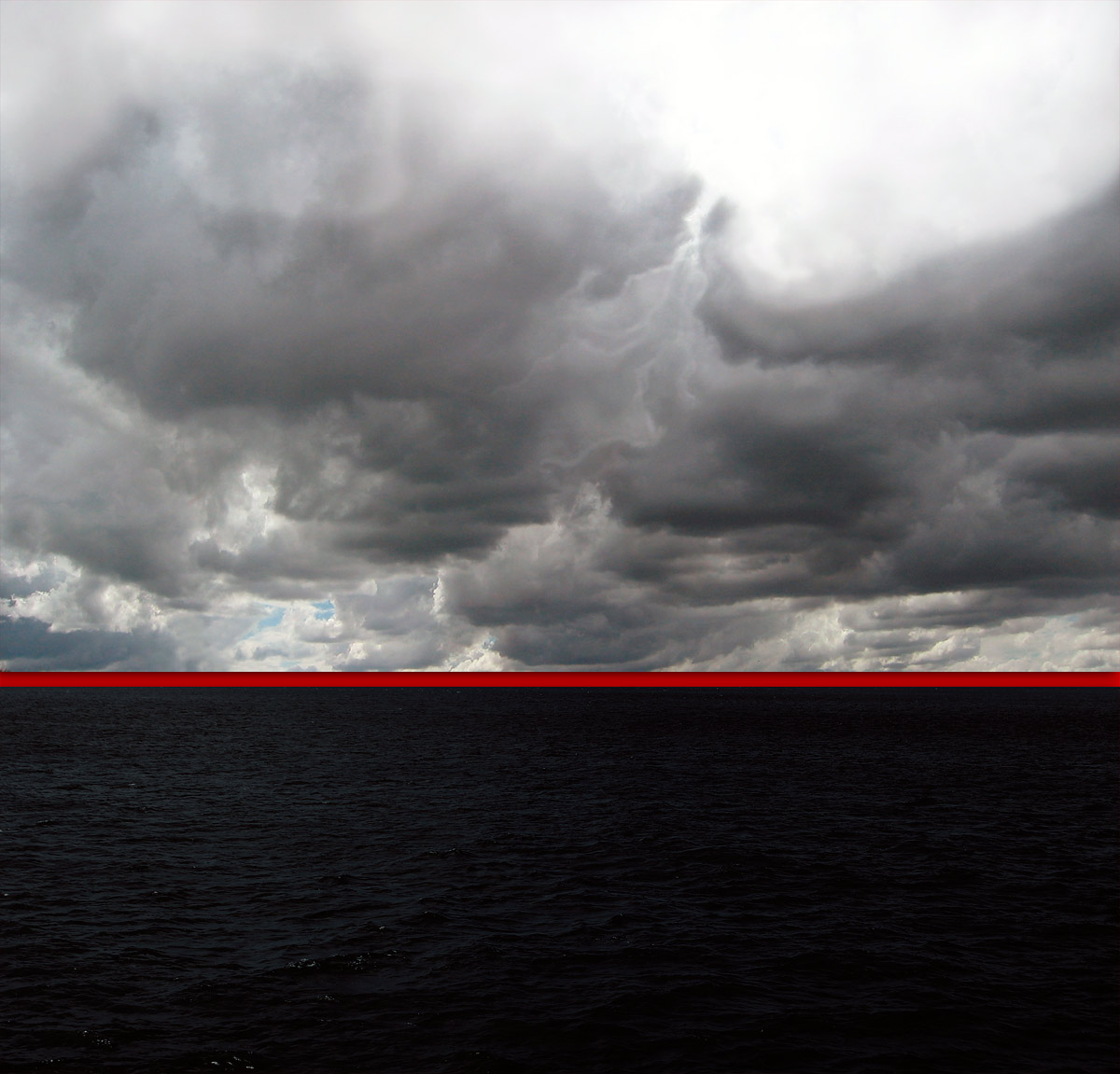
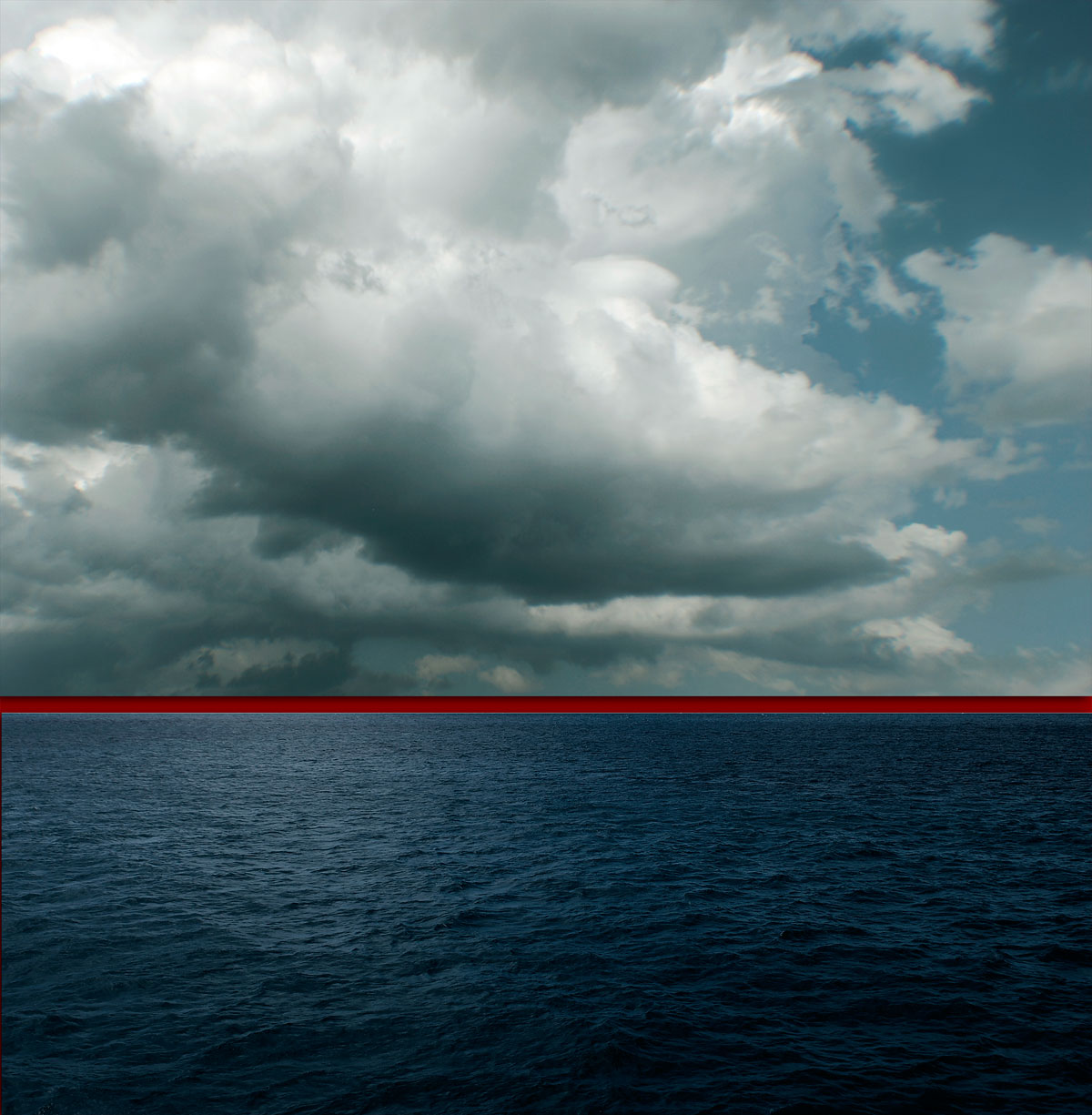
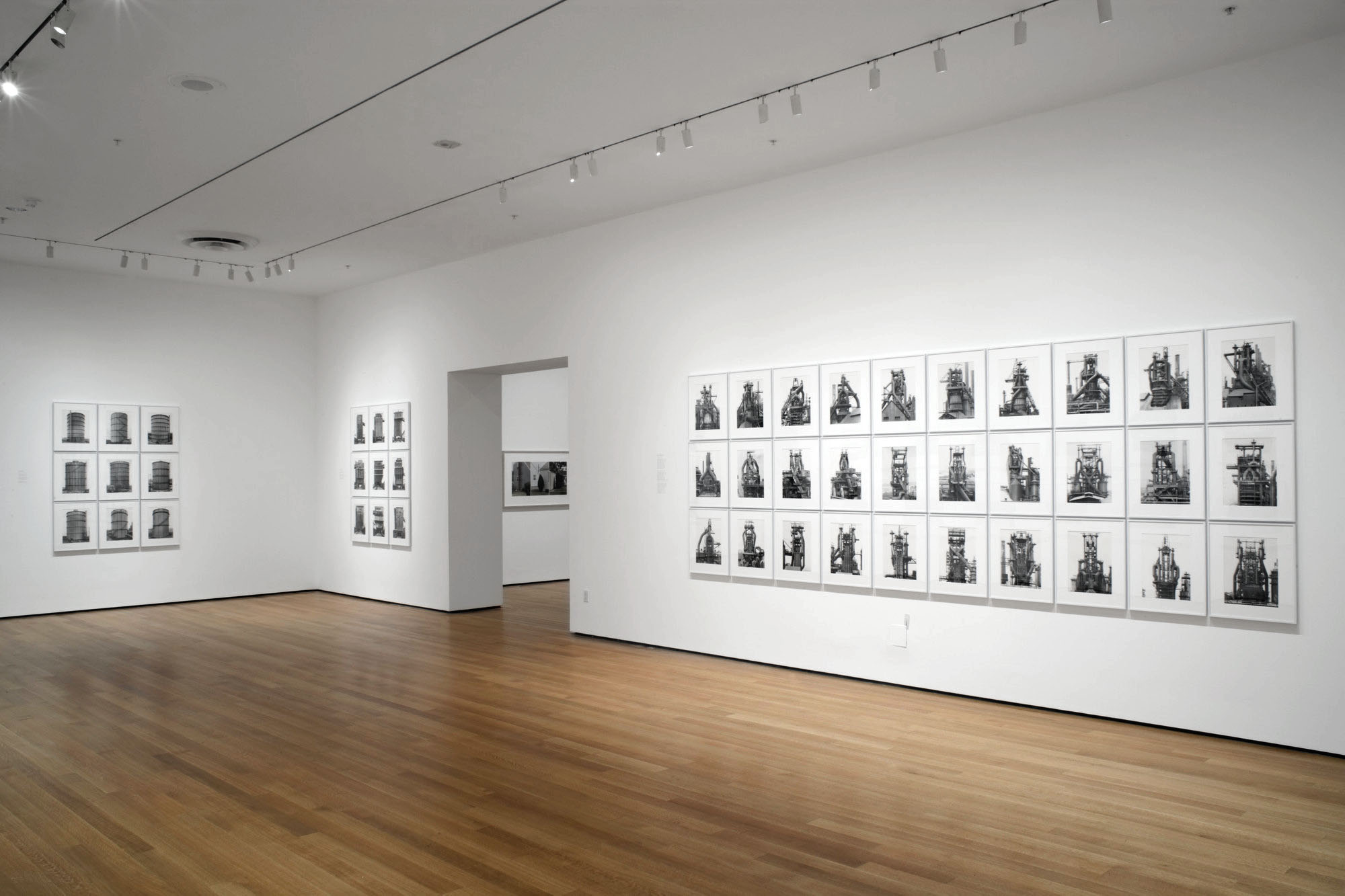
Opening: ‘Traverse’ by Kim Percy at Stockroom, Kyneton

Exhibition dates: 10th March – 8th April 2012


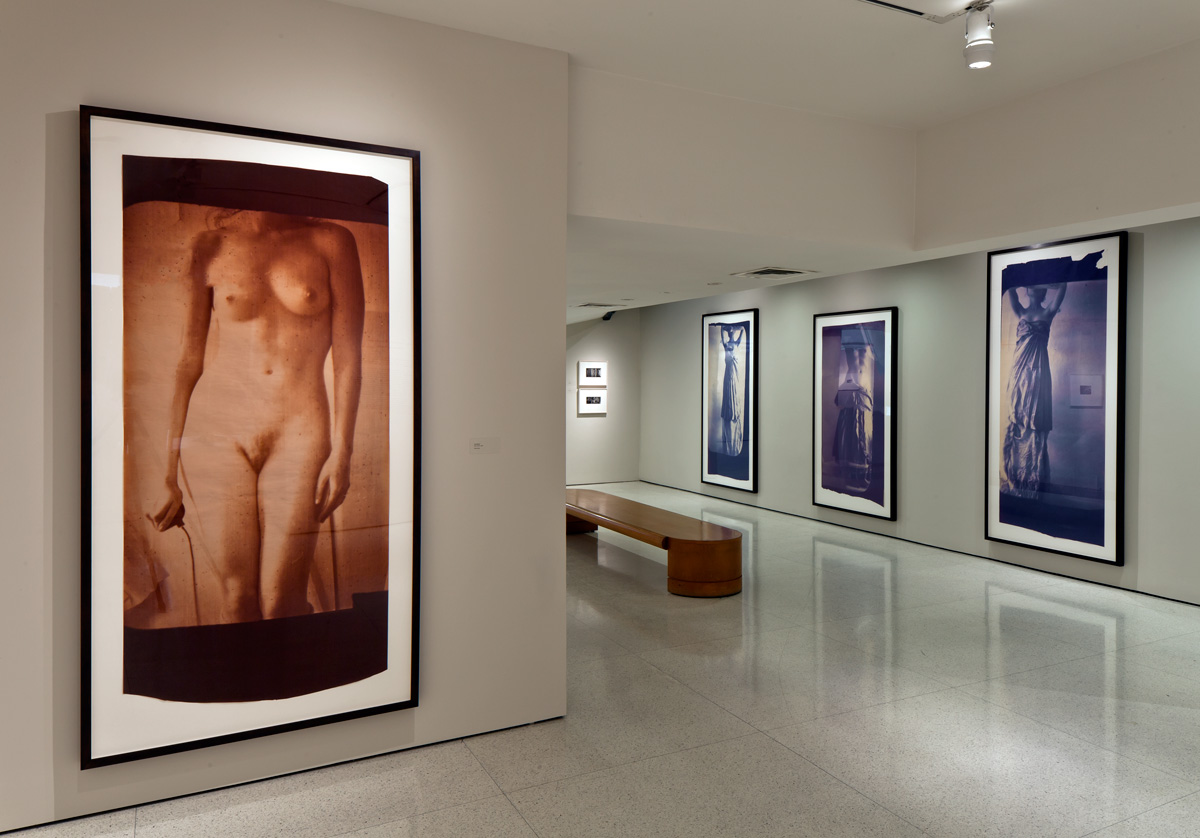
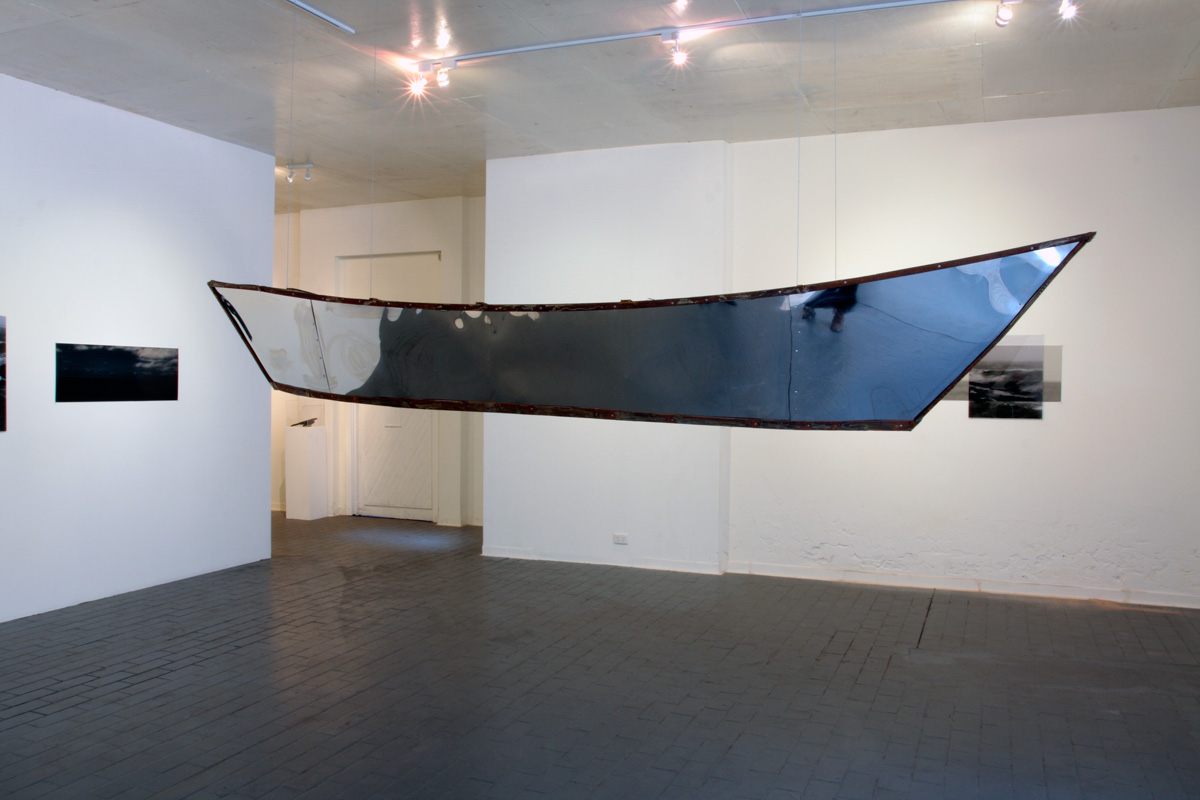
Installation of 'Traverse' by Kim Percy at Stockroom, Kyneton


Installation of Traverse by Kim Percy at Stockroom, Kyneton
Installation photograph by Marcus Bunyan
© Kim Percy and Marcus Bunyan


Many thanx to Jason, Magali and Kent for inviting me to the gallery, and Kim for asking me to open the exhibition – it was fun!

I have known Kim since the early 1990s when we both did our Bachelor of Arts in photography at RMIT University so it was wonderful to have opened her show yesterday. Reprinted below is the speech I gave at the opening with its musings on the (in)visibility of asylum seekers arriving by boat in Australia. I hope you enjoy reading the text. Marcus.


Opening speech by Dr Marcus Bunyan, 10th March 2012

Out of Sight, Out of Mind __________________

“What I am about to say, my musings if you like, are inspired by Kim’s wonderful installation. The work before you is the basis of my inquiry. The issues involved are difficult and not to be dealt with lightly but I hope you will follow my drift, my traverse if you like.

I would like to take you on a journey – physical, metaphorical and maybe even philosophical. I want to ask questions of the world, questions about the journey we all take as human beings. These questions are prompted by my personal response to two elements of Kim’s work – water and the journey, specifically the image of asylum seekers arriving here in Australia. Imagine being an asylum seeker making that journey.

Imagine living in an (in)between space, living in a refugee camp over there. Marc Augé coined the phrase “non-place” to refer to places of transience that do not hold enough significance to be regarded as “places.”1 These camps are such places. Put yourself in that predicament, seeking a better life, seeking to escape persecution, war (of which we as a nation are often part), prejudice and death, deliberately placing yourself and your family in a fragile boat, like a seed pod floating upon the waters, taking the dangerous journey to reach Australia. Imagine the emotional and intellectual turmoil that must surround such a decision, the decision to place your life in the hands of the ocean. Important decisions affecting the entire course of one’s life are rarely made without some form of mental distress.

Nurtured in water, some baptised in it, water is the life-blood of the world and the asylum seeker must trust to its benevolence. Marc Augé “argues that we are in transit through non-place for more and more of our time, as if between immense parentheses.”2 This is the journey that the asylum seeker takes over water, a journey through an interstitial space that has no beginning and no end caught between a set of parentheses [insert life here / or not].

Now let us move our line of sight. What about a visual parentheses?


Asylum seekers are almost invisible from Australia living over there. They are over the horizon, out of sight and out of mind. When they journey across the sea – an open ended journey passing through a liminal space, a forgotten space – they suddenly appear as if by magic washed up on the shore, unseen despite surveillance planes, ships and other forms of tracking and reconnaissance. Think, for example, of the sudden and surprising arrival of the boat SIEV-221 when it was washed onto the rocks of Christmas Island in December 2010. The invisible made visible caught in a non-place.

This (in)visibility can be evidenced in other ways. The specks of humanity waving from the deck of the Tampa, the asylum seekers being escorted from arriving boats, seen for a few brief seconds on the evening news and then disappearing from view, almost like being sucked into the depths of the sea. Here and not here; here and there. Halfway between nothingness and being: they walk between one state and another, forward and backward, backward and forward.


Displacement
Diaspora
Disruption


The spectacle of the asylum seekers is despectacularised by and for the viewer. We remove ourselves from the emotion of these people, the presence of these images. They become ordinary as if seen from far away – glimpsed every so often as though viewing the world of another. They become Other.

The movement of the ship, the movement of the sky, the movement of vision is a constant decentering through a push / pull with something else – some other order of the world. Their journey into the unknown is a journey to submit to the ordering of another: the socially constructed system of classification: “refugee,” “asylum seeker.” The axis of visibility3 that operates in relation to subject, object, and space is not interrogated as to the representations that are constructed. This is what I am interested in here. These vital, alive human beings come from one taxonomic system (of ordered death, persecution, injustice), become visible from a brief instance, and are then fed into another taxonomic system of order – that of the detention centre.

Taking the metaphor of the horizon line further, I would argue that detention centres are like an inverted Panopticon. The Panopticon “is a type of institutional building, a prison, designed by English philosopher and social theorist Jeremy Bentham in the late eighteenth century. The concept of the design is to allow an observer to observe all inmates of an institution without them being able to tell whether or not they are being watched.”4 The guard sits in a central tower and can observe and inspect all prisoners on the outer 360 degree circle, while the prisoners cannot see the guard and can only presume he is there (an omnipresent God) and hence they behave.

Let us invert this concept.

Now the asylum seekers sit in the tower looking outwards, seeing the promised land but unable to touch it and the guards (prison officers, government, the Australian people) are all around but most are blind. They look inwards but cannot see / they look outwards and most go about their daily business. The perimeter fence of the detention centre becomes the horizon line of the sea. As in Kim’s red lined horizons, over the horizon is out of sight, out of mind _________________


What Kim’s eloquent, minimal, brooding installation does is hold our attention and ask certain questions of us as human beings. If photography is a mode of visually addressing a certain order in the world – be it horror, war, peace, human tragedy, public, private – and then destabilising it, then Kim destabilises the binary sea / sky through fragmentation and isolation. She redlines our experience and asks us to inhabit the non-space, the non-place of the gallery, allowing us to hover between boat and image, between sea and sky, between seeing and feeling. Through her work she asks us to become more aware. She asks us to see things more clearly. Above all she asks us to have faith in the compassion of human beings.

The asylum seekers have faith: faith to get into a fragile boat to venture upon the sea in search of a better life. If we had more faith in ourselves then we would have less need to rely on the images of the past, a white colonial past.

I will finish with a quote from Jeff Brown.

“Sometimes we have to surrender to the not knowing. At other times, it is helpful to adventure outward and explore new possibilities. Like swashbucklers of the spirit, we bravely seek out any experience that might inform our path. When we are afraid of something, we live it fully and see what floats to the surface in the doing. We participate in our own revealing. We have faith in the shaping of what we cannot see.”5


The seekers surrender to the not knowing and have faith in the shaping of what they cannot see. These risk takers are the strong ones that are going to make a difference in a new society by the very fact of their strength and determination to survive and live in a free society, for the very fact of the risks undertaken. This exhibition informs their path as it informs our path. Be aware of the doing, be bold and forthright in the being. Enjoy.

Thank you

Dr Marcus Bunyan


Footnotes

1/ Augé, Marc (trans. John Howe). Non-Places: Introduction to an Anthropology of Supermodernity. London: Verso, 1995

2/ Ibid.,

3/ Hooper-Grenhill, Eilean. Museums and the Shaping of Knowledge. London: Routledge, 2000, p. 7

4/ Anon. “Panopticon,” on Wikipedia [Online] Cited 09/03/2012

5/ Brown, Jeff. Soulshaping. Berkeley, CA: North Atlantic Books, 2009, np quoted on Stroud, Jeff. The reluctant blogger website. [Online] Cited 09/03/2012


Installation of 'Traverse' by Kim Percy at Stockroom, Kyneton

Installation of 'Traverse' by Kim Percy at Stockroom, Kyneton


Installation of Traverse by Kim Percy at Stockroom, Kyneton
Installation photographs by Marcus Bunyan © Kim Percy and Marcus Bunyan


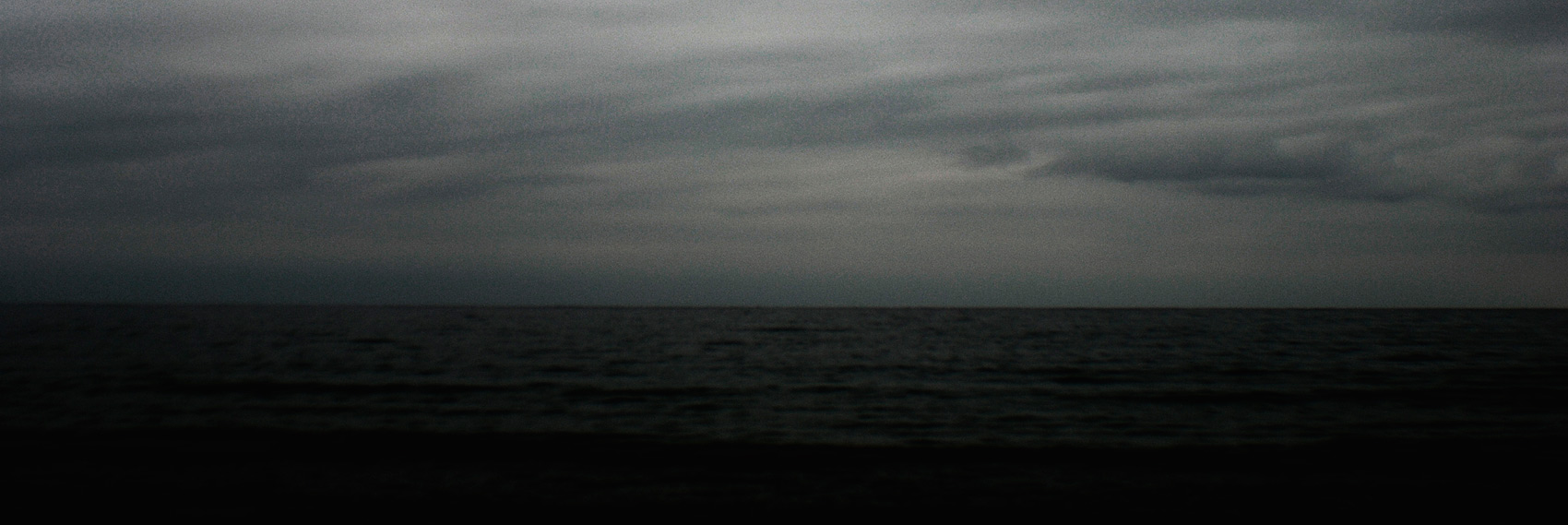
Kim Percy (Australian) 'Pale Sea' 2012


Kim Percy (Australian)
Pale Sea
2012
Digital photograph


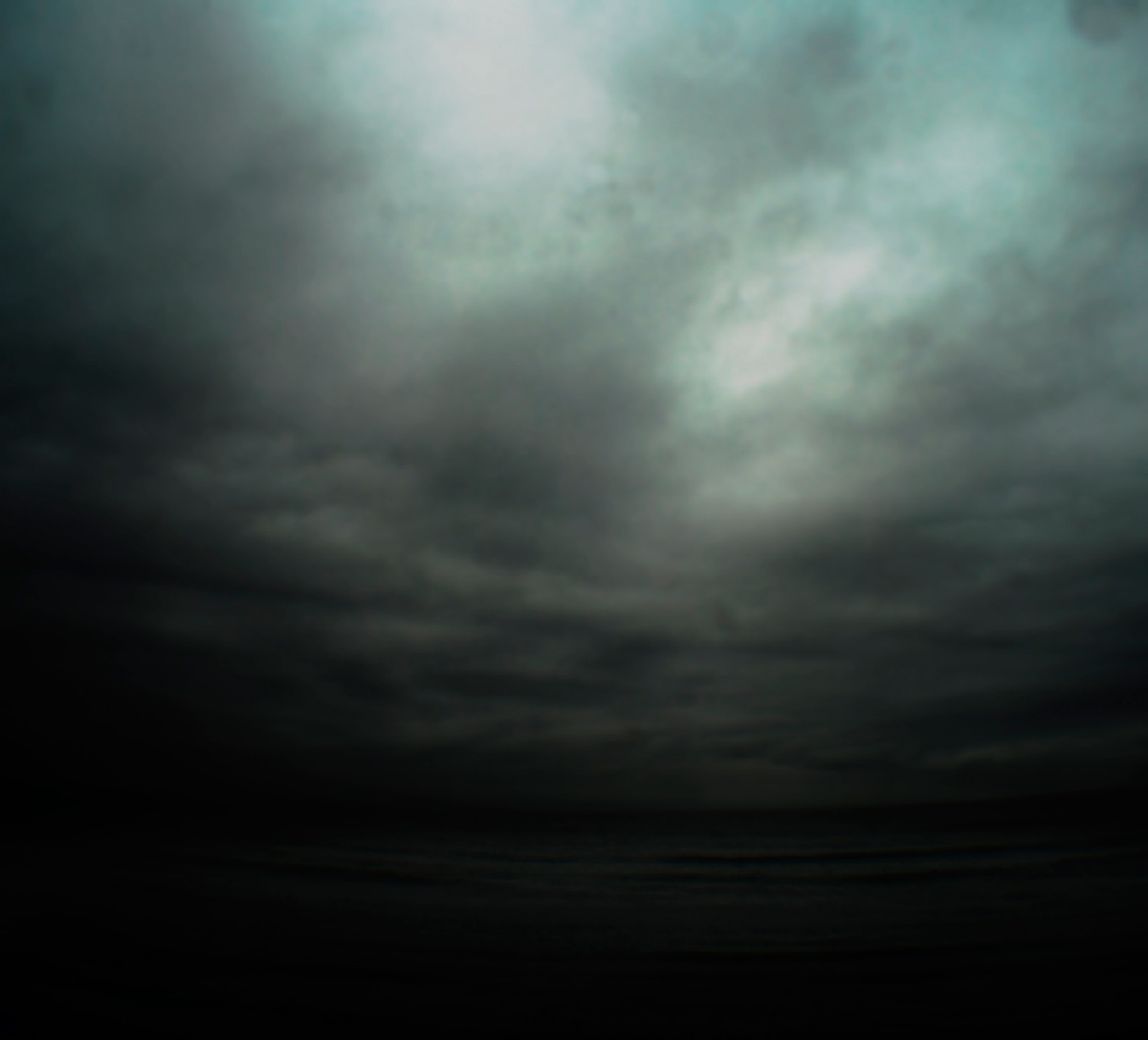
Kim Percy (Australian) 'Where' 2012


Kim Percy (Australian)
Where
2012
Digital photograph


Kim Percy (Australian) 'Rough Water' 2012


Kim Percy (Australian)
Rough Water
2012
Digital photograph


Kim Percy (Australian) 'Traverse' 2012


Kim Percy (Australian)
Traverse
2012
Digital photograph


Kim Percy (Australian) 'Red Horizon No.1' 2012


Kim Percy (Australian)
Red Horizon No.1
2012
Digital photograph


Kim Percy (Australian) 'Red Horizon No.2' 2012


Kim Percy (Australian)
Red Horizon No.2
2012
Digital photograph


Stockroom
98 Piper street, Kyneton
Phone: 03 5422 3215

Opening hours:
Thursday – Saturday 10am – 5pm
Sunday 11am – 3pm
Closed Monday and Tuesday
Wednesday by appointment

Stockroom website

LIKE ART BLART ON FACEBOOK

Back to top

Exhibition: ‘Lyonel Feininger: Photographs, 1928-1939’ at the J. Paul Getty Museum, Getty Center, Los Angeles

Exhibition dates: 25th October 2011 – 11th March 2012


Lyonel Feininger (American, 1871-1956) 'Untitled [Street Scene, Double Exposure, Halle]' 1929-1930


Lyonel Feininger (American, 1871-1956)
Untitled [Street Scene, Double Exposure, Halle]
1929-1930
Gelatin silver print
Image: 17.8 x 23.7cm (7 x 9 5/16 in)
Gift of T. Lux Feininger, Houghton Library, Harvard University
© Artists Rights Society (ARS), New York / VG Bild-Kunst, Bonn


Another photographer whose work was largely unknown to me. His work can be seen to reference Pictorialism, Eugene Atget, Constructivism and Modernism, the latter in the last three photographs of the Bauhaus buildings at night which are just beautiful! The capture of form, light (emanating from windows) and atmosphere is very pleasing.

Dr Marcus Bunyan

P.S. Don’t be confused when looking at the photographs in the posting. Note the difference in the work of Lynonel and his two sons Andreas and Theodore (nicknamed Lux).


Many thankx to the J. Paul Getty Museum for allowing me to publish the photographs in the posting. Please click on the photographs for a larger version of the image.


Lucia Moholy (British born Czechoslovakia, 1894-1989) 'Untitled [Southern View of Newly Completed Bauhaus, Dessau]' 1926


Lucia Moholy (British born Czechoslovakia, 1894-1989)
Untitled [Southern View of Newly Completed Bauhaus, Dessau]
1926
Gelatin silver print
Sheet: 5.7 x 8.1cm (2 1/4 x 3 3/16 in)
The J. Paul Getty Museum, Los Angeles
© Artists Rights Society (ARS), New York / VG Bild-Kunst, Bonn


Lyonel Feininger (American, 1871-1956) 'Untitled [Train Station, Dessau]' 1928-1929


Lyonel Feininger (American, 1871-1956)
Untitled [Train Station, Dessau]
1928-1929
Gelatin silver print
Image: 17.7 x 23.7 cm (6 15/16 x 9 5/16 in.)
Gift of T. Lux Feininger, Houghton Library, Harvard University
© Artists Rights Society (ARS), New York / VG Bild-Kunst, Bonn


Werner Zimmermann (German, 1906-1975) 'In Der Werkstatt' about 1929


Werner Zimmermann (German, 1906-1975)
In Der Werkstatt [In The Workshop]
About 1929
Gelatin silver print
7.9 × 11cm (3 1/8 × 4 5/16 in.)
The J. Paul Getty Museum, Los Angeles


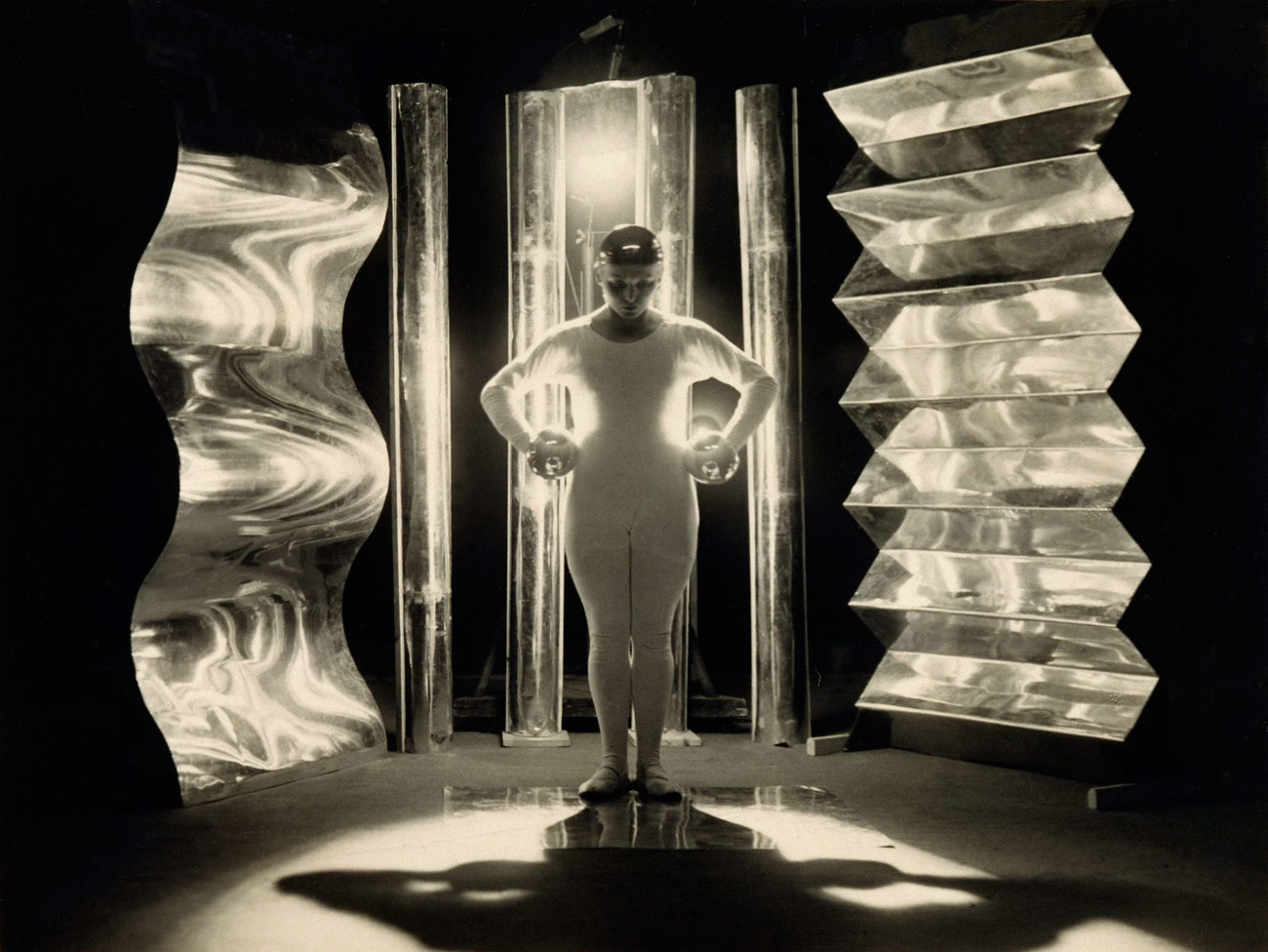
T. Lux Feininger (American born Germany, 1910-2011) 'Metalltanz' 1929


T. Lux Feininger (American born Germany, 1910-2011)
Metalltanz
1929
Gelatin silver print
Image: 10.8 x 14.4cm (4 1/4 x 5 5/8 in.)
The J. Paul Getty Museum, Los Angeles
© Estate of T. Lux Feininger


Widely recognised as a painter, printmaker, and draftsman who taught at the Bauhaus, Lyonel Feininger (American, 1871-1956) turned to photography later in his career as a tool for visual exploration. Drawn mostly from the collections at Harvard University in Cambridge, Massachusetts, Lyonel Feininger: Photographs, 1928-1939 at the J. Paul Getty Museum, Getty Center, October 25, 2011 – March 11, 2012, presents for the first time Feininger’s unknown body of photographic work. The exhibition is accompanied by a selection of photographs by other Bauhaus masters and students from the Getty Museum’s permanent collection. The Getty is the first U.S. venue to present the exhibition, which will have been on view at the Kupferstichkabinett, Staatliche Museen zu Berlin from February 26 – May 15, 2011 and the Staatliche Graphische Sammlung, Pinakothek der Moderne in Munich from June 2 – July 17, 2011. Following the Getty installation, the exhibition will be shown at the Harvard Art Museums from March 30 – June 2, 2012. At the Getty, the exhibition will run concurrently with Narrative Interventions in Photography.

“We are delighted to be the first U.S. venue to present this important exhibition organised by the Harvard Art Museums / Busch-Reisinger Museum,” says Virginia Heckert, curator of photographs at the J. Paul Getty Museum and curator of the Getty’s installation. “The presentation at the Getty provides a unique opportunity to consider Lyonel Feininger’s achievement in photography, juxtaposed with experimental works in photography at the Bauhaus from our collection.”

Lyonel Feininger Photographs

When Lyonel Feininger (1871-1956) took up the camera in 1928, the American painter was among the most prominent artists in Germany and had been on the faculty of the Bauhaus school of art, architecture, and design since it was established by Walter Gropius in 1919. For the next decade, he used the camera to explore transparency, reflection, night imagery, and the effects of light and shadow. Despite his early skepticism about this “mechanical” medium, Feininger was inspired by the enthusiasm of his sons Andreas and Theodore (nicknamed Lux), who had installed a darkroom in the basement of their house, as well as by the innovative work of fellow Bauhaus master, László Moholy-Nagy.

Although Lyonel Feininger would eventually explore many of the experimental techniques promoted by Moholy-Nagy and practiced by others at the school, he remained isolated and out of step with the rest of the Bauhaus. Working alone and often at night, he created expressive, introspective, otherworldly images that have little in common with the playful student photography more typically associated with the school. Using a Voigtländer Bergheil camera (on display in the exhibition), frequently with a tripod, he photographed the neighbourhood around the Bauhaus campus and masters’ houses, and the Dessau railway station, occasionally reversing the tonalities to create negative images.

Lyonel Feininger: Photographs, 1928-1939 also includes the artist’s photographs from his travels in 1929-1931 to Halle, Paris, and Brittany, where he investigated architectural form and urban decay in photographs and works in other media. In Halle, while working on a painting commission for the city, Feininger recorded architectural sites in works such as Halle Market with the Church of St. Mary and the Red Tower (1929-1930), and experimented with multiple exposures in photographs such as Untitled (Street Scene, Double Exposure, Halle) (1929-1930), a hallucinatory image that merges two views of pedestrians and moving vehicles.

Since 1892 Feininger had spent parts of the summer on the Baltic coast, where the sea and dunes, along with the harbours, rustic farmhouses, and medieval towns, became some of his most powerful sources of inspiration. During the summers Feininger also took time off from painting, focusing instead on producing sketches outdoors or making charcoal drawings and watercolours on the veranda of the house he rented. Included in the exhibition are photographs Feininger created in Deep an der Rega (in present-day Poland) between 1929 and 1935 which record the unique character of the locale, the people, and the artistic and leisure activities he pursued.

In the months after the Nazis closed the Bauhaus, and prior to Feininger’s departure from Dessau in March 1933, he made a series of unsettling photographs featuring mannequins in shop windows such as Drunk with Beauty (1932). Feininger’s images emphasise not only the eerily lifelike and strangely seductive quality of the mannequins, but also the disorienting, dreamlike effect created by reflections on the glass.

In 1937 Feininger permanently settled in New York City after a nearly 50-year absence, and photography served as an important means of reacquainting himself with the city in which he had lived until the age of sixteen. The off-kilter bird’s eye view he made from his eleventh-floor apartment of the Second Avenue elevated train tracks, Untitled (Second Avenue El from Window of 235 East 22nd Street, New York) (1939), is a dizzying photograph of an American subject in the style of European avant-garde photography, and mirrors the artist’s own precarious and disorienting position between two worlds, and between past and present.

The Bauhaus

Walter Gropius, director of the Bauhaus from 1919 to 1928, changed the face of art education with his philosophy of integrating art, craft, and technology with everyday life at the Bauhaus. When Gropius’s newly designed building in Dessau was completed in December 1926, its innovative structure did more than house the various components of the school; it became an integral aspect of life at the Bauhaus and a stage for its myriad activities, from studies and leisurely pursuits to theatrical performances. From the beginning, the camera recorded the architecture as the most convincing statement of Gropius’ philosophy as well as the fervour with which the students embraced it. The photographs in this complementary section of the exhibition also examine the various ways photography played a role at the Bauhaus, even before it became part of the curriculum.

In addition to the collaborative environment encouraged in workshops, students found opportunities to bond during their leisure time, whether in a band that played improvisational music or on excursions to nearby beaches, parks, and country fairs. One of the most active recorders of life at the Bauhaus was Lyonel Feininger’s youngest son, T. Lux, who was also a member of the jazz band.

Masters and students alike at the Bauhaus took up the camera as a tool with which to record not only the architecture and daily life of the Bauhaus, but also one another. Although photography was not part of the original curriculum, it found active advocates in the figures of László Moholy-Nagy and his wife Lucia Moholy. With his innovative approach and her technical expertise, the Moholy-Nagys provided inspiration for others to use the camera as a means of both documentation and creative expression. The resulting photographs, which included techniques such as camera-less photographs (photograms), multiple exposures, photomontage and collages (“photo-plastics”), and the combination of text and image (“typo-photo”), contributed to Neues Sehen, or the “new vision,” that characterised photography in Germany between the two world wars.

It was not until 1929 that photography was added to the Bauhaus curriculum by Hannes Meyer, the new director following Gropius’s departure. A part of the advertising department, the newly established workshop was led by Walter Peterhans, who included technical exercises as well as assignments in the genres of portraiture, still life, advertisement, and photojournalism in the three-year course of study.”

Press release from the J.Paul Getty Museum website


Lyonel Feininger (American, 1871-1956) 'Untitled [Night View of Trees and Street Lamp, Burgkühnauer Allee, Dessau]' 1928


Lyonel Feininger (American, 1871-1956)
Untitled [Night View of Trees and Street Lamp, Burgkühnauer Allee, Dessau]
1928
Gelatin silver print
Image: 17.7 x 23.7cm (6 15/16 x 9 5/16 in)
Gift of T. Lux Feininger, Houghton Library, Harvard University
© Artists Rights Society (ARS), New York / VG Bild-Kunst, Bonn


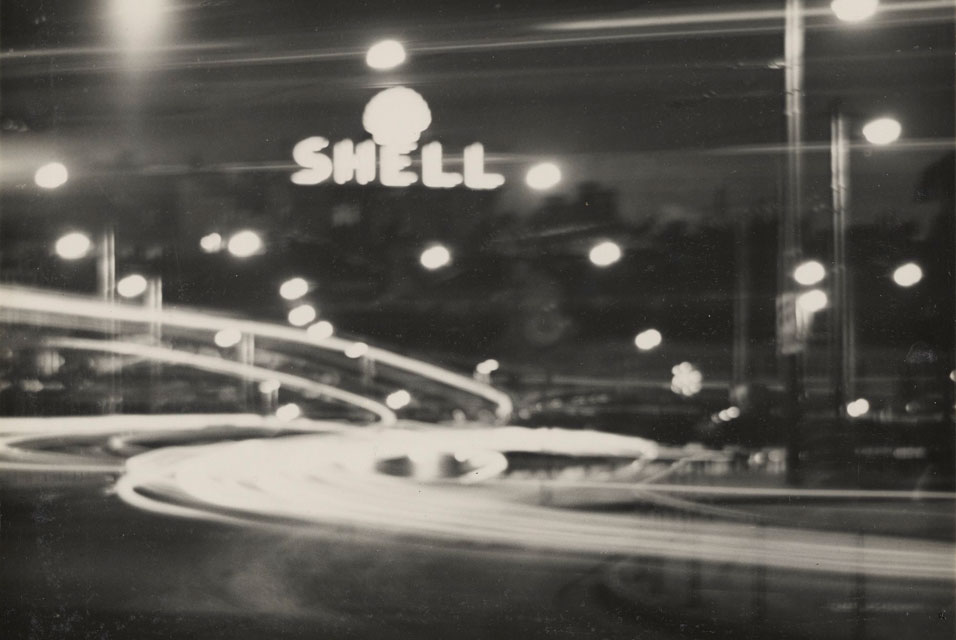
Andreas Feininger (American, 1906-1999) 'Stockholm (Shell sign at night)' 1935


Andreas Feininger (American, 1906-1999)
Stockholm (Shell sign at night)
1935
Gelatin silver print
17.4 x 24.2cm
The J. Paul Getty Museum, Los Angeles, Gift of the Estate of Gertrud E. Feininger
© Estate of Gertrud E. Feininger


Lyonel Feininger (American, 1871-1956) 'Drunk with Beauty' 1932


Lyonel Feininger (American, 1871-1956)
Drunk with Beauty
1932
Gelatin silver print
Image: 17.9 x 23.9cm (7 1/16 x 9 7/16 in)
Gift of T. Lux Feininger, Houghton Library, Harvard University
© Artists Rights Society (ARS), New York / VG Bild-Kunst, Bonn


Lyonel Feininger (American, 1871-1956) 'Bauhaus' March 22, 1929


Lyonel Feininger (American, 1871-1956)
Bauhaus
March 22, 1929
Gelatin silver print
Image: 17.8 x 23.9cm (7 x 9 7/16 in)
Harvard Art Museums/Busch-Reisinger Museum, Gift of Mr. and Mrs. Lyonel Feininger
© Artists Rights Society (ARS), New York / VG Bild-Kunst, Bonn


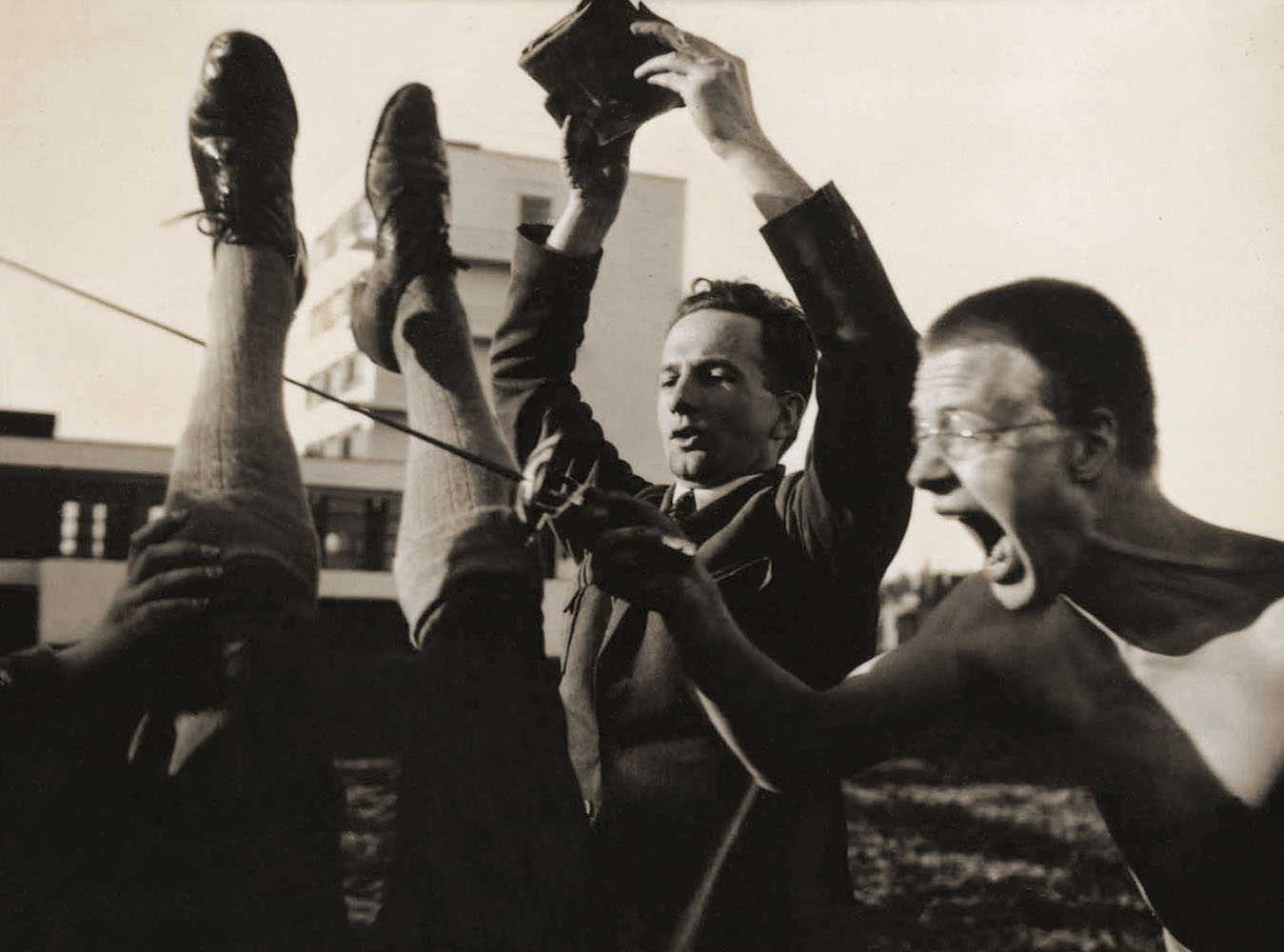
T. Lux Feininger (American born Germany, 1910-2011) 'Untitled (Georg Hartmann and Werner Siedhoff with Other Students)' 1929


T. Lux Feininger (American born Germany, 1910-2011)
Untitled (Georg Hartmann and Werner Siedhoff with Other Students)
1929
Gelatin silver print
© Estate of T. Lux Feininger


Lyonel Feininger and Photography

Lyonel Feininger took up the camera at the age of 58 in fall 1928. Despite his early skepticism about this “mechanical” medium, the painter was inspired by the enthusiasm of his sons Andreas and Theodore (nicknamed Lux), as well as by the innovative work of László Moholy-Nagy, a fellow master at the Bauhaus in Dessau, Germany.

Photography remained a private endeavour for Feininger. He never exhibited his prints, publishing just a handful during his lifetime and sharing them only with family and a few friends.

Bauhaus Experiments in Photography

Although Feininger explored many of the experimental photographic techniques being practiced at the Bauhaus, he remained isolated and out of step with the rest of the school. Working alone and often at night, he created expressive, introspective, otherworldly images that have little in common with the playful student photography more typically associated with the school.

Using a Voigtländer Bergheil camera (on display in the exhibition), frequently with a tripod, he photographed the neighbourhood around the masters’ houses, the Bauhaus campus, and the Dessau railway station, experimenting with night imagery, reversed tonalities, and severe weather conditions.

Halle, 1929-1931

In 1929 Feininger created numerous photographic sketches to prepare for a series of paintings he was commissioned to make of the city of Halle, Germany.

A photograph of Halle included in the exhibition, Untitled (Bölbergasse, Halle), was the basis for one of these paintings, which is now lost. It was perhaps the most inventive and photographic of the Halle series, transforming a view of an unremarkable street into a dramatic, almost abstract composition through tight framing and an unusual perspective. The painting is visible in a 1931 photograph of the artist’s studio also included in the exhibition

Feininger also made many photographs of his Halle studio and the paintings he produced there. While many are purely documentary, others are sophisticated compositions that explore formal relationships between a particular painting and the space in which it was created, such as the one shown at right.

Feininger would never again use photography so extensively in connection with his paintings as he did in conjunction with the Halle series.

France, 1931

After completing his painting commission in Halle, Feininger spent several weeks in June and July of 1931 in France. In Paris and in the village of Bourron, he created images with his Voigtländer Bergheil camera as well as with his newly acquired Leica (also on display in the exhibition), in which he used 35 mm film for the first time. He also sketched and photographed Brittany on a bicycle tour with his son Lux, capturing views of the architecture and seaside.

In Paris, primed by his recent experience of photographing historic buildings in the streets of Halle, Feininger was drawn to architectural views and urban scenes. On returning from a day trip, he wrote to his wife Julia: “I wandered on foot through the city, flâné! Armed with both cameras, I made photographs… From ‘Boul-Miche’ I crisscrossed through the Quartier Mouffetard… through all possible old narrow and fabulous lanes and I hope that I snapped some very, very good things. Luckily the ‘Leica’ functioned flawlessly” (June 16, 1931, Feininger Papers, Houghton Library).

The Baltic Coast, 1929-1935

Beginning in 1892 Lyonel Feininger spent parts of his summers on the Baltic coast, where the sea and dunes, along with the harbours, rustic farmhouses, and medieval towns, became some of his most powerful sources of inspiration.

Every summer between 1929 and 1935, he used the camera to document family trips to Deep an der Rega (in present-day Poland), where the beach became a playground for his three athletic sons, Andreas, Laurence, and Lux. Feininger looked forward to his time in Deep and the restorative, transformative effect it always had on him.

Shop Windows, 1932-1933

From September 1932, when the National Socialist majority of the Dessau city council voted to close the Bauhaus, through March 1933, when he and his family left for Berlin, Feininger made a series of unsettling photographs that feature mannequins in shop windows. Feininger’s images emphasise not only the eerily lifelike and strangely seductive quality of the mannequins but also the disorienting, dreamlike effect created by reflections on the glass.

In the work shown here, the reflection seems to transport the languid central figure – “drunk with beauty” and oblivious to the camera – beyond the confines of the glass.

Germany to America, 1933 to 1939

Feininger came under increasing scrutiny by the National Socialists, who had stepped up their campaign against the avant-garde after rising to power in January 1933. He produced few paintings during this oppressive period, but continued to photograph regularly in spite of having little access to darkroom facilities. In 1937 he and his wife moved to the United States, renting an apartment in Manhattan – marking his permanent return to New York after an absence of nearly 50 years.

In the years that followed, photography remained an important part of Feininger’s life, though few prints exist from his time in America.

Text from the J. Paul Getty Museum website


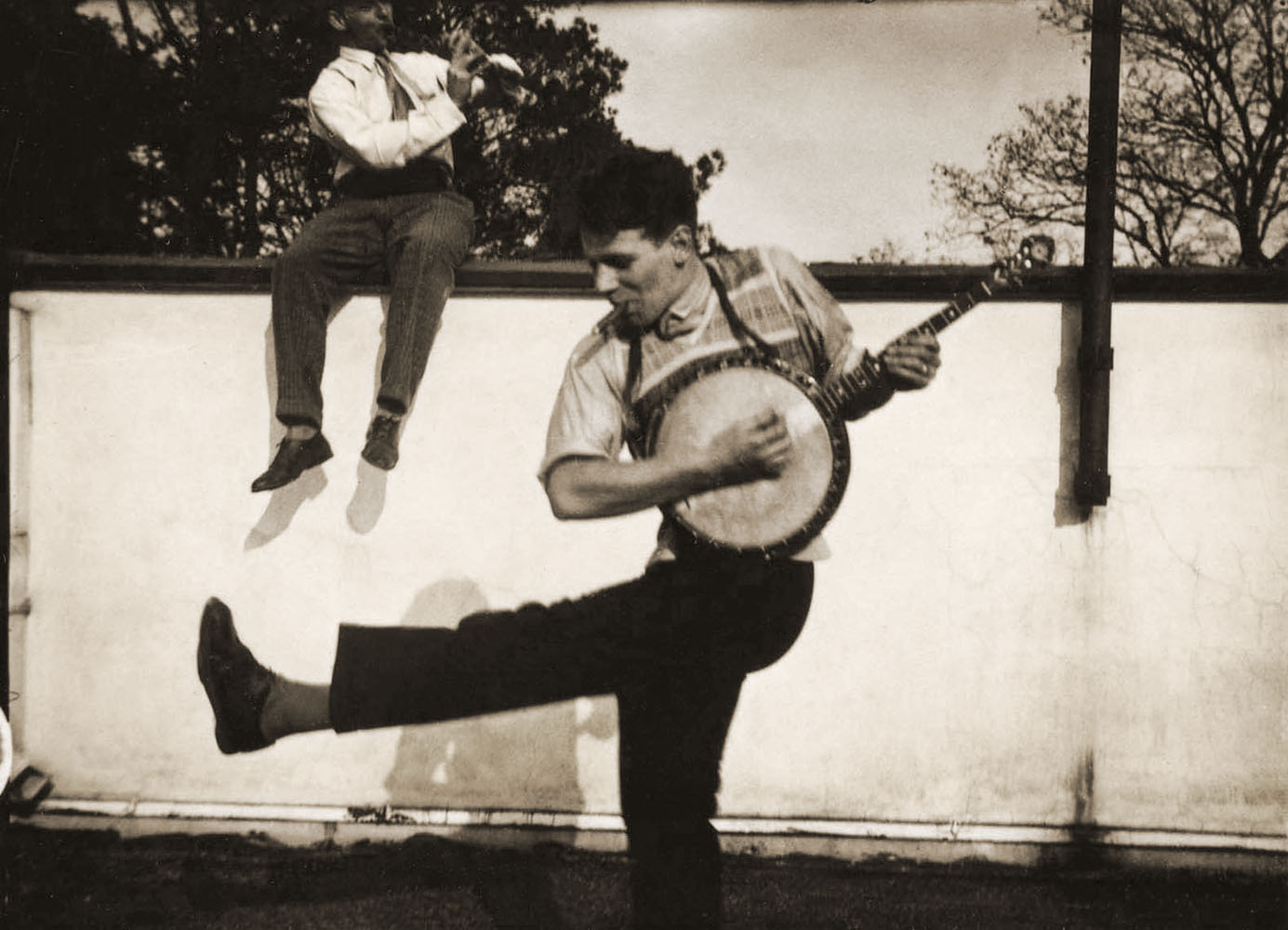
T. Lux Feininger (American born Germany, 1910-2011) 'Untitled (Bauhaus Band)' About 1928


T. Lux Feininger (American born Germany, 1910-2011)
Untitled (Bauhaus Band)
About 1928
Gelatin silver print
3 1/4 x 4 1/2 in.
The J. Paul Getty Museum
© Estate of T. Lux Feininger


Photography at the Bauhaus

The exhibition Lyonel Feininger: Photographs, 1928-1939 features a complementary selection of over 90 photographs from the Getty Museum’s permanent collection made at the Bauhaus.

The Bauhaus was founded in 1919 in Weimar, Germany, by the architect Walter Gropius. Students entered specialised workshops after completing a preliminary course that introduced them to materials, form, space, colour, and composition. Lyonel Feininger was one of the first masters appointed by Gropius.

The school moved to Dessau in 1925 and to Berlin in 1932, closing under pressure from the National Socialists in 1933.

The Bauhaus Building as Stage

Walter Gropius’s building in Dessau became an integral aspect of life at the Bauhaus. The camera recorded the architecture as the most convincing statement of Gropius’s philosophy of uniting art, design, and technology with everyday life, and captured the fervor with which the students embraced this philosophy.

Tight framing, dramatic use of light and shadow, and unusual angles from above and below underscored the dynamism generated by the program. The campus’s architecture was often incorporated into rehearsals and performances by the school’s theater workshop.

Masters and Students

Bauhaus masters and students alike took up the camera as a tool for documentation and creative expression.

Photography served as a medium to record student life at the Bauhaus. In addition to the collaborative environment encouraged in classes and workshops, students found opportunities to bond during their leisure time, whether in a band that played improvisational music, in excursions to nearby beaches, parks, and fairs, or at Saturday-night costume parties.

One of the most active recorders of life at the Bauhaus was Lyonel Feininger’s youngest son Theodore, nicknamed Lux, a student who also became a member of the jazz band.

László Moholy-Nagy

At the Bauhaus, photography found active advocates in the figures of László Moholy-Nagy and his wife Lucia Moholy. Hired in 1923 to head the metal workshop and teach the preliminary course, Moholy-Nagy promoted photography as a form of visual literacy and encouraged experimental techniques of what he called a “new vision,” which included dramatic camera angles, multiple exposures, negative printing, collage and photomontage (fotoplastik), the combination of text and image (typofoto), and cameraless photography (the photogram, made by placing objects on photosensitised paper).

Moholy-Nagy did not differentiate between commercial assignments and personally motivated projects; he used the same strategies in both sectors of his practice.

Walter Peterhans

A photography workshop was established at the Bauhaus in 1929, led by Walter Peterhans, a professional photographer and the son of the director of camera lens manufacturer Zeiss Ikon A.G. The three-year course of study included technical exercises as well as assignments in portraiture, still life, advertisement, and photojournalism.

In his own work, Peterhans created haunting still lifes and portraits that are at once straightforward and evocative. Titles such as Portrait of the Beloved, Good Friday Magic, and Dead Hare lend surrealistic overtones to the meticulous arrangements of richly textured, disparate objects that he photographed from above, resulting in ambiguous spatial relationships.

Text from the J. Paul Getty Museum website


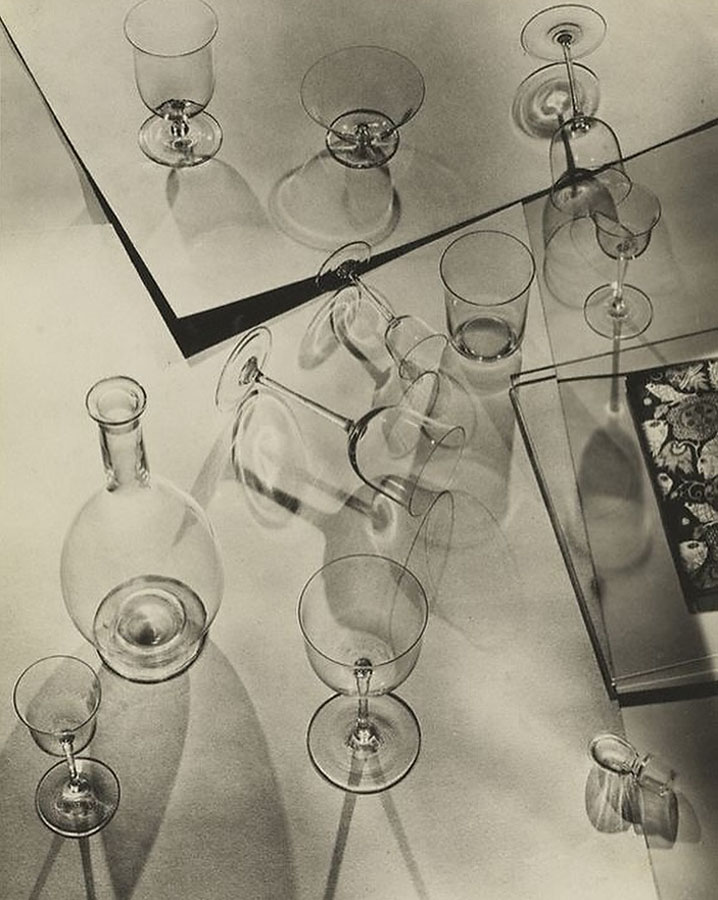
Walter Peterhans (German, 1897-1960) 'Untitled (Composition with Nine Glasses and a Decanter)' 1929-1933


Walter Peterhans (German, 1897-1960)
Untitled (Composition with Nine Glasses and a Decanter)
1929-1933
Gelatin silver print
© Estate Walter Peterhans, Museum Folkwang, Essen


Lyonel Feininger (American, 1871-1956) 'Bauhaus' March 26, 1929


Lyonel Feininger (American, 1871-1956)
Bauhaus
March 26, 1929
Gelatin silver print
Image: 17.9 x 14.3cm (7 1/16 x 5 5/8 in)
Bauhaus-Archiv Berlin
© Artists Rights Society (ARS), New York / VG Bild-Kunst, Bonn


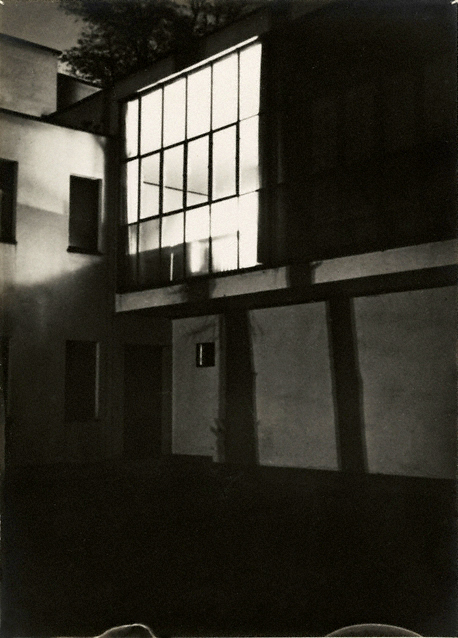
Lyonel Feininger (American, 1871-1956) '"Moholy’s Studio Window" around 10 p.m.' 1928


Lyonel Feininger (American, 1871-1956)
“Moholy’s Studio Window” around 10 p.m.
1928
Gelatin silver print
Image: 17.8 x 12.8 cm (7 x 5 1/16 in.)
Bauhaus-Archiv Berlin
© Artists Rights Society (ARS), New York / VG Bild-Kunst, Bonn


Lyonel Feininger (American, 1871-1956) 'On the Lookout, Deep an der Rega' 1932


Lyonel Feininger (American, 1871-1956)
On the Lookout, Deep an der Rega
1932
Gelatin silver print
Image: 17.7 x 12.7cm (6 15/16 x 5 in)
Gift of T. Lux Feininger, Houghton Library, Harvard University
© Artists Rights Society (ARS), New York / VG Bild-Kunst, Bonn


Irene Bayer-Hecht (American, 1898-1991) 'Untitled [Students on the Shore of the Elbe River, near Dessau]' 1925


Irene Bayer-Hecht (American, 1898-1991)
Untitled [Students on the Shore of the Elbe River, near Dessau (Georg Muche, Hinnerk Scheper, Herbert Bayer, Unknown, Unknown, Marcel Breuer, László Moholy Nagy, Unknown, Xanti Schawinsky)]
1925
Gelatin silver print
Image: 7.5 x 5.4cm (2 15/16 x 2 1/8 in)
The J. Paul Getty Museum, Los Angeles


The J. Paul Getty Museum
1200 Getty Center Drive
Los Angeles, California 90049

Opening hours:
Daily 10am – 5pm

The J. Paul Getty Museum website

LIKE ART BLART ON FACEBOOK

Back to top

Exhibition: ‘Saul Leiter: New York Reflections’ at the Jewish Historical Museum, Amsterdam

Exhibition dates: 24th October 2011 – 4th March 2012


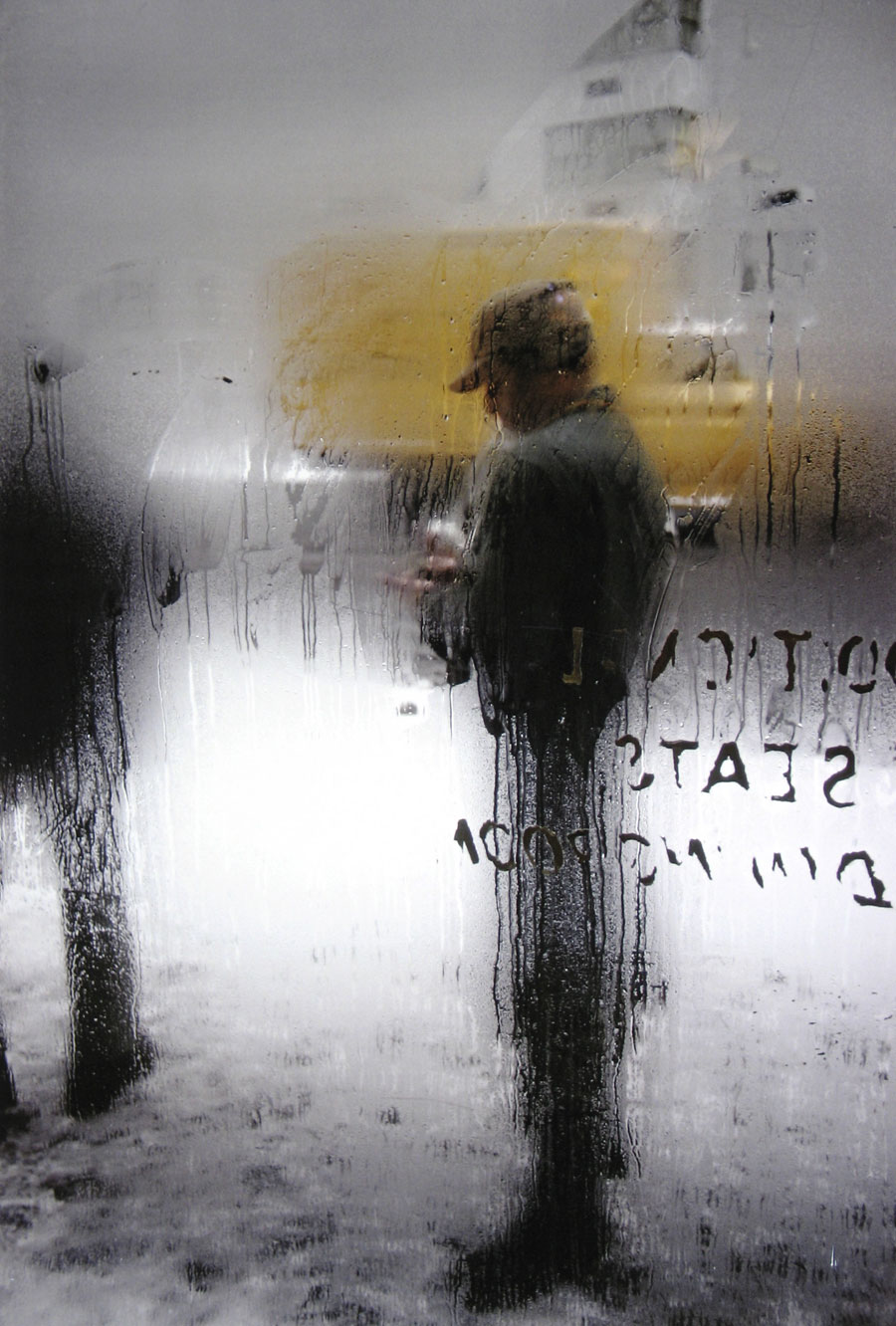
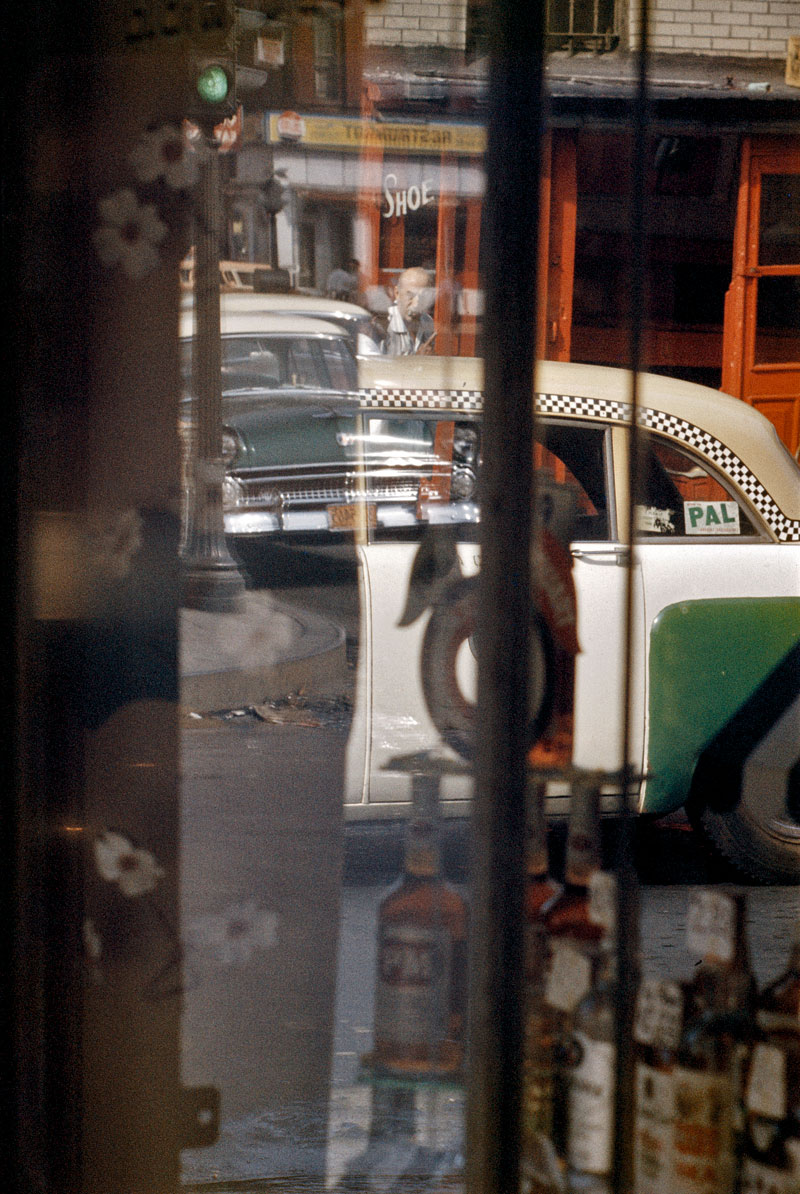
Saul Leiter (American, 1923-2013) 'Taxi' 1957


Saul Leiter (American, 1923-2013)
Taxi
1957
© Saul Leiter, Collection Howard Greenberg Gallery, New York


“I must admit that I am not a member of the ugly school. I have a great regard for certain notions of beauty even though to some it is an old fashioned idea. Some photographers think that by taking pictures of human misery, they are addressing a serious problem. I do not think that misery is more profound than happiness.”

“Seeing is a neglected enterprise.”


Saul Leiter


“Leiter’s sensibility… placed him outside the visceral confrontations with urban anxiety associated with photographers such as Robert Frank or William Klein. Instead, for him the camera provided an alternate way of seeing, of framing events and interpreting reality. He sought out moments of quiet humanity in the Manhattan maelstrom, forging a unique urban pastoral from the most unlikely of circumstances.”


Martin Harrison. ‘Saul Leiter Early Color’


The first of two postings on the underrated, underexposed American photographer Saul Leiter. These photographs are a delightful surprise! Some, like Through Boards (1957, below) are as illuminating as any Rothko going around. His art is not of the documentary gaze but of a brief glimpse, glanz, refulgence of desire ∞ snatched from the nonlinearity of time ∞ cleft in(to) its fabric. What wonderfully composed reflections they are. I absolutely adore them.

The media release states, “… but where his color photography is concerned, he cannot be compared with any other photographer. In the 1940s and 1950s, Leiter was virtually the only non-commercial photographer working in color.” Galleries must beware such bombastic claims: other photographers working in colour in the 1940s-50s include Paul Outerbridge, László Moholy-Nagy, Nickolas Muray, Jack Smith, Eliot Porter and William Eggleston to name but a few (also see the posting on the exhibition Beyond COLOR: Color in American Photography, 1950-1970).

The second posting will be from a major retrospective of his work at The House of Photography at Deichtorhallen.

Perhaps this photographer is finally getting the accolades he so rightly deserves.

Dr Marcus Bunyan


Many thankx to the Jewish Historical Museum for allowing me to publish the photographs in the posting. Please click on the photographs for a larger version of the image.


Saul Leiter (American, 1923-2013) 'Haircut' 1956


Saul Leiter (American, 1923-2013)
Haircut
1956
© Saul Leiter, Collection Howard Greenberg Gallery, New York


Saul Leiter (American, 1923-2013) 'Through Boards' 1957


Saul Leiter (American, 1923-2013)
Through Boards
1957
© Saul Leiter, Courtesy Howard Greenberg Gallery, New York


Saul Leiter (American, 1923-2013) 'Harlem' 1960


Saul Leiter (American, 1923-2013)
Harlem
1960
© Saul Leiter, Collection Howard Greenberg Gallery, New York


Saul Leiter (American, 1923-2013) 'Snow' 1960


Saul Leiter (American, 1923-2013)
Snow
1960
© Saul Leiter, Collection Howard Greenberg Gallery, New York


From 24 October 2011 to 4 March 2012 the JHM is presenting a retrospective exhibition of the work of the American photographer and painter Saul Leiter (1923-2013). Following a long period of obscurity, Leiter’s work has recently been rediscovered in the United States and Europe. This is the first exhibition of his work in the Netherlands.

Saul Leiter is celebrated particularly for his painterly colour photographs of the street life in New York, which he produced between 1948 and 1960. Amid the hectic life of the city he captured tranquil moments of everyday beauty. He was able to transform mundane objects – a red umbrella in a snowstorm, a foot resting on a bench in the metro, or a human figure seen through the condensation on a pane of glass – into what has been described as ‘urban visual poetry’. His photographs are frequently layered, near-abstract compositions of reflections and shadows, which recall paintings by abstract expressionists such as Mark Rothko and Willem de Kooning, with whom Leiter felt a strong affinity.

Saul Leiter is seen as belonging to the New York School of Photographers, a group of innovative artists, most of them Jewish, who achieved fame in New York in the period 1936-1963, primarily with their images of the street and their documentary photography. His black-and-white work displays a lyricism, dreaminess and surrealism that might prompt comparison with photographers such as Ted Croner, Leon Levinstein and Louis Faurer, but where his colour photography is concerned, he cannot be compared with any other photographer. In the 1940s and 1950s, Leiter was virtually the only non-commercial photographer working in colour.

Born in Pittsburgh, Leiter was destined to become a rabbi like his father. But his growing interest in art led him to abandon his religious studies. Instead, he went to New York and dedicated himself to painting. His friendship there with the abstract expressionist painter Richard Pousette-Dart, who was experimenting with photography, and the work of the photographer Henri Cartier-Bresson, inspired Leiter to take up photography. His friendship with the photographer W. Eugene Smith was another inspiring influence.

The exhibition Saul Leiter: New York Reflections was prepared by the JHM in collaboration with the Howard Greenberg Gallery in New York. Besides over 60 colour and 40 black-and-white examples of his street photography, a small selection of fashion photographs, paintings, and painted photographs will be shown. Visitors will also be able to watch a recent documentary about Leiter by the British film maker Tomas Leach. This autumn, the publisher Steidl will be publishing the third edition of Early Color, the first book of Leiter’s photographs, compiled in 2006 by Martin Harrison of the Victoria & Albert Museum in London.

Press release from the Jewish Historical Museum website


Saul Leiter (American, 1923-2013) 'Foot on El' 1954


Saul Leiter (American, 1923-2013)
Foot on El
1954
© Saul Leiter, Courtesy Howard Greenberg Gallery, New York


Saul Leiter (American, 1923-2013) 'Taxi' 1956


Saul Leiter (American, 1923-2013)
Taxi
1956
© Saul Leiter, Courtesy Howard Greenberg Gallery, New York


Saul Leiter (American, 1923-2013) 'Reflection' 1958


Saul Leiter (American, 1923-2013)
Reflection
1958
© Saul Leiter, Courtesy Howard Greenberg Gallery, New York


Saul Leiter (American, 1923-2013) 'Paris' 1959


Saul Leiter (American, 1923-2013)
Paris
1959
© Saul Leiter, Collection Howard Greenberg Gallery, New York


Saul Leiter (American, 1923-2013) 'Walk with Soames' Nd


Saul Leiter (American, 1923-2013)
Walk with Soames
Nd
© Saul Leiter, Courtesy Howard Greenberg Gallery, New York


Jewish Historical Museum
Nieuwe Amstelstraat
1
1011 PL Amsterdam
Phone: +31 (0)20 5 310 310

Opening hours:
Daily from 10.00 – 17.00

Jewish Historical Museum website

LIKE ART BLART ON FACEBOOK

Back to top

Review: ‘Looking at Looking’ at the National Gallery of Victoria, Melbourne

Exhibition dates: 30th September 2011 – 4th March 2012


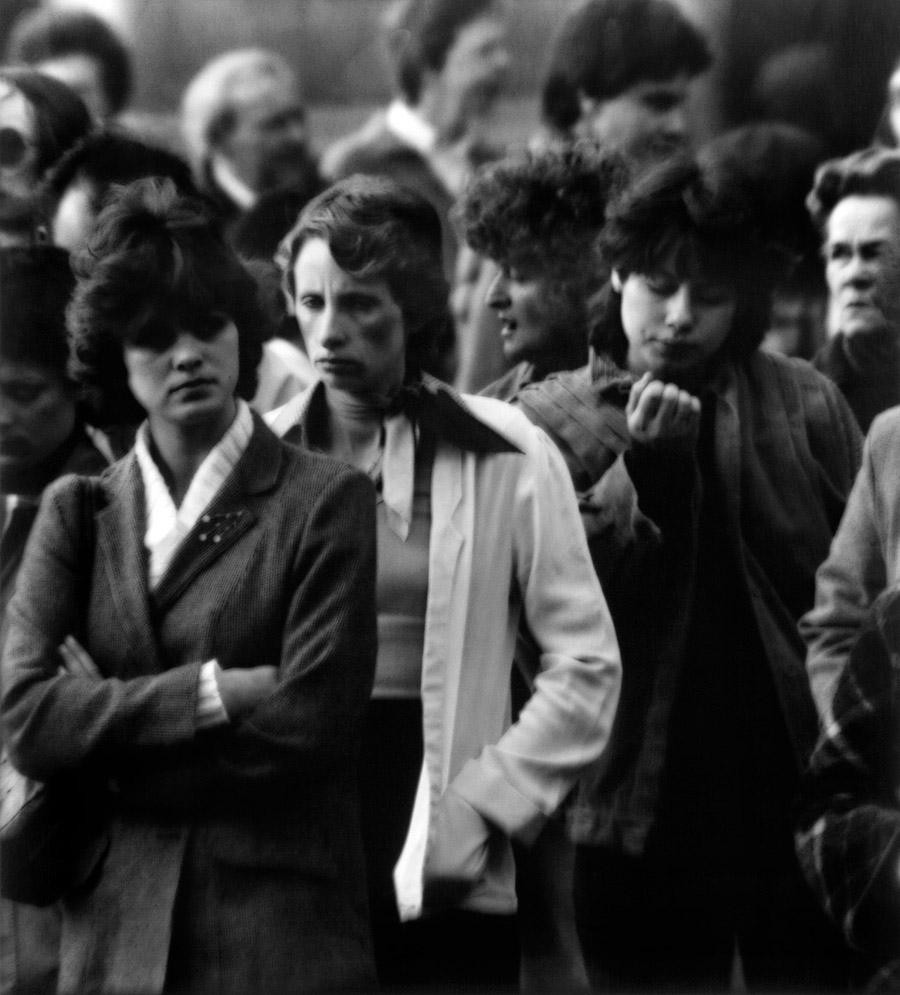
Bill Henson (Australian, b. 1955) 'Untitled 1980/82' 1980-1982


Bill Henson (Australian, b. 1955)
Untitled 1980/82
1980-1982
From the Untitled 1980/82 series 1980-1982
Gelatin silver photograph
43.0 x 38.8cm
National Gallery of Victoria, Melbourne
Anonymous gift, 1993
© Courtesy of the artist and Roslyn Oxley9 Gallery, Sydney


“The paradox is the more we seek to fix our vision of the world and to control it the less sure we are as to who we are and what our place is in the world.”


Marcus Bunyan 2011


This is a delightful, intimate exhibition at the National Gallery of Victoria that examines how looking through a camera directs and structures the way we see the world. The exhibition mines the same ground as one of my top exhibitions from last year, In camera and in public that was presented at the Centre for Contemporary Photography, Fitzroy.

Numerous artists use photography to examine the ways in which gender, race and sexuality have been ‘looked at’ in visual culture, including the politics of looking in relation to Indigenous cultures and identities. In I split your gaze (1997) by Brook Andrew, the artist has split the face of an Aboriginal man down the middle, and reassembled the face ear to ear. No longer can we look on the man as a whole because our gaze is split. Andrew is said to have “reclaimed” the image from colonial scientific, anthropological documentation but this presupposes some holistic whole existed a priori to white intervention. The split photograph does alter perception but to what extent it promotes a different reading, a postcolonial gaze that is understood as such by the viewer, is debatable.
Chi Peng poses more interesting gender reversals and masquerades. In Consubstantiality (2004, below) misaligned pairs of people, of androgynous face and hard to distinguish gender, are “reflected” in a pseudo mirror. Consubstantiality references the Christian principle describing the intertwined relationship of the Trinity (God the Father, the Son, and the Holy Spirit) as being of one essence, one being.

“Chi Peng uses digital technologies to manipulate photographic surfaces and often uses his own body and identity as a homosexual man living in China as a means of creating new ways of looking at himself and at the construction of identity… With powdered faces and bodies, the naked ‘reflections’ press the palms of their hands together across a pane of glass. At first glance, it is as though the photographer is intruding on a private scene, a moment of self-scrutiny in a mirror. However the hands do not quite align and the gazes diverge…”1

This self-reflexivity and its relation to the Lacan’s mirror stage in the development of male and female identity – in which the mirror can be looked at and looks back in return – lends these ethereal images real beauty and presence as they explore the psychology of identity and gender reversal.

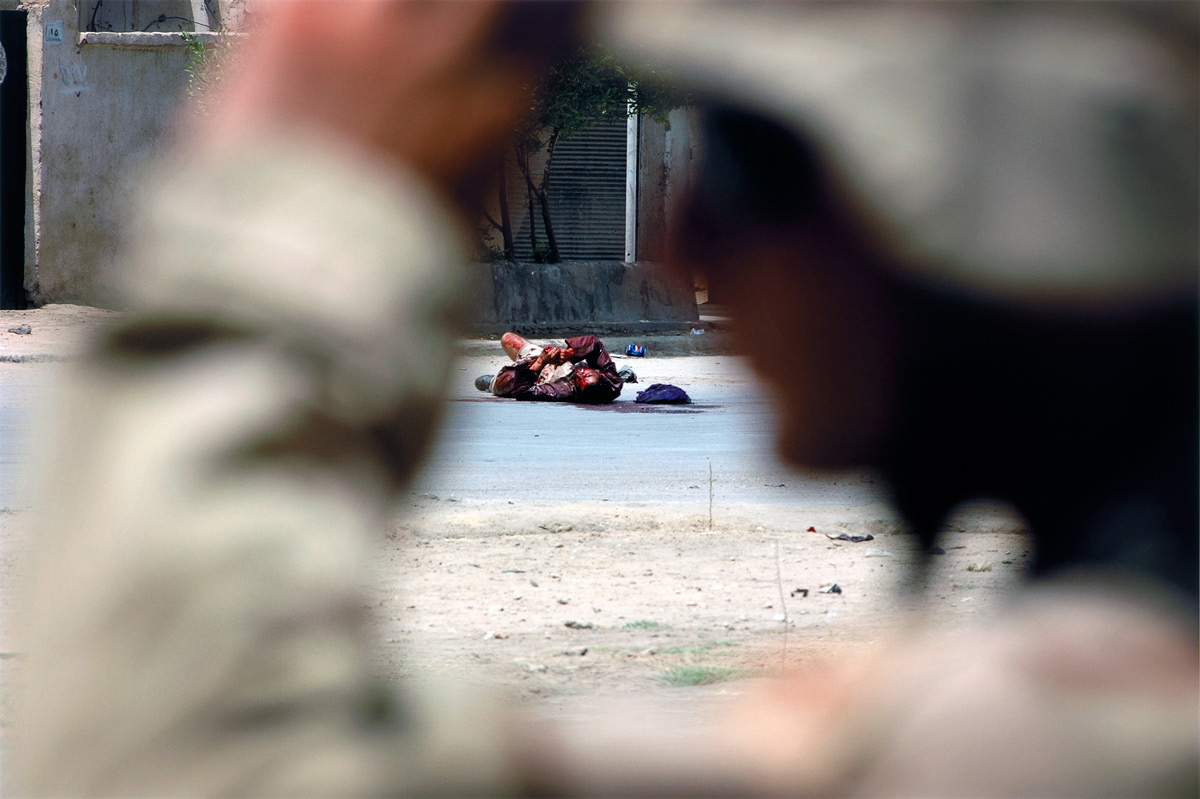
“Photographers Ashley Gilbertson and John Imming, and collaborative artists Lyndell Brown and Charles Green have all used cameras to document war, and their works off three distinct views.The common link appears to be an engagement with ideas of the observer and the observed and questioning who is looking at whom, and why?”2 Attempting an apolitical view of the war in Iraq, Gilbertson was embedded with different US military outfits on numerous visits to the country between 2002-2008, reliant on them for his safety. Many of his “objective” photographs deal with representations of surveillance and covert looking from ‘within the ranks’. But not from within enemy ranks. The very fact of his embedding, his lying down within a disciplinary system of control and power, to shoot from one point of view, politicises his gaze.

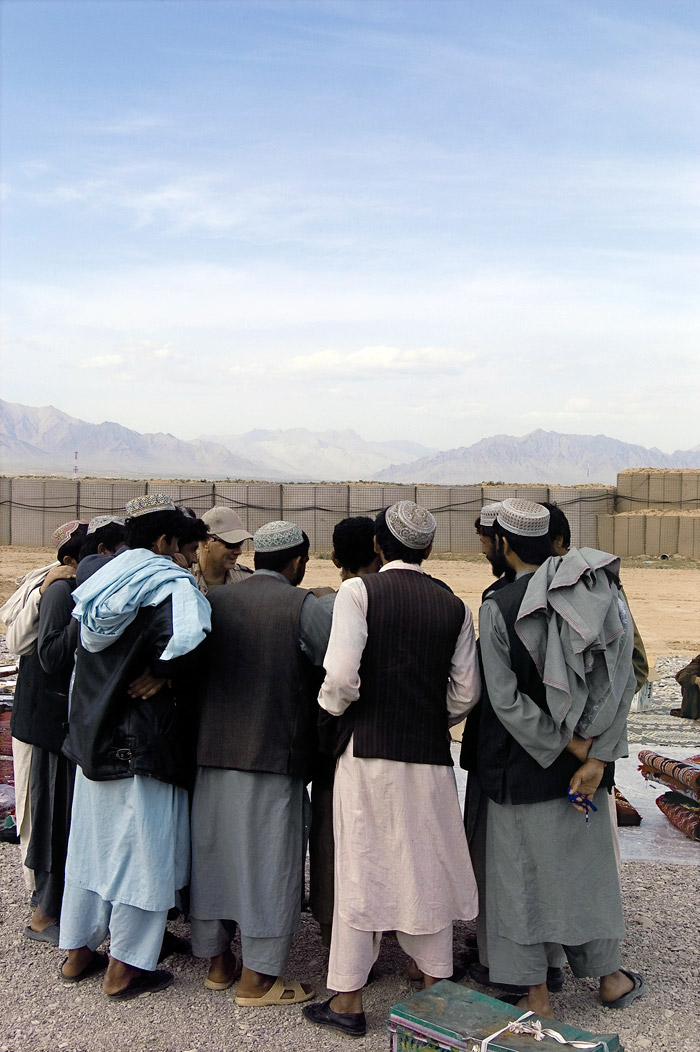
Brown and Green’s painterly photograph features a tightly choreographed scene, “a market within a military camp in which traders were invited to sell their wares. The scene is indicative, however, of the ‘strained atmosphere’ prevalent when different cultures interact in military situations – seemingly harmonious but concealing the ‘control that was exerted in the selection of traders’.”3 This traditional tableau vivant sees the traders become actors on a stage, their gaze directed towards the female officer at the centre of the group holding a piece of clothing which is blocked from our view. We the viewer are excluded from the circle of gazes; we become other, looking at the looking of the traders. Their gaze and our gaze are at cross-purpose; we wish to become a player on the stage but are denied access and can only observe the spectacle from a distance. Excluded, the viewer feels disempowered, the photographic mise en scène leaving me unmoved.

John Imming’s photographs use found images from the Vietnam war, the first war in which photographers had unrestricted access and were given absolute freedom to record what they saw. Vietnam was a stage for intense exploration, photographers bombarding the public with images of extreme violence. Imming rephotographs images from the television screen using a Leica camera, abstracting them into darkly hued creatures, the borders miming the shape of early television screens. “The images become abstracted and our gaze is ‘reduced’ into blurred shapes of contrasting tones … His photographs force us to slow down the memories of the somewhat ephemeral television imagery and look deeply at what is being portrayed, and how.”4 These photographs fail in that task for they are very surface photographs. The photographs do not have the structure to support such a vision nor the support of beauty to prick the consciousness of the gaze. They are ugly images because war is ugly and abstracting them in order to ask the viewer to look deeply and have an incredible insight into the condition ‘war’ and how it is portrayed simply did not work for me.


The two standout works in the exhibition are Thomas Struth’s luminous photograph Pergamon Museum IV, Berlin (2001, below) and Bill Henson’s seminal (perhaps even ubiquitous) series Untitled 1980/82 (1980-1982, see above) – these photographs seem to be everywhere at the moment, perhaps a change is as good as a rest!

Struth’s magnificent large colour photograph is an investigation into the theatre of seeing. In the photograph Struth directs his cast and choreographs the visitors, the arrangement of the spectators re-assembling the open-ended narrative of the 2nd century Telephos frieze behind. “Similarities between the poses of the audience members and the poses of the carve relief figures gradually emerge, suggesting an unconscious dialogue between the viewers and the objects they regard. The result of Struth’s directorial mode of working is the creation of a type of theatre based on intersecting viewpoints, raising questions about the gaze of the spectator and the process of looking at works of art and each other.”5

Beholders observe beholders and the subjects of vision become historical, according to art historian Wold-Dieter Heilmeyer. Here I observe that:

~ The suffused light that falls from the skylight leaves no shadow.

~ A man who casts no shadow has no soul.

~ The shadow according to Jung is the seat of creativity. In this photograph there is no depth of field, the sculptures and the figures feel like they are almost on one plane.

~ None of the viewers looks at the camera, they avoid its probing gaze, passively becoming the feminine aspect – like the central raised figure, robbed of head and arms, being gazed upon from all sides. We, the viewer, are looking at the spectacle of the viewers looking at the frieze. Looking at looking the observer becomes the observed (surveillance camera where are you?)

~ Consider the freeze frame of the models as they posed for the sculptor all those years ago; the freeze frame of the sculptures themselves; the freeze frame of the spectators posing for the camera; the freeze frame of the photograph itself; and then consider the freeze frame of time and space as we stand before the photograph looking at it. Then notice the women in the photograph videotaping the scene, another excoriating layer that tears at the fabric of time and looking, that causes lacrimation for our absent soul. What a photograph!


The Henson photographs are presented in a wonderfully musical installation, mimicking the movement of the crowds portrayed. I republish below my comments on this series from the review of the In camera and in public exhibition.

“A selection of photographs from the Crowd Series (1980-1982) by Bill Henson. Snapped in secret these black and white journalistic surveillance photographs (‘taken’ in an around Flinders Street railway station in Melbourne) have a brooding intensity and melancholic beauty. Henson uses a flattened perspective that is opposed to the principles of linear perspective in these photographs. Known as The Art of Describing6 and much used in Dutch still life painting of the 17th century to give equal weight to objects within the image plane, here Henson uses the technique to emphasise the mass and jostle of the crowd with their “waiting, solemn and compliant” people.

“When exhibiting the full series, Henson arranges the works into small groupings that create an overall effect of aberrant movement and fragmentation. From within these bustling clusters of images, individual faces emerge like spectres of humanity that will once again dissolve into the crowd … all apparently adrift in the flow of urban life. The people in these images have an anonymity that allows them to represent universal human experiences of alienation, mortality and fatigue.”7

Henson states, “The great beauty in the subject comes, for me, from the haunted space, that unbridgeable gap – which separates the profound intimacy and solitude of our interior world from the ‘other’… The business of how a child’s small hand appearing between two adults at a street crossing can suggest both a vulnerability, great tenderness, and yet also contain within it all of the power that beauty commands, is endlessly fascinating to me.”8 His observation is astute but for me it is the un/awareness of the people in these photographs that are their beauty, their insertion into the crowd but their isolation from the crowd and from themselves. As Maggie Finch observes, it is “that feeling of being both alone and private in a crowd, thus free but also exposed.”9

In the sociologist Erving Goffman’s terms the photographs can be seen as examples of what he calls “civil inattention”10 which is a carefully monitored demonstration of what might be called polite estrangement, the “facework” as we glance at people in the crowd, holding the gaze of the other only briefly, then looking ahead as each passes the other.

“Civil inattention is the most basic type of facework commitment involved in encounters with strangers in circumstances of modernity. It involves not just the use of the face itself, but the subtle employment of bodily posture and positioning which gives off the message “you may trust me to be without hostile intent” – in the street, public buildings, trains or buses, or at ceremonial gatherings, parties, or other assemblies. Civil inattention is TRUST as ‘background noise’ – not as a random collection of sounds, but as carefully restrained and controlled social rhythms. It is characteristic of what Goffman calls “unfocused interaction.””11

This is what I believe Henson’s photographs are about. Not so much the tenderness of the child’s hand but a fear of engagement with the ‘other’. As such they can be seen as image precursors to the absence/presence of contemporary communication and music technologies. How many times do people talk on their mobile phone or listen to iPods in crowds, on trams and trains, physically present but absenting themselves from interaction with other people. Here but not here; here and there. The body is immersed in absent presence, present and not present, conscious and not conscious, aware and yet not aware of the narratives of a ‘recipro/city failure’. A failure to engage with the light of place, the time of exposure and an attentiveness to the city.

As Susan Stewart insightfully observes,

“To walk in the city is to experience the disjuncture of partial vision/partial consciousness … The walkers of the city travel at different speeds, their steps like handwriting of a personal mobility. In the milling of the crowd is the choking of class relations, the interruption of speed, and the machine.”12

Dr Marcus Bunyan


Footnotes

1/ Finch, Maggie. Looking at Looking: The Photographic Gaze. Catalogue. Melbourne: National Gallery of Victoria, 2011, p. 10

2/ Ibid., p. 16

3/ Ibid., p. 21

4/ Ibid., p. 24

5/ Ibid., p. 7

6/ See Alpers, Svetlana. The Art of Describing: Dutch Art in the Seventeenth Century. University Of Chicago Press, 1984

7/ Anon. BILL HENSON: early work from the MGA collection. Education Resource. A Monash Gallery of Art Travelling Exhibition [Online] Cited 14/10/2011. No longer available online

8/ Henson, Bill quoted in the exhibition catalogue. First published as a pdf for the exhibition In camera and in public Curated by Naomi Cass. Centre for Contemporary Photography, 16 September – 23 October 2011

9/ Stephens, Andrew. “Who’s watching you?” in The Saturday Age. 23rd September 2011 [Online] Cited 14/10/2011

10/ See  Goffman, E. Behaviour in Public Places. New York: Free Press, 1963

11/ Giddens, Anthony. The Consequences of Modernity. Cambridge: Polity Press, 1991, pp. 82-83

12/ Stewart, Susan. On Longing: Narratives of the Miniature, the Gigantic, the Souvenir, the Collection. Durham: Duke University Press, 1993, p. 2. Prologue


Many thankx to the National Gallery of Victoria for allowing me to publish the photographs in the posting. Please click on the photographs for a larger version of the image.


Bill Henson (Australian, b. 1955) 'Untitled 1980/82' 1980-1982


Bill Henson (Australian, b. 1955)
Untitled 1980/82
1980-1982
From the Untitled 1980/82 series 1980-1982
Gelatin silver photograph
43.0 x 38.8cm
National Gallery of Victoria, Melbourne
Anonymous gift, 1993
© Courtesy of the artist and Roslyn Oxley9 Gallery, Sydney


Bill Henson (Australian, b. 1955) 'Untitled 1980/82' 1980-1982


Bill Henson (Australian, b. 1955)
Untitled 1980/82
1980-1982
From the Untitled 1980/82 series 1980-1982
Gelatin silver photograph
29.2 x 47cm
National Gallery of Victoria, Melbourne
Anonymous gift, 1993
© Courtesy of the artist and Roslyn Oxley9 Gallery, Sydney


On 30 September the National Gallery of Victoria will present Looking at Looking: The Photographic Gaze, a unique exhibition exploring how photography can construct particular ways of looking. Looking at Looking will feature works by 10 Australian and international photographers including 20 photographs from Bill Henson’s Untitled 1980-82 series.

Drawn entirely from the NGV Collection, this exhibition will bring together a fascinating selection of photographs inviting the viewer to consider the diverse nature of the photographic gaze and explore the complex relationships between the subject, the photographer and the audience. The displayed photographs will include observations of people in crowds, surveillance images from war zones and photographs that explore different ways of looking at gender, race and identity.

Maggie Finch, Assistant Curator, Photography, NGV said: “The act of photographing people involves a process of observation and scrutiny. At times, photographers remain detached and anonymous while at other times they are complicit, directing their subjects and encouraging specific actions.”

Frances Lindsay, Deputy Director, NGV, said: “In the NGV’s 150th year this exhibition allows visitors to explore the dynamic relationship between the observer and the observed. This is a rare opportunity to view these photographs in a truly unique context.”

Looking at Looking will consider the anonymous photographer, one who is able to look without being looked at in return and consequently see more than otherwise possible. This idea is explored in Bill Henson’s series Untitled 1980-82, where the artist photographed people on city streets. Hung in a dense display, these photographs provide a psychological study of the nature of people when in a crowd.

Looking at Looking will feature works by Brook Andrew, Chi Peng, Anne Ferran, Ashley Gilbertson, Charles Green and Lyndell Brown, Bill Henson, John Immig, Thomas Struth and David Thomas.

Press release from the National Gallery of Victoria


Thomas Struth (German, b. 1954) 'Pergamon Museum IV, Berlin' 2001


Thomas Struth (German, b. 1954)
Pergamon Museum IV, Berlin
2001
Type C photograph
144.1 x 219.9cm
National Gallery of Victoria, Melbourne
Purchased with the assistance of The Bowness Family Fund for Contemporary Photography, 2008
© 2011 Thomas Struth


David Thomas (born Northern Ireland 1951, arrived Australia 1958) 'Amid history 2 (Large version)' 2006


David Thomas (born Northern Ireland 1951, arrived Australia 1958)
Amid history 2 (Large version)
2006
Enamel paint on type C photograph on aluminium and plastic
100 x 145cm
National Gallery of Victoria, Melbourne
Purchased, Victorian Foundation for Living Australian Artists, 2007 © the artist


Ashley Gilbertson (Australian, b. 1978) 'A member of the Mahdi Army RPG team' 2004 from the 'Whiskey Tango Foxtrot' series 2004


Ashley Gilbertson (Australian, b. 1978)
A member of the Mahdi Army RPG team
2004
From the Whiskey Tango Foxtrot series 2004
Digital type C print
66.5 x 99.8cm
National Gallery of Victoria, Melbourne
Purchased, Victorian Foundation for Living Australian Artists, 2009
© Ashley Gilbertson / VII Network


John Immig (Dutch/Australian, 1935-2018) 'No title (T.V. images)' 1975-1976


John Immig (Dutch/Australian, 1935-2018)
No title (T.V. images)
1975-1976
From the Vietnam series 1975-1976
Gelatin silver photograph
20.2 x 25.3cm
National Gallery of Victoria, Melbourne
Purchased with the assistance of the Visual Arts Board, 1977
© John Immig


Chi Peng (Chinese, b. 1981) 'Consubstantiality' 2004


Chi Peng (Chinese, b. 1981)
Consubstantiality
2004
Type C photograph
87.5 x 116.7cm
National Gallery of Victoria, Melbourne
Purchased with the assistance of the NGV Foundation, 2004
© Chi Peng, courtesy of Red Gate Gallery, Beijing


Brook Andrew (Australian, b. 1970) 'I Split Your Gaze' 1997


Brook Andrew (Australian, b. 1970)
I Split Your Gaze
1997
Gelatin silver print
122.6 × 114cm (image and sheet)
National Gallery of Victoria, Melbourne
Purchased with funds from the Victorian Foundation for Living Australian Artists, 2005
© Brook Andrew/Copyright Agency, 2023


Charles Green (Australian, b. 1953) and Lyndell Brown (Australian, b. 1961) 'Afghan traders with soldiers, market, Taran Kowt Base Uruzgan Province, Afghanistan' 2007 printed 2009


Charles Green (Australian, b. 1953)
Lyndell Brown (Australian, b. 1961)
Afghan traders with soldiers, market, Taran Kowt Base Uruzgan Province, Afghanistan
2007 printed 2009
From The approaching storm series 2009
Inkjet print
155.0 x 107.5cm
National Gallery of Victoria, Melbourne
Purchased, Victorian Foundation for Living Australian Artists, 2009
© Courtesy of the Artists and Arc One Gallery, Melbourne


NGV International
180 St Kilda Road

Opening hours
Daily 10am – 5pm

National Gallery of Victoria website

LIKE ART BLART ON FACEBOOK

Back to top

Exhibition: ‘Swiss Photobooks from 1927 to the present – A Different History of Photography’ at Fotostiftung Schweiz, Zurich

Exhibition dates: 22nd October 2011 – 19th February 2012


Many thankx to Fotostiftung Schweiz for allowing me to publish the photographs in the posting. Please click on the photographs for a larger version of the image.


Eduard Spelterini (Swiss, 1852-1931) 'Über den Wolken' Brunner & Co. A.G., Zurich 1928


Eduard Spelterini (Swiss, 1852-1931)
Über den Wolken
Brunner & Co. A.G., Zurich
1928


Albert Steiner was one of the finest Swiss photographers of the twentieth century. Like Ansel Adams, he favoured imposing natural phenomena, landscapes with what might be called good bone structure, (in his case the Alps, in Adams’s comparable work, the American West), and he printed his vision of them in black-and-white, revealing nature in all its majesty. His impressive scenic work has fundamentally shaped the world’s perception of Switzerland as an alpine country of timeless beauty. It spans the period from before World War I – an era of pictorially inspired images that look like oil paintings – to the straightforward and elegantly modern photography of the 1930s. Unlike many other photographers of the same generation active in the same area, Steiner saw photography as a completely appropriate means of creating works of art, and considered himself an artist.

Text from Amazon. Albert Steiner The Photographic Work. Steidl November 21, 2008


Albert Steiner (Swiss, 1877-1965) 'Schnee, Winter, Sonne' Rotapfel-Verlag, Zurich-Erlenbach/Leipzig 1930


Albert Steiner (Swiss, 1877-1965)
Schnee, Winter, Sonne
Rotapfel-Verlag, Zurich-Erlenbach/Leipzig
1930


The Swiss Foundation for Photography (Fotostiftung Schweiz) is marking its fortieth anniversary by presenting a fresh view of Swiss photography – a tour d’horizon covering a range of illuminating photobooks in which not only the great themes of photography are reflected but also the development of photographic styles and modes of expression. Since the late 1920s the book has repeatedly proved itself to be an ideal platform for the presentation of photographic works. Books have not only contributed to the dissemination and transmission of photography but also facilitated the integration of the individual image into a meaningful context.

In the history of photography the photobook plays a major role not only in publicising photographs, but also as an independent means of expression. The significance of many photographers’ works only emerges when presented in book form, in the coherent sequence or series of images. Content, design and printing quality combine to produce an intricate architectural whole.

This jubilee exhibition marking the 40th anniversary of the Fotostiftung Schweiz focuses on a selection of photobooks that have influenced photography in Switzerland since the late 1920s. At that time, technical advances made the reproduction of top quality photographic images possible and promptly gave rise to a first boom in illustrated books that placed greater emphasis on the photographs than on the texts. Since then, Swiss photobooks have continued to develop in various directions and have repeatedly attracted considerable attention at international level as well.

With the help of seven thematic areas – homeland, portraiture, mountain photography, the world of work, aerial photography, contemporary history, travel – this exhibition aims at a kind of typology of the Swiss photobook which draws attention to the potential interplay between book and photograph, while also revealing the extent to which modes of expression have altered over the course of time. Concise excerpts from these books exhibited on the walls highlight the basic principle of each photobook – a photograph positioned on a double page still remains an integral part of a larger sequence. The concept, design and reception of photobooks are examined more closely in display cases. A large wall installation is devoted to photobook covers. The photobook is also presented as an object in film form: “reading” illustrated photography books is not just an intellectual but also a sensual act.

Press release from the Fotostiftung Schweiz website


Eduard Spelterini (Swiss, 1852-1931) 'Über den Wolken' Brunner & Co. A.G., Zurich 1928


Eduard Spelterini (Swiss, 1852-1931)
Über den Wolken (cover)
Brunner & Co. A.G., Zurich
1928


Swiss balloonist Eduard Spelterini (1852-1931) lived an extraordinary life. Born the son of an innkeeper and beer brewer in a remote village in the Toggenburg area of Switzerland, Spelterini achieved international fame when he became the first aeronaut to fly over the Swiss Alps in 1898. Over the next two decades, Spelterini navigated his balloon through the skies of Europe, Africa, and Asia, and over such sites as the Great Pyramid of Giza and the gold mines of South Africa. Spelterini remains an important figure today because of his achievements in aerial photography. Seeking images to illustrate his lectures, he began taking a camera along with him on his expeditions in 1893, and his breathtaking photographs quickly became the talk of Europe.

Known as the “King of the Air,” the Swiss balloonist Eduard Spelterini enchanted the imaginations of European royalty, military generals, wealthy patrons, and the public alike with his mastery of the most whimsical mode of travel ever invented – the gas balloon. During the course of his storied aviation career, Spelterini flew his balloons over the Swiss Alps, across the Egyptian pyramids, and past the ziggurats of the Middle East, taking breathtaking photographs of landscapes and cities from the sky.

On Spelterini’s first ballooning ventures, he ferried aristocrats between Vienna, Bucharest, Athens, and other European capitals, on flights that became so famous that they were soon jam-packed with an international press corps looking for the next sensational story. Later in his life, Spelterini was the first aeronaut to succeed in the hazardous passage over the Swiss Alps, a trip then thought impossible. Eventually, he decided to bring his camera on every voyage in order to document the full panorama of international vistas he encountered.

Text from Amazon


Eduard Spelterini and the Spectacle of Images: The Colored Slides of the Pioneer Balloonist. Verlag Scheidegger and Spiess; Bilingual edition August 15, 2010, presents a selection of around eighty of Spelterini’s never-before-published colored slides, offering readers an altogether new look at the spectacular work of this pioneer of photography and aviation.

Eduard Spelterini – Photographs of a Pioneer Balloonist. Verlag Scheidegger and Spiess; Bilingual edition December 30, 2007 is the first book after 80 years to present these images of his journeys, reproduced directly from the artist’s original glass negatives. Contextualized by essays that explore both Spelterini’s life and his photographic work, the photographs featured in this volume capture the heady mix of danger and discovery that defined the early years of international air travel when balloons ruled the skies.


Walter Mittelholzer (Swiss, 1894-1937) 'Alpenflug' Orell Füssli, Zurich/Leipzig 1928


Walter Mittelholzer (Swiss, 1894-1937)
Alpenflug (cover)
Orell Füssli, Zurich/Leipzig
1928


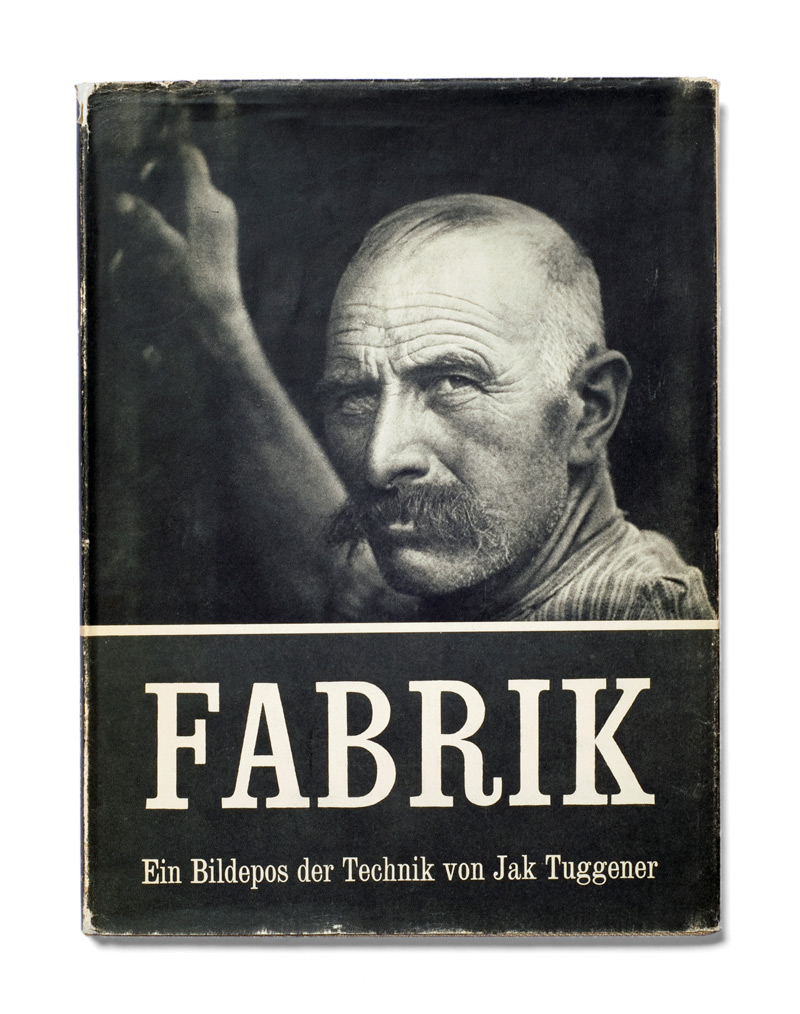
Jakob Tuggener (Swiss, 1904-1988) 'Fabrik' (cover) Rotapfel Verlag, Erlenbach-Zurich 1943


Jakob Tuggener (Swiss, 1904-1988)
Fabrik (cover)
Rotapfel Verlag, Erlenbach-Zurich
1943


Jakob Tuggener (Swiss, 1904-1988) 'Fabrik' Rotapfel Verlag, Erlenbach-Zurich 1943


Jakob Tuggener (Swiss, 1904-1988)
Fabrik
Rotapfel Verlag, Erlenbach-Zurich
1943


Jakob Tuggener’s Fabrik, published in Zurich in 1943, is a milestone in the history of the photography book. Its 72 images, in the expressionist aesthetic of a silent movie, impart a skeptical view of technological progress: at the time the Swiss military industry was producing weapons for World War II. Tuggener, who was born in 1904, had an uncompromisingly critical view of the military-industrial complex that did not suit his era. His images of rural life and high-society parties had been easy to sell, but Fabrik found no publisher. And when the book did come out, it was not a commercial success. Copies were sold at a loss and some are believed to have been pulped. Now this seminal work, which has since become a sought-after classic, is being reissued with a contemporary afterword. In his lifetime, Tuggener’s work appeared – at Robert Frank’s suggestion – in Edward Steichen’s Post-War European Photography and in The Museum of Modern Art’s seminal exhibition, The Family of Man, in whose catalogue it remains in print. Tuggener’s death in 1988 left an immense catalogue of his life’s work, much of which has yet to be shown: more than 60 maquettes, thousands of photographs, drawings, watercolors, oil paintings and silent films.The Family of Man,

Book description on Amazon. The book has been republished by Steidl in January, 2012. The classics never go out of fashion!


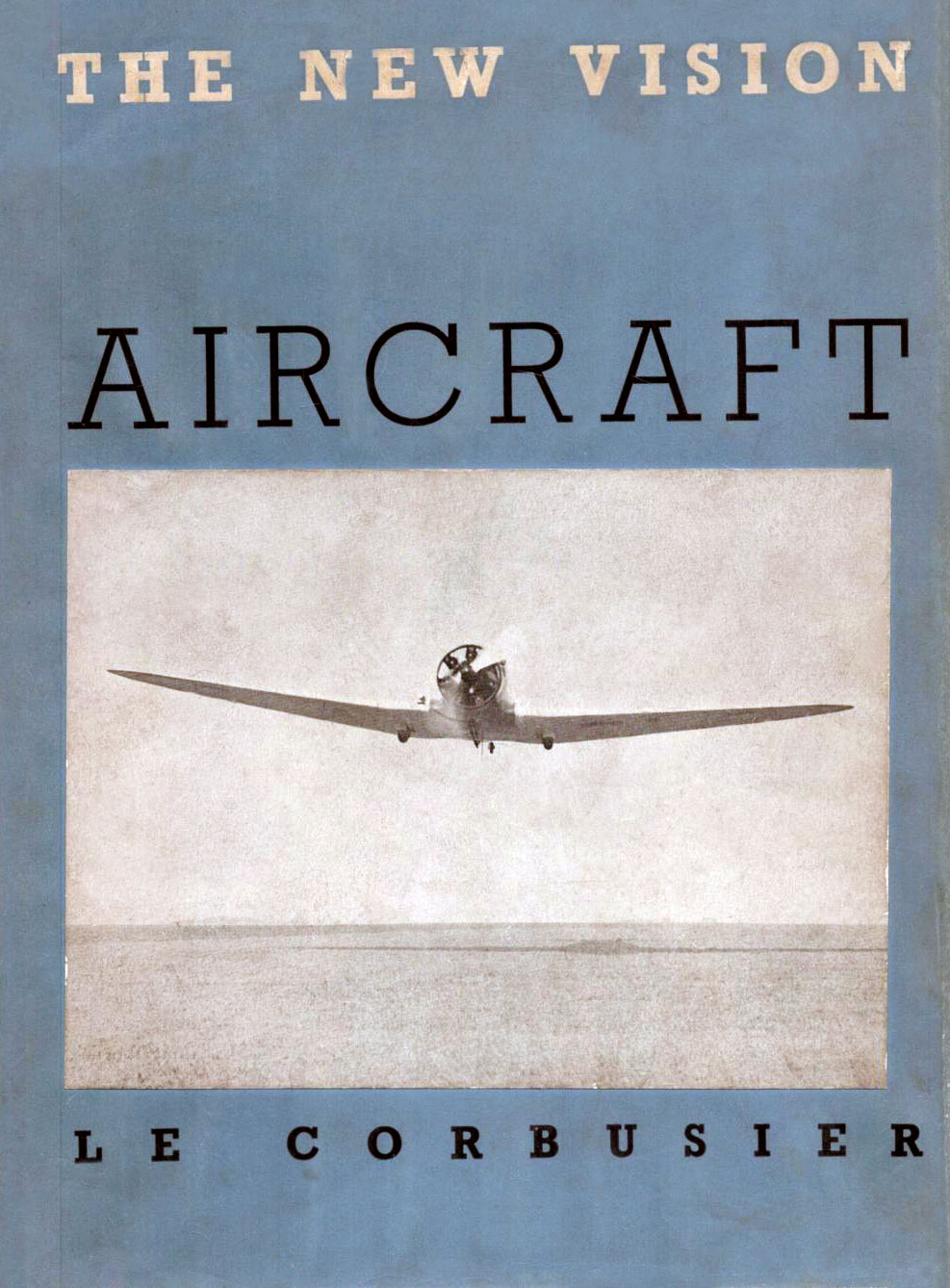
Le Corbusier (Swiss-French, 1887-1965) 'Aircraft' 1935


Le Corbusier (Swiss-French, 1887-1965)
Aircraft
The Studio, London/New York
1935


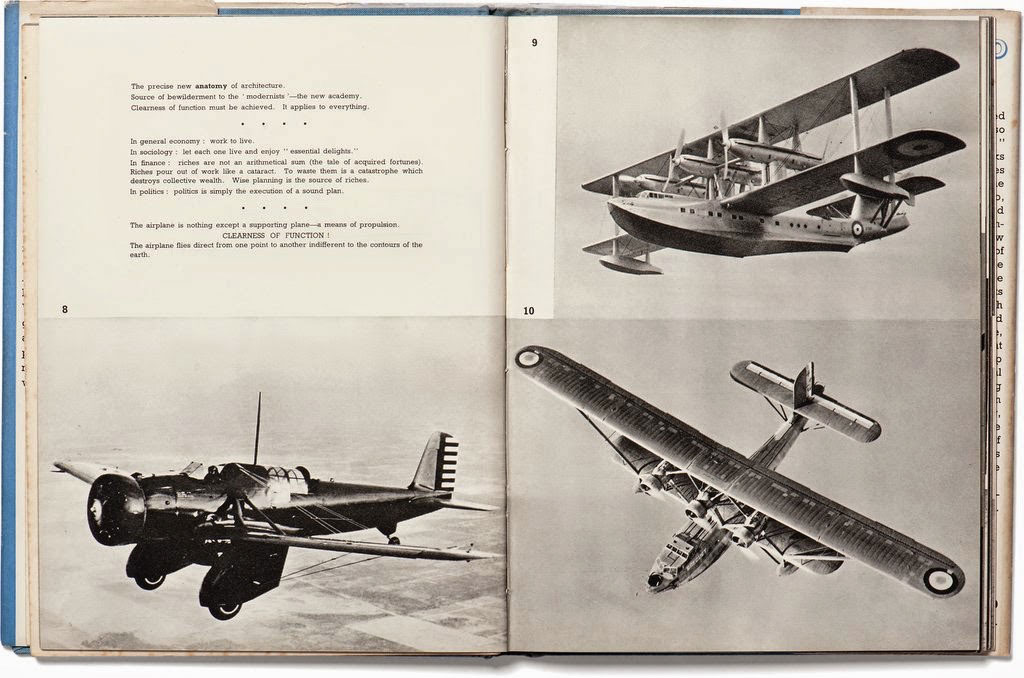
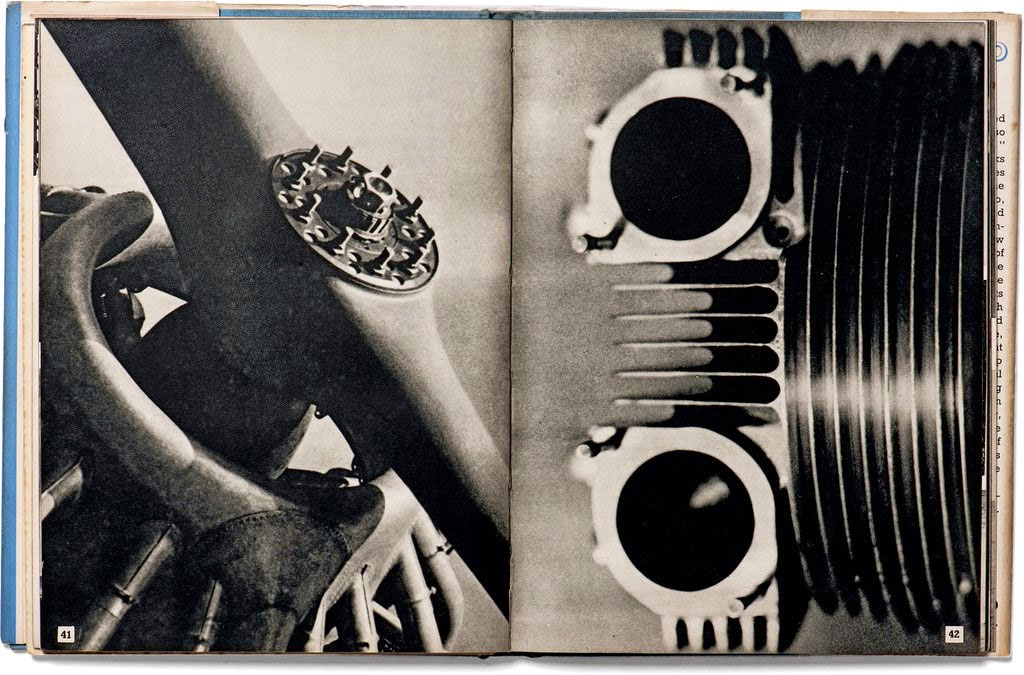
Le Corbusier (Swiss-French, 1887-1965) 'Aircraft' 1935

Le Corbusier (Swiss-French, 1887-1965) 'Aircraft' 1935


Le Corbusier (Swiss-French, 1887-1965)
Aircraft
The Studio, London/New York
1935


Robert Frank (Swiss-American, 1924-2019) 'The Americans' 1958 front cover


Robert Frank (Swiss-American, 1924-2019)
The Americans
Grove Press, New York
1958/1959


Werner Bischof (Swiss, 1916-1954) 'Japan' 1955


Werner Bischof (Swiss, 1916-1954)
Japan
Manesse, Zurich
c. 1955


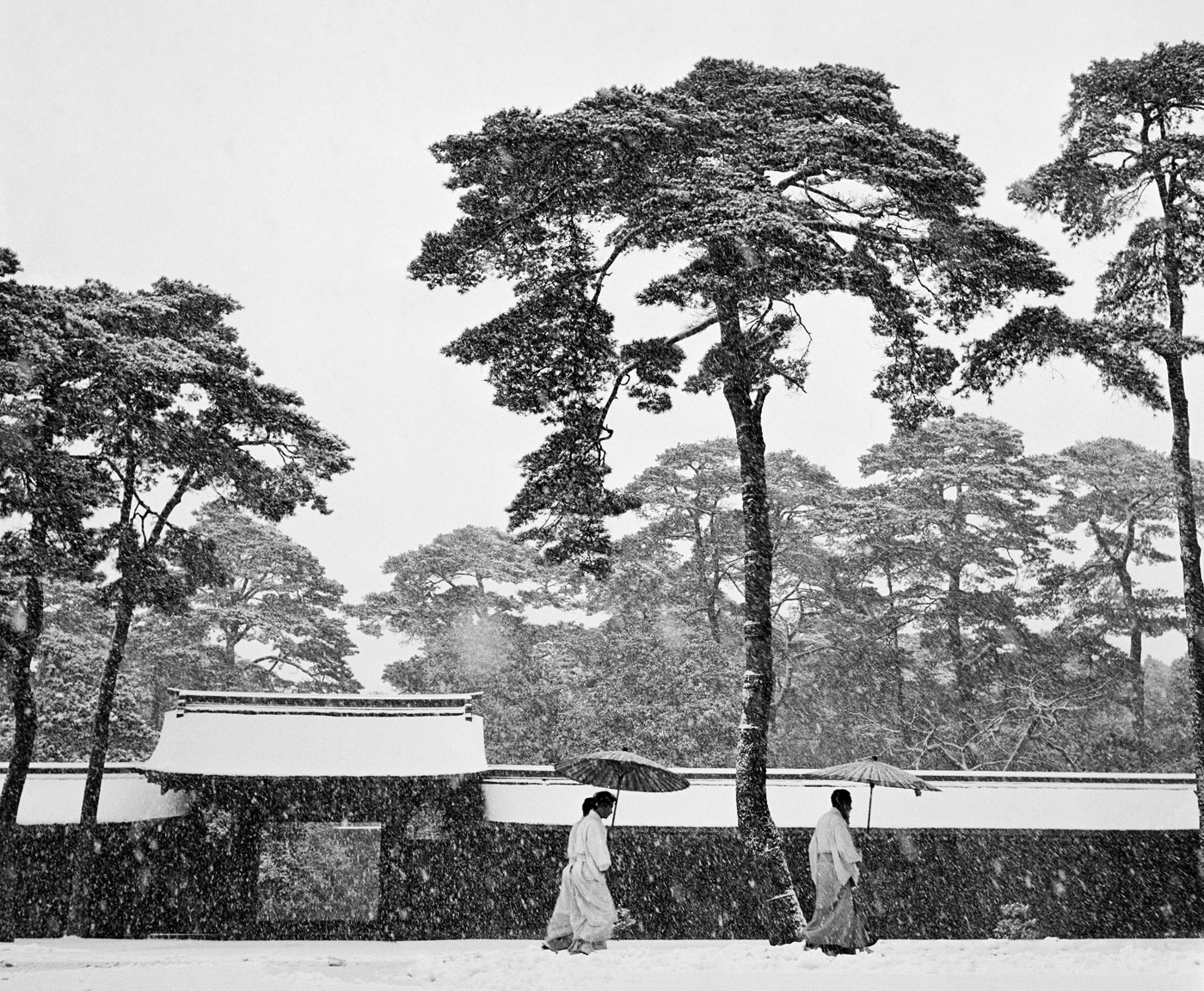
Werner Bischof (Swiss, 1916-1954) 'Courtyard of the Meiji shrine in Tokyo, Japan' 1951


Werner Bischof (Swiss, 1916-1954)
Courtyard of the Meiji shrine in Tokyo, Japan
1951
Gelatin silver print


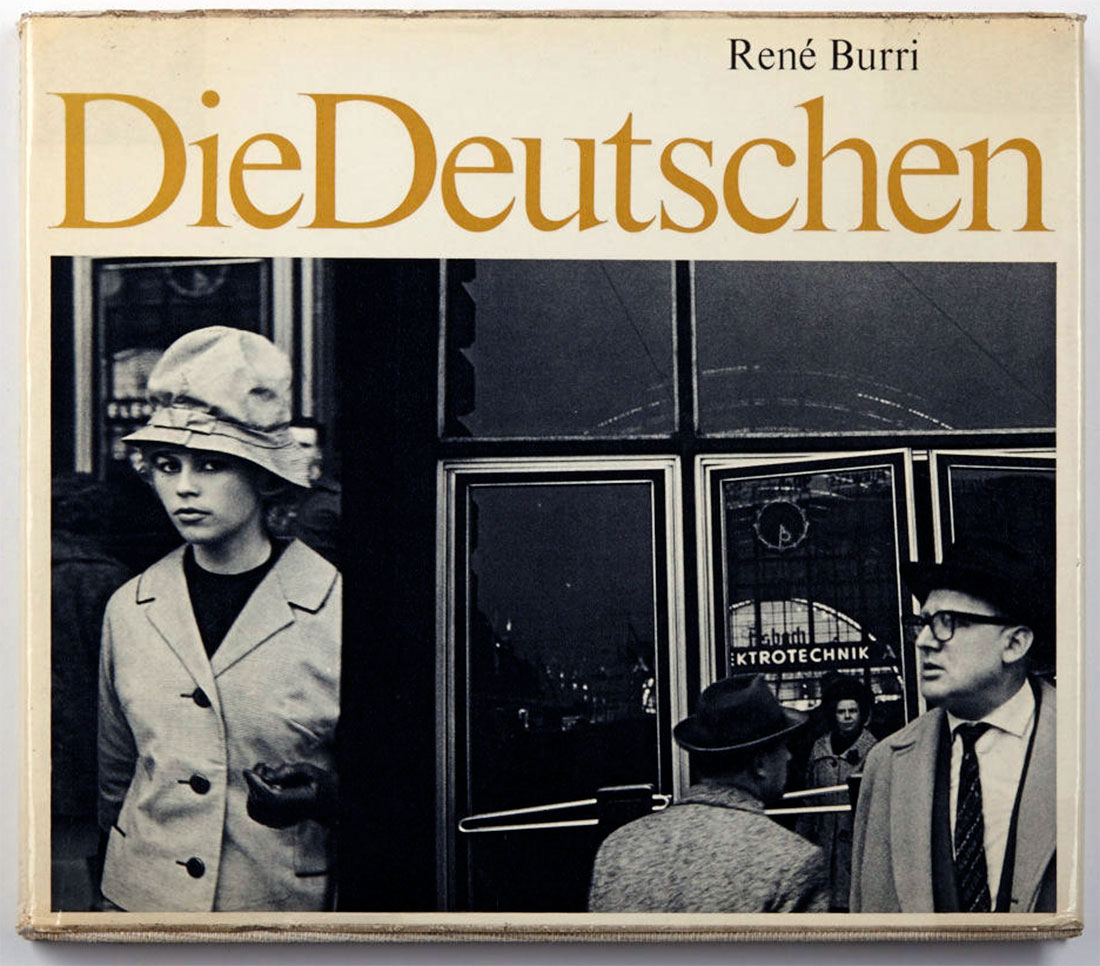
René Burri (Swiss, 1933-2014) 'Die Deutschen' 1962


René Burri (Swiss, 1933-2014)
Die Deutschen
Fretz & Wasmuth Verlag, Zurich
1962


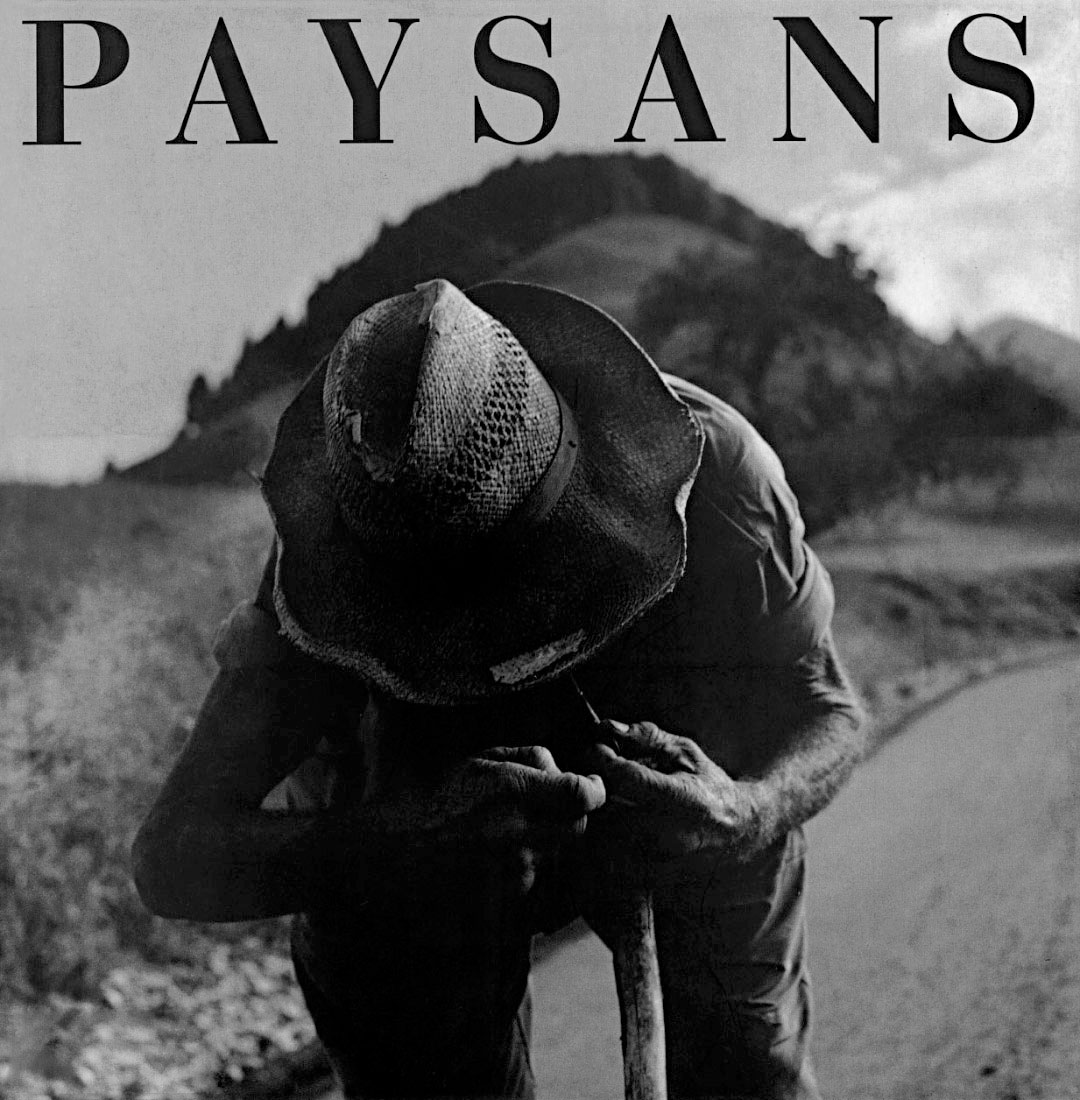
Hugues de Wurstemberger (Swiss, b. 1955) 'Paysans' 1996


Hugues de Wurstemberger (Swiss, b. 1955)
Paysans
Editions de la Sarine, Fribourg
1996


Andri Pol (Swiss, b. 1961) 'Grüezi' Kontrast Verlag, Zurich 2006


Andri Pol (Swiss, b. 1961)
Grüezi
Kontrast Verlag, Zurich
2006


Fotostiftung Schweiz
Grüzenstrasse 45
CH-8400 Winterthur (Zürich)
Phone: +41 52 234 10 30

Opening hours:
Daily 11am – 6pm
Wednesday 11am – 8pm
Closed on Mondays

Fotostiftung Schweiz website

FOLLOW ART BLART ON FACEBOOK

Back to top

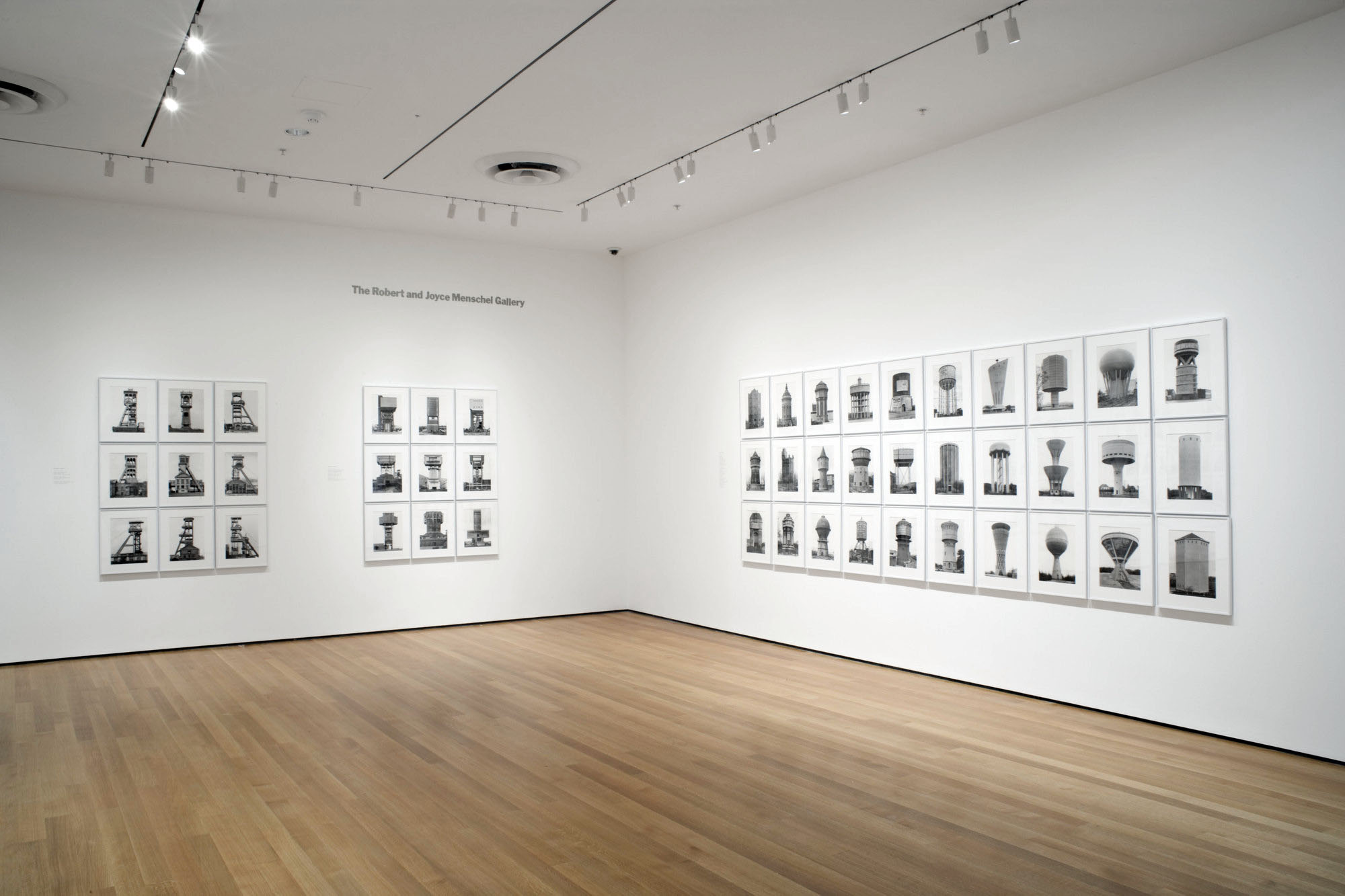
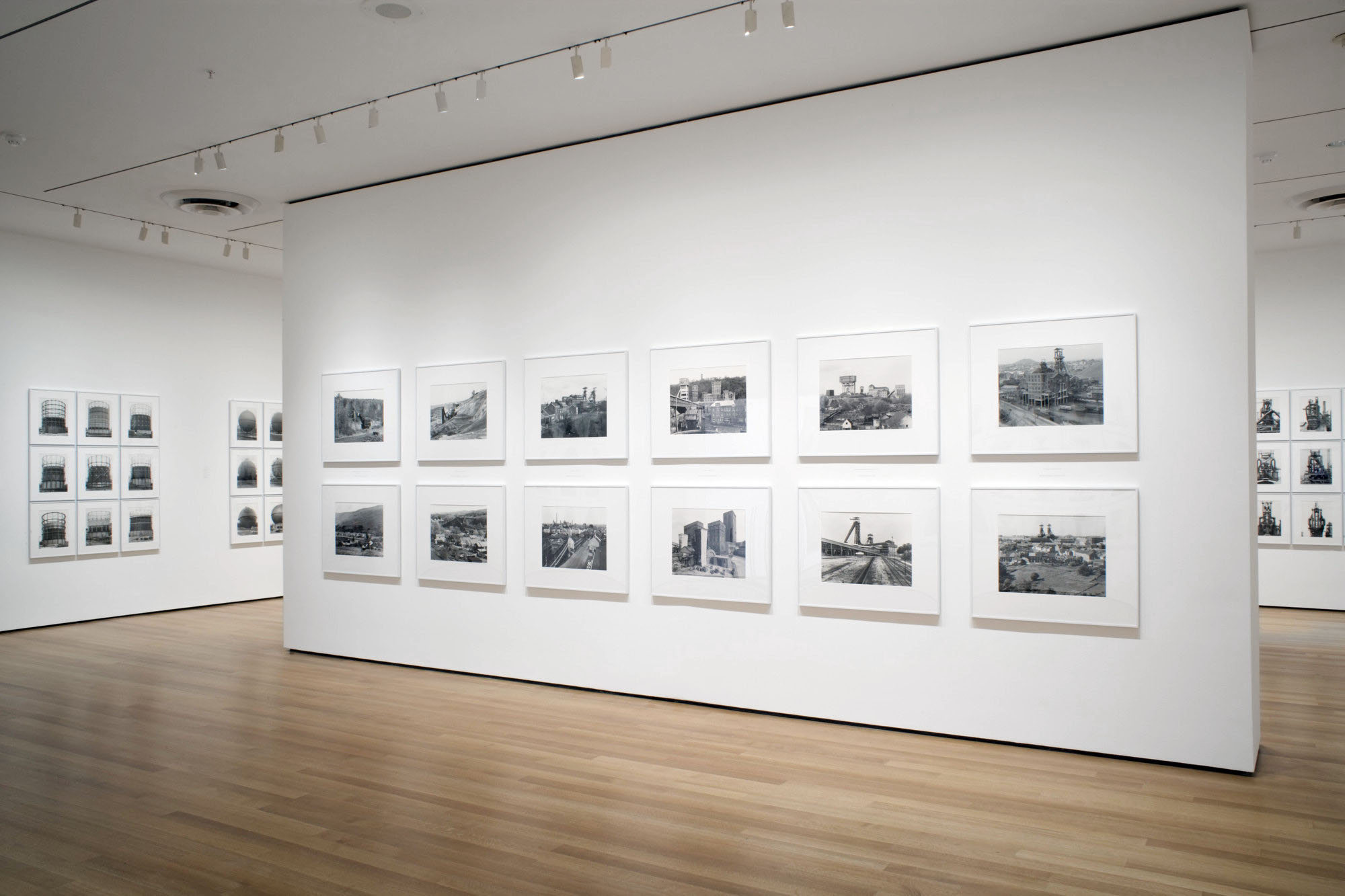
Exhibition: ‘Bernd and Hilla Becher: Mines and Mills – Industrial Landscapes’ at Fotomuseum Winterthur, Zurich

Exhibition dates: 26th November, 2011 – 12th February, 2012


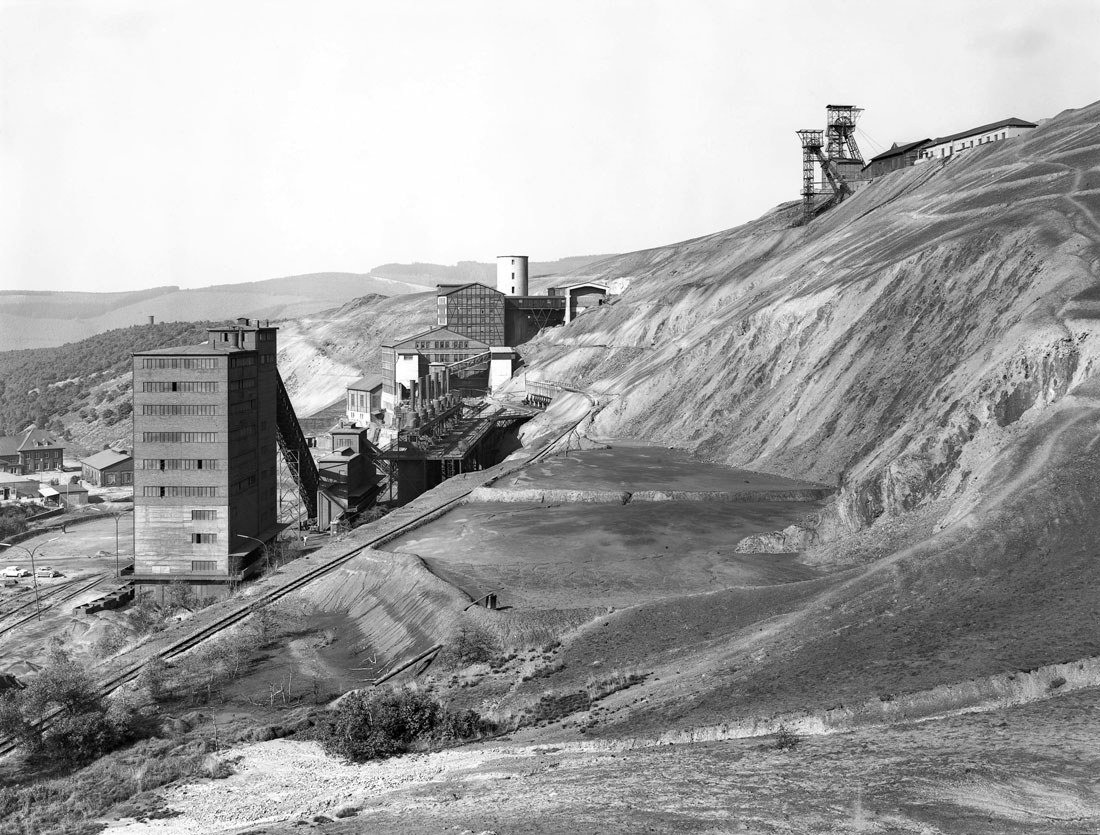
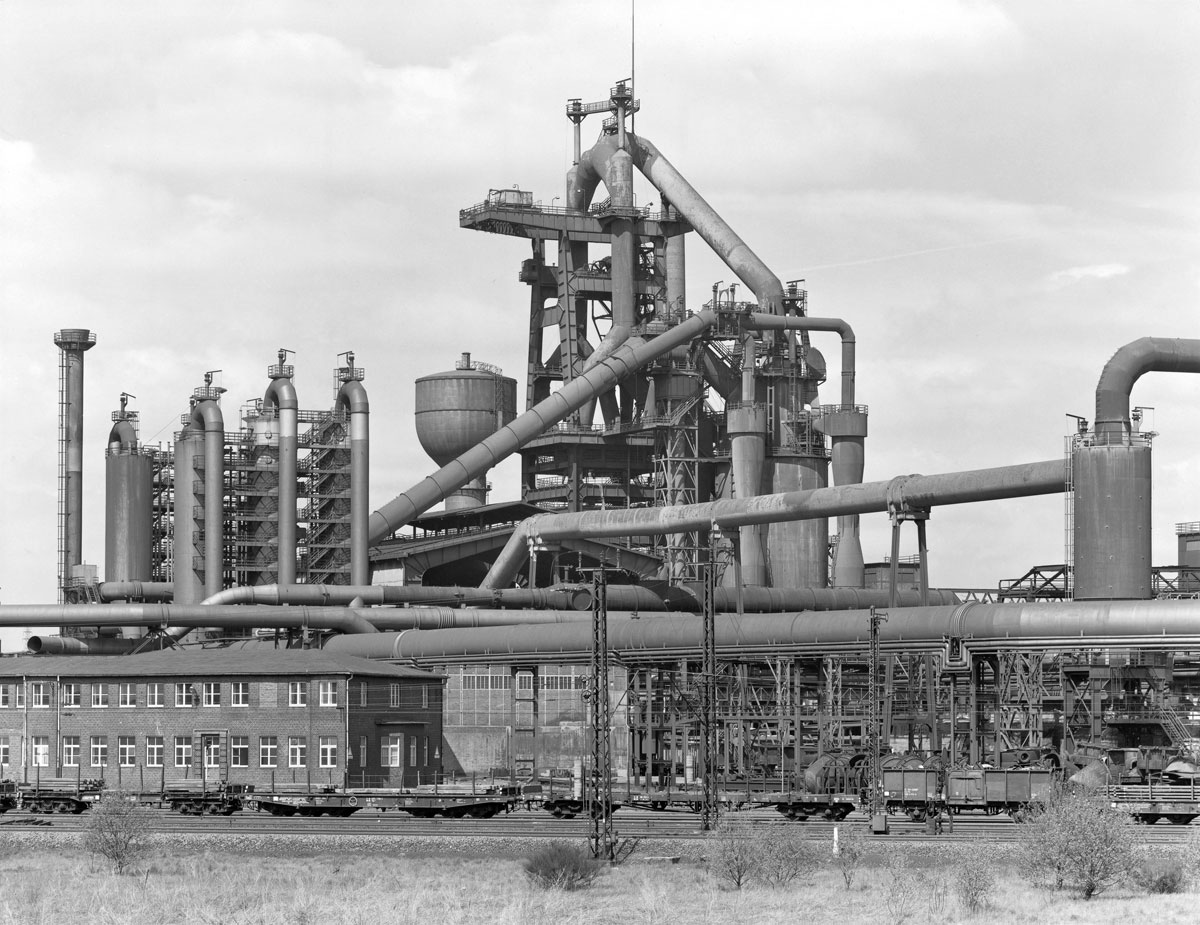
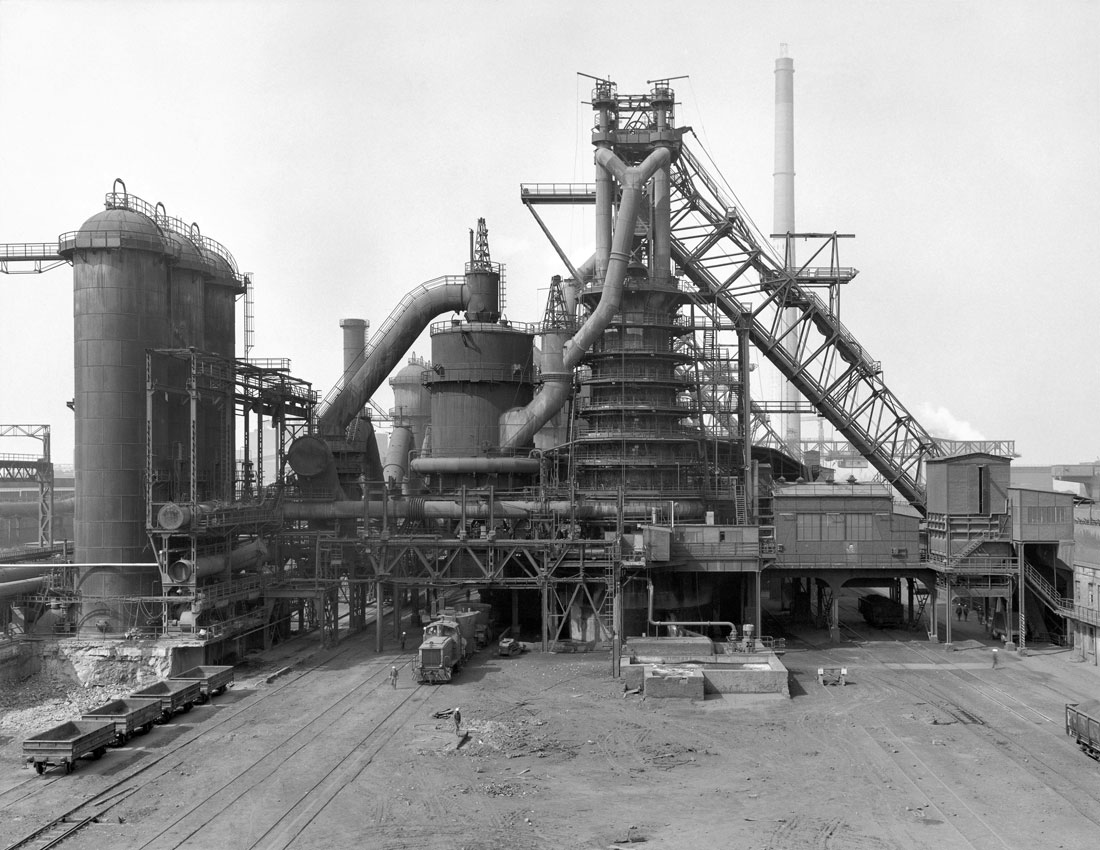
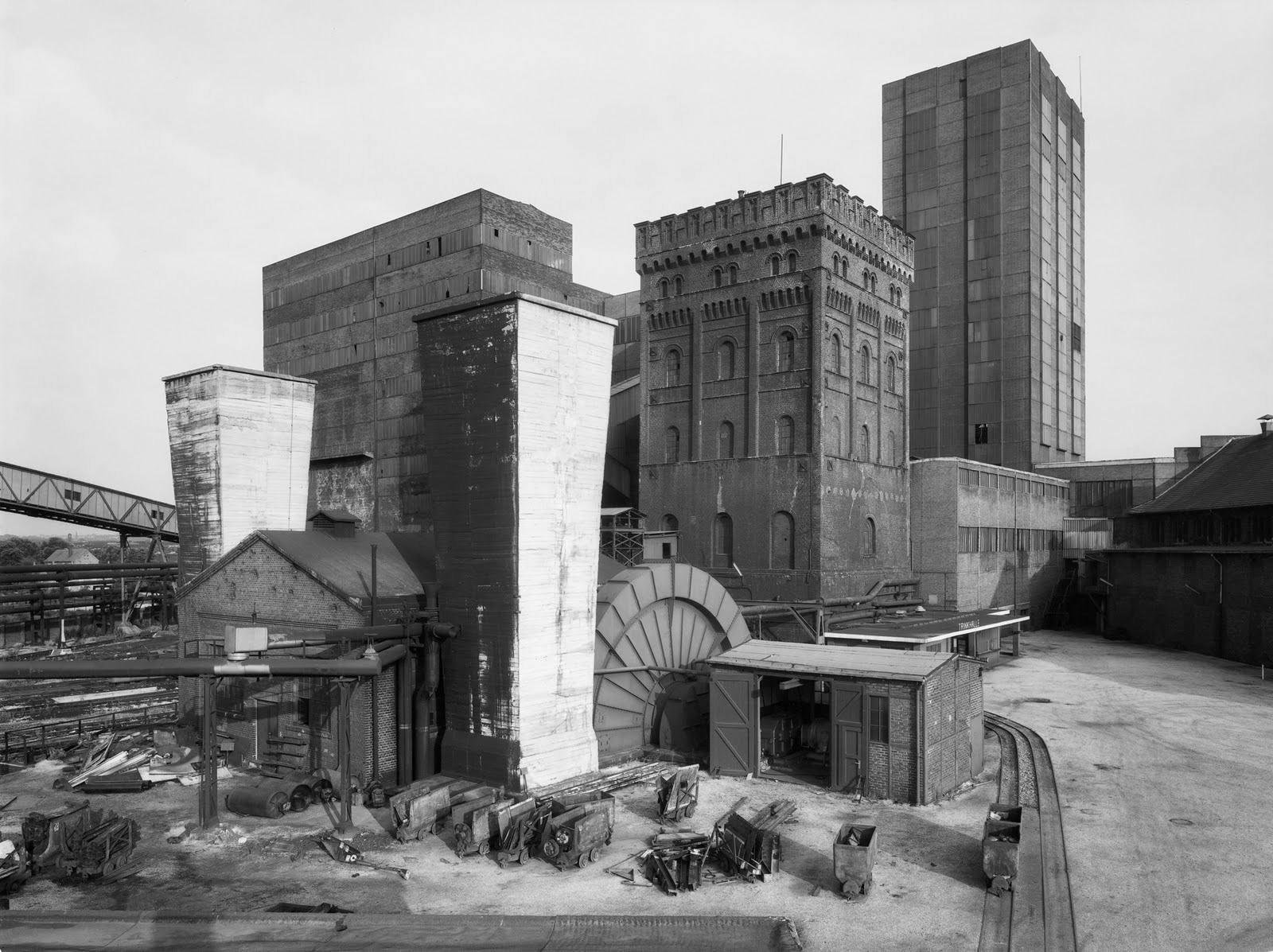
Bernd and Hilla Becher (German, active 1959-2007) Bernd Becher (German, 1931-2007) Hilla Becher (German, 1934-2015)
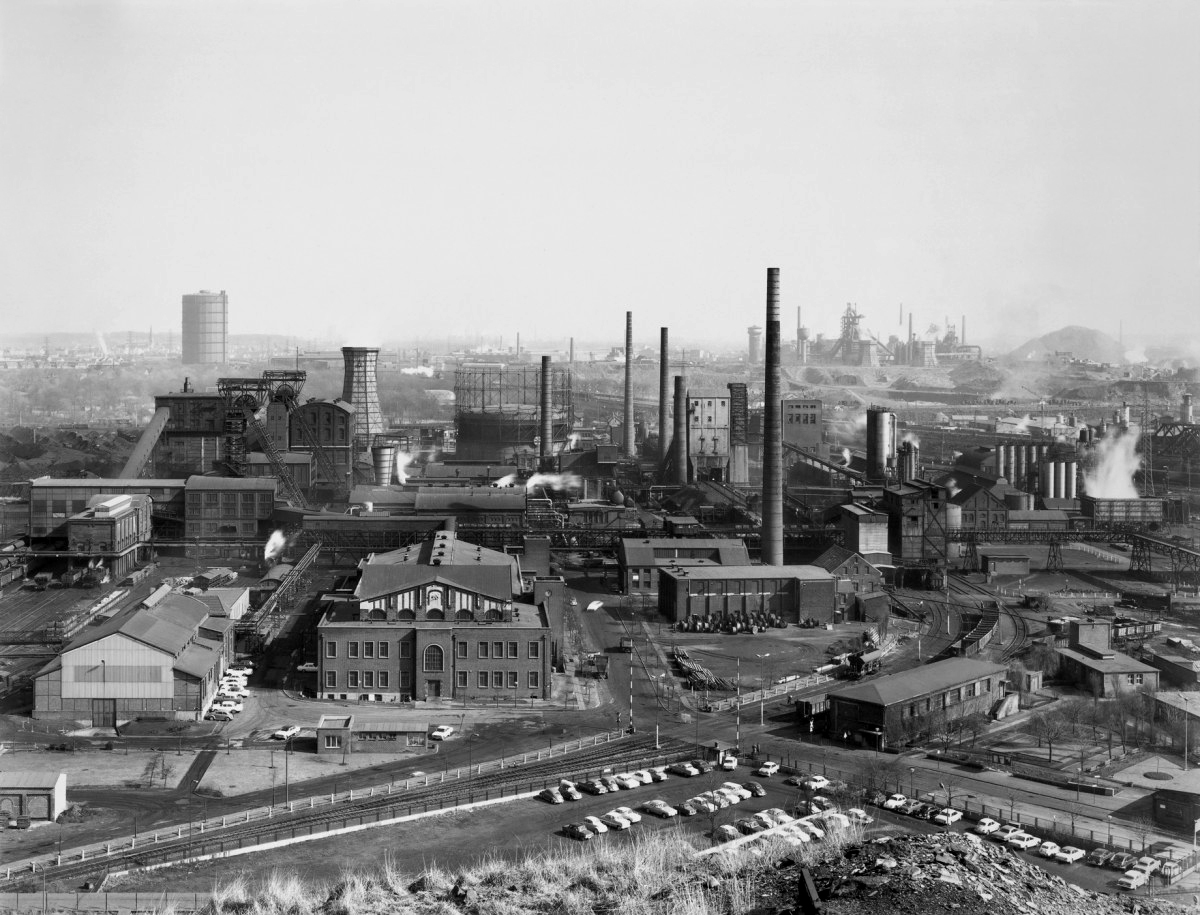
 'Grube San Fernando, Herdorf, D' 1961 from the exhibition 'Bernd and Hilla Becher: Mines and Mills - Industrial Landscapes' at Fotomuseum Winterthur, Zurich, Nov 2011 - Feb 2012


Bernd and Hilla Becher (German, active 1959-2007) Bernd Becher (German, 1931-2007) Hilla Becher (German, 1934-2015)
Grube San Fernando, Herdorf, D
1961
Gelatin silver print
50 x 60cm
© Bernd and Hilla Becher / Courtesy of Schirmer/Mosel


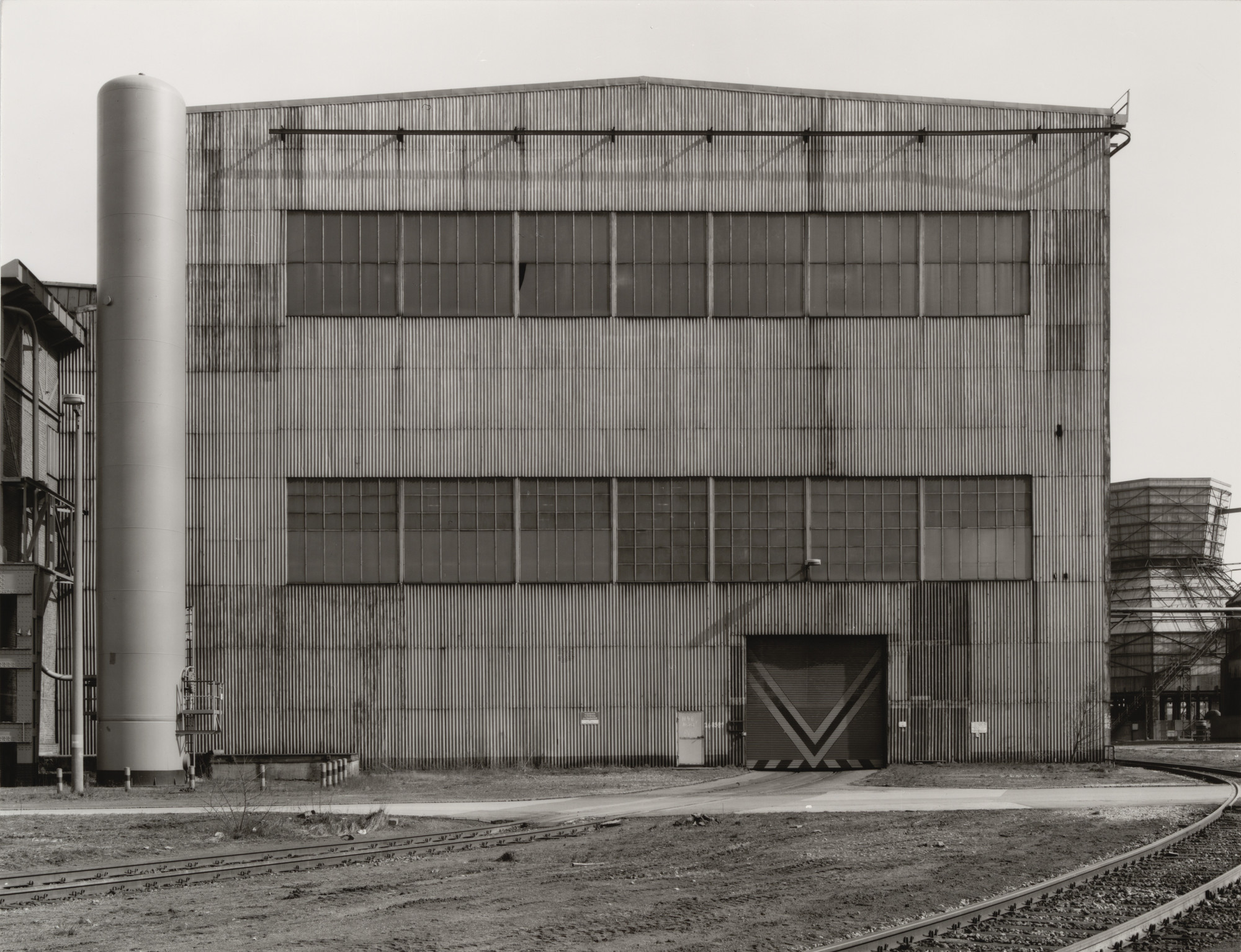
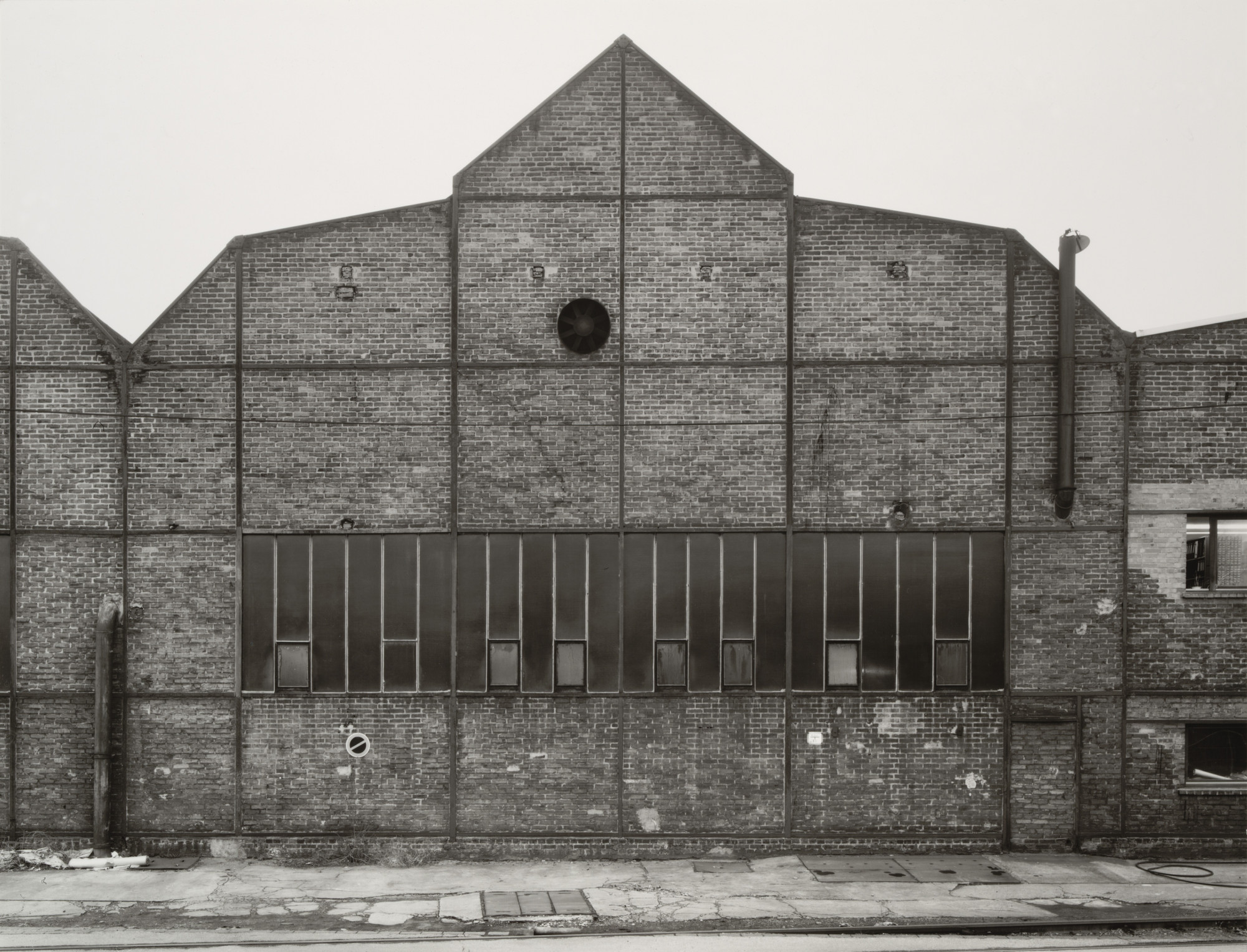
Let’s not beat around the bush. Despite protestations to the contrary (appeals to the objectivity of the image, eschewing entirely the aspects of beauty, emotion and opinion; the rigorous frontality of the individual images giving them the simplicity of diagrams, while their density of detail offers encyclopaedic richness) these are subjective images for all their objective desire. The paradox is the more a photographer strives for objectivity, the more ego drops away, the more the work becomes their own: subjective, beautiful, emotive.

Even though the Bechers’ demonstrate great photographic restraint with regard to documenting the object, the documentary gaze is always corrupted / mutated / distorted by personal interpretation: where to position the camera, what to include or exclude, how to interpret the context of place, how to crop or print the image, and how to display the image, in grids, sequences or singularly. In other words there are always multiple (con)texts to which artists conform or transgress. What makes great photographers, such as Eugène Atget, Walker Evans, August Sander and the Bechers, is the idiosyncratic “nature” of their vision: how Atget places his large view camera – at that particular height and angle to the subject – leaves an indelible feeling that only he could have made that image, to reveal the magic of that space in a photograph. It is their personal, unique thumbprint, recognisable in an instant. So it is with the Bechers.

These are intimate images, a personal reaction to space and place, to being. They make my heart ache for their stillness and ethereal beauty. Bravo!

Dr Marcus Bunyan


Many thankx to the Fotomuseum Winterthur, Zurich for allowing me to publish the photographs in the posting. Please click on the photographs for a larger version of the image.


“The pictures were stripped of any artistic frills and reduced to an essentially topographic state, conveying substantial amounts of visual information but eschewing entirely the aspects of beauty, emotion and opinion.”


William Jenkins, Curator of the ‘New Topographics’ exhibition, 1975


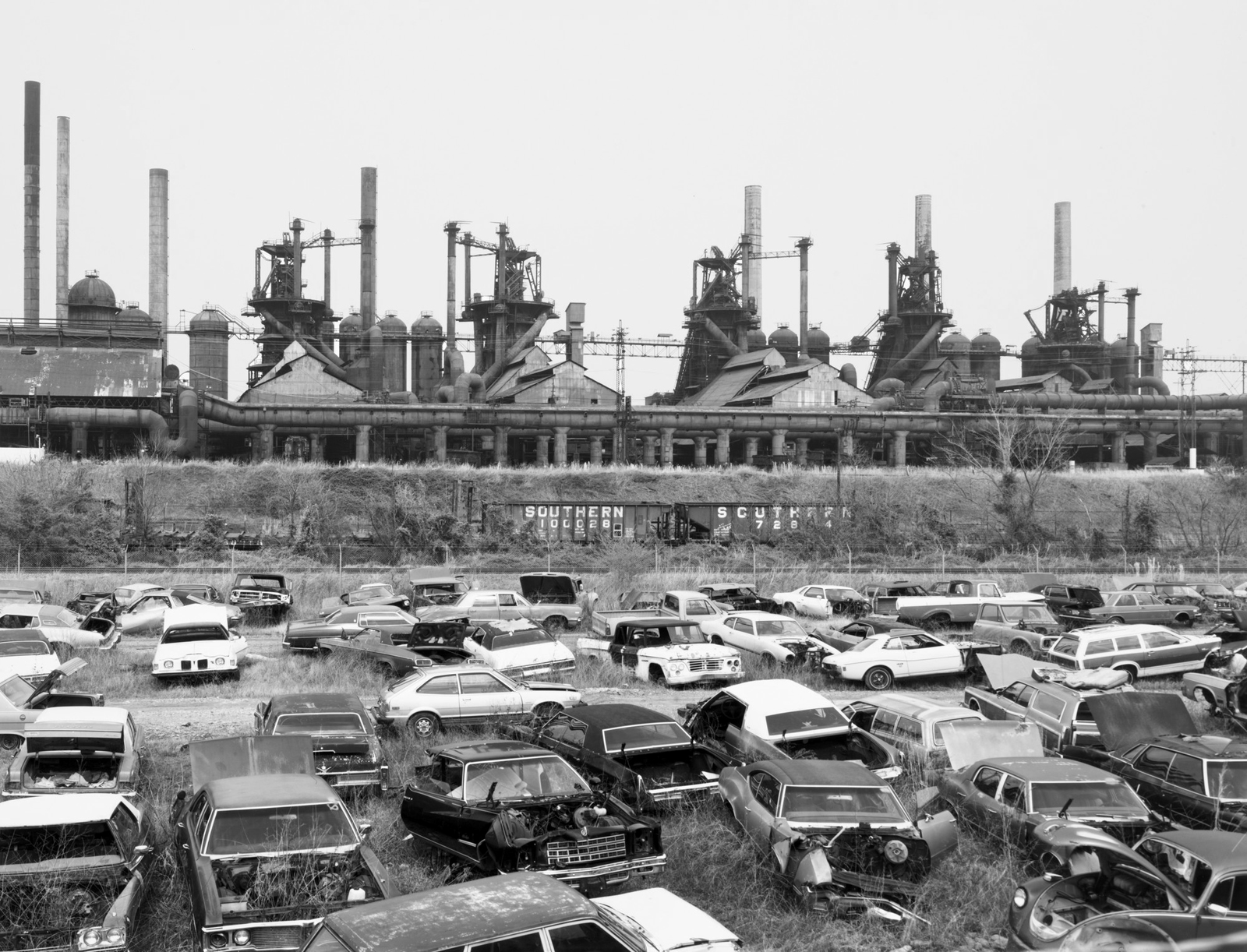
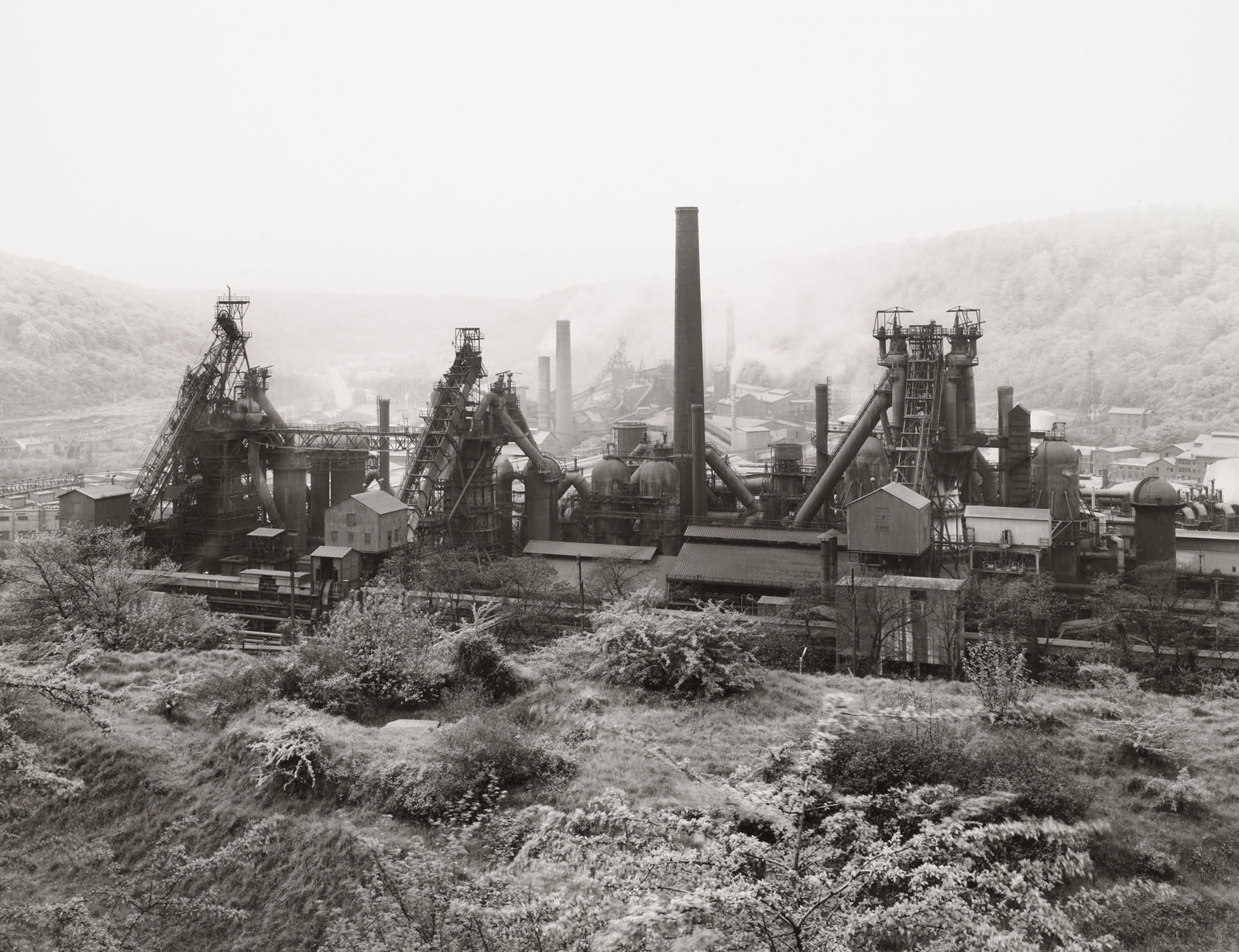
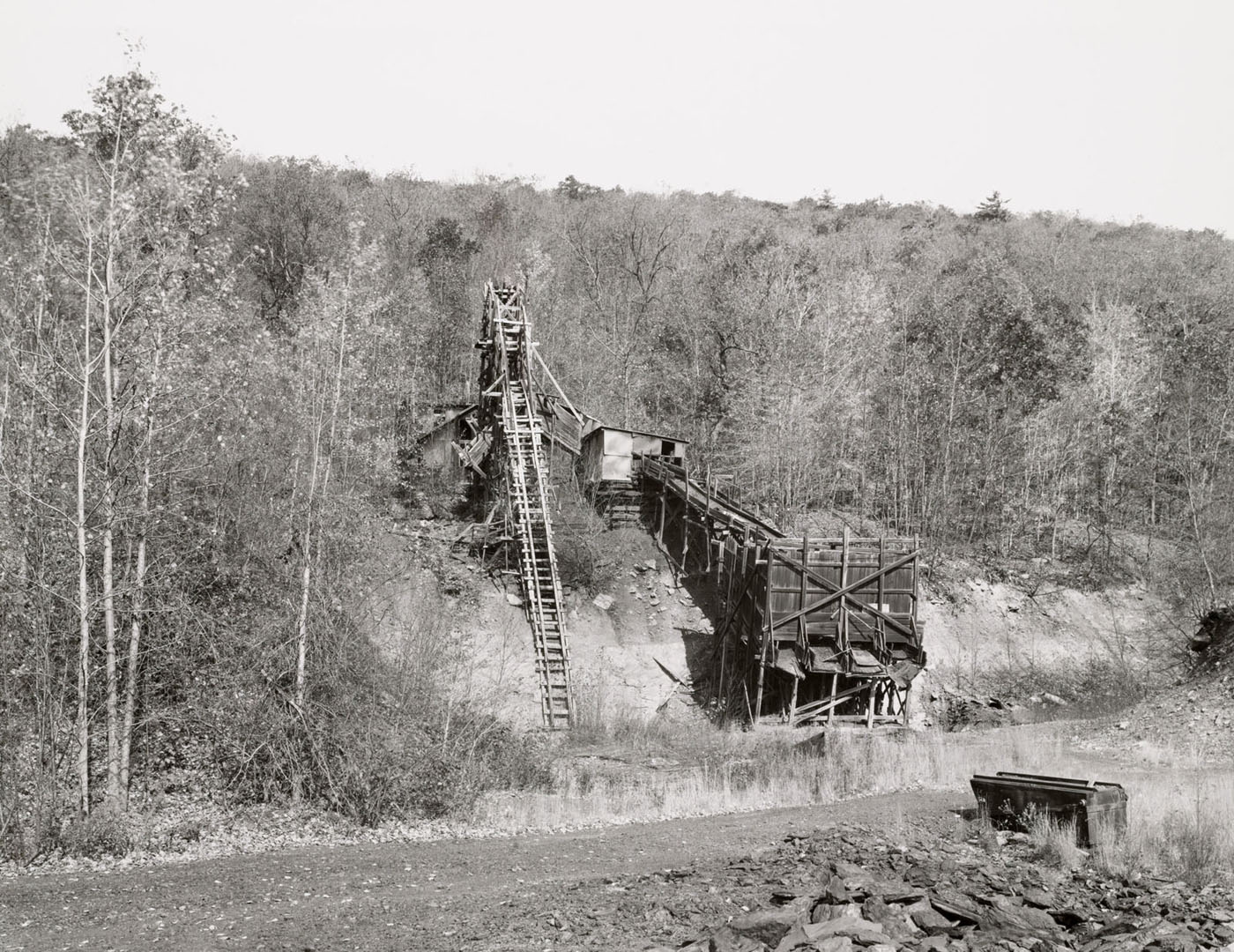
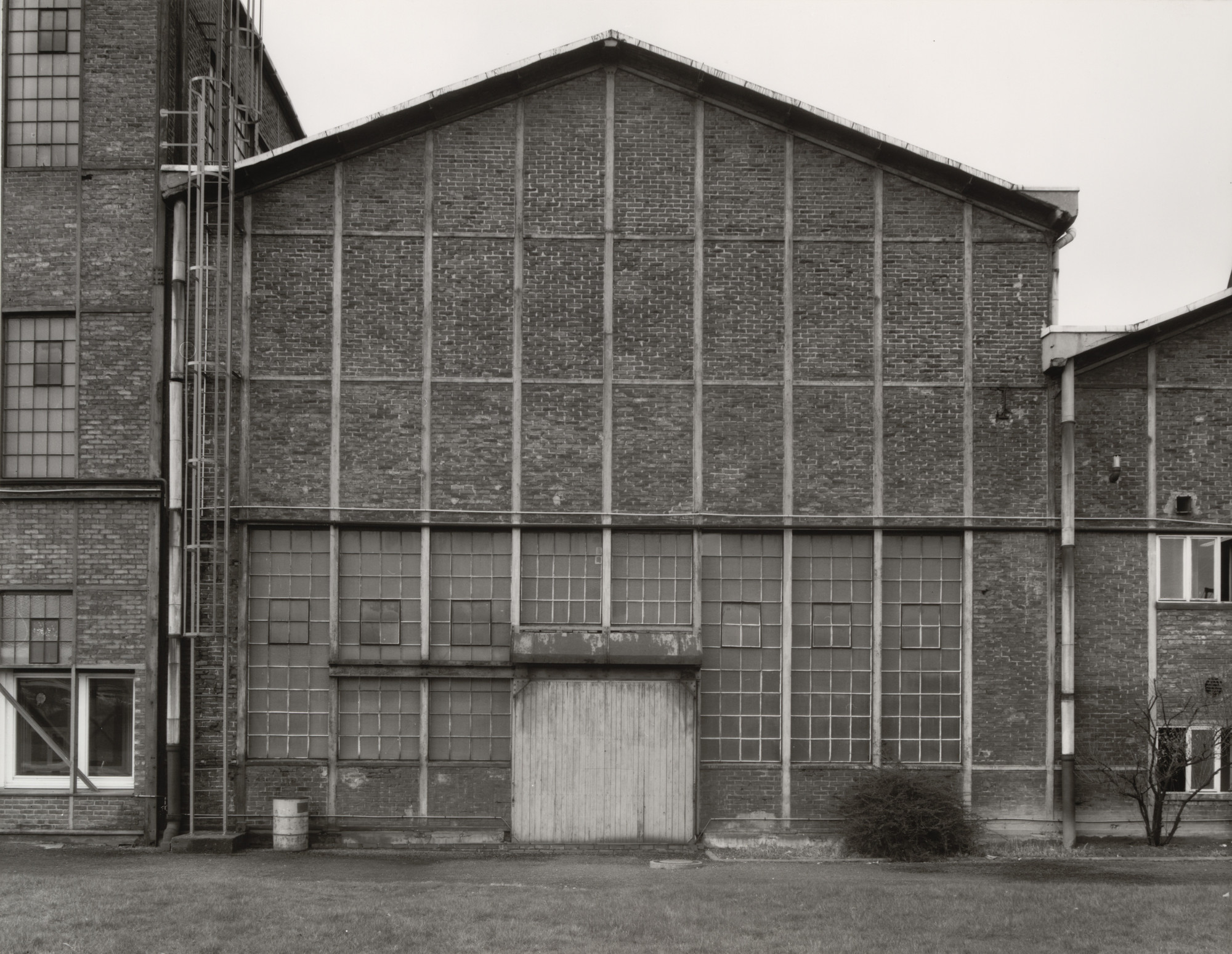
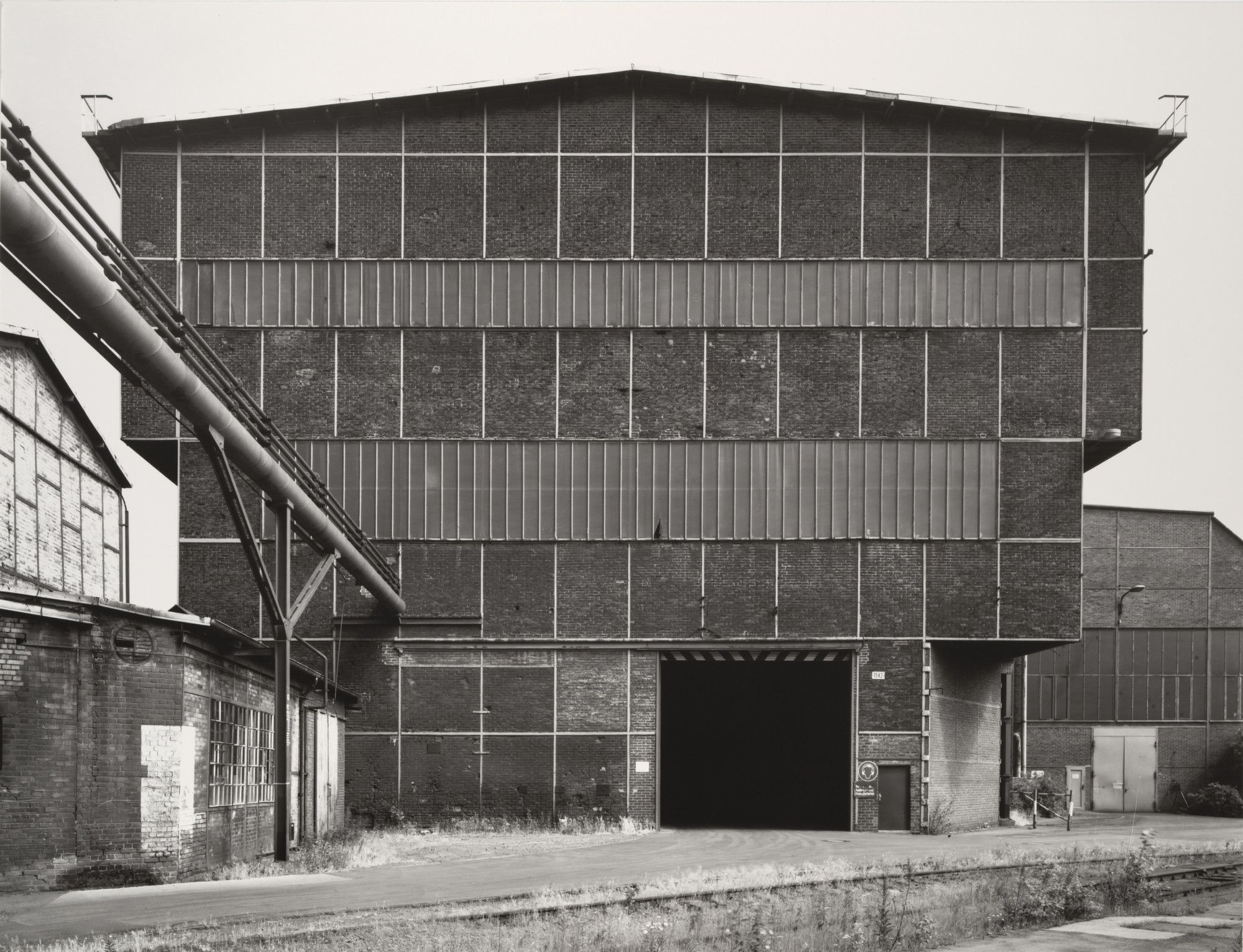
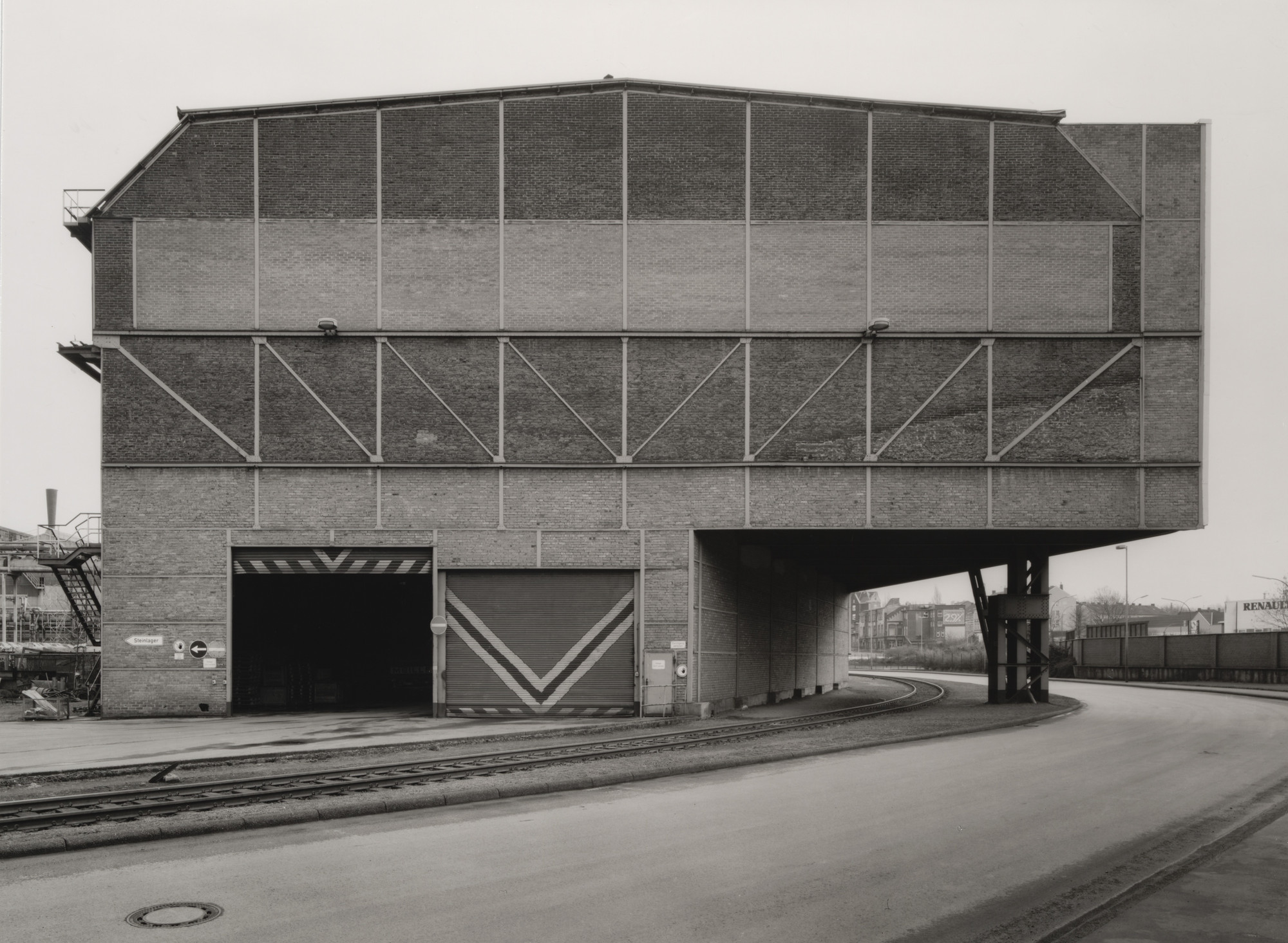
“The Ruhr Valley, where Becher’s family had worked in the steel and mining industries, was their initial focus. They were fascinated by the similar shapes in which certain buildings were designed. In addition, they were intrigued by the fact that so many of these industrial buildings seemed to have been built with a great deal of attention toward design. Together, the Bechers went out with a large 8 x 10-inch view camera and photographed these buildings from a number of different angles, but always with a straightforward “objective” point of view. They shot only on overcast days, so as to avoid shadows, and early in the morning during the seasons of spring and fall. Objects included barns, water towers, oal tipples, cooling towers, grain elevators, coal bunkers, coke ovens, oil refineries, blast furnaces, gas tanks, storage silos, and warehouses. At each site the Bechers also created overall landscape views of the entire plant, which set the structures in their context and show how they relate to each other.”


Wikipedia entry for Bernd and Hilla Becher


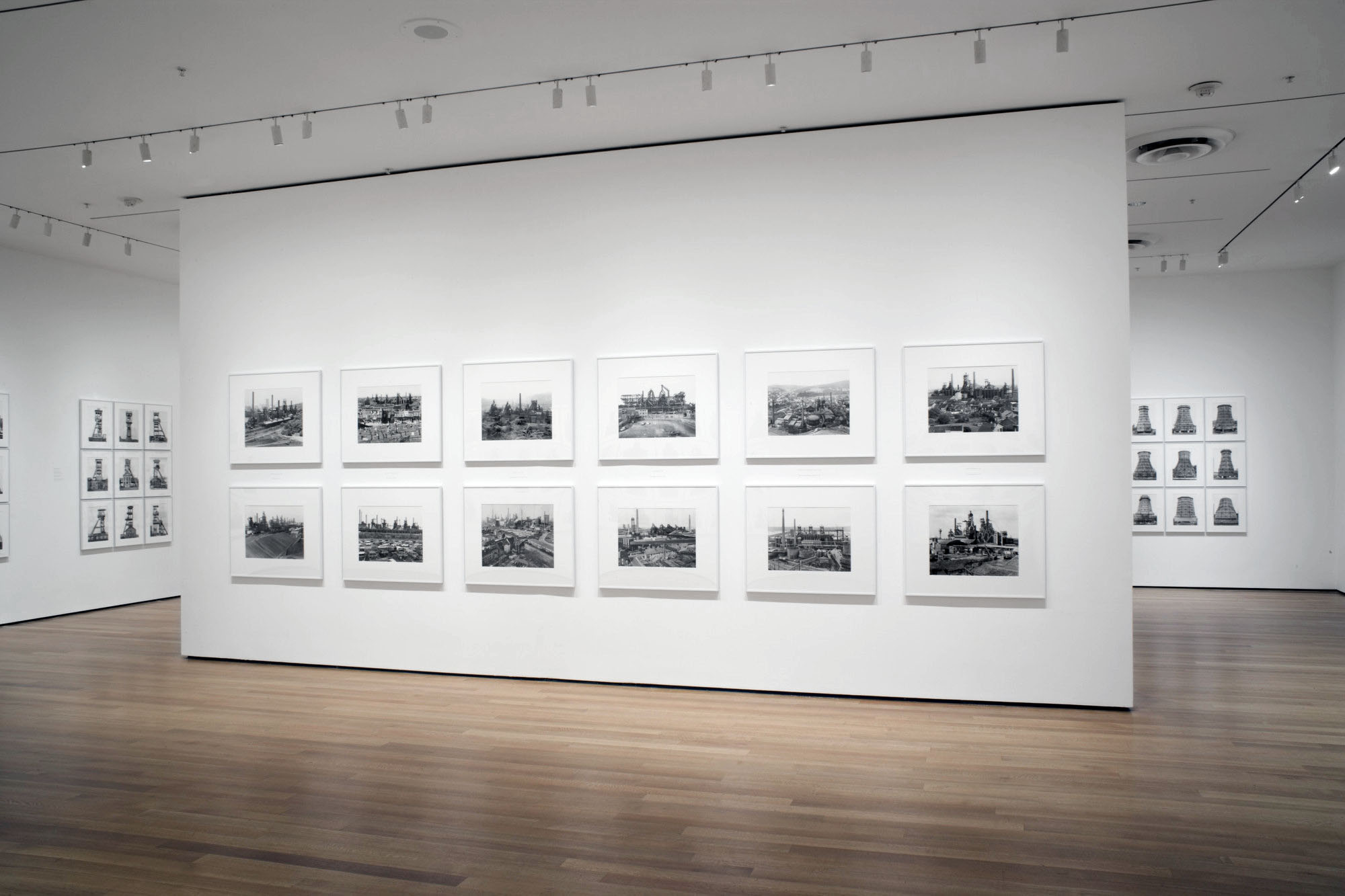
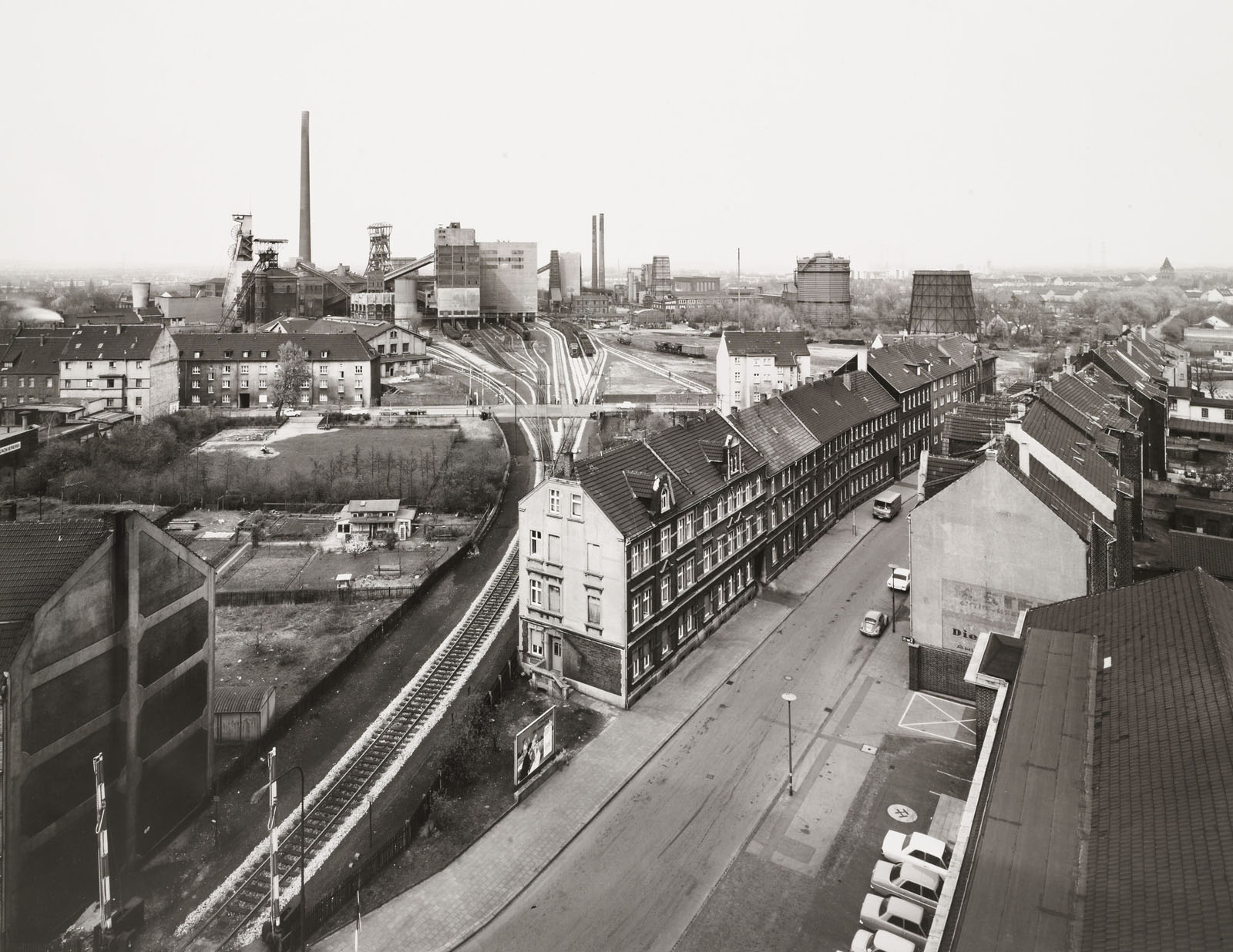
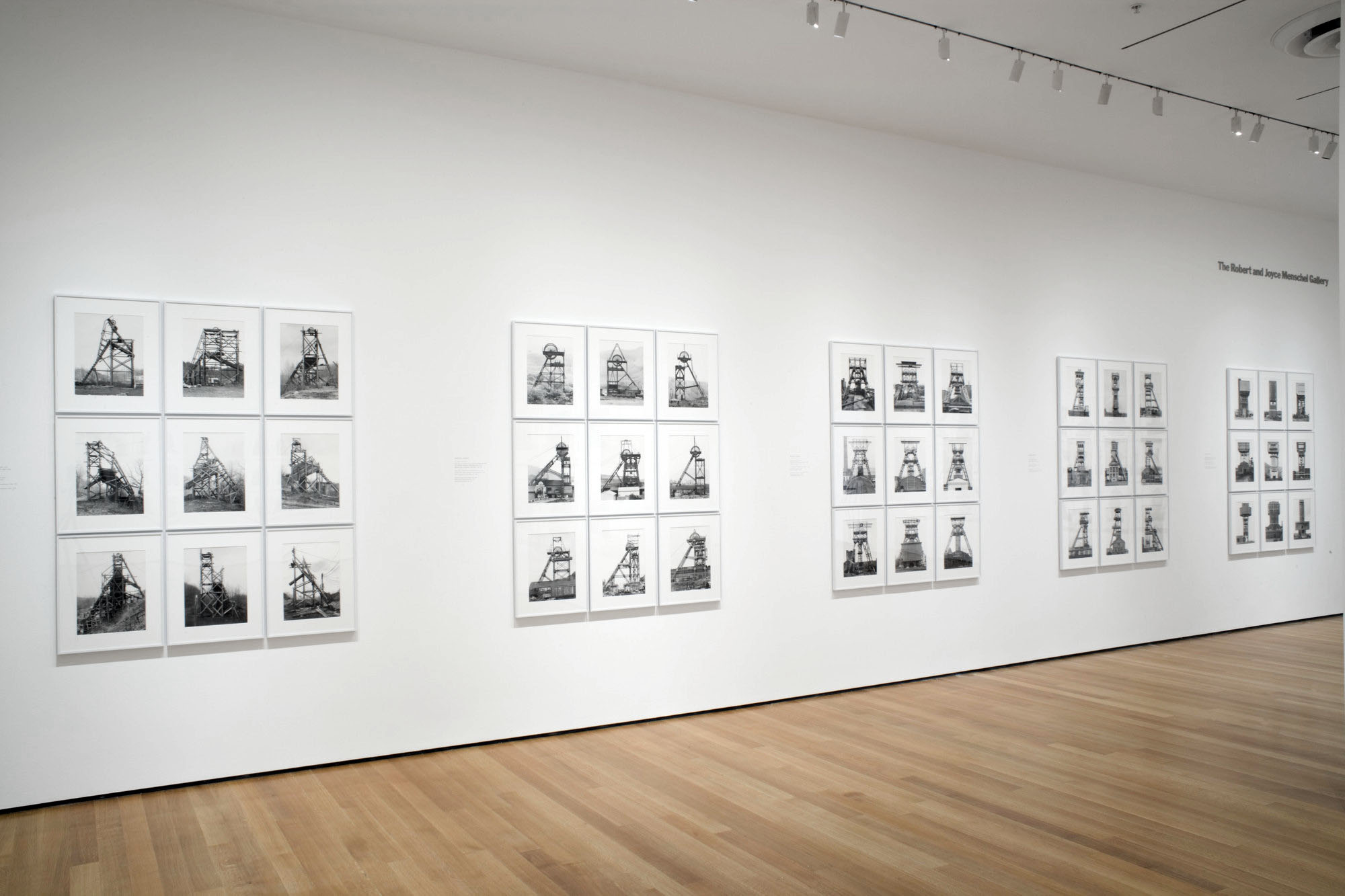
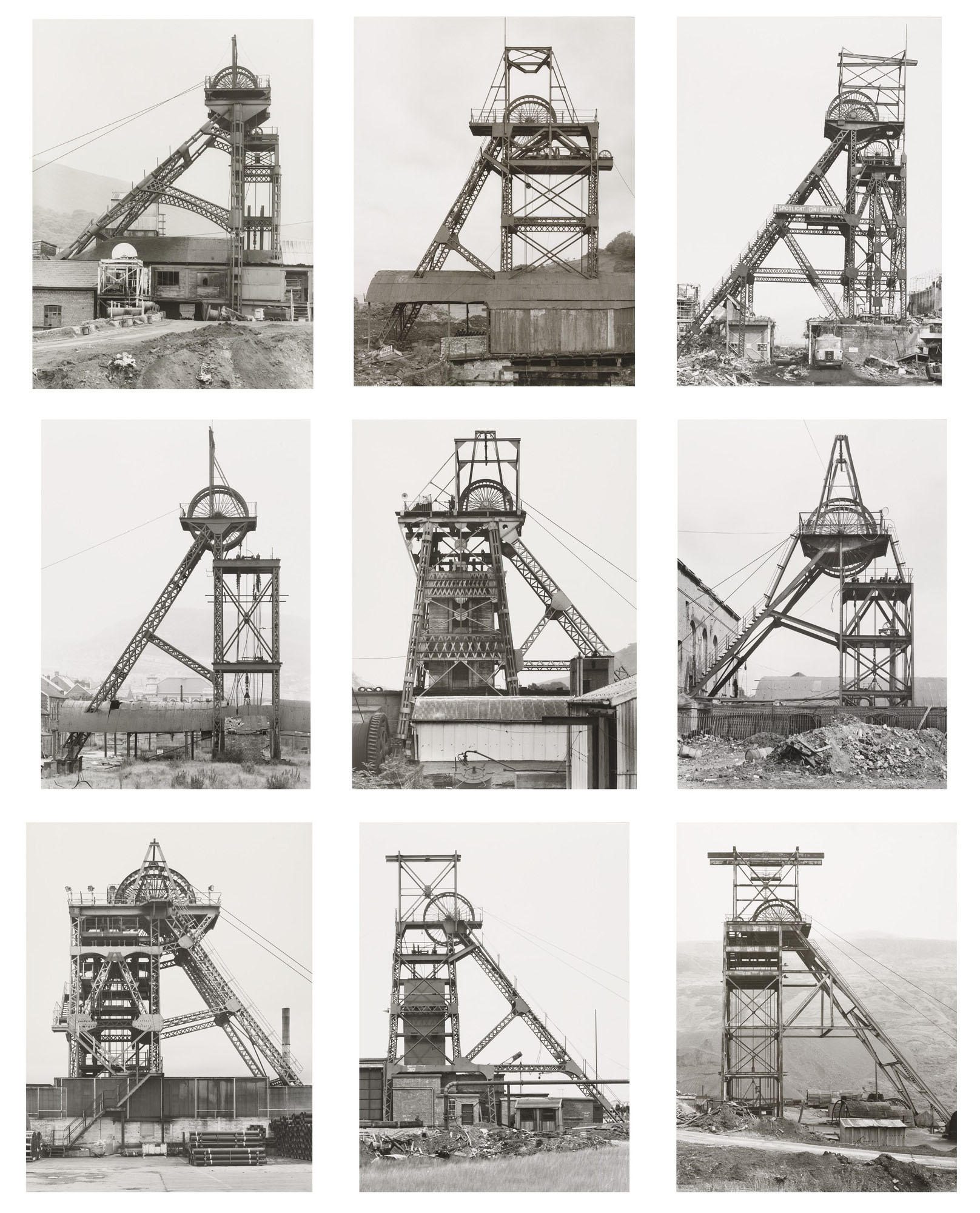
“The German artists Bernd and Hilla Becher, who began working together in 1959 and married in 1961, are best known for their “typologies” – grids of black-and-white photographs of variant examples of a single type of industrial structure. To create these works, the artists traveled to large mines and steel mills, and systematically photographed the major structures, such as the winding towers that haul coal and iron ore to the surface and the blast furnaces that transform the ore into metal. The rigorous frontality of the individual images gives them the simplicity of diagrams, while their density of detail offers encyclopaedic richness. At each site the Bechers also created overall landscape views of the entire plant, which set the structures in their context and show how they relate to each other. The typologies emulate the clarity of an engineer’s drawing, while the landscapes evoke the experience of a particular place.”


Peter Galassi, Chief Curator of Photography, MoMA


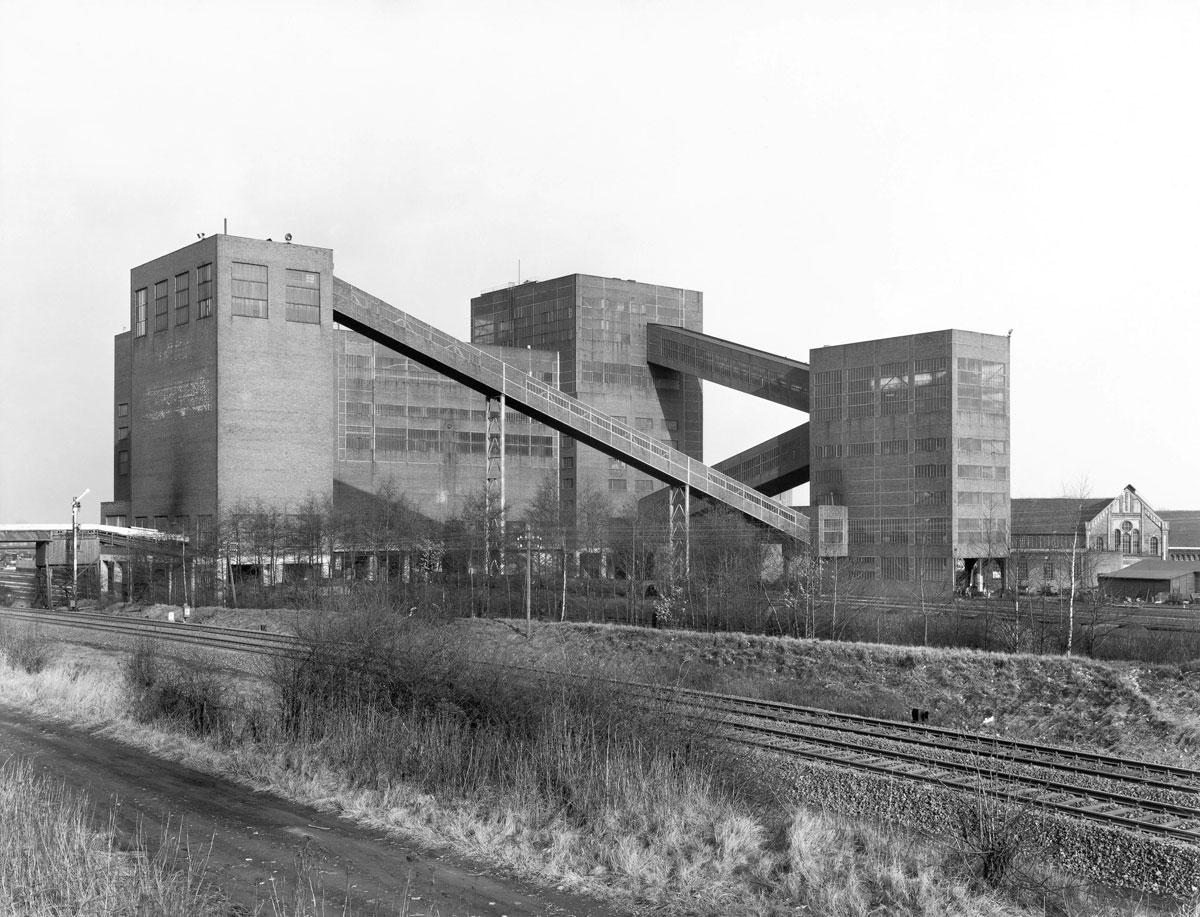
Bernd and Hilla Becher (German, active 1959-2007) Bernd Becher (German, 1931-2007) Hilla Becher (German, 1934-2015)
 'Becher 
Zeche Germania, Dortmund, D' 1971
 rom the exhibition 'Bernd and Hilla Becher: Mines and Mills - Industrial Landscapes' at Fotomuseum Winterthur, Zurich, Nov 2011 - Feb 2012


Bernd and Hilla Becher (German, active 1959-2007) Bernd Becher (German, 1931-2007) Hilla Becher (German, 1934-2015)

Zeche Germania, Dortmund, D
1971
Gelatin silver print
50 x 60cm
© Bernd and Hilla Becher / Courtesy of Schirmer/Mosel


For more than forty years, the photographer couple Bernd (1931-2007) and Hilla Becher (1934-2015) worked on creating an inventory of industrial architecture. Warehouses, shaft towers, gas tanks, blast furnaces as well as half-timbered houses are among the subjects they photographed throughout Germany, England, France, Central Europe, and the USA. Calling these buildings “anonymous sculptures,” they refer to the artistic quality of the constructions, which played no role for the buildings’ largely unknown builders and users. Their photographs attempt to draw attention to these hidden sculptural qualities and to document them historically as a building tradition in decline.

Bernd and Hilla Becher have always held particular interest for the industrial architecture in the Ruhr region. The exhibition Mines and Mills – Industrial Landscapes systematically examines this aspect of their work for the first time. Even today, names such as the Concordia and Hannibal collieries or Gutehoffnungshütte stand for the industrial history of the Ruhr region. Instead of concentrating on individual buildings, the exhibition approaches the mining facilities (where coal was produced for the smelting works) as a whole and in the context of their urban or natural surroundings. This typology, which the Bechers described as “industrial landscape,” compares the Ruhr region with similar complexes elsewhere in Europe and the USA.

As with their typological multiple and serial views of buildings, Bernd and Hilla Becher strive for a comparative perspective in their industrial landscapes. Demonstrating great photographic restraint in their approach and in the name of a “New Objectivity” dedicated solely to the object, they stand in a long tradition of proponents of the documentary gaze that includes Eugène Atget, Karl Blossfeldt, Walker Evans, Albert Renger-Patzsch and August Sander. Their influence on the history of photography extends from the establishment of the “Dusseldorf School” into the present.

“The main aim of our work is to show that the forms of our time are technical forms, although they did not develop from formal considerations. Just as medieval thought is manifested in the gothic cathedral, our era is revealed in technical buildings and apparatuses,” Bernd and Hilla Becher stated in a conversation from 2005.

The industrial landscapes can be read from historical and social perspectives, to an even greater extent than the familiar photographs of simple building typologies. Next to the monumental, industrial buildings one often sees residential constructions, gardens, and allotment gardens, which convey how intertwined the organisation of life and work was at the time and how deeply rooted people were in this city-like structure. Photographed at waist-height, the broad, open views of the horizontally composed photographs have an aesthetic that is almost atypical of the Bechers. However, the images adhere systematically to the archival thinking of the artist couple.

Press release from the Fotomuseum Winterthur, Zurich website


Bernd and Hilla Becher (German, active 1959-2007) Bernd Becher (German, 1931-2007) Hilla Becher (German, 1934-2015)
 'Gutehoffnungshütte, Oberhausen, D' 1963


Bernd and Hilla Becher (German, active 1959-2007) Bernd Becher (German, 1931-2007) Hilla Becher (German, 1934-2015)
Gutehoffnungshütte, Oberhausen, D
1963
Gelatin silver print
50 x 60cm
© Bernd and Hilla Becher / Courtesy of Schirmer/Mosel


Bernd and Hilla Becher (German, active 1959-2007) Bernd Becher (German, 1931-2007) Hilla Becher (German, 1934-2015)
 'Charleroi-Montignies, B' 1971


Bernd and Hilla Becher (German, active 1959-2007) Bernd Becher (German, 1931-2007) Hilla Becher (German, 1934-2015)
Charleroi-Montignies, B
1971
Gelatin silver print
50 x 60cm
© Bernd and Hilla Becher / Courtesy of Schirmer/Mosel


Bernd and Hilla Becher (German, active 1959-2007) Bernd Becher (German, 1931-2007) Hilla Becher (German, 1934-2015)
 'Duisburg-Huckingen, D' 1970


Bernd and Hilla Becher (German, active 1959-2007) Bernd Becher (German, 1931-2007) Hilla Becher (German, 1934-2015)
Duisburg-Huckingen, D
1970
Gelatin silver print
50 x 60cm
© Bernd and Hilla Becher / Courtesy of Schirmer/Mosel


Installation view of the exhibition 'Bernd and Hilla Becher: Landscape/Typology' at the Museum of Modern Art, New York


Installation view of the exhibition Bernd and Hilla Becher: Landscape / Typology at the Museum of Modern Art, New York, May 21, 2008 – August 25, 2008 showing top row at right, Hippolyte Blancard’s Untitled (1888, below)
Photograph by John Wronn


Hippolyte Blancard (French, 1843-1924) 'Untitled' April 1888


Hippolyte Blancard (French, 1843-1924)
Untitled
April 1888
Platinum print
8 13/16 × 6 1/8″ (22.4 × 15.6cm)
Museum of Modern Art, New York
Purchase


Hippolyte Blancard, a pharmacist and amateur photographer, documented Parisian architecture leading up to the 1889 Exposition Universelle, or World’s Fair, an international event held in Paris to showcase new innovations, geographic and scientific discoveries, and works of art. His series of photographs shows the construction of the Eiffel Tower, which was conceived as the entrance to the World’s Fair. Blancard’s photographs document the tower’s progression, from July 1887 to April 1889.

Text from the MoMA website


Bernd and Hilla Becher (German, active 1959-2007) Bernd Becher (German, 1931-2007) Hilla Becher (German, 1934-2015)
 'Zeche Concordia, Oberhausen, D' 1967


Bernd and Hilla Becher (German, active 1959-2007) Bernd Becher (German, 1931-2007) Hilla Becher (German, 1934-2015)
Zeche Concordia, Oberhausen, D
1967
Gelatin silver print
50 x 60cm
© Bernd und Hilla Becher – Courtesy of Schirmer/Mosel


Installation view of the exhibition 'Bernd and Hilla Becher: Landscape/Typology' at the Museum of Modern Art, New York


Installation view of the exhibition Bernd and Hilla Becher: Landscape / Typology at the Museum of Modern Art, New York, May 21, 2008 – August 25, 2008 showing the three images directly below – Duisburg-Bruckhausen (1999); Ensley, Alabama, USA (1982); and Knutange, Lorraine, France (1971)
Photograph by John Wronn


Bernd and Hilla Becher (German, active 1959-2007) Bernd Becher (German, 1931-2007) Hilla Becher (German, 1934-2015)
 'Duisburg-Bruckhausen' 1999


Bernd and Hilla Becher (German, active 1959-2007) Bernd Becher (German, 1931-2007) Hilla Becher (German, 1934-2015)
Duisburg-Bruckhausen
1999
Gelatin silver print
50 x 60cm
© Bernd und Hilla Becher – Courtesy of Schirmer/Mosel


Bernd and Hilla Becher (German, active 1959-2007) Bernd Becher (German, 1931-2007) Hilla Becher (German, 1934-2015)
 'Ensley, Alabama, USA' 1982


Bernd and Hilla Becher (German, active 1959-2007) Bernd Becher (German, 1931-2007) Hilla Becher (German, 1934-2015)
Ensley, Alabama, USA
1982
Gelatin silver print
50 x 60cm
© Bernd und Hilla Becher – Courtesy of Schirmer/Mosel


Bernd and Hilla Becher (German, active 1959-2007) Bernd Becher (German, 1931-2007) Hilla Becher (German, 1934-2015) 'Knutange, Lorraine, France' 1971


Bernd and Hilla Becher (German, active 1959-2007) Bernd Becher (German, 1931-2007) Hilla Becher (German, 1934-2015)
Knutange, Lorraine, France
1971
Gelatin silver print
17 7/8 × 23 9/16″ (45.4 × 59.9cm)
Horace W. Goldsmith Fund through Robert B. Menschel
© 2022 Estate of Bernd Becher and Hilla Becher


Installation view of the exhibition 'Bernd and Hilla Becher: Landscape/Typology' at the Museum of Modern Art, New York

Installation view of the exhibition 'Bernd and Hilla Becher: Landscape/Typology' at the Museum of Modern Art, New York


Installation views of the exhibition Bernd and Hilla Becher: Landscape / Typology at the Museum of Modern Art, New York, May 21, 2008 – August 25, 2008
Photographs by John Wronn


Bernd and Hilla Becher (German, active 1959-2007) Bernd Becher (German, 1931-2007) Hilla Becher (German, 1934-2015) 'Hannover Mine 1/2/5, Bochum-Hordel, Ruhr Region, Germany' 1973


Bernd and Hilla Becher (German, active 1959-2007) Bernd Becher (German, 1931-2007) Hilla Becher (German, 1934-2015)
Hannover Mine 1/2/5, Bochum-Hordel, Ruhr Region, Germany
1973
Gelatin silver print
50 x 60cm
© Bernd und Hilla Becher – Courtesy of Schirmer/Mosel


Bernd and Hilla Becher (German, active 1959-2007) Bernd Becher (German, 1931-2007) Hilla Becher (German, 1934-2015) 'Consolidation Mine, Gelsenkirchen, Ruhr Region, Germany' 1974


Bernd and Hilla Becher (German, active 1959-2007) Bernd Becher (German, 1931-2007) Hilla Becher (German, 1934-2015)
Consolidation Mine, Gelsenkirchen, Ruhr Region, Germany
1974
Gelatin silver print
18 1/4 × 23 7/16″ (46.3 × 59.5cm)
Horace W. Goldsmith Fund through Robert B. Menschel
© 2022 Estate of Bernd Becher and Hilla Becher


Bernd and Hilla Becher (German, active 1959-2007) Bernd Becher (German, 1931-2007) Hilla Becher (German, 1934-2015) 'Coal Mine, Bear Valley, Schuylkill County, Pennsylvania, United States' 1974


Bernd and Hilla Becher (German, active 1959-2007) Bernd Becher (German, 1931-2007) Hilla Becher (German, 1934-2015)
Coal Mine, Bear Valley, Schuylkill County, Pennsylvania, United States
1974
Gelatin silver print
17 5/8 × 23 1/2″ (44.7 × 59.7cm)
Horace W. Goldsmith Fund through Robert B. Menschel
© 2022 Estate of Bernd Becher and Hilla Becher


Bernd and Hilla Becher (German, active 1959-2007) Bernd Becher (German, 1931-2007) Hilla Becher (German, 1934-2015) 'Industrial Façades' 1978-1992

Bernd and Hilla Becher (German, active 1959-2007) Bernd Becher (German, 1931-2007) Hilla Becher (German, 1934-2015) 'Industrial Façades' 1978-1992

Bernd and Hilla Becher (German, active 1959-2007) Bernd Becher (German, 1931-2007) Hilla Becher (German, 1934-2015) 'Industrial Façades' 1978-1992

Bernd and Hilla Becher (German, active 1959-2007) Bernd Becher (German, 1931-2007) Hilla Becher (German, 1934-2015) 'Industrial Façades' 1978-1992

Bernd and Hilla Becher (German, active 1959-2007) Bernd Becher (German, 1931-2007) Hilla Becher (German, 1934-2015) 'Industrial Façades' 1978-1992


Bernd and Hilla Becher (German, active 1959-2007) Bernd Becher (German, 1931-2007) Hilla Becher (German, 1934-2015)
Industrial Façades (detail)
1978-1992
21 Gelatin silver prints
Each 12 3/16 × 15 15/16″ (31 × 40.5cm)
Acquired through the Gerald S. Elliot Bequest


Installation view of the exhibition 'Bernd and Hilla Becher: Landscape/Typology' at the Museum of Modern Art, New York


Installation view of the exhibition Bernd and Hilla Becher: Landscape / Typology at the Museum of Modern Art, New York, May 21, 2008 – August 25, 2008 showing at second left, Winding Towers (1966-1997, below)
Photograph by John Wronn


Bernd and Hilla Becher (German, active 1959-2007) Bernd Becher (German, 1931-2007) Hilla Becher (German, 1934-2015) 'Winding Towers' 1966-1997


Bernd and Hilla Becher (German, active 1959-2007) Bernd Becher (German, 1931-2007) Hilla Becher (German, 1934-2015)
Winding Towers
1966-1997
Nine gelatin silver prints
Dimensions
68 1/4 × 56 1/4″ (173.4 × 142.9cm)
Acquired in honour of Marie-Josée Kravis through the generosity of Robert B. Menschel
© 2022 Estate of Bernd Becher and Hilla Becher


For more than forty years, the Bechers photographed winding towers, blast furnaces, silos, cooling towers, gas tanks, grain elevators, oil refineries, and the like – all examples of the European and American industrial architecture that had begun to disappear in the transition from an industrial society to an information society. Their works typically present each structure frontally against flat, evenly grey backgrounds. By using large-format cameras and finely grained black-and-white film, they ensured that the motifs they photographed were rendered with a high degree of precision and clarity.

The Bechers organised the images into groupings assembled in grids, classified by function into types. In this strict layout, each structure may easily be compared with the others. The nine separate pictures in Winding Towers together transform the specificity of the individual towers into variations on an ideal form and, conversely, preserve their individual characteristics within a typology.

Publication excerpt from MoMA Highlights: 375 Works from The Museum of Modern Art, New York (New York: The Museum of Modern Art, 2019)


Installation view of the exhibition 'Bernd and Hilla Becher: Landscape/Typology' at the Museum of Modern Art, New York


Installation view of the exhibition Bernd and Hilla Becher: Landscape / Typology at the Museum of Modern Art, New York, May 21, 2008 – August 25, 2008
Photograph by John Wronn


Fotomuseum Winterthur
Grüzenstrasse 44 + 45
CH-8400
Winterthur (Zürich)

Opening hours:
Tuesday to Sunday 11am – 6pm
Wednesday 11am – 8pm
Closed on Mondays

Fotomuseum Winterthur website

LIKE ART BLART ON FACEBOOK

Back to top

Exhibition: ‘CLOUD STUDIES – The Scientific View of the Sky’ at Fotomuseum Winterthur, Zurich

Exhibition dates: 26th November 2011 – 12th February 2012


'Wolken im Luftmeer' book cover


Wolken im Luftmeer (Clouds in a sea of air) (cover)
1917


I desire (I feel that is the correct word) to own a copy of the above book. Has anyone got a one for sale?

Please let me know as I would love to own one!

Update: I now own a copy of Wolken im Luftmeer purchased from a lovely person in Germany 🙂

Dr Marcus Bunyan


Many thankx to the Fotomuseum Winterthur, Zurich for allowing me to publish the photographs in the posting. Please click on the photographs for a larger version of the image.


Unknown photographer.
 'Wolkendecken, die ineinander übergehen. S.-Cu. und S., from: Wolken im Luftmeer' (Merging cloud covers. S.-Cu. and S., from: Clouds in a sea of air)
 Photographs taken by German fighter pilots during WW1, Berlin, 1917


Unknown photographer
Wolkendecken, die ineinander übergehen. S.-Cu. und S., from: Wolken im Luftmeer (Merging cloud covers. S.-Cu. and S., from: Clouds in a sea of air)
Photographs taken by German fighter pilots during WW1, Berlin, 1917


Unknown photographer.
 'Feine Schäfchen. Ci.-Cu, from: Wolken im Luftmeer' (Delicate fluffy clouds. Ci.-Cu, from: Clouds in a sea of air)
 Photographs taken by German fighter pilots during WW1, Berlin, 1917


Unknown photographer
Feine Schäfchen. Ci.-Cu, from: Wolken im Luftmeer (Delicate fluffy clouds. Ci.-Cu, from: Clouds in a sea of air)
Photographs taken by German fighter pilots during WW1, Berlin, 1917


Unknown photographer Flying above a sea of clouds - altostratus from an aircraft (Plate Nr. 103 from: Wolken im Luftmeer / Clouds in a sea of air)


Unknown photographer
Flying above a sea of clouds – altostratus from an aircraft (Plate Nr. 103 from: Wolken im Luftmeer / Clouds in a sea of air)
Photographs taken by German fighter pilots during WW1, Berlin, 1917


Unknown photographer (Plate Nr. 90 from: Wolken im Luftmeer / Clouds in a sea of air)


Unknown photographer
(Plate Nr. 90 from: Wolken im Luftmeer / Clouds in a sea of air)
Photographs taken by German fighter pilots during WW1, Berlin, 1917


The English pharmacist and meteorologist Luke Howard wrote in 1802 in the preface to his manuscript On the Modification of Clouds: “Clouds are subject to certain distinct modifications, produced by the general causes which affect all the variations of the atmosphere; they are commonly as good visible indicators of the operation of these causes, as is the countenance of the state of a person’s mind or body.” Eighty years later, meteorologists had still not reached a consensus on how to classify, label, and read the forms of clouds. It was during this time that scientists first began using photography to record and measure clouds. With its help, they attempted to gain precise and accurate images that would provide insight on the interplay between clouds and the atmosphere and which could be used to create and convey a classification of cloud forms.

The exhibition CLOUD STUDIES – The Scientific View of the Sky presents six stages of meteorological cloud photography, from its infancy in the 1880s – in Switzerland with the first images by Albert Riggenbach photographed from Mount Säntis – up to the newspaper images in the United States that were captured by the first weather satellites in the 1960s. At the beginning of the 20th century, cloud formations and cloud systems were investigated foremost by the military and led to fundamental insights into interrelated weather situations.

CLOUD STUDIES – The Scientific View of the Sky is a rich collection of photographs, notes, records and atlases from diverse research sources and depicts the origins of contemporary weather forecasting. Each of the six parts of the exhibition represents a different scientific and photographic view of clouds while reflecting on the “history of the gaze” as well as the history of the medium with its various photographic mechanisms and reproductive technologies.

An additional theme running throughout the exhibition is the development of science and its varying ideas about clouds. The protagonists and working methods change over time – from the ambitious, wealthy amateur Ralph Abercromby to the anonymous teams of weather satellite technicians. Whereas Riggenbach still wished to capture images of ideal cloud types, the view of the cloud constellations and their chaotic systems expands with the introduction of film, at the latest, and with the constant recording and measuring capacities of digital cameras, which transmit images to earth, where they are evaluated and publicised.

Conceived by curator Helmut Völter (Leipzig), the exhibition CLOUD STUDIES – The Scientific View of the Sky explores the question as to how all these changes influenced the intentions, concepts, and technical developments associated with images of the clouds. It shows how similar or dissimilar photographs of clouds can be, when photographed according to individual specifications. Ultimately it is left to the viewer to decide if and how scientific cloud photography differs from related and frequently published motifs from the history of art and photography.

Press release from the Fotomuseum Winterthur, Zurich website


Masanao Abe (Japanese, 1891-1966)
 'Cloud Film No. 116 b' Gotemba, Japan, 1932


Masanao Abe (Japanese, 1891-1966)
Cloud Film No. 116 b
Gotemba, Japan, 1932
Filmstill
© Archive Masanao Abe


Ralph Abercromby (Scottish, 1842-1897) '
Raggy, Inky Cloud' London, 1884


Ralph Abercromby (Scottish, 1842-1897)

Raggy, Inky Cloud
London, 1884
Gelatin-silver print
© Met Office National Meteorological Archive


Albert Riggenbach (Swiss, 1854-1921) 'Cumulus, Basle' Around 1895


Albert Riggenbach (Swiss, 1854-1921)
Cumulus, Basle
Around 1895
Gelatin silver print
© Swiss National Museum, Zurich


Ferdinand Quénisset (French, 1872-1951) 'Alto-Cumulus et Cirro-Cumulus' Dugny near Paris, 1916


Ferdinand Quénisset (French, 1872-1951)
Alto-Cumulus et Cirro-Cumulus
Dugny near Paris, 1916
Gelatin-silver print
© Société Astronomique de France


'Cloud photo over north midwest United States by Tiros II' 1960


Cloud photo over north midwest United States by Tiros II
1960
Gelatin-silver print
© Collection Günter Karl Bose


Fotomuseum Winterthur
Grüzenstrasse 44 + 45
CH-8400
Winterthur (Zürich)

Opening hours:
Tuesday to Sunday 11am – 6pm
Wednesday 11am – 8pm
Closed on Mondays

Fotomuseum Winterthur website

LIKE ART BLART ON FACEBOOK

Back to top

Exhibition: ‘Diane Arbus’ at Jeu de Paume, Paris

Exhibition dates: 18th October, 2011 – 5th February, 2012


Diane Arbus, 'Child with a toy hand grenade in Central Park, N.Y.C. 1962' 1962 from the exhibition 'Diane Arbus' at Jeu de Paume, Paris, Oct 2011 - Feb 2012


Diane Arbus (American, 1923-1971)
Child with a toy hand grenade in Central Park, N.Y.C. 1962
1962
Gelatin silver print
© The Estate of Diane Arbus


A fabulous posting, with memorable thoughts and photographs!

These archetypal images have become deeply embedded in the collective conscience where conscience is pre-eminently the organ of sentiments and representations. The snap, snap, snap of the shutter evinces the flaws of human nature, reveals the presence of a quality or feeling to which we can all relate. As Arbus states, the subject of the picture is always more important than the picture. And more complicated. That is why these photographs always capture our attention – because we become, we inhabit, we are the subject.

Dr Marcus Bunyan


Many thankx to Jeu de Paume for allowing me to publish the photographs in the posting. Please click on the photographs for a larger version of the image.


“There are and have been and will be an infinite number of things on earth. Individuals all different, all wanting different things, all knowing different things, all loving different things, all looking different. Everything that has been on earth has been different from any other thing. That is what I love: the differentness, the uniqueness of all things and the importance of life… I see something that seems wonderful; I see the divineness in ordinary things.”


Diane Arbus. Paper on Plato, senior English seminar, Fieldston School, November 28, 1939


“I want to photograph the considerable ceremonies of our present because we tend while living here and now to perceive only what is random and barren and formless about it. While we regret that the present is not like the past and despair of its ever becoming the future, its innumerable inscrutable habits lie in wait for their meaning. I want to gather them, like somebody’s grandmother putting up preserves, because they will have been so beautiful.

There are the Ceremonies of Celebration (the Pageants, the Festivals, the Feasts, the Conventions) and the Ceremonies of Competition (Contests, Games, Sports), the Ceremonies of Buying and Selling, of Gambling, of the Law and the Show; the Ceremonies of Fame in which the Winners Win and the Lucky are Chosen or Family Ceremonies or Gatherings (the Schools, the Clubs, the Meetings). Then they are Ceremonial Places (The Beauty Parlor, The Funeral Parlor or, simply The Parlor) and Ceremonial Costumes (what waitresses wear, or Wrestlers), Ceremonies of the Rich, like the Dog Show, and of the Middle Class, like the Bridge Game. Or, for example: the Dancing Lesson, the Graduation, the Testimonial Dinner, the Séance, the Gymnasium and the Picnic, and perhaps the Waiting Room, the Factory, the Masquerade, the Rehearsal, the Initiation, the Hotel Lobby and the Birthday Party. The etcetera.

I will write whatever is necessary for the further description and elucidation of these Rites and I will go wherever I can to find them.

These are our symptoms and our monuments. I want simply to save them, for what is ceremonious and curious and commonplace will be legendary.”


Diane Arbus. “American Rites, Manners and Customs,” Plan for a Photographic Project, Guggenheim proposal


Diane Arbus (American, 1923-1971) 'Lady Bartender at Home with a Souvenir Dog, New Orleans, La.' 1964 from the exhibition 'Diane Arbus' at Jeu de Paume, Paris, Oct 2011 - Feb 2012


Diane Arbus (American, 1923-1971)
Lady Bartender at Home with a Souvenir Dog, New Orleans, La.
1964
Gelatin silver print
© The Estate of Diane Arbus


Diane Arbus (American, 1923-1971) 'A young Brooklyn family going for a Sunday outing, NYC., 1966' 1966


Diane Arbus (American, 1923-1971)
A young Brooklyn family going for a Sunday outing, NYC., 1966
1966
Gelatin silver print
© The Estate of Diane Arbus


Diane Arbus (American, 1923-1971) 'Two Ladies at the Automat, New York City' 1966


Diane Arbus (American, 1923-1971)
Two Ladies at the Automat, New York City
1966
Gelatin silver print
© The Estate of Diane Arbus


Diane Arbus. 'Identical twins, Roselle, N.J. 1967' 1967


Diane Arbus (American, 1923-1971)
Identical twins, Roselle, N.J. 1967
1967
Gelatin silver print
© The Estate of Diane Arbus


Diane Arbus (American, 1923-1971) 'Albino sword swallower at a carnival, Md' 1970


Diane Arbus (American, 1923-1971)
Albino sword swallower at a carnival, Md
1970
Gelatin silver print
© The Estate of Diane Arbus


On Photographs

“They are the proof that something was there and no longer is. Like a stain. And the stillness of them is boggling. You can turn away but when you come back they’ll still be there looking at you.”


Diane Arbus in response to request for a brief statement about photographs, March 15, 1971


Diane Arbus (New York, 1923-1971) revolutionised the art she practiced. Her bold subject matter and photographic approach produced a body of work that is often shocking in its purity, in its steadfast celebration of things as they are. Her gift for rendering strange those things we consider most familiar, and for uncovering the familiar within the exotic, enlarges our understanding of ourselves.

Arbus found most of her subjects in New York City, a place that she explored as both a known geography and as a foreign land, photographing people she discovered during the 1950s and 1960s. She was committed to photography as a medium that tangles with the facts. Her contemporary anthropology – portraits of couples, children, carnival performers, nudists, middle-class families, transvestites, zealots, eccentrics, and celebrities – stands as an allegory of the human experience, an exploration of the relationship between appearance and identity, illusion and belief, theatre and reality.

In this first major retrospective in France, Jeu de Paume presents a selection of two hundred photographs that affords an opportunity to explore the origins, scope, and aspirations of a wholly original force in photography. It includes all of the artist’s iconic photographs as well as many that have never been publicly exhibited. Even the earliest examples of her work demonstrate Arbus’s distinctive sensibility through the expression on a face, someone’s posture, the character of the light, and the personal implications of objects in a room or landscape. These elements, animated by the singular relationship between the photographer and her subject, conspire to implicate the viewer with the force of a personal encounter.

Biography

Diane Arbus was born in New York City on March 14, 1923, and attended the Ethical Culture and Fieldston Schools. At the age of eighteen she married Allan Arbus. Although she first started taking pictures in the early 1940s and studied photography with Alexey Brodovitch in 1954, it was not until 1955-1957, while enrolled in courses taught by Lisette Model, that she began to seriously pursue the work for which she has come to be known.

Her first published photographs appeared in Esquire in 1960 under the title The Vertical Journey. From that point on she continued to work intermittently as a free-lance photographer for Esquire, Harper’s Bazaar, Show, The London Sunday Times, and a number of other magazines, doing portraits on assignment as well as photographic essays, for several of which she wrote accompanying articles.

During the 1950s, like most of her contemporaries, she had been using a 35mm camera, but in 1962 she began working with a 6×6 Rolleiflex. She once said, in accounting for the shift, that she had grown impatient with the grain and wanted to be able to decipher in her pictures the actual texture of things. The 6×6 format contributed to the refinement of a deceptively simple, formal, classical style that has since been recognised as one of the distinctive features of her work.

She received Guggenheim Fellowships in 1963 and 1966 for projects on “American Rites, Manners and Customs” and spent several summers during that period traveling across the United States, photographing contests, festivals, public and private gatherings, people in the costumes of their professions or avocations, the hotel lobbies, dressing rooms and living rooms she had described as part of “the considerable ceremonies of our present.” “These are our symptoms and our monuments,” she wrote in her original application. “I want simply to save them, for what is ceremonious and curious and commonplace will be legendary.”

The photographs she produced in those years attracted a great deal of attention when a selected group of them were exhibited, along with the work of two other photographers, in the 1967 “New Documents” show at the Museum of Modern Art. Nonetheless, although several institutions subsequently purchased examples of her work for their permanent collections, her photographs appeared in only two other major exhibitions during her lifetime, both of them group shows.

In the late 1960s she taught photography courses at Parsons School of Design, the Rhode Island School of Design and Cooper Union and in 1971 gave a master class at Westbeth, the artists cooperative in New York City where she then lived. During the same period she initiated the concept and did the basic research for the Museum of Modern Art’s 1973 exhibition on news photography, “From the Picture Press.”

She made a portfolio of ten photographs in 1970, printed, signed and annotated by her, which was to be the first of a series of limited editions of her work. She committed suicide on July 26, 1971 at the age of forty-eight. The following year the ten photographs in her portfolio became the first work of an American photographer to be exhibited at the Venice Biennale.

In the course of a career that may be said to have lasted little more than fifteen years, she produced a body of work whose style and content have secured her a place as one of the most significant and influential photographers of our time. The major retrospective mounted by the Museum of Modern Art in 1972 was attended by more than a quarter of a million people in New York before it began its tour of the United States and Canada. The Aperture monograph Diane Arbus, published in conjunction with the show has sold over 300,000 copies. Beginning in 2003, Diane Arbus Revelations, an international retrospective organised by The San Francisco Museum of Modern Art travelled to museums throughout the United States and Europe between 2003 and 2006. Major exhibitions devoted exclusively to her work have toured much of the world including, Australia, Germany, Italy, Japan, the Netherlands, New Zealand, Spain, and the United Kingdom.

Press release from the Jeu de Paume website


Diane Arbus (American, 1923-1971) 'Retired man and his wife at home in a nudist camp one morning, N.J.' 1963


Diane Arbus (American, 1923-1971)
Retired man and his wife at home in a nudist camp one morning, N.J.
1963
Gelatin silver print
© The Estate of Diane Arbus


Diane Arbus (American, 1923-1971) 'Puerto Rican Woman with a Beauty Mark' 1965


Diane Arbus (American, 1923-1971)
Puerto Rican Woman with a Beauty Mark
1965
Gelatin silver print
© The Estate of Diane Arbus


Diane Arbus. 'Boy with a straw hat waiting to march in a pro-war parade, N.Y.C. 1967' 1967


Diane Arbus (American, 1923-1971)
Boy with a straw hat waiting to march in a pro-war parade, N.Y.C. 1967
1967
Gelatin silver print
© The Estate of Diane Arbus


Diane Arbus (American, 1923-1971) 'A child crying, N.J.' 1967


Diane Arbus (American, 1923-1971)
A child crying, N.J.
1967
Gelatin silver print
© The Estate of Diane Arbus


Diane Arbus (American, 1923-1971) 'A Jewish giant at home with his parents in the Bronx, N.Y., 1970' 1970


Diane Arbus (American, 1923-1971)
A Jewish giant at home with his parents in the Bronx, N.Y., 1970
1970
Gelatin silver print
© The Estate of Diane Arbus


Diane Arbus. 'Untitled (6) 1970-71'


Diane Arbus (American, 1923-1971)
Untitled (6) 1970-71
1970-1971
Gelatin silver print
© The Estate of Diane Arbus


On Freaks

“There’s a quality of legend about freaks. Like a person in a fairy tale who stops you and demands that you answer a riddle. Most people go through life dreading they’ll go through a traumatic experience. Freaks were born with their trauma. They’ve already passed their test in life. They’re aristocrats.”

“If you’ve ever talked to somebody with two heads you know they know something you don’t.”

The Gap between Attention and Affect

“You see someone on the street and essentially what you notice about them is the flaw. It’s just extraordinary that we should have been given these peculiarities. And, not content with what we were given, we create a whole other set. Our whole guise is like giving a sign to the world to think of us in a certain way but there’s a point between what you want people to know about you and what you can’t help people knowing about you. And that has to do with what I’ve always called the gap between intention and effect. I mean if you scrutinise reality closely enough, if in some way you really, really get to it, it becomes fantastic.”

Other Thoughts

“The thing that’s important to know is that you never know. You’re always sort of feeling your way.”

“Nothing is ever the same as they said it was. It’s what I’ve never seen before that I recognise.”

“A photograph is a secret about a secret. The more it tells you the less you know.”

“For me the subject of the picture is always more important than the picture. And more complicated. I do have a feeling for the print but I don’t have a holy feeling for it. I really think what it is, is what it’s about. I mean it has to be of something. And what it’s of it always more remarkable than what it is.”

“I really believe there are things which nobody would see unless I photographed them.”


Diane Arbus


Diane Arbus (American, 1923-1971) 'Teenage couple on Hudson Street, N.Y.C. 1963' 1963


Diane Arbus (American, 1923-1971)
Teenage couple on Hudson Street, N.Y.C. 1963
1963
Gelatin silver print
© The Estate of Diane Arbus


Diane Arbus (American, 1923-1971) 'Xmas tree in a living room in Levittown, L.I. 1963' 1963


Diane Arbus (American, 1923-1971)
Xmas tree in a living room in Levittown, L.I. 1963
1963
Gelatin silver print
© The Estate of Diane Arbus


Diane Arbus (American, 1923-1971) 'A young man in curlers at home on West 20th Street, N.Y.C. 1966' 1966


Diane Arbus (American, 1923-1971)
A young man in curlers at home on West 20th Street, N.Y.C. 1966
1966
Gelatin silver print
© The Estate of Diane Arbus


Diane Arbus (American, 1923-1971) 'Lady at a Masked Ball with Two Roses on Her Dress, NYC' 1967


Diane Arbus (American, 1923-1971)
Lady at a Masked Ball with Two Roses on Her Dress, NYC
1967
Gelatin silver print
© The Estate of Diane Arbus


Diane Arbus (American, 1923-1971) 'Mexican Dwarf in his hotel room, NYC' 1970


Diane Arbus (American, 1923-1971)
Mexican Dwarf in his hotel room, NYC
1970
Gelatin silver print
© The Estate of Diane Arbus


Diane Arbus (American, 1923-1971) 'Tattooed Man at a Carnival, Md.' 1970


Diane Arbus (American, 1923-1971)
Tattooed Man at a Carnival, Md.
1970
Gelatin silver print
© The Estate of Diane Arbus


Jeu de Paume
1, place de la Concorde
75008 Paris
métro Concorde
Phone: 01 47 03 12 50

Opening hours:
Tuesday – Friday 12am – 8pm
Saturday and Sunday 11am – 7pm
Closed Monday

Jeu de Paume website

LIKE ART BLART ON FACEBOOK

Back to top

Exhibition: ‘Summers Past: Golden Days in the Sun 1950-1970’ at The Victorian Archives Centre, North Melbourne

Exhibition dates:  15th November 2011 – 15th April 2012


Many thankx to The Victorian Archives Centre for allowing me to publish the photographs in the posting. Please click on the photographs for a larger version of the image.


Unknown photographer (Australian) 'Waves breaking into the pool' 1945


Unknown photographer (Australian)
Waves breaking into the pool
1945
Australian News and Information Bureau collection
National Archives of Australia


Anonymous photographer (Australian). '1952 Miss Pacific finalists Mary Clifton, Pamela Jansen and Judy Worrad, stand in front of surfboards on Bondi Beach, Sydney' 1952


Anonymous photographer (Australian)
1952 Miss Pacific finalists Mary Clifton, Pamela Jansen and Judy Worrad, stand in front of surfboards on Bondi Beach, Sydney
1952
National Archives of Australia


Anonymous photographer (Australian). 'Sunbathing, Sydney Beach, NSW' c. 1955


Anonymous photographer (Australian)
Sunbathing, Sydney Beach, NSW
c. 1955
National Archives of Australia


Cossies, togs and bathers

Until the 1940s, Australian women wore decidedly modest, albeit colourful, one-piece swimsuits. But the bikini was already in vogue overseas and by the early 1950s Australian women were daring to wear it. Discover the many fashion statements that could be made by wearing a favourite pair of cossies, togs or bathers!


Anonymous photographer (Australian). 'Christmas party on Bondi Beach, Sydney' 1959


Anonymous photographer (Australian)
Christmas party on Bondi Beach, Sydney
1959
National Archives of Australia


Anonymous photographer (Australian) 'Santa Claus visits a Sydney beach' 1969


Anonymous photographer (Australian)
Santa Claus visits a Sydney beach
1969
Australian News and Information Bureau collection
National Archives of Australia


At the beach

In the 1950s and 1960s, Christmas heralded the start of annual summer holidays for many Australian families. Those who didn’t already live near the coast usually headed towards it, mostly in Holdens and sometimes hauling a caravan. They made tracks to seaside places such as the Gold Coast, Manly, Byron Bay and Sorrento, plonking their bodies on the warm sand, transistors to their ears, to bake in the summer sun. Back then most people seemed unconcerned about sunburn and, as the images show, even beach umbrellas were in short supply.


Anonymous photographer (Australian) 'Bathing beauty' 1955


Anonymous photographer (Australian)
Bathing beauty
1955
Australian Travel Industry Association collection
National Archives of Australia


This image comes from the Australian Travel Industry Association collection, now held in the National Archives. This series consists of black and white prints and negatives of photographs used in publications, notably Walkabout magazine, produced by the Australian National Travel Association (ANTA).


The Victorian Archives Centre plays host to regular displays of original records from our collection as well as touring exhibitions about Victorian stories. Over Summer, the Victorian Archives Centre will present Summers Past: Golden Days in the Sun 1950-1970, a fascinating photographic exhibition highlighting Australia’s fascination with the sun and sea.

Summers Past will explore our enduring love affair of all things summer, invoking memories of carefree sunny days at the beach in the 1950s, 1960s and 1970s. This is your last chance to view this exhibition before it returns to the National Archives of Australian in April 2012.

So slip on your cossie, slop on the sunscreen and head down to the Victorian Archives Centre this summer!

Summers Past: Golden Days in the Sun 1950-1970 will be on display until April 2012. Entry is free.


Anonymous photographer (Australian). 'Sunbathers relax under a low umbrella at Bondi, NSW' 1956


Anonymous photographer (Australian)
Sunbathers relax under a low umbrella at Bondi, NSW
1956
National Archives of Australia


Anonymous photographer (Australian) 'Sydney beach scene' 1969


Anonymous photographer (Australian)
Sydney beach scene
1969
Australian News and Information Bureau collection
National Archives of Australia


Anonymous photographer (Australian). 'Surfer and bikini girl on the sand' 1969


Anonymous photographer (Australian)
Surfer and bikini girl on the sand
1969
National Archives of Australia


Anonymous photographer (Australian) 'Holiday makers at Surfers Paradise' 1959


Anonymous photographer (Australian)
Holiday makers at Surfers Paradise
1959
Australian News and Information Bureau collection
National Archives of Australia


Anonymous photographer (Australian). 'Snack bar, Surfers Paradise, QLD' 1971


Anonymous photographer (Australian)
Snack bar, Surfers Paradise, QLD
1971
National Archives of Australia


Out and about

Australians have always been fairly laid back and never more so than in summer. Looking at these images from the 1950s and 1960s, it’s plain that sophistication was seldom a consideration when choosing what to wear. On holidays, most people preferred to be comfortable rather than trendy, and bare feet were common on coastal streets, as were unbuttoned shirts and even swimwear.


Anonymous photographer (Australian) 'Holiday makers gather around a car on a hot summer's day' 1964


Anonymous photographer (Australian)
Holiday makers gather around a car on a hot summer’s day
1964
Australian News and Information Bureau collection
National Archives of Australia


Anonymous photographer (Australian). 'Surf lifesaving, Bondi Beach' 1960


Anonymous photographer (Australian)
Surf lifesaving, Bondi Beach
1960
National Archives of Australia


Cliff Bottomley (Australian, c. 1907-1981) 'Preparing canoes' 1948


Cliff Bottomley (Australian, c. 1907-1981)
Preparing canoes
1948
Australian News and Information Bureau collection
National Archives of Australia


This image comes from the Australian News and Information Bureau collection, now held in the National Archives. This vast archival resource is the legacy of nearly half a century’s work by Bureau photographers who captured hundreds of thousands of photographs of Australians at work and play.


Cooling off

It’s no secret that Australia can be very hot, especially in summer. As the song says, we are girt by sea, and for 85 per cent of Australians a blissful dip in the ocean has always been less that two hours’ drive away. For those living further inland, sanctuary was found in a nearby river or lake, or the town’s public swimming pool.


Anonymous photographer (Australian) 'Harbour swimming pool, Manly, New South Wales' 1960


Anonymous photographer (Australian)
Harbour swimming pool, Manly, New South Wales
1960
Australian News and Information Bureau collection
National Archives of Australia


This image comes from the Australian News and Information Bureau collection, now held in the National Archives. This vast archival resource is the legacy of nearly half a century’s work by Bureau photographers who captured hundreds of thousands of photographs of Australians at work and play.


Anonymous photographer (Australian) 'Sunbathers relax on the lawn at the Olympic Pool, Canberra, Australian Capital Territory' 1966


Anonymous photographer (Australian)
Sunbathers relax on the lawn at the Olympic Pool, Canberra, Australian Capital Territory
1966
Australian News and Information Bureau collection
National Archives of Australia


Anonymous photographer (Australian). 'Surf board riders, Torquay, VIC' 1967


Anonymous photographer (Australian)
Surf board riders, Torquay, VIC
1967
National Archives of Australia


Anonymous photographer (Australian) 'Children learning to swim' 1945


Anonymous photographer (Australian)
Children learning to swim
1945
Australian News and Information Bureau collection
National Archives of Australia


Nice one, sport!

Between 1950 and 1970, Australia was triumphant in all the sports we loved. We dominated in the pool, won the Davis Cup a remarkable 15 times, and boasted an impressive record against every Test cricket nation. As these images show, Australian youngsters were keen to play the game, and on most summer Saturdays all around the country, boys and girls would play tennis or cricket, or swim like champions.


Anonymous photographer (Australian) 'Boys with kites' 1965


Anonymous photographer (Australian)
Boys with kites
1965
Australian News and Information Bureau collection
National Archives of Australia


Anonymous photographer (Australian) 'Surf carnival' 1966


Anonymous photographer (Australian)
Surf carnival
1966
Australian News and Information Bureau collection
National Archives of Australia


Anonymous photographer (Australian) 'Mass tennis class' 1967


Anonymous photographer (Australian)
Mass tennis class
1967
Australian News and Information Bureau collection
National Archives of Australia


The Victorian Archives Centre
99 Shiel Street
North Melbourne, Victoria 3051
Australia

The Victorian Archives Centre website

LIKE ART BLART ON FACEBOOK

Back to top

Exhibition: ‘Gerhard Richter: Panorama’ at Tate Modern, London

Exhibition dates: 6th October, 2011 – 8th January, 2012

Curators: Nicholas Serota and Mark Godfrey


Many thankx to the Tate Modern for allowing me to publish the artwork in the posting. Please click on the photographs for a larger version of the image.


Gerhard Richter (German, b. 1932) 'Reader' 1994


Gerhard Richter (German, b. 1932)
Reader
1994
Courtesy San Francisco Museum of Modern Art
© Gerhard Richter


“Curated by Nicholas Serota and Mark Godfrey, this show sets up all sorts of telling juxtapositions, while following the thread not just of Richter’s thinking, but of history – and in particular German history – since the second world war. We go from the saturation bombing of Dresden and Cologne to 1960s West German consumerism, from 1970s domestic terrorism to 9/11. There are paintings devoted to Richter’s parents, his aunts and uncles, and what happened to them in wartime. There are paintings devoted to his children, and to becoming a father again in his 60s. He confronts the personal with the public, one kind of history with another. …

Caspar David Friedrich’s German Romanticism, Titian’s Venetian colour, constructivism and postwar gestural painting, minimalism and process art are all grist to Richter’s mill. His 1973 Annunciation After Titian is a reworking from a postcard of the original, while the impossibility of Friedrich’s Romanticism returns time and again in Richter’s seascapes and his Greenland photographs. “I was always looking,” he once said, “for a third way, in which eastern realism and western modernism would be resolved into one redeeming construct.” If this remains Richter’s programme, it is one riven with the irreconcilable, a friction on which his art depends.”


Adrian Searle. “Tenderness and terror: the Tate’s Gerhard Richter retrospective,” on The Guardian website Tuesday 4th October 2011 [Online] Cited 03/11/2024


Gerhard Richter (German, b. 1932) 'Table' (Tisch) 1962


Gerhard Richter (German, b. 1932)
Table (Tisch)
1962
© Gerhard Richter


Gerhard Richter (German, b. 1932) 'Mustang Squadron' 1964


Gerhard Richter (German, b. 1932)
Mustang Squadron
1964
Private Collection
© Gerhard Richter


Gerhard Richter (German, b. 1932) 'Tante Marianne' (Aunt Marianne) 1965


Gerhard Richter (German, b. 1932)
Tante Marianne (Aunt Marianne)
1965
Private Collection
© Gerhard Richter


Wedded to this aesthetic of indifference, it seems more than coincidental that he introduced into his practice subject matter directly related to Germany’s recent Nazi past, images from his family album (one of the few possessions he brought over from the East) that most artists would have chosen to keep concealed. Uncle Rudi for instance is a full sizes portrait of his uncle in the uniform of the Wehrmacht – a going away photo, it turns out, as he was to die some months later. What distinguishes this portrait and many others is the addition of Richter’s signature blur. Paint has been dragged across the wet surface with a dry brush, signalling a whole variety of responses.  Often interpreted as replicating an out of focus snapshot, evoking speed, or signalling a temporal distancing by underlining the difference between the ‘now’ of the viewer and the ‘then’ of whatever was captured in the photograph, this flurry of soft or hard brush strokes also signals a degree of moral and emotional ambiguity – despite the painter’s insistence on a lack of intentionality on his part. Take his portrait of Aunt Marianne that depicts his maternal aunt cradling Richter as a none-too-happy baby. A schizophrenic, she was sterilized and eventually starved to death by the Nazis. The blur of the brushstrokes bring her and the baby together suggesting the very emotional attachment that Richter was initially keen to disavow. During an interview in 1986 Richter confessed that this dispassionate stance of indifference was mere subterfuge and pretence on his part: “Content definitely – though I may have denied this at one time, by saying that it had nothing to do with content, because it was supposed to be about copying a photograph and giving a demonstration of indifference.”

Anna Leung. “Gerhard Richter: Panorama at Tate Modern,” on The Arts Section website Nd [Online] Cited 05/12/2024


Gerhard Richter (German, b. 1932) 'Uncle Rudy' 1965


Gerhard Richter (German, b. 1932)
Uncle Rudy
1965
© Gerhard Richter


Gerhard Richter (German, b. 1932) 'Seascape (Sea-Sea)' 1970


Gerhard Richter (German, b. 1932)
Seascape (Sea-Sea)
1970
© Gerhard Richter


Gerhard Richter (German, b. 1932) 'Betty' 1977


Gerhard Richter (German, b. 1932)
Betty
1977
© Gerhard Richter


Gerhard Richter (German, b. 1932) 'Candle' 1982


Gerhard Richter (German, b. 1932)
Candle
1982
Museum Frieder Burda, Baden-Baden, Germany
© Gerhard Richter


Gerhard Richter (German, b. 1932) 'Betty' 1988


Gerhard Richter (German, b. 1932)
Betty
1988
Saint Louis Art Museum, USA
© Gerhard Richter


Gerhard Richter’s extremely productive career needs to be seen against this shift in attitudes and expectations when pictorial references were no longer drawn directly from the natural world but from an ever-growing nexus of information. Empirical data was being rapidly replaced by conceptual data. From 1961 when he settled in West Germany Richter alternated between figuration and non-figuration treating a wide range of subjects and employing a wide variety of means while not valuing one practice over another. As we shall see Richter is equally adept at dealing with historical genres such as the nude, landscape, portraits and history painting as he is in investigating colour and its absence in his monochromes and colour charts and in his densely layered, explosively coloured abstract canvases. For Richter, Abstraction is as real as Realism is abstract, for what fascinates him is not the image per se or its absence but appearance or semblance as our apprehension of appearance. Richter readily admits that it is inevitable that figurative elements be seen in abstraction and denies any difference between what for him is a false polarity. That this panoply of styles remains Richter’s consistent trademark throughout his long career can be seen as we wander through the rooms of this vast exhibition. Each room displays figurative paintings, mostly from photographic imagery, side by side with abstract paintings. There are two exceptions; the first is the room devoted to 18 October 1977, a cycle of fifteen photo-paintings based on the deaths of the Baader-Meinhof terrorists in Stammheim high security prison, the second the Cage room of abstract paintings that brings the exhibition to an close. Throughout the exhibition we see Richter appropriating mutually contradictory trends associated with Hyperrealism, Minimalism and Conceptual Art while at the same time honing his craft as a painter to produce some extraordinarily beautiful images. Impossible to categorise he demonstrates his determination to confront the crisis of representation on one hand and that of Germany’s recent history on the other.

Anna Leung. “Gerhard Richter: Panorama at Tate Modern,” on The Arts Section website Nd [Online] Cited 05/12/2024


Gerhard Richter (German, b. 1932) 'Abstract Painting (726)' 1990


Gerhard Richter (German, b. 1932)
Abstract Painting (726)
1990
Tate
© Gerhard Richter


Gerhard Richter (German, b. 1932) 'Abstract Painting' 1990


Gerhard Richter (German, b. 1932)
Abstract Painting
1990
Tate. Purchased 1992
© Gerhard Richter
Photo: Lucy Dawkins


Gerhard Richter (German, b. 1932) 'Forest (3)' and 'Forest (4)' 1990


Gerhard Richter (German, b. 1932)
Forest (3) and Forest (4)
1990
Private collection (left) and The Fisher Collection, San Francisco (right)
© Gerhard Richter
Photo: Lucy Dawkins


Gerhard Richter (German, b. 1932) 'Forest (3)' 1990


Gerhard Richter (German, b. 1932)
Forest (3)
1990
Private collection
© Gerhard Richter


Gerhard Richter is widely regarded as one of the most important artists working today. Spanning nearly five decades, and coinciding with the artist’s eightieth birthday, Gerhard Richter: Panorama is a major retrospective that groups together significant moments of his remarkable career.

As evoked by the title Panorama this exhibition presents a broad look at the wide range of Richter’s practice, discovering contradictions and connections, continuities and breaks. Each room is devoted to a particular moment of his career showing how he explored a set of ideas. While the focus is on painting, the exhibition includes glass constructions, mirrors, drawings, and photographs, and explores how Richter uses these media to ask questions about painting.

The exhibition includes many of Richter’s most well-known works such as Ema (Nude descending a staircase) 1966, Candle 1982, Betty 1988 and Reader 1994. There are also important works that are rarely shown: the first Colour Chart from 1966, 4 Panes of Glass 1967, a triptych of Cloud paintings from 1970, and, for the first time outside Germany, Richter’s monumental twenty metre long painting Stroke (on Red) 1980, based on a photograph of a brush stroke. There are several groups of important abstract paintings including a room of brightly coloured works from the early 1980s, a room of monumental squeegee paintings from the 1990s, and the Cage series 2006.

Richter was one of the first German artists to reflect on the history of National Socialism, creating paintings of family members who had been members, as well as victims of, the Nazi party. In the late 1980s, looking back to the history of radical political activity in West Germany in the 1970s, he produced the fifteen-part work 18 October 1977 1988, a sequence of black and white paintings based on images of the Baader Meinhof group. At the same time as developing a complex body of abstract work, often using squeegees to drag paint across the surface of his canvases, Richter has continued to respond to significant moments in history. In 2005 he painted September, an image of the terrorist attacks on the World Trade Center in New York in 2001, which is shown for the first time in the UK in this exhibition.

Richter is often celebrated for the diversity of his approaches to painting. His practice can seem to be structured by various oppositions, with paintings after photographs as well as abstract pictures; traditional still-lifes alongside highly charged subjects; monochrome grey works and multicoloured grids. Some paintings are planned out and ordered; others are the result of unpredictable accumulations of marks and erasures. Richter sometimes maintains these oppositions, but at other times he undoes them.  This exhibition shows how he often brings abstraction and figuration together, and explores related ideas in very different looking works. The exhibition reveals breaks and new beginnings in his career, but it also reveals questions that he has asked throughout his life.

Short Biography

Richter was born in Dresden in 1932 and after training in the East, moved to West Germany in 1961. He was part of a group of painters working in Düsseldorf, that included Sigmar Polke and Konrad Lueg, who turned to image-based painting during the emergence of American Pop art. Major solo exhibitions include the 36th Venice Biennale in 1972, his first large-scale retrospective at Städtische Kunsthalle und Kunstverein für die Rheinlande und Westfalen, Düsseldorf in 1986 and Forty Years of Painting, a large-scale retrospective at the Museum of Modern Art, New York, 2002. He installed Black Red Gold in the foyer of the Reichstag building in Berlin in 1999 and the window that he designed for Cologne Cathedral was completed in 2007. Richter lives and works in Cologne.”

Press release from the Tate Modern website


Gerhard Richter (German, b. 1932) Panel from '18 October 1977' 1988 Gerhard Richter (German, b. 1932) Panel from '18 October 1977' 1988 Gerhard Richter (German, b. 1932) Panel from '18 October 1977' 1988


Gerhard Richter (German, b. 1932)
Panels from 18 October 1977
1988
© Gerhard Richter


Gerhard Richter debuted his 15-painting suite 18 October 1977, concerning the radical left-wing Baader-Meinhof Group that had shaken Germany with a two-year campaign of terror, with more public ceremony than usual. At a press conference at the Museum Haus Esters in Krefeld, introducing the pictures before they were first shown in early 1989, he offered a curious speech, reflecting that, “I hope…there is purpose in looking at those deaths, because there is something about them that should be understood.” If Richter’s words recognized the particularly ambitious nature of these paintings among his growing body of work, it also gave listeners little guidance as to what it was that should be understood. …

Soon after, Richter began wiping across the still-wet surface of his photo-paintings with a squeegee to soften the edges and blur the image. This signature blur can evoke a range of things – the motion of the viewer or the camera, the passage of time, but also something more metaphoric, of the type suggested in the artist’s 1971 musing: “My relationship to reality has a great deal to do with imprecision, uncertainty, transience, incompleteness.” At times, Richter also suggested that this fuzzy gaze might serve a role in helping to focus the mind: “You do not see less,” he wrote, “by looking at a field out of focus through a magnifying glass.” In the October cycle, Richter seems to amp his blurring technique up a notch, so that the images are more obscured, more diffuse than usual, in some cases approaching the edge of recognisability.

The date of the title – October 18, 1977 – marks the bloody denouement of a story that had played out over several years in front of a shaken German nation. From 1968 to 1977, the Baader-Meinhof Group led a campaign of shootings and kidnappings aimed at undermining the German state, leaving more than 30 people dead. The group’s founders – Holger Meins, Ulrike Meinhof, Gudrun Ensslin, and Andreas Baader – and several other members of the group were arrested and held in Stammheim prison. On October 17, a plane was diverted to Mogadishu by hijackers who demanded the release of the members of the group from prison. Early the next morning, following the successful liberation of the plane by the German military, three of the Baader-Meinhof Group were found dead in their cells from apparent suicide – though the proximity of these events prompted speculation about their cause of death. …

Richter acknowledged how profoundly unsettling he found the events around the Baader-Meinhof Group: “The deaths of the terrorists, and the related events both before and after,” he reflected, “stand for a horror that distressed me and has haunted me as unfinished business ever since, despite all my effort to repress it.” Perhaps as a way of processing things, Richter began to collect materials related to the group, holding onto “a number” for years before he began painting the October cycle, filed “under the heading of unfinished business.” In fact, over 100 images related to the Baader-Meinhof Group appear in Atlas, Richter’s ongoing scrapbook-like compendium of photographic source material.

When he began working in earnest on what would become 18 October 1977, Richter drew some of his source images from newspapers and magazines or snapshots of television coverage – markers of the pervasiveness of media coverage of the Baader-Meinhof Group during their violent reign and in its aftermath. But others, taken from police evidentiary photographs, were far less readily available, and serve as tokens of Richter’s preoccupation with the topic and his determined research efforts in preparation for painting. …

The narrative arc Richter creates begins in a banally sweet portrait image of a young woman and ends in a collective ritual of public mourning. Yet both, Richter seems to suggest, are inadequate to our understanding of what has taken place. What truth, he seems to ask, do photographs offer? Can violence or righteousness be discerned in the blur of grays?

But he declined to offer answers: “It is impossible for me to interpret the pictures,” he concluded in notes made for the work’s unveiling. “In the first place they are too emotional; they are, if possible, an expression of speechless emotion. They are the almost forlorn attempt to give shape to feelings of compassion, grief, horror (as if the pictorial repetition of events were a way of understanding these events, being able to live with them).”

Leah Dickerman. “Gerhard Richter’s Enigmatic Cycle in The Long Run,” on the MoMA website March 1, 2019 [Online] Cited 05/12/2024


Gerhard Richter (German, b. 1932) Panel from '18 October 1977' 1988

Gerhard Richter (German, b. 1932) Panel from '18 October 1977' 1988


Gerhard Richter (German, b. 1932)
Panels from 18 October 1977
1988
© Gerhard Richter


Gerhard Richter (German, b. 1932) 'Abstract Painting' 1990


Gerhard Richter (German, b. 1932)
Abstract Painting
1990
Private Collection
© Gerhard Richter


Gerhard Richter (German, b. 1932) 'Demo' 1997


Gerhard Richter (German, b. 1932)
Demo
1997
The Rachofsky Collection
© Gerhard Richter


Gerhard Richter (German, b. 1932) 'Cage 4' 2006


Gerhard Richter (German, b. 1932)
Cage 4
2006
Tate. Lent from a private collection 2007
© Gerhard Richter


Gerhard Richter (German, b. 1932) 'Ema (nude descending a staircase)' 1992


Gerhard Richter (German, b. 1932)
Ema (nude descending a staircase)
1992
© Gerhard Richter


Gerhard Richter (German, b. 1932) '14. Feb. 45' 2002


Gerhard Richter (German, b. 1932)
14. Feb. 45
2002
Tate
© Gerhard Richter


Tate Modern
Bankside
London SE1 9TG

Opening hours:
Daily 10am – 6pm

Tate Modern website

LIKE ART BLART ON FACEBOOK

Back to tophttps://artblart.com/2012/01/06/exhibition-gerhard-richter-panorama-at-tate-modern-london/