Exhibition: ‘Ana Mendieta: Traces’ at the Museum der Moderne Salzburg

Exhibition dates: 29th March – 6th July 2014

Curators: Stephanie Rosenthal (Chief Curator of the Hayward Gallery, London) and Sabine Breitwieser (Director, Museum der Moderne Salzburg), with Tina Teufel (Curator, Museum der Moderne Salzburg)

PLEASE NOTE: THIS POSTING CONTAINS PHOTOGRAPHS WHICH MAY BE DISTRESSING TO SOME PEOPLE


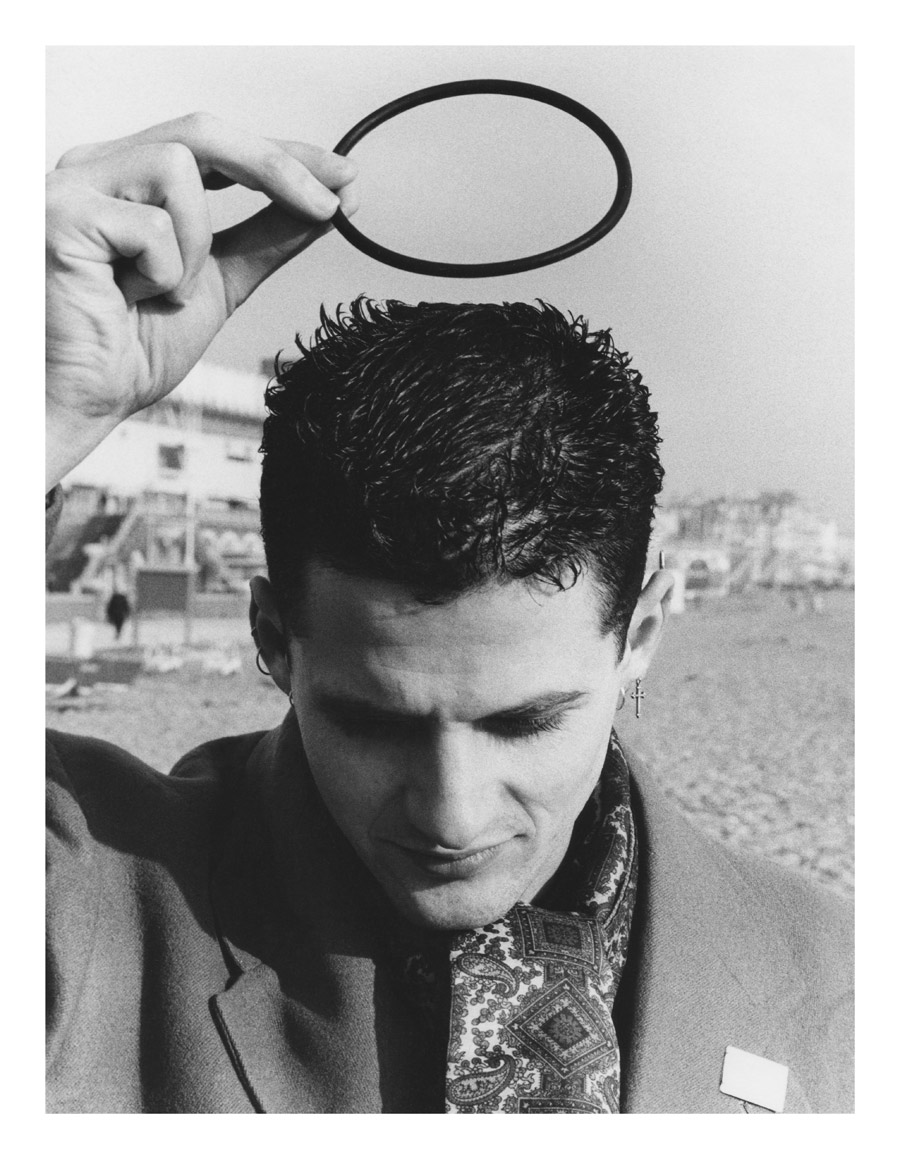
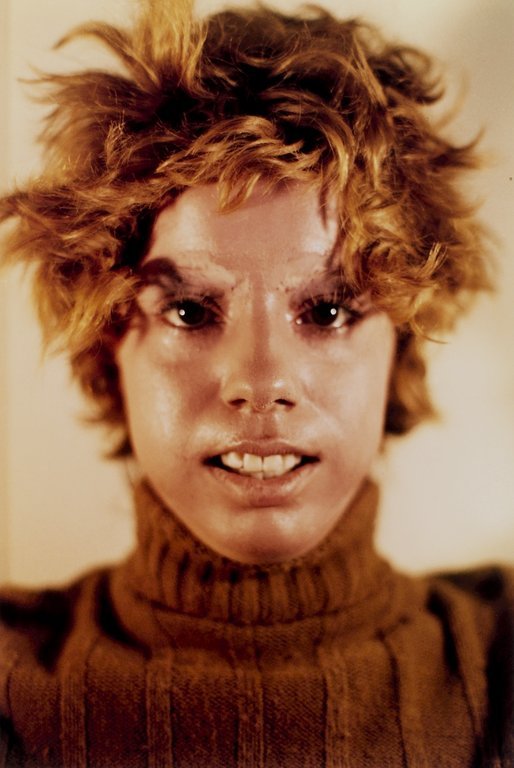
Ana Mendieta (Cuban-American, 1948-1985) 'Untitled (Facial Hair Transplant)' 1972 from the exhibition Ana Mendieta: Traces' at the Museum der Moderne Salzburg, March - July, 2014


Ana Mendieta (Cuban-American, 1948-1985)
Untitled (Facial Hair Transplant)
1972
Suite of seven colour photographs, estate prints 1997
© The Estate of Ana Mendieta Collection, L.L.C.
Courtesy Galerie Lelong, New York and Paris and Alison Jacques Gallery, London


If I had half of this artists courage, I might not even have a quarter of her talent.

Dr Marcus Bunyan


Many thankx to the Museum der Moderne Salzburg for allowing me to publish the photographs and text in the posting. Please click on the photographs for a larger version of the image.

View the catalogue essays Ana Mendieta: Traces by Stephanie Rosenthal and Embers by Adrian Heathfield (2.66Mb pdf)


“Art is a material act of culture, but its greatest value is its spiritual role, and that influences society, because it’s the greatest contribution to the intellectual and moral development of humanity that can be made”

“My art is grounded on the belief in one universal energy which runs through everything; from insect to man, from man to spectre, from spectre to plant, from plant to galaxy.”

“To me, the work has existed on different levels. It existed on the level of being in nature and eventually being eroded away. But obviously when it’s shown to someone as a photograph, that’s what it is.”


Ana Mendieta


The few women working with the body at that time were in instant affinity with each other… The struggle for all of us was to keep the sensuousness of the body and to de-eroticize it in terms of cultural expectations. It was gratifying and exciting to discover her work. Those of us who had already been situating the body as central to our visual aesthetic could also anticipate the resistance that would be around her.

I see her death as part of some larger denial of the feminine. Like a huge metaphor saying, we don’t want this depth of feminine eroticism, nature, absorption, integration to happen. It’s too organic. It’s too sacral. In a way, her death also has a symbolic trajectory. More than Ana dies, when she dies.”


Carolee Schneeman quoted in Camhi, Leslie. “ART; Her Body, Herself,” on the New York Times website published June 20, 2004 [Online] Cited 20/06/2014. Used under fair use conditions for the purposes of education and research


“You do feel the sadness that she’s not with us and you wonder where she would have gone with her work.”


Raquelin
 Mendieta


Ana Mendieta (Cuban-American, 1948-1985) 'Untitled (Facial Cosmetic Variations)' 1972 (detail)


Ana Mendieta (Cuban-American, 1948-1985)
Untitled (Facial Cosmetic Variations) (detail)
1972
Suite of eight colour photographs (estate prints, 1997)
Each 50.8 x 406cm
The Estate of Ana Mendieta Collection; courtesy Galerie Lelong, New York and Paris


Ana Mendieta (Cuban-American, 1948-1985) 'Rape' 1973


Ana Mendieta (Cuban-American, 1948-1985)
Rape
1973
Colour photograph (lifetime print)
20.4 x 25.4cm
The Estate of Ana Mendieta Collection; courtesy Galerie Lelong, New York and Paris


Ana Mendieta (Cuban-American, 1948-1985) 'Rape Scene' 1973


Ana Mendieta (Cuban-American, 1948-1985)
Rape Scene
1973
Colour photograph (lifetime print)
39.8 x 31 x 3.2cm (framed)
Tate
Presented by the American Patrons of Tate, courtesy of the Latin American Acquisitions Committee 2010


Rape Scene (1973) was part of series of works devised in response to the rape and murder of a fellow student on the Iowa University campus, where Mendieta completed her BA, MA (painting) and an MFA (inter-media). She invited friends and fellow students to her apartment. The viewer entered through a slightly ajar door into a dark apartment into a room where the artist appeared under a single source of light revealing Mendieta stripped from the waist down. The artist stood slouched and bound over a table, nude from the waist down with her body smeared in blood. Around her was an assemblage of broken plates and blood on the floor. Her direct identification with a specific victim meant that she could not be seen as an anonymous object in a theatrical tableau.


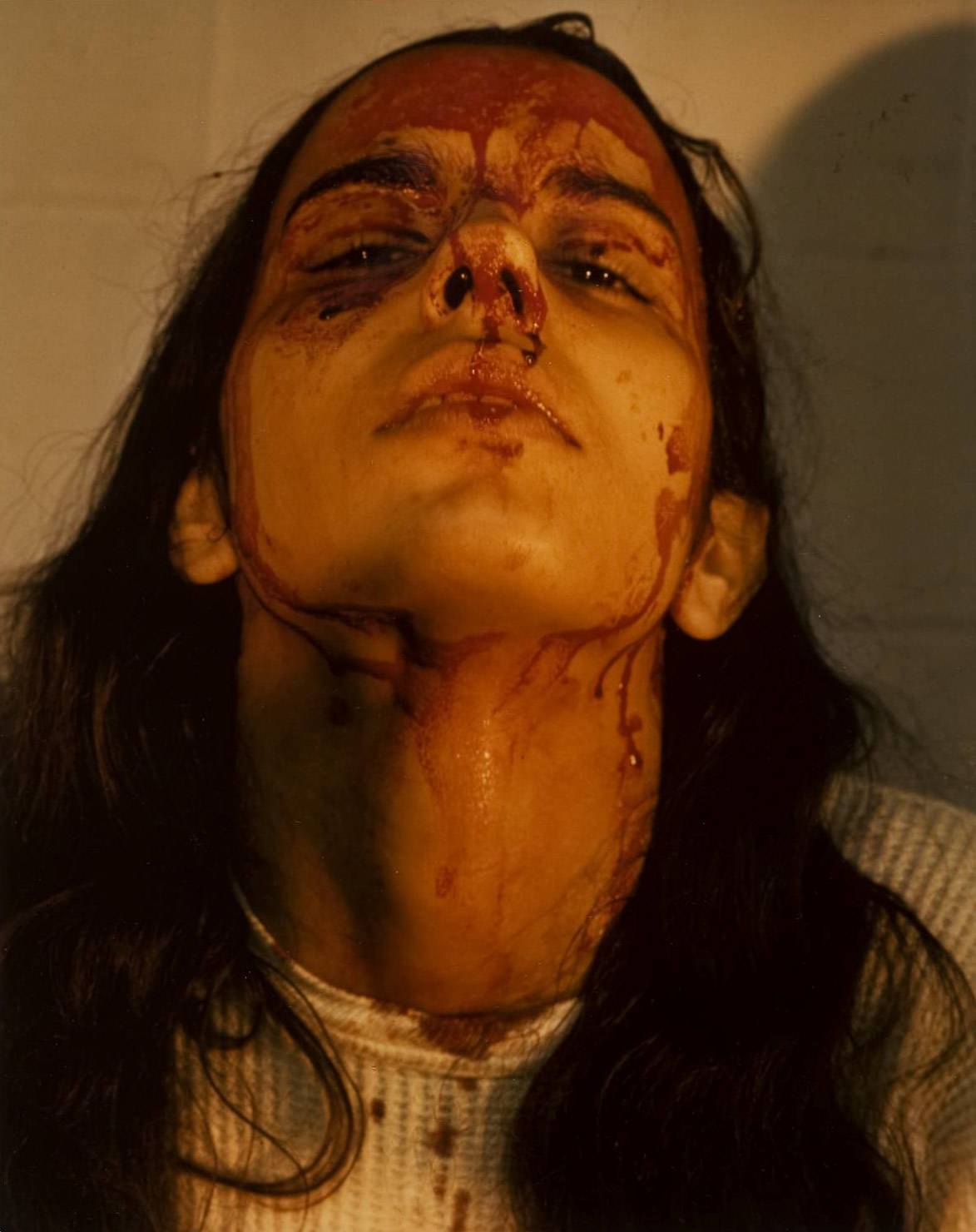
Ana Mendieta (Cuban-American, 1948-1985) 'Untitled (Self-Portrait with Blood)' 1973 (detail)


Ana Mendieta (Cuban-American, 1948-1985)
Untitled (Self-Portrait with Blood) (detail)
1973
Suite of six colour photographs (estate prints 1997)
Each 50.8 x 40.6cm
Private collection, London; Courtesy Alison Jacques Gallery, London


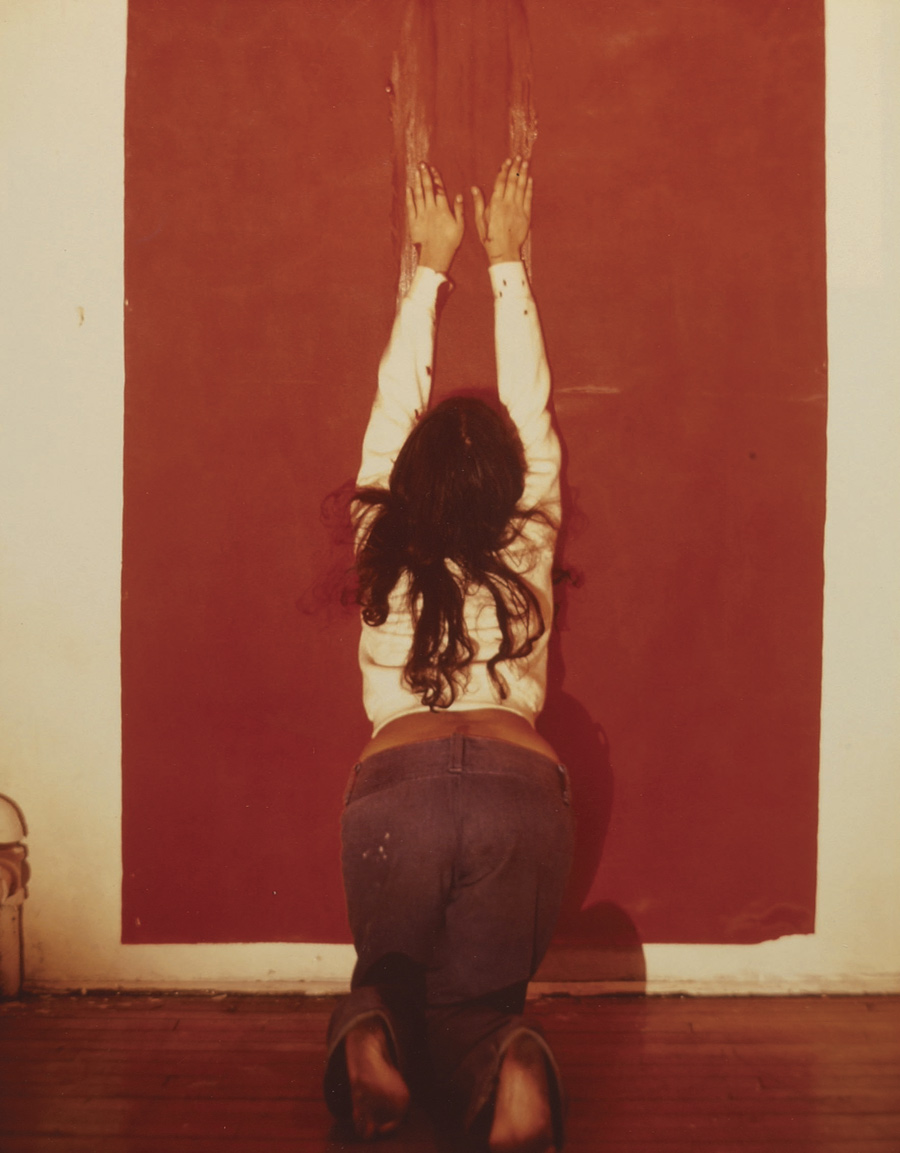
Ana Mendieta (Cuban-American, 1948-1985) 'Untitled (Body Tracks)' 1974


Ana Mendieta (Cuban-American, 1948-1985)
Untitled (Body Tracks)
1974
Colour photograph, lifetime print
Collection of Igor DaCosta
© The Estate of Ana Mendieta Collection, L.L.C.
Courtesy Galerie Lelong, New York and Paris and Alison Jacques Gallery, London


Ana Mendieta (Cuban-American, 1948-1985) 'Untitled (Glass on Body Imprints)' 1972 from the exhibition Ana Mendieta: Traces' at the Museum der Moderne Salzburg, March - July, 2014


Ana Mendieta (Cuban-American, 1948-1985)
Untitled (Glass on Body Imprints)
1972
Suite of six colour photographs, estate prints
© The Estate of Ana Mendieta Collection, L.L.C.
Courtesy Galerie Lelong, New York and Paris and Alison Jacques Gallery, London


Ana Mendieta (Cuban-American, 1948-1985) 'Untitled' 1973


Ana Mendieta (Cuban-American, 1948-1985)
Untitled
1973
Lifetime colour photograph
Collection Walker Art Center, Minneapolis, T. B. Walker Acquisition Fund, 2011
© The Estate of Ana Mendieta Collection, L.L.C.
Courtesy Galerie Lelong, New York and Paris and Alison Jacques Gallery, London


Ana Mendieta (Cuban-American, 1948-1985) 'Blood and Feathers #2' 1974


Ana Mendieta (Cuban-American, 1948-1985)
Blood and Feathers #2
1974
Colour photograph, lifetime print
Collection Raquelín Mendieta Family Trust
© The Estate of Ana Mendieta Collection, L.L.C.
Courtesy Galerie Lelong, New York and Paris and Alison Jacques Gallery, London


Ana Mendieta (Cuban-American, 1948-1985) 'Imagen de Yagul' 1973


Ana Mendieta (Cuban-American, 1948-1985)
Imagen de Yagul
1973
Lifetime colour photograph
Glenstone
© The Estate of Ana Mendieta Collection, L.L.C.
Courtesy Galerie Lelong, New York and Paris and Alison Jacques Gallery, London


Ana Mendieta: Traces is the first comprehensive survey of this influential artist’s work to be presented in Great Britain or the German-speaking world. It persuasively demonstrates that her art, while very much rooted in the concerns of her day, maintains a powerful connection to our present moment. Born in Cuba in 1948, Mendieta was forced to immigrate to the United States as a child due to her father’s political situation, and much of her work is obliquely haunted by the exile’s sense of displacement, while also reflecting her position as a double minority in North America’s largely white, male art world of the 1970s and 1980s. From the beginning, motifs of transience, absence, violence, belonging, and an identity in flux animated her multidisciplinary art, which ranged nomadically across practices associated with body art, land art, performance, sculpture, photography and film. At its core lay her recurring use of her own body – its physical and photographic traces – and her interest in marginal outdoor sites and elemental materials.

Spanning her brief, yet remarkably productive, career, this exhibition explores the many distinct facets of her practice. It captures her powerfully visceral evocation of ritual and sacrifice, as well as cycles of life and decay, while also highlighting her pioneering role as a conceptual border-crosser. Including photographs, drawings, sculptures, Super-8 films and a substantial selection of photographic slides, most of which have not been exhibited until now, Ana Mendieta: Traces reveals an artist whose underlying concerns led her to bravely re-work and re-combine genres, to draw on different cultures, both archaic and contemporary, while challenging the limits of the art discourse of her time. Her work continues to profoundly challenge, disturb, influence and inspire.

The Museum der Moderne Salzburg will open an extensive retrospective of the work of Ana Mendieta, one of our era’s most important and influential artists. Mendieta was born to a politically active family in Havana, Cuba in 1948. In the wake of the Cuban revolution, when she was only twelve years old, her parents sent her together with her sister to the United States. In 1985, at just thirty-six years old, she died under tragic circumstance in New York. During her short yet prolific career, she developed a unique visual language that is mesmerising in its intimacy, and equally challenging. Her pioneering work has been acknowledged by large retrospectives in the United States and Europe, and is represented in the collections of major museums.

According to Sabine Breitwieser, director at the Museum der Moderne Salzburg, who has arranged the exhibition, “a comprehensive exhibition in the German-speaking area, especially in Austria, and the German monograph on Ana Mendieta are long overdue. The artist’s distinctive work, in which she stages her body within the landscape, seems to be ideally exhibited at this site, where nature and the theatrical take on such a major role. Due to the fragility of the work, this could possibly be one of the last extensive Mendieta exhibitions.”

Among the central themes in Mendieta’s artistic work are exile and cultural displacement. In her search for identity and finding her place in the world, she attempted to create a dialogue between the landscape and the female body. Her work reveals numerous points of contingency with the emerging art movements of the 1960s and 1970s – Conceptual art, land art, and performance art. Nonetheless, it refuses any kind of categorisation and instead addresses missing links or gaps between different media and art forms. “Through my art I want to express the immediacy of life and the eternity of nature,” wrote Mendieta in 1981. Using her own body and elementary materials, such as blood, fire, earth, and water, she created transitory pieces that combine rituals with metaphors for life, death, rebirth, and spiritual transformation. Her disembodied “earth body” sculptures were private, meditative ceremonies in nature documented in the form of slides and films. From them, Mendieta developed the so-called Siluetas (silhouettes), which form the core of her work. In the 1980s, Mendieta’s body disappeared from her artworks and she started to generate indoor works for galleries. Her engagement with nature continued in her sculptures and drawings, which she created as lasting works.

The exhibition presents roughly 150 works, which are organised throughout twelve spaces; two of these spaces are reconstructions of the original exhibitions by the artist. The works shown are in a multitude of media ranging from photography, film, and sculpture through to drawing. A further section will present the artist’s archive. Slides and photographs, notebooks and postcards offer insight into Mendieta’s working methods. The concern of Stephanie Rosenthal, chief curator of the Hayward Gallery London, is “to show Ana Mendieta’s outstanding work in all of its facets, and to place her artistic process at the center.”

While the artistic media that Mendieta utilises in her works could not be any more diverse, the pictures that she produces are characterised by an unmistakable, overwhelming and mystical poetry. This exhibition makes clear that almost thirty years after the artist’s premature death, her work has lost none of its singularity and uniqueness.

Text from the Museum der Moderne Salzburg website


Ana Mendieta (Cuban-American, 1948-1985) 'Untitled (Silueta Series)' 1978


Ana Mendieta (Cuban-American, 1948-1985)
Untitled (Silueta Series)
1978
Gelatin silver print
20.3 x 25.4cm
Solomon R. Guggenheim Museum


Ana Mendieta (Cuban-American, 1948-1985) 'Alma, Silueta en Fuego' (Soul, Silhouette on Fire) 1975 (still)


Ana Mendieta (Cuban-American, 1948-1985)
Alma, Silueta en Fuego (Soul, Silhouette on Fire) (still)
1975
Super-8 colour, silent film transferred to DVD
3:07 minutes
The Estate of Ana Mendieta Collection; Courtesy Galerie Lelong, New York and Paris, and Alison Jacques Gallery, London


Ana Mendieta (Cuban-American, 1948-1985) 'Anima, Silueta de Cohetes (Firework Piece)' 1976 (still)


Ana Mendieta (Cuban-American, 1948-1985)
Anima, Silueta de Cohetes (Firework Piece)
(still)
1976
(Soul, Silhouette of Fireworks)
Super-8 colour, silent film transferred to DVD
2:22 minutes
The Estate of Ana Mendieta Collection; courtesy Galerie Lelong, New York and Paris


Ana Mendieta (Cuban-American, 1948-1985) 'Untitled (Cuilapán Niche)' 1973


Ana Mendieta (Cuban-American, 1948-1985)
Untitled (Cuilapán Niche)
1973
Black and white photograph (lifetime print)
25.4 x 20.4cm
Private collection, London; Courtesy Gallery Lelong, New York and Paris, and Alison Jacques Gallery London


Ana Mendieta died at just 36 years old, but the imprint of her life digs deeper than most. Mendieta’s work occupies the indeterminate space between land, body and performance art, refusing to be confined to any one genre while working to expand the horizons of them all. With the immediacy of a fresh wound and the weightlessness of a half-remembered song, Mendieta’s artwork remains as haunting and relevant today as ever.

Her haunting imagery explores the relationship between earth and spirit while tackling the eternally plaguing questions of love, death and rebirth. Like an ancient cave drawing, Mendieta’s art gets as close as possible to her subject matter allowing no excess, using primal and visceral means to navigate her themes. Decades after her death, the Museum der Moderne Salzburg will show a retrospective of the late feminist artist’s work, simply titled “Ana Mendieta: Traces.”

Mendieta, who was born in Havana, Cuba in 1948, moved to the U.S. at 12 years old to escape Castro’s regime. There she hopped between refugee camps and foster homes, planting inside her an obsession with ideas of loss, belonging and the impermanence of place. As an artist in the 1970s, Mendieta embarked upon her iconic series “Silhouettes,” in which she merged body and earthly material, making nature both canvas and medium. In her initial “Silhouette,” Mendieta lay shrouded in an ancient Zapotec grave, letting natural forms eat up her diminutive form.

Her “earth-body” sculptures, as they came to be known, feature blood, feathers, flowers and dirt smothered and stuck on Mendieta’s flesh in various combinations. In “Imagen de Yagul,” speckled feverishly in tiny white flowers, she appears as ethereal and disembodied as Ophelia, while in “Untitled Blood and Feathers” Mendieta looks simultaneously the helpless victim and the guilty culprit. “She always had a direction – that feeling that everything is connected,” Ana’s sister Raquelin said of her work.

An uncertain mythology runs throughout Mendieta’s oeuvre, a feeling at once primal, pagan and feminine. Admirers have cited the Afro-Cuban religion of Santeria as an influence, as well as the ancient rituals of Mexico, where Mendieta made much of her work. Yet many of Mendieta’s pieces removed themselves from the spiritual realm to address present day events, for example “Rape Scene,” a 1973 performance based off the rape and murder of a close friend. For the piece Mendieta remained tied to a table for two hours, motionless, her naked body smeared with cow’s blood. In another work, Mendieta smushes her face and body against glass panes, like a child eager to peek into an off-limits locale, or a bug that’s crashed into a windshield. Against the glass, her scrambled facial features almost resemble a Cubist artwork.

Mendieta died tragically young in 1985, falling from her New York City apartment window onto a delicatessen below. She was living with her husband of eight months, minimalist sculptor Carl Andre at the time. Andre was convicted of murder following the horrific incident and later acquitted. Though the art world remains captivated by the mysterious nature of Mendieta’s passing, her sister emphasised the importance of removing Ana’s work from her life story. “I don’t want it to get in the way of the work,” she said. “Her death has really nothing to do with her work. Her work was about life and power and energy and not about death.”

Fellow feminist performance artist Carolee Schneeman disagrees, however, telling The New York Times in 2004: “I see her death as part of some larger denial of the feminine. Like a huge metaphor saying, we don’t want this depth of feminine eroticism, nature, absorption, integration to happen. It’s too organic. It’s too sacral. In a way, her death also has a symbolic trajectory.”

Since many of Mendieta’s artworks were bodily performances, the ephemera that remain are but traces of her original endeavours. For an artist whose career was built on imprints, ghosts and impressions, this seems aptly fitting. Visceral yet distant, bodily yet spiritual, Mendieta’s images speak a language very distant from the insular artistic themes that so often populate gallery and museum walls. Mendieta’s works present the female body turned out, at once vulnerable and all-powerful, frail and supernatural. As her retrospective makes obvious, her artistic traces are still oozing lifeblood.

Priscilla Frank. “The Haunting Traces Of Ana Mendieta Go On View (NSFW),” on the Huffington Post website February 4, 2014 [Online] Cited 30/06/2014. Used under fair use conditions for the purposes of education and research


Ana Mendieta (Cuban-American, 1948-1985) 'Untitled' 1976 "Silueta Series, Mexico"


Ana Mendieta (Cuban-American, 1948-1985)
Untitled
1976
“Silueta Series, Mexico”
Colour photograph (lifetime print)
39.8 x 31 x 3.2cm (framed)
Tate
Presented by the American Patrons of Tate, courtesy of the Latin American Acquisitions Committee 2010


Mendieta formed a silueta on the beach at La Ventosa, Mexico, filling it with red tempera that was ultimately washed away by the ocean waves. The artist documented the obliteration of the figure by the tide in a sequence of 35 mm slides.


Ana Mendieta (Cuban-American, 1948-1985) 'Tree of Life' 1976


Ana Mendieta (Cuban-American, 1948-1985)
Tree of Life
1976
Colour photograph, lifetime print
Collection Raquelín Mendieta Family Trust
© The Estate of Ana Mendieta Collection, L.L.C.
Courtesy Galerie Lelong, New York and Paris and Alison Jacques Gallery, London


Ana Mendieta (Cuban-American, 1948-1985) 'Untitled' 1978 "Silueta Series, Iowa"


Ana Mendieta (Cuban-American, 1948-1985)
Untitled
1978
“Silueta Series, Iowa”
Colour photograph (lifetime print)
25.4 x 20.3cm
The Estate of Ana Mendieta Collection; courtesy Galerie Lelong, New York and Paris


Ana Mendieta (Cuban-American, 1948-1985) 'Itiba Cahubaba (Esculturas Rupestres)' [Old Mother Blood (Rupestrian Sculptures)] 1982


Ana Mendieta (Cuban-American, 1948-1985)
Itiba Cahubaba (Esculturas Rupestres) [Old Mother Blood (Rupestrian Sculptures)]
1982
Black and white photograph, box mounted, exhibition copy
Collection Ignacio C. Mendieta
© The Estate of Ana Mendieta Collection, L.L.C.
Courtesy Galerie Lelong, New York and Paris and Alison Jacques Gallery, London


Ana Mendieta (Cuban-American, 1948-1985) 'Untitled' 1982


Ana Mendieta (Cuban-American, 1948-1985)
Untitled
1982
Graphite on leaf of a copey tree (Clusia major)
E. Righi Collection
© The Estate of Ana Mendieta Collection, L.L.C.
Courtesy Galerie Lelong, New York and Paris and Alison Jacques Gallery, London


Ana Mendieta with 'Untitled' wood sculpture, 1984-1985


Ana Mendieta with Untitled wood sculpture, 1984-1985
© The Estate of Ana Mendieta Collection, L.L.C.
Courtesy Galerie Lelong, New York and Paris and Alison Jacques Gallery, London


Ana Mendieta (Cuban-American, 1948-1985) 'El Laberinto de Venus' (Labyrinth of Venus) 1985


Ana Mendieta (Cuban-American, 1948-1985)
El Laberinto de Venus (Labyrinth of Venus)
1985
Acrylic on paper
Collection Raquelín Mendieta Family Trust
© The Estate of Ana Mendieta Collection, L.L.C.
Courtesy Galerie Lelong, New York and Paris and Alison Jacques Gallery, London


Museum der Moderne Salzburg
Mönchsberg 32
5020 Salzburg
Phone: +43 662 842220

Opening hours:
Tuesday – Sunday: 10.00am – 6.00pm
Wednesday: 10.00am – 8.00pm
Monday: closed

Museum der Moderne website

LIKE ART BLART ON FACEBOOK

Back to top

Exhibition: ‘John Divola: As Far As I Could Get’ at the Los Angeles County Museum of Art (LACMA)

Exhibition dates: 6th October, 2013 – 6th July, 2014

Curator: Britt Salvesen


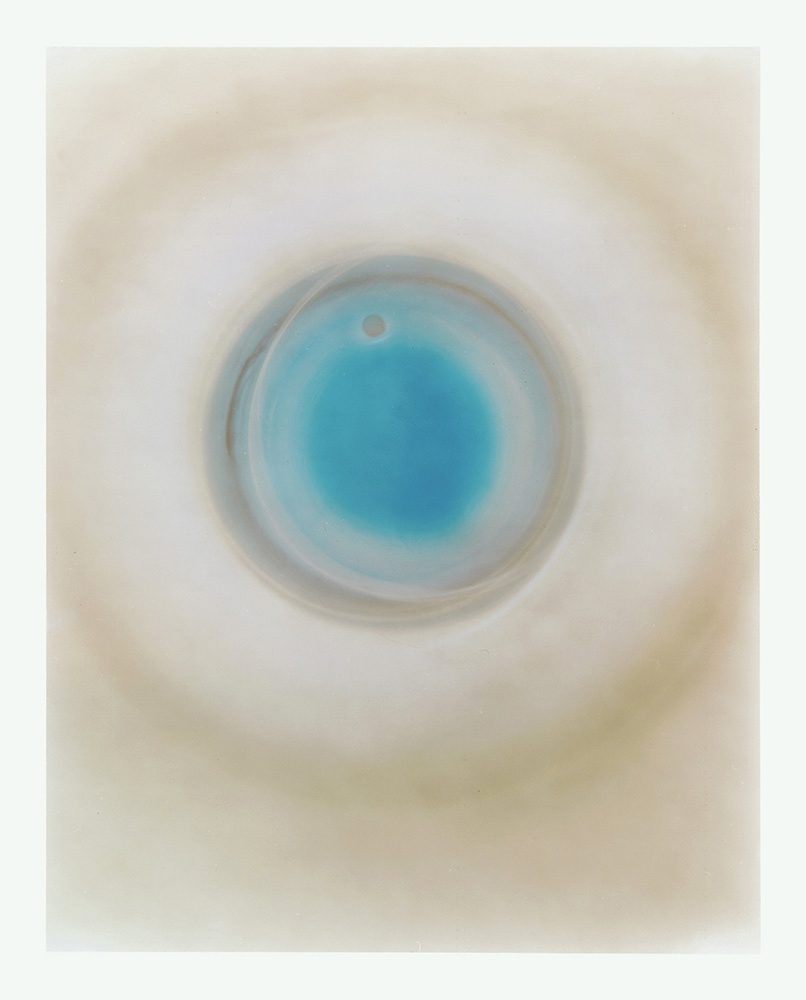
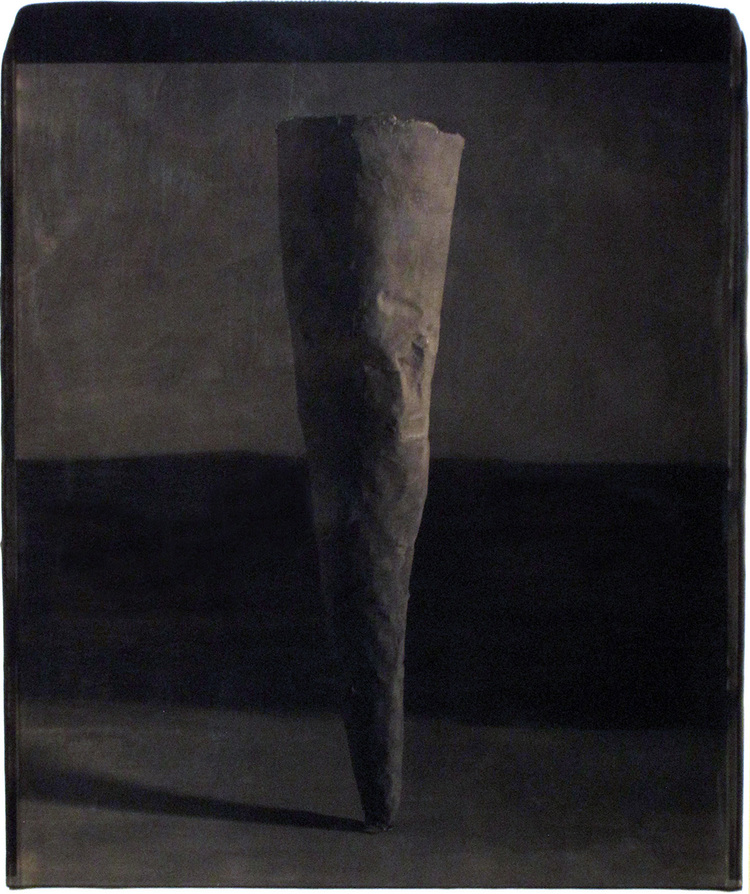
John Divola (American, b. 1949) 'Cone, 87CN09' 1987


John Divola (American, b. 1949)
Cone, 87CN09
1987
Black and White Polapan Print (Polaroid)
20 x 24 inches
© John Divola


FINALLY… two postings on consecutive days by conceptual artists who use photography to document their staging, performance, sculpture, body, earth-body, action art, found art, land art – WORK THAT I REALLY LIKE AND CAN REALLY CARE ABOUT.

I care about both artists work not so much because of the quality of the photography but because of their passion, insight, ideas and general human nous, their need to understand humans and the worlds we inhabit: that INTELLIGENCE necessary for understanding what is true or real, using their intuition to root out, to dig down into the human psyche.

In this posting Divola eloquently investigates the mysterious process of creation through imagination (only for the original “model” then to be destroyed); the notion of photographic authenticity and an interrogation of the human impulse to master the natural world; photography at its most deceptively naturalistic revealing hidden, dead animals; and the landscape altered by human presence and staged to serve as a theatre for creative activity through the “captured” act of running away.

Dr Marcus Bunyan

Many thankx to the Los Angeles County Museum of Art (LACMA) for allowing me to publish the photographs in the posting. Please click on the photographs for a larger version of the image.


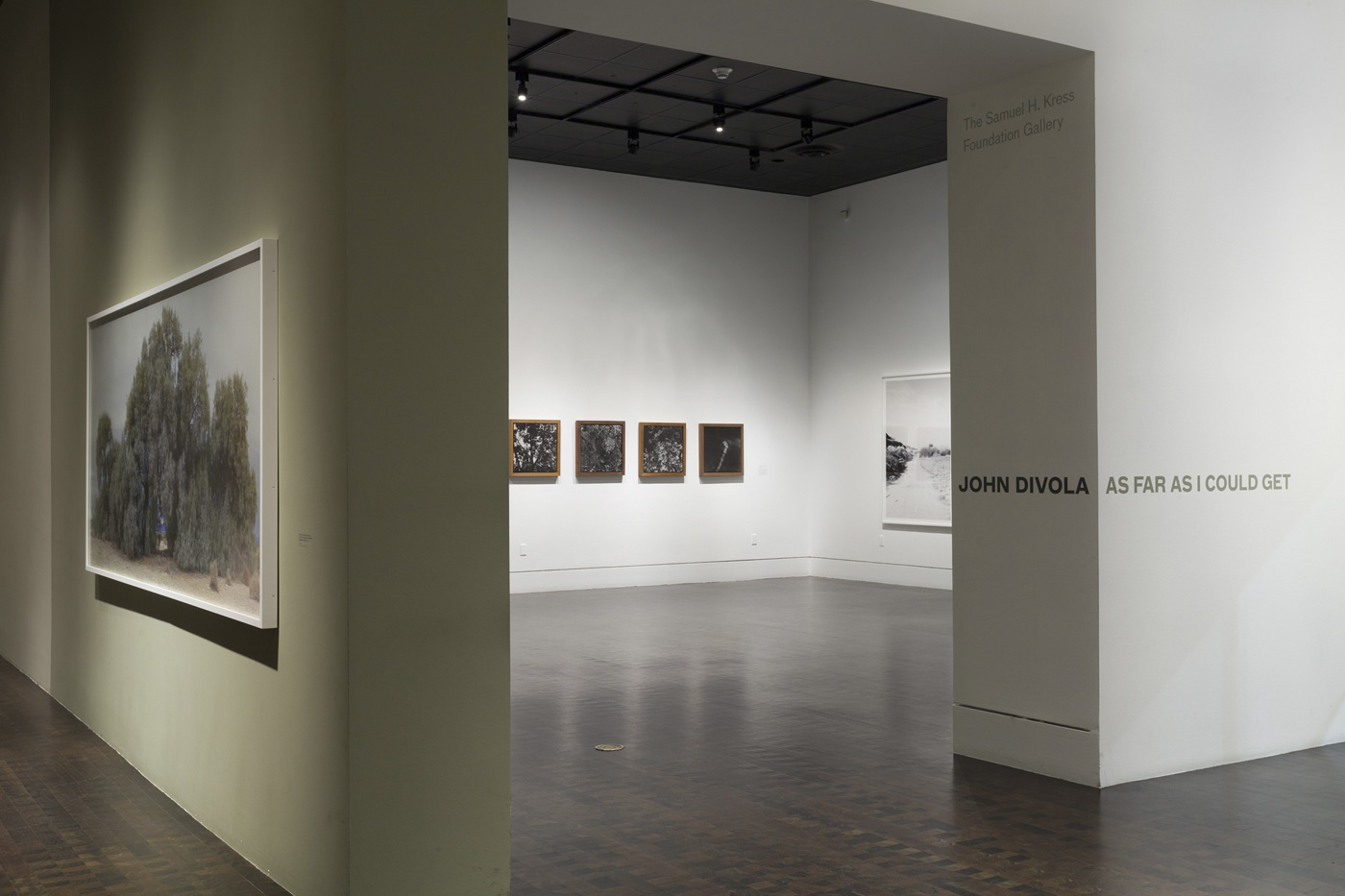
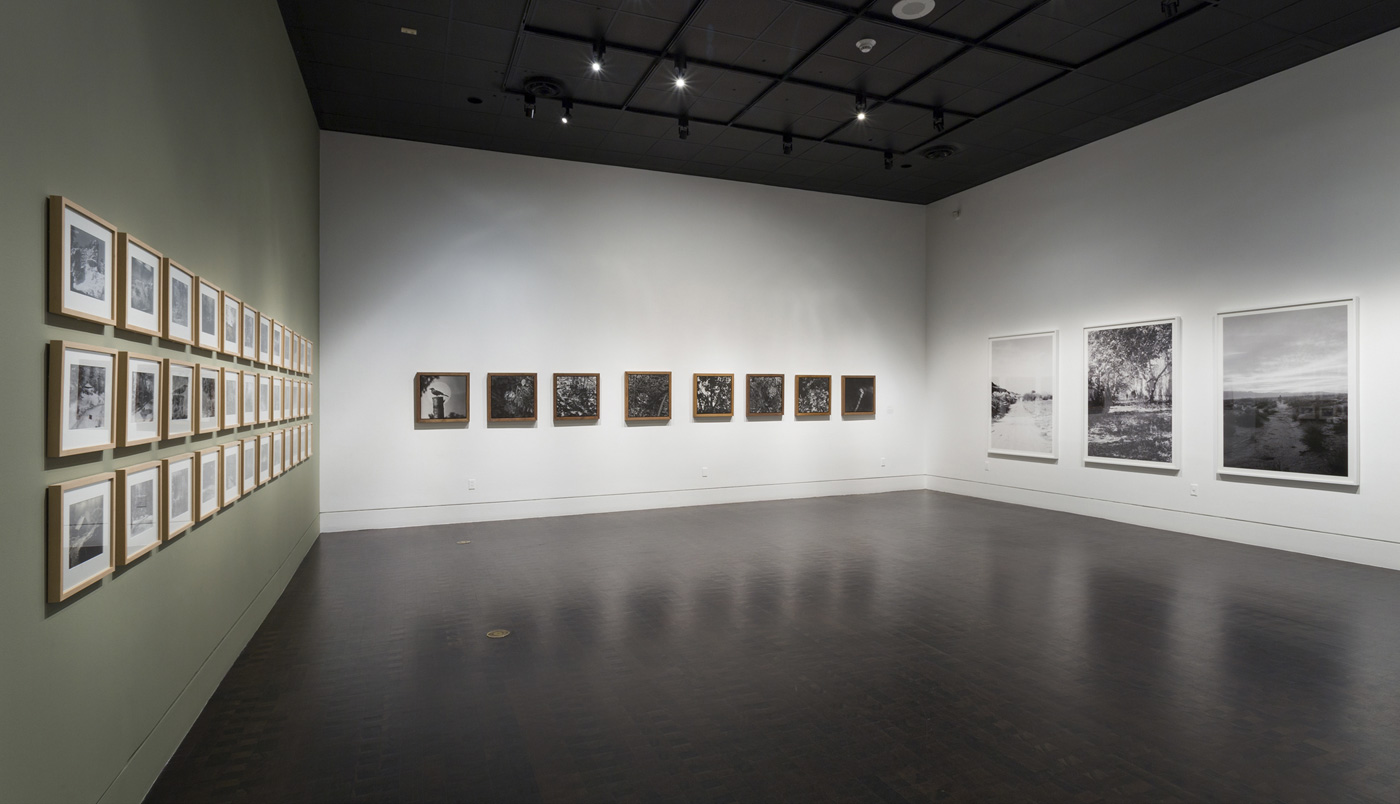
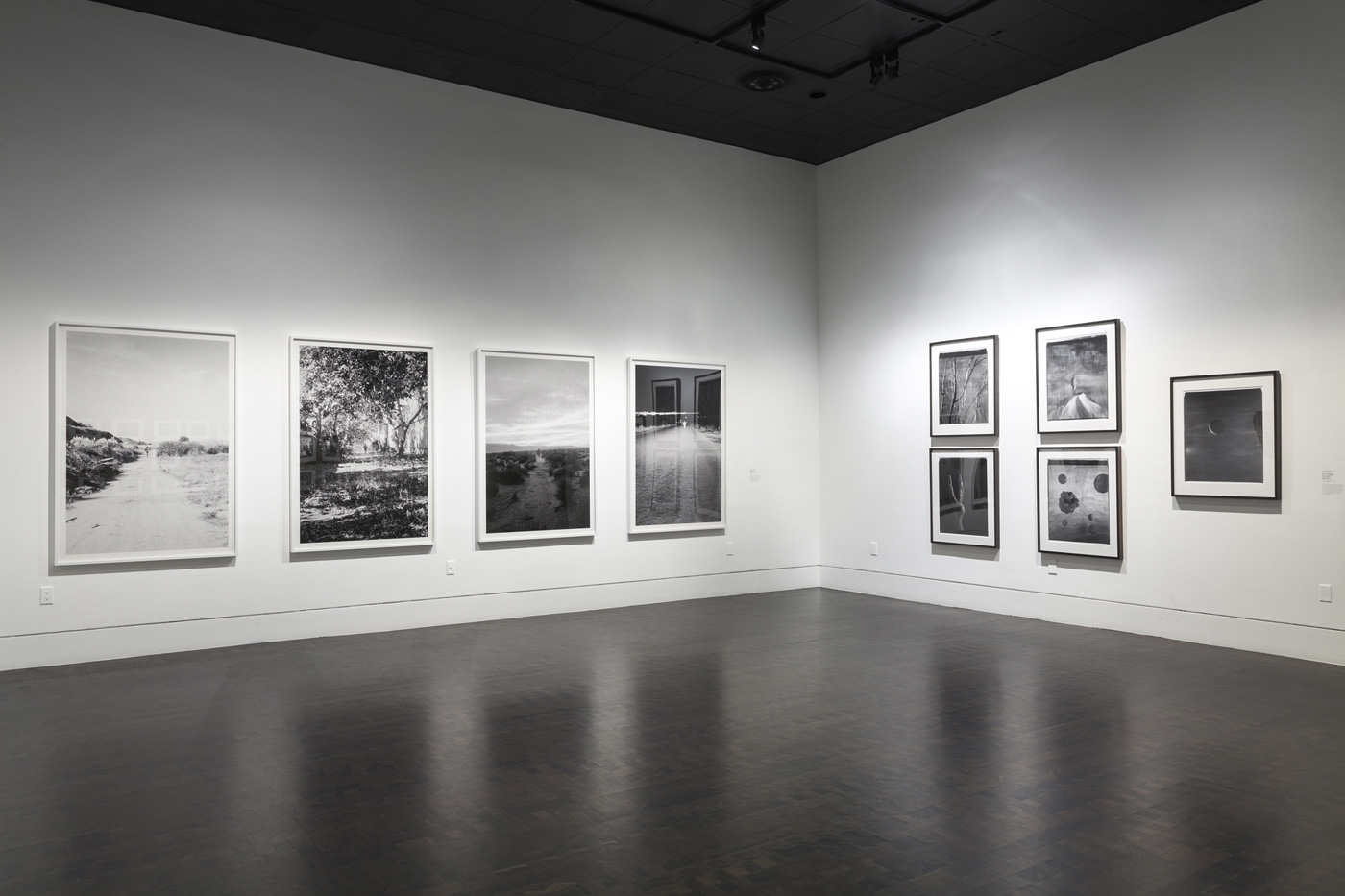
Installation view of 'John Divola: As Far As I Could Get' at the Los Angeles County Museum of Art (LACMA)

Installation view of 'John Divola: As Far As I Could Get' at the Los Angeles County Museum of Art (LACMA)

Installation view of 'John Divola: As Far As I Could Get' at the Los Angeles County Museum of Art (LACMA)


Installation views of John Divola: As Far As I Could Get at the Los Angeles County Museum of Art (LACMA)
© John Divola
Photo
© 2013 Museum Associates/LACMA


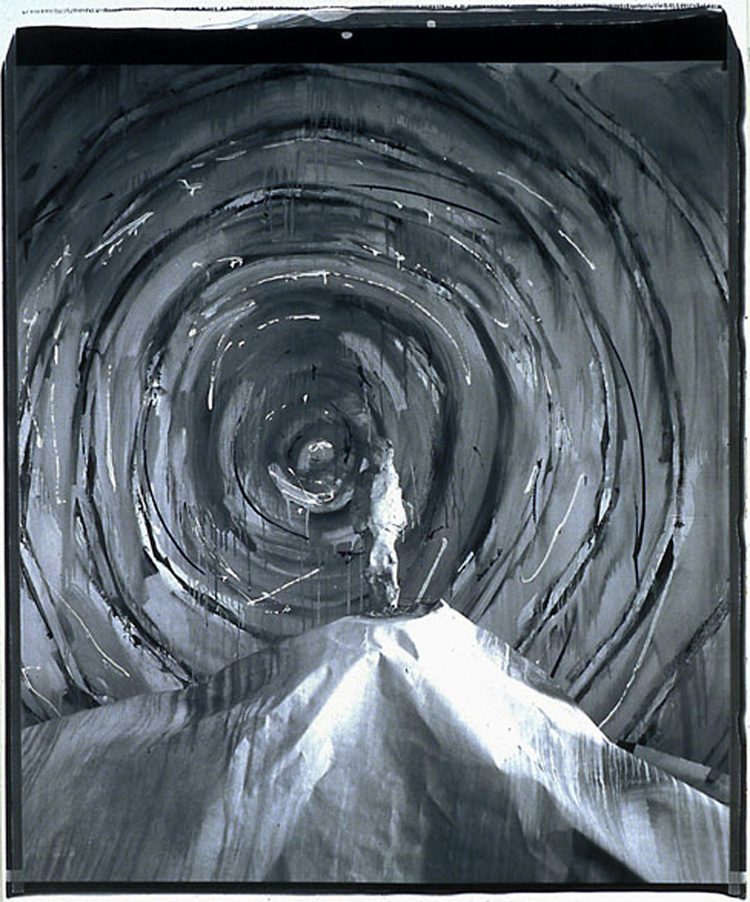
John Divola (American, b. 1949) 'Man in Vortex, 87CA2' 1987


John Divola (American, b. 1949)
Man in Vortex, 87CA2
1987
Black and White Polapan Print (Polaroid)
20 x 24 inches
© John Divola


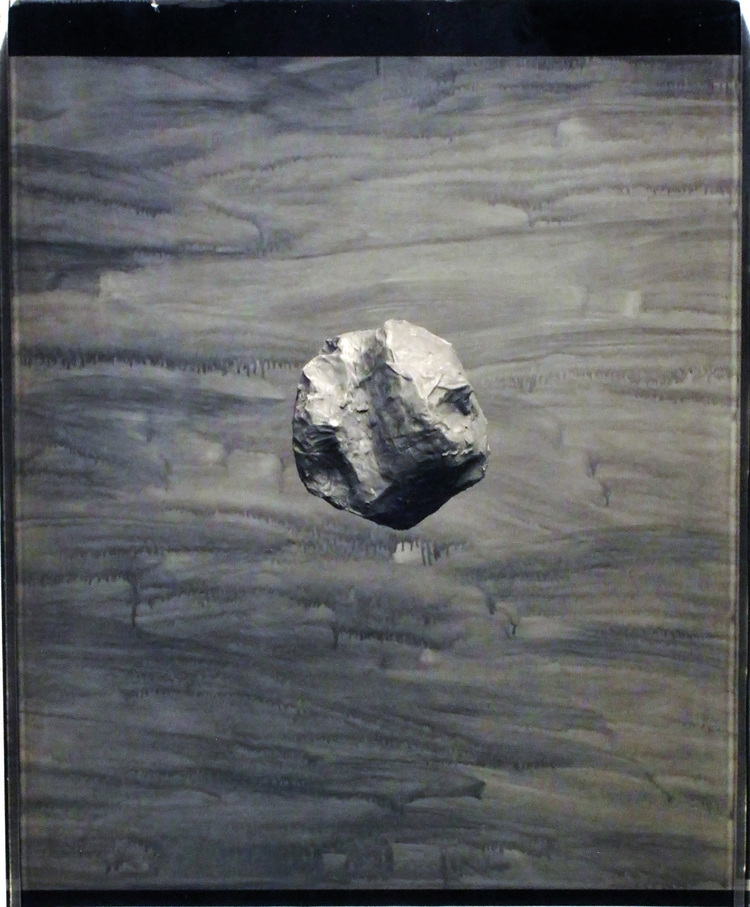
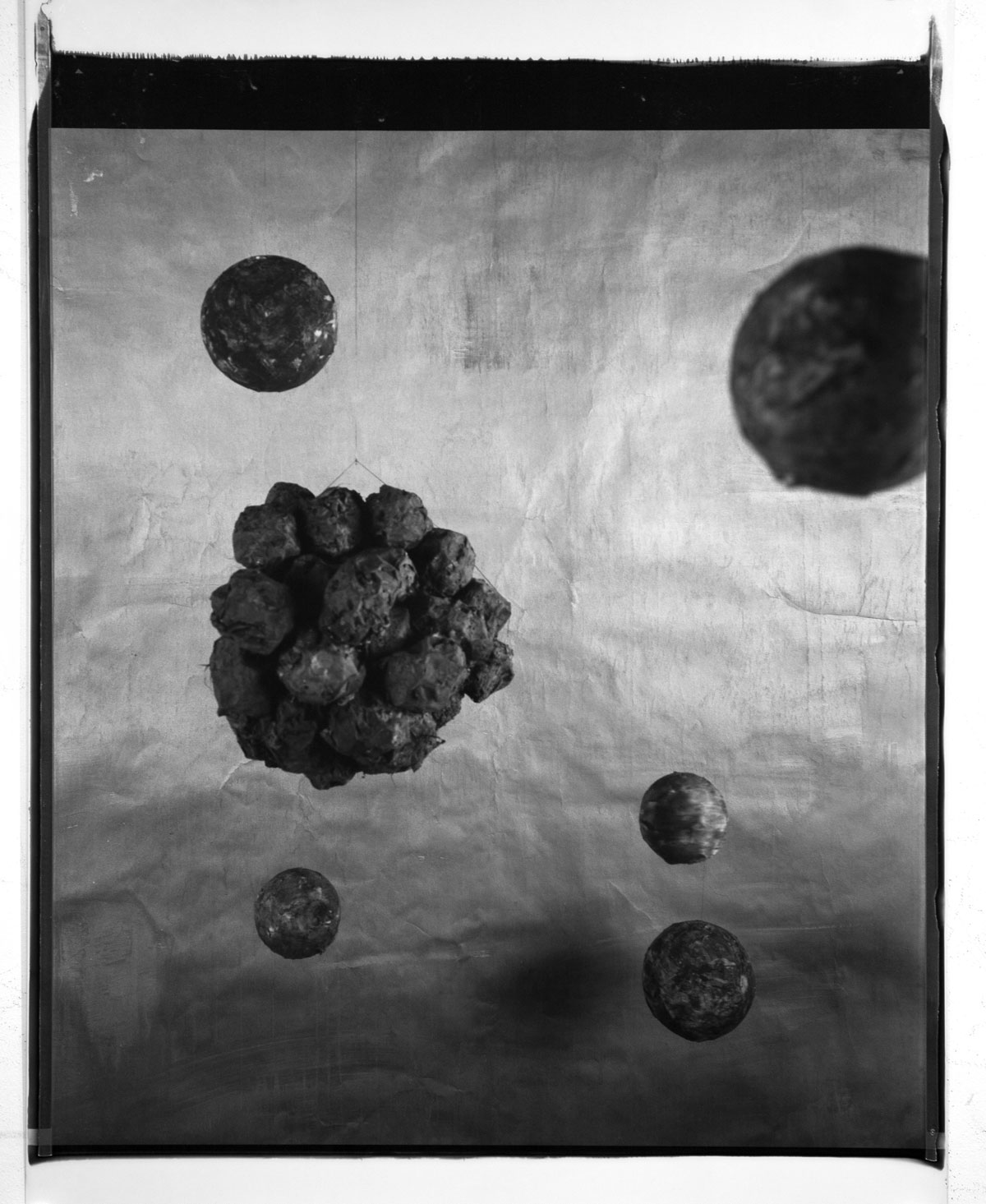
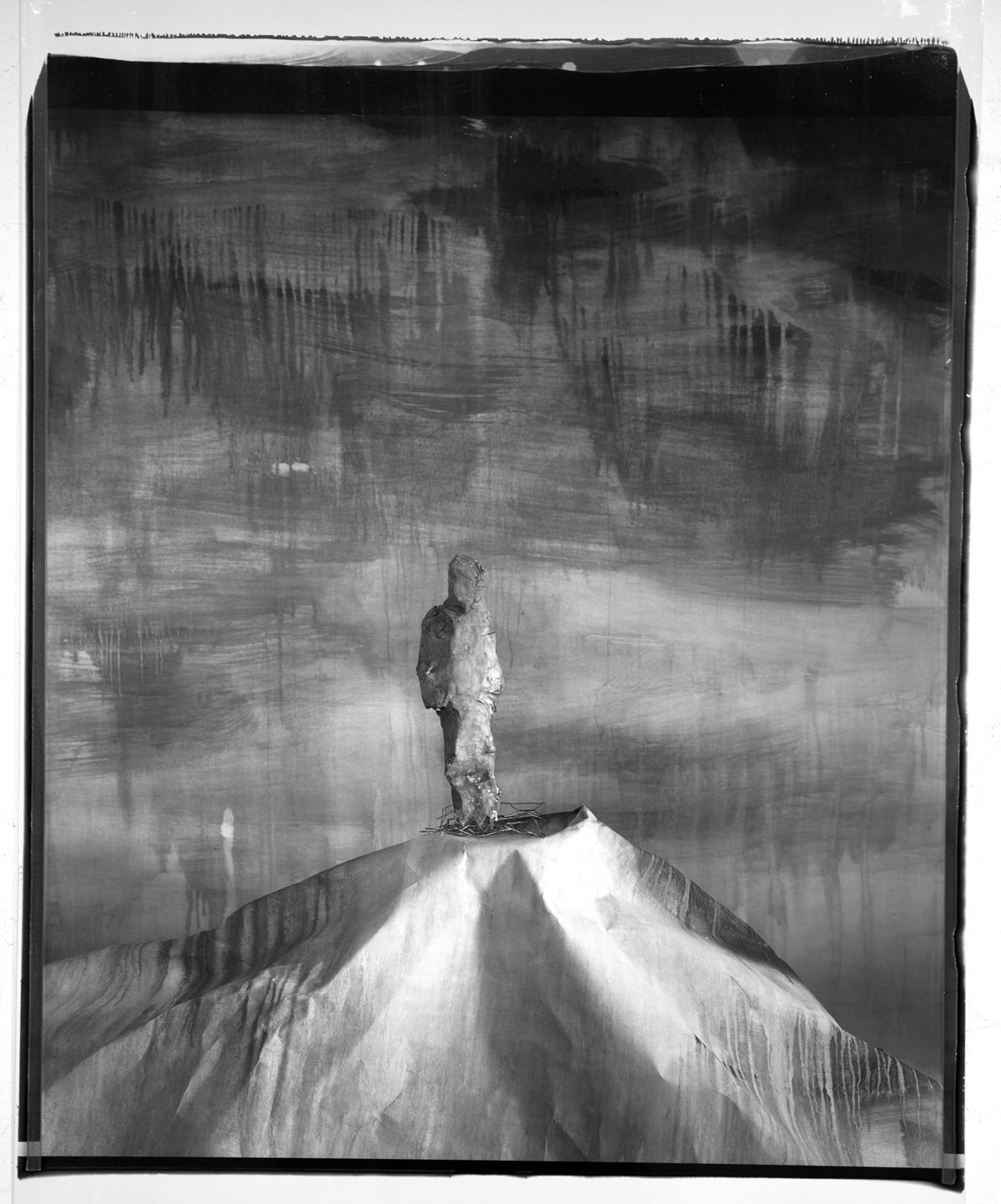
In Divola’s words, the Polaroids feature “The photograph as an object has an relationship to that which it represents, something like the relationship the snake skin has to the snake that sheds it. The relationship of something dead to something living.” The Polapan prints especially lend themselves to this associate with skin. Their plasticity and their alchemical marks bear witness to a mysterious process of creation; their subject matter conjured up, and then discarded. Divola’s “studio constructions,” as he called them, were temporary structures made solely for the purpose of photographic depiction, including funnels, human and animal figures, and expressively painted backdrops. Divola’s photographs are themselves echo chambers: they replicate and reverberate light from objects that have long since vanished.

Divola’s process has important photo-conceptual precedents: Richard Long’s photographic records of lines made by walking, Jan Dibbets’ play with optical illusion through the camera’s lens, or Robert Smithson’s Yucatan Mirror Displacements. Divola’s work, though, is equally in conversation with the work of Jasper Johns. Johns, known for his paintings of numbers, flags, maps, and targets, focused on flat subjects as a means to conjoining the surface of subject matter with a painting’s flat picture plane. Divola has transmuted the achievements and medium-specificity of high modern painting into images that explore photography’s mimetic qualities and its sheer surface. These are images are about a recognisable reality we cannot access, dim echoes of a familiar world, yet one that has vanished.

Anonymous. “JOHN DIVOLA – Echo Chamber” on the Gallery Luisotti website [Online] Cited 01/07/2014. No longer available online. Used under fair use conditions for the purposes of education and research


John Divola (American, b. 1949) 'Rock and Water #1, 88RW1' 1988


John Divola (American, b. 1949)
Rock and Water #1, 88RW1
1988
Black and White Polapan Print (Polaroid)
20 x 24 inches
© John Divola


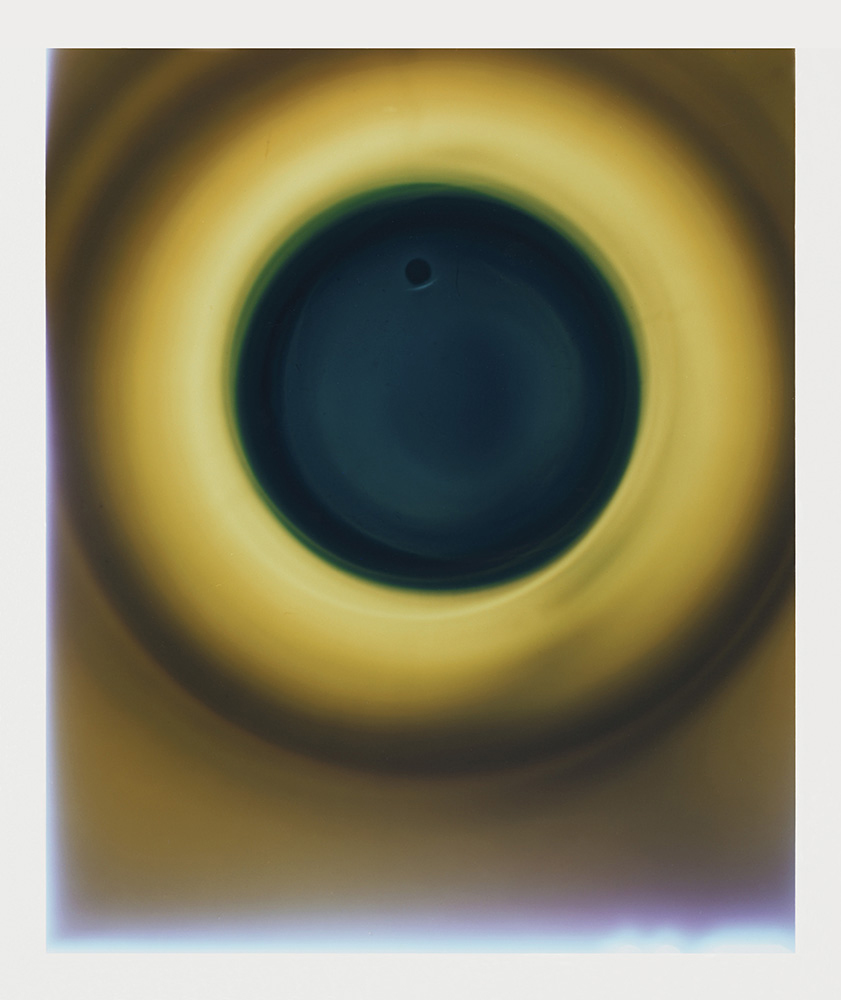
John Divola (American, b. 1949) 'Cells, 87CA1' 1987-1989


John Divola (American, b. 1949)
Cells, 87CA1
1987-1989
Internal Dye-diffusion print
20 x 24 inches
© John Divola


John Divola (American, b. 1949) 'Man on Hill, 89MHA1' 1987-1989


John Divola (American, b. 1949)
Man on Hill, 89MHA1
1987-1989
Internal Dye-diffusion Print
20 x 24 inches
© John Divola


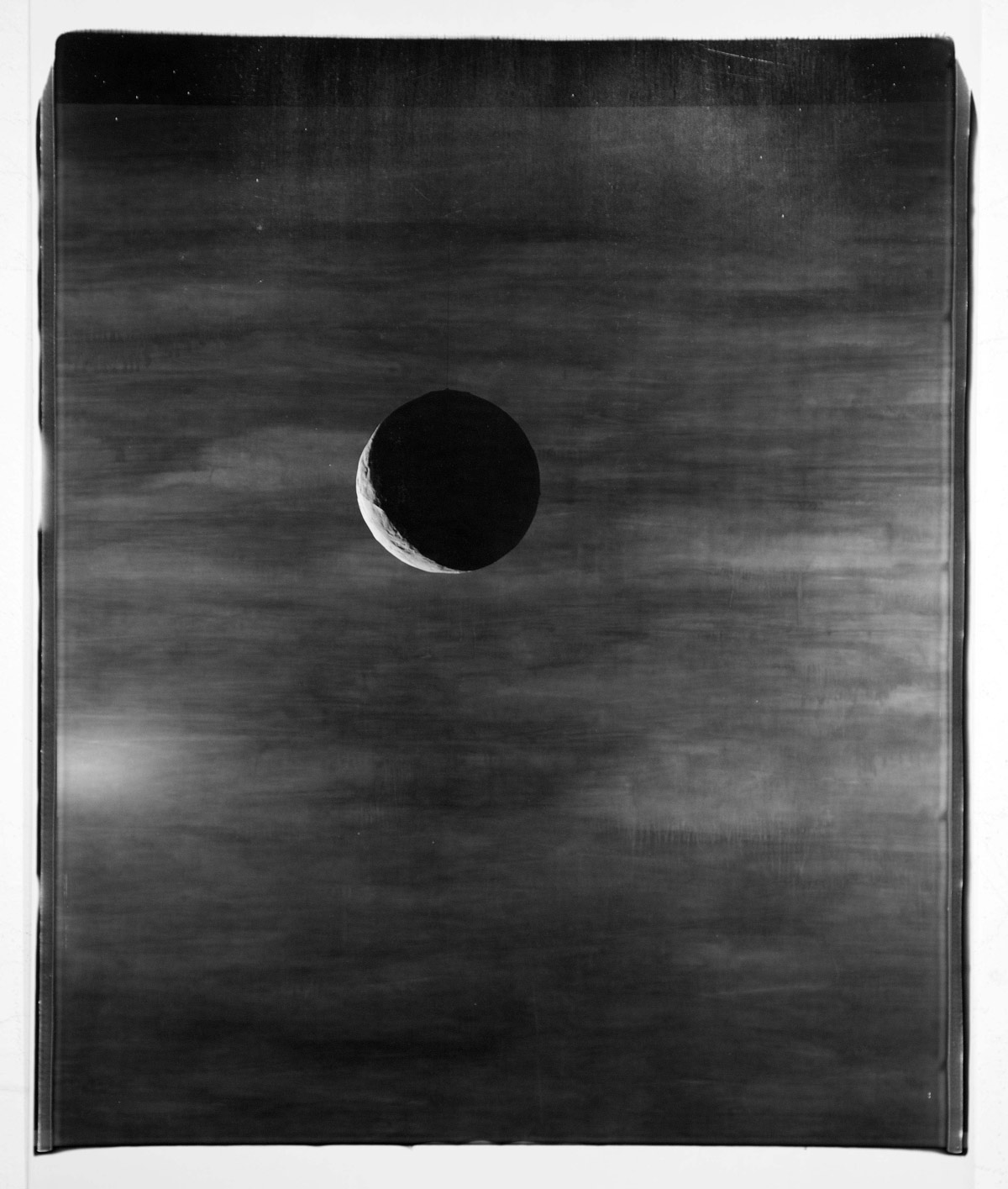
John Divola (American, b. 1949) 'Moon, 88MOA1' 1988


John Divola (American, b. 1949)
Moon, 88MOA1
1988
Internal Dye-diffusion print
20 x 24 inches
Courtesy of the artist
© John Divola


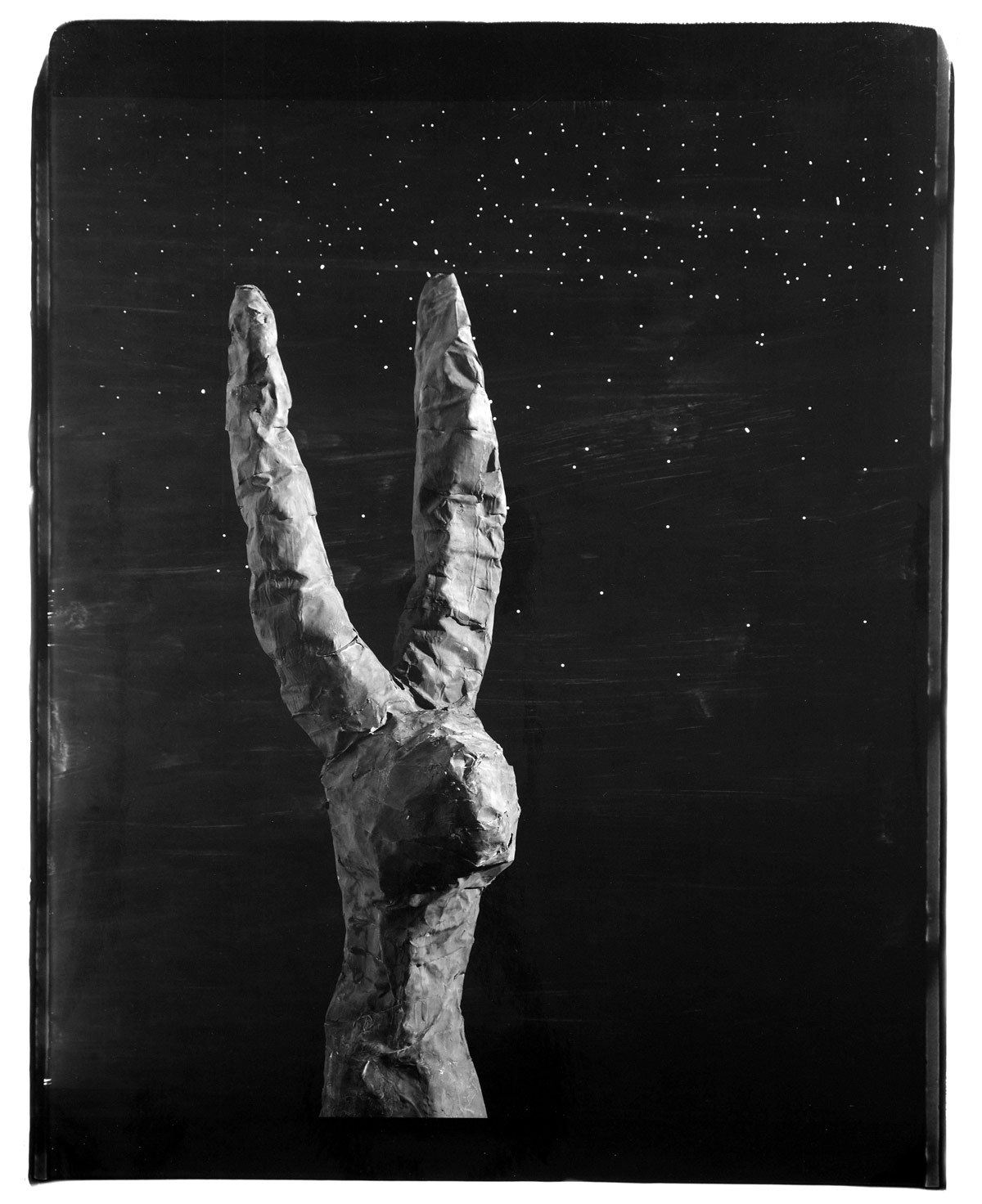
John Divola (American, b. 1949) 'Rabbit, 87RBA1' 1987


John Divola (American, b. 1949)
Rabbit, 87RBA1
1987
Internal Dye-diffusion print
20 x 24 inches
Courtesy of the artist
© John Divola


John Divola (American, b. 1949) 'Artificial Nature' (detail, 1 of 36) 2002


John Divola (American, b. 1949)
Artificial Nature (detail, 1 of 36)
2002
Gelatin Silver Print
8 x 10 in.
Los Angeles County Museum of Art, purchased with funds provided by the Ralph M. Parsons Fund and the Photographic Arts Council, 2013
© John Divola


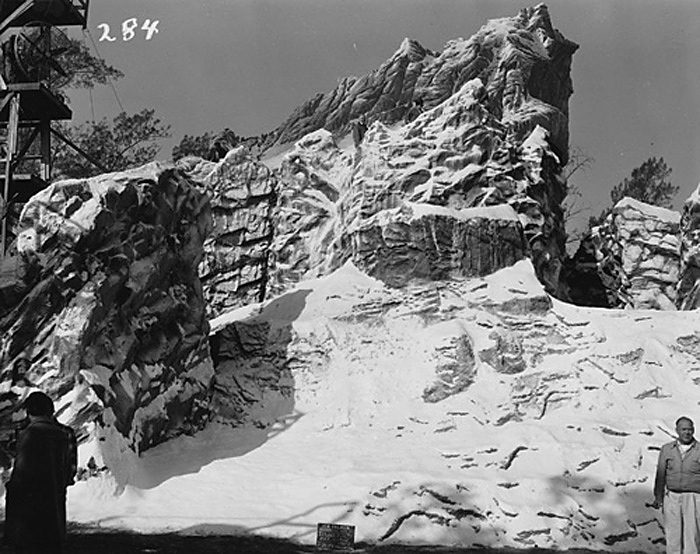
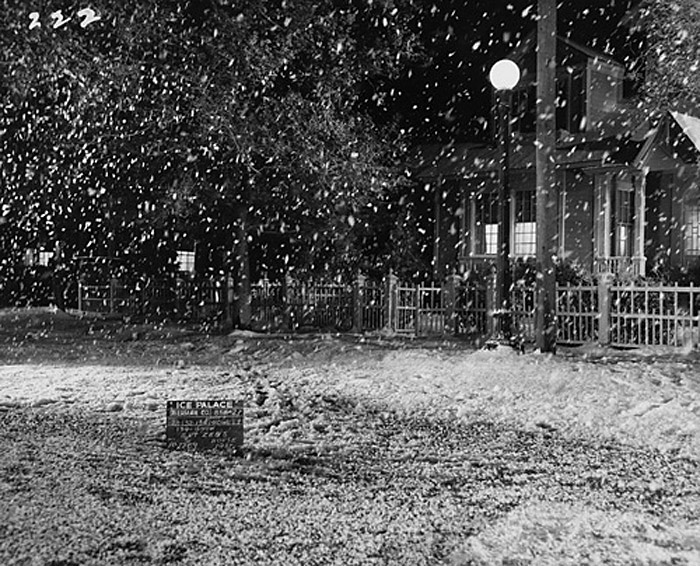
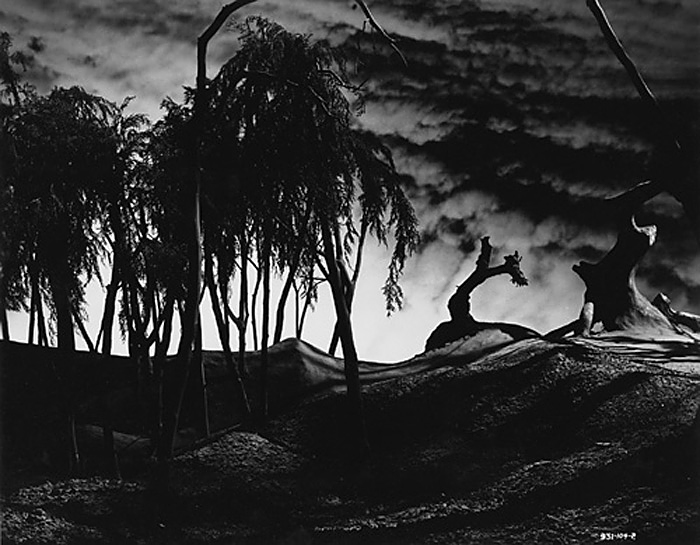
Across the gallery is a series of found photographs, “Artificial Nature” (2002), made up of continuity stills (the photographs taken on film sets to make ensure uniformity from scene to scene) from mid-century films. The photographs show fabricated landscapes created in studio backlots. The images zero in on the notion of photographic truth – the idea that when you look at a photograph, what you’re seeing is an accurate representation of the world – by presenting a false natural landscape. Without outside knowledge, upon first glance, the photographs look like ordinary landscapes.

Maxwell Williams. “John Divola’s SoCal Moment,” on the Art in America website [Online] Cited 01/07/2014. No longer available online. Used under fair use conditions for the purposes of education and research


“Artificial Nature” (2002) stands out, and as with many of Divola’s series, the bluntness of the title belies the delicacy and actual locus of interest. Composed of thirty-six “continuity stills”, these black and white prints have been repurposed from movie studio archives, framed and hung in a tight grid. Ranging in provenance from the 1930s to the 1960s, each picture documents a movie set dressed as a lush, natural landscape. A clapperboard sign planted in the foreground might identify the scene as “wooded hillside” or “the beach.” At once romantic and businesslike, the series opens a delicious gap between intention and effect. To view these pictures only through the lens of nature vs. artifice would be reductive and superficial at best. Treat them instead as a peek into the cabinetry of early pop mechanics, or evidence of a peculiar temporality where worlds should be fixed with a sign because they so routinely congeal and vanish.

Kristin Posehn. “John Divola: As Far As I Could Get,” on The Miami Rail website [Online] Cited 01/07/2014. Used under fair use conditions for the purposes of education and research


John Divola (American, b. 1949) 'Artificial Nature' (detail, 1 of 36) 2002

John Divola (American, b. 1949) 'Artificial Nature' (detail, 1 of 36) 2002

John Divola (American, b. 1949) 'Artificial Nature' (detail, 1 of 36) 2002

John Divola (American, b. 1949) 'Artificial Nature' (detail, 1 of 36) 2002


John Divola (American, b. 1949)
Artificial Nature (detail, 4 of 36)
2002
Gelatin Silver Print
8 x 10 in.
Los Angeles County Museum of Art, purchased with funds provided by the Ralph M. Parsons Fund and the Photographic Arts Council, 2013
© John Divola


With a career compromising four decades, John Divola is as distinctive for his commitment to the photographic community as for his thought-provoking work, Divola’s influence within the field of photography is widely recognised by curators, critics, scholars and photographers throughout the country; yet, his work has remained largely uncelebrated. Many of his former students have achieved illustrious careers and far more recognition, even as Divola continues to mentor and inspire both undergraduate and graduate students in contemporary practice.

As Far As I Could Get is the first over-arching presentation of Divola’s work and is a collaborative project led by the Santa Barbara Museum of Art (SBMA), shown simultaneously at SBMA, the Los Angeles County Museum of Art (LACMA), and the Pomona College Museum of Art (PCMA) in the fall of 2013. Though Divola’s photographic series are diverse in subject matter, this approach as one exhibition among three Southern California venues emphasises the consistent conceptual and performative threads that run through Divola’s entire body of work.

Divola was born in Los Angeles in 1949. After graduating with a BA from California State University, Northridge, he entered the MFA program at the University of California Los Angeles. There, under the tutelage of Robert Heineken, the artist began to develop his own unique photographic practice, one that merges photography, painting, and conceptual art. In addition to his own studio practice, he teaches contemporary art in the underserved California inland empire and writes on current photographic practice for a national audience.

John Divola’s photos of photographs range widely but the intellectual rigour from which they spring is unvarying. Whether testing the visual limits of photography by vandalising abandoned houses, interrogating the iconography of the divine through paint, flour, and film, or emphasising the distance between image and reality through the blurred figure of a running dog, Divola’s work is simultaneously fun and philosophical, visually appealing as well as intellectually stimulating.

LACMA On view: Four series of John Divola’s work in the Ahmanson Building, 2nd Floor

The series 20 x 24 Polaroids is Divola’s earliest work exhibited at LACMA, shot between 1987 and 1989. Hastily fabricated sculptures created out of impermanent materials attempt, on one level, to approximate actual physical objects in the world – branches, a rabbit, the moon, etc. At the same time, the roughly-hewn surfaces and ticky-tacky backdrops insist on the artificiality of what is depicted. These works express Divola’s ambivalence to the idea of photography as a descriptive medium with a one-to-one relationship to the real. Photography, in this case, is not employed in the service of documentary truth, but instead is held up as a crucial interlocutor in a creative exercise.

Artificial Nature (2002) offers a clear example of Divola’s interrogation of the human impulse to master the natural world. The work is a collection of 36 continuity stills from films made between the 1930s and the 1960s. These photographs, taken on film sets to establish consistency across multiple cuts (to ensure that the placement of objects remains constant from take to take), document fabricated landscapes contained within the artificial space of the film studio. Representing the diversity of natural topographies add weather patterns, the images also include accessories such as signage and clapperboards, highlighting the distance between ourselves and the natural world – a distance that is only accentuated by cinematic representation.

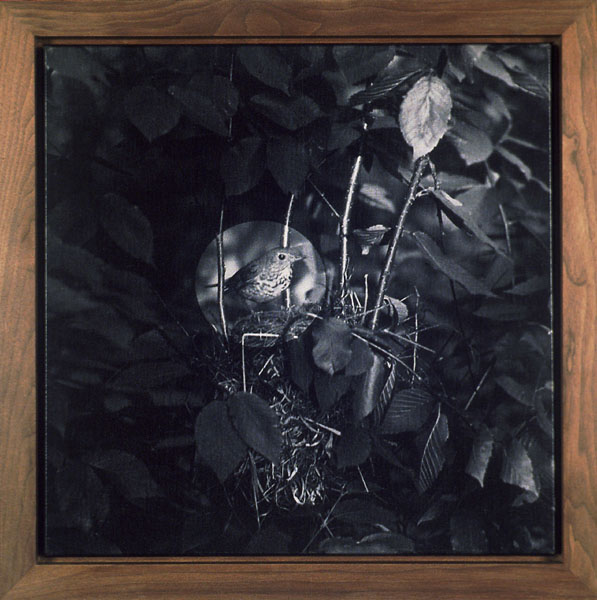
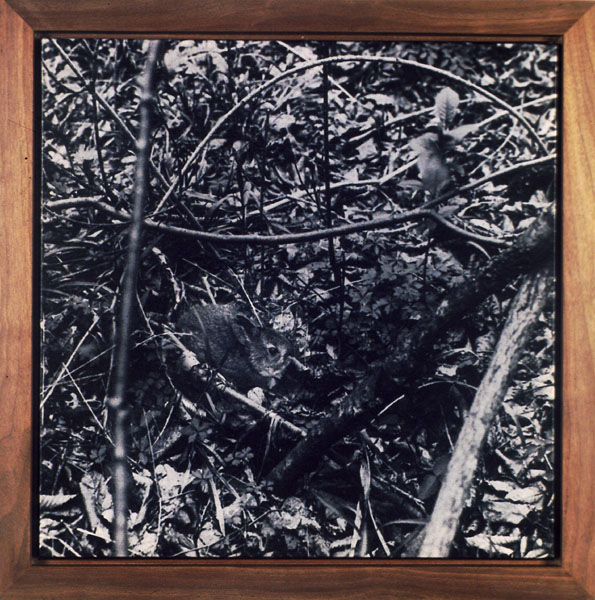
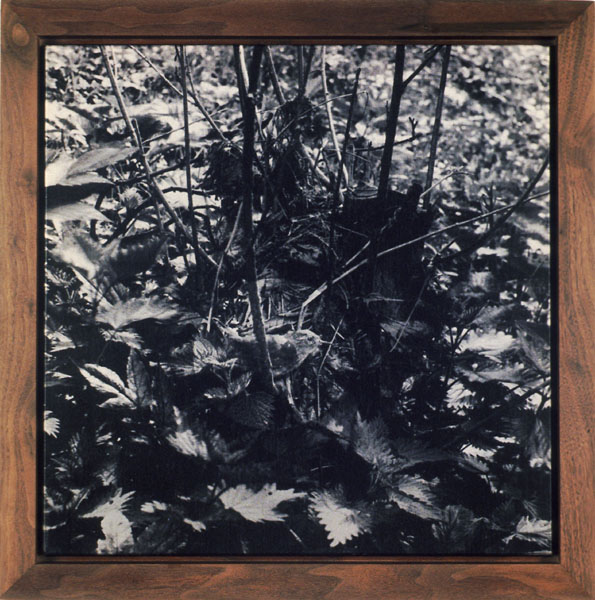
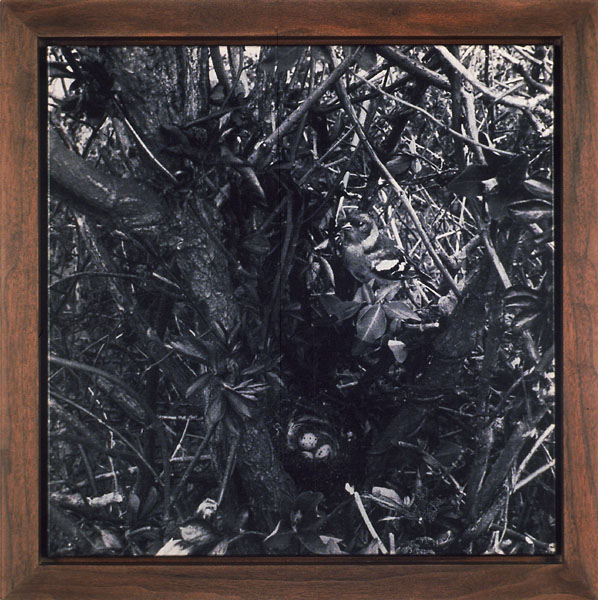
Seven Songbirds and a Rabbit (1995) is a series of details from the Keystone Mast collection of stereographic negatives housed at the California Museum of Photography, University of California Riverside. Stereoscopy, a three-dimensional imaging technology popular from the mid 19th to the early 20th century, exemplifies photography at its most deceptively naturalistic. When Divola began to examine the original glass-plate negatives in the Keystone collection, he found a wealth of detail, such as the birds and rabbit nestled amidst the foliage that gave the series its title.

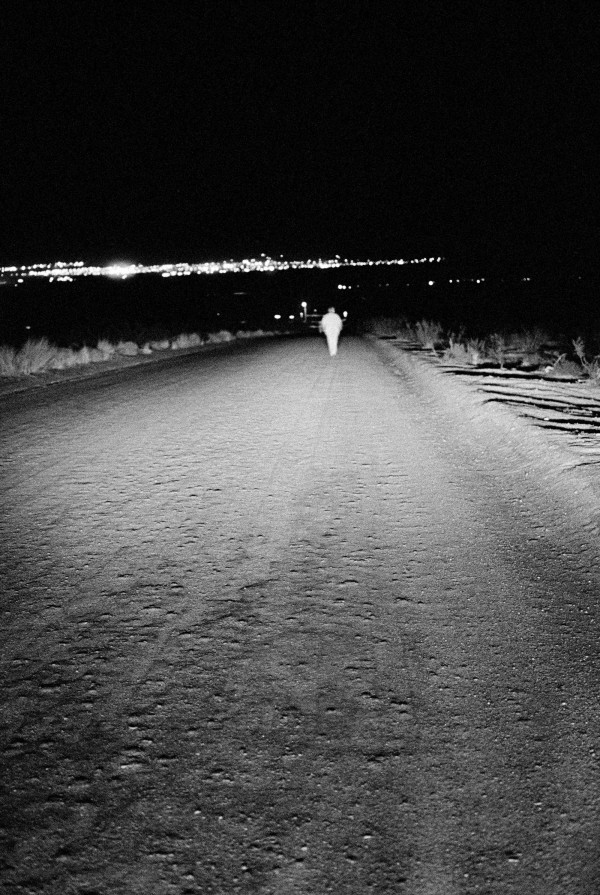
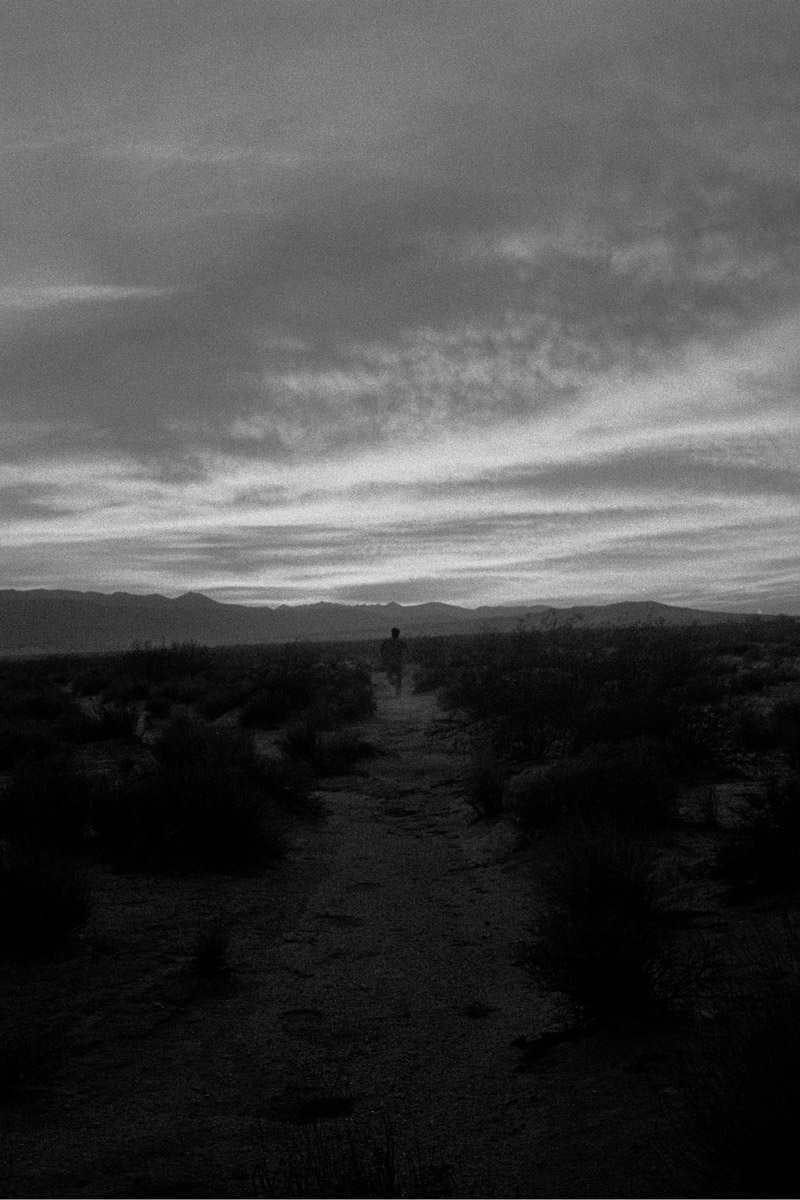
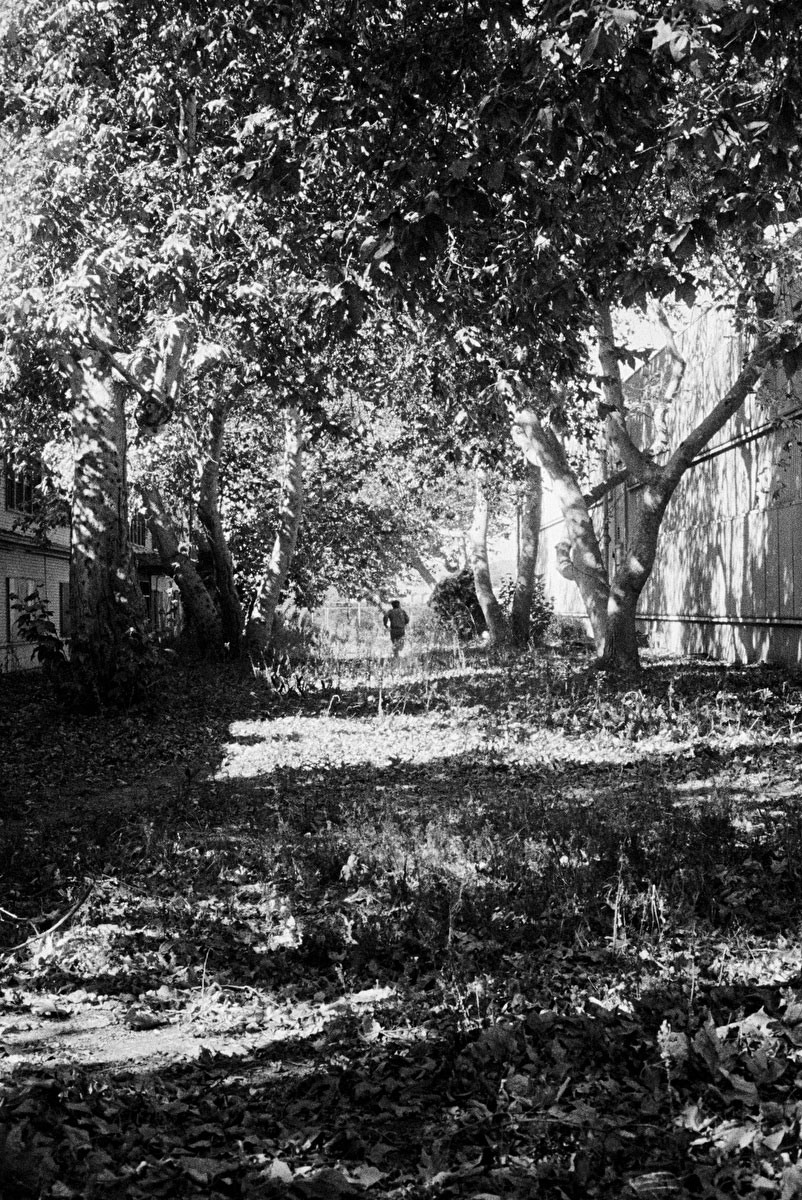
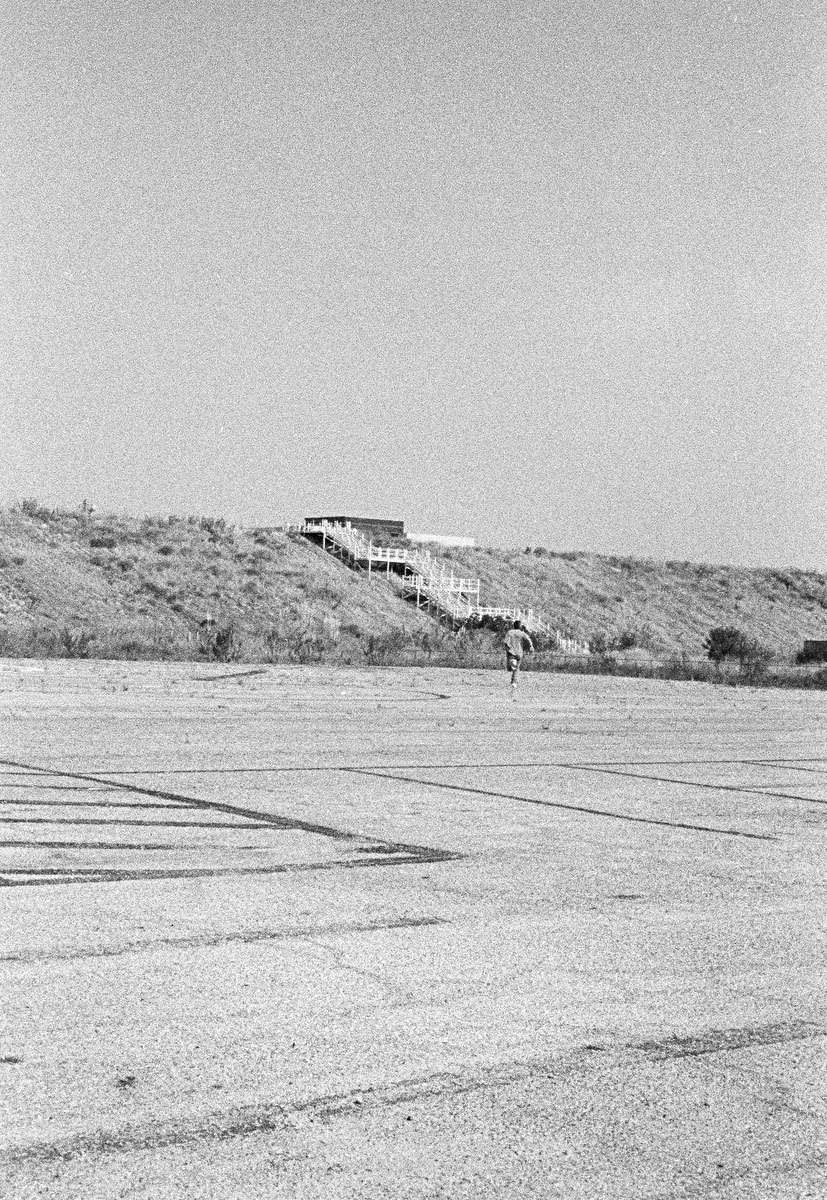
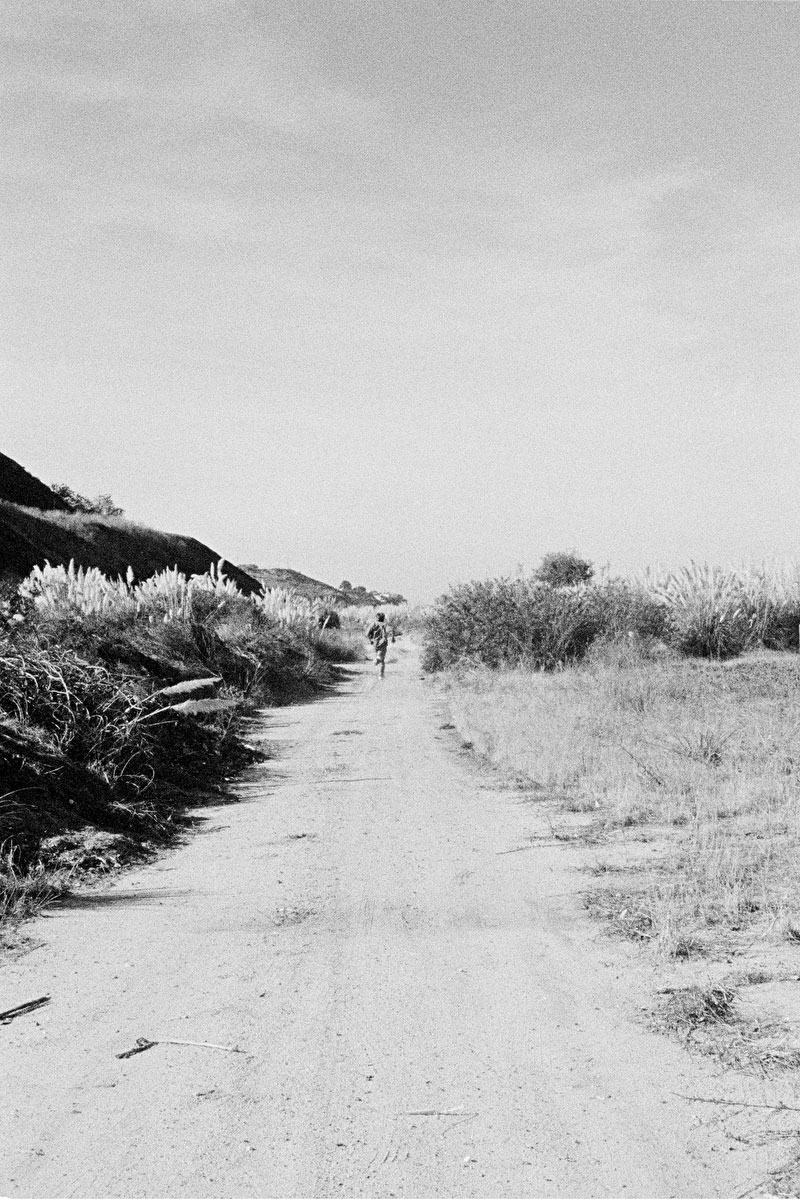
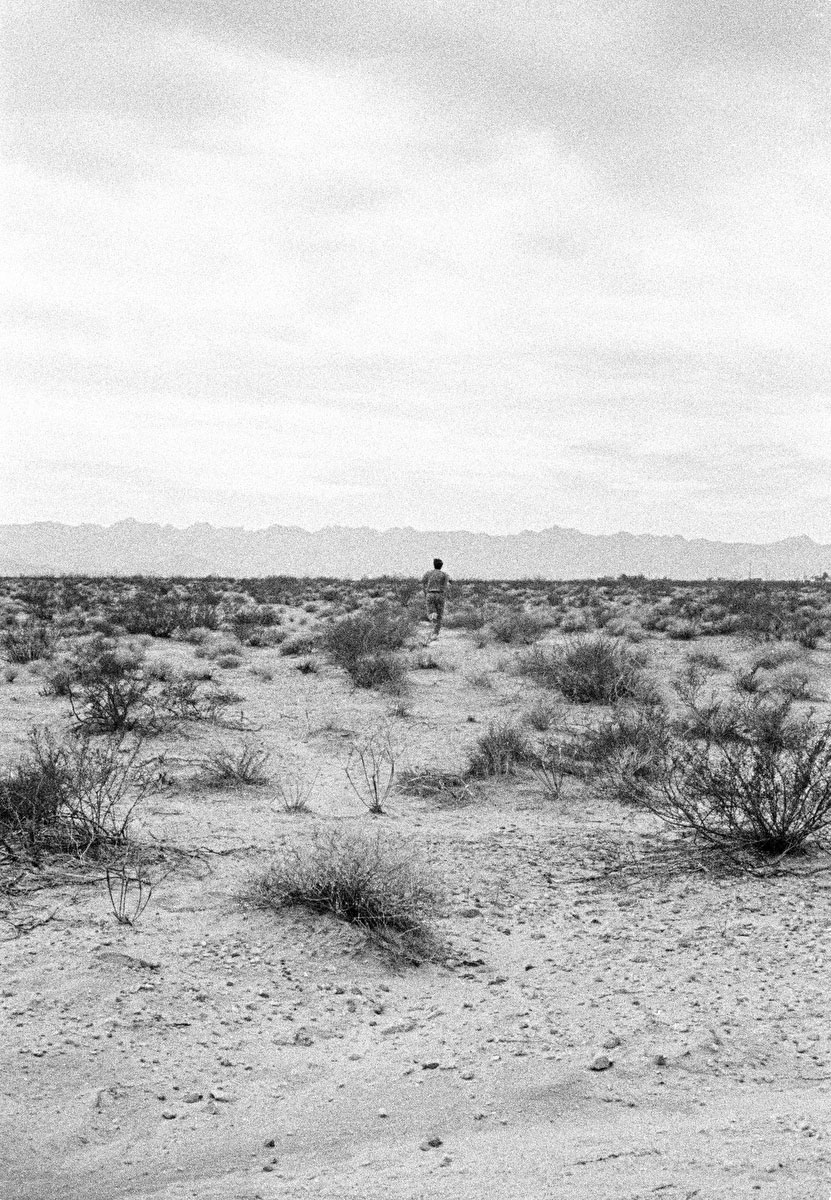
The series As Far As I Could Get (1996-2010), five works of which are included in the LACMA exhibition, has Divola once again engaging with the natural environment, but this time in a more performative vein. Divola positioned his camera on a tripod, set the timer for ten seconds, and then ran straight into the established frame. At one level, this was a completely dispassionate endeavour. On another level, because the resulting pictures depict a man in a landscape, not in a controlled experimental setting, the viewer cannot suppress a frisson of physical and emotional tension. The works engage the viewer with the natural landscape – a landscape altered by human presence and staged to serve as a theatre for creative activity.

Press release from the LACMA website


John Divola (American, b. 1949) 'Seven Songbirds and a Rabbit' 1995 (detail)

John Divola (American, b. 1949) 'Seven Songbirds and a Rabbit' 1995 (detail)

John Divola (American, b. 1949) 'Seven Songbirds and a Rabbit' 1995 (detail)

John Divola (American, b. 1949) 'Seven Songbirds and a Rabbit' 1995 (detail)

John Divola (American, b. 1949) 'Seven Songbirds and a Rabbit' 1995 (detail)

John Divola (American, b. 1949) 'Seven Songbirds and a Rabbit' 1995 (detail)


John Divola (American, b. 1949)
Seven Songbirds and a Rabbit (details)
1995
Gelatin Silver Print on Linen
20 x 20 inches
© John Divola


John Divola (American, b. 1949) 'As Far As I Could Get (R02F09), 10 Seconds' 1996-1997


John Divola (American, b. 1949)
As Far As I Could Get (R02F09), 10 Seconds
1996-1997
Pigment Print
60 x 40 inches
© John Divola


John Divola (American, b. 1949) 'As Far As I Could Get (R02F06), 10 Seconds' 1996-1997


John Divola (American, b. 1949)
As Far As I Could Get (R02F06), 10 Seconds
1996-1997
Pigment Print
60 x 40 inches
© John Divola


“Divola is a photographer who works in distinct conceptual series that span and stretch the reaches of photography as art. For instance, at LACMA, the works include a series called “As Far As I Could Get” (1996-2010), where Divola sets a 10-second timer and sprints as far from the camera as he can. It’s performative, simple, amusing and alienating – a tiny body in full physical exertion, far off in the landscape.”

Maxwell Williams. “John Divola’s SoCal Moment,” on the Art in America website [Online] Cited 01/07/2014. No longer available online.


John Divola (American, b. 1949) 'As Far As I Could Get (R02F33), 10 Seconds' 1996-1997


John Divola (American, b. 1949)
As Far As I Could Get (R02F33), 10 Seconds
1996-1997
Pigment Print
60 x 40 inches
© John Divola


John Divola (American, b. 1949) 'As Far As I Could Get, 10 Seconds' 1996-1997


John Divola (American, b. 1949)
As Far As I Could Get, 10 Seconds
1996-1997
Pigment Print
60 x 40 inches
© John Divola


John Divola (American, b. 1949) 'As Far As I Could Get, 10 Seconds' 1996-1997


John Divola (American, b. 1949)
As Far As I Could Get (R02F33), 10 Seconds
1996-1997
Pigment Print
60 x 40 inches
© John Divola


John Divola (American, b. 1949) 'As Far As I Could Get, 10 Seconds' 1996-1997


John Divola (American, b. 1949)
As Far As I Could Get (R02F33), 10 Seconds
1996-1997
Pigment Print
60 x 40 inches
© John Divola


Los Angeles County Museum of Art (LACMA)
5905 Wilshire Boulevard (at Fairfax Avenue)
Los Angeles, CA, 90036
Phone: 323 857 6000

Opening hours:
Monday, Tuesday, Thursday: 11am – 6pm
Friday: 11am – 8pm
Saturday, Sunday: 10am – 7pm
Closed Wednesday

LACMA website

LIKE ART BLART ON FACEBOOK

Back to top

Review: ‘Concrete’ at the Monash University Museum of Art (MUMA), Melbourne

Exhibition dates: 3rd May – 5th July, 2014

Curator: Geraldine Kirrihi Barlow

Artists: Laurence Aberhart (NZ), Jananne al-Ani (IRQ/UK), Kader Attia (DEU/DZA), Saskia Doherty (AUS), Fabien Giraud & Raphaël Siboni (FRA), Igor Grubić (CRO), Carlos Irijalba (ESP), Nicholas Mangan (AUS), Rä di Martino (ITY), Ricky Maynard (AUS), Callum Morton (AUS), Tom Nicholson (AUS), Jamie North (AUS), Justin Trendall (AUS) and James Tylor (AUS)


Igor Grubic (Croatia, b. 1969) 'Monument' 2014 (still) from the exhibition 'Concrete' at the Monash University Museum of Art (MUMA), Melbourne, May - July, 2014


Igor Grubic (Croatia, b. 1969)
Monument
2014
Video still
Courtesy of the artist


While not as strong as previous exhibitions such as NETWORKS (cells & silos) (2011) and Reinventing the Wheel: the Readymade Century (2013), this exhilarating show at the Monash University Museum of Art (MUMA) confirms that this is the premier public gallery in Melbourne staging intellectually stimulating group exhibitions on specific ideas, concepts and themes.

There are some really interesting works here and I easily spent an hour and a half on each visit pondering, looking, thinking and inquiring. Some of the work is a little overexposed, such as Tom Nicholson’s Comparative monument (Palestine) (2012) – seen in Melbourne Now; Nicholas Mangan’s Some kinds of duration (2011), Ricky Maynard’s photographs and even more Callum Morton after his appearance in the Reinventing the Wheel exhibition. It’s about time some other local artists were given a go.

Justin Trendall’s white Lego buildings are stunning; Laurence Aberhart’s war memorials are printed too dark and seemed to be neither a record nor a feeling (they looked so much better in the recently published book); James Tylor’s photographs are adaptive as they seek to place traditional Indigenous dwellings back into the landscape but the base photographs from which he is working are not up to much; Rä di Martino’s Star Wars ruins are just too cute; and Carlos Irijalba’s drilling/tides are fascinating, but only if you know the context from which the work emanates. Video art was the highlight of the exhibition, and I don’t get to make that statement too often. Igor Grubic’s film Monument (2014, below) was mesmerising, as was Jananne al-Ani’s Shadow sites II (2011, below) – two of the best pieces of video art I have seen in a long time.

Monument features a series of meditative ‘portraits’ of the massive concrete memorials called ‘Spomenik’ built by the former Yugoslav communist state. Grubic abstracts these huge, cathedral-like memorials to various battles (usually of the Second World War) and events,  instead focusing on textures, environments and seasons. He photographs the monuments in mist and accompanies the images with ambient soundscapes that are haunting and evocative. The film holds the viewer in the palm of its hand and you are unable to look away, as the artist’s camera scours the surface of concrete and steel, intercut with branches and leaves, angles and vistas, pulling back and pushing forward. Usually video art doesn’t hold my attention for all but a few minutes but this film you can’t take your eyes from. The screen flickers and crackles, fades to orange and back again – its almost like a failure of transmission, as though the signal is not strong enough to support these interstitial spaces.

In Jananne al-Ani’s immersive film Shadow sites II, the viewer sits in a darkened room and the screen is full width of the space. Here, we are constantly moving forward and the camera never pulls back from the image. The film offers a sequence of aerial views in sepia tones; second by second our perspective nears the ground – but we never arrive. Accompanied by a David Sylvian style ambient soundtrack, the images are absolutely beautiful and intriguing as they morph one to another. Are you looking at the earth, the ground or a closeup of the surface of concrete, such as the patterns in Man Ray’s Dust Breeding (1920), which documents Duchamp’s The Large Glass after it had collected a year’s worth of dust while he was in New York? You are never quite sure…

The other thing to note with this exhibition is that, like many contemporary exhibitions, there are no wall notes or even a hand-out at the beginning that would enable the casual visitor to gain insight into the nature and meaning of the works. If I had not read the press release and done my own research I would have had no idea about the origins of some of the concepts for the work. This really is not good enough for the casual visitor to the gallery, any gallery. Are visitors expected to spend hours before they arrive, researching what the work is about so that they might actually understand what is going on? I took a friend to the gallery and luckily I was on hand to explain to her the ‘how’ and ‘why’ of the works concepts and origins. For example, if you read the wall label for Monuments you would have no idea that these were in Yugoslavia and that they had mostly been built to honour the dead from World War II; similarly, if you read the wall label to Carlos Irijalba’s High Tides (drilling) (2012) you would gain only the vaguest idea that the soil drilling sample was taken from under the tarmac of a former weapons factory in the Urdaibai or Guernica Estuary, Basque Country. Guernica – that place of horror bombed in the Spanish Civil War and most notably memorialised in the painting by Picasso of the same name. We, the viewer, need to know these things… not as an addendum after hours of reading, or on getting home and reading the catalogue essay – but while we are at the gallery!

While artists hint at the meaning of a work, leaving interpretation open ended and up to the viewer’s imagination and what life history they bring to the work, it may be useful and indeed I think desirable to provide the viewer with some tangible clues. Not much, just a paragraph that they can take with them to help with interpretation. It’s not much to ask, is it?

Dr Marcus Bunyan


Many thankx to MUMA for allowing me to publish the photographs in the posting. Please click on the photographs for a larger version of the image.


“Concrete is an interesting metaphor in the sense that it’s an aggregate that’s then bonded together. In some ways, that might represent this positive idea of pluralism, or it could be this completely hideous idea of homogeneity. Many of the works deal with samples of time and cycles violence and trauma and how we go about representing that history.”


Geraldine Kirrihi Barlow


Igor Grubic (Croatia, b. 1969) 'Monument' 2014


Igor Grubic (Croatia, b. 1969)
Monument
2014
Video still
Courtesy of the artist


Igor Grubic (Croatia, b. 1969) 'Monument (work in progress)' installation view, Monash University Museum of Art, 2014


Igor Grubic (Croatia, b. 1969)
Monument (work in progress)
Installation view, Monash University Museum of Art, 2014
2014
Video projection, colour, sound
53 minutes
Photo: Christian Capurro


Born in Zagreb, Croatia, 1969. Lives and works in Zagreb

In the film Monument Zagreb-based artist Igor Grubic offers a series of meditative ‘portraits’ of the massive concrete memorials built by the former Yugoslav state. With the rise of neo-fascism these mysterious sentinel forms, originally intended to honour World War II victims of fascism, are increasingly subject to neglect, even attack.

Emphasising the unexpected fragility of these monumental structures, Grubic sets human attempts to fix meaning, memory and the experience of loss against a backdrop of seasonal change. In a landscape which has witnessed so many cycles of trauma and upheaval, this work mirrors the rise and fall of many monuments built to preserve the memory of events which might otherwise be forgotten. Can such forms ever communicate a stable message through time?

“The work is void of explanation or commentary, instead concentrating on the surfaces of the monuments, their surrounding environments and the shifting seasons. We are left with little but their looming presence. “When we were filming, I was trying to read them without ideological background or context, but at the same time I couldn’t help but feel the fact that lots of people died and suffered at these sites – I could feel a real sense of spirituality. I began seeing them as new cathedrals in a way.””

Text from the Sydney Morning Herald website. Used under fair used conditions for the purposes of education and research


Jananne al-Ani (Iraq, b. 1966) 'Shadow sites II' 2011 (still) from the exhibition 'Concrete' at the Monash University Museum of Art (MUMA), Melbourne, May - July, 2014


Jananne al-Ani (Iraq, b. 1966)
Shadow sites II
2011
Video still
Courtesy of the artist


Born in Kirkuk, Iraq, 1966. Lives and works in London

Jananne al-Ani’s film Shadow sites II offers a sequence of aerial views in sepia tones; second by second our perspective nears the ground. Our appreciation of the formal beauty of these images co-exists with our unease as we try to determine what it is we are looking at. Are these archaeological sites, or housing compounds damaged by missile or drone strikes? Iraqi-born al-Ani notes as inspiration the ‘strange beauty’ of Edward Steichen’s 1918 photographs of the Western Front taken whilst he was a member of the US Aerial Expeditionary Force.

“UK-based Iraqi artist Jananne al-Ani’s striking video work saw her film archaeological sites in the Middle East from high up in a fixed-wing airplane, the shadows of the early morning and late evening revealing former buildings, structures and sites of significance in extraordinary resolution. While al-Ani’s work evokes the nightmarish recent histories of drone strikes and bombing campaigns, it also digs deep into the past.”

Text from the Sydney Morning Herald website. Used under fair used conditions for the purposes of education and research


Extracts from Jananne al-Ani’s film Shadow sites II 2011


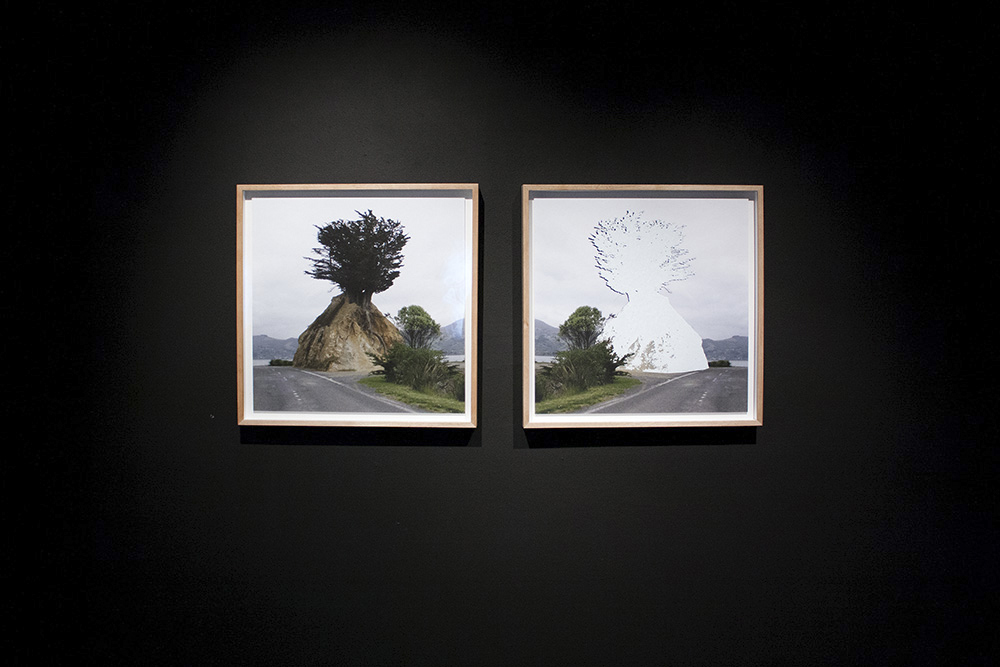
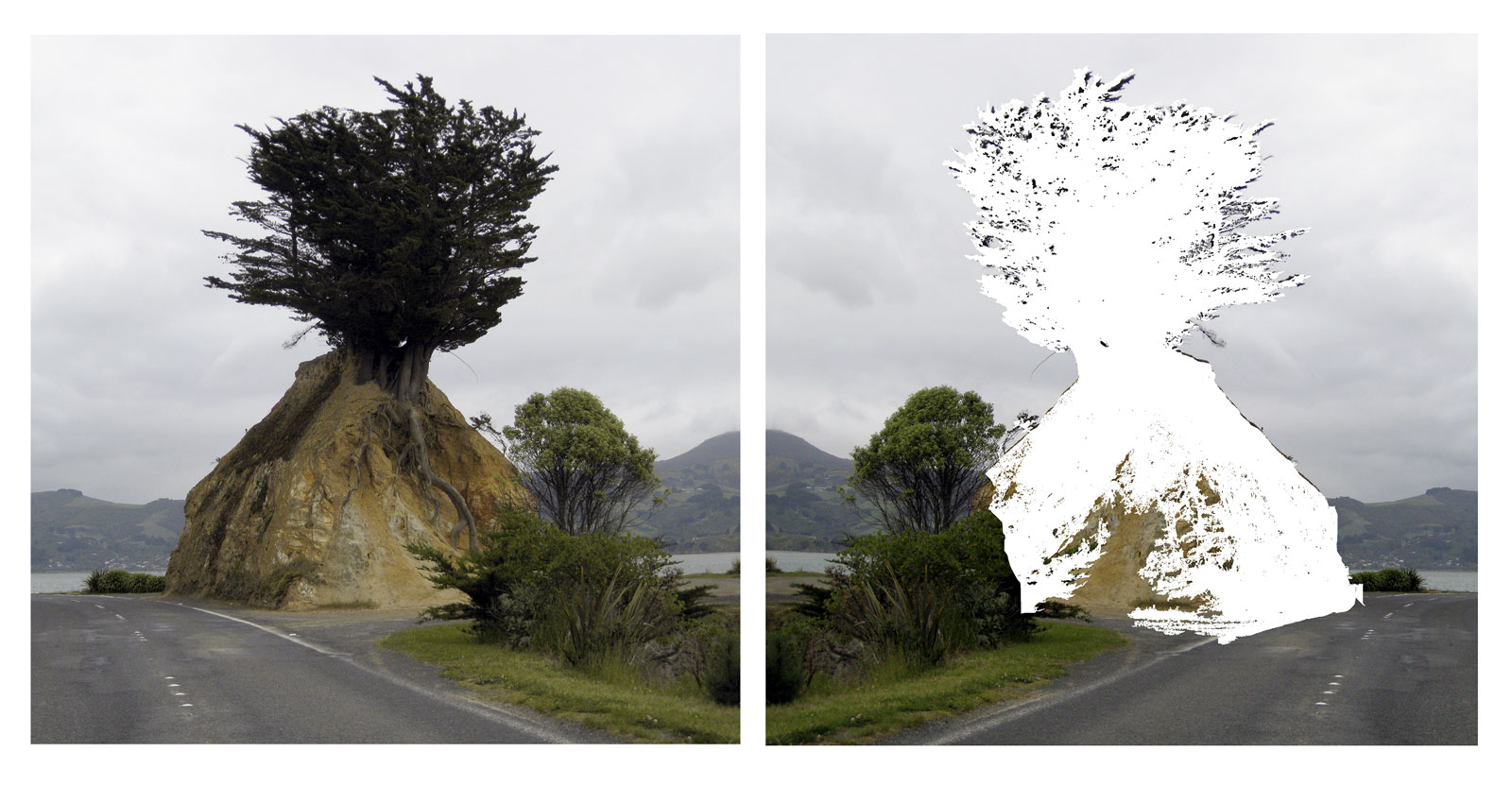
James Tylor (Australia, b. 1986) '(Deleted scenes) From an untouched landscape #3' 2013


James Tylor (Australia, b. 1986)
(Deleted scenes) From an untouched landscape #3
2013
Inkjet print on Hahemuhle paper with hole removed to a black velvet void, ed. 4/5
Photo: Christian Capurro


James Tylor (Australia, b. 1986) '(Deleted scenes) From an untouched landscape #1' 2013


James Tylor (Australia, b. 1986)
(Deleted scenes) From an untouched landscape #1
2013
Inkjet print on Hahemuhle paper with hole removed to a black velvet void, ed. 4/5
Photo: Christian Capurro


James Tylor (Australia, b. 1986) 'Un-resettling (stone footing for dome hut)' 2013


James Tylor (Australia, b. 1986)
Un-resettling (stone footing for dome hut)
2013
Hand coloured archival inkjet prints
Courtesy of the artist


Born in Mildura, Victoria. Lives and works in Adelaide, South Australia

Australian cities and communities feature a wide array of memorials, however the long history of Indigenous Australia is almost entirely absent from such solid forms of public acknowledgement. In Un-resettling James Tylor presents the beginnings of a formal typology of Indigenous dwellings, a number of which relate to his own personal heritage. Tylor states, “Un-resettling seeks to place traditional Indigenous dwellings back into the landscape as a public reminder that they once appeared throughout the area.” Tylor’s photographs remind us of the invisible histories of this land, for instance the fertile volcanic plains west of Melbourne with remnants of stone dwellings and larger ceremonial sites of which there is little public knowledge.


Kader Attia (French Algerian, b. 1970) 'Rochers carrés' 2008


Kader Attia (French Algerian, b. 1970)
Rochers carrés [Square rocks]
2008
Courtesy of the artist and Galerie Nagel Draxler, Berlin and Cologne


'Concrete' installation view, Monash University Museum of Art, 2014


Concrete installation view, Monash University Museum of Art, 2014
Justin Trendall (at right), Tom Nicholson (on floor, see below), James Tylor (back wall middle, see above), Kader Attia (back wall left, see above)
Photo: Christian Capurro


'Concrete' installation view, Monash University Museum of Art, 2014


Concrete installation view, Monash University Museum of Art, 2014
Justin Trendall (back left), Tom Nicholson (on floor, see below), Rä di Martino (back wall right, see below)
Photo: Marcus Bunyan


Rä di Martino (Italian, b. 1975) 'No More Stars (Abandoned Movie Set, Star Wars)' 2010 (detail)


Rä di Martino (Italian, b. 1975)
No More Stars (Abandoned Movie Set, Star Wars) 33°50’34 N 7°46’44 E Chot El-Gharsa, Tunisia 01 September 2010 (detail)
2010
Series of 9 photographs, unique edition, lambda prints, wooden frame
30cm x 30cm each


No More Stars (Abandoned Movie Set, Star Wars) 33°50’34 N 7°46’44 E Chot El-Gharsa, Tunisia 01 September 2010 is a series of photographs taken in the abandoned movie sets of the film saga Star Wars, filmed through the years in different locations in the south of Tunisia. Unexpectedly those sets have been left on the locations so after years have now mostly become ruins, almost as some sort strange archeological sites. The particular hot and dry climate has helped maintain intact many parts of the sets, or buried under the sand just sections of it. (Artist statement)


In September 2010, New York-based visual artist and filmmaker Rä di Martino set out on a quest to photograph and document old abandoned film sets in the North African deserts of Tunisia. The project had started when she discovered that it was common practice to abandon these sets without tearing them down, leaving them fully intact and crumbling over time, like archeological ruins. Martino spent that month traveling around Chott el Djerid in Tunisia, finding and photographing three Star Wars sets in all for her photo series No More Stars and Every World’s a Stage.

“I think is very interesting the amazing poetic potential of those ruins, being ruins of something that was the future in our imagination,” Martino explained in an email to The Huffington Post. “It’s bewildering to see the biological decay of those cheap materials, which once built perfect images of our past and future.”


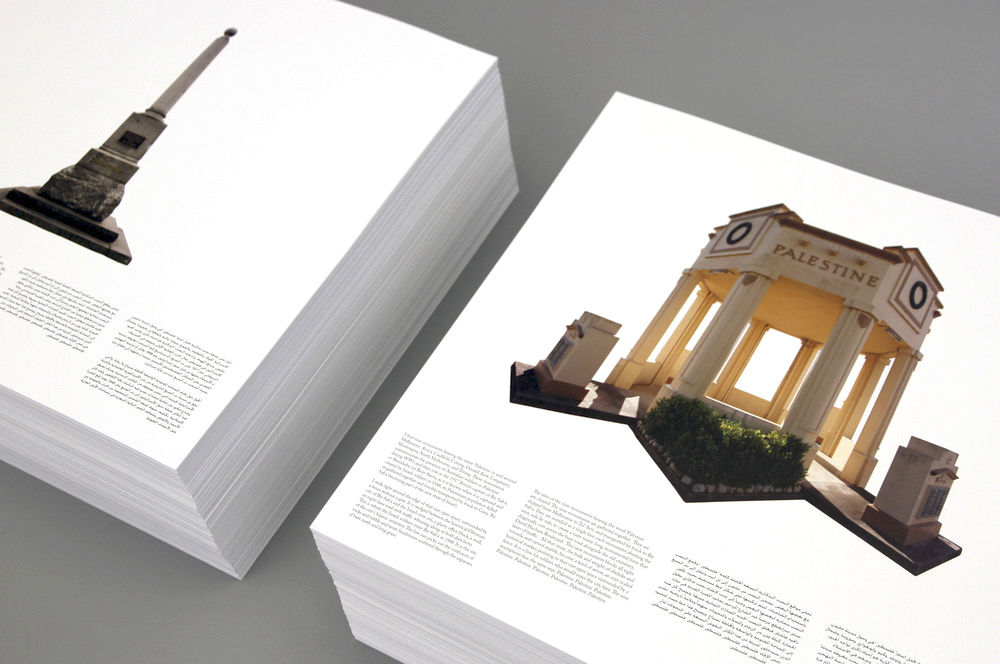
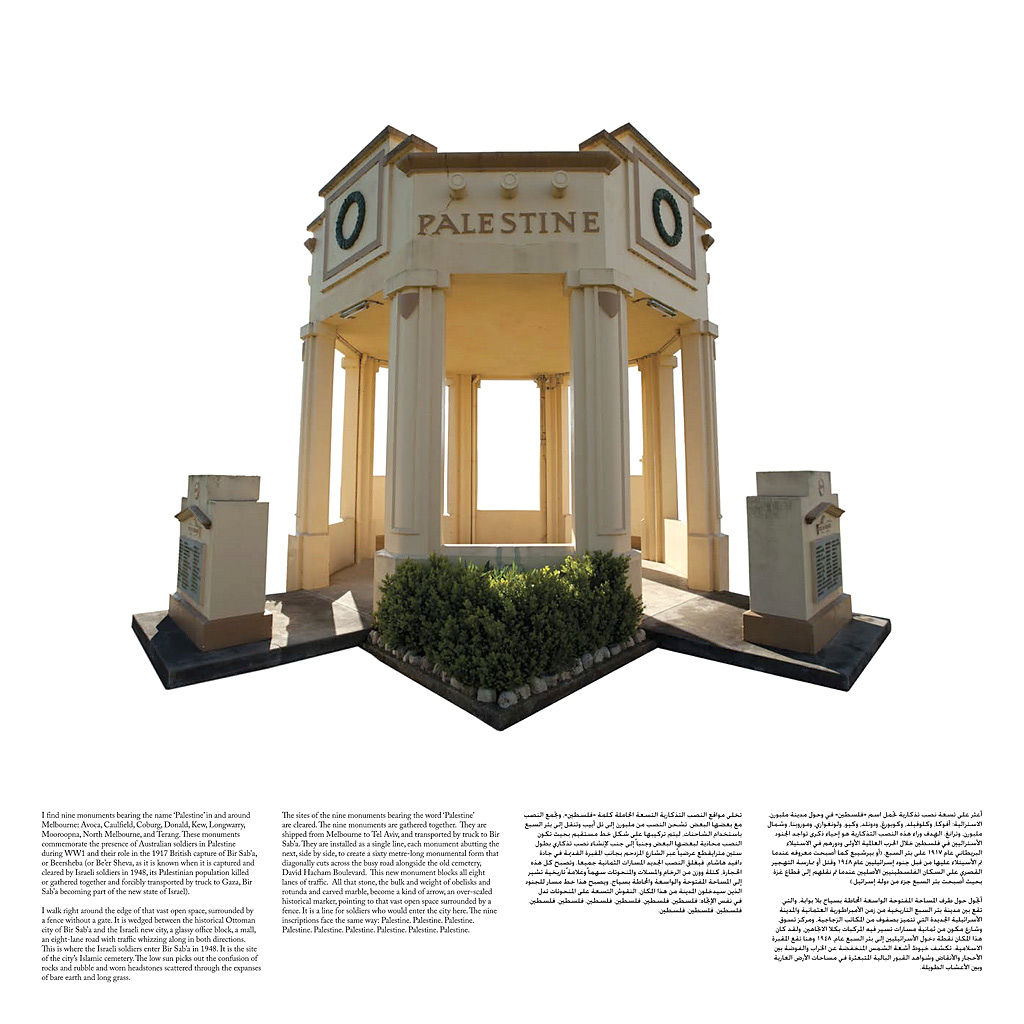
Tom Nicholson (Australian, b. 1973) 'Comparative monument (Palestine)' 2012


Tom Nicholson. 'Comparative monument (Palestine)' 2012


Tom Nicholson (Australian, b. 1973)
Comparative monument (Palestine)
2012
9 stacks of 1000 two-sided off-set printed posters
50 x 50cm each


Proposition for a monument, articulated as 9 stacks of 1000 two-sided off-set printed posters, each 50 x 50cm, for visitors to take away, and also pasted up around Ramallah.

Comparative monument (Palestine) is a proposition for a future monument, which takes the form of nine stacks of posters, from which the audience is free to take a poster. The project began with a search for war monuments bearing the name ‘Palestine’ erected in and around Melbourne in the early 1920s to commemorate the presence of Australian troops in Palestine during WW1. This project rethinks possibilities for the monument and suggests new forms of connection between different parts of the world and their histories.

Throughout Australia, war monuments bear the name “Palestine” to commemorate the presence of Australian troops in Palestine during World War I and, in particular, Australian involvement in the 1917 British capture of Beersheba (in turn a critical city in the events of 1948 and the Nakba). These monuments also reflect the realities of the 1920s (when they were erected) and the era of the British Mandate, when the name Palestine implicitly invoked the shared position of Australia and Palestine within British imperialism. Comparative monument (Palestine) begins with a complete photographic record of these monuments bearing the name “Palestine” in and around Melbourne. Figuring this material into a Palestinian context – both a kind of “homecoming” and exile for these Australian monumental forms – becomes a way to reanimate these linkages between Australia and Palestine. In these forms dedicated to 1917, Nicholson implicates the events and repercussions of 1948 with their echoes of Australian Aboriginal experiences of dispossession and colonial violence. Comparative monument (Palestine) is an attempt to rethink the possibilities of the monument in the face of these histories of dispossession and the acts of imagination and solidarity these histories demand.


Nicholas Mangan (Australian, b. 1979) 'Some kinds of duration' 2011 (detail)


Nicholas Mangan (Australian, b. 1979)
Some kinds of duration (detail)
2011
Installation view, Monash University Museum of Art, 2014
Photo: Marcus Bunyan
 

Nicholas Mangan (Australian, b. 1979) 'Some kinds of duration' 2011


Nicholas Mangan (Australian, b. 1979)
Some kinds of duration
2011
Installation view, Monash University Museum of Art, 2014
Photo: Christian Capurro


MUMA’s second exhibition for 2014, Concrete brings together the work of twelve artists, both Australian and international. The exhibition explores the concrete, or the solid and its counter: change, the flow of time. As we prepare to mark the centenary of the First World War, the exhibition considers the impact of time upon built and monumental form, reading between materiality and emotion, form and memory.

Monuments reflect a desire for commemoration, truth, honour and justice. Equally, they may function to consolidate political power and national identity. Works in the exhibition locate the monumental in relation to longer cycles of construction, displacement and erasure; archaeology, geology and palaeontology; the shifting politics of memory and ways to describe a history of place.

“Concrete explores the human desire to mark our presence as a complex drive for memory – as well as the need for a blank or negative, a placeholder for the unknowable, the unsayable, the missing.”

Exhibition curator, Geraldine Kirrihi Barlow:

“Concrete introduces a number of artists to Australian audiences for the very first time. Continuing MUMA’s highly regarded series of thematic and discursive exhibitions, and presenting a broad range of significant projects, Concrete considers the function of monuments and ruins from poetic, material and political perspectives.”

Director, Charlotte Day

Text from the MUMA press release


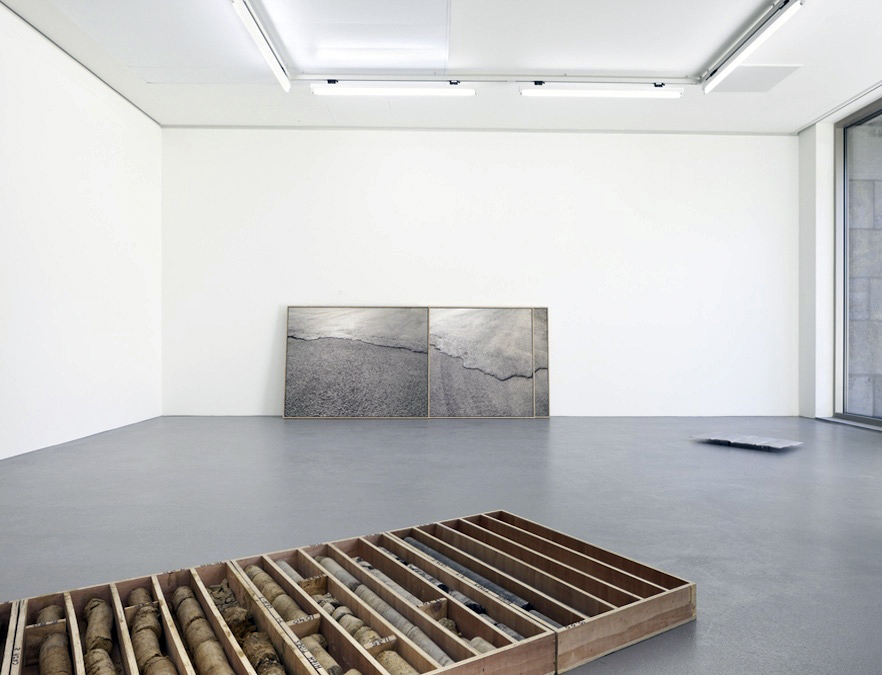
Carlos Irijalba (Spanish, b. 1979) 'High Tides (drilling)' 2012 (installation view)


Carlos Irijalba (Spanish, b. 1979)
High Tides (drilling) (installation view)
2012
Installation view
Courtesy of the artist


Carlos Irijalba (Spanish, b. 1979) 'High Tides (drilling)' 2012 (installation view detail)


Carlos Irijalba (Spanish, b. 1979)
High Tides (drilling) (installation view detail)
2012
Photo: Marcus Bunyan


Born in Pamplona, Spain, 1979. Lives and works in Amsterdam, Netherlands

High Tides (drilling) by Carlos Irijalba presents a 17 metre drilling core from the site of a former weapons factory in the Urdaibai or Guernica Estuary, Basque Country. Beneath an asphalt ‘cap’, layers of soil, clay, limestone and the sedimentary rock Marga are evident. The bombing of Guernica is remembered for its devastating impact upon the civilian population and was the subject of an iconic painting by Pablo Picasso. Irijalba offers a window into the history of this place, as well as longer geological measures of time and materiality.

Tides I, II and III 2012 is a series of three photographs of converging layers of asphalt from which the sample has been taken. Together, these images detail a common surface so ubiquitous we cannot value it as rare or particular. And yet these images record a very specific piece of ‘ground’ or earth, just as they also suggest a vast aerial view, perhaps the meeting of two oceans.


'Concrete' installation view, Monash University Museum of Art, 2014


Concrete installation view, Monash University Museum of Art, 2014
Laurence Aberhart (left), Jamie North (doorway), Carlos Irijalba (right)
Photo: Christian Capurro


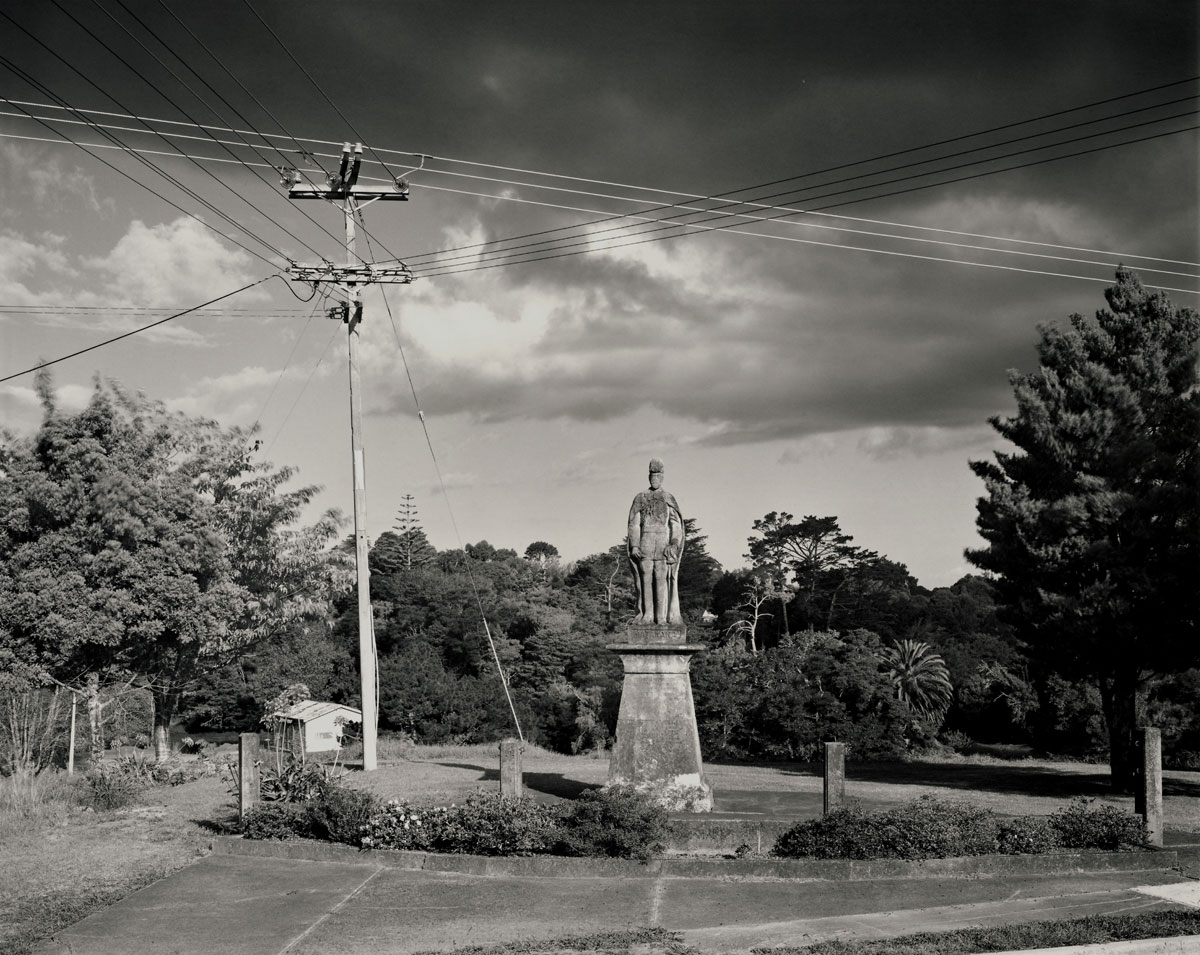
Laurence Aberhart (New Zealand, b. 1949) 'Auroa Taranaki' 1991


Laurence Aberhart (New Zealand, b. 1949)
Auroa Taranaki
1991
Silver gelatin photograph


Laurence Aberhart (New Zealand, b. 1949) 'Matakana, North Auckland' 1994


Laurence Aberhart (New Zealand, b. 1949)
Matakana, North Auckland
1994
Silver gelatin photograph


Born in New Zealand, 1949. Lives and works in Russell, Northland, New Zealand

Photographer Laurence Aberhart is drawn to the edge of dominant historical narratives, creating archives of built and monumental forms particular to certain places and periods of time. He returns to these chosen subjects repeatedly. His photographs of the ANZAC memorials of Australia and New Zealand have been taken over the past thirty years. Familiar across both countries, the memorials were built after the First World War to commemorate those who served with the Australia and New Zealand Army Corps. Very few families were able to visit the graves of those who died, and so these monuments served the bereaved as well as larger national concerns. As we approach the centenary of the war, these memorials are the focus of greater attention, yet what they mean is difficult to lock down. In these images the single figure on each column is a fixed point against landscapes in states of constant change.


Saskia Doherty. 'Footfalls' 2013-2014


Saskia Doherty
Footfalls
2013-2014
Cast concrete and printed paper
Installation view, Monash University Museum of Art, 2014
Photo: Christian Capurro


Saskia Doherty poetically references the Samuel Beckett play Footfalls, expanding on an image of famed American palaeontologist Dr Barnum Brown discovering a dinosaur footprint with texts and concrete sculptural gestures, describing the footprint as “a vastly preserved index of a life”.


Jamie North (Australian, b. 1971) 'Tropic cascade #1 and #2' 2014


Jamie North (Australian, b. 1971)
Tropic cascade #1 and #2
2014
Cement, blast furnace slag, coal ash, galvanised steel, Australian native plants
Installation view, Monash University Museum of Art, 2014
Photo: Christian Capurro


Jamie North (Australian, b. 1971) 'Tropic cascade #2' 2014 (installation view detail)


Jamie North (Australian, b. 1971)
Tropic cascade #2 (installation view detail)
2014
Cement, blast furnace slag, coal ash, galvanised steel, Australian native plants
Installation view, Monash University Museum of Art, 2014
Photo: Marcus Bunyan


Monash University Museum of Art (MUMA)
Ground Floor, Building F.
Monash University Caulfield campus
900 Dandenong Road
Caulfield East, VIC 3145
Phone: 61 3 9905 4217

Opening hours:
Tuesday – Friday 10am – 5pm
Saturday 12 – 5pm

Monash University Museum of Art (MUMA) website

LIKE ART BLART ON FACEBOOK

Back to top

Exhibition: ‘Public Intimacy: Art and Other Ordinary Acts in South Africa’ at the Yerba Buena Center for the Arts, San Francisco

Exhibition dates: 21st February – 29th June, 2014

Exhibition artists

Public Intimacy presents

~ Photography by Ian Berry, Ernest Cole, David Goldblatt, Terry Kurgan, Sabelo Mlangeni, Santu Mofokeng, Billy Monk, Zanele Muholi, Lindeka Qampi, Jo Ractliffe, and Mikhael Subotzky and Patrick Waterhouse
~ Video works by William Kentridge, Donna Kukama, Anthea Moys, and Berni Searle
~ Painting and sculpture by Nicholas Hlobo and Penny Siopis
~ Puppetry by Handspring Puppet Company
~ Publications, prints, graphic works, and public interventions by Chimurenga, ijusi (Garth Walker), Anton Kannemeyer, and Cameron Platter
~ Performances by Athi-Patra Ruga, Kemang Wa Lehulere, and Sello Pesa and Vaughn Sadie with Ntsoana Contemporary Dance Theatre


Santu Mofokeng (South Africa, 1956-2020) 'Opening Song, Hand Clapping and Bells' 1986 from the exhibition 'Public Intimacy: Art and Other Ordinary Acts in South Africa' at the Yerba Buena Center for the Arts, San Francisco, February - June, 2014


Santu Mofokeng (South Africa, 1956-2020)
Opening Song, Hand Clapping and Bells
1986
From the series Train Church
Pigment print
9 13/16 x 13 3/4 in. (25 x 35cm)
© Santu Mofokeng


Continuing my fascination with South African art and photography, here is another exhilarating collection of work from an exhibition jointly arranged between SFMOMA and the Yerba Buena Center for the Arts, San Francisco. This art has so much joy, life, movement and “colour”. I particularly like The Future White Women of Azania series by Athi-Patra Ruga, who presented his work at the 55th Venice Biennale in the African pavilion. Thank god not another rehashed colonial image, even though he is working with the tropes of myth and the history of Africa as a contemporary response to the post-apartheid era.

Dr Marcus Bunyan


Many thankx to SFMOMA and Yerba Buena Center for the Arts for allowing me to publish the installation photographs in the posting. Most of the other photographs were gathered from the internet. Please click on the photographs for a larger version of the image.


“Disrupting expected images of South Africa, the 25 contemporary artists and collectives featured in Public Intimacy eloquently explore the poetics and politics of the everyday. This collaboration with Yerba Buena Center for the Arts presents pictures from SFMOMA’s collection of South African photography alongside works in a broad range of media, including video, painting, sculpture, performance, and publications – most made in the last five years, and many on view for the first time on the West Coast. Coinciding with the 20th anniversary of democracy in South Africa, Public Intimacy reveals the nuances of human interaction in a country still undergoing significant change, vividly showing public life there in a more complex light.”

Text from the SFMOMA website


Santu Mofokeng (South Africa, 1956-2020) 'Leading in Song, Johannesburg – Soweto Line' 1986


Santu Mofokeng (South Africa, 1956-2020)
Leading in Song, Johannesburg – Soweto Line
1986
From the series Train Church
Pigment print
9 13/16 x 13 3/4 in. (25 x 35cm)
© Santu Mofokeng


Santu Mofokeng (South Africa, 1956-2020) 'Hands in Worship, Johannesburg – Soweto Line' 1986


Santu Mofokeng (South Africa, 1956-2020)
Hands in Worship, Johannesburg – Soweto Line
1986
From the series Train Church
Pigment print
9 13/16 x 13 3/4 in. (25 x 35cm)
© Santu Mofokeng


These images, by the South African photographer Santu Mofokeng, ostensibly depict scenes of segregated transport during apartheid. Yet in their composition they evoke something more: the rhythms and textures of everyday life. Taken from within and among a crowd of commuters, the pictures seem to sway with the velocity of the train carriage. Shards of light blur the edges of figures, interplaying with shifting shadows as passengers move in unison. Titled “Train Church,” Mofokeng’s series was made during a few weeks in 1986, and in South Africa it became veritably synonymous with his name. Mofokeng, who died in January, at the age of sixty-three, was a photographer whose body of work – both images and text – waded through themes of history and land, memory and spirituality, and helped shape the course of South African photography.

Oluremi C. Onabanjo. “How Santu Mofokeng Shaped South African Photography,” on The New Yorker website February 24, 2020 [Online] Cited 10/04/2021. Used under fair use conditions for the purposes of education and research


Santu Mofokeng (South Africa, 1956-2020) 'Supplication, Johannesburg – Soweto Line' 1986


Santu Mofokeng (South Africa, 1956-2020)
Supplication, Johannesburg – Soweto Line
1986
From the series Train Church
Pigment print
9 13/16 x 13 3/4 in. (25 x 35cm)
© Santu Mofokeng


Ian Berry (British, b. 1934) 'Guests at a 'moffie'drag party' Cape Town, South Africa, 1960


Ian Berry (British, b. 1934)
Guests at a ‘moffie’drag party
Cape Town, South Africa, 1960
Silver gelatin photograph


Ian Berry (British, b. 1934)

Ian Berry was born in Lancashire, England. He made his reputation in South Africa, where he worked for the Daily Mail and later for Drum magazine. He was the only photographer to document the massacre at Sharpeville in 1960, and his photographs were used in the trial to prove the victims’ innocence.

He moved to South Africa in 1952, where he soon taught himself photography. He worked under the tutelage of Roger Madden, a South African photographer who had been an assistant to Ansel Adams. After some time as an amateur photographer, Berry began photographing communities and weddings. During this period he met Jürgen Schadeberg, also a European immigrant and photographer. Schadeberg was offered a position with the new African Sunday newspaper eGoli but declined, suggesting Berry apply for the position instead. After working there only 10 months, the newspaper closed, and Berry began working for the Benoni City Times, but he soon became more interested in freelance work.

Berry returned to Great Britain and traveled for some time but returned to South Africa in the early 1960s and worked for the Daily Mail. Later Tom Hopkinson, previously editor of the British Picture Post, hired Berry to work for Drum magazine. He was in Sharpeville on 21 March 1960, when a peaceful protest turned violent, leading to the deaths of 69 people and the wounding of 178 others by police. There were no other photographs documenting the events, and Berry’s were entered into evidence in the court proceedings proving that the victims had done nothing wrong. Berry was invited by Henri Cartier-Bresson to join Magnum Photos in 1962 when he was based in Paris; five years later he became a full member. In 1964 he moved to London and began working for Observer Magazine. He has since traveled the globe, documenting social and political strife in China, Republic of Congo, Czechoslovakia, Ethiopia, Israel, Ireland, Vietnam, and the former Soviet Union. He has contributed to publications including Esquire, Fortune, Geo, Life, National Geographic, Paris-Match, and Stern.

Text from the Wikipedia website


Billy Monk (South African, 1937-1982) 'The Catacombs, 30 September 1967' 1967, printed 2011 from the exhibition 'Public Intimacy: Art and Other Ordinary Acts in South Africa' at the Yerba Buena Center for the Arts, San Francisco, February - June, 2014


Billy Monk (South African, 1937-1982)
The Catacombs, 30 September 1967
1967, printed 2011
Gelatin silver print
10 1/16 x 14 15/16 in. (25.56 x 37.94 cm)
Collection SFMOMA, Accessions Committee Fund purchase
© Estate of Billy Monk


Billy Monk (South African, 1937-1982) 'The Catacombs, 5 February 1968' 1968, printed 2011


Billy Monk (South Africa, 1937-1982)
The Catacombs, 5 February 1968
1968, printed 2011
Gelatin silver print
11 x 16 in. (27.94 x 40.64cm)
Courtesy of Stevenson, Cape Town and Johannesburg
© Estate of Billy Monk


Billy Monk (South Africa, 1937-1982)

William John Monk (died 31 July 1982) was a South African, known for his photographs of a Cape Town nightclub between 1967 and 1969, during apartheid. In 2012 a posthumous book was published, Billy Monk: Nightclub Photographs. …

When Monk’s work as a bouncer did not work out he took up photography. Still working in The Catacombs, he began to make his living taking pictures of the diverse clientele in a seedy bar. He used a Pentax camera, with a 35 mm focal-length lens, a small flash and Ilford FP4 film. Monk stopped taking pictures in 1969. His photographs show a variety of the underbelly of Cape Town life at the time – ranging from old men with young wives and gay couples, to midgets and mixed race relationships, he shows a side of life under apartheid that is rarely seen elsewhere.

Discovery of his work

Monk’s work was discovered in 1979 by Jac de Villiers, when he moved into Monk’s old studio. Not only were they already well constructed by the photographer, they were also impeccably annotated with dates and names, which made curation a simple and enjoyable process. The first exhibition of Monk’s work took place at the Market Gallery in Johannesburg in 1982 – and although Monk could not attend the event it was subject to much critical acclaim.

Apartheid

Monk was working during apartheid in South Africa – a time when the colour of your skin was indicative of where you could live, work, who you could marry, and where you could drink. The underground lifestyle of The Catacombs allowed for dissent. Monk chose to take pictures originally as a way of making money, by selling them to his clients.

His photographs reveal a variety of clientele. Some are sloppy, some are neat and put together. Many of the women are heavily made up with short dresses, and almost all the photographs are highly sexually charged. The photographs reveal much of what was not allowed under apartheid rule – specifically a variety of same sex and mixed race couples.

Text from the Wikipedia website


Zanele Muholi (South Africa, b. 1972) 'Nomonde Mbusi, Berea, Johannesburg' 2007


Zanele Muholi (South Africa, b. 1972)
Nomonde Mbusi, Berea, Johannesburg
2007
From the Faces and Phases series
Gelatin silver print
23 13/16 in. x 34 1/16 in. (60.5 cm x 86.5cm)
Courtesy of the artist and Stevenson, Cape Town and Johannesburg
© Zanele Muholi


Zanele Muholi (South Africa, b. 1972)

Muholi’s work addresses the reality of what it is to be LGBT (lesbian, gay, bisexual, transgender) in South Africa. She identifies herself as a visual activist, dealing with issues of violation, violence and prejudice that she and her community face, despite South Africa’s progressive constitution.

In Faces and Phases, she sets out to give visibility to black lesbians and to celebrate the distinctiveness of individuals through the traditional genre of portraiture. The portraits are taken outdoors with a hand-held camera to retain spontaneity and often shown in a grid to highlight difference and diversity. In the series Beulahs, she shows young gay men, wearing Zulu beads and other accessories usually worn by women, who invert normative gender codes in both costume and pose. At the same time her photographs evoke tourist postcards and recycled stereotypes of Africans and recall traditional anthropological and ethnographic iconography.

Faces and Phases, is a group of black and white portraits that I have been working on from 2006 until now – it has become a lifetime project. The project is about me, the community that I’m part of. I was born in the township: I grew up in that space. Most of us grew up in a household where heterosexuality was the norm. When you grow up, you think that the only thing that you have to become as a maturing girl or woman is to be with a man; you have to have children, and also you need to have lobola or “bride price” paid for you. For young men, the expectation for them is to be with women and have wives and procreate: that’s the kind of space which most of us come from. We are seen as something else by society – we are seen as deviants. We’re not going to be here forever, and I wanted to make sure that we leave a history that is tangible to people who come after us.”

Zanele Muholi, interviewed by Tamar Garb, South Africa, 2010.
Text from the V&A website


David Goldblatt (South Africa, 1930-2018) 'Woman smoking, Fordsburg, Johannesburg' 1975


David Goldblatt (South Africa, 1930-2018)
Woman smoking, Fordsburg, Johannesburg
1975
Pigment inkjet print
23 5/8 in. x 29 1/2 in. (60 cm x 75cm)
Collection SFMOMA, Accessions Committee Fund purchase
© David Goldblatt


David Goldblatt HonFRPS (29 November 1930 – 25 June 2018) was a South African photographer noted for his portrayal of South Africa during the period of apartheid. After apartheid had ended he concentrated more on the country’s landscapes. What differentiates Goldblatt’s body of work from those of other anti-apartheid artists is that he photographed issues that went beyond the violent events of apartheid and reflected the conditions that led up to them. His forms of protest have a subtlety that traditional documentary photographs may lack: “[M]y dispassion was an attitude in which I tried to avoid easy judgments. … This resulted in a photography that appeared to be disengaged and apolitical, but which was in fact the opposite.”


Jointly organised by the San Francisco Museum of Modern Art (SFMOMA) and Yerba Buena Center for the Arts (YBCA), Public Intimacy: Art and Other Ordinary Acts in South Africa brings together 25 artists and collectives who disrupt expected images of a country known through its apartheid history. The exhibition features an arc of artists who look to the intimate encounters of daily life to express the poetics and politics of the “ordinary act,” with work primarily from the last five years as well as photographic works that figure as historical precedents. On view at YBCA February 21 through June 29, 2014, Public Intimacy presents more than 200 works in a wide range of mediums, many of them making U.S. or West Coast debuts.

The exhibition joins SFMOMA’s important and growing collection of South African photography with YBCA’s multidisciplinary purview and continued exploration of the Global South. Significant documentary photography is paired with new photographs and work in other mediums, including video, painting, sculpture, performance, and publications, to reveal the multifaceted nuances of everyday life in a country still undergoing significant change. Coinciding with the 20th anniversary of democracy in South Africa, Public Intimacy looks at the way artists imagine present and future possibilities in South Africa. A new orientation emerges through close-up views of street interactions, portraiture, fashion and costume, unfamiliar public actions, and human imprints on the landscape.

The exhibition’s three curators – Betti-Sue Hertz, director of visual arts at YBCA; Frank Smigiel, associate curator of public programs at SFMOMA; and Dominic Willsdon, Leanne and George Roberts Curator of Education and Public Programs at SFMOMA – developed the show after visits to South Africa, where they met with artists, curators, and critics. The exhibition – and a companion publication to be published in fall 2014 – grew out of this research.

“Although South Africa’s political history remains vital to these artists and is important for understanding their work, Public Intimacy offers a more subtle view of the country through personal moments,” said Hertz. “It goes against expectations in order to reveal the smaller gestures and illuminate how social context has affected artists and how they work.”

“The familiar image of contemporary South Africa as a place of turmoil is, of course, not the whole story,” added Willsdon. “The art in this exhibition restages how those violent incidents fit in the broader realm of human interactions – a way of showing public life there in a more complex light.”

“Another central aspect of the exhibition is live performance,” said Smigiel. “Three major live works will unfold both in and outside the gallery context, offering a way to situate and reframe San Francisco through the lens of what artists are producing in South Africa.”

Public Intimacy is part of SFMOMA’s collaborative museum exhibitions and extensive off-site programming taking place while its building is temporarily closed for expansion construction through early 2016. As neighbours across Third Street in San Francisco, YBCA and SFMOMA have partnered in the past on various performance and exhibition projects, but Public Intimacy represents the deepest collaboration of shared interests to date between the two institutions. It also brings together SFMOMA’s approach to curating live art and YBCA’s multidisciplinary interest in exhibitions, social practice, and performances.

Exhibition highlights

While the exhibition explores new approaches to daily life in post-apartheid South Africa, it also makes visible the continued commitment of artists to activism and contemporary politics. Beginning with photographs from the late 1950s and after, the exhibition includes vital moments in the country’s documentary photography – from Ian Berry’s inside look at an underground drag ball to Billy Monk’s raucous nightclub photos – each capturing a moment of celebration within different social strata of South African society. Ernest Cole’s photographs of miners’ hostels and bars and Santu Mofokeng’s stirring photographs of mobile churches on commuter trains reveal everyday moments both tender and harsh.

David Goldblatt’s photographs depict the human landscape in apartheid and after, providing the genesis of the idea of “public intimacy.” Over decades of photographs in urban, suburban, and rural locations, Goldblatt has chronicled the changing nature of interpersonal engagement in South Africa. At the same time, they provide a historical backdrop and visual precedent for other artists in the exhibition, including Zanele Muholi and Sabelo Mlangeni.

Muholi has won several awards for her powerful photographic portraits as well as her activism on behalf of black lesbians in South Africa. Although best known for her photographs – in particular her Faces and Phases series – Muholi continuously experiments with an expanded practice including documentary film, beadwork, text, and her social-action organisation Inkanyiso, which gives visibility to conditions facing lesbians of colour in her country. “Sexual politics has been looked at less than racial politics in South Africa, but in many ways, the two have always been intertwined,” said Willsdon.

Mikhael Subotzky and Patrick Waterhouse bring another perspective to the upheavals of life in the city of Johannesburg with works from their Ponte City (2008-2010) series, comprised of photographs, video, and a publication offering various views of this centrally located and iconic 54-story building. The works illustrate the struggles facing many native and immigrant South Africans in the years following the dissolution of apartheid, including stalled economic growth and social opportunities.

In contrast to the daily realities pictured in photographic works in the exhibition, Athi-Patra Ruga’s ongoing performance series The Future White Women of Azania (2010-present) features fantastical characters – usually played by the artist – whose upper bodies sprout colourful balloons while their lower bodies pose or process in stockings and high heels. Ruga’s Azania is a changing utopia, and Smigiel notes the shift: “The balloons are filled with liquid, and as the figure moves through the streets, they start popping, so the character dissolves and reveals a performer, and the liquid spills out and into a rather sloppy line drawing.” A new iteration of the series, The Elder of Azania, will premiere in the YBCA Forum during the exhibition’s opening weekend.

Chimurenga, an editorial collective working at the intersection of pan-African culture, art, and politics produces publications, events, and installations. Founded in 2002 by Ntone Edjabe, the collective has created the Chimurenga Library, an online archiving project that profiles independent pan-African paper periodicals from around the world. Expanding upon this concept, their presence in Public Intimacy will have two elements: a text and media resource space in YBCA’s galleries and an intervention at the San Francisco Public Library main branch that will explore the history of pan-African culture in the Bay Area, scheduled to open in late May.

Providing one of the most personally vulnerable moments in the exhibition, Penny Siopis’s series of 90 small paintings on enamel, Shame (2002), provokes a visceral reaction. With red paint reminiscent of blood and bruises, Siopis mixes colour and text in an attempt to convey emotion rather than narrative. While she is interested in the guilt and embarrassment most frequently associated with shame, she also looks at the possibility for empathy that emerges from traumatic experiences.

In all of these works, explains Hertz, “We are looking at how art and activism align, but we’re also interested in how politics is embedded in less obviously political practices, such as Sabelo Mlangeni’s photographs of mining workers’ hostels, Penny Siopis’s powerful painting series about human vulnerability, or Nicholas Hlobo’s large-scale, organically shaped sculptures made primarily of rubber.

Text from the SFMOMA website


Installation view of the exhibition 'Public Intimacy: Art and Other Ordinary Acts in South Africa' at the Yerba Buena Center for the Arts, San Francisco

Installation view of the exhibition 'Public Intimacy: Art and Other Ordinary Acts in South Africa' at the Yerba Buena Center for the Arts, San Francisco

Installation view of the exhibition 'Public Intimacy: Art and Other Ordinary Acts in South Africa' at the Yerba Buena Center for the Arts, San Francisco

Installation view of the exhibition 'Public Intimacy: Art and Other Ordinary Acts in South Africa' at the Yerba Buena Center for the Arts, San Francisco

Installation view of the exhibition 'Public Intimacy: Art and Other Ordinary Acts in South Africa' at the Yerba Buena Center for the Arts, San Francisco

Installation view of the exhibition 'Public Intimacy: Art and Other Ordinary Acts in South Africa' at the Yerba Buena Center for the Arts, San Francisco


Installation views of the exhibition Public Intimacy: Art and Other Ordinary Acts in South Africa at the Yerba Buena Center for the Arts, San Francisco with, in the last photo, Nicholas Hlobo, Umphanda ongazaliyo (installation view), 2008; rubber, ribbon, zips, steel, wood, plaster; ICA Boston; © Nicholas Hlobo; photo: John Kennar.


Sabelo Mlangeni (South Africa, b. 1980) 'Couple Bheki and Sipho' 2009


Sabelo Mlangeni (South Africa, b. 1980)
Couple Bheki and Sipho
2009
From the series Country Girls
Gelatin silver print
40 x 30cm
Courtesy the artist and Stevenson, Cape Town and Johannesburg
© Sabelo Mlangeni


Figures & Fictions: Sabelo Mlangeni from Victoria and Albert Museum on Vimeo.


Anton Kannemeyer (South Africa, b. 1967) 'D is for dancing ministers' 2006


Anton Kannemeyer (South Africa, b. 1967)
D is for dancing ministers
2006
From the series Alphabet of Democracy
Lithograph on Chine Collé
22 1/16 x 24 in. (56 x 61cm)
Courtesy the artist and Stevenson, Cape Town and Johannesburg
© Anton Kannemeyer


Anton Kannemeyer (South Africa, b. 1967)

Anton Kannemeyer (born 1967) is a South African comics artist, who sometimes goes by the pseudonym Joe Dog.

Anton Kannemeyer was born in Cape Town. He studied graphic design and illustration at the University of Stellenbosch, and did a Master of Arts degree in illustration after graduating. Together with Conrad Botes, he co-founded the magazine Bitterkomix in 1992 and has become revered for its subversive stance and dark humour. He has been criticised for making use of “offensive, racist imagery”. Kannemeyer himself said that he gets “lots of hate mail from white Afrikaners”.

His works challenge the rigid image of Afrikaners promoted under Apartheid, and depict Afrikaners having nasty sex and mangling their Afrikaans. “X is for Xenophobia”, part of his “Alphabet of Democracy”, depicts Ernesto Nhamwavane, a Mozambican immigrant who was burnt alive in Johannesburg in 2008. Some of Kannemeyer’s works deal with the issues of race relations and colonialism, by appropriating the style of Hergé’s comics, namely from Tintin in the Congo. In “Pappa in Afrika”, Tintin becomes a white African, depicted either as a white liberal or as a racist white imperialist in Africa. In this stereotyped satire, the whites are superior, literate and civilised, and the blacks are savage and dumb. In “Peekaboo”, a large acrylic work, the white African is jumping up in alarm as a black man figure pokes his head out of the jungle shouting an innocuous ‘peekaboo!’ A cartoon called “The Liberals” has been interpreted as an attack on white fear, bigotry and political correctness: a group of anonymous black people (who look like golliwogs) are about to rape a white lady, who calls her attackers “historically disadvantaged men”.

Text from the Wikipedia website


Terry Kurgan (South Africa, b. 1958) 'Hotel Yeoville' 2012


Terry Kurgan (South Africa, b. 1958)
Hotel Yeoville
2012
Digital print on bamboo hahnemulle paper
Courtesy the artist
© Terry Kurgan


Penny Siopis (South Africa, b. 1953) 'Untitled' from the series 'Shame' 2002


Penny Siopis (South Africa, b. 1953)
Untitled from the series Shame
2002
Paint on enamel
© Penny Siopis


Penny Siopis (South Africa, b. 1953)

Siopis established herself as one of the most talented and challenging artists in South Africa and beyond, by working across painting, installation and film, bringing together diverse references and materials in ways that disturb disciplinary boundaries and binaries.

Concepts of time run through all her work often manifesting in the actual physical changes of her materials; in her early cake paintings oil paint is made to be unnaturally affected by gravity, age and decay; in her films using archival footage time is marked as much by the effects of age on the celluloid as by the historical period caught in the sweep of the camera; in her accumulations of found objects in her installations, ideas of the heirloom come to the fore with her ongoing conceptual work Will (1997- ) – in which she bequeaths objects to beneficiaries – being the ultimate time piece only becoming complete on her death; her glue and ink paintings index flux as they record the material transformation that happens when viscous glue matter reacts with pigment, gravity, the artist’s bodily gestures, and the drying effects of the air.

Siopis sees her art practice as ‘open form’, operating as an intimate model in which the physical changes of her materials can be extrapolated into a larger ethics of personal and political transformation. According to Achille Mbembe this quality marks her interest in process as a perpetual state of becoming and entails “the crafting of an unstable relation between form and formlessness, in the understanding that the process of becoming proceeds in ways that are almost always unpredictable and at times accidental.”

Shame paintings

Siopis began the Shame paintings in 2002 and they became a key feature of her exhibition Three Essays on Shame (2005), an intervention in the museum of Sigmund Freud, once his house, in London. It was part of a project that marked the centenary of Freud’s groundbreaking publication Three Essays on the Theory of Sexuality. Responding to Freud, Siopis’ installation consisted of three parts located in Freud’s study (with the famous couch), dining room and bedroom and titled Voice, Gesture and Memory. The small paintings shown in a grid in this room were presented as a frieze in the Memory section of the original exhibition. The artist invokes this exhibition here through the arrangement of some of the objects from the installation on a table reminiscent of that in Freud’s dining room, where she had placed Baubo, one of Freud’s objects from his collection of antiquities. Baubo is a small terracotta figurine who gestures to her genitalia in a provocative way, an act some have interpreted as a show of shame that speaks of both vulnerability and empowerment.

In the installation Siopis also evoked a complex dialogue between Freud’s ideas and her personal experiences by inserting references (voice recordings and objects) to the traumatic proceedings of the South African Truth and Reconciliation Commission and colonial and apartheid history. Once again she was interested in binding the traces of human vulnerability and the dramatic effects of sweeping historical narratives.

In this body of work Siopis manipulates thick and gooey lacquer gel paint, used in home-craft to create stained glass and coloured mirror effects on surfaces. For her it is a physical process that moulds anxiety into form. It translates the result of childhood trauma that we know as shame onto a painted surface. Through the reflective qualities of the medium Siopis blends the bodily sensation with the experience of being looked at, both of which define shame. The use of language in the form of ready-made rubber stamped clichés that clash with the raw power of this familiar emotion further underscores the ‘unspeakable’ character of the experience.

Text from the Wikipedia website


Athi-Patra Ruga (South Africa, b. 1984) 'The Future White Women of Azania' 2012


Athi-Patra Ruga (South Africa, b. 1984)
The Future White Women of Azania
2012
Performed as part of Performa Obscura in collaboration with Mikhael Subotzky
Commissioned for the exhibition Making Way, Grahamstown, South Africa
Photo: Ruth Simbao, courtesy Athi-Patra Ruga and WHATIFTHEWORLD / GALLERY


Athi-Patra Ruga (South Africa, b. 1984) 'The Future White Women of Azania' 2012


Athi-Patra Ruga (South Africa, b. 1984)
The Future White Women of Azania
2012
Performed as part of Performa Obscura in collaboration with Mikhael Subotzky
Commissioned for the exhibition Making Way, Grahamstown, South Africa
Photo: Ruth Simbao, courtesy Athi-Patra Ruga and WHATIFTHEWORLD / GALLERY


Athi-Patra Ruga (South Africa, b. 1984)

Athi-Patra Ruga (born in 1984) is a South African artist who uses performance, photography, video, textiles, and printmaking to explore notions of utopia and dystopia, material and memory. His work explores the body in relation to sensuality, culture, and ideology, often creating cultural hybrids. Themes such as sexuality, HIV/AIDS, African culture, and the place of queerness within post-apartheid South Africa also permeate his work. …

Future White Women of Azania (FWWoA, 2010-2016)

FWWoA consists of several works, including performance, tapestry, sculpture, video, and photography creating a saga. FWWoA is an allegory of post apartheid nationalism, where Ruga then becomes the “elder” or historian. Creating this constellationary history, drawing references from pre Xhosa history and post apartheid South Africa, tells the history of the non-dynastic line of queens who rule the lands of Azania. Ruga’s works are attentive to the demands for justice for his ancestors and the need for radical transformation in the future, to shatter the ideologies of “rainbowism”. By using Azania as the framework for a critical history of South Africa, FWWoA reveals the silencing of black voices that extends back to the first moments of colonial contact, while also addressing the impossible and unrealized ideologies of forgiveness, reconciliation and redemption practiced in a post apartheid South African.

Azania’s allegorical capacity derives from its status as a symbol of a liberated South Africa during the anti-apartheid struggle. However, the term has a specific history that complicates such dreams. The place name ‘Azania’ first appears in The Periplus of the Erythraean Sea (40 AD) to refer to the lands of southern and eastern Africa. By designating the lands of Africa as ‘Azania’, Ruga understands the label as one example in a long history of constructing Africa as uninhabited until European colonial contact.

Ruga’s tapestries in the FWWoA saga chronicles allegorical depictions of queens, maps, and other iconography of Azania. The struggles of the non-dynastic line of queens depicting signifiers of an Azanian national identity: national seal, crest, flower, maps, while also including Ruga’s long standing interest in popular culture. Taking inspirations from Gustave Eiffel’s ‘Statue of Liberty’ or Eugene Delacroix’s ‘Liberty Leading the People’, Ruga brings about the idea of objectifying the woman’s body as the conflict, but in his own work creates them as powerful but passive. In his work ‘The Lands of Azania’, Ruga reworks the map of Eastern Africa. Insetting a national animal, the saber-tooth zebra, the Azanian flag, and giving several countries new names. Throughout the geography of Azania he further explores the overlaps of exile and diaspora in the African and Jewish communities.

A narrative with five characters, a national flower, crest and animal including the rainbow coloured balloon characters. One of Ahti-Patra’s goals was to make a myth accessible even for children. A cute figure that has the capacity to be festive, create fanfare yet become disquieting when it violently pops and bleeds.

Text from the Wikipedia website


Athi-Patra Ruga (South Africa, b. 1984) 'The Night of the Long Knives I' 2013


Athi-Patra Ruga (South Africa, b. 1984)
The Night of the Long Knives I
2013


Archival inkjet Print on Photorag Baryta
202 x 157cm


The Future White Woman of Azania is an ongoing series of performances first conceived in 2010 and evolving to engage new definitions of nationhood in relation to the autonomous body. In the enactment of the site-specific work commissioned for the 55th Venice Biennale, the performance takes the form of an absurdist funerary procession. The participants are the ABODADE – the sisterhood order of Azania and the central protagonist – The Future White Woman.

“Azania, as a geographic location, is first described in 1stCentury Greek records of navigation and trade, The Peryplus of the Erythrean Sea and is thought to refer to a portion of the East and Southern African coast. The word Azania itself is thought to have been derived from an Arabic word referring to the ‘dark-skinned inhabitants of Africa.’

Azania is then eulogised in the black consciousness movement as a pre-colonial utopian black homeland – this Promised Land, referenced in struggle songs, political sermons and African Nationalist speeches. In Cold War pop culture, Marvel Comics used Azania as a fictional backdrop to a Liberation story that bares a close resemblance to the situation that was Apartheid in Old South Africa… so it is at once a mythical and faintly factual place/state that this performance unfolds… Who are the Azanians for what it’s worth? It is in this liminal state that the performance unfolds…”

Seeking to radically reimage the potential of Azania and its inhabitants, the performance questions the mythical place that we mourn for and asks who its future inhabitants may be. Using the “Nation-Finding language of pomp and procession,” Ruga proposes a bold and iconoclastic break with the past Utopian promise of the elders and instead presents us with a new potential and hybridity.

Text from the Athi-Patra Ruga blog March 17, 2015 [Online] Cited 08/04/2021. Used under fair use conditions for the purposes of education and research


Athi-Patra Ruga (South Africa, b. 1984) 'Uzuko' 2013


Athi-Patra Ruga (South Africa, b. 1984)
Uzuko
2013
Wool, thread and artificial flowers on tapestry canvas
200 x 180 cm


Athi-Patra Ruga is one of a handful of artists, working in South Africa today, who has adopted the tropes of myth as a contemporary response to the post-apartheid era. Ruga has always worked with creating alternative identities that sublimate marginalised experience into something strangely identifiable.

In The Future White Women of Azania he is turning his attention to an idea intimately linked to the apartheid era’s fiction of Azania – a Southern African decolonialised arcadia. It is a myth that perhaps seems almost less attainable now than when the Pan Africanist Congress (PAC) appropriated the name in 1965 as the signifier of an ideal future South Africa – then at least was a time to dream more optimistically largely because the idea seemed so infinitely remote.

But Ruga, in his imaginings of Azania, has stuck closer to the original myth, situating it in Eastern Africa as the Roman, Pliny the Elder, did in the first written record of the name. Here Ruga in his map The Lands of Azania (2014-2094) has created lands suggestive of sin, of decadence and current politics. Countries named Palestine, Sodom, Kuntistan, Zwartheid and Nunubia are lands that reference pre-colonial, colonial and biblical regions with all their negative and politically disquieting associations. However, in what seems like something of a response to the ‘politically’ embroidered maps of the Italian artist Alighiero e Boetti, Ruga infers that the politicisation of words are in a sense prior to the constructed ideology of the nation state.

What is more Azania is a region of tropical chromatic colours, which is populated with characters whose identities are in a state of transformation. At the centre of the panoply of these figures stands The Future White Woman whose racial metamorphosis, amongst a cocoon of multi-coloured balloons, suggests something disturbing, something that questions the processes of a problematic cultural assimilation. And it is here that the veracity of the myth of a future arcadia is being disputed if not entirely rejected.

To be sure, unlike Barthes’ suggestion in his essay ‘Myth Today’, Ruga is not creating myth in an act that depoliticises, simplifying form in order to perpetuate the idea of an erroneous future ‘good society’. Instead, placing himself in amongst the characters in a lavish self portrait Ruga imagines himself into the space of the clown or jester (much like the Rococo painter Watteau did in his painting ‘Giles’), into the space of interpreter as well as a cultural product of the forces outside of his own control.

Ruga’s Azania is a world of confusing transformations whose references are Rococo and its more modern derivative Pop. But whatever future this myth is foreshadowing, with its wealth, its tropical backdrop, its complicated and confusing identities, it is not a place of peaceful harmony – or at least not one that is easily recognisable. As Ruga adumbrated at a recent studio visit, his generation’s artistic approach of creating myths or alternative realities is in some ways an attempt to situate the traumas of the last 200 years in a place of detachment. That is to say at a farsighted distance where their wounds can be contemplated outside of the usual personalised grief and subjective defensiveness.

Statement from WHATIFTHEWORLD.com on the Empty Kingdom website [Online] Cited 20/06/2014. No longer available online. Used under fair use conditions for the purposes of education and research


Mikhael Subotzky and Patrick Waterhouse. 'Ponte City from Yeoville Ridge' 2008


Mikhael Subotzky and Patrick Waterhouse
Ponte City from Yeoville Ridge
2008
Lightjet chromogenic print
Courtesy the artists and Goodman Gallery
© Mikhael Subotzky and Patrick Waterhouse


Mikhael Subotzky and Patrick Waterhouse. 'Ponte City, Johannesburg' 2008


Mikhael Subotzky and Patrick Waterhouse
Ponte City, Johannesburg
2008
Lightjet chromogenic print
Courtesy the artists and Goodman Gallery
© Mikhael Subotzky and Patrick Waterhouse


Mikhael Subotzky and Patrick Waterhouse. 'Ponte City, Johannesburg' 2008


Mikhael Subotzky and Patrick Waterhouse
Ponte City, Johannesburg
2008
Lightjet chromogenic print
Courtesy the artists and Goodman Gallery
© Mikhael Subotzky and Patrick Waterhouse


Mikhael Subotzky and Patrick Waterhouse. 'Cleaning the Core, Ponte City, Johannesburg' 2008


Mikhael Subotzky and Patrick Waterhouse
Cleaning the Core, Ponte City, Johannesburg
2008
Lightjet chromogenic print
49 7/16 x 59 1/16 in. (125.5 x 150cm)
Courtesy the artists and Goodman Gallery
© Mikhael Subotzky and Patrick Waterhouse


Mikhael Subotzky and Patrick Waterhouse. 'Untitled I, Ponte City, Johannesburg' 2008


Mikhael Subotzky and Patrick Waterhouse
Untitled I, Ponte City, Johannesburg
2008
Lightjet chromogenic print
Courtesy the artists and Goodman Gallery
© Mikhael Subotzky and Patrick Waterhouse


Originally intended as a nuclear point in the upwardly mobile social cartography of Johannesburg’s Hillbrow, the 173 meter-high cylindrical apartment building Ponte City became an urban legend, and an essential part of visual renderings of the city. It was the conflicted spectacle of Ponte City that drew South African photographer, Mikhael Subotzky and Patrick Waterhouse, a British artist, to look more closely in rather than at the tower.


Mikhael Subotzky and Patrick Waterhouse. 'Lift Portrait 2, Ponte City, Johannesburg (0328)' 2008


Mikhael Subotzky and Patrick Waterhouse
Lift Portrait 2, Ponte City, Johannesburg (0328)
2008
C-print mounted on Dibond
124 cm x 151.5cm


Yerba Buena Center for the Arts
701 Mission Street
San Francisco, CA 94103

Opening hours:
Sunday and Wednesday noon – 6.00pm
Thursday – Saturday noon – 8.00pm
Free First Tuesday of the month noon – 8.00pm

SFMOMA website

LIKE ART BLART ON FACEBOOK

Back to top

Exhibition and videos: ‘Richard Mosse: The Enclave’ – winner of Deutsche Börse Photography Prize 2014 at The Photographers’ Gallery, London

Exhibition dates: 11th April – 22nd June, 2014

Curators: the exhibition was curated by the prize jury, which included Kate Bush (curator), Jitka Hanzlová (artist), Thomas Seelig (Fotomuseum Winterthur), and Anne-Marie Beckmann (Art Collection Deutsche Börse).


Richard Mosse (Ireland, b. 1980) 'Man-size, North Kivu, eastern Congo' 2012 from the exhibition 'Richard Mosse: The Enclave' - winner of Deutsche Börse Photography Prize 2014 at The Photographers' Gallery, London, April - June, 2014


Richard Mosse (Ireland, b. 1980)
Man-size, North Kivu, eastern Congo
2012
Digital C print
72 x 90 inches


Men are bastards. War is bastardry.

Bastardry: the unpleasant behaviour of a bastard (objectionable person).


“Beauty is effective, the sharpest tool in the box. If you can seduce the viewer and you can make them feel aesthetic pleasure regarding a landscape in which human rights violations happen all the time, then you can put them into a very problematic place for themselves – they feel ethically compromised and they feel angry with themselves and the photographer for making them feel that. That moment of self awareness is a very powerful thing.”


Richard Mosse


“Ultimately, Mosse’s photographs are about what we cannot see, what is not seen, what is not acknowledged by documentary photography. What I find so striking about this work is that it not only challenges the conventions of war photography, but that everything daring is translated into the colour of the resultant image. Where war photography is usually done by journalists and photographers used to bullets whistling past their ears, who scurry around with the soldiers, Mosse’s are made together with rebels who have no visible enemy, rebels who actually perform for the camera, creating the drama in their poses where it is otherwise invisible to the eye. And in turn, Mosse’s images visually penetrate and make manifest the insidious spread of disease, war and violence, all of which is begun by greed.


Frances Guerin. “Richard Moss, The Enclave,” on the Fx Reflects blog Wednesday, June 18, 2014 [Online] Cited 05/04/2021.


Richard Mosse: The Impossible Image

Artist and photographer Richard Mosse reveals the stories behind the making of his latest film, The Enclave (2013), in the Democratic Republic of Congo. The film was shown in the Irish Pavilion at the 55th Venice Biennale and was the 2014 winner of the Deutsche Börse Photography Prize.


Mosse documents a haunting landscape touched by appalling human tragedy in eastern Democratic Republic of Congo (DRC), where 5.4 million people have died of war related causes since 1998. Shot on discontinued military surveillance film, the resulting imagery registers an invisible spectrum of infrared light, and renders the jungle warzone in disorienting psychedelic hues. At the project’s heart are the points of failure of documentary photography, and its inability to adequately communicate this complex and horrific cycle of violence, “through six monumental double-sided screens ‘forcing’ the viewer to interact from an array of different viewpoints.”


Biennale Arte 2013 – Ireland 

This desperate situation echoes the barbarity of the Belgian occupation of the Congo that provided the backdrop for Joseph Conrad’s Heart of Darkness (1899) … Mosse had Conrad’s allusiveness in mind when he chose to employ a type of infrared film called Aerochrome, developed during the Cold War by Kodak in consultation with the United States government…

Mosse renders the viewer’s point-of-view identical with that of the camera, immersing us in these scenes, while Frost’s score leaves a buzzing, ringing sound in our ears. Occasionally we stumble across a body lying on the ground in a village, or by the side of a road like a dead animal. It would be gruesome, perhaps unbearable, if it weren’t for the views of the tropical landscape and the ubiquitous pink that gives the action such an unearthly touch.

Even as we feel the looming violence of this place the pink backdrop transforms each segment into a stage set, in a deliberate refusal of the ‘realism’ claimed by conventional photojournalism. Instead of the black-and-white certainties of a world in which good and evil are easily identified, we are plunged into a bright pink nightmare, our every move fraught with danger.

Mosse is seeking to engage the senses, not simply the intellect, but that flood of pink sends mixed messages. It’s an ingratiating colour – a colour that tries too hard, lapsing into camp and kitsch. Such impressions are difficult to reconcile with the subject matter of this installation but Mosse makes no attempt to ease our disorientation. The work is his response to a bewildering, intractable conflict that doesn’t recognise anybody’s rules.”

Extract from John McDonald. “Richard Mosse & William Kentridge,” on the John McDonald website May 10, 2014 [Online] Cited 29/10/2022. Used under fair use conditions for the purposes of education and research


Jonh Kelly meet Richard Mosse, an artist whose beautiful, provocative film installations and photographs are challenging the accepted norms of war photography.


Richard Mosse (Ireland, b. 1980) 'Safe From Harm, North Kivu, Eastern Congo' 2012 from the exhibition 'Richard Mosse: The Enclave' - winner of Deutsche Börse Photography Prize 2014 at The Photographers' Gallery, London, April - June, 2014


Richard Mosse (Ireland, b. 1980)
Safe From Harm, North Kivu, Eastern Congo
2012
Digital C print
48 x 60 inches


The uniqueness of the military film stock is its register of an invisible spectrum of infrared light, turning green landscape into an array of glaring colours… The result is that Mosse’s landscapes appear cancerous, we notice that life is extinct, that something deadly has swept through an otherwise idyllic world…

The Congolese National Army, rebel militia, and warring tribes fight over ownership of the land, their violence extending to rape of women, murdering civilian populations, all in the interests of staking a claim to the land. A struggle that is never actually seen in Mosse’s photographs is nevertheless made undeniable by the aesthetic struggle of unnatural colours in what might otherwise be an untouched world. These hills are blanketed in violence and corruption…

Mosse’s images visually penetrate and make manifest the insidious spread of disease, war and violence, all of which is begun by greed.”

Frances Guerin. “Richard Moss, The Enclave,” on the Fx Reflects blog Wednesday, June 18, 2014 [Online] Cited 05/04/2021. Used under fair use conditions for the purposes of education and research


Richard Mosse (Ireland, b. 1980) 'Platon, North Kivu, Eastern Congo' 2012


Richard Mosse (Ireland, b. 1980)
Platon, North Kivu, Eastern Congo
2012
Digital C print


Richard Mosse (Ireland, b. 1980) 'Men of Good Fortune, North Kivu, Eastern Congo' 2011


Richard Mosse (Ireland, b. 1980)
Men of Good Fortune, North Kivu, Eastern Congo
2011
Digital C print


Richard Mosse (Ireland, b. 1980) 'Nowhere To Run, South Kivu, Eastern Congo' 2010


Richard Mosse (Ireland, b. 1980)
Nowhere To Run, South Kivu, Eastern Congo
2010
Digital C print


The photograph I was initially drawn to in the exhibition, Men of Good Fortune (2011), is a picturesque composition of gentle grassy slopes, pastoral figures and trees that might have been artfully placed by a Capability Brown. These hills were originally inhabited by Congolese tribes who grew crops and hunted for bush meat, until they were driven out by pastoralists who cut down the forest for grazing. Richard Mosse’s camera renders this landscape’s history of intimidation and human rights abuses in shocking pink, like superficially healthy teeth subjected to a plaque disclosing tablet. Nowhere to Run (2010) shows another vista of unearthly pink hills, which seem to have undergone the kind of transformation J. G. Ballard described in The Crystal World. This rose quartz-coloured terrain is, according to the caption, ‘rich in rare earth minerals like gold, cassiterite and coltan, which are extracted by artisanal miners who must pay taxes to the rebels.’

Of course one question these photographs raise is whether the aesthetic pleasure they provide is a distraction from what is really happening in The Enclave.

Andrew Ray. “The Enclave” on the Some Landscapes blog Tuesday June 17, 2014 [Online] Cited 05/04/2021. Used under fair use conditions for the purposes of education and research


Richard Mosse (Ireland, b. 1980) 'Ruby Tuesday, North Kivu, Eastern Congo' 2011


Richard Mosse (Ireland, b. 1980)
Ruby Tuesday, North Kivu, Eastern Congo
2011
Digital C print


Richard Mosse (Ireland, b. 1980) 'Of Lillies and Remains' 2012


Richard Mosse (Ireland, b. 1980)
Of Lillies and Remains
2012
Digital C print


Richard Mosse (Ireland, b. 1980) 'Suspicious Minds' 2012


Richard Mosse (Ireland, b. 1980)
Suspicious Minds
2012
Digital C print


Richard Mosse (Ireland, b. 1980) 'A Dream That Can Last' 2012


Richard Mosse (Ireland, b. 1980)
A Dream That Can Last
2012
Digital C print


Richard Mosse (Ireland, b. 1980) 'We Hate It When Our Friends Become Successful, North Kivu, Eastern Congo' 2010


Richard Mosse (Ireland, b. 1980)
We Hate It When Our Friends Become Successful, North Kivu, Eastern Congo
2010
Digital C print


Richard Mosse (Ireland, b. 1980) 'Even Better Than The Real Thing, North Kivu, Eastern Congo' 2011


Richard Mosse (Ireland, b. 1980)
Even Better Than The Real Thing, North Kivu, Eastern Congo
2011
Digital C print


Richard Mosse (Ireland, b. 1980) 'Only Love Can Break Your Heart' 2012


Richard Mosse (Ireland, b. 1980)
Only Love Can Break Your Heart
2012
Digital C print


Richard Mosse (Ireland, b. 1980) 'Madonna and Child, North Kivu, Eastern Congo' 2012


Richard Mosse (Ireland, b. 1980)
Madonna and Child, North Kivu, Eastern Congo
2012
Digital C print
35 x 28 inches


The Photographers’ Gallery
16-18 Ramillies Street
London
W1F 7LW

Opening hours:
Mon – Wed: 10.00 – 18.00
Thursday – Friday: 10.00 – 20.00
Saturday: 10.00 – 18.00
Sunday: 11.00 – 18.00

The Photographers’ Gallery website

LIKE ART BLART ON FACEBOOK

Back to top

Exhibition: ‘Garden of the East: Photography in Indonesia 1850s-1940s’ at the National Gallery of Australia, Canberra

Exhibition dates: 21st February – 22nd June, 2014

Curator: Gael Newton, Senior Curator of Photography at the NGA


Woodbury & Page (established Jakarta 1857-1900) 'Batavia roadstead' c. 1865 from the exhibition 'Garden of the East: Photography in Indonesia 1850s-1940s' at the National Gallery of Australia, Canberra, February - June, 2014


Woodbury & Page (established Jakarta 1857-1900)
Batavia roadstead
c. 1865
Albumen silver photograph
19.4 x 24.5cm
Collection National Gallery of Australia


Dutch East Indies and Indonesian photography, and more broadly Asia-Pacific photography, has been a burgeoning area of interest, research and collecting for some time now. Although this is far from my area of expertise, with the quality of the work shown in this posting, you can understand why. Since 2005, “the National Gallery of Australia’s Asian photographs collection has grown to nearly 8000 and in excess of 6500 prints are from Indonesia.”

Absolutely beautiful tonality to the prints. They seem to have a wonderful stillness to them as well.

On a personal note, Gael Newton, Senior Curator, Photography at the National Gallery of Australia is retiring. I would like to thank her for promoting, researching and writing about all forms of photography over the years and to congratulate her on significantly extending the NGA’s photography collection. A job well done.

Dr Marcus Bunyan

Many thankx to Gael Newton and the National Gallery of Australia for allowing me to publish the photographs in the posting. Please click on the photographs for a larger version of the image.


Dirk Huppe (Indonesia, 1867-1931) O Kurkdjian & Co (Established Surabaya, Java 1903-1935) 'Mature canes, fertilized with artificial guano Java Fertilizer Co.,' Semarang 1914 from the exhibition 'Garden of the East: Photography in Indonesia 1850s-1940s' at the National Gallery of Australia, Canberra, February - June, 2014


Dirk Huppe (Indonesia, 1867-1931)
O Kurkdjian & Co (Established Surabaya, Java 1903-1935)
Mature canes, fertilised with artificial guano, Java Fertilizer Co.,
Semarang 1914
Carbon print photograph
74.6 x 99.6cm
Collection National Gallery of Australia


Atelier O Kurkdjian & Co (Established Surabaya, Java 1903-1935) 'Bromo eruption of December' 1915


Atelier O Kurkdjian & Co (Established Surabaya, Java 1903-1935)
Bromo eruption of December
1915
Gelatin silver photograph
17.7 x 24cm
Collection National Gallery of Australia
Purchased 2007


S. Satake (Japanese, working Indonesia 1902 - c. 1937) 'Eruption' Java c. 1930


S. Satake (Japanese, working Indonesia 1902 – c. 1937)
Eruption
Java c. 1930
Gelatin silver photograph
16.2 x 21.8cm
Collection National Gallery of Australia


While Indonesia might be the second most popular destination for outbound Aussies, the history of the Indonesian archipelago’s diverse peoples and the colonial era Dutch East Indies, remains unfamiliar. In particular the rich heritage of photographic images made by the nearly 500 listed photographers at work across the archipelago in the mid 19th – mid 20th century, is poorly known, both in the region and internationally.

The Gallery began building its Indonesian photographic collection in 2006. It is unique in the region: the largest and most comprehensive collection excluding the archives of the Dutch East Indies in the Netherlands. It was not until the late 1850s with the arrival of photographs printed on paper from a master glass negative, that images of Indonesia – the origin of nutmeg, pepper and cloves, much desired in the West – began circulating worldwide.

Australia had a minor role in the history of photography in Indonesia. A pair of young British photographers, Walter Woodbury and James Page (operators of the Woodbury & Page studios located in the Victorian goldfields and Melbourne) arrived in Jakarta in 1857. From around 1900 a trend toward more picturesque views and sympathetic portrayals of indigenous people appeared. Old images were given new life as souvenir prints and sold through hotels and resorts or used for cruise ship brochures.

A particular feature of Garden of the East is the display of family albums. Both amateur and professional images in the Indies were bound in distinctive Japanese or Batik-patterned cloth boards as records of a colonial lifestyle. Hundreds of these once-treasured narratives of now lost people ended up in the Netherlands in the 1970s and 80s in estate sales of former Dutch colonial and Indo (mixed race) family members who had returned or immigrated after the establishment of the Republic of Indonesia in 1945.

Text from the National Gallery of Australia website


S. Satake (Japanese, working Indonesia 1902 - c. 1937) 'Women on road to Buleleng Bali' c. 1928


S. Satake (Japanese, working Indonesia 1902 – c. 1937)
Women on road to Buleleng
Bali c. 1928
Gelatin silver photograph
16.2 x 22.0cm
Collection National Gallery of Australia


Woodbury & Page (established Jakarta 1857-1900) 'Gusti Ngurah Ketut Jelantik, Prince of Buleleng with his entourage in Jakarta in 1864 on the visit of Governor-General LAJW Sloet van de Beele' 1864


Woodbury & Page (established Jakarta 1857-1900)
Gusti Ngurah Ketut Jelantik, Prince of Buleleng with his entourage in Jakarta in 1864 on the visit of Governor-General LAJW Sloet van de Beele
1864
Albumen silver photograph
Collection National Gallery of Australia


Garden of the East: Photography in Indonesia 1850s-1940s is the first major survey in the southern hemisphere of the photographic art from the period spanning the last century of colonial rule until just prior to the establishment of the Republic of Indonesia in 1945. The exhibition provides the opportunity to view over two hundred and fifty photographs, albums and illustrated books of the photography of this era and provides a unique insight into the people, life and culture of Indonesia. The exhibition and accompanying catalogue reveals much new research and information regarding the rich photographic history of Indonesia. Garden of the East is on display in Canberra only.

The exhibition is comprised of images created by more than one hundred photographers and the majority have never been exhibited publicly before. The works were captured by photographers of all races, making images of the beauty, bounty, antiquities and elaborate cultures of the diverse lands and peoples of the former Dutch East Indies. Among these photographers is the Javanese artist Kassian Céphas, whose genius as a photographer is not widely known at this time, a situation which the National Gallery of Australia hopes to address by growing the collection of holdings from this period and by continuing to stage focused exhibitions such as Garden of the East.

As was the case in other Southeast Asian ports, the most prominent professional photographers at work in colonial Indonesia came from a wide range of European backgrounds until the 1890s, when Chinese photography studios began to dominate. The exhibition focuses on the leading foreign studios of the time, in particular Walter B Woodbury, one of the earliest photographers at work in Australia in the 1850s as well as the Dutch East Indies. However Garden of the East also includes images created by lesser known figures whose work embraced the new art photography styles of the early twentieth century including: George Lewis, the British chief photographer at the Surabaya studio founded by Armenian Ohannes Kurkdjian, the remarkable German amateur photographer Dr Gregor Krause; American adventurer and filmmaker André Roosevelt; and the only woman professional known to have  worked in the period, Thilly Weissenborn, whose works were intertwined with the tourist promotion of Java and Bali in the 1930s. Chinese studios are well-represented, although little is known of their founders and many employed foreign photographers.

Frank Hurley is the sole Australian photographer represented in the exhibition. Hurley is noted as the only Australian known to have worked in Indonesia before the Second World War and toured Java in mid-1913, on commission to promote tourist cruises from Australia to the Indies for the Royal Packet Navigation Company.

“We are delighted to host this exhibition and believe that Australia’s geographic, political and cultural position in the Asia-Pacific region makes it very appropriate that the National Gallery of Australia should celebrate the rich and diverse arts of our region,” said Ron Radford AM, Director, National Gallery of Australia. “A dedicated Asia-Pacific focused policy has been long-held by the Gallery, but it was not until 2005 that we focused on early photographic art of the region. Progress, however, has been rapid and all the photographs in Garden of the East have been recently acquired for the National Gallery’s permanent collection,” he said.

“From a small holding in 2005 of less than two hundred photographs from anywhere in Asia, of which only half a dozen were by any Asian-born photographers, the National Gallery of Australia’s Asian photographs collection has grown to nearly 8000 and in excess of 6500 prints are from Indonesia,” Ron Radford said.

Garden of the East presents images, both historic and homely and is a ‘time travel’ opportunity to visit the Indies through more than two hundred and fifty works on show, made by both professional and amateur family photographers. Images as diverse as the Indonesian archipelago itself, which was once described by nineteenth century travel writers as the Garden of the East,” said Gael Newton, Senior Curator of Photography, National Gallery of Australia and exhibition Curator.

Garden of the East: Photography in Indonesia 1850s-1940s follows the large 2008 survey exhibition Picture Paradise: Asia-Pacific photography 1840s-1940s. This was the first of the new Asia-Pacific collection focus exhibitions. In 2010, the Gallery staged an early photographic portrait exhibition to coincide with a conference hosted in partnership with the Australian National University entitled Facing Asia. A number of other small Asian collection shows have also been held since 2011.

The National Gallery of Australia is delighted to stage this exhibition to coincide with the Focus Country Program, an initiative organised by the Australian Government’s key cultural diplomacy body, the Australia International Cultural Council. The AICC has chosen Indonesia as its Focus Country for 2014 and will organise a series of events across the Indonesian archipelago to promote Australian arts and culture, as well as our credentials in sport, science, education and industry. This exhibition will also mark the 40th anniversary of dialogue relations between Australia and the Association of South East Asian Nations. The National Gallery of Australia is proud to be presenting an exhibition of Indonesian photography in celebration of Australia’s close cultural relations with Indonesia and the Asia-Pacific region.

Press release from the National Gallery of Australia website


Kassian Céphas (Javanese, 1845-1912) 'Man climbing the front entrance to Borobudur' Central Java 1872


Kassian Céphas (Javanese, 1845-1912)
Man climbing the front entrance to Borobudur
Central Java 1872
Albumen silver photograph
22.2 x 16.1cm
Collection National Gallery of Australia


Kassian Cephas or Kassian Céphas was a Javanese photographer of the court of the Yogyakarta Sultanate. He was the first indigenous person from Indonesia to become a professional photographer and was trained at the request of Sultan Hamengkubuwana VI. After becoming a court photographer in as early 1871, he began working on portrait photography for members of the royal family, as well as documentary work for the Dutch Archaeological Union. Cephas was recognised for his contributions to preserving Java’s cultural heritage through membership in the Royal Netherlands Institute of Southeast Asian and Caribbean Studies and an honorary gold medal of the Order of Orange-Nassau. Cephas and his wife Dina Rakijah raised four children. Their eldest son Sem Cephas continued the family’s photography business until his own death in 1918.

Text from the Wikipedia website


Kassian Céphas (Javanese, 1845-1912) 'Young Javanese woman' c. 1885


Kassian Céphas (Javanese, 1845-1912)
Young Javanese woman
c. 1885
Albumen silver photograph
13.7 x 9.8cm
Collection National Gallery of Australia


Garden of the East: photography in Indonesia 1850s-1940s offers the chance to see images from the last century of colonial rule in the former Dutch East Indies. It includes over two hundred photographs, albums and illustrated books from the Gallery’s extensive collection of photographic art from our nearest Asian neighbour.

Most of the daguerreotype images from the 1840s, the first decade of photography in Indonesia, are lost and can only be glimpsed in reproductions in books and magazines of the mid nineteenth century. It was not until the late 1850s that photographic images of Indonesia – famed origin of exotic spices much desired in the West – began circulating worldwide. British photographers Walter Woodbury and James Page, who arrived in Batavia (Jakarta) from Australia in 1857, established the first studio to disseminate large numbers of views of the country’s lush tropical landscapes and fruits, bustling port cities, indigenous people, exotic dancers, sultans and the then still poorly known Buddhist and Hindu Javanese antiquities of Central Java.

The studios established in the 1870s tended to offer a similar inventory of products, mostly for the resident Europeans, tourists and international markets. The only Javanese photographer of note was Kassian Céphas who began work for the Sultan in Yogyakarta in the early 1870s. In late life, Céphas was widely honoured for his record of Javanese antiquities and Kraton performances, and his full genius can be seen in Garden of the East.

Most of the best known studios at the turn of the century, including those of Armenian O Kurkdjian and German CJ Kleingrothe, were owned and run by Europeans. Chinese-run studios appeared in the 1890s but concentrated on portraiture. Curiously, relatively few photographers in Indonesia were Dutch. From the 1890s onward, the largest studios increasingly served corporate customers in documenting the massive scale of agribusiness, particularly in the golden economic years of the Indies in the early to mid twentieth century. From around 1900, a trend toward more picturesque views and sympathetic portrayals of indigenous people appeared. This was intimately linked to a government sponsored tourist bureau and to styles of Pictorialist art photography that had just emerged as an international movement in Europe and America. As photographic studios passed from owner to owner, old images were given new life as souvenir prints sold at hotels and resorts and as reproductions in cruise-ship brochures.

Amateur camera clubs and Pictorialist photography salons common in Western countries by the 1920s were slower to develop in Asia and largely date to the postwar era. Locals, however, took up elements of art photography. Professionals George Lewis and Thilly Weissenborn (the only woman known from the period) and amateurs Dr Gregor Krause and Arthur de Carvalho put their names on their prints and employed the moody effects and storytelling scenarios of Pictorialist photography. Krause was one of the most influential photographers. He extensively published his 1912 Bali and Borneo images in magazines and in two books in the 1920s and 1930s, inspiring interest in the indigenous life and landscape as well as the sensuous physical beauty of the Balinese people.

Postwar artists and celebrities – including American André Roosevelt, who used smaller handheld cameras – flocked to the country to capture spontaneity and daily life around them, to affirm their view of Bali as a ‘last paradise’ , where art and life were one. In 1941, Gotthard Schuh published Inseln der Götter (Islands of the gods), the first modern large-format photo-essay on Indonesia. While romantic, the collage of images and text in Schuh’s book presented a vital image of the diverse islands, peoples and cultures that were to be united under the flag of the Republic of Indonesia in 1949.

A particular feature of Garden of the East is a selection of family albums bound in distinctive Japanese or Batik patterned cloth boards as records of a colonial lifestyle (for the affluent) in the Indies. Hundreds of these once treasured narratives of now lost people ended up in the Netherlands in the 1970s and 1980s in estate sales of former Dutch colonial and Indo (mixed race) family members who had returned or immigrated after the establishment of the Republic of Indonesia.

Gael Newton. “Princes, Portraits and Panoramas,” in the National Gallery of Australia Artonview 76 Summer 2013, pp. 20-22 [Online] Cited 12/06/2014. Used under fair use conditions for the purposes of education and research


Sem Céphas (Indonesia, 1870-1918) 'Portrait of a Javanese woman' c. 1900


Sem Céphas (Indonesia, 1870-1918)
Portrait of a Javanese woman
c. 1900
Gelatin silver photograph, colour pigment hand painted photograph
image
38.5 x 23.8cm
Purchased 2007
National Gallery of Australia, Canberra


Gotthard Schuh (Swiss, 1897-1969) 'Inseln der Götter' (Islands of the gods) [book cover] 1941


Gotthard Schuh (Swiss, 1897-1969)
Inseln der Götter (Islands of the gods) [book cover]
1941
Hardcover w/dust jacket
154pp, text in German
Plates in photogravure
28.5 x 22.5cm


Gotthard Schuh (Swiss, 1897-1969)

Gotthard Schuh (December 22, 1897 in Schöneberg near Berlin – December 29, 1969 in Küsnacht, Zurich) was a Swiss photographer, painter and graphic artist.

Photographer

In 1931 his first photos were published in a Zurich magazine and in 1932 he held a photography exhibition in Paris, where he met Picasso, Léger and Braque.

From 1932 he joined the Zürcher Illustrierte under Arnold Kübler, working with Hans Staub and Paul Senn, and until 1937 Schuh also worked freelance for Berliner Illustrirte Zeitung, Paris Match and Life. His assignments during 1938/1939 took him all over Europe and to Indonesia. He and Marga divorced in 1939.

After about ten years as a reporter he became the first picture editor for the Neue Zürcher Zeitung. He and Edwin Arnet created the NZZ supplement Das Wochenende, which showcased Swiss and international photography in addition to his own reportage.

From this period a significant part of his own photographic work illustrated books, of which the most successful was Inseln der Götter published in 1941, the result of his almost 11-month journey through Singapore, Java, Sumatra and Bali, undertaken just before the war. It was a mixture of reportage and self-reflection, with a poetic quality that, though individual images may be read either way, Schuh sometimes valued over documentary authenticity:

“Everyone just depicts what he sees, and everyone just sees what corresponds to his being.”

This is evident in the book Begegnungen which Schuh published in 1956, in which he combined older and more recent images in free association, in accord with the objectives of the ‘Kollegium Schweizerischer Photographen’, the Academy of Swiss Photographers which he founded together with Paul Senn, Walter Läubli, Werner Bischof and Jakob Tuggener, a loose group that promoted an ‘auteur’ emphasis. Their first exhibition in 1951 marked a renewal of photography in Switzerland after the conservatism and nationalism of the war years. Critic Edwin Arnet identified the ethos of the group:

“Their photography has abandoned the sphere of technical experimentation … , the abstract and the avant-garde. It has become more wholesome, concentrating again more on the poetry of real things.”

In 1955 Edward Steichen selected two of Schuh’s photographs for the world-touring Museum of Modern Art exhibition The Family of Man seen by an audience of 9 million. One, taken in Italy, is a stolen image of lovers resting beside their discarded bicycles amongst long summer grass in an olive grove, while the other, taken in Java, shows a boy stretching balletically across the pavement as he plays marbles.

Text from the Wikipedia website


Thilly Weissenborn (Javanese / Indonesian, 1883-1964) 'A dancing-girl of Bali, resting' c. 1925


Thilly Weissenborn (Javanese / Indonesian, 1883-1964)
Indonesia 1902 – Netherlands 1964
A dancing-girl of Bali, resting
c. 1925
Photogravure
21.1 x 15.9cm
Collection National Gallery of Australia


Thilly Weissenborn (Javanese / Indonesian, 1883-1964)

Thilly Weissenborn (1883-1964) was the first professional woman photographer of the former Dutch East Indies and one of the few photographers working in the early 20th century in the area who were Indonesian born. Her works were widely used to expand the newly developed tourism industry of the East Indies.

Early life

Margarethe Mathilde Weissenborn was born on 22 March 1883 or 1889, to Cornelia Emma Angely Lina da Paula (née Roessner) and Hermann Theodor Weissenborn in either Surabaya, or Kediri, on East Java of the Dutch East Indies (now Indonesia). Her parents were German-born, naturalized Dutch citizens and operated a coffee plantation in Kediri. In 1892, her mother returned with Thilly and her siblings to the Netherlands and took up residence in The Hague. They were joined by their father the following year. After five years, the oldest son and the father left for Tanganyika in German East Africa to become planters there. Else, one of Thilly’s older sisters, who had studied photography in Paris, opened a photographic studio in The Hague in 1903, where Thilly began working. In 1912, she left the Netherlands and returned to Java, in the company of her brother Theo to join their brother Oscar, who was living in Bandung.

Career

In 1913, Weissenborn found employment in a prestigious photographic studio in Surabaya which was founded by Onnes Kurkdjian, an Armenian, called Atelier Kurkdjian. The studio was the only agent for Kodak in East Java. Kurkdjian had died by the time Weissenborn arrived and the studio, which employed thirty photographers, was managed by an Englishman, GP Lewis. Weissenborn honed her craft under Lewis’ tutelage learning both photographic and retouching techniques. In 1917, she moved to Garut in West Java and managed a photographic studio GAH Lux in the Garoetsche Apotheek en Handelsvereeniging Company, a pharmacy owned by Denis G. Mulder. Mulder moved to Bandung in 1920 and turned over his property to Weissenborn, who changed the firm name to Foto Lux. In 1930, she established Lux Fotograaf Atelier NV, which she operated for a decade in Garut.

Weissenborn became the first significant woman photographer in Indonesia and was one of the few photographers working in the era who were Indonesian-born. Her works were marked by a lyrical quality and her attempt to capture the idyllic nature of the landscape. She is most known for her photographs of architectural interiors, landscapes, and portraits, which were produced for the burgeoning tourist industry. Some of her works were featured in Dutch tourism guide published in 1922, as Come to Java. Her photographs also made up the majority of the images in Louis Couperus’ work Oostwaarts (Eastward, 1923). Weissenborn travelled throughout the East Indies, and particularly worked in Bali, trying to capture the exotic nature of the islands, while at the same time, retaining the dignity of locals she photographed. Ironically, her images were at times appropriated and used in prurient manners, such as a photograph of two women on a road carrying water, one who has a pot on her head, which was used for a French novel titled L’Île des seins nus (Island of Bare Breasts). In time, her portrait images changed from partially-clad images to the more artistic images of dancing girls. These were featured in such magazines as Inter-Ocean, Sluyter’s Monthly and Tropical Netherlands, which marketed a more civilised Bali to international tourists.

Later life

During World War II, the 16th Army of Japan landed in West Java at the end of February, 1942. After subduing the population, around 30,000 American, Australian, British, Dutch, and Indo-European civilians were transported to civilian internment camps. In 1943, Weissenborn was interned in the Japanese prisoner of war camp Kareës in Bandung. Women and children were kept in the camp until 1945. The town of Garut was destroyed by fire and then in the aftermath of the Indonesian National Revolution, Weissenborn’s studio was completely destroyed and all of her glass negatives were lost in 1947. That same year, she married Nico Wijnmalen and the couple moved to Bandung.

In 1956, the Indonesian government repudiated the remaining terms of the Hague Round Table Conference forcing Weissenborn and Wijnmalen to return to Holland. Weissenborn died 28 October 1964 at Baarn, in Utrecht Province, The Netherlands and is buried in the Baarn New General Cemetery.

Text from the Wikipedia website


Thilly Weissenborn (Javanese / Indonesian, 1883-1964) (attributed to) 'I Goesti Agoeng Bagoes Djelantik, Anakagoeng Agoeng Negara, Karang Asem' 1931


Thilly Weissenborn (Javanese / Indonesian, 1883-1964) (attributed to)
I Goesti Agoeng Bagoes Djelantik, Anakagoeng Agoeng Negara, Karang Asem
1931
Gelatin silver photograph
14 x 9.7cm
Collection National Gallery of Australia
Purchased 2006


Unknown photographer. Working Bali 1930s. 'I Goesti Agoeng Bagoes Djelantik, Anakagoeng Agoeng Negara, Karang Asem' Bali 1931


Unknown photographer
Working Bali 1930s
I Goesti Agoeng Bagoes Djelantik, Anakagoeng Agoeng Negara, Karang Asem
Bali 1931
Gelatin silver photograph
14.0 x 9.7cm
Collection National Gallery of Australia


National Gallery of Australia
Parkes Place, Canberra
Australian Capital Territory 2600
Phone: (02) 6240 6411

Opening hours:
Open daily 10.00 am – 5.00 pm
(closed Christmas day)

National Gallery of Australia website

LIKE ART BLART ON FACEBOOK

Back to top

Exhibition: ‘Feuerbach’s Muses – Lagerfeld’s Models’ at Hamburger Kunsthalle, Hamburg

Exhibition dates: 21st February – 15th June, 2014

Curators: Professor Hubertus Gaßner and Luisa Pauline Fink


Installation view of 'Feuerbach's Muses - Lagerfeld's Models' at Hamburger Kunsthalle


Installation view of Feuerbach’s Muses – Lagerfeld’s Models at Hamburger Kunsthalle


Don’t give up your day job

From the sublime (Feuerbach) to the downright awful (Lagerfeld).

From gorgeous, sensitive portrait paintings of women, full of detail and texture, colour and stillness to what I would term soft-cock porn. Fashion influenced, hyper airbrushed faces; Saint Sebastian poses referencing classical ideals of male beauty (done so much more authentically and grittily by Baron Wilhelm von Gloeden), all staged in sylvan settings. Then printed onto silver- and gold-coloured fabric. Can’t wait to see that…

Not absolutely fabulous, just absolutely hideous.

Dr Marcus Bunyan

Many thankx to Hamburger Kunsthalle for allowing me to publish the art work and photographs in the posting. Please click on the photographs for a larger version of the image.


Installation view of 'Feuerbach's Muses - Lagerfeld's Models' at Hamburger Kunsthalle

Installation view of 'Feuerbach's Muses - Lagerfeld's Models' at Hamburger Kunsthalle

Installation view of 'Feuerbach's Muses - Lagerfeld's Models' at Hamburger Kunsthalle

Installation view of 'Feuerbach's Muses - Lagerfeld's Models' at Hamburger Kunsthalle

Installation view of 'Feuerbach's Muses - Lagerfeld's Models' at Hamburger Kunsthalle


Installation views of Feuerbach’s Muses – Lagerfeld’s Models at Hamburger Kunsthalle


Anselm Feuerbach (German, 1829-1880) 'Nanna' 1864


Anselm Feuerbach (German, 1829-1880)
Nanna
1864
Oil on canvas
61 x 47.2cm
© Niedersächsisches Landesmuseum Hannover
Photo: Ursula Bohnhorst


Anselm Feuerbach (German, 1829-1880) 'Studienkopf zur Stuttgarter Iphigenie [Study of a Head for Stuttgart Iphigenia]' 1870


Anselm Feuerbach (German, 1829-1880)
Studienkopf zur Stuttgarter Iphigenie [Study of a Head for Stuttgart Iphigenia]
1870
Oil on canvas
62.5 x 49.5cm
© Museum Oskar Reinhart, Winterthur
Photo: SIK-ISEA (Philipp Hitz)


Iphigenia (Greek mythology) the daughter of Clytemnestra and Agamemnon; Agamemnon was obliged to offer her as a sacrifice to Artemis when the Greek fleet was becalmed on its way to Troy; Artemis rescued her and she later became a priestess.


Anselm Feuerbach (German, 1829-1880) 'Poesie, Zweite Fassung [Poetry, Second Version]' 1863


Anselm Feuerbach (German, 1829-1880)
Poesie, Zweite Fassung [Poetry, Second Version]
1863
Oil on canvas
62 x 50cm
© Kunstbesitz der Stadt Speyer
Photo: G. Kayser


Anselm Feuerbach (German, 1829-1880) 'Lucrezia Borgia, Bildnis einer Römerin in weißer Tunika und rotem Mantel [Lucrezia Borgia, Portrait of a roman in white tunic and red cloak]' 1864/1865


Anselm Feuerbach (German, 1829-1880)
Lucrezia Borgia, Bildnis einer Römerin in weißer Tunika und rotem Mantel [Lucrezia Borgia, Portrait of a roman in white tunic and red cloak]
1864-1865
Oil on canvas
98 x 81cm
© Städel Museum, Frankfurt a. M.
Photo: Städel Museum – ARTOTHEK


Anselm Feuerbach (German, 1829-1880) 'Nanna' 1861


Anselm Feuerbach (German, 1829-1880)
Nanna
1861
Oil on canvas
137.8 x 99.3cm
© München, Bayerische
Staatsgemäldesammlungen – Neue Pinakothek
Photo: bpk I Bayerische Staatsgemäldesammlung


From February 2014 the Hamburger Kunsthalle is presenting an unusual double exhibition on beauty, eroticism and the adoration of muses and models that brings together paintings by Anselm Feuerbach and hit her to unseen photographs by Karl Lagerfeld. In a similar way both Feuerbach and Lagerfeld seek an actualisation of an ideal of timeless beauty founded in the ancient world. The exhibition examines the cult of beauty, which stylises the model to an icon. Over forty works by Feuerbach, most of them from the years 1860-70, will be on show. They are loans from the Feuerbachhaus Speyer and from numerous German, Swiss and Austrian museums ad private collections. Karl Lagerfeld has created a series of around sixty black-and-white photographs specially for the exhibition. Mostly in large formats, they have been printed in a complex procedure onto silver- and gold-coloured fabric.

Anselm Feuerbach (1829-80) one of the most important German painters of the late nineteenth century, lived in Rome from 1856 onwards. The city, with its magnificent architecture and heroic surrounding landscape, was a place of yearning that seemed eligible like no other to revive the classical ideal of ancient times. Feuerbach devoted himself to antique subject matter, which he filled with imagination and personal feeling. This is most excitingly shown in the series of unique portraits, begun in 1860, which portray Feuerbach’s model and muse, Anna Risi, known as Nanna. Feuerbach painted Nana in a wide variety of roles and sensitively staged settings that reveal an almost cultic veneration for his model. When Nanna left Feuerbach in 1865, she was followed by Lucia Brunacci. Similarly to Nanna she matched the classical ideal of beauty of the time, with her Greek profile and thick dark hair. Lucia inspired Feuerbach to impressive portrayals of mythological themes that form the highpoint of his ouevre.

‘Happy is he whom the muses love’, wrote the Greek poet Hesiod, and so the muses are a symbol of the higher power that is needed, according to the ancients, to be creative. The photographic series Modern Mythology (2013) by Karl Lagerfeld, explores the love story of Daphnis and Chloe, and shows models such as Baptiste Giabiconi and Bianca Balti, who have accompanied Lagerfeld in his work for several years. The story, by the poet Longus, tells of a boy and a girl who grow up without parents among shepherds and over the years develop a strong affection for one another. The narration has been taken up many times since the Renaissance. Lagerfeld’s photographs belong to a series of works by Pierre Bonnard, François Boucher or Aristide Maillol which present the ancient text as a symbol of the idyllic life. Karl Lagerfeld’s stagings were shot against the picturesque natural background of the South of France, and are the actualisation of an ancient theme.

The exhibition is accompanied by two publications: the catalogue on Anselm Feuerbach is published jointly with the Museum Wiesbaden and introduces Feuerbach’s paintings and drawings from an art-historical perspective; the second book combines Karl Lagerfeld’s photographs and Longus’s mythological narrative of Daphnis and Chloe in a bibliophile volume that will be elaborately produced by the publisher Gerhard Steidl.

Curators: Professor Hubertus Gaßner and Luisa Pauline Fink

Press release from the Hamburger Kunsthalle website


Anselm Feuerbach (German, 1829-1880) 'Das Urteil des Paris [The Judgement of Paris]' 1870


Anselm Feuerbach (German, 1829-1880)
Das Urteil des Paris [The Judgement of Paris]
1870
Oil on canvas
228 x 443cm
© Hamburger Kunsthalle / bpk
Photo: Elke Walford


Anselm Feuerbach (German, 1829-1880) 'Ruhende Nymphe [Resting Nymph]' 1870


Anselm Feuerbach (German, 1829-1880)
Ruhende Nymphe [Resting Nymph]
1870
Oil on canvas
112 x 190cm
© Germanisches Nationalmuseum Nürnberg, Leihgabe Privatbesitz
Photo: Monika Runge


Karl Lagerfeld (German, 1933-2019) 'Modern Mythology' 2013


Karl Lagerfeld (German, 1933-2019)
Modern Mythology
2013
© 2013 Karl Lagerfeld


Karl Lagerfeld (German, 1933-2019) 'Modern Mythology' 2013 from the exhibition 'Feuerbach's Muses – Lagerfeld's Models' at Hamburger Kunsthalle, Hamburg, February - June, 2014


Karl Lagerfeld (German, 1933-2019)
Modern Mythology
2013
© 2013 Karl Lagerfeld


Karl Lagerfeld (German, 1933-2019) 'Modern Mythology' 2013 from the exhibition 'Feuerbach's Muses – Lagerfeld's Models' at Hamburger Kunsthalle, Hamburg, February - June, 2014


Karl Lagerfeld (German, 1933-2019)
Modern Mythology
2013
© 2013 Karl Lagerfeld


Karl Lagerfeld (German, 1933-2019) 'Modern Mythology' 2013


Karl Lagerfeld (German, 1933-2019)
Modern Mythology
2013
© 2013 Karl Lagerfeld


Karl Lagerfeld (German, 1933-2019) 'Modern Mythology' 2013


Karl Lagerfeld (German, 1933-2019)
Modern Mythology
2013
© 2013 Karl Lagerfeld


Karl Lagerfeld (German, 1933-2019) 'Modern Mythology' 2013


Karl Lagerfeld (German, 1933-2019)
Modern Mythology
2013
© 2013 Karl Lagerfeld


Karl Lagerfeld (German, 1933-2019) 'Modern Mythology' 2013


Karl Lagerfeld (German, 1933-2019)
Modern Mythology
2013
© 2013 Karl Lagerfeld


Hamburger Kunsthalle
Glockengießerwall 20095
Hamburg
Phone: +49 (0) 40 – 428 131 200

Opening hours:
Tuesdays to Sundays 10am – 6pm
Thursdays 10am – 9pm
Closed Mondays

Hamburger Kunsthalle website

LIKE ART BLART ON FACEBOOK

Back to top

Exhibition: ‘Hiroshi Sugimoto: Past Tense’ at the J. Paul Getty Museum, Getty Center, Los Angeles

Exhibition dates: 4th February – 8th June, 2014

Curator: Arpad Kovacs, assistant curator in the Department of Photographs at the J. Paul Getty Museum


Hiroshi Sugimoto (Japanese, b. 1948) 'Sam Eric, Pennsylvania' 1978


Hiroshi Sugimoto (Japanese, b. 1948)
Sam Eric, Pennsylvania
1978
Gelatin silver print
42.5 x 54.5cm
Private collection, Frankfurt
© Hiroshi Sugimoto / Courtesy The Pace Gallery


I loved Sugimoto’s time lapse movie screens, where the exact length of a movie was captured by the open lens of the camera, the substance of time and space evidenced by a seemingly empty screen. There was something wonderfully poetic and transformational about that gesture, about the notion of compressing the narrative, reality and action of a movie into a single frame of light: “the ‘annihilation of time and space’ as a particular moment in a dynamic cycle of rupture and recuperation enables a deliberate focus on the process of transition.”1 The process of transition in the flow of space and time.

Sugimoto’s art since that ground breaking body of work has been a bit of a let down. Where the movie theatres photographs were transubstantiationalist, the three series presented here – Dioramas (1975-1994), Portraits (1999) and his newest series, Photogenic Drawings (2008-present) play, if that is the right word, with the re/animation of death. The stuffed animals, the wax figures, the redrawing of William Henry Fox Talbot photogenic drawings, the redrawing of a light already past, just seem DEAD to me – a kind of double death or even triple death – the death of the animal / the death of the photograph, the unreality (the undead) of the wax figures and their death in the photograph, the death of the plant, their capture not once but twice by the death of the photograph. We know exactly what Sugimoto is doing, but the images are stilted and lifeless and I am not convinced by them.

The diorama images are just OK – almost good undergraduate work but nothing more. My problem with the waxworks images and the pencil of nature is “other images”. We all know Cindy Sherman and her images of historical figures, and we know the work of William Henry Fox Talbot. Somehow these earlier images crowd Sugimoto’s work in a way that doesn’t often happen. Winogrand never crowded Friedlander or vice versa – and you can think of many other examples where comparing is actually beneficial… but not here.

I’m not saying Sugimoto is derivative but because of these other works, they don’t have much room to move. Indeed, they hardly move at all. They are so frozen in attitude that all the daring transcendence of light, the light! of space time travel, the transition from one state to another, has been lost. The Flame of Recognition (Edward Weston) – has gone.

Dr Marcus Bunyan


1/ McQuire, Scott. The Media City. London: Sage Publications, 2008, p. 14.


Many thankx to the J. Paul Getty Museum for allowing me to publish the photographs in the posting. Please click on the photographs for a larger version of the image.


Hiroshi Sugimoto (Japanese, b. 1948) 'Polar Bear' 1976 from the exhibition 'Hiroshi Sugimoto: Past Tense' at the J. Paul Getty Museum, Getty Center, Los Angeles, February - June, 2014


Hiroshi Sugimoto (Japanese, b. 1948)
Polar Bear
1976
Gelatin silver print
42.1 x 54.6cm (16 9/16 x 21 1/2 in.)
The J. Paul Getty Museum, Los Angeles, Purchased with funds provided by the Photographs Council
© Hiroshi Sugimoto


Hiroshi Sugimoto (Japanese, b. 1948) 'Wapiti' 1980


Hiroshi Sugimoto (Japanese, b. 1948)
Wapiti
1980
Gelatin silver print
34.9 x 58.7cm (13 3/4 x 23 1/8 in.)
The J. Paul Getty Museum, Los Angeles, Purchased with funds provided by the Photographs Council
© Hiroshi Sugimoto


Hiroshi Sugimoto (Japanese, b. 1948) 'Sable Antelope' 1994


Hiroshi Sugimoto (Japanese, b. 1948)
Sable Antelope
1994
Gelatin silver print
42.4 x 54.1cm (16 11/16 x 21 5/16 in.)
The J. Paul Getty Museum, Los Angeles, Purchased with funds provided by the Photographs Council
© Hiroshi Sugimoto


Hiroshi Sugimoto (Japanese, b. 1948) 'Manatee' 1994


Hiroshi Sugimoto (Japanese, b. 1948)
Manatee
1994
Gelatin silver print
42.2 x 54.1cm (16 5/8 x 21 5/16 in.)
The J. Paul Getty Museum, Los Angeles, Purchased with funds provided by the Photographs Council
© Hiroshi Sugimoto


Hiroshi Sugimoto (Japanese, b. 1948) 'Birds of Japan' 1994


Hiroshi Sugimoto (Japanese, b. 1948)
Birds of Japan
1994
Gelatin silver print
38.7 x 58.4cm (15 1/4 x 23 in.)
The J. Paul Getty Museum, Los Angeles, Purchased with funds provided by the Photographs Council
© Hiroshi Sugimoto


Hiroshi Sugimoto (Japanese, b. 1948) 'Cheetah' 1980


Hiroshi Sugimoto (Japanese, b. 1948)
Cheetah
1980
Gelatin silver print
36.5 x 58.7cm (14 3/8 x 23 1/8 in.)
Courtesy Fraenkel Gallery, San Francisco
© Hiroshi Sugimoto


Hiroshi Sugimoto (Japanese, b. 1948) 'White Rhinoceros' 1980


Hiroshi Sugimoto (Japanese, b. 1948)
White Rhinoceros
1980
Gelatin Silver Print
34.1 x 58.6cm (13 7/16 x 23 1/16 in.)
Courtesy Fraenkel Gallery, San Francisco
© Hiroshi Sugimoto


Since the mid-1970s, Hiroshi Sugimoto (Japanese, born 1948) has used photography to investigate how history pervades the present. Featuring photographs of habitat dioramas, wax portraits, and early photographic negatives, Hiroshi Sugimoto: Past Tense, on view February 4 – June 8, 2014 at the J. Paul Getty Museum, Getty Center, brings together three separate bodies of work that present objects of historical and cultural significance in the collections of various museums. By photographing subjects that reimagine or replicate moments from the distant past and diverse geographical locations, Sugimoto critiques the medium’s presumed capacity to portray history with accuracy.

“This exhibition presents work that inventively reframes objects from the collections of a variety of museums, including from our extensive holdings of prints from the early days of photography,” explains Timothy Potts, director of the J. Paul Getty Museum. “Mr. Sugimoto has generously donated eighteen prints from his recent Photogenic Drawings series, which reprise a selection of important experiments by William Henry Fox Talbot that are in the Getty Museum’s collection.”

Sugimoto’s meticulously crafted prints are the result of a rigorous working method that includes extensive preparatory research, the use of a large-format view camera, and long exposures. Each of his projects is rooted in a sustained exploration of a singular motif and often carried out over many years. The exhibition will present a selection of prints from three bodies of work, Dioramas (1975-1994), Portraits (1999) and, his newest series, Photogenic Drawings (2008-present).

Dioramas

The diorama was first introduced in Paris in 1822 by the stage designer Jacques Louis Mandé Daguerre (French, 1787-1851), who later developed the daguerreotype photographic process. Situated in a darkened room, the first diorama consisted of a large painted scene on a semi-transparent curtain that was illuminated by the opening and closing of skylights and the constant shifting or dimming of lamps to create the impression of movement. In the early 20th century, habitat dioramas in natural history museums became popular, staging creatures in their faithfully replicated “natural” environments.

Sugimoto first encountered elaborate animal dioramas at the American Museum of Natural History after moving to New York in 1974, and began to focus his camera on individual scenes shortly thereafter. Omitting the educational text surrounding each display, the works heighten the illusion that animals such as manatees, wapiti, and sea lions were photographed in their natural habitats. While each photograph appears to be a candid moment captured by an experienced nature photographer, the subjects are – in actuality – depicted in poses they hold indefinitely.

Wax Portraits

While waxworks have a long history, contemporary wax museums can be traced to the French sculptor Marie Grosholz (French, 1761-1850), who achieved success in the Parisian entertainment market by creating waxworks of popular politicians and cultural figures. After moving to London in 1802, she established a commercial enterprise under the name Madame Tussaud, specialising in the production and display of full-length wax figures modelled after commissioned portraits.

Posed against pitch-black backdrops and framed by the camera in a manner suggesting old master portrait-painting traditions, each of Sugimoto’s subjects was captured with a nine-minute exposure that illuminates the finely modelled expressions and the sumptuous costumes. These life-size photographs record likenesses that have been distilled through multiple reproductions of the original sitter. The source material for the wax figures of Henry VIII and his wives is based on 16th-century panel paintings, while the portrait of Queen Victoria’s likeness is taken from a photograph of her from the 1890s, around the time of her Diamond Jubilee celebration.

“Hiroshi Sugimoto’s photographic practice is deeply rooted in a tradition of image making that was developed and perfected during the 19th century,” explains Arpad Kovacs, assistant curator in the Department of Photographs at the J. Paul Getty Museum and curator of the exhibition. “By employing century-old techniques and turning his lens to subjects and compositions that recreate or simulate moments from the past, Sugimoto intimately connects himself to the historical moments depicted.”

Photogenic Drawings

In the early 1830s, William Henry Fox Talbot (English, 1800-1877) began trying to create pictures without the aid of a pencil. After coating small pieces of writing paper with a salt solution and silver nitrate, he successfully captured the outlines of leaves and lace placed on the paper and exposed to sunlight. He continued his experiments with a camera obscura, placing a sheet of paper in this precursor to the camera to produce the first negatives, with highlights and shadows reversed. Talbot called the results of these experiments photogenic drawings.

In 2007, Hiroshi Sugimoto visited the J. Paul Getty Museum to study the earliest photographs in the collection. After photographing some of Talbot’s photogenic drawing negatives, he produced large-scale prints and coloured them with toning agents during the processing to replicate the often-bright hues of the original sheets. The scale of the enlarged prints reveals the fibres of the original writing paper, which create subtle and delicate patterns embedded in the images.

The artist’s gift of eighteen gelatin silver prints from his Photogenic Drawings series significantly enhances the Museum’s holdings of work by Sugimoto. His photographic practice, rooted in a serial approach and primarily concerned with the medium’s relationship to the passage of time, has long been an important source of influence for a younger generation of artists. The prints greatly enhance the Getty Museum’s growing collection of contemporary photographs.

Hiroshi Sugimoto: Past Tense is on view February 4 – June 8, 2014 at the J. Paul Getty Museum, Getty Center. The exhibition will run concurrently in the Center for Photographs with A Royal Passion: Queen Victoria and Photography, an exhibition featuring rare private and public photographs from the Victoria era.

Press release from the J. Paul Getty Museum website


Hiroshi Sugimoto (Japanese, b. 1948) 'Henry VIII' 1999 from the exhibition 'Hiroshi Sugimoto: Past Tense' at the J. Paul Getty Museum, Getty Center, Los Angeles, February - June, 2014


Hiroshi Sugimoto (Japanese, b. 1948)
Henry VIII
1999
Gelatin silver print
148.9 x 119.1cm (58 5/8 x 46 7/8 in.)
Solomon R. Guggenheim Museum, New York, Commissioned by Deutsche Bank AG in consultation with the Solomon R. Guggenheim Foundation for the Deutsche Guggenheim, Berlin
© Hiroshi Sugimoto


Hiroshi Sugimoto (Japanese, b. 1948) 'Queen Victoria' 1999


Hiroshi Sugimoto (Japanese, b. 1948)
Queen Victoria
1999
Gelatin silver print
148.9 x 119.1cm (58 5/8 x 46 7/8 in.)
Fraenkel Gallery, San Francisco
© Hiroshi Sugimoto


Hiroshi Sugimoto (Japanese, b. 1948) 'Anne Boleyn' 1999


Hiroshi Sugimoto (Japanese, b. 1948)
Anne Boleyn
1999
Gelatin silver print
148.9 x 119.1cm (58 5/8 x 46 7/8 in.)
Solomon R. Guggenheim Museum, New York, Commissioned by Deutsche Bank AG in consultation with the Solomon R. Guggenheim Foundation for the Deutsche Guggenheim, Berlin
© Hiroshi Sugimoto


Hiroshi Sugimoto (Japanese, b. 1948) 'Asplenium Halleri, Grande Chartreuse 1821 - Cardamine Pratensis, April 1839' 2008


Hiroshi Sugimoto (Japanese, b. 1948)
Asplenium Halleri, Grande Chartreuse 1821 – Cardamine Pratensis, April 1839
2008
Toned gelatin silver print
93.7 x 74.9cm (36 7/8 x 29 1/2 in.)
The J. Paul Getty Museum, Los Angeles,
Gift of the Artist
© Hiroshi Sugimoto


Hiroshi Sugimoto (Japanese, b. 1948) 'Roofline of Lacock Abbey, circa 1835-1839' 2008


Hiroshi Sugimoto (Japanese, b. 1948)
Roofline of Lacock Abbey, circa 1835-1839
2008
Gelatin silver print
93.7 x 74.9cm (36 7/8 x 29 1/2 in.)
The J. Paul Getty Museum, Los Angeles, Gift of the Artist
© Hiroshi Sugimoto


Hiroshi Sugimoto (Japanese, b. 1948) 'Bust of Venus, November 26, 1840' 2009


Hiroshi Sugimoto (Japanese, b. 1948)
Bust of Venus, November 26, 1840
2009
Gelatin silver print
93.7 x 74.9cm (36 7/8 x 29 1/2 in.)
The J. Paul Getty Museum, Los Angeles, Gift of the Artist
© Hiroshi Sugimoto


Hiroshi Sugimoto (Japanese, b. 1948) 'A Stem of Delicate Leaves of an Umbrellifer, circa 1843-1846' 2009


Hiroshi Sugimoto (Japanese, b. 1948)
A Stem of Delicate Leaves of an Umbrellifer, circa 1843-1846
2009
Gelatin silver print
93.7 x 74.9cm (36 7/8 x 29 1/2 in.)
The J. Paul Getty Museum, Los Angeles, Gift of the Artist
© Hiroshi Sugimoto


Hiroshi Sugimoto (Japanese, b. 1948) 'Arrangement of Botanical Specimens, 1839' 2008


Hiroshi Sugimoto (Japanese, b. 1948)
Arrangement of Botanical Specimens, 1839
2008
Toned gelatin silver print
93.7 x 74.9cm (36 7/8 x 29 1/2 in.)
The J. Paul Getty Museum, Los Angeles, Gift of the Artist
© Hiroshi Sugimoto


Hiroshi Sugimoto (Japanese, b. 1948) 'Nicolaas Henneman, circa 1841' 2008


Hiroshi Sugimoto (Japanese, b. 1948)
Nicolaas Henneman, circa 1841
2008
Toned gelatin silver print
93.7 x 74.9cm (36 7/8 x 29 1/2 in.)
The J. Paul Getty Museum, Los Angeles, Gift of the Artist
© Hiroshi Sugimoto


Hiroshi Sugimoto (Japanese, b. 1948) 'Bust of Patroclus, September 8, 1841' 2009


Hiroshi Sugimoto (Japanese, b. 1948)
Bust of Patroclus, September 8, 1841
2009
Toned gelatin silver print
93.7 x 74.9cm (36 7/8 x 29 1/2 in.)
The J. Paul Getty Museum, Los Angeles, Gift of the Artist
© Hiroshi Sugimoto


The J. Paul Getty Museum
1200 Getty Center Drive
Los Angeles, California 90049

Opening hours:
Tuesday – Friday, Sunday 10am – 5.30pm
Saturday 10am – 8pm
Monday Closed

The J. Paul Getty Museum website

LIKE ART BLART ON FACEBOOK

Back to top

Exhibition: ‘A Royal Passion: Queen Victoria and Photography’ at The J. Paul Getty Museum, Getty Center, Los Angeles

Exhibition dates: 4th February – 8th June, 2014

Exhibition includes major loans from Royal Collection Trust

Curator: Anne M. Lyden, international photography curator at the National Galleries of Scotland and former Associate Curator of Photographs at The J. Paul Getty Museum


Roger Fenton (English, 1819-1869) 'Buckingham Palace' about 1858 from the exhibition 'A Royal Passion: Queen Victoria and Photography' at The J. Paul Getty Museum, February - June, 2014


Roger Fenton (English, 1819-1869)
Buckingham Palace
About 1858
Albumen silver print
32.2 x 43.3cm (12 11/16 x 17 1/16 in.)
Royal Collection Trust / © Her Majesty Queen Elizabeth II 2013


There are some glorious photographs in this posting. The serene Buckingham Palace with open gates; Crystal Palace with enclosed tree and ghostly figures; Nelson’s Column with wooden scaffolding and posters (nothing changes – a shop is knocked down in Chapel Street and within half a day the hoarding is covered in posters); atmospheric tugboat by Gustave Le Gray; the very famous, staged, Valley of the Shadow of Death by Roger Fenton; the “attitude” of the melange of men (if you like) in their stovepipe hats in I.K. Brunel and Others Observing by Robert Howlett, with everyone looking in different directions; and the serenity, beauty, grandeur and suppressed sense of power in Queen Victoria Diamond Jubilee Portrait by W. & D. Downey. To name but a few.

Dr Marcus Bunyan

Many thankx to the J. Paul Getty Museum for allowing me to publish the photographs in the posting. Please click on the photographs for a larger version of the image.


William Henry Fox Talbot (English, 1800-1877) 'Nelson's Column under Construction in Trafalgar Square, London' April 1844 from the exhibition 'A Royal Passion: Queen Victoria and Photography' at The J. Paul Getty Museum, February - June, 2014


William Henry Fox Talbot (English, 1800-1877)
Nelson’s Column under Construction in Trafalgar Square, London
April 1844
Salted paper print from a paper negative
17.1 x 21.1cm (6 3/4 x 8 5/16 in.)
The J. Paul Getty Museum, Los Angeles


Roger Fenton (English, 1819-1869) 'Manchester Art Treasures' 1857


Roger Fenton (English, 1819-1869)
Manchester Art Treasures
1857
Albumen silver print
18.6 x 24.4cm (7 5/16 x 9 5/8 in.)
The J. Paul Getty Museum, Los Angeles


John Jabez Edwin Mayall (British, 1810-1901) 'The Crystal Palace at Hyde Park, London' 1851


John Jabez Edwin Mayall (British, 1810-1901)
The Crystal Palace at Hyde Park, London
1851
Daguerreotype
Image: 30.5 x 24.6cm (12 x 9 11/16 in.)
The J. Paul Getty Museum, Los Angeles


William Edward Kilburn (English, 1818-1891) 'Portrait of Lt. Robert Horsely Cockerell' 1852-1855


William Edward Kilburn (English, 1818-1891)
Portrait of Lt. Robert Horsely Cockerell
1852-1855
Daguerreotype, hand-coloured
8.9 x 6.5cm (3 1/2 x 2 9/16 in.)
The J. Paul Getty Museum, Los Angeles


Gustave Le Gray (French, 1820-1884) 'The Tugboat' 1857


Gustave Le Gray (French, 1820-1884)
The Tugboat
1857
Albumen silver print
Image: 30 x 41.3cm (11 13/16 x 16 1/4 in.)
The J. Paul Getty Museum, Los Angeles


Roger Fenton (English, 1819-1869) 'Valley of the Shadow of Death' April 23, 1855


Roger Fenton (English, 1819-1869)
Valley of the Shadow of Death
April 23, 1855
Salted paper print
27.6 x 34.9cm (10 7/8 x 13 3/4 in.)
The J. Paul Getty Museum, Los Angeles


Leonida Caldesi (Italian, 1823-1891) 'Royal Family' May 27, 1857


Leonida Caldesi (Italian, 1823-1891)
Royal Family
May 27, 1857
Albumen silver print
Royal Collection Trust / © Her Majesty Queen Elizabeth II 2013


William Edward Kilburn (English, 1818-1891) 'Queen Victoria, the Princess Royal, the Prince of Wales, Princess Alice, Princess Helena, Prince Alfred' January 17, 1852


William Edward Kilburn (English, 1818-1891)
Queen Victoria, the Princess Royal, the Prince of Wales, Princess Alice, Princess Helena, Prince Alfred
January 17, 1852
Daguerreotype
9.1 x 11.5cm (3 9/16 x 4 1/2 in.)
Royal Collection Trust / © Her Majesty Queen Elizabeth II 2013


Queen Victoria’s devotion to photography will be on display in A Royal Passion: Queen Victoria and Photography, February 4 – June 8, 2014 at the J. Paul Getty Museum, Getty Center. With important loans held in the Royal Collection, generously lent by Her Majesty The Queen, shown alongside masterpieces from the Getty Museum, the exhibition displays rare daguerreotypes, private portraits of the royal family, and a selection of prints by early masters such as William Henry Fox Talbot, Roger Fenton, and Julia Margaret Cameron.

At the age of 18, Queen Victoria (1819-1901) ascended the throne of Great Britain and Ireland and was about to turn 20 when the invention of photography was announced – first in Paris, then in London – at the beginning of 1839. The queen and her husband Prince Albert fully embraced the new medium early on, and by 1842 the royal family was collecting photographs. Through their patronage and support, they contributed to the dialogue on photography and were integral to its rise in popularity.

“As the first British monarch to have her life fully recorded by the camera, Victoria’s image became synonymous with an entire age,” explains Timothy Potts, director of the J. Paul Getty Museum. “Now, 175 years later, we take this opportunity to celebrate both the anniversary of photography and the queen’s relationship with it, through a rich collection of images that portray both the evolution of the medium and the monarchy.”

Birth of Photography and Royal Patronage

Queen Victoria and Prince Albert took an interest in photography in the 1840s, which is remarkable given its limited application and dissemination at the time. The first royal photographic portrait – of Albert – was made by William Constable in 1842. While Victoria enjoyed seeing Albert photographed, she was initially apprehensive about being photographed herself. A pair of key images in the exhibition feature Victoria with her children in 1852, sitting for photographer William Edward Kilburn. In the first portrait, the long exposure time created an image in which Victoria’s eyes were closed. Writing in her diary entry for that day, she described her image as “horrid.” She disliked the portrait so much that she scratched the daguerreotype to remove her face. However two days later the queen repeated the exercise and sat before Kilburn’s camera again, only this time she chose to sit in profile wearing a large brimmed bonnet to hide her face.

For many people, the first opportunity of viewing an actual photograph took place in 1851 at the Great Exhibition of the Industry of Works of All Nations, which opened in London at an event presided over by Queen Victoria and Prince Albert. Among its 13,000 exhibits were 700 photographs housed in a massive iron and glass structure in Hyde Park. The Crystal Palace, as it was known, was documented in a series of daguerreotypes by John Jabez Edwin Mayall. The royal family would continue to support similar displays of photography that took place during the 1850s; in addition, they became patrons of the Photographic Society of London. Queen Victoria’s interest in the medium was effectively a royal seal of approval and her interest facilitated its growing popularity.

During her reign, a number of conflicts were also captured on camera, including the Crimean War and Sepoy Rebellion. The camera, although unable to record live battle, was able to record the before and after effects of conflict, and its images revealed both the tedium and horrors of war in these far off lands. Roger Fenton’s Valley of the Shadow of Death (1855) shows a stretch of land that was frequently attacked by the Russian Army, strewn with cannonballs. Formal military portraits, such as William Edward Kilburn’s Portrait of Lt. Robert Horsely Cockerell (1854) took on a memorial quality for families who lost loved ones.

As the application of photography developed through the course of the 19th century, so too did the medium itself. Many photographic innovations and experimentations occurred, particularly in the first thirty years. From early daguerreotypes and paper negatives, to the popular carte de visite and stereoscopic photography, the latter a technique that gave photographs the illusion of depth through binocular vision, the exhibition surveys these many innovations and accomplishments. Visitors will be able to look through reproductions of stereoscopic devices in the exhibition.

Private Photographs of the Royal Family

Victoria and Albert shared their passion for photography, not only in exchanging gifts at birthdays and Christmas, but in collecting, organising, and mounting the family portraits in albums, and would frequently spend evenings working together on assembling these volumes. Victoria would often bring albums and small framed portraits of her family along on her travels. The Getty will display a custom-made bracelet she wore that features photographs of her grandchildren.

“As the medium of photography evolved over the years, so did Victoria’s photographic image: she was the camera-shy young mother before she became an internationally recognisable sovereign,” explains Anne Lyden, curator of the exhibition.

In a rare glimpse of these private photographs, the exhibition includes scenes of young royals at play and images in which the royal family appears informal and almost middle-class in their appearance. In an 1854 portrait by Roger Fenton, the casual attire of the queen is disarming. She is wrapped in a tartan shawl and surrounded by four of her children (she would bear nine children in the span of seventeen years). This is not the image of a bejewelled monarch reigning over her empire, but an intimate view of family life. A pair of scissors and a key visible on the chain on her chatelaine suggests practicality and hints at routine household rituals.

Public Photographs, Public Mourning, and State Portraits

Public photographs of the royal family were incredibly popular – the majority of the population would never see a royal in person, and photographs offered a connection to nobility. However, it was not until 1860 that such photographs were available to the public, when John Jabez Edwin Mayall made the first photograph of the queen available for purchase. The event coincided with the rise in popularity of cartes de visite, thin paper photographs mounted on a thick paper card, which, given their small size, were popular for trading and were easily transported. Within days of Mayall’s portrait being issued, over 60,000 orders had been placed, as people were eager to have a glimpse into the private life of the sovereign. Interest in the royal family extended to views of their various royal residences, such as Buckingham Palace, Windsor Castle, Balmoral Castle, and Osborne House, which will also be included in the exhibition.

When Albert died suddenly on December 14, 1861, Victoria became a widow at the age of 42 and was in deep mourning for the rest of her life. While she retreated from public life, photographs of her as the bereaved wife were widely available, becoming in effect the queen’s public presence. While the tableau of a grieving widow remained prevalent for the remainder of Victoria’s reign, in the 1870s and 1880s she sat for a number of extremely popular state portraits that preserved her powerful position as monarch. The exhibition includes portraits taken by W. & D. Downey and Gunn & Stewart on the occasion of her Diamond Jubilee in 1897, as well as other portraits in which she is seen in full regal attire, complete with royal jewels and crown.

A Royal Passion: Queen Victoria and Photography, is on view February 4 – June 8, 2014 at the J. Paul Getty Museum, Getty Center. The exhibition was curated by Anne Lyden, international photography curator at the National Galleries of Scotland and former associate curator of photographs at the J. Paul Getty Museum. Getty Publications will issue the accompanying book A Royal Passion: Queen Victoria and Photography by Anne Lyden. Concurrently on view in the Center for Photographs is Hiroshi Sugimoto: Past Tense, which includes Sugimoto’s wax figure portrait of Queen Victoria.”

Press release from the J. Paul Getty Museum website


Robert Howlett (British, 1831-1858) 'I.K. Brunel and Others Observing the "Great Eastern" Launch Attempt' November 1857


Robert Howlett (British, 1831-1858)
I.K. Brunel and Others Observing the “Great Eastern” Launch Attempt
November 1857
Albumen silver print
Image (arched top): 24.8 x 21.4cm (9 3/4 x 8 7/16 in.)
The J. Paul Getty Museum, Los Angeles


Bryan Edward Duppa (English, 1804-1866) Gustav William Henry Mullins (English, 1854-1921) 'Portrait of Queen Victoria Holding Portrait of Prince Albert' Negative, July 1854; print, 1889


Bryan Edward Duppa (English, 1804-1866)
Gustav William Henry Mullins (English, 1854-1921)
Portrait of Queen Victoria Holding Portrait of Prince Albert
Negative, July 1854; print, 1889
Carbon print
21.8 x 16.6cm (8 9/16 x 6 9/16 in.)
Royal Collection Trust / © Her Majesty Queen Elizabeth II 2013


Roger Fenton (English, 1819-1869) 'The Prince of Wales, the Princess Royal, Princess Alice, the Queen, Prince Alfred' Negative February 8, 1854


Roger Fenton (English, 1819-1869)
The Prince of Wales, the Princess Royal, Princess Alice, the Queen, Prince Alfred
Negative February 8, 1854; print later
Carbon print
22 x 19.7cm (8 11/16 x 7 3/4 in.)
Royal Collection Trust / © Her Majesty Queen Elizabeth II 2013


Roger Fenton (English, 1819-1869) 'Princesses Helena and Louise' 1856


Roger Fenton (English, 1819-1869)
Princesses Helena and Louise
1856
Salted paper print
33 x 29.2cm (13 x 11 1/2 in.)
Repro Credit: © Royal Photographic Society/NMEM / SSPL


William Edward Kilburn (English, 1818-1891) 'Prince Albert' 1848


William Edward Kilburn (English, 1818-1891)
Prince Albert
1848
Daguerreotype, hand-coloured
8.6 x 6.3cm (3 3/8 x 2 1/2 in.)
Royal Collection Trust / © Her Majesty Queen Elizabeth II 2013


Roger Fenton (English, 1819-1869) 'Queen Victoria' June 30, 1854


Roger Fenton (English, 1819-1869)
Queen Victoria
June 30, 1854
Salted paper print, hand-coloured
19.1 x 15.6cm (7 1/2 x 6 1/8 in.)
The J. Paul Getty Museum, Los Angeles


Roger Fenton (English, 1819-1869) 'The Queen and Prince Albert' May 11, 1854


Roger Fenton (English, 1819-1869)
The Queen and Prince Albert
May 11, 1854
Albumen silver print
20.4 x 16.2cm (8 1/16 x 6 3/8 in.)
Royal Collection Trust / © Her Majesty Queen Elizabeth II 2013


W. & D. Downey (British, active 1860-1920s) 'Queen Victoria Diamond Jubilee Portrait' July 1893


W. & D. Downey (British, active 1860-1920s)
Queen Victoria Diamond Jubilee Portrait
July 1893
Carbon print
Image: 37.7 x 25.4cm (14 13/16 x 10 in.)
Royal Collection Trust / © Her Majesty Queen Elizabeth II 2013


Ghémar Frères. 'Portrait of Queen Victoria Seated, Gazing at a Photograph of Prince Albert' about 1862


Ghémar Frères
Portrait of Queen Victoria Seated, Gazing at a Photograph of Prince Albert
About 1862
Albumen silver print
8.4 x 5.4cm (3 5/16 x 2 1/8 in.)
The J. Paul Getty Museum, Los Angeles


Alexander Bassano (British born Italy, 1829-1913) 'Queen Victoria' April 1882


Alexander Bassano (British born Italy, 1829-1913)
Queen Victoria
April 1882
Carbon print
30.9 x 19.1cm (12 3/16 x 7 1/2 in.)
Royal Collection Trust / © Her Majesty Queen Elizabeth II 2013


The J. Paul Getty Museum
1200 Getty Center Drive
Los Angeles, California 90049

Opening hours:
Tuesday – Friday, Sunday 10am – 5.30pm
Saturday 10am – 8pm
Monday Closed

The J. Paul Getty Museum website

LIKE ART BLART ON FACEBOOK

Back to top

Exhibition: ‘Apartheid and After’ at Huis Marseille – Museum for Photography, Amsterdam

Exhibition dates: 15th March – 8th June 2014

Curators: Els Barents, David Goldblatt

Artists: David Goldblatt met Paul Alberts, Pieter Hugo, Santu Mofokeng, Sabelo Mlangeni, Zanele Muholi, Jo Ractliffe, Michael Subotzky, Guy Tillim, Graeme Williams and others, and the Market Photo Workshop in Johannesburg


Santu Mofokeng (South African, 1956-2020) 'Sunflowers harvest, Vaalrand farm, Bloemhof' 1988 from the exhibition 'Apartheid and After' at Huis Marseille – Museum for Photography, Amsterdam, March - June, 2014


Santu Mofokeng (South African, 1956-2020)
Sunflowers harvest, Vaalrand farm, Bloemhof
1988
From the Bloemhof Series, 1988-1989, 1994


A raft of exhibitions finishing on the 8th June 2014 means a lot of postings over the next few days. This posting continues my fascination with African photography. The two excellent photographs by David Goldblatt are the stand out here, along with the portrait by Mikhael Subotzky.

Dr Marcus Bunyan


Many thankx to Huis Marseille for allowing me to publish the photographs in the posting. Please click on the photographs for a larger version of the image.


Santu Mofokeng (South African, 1956-2020) 'Windmill, Vaalrand' 1988


Santu Mofokeng (South African, 1956-2020)
Windmill, Vaalrand
1988
From the Bloemhof Series, 1988-1989, 1994


Jo Ractliffe (South African, b. 1961) 'Military watchtower in a domestic garden, Riemvasmaak' 2013 from the exhibition 'Apartheid and After' at Huis Marseille – Museum for Photography, Amsterdam, March - June, 2014


Jo Ractliffe (South African, b. 1961)
Military watchtower in a domestic garden, Riemvasmaak
2013
From The Borderlands (2011-2013)


Jo Ractliffe (South African, b. 1961) 'Playing soccer with marbles, Platfontein' 2012


Jo Ractliffe (South African, b. 1961)
Playing soccer with marbles, Platfontein
2012
From The Borderlands (2011-2013)


Graeme Williams (South African, b. 1958) 'Kempton Park' Nd


Graeme Williams (South African, b. 1958)
Kempton Park
Nd
From Previously Important Places series 1990s -2013


The Emperors Palace Casino and Chariots Entertainment World was build on the site [ in… add please date and place… ]? were the negotiations leading up to the Convention for a Democratic South Africa (CODESA) took place. Now, at the very same place  a statue of the Roman Emperor Caesar Augustus greets visitors at the entrance of the afore mentioned  entertainment centre.
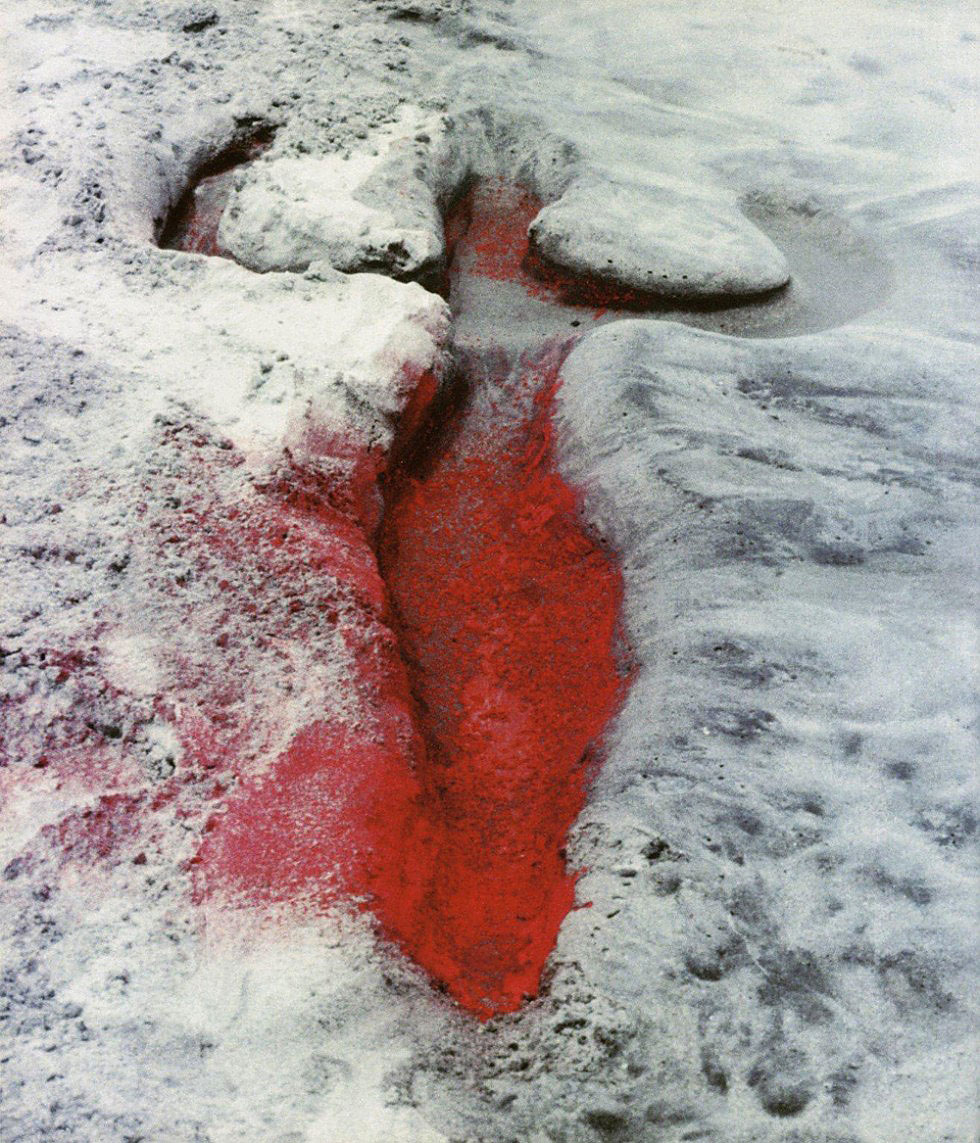
 

Pieter Hugo (South African, b. 1976) 'In Sipho Ntsibande's Home, Soweto' 2013


Pieter Hugo (South African, b. 1976)
In Sipho Ntsibande’s Home, Soweto
2013
From the series Kin, 2013


Guy Tillim (South African, b. 1962) 'Neri James, Petros Village, Malawi' 2006


Guy Tillim (South African, b. 1962)
Neri James, Petros Village, Malawi
2006
From the series Petros Village, 2006


“The scars left in South Africa’s collective memory by its apartheid regime were also inscribed visually on its collective retina. There is less consensus, however, on the period of ‘truth and reconciliation’ after political apartheid came to an end in South Africa in 1990. The exhibition Apartheid and After addresses the question: where did photographers whose earlier work had opposed the apartheid regime point their cameras after 1980?

They include David Goldblatt, for instance, now an éminence grise of South African photography whose exhibition Cross Sections hung in Huis Marseille and others. Has South African democracy been given a face? Where is the real development happening? And where are the scars? Has South African national identity got stuck on a runaway merry-go-round, as the South African visual artist William Kentridge has suggested? One thing is clear: after apartheid, most South African photographers continued to make their own country their work domain, and in doing so they have gained a considerable international reputation.”


“It is astonishing to think that until the beginning of the 1990s, merely two decades ago, modern and contemporary African photography was largely in the shadows.”

Okwui Enwezor in Events of the Self: Portraiture and Social Identity: Contemporary African Photography from the Walther Collection, Steidl, 2013, p. 23.


David Goldblatt (South African, 1930-2018) 'Child minder, Joubert Park, Johannesburg, 1975 (no.11)' 1975


David Goldblatt (South African, 1930-2018)
Child minder, Joubert Park, Johannesburg, 1975 (no.11)
1975
From the series Particulars, 2003 (publishing date)


David Goldblatt (South African, 1930-2018) 'Man on a beach, Joubert Park, Johannesburg, 1975 (no. 2)' 1975


David Goldblatt (South African, 1930-2018)
Man on a beach, Joubert Park, Johannesburg, 1975 (no. 2)
1975
From the series Particulars, 2003 (publishing date)


Sabelo Mlangeni (South African, b. 1980) 'Coming to Johannesburg I, January, 2011' 2011


Sabelo Mlangeni (South African, b. 1980)
Coming to Johannesburg I, January, 2011
2011


Sabelo Mlangeni (South African, b. 1980) 'Coming to Johannesburg I, January, 2011' 2011


Sabelo Mlangeni (South African, b. 1980)
Coming to Johannesburg I, January, 2011
2011


Daniel Naudé (South African, b. 1984) 'Africanis 23. Richmond, Northern Cape, 298 January 2009' 2009


Daniel Naudé (South African, b. 1984)
Africanis 23. Richmond, Northern Cape, 298 January 2009
2009


Mikhael Subotzky (South African, b. 1981) 'Joseph Dlamini (Eye test), Matsho Tsmombeni squatter camp' 2012


Mikhael Subotzky (South African, b. 1981)
Joseph Dlamini (Eye test), Matsho Tsmombeni squatter camp
2012
From the series Retinal Shift


Graeme Williams (South African, b. 1958) 'Nelson Mandela speaks at CODESA, 199..?' Nd


Graeme Williams (South African, b. 1958)
Nelson Mandela speaks at CODESA, 199..?
Nd
From Previously Important Places series 1990s-2013


Zanele Muholi (South African, b. 1972) 'Being (T)here (Amsterdam)' 2009

Zanele Muholi (South African, b. 1972) 'Being (T)here (Amsterdam)' 2009

Zanele Muholi (South African, b. 1972) 'Being (T)here (Amsterdam)' 2009


Zanele Muholi (South African, b. 1972)
Being (T)here (Amsterdam)
2009


Paul Alberts (South African, 1946-2010) 'The portraits of the applicants' 1994

Paul Alberts (South African, 1946-2010) 'The portraits of the applicants' 1994

Paul Alberts (South African, 1946-2010) 'The portraits of the applicants' 1994

Paul Alberts (South African, 1946-2010) 'The portraits of the applicants' 1994


Paul Alberts (South African, 1946-2010)
The portraits of the applicants
1994
Gelatin silver prints


As the 1994 election approached in South-Africa many blacks living in small towns and rural areas had never been officially identified. In order to speed up these otherwise slow procedures, Charmaine and Paul Alberts set up an official, but temporary office and studio to process applications. The portraits of the applicants were taken before a paper back drop in the community hall of Majwemasweu. Each person held a slate with a number that corresponded to the number of the film and exposure, plus their name and place where they lived.


Huis Marseille – Museum for Photography
Keizersgracht 401
1016 EK Amsterdam

Opening hours:
Daily 10am – 6pm
Thursday 10am – 9pm

Huis Marseille – Museum for Photography website

LIKE ART BLART ON FACEBOOK

Back to top