Kirsten Haydon (New Zealand, b. 1973)
ice objects
2011
Enamel, copper, reflector beads
Various dimensions
“Confronted by the immensity and power of desert and ice, one cannot simply stand to the side and evaluate as though one were standing before a landscape garden and other works of art. Conflicting emotions, including fear, are aroused and simultaneously absorbed or taken over by the overmastering presence of nature.”
Yi Fu Tuan. Desert and Ice: Ambivalent Aesthetics, 1993
There are many things to like about this exhibition: the fine craftsmanship, the forms, the observation and the beauty of some of the pieces. The symbolism is simple and effective – re-imaged relics of white, vitreous enamel objects from the huts of Robert Scott and Ernest Shackleton, the use of reflector beads to imitate snow and Meccano-like steel girders to symbolise human construction and encroachment on a pristine land.
Some of the ‘objects’ remind me of the beauty and simplicity of Etruscan vessels, seemingly delicate apports, being the transference of an article from one place and time to another; the use of reflector beads at the bottom of ice sample (2011, below) is also inspired. So too is the occlusion of the image in the brooch ice plane (2011, below) which adds further mystery to an already surreal landscape. One piece is absolutely stunning. The wonderful neckpiece ice movement (2011, see two photographs below) is ravishing in it’s articulation and form, its snow-covered twig-like coolness.
Unfortunately where the exhibition fails is in the use of banal images in several works such as ice depot, ice runway, ice industry (brooch, all 2011, not pictured) and ice industry (2011, neckpiece, below). The obvious point being made is that of man made construction in a pristine landscape but the simple symbology used so effectively in other pieces becomes a little awkward in these pieces. The images used are quite ugly and while this fits the symbolic use of them it doesn’t make for very interesting or illuminating art. There needed to be more layering for the message to be effective – which is why the occluded brooch works so well, human construction blinded, dissolved.
This is a pity because the rest of the exhibition is excellent. Enter this ice world and you will be delightfully surprised!
Dr Marcus Bunyan
Many thankx to Katie Scott for her help and Gallery Funaki for allowing me to publish the photographs and text in the posting. Please click on the photographs for a larger version of the image.
Kirsten Haydon (New Zealand, b. 1973)
ice edge (left)
Object
2011, enamel, reflector beads, copper, silver
60 x 350 x 210 mm
ice sheet flow (right)
Object
2011
Enamel, reflector beads, copper, silver
70 x 130 x 195 mm
Kirsten Haydon (New Zealand, b. 1973)
ice plane
Brooch
2011
Enamel, photo transfer, reflector beads, silver, copper, steel
80 x 80 x 10 mm
Kirsten Haydon (New Zealand, b. 1973)ice industry
neckpiece
2011
enamel, copper, photo transfer, paint, silver
280 x 160 x 10 mm
I make jewellery and objects that both connect to and explore human experience and place. Since Antarctica’s discovery explorers, expeditioners, artists and writers have attempted to record and visualise this isolated continent. In 2004 I was awarded a New Zealand Antarctic Arts Fellowship en joined those who communicate their experiences of Antarctica.
Antarctica is often regarded as a pristine yet harsh environment, home to extraordinary wildlife and the domain of scientists. Due to its remoteness projects that are supported by international Antarctic programmes are predominantly science-based and as a result artistic research in Antarctica is limited. The cultural theorist, Yi Fu Tuan describes the experience of the explorer as: “the longing to be taken out of oneself and ones habitual world into something vast, overpowering and indifferent.” His statement resonates with my experience of Antarctica where I found myself drawn to the minutiae of the ice crystal and the structures and forms that I could associate with in the extraordinary landscape. While in that place, so removed from the conventions of civilisation, I came to understand the immensity of nature and to see that it exists without the necessity for human presence …
Inside the historic huts of Robert Scott and Ernest Shackleton I was captivated by the history, contained both in the interior spaces themselves and in the material artefacts left by the expeditioners … These seemingly mundane objects are transformed into a still life of significant artefacts of a previous time, preserving the memory and story of their parties of explorers.
My interpretations engage through the iconography of personal jewellery, domestic objects and the environment of Antarctica. In the course of making I continue to investigate and portray Antarctica through my own and others’ personal experiences. The objects I produce reference valued souvenir jewellery and objects now displayed in museums as historical artefacts, which were once personal mementos …
Excerpts from the catalogue text by Kirsten Haydon May 2011
Kirsten Haydon (New Zealand, b. 1973)
ice movement
Neckpiece
2011
Enamel, copper, reflector beads, silver
Kirsten Haydon (New Zealand, b. 1973)
ice sample
Object
2011
Enamel, copper, reflector beads
Gallery Funaki
Sackville House
Apartment 33
27 Flinders Lane
Melbourne 3000
Australia
Opening hours:
Wednesday – Friday 12 – 5pm
Saturday on occasion (check our socials) or by appointment
Gallery Funaki websiteLIKE ART BLART ON FACEBOOKBack to top
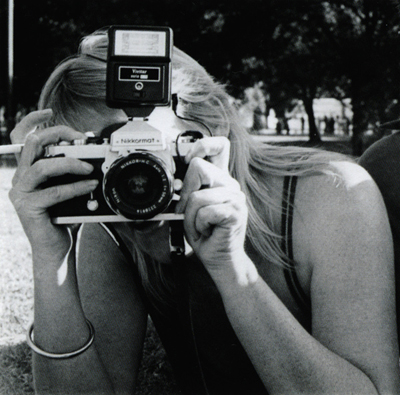
Sue Ford (Australian, 1943-2009) Self-portrait 1968 1968, printed 2011 From the series Self-portrait with camera (1960-2006) Selenium toned gelatin silver 22.8 x 24 cm Courtesy Sue Ford Archive
“Choosing to photograph oneself, one’s life and one’s time exemplified the now well-worn slogan ‘the person is political’. Ford’s self-examination across the decades is unflinching and exacting. As Janine Burke wrote in 1980, her ‘psychological history [is] etched in her face for everyone to see’. Burke concluded that Ford’s self-portraits are ‘as honest as one can ever be about oneself’.”
Helen Ennis. Faces are Maps: Sue Ford and Portraiture.1
“The search for the self is a journey into a mental labyrinth that takes random courses and ultimately ends at impasses. The memory fragments recovered along the way cannot provide us with a basis for interpreting the overall meaning of the journey. The meanings that we derive from our memories are only partial truths, and their value is ephemeral. For Foucault, the psyche is not an archive but only a mirror. To search the psyche for the truth about ourselves is a futile task because the psyche can only reflect the images we have conjured up to describe ourselves. Looking into the psyche, therefore, is like looking into the mirror image of a mirror. One sees oneself reflected in an image of infinite regress. Our gaze is led not toward the substance of our beginnings but rather into the meaninglessness of previously discarded images of the self.”
Patrick Hutton. Foucault, Freud, andthe Technologies of the Self.2
This is a solid exhibition of the work of beloved Australian photographer Sue Ford, essential looking for anyone wanting to have an overview of Australian photography.
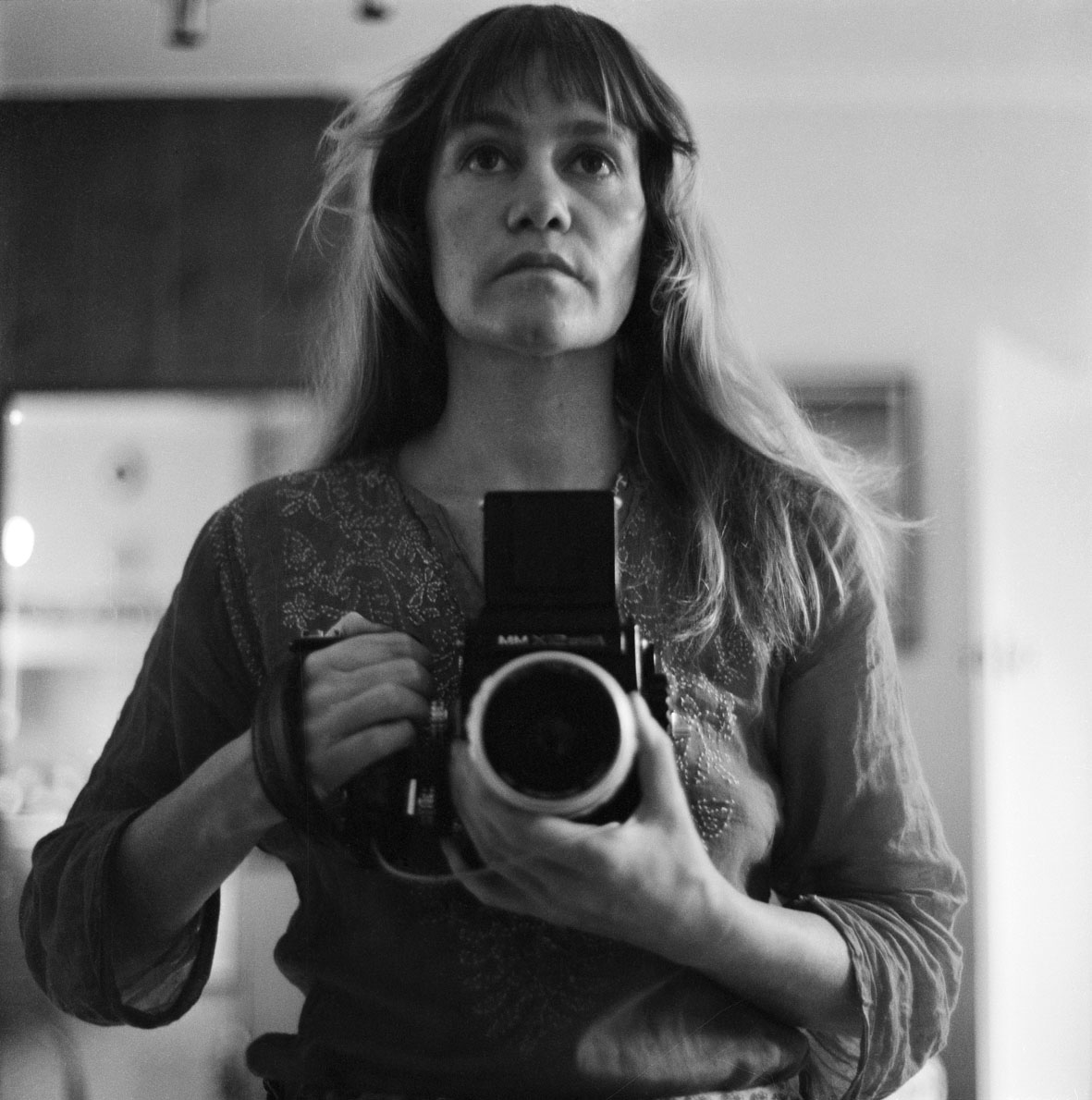
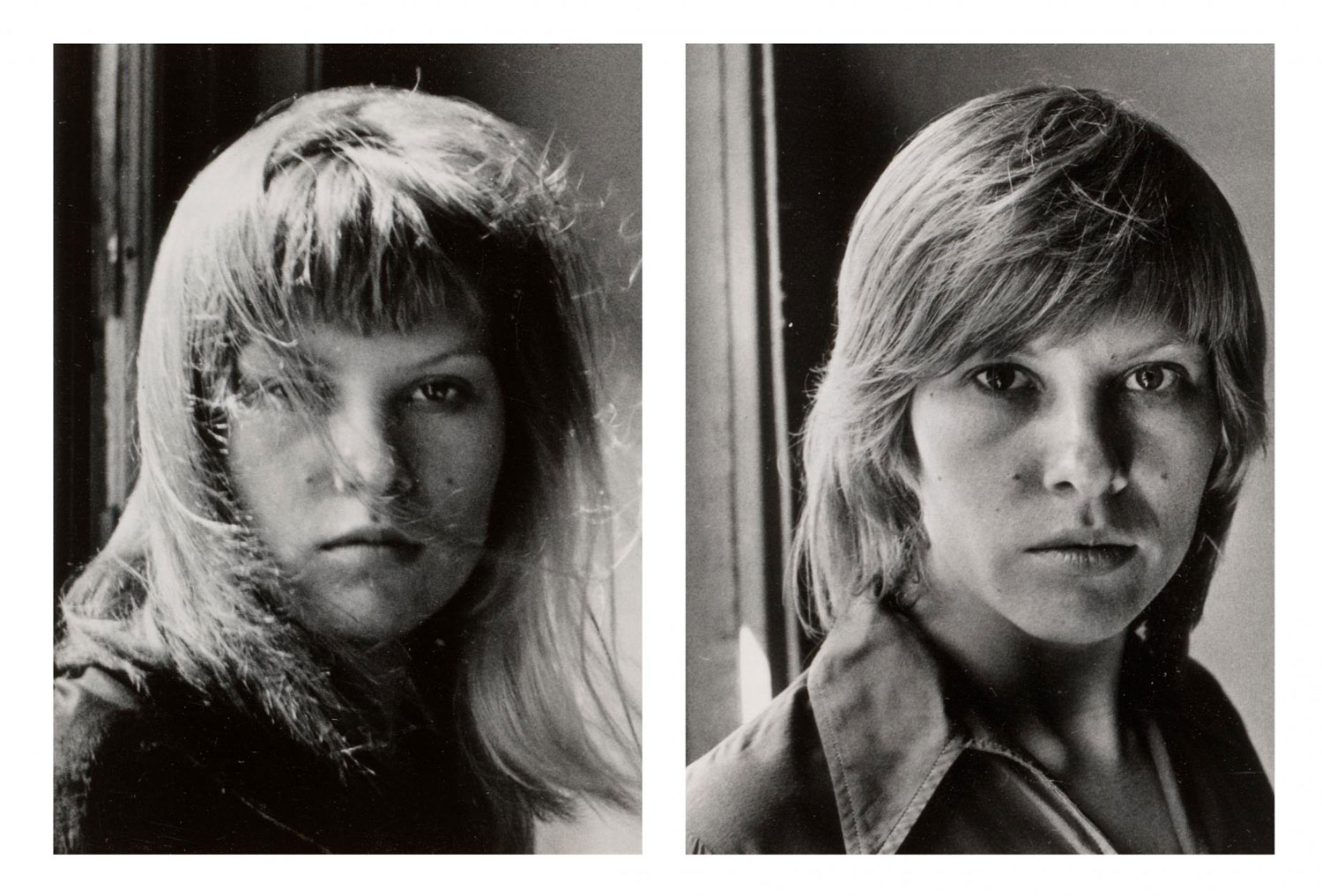
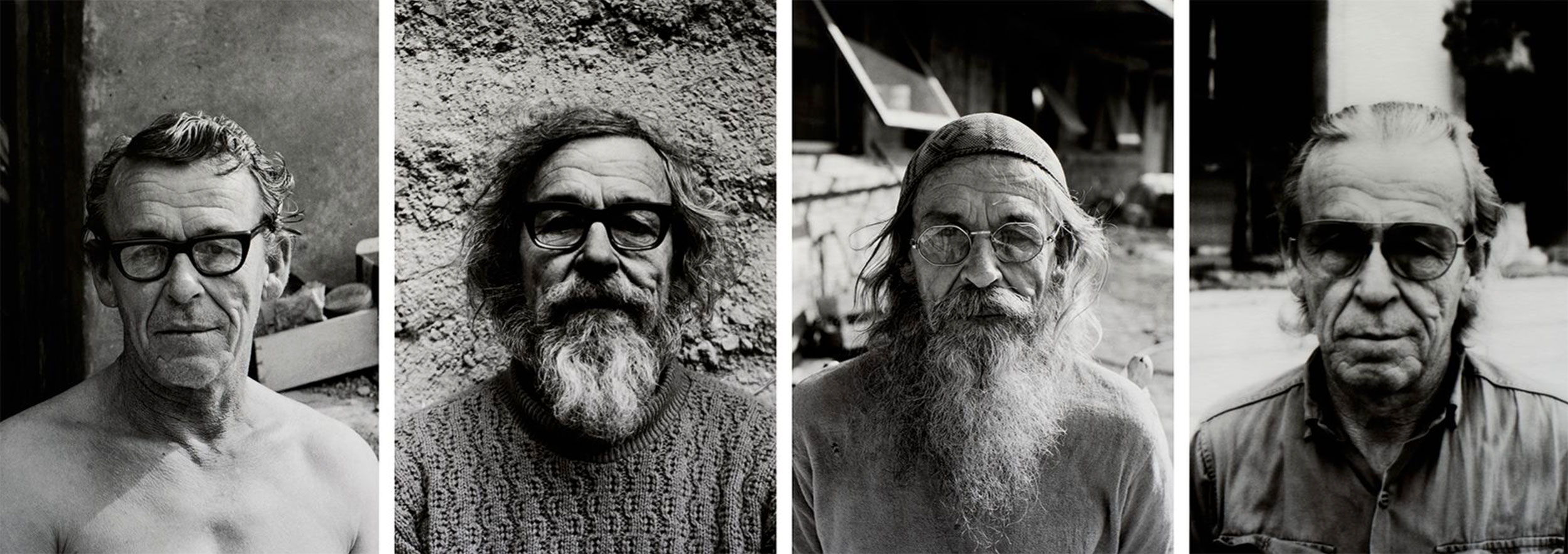
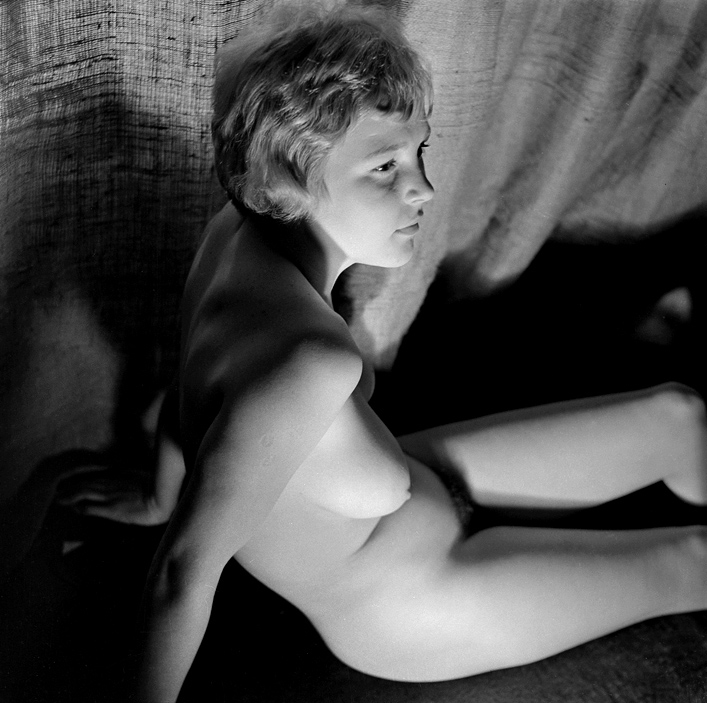
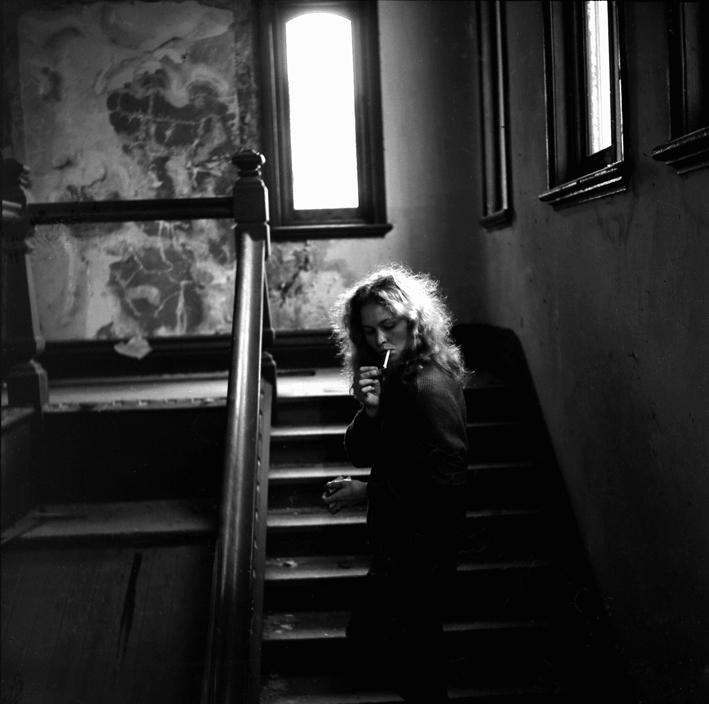
The beautifully hung exhibition flows like music, interweaving up and down, the photographs framed in thin, black wood frames. It features examples of Ford’s black and white fashion and street photography; a selection of work from the famous black and white Time series (being bought for their collection by the Art Gallery of New South Wales) – small, snapshot size double portraits, the first portraits taken during the 1960’s, the second around 1974, formalist portraits in which the sitter is closely cropped around head and shoulders with the photographer using the camera as objectively as possible, the double portrait used to display changes in identity over time; a selection of Photographs of Women – modern prints from the Sue Ford archive that are wonderfully composed photographs with deep blacks that portray strong, independent, vulnerable, joyous women (see last four photographs below); and the most interesting work in the exhibition, the posthumous new series Self-portrait with camera (1960-2006) that evidence, through a 47 part investigation using colour prints from Polaroids, silver gelatin prints printed by the artist, prints made from original negatives and prints from scanned images where there was no negative available, a self-portrait of the artist in the process of ageing (see the two photographs above and below this review).
One of my favourite photographs in the exhibition was Margaret with Emma, Redcliffs, Queensland, 1971. The black and white photograph features a grandmother with her granddaughter, close to each other, both wearing floral dresses of different pattern, both staring intently out of the image at what is possibly a television with a weatherboard backdrop. A dark form hovers at the upper left of the photograph adding a disturbing note to the image but it is the look on the grandmother’s face – a look of shock, enthralment, blankness with eyes wide, that is matched by the intensity on the granddaughter’s face as she stares intently – that transcends the distance between photograph and viewer, between grandmother and granddaughter across time and space. The process of looking and ageing captured by the ‘time machine’, the camera, in one single image. The viewer understands this photograph for we all experience the evidence of our bodies, our mortality. We relate intimately to how the photograph reanimates in the present this moment from the past, the momenti mori of the photograph, the little death becoming our future death.
This notion is particularly poignant in the series Self-portrait with camera (1960-2006), a work that Sue Ford was actively engaged with before her death. Smaller colour prints from negatives and Polaroids are here interspersed with black and white photographs up to about 8″ x 10″ in size: the series contains 12 chromogenic photographs, 7 silver gelatin photographs, 6 dye fusion photographs and 22 selenium-toned photographs (printed 2011). In dark, contrasty prints the artist has photographed herself looking down into the camera shooting into a mirror, looking directly into the mirror with camera, with the camera on a timer, with the camera in/visible, being shot by other people with the camera pointed directly at her, with the camera perpendicular to the artist shot by someone else, with Ford behind a movie camera, with multiple refractions in mirrors. Sometimes Ford even becomes the camera (as in the 1986 self-portrait below: I am the camera, the camera is me).
Ford becomes the “one who looks” knowingly at herself, sometimes the author of that observation, sometimes oblivious to it (until later when she has collected these images). As Burke and Ennis note, these photographs of self-examination across the decades are as honest as one can ever be about oneself. This a deeply political but also deeply psychoanalytical investigation: not to “take care of yourself” as a form of knowing as in Greco-Roman antiquity but “knowing yourself” as the fundamental principle of understanding yourself: a procedure of objectification and subjection in which the photograph ‘marks’ our status and the passage of time, that makes us who we are – photographs as vital techniques in the constitution of the self as subject.3
The mirror is frequently used in these photographs to portray the self. While it is true that these are strong, intimate, unflinching and exacting images, in the use of the mirror the im(pose)tures of life are singled / doubled / tripled – a reflection of the psyche that lead to discarded images of the self that are of little use in understanding the substance of our beginnings … or the overall interpretation of the journey. What they do offer is cumulative evidence of a deep, personal conviction into the inquiry: who am I?
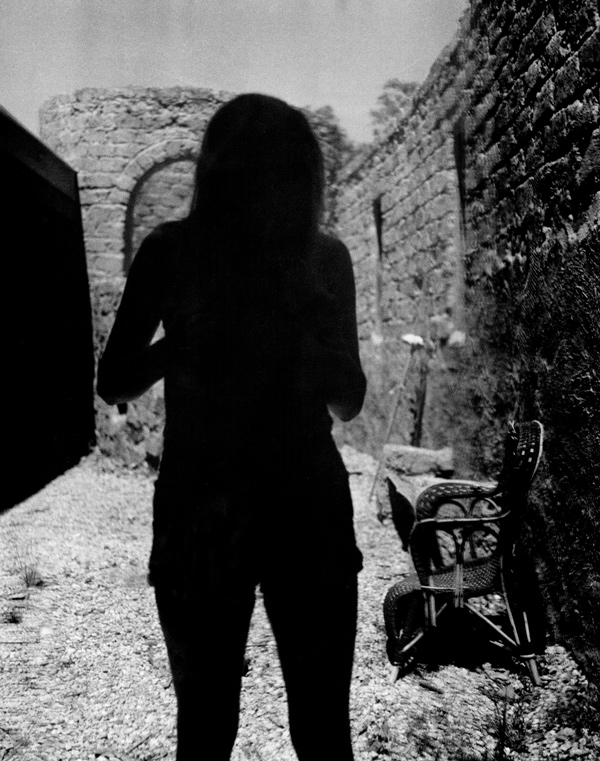
Rembrandt famously painted, drew and etched himself hundreds of times in the process of ageing; Ford has likewise done the same. If, as Victor Burgin observes, “An identity implies not only a location but a duration, a history,”4 then the nature of photography (including Ford’s self-reflexive project), concerned as it is with space and time, becomes the mirror in a search for identity. Photography as a mirror on the world constantly repeats moments of illumination in a re/vision of eternal recurrence, a performance that is a hybrid site: both a homogenous (the same “I”) and heterogenous (a different “I”) site of self-representation, different every time we look. To that end I would like you to look at the self-portrait from 1976 (below). The artist is completely absent, her silhouette, her dark shadow swallowed whole by the blank photographic plate on the left hand side of the image as though Ford, the camera and an image of infinite regress have become one, eternally engulfed by space-time but open to re/view at any time.
Whether looking down, looking toward or looking inward these fantastic photographs show a strong, independent women with a vital mind, an élan vital, a critical self-organisation and an understanding of the morphogenesis of things that will engage us for years to come. Essential looking.
Dr Marcus Bunyan
1/ Burke, Janine. Self-portrait/self-image 1980-1981. Melbourne: Australian Directors’ Council, 1981. p. 4 quoted in Ennis, Helen. “Faces are Maps: Sue Ford and Portraiture,” in Lakin, Shaune (ed.,). Sue Ford: Self-portrait with camera (1960-2006). Melbourne: Monash Gallery of Art, 2011, np.
2/ Hutton, Patrick. “Foucault, Freud, and the Technologies of the Self,” in Martin, Luther and Gutman, Huck and Hutton, Patrick (eds.,). Technologies of the Self: A Seminar with Michel Foucault. London: Tavistock Publications, 1988, p. 139
3/ Foucault, Michel. Discipline and Punish, quoted in Gutman, Huck. “Rousseau’s Confessions: A Technology of the Self,” in Martin, Luther and Gutman, Huck and Hutton, Patrick (eds.,). Technologies of the Self: A Seminar with Michel Foucault. London: Tavistock Publications, 1988, p. 99
4/ Burgin, Victor. In/Different Spaces: Place and Memory in Visual Culture. Berkeley: University of California Press, 1995, p. 36
Many thankx to Mark Hislop for his help and the Monash Gallery of Art for allowing me to publish the photographs in the posting. Please click on the photographs for a larger version of the image.
Sue Ford (Australian, 1943-2009) Self-portrait 1986 1986 From the series Self-portrait with camera (1960-2006) Gelatin silver print, printed 2011 8.4 x 6.5cm Courtesy Sue Ford Archive
Sue Ford (Australian, 1943-2009) Self-portrait 1976 1976, printed 2011 From the series Self-portrait with camera (1960-2006) Selenium toned gelatin silver print 24 x 18cm Courtesy Sue Ford Archive
Sue Ford (Australian, 1943-2009) Self-portrait 1974 1974, printed 2011 From the series Self-portrait with camera (1960-2006) Selenium toned gelatin silver print 19.9 x 18cm Courtesy Sue Ford Archive
On 16 April 2011, the first major exhibition of the work of the late Sue Ford for two decades will open at Monash Gallery of Art.
Sue Ford (1943-2010) was one of Australia’s most important photographers and filmmakers. Ford studied photography at RMIT and in 1974 was the first Australian photographer to be given a solo exhibition at the National Gallery of Victoria.
Ford passed away in 2009. Before her death, she was working with Monash Gallery of Art on an exhibition of her work which would feature her final major project Self-portrait with camera (1960-2006). This series of 47 photographs has never been shown before, and presents a compelling self-portrait of an artist. It underscores the central role the camera played in Ford’s life. Self-portrait with camera will be shown alongside a survey of Ford’s black-and-white photographs from the 1960s and 70s and examples of her most iconic work, Time series (1960s-1970s).
The exhibition describes a period when photography was charged with political and personal meaning. As photographic historian and contributor to the publication accompanying the exhibition Helen Ennis states: “Ford’s approach to art making has always been straightforward … She does not cultivate a mysterious artistic persona [since] … her art practice is purposeful; it is the outcome of her view of art as a political activity that is democratic, liberating and relevant to contemporary society.”
As MGA Director and curator of the exhibition Shaune Lakin states: “This exhibition provides a great opportunity for Australian audiences to reassess the work of this important photographer, whose work was always at once political, beautiful and elegiac. In an era when the photograph has become a highly disposable thing, it is important to acknowledge its role as an agent of change and memory.”
Press release from the Monash Gallery of Art
Sue Ford (Australian, 1943-2009) Helen, 1962; Helen, 1974 1974 From the series Time series Gelatin silver prints 11.0 x 8.0cm; 11.5 x 8.3cm Museum of Australian Photography, City of Monash Collection Acquired with assistance from the Robert Salzer Foundation and the Friends of MGA Inc 2020
Sue Ford (1943-2009) was one of Australia’s most important twentieth-century photographers, and Time series is her most iconic body of work, widely recognised as a key moment in the history of Australian photography. First exhibited at the NGV and Brummels Gallery of Photography in 1974, the series highlights Ford’s interest in the camera’s ability to record the effects of time and history. To create this series, Ford made portraits of her friends and acquaintances during the early to mid-1960s then rephotographed the sitters around a decade later, showing the second portraits beside the first. In some cases Ford later added third and fourth portraits to create Time series II, which she made for exhibition at the 1982 Sydney Biennale. Ford described the camera as a ‘time machine’ and the works in these series bracket periods in the lives of her subjects. With a tender pathos, they evoke the inevitability of time’s passing along with the processes of human ageing and constant change.
Sue Ford (Australian, 1943-2009) Annette 1962; Annette 1974 1974 From the Time series Gelatin silver prints 11.1 x 20.1cm National Gallery of Victoria, Melbourne Purchased with the assistance of the Visual Arts Board and the KODAK (Australasia) Pty Ltd Fund, 1974
Sue Ford (Australian, 1943-2009) Jim, 1964; Jim, 1969; Jim, 1974; Jim, 1979 1982 From the series Time series Gelatin silver prints 11.0 x 7.6cm (each) Museum of Australian Photography, City of Monash Collection donated by the Sue Ford Archive 2020
Sue Ford (Australian, 1943-2009) Lynne and Carol 1962, printed 2011 Selenium toned gelatin silver print 38.0 x 38.0cm Courtesy Sue Ford Archive
Sue Ford (Australian, 1943-2009) Carol, Little Collins St studio 1962, printed 2011 Selenium toned gelatin silver print 37.9 x 38.1cm Courtesy Sue Ford Archive
Sue Ford (Australian, 1943-2009) St Kilda 1963, printed 2011 Selenium toned gelatin silver print 38.0 x 38.0cm Courtesy Sue Ford Archive
Sue Ford (Australian, 1943-2009) Untitled [Bliss at Yellow House, King’s Cross, Sydney] c. 1972-3, printed 2011 Selenium toned gelatin silver print 47.9 x 34.2cm Courtesy Sue Ford Archive
Monash Gallery of Art 860 Ferntree Gully Road, Wheelers Hill Victoria 3150 Australia phone: + 61 3 8544 0500
Opening hours: Tue – Fri 10am – 5pm Sat – Sun 10pm – 4pm Mon/public holidays closed
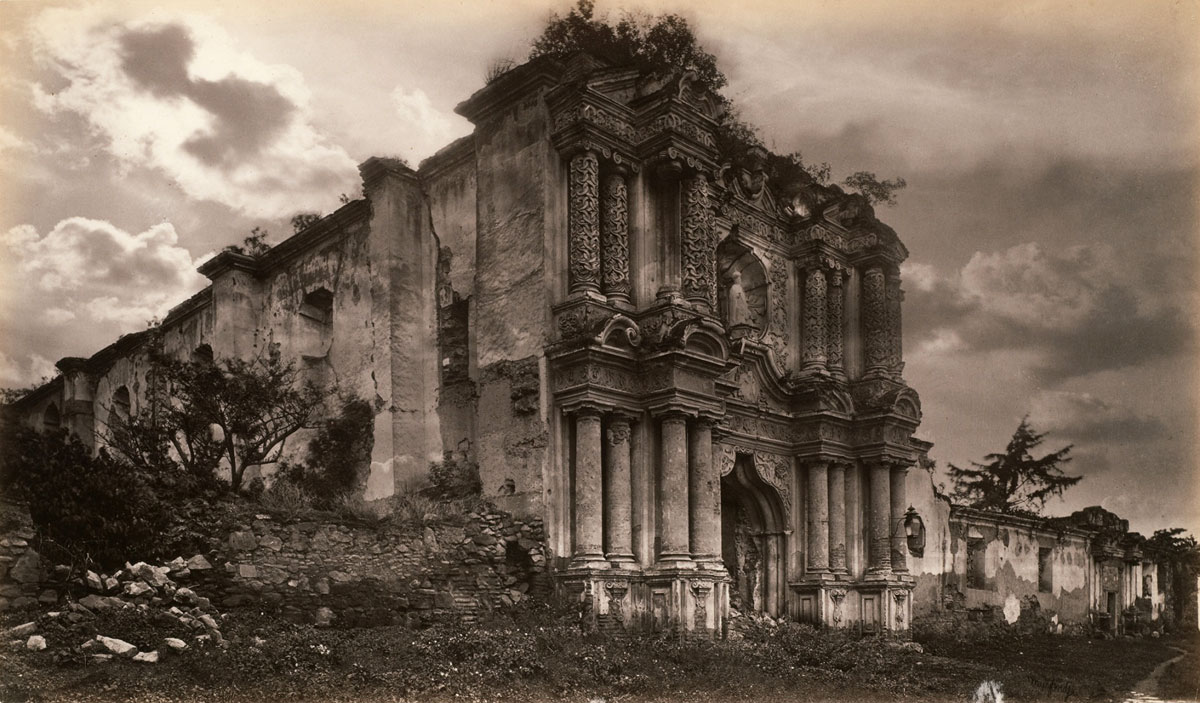
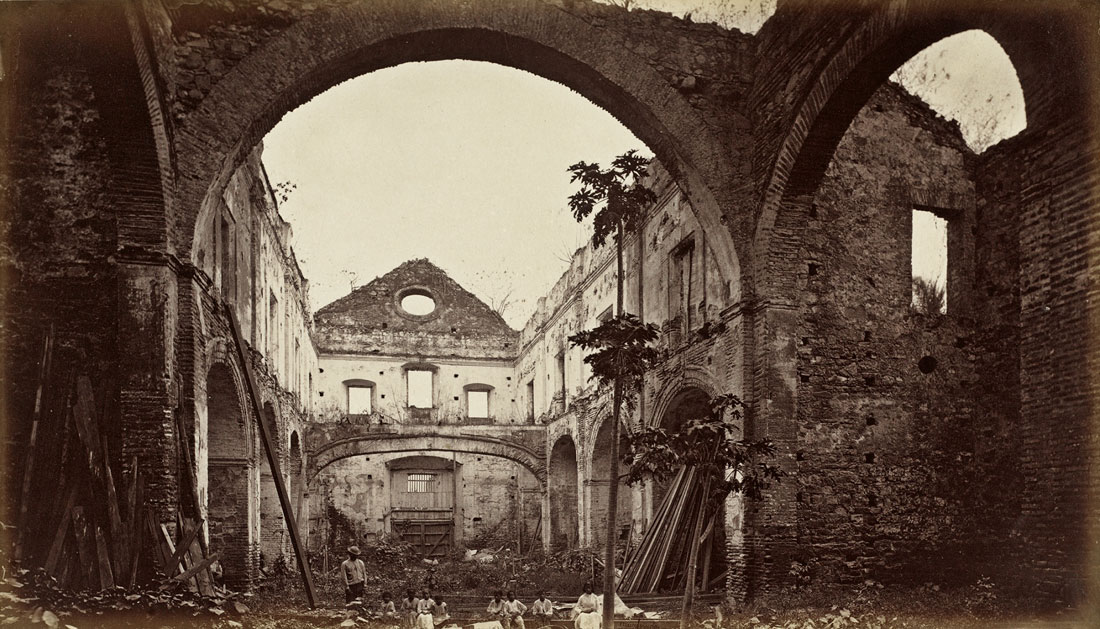
Eadweard Muybridge (English-American, 1830-1904) Ruins of a Church, Antigua, Guatemala 1875 Albumen print Collection Centre Canadien d’Architecture/Canadian Centre for Architecture, Montreal
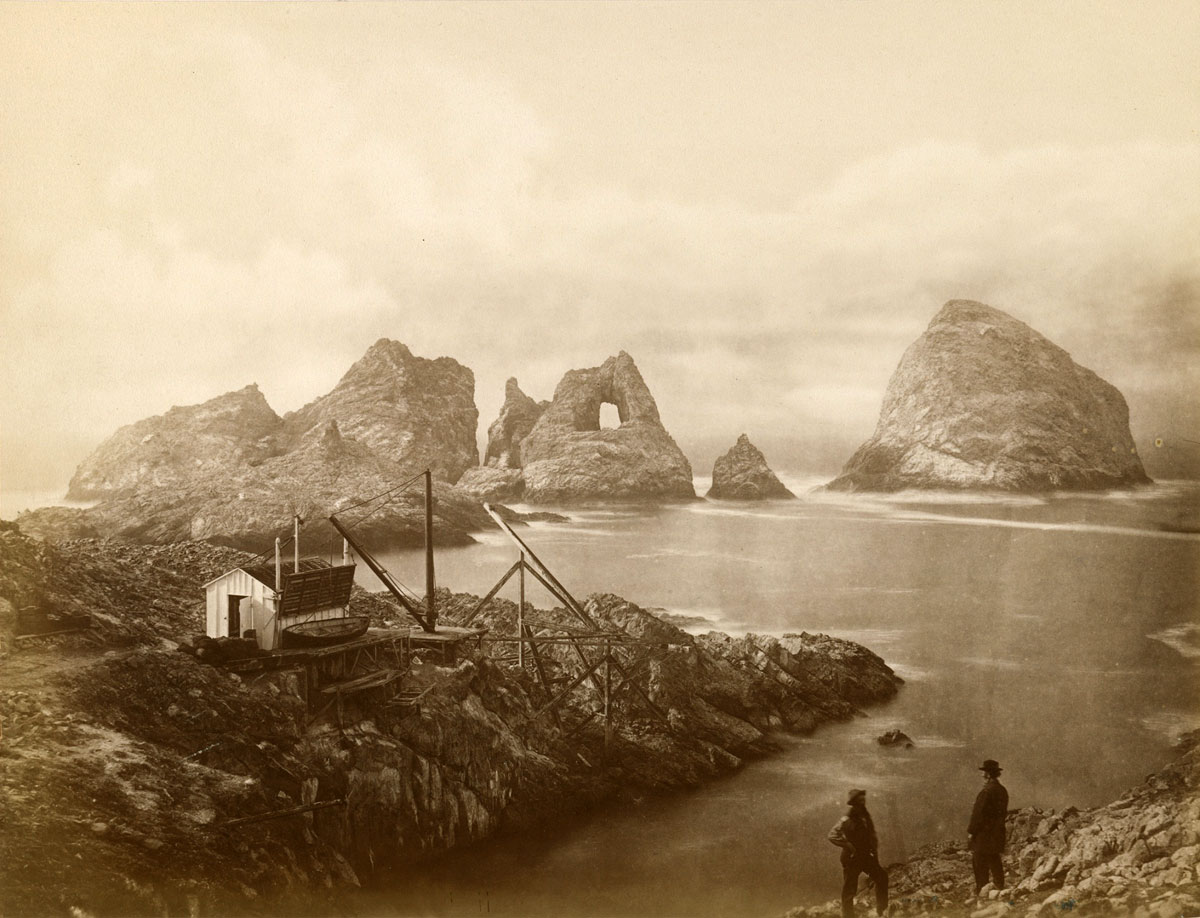
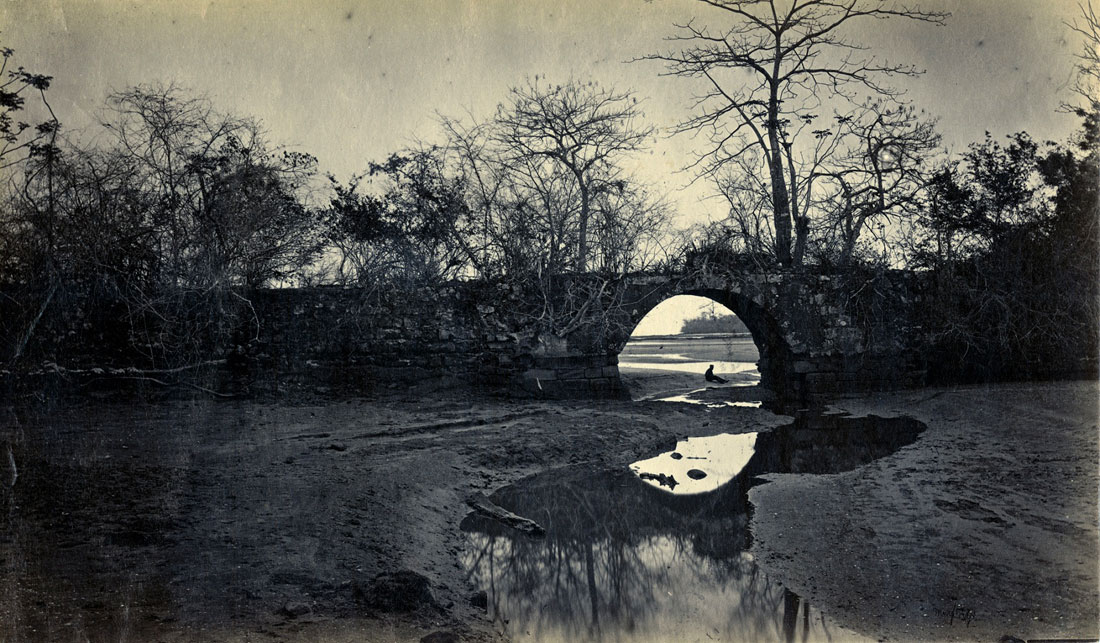
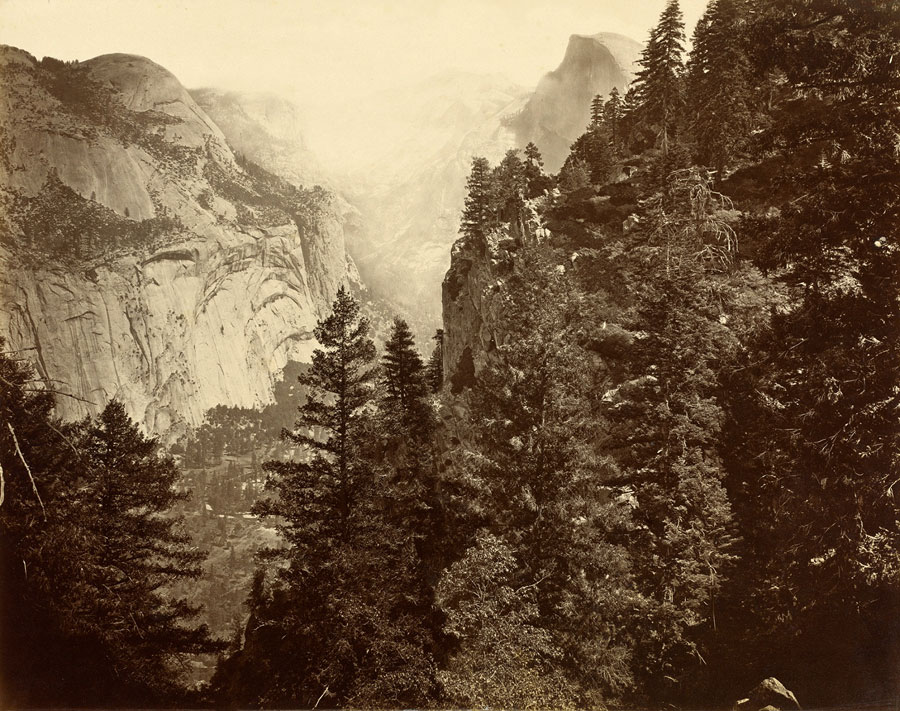
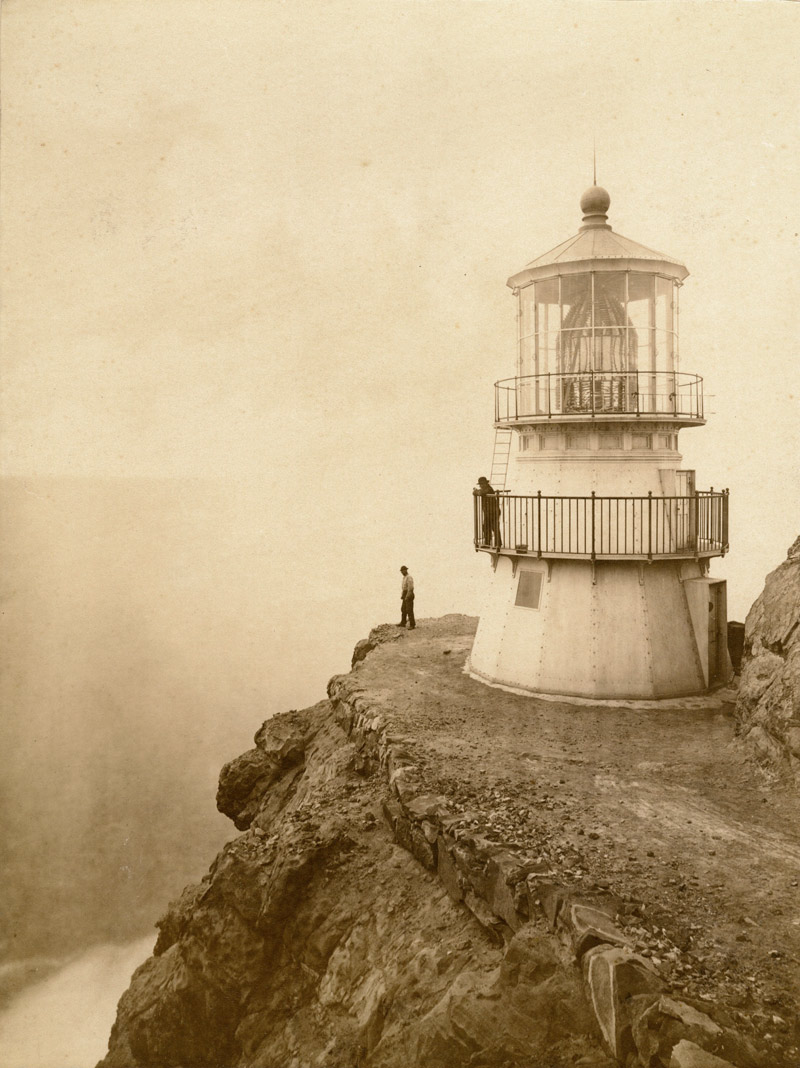
While rightly famous for his work on animal locomotion it is the first group of photographs in this posting that shine most brightly. It is often overlooked how magnificent a photographer Eadweard Muybridge was and what a brilliant eye he had. The top three photographs, especially the first one (above), are knockouts – radiant jewels in which the tensional points of the composition and the atmosphere of the scene are captured magnificently. I also love the use of human figures to give scale to the scene.
It is rare to find Eadweard Muybridge photographs other than his locomotion studies on the Internet (do a search under Google and see for yourself!), so it is a particular pleasure to post these photographs. It is something I have been wanted to do for quite a while now and finally it has come to pass; earlier iterations of this exhibition had few press images so I must heartily thank the San Francisco Museum of Modern Art (SFMOMA) for allowing me to publish the photographs in the posting.
Dr Marcus Bunyan
Many thankx to the San Francisco Museum of Modern Art (SFMOMA) for allowing me to publish the photographs in the posting. Please click on the photograph for a larger version of the image.
Eadweard Muybridge (English-American, 1830-1904) The Ramparts, Funnel Rock, Hole in the Wall, Pyramid, Sugar Loaf, Oil House, and Landing Cove on Fisherman’s Bay, South Farallon Island (4150) 1871 Albumen print U.S. Coast Guard Historian’s Office
Eadweard Muybridge (English-American, 1830-1904) Ruins of the Church of San Domingo, Panama 1875 Albumen print Image courtesy The Board of Trustees, National Gallery of Art, Washington
Eadweard Muybridge (English-American, 1830-1904) Bridge on the Porto Bello, Panama 1875 Albumen print Department of Special Collections, Charles E. Young Research Library, UCLA
Eadweard Muybridge (English-American, 1830-1904) Tenaya Canyon. Valley of the Yosemite. From Union Point. No. 35 1872 Albumen print Collection National Gallery of Art, Washington, DC
Eadweard Muybridge (English-American, 1830-1904) First-Order Lighthouse at Punta de los Reyes, Seacoast of California, 296 Feet Above Sea (4136) 1871 Albumen print U.S. Coast Guard Historian’s Office
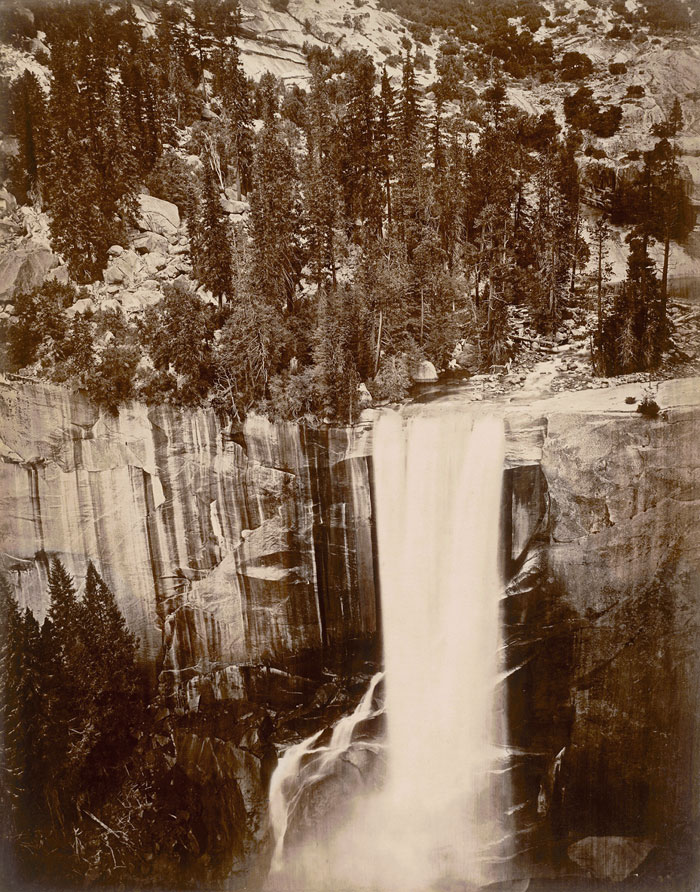
Eadweard Muybridge (English-American, 1830-1904) Pi-Wi-Ack. Valley of the Yosemite. (Shower of Stars) “Vernal Fall.” 400 Feet Fall. No. 29 1872 Albumen print Collection San Francisco Museum of Modern Art; gift of Jeffrey Fraenkel and Frish Brandt
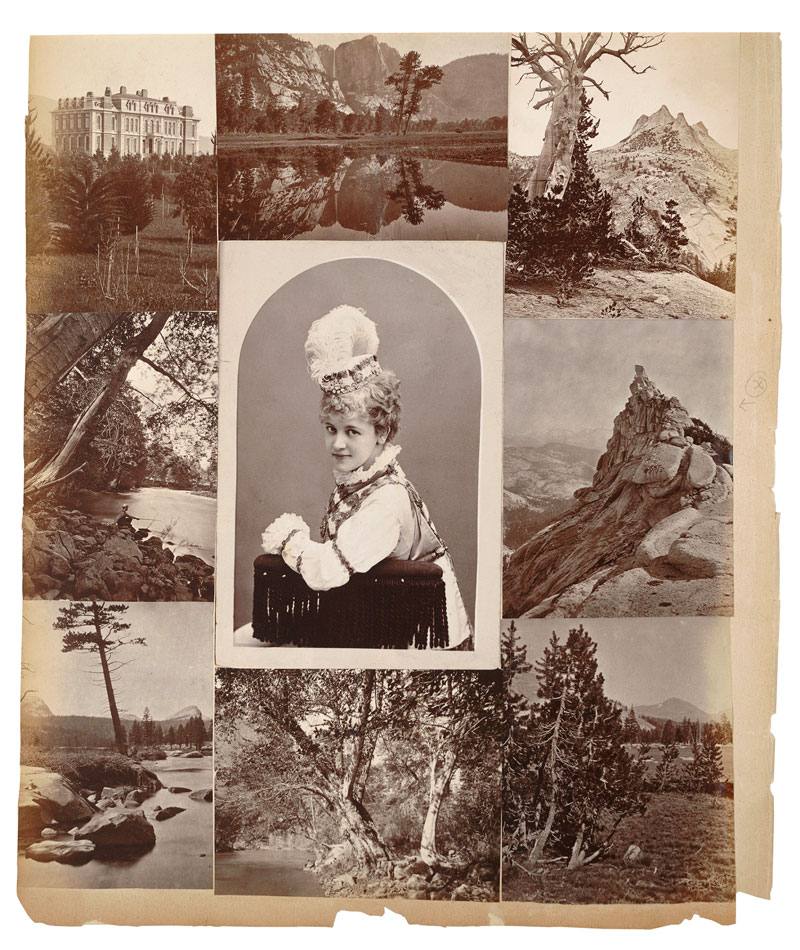
From February 26 through June 7, 2011, the San Francisco Museum of Modern Art (SFMOMA) will showcase the first-ever retrospective examining all aspects of artist Eadweard Muybridge’s pioneering photography. Helios: Eadweard Muybridge in a Time of Change brings together more than 300 objects created between 1857 and 1893, including Muybridge’s only surviving zoopraxiscope – an apparatus he designed in 1879 to project motion pictures. Originally organised by Philip Brookman, Corcoran Gallery of Art chief curator and head of research, the San Francisco presentation is organised by SFMOMA Associate Curator of Photography Corey Keller.
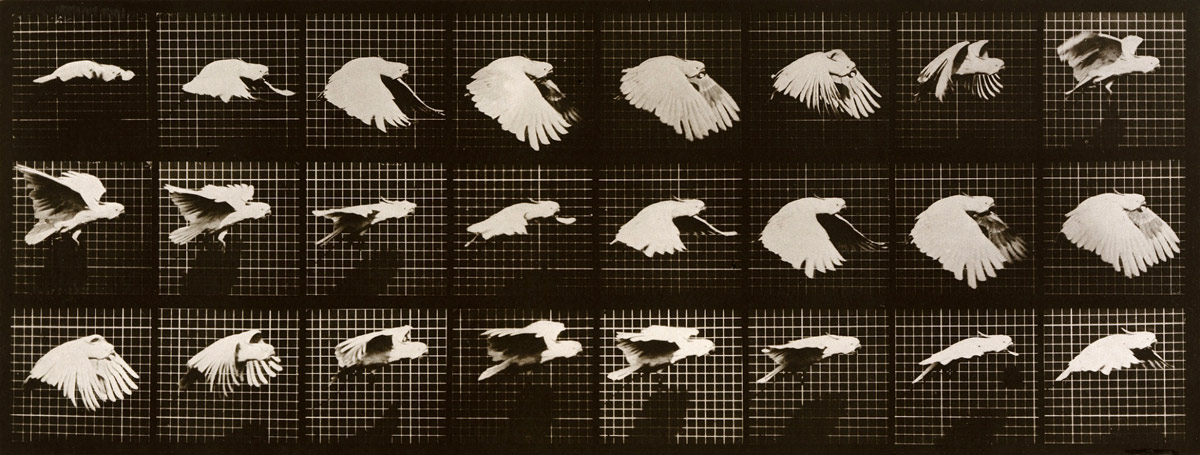
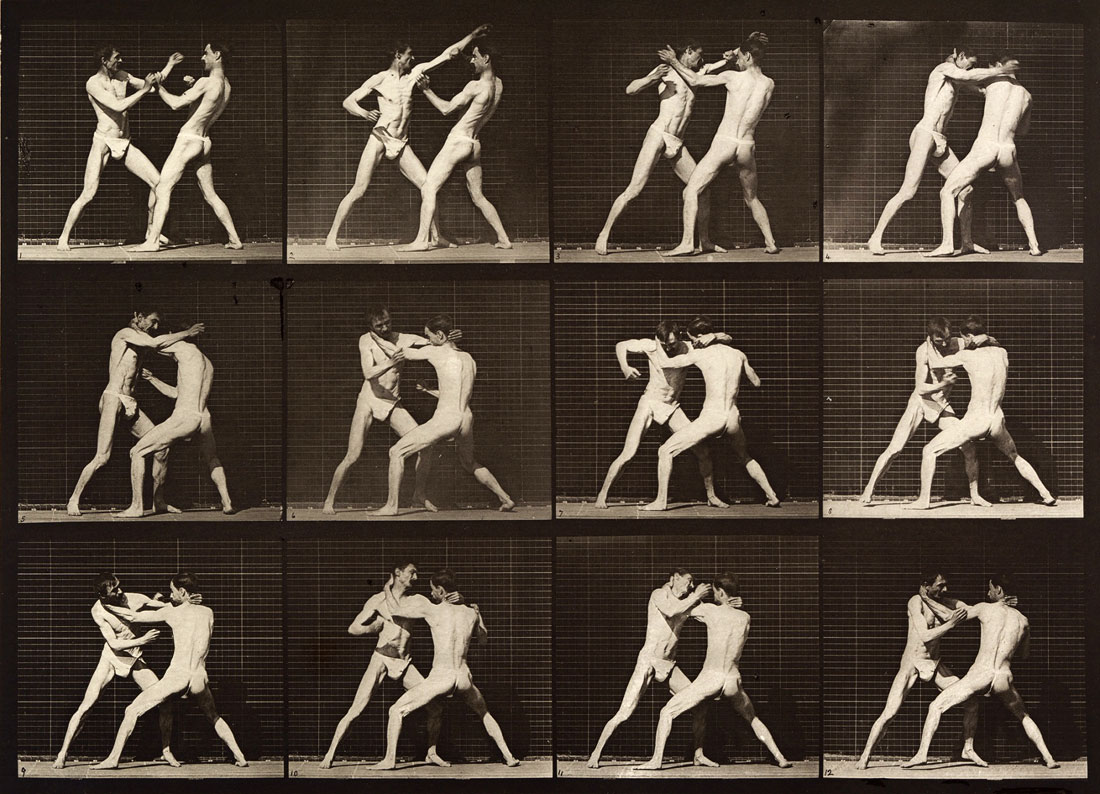
Helios: Eadweard Muybridge in a Time of Change includes numerous vintage photographs, albums, stereographs, lantern slides, glass negatives and positives, patent models, zoopraxiscope discs, proof prints, notes, books, and other ephemera. The works have been brought together from 38 different collections and include a number of Muybridge’s photographs of Yosemite Valley, including dramatic waterfalls and mountain views from 1867 and 1872; images of Alaska and the Pacific coast; an 1869 survey of the Central Pacific and Union Pacific Railroads in California, Nevada, and Utah; pictures from the Modoc War, pictures from Panama and Guatemala; and urban panoramas of San Francisco. The exhibition also includes examples from Muybridge’s experimental series of sequential stop-motion photographs such as Attitudes of Animals in Motion (1881) and his later masterpiece Animal Locomotion (1887).
The exhibition is organised in a series of thematic sections that present the chronology of Muybridge’s career, the evolution of his unique sensibility, the foundations of his experimental approach to photography, and his connections to other people and events that helped guide his work. The sections include: Introduction: The Art of Eadweard Muybridge (1857-1887); The Infinite Landscape: Yosemite Valley and the Western Frontier (1867-1869); From California to the End of the Earth: San Francisco, Alaska, the Railroads, and the Pacific Coast (1868-1872); The Geology of Time: Yosemite and the High Sierra (1872); Stopping Time: California at the Crossroads of Perception (1872-1878); War, Murder, and the Production of Coffee: the Modoc War and the Development of Central America (1873-1875); Urban Panorama (1877-1880); The Horse in Motion (1877-1881); Motion Pictures: the Zoopraxiscope (1879-1893); and Animal Locomotion (1883-1893).
Muybridge and San Francisco
Best known for his groundbreaking studies of animals and humans in motion, Muybridge (1830-1904) was also an innovative and successful landscape and survey photographer, documentary artist, inventor, and war correspondent. Born in Kingston upon Thames, England, in 1830, Muybridge immigrated to the United States around 1851. He worked as a bookseller in New York and San Francisco and returned to London in 1860 following a serious injury. Muybridge learned photography in Britain and by 1867 returned to the United States, where began his career as a photographer in San Francisco. He gained recognition through innovative landscape photographs, which showed the grandeur and expansiveness of the American West. Between 1867 and 1871, these were published under the pseudonym “Helios.”
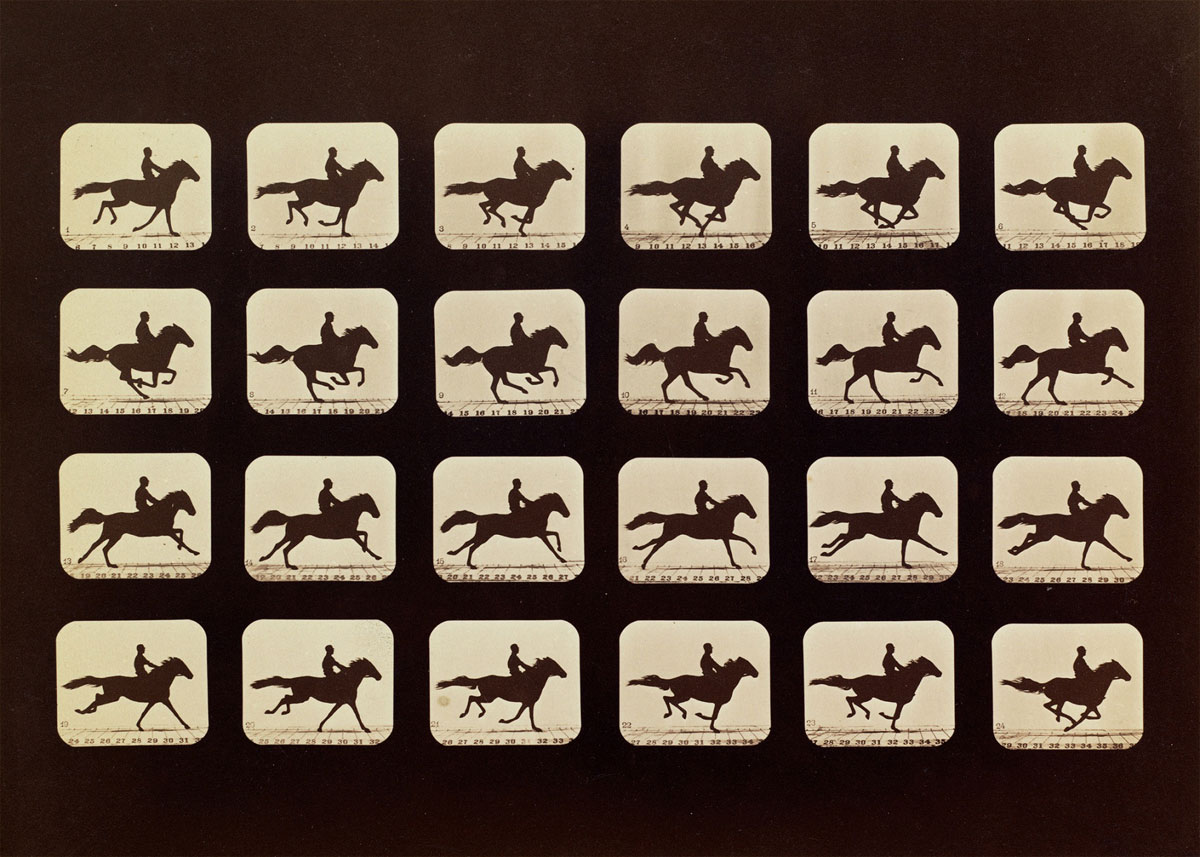
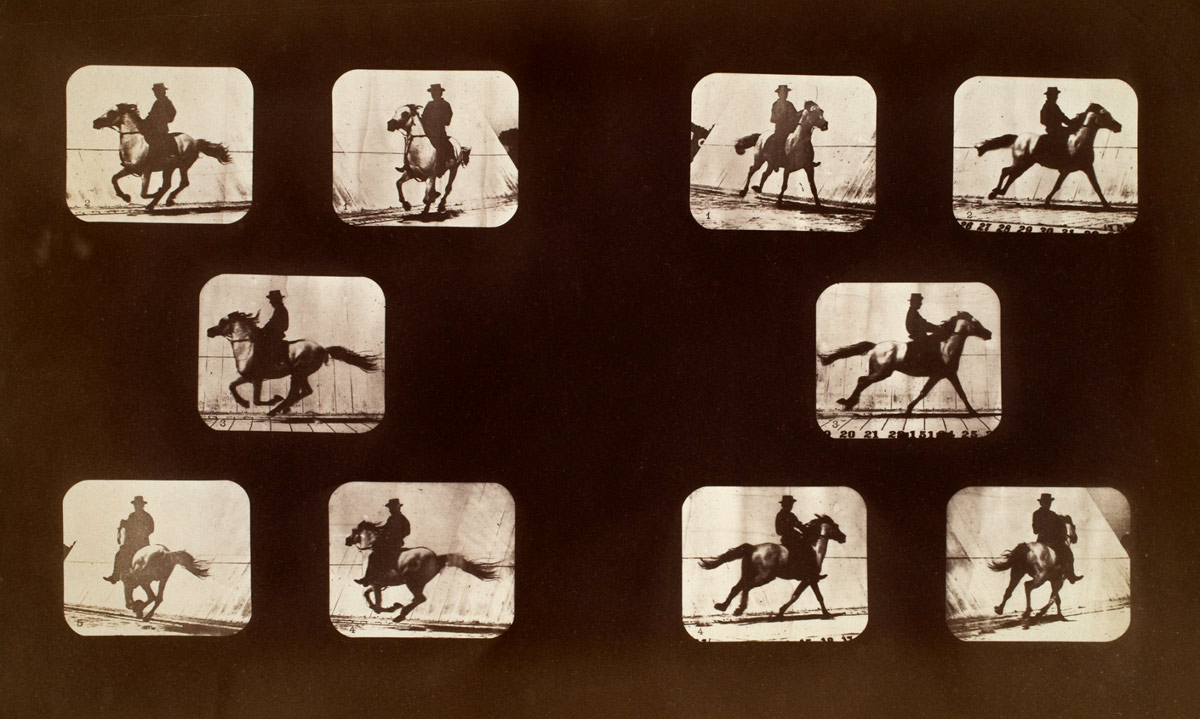
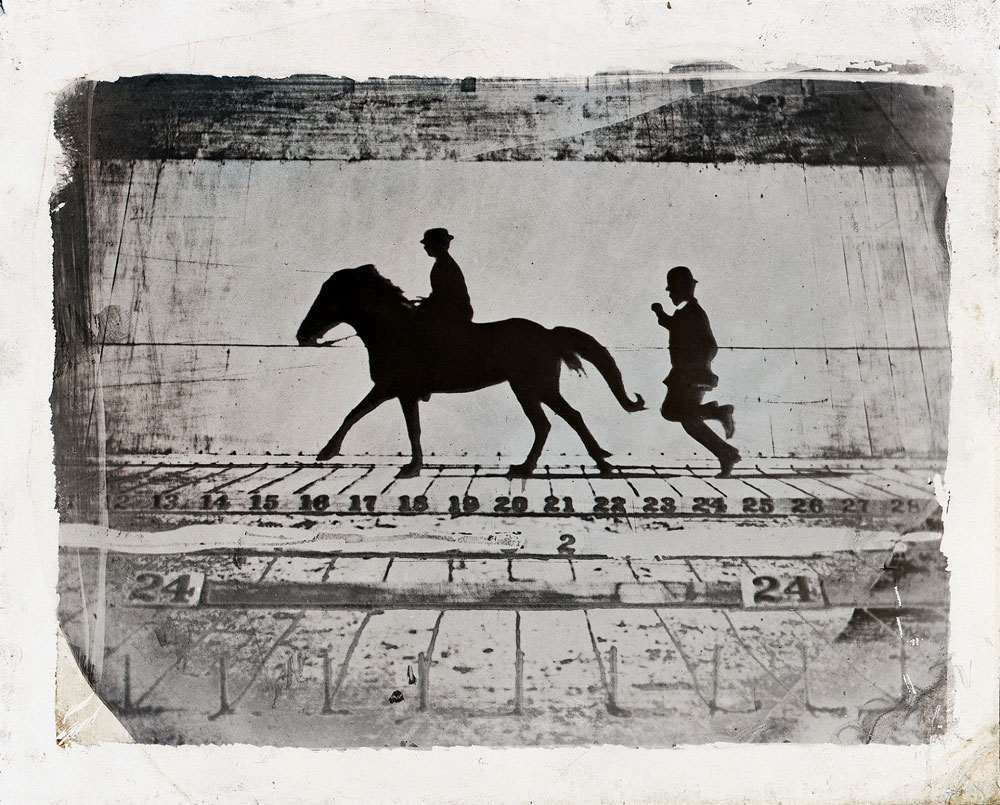
Muybridge spent most of his career in San Francisco and Philadelphia during a time of rapid industrial and technological growth. In the 1870s he developed new ways to stop motion with his camera. Muybridge’s legendary sequential photographs of running horses helped change how people saw the world. His projected animations inspired the early development of cinema, and his revolutionary techniques produced timeless images that have profoundly influenced generations of photographers, filmmakers, and visual artists.
Press release from the San Francisco Museum of Modern Art (SFMOMA) website [Online] Cited 02/06/2011 no longer available online
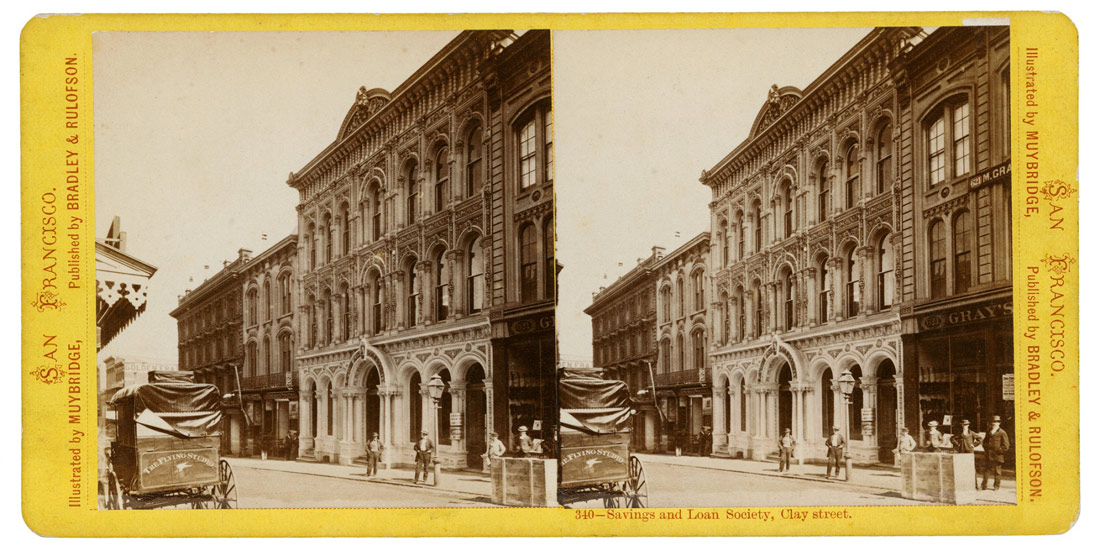
Eadweard Muybridge (English-American, 1830-1904) Savings and Loan Society, Clay Street (340) 1869 albumen stereograph Collection of Leonard A. Calle
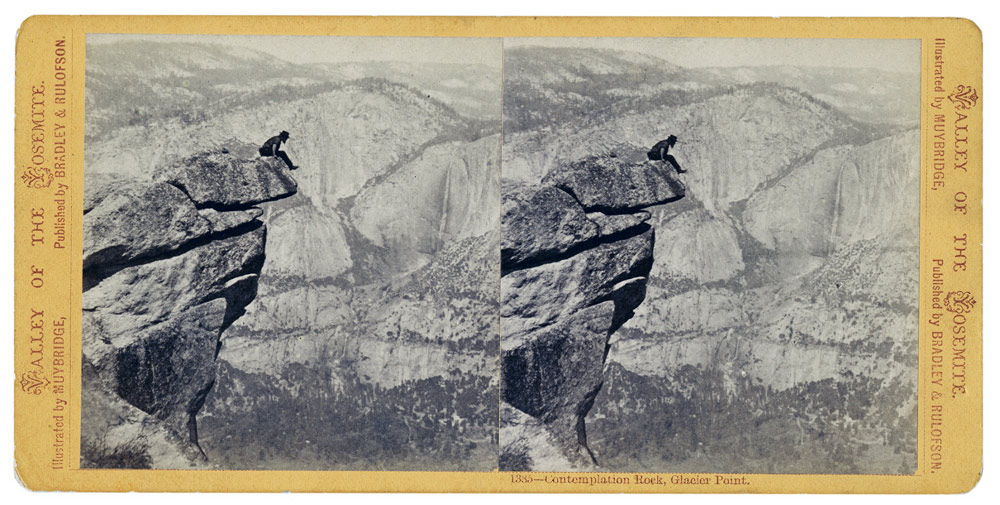
Eadweard Muybridge (English-American, 1830-1904) Contemplation Rock, Glacier Point (1385) 1872 Albumen stereograph Collection of California Historical Society
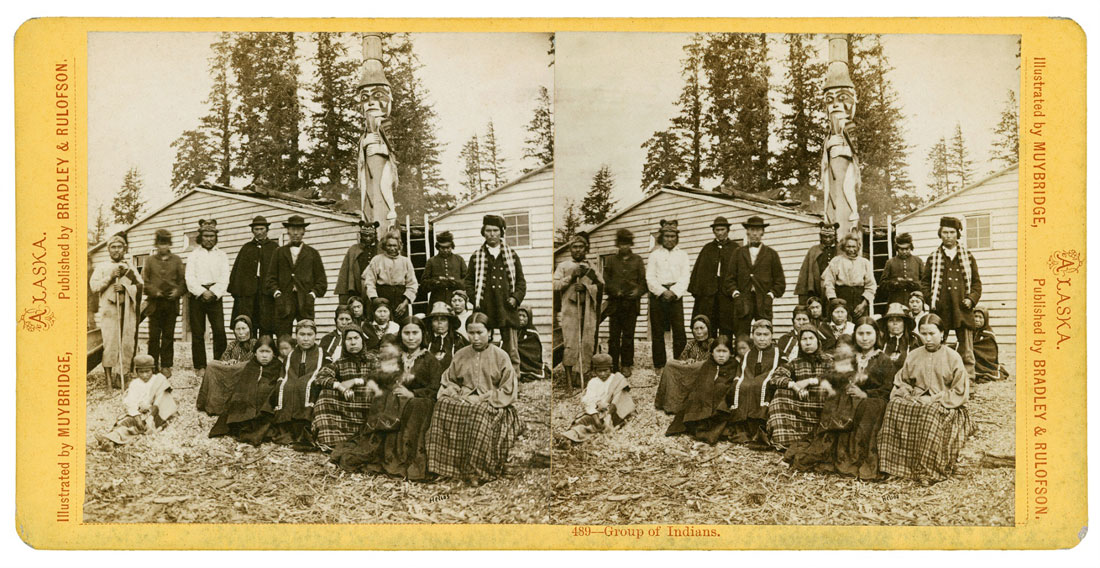
Eadweard Muybridge (English-American, 1830-1904) Group of Indians (489) 1868 Albumen stereograph Collection of Leonard A. Walle
Eadweard Muybridge (English-American, 1830-1904) The Brandenburg Album of Bradley & Rolufson “Celebrities” and Muybridge Photographs, page 104 1874 Albumen prints Iris & B. Gerald Cantor Center for Visual Arts at Stanford University, Museum Purchase Fund
Eadweard Muybridge (English-American, 1830-1904) Horses. Running. Phryne L. Plate 40 1879 From The Attitudes of Animals in Motion, 1881 Albumen print Image courtesy The Board of Trustees, National Gallery of Art, Washington, Gift of Mary and Dan Solomon
Eadweard Muybridge (English-American, 1830-1904) Studies of Foreshortenings. Horses. Running. Mahomet. Plates 143-144 1879 From The Attitudes of Animals in Motion, 1881 Albumen print Chrysler Museum of Art, Norfolk, VA
Eadweard Muybridge (English-American, 1830-1904) Leland Stanford, Jr. on his pony “Gypsy” – Phases of a Stride by a Pony While Cantering 1879 Collodion positive on glass Wilson Centre for Photography
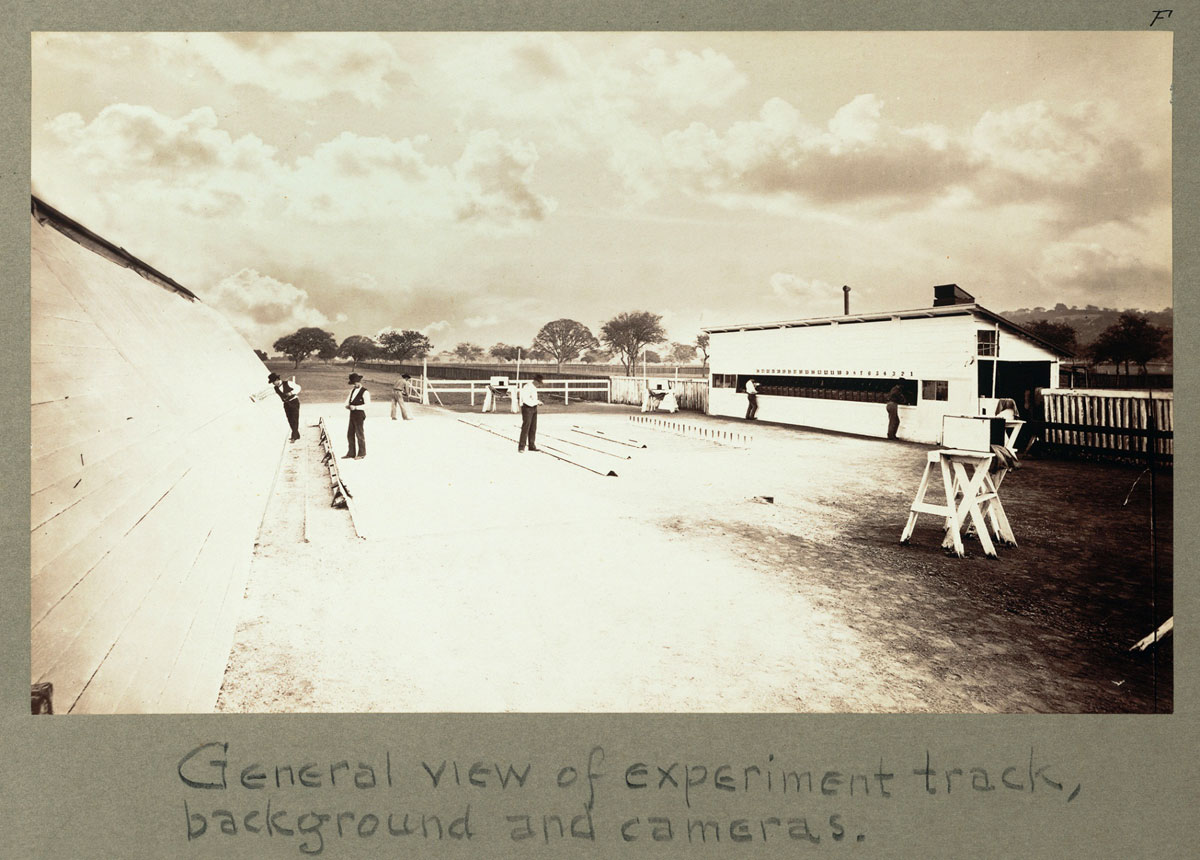
Eadweard Muybridge (English-American, 1830-1904) General view of experiment track, background and cameras, Plate F 1881 From The Attitudes of Animals in Motion, 1881 Albumen print Courtesy Special Collections, Stanford University Libraries
San Francisco Museum of Modern Art (SFMOMA) 151 Third Street (between Mission + Howard) San Francisco CA 94103
Opening hours: Friday – Tuesday 10 am – 5 pm and Thursday 10 am – 9 pm Wednesday Closed
Many thankx to The Nelson-Atkins Museum of Art for allowing me to publish the photographs in the posting. Please click on the photograph for a larger version of the image.
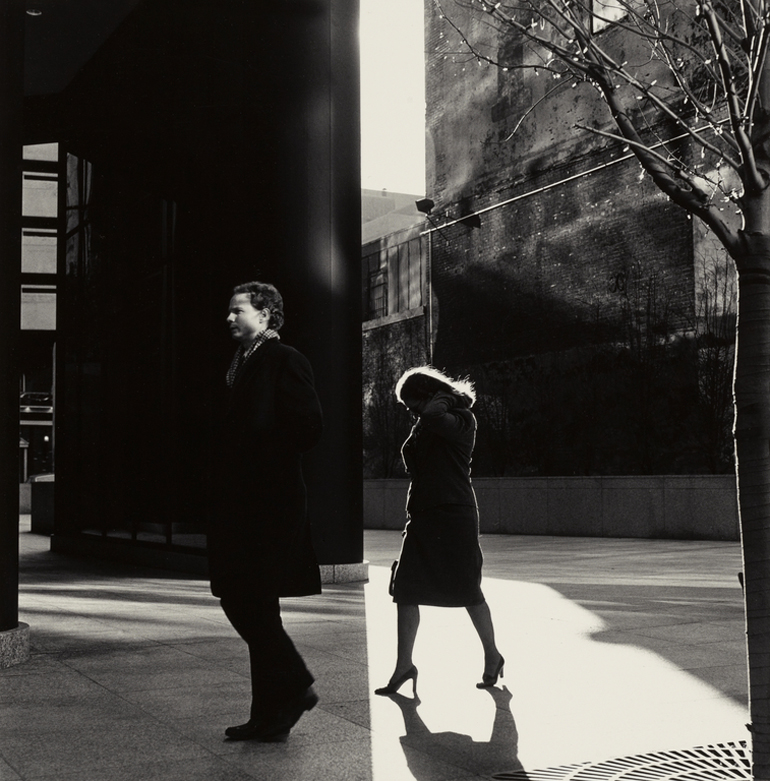
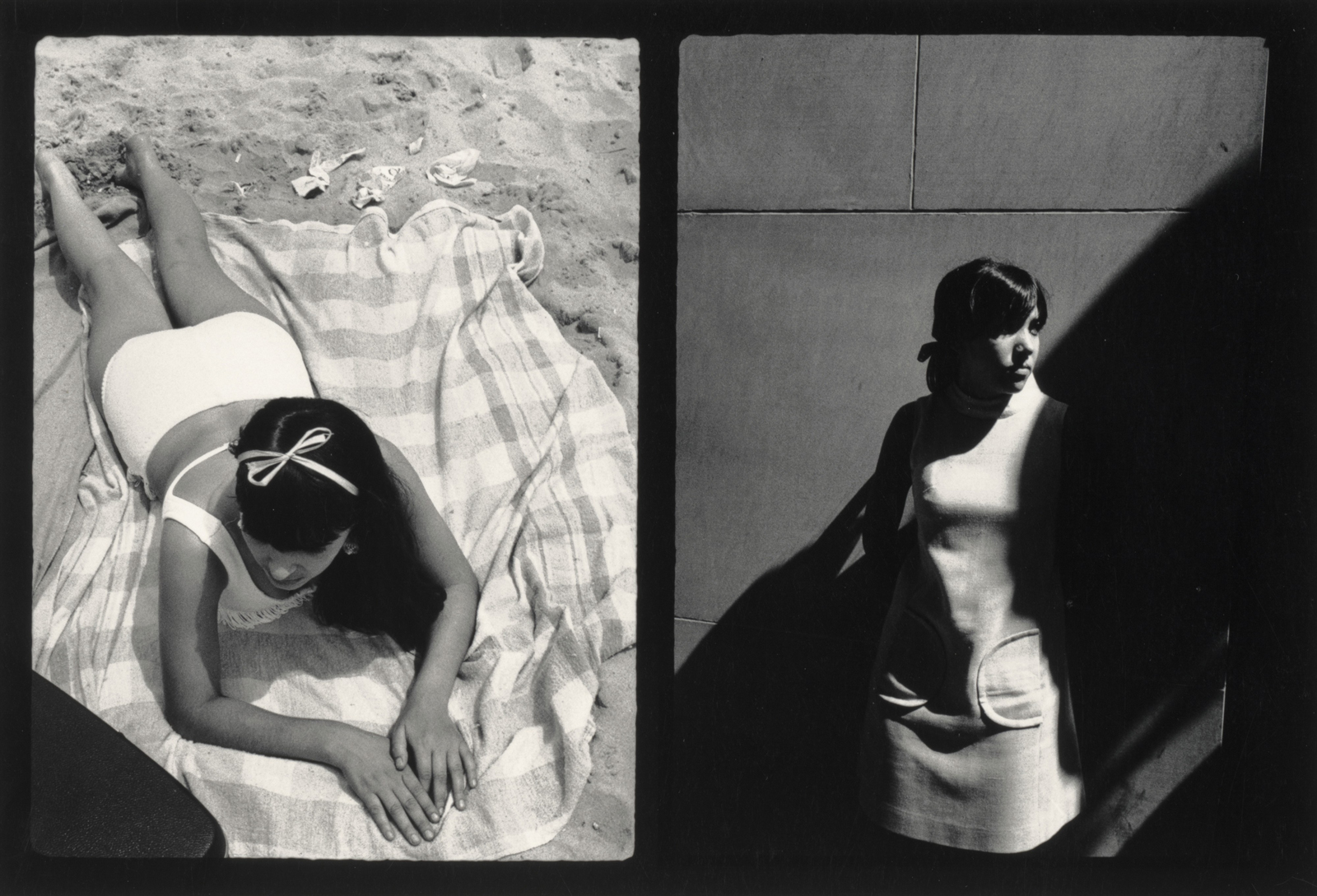
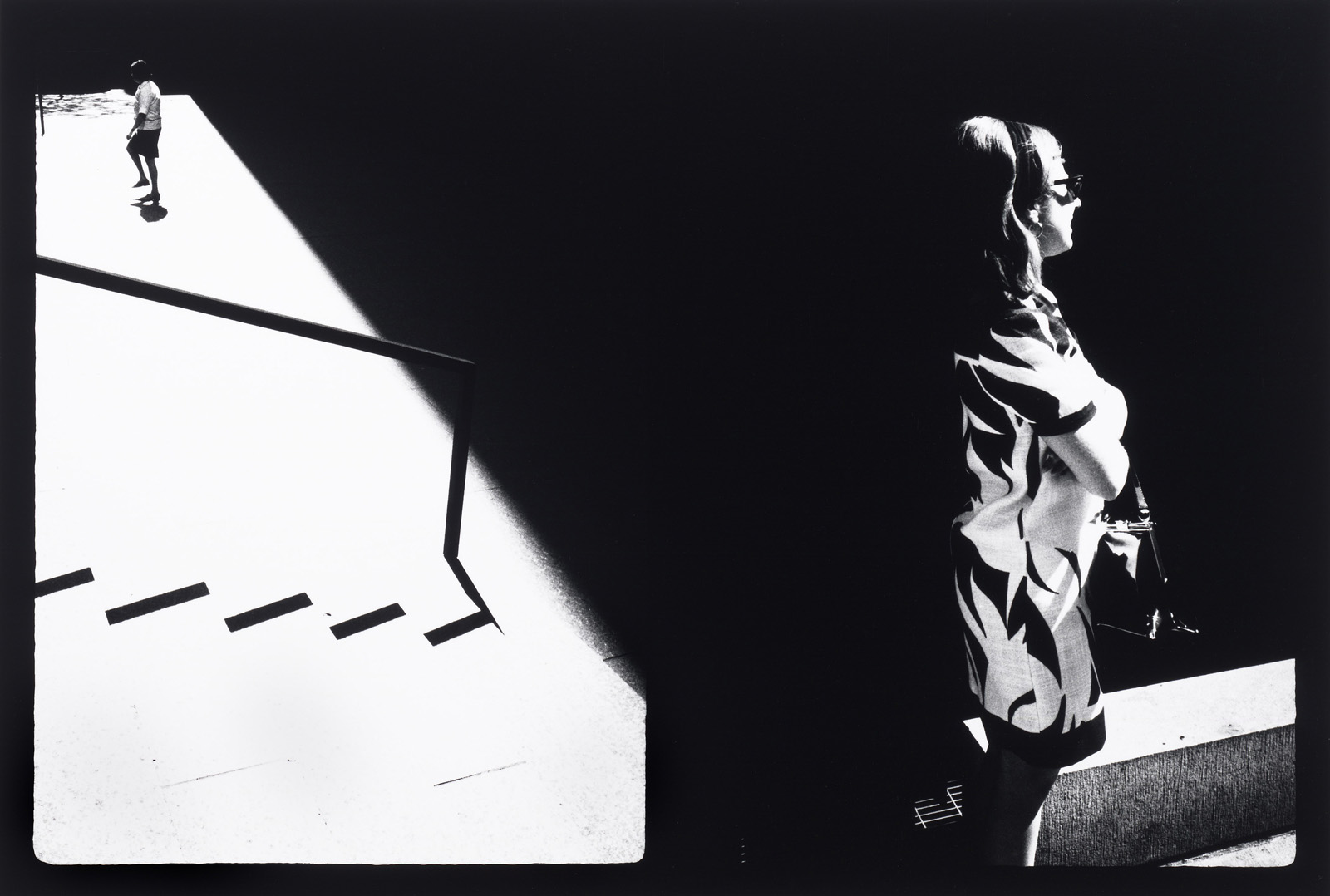
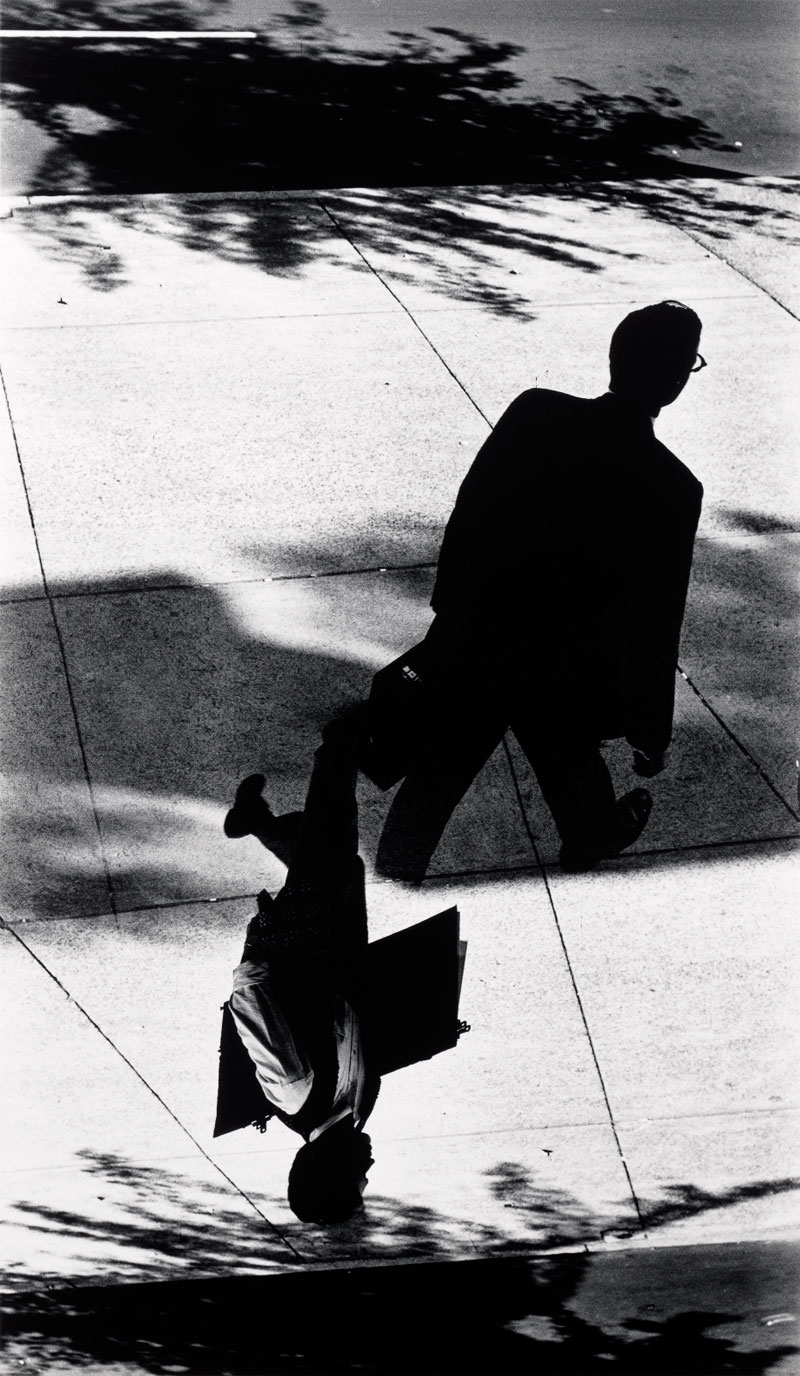
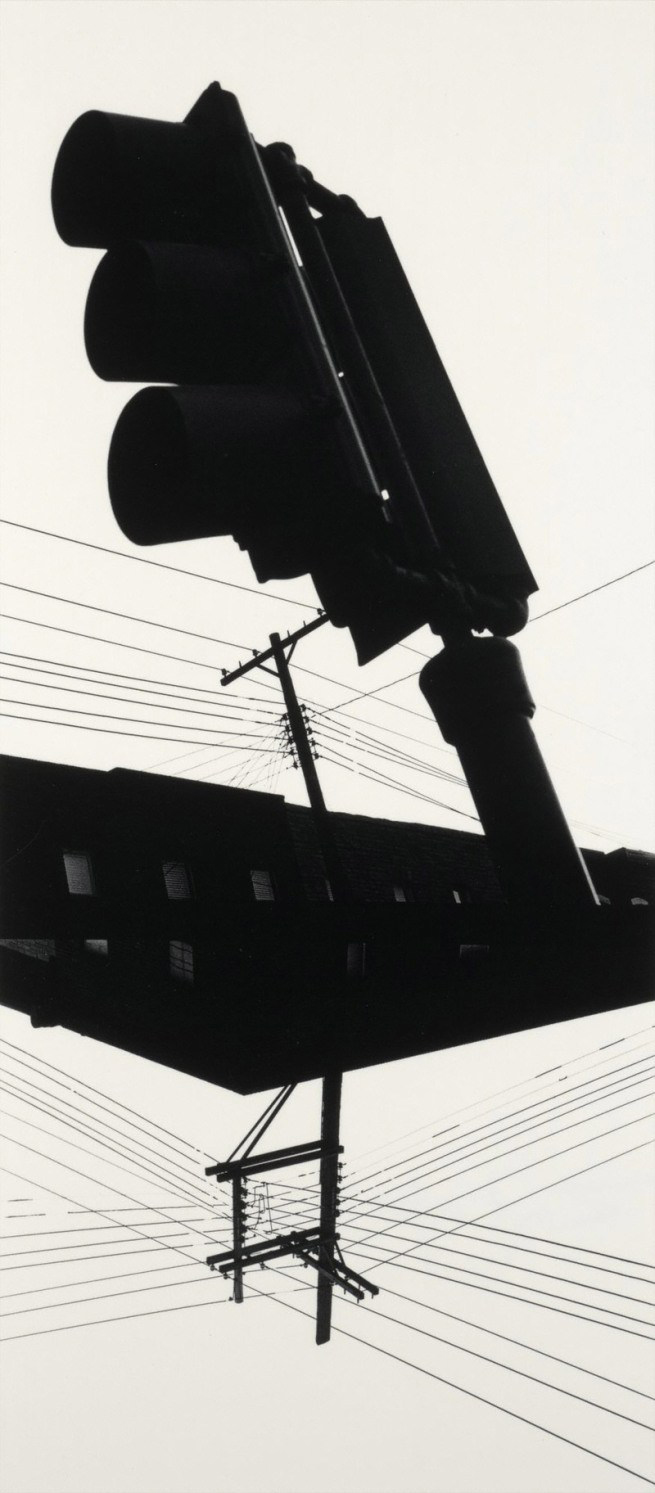
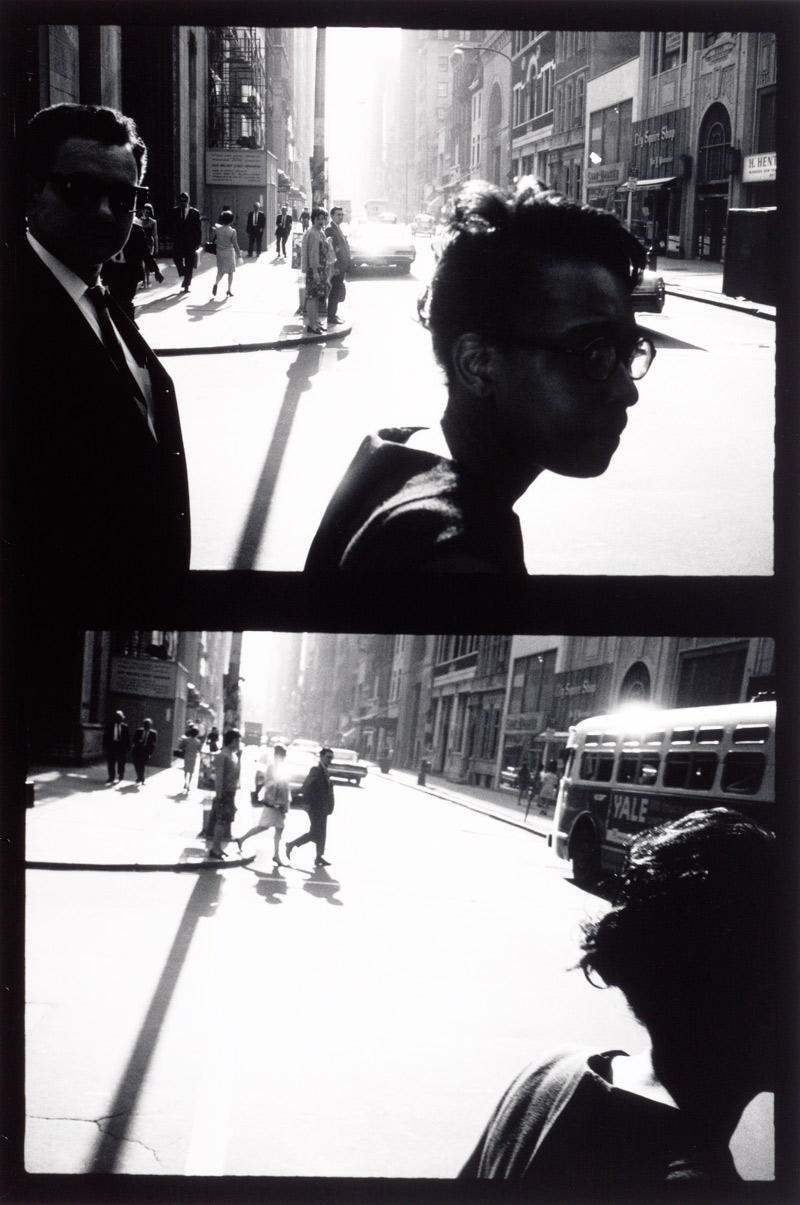
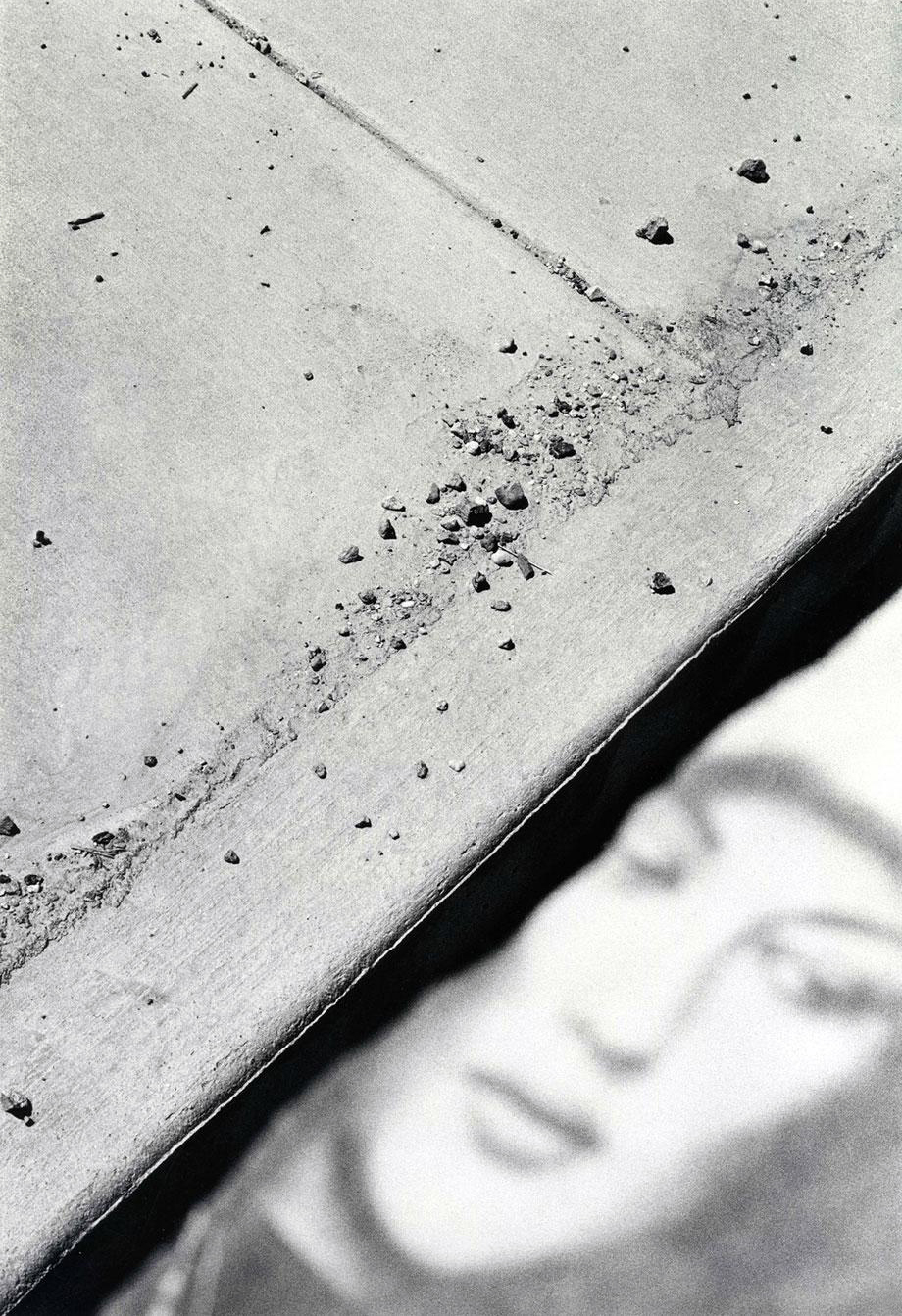
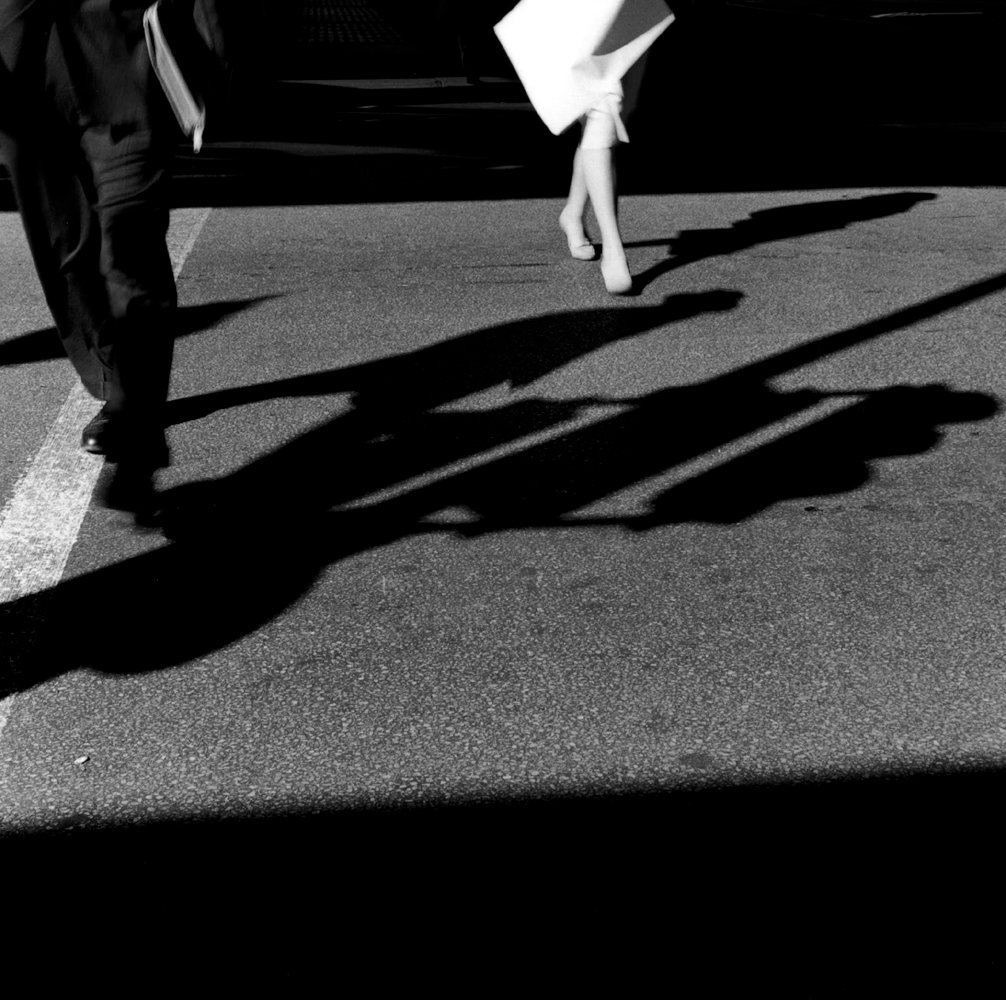
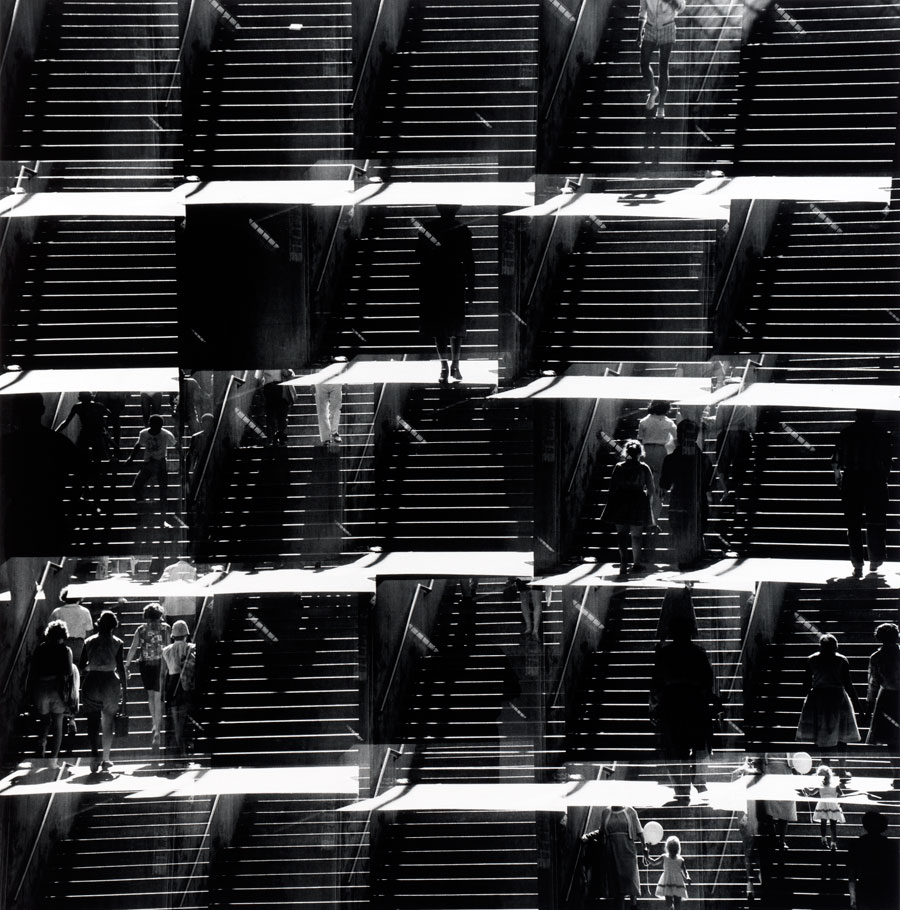
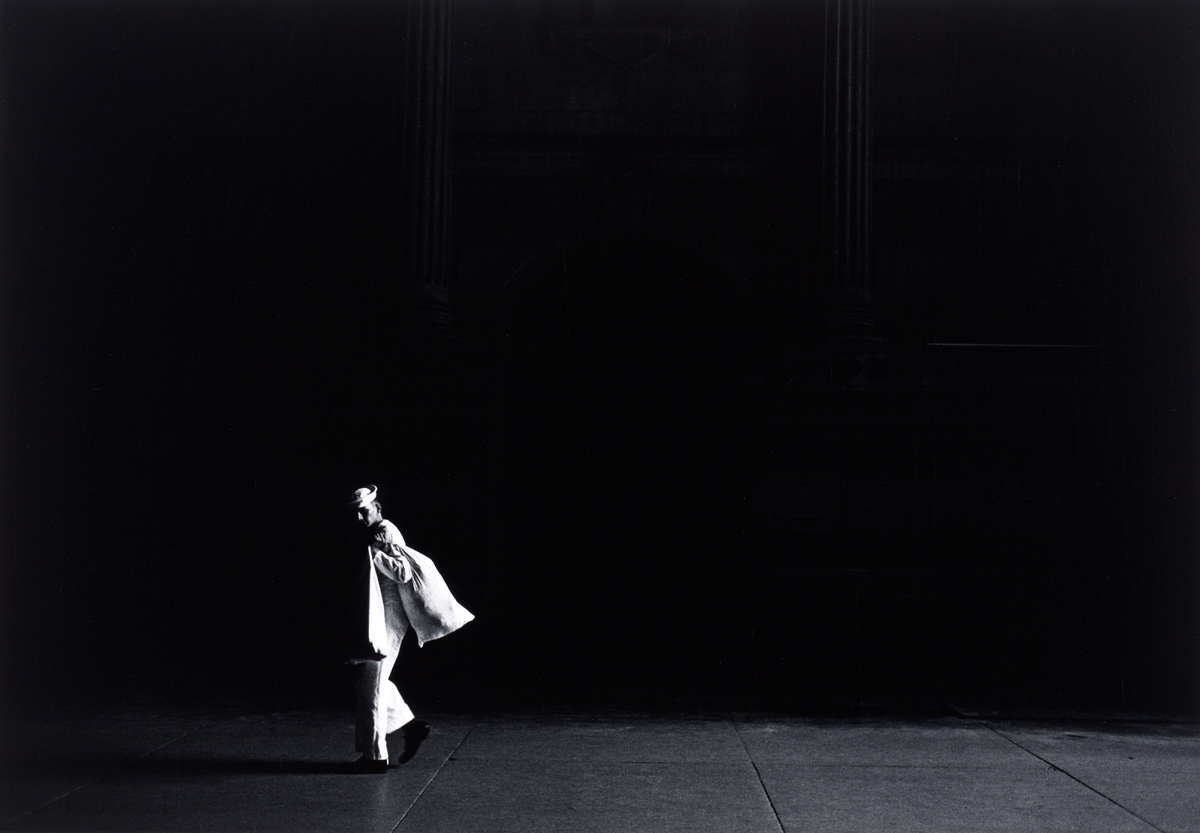
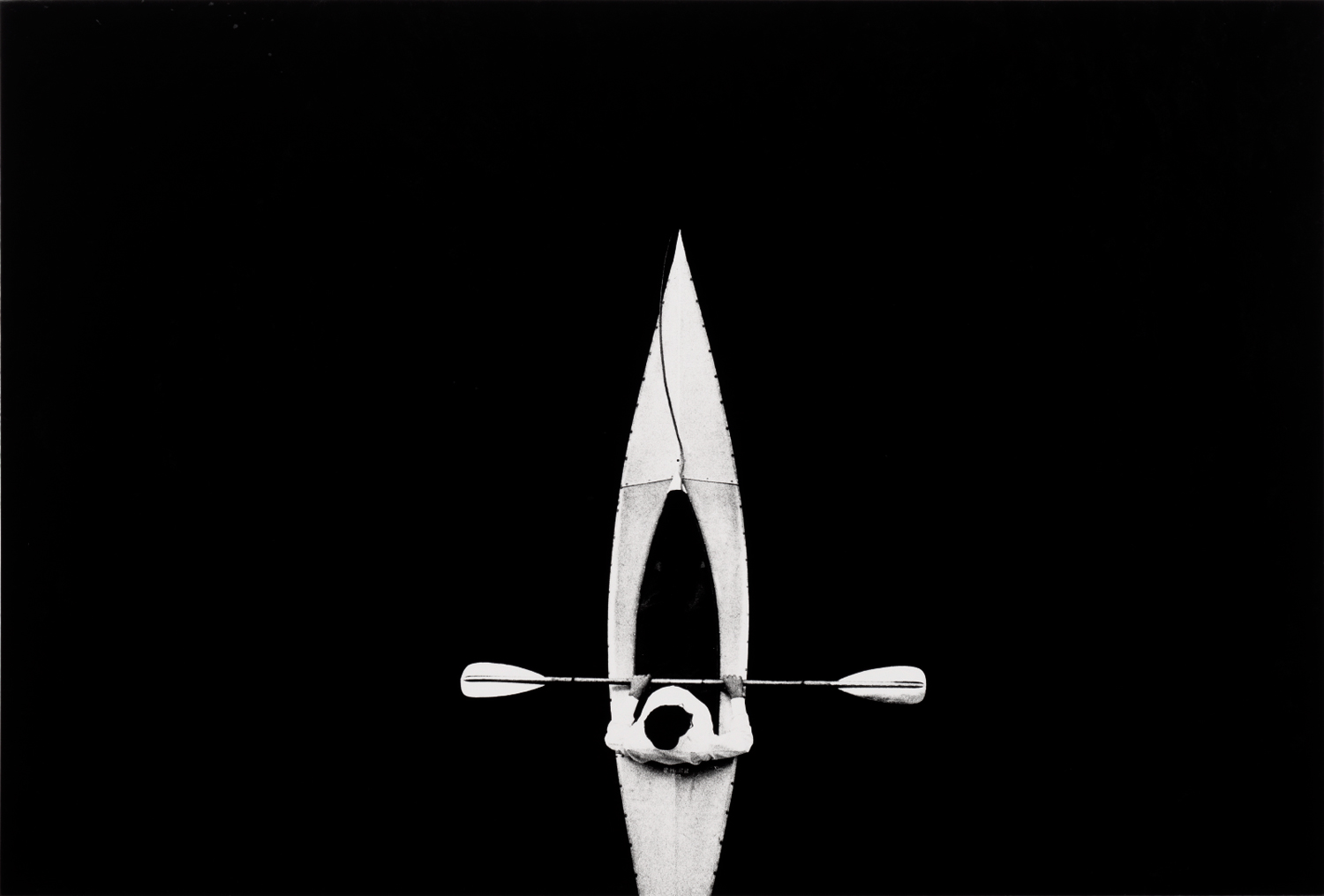
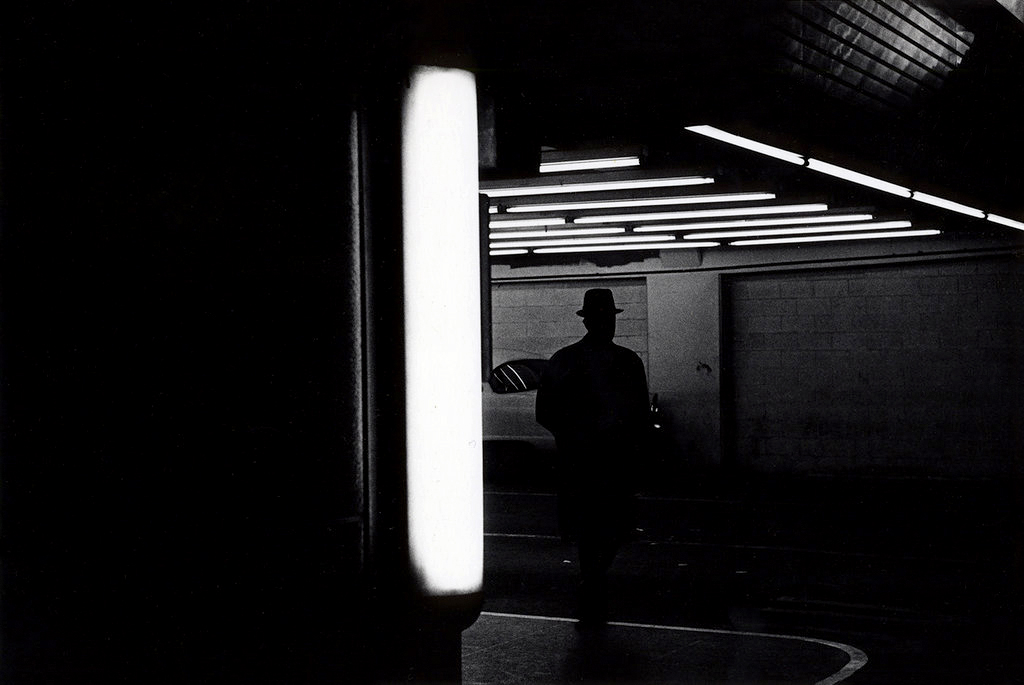
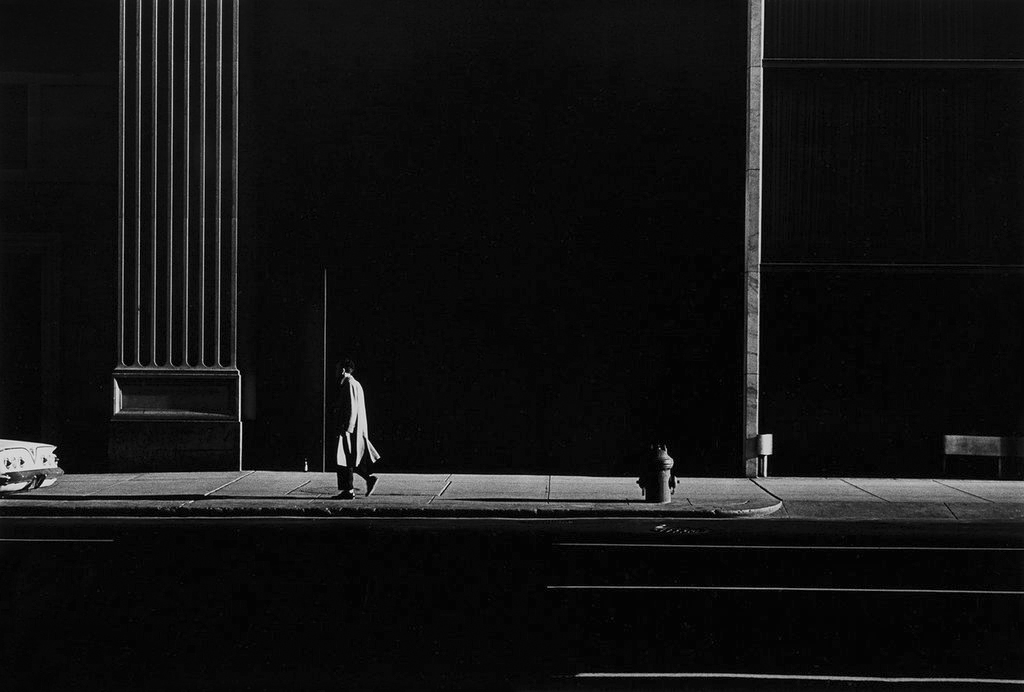
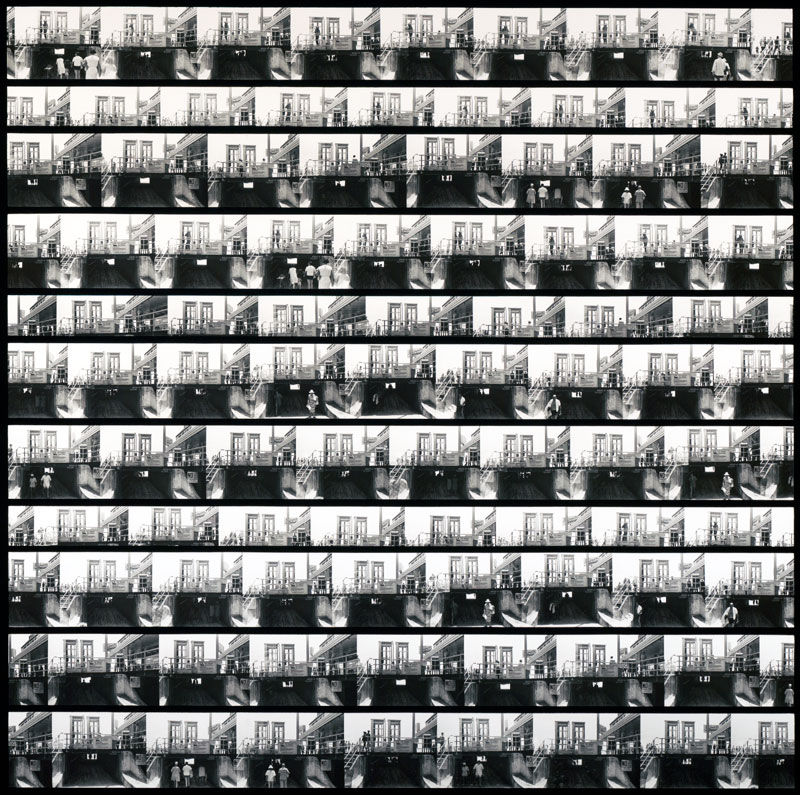
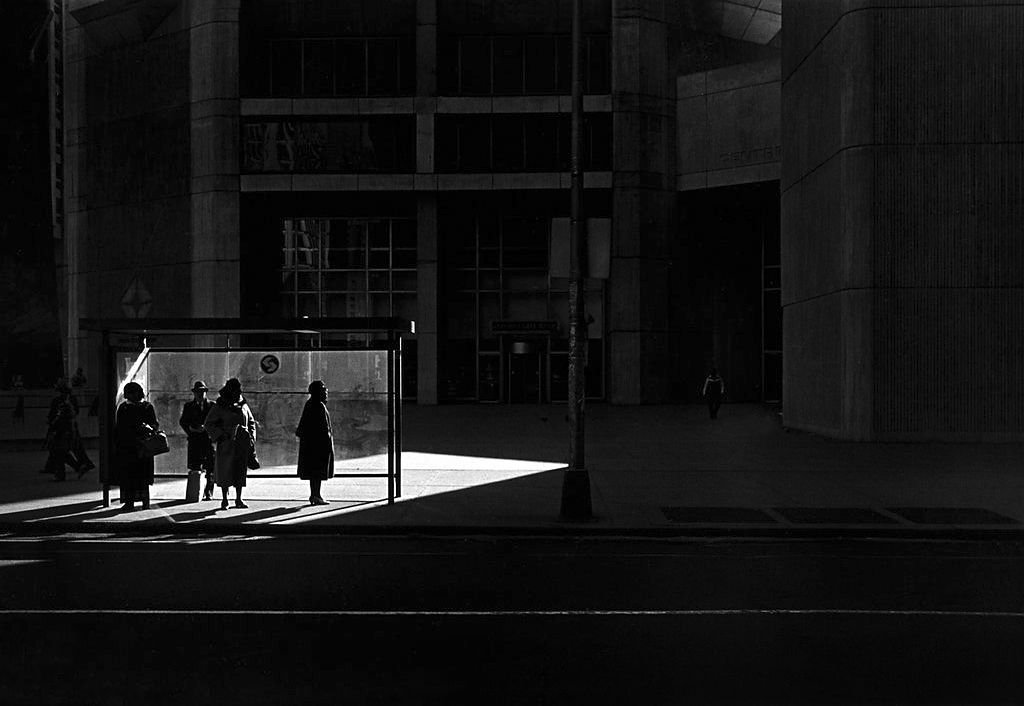
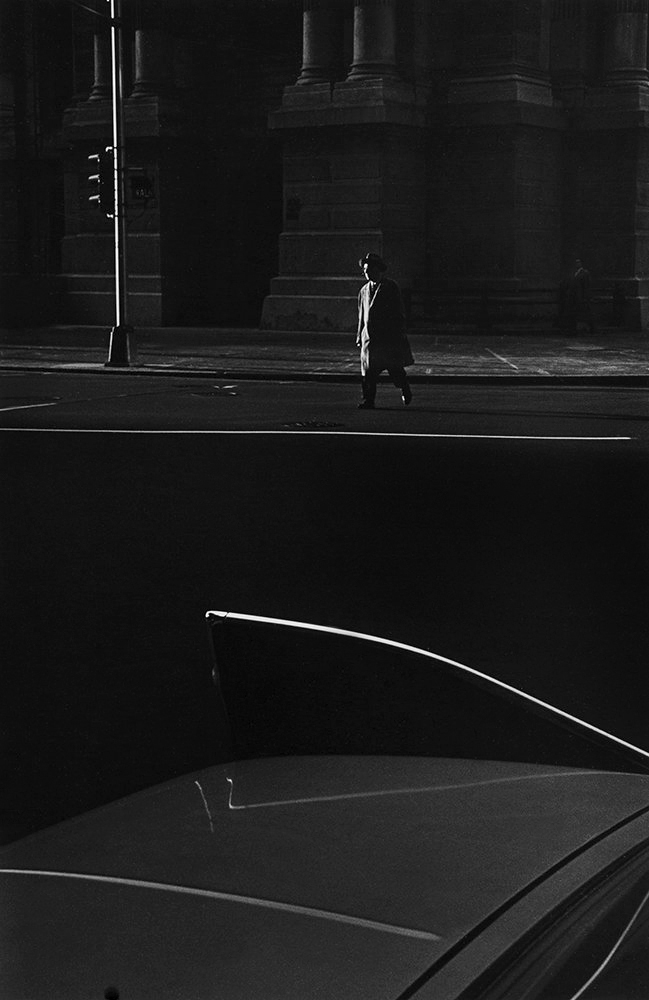
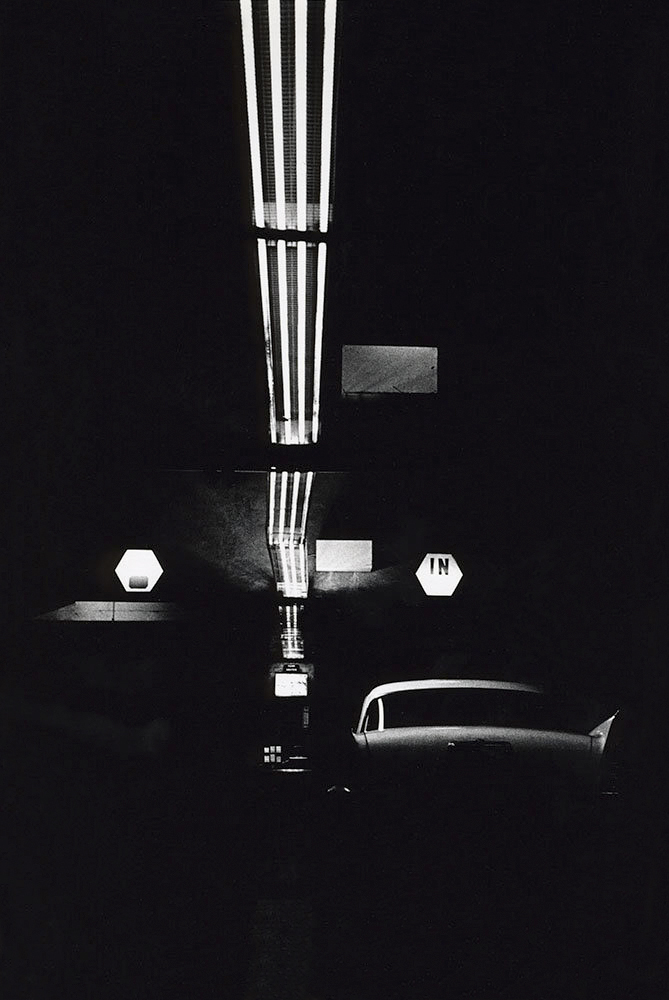
Works by Ray K. Metzker, one of the most original and influential photographers of the last half century, will be on view from Jan. 15 to June 5, 2011, at The Nelson-Atkins Museum of Art. The Photographs of Ray K. Metzker will reveal Metzker’s ability to turn ordinary subjects, including the urban experience and nature, into the visual poetry of the finely crafted black-and-white print.
At the age of nearly 80, Metzker is greatly admired for his passionate engagement with both photography and the world. He has explored the use of high contrast and selective focus, the potentials of multiple and composite images, and the infinite gradations of daylight, from dazzling white to inky shadow.
This is great and lasting work – the very best of a classic form of American modernism, said Keith F. Davis, senior curator of photography at the Nelson-Atkins. Metzker has led a life of deep devotion to understanding the potential, challenge and pleasure of photographic seeing. In so doing, he has transcended any simple notion of technical experimentation or formalism to illuminate a vastly larger human realm – one of uncertainty, isolation and vulnerability, as well as of unexpected beauty, grace and transcendence.
Thanks to a major gift from the Hall Family Foundation, the Nelson-Atkins now has the largest holding of Metzker’s work (92 prints) in the United States.
Born in Milwaukee, Wis., in 1931, Metzker first took up photography as a teenager. After two years in the army, he entered the graduate program at the Institute of Design, Chicago, in the fall of 1956. His professors, Aaron Siskind and Harry Callahan, were acclaimed artists and inspiring teachers, and they emphasised the medium’s remarkable range and visual potential. Metzker’s artistic vision grew from a union of ideas: the realities of modern life, the medium’s myriad technical possibilities, and the quest for a distinctly individual vision.
Metzker has lived and worked in Philadelphia since 1962, and as he approaches the age of 80, he continues to make new pictures there.
The photographs in the exhibition feature examples from all his major series, including his earliest mature work from Chicago (1957-1959); photographs from an extended visit to Europe (1960-1961); the street activity, people, and structures of Philadelphia (from 1962 to the present); beachgoers at the New Jersey shore, Sand Creatures (1968-1977); the starkness of the Southwestern light and landscape, New Mexico (1971-1972); and the lush mysteries of the natural realm, in his Landscapes (1985-1996) from Italy, France and the United States.
The exhibition features a host of innovative and ingenious approaches to photography, including the use of the double image, Double Frame (1964-1966) and Couplets (1968-1969); single works created from an entire roll of film, Composites (1964-1966); and the creative control of focus in both Pictus Interruptus (1976-1980) and Landscapes (1985-1996).
Press release from The Nelson-Atkins Museum of Art website
Many thankx to Fundació Foto Colectania for allowing me to publish the photographs in the posting. Please click on the photograph for a larger version of the image.
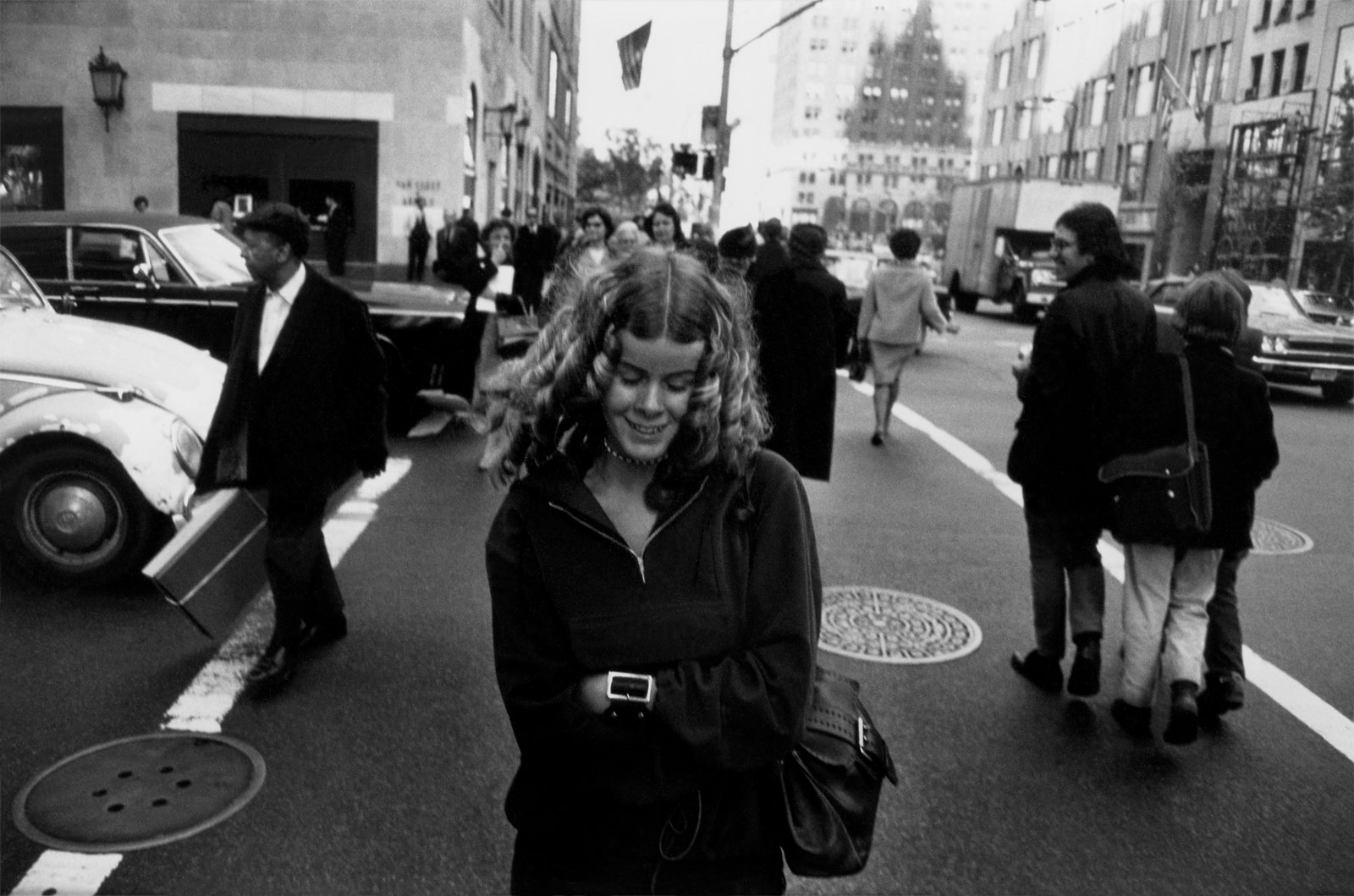
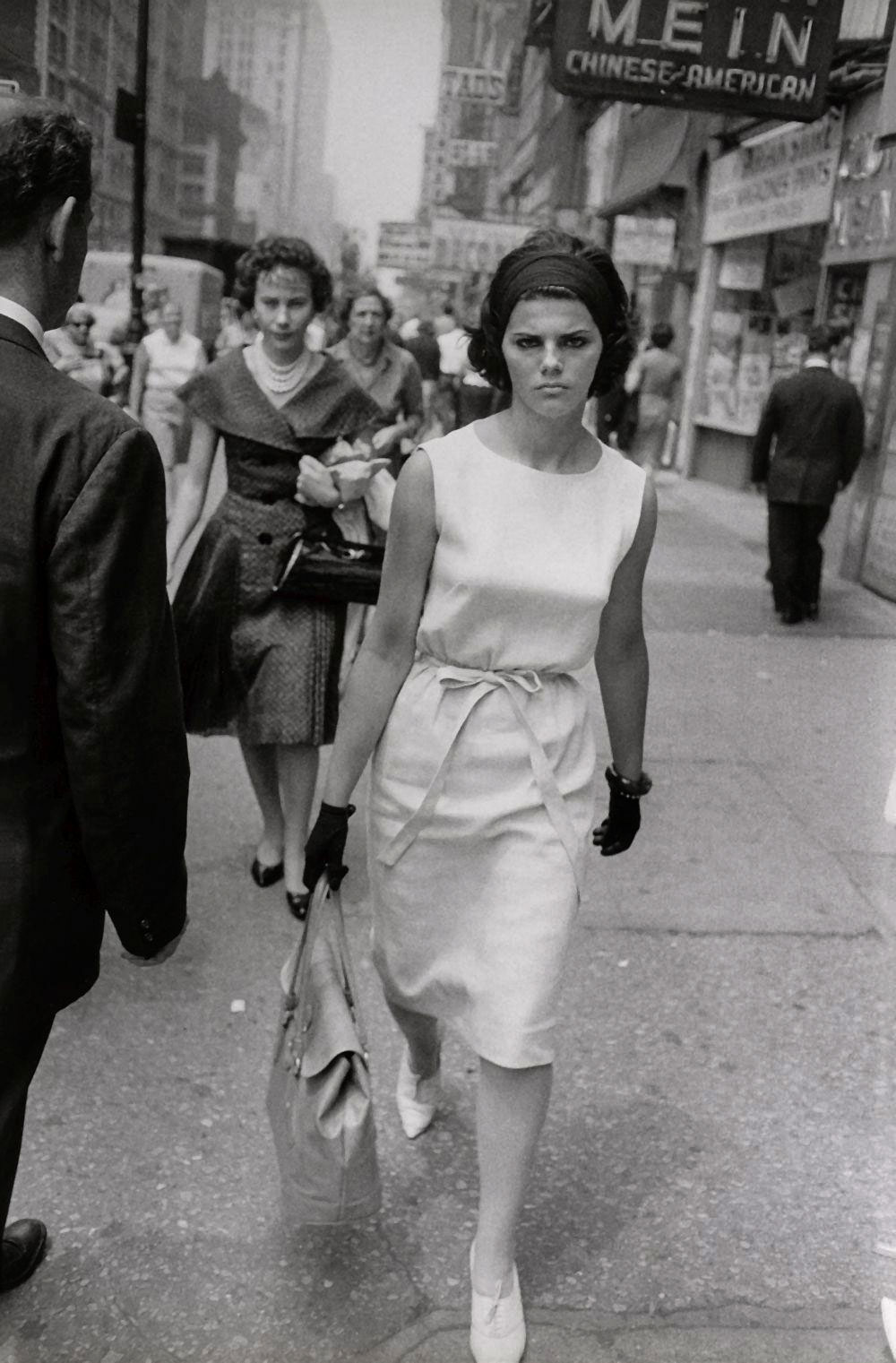
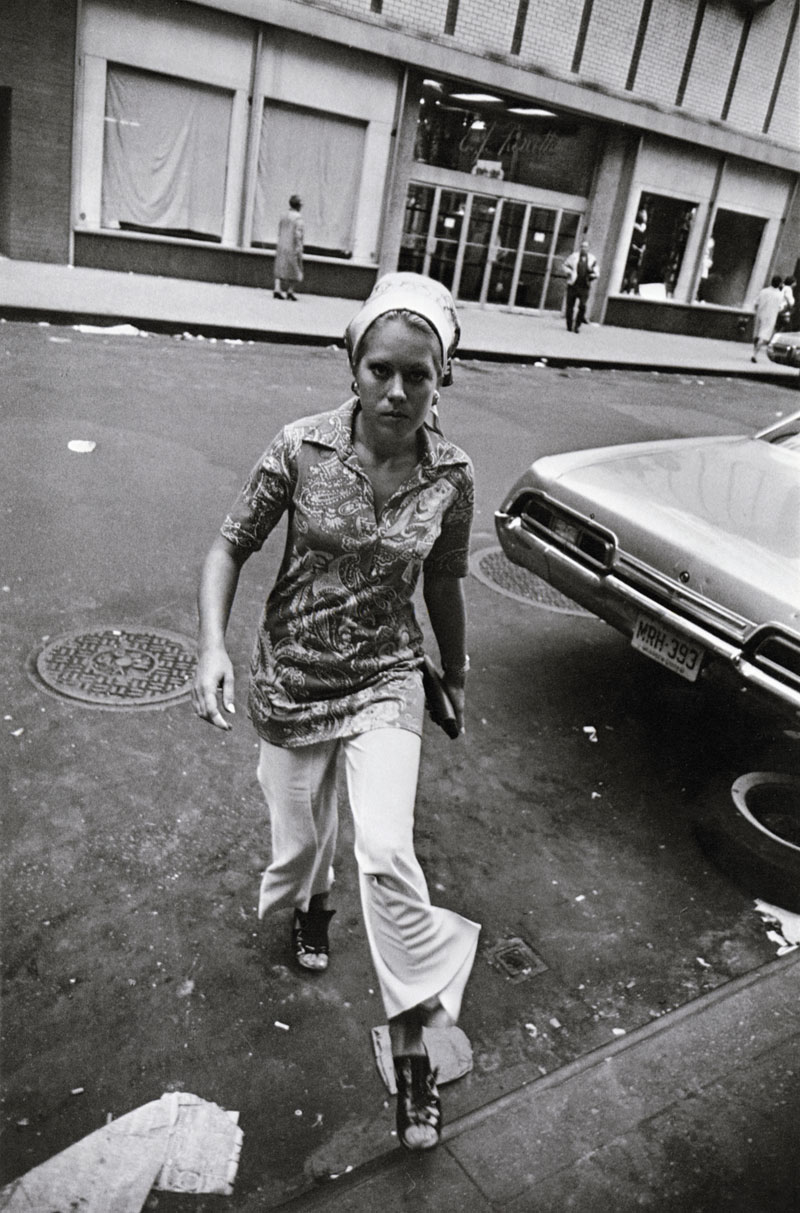
Foundation Foto Colectania presents for the first time in Barcelona the famous series Women Are Beautiful by Garry Winogrand.
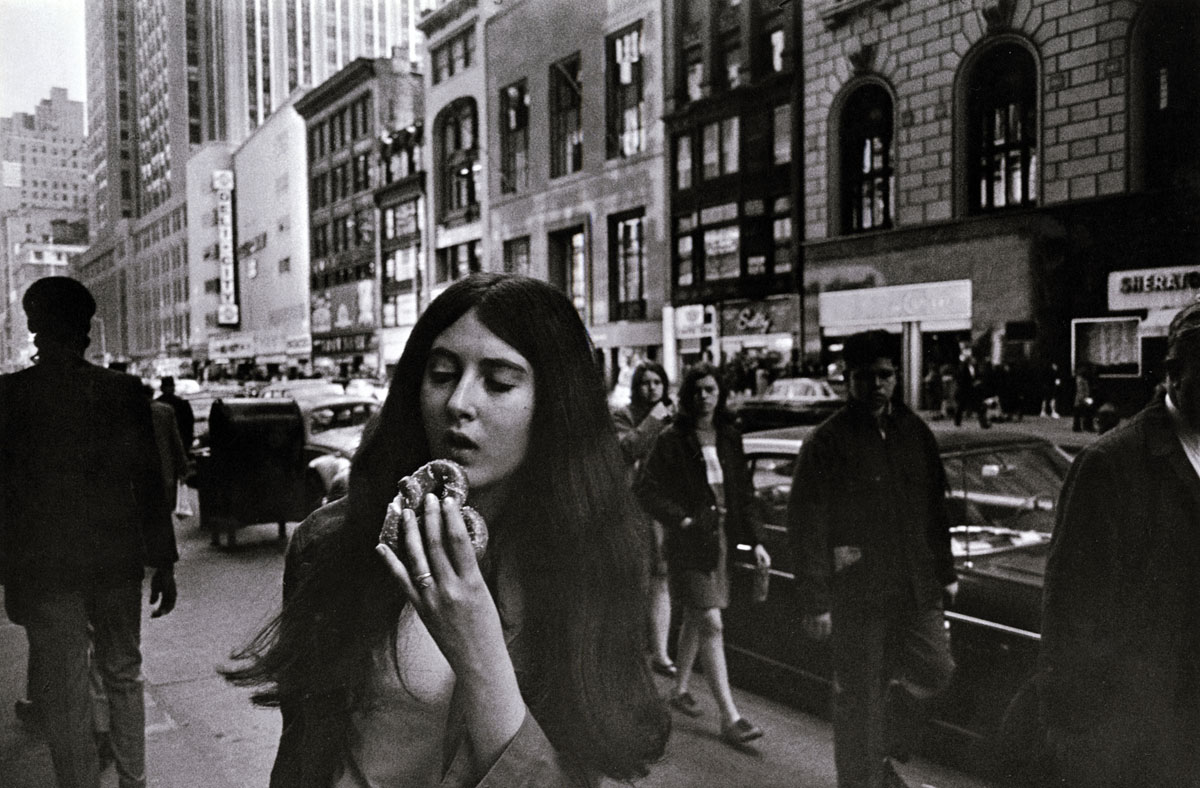
Garry Winogrand is considered one of the greatest innovators of photography of the twentieth-century in America. He knew like no other how to capture the social transformation of females in the 60’s and 70’s through his portraits of women who stand as an allegory of women’s emancipation and their new role in society. The Foundation Foto Colectania presents his series Women Are Beautiful, including 85 photographs taken between 1960 and 1975 and collected in the book with the same title by the legendary director of photography at the MoMA, John Szarkowski. The exhibition from the collection of Lola Garrido, is part of the programming line of the foundation which is dedicated to authors who changed the course of the history of photography. The exhibition can be seen in Barcelona until June 4, 2011. In the 60’s ended the era of big images as symbols of timeless truths, by the devastating influence first from Walker Evans, and later from Robert Frank and William Klein. The pictures are focused on the reflection of reality, no retouching or other ideas added. Garry Winogrand and Lee Friedlander represent “the new American style” which broke new ground in the so-called Street Photography.
Winogrand combines spontaneity with an apparent confusion, which is more than aware of the complexity of the photography world: “I photograph to see what the world looks like in photographs.” The presence of human beings, contrasting with the crowds and the streets in his photographs reveals a new way of looking, in which the anarchy results in a wealth of shapes and structures. The biased and cold style of Winogrand is associated with Abstract Expressionism and its sharp diagonals are similar to paint brush strokes of those years. If the photographer Robert Frank was critical of the 50’s, Garry Winogrand is one of the largest photographers of the 60’s.
Press release from the Fundació Foto Colectania website
Many thankx to the Martin-Gropius-Bau, Berlin for allowing me to publish the photographs in the posting. Please click on the photographs for a larger version of the image.
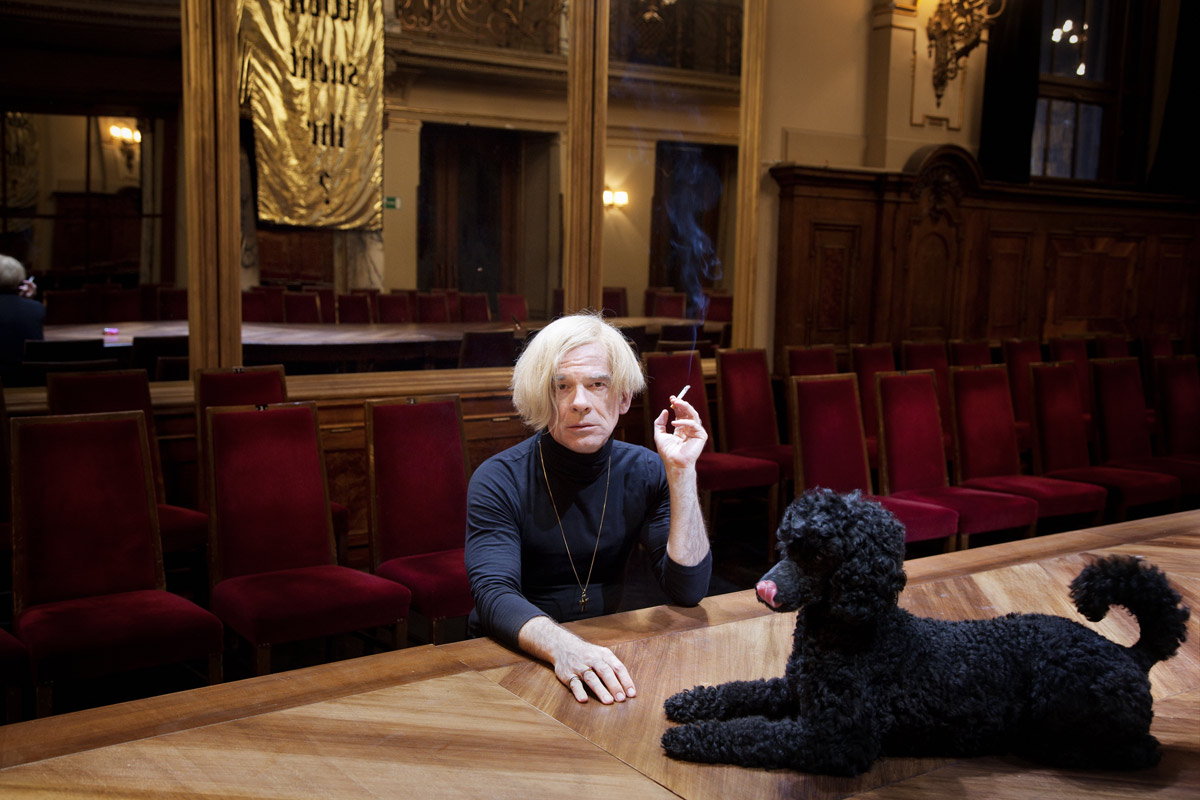
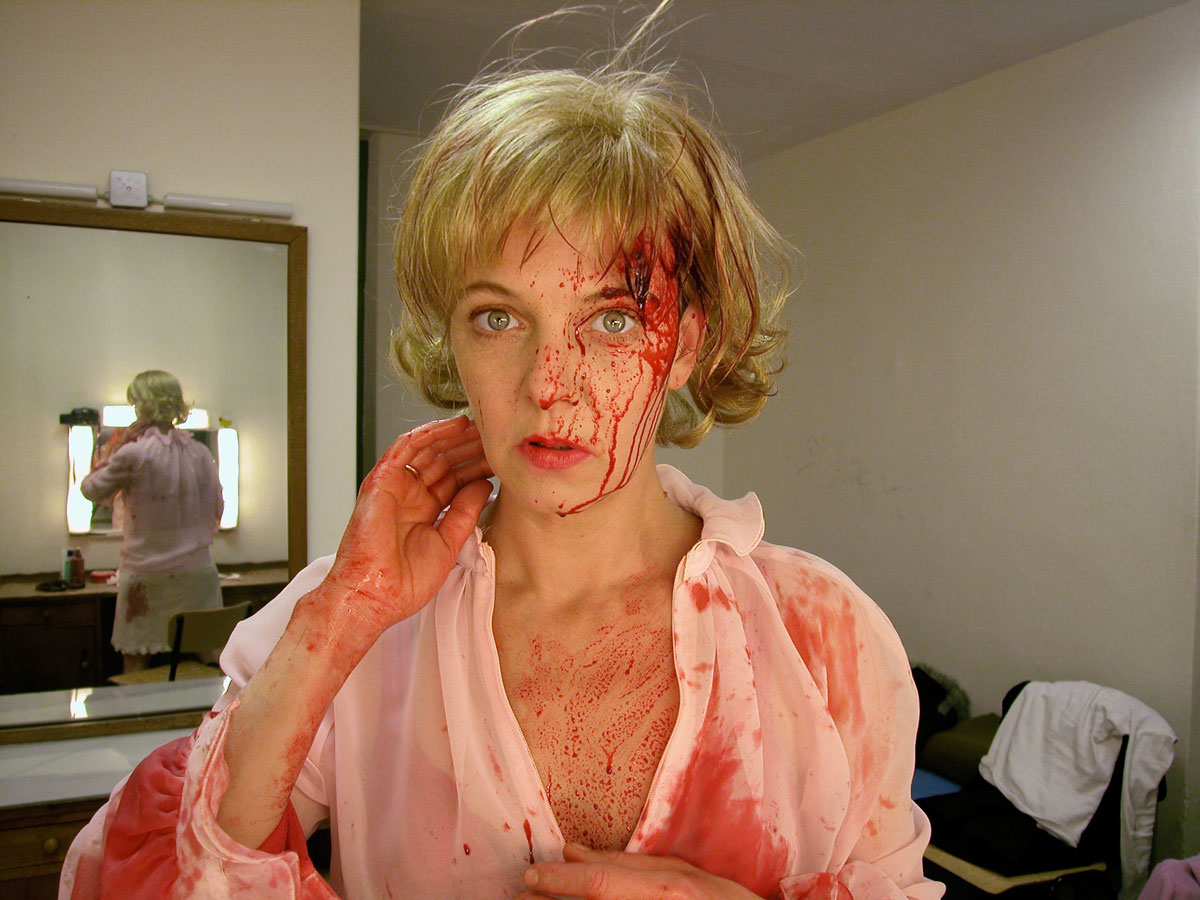
As an actress Margarita Broich is one of the big names, but it may come as a surprise to many that she is also a photographer. For the first time the Martin-Gropius-Bau is showing an exhibition of her work consisting of over 60 portraits of her fellow artists, including Ben Becker, Kate Winslet, Veronika Ferres, Klaus Maria Brandauer, Christoph Schlingensief, Thomas Quasthoff and many more. Margarita Broich has captured those fleeting moments when the actor sheds the role in the intervals or a few minutes after the end of a performance. The role can still be discerned on the features of the players when they are still surrounded by the world of scenery and mirrors but not acting any more. They have been sought out in changing rooms, theatre foyers, or with the make-up artist, taking off their make-up while still surrounded by the tools of their transformation.
Broich portrays the artists with the instinct of a colleague. Her photographs capture famous artists from her circle of acquaintances at those moments when they are returning from the stage after playing their role. However matter-of-fact the situation of the subject may occasionally appear, each photograph has its own charm. The beholder is granted glimpses of scenes that must be among the most intimate in show business: whether they show Martin Wuttke with a blonde, Andy Warhol mane and his poodle, Taxi, smoking a cigarette after a performance of “Gretchens Faust”, or Klaus Maria Brandauer at the end of a 10-hour Wallenstein epic, sitting on a stool with a bottle of beer, the snapshots are full of tension.
Born in Neuwied in 1960, Margarita Broich initially studied photo design in Dortmund and worked as a theatrical photographer at the Bochum Schauspielhaus (Theatre) under Claus Peymann, before studying dramatic art herself at Berlin’s College of Arts. Since then she has appeared in numerous German-language stage performances and television dramas, working with such directors as Claus Peymann, Robert Wilson and, earlier, with Christoph Schlingensief.
Text from the Martin-Gropius-Bau website [Online] Cited 26/05/2011 no longer available online
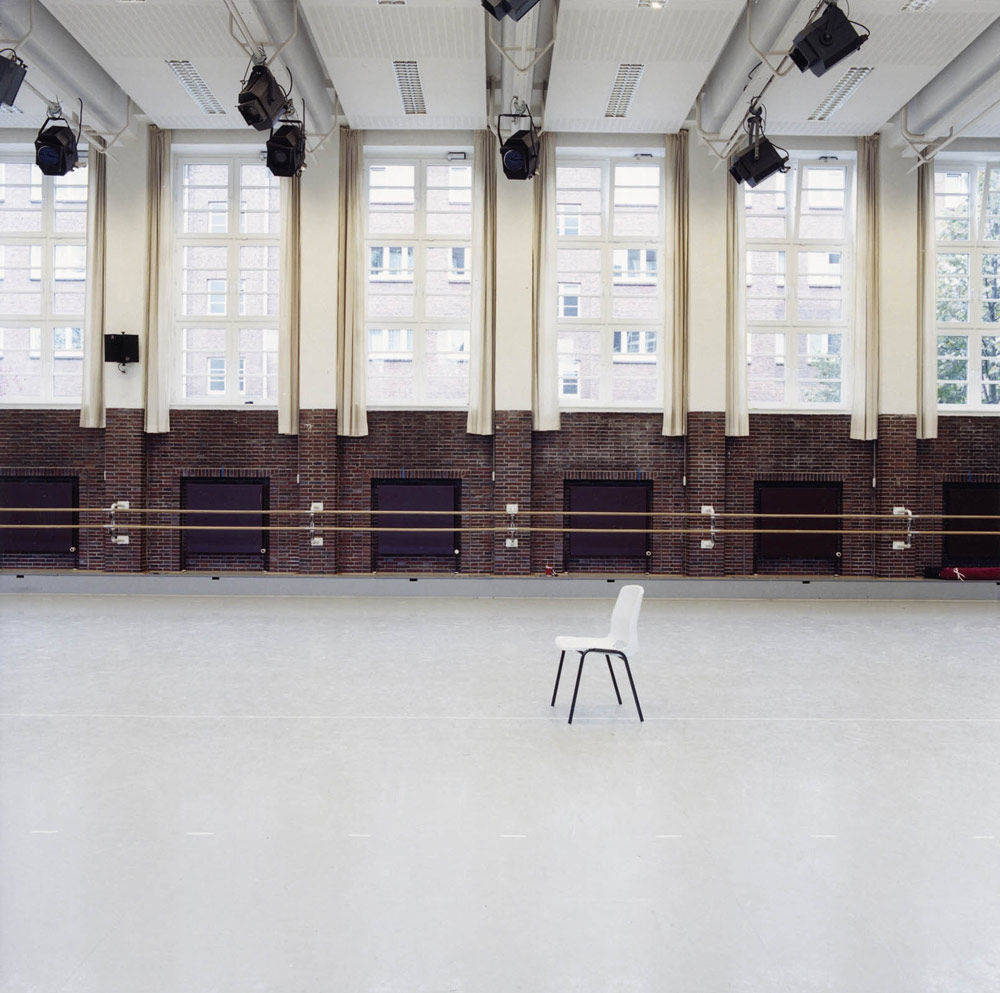
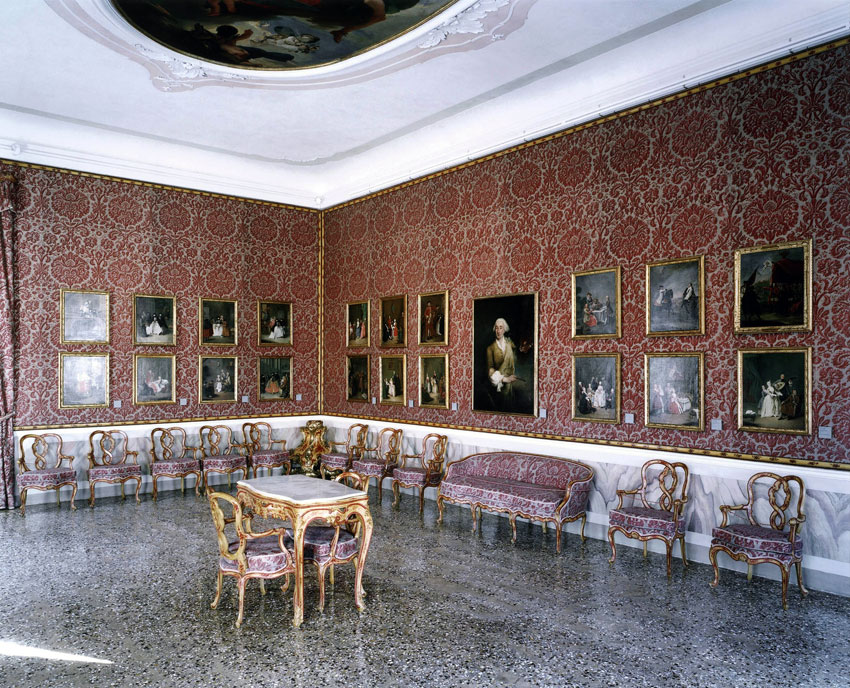
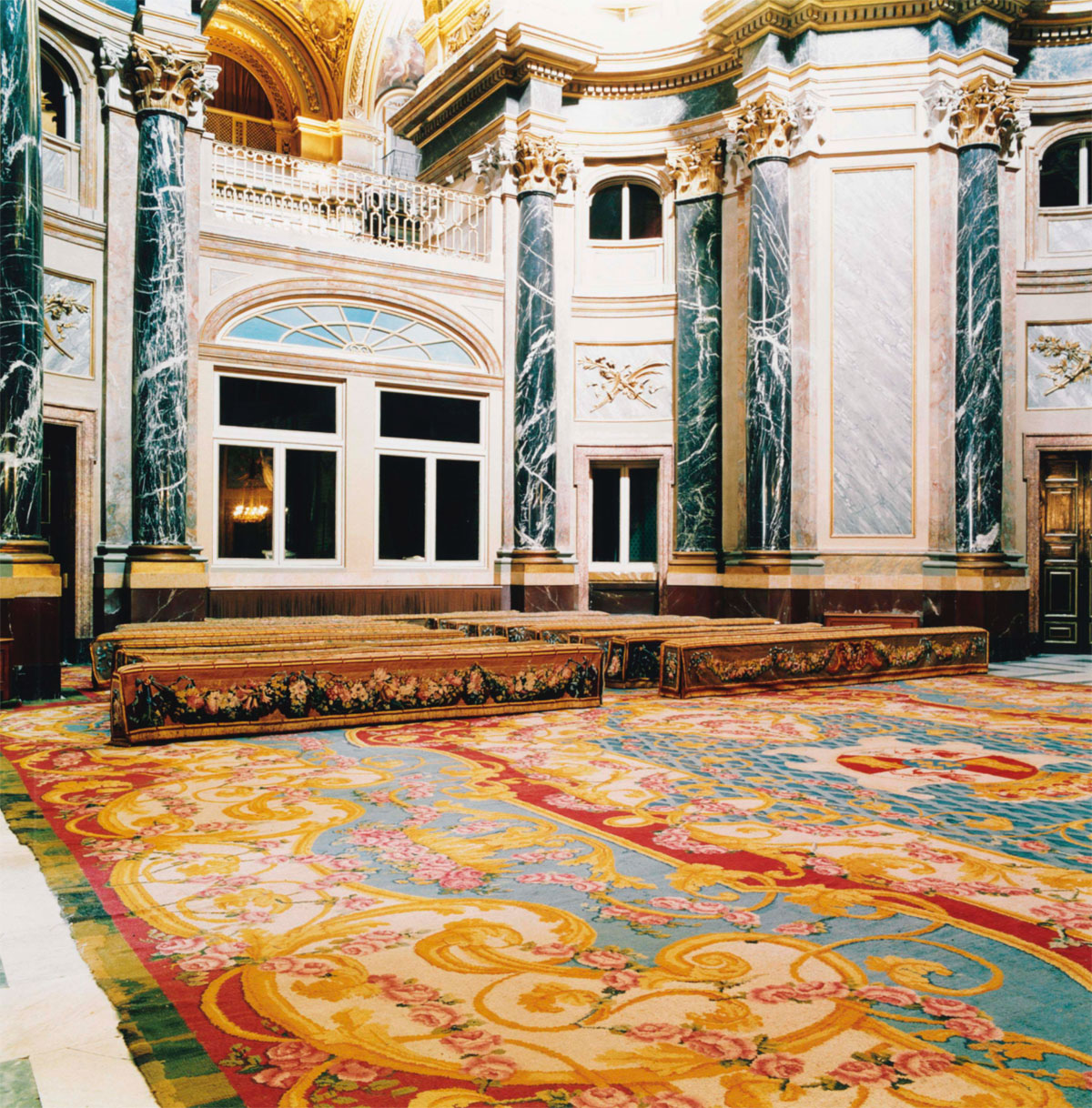
Candida Höfer (German, b. 1944) Ballettzentrum Hamburg III 2000 Chromogenic print Courtesy of Sonnabend Gallery
Inspired curating conjoins the monumental, classicist purity of Höfer with the picturesque, dystopian (dis)quietude of Gaillard in an exhibition that investigates our relationship to buildings and their environments and their relationship to us – the ‘i’ in our histor-i-city.
Dr Marcus Bunyan
Many thankx to the Carnegie Museum of Art for allowing me to publish the photographs in the posting. Please click on the photographs for a larger version of the image.
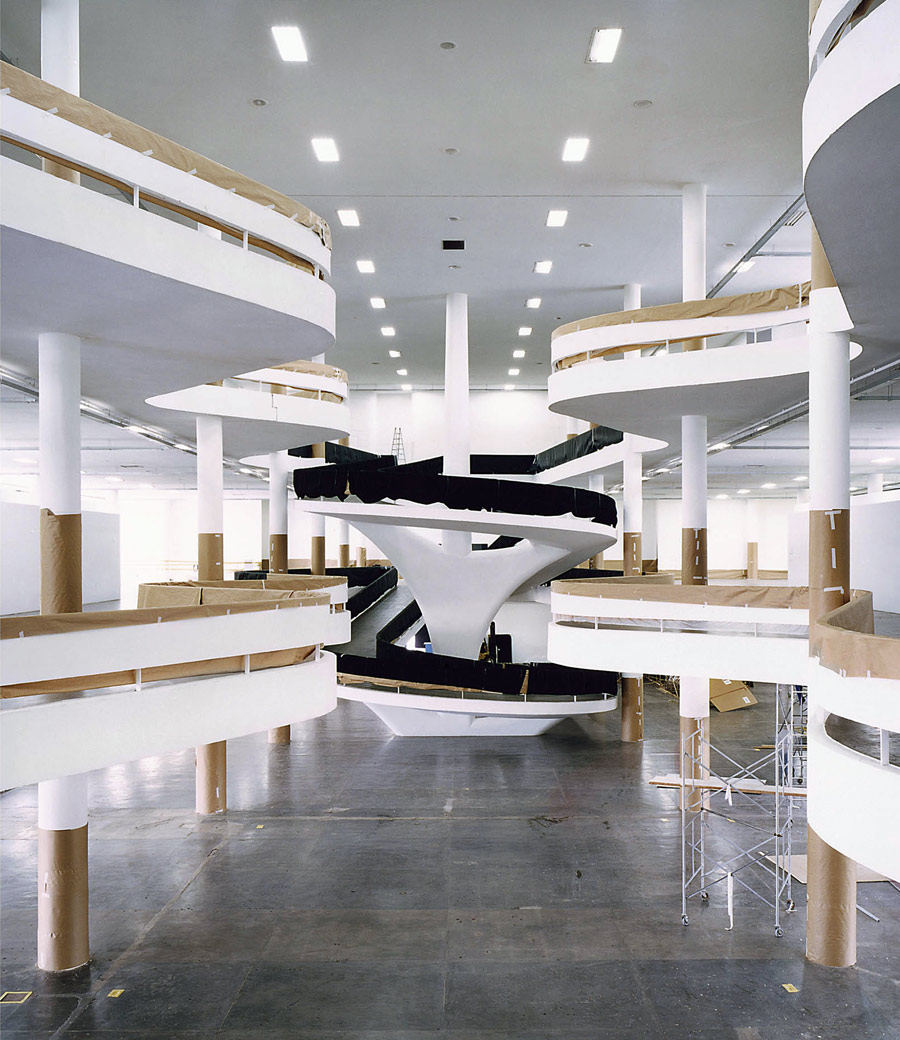
Candida Höfer (German, b. 1944) Fundação Bienal de São Paulo XI 2005 Chromogenic print 81 3/8 x 71 7/8 in. Courtesy of Sonnabend Gallery
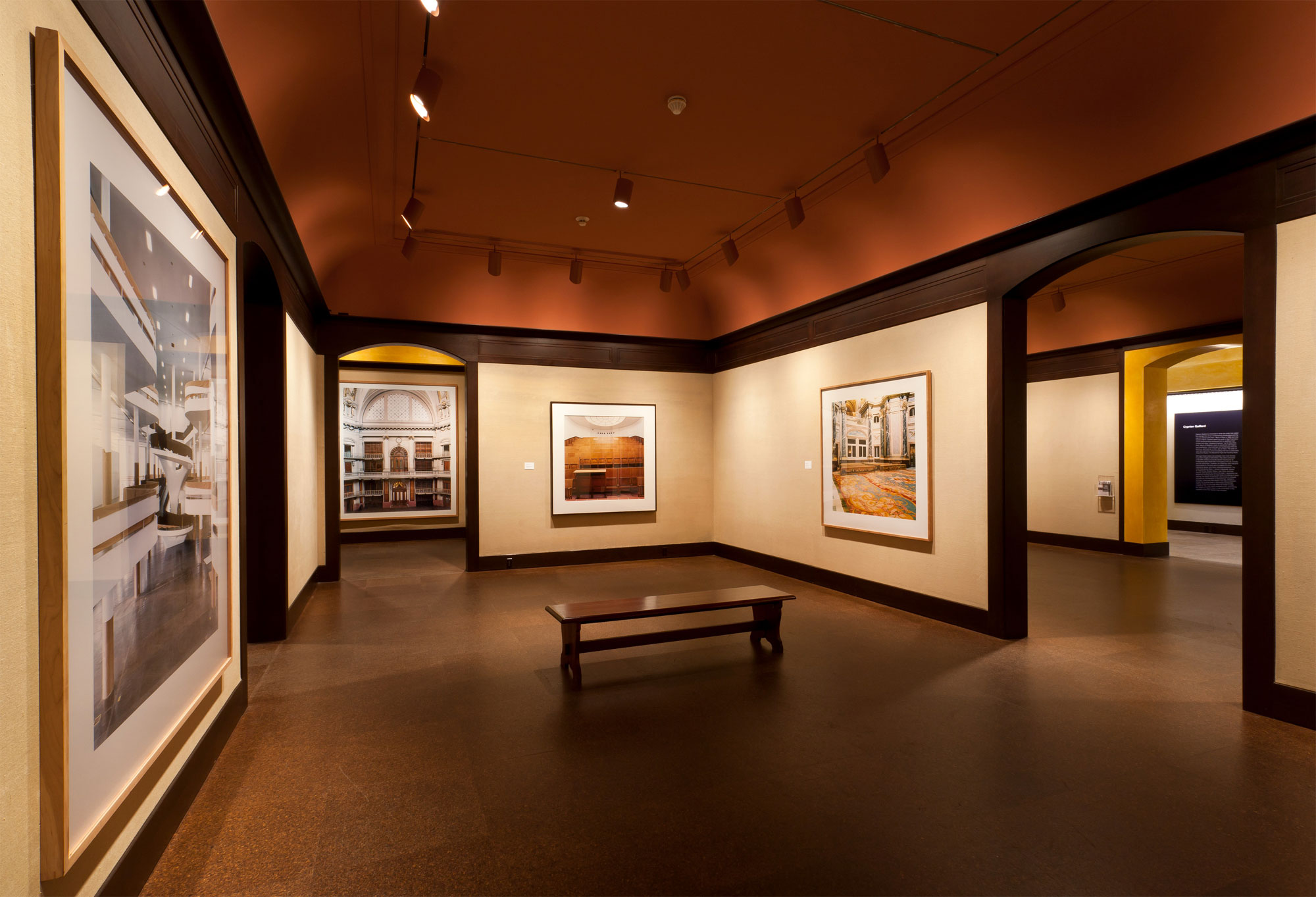
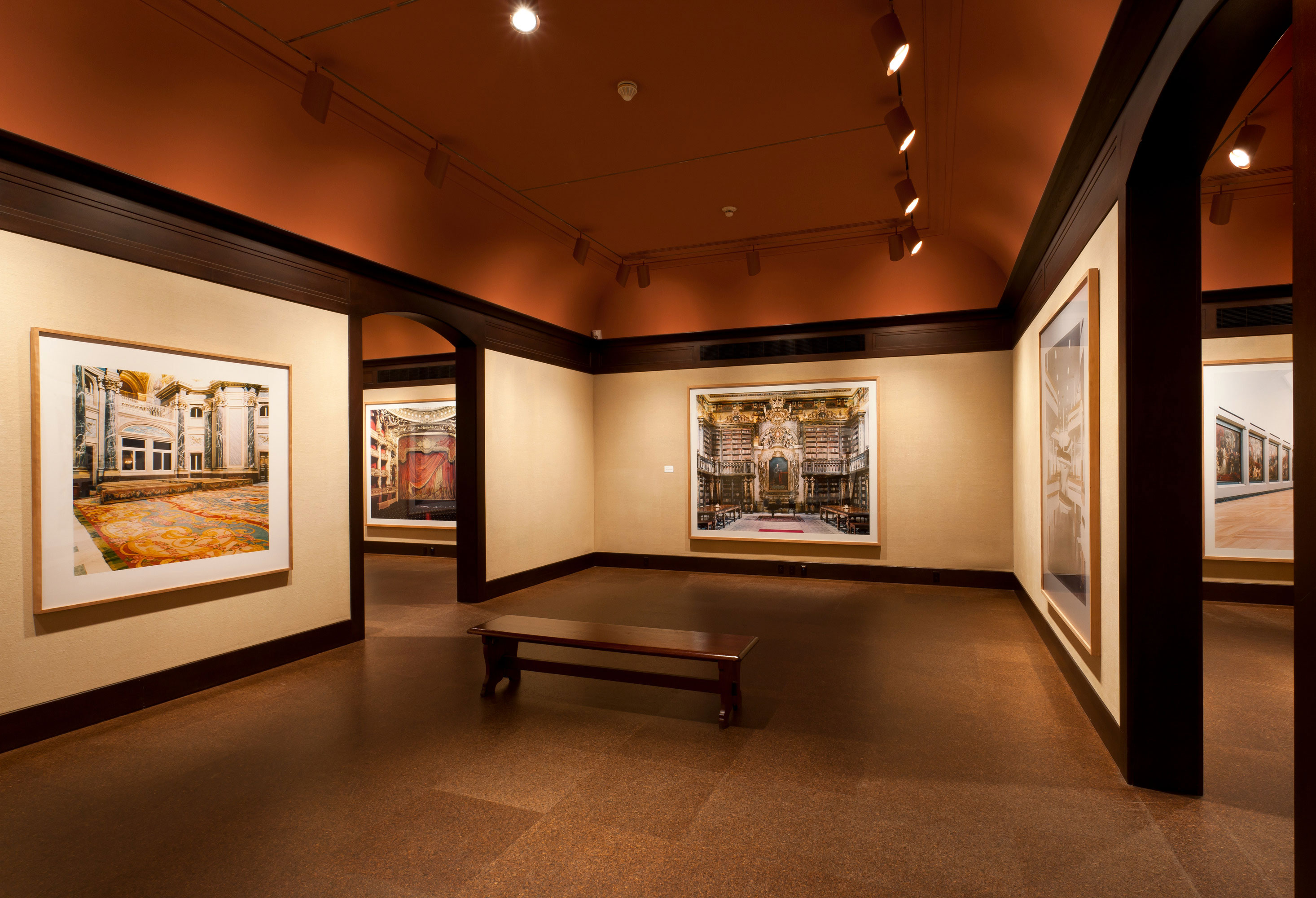
Carnegie Museum of Art presents the powerful work of two contemporary artists – Candida Höfer and Cyprien Gaillard – who explore architectural environments and how they influence experiences and perceptions of the world.
“We shape our buildings, and afterwards our buildings shape us.” With that simple but profound insight, Winston Churchill conveyed people’s complex relationship to architecture: The physical form of a building is controlled by its designer, but the impact a constructed environment has can be unpredictable, emotional, and even visceral. That dynamic is evident in the upcoming exhibition You Are Here: Architecture and Experience, which brings together the photographs of German artist Candida Höfer and a video and etchings by French artist Cyprien Gaillard. Both artists express the formative power of architecture in different but complementary ways, according to Tracy Myers, curator of architecture at the Heinz Architectural Center and organiser of the exhibition.
Candida Höfer’s lush colour photographs of ornate historical and contemporary interior spaces are usually devoid of humans, yet they reveal details that draw the viewer into a consideration of what each place means. Höfer’s photographs usually focus on spaces of cultural and social activity. Printed very large (from about 4 x 4 feet to a massive 6 x 8 feet), the 17 photographs in You Are Here represent the range of Höfer’s work in terms of scale, point of view, building type, and geographical location.
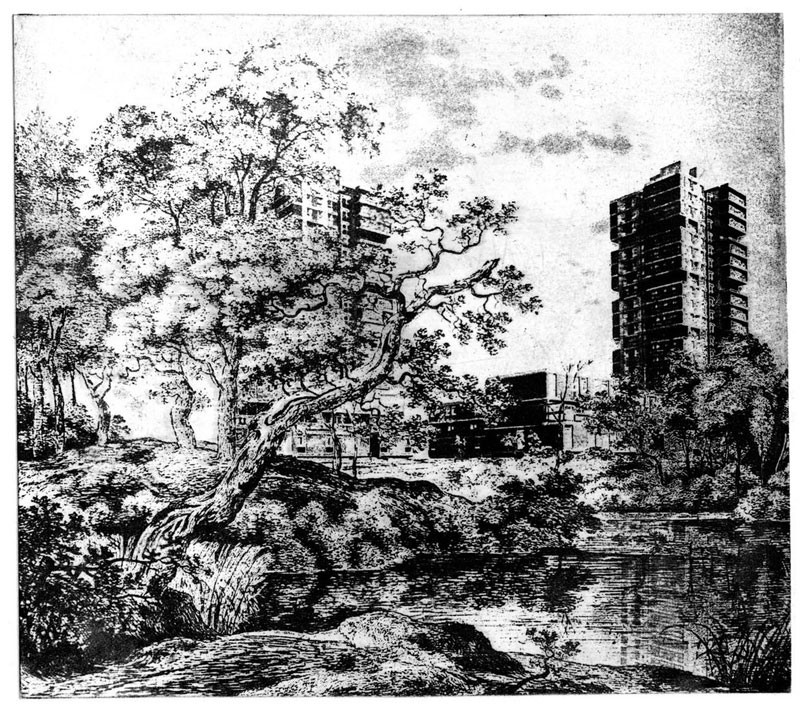
By contrast, Cyprien Gaillard’s video Desniansky Raion and his meticulously detailed etchings probe the human legacy of Modernist high-rise housing blocks. Constructed after World War II throughout the United States, Europe, and the Eastern Bloc to provide decent housing, these buildings often became warehouses for the poor and incubators of crime and antisocial behaviours.
Named for an administrative district in Kiev, Desniansky Raion poignantly reflects on the gap between the utopian Modernist aspiration for universal housing and the banal reality that instead prevailed. It comprises three parts. In the first section, weekend fight clubs of 50 or 100 people face off against each other in a pugilistic ritual set against the backdrop of housing towers in St. Petersburg, Russia. The second part shows the implosion of a similar tower in Meaux, a small city near Paris; the demolition of the building was treated by the city government as a literal spectacle, with a light show and fireworks preceding the destruction. The final third is a very long panning aerial shot of seemingly endless ranks of virtually identical housing blocks in Kiev, Ukraine. The video is accompanied by a soundtrack composed by Koudlam, a young musician born in the Ivory Coast. Also featured are six etchings by Gaillard, collectively titled Belief in the Age of Disbelief, in which the Modernist housing tower is placed in classic picturesque landscapes.
“Gaillard’s video packs a powerful and direct emotional punch: each time I view it, I experience physically the anticipation that ebbs and flows through the course of the work,” said Myers. “By contrast, Höfer’s photographs embody a kind of quietude that encourages slow, sustained exploration of the meaning that builds through accumulation of detail. But both works are equally affecting and bring the viewer with compelling intensity into the realm of architectural experience. Höfer and Gaillard capture the constant oscillation between what we make of our buildings, and what they make of us.”
Artists’ Biographies
Candida Höfer has been creating photographs for more than 30 years. Born in Eberswalde, Germany, in 1944, she studied with Berndt Becher and is identified with a group of German artists – Thomas Ruff, Andreas Gursky, Axel Hütte, and Thomas Struth – best known for their unsentimental photographs of architecture, landscapes, and urban developments. Höfer has made interiors her focus.
Cyprien Gaillard, born in Paris in 1980 and currently based in Berlin, explores contemporary landscapes and buildings in a variety of media, including video, painting, and etchings. Much of his work is concerned with the legacy and inheritance of buildings and landscapes that are left to us, and the ways in which we interact with them.
Press release from the Carnegie Museum of Art website
The video takes place in a parking lot of a drab housing complex in St. Petersburg, Russia, where he witness two large groups of men – one mostly wearing red shirts and the other blue – slowly walking towards each other. Set by Gaillard to the hypnotic electronic beats of French composer Koudlam’s I See you All, the video shows the colour-coordinated groups marching in loose formation, reminiscent of ancient armies confronting each other on some distant battlefield. Suddenly, signal flares billowing smoke arc through the air and the two groups come together, clashing in flurry of fists – a breathtaking display of raw physical violence set against the stark backdrop of the housing block. As the sounds of Koudlam’s pulsing music draw louder and more urgent, the furious hand-to-hand combat intensifies while bodies of the fallen lay strewn on the pavement. Before long, the blue faction beats a hasty retreat, only to regroup moments later on one side of a nearby pedestrian bridge. The two sides come together again, this time clashing on the impossibly narrow span of the footbridge. The blue group is once more chased off, and the victors in red erupt in victorious celebration.
Julia Margaret Cameron – you are one of my heroes!
Many thankx to the Musée d’Orsay for allowing me to publish the photographs in the posting. Please click on the photographs for a larger version of the image.
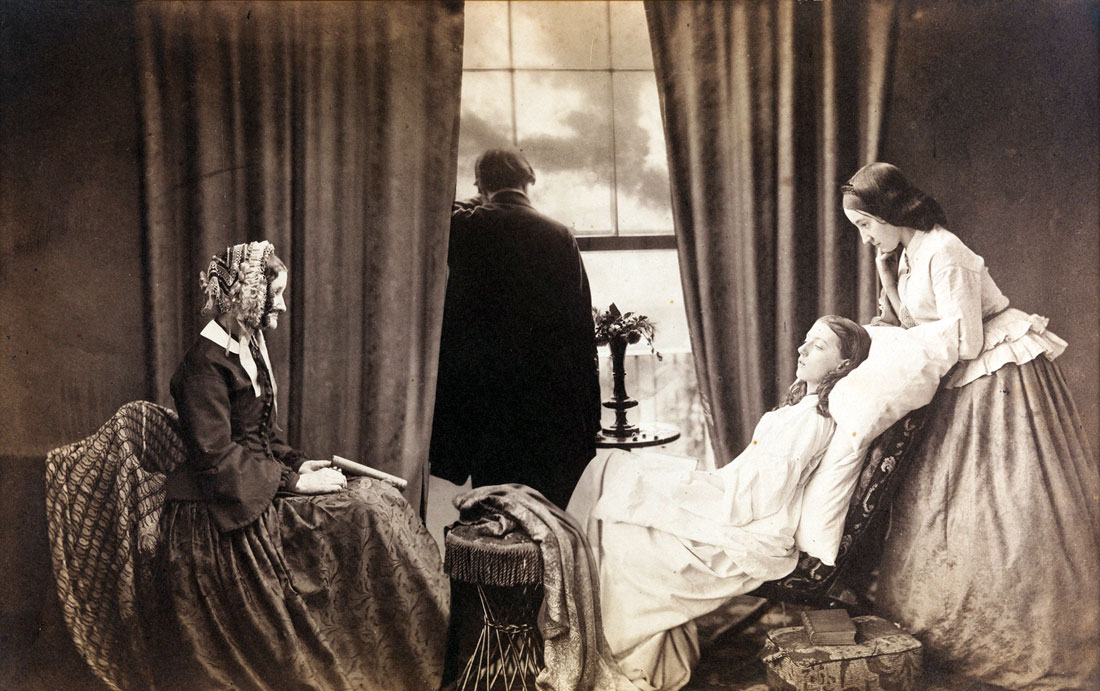
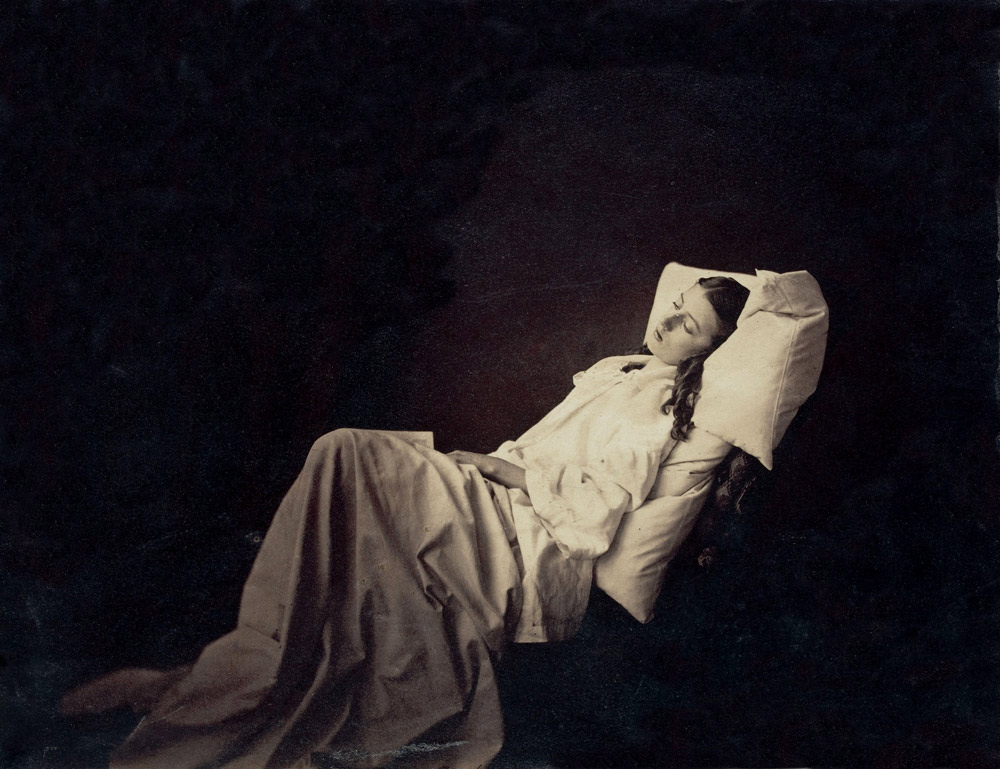
Consumed by the passion of unrequited love, a young woman lies suspended in the dark space of her unrealised dreams in Henry Peach Robinson’s illustration of the Shakespearean verse “She never told her love,/ But let concealment, like a worm i’ the bud,/ Feed on her damask cheek” (Twelfth Night II,iv,111-13). Although this picture was exhibited by Robinson as a discrete work, it also served as a study for the central figure in his most famous photograph, Fading Away, of 1858.
Purportedly showing a young consumptive surrounded by family in her final moments, Fading Away was hotly debated for years. On the one hand, Robinson was criticised for the presumed indelicacy of having invaded the death chamber at the most private of moments. On the other, those who recognised the scene as having been staged and who understood that Robinson had created the picture through combination printing (a technique that utilised several negatives to create a single printed image) accused him of dishonestly using a medium whose chief virtue was its truthfulness.
While addressing the moral and literary themes that Robinson believed crucial if photography were to aspire to high art, this picture makes only restrained use of the cloying sentimentality and showy technical artifice that often characterise this artist’s major exhibition pictures. Perhaps intended to facilitate the process of combination printing, the unnaturally black background serves also to envelop the figure in palpable melancholia.
Text from the Metropolitan Museum of Art website [Online] Cited 27/01/2020
The historian and art critic, John Ruskin, had a great influence in Great Britain not only on the Pre-Raphaelite movement created in 1848, but on the development of early photography in the 1850s. The leading Pre-Raphaelite painters, John Everett Millais, Dante Gabriel Rossetti, Holman Hunt and Ford Madox Brown and their followers, wished to change the pictorial conventions laid down by the Royal Academy, and in order to demonstrate the transformations in modern life, invented a radically new idiom marked by bright colours and clarity of detail.
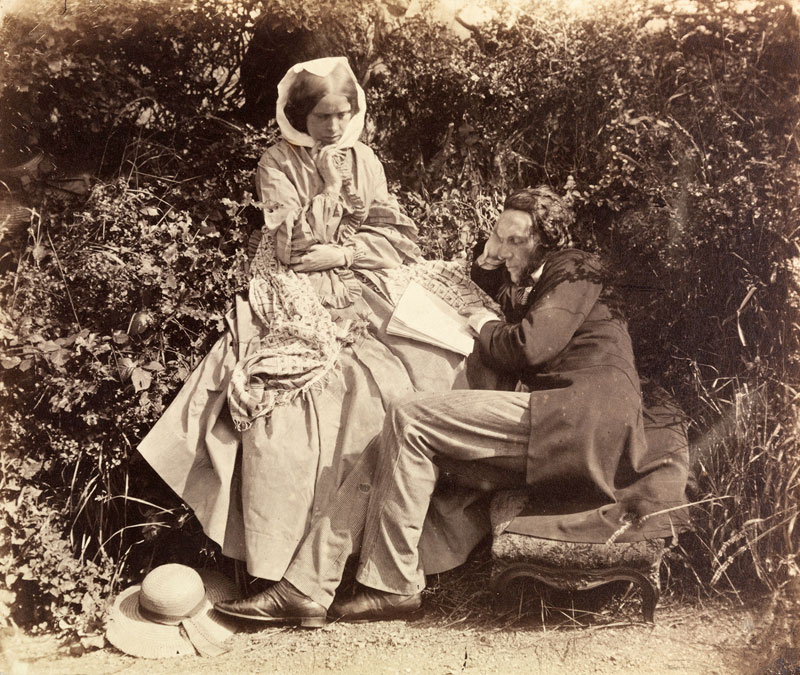
Pre-Raphaelite painters and photographers frequently made similar choices of subjects, and the photographers, particularly Julia Margaret Cameron, David Wilkie Wynfield and Lewis Carroll, were often had close links with the painters.
When painting landscapes, the Pre-Raphaelite artists answered Ruskin’s call, meticulously observing nature in order to capture every nuance of detail. For their part, photographers, such as Roger Fenton, Henry White, William J. Stillman and Colonel Henry Stuart Wortley, experimented with the new process of wet plate collodion negatives that allowed much greater image detail, and achieved similar effects. Although highly impressed at first by the daguerreotype, which enabled the eye to see tiny, overlooked details, Ruskin was nonetheless still very critical of landscape photography, which could not reproduce the colours of nature and in particular of the sky. This failing also gave rise to a major debate amongst photography critics.
In portraiture, there were clear links between the painted portraits of Watts and Cameron’s photographic portraits. By using special lenses and photographing her models in close-up, Cameron, achieved, with a glass negative, exactly the opposite effect to the clear image advocated by Ruskin, and her work was distinctive for the breadth of relief and contour, as well as the compositions evoking Raphael’s paintings, also a source of inspiration for Watts.
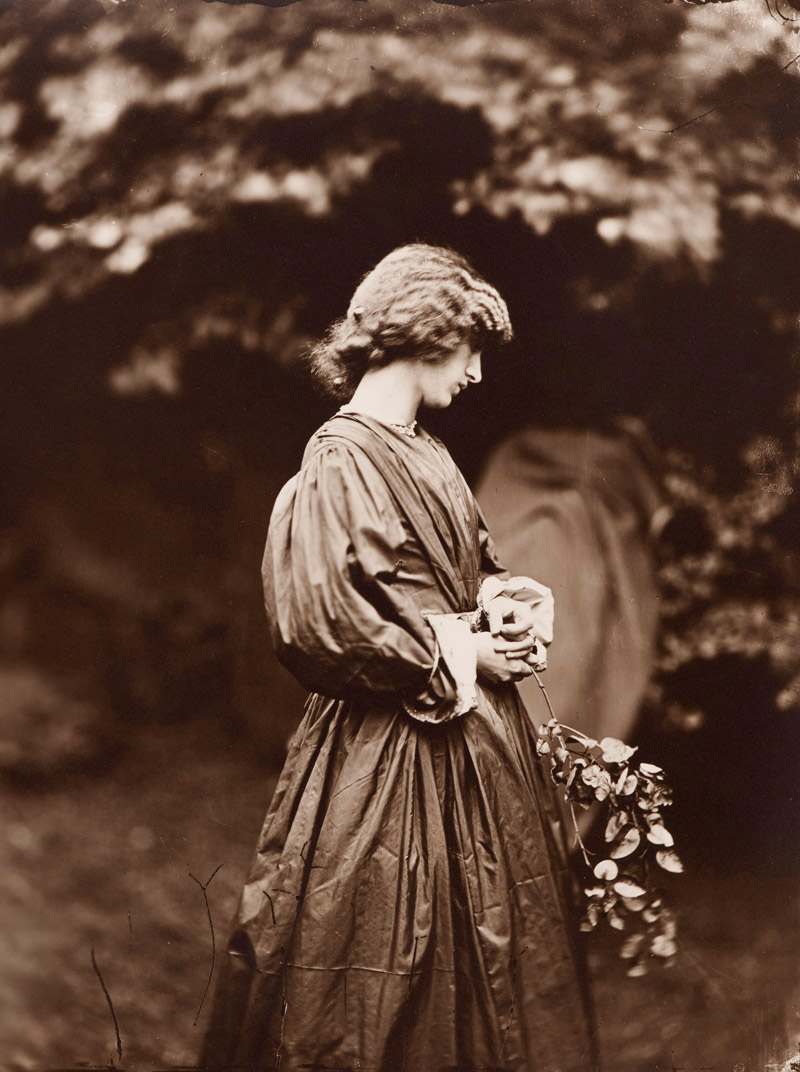
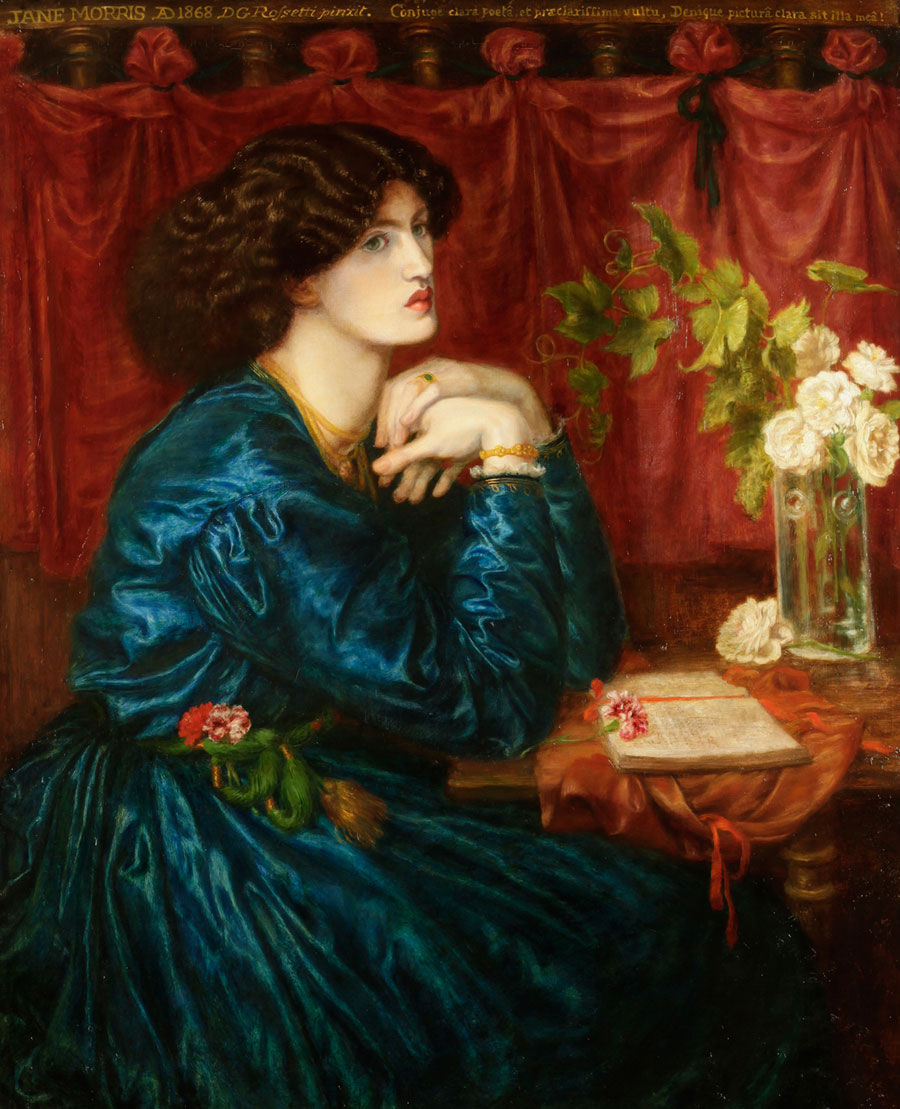
The painter Dante Gabriel Rossetti repeatedly drew and painted Jane Morris, a model with whom he was infatuated, and he asked Robert Parsons to produce a series of photographs, under his personal direction, which captured the fascinating presence of the young woman as effectively as his own paintings.
Just like the Pre-Raphaelite painters, Victorian photographers would turn to religious or historical subjects, finding a shared inspiration in the poems of Dante, Shakespeare and possibly Byron, and above all in the Arthurian legend made popular once more by Lord Tennyson, the poet laureate. From a formal point of view, Millais’ Ophelia, one of his most successful paintings, was a source for Henry Peach Robinson’s photograph, The Lady of Shalott, even though it had a different theme.
Finally, Pre-Raphaelite painters and Victorian photographers both liked to present scenes from modern life with a moralising undertone: hence She Never Told Her Love, a photograph by Robinson that was very successful when exhibited at the Crystal Palace in 1858, William Holman Hunt’s painting, Awakening of Conscience, and Rossetti’s Found, a painting depicting a countryman who comes across his former sweetheart, now a prostitute in the city.
In the 1880s, Pre-Raphaelite painting would be transformed, with artists and writers like William Morris, Burne-Jones, Whistler and Oscar Wilde, into a very different movement concerned only with the cult of beauty and rejecting Ruskin’s concept of art as something moral or useful. British photographers, however, inspired by the Pre-Raphaelites would inspire the Pictorialist movement that flourished in the 1890s, encouraged by the writings of Henry Peach Robinson and Peter Henry Emerson, extolling artistic photography.
Exhibition marking the 100th birthday of Kurt Kranz 19th November 2010 – 29th May 2011
Kurt Kranz (German, 1910-1997) Perspective 1931 Ingrid Kranz / Stiftung Bauhaus Dessau Foto: Lars Lohrisch / Abdruck mit Genehmigung der Kunsthalle
One of the great pleasures of publishing this archive is that I get to research the life of an artist whose work I never knew before. Kurt Kranz is one such artist.
Dr Marcus Bunyan
Many thankx to the the Bauhaus Dessau for allowing me to publish the photographs in the posting. Please click on the photograph for a larger version of the image.
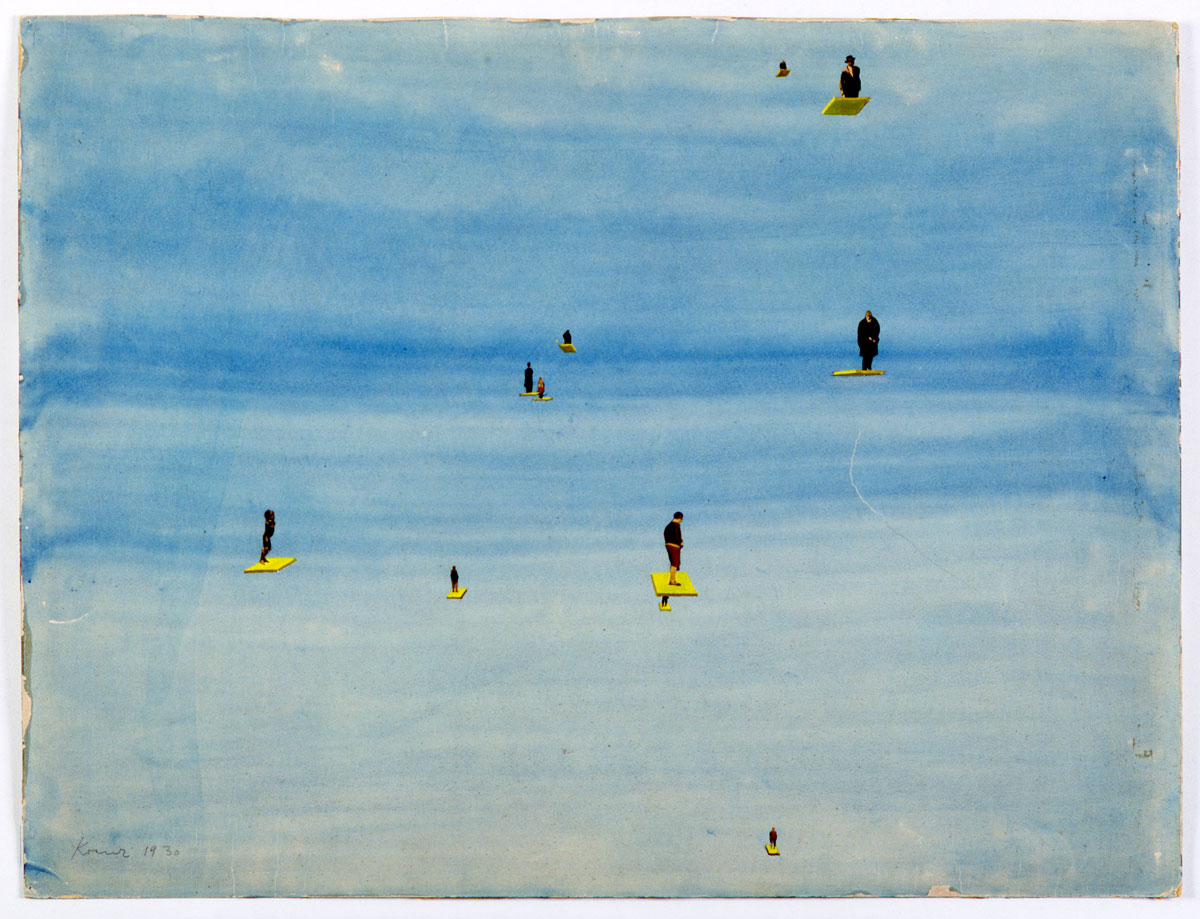
Kurt Kranz (German, 1910-1997) Vereinsamung (Isolation) Dessau 1930 Ingrid Kranz / Stiftung Bauhaus Dessau Leihgeber: Kunsthalle Bremen
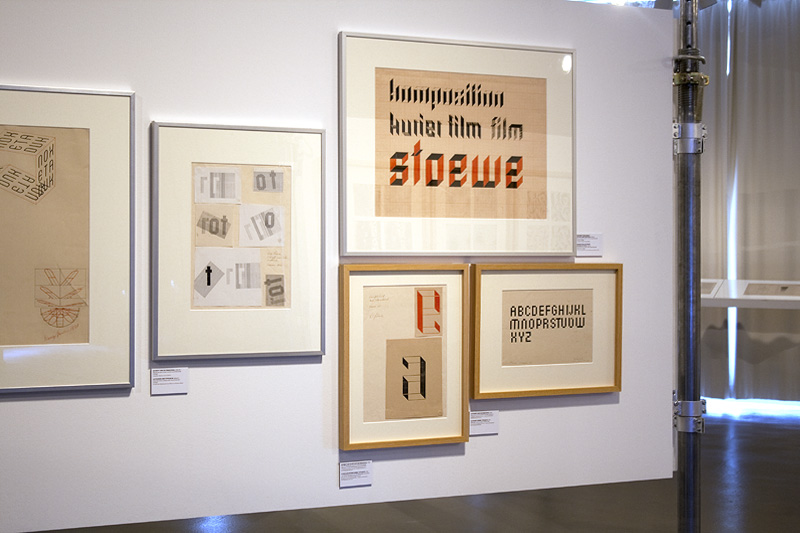
Installation photograph of Programming of Beauty by Kurt Kranz at the Bauhaus Dessau
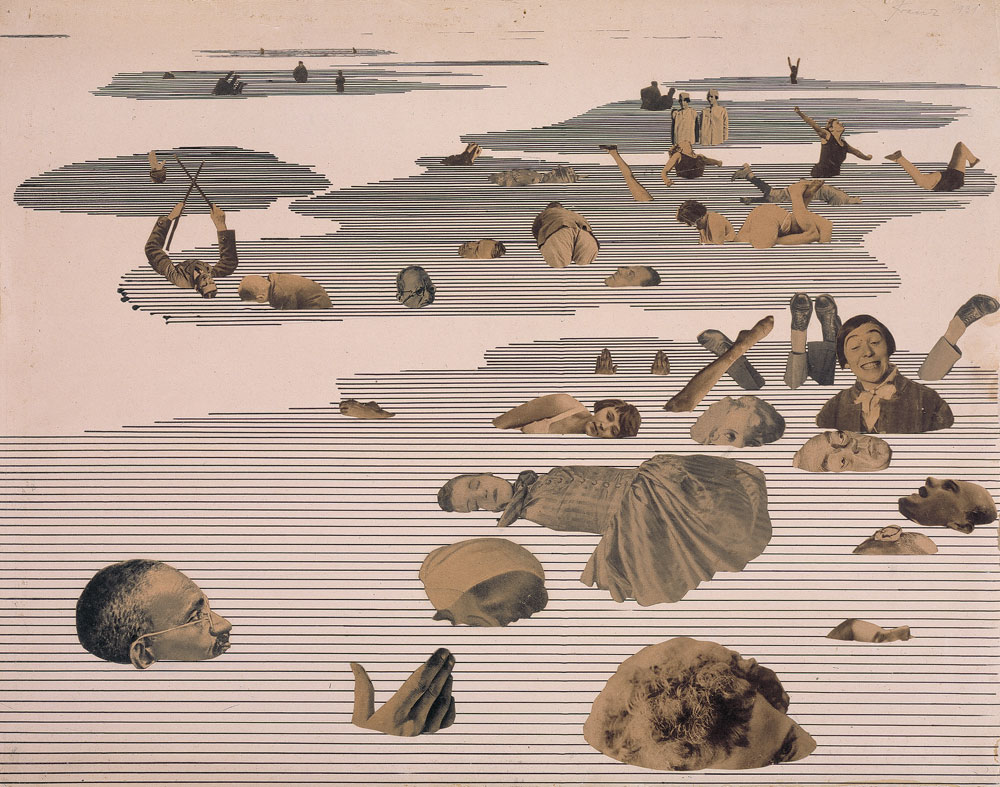
Kurt Kranz (German, 1910-1997) Versinkende (Sinking one) 1931 Ingrid Kranz / Stiftung Bauhaus Dessau
Kurt Kranz (German, 1910-1997) Persischer Garten (Persian garden) 1970 Ingrid Kranz / Stiftung Bauhaus Dessau Foto: Uwe Jacobshagen
The Bauhaus Dessau dedicates a comprehensive exhibition to the painter, graphic designer and photographer Kurt Kranz to mark his 100th birthday. In 1930, the then twenty-year-old lithographer came from Bielefeld to study at the Bauhaus Dessau, where he soon established himself as a pioneer of serial and generative methods. With his avant-garde work, Kranz’s methods anticipated those of later generations.
Inspired by a lecture by László Moholy-Nagy, Kurt Kranz came to the Bauhaus Dessau in April 1930. In Walter Peterhans’s photography class, Kranz began to experiment with photographic techniques and created some of the most striking abstract picture series to emerge from the Bauhaus. Alienated and abstracted faces and hands appear repeatedly in his dynamic picture series. These show Kranz’s early affinity for film as, page for page, the abstract forms interact with one another. Kranz drafted his first concepts for abstract films at the Bauhaus, although he was first able to realise these decades later in 1972.
The exhibition to mark the artist’s 100th birthday shows works from Kranz’s Bauhaus years and his later work as an advertising graphic designer, and focuses on a selection of his large picture cycles. Strikingly diverse leporellos dating from the 1960s onwards take centre stage, as do the so-called “Matrix-und Schiebebilder”
Text from the Bauhaus Dessau website
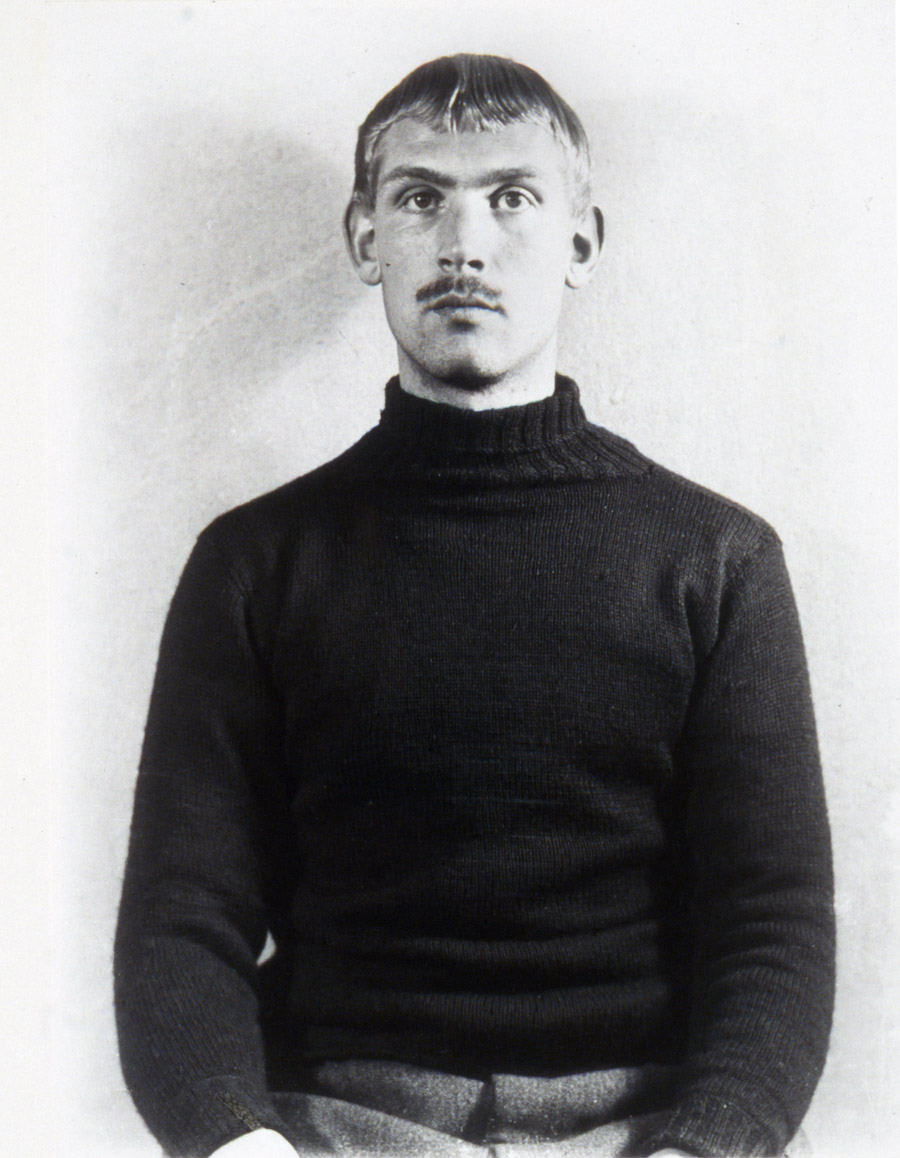
Kurt Kranz (German, 1910-1997) Selbstporträt en face (objektives Foto) (Self-portrait with face (objective photo)) 1931 Ingrid Kranz / Stiftung Bauhaus Dessau
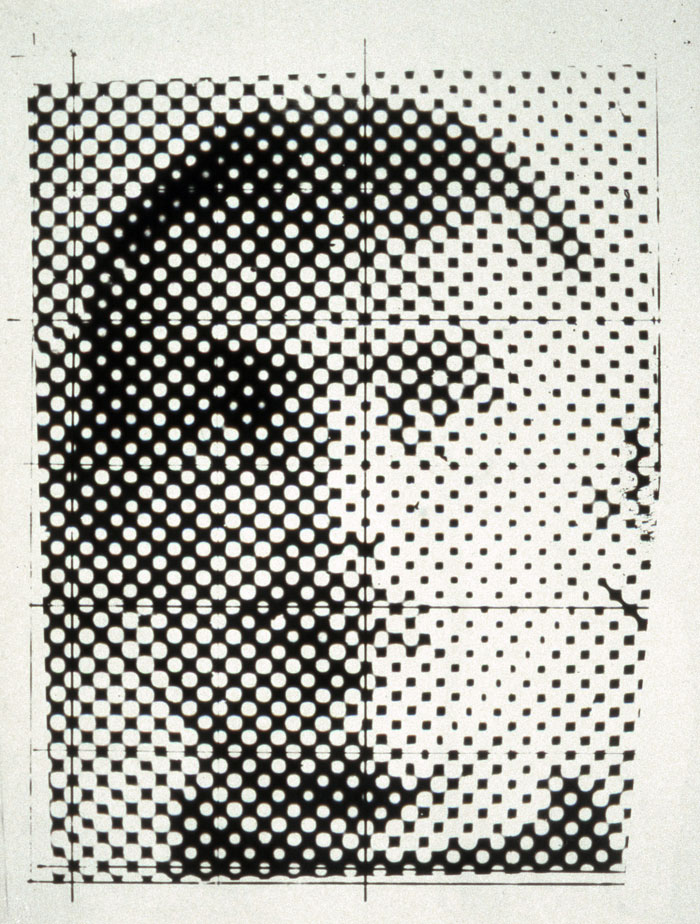
Kurt Kranz (German, 1910-1997) Rasterfoto (Raster photograph) 1932 Ingrid Kranz / Stiftung Bauhaus Dessau
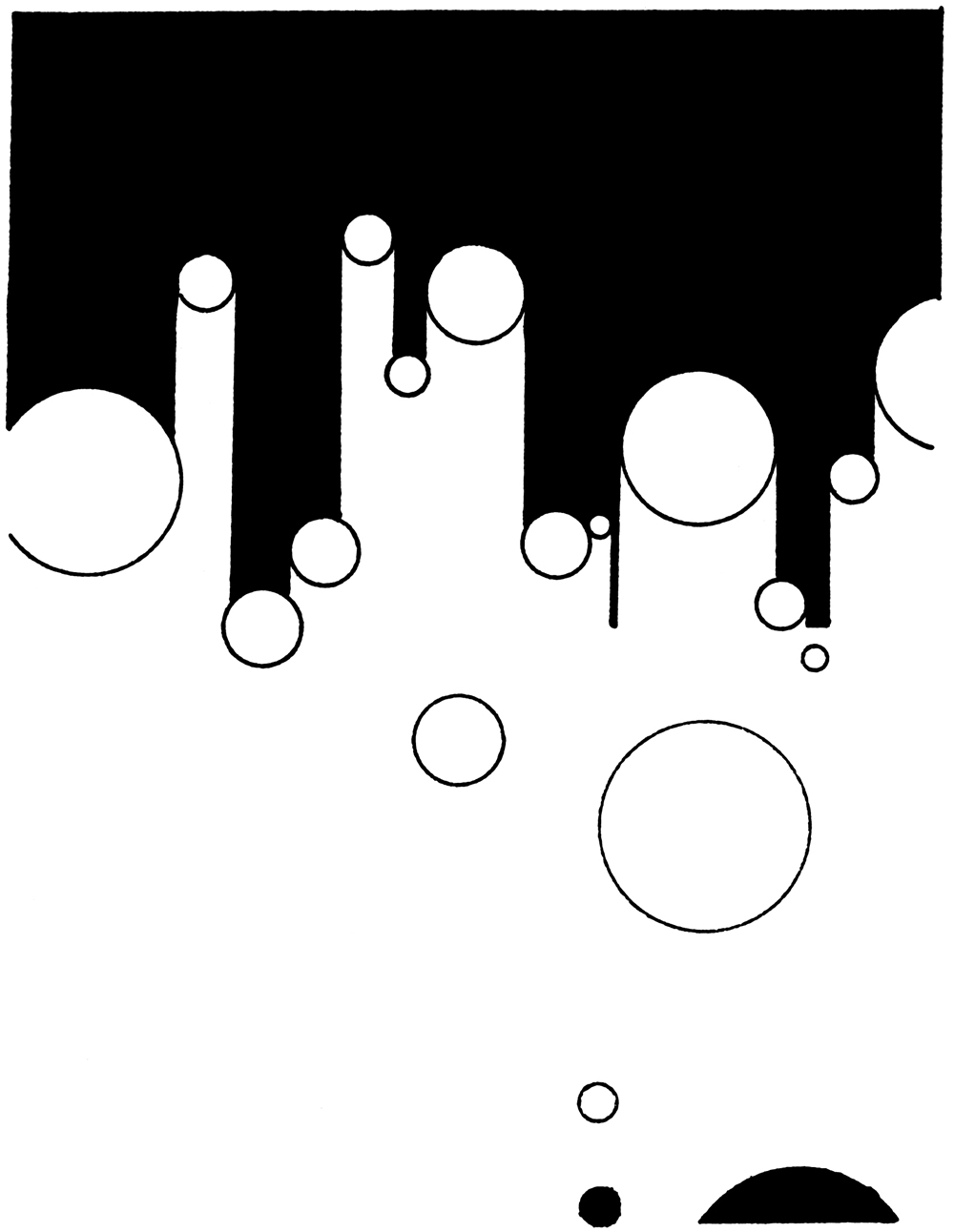
Kurt Kranz (German, 1910-1997) Schwarz: Weiß (Black: White) 1928-1929 Ingrid Kranz / Stiftung Bauhaus Dessau Privatbesitz
Kurt Kranz (German, 1910-1997) Schwarz: Weiß (Black: White) 1928-1929 Ingrid Kranz / Stiftung Bauhaus Dessau Privatbesitz
Kurt Kranz (German, 1910-1997) Schwarz: Weiß (Black: White) 1928-1929 Ingrid Kranz / Stiftung Bauhaus Dessau Privatbesitz
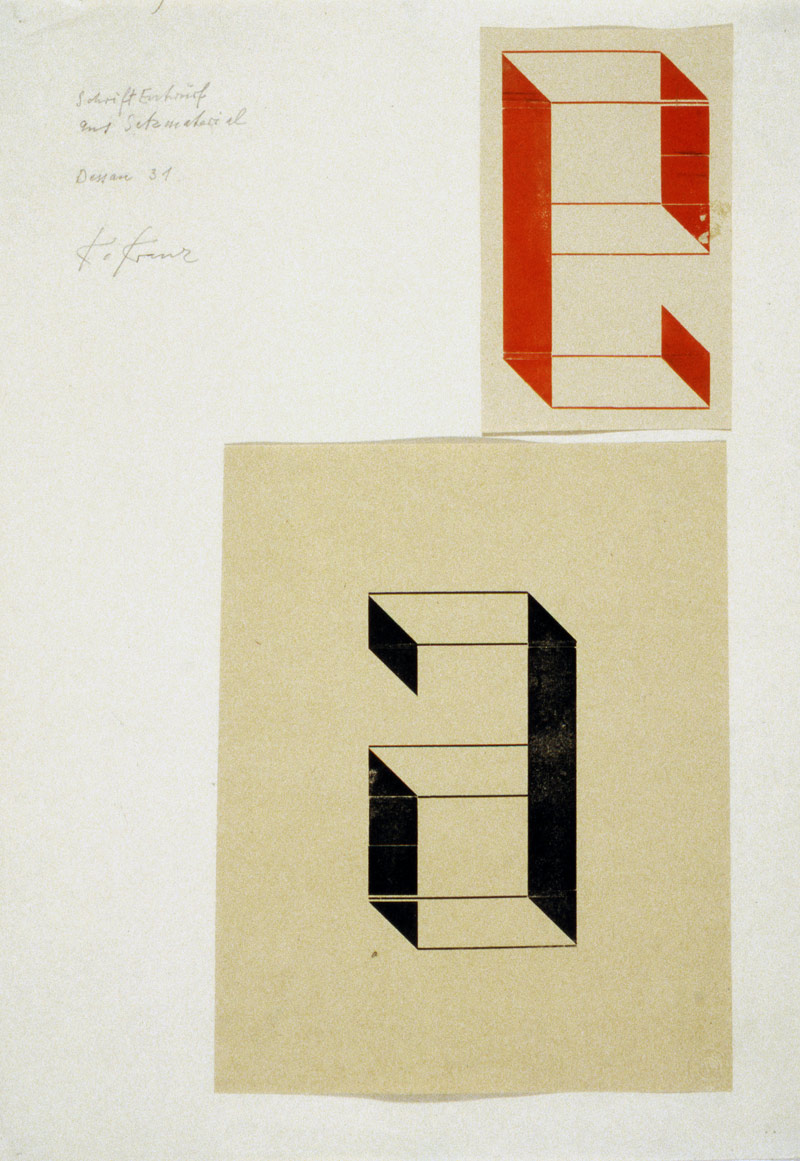
Kurt Kranz (German, 1910-1997) Schrift Entwurf aus Satzmaterial (Writing draft from sentence material) Dessau 1931 Ingrid Kranz / Stiftung Bauhaus Dessau
Kurt Kranz (German, 1910-1997) Aus der Serie “Sieben Schritte zum symmetrischen Oval” (From the series “Seven steps to the symmetrical Oval”) 1982 Ingrid Kranz / Stiftung Bauhaus Dessau Foto: Uwe Jacobshagen
Many thankx to the Moderna Museet for allowing me to publish the photographs in the posting. Please click on the photographs for a larger version of the image.
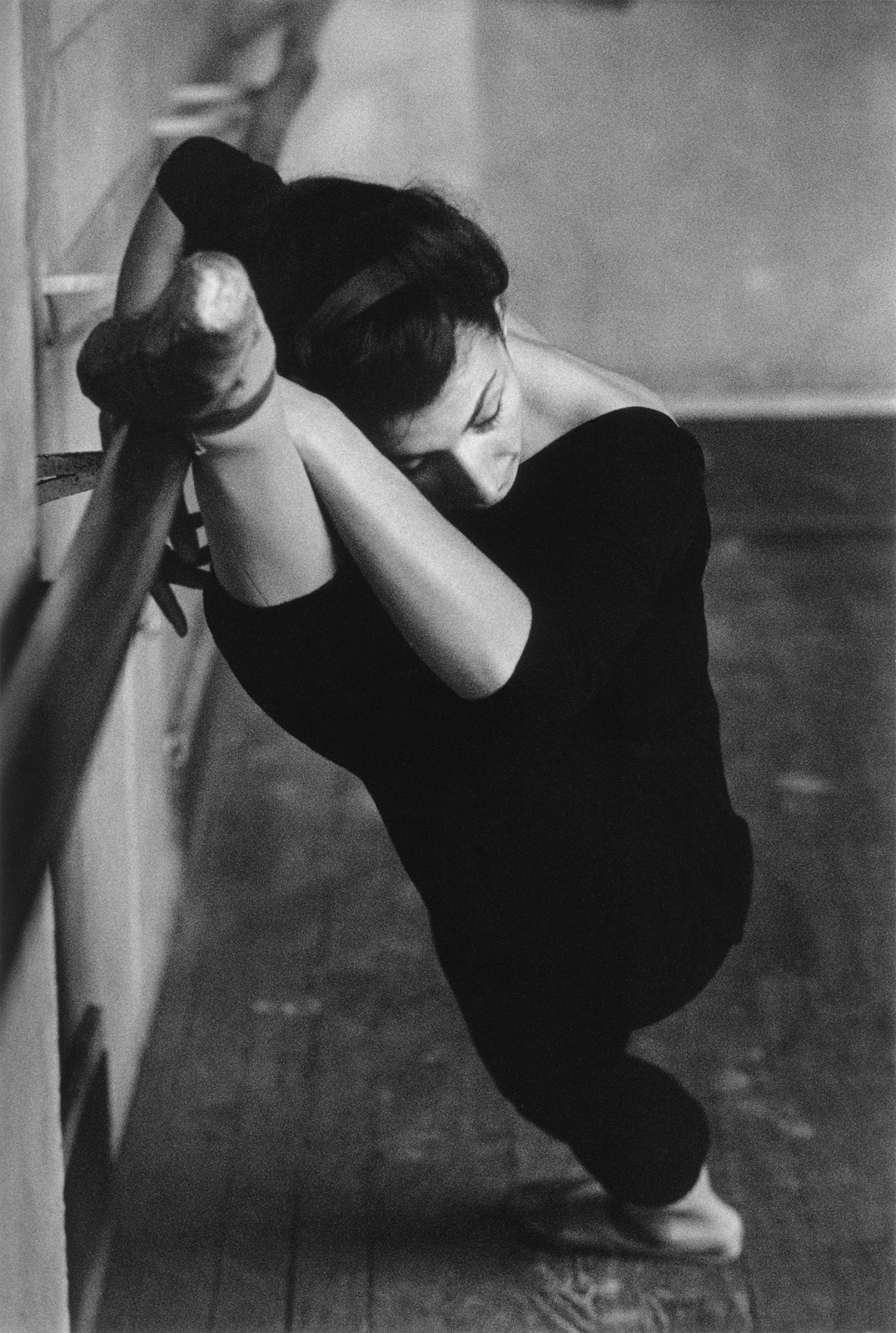
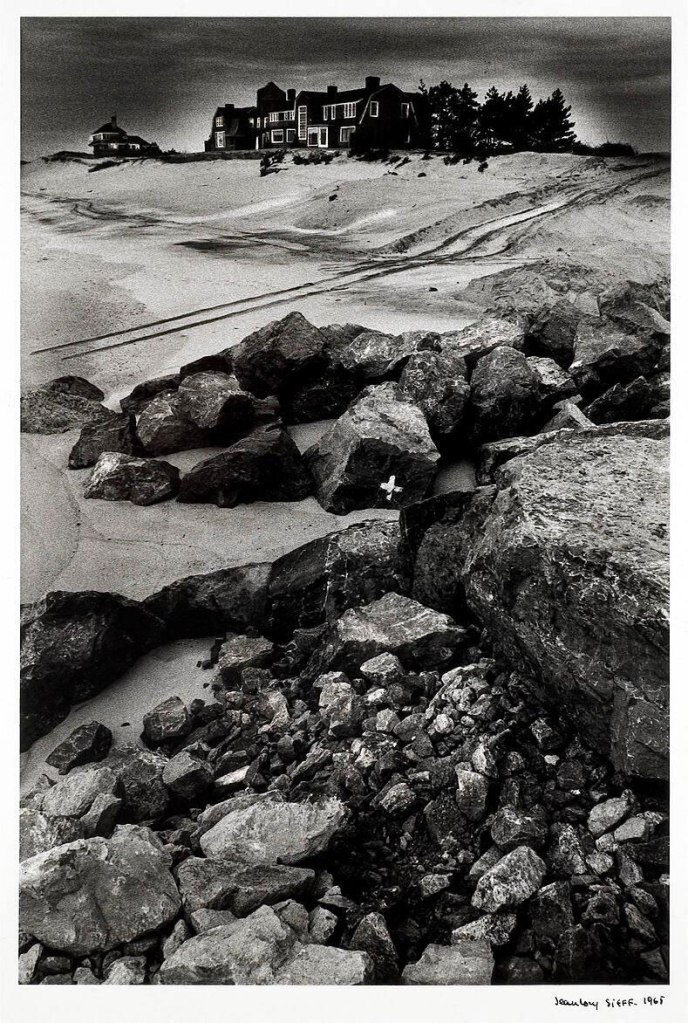
The French photographer Jeanloup Sieff (1933-2000) is a legend in fashion photography and one of the most prominent photographers of his generation. Opening on 19 February, Moderna Museet in Stockholm presents the first Nordic solo exhibition of Jeanloup Sieff.
Jeanloup Sieff began photographing in the early 1950s, as a contemporary of Helmut Newton and David Bailey, belonging to the generation succeeding Irving Penn. In the course of a long career, his photography spanned from fashion, advertising and portraits to reportage and landscapes. His images are often sensual and elegant, and in the 1960s he was much in demand as a fashion photographer, especially in the USA, where he lived for some years in New York. As a respected fashion photographer, Sieff had assignments for magazines such as Elle, Harper’s Bazaar, Vogue, Esquire, Glamour and Jardin des Modes. Sieff also engaged in commercial photography, including promotion campaigns for Chanel and Revlon and the first Yves Saint Laurent fragrance.
“In his fashion and advertising photographs the models are characteristically close to the pictorial surface, an effect achieved by using a wide-angle lens. His working method was based on physical and emotional closeness. This lack of distance makes his images exciting and visually interesting,” says Anna Tellgren, curator.
In the course of his career, Jeanloup Sieff took several now classic portraits of prominent fashion icons, including Yves Saint Laurent, Karl Lagerfeld and Jane Birkin. French cultural celebrities such as François Truffaut, Catherine Deneuve and Serge Gainsbourg have also been portrayed by Sieff. Several of these portraits will be featured in the exhibition at Moderna Museet. Jeanloup Sieff was deeply fascinated by dance, another of his frequent subjects. He got to know Rudolf Nureyev just after he had defected to the West, and collaborated with the American dancer and choreographer Carolyn Carlson. The exhibition at Moderna Museet presents a selection of 53 pictures from Sieff’s photographic oeuvre, with an emphasis on his dance photography.
“He was interested in the dancers as artists, and the actual struggle during rehearsal to get their bodies to perform more or less impossible movements. His dance photographs are fascinating because they really convey the smell of sweat and the shuffling sound of dance shoes, which is exactly what he was after,” Anna Tellgren, the curator of the exhibition, commented.
Moderna Museet is ten minutes away from Kungsträdgården, and twenty minutes from T-Centralen or Gamla Stan. Walk past Grand Hotel and Nationalmuseum on Blasieholmen, opposite the Royal Palace. After crossing the bridge to Skeppsholmen, continue up the hill. The entrance to Moderna Museet and Arkitekturmuseet is on the left-hand side.
Opening hours: Tuesday and Friday 10 – 20 Wednesday, Thursday, Saturday and Sunday 10 – 18 Monday closed

 Kirsten Haydon (New Zealand, b. 1973)
ice objects
2011
Enamel, copper, reflector beads
Various dimensions
Kirsten Haydon (New Zealand, b. 1973)
ice objects
2011
Enamel, copper, reflector beads
Various dimensions
 Kirsten Haydon (New Zealand, b. 1973)
ice edge (left)
Object
2011, enamel, reflector beads, copper, silver
60 x 350 x 210 mm
ice sheet flow (right)
Object
2011
Enamel, reflector beads, copper, silver
70 x 130 x 195 mm
Kirsten Haydon (New Zealand, b. 1973)
ice edge (left)
Object
2011, enamel, reflector beads, copper, silver
60 x 350 x 210 mm
ice sheet flow (right)
Object
2011
Enamel, reflector beads, copper, silver
70 x 130 x 195 mm
 Kirsten Haydon (New Zealand, b. 1973)
ice plane
Brooch
2011
Enamel, photo transfer, reflector beads, silver, copper, steel
80 x 80 x 10 mm
Kirsten Haydon (New Zealand, b. 1973)
ice plane
Brooch
2011
Enamel, photo transfer, reflector beads, silver, copper, steel
80 x 80 x 10 mm
 Kirsten Haydon (New Zealand, b. 1973)
ice industry
neckpiece
2011
enamel, copper, photo transfer, paint, silver
280 x 160 x 10 mm
I make jewellery and objects that both connect to and explore human experience and place. Since Antarctica’s discovery explorers, expeditioners, artists and writers have attempted to record and visualise this isolated continent. In 2004 I was awarded a New Zealand Antarctic Arts Fellowship en joined those who communicate their experiences of Antarctica.
Antarctica is often regarded as a pristine yet harsh environment, home to extraordinary wildlife and the domain of scientists. Due to its remoteness projects that are supported by international Antarctic programmes are predominantly science-based and as a result artistic research in Antarctica is limited. The cultural theorist, Yi Fu Tuan describes the experience of the explorer as: “the longing to be taken out of oneself and ones habitual world into something vast, overpowering and indifferent.” His statement resonates with my experience of Antarctica where I found myself drawn to the minutiae of the ice crystal and the structures and forms that I could associate with in the extraordinary landscape. While in that place, so removed from the conventions of civilisation, I came to understand the immensity of nature and to see that it exists without the necessity for human presence …
Inside the historic huts of Robert Scott and Ernest Shackleton I was captivated by the history, contained both in the interior spaces themselves and in the material artefacts left by the expeditioners … These seemingly mundane objects are transformed into a still life of significant artefacts of a previous time, preserving the memory and story of their parties of explorers.
My interpretations engage through the iconography of personal jewellery, domestic objects and the environment of Antarctica. In the course of making I continue to investigate and portray Antarctica through my own and others’ personal experiences. The objects I produce reference valued souvenir jewellery and objects now displayed in museums as historical artefacts, which were once personal mementos …
Excerpts from the catalogue text by Kirsten Haydon May 2011
Kirsten Haydon (New Zealand, b. 1973)
ice industry
neckpiece
2011
enamel, copper, photo transfer, paint, silver
280 x 160 x 10 mm
I make jewellery and objects that both connect to and explore human experience and place. Since Antarctica’s discovery explorers, expeditioners, artists and writers have attempted to record and visualise this isolated continent. In 2004 I was awarded a New Zealand Antarctic Arts Fellowship en joined those who communicate their experiences of Antarctica.
Antarctica is often regarded as a pristine yet harsh environment, home to extraordinary wildlife and the domain of scientists. Due to its remoteness projects that are supported by international Antarctic programmes are predominantly science-based and as a result artistic research in Antarctica is limited. The cultural theorist, Yi Fu Tuan describes the experience of the explorer as: “the longing to be taken out of oneself and ones habitual world into something vast, overpowering and indifferent.” His statement resonates with my experience of Antarctica where I found myself drawn to the minutiae of the ice crystal and the structures and forms that I could associate with in the extraordinary landscape. While in that place, so removed from the conventions of civilisation, I came to understand the immensity of nature and to see that it exists without the necessity for human presence …
Inside the historic huts of Robert Scott and Ernest Shackleton I was captivated by the history, contained both in the interior spaces themselves and in the material artefacts left by the expeditioners … These seemingly mundane objects are transformed into a still life of significant artefacts of a previous time, preserving the memory and story of their parties of explorers.
My interpretations engage through the iconography of personal jewellery, domestic objects and the environment of Antarctica. In the course of making I continue to investigate and portray Antarctica through my own and others’ personal experiences. The objects I produce reference valued souvenir jewellery and objects now displayed in museums as historical artefacts, which were once personal mementos …
Excerpts from the catalogue text by Kirsten Haydon May 2011
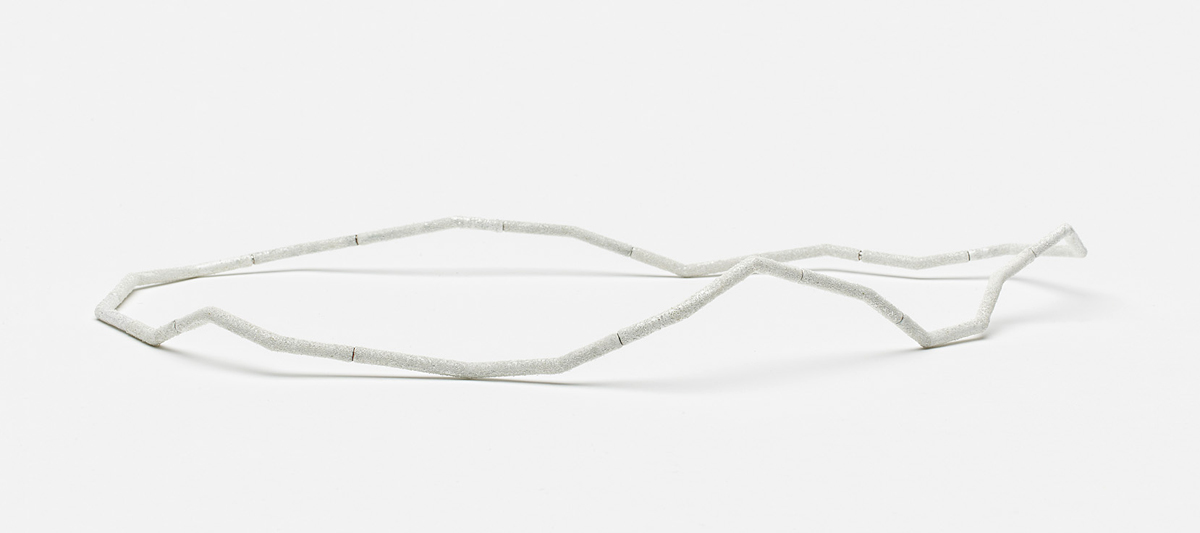
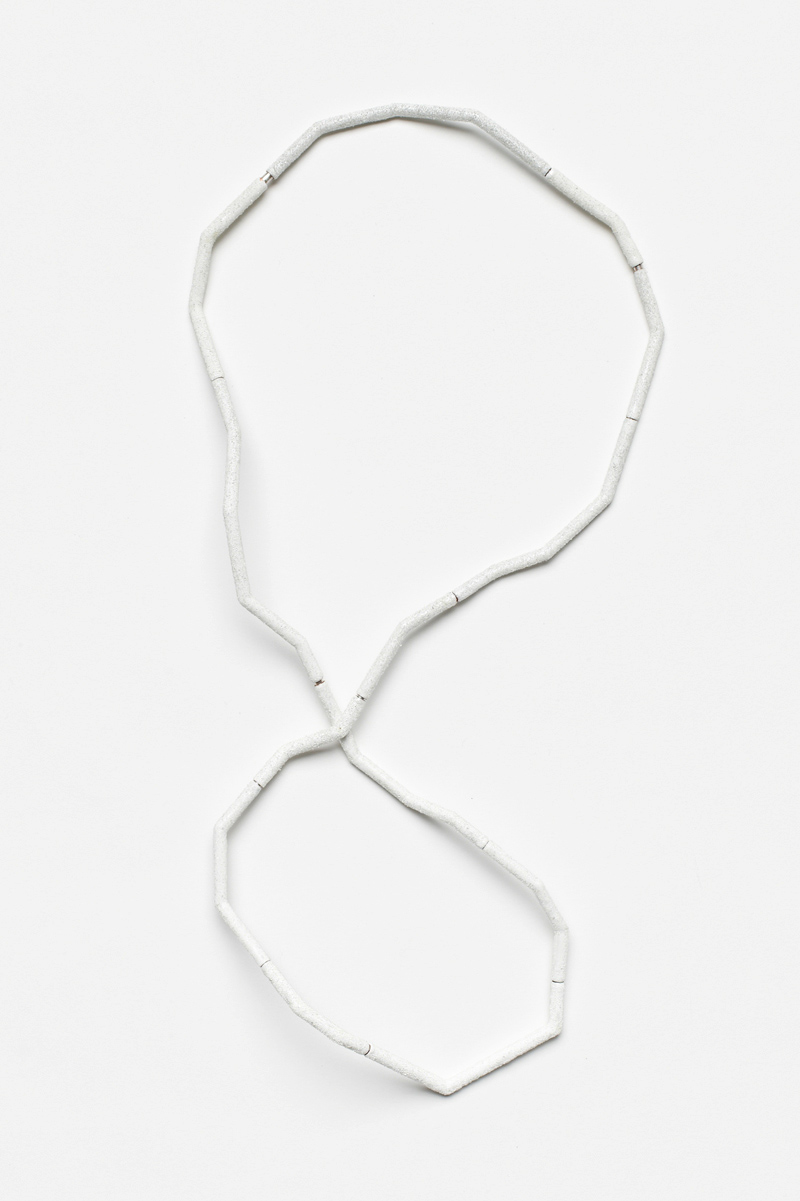 Kirsten Haydon (New Zealand, b. 1973)
ice movement
Neckpiece
2011
Enamel, copper, reflector beads, silver
Kirsten Haydon (New Zealand, b. 1973)
ice movement
Neckpiece
2011
Enamel, copper, reflector beads, silver
 Kirsten Haydon (New Zealand, b. 1973)
ice sample
Object
2011
Enamel, copper, reflector beads
Gallery Funaki
Sackville House
Apartment 33
27 Flinders Lane
Melbourne 3000
Australia
Opening hours:
Wednesday – Friday 12 – 5pm
Saturday on occasion (check our socials) or by appointment
Gallery Funaki website
LIKE ART BLART ON FACEBOOK
Back to top
Kirsten Haydon (New Zealand, b. 1973)
ice sample
Object
2011
Enamel, copper, reflector beads
Gallery Funaki
Sackville House
Apartment 33
27 Flinders Lane
Melbourne 3000
Australia
Opening hours:
Wednesday – Friday 12 – 5pm
Saturday on occasion (check our socials) or by appointment
Gallery Funaki website
LIKE ART BLART ON FACEBOOK
Back to top 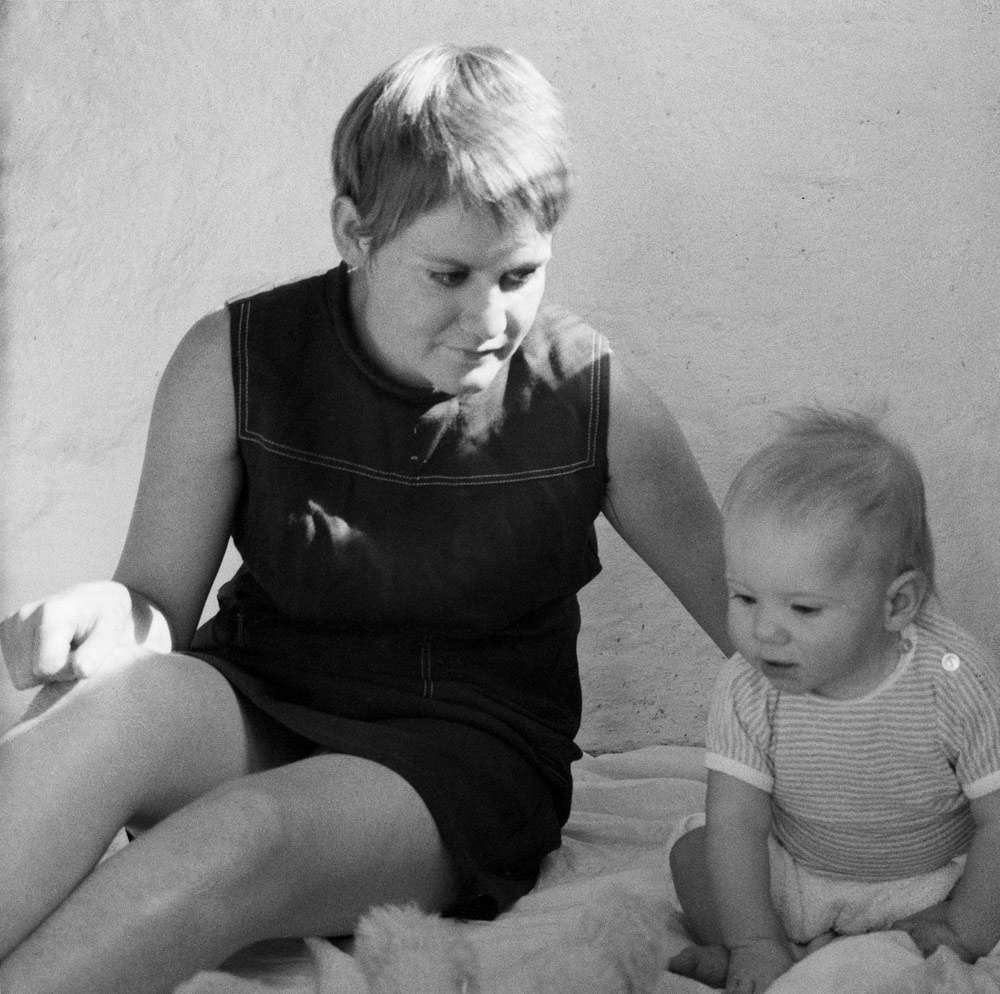


![Sue Ford (1943-2009) 'Untitled [Bliss at Yellow House, King's Cross, Sydney]' c. 1972–1973](https://artblart.com/wp-content/uploads/2011/06/008.jpg "Sue Ford (1943-2009) 'Untitled [Bliss at Yellow House, King's Cross, Sydney]' c. 1972–1973")



























 Art Blart _ art and cultural memory archive
You must be logged in to post a comment.