At this moment in time, I believe that Pieter Hugo is one of the best photographers in the world.
Approaching photography with a keen awareness of the problems inherent in pointing a camera at anything, Hugo’s latest series Kin is a tour de force where concept meets clarity of vision and purpose; where a deep suspicion of photography and what it can accurately portray is used in the most incisive way to interrogate identity formation and power structures, colonisation, racial diversity and economic disparity in Hugo’s homeland of South Africa. This is intelligent, beautiful, focused art.
While there is a deep suspicion about what photography can achieve, Hugo uses that suspicion… and balances it with sensitivity, respect and dignity towards subject. An enquiring mind coupled with a wonderful eye, fantastic camera position and understanding of his colour palette complete the picture. These are beautiful, classical and yes, iconic images. Not for Hugo the interchangeability of so much contemporary photobook photography, where one image, one artist, can be replaced by another with no discernible difference in feeling or form. Where single images, whole series of work even, mean very little. The re/place ability of so much post-photography.
Just look at those eyes and face in Daniel Richards, Milnerton (2013, below), eyes that bore right through you; or the human being in At a Traffic Intersection, Johannesburg (2011, below) and tell me you’re not moved. Hugo is one of the brightest of stars in the photographic firmament.
Dr Marcus Bunyan
Many thankx to the Fondation Henri Cartier-Bresson for allowing me to publish the photographs in the posting. Please click on the photographs for a larger version of the image.
Created over the past eight years, Pieter Hugo’s series Kin confronts complex issues of colonisation, racial diversity and economic disparity in Hugo’s homeland of South Africa. These subjects are common to the artist’s past projects in Nigeria, Ghana, Liberia and Botswana; however, this time, Hugo’s attention is focused on his conflicted relationship with the people and environs closest to home. Hugo depicts locations and subjects of personal significance, such as cramped townships, contested farmlands, abandoned mining areas and sites of political influence, as well as psychologically charged still lives in people’s homes and portraits of drifters and the homeless. Hugo also presents intimate portraits of his pregnant wife, his daughter moments after her birth and the domestic servant who worked for three generations of Hugo’s family. Alternating between private and public spaces, with a particular emphasis on the growing disparity between rich and poor, Kin is the artist’s effort to locate himself and his young family in a country with a fraught history and an uncertain future.
Text from the Fondation Henri-Cartier Bresson website
“I have a deep suspicion of photography, to the point where I do sometimes think it cannot accurately portray anything, really. And, I particularly distrust portrait photography. I mean, do you honestly think a portrait can tell you anything about the subject? And, even if it did, would you trust what it had to say?… It sounds extreme, but for me to work at all as a photographer, I have to be conscious always of the problems inherent in what I do. I have to be conscious, if you like, of the impossibility of photography…
I matriculated at the end of apartheid and the photographs I grew up looking at were directly political in that they attempted to reveal, or change, what was happening. Back then, the lines were clear. You tried to tell the world what was going on with your photographs. It’s much more complex now. I am of a generation that approaches photography with a keen awareness of the problems inherent in pointing a camera at anything.
My homeland is Africa, but I’m white. I feel African, whatever that means, but if you ask anyone in South Africa if I’m African, they will almost certainly say no. I don’t fit into the social topography of my country and that certainly fuelled why I became a photographer.”
Pieter Hugo quoted in Sean O’Hagan. “Africa as you’ve never seen it,” on the Guardian website 20th July 2008 [Online] Cited 24/02/2015
From January 14th to April 26th, Fondation HCB is showing Kin, the last project of the south-african photographer Pieter Hugo. Through landscapes, portraits and still life photography exhibited for the first time in France, the photographer offers a personal exploration of South Africa. The exhibit, accompanied by a book published by Aperture is coproduced with Foto Colectania Foundation, Barcelone and Stevenson Gallery, Cape Town/Johannesburg.
Created over the past eight years, Pieter Hugo’s series Kin confronts complex issues of colonisation, racial diversity and economic disparity in Hugo’s homeland of South Africa. These subjects are common to the artist’s past projects in Nigeria, Ghana, Liberia and Botswana; however, this time, Hugo’s attention is focused on his conflicted relationship with the people and environs closest to home.
Hugo depicts locations and subjects of personal significance, such as cramped townships, contested farmlands, abandoned mining areas and sites of political influence, as well as psychologically charged still lives in people’s homes and portraits of drifters and the homeless. Hugo also presents intimate portraits of his pregnant wife, his daughter moments after her birth and the domestic servant who worked for three generations of Hugo’s family. Alternating between private and public spaces, with a particular emphasis on the growing disparity between rich and poor, Kin is the artist’s effort to locate himself and his young family in a country with a fraught history and an uncertain future.
“South Africa is such a fractured, schizophrenic, wounded and problematic place. It is a very violent society and the scars of colonialism and Apartheid run deep. Issues of race and cultural custodianship permeate every aspect of society here and the legacy of Apartheid casts a long shadow … How does one live in this society? How does one take responsibility for history, and to what extent does one have to? How do you raise a family in such a conflicted society? Before getting married and having children, these questions did not trouble me; now, they are more confusing. This work attempts to address these questions and to reflect on the nature of conflicting personal and collective narratives. I have deeply mixed feelings about being here. I am interested in the places where these narratives collide. ‘Kin’ is an attempt at evaluating the gap between society’s ideals and its realities.”
Biography
Born in Johannesburg in 1976, Pieter Hugo grew up in Cape Town where he currently lives. His work is held in the permanent collections of The Metropolitan Museum of Art, New York; Museum of Modern Art, New York; J. Paul Getty Museum, Los Angeles; San Francisco Museum of Modern Art; Musée de l’Elysée, Lausanne; Huis Marseille, Amsterdam; and the Victoria and Albert Museum, London, among others. He is the winner of numerous awards, including in 2008 the KLM Paul Huf Award and the Discovery Award at Rencontres d’Arles. He won the Seydou Keita Award at the ninth Rencontres de Bamako African Photography Biennial, Mali, in 2011, and was short-listed for the 2012 Deutsche Börse Photography Prize.
Press release from the Fondation Henri Cartier-Bresson
Exhibition dates: 31st October, 2014 – 19th April, 2015
Curator: Sarah Montross, Senior Curator at the deCordova Sculpture Park and Museum
Charles “Teenie” Harris (American, 1908-1998) Three men and three women, seated as couples in banquette in bar or restaurant advertising “Fried Shrimp Plate $.85” and “1/4 Fried Chicken $.70” c. 1959; printed 2001 Silver gelatin print Gift of Arlette and Gus Kayafas
Another fun posting to add to the archive!
Marcus
Many thankx to the deCordova Sculpture Park and Museum for allowing me to publish some of the photographs in the posting. Please click on the photographs for a larger version of the image.
Charles “Teenie” Harris (American, 1908-1998) Photographer taking picture of Muhammad Ali (Cassius Clay) possibly in Carlton House Hotel, Downtown 1963; printed 2001 Silver gelatin print Gift of Arlette and Gus Kayafas
Charles “Teenie” Harris photographed the African-American community of his hometown of Pittsburgh, primarily for the Pittsburgh Courier, the preeminent national African-American newspaper (c. 1930-1960). Photographing community members, visiting political figures, athletes, and entertainers, Harris set out to balance negative views of African-Americans and their communities. Nicknamed “One-Shot,” Harris photographed confidently and with ease, rarely asking his subjects to pose more than once. The resulting 80,000 negatives make up one of the largest collections of photographs of a black urban community in the United States. Harris’ artistic output helps define photography as a tool for preserving the past, his photographs serving as invaluable documentation of the spirit of a particular time, place, and people.
Prefiguring the paparazzi images of celebrities that pervade contemporary media, Harris’ photographs of singer / actress Lena Horne and boxer Cassius Clay (Muhammad Ali) capture his famous subjects in relaxed settings that humanise them. Furthermore, Harris’ photograph of Clay shows the boxer having his portrait taken by another photographer, giving Harris’ image of a photograph-in-process an even greater behind-the-scenes feel.
Jules Aarons (American, 1921-2008) Untitled (Bronx), from the portfolio In The Jewish Neighborhoods 1946-76 c. 1970; printed 2003 Silver gelatin print, printer’s proof II Gift of Arlette and Gus Kayafas
Jules Aarons was one of the most respected and prolific American social documentary photographers in the twentieth century. His street photography captured personal moments in the public eye within the urban neighbourhoods in which he lived: the Bronx, where he was born and raised, and Boston, where he spent the majority of his adult life. Shot with his twin lens Rolleiflex camera held at waist-level, Aarons’ images are casual, intimate, and lively. Although the artist did not personally know his subjects, his work does not exhibit the detachment found in earlier forms of social documentary photography. His deep associations with the places and people he photographed imbue his images with a warmth and familiarity.
Greg Schmigel (American, b. 1969) Subway Triptych 2011 Digital photographic prints Courtesy of the artist
Greg Schmigel (American, b. 1969) An Afternoon in the Sun 2012 Digital photographic prints Courtesy of the artist
Greg Schmigel (American, b. 1969) Ideal Hosiery 2013 Digital photographic prints Courtesy of the artist
Greg Schmigel (American, b. 1969) Late Day On Broadway 2012 Digital photographic prints Courtesy of the artist
Greg Schmigel (American, b. 1969) This Isn’t Fucking Paris 2012 Digital photographic prints Courtesy of the artist
Greg Schmigel works in the vernacular of mid-twentieth century black and white street photography, capturing candid glimpses of everyday moments. While inspired by pioneering artists such as Jules Aarons, whose work is also on view in this gallery, Schmigel creates photographs with a decidedly twenty-first century quality. A mobile photographer since 2007, his device of choice is the most itinerant and convenient camera available: his iPhone. In his work, Schmigel emphasises that the production of a good photograph is due mainly to the eye of the photographer, and not necessarily dependent on the equipment he uses.
By producing black and white prints from his digital images, the artist casts a timeless aura over contemporary scenes. In photographs such as Ideal Hosiery, the faded signs of a New York City street corner provide an uncanny setting that could easily be found in a photograph taken many decades ago. In other images, however, the omnipresence of smartphones in the hands of pedestrians instantly signals the twenty-first century. In these photographs, Schmigel aptly captures the ironic isolation caused by the very technology created to increase interpersonal communication.
Presented at a time when the compulsion to digitally document and share human activity has increased exponentially, this exhibition features works from deCordova’s permanent collection that prefigure and inform current trends in social photography, as well as recent work by contemporary artists who utilise smartphones and social media to record the world around them. The Social Medium features work spanning from the mid-twentieth century to the present, and includes multiple photographic genres such as social documentary, street, society/celebrity, and portrait photography.
The Social Medium was largely inspired by a recent gift of one of Andy Warhol’s Little Red Books, which contains a set of colour Polaroids. With his camera, Warhol documented the events of his life – from glamorous celebrity parties to mundane occurrences. The arrival of these photographs, which record Warhol’s artistic and social milieu (or environment), created an opportunity to examine the work of other artists who also photograph social experience. Together, the images in this exhibition speak to the continued relevance of the photographic medium’s singular power to capture and preserve personal and societal histories, and provide a selective history of the camera’s role as an extension of memory and a tool that is at once a witness to and participant in human social activity.
Text from the deCordova Sculpture Park and Museum
Eugene Richards (American, b. 1944) First Communion, Dorchester 1976 Silver gelatin print Gift of the artist
Eugene Richards captures a specific, local community in which he was embedded, to offer us uncanny views of small-town America. In the 1970s, Richards returned to his native Boston neighbourhood and produced photographs such as First Communion, which would later comprise his seminal book, Dorchester Days (1978). Richards documented a small section of urban Boston at a time when racial tensions and economic decline were defining Dorchester along with swaths of American cities and towns in similar states of transition and decline. First Communion captures a moment that nods towards social frictions at large, where religious traditions and street life converge in ambiguously innocent tension.
Larry Fink (American, 1941-2023) N.Y.C. Club Cornich, from the portfolio 82 Photographs 1974 to 1982 1977; printed 1983 Silver gelatin print, 28/30 Gift of Diane and Eric Pearlman
Larry Fink (American, 1941-2023) N.Y.C. Club Cornich, from the portfolio 82 Photographs 1974 to 1982 1977; printed 1983 Silver gelatin print, 28/30 Gift of Diane and Eric Pearlman
Larry Fink (American, 1941-2023) Peter Beard’s, East Hampton, from the portfolio 82 Photographs 1974 to 1982 1982; printed 1983 Silver gelatin print, 28/30 Gift of Diane and Eric Pearlman
Larry Fink is a prominent American photographer who is best known for capturing images of high-profile social events. Fink’s images from the 1970s and 1980s capture individual vignettes within social gatherings, and nod to the development of documentary photography within the image-driven culture of the second half of the twentieth century. These photographs from Fink’s series 82 Photographs 1974 to 1982 and Making Out 1957-1980 depict scenes from clubs and parties in and around New York City. Fink’s subjects are caught off-guard by his camera, and their expressions provide windows into their weariness or giddy party euphoria. Capturing groups and individuals at surprisingly intimate and vulnerable moments, his photographs subtly reveal the disconnect often found between a subject’s public image and his or her inner self. For example, in Peter Beard’s, East Hampton, Fink captures a dynamic group of people in various levels of engagement with one another. While some are intertwined, others glance outward to the party beyond, having seemingly lost interest in the gathering at hand.
Tod Papageorge (American, b. 1940) Studio 54 1977 Silver gelatin print Gift of Pete and Constance Kayafas
In this photograph, Tod Papageorge captures revellers in gritty black and white, employing straightforward photography to show significant, poetic moments from everyday life. Highlighted by the timeless quality of a silver gelatin print, his photograph of partygoers at the infamous New York City nightclub, Studio 54, captures such a scene. Dramatic without arranging its subjects, Papageorge’s photograph freezes the precise moment just before the woman’s upstretched hand makes contact with balloon floating wistfully above her head.
Phillip Maisel (American, b. 1981) Wall Photos, from the series A More Open Place 2010 Archival inkjet print Courtesy of the artist
Phillip Maisel (American, b. 1981) Profile Pictures (4702), from the series A More Open Face 2011 Archival inkjet print Courtesy of the artist
Phillip Maisel’s photographs are layered, ethereal images that evoke the fleeting nature of memories. Though nostalgic in tone, these images derive from a very contemporary source. Setting long exposures on his camera, the artist captures the images appearing on his computer screen as he clicked through his friends’ Facebook albums. The resulting picture-of-pictures is twice removed from its source, emphasising the swollen state of image culture and the manner in which digital images are created, uploaded, and discarded at an ever increasing rate.
The title of these series derives from Facebook founder Mark Zuckerberg, who noted that, through the social media platform, he was trying “to make the world a more open place.” Facebook and other sites have certainly achieved that; however, this extreme openness, the compulsion to over-share personal images and information, creates a paradox given the subsequent lack of privacy inherent in these activities. Maisel’s work comments on this contemporary phenomenon in which individuals willingly share images of their private memories in public venues. Furthermore, by reducing a collection of images to a single photograph, the artist manifests the compression of time and space in the internet age. This layering of images is also a form of erasure; each new image obscures the last, consistently degrading the significance of each individual picture and memory.
Neal Slavin (American, b. 1941) Capitol Wrestling Corporation, Washington, D.C ., from the portfolio Groups in America 1979 Color coupler print, 60/75 Gift of Stephen L. Singer and Linda G. Singer
Neal Slavin is acclaimed for his group portraits, which range from corporate associates to recreational cohorts to families. The photographs on display offer astute yet humorous studies of groups with specific shared interests that lay at the edges of societal norms. In Slavin’s images, no single member of the group pulls focus from the others and the ultimate personality of the portrait hinges upon the collective aura.
Andy Warhol (American, 1928-1987) The Little Red Book 128 1972 Twenty Polacolor Type 108 Polaroid prints Gift of The Andy Warhol Foundation for the Visual Arts, Inc. 2014
Examples of Polaroids in book. 20 total.
During the 1970s and early 1980s, Andy Warhol used the Polaroid colour film camera. A then-novel technology which developed photographs in a matter of seconds, he employed it to document the events of his life – from the most glamorous celebrity parties to the most mundane and inconsequential occurrences. Warhol catalogued many of these photographs into small red Holston Polaroid albums, consequently known as Little Red Books. DeCordova’s Little Red Book 128, recently donated to the museum by The Warhol Foundation, features twenty photographs from a day in 1972 that Warhol shared with acclaimed writer Truman Capote, socialite Lee Radziwill and her family, and his business associates Vincent Fremont, Fred Hughes, and Jed Johnson. Consisting of both staged portraits and casual snapshots, the book is part paparazzi portfolio and part quaint family album.
Throughout the height of his fame, Andy Warhol was rarely without a camera in hand. The enigmatic artist often preferred social situations to be passively mitigated by his camera lens, rather than experienced physically and emotionally. In many ways, Warhol’s detachment mirrors a contemporary reliance on electronic forms of communication that limit human contact. Warhol once said, “In the future, everyone will be world – famous for 15 minutes.” Unsurprisingly, in all his work and in this collection of Polaroids, the artist blurs the lines between public / private and commoner / celebrity in a manner which is eerily prophetic of current social media platforms, such as Facebook, Twitter, Instagram, YouTube, among others, which allow anyone and everyone to have their Warholian 15 minutes of fame, or perhaps even just 15 seconds of infamy.
Andy Warhol (American, 1928-1987) Anthony Radziwill 1972 Polacolor Type 108 Polaroid print
Prince Anthony Stanislaw Albert Radziwill (American, 1959-1999)
Prince Anthony Stanislaw Albert Radziwill (4 August 1959 – 10 August 1999) was an American television executive and filmmaker.
Born in Lausanne, Switzerland, Radziwill was the son of socialite / actress Caroline Lee Bouvier (younger sister of First Lady Jacqueline Lee Bouvier) and Polish Prince Stanisław Albrecht Radziwiłł. He married a former ABC colleague, Emmy Award-winning journalist Carole Ann DiFalco, on 27 August 1994 on Long Island, New York.
As a member of the Radziwills, one of Central Europe’s noble families, Anthony Radziwill was customarily accorded the title of Prince and styled His Serene Highness, although he never used it. He descended from King Frederick William I of Prussia, King George I of Great Britain, and King John III Sobieski of Poland. The family’s vast hereditary fortune was lost during World War II, and Anthony’s branch of the family emigrated to England, where they became British subjects.
Radziwill’s career began at NBC Sports, as an associate producer. During the 1988 Summer Olympics in Seoul, he contributed Emmy Award-winning work. In 1989, he joined ABC News as a television producer for Prime Time Live. In 1990, he won the Peabody Award for an investigation on the resurgence of Nazism in the United States.Posthumously, Cancer: Evolution to Revolution was awarded a Peabody.His work was nominated for two Emmys.
Around 1989 he was diagnosed with testicular cancer, undergoing treatment which left him sterile, but in apparent remission. However, shortly before his wedding, new tumours emerged. Radziwill battled metastasising cancer throughout his five years of marriage, his wife serving as his primary caretaker through a succession of oncologists, hospitals, operations and experimental treatments. The couple lived in New York, and both Radziwill and his wife tried to maintain their careers as journalists between his bouts of hospitalisation. During this period, Radziwill became especially close to his aunt Jacqueline Kennedy Onassis, who was also terminally ill with cancer. He died on 10 August 1999, and was survived by his sister, Anna Christina Radziwill.
Andy Warhol (American, 1928-1987) Lee Radziwill 1972 Polacolor Type 108 Polaroid print
Andy Warhol (American, 1928-1987) Jed Johnson 1972 Polacolor Type 108 Polaroid print
Jed Johnson (December 30, 1948 – July 17, 1996) was an American interior designer and film director. Initially hired by Andy Warhol to sweep floors at Warhol’s Factory, he subsequently moved in with Warhol and became his lover.As a passenger in the First Class cabin, he was killed when TWA Flight 800 exploded shortly after takeoff in 1996.
Andy Warhol (American, 1928-1987) Truman Capote 1972 Polacolor Type 108 Polaroid print
deCordova Sculpture Park and Museum 51 Sandy Pond Rd, Lincoln, MA 01773, United States Phone: +1 781-259-8355
Curator: Dr. Louise Mirrer, President and CEO of the New-York Historical Society working with exhibition organiser Deborah Davis
Stephen Somerstein (American, b. 1941) Dr. Martin Luther King, Jr. speaking to 25,000 civil rights marchers in Montgomery 1965 Courtesy of the photographer
And still it goes on… whether it be so called Chelsea football “fans” singing racist songs and abusing a black man on the Paris Metro, the Australian government’s “intervention” in Aboriginal communities, or Channel Seven’s adverts for Australia: The Story of Us which states, “This is the story of how a bunch of convicts transformed Australia from a barren, frontier prison into one of the richest countries in the world.”
The use of the word “barren” insidiously supports the hidden tenants of racism, surreptitiously reaffirming the idea that Australia was a terra nullius when it was invaded. And for one of the richest countries in the world, the Aboriginal and refugee population is sure not seeing the benefits, both in terms of freedom (refugee children and Indigenous people from incarceration), health, education and life span.
When will the human race ever grow up? We have been fighting this stuff since time immemorial, or perhaps that should be time ‘in memoriam’ – in honour of those who have passed – and in honour of those that continue to suffer. In the end it all comes down to the intersectionality of power, race, religion, money, gender and place, a moveable and fluid feast of fear and loathing, possession and patriarchy. I don’t believe that it will ever change, unless something truly momentous happens to this world… the earth self regulates and rids itself of this disease, this human ‘race’. But we can and we will, still fight the good fight, against bigotry, war, corporations and government surveillance, everywhere.
Dr Marcus Bunyan
Many thankx to the New York Historical Society Museum and Library for allowing me to publish the photographs in the posting. Please click on the photographs for a larger version of the image.
“All through the march I was thinking, ‘This is history in the making. Can I capture it? Can I give a sense to other people of what I am experiencing myself?’ That was the thread that always wove through the back of my mind. Am I up for the task?… I turned my camera most consciously to the people watching the march. It was meant to free them. The march was meant to give them voting rights. The march was meant to change their lives… I wanted the pictures to be a window for people to look back in time and see what it was like then. I needed to capture a sense of their vision.”
Stephen Somerstein
Stephen Somerstein (American, b. 1941) “Things Go Better With Coke” sign and multi-generational family watching marchers 1965 Courtesy of the photographer
This is among Somerstein’s favourite shots from the march. “Only in this instant are they looking mostly in the same direction,” he said, recalling that a second shot he took just after lacked the “unity” of this composition.
Stephen Somerstein (American, b. 1941) Marchers on the way to Montgomery as families watch from their porches 1965 Courtesy of the photographer
Stephen Somerstein (American, b. 1941) Nuns, priests, and civil rights leaders at the head of the march 1965 Courtesy of the photographer
Stephen Somerstein (American, b. 1941) Two mothers with children watching marchers 1965 Courtesy of the photographer
Stephen Somerstein (American, b. 1941) Dr. Martin Luther King, Jr. Looks out at crowd in Montgomery 1965 Courtesy of the photographer
“I had to be totally cool about it,” Somerstein said of getting this shot, taken from the platform where Martin Luther King was speaking. “You don’t ask people, you don’t discuss it, you just do it… I had 30 seconds to take the photograph.” This image inspired the poster for the current film Selma.
“Somehow, the photographer managed to position himself directly behind Dr. King as he delivered the sonorous “How Long? Not Long” speech: “Somebody’s asking, ‘How long will prejudice blind the visions of men, darken their understanding, and drive bright-eyed wisdom from her sacred throne?'” it began, ending, “Not long, because the arc of the moral universe is long, but it bends toward justice.” (Holland Cotter)
Iconic Photographs by Stephen Somerstein Capture the Spirit of the Civil Rights Movement
The New-York Historical Society showcases a powerful selection of photographs by Stephen Somerstein that chronicle the 1965 Selma-to-Montgomery Civil Rights March, honouring the 50th anniversary of the protest that changed the course of civil rights in America. On view from January 16 through April 19, 2015, the exhibition Freedom Journey 1965: Photographs of the Selma to Montgomery March by Stephen Somerstein will feature the work of the 24-year-old City College student, who felt he had to document “what was going to be a historic event.” He accompanied the marchers, gaining unfettered access to Dr. Martin Luther King, Jr., Coretta Scott King, Rosa Parks, James Baldwin, Joan Baez, and Bayard Rustin.
Through 55 black and white and colour photographs, Freedom Journey 1965 will document the quest for equality and social justice over the five-day march. Then the managing editor and picture editor of the City College newspaper, Stephen Somerstein recalls “When Dr. King called on Americans to join him in a massive protest march to Montgomery, I knew that important, nation-changing history was unfolding and I wanted to capture its power and meaning with my camera.”
The Selma-to-Montgomery March marked a peak of the American civil rights movement. From March 21 to March 25, 1965, hundreds of people marched from Selma to the State Capitol Building in Montgomery, Alabama to protest against the resistance that the Student Nonviolent Coordinating Committee (SNCC) and other groups had encountered in their mission to register black voters. By March 25, the group had grown to 25,000 people, which Dr. King addressed from the steps of the Montgomery State Capitol. Three months later, President Lyndon Johnson signed the Voting Rights Act of 1965.
Somerstein took approximately 400 photographs over the five-day, 54 mile march. Exhibition highlights include images of Dr. Martin Luther King, Jr. addressing the crowd of 25,000 civil rights marchers in Montgomery; folk singer Joan Baez, standing before a line of state troopers blocking the entrance to the State Capitol; white hecklers yelling and gesturing at marchers; families watching the march from their porches; and images of young and old alike participating in the demonstration.
Somerstein pursued a career in physics, building space satellites at the Harvard Smithsonian Astrophysical Observatory and Lockheed Martin Co. Upon retiring, Somerstein revisited the Selma photographs. Though he had sold a few of them, the majority were not showcased until he participated in a civil rights exhibition at the San Francisco Art Exchange in 2010. “I realised that I had numerous iconic and historic photographs that I wanted to share with the public,” says Somerstein.
This exhibit features the stunning and historic photographs of Stephen Somerstein, documenting the Selma-to-Montgomery Civil Rights March in January 1965. Somerstein was a student in City College of New York’s night school and Picture Editor of his student newspaper when he traveled to Alabama to document the March.
He joined the marchers and gained unfettered access to everyone from Martin Luther King Jr. to Rosa Parks, James Baldwin, and Bayard Rustin. “I had five cameras slung around my neck,” he recalled. Over the five-day, 54-mile march, Somerstein took about four hundred photographs including poignant images of hopeful blacks lining the rural roads as they cheered on the marchers walking past their front porches and whites crowded on city sidewalks, some looking on silently-others jeering as the activists walked to the Alabama capital. Somerstein sold a few photographs to the New York Times Magazine, Public Television and photography collectors, but none were exhibited until 2010, when he participated in a civil rights exhibition at the San Francisco Art Exchange.
Rather than choosing photography as a career, Somerstein became a physicist and worked at the Harvard-Smithsonian Astrophysical Observatory and at Lockhead Martin Company. It was only after his retirement in 2008 that he returned to his photography remarking that he wanted “to have exhibitions of my work and that I realised that I had numerous iconic as well as historic photographs.” Among those photographs were his moving photographs of that memorable march to Montgomery in 1965.”
Press release from the New-York Historical Society Museum and Library
Selma – Montgomery March, 1965
A powerful and recently rediscovered film made during the 1965 Selma to Montgomery march for voting rights. Stefan Sharff’s intimate documentary reflects his youthful work in the montage style under the great Russian filmmaker Sergei Eisenstein. The film features moving spirituals. Marchers include Rev. Dr. Martin Luther King Jr. and his wife Coretta Scott King. (NJ state film festival)
Director: Stefan Sharff
Cameramen: Stefan Sharff Christopher Harris Julian Krainin Alan Jacobs Norris Eisenbrey
Stephen Somerstein (American, b. 1941) Coretta Scott King and husband civil rights leader Dr. Martin Luther King, Jr., on platform at end of 1965 Selma to Montgomery, Alabama Civil Rights March – March 25, 1965 1965 Courtesy of the photographer
It had taken them 54 miles on the march and their entire lives to reach their goal of voting rights for blacks. Somerstein, who took that photo as a CCNY student, says it’s one of his favourite images from that time.
Stephen Somerstein (American, b. 1941) Folk singer Joan Baez in Montgomery 1965 Courtesy of the photographer
Stephen Somerstein (American, b. 1941) Hecklers yelling and gesturing at marchers 1965 Courtesy of the photographer
Stephen Somerstein (American, b. 1941) Young civil rights marchers with American flags march in Montgomery 1965 Courtesy of the photographer
For all involved, danger was ever-present. The march, which covered 54 miles and took five days, from March 21 to 25, had been preceded by two traumatic aborted versions. On March 7, 600 people trying to walk across the Edmund Pettus Bridge over the Alabama River leading out of Selma to Montgomery were accused by local law officials of gathering illegally and were savagely assaulted by state troopers. Two days later, a second group, this one led by Dr. King, approached the bridge, knelt to pray and turned back. If the retreat was intended as a symbolic rebuke to violence, it did no good. That night, a Unitarian minister from Boston named James J. Reeb, in town for the event, was beaten on the street by a group of Selma racists and died.
By the time of the third march, certain protective measures were in place. The force of public opinion was one. Pictures of the attack at the bridge had been widely seen in print and on national television: All eyes were on Selma now. An Alabama judge had finally granted legal permission for a march to proceed. Finally, President Lyndon B. Johnson, enraged at Gov. George C. Wallace’s refusal to shield the marchers, ordered federal troops to guard them…
Scads of photographers were on the job that day and, inevitably, certain subjects – political leaders, visiting celebrities – were the focus of many cameras, including Mr. Somerstein’s. Yet most of the people in his pictures are not stars; they’re rank-and-file participants. It’s from their perspective that we see the march. In one shot, we’re in the middle of it, surrounded by fellow walkers. In others, we’re looking out at bystanders who line the way: white office workers; hecklers; multiracial shoppers; African-American children on porches; women, dressed in Sunday best, on the steps of black churches.
This viewpoint subtly alters a standard account of the event, one perpetuated in Selma, which suggests that a small, elite band of high-level organisers were the heroes of the day. They were indeed heroes, but they were borne on the shoulders of the countless grass-roots organisers who paved the way for the march and the anonymous marchers, many of them women, who risked everything to walk the walk…
… in the film, the image [of the back of Dr King’s head] seems to be about the man and his drama; in Mr. Somerstein’s photograph, it seems to be about the crowd. For an account of this and other civil rights era events that balance symbols and facts, I look back to the documentary series Eyes on the Prize that ran on public television between 1987 and 1990. Its use of archival images and contemporary interviews with people involved in the Selma-to-Montgomery march gave equal time to personalities and larger realities. And its news clips of the bloody attack on citizens by the police on the bridge in Selma, despite being choppy and grainy, are to me far more wrenching in a you-are-there way than a Hollywood re-enactment, however spectacular. Mr. Somerstein’s quiet photographs are moving in a similar way.
Extracts from Holland Cotter. “A Long March Into History: Stephen Somerstein Photos in ‘Freedom Journey 1965’,” on the New York Times website [Online] Cited 19/02/2015. No longer available online. Used under fair use conditions for the purposes of education and research.
Stephen Somerstein (American, b. 1941) Family watching march 1965 Courtesy of the photographer
Stephen Somerstein (American, b. 1941) Man with American flag and marchers walking past federal troops guarding crossroads 1965 Courtesy of the photographer
Martin Luther King Jr. (MLK) delivers his famous “How Long, Not Long” speech on the steps of the state capitol building in Montgomery, Alabama, 1965
Eyes On The Prize – (Part 6) Bridge to Freedom 1965
Stephen Somerstein talks about a photo he took during the famous 1965 Selma to Montgomery, Ala., march at the New-York Historical Society on Wednesday. Somerstein was a 24-year-old college student when he photographed Dr. Martin Luther King Jr. and the march from Selma to Montgomery that changed the course of civil rights in the U.S. REUTERS
New-York Historical Society 170 Central Park West at Richard Gilder Way (77th Street) New York, NY 10024 Phone: (212) 873-3400
Artists: Jules Andrieu, Pierre Antony-Thouret, Nobuyoshi Araki, George Barnard, Adam Broomberg and Oliver Chanarin, Luc Delahaye, Ken Domon, Roger Fenton, Ernst Friedrich, Jim Goldberg, Toshio Fukada, Kenji Ishiguro, Kikuji Kawada, An-My Lê, Jerzy Lewczyński, Emeric Lhuisset, Agata Madejska, Diana Matar, Eiichi Matsumoto, Chloe Dewe Mathews, Don McCullin, Susan Meiselas, Kenzo Nakajima, Simon Norfolk, João Penalva, Richard Peter, Walid Raad, Jo Ratcliffe, Sophie Ristelhueber, Julian Rosefeldt, Hrair Sarkissian, Michael Schmidt, Ursula Schulz-Dornburg, Indre Šerpytyte, Stephen Shore, Harry Shunk and János Kender, Taryn Simon, Shomei Tomatsu, Hiromi Tsuchida, Marc Vaux, Paul Virilio, Nick Waplington, Jane and Louise Wilson, and Sasaki Yuichiro.
Curators: Simon Baker, Curator Photography and International Art, Shoair Mavlian, Assistant Curator, and Professor David Alan Mellor, University of Sussex
Roger Fenton (British, 1819-1869) The Valley of the Shadow of Death 1855
Another fascinating exhibition. The concept, that of vanishing time, a vanquishing of time – inspired by Kurt Vonnegut’s 1969 novel Slaughterhouse-Five and the Japanese photographer Kikuji Kawada’s 1965 photobook The Map – is simply inspired. Although the images are not war photography per se, they are about the lasting psychological effects of war imaged on a variable time scale.
While the images allow increasing passages of time between events and the photographs that reflect on them – “made moments after the events they depict, then those made days after, then months, years and so on” – there settles in the pit of the stomach some unremitting melancholy, some unholy dread as to the brutal facticity and inhumanness of war. The work which “pictures” the memory of the events that took place, like a visual ode of remembrance, are made all the more powerful for their transcendence – of time, of death and the immediate detritus of war.
Dr Marcus Bunyan
Many thankx to the Tate Modern for allowing me to publish the photographs in the posting. Please click on the photographs for a larger version of the image.
“… taking its cue from Vonnegut, ‘Conflict, Time, Photography’ is arranged differently, following instead the increasing passages of time between events and the photographs that reflect on them. There are groups of works made moments after the events they depict, then those made days after, then months, years and so on – 10, 20, 50, right up to 100 years later.”
Simon Baker
Shomei Tomatsu (Japanese, 1930-2012) Atomic Bomb Damage – Wristwatch Stopped at 11.02, August 9, 1945, Nagasaki 1961 Gelatin silver print on paper 253 x 251mm Tokyo Metropolitan Museum of Photography, Tokyo
Shomei Tomatsu (Japanese, 1930-2012) Steel Helmet with Skull Bone Fused by Atomic Bomb, Nagasaki 1963 Gelatin silver print on paper 226 x 303mm Tokyo Metropolitan Museum of Photography, Tokyo
“From the seconds after a bomb is detonated to a former scene of battle years after a war has ended, this moving exhibition focuses on the passing of time, tracing a diverse and poignant journey through over 150 years of conflict around the world, since the invention of photography.
In an innovative move, the works are ordered according to how long after the event they were created from moments, days and weeks to decades later. Photographs taken seven months after the fire bombing of Dresden are shown alongside those taken seven months after the end of the First Gulf War. Images made in Vietnam 25 years after the fall of Saigon are shown alongside those made in Nakasaki 25 years after the atomic bomb. The result is the chance to make never-before-made connections while viewing the legacy of war as artists and photographers have captured it in retrospect…
The exhibition is staged to coincide with the 2014 centenary and concludes with new and recent projects by British, German, Polish and Syrian photographers which reflect on the First World War a century after it began.”
Text from the Tate Modern website
“The original idea for the Tate Modern exhibition Conflict, Time, Photography came from a coincidence between two books that have captivated and inspired me for many years: Kurt Vonnegut‘s classic 1969 novel Slaughterhouse-Five and the Japanese photographer Kikuji Kawada’s 1965 photobook The Map. Both look back to hugely significant and controversial incidents from the Second World Warfrom similar distances.
Vonnegut was a prisoner of war in Dresden when what he called ‘possibly the world’s most beautiful city’ was destroyed by incendiary bombs, and struggled to write his war book for almost 25 years. Kawada was a young photographer working in post-war Hiroshima when he began to take the strange photographs of the scarred, stained ceiling of the A-bomb Dome – the only building to survive the explosion – that he would eventually publish on August 6 1965, 20 years to the day since the atomic bomb was dropped on the city.
It may seem odd that these great works of art and literature took so long to emerge from the aftermath of the events they concern. But many of the most complex and considered accounts of conflict have taken their time. To Vonnegut’s painfully slow response to the war, for example, we might add Joseph Heller’s brilliantly satirical Catch-22, published in 1961, and, even more significantly, JG Ballard’s memorial masterpiece Empire of the Sun, which did not see the light of day until 1984.
And today, in 2014, 100 years since the start of the First World War, it seems more important than ever not only to understand the nature and long-term effects of conflict, but also the process of looking back at the past…”
Extract from Simon Baker. “War photography: what happens after the conflict?” on The Telegraph website, 7th November 2014 [Online] Cited 09/02/2015. Used under fair use conditions for the purposed of education and research
An-My Lê (Vietnamese-American, b. 1960) Untitled, Hanoi 1994-1998 Gelatin silver print on paper 508 x 609mm Courtesy the artist and Murray Guy, New York
Jane Wilson (British, b. 1967) Louise Wilson (British, b. 1967) Urville 2006 Gelatin silver print, mounted onto aluminium 1800 x 1800mm Tate Purchased 2011
Jane Wilson (British, b. 1967) Louise Wilson (British, b. 1967) Azeville 2006 Gelatin silver print, mounted onto aluminium 1800 x 2900mm Tate Purchased 2011
Jo Ractliffe (South African, b. 1961) As Terras do fim do Mundo (The Lands of the End of the World) 2009-2010 Courtesy Mark McCain collection
“At first glance, Jo Ractliffe’s black-and-white shots of sun-baked African landscapes look random and bland: rocks, dirt, scrubby trees; some handwritten signs but no people. Only when reading the titles – “Mass Grave at Cassinga,” “Minefield Near Mupa” – do you learn where the people are, or once were, and the pictures snap into expressive focus.
Ms. Ractliffe, who lives in Johannesburg, took the photographs in 2009 and 2010 in Angola on visits to now-deserted places that were important to that country’s protracted civil war and to the intertwined struggle of neighbouring Namibia to gain independence from South Africa’s apartheid rule. South Africa played an active role in both conflicts, giving military support to insurgents who resisted Angola’s leftist government, and hunting down Namibian rebels who sought safety within Angola’s borders.
It’s through this historical lens that Ms. Ractliffe views landscape: as morally neutral terrain rendered uninhabitable by terrible facts from the past – the grave of hundreds of Namibia refugees, most of them children, killed in an air raid; the unknown numbers of land mines buried in Angola’s soil. Some are now decades old but can still detonate, so the killing goes on.”
My first published photo book, The Map, took me five years to complete, beginning in 1960. In late 1961 a solo show with work from the series was held at Fuji Photo Salon in Tokyo, organised in three parts.
The first featured a ruined castle that was blown up intentionally by the Japanese army during the Second World War. The second comprised photographs taken a decade after the atomic bomb exploded in Hiroshima. They showed the stains and flaking ceilings of the Atomic Bomb Dome, the only structure left standing at the heart of the detonation zone. The third part concerned Tokyo during the period of economic recovery: images of advertising, scrap iron, the trampled national flag and emblems of the American Forces such as Lucky Strike and Coca-Cola, all twisted together, their order shuffled again and again. Some appeared as a montage to be presented as a metaphor. I dare not say the meaning of it.
These works led me to attempt to create this photographic book, using the notion of the map as a clue to the future and to question the whereabouts of my spirit. Discarded memorial photographs, a farewell note, kamikaze pilots – the illusions of various maps that emerge are to me like a discussion with the devil. The stains are situated as a key image of the series by drawing a future stratum and sealing the history, the nationality, the fear and anxiety of destruction and prosperity. It was almost a metaphor for the growth and the fall.
On the back of the black cover box are written rhyming words that are almost impossible to read. The front cover shows that the words are about to burn out. Inside, the pages are laid out as hinged double fold-out spreads. The repetition of the act of opening and closing makes the images appear and disappear. I wanted to have a book design as a new object and something that goes beyond the contents. With the rich and chaotic nature of monochrome, it might be that I tried to find my early style within the illusion of reality by abstracting the phenomenon. As an observer, I would like to keep forcing myself into the future, never losing the sense of danger which emerges in the conflicts of daily life. I wish to harmonise my old distorted maps with the heartbeat of this exhibition at Tate Modern, twisting across the bridges of the centuries through conflicting space and time.
Conflict, Time, Photography brings together photographers who have looked back at moments of conflict, from the seconds after a bomb is detonated to 100 years after a war has ended. Staged to coincide with the centenary of the First World War, this major group exhibition offers an alternative to familiar notions of war reportage and photojournalism, instead focusing on the passing of time and the unique ways that artists have used the camera to reflect on past events.
Conflicts from around the world and across the modern era are depicted, revealing the impact of war days, weeks, months and years after the fact. The works are ordered according to how long after the event they were created: images taken weeks after the end of the American Civil War are hung alongside those taken weeks after the atomic bombs fell on Japan in 1945. Photographs from Nicaragua taken 25 years after the revolution are grouped with those taken in Vietnam 25 years after the fall of Saigon. The exhibition concludes with new and recent projects by British, German, Polish and Syrian photographers which reflect on the First World War a century after it began.
The broad range of work reflects the many different ways in which conflict impacts on people’s lives. The immediate trauma of war can be seen in the eyes of Don McCullin’s Shell-shocked US Marine 1968, while the destruction of buildings and landscapes is documented by Pierre Antony-Thouret’s Reims After the War (published in 1927) and Simon Norfolk’s Afghanistan: Chronotopia 2001-2002. Other photographers explore the human cost of conflict, from Stephen Shore’s account of displaced Jewish survivors of the Second World War in the Ukraine, to Taryn Simon’s meticulously researched portraits of those descended from victims of the Srebrenica massacre.
Different conflicts also reappear from multiple points in time throughout the exhibition, whether as rarely-seen historical images or recent photographic installations. The Second World War for example is addressed in Jerzy Lewczyński’s 1960 photographs of the Wolf’s Lair / Adolf Hitler’s War Headquarters, Shomei Tomatsu’s images of objects found in Nagasaki, Kikuji Kawada’s epic project The Map made in Hiroshima in the 1960s, Michael Schmidt’s Berlin streetscapes from 1980, and Nick Waplington’s 1993 close-ups of cell walls from a Prisoner of War camp in Wales.
As part of Conflict, Time, Photography, a special room within the exhibition has been guest-curated by the Archive of Modern Conflict. Drawing on their unique and fascinating private collection, the Archive presents a range of photographs, documents and other material to provide an alternative view of war and memory.
Conflict, Time, Photography is curated at Tate Modern by Simon Baker, Curator of Photography and International Art, with Shoair Mavlian, Assistant Curator, and Professor David Mellor, University of Sussex. It is organised by Tate Modern in association with the Museum Folkwang, Essen and the Staatliche Kunstsammlungen, Dresden, where it will tour in spring and summer 2015 respectively. The exhibition is also accompanied by a fully-illustrated catalogue from Tate Publishing and a programme of talks, events and film screenings at Tate Modern.
Susan Meiselas (American, b. 1948) Managua, July 2004 2004 From the series Reframing History
“Cuesto del Plomo,” hillside outside Managua, a well-known site of many assassinations carried out by the National Guard. People searched here daily for missing persons. July 1978, from the series, “Reframing History,” Managua, July 2004
In July 2004, for the 25th anniversary of the overthrow of Somoza, Susan returned to Nicaragua with nineteen mural-sized images of her photographs from 1978-1979, collaborating with local communities to create sites for collective memory. The project, “Reframing History,” placed murals on public walls and in open spaces in the towns, at the sites where the photographs were originally made.
Reframing History: Excerpt, Bus (2004)
Nick Waplington (British, b. 1965) Untitled 1993 From the series We Live as We Dream, Alone
Nick Waplington (British, b. 1965) Untitled 1993 From the series We Live as We Dream, Alone
Nick Waplington’s deeply moving and once controversial photographs of the cells of Barry Island prison, where Nazi SS Officers were held prisoner before the Nuremburg trials, were taken in 1993, almost 50 years after the prisoners had embellished the cell walls with Germanic slogans and drawings of pin-up girls and Bavarian landscapes will be displayed. The half-century that elapsed between the photographs and the creation of their subject is grim testament to the enduring legacy of conflict…
“In 1992 I was commissioned to make work by the Neue galerie in Graz, Austria and the theme was war or “krieg” as it is in German. Graz is on the border with Yugoslavia and there was war in Yugoslavia at the time. I think they were hoping that I would make something to do with the war that was taking place between Croatia and Serbia and Bosnia. I did go to the war; you went to Zagreb and got a UN pass and went in to the war zone. It was very interesting to be taken into the war zone but ultimately I got back to England and I decided – to the annoyance of the gallery – that I was thinking about Austria instead. At the time, the president of Austria, Kurt Waldheim, had been exposed as a member of the SS and had been informing Yugoslavia during the war [World War Two] and the Austrians were very unconcerned about this. I thought I’d much prefer to make work that had the Austrians confronting their Nazi past rather than about the current conflict. I knew about the prison in Barry Island in South Wales where the SS were held before they were sent to Nuremberg for the trial and I started taking a series of photographs in the prison. It was lucky that I did because it was demolished the following year by the MOD. It’s gone now. When I got there, I saw the prisoners had been drawing on the walls. They’re mossy and crumbling but you can see Germanic lettering and Bavarian landscapes and women with 1940s haircuts. They are evocative and powerful given the emotive history. “
Extract from Elliot Watson. “Nick Waplington: Conflict, Rim, Photography,” on the Hunger TV website, 26th November 2014 [Online] Cited 09/02/2015. No longer available online. Used under fair use conditions for the purposed of education and research
Sophie Ristelhueber (French, b. 1949) Fait #25 1992 71 photographs, gelatin silver prints mounted on aluminium Object, each: 1000 x 1240 x 50mm National Gallery of Canada, Ottawa. Purchased 2013
Sophie Ristelhueber (French, b. 1949) Fait #44 1992 71 photographs, gelatin silver prints mounted on aluminium Object, each: 1000 x 1240 x 50mm National Gallery of Canada, Ottawa. Purchased 2013
Sophie Ristelhueber (French, b. 1949) Fait #46 1992 71 photographs, gelatin silver prints mounted on aluminium Object, each: 1000 x 1240 x 50mm National Gallery of Canada, Ottawa. Purchased 2013
Luc Delahaye (French, b. 1962) US Bombing on Taliban Positions 2001 C-print 238.6 x 112.2cm Courtesy Luc Delahaye and Galerie Nathalie Obadia, Paris/Bruxelles
“This is a challenge still faced by photographers today. Two years ago, the British documentary photographer Chloe Dewe Mathews set about creating a series of her own responding to the World War One. Called Shot at Dawn, it expresses her shock upon discovering that during the conflict around a thousand British, French and Belgian troops were condemned for cowardice or desertion before being executed the following morning by firing squads consisting of comrades from their own battalions. “I never knew this happened,” she tells me. “Until quite recently, no one really talked about it, because the subject was so contentious and taboo.”
Researching her series, Dewe Mathews worked closely with academics to locate the forgotten places along the western front where these unfortunate combatants had been shot. She then travelled to each spot and set up her camera there at dawn, recording whatever could be seen a century after the executions had taken place.
The results are eerie and elegiac – otherwise unremarkable, empty landscapes infused with a powerful sense of mourning, outrage and loss.”
Stephen Shore (American, b. 1947) Tzylia Bederman, Bucha, Ukraine, July 18, 2012 2012 Courtesy of Stephen Shore
Pierre Anthony-Thouret (French, 1861-1926) Plate I 1927 from Reims after the war. The mutilated cathedral. The devastated city. Private collection, London
The limits of realism
“So how can photographers respond to conflict if not by employing strategies commonly found in photojournalism about war? One alternative approach is to focus less on documenting the heat of battle and more on remembrance – something that feels relevant this year, which marks the centenary of the start of the World War One.
Some of the most moving evocations of the Great War were captured by commercial photographers who arrived in northeast France in the wake of the conflict, when people began travelling to the region in order to see for themselves the extent of the devastation of local villages, towns, and cities. There was enormous appetite for images recording the destruction, available in the form of cheap guidebooks and postcards.
“This is one of the first episodes of mass tourism in the history of the world,” explains [curator Simon] Baker. “There were 300 million postcards sent from the western front, for instance by people visiting the places where their relatives had died. And the photographers had to make these incredible compromises: making photographs of places that weren’t there anymore.”
In the case of Craonne, which was entirely obliterated by artillery, the village had to be rebuilt on a nearby site, while the ruins of the original settlement were abandoned to nature. As a result, the only way for photographers to identify Craonne was by providing a caption.
“The idea of photographing absence became really important,” says Baker. “War is about destruction, removing things, disappearance. A really interesting photographic language about disappearance in conflict emerged and it is extremely powerful. How does one record something that is gone?””
Pierre Anthony-Thouret (French, 1861-1926) Plate XXXVIII 1927 from Reims after the war. The mutilated cathedral. The devastated city. Private collection, London
Tate Modern Bankside London SE1 9TG United Kingdom
Curator: Clare Williamson, with specialist advice from historian Dr. Tony Moore
Unknown photographer Members of the Ishmael Club c. 1900 Gelatin silver photograph State Library Victoria
Definition
Bohemianism is the practice of an unconventional lifestyle, often in the company of like-minded people, with few permanent ties, involving musical, artistic, or literary pursuits. In this context, Bohemians may be wanderers, adventurers, or vagabonds. (Wikipedia)
A Bohemian is a person, as an artist or writer, who lives and acts free of regard for conventional rules and practices.
This is a fantastic exhibition at the State Library of Victoria, one of the best I have seen so far in Melbourne this year. I have seen it three times and each time it has been a thoroughly rewarding experience.
~ Visually and intellectually stimulating, with a plethora of artefacts, texts and photographs
~ Excellent curatorship, with the exhibition logically structured in order to cohesively display the history, characters and stories, and strands of creativity and rebellious spirit that make up Melbourne’s cultural life
~ A great hang, with disparate elements and mediums all informing each other, pithy quotes, unique film footage, video, music
~ Not too big, just the right size to indulge your senses and brain power
One downside was that the exhibition needed a book or exhibition catalogue to flesh out the themes. Hopefully this will eventuate down the track. Also, it would have been nice to see more of what I would call ‘vernacular bohemianism’ – not just the famous people in each era, but the people that lived the life out on the streets, that supported the subcultures that sprung up from the 1950s onwards, but in a small exhibition it is understandable that there was not enough space.
Another perspective is that, in ordering such a diverse group of people who don’t want to be classified, who lived on the edge of society – you remove their cultural and historical ability to be transgressive, to cross moral and social taboos. By naming them as “bohemian” you seek to classify and order their existence and bring them within a frame of reference that is about control, power and visibility. This disciplinary power, Michel Foucault maintains, relies on surveillance to transform the subjects and the exhibition taxonomy is just that… a form of surveillance of the subject as well as a form of ordering it. Under this phenomena of power, dissonance / dissidence is neutralised and human beings are made subjects: through ‘the systematic linking of the categories of power and knowledge to form a hybrid, power-knowledge.’ (Hirst, 1992, “Foucault and Architecture,” in AA Files, No. 26, Autumn, pp. 52-60)
As John Tagg notes in his book The Burden of Representation (and this is what this exhibition does, it ‘represents’ a particular construction of identity as seen from the viewpoint of the establishment, the institution), “when Foucault examines power he is not just examining a negative force operating through a series of prohibitions … We must cease once and for all to describe the effects of power in negative terms – as exclusion, censorship, concealment, eradication. In fact, power produces. It produces reality. It produces domains of objects, institutions of language, rituals of truth.” (Tagg, John. The Burden of Representation: Essays on Photographies and Histories. Basingstoke: Macmillan, 1988, p. 87)
Ultimately, that is what this exhibition does, it produces a reality that many of these bohemians would not have bought into, for they lived outside the fold. It produces domains of objects, institutions of language, rituals of truth that, through their naming, seek to classify and negate the transgressive and subversive nature of many of these people and groups. These people lived in opposition to the tenants and morals of everyday society and that is why we still love them – for their creativity, their individuality, their thoughts and above all their panache, stepping outside the orthodoxies and regi/mentality of everyday life. Against the system, for life.
“The mania of young artists to wish to live outside of their time, with other ideas and other customs, isolate them from the world, render them strange and bizarre, puts them outside the law, banished from society. These are today’s bohemians.”
Félix Pyat (French, 1810-1889)
Artist, rebel, hippie, hipster?
Revealing Melbourne’s enduring counter-cultures, Bohemian Melbourne celebrates a who’s who of creative free spirits through their art and the bohemian legacy that has shaped the character of this city. The exhibition shines a light on Melbourne’s cultural bohemians from 1860 to today, tracing individuals who have pushed against convention in their lives and art, from Marcus Clarke, Albert Tucker and Mirka Mora to Barry Humphries, Vali Myers and Nick Cave.
Venture into history’s backstreets and smoky salons to discover the stories of the daring poets, artists, visionaries, rebels and rock stars who changed Melbourne forever.
Text from the State Library of Victoria website
Marcus Clarke: “A Punk in the Age of Steam”
Marcus Clarke, writer, journalist and later a librarian at the Melbourne Public Library, is generally celebrated as the father of Bohemian Melbourne – although he was more its wild child. After a privileged start in a wealthy English family, which allowed him to cultivate the life of a young dandy and to indulge his passion for the writings of Honoré de Balzac and others, a 16-year-old Clarke suddenly found himself in colonial Melbourne in 1863, thanks to a turn in the family fortune.
Determined to maintain a semblance of the life to which he had become accustomed, Clarke was soon to be found strolling the streets of Melbourne as a flâneur, an observer of the city spectacle. A short-lived post as a bank clerk was followed by a stint on the land as a jackaroo, but by the age of 21 he was back in Melbourne and working as a journalist for the Argus newspaper.
Clarke’s bohemian ways soon attracted other young journalists and writers, and they began to congregate at various Melbourne watering holes, in particular the Cafe de Paris establishing the Yorick Club, the early members of which included fellow writers Henry Rendall, George Gordon McCrae and Adam Lindsay Gordon. The Yorick had a human skull for a mascot and rules that parodied the gentleman’s clubs of establishment Melbourne. Its members gathered in rooms adjoining the office of Melbourne Punch to smoke clay pipes, drink from pewter mugs, recite poetry and generally engage in horseplay. Bohemian society had found a Melbourne home and a creative community was born.
Wall text from exhibition
Unknown photographer Marcus Clarke 1866 Albumen silver photograph State Library Victoria
Bohemian culture in marvellous Melbourne
Marvellous Melbourne, which arose out of the egalitarianism of the gold rushes, gave birth to a strong bohemian culture. Marcus Clarke, the London-born journalist, writer, librarian and professional bohemian, joined the Athenaeum Club and founded in 1868 the Yorrick Club, Australia’s first bohemian club, which became a magnet for men of letters.
He was a dressed-up dandy, a flâneur and a heavy drinker, but had a touch of genius with his novel, For the Term of His Natural Life (1874/75), one of the classics of Australian colonial literature. He was dead by the age of 35, with suicide rumoured but rejected by his actress wife, Marian Dunn, the mother of his six children. Clarke in his behaviour and creative achievement became a model for other Australian bohemians to follow.
Unknown photographer Marcus Clarke (detail) 1866 Albumen silver photograph State Library Victoria
In 1863, when the young Marcus Clarke arrived in Melbourne, he could have slipped easily into what passed for mannered society in the booming gold-rush city. His uncle was a County Court judge, his cousin a politician, and Clarke himself was granted honorary membership of the elite Melbourne Club. But he chose to turn his back on the bunyip aristocracy. “I am a bohemian,” declared the man who would go on to write the first great Australian novel. “I live, I walk, I eat, drink and philosophise.”
All of which sounds perfectly normal – except, perhaps, for the philosophising – but in reality, Marcus Clarke’s life was far from average. He became a celebrated satirist of Marvellous Melbourne, by turns outraging and titillating 19th-century sensibilities in Australia’s modern metropolis. He befriended fellow intellectuals and bon vivants to form underground literary clubs that didn’t so much turn their backs on as raise an insulting finger to colonial mores. He was a poet and a playwright, a journalist and a novelist, a jackaroo, a wastrel and, above all, quite the tremendous wit.
Clarke’s most enduring gift is his writing, particularly the classic convict novel For The Term Of His Natural Life. But a new exhibition at the State Library of Victoria pays tribute to his other major legacy – that of Australia’s first bona fide bohemian.
“Clarke was an iconoclast, dangerous to know and a dandy about town,” explains historian Dr Tony Moore, author of Dancing With Empty Pockets: Australia’s Bohemians…
“Most people think of him as a venerable old Victorian gentleman, but I characterise him as a punk in the age of steam.” [Marcus: I don’t know why a venerable old Victorian gentleman – he was dead at 35]
Moore, who is a Monash University academic and passionate chronicler of unconventional Australians, was an adviser to the exhibition and worked alongside curator Clare Williamson to create this retrospective of radicals. Melbourne’s roaming free spirits have been corralled together for the first time using material – some of it never previously displayed in public – drawn from State Library archives and borrowed from public and private collections. Viewed en masse, they comprise a rogues’ gallery of some of the country’s most indelible cultural icons…
His [Clarke’s] image adorns the exhibition posters, a larger-than-life bohemian in breeches and knee-high boots with a cabbage-tree hat perched jauntily above his broad, handsome face. Melbourne’s original radical would be thrilled to see that his notoriety lives on, more than a century after his death.
Extract from Kendall Hill. “Bohemian Melbourne: Exhibition” on the Qantas Travel Insider website [Online] Cited 03/02/2015. No longer available online. Used under fair use conditions for the purposes of education and research
Installation views of the exhibition Bohemian Melbourne at the State Library of Victoria, Melbourne Photos: Marcus Bunyan
Wall text from the exhibition Bohemian Melbourne at the State Library of Victoria, Melbourne Photo: Marcus Bunyan
Justus Jörgensen (Australian, 1893-1975) Fifteen of the Founders (installation view) 1944 Oil on canvas and gauze mounted on panel Collection of the Montsalvat Trust Photo: Marcus Bunyan
Montsalvat is the result of Justus Jörgensen’s vision for a collective experience of art and life. Jörgensen had trained in architecture and then in painting with earlier bohemian Max Meldrum. His studio in Queen Street, the Mitre Tavern and the Latin and Chung Wah restaurants were sites for lively discussions in which Jörgensen put forward his philosophies of art, the revival of medieval craftsmanship and communal living. This vision began to take shape in 1934 when he and his wife, Lily, brought land at Eltham; with the assistance of friends and followers, he built Montsalvat, an artists’ colony of studios, workshops and the communal Great Hall.
While Justus Jörgensen rarely exhibited, his great love was painting. This multi-panelled work comprises portraits by Jörgensen of 15 significant figures from the early years of Montsalvat. They are, from top to bottom, left to right:
Ian Robertson – student of Jorgensen who also ran an antiques shop Leo Brierley – businessman and backer of Mervyn Skipper’s Pandemonium journal Helen (Nell) Lempriere – niece of Dame Nellie Melba, painter, sculptor, and an earl student of Jorgensen Norman Porter – friend and student of Jorgensen and lecturer in philosophy Mervyn Skipper – author, journalist and Melbourne editor of the Bulletin Helen Skipper – Mervyn’s first daughter, Jorgensen’s partner for many years, and mother of Sebastian and Sigmund Jorgensen Justus Jorgensen – founder and architect of Montsalvat, painter, assistant to artist Max Meldrum and teacher. Sonia Skipper – second daughter of Mervyn Skipper, and painter and teacher Arthur Munday – law student, sculptor and stonemason trained by Jorgensen William (Bill) Cook – teacher, philosophy and president of the Victorian Rationalist Society Norman Radcliffe – student and friend of Jorgensen, and philosopher Ray Grant – student of Jorgensen and philosopher Edward Goll – internationally renowned pianist and teacher at Melbourne Conservatorium of Music Arthur (George) Chalmers – pharmacist, student of Jorgensen, stonemason and carver, who also planted the first vineyard at Montsalvat
(Label texts)
Montsalvat is an artist colony in Eltham, Victoria, Australia, established by Justus Jörgensen in 1934. It is home to over a dozen buildings, houses and halls set amongst richly established gardens on 48,562 m2 (12 acres) of land.The colony of Montsalvat has a detailed history that reflects the life of Jörgensen and his friends and family; there is also a legend behind its name, while its buildings and gardens are steeped in the art and culture of Melbourne and its surroundings.
Visitors can pay a small fee to walk throughout the colony’s historical gardens, artists’ houses/workshops and explore the surrounding buildings. All of the buildings on the site were designed and built by residents with locally available materials, from various sources. The Great Hall offers an extensive network of spaces from extravagant halls and vast exhibition spaces, to small corridors and tiny balconies overlooking the gardens.
Percy Grainger (Australian, 1882-1961) Ella Grainger (Australian, 1889-1979) Towelling tunic, shirt, leggings, belt, shoes worn by Percy Grainger (installation view) c. 1934 Cotton bath towels, plastic, leather and metal Grainger Museum collection, University of Melbourne Photo: Marcus Bunyan
“In 1932 or 1933 my wife and I took up again this idea of clothing made of towelling and when in Australia in 1934 and 1935 we were amazed by the beauty of the bath towels on sale in Australia – some imported from England, Czechoslovakia and America, but most of them (and among them the most beautiful ones) manufactured in Australia. Here was a chance to show what could be done with the beauty born of machinery – a beauty as rich and subtle, in its own way, as anything made by hand or loom.”
Percy Grainger, c. 1955-1956
Unknown photographer, New York Percy Grainger wearing a towelling clothes outfit at his home in White Plains 1936 Silver gelatin print Grainger Museum collection, University of Melbourne
Installation photograph of the exhibition Bohemian Melbourne at the State Library of Victoria February 2015, including at left Albert Tucker, Self-portrait with Joy Hester, 1939 (see below) Photo: Marcus Bunyan
Albert Tucker (Australian, 1914-1999) Self-portrait with Joy Hester 1939 Gelatin silver photograph State Library Victoria
Albert Tucker Interview with an Australian Artist – Heide Museum
An Interview with Albert Tucker conducted by Justin O’Brien in 1997.
Albert expands on his many insights,during the time he spent with John and Sunday Reed and other artists at Heide during the1940’s. An intimate insight into a unique man.
Unknown photographer Opening of Mirka Café 1954 Gelatin silver photograph Courtesy of Heide Museum of Modern Art and William Mora Galleries
Unknown photographer Opening of Mirka Café (detail) 1954 Gelatin silver photograph Courtesy of Heide Museum of Modern Art and William Mora Galleries
These clips features home movie footage taken by Gertie Anschel (c. 1953-1954) with audio commentary by film director Philippe Mora.
Part 1 of 3 features scenes of Melbourne, The Mirka Café and Joy Hester and Gray Smith’s property. Philippe reflects on his childhood and identifies key figures of the Melbourne art scene.
Part 2 of 3 features the property of Roger de Stoop, artist friends and Arthur Boyd at work on his 1956 Melbourne Olympic statue. Philippe reflects on his childhood identifies key figures of the Melbourne art scene.
Part 3 of 3 features the Moras, the art gang at a balcony party and late American actor Melvyn Douglas. Philippe reflects on his childhood, parents and identifies key figures of the Melbourne art scene.
Making Your Own Fun in the 50s
On the surface at least, Melbourne in the 1950s was a rather dour affair. For some non-conformists, such as Vali Myers and Barry Humphries, it was a place to escape rather than a place to be. For others, however, it was a site for creating underground cultures that were largely invisible to the mainstream.
This was no more so than in the case of gay and lesbian, or ‘camp’, culture, as it was known at the time. Homosexuality was illegal in Victoria until 1960, and in the 1950s it was sensationalised in the tabloid press as a subject for mockery if not horror. As a result, homosexual men and women developed alternative bohemian cultures and communities, with their own covert venues, house parties, secret languages and dress codes.
The gala costume arts balls that raised money for mainstream theatre and other arts charities were grand exceptions to the generally underground clubs and private parties. They offered rare moments in which camp culture could be expressed in public without fear for reprisal. Theatres and dance companies provided employment for many, and bars, such as the one nicknamed the Snake Pit at the Hotel Australia, and restaurants such as Val’s Coffee Lounge, provided opportunities for the camp community to meet and to mix with others who were outside the establishment.
Norman Ikin (Australian, 1925-1962) Vali Myers c. 1949 Gelatin silver photograph State Library Victoria
Mark Strizic (Australian, 1928-2012) Barry Humphries in Melbourne 1969 Exhibition print from flexible-base negative State Library of Victoria Courtesy of the Estate of the artist
A never seen on broadcast TV programme with Barry Humphries as Dame Edna Everage made in 1975. Barry Humphries was promoting his film ‘Barry McKenzie holds his own’. Films clips were provided officially by EMI. The interviewer trying to hold things together is Mark Caldwell. The programme was made in black and white.
Wall text from the exhibition Bohemian Melbourne at the State Library of Victoria, Melbourne Photo: Marcus Bunyan
Installation photograph of the exhibition Bohemian Melbourne at the State Library of Victoria February 2015 with, in the distance, Henry Talbot Portraits of actor Frank Thring 1963, with Thring’s jewellery box and contents in the foreground Photo: Marcus Bunyan
It has been said of Frank Thring that he could make most stages or foyers seem small. His larger-than-life personality was almost matched by his frame, often decked out in imposing black and with flamboyant jewellery. Son of Frank Thring snr, founder of Efftee Films and 3XY Radio, Thring jnr earned fame as an actor in London’s West End and in Hollywood films such as Ben Hur, often playing sinister or decadent characters. In the 1950s, he would recite poems laden with innuendo and hold court at the ‘head table’ at Val’s Coffee Lounge. To be welcome at his table was a sign one was part of the ‘in’ crowd.
Label text
Unknown photographer Arts Ball, Palais de Danse – John Anderson as Sun God c. 1963-1964 Gelatin silver photograph Australian Lesbian and Gay Archives
John Anderson was first-prize winner at a number of arts balls in the 1960s. His costume shown here reflects the creativity and effort that many put into their outfits. Costumes and headdresses were sometimes so large that Anderson and others regularly hired furniture vans to take them to the ball. One year the van that was transporting Anderson broke down and he completed the journey strapped upright on the back of a ute. His Sun God costume wowed new audiences when he was invited to take part in a pageant on ice base on the theme of The Kind and I – with Anderson as the King – at the Southland shopping centre ice rink around 1970.
Label text
But you will go to the ball, you will sweetie!
Richard Walsh (editor) The Review, Vol. 22, No. 22 Melbourne incorporated Newsagencies Co., March 1972 State Library of Victoria Photo: Marcus Bunyan
Before editing the irreverent Melbourne weekly The Review (Nation Review from July 1972, Richard Walsh edited counter-cultural Oz magazine with Richard Neville and Martin Sharp. Contributors to Nation Review included Max Harris, Bob Ellis, Phillip Adams, Michael Leunig and Germaine Greer. Greer had been part of the Drift in Melbourne, a loose association of artists, students and graduates. Enrolling in a Masters degree at Sydney University, in 1962 she becomes a leading light in the Sydney libertarian Push, an intellectual bohemia of larrikin anarchists. Gaining her PhD at Cambridge University, Greer then published her groundbreaking book The Female Eunuch.
Label text
Ashley Mackevicius (Australian, b. 1958) Nick Cave 1973 Gelatin silver photograph National Portrait Gallery, Canberra Gift of the artist 2006
Installation photograph of the exhibition Bohemian Melbourne at the State Library of Victoria February 2015 with artist Ponch Hawkes’ work at right Photo: Marcus Bunyan
Vali Myers (Australian, 1930-2003) Passions 1981-1982 Pen, black ink, sepia, burnt sienna and watercolour Vali Myers Art Gallery Trust
Vali Myers discovered a love of drawing at an early age. Over the years it became her primary mode of artistic expression in place of contemporary dance. She dedicated her life to her art and would spend up to two years creating each of her intricately drawn artworks. Passions contains many elements that symbolically represent aspects of Vali Myers’ art and life. These include a fox (referencing her pet Foxy), ravens (Edgar Allan Poe’s The Ravenbeing one of her favourite poems, a gypsy-like figure playing a violin and, at the centre of it all, a woman with flaming red hair.
Label text
Liz Ham (Australian born England, b. 1975) Vali Myers in her studio in the Nicholas Building 1997 Gelatin silver photograph State Library Victoria
Ed van der Elsken “Vali” 1972
Australian artist Vali Myers moved to Paris from Australia at age 19 where she lived on the streets, danced in cafes, met Satre, Cocteau, Genet and Django Reinhardt. She moved to New York, tattooed Patti Smith’s knee, befriended Salvador Dali and met Andy Warhol and Tennessee Williams.
Vali was a great influence on lots of famous people Tennessee Williams, Jean Cocteau, Mick Jagger, Marianne Faithfull, Debbie Harry, Patti Smith, Jean Genet and Kate Bush.
Installation photograph of the exhibition Bohemian Melbourne at the State Library of Victoria February 2015 Photo: Marcus Bunyan
Howard Arkley
Australian artist Howard Arkley interviewed by ABC television shortly before his untimely death in 1999.
Howard Arkley (Australian, 1951-1999) The Ritual 1986 Synthetic polymer paint on canvas State Library of Victoria
Howard Arkley is recognised as one of Australia’s most significant 20th-century artists. He is unique in embracing not only urban culture but also life in suburbia, a space generally shunned or scorned by bohemians, with exception of that other flaneur of suburbia, Barry Humphries. Like many bohemians before him, Arkley lived on the edge and experimented with mind-altering substances, and, like a good proportion of them, his life was tragically cut short as a result. Despite its large scale, comic-book style and pop colours, The Ritualis as much a cool and judgment-free study in composition and the human form as it is in the rituals or ‘habits’ associated with drug use.
Label text
State Library of Victoria 328 Swanston St, Melbourne VIC 3000 Phone: (03) 8664 7000
It’s strange how some artists become famous while others wane in relative obscurity. For 50 years after his death, J. S. Bach’s reputation as a composer declined, his work regarded as old-fashioned compared to the new style of the day. Just look at him now.
Wynn Bullock, contemporary of Edward Weston, Minor White, Harry Callahan, Aaron Siskind, Imogen Cunningham, Frederick Sommer and Ansel Adams, is not yet as well known as any of them. He should be. As the press release states, “Despite early acclaim, the true breadth and depth of Bullock’s career has remained largely in the shadows.” This first retrospective of his work in 40 years will hopefully start to change that perception. In my estimation he is up there in the pantheon of photographic stars. There are photographers… and there are master photographers. Bullock is one of the latter, in my top ten classical black and white analogue photographers of all time.
Bullock began pursuing “straight” photography after meeting Edward Weston in 1948. Work from the early 1950s has an essential, humanist flavour as can be seen in photographs such as Child in Forest (1951) and Let There Be Light(1951), both images appearing in Edward Steichen’s seminal exhibition The Family of Man at the Museum of Modern Art in 1955, printed at large scale. By the mid-50s Bullock was really hitting his straps and the work starts to become less didactic and more open to multiple interpretations and possibilities.
As Bullock says, the mysteries lie all around us waiting only to be perceived. But it’s more than that… it’s more than “what if”. Bullock claims the existence of these things while at the same time acknowledging that they are not generally accessible within the Western canon. That he expresses their existence is his gift to the world.
Take, for example, that most complex of images, Point Lobos Tide Pool (1957). Once seen, never forgotten. I remember seeing this image in my first year studying photography at university and it being seared into my brain. How could you get such an image! It encompasses every feeling and emotion about our place in the cosmos that I could ever think of. And then you hear the story (one that I recently confirmed with his daughter Barbara), which I recount here and which appeared in the book Darkroom edited by Eleanor Lewis, published in 1976 by Lustrum Press, and dedicated to Bullock’s memory.
Bullock was only able to make ONE exposure.
“The first photograph I want to discuss is the POINT LOBOS TIDE POOL. This is a contact print from an 8 x 10 negative. The picture was taken at sunset and the light was dim. The sun was striking only the edges of the rocks in the upper-left-hand corner. The tide pool itself was especially dull, and the light was disappearing so fast I had to make a quick exposure. The negative is very soft because in my hurry to capture the picture, I forgot to underexpose the film so that I could expand the contrast by overdeveloping. The tide pool, a critical part of the image, is especially soft.
“For the final print, I used Brovira No. 5 paper, Amidol developer, and developed it for three minutes to keep the dull parts from going flat. As soon as you use high contrast papers, everything gets more critical. A second or two variation in exposure in high contrast areas can mean the difference between seeing what I want to see, and not seeing anything but black or white paper.
“I could think of the negative-making process as one in which I would make a technically perfect negative. But the technically perfect negative doesn’t always give me what I want… By not always reaching for the easily printed negative, I get luminosity I wouldn’t otherwise have.
In the tide pool print, it’s always been a touchy problem to get the brilliance in the pool itself, where the negative is soft. Unless carefully controlled, that part goes muddy. The rest of the photograph is secondary, but requires some burning and dodging to get tonal balance.
“These are problems I’ve been living with. In doing so, I’ve developed printing skills. It’s a way of life with me. In printing, I don’t want to distort the reality of the image, but I don’t want to distort the reality of my feelings for it either. The two go hand in hand. I have no qualms about altering the image by burning and dodging. I’m not a purist in that way. I am a purist in that I don’t want the manipulation to show. As soon as it does, the magic is destroyed.”
As his daughter Barbara notes, “Point Lobos Tide Pool, 1957 is another serendipitous image that took place on the [Point Lobos State] Reserve. The day this photograph was made, Dad was hauling his heavy field camera along the South Shore Trail when he happened upon a tide pool with a galaxy in its midst. He set up his equipment as quickly as he could and made his first exposure. Normally, he liked to bracket his exposures, but before he could make a second one, a gust of wind swept across the pool and the complex pattern of microscopic organisms vanished.
It is as if the universe stood still for the length of time that it took Bullock to expose his plate, as though the universe was giving him permission for his previsualisation … … … before it moved on, in a gust of wind. But that is not the end of it, no! Because of the thin negative Bullock had to print on grade 5 paper, the most contrasty paper that you can get. And because the area of the tide pool was especially thin, the exposure time is absolutely critical for this print, to get the luminosity in the pool that the artist required. In the whole scheme of things there is a tiny window of opportunity with the exposure of this negative to get a glorious print. This is far from a straight print, and what makes the story even more remarkable is that Bullock had to delve into his scientific knowledge, had to experiment with his feelings (his exposure time), with the magic of the analogue print, to make this apparition appear!
The whole story is quite thrilling really. As my mentor observes, “Point Lobos is several km of coast if you measured into every bay – but there aren’t that many spots where you can photograph the actual tide zone – probably 7 or 8 inlets – some smaller than a basketball court. The spot that Minor White talks about as Weston cove is about basketball court size from memory. You can walk around above it a few metres in the air and see it all. Only someone with a specific aim would scramble down to be amongst what could already be clearly seen. There are just as many spots where you can’t get down like Weston’s sparkle on the sea shot. Weston cove feels amazing; full of ghosts. Bullock would have been very familiar with what would be likely to come around again and what would not.”
Close your eyes and just imagine dragging an 8 x 10 camera down there and finding that image.
Readers, you know that I am a passionate person, that I am passionate about photography. As I relatively young man what these great artists seemed to me to be doing were noble artistic things; I still feel that. You cannot talk about photography like other mediums that define themselves – not in a modernist sense of materials – Rothko can only be talked about by referring to Rothko, Beethoven, Mozart, etc… Much as Bullock says that light “permits the same freedom of expression as paint for the painter, words for the writer, numbers for the mathematician, or sound for the composer,” photography is of a different order. You are comparing a system of making using the hand with a system using a photo-mechanical eye. Making great images is of necessity much more difficult within this process (as can be see in the millions of meaningless images that flood the world today).
I believe that inherent to any photograph is the ability to transcend the medium – whether that is in vernacular photography (by chance) or through astute observation and meditation (MW and WB). Whether the person then recognises these images as such is another matter, but it only happens on limited occasions. But when you get something, the magic just works. In his Point Lobos Tide Pool (1957), Navigation without Numbers (1957), Under Monterey Wharf (1969) and Erosion (1959), Bullock is like a mystical time traveller – of both the body and the landscape. You only have to look at the timbre of the prints and the layering of tones.
These images can’t be judged on any terms other than the terms the image itself lays down. They are beyond serious: and it shows how difficult photography really is – and how rare the good photograph is – that most photographers don’t really have a count that gets into double figures for a decade’s work. It doesn’t add up to much of a crop for a lifetimes work but does Bullock care… hell no!
As he says, “You really have to give of yourself to make good pictures… The fact that good pictures are rare, however, has never slowed me down. Just going out and looking at things and using a camera is therapeutic. I deeply love the whole process.”
A deep love of the whole process, a deep love of being and becoming.
The ability of the photographer is that they can massage the medium – through imagination, surrealism, reality, space / time etc… that ENACTS a difference that painters, musicians can only dream of – through a manipulation of reality, through a form of hyper-reality. In Bullock’s case it is the recognition of the mysteries that lie all around us in which the images take on a symbiotic relationship with an observation of the human mind THROUGH photography.
Openly talking in a clear language from a lifetime of meditation.
A clear language where words don’t quite equal the meanings normally attached to them.
From another dimension.
“In streams of light I clearly saw The dust you seldom see, Out of which the Nameless makes A Name for one like me.
I’ll try to say a little more: Love went on and on Until it reached an open door – Then Love Itself Love Itself was gone.
All busy in the sunlight The flecks did float and dance, And I was tumbled up with them In formless circumstance.
I’ll try to say a little more: Love went on and on Until it reached an open door – Then Love Itself Love Itself was gone.”
(from “Love Itself” lyrics by Leonard Cohen)
Dr Marcus Bunyan
Many thankx to the High Museum of Art for allowing me to publish the photographs and text in the posting. Please click on the photographs for a larger version of the image.
“Mysteries lie all around us, even in the most familiar of things, waiting only to be perceived.”
“Light to me is perhaps the most profound truth in the universe… [It] permits the same freedom of expression as paint for the painter, words for the writer, numbers for the mathematician, or sound for the composer.”
“You really have to give of yourself to make good pictures. Well, that giving takes a lot out of you, and you simply can’t operate at that intense level all the time. Neither can you predetermine what happens outside you.
The fact that good pictures are rare, however, has never slowed me down. Just going out and looking at things and using a camera is therapeutic. I deeply love the whole process.”
Point Lobos Tide Pool appears simultaneously to resemble both a galaxy and a bacterial growth across a petri dish, when in fact it is neither so large nor so small a subject, but rather a pool arrayed with microorganisms along the Carmel coast, transformed into a picture of astounding beauty.
Bullock found this scene along a California roadway and was drawn to the insight it provides into what goes on in spaces that normally lie beyond our perception. The eroded embankment reveals the slow evolution of the world across centuries, with organic and inorganic elements coexisting together at different stages of growth and decay. Stripped of its skin and flayed by the corrosive power of water, the hill in Bullock’s picture reveals a powerfully foreign world as real and as beautiful as anything on the surface of the earth. Bullock’s efforts were decidedly pointed toward making the ordinary profound and in revealing a complexity beyond the surface of things.
In this picture, a brightly lit window occupies the bulk of Bullock’s composition, hovering over a woman who appears to be asleep; light shines in through the glass with a blinding intensity that obscures a clear view of the exterior while alluding to the existence of a world of indefinite proportions beyond.
“The most beautiful thing we can experience is the mysterious. It is the source of all true art and science.
He to whom this emotion is a stranger, who can no longer pause to wonder and stand rapt in awe, is as good as dead: his eyes are closed.”
Albert Einstein, quoted by Wynn Bullock
In June 2014, the High Museum of Art will become the first major museum in nearly 40 years to mount a retrospective of work by Wynn Bullock (1902-1975) with the exhibition Wynn Bullock: Revelations, organised by the High in collaboration with the Center for Creative Photography.
One of the most significant photographers of the mid-20th century, Bullock worked in the American modernist tradition alongside Edward Weston, Harry Callahan and Ansel Adams. More than 100 black-and-white and colour works by Bullock will come together for the exhibition, which will coincide with a major gift to the High from the Bullock Estate of a large collection of vintage photographs, making the Museum one of the most significant repositories of Bullock’s work in the U.S.
The High is home to the most robust photography program in the American Southeast with particularly distinct holdings in the classic modernist tradition. Wynn Bullock: Revelations offers an unprecedentedly holistic look at Bullock’s innovative career, beginning with his early light abstractions and moving through his landscapes, figure studies, colour work, negative images and late abstractions. The exhibition will be on view June 14, 2014 through Jan. 18, 2015.
A close friend of influential West Coast artists Ansel Adams and Edward Weston, and a contemporary of Minor White, Harry Callahan, Aaron Siskind, Imogen Cunningham and Frederick Sommer, Bullock created a body of work marked by a distinct interest in experimentation, abstraction and philosophical exploration. His images Let There Be Light and Child in Forest (both of which will be included in the High’s exhibition) became icons in the history of photography following their prominent inclusion in Edward Steichen’s landmark 1955 exhibition at the Museum of Modern Art, The Family of Man.
Bullock’s photography received early recognition in 1941, when the Los Angeles County Museum of Art staged his first solo exhibition. His mature work appeared in one-man shows at the Bibliotèque Nationale, Paris; the Royal Photographic Society, London; the Metropolitan Museum of Art, New York; and the Art Institute of Chicago; among other prestigious venues. His archive was a foundational collection for the Center for Creative Photography in Tucson, Ariz., which is recognised as one of the most important photographic resources in the world.
Despite early acclaim, the true breadth and depth of Bullock’s career has remained largely in the shadows. Wynn Bullock: Revelations offers the most comprehensive assessment of the photographer’s extraordinary career in nearly 40 years. This retrospective traces Bullock’s evolution from his early experimental work of the 1940s, through the mysterious black-and-white imagery of the 1950s and colour light abstractions of the 1960s, to his late metaphysical photographs of the 1970s.
“Bullock’s arresting work was integral to codifying what we now think of as quintessential mid-century style, which in turn paved the way for every stage of photography that has followed,” said Brett Abbott, curator of photography and head of collections at the High. “Presenting this exhibition and acquiring this generous body of work from Bullock’s estate will allow us to play a role in bringing him back into the popular consciousness. Our photography department has expanded greatly over the last few years, in terms of the work we own and the exhibitions we mount, giving us the ability to position this pivotal body of work as part of the nearly two-century-long story of the development of photography.”
Wynn Bullock: Revelations will be accompanied by a fully illustrated catalogue to be produced by the High in collaboration with the University of Texas Press. The book presents 110 images, including some from the Bullock Estate that have never been published before. An essay by Abbott explores the nuances of Bullock’s approach to photography and its fascinating relationship to the history of science and philosophy. The volume also includes an illustrated chronology, bibliography, selected collections, exhibitions history, plate list and notes.
About Wynn Bullock
Wynn Bullock was born on April 18, 1902, in Chicago, Ill. After graduating from high school, Bullock worked as a professional singer in New York City and across Europe. In 1938 he moved to Los Angeles to pursue a law degree but soon dropped out of school to become a photography student at Art Center School, where he became deeply involved in exploring alternative processes such as solarisation and bas relief and began building a career in commercial photography. Bullock went on to serve in the military and then to build a successful private photography business, where he developed a way to control the line effect of solarisation, a discovery for which he was awarded patents. Bullock began pursuing “straight” photography after meeting Edward Weston in 1948. Throughout the 1950s he explored the natural world from his own unique perspective in photography and came into the public spotlight through exhibitions at the Museum of Modern Art in New York City and the Corcoran Gallery in Washington, D.C. In the 1960s he created an innovative body of abstract colour images. He later returned to experimental black and white, on which he continued to focus until his death in 1975. Bullock’s work is part of the collections of more than 90 major institutions throughout the world.
Wynn Bullock: Revelations installation at the High Museum of Art, Atlanta Entrance mural with glimpses of Galleries 1 and 3 (top), Galleries 1, 2 and 3 (bottom)
“Love Itself”
The light came through the window, Straight from the sun above, And so inside my little room There plunged the rays of Love.
In streams of light I clearly saw The dust you seldom see, Out of which the Nameless makes A Name for one like me.
I’ll try to say a little more: Love went on and on Until it reached an open door – Then Love Itself Love Itself was gone.
All busy in the sunlight The flecks did float and dance, And I was tumbled up with them In formless circumstance.
I’ll try to say a little more: Love went on and on Until it reached an open door – Then Love Itself Love Itself was gone.
Then I came back from where I’d been. My room, it looked the same – But there was nothing left between The Nameless and the Name.
All busy in the sunlight The flecks did float and dance, And I was tumbled up with them In formless circumstance.
I’ll try to say a little more: Love went on and on Until it reached an open door – Then Love itself, Love Itself was gone. Love Itself was gone.
To create this image, Bullock reversed the positive and negative values of his rendering of a tree trunk, and then turned the composition upside down. In so doing, he disrupts a habitual reading of the natural world, creates an experience of disorientation, and allows the forms pictured to engage the eye in freshly invigorating ways.
Curator: Ralph Goertz, director of the Institut für Kunstdokumentation (IKS) in collaboration with the artist himself and the Culture Department of Düsseldorf
Joel Meyerowitz (American, b. 1938) New York City
1963
Meyerowitz really comes into his own in the ’70s. Luscious colours and lascivious compositions in which the attention of the photographer is directed towards the relationship between object, light and time. The image becomes an object of fetishistic desire.
The hyperreal colours and placement of figures are crucial to this ocular obsession. Look at the image Gold corner, New York City (1974) and observe the precise, choreographed placement of the figures and how the colours flow, from orange/brown to green/blue and onto turquoise/red and polka dot, the central figure’s eyes shielded under a wide-brimmed hat, hand to head, model style. This is colour porn for the eyes. And Meyerowitz does it so well… the stretch of thigh and shadow in Los Angeles Airport, California (1976), the classic red of Truro (1976) or the bare midriff and raised yellow heel in New York City, 42nd and Fifth Ave (1974).
The best of these photos give you a zing of excitement and a surge of recognition – like a superlative Stephen Shore or an outstanding William Eggelston. At his best Meyerowitz is mesmerising.
Dr Marcus Bunyan
Many thankx to the NRW-Forum Düsseldorf for allowing me to publish the photographs in the posting. Please click on the photographs for a larger version of the image.
Joel Meyerowitz (American, b. 1938) Ballston Beach, Truro, Cape Cod
1976
Joel Meyerowitz (American, b. 1938) Los Angeles Airport, California
1976
Joel Meyerowitz (American, b. 1938) Dairyland, Provincetown
1976
Joel Meyerowitz (American, b. 1938) Truro
1976
Joel Meyerowitz (American, b. 1938) Red Interior, Provincetown, Massachusetts
1977
Joel Meyerowitz is a “street photographer” in the tradition of Henri Cartier-Bresson and Robert Frank, who influenced him greatly at the beginning of his career. Since the mid-seventies he has photographed exclusively in colour.
The artist was born in 1938 in the Bronx. He initially studied art, history of art and medical illustration at the Ohio State University. Back in New York City he began his career in 1959 as an Art Director and Designer. Particularly impressed by an encounter with the photographer Robert Frank, he started taking photographs in 1962 and in the same year he left the agency, devoting himself from this point on, exclusively to photography. He travelled through New York City and capturing the mood of the streets. He soon developed his distinctive sensitivity and his candid, people-focussed style, a very unique visual language. In 1966, he embarked on an 18 month trip through Europe, which both profoundly affected and also influenced him and can be described as an artistic turning point. Meyerowitz photographed many of his works from a moving car. These works were displayed in 1968 in his first exhibition at the Museum of Modern Art in New York: Photographs from a moving car, curated by the photography legend John Szarkowski. From the late seventies onward, Joel Meyerowitz concentrated exclusively on colour photography. In the first half of the seventies, he created numerous unique works of “street photography”. In order to further improve the image quality, the artist took another crucial step: in the mid 1970s he changed from the 35mm format to the 8 x 10″ plate camera.
In 1979, his first book Cape Light was published by Phaidon Verlag. The picture book sold over 100,000 copies and is to this day regarded as a milestone in colour photography. 17 further publications followed, most recently in 2012 with a comprehensive two-volume edition Taking my Time, a retrospective of 50 years of his photography, also published by Phaidon Verlag.
A few days after the attack on the World Trade Center, Meyerowitz began to document its destruction and reconstruction. As the only photographer, he received unrestricted access to the site of the incident. It resulted in over 8000 photographs for the The World Trade Center exhibition, which was displayed in the 9/11 Memorial Museum in New York City.
Joel Meyerowitz’ works have been and will be shown in numerous solo and group exhibitions around the world; several times in the Museum of Modern Art in New York City. On 27 September, the NRW Forum in Düsseldorf opens the most comprehensive retrospective of the artist. In addition, the works are represented in many international collections, including in the Museum of Modern Art and the Boston Museum of Fine Art.
Text from the NRW-Forum Düsseldorf website
Joel Meyerowitz (American, b. 1938) New York City
1965
Joel Meyerowitz (American, b. 1938) London, England
1966
Joel Meyerowitz (American, b. 1938) JFK Airport, New York City
1968
Joel Meyerowitz (American, b. 1938) Paris, France
1967
Joel Meyerowitz (American, b. 1938) New York City, 42nd and Fifth Ave
1974
Joel Meyerowitz (American, b. 1938) Dusk, New Jersey
1978
Archival pigment print
Joel Meyerowitz (born 1938 in New York) is, along with William Eggleston and Stephen Shore, one of the most important representatives of American New Colour Photography of the 1960s / 70s. After a first encounter with Robert Frank 1962, Meyerowitz decided to give up his job as art director in New York and to devote himself to photography. In particular, his photographs of street scenes of American cities, which he takes with his 35mm camera as fleeting moments, make him a precursor of street photography and his works icons of contemporary photography.
“Watching Life is all about Timing”
A first turning point in his photography was his annual trip to Europe in 1966/67, a trip which allowed him to critically question his colour photography. As early as 1968, he had his first solo exhibition at the Museum of Modern Art (MoMA) of works created in Europe under the title From a moving car. His first book, Cape Light (1978), in which he examines achromatic variations of light at Cape Cod, is now regarded as a milestone in photography. In addition to his film camera, which he always carries with him, Meyerowitz has been working since the late 1970s with the 8 x 10 plate camera, which allows him to capture the relationship between object, light and time in a new and more accurate way for him.
“Time is what Photography is About”
The exhibition at the NRW-Forum presents the entire photographic spectrum of 50 years of his photography for the first time in Germany. In addition to the early black / white and colour photographs of the 1960s / there will be years works from all business groups such as Cape Light, Portraits, Between the Dog and the Wolf and Ground Zero series, presented to allow the visitor a photographic and cultural image-comparison between Europe and the USA. In addition, the first documentary about the life and work of the photographer, created over a period of three years in France, Italy and the United States, will have its world premiere.”
Text from the NRW-Forum Düsseldorf website
Joel Meyerowitz (American, b. 1938) Gold corner, New York City
1974
Joel Meyerowitz (American, b. 1938) Madison Avenue, New York City
1975
Joel Meyerowitz (American, b. 1938) New York City
1975
Joel Meyerowitz (American, b. 1938) Provincetown
1977
Joel Meyerowitz (American, b. 1938) Roseville Cottages, Truro, Massachusetts
1976
Joel Meyerowitz (American, b. 1938) New York City
1963
Joel Meyerowitz (American, b. 1938) Cape Cod 1963
Joel Meyerowitz (American, b. 1938) Pool, Dusk, Sun in Window, Florida 1978
Joel Meyerowitz (American, b. 1938) Bay Sky, Provincetown, Massachusetts
1985
Joel Meyerowitz (American, b. 1938) Five more found, New York City
2001
A photographic revolution. So much more than just photojournalism… and it has a nice sound as well.
“Indiscreet discretion” as the photographer F. C. Gundlach puts it.
There are some memorable photographs here.
Dr Marcus Bunyan
Many thankx to the Deichtorhallen Hamburg for allowing me to publish the photographs in the posting. Please click on the photographs for a larger version of the image.
Just a few months before the outbreak of the First World War, Ernst Leitz II travelled to the USA. While there, he was able to capture photos, using a second model of the “Liliput” camera developed by Oskar Barnack, which most certainly would be found in a history of street photography.
From around the time of 1914, Oskar Barnack must have carried a prototype camera with him, particularly during his travels – the camera first received the name Leica in 1925. Perhaps his most famous sequence of images, because it has been shown continually since, is the striking series of the floods in Wetzlar, Germany, in 1920
Designed by Oskar Barnack, the first functional prototype of a new camera for 35 mm perforated cinema film stock was completed in March 1914. The camera consisted of a metal housing, had a retractable lens and a focal plane shutter, which is not overlapped, however. A bolt-on lens cap that was swivelled during film transport, prevented incidental light. For the first time film advance and shutter cocking were connected to a camera – double exposures were excluded. The camera has gone down in the history of photography under the name Ur-Leica.
Henri Cartier-Bresson (French, 1908-2004) Behind the Gare Saint-Lazare, Paris
1932
Gelatin silver print
Alexander Rodchenko (Russian, 1891-1956) Girl with Leica
1934
Gelatin silver print
Jewgenija Lemberg, shown here, was a lover of the photographer Alexander Rodchenko for quite some time. In 1992, a print of this photo brought in a tremendous 115,000 British pounds at a Christie’s auction in London. Alexander Rodchenko was continually capturing Jewgenija Lemberg in new, surprising and bold poses – until her death in a train accident.
Robert Capa (Hungarian-American, 1913-1954) Loyalist Militiaman at the Moment of Death, Cerro Muriano, September 5, 1936 1936
Gelatin silver print
At the age of 23 and equipped with his Leica, Robert Capa embedded himself in the Spanish Civil War while on assignment for the French press. On 5 September 1936, he managed to capture the perhaps most well-known war photo of the 20th century.
Henri Cartier-Bresson (French, 1908-2004) Sunday on the banks of the River Marne
Juvisy, France 1938
Gelatin silver print
This photo was taken two years after the large-scale strikes that ultimately led to a fundamental improvement in social conditions. Against this backdrop, the picnic in nature is also, above all, a political message – convincing in a formal, aesthetic way, and inherently consistent and suggestive at the same time.
Although this scene was staged, it loses none of its impact as an image and in no way hampers the resounding global response that it has achieved. The Red Army prevailed – there’s nothing more to convey in such a harmonious picture.
This photo appeared on the cover of Life magazine and grew to become one of Alfred Eisenstaedt’s most well-known images. “People tell me,” he once said, “that when I am in heaven they will remember this picture.”
W. Eugene Smith (American, 1918-1978) Guardia Civil, Spain
1950 Gelatin silver print
25.1 x 32.1 cm
W. Eugene Smith’s image of Guardia Civil is also a symbol of an imperious, backward Spain under the rule of Franco. For two months, W. Eugene Smith went scouting for a village and photographed it with the residents’ consent. What he shows us is a strange world: rural, archaic, as if on another planet.
Inge Morath (American born Austria, 1923-2002) London
1950
Gelatin silver print
Inge Morath’s photo titled “London” is well spotted, clearly composed and yet complicated in its arrangement. It also tells of a structure of domination, of hierarchies and traditions which certainly were more stable in England than in other European countries.
We shall never discover who the man is in this photo. Franz Hubmann, more or less while walking by the table, captured the guest gently balancing a cup with the tips of his fingers – viewed from above without the use of flash, without any hectic movement, and not at all staged.
Frank Horvat (French, 1928-2020) Givenchy Hat For Jardin des Modes, Paris
1958
Gelatin silver print
Abzug 1995 / Haus der Photographie / Sammlung F.C. Gundlach Hamburg
The exhibition EYES WIDE OPEN: 100 YEARS OF LEICA PHOTOGRAPHY illuminates across fourteen chapters various aspects of recent small-format photography, from journalistic strategies to documentary approaches and free artistic positions, spanning fourteen chapters. Among the artists whose work will be shown are Alexander Rodchenko, Henri Cartier-Bresson, Robert Capa, Christer Strömholm, Robert Frank, Bruce Davidson, William Klein, William Eggleston, René Burri, Thomas Hoepker and Bruce Gilden. Following its premiere in the House of Photography at the Deichtorhallen Hamburg, the exhibition will travel to Frankfurt, Berlin, Vienna and Munich.
Some 500 photographs, supplemented by documentary material, including journals, magazines, books, advertisements, brochures, camera prototypes and films, will recount the history of small-format photography from its beginnings to the present day. The exhibition, which is curated by Hans-Michael Koetzle, follows the course of technological change and photographic history.
According to an entry in the workshop records, by March 1914 at the latest, Oskar Barnack, who worked as an industrial designer at Ernst Leitz in Wetzlar, completed the first functional model of a small-format camera for 35mm cinema film. The introduction of the Leica (a combination of “Leitz” and “Camera”) which was delayed until 1925 due to the war, was not merely the invention of a new camera; the small, reliable and always-ready Leica, equipped with a high-performance lens specially engineered by Max Berek, marked a paradigm shift in photography. Not only did it offer amateur photographers, newcomers and emancipated women greater access to photography; the Leica, which could be easily carried in a coat pocket, also became a ubiquitous part of everyday life. The comparatively affordable small-format camera stimulated photographic experimentation and opened up new perspectives. In general, visual strategies for representing the world became more innovative, bold and dynamic. Without question, the Leica developed by Oskar Barnack and introduced by Ernst Leitz II in 1924 was something like photography’s answer to the phenomenological needs of a new, high-speed era.
The exhibition EYES WIDE OPEN: 100 YEARS OF LEICA PHOTOGRAPHY will attempt for the first time to offer a comprehensive overview of the change in photography brought about by the invention and introduction of the Leica. Rather than isolating the history of the camera or considering it for its own sake, it will examine the visual revolution sparked by the technological innovation of the Leica. The exhibition will take an art- and cultural-historical perspective in pursuit of the question of how the photographic gaze changed as a result of the Leica and the small-format picture, and what effects the miniaturisation of photography had on the work of amateurs, artists and photojournalists. Not least, it will also seek to determine what new subjects the camera addressed with its wide range of interchangeable lenses, and how these subjects were seen in a new light: a new way of perceiving the world through the Leica viewfinder.
Among the featured photographers are those who are internationally known for their work with Leica cameras as well as amateurs and artists who have not yet been widely associated with small-format photography, including Ilja Ehrenburg, Alfons Walde, Ben Shahn and George Grosz. Important loans, some of which have never been shown before, come from the factory archives of Leica Camera AG in Wetzlar, international collections and museums, as well as private lenders (Sammlung F. C. Gundlach, Sammlung Skrein, Sammlung WestLicht).
Press release from the Deichtorhallen Hamburg website
When a young Congolese man grabs the king’s sword from the backseat of an open-top car on 29 June 1960, Robert Lebeck manages to capture the image of his life. The photo became a metaphor for the end of the descending dominance by Europeans on the African continent.
Ulrich Mack travelled to Africa to discover the continent as a reporter – a continent that had been battered by warmongers and massacres. But all this changed: as if in a state of ecstasy, Ulrich Mack photographed a herd of wild horses, virtually throwing himself down under the animals
Elliott Erwitt (American, 1928-2023) Felix, Gladys and Rover
New York City, 1974
Gelatin silver print
Elliott Erwitt’s passion focused on dogs – for him, they were the incarnation of human beings, with fur and a tail. His photo titled “New York City” was taken for a shoe manufacturer.
René Burri (Swiss, 1933-2014) San-Cristobál
1976
Martine Franck (British-Belgian, 1938-2012) Swimming pool designed by Alain Capeilières
1976
Gelatin silver print
Bruce Gilden is an avid portrait photographer, without his photos ever appearing posed or staged. His image of humanity arises from the flow of life, the hectic everyday goings-on or – like in “Go” – the deep pit of violence, the Mafia and corruption.
François Fontaine (French, b. 1968) Vertigo from the Silenzio! series
2012
Curators: Alison Fisher (Art Institute of Chicago), Katherine A. Bussard (Princeton University Art Museum), and Greg Foster-Rice (Columbia College, Chicago
Bruce Davidson (American, b. 1933) Untitled, fromEast 100th Street 1966-1968 Courtesy of Howard Greenberg Gallery, New York and Magnum Photos
What looks to be another fascinating exhibition. They are coming thick and fast at the moment, it’s hard to keep up!
Dr Marcus Bunyan
Many thankx to the Art Institute of Chicago for allowing me to publish the photographs in the posting. Please click on the photographs for a larger version of the image.
The American city of the 1960s and 1970s experienced seismic physical changes and social transformations, from urban decay and political protests to massive highways that threatened vibrant neighbourhoods. Nowhere was this sense of crisis more evident than in the country’s three largest cities: New York, Chicago, and Los Angeles. Yet in this climate of uncertainty and upheaval, the streets and neighbourhoods of these cities offered places where a host of different actors – photographers, artists, filmmakers, planners, and activists – could transform these conditions of crisis into opportunities for civic discourse and creative expression.
The City Lost and Found is the first exhibition to explore this seminal period through the emergence of new photographic and cinematic practices that reached from the art world to the pages of Life magazine. Instead of aerial views and sweeping panoramas, photographers and filmmakers turned to in-depth studies of streets, pedestrian life, neighbourhoods, and seminal urban events, like Bruce Davidson’s two-year study of a single block in Harlem, East 100th Street (1966-68). These new forms of photography offered the public a complex image of urban life and experience while also allowing architects, planners, and journalists to imagine and propose new futures for American cities.
Drawn from the Art Institute’s holdings, as well as from more than 30 collections across the United States, this exhibition brings together a large range of media, from slideshows and planning documents to photo collage and artist books. The City Lost and Found showcases important bodies of work by renowned photographers and photojournalists such as Thomas Struth, Martha Rosler, and Barton Silverman, along with artists known for their profound connections to place, such as Romare Bearden in New York and ASCO in Los Angeles. In addition, projects like artist Allan Kaprow’s Chicago happening, Moving, and architect Shadrach Wood’s hybrid plan for SoHo demonstrate how photography and film were used in unconventional ways to make critical statements about the stakes of urban change. Blurring traditional boundaries between artists, activists, planners, and journalists, The City Lost and Found offers an unprecedented opportunity to experience the deep interconnections between art practices and the political, social, and geographic realities of American cities in the 1960s and 1970s.
Organiser
The City Lost and Found: Capturing New York, Chicago, and Los Angeles,1960-1980 is organised by the Art Institute of Chicago and the Princeton University Art Museum.
Text from the Art Institute of Chicago website
James Nares (British, b. 1953) Pendulum 1976 Courtesy of Paul Kasmin Gallery, New York
James Nares’s film Pendulum illustrates the extraordinary status of Lower Manhattan during the 1970s, where disuse and decay created both the threat of demolition and the freedom to produce ambitious public art projects. The film shows a large pendulum swinging languidly in largely abandoned streets, suggesting the passage of time as well as the menace of the wrecking ball. Nares created this project by suspending a cast-concrete ball from an elevated pedestrian bridge on Staple Street on the Lower West Side adjacent to his loft. Unlike many neighbourhoods, urban renewal plans never came to fruition for this area, which still retains a connection to this precarious, yet liberating time in New York.
Romare Bearden (African-American, 1911-1988) The Block II (detail) 1972 Collection of Walter O. and Linda J. Evans
This monumental collage depicts both a specific, identifiable block in Harlem and also the importance of everyday routines to the city. From the 1960s Romare Bearden used collage to convey the texture and dynamism of urban life, combining paint and pencil with found photographs and images from newspapers, magazines, product labels, and fabric and wallpaper samples. Here Bearden showed the diverse inhabitants of Harlem apartment buildings perched in windows and on fire escapes, sitting on front stoops and street benches. The scene highlights the innumerable ways city dwellers “make do” so that their environments are more functional and liveable, from transforming front steps into a living room to turning sidewalks into playgrounds. While Bearden’s work has strong connections to avant-garde art and American and African histories, his collage technique can also be seen as a form of making do, just like the practices of his neighbours in New York.
“The American city of the 1960s and ’70s witnessed seismic physical changes and social transformations, from shifting demographics and political protests to the aftermath of decades of urban renewal. In this climate of upheaval and uncertainty, a range of makers – including photographers, filmmakers, urban planners, architects, and performance artists – countered the image of the city in crisis by focusing on the potential and the complexity of urban places. Moving away from the representation of cities through aerial views, maps, and sweeping panoramas, new photographic and planning practices in New York, Chicago, and Los Angeles explored real streets, neighbourhoods, and important urban events, from the Watts Rebellion to the protests surrounding the Democratic National Convention in Chicago. These ideas and images defined not only cities’ social and political stakes in the eyes of the American public, but they also led a new generation of architects, urban planners, and sociologists to challenge long-held attitudes about the future of inner-city neighbourhoods.
Works throughout the exhibition describe this new ideal of urban experience following three main lines of inquiry – preservation, demonstration, and renewal. The first reflects the widespread interest in preserving urban neighbourhoods and communities, including the rise of the historic preservation movement in the United States. The second captures the idea of demonstration in the broadest sense, encompassing political protests during the 1960s, as well as temporary appropriations of streets and urban neighbourhoods through performance art, film, and murals. The third, renewal, presents new and alternative visions for the future of American cities created by artists, filmmakers, architects, and planners. Together these works blur the lines between artists, activists, and journalists, and demonstrate the deep connections between art practices and the political, social, and geographic realities of American cities in a tumultuous era.”
New York
The election of Mayor John Lindsay in 1965 represented a watershed for New York, as the city moved away from administrator Robert Moses’s highly centralised push for new infrastructure and construction in previous decades. Lindsay’s efforts to create a more open and participatory city government were often in dialogue with ideas advanced by critic Jane Jacobs, who argued for the value of streets, neighbourhoods, and small-scale change. This new focus on local and self-directed interventions had a wide influence, leading to the development of pocket parks to replace vacant lots and the groundbreaking Plan for New York City’s use of photo essays and graphic design to express goals of diversity and community. In turn, many artists of the period, including Hans Haacke and Mierle Laderman Ukeles, created work that directly engaged with important social and political issues in the city, such as slum housing and labor strikes.
A multifaceted theme of preservation comes to the fore in work by the many artists and architects in New York who documented, staged, and inhabited areas where buildings were left vacant and in disrepair following postwar shifts in population and industry. The historic streets of Lower Manhattan became an integral part of projects by artist Gordon Matta-Clark and architect Paul Rudolph, for example, while low-income, yet vibrant neighbourhoods like Harlem gave rise to important bodies of work by Romare Bearden, Bruce Davidson, and Martha Rosler. James Nares’s elegiac film Pendulum and Danny Lyon’s remarkable photographs in The Destruction of Lower Manhattan are examples of a growing awareness of the struggle to preserve the existing urban fabric and cultures of New York during the 1960s and ’70s.
Mierle Laderman Ukeles (American, b. 1939) Touch Sanitation Performance 1977-1980 Courtesy of Ronald Feldman Fine Arts, New York
In 1977 Mierle Laderman Ukeles embarked on the multiyear performance piece Touch Sanitation, in which she shook the hand of every one of the 8,500 sanitation workers, or “sanmen,” employed by the city of New York, in keeping with her practice’s focus on labor. After the vilification of sanitation workers during the strikes of 1968, Ukeles’s personal and political camaraderie with the workers took on particular importance; every handshake was accompanied by the words “Thank you for keeping the city alive.” She worked the same hours as the sanmen and followed their paths through the streets of New York. Touch Sanitation was also distinguished by the importance Ukeles placed on the participation of the workers, as she explained in the brochure for the project: “I’m creating a huge artwork called TOUCH SANITATION about and with you, the men of the Department. All of you.”
Paul Rudolph (American, 1918-1997) Lower Manhattan Expressway, New York City, perspective section c. 1970 The Paul Rudolph Archive, Library of Congress
Known for high-tech buildings in concrete, architect Paul Rudolph began working on a project for Lower Manhattan Expressway in 1965, funded by the Ford Foundation as research and design exploring “New Forms of the Evolving City.” Rudolph diverged from Robert Moses’s strategy for infrastructural projects through a sensitive engagement with the scale and texture of the dense urban fabric of Lower Manhattan. He proposed a below-grade road surmounted by a large, continuous residential structure of varying heights that would protect the surrounding neighbourhood from the pollution and noise of the highway. In many places this terraced megastructure was precisely scaled to the height of the surrounding loft buildings, with entrances and gardens on existing streets, a contextual quality emphasised in his detailed drawings. Rudolph also designed the expressway complex to resonate with established functions and symbols of the city, with tall buildings flanking the Manhattan and Williamsburg Bridges like monumental gates to the city.
Thomas Struth’s 1978 photographs in the series Streets of New York City are remarkable representations of a city undergoing dramatic change, from the derelict streets of Lower Manhattan and public-housing buildings in Harlem to the dazzling, mirage-like towers of the newly built World Trade Center. Struth produced these photographs during a residency at the New York Institute for Art and Urban Resources, Inc. (now MoMA’s PS1) from December 1977 until September 1978. As he would later write, “I was interested in the possibility of the photographic image revealing the different character or the ‘sound’ of the place. I learned that certain areas of the city have an emblematic character; they express the city’s structure.” Although these photographs adopt the symmetrical framing and deadpan documentary style of his mentors Bernd and Hilla Becher, they led Struth to ask, “Who has the responsibility for the way a city is?”
Chicago
In the 1960s and ’70s Chicago emerged from its industrial past led by a powerful mayor, Richard J. Daley, who prioritised development in the downtown areas. His work to modernise the city resulted in the construction of massive highways, housing projects, and imposing skyscrapers – new architectural and infrastructural icons that were explored by many photographers of the era. The arts experienced a similar boom, with the foundation and expansion of museums and university programs. Growth came at a cost, however, and the art of this period highlights the disparate experiences of local communities in Chicago, including Jonas Dovydenas’s photographs of life in ethnic neighbourhoods and independent films exploring issues ranging from the work of African American community activists to the forced evictions caused by urban renewal projects.
Demonstrations loomed large in Chicago, where artists responded to two major uprisings in 1968, the first on the West Side, following the assassination of Martin Luther King Jr., and the second downtown, during the Democratic National Convention. These violent confrontations between protestors and police drew national attention to issues of race relations and political corruption in Chicago and led to an outpouring of new art projects as forms of demonstration, including community murals like the West Wall and an exhibition at the Richard Feigen Gallery condemning Daley’s actions during the DNC. The image of Chicago that emerged in the mass media of this period was one of destruction and resilience, a duality highlighted by contemporary artists like Gordon-Matta Clark and Allan Kaprow, whose work existed in the fragile space of opportunity between the streets and the wrecking ball.
Ken Josephson (American, b. 1932) Chicago 1969 The Art Institute of Chicago, Gift of the School of the Art Institute of Chicago
Still from Lord Thing, directed by DeWitt Beall 1970 Courtesy Chicago Film Archives
Lord Thing documents the development of the Vice Lords from an informal club for young men on the streets of Chicago’s West Side, its emergence as a street gang, and its evolution into the Conservative Vice Lords, a splinter group that aspired to nonviolent community activism. The film uses a mix of black-and-white sequences to retrospectively analyse the group’s violent middle period and contrasts these with colour sequences that show the Conservative Vice Lords fostering unity and developing black-owned businesses and social programs during the late 1960s. Together, Lord Thing argues for the agency of African Americans in the face of decades of spatialised oppression in Chicago.
Sinsabaugh’s panoramic photographs are among the most distinctive visual records of Chicago, capturing the built landscape with what Sinsabaugh called “special photographic seeing,” achieved with large-format negatives. The Department of City Planning used his photographs in a 1963 planning document to help describe the qualities of Chicago’s tall buildings “as vertical forms contrasting with these two great horizontal expanses [the flat prairie and the lakefront edge].” Sinsabaugh’s panoramas also flirt with abstraction when depicting such remarkable places as Chicago’s Circle Interchange, a monumental coil of highways completed in the early 1960s. Sinsabaugh recalled that for the photographer, like the motorist, freeways provided “an access, an opening, a swath cut right through the heart of the City in all directions.” However, his early thrill at the novelty of these developments soon gave way to an appreciation of their violence, in which entire “neighbourhoods were laid bare and their very bowels exposed.” (Please enlarge by clicking on the image)
Alvin Boyarsky (Polish-Canadian, 1928-1990) Chicago à la Carte: The City as Energy System 1970 Special issue of Architectural Design, December 1970 Courtesy Alvin Boyarsky Archive, London
The concept of the city as organism emerged during the 1960s as a response to the increasingly complex interconnections of technology, communication, and history. One exceptional project in this vein was the British architect Alvin Boyarsky’s Chicago à la Carte. Boyarsky drew on an archive of historical postcards, newspaper clippings, and printed ephemera to trace a hidden history of Chicago’s built environment as an “energy system.” This idea was represented on the cover by a striking postcard image of a vivisection of State Street in the Loop, showing subway tunnels, sidewalks, El tracks, and skyscrapers in what Boyarsky described as “the tumultuous, active, mobile, and everywhere dynamic centre of a vast distribution system.” On other pages, Boyarsky showed images of Chicago’s newly built skyscrapers with newspaper clippings of recent political protests to juxtapose the city’s reaction to recent political protests against the disciplinary tradition of modern architecture in Chicago.
Los Angeles
Los Angeles has always been known for its exceptionalism, as a city of horizontal rather than vertical growth and a place where categories of private and public space prove complex and intertwined. During the 1960s and ’70s these qualities inspired visual responses by seminal artists like Ed Ruscha as well as critics like Reyner Banham, one of the most attentive observers of the city during this period. In many other respects, however, Los Angeles experienced events and issues similar to those of New York and Chicago, including problems of racial segregation, a sense of crisis about the decay of its historical downtown, and large-scale demonstrations, with responses ranging from photography and sculpture to provocative new forms of performance art by the collective Asco.
Concerns about the future forms of urbanism in Los Angeles and a renewal of the idea of the city were major preoccupations for artists, architects, and filmmakers. Many photographers focused on the everyday banality and auto-centric nature of the city, such as Robbert Flick’s Sequential Views project and Anthony Hernandez’s Public Transit Areas series. The historic downtown core continued to hold a special place in popular memory as many of these areas – including the former neighbourhood of Bunker Hill – were razed and rebuilt. Julius Shulman’s photographs of new development in the 1960s – including Bunker Hill and Century City – focus on the spectacular quality of recent buildings as well their physical and cultural vacancy. Architects played a strong role in creating new visions for the future city, including an unrealised, yet bold and influential plan for redeveloping Grand Avenue as a mixed-use district shaped by ideals of diversity and pedestrian-friendly New Urbanism.
Julius Shulman (October 10, 1910 – July 15, 2009) was an American architectural photographer best known for his photograph “Case Study House #22, Los Angeles, 1960. Pierre Koenig, Architect.” The house is also known as the Stahl House. Shulman’s photography spread the aesthetic of California’s Mid-century modern architecture around the world. Through his many books, exhibits and personal appearances his work ushered in a new appreciation for the movement beginning in the 1990s.
His vast library of images currently resides at the Getty Center in Los Angeles. His contemporaries include Ezra Stoller and Hedrich Blessing Photographers. In 1947, Julius Shulman asked architect Raphael Soriano to build a mid-century steel home and studio in the Hollywood Hills.
Some of his architectural photographs, like the iconic shots of Frank Lloyd Wright’s or Pierre Koenig’s remarkable structures, have been published countless times. The brilliance of buildings like those by Charles Eames, as well as those of his close friends, Richard Neutra and Raphael Soriano, was first brought to wider attention by Shulman’s photography. The clarity of his work added to the idea that architectural photography be considered as an independent art form in which perception and understanding for the buildings and their place in the landscape informs the photograph.
Many of the buildings photographed by Shulman have since been demolished or re-purposed, lending to the popularity of his images.
Asco Decoy Gang War Victim 1974 (printed later) Photograph by Harry Gamboa Jr. Courtesy of Harry Gamboa Jr.
The Chicano art collective Asco was famous for their No Movies – works that appropriate certain stylistic qualities of the movies while maintaining a nonchalance that allows them to critique the media industry’s role in Los Angeles. Asco’s performances, therefore, function on different registers to engage with current events and issues facing the Chicano community as well as acknowledge the mainstream media’s distorted image of the city. For Decoy Gang War Victim, Asco’s members staged a fake gang shooting then circulated the images to local television stations, simultaneously feeding and deriding the media’s hunger for sensationalist imagery of urban neighbourhoods.
William Reagh (American, 1911-1992) Bunker Hill to soon be developed 1971 (printed later) Los Angeles Public Library
From 1939 to 1990, William Reagh produced over 40,000 photographs of Los Angeles in considerable architectural detail. Reagh is also well known for his specific efforts to document the Downtown area from the 1950s to the 1980s. His collection is now part of the California State Library, and a photography center in his name, the William Reagh Los Angeles Photography Center, is located at 2332 W. Fourth Street.
The William Reagh Los Angeles Photography Center is operated by Grupo de Teatro SINERGIA in partnership with the Department of Cultural Affairs City of Los Angeles, and is the only Community Photography Laboratory in the Los Angeles area.
Reagh was on the streets: Looking. Lingering. Documenting. He walked Los Angeles and consequently saw Los Angeles — offering a different perspective than the mere suggestion of place so often gleaned in motion or generalised shorthand. He circled neighbourhoods, returned to some locations year after year, charting their evolution. And though, until his death in 1992, he became one of Los Angeles’ most prolific visual documentarians, he didn’t set out to be a photographer, nor was his trove of L.A. images meant to be a formal paean to Los Angeles. A painter and philosopher, by training and inclination, photography was something that he “picked up,” while in the service, a proficiency, that overtime became, at turns, poetic – though he, says his son, would never see it as such. …
His father’s arrival in Los Angeles, coincided with the city’s most vigorous years of growth, as well as its many phases of urban renewal. For years, his day job was work as a commercial photographer – shooting products, catalogues, art collections “whatever the clients called for,” his son recalls. But the weekends were dedicated to solely to prowling Los Angeles, uncovering and documenting its very disparate parts, assembling a sense of the whole.
To say there was a goal, a plan or even an organising thesis to his images, would be to overstate his process, Patrick suggests. His father, he says, was a wanderer who would lose himself within the intricate folds of the city, “wherever his muse led him.” Patrick remembers the meanderings of his father. “He just loved to wander downtown and walk around the streets and shoot. Sometimes it might be a streetscape, sometimes it might be people. He’d often shoot from the hip, hold the camera low. He was very good at taking pictures of people without them knowing. But really, he was so non-threatening, such a friendly guy – even in the seediest of neighbourhoods – he would make everyone feel at ease.”
While Saturdays often meant a solo trek – perhaps crisscrossing the freeways by car, touring surface streets on foot for inspiration – on Sundays, Reagh might take Patrick and his sister along. It was an opportunity to see the city through his eyes – the places he felt were important to document, even if he couldn’t articulate why in words. “Train yards, he loved. Shipyards. Amusement parks, the Pike and Pacific Ocean Park,” Reagh recalls. These were places at the edge of things – of the city or the coastline – and, metaphorically, our imaginations. The transit hubs in particular provided an interesting opportunity to see behind the scenes – an end on one story, beginning of another.
Each setting called for a different set up. “If he was downtown shooting people, he’d have his reflex, or another smaller camera, maybe his Leica. At the train yard or shipyard, he’d bring his tripod and set up his big Speed-Graphic. Back then there were no security guards asking questions: who you were and what you were doing. I would climb on stuff, those piled up streetcars. There was broken glass all over. He’d be off shooting. I’d climb. Back when you could do that sort of thing.” …
Decades later, the work reveals his heart. And what the images, taken as a whole, most eloquently preserve is not just sense of place, but a sense of the city’s humanity, its particular vernacular – its feel, pace, space; its leisureliness, and idiosyncratic visual language. “He was just interested in the passing parade.” says Reagh, “He let the camera do the talking.”
John Humble (American, b. 1944) 300 Block of Broadway, Los Angeles, October 3, 1980 1980 Courtesy of Craig Krull Gallery, Santa Monica
Brought up in a military family, John Humble spent his childhood moving around the country from one military base to another. Humble was drafted during the Vietnam War, then became a photojournalist for the Washington Post before pursuing a graduate degree at the San Francisco Art Institute. His itinerant nature continued when he traveled the world in the early 1970s, going from Europe to the Middle East, then to Africa and Asia in his Volkswagen van. However, since the summer of 1974 Humble has lived in one place: Los Angeles. His traveling instinct did not diminish despite his fixed geographical location; rather, it intensified as he traversed the length and breadth of the city (from the San Fernando Valley and East Los Angeles to Venice and the shores of Long Beach), creating images that explore the postmodern qualities of America’s second largest city. Humble’s desire to capture “the incongruities and ironies of the Los Angeles landscape” results in a compelling body of work where power lines cut across blue skies, freeways divide neighbourhoods and a river bisects the city.
Humble began working with a 35mm camera, favouring black-and-white prints, but in September 1979 he bought his first view camera and switched to colour printing, producing first Cibachrome, then chromogenic prints. In the 1970s colour emerged within the tradition of photography, most notably in the 1976 exhibition Photographs by William Eggleston at the Museum of Modern Art in New York. No longer confined to the commercial domain of advertising, colour photography gained recognition as a valid expression of fine art. For Humble, the choice was clear; to fully capture the realities of the city – what he refers to as “the urban landscape” – colour was essential.
Steichen, Penn, Avedon, Newman – and then there is Horst, master of them all. Style, elegance, lighting, framing, colour but above all panache – the guts and talent to push it just that little bit further.
Dr Marcus Bunyan
Many thankx to the Victoria & Albert Museum for allowing me to publish the photographs in the posting. Please click on the photographs for a larger version of the image.
“Fashion is an expression of the times. Elegance is something else again.”
This autumn, the V&A will present the definitive retrospective exhibition of the work of master photographer Horst P. Horst (1906-1999) – one of the leading photographers of the 20th century. In his illustrious 60-year career, German-born Horst worked predominantly in Paris and New York and creatively traversed the worlds of photography, art, fashion, design, theatre and high society.
Horst: Photographer of Style will display 250 photographs, alongside haute couture garments, magazines, film footage and ephemera. The exhibition explores Horst’s collaborations and friendships with leading couturiers such as Coco Chanel and Elsa Schiaparelli in Paris; stars including Marlene Dietrich and Noël Coward; and artists and designers such as Salvador Dalí and Jean-Michel Frank. Highlights of the exhibition include photographs recently donated to the V&A by Gert Elfering, art collector and owner of the Horst Estate, previously unpublished vintage prints, and more than 90 Vogue covers by Horst.
The exhibition will also reveal lesser-known aspects of Horst’s work: nude studies, travel photographs from the Middle East and patterns created from natural forms. The creative process behind some of his most famous photographs, such as the Mainbocher Corset, will be revealed through the inclusion of original contact sheets, sketches and cameras. The many sources that influenced Horst – from ancient Classical art to Bauhaus ideals of modern design and Surrealism in 1930s Paris – will be explored.
Martin Roth, Director of the V&A said: “Horst was one of the greatest photographers of fashion and society and produced some of the most famous and evocative images of the 20th century. This exhibition will shine a light on all aspects of his long and distinguished career. Horst’s legacy and influence, which has been seen in work by artists, designers and performers including Herb Ritts, Robert Mapplethorpe, Bruce Weber and Madonna, continues today.”
Horst’s career straddled the opulence of pre-war Parisian haute couture and the rise of ready-to-wear in post-war New York and his style developed from lavish studio set-ups to a more austere approach in the latter half of the 20th century. The exhibition will begin in the 1930s with Horst’s move to Paris and his early experiments in the Vogue studio. Among his first models and muses were Lisa Fonssagrives, Helen Bennett and Lyla Zelensky. Vintage black and white photographs from the archive of Paris Vogue will be displayed alongside garments in shades of black, white, silver and gold by Parisian couturiers such as Chanel, Lanvin, Molyneux and Vionnet.
The exhibition will then focus on Horst’s Surreal-inspired studies and collaborations with Salvador Dalí and Elsa Schiaparelli. Fashion photographs will be shown with trompe l’oeil portraits and haunting still life. Horst excelled at portraiture and in the 1930s he captured some of Hollywood’s brightest stars: Rita Hayworth, Bette Davis, Vivien Leigh, Noël Coward, Ginger Rogers, Marlene Dietrich and Joan Crawford, to name a few.
Horst travelled widely throughout the 1940s and 1950s to Israel, Iran, Syria, Italy and Morocco. An escape from the world of fashion and city environs, his little-known travel photographs reveal a fascination for ancient cultures, landscapes and architecture. On display will be works taken in Iran such as the Persepolis Bull, Horst’s powerful image of a vast sculpture head amidst the ruins of a once magnificent palace, and images documenting the annual migration of the nomadic Qashqai clan.
Detailed studies of natural forms such as flowers, minerals, shells and butterfly wings from the project Patterns From Nature, will be shown alongside a series of kaleidoscopic collages made by arranging photographs in simple repeat; his intention was that these dynamic patterns could be used as designs for textiles, wallpaper, carpets, plastics and glass.
Horst was admired for his dramatic lighting and became one of the first photographers to perfect the new colour techniques of the 1930s. A short film of him at work in the Vogue studios during the 1940s will be shown with an introduction to his peers including Lee Miller, Cecil Beaton and Irving Penn. The advent of colour enabled a fresh approach and Horst went on to create more than 90 Vogue covers and countless pages in vivid colour. A selection of 25 large colour photographs, newly printed from the original transparencies from the Condé Nast Archive, will demonstrate Horst’s exceptional skill as a colourist. These prints feature Horst’s favourite models from the 1940s and 50s, such as Carmen Dell’Orefice, Muriel Maxwell and Dorian Leigh, and will be shown together with preparatory sketches, which have never previously been exhibited.
In the early 1950s, Horst created a series of male nudes for an exhibition in Paris for which the models were carefully posed and dramatically lit to accentuate their musculature. The series evokes the classical sculpture that Horst so admired throughout his career. During the 1960s and 1970s, Horst photographed some of the world’s most beautiful and luxurious homes for House and Garden and Vogue under the editorship of his friend Diana Vreeland. A three-sided projection and interactive screens will present these colourful studies. Among the most memorable are the Art Deco apartment of Karl Lagerfeld, the three lavish dwellings of Yves Saint Laurent and the Roman palazzo of artist Cy Twombly.
In the latter years of Horst’s life, his early aesthetic experienced a renaissance. The period also witnessed a flurry of new books, exhibitions, and television documentaries celebrating his work. Horst produced new, lavish prints in platinum-palladium for museums and the collector’s market, selecting emblematic works from every decade of his career, which will be showcased as the finale to the exhibition.
A fore-runner of the timeless look of Chanel, here in brown and white check rayon with collar, cuffs and lapels in white piquè that matches the buttoned top.
Model (unidentified) and Dorian Leigh (r) in bathing suit and sleeveless shirt cover-up by Carolyn Schnurer 1951 Vogue
Haute Couture
When Horst joined Vogue in 1931, Paris was still the world’s undisputed centre of high fashion. Photography had begun to eclipse graphic illustration in fashion magazines and the publisher Condé Montrose Nast devoted large sums to improving the quality of image reproduction. He insisted that Vogue photographers work with a large format camera, which produced richly detailed negatives measuring ten by eight inches.
The creation of a Horst photograph was a collaborative process, involving the talents of the photographer and model, the art director, fashion editor, studio assistants and set technicians. The modelling profession was still in its infancy in the 1930s and many of those who posed under the hot studio lights were stylish friends of the magazine’s staff, often actresses or aristocrats.
By the mid 1930s, Horst had superseded his mentor George Hoyningen-Huene as Paris Vogue‘s primary photographer. His images frequently appeared in the French, British and American editions of the magazine. Many of the photographs on display in the exhibition are vintage prints from the company’s archive.
This film reveals the process of creating new colour prints for the exhibition Horst: Photographer of Style. Horst was quick to master new colour processes, introduced in the late 1930s, and he created hundreds of vibrant fashion photographs for Vogue.
The V&A team worked closely with specialists at the Condé Nast Archive and expert printer Ken Allen to select and print from Horst’s early transparencies, which date from the 1930s to the 1950s. The film includes insights into Horst’s dynamic approach from model Carmen Dell’Orefice and Vogue‘s International Editor at Large, Hamish Bowles.
Fashion in Colour
The 1930s ushered in huge technical advancements in colour photography. Horst adapted quickly to a new visual vocabulary, creating some of Vogue‘s most dazzling colour images. In 1935 he photographed the Russian Princess Nadejda Sherbatow in a red velveteen jacket for the first of his many Vogue cover pictures.
The occupation of Paris transformed the world of fashion. The majority of French ateliers closed and many couturiers and buyers left the country. Remaining businesses struggled with extreme shortages of cloth and other supplies. The scarcity of French fashions in America, however, enabled American designers to come into their own.
Horst’s colour photographs are rarely exhibited because few vintage prints exist. Colour capture took place on a transparency which could be reproduced on the magazine page without the need to create a photographic print. The size of the new prints displayed in this room of the exhibition echoes the large scale of a group of Horst images printed in 1938 at the Condé Nast press.
At 17, in Beverly Hills wearing a tabletop dress by Howard Greer. Tabletop dresses looked good from the waist up when stars were photographed sitting in restaurants and nightclub.
Stage and Screen
Horst’s portraits spanned a wide cross-section of subjects, from artists and writers to presidents and royalty. In the 1930s, he became aware of a new focus for his work. As he later noted in his book Salute to the Thirties (1971), glamorous Hollywood movie stars were imperceptibly assuming the place left vacant by Europe’s vanishing royal families. With the approach of the Second World War, the escapism offered by theatre and cinema gained in popularity. Horst began to photograph these new, classless celebrities, both in costume and as themselves.
The first well-known star Horst photographed was the English performer Gertrude Lawrence, then appearing in Ronald Jeans’ play Can the Leopard…? at the Theatre Royal, Haymarket. Horst’s first portrait of a Hollywood actress, Bette Davis, appeared in Vogue‘s sister magazine Vanity Fair in 1932.
The 1980s witnessed a flurry of new books, exhibitions and television documentaries about Horst. He produced new prints for museums and the collector’s market, selecting emblematic works from every decade of his career to be reprinted in platinum-palladium, sometimes with new titles. This was a complex and expensive technique, employing metals more expensive than gold. Failing eyesight finally forced him to stop working in 1992.
Horst’s platinum-palladium prints are treasured for their nuanced tones, surface quality and permanence. His style had experienced a renaissance in 1978 when Francine Crescent, French Vogue‘s editor in chief, had invited him to photograph the Paris collections. Horst’s work for her echoed his atmospheric, spot-lit studies of the 1930s. His use of the platinum process for creating new and reproducing early works ensured his mastery of light, mood and composition would be enjoyed by a new audience.
In the early 1950s Horst produced a set of distinctive photographs unlike much of his previous output. These male figure studies were exhibited for the first time in Paris in 1953 and reprinted using the platinum-palladium process in the 1980s. The studies exemplify Horst’s sense of form. All emphasis is on the idealised human body, expressive light and shadow. Monumental and anonymous nudes resemble classical sculptures. As Mehemed Agha (1929-78), art director of American Vogue, commented:
“Horst takes the inert clay of human flesh and models it into the decorative shapes of his own devising. Every gesture of his models is planned, every line controlled and coordinated to the whole of the picture. Some gestures look natural and careless, because carefully rehearsed; the others, like Voltaire’s god, were invented by the artist because they did not exist.”
The Surrealist art movement explored unique ways of interpreting the world, turning to dreams and the unconscious for inspiration. During the 1930s Surrealism escaped its radical avant-garde roots and transformed design, fashion, advertising, theatre and film. Horst’s photographs of this period feature mysterious, whimsical and surreal elements combined with his classical aesthetic. He created trompe l’oeil still life, photographed the surreal-infused dress designs of his friend Elsa Schiaparelli and collaborated with the artist Salvador Dalí. He shared with the Surrealists a fascination with the representation of the female body, often fragmenting and eroticising the human form in his images.
His most celebrated photograph of the era is Mainbocher Corset (1939). Decades after the photograph was made, Main Bocher himself expressed his admiration for Horst’s virtuosity, writing,
“Your photographs are sheer genius and delight my soul … each one is perfect by itself.”
Horst’s second book, Patterns from Nature (1946), and the photographs from which it originated, are a surprising diversion from the high glamour of his fashion and celebrity photographs. These close-up, black and white images of plants, shells and minerals were taken in New York’s Botanical Gardens, in the forests of New England, in Mexico, and along the Atlantic and Pacific coasts.
This personal project was partly inspired by photographs of plants by Karl Blossfeldt (1865-1932). Horst was struck by “their revelation of the similarity of vegetable forms to art forms like wrought iron and Gothic architecture.” Horst’s interest was also linked to the technical purity of ‘photographic seeing’, a philosophy associated with the New Objectivity movement of the 1920s and ’30s. Practitioners took natural forms out of their contexts and examined them with such close attention that they became unfamiliar and revelatory.
In the summer of 1949, Horst journeyed to the Middle East with his partner Valentine Lawford, then political counsellor at the British Embassy in Tehran. They travelled by road from Beirut to Persepolis, where Horst was able to photograph parts of the ancient Persian city that had only recently been uncovered. Afterwards, Horst visited the newly established State of Israel on a photographic assignment for Vogue.
The trip left a strong impression on Horst and he returned in the spring of 1950. He spent a week with Lawford at the relatively remote south-eastern shore of the Caspian Sea, before documenting the annual migration of the Qashqa’i clan. Horst and Lawford were invited by Malik Mansur Khan Qashqa’i to spend ten days with his tribe as they travelled by camel and horse, in search of vegetation for their flocks.
In 1947 Horst acquired five acres of land in Oyster Bay Cove, Long Island, part of the estate once owned by the designer Louis Comfort Tiffany. On the land he described as ‘everything I had ever dreamed of’, Horst built a unique house and landscaped garden. British diplomat Valentine Lawford visited for the first time in 1947, with Noël Coward, Christopher Isherwood, and Greta Garbo. It was the beginning of a relationship with Horst that would last until Lawford’s death in 1991.
They welcomed many friends and visitors to Long Island, including the dynamic editor Diana Vreeland. She left Harper’s Bazaar for Vogue in 1962 and soon put the couple to work on Vogue‘s ‘Fashions in Living’ pages. The homes and tastes of everyone from Jackie Onassis to the Duke and Duchess of Windsor, Andy Warhol and Karl Lagerfeld featured in their articles. Horst’s creative chemistry with Vreeland brought him a new lease of life.
During the 1940s Horst worked primarily in the Condé Nast studio on the 19th floor of the Graybar Building, an Art Deco skyscraper on Manhattan’s Lexington Avenue. The busy studio was well equipped with a variety of lights and props and Horst worked closely with talented art director Alexander Liberman. Like Horst, he had found refuge in the artistic circles of Paris and New York, and enjoyed a long career with Condé Nast.
By 1946 dressing the American woman had become one of the country’s largest industries, grossing over six billion dollars a year. The staff of Vogue expanded accordingly. In 1951 Horst found a studio of his own, the former penthouse apartment of artist Pavel Tchelitchew, with high ceilings and a spectacular view over the river. Horst developed a new approach to photography in response to the abundance of daylight and for a time his famous atmospheric shadows disappeared.
Victoria and Albert Museum Cromwell Road, London SW7 2RL
Opening hours: The V&A is open daily from 10.00 to 17.45 and until 22.00 on Fridays

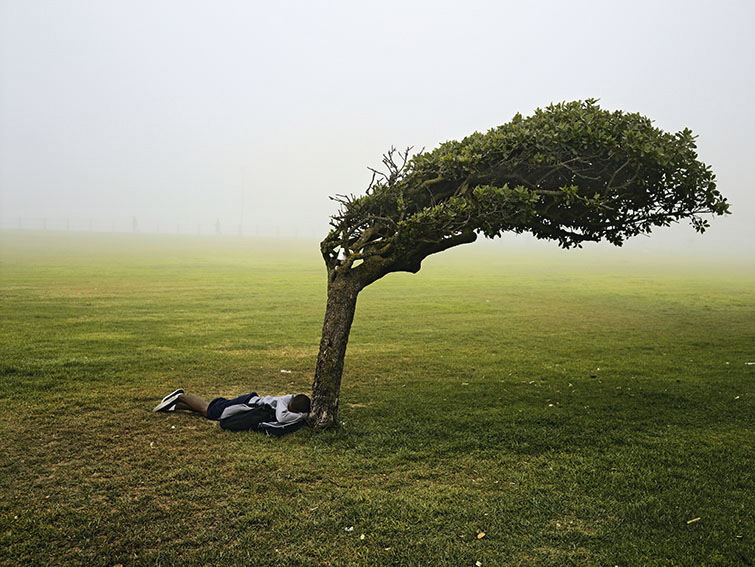
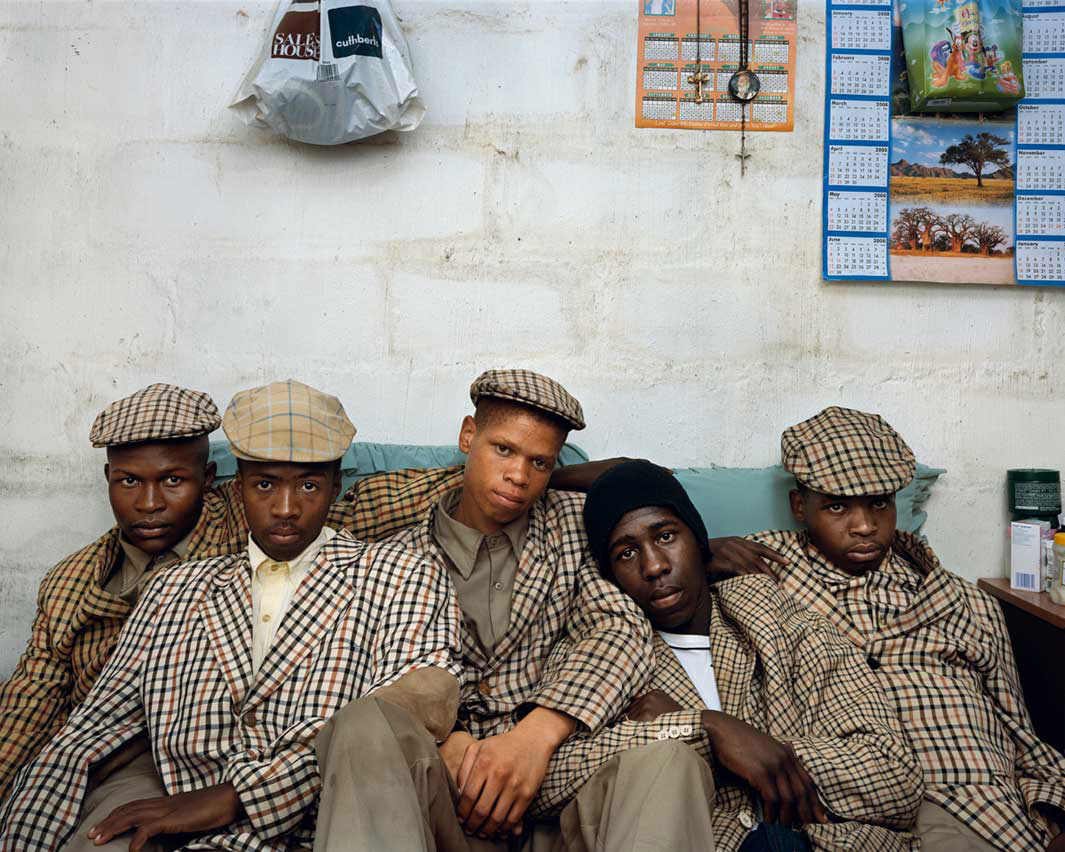
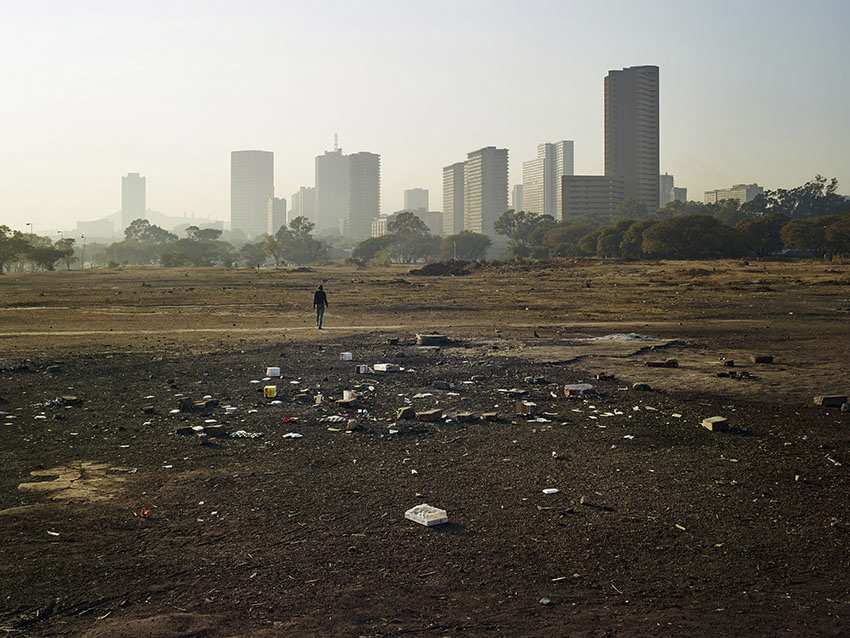
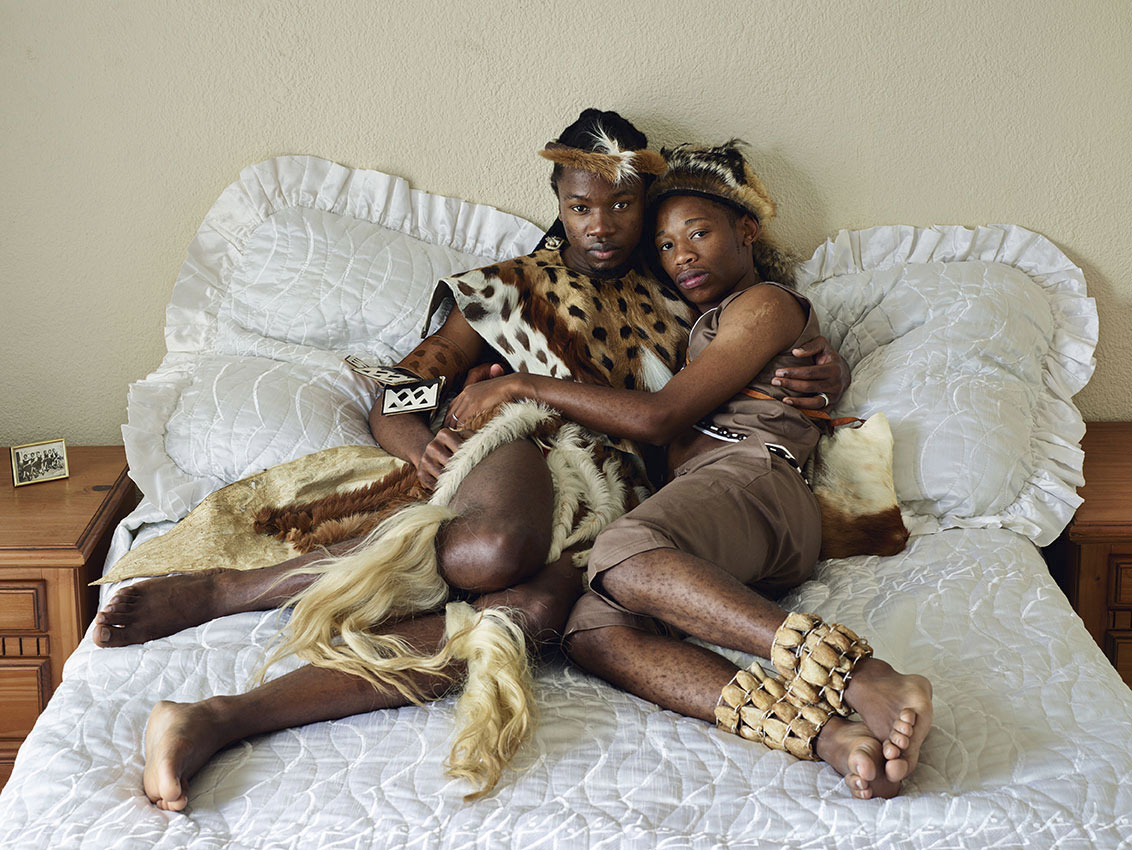
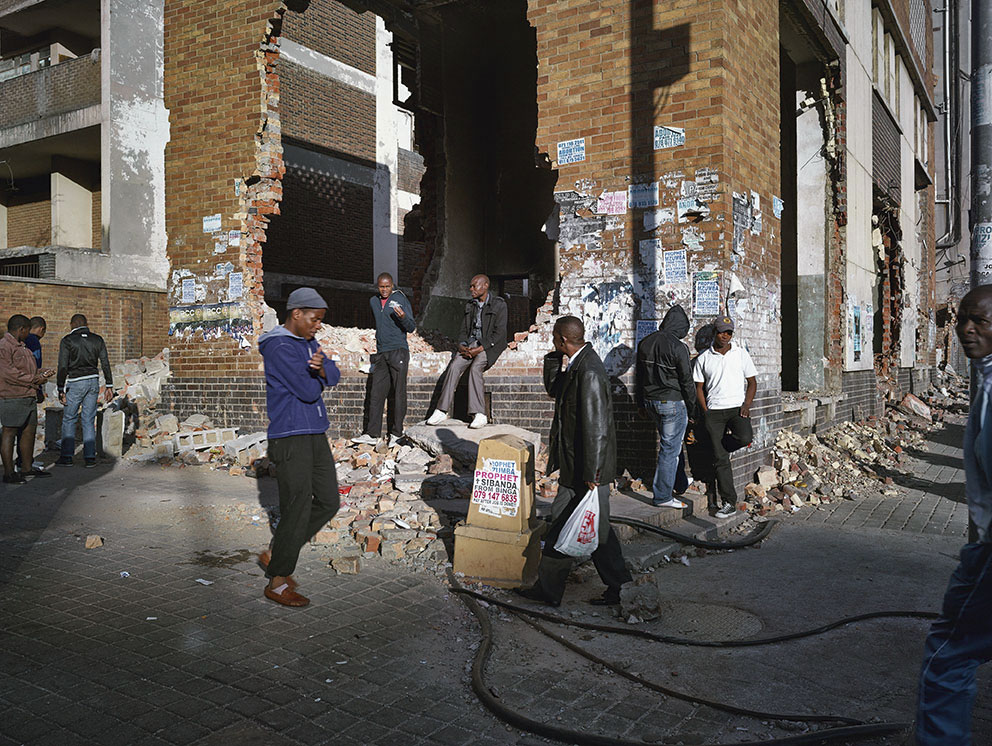
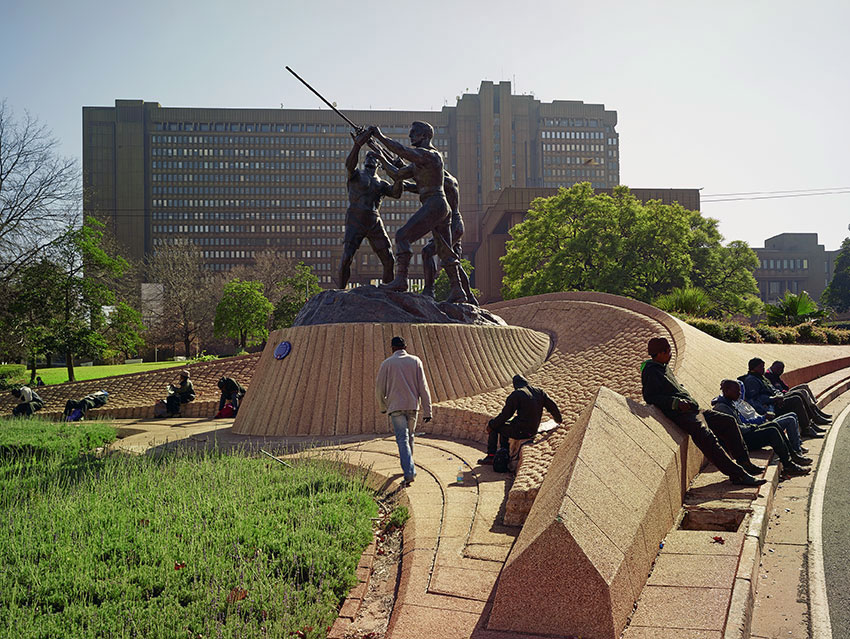
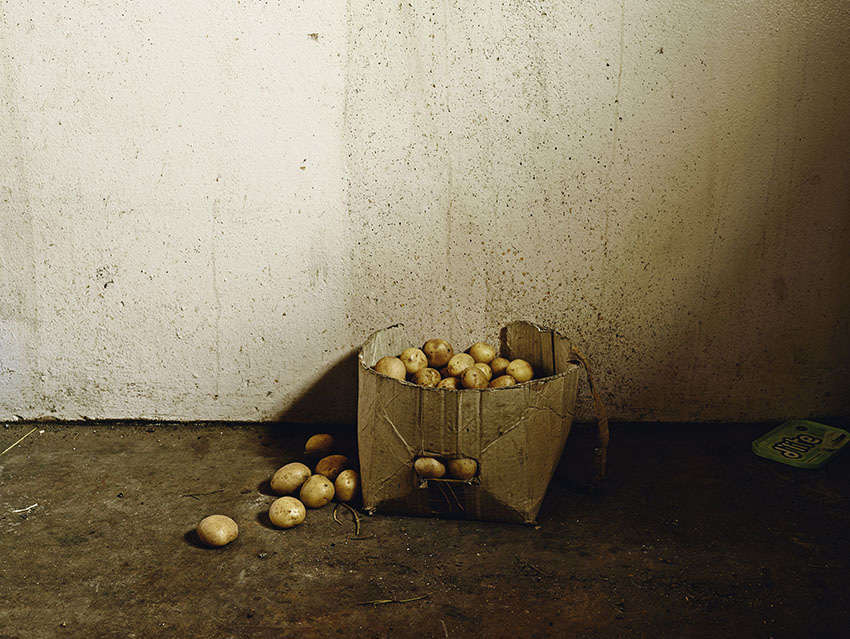
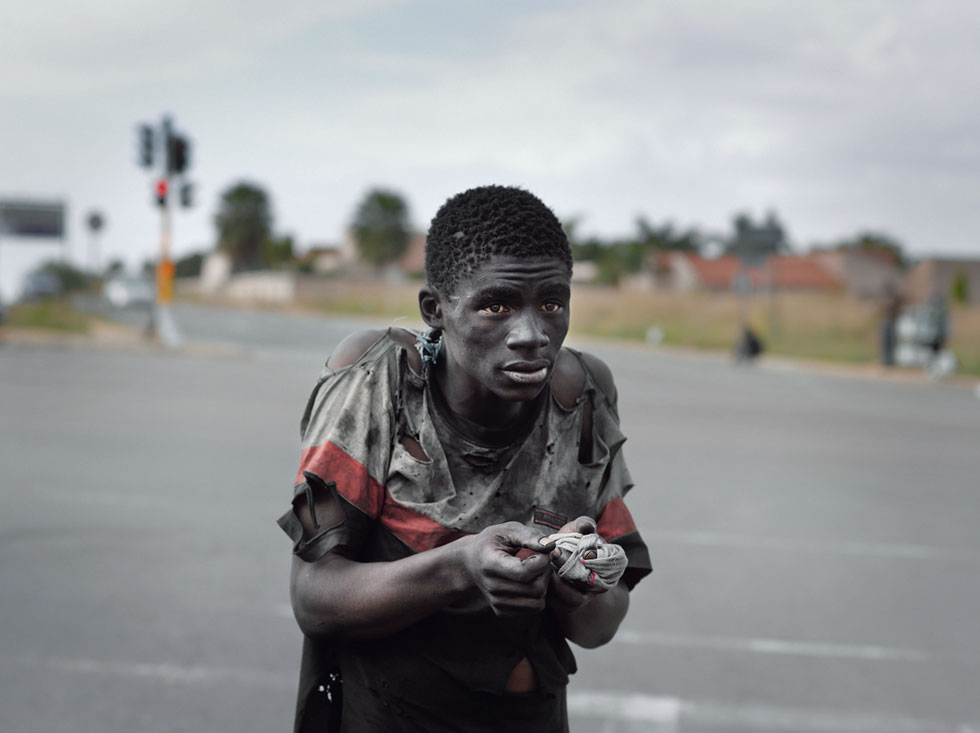
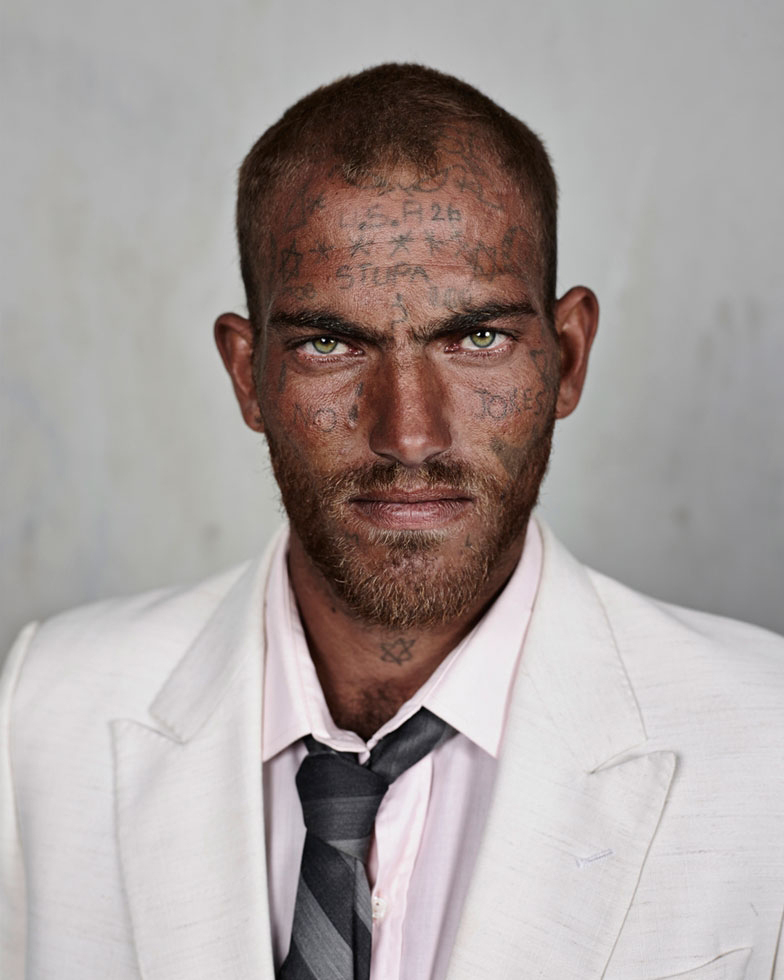
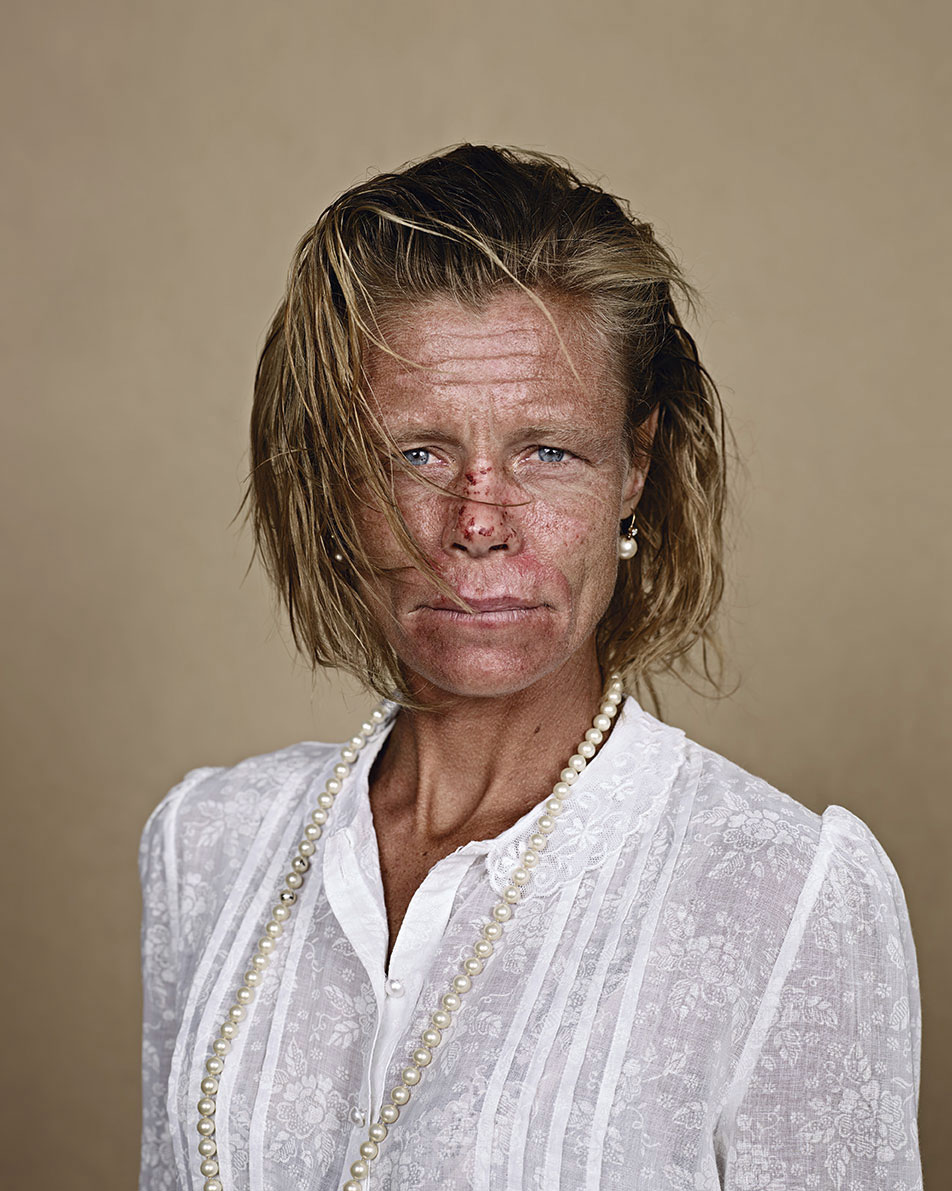
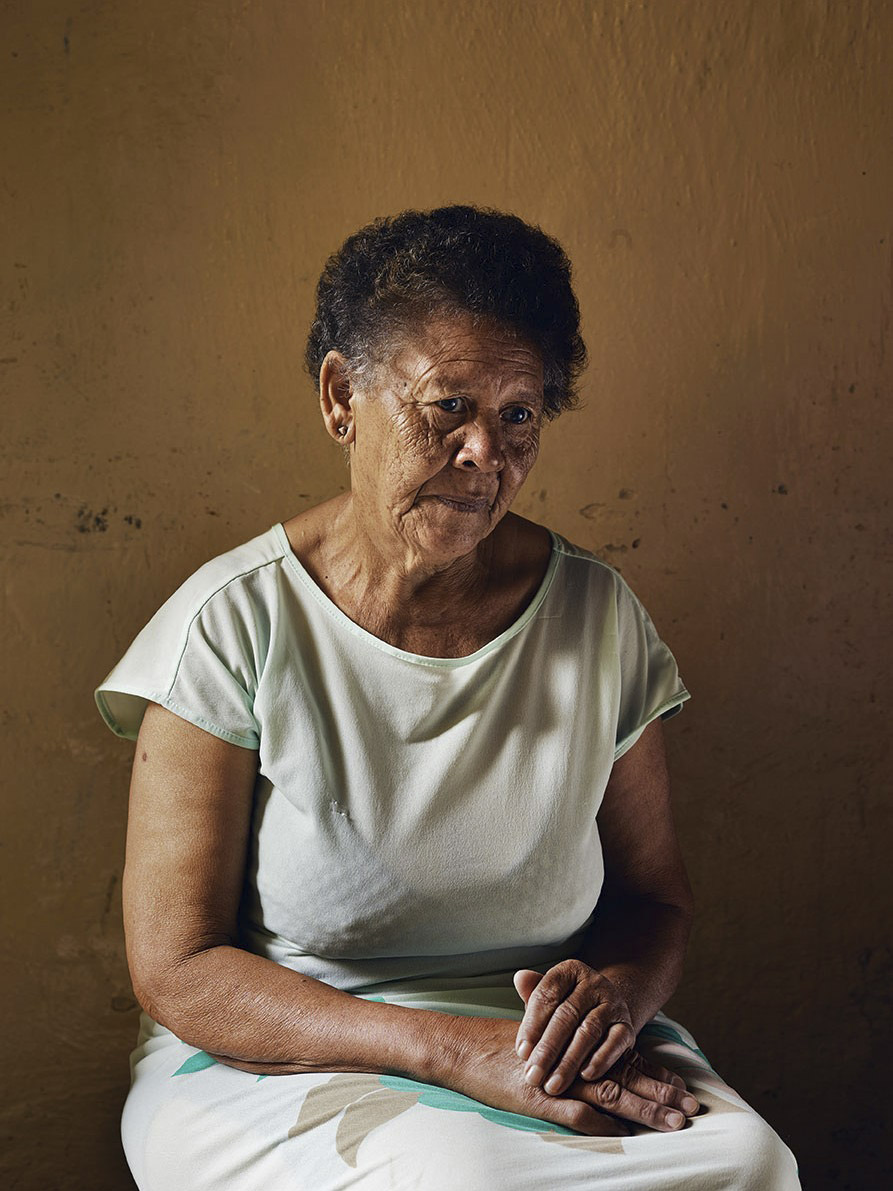


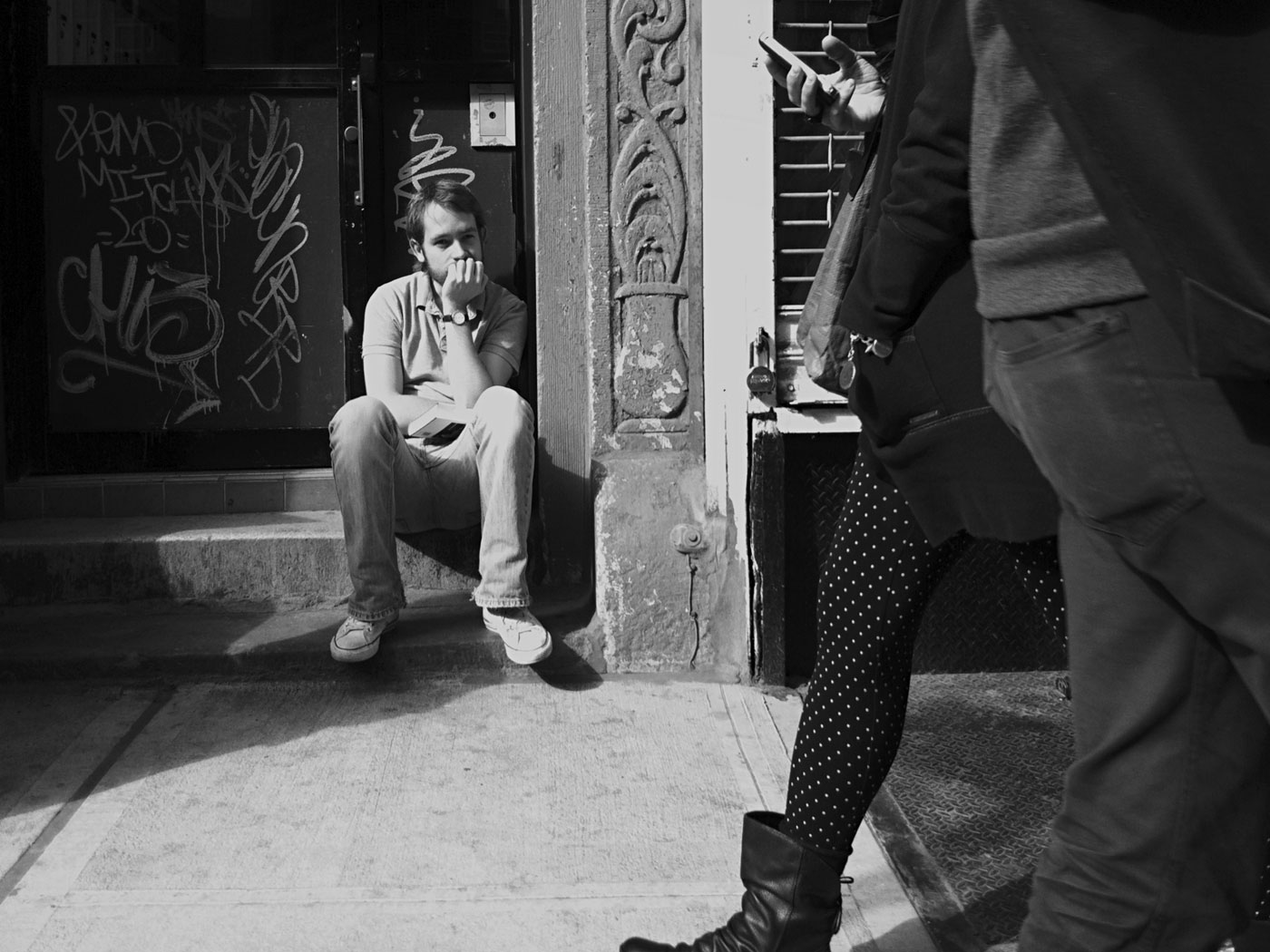


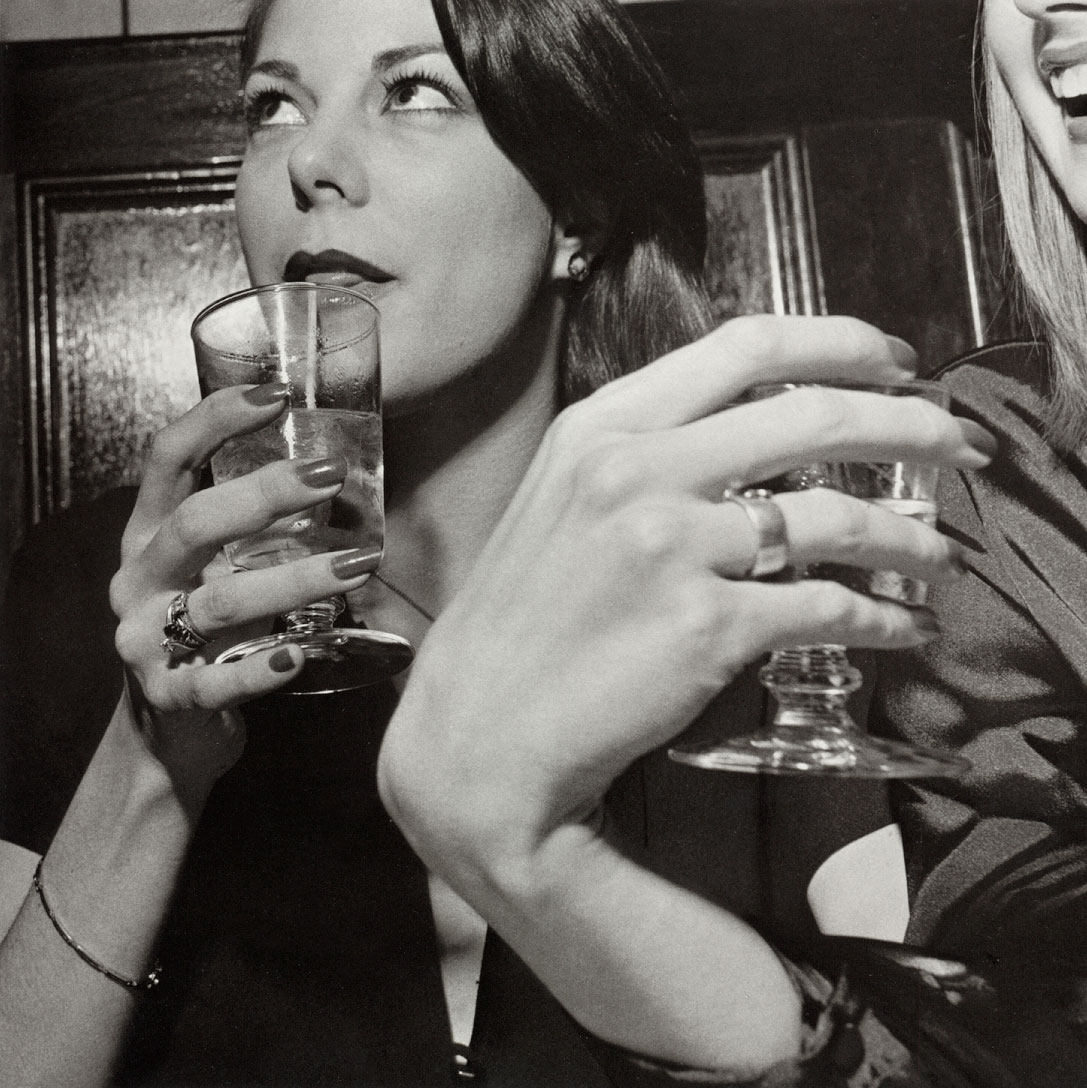


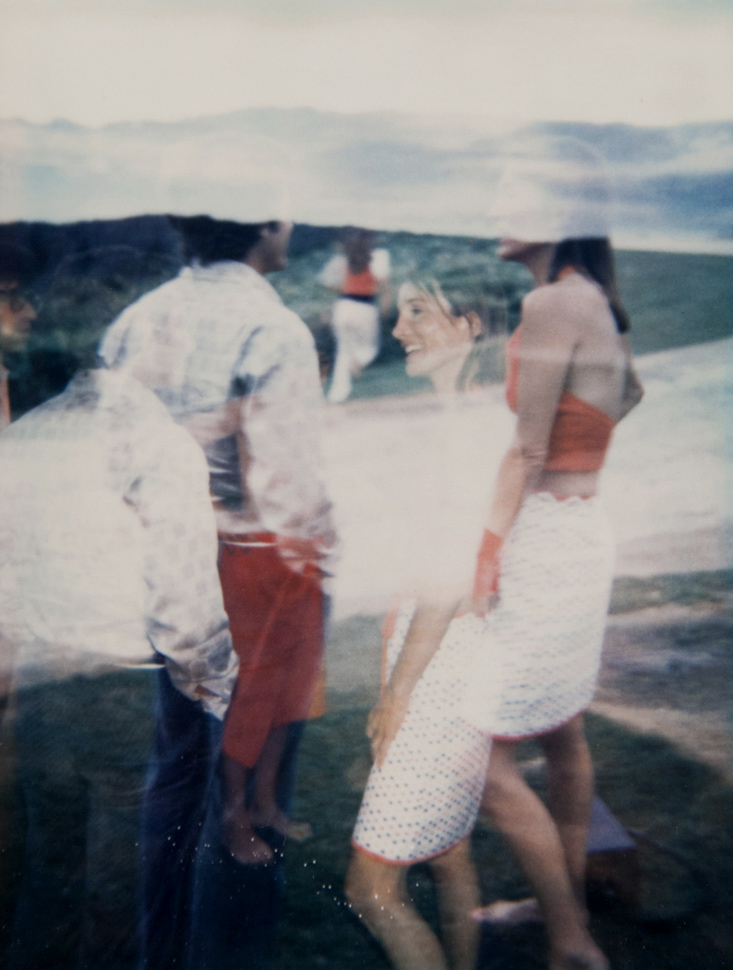
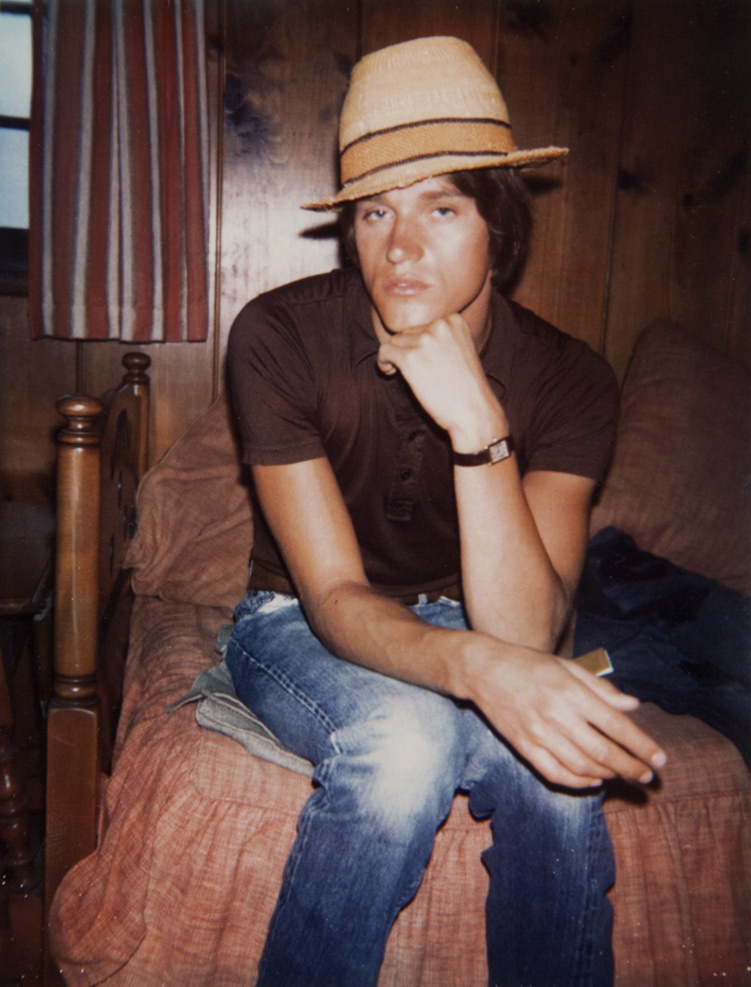

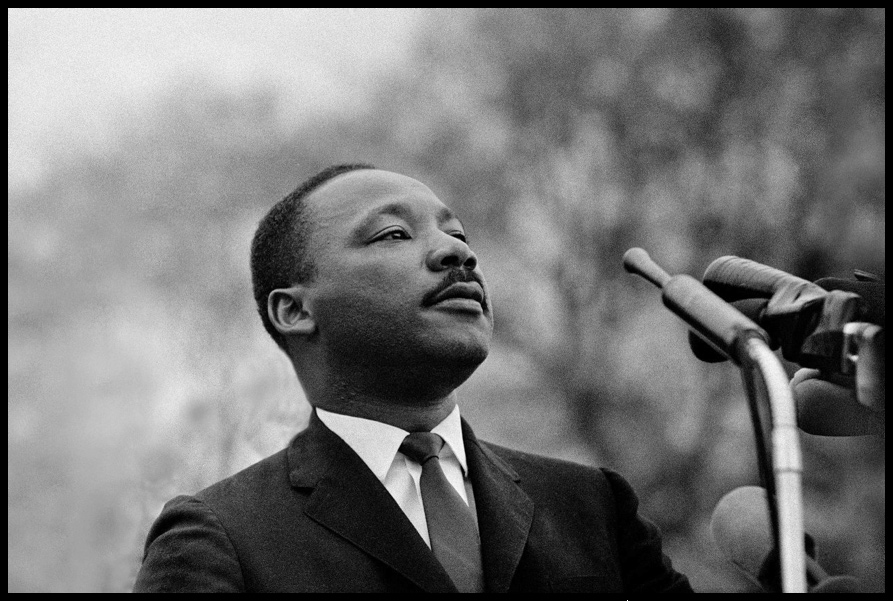
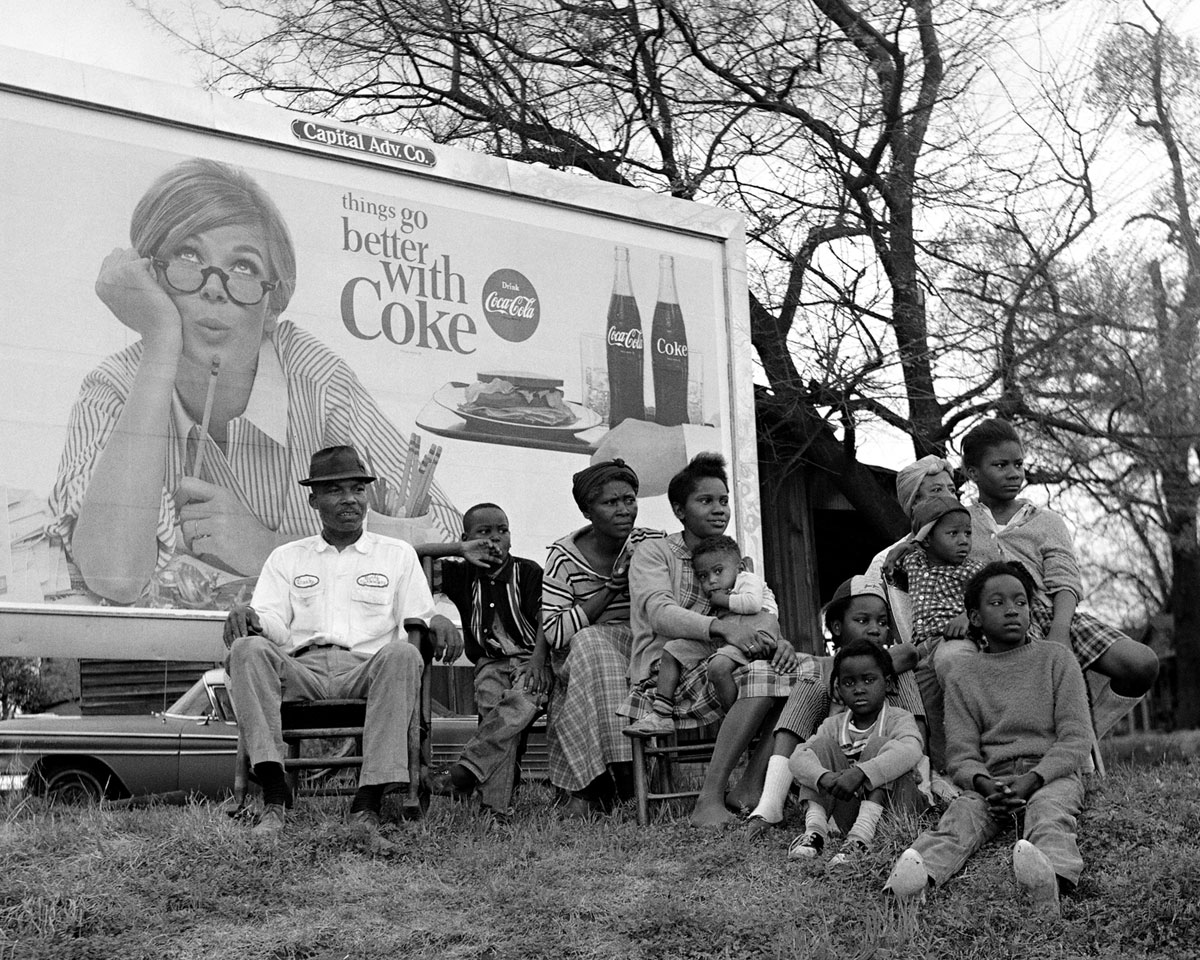
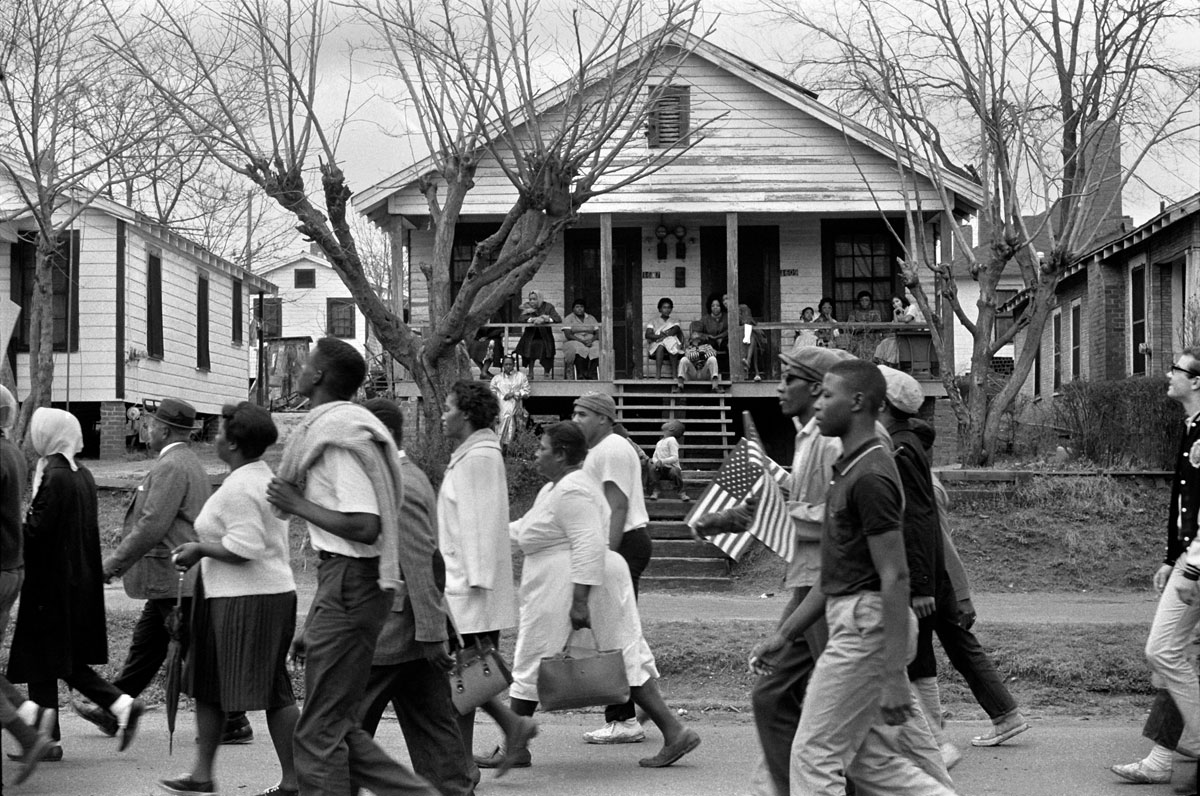
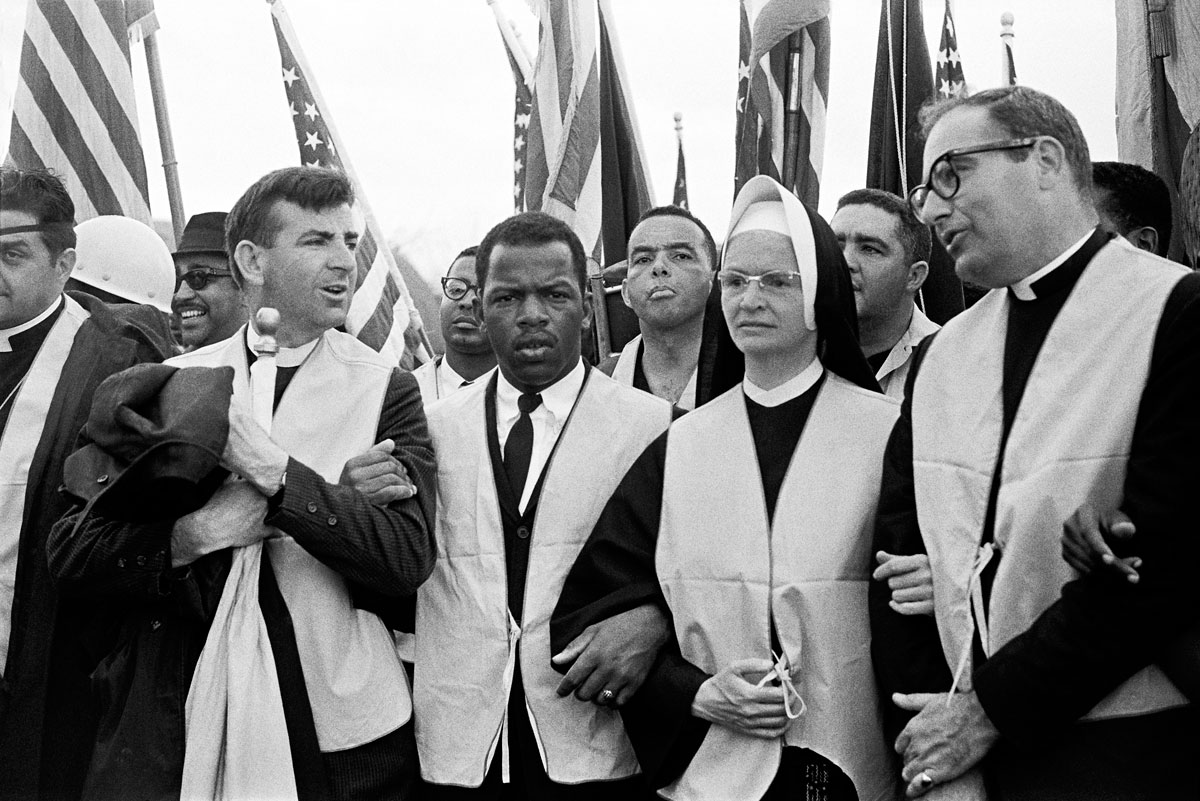
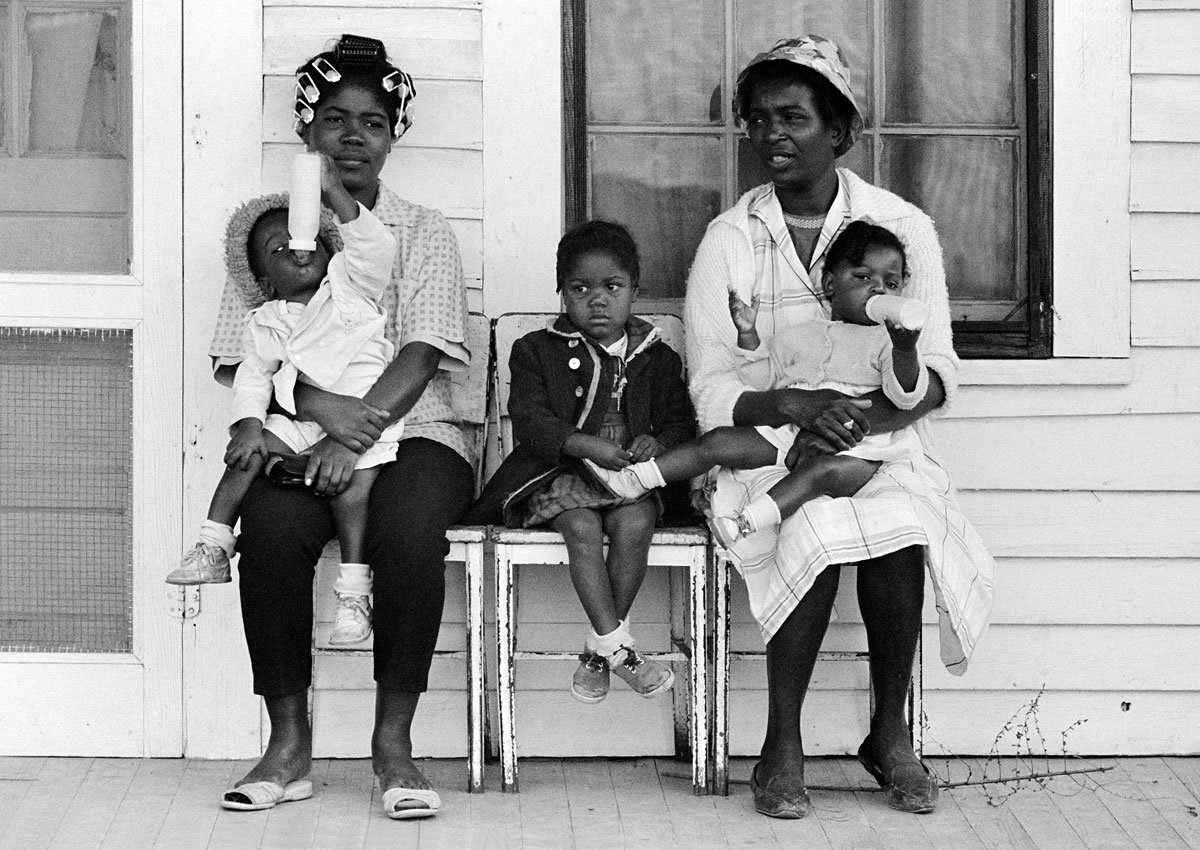
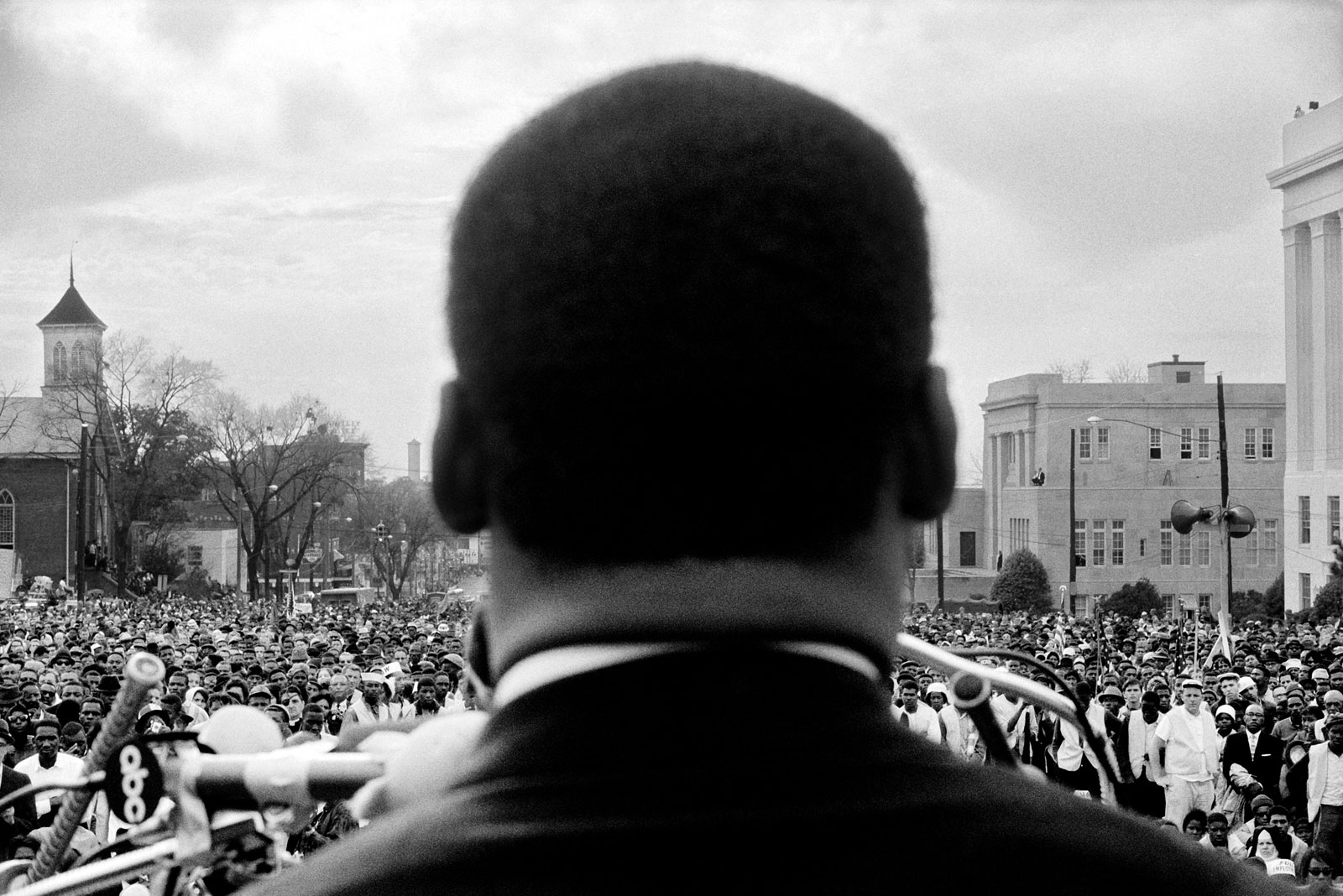
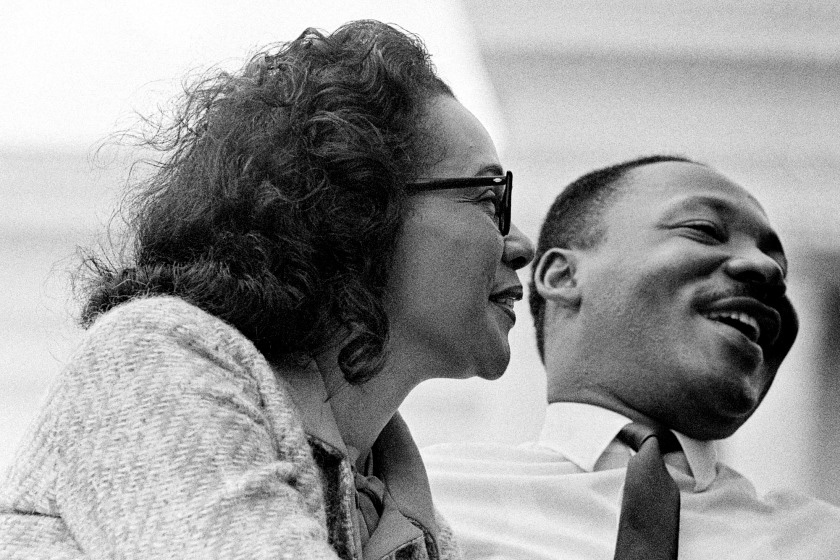

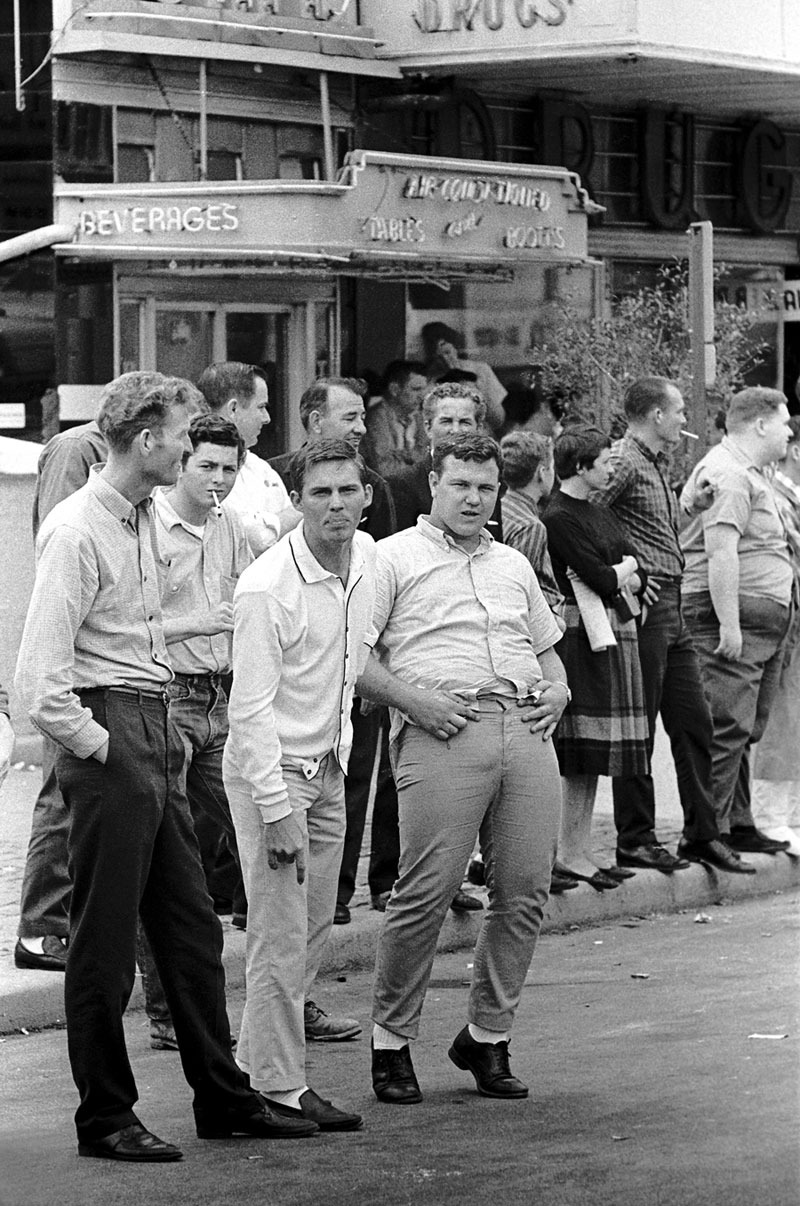
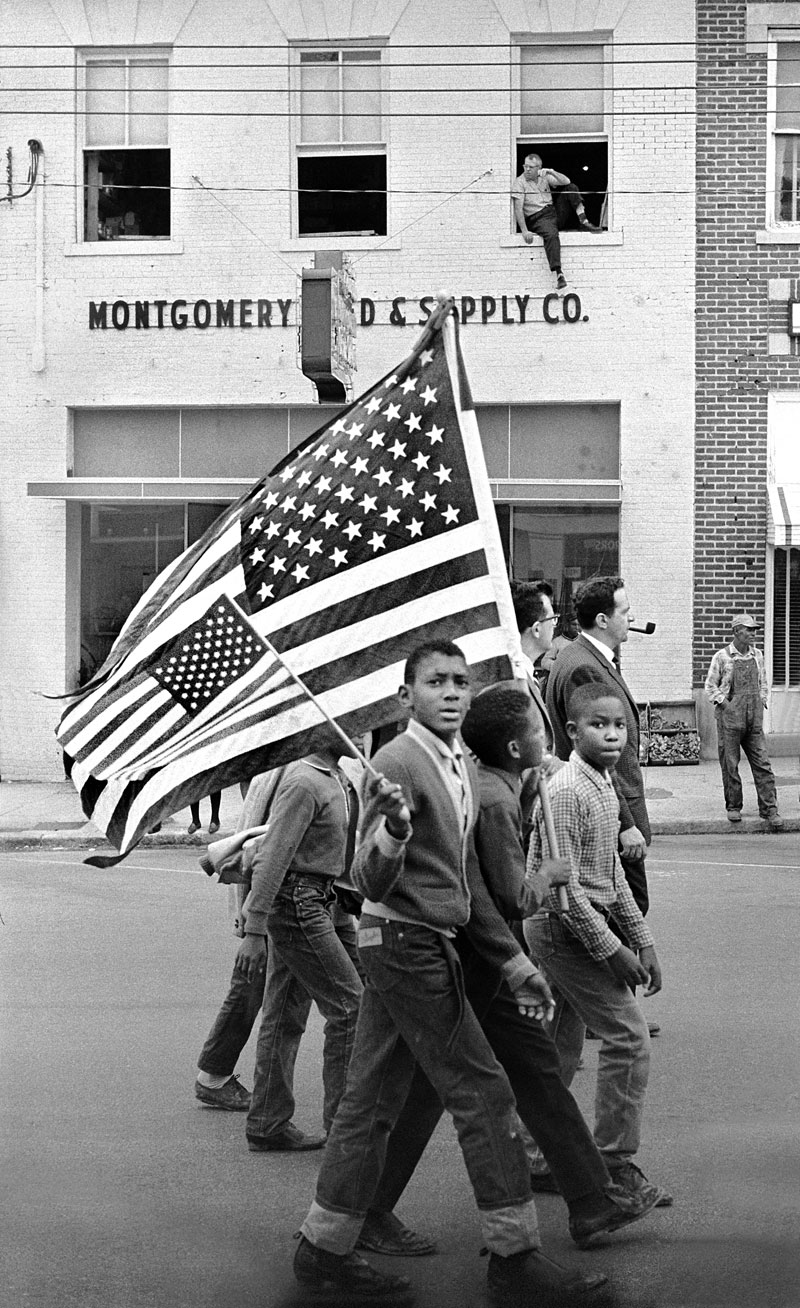
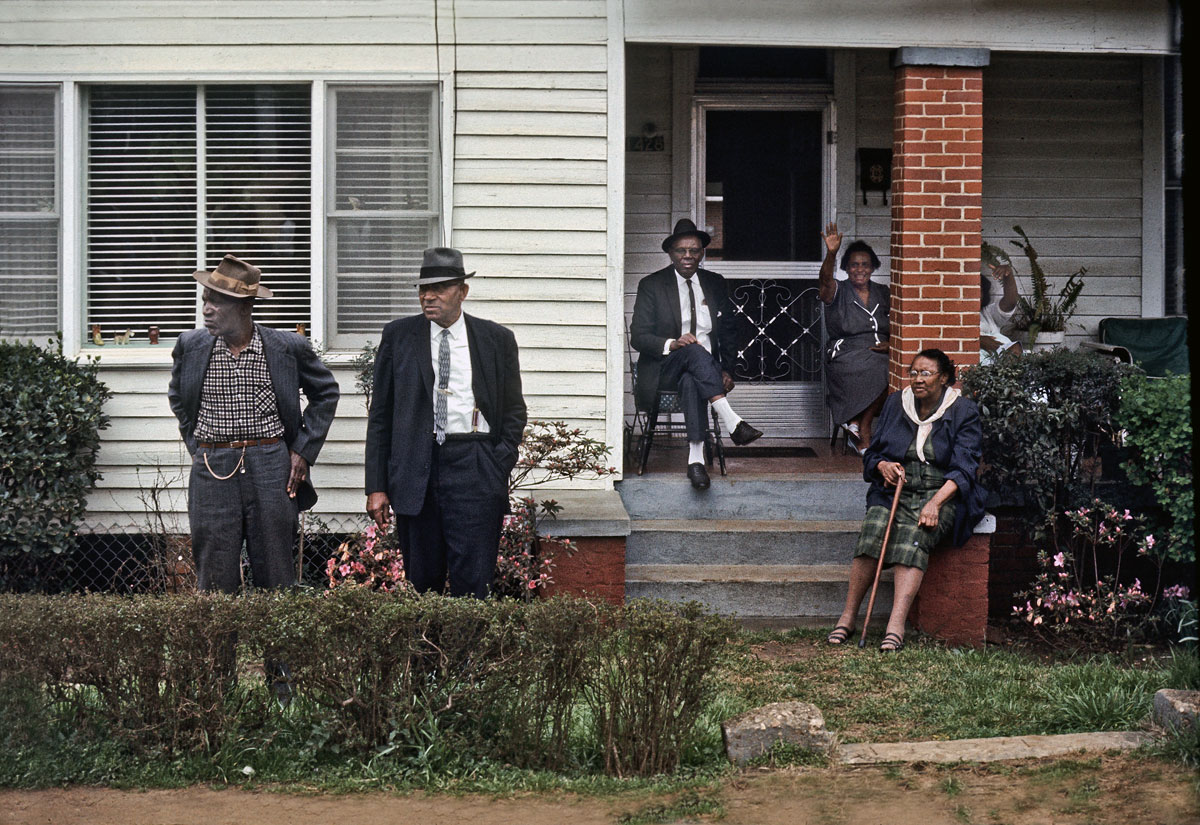
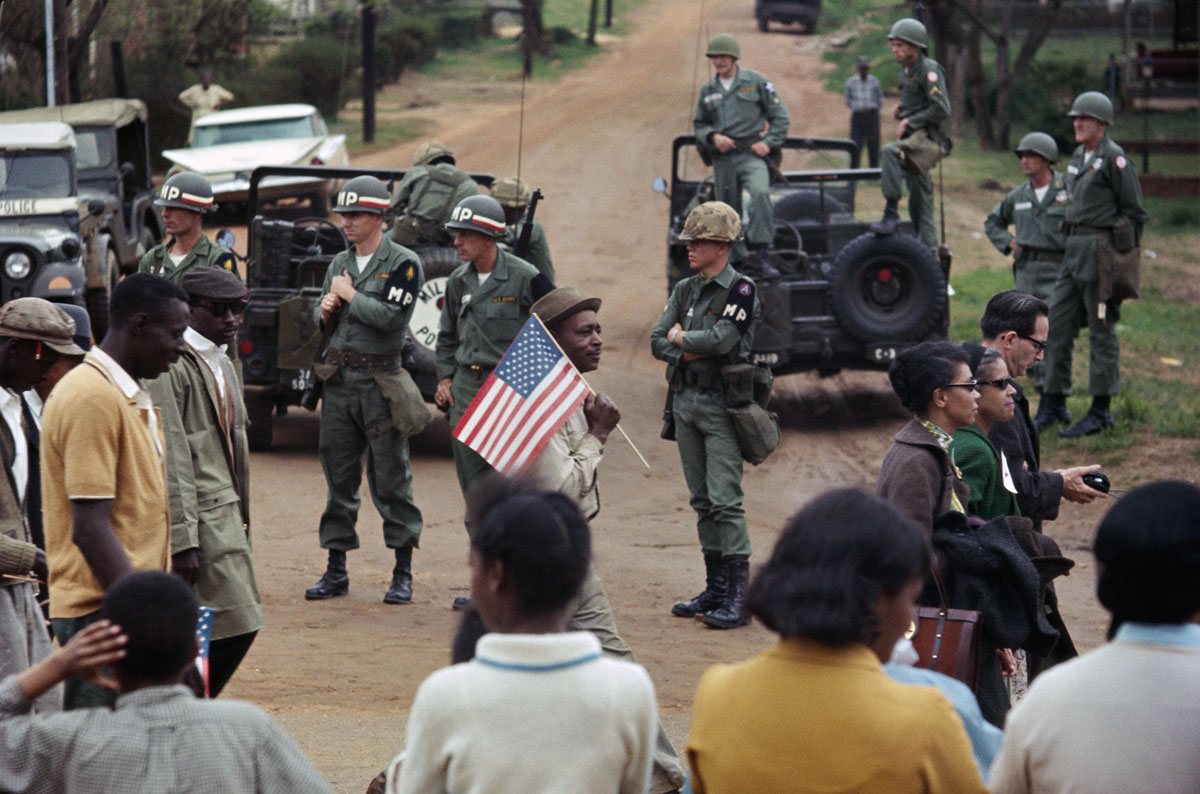
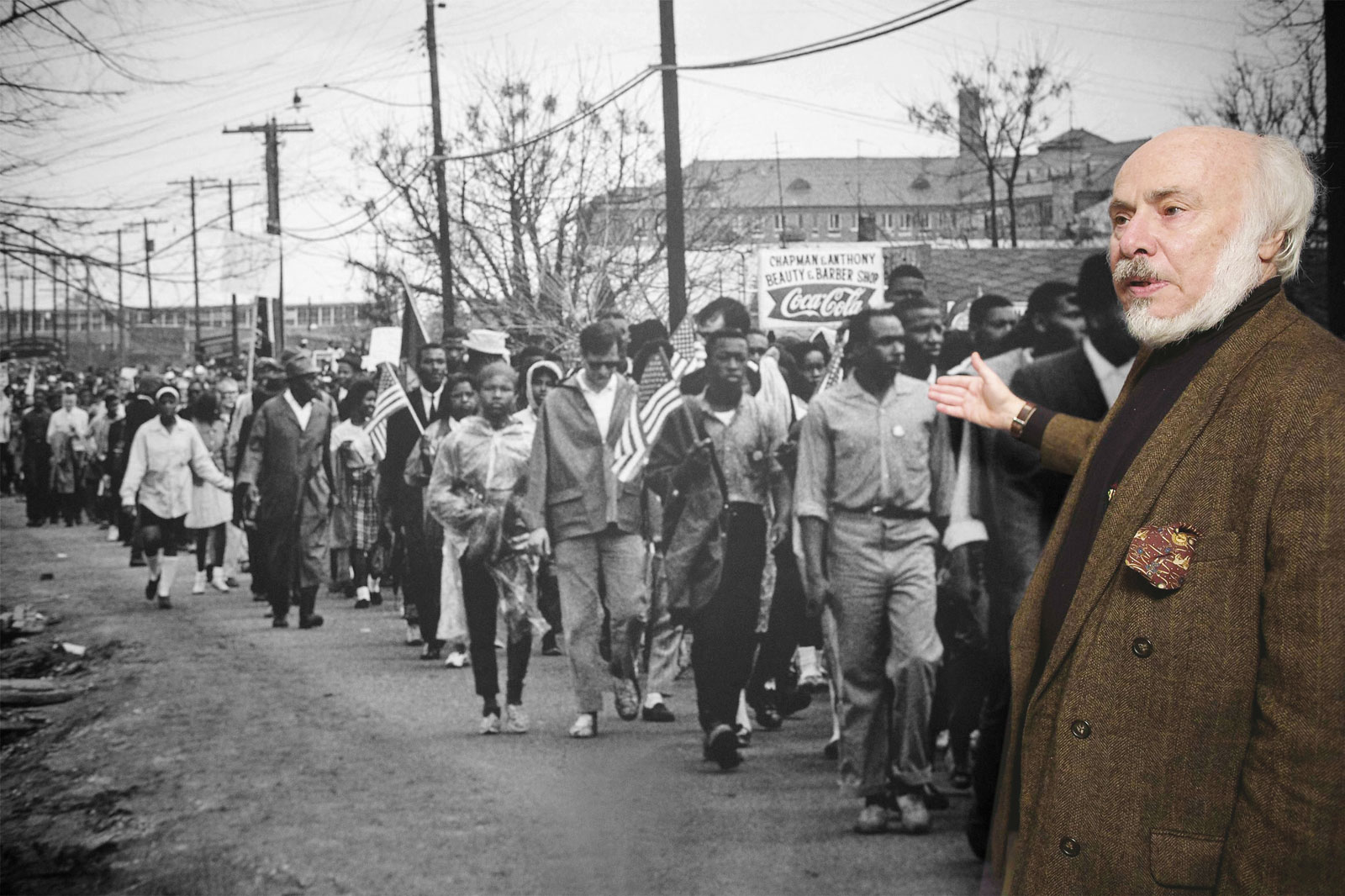

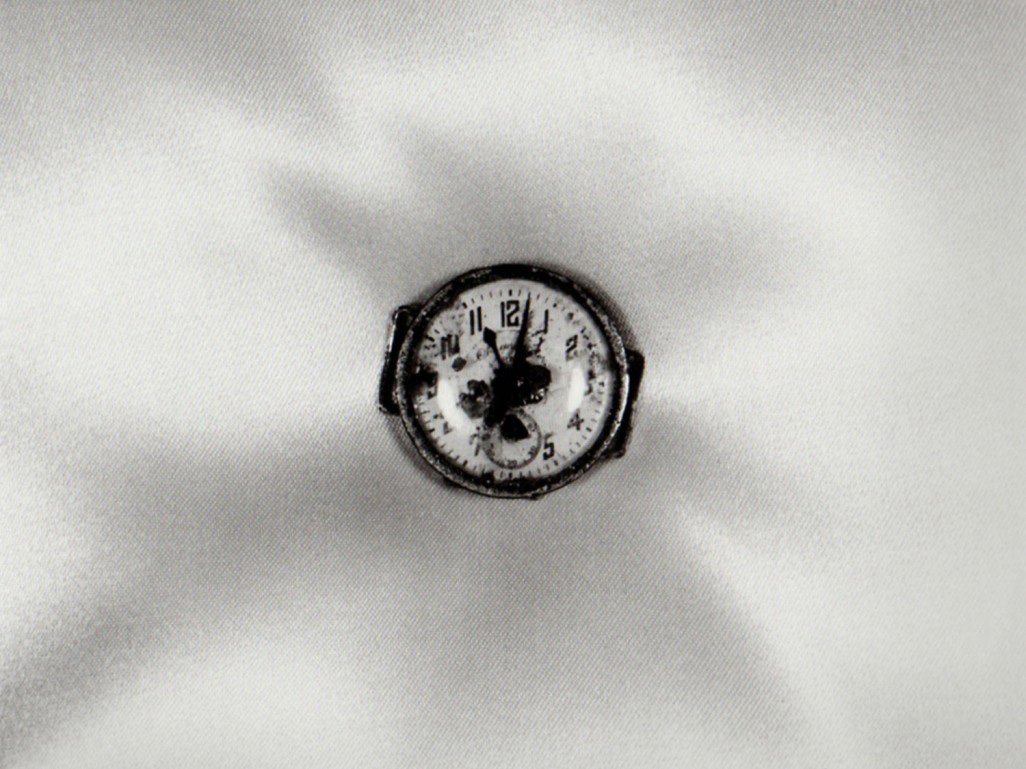
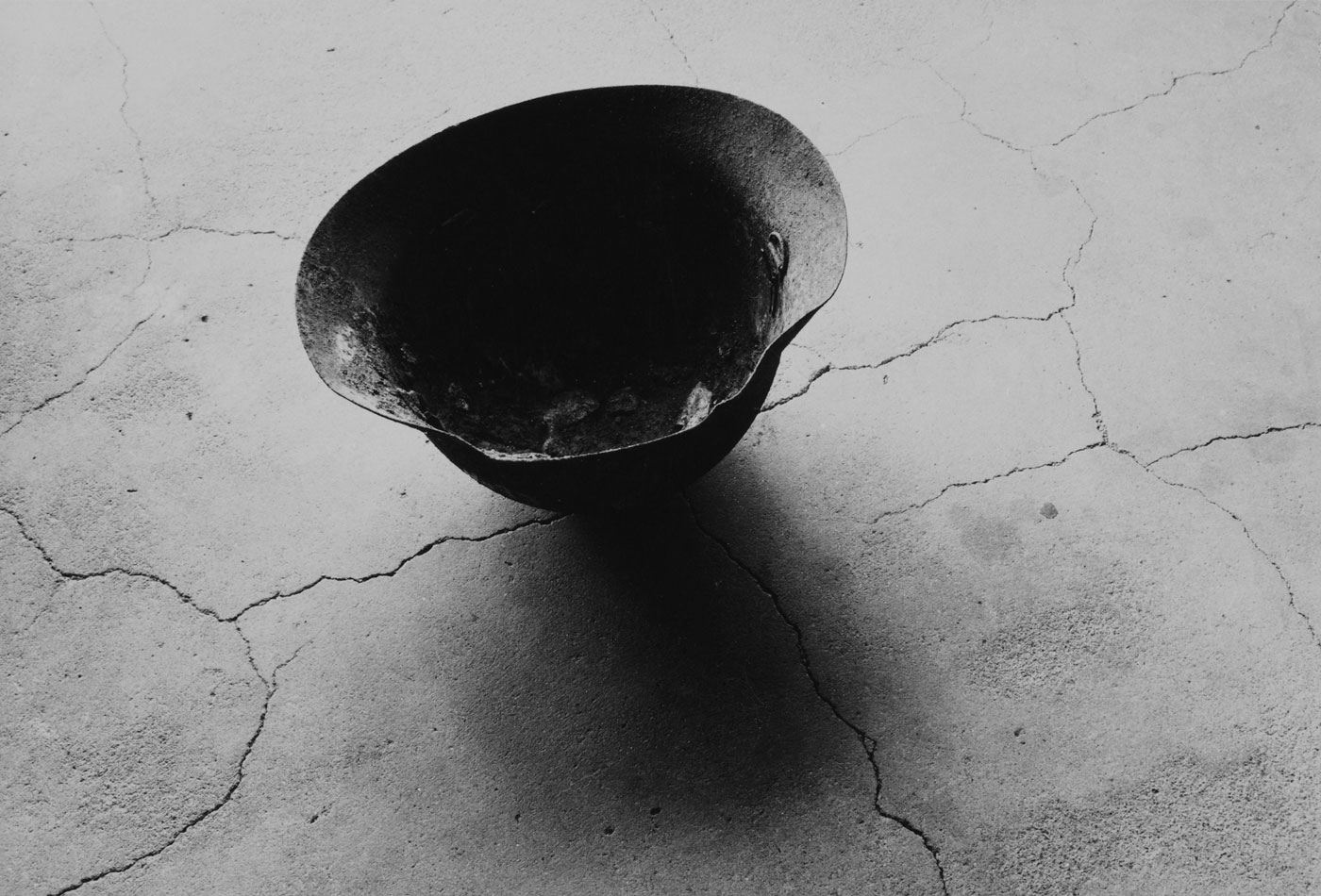


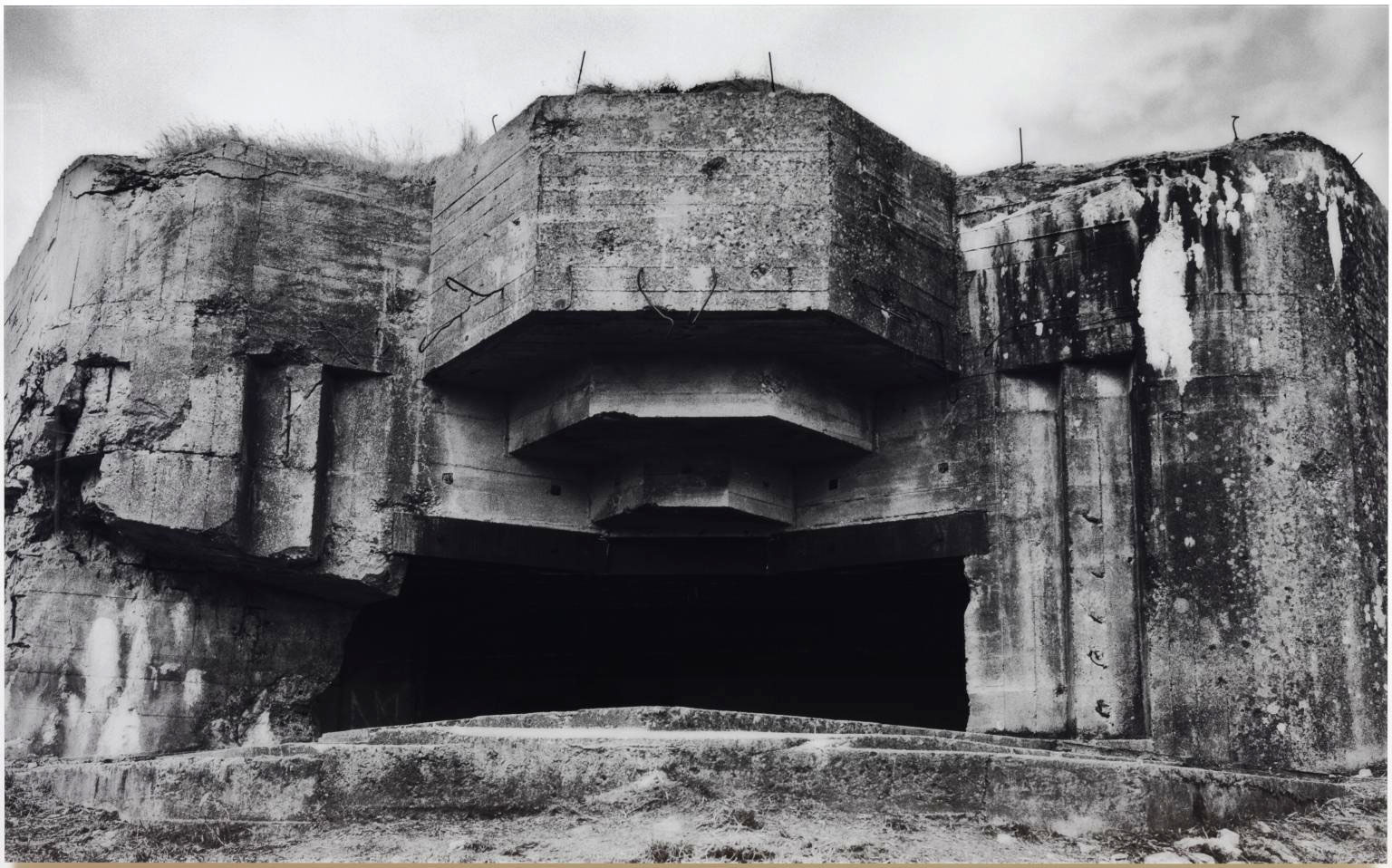
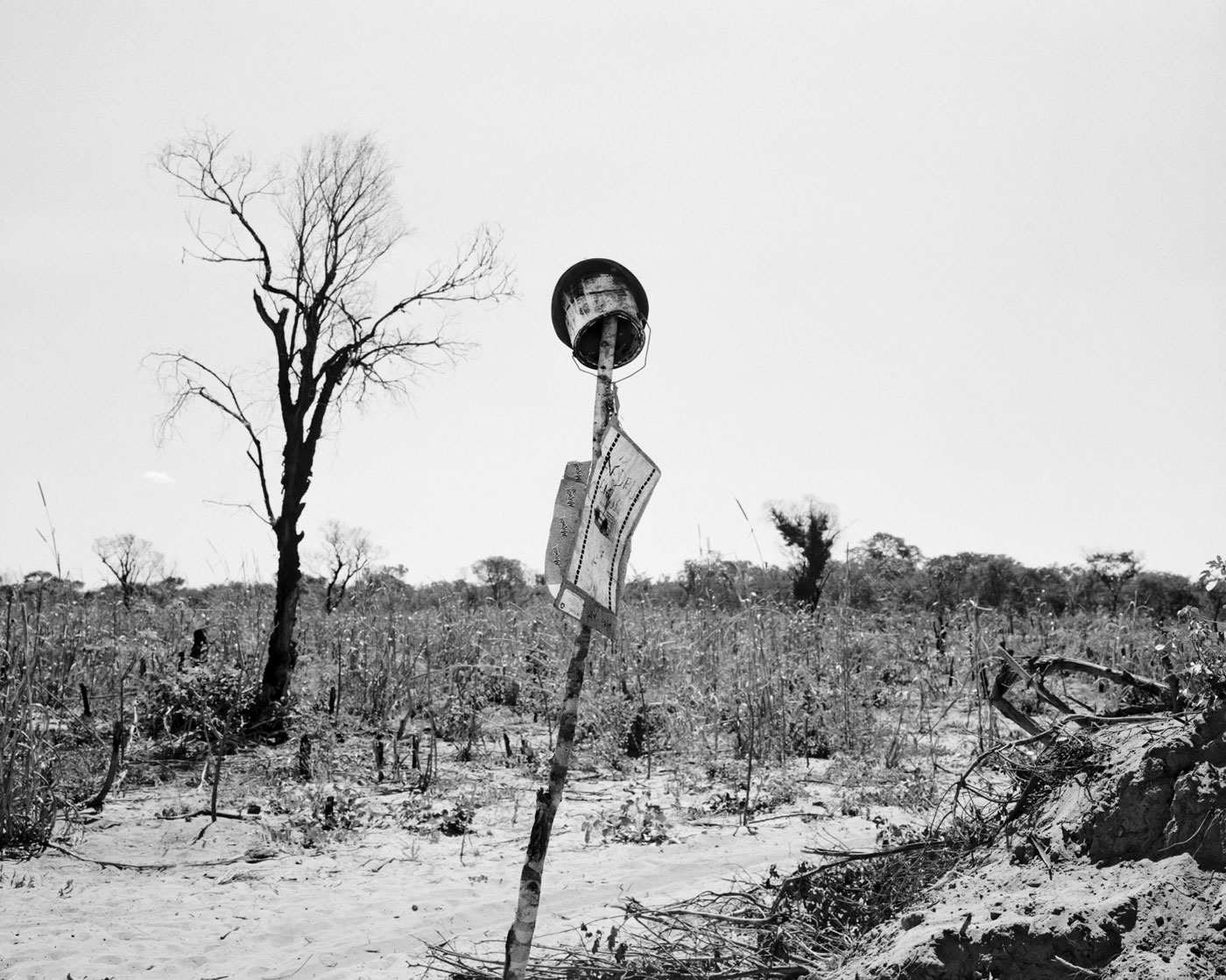


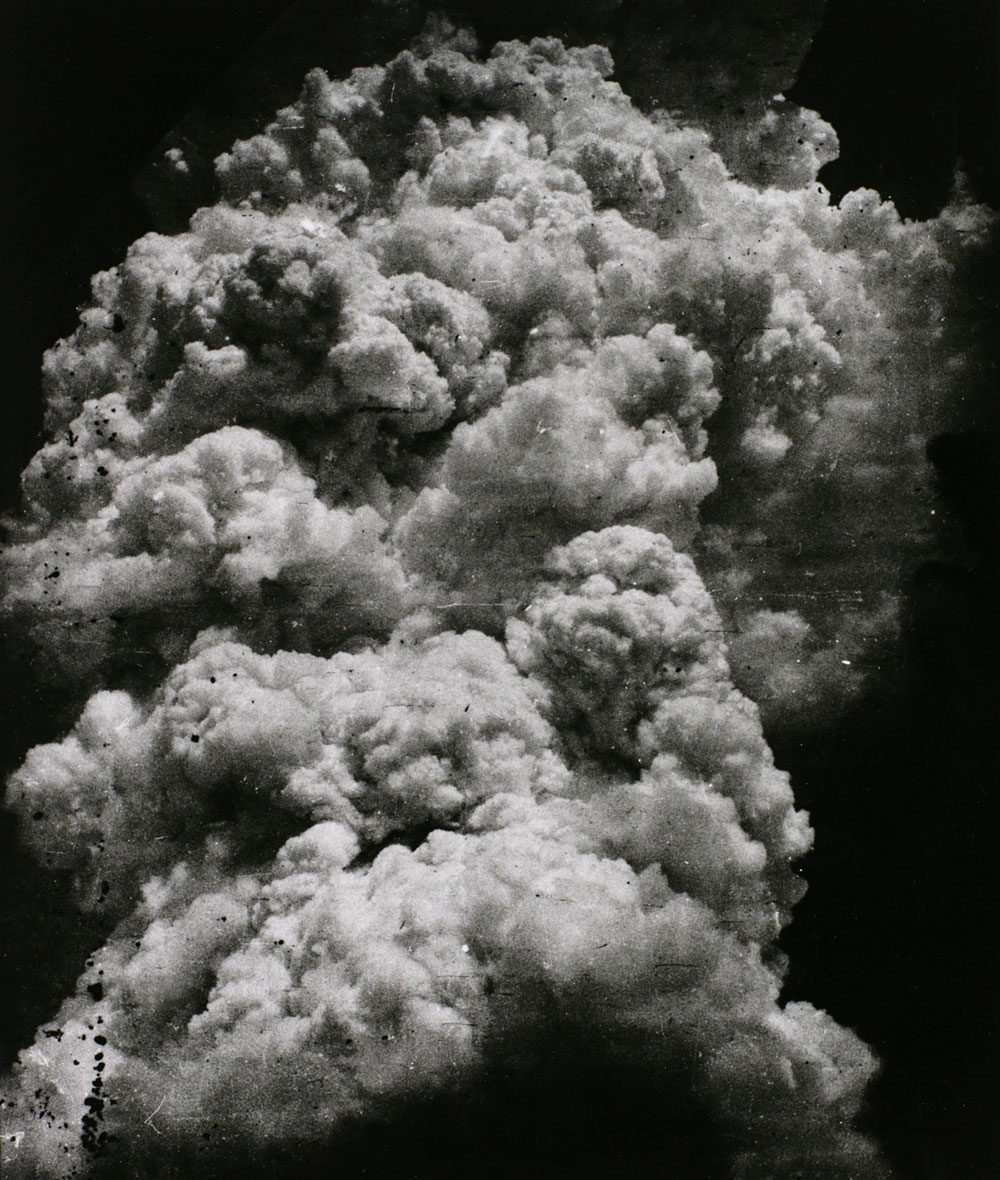


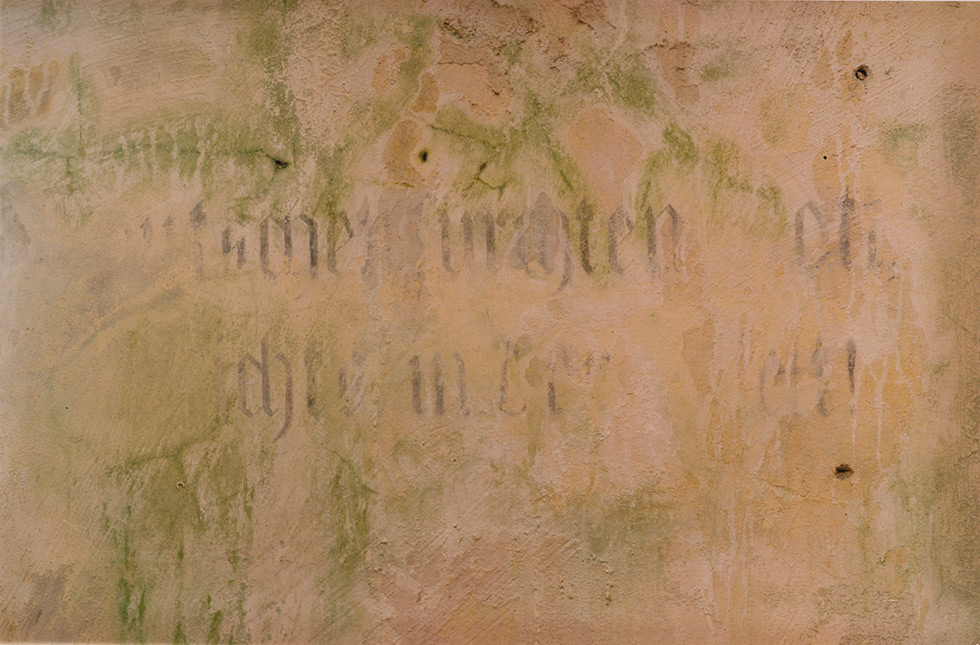

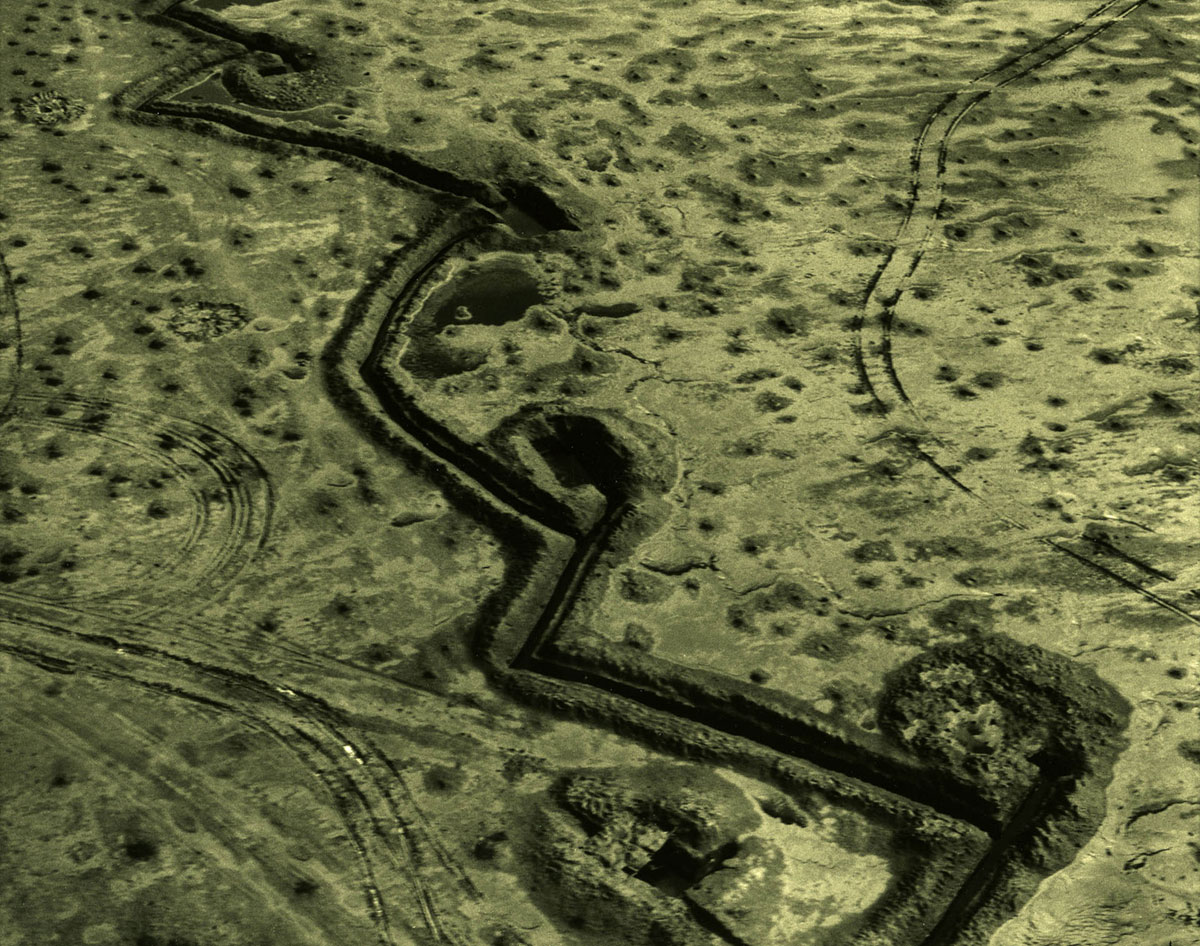


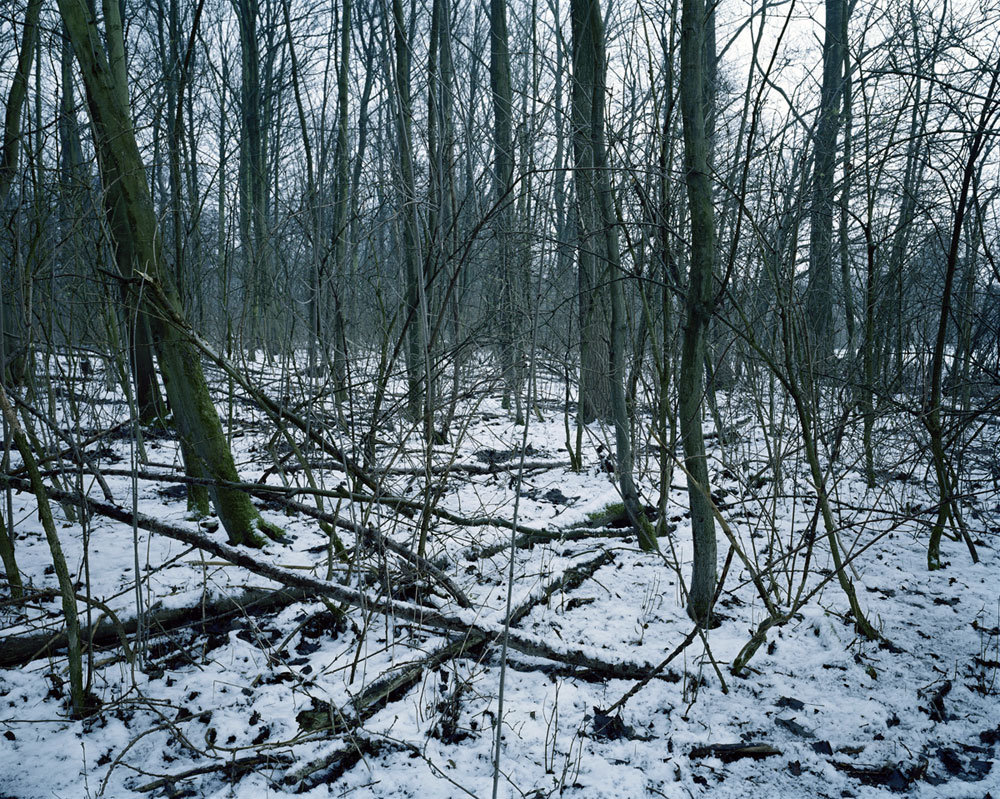


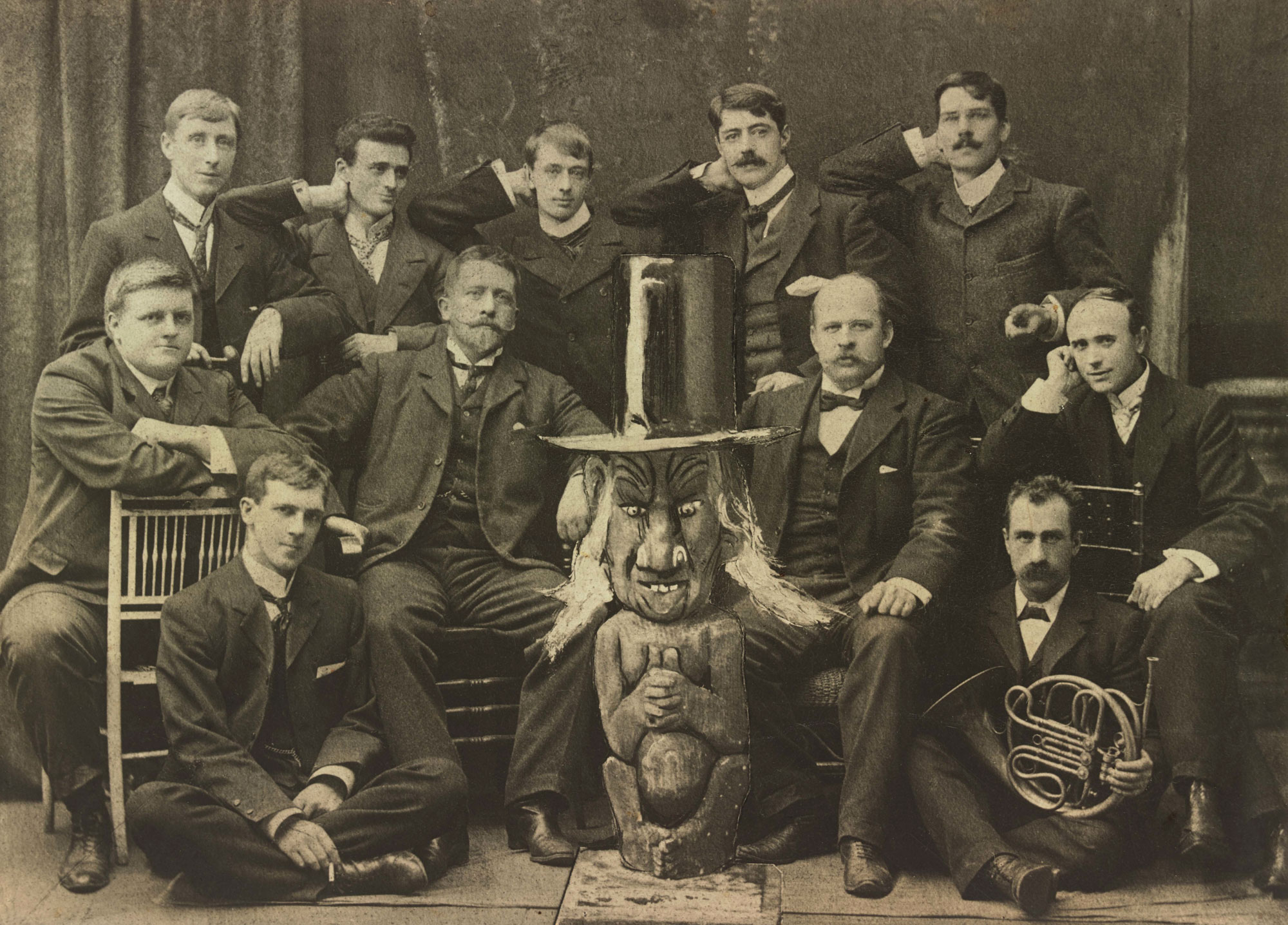


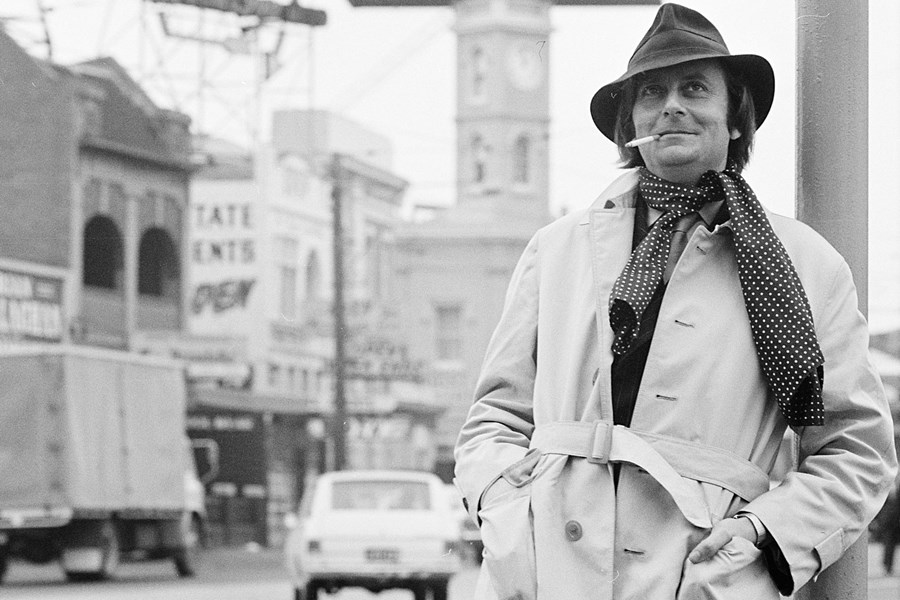

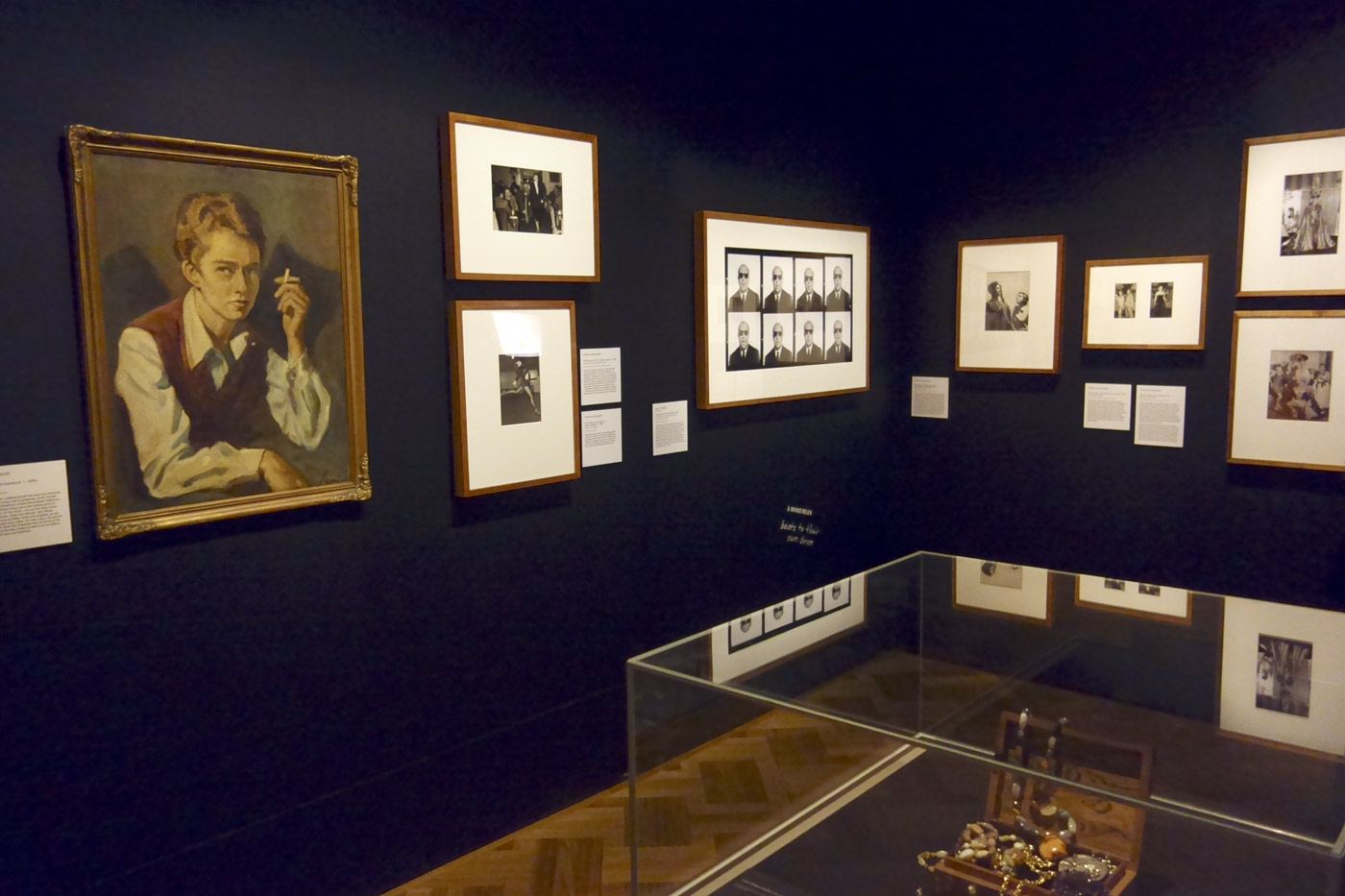


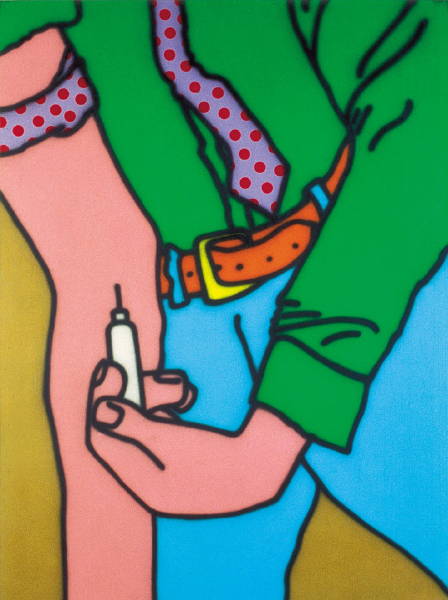

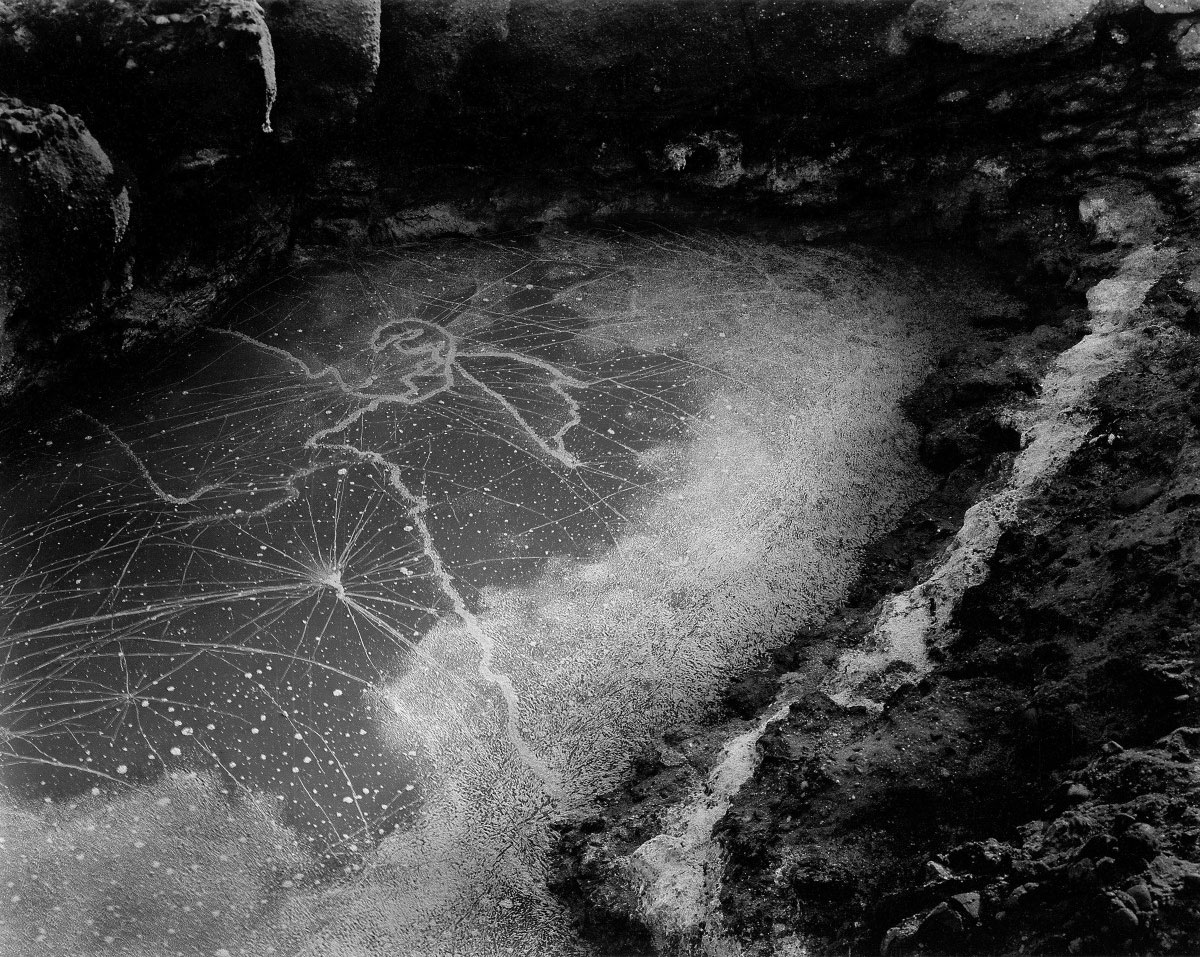




























![Claude Dityvon (French, 1937-2008) '"L'homme à la chaise", Bd St. Michel, 21 May 1968' 1968 [The main the chair]](https://artblart.com/wp-content/uploads/2015/01/1968_dityvon__68_bd_st_michel-_21mai08_web.jpg "Claude Dityvon (French, 1937-2008) '\"L'homme à la chaise\", Bd St. Michel, 21 May 1968' 1968 [The main the chair]")

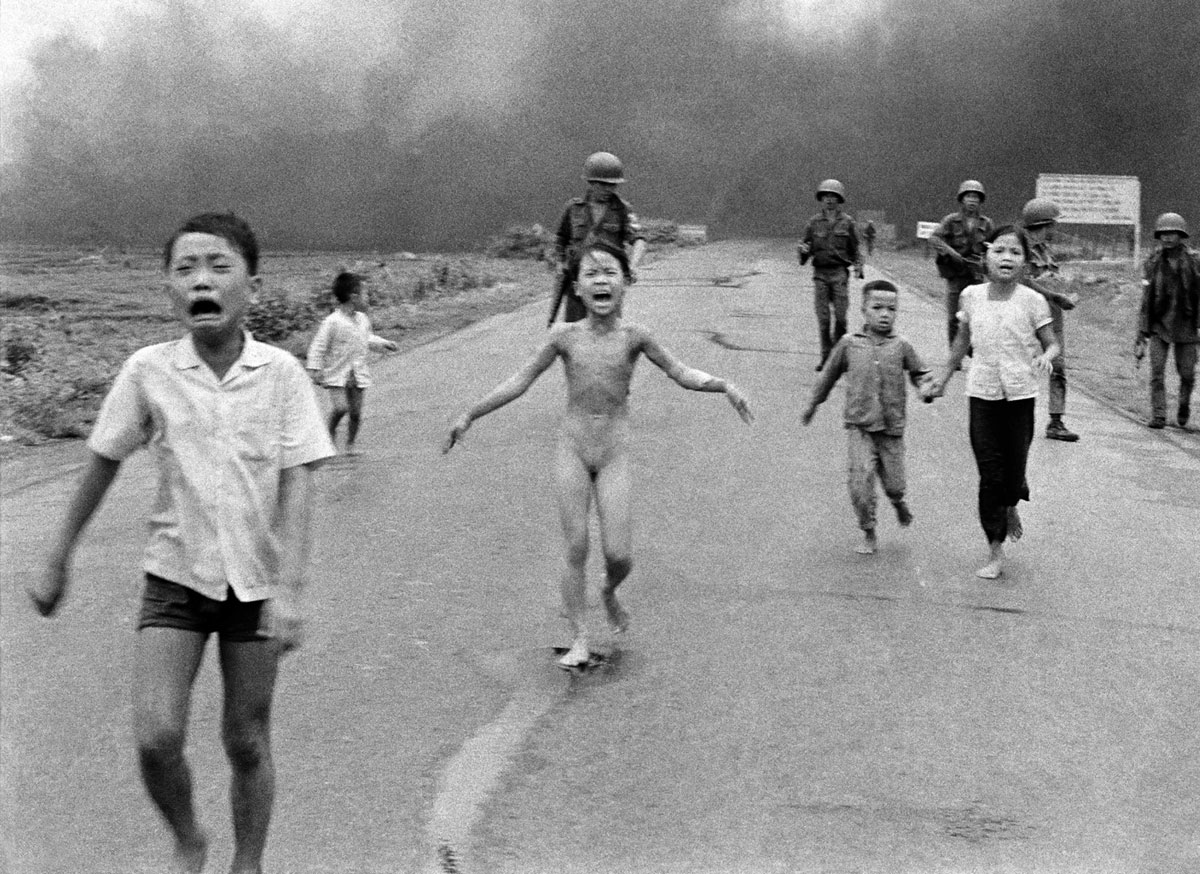

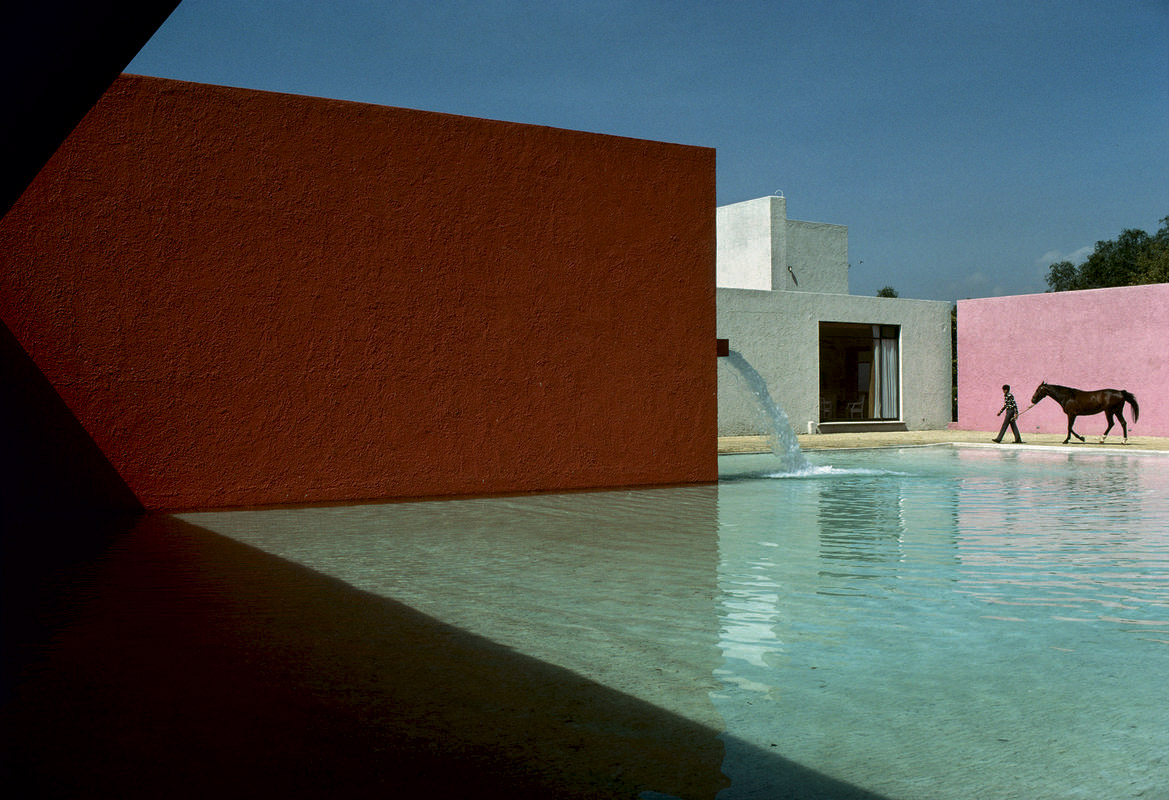


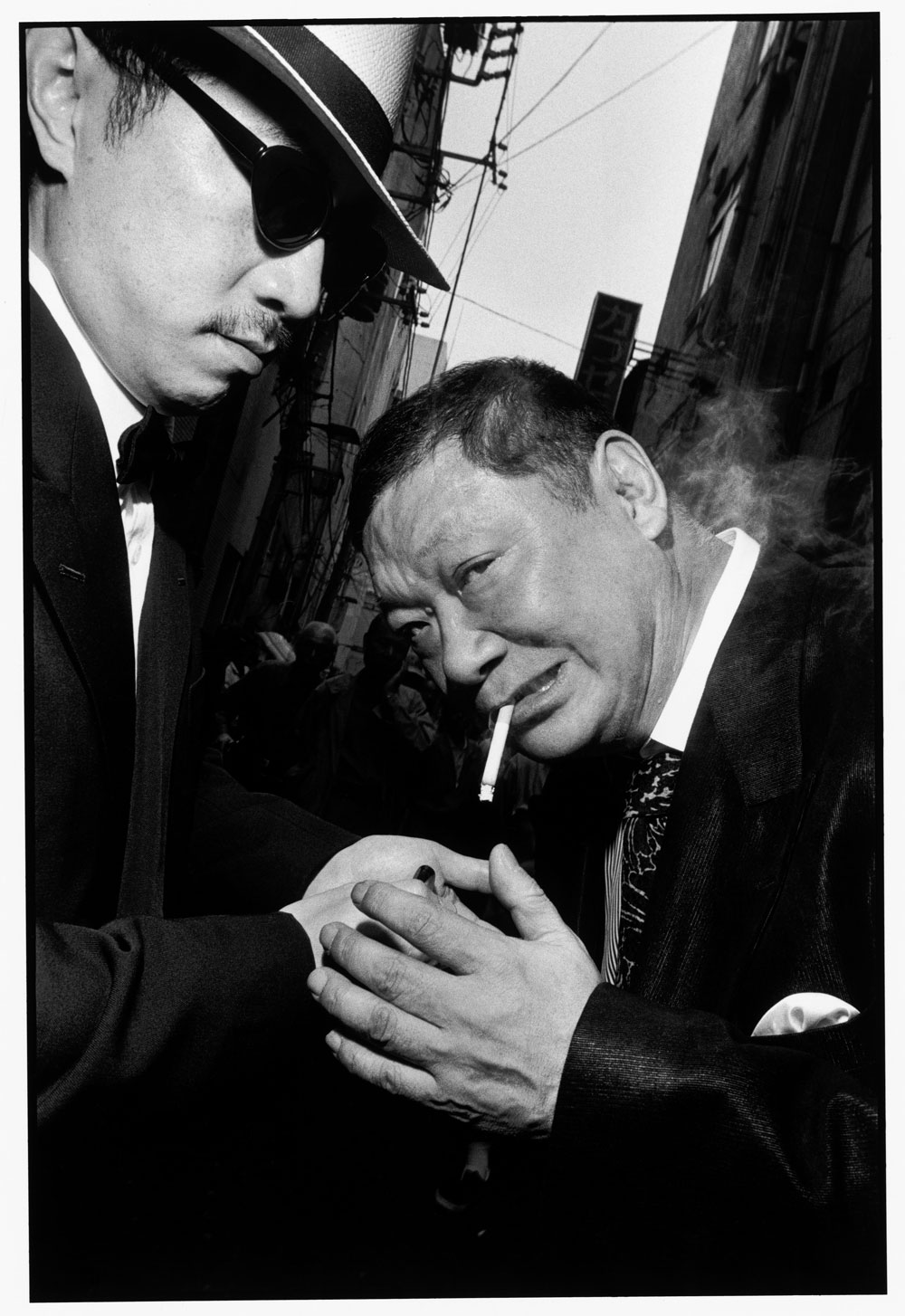


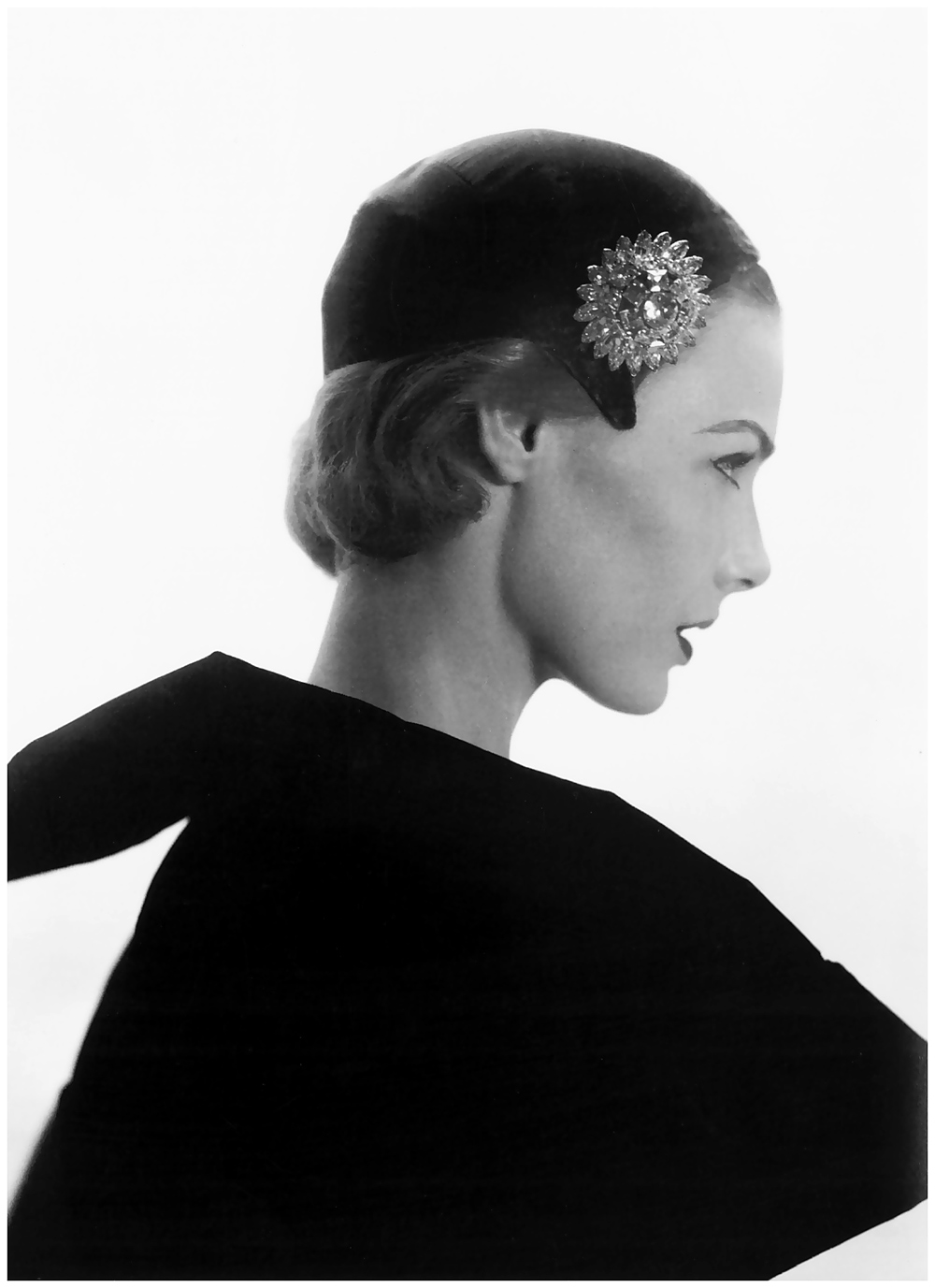











 Art Blart _ art and cultural memory archive
You must be logged in to post a comment.