
Exhibition dates: 13th March – 12th April, 2009
Curator: Alasdair Foster
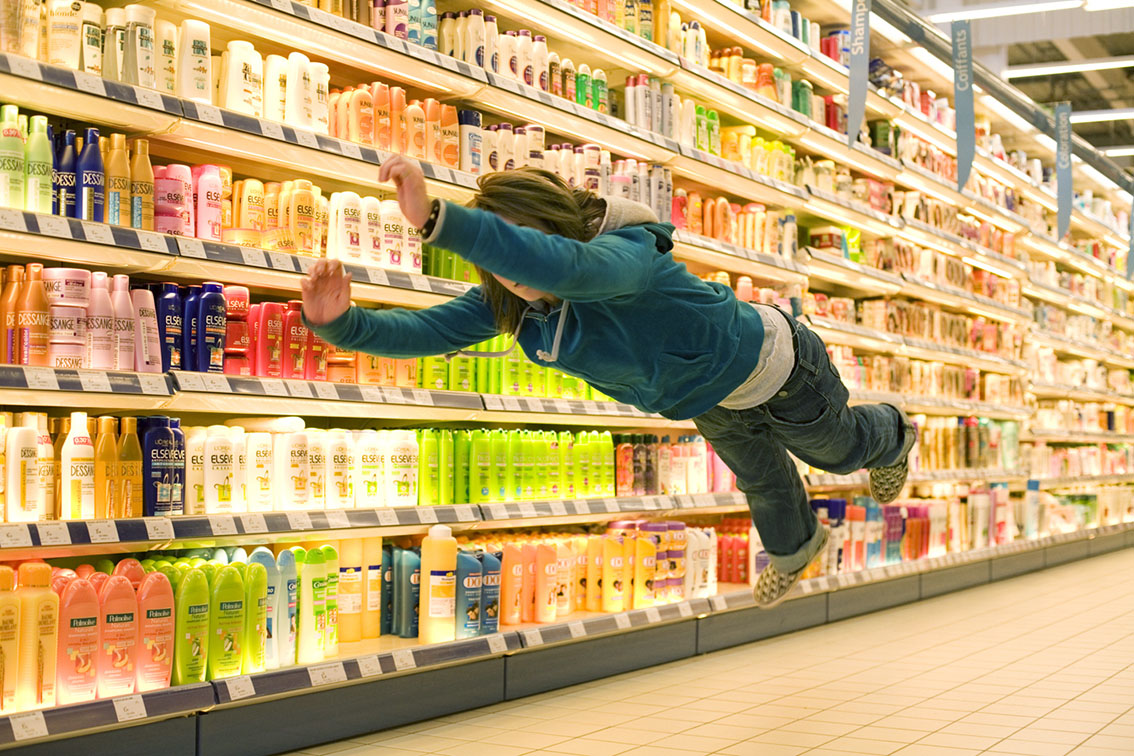
Denis Darzacq (French, b. 1961)
Hyper #4
2007
These images form an interesting body of work: levitating bodies suspended between heaven and earth, neither here nor there, form a hyper-real image grounded in the context of the fluorescent aisles of French supermarkets. The mainly anonymous humans look like mannequins in their inertness, frozen at the moment of throwing themselves/being thrown into the consumer environment.
After his brilliant series La Chute (The Fall) Darzacq has taken people gathered in a casting call from around the town of Rouen and made their frozen bodies complicit in the mass production of the supermarket and the mass consumption of the image as tableaux vivant: the mise en scène directed by the photographer to limited effect. There is something unsettling about these images but ultimately they are unrewarding, as surface as the environment the bodies are suspended in, and perhaps this is the point.
Suspension of bodies is not a new idea in photography. Jacques Henri Lartigue used the freeze frame to good effect long before Henri Cartier-Bresson came up with his ‘decisive moment’: playing with the effect of speed and gravity in an era of Futurism, Lartigue used the arrested movement of instant photography then afforded by smaller cameras and faster film to capture the spirit of liberation in the ‘Belle Epoque’ period before the First World War.
“All the jumping and flying in Lartigue’s photographs, it looks like the whole world at the turn of the century is on springs or something. There’s a kind of spirit of liberation that’s happening at the time and Lartigue matches that up with what stop-action photography can do at the time, so you get these really dynamic pictures. And for Lartigue part of the joke, most of the time, is that these people look elegant but they are doing these crazy stunts.”1
One of the greatest, if not the greatest ever, series of photographs of levitating bodies is that by American photographer Aaron Siskind. Called Pleasures and Terrors of Levitation (sometimes reversed as Terrors and Pleasures of Levitation as on the George Eastman House website) the images feature divers suspended in mid-air with the sky as their blank, background canvas. The images formal construction makes the viewer concentrate on the state of the body, its positioning in the air, and the look on the face of some of the divers caught between joy and fear.
“Highly formal, yet concerned with their subject as well as the idea they communicate, the ‘Pleasures and Terrors of Levitation’ photographs depict the dark shapes of divers suspended mid-leap against a blank white sky. Shot with a hand-held twin-lens reflex camera at the edge of Lake Michigan in Chicago, the balance and conflict suggested by the series’ title is evident in the divers’ sublime contortions.”2
Perhaps because of their air of balance and conflict we can return to these vibrant images again and again and they never lose their freshness, intensity and wonder.
The same cannot be said of Denis Darzacq’s Hyper photographs. Slick and surface like the consumer society on which they comment the somnambulistic bodies are more like floating helium balloons, perhaps even tortured souls leaving the earth. Reminiscent of the magicians trick where the girl is suspended and a hoop passed around her body to prove the suspension is real these photographs really are more smoke and mirrors than any comment on the binary between being and having as some commentators (such as Amy Barrett-Lennard, Director Perth Institute of Contemporary Arts) have suggested.
There is no spirit of liberation here, no sublime revelation as the seemingly lifeless bodies are trapped between the supermarket shelves, as oblivious to and as anonymous as the products that surround them. The well-shot images perhaps possess a sense of fun as Darzacq plays with our understanding of reality… but are they more than that or is the Emperor just wearing very thin consumer clothing?
Dr Marcus Bunyan
1/ Kevin Moore (Lartigue biographer) quoted in “Genius of Photography,” on the BBC website [Online] Cited 15/03/2009
2/ Text from the Museum of Contemporary Photography website [Online] Cited 15/03/2009. No longer available online
Many thankx to the Australian Centre for Photography for allowing me to publish the Darzacq photographs in the posting. Please click on the photographs for a larger version of the image. All other images are used under “fair use” for the purpose of education, research and critical discourse.

Denis Darzacq (French, b. 1961)
Hyper #8
2007
“The astonishing photographs that make up Hyper involve no digital manipulation, just close collaboration between young dancers and sportspeople as they jump for the camera to form strange, exaggerated poses and body gestures. Denis Darzacq was drawn to the trashy, consumerist nature of the French Hypermarkets (the equivalent of our supermarkets) and the hyper-coloured backgrounds they provided. These supermarkets offered a sharp juxtaposition to the sublime, almost-spiritual bodies that appear to float in their aisles.
Hyper is the latest series of works by French photographer Denis Darzacq, who continues to explore the place of the individual in society, a theme which has been crucial to his work in the last few years.”
Text from the ACP website [Online] Cited 15/03/2009. No longer available online. Used under fair use conditions for the purposes of education and research

Jacques Henri Lartigue (French, 1894-1986)
Bichonnade, 40, Rue Cortambert, Paris
1905
Gelatin silver print
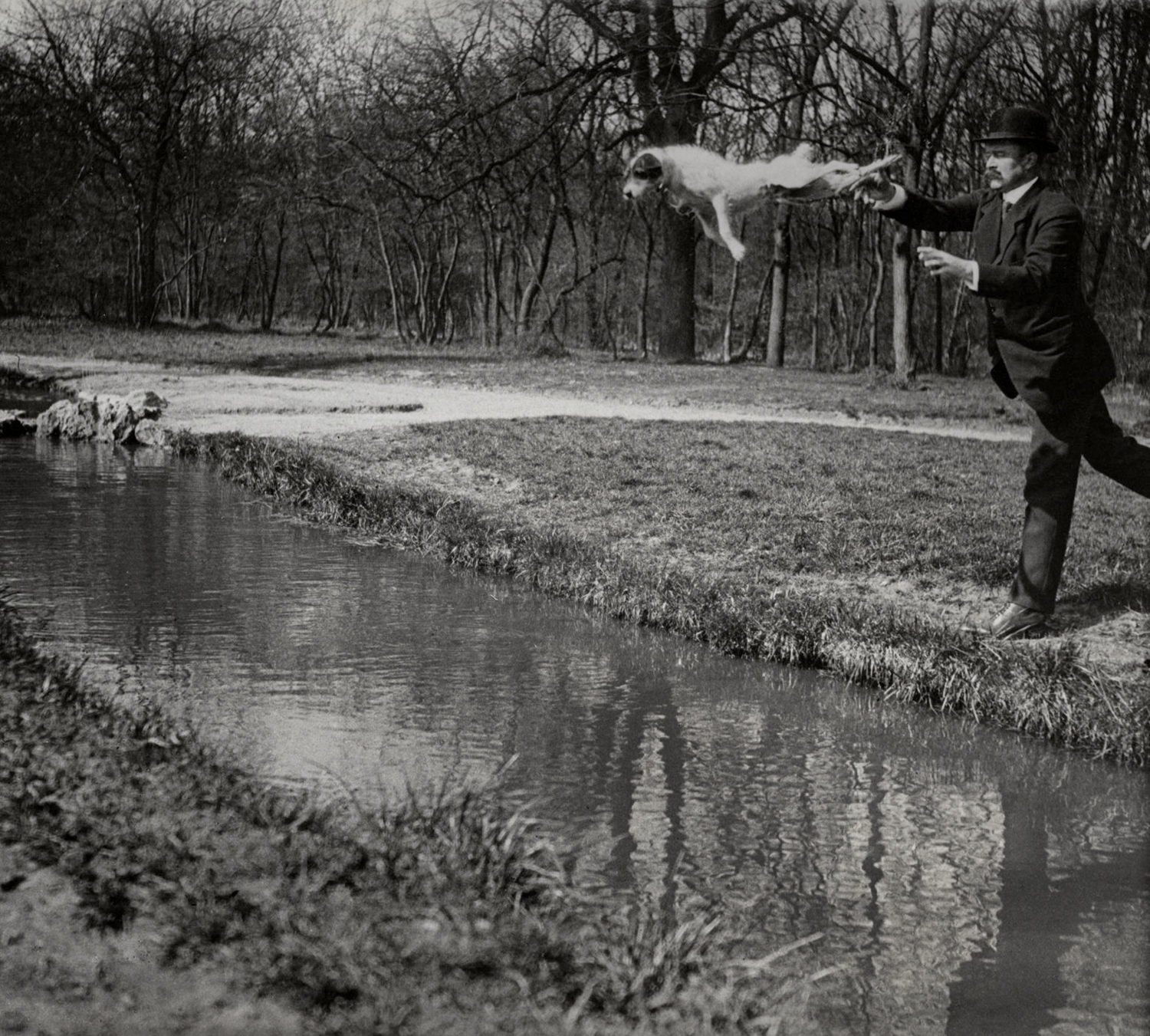
Jacques Henri Lartigue (French, 1894-1986)
Mr Folletete (Plitt) et Tupy, Paris, March 1912
1912
Gelatin silver print

Jacques Henri Lartigue (French, 1894-1986)
Fuborg
1929
Gelatin silver print

Herni Cartier-Bresson (French, 1908-2004)
Behind Saint Lazare Station, Paris, France
1932
Gelatin silver print

Aaron Siskind (American, 1903-1991)
Pleasures and Terrors of Levitation #37
1956
Gelatin silver print
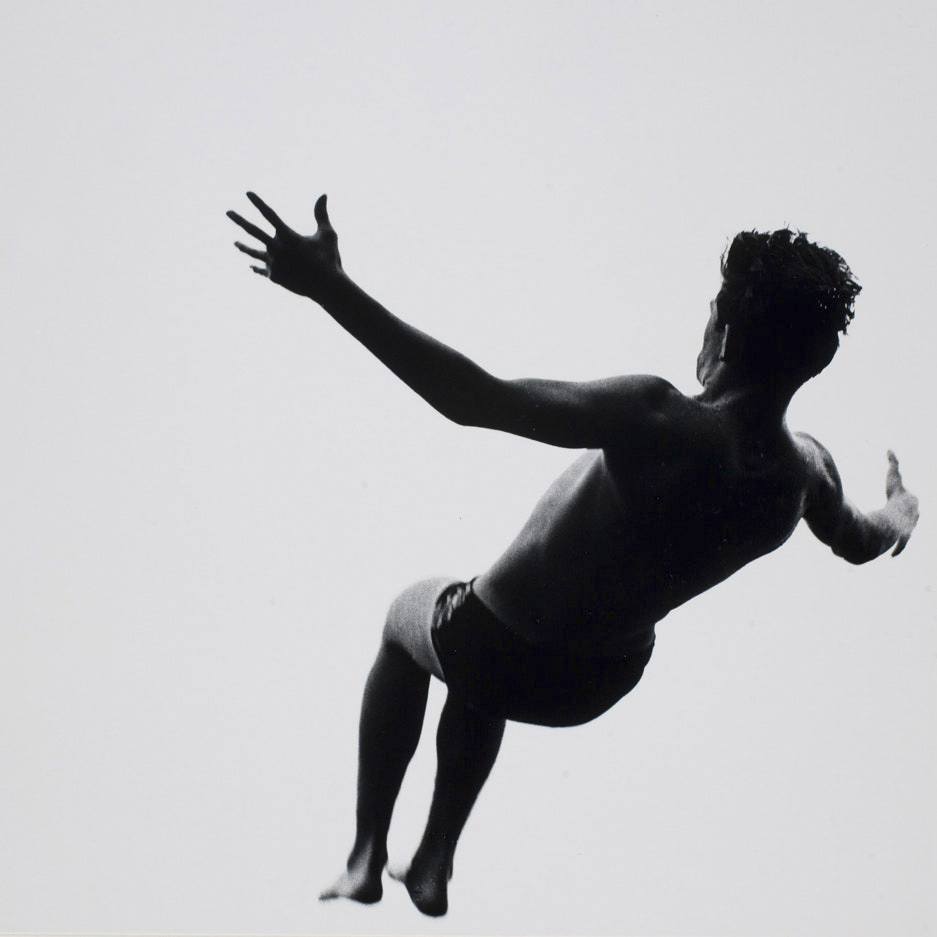
Aaron Siskind (American, 1903-1991)
Pleasures and Terrors of Levitation #47
1954
Gelatin silver print
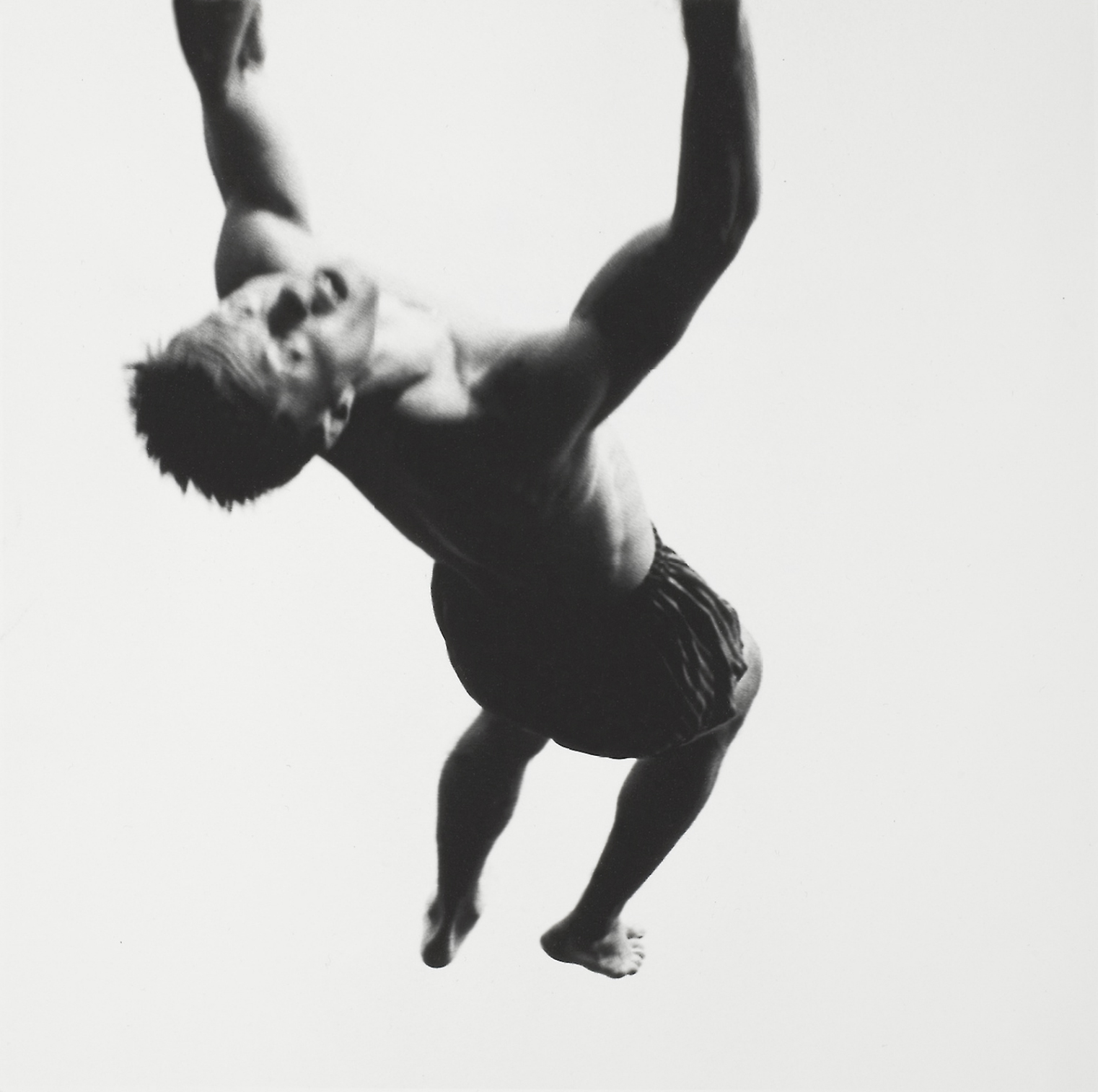
Aaron Siskind (American, 1903-1991)
Pleasures and Terrors of Levitation #93
1961
Gelatin silver print
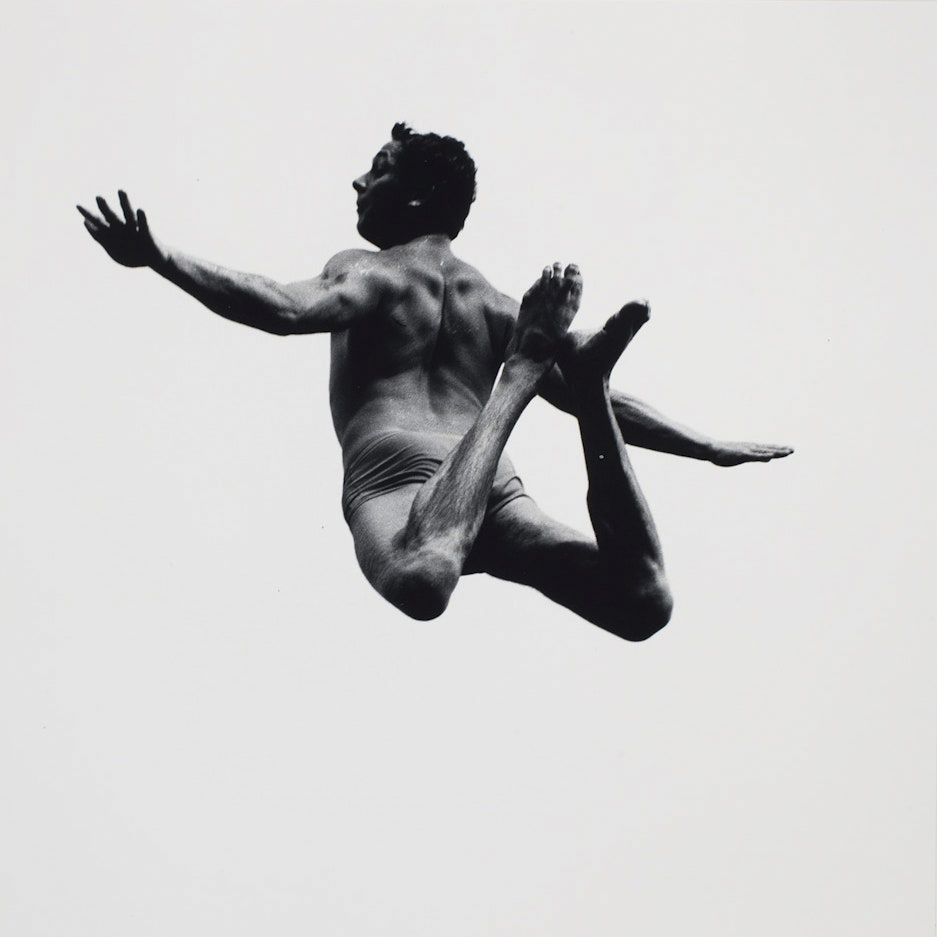
Aaron Siskind (American, 1903-1991)
Pleasures and Terrors of Levitation #99
1956
Gelatin silver print

Aaron Siskind (American, 1903-1991)
Pleasures and Terrors of Levitation #491
1956
Gelatin silver print
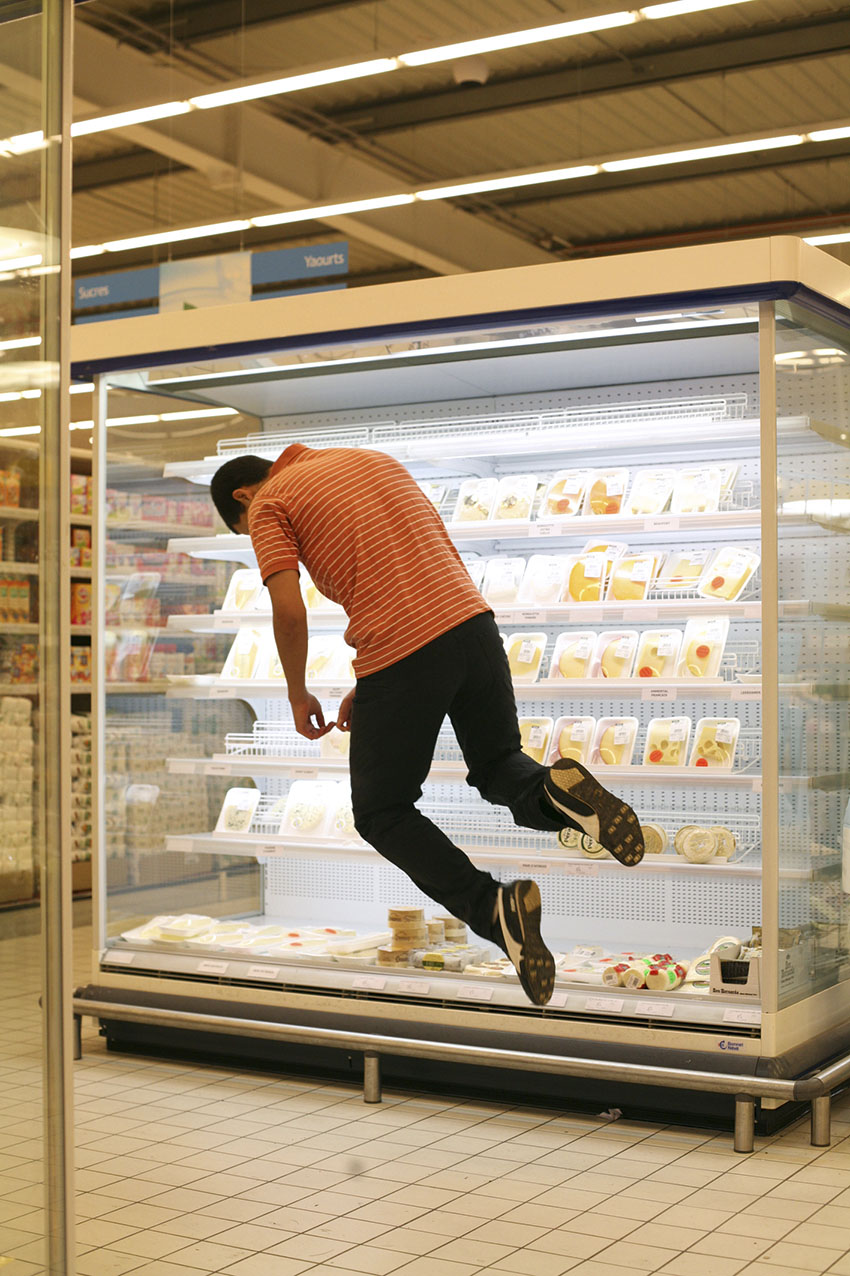
Denis Darzacq (French, b. 1961)
Hyper #3
2007
Hyper picks up on La Chute while explicitly focusing on the artist’s message on the consumerism which hovered in the background of several previous series. In Casques de Thouars Darzacq explored the connecting power and the limits of a consumer product; here the critique is more biting. Hyper opposes bodies in movement and the saturated, standardised space of mass distribution outlets. In this totally commercial setting, the body’s leap expresses the freedom and unhampered choice of its movement. It is a clear challenge to the marketing strategies which seek to control our behaviour. Some of the figures, glowing with an aura, impose glory and give off a sense of spirituality in total contrast with the temples of consumption in which they are found.
“Hyper 1, 2007-2010,” on the Denis Darzacq website Nd [Online] Cited 13/06/2022. Used under fair use conditions for the purposes of education and research

Denis Darzacq (French, b. 1961)
Hyper #14
2007
Australian Centre for Photography
This gallery has now closed






















You must be logged in to post a comment.