Review: ‘Mark Strizic: Melbourne – A City in Transition (Rare Silver Gelatin Photographs)’ at Gallery 101, Melbourne

“The best photographs do not just record, they challenge and transcend the subject matter taking the work to an altogether different plane of existence.” Dr Marcus Bunyan

Exhibition dates: 8th April – 2nd May, 2009

Curator: Dianna Gold, who served as the director and curator of Gallery 101 from 1991 to 2010


Mark Strizic (Australian, 1908-2012) 'Eastern Market Destruction - 1' 1960 from the exhibition 'Mark Strizic: Melbourne – A City in Transition (Rare Silver Gelatin Photographs)' at Gallery 101, Melbourne, April - May, 2009


Mark Strizic (Australian, 1908-2012)
Eastern Market Destruction – 1
1960, printed 1996
Silver gelatin photograph
19 x 22.5cm


Social Fact and Urban Vision

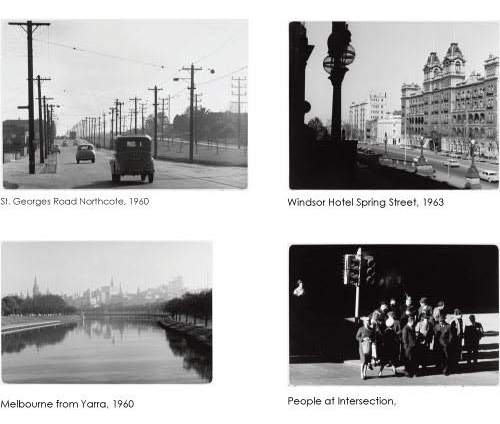
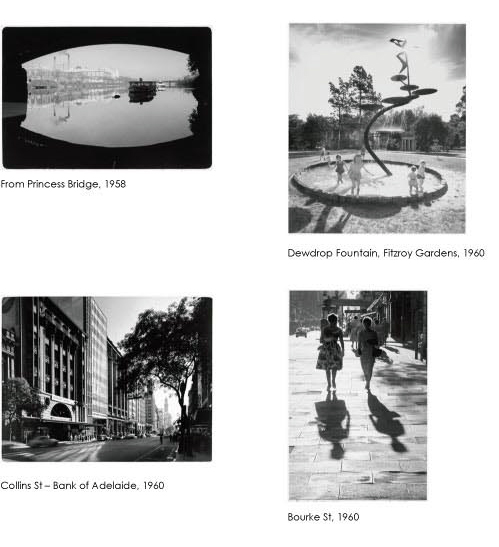
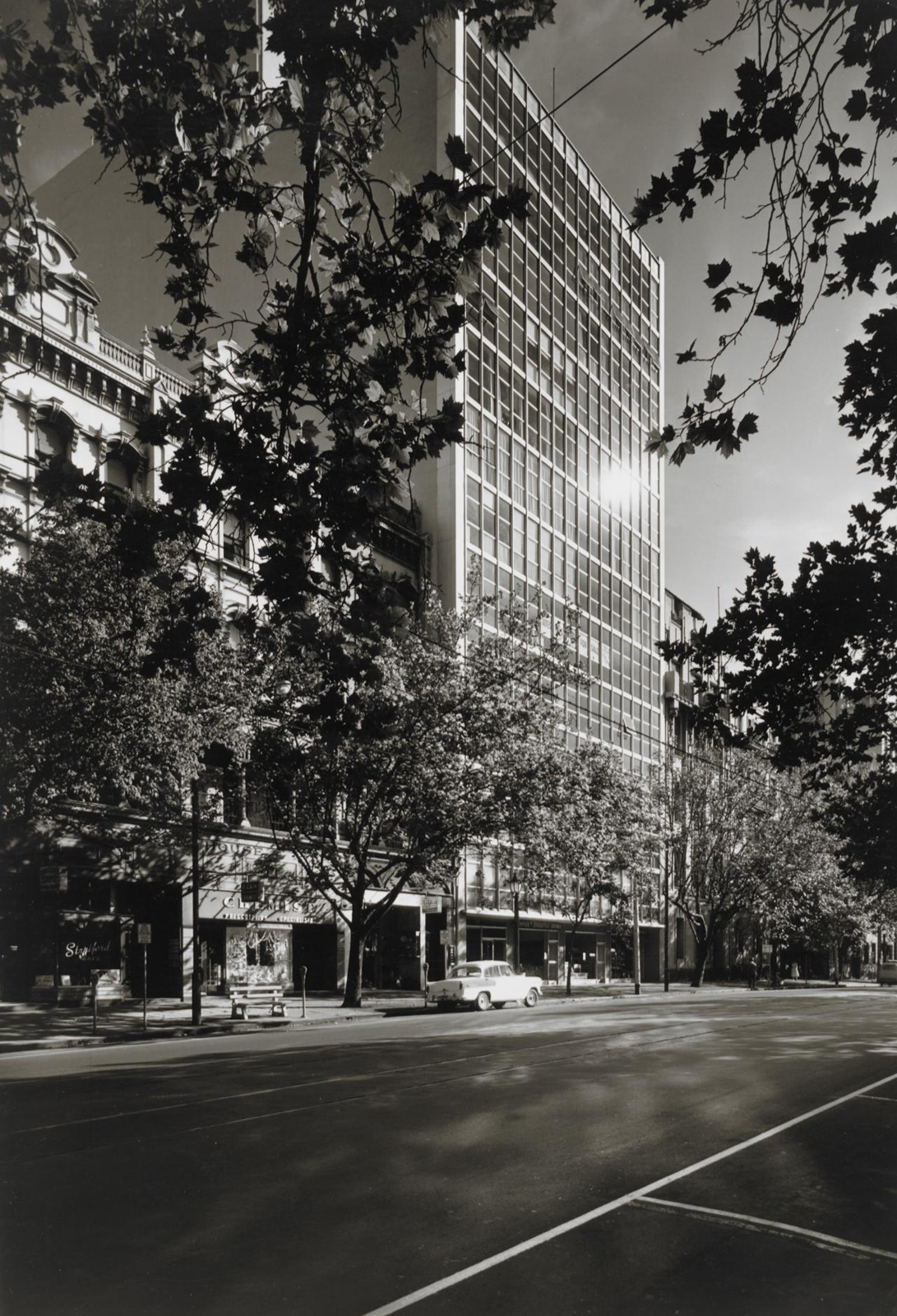
This is an exhibition by the veteran Australian photographer Mark Strizic that plays like the coda at the end of a piece of music, the pensive full stop at the end of a well read book. There are some stunning highlight photographs among the 139 black and white silver gelatin prints on display, some good photographs and some fairly mundane images and prints. With some judicious editing of the photographs (perhaps by a third), the exhibition could have had a stronger artistic aesthetic and carried the voice of the photographer with greater projection. As it is the exhibition will be popular drawing in the crowds because of the photographs subject matter and their appeal to both an individual and collective nostalgia.

Examining Strizic’s photographs we note a traditional structure to the picture plane. Unlike the photographs of Eugene Atget who photographed Paris in the early 20th century there is little sublime spatial representation in Strizics photographs, that different angle of alignment that Atget achieved with the positioning of his camera. Further, we observe that unlike an immigrant to another country at around the same time, Robert Frank and America, the photographs follow traditional format: none of the revolutionary experimentation in handheld, grainy images of jukeboxes, cut up people or images of flags appear in this work. We can also say that unlike Helen Levitt’s early black and white images of New York from around the same period there is little ‘joie de vivre’, little engagement with the actual nitty gritty stuff of living in Strizic’s work. The quote below articulates what Strizic’s photographs both address and dismiss:

“To walk in the city is to experience the disjuncture of partial vision/partial consciousness. The narrativity of this walking is belied by a simultaneity we know and yet cannot experience. As we turn a corner, our object disappears around the next corner. The sides of the street conspire against us; each attention suppresses a field of possibilities. The discourse of the city is a syncretic discourse, political in its untranslatability. Hence the language of the state elides. Unable to speak all the city’s languages, unable to speak all at once, the state’s language become monumental, the silence of headquarters, the silence of the bank. In this transcendent and anonymous silence is the miming of corporate relations. Between the night workers and the day workers lies the interface of light; in the rotating shift, the disembodiment of lived time. The walkers of the city travel at different speeds, their steps like handwriting of a personal mobility. In the milling of the crowd is the choking of class relations, the interruption of speed, and the machine. Hence the barbarism of police on horses, the sudden terror of the risen animal.”1

We observe in the photographs an emphasis on surfaces, on a supreme understanding of light and shade coupled with a certain distance and emotional remoteness from the frenetic hubbub of city life. Empty streets and isolated people fall into shadow and their is little evidence of ‘play’ in the photographs. This is observation not interaction or integration as an immigrant observing Melbourne life. There is no up front presence of disembodied people as in Robert Franks photographs in The Americans. Here the alienation that pervades the photographs is the alienation of the photographer from the people as much as it is the alienation of the people from themselves. People are shot in silhouette against the sun or shop windows or peering in at unobtainable goods; desolate streets and working class suburbs all express the isolation of city life but at a structured distance from them.

When Strizic’s photographs are good they are very good. His understanding of light is magnificent: light reflects off water, hazes and shimmers off city buildings. The mixing of shadows and sun and his use of the technique of ‘contre jour’ (shooting into the sun) the one thing Strizic does against traditional conventions works to good effect in some of the best photographs. His 1968 night-time long exposure photograph of the old Gas and Fuel Building is rewarding for the black bulk of the end of the building looming over Flinders Street and the striations of car headlamps. The photograph Flinders Lane (1967, below) shows a delicate use of depth of field where the foreground of cars and person are out of focus, the light bouncing off the edges of the woman, the focus of the image in the far distance. The photograph McPhersons Building (1958, below) is one of my personal favourites in the exhibition and is a stunning photograph for the atmosphere the photographer has captured.

After a while the use of the ‘contre jour’ technique becomes tiresome. Other photographs simply document a city in transition. These photographs appeal both to an individual nostalgia (‘I used to work in that building’; ‘My grandmother used to live in that street’) and a collective nostalgia where people experience things collectively, “in the sense that [collective] nostalgia occurs when we are with others who shared the event(s) being recalled, and also in the sense that one’s nostalgia is often for the collective – the characteristics and activities of a group or institution in which the individual was a participant.”2

Collective nostalgia refers to that condition in which the symbolic objects are of a highly public, widely shared and familiar character, i.e. those symbolic resources from the past which can under proper conditions trigger off wave upon wave of nostalgic feeling in millions of persons at the same time3 and in this exhibition it is the photographs of a city in transition that trigger this nostalgia, a city now lost to the mists of time. Through these photographs we remember what Melbourne was like at this time collectively.

As Harper has observed

“Nostalgia combines bitterness and sweetness, the lost and the found, the far and near, the new and the familiar, absence and presence. The past which is over and gone, from which we have been or are being removed, by some magic becomes present again for a short while. But its realness seems even more familiar, because renewed, than it ever was, more enchanting and more lovely …”4

Does this collective nostalgia make the photographs good? This is a pertinent question.

Today, nostalgia has become a cultural phenomenon one centred on a longing for home (home is where you are happy to be!) in a collective sense and promoted through commercialisation and the realisation that nostalgia sells. The use of the value seeking word ‘rare’ in the exhibition title is instructive in this regard. Only about 25% of the photographs in this exhibition are “vintage” prints, in other words photographs printed within 3 years of the negative being taken. All other photographs have been printed within the last 15 years. Some are ‘Unique state’ gelatin photographs while others are not. What does this mean. Are they are unique state only in this size? What about the common or garden silver gelatin prints in the show? What does the status word “rare” imply for them?

I remember seeing an exhibition of the photographs of Henri Cartier-Bresson in Scotland about ten years ago. Three rooms had large prints of his work. One room just had vintage prints. The contrast was astounding. The room full of vintage prints had an intensity of vision, of his vision at the time he took the photographs evidenced in small jewel like photographs that the three other rooms photographs simply did not possess – through scale, printing and aesthetics. The same question, without any need for an answer, can be posed here. Only the word ‘rare’ demands that answer for the modern prints are just what they are and nothing more.

In conclusion this is a strong show by Strizic that could have been edited and focused in a more rewarding way. Strizic is one of Australia’s best photographers for understanding the significance of place. His use of light is superb but there always seems to be an emotional distance to his photographs. An element of collective nostalgia adds to their documentary appeal but the best photographs do not just record, they challenge and transcend the subject matter taking the work to an altogether different plane of existence.

Dr Marcus Bunyan


1/ Stewart, Susan. On Longing: Narratives of the Miniature, the Gigantic, the Souvenir, the Collection. Durham: Duke University Press, 1993, p. 2. Prologue

2/ Wilson, Janelle. “”Remember when …” a consideration of the concept of nostalgia,” in et Cetera. Concord: Fall 1999. Vol. 56, Iss. 3; pg. 296, 9 pgs

3/ Davis, F. Yearning For Yesterday: A Sociology of Nostalgia. New York: The Free Press, 1979, p. 222

4/ Harper, R. Nostalgia: An Existential Exploration of Longing and Fulfilment in the Modern Age. The Press of Western Reserve University, 1966, p. 120 quoted in Wilson, Janelle. “”Remember when …” a consideration of the concept of nostalgia,” in et Cetera. Concord: Fall 1999. Vol. 56, Iss. 3; pg. 296, 9 pgs


Many thankx to Gallery 101 for allowing me to publish the photographs in the posting. Please click on some of the photographs for a larger version of the image.


Installation view of the exhibition 'Mark Strizic: Melbourne - A City in Transition' exhibition at Gallery 101, Melbourne

Installation view of the exhibition 'Mark Strizic: Melbourne - A City in Transition' exhibition at Gallery 101, Melbourne

Installation view of the exhibition 'Mark Strizic: Melbourne - A City in Transition' exhibition at Gallery 101, Melbourne


Installation views of the exhibition Mark Strizic: Melbourne – A City in Transition exhibition at Gallery 101, Melbourne
Photos: Marcus Bunyan


Mark Strizic, one of Australia’s eminent photographic artists presents us with nostalgic views of Melbourne and the changing face of the city in rare silver gelatin photographs. The exhibition, Melbourne – A City in Transition will be held at Gallery 101 from 8th April – 2nd May. There will be an evening artist reception on Thursday 9th April to celebrate the opening of the exhibition. Strizic’s oeuvre represents a collection of iconic images of architecture and of life – a record of the changing face of a migrating society of new prosperity, youth and popular culture – taken with a sympathetic eye for humanistic detail.

The exhibition will coincide with the announcement of the forthcoming publication, Mark Strizic, Melbourne: Marvellous to Modern, published by Thames & Hudson in association with the State Library of Victoria. In 2007, the State Library of Victoria acquired Mark Strizic’s entire archive of approximately 5000 negatives, colour transparencies and slides. In addition, the Library holds a fine collection of Strizic photographs, including examples of all types of photographic print, from gelatin silver to digital, produced by the photographer during his long career.

Press release from Gallery 101


Mark Strizic photographs

Mark Strizic photographs

Mark Strizic photographs

Mark Strizic photographs

Mark Strizic photographs


“‘Melbourne – A City in Transition’ is a collection of iconic images of Melbourne city life taken with a sympathetic eye for humanist detail. Strizic accurately depicts the joys and hardships experienced in everyday life with a fresh and living memory. He successfully captures the vicarious essence of suburban life. His portrait of Melbourne includes the city, harbour and river banks – streets and trams, pavements, arcades and lanes, stations and bridges, billboards and facades and public sculpture. We see people going about their daily activities – commuting, shopping at leisure, trading, embracing, conversing, reading the newspaper and visiting the beach. Other works record the demolition and construction of building sites and the changing face of Melbourne, both in society and the urban landscape.”


Text from the exhibition flyer


“In these eloquent studies of light and shadow, Strizic finds beauty in the commonplace – Melbourne’s desolate lanes, street paving, derelict ferries – adopting interesting camera angles, viewpoints and cropping. Through his images, this visual humanist teaches us to observe, to see our surroundings, perhaps with the intention of stimulating us to a higher level of civilisation.”


Emma Matthews. Mark Strizic, Melbourne: Marvellous to Modern. Thames & Hudson in association with the State Library of Victoria, September, 2009.


“This magnificent collection of photographs arose from the creativity of a young photographer and his adoption of his new home town, Melbourne. His pictures were taken at a time when the Victorian elegance of the city once known as ‘Marvellous Melbourne’ was being punctuated by a wave of development and the modern architectural movement. Today Mark Strizic is renowned as a photographer. In the 1950s he was a young science student from Europe playing with the possibilities of the camera. As he gained work as a professional his commercial success was accompanied by the instincts and eye of an artist. His solid technicality was accompanied by the whimsy and wit that made him the ‘poet of the fleeting movement’. The versatility of his work shows us many aspects of Melbourne – its magnificent architectural heritage, its intimate and vibrant laneways, its grand arcades counter-posed against the sudden spaces of the wrecker, the brash intrusion of the glass and concrete skyscrapers, the poignancy of poverty in the rundown inner suburbs. We see the people, on grand occasions such as the 1954 Royal Visit, or just caught in their own world of travelling, shopping, resting, walking, working.”


Mark Strizic, Melbourne: Marvellous to Modern 
book cover


Mark Strizic (Australian, 1908-2012) 'From Princes Bridge' 1958


Mark Strizic (Australian, 1908-2012)
From Princes Bridge
1958, printed 2006
Silver gelatin photograph
58 x 39cm


Mark Strizic. 'Near Spencer Street - 1' 1950


Mark Strizic (Australian, 1908-2012)
Near Spencer Street – 1
1950
Silver gelatin photograph
27.5 x 38.5cm


Mark Strizic. 'At St. Pauls' 1954


Mark Strizic (Australian, 1908-2012)
At St. Pauls (St Paul’s Cathedral steps)
1954, printed 1999
Silver gelatin photograph
17.8 × 24.5cm


Mark Strizic (Australian, 1908-2012) 'St Paul's Cathedral steps' 1954


Mark Strizic (Australian, 1908-2012)
St Paul’s Cathedral steps
1954, printed 1999
Silver gelatin photograph
17.8 × 24.5cm


Mark Strizic (Australian, 1908-2012) 'Collins Street at Russell Street' 1957, printed 1997


Mark Strizic (Australian, 1908-2012)
Collins Street at Russell Street
1957, printed 1997
Unique silver gelatin photograph
39 x 56cm


Mark Strizic (Australian, 1908-2012) 'St Georges Road, Northcote at Summer Av.' 1958


Mark Strizic (Australian, 1908-2012)
St Georges Road, Northcote at Summer Av.
1958, printed 1998
Silver gelatin photograph


Mark Strizic (Australian, 1908-2012) 'St. Patrick's Cathedral' January 1967


Mark Strizic (Australian, 1908-2012)
St. Patrick’s Cathedral
January 1967, printed 1998
Unique silver gelatin photograph
27 x 41cm


Mark Strizic (Australian, 1908-2012) 'Bourke Street from the Parliament' 1967


Mark Strizic (Australian, 1908-2012)
Bourke Street from the Parliament – 2
1967, printed 1998
Silver gelatin photograph
38 x 27cm


Mark Strizic (Australian, 1908-2012) 'Russell Street Pawn Shop' 1958


Mark Strizic (Australian, 1908-2012)
Russell Street Pawn Shop
1958
Silver gelatin photograph


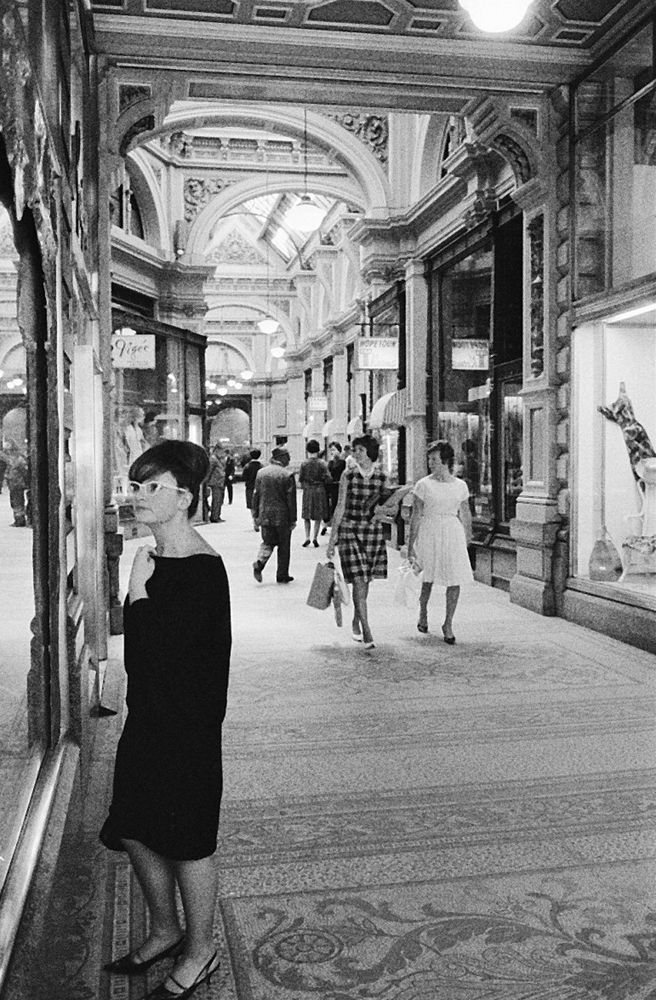
Mark Strizic (Australian, 1908-2012) 'Block Arcade' 1967


Mark Strizic (Australian, 1908-2012)
Block Arcade
1967, printed February 2008
Unique silver gelatin photograph
53.5 x 37cm


Mark Strizic (Australian, 1908-2012) 'From Princes Bridge' (Winter moorings from Princes Bridge) 1955


Mark Strizic (Australian, 1908-2012)
From Princes Bridge (Winter moorings from Princes Bridge)
1955, printed 2006
Silver gelatin photograph
58 x 39cm


Mark Strizic (Australian, 1908-2012) 'Flinders Lane' 1967


Mark Strizic (Australian, 1908-2012)
Flinders Lane
1967, printed 1998
Unique silver gelatin photograph
41 x 41cm


Mark Strizic (Australian, 1908-2012) 'Swan Street, Richmond, at Church Street' 1963


Mark Strizic (Australian, 1908-2012)
Swan Street, Richmond, at Church Street
1963
Silver gelatin photograph


Mark Strizic (Australian, 1908-2012) 'Queensberry Street at Errol Street, North Melbourne' 1963


Mark Strizic (Australian, 1908-2012)
Queensberry Street at Errol Street, North Melbourne
1963
Silver gelatin photograph


Mark Strizic (Australian, 1908-2012) 'Swan Street at Church Street' 1963


Mark Strizic (Australian, 1908-2012)
Swan Street at Church Street
1963, printed 1998
Silver gelatin photograph


Mark Strizic (Australian, 1908-2012) 'Coates Building' 1960


Mark Strizic (Australian, 1908-2012)
Coates Building
1960, printed 1961
Vintage silver gelatin photograph
23.5 x 15cm


Mark Strizic. 'Macphersons Building -1' 1958


Mark Strizic (Australian, 1908-2012)
Macphersons Building – 1
1958
Silver gelatin photograph


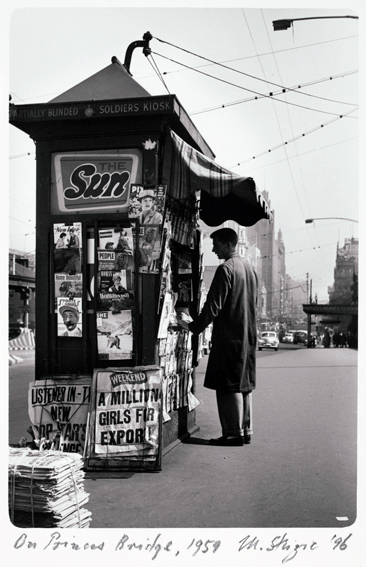
Mark Strizic. 'On Princes Bridge' 1959


Mark Strizic (Australian, 1908-2012)
On Princes Bridge
1959, printed 1996
Silver gelatin photograph
17 x 24cm


Gallery 101

This gallery is now closed.

LIKE ART BLART ON FACEBOOK

Back to top

Exhibition: ‘Into the Sunset: Photography’s Image of the American West’ at The Museum of Modern Art (MoMA), New York

Exhibition dates: 29th March – 8th June, 2009

Curator: Eva Respini, Associate Curator, Department of Photography, The Museum of Modern Art


Carelton Watkins (American, 1829-1916) 'View from the Sentinel Dome, Yosemite' 1865-1866 from the exhibition 'Into the Sunset: Photography's Image of the American West' at The Museum of Modern Art (MoMA), New York, March - June, 2009

Carelton Watkins (American, 1829-1916) 'View from the Sentinel Dome, Yosemite' 1865-1866

Carelton Watkins (American, 1829-1916) 'View from the Sentinel Dome, Yosemite' 1865-1866


Carelton Watkins (American, 1829-1916)
Views from the Sentinel Dome, Yosemite
1865-1866
Albumen silver prints from glass negatives
Museum of Modern Art, New York


The Museum of Modern Art presents Into the Sunset: Photography’s Image of the American West, a survey of 138 photographic works dating from 1850 to 2008 that chart the West’s complex, rich, and often compelling mythology via photography. The exploration of a large part of the American West in the mid-nineteenth century by European Americans coincided with the advent of photography, and photography and the West came of age together. The region’s seemingly infinite bounty and endless potential symbolised America as a whole, and photography, with its ability to construct persuasive and seductive images, was the perfect medium with which to forge a national identity. This relationship has resulted in a complex association that shapes the perception of the West’s social and physical landscape to this day. With political, cultural, and social attitudes constantly shifting in the region over the last 150 years, Into the Sunset further examines the way photographers have responded to these changes. The exhibition is organised by Eva Respini, Associate Curator, Department of Photography, The Museum of Modern Art, and is on view in the Special Exhibitions Gallery on the third floor from March 29 to June 8, 2009.

Organised thematically rather than chronologically, Into the Sunset brings together the work of over 70 photographers, including Robert Adams, John Baldessari, Dorothea Lange, Timothy O’Sullivan, Cindy Sherman, Joel Sternfeld, Carleton E. Watkins, and Edward Weston, among others. The exhibition draws extensively from MoMA’s collection, along with private and public collections in the United States, and features new acquisitions from Adam Bartos, Katy Grannan, and Dennis Hopper, with each work also on view for the first time at the Museum.

Ms. Respini states: “Ranging from grand depictions of paradise to industrial development, from pictures taken on the road to prosaic suburban scenes, the photographs included in Into the Sunset do not all picture the West from the same point of view, or even perhaps, picture the same West. Rather, each is one part in a continually shifting and evolving composite image of a region that has itself been growing and changing since the opening of the frontier.”

Into the Sunset begins with the birth of photography and the American West. In the mid-nineteenth century, the region’s seemingly infinite bounty and endless potential symbolised America as a whole, and Carleton E. Watkins (American, 1829-1916) captured the grand depictions of an American paradise in his photographs of Yosemite Valley in California. Arguably the world’s first renowned landscape photographer, Watkins made his first photographs there in 1861 – large sized prints made with an 18-by-22-inch mammoth plate camera, well suited to the grandeur of the land. Included are the three contiguous photographs that make up his extraordinarily detailed View from the Sentinel Dome (1865-1866).

The exhibition balances the early work of landscape photographers with the twentieth century focus on the failure of the West’s promised bounty. In Joel Sternfeld’s (American, b. 1944) After a Flash Flood, Rancho Mirage, California (1979), the photographer documents the impact of a natural disaster, specifically a landslide, shot with neutral tones softly camouflaging the extent of flash flood on this suburban neighbourhood. And in Karin Apollonia Müller’s (German, b. 1963) Civitas (1997), the photographer shows a very different view of California than that of Watkins, with Müller revealing a contemporary Los Angeles as a littered wasteland of freeways and anonymous glass towers.

As highways and interstate travel became more prevalent, the automobile and the open road became synonymous with the region, with Edward Weston (American, 1886-1958) as the first great photographer of these open roads. Included is Weston’s iconic Hot Coffee, Mojave Desert (1937), a humorous black-and-white photograph of a road sign revealing a greater thematic shift to the highway and its signage as an inescapable element in picturing the West in the twentieth century.

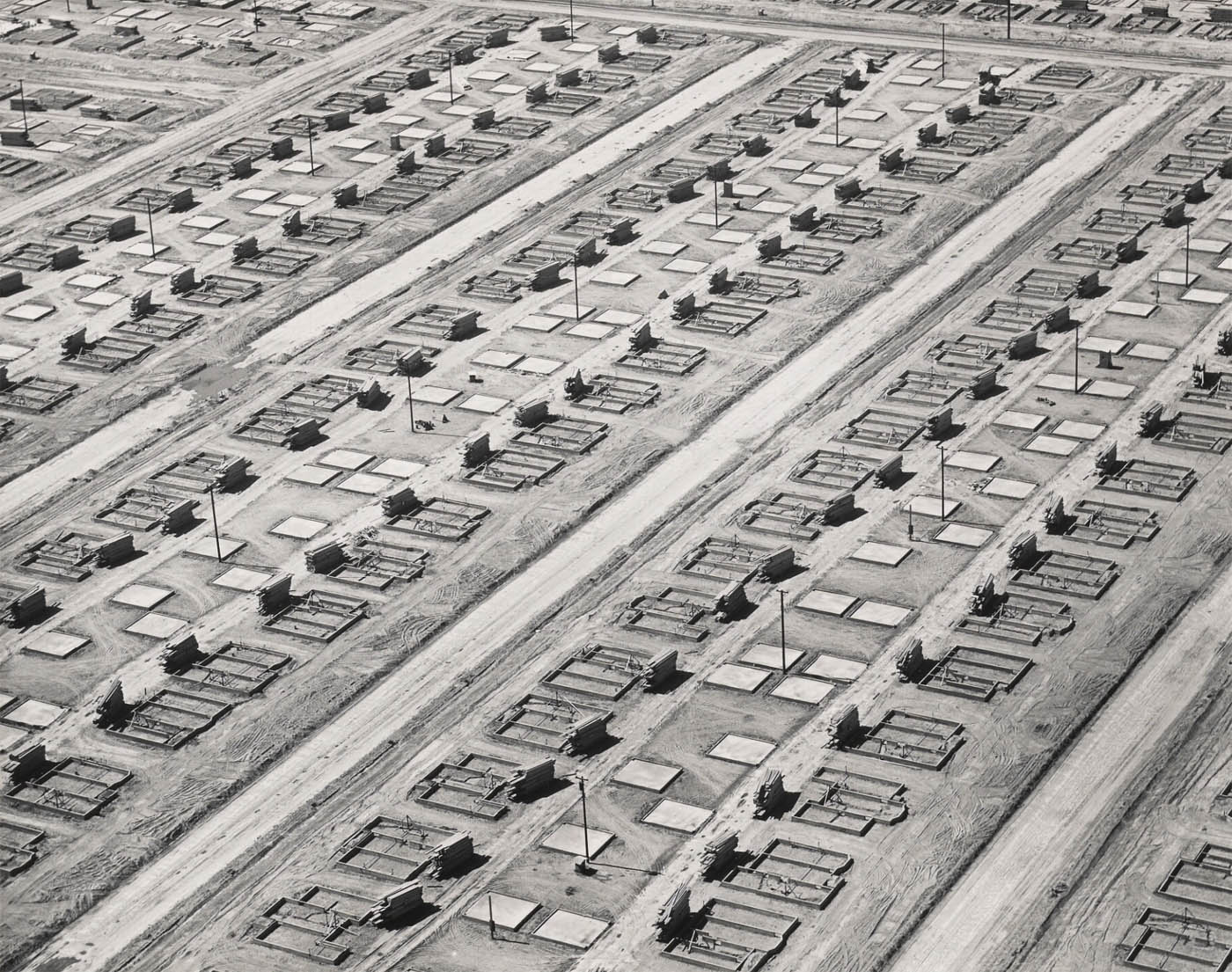
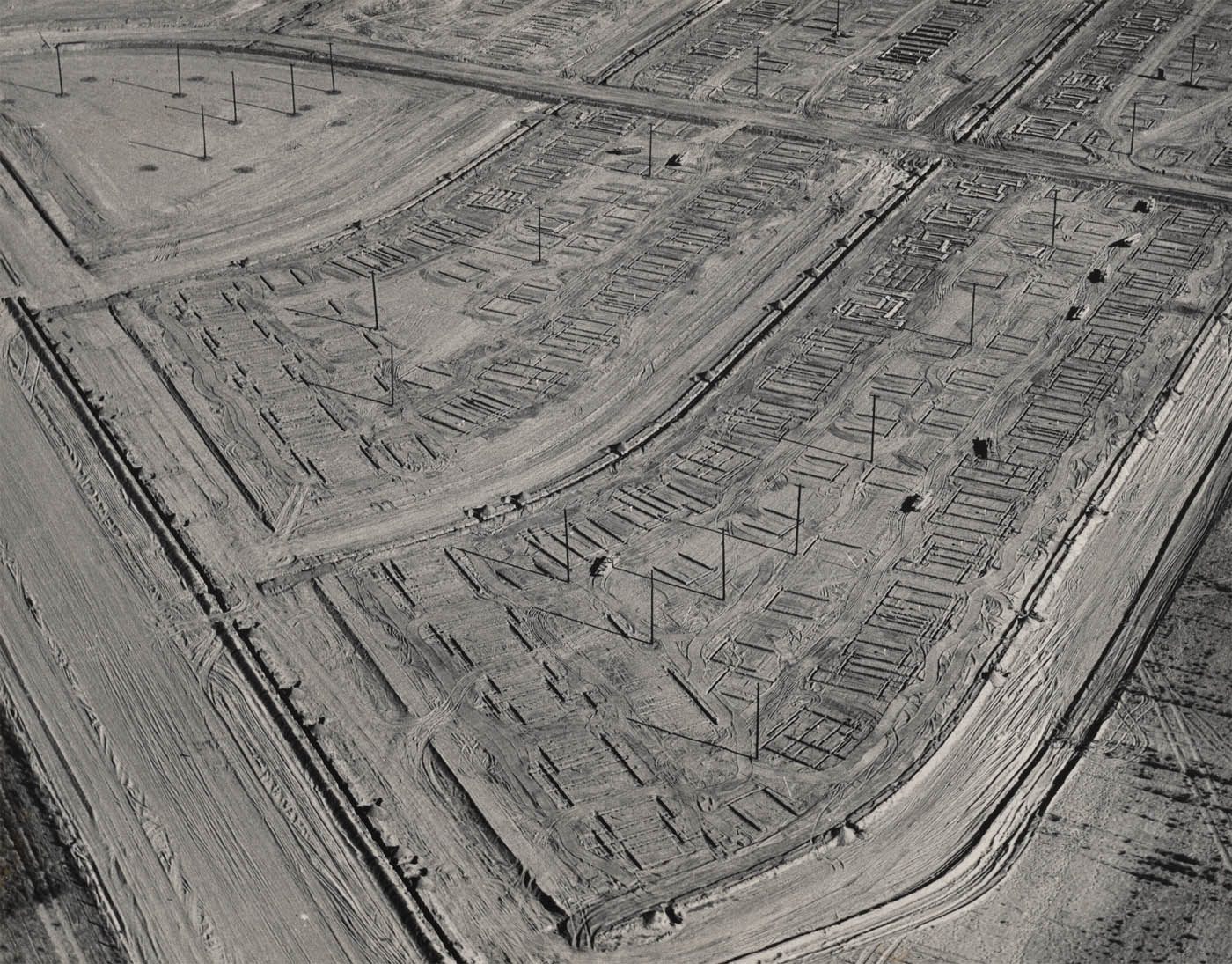
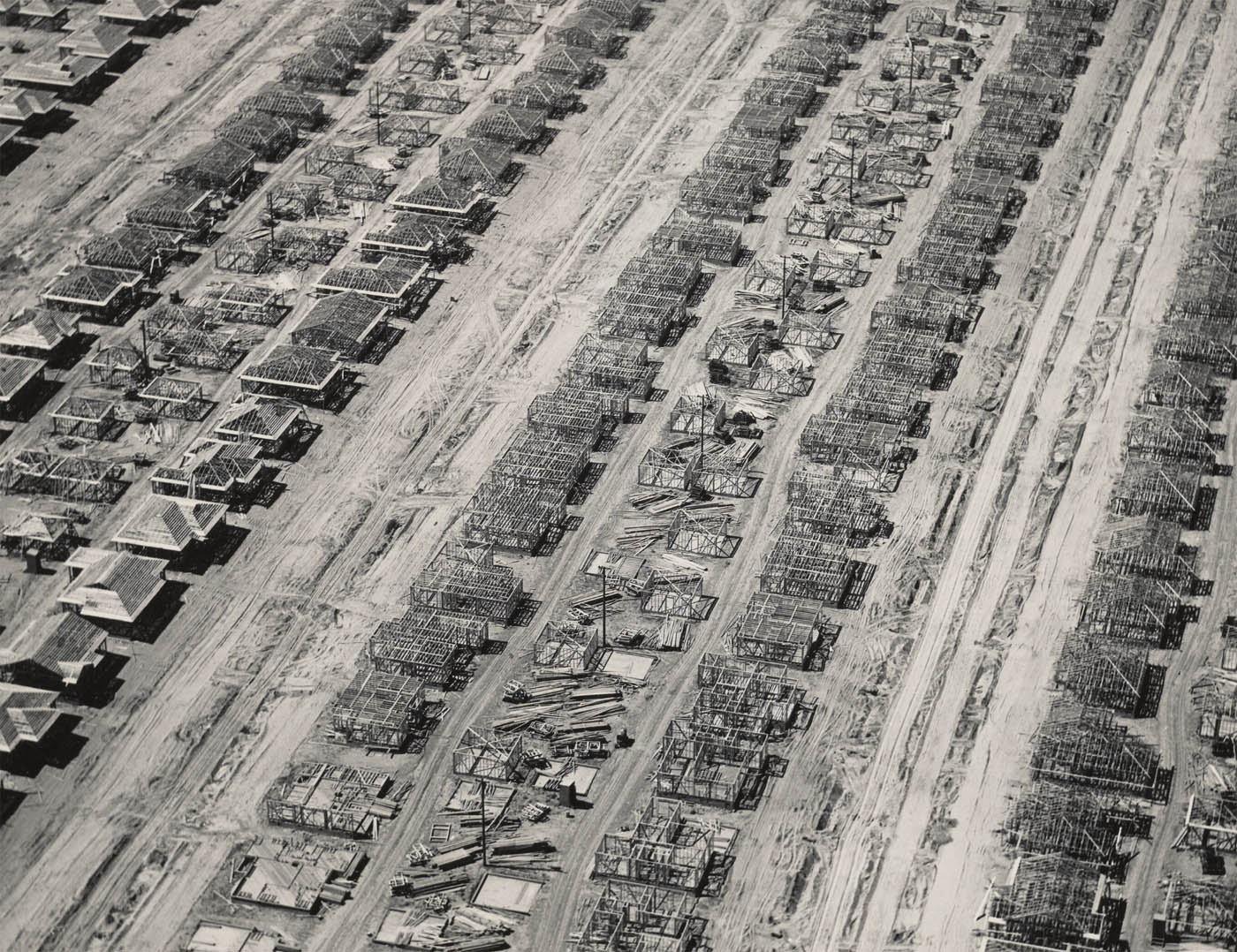
Once the West became more populated, photographers began to showcase humans’ effects on the land, including images of industrial development. In the 1950s William Garnett (American, 1916-2006) was hired by a real estate company to record the efficiency of mass-produced housing. For this series, Lakewood, California (1950), Garnett took photographs of the neighbourhood from an airplane, resulting in images that are completely devoid of people and focus on the progress of mass-produced construction. However, the series subsequently came to represent all that was wrong with such development and the massive sprawl of the West in the eyes of its critics.

Photographs of the people of the West represent a diversity of archetypes: gold miners and loggers, Native Americans, cowboys, suburbanites, city dwellers, starlets, dreamers, and drifters. Into the Sunset explores these archetypes, and their mutability into the twenty-first century. Included is Half Indian / Half Mexican (1991), from the photographer James Luna (Native American, Pooyukitchum / Luiseno, b. 1950), an artist of Native American ancestry. This tongue-in-cheek self-portrait captures in profile both an identity photograph and a mug shot, and works as a counterpoint to the tokenised portrayals of Native Americans from the past 150 years.

A similar reevaluation of past archetypes occurs in Richard Prince’s (American, b. 1949) Cowboy series from 1980, with one work from the series included in the exhibition. For that series Prince famously photographed Marlboro advertisements, cutting out the text, cropping the images, and enlarging them, highlighting the artifice of the virile image of the cowboy and its potency as a deeply ingrained figure in American mythology.

The suburbs and their inhabitants have been a rich subject for photographers of the West, and included are Larry Sultan’s (American, b. 1946) Film Stills from the Sultan Family Home Movies (1943-1972), in which Sultan chose individual frames from his family’s home movies and enlarged them. Although the images feature the activities that epitomise suburban life, a sense of unease lurks beneath the surface of these images; cropped and grainy, they resemble surveillance or evidence photographs.

Into the Sunset concludes with the theme of the failed promise of Western migration. Dorothea Lange’s well-known 1936 photograph Migrant Mother, Nipomo, California, photographed when Lange was employed by the Farm Security Administration, is included and documents the conditions of the West in rural areas during the Great Depression. Her photographs had a humanist purpose and resulted in putting a face on the hardships of that era.

This tradition of capturing the downtrodden of the West continues into this century with Katy Grannan (American, b. 1969), a photographer who recently completed a series of new pioneers, individuals struggling to define themselves in the West of today. In Nicole, Crissy Field Parking Lot (I) (2006), a woman, “Nicole,” poses seductively on a gravel parking lot, with her makeup-streaked face and harsh light alluding to her perilous existence on the fringe of society.”

Text from the MoMA website [Online] Cited 12/04/2009. No longer available online. Used under fair use conditions for the purposes of education and research


Many thankx to MoMA for allowing me to publish the photographs in the posting. Please click on the photographs for a larger version of the image.


Installation view of the exhibition 'Into the Sunset: Photography's Image of the American West' at The Museum of Modern Art (MoMA), New York showing Ed Ruscha's 'Every Building on the Sunset Strip' 1966


Installation view of the exhibition Into the Sunset: Photography’s Image of the American West at The Museum of Modern Art (MoMA), New York showing Ed Ruscha’s Every Building on the Sunset Strip 1966


Joel Sternfeld (American, b. 1944) 'After a Flash Flood, Rancho Mirage, California' 1979 from the exhibition 'Into the Sunset: Photography's Image of the American West' at The Museum of Modern Art (MoMA), New York, March - June, 2009


Joel Sternfeld (American, b. 1944)
After a Flash Flood, Rancho Mirage, California
1979
Chromogenic colour print, printed 1987
15 15/16 x 20″ (40.5 x 50.8cm)
Museum of Modern Art, New York
Gift of Beth Goldberg Nash and Joshua Nash


During the 1970s, Joel Sternfeld’s work reflected a trend towards a newly dispassionate, less idealised approach to nature and culture. His photographs have a seductive beauty, even though they often focus on those places where the natural and man-made worlds come together in uncomfortable ways. Working with a large-format camera and luminous colour to create images that are frequently ironic or even humorous, his compositions appear simple but in fact are surprisingly complex and often unsettling. In this photograph of a suburban California neighbourhood in the aftermath of a flash flood, the lovely monochrome tones trick us into not immediately seeing the car that has toppled into the gaping sinkhole or realising that the buildings above could be on the verge of falling, too.

Text from the Museum of Fine Arts Boston website


Apollonia Müller (German, b. 1963) 'Civitas' 1997


Apollonia Müller (German, b. 1963)
Civitas
1997
From Angels in Fall
Chromogenic colour print
19 3/4 x 24 1/2″ (50.1 x 62.2cm)
Gift of Howard Stein
Museum of Modern Art, New York
© 2018 Karin Apollonia Müller


William A. Garnett (American, 1916-2006) 'Foundations and Slabs, Lakewood, California' 1950


William A. Garnett (American, 1916-2006)
Foundations and Slabs, Lakewood, California
1950
Gelatin silver print
18.9 x 23.8cm (7 7/16 x 9 3/8 in.)
© J. Paul Getty Museum


William A. Garnett (American, 1916-2006) 'Grading, Lakewood, California' 1950


William A. Garnett (American, 1916-2006)
Grading, Lakewood, California
1950
Gelatin silver print
18.9 x 24cm (7 7/16 x 9 7/16 in.)
© J. Paul Getty Museum


William A. Garnett (American, 1916-2006) 'Trenching, Lakewood, California' 1950


William A. Garnett (American, 1916-2006)
Trenching, Lakewood, California
1950
Gelatin silver print
7 5/16 x 9 7/16 in.
© J. Paul Getty Museum


“I was hired commercially to illustrate the growth of that housing project. I didn’t approve of what they were doing. Seventeen thousand houses with five floor plans, and they all looked alike, and there was not a tree in sight when they got through.”

“I was discharged and heard you could hitchhike on the transport taking GIs home. The airplane was full, but the captain let me sit in the navigator’s seat so I had a command view. I was amazed at the variety and beauty of these United States. I had never seen anything like that – in a book, in school, or since then. So I changed my career.”


William A. Garnett


Lakewood, located on the outskirts of Los Angeles, was the location for the second major postwar housing development built in the United States. Some 17,500 tract houses were constructed assembly-line style on 3,500 acres of cleared farmland. Mass production made the houses affordable, so a greater number of people could take part in the American dream of home ownership. The developers hired William Garnett to document different phases of the subdivision’s construction from his Cessna airplane. He often photographed his subjects early in the day, so the angled light would emphasise their otherwise flat-looking forms. The photographs serve a utilitarian purpose but also demonstrate Garnett’s impeccable sense of design. In Trenching Lakewood, California, stacked lumber appears for the foundations, utility poles are installed, and the main roads are carved out. …

William Garnett took his first cross-country flight after serving as a United States Army Signal Corps cameraman during World War II. What he saw below inspired him to learn how to pilot a plane so he could photograph the American landscape. Garnett’s aerial photographs resemble abstract expressionist paintings or views through a microscope. As landscapes, they do not have the conventional grounding of a horizon line. All reveal astonishing patterns that are not seen from the ground. Garnett honed his elegant design sensibility well before earning a pilot’s license. Before the war, he attended Art Center College of Design in Los Angeles. Later, he headed the Pasadena Police Department’s photography lab. In the 1940s and 1950s, he began to rack up flying hours around Los Angeles, speaking out about the area’s increasing air pollution. He illustrated Nathaniel Owings’s American Aesthetic, a book about land-use practices. During ten thousand hours of flying, Garnett simultaneously piloted a plane while photographing out the window – traveling above every state and many parts of the world. His light 1956 Cessna plane allowed him to fly to just the right location to capture subjects with precision. At first, he experimented with a variety of camera formats and films but found that two 35mm cameras (one loaded with black-and-white film, the other with colour film) best suited his needs. Garnett’s work defies the stereotype of aerial photography as purely scientific and devoid of artistry. He became the first aerial photographer to earn a prestigious Guggenheim fellowship.

Anonymous. “Historical Witness, Social Messaging,” from the J. Paul Getty Museum Education Department [Online] Cited 13/01/2019. Used under fair use conditions for the purposes of education and research


William A. Garnett (American, 1916-2006) 'Framing, Lakewood, California' 1950


William A. Garnett (American, 1916-2006)
Framing, Lakewood, California
1950
Gelatin silver print
18.4 x 24.1cm (7 1/4 x 9 1/2 in.)
© J. Paul Getty Museum


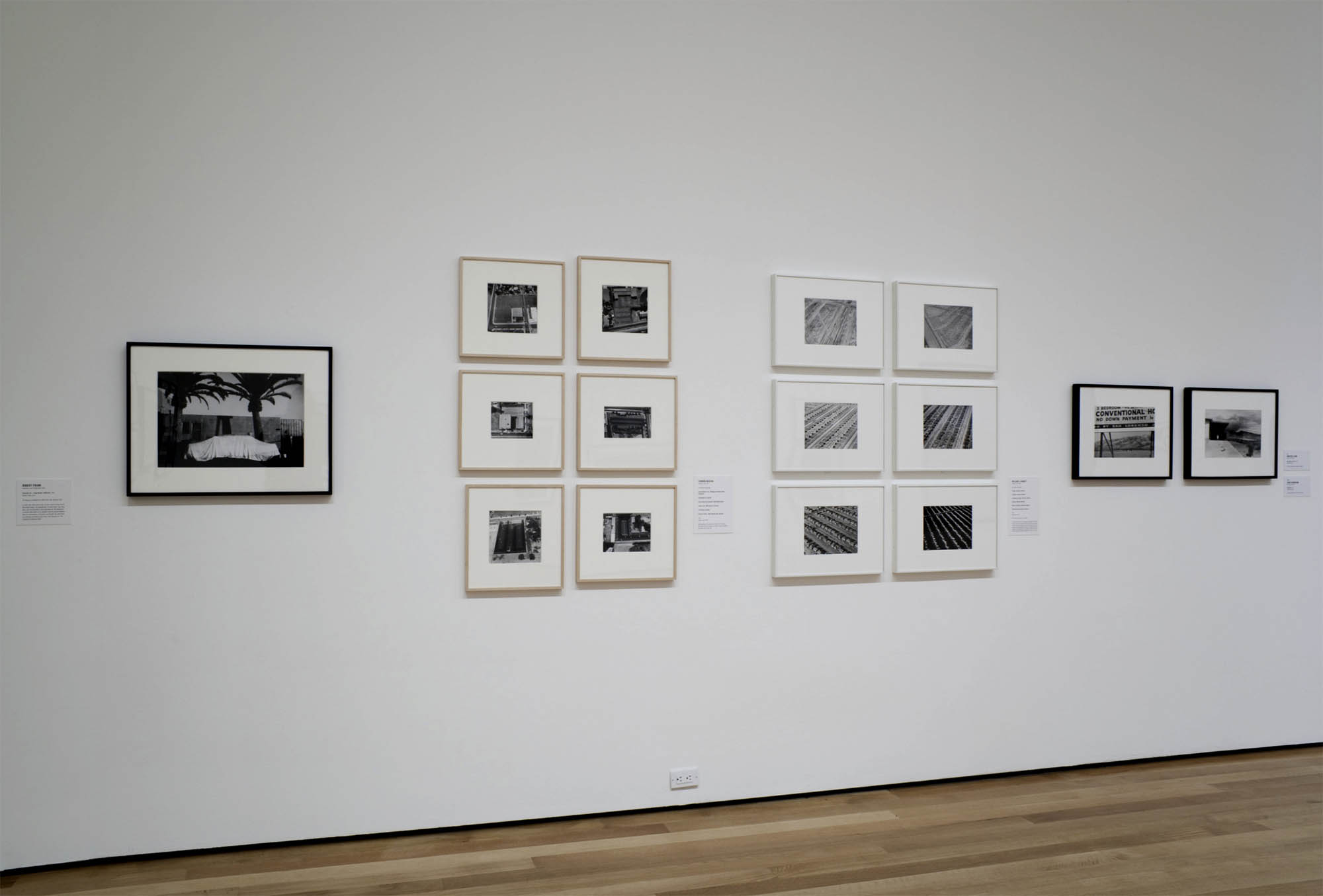
Installation view of the exhibition 'Into the Sunset: Photography's Image of the American West' at The Museum of Modern Art (MoMA), New York showing at left, Robert Frank's 'Covered Car - Long Beach, California' (1956); and at centre right, photographs by William A. Garnett


Installation view of the exhibition Into the Sunset: Photography’s Image of the American West at The Museum of Modern Art (MoMA), New York showing at left, Robert Frank’s Covered Car – Long Beach, California (1956, below); and at centre right, photographs by William A. Garnett (above)


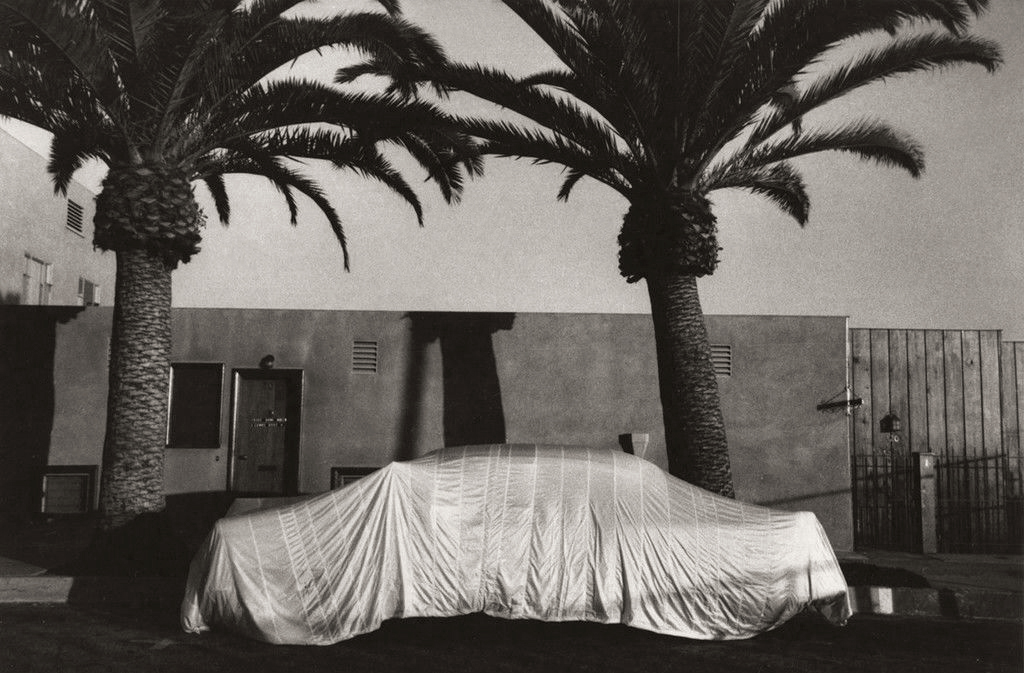
Robert Frank (American, 1924-2019) 'Covered Car - Long Beach, California' 1956


Robert Frank (American, 1924-2019)
Covered Car – Long Beach, California
1956
From The Americans (1955-1956)
Gelatin silver print
Museum of Modern Art, New York


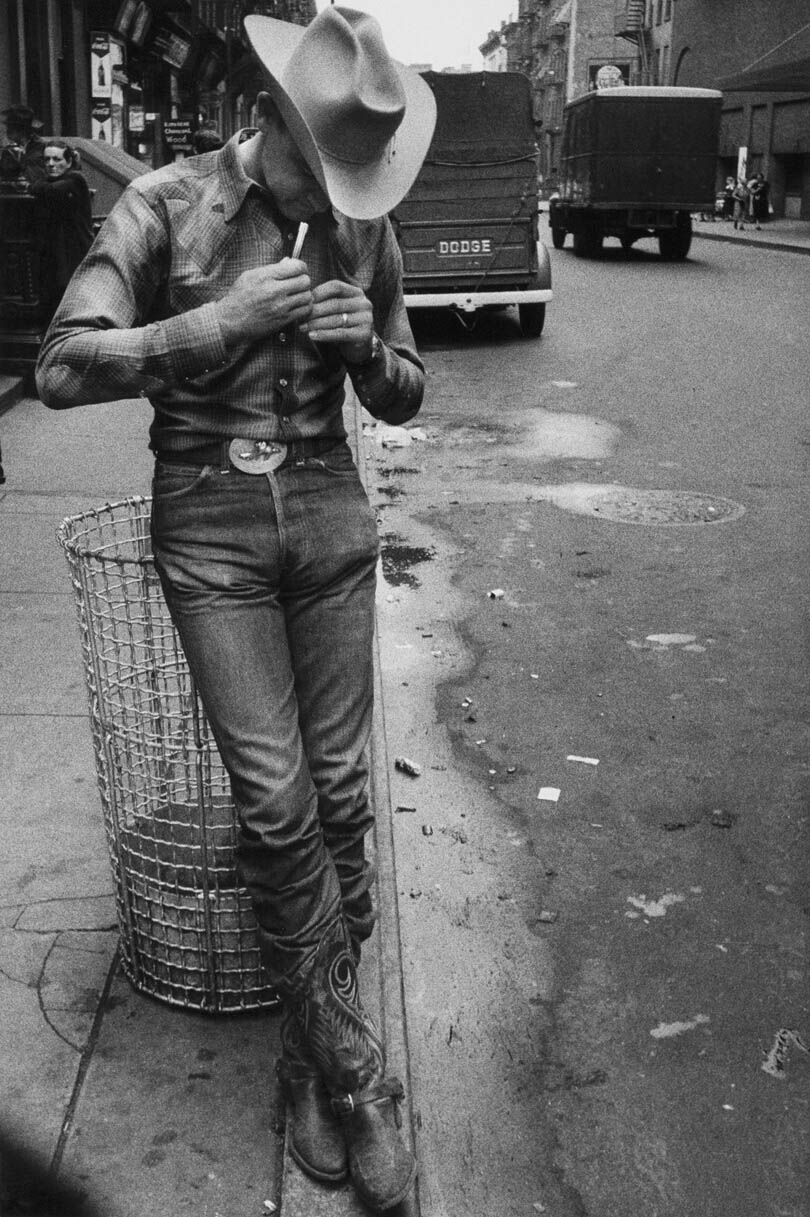
Robert Frank (American, 1924-2019) 'Rodeo - New York City' 1954


Robert Frank (American, 1924-2019)
Rodeo – New York City
1954
From The Americans (1955-1956)
Gelatin silver print
Museum of Modern Art, New York


Dorothea Lange (American, 1895-1965) 'Migrant Mother, Nipomo, California' 1936


Dorothea Lange (American, 1895-1965)
Migrant Mother, Nipomo, California
1936
Gelatin silver print
11 1/8 x 8 9/16″ (28.3 x 21.8cm)
Museum of Modern Art, New York


Dorothea Lange took this photograph on assignment for the U.S. government’s Farm Security Administration (FSA) program, formed during the Great Depression to provide aid to impoverished farmers. FSA photographers documented the conditions that Americans faced throughout the course of the Great Depression, a period of economic crisis. Lange’s photograph suggests the impact of these harsh conditions on a 32-year-old mother of seven. She took a number of pictures of the mother with her children and chose this image as the most effective. Her keen sense of composition and attentiveness to the power of historical images of the Madonna and Child have helped this photograph transcend its original documentary function and become an iconic work of art.

Text from the MoMA website


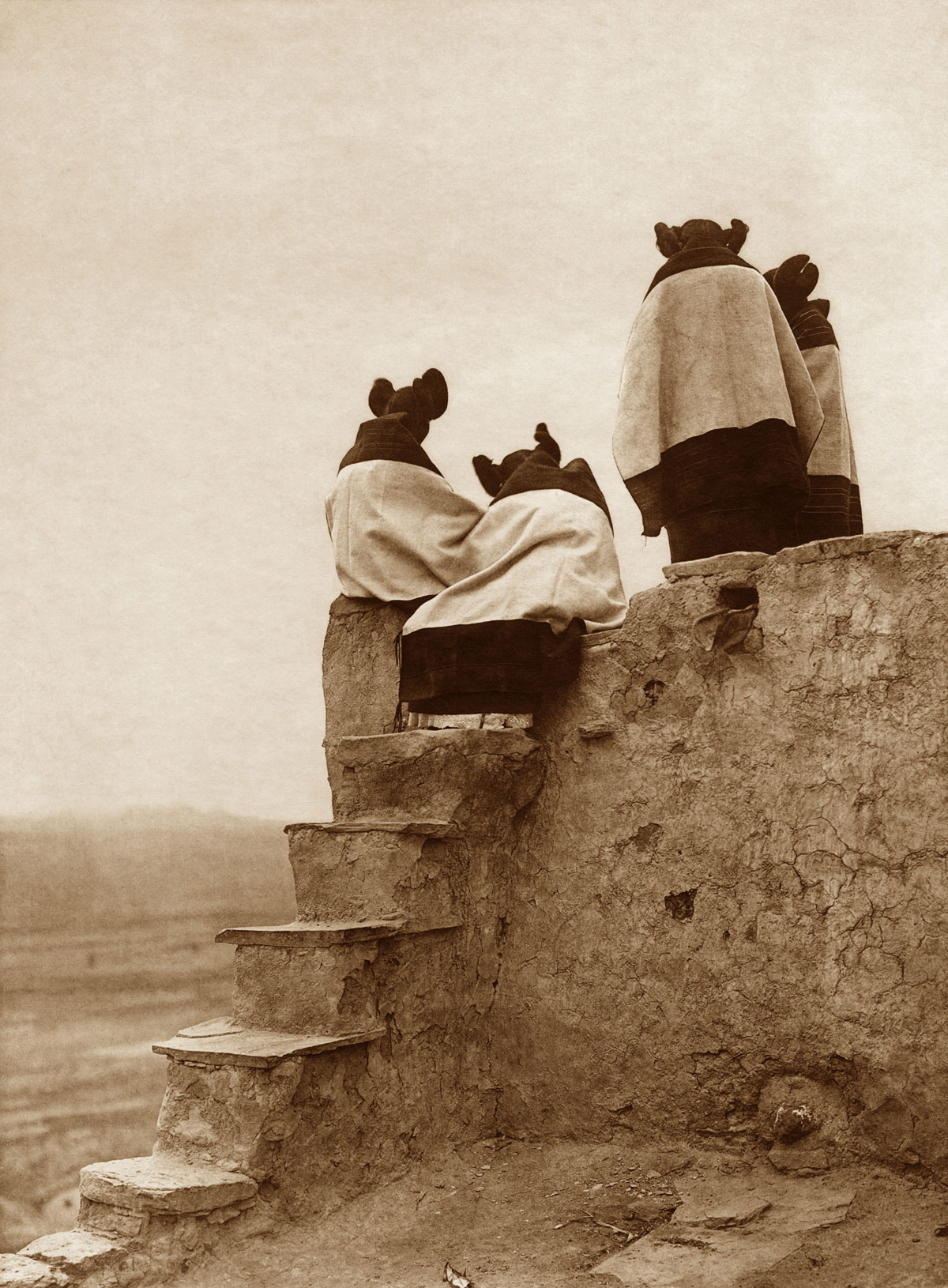
Edward S. Curtis (1868 - 1952) 'Watching the Dancers' 1906


Edward S. Curtis (American, 1868-1952)
Watching the Dancers
1906
Photogravure
Museum of Modern Art, New York


James Luna (American, 1950-2018) 'Half Indian/Half Mexican' 1991


James Luna (American, 1950-2018)
Half Indian/Half Mexican (installation view)
1991
Gelatin silver print


James Luna (February 9, 1950 – March 4, 2018) was a Payómkawichum, Ipi, and Mexican-American performance artist, photographer and multimedia installation artist. His work is best known for challenging the ways in which conventional museum exhibitions depict Native Americans. With recurring themes of multiculturalism, alcoholism, and colonialism, his work was often comedic and theatrical in nature. In 2017 he was awarded a Guggenheim Fellowship.


Richard Prince (American, b. 1949) 'Untitled (Cowboy)' 1989


Richard Prince (American, b. 1949)
Untitled (Cowboy)
1989
Chromogenic print
127 x 177.8cm (50 x 70in.)
The Metropolitan Museum of Art
Purchase, The Horace W. Goldsmith Foundation Gift, through Joyce and Robert Menschel, and Jennifer and Joseph Duke Gift, 2000
© Richard Prince


In the mid-1970s Prince was an aspiring painter who earned a living by clipping articles from magazines for staff writers at Time-Life Inc. What remained at the end of the day were the advertisements, featuring gleaming luxury goods and impossibly perfect models; both fascinated and repulsed by these ubiquitous images, the artist began rephotographing them, using a repertoire of strategies (such as blurring, cropping, and enlarging) to intensify their original artifice. In so doing, Prince undermined the seeming naturalness and inevitability of the images, revealing them as hallucinatory fictions of society’s desires.

“Untitled (Cowboy)” is a high point of the artist’s ongoing deconstruction of an American archetype as old as the first trailblazers and as timely as then-outgoing president Ronald Reagan. Prince’s picture is a copy (the photograph) of a copy (the advertisement) of a myth (the cowboy). Perpetually disappearing into the sunset, this lone ranger is also a convincing stand-in for the artist himself, endlessly chasing the meaning behind surfaces. Created in the fade-out of a decade devoted to materialism and illusion, “Untitled (Cowboy)” is, in the largest sense, a meditation on an entire culture’s continuing attraction to spectacle over lived experience.

Text from the Metropolitan Museum of Art website


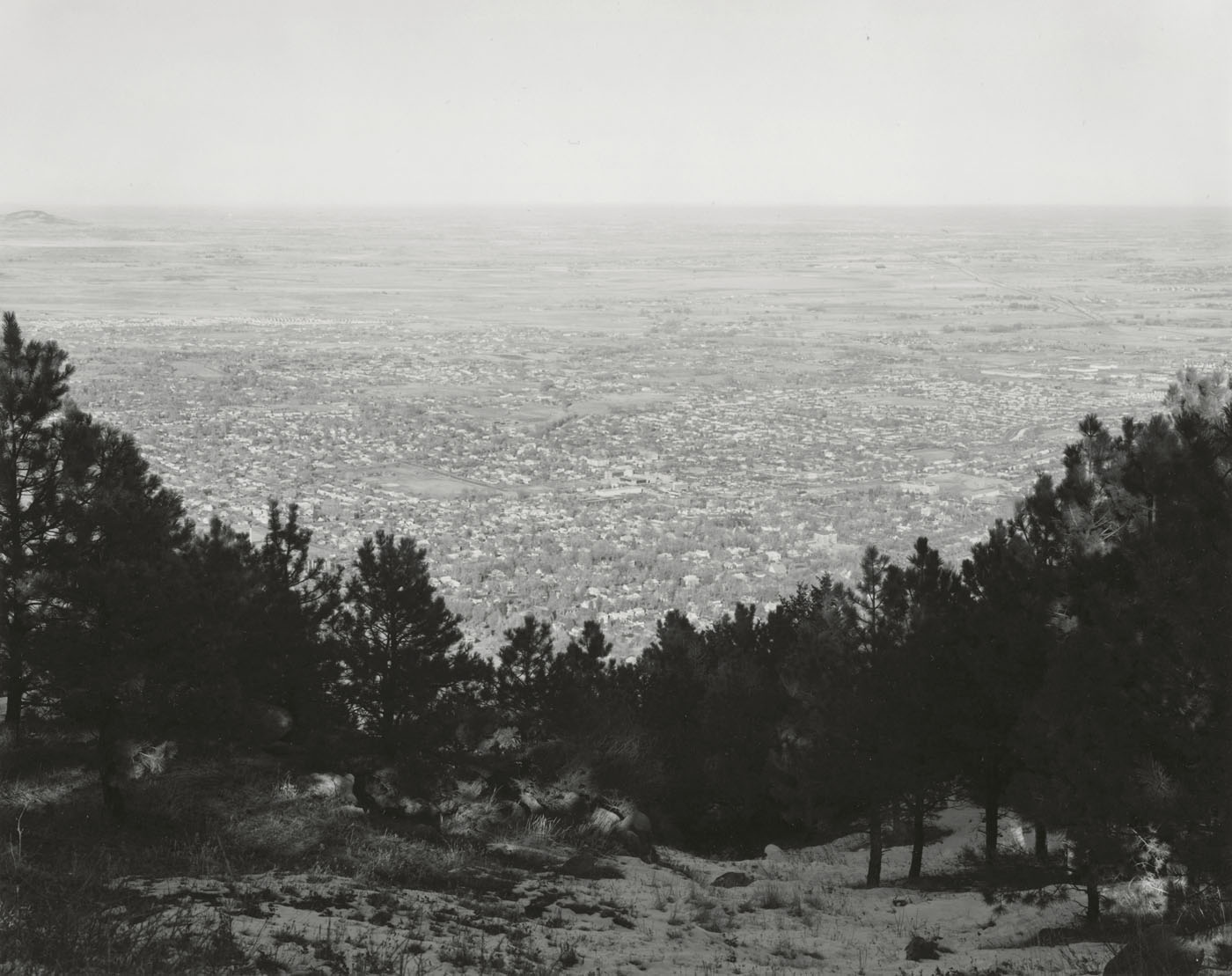
Robert Adams (American, b. 1937) 'East from Flagstaff Mountain, Boulder County, Colorado' 1975


Robert Adams (American, b. 1937)
East from Flagstaff Mountain, Boulder County, Colorado
1975
Gelatin silver print
Museum of Modern Art, New York


Robert Adams (American, b. 1937) 'Colorado Springs' 1968


Robert Adams (American, b. 1937)
Colorado Springs
1968
Gelatin silver print
Museum of Modern Art, New York


Robert Adams (American, b. 1937)
'Burning oil sludge, north of Denver, Colorado' 1973-1974


Robert Adams (American, b. 1937)
Burning oil sludge, north of Denver, Colorado
1973-1974
Gelatin silver print
Museum of Modern Art, New York


Stephen Shore (American, b. 1947) 'Beverly Boulevard and La Brea Avenue, Los Angeles, California, June 21, 1975' From the series 'Uncommon Places', 1973-1986


Stephen Shore (American, b. 1947)
Beverly Boulevard and La Brea Avenue, Los Angeles, California, June 21, 1975
1975
From the series Uncommon Places, 1973-1986
Museum of Modern Art, New York


Katy Grannan (American, b. 1969) 'Nicole, Crissy Field Parking Lot (I)' 2006


Katy Grannan (American, b. 1969)
Nicole, Crissy Field Parking Lot (I)
2006
Pigmented inkjet print
40 x 50″ (101.6 x 127cm)
Cornelius N. Bliss Memorial Fund
Museum of Modern Art, New York
© Katy Grannan


Cindy Sherman (American, b. 1954) 'Untitled Film Still #43' 1979


Cindy Sherman (American, b. 1954)
Untitled Film Still #43
1979
Gelatin silver print
7 9/16 x 9 7/16″ (19.2 x 24cm)
Acquired through the generosity of Sid R. Bass
Museum of Modern Art, New York


Cindy Sherman’s Untitled Film Stills is a suite of seventy black-and-white photographs in which the artist posed in the guises of various generic female film characters, among them, ingénue, working girl, vamp, and lonely housewife. Staged to resemble scenes from 1950s and ’60s Hollywood, film noir, B movies, and European art-house films, the printed images mimic in format, scale, and quality the often-staged “stills” used to promote films. By photographing herself in such roles, Sherman inserts herself into a dialogue about stereotypical portrayals of women. Whether she was the one to release the camera’s shutter or not, she is considered the author of the photographs. However, the works in Untitled Film Stills are not considered self-portraits.

Text from the MoMA website


Bill Owens (American, b. 1938) 'We're really happy. Our kids are healthy, we eat good food, and we have a really nice home' 1972


Bill Owens (American, b. 1938)
We’re really happy. Our kids are healthy, we eat good food, and we have a really nice home
1972
Gelatin silver print
8 1/16 x 9 15/16″ (20.4 x 25.3cm)
Gift of the photographer
Museum of Modern Art, New York
© Bill Owens


Richard Avedon (American, 1923-2004) 'Carl Hoefert, unemployed blackjack dealer, Reno, Nevada', from the series 'In the American West' August 30, 1983


Richard Avedon (American, 1923-2004)
Carl Hoefert, unemployed blackjack dealer, Reno, Nevada
August 30, 1983
From the series In the American West
Gelatin silver print
Museum of Modern Art, New York


The Museum of Modern Art
11 West 53 Street
New York, NY 10019
Phone: (212) 708-9400

Opening hours:
Sun – Fri 10.30am – 5.30pm
Sat 10.30am – 7.00pm

Monday mornings from 10.30am to 1.00pm are reserved exclusively for members and their guests.

MoMA website

LIKE ART BLART ON FACEBOOK

Back to top

Josef Sudek: Master of Photography

April 2009


Josef Sudek (Czech, 1896-1976) 'A Summer Shower in the Magic Garden' 1954-1959


Josef Sudek (Czech, 1896-1976)
A Summer Shower in the Magic Garden
1954-1959
Gelatin silver print


Further to the last post I have collected some images from the Czech photographer Josef Sudek (1896-1976), one of my favourite photographers.

The images of this master photographer are a delight. Like the photographs of Eugène Atget they evince generosity in the understanding of light, space and humanity.

Insightful writing on Josef Sudek by Charles Sawyer is included in the post.

A good collection of Josef Sudek photographs can be found on the Museum of Fine Arts Boston website. Go to the site and enter ‘Josef Sudek’ in the Collection Search box to the right and then click on the arrow.

Dr Marcus Bunyan


Please click on the photographs for a larger version of the image.


“Everything around us, dead or alive, in the eyes of a crazy photographer mysteriously takes on many variations, so that a seemingly dead object comes to life through light or by its surroundings. And if the photographer has a bit of sense in his head maybe he is able to capture some of this – and I suppose that’s lyricism.”

“I believe a lot in instinct. One should never dull it by wanting to know everything. One shouldn’t ask too many questions but do what one does properly, never rush, and never torment oneself.”

“It would have bored me extremely to have restricted myself to one specific direction for my whole life, for example, landscape photography. A photographer should never impose such restrictions upon himself.”


Josef Sudek


Josef Sudek (Czech, 1896-1976) 'In the enchanted garden' 1954-1959


Josef Sudek (Czech, 1896-1976)
In the enchanted garden
1954-1959
From the series Remembrances
Gelatin silver print


Josef Sudek (Czech, 1896-1976) 'Untitled' 1967


Josef Sudek (Czech, 1896-1976)
Untitled
1967
Gelatin silver print


“The systematic approach, and the dogged aesthetic experimentation of Sudek are akin to the working habits of Cezanne. But these alone are insufficient to make great art or even good art. On the contrary, if these are all one sees in a work, then the cumulative burden of so much plain labor would be unbearable. Sudek’s devotion to work may have integrated his shattered life but it could not have offered him the spiritual redemption he was seeking; only his aesthetic quest could bring this. It is the struggle for spiritual redemption through his aesthetic quest that gives Sudek’s best photographs their true power. Two qualities characterise his best work: a rich diversity of light values in the low end of the tonal scale, and the representation of light as a substance occupying its own space. The former, the diversity of light values, requires very delicate treatment of the materials, especially the negative, but also the paper (Sudek used silver halide papers in the main). The latter, the portrayal of light as substance, is a more original trait than his tonal palette, which one sees in occasional prints of other photographers. Flaubert once expressed an ambition to write a book which would have no subject, “a book dependent on nothing external … held together by the strength of its style.” Photographers have sometimes expressed parallel aspirations to make light itself the subject of their photographs, leaving the banal, material world behind. Both ideals are, of course, unobtainable, but nonetheless they may be worth pursuing. (Artists, in their pursuit of the unobtainable, are not so likely to be called pathological as others, of us, though recent developments in the philosophy of science tend to view the scientist’s quest for truth as equally quixotic).

Sudek has come closer than any other photographer to catching this illusive goal. His devices for this effect are simple and highly poetic: the dust he raised in a frenzy when the light was just right, a gossamer curtain draped over a chair back, the mist from a garden sprinkler, even the ambient moisture in the atmosphere when the air is near dew point. The eye is usually accustomed to seeing not light but the surfaces it defines; when light is reflected from amorphous materials, however, perception of materiality shifts to light itself. Sudek looked for such materials everywhere. And then he usually balanced the ethereal luminescence with the contra-bass of his deep shadow tonalities. The effect is enchanting, and strongly conveys the human element which is the true content of his photographs. For, throughout all his photography, there is one dominant mood, one consistent viewpoint, and one overriding philosophy. The mood is melancholy and the point of view is romanticism. And overriding all this is a philosophic detachment, an attitude he shares with Spinoza. The attitude of detachment that characterises Sudek’s art accounts for both its strength and weakness: the strength which lies in the ideal of utter tranquility and the weakness which is found in the paucity of human intimacy. Some commentators find Sudek’s photos mysterious but I think this is a mistake: the air of mystery vanishes once we see in Sudek’s photography a person’s private salvation from despair.”

Charles Sawyer. “Josef Sudek” in Creative Camera April 1980, Number 190 [Online] Cited 14/04/2009. No longer available online. Used under fair use conditions for the purposes of education and research


Josef Sudek (Czech, 1896-1976) From the series 'Vanished Statues in Mionsi' 1969


Josef Sudek (Czech, 1896-1976)
From the series Vanished Statues in Mionsi
1969
Gelatin silver print


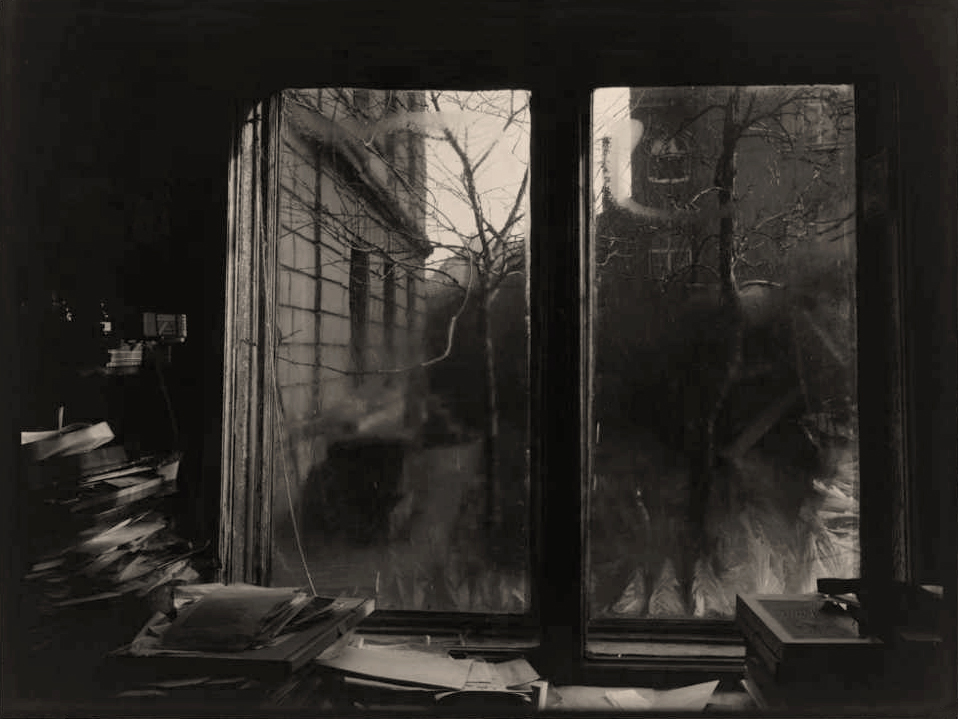
Josef Sudek (Czech, 1896-1976) 'The Window of My Atelier' 1969


Josef Sudek (Czech, 1896-1976)
The Window of My Atelier
1969
Gelatin silver print


Josef Sudek (Czech, 1896-1976) 'Still-life after Caravaggio, Variation No 2 (or a night-time Variation)' 1956


Josef Sudek (Czech, 1896-1976)
Still-life after Caravaggio, Variation No 2 (or a night-time Variation)
1956
Gelatin silver print


Josef Sudek (Czech, 1896-1976) 'Untitled (Still Life According to Caravaggio)' 1956


Josef Sudek (Czech, 1896-1976)
Untitled (Still Life According to Caravaggio)
1956
Gelatin silver print


Josef Sudek (Czech, 1896-1976) 'Remembrance of Mr. Magician (the garden of architect Rothmayer)' 1959


Josef Sudek (Czech, 1896-1976)
Remembrance of Mr. Magician (the garden of architect Rothmayer)
1959
Gelatin silver print


Otto Rothmayer (architect)

Otto Rothmayer was born during 1892 into a family of carpenters. He took up that trade, following in his father’s footsteps. Rothmayer studied at the Academy of Applied Arts in Prague under Jože Plečník’s guidance, and the Slovenian architect would inspire Rothmayer throughout his entire life. In fact, the design of the Rothmayer Villa was greatly influenced by Plečník’s Villa Stadion in Ljubljana. Rothmayer’s skill at carpentry came in handy as he designed much furniture. He made furniture for the gurus of Czech Cubism, architects Pavel Janák and Josef Gočár. Furniture he designed that does not fall under the category of Cubism but is rather simple and practical can be found in his villa and garden, for instance. His white chairs forged from rough steel were a big hit.

Work at Prague Castle

Plečník would not only be Rothmayer’s mentor but also his colleague. Rothmayer started working as Plečník’s assistant architect at Prague Castle in 1921, when Tomáš G. Masaryk was president of a young, democratic Czechoslovakia. Rothmayer even built a spiral staircase at Prague Castle, using what was then a new material – faux marble. When Plečník left his Castle post after 1930, Rothmayer continued to draw plans for the Castle until his retirement in 1958.

Other projects and the academic world

Rothmayer’s résumé does not only include his tenure at Prague Castle. He took up other projects, too. For instance, he designed three family houses and a side altar for a church in the Vinohrady district of Prague. He also designed museum exhibitions. Rothmayer went into teaching as well. He held the post of Professor of Interior Design at Prague’s Academy of Applied Arts in the late 1940s and early 1950s, when he left for political reasons. Rothmayer also was friends with photographer Josef Sudek, who took many snapshots at Otto’s Břevnov residence. Sudek’s photos set in the villa’s garden are particularly impressive. Otto Rothmayer died in 1966.

Tracy A. Burns. “The Rothmayer Villa: A gem of modern architecture,” on the Private Prague Guide website [Online] Cited 11/01/2019. Used under fair use conditions for the purposes of education and research


Josef Sudek (Czech, 1896-1976) 'Labyrinths' 1969


Josef Sudek (Czech, 1896-1976)
Labyrinths
1969
Gelatin silver print


Josef Sudek (Czech, 1896-1976) 'Labyrinth of Spring' 1968


Josef Sudek (Czech, 1896-1976)
Labyrinth of Spring
1968
Gelatin silver print
22.5 x 28.7cm (8 7/8 x 11 1/4 in)


Josef Sudek (Czech, 1896-1976) 'Remembrances of Architect Rothmayer, Mr. Magician' 1960


Josef Sudek (Czech, 1896-1976)
Remembrances of Architect Rothmayer, Mr. Magician
1960
Gelatin silver print


LIKE ART BLART ON FACEBOOK

Back to top

Exhibition: ‘Czech Photography of the 20th Century’ at the Exhibition Hall of the Federal Republic of Germany, Bonn

Exhibition dates: 13th March – 26th July, 2009

Co-curators: Vladimir Birgus, photography professor and head of the Institute of Creative Photography at Silesian University in Opava, and Jan Mlčoch, the curator of the Photography Collection at the Museum of Decorative Arts in Prague


Jindřich Štreit (Czech, b. 1946) 'Arnoltice' 1985 from the exhibition 'Czech Photography of the 20th Century' at the Exhibition Hall of the Federal Republic of Germany, Bonn,  March - July, 2009


Jindřich Štreit (Czech, b. 1946)
Arnoltice
1985
From the Village Life series
Gelatin silver print


Jindřich Štreit (born 5 September 1946 in Vsetín) is a Czech photographer and pedagogue known for his documentary photography. He concentrates on documenting the rural life and people of Czech villages. He is considered one of the most important exponents of Czech documentary photography.


This looks like to be an interesting exhibition. I wish I had been able to see it.

Wouldn’t it be such a grand job flying around the world, reviewing photography exhibitions and bringing you my thoughts.

I can only wish…

Dr Marcus Bunyan


Many thankx to the Exhibition Hall of the Federal Republic of Germany for allowing me to publish the photographs in the posting. Please click on the photographs for a larger version of the image.


František Drtikol (Czech, 1883-1961) 'Wave' 1925 from the exhibition 'Czech Photography of the 20th Century' at the Exhibition Hall of the Federal Republic of Germany, Bonn,  March - July, 2009


František Drtikol (Czech, 1883-1961)
Wave
1925
Gelatin silver print


Czech photography produced and produces leading figures in all areas of photography – from classical documentary photojournalism to surrealism, realism or avant-garde works. From 13 March 2009 on, the Art and Exhibition Hall of the Federal Republic of Germany is presenting over 400 photographic works, a historical mosaic of Czech photography from 1900 until the late 20th century that underlines the international reputation enjoyed by Czech photography today. That reputation is not only apparent in the outstanding contributions by such renowned artists as Josef Sudek, Karel Hájek, Václav Jírů, Vilém Reichmann, Jan Reich, Jindřich Štreit, Frantisek Drtikol, Jaromír Funke, Jaroslav Rossler, Josef Koudelka and Jan Saudek, but also in works from a host of younger photographers. The exhibition does not only showcase famous names but also less well-known photographers, providing an overall impression of the variation and innovation in Czech photography.

From Surrealism and other avant-garde experimentation to realism and classic photo reportage, Czech photographers have long played a key role in all areas of photography and continue to do so to this day.

This exhibition is the first in Germany to present the history and development of Czech photography from 1900 to the turn of the millennium. Beginning with Art Nouveau-inspired Pictorialism, the comprehensive survey traces the rise of avant-garde photography and the development of photo montage in the 1920s to the 1940s. It examines the influence of ideological pressure on photography during the Second World War, the Stalinist 1950s and the period of Communist ‘normalisation’ after the occupation in 1968 and introduces the visitor to the multifaceted range of contemporary trends.

Text from the Exhibition Hall of the Federal Republic of Germany website [Online] Cited 10/04/2009. No longer available online. Used under fair use conditions for the purposes of education and research


František Drtikol (Czech, 1883-1961) 'Nude' 1927


František Drtikol (Czech, 1883-1961)
Nude
1927
Gelatin silver print


František Drtikol (3 March 1883, Příbram – 13 January 1961, Prague) was a Czech photographer of international renown. He is especially known for his characteristically epic photographs, often nudes and portraits.

From 1907 to 1910 he had his own studio, until 1935 he operated an important portrait photostudio in Prague on the fourth floor of one of Prague’s remarkable buildings, a Baroque corner house at 9 Vodičkova, now demolished. Jaroslav Rössler, an important avant-garde photographer, was one of his pupils. Drtikol made many portraits of very important people and nudes which show development from pictorialism and symbolism to modern composite pictures of the nude body with geometric decorations and thrown shadows, where it is possible to find a number of parallels with the avant-garde works of the period. These are reminiscent of Cubism, and at the same time his nudes suggest the kind of movement that was characteristic of the futurism aesthetic.

Text from the Wikipedia website


Eugen Wiskovsky (Czech, 1888-1964) 'Lunar Landscape or Collars' 1929


Eugen Wiskovsky (Czech, 1888-1964)
Lunar Landscape or Collars
1929
Gelatin silver print


The oeuvre of the leading Czech avant-garde photographer Eugen Wiskovsky (1888-1964) is not large in size or subject range, but it is noteworthy in its originality, depth of ideas, and mastery. Wiskovsky’s early New Objectivist works, from the late 1920s and early 1930s, sought artistic effect in apparently non-aesthetic objects: His inventive lighting and cropping allowed their elementary lines to stand out, to lose their worldly associations and take on potential metaphorical meanings. In his dynamic diagonal compositions, Wiskovsky was among the most radical practitioners of Czech Constructivism. His landscape work is similarly distinctive.


Jaroslav Rössler (Czech, 1902-1990) 'Untitled' 1931


Jaroslav Rössler (Czech, 1902-1990)
Untitled
1931
Gelatin silver print


Jaroslav Rössler (25 May 1902, Smilov – 5 January 1990, Prague) was a pioneer of Czech avant-garde photography and a member of the association of Czech avant-garde artists Devětsil (Butterbur).

Rössler was born to the Czech-German father, Eduard Rössler, and a Czech mother, Adela Nollova. From 1917 to 1920, Rössler studied in the atelier of the company owned by renowned Czech photographer František Drtikol. Subsequently, he worked with the company as a laboratory technician. As a 21 years old, he began collaboration with the art theorist Karel Teige, who assigned him to create typographic layout for magazines Pásmo, Disk, Stavba and ReD (Revue Devětsilu). While working on these tasks, Rössler deepened his knowledge of photographic methods. In his works he utilised and combined the techniques of photogram, photomontage, collage and drawing. The beginnings of his photographic work were influenced by Cubism and Futurism, but he also attempted to create the first abstract photographs. In 1923, he became a member of the avant-garde association Devětsil.

In 1925, he went on a six-month study visit to Paris. The same year he began working as a photographer in the Osvobozené divadlo in Prague. Before his second departure to Paris, he co-worked as a commercial photographer with the pictorial magazine Pestrý týden.

In 1927, Rössler moved to Paris together with his wife, Gertruda Fischerová (1894-1976). Initially, he focused on commercial photography. He collaborated with the experimental studio of Lucien Lorell, and worked on commissions for notable companies such as Michelin and Shell. However, later he found an interest in the “street life” of Paris, which influenced his future stay in the city. During a demonstration, he encountered the protesters and took photographs of the event. Shortly after that he was arrested, and after a six-month imprisonment he was expelled from the country, in 1935. The alleged reason for his expulsion was his German-sounding surname.

After his return from Paris, Rössler and his wife resided in Prague, Žižkov. He opened a small photographic atelier, but difficulties associated with the management of the studio caused a significant gap in his artistic work, lasting for almost two decades.

In the 1950s, he resumed his previous activities and again began experimenting with the camera and photographic techniques. He created so-called “prizmata” (prisms), photographs taken through a birefringent prism. Additionally, he experimented with solarisation and explored the possibilities of the Sabatier effect.

Text from the Wikipedia website


Jindřich Štyrský (Czech, 1899-1942) From the 'Man with Blinkers' series 1934


Jindřich Štyrský (Czech, 1899-1942)
From the Man with Blinkers series
1934
Museum of Decorative Arts, Prague


Eugen Wiskovsky (Czech, 1888-1964) 'Disaster' 1939


Eugen Wiskovsky (Czech, 1888-1964)
Disaster
1939
Gelatin silver print


Josef Sudek (Czech, 1896-1976) 'The Last Rose' 1956


Josef Sudek (Czech, 1896-1976)
The Last Rose from the Rose series
1956
Gelatin silver print


Josef Sudek (17 March 1896, Kolín, Bohemia – 15 September 1976, Prague) was a Czech photographer, best known for his photographs of Prague.

Sudek was originally a bookbinder. During the First World War he was drafted into the Austro-Hungarian Army in 1915 and served on the Italian Front until he was wounded in the right arm in 1916 which led to the limb being amputated at the shoulder. After the war he studied photography for two years in Prague under Jaromir Funke. His army disability pension gave him leeway to make art, and he worked during the 1920s in the romantic Pictorialist style. Always pushing at the boundaries, a local camera club expelled him for arguing about the need to move forwards from ‘painterly’ photography. Sudek then founded the progressive Czech Photographic Society in 1924. Despite only having one arm, he used large, bulky cameras with the aid of assistants.

Sudek’s photography is sometimes said to be modernist. But this is only true of a couple of years in the 1930s, during which he undertook commercial photography and thus worked “in the style of the times”. Primarily, his personal photography is neo-romantic.

Text from the Wikipedia website


Josef Sudek was a Czech photographer best known for his elegiac black-and-white images of Prague, interiors, still lifes, and the landscapes of Bohemian forests. Many of Sudek’s most memorable images were taken from the window of his small studio, documenting his humble courtyard during changing weather and light conditions. “Everything around us, dead or alive, in the eyes of a crazy photographer mysteriously takes on many variations,” he explained, “so that a seemingly dead object comes to life through light or by its surroundings.”

Text from the artnet website [Online] Cited 10/01/2019


Jan Saudek (Czechoslovakia, b. 1935) 'Life' 1966


Jan Saudek (Czech, b. 1935)
Life
1966
Gelatin silver print


Josef Koudelka (Czech, b. 1938) 'France' 1987


Josef Koudelka (Czech, b. 1938)
France
1987
Gelatin silver print


The Art and Exhibition Hall of the Federal Republic of Germany
Museumsmeile Bonn
Helmut-Kohl-Allee 4
53113 Bonn
Telephone: +49 228 9171-200

Opening hours:
Thursday – Sunday and Tuesday 10am – 7pm
Closed Mondays

Exhibition Hall of the Federal Republic of Germany website

LIKE ART BLART ON FACEBOOK

Back to top

Jeff Gusky photographs from the exhibition ‘Of Life and Loss: The Polish Photographs of Roman Vishniac and Jeffrey Gusky’ at the Detroit Institute of Arts

Exhibition dates: 15th April – 12th July, 2009

Curator: Karen Sinsheimer, curator of photographs at the Santa Barbara Museum of Art


Jeff Gusky. 'Corridor in Kazimierz (Former Jewish District)' Cracow, Poland 1996


Jeff Gusky (American)
Corridor in Kazimierz (Former Jewish District)
Cracow, Poland 1996


As promised photographs by Jeff Gusky from the exhibition Of Life and Loss: The Polish Photographs of Roman Vishniac and Jeffrey Gusky.

Many thanks to Jeff for making them available to me.

I have tried to form a small narrative from some of the photographs that Jeff sent me, like a piece of music.

The flow through passageways and doorways forming rivers of light and dark ends in the ascending stairs that hold the possibility of deliverance and redemption. This holistic image is reminiscent of photographs by Eugène Atget.

The most beautiful video and music (see below) is entirely appropriate for this post: Gorecki Symphony No. 3 “Sorrowful Songs” – Lento e Largo.

Dr Marcus Bunyan


Jeff Gusky. 'Former Jewish Home in Use as a Public Toilet' Dzialoszyce, Poland 1996


Jeff Gusky (American)
Former Jewish Home in Use as a Public Toilet
Dzialoszyce, Poland 1996


Jeff Gusky. 'Desecrated Synagogue and Jewish School' Dzialoszyce, Poland 1999


Jeff Gusky (American)
Desecrated Synagogue and Jewish School
Dzialoszyce, Poland 1999


Jeff Gusky. 'Lublin Corridor #1' Lublin, Poland 1999


Jeff Gusky (American)
Lublin Corridor #1
Lublin, Poland 1999


Jeff Gusky. 'Birkenau Silhouette' Auschwitz, Poland 1996


Jeff Gusky (American)
Birkenau Silhouette
Auschwitz, Poland 1996


Jeff Gusky. 'Where They Lived #4' Cracow, Poland 2001


Jeff Gusky (American)
Where They Lived #4
Cracow, Poland 2001


Gorecki Symphony No. 3 “Sorrowful Songs” – Lento e Largo


Detroit Institute of Arts
5200 Woodward Avenue
Detroit, Michigan 48202
Phone: 313.833.7900

Opening hours:
Tuesday – Thursday 9am – 4pm
Friday 9am – 9pm
Saturday – Sunday 10am – 5pm
Monday Closed

Detroit Institute of the Arts website

LIKE ART BLART ON FACEBOOK

Back to top

Exhibition: ‘Of Life and Loss: The Polish Photographs of Roman Vishniac and Jeffrey Gusky’ at the Detroit Institute of Arts

Exhibition dates: 15th April – 12th July, 2009

Curator: Karen Sinsheimer, curator of photographs at the Santa Barbara Museum of Art


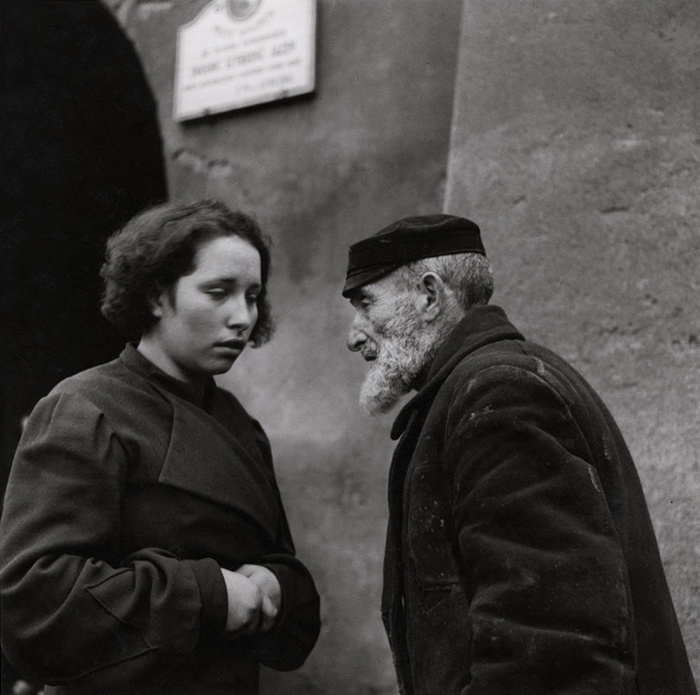
Roman Vishniac (Russian-American, 1897-1990) 'Grandfather and granddaughter, Lublin' 1937 from the exhibition 'Of Life and Loss: The Polish Photographs of Roman Vishniac and Jeffrey Gusky' at the Detroit Institute of Arts, April - July, 2009


Roman Vishniac (Russian-American, 1897-1990)
Grandfather and granddaughter, Lublin
1937
Gelatin silver print
Courtesy of the International Center of Photography
© Mara Vishniac Kohn


“During my journeys, I took over sixteen thousand photographs. All but two thousand were confiscated and, presumably, destroyed – although perhaps they will reappear someday. I hope my photographs enable the reader to envision a time and place that worthy of remembrance.”


Roman Vishniac


Hardly any photographs by Jeffrey Gusky online but he has provided some via email. I will post them asap. Thank you very much Jeff for contacting me.

I knew little about the photographer Roman Vishniac but after further research I know a little more now. What a photographer!

Gaze at the photograph Grandfather and granddaughter, Lublin (1937, above). Observe the space between the figures, the tension almost palpable, the look on the granddaughter’s face and the wringing of her hands a portent of the despair to come. A masterpiece of classical photography.

A good archive of his photographs is on the International Center of Photography website.

Dr Marcus Bunyan


Many thankx to The Detroit Institute of Arts for allowing me to publish the photographs in the posting. Please click on the photographs for a larger version of the image.


Roman Vishniac (Russian-American, 1897-1990) 'Children playing on a street lined with swastika flags' mid-1930s from the exhibition 'Of Life and Loss: The Polish Photographs of Roman Vishniac and Jeffrey Gusky' at the Detroit Institute of Arts, April - July, 2009


Roman Vishniac (Russian-American, 1897-1990)
Children playing on a street lined with swastika flags, probably outskirts of Berlin
mid-1930s
Gelatin silver print
Courtesy of the International Center of Photography
© Mara Vishniac Kohn


Roman Vishniac (Russian-American, 1897-1990) 'Women walking with a baby carriage' 1935


Roman Vishniac (Russian-American, 1897-1990)
Women walking with a baby carriage, Brunnenstrasse, Berlin
1935
Gelatin silver print
Courtesy of the International Center of Photography
© Mara Vishniac Kohn


Roman Vishniac (Russian-American, 1897-1990) 'Three women, Mukacevo' c. 1935-1938


Roman Vishniac (Russian-American, 1897-1990)
Three women, Mukacevo
c. 1935-1938
Gelatin silver print
Courtesy of the International Center of Photography
© Mara Vishniac Kohn


Roman Vishniac (Russian-American, 1897-1990) 'Man purchasing herring, wrapped in newspaper, for a Sabbath meal, Mukacevo' c. 1935-1938


Roman Vishniac (Russian-American, 1897-1990)
Man purchasing herring, wrapped in newspaper, for a Sabbath meal, Mukacevo
c. 1935-1938
Gelatin silver print
Courtesy of the International Center of Photography
© Mara Vishniac Kohn


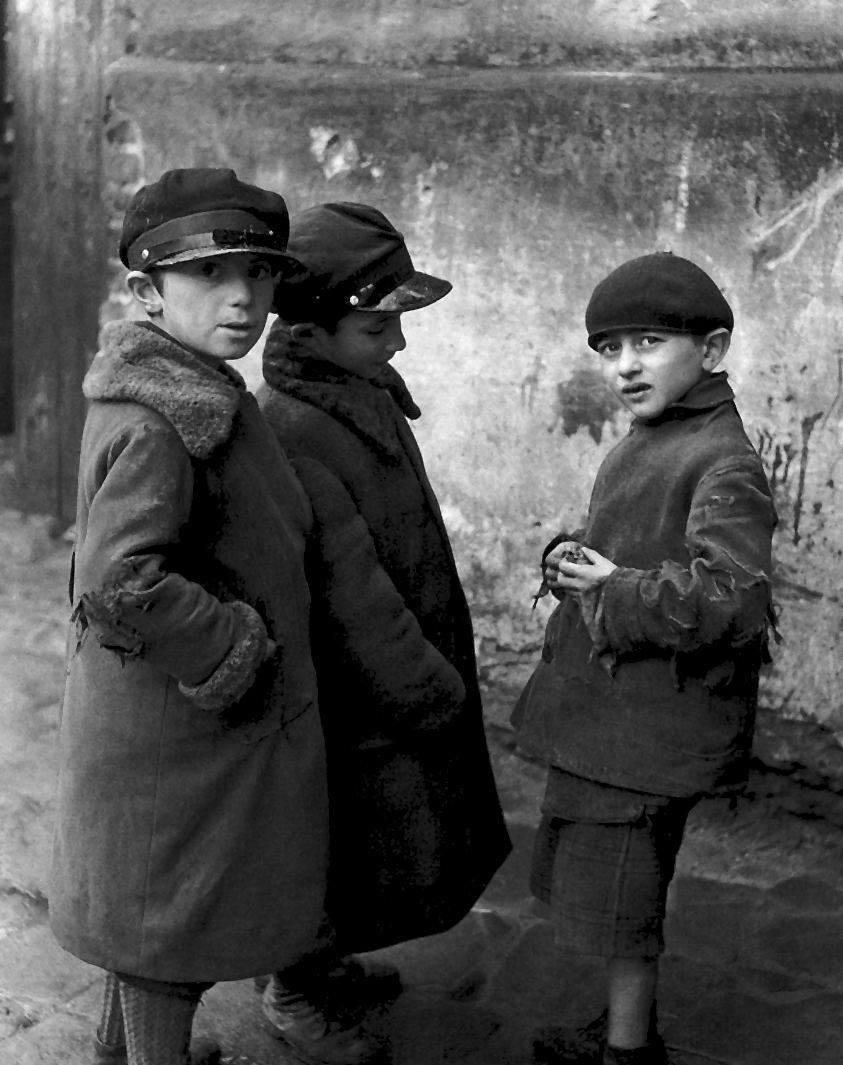
Roman Vishniac (Russian-American, 1897-1990) 'Young Jewish boys suspicious of strangers, Mukachevo' c. 1935-1938


Roman Vishniac (Russian-American, 1897-1990)
Young Jewish boys suspicious of strangers, Mukachevo
c. 1935-1938
Gelatin silver print
Courtesy of the International Center of Photography
© Mara Vishniac Kohn


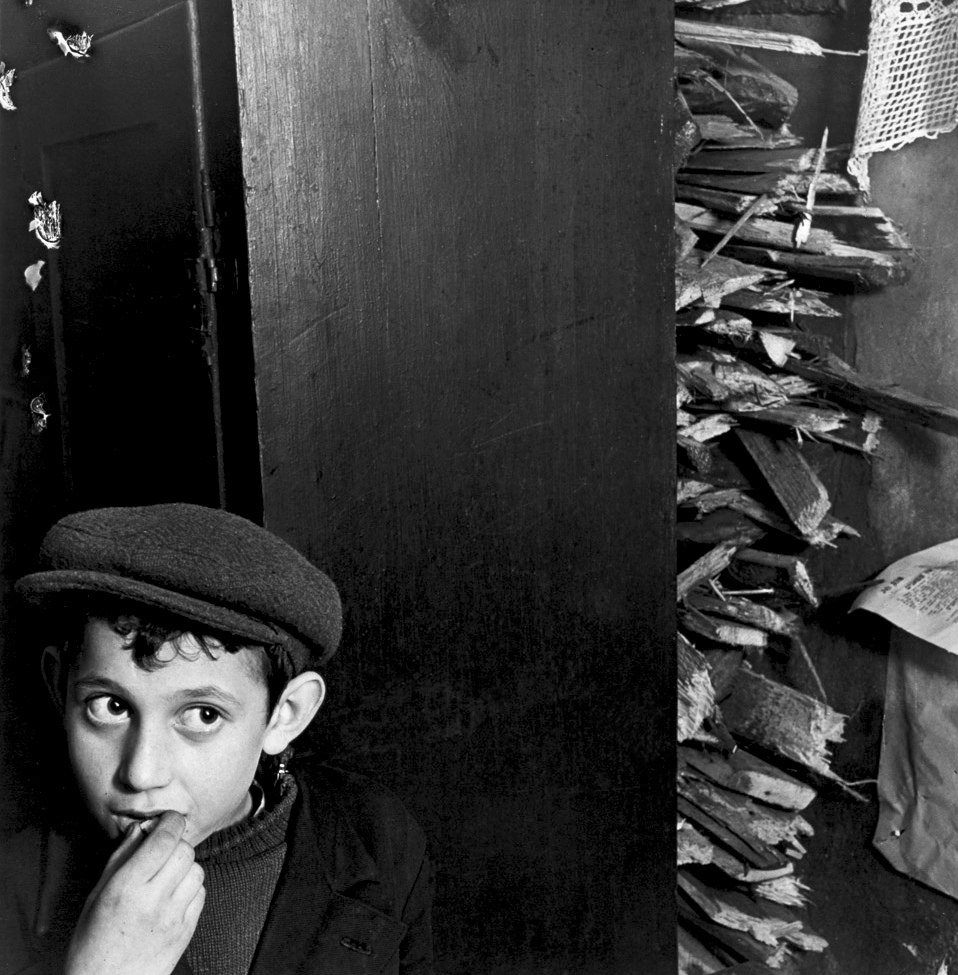
Roman Vishniac (Russian-American, 1897-1990) 'Boy with kindling in a basement dwelling, Krochmalna Street, Warsaw' c. 1935-1938


Roman Vishniac (Russian-American, 1897-1990)
Boy with kindling in a basement dwelling, Krochmalna Street, Warsaw
c. 1935-1938
Gelatin silver print
Courtesy of the International Center of Photography
© Mara Vishniac Kohn


This previously unpublished photograph attests to Vishniac’s bold and innovative use of composition: the slim, vertical register of kindling wood, offset by a corner of Yiddish newspaper on a table and triangle of lace at the window, is balanced by the young boy’s sideways glance peering out from the corner of the frame, reflecting a modern sensibility not usually associated with Vishniac’s work in Eastern Europe.

Text from the International Center of Photography website


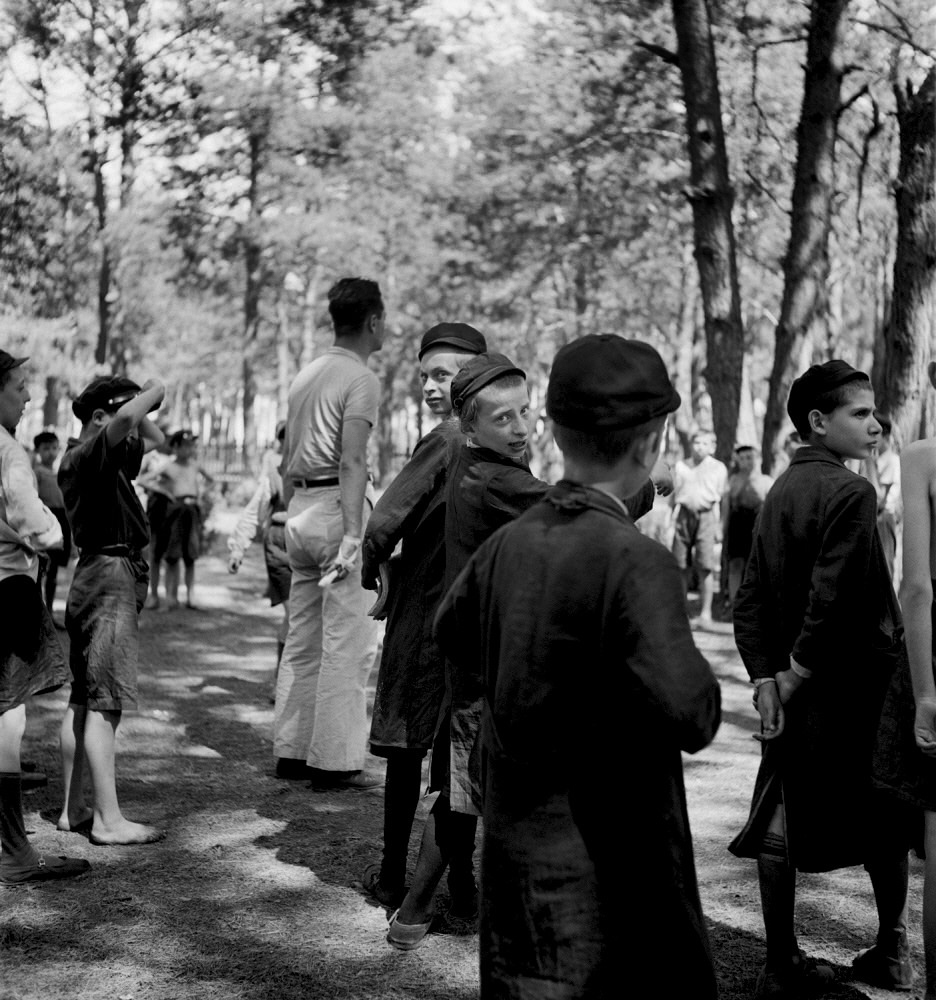
Roman Vishniac (Russian-American, 1897-1990) 'Children playing outdoors and watching a game' c. 1935-1937


Roman Vishniac (Russian-American, 1897-1990)
Children playing outdoors and watching a game, TOZ (Society for Safeguarding the Health of the Jewish Population) summer camp, Otwock, near Warsaw
c. 1935-1937
Gelatin silver print
Courtesy of the International Center of Photography
© Mara Vishniac Kohn


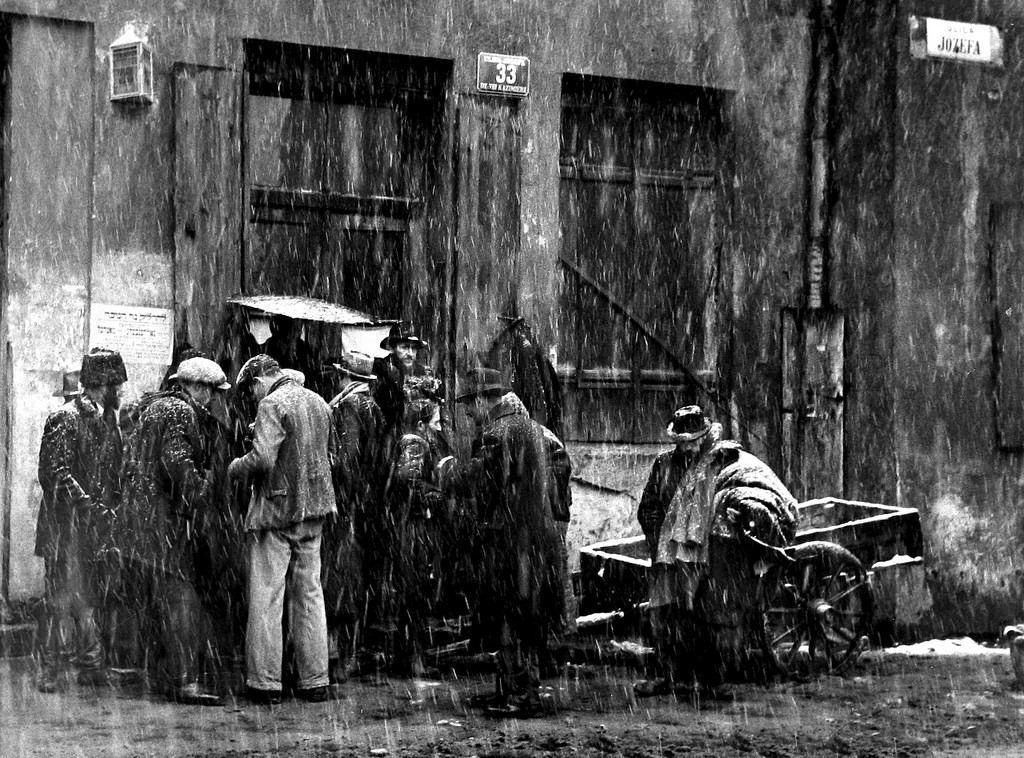
Roman Vishniac (Russian-American, 1897-1990) 'These men are selling old clothes. The notice on the wall reads "Come Celebrate Chanukah," Kazimierz, Krakow' c. 1935-1938


Roman Vishniac (Russian-American, 1897-1990)
These men are selling old clothes. The notice on the wall reads “Come Celebrate Chanukah,” Kazimierz, Krakow
1935-1938
Gelatin silver print
Courtesy of the International Center of Photography
© Mara Vishniac Kohn


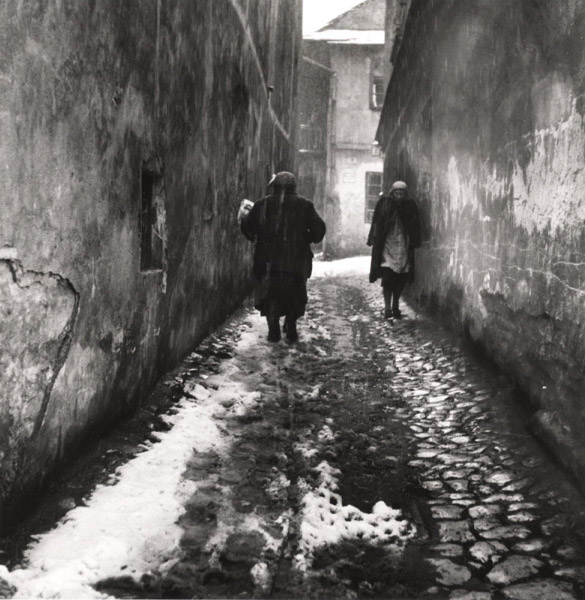
Roman Vishniac (Russian-American, 1897-1990) 'A street of Kazimierz, Krakow' 1935-1938


Roman Vishniac (Russian-American, 1897-1990)
A street of Kazimierz, Krakow
1935-1938
Gelatin silver print
Courtesy of the International Center of Photography
© Mara Vishniac Kohn


Roman Vishniac (Russian-American, 1897-1990) 'Isaac Street, Kazimierz, Krakow' 1935-1938


Roman Vishniac (Russian-American, 1897-1990)
Isaac Street, Kazimierz, Krakow
1935-1938
Gelatin silver print
Courtesy of the International Center of Photography
© Mara Vishniac Kohn


Roman Vishniac (Russian-American, 1897-1990) 'Isaac Street, Kazimierz, Krakow' 1935-1938


Roman Vishniac (Russian-American, 1897-1990)
Isaac Street, Kazimierz, Krakow
1935-1938
Gelatin silver print
Courtesy of the International Center of Photography
© Mara Vishniac Kohn


Roman Vishniac (Russian-American, 1897-1990) 'A street of Kazimierz, Cracow' 1935-1938


Roman Vishniac (Russian-American, 1897-1990)
Street in Kazimierz, Krakow
1935-1938
Gelatin silver print
Courtesy of the International Center of Photography
© Mara Vishniac Kohn


Roman Vishniac (Russian-American, 1897-1990) 'Jewish street vendors, Warsaw, Poland' 1938


Roman Vishniac (Russian-American, 1897-1990)
Jewish street vendors, Warsaw, Poland
1938
Gelatin silver print
Courtesy of the International Center of Photography
© Mara Vishniac Kohn


Examining each photographer separately, Vishniac and Gusky have very distinctive photographic styles. Due to the nature of his project and the ever-escalating semblance of anti-semitism, Vishniac’s photographs are less polished and more emotionally raw in an attempt to tell the stories of people’s individual lives. By contrast, Gusky finds inspiration in the physical places which made up the world of now entirely absent communities of Jews.

While each photographer had an individual style and statement to make, it is both the relationship with and stark difference between the two that provides the greatest emotional poignancy. The exhibition pairs many Vishniac and Gusky photographs, illuminating the individual lives lost, culture destroyed, and environments degraded by decades of neglect in Poland, as Gusky photographed the desecrated cemeteries, crumbling synagogues, and empty streets that served as the backdrop for Vishniac’s scenes of mid-century Jewish life.

There are also several points of convergence in the biographies of Vishniac and Gusky. Like Vishniac, Gusky is of Russian Jewish descent, and both men were compelled to their photographic projects in part by personal reasons springing from their Jewish heritage. The photographers also have professional ties to biological science which embody their work through illustration of the fragility of human life.

Text from the Santa Barbara Museum website [Online] Cited 01/04/2009. No longer available online. Used under fair use conditions for the purposes of education and research


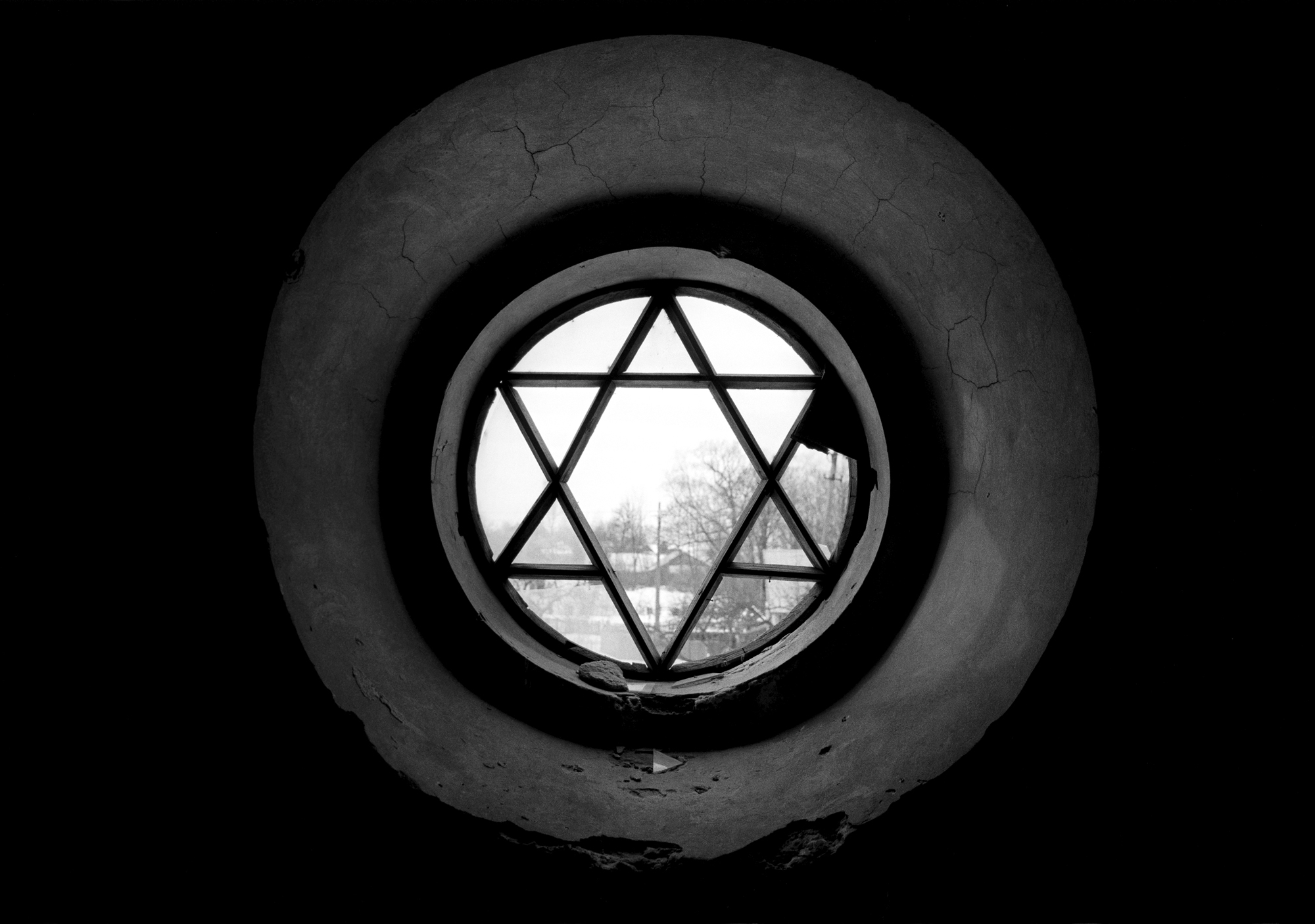
Jeffrey Gusky. 'Broken stained glass window, Wielkie, Oczy' 2001


Jeffrey Gusky (American)
Broken stained glass window, Wielkie, Oczy
2001
Gelatin silver print


This exhibition, organised by the Santa Barbara Museum of Art, includes around 90 black-and-white photographs taken by two photographers: Roman Vishniac, who photographed throughout Poland’s Jewish communities in the mid-1930s, and Jeffrey Gusky who photographed many of the same Polish sites during the 1990s.

In 1935, Russian-born photographer Roman Vishniac was commissioned by the American Joint Distribution Committee (a Paris-based relief agency) to photograph Jewish communities in the cities and villages of Poland as well as other areas of Eastern Europe. He took over 16,000 photographs (around 2,000 have survived) depicting the people, life, homes, schools, and trades of these communities. The photographs, in turn, were to be used to help raise money for humanitarian aid for individuals in areas that were becoming increasingly destitute.

In 1996, Jeffrey Gusky, an amateur photographer and doctor of Russian-Jewish descent set out on a personal journey in search of Jewish identity and culture in Eastern Europe. He made the first of four trips to Poland where he traveled to cities and villages where Jews had lived and worked for centuries. Gusky photographed what remained of Jewish culture in Poland focusing on the ruins of synagogues, cemeteries – many of which were desecrated, and the empty and still streets.

Text from the Detroit Institute of Arts website [Online] Cited 01/04/2009. No longer available online. Used under fair use conditions for the purposes of education and research


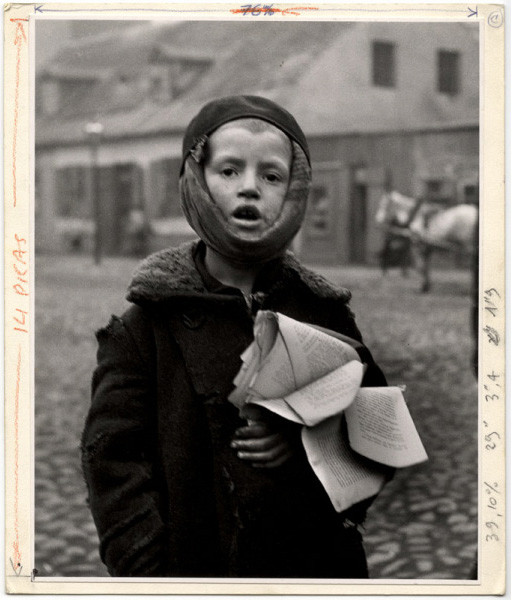
Roman Vishniac (Russian-American, 1897-1990) 'A Boy with a toothache. Next year another child will inherit the tattered schoolbook. Slonim' c. 1935-1938


Roman Vishniac (Russian-American, 1897-1990)
A Boy with a toothache. Next year another child will inherit the tattered schoolbook. Slonim
c. 1935-1938
Gelatin silver print


Roman Vishniac (Russian-American, 1897-1990) 'Nat Gutman's Wife, Warsaw' 1938


Roman Vishniac (Russian-American, 1897-1990)
Nat Gutman’s Wife, Warsaw
1938
Gelatin silver print
Courtesy of the International Center of Photography
© Mara Vishniac Kohn


Poignant, haunting photographs of Poland’s Jewish communities taken in the 1930s by Roman Vishniac, and images of many of the same areas taken in the 1990s by Jeffrey Gusky are the subject of the moving exhibition Of Life and Loss: The Polish Photographs of Roman Vishniac and Jeffrey Gusky. The exhibition, at the Detroit Institute of Arts (DIA) from April 19 to July 12, includes 90 black-and-white photographs and is free with museum admission.

Through their photographs, Vishniac (1897-1990) and Gusky (born 1953), two very different photographers from very different eras, bore witness to the Jewish experience in Poland during the 20th century, preserving memories and documenting life experiences for future generations. Although taken 60 years apart, their images share themes of memory, life, and loss and are evidence of people and places that once were, and what remains in their absence.

Vishniac and Gusky have very distinctive styles. Due to the nature of his project and the escalation of anti-Semitism in 1930s Poland, Vishniac made photographs in the documentary tradition. With great empathy, he recorded the places and lives of individuals exactly as he found them, in their homes and in the streets. Almost 60 years later, Gusky, by contrast, interpreted former Jewish sites throughout Poland with a sensitive eye on the past. His misty and haunting images are devoid of human presence, and show former sites from many Jewish communities that once thrived throughout Poland.

While each photographer had an individual style and statement to make, it is both the relationship with and stark difference between the two that provides the greatest emotional impact. Brought together for the first time, Vishniac’s and Gusky’s photographs illuminate the individual lives lost, culture destroyed, and environments degraded by decades of neglect in Poland, as Gusky photographed the desecrated cemeteries, crumbling synagogues, and empty streets that served as the backdrop for Vishniac’s scenes of vibrant, mid-century Jewish life.

Vishniac was born in Russia, and fled to Berlin with his family in 1920. He worked as a biologist and supplemented his income as a photographer. Eventually he became compelled to use photography to document people and communities throughout Europe. In the 1930s Vishniac was commissioned by the Joint Distribution Committee, a Paris-based relief agency, to photograph Jewish life in Poland, where he took over 16,000 photographs (only 2,000 survived the war) over a three-year period. He photographed vibrant communities filled with people in their homes and schools, at their trades and in their streets, markets and temples. His poignant works are evidence of communities filled with life despite the lack of food, medical care and livelihood that prevailed.

Gusky is a physician in rural Texas who began photographing as a way to explore Jewish identity. Although a Jew of Russian decent, he became interested in the history of Jews in Poland after hearing a radio interview with Ruth Ellen Gruber, an American journalist who documented the ruins of Jewish communities in Eastern Europe. His photographs depict the vacant and somber sites of once-thriving Jewish communities throughout the country. With these images, Gusky reveals a powerful, dramatic message about a lost culture that was once part of Poland’s Jewish past. This initial photographic work has led him to further examine “the void of modern life,” and the threat of genocide that continues to haunt humankind of all ethnicities and cultures in the past and present. This exhibition is organised by the Santa Barbara Museum of Art.

Press release from the Detroit Institute of Arts


Roman Vishniac (Russian-American, 1897-1990) 'Boys and Books' 1935-1938


Roman Vishniac (Russian-American, 1897-1990)
Boys and Books
c. 1935-1938
Gelatin silver print
Courtesy of the International Center of Photography
© Mara Vishniac Kohn


Roman Vishniac (Russian-American, 1897-1990) 'Children at Play, Bratislava' c. 1935-1938


Roman Vishniac (Russian-American, 1897-1990)
Children at Play, Bratislava
c. 1935-1938
Gelatin silver print
Courtesy of the International Center of Photography
© Mara Vishniac Kohn


The above photograph reminds me of the Henri Cartier-Bresson photograph below.


Henri Cartier-Bresson (French, 1908-2004) 'Children in Seville' 1933


Henri Cartier-Bresson (French, 1908-2004)
Children in Seville
1933
Gelatin silver print


Roman Vishniac (Russian-American, 1897-1990) 'Children waiting outside the registration office of a transit bureau' 1947


Roman Vishniac (Russian-American, 1897-1990)
Children waiting outside the registration office of a transit bureau, Schlachtensee Displaced Persons camp, Zehlendorf, Berlin
1947
Gelatin silver print
Courtesy of the International Center of Photography
© Mara Vishniac Kohn


Many of the children wear Jewish star pins and necklaces as they wait in the Schlachtensee transit bureau offices and courtyards in the American sector of occupied Berlin. By 1952, more than 136,000 Jewish Displaced Persons (DPs) had immigrated to Israel, and over 80,000 to the United States, aided by the Jewish Joint Distribution Committee (JDC), the United Jewish Appeal (UJA), and other nongovernmental agencies that played an important role in lobbying for and providing economic, educational, and emigration assistance to DPs.

Text from the International Center of Photography website


Roman Vishniac (Russian-American, 1897-1990) 'Holocaust survivors gathering outside a building where matzoh is being made' 1947


Roman Vishniac (Russian-American, 1897-1990)
Holocaust survivors gathering outside a building where matzoh is being made in preparation for the Passover holiday, Hénonville Displaced Persons camp, Picardy, France
1947
Gelatin silver print
Courtesy of the International Center of Photography
© Mara Vishniac Kohn


Housed in a 1722 château outside Paris, the Hénonville Displaced Persons camp was administered by the Jewish Joint Distribution Committee (JDC), the Society for Trades and Agricultural Labor (ORT), and Agudath Israel (the umbrella organisation for Orthodox and ultra-Orthodox Jews), from 1946 to 1952. Hénonville was a homogeneous religious community of Orthodox Jews that included a relocated Lithuanian yeshiva, a home for Jewish orphans, and an Orthodox kibbutz, and was directed by a charismatic leader, Rabbi Solomon Horowitz. Vishniac photographed daily life in the camp, including a series documenting the preparation of matzoh for the Passover holiday.

Text from the International Center of Photography website


Detroit Institute of Arts
5200 Woodward Avenue
Detroit, Michigan 48202
Phone: 313.833.7900

Opening hours:
Tuesday – Thursday 9am – 4pm
Friday 9 9am – 9pm
Saturday – Sunday 1 am – 5pm
Monday Closed

Detroit Institute of the Arts website

LIKE ART BLART ON FACEBOOK

Back to top

Opening 1: ‘Territories’ at Project Space/Spare Room, Melbourne

Exhibition dates: 3rd April – 1st May, 2009

Curator: Shane Hulbert
Opening: Thursday 2nd April, 2009

Group photography show with artists: Shane Hulbert (Aus), John Billan (Aus), So Hing Keung (HK), Stephanie Neoh (Aus), Darren Sylvester (Aus), Ming Tse Ching (HK), Kellyann Geurts (Aus), Andrew Guthrie (HK), Kim Lawler (Aus), Law Sum Po Jamsen (HK), and Lyndal Walker (Aus).


Sculptor Fredrick White in front of Lyndal Walker's 'The Time to Hesitate is Trough, no Time to Wallow in the Mire' 2009


Sculptor Fredrick White in front of Lyndal Walker’s The Time to Hesitate is Through, no Time to Wallow in the Mire 2009


Great to catch up again with John Billan, Shane Hulbert and Les Walkling!

Marcus


Please click on the photographs for a larger version of the image.


Lyndal Walker (Australian, b. 1973) 'The Time to Hesitate is Through, no Time to Wallow in the Mire' 2009 from the exhibition 'Territories' at Project Space/Spare Room, Melbourne, April - May, 2009


Lyndal Walker (Australian, b. 1973)
The Time to Hesitate is Through, no Time to Wallow in the Mire
2009


“The images in this show all reflect on an exploration of intersecting territories within Australia and the Chinese Special Administration Region [SAR] of Hong Kong. Central to this exploration are the cultural linkages between claimed and reclaimed territories, social territories and psychological territories and the way this in turn influences national identity. The claim is that these things of importance, and the way we respond to the notion of territory, have recurring similarities between different cultures.

Despite the broadness of the title, the notion of territories is becoming increasingly relevant in a global community, as the traditional borderlines and barriers that define who we are and what we stand for as a culture change in response to internal and external shifts.”

Shane Hulbert 2009


'Territories' opening night crowd at Project Space/Spare Room, Melbourne


Territories opening night crowd at Project Space/Spare Room, Melbourne


Ming Tse Chong (Chinese, b. 1960) 'City Still Life II' 2008 from the exhibition 'Territories' at Project Space/Spare Room, Melbourne, April - May, 2009


Ming Tse Chong (Chinese, b. 1960)
City Still Life II
2008


Project Space/Spare Room

PROJECT SPACE and SPARE ROOM closed in March 2022

LIKE ART BLART ON FACEBOOK

Back to top

Exhibition: ‘Plant Studies by Karl Blossfeldt and Related Works’ at Die Photographische Sammlung/SK Stiftung Kultur, Cologne

Exhibition dates: March 13th – 17th June, 2009

Curators: Gabriele Conrath-Scholl, Rajka Knipper, and Claudia Schubert


Many thankx to the Die Photographische Sammlung/SK Stiftung Kultur for allowing me to publish the photographs in the posting. Please click on the photographs for a larger version of the image.


Karl Blossfeldt (German, 1865-1932) 'Acanthus - Bear's breech' before 1928 from the exhibition 'Plant Studies by Karl Blossfeldt and Related Works' at Die Photographische Sammlung/SK Stiftung Kultur, Cologne, March - June, 2009


Karl Blossfeldt (German, 1865-1932)
Acanthus – Bear’s breech
before 1928
Gelatin silver print
Karl Blossfeldt Collection at the University of the Arts Berlin


Die Photographische Sammlung presents Plant Studies by Karl Blossfeldt and Related Works, an exhibition presented by Die Photographische Sammlung/SK Stiftung Kultur, Cologne in co-operation with the Berlin University of the Arts, compiled by Gabriele Conrath-Scholl, Rajka Knipper and Claudia Schubert. The exhibition will present for the first time in this volume the famous and influential plant studies by Karl Blossfeldt (1865-1932) from the collection of the Berlin University of the Arts as original prints. Blossfeldt’s photographs will be accompanied by the artist’s herbaria and sculptures based on plants, the latter produced in cooperation with his teacher Moritz Meurer.

The amalgamation and presentation of the various groups of work from the Berlin Blossfeldt collection provides detailed insight into the working style of the artist, who taught the study of natural forms in Berlin for over thirty years. His plant photographs were used primarily as reference aids during lessons in his classes. It was only towards the end of his working life that his photographs became known to the larger public through an exhibition at the Galerie Nierendorf in Berlin in 1926.The publication of the book Art Forms in Nature in 1928 led to an ongoing appreciation of his photographs. Karl Blossfeldt developed in year-long concentration on one theme a highly aesthetic picture language which up until today still fascinates the viewer with its clarity and focus on the object.

The exhibition highlights the topic of plant studies against a background of research into form and structure using selected historical and contemporary works. They mirror the development and technical possibilities of the medium, as well as the artistic reflection into their characteristics and decorative aspects. Thus the scope of the 300 exhibits reaches from detailed analyses of the form of individual botanical structures to the documentation of complex natural and populated areas, up to a symbolic contemplation of plants.

The exhibition is the result of years of cooperation between the Universität der Künste Berlin and Die Photographische Sammlung / SK Stiftung Kultur, two institutions committed to the ongoing academic study and extensive public presentation of the Karl Blossfeldt collection in the possession of the Universität der Künste.

The presentation gives Die Photographische Sammlung once again an opportunity to draw attention to its own institutional orientation. In addition to the co-operation on the work by Karl Blossfeldt these include avant-garde objective and conceptual photographic works, which developed in particular in line with the sense of a new era in the 1920s and the 1960s / 1970s or are artistically related to them. Works which the Cologne institution purchased during the past years in connection with the botanical subject or were obtained as permanent loans, are now part of the current presentation. They include works by Pietro Guidi, August Kotzsch, Paul Dobe, works from the Folkwang-Auriga Verlag, by Fred Koch, Albert Renger-Patzsch, Else Thalemann, August Sander, Ruth Lauterbach-Baehnisch, Ruth Hallensleben, Dr. Herbert W. Franke and Lawrence Beck. Although works by the younger artists Natascha Borowsky and Simone Nieweg are already part of the collection, in light of their more recent work both artists have made photographs from their own collections available for the show.

The current show is a thematically oriented insight into Die Photographische Sammlung’s collection which ranges from the historical to the contemporary and in the last few years has been extended by a number of corresponding groups of photographic works. In order to provide a comprehensive, but lively background to Karl Blossfeld’s work and to display illuminative positions, which were frequently mentioned in connection with the reception of Blossfeldt’s work, but were rarely, if ever, presented together in exhibitions, and also to permit new assessments and links, important loans have been integrated into the exhibition. They have been borrowed from the Karl-Blossfeldt-Archiv / Ann and Jürgen Wilde, Zülpich, which contains the largest collection of original photographs by the artist.

Karl Blossfeldt received essential support from Moritz Meurer (1839-1916) who worked as a graphic artist and painter, and for whom Blossfeldt worked as an assistant in Rome from 1892 to 1895. On the basis of Meurer’s concept, reference aids in the form of sculptures and drawings, as well as photographs, were developed for later use in lessons. Meurer’s idea, to take the basic forms in nature, which could be seen in the composition of a plant, as models for architecture, artistic and craftwork objects or ornaments, was integrated by Blossfeldt into his photographs.

According to the records, attention was drawn to Karl Blossfeldt’s work in particular by the fact that the Berlin gallerist Karl Nierendorf heard about his work and presented the first exhibition of his photographs outside the school context in 1926. The plant photographs, still under the influence of the ornamental art nouveau although more as a reaction to it were highly appreciated in the early days of New Objectivity. These studies seemed to put into practice the newly formed principles contained in the art of the 1920s, in which there was a demand for things to be presented without artistic digression, in a clear, authentic pictorial language, at the same time providing insight into their nature. It is therefore even more surprising that Blossfeldt was able to achieve this so easily, considering that he accomplished it seemingly uninfluenced by questions of artistic or photographic history categories. His motivation stemmed from his didactic and pragmatic aims to depict plant forms with precise accuracy, in order to provide flawless reference aids which would encourage his students to transform them artistically. His straightforward, passionate concentration on one theme, which he almost endlessly varied within a limited field, opened it up for comparative viewing. In particular since the 1970s, in the light of a new-orientation of the medium, his work was highly regarded and gained indirect influence on contemporary art, to the extent that knowledge of his images influences today s viewing perspectives.

On the occasion of the exhibition Plant Studies by Karl Blossfeldt and Related Works Die Photographische Sammlung / SK Stiftung Kultur is presenting on its website a directory they have created of all 631 photographs, 39 herbaria and 57 sculptures from the Universität der Künste’s Karl Blossfeldt collection together with documents from the University archive. A distinctive feature of the research is the fact that every photograph is accompanied not only by a concordance of primary and secondary literature but also Blossfeldt negatives and transparencies from the Deutsche Fotothek in Dresden and, in the near future, from the Karl Blossfeldt Archive/Ann and Jürgen Wilde. The website provides a text forum on the topic, which uses selected documents to illustrate Blossfeldt’s teaching work in the context of the history of the University and includes various aspects of his reception in publications and exhibitions.

Press release from Die Photographische Sammlung


Karl Blossfeldt (German, 1865-1932) 'Cucurbita - Pumpkin tendrils' before 1928 from the exhibition 'Plant Studies by Karl Blossfeldt and Related Works' at Die Photographische Sammlung/SK Stiftung Kultur, Cologne, March - June, 2009


Karl Blossfeldt (German, 1865-1932)
Cucurbita – Pumpkin tendrils
before 1928
Gelatin silver print
Karl Blossfeldt Collection at the University of the Arts Berlin


Karl Blossfeldt (German, 1865-1932) 'Allium ostrowskianum - garlic plant' before 1928


Karl Blossfeldt (German, 1865-1932)
Allium ostrowskianum – garlic plant
before 1928
Gelatin silver print
Karl Blossfeldt Collection at the University of the Arts Berlin


“In 1928 Karl Blossfeldt (1865-1932) published the now legendary photographic book “Art Forms in Nature.” Brought together were a selection of images of plants that this craftsman had photographed only as illustrative material for his students at the college in Berlin. He photographed the plants isolated in front of a neutral background, their blossoms, buds, stems, umbels and seed capsules often greatly magnified to serve as a distinct model for the decorative art forms of the Art Nouveau movement, whose own bloom period was already fading …

It is quite clearly the particular combination of subject matter and photographic style that gives the works a classic timelessness, allowing them to be discovered “afresh” again and again. So the isolating, monumental and formalistic approach to nature not only tied in well with concepts of New Functionalism, but was also successively interpreted as illustrating the relationship between Art and Nature and as a precursor of Conceptual Art.”

Text from the Karl Blossfeldt Archive website


Karl Blossfeldt (German, 1865-1932) 'Chrysanthemum segetum - Feverfew' before 1928


Karl Blossfeldt (German, 1865-1932)
Chrysanthemum segetum – Feverfew
before 1928
Gelatin silver print
Karl Blossfeldt Collection at the University of the Arts Berlin


Karl Blossfeldt (German, 1865-1932) 'Dipsacus laciniatus - Cutleaf Teasel' before 1928


Karl Blossfeldt (German, 1865-1932)
Dipsacus laciniatus – Cutleaf Teasel
before 1928
Gelatin silver print
Karl Blossfeldt Collection at the University of the Arts Berlin


Karl Blossfeldt (German, 1865-1932) 'Thorned Bulbous Plant' before 1928


Karl Blossfeldt (German, 1865-1932)
Thorned Bulbous Plant
before 1928
Gelatin silver print
Karl Blossfeldt Collection at the University of the Arts Berlin


“He photographed plants by the thousands – photographs which feature flowers, buds, branched stems, clusters or seed capsules shot directly from the side, seldom from an overhead view, and rarely from a diagonal perspective. He usually placed the subjects of his photographs against white or grey cardboard, sometimes against a black background. Hardly ever can details of the rooms be detected. The light for his shots was obtained from northern windows, making it diffuse, but it fell from the side, creating volume. The technique and processing conditions were very simple; only the medium size of the negative format was somewhat out of the ordinary. Nothing detracted from the subject. This man produced such pictures for over thirty years.

The man’s name was Karl Blossfeldt, and his life’s achievement occupies a firm place in the history of 20th-century art, although the aims of his undertaking place him firmly within the 19th century. Blossfeldt shares this bridging of two centuries with other great collectors in the history of photography, such as the Parisian Eugene Atget, and it is to this bridging of two centuries that his influence may be attributed today …

The plant photographs were produced by simple means. Legend has it that a relatively straight-forward homemade camera was used, one common in its time and not very large, with a format of 9 x 12cm. The glass plates which served as negatives were coated with inexpensive but not completely neutral-coloured orthochromatic emulsion, and occasionally – after 1902, as they became more widely available – with panchromatic emulsions, making possible a neutral reproduction of the colour red in halftones. Since the first emulsion was thin and therefore enabled high contrast with extremely sharp edges, it served especially to stress the structural elements. It was thus used primarily for photographs with white or grey backgrounds. The rarer photos with panchromatic emulsions were used to illustrate entire clusters or beds of flowers with a wider variation of chromatic values or halftones.”

Text by Rolf Sachse from the book Karl Blossfeldt Benedikt Taschen Verlag (April 1997) available on Amazon.


Karl Blossfeldt (German, 1865-1932) 'Papaver orientale - Oriental Poppy' before 1928


Karl Blossfeldt (German, 1865-1932)
Papaver orientale – Oriental Poppy
before 1928
Gelatin silver print
Karl Blossfeldt Collection at the University of the Arts Berlin


Originally developed from a practice at the Unterrichtsanstalt des Königlichen Kunstgewerbemuseums Berlin [Institute of the Berlin Royal Arts and Crafts Museum] at the end of the 19th century and designed specifically for use as teaching materials, Karl Blossfeldt’s plant photographs rank today among the classic works of art and photography history.

Blossfeldt taught “Modelling from Live Plants” from 1899 to 1930, first at the Unterrichtsanstalt des Königlichen Kunstgewerbemuseums, later at the Vereinigte Staatsschulen für Freie und Angewandte Kunst [United State Schools for Fine and Applied Arts] that emerged from the Unterrichtsanstalt’s amalgamation with the Hochschule für Bildende Künste [University of the Visual Arts] – predecessors of the present-day Berlin University of the Arts. A major role in the introduction of that subject was played by Moritz Meurer, for whom Karl Blossfeldt worked as a scholarship-holder in Rome from 1892 to 1895. There, prepared plant specimens, sculptures, castings, drawings and photographs were made as models for classroom use. Blossfeldt took up and systematically developed Meurer’s idea of using the basic natural forms inherent in the structure of a plant for the design of architectural, art or craft objects and ornaments.

A letter written to the director of the Arts and Crafts Museum in 1906 shows that Blossfeldt was already in possession of thousands of photographs, from which he intended gradually to make prints. The plan to enlarge the images came about for a number of reasons:

~ The plants that Blossfeldt collected for his students underwent relatively rapid change, either because they grew or because they wilted and withered. Captured in a photograph, they became a lasting model

~ Photographic enlargements allowed even the tiniest natural forms to be made out

~ Photographic enlargements offered the opportunity to present “unadulterated nature” – in contrast to sketched enlargements, which Blossfeldt contended “always contain a subjective element”

~ Blossfeldt wanted his material seen as a specimen collection that would also be available for future generations of students


There is no detailed record showing the technical facilities at Karl Blossfeldt’s disposal. The Karl Blossfeldt Archive/Ann and Jürgen Wilde and the Deutsche Fotothek in Dresden have preserved glass plates and transparencies of various formats (6/6.5 x 9cm, 9 x 12cm, 9 x 18cm and 13 x 18cm). Blossfeldt’s camera – or cameras, because he may have had several – is known to have been an entirely or partly home-made affair. The work collages in the collection of the Karl Blossfeldt Archive / Ann and Jürgen Wilde give a good idea of his negatives because the images that appear in them are from contact prints made by Blossfeldt.

The fact that Karl Blossfeldt became a major celebrity was due to the fortunate circumstance that his photographs came to the attention of the Berlin gallerist Karl Nierendorf. He staged the first exhibition of Blossfeldt’s work in a non-school context in 1926, presenting it alongside sculptures from Africa and New Guinea and work by the artist Richard Janthur. In 1928, in another Nierendorf initiative, Urformen der Kunst [Art Forms in Nature] was published with 120 plates of plants by Blossfeldt. The book was given such a rapturous reception that the following years saw more editions published and foreign-language editions launched in English, French and Swedish. These studies were very much in tune with the new maxim of 1920s art that called for things to be represented authentically, with no artistic frills, in a clear visual idiom designed to explore and reveal their nature. The fact that Blossfeldt succeeded in this is all the more astonishing since he started out working with no thoughts of pushing forward any boundaries in art or photography. He was primarily motivated by a didactic and pragmatic intention to produce highly accurate plant images which, as models for study, would reveal natural forms to the human eye and inspire students to turn them into art.

With his passionate concentration on a single subject, addressed in close-up in almost infinite variations and thus revealed for comparative examination, Blossfeldt became a highly respected figure, especially after the re-think on photography in the 1970s. As a result, he has had an indirect influence on contemporary art and knowledge of his work helps shape the way we view art today. Karl Blossfeldt did not experience his success for long. He died in December 1932, the year in which his second book Wundergarten der Natur (Art Forms in Nature) was published. The largest collections of his photographs are in the Karl Blossfeldt Archive/Ann and Jürgen Wilde, the Archive of the Berlin University of the Arts and the Deutsche Fotothek Dresden.

Text from the Die Photographische Sammlung/SK Stiftung Kultur website [Online] Cited 25/03/2009. No longer available online. Used under fair use conditions for the purposes of education and research


Karl Blossfeldt (German, 1865-1932) 'Papaver Orientalis - Oriental Poppy capsules' before 1928


Karl Blossfeldt (German, 1865-1932)
Papaver Orientalis – Oriental Poppy capsules
before 1928
Gelatin silver print
Karl Blossfeldt Collection at the University of the Arts Berlin


Karl Blossfeldt (German, 1865-1932) 'Dryopteris filix mas - Common male fern' before 1928


Karl Blossfeldt (German, 1865-1932)
Dryopteris filix mas – Common male fern
before 1928
Gelatin silver print
Karl Blossfeldt Collection at the University of the Arts Berlin


Die Photographische Sammlung/SK Stiftung Kultur
Im Mediapark 7
50670 Cologne
Phone: 0049-(0)221-88895 300

Opening hours:
Open daily 14 – 19hrs
Closed Wednesdays

Die Photographische Sammlung/SK Stiftung Kultur website

LIKE ART BLART ON FACEBOOK

Back to top

Exhibition: ‘Daidō Moriyama: Tokyo Photographs’ at Philadelphia Museum of Art

Exhibition dates: 28th February – 31st July, 2009

Curator: Peter Barberie, Curator of Photographs


Many thankx to Philadelphia Museum of Art for allowing me to publish the photographs in the posting. Please click on the photographs for a larger version of the image.


Daido Moriyama (Japanese, b. 1938) 'Untitled' from the series 'Memory of Dog' 1982 from the exhibition 'Daidō Moriyama: Tokyo Photographs' at Philadelphia Museum of Art, Feb - July, 2009


Daidō Moriyama (Japanese, b. 1938)
Untitled from the series Memory of Dog
1982
Gelatin silver print
Image: 8 1/16 x 11 13/16 inches (20.5 x 30cm)
Purchased with funds contributed by the E. Rhodes and Leona B. Carpenter Foundation, 1990
Philadelphia Museum of Art
© Daidō Moriyama


Daidō Moriyama often calls himself a “stray dog,” a reference to one of his iconic early pictures of a roaming mongrel, but also to his preferred incidental vantage points in relation to his subjects and his beguiled yet wary stance toward modernising Japanese society. In the series Memory of Dog, he revisited photographic scenarios and motifs from his previous two decades of work, overlaying his peripheral approach with another quality that he finds crucial to photography: its relationship to memory.


Daidō Moriyama (Japanese, born 1938) 'Untitled (Rose)' 1984 from the exhibition 'Daidō Moriyama: Tokyo Photographs' at Philadelphia Museum of Art, Feb - July, 2009


Daidō Moriyama (Japanese, b. 1938)
Untitled (Rose)
1984
Gelatin silver print
© Daidō Moriyama


Daidō Moriyama (Japanese, born 1938) 'Viaduct 1, Bunkyo-ku, Tokyo' 1981


Daidō Moriyama (Japanese, b. 1938)
Viaduct 1, Bunkyo-ku, Tokyo
1981
Gelatin silver print
© Daidō Moriyama


Daidō Moriyama (Japanese, born 1938) 'Untitled (Bottle)' from the series 'Light and Shadow' 1982


Daidō Moriyama (Japanese, b. 1938)
Untitled (Bottle) from the series Light and Shadow
1982
Gelatin silver print
Image: 7 13/16 x 11 13/16 inches (19.8 x 30cm)
Purchased with funds contributed by the E. Rhodes and Leona B. Carpenter Foundation, 1990
© Daidō Moriyama


Daidō Moriyama is one of the most important and exciting Japanese photographers of our time, having made prolific, often experimental pictures of modern urban life since the 1960s. This exhibition showcases a group of approximately 45 photographs made in and around Tokyo in the 1980s, when Moriyama focused his mature aesthetic on the city with renewed intensity.

Moriyama approaches the world with an equalising eye, capturing disparate peripheral details that in themselves account for little, but together add up to a powerful diagnosis of modern experience. In 1980s Japan such details encompassed the disorienting and sometimes brutal juxtaposition of traditional culture and modernisation, most visible in the glut of consumer goods and images. But in Moriyama’s photographs these subjects appear alongside the banal elements of any streetscape: a derelict patch of pavement and wall, a car with an aggressive key scratch running its full length, even a single rose blossom.

Moriyama’s urban imagery shares some of its qualities with other great street photography of the 20th century, and he has cited the photographs of William Klein as a major influence. But his work involves strong responses to a wide range of modern art and literature, including photographs and graphic designs by many of his Japanese contemporaries, Andy Warhol’s silkscreens, and the novels of Jack Kerouac and James Baldwin. Moriyama’s mix of international and Japanese trends to represent modern Tokyo is one source of his photography’s power, and the exhibition will include a small number of works by other artists to demonstrate his visual sensibility, including prints and photographs by Warhol, Klein, Shomei Tomatsu, and Tadanori Yokoo.

Text from the Philadelphia Museum of Art website [Online] Cited 23/03/2009. Used under fair use conditions for the purposes of education and research


Daidō Moriyama (Japanese, born 1938) 'Memory of Dog 2' 1981


Daidō Moriyama (Japanese, b. 1938)
Memory of Dog 2
1981
Gelatin silver print
© Daidō Moriyama


Daidō Moriyama (Japanese, born 1938) 'Untitled' c. 1981-1985


Daidō Moriyama (Japanese, b. 1938)
Untitled
c. 1981-1985
Gelatin silver print
Image: 8 1/4 x 11 7/8 inches (21 x 30.2cm)
Purchased with funds contributed by the E. Rhodes and Leona B. Carpenter Foundation, 1990
© Daidō Moriyama


Daidō Moriyama (Japanese, born 1938) 'Untitled' from the series 'Light and Shadow' 1982


Daidō Moriyama (Japanese, b. 1938)
Untitled from the series Light and Shadow
1982
Gelatin silver print
Image: 7 3/4 x 11 13/16 inches (19.7 x 30cm)
Purchased with funds contributed by the E. Rhodes and Leona B. Carpenter Foundation, 1990
© Daidō Moriyama


Daidō Moriyama (Japanese, b. 1938) 'Untitled (Twin Chairs)' 1986


Daidō Moriyama (Japanese, b. 1938)
Untitled (Twin Chairs)
1986
Gelatin silver print
© Daidō Moriyama


Daidō Moriyama (Japanese, born 1938) 'On the Road (Chair)' from the series 'Light and Shadow' 1981


Daidō Moriyama (Japanese, b. 1938)
On the Road (Chair) from the series Light and Shadow
1981
Gelatin silver print
Image: 7 3/4 x 11 13/16 inches (19.7 x 30cm)
Purchased with funds contributed by the E. Rhodes and Leona B. Carpenter Foundation, 1990
© Daidō Moriyama


Since the 1960s Japanese photographer Daidō Moriyama (born 1938) has been making dynamic, often experimental images of modern urban life, establishing a reputation as one of the most important and exciting photographers of our time. The Philadelphia Museum of Art will present an exhibition of approximately 45 photographs by Moriyama, made in and around Tokyo in the 1980s, when the artist focused his mature aesthetic on the city with renewed intensity. The exhibition will be on view from February 28-June 30, 2009 in the Julien Levy Gallery at the Ruth and Raymond G. Perelman Building.

Born in 1938 in Ikeda-cho (now Ikeda-shi), Osaka, Moriyama witnessed the dramatic changes that swept over Japan in the decades following World War II. After his father’s death in a train accident, he began working as a freelance graphic designer at age 20. He was intrigued by the graphic possibilities of screenprinting, the cheapest and most prolific form for printed imagery, and by international trends in contemporary art. These interests, along with attention to the various forms of visual stimuli that populate the urban landscape have been a hallmark of Moriyama’s career.

In 1960 Moriyama took up the study of photography under Takeji Iwamiya and one year later moved to Tokyo hoping to join the eminent photographers’ group VIVO, a short-lived cooperative whose members were exploring and confronting the revolution in modern Japanese society in their work. Although VIVO disbanded a week after Moriyama’s arrival in the capital, the visual and existential turmoil they explored would become one of the core subjects in Moriyama’s photographs. His gritty, black and white images of streets and highways express the conflicting realities of contemporary Japan, the disorienting and sometimes brutal juxtaposition of traditional culture and modernisation.

“It is a pleasure to present this group of photographs from the Museum’s collection reflecting the distinctive vision of Daidō Moriyama, who is undoubtedly among the great urban photographers of the 20th century,” Curator of Photographs Peter Barberie said. These particular images focus on the visual experience of modern-day Tokyo, but through them Moriyama is documenting broader global trends of modernisation, and at the same time exploring the unique aesthetic qualities of his medium.”

His early images from the 1960s and 70s tested the notion of photographic artistry in an extreme fashion. He chose seemingly arbitrary subjects, and experimented with motion and overexposure to create blurred or nearly blank images, adopting an anti-aesthetic position. Other Japanese photographers were also working in this vein, but Moriyama’s 1972 book Bye Bye Photography became the defining statement of this particular style. The later photographs presented in this exhibition are generally sharper in focus but maintain the peripheral vantage point that Moriyama so often employed, as well as the seemingly random content. His images capture with an equalising eye the kinds of disparate peripheral details that litter the modern urban experience: shadows, cars, and abandoned corners, as well as the glut of consumer goods and commodities.

Profoundly influenced by Japanese photographers Eikoh Hosoe and Shomei Tomatsu, Moriyama’s vision was also enriched by his acquaintance with the work of American photographers William Klein and Robert Frank. Like them he practiced a new, more action-oriented street photography. His images are often out of focus, vertiginously tilted, or invasively cropped.

His work also involves strong responses to a wide range of modern art and literature, including photographs and graphic designs by many of his Japanese contemporaries, Andy Warhol’s silkscreens, and the novels of Jack Kerouac and James Baldwin. The exhibition will include a small number of works by other artists to demonstrate his visual sensibility, including prints and photographs by Warhol, Klein, Shomei Tomatsu, and Tadanori Yokoo.

Press release from the Philadelphia Museum of Art


Daidō Moriyama (Japanese, born 1938) 'Tunnel' 1982


Daidō Moriyama (Japanese, b. 1938)
Tunnel
1982
Gelatin silver print
Image: 7 15/16 x 11 7/8 inches (20.2 x 30.2cm)
Purchased with funds contributed by the E. Rhodes and Leona B. Carpenter Foundation, 1990
© Daidō Moriyama


Daidō Moriyama (Japanese, born 1938) 'Untitled' from the series 'Light and Shadow' 1982


Daidō Moriyama (Japanese, b. 1938)
Untitled from the series Light and Shadow
1982
Gelatin silver print
Image: 7 3/4 x 11 3/4 inches (19.7 x 29.8cm)
Purchased with funds contributed by the E. Rhodes and Leona B. Carpenter Foundation, 1990
© Daidō Moriyama


Daidō Moriyama (Japanese, b. 1938) 'Untitled' c. 1981-1985


Daidō Moriyama (Japanese, b. 1938)
Untitled
c. 1981-1985
Gelatin silver print
Image: 8 3/8 x 11 5/8 inches (21.2 x 29.6cm)
Sheet: 10 x 11 15/16 inches (25.4 x 30.4cm)
Purchased with funds contributed by the E. Rhodes and Leona B. Carpenter Foundation, 1990
© Daidō Moriyama


Daidō Moriyama (Japanese, b. 1938) 'Untitled', from the series 'Light and Shadow' 1982


Daidō Moriyama (Japanese, b. 1938)
Untitled from the series Light and Shadow
1982
Gelatin silver print
Image: 7 3/4 x 11 13/16 inches (19.7 x 30cm)
Sheet: 10 x 12 1/8 inches (25.4 x 30.8cm)
Purchased with funds contributed by the E. Rhodes and Leona B. Carpenter Foundation, 1990
© Daidō Moriyama


Daidō Moriyama (Japanese, b. 1938) 'Setagaya-ku, Tokyo, Midnight' 1986


Daidō Moriyama (Japanese, b. 1938)
Setagaya-ku, Tokyo, Midnight
1986
Gelatin silver print
© Daidō Moriyama


Philadelphia Museum of Art
26th Street and the Benjamin Franklin Parkway
Philadelphia, PA 19130

Opening hours:
Thursday – Monday, 10.00am – 5.00pm
Closed Tuesday and Wednesday

Daido Moriyama website

Philadelphia Museum of Art website

LIKE ART BLART ON FACEBOOK

Back to top

Photograph: The Passing of Memory: resurrecting a photograph for the series ‘The Shape of Dreams’

“Remembering is an ethical act. It is also a voluntary act. We can choose not to remember. We can choose to forget. In this photograph I choose to remember, to not let pass into the dark night of the soul.” Dr Marcus Bunyan

March 2009


Marcus Bunyan (Australian born England, b. 1958) 'Oakland, 7-'51' from the series 'The Shape of Dreams' 2009


Marcus Bunyan (Australian born England, b. 1958)
Oakland, 7-’51 from the series The Shape of Dreams (restored)
2009


“Fragments of harmonic lines assemble and collapse as the meaning of each interval must be continually revised in light of the unfolding precession of further terms in an ultimately unsustainable syntax. The mind’s ear tries to remember the sum of passing intervals, but without the ability to incorporate them into larger identifiable units each note inevitably lapses back into silence, surrendered to the presence of the currently sounding tone, itself soon to give way to another newly isolated note in its turn.”


Craig Dworkin1


The Passing of Memory

Thinking about this photograph

I bought an album on Ebay that contained an anonymous aviator with snapshots of his life: photographs of him in Oakland, California, Cologne in Germany and flying out of Italy – photos of his buddies and the work they did, the places they visited, the fun they had.

This one photograph has haunted me more than the rest.

Who was he? What was his life like? Do he get married and have children? Is he still alive?

When scanned the image was so dirty, so degraded, that I spent 7 weeks of my life cleaning and restoring the photograph working all hours of the day and night. I was obsessive almost to the point of obstinacy. Many times I nearly gave up as I thought the task impossible – thousands of dots and hairs inhabited the surface of the image and, surely, it was just another photograph one of millions that circle the world. Why expend so much energy just to resurrect this one particular image?

Some things that can be said about this photograph

It is small measuring only 9cm high by 7.5 cm wide

It is printed on cheap glossy photographic paper which now has a slight yellow tinge to it.

The image is creased at top left.

The back is annotated ‘Oakland, 7-’51’

The dark roundel with the wing on the side of the aircraft has faint text that spells out the words ‘AERO ACE’.

There is no engine in the aircraft and it looks from the parts lying on the ground that the aircraft is being broken up or used for spares.

The man is wearing work overalls with unidentifiable insignia on them, a worker on the aircraft being dismantled or just a fitter on the base.

Someone standing on the ground has obviously called out the man’s name and he has turned around in response to the call and lent forward and put out his hand in greeting – a beautiful spontaneous response – and the photograph has been taken.

Some other things that can be said about this photograph, in passing

The sun splashes the man’s face. He smiles at the camera.

His arm rests gently on the metal of the aircraft, shielded from the sun.

Perhaps he wears a ring on his fifth finger.

He is blind.

This photograph is an individual, isolated note in the fabric of time. It could easily pass into silence as memory and image fade from view. Memories of the individual form the basis for remembering and photographs act as an aide-memoire both for individual memory and the collective memory that flows from individual memory. Memory is always and only partial and fragmentary – who is remembering, what are they remembering, when do they remember, what prompts them to remember and how these memories are incorporated into the collective memory, an always mediated phenomenon that manifests itself in the actions and statements of individuals, are important questions.

Images are able to trigger memories and emotional responses to a particular time and place, but since this photograph has no personal significance what is going on here? Why did I cry when I was restoring it? What emotional association was happening inside me?

“To remember is always to give a reading of the past, a reading which requires linguistic skills derived from the traditions of explanation and story-telling within a culture and which [presents] issues in a narrative that owes its meaning ultimately to the interpretative practices of a community of speakers. This is true even when what is remembered is one’s own past experience… [The] mental image of the past … becomes a phenomenon of consciousness only when clothed with words, and these owe their meaning to social practices of communication.”2


His blindness stares at us while underneath his body walks away into his passing.

I have become the speaker for this man, for this image.

His brilliant face is our brilliant face.

In this speaking, the phenomenon of making the image conscious, the gap between image and presence, between the photo and its shadow has collapsed. There is no past and present but a collective resonance that has presence in images.

“Such reasoning questions the separation of past and present in a fundamental way. As a consequence it becomes fruitless to discuss whether or not a particular event or process remembered corresponds to the actual past: all that matters are the specific conditions under which such memory is constructed as well as the personal and social implications of memories held.”3

‘The personal and social implications of memories held’. Or not held, if images are lost in passing.

It is such a joyous image, the uplifted hand almost in supplication. I feel strong connection to this man. I bring his presence into consciousness in my life, and by my thinking into the collective memory. Perhaps the emotional response is that as I get older photographs of youth remind me of the passing of time more strongly. Perhaps the image reminds me of the smiling father I never had. These are not projections of my own feelings but resonances held in the collective memory.

As Susan Sontag has observed,

“Remembering is an ethical act, has ethical value in and of itself. Memory is, achingly, the only relation we can have with the dead. So the belief that remembering is an ethical act is deep in our natures as humans, who know we are going to die, and who mourn those who in the normal course of things die before us – grandparents, parents, teachers and older friends.”4


Remembering is an ethical act. It is also a voluntary act. We can choose not to remember. We can choose to forget. In this photograph I choose to remember, to not let pass into the dark night of the soul. My mind, eyes and heart are open.

This is not a simulacra of an original image but an adaptation, an adaptation that tries to find resonances between past and present, between image and shadow. As such this photograph is no longer an isolated tone that inevitably lapses back into silence but part of a bracketing of time that is beautiful in its illumination, its presence. The individual as collective, collected memory present for all to see.

The form of formlessness, the shape of dreams.

Dr Marcus Bunyan


1/ Dworkin, Craig. “Grammar Degree Zero (Introduction to Re-Writing Freud)” (2005) [Online] Cited 23rd March, 2009. No longer available online

2/ Holtorf, Cornelius. “Social Memory,” part of a doctoral thesis Monumental Past: The Life-histories of Megalithic Monuments in Mecklenburg-Vorpommern (Germany) submitted 1998 [Online] Cited 23/03/2009

3/ Ibid.,

4/ Sontag, Susan. Regarding the Pain of Others. London: Hamish Hamilton, 2003, p. 103


Marcus Bunyan (Australian born England, b. 1958) 'Oakland, 7-'51' from the series 'The Shape of Dreams' 2009 (detail before cleaning)

Before


Marcus Bunyan (Australian born England, b. 1958) 'Oakland, 7-'51' from the series 'The Shape of Dreams' 2009 (detail after cleaning)

After


Marcus Bunyan (Australian born England, b. 1958) 'Oakland, 7-'51' from the series 'The Shape of Dreams' 2009 (detail before cleaning)

Before


Marcus Bunyan (Australian born England, b. 1958) 'Oakland, 7-'51' from the series 'The Shape of Dreams' 2009 (detail after cleaning)

After


Marcus Bunyan (Australian born England, b. 1958) 'Oakland, 7-'51' from the series 'The Shape of Dreams' 2009 (detail before cleaning)

Before


Marcus Bunyan (Australian born England, b. 1958) 'Oakland, 7-'51' from the series 'The Shape of Dreams' 2009 (detail after cleaning)

After


Marcus Bunyan (Australian born England, b. 1958) 'Oakland, 7-'51' from the series 'The Shape of Dreams' 2009 (detail before cleaning)

Before


Marcus Bunyan (Australian born England, b. 1958) 'Oakland, 7-'51' from the series 'The Shape of Dreams' 2009 (detail after cleaning)

After


Marcus Bunyan (Australian born England, b. 1958) 'Oakland, 7-'51' from the series 'The Shape of Dreams' 2009 (detail before cleaning)

Before


Marcus Bunyan. 'Oakland, 7-'51' from the series 'The Shape of Dreams' 2009

After


LIKE ART BLART ON FACEBOOK

Back to top