Exhibition dates: 13th February, 2026 – 10th January, 2027
Curator: Ann Shumard, senior curator of photographs at the National Portrait Gallery, Washington
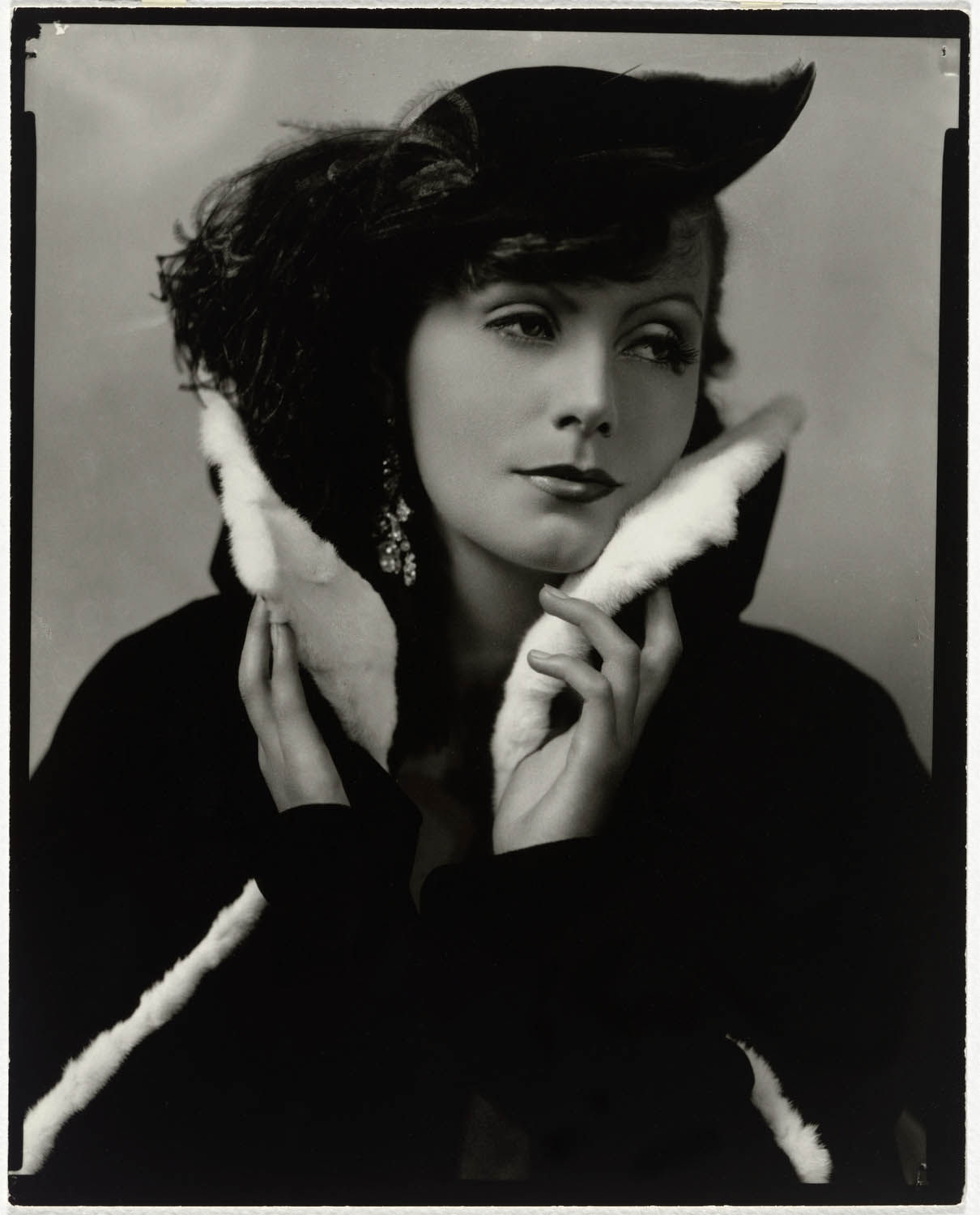
George Hurrell (American, 1904-1992)
Greta Garbo
1930
Gelatin silver print
National Portrait Gallery, Washington
Acquired in part through the generosity of an anonymous donor
Greta Garbo (Swedish-American, 1905-1990)
Greta Garbo (born Greta Lovisa Gustafsson, 18 September 1905 – 15 April 1990) was a Swedish and American film actress. She was a leading star during Hollywood’s silent and early golden eras. Regarded as one of the greatest screen actresses of all time, she is known for her melancholic and somber screen persona, her film portrayals of tragic characters, and her subtle and understated performances. In 1999, the American Film Institute ranked Garbo fifth on its list of the greatest female stars of classic Hollywood cinema.
Text from the Wikipedia website
Written in the Stars
Gorgeous.
Glamorous.
Through superb studio lighting and composition, suffused with the soft glow of stardom, that scintillating photographer George Hurrell gives you the romance of the silver screen captured in a still image.
Desire, beauty, perfection, style.
Allure and otherworldliness.
“Hurrell’s great respect for his subjects can be seen throughout his work. His pictures are tinged with the conviction that the bravura of these performers could be revealed in the right light.” (Angelica Hankins)
But all is not as it seems.
More than everyday portraits these fantastical visages are, always, constructions, fabrications, performances.
While “Hurrell understood these performers, who they were and who they wanted to be” the stars bought into the Hollywood studio system which controlled their image, how they were pictured, and what photographs were release to the magazines and their readers.
In Foucault’s terms, the photographer was at the end of a long chain of power and control, a disciplinary system that made stars, broke stars, and kept them in their place. Woe betide you if you challenged the system.1
“Audiences mirrored their clothing, their makeup, anything to be closer to that grandeur” but behind the facade of Hollywood film society with its wealth, celebrity and lavish parties there was a seediness to the whole enterprise (an organisation, venture, or commercial activity that produces goods or services): power struggles, jealousy, rivalry, discrimination, ageism (especially with the female stars), white male dominance, racism, fear, drug use, hidden sexualities, infidelity, promiscuity, domestic abuse, violence and a string of unsolved murders … to name just a few social issues and systemic inequalities hidden in plain sight.2
“Major studios worked to protect marketable stars and preserve wholesome public images. Publicists, lawyers, and friendly press or police contacts frequently kept private abuse out of headlines.”3
Wholesome public images indeed.
George Hurrell’s photographs are delicious and can be appreciated as such, but understanding that they are putting the gloss, the lip gloss, on a system of promotion, oppression and control is vital to understanding their relevance today.
In this sense “Star Power” has a double connotation – the power of the star as seen in the public’s eyes and its inverse, the lack of that power when confronted by the disciplinary Hollywood studio system.
Dr Marcus Bunyan
1/ Bette Davis is the most famous Hollywood actress known for defying her studio in 1936 over pay, script quality, and creative control. After winning her first Academy Award, she refused a film role, went to England to work on independent productions, and fought Warner Bros in a high-profile court battle. The legal fight that followed ended badly for Davis and she lost the case. She returned to Hollywood.
Olivia de Havilland sued Warner Bros. in 1943 over contract extensions and suspensions, winning a landmark ruling in 1944 that limited studio contracts to seven calendar years.
Marilyn Monroe was so frustrated by typecasting and low pay at 20th Century Fox she founded her own production company in 1954 and negotiated a new contract in 1955 for greater pay and creative control. (Various sources)
2/ “While the feud between Crawford and Davis was exaggerated by the studios for publicity, it was none the less a product of male dominance, says Catherine Zeta-Jones, who in the series plays Olivia de Havilland, the actress who ultimately left Hollywood for Paris.
“Feuds come down to pain and fear. There was a hierarchy. The bigwigs – the white guys – would pick and choose the lead roles. So it was a competition, and these women were grasping to hold on.”
Or as another actress of the era, Joan Blondell, said at the time: “Women when cornered do what they always do: eat their own and then pick their teeth with the bones.”
Edward Helmore. “‘I wouldn’t sit on her toilet …’ Screen revival of Davis and Crawford feud sparks sexism debate,” on The Guardian website Sun 19 Feb 2017 [Online] Cited 27/11/2026
3/ See Sarah Nour. “10 Abuses of Studio Power from the Golden Age of Hollywood,” on the Medium website Nov 18, 2025 [Online] 27/11/2026
Many thankx to the National Portrait Gallery for allowing me to publish the photographs in the posting. Please click on the photographs for a larger version of the image.
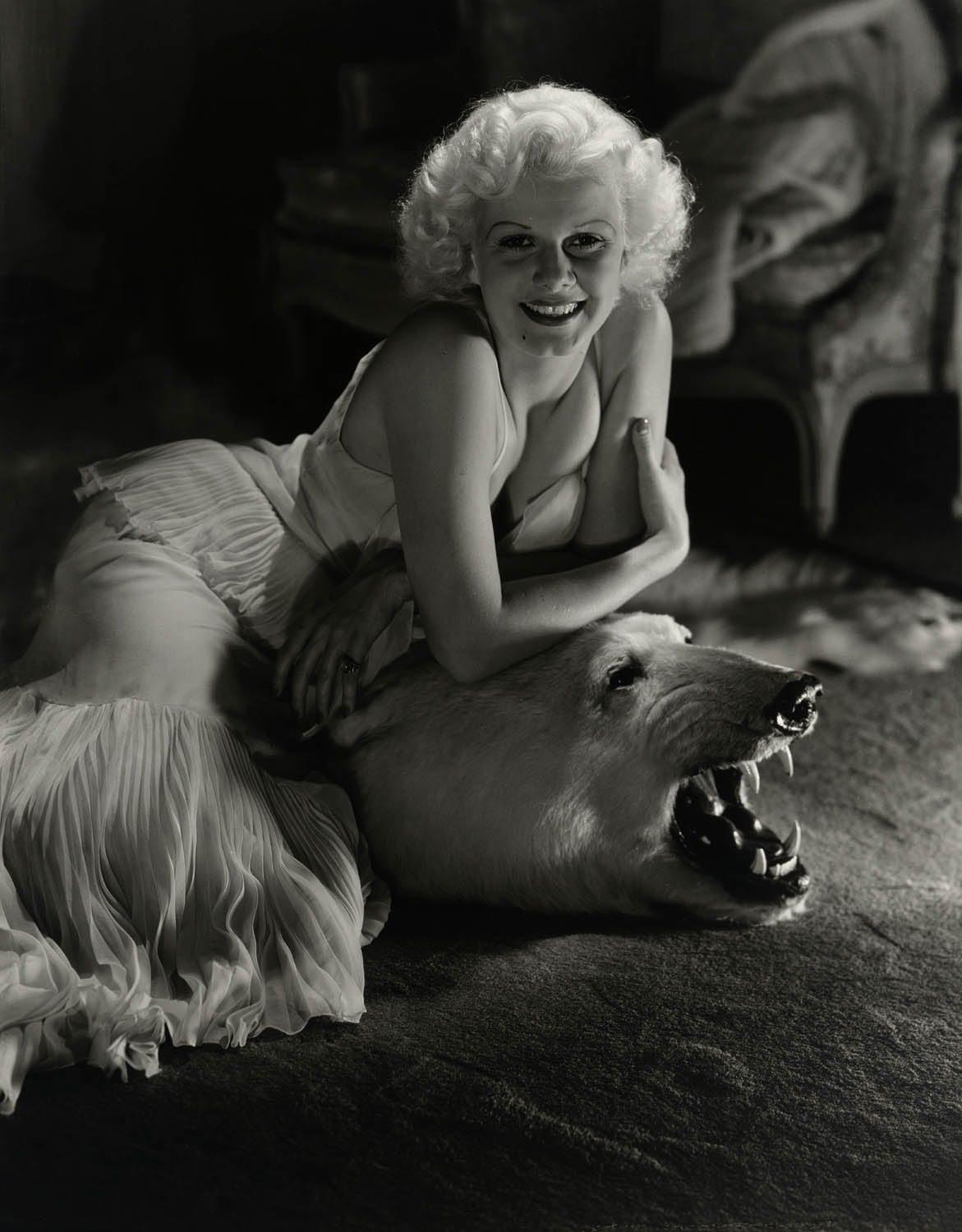
George Hurrell (American, 1904-1992)
Jean Harlow
1934
Gelatin silver print
National Portrait Gallery, Washington
Acquired in part through the generosity of an anonymous donor
Jean Harlow (American, 1911-1937)
Jean Harlow (born Harlean Harlow Carpenter; March 3, 1911 – June 7, 1937) was an American actress. Known for her portrayal of “bad girl” characters, she was the leading sex symbol of the early 1930s and one of the defining figures of the pre-Code era of American cinema. Often nicknamed the “Blonde Bombshell” and the “Platinum Blonde,” Harlow was popular for her “Laughing Vamp” screen persona. Harlow was in the film industry for only nine years, but she became one of Hollywood’s biggest movie stars, whose image has endured in the public eye. In 1999, the American Film Institute ranked Harlow number 22 on its greatest female screen legends list.
Text from the Wikipedia website
The National Portrait Gallery will present a second installation of “Star Power: Photographs from Hollywood’s Golden Age by George Hurrell,” with a new selection of 20 vintage photographs exploring timeless images of film royalty from the 1930s and 1940s. Opening Feb. 13, 2026, this “encore” installation is curated from the Portrait Gallery’s collection of 70 portraits by George Hurrell (1904-1992), who rose to fame as the in-house portraitist for Metro-Goldwyn-Mayer (MGM) before establishing his own studio. With a keen eye for lighting effects and artful posing, Hurrell magnified the stars and influenced popular standards of glamour.
The new selection of photographs will portray some of Golden Age Hollywood’s most memorable stars, including Constance Bennett, Joan Crawford, Marlene Dietrich, Douglas Fairbanks Jr., Clark Gable, Greta Garbo, Jean Harlow, Dorothy Lamour, Myrna Loy, Mary Pickford, William Powell, Basil Rathbone, Charles “Buddy” Rogers, Rosalind Russell and Barbara Stanwyck.
The first iteration of “Star Power: Photographs from Hollywood’s Golden Age by George Hurrell” was on view March 1, 2024 – January 25, 2026
Text from the National Portrait Gallery website
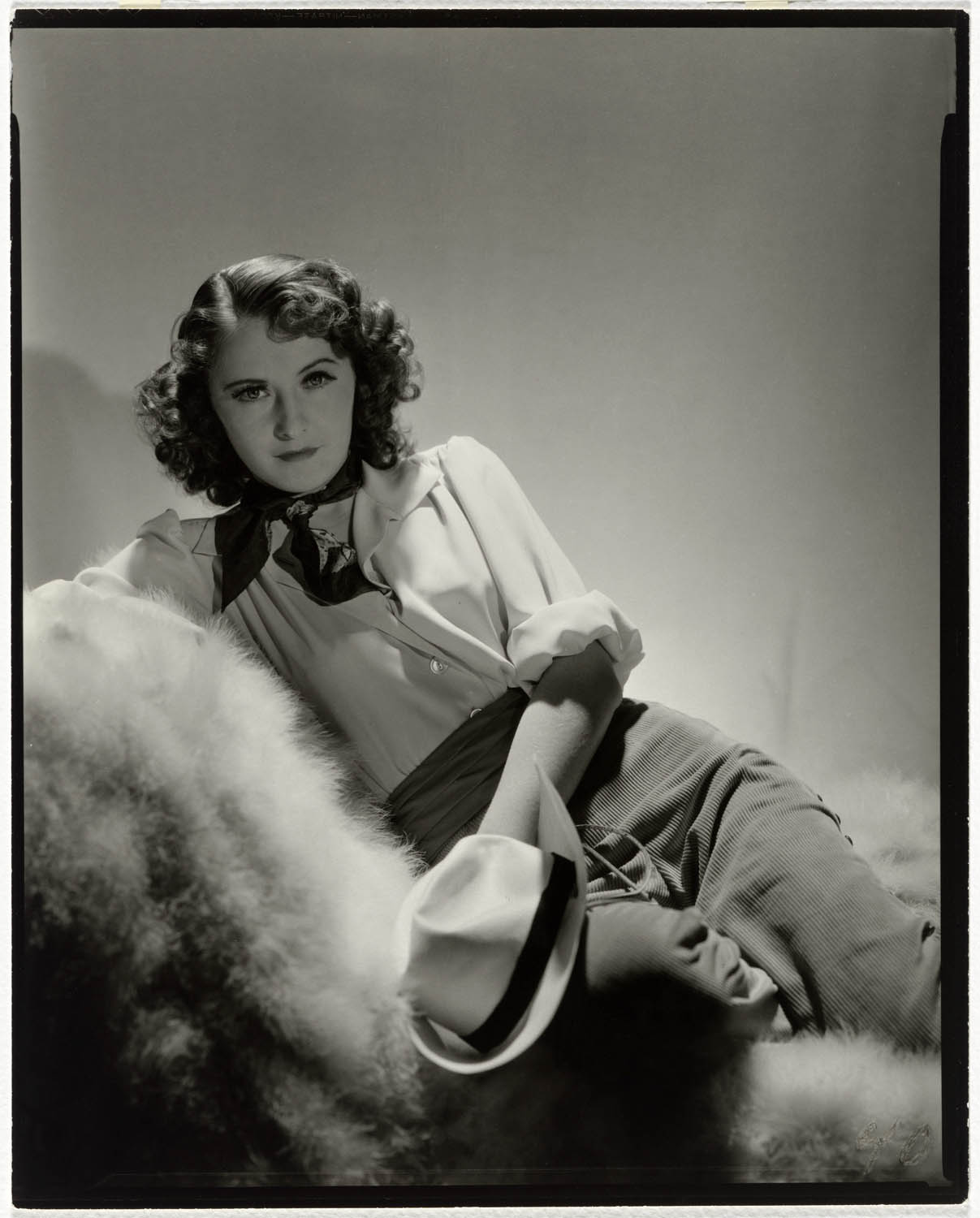
George Hurrell (American, 1904-1992)
Barbara Stanwyck
c. 1935
Gelatin silver print
Barbara Stanwyck (American, 1907-1990)
Barbara Stanwyck (/ˈstænwɪk/; born Ruby Catherine Stevens; July 16, 1907 – January 20, 1990) was an American actress and dancer. A stage, film, and television star, during her 60-year professional career she was known for her strong, realistic screen presence and versatility. She was a favorite of directors, including Cecil B. DeMille, Fritz Lang, and Frank Capra, and made 86 films in 38 years before turning to television. She received numerous accolades, including three Primetime Emmy Awards and a Golden Globe Award, and was nominated for four Academy Awards.
Text from the Wikipedia website
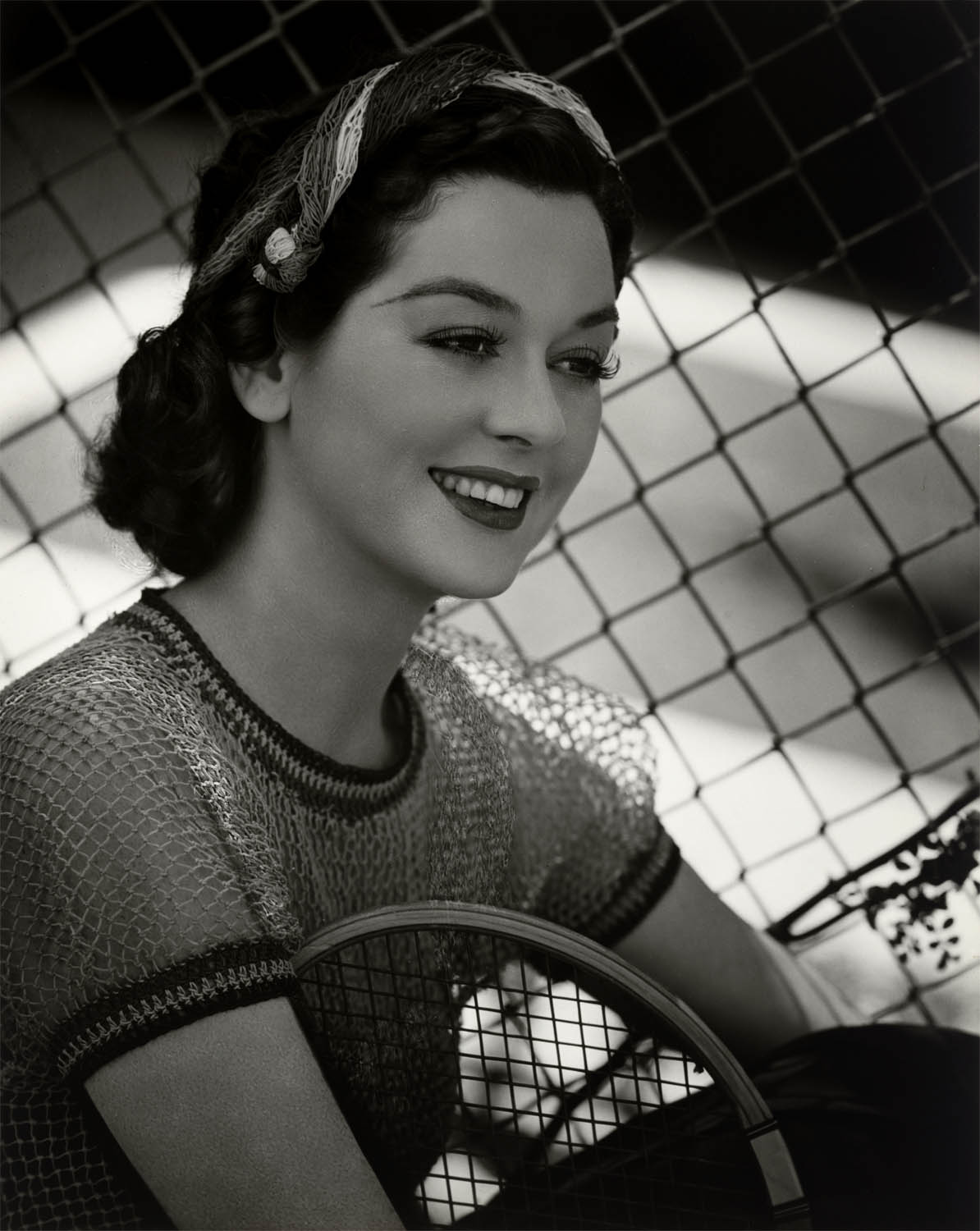
George Hurrell (American, 1904-1992)
Rosalind Russell
c. 1935
Gelatin silver print
National Portrait Gallery, Washington
Acquired in part through the generosity of an anonymous donor
Rosalind Russell (American, 1907-1976)
Catherine Rosalind Russell (June 4, 1907 – November 28, 1976) was an American actress, model, comedian, screenwriter, and singer, known for her role as fast-talking newspaper reporter Hildy Johnson in the Howard Hawks screwball comedy His Girl Friday (1940), opposite Cary Grant, as well as for her role of catty Sylvia Fowler in George Cukor’s The Women (1939), opposite Joan Crawford and Norma Shearer, and for her portrayals of Mame Dennis in the 1956 stage and 1958 film adaptations of Auntie Mame, and Rose in Gypsy (1962). A noted comedienne, she received various accolades, including five Golden Globe Awards and a Tony Award, in addition to nominations for four Academy Awards and a BAFTA Award.
Text from the Wikipedia website
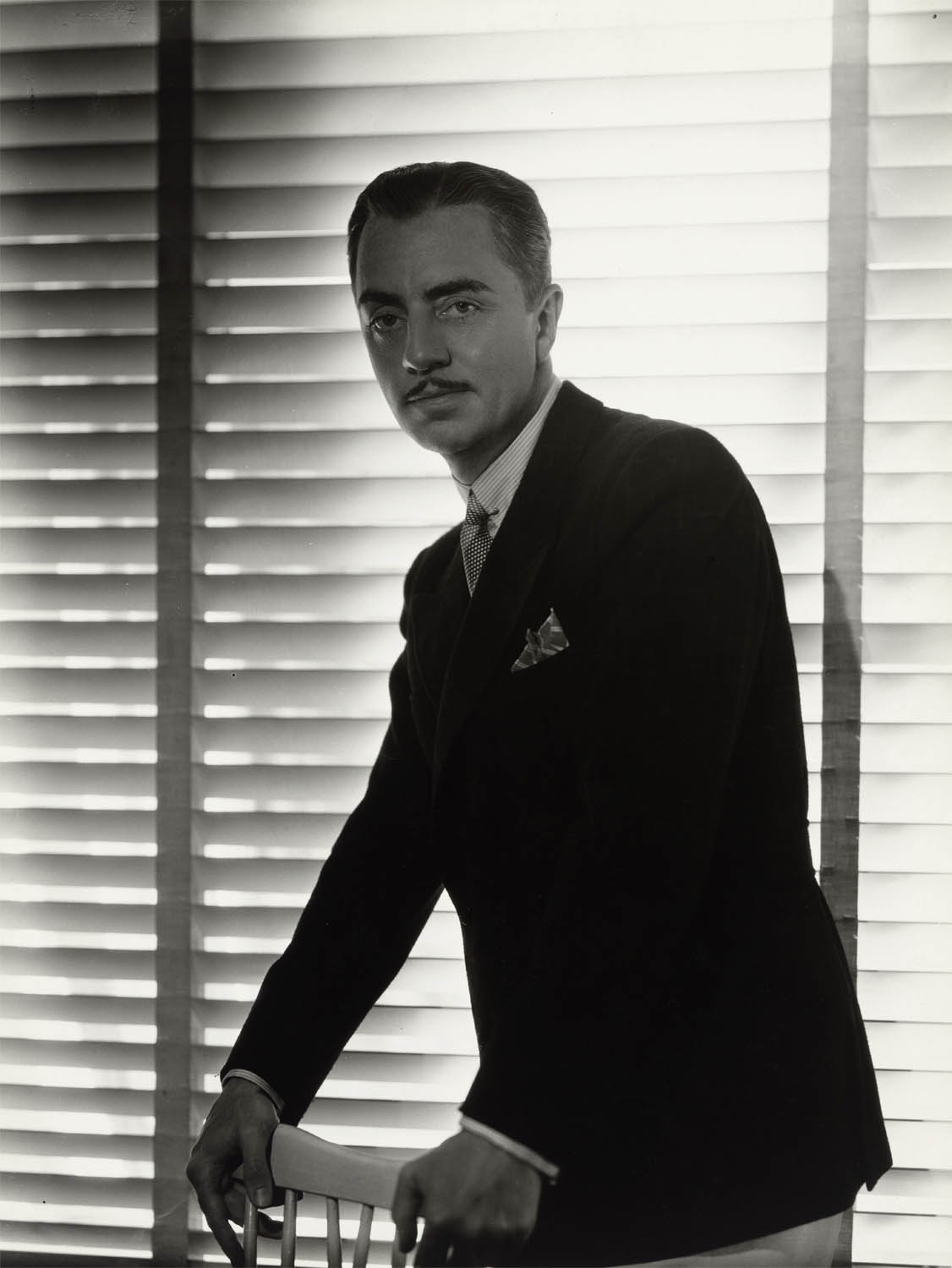
George Hurrell (American, 1904-1992)
William Powell
c. 1935
Gelatin silver print
National Portrait Gallery, Washington
Acquired in part through the generosity of an anonymous donor
William Horatio Powell (American, 1892-1984)
William Horatio Powell (July 29, 1892 – March 5, 1984) was an American actor, known primarily for his film career. Under contract with Metro-Goldwyn-Mayer, he was paired with Myrna Loy in 14 films, including the Thin Man series based on the Nick and Nora Charles characters created by Dashiell Hammett. Powell was nominated for the Academy Award for Best Actor three times: for The Thin Man (1934), My Man Godfrey (1936), and Life with Father (1947).
Text from the Wikipedia website
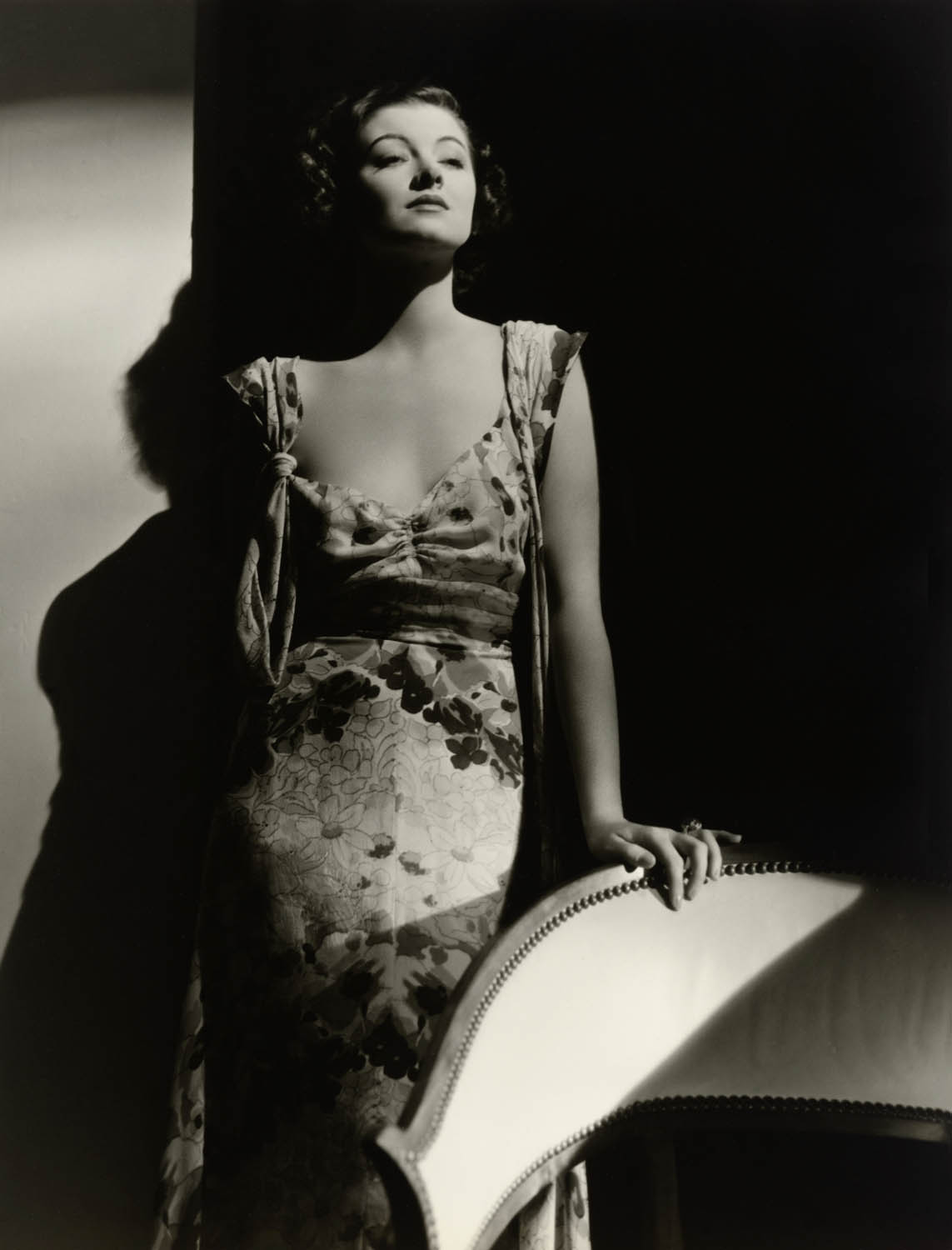
George Hurrell (American, 1904-1992)
Myrna Loy
c. 1935
Gelatin silver print
National Portrait Gallery, Washington
Acquired in part through the generosity of an anonymous donor
Myrna Loy (American, 1905-1993)
Myrna Loy (born Myrna Adele Williams; August 2, 1905 – December 14, 1993) was an American film, television, and stage actress. As a performer, she was known for her ability to adapt to her screen partner’s acting style.
Born in Helena, Montana, Loy was raised in rural Radersburg and Helena. She relocated to Los Angeles with her mother in early adolescence and trained as a dancer in high school. She was discovered by production designer Natacha Rambova, who organized film auditions for her. She began obtaining small roles in the late 1920s. Loy devoted herself fully to acting after a few roles in silent films. She was originally typecast in exotic roles, often as a vamp or a woman of Asian descent, but her career prospects improved greatly following her portrayal of Nora Charles in The Thin Man (1934). The role helped elevate her reputation, and she became known as a versatile actress adept at both drama and comedy; she would play the role of Nora Charles five more times.
Loy’s performances peaked in the 1940s, with films like The Thin Man Goes Home, The Best Years of Our Lives, The Bachelor and the Bobby-Soxer, and Mr. Blandings Builds His Dream House. In the 1950s, she appeared in a lead role in the comedy Cheaper by the Dozen (1950), as well as supporting roles in The Ambassador’s Daughter (1956) and the drama Lonelyhearts (1958). She appeared in eight films between 1960 and 1981, after which she retired from acting.
Although Loy was never nominated for an Academy Award, in March 1991, she received an Honorary Academy Award in recognition of her life’s work both onscreen and off, including serving as assistant to the director of military and naval welfare for the Red Cross during World War II, and a member-at-large of the U.S. Commission to UNESCO. In 2009, The Guardian named her one of the best actors never to have received an Academy Award nomination. Loy died in December 1993 in New York City at age 88.
Text from the Wikipedia website
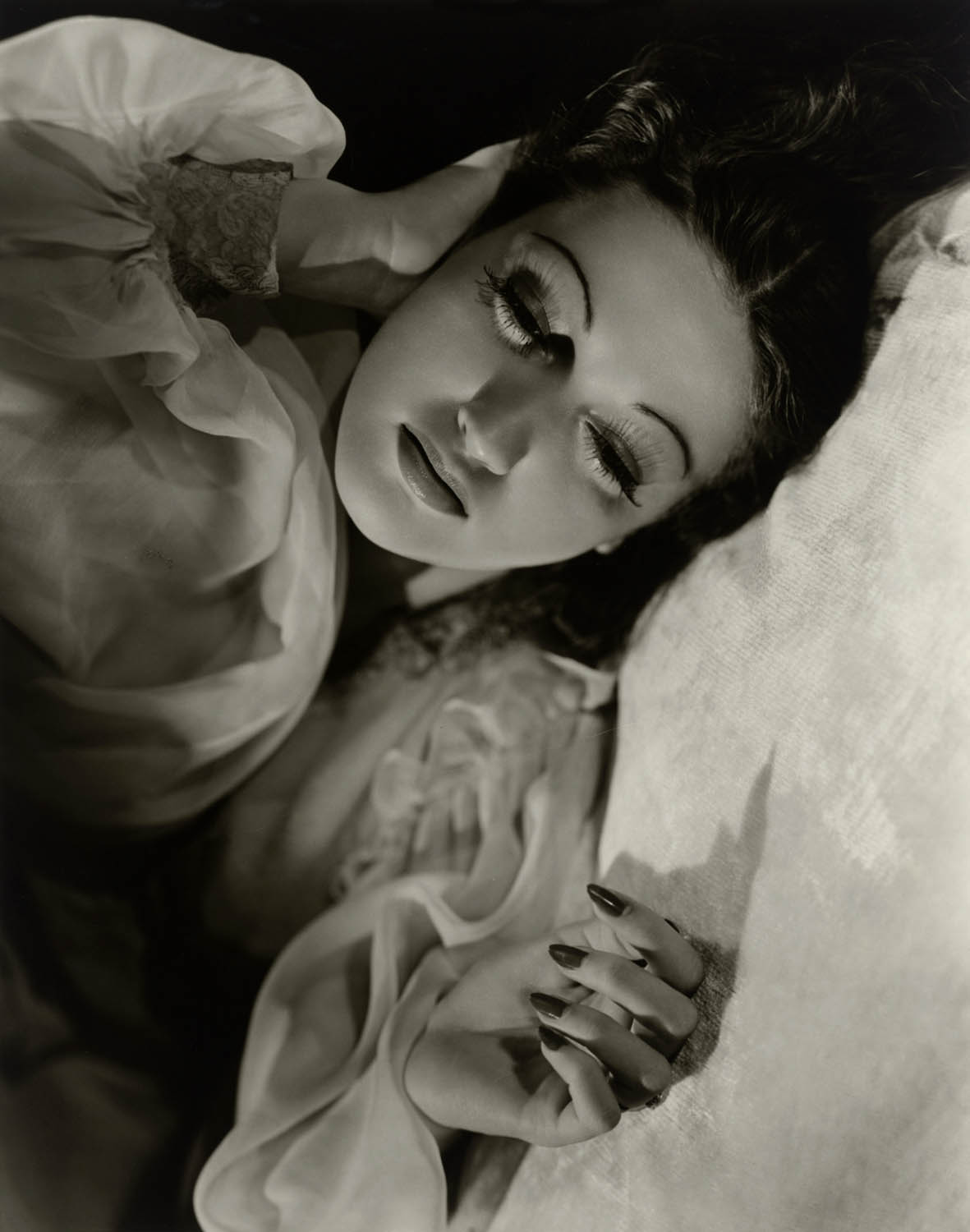
George Hurrell (American, 1904-1992)
Dorothy Lamour
c. 1935
Gelatin silver print
National Portrait Gallery, Washington
Acquired in part through the generosity of an anonymous donor
Dorothy Lamour (American, 1914-1996)
Dorothy Lamour (born Mary Leta Dorothy Slaton; New Orleans, December 10, 1914 – Los Angeles, September 22, 1996) was an American actress and singer. She is best remembered for having appeared in the Road to… movies, a series of successful comedies starring Bing Crosby and Bob Hope.
Lamour began her career in the 1930s as a big band singer. In 1936, she moved to Hollywood, where she signed with Paramount Pictures. Her appearance as Ulah in The Jungle Princess (1936) brought her fame and marked the beginning of her image as the “Sarong Queen”.
In 1940, Lamour made her first Road series comedy film Road to Singapore. The Road series films were popular during the 1940s. The sixth film in the series, Road to Bali, was released in 1952. By this time, Lamour’s screen career had begun to wane, and she focused on stage and television work. In 1961, Crosby and Hope teamed up for The Road to Hong Kong, but actress Joan Collins was cast as the female lead. Lamour made a brief appearance and sang a song near the end of that film.
In the 1970s, Lamour revived her nightclub act, and in 1980, released her autobiography My Side of the Road. She made her final movie appearance in 1987.
Text from the Wikipedia website
These Extraordinary Photographs of Golden Age Hollywood Stars, From Greta Garbo to Clark Gable, Are Worth a Second Look
“I understand you’re a little crazy,” film director Frank Capra told photographer George Hurrell, in 1940, “but I’ll try to get along with you.” Known for his smouldering portraits, Hurrell had an irrepressible charm. He knew how to “clown around,” as he put it, and “get some action going in the expressions,” showcasing movie stars in exuberant pictures. At his shoot with Capra, he played music and danced, even letting out a yell. Capra quipped, “Where’s the chandelier they say you swing on?”
Hurrell was self-assured, says Ann Shumard, senior curator of photographs at the Smithsonian’s National Portrait Gallery. His was “another way of looking at the world,” she adds. Hurrell’s gaze is on show once again at the Portrait Gallery in “Star Power,” an installation of 20 photographs – a sequel to the previous exhibition of the same name which debuted in 2024. The artist’s camera was fixed on Golden Age Hollywood luminaries: Joan Crawford, Clark Gable, Jean Harlow and Barbara Stanwyck. Dating from the 1930s and ’40s, the photographs on view brim with “beauty and elegance, fun and frivolity,” Shumard notes.
In one of Hurrell’s dreamlike pictures, actress Dorothy Lamour is shown close up, dressed in billowing chiffon with touches of lace. Her long, spidery eyelashes cast shadows, and her fingernails are dark and pointed. The image has an allure, an otherworldliness.
The photographer was born in Cincinnati in 1904 and aspired to be a painter. After high school, he studied art in Chicago. To earn extra money, he took jobs in photography studios, refining his craft, training his eye. By 1930, he was the head portrait photographer at MGM, taking pictures of the studio’s actors.
“Hurrell had such dexterity,” says Shumard. His pictures beguile and enchant, “using light in imaginative ways.”
His use of shadow is on display in his stately portrait of actor Douglas Fairbanks Jr., who served as a naval officer in World War II and captivated audiences as a pilot in The Dawn Patrol (1930) and a British soldier in Gunga Din (1939).
Hurrell was tireless: “I never stopped,” he recalled. If he wasn’t shooting, he was developing film or out on the town, “having a big time.” One reporter called him “easy in manner.” He was also exceptionally focused. “When I’m in there alone,” he said of his hours in the darkroom, “I don’t have anything on my mind. Nothing but that print.”
Photographer Edward Steichen advised Hurrell earlier in his career to “never let your subject know when you are baffled. … Be the master of the situation at all costs.” As Shumard observes, “He had a great sense of his ability, and he brought that supreme confidence into the sittings.”
Hurrell was especially masterful in drawing out his subjects. He wasn’t after beauty, a prerequisite in Golden Age Hollywood, as much as verve. His portrait sitters were “larger-than-life characters,” says Shumard. To watch their films, “was transporting for people.” Audiences mirrored their clothing, their makeup, anything to be closer to that grandeur.
Splendor abounds in the exhibited photos: Greta Garbo is pictured in 1930 wearing a dark coat lined with white fur. She casts a faraway glance with a slightly tilted head, one of her chandelier earrings glinting. In a circa 1935 portrait of Rosalind Russell, who would go on to play the witty Hildy Johnson in His Girl Friday (1940), the actress’ smile radiates. And a 1937 wedding portrait of film stars Mary Pickford and Charles “Buddy” Rogers swells with romance, the pair awash in soft light.
Hurrell understood these performers, who they were and who they wanted to be. In his picture of William Powell, he presents The Thin Man star in front of a window with light peeking in through the blinds. Powell, resting his hands on a chair back, is dashing in a dark suit, with a tie and pocket square.
His Thin Man co-star, Myrna Loy, is no less resplendent in Hurrell’s photos. “When she would look at the camera, she had a strength that nobody else could match,” Hurrell observed. In the show, she is iridescent against a darkened wall, the light falling delicately over her satin dress. “She’s incredibly elegant,” says Shumard. “Even though she’s feisty and up to all kinds of hijinks, she always looks spectacular.”
Hurrell’s great respect for his subjects can be seen throughout his work. His pictures are tinged with the conviction that the bravura of these performers could be revealed in the right light.
During his shoot with Capra, Hurrell told the filmmaker, “I can be serious, too, although I don’t enjoy it.” For all his zaniness, he was serious about his art. His images brought out an essence within his sitters: As the actor Ramon Novarro remarked when he saw Hurrell’s photographs, “You have revealed what I am inside.”
Angelica Hankins. “These Extraordinary Photographs of Golden Age Hollywood Stars, From Greta Garbo to Clark Gable, Are Worth a Second Look,” on The Smithsonian Magazine website February 24, 2026 [Online] Cited 03/11/2026. Used under fair use conditions for the purposes of education and research
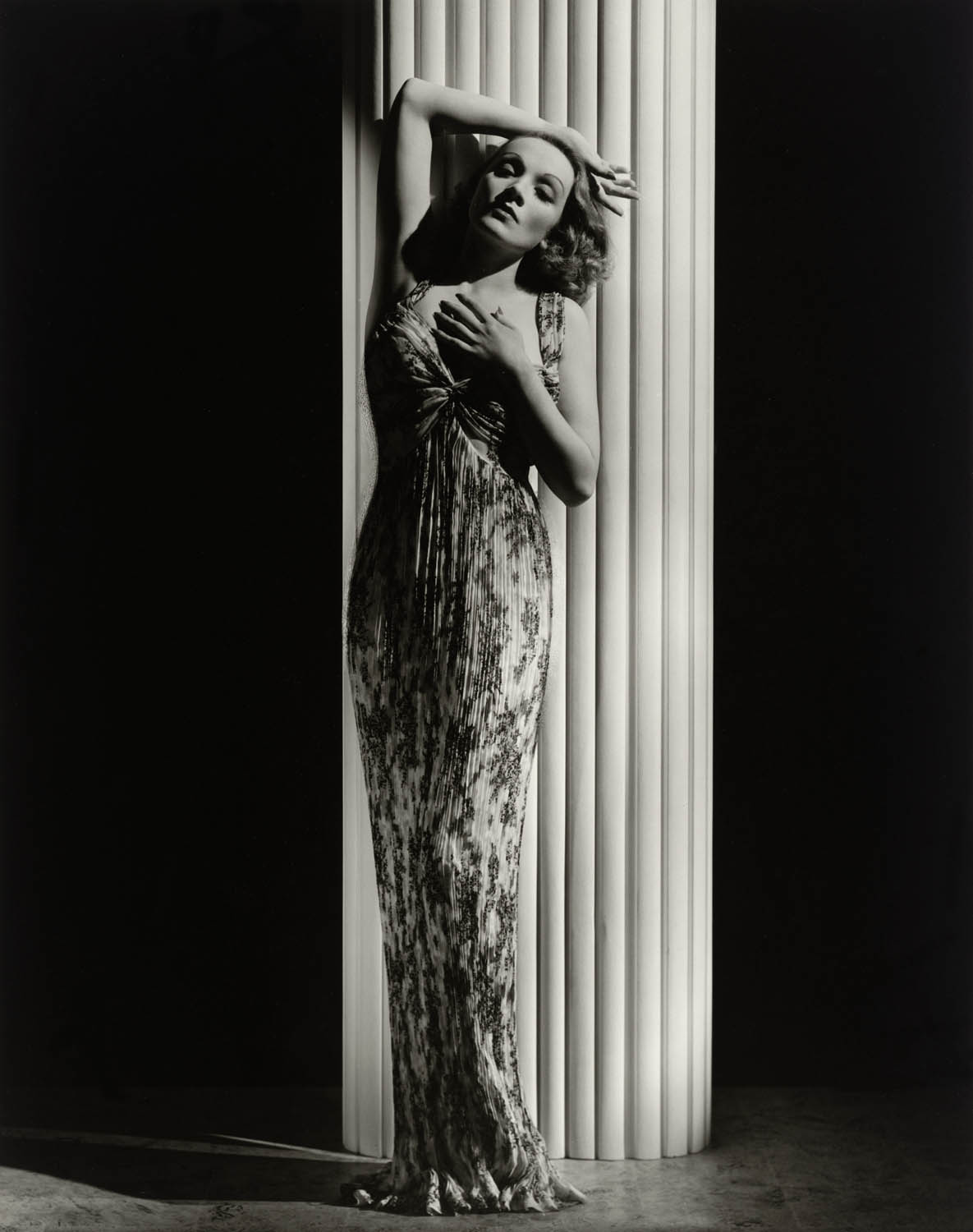
George Hurrell (American, 1904-1992)
Marlene Dietrich
c. 1935
Gelatin silver print
National Portrait Gallery, Washington
Acquired in part through the generosity of an anonymous donor
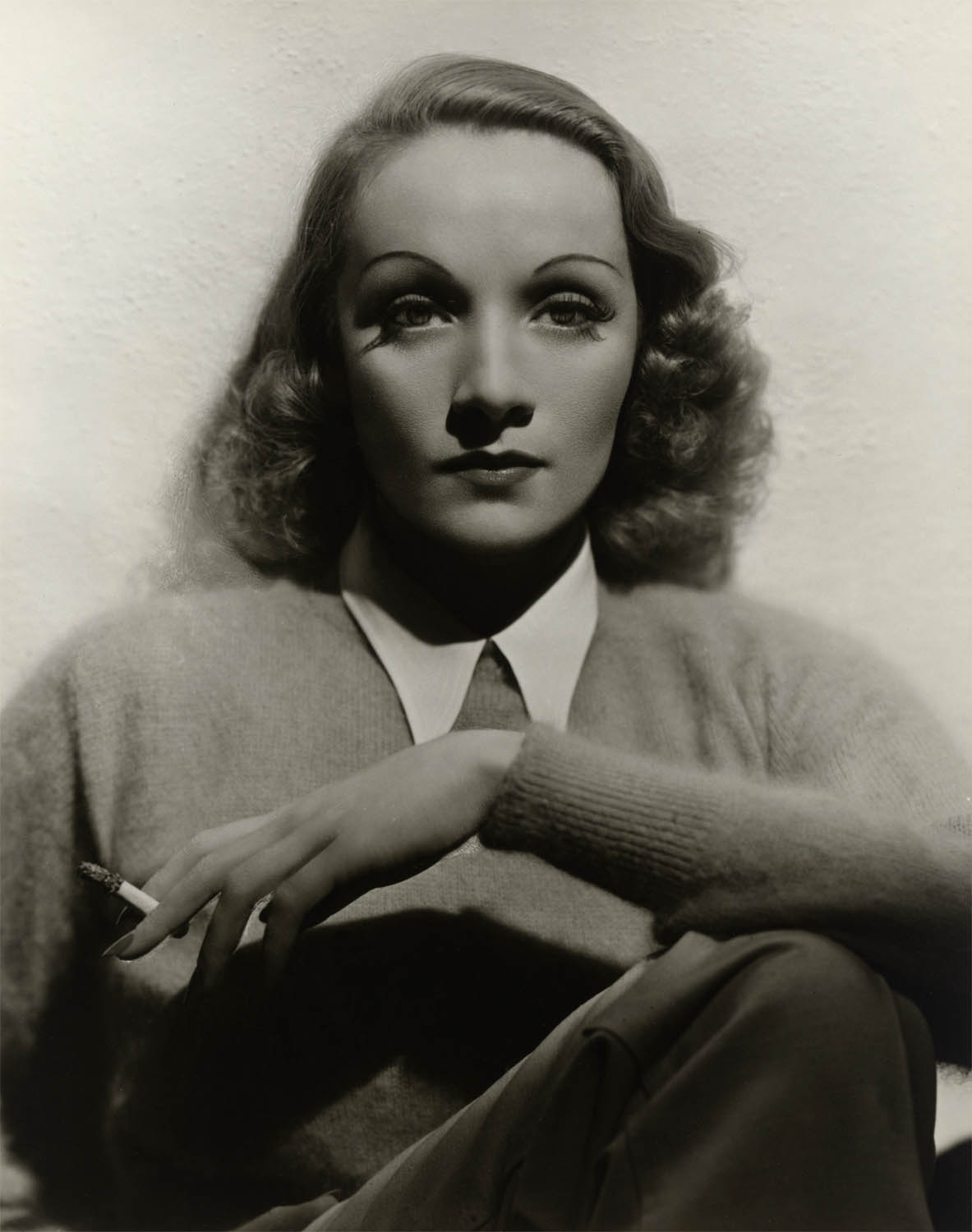
George Hurrell (American, 1904-1992)
Marlene Dietrich
c. 1935
Gelatin silver print
National Portrait Gallery, Washington
Acquired in part through the generosity of an anonymous donor
Marlene Dietrich (German-American, 1901-1992)
Marie Magdalene “Marlene” Dietrich (27 December 1901 – 6 May 1992) was a German and American actress and singer whose career spanned nearly seven decades. In 1920s Berlin, she performed on the stage and in silent films. Her performance as Lola Lola in Josef von Sternberg’s The Blue Angel (1930) brought her international acclaim and a contract with Paramount Pictures. Dietrich starred in many Hollywood films, including six roles directed by Sternberg: Morocco (1930) (her only Academy Award nomination), Dishonored (1931), Shanghai Express and Blonde Venus (both 1932), The Scarlet Empress (1934), and The Devil Is a Woman (1935). Throughout World War II, she was a high-profile entertainer in the United States. Although she delivered notable performances in several post-war films, including Billy Wilder’s A Foreign Affair (1948), Alfred Hitchcock’s Stage Fright (1950), Billy Wilder’s Witness for the Prosecution (1957), Orson Welles’s Touch of Evil (1958), and Stanley Kramer’s Judgment at Nuremberg (1961), she spent most of the 1950s to the 1970s touring the world as a marquee live-show performer.
Dietrich was known for her humanitarian efforts during World War II, housing German and French exiles, providing financial support and advocating their American citizenship. For her work on improving morale on the front lines during the war, she received various honors from the United States, France, Belgium, and Israel. In 1999, the American Film Institute named Dietrich the ninth greatest female screen legend of classic Hollywood cinema.
Text from the Wikipedia website
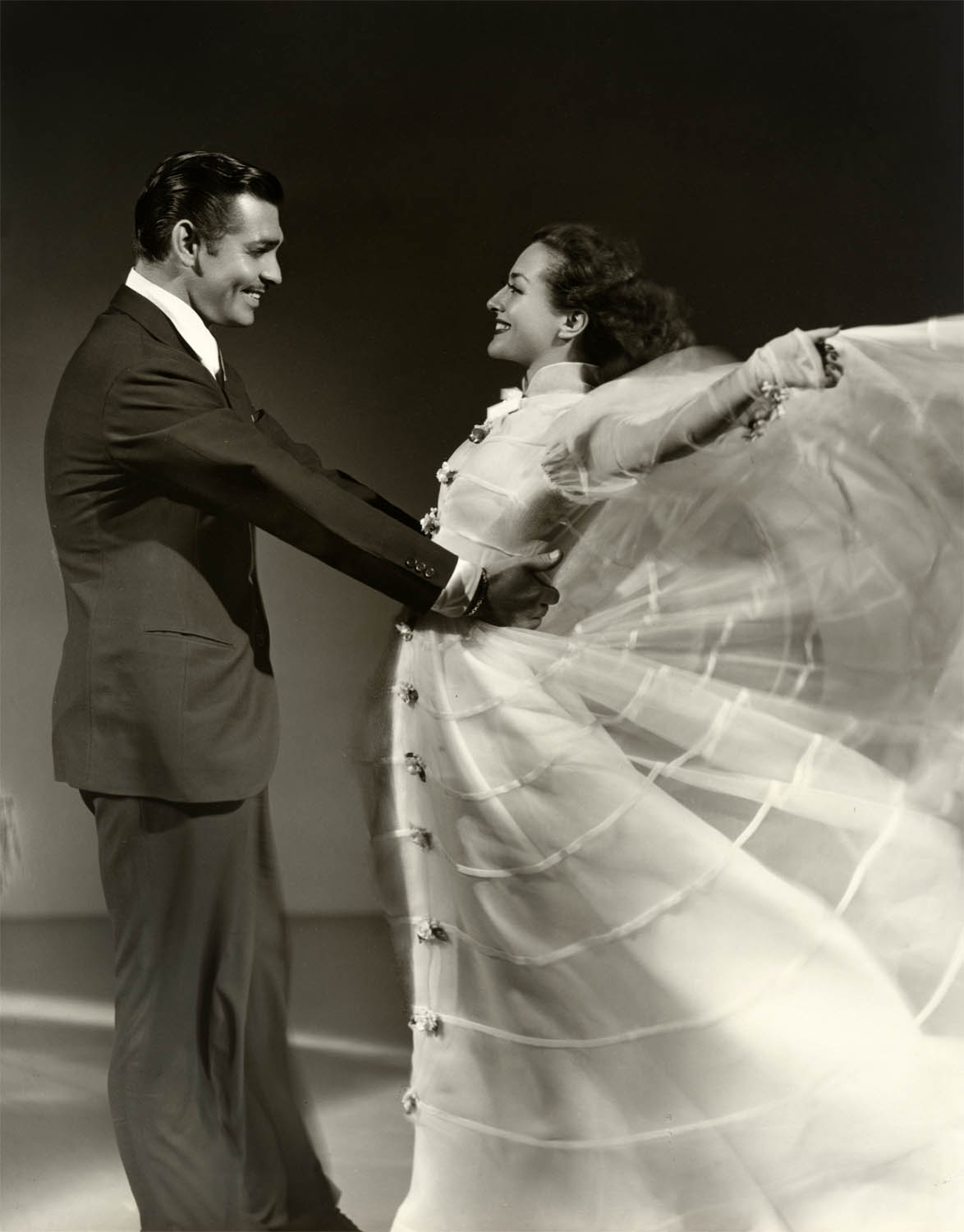
George Hurrell (American, 1904-1992)
Clark Gable and Joan Crawford
1936
Gelatin silver print
National Portrait Gallery, Washington
Acquired in part through the generosity of an anonymous donor
Joan Crawford c. 1904-1977
Clark Gable 1901-1960
With his roughneck charm and good looks, Clark Gable reigned as the “King of Hollywood” throughout the 1930s. Signed to a long-term contract by MGM, Gable was initially relegated to “tough guy” roles. He broke free from this typecasting in 1934, playing opposite Claudette Colbert in the delightful comedy It Happened One Night. For his engaging performance as a down-on-his-luck newspaper man who aids a runaway heiress, Gable took home the Oscar for Best Actor. By the time he appeared as the roguish Rhett Butler in Gone with the Wind (1939), Gable was MGM’s most popular leading man. In films that audiences flocked to see, he was teamed with the studio’s top female stars, including Jean Harlow, Myrna Loy, and Joan Crawford.
Gable and Crawford appeared together in eight films between 1931 and 1940. Hurrell created this double portrait to promote their 1936 romantic comedy, Love on the Run.
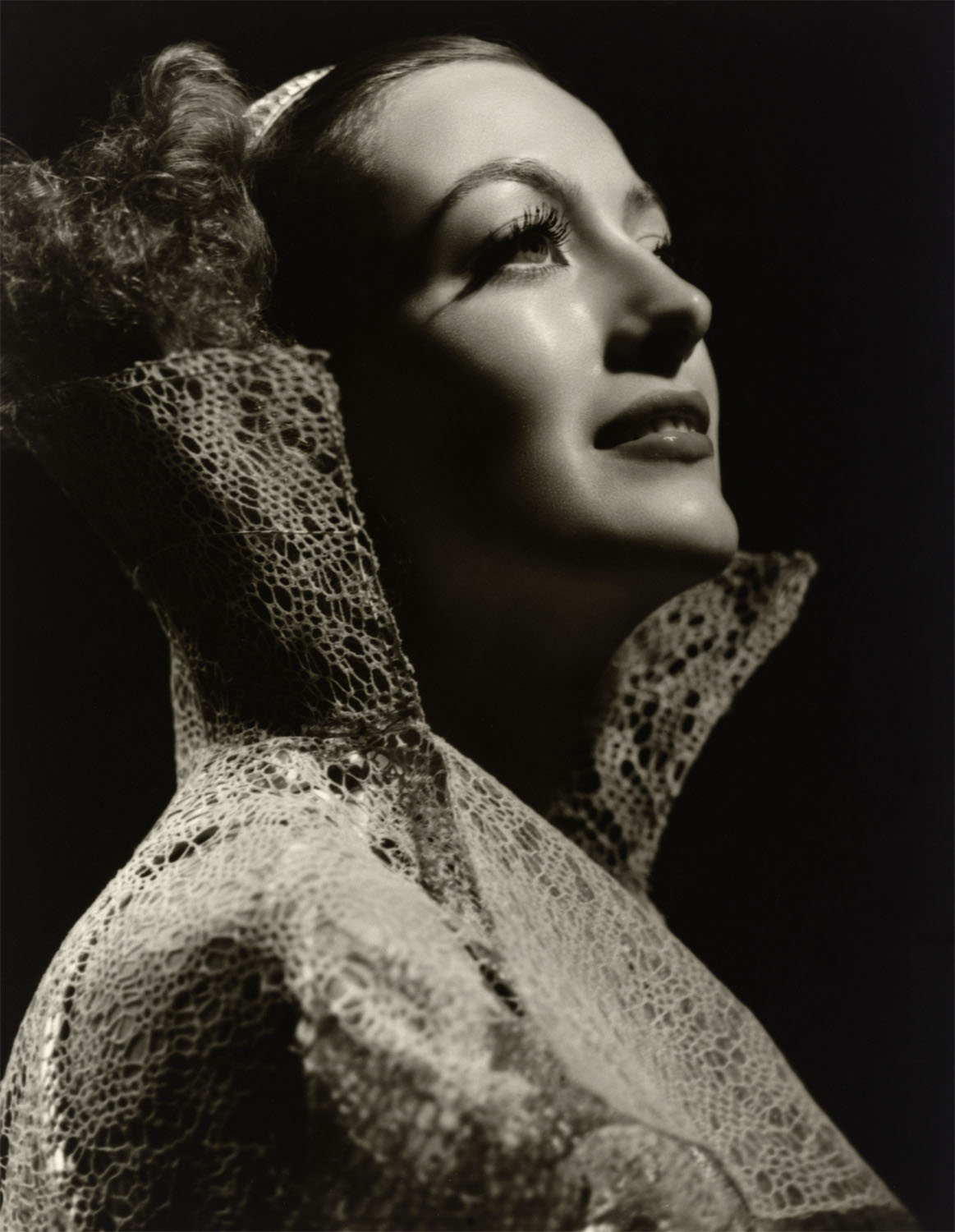
George Hurrell (American, 1904-1992)
Joan Crawford
1936
Gelatin silver print
National Portrait Gallery, Washington
Acquired in part through the generosity of an anonymous donor
Joan Crawford c. 1904-1977
Destined to become one of the screen’s most enduring stars, Joan Crawford was dancing in the chorus of a Broadway revue when an MGM talent scout discovered her in 1924. Born Lucille LeSueur, she became “Joan Crawford” thanks to a renaming contest orchestrated by studio head Louis B. Mayer as part of a publicity campaign. After appearing in a number of minor silent films, Crawford soared to stardom in 1928 with her tabletop performance of an exuberant Charleston in Our Dancing Daughters. She successfully navigated the changeover to talking pictures and starred throughout the 1930s with many of Hollywood’s top leading men, including Clark Gable.
Hurrell regarded Crawford as “the most photogenic of the Hollywood group of actresses.” “When I caught my first glimpse of her in the lens,” he recalled, “I felt an emotional tug of excitement. … Her large wide eyes and strongly moulded features were perfect in the camera.”
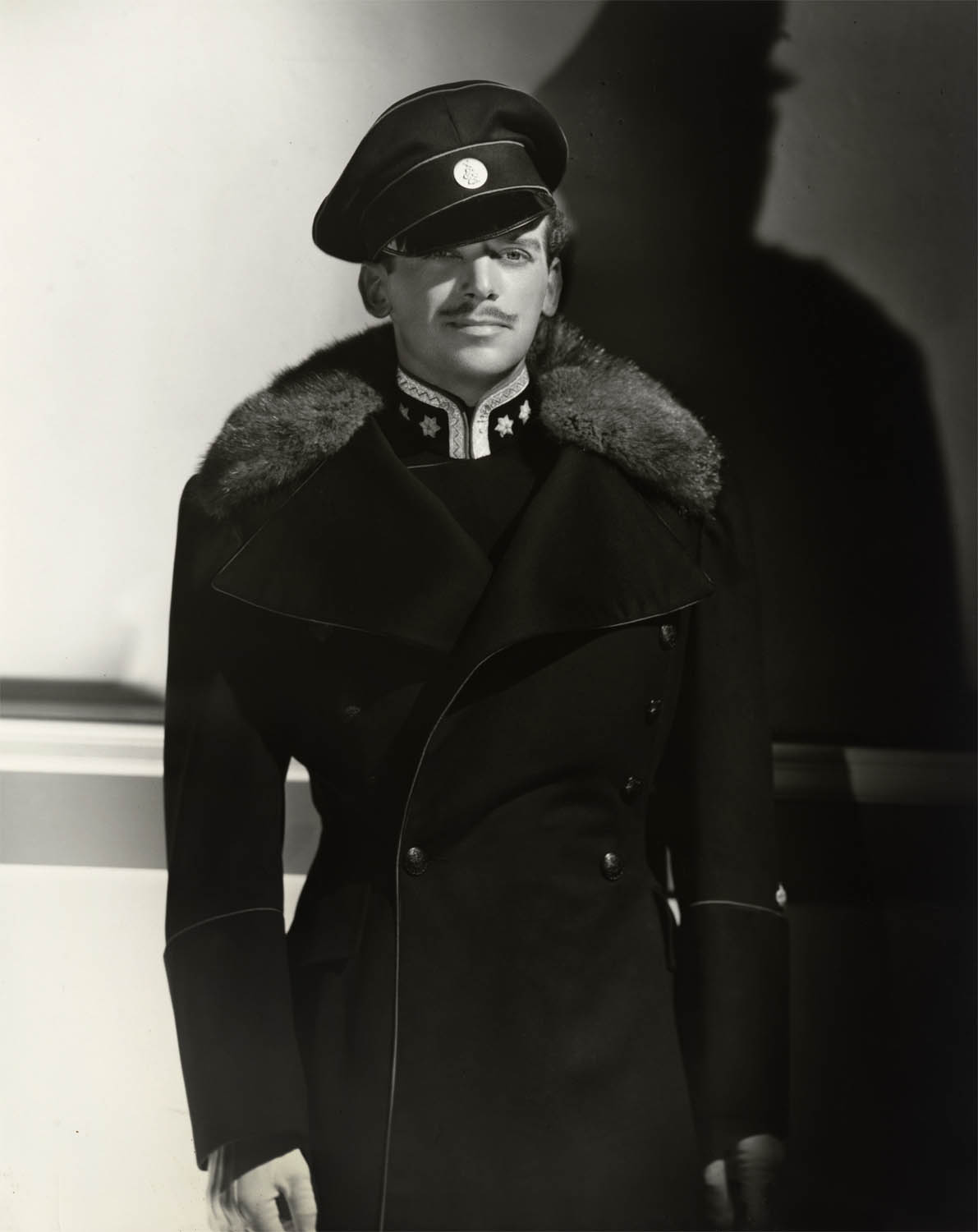
George Hurrell (American, 1904-1992)
Douglas Fairbanks Jr.
c. 1937
Gelatin silver print
National Portrait Gallery, Washington
Acquired in part through the generosity of an anonymous donor
Douglas Fairbanks Jr. 1909-2000
In choosing to pursue a movie career, Douglas Fairbanks Jr. inevitably risked comparison with his father, Douglas Fairbanks Sr., the famous silent screen actor. Although he never achieved the level of stardom enjoyed by his swashbuckling namesake, the younger Fairbanks was an agreeable presence in a number of largely forgettable films from the 1920s to the 1940s.
After an inauspicious screen debut at age seventeen, he initially found his footing when partnered with Joan Crawford (to whom he was married from 1929 to 1934) in several low-budget productions aimed at youthful audiences. Fairbanks’s talents were best showcased in his performances as a World War I pilot in Dawn Patrol (1930), a sword-wielding villain in The Prisoner of Zenda (1937), and a dashing British soldier in Gunga Din (1939). Arguably, his most important roles were performed off screen with his service as a decorated naval officer during World War II.
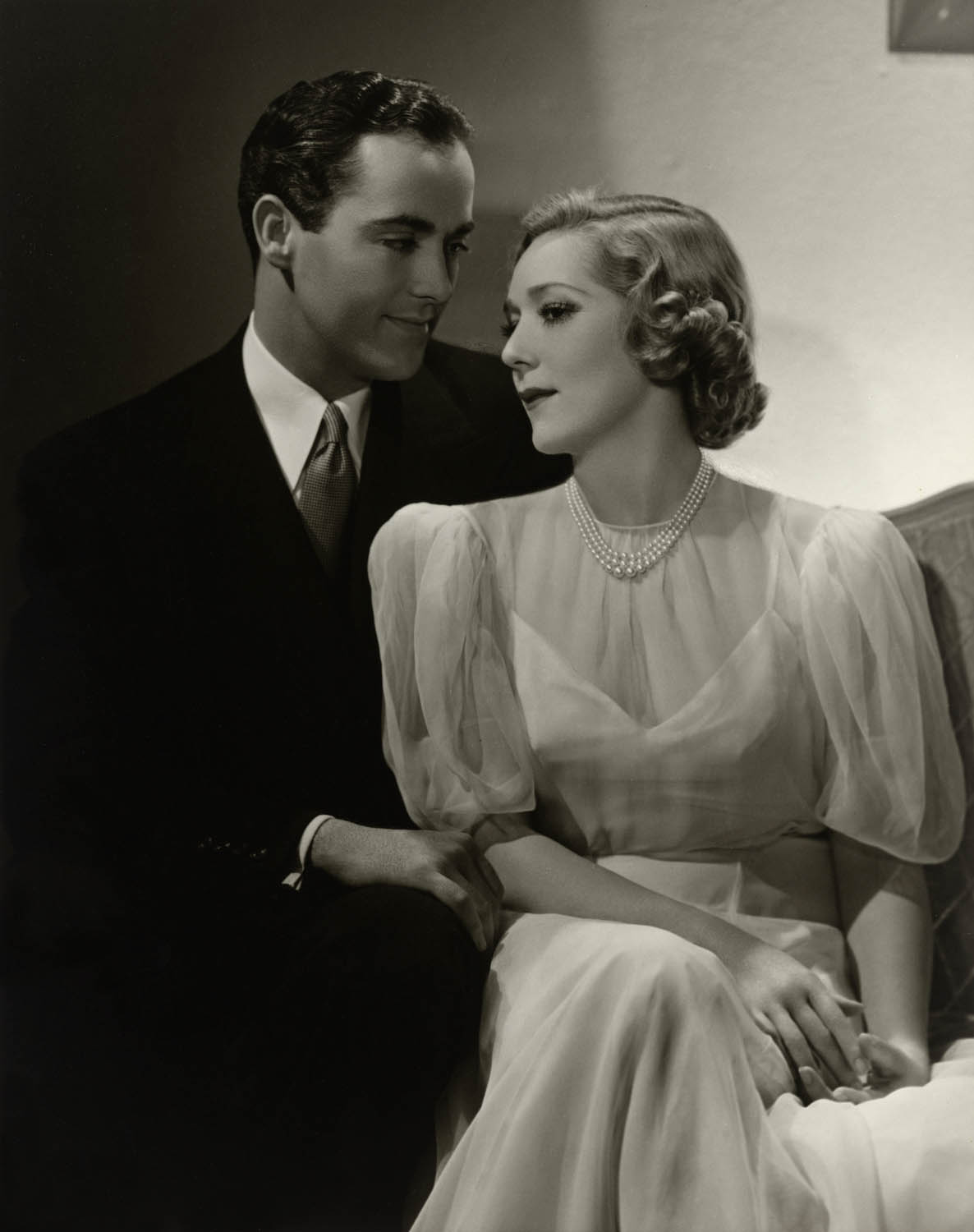
George Hurrell (American, 1904-1992)
Mary Pickford and Charles “Buddy” Rogers
1937
Gelatin silver print
National Portrait Gallery, Washington
Acquired in part through the generosity of an anonymous donor
Mary Pickford (Canadian American, 1892-1979)
Gladys Louise Smith (April 8, 1892 – May 29, 1979), baptised as Gladys Marie Smith, known professionally as Mary Pickford, was a Canadian American film actress and producer. A pioneer in the American film industry with a Hollywood career spanning five decades, Pickford was one of the most popular actresses of the silent film era. Beginning her film career in 1909, Pickford became Hollywood’s first millionaire by 1916, and, at the height of her career, had complete creative control of her films and was one of the most recognisable women in the world. Due to her popularity, unprecedented international fame, and success as an actress and businesswoman, she was known as the “Queen of the Movies”. She was a significant figure in the development of film acting and is credited with having defined the ingénue type in cinema, a persona that also earned her the nickname “America’s Sweetheart”.
In 1919, she co-founded United Artists alongside Charlie Chaplin, Douglas Fairbanks, and D. W. Griffith, and was also one of the 36 founders of the Academy of Motion Picture Arts and Sciences in 1927. She was awarded the second Academy Award for Best Actress for her first sound film role in Coquette (1929) and received an Academy Honorary Award in 1976 in consideration of her contributions to American cinema. In 1999, the American Film Institute named Pickford as the 24th-greatest female star of Classical Hollywood Cinema.
Text from the Wikipedia website
Charles “Buddy” Rogers (American, 1904-1999)
Charles Edward “Buddy” Rogers (August 13, 1904 – April 21, 1999) was an American film actor and musician. During the peak of his popularity in the late 1920s and early 1930s, he was publicised as “America’s Boyfriend”… Nicknamed “Buddy”, his most-remembered performance in film was opposite Clara Bow in the 1927 Academy Award-winning Wings, the first film ever honoured as Best Picture. In 1968, he appeared as himself in an episode of Petticoat Junction titled “Wings”, a direct reference to the silent movie.
Text from the Wikipedia website
National Portrait Gallery
8th and F Sts NW
Washington, DC 20001
Opening hours:
11.30am – 7.00pm daily
National Portrait Gallery website


You must be logged in to post a comment.