Exhibition: ‘Dark Fields of the Republic: Alexander Gardner Photographs, 1859-1872’ at the National Portrait Gallery, Washington

Exhibition dates: 18th September, 2015 – 13th March, 2016

Curators: David C. Ward, Portrait Gallery senior historian, and guest curator Heather Shannon, former photo archivist at the Smithsonian’s National Museum of the American Indian, with research assistance from Sarah Campbell


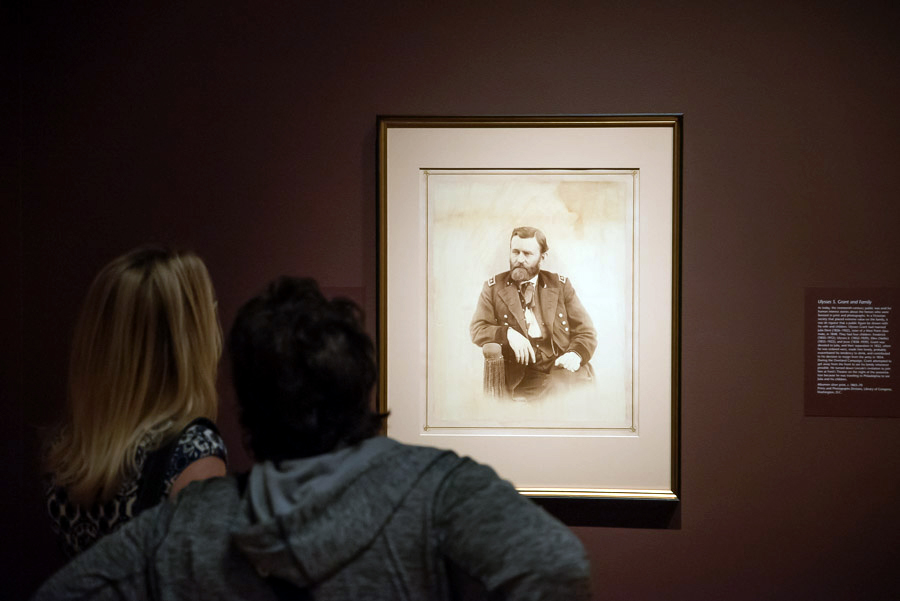
Alexander Gardner (American born Scotland, 1821-1882) 'Ulysses S. Grant' (1822-1885) c. 1864 from the exhibition 'Dark Fields of the Republic: Alexander Gardner Photographs, 1859-1872' at the National Portrait Gallery, Washington, Sept 2015 - March 2016


Alexander Gardner (American born Scotland, 1821-1882)
Ulysses S. Grant (1822-1885)
c. 1864
Albumen silver print
National Portrait Gallery, Smithsonian Institution


THIS IS THE FIRST OF THREE POSTINGS ABOUT (MAINLY AMERICAN) 19th CENTURY PHOTOGRAPHY.

This monster posting is both fascinating and gruesome by turns. They were certainly dark fields, stained crimson with the blood of men of opposing armies, left bloated and rotting in the hot sun. Can you imagine the smell one or two days later when Alexander Gardner arrived to photograph those very fields.

Particularly in the early war years (1861-62).”Gardner has often had his work misattributed to Brady.” Gardner worked for Mathew Brady, running his Washington office and working in the field (as many other operatives did) during the early part of the Civil War. Gardner’s negatives were published under the banner of the studio of Brady. He finished working for Brady in 1862 before setting up his own studio in May 1863 a few blocks from Brady’s Washington studio. This fluidity of authorship continues later in the war when Timothy H. O’Sullivan’s photographs, an assistant to Gardner, appeared under the masthead of Gardner’s studio. Evidence of this can be observed in the image Home of a Rebel Sharpshooter (July 1863, below) where, at least, Sullivan is credited with the negative at bottom left under the image.

Gardner changed the face of photography. He endowed it with an immediacy and energy that it had previously been lacking. His photographs of the battlefield brought the action “presently” into the lounge rooms of the well-heeled and, by engravings taken from the photographs, into newspapers of the time. His series of photographs of the hanging of the conspirators convicted of Abraham Lincoln’s assassination are “considered one of the first examples of photojournalism ever recorded.” But he wasn’t above rearranging the scene to his liking, as in the moving of the body in Home of a Rebel Sharpshooter (July 1863, below) to make a more advantageous “view” … much like Roger Fenton’s moving of the cannonballs in his epic photograph The Valley of the Shadow of Death (1855). Today this would be frowned upon, but in the era these photographs were taken it seemed the most “natural” thing to do, to make a better photograph, and nothing was thought of it.

The exhibition text states, “But his arrangement of the corpse reflects how difficult it was for Gardner and his contemporaries to process the reality of mass casualties in which the dead became anonymous. Caught at a transitional moment, Gardner did not trust the images his camera captured. That this photographic construction would be more marketable to a public still steeped in Victorian sentimentality only adds to Gardner’s malfeasance.” Malfeasance is a strong word. Malfeasance is defined as an affirmative act, “the performance by a public official of an act that is legally unjustified, harmful, or contrary to law; wrongdoing (used especially of an act in violation of a public trust).” (Dictionary.com) The exhibition text also states that “His actions are unforgivable from both a moral and artistic point of view,” and are a blot on Gardner’s career.

I don’t agree. Of course Gardner trusted the images that his camera captured, he was a photographer! This is a ludicrous statement… it is just that, arriving days after the battle, he wanted compositions that created news and views that were memorable. His affirmative action was not illegal or contrary to the law. Although morally it could be seen as a violation of public trust he was reporting the depravities of war within the first 25 years of the beginning of photography, and he was trying to get across to the general public the lonely desperation of death. In that era, at the very beginning of photographic reportage, who was to tell him it was wrong or illegal? We view these actions through retrospective eyes knowing that this kind of re-arrangement would not be tolerated today (but it is, in the digital manipulation of images!) and the condemnation of today is just a hollow statement. Photography has ALWAYS re-presented reality – through the hand of the author, through the eyes of the viewer.

Other interesting things to note in the posting are:

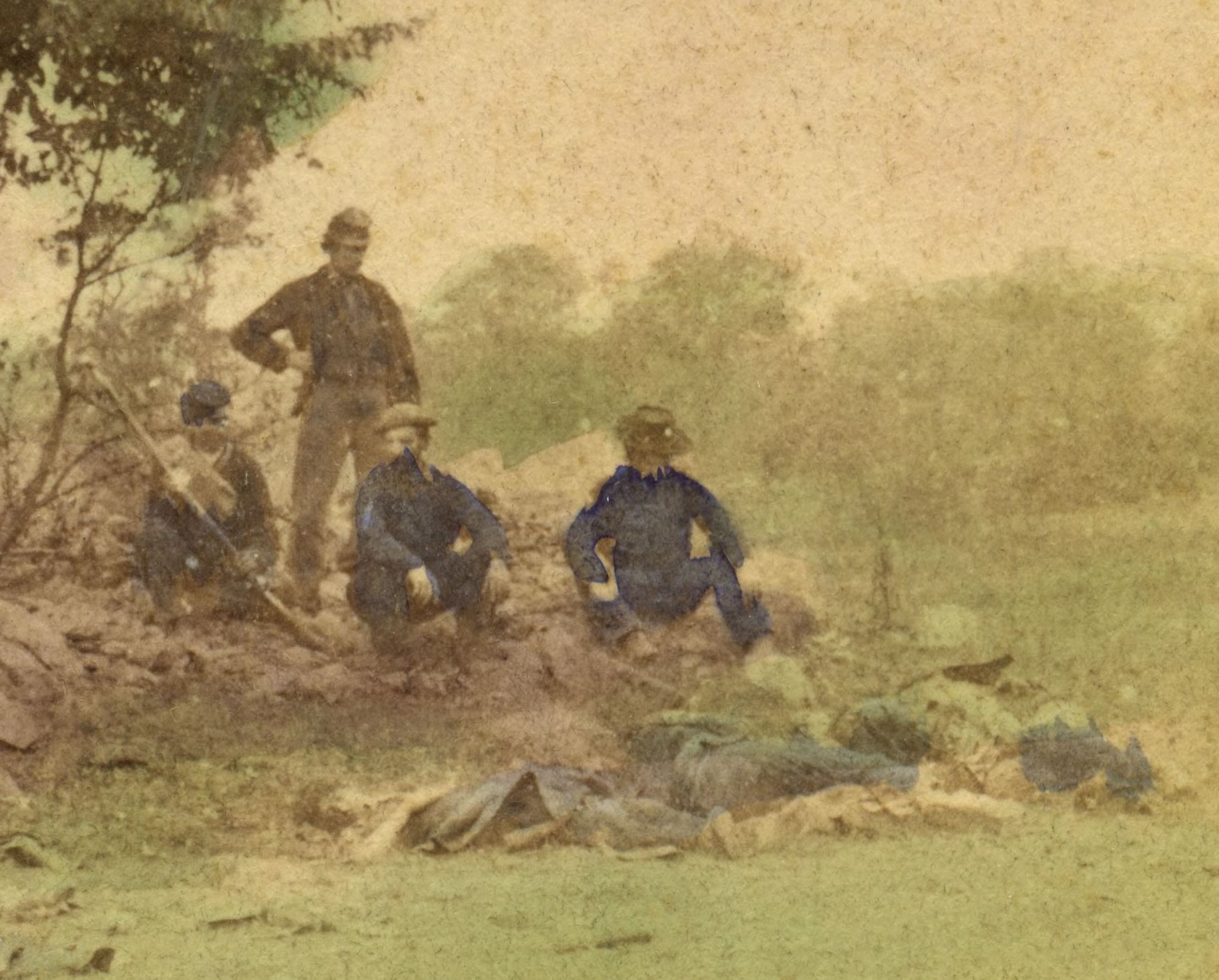
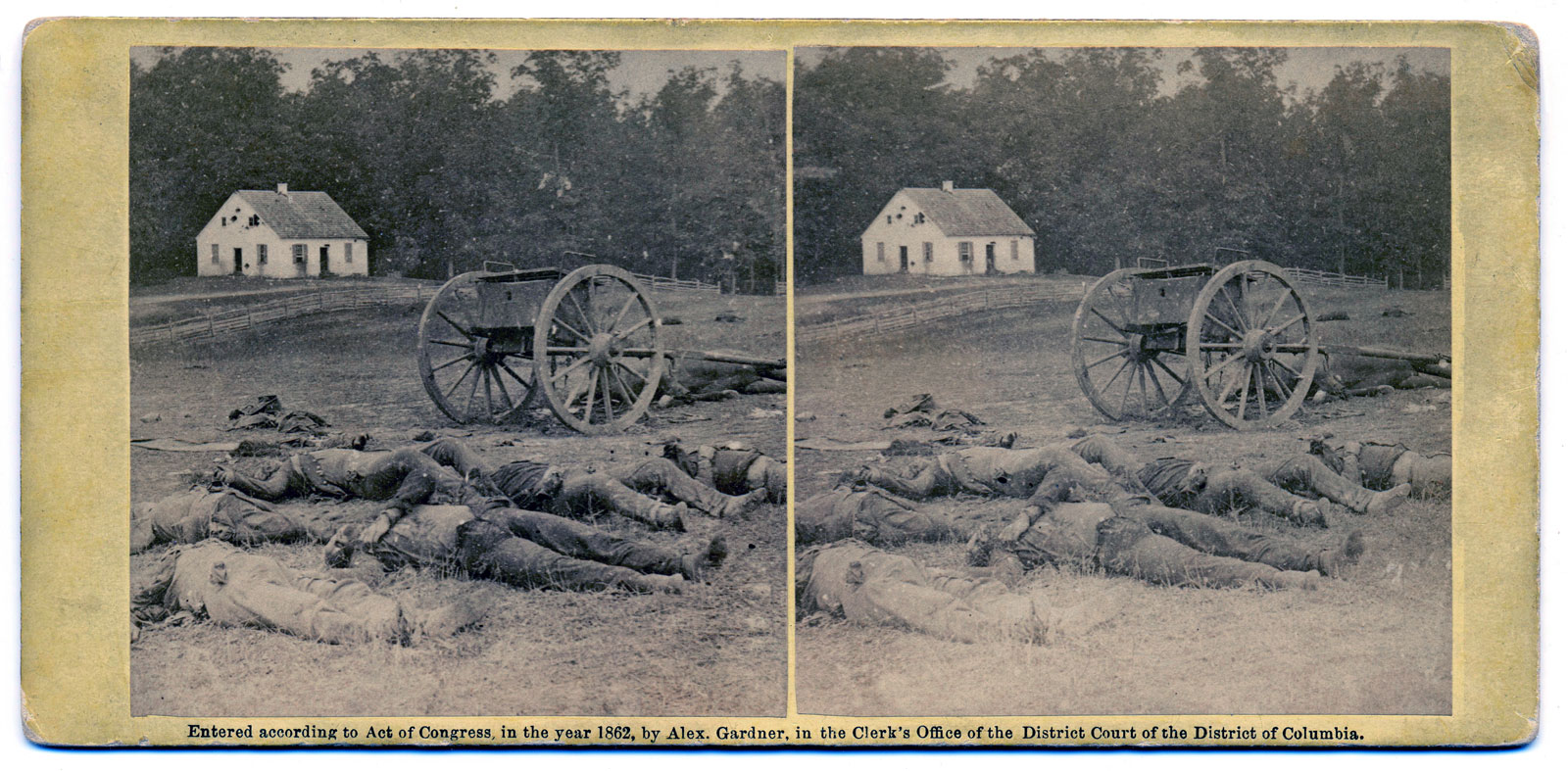
~ the mechanical overlaying of colour in the stereograph View on Battle Field of Antietam, Burial party at work (1862, below) where the colour is applied subtly in the left hand photograph while in the right hand image, the colour almost obliterates the figures

~ the attitude of the participants in Indian Peace Commissioners in council with the Northern Cheyenne and Northern Arapaho, Fort Laramie, Dakota Territory (1868, below). The military and civilian representatives of the government sit at right on boxes, four of them staring directly into the camera aware they are being photographed for prosperity (General William T. Sherman does not, looking pensive with his hands clasped) while on the left, the Native American Indian representatives sit on the ground wrapped in blankets with the backs of two interpreters towards the camera. They do not make eye contact with the camera except for one man, who has turned his head towards the camera and gives it a defiant stare (perhaps I am imagining, but I think not)


The strongest photographs in this posting, other than the masterpiece Home of a Rebel Sharpshooter are not the empirical scenes of the battlefield but two portraits: Ulysses S. Grant (1864, below) and the war weary “cracked plate” image of Abraham Lincoln (1865, below). Both are memorable not just for the low depth of field or the “capture” of remarkable leaders of men during war but for something essentially interior to themselves – their contemplation of self. With Grant you can feel the steely determination (this in the second last year of the war) and, yet, comprehend his statement,

“Though I have been trained as a soldier, and participated in many battles, there never was a time when, in my opinion, some way could not be found to prevent the drawing of the sword”

in this image. What must be done has to be done, but by God I wish it wasn’t so. The eyes have it.

With the Lincoln portrait – of which Gardner only pulled one print from the plate before he destroyed it, making this the rarest of images – the charismatic leader is shown with craggy, war weariness. The contextless space around the body is larger than is normal at this time, allowing us to focus on the “thing itself” … and then we have that prophetic crack. “During this sitting, Gardner created this portrait by accident,” says the text from the exhibition. How do you create a portrait like this by accident? With the length of the exposure, Lincoln would have had to remain immobile for seconds… not something that you do by accident. No, both Gardner and Lincoln knew that a portrait was being taken. This is previsualisation (depth of field, space around and above the body) at its finest. That the plate was accidentally cracked and then discarded in no way makes this portrait an accident. If this is a portrait of, “Lincoln between life and death, between his role as a historical actor and the mystical figure that he would become with his assassination,” it is also the face of a man that you could almost reach out and touch!

Dr Marcus Bunyan


Many thankx to the National Portrait Gallery, Washington for allowing me to publish the photographs in the posting. Please click on the photographs for a larger version of the image.



Alexander Gardner (American born Scotland, 1821-1882)

Gardner has often had his work misattributed to Brady, and despite his considerable output, historians have tended to give Gardner less than full recognition for his documentation of the Civil War. Lincoln dismissed McClellan from command of the Army of the Potomac in November 1862, and Gardner’s role as chief army photographer diminished. About this time, Gardner ended his working relationship with Brady, probably in part because of Brady’s practice of attributing his employees’ work as “Photographed by Brady”. That winter, Gardner followed General Ambrose Burnside, photographing the Battle of Fredericksburg. Next, he followed General Joseph Hooker. In May 1863, Gardner and his brother James opened their own studio in Washington, D.C, hiring many of Brady’s former staff. Gardner photographed the Battle of Gettysburg (July 1863) and the Siege of Petersburg (June 1864-April 1865) during this time.

In 1866, Gardner published a two-volume work, Gardner’s Photographic Sketch Book of the Civil War. Each volume contained 50 hand-mounted original prints. The book did not sell well. Not all photographs were Gardner’s; he credited the negative producer and the positive print printer. As the employer, Gardner owned the work produced, as with any modern-day studio. The sketchbook contained work by Timothy H. O’Sullivan, James F. Gibson, John Reekie, William Pywell, James Gardner (his brother), John Wood, George N. Barnard, David Knox and David Woodbury, among others. Among his photographs of Abraham Lincoln were some considered to be the last to be taken of the President, four days before his assassination, although later this claim was found to be incorrect, while the pictures were actually taken in February 1865, the last one being on the 5th of February. Gardner would photograph Lincoln on a total of seven occasions while Lincoln was alive. He also documented Lincoln’s funeral, and photographed the conspirators involved (with John Wilkes Booth) in Lincoln’s assassination. Gardner was the only photographer allowed at their execution by hanging, photographs of which would later be translated into woodcuts for publication in Harper’s Weekly.

Text from the Wikipedia website


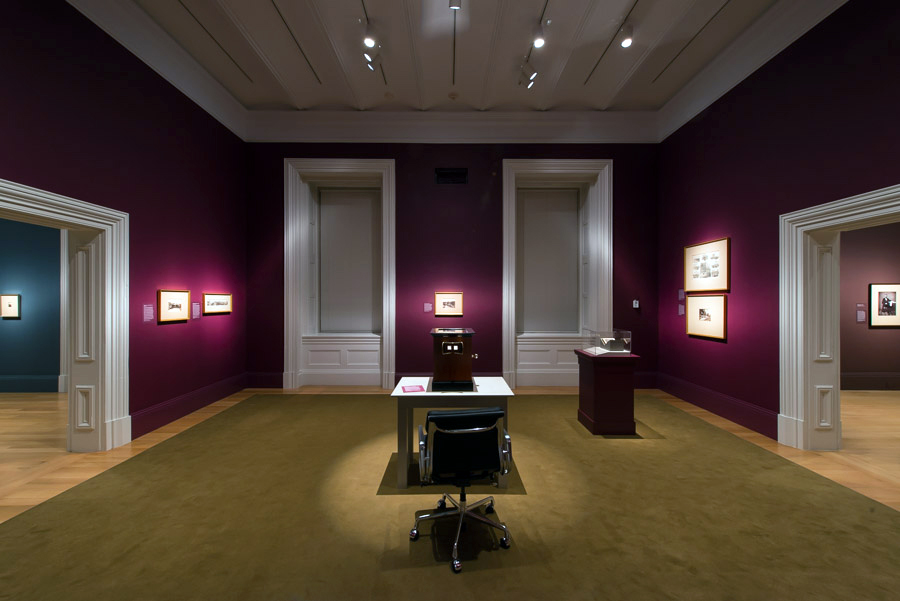
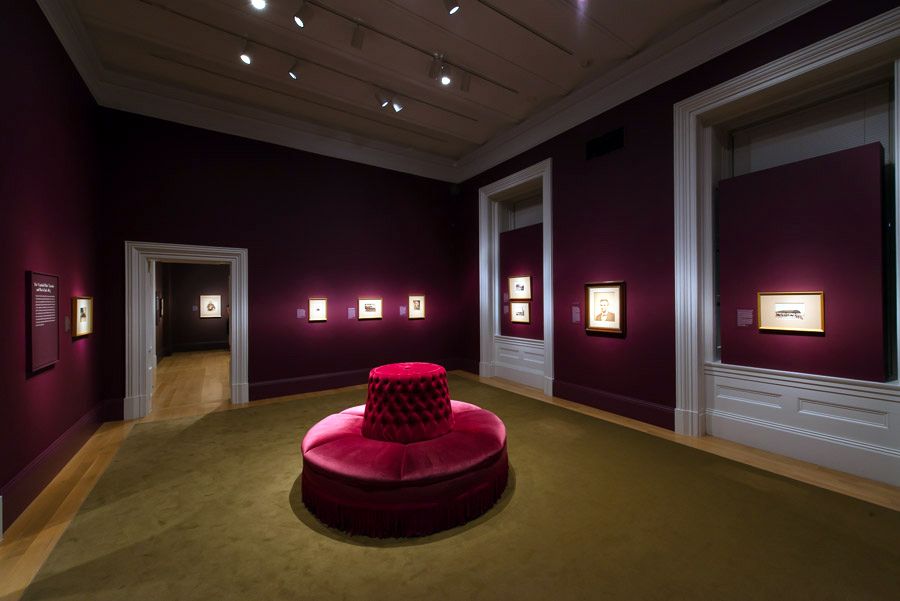
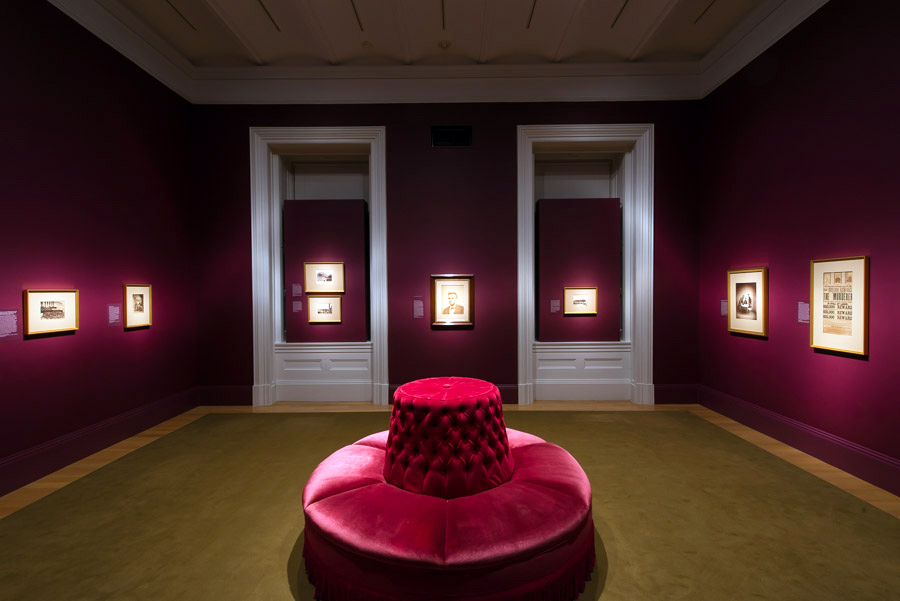
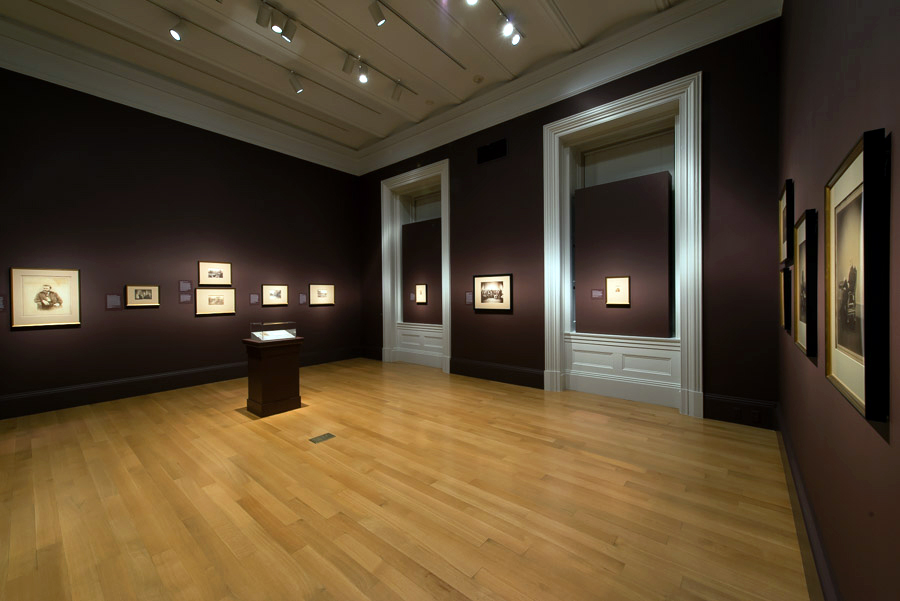
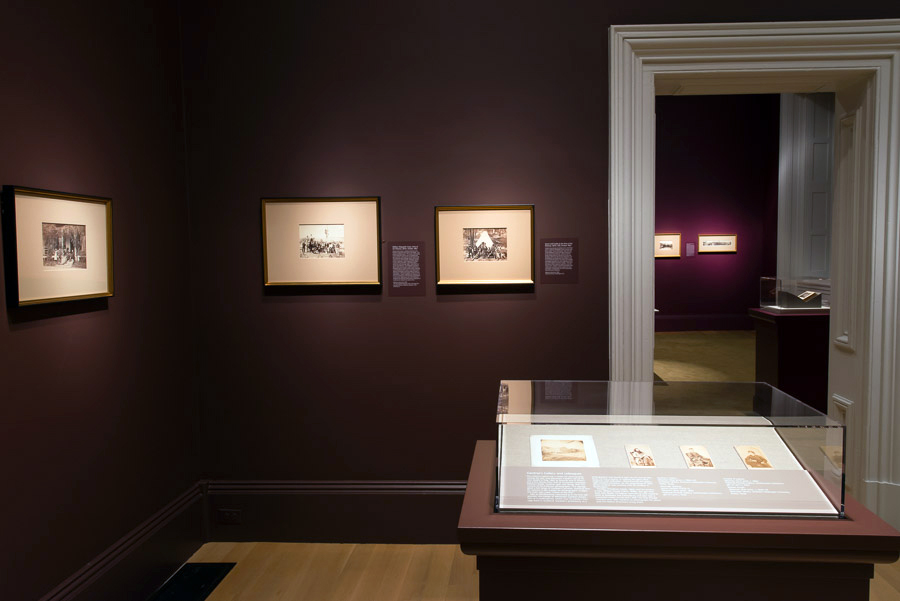
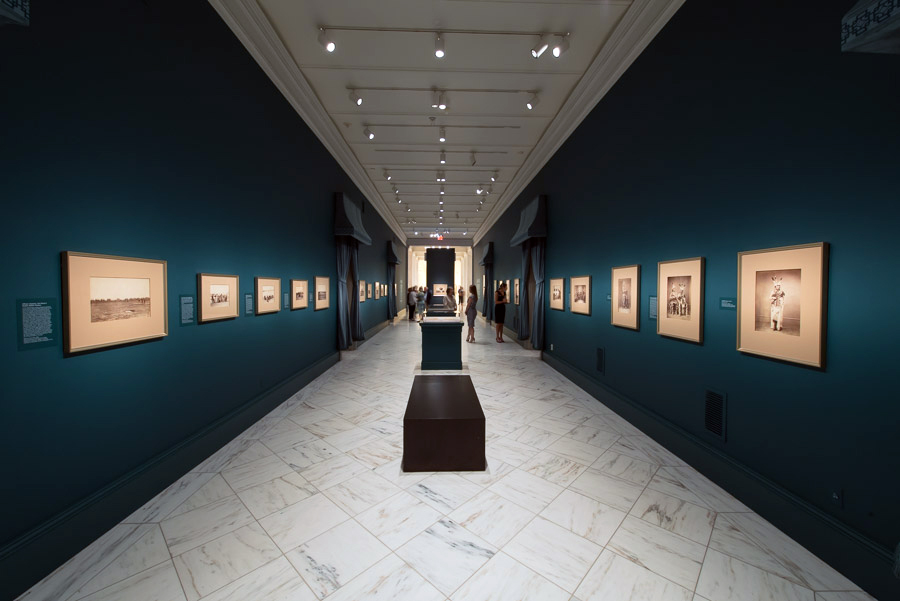
Installation view of the exhibition ‘Dark Fields of the Republic: Alexander Gardner Photographs, 1859-1872’ at the National Portrait Gallery, Washington

Installation view of the exhibition ‘Dark Fields of the Republic: Alexander Gardner Photographs, 1859-1872’ at the National Portrait Gallery, Washington

Installation view of the exhibition ‘Dark Fields of the Republic: Alexander Gardner Photographs, 1859-1872’ at the National Portrait Gallery, Washington

Installation view of the exhibition ‘Dark Fields of the Republic: Alexander Gardner Photographs, 1859-1872’ at the National Portrait Gallery, Washington

Installation view of the exhibition ‘Dark Fields of the Republic: Alexander Gardner Photographs, 1859-1872’ at the National Portrait Gallery, Washington

Installation view of the exhibition ‘Dark Fields of the Republic: Alexander Gardner Photographs, 1859-1872’ at the National Portrait Gallery, Washington

Installation view of the exhibition ‘Dark Fields of the Republic: Alexander Gardner Photographs, 1859-1872’ at the National Portrait Gallery, Washington

Installation view of the exhibition ‘Dark Fields of the Republic: Alexander Gardner Photographs, 1859-1872’ at the National Portrait Gallery, Washington

Installation view of the exhibition ‘Dark Fields of the Republic: Alexander Gardner Photographs, 1859-1872’ at the National Portrait Gallery, Washington

Installation view of the exhibition ‘Dark Fields of the Republic: Alexander Gardner Photographs, 1859-1872’ at the National Portrait Gallery, Washington


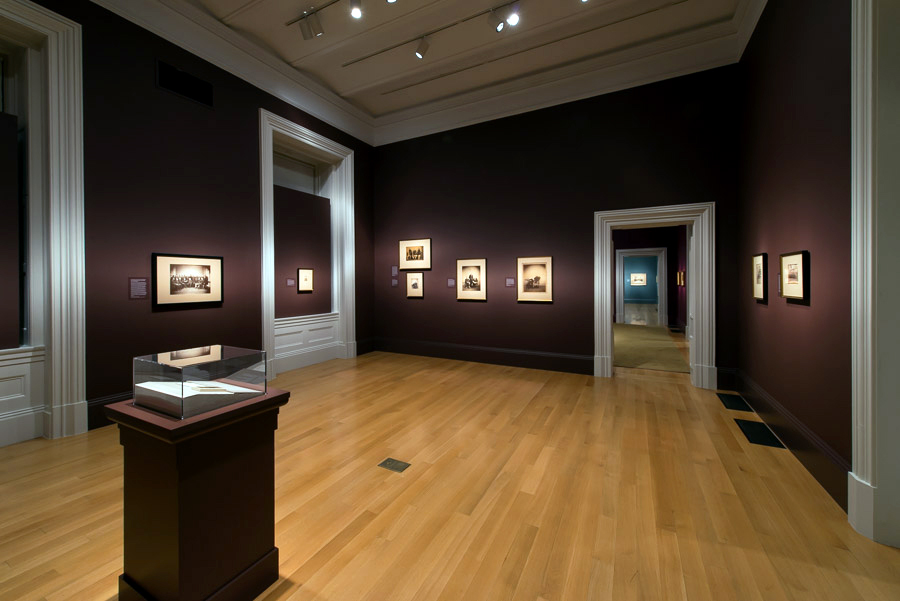
Installation views of the exhibition Dark Fields of the Republic: Alexander Gardner Photographs, 1859-1872 at the National Portrait Gallery, Washington


Dark Fields of the Republic: Alexander Gardner Photographs, 1859-1872

His photographs have “a terrible distinctness.” So wrote the New York Times about the work of trailblazing photographer Alexander Gardner (1821-1882). In a career spanning the critical years of the nineteenth century, Gardner created images that documented the crisis of the Union, the Civil War, the United States’ expansion into the western territories, and the beginnings of the Indian Wars.

As one of a pioneering generation of American photographers, Gardner helped revolutionise photography, both in his mastery of techniques and by recognising that the camera’s eye could be fluid and mobile. In addition to creating portraits of leaders and generals – he was Abraham Lincoln’s favourite photographer – Gardner followed the Union army, taking indelible images of battlefields and military campaigning. His battlefield photographs – including those of the newly dead – created a public sensation, contributing to the change under way in American culture from romanticism to realism, a realism that was the hallmark of his work.

At war’s end, Gardner went west. Fascinated, like many artists, by American Indians, he took a series of stunning images of the western tribes, setting set these figures in their native grounds: these photographs are the pictorial evocation of the seemingly limitless western land and sky. He also took images of the Indians in Washington, D.C., where they traveled to negotiate preservation of their way of life. Gardner’s portraits of Native Americans are dignified likenesses of a resistant people fighting for their way of life.

In their documentary clarity and startling precision, Alexander Gardner’s photographs – taken in the studio, on battlefields, and in the western territories – are a summons back into a darkly turbulent and heroic period in American history.”

Text from the exhibition website


Installation view of the exhibition ‘Dark Fields of the Republic: Alexander Gardner Photographs, 1859-1872’ at the National Portrait Gallery, Washington

Installation view of the exhibition ‘Dark Fields of the Republic: Alexander Gardner Photographs, 1859-1872’ at the National Portrait Gallery, Washington

Installation view of the exhibition ‘Dark Fields of the Republic: Alexander Gardner Photographs, 1859-1872’ at the National Portrait Gallery, Washington

Installation view of the exhibition ‘Dark Fields of the Republic: Alexander Gardner Photographs, 1859-1872’ at the National Portrait Gallery, Washington

Installation view of the exhibition ‘Dark Fields of the Republic: Alexander Gardner Photographs, 1859-1872’ at the National Portrait Gallery, Washington

Installation view of the exhibition ‘Dark Fields of the Republic: Alexander Gardner Photographs, 1859-1872’ at the National Portrait Gallery, Washington

Installation view of the exhibition ‘Dark Fields of the Republic: Alexander Gardner Photographs, 1859-1872’ at the National Portrait Gallery, Washington


Installation views of the exhibition Dark Fields of the Republic: Alexander Gardner Photographs, 1859-1872 at the National Portrait Gallery, Washington with, in the bottom photograph, two people looking at a photograph of Lieutenant General Grant.


Alexander Gardner (American born Scotland, 1821-1882) 'Ulysses S. Grant' (1822-1885) c. 1864 (detail)


Alexander Gardner (American born Scotland, 1821-1882)
Ulysses S. Grant (detail)
c. 1864
Albumen silver print
National Portrait Gallery, Smithsonian Institution


There is a story that when Ulysses S. Grant traveled east in 1864 to take command of all the Union armies, the desk clerk at Washington’s Willard Hotel did not recognise him and assigned him to a mean, nondescript room. (When Grant identified himself, he was upgraded to a suite.) The anecdote points out that likenesses were not yet widely distributed, even after the advent of photography. It was possible for famous people to remain unidentified. But fame meant that one had one’s photograph taken, as Grant did in this image Gardner took after the western general arrived in Washington. Grant was coming off a string of successes in the West, including the successful siege of Vicksburg, which made him the inevitable choice for overall command. In Grant, Lincoln finally found a general who would consistently engage the enemy’s forces. Indicative of Grant’s stature, Lincoln bestowed on him the rare title of lieutenant general, a rank previously held only by George Washington.

Text from the exhibition website


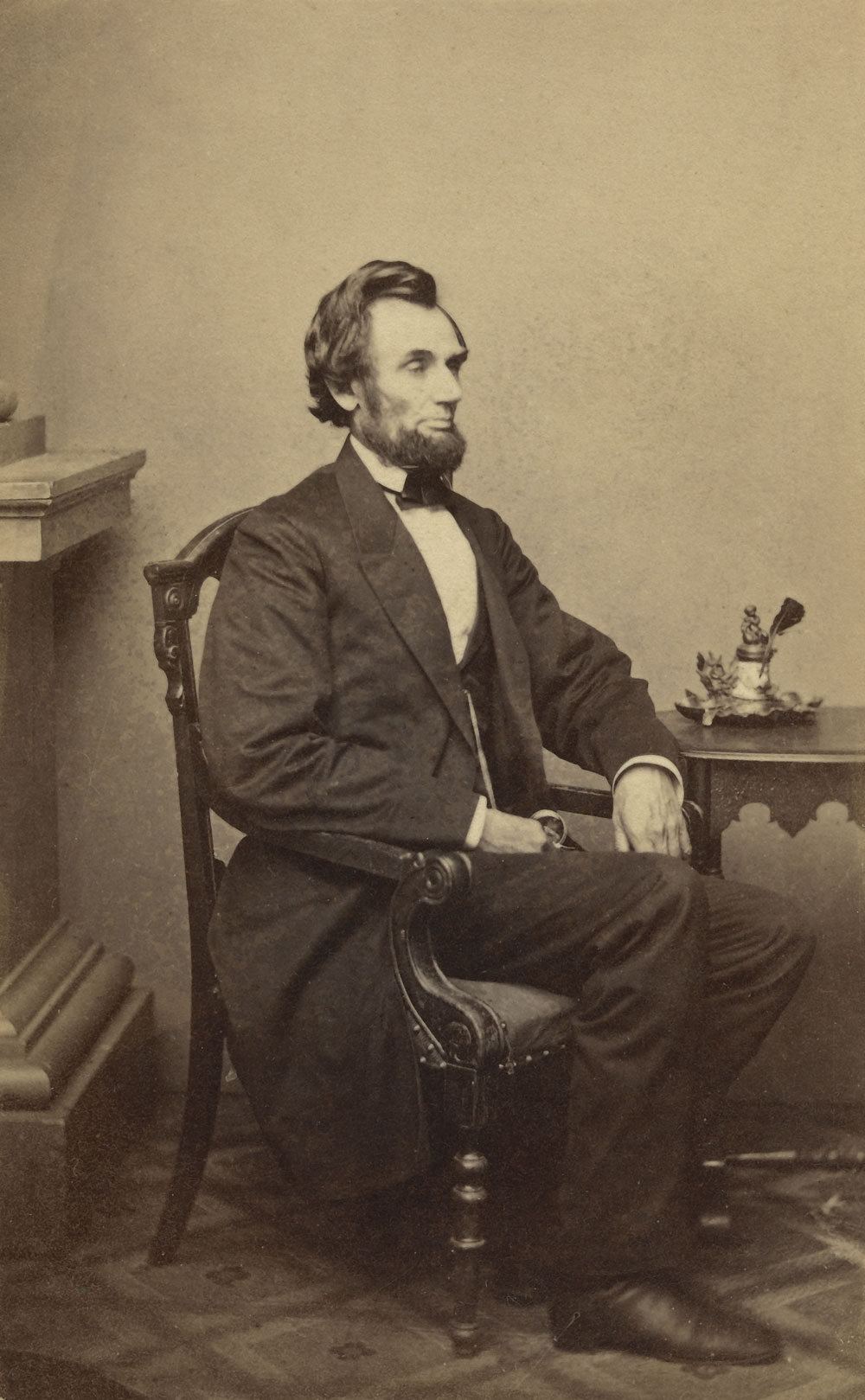
Alexander Gardner (American born Scotland, 1821-1882) 'Abraham Lincoln' 1863 from the exhibition 'Dark Fields of the Republic: Alexander Gardner Photographs, 1859-1872' at the National Portrait Gallery, Washington, Sept 2015 - March 2016


Alexander Gardner (American born Scotland, 1821-1882)
Abraham Lincoln
1861
Albumen silver print
National Portrait Gallery, Smithsonian Institution


Alexander Gardner (American born Scotland, 1821-1882) 'Abraham Lincoln' 1863 (detail)


Alexander Gardner (American born Scotland, 1821-1882)
Abraham Lincoln (detail)
1863
Albumen silver print
National Portrait Gallery, Smithsonian Institution


This portrait of Abraham Lincoln was taken on February 24, 1861, just before his inauguration on March 4. It has been conjectured that Lincoln is hiding his right hand in his lap because it was swollen from shaking so many hands during his travel from Illinois to Washington. This is also the first studio image depicting Lincoln with a full beard, which he had famously grown between the election and inauguration, purportedly at the behest of a little girl who wrote him from New York that it would improve his appearance. Lincoln was early to recognise the power of the relatively new medium of photography to mould and shape a public persona. He credited a photograph by Mathew Brady, taken when he came to New York City to present himself to Republican Party power brokers, as helping to confirm his suitability for the presidency by showing him well-dressed and dignified. Interestingly, the Brady photograph shows Lincoln standing; in this portrait he is seated, as if ready to begin work as president.

Text from the exhibition website


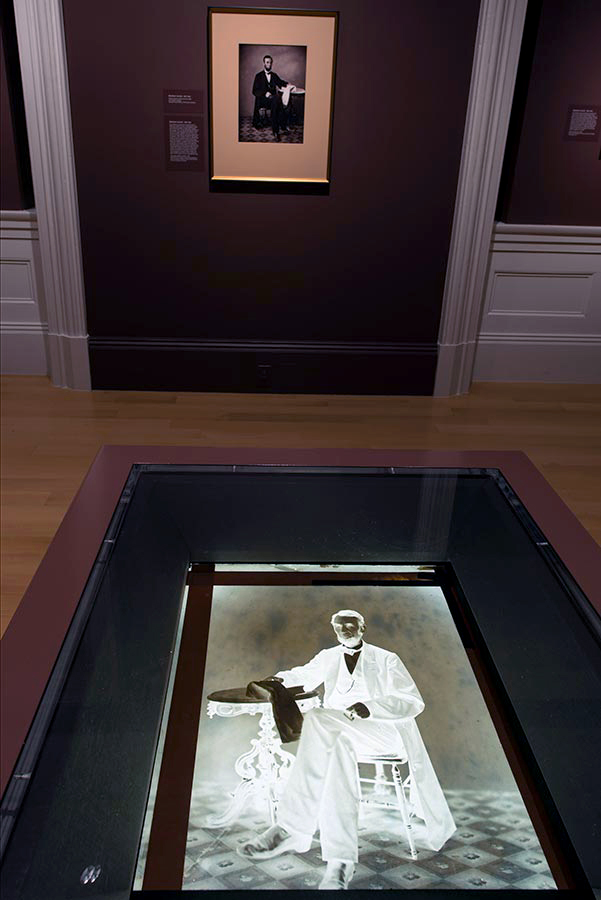
Installation view of the exhibition ‘Dark Fields of the Republic: Alexander Gardner Photographs, 1859-1872’ at the National Portrait Gallery, Washington showing the "Imperial" glass-plate negative of President Abraham Lincoln from his August 9, 1863, sitting at Gardner's Washington studio, with a print from the negative on the wall behind


Installation view of the exhibition Dark Fields of the Republic: Alexander Gardner Photographs, 1859-1872 at the National Portrait Gallery, Washington showing the “Imperial” glass-plate negative of President Abraham Lincoln from his August 9, 1863, sitting at Gardner’s Washington studio, with a print from the negative on the wall behind


This exhibition provides the rare opportunity to display the means by which a photographic image was produced on paper: the glass-plate negative that was the “film” of early photography. Because of their fragility, surviving glass-plate negatives of this size (the so-called “imperial”) are rare: this is one of two of Lincoln that have survived and dates from his August 9, 1863, sitting at Gardner’s Washington studio. The process Gardner used was relatively new to America and consisted of hand-coating a glass plate with collodion – a syrupy mixture of guncotton dissolved in alcohol and ether to which bromide and iodine salts had been added. The difficulty for the photographer was that the glass plate had to be coated with collodion, sensitised in a bath of silver nitrate, and exposed in the camera immediately, while the emulsion was still damp. Gardner was acknowledged as a master in evenly coating the plate, which resulted in prints of exceptional clarity.

Text from the exhibition website


Alexander Gardner (American born Scotland, 1821-1882) 'Abraham Lincoln' 1865


Alexander Gardner (American born Scotland, 1821-1882)
Abraham Lincoln
1865
Albumen silver print
National Portrait Gallery, Smithsonian Institution


The “cracked-plate” image of Abraham Lincoln, taken by Alexander Gardner on February 5, 1865, is one of the most important and evocative photographs in American history. In preparing for his second inaugural, Lincoln had a series of photographs taken at Gardner’s studio. During this sitting, Gardner created this portrait by accident: at some point, possibly when the glass-plate negative was heated to receive a coat of varnish, a crack appeared in the upper half of the plate. Gardner pulled a single print and then discarded the plate, so only one such portrait exists.

The portrait represents a radical departure from Gardner’s usual crisp empiricism. The shallow depth of field created when Gardner moved his camera in for a close-up yielded a photograph whose focus is confined to the plane of Lincoln’s cheeks, while the remainder of the image appears diffused and even out of focus. Lincoln is careworn and tired, his face grooved by the emotional shocks of war. Yet his face also bears a small smile, perhaps as he contemplates the successful conclusion of hostilities and the restoration of the Union. This is Lincoln between life and death, between his role as a historical actor and the mystical figure that he would become with his assassination. Although Lincoln looked forward to his second term, we know, as he could not, that he will soon be assassinated. This image inextricably links history and myth, creating one of the most powerful American portraits.

Text from the exhibition website


Alexander Gardner (American born Scotland, 1821-1882) 'Abraham Lincoln' 1865 (detail)


Alexander Gardner (American born Scotland, 1821-1882)
Abraham Lincoln (detail)
1865
Albumen silver print
National Portrait Gallery, Smithsonian Institution


Smithsonian’s First Major Retrospective of Alexander Gardner’s Photographs at the National Portrait Gallery

Exhibition Will Highlight Gardner’s Civil War Photographs, Including His One-of-a-Kind Image of President Lincoln

Considered America’s first modern photographer, just as the Civil War is considered the first modern war, Alexander Gardner created dramatic and vivid photographs of battlefields and played a crucial role in the transformation of American culture by injecting a sobering note of realism to American photography.

“Gardner’s photographs showed how the new medium and art form could develop to meet the challenges of modern society,” said Kim Sajet, director of the Portrait Gallery. “These are a record of the sacrifice and loss that occurred in the great national struggle over the Union. Our photograph of Lincoln by him, known as the ‘cracked-plate,’ is the museum’s ‘Mona Lisa.'” [see above]

The first section of the exhibition will highlight Gardner’s Civil War photographs, and his role as President Abraham Lincoln’s preferred photographer. Gardner photographed the president many times, recording the impact of the war on his face. Among these images is the “cracked-plate” portrait, a photograph that is arguably the most iconic image of Lincoln. In addition, the exhibition will encompass Gardner’s portraits of other prominent statesmen and generals, as well as private citizens.

Also in the exhibition are Gardner’s landscapes of the American West and portraits of American Indians. These document the course of American expansion as postwar settlers moved westward, challenged by geography and Indian tribes resistant to losing their ancestral homelands. Gardner’s landscapes are evocative studies of almost limitless horizons, giving a sense of the emptiness of western space. These are contrasted with his detailed portraits of Indian chiefs and tribal delegations.

Curated by David C. Ward, Portrait Gallery senior historian, and guest curator Heather Shannon, former photo archivist at the Smithsonian’s National Museum of the American Indian, with research assistance from Sarah Campbell, this exhibition will feature more than 140 objects, including photographs, prints and books. The exhibition will be the finale of the Portrait Gallery’s seven-part series commemorating the 150th anniversary of the Civil War.

Press release from the National Portrait Gallery


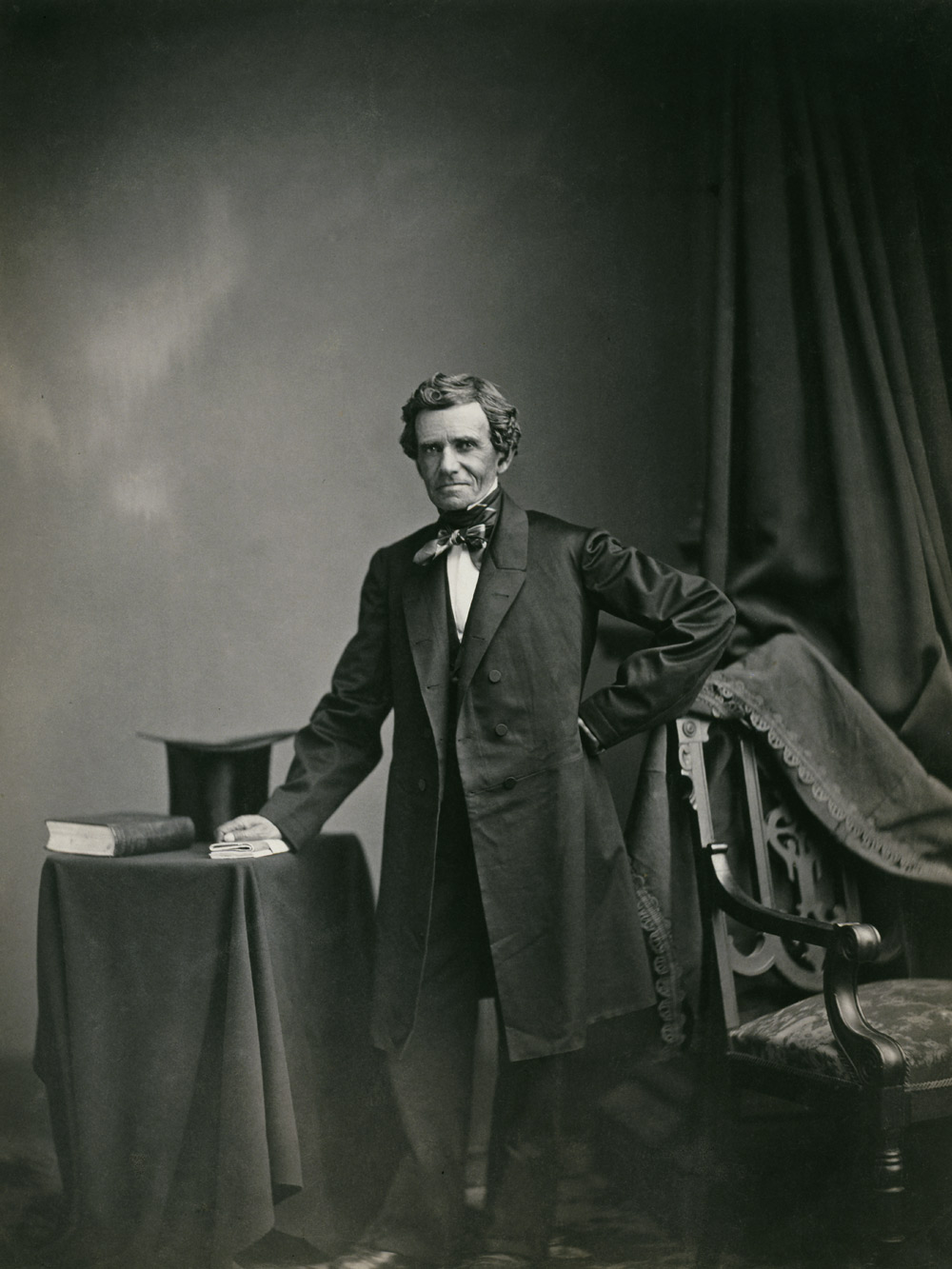
Alexander Gardner (American born Scotland, 1821-1882) 'Samuel Wilkeson' (1817-1889) c. 1859


Alexander Gardner (American born Scotland, 1821-1882)
Samuel Wilkeson (1817-1889)
c. 1859
Salted paper print
Smithsonian American Art Museum
Museum purchase from the Charles Isaacs Collection made possible in part by the Luisita L. and Franz H. Denghausen Endowment


On July 1, 1863, at the Battle of Gettysburg, nineteen-year-old Lieutenant Bayard Wilkeson and his men attempted to slow the Confederate forces. A shell mangled the lieutenant’s right knee as his unit, Battery G of the Fourth U.S. Artillery, drew the attention of Confederate cannons. After amputating his leg with a pocket knife and being carried to an almshouse, Wilkeson ordered his men to return to battle. A few days later, his father, Samuel Wilkeson, a journalist, wrote home to say he had found Bayard dead “from neglect and bleeding.” On the front page of the July 6 New York Times, Samuel wrote a moving, influential, and widely circulated account of the battle. Bayard’s story and his father’s grief became symbolic of the North’s suffering, sacrifice, and righteousness. The article concludes, “oh, you dead, who at Gettysburg have baptised with your blood the second birth of Freedom in America, how you are to be envied!”

Text from the exhibition website


Alexander Gardner (American born Scotland, 1821-1882) 'Samuel Wilkeson' (1817-1889) c. 1859


Alexander Gardner (American born Scotland, 1821-1882)
Samuel Wilkeson (1817-1889)
c. 1859
Salted paper print
Smithsonian American Art Museum
Museum purchase from the Charles Isaacs Collection made possible in part by the Luisita L. and Franz H. Denghausen Endowment


Alexander Gardner (American born Scotland, 1821-1882) 'Samuel Wilkeson' (1817-1889) c. 1859 (detail)


Alexander Gardner (American born Scotland, 1821-1882)
Samuel Wilkeson (1817-1889) (detail)
c. 1859
Salted paper print
Smithsonian American Art Museum
Museum purchase from the Charles Isaacs Collection made possible in part by the Luisita L. and Franz H. Denghausen Endowment


Alexander Gardner (American born Scotland, 1821-1882) 'Self-Portrait' c. 1861


Alexander Gardner (American born Scotland, 1821-1882)
Self-Portrait
c. 1861
Albumen silver print
National Portrait Gallery, Smithsonian Institution


In this self-portrait taken at Mathew Brady’s Washington studio, Alexander Gardner presents himself wearing the garb of a mountain man or trapper, sporting buckskins and a fur hat; Gardner’s trademark full, ungroomed beard only adds to the frontiersman image. Gardner holds a bow and arrow while standing on Indian rugs. The image captures America’s enduring fascination with the West and adopting the garb of Native peoples. It also shows Gardner, a man about whom we know little, in disguise, hiding himself in a fictional frontier persona. Although he is acting a role, Gardner, whose family had bought land in Iowa in the antebellum period, was genuinely interested in the western lands and the fate of the Indians. In the 1860s he began his project of photographing the western tribal delegations when they came to Washington. After the Civil War he went west to photograph Indians on their native grounds.

Text from the exhibition website


James Gardner (American born Scotland, c. 1832 - ?) 'Alexander Gardner' 1863


James Gardner (American born Scotland, c. 1832 – ?)
Alexander Gardner
1863
Albumen silver print
National Portrait Gallery, Smithsonian Institution; gift of Larry J. West


James Gardner (American born Scotland, c. 1832 - ?) 'Alexander Gardner' 1863 (detail)


James Gardner (American born Scotland, c. 1832 – ?)
Alexander Gardner (detail)
1863
Albumen silver print
National Portrait Gallery, Smithsonian Institution; gift of Larry J. West


Not as flamboyantly costumed as in his first self-portrait, this image of Alexander Gardner shows him as a workingman, which was his family’s heritage back in Scotland. Gardner’s proficiency as a photographer was based in part on his manual dexterity; he was a master at coating the glass-plate negatives with collodion, which formed the plate’s light-sensitive emulsion. By the beginnings of 1863 James Gardner was working with his brother in Washington.

Text from the exhibition website


Alexander Gardner (American born Scotland, 1821-1882) 'Rose Greenhow' (c. 1854-?) and 'Rose O'Neal Greenhow' (c. 1815-1864) 1862


Alexander Gardner (American born Scotland, 1821-1882)
Rose Greenhow  (c. 1854-?)
Rose O’Neal Greenhow  (c. 1815-1864)
1862
Albumen silver print
National Portrait Gallery, Smithsonian Institution


One of the Confederacy’s most successful female spies, Rose O’Neal Greenhow was a prominent Washington widow and a staunch southern sympathiser. The Confederacy recruited her as a spy after war erupted in 1861. Most notably, Greenhow is credited with passing along intelligence prior to the First Battle of Manassas, insuring a southern victory. Soon after, her covert activities were uncovered and she was placed under house arrest. Gardner took this photograph after “Rebel Rose” and her daughter, Little Rose, were transferred to the Old Capitol Prison in 1862. Greenhow served five months before being exiled to the South. She then traveled to Europe to promote the Confederate cause. Returning in September 1864, Greenhow drowned attempting to run the federal blockade of Wilmington, N.C. The Confederacy buried her with military honours.

Text from the exhibition website


Alexander Gardner (American born Scotland, 1821-1882) 'View on Battle Field of Antietam, Burial party at work' 1862


Alexander Gardner (American born Scotland, 1821-1882)
View on Battle Field of Antietam, Burial party at work
1862
Coloured Stereograph (Albumen silver print on stereo card)


Alexander Gardner (American born Scotland, 1821-1882) 'View on Battle Field of Antietam, Burial party at work' 1862 (detail)


Alexander Gardner (American born Scotland, 1821-1882)
View on Battle Field of Antietam, Burial party at work (detail)
1862
Coloured Stereograph (Albumen silver print on stereo card)


Alexander Gardner (American born Scotland, 1821-1882) 'View on Battle Field of Antietam, Burial party at work' 1862 (detail)

Alexander Gardner (American born Scotland, 1821-1882) 'View on Battle Field of Antietam, Burial party at work' 1862 (detail)


Alexander Gardner (American, 1821-1882)
View on Battle Field of Antietam, Burial party at work (details of left and right photographs)
1862
Coloured Stereograph (Albumen silver print on stereo card)


Alexander Gardner (American born Scotland, 1821-1882) 'Antietam Bridge, Maryland' 1862


Alexander Gardner (American born Scotland, 1821-1882)
Antietam Bridge, Maryland
1862
Albumen silver print
Photograph by Alexander Gardner, from Gardner’s Photographic Sketch Book of the War
Records of the War Department General and Special Staffs, Record Group 165, National Archives Still Picture Branch, College Park, Maryland


Antietam Bridge (not to be confused with the more famous Burnside Bridge located to the south, which was the site of a confused Union attack during the Battle of Antietam’s third phase) spanned Antietam Creek, roughly in the middle of the battlefield. Before the battle, some Union troops used it to move toward the Confederate lines arrayed just outside the village of Sharpsburg. The bridge was not brought into play during the battle since George McClellan, fearful of overcommitting his troops, kept a large reserve near his headquarters at the Pry House, a reserve that would have used the bridge in its attack if it had been sent against Robert E. Lee’s lines. Unlike Burnside Bridge, the original stone Antietam Bridge, with its three arches, has not survived and has been replaced by a modern span.

Text from the exhibition website


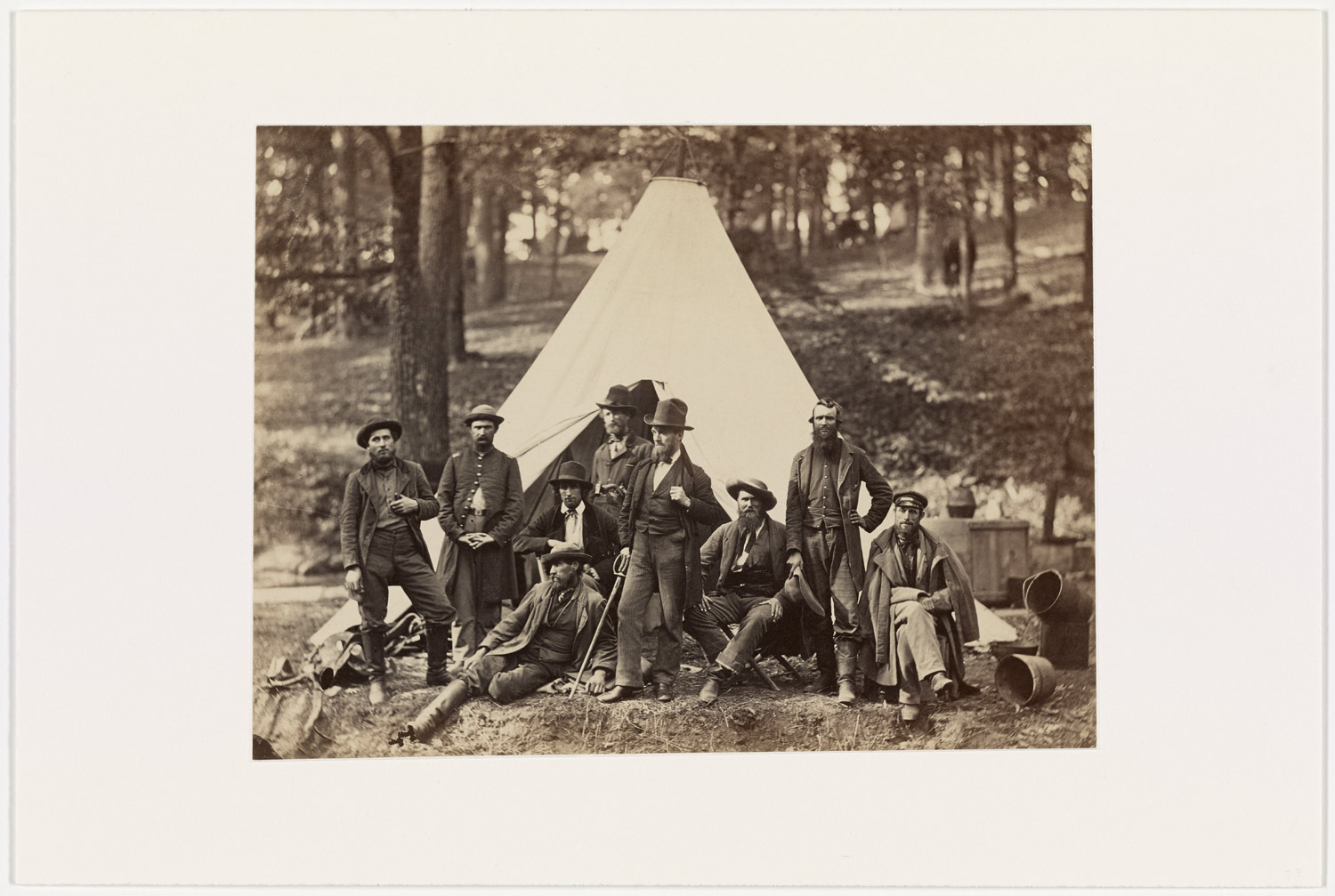
Alexander Gardner (American born Scotland, 1821-1882) 'Scouts and Guides to the Army of the Potomac, Berlin, MD, October, 1862' October 1862


Alexander Gardner (American born Scotland, 1821-1882)
Scouts and Guides to the Army of the Potomac, Berlin, MD, October, 1862
October 1862
Albumen silver print
Photograph by Alexander Gardner, from Gardner’s Photographic Sketch Book of the War
Records of the War Department General and Special Staffs, Record Group 165, National Archives Still Picture Branch, College Park, Maryland


Alexander Gardner (American born Scotland, 1821-1882) 'Scouts and Guides to the Army of the Potomac, Berlin, MD, October, 1862' October 1862


Alexander Gardner (American born Scotland, 1821-1882)
Scouts and Guides to the Army of the Potomac, Berlin, MD, October, 1862
October 1862
Albumen silver print
Photograph by Alexander Gardner, from Gardner’s Photographic Sketch Book of the War
Records of the War Department General and Special Staffs, Record Group 165, National Archives Still Picture Branch, College Park, Maryland


Alexander Gardner (American born Scotland, 1821-1882) 'Scouts and Guides to the Army of the Potomac, Berlin, MD, October, 1862' October 1862 (detail)


Alexander Gardner (American born Scotland, 1821-1882)
Scouts and Guides to the Army of the Potomac, Berlin, MD, October, 1862 (detail)
October 1862
Albumen silver print
Photograph by Alexander Gardner, from Gardner’s Photographic Sketch Book of the War
Records of the War Department General and Special Staffs, Record Group 165, National Archives Still Picture Branch, College Park, Maryland


Gardner documented specialised units in the Union army, as with the Telegraphic Corps, and here with the so-called “Scouts and Guides,” who were part of the intelligence service that Allan Pinkerton ran for the Army of the Potomac. Gardner took this group portrait when he returned to the area around Antietam; Berlin (now Brunswick), Maryland, is on the Potomac, just downstream from Harpers Ferry. In his Sketchbook Gardner wrote about the hardship and dangers faced by men who frequently acted as spies and could be executed if caught: “Their faces are indexes of the character required for such hazardous work.” Gardner’s statement exemplifies how connections are drawn between appearance and personality; a photograph was seen as particularly informative psychologically.

Text from the exhibition website


Alexander Gardner (American born Scotland, 1821-1882) 'Completely Silenced: Dead Confederate Artillerymen, as they lay around their battery after the Battle of Antietam' 1862


Alexander Gardner (American born Scotland, 1821-1882)
Completely Silenced: Dead Confederate Artillerymen, as they lay around their battery after the Battle of Antietam
1862
Stereograph (Albumen silver print on stereo card)
Collection of Bob Zeller


Alexander Gardner (American born Scotland, 1821-1882) 'Completely Silenced: Dead Confederate Artillerymen, as they lay around their battery after the Battle of Antietam' 1862 (detail)


Alexander Gardner (American born Scotland, 1821-1882)
Completely Silenced: Dead Confederate Artillerymen, as they lay around their battery after the Battle of Antietam (detail)
1862
Stereograph (Albumen silver print on stereo card)
Collection of Bob Zeller


The Battle of Antietam (Maryland) occurred on September 17, 1862, and it is still America’s bloodiest day, with more than 25,000 combined casualties (killed and wounded) on both sides. Despite a nearly three-to-one numerical advantage, the Union forces were unable to score a decisive victory. The heavy casualties did force Robert E. Lee to withdraw, however, ending his first invasion of the North. Gardner probably arrived at the battlefield on September 18. He took this image of dead Confederates near the Dunker Church, a focal point of the Union attack, which began shortly after 7.00 am the day before.

Text from the exhibition website


Alexander Gardner (American born Scotland, 1821-1882) 'Gathered Together for Burial after the Battle of Antietam' 1862


Alexander Gardner (American born Scotland, 1821-1882)
Gathered Together for Burial after the Battle of Antietam (View in Ditch on the Right Wing after the Battle of Antietam)
1862
Stereograph (Albumen silver print on stereo card)
Collection of Bob Zeller


This photograph, probably taken on September 19, graphically exposes the savagery of the fighting that occurred at the “Sunken Road” during the second, midday phase of the Union assault on Lee’s defensive line. A worn-down cart path provided perfect cover for Confederate troops, who initially blunted the Union attack, inflicting tremendous casualties. However, once the northerners had flanked the road, southern troops were trapped and exposed to a withering fire that choked the road with their corpses; hereinafter, the “Sunken Road” was known as “Bloody Lane.”

Text from the exhibition website


Alexander Gardner (American born Scotland, 1821-1882) and Timothy O'Sullivan (American, 1840-1882) 'Field Where General Reynolds Fell, Gettysburg, July, 1863' July 1863


Alexander Gardner (American born Scotland, 1821-1882) and Timothy O’Sullivan (American, 1840-1882)
Field Where General Reynolds Fell, Gettysburg, July, 1863
July 1863
Albumen silver print
Photograph by Timothy O’Sullivan, from Alexander Gardner’s Photographic Sketch Book of the War. Records of the War Department General and Special Staffs, Record Group 165, National Archives Still Picture Branch, College Park, Maryland


General John Reynolds (1820-1863) of Pennsylvania was the highest-ranking casualty at Gettysburg. One of the Union’s best generals, Reynolds had been considered a potential replacement for George McClellan. On July 1, commanding the left wing of the Union forces, Reynolds moved his infantry forward to blunt the Confederate advance, bringing on a wholesale engagement of the two armies; his decisiveness bought time for the Union to consolidate its forces at Gettysburg. He was killed leading a charge by the Second Wisconsin just west of the town. Despite its title, it is unlikely that Gardner’s photograph depicted this spot since he did not photograph any of the sites from Gettysburg’s first day. Instead, documentary evidence indicates that it was probably taken near Rose Farm, south of the battlefield. Initially Gardner published the photograph without reference to Reynolds. That was added later when Gardner realised he had missed an opportunity and sought to capitalise on Reynolds’s heroism.

Text from the exhibition website


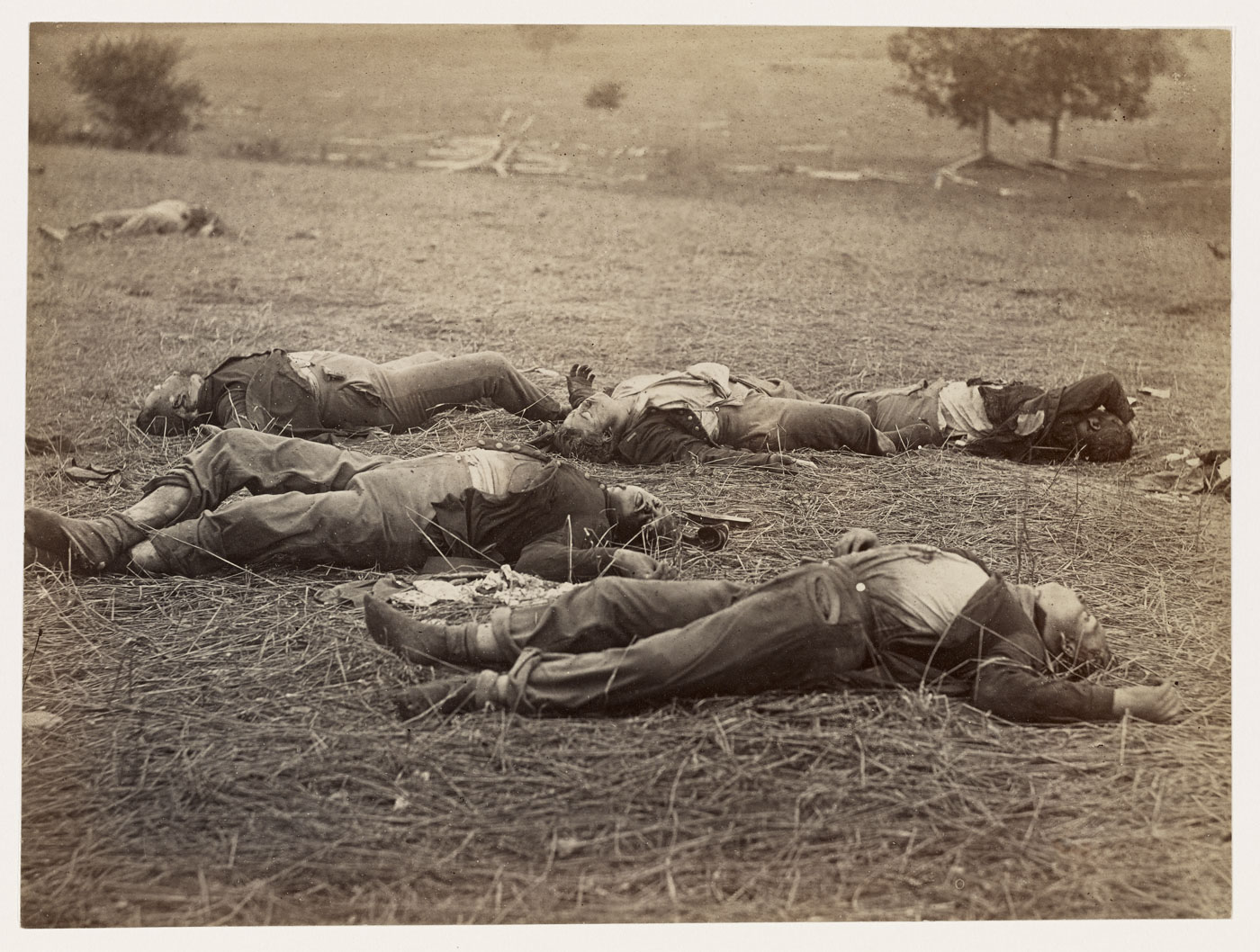
Alexander Gardner (American born Scotland, 1821-1882) 'Incidents of the War: Unfit for Service at the Battle of Gettysburg' July 1863


Alexander Gardner (American born Scotland, 1821-1882)
Incidents of the War: Unfit for Service at the Battle of Gettysburg
July 1863
Albumen silver print
Chrysler Museum of Art, Norfolk, VA
Gift of David L. Hack and Museum purchase, with funds from Walter P. Chrysler, Jr., by exchange


After the success of his series “The Dead of Antietam,” which he had made while working for Mathew Brady, Gardner paid special attention in his Gettysburg photography to concentrate on the casualties, both human and animal. He got to the battlefield quickly, probably by July 7, as the process of burying the dead was just under way. In addition to the more than 7,000 soldiers killed, it has been estimated that more than 1,500 artillery horses died during the battle. Disposal of the horses complicated the task of clearing the land; while attempts were made to deal respectfully with human remains, the horses were collected into piles and burned. Gardner’s title for this picture may be taken as ironically low-key: the graphic image needed no rhetorical embellishments.

Text from the exhibition website


Alexander Gardner (American born Scotland, 1821-1882) 'Panorama of Camp Winfield Scott, Yorktown, Virginia' 1863


Alexander Gardner (American born Scotland, 1821-1882)
Panorama of Camp Winfield Scott, Yorktown, Virginia
1863
Albumen silver prints from glass negatives
The Metropolitan Museum of Art, New York. Gilman Collection, Museum Purchase, 2005
Image copyright: © The Metropolitan Museum of Art. Image source: Art Resource, NY


Gardner and his family immigrated to the United States in 1856. Finding that many friends and family members at the cooperative he had helped to form were dead or dying of tuberculosis, he stayed in New York. He initiated contact with Brady and came to work for him that year, continuing until 1862. At first, Gardner specialised in making large photographic prints, called Imperial photographs, but as Brady’s eyesight began to fail, Gardner took on increasing responsibilities. In 1858, Brady put him in charge of his Washington, D.C. gallery. (Wikipedia)


“Before leaving home, he had seen and admired photographs by Mathew Brady, who was already famous and prosperous as a portraitist of American presidents and statesmen. It was Brady that likely paid Gardner’s passage to New York and soon after arriving, he went to visit the famous photographer’s studio and decided to stay.

Gardner was so successful there that Brady sent him to manage his Washington, D.C., studio, and soon after that, he was photographing Abraham Lincoln as the owner of his own studio [May 1863], and about to produce his historic images of the nation’s struggle. But there was more – after Appomattox, unknown to most of those who have praised his groundbreaking photographs of the war, he went on to record the westward march of the railroads and the Native American tribes scattering around them.

When the Civil War began, Mathew Brady sent more than 20 assistants into the field to follow the Union army. All of their work, including that of Gardner and the talented Timothy O’Sullivan, was issued with the credit line of the Brady studio. Thus the public assumed that Brady himself had lugged the fragile wagonload of equipment into the field, focused the big boxy camera and captured the images. Indeed, sometimes he had. But beginning with the battle of Antietam in September 1862, Gardner determined to take a step beyond his boss and his colleagues.

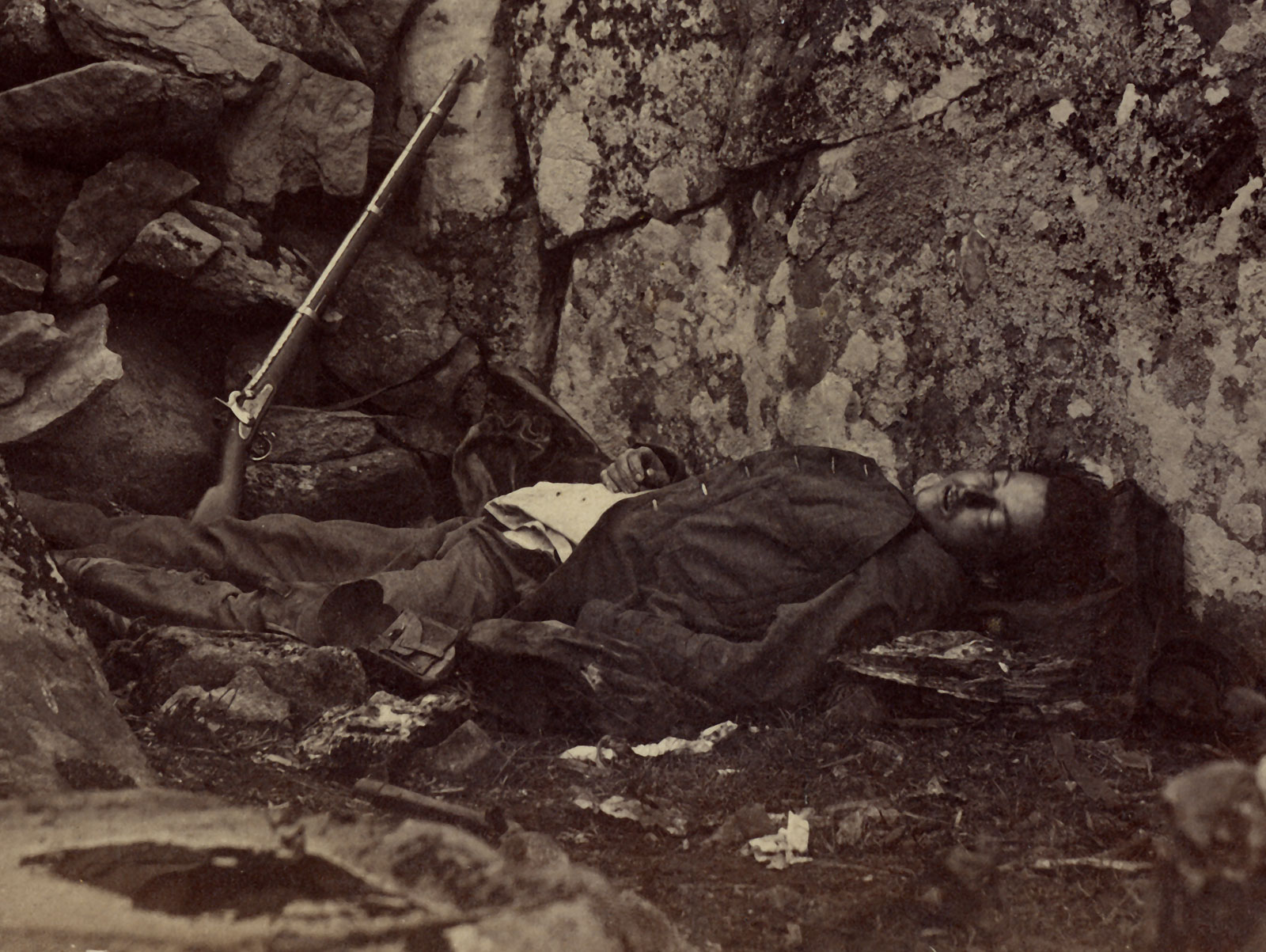
It pictured a dead Confederate soldier in a rocky den [see above], with his weapon propped nearby. Photographic historian William Frassanito has compared it to other images and believes that Gardner moved that body to a more dramatic hiding place to make the famous photo. Taking such license would blend with the dramatic way his album mused over the fallen soldier: “Was he delirious with agony, or did death come slowly to his relief, while memories of home grew dearer as the field of carnage faded before him? What visions, of loved ones far away, may have hovered above his stony pillow?”

Significantly, as illustrated by that image and description, Gardner’s book spoke of himself as “the artist.” Not the photographer, journalist or artisan, but the artist, who is by definition the creator, the designer, the composer of a work. But of course rearranging reality is not necessary to tell a gripping story, as he showed conspicuously after the Lincoln assassination. First he made finely focused portraits that caught the character of many of the surviving conspirators (much earlier in 1863, he had done the slain assassin, the actor John Wilkes Booth). Then, on the day of execution, he pictured the four – Mary Surrat, David Herold, Lewis Powell and George Atzerodt – standing as if posing on the scaffold, while their hoods and ropes were adjusted. Then their four bodies are seen dangling below while spectators look on from the high wall of the Washington Arsenal – as fitting a last scene as any artist might imagine.

After all Gardner had seen and accomplished, the rest of his career was bound to be anticlimax, but he was only 43 years old, and soon took on new challenges. In Washington, he photographed Native American chieftains and their families when they came to sign treaties that would give the government control over most of their ancient lands. Then he headed west.

In 1867, Gardner was appointed chief photographer for the eastern division of the Union Pacific Railway, a road later called the Kansas Pacific. Starting from St. Louis, he traveled with surveyors across Kansas, Colorado, New Mexico and Arizona and on to California. In their long, laborious trek, he and his crew documented far landscapes, trails, rivers, tribes, villages and forts that had never been photographed before. At Fort Laramie in Wyoming, he pictured the far-reaching treaty negotiations between the government and the Oglala, Miniconjou, Brulé, Yanktonai, and Arapaho Indians. This entire historic series was published in 1869 in a portfolio called Across the Continent on the Kansas Pacific Railroad (Route of the 35th Parallel).

Those rare pictures and the whole expanse of Gardner’s career are now on display at the National Portrait Gallery in a show entitled Dark Fields of the Republic: Alexander Gardner Photographs, 1859-1872. Among the dozens of images included are not only his war pictures and those of the nation’s westward expansion, but the famous “cracked-plate” image that was among the last photographs of a war-weary Abraham Lincoln. With this show, which will run into next March, the gallery is recognising a body of photography – of this unique art – unmatched in the nation’s history.”

Ernest B. Furgurson. “Alexander Gardner Saw Himself as an Artist, Crafting the Image of War in All Its Brutality,” on the Smithsonian.com website October 8, 2015 [Online] Cited 27/02/2016.


Alexander Gardner (American born Scotland, 1821-1882) 'Gardner's Gallery' c. 1863-1865


Alexander Gardner (American born Scotland, 1821-1882)
Gardner’s Gallery
c. 1863-1865
Albumen silver print
DeGolyer Library, Southern Methodist University, Dallas, Texas


The nation’s capital was a centre for photography during the war, and Alexander Gardner set up his new studio in May 1863 at Seventh and D Streets, just a few blocks from that of his former employer, Mathew Brady. Gardner split with Brady after the success of his Antietam photographs. The signage gives a full range of Gardner’s services, showing how he catered to the market for photographic images; the main sign reads “News of the War.”

Text from the exhibition website


Alexander Gardner (American born Scotland, 1821-1882) 'Walt Whitman and Party' c. 1863


Alexander Gardner (American born Scotland, 1821-1882)
Walt Whitman and Party
c. 1863
Albumen silver print
The Western Reserve Historical Society, Cleveland, Ohio


“This picture comes from a time when materials worked for each other. If pictures from these times were enlarged we would find their sharpness to be disappointing … but as this concept was not imagined, it shouldn’t be considered. The lens, the paper, the chemistry, the contact process all worked together. It is a superb image. If it were possible to make images like this, it is no wonder that highly talented people wanted to be photographers. And with talent, there were some with this level of sensitivity.

Note how the enlargement shows us some details that were not easily visible, but the tonality of the original has not carried over. Look at how the tonality of the curved branch combines with the figure of Whitman in the original, but it has crumbled in the enlargement … it is probably not possible to scan the original and keep the tonality without spending a squillion. Anyhow, it is a moment that has not been lost. It is almost too big a step of faith to believe that this much of the “air” of the original scene could be preserved.”


Dr Marcus Bunyan, March 2016


Alexander Gardner (American born Scotland, 1821-1882) 'Walt Whitman and Party' c. 1863 (detail)


Alexander Gardner (American, 1821-1882)
Walt Whitman and Party (detail)
c. 1863
Albumen silver print
The Western Reserve Historical Society, Cleveland, Ohio


Walt Whitman (1819-1892) came to Washington from New York City in search of his brother George, who had been wounded on December 13, 1862, at the Battle of Fredericksburg. Whitman found his brother, whose wound was not serious, and decided to stay in Washington. Whitman had been in a funk in New York: Leaves of Grass was not selling, and he was finding it difficult to write or revise his poetry. In Washington, Whitman assumed the role of a hospital visitor, comforting wounded soldiers, bringing them small treats, and, most important, writing their letters. He observed Abraham Lincoln, whom he idolised, from afar. And he began a relationship with Peter Doyle, a former Confederate soldier, whom he met on a streetcar and lived with for eight years. The other people in this photograph cannot be identified. The leaves on the trees would indicate that it was taken in late spring or summer of 1863.

Text from the exhibition website


Alexander Gardner (American born Scotland, 1821-1882) 'Home of a Rebel Sharpshooter' July 1863


Alexander Gardner (American born Scotland, 1821-1882)
Home of a Rebel Sharpshooter
July 1863
Albumen silver print
Collection of Ron Perisho


Alexander Gardner (American born Scotland, 1821-1882) 'Home of a Rebel Sharpshooter' July 1863


Alexander Gardner (American born Scotland, 1821-1882)
Home of a Rebel Sharpshooter
July 1863
Albumen silver print
Collection of Ron Perisho


Alexander Gardner (American born Scotland, 1821-1882) 'Home of a Rebel Sharpshooter' July 1863 (detail)


Alexander Gardner (American born Scotland, 1821-1882)
Home of a Rebel Sharpshooter (detail)
July 1863
Albumen silver print
Collection of Ron Perisho


Gardner’s manipulation of this Confederate casualty to create a narrative vignette about the soldier’s fate indicates how unstable the line was between fiction and truth in the creation of photographs. Gardner’s intrusion shows that he thought he had to improve his images so that they would function as a sentimental narrative that could be more easily read by his audience. His actions are unforgivable from both a moral and artistic point of view. But his arrangement of the corpse reflects how difficult it was for Gardner and his contemporaries to process the reality of mass casualties in which the dead became anonymous. Caught at a transitional moment, Gardner did not trust the images his camera captured. That this photographic construction would be more marketable to a public still steeped in Victorian sentimentality only adds to Gardner’s malfeasance.

In his Sketchbook Gardner created an elaborate story around his photographs of a dead Confederate “sharpshooter” who apparently had fallen during fighting at the Devil’s Den. Gardner claimed that he took photographs when he returned to the battlefield in the fall of 1863 and “discovered” the corpse, along with the rifle propped against the stone wall, still undisturbed where the soldier had fallen. The story isn’t credible: four months after the battle, the body would have long since decayed, and souvenir hunters would have picked up the rifle. The truth, untangled by photographic historian William Frassanito, is a blot on Gardner’s career: Gardner and his assistants moved a dead soldier [below] from a nearby line of bodies being readied for burial. Shortly after the battle they posed it amid the boulders, including the carefully positioned rifle. The soldier was a regular infantryman, not a sharpshooter or sniper.

Text from the exhibition website


Alexander Gardner (American, 1821-1882) 'A Sharpshooter's Last Sleep, Gettysburg, July 1863' 1863


Alexander Gardner (American born Scotland, 1821-1882)
A Sharpshooter’s Last Sleep, Gettysburg, July 1863
1863
Albumen silver print
National Archives, Washington, D.C.


Alexander Gardner (American born Scotland, 1821-1882) 'Ruins of the Arsenal, Richmond, Virginia, April 1863 '1865


Alexander Gardner (American born Scotland, 1821-1882)
Ruins of the Arsenal, Richmond, Virginia, April 1863
1865
Albumen silver print
Bowdoin College Museum of Art, Brunswick, Maine, Museum Purchase, Lloyd O. and Marjorie Strong Coulter Fund


Ironically, destruction of the major Confederate armoury occurred not from a Union assault but by an accidental fire that started in Richmond after the government began to evacuate the city on April 1, 1865, leaving it vulnerable. Chaos and confusion reigned as panicked residents faced the prospect of being occupied by the invading northerners; looting and destruction of property occurred as well. In the breakdown of order, fires broke out and quickly spread, destroying as many as fifty city blocks, until Union soldiers acting as firefighters extinguished them in part. Among the major buildings destroyed were the Tredegar Iron Works and the Arsenal. The Arsenal had been built earlier in the century but had fallen into disuse. It was made operative again when the war broke out; among the weapons it housed were those taken from the federal arsenal at Harpers Ferry in 1861.

Text from the exhibition website


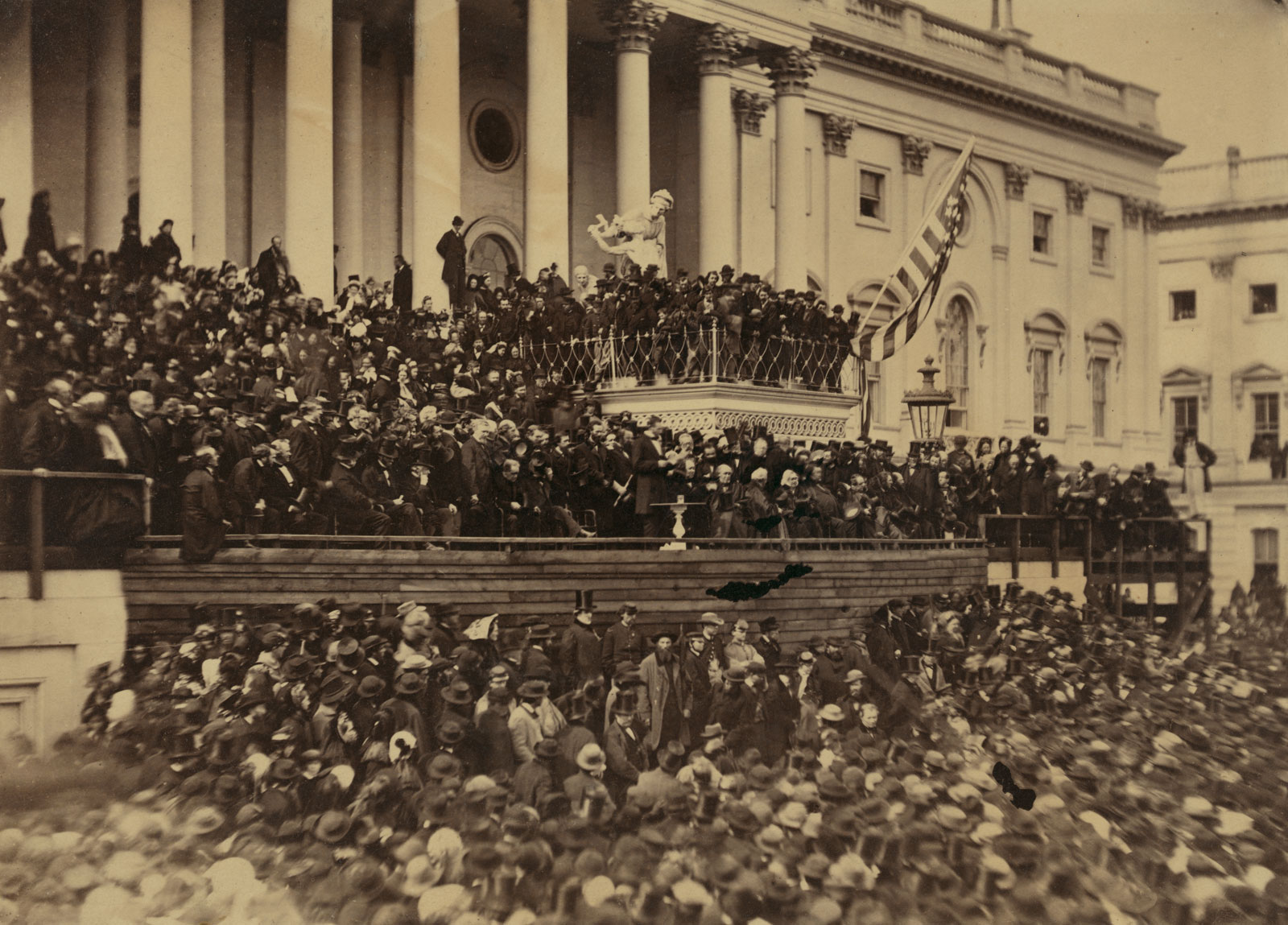
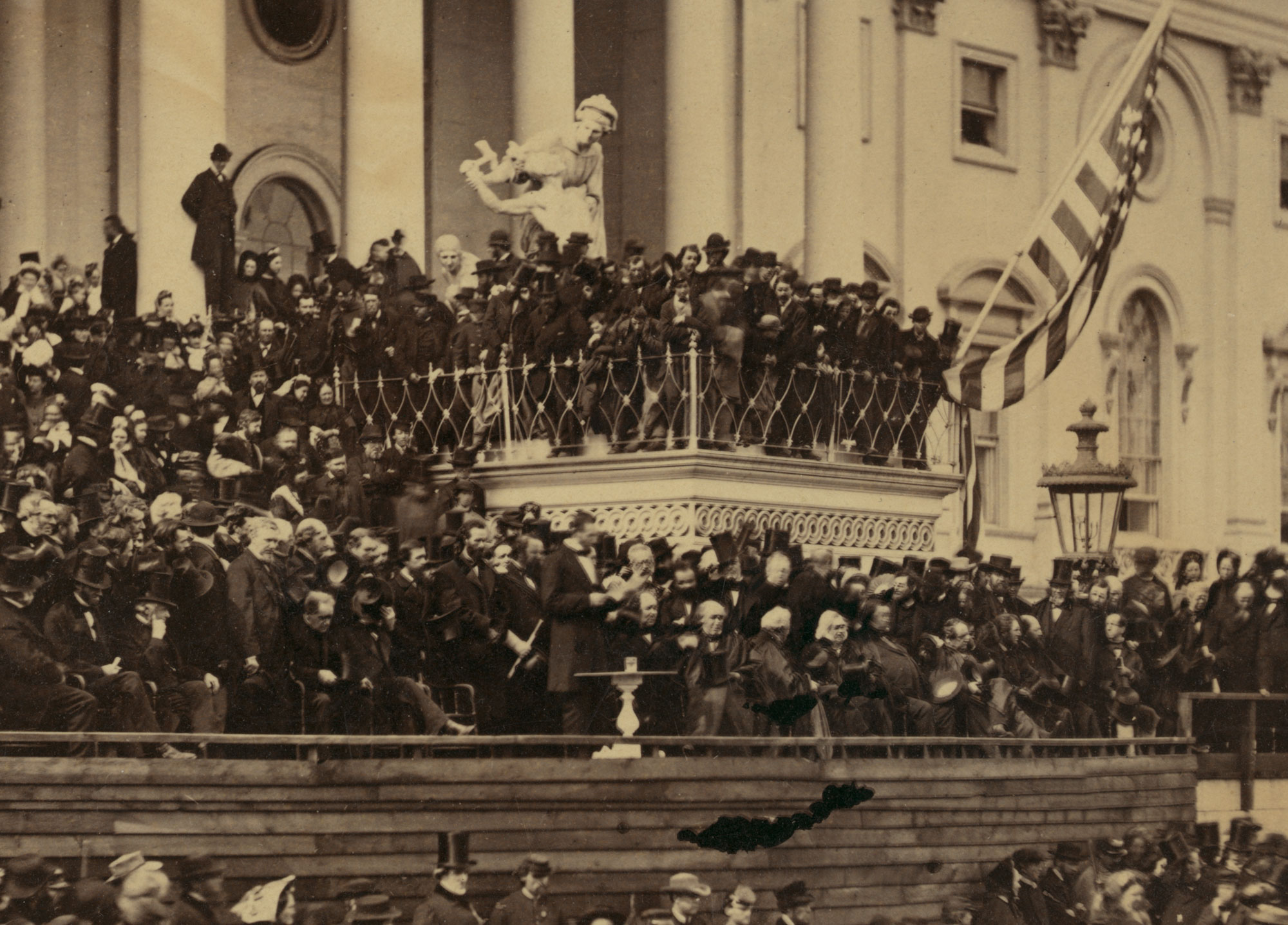
Alexander Gardner (American born Scotland, 1821-1882) 'Abraham Lincoln delivering his second inaugural address as President of the United States, Washington, D.C.' March 4, 1865


Alexander Gardner (American born Scotland, 1821-1882)
Abraham Lincoln delivering his second inaugural address as President of the United States, Washington, D.C.
March 4, 1865
Albumen silver print
Prints & Photographs Division, Library of Congress


Alexander Gardner (American born Scotland, 1821-1882) 'Abraham Lincoln delivering his second inaugural address as President of the United States, Washington, D.C.' March 4, 1865 (detail)


Alexander Gardner (American born Scotland, 1821-1882)
Abraham Lincoln delivering his second inaugural address as President of the United States, Washington, D.C. (detail)
March 4, 1865
Albumen silver print
Prints & Photographs Division, Library of Congress


Abraham Lincoln’s major speeches as president – at both inaugurals and at Gettysburg – focused on large themes, in particular human nature and God’s will, as well as the character of the nation. The hard politics of formulating and implementing the details of, for instance, emancipation, civil rights, and reconstruction, were kept offstage in the day-to-day process of governing. So at his second inaugural on March 4, 1865, Lincoln delivered a moral homily on how neither side, North or South, could know God’s will for mankind, and that the war had unintended consequences. Both parties now had to accept living with those consequences, namely the end of slavery and the beginning of civil equality for African Americans, Lincoln hinted. He ended with his majestic call to move on from war to civic peace: “With malice toward none, with charity for all,” let us “bind up the nation’s wounds” to “achieve and cherish a just and lasting peace.” Flush with victory, many in the North were puzzled or displeased by the president’s conciliatory words.

Text from the exhibition website


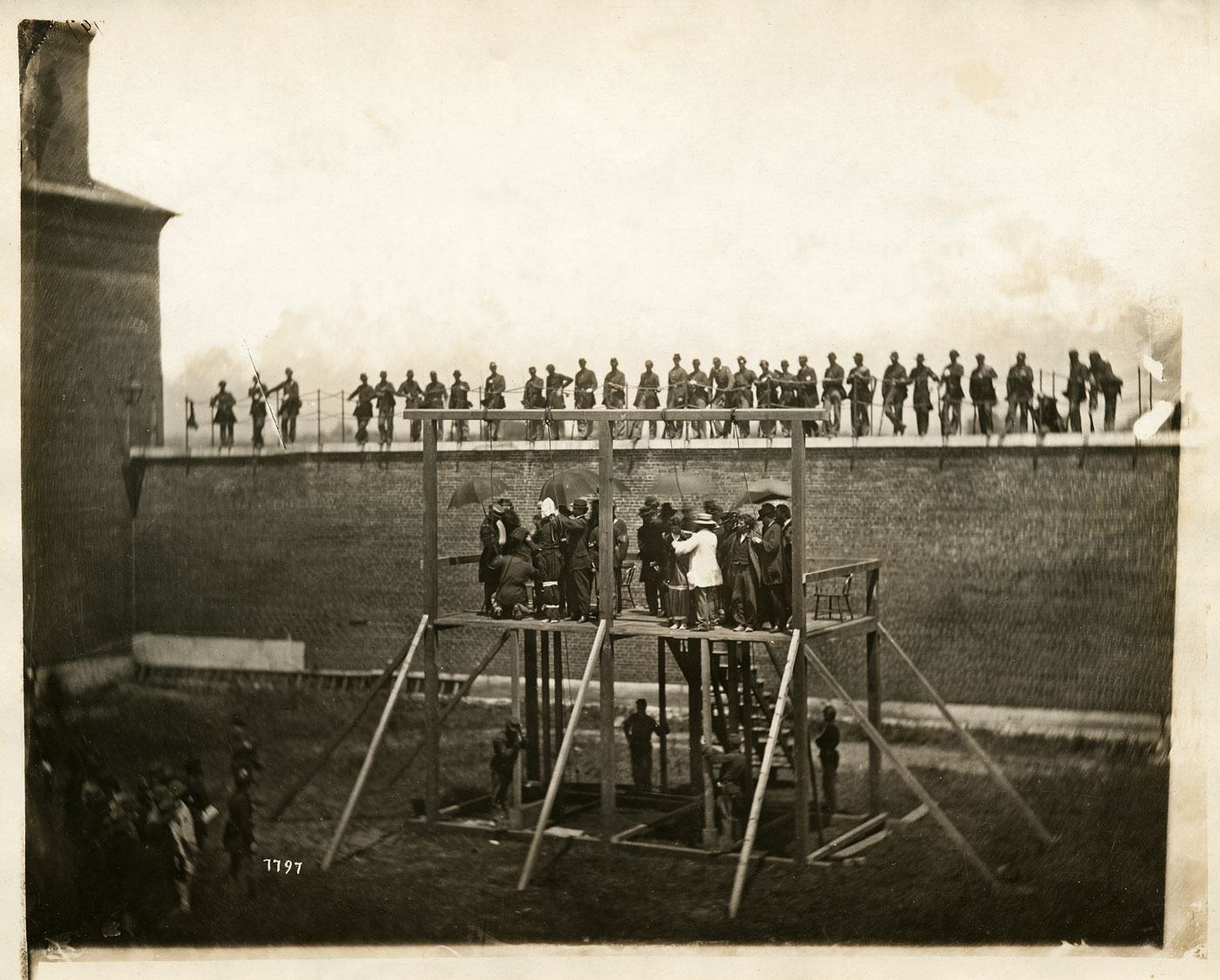
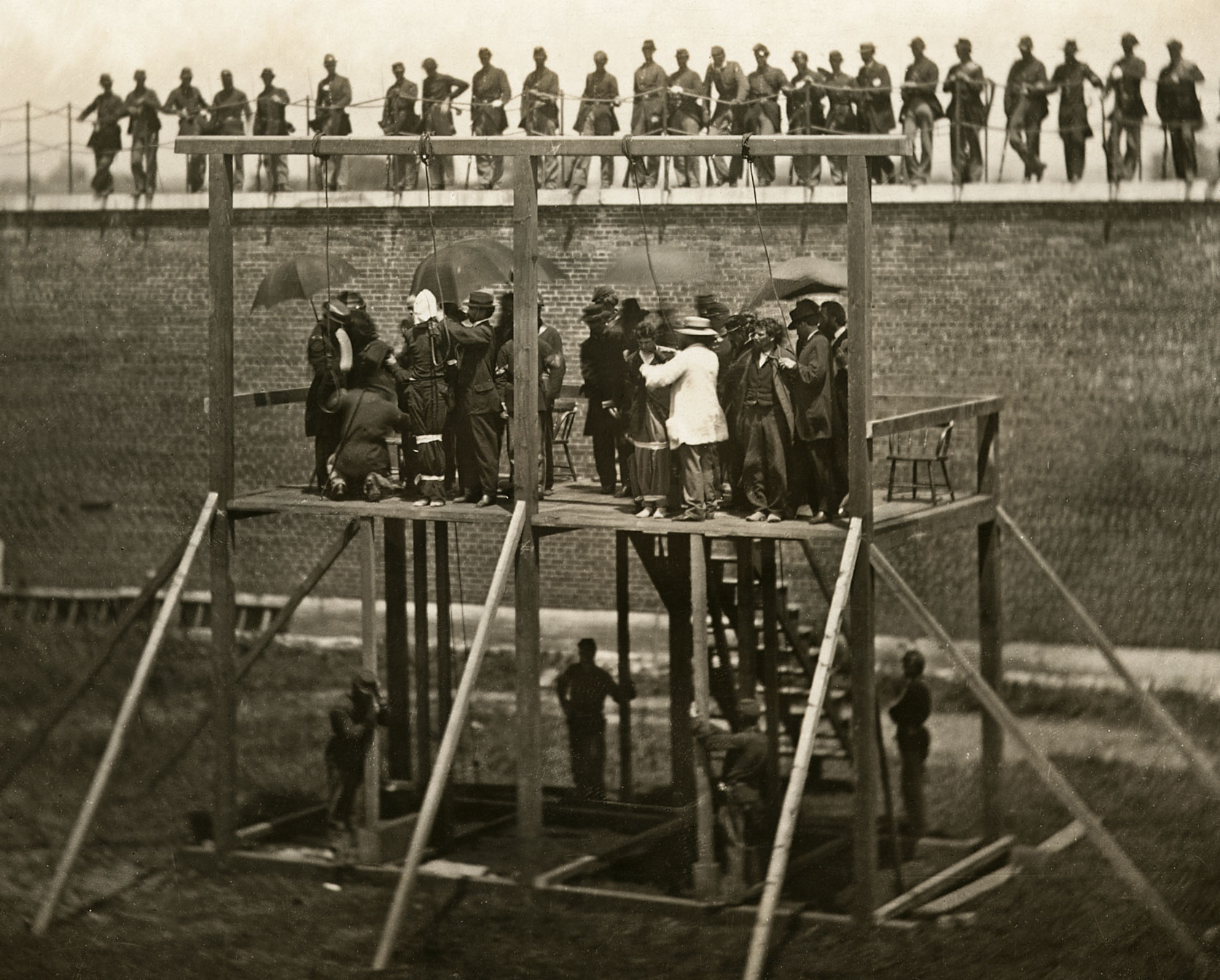
Alexander Gardner (American born Scotland, 1821-1882) 'Adjusting the Ropes' July 7, 1865


Alexander Gardner (American born Scotland, 1821-1882)
Adjusting the Ropes
July 7, 1865
Albumen silver print
Indiana Historical Society (P0409)
Daniel R. Weinberg Lincoln Conspirators Collection


Alexander Gardner (American born Scotland, 1821-1882) 'Adjusting the Ropes' July 7, 1865 (detail)


Alexander Gardner (American born Scotland, 1821-1882)
Adjusting the Ropes (detail)
July 7, 1865
Albumen silver print
Indiana Historical Society (P0409)
Daniel R. Weinberg Lincoln Conspirators Collection


Of the eight Booth conspirators tried for their role in the assassination plot, four were sentenced to death: Mary Surratt, David Herold, Lewis Powell, and George Atzerodt. While the men had been major participants in the plot (even if Herold and Atzerodt had failed at their assignments), Mary Surratt’s sentence was more controversial, as it was argued that her boardinghouse was simply where the conspirators had met; that her son John was part of the conspiracy did not help her cause. The jury was also uneasy about the federal government executing a woman for the first time. Convicted and sentenced on June 30, the conspirators were executed on July 7 at Washington’s Old Arsenal Prison, out of public view. In a macabre display of chivalry, a man holding an umbrella shielded Mary Surratt from the sun before the traps were sprung.

Gardner was the only photographer allowed to document the executions, a recognition of his prominence as a documentarian. His camera position on the wall of the prison allowed him a panoramic view.

Text from the exhibition website


The date was July 7, 1865. Alexander Gardner and his assistant Timothy O’Sullivan took a series of ten photographs using both a large format camera with collodion glass-plate negatives and a stereo camera (used to make 3D stereoscope pictures). This series of photographs are considered one of the first examples of photojournalism ever recorded.

Mary Surratt, Lewis Powell, David Herold and Georg Atzerodt. The four conspirators are now standing (Mrs. Surratt is supported by two soldiers) and is being bound. A hood has already been placed over Lewis Powell’s head by Lafayette Baker’s detective John H. Roberts. The nooses are being fitted around the necks of David Herold and George Atzerodt.


Alexander Gardner (American born Scotland, 1821-1882) 'The Drop' July 7, 1865


Alexander Gardner (American born Scotland, 1821-1882)
The Drop
July 7, 1865
Albumen silver print
Stereograph (Albumen silver print on stereo card)
Library of Congress


On July 7, 1865, at 1.15 pm., a procession led by General Hartranft escorted the four condemned prisoners through the courtyard and up the steps to the gallows. Each had their ankles and wrists bound by manacles. Mary Surratt led the way, wearing a black bombazine dress, black bonnet, and black veil. More than 1,000 people – including government officials, members of the U.S. armed forces, friends and family of the accused, official witnesses, and reporters – watched. General Hancock limited attendance to those who had a ticket, and only those who had a good reason to be present were given a ticket. (Most of those present were military officers and soldiers, as fewer than 200 tickets had been printed.) Alexander Gardner, who had photographed the body of Booth and taken portraits of several of the male conspirators while they were imprisoned aboard naval ships, photographed the execution for the government. Hartranft read the order for their execution. Surratt, either weak from her illness or swooning in fear (perhaps both), had to be supported by two soldiers and her priests. The condemned were seated in chairs, Surratt almost collapsing into hers. She was seated to the right of the others, the traditional “seat of honor” in an execution. White cloth was used to bind their arms were bound to their sides, and their ankles and thighs together. The cloths around Surratt’s legs were tied around her dress below the knees. Each person was ministered to by a member of the clergy. From the scaffold, Powell said, “Mrs. Surratt is innocent. She doesn’t deserve to die with the rest of us”. Fathers Jacob and Wiget prayed over Mary Surratt, and held a crucifix to her lips. About 16 minutes elapsed from the time the prisoners entered the courtyard until they were ready for execution.

A white bag was placed over the head of each prisoner after the noose was put in place. Surratt’s bonnet was removed, and the noose put around her neck by a Secret Service officer. She complained that the bindings about her arms hurt, and the officer preparing said, “Well, it won’t hurt long.” Finally, the prisoners were asked to stand and move forward a few feet to the nooses. The chairs were removed. Mary Surratt’s last words, spoken to a guard as he moved her forward to the drop, were “Please don’t let me fall.” Surratt and the others stood on the drop for about 10 seconds, and then Captain Rath clapped his hands. Four soldiers of Company F of the 14th Veteran Reserves knocked out the supports holding the drops in place, and the condemned fell. Surratt, who had moved forward enough to barely step onto the drop, lurched forward and slid partway down the drop – her body snapping tight at the end of the rope, swinging back and forth. Surratt’s death appeared to be the easiest. Atzerodt’s stomach heaved once and his legs quivered, and then he was still. Herold and Powell struggled for nearly five minutes, strangling to death.

Each body was inspected by a physician to ensure that death had occurred. The bodies of the executed were allowed to hang for about 30 minutes. The bodies began to be cut down at 1.53 pm. A corporal raced to the top of the gallows and cut down Atzerodt’s body, which fell to the ground with a thud. He was reprimanded, and the other bodies cut down more gently. Herold’s body was next, followed by Powell’s. Surratt’s body was cut down at 1.58 pm. As Surratt’s body was cut loose, her head fell forward. A soldier joked, “She makes a good bow” and was rebuked by an officer for his poor use of humour.

Upon examination, the military surgeons determined that no one’s neck had been broken by the fall, as intended. The manacles and cloth bindings were removed (but not the white execution masks), and the bodies were placed into the pine coffins. The name of each person was written on a piece of paper by acting Assistant Adjutant R. A. Watts, and inserted in a glass vial (which was placed into the coffin). The coffins were buried against the prison wall in shallow graves, just a few feet from the gallows.

“Mary Surratt” text from the Wikipedia website


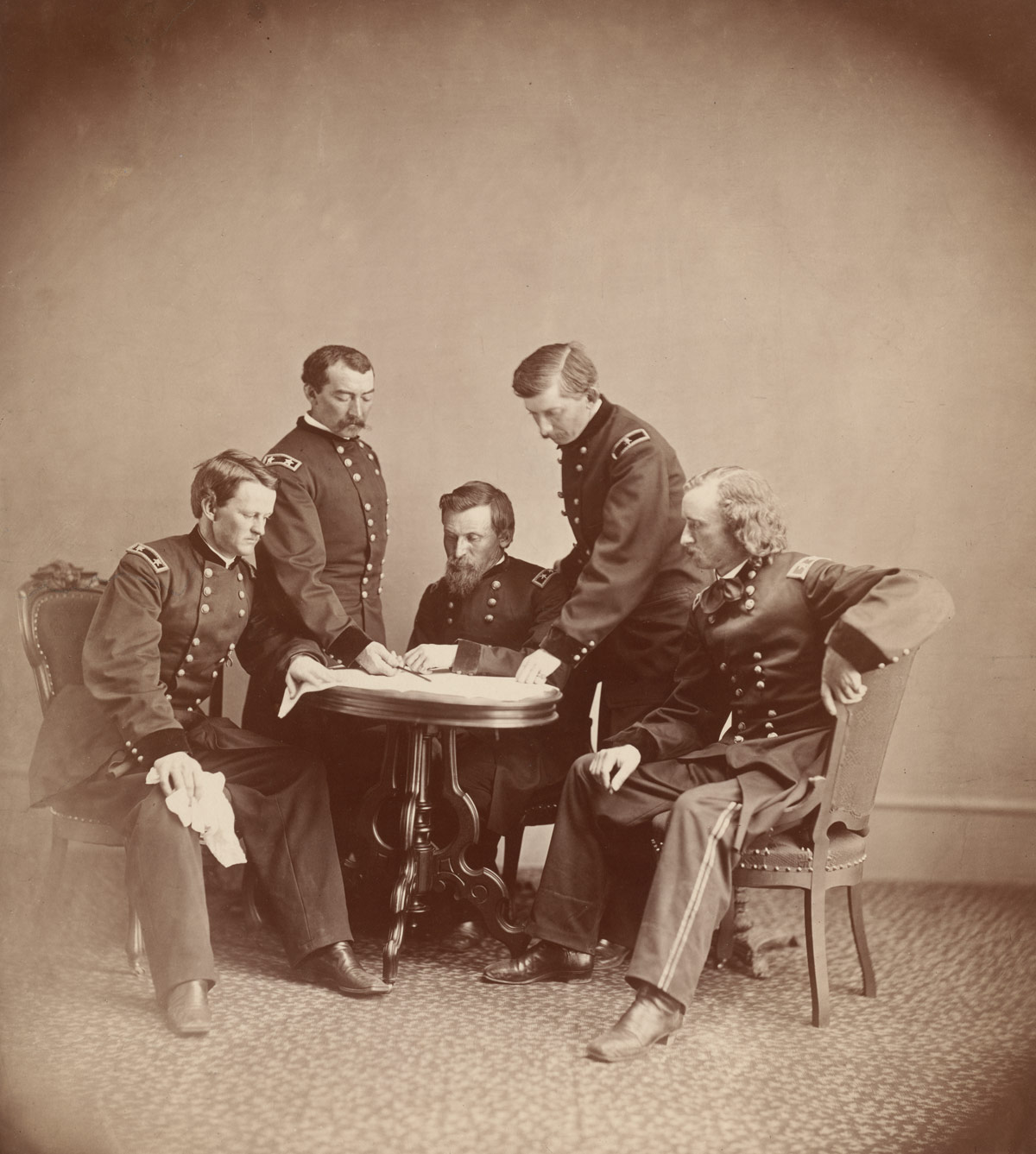
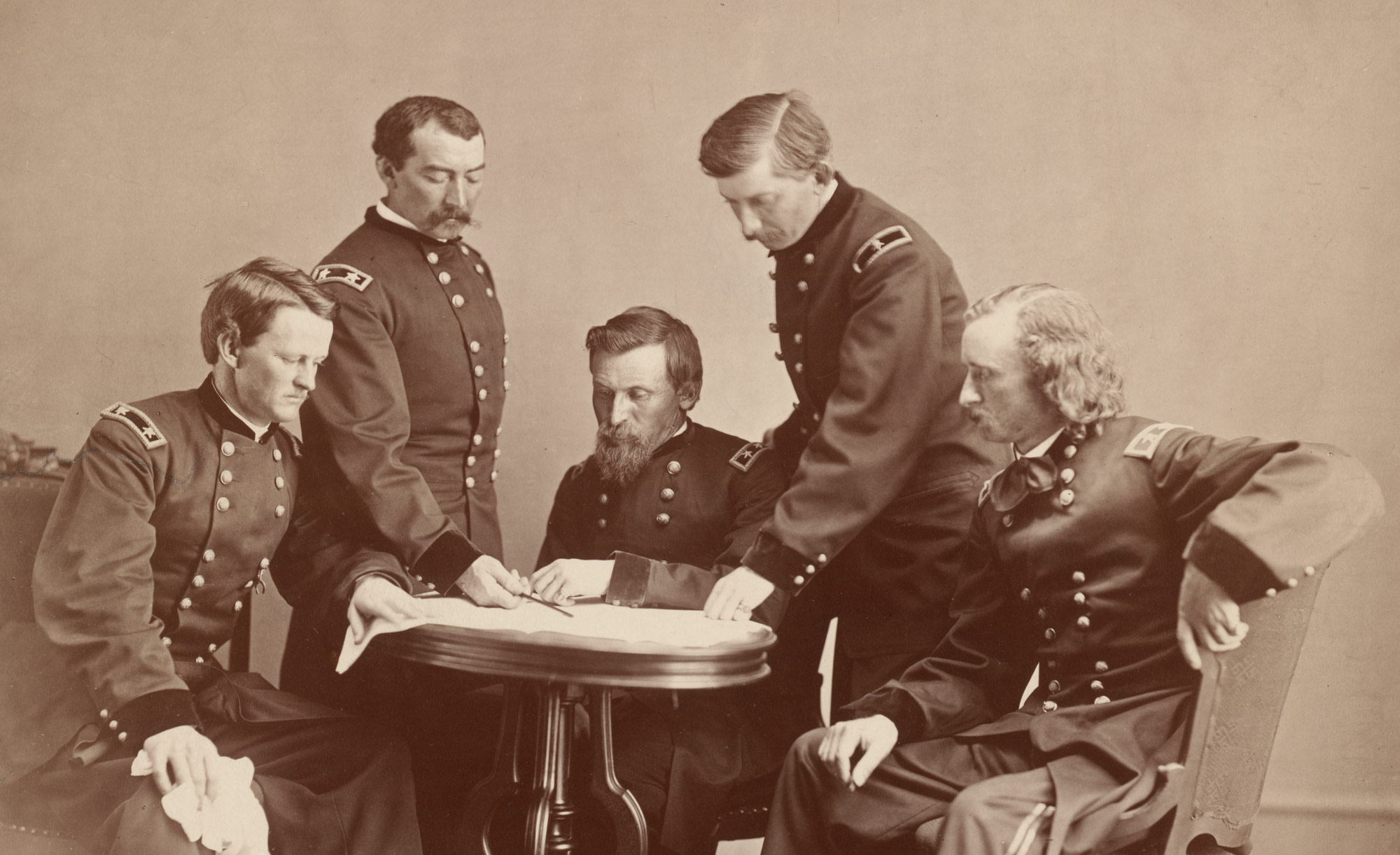
Alexander Gardner (American born Scotland, 1821-1882) 'General Sheridan and His Staff' c. 1865


Alexander Gardner (American born Scotland, 1821-1882)
General Sheridan and His Staff
c. 1865
Albumen silver print
National Portrait Gallery, Smithsonian Institution


Another in Alexander Gardner’s valedictory series of the major Union commanders in each theatre of the war, this photograph groups four of the figures from the 1864 campaign in the Shenandoah Valley under the command of Philip Sheridan (1831-1888). Sheridan is standing to the left; at the table are cavalry officer Wesley Merritt (1834-1910); George Crook (1830-1890), who had an independent force in western Virginia before joining Sheridan’s army; Sheridan’s chief of staff, James W. Forsyth (1835-1906); and perhaps America’s most famous cavalryman, George A. Custer (1839-1876).

This photograph brings together the men who would be major figures in the settlement of the Great Plains and the Indian Wars – none more emblematic than Custer. As such, it provides the bridge between the first half of Gardner’s career during the Civil War and the images of western land and people on which he focused during the rest of his photographic career. One war had ended; another was beginning.

Text from the exhibition website


Alexander Gardner (American born Scotland, 1821-1882) 'General Sheridan and His Staff' c. 1865


Alexander Gardner (American born Scotland, 1821-1882)
General Sheridan and His Staff
c. 1865
Albumen silver print
National Portrait Gallery, Smithsonian Institution


Alexander Gardner (American born Scotland, 1821-1882) 'General Sheridan and His Staff' c. 1865 (detail)


Alexander Gardner (American born Scotland, 1821-1882)
General Sheridan and His Staff (detail)
c. 1865
Albumen silver print
National Portrait Gallery, Smithsonian Institution


” … Gardner was born in Paisley in 1821 and trained as a jeweller before moving into the world of newspapers. An idealist and socialist, he formed the left-leaning newspaper the Glasgow Sentinel in 1851. His keen interest in photography led to him emigrating across the pond in the hope of furthering his career. He was headhunted by [Matthew] Brady and at the outbreak of the war was well-positioned in Washington.

He was recruited as a staff photographer by General George B. McClellan, commander of the Army of the Potomac, and made history on 19 September 1862 when he took the first photographs of casualties on the battlefield at Antietam. In 1863, Gardner split from Brady and formed his own gallery in Washington with his brother James [May 1863]. In July of that year, he photographed the aftermath of the Battle of Gettysburg, developing images in his travelling darkroom.

Author Keith Steiner said: ‘Gardner was essentially a photojournalist. He had to process and develop the photographs on the move and in the middle of a battlefield which was not easy. He was highly regarded and Walt Whitman once said that he ‘saw beyond his camera’… ‘He was an artist, in some ways a scientist and a publisher. He was the complete package.’

Gardner was also the official photographer to President Abraham Lincoln. He captured him seven times, including before his inauguration in March 1861 and in February 1865, just weeks before he was assassinated. The war-time leader personally visited Gardner to have his photograph taken every year instead of the Scotsman visiting the White House.

Keith said: ‘Most of the photographs you see of Lincoln were taken by Gardner and chart how he aged physically. He was pictured in 1861 then a few years later and it is like a different man. In February 1865, he is a broken man and has aged about 20 years through the stress of the civil war. It is an incredibly revealing photograph’.”

Anonymous. “How Abraham Lincoln’s Scottish photographer became the first man to capture the horrors of the Civil War but was robbed of the credit… until now,” on the Daily Mail Australia website 25 January 2014 [Online] Cited 27/02/2016.


The West, 1867-1872

After the war, Alexander Gardner photographed events and people associated with one of the most abiding preoccupations of the nineteenth century: westward expansion. From 1867 to 1872 he made portraits of American Indian leaders who traveled to Washington to negotiate preservation of their traditional lands and lifeways, even as white Americans flooded the frontier. In 1867, Gardner became the first photographer to document a transcontinental project, making views of the Kansas Pacific Railroad’s construction activities, bustling frontier towns and settlements, Army forts, Indian villages, and magnificent empty landscapes.

The federal government then hired Gardner to photograph the spring 1868 treaty negotiations between the Indian Peace Commission and leaders of the Crow, Northern Cheyenne, Northern Arapaho, and Lakota in the Dakota Territory. The Fort Laramie Treaty established reservations on the northern Plains, marking a watershed moment in the relationship between Native peoples and the government. Gardner’s images are the only photographs of treaty negotiations ever commissioned by the U.S. government.

Text from the exhibition website


Alexander Gardner (American born Scotland, 1821-1882) '"Westward the Course of Empire Takes its Way." Laying track, 300 miles west of Missouri River, 19th October, 1867' 1867


Alexander Gardner (American born Scotland, 1821-1882)
“Westward the Course of Empire Takes its Way.” Laying track, 300 miles west of Missouri River, 19th October, 1867
1867
Albumen silver print
William T. Sherman Collection of Alexander Gardner Photographs, National Museum of the American Indian, Smithsonian Institution (P10134)


Alexander Gardner (American born Scotland, 1821-1882) '"Westward the Course of Empire Takes its Way." Laying track, 300 miles west of Missouri River, 19th October, 1867' 1867 (detail)


Alexander Gardner (American born Scotland, 1821-1882)
“Westward the Course of Empire Takes its Way.” Laying track, 300 miles west of Missouri River, 19th October, 1867 (detail)
1867
Albumen silver print
William T. Sherman Collection of Alexander Gardner Photographs, National Museum of the American Indian, Smithsonian Institution (P10134)


Alexander Gardner quoted from the final stanza of a 1726 poem by Bishop George Berkeley for the title of this photograph. The Anglo-Irish philosopher had originally offered his verse as a lamentation on the decline of British influence in North America, but after the Civil War, as the United States turned with determination to its expansionist agenda, Americans found particular resonance in Berkeley’s line, “Westward the course of empire takes its way.” Constructing a transcontinental railroad was central to the achievement of these ambitions. Although the company survived into the 1870s, the Kansas Pacific Railroad was unable to rally federal support for a transcontinental route along the southerly thirty-fifth and thirty-second parallels. On May 10, 1869, at Promontory Point in the Utah Territory, the “Golden Spike” ceremony joined the more northern tracks of the Union Pacific Railroad with those of the Central Pacific Railroad, marking the completion of the first railroads to link the East and West coasts of the United States.

Text from the exhibition website


Alexander Gardner (American born Scotland, 1821-1882) 'Bridge over the Laramie River near its Junction with the North Platte River, Fort Laramie, Dakota Territory' 1868


Alexander Gardner (American born Scotland, 1821-1882)
Bridge over the Laramie River near its Junction with the North Platte River, Fort Laramie, Dakota Territory
1868
Albumen silver print
William T. Sherman Collection of Alexander Gardner Photographs, National Museum of the American Indian, Smithsonian Institution (P10128)


Alexander Gardner (American born Scotland, 1821-1882) 'Indian Peace Commissioners in council with the Northern Cheyenne and Northern Arapaho, Fort Laramie, Dakota Territory' 1868


Alexander Gardner (American born Scotland, 1821-1882)
Indian Peace Commissioners in council with the Northern Cheyenne and Northern Arapaho, Fort Laramie, Dakota Territory
1868
Albumen silver print
National Museum of the American Indian, Smithsonian Institution; William T. Sherman Collection of Alexander Gardner Photographs (P15390)


Alexander Gardner (American born Scotland, 1821-1882) 'Indian Peace Commissioners in council with the Northern Cheyenne and Northern Arapaho, Fort Laramie, Dakota Territory' 1868 (detail)

Alexander Gardner (American born Scotland, 1821-1882) 'Indian Peace Commissioners in council with the Northern Cheyenne and Northern Arapaho, Fort Laramie, Dakota Territory' 1868 (detail)


Alexander Gardner (American born Scotland, 1821-1882)
Indian Peace Commissioners in council with the Northern Cheyenne and Northern Arapaho, Fort Laramie, Dakota Territory (details)
1868
Albumen silver print
National Museum of the American Indian, Smithsonian Institution; William T. Sherman Collection of Alexander Gardner Photographs (P15390)


Left to right: Colonel Samuel F. Tappan (1831-1913), General William S. Harney (1800-1889), General William T. Sherman (1820-1891), General John B. Sanborn (1826-1904), General Christopher C. Augur (1821-1898), General Alfred H. Terry (1827-1890), and Commission Secretary Ashton S. H. White (life dates unknown)

In the summer of 1867, when Congress convened the Indian Peace Commission, popular opinion in the eastern United States supported a diplomatic resolution to the so-called “Indian problem” on both the northern and southern Plains. (The negotiations on the southern Plains were not photographed.) Consisting of civilians and army generals, the commission managed to secure treaties with the region’s “hostile” tribes and convened its final meeting on October 7, 1868. By then, public sentiment had taken an aggressive turn and demanded increased military intervention in Indian matters. Overruling their more diplomatically minded colleagues, the commission’s military members – led by General William T. Sherman – used the shift in the political landscape to advantage. As a body, the commission resolved that the government “should cease to recognise the Indian tribes as ‘domestic dependent nations.'” Treaty-making, or diplomacy, was at an end, and in the coming years, military conflict characterised U.S.-Indian relations on the Plains.

Text from the exhibition website


Alexander Gardner (American born Scotland, 1821-1882) 'Lakota delegates Medicine Bull, Iron Nation, and Yellow Hawk with their Agent-Interpreter, Washington, D.C.' 1867


Alexander Gardner (American born Scotland, 1821-1882)
Lakota delegates Medicine Bull, Iron Nation, and Yellow Hawk with their Agent-Interpreter, Washington, D.C.
1867
Albumen silver print
William T. Sherman Collection of Alexander Gardner Photographs, National Museum of the American Indian, Smithsonian Institution (P10139)


Alexander Gardner (American born Scotland, 1821-1882) 'Lakota delegates Medicine Bull, Iron Nation, and Yellow Hawk with their Agent-Interpreter, Washington, D.C.' 1867 (detail)


Alexander Gardner (American born Scotland, 1821-1882)
Lakota delegates Medicine Bull, Iron Nation, and Yellow Hawk with their Agent-Interpreter, Washington, D.C. (detail)
1867
Albumen silver print
William T. Sherman Collection of Alexander Gardner Photographs, National Museum of the American Indian, Smithsonian Institution (P10139)


Left to right: Medicine Bull (life dates unknown), unidentified interpreter, Iron Nation (1815-1894), and Yellow Hawk (life dates unknown)

Alexander Gardner made three portraits of each American Indian pictured here: a group portrait and two separate portraits of each delegate, one in his Native and one in his Western attire. (A suit was often among the gifts given to Native delegates to the capital.) It is unknown how Medicine Bull (Sicangu Lakota), Iron Nation (Sicangu Lakota), and Yellow Hawk (Itazipacola Lakota) were dressed when they arrived to sit for their portraits, but Gardner’s apparent desire to make two individual portraits of each in many ways anticipates the popular “before and after” photographs of Native people that circulated in the following decades. The photographs were made to document the supposed salutary benefits of the sitter’s exposure to American civilisation.

Text from the exhibition website


The Lakȟóta people (pronounced [laˈkˣota]; also known as Teton, Thítȟuŋwaŋ (“prairie dwellers”), and Teton Sioux (from Nadouessioux – ‘snake’ or ‘enemy’) are an indigenous people of the Great Plains of North America. They are part of a confederation of seven related Sioux tribes, the Očhéthi Šakówiŋ or seven council fires, and speak Lakota, one of the three major dialects of the Sioux language. The Lakota are the westernmost of the three Siouan language groups, occupying lands in both North and South Dakota. The seven bands or “sub-tribes” of the Lakota are:

Sičháŋǧu (Brulé, Burned Thighs)
Oglála (“They Scatter Their Own”)
Itázipčho (Sans Arc, Without Bows)
Húŋkpapȟa (“End Village”, Camps at the End of the Camp Circle)
Mnikȟówožu (“Plant beside the Stream”, Planters by the Water)
Sihásapa (“Black Feet”)
Oóhenuŋpa (Two Kettles)

Notable Lakota persons include Tȟatȟáŋka Íyotake (Sitting Bull) from the Húnkpapȟa band; Touch the Clouds from the Miniconjou band; and, Tȟašúŋke Witkó (Crazy Horse), Maȟpíya Lúta (Red Cloud), Heȟáka Sápa (Black Elk), Siŋté Glešká (Spotted Tail), and Billy Mills from the Oglala band.

Text from the Wikipedia website


Alexander Gardner (American born Scotland, 1821-1882) 'Ihanktonwan Nakota delegates Long Foot and Little Bird, Washington, D.C.' 1867


Alexander Gardner (American born Scotland, 1821-1882)
Ihanktonwan Nakota delegates Long Foot and Little Bird, Washington, D.C.
1867
Albumen silver print National Museum of the American Indian, Smithsonian Institution; William T. Sherman Collection of Alexander Gardner Photographs (P10149)


Alexander Gardner (American born Scotland, 1821-1882) 'Ihanktonwan Nakota delegates Long Foot and Little Bird, Washington, D.C.' 1867 (detail)


Alexander Gardner (American born Scotland, 1821-1882)
Ihanktonwan Nakota delegates Long Foot and Little Bird, Washington, D.C. (detail)
1867
Albumen silver print National Museum of the American Indian, Smithsonian Institution; William T. Sherman Collection of Alexander Gardner Photographs (P10149)


In a letter dated February 20, 1867, Smithsonian Institution Secretary Joseph Henry pressed Commissioner of Indian Affairs Lewis V. Bogy to fund a comprehensive effort to photograph Native delegates to Washington. Henry envisioned a kind of archive, a “trustworthy collection of likenesses of the principal tribes of the United States,” urgently adding that with the passing of “the Indian” only a few years remained to undertake such a project. Bogy apparently passed on the project, but the Smithsonian found an alternative collaborator in Englishman William Blackmore. (Blackmore posed before Alexander Gardner’s camera with Oglala Lakota leader Red Cloud. The portrait of the two men is on display nearby.) Blackmore commissioned local Washington photographers like Gardner to make portraits of visiting delegates such as the Ihanktonwan Nakota delegates Long Foot (life dates unknown) and Little Bird (life dates unknown), pictured here. Blackmore made his photographs available to the Smithsonian; they represent the institution’s very first photograph collection and are now housed in the National Anthropological Archives.

Text from the exhibition website


Smithsonian National Portrait Gallery
8th and F Sts NW
Washington, DC 20001

Opening hours:
11.30am – 7.00pm daily

Smithsonian National Portrait Gallery website

LIKE ART BLART ON FACEBOOK

Back to top

Exhibition: ‘The Aftermath of Conflict: Jo Ractliffe’s Photographs of Angola and South Africa’ at The Metropolitan Museum of Art, New York

Exhibition dates: 24th August 2015 – 3rd January 2016


Jo Ractliffe (South African, b. 1961) 'Template for digging graves, Pomfret' 2013


Jo Ractliffe (South African, b. 1961)
Template for digging graves, Pomfret
2013
Inkjet print, 2015
Height: 14 3/16 in. (36 cm)
Width: 17 11/16 in. (45 cm)
On loan from the artist, courtesy Stevenson, Cape Town and Johannesburg
© Jo Ractliffe. Courtesy of Stevenson, Cape Town and Johannesburg


The photograph as unoccupied land

To be frank, I am not enamoured of these photographs. They seem to be conceptual ideas masquerading as documentary photographs that evidence a lazy way of seeing the world, one in which the untold narrative has become an empty spectacle. The story, such as it is, is only narrativised by the accompanying text. If an image cannot stand on its own two feet in and of itself without lines of text to support its supposition, then it is not doing its job properly.

The framing is sloppy and the focus of the images is poor. For example, the focus of Template for digging graves, Pomfret (above) is the shadow at the front of the photograph, where the real focus should have been the template and the graves beyond with their horizontals and verticals. This would have made for a much stronger photograph because the foreground and the background are extraneous to the image.

Ractliffe really needs to look at the documentary photographers of the 19th century to see how it is done. The aftermath of conflict photographs of the American Civil War by photographers such as Matthew Brady, Alexander Gardner and Timothy O’Sullivan (and here I am not talking about the battlefield photographs) have a robust narrative quality that this artist could only ever hope to achieve. Their photographs possess a clear and consistent vision, a deep aesthetic that is emergent, based on transparence, a ruddy darkness and textural ambience – rather than an aesthetic that is superficially descriptive of surfaces.

This lack of understanding of the depth of contested place / disputed histories can be no better illustrated than in the diptych The battlefield at Cuito Cuanavale (2009, below) whose photographs really say nothing about what went on here. The photographs are prescriptive (relating to the imposition or enforcement of a rule or method) statements constructed by the artist, with no emotion and little ambience or feeling for subject matter. They are not even very good descriptive photographs of the landscape. Photographs such as Mural depicting Fidel Castro, Agostinho Neto and Leonid Brezhnev, circa 1975, Viriambundo (2009, below) and Details of tiled murals at the Fortaleza De São Miguel, depicting Portuguese explorations in Africa (2007, below) are worse, recording inarticulate artefacts at a level best reserved for student work.

By far the most interesting and powerful photograph is Roadside stall on the way to Viana (2007, below). This photograph is memorable as so many of the other are not, because it possesses a sense of disposition, of alienation, ambience and the weight of history all bound up in those hanging bodies.

Dr Marcus Bunyan


Many thankx to The Metropolitan Museum of Art for allowing me to publish the photographs in the posting. Please click on the photographs for a larger version of the image.
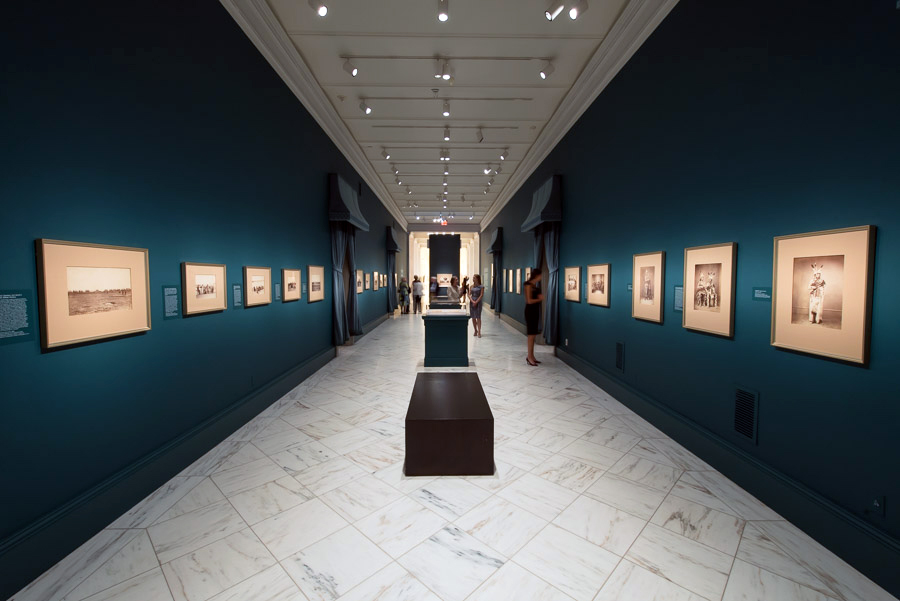


Jo Ractliffe (South African, b. 1961) 'Vacant plot near Atlantico Sul' 2007


Jo Ractliffe (South African, b. 1961)
Vacant plot near Atlantico Sul
2007
From the series Terreno Ocupado
Inkjet print, 2015
On loan from the artist, courtesy Stevenson, Cape Town and Johannesburg
© Jo Ractliffe. Courtesy of Stevenson, Cape Town and Johannesburg


This coarse, grassy landscape appears at first glance to be empty, yet the billboard declaring “Terreno Ocupado” – Portuguese for “occupied land” – reveals this site in Luanda as both active and politically charged. It points to Angola’s long history of occupation and territorial turmoil, from the arrival of Portuguese explorers in 1483 through to the tangled twentieth-century conflicts that spilled over into neighbouring countries. It also points to the contested terrain that is today’s Luanda. With this image, the opening photograph of the first series, Ractliffe sets the scene for her exploration of land, borders, and displacement, themes which thread through all the works featured here.


Jo Ractliffe (South African, b. 1961) 'Woman and her baby, Roque Santeiro market' 2007


Jo Ractliffe (South African, b. 1961)
Woman and her baby, Roque Santeiro market
2007
From the series Terreno Ocupado
Inkjet print, 2015
On loan from the artist, courtesy Stevenson, Cape Town and Johannesburg
© Jo Ractliffe. Courtesy of Stevenson, Cape Town and Johannesburg


Conflict between Luanda’s population and its governing elites forms an undercurrent to this photograph of a young woman carrying a baby across litter-strewn ground, observed by a man wearing a military beret. In September 2010, three years after Ractliffe took these photographs and following a protracted dispute between the government and the local community, the Luandan authorities closed down Roque Santeiro and relocated it to a new Chinese-built facility at Panguila, some twelve miles to the north. Although the government cited concerns over insanitary conditions and organised crime, critics argued that the relocation had more to do with repossessing prime real estate for new luxury apartments.


Jo Ractliffe (South African, b. 1961) 'Woman on the footpath from Boa Vista to Roque Santeiro market' 2007


Jo Ractliffe (South African, b. 1961)
Woman on the footpath from Boa Vista to Roque Santeiro market
2007
From the series Terreno Ocupado
Inkjet print, 2015
On loan from the artist, courtesy Stevenson, Cape Town and Johannesburg
© Jo Ractliffe. Courtesy of Stevenson, Cape Town and Johannesburg


Apparently out of breath and clutching a plastic bag, the woman in the foreground of this photograph is making her way up a faintly visible footpath and out of Ractliffe’s field of vision. A digger perches on the cliff top above her, and in the middle distance, a cluster of dwellings clings precariously to the litter-strewn side of the ravine. Boa Vista – “good view” – is one of Luanda’s largest shanty towns, and at the time of this photograph was home to over 50,000 people. Following landslides in 2001 which killed several residents, parts of the neighbourhood were bulldozed and over 4,000 families were evicted from their homes and relocated to tents in other parts of the city while awaiting the construction of their new accommodation.


Jo Ractliffe (South African, b. 1961) 'Video club, Roque Santeiro market' 2007


Jo Ractliffe (South African, b. 1961)
Video club, Roque Santeiro market
2007
Inkjet print, 2015
Height: 14 3/16 in. (36cm) Width: 17 11/16 in. (45cm)
On loan from the artist, courtesy Stevenson, Cape Town and Johannesburg
© Jo Ractliffe. Courtesy of Stevenson, Cape Town and Johannesburg


Before its closure in 2010, Roque Santeiro was renowned as the biggest open-air market in sub-Saharan Africa, and the centre of Angola’s informal economy. Established in the 1980s and named after a popular Brazilian soap opera, it flourished during the Angolan Civil War as streams of refugees fled the countryside and came to Luanda, searching for new livelihoods. Everything was for sale in its makeshift stalls, from household items, food, and clothes, to contraband alcohol, cars, and livestock. In this photograph Ractliffe focuses on one of the market’s many video clubs, which were housed in military-style tents and screened action movies on televisions powered by generators.


Jo Ractliffe (South African, b. 1961) ''God with us', Pomfret' 2011


Jo Ractliffe (South African, b. 1961)
‘God with us’, Pomfret
2011
Inkjet print, 2015
Height: 17 11/16 in. (45cm) Width: 22 1/16 in. (56cm)
On loan from the artist, courtesy Stevenson, Cape Town and Johannesburg
© Jo Ractliffe. Courtesy of Stevenson, Cape Town and Johannesburg


The abandoned mining town of Pomfret is located in the far north of South Africa, near the border with Botswana. After the closure of its asbestos mine, the town was converted into a military base and used to accommodate 32 Battalion, an elite Special Forces unit made up of Angolan soldiers. When the unit was disbanded in 1993, most of the veterans and their families stayed in Pomfret, living in abject conditions without basic services and under constant threat of eviction. Ractliffe has spoken of finding graves there marked only with “Born Angola”; for the veterans whose paths ended here, death in Pomfret was “the final displacement”.


Jo Ractliffe (South African, b. 1961) 'Unidentified memorial in the desert, south of Namibe I' 2009


Jo Ractliffe (South African, b. 1961)
Unidentified memorial in the desert, south of Namibe I
2009
From the series As Terras do Fim do Mundo
Inkjet print, 2015
On loan from the artist, courtesy Stevenson, Cape Town and Johannesburg
© Jo Ractliffe. Courtesy of Stevenson, Cape Town and Johannesburg


In this photograph, an assemblage of objects perches on a stony outcrop, surrounded by a barren expanse of desert. The long pole protruding from the pile is topped with a ragged banner, announcing the presence of this unusual memorial, but giving little away about its exact significance. Ractliffe took this photograph close to the Cuban base at Namibe on Angola’s southwestern coast, where an extensive network of trenches, bunkers, and anti-aircraft defences is located. As Ractliffe has remarked: “there are some very poignant things in the landscape, like these markers, that seem to say ‘I have been here, people have been here.'”


Jo Ractliffe (South African, b. 1961) 'The battlefield at Cuito Cuanavale' 2009 (diptych left)

Jo Ractliffe (South African, b. 1961) 'The battlefield at Cuito Cuanavale' 2009 (diptych right)


Jo Ractliffe (South African, b. 1961)
The battlefield at Cuito Cuanavale (diptych left and right)
2009
From the series As Terras do Fim do Mundo
Inkjet prints, 2015
On loan from the artist, courtesy Stevenson, Cape Town and Johannesburg
© Jo Ractliffe. Courtesy of Stevenson, Cape Town and Johannesburg


Reflecting on this diptych, Ractliffe has observed that “Quite often, sites of significance don’t evidence their historical weight.” It is true that the calm landscape – muddy riverbanks weaving through a marsh – together with the small size of these prints belies the huge historical importance of their subject. In 1987-1988, during the Angolan Civil War, Cuito Cuanavale was the site of the biggest battle in Africa since World War II. On one side was the armed wing of Agostinho Neto’s government, supported by their Cuban allies; on the other side was the rebel group UNITA, supported by the South African Defence Force. The outcome of the battle is still widely disputed, with both sides claiming victory.


Jo Ractliffe (South African, b. 1961) 'Thorn tree, Platfontein' 2012


Jo Ractliffe (South African, b. 1961)
Thorn tree, Platfontein
2012
Inkjet print, 2015
Height: 14 3/16 in. (36cm) Width: 17 11/16 in. (45cm)
On loan from the artist, courtesy Stevenson, Cape Town and Johannesburg
© Jo Ractliffe. Courtesy of Stevenson, Cape Town and Johannesburg


In this photograph and the next one, “Playing soccer with marbles, Platfontein”, the placement of personal objects in a seemingly unforgiving setting hints at the tension between resilience and vulnerability negotiated by the resident community. The settlement of Platfontein is now home to veterans of 31/201 Battalion, a South African Special Forces unit made up of Angolan and Namibian San trackers who became tied up in the independence conflicts in Angola and Namibia. After the conflicts ended, many of the San veterans were relocated to Schmidtsdrift, but had to live in tents for 14 years because of a competing claim on the land from local communities. The veterans ultimately accepted financial compensation, which enabled them to buy land at Platfontein, pictured here.


Jo Ractliffe (South African, b. 1961) 'Playing soccer with marbles, Platfontein' 2012


Jo Ractliffe (South African, b. 1961)
Playing soccer with marbles, Platfontein
2012
Inkjet print, 2015
Height: 10 1/4 in. (26cm) Width: 12 13/16 in. (32.5cm)
On loan from the artist, courtesy Stevenson, Cape Town and Johannesburg
© Jo Ractliffe. Courtesy of Stevenson, Cape Town and Johannesburg


In this photograph and the previous one, “Thorn tree, Platfontein”, the placement of personal objects in a seemingly unforgiving setting hints at the tension between resilience and vulnerability negotiated by the resident community. The settlement of Platfontein is now home to veterans of 31/201 Battalion, a South African Special Forces unit made up of Angolan and Namibian San trackers who became tied up in the independence conflicts in Angola and Namibia. After the conflicts ended, many of the San veterans were relocated to Schmidtsdrift, but had to live in tents for 14 years because of a competing claim on the land from local communities. The veterans ultimately accepted financial compensation, which enabled them to buy land at Platfontein, pictured here.


Jo Ractliffe (South African, b. 1961) 'Veteran soldiers of 'Omega' 31/201 Battalion, Paulo Cassanga and Automover Kakenge, Schmidtsdrift (portrait under instruction)' 2012


Jo Ractliffe (South African, b. 1961)
Veteran soldiers of ‘Omega’ 31/201 Battalion, Paulo Cassanga and Automover Kakenge, Schmidtsdrift (portrait under instruction)
2012
Inkjet print, 2015
Height: 14 3/16 in. (36cm)
Width: 17 11/16 in. (45cm)
On loan from the artist, courtesy Stevenson, Cape Town and Johannesburg
© Jo Ractliffe. Courtesy of Stevenson, Cape Town and Johannesburg


The veterans’ experiences are given added poignancy in this portrait, in which they stand in front of a tarpaulin hanging untidily from a derelict building. Automover Kakenge, standing on the right, is the leader of a group of San veterans who refused to move to Platfontein after their land claim at Schmidtsdrift was unsuccessful. Kakenge has stated that “Schmidtsdrift was the ending for us […]. When we were relocated from Namibia, we had to swear, “South Africa is our land, and our house is here in Schmidtsdrift.” This attachment to the land and buildings at Schmidtsdrift is the endpoint of what Ractliffe refers to as an “epic narrative of displacement”.


Jo Ractliffe (South African, b. 1961) 'On the Road to Cuito Cuanavale I' 2009


Jo Ractliffe (South African, b. 1961)
On the Road to Cuito Cuanavale I
2009
On loan from the artist, courtesy Stevenson, Cape Town and Johannesburg
© Jo Ractliffe. Courtesy of Stevenson, Cape Town and Johannesburg


Jo Ractliffe (South African, b. 1961) 'Donkey, Pomfret Asbestos Mine' 2011


Jo Ractliffe (South African, b. 1961)
Donkey, Pomfret Asbestos Mine
2011
From the series The Borderlands
Inkjet print, 2015
On loan from the artist, courtesy Stevenson, Cape Town and Johannesburg
© Jo Ractliffe. Courtesy of Stevenson, Cape Town and Johannesburg


The Aftermath of Conflict: Jo Ractliffe’s Photographs of Angola and South Africa at The Metropolitan Museum of Art beginning August 24 features 23 works produced over the past 10 years by South African artist Jo Ractliffe (born 1961). The photographs examine the landscapes of Angola and South Africa as sites of conflict and contention. Focusing on the aftermath of the Angolan Civil War and the intertwined conflict known in South Africa as the “Border War,” her photographs address themes of dispossession, history, memory, and erasure. The exhibition highlights Ractliffe’s engagement with the land and structures of Angola’s capital, Luanda, as well as with places in the Angolan and South African countryside where unmarked mass graves, minefields, and former military testing sites reveal the complex traces of the past in the present.

The 23 works on loan from the artist include single images, diptychs, and triptychs selected from three photographic series: Terreno Ocupado (2007), As Terras do Fim do Mundo (2010), and The Borderlands (2013). In Terreno Ocupado, Ractliffe establishes the city of Luanda as a multilayered place of both historical dispute and present-day struggle. Photographs highlighting the Portuguese colonial occupation of Angola and its imprint on the built environment appear alongside works depicting the often harsh economic conditions of Luanda today. By focusing on the structural instability of the city’s shanty towns, as well as the longer history of political instability threading through their foundations, these photographs question what it means for land to be occupied, abandoned, and struggled over.

The works selected from 2010’s As Terras do Fim do Mundo highlight traces of the Border War, a conflict fought in rural Angola and present-day Namibia between South Africa and its allies on one side and, on the other, the exiled Namibian liberation movement, the Angolan government, and their allies. For this series, Ractliffe traveled alongside ex-soldiers returning to the desolate places where they had fought. The images produced on these trips include photographs of unmarked mass graves, minefields, and other often-inconspicuous signs of past conflict, showing how landscape can function as a repository of histories and memories and yet not be apparent at first glance. Most of the photographs in this series appear devoid of human presence, but in a triptych featuring mural representations of the conflict’s three key political leaders – Fidel Castro, Agostinho Neto, and Leonid Brezhnev – Ractliffe points more directly to notions of individual agency, culpability, and experience.

For her most recent series, The Borderlands, Ractliffe sought out sites in South Africa that were intricately connected to the history of the Border War and photographed their inhabitants amid their surroundings. The people she photographed, often the subjects of forced relocation and living in precarious conditions, exist at the intersection of the region’s troubled history and challenging present. Works from this series show how histories of violence and dispossession under apartheid intersect with these militarised landscapes.

The Aftermath of Conflict has been organised to coincide with the special exhibition Kongo: Power and Majesty, which focuses on works created by artists in present-day Angola between the 16th and 19th centuries (on view at the Metropolitan Museum September 17, 2015 – January 3, 2016). The landscapes captured by Ractliffe consider a more recent chapter of Angola’s history. The Aftermath of Conflict: Jo Ractliffe’s Photographs of Angola and South Africa is curated by Yaëlle Biro, Associate Curator in the Department of Africa, Oceania, and the Americas at the Metropolitan Museum, together with Dr Evelyn Owen, the 2013-2015 Mellon Curatorial Fellow at The Africa Center, New York, in collaboration with the Museum’s Department of Modern and Contemporary Art and Department of Photographs.

Text from The Metropolitan Museum of Art


Jo Ractliffe (South African, b. 1961) 'Man maintaining the lawn of the Monumento de Agostinho Neto' 2007


Jo Ractliffe (South African, b. 1961)
Man maintaining the lawn of the Monumento de Agostinho Neto
2007
Inkjet print, 2015
Height: 13 3/4 in. (35cm) Width: 13 3/4 in. (35cm)
On loan from the artist, courtesy Stevenson, Cape Town and Johannesburg
© Jo Ractliffe. Courtesy of Stevenson, Cape Town and Johannesburg


This monument to Angola’s first president Agostinho Neto (1922-1979) was erected in 2001-2002 as a gift from North Korea. Neto, a doctor and poet, was a founder of the MPLA (People’s Movement for the Liberation of Angola) and led the party during Angola’s struggle for independence from Portugal. When the Portuguese withdrew from Angola on November 11, 1975, with help from Cuba and in the face of competing anti-colonial factions, the MPLA seized control of Luanda and Neto became president. He went on to cultivate closer ties with the Soviet Union and other communist states. In this photograph, Ractliffe contrasts the heroic figure symbolising freedom from colonialism shown on the monument’s pedestal with the everyday heroism of a man pushing a heavy lawnmower.


Jo Ractliffe (South African, b. 1961) Banco Nacional de Angola 2007 (diptych left)

Jo Ractliffe (South African, b. 1961) Banco Nacional de Angola 2007 (diptych right)


Jo Ractliffe (South African, b. 1961)
Banco Nacional de Angola (diptych left and right)
2007
Inkjet prints, 2015
Height: 17 11/16 in. (45cm) Width: 17 11/16 in. (45cm)
On loan from the artist, courtesy Stevenson, Cape Town and Johannesburg
© Jo Ractliffe. Courtesy of Stevenson, Cape Town and Johannesburg


The National Bank of Angola building was designed by Portuguese architect Vasco Regaleira and inaugurated in 1956 by Portuguese president Francisco Lopes. The building’s pink exterior, with its imposing dome and colonnade, was intended to fit in with other colonial-style buildings in Luanda. The bank’s lavish décor provides a dramatic contrast to many of Ractliffe’s other photographs of the city, especially the marble atrium, which features tiled murals portraying the arrival of the Portuguese in Angola. In the image to the right (bottom above), Portuguese explorers are depicted disembarking from their ship and erecting a padrão; these large limestone markers were inscribed with the Portuguese coat of arms and positioned at key locations along the coast by Portuguese navigator Diogo Cão in 1483. An original padrão is currently on view in the exhibition Kongo: Power and Majesty.


Jo Ractliffe (South African, b. 1961) 'Roadside stall on the way to Viana' 2007


Jo Ractliffe (South African, b. 1961)
Roadside stall on the way to Viana
2007
From the series Terreno Ocupado
Inkjet print, 2015
On loan from the artist, courtesy Stevenson, Cape Town and Johannesburg
© Jo Ractliffe. Courtesy of Stevenson, Cape Town and Johannesburg


In this photograph and the next one, “Wreck of a Chinese ship at Ilha”, stretches of bare ground in and around Luanda form the backdrop to ghostly signs of economic activity. Workmen’s overalls dangle from a tree at a roadside stall next to a taxi rank, and a grounded ship basks on a deserted beach while other vessels float offshore. Before it capsized in the mid-2000s, this ship transported and housed Chinese workers drawn to Angola by the many Chinese-run infrastructure projects in the country. These images reflect Angola’s diverse economy where a globalised workforce and the informal sector both play important roles, yet the absence of the workers themselves is striking.


Jo Ractliffe (South African, b. 1961) 'Details of tiled murals at the Fortaleza De São Miguel, depicting Portuguese explorations in Africa 2' 2007


Jo Ractliffe (South African, b. 1961)
Details of tiled murals at the Fortaleza De São Miguel, depicting Portuguese explorations in Africa 2
2007
Inkjet print, 2015
Height: 13 3/4 in. (35cm)
Width: 13 3/4 in. (35cm)
On loan from the artist, courtesy Stevenson, Cape Town and Johannesburg
© Jo Ractliffe. Courtesy of Stevenson, Cape Town and Johannesburg


Jo Ractliffe (South African, b. 1961) 'Details of tiled murals at the Fortaleza De São Miguel, depicting Portuguese explorations in Africa 4' 2007


Jo Ractliffe (South African, b. 1961)
Details of tiled murals at the Fortaleza De São Miguel, depicting Portuguese explorations in Africa 4
2007
Inkjet print, 2015
Height: 13 3/4 in. (35cm) Width: 13 3/4 in. (35cm)
On loan from the artist, courtesy Stevenson, Cape Town and Johannesburg
© Jo Ractliffe. Courtesy of Stevenson, Cape Town and Johannesburg


This photograph and the previous one were taken inside the Fortaleza de São Miguel, a fort originally built in 1576 by Paulo Dias de Novais, the explorer who “founded” Luanda. It later became the administrative heart of the Portuguese colony of Angola in its important role as a trading centre and slaving hub. In 1938 the fort was transformed into the home of the Museum of Angola, and the tiled murals shown here were commissioned at this time. Depicting the flora, fauna and history of Angola, these cobalt-blue 18th-century style tiles were inspired by early modern European prints depicting the Kongo and Angola kingdoms, and represented an attempt to legitimise the ongoing Portuguese presence in the country. Sources included Olfert Dapper’s 1668 “Description of Africa” from which the map fragment shown here is drawn.


Jo Ractliffe (South African, b. 1961) Decommissioned military outpost, Schmidtsdrift 2012 (triptych left)

Jo Ractliffe (South African, b. 1961) Decommissioned military outpost, Schmidtsdrift 2012 (triptych middle)

Jo Ractliffe (South African, b. 1961) Decommissioned military outpost, Schmidtsdrift 2012 (triptych right)


Jo Ractliffe (South African, b. 1961)
Decommissioned military outpost, Schmidtsdrift (triptych left, middle and right)
2012
From the series The Borderlands
Inkjet prints, 2015
On loan from the artist, courtesy Stevenson, Cape Town and Johannesburg
© Jo Ractliffe. Courtesy of Stevenson, Cape Town and Johannesburg


In this triptych, Ractliffe’s focal point is a ghostly ensemble of deserted military buildings. Schmidtsdrift’s original inhabitants were forcibly relocated in the 1950s-1970s under the apartheid regime’s policy of racial segregation. From 1974 the emptied settlement was used as a military training base by the South African Defence Force, which was fighting against the exiled Namibian liberation movement and the Angolan army in a conflict later referred to in South Africa as the “Border War”. Now that the war is over, the decommissioned buildings remain, testifying to the region’s past conflicts and histories of forced relocation.


Jo Ractliffe (South African, b. 1961) 'Mural depicting Fidel Castro, Agostinho Neto and Leonid Brezhnev, circa 1975, Viriambundo' 2009

Jo Ractliffe (South African, b. 1961) Mural depicting Fidel Castro, Agostinho Neto and Leonid Brezhnev, circa 1975, Viriambundo 2009 (detail)

Jo Ractliffe (South African, b. 1961) Mural depicting Fidel Castro, Agostinho Neto and Leonid Brezhnev, circa 1975, Viriambundo 2009 (detail)

Jo Ractliffe (South African, b. 1961) Mural depicting Fidel Castro, Agostinho Neto and Leonid Brezhnev, circa 1975, Viriambundo 2009 (detail)


Jo Ractliffe (South African, b. 1961)
Mural depicting Fidel Castro, Agostinho Neto and Leonid Brezhnev, circa 1975, Viriambundo (details)
2009
Inkjet prints, 2015
Height: 15 3/4 in. (40cm) Width: 19 11/16 in. (50cm)
On loan from the artist, courtesy Stevenson, Cape Town and Johannesburg
© Jo Ractliffe. Courtesy of Stevenson, Cape Town and Johannesburg


The central figure of Agostinho Neto, Angola’s anti-colonial leader and president from 1975-79, is flanked by Cuban revolutionary Fidel Castro on the left, and Soviet leader Leonid Brezhnev on the right. This mural personifies the threats of African Nationalism and Communism that propelled South Africa to become involved in the Border War. It highlights the fact that the Angolan Civil War was also a Cold War battleground, with Cuba and the Soviet Union on the side of Neto’s party, the MPLA (People’s Movement for the Liberation of Angola), and South Africa and the United States supporting UNITA (National Union for the Total Independence of Angola). Here, all three men still command a presence despite their faded, cartoon-like rendering.


The Metropolitan Museum of Art
1000 Fifth Avenue at 82nd Street
New York, New York 10028-0198
Phone: 212-535-7710

Opening hours:
Sunday – Tuesday, and Thursday: 10am – 5pm
Friday and Saturday: 10am – 9pm
Closed Wednesday

The Metropolitan Museum of Art website

LIKE ART BLART ON FACEBOOK

Back to top

Exhibition: ‘Lee Miller’ at the Albertina, Vienna

Exhibition dates: 8th May – 16th August 2015

Curator: Walter Moser


Lee Miller (American, 1907-1977) 'Floating Head (Mary Taylor), New York Studio, New York, USA' 1933


Lee Miller (American, 1907-1977)
Floating Head (Mary Taylor), New York Studio, New York, USA
1933
© Lee Miller Archives England 2015. All Rights Reserved


Leave artist’s alone

It takes some time to form an opinion as to the merit of Lee Miller’s work, given the amount of photographs available online, including the ones available on the Lee Miller Archives website. It is also difficult to separate the muse / socialite from the artist, the icon from the person.

Certainly there are unforgettable photographs, such as the haunting SS Guard in Canal, Dachau, Germany (1945, below). Once seen, never forgotten. But then there are the usual fashion photographs for Vogue that are no different from anyone else, a lot of pretty average social documentary photographs, some excellent and not so excellent portraits of friends and artists, and some surreal offerings that sometimes hit the mark.

Only so often do her photographs raise themselves above the mundane. This is not the fault of Lee Miller, but the fault of people claiming that someone is more than they are. The fault of people in control of her image. And that all comes down to money and power.

Instead of limiting access to her photographs, if her work was just left to breathe – just letting Lee Miller be nothing, in a Zen sense – just let the work be what it is, then she and the work might attain more credibility than it has at the moment. If Lee Miller was not set up as this icon, if she just is, then the work would be all the better for it. Icon and artist need to be separated. Let’s see more of the work freely available, for only then can we truly understand, believe.

Dr Marcus Bunyan


Many thankx to the Albertina for allowing me to publish the photographs in the posting. Please click on the photographs for a larger version of the image.


Lee Miller (1907-1977) is considered one of the most fascinating artists of the 20th century. In only 16 years, she produced a body of photographic work of a range that remains unparalleled, and that unites the most divergent genres. Miller’s oeuvre extends from surrealistic images to photography in the fields of fashion, travelling, portraiture and even war correspondence; the Albertina presents a survey of the work in its breadth and depth, with the aid of 100 selected pieces.

Lee Miller began her artistic career as a surrealist photographer in the Paris of 1929. She alienated motifs by using narrow image frames and applying experimental techniques like solarisation, so that it would be possible to see paradox reality. Travel photography, in which she translated the landscape into modernistic and ambiguous shapes, originated in Egypt in 1934.

As one of just a handful of female photojournalists, she began to photograph the disastrous consequences of the Second World War back in 1940. Lee Miller photographed the attack on London by the German Luftwaffe (“the Blitz”), as well as the eventual liberation of Paris. Her reporting led her to Vienna via Salzburg in 1945 where she photographed a cityscape destroyed by war, as well as the hardships in the children’s hospitals. In this exhibit, the focus is specifically placed on the vast bulk of this unpublished group of works.


Lee Miller | Surrealist Photography from Albertina Vienna.


Lee Miller | War Photography from Albertina Vienna.


Man Ray (American, 1890-1976) 'Portrait of Lee Miller, Paris, France' 1929


Man Ray (American, 1890-1976)
Portrait of Lee Miller, Paris, France
1929
© MAN RAY TRUST / ADAGP, Paris / Bildrecht Wien 2015
Courtesy Lee Miller Archives, England 2015. All rights reserved


Lee Miller (American, 1907-1977) 'Untitled (Exploding Hand), Paris, France' c. 1930


Lee Miller (American, 1907-1977)
Untitled (Exploding Hand), Paris, France
c. 1930
© Lee Miller Archives England 2015. All Rights Reserved


Lee Miller (American, 1907-1977) 'Self Portrait, New York Studio, New York, USA' 1932


Lee Miller (American, 1907-1977)
Self Portrait, New York Studio, New York, USA
1932
© Lee Miller Archives England 2015. All Rights Reserved


Lee Miller (American, 1907-1977) 'Paris' 1944


Lee Miller (American, 1907-1977)
Paris
1944
Silver gelatin print
© Lee Miller Archives England 2015. All Rights Reserved


Lee Miller (American, 1907-1977) 'Picnic, Ile Sainte Marguerite, France' 1937


Lee Miller (American, 1907-1977)
Picnic, Ile Sainte Marguerite, France [Man Ray second from right]
1937
© Lee Miller Archives England 2015. All Rights Reserved


Lee Miller (American, 1907-1977) 'Nude bent forward' 1930


Lee Miller (American, 1907-1977)
Nude bent forward
1930
© Lee Miller Archives England 2015. All Rights Reserved


Lee Miller exhibition text

Lee Miller 'Surrealism: Paris and New York, 1929-1934' exhibition text

Lee Miller 'Travels: Egypt. 1934-1939' and 'War: England and France, 1940-1944' exhibition text

Lee Miller 'Zero Hour: Germany and Austria, 1945' and 'After the war: Vienna 1945' exhibition text


Lee Miller exhibition texts


Lee Miller (American, 1907-1977) 'Fire Masks, London, England' 1941


Lee Miller (American, 1907-1977)
Fire Masks, London, England
1941
© Lee Miller Archives England 2015. All Rights Reserved


Lee Miller (American, 1907-1977) 'Irmgard Seefried, Opera Singer, Singing an Aria from Madame Butterfly, Vienna Opera House, Vienna, Austria' 1945


Lee Miller (American, 1907-1977)
Irmgard Seefried, Opera Singer, Singing an Aria from Madame Butterfly, Vienna Opera House, Vienna, Austria
1945
© Lee Miller Archives England 2015. All Rights Reserved


Irmgard Seefried (German, 1919-1988)

Irmgard Seefried (9 October 1919 – 24 November 1988) was a distinguished German soprano who sang opera, sacred music, and lieder.

One of the outstanding singers to emerge immediately after the Second World War, she was noted for her Mozart and Richard Strauss roles. But she also sang in other composers’ operas; the title role in Puccini’s Madama Butterfly, Marie in Alban Berg’s Wozzeck, Eva in Meistersinger, Blanche in Poulenc’s Dialogues des Carmélites, and the title role in Janáček’s Káťa Kabanová. She was also a noted lieder singer, and a number of her Salzburg Festival recitals were recorded. She left many recordings of oratorio and sacred music by Bach, Mozart, Haydn (including at least four different renditions of the Archangel Gabriel in Die Schöpfung), Brahms, Fauré, Beethoven, Dvořák, Verdi and Stravinsky.

Although she was a high soprano, she performed, and recorded, both the trouser roles of the Composer and Octavian in Richard Strauss’s Ariadne auf Naxos and Der Rosenkavalier, respectively. These roles are usually associated with weightier voices, and today are usually sung by mezzo-sopranos.

She often sang with Elisabeth Schwarzkopf, who said in interview that Seefried was naturally able to achieve results effortlessly which other singers, including Schwarzkopf herself, had to work hard to produce.

Text from the Wikipedia website


Lee Miller (American, 1907-1977) with David E. Scherman (American, 1916-1997) 'Lee Miller in Hitler's Bathtub, Munich, Germany' 1945


Lee Miller (American, 1907-1977) with David E. Scherman (American, 1916-1997)
Lee Miller in Hitler’s Bathtub, Munich, Germany
1945
© Lee Miller Archives England 2015. All Rights Reserved


Lee Miller (American, 1907-1977) 'Luxembourg' 1944


Lee Miller (American, 1907-1977)
Luxembourg
1944
© Lee Miller Archives England 2015. All Rights Reserved


Lee Miller (American, 1907-1977) 'SS Guard in Canal, Dachau, Germany' 1945


Lee Miller (American, 1907-1977)
SS Guard in Canal, Dachau, Germany
1945
© Lee Miller Archives England 2015. All Rights Reserved


Lee Miller (American, 1907-1977) 'Scharnhorst Boy, Vienna, Austria' 1945


Lee Miller (American, 1907-1977)
Scharnhorst Boy, Vienna, Austria
1945
© Lee Miller Archives England 2015. All Rights Reserved


Lee Miller (American, 1907-1977) 'The latest hat model, Vogue Studios, London, April 1942' 1942


Lee Miller (American, 1907-1977)
The latest hat model, Vogue Studios, London, April 1942
1942
© Lee Miller Archives England 2015. All Rights Reserved


Man Ray (American, 1890-1976) 'Solarised Portrait of Lee Miller' c. 1929


Man Ray (American, 1890-1976)
Solarised Portrait of Lee Miller
c. 1929
© MAN RAY TRUST / ADAGP, Paris / Bildrecht Wien 2015


Lee Miller (American, 1907-1977) 'Solarized Portrait of an unknown model' 1930


Lee Miller (American, 1907-1977)
Solarized Portrait of an unknown model
1930
© Lee Miller Archives England 2015. All Rights Reserved


Man Ray (American, 1890-1976) and Lee Miller (American, 1907-1977) 'Neck (Portrait of Lee Miller), Paris, France' c. 1930


Man Ray (American, 1890-1976) and Lee Miller (American, 1907-1977)
Neck (Portrait of Lee Miller), Paris, France
c. 1930
© Lee Miller Archives England 2015. All Rights Reserved
© MAN RAY TRUST / ADAGP, Paris / Bildrecht Wien 2015


Albertina
Albertinaplatz 1
1010 Vienna, Austria
Phone: +43 (0)1 534 83-0

Opening hours:
Daily 10am – 6pm

Albertina website

LIKE ART BLART ON FACEBOOK

Back to top

Photographs: Marcus Bunyan. ‘Too Much of the Air’ 2015

April 2015


Marcus Bunyan (Australian, b. 1958) 'Too Much of the Air' 2015


Marcus Bunyan (Australian, b. 1958)
Untitled
2015
Digital photograph
From the series Too Much of the Air 


Too Much of the Air

And now for something completely different… after 16 months hard work, I have completed a new 52 image sequence.

Below is a selection of images from the sequence. Please click on the photographs for a larger version of the image.

To view the whole sequence please visit my website.


“Imagine being in these planes knowing that you only had moments to live, and knowing that you could do nothing about it. What brought you to that point, what decisions did you take as a human being (or were taken for you) that enacted this scenario.

The “greatness” as the event passes is what is being worked with here. It is the inverse aspect of the sublime. Usually the sublime is regarded as beyond time … but not here. Essentially I am sustaining the last moments of a doomed life, outside of time.

We are unusually privileged to experience the sublime in this way. It is usually a lost aspect through the death of the witness.”


Dr Marcus Bunyan


Note: these images will be printed large to reinforce the disintegration of the image, technology and human being. Tullio Crali‘s painting Before the Parachute Opens (Prima che si apra il paracadute) (1939) was one of a few starting points, inspirations, for the new sequence.

Photographs are available from this series for purchase. As a guide, a digital colour 16″ x 20″ costs $1000 plus tracked and insured shipping. For more information please see my Store web page.


Beginning of the sequence


Marcus Bunyan (Australian, b. 1958) 'Too Much of the Air' 2015


Marcus Bunyan (Australian, b. 1958) 'Too Much of the Air' 2015


Marcus Bunyan (Australian, b. 1958) 'Too Much of the Air' 2015


Marcus Bunyan (Australian, b. 1958) 'Too Much of the Air' 2015


Marcus Bunyan (Australian, b. 1958) 'Too Much of the Air' 2015


Marcus Bunyan (Australian, b. 1958) 'Too Much of the Air' 2015


Marcus Bunyan (Australian, b. 1958) 'Too Much of the Air' 2015


Marcus Bunyan (Australian, b. 1958) 'Too Much of the Air' 2015


Marcus Bunyan (Australian, b. 1958) 'Too Much of the Air' 2015


Marcus Bunyan (Australian, b. 1958) 'Too Much of the Air' 2015


Marcus Bunyan (Australian, b. 1958) 'Too Much of the Air' 2015


End of the sequence


Marcus Bunyan (Australian, b. 1958) 'Too Much of the Air' 2015


Marcus Bunyan (Australian, b. 1958) 'Too Much of the Air' 2015


Marcus Bunyan (Australian, b. 1958) 'Too Much of the Air' 2015


Marcus Bunyan (Australian, b. 1958) 'Too Much of the Air' 2015


Marcus Bunyan (Australian, b. 1958) 'Too Much of the Air' 2015


Marcus Bunyan (Australian, b. 1958) 'Too Much of the Air' 2015


Marcus Bunyan (Australian, b. 1958) 'Too Much of the Air' 2015


Marcus Bunyan (Australian, b. 1958) 'Too Much of the Air' 2015


Marcus Bunyan (Australian, b. 1958) 'Too Much of the Air' 2015


Marcus Bunyan (Australian, b. 1958) 'Too Much of the Air' 2015


Marcus Bunyan (Australian, b. 1958) 'Too Much of the Air' 2015


Marcus Bunyan (Australian, b. 1958) 'Too Much of the Air' 2015


Marcus Bunyan (Australian, b. 1958) 'Too Much of the Air' 2015


Marcus Bunyan (Australian, b. 1958) 'Too Much of the Air' 2015


Marcus Bunyan website

LIKE ART BLART ON FACEBOOK

Back to top

Exhibition: ‘Conflict, Time, Photography’ at Tate Modern, London

Exhibition dates: 26th November 2014 – 15th March 2015

The Eyal Ofer Galleries

Artists: Jules Andrieu, Pierre Antony-Thouret, Nobuyoshi Araki, George Barnard, Adam Broomberg and Oliver Chanarin, Luc Delahaye, Ken Domon, Roger Fenton, Ernst Friedrich, Jim Goldberg, Toshio Fukada, Kenji Ishiguro, Kikuji Kawada, An-My Lê, Jerzy Lewczyński, Emeric Lhuisset, Agata Madejska, Diana Matar, Eiichi Matsumoto, Chloe Dewe Mathews, Don McCullin, Susan Meiselas, Kenzo Nakajima, Simon Norfolk, João Penalva, Richard Peter, Walid Raad, Jo Ratcliffe, Sophie Ristelhueber, Julian Rosefeldt, Hrair Sarkissian, Michael Schmidt, Ursula Schulz-Dornburg, Indre Šerpytyte, Stephen Shore, Harry Shunk and János Kender, Taryn Simon, Shomei Tomatsu, Hiromi Tsuchida, Marc Vaux, Paul Virilio, Nick Waplington, Jane and Louise Wilson, and Sasaki Yuichiro.

Curators: Simon Baker, Curator Photography and International Art, Shoair Mavlian, Assistant Curator, and Professor David Alan Mellor, University of Sussex


Roger Fenton (British, 1819-1869) 'The Valley of the Shadow of Death' 1855


Roger Fenton (British, 1819-1869)
The Valley of the Shadow of Death
1855


Another fascinating exhibition. The concept, that of vanishing time, a vanquishing of time – inspired by Kurt Vonnegut’s 1969 novel Slaughterhouse-Five and the Japanese photographer Kikuji Kawada’s 1965 photobook The Map – is simply inspired. Although the images are not war photography per se, they are about the lasting psychological effects of war imaged on a variable time scale.

While the images allow increasing passages of time between events and the photographs that reflect on them – “made moments after the events they depict, then those made days after, then months, years and so on” – there settles in the pit of the stomach some unremitting melancholy, some unholy dread as to the brutal facticity and inhumanness of war. The work which “pictures” the memory of the events that took place, like a visual ode of remembrance, are made all the more powerful for their transcendence – of time, of death and the immediate detritus of war.

Dr Marcus Bunyan


Many thankx to the Tate Modern for allowing me to publish the photographs in the posting. Please click on the photographs for a larger version of the image.
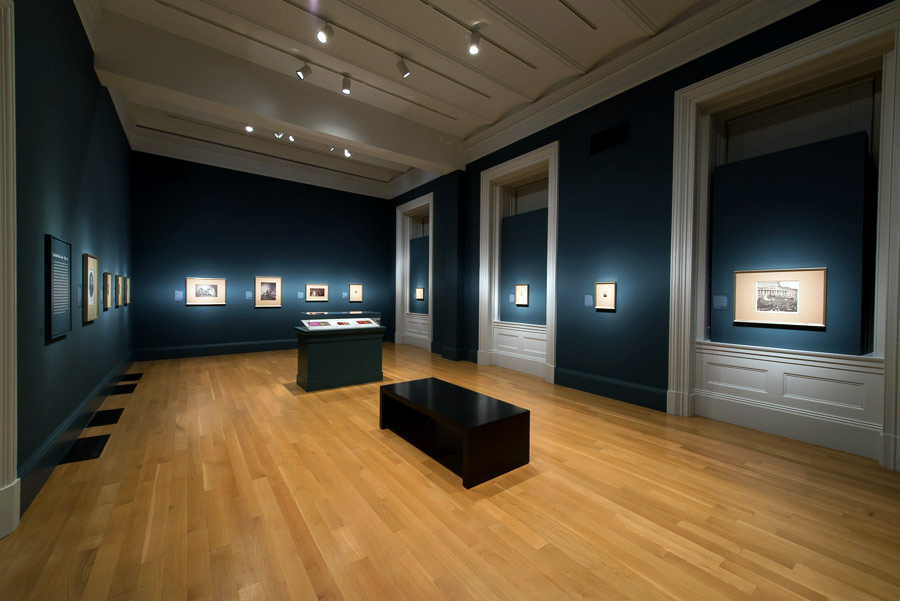


“… taking its cue from Vonnegut, ‘Conflict, Time, Photography’ is arranged differently, following instead the increasing passages of time between events and the photographs that reflect on them. There are groups of works made moments after the events they depict, then those made days after, then months, years and so on – 10, 20, 50, right up to 100 years later.”


Simon Baker


Shomei Tomatsu (Japanese, 1930-2012) 'Atomic Bomb Damage – Wristwatch Stopped at 11-02, August 9. 1945, Nagasaki' 1961


Shomei Tomatsu (Japanese, 1930-2012)
Atomic Bomb Damage – Wristwatch Stopped at 11.02, August 9, 1945, Nagasaki
1961
Gelatin silver print on paper
253 x 251mm
Tokyo Metropolitan Museum of Photography, Tokyo


Shomei Tomatsu (Japanese, 1930-2012) 'Steel Helmet with Skull Bone Fused by Atomic Bomb, Nagasaki' 1963


Shomei Tomatsu (Japanese, 1930-2012)
Steel Helmet with Skull Bone Fused by Atomic Bomb, Nagasaki
1963
Gelatin silver print on paper
226 x 303mm
Tokyo Metropolitan Museum of Photography, Tokyo


Shomei Tomatsu (Japanese, 1930-2012) 'Melted bottle' Nagasaki, 1961


Shomei Tomatsu (Japanese, 1930-2012)
Melted bottle
Nagasaki, 1961
from the series Nagasaki 11:02
Silver Gelatin print
20 x 21cm
© Shomei Tomatsu


“From the seconds after a bomb is detonated to a former scene of battle years after a war has ended, this moving exhibition focuses on the passing of time, tracing a diverse and poignant journey through over 150 years of conflict around the world, since the invention of photography.

In an innovative move, the works are ordered according to how long after the event they were created from moments, days and weeks to decades later. Photographs taken seven months after the fire bombing of Dresden are shown alongside those taken seven months after the end of the First Gulf War. Images made in Vietnam 25 years after the fall of Saigon are shown alongside those made in Nakasaki 25 years after the atomic bomb. The result is the chance to make never-before-made connections while viewing the legacy of war as artists and photographers have captured it in retrospect…

The exhibition is staged to coincide with the 2014 centenary and concludes with new and recent projects by British, German, Polish and Syrian photographers which reflect on the First World War a century after it began.”

Text from the Tate Modern website


“The original idea for the Tate Modern exhibition Conflict, Time, Photography came from a coincidence between two books that have captivated and inspired me for many years: Kurt Vonnegut‘s classic 1969 novel Slaughterhouse-Five and the Japanese photographer Kikuji Kawada’s 1965 photobook The Map. Both look back to hugely significant and controversial incidents from the Second World War from similar distances.

Vonnegut was a prisoner of war in Dresden when what he called ‘possibly the world’s most beautiful city’ was destroyed by incendiary bombs, and struggled to write his war book for almost 25 years. Kawada was a young photographer working in post-war Hiroshima when he began to take the strange photographs of the scarred, stained ceiling of the A-bomb Dome – the only building to survive the explosion – that he would eventually publish on August 6 1965, 20 years to the day since the atomic bomb was dropped on the city.

It may seem odd that these great works of art and literature took so long to emerge from the aftermath of the events they concern. But many of the most complex and considered accounts of conflict have taken their time. To Vonnegut’s painfully slow response to the war, for example, we might add Joseph Heller’s brilliantly satirical Catch-22, published in 1961, and, even more significantly, JG Ballard’s memorial masterpiece Empire of the Sun, which did not see the light of day until 1984.

And today, in 2014, 100 years since the start of the First World War, it seems more important than ever not only to understand the nature and long-term effects of conflict, but also the process of looking back at the past…”

Extract from Simon Baker. “War photography: what happens after the conflict?” on The Telegraph website, 7th November 2014 [Online] Cited 09/02/2015


An-My Lê (Vietnamese-American, b. 1960) 'Untitled, Hanoi' 1994-1998


An-My Lê (Vietnamese-American, b. 1960)
Untitled, Hanoi
1994-1998
Gelatin silver print on paper
508 x 609mm
Courtesy the artist and Murray Guy, New York


Jane Wilson (British, b. 1967) Louise Wilson (British, b. 1967) 'Urville' 2006


Jane Wilson (British, b. 1967)
Louise Wilson (British, b. 1967)
Urville
2006
Gelatin silver print, mounted onto aluminium
1800 x 1800mm
Tate
Purchased 2011


Jane Wilson (British, b. 1967) Louise Wilson (British, b. 1967) 'Azeville' 2006


Jane Wilson (British, b. 1967)
Louise Wilson (British, b. 1967)
Azeville
2006
Gelatin silver print, mounted onto aluminium
1800 x 2900mm
Tate
Purchased 2011


Jo Ractliffe (South African, b. 1961) 'As Terras do fim do Mundo' Nd


Jo Ractliffe (South African, b. 1961)
As Terras do fim do Mundo (The Lands of the End of the World)
2009-2010
Courtesy Mark McCain collection


“At first glance, Jo Ractliffe’s black-and-white shots of sun-baked African landscapes look random and bland: rocks, dirt, scrubby trees; some handwritten signs but no people. Only when reading the titles – “Mass Grave at Cassinga,” “Minefield Near Mupa” – do you learn where the people are, or once were, and the pictures snap into expressive focus.

Ms. Ractliffe, who lives in Johannesburg, took the photographs in 2009 and 2010 in Angola on visits to now-deserted places that were important to that country’s protracted civil war and to the intertwined struggle of neighbouring Namibia to gain independence from South Africa’s apartheid rule. South Africa played an active role in both conflicts, giving military support to insurgents who resisted Angola’s leftist government, and hunting down Namibian rebels who sought safety within Angola’s borders.

It’s through this historical lens that Ms. Ractliffe views landscape: as morally neutral terrain rendered uninhabitable by terrible facts from the past – the grave of hundreds of Namibia refugees, most of them children, killed in an air raid; the unknown numbers of land mines buried in Angola’s soil. Some are now decades old but can still detonate, so the killing goes on.”

Holland Cotter. “Jo Ratcliffe: ‘As Terras do Fim do Mundo (The Lands of the End of the World)’,” on The New York Times website May 26, 2011 [Online] Cited 12/07/2021


Kikuji Kawada (Japanese, b. 1933) 'Hinomaru, Japanese National Flag' from the series 'The Map' 1965


Kikuji Kawada (Japanese, b. 1933)
Hinomaru, Japanese National Flag
1965
From the series The Map
Gelatin silver print
279 x 355mm
© Kikuji Kawada, courtesy the artist and Photo Gallery International, Tokyo


Kikuji Kawada (Japanese, b. 1933) 'Lucky Strike' 1962


Kikuji Kawada (Japanese, b. 1933)
Lucky Strike
1962
From the series The Map
© Kikuji Kawada, courtesy the artist and Photo Gallery International, Tokyo


Kikuji Kawada (Japanese, b. 1933) 'The A-Bomb Memorial Dome and Ohta River' Hiroshima 1960-1965


Kikuji Kawada (Japanese, b. 1933)
The A-Bomb Memorial Dome and Ohta River from the series The Map
Hiroshima 1960-1965
Gelatin silver print
© Kikuji Kawada


Points of memory: Kikuji Kawada

My first published photo book, The Map, took me five years to complete, beginning in 1960. In late 1961 a solo show with work from the series was held at Fuji Photo Salon in Tokyo, organised in three parts.

The first featured a ruined castle that was blown up intentionally by the Japanese army during the Second World War. The second comprised photographs taken a decade after the atomic bomb exploded in Hiroshima. They showed the stains and flaking ceilings of the Atomic Bomb Dome, the only structure left standing at the heart of the detonation zone. The third part concerned Tokyo during the period of economic recovery: images of advertising, scrap iron, the trampled national flag and emblems of the American Forces such as Lucky Strike and Coca-Cola, all twisted together, their order shuffled again and again. Some appeared as a montage to be presented as a metaphor. I dare not say the meaning of it.

These works led me to attempt to create this photographic book, using the notion of the map as a clue to the future and to question the whereabouts of my spirit. Discarded memorial photographs, a farewell note, kamikaze pilots – the illusions of various maps that emerge are to me like a discussion with the devil. The stains are situated as a key image of the series by drawing a future stratum and sealing the history, the nationality, the fear and anxiety of destruction and prosperity. It was almost a metaphor for the growth and the fall.

On the back of the black cover box are written rhyming words that are almost impossible to read. The front cover shows that the words are about to burn out. Inside, the pages are laid out as hinged double fold-out spreads. The repetition of the act of opening and closing makes the images appear and disappear. I wanted to have a book design as a new object and something that goes beyond the contents. With the rich and chaotic nature of monochrome, it might be that I tried to find my early style within the illusion of reality by abstracting the phenomenon. As an observer, I would like to keep forcing myself into the future, never losing the sense of danger which emerges in the conflicts of daily life. I wish to harmonise my old distorted maps with the heartbeat of this exhibition at Tate Modern, twisting across the bridges of the centuries through conflicting space and time.

Kikuji Kawada is a photographer based in Tokyo.

Kikuji Kawada. “Points of memory: Kikuji Kawada: Conflict, Time, Photography,” on the Tate Modern website 3 December 2014 [Online] Cited 12/07/2021


Richard Peter (German, 1895-1977) 'Dresden After Allied Raids Germany' 1945


Richard Peter (German, 1895-1977)
Dresden After Allied Raids Germany
1945
© SLUB Dresden / Deutsche Fotothek / Richard Peter, sen.


Toshio Fukada (Japanese, 1928-2009) 'The Mushroom Cloud - Less than twenty minutes after the explosion (4)' 1945


Toshio Fukada (Japanese, 1928-2009)
The Mushroom Cloud – Less than twenty minutes after the explosion (4)
1945
Tokyo Metropolitan Museum of Photography
© The estate of Toshio Fukada, courtesy Hiroshima Peace Memorial Museum


Jerzy Lewczyński (Polish, 1924-2014) 'Wolf's Lair / Adolf Hitler's War Headquarters' 1960


Jerzy Lewczyński (Polish, 1924-2014)
Wolf’s Lair / Adolf Hitler’s War Headquarters
1960
© Jerzy Lewczyński


Don McCullin (British, b. 1935) 'Shell Shocked US Marine, Vietnam, The Battle of Hue' 1968


Don McCullin (British, b. 1935)
Shell Shocked US Marine, Vietnam, The Battle of Hue
1968, printed 2013
© Don McCullin


Ursula Schulz-Dornburg (German, b. 1938) 'Kurchatov – Architecture of a Nuclear Test Site Kazakhstan. Opytnoe Pole' 2012


Ursula Schulz-Dornburg (German, b. 1938)
Kurchatov – Architecture of a Nuclear Test Site Kazakhstan. Opytnoe Pole
2012
Courtesy of the artist’s studio
© Ursula Schultz-Domburg


Conflict, Time, Photography brings together photographers who have looked back at moments of conflict, from the seconds after a bomb is detonated to 100 years after a war has ended. Staged to coincide with the centenary of the First World War, this major group exhibition offers an alternative to familiar notions of war reportage and photojournalism, instead focusing on the passing of time and the unique ways that artists have used the camera to reflect on past events.

Conflicts from around the world and across the modern era are depicted, revealing the impact of war days, weeks, months and years after the fact. The works are ordered according to how long after the event they were created: images taken weeks after the end of the American Civil War are hung alongside those taken weeks after the atomic bombs fell on Japan in 1945. Photographs from Nicaragua taken 25 years after the revolution are grouped with those taken in Vietnam 25 years after the fall of Saigon. The exhibition concludes with new and recent projects by British, German, Polish and Syrian photographers which reflect on the First World War a century after it began.

The broad range of work reflects the many different ways in which conflict impacts on people’s lives. The immediate trauma of war can be seen in the eyes of Don McCullin’s Shell-shocked US Marine 1968, while the destruction of buildings and landscapes is documented by Pierre Antony-Thouret’s Reims After the War (published in 1927) and Simon Norfolk’s Afghanistan: Chronotopia 2001-2002. Other photographers explore the human cost of conflict, from Stephen Shore’s account of displaced Jewish survivors of the Second World War in the Ukraine, to Taryn Simon’s meticulously researched portraits of those descended from victims of the Srebrenica massacre.

Different conflicts also reappear from multiple points in time throughout the exhibition, whether as rarely-seen historical images or recent photographic installations. The Second World War for example is addressed in Jerzy Lewczyński’s 1960 photographs of the Wolf’s Lair / Adolf Hitler’s War Headquarters, Shomei Tomatsu’s images of objects found in Nagasaki, Kikuji Kawada’s epic project The Map made in Hiroshima in the 1960s, Michael Schmidt’s Berlin streetscapes from 1980, and Nick Waplington’s 1993 close-ups of cell walls from a Prisoner of War camp in Wales.

As part of Conflict, Time, Photography, a special room within the exhibition has been guest-curated by the Archive of Modern Conflict. Drawing on their unique and fascinating private collection, the Archive presents a range of photographs, documents and other material to provide an alternative view of war and memory.

Conflict, Time, Photography is curated at Tate Modern by Simon Baker, Curator of Photography and International Art, with Shoair Mavlian, Assistant Curator, and Professor David Mellor, University of Sussex. It is organised by Tate Modern in association with the Museum Folkwang, Essen and the Staatliche Kunstsammlungen, Dresden, where it will tour in spring and summer 2015 respectively. The exhibition is also accompanied by a fully-illustrated catalogue from Tate Publishing and a programme of talks, events and film screenings at Tate Modern.

Press release from the Tate Modern website


Simon Norfolk
 (British born Nigeria, b. 1963) 'Bullet-scarred apartment building' 2003


Simon Norfolk
 (British born Nigeria, b. 1963)
Bullet-scarred apartment building and shops in the Karte Char district of Kabul. This area saw fighting between Hikmetyar and Rabbani and then between Rabbani and the Hazaras
2003
© Simon Norfolk


Susan Meiselas (American, b. 1948) 'Managua, July 2004' from the series 'Reframing History'


Susan Meiselas (American, b. 1948)
Managua, July 2004
2004
From the series Reframing History


“Cuesto del Plomo,” hillside outside Managua, a well-known site of many assassinations carried out by the National Guard. People searched here daily for missing persons. July 1978, from the series, “Reframing History,” Managua, July 2004

In July 2004, for the 25th anniversary of the overthrow of Somoza, Susan returned to Nicaragua with nineteen mural-sized images of her photographs from 1978-1979, collaborating with local communities to create sites for collective memory. The project, “Reframing History,” placed murals on public walls and in open spaces in the towns, at the sites where the photographs were originally made.


Reframing History: Excerpt, Bus (2004)


Nick Waplington (British, b. 1965) 'Untitled' from the series 'We Live as We Dream, Alone' 1993


Nick Waplington (British, b. 1965)
Untitled
1993
From the series We Live as We Dream, Alone


Nick Waplington (British, b. 1965) 'Untitled' from the series 'We Live as We Dream, Alone' 1993


Nick Waplington (British, b. 1965)
Untitled
1993
From the series We Live as We Dream, Alone


Nick Waplington’s deeply moving and once controversial photographs of the cells of Barry Island prison, where Nazi SS Officers were held prisoner before the Nuremburg trials, were taken in 1993, almost 50 years after the prisoners had embellished the cell walls with Germanic slogans and drawings of pin-up girls and Bavarian landscapes will be displayed. The half-century that elapsed between the photographs and the creation of their subject is grim testament to the enduring legacy of conflict…

“In 1992 I was commissioned to make work by the Neue galerie in Graz, Austria and the theme was war or “krieg” as it is in German. Graz is on the border with Yugoslavia and there was war in Yugoslavia at the time. I think they were hoping that I would make something to do with the war that was taking place between Croatia and Serbia and Bosnia. I did go to the war; you went to Zagreb and got a UN pass and went in to the war zone. It was very interesting to be taken into the war zone but ultimately I got back to England and I decided – to the annoyance of the gallery – that I was thinking about Austria instead. At the time, the president of Austria, Kurt Waldheim, had been exposed as a member of the SS and had been informing Yugoslavia during the war [World War Two] and the Austrians were very unconcerned about this. I thought I’d much prefer to make work that had the Austrians confronting their Nazi past rather than about the current conflict. I knew about the prison in Barry Island in South Wales where the SS were held before they were sent to Nuremberg for the trial and I started taking a series of photographs in the prison. It was lucky that I did because it was demolished the following year by the MOD. It’s gone now. When I got there, I saw the prisoners had been drawing on the walls. They’re mossy and crumbling but you can see Germanic lettering and Bavarian landscapes and women with 1940s haircuts. They are evocative and powerful given the emotive history. ”

Extract from Elliot Watson. “Nick Waplington: Conflict, Rim, Photography,” on the Hunger TV website, 26th November 2014 [Online] Cited 09/02/2015. No longer available online


Sophie Ristelhueber (French, b. 1949) 'Fait #25' 1992


Sophie Ristelhueber (French, b. 1949)
Fait #25
1992
71 photographs, gelatin silver prints mounted on aluminium
Object, each: 1000 x 1240 x 50mm
National Gallery of Canada, Ottawa. Purchased 2013


Sophie Ristelhueber (French, b. 1949) 'Fait #44' 1992


Sophie Ristelhueber (French, b. 1949)
Fait #44
1992
71 photographs, gelatin silver prints mounted on aluminium
Object, each: 1000 x 1240 x 50mm
National Gallery of Canada, Ottawa. Purchased 2013


Sophie Ristelhueber (French, b. 1949) 'Fait #46' 1992


Sophie Ristelhueber (French, b. 1949)
Fait #46
1992
71 photographs, gelatin silver prints mounted on aluminium
Object, each: 1000 x 1240 x 50mm
National Gallery of Canada, Ottawa. Purchased 2013


Luc Delahaye (French, b. 1962) 'US Bombing on Taliban Positions' 2001


Luc Delahaye (French, b. 1962)
US Bombing on Taliban Positions
2001
C-print
238.6 x 112.2cm
Courtesy Luc Delahaye and Galerie Nathalie Obadia, Paris/Bruxelles


Chloe Dewe Mathews (British, b. 1982) 'Vebranden-Molen, West-Vlaanderen' 2013


Chloe Dewe Mathews (British, b. 1982)
Vebranden-Molen, West-Vlaanderen
2013
Soldat Ahmed ben Mohammed el Yadjizy
Soldat Ali ben Ahmed ben Frej ben Khelil
Soldat Hassen ben Ali ben Guerra el Amolani
Soldat Mohammed Ould Mohammed ben Ahmed
17:00 / 15.12.1914
From the series Shot at Dawn
© Chloe Dewe Mathews


Chloe Dewe Mathews (British, b. 1982) 'Former Abattoir, Mazingarbe, Nord-Pas-de-Calais' 2013


Chloe Dewe Mathews (British, b. 1982)
Former Abattoir, Mazingarbe, Nord-Pas-de-Calais
2013
Eleven British soldiers were executed here between 1915-1918
From the series Shot at Dawn
© Chloe Dewe Mathews


Seeing what can’t be seen

“This is a challenge still faced by photographers today. Two years ago, the British documentary photographer Chloe Dewe Mathews set about creating a series of her own responding to the World War One. Called Shot at Dawn, it expresses her shock upon discovering that during the conflict around a thousand British, French and Belgian troops were condemned for cowardice or desertion before being executed the following morning by firing squads consisting of comrades from their own battalions. “I never knew this happened,” she tells me. “Until quite recently, no one really talked about it, because the subject was so contentious and taboo.”

Researching her series, Dewe Mathews worked closely with academics to locate the forgotten places along the western front where these unfortunate combatants had been shot. She then travelled to each spot and set up her camera there at dawn, recording whatever could be seen a century after the executions had taken place.

The results are eerie and elegiac – otherwise unremarkable, empty landscapes infused with a powerful sense of mourning, outrage and loss.”

Extract from Alastair Sooke. “Beyond boots and guns: A new look at the horrors of war,” on BBC Culture website, 11 November 2014 [Online] Cited 09/02/2015

For more information please see the excellent article by Sean O’Hagan. “Chloe Dewe Mathews’s Shot at Dawn: a moving photographic memorial” on The Guardian website [Online] Cited 09/02/2015


Chloe Dewe Mathews (British, b. 1982) 'Six Farm, Loker, West-Vlaanderen' 2013


Chloe Dewe Mathews (British, b. 1982)
Six Farm, Loker, West-Vlaanderen
2013
Private Joseph Byers
Private Andrew Evans
Time unknown / 6.2.1915
Private George E. Collins
07:30 / 15.2.1915
© Chloe Dewe Mathews


Stephen Shore (American, b. 1947) 'Tzylia Bederman, Bucha, Ukraine, July 18, 2012'


Stephen Shore (American, b. 1947)
Tzylia Bederman, Bucha, Ukraine, July 18, 2012
2012
Courtesy of Stephen Shore


Pierre Anthony-Thouret (French, 1861-1926) 'Plate I' 1927 from 'Reims after the war'


Pierre Anthony-Thouret (French, 1861-1926)
Plate I
1927
from Reims after the war. The mutilated cathedral. The devastated city.
Private collection, London


The limits of realism

“So how can photographers respond to conflict if not by employing strategies commonly found in photojournalism about war? One alternative approach is to focus less on documenting the heat of battle and more on remembrance – something that feels relevant this year, which marks the centenary of the start of the World War One.

Some of the most moving evocations of the Great War were captured by commercial photographers who arrived in northeast France in the wake of the conflict, when people began travelling to the region in order to see for themselves the extent of the devastation of local villages, towns, and cities. There was enormous appetite for images recording the destruction, available in the form of cheap guidebooks and postcards.

“This is one of the first episodes of mass tourism in the history of the world,” explains [curator Simon] Baker. “There were 300 million postcards sent from the western front, for instance by people visiting the places where their relatives had died. And the photographers had to make these incredible compromises: making photographs of places that weren’t there anymore.”

In the case of Craonne, which was entirely obliterated by artillery, the village had to be rebuilt on a nearby site, while the ruins of the original settlement were abandoned to nature. As a result, the only way for photographers to identify Craonne was by providing a caption.

“The idea of photographing absence became really important,” says Baker. “War is about destruction, removing things, disappearance. A really interesting photographic language about disappearance in conflict emerged and it is extremely powerful. How does one record something that is gone?””

Extract from Alastair Sooke. “Beyond boots and guns: A new look at the horrors of war,” on BBC Culture website, 11 November 2014 [Online] Cited 09/02/2015


Pierre Anthony-Thouret (French, 1861-1926) 'Plate XXXVIII' 1927


Pierre Anthony-Thouret (French, 1861-1926)
Plate XXXVIII
1927
from Reims after the war. The mutilated cathedral. The devastated city.
Private collection, London


Tate Modern
Bankside
London SE1 9TG
United Kingdom

Opening hours:
Daily 10am – 6pm

Tate Modern website

LIKE ART BLART ON FACEBOOK

Back to top

Exhibition: ‘War from the Victims’ Perspective, Photographs by Jean Mohr’ at the Moscow Manege, Moscow

Exhibition dates: 11th November – 14th December 2014

An exhibition produced by the Musée de l’Elysée, Lausanne, and the Swiss Ministry of Foreign Affairs


Jean Mohr (Swiss, 1925-2018) 'Greek children, Strovolos camp planned for 1,600 people, Cyprus, 1974'


Jean Mohr (Swiss, 1925-2018)
Greek children, Strovolos camp planned for 1,600 people, Cyprus, 1974
1974
© Jean Mohr, Musée de l’Elysée


It’s always the women and children that suffer.

Marcus


Many thanxk to the Musée de l’Elysée, Lausanne and the Moscow Manege for allowing me to publish the photographs in the posting. Please click on the photographs for a larger version of the image.
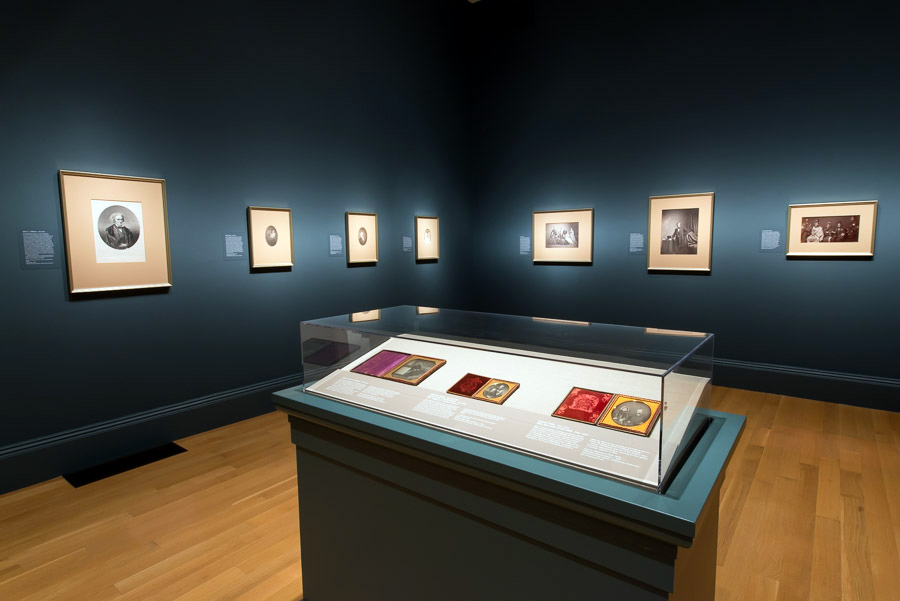


Jean Mohr (Swiss, 1925-2018) 'Bullet-holes in a façade, Cyprus, 1974'


Jean Mohr (Swiss, 1925-2018)
Bullet-holes in a façade, Cyprus, 1974
1974
© Jean Mohr, Musée de l’Elysée


Jean Mohr (Swiss, 1925-2018) 'Palestinian refugees camp, Gaza, 1979'


Jean Mohr (Swiss, 1925-2018)
Palestinian refugees camp, Gaza, 1979
1979
© Jean Mohr, Musée de l’Elysée


Jean Mohr (Swiss, 1925-2018) 'Portrait of a Greek refugee, Larnaca, Cyprus, 1976'


Jean Mohr (Swiss, 1925-2018)
Portrait of a Greek refugee, Larnaca, Cyprus, 1976
1976
© Jean Mohr, Musée de l’Elysée


Jean Mohr (Swiss, 1925-2018) 'Young Mozambican refugee, Nyimba camp, Zambia, 1968'


Jean Mohr (Swiss, 1925-2018)
Young Mozambican refugee, Nyimba camp, Zambia, 1968
1968
© UNHCR / J. Mohr


Jean Mohr (Swiss, 1925-2018) 'Young Mozambican refugee who gave birth at the Lundo clinic, Tanzania, 1968'


Jean Mohr (Swiss, 1925-2018)
Young Mozambican refugee who gave birth at the Lundo clinic, Tanzania, 1968
1968
© HCR/J.Mohr


Jean Mohr (Swiss, 1925-2018) 'School, Kyangwali camp, Uganda, 1968'


Jean Mohr (Swiss, 1925-2018)
School, Kyangwali camp, Uganda, 1968
1968
© Jean Mohr, Musée de l’Elysée


Jean Mohr (Swiss, 1925-2018) 'A camp of 300 tents for 1,400 refugees, Lefkaritis, near Lamaca, Cyprus, 1974'


Jean Mohr (Swiss, 1925-2018)
A camp of 300 tents for 1,400 refugees, Lefkaritis, near Lamaca, Cyprus, 1974
1974
© HCR/J.Mohr


War from the Victims’ Perspective, Photographs by Jean Mohr


Early on, Jean Mohr sought to understand and explain the drama of civilians trapped in belligerent situations. His reportages are the result of decades of experience, which saw a ICRC and UNRWA (United Nations Relief and Works Agency for Palestine Refugees in the Near East) delegate transform himself into a full-time photographer, after a spell at an academy of painting.

More than 80 exhibitions worldwide have been dedicated to his work, including two at the Musée de l’Elysée in Lausanne that holds his collection. In 1978, at Photokina (Frankfurt’s major Photography Fair), Jean Mohr was awarded the prize for the photographer who had most consistently served the cause of human rights. He is one of the best representatives of humanist photography, masterfully balancing sensitivity and rigour, emotion and reflection, art and documentary evidence.

The exhibition addresses the issues of victims of conflicts, refugees and communities suffering from war and still under potential threat. It focuses on the emblematic cases of Palestine, Cyprus, and Africa. Other examples illustrate the universal problems of populations directly or indirectly enduring repercussions of war (in Iran, Pakistan, Nicaragua…).

Palestine, its refugee camps, precarious sanitary conditions, and the Gaza stalemate, whilst being the subject of major media attention, is a case worthy of reconsideration. It needs to be regularly re-explained and repositioned in the context of the Israeli-Arab conflict. The case of Cyprus serves as a reminder that the refugee problem still remains an issue for certain members of the European Union. Several hundreds of thousands of people were forced into exile. Africa too needed to be addressed, as the post-colonial conflicts forced millions into displacement. The fragility of these States, outlined as they are by inherited colonial borders, regularly fuels turmoil which leads to humanitarian crises. The refugee problem is present throughout the continent.

Focussing upon these three geographical regions presents the problem of war victims in an historical setting classified by theme: “Portraits of Exile”, “The Children’s Diaspora”, “Temporary Landscapes”, and “Life Goes On”. These photographs render a face to the casualties and retrace the steps of their displacement, from their settlement in the precariousness of the camps and reception centres to their attempts to adapt to an enduring situation.


Portraits of Exile

Featuring portraits of refugees from different countries and cultures, the first section gives a human face to the impact of conflict.

Temporary Landscapes

The second section deals with the impact that war has on people’s homes. The photos document the displacement process and the precarious settlement of victims in camps, reception centres, mosques and shanty towns.

The Children’s Diaspora

Featuring images that capture the day-to-day lives of war’s youngest victims, this section reveals the gamut of situations faced by child refugees, as well as the many and diverse activities they engage in. Some photos show children attending a medical centre or clinic, while others show them playing, dancing or in class at a temporary school.

Life Goes On

The final section documents how people adapt to temporary situations that stretch out indefinitely. The images illustrate how important the distribution of food and clothing is, as well as documenting efforts to ensure that refugees can continue their schooling and education. This section includes the iconic image of a young Mozambican refugee and her newborn baby in a clinic in Lundo, Tanzania.

Press release from the Musée de l’Elysée


Jean Mohr (Swiss, 1925-2018) 'A few days after the Six-Day War, an Israeli officer considers an ICRC proposal, under the gaze of a Palestinian boy, Kalandia village between Jerusalem and Ramallah, 1967'


Jean Mohr (Swiss, 1925-2018)
A few days after the Six-Day War, an Israeli officer considers an ICRC proposal, under the gaze of a Palestinian boy, Kalandia village between Jerusalem and Ramallah, 1967
1967
© ICRC / Mohr, Jean


Jean Mohr (Swiss, 1925-2018) 'A needs assessment visit to stricken families, Khan Yunis, Gaza, 2002'


Jean Mohr (Swiss, 1925-2018)
A needs assessment visit to stricken families, Khan Yunis, Gaza, 2002
2002
© ICRC/MOHR, Jean


Jean Mohr (Swiss, 1925-2018) 'A needs assessment visit to stricken families, Khan Yunis, Gaza, 2002'


Jean Mohr (Swiss, 1925-2018)
A needs assessment visit to stricken families, Khan Yunis, Gaza, 2002
2002
© ICRC/MOHR, Jean


Jean Mohr (Swiss, 1925-2018) 'A young Mozambican refugee, Muhukuru clinic, Tanzania, 1968'


Jean Mohr (Swiss, 1925-2018)
A young Mozambican refugee, Muhukuru clinic, Tanzania, 1968
1968
© HCR/J.Mohr


Jean Mohr (Swiss, 1925-2018) 'Young Greek refugee, Cyprus, 1976'


Jean Mohr (Swiss, 1925-2018)
Young Greek refugee, Cyprus, 1976
1976
© Jean Mohr, Musée de l’Elysée


Jean Mohr (Swiss, 1925-2018) 'Kurdish refugees waiting for a food distribution, Qatr camp, Mahabad, Iran, 1991'


Jean Mohr (Swiss, 1925-2018)
Kurdish refugees waiting for a food distribution, Qatr camp, Mahabad, Iran, 1991
1991
© ICRC/Mohr, Jean


Jean Mohr (Swiss, 1925-2018) 'The photographed photographer, Jerusalem, 1979'


Jean Mohr (Swiss, 1925-2018)
The photographed photographer, Jerusalem, 1979
1979
© Jean Mohr, Musée de l’Elysée


Jean Mohr (Swiss, 1925-2018) 'Mozambican refugee at Sunday mass, Lundo installation area, Tanzania, 1968 The photographed photographer, Jerusalem, 1979'


Jean Mohr (Swiss, 1925-2018)
Mozambican refugee at Sunday mass, Lundo installation area, Tanzania, 1968
1968
© UNHCR / J. Mohr


Moscow Manege
Manezhnaya ploschad (Manege Square), 1
Moscow 125009

Opening hours:
Tuesday – Sunday 12.00 – 22.00
Closed Monday

Moscow Manege website

LIKE ART BLART ON FACEBOOK

Back to top

Exhibition: ‘Sharp, Clear Pictures: Edward Steichen’s World War 1 and Condé Nast Years’ at The Art Institute of Chicago

Exhibition dates: 24th June – 13th October 2014


Photographic Section, U.S. Air Service, American Expeditionary Forces (AEF) and Major Edward J. Steichen, A.S.A. 'Bomb Dropped From Airplane' 1918


Photographic Section, U.S. Air Service, American Expeditionary Forces (AEF) and Major Edward J. Steichen, A.S.A.
Bomb Dropped From Airplane
1918
Gelatin silver print, from loose-leaf album of aerial photographs from the Photographic Section, Air Service, American Expeditionary Forces, World War I
The Art Institute of Chicago, gift of William Kistler
© 2014 The Estate of Edward Steichen/Artists Rights Society (ARS), New York.


Brave man, hanging over the side of a rickety biplane at 15,000 feet taking aerial photographs during World War One but just look at the images he brought back, especially the hellish Untitled (Vaux) (1918-1919, below). I’m still not that convinced by his portraiture. The technical proficiency is magnificent (lighting, set, costume) but they are just too styled for me – the cat in the top left corner of Noel Coward (1932, below), the bowler hat of Charles Chaplin (1931, below) and the double shadow of Fred Astaire in Funny Face (1927, below) coupled with bands of light/dark and tons of “atmosphere” (certainly not sharp and clear!) which echo the mannerisms of Pictorialism. I see little modernist aesthetics and advertising tactics in these photographs. They are beautiful but they leave me unengaged. I much prefer the advertising photography in the next posting, much more angular and modern. You will have to wait and see what it is!

Dr Marcus Bunyan


Many thankx to The Art Institute of Chicago for allowing me to publish the photographs in the posting. Please click on the photographs for a larger version of the image.
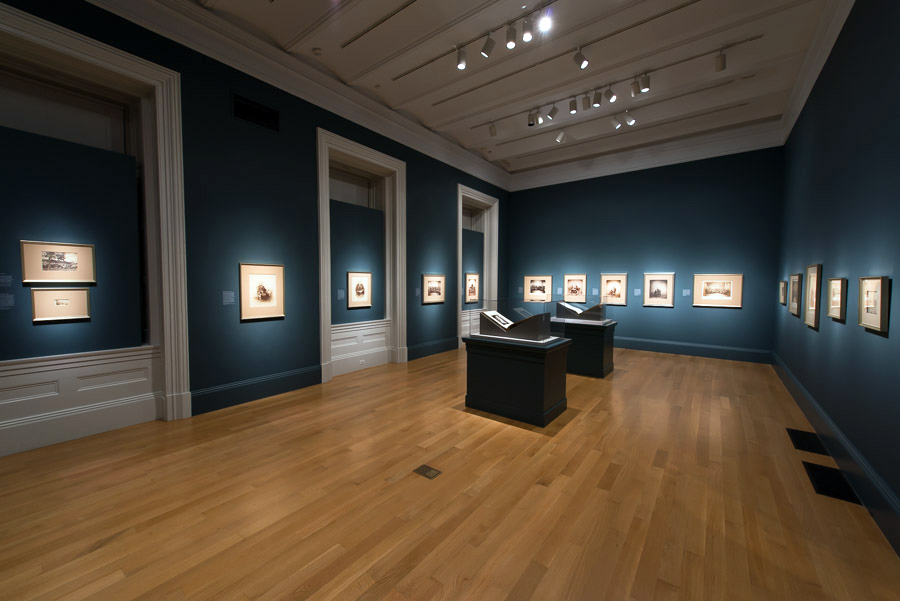


Photographic Section, U.S. Air Service, American Expeditionary Forces (AEF) and Major Edward J. Steichen, A.S.A. 'In Chateau Thierry Sector showing service bridges destroyed by retreating enemy forces' September 7, 1918


Photographic Section, U.S. Air Service, American Expeditionary Forces (AEF) and Major Edward J. Steichen, A.S.A.
In Chateau Thierry Sector showing service bridges destroyed by retreating enemy forces
September 7, 1918
Gelatin silver print, from loose-leaf album of aerial photographs from the Photographic Section, Air Service, American Expeditionary Forces, World War I
The Art Institute of Chicago, gift of William Kistler
© 2014 The Estate of Edward Steichen/Artists Rights Society (ARS), New York


Photographic Section, U.S. Air Service, American Expeditionary Forces (AEF) and Major Edward J. Steichen, A.S.A. 'In Chateau Thierry Sector showing service bridges destroyed by retreating enemy forces' (detail) September 7, 1918 (detail)


Photographic Section, U.S. Air Service, American Expeditionary Forces (AEF) and Major Edward J. Steichen, A.S.A.
In Chateau Thierry Sector showing service bridges destroyed by retreating enemy forces (detail)
September 7, 1918
Gelatin silver print, from loose-leaf album of aerial photographs from the Photographic Section, Air Service, American Expeditionary Forces, World War I
The Art Institute of Chicago, gift of William Kistler
© 2014 The Estate of Edward Steichen/Artists Rights Society (ARS), New York


Photographic Section, U.S. Air Service, American Expeditionary Forces (AEF) and Major Edward J. Steichen, A.S.A. 'Concrete landing platform for airplanes at Puxieux (each strip about 50 ft. wide by 250 ft long), crescent shape mass was formed by the pile of broken concrete when the platform was removed, altitude 15,000 ft.,' August 23, 1918


Photographic Section, U.S. Air Service, American Expeditionary Forces (AEF) and Major Edward J. Steichen, A.S.A.
Concrete landing platform for airplanes at Puxieux (each strip about 50 ft. wide by 250 ft long), crescent shape mass was formed by the pile of broken concrete when the platform was removed, altitude 15,000 ft.,
August 23, 1918
Gelatin silver print, from loose-leaf album of aerial photographs from the Photographic Section, Air Service, American Expeditionary Forces, World War I
The Art Institute of Chicago, gift of William Kistler
© 2014 The Estate of Edward Steichen/Artists Rights Society (ARS), New York


Photographic Section, U.S. Air Service, American Expeditionary Forces (AEF) and Major Edward J. Steichen, A.S.A. 'Concrete landing platform for airplanes at Puxieux (each strip about 50 ft. wide by 250 ft long), crescent shape mass was formed by the pile of broken concrete when the platform was removed, altitude 15,000 ft.,' (detail) August 23, 1918 (detail)


Photographic Section, U.S. Air Service, American Expeditionary Forces (AEF) and Major Edward J. Steichen, A.S.A.
Concrete landing platform for airplanes at Puxieux (each strip about 50 ft. wide by 250 ft long), crescent shape mass was formed by the pile of broken concrete when the platform was removed, altitude 15,000 ft., (detail)
August 23, 1918
Gelatin silver print, from loose-leaf album of aerial photographs from the Photographic Section, Air Service, American Expeditionary Forces, World War I
The Art Institute of Chicago, gift of William Kistler
© 2014 The Estate of Edward Steichen/Artists Rights Society (ARS), New York


Photographic Section, U.S. Air Service, American Expeditionary Forces (AEF) and Major Edward J. Steichen, A.S.A. 'Untitled (Vaux)' 1918/1919


Photographic Section, U.S. Air Service, American Expeditionary Forces (AEF) and Major Edward J. Steichen, A.S.A.
Untitled (Vaux)
1918-1919
Gelatin silver print, from loose-leaf album of aerial photographs from the Photographic Section, Air Service, American Expeditionary Forces, World War I
The Art Institute of Chicago, gift of William Kistler
© 2014 The Estate of Edward Steichen/Artists Rights Society (ARS), New York


At the start of World War I in 1914, Edward Steichen was a pioneering champion of art photography – catapulting to fame as a leading member of the Photo Secessionists and as cofounder of the trailblazing magazine Camera Work. Yet by the early 1920s, Steichen had rejected the soft focus, dreamy landscapes and portraits of his early years in favour of realist photographs made for informational purposes or popular consumption. This turning point was first marked by his role in World War I as chief of the Photographic Section of the American Expeditionary Forces from 1917 to 1919; and was fully realised in his subsequent work as lead photographer at Condé Nast publications from 1923 to 1937.

While on military duty, Steichen helped adapt aerial photography for intelligence purposes, implementing surveillance programs that had a lasting impact on modern warfare. He later reflected: “The wartime problem of making sharp, clear pictures from a vibrating, speeding airplane ten to twenty thousand feet in the air had brought me a new kind of technical interest in photography… Now I wanted to know all that could be expected from photography.” Steichen began to value photography’s capacity to transmit and encode information, and he soon proved his savvy as a collaborator and producer rather than a solitary auteur – new skills that enabled his subsequent groundbreaking career in magazines. Upon his return to New York in 1923, Steichen joined Condé Nast publications, creating iconic fashion photographs and celebrity portraits for Vogue and Vanity Fair. Over a period of nearly 15 years he created images that redefined the field through their clever use of modernist aesthetics and advertising tactics, becoming an influential impresario who promoted photography as a mass-media tool.

Focusing on rarely seen Steichen photographs drawn from the Art Institute’s collection, this exhibition includes a unique album of over 80 World War I aerial photographs assembled and annotated by Steichen himself as well as a group of iconic glamour portraits and fashion photographs done for Condé Nast, featuring notable figures such as Greta Garbo, Fred Astaire, and Gloria Swanson.

Text from The Art Institute of Chicago website


Edward Steichen (American, 1879-1973) 'Mary Duncan in "Lilly,"' 1931


Edward Steichen (American, 1879-1973)
Mary Duncan in “Lilly”
1931
The Art Institute of Chicago, bequest of Edward Steichen by direction of Joanna T. Steichen and George Eastman House
© 2014 The Estate of Edward Steichen/Artists Rights Society (ARS), New York


Throughout his extensive career, famed photographer Edward Steichen (1879-1973) championed photography’s multiple roles – from his earliest efforts to promote American photography as an equal among the modern fine arts, to his groundbreaking work for the magazine industry. A new exhibition at the Art Institute of Chicago, Sharp, Clear Pictures: Edward Steichen’s World War I and Condé Nast Years, on view from June 28 – September 28, 2014, in Galleries 1-4, examines a crucial period in Steichen’s career, when he rejected the painterly Pictorialist aesthetic of his early years in favor of a straight, information-based approach. This turning point was first signalled by Steichen’s role in World War I, as chief of the Photographic Section of the American Expeditionary Forces from 1917 to 1919, and was fully realised in his work as lead photographer at Condé Nast Publications from 1923 to 1937.

Focusing on rarely seen Steichen photographs drawn from the Art Institute’s collection, this exhibition includes a unique album of over 80 World War I aerial photographs assembled and annotated by Steichen himself as well as a group of iconic glamour portraits and fashion photographs done for Condé Nast, featuring such early Hollywood royalty as Mary Pickford, Greta Garbo, Fred Astaire, Charlie Chaplin and Gloria Swanson, as well as key historical figures like Winston Churchill.

Prior to WWI, Edward Steichen was a pioneering champion of art photography – he had a leading reputation in the Photo Secession movement in New York, and, along with his mentor Alfred  Stieglitz, had cofounded its trail-blazing fine-art journal Camera Work. Together, they opened the Little Galleries of the Photo-Secession, later 291, which first presented Picasso, Bråncusi, and a range of progressive photographers to the American public. In 1906, seeking a change, Steichen moved to Voulangis, France, with his family, where he immersed himself in European modern art. They remained there until the outbreak of the war in 1914, when, under the threat of advancing German troops, they fled home to the United States.

In July 1917, Steichen entered active duty with the goal of becoming “a photographic reporter, as Mathew Brady had been in the Civil War,” but he quickly abandoned this romantic notion to help implement the newest weapon of war – aerial photography. While on military duty, Steichen helped adapt aerial photography for intelligence purposes, implementing surveillance programs that had a lasting impact on modern warfare. He later reflected: “The wartime problem of making sharp, clear pictures from a vibrating, speeding airplane ten to twenty thousand feet in the air had brought me a new kind of technical interest in photography… Now I wanted to know all that could be expected from photography.” Steichen began to value photography’s capacity to transmit and encode information, and he soon proved his savvy as a collaborator and producer rather than a solitary auteur – new skills that enabled his subsequent groundbreaking career in magazines.

Following his military discharge in 1919, Steichen returned to Voulangis, where for a period of three years he created work that embraced clear focus, close cropping, and other techniques of modernist photography. Upon his return to New York in 1923, Steichen joined Condé Nast Publications, creating iconic fashion photographs and celebrity portraits for Vogue and Vanity Fair. In undertaking this challenging endeavour, the organisational and technical skills Steichen gained during his time in the military and in Voulangis proved invaluable.

Steichen championed the cultural and economic potential of celebrity, fashion, and advertising photography, creating images that became the foundation for contemporary magazine photography. Over a period of nearly 15 years he created images that redefined the field through their clever use of modernist aesthetics and advertising tactics, becoming an influential impresario who promoted photography as a mass-media tool.

Press release from The Art Institute of Chicago website


Edward Steichen (American, 1879-1973) 'Self-Portrait with Brush and Palette' 1902


Edward Steichen (American, 1879-1973)
Self-Portrait with Brush and Palette
1902
The Art Institute of Chicago, Alfred Stieglitz Collection
© 2014 The Estate of Edward Steichen/Artists Rights Society (ARS), New York


Edward Steichen (American, 1879-1973) 'Mary Pickford' 1924


Edward Steichen (American, 1879-1973)
Mary Pickford
1924
The Art Institute of Chicago, Bequest of Edward Steichen by direction of Joanna T. Steichen and George Eastman House
© 2014 The Estate of Edward Steichen/Artists Rights Society (ARS), New York


Edward Steichen (American, 1879-1973) 'Fred Astaire in Funny Face' 1927


Edward Steichen (American, 1879-1973)
Fred Astaire in Funny Face
1927
The Art Institute of Chicago, Bequest of Edward Steichen by direction of Joanna T. Steichen and George Eastman House
© 2014 The Estate of Edward Steichen/Artists Rights Society (ARS), New York


Edward Steichen (American, 1879-1973) 'Noel Coward' 1932


Edward Steichen (American, 1879-1973)
Noel Coward
1932
The Art Institute of Chicago, bequest of Edward Steichen by direction of Joanna T. Steichen and George Eastman House
© 2014 The Estate of Edward Steichen/Artists Rights Society (ARS), New York


Edward Steichen (American, 1879-1973) 'Charles Chaplin' 1931


Edward Steichen (American, 1879-1973)
Charles Chaplin
1931
The Art Institute of Chicago, Bequest of Edward Steichen by direction of Joanna T. Steichen and George Eastman House
© 2014 The Estate of Edward Steichen/Artists Rights Society (ARS), New York


Edward Steichen (American, 1879-1973) 'Lily Pons' 1932


Edward Steichen (American, 1879-1973)
Lily Pons
1932
The Art Institute of Chicago, bequest of Edward Steichen by direction of Joanna T. Steichen and George Eastman House
© 2014 The Estate of Edward Steichen/Artists Rights Society (ARS), New York


Edward Steichen (American, 1879-1973) 'Winston Churchill' 1932


Edward Steichen (American, 1879-1973)
Winston Churchill
1932
The Art Institute of Chicago, Bequest of Edward Steichen by direction of Joanna T. Steichen and George Eastman House
© 2014 The Estate of Edward Steichen/Artists Rights Society (ARS), New York


Edward Steichen (American, 1879-1973) 'Greta Garbo and John Gilbert' 1928


Edward Steichen (American, 1879-1973)
Greta Garbo and John Gilbert
1928
The Art Institute of Chicago, bequest of Edward Steichen by direction of Joanna T. Steichen and George Eastman House
© 2014 The Estate of Edward Steichen/Artists Rights Society (ARS), New York


The Art Institute of Chicago
111 South Michigan Avenue
Chicago, Illinois 60603-6404
Phone: (312) 443-3600

Opening hours:
Thursday – Monday 11am – 5pm
Closed Tuesday and Wednesday

The Art Institute of Chicago website

LIKE ART BLART ON FACEBOOK

Back to top

Exhibition: ‘Christina Broom’ at the Museum of London

Exhibition dates: 4th April – 28th September 2014


Christina Bloom (British, 1862-1939) 'The 1st Life Guards prepare to leave Hyde Park Barracks and head to war, on 15 August 1914'


Christina Bloom (British, 1862-1939)
The 1st Life Guards prepare to leave Hyde Park Barracks and head to war, on 15 August 1914. They were destined for the devastating Battle of Mons
1914
Christina Broom/Museum of London


Look at the portrait of Christina Bloom at the bottom of the posting. Now there is a formidable human being. The look in the eyes shows determination and toughness, toughness to survive and succeed in a male dominated world.

Broom taught herself photography at the age of 40 – “to create and sell photographic postcards – a trade which was thriving. At work between 1903 and 1939, she gained exclusive access to leading London events from suffragette processions to King George V’s coronation and became photographer to the Household Brigade, forging a unique relationship with the Guards” – and became the UK’s first female press photographer. She must have had something special … and then you look at her photographs and you realise what: spontaneity, structure, spirit and the rest. Her tableaux vivant in this posting are almost sculptural in their construction, the photographer ordering the elements, posing the people but then evincing from them a warmth and intimacy in their engagement with the camera that is quite remarkable.

In terms of structure you need look no further than The 1st Life Guards prepare to leave Hyde Park Barracks (1914, top photo below) or Captain Greer of the 1st Irish Guards and his machine gun team (Nd, below) to see how Broom arranges her subject matter. In the 1st Life Guards photograph the man standing at left, the man seated on the horse and the man second right stare directly at the camera forming strong triangular sight lines. This triangle is then crossed by the man third from left who gazes out of the picture perpendicular to the camera’s gaze. His gaze is then “crossed” by the soldier standing at right staring away into the distance at 45 degree angle away from the camera. This image is a masterclass in sight lines and positioning, complemented by the intimacy of the gaze of the soldier second from the right staring directly into the camera (see detail), and the women positioned on the staircase in the background. Magic is happening here.

Again, in the second image of the machine gun team the photograph is eloquently and formally constructed – the symmetry of the twin doors and white squares behind echoed by the horseshoe arrangement of the men with the machine guns pointing in opposite directions. The stoic words ‘MACHINE GUN SHED. EAST’ are emblazoned above the men as though to press home their purpose, but upon detailed inspection the character of the men shines through – the stiff upper lip, the wicked sense of humour and the cheeky chappy can all be seen in this otherwise formally posed photograph. Added poignancy comes with the knowledge that every single person in the photograph was killed soon afterwards on the battlefields of the Western Front. Evidence of the stress of the war can be seen in the photograph King George V and Queen Mary host a tea party for wounded soldiers and sailors (1916, below). Gone are the jovial bonhomie smiles and comradeship, to be replaced by bandages and bouquets, and gaunt-looking, wary, young, scared looking soldiers staring out at the camera. Terrific photographs from a skilled and intuitive artist.

Dr Marcus Bunyan


Many thankx to the Museum of London for allowing me to publish the photographs in the posting. Please click on the photographs for a larger version of the image.
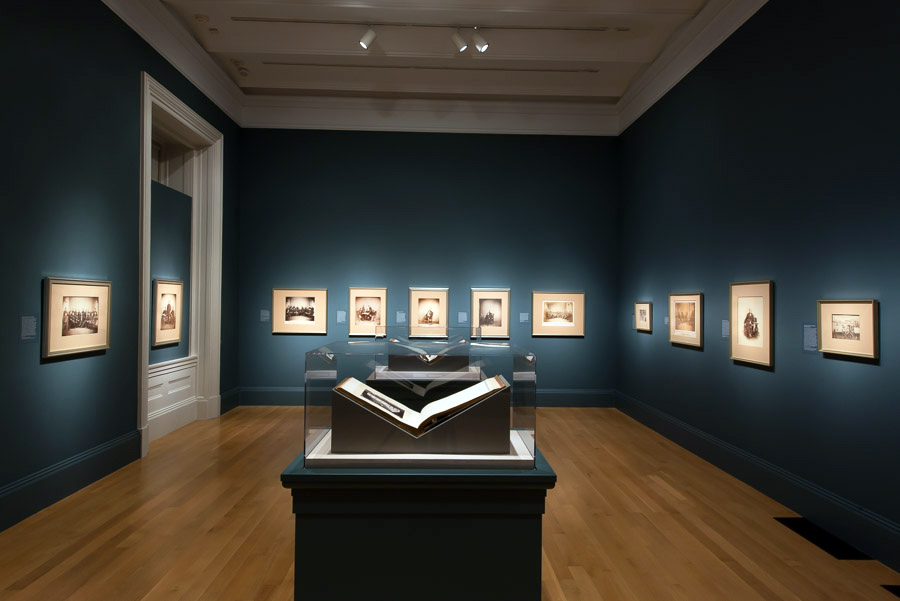


Christina Bloom (British, 1862-1939) 'The 1st Life Guards prepare to leave Hyde Park Barracks and head to war, on 15 August 1914' (detail)


Christina Bloom (British, 1862-1939)
The 1st Life Guards prepare to leave Hyde Park Barracks and head to war, on 15 August 1914 (detail)
1914
Christina Broom/Museum of London


Christina Bloom (British, 1862-1939) 'The 3rd Battalion Grenadier Guards prepare for war at the Wimbledon Common training camp in 1914'


Christina Bloom (British, 1862-1939)
The 3rd Battalion Grenadier Guards prepare for war at the Wimbledon Common training camp in 1914. Lieutenant HRH the Prince of Wales can be seen inspecting the field kitchen, having marched there from Wellington Barracks
1914
Christina Broom/Museum of London


Christina Bloom (British, 1862-1939) 'The 3rd Battalion Grenadier Guards prepare for war at the Wimbledon Common training camp in 1914' (detail)


Christina Bloom (British, 1862-1939)
The 3rd Battalion Grenadier Guards prepare for war at the Wimbledon Common training camp in 1914 (detail)
1914
Christina Broom/Museum of London


Christina Bloom (British, 1862-1939) 'Wounded patients from King Edward VII’s Hospital for Officers visit the Royal Mews in 1915'


Christina Bloom (British, 1862-1939)
Wounded patients from King Edward VII’s Hospital for Officers visit the Royal Mews in 1915. Originally set up after the Boer War by two sisters, the hospital treated injured officers during the First World War at its premises in Grosvenor Gardens
1915
Christina Broom/Museum of London


Christina Bloom (British, 1862-1939) 'The 'Bermondsey B'hoys' from the 2nd Grenadier Guards' c. 1914-1915


Christina Bloom (British, 1862-1939)
The ‘Bermondsey B’hoys’ from the 2nd Grenadier Guards appear at ease for this informal photograph taken inside their base at Wellington Barracks sometime during 1914 or 1915
c. 1914-1915
Christina Broom/Museum of London


Christina Bloom (British, 1862-1939) 'The 'Bermondsey B'hoys' from the 2nd Grenadier Guards' c. 1914-1915 (detail)


Christina Bloom (British, 1862-1939)
The ‘Bermondsey B’hoys’ from the 2nd Grenadier Guards appear at ease for this informal photograph taken inside their base at Wellington Barracks sometime during 1914 or 1915 (detail)
c. 1914-1915
Christina Broom/Museum of London


Today, the Museum of London announces a major new acquisition – the remaining photography collections of Christina Broom – the UK’s first female press photographer. The collection includes wartime photo of Rudyard Kipling’s son, Jack, who tragically died in the Battle of Loos, 1915.

Aged 40, Broom taught herself photography to create and sell photographic postcards – a trade which was thriving. At work between 1903 and 1939, she gained exclusive access to leading London events from suffragette processions to King George V’s coronation and became photographer to the Household Brigade, forging a unique relationship with the Guards.

Museum of London’s Curator of Photographs, Anna Sparham, said: “At over 2,500 photographs strong, this acquisition sees the museum add to its already significant collection of suffragette images by Christina Broom, with scenes documenting key moments of early 20th century London life. It also brings to light Broom’s diverse photographic oeuvre, traversing subjects such as royal celebration and occasion, the Oxford and Cambridge Boat Races, women’s work and predominantly London’s military activities before, during and in the aftermath of war. Whilst Broom’s images exude strength and relevance on their own, for me, it is the photographer’s own fascinating story of determination and entrepreneurialism that makes them truly come alive.”

The collection also includes a snapshot of Jungle Book writer, Rudyard Kipling’s son Jack, taken by Broom in 1915. Jack tragically died in the Battle of Loos later that year.

From Friday 4 April, highlights from this remarkable collection will be on show as part of a new, free display – Christina Broom. In this centenary year of the outbreak of the First World War, the display focuses on Broom’s portrayal of London’s military life. On show is a small, yet poignant selection of stills depicting soldiers in London mobilising for war and leaving for the Western Front. A major exhibition focused on Broom’s life and photography will follow in the near future.”

Press release from the Museum of London


Christina Bloom (British, 1862-1939) 'Captain Greer of the 1st Irish Guards and his machine gun team' Nd


Christina Bloom (British, 1862-1939)
Captain Greer of the 1st Irish Guards and his machine gun team group together for this rather formal photograph, just prior to leaving for the war. They were all killed in battle soon afterwards
Nd
Christina Broom/Museum of London


Eric Beresford Greer was the son of Sir Joseph Henry Greer and Olivia Mary Beresford of Grange, Moy. He was born in April 1892 at the Curragh, Co. Kildare. He was raised by his Grandmother Agnes Isabella Greer in Moy, County Tyrone. He was educated at Eton College from 1906-1910 and joined the Irish Guards in 1911. Eric B Greer married Pamela Fitzgerald around 13 Feb 1917. Lieutenant Colonel Eric Beresford Greer was commanding the 2nd Battalion of the Irish Guards when he was killed in action on 31 July 1917. Lieutenant Colonel Eric Beresford Greer was awarded the Military Cross.

His death near the village of Boezinghe on 31st July 1917 is recorded in Rudyard Kipling’s ‘The Irish Guards in the Great War’.

He had been in every battle in which the Guards were engaged since the opening of the war, including the fighting at Cuinchy, when Michael O’Leary performed the valorous deeds which won him, on the recommendation of Colonel Greer, the Victoria Cross. Enthusiastic in everything he took up, he interested himself much in athletics, and was the quarter mile champion of the army, and winner of the Irish Guards Cup each year from the time that he joined the regiment. While at Eton he also distinguished himself at the different sporting fixtures. He was awarded the Military Cross for conspicuous gallantry and devotion to duty in the field and was also mentioned in dispatches. His younger brother, Lieutenant Francis St Leger Greer, M.C., fell in action in February last, having previously been decorated for conspicuous gallant in action. The late Colonel Greer was married a few months ago to the younger daughter of the Honourable Eustace and Mrs Fitzgerald of 2 Manson Place, Queens Gate, London S.W.


Christina Bloom (British, 1862-1939) 'Captain Greer of the 1st Irish Guards and his machine gun team group together for this rather formal photograph, just prior to leaving for the war' Nd (detail)


Christina Bloom (British, 1862-1939)
Captain Greer of the 1st Irish Guards and his machine gun team group together for this rather formal photograph, just prior to leaving for the war (detail)
Nd
Christina Broom/Museum of London


Christina Bloom (British, 1862-1939) 'Soldiers from the Household Battalion leaving for the Front' 1916


Christina Bloom (British, 1862-1939)
Soldiers from the Household Battalion leaving for the Front bid farewell to their families from a platform at Waterloo Station in 1916. Broom made several similar photographs. For many relatives, they served as final mementos
1916
Christina Broom/Museum of London


Christina Bloom (British, 1862-1939) 'King George V and Queen Mary host a tea party for wounded soldiers and sailors' 1916


Christina Bloom (British, 1862-1939)
King George V and Queen Mary host a tea party for wounded soldiers and sailors at the Royal Mews in March 1916. The wounded, including many from British colonies, were brought to Buckingham Palace from nine London hospitals
1916
Christina Broom/Museum of London


Christina Broom. 'Jack Kipling'

Christina Broom. 'Jack Kipling'


Jack Kipling suffered from incredibly poor eye-sight, and had to wear very thick glasses to be able to see anything at all. When the First World War broke out in August 1914, Jack (then only aged 17) was desperate to join up. When he tried to volunteer, he was turned down because of his poor vision. He turned to his father for help. Rudyard Kipling pulled strings amongst his military friends and Jack was enlisted as a trainee officer, still under age. (Officers were supposed to be at least 18 years old, in order legally to join up). Tragically, Jack was killed in the Battle of Loos in 1915 at the age of 18. Kipling felt the loss of his son keenly, harbouring a tremendous amount of guilt for the part he played in Jack’s journey to the Western Front.

On the back of the photographic postcard, the words “Rudyard Kipling’s son – centre with glasses” are written in pencil.

Christina Broom/Museum of London


Christina Bloom (British, 1862-1939) 'A lieutenant from the 1st Life Guards poses for the camera in August 1914'


Christina Bloom (British, 1862-1939)
A lieutenant from the 1st Life Guards poses for the camera in August 1914. He was later recorded as missing presumed killed during the War. Christina Broom’s stall can be seen in the distance just beneath the clock
1914
Christina Broom/Museum of London


Christina Bloom (British, 1862-1939) 'A trio of soldiers' Nd


Christina Bloom (British, 1862-1939)
A trio of soldiers, including an Irish Guard on the left and a Scots Guard on the right, stand together with their hopeful message
Nd
Christina Broom/Museum of London


Anonymous photographer. 'Portrait of photographer, Christina Broom' Nd


Anonymous photographer
Portrait of photographer, Christina Broom
Nd
Christina Broom/Museum of London


Museum of London
150 London Wall
London EC2Y 5HN

Opening hours:
Daily 10am – 5pm

Museum of London website

LIKE ART BLART ON FACEBOOK

Back to top

Exhibition: ‘Portraits of War: The Crown Studios Project’ at the State Library of New South Wales, Sydney

Exhibition dates: 28th June – 21st September 2014


Crown Street Studios 'Reginald Gardiner' c. 1918


Crown Street Studios
Reginald Gardiner
c. 1918
Date of Birth: 20.9.1898
Date of Enlistment: 17.5.1918
Trade or Calling: Book keeper
Born in or near what Town: Orange


Reginald Gardiner was born on the 21st of September 1898, and was recognised as a trade book keeper. Besides that, not much is known about him.


They were so young

for Australians

to die

under the Rising Sun


Marcus


Many thankx to the State Library of New South Wales for allowing me to publish the photographs in the posting. Please click on the photographs for a larger version of the image.


Crown Street Studios. 'Eric Hughes' c. 1918


Crown Street Studios
Eric Hughes
c. 1918
Date of Birth: 4.5.1900
Date of Enlistment: 5.8.1918
Trade or Calling: Labourer
Born in or near what Town: Newtown


Crown Street Studios. 'Alfred Duroux' c. 1918


Crown Street Studios
Alfred Duroux
c. 1918
Date of Birth: 11.8.1892
Date of Enlistment: 12.6.1918
Born in or near what Town: Cangai via Copmanhurst


Crown Street Studios. 'Jack Hodgson' Nd


Crown Street Studios
Jack Hodgson
Nd


Jack Hodgson was left blind after he was wounded in Gallipoli around 1915. He served in the 4th Battalion and is pictured here showing his service medals to his son.


Crown Street Studios. 'William Joseph Langworthy' c. 1918


Crown Street Studios
William Joseph Langworthy
c. 1918
Date of Birth: unknown
Date of Enlistment: 19.2.1918
Trade or Calling: Driver
Born in or near what Town: Canley Vale
Address prior to Enlistment: Prospect Rd Canley Vale


William Joseph Langworthy from Canley Vale returned to Australia on July 7, 1919. He served as a private in the 34th Battalion after enlisting on February 19, 1918.


For the first time in nearly a century an extraordinary and haunting collection of over 230 photographic portraits of WWI soldiers from NSW will go on show in a free exhibition at the State Library of NSW, from 28 June 2014. Produced as part of the Library’s WWI centenary program, Portraits of War: The Crown Studios Project reveals the fascinating story behind the creation of the portraits and delivers a moving experience that bears witness to the individual faces of Aussie soldiers who served their country and faced a hostile and deadly conflict far from home.

The pocket-sized images on show are drawn from the Library’s collection of some 1,600 portraits taken in 1918 – prior to the soldiers heading overseas – by Sydney’s largest photographic studio at the time, the Crown Street Studios, as part of an ambitious WWI collecting project. According to NSW State Librarian & Chief Executive, Alex Byrne: “When the project began it encountered a storm of newspaper criticism and monopoly accusations by Sydney photographers however, thanks to the tenacity and support of the Principal Librarian at the time, William Ifould, the project continued and he secured the portraits for future generations.”

The project was initiated through a generous proposal made by Sydney’s Crown Studio’s proprietor Mark Blow in 1918. Blow’s idea was to compile a portrait collection of all WWI soldiers from NSW by photographing the men in his studio or by asking relatives of soldiers to forward existing images for copying. The entire collection would be donated ‘free of charge’ to the Mitchell Library [now part of the State Library]. Ifould addressed the monopoly concerns by inviting all photographers to supply photo-portraits as long as they met the required size and quality conditions. Unfortunately, the project was never completed.

A damaging fire at the Studio in December 1918 hindered the collection process and while copies of the portraits were protected in a fireproof safe, the Studio did not re-open again until 1 July 1919. Exhibition curator Louise Tegart says “the information on the back of each print is just as compelling as the portraits themselves with personal details handwritten, including whether soldiers made it home or not.”

“The exhibition features a portrait of Sgt Gates, a Sydney-based plumber before enlisting in 1917 and who was killed in action in 1918, aged 24. His only brother, Private Frank Gates, was killed in action just the day before,” says MsTegart. “The portraits capture the faces of men of all ages set against different backgrounds and sadly, it could be the only photograph families had of their sons, brothers or uncles.”

Press release from The State Library of New South Wales


“They’re very intimate photographs,” says the exhibition’s curator, Louise Tegart. “What really strikes me is the diversity of the soldiers… You get a wide variety of ages, backgrounds, and religions.” The photos were taken by Mark Blow at Sydney’s Crown Street Studios from June 1918, after he approached the NSW Premier wanting to document the soldiers from across the state that were going off to war. His only condition in doing this was that the photos were kept at the Mitchell Library (now the NSW State Library).

“Photography had been around for probably 70 or 80 years at that stage, but not a lot of people could afford their own cameras,’ says Louise. “Going in and having your photo taken in a studio context was still a very special and quite expensive experience. “Another part of the project was if people couldn’t come in to the studio to have their photo taken, or if they’d been part of the war prior to 1918, family members sent in their photographs and had them copied.”

In December 1918, a fire ravaged the studios, bringing an end to the project. “It’s really only a small sample of what could’ve been a much larger project.”

Robert Virtue. “Release of war hero’s portrait triggers hunt for information,” on the ABC Central West NSW website, 25th June 2014 [Online] Cited 16/06/2021


Crown Street Studios. 'Claude James Hunt' c. 1918


Crown Street Studios
Claude James Hunt
c. 1918
Date of Birth: 8.3.1899
Date of Enlistment: 3.7.1918
Trade or Calling: Grazier
Born in or near what Town: Inverell
Address prior to Enlistment: “Como” Frazer St West Narrabri


Crown Street Studios. 'Roy Henderson Robertson' c. 1914-15


Crown Street Studios
Roy Henderson Robertson
c. 1914-15
Date of Birth: c. Feb 1899 at Scarborough NSW
School: Clifton NSW
Other military training: Compulsory cadets
Date of Enlistment: 14.6.1915 at Scarborough NSW
Trade or Calling: Grocer’s assistant
Born in or near what Town: Scarborough NSW
Address prior to Enlistment: Scarborough NSW


He was just a fresh-faced 16-year-old when he was killed fighting with Australian troops in Gallipoli on November 7, 1915. Roy Henderson Robertson, from Scarborough in NSW, enlisted with the Australian Imperial Force’s 20th Infantry Battalion just four months before he was killed. A portrait of the grocer’s assistant, who rests at Gallipoli’s Walker’s Ridge Cemetery, has been in a collection owned by the State Library of NSW for almost a century.


Crown Street Studios. 'Louis Robert Bromham' c. 1918


Crown Street Studios
Louis Robert Bromham
c. 1918
Date of Birth: 9.8.1899
Date of Enlistment: 2.2.1918
Trade or Calling: Schoolteacher
Born in or near what Town: Coolamon
Address prior to Enlistment: Tooyal Nth, Coolamon


Crown Street Studios. 'Roy Wilfred Williams' c. 1918


Crown Street Studios
Roy Wilfred Williams
c. 1918
Date of Birth: 18.3.1900
Date of Enlistment: 24.4.1918
Trade or Calling: Carter
Born in or near what Town: Lithgow
Address prior to Enlistment: Pottery Estate Lithgow


State Library of New South Wales
Macquarie Street, Sydney
NSW 2000 Australia
Phone: +61 2 9273 1414

Opening hours:
Monday – Friday 9am – 5pm
Saturday – Sunday 10am – 5pm

State Library of New South Wales website

LIKE ART BLART ON FACEBOOK

Back to top

Exhibition: ‘Kati Horna’ at Jeu de Paume, Paris

Exhibition dates: 3rd June – 21st September 2014


Kati Horna (Mexican born Hungary, 1912-2000) 'Untitled' Paris, 1939


Kati Horna (Mexican born Hungary, 1912-2000)
Untitled
Paris, 1939
From the Muñecas del miedo series [Dolls of Fear],
Gelatin silver print
15.3 x 22.8cm
Archivo Privado de Fotografía y Gráfica Kati y José Horna
© 2005 Ana María Norah Horna y Fernández


I really love the work of artists such as Kati Horna and Florence Henri “with the production of collages and photomontages inspired by the avant-garde movements of the 1930s (the Bauhaus, Surrealism, German Neue Sachlichkeit, Russian Constructivism).”

Horna’s photographs have more of a political edge than that of Florence Henri, with her unique photographic reportage of the Spanish Civil War between 1937-39 and her Hitler series both having a strong social critique. Here is another politically aware artist who stood up for the cause, who recorded the “everyday life for the civilian population through a vision that was in empathy with the environment and the people.” Again, here is another who was lucky to survive the maelstrom of the Second World War, who would have certainly ended up dead if she and her Andalusian artist husband José Horna had not fled Paris in 1939 for their adopted country Mexico.

Dr Marcus Bunyan

PS I spent hours cleaning up the press images, there were in a really poor state, but the work was so worthwhile… they really sing now!


Many thankx to the Jeu de Paume for allowing me to publish the photographs in the posting. Please click on the photographs for a larger version of the image.
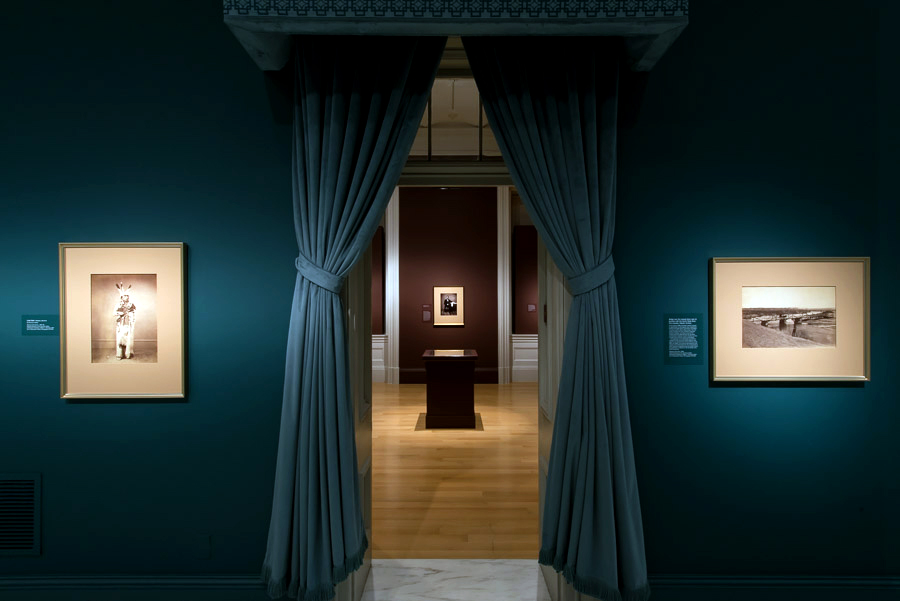


This summer, the Jeu de Paume, which is celebrating 10 years devoted to the image, will be inviting the public to discover Kati Horna (1912-2000), an avant-garde, humanist photographer, who was born in Hungary and exiled in Mexico, where she documented the local art scene.


Robert Capa (Hungarian-American, 1913-1954) (attributed to) 'Kati Horna in the Studio of József Pécsi' Budapest, 1933


Robert Capa (Hungarian-American, 1913-1954) (attributed to)
Kati Horna in the Studio of József Pécsi
Budapest, 1933
Gelatin silver print
10.5 x 7.5cm
Archivo Privado de Fotografía y Gráfica Kati y José Horna
© 2005 Ana María Norah Horna y Fernández


In collaboration with the Museo Amparo in Puebla (Mexico), the Jeu de Paume is presenting the first retrospective of the work of photographer Kati Horna (Szilasbalhási, Hungary, 1912-Mexico, 2000), showing more than six decades of work in Hungary, France, Spain and Mexico. Kati Horna, a photographer whose adopted homeland was Mexico, was one of a generation of Hungarian photographers (including André Kertész, Robert Capa, Eva Besnyö, László Moholy-Nagy, Nicolás Muller, Brassaï, Rogi André, Ergy Landau and Martin Munkácsi) forced to flee their country due to the conflicts and social upheaval of the 1930s.

Cosmopolitan and avant-garde, Kati Horna was known above all for her images of the Spanish Civil War, produced at the request of the Spanish Republican government between 1937 and 1939. Her work is characterised by both its adherence to the principles of Surrealist photography and her very personal approach to photographic reportage.

This major retrospective helps to bring international recognition to this versatile, socially committed, humanist photographer, highlighting her unusual artistic creativity and her contribution to photojournalism. It offers a comprehensive overview of the work of this artist, who started out as a photographer in Hungary at the age of 21, in the context of the European avant-garde movements of the 1930s: Russian Constructivism, the Bauhaus school, Surrealism and German Neue Sachlichkeit. Her vast output, produced both in Europe and Mexico, her adopted country, is reflected in a selection of over 150 works – most of them vintage prints, the vast majority of them unpublished or little known.

In Mexico, Kati Horna formed a new family with the émigré artists Remedios Varo, Benjamin Péret, Emerico ‘Chiki’ Weisz, Edward James and, later on, Leonora Carrington. In parallel with her reportages, she took different series of photographs of visual stories, extraordinary creations featuring masks and dolls, motifs that began to appear in her work in the 1930s.

Kati Horna also became the great portraitist of the Mexican literary and artistic avant-garde; her visionary photographs captured the leading artists in Mexico during the 1960s, such as Alfonso Reyes, Germán Cueto, Remedios Varo, Pedro Friedeberg, Alejandro Jodorowsky, Mathias Goeritz and Leonora Carrington.

The exhibition is divided into five periods: her beginnings in Budapest, Berlin and Paris between 1933 and 1937; Spain and the Civil War from 1937 to 1939; Paris again in 1939; then Mexico. The exhibition also presents a number of documents, in particular the periodicals that she contributed to during her travels between Hungary, France, Spain and Mexico. The works come from the Archivo Privado de Fotografía y Gráfica Kati y José Horna, the Centro Documental de la Memoria Histórica de España, Salamanca, the Museo Amparo, Puebla, as well as private collections.

Press release from the Jeu de Paume website


Kati Horna (Mexican born Hungary, 1912-2000) 'Invierno en el patio' [Winter in the Courtyard] Paris, 1939


Kati Horna (Mexican born Hungary, 1912-2000)
Invierno en el patio [Winter in the Courtyard]
Paris, 1939
Gelatin silver print
18.8 x 18.3cm
Archivo Privado de Fotografía y Gráfica Kati y José Horna
© 2005 Ana María Norah Horna y Fernández


Beginnings: Budapest, Berlin And Paris


Afterwards I returned to Paris, and do you know why I didn’t die of hunger in Paris? Before I left, everyone mocked me, “there’s the photographer”, I was the photographer of eggs. I had this idea of being the first one to do things, not with figurines, but little stories with eggs, and it was that wonderful draughtsman who subsequently committed suicide who did the faces for me… The first was the romantic story of a carrot and a potato. The carrot declared its love to the potato. He always did the faces and I staged the scenes. I took the photos with my big camera with 4 x 5 negatives.

Kati Horna


Born in Hungary to a family of bankers of Jewish origin during a period of political and social instability, Kati Horna would always be deeply marked by the violence, injustice and danger around her. This situation helped to forge her ideological commitment, her perpetual search for freedom, her particular way of denouncing injustice, as well as her compassionate and human vision, like that of Lee Miller and her pictures of the Second World War. As was the case for her great childhood friend Robert Capa, to whom she would remain close throughout her life, photography became a fundamental means of expression.
At the age of 19 she left Budapest to live in Germany for a year, where she joined the Bertolt Brecht collective. She frequented photographer friends and compatriots Robert Capa and ‘Chiki’ Weisz, as well as other major figures in Hungarian photography, such as László Moholy-Nagy – who at the time was a teacher at the Bauhaus school – and Simon Guttman, founder of the Dephot agency (Deutscher Photodienst). On her return from Budapest, she enrolled in the studio of József Pécsi – the famous Hungarian photographer (1889-1956) – before leaving her birth country again, in 1933, to settle in Paris.

It was during this period of apprenticeship that her own aesthetic took shape, which marked her entire career, with the production of collages and photomontages inspired by the avant-garde movements of the 1930s (the Bauhaus, Surrealism, German Neue Sachlichkeit, Russian Constructivism). Paris was a cosmopolitan capital and Surrealism was at its height at the time. This movement heavily influenced Kati Horna’s style, both through its themes and its techniques, be it the narrative collage, superimposition or photomontage. Her photography was closely linked to the arts of the image, used as an illustrative technique and as a support for a poetics of the object. Her taste for stories and staged images are clearly evident. From 1933 she worked for the Lutetia-Press agency, for whom she did her first photo stories: Mercado de pulgas [Flea Market] (1933), which would not be published until 1986 in the Mexican periodical Foto Zoom, and Cafés de París (1934).


Kati Horna (Mexican born Hungary, 1912-2000) 'Robert Capa in the Studio of József Pécsi' Budapest, 1933


Kati Horna (Mexican born Hungary, 1912-2000)
Robert Capa in the Studio of József Pécsi
Budapest, 1933
Gelatin silver print
25.3 x 20.1cm
Archivo Privado de Fotografía y Gráfica Kati y José Horna
© 2005 Ana María Norah Horna y Fernández


Kati Horna (Mexican born Hungary, 1912-2000) 'Untitled' Paris, 1937


Kati Horna (Mexican born Hungary, 1912-2000)
Untitled
Paris, 1937
From the Hitlerei series [Hitler series]
in collaboration with Wolfgang Burger
Gelatin silver print
16.8 x 12cm
Archivo Privado de Fotografía y Gráfica Kati y José Horna
© 2005 Ana María Norah Horna y Fernández


Spain And The Civil War


Photography, with its various possibilities, enables one to show, liberate and develop one’s own sensibility which can be expressed in graphic images.

And at the moment of pressing the shutter you had to keep the image, let your emotion, discovery and visual surprise flow, the moment had to be kept in your head. That’s what I call developing one’s visual memory.


Kati Horna


Between 1937 and 1939, Kati Horna covered the Spanish Civil War with great sensitivity. The Spanish Republican government asked her to produce images on the Civil War. Thus, between 1937 and 1939 she photographed the places where the major events of the war took place, in the Aragon province, in the country’s cities (Valencia, Madrid, Barcelona and Lerida), as well as a number of strategic villages in Republican Spain.

A collection of more than 270 negatives has survived from this period, today conserved in the Centro Documental de la Memoria Histórica de España, Salamanca. They bear witness to the reality of the conflict at the front as well as, and above all, everyday life for the civilian population through a vision that was in empathy with the environment and the people. Committed to the anarchist cause, she became the editor of the periodical Umbral, where she would meet her future husband, the Andalusian anarchist José Horna – and worked on the cultural periodical of the National Confederation of Labour, Libre-Studio. She also collaborated on the periodicals Tierra y Libertad, Tiempos Nuevos and Mujeres Libres, publications that are being exhibited for the first time. At the time, her work was distinguished by its photomontages, which have both a symbolic and metaphorical character.


Kati Horna (Mexican born Hungary, 1912-2000) 'Untitled, Vélez Rubio, Almeria province, Andalusia, Spanish Civil War' 1937


Kati Horna (Mexican born Hungary, 1912-2000)
Untitled, Vélez Rubio, Almeria province, Andalusia, Spanish Civil War
1937
Gelatin silver print
25.5 x 20.5cm
Archivo Privado de Fotografía y Gráfica Kati y José Horna
© 2005 Ana María Norah Horna y Fernández


Kati Horna (Mexican born Hungary, 1912-2000) 'Subida a la catedral [Ascending to the Cathedral], Spanish Civil War' Barcelona 1938


Kati Horna (Mexican born Hungary, 1912-2000)
Subida a la catedral [Ascending to the Cathedral], Spanish Civil War
Barcelona, 1938
Gelatin silver print (photomontage)
22.2 x 16.6cm
Archivo Privado de Fotografía y Gráfica Kati y José Horna
© 2005 Ana María Norah Horna y Fernández


Kati Horna (Mexican born Hungary, 1912-2000) 'Los Paraguas, mitin de la CNT' [Umbrellas, Meeting of the CNT], Spanish Civil War Barcelona, 1937


Kati Horna (Mexican born Hungary, 1912-2000)
Los Paraguas, mitin de la CNT [Umbrellas, Meeting of the CNT], Spanish Civil War
Barcelona, 1937
Gelatin silver print
24.2 x 19.2cm
Archivo Privado de Fotografía y Gráfica Kati y José Horna
© 2005 Ana María Norah Horna y Fernández


Mexico


I am in an existential crisis. Today everyone is running, today everyone is driving. My pictures? They were the product of a creative love, linked to my experiences and the way they were taken. I was never in a hurry.

S.nob was a joy… I don’t know why I enjoyed myself so much, but the facility that Salvador [Elizondo] and the team, and Juan [García Ponce] gave me, a great creativity came out of me.


Kati Horna


Kati Horna returned to Paris in 1939. Her husband, the Andalusian artist José Horna, enlisted in the Ebra division that covered the retreat of the Spanish civilians to France. In October, as soon as he reached Prats-de-Mollo, in the French Pyrenees, he was incarcerated in a camp for Spanish refugees. Kati Horna succeeded in getting him freed. They left for Paris where they were again harassed, obliging them to flee France for Mexico. Mexico would become her final homeland.

During her everyday life she came into contact with some of the extraordinary figures of Surrealism (Leonora Carrington, Remedios Varo, Benjamin Péret and Edward James) and the Panic movement (Alejandro Jodorowsky), as well as avant-garde Mexican artists, writers and architects (Mathias Goeritz, Germán Cueto, Pedro Friedeberg, Salvador Elizondo, Alfonso Reyes and Ricardo Legorreta).

Kati Horna established herself as a chronicler of the period, leaving for posterity a unique corpus. In Mexico, she worked as a reporter for periodicals such as Todo (1939), Nosotros (1944-1946), Mujeres (1958-1968), Mexico this Month (1958-1965), S.nob (1962) and Diseño (1968-1970). During the last 20 years of her life, she also taught photography at the Universidad Iberoamericana and the San Carlos Academy (Univesidad Nacional Autónoma de México), where she trained an entire generation of contemporary photographers.

Horna’s quotes come from the catalogue, co-published by the Jeu de Paume and the Museo Amparo


Cover of the magazine S.nob No. 2 (27 June 1962)


Cover of the magazine S.nob No. 2 (27 June 1962)
© 2005 Ana María Norah Horna y Fernández


Kati Horna (Mexican born Hungary, 1912-2000) 'Untitled, La Castañeda psychiatric hospital, Mixcoac' Mexico, 1944


Kati Horna (Mexican born Hungary, 1912-2000)
Untitled, La Castañeda psychiatric hospital, Mixcoac
Mexico, 1944
Archivo Privado de Fotografía y Gráfica Kati y José Horna
© 2005 Ana María Norah Horna y Fernández


Kati Horna (Mexican born Hungary, 1912-2000) 'Untitled, Carnaval de Huejotzingo, Puebla' 1941


Kati Horna (Mexican born Hungary, 1912-2000)
Untitled, Carnaval de Huejotzingo, Puebla
1941
Gelatin silver print
19.5 x 21.5cm
Archivo Privado de Fotografía y Gráfica Kati y José Horna
© 2005 Ana María Norah Horna y Fernández


Kati Horna (Mexican born Hungary, 1912-2000) 'Untitled, Oda a la necrofília series [Ode to Necrophilia]' Mexico 1962


Kati Horna (Mexican born Hungary, 1912-2000)
Untitled
Mexico, 1962
From the Oda a la necrofília series [Ode to Necrophilia]
Gelatin silver print
25.4 x 20.8cm
Museo Amparo Collection
© 2005 Ana María Norah Horna y Fernández


Kati Horna (Mexican born Hungary, 1912-2000) 'El botellón' [The Bottle] Mexico, 1962


Kati Horna (Mexican born Hungary, 1912-2000)
El botellón [The Bottle]
Mexico, 1962
From the Paraísos artificiales series [Artificial Paradises]
Gelatin silver print
24.4 x 18.9cm
Collection Museo Amparo
© 2005 Ana María Norah Horna y Fernández


Kati Horna (Mexican born Hungary, 1912-2000) 'Remedios Varo' Mexico, 1957


Kati Horna (Mexican born Hungary, 1912-2000)
Remedios Varo
Mexico, 1957
Gelatin silver print
25.3 x 20.3cm
Private collection
© 2005 Ana María Norah Horna y Fernández


Kati Horna (Mexican born Hungary, 1912-2000) 'Antonio Souza y su esposa Piti Saldivar' [Antonio Souza and his Wife Piti Saldivar] Mexico, 1959


Kati Horna (Mexican born Hungary, 1912-2000)
Antonio Souza y su esposa Piti Saldivar [Antonio Souza and his Wife Piti Saldivar]
Mexico, 1959
Gelatin silver print
25 x 20.3cm
Archivo Privado de Fotografía y Gráfica Kati y José Horna
© 2005 Ana María Norah Horna y Fernández


Kati Horna (Mexican born Hungary, 1912-2000) 'José Horna elaborando la maqueta de la casa de Edward James' [José Horna Working on the Maquette for Edward James's House] Mexico, 1960


Kati Horna (Mexican born Hungary, 1912-2000)
José Horna elaborando la maqueta de la casa de Edward James [José Horna Working on the Maquette for Edward James’s House]
Mexico, 1960
Gelatin silver print
25.3 x 20.3cm
Archivo Privado de Fotografía y Gráfica Kati y José Horna
© 2005 Ana María Norah Horna y Fernández


Kati Horna (Mexican born Hungary, 1912-2000) 'Mujer y máscara' [Woman with Mask] Mexico, 1963


Kati Horna (Mexican born Hungary, 1912-2000)
Mujer y máscara [Woman with Mask]
Mexico, 1963
Gelatin silver print
25 x 19.7 cm
Archivo Privado de Fotografía y Gráfica Kati y José Horna
© 2005 Ana María Norah Horna y Fernández


Jeu de Paume
1, Place de la Concorde
75008 Paris
métro Concorde
Phone: 01 47 03 12 50

Opening hours:
Tuesday – Sunday: 11.00am – 7.00pm
Closed Monday

Jeu de Paume website

LIKE ART BLART ON FACEBOOK

Back to top