This is a stunning picture taken of a brave, courageous, and beautiful man. It is also quite an erotic photograph of a naked man. Can a picture of this man be both heroic and erotic? Of course it can.
A comment on the article “The naked gunner, Rescue at Rabaul, 1944,” on the Rare Historical Photos website November 12, 2021 [Online] Cited 23/03/2022 from which the quote below is taken observes:
“There’s nothing inherently erotic about simple nudity, as any naturist can tell you. If people refrained from sexualizing images of clothes-free living / working / recreating, then perhaps we could have more of it, with the benefit of improving both physical and mental health.”
The comment is prudish to say the least. Modern French conceptions of eroticism state that it is an act of transgression that affirms our humanity, a transgression of the taboo, in this case the desire of pleasurable looking (scopophilia). The French philosopher Georges Bataille argues that eroticism performs a function of dissolving boundaries between human subjectivity and humanity, a transgression that dissolves the rational world… for Bataille, as well as many French theorists, “Eroticism, unlike simple sexual activity, is a psychological quest… eroticism is assenting to life even in death”. (George Bataille, Eroticism, Penguin 2001, p. 11.)
Even in the face of death (the man’s heroic actions in rescuing the downed pilot, and the death freeze, the memento mori, of the photograph) we, the observer, can affirm his life through eroticism, this forbidden impulse. As Christopher Lasch comments,
“Twentieth-century peoples have erected so many psychological barriers against strong emotion, and have invested those defenses with so much energy derived from forbidden impulse, that they can no longer remember what it feels like to be inundated with desire. They tend, rather, to be consumed with rage, which derives from defenses against desire and gives rise in turn to new defenses against rage itself. Outwardly bland, submissive, and sociable, they seethe with an inner anger for which a dense, overpopulated, bureaucratic society can devise few outlets.”1
While we acknowledge the strength and commitment of this brave young man and admire his “majestic nakedness” … on another level, we can invest in those oft denied strong emotions of pleasure and desire. Pleasure in looking at his body and desire for his youth and masculinity which overturns the forbidden impulse and transgresses the supposed taboo that a hero cannot be desired. Brave, heroic, human and downright hot, hot, hot!
Dr Marcus Bunyan
PS. Please note the chart ‘This is the enemy’ by the mans buttocks, so that he can keep an eye out for Japanese ships while patrolling. His position in the aircraft is noted in the close up photograph below.
1/ Lasch, Christopher. The Culture of Narcissism. New York: W.W. Norton and Company, 1978, p. 11.
Please click on the photographs for a larger version of the image.
This young crewman of a US Navy “Dumbo” PBY rescue mission has just jumped into the water of Rabaul Harbor to rescue a badly burned Marine pilot who was shot down while bombing the Japanese-held fortress of Rabaul. Since Japanese coastal defense guns were firing at the plane while it was in the water during take-off, this brave young man, after rescuing the pilot, manned his position as machine gunner without taking time to put on his clothes. A hero photographed right after he’d completed his heroic act. Naked.
Photo taken by Horace Bristol (1908-1997). In 1941, Bristol was recruited to the U.S. Naval Aviation Photographic Unit, as one of six photographers under the command of Captain Edward J. Steichen, documenting World War II in places such as South Africa, and Japan. He ended up being on the plane the gunner was serving on, which was used to rescue people from Rabaul Bay (New Britain Island, Papua New Guinea), when this occurred. In an article from a December 2002 issue of B&W magazine he remembers:
“… we got a call to pick up an airman who was down in the Bay. The Japanese were shooting at him from the island, and when they saw us they started shooting at us. The man who was shot down was temporarily blinded, so one of our crew stripped off his clothes and jumped in to bring him aboard. He couldn’t have swum very well wearing his boots and clothes. As soon as we could, we took off. We weren’t waiting around for anybody to put on formal clothes. We were being shot at and wanted to get the hell out of there. The naked man got back into his position at his gun in the blister of the plane.”
“To understand the current mainstream eroticising of the male body as a purely homoerotic gesture, though, is to misrecognise the nature of the desire which flows between the media and its audience. The desire courted by men’s magazines, whether they are pitched at a nominally hetero or homosexual market, is the desire to consume. For consumer’s it’s a seduction which is increasingly mediated by the consumption of images. What is presaged by the new sexualising of men is not merely the extension and refinement of an existing market, but a new order of commodification. Originally carriers of the commodity virus, images have become desirable in themselves. Or to put it another way, our desires are increasingly modelled on the logic of images.”
Lumby, Catharine. “Nothing Personal: Sex, Gender and Identity in The Media Age,” in Matthews, Jill (ed.,). Sex in Public: Australian Sexual Cultures. St. Leonards: Allen and Unwin, 1997, p. 9.
“The second school of thought is characterized by newer approaches, which forcibly challenge these essentialist notions of sexuality. This second school of thought includes neo-psychoanalytic approaches which see sexuality and sexual desire as constituted in language (the work of Freud reinterpreted via Jacques Lacan; a position that has been taken up by feminists such as Juliet Mitchell). It also includes discursive or poststructuralist approaches which take as a starting point the work of Michel Foucault who argues that sexuality is an historical apparatus and sex is a complex idea that was formed with the deployment of sexuality.
What links this second group of theorists is the recognition of social and historical sources of sexual definitions and a belief that bodies are only unified through ideological constructs such as sex and sexuality. That is; sex and sexuality are, and have been, shaped and determined by a multiplicity of forces (such as race, class and religion) and have undergone complex historical transformations. We therefore give the notions of sex, gender and sexuality different meanings at different times and for different people. These notions combine to create understandings of ‘sexualized bodies’ which are subsequently expressed and reinforced through a variety of mechanisms; for example through marriage laws, the regulations of deviance, the judiciary, the police, as well as, more generally, the education system, and the welfare system (Weeks, 1989, p. 9). This view of sexuality as ‘constructed’ is in agreement with the view of sex as ‘given’ on the basis that sex and sexuality define us socially and morally. However, this second view suggests that sexuality could be a potentiality for choice, change and diversity, but instead we see it as destiny – and depending on whether you are male, female, homosexual, heterosexual, young, old, black or white, for example, your destiny is set in certain ways.”
Stephen, Kylie. “Sexualized Bodies,” in Evans, M. and Lee, E. (eds.,). Real Bodies. Palgrave, London, 2002, p. 30 [Online] Cited 05/07/2019
Eroticism
Eroticism (from the Greek ἔρως, eros – “desire”) is a quality that causes sexual feelings, as well as a philosophical contemplation concerning the aesthetics of sexual desire, sensuality, and romantic love. That quality may be found in any form of artwork, including painting, sculpture, photography, drama, film, music, or literature. It may also be found in advertising. The term may also refer to a state of sexual arousal or anticipation of such – an insistent sexual impulse, desire, or pattern of thoughts.
As French novelist Honoré de Balzac stated, eroticism is dependent not just upon an individual’s sexual morality, but also the culture and time in which an individual resides. …
French philosophy
Modern French conceptions of eroticism can be traced to Age of Enlightenment, when “in the eighteenth century, dictionaries defined the erotic as that which concerned love… eroticism was the intrusion into the public sphere of something that was at base private”. This theme of intrusion or transgression was taken up in the twentieth century by the French philosopher Georges Bataille, who argued that eroticism performs a function of dissolving boundaries between human subjectivity and humanity, a transgression that dissolves the rational world but is always temporary, as well as that, “Desire in eroticism is the desire that triumphs over the taboo. It presupposes man in conflict with himself”. For Bataille, as well as many French theorists, “Eroticism, unlike simple sexual activity, is a psychological quest… eroticism is assenting to life even in death”. (George Bataille, Eroticism, Penguin 2001, p. 11.)
Non-heterosexual
Queer theory and LGBT studies consider the concept from a non-heterosexual perspective, viewing psychoanalytical and modernist views of eroticism as both archaic and heterosexist, written primarily by and for a “handful of elite, heterosexual, bourgeois men” who “mistook their own repressed sexual proclivities” as the norm.
Theorists like Eve Kosofsky Sedgwick, Gayle S. Rubinand Marilyn Frye all write extensively about eroticism from a heterosexual, lesbian and separatist point of view, respectively, seeing eroticism as both a political force and cultural critique for marginalised groups, or as Mario Vargas Llosa summarised: “Eroticism has its own moral justification because it says that pleasure is enough for me; it is a statement of the individual’s sovereignty”. (Mangan, J. A. “Men, Masculinity, and Sexuality: Some Recent Literature,” in Journal of the History of Sexuality 3:2, 1992, pp. 303-313.)
Horace Bristol (November 16, 1908 – August 4, 1997) was a twentieth-century American photographer, best known for his work in Life. His photos appeared in Time, Fortune, Sunset, and National Geographic magazines.
Early life
Bristol was born and raised in Whittier, California, he was the son of Edith Bristol, women’s editor at the San Francisco Call. Bristol attended the Art Center of Los Angeles, originally majoring in architecture. In 1933, he moved to San Francisco to work in commercial photography, and met Ansel Adams, who lived near his studio. Through his friendship with Adams, he met Edward Weston, Imogen Cunningham, and other artists. He was copy reader at night for the Los Angeles Times after graduating from Belmont High School.
Photography career
In 1936, Bristol became a part of Life‘s founding photographers, and in 1938, began to document migrant farmers in California’s central valley with John Steinbeck, recording the Great Depression, photographs that would later be called the Grapes of Wrath collection.
In 1941, Bristol was recruited to the U.S. Naval Aviation Photographic Unit, as one of six photographers under the command of Captain Edward J. Steichen, documenting World War II in places such as South Africa, and Japan. Bristol helped to document the invasions of North Africa, Iwo Jima, and Okinawa.
Later life
Following his documentation of World War II, Bristol settled in Tokyo, Japan, selling his photographs to magazines in Europe and the United States, and becoming the Asian correspondent to Fortune. He published several books, and established the East-West Photo Agency.
Following the death of his wife in 1956, Bristol burned all his negatives, packed his photographs into storage, and retired from photography. He went on to remarry, and have two children. He returned to the United States, and after 30 years, recovered the photographs from storage, to share with his family. Subsequently he approached his alma mater, Art Center College of Design, where the World War II and migrant worker photographs became the subject of a 1989 solo exhibition. The migrant worker photos would go on to be part of the J. Paul Getty Museum’s Grapes of Wrath series.
Silhouette recognition chart of Japanese surface vessels of World War 2 September 1944
Great Planes – Catalina Pby
A great documentary about this plane.
U.S. Navy A U.S. Navy Consolidated PBY-5A Catalina patrol bomber in flight, 1942-43 c. 1942 U.S. National Archives 80-G-K-14896
This plane carries radar antennas under its wing
U.S. Navy A U.S. Navy Consolidated PBY-5A Catalina patrol bomber in flight, 1942-43 (detail) c. 1942 U.S. National Archives 80-G-K-14896
Consolidated PBY Catalina
Around 3,300 aircraft were built, and these operated in nearly all operational theatres of World War II. The Catalina served with distinction and played a prominent and invaluable role against the Japanese. This was especially true during the first year of the war in the Pacific, because the PBY and the Boeing B-17 Flying Fortress were the only American aircraft with the range to be effective in the Pacific.
First flight: 28 March 1935 Introduction: October 1936, United States Navy Retired: January 1957 (United States Navy Reserve) 1979 (Brazilian Air Force) Primary users: United States Navy United States Army Air Forces Royal Air Force Royal Canadian Air Force Produced: 1936-1945 Number built: 3,305 (2,661 U.S.-built, 620 Canadian-built, 24 Soviet-built
General characteristics
Crew: 10 – pilot, co-pilot, bow turret gunner, flight engineer, radio operator, navigator, radar operator, two waist gunners, ventral gunner Length: 63 ft 10 7/16 in (19.46 m) Wingspan: 104 ft 0 in (31.70 m) Height: 21 ft 1 in (6.15 m) Wing area: 1,400 ft² (130 m²) Empty weight: 20,910 lb (9,485 kg) Max. takeoff weight: 35,420 lb (16,066 kg) Zero-lift drag coefficient: 0.0309 Drag area: 43.26 ft² (4.02 m²) Aspect ratio: 7.73 Powerplant: 2 × Pratt & Whitney R-1830-92 Twin Wasp radial engines, 1,200 hp (895 kW) each
Performance
Maximum speed: 196 mph (314 km/h) Cruise speed: 125 mph (201 km/h) Range: 2,520 mi (4,030 km) Service ceiling: 15,800 ft (4,815 m) Rate of climb: 1,000 ft/min (5.1 m/s) Wing loading: 25.3 lb/ft² (123.6 kg/m²) Power/mass: 0.067 hp/lb (0.111 kW/kg) Lift-to-drag ratio: 11.9
Armament
3x .30 cal (7.62 mm) machine guns (two in nose turret, one in ventral hatch at tail) 2x .50 cal (12.7 mm) machine guns (one in each waist blister) 4,000 lb (1,814 kg) of bombs or depth charges; torpedo racks were also available
October 1941 – January 1945
Hydraulically actuated, retractable tricycle landing gear, with main gear design based on one from the 1920s designed by Leroy Grumman, for amphibious operation. Introduced tail gun position, replaced bow single gun position with bow “eyeball” turret equipped with twin .30 machine guns (some later units), improved armour, self-sealing fuel tanks.
Search and rescue
Catalinas were employed by every branch of the U.S. military as rescue aircraft. A PBY piloted by LCDR Adrian Marks (USN) rescued 56 sailors in high seas from the heavy cruiser Indianapolis after the ship was sunk during World War II. When there was no more room inside, the crew tied sailors to the wings. The aircraft could not fly in this state; instead it acted as a lifeboat, protecting the sailors from exposure and the risk of shark attack, until rescue ships arrived. Catalinas continued to function in the search-and-rescue role for decades after the end of the war.
Howard R. Hollem (American, d. 1949) for the United States Office of War Information Jesse Rhodes Waller, a World War II Aviation Ordnanceman stationed at the Naval Air Station in Corpus Christi, Texas, installing a M1919 Browning machine gun in a United States Navy PBY plane August 1942 Kodachrome film United States Library of Congress Prints and Photographs division digital ID fsac.1a34894 The image is in the public domain
It’s an intricate operation – installing a 30-calibre machine gun in a Navy PBY plane, but not too tricky for Jesse Rhodes Waller, Corpus Christi, Texas. He’s a Georgia man who’s been in the Navy 5-1/2 years. At the Naval Air Base he sees that the flying ships are kept in tip-top shape. Waller is an aviation ordnance mate (AOM)
Howard R. Hollem was a photographer with the US Farm Security Administration and the US Office of War Information during the 1930s and 1940s.
Jesse Rhodes Waller was enlisted in the US Navy 13 Oct 1936 in Macon, Georgia. He served aboard USS Tarbell (DD-142) and USS Curtiss (AV-4).
Howard R. Hollem (American, d. 1949) for the United States Office of War Information Jesse Rhodes Waller, a World War II Aviation Ordnanceman stationed at the Naval Air Station in Corpus Christi, Texas, installing a M1919 Browning machine gun in a United States Navy PBY plane (detail) August 1942 Kodachrome film United States Library of Congress Prints and Photographs division digital ID fsac.1a34894 The image is in the public domain
Howard R. Hollem (American, d. 1949) for the United States Office of War Information US Navy ordnanceman Jesse Rhodes Waller posing with a M1919 Browning machine gun in a PBY Catalina aircraft, Naval Air Station, Corpus Christi, Texas, United States August 1942 Kodachrome film United States Library of Congress Prints and Photographs division The image is in the public domain
There are some beautiful photographs in this posting, mainly by British photographers evidencing the colonial gaze.
This is how the British saw their subjects “Under Indian Skies” not how the Indians would have seen themselves. The only Indian photographer in this posting is Lala Deen Dayal (Indian, 1844-1905). His photograph The Char Minar, Hyderabad (1880s, below) is a much more fluid, street photography representation of Indian life (long time exposure, blurred figures) than the other grandiose representations of Indian palaces and architecture.
The portraits are also instructive, aping as they do the classical aspirations of contemporary European carte de visite and cabinet cards. Even though the photograph Portrait of a young Indian woman by an unknown photographer (1870s, below) portrays her in Indian dress, she is accompanied to the left by a reproduction of a classical Greek statue. Of course, the aspersion is that while she may be beautiful and different, the Orient is always reliant on Europe and Greece as the birthplace of civilisation, for its existence.
I have included extra information about locations and photographers were possible.
Dr Marcus Bunyan
Many thankx to The David Collection for allowing me to publish the photographs in the posting. Please click on the photograph for a larger version of the image.
The invention of photography in 1839 revolutionised the way in which the world was documented and interpreted, not only in Europe, but also in Asia. As early as the beginning of the 1850s, the British authorities in India launched an impressive photographic survey of architecture. Enthusiastic amateur photographers soon followed suit with atmospheric images of life in the period, including that of maharajas, snake charmers, and elephants bathing in the Ganges.
Through a selection of pictures from a private British collection, this photo exhibition focuses on some of the challenges and subjects that preoccupied the earliest European and Indian photographers. It also displays the distinctive beauty of vintage photos created with difficult to handle apparatuses, big glass negatives, long exposure times, and complex chemical processes.
The exhibition consists of over 80 photographs and photo albums from around 1850 to the beginning of the 20th century. The catalogue was written by the British photo historian John Falconer, who for many years was responsible for the photograph collections in the British Library’s Indian and Oriental departments. The catalogue costs DKK 200 and can be purchased in the museum shop, which also sells the lovely exhibition poster for DKK 40.
Text from The David Collection website [Online] Cited 24/03/2019
Sir Donald Horne Macfarlane (July 1830 – 2 June 1904) was a Scottish merchant who entered politics and became a Member of Parliament (MP), firstly as a Home Rule League MP in Ireland and then as Liberal and Crofters Party MP in Scotland. Macfarlane was born in Scotland, the youngest son of Allan Macfarlane, J.P., of Caithness and his wife Margaret Horne. He became an East Indies merchant as a tea trader and indigo plantation owner. While in India he was a passionate amateur photographer. He experimented freely and produced semi-abstract images
View of one of the Chattar Manzil [Umbrella Palaces] showing the King’s boat called The Royal Boat of Oude on the Gomti River, Lucknow, India.
The Chattar Manzil (Urdu: چھتر منزل, Hindi: छतर मंज़िल), or Umbrella Palace is a building in Lucknow in Uttar Pradesh which served as a palace for the rulers of Awadh and their wives. It was constructed by order of NawabGhazi Uddin Haider and completed after his death by his successor, Nawab Nasir Uddin Haider.
The Chattar Manzil stand on the banks of the River Gomti. The Chattar Manzil consisted of a Bari (larger) Chattar Manzil and Chhoti (smaller) Chattar Manzil, however only the larger one still exists. These two buildings were examples of the Indo-European-Nawabi architectural style, even though the Bari Chattar Manzil has been altered over the years. The palaces were named after the chattris (umbrella-shaped domes) on the octagonal pavilions, which crown the buildings. The imposing building has large underground rooms and a dome surmounted by a gilt umbrella.
Felice Beato (1832 – 29 January 1909), also known as Felix Beato, was an Italian-British photographer. He was one of the first people to take photographs in East Asia and one of the first war photographers. He is noted for his genre works, portraits, and views and panoramas of the architecture and landscapes of Asia and the Mediterranean region. Beato’s travels gave him the opportunity to create images of countries, people, and events that were unfamiliar and remote to most people in Europe and North America. His work provides images of such events as the Indian Rebellion of 1857 and the Second Opium War, and represents the first substantial body of photojournalism. He influenced other photographers, and his influence in Japan, where he taught and worked with numerous other photographers and artists, was particularly deep and lasting. …
In February 1858 Beato arrived in Calcutta and began travelling throughout Northern India to document the aftermath of the Indian Rebellion of 1857. During this time he produced possibly the first-ever photographic images of corpses. It is believed that for at least one of his photographs taken at the palace of Sikandar Bagh in Lucknow he had the skeletal remains of Indian rebels disinterred or rearranged to heighten the photograph’s dramatic impact17. He was also in the cities of Delhi, Cawnpore, Meerut, Benares, Amritsar, Agra, Simla, and Lahore. Beato was joined in July 1858 by his brother Antonio, who later left India, probably for health reasons, in December 1859. Antonio ended up in Egypt in 1860, setting up a photographic studio in Thebes in 1862.
Interior of the Secundra Bagh after the Slaughter of 2,000 Rebels by the 93rd Highlanders and 4th Punjab Regiment. First Attack of Sir Colin Campbell in November 1857, Lucknow. Albumen silver print, by Felice Beato, 1858. Located on the outskirts of Lucknow, it was the scene of intense fighting in November, 1857. Following the action, the British dead were buried in a deep trench but the Indian corpses were left to rot. Later, the city had to be evacuated and was not recaptured until March 1858 and it was shortly afterwards that Beato probably took this photograph. As one contemporary commentator described it: “A few of their [rebel] bones and skulls are to be seen in front of the picture, but when I saw them every one was being regularly buried, so I presume the dogs dug them up.” A British officer, Sir George Campbell, noted in his memoirs Beato’s presence in Lucknow and stated that he probably had the bones uncovered to be photographed. However, William Howard Russell of The Times recorded seeing many skeletons still lying around in April 1858. Photographic views of Lucknow taken after the Indian Mutiny, Albumen silver print 26.2 x 29.8 cm. The image was taken by Felice Beato, a Corfiote by birth, who visited India during the period of the Indian Mutiny or First War of Indian Independence; possibly on a commissioned by the War Office in London he made documentary photographs showing the damage to the buildings in Lucknow following the two sieges. It is known that he was in Lucknow in March and April of 1858 within a few weeks of the capture of that city by British forces under Sir Colin Campbell. His equipment was a large box camera using 10″ x 12″ plates which needed a long exposure, and he made over 60 photographs of places in the city connected with the military events. Beato also visited Delhi, Cawnpore and other ‘Mutiny’ sites where he took photographs.
View of the front facade of the Alai Darwaza gatehouse at the Qutb complex in Delhi. The building is almost entirely covered with intricately carved geometric and floral patterns, which also adorn the pierced latticework screens that cover the arched windows flanking the archway over the entrance.
This photograph shows a gateway into the extended Quwwat-ul-Islam mosque. Known as the Alai Darwaza, it was built in 1311 by the Afgan ruler Alauddin Khalji. He had grand plans to extend the original mosque. Most of them were abandoned after his death in 1315, but this gateway is the most notable addition he made. It is 17.2 metres square.
The mosque and gateway are made out of rubble. It is the first of many Indian Islamic monuments to use a combination of white marble and red sandstone for the façade. Its distinctive features are the use of symmetry and the finely carved calligraphic and arabesque decoration on the southern façade of the gateway. This is also the first monument in which a true arch, using the radiating voussoirs shown here, is fully integrated into the design. The design is influenced by the architectural traditions of the empire of the Saljugs from western Asia.
The British photographer Samuel Bourne lived and worked in India between 1862 and 1869. During this time he toured the Himalayas and travelled through the subcontinent, photographing its landscape, architecture and historical sites. He set up a studio in Simla with Charles Shepherd and sold his prints sold to an eager public both in India and Britain.
The Qutb complex are monuments and buildings from the Delhi Sultanate at Mehrauli in Delhi in India. The Qutub Minar in the complex, named after Qutbuddin Bakhtiar Kaki, was built by Qutb-ud-din Aibak, who later became the first Sultan of Delhi of the Mamluk dynasty. The Minar was added upon by his successor Iltutmish (a.k.a. Altamash), and much later by Firoz Shah Tughlaq, a Sultan of Delhi from the Tughlaq dynasty in 1368 AD. The Qubbat-ul-Islam Mosque (Dome of Islam), later corrupted into Quwwat-ul Islam, stands next to the Qutb Minar.
Many subsequent rulers, including the Tughlaqs, Alauddin Khalji and the British added structures to the complex. Apart from the Qutb Minar and the Quwwat ul-Islam Mosque, other structures in the complex include the Alai Gate, the Alai Minar, the Iron pillar, the ruins of several earlier Jain temples, and the tombs of Iltutmish, Alauddin Khalji and Imam Zamin.
Akbar’s tomb is the tomb of the Mughal emperor, Akbar and an important Mughal architectural masterpiece. It was built in 1604-1613 and is situated in 119 acres of grounds in Sikandra, a sub of Agra, Uttar Pradesh, India.
The first photographs from India
The David Collection’s new special exhibition provides a hitherto unknown first-hand impression of 19th-century India, primarily – but not exclusively – seen with the eyes of western photographers. Through original vintage photographs, the viewer is taken back to photography’s birth and earliest childhood and up to around 1900.
Photography had made a breakthrough in British-dominated India in the early 1850s. With its magnificent architecture, exotic landscapes, and many different peoples and cultures, India offered fantastic motifs: splendid Islamic palaces, mosques, and sepulchral monuments. Princes, maharajas, ministers, and warriors in all their glory. But also an abundance of life among the common people, with everyone from stonemasons to snake charmers as well as elephants bathing in the Ganges.
Motifs of a completely different type that can be seen in the exhibition are those of the shattered palaces and dead warriors that spoke admonishingly of the rebellion against British rule in 1857-1858. The rebellion broke out after Muslim and Hindu soldiers had been forced by the British to use cartridges supposedly greased with fat from pigs and cows. These are some of history’s earliest war photographs, which in Europe served as the basis for newspaper illustrations.
The photographs were often taken under difficult working conditions. The heavy photo equipment had to be transported to distant regions along impassible roads, and its chemicals dried out in the tropical heat. The exposure time could be very long, and processing the negatives and the positives was often arduous.
Experiments were made with the new media by both visiting and local photo pioneers. The exhibition bears witness to the exchanges and competition between amateurs and the professional photographers whose studios popped up in innumerable places in India in the years up to 1900. The photographs also show how the new medium developed in the tension field between documentation and creative art form.
The over 80 works in the exhibition comprise photographs and photo albums, all of which were lent by the same private collection. The exhibition catalogue was written by the British photo historian John Falconer, who for many years was responsible for the photograph collections in the British Library’s Indian and Oriental departments. The author is one of the world’s leading specialists in this field and his catalogue provides a detailed and lively account of the photographers’ India in the 19th century and their photographic techniques.
Book
Under Indian Skies is the book behind the forthcoming exhibition of the same name, which opens at The David Collection on 23 November 2018. The book – and the exhibition – offer a previously unknown, first-hand impression of 19th-century India, as seen through the eyes of primarily Western photographers. At the beginning of the 1850s photography made its breakthrough in colonial India. With its impressive architecture, exotic landscapes and many different ethnic groups and cultures, the country offered fantastic motifs. The Indian architecture with its magnificent Islamic palaces and mausolea. Princes, maharajas, ministers and soldiers in all of their splendour. But also ordinary people and daily life: stone-cutters and woodcarvers, carpenters and dyers, daily life with the elephants that bathe in the Ganges, cotton harvesters and gardeners, acrobats, snake charmers, dancers, musicians and religious processions.
In the book we are led all the way back to the conception and early years of photography, just before 1850, and right up until around 1900, when the medium was long established. What is more, the book includes what may well be the first examples of war photography – the ruins and corpses left behind after a large, bloody uprising in the end of the 1850s, triggered when the British forced local Hindu and Muslim troops to use cartridges greased with the fat of cows and pigs.
The photographers travelling to India to undertake ‘reportage’ photography were akin to explorers and their journeys were difficult expeditions, during which with great effort – and an army of helpers – they surveyed the remotest regions. The photographs of the first decades were composed in much the same way as paintings from the same period. The technical challenges were immense and exposure times, for instance, were extremely long, so everything had to be planned to the smallest detail.
Under Indian Skies presents a riveting, kaleidoscopic picture of an India that for the most part has disappeared today. Some monuments are still standing and one might still see similar scenes there, but the present infrastructure and political circumstances are completely different to that time.
In addition to the presentation of eighty-three selected photographs, the book contains two essays, on the history of photography in India and early photographic processes respectively.
About the Author
John Falconer is a British historian of photography, who for many years was responsible for the photography collection at the British Library’s Indian and Oriental departments. He has written many books on early Indian photography and is one of the world’s leading specialists in this area.
Press release from The David Collection website [Online] Cited 24/03/2019
Installation view of the exhibition Under Indian Skies – 19th-Century Photographs from a Private Collection at The David Collection, Copenhagen, Denmark
Although Robert Tytler and his wife Harriet only took up photography after the Uprising of 1857-58, they managed to produce over 500 photographs of the sites of conflict in less than six months. Their use of very large paper negatives such as this, with the associated technical difficulties, was an ambitious choice for photographers new to the medium. The production of negatives of this size needed extremely large and unwieldy cameras, with consequently long exposures: a note on the back of this negative states that it required an exposure of twenty-five minutes. This decision probably owed much to the tuition the Tytlers received from the established photographer John Murray, who used a similar-sized camera and whose processing procedures they also adopted. This view (laterally reversed in the negative), is taken from outside the Taj Mahal complex from a position in front of the west gate (Fatehpuri Darwaza), looking north along the outer western wall towards the tomb of Fatehpuri Begum in the distance.
Text from the book Under Indian Skies
Harriet Christina Tytler (née Earle; 3 October 1828 – 24 November 1907) was a British artist, writer, and a pioneer photographer. With her husband Robert Christopher Tytler, she created over 300 photographs. She is well known for the documentation of monuments and Siege of Delhi from mughals. …
Photography and artwork
Harriet’s photographic work is mixed with those of her husband. Some pictures bear the “S.C.T.” which have been identified as standing for her son Stanley. Many of her photographs are included in the collection of the National Gallery of Canada and the Harrison D. Horblit Collection of Early Photography. Although never having painted before she began work on a large canvas of 6×18 feet, to depict from memory the palace of the Emperor of Delhi as a cyclorama. She completed this work in 1872, following the death of Robert.Harriet kept a diary and her memoirs were published in 1986 as An Englishwoman in India. Her son Stanley grew up in Australia and became an artist of repute. He moved to British Columbia where he was a founding member of the B.C. Society of Fine Arts in 1909.
Lala Deen Dayal was trained as an engineer but took up photography around 1864. He entered government service in 1866, founded the firm “Lala Deen Dayal & Sons” in 1868, and was commissioned to photograph temples and palaces of India. In 1886, Dayal retired from government service and became a professional photographer, moving to Hyderabad, India to work for the Nizam of Hyderabad, who conferred the honorary title of “raja” upon him.
Text from the J. Paul Getty Museum website
The Charminar (“Four Minarets”), constructed in 1591, is a monument and mosque located in Hyderabad, Telangana, India. The landmark has become a global icon of Hyderabad, listed among the most recognised structures of India. Charminar has been a historical place with Mosque on the top floor for over 400 years and also known for its surrounding markets. It is one of the tourist attractions in Hyderabad. It is where many famous festivals are celebrated, such as Eid-ul-adha and Eid-ul-fitr.
Meadows Taylor (British, 1808-76) and James Fergusson (British, 1808-1886) Architecture at Beejapoor, London 1866 Album
Architecture at Beejapoor, an ancient Mahometan capital in the Bombay Presidency / photographed from drawings by Capt. P.D. Hart … ; with an historical and descriptive memoir by Captain Meadows Taylor ; and … notes by James Fergusson. 1866.
Meadows Taylor (British, 1808-76) and James Fergusson (British, 1808-1886) “Malik-I-Mydan” – “The Master of the Plain.” Architecture at Beejapoor, London (detail) 1866 Album
This gun was brought back from Ahmadnagar in the 17th century as a trophy of war and is thought to be the largest medieval cannon in the world.
The title of Sirdar (or Sardar), from the Persian for a commander, could apply to a wide variety of senior positions, either military or administrative. The precise role of this figure in the Maharajah of Gwalior’s administration has not been established: the term was also often used by the British in a more general sense in the nineteenth century to denote a nobleman.
This delicately hand-coloured image depicts a Rajput ruler wearing an elaborate eighteenth-century armour known as Chahelta Hazah (Coat of a Thousand Nails). The inscription (in a Rajasthani form of Hindi, written in Devanagari script) identifies the sitter as Maharaj Shri Savan (or Sovan) Singhji. While the photographer is not named, it states that ‘Shivlal the painter coloured it’ and supplies a date of late September 1866.
Bikaner is a city in the north Indian state of Rajasthan, east of the border with Pakistan. It’s surrounded by the Thar Desert. The city is known for the 16th-century Junagarh Fort, a huge complex of ornate buildings and halls. Within the fort, the Prachina Museum displays traditional textiles and royal portraits. Nearby, the Karni Mata Temple is home to many rats considered sacred by Hindu devotees.
“The swimming pool at Al-Khair Hotel, above Marmarita. A number of the young men are from the Christian militia that protects Marmarita and helps besiege both the Krak des Chevaliers and al Husn, the Sunni village built around it. The Krak fell to the Syrian army in March 2014. Reuters, quoting Lebanese medical sources, reported that over forty of the opposition fighters fleeing the area were wounded in an ambush on the way out, with eight dead.”
These magnificent, thought provoking photographs by Swiss photographer Matthias Bruggmann take a critical look at the representation of the atrocities of war. The photographs won the Prix Elysée in 2017, awarded by the Musée de l’Elysée.
The photographs picture everyday life in what Bangladeshi photographer Shahidul Alam has so aptly referred to as the “majority world” – that is, they attend to issues of critical importance in Asia, the Middle East, Africa, Latin America and Oceania… not Europe or America. They shine a light on the conflict that is taking place in Syria and the surrounding geographical area by offering an outsiders perspective, much as Robert Frank offered an outsiders perspective on American society as he travelled through the USA, the resultant photographs leading to the production of his famous book The Americans.
But here the stakes are much higher. Here, life hangs in the balance. The little girl with the blond hair balances on her father’s shoulders; a man in silhouette peers through his night scope while the stars of the cosmos hang in the night sky behind; a man fires his machine pistol by holding it above his head, his comrades sheltering behind rocks; while a young man sits on his haunches, hunched over, blindfolded, bruised and in handcuffs. Awaiting some unknown fate.
One image among these formal, classical photographs (a body of work which crosses over from photojournalism to contemporary artistic photography) is particularly disturbing. On the road, Iraq, September 24 2016 (below) shows a group of men much like the groups of men that can be seen in Baroque painting. One man addresses the viewer holding a mobile phone, his face a skeleton, mask; another four men hold mobile phones in various attitudes, recording the scene or looking into them; the man at left, with a gun thrusting down his leg, walks into the scene, while the one behind walks out of scene, left; in the distance at right, a machine gun is mounted on a tripod, with man walking out of scene, right; while at centre right a group of four men, one with a Union Jack flag on the crutch of his trousers (?!), gaze down at a recumbent figure, a figure that you don’t initially see when looking at the photograph, for every man is standing but for the blood soaked figure of death.
The photograph highlights the barrenness of the landscape and the symbolical values embedded in the scene (masculinity, war, guns, flags, mobile phones, bodies, attitudes, death), clues in a charade which the spectator solves volens nolens – unwilling (or) willing: like it or not. The truth is yelled at you, if you know how to interpret the symbols.
It’s the mundanity evidenced in most of these mise en scène that gets you in the guts, that stirs up my anger and feelings of sadness and regret. I am so over ugly, male energy, from whichever side, from wherever – used in the name of religion, nationalism, power and control – to rule the life of others. These photographs are like a sad lament, a prayer offered up to the human race to ask deliverance from distress, suffering, and pain. Indifference to the pain and suffering of others should not be an option, for “in difference”, “we look with respect to another culture or another people.” (Mr Massarwe)
Dr Marcus Bunyan
Many thankx to the Musée de l’Elysée for allowing me to publish the photographs in the posting. Please click on the photographs for a larger version of the image.
“Using toilet cleaner and a dental probe, middlemen clean ancient coins. Coins and other antiquities are exported throughout the region, mostly to Turkey, but also Lebanon and, in some cases, Jordan, from where silver shekels then make their way to the Jerusalem souvenir industry. The trickiest part is faking provenance so that the antiquities can enter the highly lucrative Western market – dealers in neighbouring countries would take a fifty percent cut on the sale for the procurement. The asking price for a Byzantine mosaic measuring around two square meters was between 1,500 and 2,000 dollars and smuggling it out to a neighbouring country cost around 4,000 dollars at that point. Many of the deals were carried out over WhatsApp, and Syrians were often double-crossed by unscrupulous foreign dealers. One of the men in this photograph later complained that a North American dealer had cost him a small fortune when he refused to pay up his share.”
“The remains of a barrel of chlorine (Cl₂) that was dropped on a house from a helicopter. This is one of the hundred or so documented attacks using chemical agents that happened before and after the 2013 Ghouta bombings in Damascus that the United States estimates killed 1,429. The Syrian government was the only warring faction to have access to airpower, therefore it is unthinkable that anyone else dropped this barrel. A man who refused to give his name, presenting himself as the owner of the house and the father of two of the children killed in the bombing, explained that he was an employee of a government-run granary. When he went back to work, he said, men came and offered him to interview him on an official TV channel to say that Jabhat al-Nusra had dropped the bomb. He added that the men offered to give him money to rebuild his house in exchange. This attack, which killed 3 and wounded over 130, was extensively documented, both by Human Rights Watch and by Christoph Reuter in Germany’s Der Spiegel. As of mid-2018, the Syrian Archive also held over a dozen videos of the attack and its aftermath.”
Matthias Bruggmann is the winner of the second edition of the Prix Elysée, with the support of Parmigiani Fleurier, for his project on Syria. Hoping to “bring, to Western viewers, a visceral comprehension of the intangible violence that underlies conflict”, he takes the gamble of hiding nothing in his explicit and brutal pictures. Taken in the field, they force the viewer to slow down and take stock of the war – geographically distant, admittedly, but made omnipresent by the media.
If the tens of thousands of pictures of torture taken by Syrian photographers do not attract the attention of a Western audience, what can a foreigner who doesn’t even speak Arabic hope to accomplish? The photographs of Matthias Bruggmann take a critical look at the representation of the atrocities of war. They give Westerners a more nuanced picture of the reality of an armed conflict and blur the boundaries between photojournalism and contemporary artistic photography.
Launched in 2012, his project plunges us into the complexity of the conflict. His images, which cover a geographic zone larger than Syria, question our moral assumptions and bring about a better understanding of the violence underlying this conflict.
Matthias Bruggmann explains: “Formally, my previous work put viewers in a position where they were asked to decide the nature of the work itself. A scientifically questionable analogy of this mechanism would be the observer effect in quantum physics, where the act of observing changes the nature of what is being observed. My Syrian work builds on this framework. From a documentation perspective, it is, thus far and to the best of my knowledge, unique as the work, inside Syria, of a single Western photographer, in large part thanks to the assistance and hard work of some of the best independent experts on the conflict. Because of the nature of this conflict, I believe it is necessary to expand the geographical scope of the work. At its core is an attempt at generating a sense of moral ambiguity. The design of this is to make viewers uneasy by challenging their own moral assumptions and, thus, attempt to bring, to Western viewers, a visceral comprehension of the intangible violence that underlies conflict. One of the means is by perverting the codes normally used in documentary photography to enhance identification with the subject.”
Biography
Matthias Bruggmann is a Swiss photographer who was born in Aixen-Provence in 1978. For the past 15 years, his work has focused on the different war zones throughout the world. After graduating from the Vevey School of Photography in 2003, he became interested very early on in the complexity of his profession in times of war. At the beginning of the 2000s, he accompanied the photojournalist Antonin Kratochvil, who covered the invasion of Iraq. This first experience provided him with the opportunity to explore the complex link between photojournalism and reality – what is actually grasped or described. Since that time, his personal projects have taken him to Egypt, Haiti, Libya and Somalia.
Matthias Bruggmann’s work was featured in the exhibition reGeneration: 50 photographers of tomorrow, organised by the Musée de l’Elysée in 2005, and he was part of the curatorial team for We Are All Photographers Now! presented at the museum in 2007. He is also one of the cofounders of the contemporary art space, Standard / Deluxe, in Lausanne. His photographs have been published in countless newspapers and magazines, including Le Monde, The Sunday Times, Time Magazine and National Geographic.
His work is included in a number of private collections, as well as the public collections of the Frac Midi-Pyrénées and the Musée de l’Elysée. His project on Syria received the Prix Elysée in 2017, awarded by the Musée de l’Elysée with the support of Parmigiani Fleurier. He is represented by the Contact Press Images agency and by the Galerie Polaris in Paris.
At the northern frontline between the Druze fighters and Jabhat al-Nusra, the older fighters teach the younger ones how to fight. Some of the fighters were in the security services, and either retired, or went absent without leave to defend their village.
Syria, 2012. In the old town of Homs, a group of fighters and activists meet to stage an allegorical piece written by one of them, who was, in his life, before the revolution, a known writer. In this piece, a lion (or assad, in Arabic…) has lost his voice, and mistreats the other animals to try to find it. The street next door is one of the most dangerous in the city, because it is the corner of government shooters.
Warning: Please be advised that this paper contains images of death and killing. Please do not look if you are upset by such images.
This text was written in 2017 for a special issue of the international magazine Text on the subject ‘Writing Trauma’. While the text was accepted, the peer-reviewers wanted heavy revisions, including reordering the piece and editing out my personal stories. At the time, I was going into hospital for an operation on my hand and such revisions were impossible to undertake.
Now, over a year later, I have reread the text… and I have amended and extended it, but otherwise I am going to leave it as I wrote it in the first place. I like the way I write and I like my personal stories. While it is a long read the writing addresses an important subject with, I hope, some interesting insights along the way.
This text investigates how the act of photography visually writes trauma. Through an analysis of the context of images of death by artists such as Alphonse Bertillon, Robert Capa, Alexander Gardner, and Walker Evans the paper ponders how the camera captures human beings ante-mortem, at the death point, post-mortem and vita ad mortem.
It seeks to understand that line between presence and absence where life was there… and now death is in its place. Death was one step removed, now it is present. How does the act and performance of photography depict the trauma of death, this double death (for the photograph is a memento mori and/or the person in the photograph may already know that they are going to die).
“The text of eternity that the photograph proposes, imparts and imposes a paradoxical state of loss. The secret of telling truth in a photograph is that the more truthful, “the more orgasmic, the more pleasurable, the more suicidal” the pronouncement of the perfect paradox (you are dead but also alive) … then the more we are strangled while uttering it. The language of deferral in the writing of trauma in death and the image becomes the dissolve that seizes the subject in the midst of an eternal bliss. In death and the image we may actually die (be)coming.” (MB)
Keywords
Trauma, photography, death, art, memento mori, war, execution, memory, victim, representation, Alphonse Bertillon, Robert Capa, Alexander Gardner, Walker Evans, ante-mortem, point of death, death point, post-mortem, punctum, empathy, vita ad mortem, life after death.
Death and the image
“Photography, because it stops the flow of life, is always flirting with death…”
John Berger1
“On the most fundamental level there are transitions from continuous to discontinuous or from discontinuous to continuous. We are discontinuous beings, individuals who perish in isolation in the midst of an incomprehensible adventure, but we yearn for our lost continuity. We find the state of affairs that binds us to our random and ephemeral individuality hard to bear. Along with our tormenting desire that this evanescent thing should last, there stands our obsession with a primal continuity linking us with everything that is.”
Georges Bataille2
“German General Anton Dostler is tied to a stake before his execution by a firing squad in the Aversa stockade. The General was convicted and sentenced to death by an American military tribunal. Aversa, Italy.” Blomgren, December 1, 1945. 111-SC-225295. National Archives Identifier: 531326
Nazi General Anton Dostler Execution – Italy 1945
The still photograph (above) can be seen being taken by the flash from a still camera that occurs at 1.22 secs in the YouTube film. * An additional image of Dostler’s execution taken from a different perspective in the Addendum section of this text.
1
One of life’s recurrent themes is mortality. As Bataille notes, we are discontinuous beings: we live, we breathe, and we die. Photography’s recurrent theme is also mortality. In a ghostly evocation, the medium possesses an odour of death that sticks in the throat. So how then does photography visually write the trauma of death – over time, through space, in different contexts, with multiple narratives and different points of view?
As a first point of reference, we need to define trauma. Trauma can be an injury to living tissue; a disordered psychic or behavioural state resulting from severe mental or emotional stress or physical injury; an emotional upset and an agent, force or mechanism that causes all or any of these conditions.3 Atkinson and Richardson note that the work of theorists such as Nicolas Abraham, Maria Torok, Shoshana Felman, Dori Laub, Dominick LaCapra, and Cathy Caruth in broad terms view trauma,
“… as the delayed manifestation of a psychic wound sustained during an experience that has happened too quickly to allow registration and processing of the event at the time of its occurrence. To study trauma in literary or cultural terms, then, is to be concerned with the tension between what is known and what is not known, and with the impact and dynamics of the woundedness and machinations of trauma – not only its purely physical instantiation, but in all its reverberations. This is what brings the study of trauma to the uncertainty of truth, the impossibility of bearing absolute witness to catastrophe, the multiplicity of historical narratives.”4
Constitutive of trauma and its affects is the “piercing of the psychic shield” which protects a fragile subjectivity leaving in its wake shattered individuals, communities and even whole nations.5 Further, Michalinos Zembylas citing Kaplan (2005) notes that “an important distinction that needs to be made here is one’s positioning and context of encountering trauma,”6 between being a primary or secondary witness. Personally, I believe that a testimony (a formal written or spoken statement that something is true) in the first instance… becomes a testament (something that serves as a sign or evidence of a specified fact) in the second.
When looking death in the face, we can state that death is a trauma not only for the physical body and the psyche of the person involved (the direct trauma victim), but also for the witness of the event, be they a primary witness – one who actually witnesses the traumatic event – or a secondary witness, a person “who has no personal connection to the victim but may encounter trauma through other sources such as the media and oral or written accounts of a catastrophe.”7
These secondary encounters can never be the actual experience of trauma but, acting through language (be it oral, written or visual), they may embody sensations that stimulate feelings and thoughts in the secondary observer. A social construction of a testament may produce an empathetic engagement in viewers as “secondary witnesses.”8 Through an understanding of spectatorship, experience, aesthetic effects, narrative strategies and temporal shifts in the polyvocal nature of language we can begin to understand how the affect of secondary traumatisation – on memory, history and the body – can break down the subject-object dichotomy, can break down the realist norms of representation to produce “a mode of cognition involving sensuous, somatic and tactile forms of perception.”9 Here language (the photograph in this case, reinforced by the title of the photograph) stands in for that which is absent, but it is not in opposition to an intensity of feeling. The language of the photograph can intensify the affect of the image, especially if the photograph becomes transcendent, embodied, in the vitality and “aliveness” of the viewer.10
This mimetic experience “promotes a critical and self-reflexive empathy” and knowledge in the secondary witness that LaCapra observes is a “virtual, not vicarious, experience … in which emotional response comes with respect for the other and the realisation that the experience of the other is not one’s own.”11 Essentially, this is a social concept, a social construction of reality, a matrix-like view of the world that draws on relational and contextual dimensions for understanding trauma. This concept requires careful consideration of issues related to history, culture, race, gender, ideology, beliefs, agency and power.
“From a social constructionist and narrative perspective, people reconstruct their selves through the stories they tell about their past and the meaning they ascribe to the present in anticipation of the future. They shape their stories through active and creative interpretation of their lives and are in turn shaped by these stories. However, the self is not only a product of narratives. People are purposeful and moral beings, having the power and agency to change scripts, discourses and ideologies…”12
Here we can ask, what are the machinations of the image in the affective dynamics of photographs of trauma and how are they situated in a certain relation to trauma? What do photographs actually do that give rise to a way of thinking and feeling about trauma?
Although no representation can fully describe the first hand experience of trauma because of the partial nature of language – its gaps, elisions and impossibilities of speech13 – it is because of these very gaps that new spaces of interpretation can open up. Rather than just representing the perceived reality of trauma (this happened, at this time, in this location – an ordering of reality), images have the unique ability to transcend their indexical relationship to the real, pointing and touching (as if with the index finger) to the relationality of trauma as it touches human emotion. With its ability to police and regulate it subject, the implicit violence of photography is a predatory means of taking possession of both its victim (the subject) and its viewer.
Anna Gibbs has stated that we live, “in a more or less continuous state of mediatised emergency and traumatic aftermath, desensitised by the onslaught of images … to the affect we ought to feel.”14 I strongly disagree. I would argue that the traumatic numbing15 and supposed “death of experience”16 allegedly present in the world of image circulation, translation, and accumulation only occurs if the witness lets it be so.
Personally, I believe that something in the image is transferred to the witness pre-cognition – intuitively, imaginatively – which can then be interpreted cognitively and relationally with regard to history and memory, art and culture, politics and experience through an orthogonal movement through time and space. As viewers and interpreters, we are not fixed at a particular point in time and space, nor do we observe from one particular point of view. Our existential engagement provides a space to close the gap between affect and enunciation.
“Facts can vibrate; they can give of colors, sounds, smells, images. To talk of these facts with no recognition of this is to lack any awareness of the act of enunciation, of the gaps between language and experience and the unpredictable ways that sparks can break out of language, leap across the gap and ignite the tinderbox of traumatic memory.”17
2
Surfing Pinterest (a photo sharing website) recently, I absentmindedly clicked on an abstract image of three hanging black shapes from the pantheon of image tiles that presented itself to me. Up popped this horrific image of three Afro-Americans who had been lynched in the Southern United States in the 1920s. I was shocked and dismayed. I had such a strong emotional reaction to the image. But more than that, my feelings and memories of the bigotry that I had faced as a young gay man growing up in the 1970s swelled in my consciousness. This story is a example of how exposure to an image can bring to the surface unresolved aspects of being ‘Other’, of being different, and being persecuted for that difference. I thought about the lives of these people that had led them to that point, their families, their histories and the terror that they must have experienced on that day. You cannot begin to understand that, but you can have empathy and anger against the systems of racism and bigotry that exist in the world.
Then the cognitive part of my brain linked the image to a report I had only just seen a few days before on lynching, which told of the thousands of Afro-Americans who had been killed between 1882 and 1968.18 Mentally, I then linked this to a Facebook posting which put forward the analogy that the current killing of Afro-Americans by police in the United States was akin to a contemporary and publicly endorsed and enforced form of lynching. Finally, in my head I heard Billie Holiday singing that famous song Strange Fruit, “a dark and profound song about the lynching of African Americans in the Southern United States during the Jim Crow Era, “strange fruit,” as they hang from trees, rotting in the sun, blowing in the wind, and becoming food for crows upon being burned.”19 I watched the video of Billie Holiday singing this song on YouTube.20 Every time I think of this image I have these associations of animate thought intrinsic to the original experience,21 where the micro and macro conditions of production work to “embody and register trauma,”22 a communicable language of sensation and affect, time and time again.
Billie Holiday – Strange fruit
These chains of affect, the nexus between affect / feeling / emotion / cognition, are a form of synaesthesia where facts, emotions, feelings, memories, sounds and images vibrate against each other as an active and continuous engagement of the self with the world in which one lives. In a human being who is un/consciously aware, these real and mediated experiences may encourage a sensory intensification that elicits thought and empathic vision in the materiality of embodied experience, something (the punctum?) that takes us out of our selves into a higher register of being.
As part of this system of impressions, of an instantaneous, affective response triggered by an image,23 photographs force us to engage visually and involuntarily. “Impressions that force us to look, encounters which force us to interpret, expressions which force us to think.”24 Encounters which force us to comprehend. The conjunction of affect and critical awareness “constitute the basis of an empathy grounded … on a feeling for another that entails an encounter with something irreducible and different, often inaccessible.”25 This combination of affective and intellectual operations – about forcing oneself to look (and that process of looking/surrendering) but never forgetting your ‘point of view’, your memory, history and identity, is when empathy becomes that process of surrender, “but also the catch that transforms your perception.”26 How is this “catch” enunciated in photographs? I now want to look at a few images that explicate these phenomena.
Ante-mortem: present but absent
3
With the invention of photography in the late 1830s, the photograph as memento mori allows the spectator to observe death not at first hand, but through the representation of the image “taken from life.” Photographs provide a verification of reality through their apparent verisimilitude, while being woven into narratives – oral, textual, intertextual, spatial and temporal – that frame the event in multiple ways.
“Photographs … have come to stand in for reality … despite the fact that it is relatively easy to manipulate their meaning. As a result of their ability to project reality, images, and particularly those that depict death and destruction, are seen as potentially powerful pieces of documentary evidence…”27
Photographs are embedded in “a context of the cultural circumstances at the time, and therefore exist rarely in isolation or without meaning”28 and can be seen as having a denotative level (what they physically represent) and a connotative level (the meanings attached to that representation).29 Photography quickly changed how death was displayed because it introduced a “reality” and immediacy of representation that was democratic, personal and everyday.30
Alexander Gardner (American, 1821-1882) Lewis Paine 26th April 1865 Albumen silver print from a Collodion glass plate negative
An example of the personal, everyday and documentary nature of photography can be seen in the photograph taken by Alexander Gardner in April 1865. This portrait is of Lewis Thornton Powell (aka Lewis Payne or Paine) who was one of the conspirators in the assassination of Abraham Lincoln which occurred the same month. The photograph has a background of dark metal, and was taken on one of the ironclads U.S.S. Montauk or Saugus, where the conspirators were for a time confined. The reality is Paine was executed in July 1865 just eight short weeks after this photograph was taken, so in effect (and in the affect on us of this knowledge), he is (already) a dead man walking. This is a double death – that death buried in the very act of taking any photograph, La petite mort or “the little death,” an idiom and euphemism for the orgasm of the photographic time freeze; and the fact that we know that he was going to die, those short weeks later.
The photograph forms the central panel of a three-panel Renaissance-like altarpiece, the form in which the three photographs are usually displayed. The left and right hand photographs were taken within minutes of each other, with the camera in the same position, whereas in the centre photograph the camera has been lowered to show more of the body, and the image has been cropped at the top. In the central plate the figure of Paine has been raised up in the frame – almost prematurely brought back to life by his placement. The centre image is the only one where Paine stares directly at the camera. He surveys the viewer with a gaze I find enigmatic.
Alexander Gardner (American, 1821-1882) Three photographs of Lewis Paine 26th April, 1865 Albumen silver prints from a Collodion glass plate negative
This is a very modern face, a very contemporary face. His hair is similar to Justin Beiber’s. Who brushed his hair across for this picture, and would it normally be this long, or has it just been ignored because of his fate? He still has good muscle tone – has he been exercising in his ironclad cell? And finally, his clothing – are they navy issue, as his top appears to have been given to him, perhaps the coarse, navy blue wool of the Northern states. If we were to place this image within the metaphysical school of photography which peaked with Paul Caponigro and Minor White we could say: Hovering above his head, has his spirit already begun to leave his body?
One reading of his gaze is that he is interested in what the photographer is doing – almost the gaze of an apprentice wanting to apply these skills in the future. Given his fate is he insane because of his interest? Another reading could be that he is looking out to the future in the hope of finding that he will be judged in another way. And another is the immediacy of his gaze – it is a gaze that is happening now!
The other thing that I find mysterious is the distance of the photographer from the subject. Was it fear or the presence of the guards that stopped Gardner getting any closer, or are there deck fittings we cannot see that prevented his approach. Imagine being Paine, having a photographer point a damn great view camera at you, documenting your countenance for prosperity. What was going on in Paine’s mind – what is his perspective on this performance by the photographer? And what brought Paine to this place?
Michel Foucault calls the methods and techniques by which human beings constitute themselves, “technologies of the self.” Foucault argued that we as subjects are perpetually engaged in processes whereby we define and produce our own ethical self-understanding. According to Foucault, technologies of the self are the forms of knowledge and strategies that “permit individuals to effect by their own means or with the help of others a certain number of operations on their own bodies and souls, thoughts, conduct, and way of being, so as to transform themselves in order to attain a certain state of immortality.”31 As we look into his eyes he knows that we know he is going to die, has already died but the intensity of that knowledge is brought into present time. In this instant, what Paine emanates is a form of i-mortality.
Roland Barthes in his seminal work Camera Lucida observes in Section 39:
“He is dead and he is going to die… The photograph is handsome, as is the boy: that is the studium. But the punctum is: he is going to die. I read at the same time: this will be and this has been; I observe with horror an anterior future of which death is the stake. By giving me the absolute past of the pose, the photograph tells me death in the future. What pricks me is the discovery of this equivalence.”32
This is Barthes anterior future, a moment where truth is interpreted in the mind of the photographer, not out there but in here (your head and your heart), where past, present and future coalesce into a single point in time: his death and our death connected through his gaze, and the knowledge of our joint discontinuity. In this moment in time, what we are doing is making a list about the human condition when we talk about something that is remarkable. Language can never fully describe the human condition, much as it may try… and this is why this photograph is remarkable, because it is ineffable, unknowable. The photograph inhabits you; it haunts you like few others, because it is a memoriam to a young man and his present death. Here he is present but absent at one and the same time.
As such, this is an image as triple death – the death of the photograph (past time / memento mori / remembrance of death), the death of the person in the photograph and also a third death, the knowledge that Paine is going to die. Death, like life, can be cyclical. This is the catch that transforms your perception, in Barthes terms the punctum of the image, in which the wounding, personally touching detail (past pose, future death) establishes a direct relationship with the object or person within it.
“The punctum (a Latin word derived from the Greek word for trauma [my emphasis]) … inspires an intensely private meaning, one that is suddenly, unexpectedly recognized and consequently remembered (it “shoots out of [the photograph] like an arrow and pierces me”); it ‘escapes’ language (like Lacan’s real); it is not easily communicable through/with language. The punctum is ‘historical’ as an experience of the irrefutable indexicality of the photograph (its contingency upon a referent). The punctum is a detail or “partial object” that attracts and holds the viewer’s (the Spectator’s) gaze; it pricks or wounds the observer.”33
This trauma, prick or wound that lifts the viewer out of themselves, out of their everyday existence, “points to those features of a photograph that seem to produce or convey a meaning without invoking any recognisable symbolic system. This kind of meaning is unique to the response of the individual viewer of the image.”34 This punctum also accounts for the importance of emotion and subjectivity in interacting with photographs; memory of that photograph displaces it from its moment of origin.35 Photography enacts the trauma of death even while being enacted upon.
Now we can read Eduardo Cadava’s comments on Walter Benjamin’s analysis of the photograph:
“As Benjamin suggests … the photograph, like the souvenir, is the corpse of an experience. A photograph therefore speaks as death, as the trace of what passes into history. I, the photograph, the spaced out limit between life and death, I, the photograph, am death. Yet, speaking as death, the photograph can be neither death nor itself. At once dead and alive, it opens the possibility of our being in time.”36
4
Photography then, can be seen as death taken away from itself.
Through the oscillation between studium (historical, social or cultural meanings extracted via semiotic analysis) and punctum (those features of a photograph that seem to produce or convey a meaning without invoking any recognisable symbolic system) the traumatic photograph of death, death’s afterimage, transcends the initial shock inducing signifier leading to a more extended form of engagement that addresses the duration of trauma in memory – through the images elisions, slippages, and conceptual, political and historical complexities. Our negotiation with imaging and imagining, therefore, takes place within ever-expanding contexts of meaning – some relating to the past and some to the present – which impact future interpretations.
I believe that these negotiations are, firstly, linked to what Deleuze calls the encountered sign, a “sign that is felt, rather than recognised, or perceived through cognition.”37 A feeling that is a catalyst for critical enquiry or deep thought. “For Deleuze, affect or emotion is a more effective trigger for profound thought because of the way in which it grasps us, forcing us to engage involuntarily…”38 Secondly, I believe that these negotiations are linked to what Barthes calls the images “third meaning.”
“In Barthes’ view, the image’s third meaning compels viewers after they encounter and deplete both its literal / informational side and its symbolic dimensions. Barthes argued that the third meaning is difficult to locate, because it is not situated structurally or in a certain place of the image. It is similarly difficult to describe, because it involves what he called the image’s obtuseness, its accent or anaphoric side.”39
Again, we have this idea of the catch, accent, or punctum that grasps us and takes us out of ourselves, that modulates the images “voice” (which is how the image takes on an already provided meaning upon its initial appearance), a voice which then also “helps us to understand both the image’s third meaning and the role of contingency in visual memory.”40
Death point
5
“Ah, wretched as I am … to dwell not among the living, not among the dead.”
Sophocles, ‘Antigone’41
Commentators such as Barbie Zelizer observe that images, especially about-to-die images, easily “reduce complex issues and circumstances to memorable but simplistic visual frames.”42 The image,
“… depicts for its onlookers a moment in an event’s unfolding to which they attend while knowing where that unfolding leads. This means that visual work often involves catching the sequencing of events or issues midstream, strategically freezing it at its potentially strongest moment of meaningful representation.”43
Other writers such as Susan Sontag note that these images have the potential to stir public emotions, simply because they freeze a moment in time and can be looked at again and again… but at the same time the repeated viewing of images of atrocity can have a numbing effect.44 The pain and fear evidenced in the photograph as seen in the victim’s eyes (for example in the photograph of the shooting of Sen. Robert F. Kennedy), expands the literal / informational side and its symbolic dimensions (chivalry, love, devotion, hope – Camelot!) into a Barthes’ third space. While Kennedy is a victim twice over (the victim of the assassin and the camera) in a guttural interpretation of the image he is to remain a victim for eternity in the contingency of the future, as long as we continue to look at this photograph.
For me, this is sad and painful photograph. I remember the day it happened. I was ten years old at the time. It’s one of those events that you will remember for the rest of your life – where you were, who you were with – like the moon landings or 9/11. I was in a car outside a small newsagent when the news came on the radio. Robert F. Kennedy had been shot: first aural, then visual on the black and white TV that night, then textual in the newspapers and then visual again with this photograph, then associative. The pain of the loss of those heady days of hope lessens not.
Boris Yaro (American, 1938-2020) LOS ANGELES. KENNEDY MOMENTS AFTER SHOOTING. Sen. Robert F. Kennedy Lies Gravely Wounded on the floor at the Ambassador Hotel in Los Angeles shortly after midnight today, moments after he was shot during a celebration of his victory in yesterday’s California primary election June 5, 1968 Gelatin silver print 17.2 x 21.1cm (6 3/4 x 8 5/16 in.) Twentieth-Century Photography Fund, 2010
While photographs of the actual moment of death are rare I have been able to find around ten images that capture this vital moment, a freezing of reality at the point of death, the death point: that line between presence and absence where life was there… and now death is in its place. Death was one step removed, now it is present.
However, I would argue that in the contextual language of the photograph, there is no singular death point. I would propose the idea of an extended period of time and space embedded in the spatio-temporal matrix of the image, so that there is no single point, no singular resolution to the traumatic moment of death – either for the person involved, nor the witness or viewer.
Setting aside the concept that the image could have been staged, in Robert Capa’s famous photograph Loyalist Militiaman at the Moment of Death, Cerro Muriano, September 5, 1936 (below), there is something about this image where space or some basic element is being democratised at the moment of death – or maybe in the choice to struggle with death. In an ontological sense of becoming, perhaps it is this that becomes the pure representation of time. In contrapunto, there is an anonymous image of a German soldier at the point of death on the steppes of Russia that is totally unknown. Why has one become famous and the other not?
Has it to do with the fame of the photographer, the pose of the person, or the agency of photography itself, where one photograph regarding the pain of others is too damning a legacy and of too plain a purpose to bare contemplating, while the other – with its masked face, outflung arm and falling, quasi-religious nature – has become possibly the most famous of war photographs through its proliferation in newspapers and magazines.
Whatever the merits of each image, these death point photographs are noteworthy for what is not said: the violence that is being perpetrated on the victim every time a person looks, and looks again, at the photograph. The writing of trauma by photography never ends, is always and forever infinite.
Anonymous photographer Falling German Soldier, Eastern Front c. 1942 akg-images / Interfoto AKG138118
Caption: A German soldier pays the ultimate price of war. German casualties were less than those of the Red Army, but the steady attrition suffered by the Wehrmacht began to undermine its effectiveness.46
Anonymous photographer Russian spy laughing through his execution in Finland, 1942 1942 Rare Historical Photos website 2013
Caption: A Soviet spy laughs at his executioner in a picture taken in Rukajärvi, in East Karelia, in November 1942. It has been thought within the Finnish Defence Forces that the decision to withhold pictures of the fate of Russian POWs and spies may also have been prompted by concerns that pro-Soviet elements in Finnish society could have used the images for propaganda purposes. This picture was declassified by the Ministry of Defense of Finland in 2006, with the description: Unknown Soviet intelligence officer before being shot, Finland, 1942.
It’s a pretty amazing picture. To capture the last few moments of life. He knows he will die in a few seconds, in a forest in the snow. And there he will bleed out and be forgotten. His life, his experience, has come to an end. What else could he do but smile? That smile was his final defiance. Death smiles at us all, all a man can do is smile back.47
6
Here we might ask, is it possible, through the use of encountered signs, “voice”, punctum, catch or accent, to extend the unreal time of death?
Personally, I believe it is and I would argue for a sense of a Buddhist “no-time”. A transcendent time embedded into the fabric of the image. In Walker Evans’ terms an “unconscious phenomenon” that culminates in amazing accidents of composition, where things constantly rub up against each other “in the desire to create a type of friction that tests the boundaries of representation.”48 An example of this spatio-temporal dimensionality, third meaning or Thirdspace, can be seen in the interplay between the still image and film footage of the execution of German General Anton Dostler by a firing squad in the Aversa stockade December 1, 1945. By examining the film we see a flash of light at 5.16 secs, which is the still photograph at the top of this text being taken by the flash of a camera. The photographer can then be seen walking off. Later in the film another angle of the execution is shown, again with the flash of the absent camera recorded, starting at 7.10 secs. The displacement of time and space, between one point of view and another, with the absence of the still camera in both instances (in the image and in the film), is uncanny.
The fluidity of Barthes’ third meaning, where the image’s obtuseness compels viewers, has obvious links to Edward Soja’s conceptualisation of “Thirdspace”, which emerged from the spatial trialectics established by Henri Lefebvre in The Production of Space and Michel Foucault’s concept of heterotopia. Soja defines Thirdspace as, “an-Other way of understanding and acting to change the spatiality of human life, a distinct mode of critical spatial awareness that is appropriate to the new scope and significance being brought about in the rebalanced trialectics of spatiality-historicality-sociality.”49 In this amorphous space, “everything comes together… subjectivity and objectivity, the abstract and the concrete, the real and the imagined, the knowable and the unimaginable, the repetitive and the differential, structure and agency, mind and body, consciousness and the unconscious, the disciplined and the transdisciplinary, everyday life and unending history.”50
A further example of the presence of a third meaning in a still photograph can be seen in the image by an unknown photographer Photo taken at the instant bullets from a French firing squad hit a Frenchman who collaborated with the Germans (1944, below). Caught like a rabbit in headlights, the flash illuminates the collaborator kneeling, bound, and masked but it is not quick enough to freeze the explosion of wood, the dynamic breaking of the rope or the slight movement of the hands. The body seems to float on a bed of leaves. The cheap, dirty shoes and striped trousers leading up to the material that covers the victim’s face. Is that his hair, or a hat or another hood over his head? Although we know the what, why, and where of the photograph – an encounter with both its literal/informational side and its symbolic dimensions – the placing of the image, its accent and obtuseness is much more difficult to understand. The photograph and its protagonist seem to exist beyond time and space, the anonymous man surrounded by a death bed of leaves, bursting the bonds that wrapped him and held him tight. Like the mystery of Man Ray’s L’Enigme d’Isidore Ducasse (1920), the photograph has disturbed the trialectics of spatiality-historicality-sociality, destroying the imploring label, “Do not disturb.”
Unknown photographer Photo taken at the instant bullets from a French firing squad hit a Frenchman who collaborated with the Germans. This execution took place in Rennes, France. 21 November 1944 1944 Silver gelatin photograph U.S. Army Signal Corps National Archives Identifier (NAID)
Post-mortem: absent but present
7
Letherolfsvile Oct 29 AD 1859
This is the likeness of Catherine Christ
When I am dead and in my grave
And when my bones are rotten
Remember me
When this you see
Or I shall be forgotten
The grass is green The rose is red
here is my name when I am dead 51
This short poem written on a piece of paper hidden underneath an image in a daguerreotype case implores us to remember the person – a plea to the future to remember them – through a composite narrative of portrait and text. Through the creative addition of text, the language of photographs can be supplemented which adds to the functionality of the photograph as an effective memory object.52 But what if the scene of the text (the photograph) contains an absence, no depiction of the person who has died? What happens to the writing of trauma in images of the dead then?
If we acknowledge that a photograph of a person always prefigures its subjects passing then what we are doing “in reality” is deferring the death of an/other onto the foreseen death of ourselves. In this process, we must remember that every photograph is a construct, a performative act by the photographer. What the photographer chooses to record is an act of will, whether ethical or not. Photographers have the presence of mind to attend to a certain manufacture of history. When viewing this instant narrative the viewer must acknowledge a loss of a sense of time:
“This lost sense could manifest as reliving a traumatic episode as if it is taking place in the present … In the context of trauma… a loss of sense of time deprives one of the ability of remembering and telling one’s narrative in a chronological order.”53
One way that artist’s upset this chronological order is by playing with the fragmentary nature of time, space and memory – of present absence/absent presence. In Emmet Gowin’s accidentally double-exposed negative, Avebury Stone and Rennie Booher, England and Danville, Virginia, 1972 (above), the photograph combines “a funerary image of his wife’s grandmother, Rennie Booher, with the surface of a Neolithic monumental stone he had photographed in England a few days earlier.” Floating through eternity, encased in ancient rock that nourishes her spirit, Gowin’s photograph acts as a kind of testament of absent but present, neither here not there. This loss of sense of space and time can be deeply disturbing (like trauma) as it questions one’s physical presence in the world, but it can also have a transcendental dimension as both time and space are inextricably bound to the very specific conditions of the material world. Photographs like the one of Booher have the potential to draw together what would otherwise seem to be incompatible. To form what Jacob Bronowsi calls a “hidden likeness”, one that transcends time and space, one that is reactivated with every looking.
“The poem or the discovery exists in two moments of vision: the moment of appreciation as much as that of creation; for the appreciator must see the movement, wake to the echo which was started in the creation of the work. In the moment of appreciation we live again the moment when the creator saw and held the hidden likeness. When a simile takes us aback and persuades us together, when we find a juxtaposition in a picture both odd and intriguing, when a theory is at once fresh and convincing, we do not merely nod over someone else’s work. We re-enact the creative act, and we ourselves make the discovery again…”54
An important fact about the nature of trauma is the compulsion of the human psyche to repeat traumatic events over and over again. The reproducibility of photographs and the ability to look at them again and again – their machine-like repeatability, their citationality or iterability to use Derrida’s signature term – feeds into this repetitive “death instinct” (Thanatos). However, Bronowsi’s “hidden likeness” (also the name of one of Emmet Gowin’s exhibitions and a form of punctum) is perhaps a liminal moment, one that may upset the death instinct. These liminal moments may occupy a position at, or on both sides of, a boundary or threshold. By disrupting the threshold – between life and death, between past, present and future time – they are requisite of the ghost (the soul) in the machine (the camera).
As Derrida observes, building on the work of Barthes,
“It belongs to it without belonging to it and is unlocatable in it; it never inscribes itself in the homogenous objectivity of the framed space but instead inhabits, or rather haunts it: “it is the addition [supplement]: it is what I add to the photograph and what is none the less already there.” … Neither life nor death, it is the haunting of the one by the other … Ghosts: the concept of the other in the same, the punctum in the studium, the dead other alive in me.”57
8
In this scenario, perhaps the act of writing trauma through death in the image becomes the true act of learning, and the interpretation of that act becomes an act of creation rather than one of rote memorialisation. These are images that require contemplation, time, analysis, and sensation, where the subject of the photograph is transformed “from somebody merely seen to someone really felt,” which is, as Batchen says, “an emotional exchange transacted in the heart.”58
This emotional exchange can take many forms. It can be triggered when the dead body is only metaphorically represented in the image, when the physicality of death has been transmuted. For example, photographs such as Walker Evan’s Child’s grave, Hale County, Alabama (1936, below), or the documentary image Place where the corpse was found (1901-1908, below) by the French photographer Alphonse Bertillon, propose a re-imaging and re-imagining of the life of the person. They do so through an un/ambiguous photographic context, that is, through the marking of place in the photograph. In the latter case, this marking of a life is represented by two pieces of wood lying on the ground and two pieces of wood propped at 45 degrees against the wall. As though this is all that is left of the existence of Mademoiselle Mercier in a street (Rue de l’Yvette) that still exists in Paris to this day. A photograph of pieces of wood and an empty space.
Attributed to Alphonse Bertillon (French, 1853-1914) Place where the corpse was found 1st November 1902 From Album of Paris Crime Scenes Gelatin silver print Overall: 24.3 x 31cm (9 9/16 x 12 3/16 in.) Page: 23 x 29cm (9 1/16 x 11 7/16 in.) Gilman Collection, Purchase, The Howard Gilman Foundation Gift, 2001
Other photographs picture the place of death nearly a century later in order to commemorate the traumatic death of “deserters” at the hands of a firing squad during the First World War. These are some of the most traumatic photographs of death I have seen, for they require me to imagine the mise en scène that was enacted at dawn almost 100 years ago, in the very place where these photographs were later “shot” at dawn.
The artist, Chloe Dewe Mathews, realised that “I was placing my tripod around the same spot where the firing squad had stood and looking directly at the place where the victim was placed.” It was, she says, “a solitary and sombre undertaking,” an undertaking (with that name’s etymological link to the word undertaker) which the viewer is invited to partake of, a re-imaging of those traumatic events that requires an active imagining, and thinking, in the neo-spectator. It is this duration of trauma in cultural memory which calls for an active negotiation in ways of seeing, a re-negotiation which can produce an empathic vision that “changes the terms of our engagement” with the image.
“… the life of spirit is not the life that shrinks from death and keeps itself untouched by devastation, but rather the life that endures it and maintains itself in it. It wins its truth only when, in utter dismemberment, it finds itself.”
George Wilhelm Frederich Hegel61
The absence/presence contained within all photographs speaks to the ultimate affect: that of la petite mort – the “little death” – the sensation of orgasm as likened to death, a short period of melancholy or transcendence as a result of the expenditure of the “life force.” While Barthes metaphorically used the concept to describe the feeling one should get when experiencing any great literature, it can also be used when some undesired thing has happened to a person and has affected them so much that “a part of them dies inside.”
A photograph can also contain this melancholy transcendence, a catastrophe that has already occurred.
“Whether or not the subject is already dead, every photograph is this catastrophe… This punctum, more or less blurred beneath the abundance and the disparity of contemporary photographs, is vividly legible in historical photographs: there is always a defeat of Time in them: that is dead and that is going to die… At the limit, there is no need to represent a body [in photographs] in order for me to experience this vertigo of time defeated.”63
Barthes’ concept of an extended punctum may be useful here, when he states, “I now know that there exists another punctum (another ‘stigmatum’) than the ‘detail’. This new punctum, which is no longer of form but of intensity, is Time, the lacerating emphasis of the noeme (‘that-has-been’), its pure representation.”64
Here Barthes is proposing a punctum of intensity; a punctum as lacerating “detail”; and/or “the vertigo of time defeated.” This “temporal hallucination” embedded and embodied in the photograph – the temporality of the “will-have-been”, they are dead (today), they are already dead (yesterday), Barthes’ anterior future – represents a symbolically mediated subject bound up in three extases of time (past, present, and future).65
The subject becomes lost in the language of the photograph, the intersection of Lacan’s the Imaginary (in which the human subject creates fantasy images of both himself and his ideal object of desire), the Symbolic (the social world of linguistic communication and inter-subjective relations), and the Real (defined as what escapes the Symbolic, the Real can be neither spoken nor written, it is impossible, but is ceaselessly writing itself). These concepts serve to situate subjectivity within a system of perception and a dialogue with the external world.
According to Lori Wike, the experience of punctum and the structure of iterability can be aligned to Lacan’s concept of the death drive (or death instinct) present in the Symbolic order, in which the signifier “materializes the agency of death.”66 This may account for the role of the photographic punctum as trauma, in which the punctum opens up “a kind of subtle beyond” where “a blind field is created (is divined)…”67 As Barthes notes, “Photography is a kind of primitive theater, a kind of Tableau Vivant, a figuration of the motionless and made-up face beneath which we see the dead.”68 Further, we can say that, “unlike the symbolic, which is constituted in terms of oppositions such as “presence” and “absence”, there is no absence in the real,” for the real is undifferentiated, “it is without fissure.”
“The symbolic introduces “a cut in the real,” in the process of signification: “it is the world of words that creates the world of things.” Thus the real emerges as that which is outside language: “it is that which resists symbolization absolutely.” The real is impossible because it is impossible to imagine, impossible to integrate into the symbolic order. This character of impossibility and resistance to symbolization lends the real its traumatic quality.”69
The “mark” of photography is eviscerated in the intensity of the real, a traumatic loss of time that confronts us with our own mortality and the knowledge that we will not be remembered. This is where images of death can take us once the initial affective connection is established – to a noumenal space where in the play of representation, the point of origin becomes ungraspable (Lacan’s différance).70
“In French, différance simultaneously contains within its neo-graphism the activities of differing and deferring, a distancing acted out temporally as well as spatially.”71 Where the moment (the time freeze of the shutter) turns in, on and around its own fulcrum, where there is always difference at the point of origin. For all of its instantaneous nature, in photography there is always a perverse moment of displacement and deferral. In its history, “a perverse complicity of continuity and resemblance with its supposed opposite, discontinuity and difference”72 … the latter only existing in a reciprocal relationship to the former.
The circle is closing and we return to where we started.
10
Human beings in their longing for lost continuity are mirrored by their photographs which transition from continuous to discontinuous and back again. While we yearn for our lost continuity, we must acknowledge that death is an unedited event, one that we cannot look back on. There is no following event to blank out that moment… and the dead are always dying. But what images of death in photography do is this: they allow us to approach the noumenal, that state of being of which we can have knowledge of, but can never know. We can approach, touch, feel, analyse, and have empathy for traumatic events in the representation of an unknowable reality. The photograph has the ability to go beyond the symbolic, to approach the impossible, the real.
The photograph may proffer a ‘releasement toward things’,73 a coexistence between a conscious and unconscious way of perceiving which sustains the mystery of the object confusing the distinction between real time and sensual time, between inside and outside, input and output becoming neither here nor there. As Martin Jolly notes, citing John Thompson, “… images of death can be seen a form of “mediated, non-reciprocal intimacy, stretched across time and space” in which we are increasingly unconstrained by our location or our time.”74 Further, John Thompson observes, “While lived experience remains fundamental, it is increasingly supplemented by, and in some respects displaced by, mediated experience, which assumes a greater and greater role in the project of self-formation.”75
In the sense that the photograph becomes la petite mort, the little death, it embodies our desire for the soul to become eternal in the form of this mediated experience… the displacement of the soul via the ghost in the machine, the soul remembered throughout time in the traumatic trace of the photograph. Death in the language of photography is always postponed and deferred: into the physicality of the photograph; into cultural memory; into the gaze (of the photographer, the camera and the viewer); and into the body of the observer. Here, a relationship exists between an impossible reality (an encounter with an “outside” which is unknowable) and a floating referent in an image that is both formative and transformative. And in that relationship, as Donna Haraway observes, “Relationship is multiform, at stake, unfinished, consequential.”76
The text of eternity that the photograph proposes, imparts and imposes a paradoxical state of loss. The secret of telling truth in a photograph is that the more truthful, “the more orgasmic, the more pleasurable, the more suicidal”77 the pronouncement of the perfect paradox78 (you are dead but also alive) … then the more we are strangled while uttering it. The language of deferral in the writing of trauma in death and the image becomes the dissolve that seizes the subject in the midst of an eternal bliss. In death and the image we may actually die (be)coming.
“Empirically acknowledged as tragic, the photographic print was really just that when, at the turn of the century, it became the instrument of the three great authorities over life and death (the law, the army, medicine). This is when it demonstrated its power to reveal the unfolding of a destiny from the word go. As deus ex machina [god from the machine or, providential intervention], it was to become just as ruthless for the criminal, the soldier or the invalid, the conjunction between the immediate and the fatal only becoming more solid, inevitably, with the progress of representation.”
Virilio, Paul. The Vision Machine (trans. Julie Rose). Bloomington: Indiana University Press, 1994, p. 43.
“Written with her trademark flair and force, Sontag’s book [On Photography] inaugurated a wave of criticism, much of it influenced by Foucaultian theory, that underscored the instrumentality and implicit violence of photography, its ability to police and regulate it subjects, especially those lacking social and political power: the poor, presumed “deviants” or “criminals,” and workers. As Sontag herself acknowledged, however, photography is not only a predatory means of taking possession, but also a mode of conferring value; it can potentially be put to counter-hegemonic uses, used to see and frame in ways that affirm and legitimate, rather than strictly contain and control, the presence of culturally disenfranchised persons.”
Entin, Joseph. “Milton Rogovin’s Approach: Photography, Class, and the Aesthetics of Making Space (2008),” on the ASX website July 12, 2010 [Online] Cited 27/10/2018
“The submissions attest to our insatiable hunger for images of suffering. “Sight can be turned off; we have lids on our eyes,” says Sontag5.But sometimes we just can’t resist taking a look. Since its inception photojournalism has traded in images of human suffering. If one of its motivations for representing tragedy has been to change the world then it has been unsuccessful. Instead the profession has turned us into voyeurs, passively consuming these images, sharing in the moment without feeling implicated or responsible for what we are seeing. Roland Barthes summed up the analgesic effect of looking at images of horror when he wrote “someone has shuddered for us; reflected for us, judged for us; the photographer has left us nothing – except a simple right of intellectual acquiescence.”6 Put another way, we look at events in photographs and feel relieved that they’re not happening anywhere near us. …
In the final analysis we were choosing between a French landscape, a dead guerrilla, an HIV positive mother and an American soldier. A strange task. Rather predictably the majority vote went to Tim Hetherington’s soldier. Yet comparing so many diverse images and ultimately declaring one of them a winner feels meaningless. Do we even need to be producing these images any more? Do we need to be looking at them? We have enough of an image archive within our heads to be able to conjure up a representation of any manner of pleasure or horror. Does the photographic image even have a role to play any more? Video footage, downloaded from the internet, conveys the sounds and textures of war like photographs never could. High Definition video cameras create high-resolution images twenty-four photographs a second, eliminating the need to click the shutter. But since we do still demand illustrations to our news then there is a chance to make images that challenge our preconceptions, rather than regurgitate old clichés.”
5. Susan Sontag, Regarding The Pain of Others (Penguin, London, 2003) p. 105
6. Roland Barthes, The Eiffel Tower and Other Mythologies (New York, Hill and Wang, 1979) p. 71. quoted in John Taylor, Body Horror: photojournalism, catastrophe and war (Manchester, Manchester University Press, 1988) p. 17
Adrien Constant de Rebecque (Swiss, Lausanne 1806-1876 Lausanne) (Man in Chainmail Tunic Posing as a Dying Soldier) c. 1863 Albumen print from collodion glass negative 17.9 x 24.2cm (7 1/16 x 9 1/2 in.) Gilman Collection, Purchase, The Howard Gilman Foundation Gift, 2012 The Metropolitan Museum of Art, New York
Manuel Álvarez Bravo (Mexican, 1902-2002) Ouvrier en grève, assassiné (Striking worker, assassinated) 1934 Silver gelatin print
Manuel Alvarez Bravo (Mexican, 1902-2002) La Buena Fama Durmiendo (The Good Reputation Sleeping) 1939, printed c. 1970s Silver gelatin print
One of my early heroes in photography was Manuel Alvarez Bravo. Many Mexican photographs tell such stories based on the mythology of the country: there are elements of the absurd, surrealism, macabre, revolution, political and socio-economic issues, also of death, violence, beauty, youth, sexuality and religion to name but a few – a search for national identity that is balanced in the photographs of Bravo by a sense of inner peace and redemption. This potent mix of issues and emotions is what makes Mexican photography so powerful and substantive. In the “presence” (or present, the awareness of the here and now) of Mexican photography there is a definite calligraphy of the body in space in most of the work. This handwriting is idiosyncratic and emotive; it draws the viewer into an intimate narrative embrace. Two famous photographs by Bravo illustrate some of these themes (Apollonian / Dionysian; utopian / dystopian). When placed together they seem to have a strange attraction one to the other.
Anne Frank, photograph inscribed with her wish to go to Hollywood, October 10, 1942
Unknown photographer – U.S. Signal Corps Photo General Anton Dostler 1945 Silver gelatin photograph From International News Photos
References
Atkinson, Meera and Michael Richardson 2013. ‘Introduction: At the Nexus’, in M Atkinson and M Richardson (eds). Traumatic Affect. Newcastle upon Tyne: Cambridge Scholars Publishing, pp. 1-21
Atkinson, Meera and Michael Richardson (eds) 2013. Traumatic Affect. Newcastle upon Tyne: Cambridge Scholars Publishing
Barthes, Roland 1981. Camera Lucida – Reflections on Photography. New York: Hill and Wang
Bataille, Georges 1962. Death and Sensuality: A Study of Eroticism and the Taboo. New York: Walker and Company
Batchen, Geoffrey 2004. Forget Me Not: Photography & Remembrance. New York: Princeton Architectural Press
Batchen, Geoffrey 1997. Burning with Desire: The Conception of Photography paperback 1999. Massachusetts: MIT Press
Bennett, Jill 2005. Empathic Vision: Affect, Trauma, and Contemporary Art. Palo Alto: Stanford University Press
Berger, John 1985. The Sense of Sight. New York: Vintage International
Brett, Donna West 2016. ‘Damaged: Ruin and Decay in Walker Evans’ Photographs’ at Walker Evans Symposium. Melbourne: Centre for Contemporary Photography
Bronowski, Jacob 1958. Science and Human Values. New York: Harper and Row
Brown, Andrew (ed. and trans,) 1987. Sophocles: Antigone. Wiltshire: Aris and Phillips Ltd.
Cadava, Eduardo 1992. ‘Words of Light: Theses on the Photography of History’ Diacritics 22 no. 3-4 (Fall-Winter), 84-114
Chaouat, Bruno 2005. ‘Image malgré tout’ (review) in L’Esprit Créateur vol. 45 no. 1, pp. 110-111
Deleuze, Gilles 1964. Proust and Signs. New York: George Braziller, 1972 in English
Edwards, Janis L. 2012. ‘Visual Literacy and Visual Politics: Photojournalism and the 2004 Presidential Debates’ in Communication Quarterly vol. 60 issue 5, pp. 681-197
Foucault, Michel 1988. ‘Technologies of the self’ in L H Martin and H Gutman and P H Hutton (eds). Technologies of the self: A seminar with Michel Foucault. Amherst: University of Massachusetts Press, pp. 16-49
Gibbs, Anna 2013. ‘Apparently Unrelated: Affective Resonance, Concatenation and Traumatic Circuitry in the Terrain of the Everyday’ in M Atkinson and M Richardson (eds). Traumatic Affect. Newcastle upon Tyne: Cambridge Scholars Publishing, pp. 129-147
Gibbs, Anna 2007. ‘Horrified: Embodied Vision, Media Affect and the Images from Abu Ghraib’ in D Staines (ed). Interrogating the War on Terror. Cambridge: Cambridge Scholars Publishing, pp. 125-142
Hanusch, Folker 2010. Representing death in the news: Journalism, Media and Mortality. London: Palgrave Macmillan
Haraway, Donna and Cary Wolfe 2016. Manifestly Haraway. Minneapolis: University of Minnesota Press
Hegel, George Wilhelm Frederich 1807. Phenomenology of Spirit Preface (trans. A. V. Miller 1977). Oxford: Oxford University Press
Heidegger, Martin 1966. Discourse on Thinking New York: Harper & Row
Houlihan, Kasia 2004. ‘Annotation on Roland Barthes’ Camera Lucida – Reflections on Photography’ New York: Hill and Wang 1981 in Theories of Media, Winter
Jolly, Martyn 2015. ‘An Australian Spiritualist’s Personal Cartes-de-Visite Album’, in A Maxwell and J Croci (eds). Shifting Focus: Colonial Australian Photography 1850-1920. North Melbourne: Australian Scholarly Publishing, pp. 71-87
Kopelson, Kevin 1990. ‘Wilde, Barthes, and the Orgasmics of Truth’ in GENDERS no. 7 Spring, pp. 22-31
Lacan, Jacques and Jeffrey Mehlman 1972. ‘The Seminar on the ‘Purloined Letter” in Yale French Studies no. 48 French Freud: Structural Studies in Psychoanalysis Yale University Press, pp. 39-72
Martin, Luther H and H Gutman and P H Hutton (eds) 1988. Technologies of the self: A seminar with Michel Foucault. Amherst: University of Massachusetts Press
Maxwell, Anne and Josephine Croci (eds) 2015. Shifting Focus: Colonial Australian Photography 1850-1920. North Melbourne: Australian Scholarly Publishing
O’Hagan, Sean 2014. ‘Chloe Dewe Mathews’s Shot at Dawn: a moving photographic memorial’ on The Guardian website Sun 29 Jun 2014
Papastergiadis, Nikos and Mary Zournazi 2002. ‘Faith without certitudes’ in M Zournazi Hope: New Philosophies for Change Annandale. NSW: Pluto Press Australia, pp. 78-97
Randell, Karen and Sean Redmond (eds) 2008. The war body on screen. New York: Continuum
Rastas, David and Maria Schlachter 2016. Art as a Sanctuary for the Mad: Six characteristics of mystical experience and their visual accompaniment in contemporary art
Rogobete, Ileana Carmen 2011. Reconstructing Trauma and Recovery: Life Narratives of Survivors of Political Violence during Apartheid. PhD thesis Cape Town: University of Cape Town
Rutherford, Anne 2013. ‘Film, Trauma and the Enunciative Present’ in M Atkinson and M Richardson (eds) Traumatic Affect. Newcastle upon Tyne: Cambridge Scholars Publishing, pp. 80-103
Sontag, Susan 1977. On Photography New York: Farrar, Straus and Giroux
Staines, Deborah (ed) 2007. Interrogating the War on Terror Cambridge: Cambridge Scholars Publishing
Strawberry 2013. ‘Roland Barthes: studium and punctum’ on the Museum of Education website March 12, 2013
Thompson, John 1995. The Media and Modernity: A Social Theory of Media. Cambridge: Polity Press
Virilio, Paul 1994. The Vision Machine (trans. Julie Rose). Bloomington: Indiana University Press
Walsh, Stephen 2000. Stalingrad: The Infernal Cauldron, 1942-43. London: Simon and Schuster
Wike, Lori 2000 ‘Photographs and Signatures: Absence, Presence, and Temporality in Barthes and Derrida’ in InVisible Culture: An Electronic Journal for Visual Studies issue 3, pp. 1-28
Zelizer, Barbie 2002. The Voice of the Visual in Memory. Annenberg School for Communication, University of Pennsylvania
Zembylas, Michalinos 2008. The Politics of Trauma in Education. New York: Palgrave Macmillan
Endnotes
[1] Berger, John 1985. The Sense of Sight. New York: Vintage International, p. 122
[2] Bataille, Georges 1962. Death and Sensuality: A Study of Eroticism and the Taboo. New York: Walker and Company, p. 15
[4] Atkinson, Meera and Michael Richardson 2013. ‘Introduction: At the Nexus’ in M Atkinson and M Richardson (eds). Traumatic Affect. Newcastle upon Tyne: Cambridge Scholars Publishing, p. 5
[5] Rutherford, Anne 2013. ‘Film, Trauma and the Enunciative Present’ in M Atkinson and M Richardson (eds). Traumatic Affect. Newcastle upon Tyne: Cambridge Scholars Publishing, p. 82
[6] Michalinos Zembylas 2008. The Politics of Trauma in Education. New York: Palgrave Macmillan p. 4
[7] Ibid., p. 4
[8] Rutherford Op. cit., p. 87
[9] Rutherford Op. cit., Footnote 49, 93
[10] Rutherford Op. cit., p. 94
[11] Bennett, Jill 2005. Empathic Vision: Affect, Trauma, and Contemporary Art. Palo Alto: Stanford University Press, p. 9
[12] Rogobete, Ileana Carmen 2011. Reconstructing Trauma and Recovery: Life Narratives of Survivors of Political Violence during Apartheid. PhD thesis Cape Town: University of Cape Town, at https://open.uct.ac.za/handle/11427/10884 (accessed 8 November 2016)
[13] Rutherford Op. cit., 85
[14] Gibbs, Anna 2013. ‘Apparently Unrelated: Affective Resonance, Concatenation and Traumatic Circuitry in the Terrain of the Everyday’ in M Atkinson and M Richardson (eds). Traumatic Affect. Newcastle upon Tyne: Cambridge Scholars Publishing, 130
[15] “Perhaps rather than numbness, what we actually feel is our own helplessness or impotence, and the shame of helplessness, which robs us of agency. Helplessness is what Tomkins calls an affect complex, and within it distress is the dominant affect, although there may be admixtures in it of fear, anger and shame… Helplessness immobilises, and this is what induces the shame which, as a reduction of interest, makes us lower our gaze and look away.”
Gibbs, Anna 2007. ‘Horrified: Embodied Vision, Media Affect and the Images from Abu Ghraib’ in D Staines (ed). Interrogating the War on Terror. Cambridge: Cambridge Scholars Publishing, pp. 139-140
[16] “To suffer is one thing; another thing is living with the photographed images of suffering, which does not necessarily strengthen conscience and the ability to be compassionate. It can also corrupt them. Once one has seen such images, one has started down the road of seeing more – and more. Images transfix. Images anaesthetize…”
Sontag, Susan 1977. On Photography. New York: Farrar, Straus and Giroux, p. 20
“Are we making too much of images? Are we lured by our own voyeurism and iconophilia, numbed as we are by the democracy of the spectacle? Or, on the contrary, do images open the eyes of our conscience? In other words do images merely entertain and anaesthetize us or do they shame us and awake our conscience?”
[22] Bennett, Jill 2005. Empathic Vision: Affect, Trauma, and Contemporary Art. Palo Alto: Stanford University Press, p. 4 quoted in Rutherford, p. 95
[23] Ibid., p. 11
[24] Deleuze, Gilles 1964. Proust and Signs. New York: George Braziller (1972 in English) p. 7, in Bennett p. 161
[25] Bennett Op. cit., p. 10
[26] Papastergiadis, Nikos and Mary Zournazi 2002. ‘Faith without certitudes’ in M Zournazi. Hope: New Philosophies for Change pp. 94-95, in Bennett, p. 10
[27] Hanusch, Folker 2010. Representing death in the news: Journalism, Media and Mortality. London: Palgrave Macmillan, p. 55
[28] Ibid., p. 56
[29] Ibid., p. 56
[30] Randell, Karen and Redmond, Sean (eds) 2008. The war body on screen. New York: Continuum, cited in Hanusch, p. 30
[31] Foucault, Michel 1988. ‘Technologies of the self’, in L H Martin and H Gutman and P H Hutton (eds). Technologies of the self: A seminar with Michel Foucault Amherst: University of Massachusetts Press, 18
[32] Barthes, Roland 1980 La Chambre Claire (Camera Lucida) (1981 in English) New York: Hill and Wang Section 39, 94
[33] Houlihan, Kasia 2004 ‘Annotation on Roland Barthes’ Camera Lucida – Reflections on Photography’ New York: Hill and Wang 1981 in Theories of Media, Winter at http://csmt.uchicago.edu/annotations/barthescamera.htm (accessed 12 November 2016)
[35] “For memory is always in a state of ruin; to remember something is already to have ruined it, to have displaced it from its moment of origin. Memory is caught in a conundrum – the passing of time that makes memory possible and necessary is also what makes memory fade and die.”
Batchen, Geoffrey 2004. Forget Me Not: Photography & Remembrance. New York: Princeton Architectural Press, p. 78
[36] Cadava, Eduardo 1992. ‘Words of Light: Theses on the Photography of History’ in Diacritics 22 no. 3-4 (Fall-Winter), p. 110 in Batchen, p. 172
[37] Bennett Op. cit., p. 7
[38] Ibid., p. 7
[39] Zelizer, Barbie 2002. The Voice of the Visual in Memory (accessed 13 November 2016). No longer available online
[40] Ibid.,
[41] Brown, Andrew (ed. and trans,) 1987. Sophocles: Antigone, lines 850-52. Wiltshire: Aris and Phillips Ltd., p. 91
[49] Soja, Edward W. 1996. Thirdspace Malden (Mass.): Blackwell, p. 57
[50] Ibid., p. 57
[51] Batchen Op. cit., p. 47
[52] Ibid., p. 48
[53] Rastas, David 2016. Art as a Sanctuary for the Mad: Six characteristics of mystical experience and their visual accompaniment in contemporary art, on the David Rastas website (accessed 19 November 2016. No longer available online)
[54] Bronowski, Jacob 1958. Science and Human Values. New York: Harper and Row, p. 31
[55] Anonymous 2015. ‘Hidden Likeness: Photographer Emmet Gowin at the Morgan’, on The Morgan Library & Museum website May 22 through September 20, 2015 https://www.themorgan.org/exhibitions/emmet-gowin (accessed 08 May 2018)
[56] See Turner, Victor 1966. The Ritual Process: Structure and Antistructure. Chicago: Aldine. For a definition of liminality see Anonymous, ‘Liminality’, on the Wikipedia website https://en.wikipedia.org/wiki/Liminality (accessed 08 May 2018)
[57] Batchen, Geoffrey 1997. Burning with Desire: The Conception of Photography (paperback 1999). Massachusetts: MIT Press, p. 194
[65] See Wike, Lori 2000. ‘Photographs and Signatures: Absence, Presence, and Temporality in Barthes and Derrida’ in InVisible Culture: An Electronic Journal for Visual Studies issue 3, at http://www.rochester.edu/in_visible_culture/issue3/wike.htm (accessed 25 November 2016)
[66] Lacan, Jacques and Jeffrey Mehlman 1972. ‘The Seminar on the ‘Purloined Letter”, in Yale French Studies, no. 48, p. 53 quoted in Wike, 2000
[67] Barthes. Camera Lucida, pp. 57-58 quoted in Wike, 2000
[68] Barthes. Camera Lucida, pp. 31-32 quoted in Wike, 2000
[70] “Derrida sees differences as elemental oppositions working in all languages, systems of distinct signs, and codes, where terms don’t have absolute meanings but instead draw meaning from reciprocal determination with other terms… Différance is the systematic play of differences, of the traces of differences, of the spacing by means of which elements are related to each other… the a of différance also recalls that spacing is temporization, the detour and postponement by means of which intuition, perception, consummation – in a word, the relationship to the present, the reference to a present reality, to a being – are always deferred.”
[71] Batchen. Burning with Desire p. 179. Information on photography and différance pp. 178-179.
[72] Batchen. Burning with Desire p. 186
[73] “We stand at once within the realm of that which hides itself from us, and hides itself just in approaching us. That which shows itself and at the same time withdraws is the essential trait of what we call the mystery… Releasement towards things and openness to the mystery belong together. They grant us the possibility of dwelling in the world in a totally different way…”
Heidegger, Martin 1966. Discourse on Thinking. New York: Harper & Row, pp. 55-56
[74] Thompson, John 1995. The Media and Modernity: A Social Theory of Media Cambridge: Polity Press, p. 208 quoted in M Jolly 2015. ‘An Australian Spiritualist’s Personal Cartes-de-Visite Album’, in A Maxwell and J Croci (eds). Shifting Focus: Colonial Australian Photography 1850-1920. North Melbourne: Australian Scholarly Publishing, p. 84
[75] Thompson, p. 233 quoted in Jolly, 2015
[76] Haraway, Donna and Cary Wolfe 2016. Manifestly Haraway. Minneapolis: University of Minnesota Press, p. 122, at https://muse.jhu.edu/ (accessed 26 November 2016)
[77] Kopelson, Kevin 1990. ‘Wilde, Barthes, and the Orgasmics of Truth’ in GENDERS no 7 Spring, p. 26
[78] “You are dead but also alive, the dissolution of the distinction between objective and subjective realities, “the image is an interface connecting inner and outer, past and future, affect and cognition.””
Gibbs, Anna 2007. ‘Horrified: Embodied Vision, Media Affect And The Images From Abu Ghraib’, in D Staines (ed). Interrogating the War on Terror. Cambridge: Cambridge Scholars Publishing, p. 130
NICARAGUA. Esteli. 1979. Sandinistas at the walls of the Esteli National Guard headquarters
The second of a double header from Jeu de Paume, Paris.
Whatever you write or say doesn’t matter. It’s the images that matter, the work before you.
Meiselas’ work offers respect, that is the key word, respect for the individuality of the people she photographs. You can feel it in her images; it is what gives them their power. Unlike the previous posting on the work of Raoul Hausmann, where it was all about the photographer, here the work is authored but the photographs are all about the subject: their place in the world, their trials and tribulations.
Meiselas’ photographs are very strong – graphic work (in form and declaration) balanced with an existential, human touch. Meiselas questions the nature of the original photograph and photographic process in order to understand how the photograph and its ongoing testimonies change in specific times and places, by developing multilayered narratives which integrate the participation of her subjects into her works. As such they are as much meditations on the human condition as much as mediations between place, her role as witness, storytelling, and how the meaning of images changes according to the context of their diffusion, which is facilitated by technology.
On the compilation of her visual histories, I can’t put it better than the text below:
“Lauded documentary photographer Susan Meiselas has been working at the nexus of history, politics, ethnography, art, and storytelling throughout her prolific career, producing multi-layered photographic narratives about individuals and societies across the U.S. and the world. Sensitive to both the potential and limitations of images, the 1992 MacArthur Fellow approaches her projects aware of their inevitable impartiality and incompleteness, supplementing her own photographs with texts, interviews, archival images, and other forms of documentation. “My projects are authored but I’d like to think they are not authoritative,” she says.”1
Dr Marcus Bunyan
1/ Anonymous text. “About Susan Meiselas” on the Artsy website Nd [Online] Cited 14/02/2022
Many thankx to Jeu de Paume for allowing me to publish the photographs in the posting. Please click on the photographs for a larger version of the image.
“It is important to me – in fact, it is central to my work – that I do what I can to respect the individuality of the people I photograph, all of whom exist in specific times and places.”
“This photograph is for whom. And so, for a long time that’s been the question motivating almost everything that I do.”
Susan Meiselas
A member of Magnum Photos since 1976, Susan Meiselas questions documentary practice. She became known through her work in conflict zones of Central America in the 1970s and 1980s in particular due to the strength of her colour photographs. Covering many subjects and countries, from war to human rights issues and from cultural identity to the sex industry, Meiselas uses photography, film, video and sometimes archive material, as she relentlessly explores and develops narratives integrating the participation of her subjects in her works. The exhibition highlights Susan Meiselas’ unique personal as well as geopolitical approach, showing how she moves through time and conflict and how she constantly questions the photographic process and her role as witness.
Susan Meiselas: Mediations at Jeu de Paume on Vimeo
USA. Essex Junction, Vermont. 1973. Lena after the show
“Meiselas is known for her searing, visceral photographs of civil unrest and political revolution around the world, from Central America to Kurdistan. However, it is her “Carnival Strippers” that defines her career for many.”
Meiselas’s first major photographic essay focused on the lives of women performing striptease at New England country fairs, whom she photographed during three consecutive summers while teaching photography in New York City public school classrooms. Carnival Strippers was originally published in 1976 with a new edition of the book (which included a CD of the audio recordings) produced by Steidl / Whitney in 2003. In 1976, Meiselas was invited to join the photographic cooperative Magnum Photos. Beginning in 1976, she photographed a group of young girls living in her neighbourhood of Little Italy, New York. Entitled Prince Street Girls, they inspired an on-going relationship.
Meiselas is best known for her coverage of the insurrection in Nicaragua and her documentation of human rights issues in Latin America for over a decade. In 1978 Meiselas made her first trip to Nicaragua, and that year one of her iconic images was published on the cover of the New York Times Magazine. In 1981, she published Nicaragua: June 1978-July 1979, reprinted in 2008 (with a DVD of the film “Pictures from a Revolution”) and in 2016 (with a customise AR app, to trigger film clips from the photographs). Her image of Pablo Jesús Aráuz, the ‘Molotov Man’, made on July 16, 1979 just before the triumph of the Sandinistas, has become an icon of the revolution. The image is shown recontextualised in the installation The Life of an Image: ‘Molotov Man’, 1979-2009. Meiselas served as an editor for two collaborative projects, both of which support and highlight the work of regional photographers. The first, El Salvador: The Work of Thirty Photographers, Writers and Readers, 1983, also features her own images. The second project, Chile from Within, W. W. Norton, 1991, focuses on work by photographers living under the Pinochet regime. Meiselas has also co-directed four films: Living at Risk: The Story of a Nicaraguan Family, 1986 ; Voyages, on her work in Nicaragua produced in collaboration with director M. Karlin, Pictures from a Revolution, 1991, with R. P. Rogers and A. Guzzetti; and Reframing History, 2004.
In 1992, Meiselas produced Kurdistan: In the Shadow of History, Random House, 1997; University of Chicago Press, 2008. The book was produced along with akaKURDISTAN, 1998, an online archive of collective memory, currently shown as a physical map with story books made by contributors from the Kurdish diaspora worldwide. Pandora’s Box, Trebruk/Magnum Editions, 2003, is an exploration of an underground New York S&M club that began in 1995. Both projects are shown as exhibition works.
The retrospective devoted to the American photographer Susan Meiselas (b. 1948, Baltimore) brings together a selection of works from the 1970s to the present day. A member of Magnum Photos since 1976, Susan Meiselas questions documentary practice. She became known through her work in conflict zones of Central America in the 1970s and 1980s in particular due to the strength of her colour photographs. Covering many subjects and countries, from war to human rights issues and from cultural identity to the sex industry, Meiselas uses photography, film, video and sometimes archive material, as she relentlessly explores and develops narratives integrating the participation of her subjects in her works. The exhibition highlights Susan Meiselas’s unique personal as well as geopolitical approach, showing how she moves through time and conflict and how she constantly questions the photographic process and her role as witness.
Her early works already illustrate her interest for documentary photography. Her very first project, 44 Irving Street (1971), was a series of black and white portraits. Here, she used her camera as a means of interacting with the other tenants of the boarding house where she lived during her time as a student. For Carnival Strippers (1972-1975), Meiselas followed strippers working in carnivals in New England over the course of three consecutive summers. The reportage is completed with audio recordings of the women, their clients and managers.
From this period originates also Prince Street Girls (1975-1992), which was shot in the district known as Little Italy, in New York, where Susan Meiselas still lives. She photographed a group of young girls over several years, capturing the changes that took place in their lives as they were growing up, constituting a chronicle of the evolving relationship between the young girls and the photographer.
Three important series represent the center of the exhibition: Nicaragua, El Salvador and Kurdistan. Made between the late 1970s and 2000, the works reveal the way in which the artist challenges and practises photography. During the course of her extensive travels in Latin America, over a number of decades, in times of war and peace, Meiselas returns to the sites where she took the original photographs, using the images to find the people she had met in order to pursue a record of their testimonies. With her project Mediations (1982), Susan Meiselas reveals how the meaning of images changes according to the context of their diffusion. Her novel approach is almost prophetic in a world where the diffusion of the image is facilitated by technology.
As from 1997, Meiselas addresses each conflict in a different way according to the context. Kurdistan: In the Shadow of History (1997) is an archive of the visual history of a people without a nation. Meiselas, who gathered those elements all around the world in collaboration with Kurdish people, constructed her work as an installation composed of a compilation of documents, photographs and videos.
In 1992, Meiselas, asked to contribute to an awareness campaign exposing domestic violence, began by photographing crime scenes, accompanying a team of police investigators, and then selected a number of documents with photographs from the archives of the San Francisco Police Department. This research led her to create Archives of Abuse, collages of police reports and photographs, exhibited in the city’s public spaces as posters on bus shelters.
For the retrospective at the Jeu de Paume, Susan Meiselas has created a new work, begun in 2015, based on her involvement with Multistory, a regional arts organisation based in the United Kingdom. This last series A Room of Their Own was made collaboratively in a refuge for women and focuses on domestic violence. The installation includes five narrative video works, featuring Meiselas’s photographs, first-hand testimonies, collages and drawings.
The exhibition of the Jeu de Paume is the most comprehensive retrospective of her work ever held in France. It retraces her trajectory since the 1970s as a visual artist who associates her subjects to her approach and questions the status of images in relation to the context in which they are perceived.
In the late 1970s, without an assignment of any sort, Susan Meiselas went to Nicaragua to cover the popular insurrection following the assassination of the editor of the opposition newspaper La Prensa. She became one of the most celebrated photojournalists in the world for her colour photographs of the Sandinista Popular Revolution. Some of them became icons of the Nicaraguan revolution. She didn’t see the insurrection as a series of isolated news events as a photojournalist would, but rather a historical process that was unfolding every day. Her approach was specific to the context of the conflict and the terrain.
With Mediations, 1982, the project that lends its title to this retrospective exhibition, Meiselas revealed the effects that the circulation of images produces on their meaning. At a time when, thanks to new technologies, photography has become the object of an all-reaching exchange, Meiselas’s attitude becomes unprecedented, while her archival projects constitute a valuable precedent. Two of them, the ones devoted to Nicaragua and Kurdistan, are widely represented in this exhibition.
NORTHERN IRAQ. Kurdistan. June, 1992. Widow at mass grave found in Koreme
The retrospective emphasises the development of Susan Meiselas’ photographic practice from the 1970s onwards. In most of her early work, she addresses the subjects of her portrait-based images by including them in one way or another in the process of her work. In 44 Irving Street, (1972), she asks the persons portrayed to comment on their representation and in Carnival Strippers (1975), a sound recording of the context in which the photographs are taken gives further perspective on the strippers lives. In addition to this aspect, her interest in archival documentation and the compilation of visual histories can also be traced back to this period (Lando, 1975) and one can see this develop in her research work on Kurdistan. Her treatment of images reveals that, in her artistic practice, she considers the photographic frame as a moment in time complementary to other forms of framing and capturing reality, which may be seen and reviewed over time.
This portrait (above) shows Captain Alexander Leslie-Melville (1831-1857), known as Lord Balgonie. He was the eldest son of the 8th Earl of Leven, a Scottish peer. Lord Balgonie served in the Grenadier Guards during the war, and died only a couple of years after returning to Britain. At the time, his death was attributed to the hardships of the war. Fenton has photographed him standing in front of a sheet, which serves as a make-shift studio and he looks unkempt and shaken, as if he has recently stepped off the battlefield. In recent years, this photograph has been described as the first photographic portrait of shell-shock. From the collection of the Prince of Wales, later King Edward VII.
The Crimean photographs of Roger Fenton represent the beginning of war photography. These staged photographs, documented for the edification of a viewing public back home in England and for the purpose of making money for the photographer, set the trend for the genre for the next 80 years. Staging photographs of war, and altering reality to suit the commercial, political or moral aspirations of photographer or institution, continues to this day.
For most of the images, “research for the exhibition has revealed that Fenton’s portraits and topographical views were principally intended as source material for the artist Thomas J Barker, who had been commissioned by Agnews to produce an oil painting of the senior officers of the allied forces. Barker used over 50 of Fenton’s images to create the monumental work The Allied Generals with the officers of their respective staffs before Sebastopol (private collection).” Fenton was fulfilling his commission and earning a living by taking photographs for a painter. But Fenton’s photographs are most successful when he has a personal connection to the subject matter, whether it be portrait or landscape. In other words, when he is not constructing or documenting as representation, but attempting to capture the spirit of person/place.
In portraiture, this personal connection can be seen in the photographs, Lord Balgonie (1855, above), Fitzroy James Henry Somerset, Baron Raglan (1788-1855) (4 Jun 1855, below), Omar Pacha (1806-1871) (1855, below) and General James Bucknall Estcourt (1802-1855) (1855, below), a man deep in thought or, perhaps, melancholy. These are psychological portraits that attempt to get under the skin of the sitter, not mere representations for use as a template for painting.
The portraits of Baron Raglan and Omar Pacha are taken in the same location, probably at the same sitting. In the portrait of Baron Raglan, this man (soon to die) is relatively small in proportion to the overall framing of the photograph, his dark shadow falling on the wall behind, his hat and white plume pulled forward and out of focus in the image, incredibly large in comparison with the size of the body. In three-quarter profile he gazes out of the image, while the right and top of the image falls into soft, velvet darkness. By comparison, the portrait of Omar Pacha presents to us a much more self possessed and confident man. Fenton has moved the camera closer to his subject. No shadow falls on the wall behind and the light frames the head of the sitter perfectly. His bearing is upright but relaxed; his hands gently rest in his lap; and his gaze stares directly out of the image but not directly into the camera lens as though her is in deep thought somewhere beyond the photographer’s left shoulder. Both are magnificent portraits.
With regard to his landscapes of the Crimea the same feelings can be observed. One is the representational urge, the other the artistic. The first problem is the barrenness of the landscape and what to do with the inevitable horizon line. When photographing people in the landscape Fenton makes use of low depth of field either pulling the figures towards the front of the image (Sir John Miller Adye (1819-1900) 1855, and General Scarlett and Colonel Low Apr 1855, below) or the mid-distance (such as Captain and Mrs Duberly Apr 1855 and Colonel Doherty and the Officers of the 13th Light Dragoons 1855, below) whilst allowing the horizon line to float in the distance, either placed through the figures or floating above them. This low depth of field allows the horizon line to soften and the solid space around the figures to become ambiguous and fluid. It also allows the light in this vast expanse of country to do its duty, to illuminate the isolation of these figures “in the field.” A similar technique was used by Edward S. Curtis when photographing the Native American Indians against the vastness of country – low depth of field, letting the light and composition do the work as subject is located – or vanishes – into the landscape.
For the shear complexity of their visualisation, Fenton’s photographs of Balaklava are among my favourites. The placement of camera, the line of composition (ship masts, hills, horizon line, stacking of cannonball), the flattening of perspective (The Ordnance Wharf at Balaklava Mar 1855, below) and the tonality of the images are exemplary.
Taken a mere 15 years after the birth year of practical photography, Fenton’s “subtle and poetic interpretations” still resonate today. That he captured such acclaimed images using a heavy land camera, the photographs taken sometimes under fire, the glass plates prepared and developed in a ‘travelling darkroom’ – his horse drawn photographic van – make Fenton’s achievement all the more remarkable. The shadow of war that he captured, the presence of the men, women and landscapes of that time and place, are made alive to us today.
Note this
There is the date a photograph is made, and the date it is viewed. There is something about the different way a photograph exists in time, different from the date a poem is written and the date it is read, different from the date a painting is finished and the date it is viewed.
And then
Photographs remind us of people, passing They distill an essence which in turn Instills in us memory of time, place, spirit
Dr Marcus Bunyan
Many thankx to The Queen’s Gallery for allowing me to publish the photographs in the posting. Please click on the photographs for a larger version of the image.
Half a league, half a league, Half a league onward, All in the valley of Death Rode the six hundred.
This painting depicts the second meeting with Guardsmen which took place at Buckingham Palace. The first meeting had been with the Grenadier Guards on 20 February 1855. The artist John Gilbert prepared a sketch of the event for the newspaper the Illustrated London News, published on 10 March 1855. He went on to create this painting using photographs of the soldiers for accuracy. Prince Albert supplied photographs of himself and the royal children. Gilbert was also given permission by the Queen to visit the Marble Hall in Buckingham Palace to recreate the scene. The scale of the watercolour caused a sensation when it was exhibited in 1856. Probably acquired by the Prince of Wales, later King Edward VII.
This is the first exhibition to focus exclusively on Roger Fenton’s pioneering photographs of the Crimean War, taken in 1855. Fenton was already an accomplished and respected photographer when he was sent by the publishers Agnew’s to photograph a war that pitched Britain, France and Turkey as allies against Russia. Arriving several months after the major battles were fought in 1854, Fenton focused on creating moving portraits of the troops, as well as capturing the stark, empty battlefields on which so many lost their lives.
Published in contemporary newspaper reports, Fenton’s photographs showed the impact of war to the general public for the first time. Through his often subtle and poetic interpretations Fenton created the genre of war photography, showing his extraordinary genius in capturing the futility of war.
The title of this work gives no indication that this is a self-portrait. Fenton has dressed himself in the uniform of a Zouave, a type of Algerian soldier who fought with the French army during the Crimean War. The Zouaves were admired both for their bravery and for their colourful dress. In 1855, when this photograph was exhibited for the first time, Fenton was Britain’s leading photographer but only a handful of fellow artists would have known that this was Fenton and not a Zouave soldier from the war. From the collection of the Prince of Wales, later King Edward VII.
Roger Fenton (1819-69) was the first photographer to document a war for public consumption. From March 1855, Fenton spent four months photographing the people and the terrain affected by the Crimean War, fought between the allied nations of Britain, France and the Ottoman Empire against Russia.
Fenton’s time in the Crimea was relatively short given the war lasted over two years (October 1853 – March 1856) but his photographs captured, for the first time, the chaos and disorder of a war zone, and showed the Victorian public portraits of soldiers in the field, directly affected by battle. Although Fenton was fulfilling a commercial commission, he allowed himself to respond emotionally in his work and this is perhaps why his photographs continue to represent the Crimean War more effectively than any other visual record of the conflict.
This exhibition presents Fenton’s work within the wider context of the war, alongside other contemporary artists, photographers and writers also in the Crimea at that time. We begin with two sections which, through Fenton’s portraits, introduce some of the key individuals and events that occurred prior to Fenton’s arrival in the Crimea.
Subsequently we examine Fenton’s work in more detail, before considering the significant role played by the royal family in focusing the attention of the British public on the impact of war and the returning wounded veterans.
The Crimean War, 1853-1856
The Crimean War, also known as the Russian War, pitched the allied nations of Britain, France, the Ottoman Empire and the Kingdom of Sardinia against the Russian Empire. At its simplest, the war was fought to prevent Russia gaining territorial control of various regions in eastern Europe, then under Ottoman control, and of routes into British India. These regions included the Black Sea, the Mediterranean, the Caucasus region and the Danubian provinces of modern-day Romania. Other more complex reasons included disputes over the control of religious sites and the protection of Christians in the Middle East, as well as concern over the declining influence of the Ottoman Empire and the growth of nationalism in various regions.
War with Russia had been publicly discussed for several years before Russian incursions into Romania, then under Ottoman control, led to a declaration of war from Constantinople in October 1853. Britain and France, fearing the collapse of the Ottoman Empire and the growth of Russian power, followed with their support for the Ottomans by declaring war on Russia at the end of March 1854.
The conflict began in Europe and could have ended there in July 1854 when Russia began to withdraw but the European allies decided to confront Russia directly by besieging the Russian port of Sevastopol, an important naval base on the Crimean peninsula. The allies landed in the Crimea on 14 September 1854 and made their way towards Sevastopol, encountering the Russians in several major battles en route including Alma (20 September), Balaklava (25 October) and Inkerman (5 November). On 9 September 1855, after numerous other battles and skirmishes, Sevastopol fell to the allies.
Lord Raglan (1788-1855) was a veteran of the Napoleonic Wars. He lost his right arm during the Battle of Waterloo in 1815, whilst he was an aide to the Duke of Wellington. Despite having never commanded in the field, he was named as the expedition Commander-in-Chief in early 1854 when war seemed inevitable. He was to become the focus of heavy public criticism over the apparent poor organisation and logistics during the campaign. This criticism contributed to his declining health, and he died in the Crimea on 28 June 1855. He was succeeded as Commander-in-Chief by General James Simpson. From the collection of the Prince of Wales, later King Edward VII.
John Burgoyne (1782-1871) was a key member of the senior command during the war. After the Battle of Alma on 20 September 1854, Burgoyne proposed that the army march south of Sevastopol and besiege the city, rather than attacking the city from the north. This decision ultimately committed the allies to a siege of almost a year. Burgoyne returned to Britain in the winter of 1854-1855 before Fenton arrived in the Crimea. As Fenton sought to photograph all the senior commanders from the war, he arranged this session in his London studio sometime after he returned to Britain in mid-July 1855. From the collection of the Prince of Wales, later King Edward VII.
Sir James York Scarlett (1799-1871), here seated on a horse, played a key role in the Battle of Balaklava on 25 October 1854. The Charge of the Heavy Brigade, under Scarlett’s command, was a highly successful attack on the Russian army which has become overshadowed by the infamous Charge of the Light Brigade which occurred later during the same battle. Alexander Low (1817-1904) held the rank of Captain in the 4th Light Dragoons at the time of this photograph. He was a highly skilled cavalryman and served with distinction during the Charge of the Light Brigade. From the collection of the Prince of Wales, later King Edward VII.
Fenton made a number of group portraits of men from the five Light Cavalry regiments that charged on 25 October. News of the action had caught the public imagination, and the names of the regiments became well-known. Fenton would probably have seen photographs of men who may have fought in the battle as having greater commercial potential. From the collection of the Prince of Wales, later King Edward VII.
The Battle of Inkerman 5 November 1854
After Balaklava, the allied armies continued to besiege Sevastopol. The Russian army occupied a strong position between the city and the allies, and on 5 November 1854 they attempted to end the siege. The Battle of Inkerman saw fierce fighting hampered by thick fog, resulting in poor communication between the troops. Casualties were disproportionately high. The battle was a victory for the allies but it also committed the troops to a long winter in the Crimea.
Most of the injured soldiers were shipped to Scutari hospitals, near Constantinople. As the Inkerman wounded arrived, so too did Florence Nightingale and her nurses. During October, reports in The Times sent by William Howard Russell had described the poor care for the wounded and the lack of nurses. This led Sidney Herbert, Secretary of State for War, to ask Nightingale to lead a nursing party to Scutari. They arrived on 4 November 1854.
From Scutari, Nightingale made three visits to the Crimea, the first in May 1855 when she caught a serious illness that was to affect her for the rest of her life. By this time, Nightingale was already well-known to the British public and had been depicted in the press as the ‘Lady with the Lamp’. She returned to Britain in July 1856 and devoted much of the rest of her life to hospital and healthcare reform.
Inkerman
Roger Fenton produced this panoramic view of the Inkerman Valley, the scene of a fierce battle on 5 November 1854 that pitched the British and French allies against the Russian army. The battle took place in thick fog, resulting in troops becoming cut off from their commanders and a high number of casualties. Although the battle was an allied success, its impact was such that it extended the war by months, condemning the troops to the harsh winter of 1854-1855 in the Crimea. From the collection of the Prince of Wales, later King Edward VII.
Fenton took a number of staged photographs of camp life, including this group of the 4th Dragoon Guards. Generally, the titles of his portraits are the name of the sitter or regiment photographed, but this is one of a small number which have been given a more emotive title. From the collection of the Prince of Wales, later King Edward VII.
Haunting images that brought the stark reality of war into public consciousness for the first time have gone on display in a new exhibition Shadows of War: Roger Fenton’s Photographs of the Crimea, 1855 at The Queen’s Gallery, Buckingham Palace, London. Roger Fenton (1819-1869) was the first photographer to document conflict in such a substantial way at a time when the medium of photography was still in its infancy and there was no expectation of what ‘war photography’ should be.
Drawn entirely from the Royal Collection, the exhibition explores the impact and legacy of Fenton’s Crimean work, which is shown in Scotland for the first time since 1856. It also tells the story of the historically close relationship between the Royal Family and those who have served their country in battle, with contributions to the exhibition’s multimedia guide by Prince Harry, photojournalist Sir Don McCullin and exhibition curator Sophie Gordon.
One of the leading photographers of the 19th century, Roger Fenton was commissioned by the art dealer and publisher Thomas Agnew & Sons to photograph the officers and other people of interest during the Crimean conflict. On 20 February 1855 Fenton set sail for the Crimea on board HMS Hecla, accompanied by 36 chests of cameras, glass plates, chemicals, a stove and other pieces of equipment, and a wine merchant’s van converted into a travelling darkroom and accommodation for the photographer and his two assistants.
Research for the exhibition has revealed that Fenton’s portraits and topographical views were principally intended as source material for the artist Thomas J Barker, who had been commissioned by Agnews to produce an oil painting of the senior officers of the allied forces. Barker used over 50 of Fenton’s images to create the monumental work The Allied Generals with the officers of their respective staffs before Sebastopol (private collection). The painting reproduces some of Fenton’s portraits directly, including those of the Scottish General Sir Colin Campbell and The Times reporter William Howard Russell, as well as his photographs of camp life, such as 8th Hussars Cooking Hut.
Other figures within the painting, such as Barker’s depiction of Florence Nightingale, are clearly inspired by Fenton’s photographs. Although Nightingale was in the Crimea in 1855, she was a reluctant sitter for the camera and appears not to have been photographed by Fenton. Instead Barker’s portrait of her on horseback seems to be inspired by Fenton’s photograph Mr and Mrs Duberly.
In the 19th century there was a thriving market for prints of popular paintings. An engraving of Barker’s work was published in 1859 with a key to help the public identify the figures. The reproduction of the painting in newspapers and exhibitions of Fenton’s photographs raised awareness of the conditions endured by soldiers at a time when the wounded began to arrive home.
The concern and admiration for the veterans displayed by Queen Victoria and members of the royal family helped to highlight the plight of those returning from war. The Queen met groups of soldiers, visited military hospitals and inspected troops of veterans at Buckingham Palace. One such occasion was recorded by John Gilbert in The Queen inspecting wounded Coldstream Guardsmen in the Hall of Buckingham Palace, 22 February 1855. This large watercolour, which has hung at Sandringham House since it was acquired by Queen Victoria’s eldest son, the future King Edward VII, is exhibited for the first time.
Queen Victoria was the first British monarch to meet and support wounded soldiers in public. Today Prince Harry’s work with veterans promotes a wider understanding and respect for those who serve their country. On the exhibition’s multimedia guide His Royal Highness speaks about a number of Fenton’s images and how they helped change attitudes towards those affected by their experiences on the battlefield.
Speaking about Fenton’s image Lord Balgonie, the first visual record of someone suffering from ‘shell shock’ Prince Harry says in the multimedia guide: ‘There has always been a fascination about people returning from war, what they’ve been through and what they’ve seen. The psychological impact of being on the battlefield is something that servicemen and women have had to deal with, but have often found it hard to talk about. As a result of photographers like Roger Fenton and those who have followed him, the public have gained a better appreciation of these experiences and consequently, over the years this fascination has turned to appreciation and respect.’
Fenton’s ‘travelling darkroom’ was the only space he had in which to prepare his glass plates before they were exposed in the camera, and afterwards, to develop the negative image. Beyond a few test prints, however, Fenton would not have done any significant printing of photographs in the Crimea. All the negatives were transported back to Britain and printed there. This photograph was probably taken shortly before Fenton went into the ‘Valley of the Shadow of Death’. He later wrote in a letter, perhaps half-jokingly, that he feared the van being destroyed by enemy fire in the valley so he felt he should preserve its memory in a photograph. From the collection of the Prince of Wales, later King Edward VII.
Fenton’s Crimean Commission: 8 March – June 1855
Fenton was commissioned to go to the Crimean War by the Manchester-based publishers Thomas Agnew & Sons. Agnew’s was one of the leading publishers, print sellers and dealers at the time, and the firm saw the war as an opportunity to sell new images to a public hungry for information. The war coincided with an increased number of public art exhibitions as the middle classes in particular had more time and money to spend on leisure activities.
At the same time, Agnew’s also commissioned the British historical painter Thomas Barker (1815-1882) to produce a large oil painting depicting the expected allied victory at Sevastopol. Fenton’s photographs were to be used as source material by Barker. This enabled the artist to claim absolute truthfulness and accuracy in his portraits.
Barker incorporated versions of at least 50 of Fenton’s photographs into his painting. Some photographs have been copied almost exactly; others have been reversed or combined with other images, with elements from some photographs appearing alongside people from other works. The painting was completed in 1856 and the associated engraving was published by Agnew’s in 1859. A key was also produced, identifying each individual in the work, in which Fenton’s role was explicitly acknowledged.
Perhaps Fenton’s most well-known photograph, ‘The Valley of the Shadow of Death’, is not in fact the location of the charge of the Light Brigade. When Fenton reached the ravine seen in this photograph, he found himself the target of enemy fire. Even so, Fenton managed to make at least two distinct views: the version seen here, and another in which far fewer cannon balls lie on the ground, indicating that he re-arranged one of the scenes. This photograph, which has become one of Fenton’s most famous compositions, demonstrates the power of the camera at war. The scene is still and almost barren, but the power of the imagination draws the viewer into the landscape and the title, with its reference to Psalm 23, suggests that we walk between the realms of life and sudden death. From the collection of the Prince of Wales, later King Edward VII.
Neither Robertson’s photograph nor Simpson’s lithograph show the same location as Fenton’s image, despite all three works having the same title. The full phrase from Psalm 23 from which the title comes is ‘Yea, though I walk through the valley of the shadow of death, I will fear no evil’. It is reported that the British soldiers gave the ravine its name. The emotive pull of Fenton’s composition is all the more apparent when compared with Robertson’s photograph and Simpson’s lithograph, although the round shot in Simpson’s work links it visually to Fenton’s photograph.
Omar Pacha (1806-1871) was the commander of the Ottoman army at the beginning of the war, when the Russian incursions into the Balkan regions began. He was later to win a significant victory against the Russians at the Battle of Evpatoria on 17 February 1855 in the Crimea. Omar Pasha was photographed several times by Fenton, both seated and on horseback. A number of commanding officers were photographed in this way. It was probably to give the artist Thomas Barker a variety of poses which could be incorporated into his painting. Omar Pasha does appear on a horse in the final painting, but his head is a copy of this seated portrait. From the collection of the Prince of Wales, later King Edward VII.
This portrait shows Colonel Brownrigg of the Grenadier Guards, with two Russian boys who were apparently taken prisoner by the British. In a letter from 29 April 1855 to his wife, Fenton described what happened, ‘Tell Annie [Fenton’s daughter] there are two Russian boys here who both would like to come to England which will she have Alma or Inkermann, such are their new names. One is an orphen [sic] the other has or had his parents in the town. They went out nutting last autumn & were taken, cried sadly but now would cry to go back’. From the collection of the Prince of Wales, later King Edward VII.
This beautifully composed group was incorporated almost entirely into Barker’s painting, although the woman standing at the back of the group was omitted. It is easily identifiable on the left-hand side of the painting. Fenton made a handful of photographs which try to capture the camp life of the ordinary soldier. The 8th Hussars were one of the regiments involved in the Charge of the Light Brigade and this association would give the photograph greater interest to the Victorian public. From the collection of the Prince of Wales, later King Edward VII.
Fenton made several portraits of General Pélissier (1794-1864), on horseback and seated. Barker probably used this particular photograph to paint the general, who as the French Commander-in-Chief at the time of the final assault on Sevastopol in Summer 1855, features prominently in his painting. Pélissier had taken command of the French army on 16 May 1855, replacing General François Canrobert. He brought with him the energy and determination required to bring the siege of Sevastopol to a conclusion. From the collection of the Prince of Wales, later King Edward VII.
Frances Isabella Duberly (1829-1902), known as Fanny, accompanied her husband Captain Henry Duberly (1822-1891), Paymaster of the 8th Hussars, to the war against the orders of Lord Raglan. She kept a journal of her experience, which included witnessing the Battle of Balaklava. She was also one of the first civilians to enter Sevastopol after it fell to the allies. Mrs Duberly attempted to dedicate the published version of her journal to Queen Victoria, titled Journal Kept During the Russian War, but this was refused. From the collection of the Prince of Wales, later King Edward VII.
The vivandières, also known as cantinières, were attached to French regiments to supply the troops with food and drink beyond the standard rations. In a letter to his wife, Fenton described how he photographed this group on 5 May, ‘In the afternoon a Cantiniere was brought up I made first a picture of her by herself & then a group in which she is giving assistance to a wounded soldier. It was great fun the soldiers enjoyed it so much & entered so completely into the spirit of the thing’. This group was incorporated into Barker’s painting, although the composition was reversed. From the collection of the Prince of Wales, later King Edward VII.
This striking portrait was taken at the same time as the earlier group photograph with the ‘wounded soldier’. The vivandières usually dressed in a feminised version of the uniform of the regiment to which they were attached. There were women attached to the British regiments, known as sutlers, who helped with food, drink and domestic duties. From the collection of the Prince of Wales, later King Edward VII.
Lieutenant Colonel Charles Doherty (d. 1866) was the commanding officer of the 13th Light Dragoons on the day of the Battle of Balaklava. His regiment was part of the Light Brigade, and his men participated in the famous charge. However, due to illness, Doherty did not join the battle. Doherty’s replacement that day, Captain John Oldham, was killed in the battle. Fenton probably photographed this group in anticipation of the interest in regiments who formed the Charge of the Light Brigade. Some of the men included in the group were amongst the chargers. From the collection of the Prince of Wales, later King Edward VII.
Ismael Pacha (1813-1865), also known as György Kmety, fought against the Russians in the 1848 Hungarian Revolution. After its failure and the harsh Russian reprisals, he joined the Ottoman army. Fenton took a series of photographs of Ismael Pacha receiving a pipe from his servants. Both Ismael Pacha and his Nubian servant, seen to the right of this photograph, appear in Barker’s painting The Allied Generals. Presumably acquired by Queen Victoria.
This photograph shows the British camps as seen from Cathcart’s Hill, the main British cemetery in the Crimea. The cemetery took its name from the grave of Sir George Cathcart, a senior military officer who was killed during the Battle of Inkerman. The hill was also used as an observation point as from it commanders could view the progress of the Siege of Sevastopol. From the collection of the Prince of Wales, later King Edward VII.
General Estcourt was a chief staff officer during the difficult first winter in the Crimea. He was among those most strongly criticised by the public and the press for the suffering of the army, although he was defended by his close friend Lord Raglan. He died of cholera in the Crimea in June 1855. The photograph is hard to interpret. It can be seen as someone taking a break from military concerns but it could also be a portrait of illness and exhaustion. From the collection of the Prince of Wales, later King Edward VII.
William Howard Russell was a reporter for The Times who rose to fame during the Crimean War for his vivid descriptions of major battles and the conditions faced by British troops. The Crimean War was the first conflict where advances in technology allowed newspapers to quickly print reports from their correspondents in the field. These reports attracted great public interest and influenced both official and public attitudes to the war. Russell’s emotive account of the Charge of the Light Brigade, published in The Times on 13 November 1854, inspired the poem of the same name by Alfred, Lord Tennyson. From the collection of the Prince of Wales, later King Edward VII.
When the British and French armies moved south to besiege Sevastopol, they had to choose a location in which to base themselves. The armies needed to be able to receive both men and supplies without hindrance for what might be many months. The French based themselves at Kamiesch, whilst the British chose Balaklava. The army took over the town, setting up its own infrastructure including a Post Office and constructing a military railway to transport the supplies as close as possible to the front lines.
When Fenton arrived in the Crimea on 8 March 1855, he disembarked at Balaklava. He took his first photographs on 15 March and spent the next two weeks exploring the port. He described the place in a letter as ‘one great pigsty’, noting the chaos and confusion which he managed to convey in his photographs.
This photograph clearly shows the scale of activity in Balaklava. There are ships in the harbour, and supplies (probably flour bags) are piled high on the water’s edge. In the foreground in ‘Railway Yard’ the new military railway is being constructed. It was paid for by Samuel Morton Peto (1809-1889) who had also provided Fenton’s passage to the Crimea. Construction of the railway began in February 1855 and part of the line was in use within weeks, probably around the same time that Fenton arrived at Balaklava. The railway was dismantled in 1856 after the end of the war. From the collection of the Prince of Wales, later King Edward VII.
Towards the end of March, Fenton made a number of views from ‘Guards Hill’ looking down towards the harbour of Balaklava. The ‘church parade’ referred to in the title is the parade of Scots Fusilier Guards seen to the right of the image. Although the group is indistinct, the bearskin hats of the Guards can be clearly distinguished. From the collection of the Prince of Wales, later King Edward VII.
Despite the title, Cossack Bay is only slightly visible in the middle distance of this photograph. The main view with the ships, including one bearing the number ’69’, centres around Cattle Pier. The ship with the transport number 69 is the Albatross, which at the time of this photograph had recently arrived from Constantinople after a four-day journey bringing Mary Seacole (1805-1881). Mrs Seacole set up a store and ‘hotel’ for British servicemen, supplying food, drink and medical supplies. In 1857 Mrs Seacole published an autobiographical account of her life and experiences in the Crimea, titled Wonderful Adventures of Mrs Seacole in Many Lands. From the collection of the Prince of Wales, later King Edward VII.
The Ordnance Wharf was the place where military supplies arrived – the British army’s Board of Ordnance was responsible for supplying weapons and ammunition, which can be clearly seen in the foreground of this photograph. The round shot is stacked awaiting transportation on the railway to reach the army camps besieging Sevastopol. The performance of the Board of Ordnance came under heavy criticism during the Crimean War, particularly during the 1854-1855 winter. As a result, after a 400 year existence, the Board was abolished and its responsibilities were transferred to the War Office. From the collection of the Prince of Wales, later King Edward VII.
Fenton left the Crimea on 22 June 1855, so missed the fall of Sevastopol. He arrived back in Britain on 11 July. Queen Victoria saw a selection of his work in August, whilst she was at Osborne House, and Fenton visited France in early September to show his photographs to the Emperor.
Fenton also began preparations for the display of his work at numerous venues across Britain. Hundreds of prints would have been required for the 26 venues identified so far, including Edinburgh, Glasgow, Exeter, Cardiff, Belfast and Dublin. Fenton also managed to photograph some of the significant individuals he had been unable to capture in the Crimea, in order to complete his commission for Agnew’s.
The photographs were extraordinarily popular with the public. One publication stated that two million visitors had seen the photographs by the end of March 1856. It is unlikely that this translated into financial success for Fenton, however. At the end of 1856 Agnew’s sold the negatives and remaining prints to a rival print seller, who continued to sell the work at a much lower price. Fenton continued his association with the royal family, travelling to Balmoral in September 1856 where he photographed the royal children.
Felice Beato (Italian-British, 1832-1909) The Docks after the Explosion 1856 Salted paper print 23.7 x 28.7cm (image) RCIN 2500683
James Robertson’s business partner and brother-in-law, Felice Beato, returned to Sevastopol in March or April 1856 to make a further set of photographs. By then the docks had been destroyed. Viewed together, these photographs provide a record of the changing landscape of the city in the aftermath of the war. From the collection of the Prince of Wales, later King Edward VII.
Fenton’s photographic process
Fenton made his photographs by printing from glass negatives, using a process called the wet collodion process. The negatives were then shipped back to Britain where they were used to make prints in two different ways – the salted paper print and the albumen print.
The wet collodion process used a prepared piece of glass which, in the darkroom, would be coated with collodion and then made light-sensitive with further chemicals. Before the plate could dry, it would be placed in the camera and exposed. Then the plate would be returned to the darkroom and developed, rinsed, fixed, washed, dried and varnished. It was then ready for printing.
The salted paper print used paper which had been prepared by coating it in a salted solution. After drying, it would be made light-sensitive in the darkroom and then placed in a frame in contact with the glass negative to be exposed to sunlight. Once the image had appeared satisfactorily on the paper, the print would be processed, washed, fixed and toned.
The Queen’s Gallery Buckingham Palace, London, SW1A 1AA
Curators: Darcy Grimaldo Grigsby, Richard and Rhoda Goldman Distinguished Professor in the Arts and Humanities at UC Berkeley
Alexander Gardner (American born Scotland, 1821-1882) A group of Contrabands at Haxall’s Mill, Richmond, Virginia, on June 9, 1865 (detail) 1865 Stereo view
‘I Sell the Shadow to Support the Substance’
Former New York slave Sojourner Truth (which literally means “itinerant preacher”) strategically deployed photography as a form of political activism. This deployment is part of a long tradition of photography being used in the African American struggle for political change, from before the Civil War to the Civil Rights Movement.
Standing six feet tall and speaking with a thick Dutch accent (due to her having been born of slave parents owned by a wealthy Dutch patroon in Ulster County, New York) Sojourner Truth (c. 1797-1883), the name she adopted on June 1, 1843, devoted her life to women’s rights and the abolition of slavery. Driven by a deep religious conviction she was a evangelist, feminist and abolitionist who possessed enormous charisma – “Harriet Beecher Stowe attested to Truth’s personal magnetism, saying that she had never “been conversant with anyone who had more of that silent and subtle power which we call personal presence than this woman.” “During the Reconstruction period (1865-1877) after the American Civil War, “Truth barely supported herself by selling a narrative of her life as well as her “shadows,” photographs of herself.” (Sojourner Truth, Black History)
What is interesting, as author Nell Irvin Painter observes in the accompanying video in this posting, is how Truth controlled the dissemination of her own image – her shadow – as a means of self promotion. As the press release states, “Truth could not read or write, but she had her statements repeatedly published in the press, enthusiastically embraced new technologies such as photography, and went to court three times to claim her legal rights. Uniquely among portrait sitters, she had her photographic cartes de visite copyrighted in her own name and added the caption ‘I Sell the Shadow to Support the Substance’. Sojourner Truth, foregrounding her self-selected proper name, her agency, and her possession of self.” As the exhibition brochure observes, “Sojourner Truth’s very terms, “substance” and “shadow,” were economic as well as photographic metaphors in the fierce debates about money: shadow was aligned with the abolition of slavery, substance with proslavery and anti-black sentiment. Sojourner Truth knew this opposition very well.” Her speech, authorship, and recourse to law coexist with her image.
Her possession of self is intimately tied to the photographic depiction of her bodily form. She sells the photograph to support the body and, as her agency, the images become a form of self-actualisation. In this sense the image that she controls becomes her holistic body, for she never displays her injured hand or the scars on her back that she were inflicted on her during slavery. These photographs are how she would like to see herself, how she portrays and promotes herself to others and for this reason they are amazing documents to study. What a human being, to have that perspicacious nature – from Latin perspicax, perspicac- ‘seeing clearly’ – to clearly see her place in the world and to clearly understand how to project her image into the world using new technologies such as photography. For someone who could not read or write this clear seeing in the use of photography at such an early time in the history of photography is almost incomparable.
Dr Marcus Bunyan
Many thankx to the Berkeley Art Museum and Pacific Film Archive for allowing me to publish the photographs in the posting. Please click on the photographs for a larger version of the image.
Truth is powerful and it prevails.
I am not going to die, I’m going home like a shooting star.
Religion without humanity is very poor human stuff.
If women want any rights more than they’s got, why don’t they just take them, and not be talking about it.
It is the mind that makes the body.
Sojourner Truth
Cicely Tyson performs Sojourner Truth’s “Ain’t I a Woman?”, originally delivered extemporaneously in 1851 at the Ohio Women’s Rights Convention.
Unknown photographer (American) Carte de visite of Sojourner Truth with a photograph of her grandson, James Caldwell, on her lap 1863 Albumen print mounted on cardboard 4 x 2 1/2 in. UC Berkeley Art Museum and Pacific Film Archive, gift of Darcy Grimaldo Grigsby
On July 4, 1863, in the National Anti-Slavery Standard, Truth announced her grandson’s enlistment in the famous 54th Massachusetts Regiment, the first all-black volunteer infantry. “Her faith is strong that God’s hand is in this war, and that it will end in the destruction of slavery, which day she hopes to live to see. The enlisting of the coloured people she considers the most hopeful feature of the war.”
Truth was very proud of her grandson James Caldwell, whom she described as “a tall, able-bodied lad” determined to redeem white people from God’s curse and to save the nation. Truth also expressed her frustration that she herself could not lead “the coloured troops”; instead she “can only send you her shadow.” Even at this early date, Sojourner Truth conceived of her “shadows” as the means to raise money. The article ends: “We are sure that many of our readers will thank us for informing them that Sojourner will send her photograph by mail to any one who will write her enclosing 50 cents and a 3-cent stamp. Letters to be directed to Battle Creek, Michigan.”
Sojourner Truth believed in paper and words: the paper currency created by the Federal government to support the war; the newspapers in which she had her letters published; the cartes de visite that she sold to support herself, labeled and copyrighted; the stamps that could send her paper photographs across the country to supporters; the tax stamps that the government required again to raise funds on behalf of the Union cause.
Text from the exhibition brochure
Sojourner Truth Quotes, Speech, Biography, Education, Facts, History
Sojourner Truth (/soʊˈdʒɜːrnər ˈtruːθ/; born Isabella (“Bell”) Baumfree; c. 1797 – November 26, 1883) was an African-American abolitionist and women’s rights activist. Truth was born into slavery in Swartekill, Ulster County, New York, but escaped with her infant daughter to freedom in 1826. After going to court to recover her son, in 1828 she became the first black woman to win such a case against a white man.
She gave herself the name Sojourner Truth in 1843. Her best-known speech was delivered extemporaneously, in 1851, at the Ohio Women’s Rights Convention in Akron, Ohio. The speech became widely known during the Civil War by the title “Ain’t I a Woman?,” a variation of the original speech re-written by someone else using a stereotypical Southern dialect; whereas Sojourner Truth was from New York and grew up speaking Dutch as her first language. During the Civil War, Truth helped recruit black troops for the Union Army; after the war, she tried unsuccessfully to secure land grants from the federal government for former slaves.
In 2014, Truth was included in Smithsonian magazine’s list of the “100 Most Significant Americans of All Time”.
Text from the YouTube website
Synopsis
Born in New York circa 1797, Sojourner Truth was the self-given name, from 1843 onward, of Isabella Baumfree, an African-American abolitionist and women’s rights activist. Truth was born into slavery in Swartekill, New York, but escaped with her infant daughter to freedom in 1826. Her best-known speech on racial inequalities, “Ain’t I a Woman?” was delivered extemporaneously in 1851 at the Ohio Women’s Rights Convention.
Born into slavery
Born Isabella Baumfree circa 1797, Sojourner Truth was one of as many as 12 children born to James and Elizabeth Baumfree in the town of Swartekill, in Ulster County, New York. Truth’s date of birth was not recorded, as was typical of children born into slavery, but historians estimate that she was likely born around 1797. Her father, James Baumfree, was a slave captured in modern-day Ghana; Elizabeth Baumfree, also known as Mau-Mau Bet, was the daughter of slaves from Guinea. The Baumfree family was owned by Colonel Hardenbergh, and lived at the colonel’s estate in Esopus, New York, 95 miles north of New York City. The area had once been under Dutch control, and both the Baumfrees and the Hardenbaughs spoke Dutch in their daily lives.
After the colonel’s death, ownership of the Baumfrees passed to his son, Charles. The Baumfrees were separated after the death of Charles Hardenbergh in 1806. The 9-year-old Truth, known as “Belle” at the time, was sold at an auction with a flock of sheep for $100. Her new owner was a man named John Neely, whom Truth remembered as harsh and violent. She would be sold twice more over the following two years, finally coming to reside on the property of John Dumont at West Park, New York. It was during these years that Truth learned to speak English for the first time…
Fighting for abolition and women’s rights
On June 1, 1843, Isabella Baumfree changed her name to Sojourner Truth, devoting her life to Methodism and the abolition of slavery. In 1844, she joined the Northampton Association of Education and Industry in Northampton, Massachusetts. Founded by abolitionists, the organisation supported a broad reform agenda including women’s rights and pacifism. Members lived together on 500 acres as a self-sufficient community. Truth met a number of leading abolitionists at Northampton, including William Lloyd Garrison, Frederick Douglass and David Ruggles.
Although the Northampton community disbanded in 1846, Sojourner Truth’s career as an activist and reformer was just beginning…
Advocacy during the Civil War
Sojourner Truth put her reputation to work during the Civil War, helping to recruit black troops for the Union Army. She encouraged her grandson, James Caldwell, to enlist in the 54th Massachusetts Regiment. In 1864, Truth was called to Washington, D.C., to contribute to the National Freedman’s Relief Association. On at least one occasion, Truth met and spoke with President Abraham Lincoln about her beliefs and her experience.
True to her broad reform ideals, Truth continued to agitate for change even after Lincoln’s Emancipation Proclamation. In 1865, Truth attempted to force the desegregation of streetcars in Washington by riding in cars designated for whites. A major project of her later life was the movement to secure land grants from the federal government for former slaves. She argued that ownership of private property, and particularly land, would give African Americans self-sufficiency and free them from a kind of indentured servitude to wealthy landowners. Although Truth pursued this goal forcefully for many years, she was unable to sway Congress.
Death and legacy
Sojourner Truth died at her home in Battle Creek, Michigan, on November 26, 1883. She is buried alongside her family at Battle Creek’s Oak Hill Cemetery. Until old age intervened, Truth continued to speak passionately on the subjects of women’s rights, universal suffrage and prison reform. She was also an outspoken opponent of capital punishment, testifying before the Michigan state legislature against the practice. She also championed prison reform in Michigan and across the country. While always controversial, Truth was embraced by a community of reformers including Amy Post, Wendell Phillips, William Lloyd Garrison, Lucretia Mott and Susan B. Anthony – friends with whom she collaborated until the end of her life.
Truth is remembered as one of the foremost leaders of the abolition movement and an early advocate of women’s rights. Although she began her career as an abolitionist, the reform causes she sponsored were broad and varied, including prison reform, property rights and universal suffrage. Abolition was one of the few causes that Truth was able to see realized in her lifetime. Her fear that abolitionism would falter before achieving equality for women proved prophetic.
Text from “Sojourner Truth Biography: Civil Rights Activist, Women’s Rights Activist (c. 1797-1883),” on Biography.com website [Online] Cited 28/09/2016. No longer available online
Unknown photographer (American) Captioned carte de visite of Sojourner Truth (front) 1864 Albumen print mounted on cardboard 4 x 2 1/2 in. UC Berkeley Art Museum and Pacific Film Archive, gift of Darcy Grimaldo Grigsby
In 1864 Truth began to inscribe her cartes de visite with a caption, her name, and a copyright: “I Sell the Shadow to Support the Substance. SOJOURNER TRUTH.” Truth’s use of the first-person present tense “I sell” declares her ownership of her image: to sell it, she must own it. Most significantly, by using this caption Sojourner Truth knowingly aligned her photographs with paper money.
Sojourner Truth’s very terms, “substance” and “shadow,” were economic as well as photographic metaphors in the fierce debates about money: shadow was aligned with the abolition of slavery, substance with proslavery and anti-black sentiment. Sojourner Truth knew this opposition very well. She was making cheap paper notes, printed and reproduced in multiples, featuring her portrait. She had invented her own kind of paper currency, and for the same reasons as the government: in order to produce wealth dependent on a consensus that representation produces material results, to make money where there was none, and to do so partly in order to abolish slavery.
During the Civil War, a ferocious debate raged about whether paper could represent value like coin. Paper greenbacks – the first federally issued banknotes in American history – were attacked by those who believed that money was not a representation but a “substance.” Hard money advocates (naively) believed that gold was value, not its representation… Like paper bills, cartes de visite functioned during these years as currency and as clandestine political tokens.
The photographs of Sojourner Truth register only her appearance, not her commanding presence. They are shadows, and some are more elusive and mute than others. Yet the printed words – name, caption, and copyright – remain forthright: her speech, authorship, and recourse to law coexist with her image. Those printed words force us to acknowledge the illiterate woman’s authorship, as well as her eloquence, her agency, and her legal claim to property, even as we value these humble objects. [The image above and verso below] is one of two known cartes de visite of Sojourner Truth that bear not only the caption, name, and copyright, but also a tax stamp that dates the photograph to 1864. Tax stamps were created to raise money for the Union cause, although they were attached to only a very small percentage of purchased photographs.
In all her seated portraits, Truth carefully chose the items she held in her lap: initially, the photograph of her heroic missing grandson and thereafter, her knitting. We must take her choices seriously. During the Civil War knitting acquired new patriotic connotations. No longer merely a feminine domestic art, knitting had become a public duty; newspapers published pleas for sewing and knitting societies to devote themselves to serving the cause.
During the Civil War, Truth was determined to teach her skills to the emancipated slaves, often Southern field hands, living in Freedmen’s Villages. A Union officer reported that Truth would say, “Be clean, be clean, for cleanliness is a part of godliness.” He paraphrased Truth’s beliefs: “[T]hey must learn to be independent – learn industry and economy – and above all strive to show people that they could be something. She urged them to embrace for their children all opportunities of education and advancement. In fact, she talked to them as a white person could not, for they would have been offended with such plain truths from any other source […] She goes into their cabins with her knitting in her hand, and while she talks with them she knits. Few of them know how to knit, and but few know how to make a loaf of bread, or anything of the kind. She wants to teach the old people how to knit, for they have no employment, and they will be much happier if usefully employed.”
Truth associated knitting with industry and advancement, not gentility. With real savvy, she informally introduced the craft to freed slaves by demonstrating the skill, not just telling her audience to learn it. The many cartes de visite that feature her knitting sustain this demonstration.
Text from the exhibition brochure
Unknown photographer (American) Captioned carte de visite of Sojourner Truth (back) 1864 Albumen print mounted on cardboard 4 x 2 1/2 in. UC Berkeley Art Museum and Pacific Film Archive, gift of Darcy Grimaldo Grigsby
Unknown photographer (American) Captioned carte de visite of Sojourner Truth c. 1864-65 Albumen print mounted on cardboard 4 x 2 1/2 in. UC Berkeley Art Museum and Pacific Film Archive, gift of Darcy Grimaldo Grigsby
The University of California, Berkeley Art Museum and Pacific Film Archive (BAMPFA) presents , on view July 27 through October 23, 2016. The exhibition features a large selection of photographic cartes de visite of the famed former slave, as well as other Civil War era photographs and Federal currency, none of which have been exhibited before.
The exhibition is organised by Darcy Grimaldo Grigsby, Richard and Rhoda Goldman Distinguished Professor in the Arts and Humanities at UC Berkeley and author of “Enduring Truths. Sojourner’s Shadows and Substance” (University of Chicago Press, 2015), the first book to explore how Truth used her image, the press, the postal service, and copyright laws to support her activism and herself. Many of the photographs included in the exhibition were a recent gift from Professor Grigsby to BAMPFA.
Runaway slave Sojourner Truth gained renown in the nineteenth century as an abolitionist, feminist, and orator. This exhibition showcases the photographic carte de visite portraits of Truth that she sold at lectures and by mail as a way of making a living. First invented by French photographer André-Adolphe-Eugène Disdéri in 1854, cartes de visite are similar in size to the calling cards that preceded them, approximately two-and one-half by four inches, and consist of albumen photographs made from glass negatives glued onto cardboard mounts. By the end of the 1850s, the craze for the relatively inexpensive cartes de visite had reached the United States. Americans who could never have afforded a portrait could now have their likeness memorialised. Combined with the emergence of the new US postal system, these cards appealed to a vast nation of dispersed peoples.
Truth could not read or write, but she had her statements repeatedly published in the press, enthusiastically embraced new technologies such as photography, and went to court three times to claim her legal rights. Uniquely among portrait sitters, she had her photographic cartes de visite copyrighted in her own name and added the caption ‘I Sell the Shadow to Support the Substance’. Sojourner Truth, foregrounding her self-selected proper name, her agency, and her possession of self.
This exhibition places Truth’s cartes de visite in context by reconstructing the flood of paper federal banknotes, photographs, letters, autographs, stamps, prints, and newspapers that created political communities across the immense distances of the nation during the Civil War. Like the federal government that resorted to the printing of paper currency to finance the war against slavery, Truth was improvising new ways of turning paper into value in order to finance her activism as an abolitionist and advocate of women’s rights.
Sojourner Truth, Photography, and the Fight Against Slavery is organised by Darcy Grimaldo Grigsby, Richard and Rhoda Goldman Distinguished Professor in the Arts and Humanities at UC Berkeley, with the assistance of UC Berkeley undergraduate Ryan Serpa. The photographs included in the exhibition were a recent gift from Professor Grigsby to BAMPFA.
Press release from the Berkeley Art Museum and Pacific Film Archive
W. Arren (American, photographer/publisher?) Carte de visite of Frederick Douglass c. 1879 Albumen print mounted on cardboard 4 x 2 1/2 in. Courtesy Darcy Grimaldo Grigsby
Frederick Douglass (American, c. 1818 – 1895)
Frederick Douglass (born Frederick Augustus Washington Bailey, c. February 1818 – February 20, 1895) was an African-American social reformer, abolitionist, orator, writer, and statesman. After escaping from slavery in Maryland, he became a national leader of the abolitionist movement from Massachusetts and New York, gaining note for his dazzling oratoryand incisive antislavery writings. In his time he was described by abolitionists as a living counter-example to slaveholders’ arguments that slaves lacked the intellectual capacity to function as independent American citizens.Northerners at the time found it hard to believe that such a great orator had once been a slave.
Douglass wrote several autobiographies. He described his experiences as a slave in his 1845 autobiography, Narrative of the Life of Frederick Douglass, an American Slave, which became a bestseller, and was influential in promoting the cause of abolition, as was his second book, My Bondage and My Freedom (1855). After the Civil War, Douglass remained an active campaigner against slavery and wrote his last autobiography, Life and Times of Frederick Douglass. First published in 1881 and revised in 1892, three years before his death, it covered events during and after the Civil War. Douglass also actively supported women’s suffrage, and held several public offices. Without his approval, Douglass became the first African American nominated for Vice President of the United States as the running mate and Vice Presidential nominee of Victoria Woodhull, on the Equal Rights Party ticket.
Douglass was a firm believer in the equality of all peoples, whether black, female, Native American, or recent immigrant. He was also a believer in dialogue and in making alliances across racial and ideological divides, and in the liberal values of the American Constitution. When radical abolitionists under the motto “No Union With Slaveholders”, criticised Douglass’ willingness to dialogue with slave owners, he famously replied: “I would unite with anybody to do right and with nobody to do wrong.”
Frederick Douglass was also a runaway slave and eloquent abolitionist. Douglass and Truth both believed in the liberatory power of modernisation and both were confident that the new medium of photography would contribute to their society’s redefinition of the status of black men and women. Of all modern inventions, photography, Douglass argued, would have the most far-reaching impact. He devoted two public lectures to photography, in 1861 and 1865, arguing that self-possession requires recognition from others. Douglass had 160 portraits made between 1841 and 1895. Like most sitters and unlike Truth, Douglass allowed the photographer’s name to be printed at the bottom of this carte de visite instead of his own.
Text from the exhibition brochure
Unknown photographer (American) Carte de visite of John Sharper c. 1863 Albumen print mounted on cardboard 4 x 2 1/2 in. UC Berkeley Art Museum and Pacific Film Archive, gift of Darcy Grimaldo Grigsby
John N. Sharper, a printer by trade, enlisted in the 14th Rhode Island Heavy Artillery Regiment (Colored) at Providence, Rhode Island on October 30, 1863. He was listed as being 5-foot8, of “dark complexion,” with black hair and black eyes. He was born in New York State about 1841. He signed his own enlistment papers. The 14th Rhode Island was later re-designated the 11th U.S. Colored Artillery.
Sharper was born at Herkimer, New York (west of Albany) on May 24, 1841. In 1860, at age 18, he was still living in Herkimer with his parents, Samuel and Jane, and working as a printer’s apprentice. Sharper’s unit was assigned to the Department of the Gulf, where its elements were stationed in New Orleans, Port Hudson, Brashear City (now Morgan City), Louisiana and Fort Esperanza on Matagorda Island, Texas. In the winter of 1864-65 Sharper was detached from his unit to work at post headquarters as a printer. Sharper was discharged for disability at New Orleans on September 11, 1865 for phthisis pulmonalis, another term for consumption or tuberculosis. He died on April 5, 1866, and is buried at Oak Hill Cemetery in Herkimer.
His parents, Samuel and Jane, applied for a pension on as dependents of his. There is a page on Ancestry that shows Sharper married to an Esther Thomas (c. 1846 to c. 1929), but cites no documentation.
AndyHall. “Private John N. Sharper, 11th U.S. Colored Artillery,” on the Civil War Talk website May 31, 2014 [Online] Cited 01/10/2016
The Bureau of United States Colored Troops was established as a separate office within the War Department on May 22, 1863. Maj. Charles W. Foster was appointed the bureau chief, with the title assistant adjutant general. African-descent regiments organised before the new bureau was established were not the first regiments mustered into the Bureau of United States Colored Troops. Most would retain their state designation until 1864, when they would be designated United States Colored Troops. In June 1863, the first regiment was officially mustered into the Bureau of United States Colored Troops. Organised in Washington, D.C., the regiment was designated the 1st United States Colored Infantry.
Text from the Civil War Trust website
According to government archives, by the end of the Civil War some 179,000 black men had served in the US Army (constituting 10% of the Union Army) and 19,000 had served in the US Navy. 40,000 died during the war, often from infection and disease. When Sojourner Truth made the photograph in which she displays a framed portrait of her grandson, who had just joined the first all-black regiment, she offered an alternative to images, such as Nast’s, that mocked and emasculated the black men and boys who fought to end slavery. Photographic portraits made counter arguments, showing us alert and serious black men, even boys, who were determined to fix their likenesses as soldiers willing to lose their lives to win the war against slavery.
Portraits can socially elevate but painted portraits were not affordable for the majority of Americans. Nineteenth-century photography, especially cartes de visite and tintypes, brought portraiture within the reach of many more people. African Americans seized the opportunity to have their “likeness” made. Tintypes also made it possible to adorn sitters with precious gold jewellery applied as strokes of paint. Glistening paint ornamented sitters with sparkling accessories – gold rings, necklaces, buttons, military belt buckles – and fancy ornamental enclosures framed persons as worthy.
Text from the exhibition brochure
Unknown photographer (American) Carte de visite of amputee on chair late-19th century Albumen print mounted on cardboard 4 x 2 1/2 in. UC Berkeley Art Museum and Pacific Film Archive, gift of Darcy Grimaldo Grigsby
J. W. Black (American, photographer) Captioned carte de visite of Fannie Virginia Casseopia Lawrence 1863
Several extensive series of cartes de visite were made of rescued slave children, especially those who appeared to be white like this child, Fannie Virginia Casseopia Lawrence.
In the cartes de visite of the “redeemed slave child” Fannie Virginia Casseopia Lawrence, captions make claims to possession of the child and her portrait, claims problematically resembling slavery. If Sojourner Truth boldly filed a copyright in her own name, the 1863 copyright on these photographs is in the name of the child’s “redeemer,” Catherine S. Lawrence, who gave the fair-skinned little girl her surname (and also had her baptised by Harriet Beecher Stowe’s brother, Henry Ward Beecher). Catherine Lawrence had Fannie photographed at least a dozen times in a wide range of costumes and settings. Although most cartes show her lavishly dressed, one unusual example shows the little girl barefoot, as if in transition from her status as poor slave to affluent and “passing” adoptee. Like the word “redeem” itself, this carte de visite combines Christian, economic, and legal claims. Its extremely unusual copyright betrays the financial transaction that redefined the “redeemed” slave child as adoptee.
Text from the exhibition brochure
Unknown photographer (American) Captioned carte de visite of Frank, Frederick, and Alice 1865
On back: “The CHILDREN OF THE BATTLE FIELD. This is a copy of the Ferrotype found in the hands of Sergeant Humiston of the 154th N.Y. Volunteers as he lay dead on the Battle Field of Gettysburg. The copies are sold in furtherance of the National Sabbath School effort to found in Pennsylvania an Asylum for dependent Orphans of Soldiers; in memorial of our Perpetuated Union. Wenderoth, Taylor & Brown, 912-914 Chestnut Street, Philadelphia. This picture is private property, and can not be copied without wronging the Soldier’s Orphans for whom it is published. Philadelphia, Sept. 23, 1865. J. Frances Bourns.
As the text on the back of this card makes clear, this portrait of beloved offspring had initially been found without names on the body of an unidentified fallen soldier. The photograph was reproduced and circulated as a carte de visite in order to determine the soldier’s identity. This early form of mass communication ultimately worked and his family was found. Subsequently, new cartes de visite included the children’s names, Frank, Frederick, and Alice, and were circulated in order to raise money on behalf of a school for orphans.
Text from the exhibition brochure
Unknown photographer (American) Portrait of a Marshall Bachelder and Cornelia (Weatherby) Bachelder c. 1865 Tintype with hand-colouring 6 1/2 x 8 3/8 in. Courtesy Darcy Grimaldo Grigsby
“Marshall Bachelder was born in Holly, Orleans, NY state, August 31, 1835, and died July 30, 1921. He came to Michigan at the age of 17 with his parents and settled on a farm in Greenbush township, Clinton County. He enlisted in the 8th Michigan Infantry in 1861 and served until the end of the war. He was married to Cornelia Weatherby in 1864, who survives him.” (as of 1921).
Cartes de visite were multiples and allowed sitters to share their portraits with others, sometimes sending them by mail. By contrast, tintypes were unique images like daguerreotypes, but far less expensive. This haunting hand-coloured tintype portrait of a couple contrasts a remarkably vivid young woman with a pale ghost-like soldier whose body, hair, and eyes have been drawn in. Whether his image was radically retouched in order to dress him in uniform is unclear from the photograph itself. Tintypes were made by creating a direct positive on a thin sheet of metal covered with a dark lacquer or enamel – they were unique direct images (no negatives were used).
Text from the exhibition brochure
Unknown photographer (American) The Innocent Cause of the War (stereo view detail) c. 1865 Courtesy of Darcy Grimaldo Grigsby Stereo view
A Union soldier looks at a young black boy in tattered clothing leaning on a pole at left. The caption turns the boy into “the innocent cause” for which the Civil War was fought. Stereo views were two photographs made from slightly separated lenses, reproducing the two-and-one-half-inch distance between our eyes; when seen through a viewer, they suggest three-dimensional space. Fairly inexpensive, they were very popular from the Civil War era through the early twentieth century. Stereo views were collected by individuals, and they also served as educational tools in schools and libraries.
Text from the exhibition brochure
Unknown photographer (American) Carte de visite (Donation Cake) late-19th century Albumen print mounted on cardboard 4 x 2 1/2 in. Courtesy Darcy Grimaldo Grigsby
Little is known about this Civil War carte de visite except that it commemorates fundraising, a bake sale from one hundred and fifty years ago.
Sayre and Chase (Newark, Ohio) Pro-Union carte de visite commemorating the 76th Ohio Volunteer Infantry and Generals Charles Robert Woods and William Burnham Woods c. 1865 Albumen print mounted on cardboard 4 x 2 1/2 in. UC Berkeley Art Museum and Pacific Film Archive, gift of Darcy Grimaldo Grigsby
Most cartes de visite were portraits but some represented the war, depicting landscapes, battle sites, military prisons, and still lifes. This carte, made by Sayre and Chase of Newark, Ohio, displays the scarred battle flag of the 76th Ohio Volunteer Infantry as well as a sword, scabbard, and officer’s sash hanging from a line perfunctorily stretched across the studio. Leaning against the floorboards are two large, framed albumen photographs of Union generals, Charles Robert Woods (at right), who organised the 76th Ohio, and his brother William Burnham Woods. Both survived the war, and astonishingly both became Supreme Court justices. Within this scene, the framed photographic portraits are not cartes de visite but larger prints deemed worthy of frames, not merely inclusion in an album. Photography’s registration of “what has been” (its indexicality) serves as a form of evidence: here scarred inanimate objects testify to the violence of war and connote both courage and suffering.
Text from the exhibition brochure
The 76th Regiment, Ohio Volunteer Infantry (or 76th OVI) was an infantry regiment of the Union Army during the American Civil War. The regiment served in the Western Theater, primarily as part of the XV Corps in the Army of the Tennessee.
During its term of service, the 76th Regiment Ohio Volunteer Infantry participated in forty-four battles. While 270 men, including five officers, died from disease or accidents, an additional ninety-one men, including nine officers, received mortal wounds. Beyond these deaths, another 241 men suffered battlefield wounds but survived.
Charles Robert Woods (February 19, 1827 – February 26, 1885) was a career United States Army officer and a Union general during the American Civil War. He is noted for commanding the relief troops that first attempted to resupply Fort Sumter prior to the start of the conflict, and served with distinction during the war.
William Burnham Woods (August 3, 1824 – May 14, 1887) was a United States Circuit Judge and an Associate Justice of the United States Supreme Court as well as an Ohio politician and soldier in the Civil War.
J.P. Soule (American, photographer) John Sowle (publisher) Captioned carte de visite (Emancipation) c. 1863 Albumen print mounted on cardboard 4 x 2 1/2 in. UC Berkeley Art Museum and Pacific Film Archive, gift of Darcy Grimaldo Grigsby
The women abolitionists of Indiana who selected the costume Truth wears in the adjacent photograph (no. 5) may have been inspired by pictures of female personifications carrying flags. For example, this carte de visite, entitled Emancipation, personifies the nation as a white woman who wraps an immense flag around two kneeling slaves.
The printing press
During the Civil War, the printing press itself came to stand for the Republican cause. The printing of money was even represented in a number of cartes de visite. Rightly paranoid that his paper reproduction could be mistaken for a counterfeit bill despite its smaller size, the printer of the “Twenty-Dollar Bill” fills the card’s back with text establishing its credentials as an authorised – and copyrighted – “souvenir.”
In The Northern Star, four photographically reproduced, wrinkled one-dollar bills and one two-dollar bill rotate around the mirroring heads of Salmon Chase – Secretary of the Treasury, Republican, and abolitionist – and Abraham Lincoln. Between the two men’s heads at the centre of the card is a barely comprehensible poem that ends with the line: “And Chase the money makes you know.” In the spatial configuration of the image, Chase is the Northern Star, the moneymaker, yet the inverse is true as well: the money makes you know Chase. Each one-dollar bill spinning around the central axis features his profile portrait. By contrast The Southern Cross mocks the Confederacy for its lack of “change” to “meet their bills.”
Sojourner Truth was making a form of paper currency and her cheap paper notes, printed and reproduced in multiples, featured her portrait. This was no insignificant achievement. Like Chase she had put her face on paper that stood for economic value; like Chase she was publicising her self and her politics with her portrait. Truth had invented her own kind of paper money and for the same reasons as the Republican government: in order to produce wealth dependent on a consensus that representation produces material results, to make money where there was none, and to do so partly in order to abolish slavery.
Text from the exhibition brochure
Unknown photographer (American) Captioned carte de visite (Learning is Wealth. Wilson, Charley, Rebecca & Rosa, Slaves from New Orleans) c. 1864 Albumen print mounted on cardboard 4 x 2 1/2 in. Courtesy Darcy Grimaldo Grigsby
Part of the fundraising series devoted to the freed slaves of New Orleans, this carte de visite poses the formerly enslaved adult Wilson Chinn reading to Charley, Rebecca, and Rosa, freed children. Especially poignant is another paler, most likely later version, in which the caption is misspelled as ‘Lerning is Wealth’. Wealth, the caption proposes, derives from literacy, not slavery. Other cartes de visite of Wilson Chinn emphasize his abuse under slavery, displaying menacing chains at his feet and branded letters on his forehead, his former owner’s initials: “V. B. M.” The letters on Chinn’s forehead turn him into surface on which is inscribed the literacy of others. In this carte Wilson’s head is turned so we do not see that the man who reads from a book is likewise inscribed as a text; none of the children look to the alternative printing on his forehead.
Berkeley Art Museum and Pacific Film Archive
BAMPFA is located at 2155 Center Street between Oxford Street and Shattuck Avenue, in downtown Berkeley Phone: (510) 642-0808
Co-curators: Joel Smith, the Morgan’s Richard L. Menschel Curator and Department Head of Photography, and Lisa Hostetler, Curator in Charge of Photography at the Eastman Museum
Timothy H. O’Sullivan (American born Ireland, 1840-1882) Historic Spanish Record of the Conquest, South Side of Inscription Rock 1873 From the album Geographical Explorations and Surveys West of the 100th Meridian Albumen silver print George Eastman Museum, purchase
In 1873 O’Sullivan joined Lieutenant George Wheeler’s Geographic Survey in New Mexico and Arizona. At El Morro, a sandstone promontory covered with ancient petroglyphs and historic-era inscriptions, the photographer singled out this handsomely lettered sentence to record and measure. It states: By this place passed Ensign Don Joseph de Payba Basconzelos, in the year in which he held the Council of the Kingdom at his expense, on the 18th of February, in the year 1726. Nearby, the rock record now bears another inscription that reads T. H. O’Sullivan.
This looks to be a fascinating exhibition. I wish I could see it.
While Sight Reading cuts across conventional historical and geographic divisions, with the exhibition being organised into nine “conversations” among diverse sets of works, we must always remember that these “themes” are not exclusory to each other. Photographs do cross nominally defined boundaries and themes (as defined by history and curators) so that they can become truly subversive works of art.
Photographs can form spaces called heterotopia, “a form of concept in human geography elaborated by philosopher Michel Foucault, to describe places and spaces that function in non-hegemonic conditions. These are spaces of otherness, which are neither here nor there, that are simultaneously physical and mental, such as the space of a phone call or the moment when you see yourself in the mirror… Foucault uses the term “heterotopia” (French: hétérotopie) to describe spaces that have more layers of meaning or relationships to other places than immediately meet the eye.”1
In photographs, there is always more than meets the eye. There is the association of the photograph to multiple places and spaces (the histories of that place and space); the imagination of the viewer and the memories they bring to any encounter with a photograph, which may change from time to time, from look to look, from viewing to viewing; and the transcendence of the photograph as it brings past time to present time as an intimation of future time. Past, present and future spacetime are conflated in the act of just looking, just being. Positioning this “‘annihilation of time and space’ as a particular moment in a dynamic cycle of rupture and recuperation enables a deliberate focus on the process of transition.”2 And that transition, Doreen Massey argues, ignores often-invisible contingencies that define spaces those relations that have an effect upon a space but are not visible within it.3
Photographs, then, form what Deleuze and Guattari call assemblages4, where the assemblage is “the processes by which various configurations of linked components function in an intersection with each other, a process that can be both productive and disruptive. Any such process involves a territorialization; there is a double movement where something accumulates meanings (re-territorialization), but does so co-extensively with a de-territorialization where the same thing is disinvested of meanings. The organization of a territory is characterized by such a double movement … An assemblage is an extension of this process, and can be thought of as constituted by an intensification of these processes around a particular site through a multiplicity of intersections of such territorializations.”5 In other words, when looking at a photograph by William Henry Fox Talbot or Timothy H. O’Sullivan today, the meaning and interpretation of the photograph could be completely different to the reading of this photograph in the era it was taken. The photograph is a site of both de-territorialization and re-territorialization – it both gains and looses meaning at one and the same time, depending on who is looking at it, from what time and from what point of view.
Photographs propose that there are many heterotopias in the world, many transitions and intersections, many meanings lost and found, not only as spaces with several places of/for the affirmation of difference, but also as a means of escape from authoritarianism and repression. We must remember these ideas as we looking at the photographs in this exhibition.
2/ McQuire, Scott. The Media City. London: Sage Publications, 2008, p. 14.
3/ Massey, Doreen. Space, Place and Gender. Cambridge: Polity Press, 1994, p. 5 in Wood, Aylish. “Fresh Kill: Information technologies as sites of resistance,” in Munt, Sally (ed.,). Technospaces: Inside the New Media. London: Continuum, 2001, pp. 163-164.
4/ Deleuze, Gilles and Guattari, Felix. A Thousand Plateaus: Capitalism and Schizophrenia. Minneapolisand London: University of Minneapolis Press, 1987.
5/ Wood, Aylish. “Fresh Kill: Information technologies as sites of resistance,” in Munt, Sally (ed.,). Technospaces: Inside the New Media. London: Continuum, 2001, p.166
Many thankx to the Morgan Library & Museum for allowing me to publish the text and photographs in the posting. Please click on the photographs for a larger version of the image.
Sight Reading: Photography and the Legible World exhibition sections
As its name declares, photography is a means of writing with light. Photographs both show and tell, and they speak an extraordinary range of dialects.
Beginning February 19 the Morgan Library & Museum explores the history of the medium as a lucid, literate – but not always literal – tool of persuasion in a new exhibition, Sight Reading: Photography and the Legible World. A collaboration with the George Eastman Museum of Film and Photography, the show features more than eighty works from the 1840s to the present and reveals the many ways the camera can transmit not only the outward appearance of its subject but also narratives, arguments, and ideas. The show is on view through May 30.
Over the past 175 years, photography has been adopted by, and adapted to, countless fields of endeavour, from art to zoology and from fashion to warfare. Sight Reading features a broad range of material – pioneering x-rays and aerial views, artefacts of early photojournalism, and recent examples of conceptual art – organised into groupings that accentuate the variety and suppleness of photography as a procedure. In 1936, artist László Moholy-Nagy (1895-1946) defined “the illiterate of the future” as someone “ignorant of the use of the camera as well as the pen.” The JPEG and the “Send” button were decades away, but Moholy-Nagy was not the first observer to argue that photography belonged to the arts of commentary and persuasion. As the modes and motives of camera imagery have multiplied, viewers have continually learned new ways to read the information, and assess the argument, embodied in a photograph.
“Traditional narratives can be found throughout the Morgan’s collections, especially in its literary holdings,” said Colin B. Bailey, director of the Morgan. “Sight Reading encourages us to use a critical eye to read and discover the stories that unfold through the camera lens and photography, a distinctly modern, visual language. We are thrilled to collaborate with the Eastman Museum, and together unravel a rich narrative, which exemplifies photography’s deep involvement in the stories of modern art, science, and the printed page.”
The exhibition
Sight Reading cuts across conventional historical and geographic divisions. Featuring work by William Henry Fox Talbot (1800-1877), Eadweard Muybridge (1830-1904), John Heartfield (1891-1968), Lewis Hine (1874-1940), Harold Edgerton (1903-1990), John Baldessari (1931-2020), Sophie Calle (b. 1953), and Bernd and Hilla Becher (1931-2007; 1934-2015), among many others, the exhibition is organised into nine “conversations” among diverse sets of works.
I. The Camera Takes Stock
Photography’s practical functions include recording inventory, capturing data imperceptible to the human eye, and documenting historical events. In the first photographically illustrated publication, The Pencil of Nature (1845), William Henry Fox Talbot used his image Articles of China to demonstrate that “the whole cabinet of a … collector … might be depicted on paper in little more time than it would take him to make a written inventory describing it in the usual way.” Should the photographed collection suffer damage or theft, Talbot speculated, “the mute testimony of the picture … would certainly be evidence of a novel kind” before the law.
A century later, Harold Edgerton, an electrical engineer at the Massachusetts Institute of Technology, used the pulsing light of a stroboscope to record states of matter too fleeting for the naked eye. Gun Toss, an undated image of a spinning pistol, is not a multiple exposure: the camera shutter opened and closed just once. But during that fraction of a second, seven bright flashes of light committed to film a seven-episode history of the gun’s trajectory through space.
William Henry Fox Talbot (British, 1800-1877) Articles of China c. 1843, printed c. 1845 Salted paper print from calotype negative Collection of Richard and Ronay Menschel
In The Pencil of Nature (1845), the first photographically illustrated publication, Talbot used Articles of China to demonstrate that “the whole cabinet of a … collector … might be depicted on paper in little more time than it would take him to make a written inventory describing it in the usual way.” Should the collection suffer damage or theft, Talbot added, “the mute testimony of the picture … would certainly be evidence of a novel kind” before the law.
Harold Edgerton (American, 1903-1990) Gun Toss 1936-1950 Gelatin silver print Collection of Richard and Ronay Menschel
Edgerton, an electrical engineer, used the rapidly pulsing light of a stroboscope to record states of matter too fleeting to be perceived by the naked eye. This image of a spinning pistol is not a multiple exposure: the camera shutter opened and closed just once. But during that fraction of a second, seven bright flashes of light committed to film a seven-episode history of the gun’s trajectory through space.
John Pfahl (American, 1939-2020) Wave Theory I-V, Puna Coast, Hawaii, March 1978 1978 From the series Altered Landscapes Chromogenic development (Ektacolor) process prints, 1993 George Eastman Museum, purchase
In this sequence, Pfahl twisted the conventions of photographic narrative into a perceptual puzzle. The numbered views appear to chronicle a single event: a wave breaking on the shore. Close inspection, however, reveals that the numeric caption in each scene is made of string laid on the rock in the foreground. The exposures, then, must have been made over a span of at least several minutes, not seconds – and in what order, one cannot say.
II. Crafting A Message
The camera is widely understood to be “truthful,” but what photographs “say” is a product of many procedures that follow the moment of exposure, including page layout, captioning, and cropping of the image. During World War I, military personnel learned to interpret the strange, abstract looking images of enemy territory made from airplanes. Their specialised training fundamentally altered the nature of wartime reconnaissance, even as the unusual perspective unique to aerial photography introduced a new dialect into the expanding corpus of modern visual language. An Example of an Annotated Photograph with Local Names of Trenches Inserted (1916), on view in the exhibition, shows that the tools of ground strategy soon included artificial bunkers and trenches, designed purely to fool eyes in the sky.
In László Moholy-Nagy’s photocollages of the late 1920s, figures cut out of the plates in mass market magazines appear in new configurations to convey messages of the artist’s devising. Images such as Massenpsychose (Mass Psychosis) (1927) propose a new kind of visual literacy for the machine age. To contemporary eyes, Moholy’s collages seem to foreshadow cut-and-paste strategies that would later characterise the visual culture of cyberspace.
László Moholy-Nagy (American born Hungary, 1895-1946) Massenpsychose (Mass Psychosis) 1927 Collage, pencil, and ink George Eastman Museum, Purchased with funds provided by Eastman Kodak Company
To make his photocollages of the late 1920s, Moholy-Nagy cut figures out of photographs and photomechanical reproductions and arranged them into new configurations that convey messages of his own devising. By extracting the images from their original context and placing them into relationships defined by drawn shapes and volumes, he suggested a new visual literacy for the modern world. In this world – one in which images course through mass culture at a psychotic pace – a two-dimensional anatomical drawing acquires sufficient volume to cast a man’s shadow and a circle of bathing beauties cues up for a pool sharp. To contemporary eyes, the language of Moholy-Nagy’s photo collages seems to foreshadow strategies common to the visual culture of cyberspace.
Unidentified maker An Example of an Annotated Photograph with Local Names of Trenches Inserted c. 1916 Gelatin silver print George Eastman Museum
During World War I, aerial photography progressed from a promising technological experiment to a crucial strategic operation. As advances in optics and engineering improved the capabilities of cameras and aircraft, military personnel learned to identify topographic features and man-made structures in the images recorded from above. Such training fundamentally altered the significance and practice of wartime reconnaissance. At the same time, the unusual perspective unique to aerial photography introduced a new dialect into the expanding corpus of modern visual language.
PhotoMetric Corporation, 1942-1974 PhotoMetric Tailoring c. 1942-1948 Gelatin silver prints George Eastman Museum
In an effort to streamline the field of custom tailoring, textile entrepreneur Henry Booth devised a method for obtaining measurements by photographing customers with a special camera and angled mirrors. The system was said to be foolproof, making it possible for any sales clerk to operate it. The resulting slides were sent to the manufacturer along with the customer’s order. A tailor translated the images into physical measurements using a geometric calculator, and the company mailed the finished garment to the customer.
III. Photographs in Sequence
Photography’s debut in the late 1830s happened to coincide with the birth of the modern comic strip. Ultimately the narrative photo sequence would lead to the innovations that gave rise to cinema, another form of storytelling altogether. Exact contemporaries of one another, Eadweard J. Muybridge in the United States and Étienne-Jules Marey (1830-1904) in France both employed cameras to dissect human movement. Muybridge used a bank of cameras positioned to record a subject as it moved, tripping wires attached to the shutters. The result was a sequence of “stop-action” photographs that isolated gestures not otherwise visible in real time. Beginning in 1882, Marey pursued motion studies with a markedly different approach. In the works for which he is best known, he exposed one photographic plate multiple times at fixed intervals, recording the arc of movement in a single image.
Étienne Jules Marey (French, 1830-1904) Chronophotographic study of man pole vaulting c. 1890 Albumen silver print George Eastman Museum, Exchange with Narodni Technical Museum
Exact contemporaries, Muybridge and Marey (the former in the United States, the latter in France) both employed cameras to dissect human movement. Muybridge used a bank of cameras positioned and timed to record a subject as it moved, tripping wires attached to the shutters. The result was a sequence of “stop-action” photographs that isolated gestures not otherwise visible in real time. Beginning in 1882, Marey took a markedly different approach. In the works for which he is best known – such as the image of the man pole-vaulting – he exposed a single photographic plate multiple times at fixed intervals, recording the arc of movement in a single image. In Marey’s chronophotograph of a man on a horse, the action reads from bottom to top. The convention of arranging sequential photographic images from left to right and top to bottom, on the model of written elements on a page, was not yet firmly established.
William N. Jennings (American, b. England, 1860-1946) Notebook pages with photographs of lightning c. 1887 Gelatin silver prints mounted onto bound notepad paper George Eastman Museum, Gift of 3M Foundation; Ex-collection of Louis Walton Sipley
With his first successful photograph of a lightning bolt on 2 September 1882, Jennings dispelled the then widely held belief – especially among those in the graphic arts – that lightning traveled toward the earth in a regular zigzag pattern. Instead, his images revealed that lightning not only assumed an astonishing variety of forms but that it never took the shape that had come to define it in art.
Bernd Becher (German, 1931-2007) Hilla Becher (German, 1934-2015) Industriebauten 1968 Gelatin silver prints in presentation box George Eastman Museum, Purchase
The photographs in this portfolio were made only a few years into what would become the Bechers’ decades-long project of systematically documenting industrial architecture in Europe and the United States. The straightforward and rigidly consistent style of their work facilitates side-by-side comparison, revealing the singularity of structures that are typically understood to be generic.
IV. The Legible Object
Some photographs speak for themselves; others function as the amplifier for objects that can literally be read through the image. In her series Sorted Books, American artist Nina Katchadourian (b. 1968) composes statements by combining the titles of books drawn from the shelves of libraries and collections. Indian History for Young Folks, 2012, shows three books from the turn of the twentieth century that she found in the Delaware Art Museum’s M.G. Sawyer Collection of Decorative Bindings. The viewer’s eye silently provides punctuation: “Indian history for young folks: Our village; your national parks.” Though at first glance it appears merely to arrange words into legible order, Katchadourian’s oblique statement – half verbal, half visual – would be incomplete if divorced from the physical apparatus of the books themselves.
David Octavius Hill (Scottish, 1802-1870) Robert Adamson (Scottish, 1821-1848) The Artist and the Gravedigger (Denistoun Monument, Greyfriars Churchyard, Edinburgh) c. 1845 Salted paper print from calotype negative George Eastman Museum, Gift of Alvin Langdon Coburn
Hill, his two nieces, and an unidentified man pose for the camera at the tomb of Robert Denistoun, a seventeenth-century Scottish ambassador. Contemplative poses helped the sitters hold still during the long exposure, even while turning them into sculptural extensions of the monument. Hill puts pen to paper, perhaps playing the part of a graveyard poet pondering mortality. Above him, the monument’s Latin inscription begins: “Behold, the world possesses nothing permanent!”
Robert Cumming (American, 1943-2021) Submarine cross-section; feature film, “Gray Lady Down” – Stage #12, March 14, 1977 1977 Inkjet print George Eastman Museum, Gift of Nash Editions
In the Studio Still Lifes he photographed on the backlots of Universal Studios, Cumming sought to portray the mechanisms behind cinema vision “in their real as opposed to their screen contexts.” Admiring yet subversive, his documents use strategies native to the still camera – distance, point of view, and clear-eyed testimony – to translate Hollywood’s familiar illusions into worksites where “marble is plywood, stone is rubber, … rooms seldom have ceilings, and when the sun shines indoors, it casts a dozen shadows.”
Nina Katchadourian (American, b. 1968) Indian History for Young Folks 2012 From Once Upon a Time in Delaware / In Quest of the Perfect Book Chromogenic print The Morgan Library & Museum, Purchase, Photography Collectors Committee
In her ongoing series Sorted Books, Katchadourian composes statements by combining the titles of books from a given library – in this case, the M. G. Sawyer Collection of Decorative Bindings at the Delaware Art Museum. Though her compositions are driven by the need to arrange words in a legible order, Katchadourian’s oblique jokes, poems, and koans would be incomplete if divorced from the cultural information conveyed by the physical books themselves.
V. The Photograph Decodes Nature
As early as 1840, one year after photography’s invention was announced, scientists sought to deploy it in their analysis of the physical world. Combining the camera with the microscope, microphotographs recorded biological minutiae, leading to discoveries that would have been difficult, if not impossible, to obtain by observing subjects in real time. Similarly, the development of X-ray technology in 1895 allowed scientists to see and understand living anatomy to an unprecedented degree. Such innovations not only expanded the boundaries of the visible world but also introduced graphic concepts that would have a profound impact on visual culture. In other ways, too, nature has been transformed in human understanding through the interpretive filter of the lens, as seen in Sight Reading in the telescopic moon views of astronomers Maurice Loewy (1833-1907) and Pierre Henri Puiseux (1855-1928) and in the spellbinding aerial abstractions of William Garnett (1916-2006).
William Garnett (American, 1916-2006) Animal Tracks on Dry Lake 1955 Gelatin silver print The Morgan Library & Museum, Purchased on the Charina Endowment Fund
After making films for the U.S. Signal Corps during World War II, Garnett used GI-Bill funding to earn a pilot’s license. By the early 1950s, he had the field of artistic aerial landscape virtually to himself. This print, showing the ephemeral traces of wildlife movement on a dry lake bed, appeared in Diogenes with a Camera IV (1956), one in a series of exhibitions at the Museum of Modern Art that highlighted the great variety of ways in which artists used photography to invent new forms of visual truth.
William Henry Jackson (American, 1843-1942) “Tea Pot” Rock 1870 Albumen silver print George Eastman Museum, Purchase
Jackson made this photograph as a member of the survey team formed by Ferdinand V. Hayden to explore and document the territory now known as Yellowstone National Park. Hayden’s primary goal was to gather information about the area’s geological history, and Jackson’s photographs record with precision and clarity the accumulated layers of sediment that allow this natural landmark to be fit into a geological chronology. The human figure standing at the left of the composition provides information about the size of the rock, demonstrating that photographers have long recognised the difficulty of making accurate inferences about scale based on photographic images.
Dr Josef Maria Eder (Austrian, 1855-1944) Eduard Valenta (Austrian, 1857-1937) Zwei Goldfische und ein Seefisch (Christiceps argentatus) Two goldfish and a sea fish (Christiceps argentatus) 1896 From the book Versuche über Photographie mittelst der Röntgen’schen Strahlen (Experiments on photography using X-rays) Photogravure George Eastman Museum, Gift of Eastman Kodak Company; Ex-collection of Josef Maria Eder
As early as 1840 – a year after photography’s invention was announced – scientists sought to deploy it in their analysis of the physical world. Combining the camera with the microscope, microphotographs recorded biological minutiae, leading to discoveries that would have been difficult, if not impossible, to obtain by observing subjects in real time. Similarly, the development of x-ray technology in 1895 allowed doctors to study living anatomy to an unprecedented degree. Such innovations not only expanded the boundaries of the visible world but also introduced graphic concepts that would have a profound impact on visual culture.
Dr James Deane (American, 1801-1858) Ichnographs from the Sandstone of Connecticut River 1861 Book illustrated with 22 salted paper prints and 37 lithographs George Eastman Museum, Gift of Alden Scott Boyer
These photographs, which depict traces of fossils discovered in a sandstone quarry, illustrate a book written by Massachusetts surgeon James Deane, who was the author of texts on medicine as well as natural history. Published posthumously using his notes and photographs as a guide, the volume is an early demonstration of photography’s potential as a tool of scientific investigation.
VI. The Photograph Decodes Culture
The photograph not only changed but to a great extent invented the modern notion of celebrity. Modern-age celebrities live apart from the general public, but their faces are more familiar than those of the neighbours next door. Since the mid-nineteenth century, viewers have come to “know” the famous through accumulated photographic sightings, which come in formats and contexts that vary as much as real-life encounters do. In four images that would have communicated instantly to their intended viewers in 1966, Jean-Pierre Ducatez (b. 1970) portrayed the Beatles through closeups of their mouths alone. The graphic shorthand employed by Jonathan Lewis in his series The Pixles is of a more recent variety, but he, too, relies on the visual familiarity conferred by tremendous celebrity. Each print in the series reproduces the iconic art of a Beatles album cover at life size (12 x 12 inches) but extremely low resolution (12 x 12 pixels). Like celebrities themselves, perhaps, the images look more familiar to the eye at a distance than close-up.
Unidentified maker U. S. Grant c. 1862 Albumen silver print George Eastman Museum, Purchase
Timothy H. O’Sullivan (American born Ireland, 1840-1882) A Council of War at Massaponax Church, Va. 21st May, 1864. Gens. Grant and Meade, Asst. Sec. of War Dana, and Their Staff Officers 1864 From the series Photographic Incidents of the War Albumen silver print stereograph George Eastman Museum, Gift of Albert Morton Turner
Modern celebrities live apart from the general public, yet their faces are more familiar than those of the neighbors next door. Since the mid-nineteenth century, viewers have come to “know” the famous through accumulated photographic sightings, which come in formats and contexts that vary as much as real-life encounters do. First as a Union hero in the American Civil War and later as president, Ulysses S. Grant (1822-1885) lived in the public imagination through news images, popular stereographs, campaign buttons, and ultimately the (photo-based) face on the $50 bill. Grant was even a subject for Francois Willème’s patented process for generating a sculpted likeness out of photographs made in the round – an early forerunner to the technology of 3-D printing.
Jonathan Lewis (British, b. 1970) Abbey Road 2003 From The Pixles Inkjet print George Eastman Museum, By exchange with the artist
Jonathan Lewis (British, b. 1970) Please Please Me 2003 From The Pixles Inkjet print George Eastman Museum, By exchange with the artist
Jonathan Lewis (British, b. 1970) Rubber Soul 2003 From The Pixles Inkjet print George Eastman Museum, By exchange with the artist
Synecdoche is a poetic device in which a part stands in for the whole. (In the phrase “three sails set forth,” sails mean ships.) In four images that would have communicated instantly to their intended viewers in 1966, Ducatez portrayed the Beatles solely through close-ups of their mouths. The graphic shorthand Lewis employs in his series The Pixles is of a more recent variety, though he, too, relies on the visual familiarity conferred by tremendous celebrity. Each print in the series reproduces a Beatles album cover at life size (12 x 12 inches) but extremely low resolution (12 x 12 pixels).
VII. Meaning is on the Surface
Photographs are not just windows onto the world but pieces of paper, which can themselves be inscribed or otherwise altered in ways that enrich or amend their meaning. The group portrait Joint Meeting of the Railway Surgeons Association, Claypool Hotel, Indianapolis (1920) is contact printed, meaning that the negative was the same size as the print. After the portrait sitting, the photographer appears to have presented the developed film to the sixty-four sitters for signing during the three days they were assembled for their convention. The result is a document that unites two conventional signifiers of character: facial features and the autograph.
Gravelle Studio, Indianapolis (American, active 1920) Joint Meeting of the Railway Surgeons Association, Claypool Hotel, Indianapolis 1920 Gelatin silver print The Morgan Library & Museum, Purchased as the gift of Peter J. Cohen
Panoramic group portraits such as this are made using a banquet camera, which admits light through a narrow vertical slit while rotating on its tripod. This image was contact printed, meaning the negative was the same size as the print. The photographer appears to have presented the developed film to the sixty-four sitters for signing during the three days they were assembled. The result is a document that unites two conventional signifiers of character: facial features and the autograph.
Keith Smith (American, b. 1938) Book 151 1989 Bound book of gelatin silver prints, thread, and leather Collection of Richard and Ronay Menschel
This unique object unites the arts of photography, quilting, and bookmaking. The composite image on each right-hand page appears to be made of prints cut apart and sewn together. In fact, Smith began by printing patchwork-inspired photomontages in the darkroom. He then stitched along many of the borders where abutting images meet, creating the illusion of a photographic crazy quilt.
VIII. Photography and the Page
News of the world took on a newly visual character in the 1880s, when the technology of the halftone screen made it practical, at last, to render photographs in ink on the printed page.
Among the earliest examples of photojournalism is Paul Nadar’s (1820-1910) “photographic interview” with Georges Ernest Boulanger, a once-powerful French politician. The article’s introduction explains that the photographs were printed alongside the text in order to provide evidence of the encounter and to illustrate Boulanger’s dynamic body language during the conversation.
Stephen Henry Horgan (American, 1854-1941) Shanty Town April 1880 Photomechanical printing plate A Scene in Shantytown, New York, c. 1928 Lithograph George Eastman Museum, Gift of 3M Foundation; Ex-collection of Louis Walton Sipley
Paul Nadar (French, 1856-1939) Interview with Georges Ernest Jean Marie Boulanger 1889 Le Figaro, 23 November 1889 Photomechanical reproduction George Eastman Museum, gift of Eastman Kodak Company; ex-collection Gabriel Cromer
Among the earliest examples of photojournalism is Nadar’s “photographic interview” with Georges Ernest Boulanger, a once-powerful French politician who had fallen out of public favour by the time this was published. The article’s introduction explains that the photographs were printed alongside the text in order to provide evidence of the encounter and to illustrate Boulanger’s body language during the conversation.
Lewis W. Hine (American, 1874-1940) Italian Family Looking for Lost Baggage, Ellis Island 1905 Ellis Island Group, 1905 Gelatin silver print George Eastman Museum, Gift of Photo League Lewis Hine Memorial Committee
In an effort to counter American xenophobia in the early years of the twentieth century, Hine photographed immigrants as they arrived at Ellis Island, composing his images to stir sympathy and understanding among viewers. He understood the importance of disseminating his photographs and actively sought to publish them in newspapers, magazines, and pamphlets. The white outline in the photograph on the right instructs the designer and printer where to crop the image for a photomontage featuring figures from multiple portraits.
Claude Cahun (French, 1894-1954) La Poupée (Puppet) 1936 Gelatin silver print Collection of Richard and Ronay Menschel
John Heartfield (German, 1891-1968) Hurrah, die Butter ist alle! (Hooray, the Butter Is Finished!) 1935 Rotogravure George Eastman Museum, purchase
This is one of 237 photomontages that Heartfield created between 1930 and 1938 for the antifascist magazine Arbeiter-Illustrierte-Zeitung(Worker’s Pictorial Newspaper). It is a parody of the “Guns Before Butter” speech in which Hermann G.ring exhorted German citizens to sacrifice necessities in order to aid the nation’s rearmament. The text reads: “Iron ore has always made an empire strong; butter and lard have at most made a people fat.” Heartfield combined details from several photographs to conjure the image of a German family feasting on tools, machine parts, and a bicycle in a swastika-laden dining room, complete with a portrait of Hitler, a framed phrase from a popular Franco-Prussian war-era song, and a throw pillow bearing the likeness of recently deceased president Paul von Hindenburg.
Unidentified maker Certificate of Marriage between Daniel W. Gibbs and Matilda B. Pierce c. 1874 Tintypes in prepared paper mount George Eastman Museum, Purchase
Graphic cousins to one other, these wedding certificates are equipped with precut windows for photographs of the bride, groom, and officiant. The portraits, in partnership with the printed and inscribed text on the forms, contribute both to the documentary specificity of the certificates and to their value as sentimental souvenirs.
IX. Empire of Signs
The plethora of signs, symbols, and visual noise endemic to cities has attracted photographers since the medium’s invention. Their records of advertisers’ strident demands for attention, shopkeepers’ alluring displays, and the often dizzying architectural density of metropolitan life chronicle sights that are subject to change without notice. The photographer’s perspective on contemporary social life – whether it is anecdotal, as in John Thompson’s (1837-1921) Street Advertising from Street Life in London (1877), or haunting, as in Eugène Atget’s (1857-1927) Impasse des Bourdonnais (c. 1908) – is embedded in each image.
John Thomson (Scottish, 1837-1921) Street Advertising 1877 From Street Life in London, 1877 Woodburytype George Eastman Museum, Gift of Alden Scott Boyer
Eugène Atget (French, 1857-1927) Impasse des Bourdonnais c. 1908 Albumen silver print George Eastman Museum, Purchase
Margaret Bourke-White (American, 1904-1971) At the Time of the Louisville Flood 1937 Gelatin silver print George Eastman Museum
The plethora of signs, symbols, and visual noise endemic to cities has attracted photographers since the medium’s invention. Their records of advertisers’ strident demands for attention, shopkeepers’ alluring displays, and the often dizzying architectural density of metropolitan life chronicle sights that are subject to change without notice. The photographer’s perspective on contemporary social life – whether it is ironic, as in Margaret Bourke-White’s image of a line of flood victims before a billboard advertising middle-class prosperity, or bemused, as in Ferenc Berko’s photograph of columns of oversized artificial teeth on the street – is embedded in each image.
Ferenc Berko (American born Hungary, 1916-2000) Rawalpindi, India 1946 Gelatin silver print George Eastman House, Gift of Katharine Kuh
Aaron Siskind (American, 1903-1991) New York 6 1951 Gelatin silver print The Morgan Library & Museum, Gift of Richard and Ronay Menschel
Alex Webb (American, b. 1952) India 1981 Chromogenic development print George Eastman Museum, Purchased with funds from Charina Foundation
The Morgan Library & Museum 225 Madison Avenue, at 36th Street New York, NY 10016-3405 Phone: (212) 685-0008
To be honest, Robert Capa was not the most natural colour photographer, especially when you compare him to the likes of Paul Outerbridge and Saul Leiter who were working at around the same time. Even the official text from Jeu de Paume that accompanies the exhibition is littered with descriptions like “uninspired”, “the color photographs lack focus”, or worse, “Fleur Cowles at Look and Len Spooner at Illustrated were disappointed with the color images.”
His work in this medium is what I would call “observational” colour photography. The images are best when the subject is intimate, human and ‘on set’, preferably using a limited palette with splashes of subdued colour – such as in the gorgeous Model wearing Dior on the banks of the Seine, Paris, France (1948), the delicate Woman on the beach, Biarritz, France (1951), and the simpatico duo of Humphrey Bogart and Peter Lorre on the set of ‘Beat the Devil’, Ravello, Italy (April 1953) and Truman Capote and Jennifer Jones on the set of ‘Beat the Devil’, Ravello, Italy (April 1953). The photographs of Ava Gardner on set are also cracking images for their vitality and overall balance, as is the almost monochromatic Gen X girl, Colette Laurent, at the Chantilly racetrack, France (1952). Other ensemble tableaux might as well have been shot in black and white, such as Spectators at the Longchamp Racecourse, Paris, France (c. 1952).
Capa too often resorts to one or two strong primary colours for effect, as in Capucine, French model and actress, on a balcony, Rome, Italy (August 1951), Rambaugh Family Circus, Indiana, USA (1949) or American Judith Stanton, Zermatt, Switzerland (1950). In the the former two images the composition doesn’t work with the colour; only in the latter does it become a vigorous and joyous structural element.
Sometimes I think that Capa didn’t exactly know what to do with colour – Woman at an ice bar, Zürs, Austria (1949-1950) and Party, Rome, Italy (August 1951) are not very good at all – but here we must acknowledge an artist experimenting with a relatively new commercial medium, even as he seeks to sell these images to his clients.
Capa in Color is at his best when he employs subtlety, constructing strong human compositions with nuanced placement of shades and hues.
One of the most complex images in the posting is Anna Magnani on the set of Luchino Visconti’s ‘Bellissima’ (Rome, 1951-1952). Just look at this image: your eye plays over the surface, investigating every nook and cranny, every modular plane. The blue of the skirt, the brown of the top, the patterns of the two bikinis and the earthiness of tree and earth. I am reminded of the paintings of Paul Cézanne.
Dr Marcus Bunyan
Many thankx to Jeu de Paume for allowing me to publish the photographs in the posting. Please click on the photographs for a larger version of the image.
The first exhibition dedicated to Capa’s fourteen years of color photographs, Capa in Color has an ambition to evaluate and place these photographs in the timeline of his career and of their period. Capa in Color shows how color photography renewed his vision and how his work gained from a new sensibility after the war, by readapting his compositions in colour, but also to a public attracted to entertainment and to the discovery of new types of images.
Recently presented at the International Center of Photography and now available for travel, Capa in Color presents Robert Capa’s colour photographs to the European public for the first time. Although he is recognised almost exclusively as a master of black-and-white photography, Capa began working regularly with colour film in 1941 and used it until his death in 1954. While some of this work was published in the magazines of the day, the majority of these images have never been printed or seen in any form.
Capa in Color includes over 150 contemporary colour prints by Capa, as well as personal papers and tear sheets from the magazines in which the images originally appeared. Organised by Cynthia Young, curator of Capa Collections at ICP, the exhibition presents an unexpected aspect of Capa’s career that has been previously edited out of posthumous books and exhibitions, and show how he embraced colour photography and integrated it into his work as a photojournalist in the 1940s and 1950s.
Robert Capa’s (1913-1954) reputation as one of history’s most notable photojournalists is well established. Born Endre Ernö Friedmann in Budapest and naturalised as a U.S. citizen in 1946, he was deemed “The Greatest War Photographer in the World” by Picture Post in a late 1938 publication of his Spanish Civil War photographs. During World War II, he worked for such magazines as Collier’s and Life, extensively portraying preparation for war as well as its devastating aftermath. His best-known images symbolised for many the brutality and valour of war and changed the public perception of, and set new standards for, war photography.
July 27, 1938, while in China for eight months covering the Sino-Japanese war, Robert Capa wrote to a friend at his New York agency, “… send 12 rolls of Kodachrome with all instructions; … Send it “Via Clipper” because I have an idea for Life“. Although no colour film from China survives except for four prints published in the October 17, 1938, issue of Life, Capa was clearly interested in working with colour photography even before it was widely used by many other photojournalists.
In 1941, he photographed Ernest Hemingway at his home in Sun Valley, Idaho, in colour, and used colour for a story about crossing the Atlantic on a freighter with an Allied convoy, published in the Saturday Evening Post. While Capa is best known for the black-and-white images of D-Day, he also used colour film sporadically during World War II, most notably to photograph American troops and the French Camel Corps in Tunisia in 1943.
Capa’s use of colour film exploded in his postwar stories for magazines such as Holiday (USA ), Ladies’ Home Journal (USA ), Illustrated (UK), and Epoca (Italy). These photographs, which until now have been seen only in magazine spreads, brought the lives of ordinary and exotic people from around the world to American and European readers alike, and were markedly different from the war reportage that had dominated Capa’s early career. Capa’s technical ability coupled with his engagement with human emotion in his prewar black-and-white stories enabled him to move back and forth between black and white and colour film and integrate colour to complement the subjects he photographed. These early stories include photographs of Moscow’s Red Square from a 1947 trip to the USS R with writer John Steinbeck and refugees and the lives of new settlers in Israel in 1949-50. For the Generation X project, Capa traveled to Oslo and northern Norway, Essen, and Paris to capture the lives and dreams of youth born before the war.
Capa’s photographs also provided readers a glimpse into more glamorous lifestyles that depended on the allure and seduction of colour photography. In 1950, he covered fashionable ski resorts in the Swiss, Austrian, and French Alps, and the stylish French resorts of Biarritz and Deauville for the burgeoning travel market capitalised on by Holiday magazine. He even tried fashion photography by the banks of the Seine and on the Place Vendôme. Capa also photographed actors and directors on European film sets, including Ingrid Bergman in Roberto Rossellini’s Viaggio in Italia, Orson Welles in Black Rose, and John Huston’s Moulin Rouge. Additional portraiture in this period included striking images of Picasso, on the beach near Vallauris, France with his young son Claude.
Capa carried at least two cameras for all of his postwar stories: one with black-and-white film and one with colour, using a combination of 35mm and 4 x 5 Kodachrome and medium-format Ektachrome film, emphasising the importance of this new medium in his development as a photographer. He continued to work with colour until the end of his life, including in Indochina, where he was killed in May 1954. His colour photographs of Indochina presage the colour images that dominated the coverage from Vietnam in the 1960s.
Capa in Color is the first museum exhibition to explore Capa’s fourteen-year engagement with colour photography and to assess this work in relation to his career and period in which he worked. His talent with black-and-white composition was prodigious, and using colour film halfway through his career required a new discipline. Capa in Color explores how he started to see anew with colour film and how his work adapted to a new postwar sensibility. The new medium required him to readjust to colour compositions, but also to a postwar audience, interested in being entertained and transported to new places.
It is surprising, even shocking to some, that famous photojournalist Robert Capa (born Budapest 1913, died Indochina 1954) photographed in colour, and not just occasionally, but regularly after 1941. His coloured work is essentially unknown. Capa is considered a master of black-and-white war photography, a man who documented some of the most important political events of Western Europe in the mid-twentieth century. His photographs of 1930s Paris, the Spanish Civil War, World War II, postwar Europe, and his last images in Indochina are known to us in black-and-white. None of the posthumous retrospective projects of his work have included colour, with a few rare exceptions..
Capa first experimented with colour in 1938, two years after Kodak developed Kodachrome, the first colour roll film. While in China covering the Sino-Japanese War, he wrote to a friend at his New York agency, Pix, “Please immediately send 12 rolls of Kodachrome with all instructions; whether special filters are needed, etc. – in short, all I should know. Send it ‘Via Clipper’, because I have an idea for Life“. Only four colour images from China were published, but Capa’s enthusiasm for colour was born. He photographed with colour film again in 1941 and for the next two years he fought hard to persuade editors to buy his colour images in addition to the black-and-white. After the war, the magazines were eager to include colour and his colour assignments increased. For the rest of his life, he almost always carried at least two cameras: one for black-and-white and one for colour film.
Jay F. Shelley, Sr., 88, of Yuma,formerly of Scottsdale, Arizona, entered Eternity on June 6, 2004. Jay was born May 16, 1916, in Long Beach, California. He was a decorated B-17 Bomber Pilot during WWII and flew 54 combat missions. He received a degree in business administration with a major in accounting from University of Montana. Jay worked as an accountant until 1979 when he retired with his wife to Scottsdale, Arizona. Capt. Jay F Shelleywas assigned to the 301st BG 32nd Squadron.
In 1941, Capa produced his first colour film story for the Saturday Evening Post, about crossing the Atlantic from New York on a convoy. Once in England, he was also able to sell these images to the English magazine Illustrated, because the two magazines did not have the same readerships.
He made the crossing again the next year, carrying a larger format camera that made bigger, more spectacular portraits of the ship’s crew. The turnaround time for Kodachrome film was several weeks. As Kodak maintained secrecy surrounding the formula, the undeveloped film had to go to a special Kodak processing plant and then returned to the photographer. It was not ideal for timely news. The magazines published few of Capa’s colour images from the UK, but he persisted in using it. In 1943, he entered the battlefields of World War II in North Africa, first traveling on a troop ship from England to Casablanca. His last colour images from the war were taken on a boat from Tunisia to Sicily in July 1943, where he debarked and moved up to Naples with America soldiers over the following months. It appears that for the rest of the war he did not use colour film, apparently discouraged by a combination of the slow shutter speed of the film, long processing times, and the uneven commitment to his colour images by the magazines.
Soon after his return from England, in the fall of 1941, Capa traveled to Sun Valley, Idaho, to do a story for life on his friends, the writers Ernest Hemingway and Martha Gellhorn, whom he had met during the Spanish Civil War. After World War II, Capa sought out new relationships with magazines and holiday became one of his most important supporters.
A glamorous travel magazine that featured New Yorker – caliber writers, Holiday was launched in 1946 by the Philadelphia-based Curtis Publishing Company, which also carried The Saturday Evening Post and Ladies’ Home Journal. Born in full colour, it was a peacetime publication catering to an ideal of American postwar prosperity. Holiday covered American cities, but immediately assigned stories on stylish international hot spots, places readers could dream of visiting with the advent in 1947 of nonstop transatlantic flights. In 1950, Holiday sent Capa to Indianapolis, and while his pictures of a nuclear family of five exploring the city are uninspired, he also photographed a family-run traveling circus. Despite Capa’s lukewarm attitude toward American culture, the colour images present a strong vision of American small-town life.
The year 1947 was a turning point in Capa’s life. He founded Magnum, the photographers cooperative agency he had dreamed of since 1938. The same year, he traveled to the Soviet Union, a trip that he had wanted to make in 1937 and then in 1941, both times unable to obtain a visa or magazine support for the trip.
He teamed up with writer John Steinbeck to report on the lives and opinions of ordinary Russians in opposition to Cold War rhetoric. Their adventures were published in the book A Russian Journal the following year and syndicated in newspapers and international picture magazines. Although the colour images were well represented in the magazines and on the cover of Illustrated for a special issue, Capa did not shoot much colour film in the Soviet Union, and no colour was included in A Russian Journal, except for the cover. Either he deemed only a few places worthy of the new medium format Ektachrome colour film that did not require special processing – chiefly Moscow and collective farms in the Ukraine and Georgia – or he had only a limited amount of film and used it sparingly. The images of Red Square take full advantage of colour film.
Some of Capa’s colour works were considerably less successful than his black-and-white photographs. This was the case with his 1948 feature on Picasso, originally sold to look as a story about the artist’s pottery, but as Capa failed to take pictures of the pottery, it became a story about Picasso and his family.
He instructed his Magnum colleague Maria Eisner: “Look gave me a definite assignment but no price so you have to insist on $200 pro black and white and $300 pro coloured page, and $250 for expenses. If they are not willing to pay a reasonable sum, you can withdraw, but Madame Fleurs Cowles was so positive on this matter and the pictures are so exclusive that I could be very surprise[d] if this doesn’t work”. Both Fleur Cowles at Look and Len Spooner at Illustrated were disappointed with the colour images, although delighted with the story, which included Capa’s now famous picture of Picasso holding a sun umbrella over his ravishing young artist girlfriend, Françoise Gilot, parading on the beach.
Hungary
In 1948, Holiday sent Capa to his native Budapest and commissioned him to write the accompanying article. Capa had been widely praised for the hilarious and self-deprecating 1947 book about his wartime exploits, slightly out of focus, so the editors were hardly taking risk by asking him to write a long article.
Holiday used four colour images in the November 1949 issue. Unlike the glamorous destinations the magazine usually covered or that Capa would later cover for them, the images and accompanying article, one of the strongest texts he wrote about a place, functioned more as a letter from Budapest. He observes with fascination and humour the clashing end of one empire with the start of another, bittersweet against the reality of what his childhood city had become. While he seemed to have had more colour film on this assignment than in Russia, it was expensive to buy and process, so he still conserved, and there are many more black-and-white negatives of similar scenes than in colour.
Morocco
Capa’s 1949 trip to Morocco was one of the few postwar stories he made concerning a political subject, but it was a complicated sell and failed as an international news story.
The assignment was muddled from the start, as it combined Moroccan politics, lead mines, and the filming of The Black Rose with Orson Welles. Paris Match first published some of the pictures in a piece about the annual tour of the country by the Moroccan leader Sultan Sidi Mohammed. Illustrated published a story with only black-and-white images about the strange effects of the Marshall Plan, in which as a French colony Morocco received American aid through France, although the French General was not recognised as the leader in charge by the U.S. State Department. Some of the best images are portraits of the Moroccan people.
Capa’s big geopolitical assignment of the late 1940s took him to Israel. He first traveled there in 1948 to cover the Arab-Israeli war, then returned in 1949, for Holiday and Illustrated, with writer Irwin Shaw.
He came back in 1950 to continue photographing the new nation in transition, focusing on the influx of refugees arriving from Europe and neighbouring Arab countries, the ongoing repair of the physical destruction, portraits of immigrants, agricultural work, kibbutzim, and various Jewish festivities. While there is only one colour image from the 1948 trip, of the Altalena ship burning in the water off the beach in Tel Aviv – a result of the conflict between extreme right-wing Irgunists and the Israeli government – by the time Capa arrived in 1949, he seemed to have all the colour film he needed. His Israel stories were picked up by all the major international picture news magazines, spurred by the 1950 publication Report on Israel, with text by Shaw and photos by Capa.
Following the success of his skiing story, Capa proposed a piece on French seaside resorts. In the summer of 1950, he traveled to Deauville in Normandy, with its racetrack and casino, photographing only in black-and-white (all that appeared in Illustrated).
He knew he could do more with the story and pitched it to Holiday as a double feature with Biarritz, in Basque Country. A year later, he returned to Deauville with colour film to photograph the scene, capturing the mix of social classes at the horse races. He then traveled to Biarritz, covering the beach, nightlife, and traditional folklore. For this story, the black-and-white and colour images complement each other – the colour adding details to the black-and-white, which set the stage. The layout, not published until September 1953, balances the colour and black-and-white with Capa’s humorous, self-deprecating text about his time in each resort.
Capucine (6 January 1928 – 17 March 1990) was a French fashion model and actress known for her comedic roles in The Pink Panther (1963) and What’s New Pussycat? (1965). She appeared in 36 films and 17 television productions between 1948 and 1990. At age 17, while riding in a carriage in Paris, she was noticed by a commercial photographer. She became a fashion model, working for fashion houses Givenchy and Christian Dior.She adopted the name, “Capucine” (French for nasturtium). She met Audrey Hepburn while modelling for Givenchy in Paris. The two would remain close friends for the rest of Capucine’s life.
In 1957, film producer Charles K. Feldman spotted Capucine while she was modelling in New York City. Feldman brought her to Hollywood to learn English and study acting under Gregory Ratoff. She was signed to a contract with Columbia Pictures in 1958 and landed her first English-speaking role in the film Song Without End (1960) for which she was nominated for a Golden Globe Award. Over the next few years, Capucine made six more major motion pictures. They included North to Alaska (1960), a comedy, as a prostitute who becomes the love interest of John Wayne, and Walk on the Wild Side (1962), in which she portrayed a redeemed hooker, before moving to Switzerland in 1962.
Much of 1963’s hit film The Pink Panther was shot in Europe. A crime comedy that led to a number of sequels, the film starred David Niven and Peter Sellers along with Capucine. The risqué comedy What’s New Pussycat? (1965), which co-starred Sellers and Peter O’Toole, was filmed entirely in France. She continued making films in Europe until her death.
In his article on Norway for Holiday, Capa wrote: “I have revisited Budapest because i happen to have been born there, and because the place offered only a short season for revisiting. I even got to Moscow, which usually offers no revisiting at all. I kept on revisiting Paris because I used to live there before the war; London, because I lived there during the war; and Rome, because I was sorry that I had never lived there at all.”
Capa traveled to Rome for Holiday in 1951 and his pictures were published in April 1952, with a text authored by Alan Moorehead. A writer for The New Yorker at the time of the Rome assignment, Moorehead had been a correspondent for the Daily Express of London during World War II, and he and Capa had been together in North Africa, Sicily, and Normandy. Capa’s accompanying colour photographs pursued a glamorous city filled with beautiful people engaged in endless partying, reflecting a Rome removed from postwar destruction and entering the period of La Dolce Vita.
Skiing was one of Capa’s favourite pastimes and he vacationed annually in Klosters, Switzerland, to relax and recuperate. In 1948, he and a Magnum colleague were trying to drum up a story on Megève, France, a popular ski resort for Parisians, on its “dual personality … simple peasant life and gay, café society set.”
Capa photographed in Zürs, Austria, in early 1949, for a Life story, although the magazine ultimately killed it. Holiday pulled in after Life dropped out and, in late 1949, signed on to a feature about the great skiing resorts of Austria, Switzerland, and France, which would become one of Capa’s most joyous and successful colour stories. In fact, it was arguably better in colour, which provided the additional elements of glitter and humour that black-and-white often missed. For two months, he traveled from the Austrian resorts of Kitzbühel, St. Anton, Zürs, and Lech, to the Swiss towns of Davos, Klosters, and Zermatt, then over the French border to Val d’Isère. In each place, he found a glamorous circle to depict: director Billy Wilder and writer Peter Viertel from Hollywood, young international ski champions, and current and ex-European royalty, including the Queen and Prince of Holland. Everyone was healthy and the mood festive. Capa found a relaxed, casual confidence in his subjects.
Paris was Capa’s de facto home from 1933 to 1939 and then as his postwar base, usually in a back room of the elegant Hotel Lancaster off the Champs-Élysées, where he was friend with the owner.
Holiday‘s editor Ted Patrick commissioned Capa to provide photographs for a special issue on Paris in 1952, and Capa brought in other Magnum colleagues – Henri Cartier-Bresson, Chim, and the young Dennis Stock. The magazine included texts by Irwin Shaw, Paul Bowles, Ludwig Bemelmans, Art Buchwald, and Colette, among others, and is a romantic paean to the city, almost a stage set for romance, gastronomy, and history. Some of Capa’s best images from this story are the quirkiest ones and play with the contrasts that he seemed to revel in, between the young and old, human and animal, high-life and low-life, particularly at the horse races, about which he noted: “The sport of kings is also the sport of concierges”. For his photographs of plein air painters, Capa wrote: “Place du Tertre is a painter’s paradise. A few stops from Sacré Coeur we find an old gentleman in beard and beret looking like an American movie producer’s idea of the kind of French painter found in Montmartre”.
Capa developed Generation X, also known as Gen X, for Magnum on the mark of the half century in late 1949. McCall’s was originally behind the project, but had pulled out by 1951, when Capa insisted on injecting more political content.
Holiday filled the void and supported the project all the way to a three-part series published in early 1953. Capa observed, “it was one of those projects, of which many are born in the minds of people who have big ideas and little money. The funny thing about this project is that it was accomplished.” He assigned the photographers, including Chim, Cartier-Bresson, and Eve Arnold, to each create a portrait of a boy and/or girl in countries where they were already working or had worked. Each subject answered a detailed questionnaire about his or her life, family, personal beliefs, and goals. The project eventually included twenty-four individuals in fourteen countries on five continents. Capa photographed all his subjects – a French girl, a German boy, and Norwegian boy and girl – in colour and black-and-white, but only the Norwegian photos were published in colour. Capa’s biographer Richard Whelan suggested that Capa’s depiction of the French girl, Colette Laurent, was an oblique portrait of himself at the time: “Her life is superficial, artificial on the surface and holds none of the good things except the material ones.”
Capa was friends with a number of movie stars and directors and incorporated them into his professional work. He met John Huston in Naples in 1944, while Huston was making films for the Army Signal Corps, and Ingrid Bergman in 1945 when she was filming in Paris, before beginning a one-year love affair.
As part of his 1948 trip to Morocco, he included a story on The Black Rose and its star Orson Welles. He photographed the set of Huston’s Beat the Devil, written by Truman Capote and filmed in the hillside town of Ravello, Italy. The cast visited the set of Viaggio in Italia in nearby Almalfi with Bergman, Roberto Rossellini, and George Sanders and Capa also dipped down to Paestum with his friend Martha Gellhorn, casting her as a caryatid in the ancient ruins. Capa covered another Huston film, Moulin Rouge, about the life of painter Toulouse Lautrec, shot in Paris and at Shepparton Studios near London. Capa’s colour portraits of the actors eschew traditional head shots and capture the varied pace and playful moments on the set.
In 1953, Capa traveled to London to cover the coronation of the young Elizabeth II with friends Humphrey Bogart and John Huston. His colour images of crowds waiting for the parade of guests before the coronation, for which he used 35mm Kodachrome, suggest a new interest in colour for colour’s sake.
In 1954, he received an invitation from Mainichi Press to travel to Japan for six weeks with Japanese cameras and an unrestricted amount of film to shoot what he liked in return for images they could publish. The trip was an easy one, but the colour photographs lack focus. He wandered around markets, documented foreign signs, watched people visiting temples and shrines, and photographed Children’s Day in Osaka, but they are little better than tourist snaps. Only a few images of a May Day workers’ celebration in Tokyo, in bright colours, show some engagement, reminiscent of his 1930s images of workers in France and Spain.
In 1953, Capa expressed his readiness “to get back to real work, and soon. What and where I do not know, but the Deauville and Biarritz and motley movie period is over.”
In the same letter, he writes of his desire to go to “Indochina, or any other proposition which would get me back to reporting on my own type of territory”. While in Japan the next year, Capa received a cable from Life asking him to cover for their photographer in Indochina. The assignment was only for a few weeks and would bring in some needed money. He reached Hanoi on May 9 and on May 25, with Time reporter John Mecklin and Scripps-Howard correspondent John Lucas, left Mandihn with two cameras, a Contax with black-and-white film, and a Nikon with colour film. Their convoy traveled along a dirt road lined by rice paddies. Moving toward Thaibinh, Capa left the convoy and walked on by himself. He photographed the soldiers advancing through the fields, and as he climbed the dike along the road, he stepped on a land mine and was killed. While the colour images are some of the strongest war pictures he made, none were used in the press at the time, probably in part because of the extra time required to process the colour film.
Jeu de Paume – Château de Tours 25 avenue André Malraux 37000 Tours
Opening hours: Tuesday to Sunday: 2pm – 6pm Closed Mondays
Mathew B. Brady (born Lake George, NY 1823 – died New York City 1896) Untitled [Spectators massing for the Grand Review of the Armies, 23-24 May 1865, at the side of the crepe-draped U.S. Capitol, flag at half mast following the assassination of President Abraham Lincoln] 1865
The Grand Review of the Armies, Washington, 23-24 May, 1865
Location
Pennsylvania Avenue, Northwest, Washington, D.C.
Participants
George Gordon Meade Army of the Potomac William T. Sherman Army of the Tennessee Army of Georgia
In this, the second of three consecutive postings on nineteenth century photography, I compare and contrast the photographs that Alexander Gardner and Mathew Brady took of the official celebrations that marked the close of the American Civil War: The Grand Review of the Armies held over two hot days in Washington, 23-24 May, 1865.
In the last post, Dark Fields of the Republic: Alexander Gardner Photographs, 1859-1872, we examined the establishment of the rivalry between Brady and Gardner. The latter had been assistant to Brady for many years including the first two years of the war, before setting up his own studio in Washington, only a few blocks from the studio of his former employer.
In this post we have a chance to compare the styles of the photographers side-by-side, an experience almost unique in the annals of early photography: two great photographers taking images of the same event, possibly at the same time (they could have been photographing on different days, it being a two day event). It is fascinating to compare the placement of the camera by each artist and the feeling that they wanted to convey in the representation of the event.
In the image Untitled [Presidential reviewing stand and mounted cavalry] (1865, below), Gardner places the camera at head high level and fills the foreground with a melee of swirling men on horses, the blurred movement of such belying the length of the exposure. In this photograph the Presidential reviewing stand beyond is of secondary importance for the photographer, compared to the atmosphere, the “air” that he creates with skirmish happening in front the camera.
By contrast, Brady positions his camera high up above the crowd looking down on the spectacle in his image Reviewing Stand in Front of the Executive Mansion, Washington, D.C., May, 1865 (below), layering his image with four separate delineations: the crowd in front which grounds the image; the blur of the soldiers, wonderfully previsualised by Brady using the length of his exposure; the bulk of the Reviewing Stand; and the trees and sky beyond.
There is no right or wrong here, for they are both strong images. For a feeling of atmosphere, the surging and swirling of horses, then the Gardner is most effective but for me, the Brady is the more successful image in imparting the magic and cultural significance of the event. The reviewing stand still has a strong presence but it is the sea of blurred bodies that carries you along with the marching armies.
We can compare another two camera positions used by both artists, this time as they photographed the armies as they marched down Pennsylvania Avenue. In all of Gardner’s photographs of this location his camera is obliquely offset to the avenue and slightly above the crowd so that we, the viewer, only get a glimpse of the Capitol building in the distance through the dust raised by the horses hooves. There is no vanishing point in these images and the oblique perspective allows Gardner to give the viewer a wonderful sense of the scale of the Review, as wagons stretch away into the distance, as bayonets flash in the sun. Imagine the smell of such a scene, of horse shit, of sweating men in thick uniforms, the crowd with umbrellas open to protect them from the heat of the May day sun.
By contrast, in Brady’s stereocard and image Grand Review, Pennsylvannia Avenue, May, 1865 (both below), the artist positions his camera high up above the crowd with a view directly down Pennsylvania Avenue with the Capitol building clearly seen in the distance. In one image, Brady grounds his composition with the serried ranks of bystanders at the bottom of the image, while in the stereocard he allows the lines of advancing horses to lead the eye of the viewer back into the interior of the image. Again, there is no right or wrong to either approach and they both have elements to commend them. In this instance, I like the approach that Gardner has taken: the position of the camera is more intimate, and you really get a feeling of getting down and dirty in amongst the crowds at the event, viewing the bounteous strength of the army as it disappears into the hazy distance.
In general, having extensively viewed the photographs of each artist of this event, I can say that Mathew Brady seems to be the more inventive of the two artists. In the last two photographs in the posting, Brady’s Untitled [Presidential reviewing stand, Washington, D.C., May, 1865] (below) he does something that Gardner never did: photograph the reviewing stand from the reverse angle (as the cavalry march blearily away); and photograph the reviewing stand in the dying light, after the parade was over for the day. This is the most poignant image, focusing as it does on the empty wooden stands and the tree in front of it, not the reviewing stand. Brady could have easily moved further up the road but he pulls back and lets our eyes play over the empty scene.
Of course there is always a danger to presume that these differences have always been there. One photographer may have bitterly forced the other into taking a particular vantage point, considering that they may have been within shouting distance of each other. However, it is evident these two artists had a clear opinion of where history was going and only got reinforcement from their subject matter on these opinions. Today, we live in murky times – we can see everywhere – where nothing can be trusted in its appearance… it is a swamp. How different the “view” seemed to Brady and Gardner (mankind / war / peace / great men / great ideas) compared to the nexus in which we live today.
Finally, I note that other cultural markers of significance can be seen in one of Brady’s photographs. These are the names of the battles that appear on the canopy of the Presidential reviewing stand (see Reviewing Stand in Front of the Executive Mansion, Washington, D.C., May, 1865, details below).
Elsevime (?) Savannah Vicksburg Fort Donelson Shiloh Resaca … River! South Mountain Bentonville Pea Ridge Stone River
These are not the names of the major battles that we remember as being the most important and mythical today: Gettysburg, Bull Run, Antietam, Atlanta. I was fascinated by these battles appearing on the Presidential Reviewing Stand, so I have included research and colour lithographs on each battle. At the time these engagements were obviously thought worthy of high honour even as now they fade from our memory.
Dr Marcus Bunyan
Please click on the photographs for a larger version of the image.
The Grand Review of the Armies: Twelve Alexander Gardner Albumens
“Beginning with the surrender of Gen. Robert E. Lee and his Army of Northern Virginia on April 9, 1865, the Civil War was coming to an end. Two and a half weeks later, on April 26, Gen. Joseph E. Johnston surrendered his Army of Tennessee to Gen. William T. Sherman. On May 10, President Andrew Johnson declared that armed resistance had essentially come to an end. The very same day down in Georgia, Confederate President Jefferson Davis, on the run since early April, was captured. As the conflict was winding down, the armies in the field were making their way back to the nation’s capital which was still in mourning from the death of President Lincoln one month earlier. President Johnson felt a change was needed in Washington and ordered a grand military parade through the streets.
Three armies – the Army of the Potomac, the Army of the Tennessee, and the Army of Georgia – participated in the Grand Review of the Armies on May 23 and 24, 1865, as thousands lined the streets. Prominent Washington photographer, Alexander Gardner, formerly the staff photographer for the Army of the Potomac under Gen. George B. McClellan, documented the procession.
Each photograph measures 3.75″ x 2.75″ and is affixed to an Alexander Gardner mount to an overall size of 9.25″ x 7.75″. Each photograph is surrounded by an ornate border, below which is printed: “Memories of the War. Illustrations of the Grand Review. Washington, D.C., May 23 and 24, 1865.” Five of the images show the review stand of the president, adorned in patriotic décor, where President Johnson, politicians, and prominent citizens of Washington sat to watch the parade. An additional five images show the soldiers, consisting of cavalry, infantry, and a wagon train, headed up Pennsylvania Avenue (in two of the photographs, the dome of the Capitol Building can be seen at the end of the street). The remaining two images show soldiers on the march and civilians in wagons and on horseback moving down unidentified streets.
Within a week of the review, the armies of the Republic began to disband and the men began their return home.”
Text from the Heritage Auctions website
Alexander Gardner (Scottish-American, 1821-1882) Untitled [Presidential reviewing stand] (and detail) From the folio Memories of the War. Illustrations of the Grand Review. 1865 3.75″ x 2.75″ Albumen photograph on card
A Grand Review, Presidential Reviewing Stand
The Presidential Reviewing stand in front of the White House on Pennsylvania Avenue during the Grand Review of the victorious Union armies in Washington, DC, May 23 and 24 of 1865. It is occupied by President Andrew Johnson and his cabinet, Generals Ulysses S. Grant and William T. Sherman and other military officers. President Johnson and General Grant are clearly visible seated next to each other in the front row.
Alexander Gardner (Scottish-American, 1821-1882) Untitled [Presidential reviewing stand and mounted cavalry] (and detail) From the folio Memories of the War. Illustrations of the Grand Review. 1865 3.75″ x 2.75″ Albumen photograph on card
Mathew B. Brady (born Lake George, NY 1823 – died New York City 1896) Reviewing Stand in Front of the Executive Mansion, Washington, D.C., May, 1865 1865, printed early 1880s Albumen silver print Sheet and image: 6 1/2 x 9 in. (16.5 x 22.9 cm) Smithsonian American Art Museum
Mathew B. Brady (born Lake George, NY 1823 – died New York City 1896) Reviewing Stand in Front of the Executive Mansion, Washington, D.C., May, 1865 1865, printed early 1880s Albumen silver print Library of Congress Prints and Photographs
Mathew B. Brady (born Lake George, NY 1823 – died New York City 1896) Reviewing Stand in Front of the Executive Mansion, Washington, D.C., May, 1865 (detail of name of battles) 1865, printed early 1880s Albumen silver print Library of Congress Prints and Photographs
Elsevime (?) Savannah Vicksburg Fort Donelson Shiloh Resaca … River! South Mountain Bentonville Pea Ridge Stone River
Savannah
Throughout the war whites feared that the city was vulnerable to Union attack. Yet when the end came in late 1864, it originated not from the sea, but from the Georgia interior, as General William Tecumseh Sherman led his massive army southeast from Atlanta, sweeping through a largely defenseless state and entering Savannah on the morning of December 21, 1864. The night before, Confederate forces, several thousand strong, had staged an ignominious retreat across the Savannah River to South Carolina. The weary city, blacks and whites alike, rejoiced at the sight of U. S. troops marching down the Bay, the street running parallel to the river and showcasing the city’s largest warehouses and merchants’ offices. Truly, Sherman had liberated the city-and not only for black people, for most of the city’s whites were thoroughly sick of the carnage, and of the conflict that had robbed them of so much and turned their world upside down.
Jacqueline Jones. “Savannah in the Civil War”
Siege of Vicksburg
The Siege of Vicksburg (May 18 – July 4, 1863) was the final major military action in the Vicksburg Campaign of the American Civil War. In a series of maneuvers, Union Maj. Gen. Ulysses S. Grant and his Army of the Tennessee crossed the Mississippi River and drove the Confederate Army of Vicksburg led by Lt. Gen. John C. Pemberton into the defensive lines surrounding the fortress city of Vicksburg, Mississippi.
When two major assaults (May 19 and 22, 1863) against the Confederate fortifications were repulsed with heavy casualties, Grant decided to besiege the city beginning on May 25. With no reinforcement, supplies nearly gone, and after holding out for more than forty days, the garrison finally surrendered on July 4. This action (combined with the surrender of Port Hudson to Maj. Gen. Nathaniel P. Banks on July 9) yielded command of the Mississippi River to the Union forces, who would hold it for the rest of the conflict.
The Confederate surrender following the siege at Vicksburg is sometimes considered, when combined with Gen. Robert E. Lee’s defeat at Gettysburg by Maj. Gen. George G. Meade the previous day, the turning point of the war. It cut off the states of Arkansas, Louisiana, and Texas from the rest of the Confederacy, as well as communication with Confederate forces in the Trans-Mississippi Department for the remainder of the war.
Kurz and Allison (American publisher, founded 1880) Siege of Vicksburg – 13, 15, & 17 Corps, Commanded by Gen. U.S. Grant, assisted by the Navy under Admiral Porter – Surrender, July 4, 1863 1888 Lithograph, colour
Kurz and Allison were a major publisher of chromolithographs in the late 19th century. Based at 267-269 Wabash Avenue in Chicago, they built their reputation on large prints published in the mid-1880s depicting battles of the American Civil War. In all, a set of 36 battle scenes were published from designs by Louis Kurz (1835-1921), himself a veteran of the war. Kurz, a native of Salzburg, Austria, had emigrated to the United States in 1848.
While the prints were highly inaccurate and considered naive fantasies like Currier and Ives prints, they were still sought after. They did not pretend to mirror the actual events but rather attempted to tap people’s patriotic emotions.
The Battle of Fort Donelson was fought from February 11 to 16, 1862, in the Western Theater of the American Civil War. The capture of the fort by Union forces opened the Cumberland River, an important avenue for the invasion of the South. The success elevated Brig. Gen. Ulysses S. Grant from an obscure and largely unproven leader to the rank of major general, earning him the nickname “Unconditional Surrender” Grant in the process (using his first two initials, “U.S.”).
The battle followed the capture of Fort Henry on February 6. Grant moved his army 12 miles overland to Fort Donelson on February 12 and 13 and conducted several small probing attacks. (Although the name was not yet in use, the troops serving under Grant were the nucleus of the Union’s Army of the Tennessee.) On February 14, U.S. Navy gunboats under Flag Officer Andrew H. Foote attempted to reduce the fort with naval gunfire, but were forced to withdraw after sustaining heavy damage from Donelson’s water batteries.
On February 15, with their fort surrounded, the Confederates, commanded by Brig. Gen. John B. Floyd, launched a surprise attack against Grant’s army, attempting to open an avenue of escape. Grant, who was away from the battlefield at the start of the attack, arrived to rally his men and counterattack. Despite achieving a partial success and opening the way for a retreat, Floyd lost his nerve and ordered his men back to the fort. On the following morning, Floyd and his second-in-command, Brig. Gen. Gideon J. Pillow, panicked and relinquished command to Brig. Gen. Simon Bolivar Buckner (later Governor of the Commonwealth of Kentucky), who agreed to accept the unconditional surrender terms offered by Grant.
Grant was courteous to Buckner following the surrender and offered to loan him money to see him through his impending imprisonment, but Buckner declined. The surrender was a humiliation for Buckner personally, but also a strategic defeat for the Confederacy, which lost more than 12,000 men, 48 artillery pieces and much equipment, as well as control of the Cumberland River, which led to the evacuation of Nashville. This army was the first of three Confederate armies that Grant would capture during the war. (The second was John C. Pemberton’s at the Siege of Vicksburg and the third Robert E. Lee’s Army of Northern Virginia at Appomattox). Buckner also turned over considerable military equipment and provisions, which Grant’s hungry troops needed badly. More than 7,000 Confederate prisoners of war were eventually transported from Fort Donelson to Camp Douglas in Chicago; others were sent elsewhere throughout the North. Buckner was held as a prisoner at Fort Warren in Boston until he was exchanged that August.
The casualties at Fort Donelson were heavy primarily because of the large Confederate surrender. Union losses were 2,691 (507 killed, 1,976 wounded, 208 captured/missing), Confederate 13,846 (327 killed, 1,127 wounded, 12,392 captured/missing).
Kurz and Allison (American publisher, founded 1880) Battle of Fort Donelson – Capture of General S.B. Buckner and his army, February 16th 1862 c. 1887 Lithograph, colour
L. Prang & Co. (American publisher, founded 1860) Thulstrup, Thure de, (1848-1930), artist Battle of Shiloh, April 6-7, 1862 c. 1888 Chromolithograph
Louis Prang (American, 1824-1909)
Louis Prang (March 12, 1824 – June 15, 1909) was an American printer, lithographer, publisher, and Georgist. …
In 1856, Prang and a partner created a press, Prang and Mayer, to produce lithographs. The company specialised in prints of buildings and towns in Massachusetts. In 1860, he bought out his partner, creating L. Prang & Company and began work in colour printing of advertising and other forms of business materials. The firm became quite successful, and became known for war maps, printed during the American Civil War and distributed by newspapers. …
In June 1886, Prang published a series of prints under the title Prang’s War Pictures: Aquarelle Facsimile Prints. These became popular and helped inspire a genre of such prints, particularly the series issued by Kurz and Allison. However, Prang aimed at a more modern and individual treatment, as opposed to the panoramic style of Kurz and Allison, and before them, Currier and Ives.
The Battle of Shiloh, also known as the Battle of Pittsburg Landing, was a major battle in the Western Theater of the American Civil War, fought April 6-7, 1862, in southwestern Tennessee. A Union army under Maj. Gen. Ulysses S. Grant had moved via the Tennessee River deep into Tennessee and was encamped principally at Pittsburg Landing on the west bank of the river. Confederate forces under Generals Albert Sidney Johnston and P. G. T. Beauregard launched a surprise attack on Grant there. The Confederates achieved considerable success on the first day, but were ultimately defeated on the second day.
On the first day of the battle, the Confederates struck with the intention of driving the Union defenders away from the river and into the swamps of Owl Creek to the west, hoping to defeat Grant’s Army of the Tennessee before the anticipated arrival of Maj. Gen. Don Carlos Buell’s Army of the Ohio. The Confederate battle lines became confused during the fierce fighting, and Grant’s men instead fell back to the northeast, in the direction of Pittsburg Landing. A position on a slightly sunken road, nicknamed the “Hornet’s Nest”, defended by the men of Brig. Gens. Benjamin M. Prentiss’s and W. H. L. Wallace’s divisions, provided critical time for the rest of the Union line to stabilise under the protection of numerous artillery batteries. Gen. Johnston was killed during the first day of fighting, and Beauregard, his second in command, decided against assaulting the final Union position that night.
Reinforcements from Buell and from Grant’s own army arrived in the evening and turned the tide the next morning, when the Union commanders launched a counterattack along the entire line. The Confederates were forced to retreat from the bloodiest battle in United States history up to that time, ending their hopes that they could block the Union advance into northern Mississippi.
In the immediate aftermath of the battle, Northern newspapers vilified Grant for his performance during the battle on April 6. Reporters, many far from the battle, spread the story that Grant had been drunk, falsely alleging that this had resulted in many of his men being bayoneted in their tents because of a lack of defensive preparedness. Despite the Union victory, Grant’s reputation suffered in Northern public opinion. Many credited Buell with taking control of the broken Union forces and leading them to victory on April 7. Calls for Grant’s removal overwhelmed the White House. President Lincoln replied with one of his most famous quotations about Grant: “I can’t spare this man; he fights.” Sherman emerged as an immediate hero, his steadfastness under fire and amid chaos atoning for his previous melancholy and his defensive lapses preceding the battle. Today, however, Grant is recognised positively for the clear judgment he was able to retain under the strenuous circumstances, and his ability to perceive the larger tactical picture that ultimately resulted in victory on the second day.
The two-day battle of Shiloh, the costliest in American history up to that time, resulted in the defeat of the Confederate army and frustration of Johnston’s plans to prevent the joining of the two Union armies in Tennessee. Union casualties were 13,047 (1,754 killed, 8,408 wounded, and 2,885 missing); Grant’s army bore the brunt of the fighting over the two days, with casualties of 1,513 killed, 6,601 wounded, and 2,830 missing or captured. Confederate casualties were 10,699 (1,728 killed, 8,012 wounded, and 959 missing or captured). The dead included the Confederate army’s commander, Albert Sidney Johnston; the highest ranking Union general killed was W. H. L. Wallace. Both sides were shocked at the carnage. None suspected that three more years of such bloodshed remained in the war and that eight larger and bloodier battles were yet to come.
The Battle of Resaca was part of the Atlanta Campaign of the American Civil War. The battle was waged in both Gordon and Whitfield counties, Georgia, May 13-15, 1864. It ended inconclusively with the Confederate Army retreating. The engagement was fought between the Military Division of the Mississippi (led by Maj. Gen. William T. Sherman) on the side of the Union and the Army of Tennessee (Gen. Joseph E. Johnston) for the Confederates.
Johnston had withdrawn his forces from Rocky Face Ridge to the hills around Resaca. On May 13, the Union troops tested the Confederate lines to pinpoint their whereabouts. The next day full scale fighting occurred, and the Union troops were generally repulsed except on the Confederate right flank where Sherman did not fully exploit his advantage. On May 15, the battle continued with no advantage to either side until Sherman sent a force across the Oostanaula River, at Lay’s Ferry, using newly delivered Cumberland pontoon bridges and advanced towards Johnston’s railroad supply line. Unable to halt this Union turning movement, Johnston was forced to retire.
Unable to halt the Union turning movement caused by Sherman’s crossing of the Oostanaula, Johnston was forced to retire, burning the railroad span and a nearby wagon bridge in the early morning of May 16. After the Union repaired the bridges and transported more men over, they continued in the pursuit of the Confederates, leading to the Battle of Adairsville on May 17. There were 6,100 combined casualties: 3,500 for the Union and 2,600 for the Confederacy.
Kurz and Allison (American publisher, founded 1880) Battle of Resaca – May 13-15, 1864 c. 1889 Lithograph, colour
Robert Knox Sneden (American, 1832-1918) The Battle of Crampton’s Gap : 5 miles south of Turner’s Gap, South Mountain, Md. September 14th 1862 1862-1865
A regional view of South Mountain in Frederick County, Md., showing the location of Crampton’s Gap in relation to Sharpsburg, Middletown, Burkittsville, and Brownsville, Md. Illustrates the position of Confederate forces (Anderson’s division commanded by Lafayette McLaws) and the Unions VI Corps, 1st and 2nd divisions during this engagement, part of the larger Antietam, or Maryland Campaign.
Robert Knox Sneden (American, 1832-1918)
Robert Knox Sneden (1832-1918) was an American landscape painter and a map-maker for the Union Army during the American Civil War. He was a prolific illustrator and memoirist documenting the war and other events. …
Civil War
Sneden left Brooklyn in 1861 to enlist in the 40th New York Volunteer Infantry Regiment, or the Mozart Regiment, of the Army of the Potomac. He served as a quartermaster when his regiment camped near Leesburg Turnpike. Starting from January 12, 1862, Sneden served on Samuel P. Heintzelman’s III Corps staff, at first, as a draughtsman on map work, later, as a topographical engineer. On March 22, 1862, Sneden embarked with Heintzelman for the Peninsula Campaign, participating in the Battle of Williamsburg, Battle of Seven Pines, Battle of Savage’s Station, and Battle of Glendale. Returning to Northern Virginia, he took part in the Second Battle of Bull Run. He was assigned to the defenses of Washington, D.C., first in Alexandria, Virginia, then at Arlington House.
In October, 1863, after the Battle of Bristoe Station, he was assigned to David B. Birney’s division, participating in the Battle of Kelly’s Ford. He was assigned to the staff of general William H. French, during the abortive Battle of Mine Run.
Prisoner-of-War
On November 27, 1863, Sneden was captured by Confederate rangers under John S. Mosby and became a prisoner-of-war for the next thirteen months. In November 1863, he was held at a tobacco warehouse next to Libby Prison, where he suffered from typhoid fever. On February 22, 1864, after a prison escape, prisoners were shipped to a new camp in Georgia. Sneden was placed in the notorious Andersonville Prison, but continued making clandestine drawings. Altogether, he sketched scenes of prison life in Savannah and Millen, Georgia, and in Florence and Charleston, South Carolina. On December 11, 1864, he was exchanged at Charleston.
The Battle of South Mountain – known in several early Southern accounts as the Battle of Boonsboro Gap – was fought September 14, 1862, as part of the Maryland Campaign of the American Civil War. Three pitched battles were fought for possession of three South Mountain passes: Crampton’s, Turner’s, and Fox’s Gaps. Maj. Gen. George B. McClellan, commanding the Union Army of the Potomac, needed to pass through these gaps in his pursuit of Confederate General Robert E. Lee’s Army of Northern Virginia. Despite being significantly outnumbered, Lee’s army delayed McClellan’s advance for a day before withdrawing.
By dusk, with Crampton’s Gap lost and his position at Fox’s and Turner’s Gaps precarious, Lee ordered his outnumbered forces to withdraw from South Mountain. McClellan was now in position to destroy Lee’s army before it could concentrate. Union casualties of 28,000 engaged were 2,325 (443 killed, 1,807 wounded, and 75 missing); Confederates lost 2,685 (325 killed, 1560 wounded, and 800 missing) of 18,000. The Battle of South Mountain was an important morale booster for the defeat-stricken Army of the Potomac. The New York World wrote that the battle “turn[ed] back the tide of rebel successes” and “the strength of the rebels is hopelessly broken.” Lee contemplated the end of his Maryland campaign. However, McClellan’s limited activity on September 15 after his victory at South Mountain condemned the garrison at Harpers Ferry to capture and gave Lee time to unite his scattered divisions at Sharpsburg for the Battle of Antietam on September 17.
The Battle of Bentonville (March 19-21, 1865) was fought in Bentonville, North Carolina, near the town of Four Oaks, as part of the Carolinas Campaign of the American Civil War. It was the last battle between the armies of Union Maj. Gen. William T. Sherman and Confederate Gen. Joseph E. Johnston.
As the right wing of Sherman’s army under command of Maj. Gen. Oliver O. Howard marched toward Goldsborough, the left wing under command of Maj. Gen. H. W. Slocum encountered the entrenched men of Johnston’s army. On the first day of the battle, the Confederates attacked the XIV Corps and routed two divisions, but the rest of Sherman’s army defended its positions successfully. The next day, as Sherman sent reinforcements to the battlefield and expected Johnston to withdraw, only minor sporadic fighting occurred. On the third day, as skirmishing continued, the division of Maj. Gen. Joseph A. Mower followed a path into the Confederate rear and attacked. The Confederates were able to repulse the attack as Sherman ordered Mower back to connect with his own corps. Johnston elected to withdraw from the battlefield that night.
As a result of the overwhelming enemy strength and the heavy casualties his army suffered in the battle, Johnston surrendered to Sherman little more than a month later at Bennett Place, near Durham Station. Coupled with Gen. Robert E. Lee’s surrender earlier in April, Johnston’s surrender represented the effective end of the war.
During the battle, the Confederates suffered a total of nearly 2,600 casualties: 239 killed, 1,694 wounded, and 673 missing. About half of the casualties were lost in the Army of Tennessee.[30] The Union army lost 194 killed, 1,112 wounded, and 221 missing, for a total of 1,527 casualties. The wounded were treated at the house of John Harper, with several of the wounded who died being buried next to the Harper family cemetery.
Kurz and Allison (American publisher, founded 1880) Battle of Pea Ridge, Ark., March 6-8, 1862 c. 1889 Chromolithograph 56 x 71.8cm (sheet)
Pea Ridge
The Battle of Pea Ridge (also known as the Battle of Elkhorn Tavern) was a land battle of the American Civil War, fought on March 6-8, 1862, at Pea Ridge in northwest Arkansas, near Garfield. Union forces led by Brig. Gen. Samuel R. Curtis moved south from central Missouri, driving Confederate forces into northwestern Arkansas. Maj. Gen. Earl Van Dorn reorganised the Confederate army and launched a counter-offensive, hoping that a victory would enable the Confederates to recapture northern Arkansas and Missouri. In a two–day battle, Curtis held off the Confederate attack on the first day and drove Van Dorn’s force off the field on the second day. The outcome of the battle essentially cemented Union control of Missouri and northern Arkansas. The battle was one of the few during the war in which a Confederate army outnumbered its Union opponent.
Federal forces reported 203 killed, 980 wounded and 201 missing for a total of 1,384 casualties. Of these, Carr’s 4th Division lost 682, almost all in its action on the first day, and Davis’ 3rd Division lost 344. Both Asboth and Carr were wounded but remained in command of their divisions. Van Dorn reported his losses as 800 killed and wounded, with between 200 and 300 prisoners, but these are probably too low. A more recent estimate is that the Confederates suffered approximately 2,000 casualties in the Battle of Pea Ridge. These losses included a large proportion of senior officers. Generals McCulloch, McIntosh, and William Y. Slack were killed or mortally wounded, and Price wounded. Among colonels, Hébert was captured, and Benjamin Rives was mortally wounded, with two other colonels captured and one wounded.
Kurz and Allison (American publisher, founded 1880) Illustration of the Battle of Stones River, which occurred on December 31, 1862 and January 2-3, 1863. Commanding the forces were General Rosecrans for the Union and General Bragg for the Confederacy. General Rosecrans (left) rallies his troops at Stones River 1891 Lithograph, color
Stones River
The Battle of Stones River or Second Battle of Murfreesboro (in the South, simply the Battle of Murfreesboro), was fought from December 31, 1862, to January 2, 1863, in Middle Tennessee, as the culmination of the Stones River Campaign in the Western Theater of the American Civil War. Of the major battles of the Civil War, Stones River had the highest percentage of casualties on both sides. Although the battle itself was inconclusive, the Union Army’s repulse of two Confederate attacks and the subsequent Confederate withdrawal were a much-needed boost to Union morale after the defeat at the Battle of Fredericksburg, and it dashed Confederate aspirations for control of Middle Tennessee.
Union Maj. Gen. William S. Rosecrans’s Army of the Cumberland marched from Nashville, Tennessee, on December 26, 1862, to challenge General Braxton Bragg’s Army of Tennessee at Murfreesboro. On December 31, each army commander planned to attack his opponent’s right flank, but Bragg struck first. A massive assault by the corps of Maj. Gen. William J. Hardee, followed by that of Leonidas Polk, overran the wing commanded by Maj. Gen. Alexander M. McCook. A stout defense by the division of Brig. Gen. Philip Sheridan in the right center of the line prevented a total collapse and the Union assumed a tight defensive position backing up to the Nashville Turnpike. Repeated Confederate attacks were repulsed from this concentrated line, most notably in the cedar “Round Forest” salient against the brigade of Col. William B. Hazen. Bragg attempted to continue the assault with the corps of Maj. Gen. John C. Breckinridge, but the troops were slow in arriving and their multiple piecemeal attacks failed.
Fighting resumed on January 2, 1863, when Bragg ordered Breckinridge to assault the well-fortified Union position on a hill to the east of the Stones River. Faced with overwhelming artillery, the Confederates were repulsed with heavy losses. Aware that Rosecrans was receiving reinforcements, Bragg chose to withdraw his army on January 3 to Tullahoma, Tennessee.
Total casualties in the battle were 24,645: 12,906 on the Union side and 11,739 for the Confederates. Considering that only about 76,400 men were engaged, this was the highest percentage of killed and wounded of any major battle in the Civil War, higher in absolute numbers than the infamous bloodbaths at Shiloh and Antietam earlier that year. Four brigadier generals were killed or mortally wounded: Confederate James E. Rains and Roger W. Hanson; Union Edward N. Kirk and Joshua W. Sill.
Alexander Gardner (Scottish-American, 1821-1882) Grand Review, Washington, D.C. 1865 Albumen photographs on Stereocard
Alexander Gardner (Scottish-American, 1821-1882) Grand Review, Washington, D.C. (detail) 1865 Albumen photographs on Stereocard
Mathew B. Brady (born Lake George, NY 1823 – died New York City 1896) Grand Review, Pennsylvania Avenue, May, 1865 1865 Stereocard
Mathew B. Brady (born Lake George, NY 1823 – died New York City 1896) Grand Review, Pennsylvannia Avenue, May, 1865 1865
Civil War Slang
* indicates word is still in general use today
bark juice – alcohol camp canard – army gossip cracker line – supply line for moving troops duds- clothes greenbacks – money *high-falutin – fancy *in a huff – irritated or annoyed knock into a cocked hat – to beat someone up *let ‘er rip – to let something happen lucifers – matches not by a jug full – “no way” *row – a fight sawbones – surgeon *skedaddle – run away sparking – courting a girl Sunday soldiers/parlor soldiers – bad soldiers, insult *uppity – snobbish, arrogant wallpapered – drunk *forage – go through nearby farms for food sacred soil – ground in Virginia paper collar man – a rich man vittles – food fresh fish – new soldiers bones – dice
Alexander Gardner (Scottish-American, 1821-1882) Untitled [Presidential reviewing stand, Washington, D.C., May, 1865] (and detail) From the folio Memories of the War. Illustrations of the Grand Review 1865 3.75″ x 2.75″ Albumen photograph on card
Alexander Gardner (Scottish-American, 1821-1882) Untitled [Presidential reviewing stand, Washington, D.C., May, 1865] From the folio Memories of the War. Illustrations of the Grand Review 1865 3.75″ x 2.75″ Albumen photograph on card
Alexander Gardner (Scottish-American, 1821-1882) Untitled [Presidential reviewing stand, Washington, D.C., May, 1865] (and detail) From the folio Memories of the War. Illustrations of the Grand Review 1865 3.75″ x 2.75″ Albumen photograph on card
Alexander Gardner (Scottish-American, 1821-1882) Untitled [Gand Review, Pennsylvania Avenue, Washington, D.C., May, 1865] From the folio Memories of the War. Illustrations of the Grand Review 1865 3.75″ x 2.75″ Albumen photograph on card
Over a Two-day period in Washington, D.C., May 23-24, 1865, the immense, exultant victory parade of the Union’s main fighting forces in many ways brought the Civil War to its conclusion. With the nation’s new president, Andrew Johnson, declaring on May 10 that all armed resistance was “virtually at an end,” plans commenced for the review. It would far eclipse the two victory celebrations held before the assassination of Abraham Lincoln and bring Washington out of its formal mourning period for the slain president.
William Tecumseh Sherman’s Army of Georgia, just finishing its 2,000-mile march through the heart of the Confederacy, arrived from North Carolina and bivouacked around the capital near George Gordon Meade’s Army of the Potomac. Though the two armies camped on opposite sides of the river, the troops met up with one another in the taverns and brothels of Washington, D.C., where the customary rivalries led to numerous fistfights. Sherman, concerned that Meade’s army would outshine his own in the upcoming parade, was not immune from the rivalry either, ordering some last-minute drilling and spit and polish sessions to whip his ragged troops into marching shape, Sherman knew they could not match the close-order discipline that the Army of the Potomac perfected.
The parade’s first day was devoted to Meade’s force, which, as the capital’s defending army, was a crowd favorite. May 23 was a clear, brilliantly sunny day. Starting from Capitol Hill, the Army of the Potomac marched down Pennsylvania Avenue before virtually the entire population of Washington, a throng of thousands cheering and singing favourite Union marching songs. At the reviewing stand in front of the White House were President Johnson, General-in-Chief Ulysses S. Grant, and top government officials. Leading the day’s march, General Meade dismounted in front of the stand and joined the dignitaries to watch the parade. His army made an awesome sight: a force of 80,000 infantrymen marching 12 across with impeccable precision, along with hundreds of pieces of artillery and a seven-mile line of cavalrymen that alone took an hour to pass. One already famous cavalry officer, George Armstrong Custer, gained the most attention that day-either by design or because his horse was spooked when he temporarily lost control of his mount, causing much excitement as he rode by the reviewing stand twice.
The next day was Sherman’s turn. Beginning its final march at 9 A.M. on another beautiful day, his 65,000-man army passed in review for six hours, with less precision, certainly, than Meade’s forces, but with a bravado that thrilled the crowd. Along with the lean, tattered, and sunburnt troops was the huge entourage that had followed Sherman’s on his march to the sea: medical workers, labourers, black families who fled from slavery, the famous “bummers” who scavenged for the army’s supplies, and a menagerie of livestock gleaned from the Carolina and Georgia farms. Riding in front of his conquering force, Sherman later called the experience “the happiest and most satisfactory moment of my life.”
For the thousands of soldiers participating in both days of the parade, it was one of their final military duties. Within a week of the Grand Review, the Union’s two main armies were both disbanded.
Anonymous. “Review of the Grand Armies,” on Shotgun’s Home of the American Civil War website Nd [Online] Cited 03/03/2016. No longer available online
On May 10, Johnson had declared that the rebellion and armed resistance was virtually at an end, and had made plans with government authorities for a formal review to honour the troops. One of his side goals was to change the mood of the capital, which was still in mourning following the assassination of Abraham Lincoln the month before at Ford’s Theater. Three of the leading Federal armies were close enough to participate in the procession. The Army of the Tennessee arrived via train. The Army of Georgia, also under the command of William T. Sherman, had just completed its Carolinas Campaign and had accepted the surrender of the largest remaining Confederate army, that of Joseph E. Johnston. It arrived from North Carolina in mid-May and camped around the capital city in various locations, across the Potomac River from the Army of the Potomac, fresh off its victories over Robert E. Lee in Virginia. It had arrived in Washington on May 12. Officers in the three armies who had not seen each other for some time (in some cases since before the war) communed and renewed acquaintances, while at times, the common infantrymen engaged in verbal sparring (and sometimes fisticuffs) in the town’s taverns and bars over which army was superior. Sherman, concerned that his Westerners would not present as polished an image as the eastern army, drilled his forces and insisted that uniforms be cleaned, buttons and brass shined, and that bayonets glistened.
At 9:00 a.m. on a bright sunny May 23, a signal gun fired a single shot and Maj. Gen. George Gordon Meade, the victor of Gettysburg, led the estimated 80,000 men of Army of the Potomac down the streets of Washington from Capitol Hill down Pennsylvania Avenue past crowds that numbered into the thousands. The infantry marched with 12 men across the road, followed by the divisional and corps artillery, then an array of cavalry regiments that stretched for another seven miles. The mood was one of gaiety and celebration, and the crowds and soldiers frequently engaged in singing patriotic songs as the procession of victorious soldiers snaked its way towards the reviewing stand in front of the White House, where President Johnson, general-in-chief Ulysses S. Grant, senior military leaders, the Cabinet, and leading government officials awaited. At the head of his troops, Meade dismounted when he arrived at the reviewing stand and joined the dignitaries to salute his men, who passed for over six hours.
On the following day at 10:00 a.m., Sherman led the 65,000 men of the Army of the Tennessee and the Army of Georgia, with an uncharacteristic semblance of military precision, past the admiring celebrities, most of which had never seen him before. For six hours under bright sunshine, the men who had marched through Georgia and those who had defeated John Bell Hood’s army in Tennessee now paraded in front of joyous throngs lining the sidewalks. People peered from windows and rooftops for their first glimpse of this western army. Unlike Meade’s army, which had more military precision, Sherman’s Georgia force was trailed by a vast crowd of people who had accompanied the army up from Savannah – freed blacks, labourers, adventurers, scavengers, etc. At the very end was a vast herd of cattle and other livestock that had been taken from Carolina farms.
Within a week after the celebrations, the two armies were disbanded and many of the volunteer regiments and batteries were sent home to be mustered out of the army.
Although there would be further guerrilla actions (particularly with respect to armed criminal factions, such as the James-Younger Gang) and racial violence in the South (including the rise of the Ku Klux Klan), military conflict between the North and the South had ended. The disbandment of the Union armies and the return home of fathers, brothers, and sons signalled to the population at large that they could begin their return to a normal life and that the end had come for the American Civil War.
Matthew Brady (American, 1822-1896) Self Portrait c. 1861-1862
James Gardner (American, 1832 – ?) Portrait of Alexander Gardner 1863 Albumen silver print
Alexander Gardner, shown here in an 1863 Albumen silver print, died at age 61 on Dec. 10, 1882 in his home on Virginia Avenue SW. He was buried two days later in Northeast Washington’s Glenwood Cemetery after a large, well-attended funeral that was noted by the press. Mathew B. Brady, his former employer and rival Civil War photographer, outlived him by almost 14 years. But Brady, who was in his early 70s, died penniless in New York City on Jan. 15, 1896. His body was shipped to Washington, where he was buried in Congressional Cemetery in his late wife’s family plot. He was placed in a grave already occupied by two relatives, after a funeral that cost $6. The two photography pioneers, who once had Washington studios blocks from each other, are now at rest just four miles apart.
Courtesy National Portrait Gallery, Smithsonian Institution
Alexander Gardner (Scottish-American, 1821-1882) Untitled [Gand Review, Pennsylvania Avenue, Washington, D.C., May, 1865] From the folio Memories of the War. Illustrations of the Grand Review 1865 3.75″ x 2.75″ Albumen photograph on card
Alexander Gardner (Scottish-American, 1821-1882) Untitled [Gand Review, Pennsylvania Avenue, Washington, D.C., May, 1865] (and detail) From the folio Memories of the War. Illustrations of the Grand Review 1865 3.75″ x 2.75″ Albumen photograph on card
Alexander Gardner (Scottish-American, 1821-1882) Untitled [Gand Review, Pennsylvania Avenue, Washington, D.C., May, 1865] From the folio Memories of the War. Illustrations of the Grand Review 1865 3.75″ x 2.75″ Albumen photograph on card
Alexander Gardner (Scottish-American, 1821-1882) Untitled [Gand Review, Pennsylvania Avenue, Washington, D.C., May, 1865] (and detail) From the folio Memories of the War. Illustrations of the Grand Review 1865 3.75″ x 2.75″ Albumen photograph on card
Alexander Gardner (Scottish-American, 1821-1882) Untitled [Gand Review, Washington, D.C., May, 1865] From the folio Memories of the War. Illustrations of the Grand Review 1865 3.75″ x 2.75″ Albumen photograph on card
Alexander Gardner (Scottish-American, 1821-1882) Untitled [Gand Review, Washington, D.C., May, 1865] (and detail) From the folio Memories of the War. Illustrations of the Grand Review 1865 3.75″ x 2.75″ Albumen photograph on card
Mathew B. Brady (born Lake George, NY 1823 – died New York City 1896) Untitled [Presidential reviewing stand, Washington, D.C., May, 1865] 1865
Mathew B. Brady (born Lake George, NY 1823 – died New York City 1896) Untitled [Presidential reviewing stand, Washington, D.C., May, 1865] (detail) 1865
Detail of the photograph of the reviewing stand in front of the White House shows a number of VIPs, including (left to right) Ulysses S. Grant, the blurred figure of Edwin Stanton, President Andrew Johnson, Wesley Merritt (as commander of the cavalry corps in Philip Sheridan’s absence, he sat next to the president as his corps passed), George Gordon Meade, Secretary of the Navy Gideon Welles, Postmaster William Dennison, William T. Sherman, and Quartermaster General Montgomery Meigs
Text from the Library of Congress
Mathew B. Brady (born Lake George, NY 1823 – died New York City 1896) Untitled [Presidential reviewing stand, Washington, D.C., May, 1865] 1865
Presidential reviewing stand from the reverse angle. After the crowds have gone… exposure time can be gauged from the blurred figures.

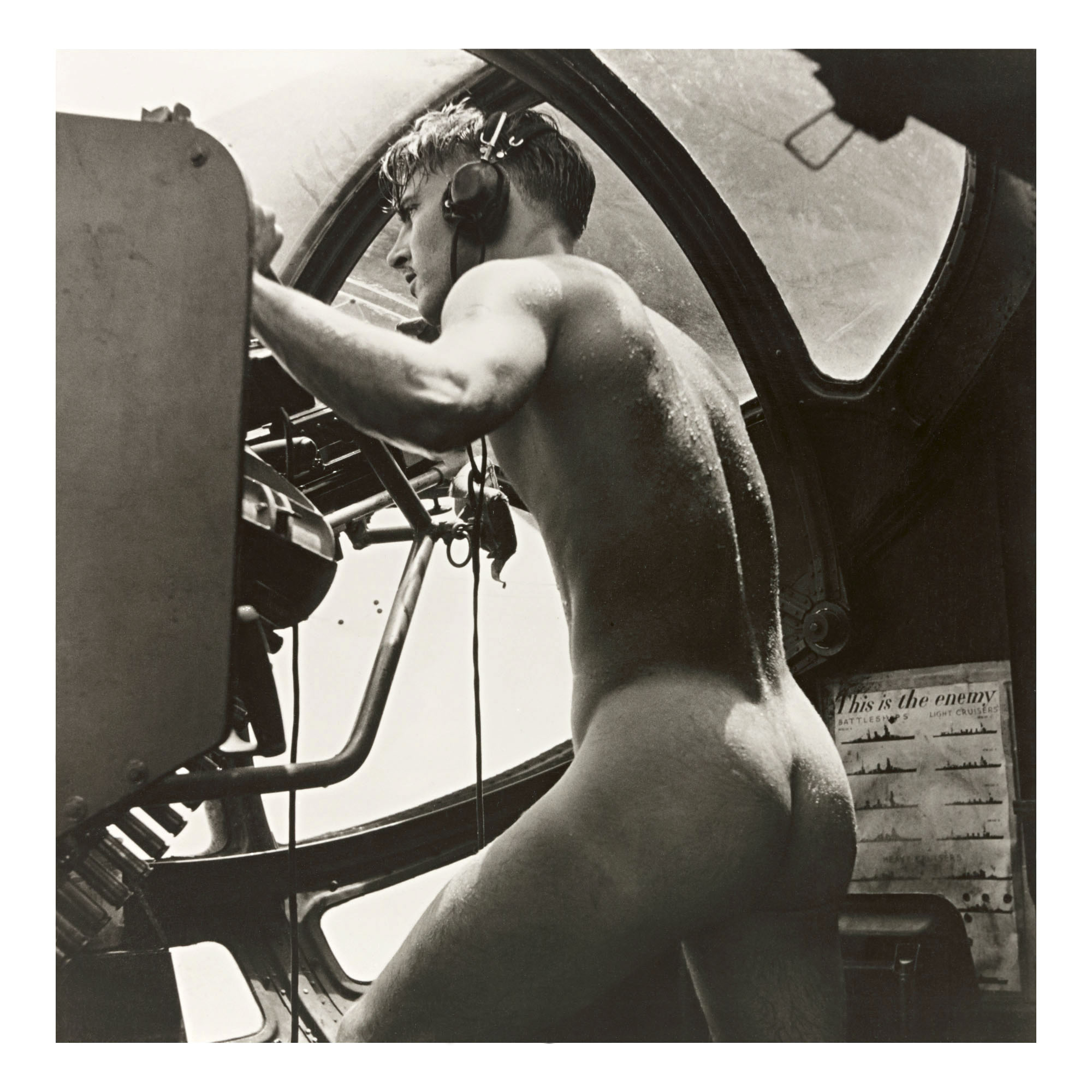
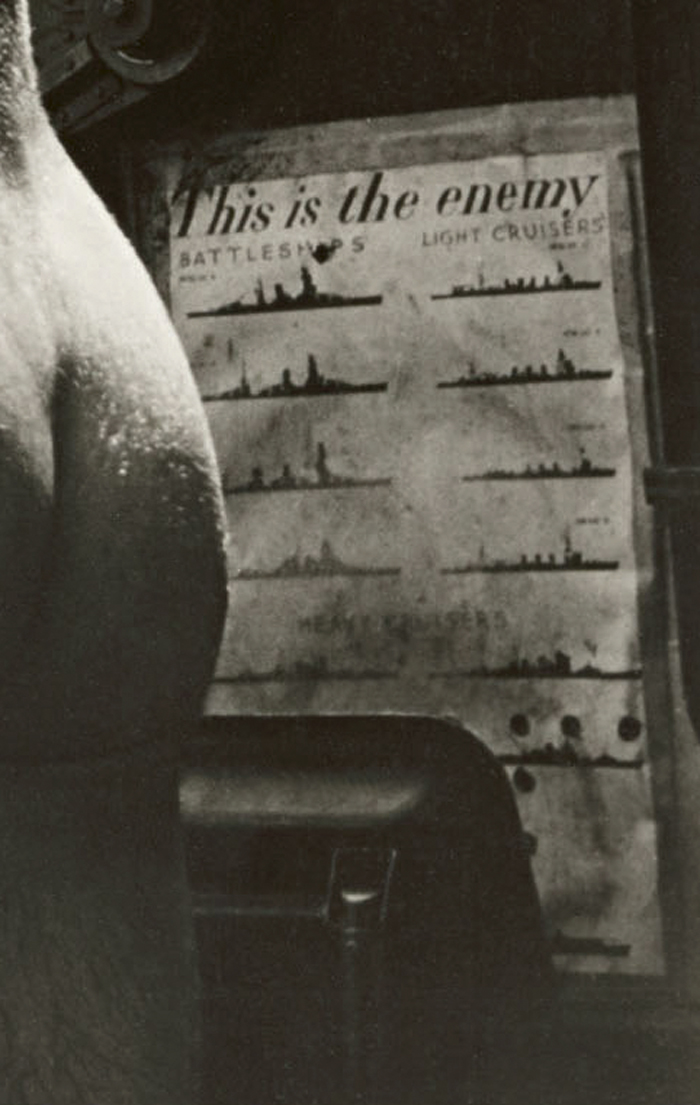
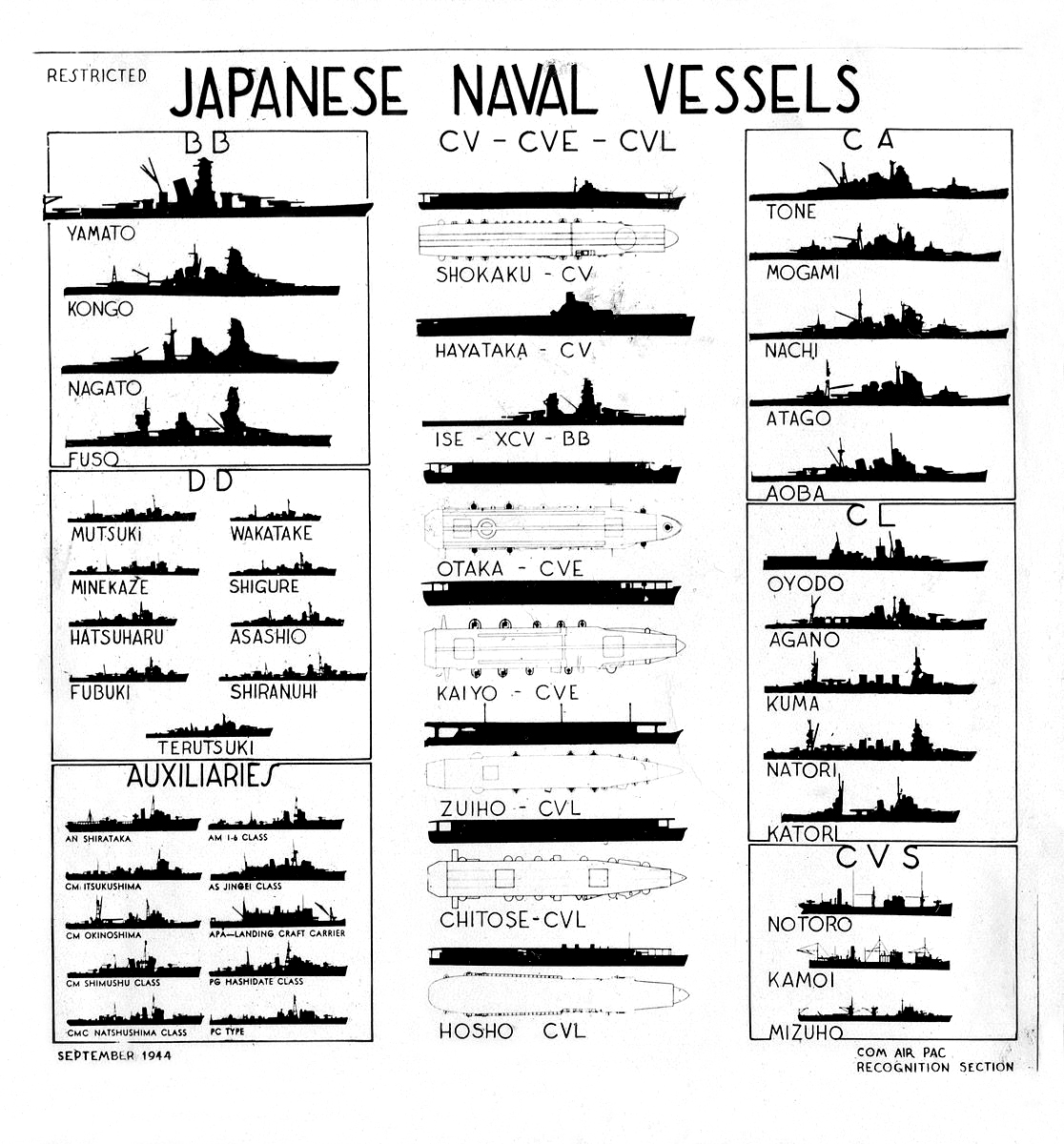
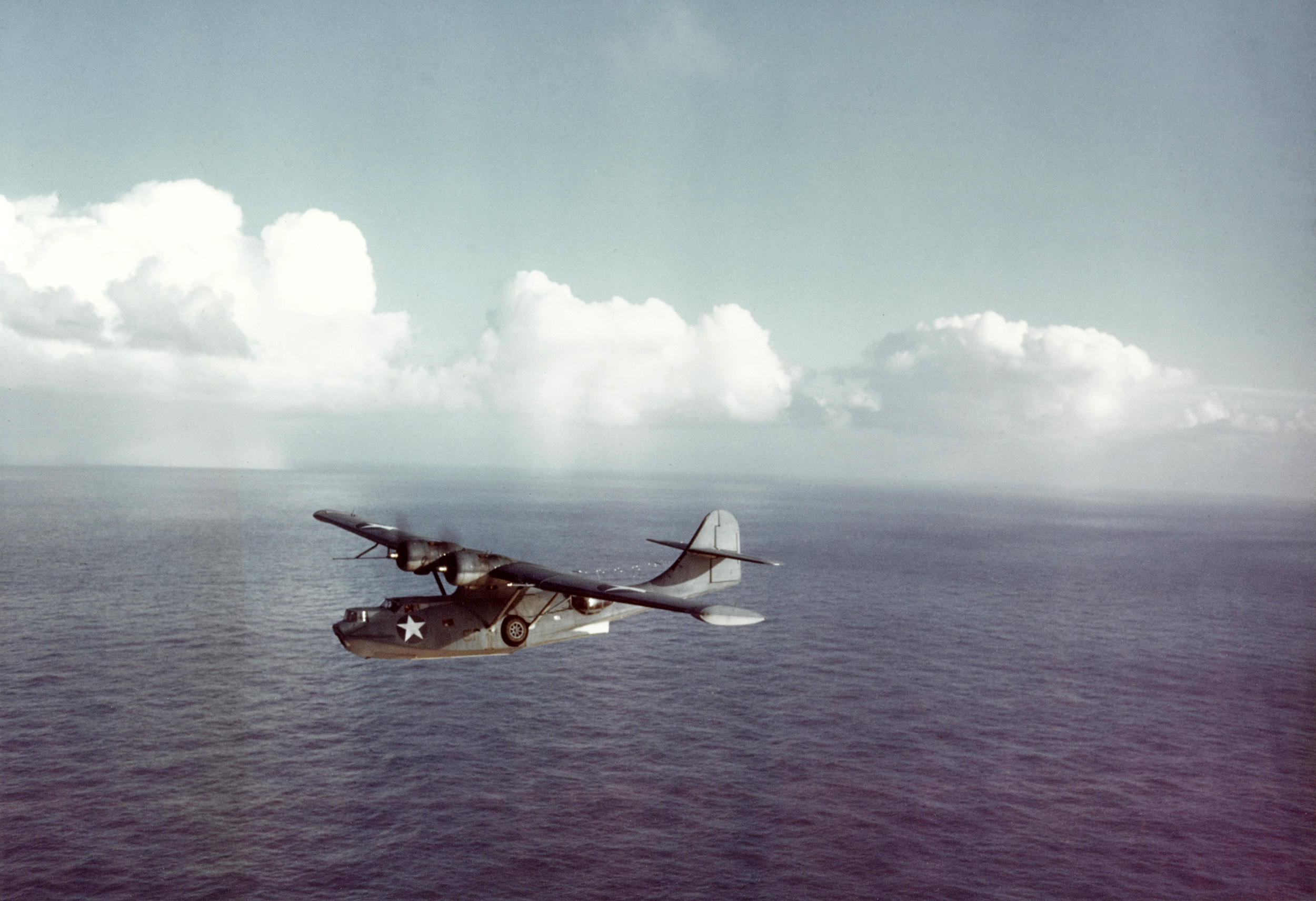
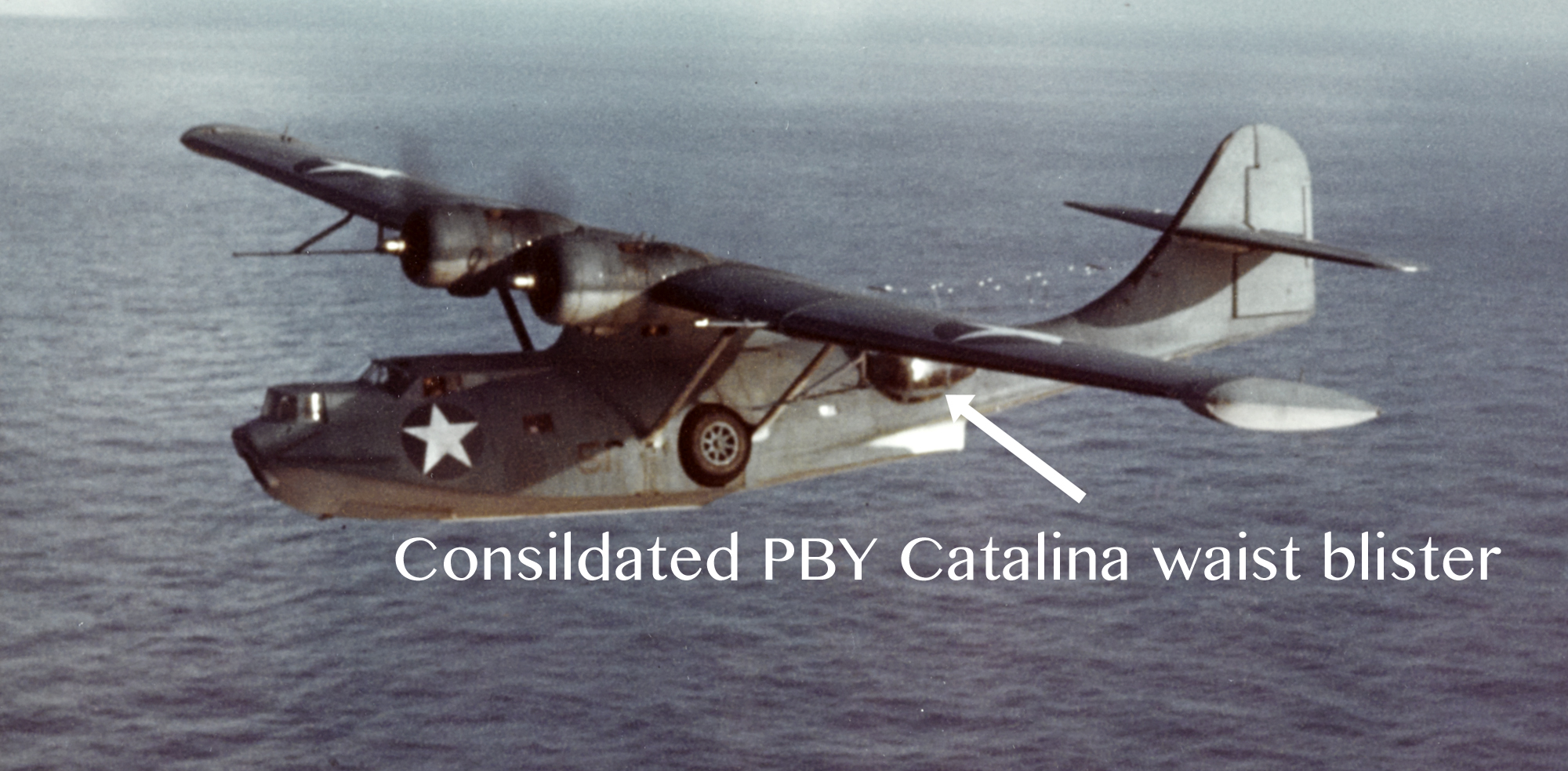
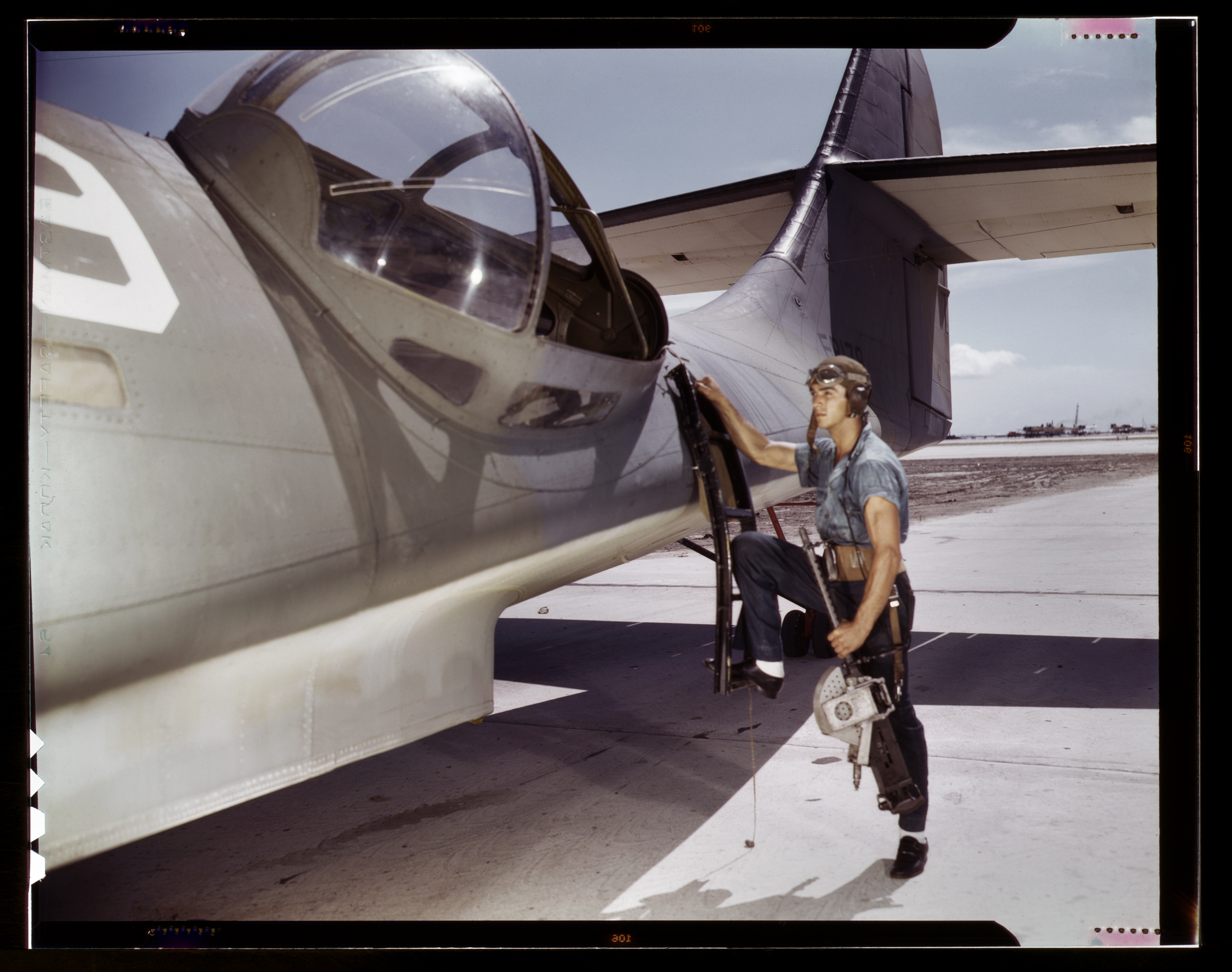
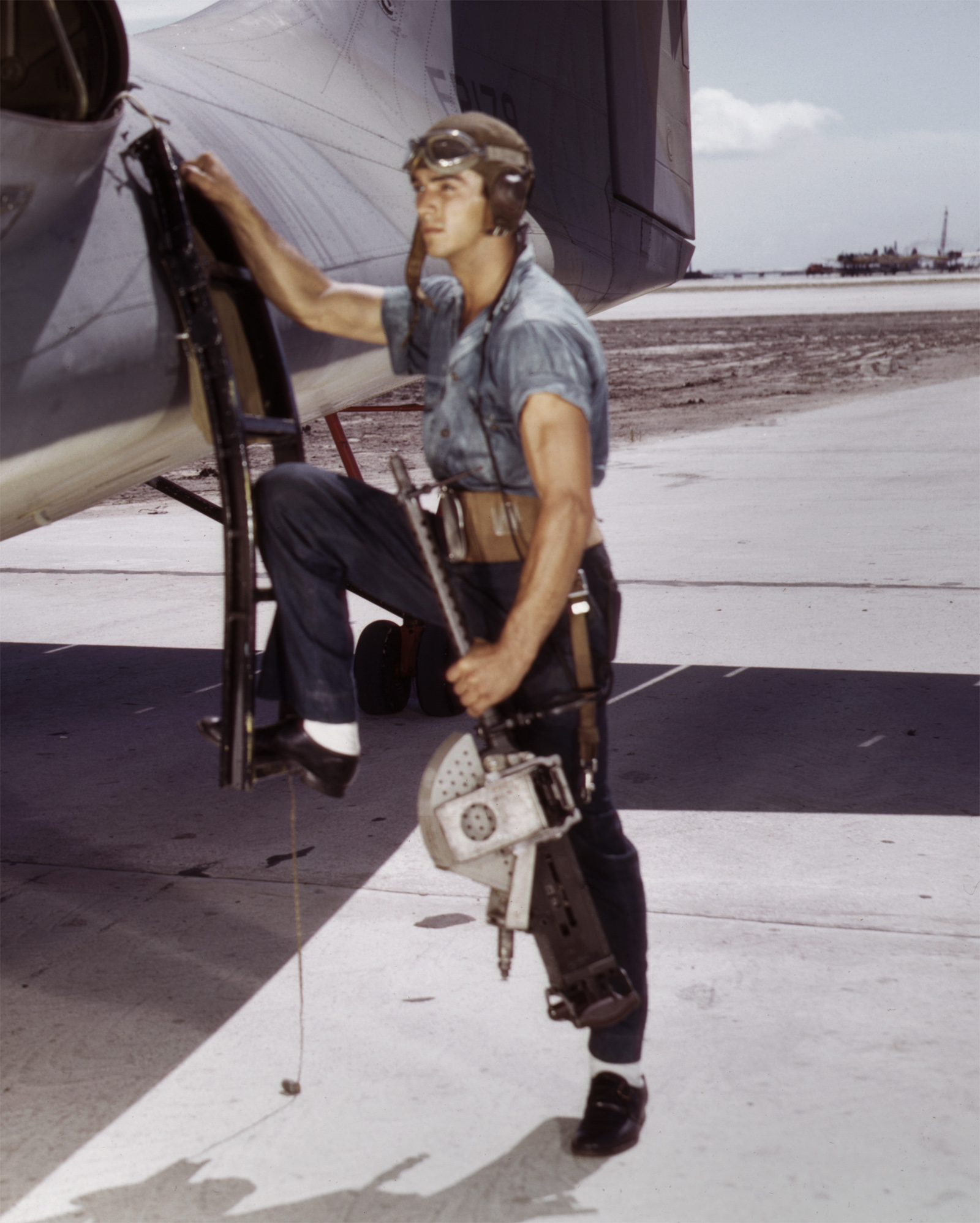
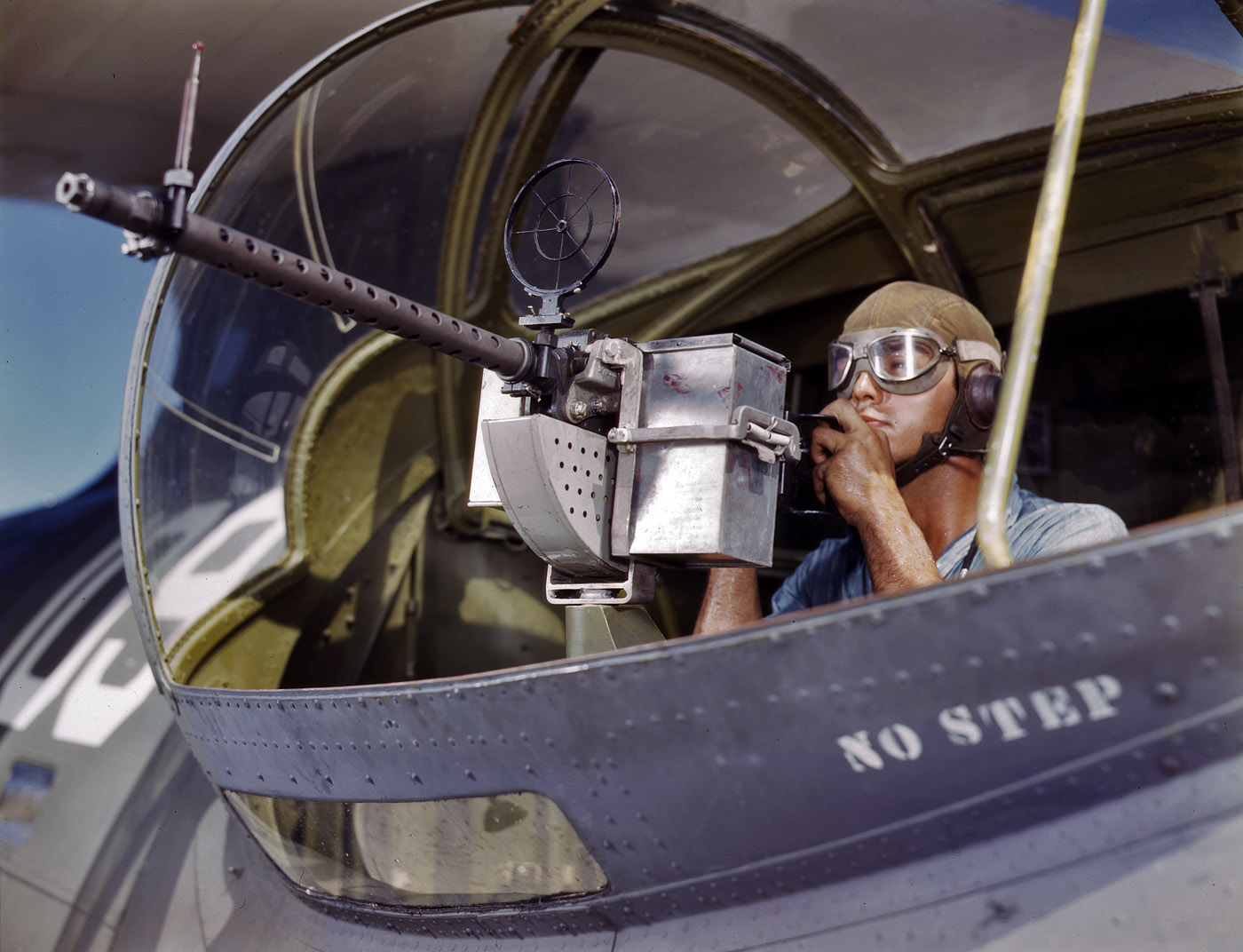


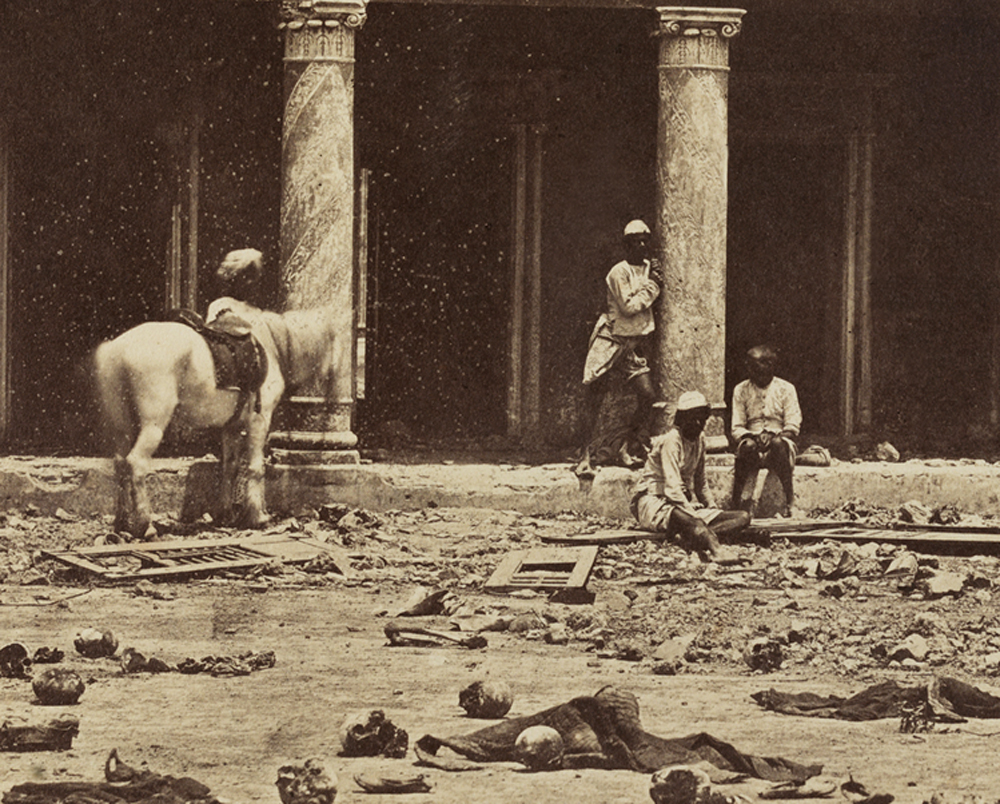


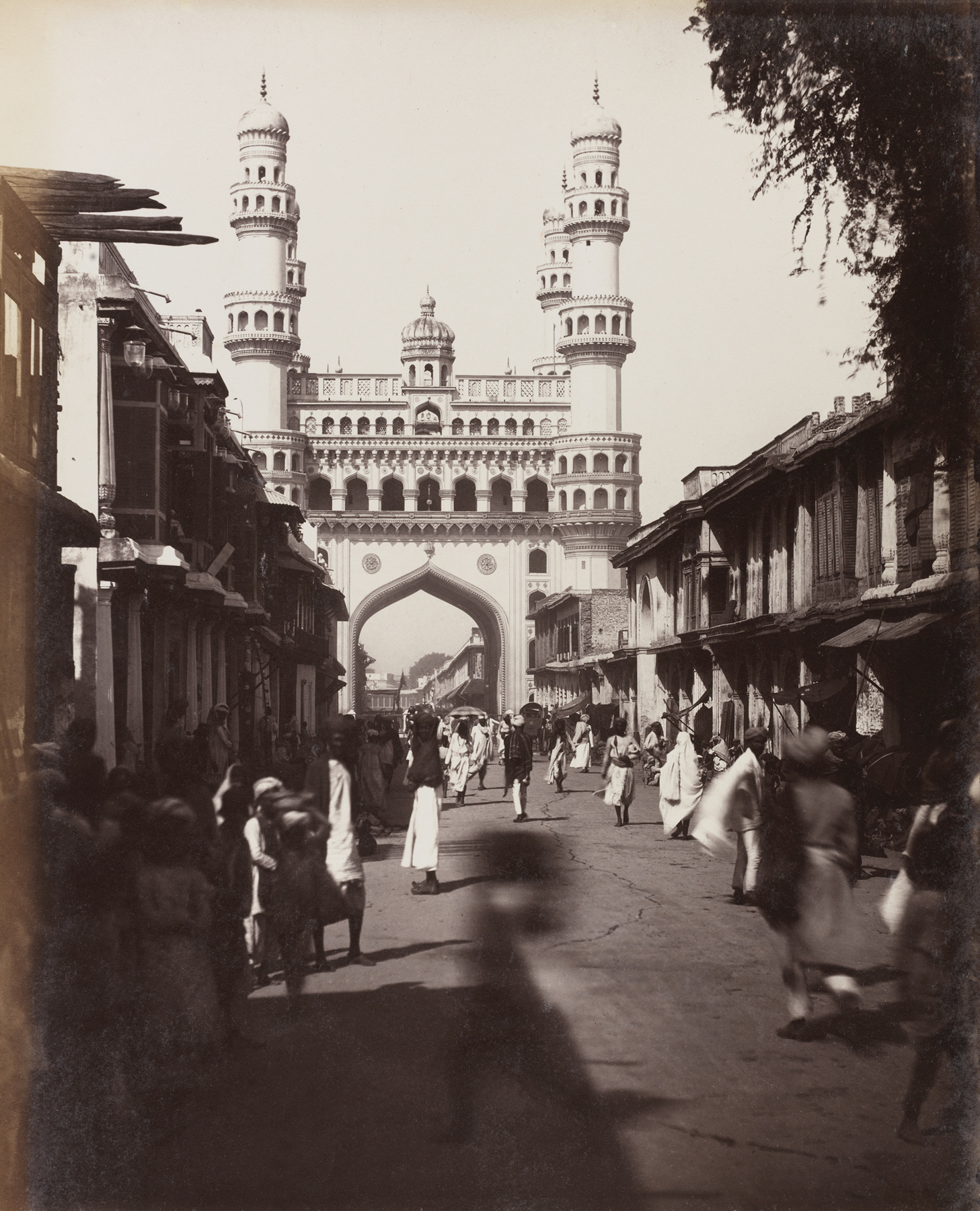


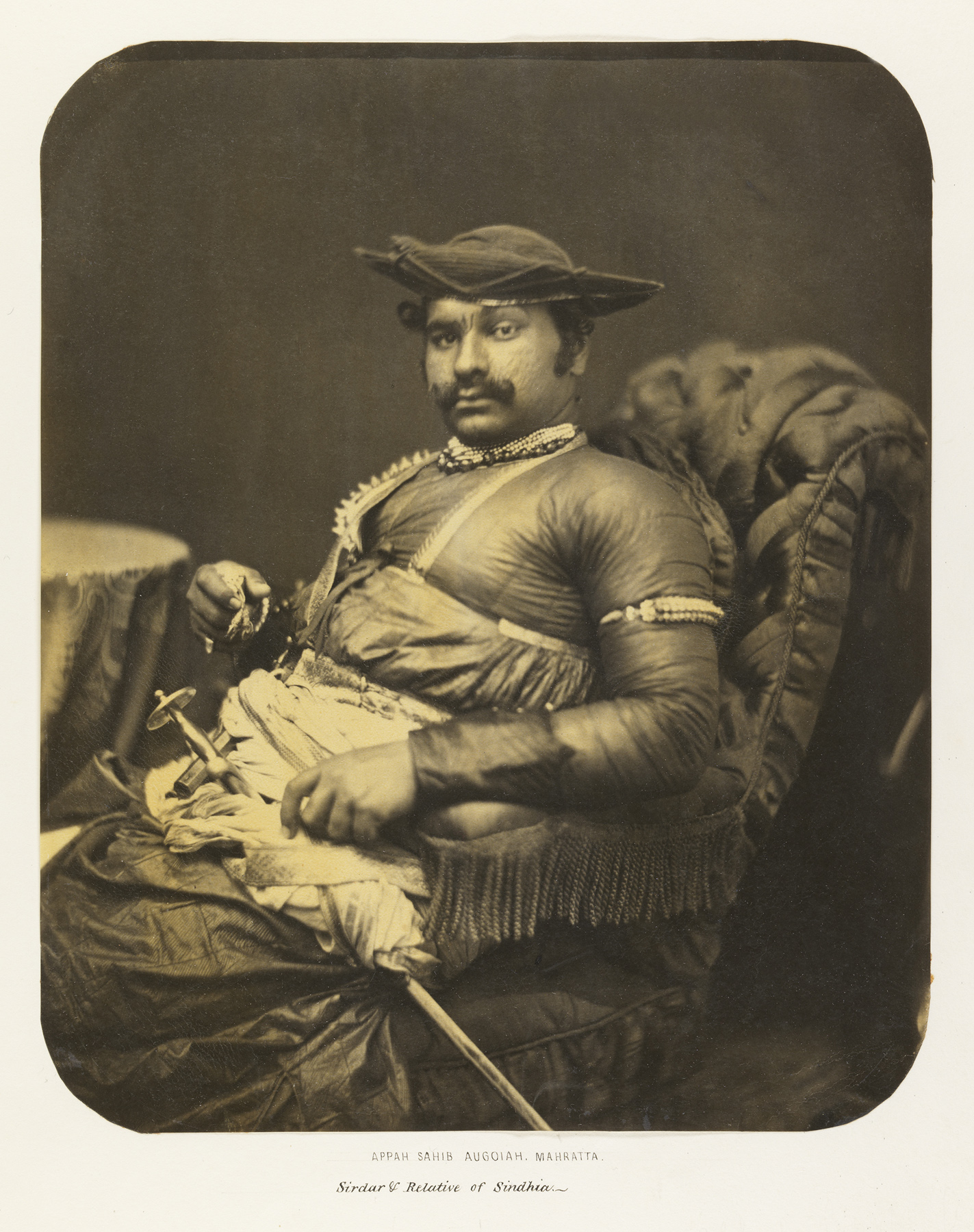


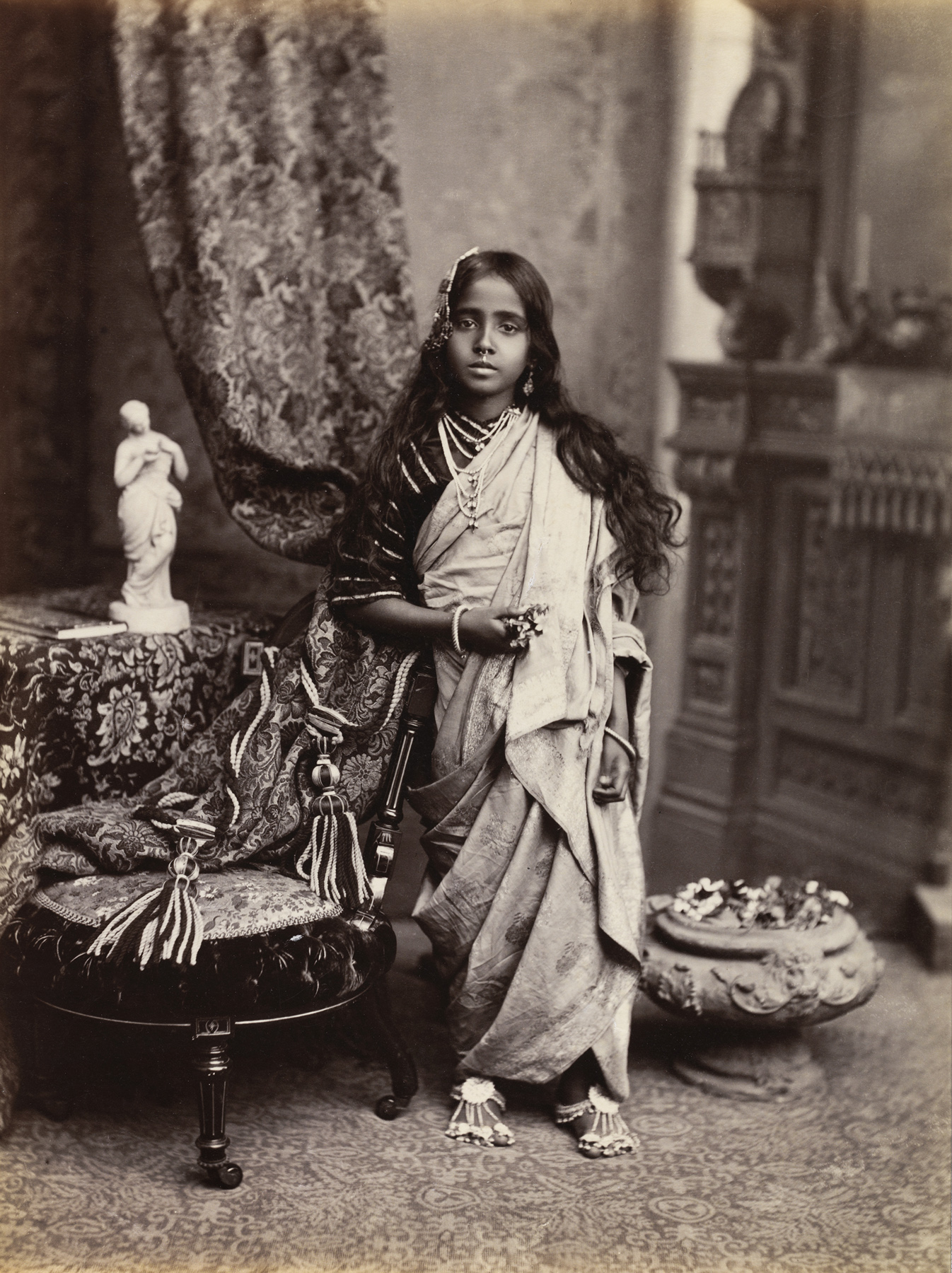

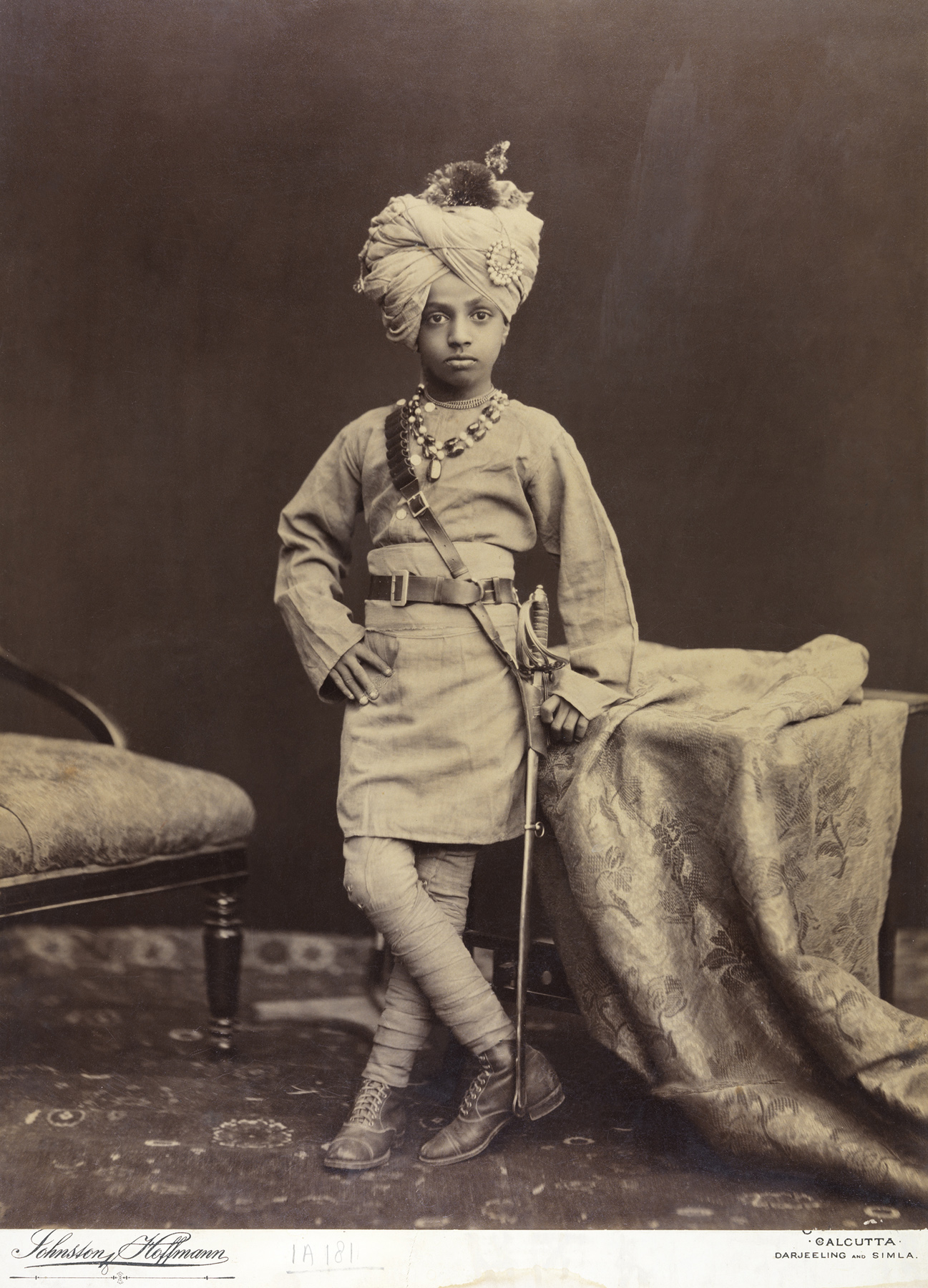


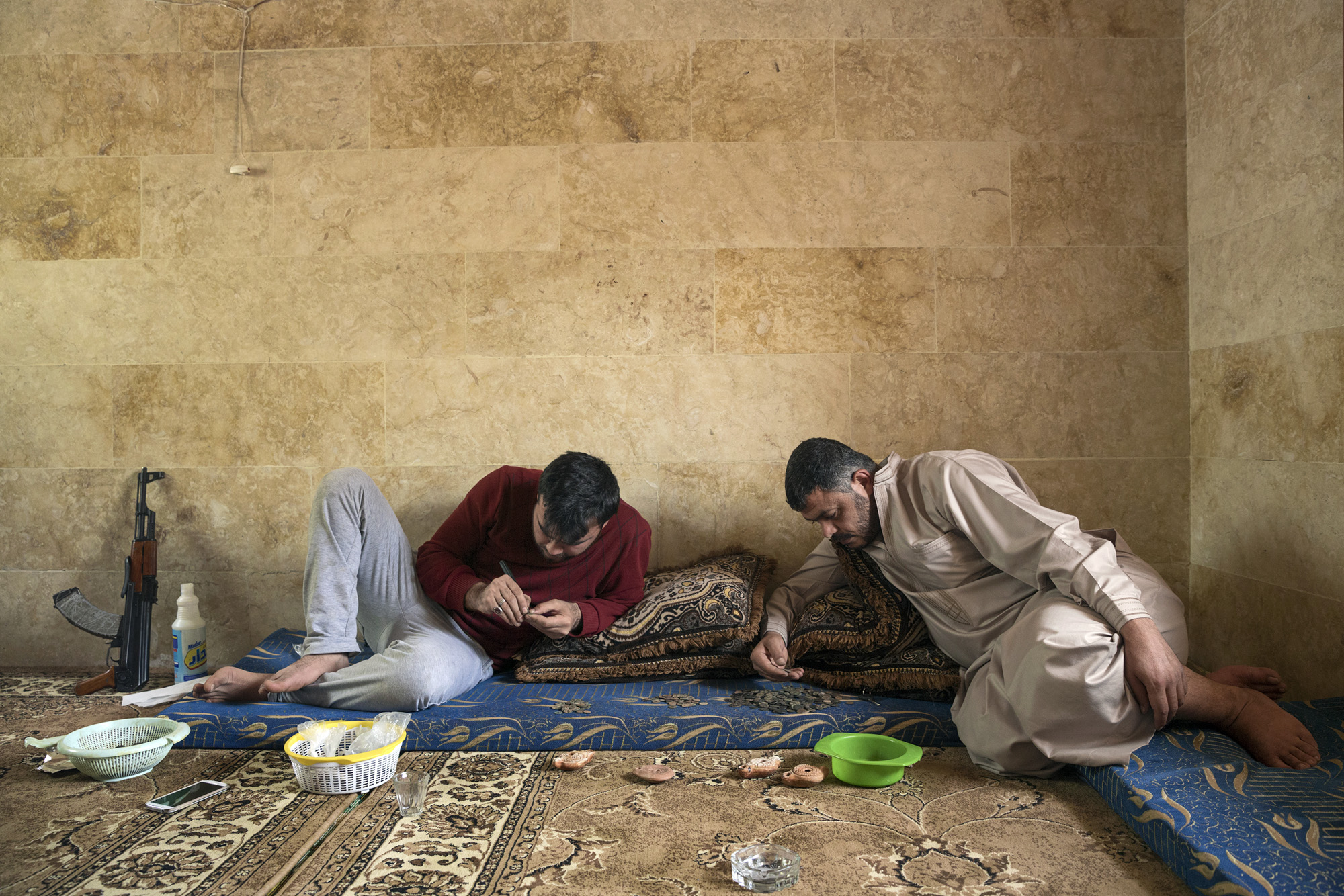
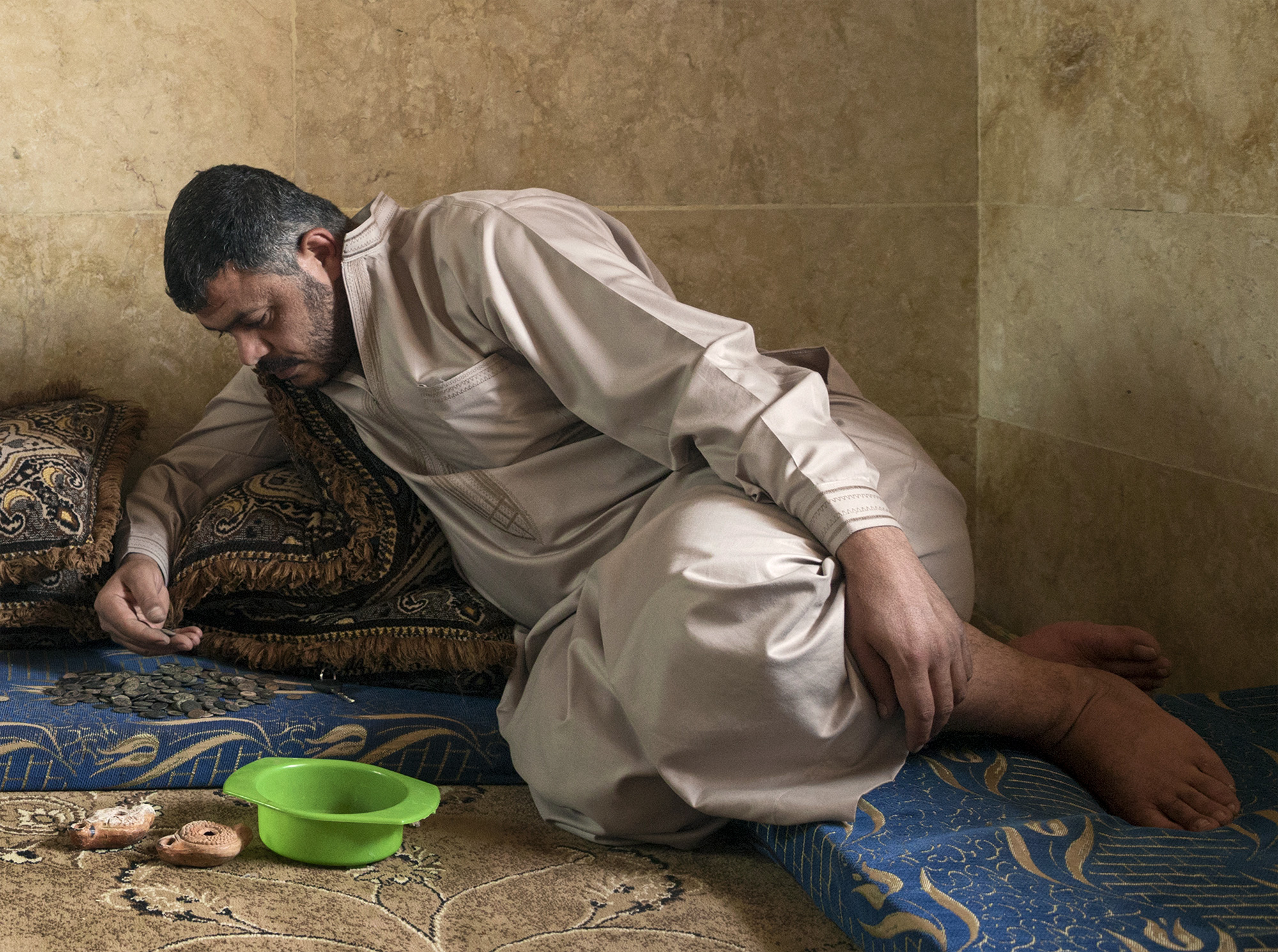

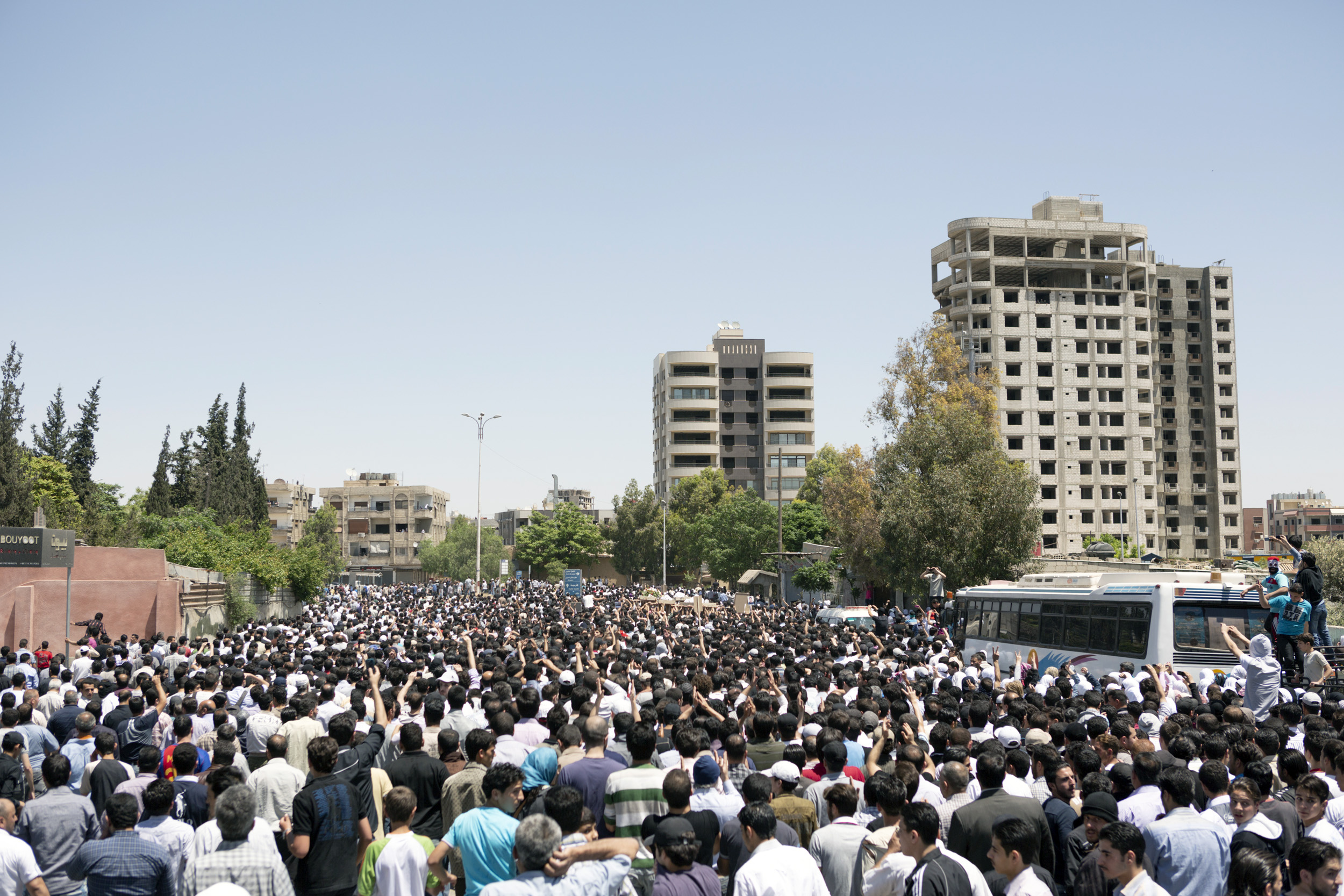
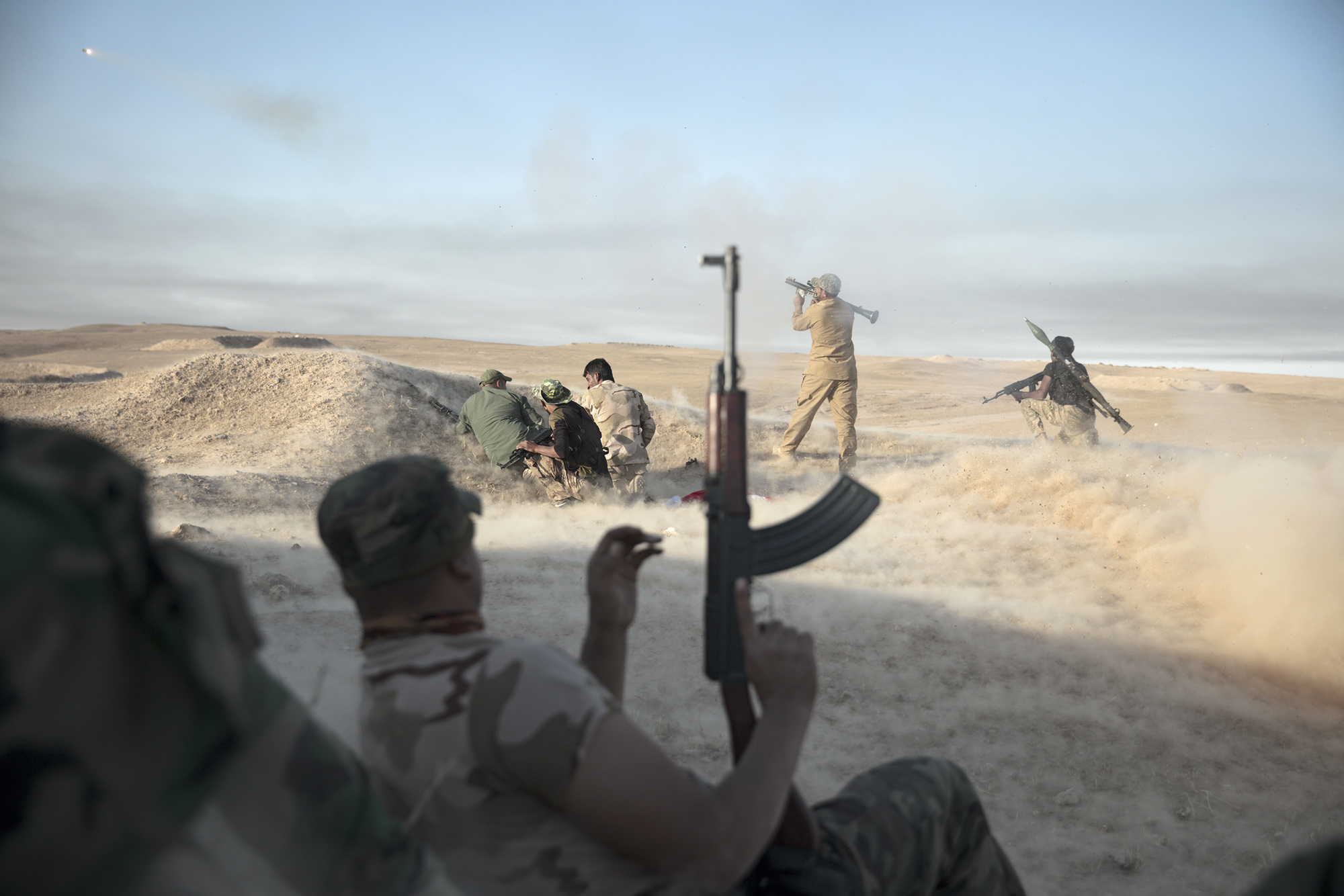


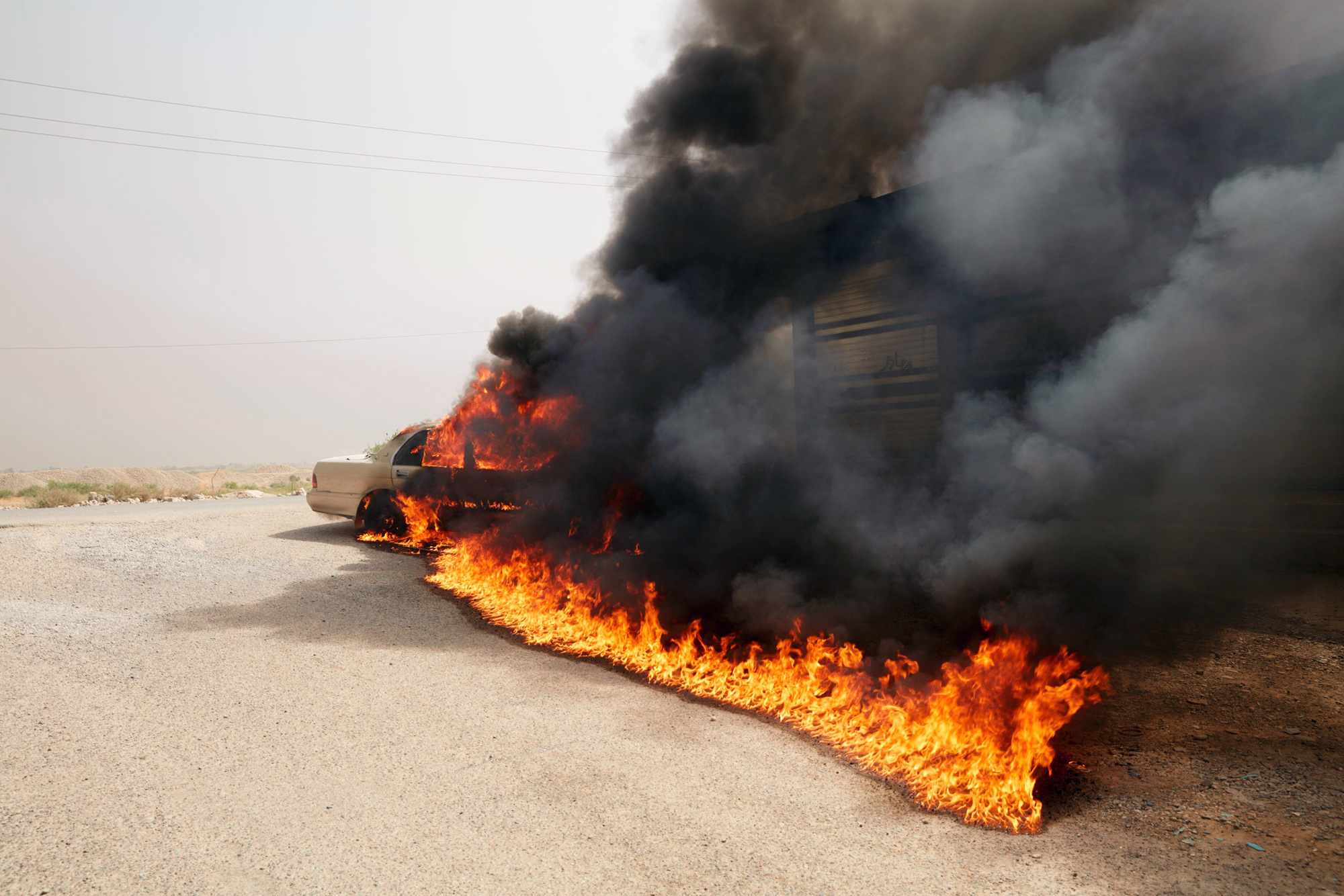


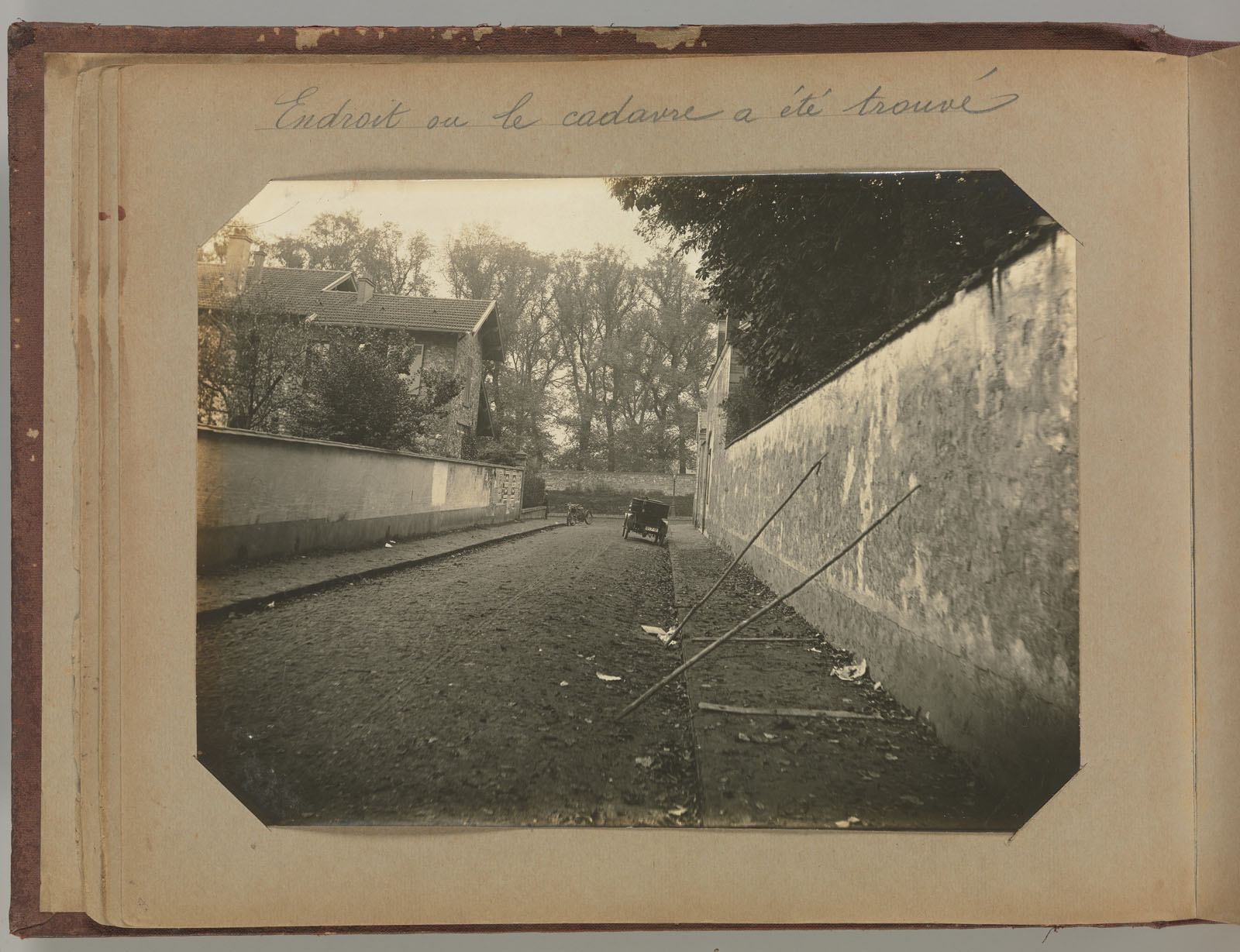

![Adrien Constant de Rebecque (Swiss, Lausanne 1806-1876 Lausanne) '[Man in Chainmail Tunic Posing as a Dying Soldier]' c. 1863](https://artblart.com/wp-content/uploads/2018/09/man-in-chainmail-tunic-posing-as-a-dying-soldier-web.jpg "Adrien Constant de Rebecque (Swiss, Lausanne 1806-1876 Lausanne) '[Man in Chainmail Tunic Posing as a Dying Soldier]' c. 1863")

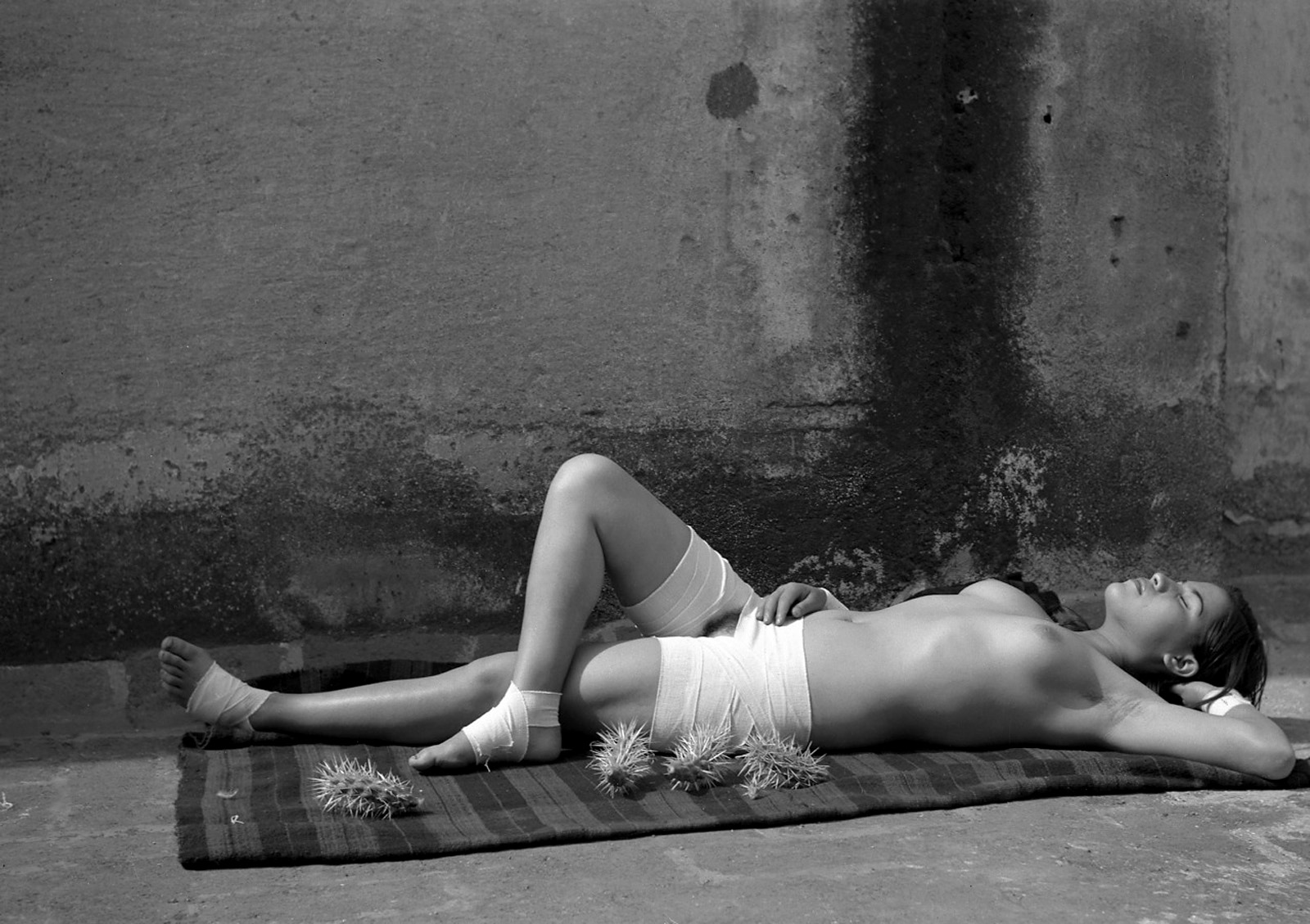
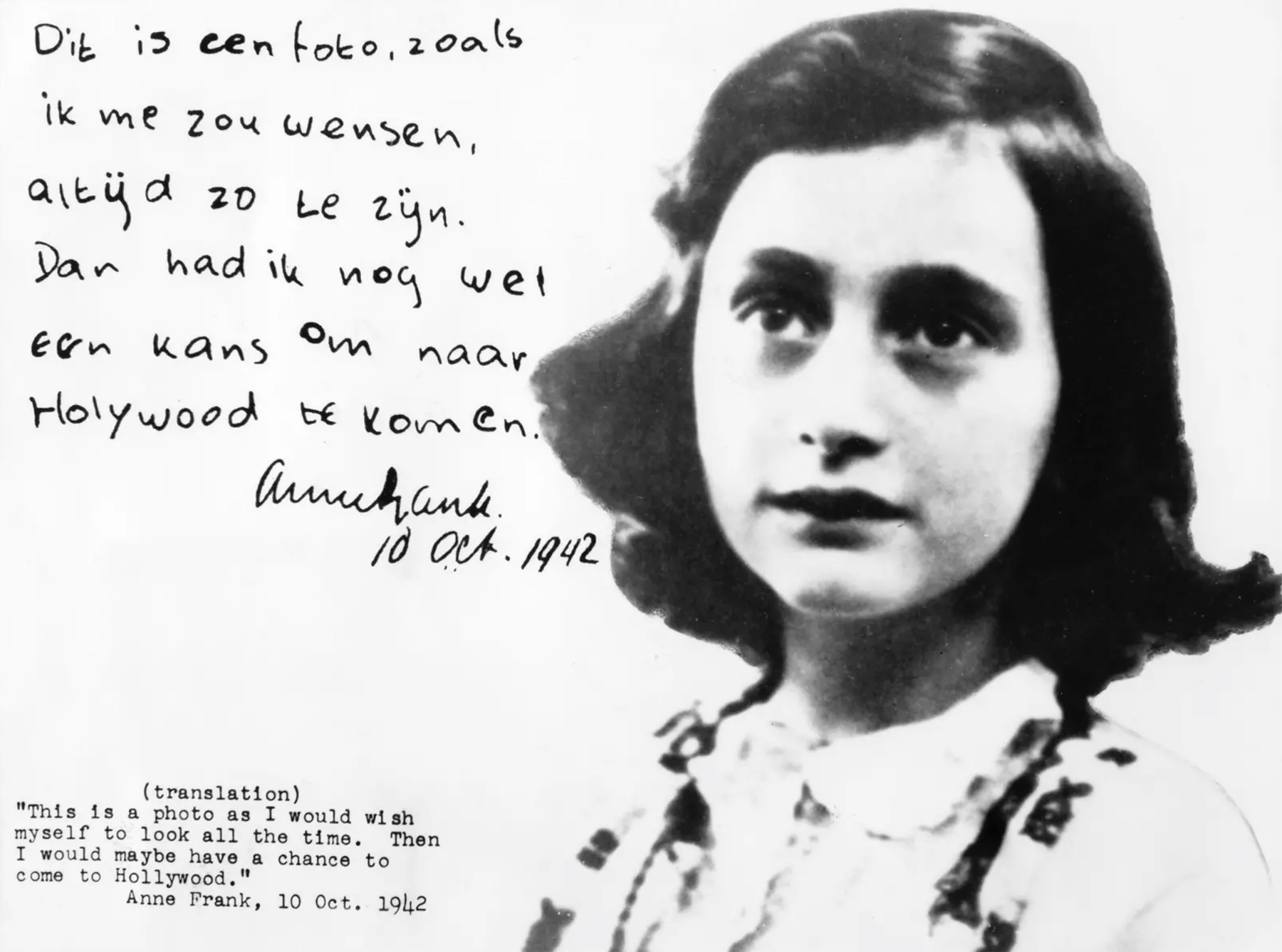


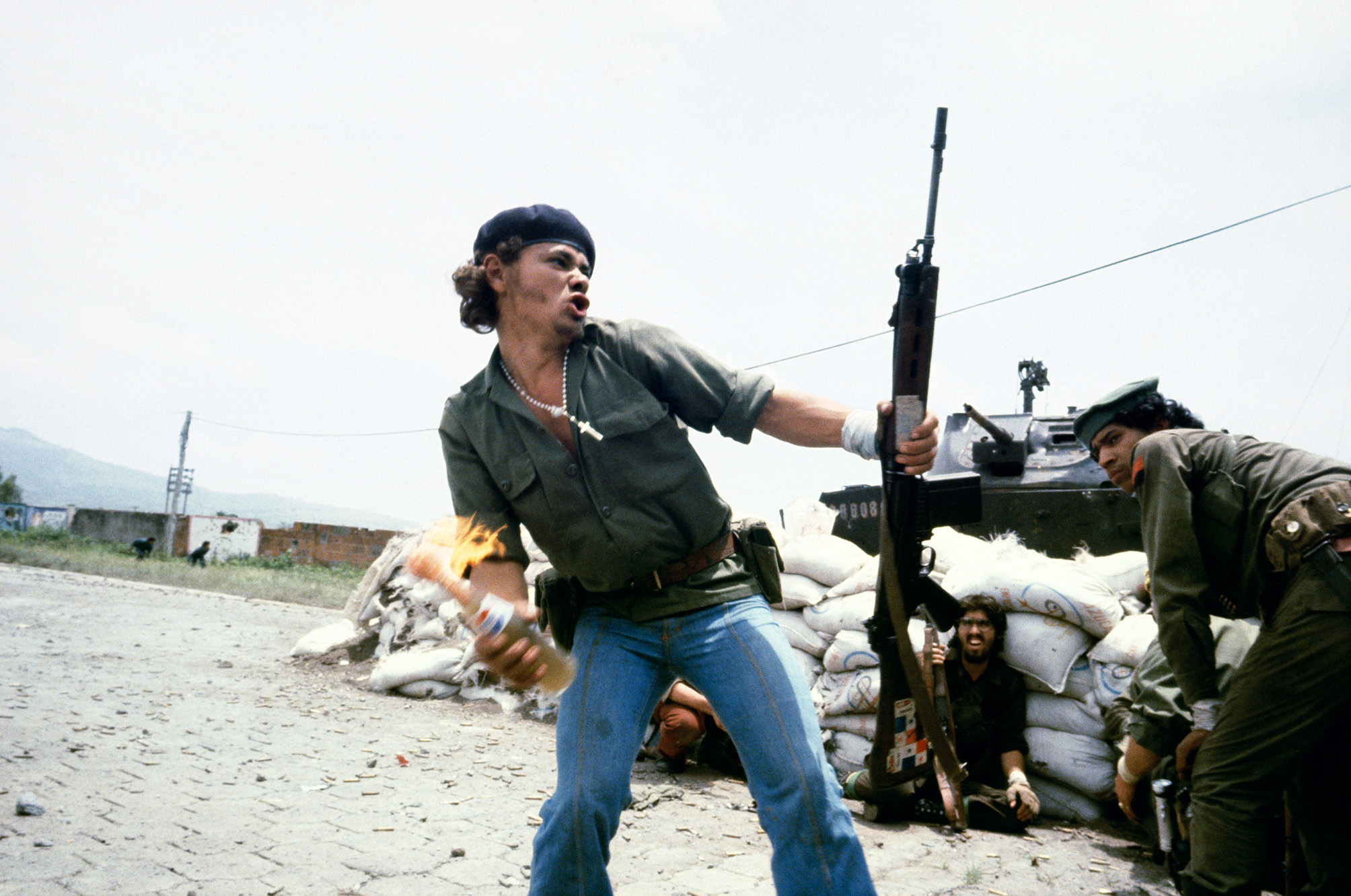


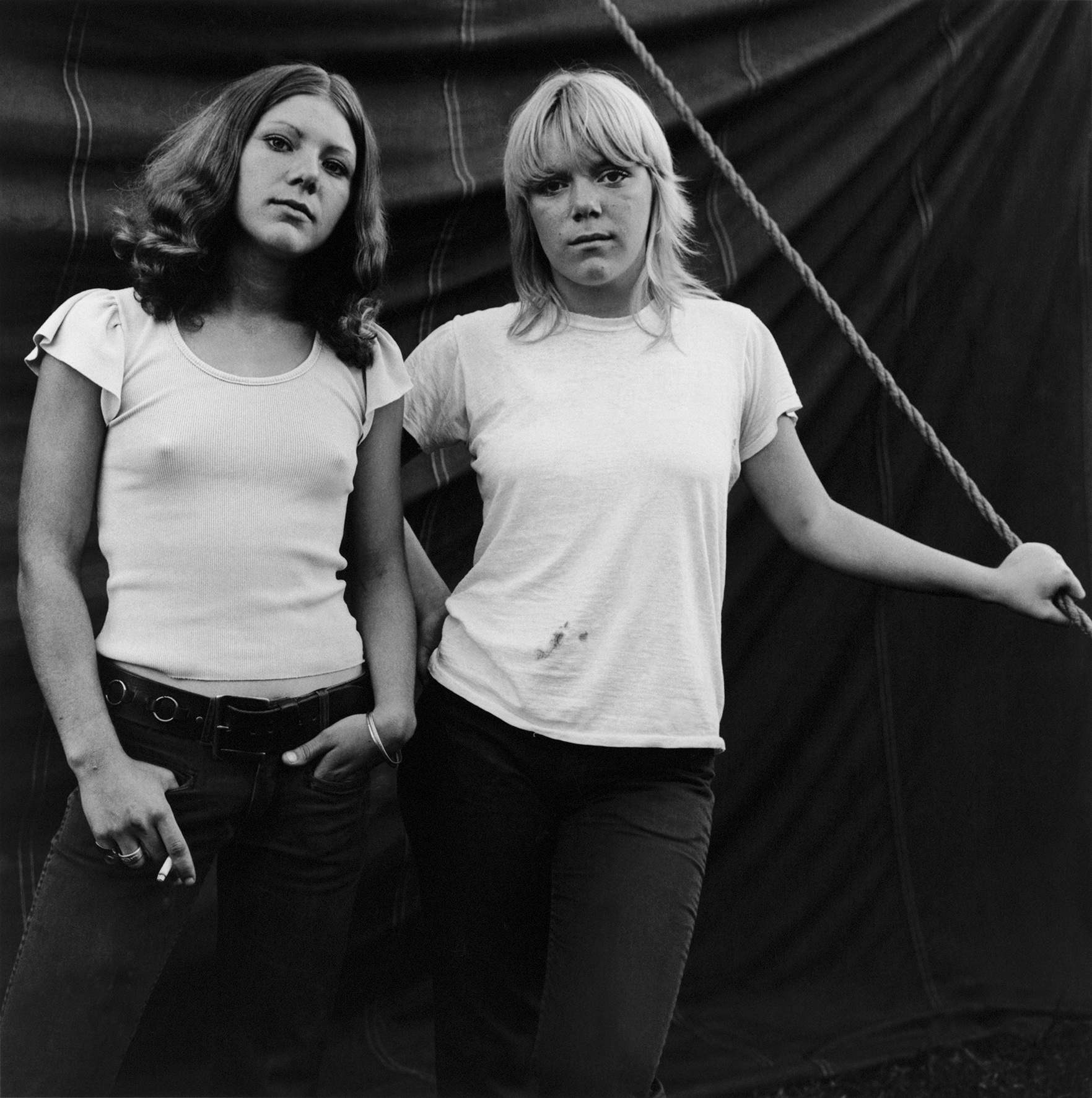


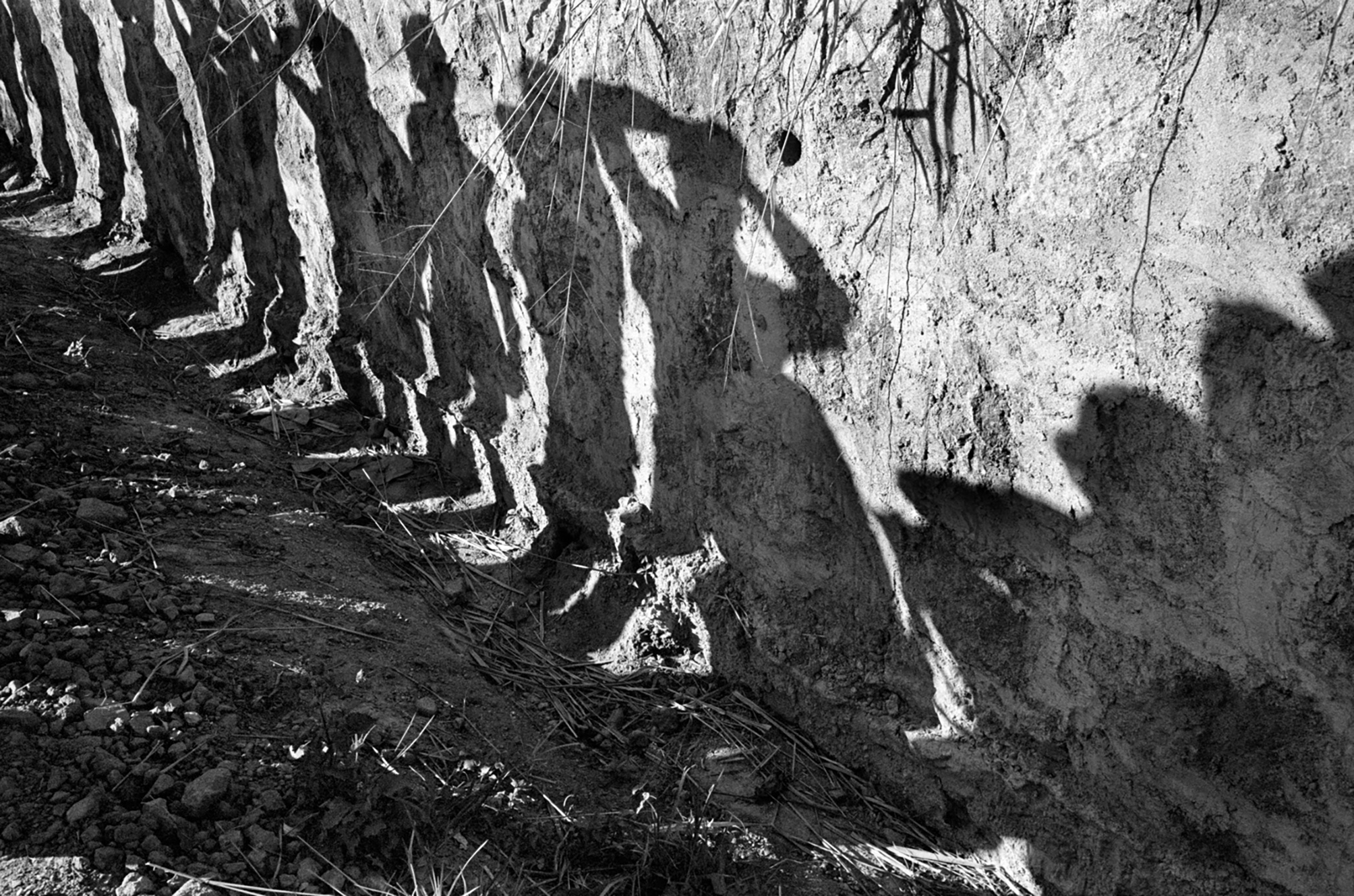


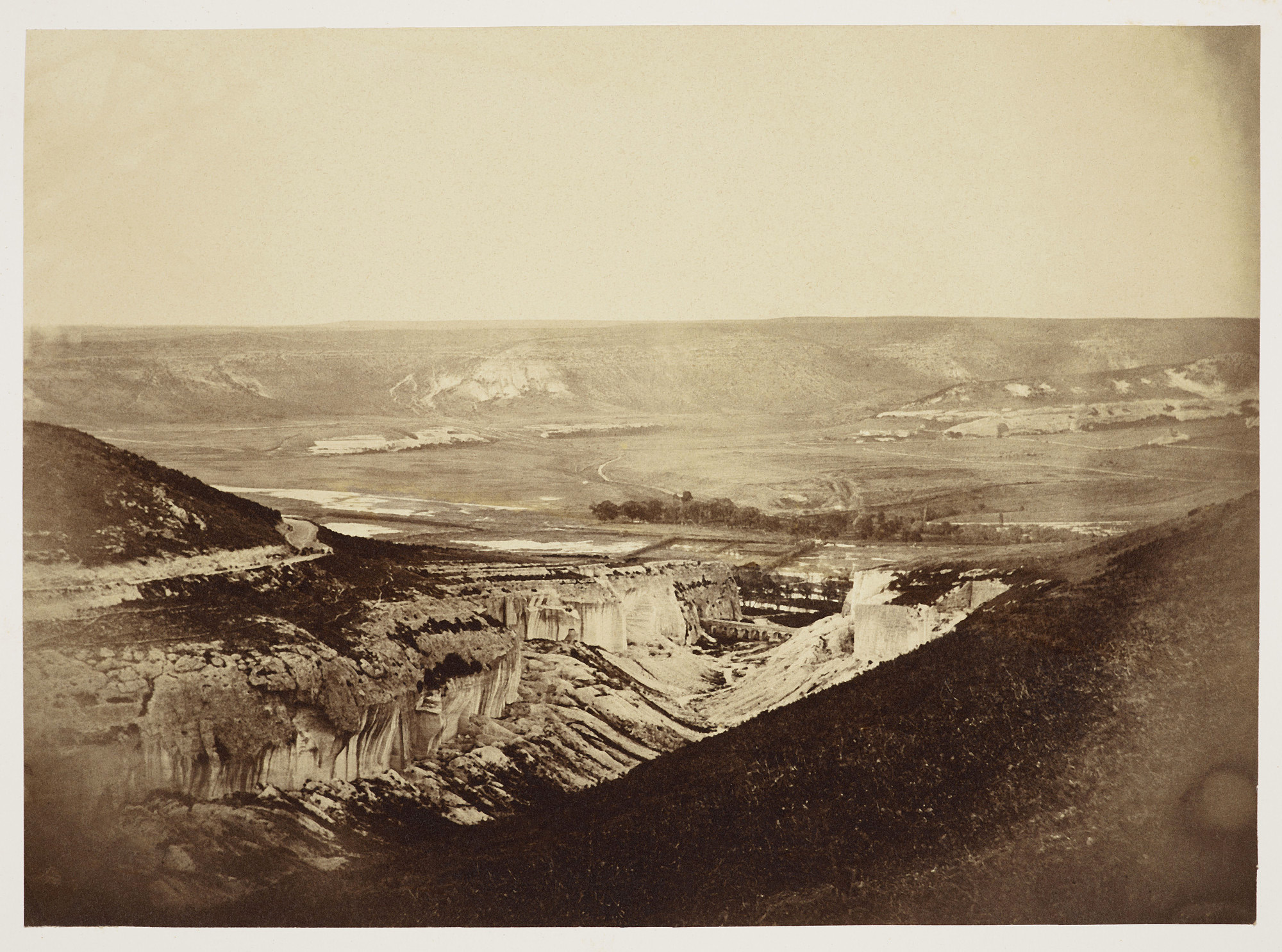


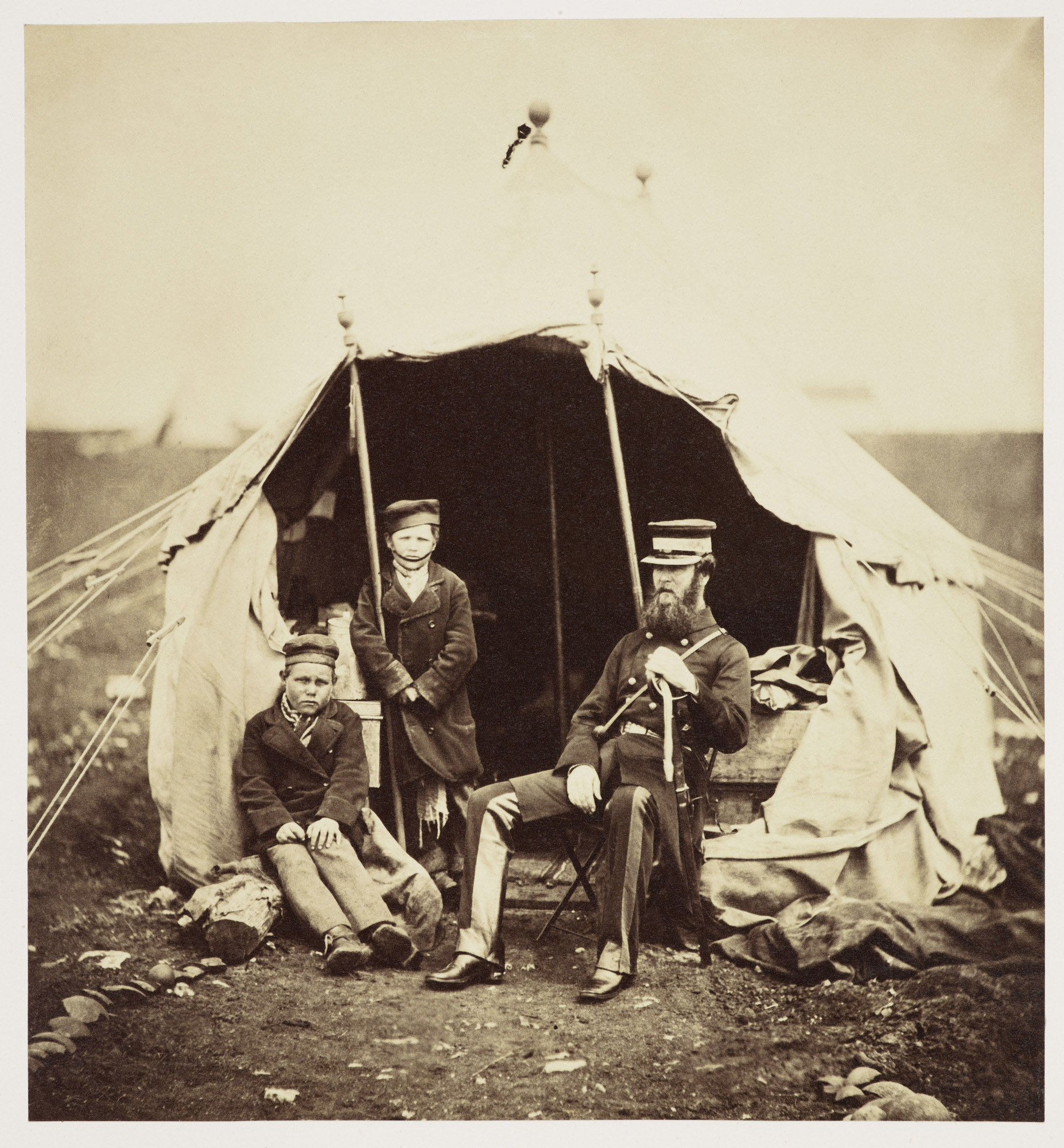
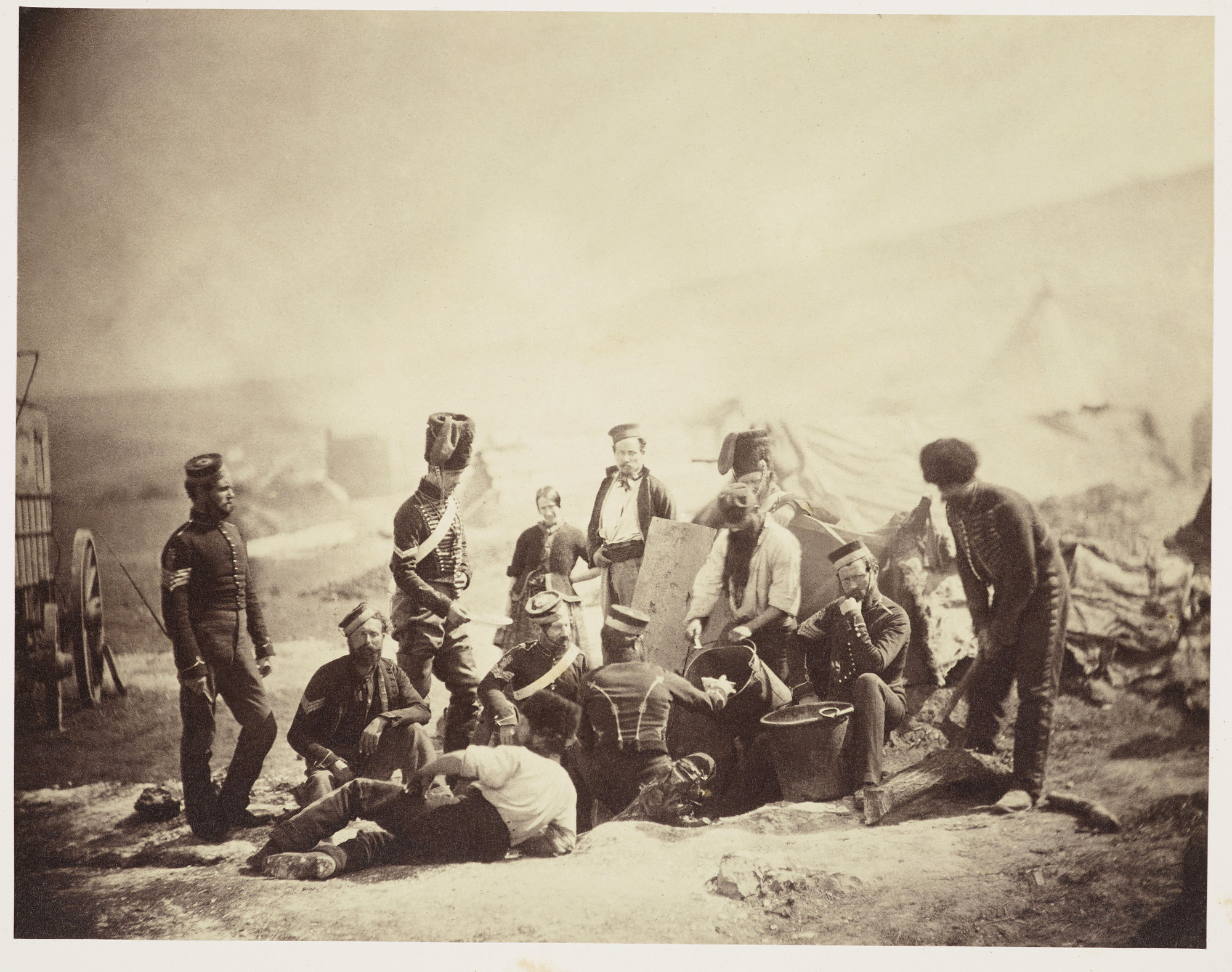


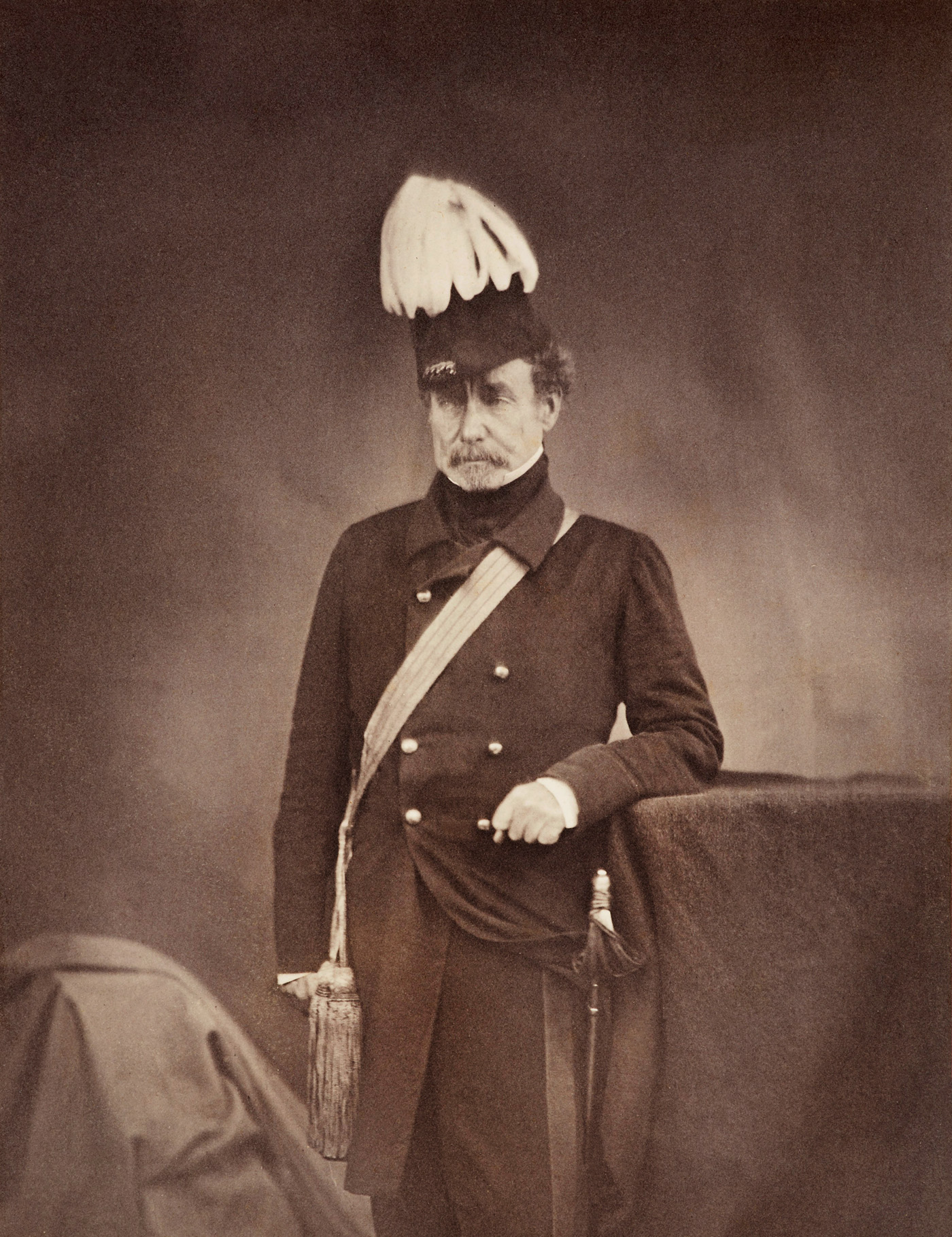







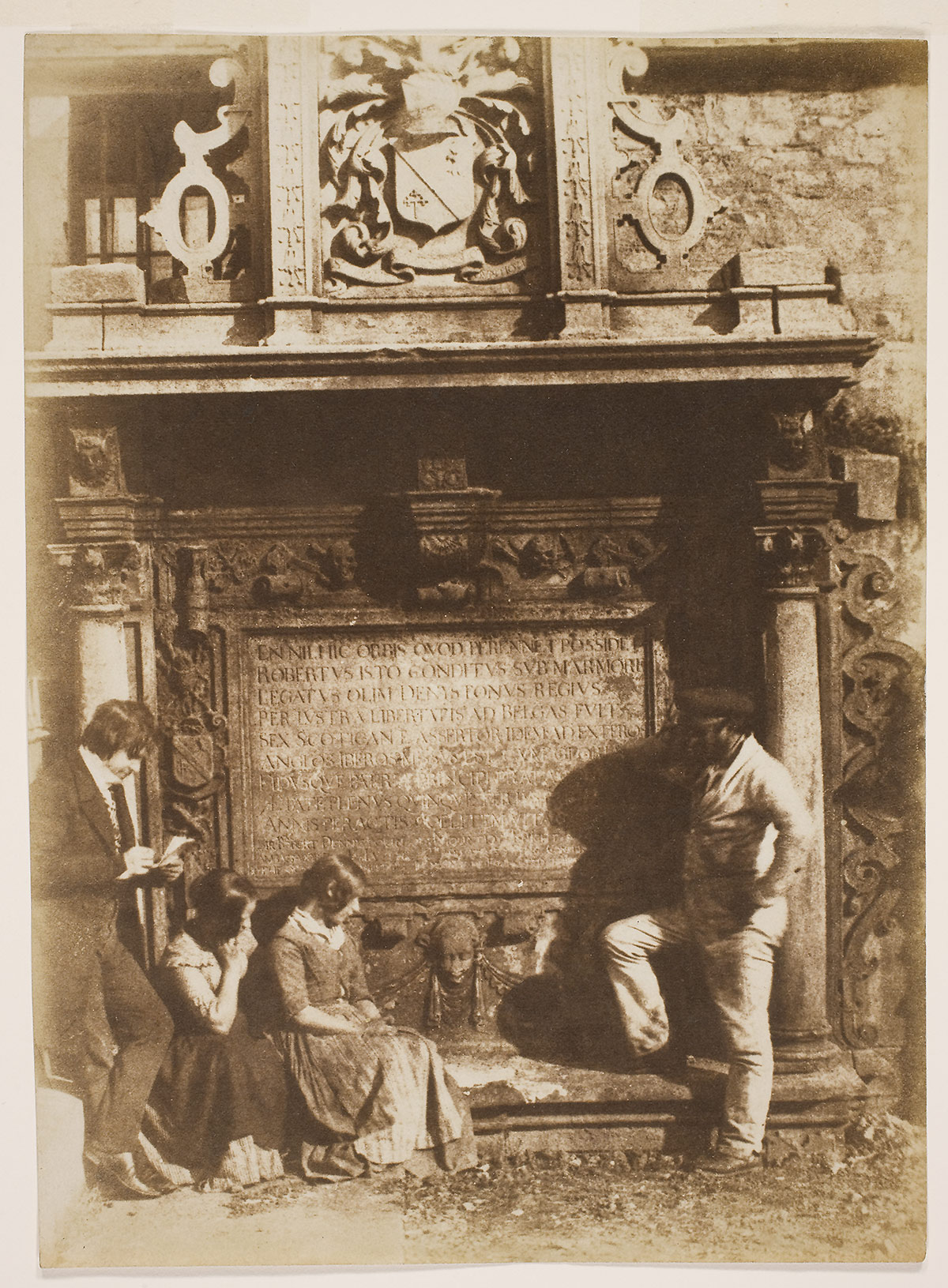


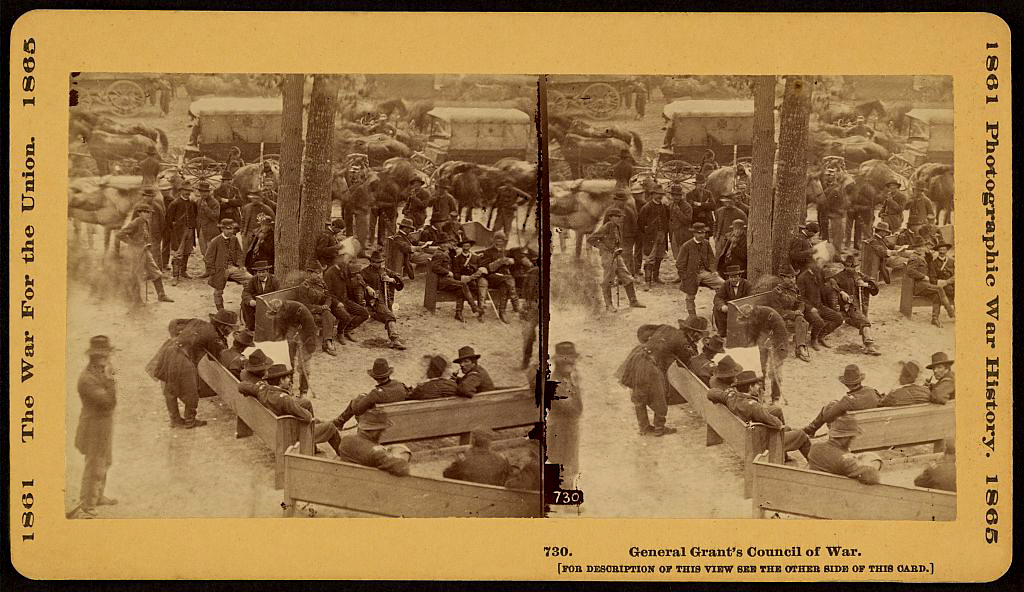









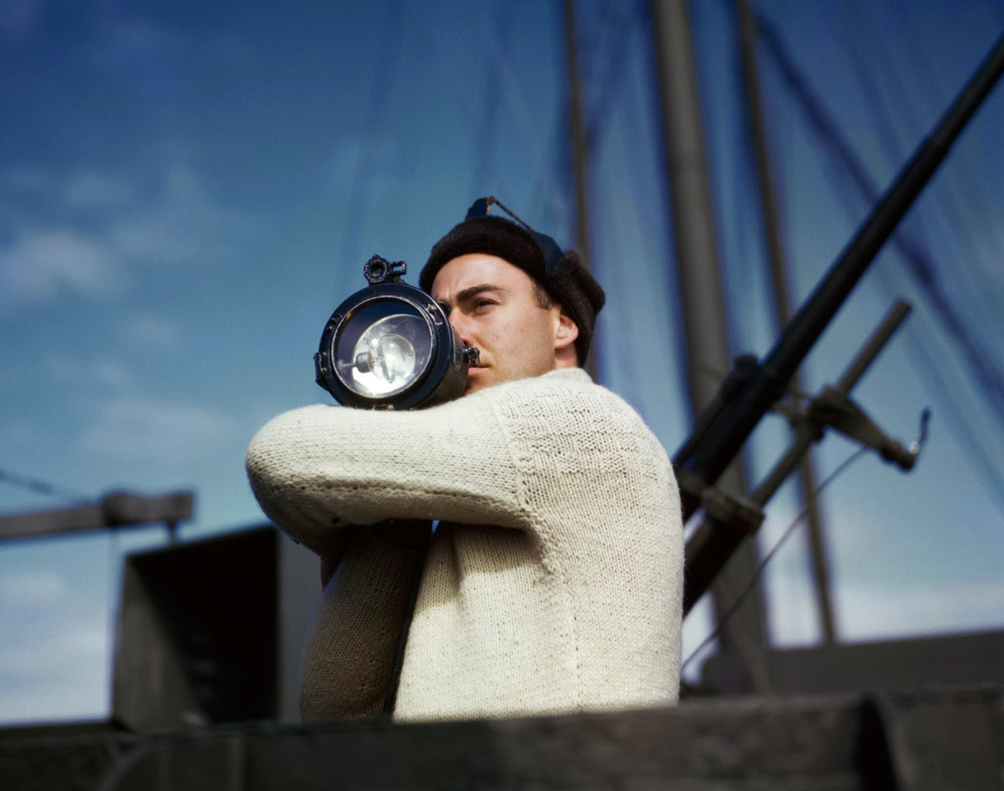













![Mathew B. Brady. 'Untitled [Spectators massing for the Grand Review of the Armies, 23-24 May 1865, at the side of the crepe-draped U.S. Capitol, flag at half mast following the assassination of President Abraham Lincoln]' 1865](https://artblart.com/wp-content/uploads/2015/07/matthew-brady-captured-spectators-massing-web.jpg)
![Alexander Gardner. "Untitled [Presidential reviewing stand]," from the folio 'Memories of the War. Illustrations of the Grand Review' 1865](https://artblart.com/wp-content/uploads/2015/02/memories-of-the-war-alexander-gardner-b.jpg "Alexander Gardner. \"Untitled [Presidential reviewing stand],\" from the folio 'Memories of the War. Illustrations of the Grand Review' 1865")
![Alexander Gardner. "Untitled [Presidential reviewing stand]," from the folio 'Memories of the War. Illustrations of the Grand Review' 1865](https://artblart.com/wp-content/uploads/2015/02/memories-of-the-war-alexander-gardner-b-whole.jpg "Alexander Gardner. \"Untitled [Presidential reviewing stand],\" from the folio 'Memories of the War. Illustrations of the Grand Review' 1865")
![Alexander Gardner. "Untitled [Presidential reviewing stand]," from the folio 'Memories of the War. Illustrations of the Grand Review' 1865 (detail)](https://artblart.com/wp-content/uploads/2015/02/memories-of-the-war-alexander-gardner-b-detail.jpg "Alexander Gardner. \"Untitled [Presidential reviewing stand],\" from the folio 'Memories of the War. Illustrations of the Grand Review' 1865 (detail)")
![Alexander Gardner. "Untitled [Presidential reviewing stand and mounted cavalry]," in the folio 'Memories of the War. Illustrations of the Grand Review' 1865](https://artblart.com/wp-content/uploads/2015/02/memories-of-the-war-alexander-gardner-c-web.jpg "Alexander Gardner. \"Untitled [Presidential reviewing stand and mounted cavalry],\" in the folio 'Memories of the War. Illustrations of the Grand Review' 1865")
![Alexander Gardner. "Untitled [Presidential reviewing stand and mounted cavalry]," in the folio 'Memories of the War. Illustrations of the Grand Review' 1865](https://artblart.com/wp-content/uploads/2015/02/memories-of-the-war-alexander-gardner-c-whole.jpg "Alexander Gardner. \"Untitled [Presidential reviewing stand and mounted cavalry],\" in the folio 'Memories of the War. Illustrations of the Grand Review' 1865")
![Alexander Gardner. "Untitled [Presidential reviewing stand and mounted cavalry]," in the folio 'Memories of the War. Illustrations of the Grand Review' 1865 (detail)](https://artblart.com/wp-content/uploads/2015/02/memories-of-the-war-alexander-gardner-c-detail.jpg "Alexander Gardner. \"Untitled [Presidential reviewing stand and mounted cavalry],\" in the folio 'Memories of the War. Illustrations of the Grand Review' 1865 (detail)")








![Alexander Gardner. 'Untitled [Presidential reviewing stand, Washington, D.C., May, 1865]' from the folio 'Memories of the War. Illustrations of the Grand Review' 1865](https://artblart.com/wp-content/uploads/2015/07/memories-of-the-war-alexander-gardner-d-web.jpg "Alexander Gardner. 'Untitled [Presidential reviewing stand, Washington, D.C., May, 1865]' from the folio 'Memories of the War. Illustrations of the Grand Review' 1865")
![Alexander Gardner. 'Untitled [Presidential reviewing stand, Washington, D.C., May, 1865]' from the folio 'Memories of the War. Illustrations of the Grand Review' 1865](https://artblart.com/wp-content/uploads/2015/07/memories-of-the-war-alexander-gardner-d-whole.jpg "Alexander Gardner. 'Untitled [Presidential reviewing stand, Washington, D.C., May, 1865]' from the folio 'Memories of the War. Illustrations of the Grand Review' 1865")
![Alexander Gardner. 'Untitled [Presidential reviewing stand, Washington, D.C., May, 1865]' from the folio 'Memories of the War. Illustrations of the Grand Review' 1865 (detail)](https://artblart.com/wp-content/uploads/2015/07/memories-of-the-war-alexander-gardner-d-detail.jpg "Alexander Gardner. 'Untitled [Presidential reviewing stand, Washington, D.C., May, 1865]' from the folio 'Memories of the War. Illustrations of the Grand Review' 1865 (detail)")
![Alexander Gardner. 'Untitled [Presidential reviewing stand, Washington, D.C., May, 1865]' from the folio 'Memories of the War. Illustrations of the Grand Review' 1865](https://artblart.com/wp-content/uploads/2015/07/memories-of-the-war-alexander-gardner-e-web.jpg "Alexander Gardner. 'Untitled [Presidential reviewing stand, Washington, D.C., May, 1865]' from the folio 'Memories of the War. Illustrations of the Grand Review' 1865")
![Alexander Gardner. 'Untitled [Presidential reviewing stand, Washington, D.C., May, 1865]' from the folio 'Memories of the War. Illustrations of the Grand Review' 1865](https://artblart.com/wp-content/uploads/2015/07/memories-of-the-war-alexander-gardner-e-whole.jpg "Alexander Gardner. 'Untitled [Presidential reviewing stand, Washington, D.C., May, 1865]' from the folio 'Memories of the War. Illustrations of the Grand Review' 1865")
![Alexander Gardner. 'Untitled [Presidential reviewing stand, Washington, D.C., May, 1865]' from the folio 'Memories of the War. Illustrations of the Grand Review' 1865 (detail)](https://artblart.com/wp-content/uploads/2015/07/memories-of-the-war-alexander-gardner-f-detail.jpg "Alexander Gardner. 'Untitled [Presidential reviewing stand, Washington, D.C., May, 1865]' from the folio 'Memories of the War. Illustrations of the Grand Review' 1865 (detail)")
![Alexander Gardner. 'Untitled [Presidential reviewing stand, Washington, D.C., May, 1865]' from the folio 'Memories of the War. Illustrations of the Grand Review' 1865](https://artblart.com/wp-content/uploads/2015/07/memories-of-the-war-alexander-gardner-f-web.jpg "Alexander Gardner. 'Untitled [Presidential reviewing stand, Washington, D.C., May, 1865]' from the folio 'Memories of the War. Illustrations of the Grand Review' 1865")
![Alexander Gardner. 'Untitled [Presidential reviewing stand, Washington, D.C., May, 1865]' from the folio 'Memories of the War. Illustrations of the Grand Review' 1865](https://artblart.com/wp-content/uploads/2015/07/memories-of-the-war-alexander-gardner-f-whole.jpg "Alexander Gardner. 'Untitled [Presidential reviewing stand, Washington, D.C., May, 1865]' from the folio 'Memories of the War. Illustrations of the Grand Review' 1865")
![Alexander Gardner. 'Untitled [Gand Review, Pennsylvania Avenue, Washington, D.C., May, 1865]' from the folio 'Memories of the War. Illustrations of the Grand Review' 1865](https://artblart.com/wp-content/uploads/2015/07/memories-of-the-war-alexander-gardner-g-web.jpg "Alexander Gardner. 'Untitled [Gand Review, Pennsylvania Avenue, Washington, D.C., May, 1865]' from the folio 'Memories of the War. Illustrations of the Grand Review' 1865")
![Alexander Gardner. 'Untitled [Gand Review, Pennsylvania Avenue, Washington, D.C., May, 1865]' from the folio 'Memories of the War. Illustrations of the Grand Review' 1865](https://artblart.com/wp-content/uploads/2015/07/memories-of-the-war-alexander-gardner-g-whole.jpg "Alexander Gardner. 'Untitled [Gand Review, Pennsylvania Avenue, Washington, D.C., May, 1865]' from the folio 'Memories of the War. Illustrations of the Grand Review' 1865")


![Alexander Gardner. 'Untitled [Gand Review, Pennsylvania Avenue, Washington, D.C., May, 1865]' from the folio 'Memories of the War. Illustrations of the Grand Review' 1865](https://artblart.com/wp-content/uploads/2015/07/memories-of-the-war-alexander-gardner-h-web.jpg "Alexander Gardner. 'Untitled [Gand Review, Pennsylvania Avenue, Washington, D.C., May, 1865]' from the folio 'Memories of the War. Illustrations of the Grand Review' 1865")
![Alexander Gardner. 'Untitled [Gand Review, Pennsylvania Avenue, Washington, D.C., May, 1865]' from the folio 'Memories of the War. Illustrations of the Grand Review' 1865](https://artblart.com/wp-content/uploads/2015/07/memories-of-the-war-alexander-gardner-h-whole.jpg "Alexander Gardner. 'Untitled [Gand Review, Pennsylvania Avenue, Washington, D.C., May, 1865]' from the folio 'Memories of the War. Illustrations of the Grand Review' 1865")
![Alexander Gardner. 'Untitled [Gand Review, Pennsylvania Avenue, Washington, D.C., May, 1865]' from the folio 'Memories of the War. Illustrations of the Grand Review' 1865](https://artblart.com/wp-content/uploads/2015/07/memories-of-the-war-alexander-gardner-i-web.jpg "Alexander Gardner. 'Untitled [Gand Review, Pennsylvania Avenue, Washington, D.C., May, 1865]' from the folio 'Memories of the War. Illustrations of the Grand Review' 1865")
![Alexander Gardner. 'Untitled [Gand Review, Pennsylvania Avenue, Washington, D.C., May, 1865]' from the folio 'Memories of the War. Illustrations of the Grand Review' 1865](https://artblart.com/wp-content/uploads/2015/07/memories-of-the-war-alexander-gardner-i-whole.jpg "Alexander Gardner. 'Untitled [Gand Review, Pennsylvania Avenue, Washington, D.C., May, 1865]' from the folio 'Memories of the War. Illustrations of the Grand Review' 1865")
![Alexander Gardner. 'Untitled [Gand Review, Pennsylvania Avenue, Washington, D.C., May, 1865]' from the folio 'Memories of the War. Illustrations of the Grand Review' 1865 (detail)](https://artblart.com/wp-content/uploads/2015/07/memories-of-the-war-alexander-gardner-i-detail.jpg "Alexander Gardner. 'Untitled [Gand Review, Pennsylvania Avenue, Washington, D.C., May, 1865]' from the folio 'Memories of the War. Illustrations of the Grand Review' 1865 (detail)")
![Alexander Gardner. 'Untitled [Gand Review, Pennsylvania Avenue, Washington, D.C., May, 1865]' from the folio 'Memories of the War. Illustrations of the Grand Review' 1865](https://artblart.com/wp-content/uploads/2015/07/memories-of-the-war-alexander-gardner-j-web.jpg "Alexander Gardner. 'Untitled [Gand Review, Pennsylvania Avenue, Washington, D.C., May, 1865]' from the folio 'Memories of the War. Illustrations of the Grand Review' 1865")
![Alexander Gardner. 'Untitled [Gand Review, Pennsylvania Avenue, Washington, D.C., May, 1865]' from the folio 'Memories of the War. Illustrations of the Grand Review' 1865 (detail)](https://artblart.com/wp-content/uploads/2015/07/memories-of-the-war-alexander-gardner-j-whole.jpg "Alexander Gardner. 'Untitled [Gand Review, Pennsylvania Avenue, Washington, D.C., May, 1865]' from the folio 'Memories of the War. Illustrations of the Grand Review' 1865 (detail)")
![Alexander Gardner. 'Untitled [Gand Review, Pennsylvania Avenue, Washington, D.C., May, 1865]' from the folio 'Memories of the War. Illustrations of the Grand Review' 1865](https://artblart.com/wp-content/uploads/2015/07/memories-of-the-war-alexander-gardner-k-web.jpg "Alexander Gardner. 'Untitled [Gand Review, Pennsylvania Avenue, Washington, D.C., May, 1865]' from the folio 'Memories of the War. Illustrations of the Grand Review' 1865")
![Alexander Gardner. 'Untitled [Gand Review, Pennsylvania Avenue, Washington, D.C., May, 1865]' from the folio 'Memories of the War. Illustrations of the Grand Review' 1865](https://artblart.com/wp-content/uploads/2015/07/memories-of-the-war-alexander-gardner-k-whole.jpg "Alexander Gardner. 'Untitled [Gand Review, Pennsylvania Avenue, Washington, D.C., May, 1865]' from the folio 'Memories of the War. Illustrations of the Grand Review' 1865")
![Alexander Gardner. 'Untitled [Gand Review, Pennsylvania Avenue, Washington, D.C., May, 1865]' from the folio 'Memories of the War. Illustrations of the Grand Review' 1865 (detail)](https://artblart.com/wp-content/uploads/2015/07/memories-of-the-war-alexander-gardner-k-detail.jpg "Alexander Gardner. 'Untitled [Gand Review, Pennsylvania Avenue, Washington, D.C., May, 1865]' from the folio 'Memories of the War. Illustrations of the Grand Review' 1865 (detail)")
![Alexander Gardner (Scottish-American, 1821-1882) 'Untitled [Gand Review, Washington, D.C., May, 1865]' from the folio 'Memories of the War. Illustrations of the Grand Review' 1865](https://artblart.com/wp-content/uploads/2015/07/memories-of-the-war-alexander-gardner-l-web.jpg "Alexander Gardner (Scottish-American, 1821-1882) 'Untitled [Gand Review, Washington, D.C., May, 1865]' from the folio 'Memories of the War. Illustrations of the Grand Review' 1865")
![Alexander Gardner (Scottish-American, 1821-1882) 'Untitled [Gand Review, Washington, D.C., May, 1865]' from the folio 'Memories of the War. Illustrations of the Grand Review' 1865](https://artblart.com/wp-content/uploads/2015/07/memories-of-the-war-alexander-gardner-l-whole.jpg "Alexander Gardner (Scottish-American, 1821-1882) 'Untitled [Gand Review, Washington, D.C., May, 1865]' from the folio 'Memories of the War. Illustrations of the Grand Review' 1865")
![Alexander Gardner (Scottish-American, 1821-1882) 'Untitled [Gand Review, Washington, D.C., May, 1865]' from the folio 'Memories of the War. Illustrations of the Grand Review' 1865](https://artblart.com/wp-content/uploads/2015/07/memories-of-the-war-alexander-gardner-web.jpg "Alexander Gardner (Scottish-American, 1821-1882) 'Untitled [Gand Review, Washington, D.C., May, 1865]' from the folio 'Memories of the War. Illustrations of the Grand Review' 1865")
![Alexander Gardner (Scottish-American, 1821-1882) 'Untitled [Gand Review, Washington, D.C., May, 1865]' from the folio 'Memories of the War. Illustrations of the Grand Review' 1865](https://artblart.com/wp-content/uploads/2015/07/memories-of-the-war-alexander-gardner-whole.jpg "Alexander Gardner (Scottish-American, 1821-1882) 'Untitled [Gand Review, Washington, D.C., May, 1865]' from the folio 'Memories of the War. Illustrations of the Grand Review' 1865")
![Alexander Gardner (Scottish-American, 1821-1882) 'Untitled [Gand Review, Washington, D.C., May, 1865]' from the folio 'Memories of the War. Illustrations of the Grand Review' 1865 (detail)](https://artblart.com/wp-content/uploads/2015/07/memories-of-the-war-alexander-gardner-detail.jpg "Alexander Gardner (Scottish-American, 1821-1882) 'Untitled [Gand Review, Washington, D.C., May, 1865]' from the folio 'Memories of the War. Illustrations of the Grand Review' 1865 (detail)")
![Mathew B. Brady (born Lake George, NY 1823 - died New York City 1896) 'Untitled [Presidential reviewing stand, Washington, D.C., May, 1865]' 1865](https://artblart.com/wp-content/uploads/2015/07/reviewing-stand-web.jpg "Mathew B. Brady (born Lake George, NY 1823 - died New York City 1896) 'Untitled [Presidential reviewing stand, Washington, D.C., May, 1865]' 1865")
![Mathew B. Brady (born Lake George, NY 1823 - died New York City 1896) 'Untitled [Presidential reviewing stand, Washington, D.C., May, 1865]' 1865 (detail)](https://artblart.com/wp-content/uploads/2015/07/reviewing-stand-detail.jpg "Mathew B. Brady (born Lake George, NY 1823 - died New York City 1896) 'Untitled [Presidential reviewing stand, Washington, D.C., May, 1865]' 1865 (detail)")
![Mathew B. Brady (born Lake George, NY 1823 - died New York City 1896) 'Untitled [Presidential reviewing stand, Washington, D.C., May, 1865]' 1865](https://artblart.com/wp-content/uploads/2015/07/brady-reviewing-stand.jpg "Mathew B. Brady (born Lake George, NY 1823 - died New York City 1896) 'Untitled [Presidential reviewing stand, Washington, D.C., May, 1865]' 1865")
 Art Blart _ art and cultural memory archive
You must be logged in to post a comment.