Exhibition: ‘Smile! How the Smile Came Into Photography’ at Museum Ludwig, Cologne

Exhibition dates: 1st November, 2025 – 22nd March, 2026

Curators: Miriam Szwast with Brit Meyer
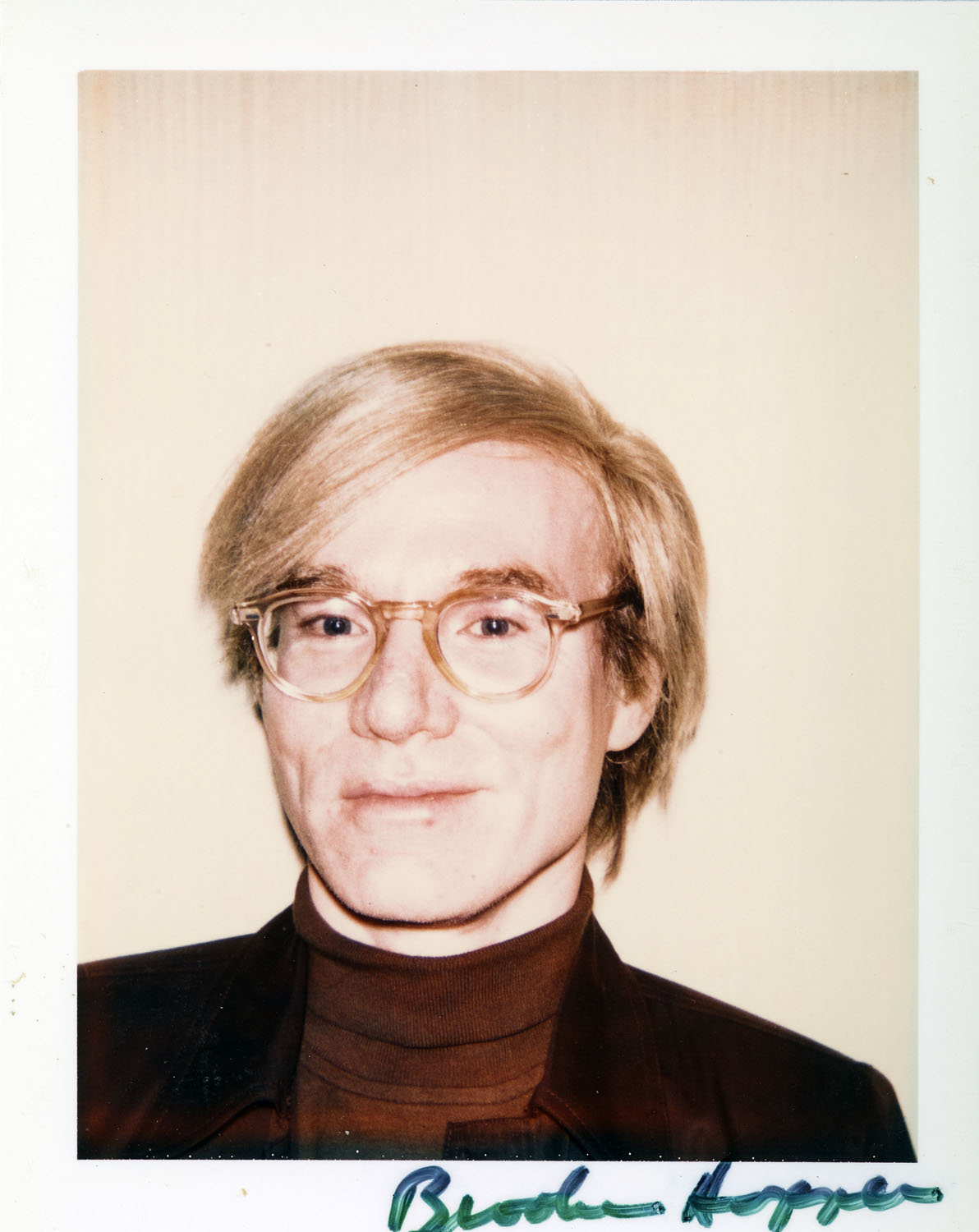
 

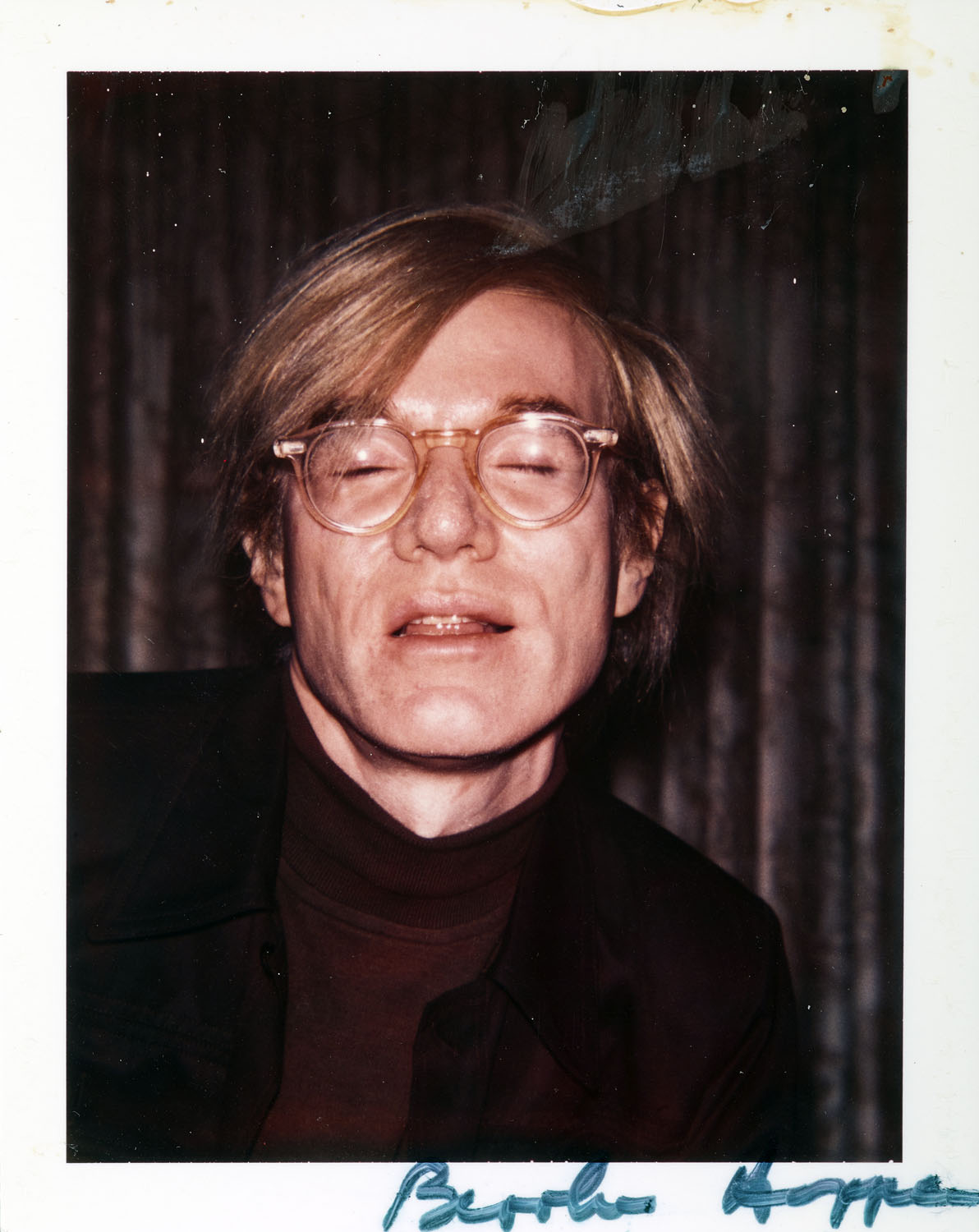
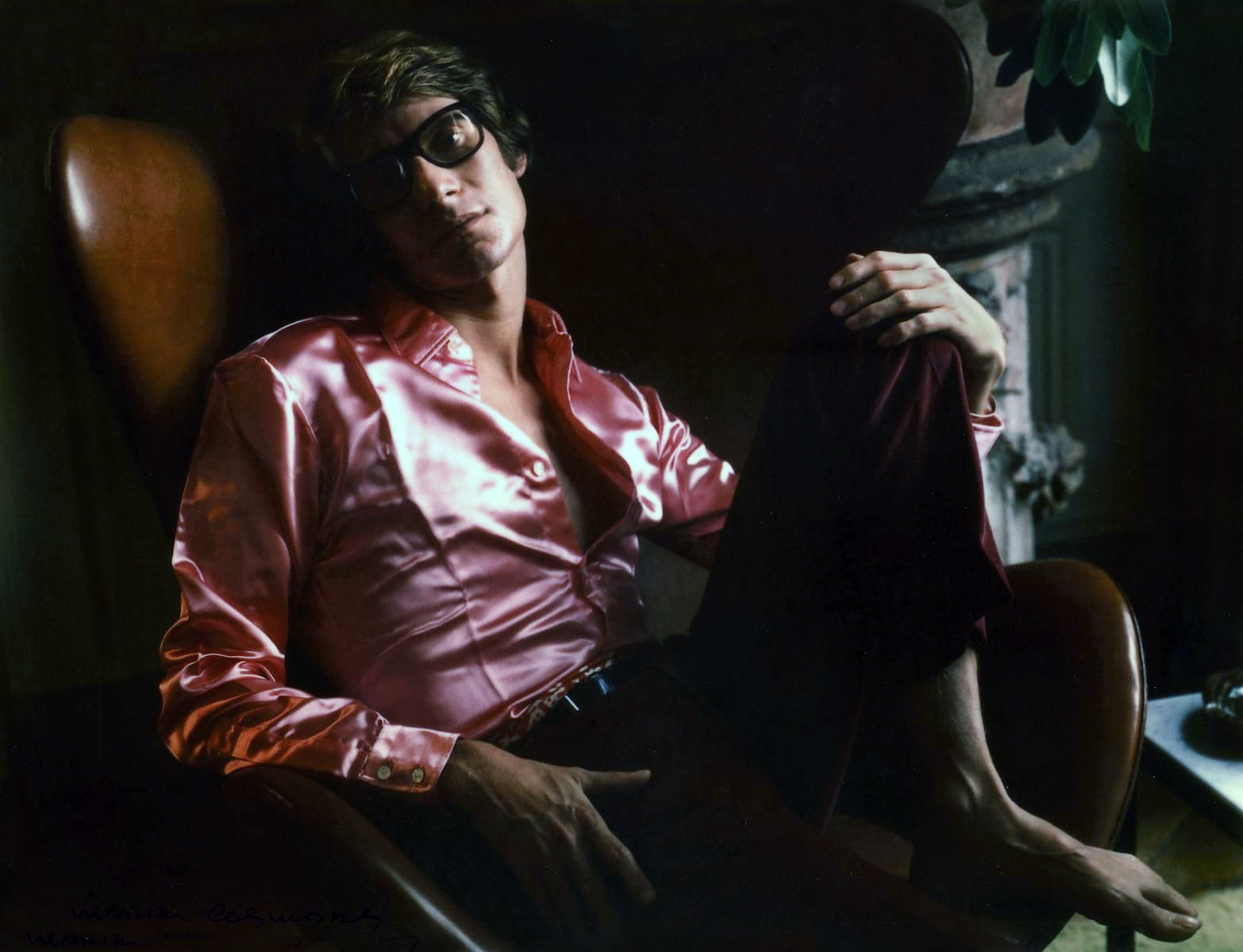
Andy Warhol (American, 1928-1987) 'Warhol, Andy' 1972


Andy Warhol (American, 1928-1987)
Warhol, Andy
1972
Polaroid
10.8 x 8.6cm
Museum Ludwig, Cologne
Repro: Historisches Archiv mit Rheinischem Bildarchiv
©2025 The Andy Warhol Foundation for the Visual Arts, Inc. / Licensed by Artists Rights Society (ARS), New York


I went for a new passport photograph yesterday and the nice person took the first photographs, looked at them, and then said “too much smile”, close your mouth more, and took them again with no teeth exposed and my mouth in a thin, rictus line.

How do our “photographic faces” differ from our everyday faces?

Does not smiling in a photograph prevent us from displaying our individual personality?

What different types of smile are there and what do they signify?

“Smiles are complex, with researchers identifying up to 19 types ranging from genuine joy to social masking, with only six occurring during positive emotions. Key types include the genuine Duchenne smile (involving eyes), polite social smiles, and non-enjoyment smiles like contempt or discomfort, signalling various emotional, social, or, in some cases, aggressive messages.”1

Smiling does not just depend on social norms but researchers have found it may actually be programmed into our DNA, creating in built reactions to certain situations.2 From the miserable smile, to the dampened smile, qualifier smile, contempt smile and fear smile, there are many ways we can interact with others and with the camera lens.

From this distance in Australia and having not see the exhibition in person I can’t tell you whether this exhibition addresses the issues of different smiles pictured in photography but it seems unlikely given the text and media images.

For more information on facial expressions please see my text Facile, Facies, Facticity (January 2014) which examines the facticity of the face, in which only through the “thrownness” of the individual rendered in the lines of the human face can we engage with the intractable conditions of human existence.

Say cheese!

Dr Marcus Bunyan


1/ Zaria Gorvett. “There are 19 types of smile but only six are for happiness,” on the BBC website, 10 April 2017 [Online] Cited 06/03/2026

2/ Ibid.,


Many thankx to Museum Ludwig for allowing me to publish the photographs in the posting. Please click on the photographs for a larger version of the image.
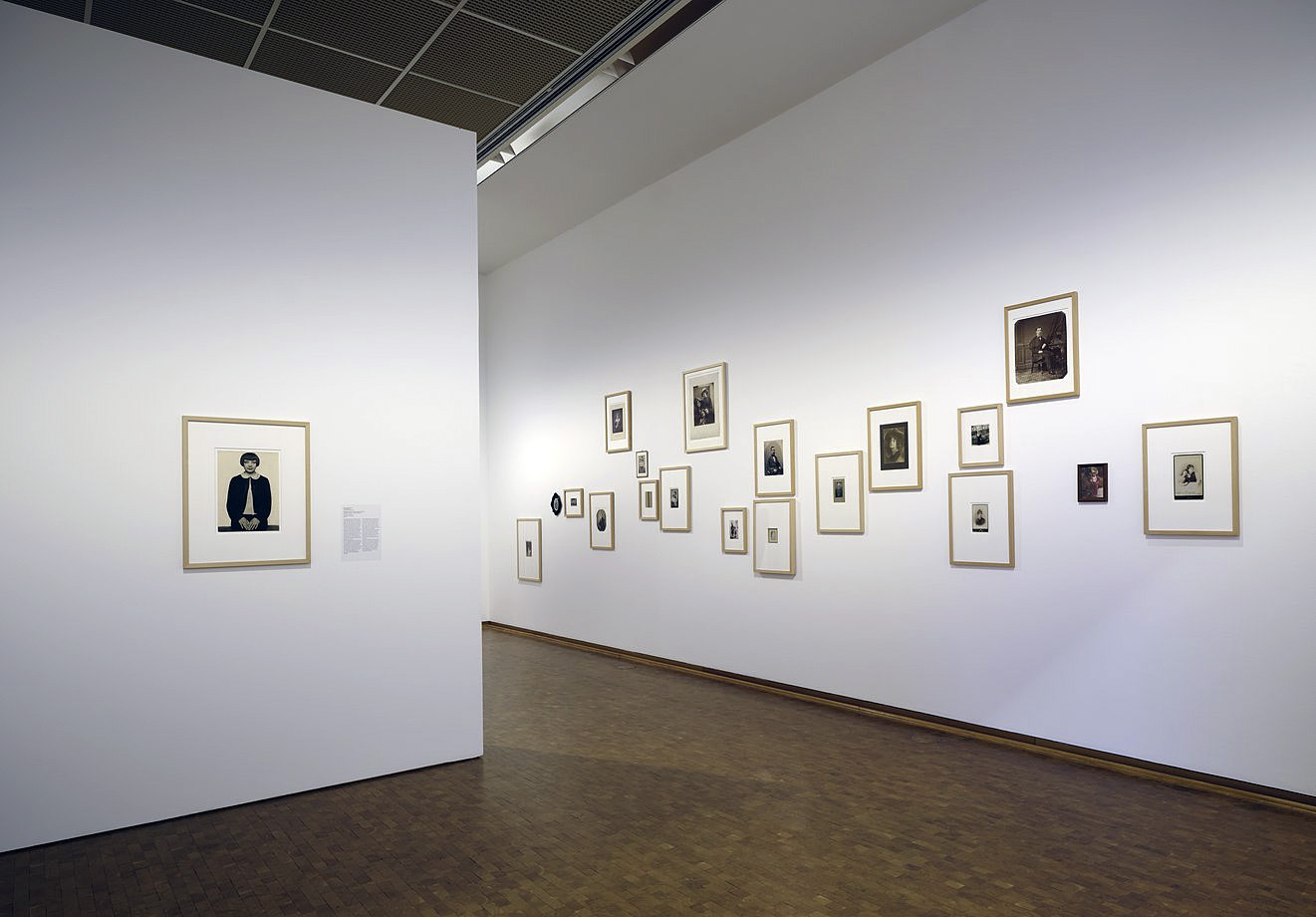


Installation view of the exhibition 'Smile! How the smile came into photography' at the Museum Ludwig, Cologne, November 15, 2025 - March 22, 2026 showing at left, Hugo Erfurth's 'Hildegard Seemann-Wechler (painter)' (1929)


Installation view of the exhibition Smile! How the smile came into photography at the Museum Ludwig, Cologne, November 15, 2025 – March 22, 2026 showing at left, Hugo Erfurth’s Hildegard Seemann-Wechler (painter), (1929, below)
Photo: Historisches Archiv mit Rheinischem Bildarchiv/ Mark Weber
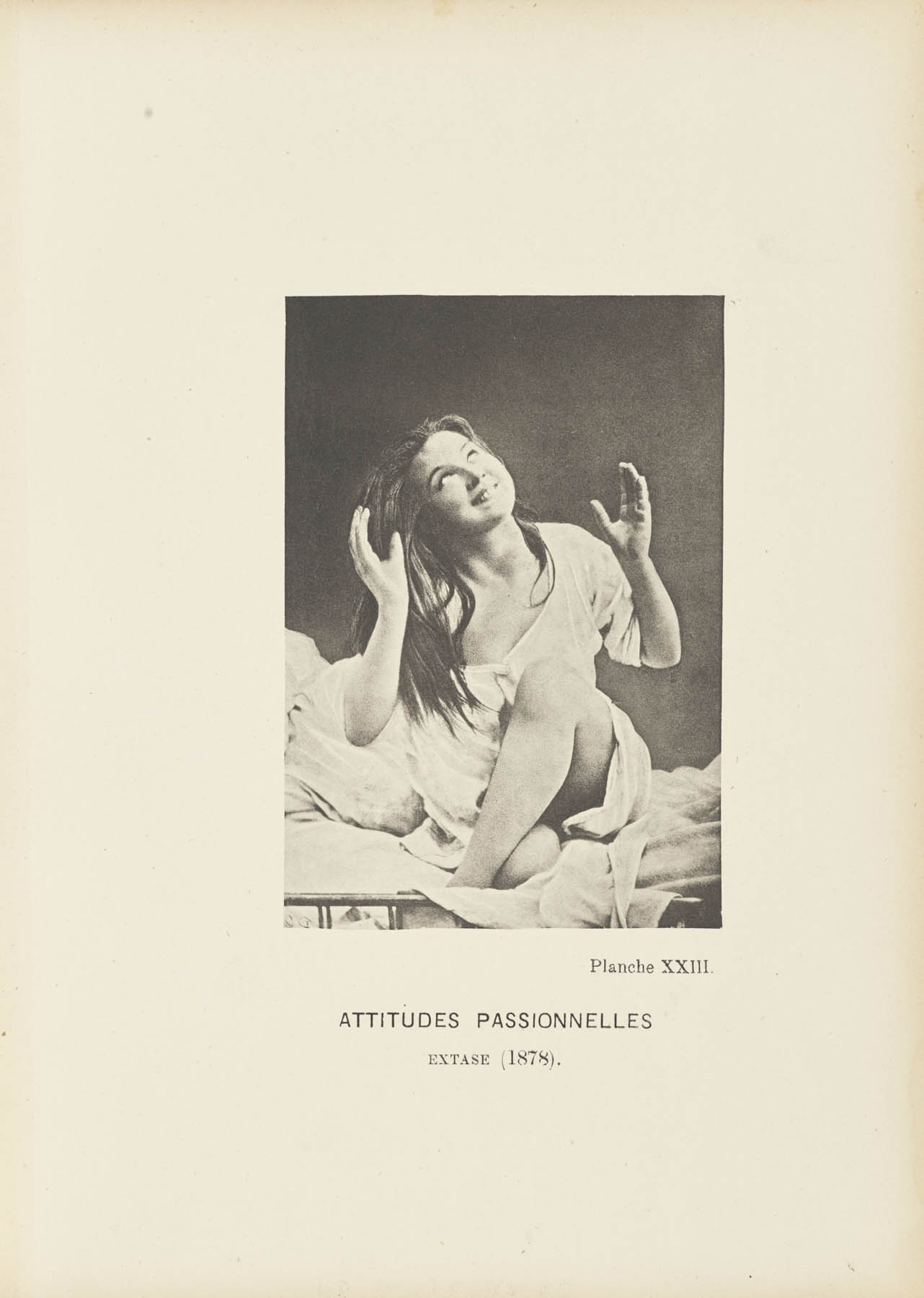
 

Paul-Marie-Léon Regnard (French, 1850-1927) 'Passionate Ecstatic Position/Expression' 1878 Part of 'Iconographie Photographique de la Salpetriere' (Service de M. Charcot)


Paul-Marie-Léon Regnard (French, 1850-1927)
Passionate Ecstatic Position/Expression
1878
Part of Iconographie Photographique de la Salpetriere (Service de M. Charcot)
Photogravure
Image: 10.3 × 7.1cm (4 1/16 × 2 13/16 in.)
The J. Paul Getty Museum, Los Angeles

NB. PHOTOGRAPH IS NOT IN THE EXHIBITION
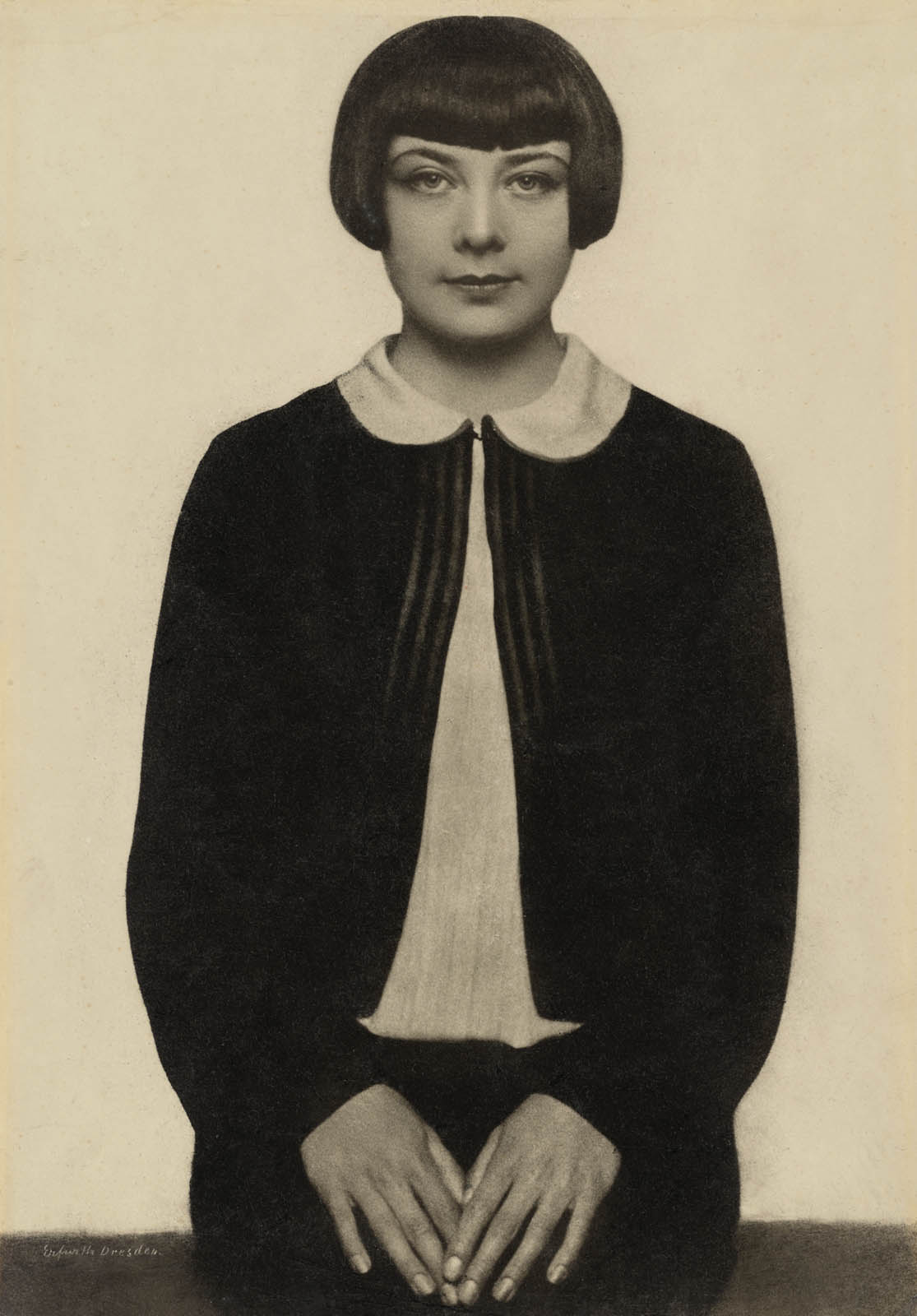
 

Hugo Erfurth (German, 1874-1948) 'Hildegard Seemann-Wechler (painter)' 1929


Hugo Erfurth (German, 1874-1948)
Hildegard Seemann-Wechler (painter)
1929
Oil pigment print on cardboard
38.3 x 26.6cm
Museum Ludwig, Cologne
Repro: Historisches Archiv mit Rheinischem Bildarchiv


When Hildegard Seemann-Wechler had her portrait taken in Hugo Erfurth’s studio in Dresden, she was studying painting with Otto Dix. The strict frontality of this picture, the neutral background, and the direct gaze into the camera are softened by the slight hint of a smile at the corners of the artist’s mouth. Hildegard Seemann-Wechler’s bob hairstyle identifies her as a New Woman who rejects conservative role models. Her portrait breaks with the tradition of serious facial expressions in the 19th century and marks the threshold between not smiling and smiling. Collection presentations like this help us to explore our own works. On the back of this picture, the name “Hilde Wächler” is written in pencil. It was only during the preparations for Smile! that we noticed the mistake and were able to assign the person portrayed to her real name. In 1940, Hilde Seemann-Wechler was murdered by the Nazis.


Hildegard Seemann-Wechler (German, 1903-1940)

Hildegard Wechler came from a bourgeois background. She began her studies at the Staatliche Akademie für Kunstgewerbe in Dresden and moved to the Dresdener Kunstakademie in 1921, where she studied with Richard Müller, Robert Sterl, Ludwig von Hofmann and from 1927 with Otto Dix, three semesters of which as an individual student. In particular, she was supported by Sterl and Dix. Since that time she was friends with Eva Schulze-Knabe and Fritz Schulze. Since Hans and Lea Grundig also studied at the academy, it can be assumed that she also had contact with them.

After her studies, Hildegard Wechler worked in Dresden as a freelance artist. In 1929 she married the painter Herbert Seemann (1900-1945). In 1931, she had the first symptoms of mental illness. The doctors diagnosed an incurable schizophrenia and referred her to the Landesheil- und Pflegeanstalt Arnsdorf. She spent eight and a half years there. She was forcibly sterilized at the State Women’s Hospital Dresden.

In 1940 she was transferred to the Landesheil- und Pflegeanstalt Leipzig-Dösen, on 18. June 1940 to the Heil- und Pflegeanstalt Großschweidnitz. On the 3rd In September 1940, a transport commando brought her to the Pirna-Sonnenstein killing center. She was murdered there shortly afterwards as part of the euthanasia “Aktion T4” as one of at least 14,751 victims of this institution, including the Dresden painters Gertrud Fleck and Elfriede Lohse-Wächtler, in the gas chamber disguised as a bathroom.

Text from the German Wikipedia website translated by Google Translate
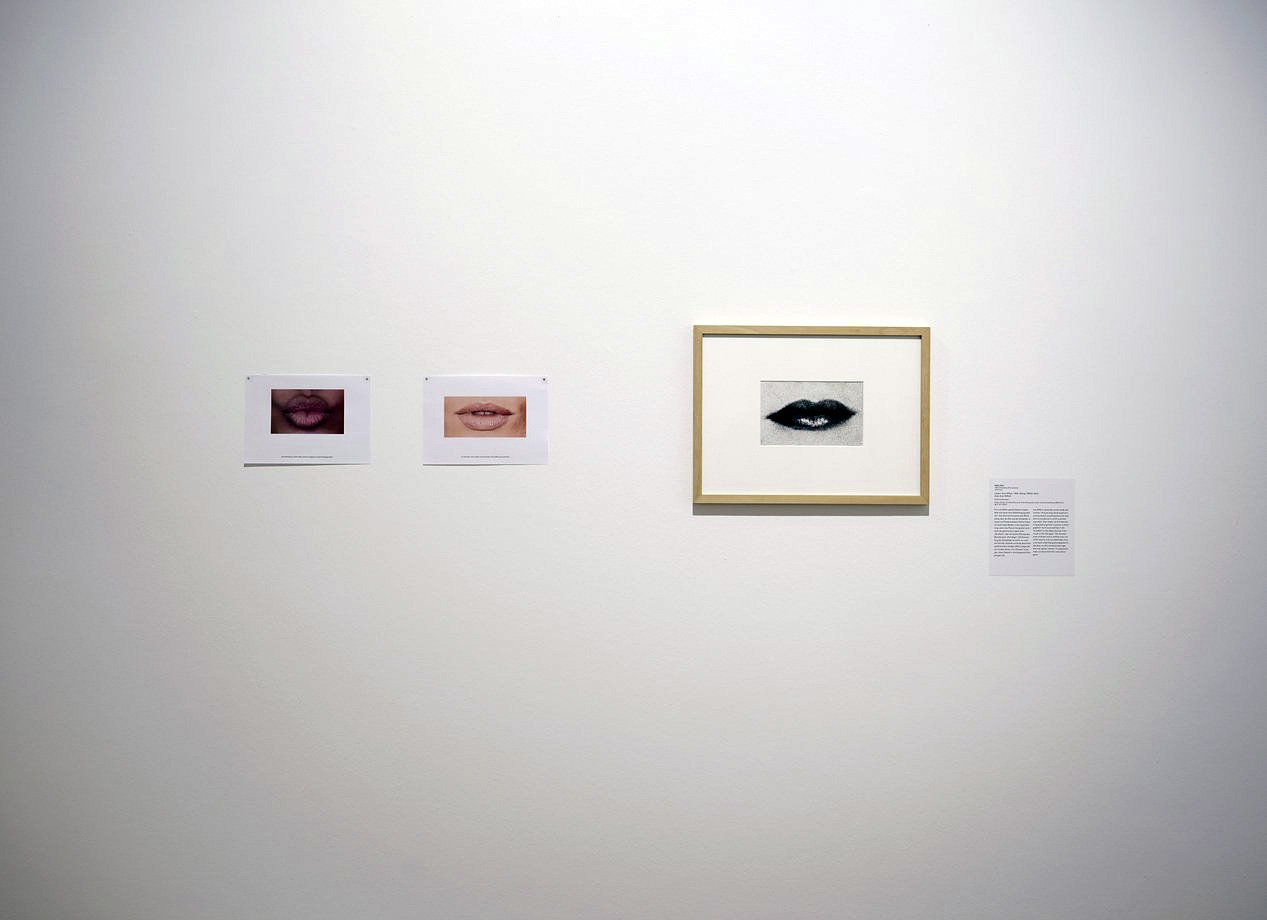
 

Installation view of the exhibition 'Smile! How the smile came into photography' at the Museum Ludwig, Cologne, November 15, 2025 - March 22, 2026 showing at right, Man Ray's 'Lips, (Lee Miller)' (1930)


Installation view of the exhibition Smile! How the smile came into photography at the Museum Ludwig, Cologne, November 15, 2025 – March 22, 2026 showing at right, Man Ray’s Lips, (Lee Miller), (1930, below)
Photo: Historisches Archiv mit Rheinischem Bildarchiv/ Mark Weber
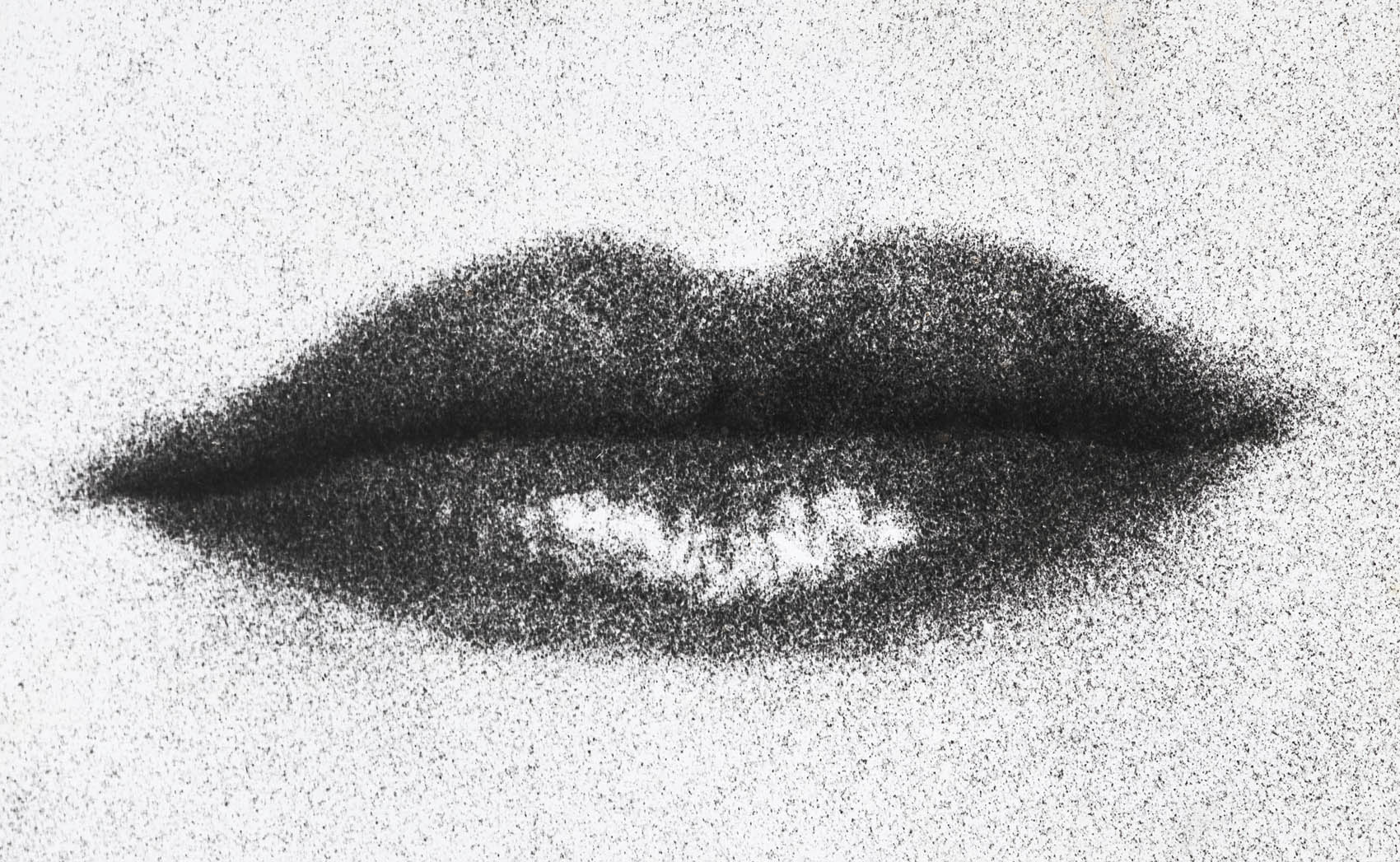
 

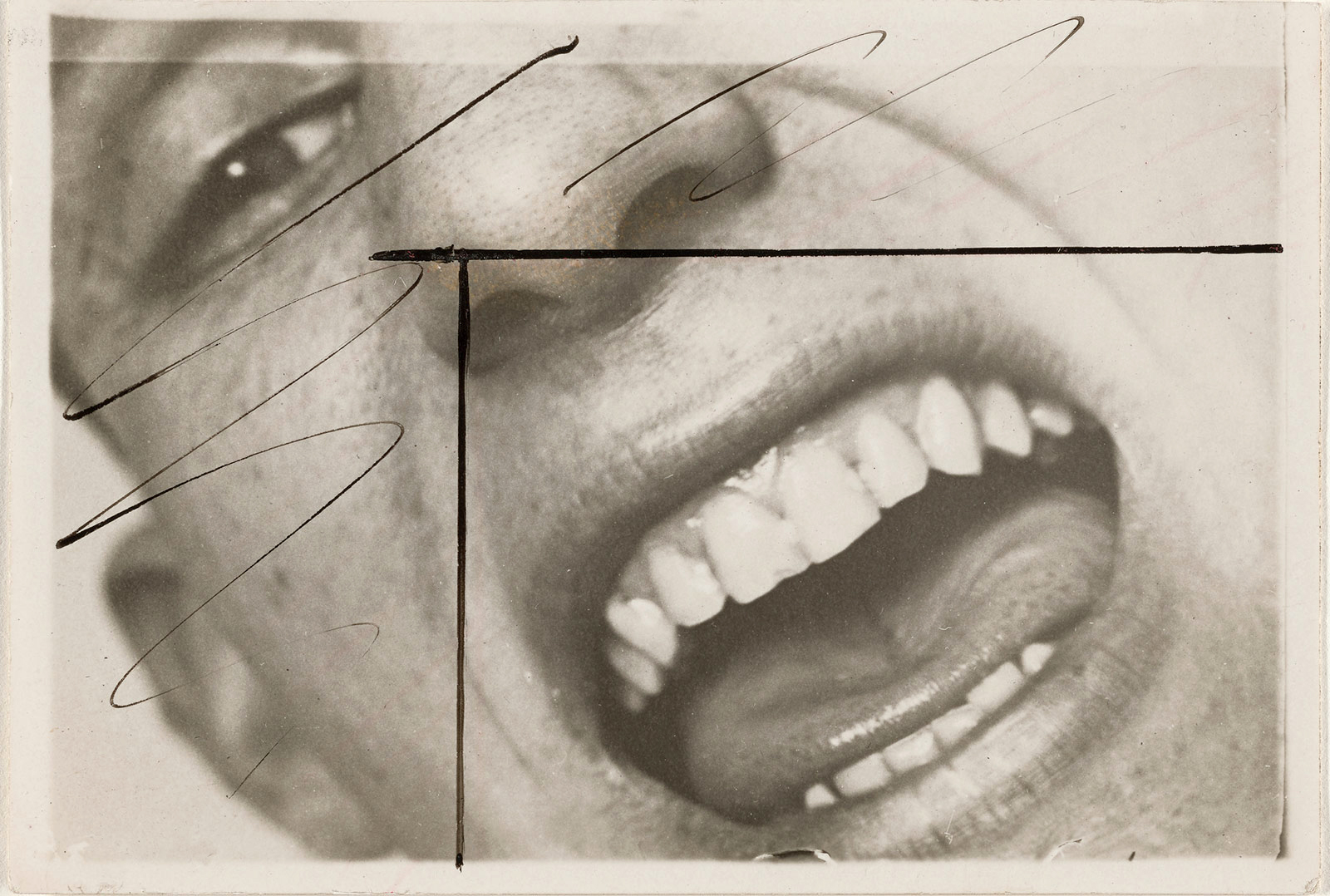
Man Ray (American, 1890-1976) 'Lips, (Lee Miller)' 1930


Man Ray (American, 1890-1976)
Lips, (Lee Miller)
1930
Print
21 x 25.5cm
Museum Ludwig, Cologne
Repro: Historisches Archiv mit Rheinischem B


Lee Miller’s closed lips reveal hardly any emotion. And yet every facial expression communicates something about the time and circumstances in which a portrait was taken. Even today, we find fashions in lip positioning when a person is photographed – such as pursed lips in the “duckface” or the slight opening of the mouth in the “fish gape.” The development of dental care is certainly only one of the reasons why we statistically show more teeth when being photographed today than we did a hundred years ago, and why saying “cheese” is supposed to make our faces look their most photogenic.


Smizing, squinching, duck face, fish gape, cheese, or prunes: Beauty ideals and social media have given rise to increasingly mercurial trends in portrait photography. Until the late nineteenth century, having one’s photo taken required the sitter to remain absolutely motionless in order to produce a sharp image, which more often than not resulted in a fixed and lifeless expression.

Smile! How the Smile Came Into Photography, presented in the Museum Ludwig Photography Rooms, investigates how our “photographic faces” have evolved over time. The show assembles a range of anonymous and artistic portrait photographs from the nineteenth to the twenty-first century to recount a history of the smile.

Whether or not we smile when being photographed, or whether we show our teeth, depends on social norms and the photographic technology available. In 1878, the photographer Josef Janssen observed that “the awkward situation in which a person finds themselves at the moment of having their photo taken is in itself enough to prevent them from displaying their individual personality. Motionless and with a fixed gaze, their head leaning on that dreaded, detestable head rest, they are required for a set period of time to stare at a certain point in space that generally offers the eye nothing of interest. What else could this result in but stiffness and lifelessness?”

The fact that people in the nineteenth century rarely smiled when having their picture taken in a photographic studio also reflected contemporary norms regarding how one should appear in a portrait, norms based on conventional ideas of class, gender, and context. Emotions were considered a private matter that had no place in a portrait.

The emergence of silent film played a key role in the appearance of the smile in twentieth-century portraits. Facial expressions were used to convey emotions, filling the frame in tight close-up shots. Parallel to this, headshots increasingly replaced full-body portraits. Then came advertising, where the beaming smiles of actors served to embody the allure of products. The corners of the mouth began to rise ever upward. A 2015 study of student portraits in American yearbooks revealed that smiling in photographs has consistently increased since the start of the twentieth century, with results confirming that women smile more than men. A trend toward increased facial expressiveness can be observed the world over. A look at fashion photography, however, shows that status and coolness are conveyed with barely a smile. As early as 1927, the sociologist Siegfried Kracauer noted that the world – and thus the people in it – had taken on a “photographic face.” The presentation at the Museum Ludwig aims to show that this observation still holds true today and that the smile has a history.

The show is accompanied by a publication with a text by Katharina Sykora. #PhotographyFaces #MLxPhotography

Press release from Museum Ludwig
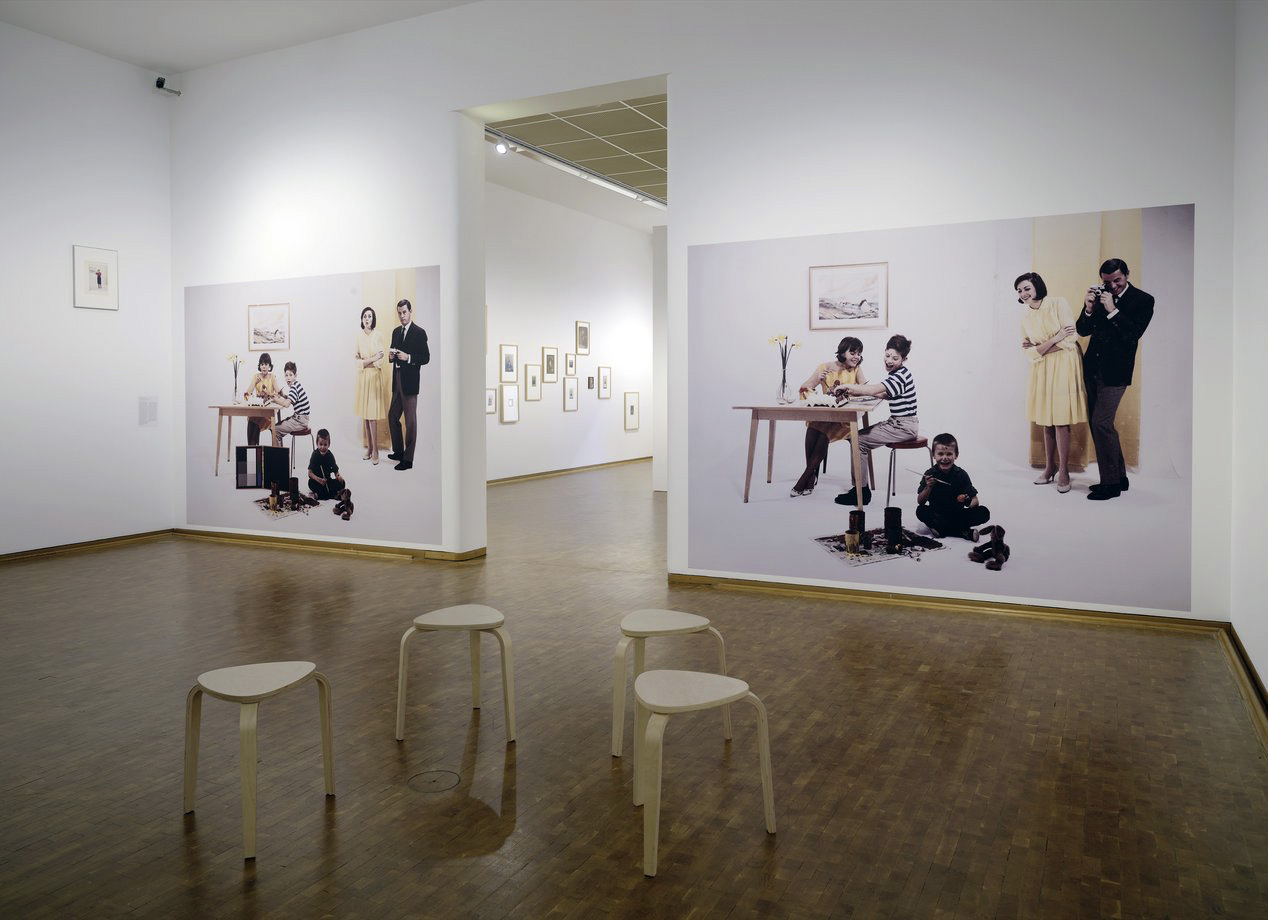
 

Installation view of the exhibition 'Smile! How the smile came into photography' at the Museum Ludwig, Cologne, November 15, 2025 - March 22, 2026 showing Agfa advertising test, around 1965


Installation view of the exhibition Smile! How the smile came into photography at the Museum Ludwig, Cologne, November 15, 2025 – March 22, 2026 showing Afga Advertising tests (around 1965, below)
Photo: Historisches Archiv mit Rheinischem Bildarchiv/ Mark Weber


These two photographs can be found in the archives of Agfa’s advertising department, which are now kept at the Museum Ludwig. While the color chart in one picture reveals that it is an informal test shot for the photographer, the other picture shows the official version of the advertisement. Only in the official version is everyone smiling – even the man holding the camera in front of his face to take a snapshot of his family. Since advertising has to communicate people’s happiness with a particular product, it contributed enormously to the spread and normalisation of smiling, laughing people in pictures. This is particularly the case with the advertisement of the photo industry. As Christina Kotchemidova writes in her article “Why we say ‘Chesse’: Producing the Smile in Snapshot Photography”: “Obviously, amateurs learned from advertisements (…). The visuals ensured that the advertising ideal was accurately replicated, thus making popular photography an extension of advertising culture.”
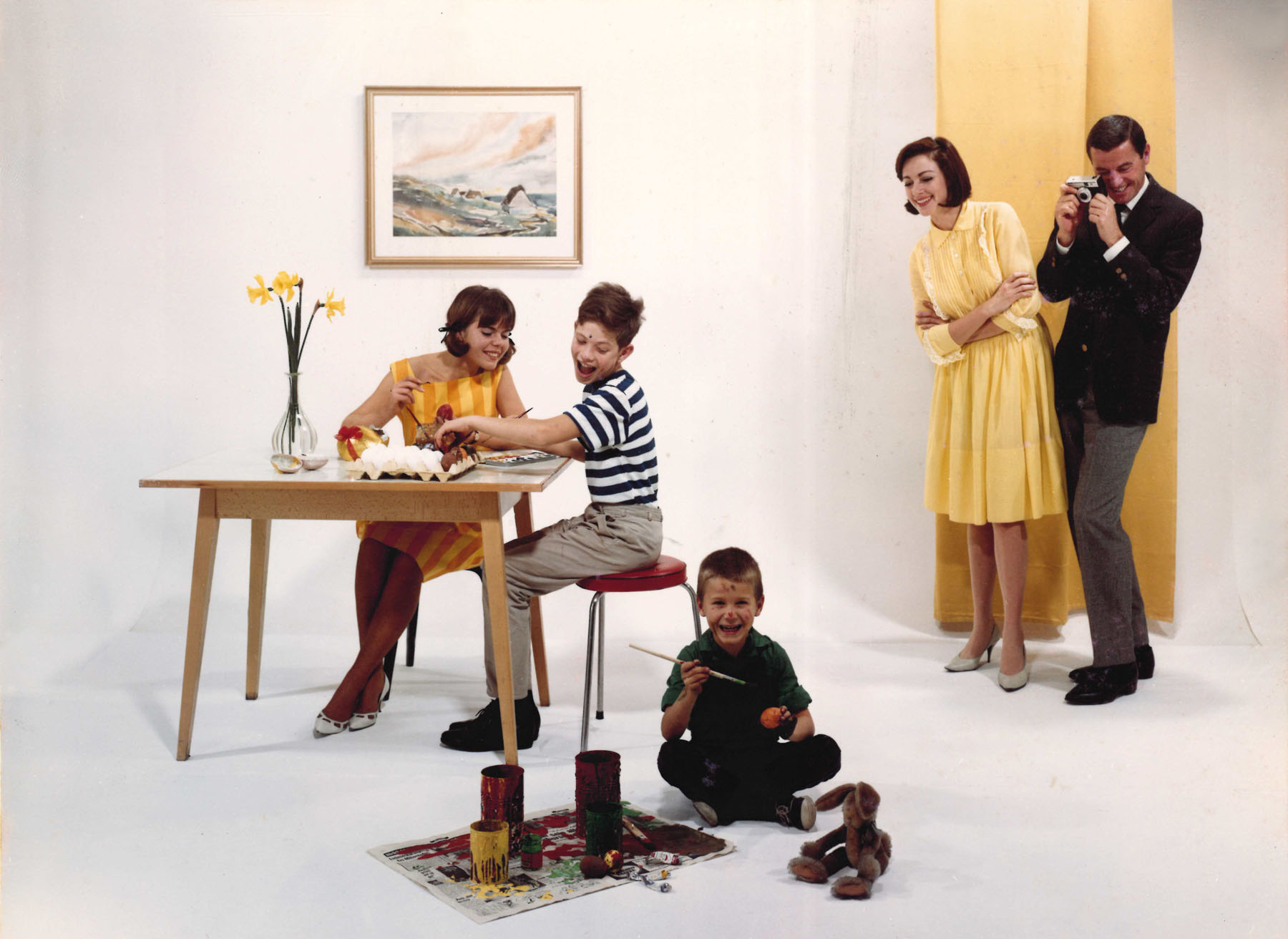
 

Unknown Photographer. 'Agfa advertising test' around 1965


Unknown Photographer
Agfa advertising test
around 1965
Color photography
Museum Ludwig, Cologne
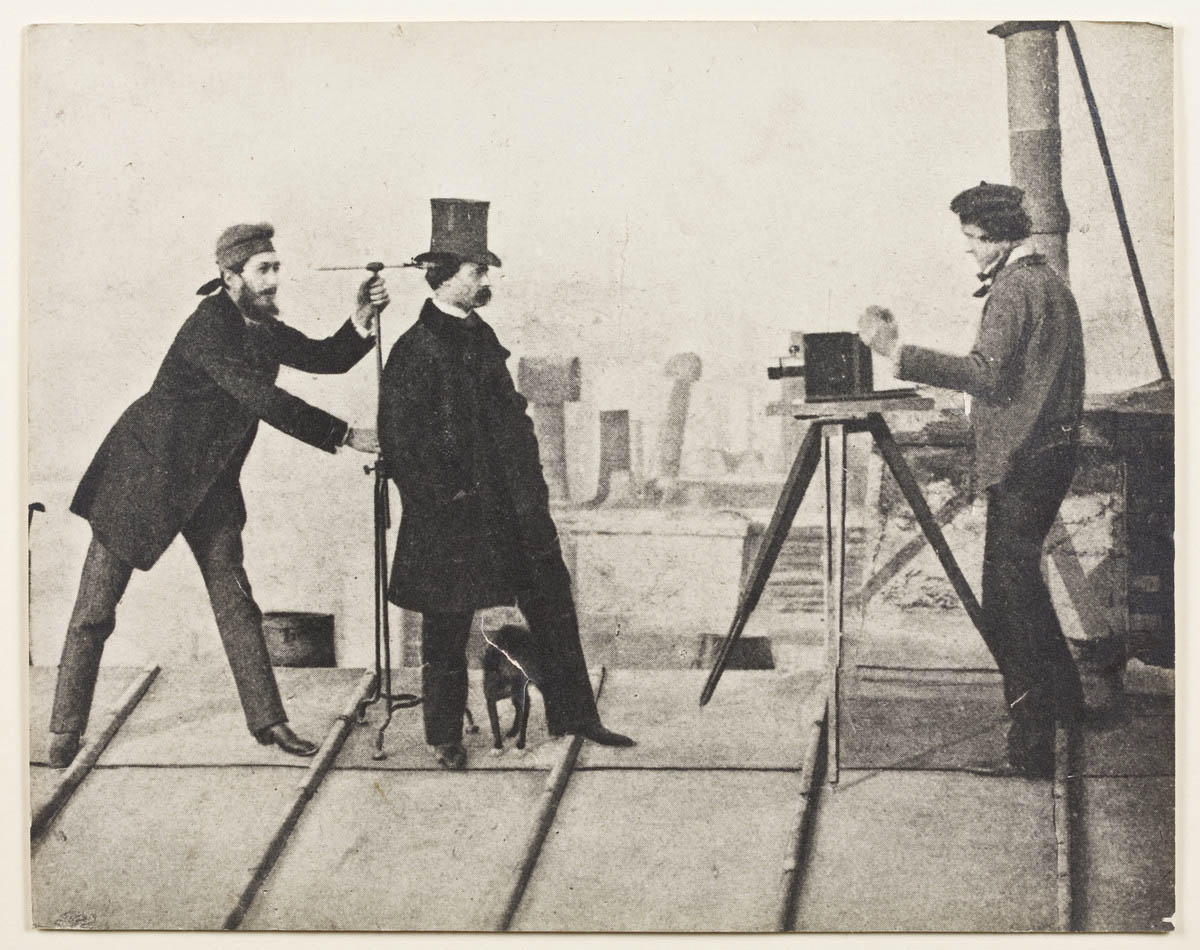
 

'Photo studio on the roof' 1845, illustration from 'Erich Stenger: Siegeszug der Photographie in Kultur, Wissenschaft, Technik' 1950


Photo studio on the roof
1845
Illustration from Erich Stenger: Siegeszug der Photographie in Kultur, Wissenschaft, Technik, 1950
Archiv Museum Ludwig, Köln


The more light there is, the shorter the exposure time when taking photographs. That is why photo studios in the 19th century were often set up in attics with large windows. In good weather, photographs were sometimes taken directly on the roof. Nevertheless, we can still see the head support that kept the person being photographed motionless for the duration of the shot and helped to ensure that the image was sharp. Such head supports were part of the necessary equipment of a photo studio and certainly did not help the subject to relax. In 1878, photographer Josef Janssen observed: “[…] the predicament in which the person finds themselves at the moment of the shot is enough to prevent them from freely expressing their individuality. Leaning against the much-hated and feared, yet indispensable head support, they are supposed to remain motionless and stare intently for a while at a certain point that usually offers nothing for the eye to look at. What else can be the result of this but rigidity and lifelessness?”
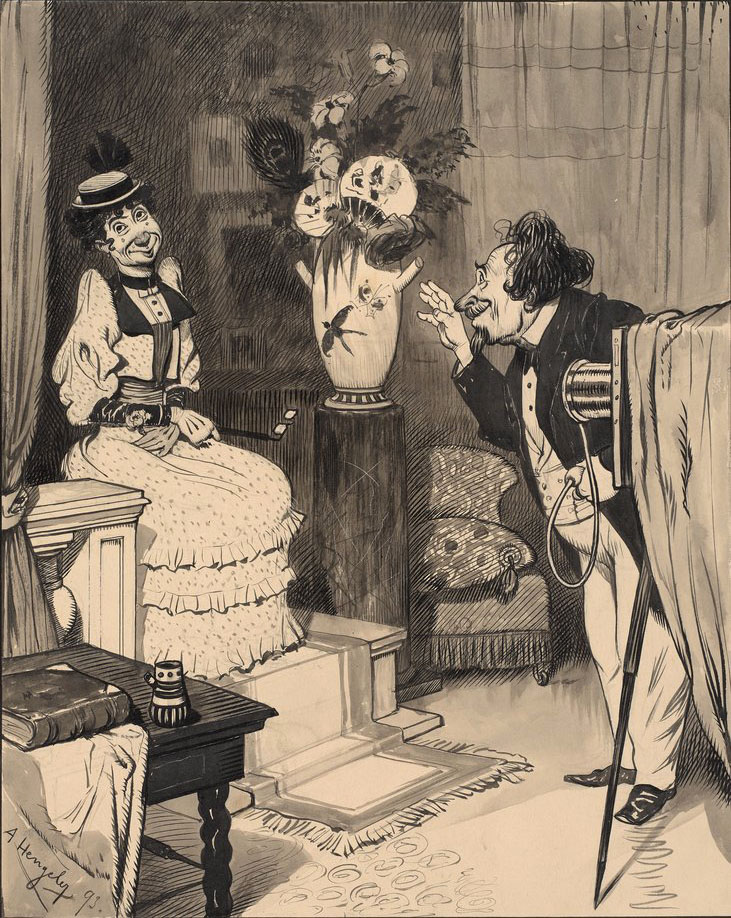
 

Adolf Hengeler (German, 1863-1927) "At the photographer's: 'Now, young lady, please smile nicely and look friendly!…One, two, three!… That's it, thank you! Now you can go back to your natural expression!'" Published in 'Fliegende Blätter' 1893


Adolf Hengeler (German, 1863-1927)
“At the photographer’s: ‘Now, young lady, please smile nicely and look friendly!…One, two, three!… That’s it, thank you! Now you can go back to your natural expression!'”
Published in Fliegende Blätter, 1893
Print
47 x 36.4cm
Museum Ludwig, Cologne
Repro: Historisches Archiv mit Rheinischem Bildarchiv


“Now, young lady, please make a nice and friendly!… One, two, three!… That’s it, thank you! Now you can go back to your natural expression!” This was the caption accompanying the caricature when it was published in the magazine Fliegende Blätter in 1893. The fact that the subject is depicted wearing a clown mask shows, on the one hand, that people were already familiar with smiling “photography faces” at the end of the 19th century and, on the other hand, that the women portrayed were supposed to appear ‘nice’ and ‘friendly’ through their smiles. The fact that there are other types of smiles was already mentioned in Grimm’s dictionary from 1885, such as happy, cheerful, mischievous, furtive, shy, malicious, bitter, scornful, mocking, and forced. In 2020, Carolita Johnson described in her article “‘I don’t have to smile if I don’t feel like it!’: Covid freed me from politeness and unwanted touching” in The Guardian how wearing face masks during the coronavirus pandemic freed her from the pressure of having to wear the mask of the friendly smiling woman.
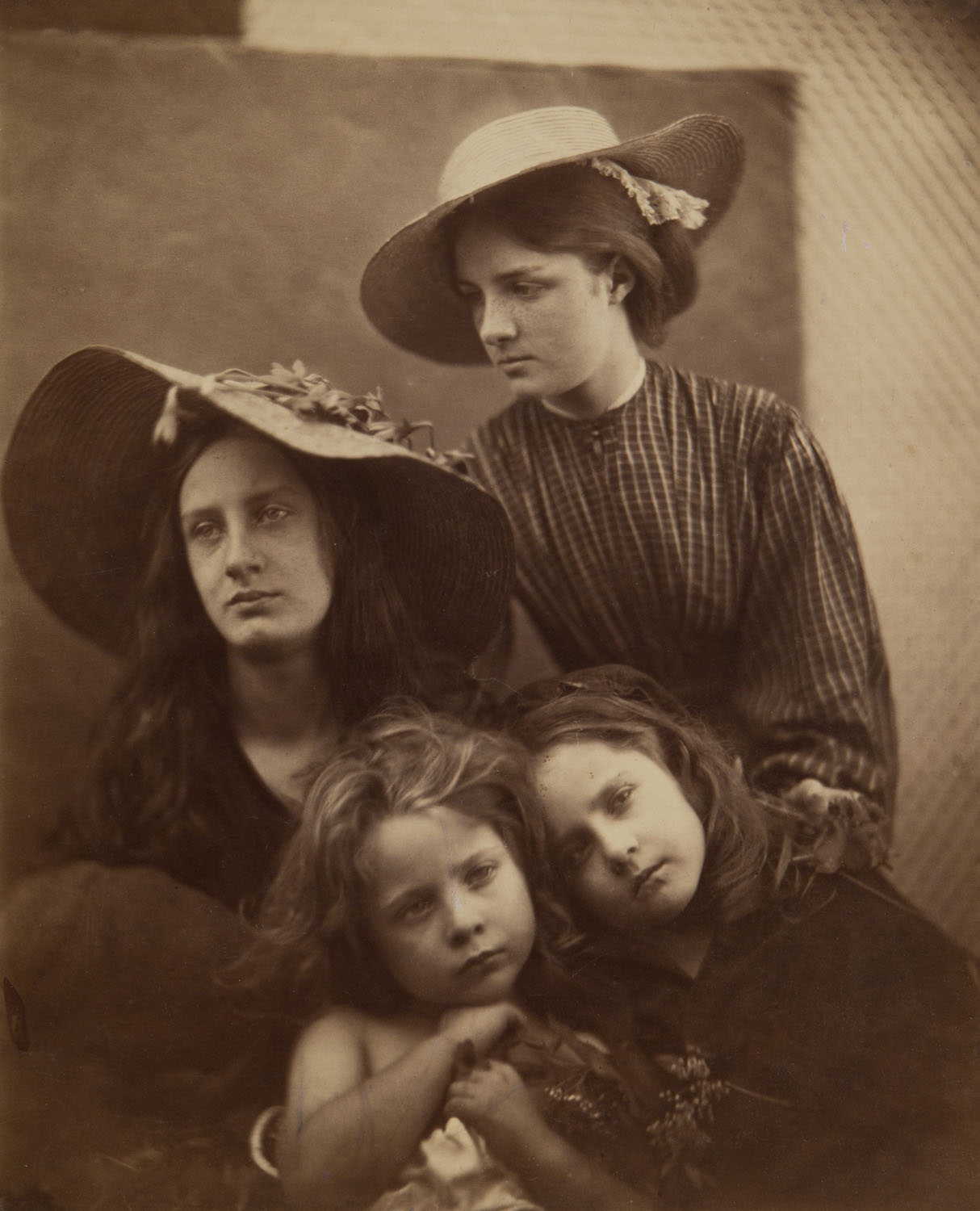
 

Julia Margaret Cameron (English born India, 1815-1879) 'Summer-days' 1866


Julia Margaret Cameron (English born India, 1815-1879)
Summer-days
1866
Albumen print on cardboard
34.0 x 27.6cm
Museum Ludwig, Cologne
Repro: Historisches Archiv mit Rheinischem Bildarchiv
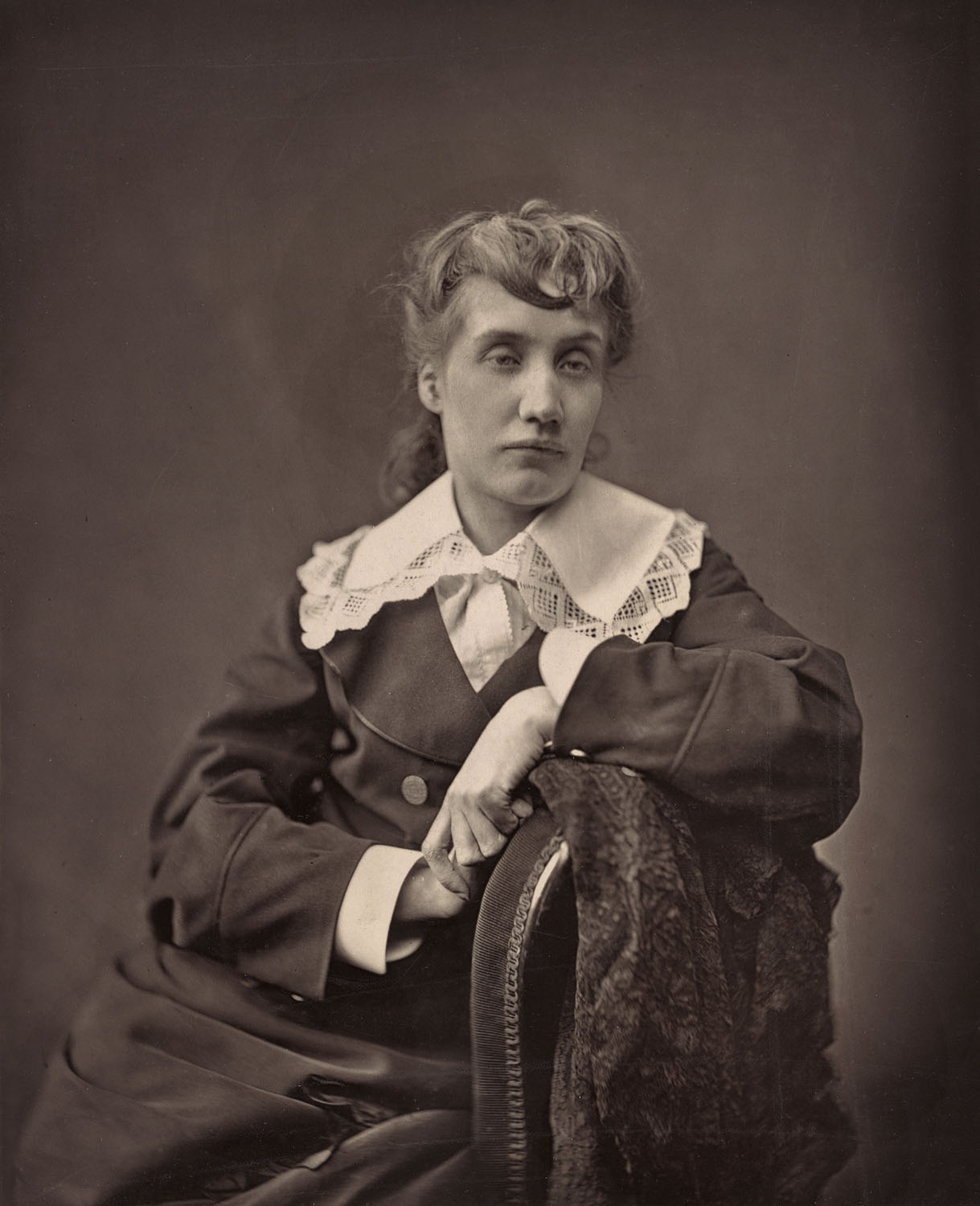
 

Nadar (Gaspard-Félix Tournachon) (French, 1820-1910) 'Portrait of Marc de Montifaut' around 1877


Nadar (Gaspard-Félix Tournachon) (French, 1820-1910)
Portrait of Marc de Montifaut
around 1877
Woodburytype on cardboard
22.9 x 18.6 cm
Museum Ludwig, Cologne
Repro: Historisches Archiv mit Rheinischem Bildarchiv


Gaspard-Félix Tournachon (French, 5 April 1820 – 20 March 1910), known by the pseudonym Nadar or Félix Nadar, was a French photographer, caricaturist, journalist, novelist and balloonist who was a proponent of heavier-than-air flight. In 1858, he became the first person to take aerial photographs. Photographic portraits by Nadar are held by many of the great national collections of photographs. His son, Paul Nadar, continued the studio after his death.


Smiling: A Photographic Balancing Act between Seriousness and Laughter

Katharina Sykora


Between spontaneity and strategy: smiling as an indicator of emotion

In everyday life, a smile immediately inspires feelings of happiness. While today we experience smiling as a spontaneous expression of affection, our understanding of smiling as a legible, socially acceptable facial gesture is the result of centuries of debate. It was oten viewed as an expression that sat midway between seriousness and laughter. Discussions around the nature of the smile gained in intensity in the nineteenth century with the invention of photography, which saw many in the aristocracy and the upwardly-mobile bourgeoisie discovering themselves anew in portrait studios. Meyers Encyclopaedia (1865) describes smiling as a weaker version of laughing because “it lacks the intermittent exhalation,”1 while in his remarks on The Expression of the Emotions in Man and Animals (1872), Charles Darwin describes laughter as “the full development of a smile or … a gentle smile as the last trace of a habit, firmly fixed during many generations, of laughing.”2 In both cases, smiling is cast not as an emotion in its own right but as a relative form derived from a strong, joyful feeling. This contrasts with the expressive range of smiles allowed for by the Brothers Grimm: “Smiling,” they write in their German Dictionary (1885) “may be friendly, happy, cheerful, affectionate, gentle, mischievous, furtive, shy, even malevolent, biter, mocking, scornful, or forced.”3

This highlights the long-standing controversy that has historically accompanied discussions around smiling and that continues today. On the one hand, a smile is evaluated based on where it is perceived to sit on a spectrum between seriousness and laughter and – depending on its proximity to either extreme – subjected to positive or negative moral, societal, or aesthetic judgements. On the other hand, because the spectrum between seriousness and laughter contains many nuances, smiling is perceived as a versatile
expression that can attest to a variety of different feelings and communicate a broad range of meanings in social interactions depending on the socio-historical context. The first perspective tends to view smiling within normative parameters, while the second situates it within a kaleidoscope of micro-sociological observations.

An important question running through historical and historiographical discussions of seriousness, smiling, and laughter asks whether these are expressions of inner emotion or learned facial gestures and behaviour patterns. In other words, whether laughing and smiling are anthropological constants common to all humans as immediate expressions of emotion, or whether they are a strategic means of communication used to one’s own advantage in specific situations.

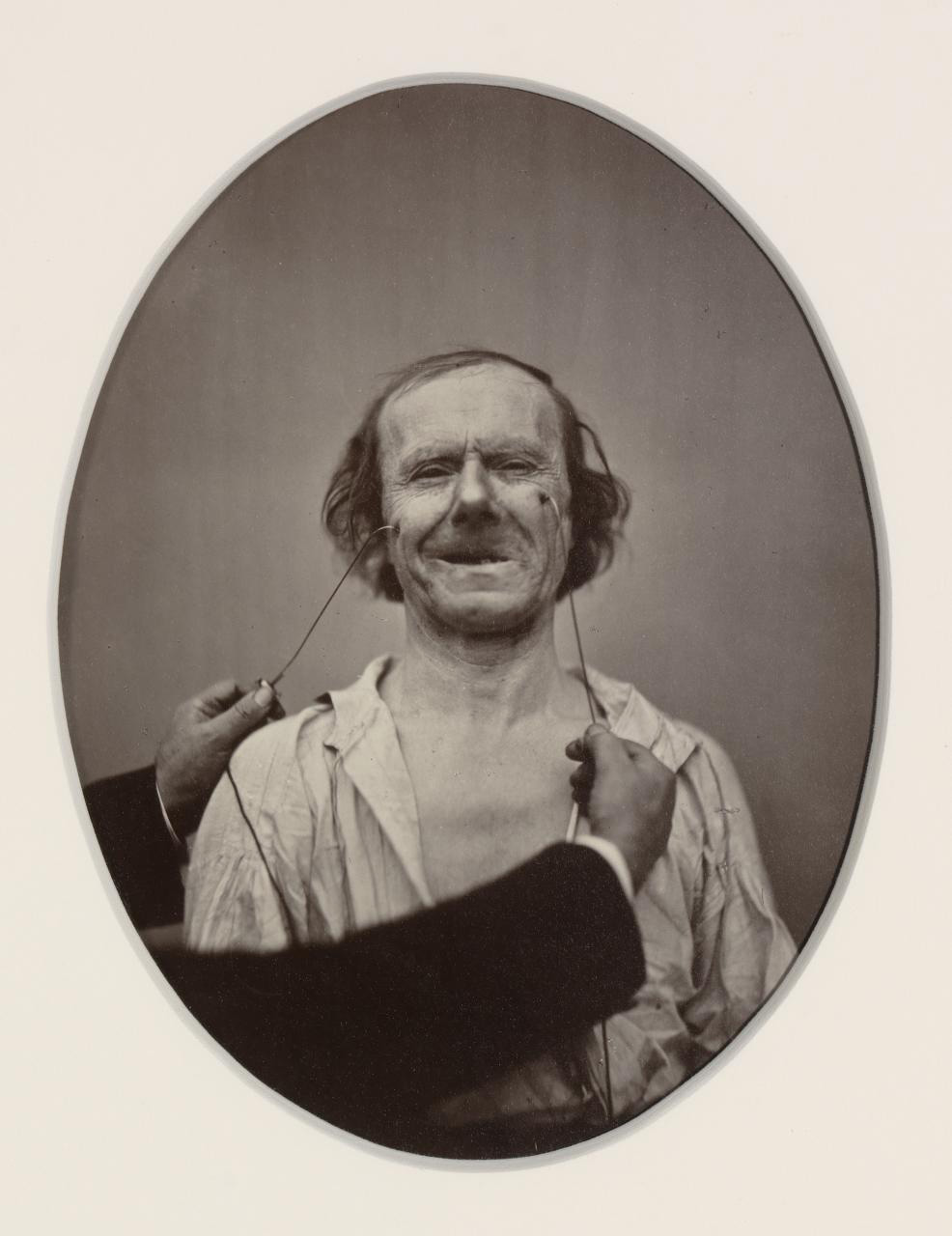
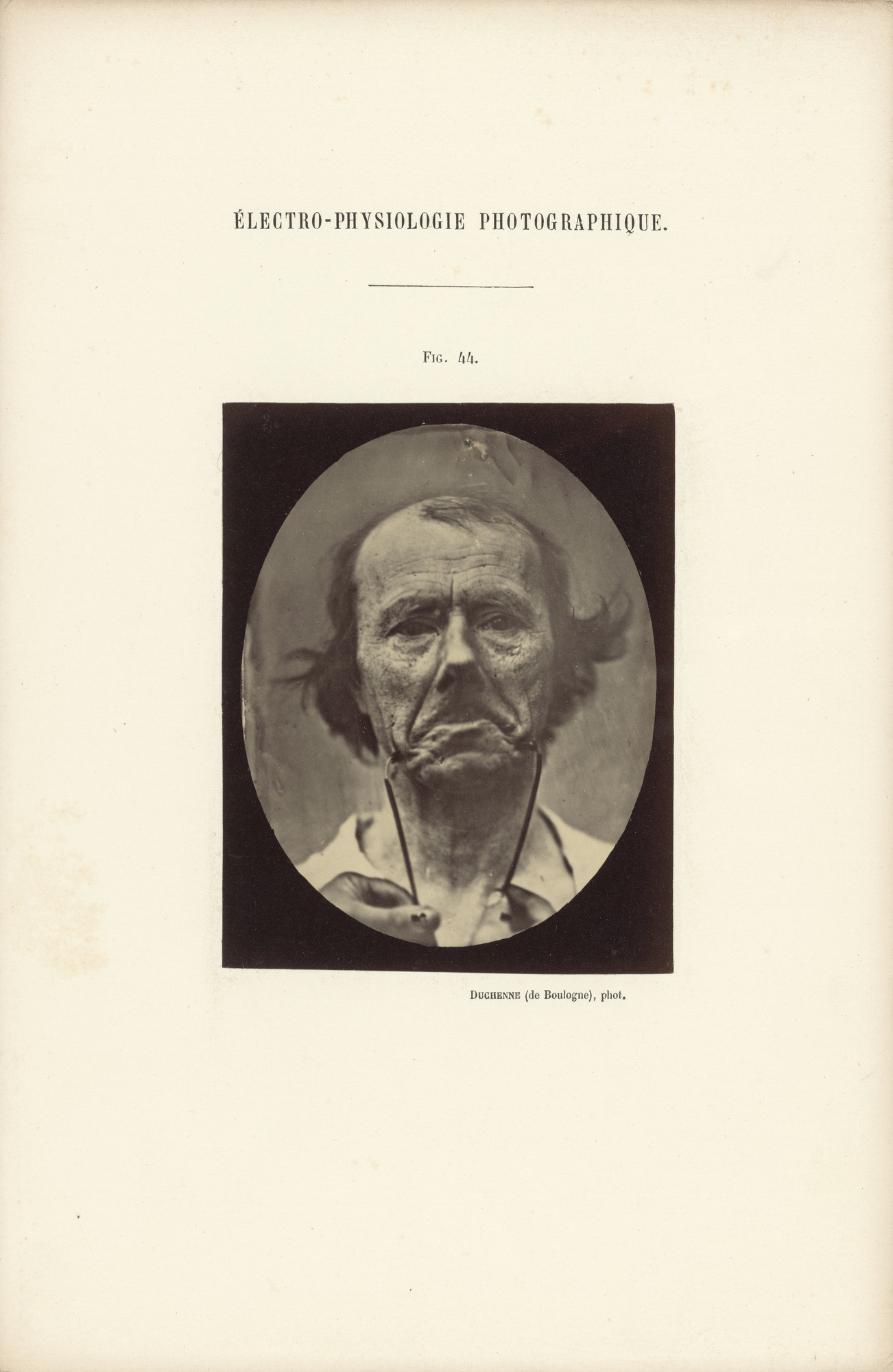
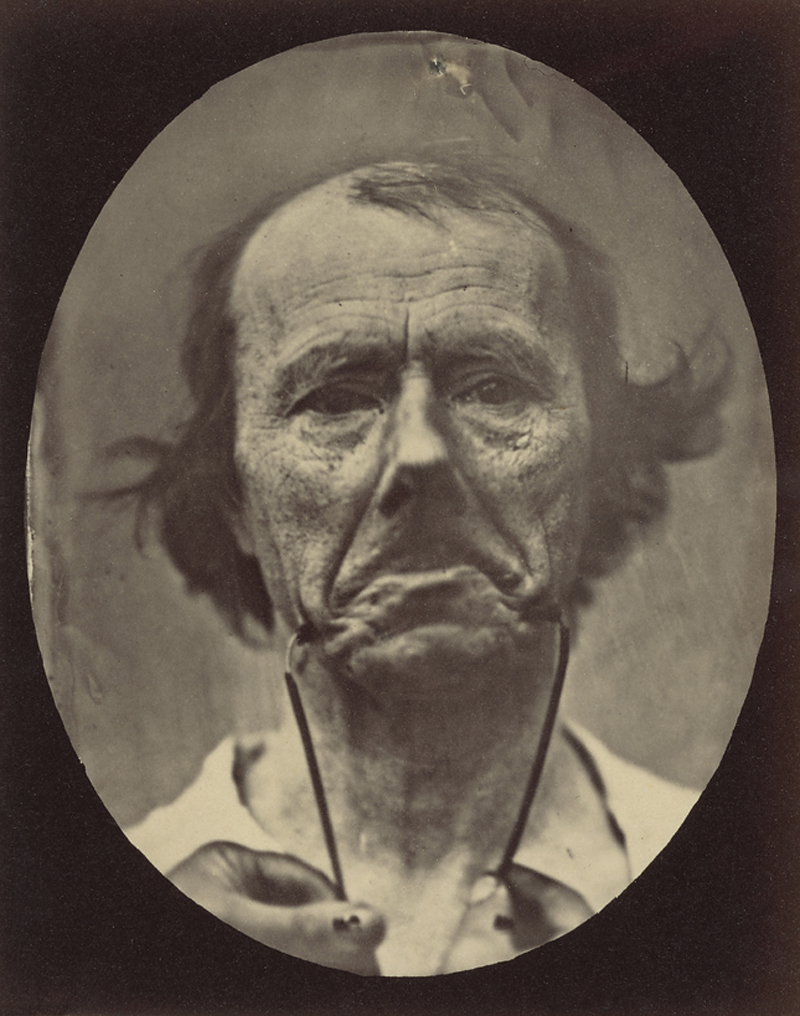
In the mid-nineteenth century, photography played a prominent role in this debate. In his book The Mechanism of Human Facial Expression, published in 1862 and containing a hundred photographs,4 the doctor and physiologist Guillaume-Benjamin-Armand Duchenne de Boulogne presented an experiment in which he used targeted electric shocks to trigger a wide range of expressions on a test person whose facial nerves lacked sensation. One of these included a homogenous smile involving all of his features that resembled the kind of
facial expression observed in everyday settngs. But Duchenne was also able to trigger paradoxical facial expressions that could only be induced by electric shocks, such as a smiling mouth combined with eyes and forehead contorted by pain. Through such experiments, Duchenne sought a systematic “orthography of a supposedly universal language”5 of human physiognomy in order to render it more legible. Paradoxically, he disconnected inner affects from their outer manifestations while connectng them all the more strongly in terms of their
meaning, as when, by analogy with the laughing muscle, he describes the nasalis (nose) muscle as a “muscle of aggression” or the frontalis muscle (that moves the eyebrows) as a “muscle of suffering.”6

One far-reaching side effect of Duchenne’s test setup was the realization that
manifestations of human emotion can be manufactured without necessarily corresponding to a felt equivalent. By twinning electro-physical and photographic procedures, Duchenne proved in the field of science what had long been commonplace in the world of the theater – where professional actors routinely simulate emotions – and everyday life – where individuals control their expressions when interacting with others. In this way, Duchenne contributed his “theater of science”7 to the list of “production sites” for the decoupling of facial expression from emotion, where it joined the theatrical stage and milieus of social interaction.

At the same time, Duchenne’s use of electric shocks to produce expressions revealed their dual social function: Anyone could use them as a systematic means of portraying emotion detached from any corresponding internal feeling, and they could be decoded just as systematically by others as “artificial” rather than “natural” displays of sentiment. This benefited another site invested in the social coding of emotions: the increasingly numerous
photographic studios where the middle classes were now able to have portraits made of themselves, creating a specific repertoire of facial expressions as part of a class-specific pose. What these theatrical, scientific, and photographic settings all demonstrate is that seriousness, smiling, and laughter can be performed in a way that is legible. They are part of a social act that always involves two or more people.8 With Duchenne’s contribution to the
visual ordering and classification of seriousness, smiling, and laughter, photography advanced over the course of the nineteenth century to become the primary medium for the representation, communication, and standardisation of emotions. It became a platform for self-portrayal, for the negotiation of social hierarchies and values, and for the establishment and reinforcement of universal forms of emotional expression.

Looking back: a brief discursive and visual history of smiling

The history of smiling, as traced through past discourses and visual representations, reflects the shifts in society’s acceptance of the portrayal of specific emotions and the influence this has had on photographic (self-) presentations of people since the nineteenth century. What immediately becomes clear is that smiling has not always been understood as the midpoint between seriousness and laughter but situated somewhere closer to the later. Even more surprisingly from today’s perspective, laughter and especially smiling historically occupied no place at all in social behaviours and visual representations, and when they did appear, their initial connotations were largely negative.

“Before the twelfth century,” writes the art historian Monika E. Müller, “one can expect to find almost no illustrations of emotion in the form of facial expressions.”9 The reason for this was the dominance of Christian morals, which opposed the portrayal of strong emotions in general. The Greek and Roman Church Fathers shared a negative view of laughter, considering it antithetical to the ideal of a God-fearing person leading a life of humility and atonement. As a result, books of monastic precepts banned laughter as sinful behaviour.10

In the twelfth and thirteenth centuries, grinning devils increasingly appeared in
portrayals of the Apocalypse, there were chortling henchmen along Christ’s route to Calvary, and there were grotesque heads guffawing on the capitals of cathedrals or in the margins of illuminated manuscripts. These polarising counter-figures were depicted as bystanders, relegated to the edges of the sacred realm. Here, laughter was not an expression of cheerfulness but a sign of vice and evil.

In the thirteenth century, smiling made its first appearance as a positive trait in
Christian iconography but was reserved for Mary, the Christ Child, angels, and those souls resurrected into a state of heavenly bliss. Here, too, exceptions gradually emerged: In the portal of the Last Judgement at Strasbourg Cathedral, for example, we find the Prince of this World (c. 1280) flashing a mischievous grin in the direction of a Foolish Virgin with a flirtatiously simpering smile. This erotically charged tête-à-tête takes on a negative tone, however, once one notices that the Prince’s back is being devoured by snakes and vermin. Moreover, the coquette is shown to be doubly foolish – distracted by her “sinful” fleshly desire for a figure whose true nature is hidden from her, unlike the lamenting Wise Virgins, she has unwittingly dropped the oil lamp that was meant to remain lit in anticipation of Christ’s arrival. In this way, depictions of smiling joined those of laughter in Christian iconography, where their differentiation into the beatific and the seductive supported theological morals.

Once smiling began to feature in secular imagery – as in the statue of Margravine Regelinda in the west choir at Naumburg Cathedral (c. 1250) – the binary Christian model underwent a fundamental reevaluation. In the thirteenth century, a tradition of courtly politeness emerged in which smiling carried positive connotations, signalling friendly attentiveness guided by self-restraint. Books on courtly etiquete established gestural moderation as the norm. Smiling was courtly in a double sense: It bound the nobility together through a shared code of conduct while also distinguishing them from the “uncouth” populous.

As the modern age progressed, further differentiation took place. Courtiers amused each other by engaging in witty repartee. Eliciting a subtle smile that acknowledged one’s skill while remaining shielded from ridicule behind a noncommittal smile of one’s own was the basis of an amicable but increasingly competitive court culture. Smiling became an instrument with which to perpetually renegotiate one’s position within the court hierarchy. As a result, the rules governing seriousness, laughter, and smiling became ever more rigid
and complex, so that only a select few courtiers ever mastered the art of it. This in turn created gender and aesthetic norms: Young girls and high-ranking ladies were expected to wholly avoid displays of loud laughter, as they pointed to a lack of self-control in the “weaker sex,” and its distortion of the facial features was considered inappropriate for the “fairer sex.”

In the Renaissance, these norms were applied to portraits of the wealthy burghers of the urban centers. Here, the hint of a smile was considered acceptable, while open laughter was viewed as the hallmark of courtesans, marginal figures at court who, together with the fool or jester, broke with the rules of politeness through displays of untamed conduct while simultaneously affirming them.

A similarly paradoxical relationship emerged in the sixteenth and seventeenth centuries with the rise in popularity of genre paintings, which often depicted members of the lower classes boisterously laughing during exuberant scenes of eating and drinking and were often filled with erotic allusions. These paintings, mostly by Dutch artists, both challenged and affirmed the cultural conventions around laughter, often involving the viewer by establishing direct eye contact, creating a sense of complicity and shared amusement.

By contrast, in the eighteenth century, the aspiring bourgeoisie increasingly set itself apart, imposing stricter limits on exuberant laughter. With reference to the aristocratic norm of disciplined facial expressions, it adopted smiling as its hallmark. At the same time, it distanced itself from the courtly performance of smiling. Since those at court were all trying to functionalise their facial expressions and tame their emotions, it was no longer possible to trust their smiles.11 From the viewpoint of the bourgeoisie, courtly smiling was now
considered unnatural. This reflected changes in affect theory, as Johann Caspar Lavater’s physiognomy and Georg Christoph Lichtenberg’s pathognomy now postulated congruency between facial expressions and inner emotions.12 The “forced” smiles of the aristocrats at court were contrasted with the “genuine,” “heartfelt” bourgeois laughter that did not hurt anyone or assume superiority. However, such amiable laughter among equals was not part of public displays of bourgeois identity. In public and in official portraits, the bourgeoisie presented themselves with a seriousness that matched their social aspirations. The network building, convivial laughter of bourgeois men and the smiles of bourgeois women were reserved for smaller, more intimate formats such as drawings or miniatures. In other words, such displays of emotion were privatised, confined to salons and the home.

Photography and the smile: a tense relationship

At the end of the 1830s, during this transitional phase when bourgeois culture was still navigating between seriousness and smiling, photography emerged as a new medium for recording and representation. Its specific qualities allowed facial expressions to be captured with great precision while also imposing limits on the expression of emotions such as smiling and laughter.

The indexicality of photography – namely, the fact that the subject must have been present while their likeness was being transferred onto the image – meant that photographs were like a second skin. Just as it was assumed that one’s facial expression was a direct translation of one’s emotion, it was also believed that this emotion was directly imprinted onto the photograph. The indexical promise of photography thus suggested that one was looking directly – through a kind of double, transparent membrane – into the soul of the sitter. For the bourgeoisie, with its imperative of natural, uncontrived expression of emotions, photography thus served as proof of the authenticity of the emotions on display. It is all the more surprising, then, that it was well into the twentieth century before smiles began to appear on the faces of the bourgeoisie in studio photographs. For bourgeois men in particular, the expression of seriousness that prevailed in this context was a strategy that allowed them to present themselves as level-headed, stabilising members of society. The resulting contradiction remained a blind spot in their self-image: Photography as an
apparatus for capturing an indexical authentication of “genuine feelings” turned into its opposite as demonstrative seriousness became part of a bourgeois pose that was legitimated as “real” by the medium’s promise of truth.

Just as important as indexicality is another specific quality of the photographic
medium: the way it cuts through space and time. Since laughing and smiling are “fleeting signs of an emotion as expressive movement,”13 the moment in which a photograph is taken, fixing a single instant in the flow of living time, is especially precarious. While it is easy to maintain a serious expression for a long exposure time, laughter is comparatively brief and consists of a sequence of different expressions. Capturing a laugh at the peak of its crescendo requires a short exposure time, as well as technical skill and psychological foresight on the part of the photographer; they must be able to quickly intuit when to press
the shutter in order to capture the laugh on the sitter’s face, in turn underscoring the photographer’s ultimate control over the image compared to that of the subject. In temporal terms, photographs of laughter thus tend to be “stolen” images, a quality that can be compensated for by the consenting gaze of the sitter. The belated arrival of laughter as a viable photographic motif in the 1920s was, on the one hand, due to technical developments that allowed for shorter exposure times and, on the other, the result of a renegotiation of the power dynamics between the photographer and their subject.

Photographing a smile is different to capturing laughter. A smile can be maintained for considerably longer than a laugh, though not as long as a serious expression. Since smiling is a fluid movement of the mouth and the corners of the eyes, the way a photograph severs the sequence of a smile is both all the more obvious and all the more arbitrary. In the twentieth century, the request to “smile please” performed a function similar to that of “don’t move”
in the studio photography of the previous century. It directed the subject to “freeze” their smile, thus detaching it from any emotion that might have prompted it and seeing it into a pose. As a stabilised facial expression, smiling complied with the technical parameters of photography at the time. On a cultural level, however, it was precisely this compatibility that led to the smiling photo face becoming the norm – as witnessed in the monotony of smiles from family photographs after World War II to the selfies of the 2000s.

How the smiling photo face came to be

“Why do we smile in photographs?” asks the art historian André Gunthert,14 who suggests that this phenomenon may be due to the coincidence of two important developments: the evolving concept of the individual and its self-portrayal in the Western world and the emergence of visual mass media – first illustrated newspapers, then photography, and finally film. These developments influenced each other and continue to do so today: Thanks to
mass media, images are propagated at an increasingly rapid speed, reaching ever greater numbers of people, who model their behaviour on them. Photography, as a genuinely reproducible medium, has been foundational to these developments. As a result, the spread of the smile in photographs is closely linked to the medium’s technical developments and its growing accessibility. It wasn’t until the 1890s that cameras fell into the hands of amateur photographers, a transition made possible by the roll-film camera developed in 1888 by George Eastman. This was followed by ever more lightweight, user-friendly cameras, such as the first Leica made for small-format negatives, prototyped in 1913 and mass produced from 1925, or the Ermanox, designed in 1924, which played a crucial role in photojournalism,
enabling images to be taken in low-light conditions. The studios, where the standards of bourgeois seriousness were still largely upheld, now found themselves in competition with amateur photographers.

This shift altered the relationship between photographers and their subjects. The intimacy of the family or circle of friends made it possible to capture forms of coexistence that were not bound to the strict rules of public image. In such familiar settings, private “snapshots” of laughing or smiling people no longer risked being viewed as “stolen images” that would be exposed to an unpredictable public response. Instead, the pictures remained private, with viewing sessions and the exchange of prints strengthening ties among friends
and family members. As an agent of social cohesion, smiling demonstrated the sitter’s consent to being photographed and was just as important as the shared private enjoyment the resulting pictures generated. From this time, family albums began to contain more and more images of people smiling and laughing. Even in these private photographs, smiles often varied depending on the gender of the subject; bourgeois women and children of the late nineteenth and early twentieth centuries were still confined primarily to the private sphere, with smiling the “natural,” morally acceptable, and aesthetically appropriate mode of expression in this domain. A broad smile while looking directly into the camera continued to be associated more with the lower classes and those on the fringes of society, such as demimondaines, sex workers, and stage performers.

For a long time, studio photography clung to the tradition of a public image based on serious expressions and rigid poses, but it was unable to entirely prevent the new tendency toward smiling from creeping in. The studios countered this with biting satires that ridiculed smiling as improper and “false.” Spontaneous, private expressions of emotion did not make
the transition to the studios, where smiling remained a mask assumed only for the time it took to take a picture.

This changed over the course of the 1920s and 1930s. In 1932, the photographer
Gilbert de Chambertrand declared the old form of studio photography obsolete. It treated people like statues, he argued, whereas modern portrait photography focused on people influenced by outdoor pursuits, sports, and the cinema whose faces expressed lively emotions.15 Shifts in society, such as the rise of the urban middle classes (the “salaried masses”) and the emancipation of women (the “New Woman”), led to a greater variety of facial expressions in photographic portraits, and an aesthetic shaped by the motion pictures
contributed to a greater expressivity.16 With its extreme close-ups, bold cropping, and shifts in perspective, the New Vision movement was characterised by a formal dynamism that amplified the dynamism of the facial expressions it captured. And the role models multiplied, too: In studio portraits of the 1920s and 1930s, elegant women gaze out at us bearing smiles copied from photographs of famous actresses and sporty young girls laugh warmly at the person behind the camera. In extreme cases, a smile may even appear without a face, in a close-up shot of a mouth with lipstick. As its range expanded, smiling became the norm, fostered by its dissemination via the mass media of magazines and movies through which it eventually conquered the public sphere and official portrait photography.

After World War II, this development intensified, especially in the West, beginning in the United States where the commercialisation of amateur photography had opened up a huge market. An analysis of high school yearbook photographs over several decades shows the gradual trend toward smiling.17 By the 1950s at the latest, “social smiles” that marked those photographed as friendly members of the community had become mandatory.

Spontaneous smiles, which engaged the eye muscles, increasingly gave way to a mere upward curve of the mouth. In public, this more restrained smile became a compulsory sign of polite distance when encountering strangers, as an overly serious expression risked being misconstrued as aggression.18 Pervasive advertising, movies, and later television increasingly blended private and public spheres, ultimately elevating the once-private smile to the status of an omnipresent social norm.

In the United States in particular, this was accompanied by an upgrading of the kind of smile required by photographers, as “please smile” was replaced by calls to “say cheese,” prompting the sitter to smile broadly, showing their teeth. Different reasons have been given for this “cheesy grin”: the need for non-confrontational interactions in times of increasing social insecurity or the desire to display one’s wealth and radiant state of good health. (In the
past, possessing a perfect set of teeth could not be taken for granted and often involved considerable costs.) This time, the media role models were Hollywood stars,19 pin-up models, and the happy families depicted in advertisements.20 In this way, a flourishing post-war America spread its broad smile not only across its own country but across the whole of the Western world.

Since the 1990s, if not before, we have witnessed a strong counter-movement to the dominance of the smile. The concept of “coolness” categorically refuses the call to smile, demonstratively playing with the latent aggression associated with a serious expression, from which it derives the power of its image and gaze. The subject of a “cool” portrait is most often young, versed in street culture and involved in the worlds of music and fashion and their advertising campaigns. The straight face of cool has become the new photo face. Or has
it turned back into the old one? What distinguishes the serious expression of the “cool guy” from that of the bourgeois man in nineteenth-century studio photography? The underlying model of masculinity is comparable, a display of self-confidence, self-control, and defensiveness. The difference lies in the casual pose, the informal clothing, and the overt display of a fit physique, all set against an urban setting or edgy studio backdrop. But it is above all its contrast to the typical cheesy grin that makes not smiling such a surefire fashion
statement. A scene in the movie Triangle of Sadness (2022) offers a striking illustration of this: At a casting session, a number of young male models are asked to pose for the camera. To test their range of facial expressions, instead of asking for “cool” or “cheese,” the photographer alternately calls out “Balenciaga!” and “H&M!” Here, seriousness and smiling have undergone another shift in function and meaning: No longer manifestations of emotion or masks, they have become brands.


Footnotes

1/ Neues Konversations-Lexikon, ein Wörterbuch des allgemeinen Wissens, ed. Hermann J. Meyer, (Hildburgshausen: Bibliographisches Institut, 1865), 10: 474, under “Lachen,” quoted in Timm Starl, “Vom Lächeln: Erörterungen zu einer seltenen fotografischen Erscheinung des 19. Jahrhunderts,” in Fotografische Leidenschaften, ed. Katharina Sykora et al. (Marburg: Jonas, 2006), 34.
2/ Charles Darwin, The Expression of the Emotions in Man and Animals (New York: Appleton, 1872), 209.
3/ Jacob Grimm and Wilhelm Grimm, Deutsches Wörterbuch, vol. 6 (Leipzig: Hirzel, 1885; rep., Munich: dtv, 1984), 14-15, quoted in Starl, “Vom Lächeln,” 33.
4/ Guillaume-Benjamin-Armand Duchenne de Boulogne, Mécanisme de la physiognomie humaine ou analyse électrophysiologique de l’expression des passions (Paris: Asselin, 1862).
5/ Petra Löffler, Fabrikation der Affekte: Fotografien zwischen Wissenschaft und Ästhetik,” in Fotografische Leidenschaften, 43.
6/ Duchenne de Boulogne, quoted in Petra Löffler, Affektbilder: Eine Mediengeschichte der Mimik (Bielefeld: transcript, 2004), 123.
7/ Gunnar Schmidt, Das Gesicht: Eine Mediengeschichte (Munich: Fink, 2003), 51-75.
8/ See Beatrix Müller-Kampel, “Komik und das Komische: Kriterien und Kategorien,” in Lithes, Zeitschrift für Literatur- und Theatersoziologie 7 (2012): 22. See also Werner Rocke and Hans Rudolf Velten, “Einleitung,” in Lachgemeinschaften: Kulturelle Inszenierungen und soziale Wirkungen von Gelächter im Mittelalter und in der Frühen Neuzeit (Berlin: de Gruyter, 2005), 13: 22.
9/ Monika E. Müller, “Das Lachen ist dem Menschen eigen … Seine Darstellung in der Kunst des Mitelalters,” in Seliges Lächeln und höfisches Gelächter, exh. cat., Dom- und Diözesanmuseum Mainz (Regensburg: Schnell & Steiner, 2012), 71. The way strong emotions and passions were portrayed in antiquity, as in the statue of the Laocoön Group or Aristotle’s remarks on the link between affect and physical-facial expressions of emotion, only gained importance later.
10/ Müller, “Das Lachen ist dem Menschen eigen,” 72.
11/ See Adolph Freiherr von Knigge, Über den Umgang mit Menschen, 5th ed. (Hanover: Schmidtsche Buchhandlung, 1796).
12/ See Johann Caspar Lavater, Essays on Physiognomy, Designed to Promote the Knowledge and the Love of Mankind. Georg Christoph Lichtenberg, “On Physiognomy: Against the Physiognomists” (1778).
13/ Löffler, Affektbilder, 164.
14/ André Gunthert, Pourquoi sourit-on en photographie? (Lyon: 205, 2023).
15/ See Gilbert de Chambertrand, Le Portrait et l’Amateur (Paris: Paul Montel, 1937), 5, quoted in Gunthert, Pourquoi sourit-on en photographie?, 36.
16/ In the first half of the twentieth century, Expressionist and Soviet films in particular helped expand the vocabulary of facial expressions seen in modern individuals and their photographic portraits. See Gunthert, Pourquoi sourit-on en photographie?, 36-39.
17/ See Shiry Ginosar et al., “A Century of Portraits: A Visual Historical Record of American Highschool Yearbooks,” in IEEE Transactions on Computational Imaging 3, no.3 (2017): 421-31, quoted in Gunthert, Pourquoi sourit-on en photographie?, 15, fn. 7.
18/ Maria A. Arapova has shown that in the Soviet Union, in contrast to countries influenced by the United States, smiling in public was not customary, reserved instead for the private sphere. See Maria A. Arapova, “Cultural
Differences in Russian and Western Smiling,” Russian Journal of Communication 9 (2017): 34-52, quoted in Gunthert, Pourquoi sourit-on en photographie?, 47, fn. 30.
19/ See Angus Tumble, A Brief History of the Smile (New York: Basic Books, 2004), quoted in Gunthert, Pourquoi sourit-on en photographie?, 12, fn. 2.
20/ See Christina Kotchemidova, “Why We Say ‘Cheese’: Producing the Smile in Snapshot Photography,” Critical Studies in Media Communication 22, no. 1 (March 2005), quoted in Gunthert, Pourquoi sourit-on en photographie?, 14, fn. 6.
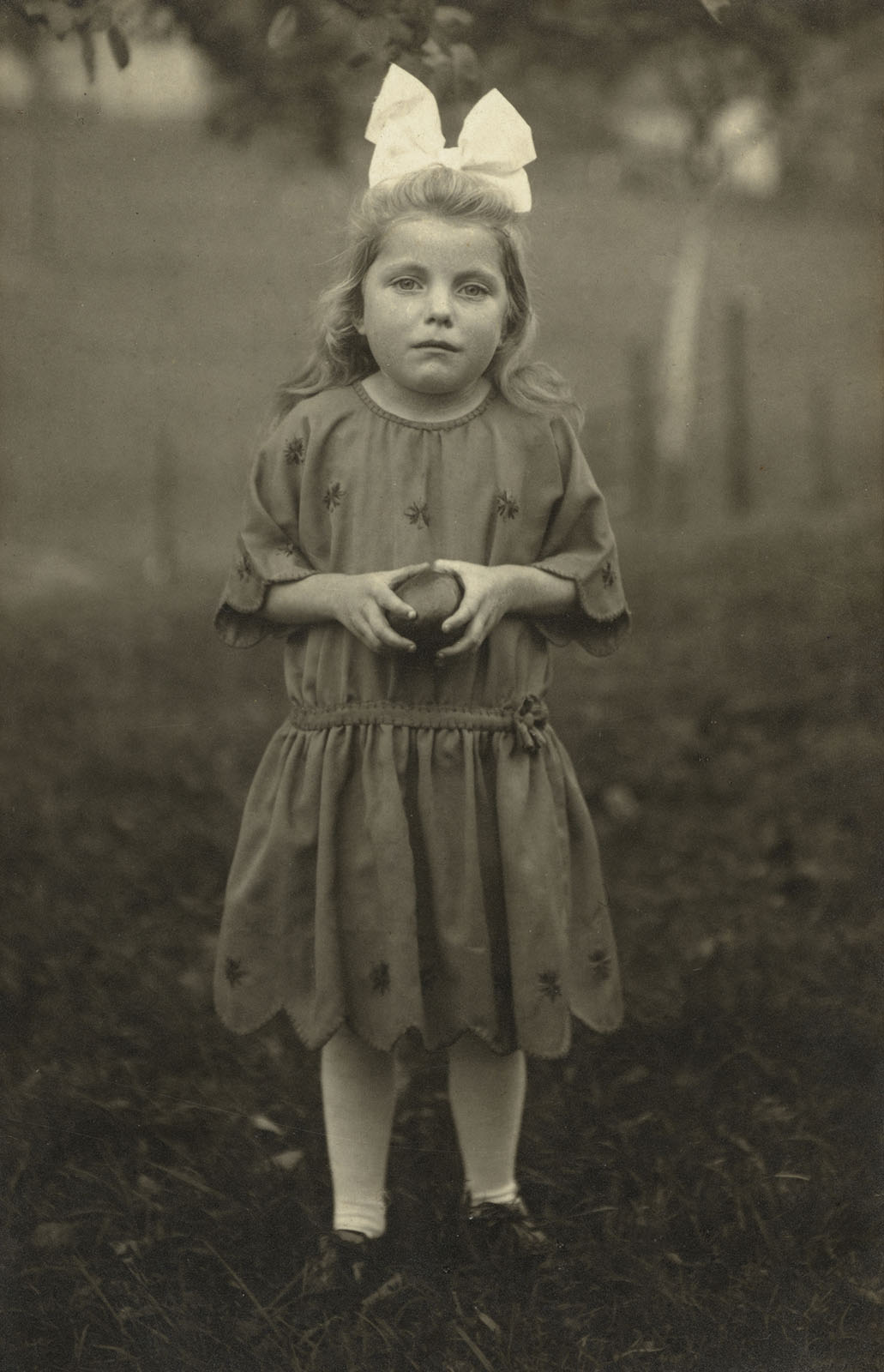
 

August Sander (German, 1876-1964) 'Girl with Ball' (Mädchen mit Ball) 1910s


August Sander (German, 1876-1964)
Girl with Ball (Mädchen mit Ball)
1910s
Gelatin silver paper
10.7 x 6.9cm
Museum Ludwig, Cologne
Repro: Historisches Archiv mit Rheinischem Bildarchiv
© Die Photographische Sammlung/SK Stiftung Kultur-August Sander Archiv, Köln / VG Bild-Kunst, Bonn 2025
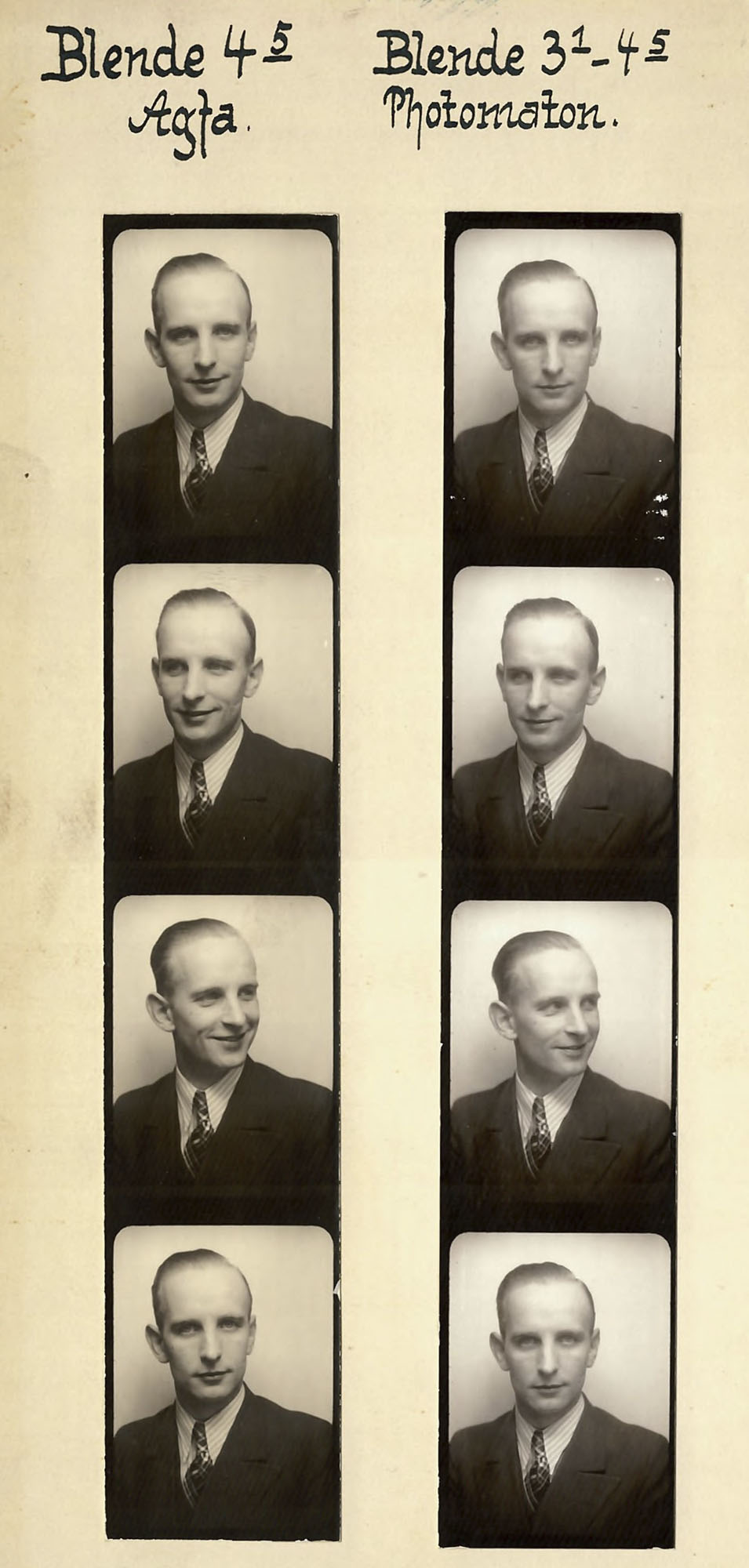
 

'Test images from the photo booth, Kaufhof, Cologne' 1920s


Test images from the photo booth, Kaufhof, Cologne
1920s
Gelatin silver paper
Archiv Museum Ludwig, Köln


The introduction of photo booths in the 1920s meant that portraits could be taken cheaply and without being observed by photographers, which encouraged people to experiment, as we can see in this test strip taken in a Cologne department store.
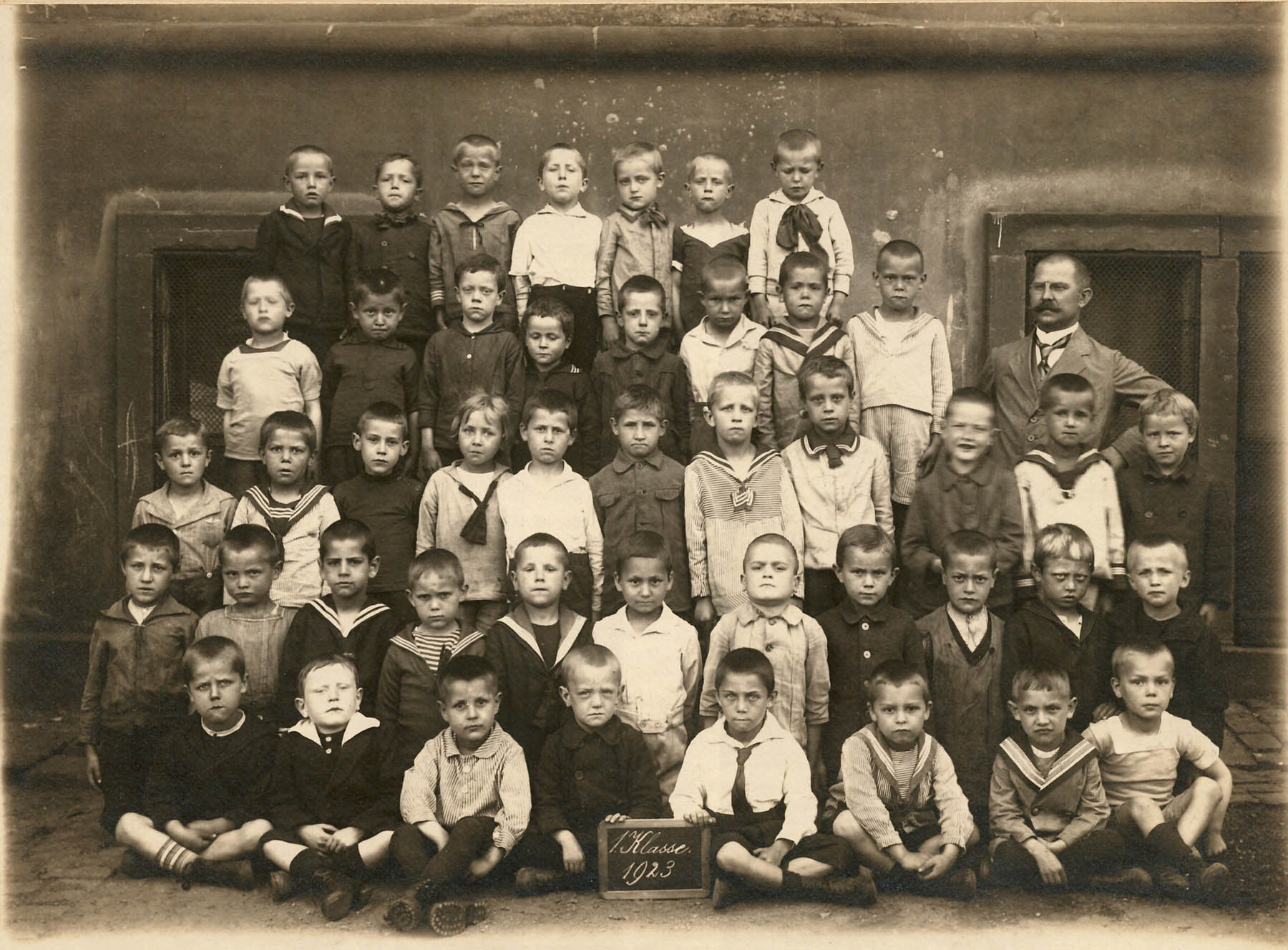
 

Unknown photographer. 'Class photo' 1923


Unknown photographer
Class photo
1923
Archive Museum Ludwig


A comparative study of school photographs in the USA showed that the corners of the mouth have been rising steadily in portraits since 1900. A comparison of two class photos from the Museum Ludwig archive, taken forty years apart, confirms this: whereas in 1923 the expressions were still serious, in 1963 there are smiling faces. However, the US study also showed that girls and women smile significantly more than boys and men. “Photography faces,” whether they smile or not, are culturally formed faces.
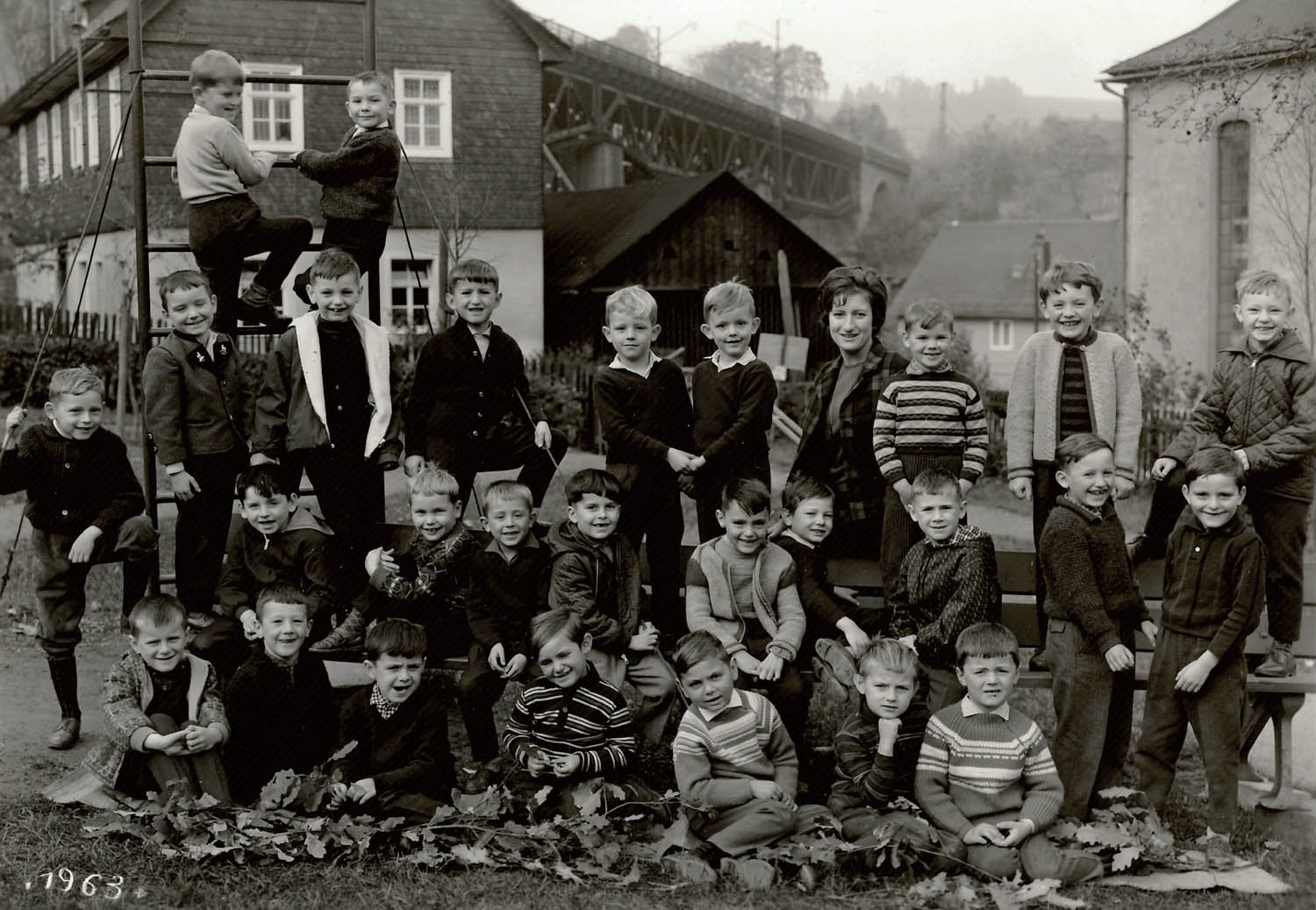
 

Unknown photographer. 'Class photo' 1963


Unknown photographer
Class photo
1963
Archive Museum Ludwig
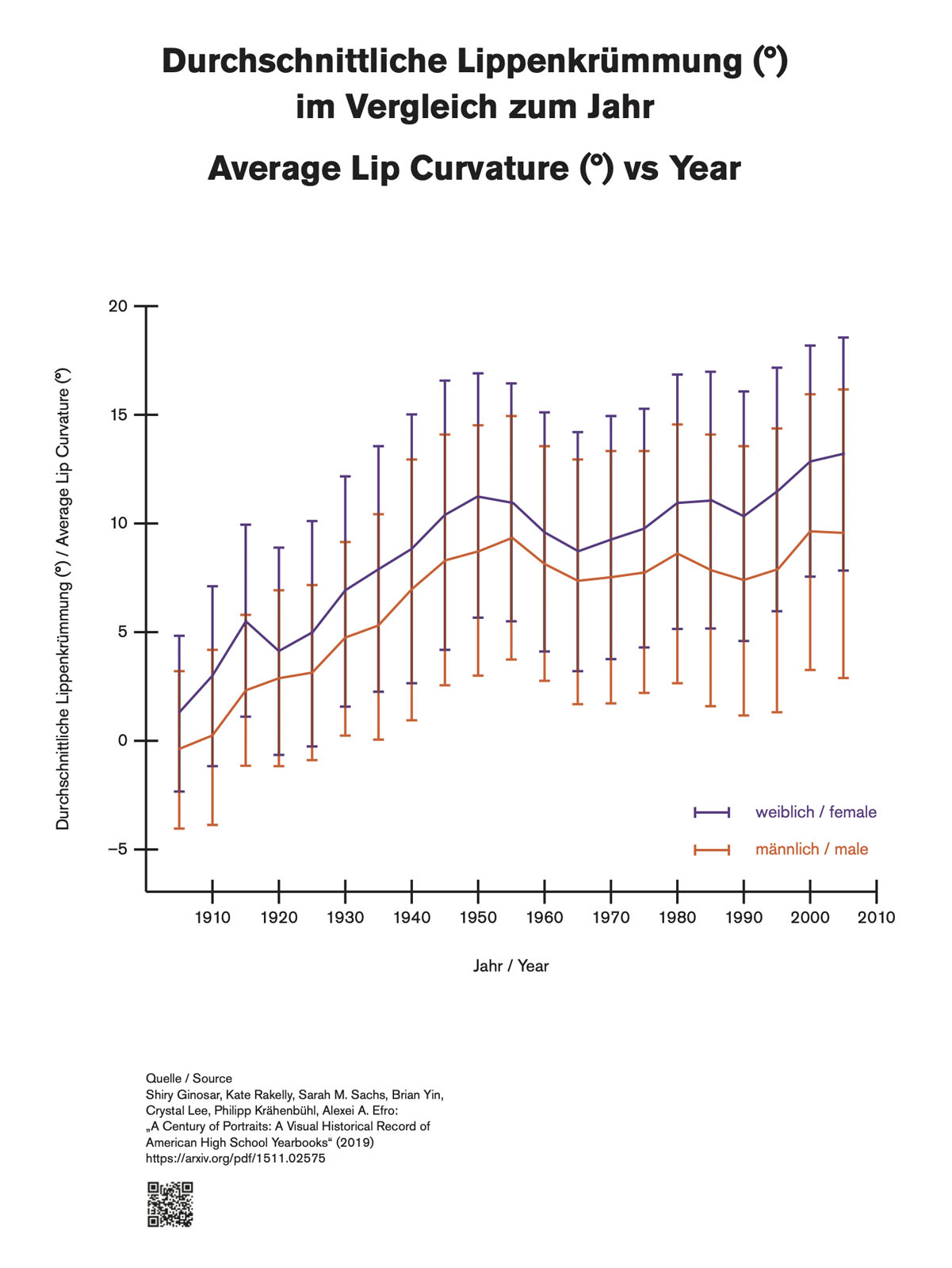
 

Average lip curvature over the 20th century


Andy Warhol (American, 1928-1987) 'Warhol, Andy' 1972


Andy Warhol (American, 1928-1987)
Warhol, Andy
1972
Polaroid
10.8 x 8.6cm
Museum Ludwig, Cologne
Repro: Historisches Archiv mit Rheinischem Bildarchiv
©2025 The Andy Warhol Foundation for the Visual Arts, Inc. / Licensed by Artists Rights Society (ARS), New York


Andy Warhol experimented early on with the Polaroid instant camera. He photographed himself as well as visitors to his studio, The Factory, in New York in the 1970s. He collected the snapshots in several photo albums. Their spontaneity is evident in the fact that they often appear flawed, whether because only the forehead is visible in the picture or because the face of the person portrayed is not yet a standard “photography face.”
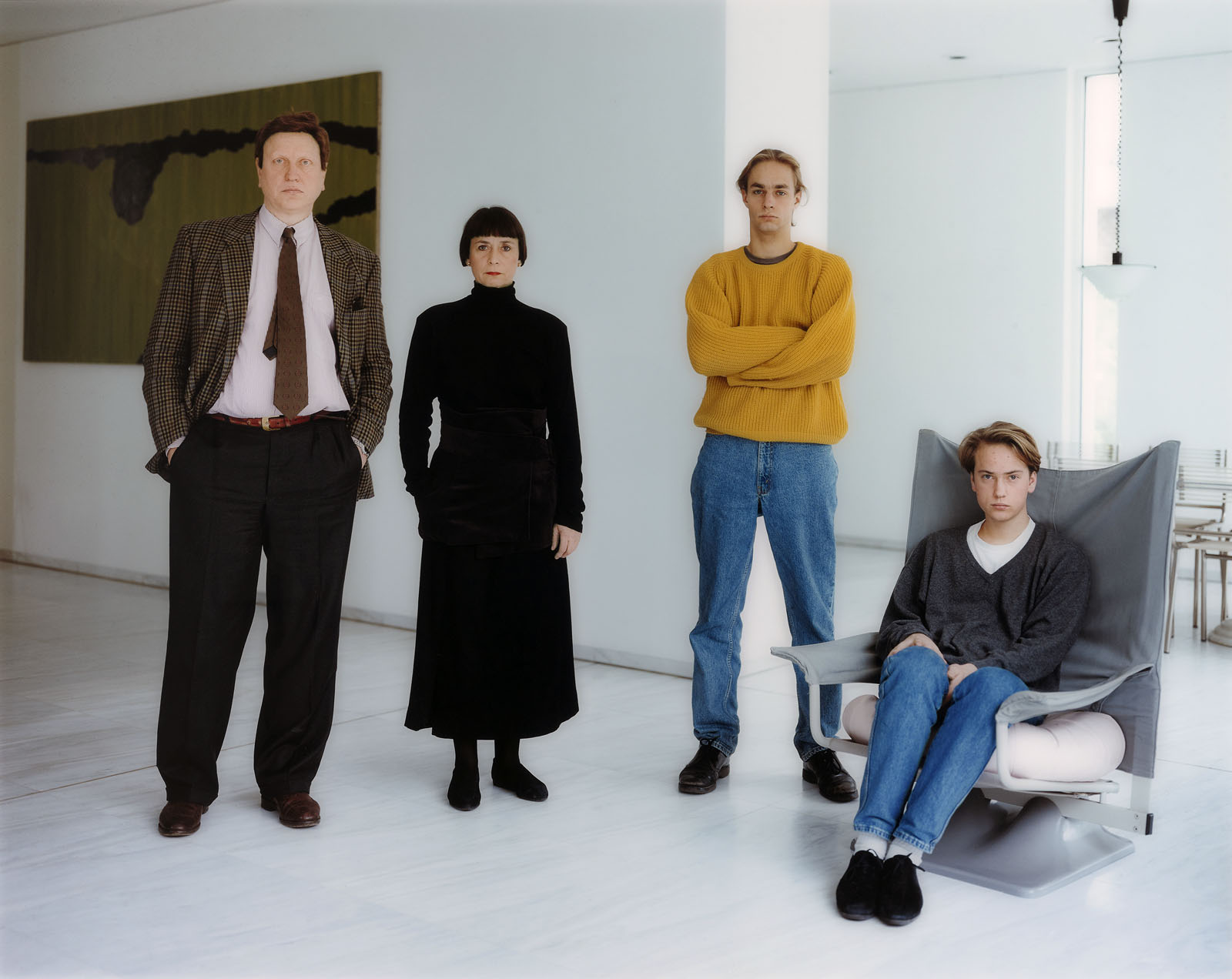
 

Thomas Struth (German, b. 1954) 'The Schäfer Family, Meerbusch 1990' 1990


Thomas Struth (German, b. 1954)
The Schäfer Family, Meerbusch 1990
1990
C-print
166 x 198cm
Museum Ludwig, Cologne
Acquisition with the support of the Peter and Irene Ludwig Foundation
Repro: Historisches Archiv mit Rheinischem Bildarchiv
© Thomas Struth


Since the 1980s, Thomas Struth has been photographing families from his circle in their familiar surroundings. While the people in his pictures choose their own clothing, gestures, and looks, he asks them not to smile for the camera. In an interview with the Süddeutsche Zeitung, the photographer explained this as follows: “It is often said that when everyone smiles, they all look the same. But they can’t all look different either. In my opinion, there are enough photos of people laughing.” Ann Katrin Harfensteller-Rufenach adds in her book Dazwischen-Sein. Familienporträts von Thomas Struth und jüngere Positionen in der Fotokunst in Deutschland (Being in Between: Family Portraits by Thomas Struth and Recent Positions in Photographic Art in Germany): “But the unusual size of the camera may also have been fascinating and encouraged an appealing facial expression.” In fact, Thomas Struth photographed this image with a large-format camera on a tripod, similar to the photographers of the 19th century.


Museum Ludwig
Heinrich-Böll-Platz, 50667 Köln, Germany

Opening hours:
Tues­­day through Sun­­day: 10am – 6pm

Museum Ludwig website

LIKE ART BLART ON FACEBOOK

Back to top

Exhibition: ‘Still Performing: Costume, Gesture, and Expression in 19th Century European Photography’ at the Nelson-Atkins Museum of Art, Kansas City

Exhibition dates: 24th August, 2024 – 12th January, 2025


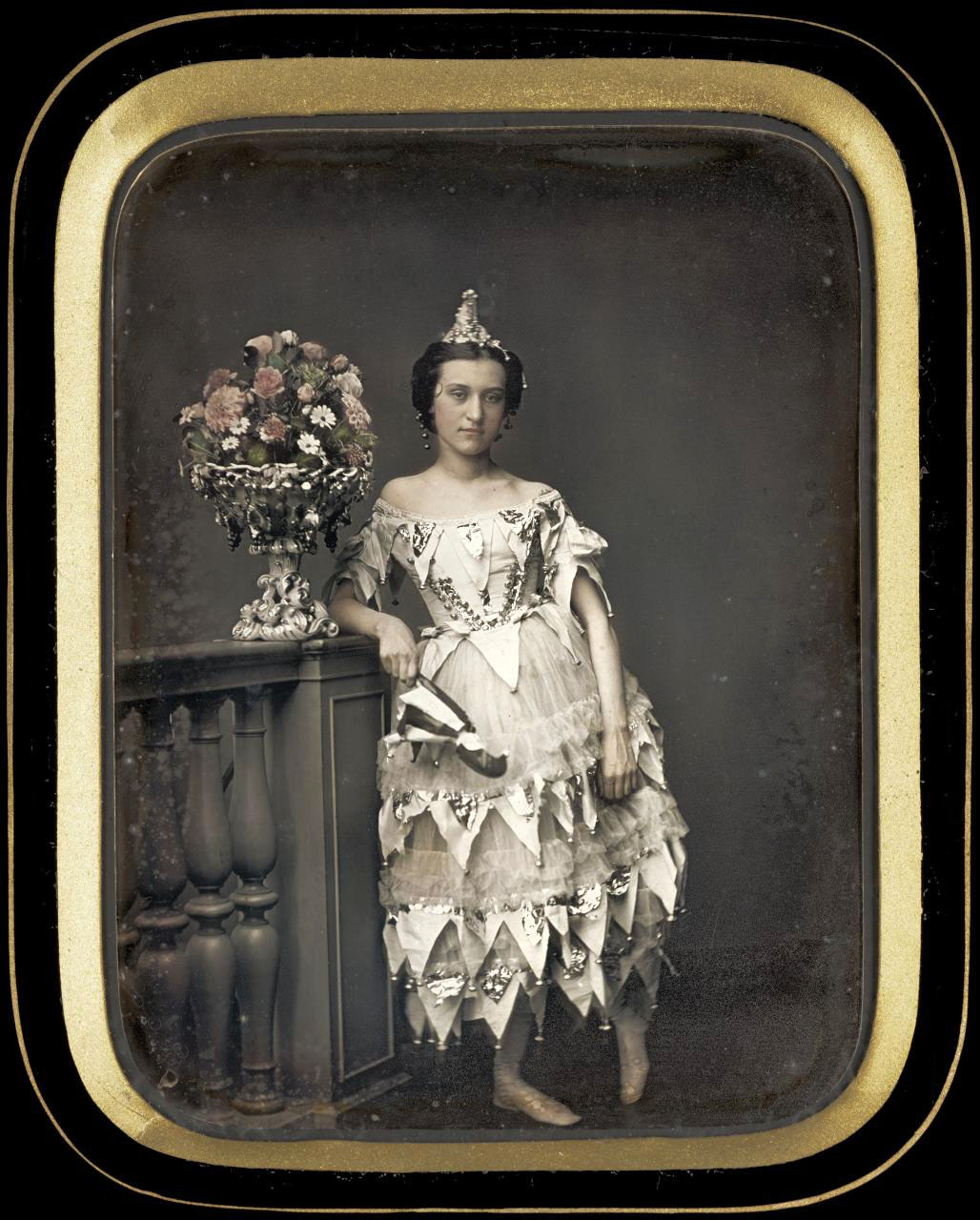
Victor Plumier (Belgian, 1820-1878) 'Lady in Costume' About 1850 from the exhibition 'Still Performing: Costume, Gesture, and Expression in 19th Century European Photography' at the Nelson-Atkins Museum of Art, Kansas City


Victor Plumier (Belgian, 1820-1878)
Lady in Costume
About 1850
Daguerreotype, half plate
5 1/2 × 4 1/2 inches
The Nelson-Atkins Museum of Art
Gift of the Hall Family Foundation


Past present

Magnificent photographs that bring past presence into present consciousness.

Costume. variedly, the term “costume,” indicating clothing exclusively from the eighteenth century onward, can be traced back to the Latin consuetudo, meaning “custom” or “usage.”

Gesture. late Middle English: from medieval Latin gestura, from Latin gerere ‘bear, wield, perform’. The original sense was ‘bearing, deportment’, hence ‘the use of posture and bodily movements for effect in oratory’.

Expression. the action of making known one’s thoughts or feelings. a look on someone’s face that conveys a particular emotion. late Middle English: from Latin expressio(n- ), from exprimere ‘press out, express’.


The emotions and the sentiments, the gestures and the expressions.

The actor and the stage, the photographer and the sitter.

The staged photograph and the tableaux vivant.

The Self and the Other.


Today, something happens when we look at these photographs. Today, the social spaces, gestures and expressions in these photographs are not fixed, monological re-presentations or presences. Our experience of the photographs enables them to be seen as nodes within a network caught up in a system of social and cultural references, whose unity is variable and relative.1

Thus,

” …in my reading (of the photograph), I relied upon a number of semiological systems, each one being a social / cultural construct: the sign language of clothes, of facial expressions, of bodily gestures, of social manner, etc. Such semiological systems do indeed exist and are continually being used in the making and reading of images. Nevertheless the sum total of these systems cannot exhaust, does not begin to cover, all that can be read in appearances.”2

The intertextuality of images.

Dr Marcus Bunyan


1/ Roland Barthes. “From Work to Text” and Michel Foucault. The Order of Things: An Archeology of the Human Sciences in Kurt Thumlert. Intervisuality, Visual Culture, and Education. [Online] Cited 10/08/2006. No longer available online

2/ John Berger and Jean Mohr. Another Way of Telling. New York: Pantheon Books, 1982, p. 112


Many thankx to the Nelson-Atkins Museum for allowing me to publish the photographs in the posting. Please click on the photographs for a larger version of the image.


“There is no perfection, no infinite completeness. But always, there is a way to move toward being whole. The capital letter, the Self is a wholeness that does not and will never exist. It is a direction that I move toward no matter the meanders of my feet.”


Kendrick VanZant


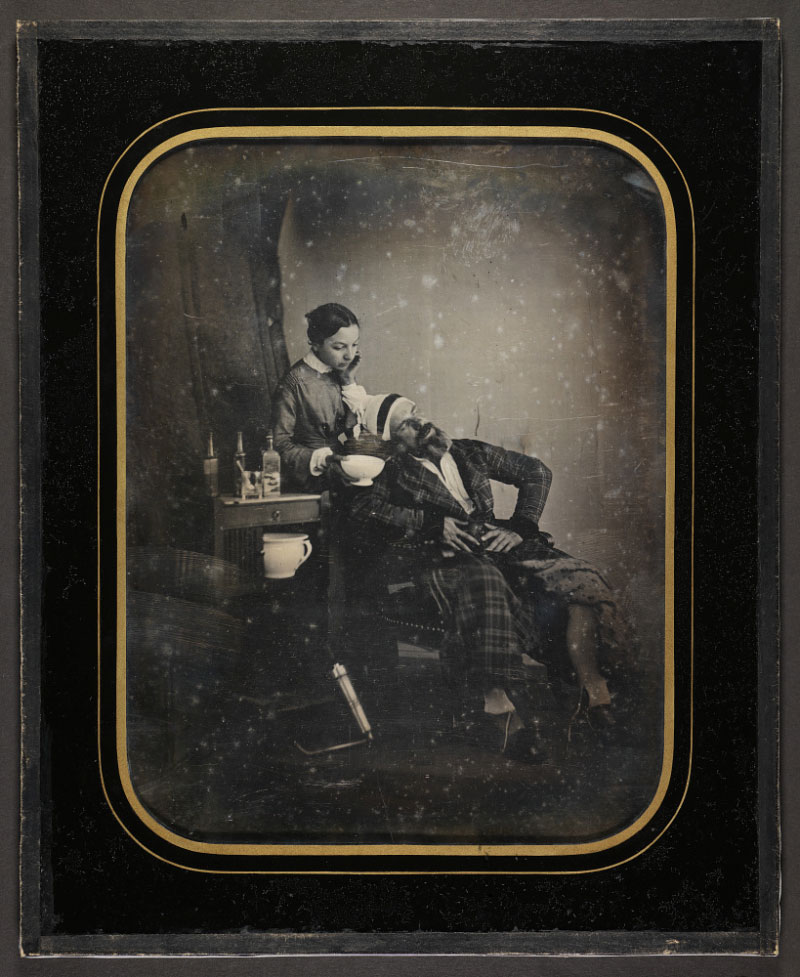
Camille Dolard (French, 1810-1884) 'Self-portrait as ailing man' c. 1843-1845


Camille Dolard (French, 1810-1884)
Self-portrait as ailing man
c. 1843-1845
Daguerreotype
Plate (whole): 8 1/2 × 6 1/2 inches (21.59 × 16.51cm)
Mat: 10 3/8 × 8 3/8 inches (26.37 × 21.29cm)
The Nelson-Atkins Museum of Art
Gift of the Hall Family Foundation


French painter Camille Dolard briefly embraced photography in the 1840s as an innovative creative tool. This daguerreotype, and the one in the next case, are from a group of three theatrical self-portraits created by Dolard in his studio. Here, the artist performs for the camera, posing with props and costumes as a patient in the care of his attentive wife. In the other plate, he uses a similarly theatrical approach, depicting himself smoking a hookah (a water pipe used to smoke tobacco) while lounging on a patterned rug.

Text from the Nelson-Atkins Museum website


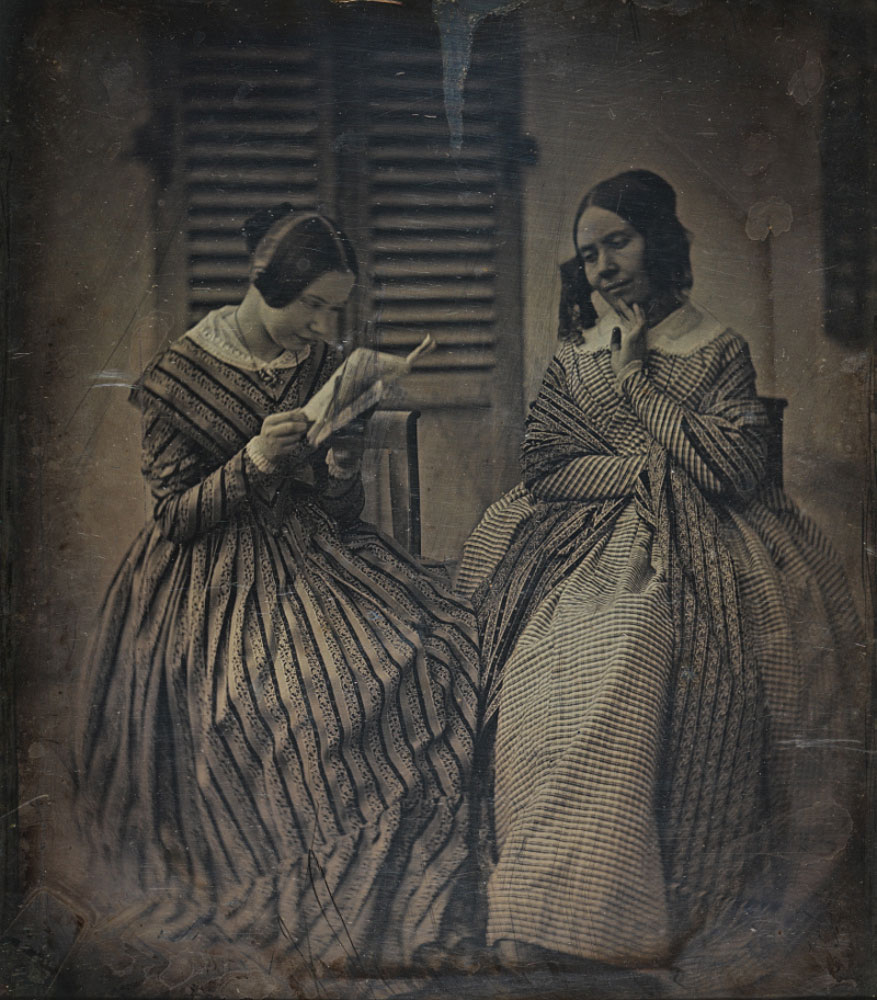
Jean-Pierre Thierry (French, 1810-1870) 'Two ladies reading a letter' c. 1845


Jean-Pierre Thierry (French, 1810-1870)
Two ladies reading a letter
c. 1845
Daguerreotype
Plate (quarter): 4 1/4 × 3 1/4 inches (10.8 × 8.26 cm)
Mat: 6 1/16 × 5 1/8 inches (15.39 × 13.03 cm)
The Nelson-Atkins Museum of Art
Gift of the Hall Family Foundation


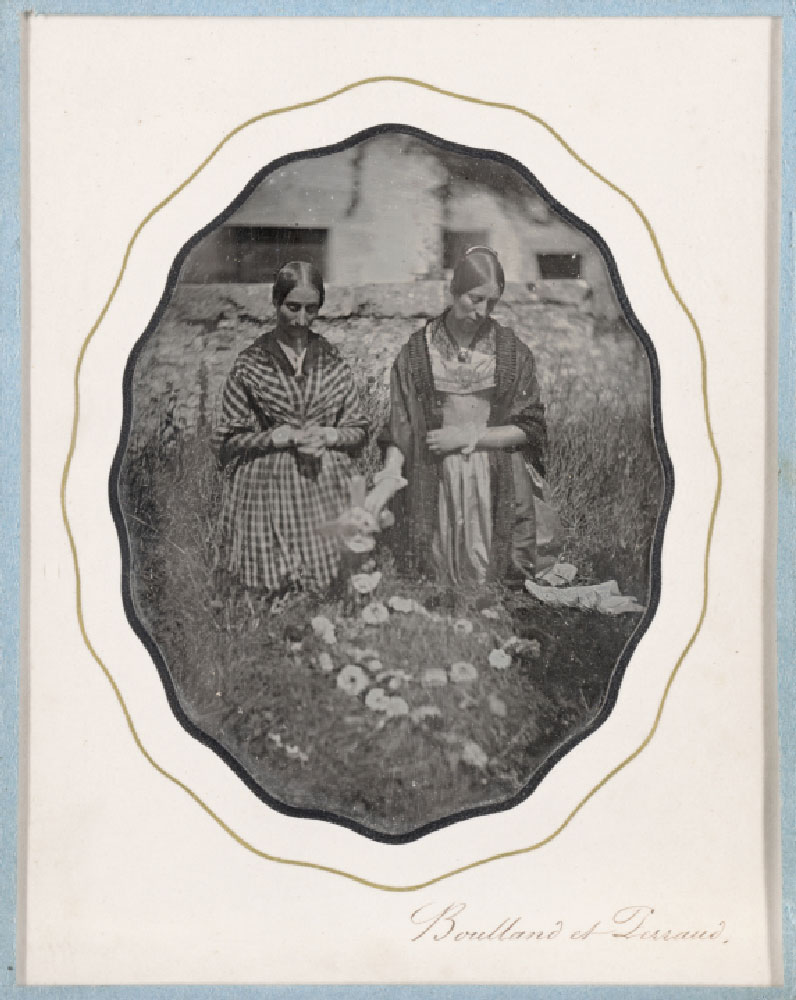
Philibert Perraud (French, 1815 - after 1863) 'Deux femmes se recueillent sur la tombe d'une etre cher ...' (Two women at the grave of a loved one) c. 1845


Philibert Perraud (French, 1815 – after 1863)
Deux femmes se recueillent sur la tombe d’une etre cher … (Two women at the grave of a loved one)
c. 1845
Daguerreotype
Plate (quarter): 4 1/4 × 3 1/4 inches (10.8 × 8.26cm)
 Mount: 5 1/8 × 4 1/8 inches (13.02 × 10.48cm)
The Nelson-Atkins Museum of Art
Gift of the Hall Family Foundation


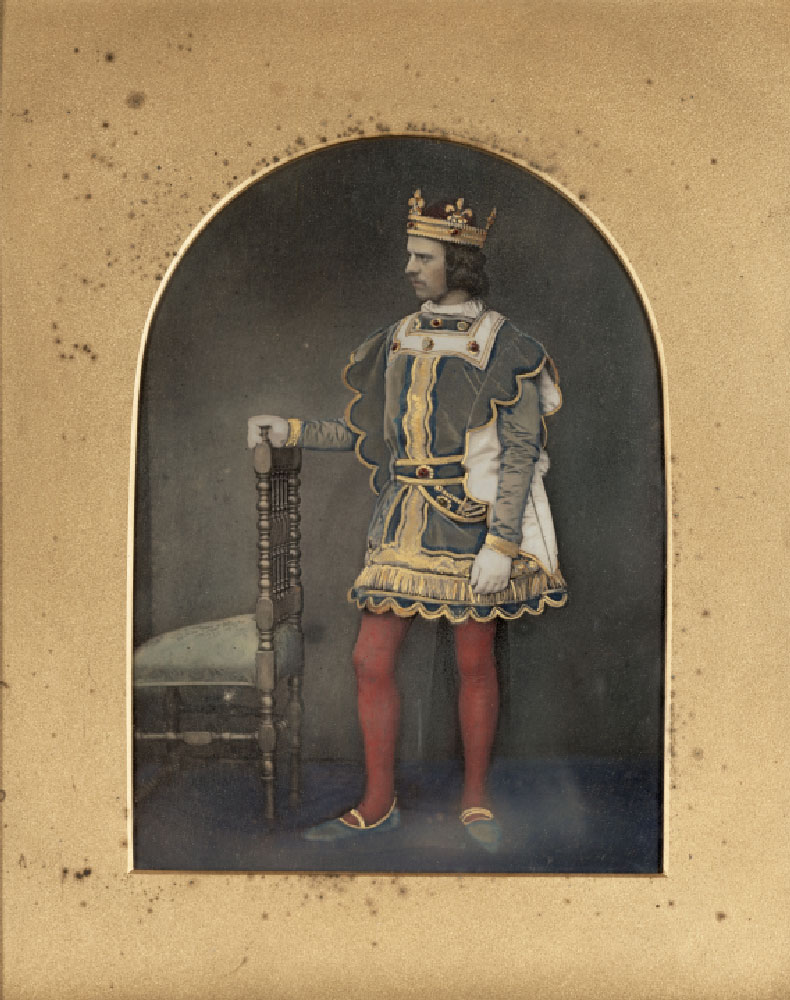
Unknown photographer. 'Actor in Costume' c. 1850 from the exhibition 'Still Performing: Costume, Gesture, and Expression in 19th Century European Photography' at the Nelson-Atkins Museum of Art, Kansas City


Unknown photographer
Actor in Costume
c. 1850
Daguerreotype
Plate (three-quarter): 6 × 4 1/2 inches (15.24 × 11.43 cm)
Case (open): 8 1/8 × 13 1/4 × 3/8 inches (20.64 × 33.66 × 0.95 cm)
Case (closed): 8 1/8 × 6 5/8 × 5/8 inches (20.64 × 16.83 × 1.59 cm)
The Nelson-Atkins Museum of Art
Gift of the Hall Family Foundation


Though the pose and expression in this photograph are stiff, the extensive hand-colouring enlivens the portrait, drawing attention to the fine details in the actor’s costume. Sitting for a daguerreotype portrait in the 1850s required patience and a certain degree of stamina. Photographic exposure times – which varied according to plate sensitivity and studio lighting – typically ranged from three to 30 seconds. Studio props, such as chairs and head braces, were used to help sitters remain as motionless as possible for the duration of the exposure.

Text from the Nelson-Atkins Museum website


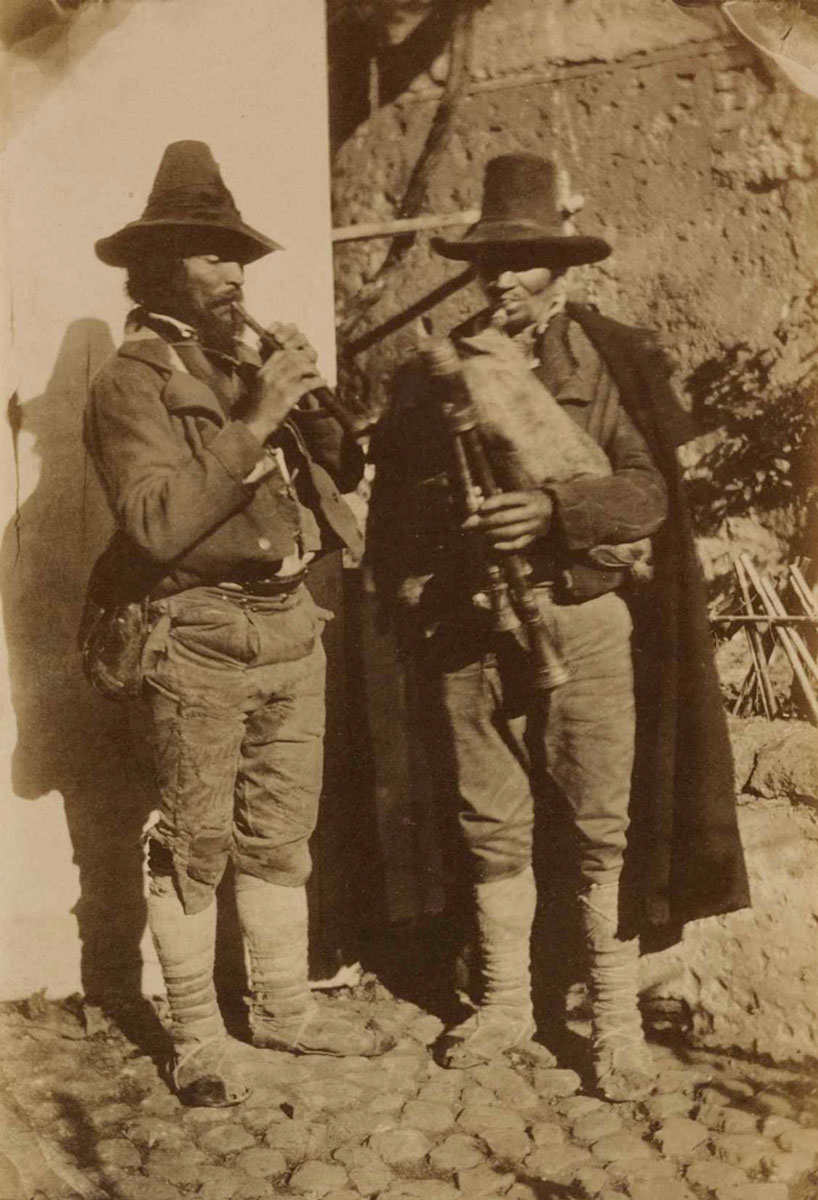
Giacomo Caneva (Italian, 1813-1865) 'Two Pifferari' c. 1850s


Giacomo Caneva (Italian, 1813-1865)
Two Pifferari
c. 1850s
Salt print
Image: 8 3/8 × 5 11/16 inches (21.27 × 14.45cm)
Sheet: 11 3/16 × 5 11/16 inches (28.42 × 14.45cm)
The Nelson-Atkins Museum of Art
Gift of the Hall Family Foundation


Nothing summed up picturesque modern Italy as well as the Pifferari; described by Hector Berlioz (1803-1869) in 1832: ‘These are strolling musicians who, towards Christmas, come down from the mountains in groups of four or five, armed with bagpipes and ‘pifferi’ (a sort of oboe), to play in homage before statues of the Madonna. They are generally dressed in large brown woollen coats and the pointed hats that brigands sport, and their whole appearance is instinct with a kind of mystic savagery that is most striking’. He admits that close to the music is ‘overpoweringly loud, but at a certain distance the effect of this strange ensemble of instruments is haunting and few are unmoved by it’.

Text from the Royal Collection Trust website


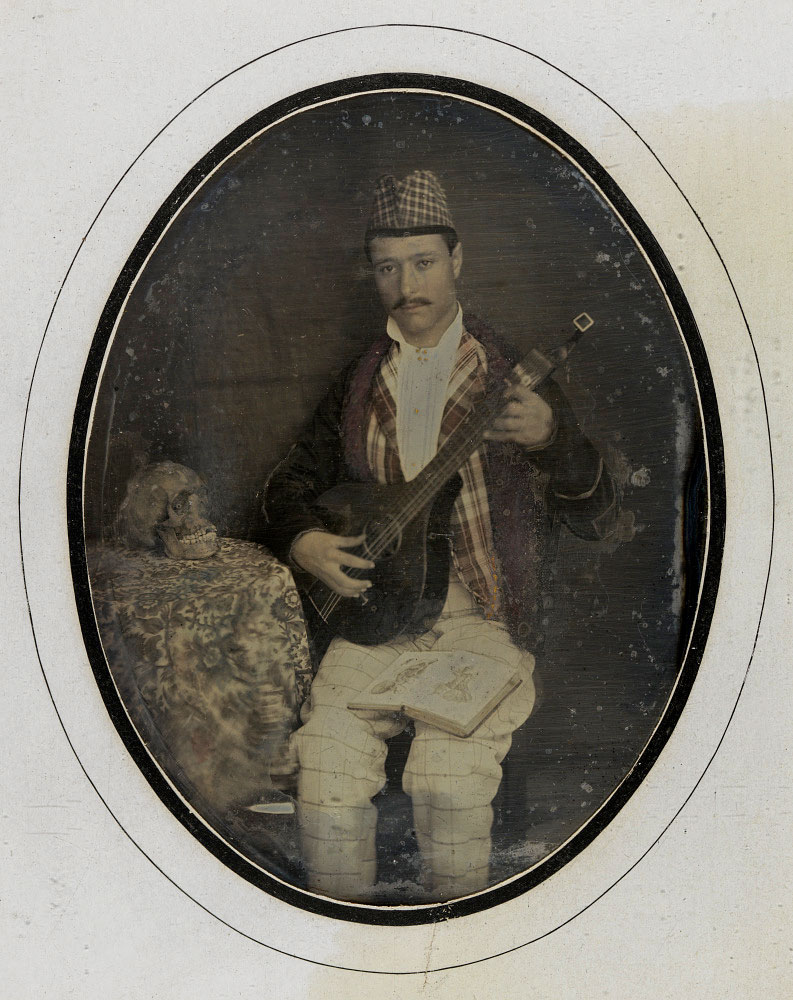
José Maria Blanco (Spanish, active c. 1850) 'Man with mandolin' 1851 from the exhibition 'Still Performing: Costume, Gesture, and Expression in 19th Century European Photography' at the Nelson-Atkins Museum of Art, Kansas City


José Maria Blanco (Spanish, active c. 1850)
Man with mandolin
1851
Daguerreotype
Plate (quarter): 4 × 3 1/4 inches (10.16 × 8.26cm)
Mat: 5 5/8 × 4 7/8 inches (14.29 × 12.38cm)
The Nelson-Atkins Museum of Art
Gift of the Hall Family Foundation


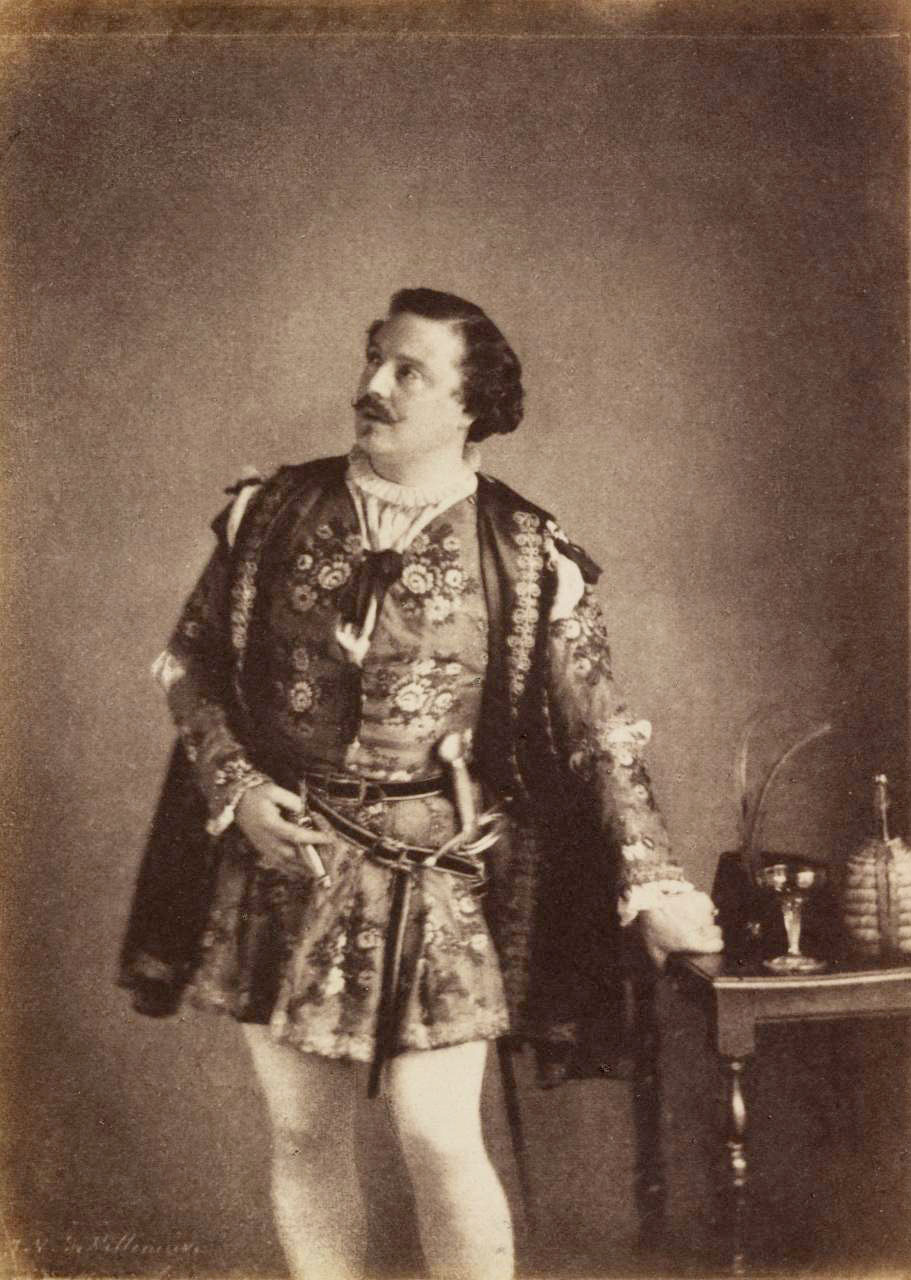
Julien Vallou de Villeneuve (French, 1795-1866) 'Portrait of Edouard Brindeau' 1853


Julien Vallou de Villeneuve (French, 1795-1866)
Portrait of Edouard Brindeau
1853
Salt print
6 1/4 × 4 5/8 inches
The Nelson-Atkins Museum of Art
Gift of the Hall Family Foundation


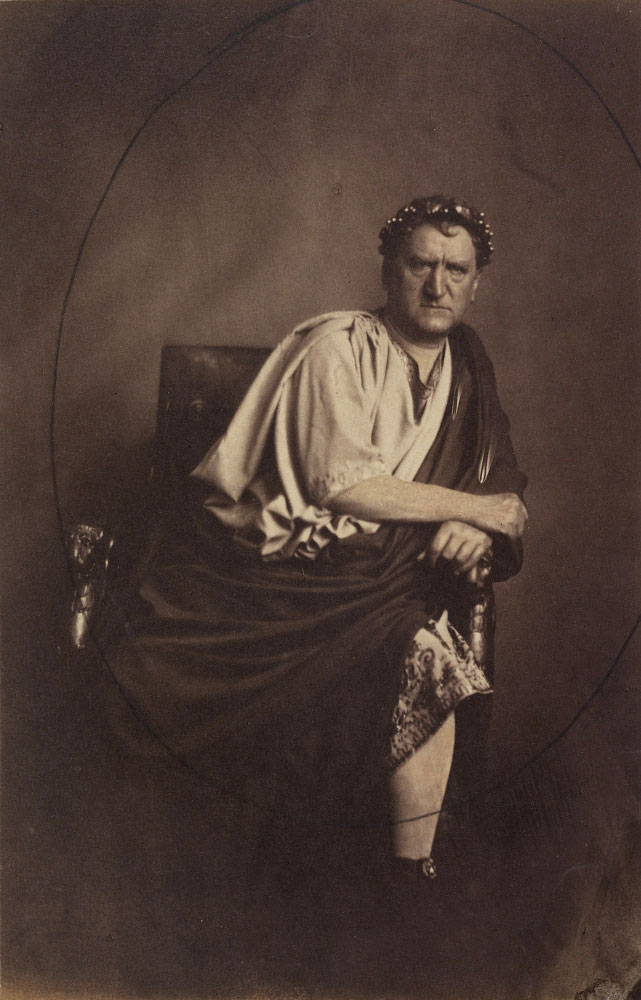
Julien Vallou de Villeneuve (French, 1795-1866) 'Portrait of Jean-Baptiste Provost, in the role of the emperor Claude in the play Valeria' 1853


Julien Vallou de Villeneuve (French, 1795-1866)
Portrait of Jean-Baptiste Provost, in the role of the emperor Claude in the play Valeria
1853
Portraits of Actors from the Comédie Française
Salt print
Image and sheet: 6 7/16 × 4 1/8 inches (16.35 × 10.48cm)
The Nelson-Atkins Museum of Art
Gift of the Hall Family Foundation


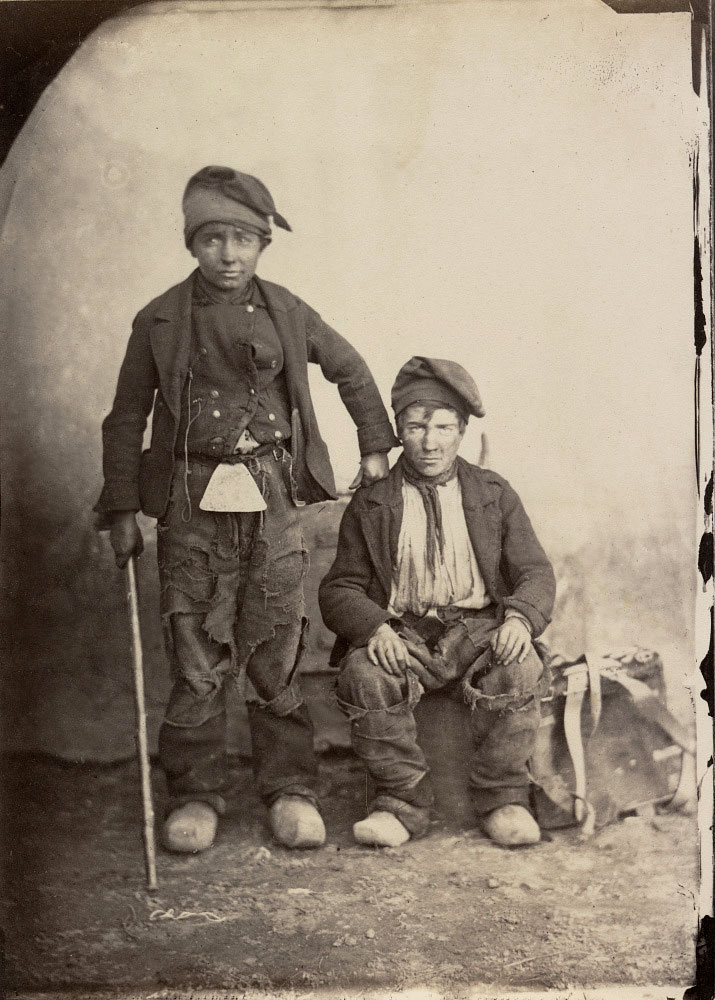
Charles Nègre (French, 1820-1880) 'Two Small Savoyards' c. 1853 from the exhibition 'Still Performing: Costume, Gesture, and Expression in 19th Century European Photography' at the Nelson-Atkins Museum of Art, Kansas City


Charles Nègre (French, 1820-1880)
Two Small Savoyards
c. 1853
Albumen print
Image and sheet: 7 × 5 3/16 inches (17.78 × 13.12cm)
Mount: 17 × 15 inches (43.18 × 38.1cm)
The Nelson-Atkins Museum of Art
Gift of the Hall Family Foundation


Charles Nègre refers to the threadbare young men in this photograph as “Savoyards” (originating from the Savoy region of France). Impoverished, migrant Savoyards have appeared in European art since the 1700s, and Nègre’s title could be shorthand for a certain type of person seen in the streets of Paris, regardless of the two boys’ actual place of origin. A painter and a photographer, Nègre practiced the two mediums side-by-side. Like other artists of his time, he ascribed nobility to the poor, seeking to convey their “truth, warmth, and life.”

Text from the Nelson-Atkins Museum website


Alban-Adrien Tournachon (French , 1825-1903) and Nadar [Gaspard Félix Tournachon] (French, 1820-1910) 'Pierrot Yawning' 1854 from the exhibition 'Still Performing: Costume, Gesture, and Expression in 19th Century European Photography' at the Nelson-Atkins Museum of Art, Kansas City


Alban-Adrien Tournachon (French , 1825-1903) and Nadar [Gaspard Félix Tournachon] (French, 1820-1910)
Pierrot Yawning
1854
Salt print
11 1/4 × 8 1/2 inches
The Nelson-Atkins Museum of Art
Gift of the Hall Family Foundation


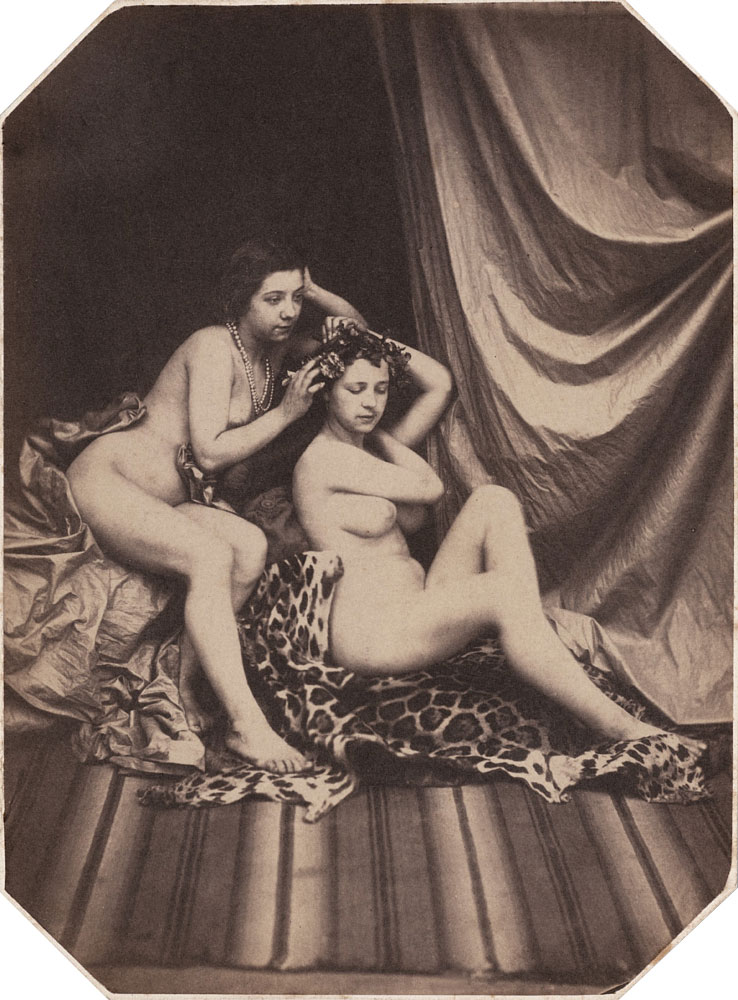
Auguste Belloc (French, 1805 -1873) 'Une étude de nu de deux femmes' c. 1855


Auguste Belloc (French, 1805 -1873)
Une étude de nu de deux femmes
c. 1855
Salt print
Image and sheet: 8 5/16 × 6 1/8 inches (21.11 × 15.56cm)
The Nelson-Atkins Museum of Art
Gift of the Hall Family Foundation


A masterful printer, Auguste Belloc created nudes that surpassed the typical erotic fare found in Parisian markets. In this scene, Belloc strategically positions the models and surrounding drapery to make the photograph appear more artistic than pornographic. Though nude paintings, drawings, and sculptures were immensely common, at this time photography was treated far more harshly by censors. In October 1860, the French government seized some 5,000 of Belloc’s photographs, declaring them obscene, and by 1868 he had abandoned his photographic studio.

Text from the Nelson-Atkins Museum website


Guillaume-Benjamin-Amand Duchenne de Boulogne (French, 1806-1875) and Alban-Adrien Tournachon (French, 1825-1903) 'The Muscles of Weeping and Whimpering' About 1855-1857


Guillaume-Benjamin-Amand Duchenne de Boulogne (French, 1806-1875) and Alban-Adrien Tournachon (French, 1825-1903)
The Muscles of Weeping and Whimpering
About 1855-1857
Albumen print
9 1/16 × 6 15/16 inches
The Nelson-Atkins Museum of Art
Gift of the Hall Family Foundation


Facial expressions and their corresponding emotions have been studied by artists for centuries. In the 1850s, Dr. Guillaume-Benjamin-Amand Duchenne de Boulogne used photography to document the facial expressions produced by localised electric shock. Working in partnership with photographer Adrien Alban Tournachon, Duchenne felt these photographs truthfully recorded his experiments and that “none shall doubt the facts presented here.” Praising photography for its accurate rendering of the subject’s deep wrinkles, he wrote, “the distribution of light is in perfect harmony with the passions represented by these expressive lines. Thus, the face depicting the dark, concentric passions – aggression, wickedness, suffering, pain, dread, torture mixed with fear – gain an uncommon amount of energy.”

Text from the Nelson-Atkins Museum website


Guillaume-Benjamin-Amand Duchenne de Boulogne (French, 1806-1875) and Alban-Adrien Tournachon (French, 1825-1903) 'The Muscle of Pain' c. 1854-1857


Guillaume-Benjamin-Amand Duchenne de Boulogne (French, 1806-1875) and Alban-Adrien Tournachon (French, 1825-1903)
The Muscle of Pain
c. 1854-1857
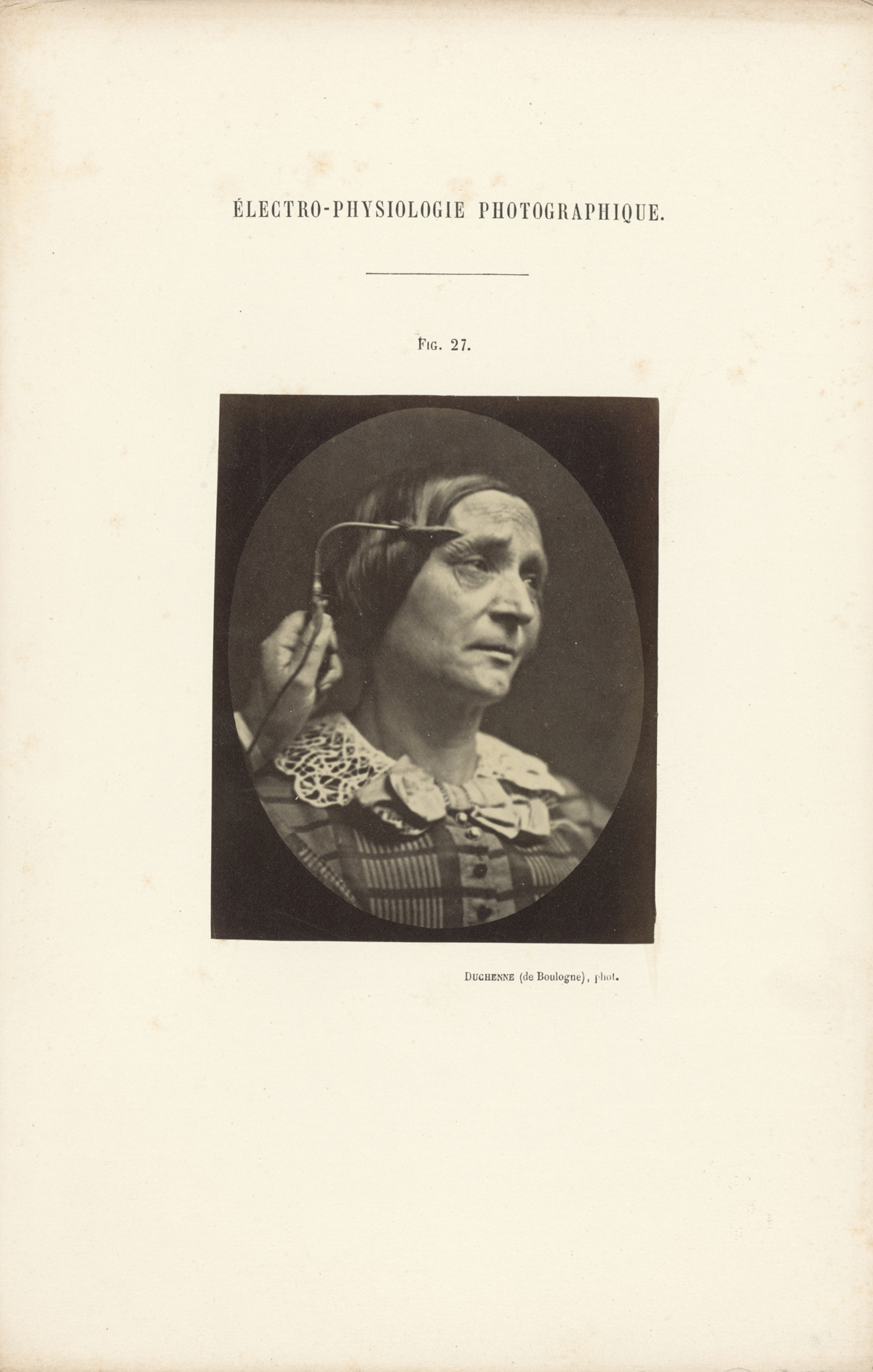
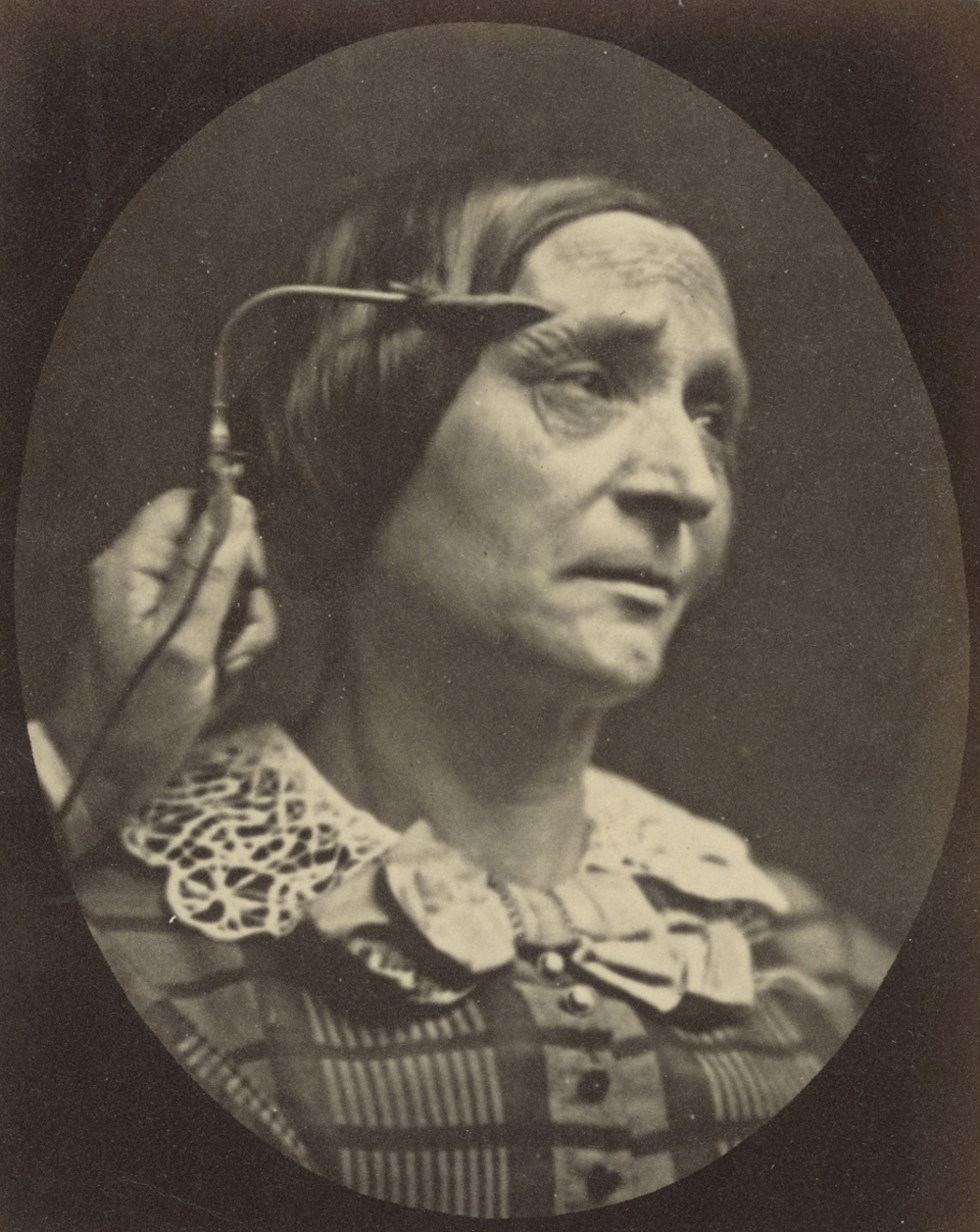
Figure 27, plate 63 from The Mechanism of Human Facial Expression
Albumen print
Image and sheet: 9 1/16 × 6 5/8 inches (23.01 × 16.84cm)
Mount: 16 1/16 × 10 13/16 inches (40.79 × 27.51cm)
The Nelson-Atkins Museum of Art
Gift of the Hall Family Foundation


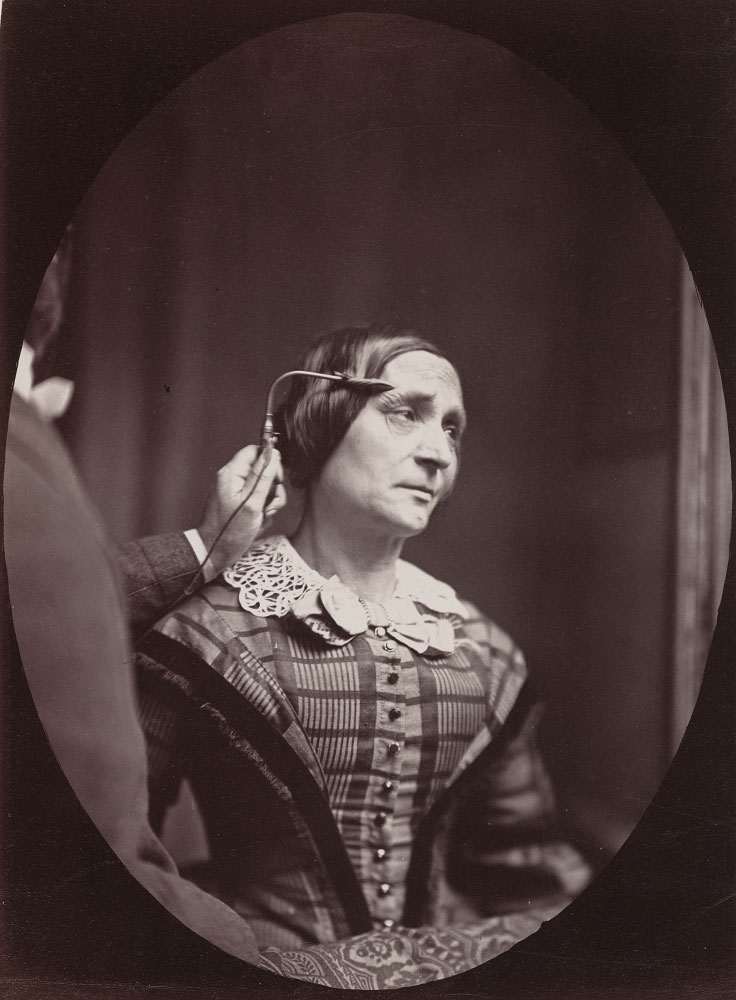
In this uncanny double portrait, the physiologist Dr. Guillaume-Benjamin-Amand Duchenne de Boulogne holds a mechanical device to the face of a 52-year-old, Italian-born woman believed to have been institutionalised in a Parisian asylum. Duchenne asserted that localised electric shock could force facial muscles to “contract to speak the language of the emotions and the sentiments.” “Armed with electrodes,” he wrote, “one would be able, like nature herself, to paint the expressive lines of the emotions of the soul on the face of man.”

Text from the Nelson-Atkins Museum website


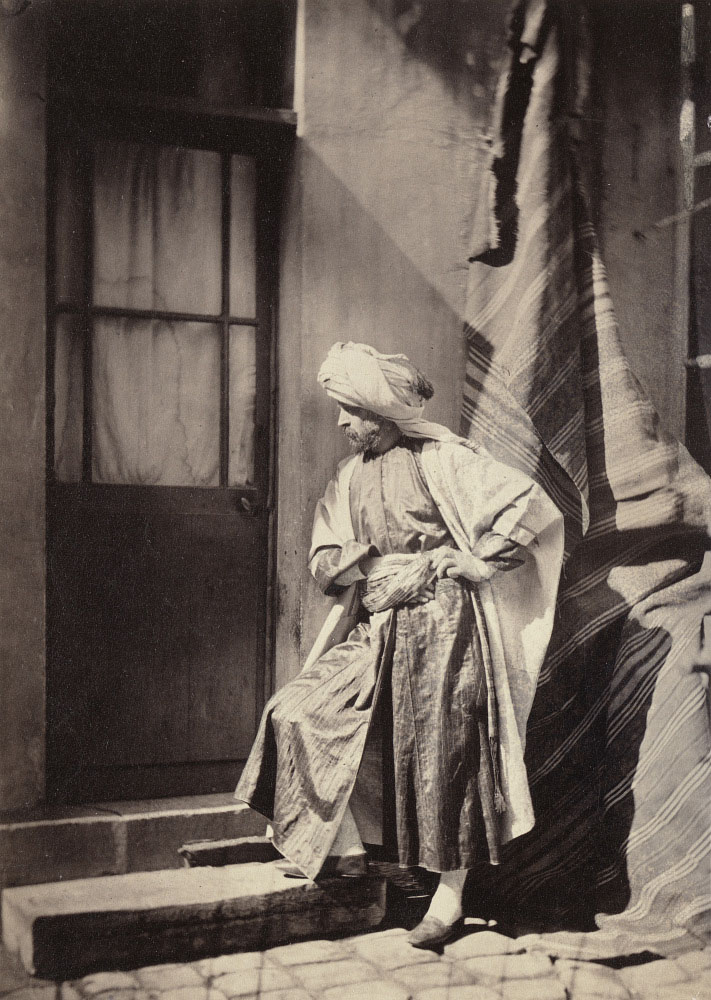
Roger Fenton (English, 1819-1869) 'Self-portrait as a Zouave' 1855


Roger Fenton (English, 1819-1869)
Self-portrait as a Zouave
1855
Salt print:
Image and sheet: 7 13/16 × 6 7/16 inches (19.84 × 16.35cm)
Mount: 22 1/8 × 16 1/8 inches (56.2 × 40.96cm)
The Nelson-Atkins Museum of Art
Gift of the Hall Family Foundation


Cocking a rifle and smoking a pipe, with alcohol by his side, Roger Fenton poses for his camera with bravado. Wearing the distinctive baggy uniform of a Zouave (skilled infantry soldiers from the French army in Algeria), Fenton fashions himself as a hardened, glowering soldier, though he never fought in any war. Fenton did, however, photograph the Crimean War (1853-1856) from a great distance. The war brought together an alliance of soldiers from England, Croatia, Algeria, Turkey, Egypt, and France whom Fenton encountered while photographing the conflict.

Text from the Nelson-Atkins Museum website


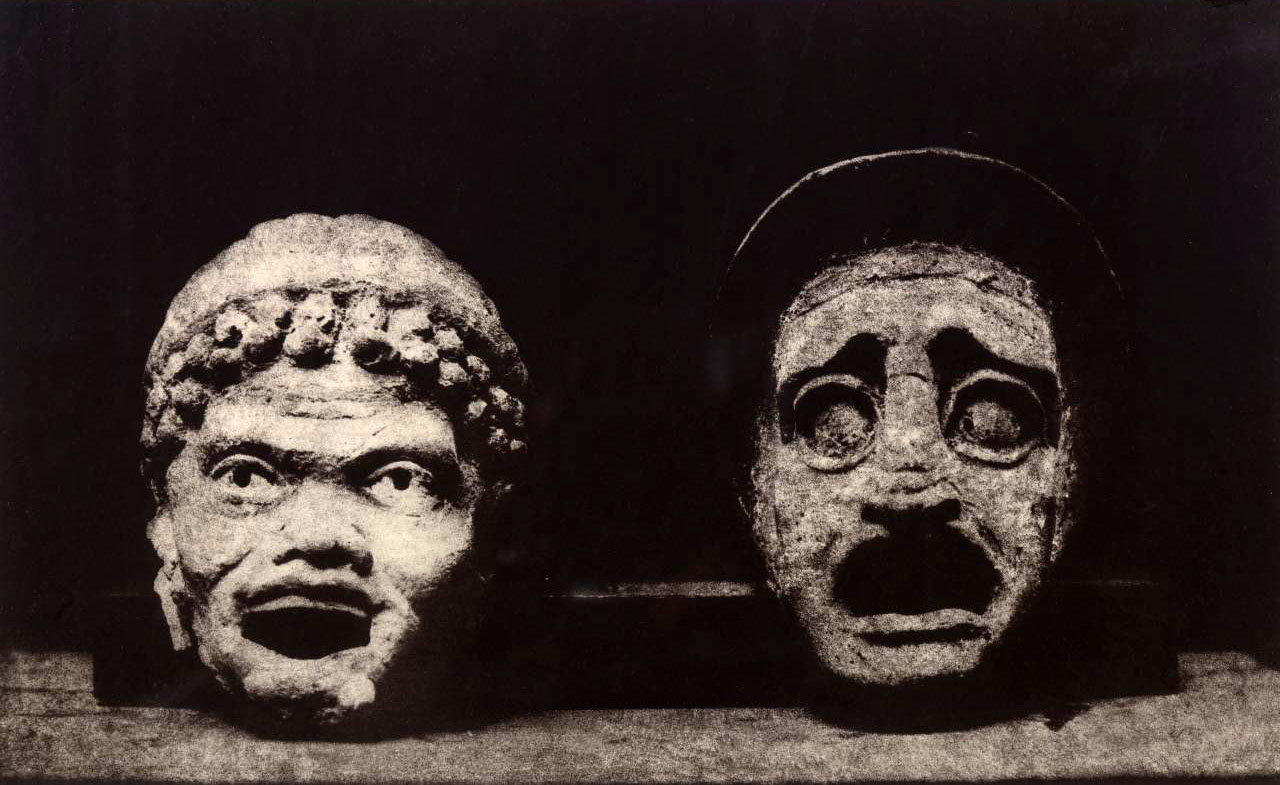
Marcel Gustave Laverdet (French, 1816-1886) 'Masks from the album Selection of Ancient Terra Cotta from the Collection of M. Le Vicomte H. de Janzé' 1857


Marcel Gustave Laverdet (French, 1816-1886)
Masks from the album Selection of Ancient Terra Cotta from the Collection of M. Le Vicomte H. de Janzé
1857
Photolithograph
8 15/16 × 14 9/16 inches
The Nelson-Atkins Museum of Art
Gift of the Hall Family Foundation


Charles Nègre (French, 1820-1880) 'Self-portrait' About 1855-1860


Charles Nègre (French, 1820-1880)
Self-portrait
About 1855-1860
Salt print
7 5/8 × 5 7/16 inches
The Nelson-Atkins Museum of Art
Gift of the Hall Family Foundation


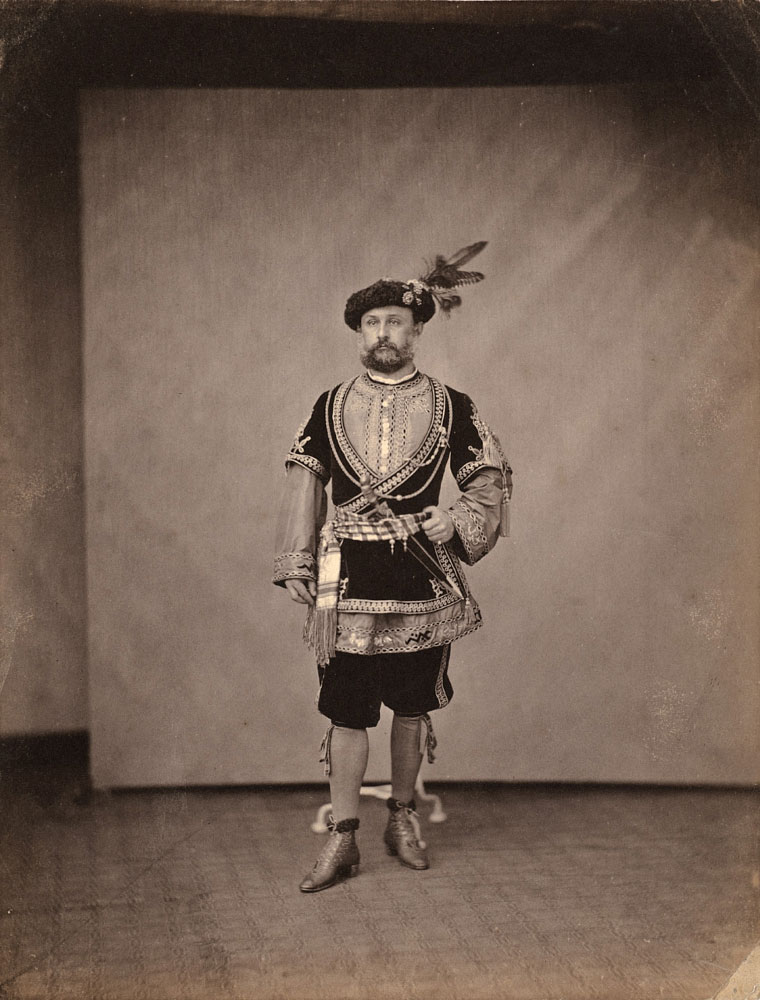
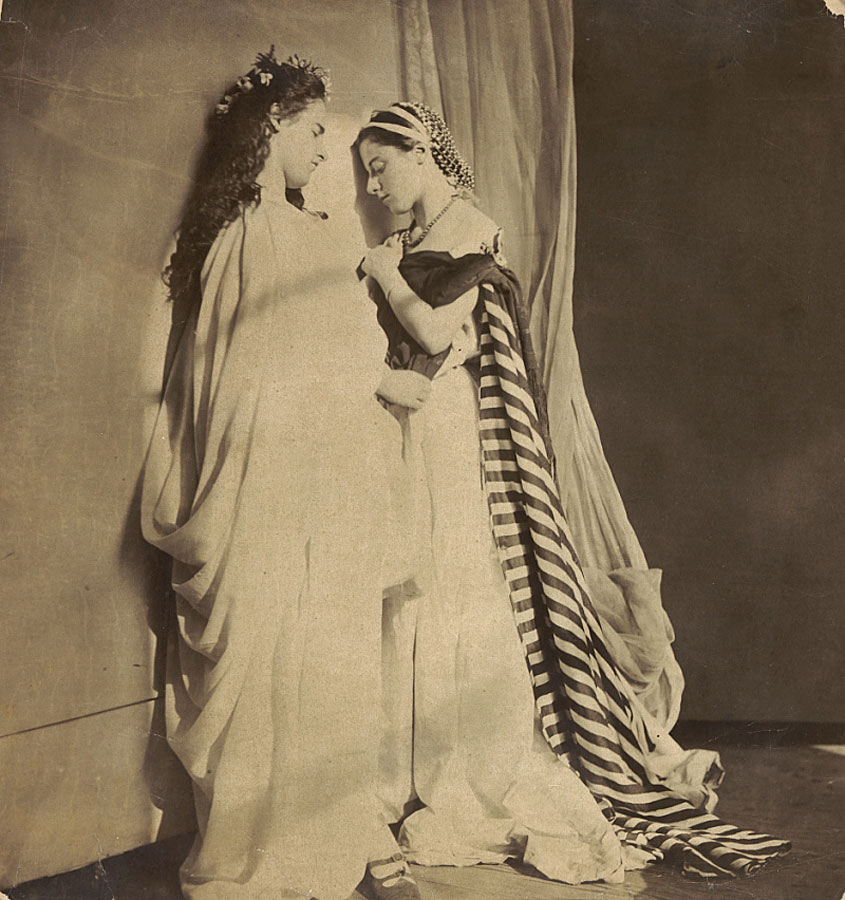
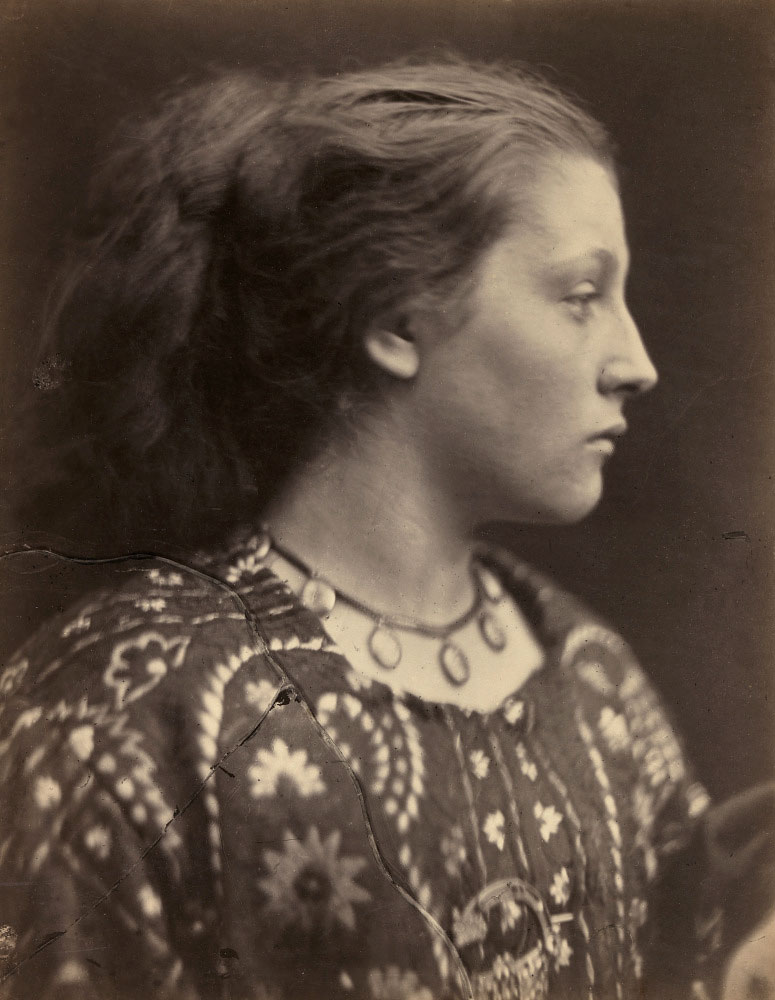
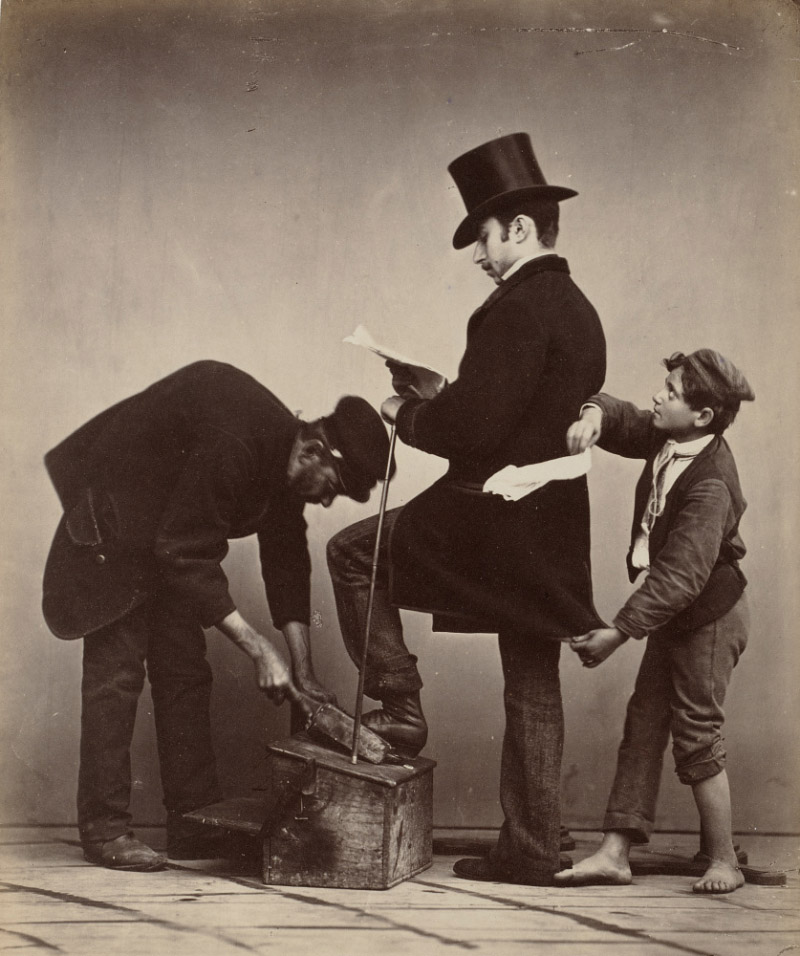
Early photography is ripe with creative fictions. Actors, children, aristocrats, models, artists, psychiatric patients, maids, and all manner of the working class posed in front of cameras and were transformed into figures from history, literature, the Bible, or into an idealised version of themselves. Still Performing: Costume, Gesture, and Expression in 19th Century European Photography, which opens at The Nelson-Atkins Museum of Art in Kansas City Aug. 24, celebrates the unique and compelling ways 19th century European photographers used the medium to explore and document performance, transforming the photographer’s studio into a theatrical stage. The exhibition runs through Jan. 12, 2025.

“The subjects in this exhibition were highly influenced by popular entertainment – live theatre, tableaux vivant, and dioramas – as well as tastes and trends in painting, drawing, and sculpture,” said Julián Zugazagoitia, Director & CEO of the Nelson-Atkins. “These works were made in a time of anxiety about photography’s relationships to the fine arts and reflect a close intermingling between the worlds of the ‘high’ and the ‘low’.”

Visiting a photographer’s studio in Europe in the mid to late 1800s was like going behind the scenes of a theatrical production. Props, backdrops, costumes, curtains, and controlled lighting converted otherwise ordinary portrait sessions into staged productions. Whether working in their homes or commercial studios, photographers cast themselves, friends, actors, models, and strangers in their photographs, transforming them into all types of characters, from young pickpockets to ancient Greek gods.

“These portraits are so fascinating, and I think our guests are going to be amazed at the rich creative complexity found in European photography’s first 50 years,” said Marijana Rayl, Assistant Curator, Photography.

Deliberately made, not casually taken, these staged photographs are often the result of collaborative efforts between photographer and sitter, such as with a series of portraits of Virginia Oldoini, the Countess of Castiglione. A prodigious narcissist, or perhaps just ahead of her time, the countess collaborated with the photographer Pierre-Louis Pierson to produce hundreds of portraits, directing every aspect of the picture-making process. Included in Still Performing is a very rare, hand-coloured portrait of the countess.

The resulting photographs are an outstanding array of complex and compelling fictions showcasing the medium’s early creative potential.

Press release from the Nelson-Atkins Museum


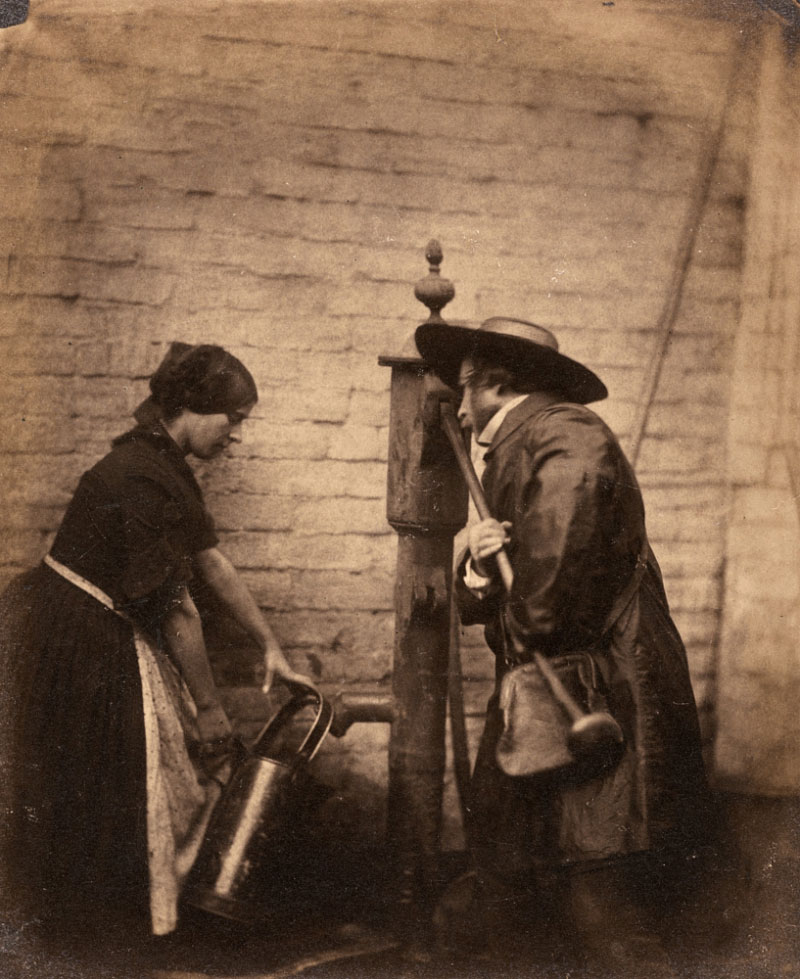
Oscar Gustav Rejlander (English born Sweden, 1813-1875) 'Drawing Water from a Well (O.G. Rejlander and model)' c. 1858


Oscar Gustav Rejlander (English born Sweden, 1813-1875)
Drawing Water from a Well (O.G. Rejlander and model)
c. 1858
Salt print
Image and sheet: 7 15/16 × 6 1/2 inches (20.16 × 16.51cm)
Mount: 14 1/16 × 11 5/16 inches (35.72 × 28.73cm)
The Nelson-Atkins Museum of Art
Gift of the Hall Family Foundation


Oscar Rejlander occasionally cast himself in staged photographs like this one, which was made to appear like a candid image of ordinary people going about their daily lives. Here he poses, turned away from the camera, as though he is helping a peasant woman retrieve water from a well. These kinds of genre scenes were immensely popular in the 1800s across painting, drawing, printmaking, and photography. Rejlander passionately advocated for photography to be treated as a fine art, believing that it must emulate painting.

Text from the Nelson-Atkins Museum website


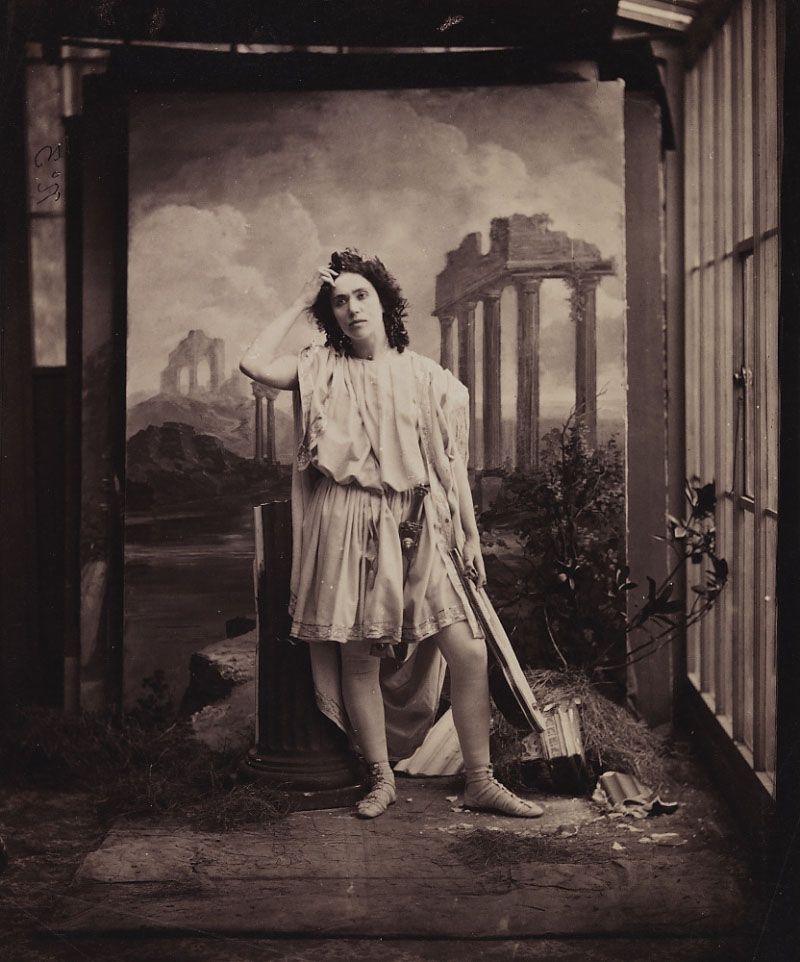
Camille Silvy (French, 1834-1910) 'Actress Rosa Csillag in the Role of Orpheus' 1860


Camille Silvy (French, 1834-1910)
Actress Rosa Csillag in the Role of Orpheus
1860
Albumen print
9 3/16 × 7 5/8 inches
The Nelson-Atkins Museum of Art
Gift of the Hall Family Foundation


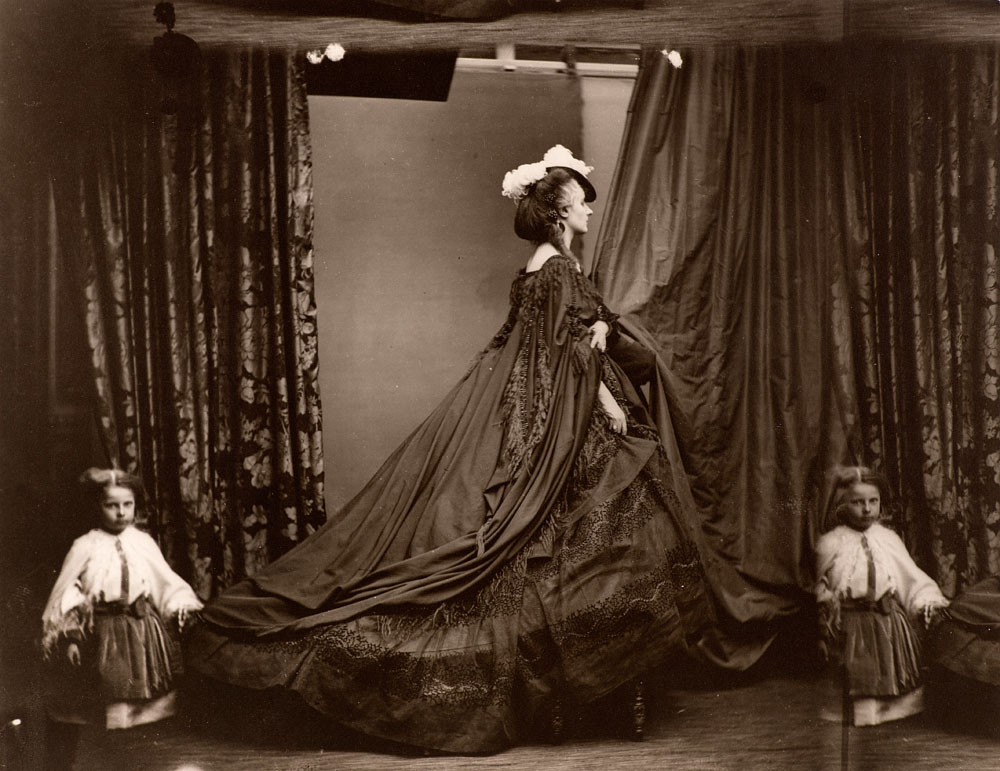
Pierre-Louis Pierson (French, 1822-1913) 'The Countess de Castiglione' 1860s


Pierre-Louis Pierson (French, 1822-1913)
The Countess de Castiglione
1860s
Gelatin silver print (printed about 1930)
10 15/16 x 14 1/8 inches
The Nelson-Atkins Museum of Art
Gift of the Hall Family Foundation


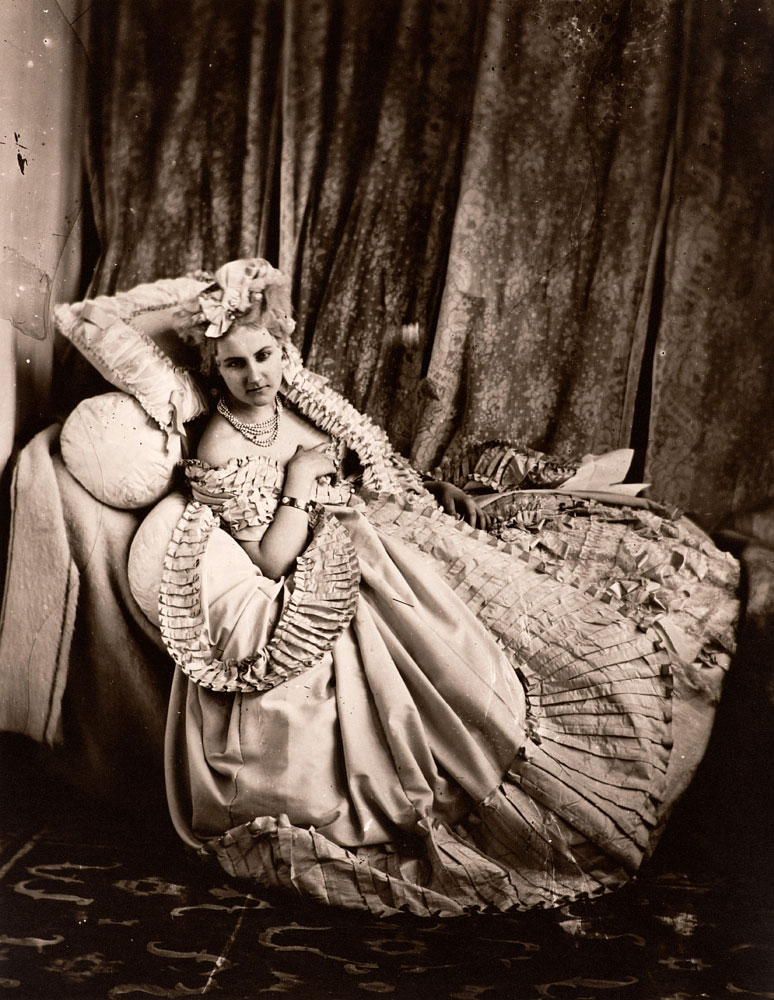
Pierre-Louis Pierson (French, 1822-1913) 'The Countess de Castiglione' 1860s


Pierre-Louis Pierson (French, 1822-1913)
The Countess de Castiglione
1860s
Gelatin silver print (printed about 1930)
Image: 14 3/16 x 11 inches (36.04 x 27.94cm)
Sheet: 14 3/16 x 11 inches (36.04 x 27.94cm)
The Nelson-Atkins Museum of Art
Gift of the Hall Family Foundation


Pierre-Louis Pierson (French, 1822-1913) 'Bal en Costume, Royaume de Belgique' c. 1860


Pierre-Louis Pierson (French, 1822-1913)
Bal en Costume, Royaume de Belgique
c. 1860
Salt print
Image and sheet: 11 1/2 × 8 3/4 inches (29.21 × 22.23cm)
The Nelson-Atkins Museum of Art
Gift of the Hall Family Foundation


Lady Clementina Hawarden (English, born Scotland, 1822-1865) 'Clementina Maude and Isabella Grace' c. 1863


Lady Clementina Hawarden (English, born Scotland, 1822-1865)
Clementina Maude and Isabella Grace
c. 1863
Albumen print
Image and sheet: 9 13/16 × 9 11/16 inches (24.97 × 24.61cm)
The Nelson-Atkins Museum of Art
Gift of the Hall Family Foundation


Julia Margaret Cameron (English, born India, 1815-1879) 'Sappho (Mary Hillier)' 1865


Julia Margaret Cameron (English, born India, 1815-1879)
Sappho (Mary Hillier)
1865
Albumen print
Image and sheet: 12 15/16 × 10 1/8 inches (32.86 × 25.72cm)
Mount: 20 13/16 × 16 13/16 inches (52.86 × 42.7cm)
The Nelson-Atkins Museum of Art
Gift of the Hall Family Foundation


Giorgio Sommer (Italian born Germany, 1834-1914) 'The Pickpocket' About 1865


Giorgio Sommer (Italian born Germany, 1834-1914)
The Pickpocket
About 1865
Albumen print
9 3/8 × 7 5/8 inches
The Nelson-Atkins Museum of Art
Gift of the Hall Family Foundation


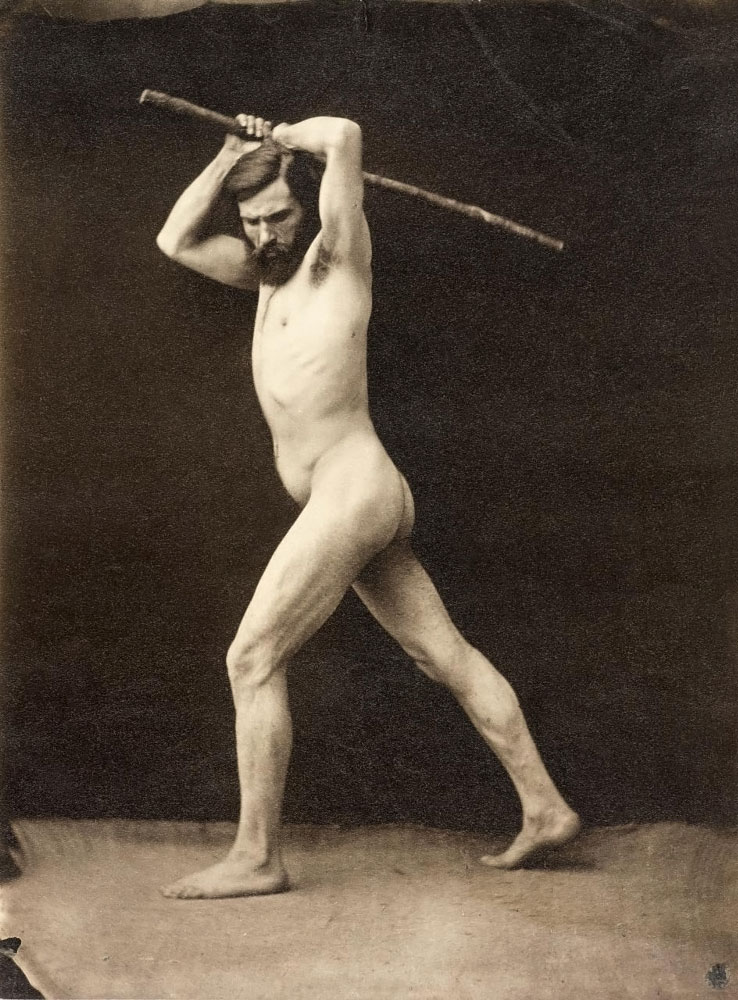
Gaudenzio Marconi (French born Switzerland, 1842-1885) 'Male nude for artist' c. 1870


Gaudenzio Marconi (French born Switzerland, 1842-1885)
Male nude for artist
c. 1870
Albumen print
Image and sheet: 8 5/8 × 6 3/8 inches (21.91 × 16.19cm)
Mount: 12 9/16 × 9 3/4 inches (31.91 × 24.77cm)
The Nelson-Atkins Museum of Art
Gift of the Hall Family Foundation


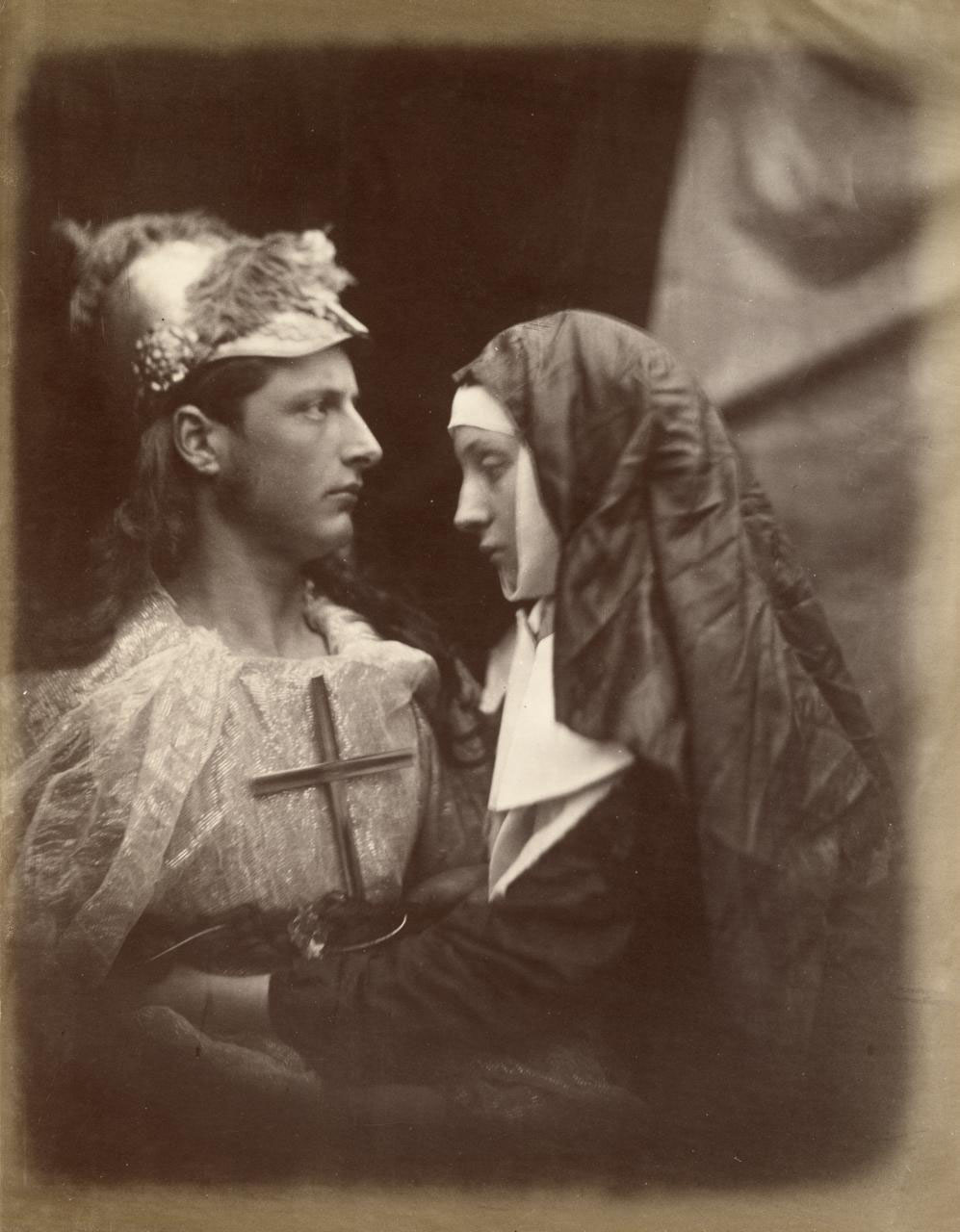
Julia Margaret Cameron (English born India, 1815-1879) 'Sir Galahad and the Pale Nun' 1874


Julia Margaret Cameron (English born India, 1815-1879)
Sir Galahad and the Pale Nun
1874
Albumen print
13 7/16 × 10 1/2 inches
The Nelson-Atkins Museum of Art
Gift of the Hall Family Foundation


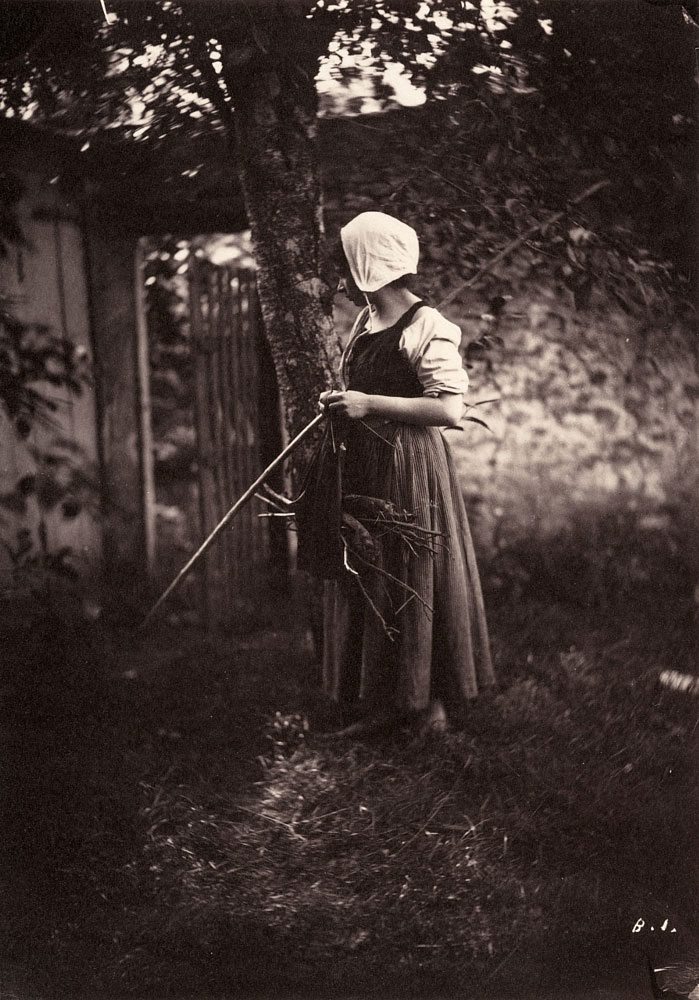
Giraudon's Artist (French, active c. 1875) 'Woman with bundle of twigs' c. 1875-1880


Giraudon’s Artist (French, active c. 1875)
Woman with bundle of twigs
c. 1875-1880
Albumen print
Image and sheet: 6 5/8 × 4 11/16 inches (16.83 × 11.91cm)
The Nelson-Atkins Museum of Art
Gift of the Hall Family Foundation


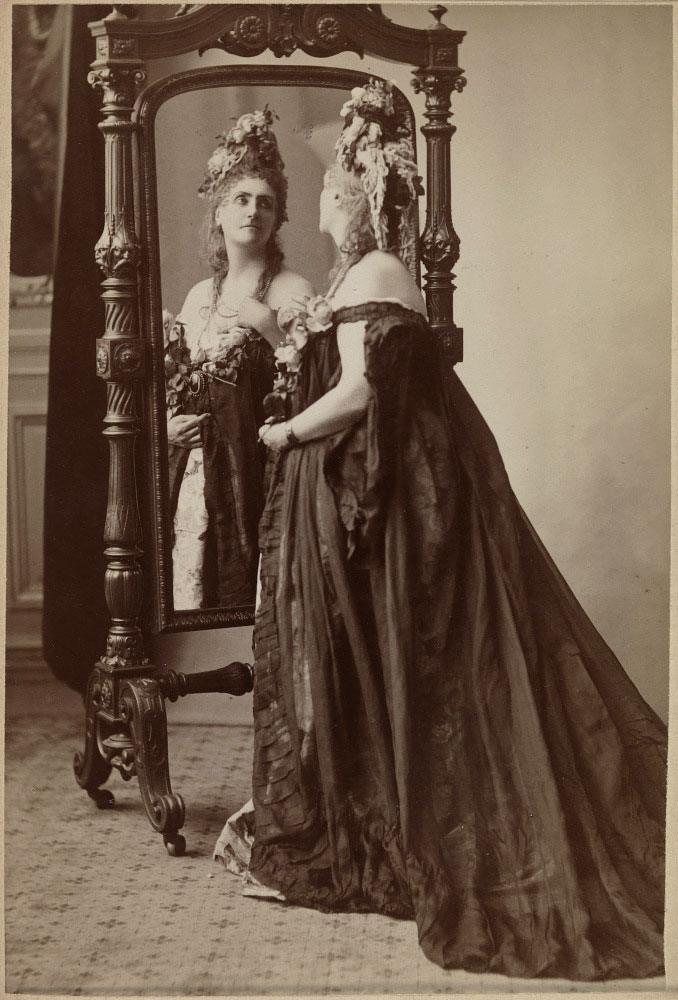
Pierre-Louis Pierson (French, 1822-1913) 'Portrait of the Countess of Castiglione from Série des Roses' 1895


Pierre-Louis Pierson (French, 1822-1913)
Portrait of the Countess of Castiglione from Série des Roses
1895
Albumen cabinet card
Image and sheet: 5 15/16 × 3 15/16 inches (15.06 × 9.98cm)
Mount: 6 3/8 × 4 1/4 inches (16.21 × 10.8cm)
The Nelson-Atkins Museum of Art
Gift of the Hall Family Foundation


The Countess of Castiglione became reclusive with age, rumored to only leave her home at night, hidden behind veils. Social chroniclers of the time claimed that she removed all mirrors from her home to avoid her appearance; however, this portrait seems to contradict her alleged displeasure. Taken toward the end of her life, the countess admires her reflection in the mirror, donning a youthful blond wig elaborately decorated with roses.

Text from the Nelson-Atkins Museum website


The Nelson-Atkins Museum of Art
4525 Oak Street
Kansas City, MO 64111

Opening hours:
Thursday – Monday 10am – 5pm
Closed Tuesdays and Wednesdays

The Nelson-Atkins Museum of Art website

LIKE ART BLART ON FACEBOOK

Back to top

Exhibition: ‘In Focus: Expressions’ at the J. Paul Getty Museum, Getty Center, Los Angeles

Exhibition dates: 22nd May – 7th October, 2018


Erich Salomon (German, 1886-1944) '[Portrait of Madame Vacarescu, Romanian Author and Deputy to the League of Nations, Geneva]' 1928 from the exhibition 'In Focus: Expressions' at the J. Paul Getty Museum, Getty Center, Los Angeles, May - Oct, 2018


Erich Salomon (German, 1886-1944)
(Portrait of Madame Vacarescu, Romanian Author and Deputy to the League of Nations, Geneva)
1928
Gelatin silver print
29.7 × 39.7cm (11 11/16 × 15 5/8 in.)
The J. Paul Getty Museum, Los Angeles


In 1928, pioneering photojournalist, Erich Salomon photographed global leaders and delegates to a conference at the League for the German picture magazine Berliner Illustrirte Zeitung. In a typically frank image, Salomon has shown Vacarescu with her head thrown back passionately pleading before the international assembly.

Elena Văcărescu or Hélène Vacaresco (September 21, 1864 in Bucharest – February 17, 1947 in Paris) was a Romanian-French aristocrat writer, twice a laureate of the Académie française. Văcărescu was the Substitute Delegate to the League of Nations from 1922 to 1924. She was a permanent delegate from 1925 to 1926. She was again a Substitute Delegate to the League of Nations from 1926 to 1938. She was the only woman to serve with the rank of ambassador (permanent delegate) in the history of the League of Nations.

Text from the Wikipedia website


From a distance…

For such an engaging subject, this presentation looks to be a bit of a lucky dip / ho hum / filler exhibition. You can’t make a definitive judgement from a few media images but looking at the exhibition checklist gives you a good idea of the overall organisation of the exhibition and its content. Even the press release seems unsure of itself, littered as it is with words like posits, probes, perhaps (3 times) and problematic.

Elements such as physiognomy are briefly mentioned (with no mention of its link to eugenics), as is the idea of the mask – but again no mention of how the pose is an affective mask, nor how the mask is linked to the carnivalesque. Or how photographs portray us as we would like to be seen (the ideal self) rather than the real self, and how this incongruence forms part of the formation of our identity as human beings.

The investigation could have been so deep in so many areas (for example the representation of women, children and others in a patriarchal social system through facial expression; the self-portrait as an expression of inner being; the photograph as evidence of the mirror stage of identity formation; and the photographs of “hysterical” women of the Pitié-Salpêtrière Hospital, Paris; and on and on…) but in 45 works, I think not. The subject deserved, even cried out for (as facial expressions go), a fuller, more in depth investigation.

For more reading please see my 2014 text Facile, Facies, Facticity which comments on the state of contemporary portrait photography and offers a possible way forward: a description of the states of the body and the air of the face through a subtle and constant art of the recovering of surfaces.

Dr Marcus Bunyan


Many thanks to the J. Paul Getty Museum for allowing me to publish the photographs in the posting. Please click on the photographs for a larger version of the image.


The human face has been the subject of fascination for photographers since the medium’s inception. This exhibition includes posed portraits, physiognomic studies, anonymous snapshots, and unsuspecting countenances caught by the camera’s eye, offering a close-up look at the range of human stories that facial expressions – and photographs – can tell.


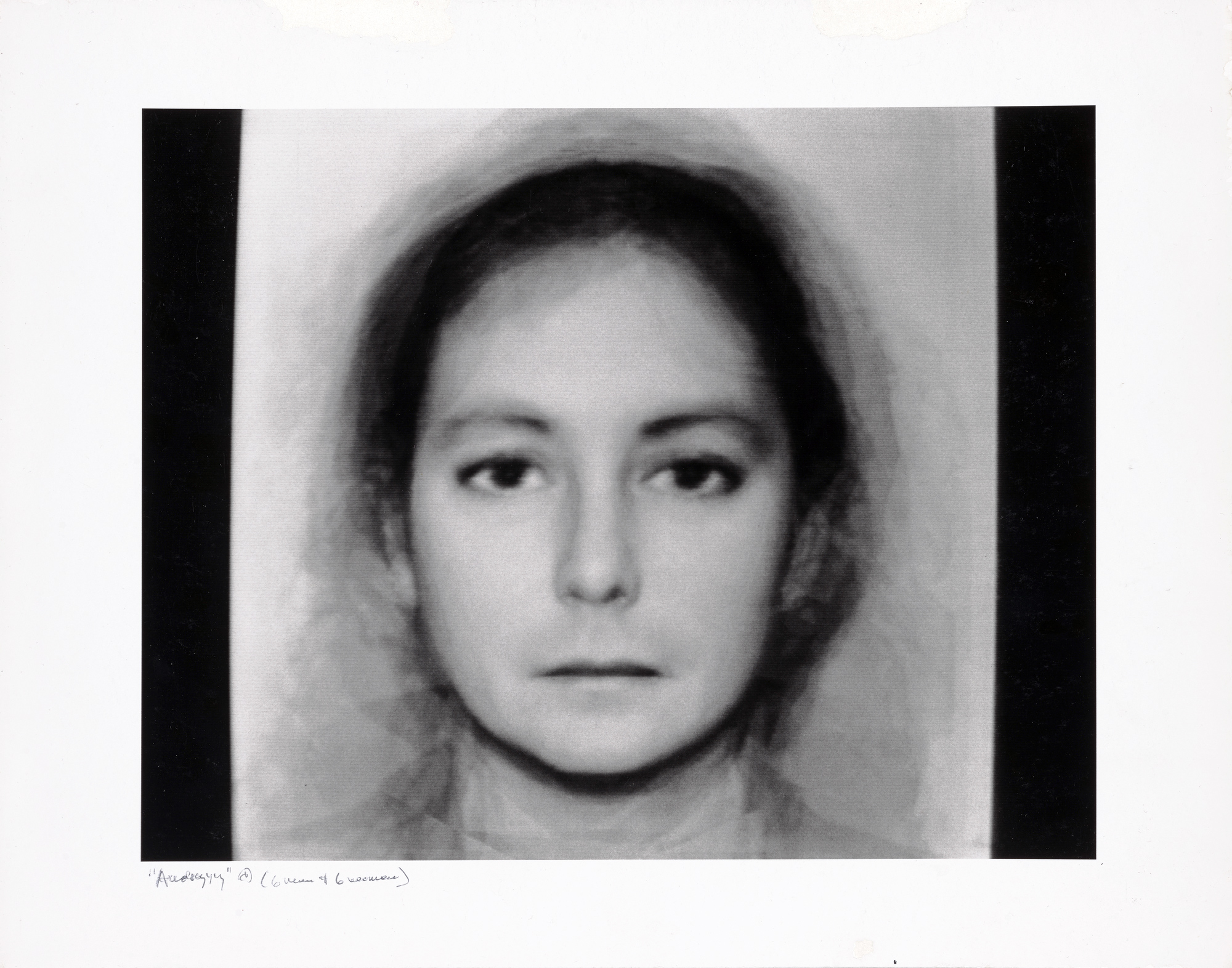
Nancy Burson (American, born 1948) 'Androgyny' 1982 from the exhibition 'In Focus: Expressions' at the J. Paul Getty Museum, Getty Center, Los Angeles, May - Oct, 2018


Nancy Burson (American, b. 1948)
Androgyny
1982
Gelatin silver print
21.6 × 27.7cm (8 1/2 × 10 7/8 in.)
© Nancy Burson
The J. Paul Getty Museum, Los Angeles


Composite image of portraits of six men and six women


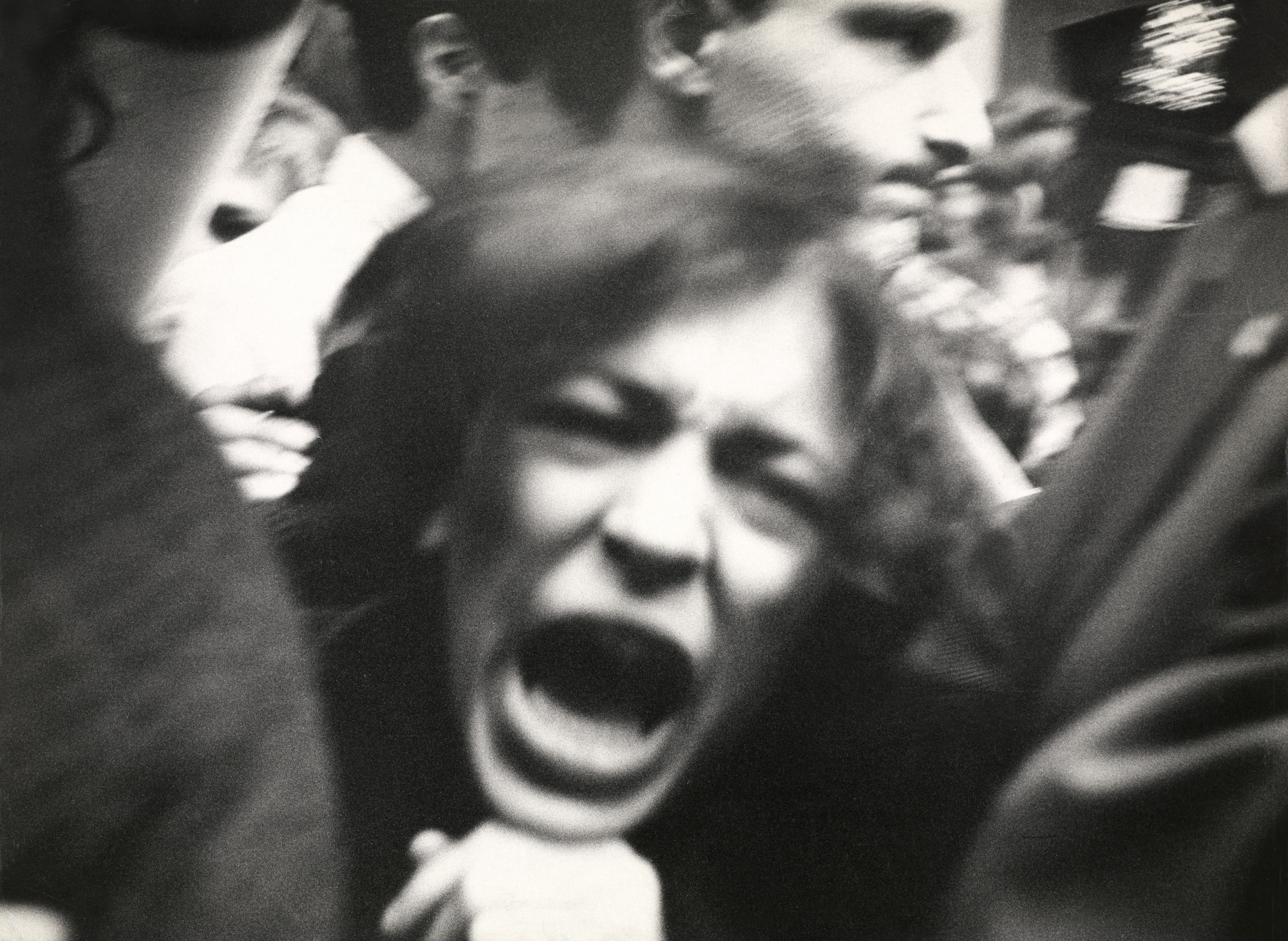
Leonard Freed (American, 1929-2006) 'Demonstration, New York City' 1963


Leonard Freed (American, 1929-2006)
Demonstration, New York City
1963
Gelatin silver print
25.9 × 35.4cm (10 3/16 × 13 15/16 in.)
© Leonard Freed / Magnum Photos, Inc.
The J. Paul Getty Museum, Los Angeles
Gift of Brigitte and Elke Susannah Freed


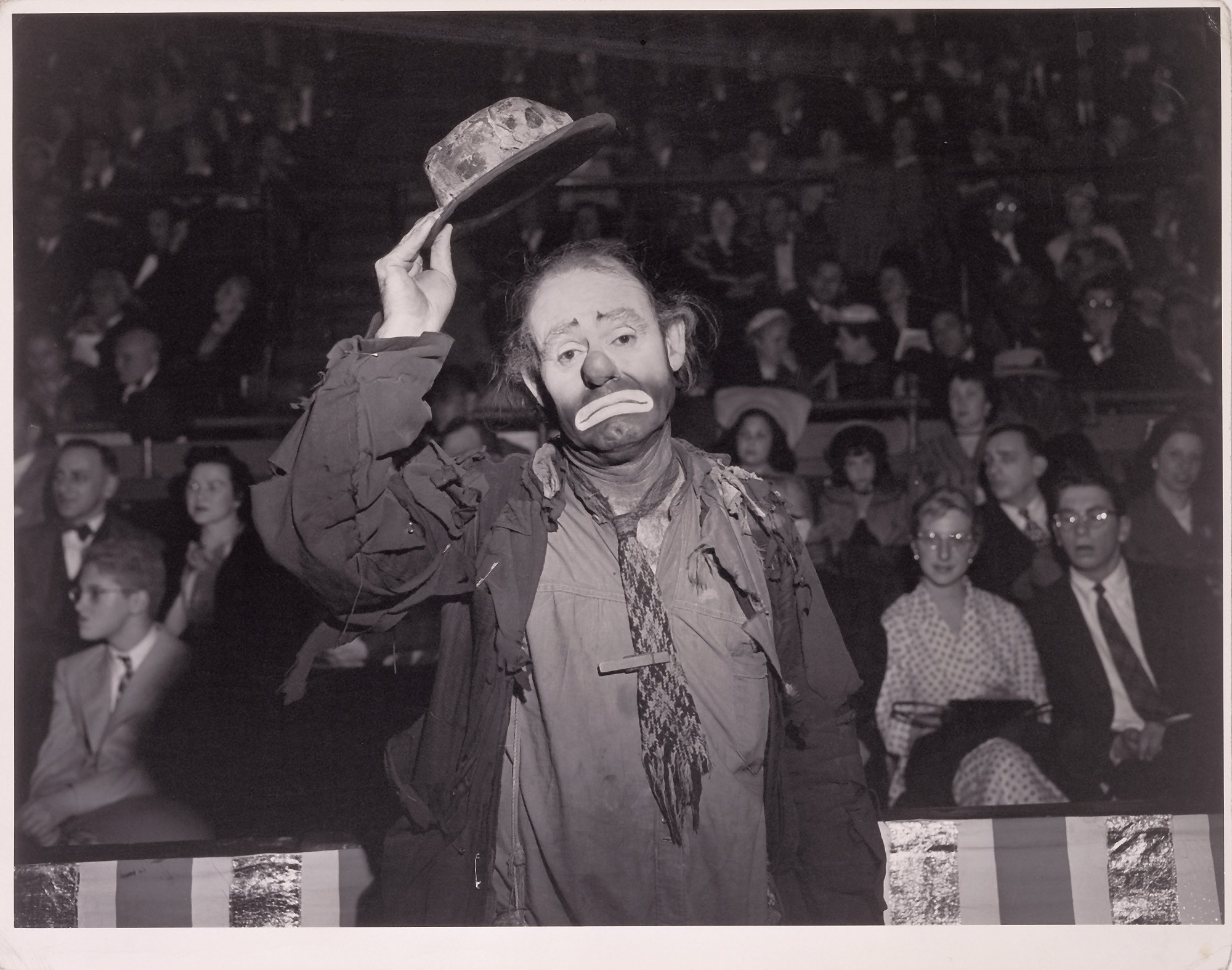
Weegee (Arthur Fellig) (American, born Austria, 1899-1968) 'Emmett Kelly, Ringling Brothers and Barnum & Bailey Circus' Negative May 1943; print about 1950


Weegee (Arthur Fellig) (American born Austria, 1899-1968)
Emmett Kelly, Ringling Brothers and Barnum & Bailey Circus
Negative May 1943; print about 1950
Gelatin silver print
26 × 34.4cm (10 1/4 × 13 9/16 in.)
© International Center of Photography
The J. Paul Getty Museum, Los Angeles


Emmett Kelly (American, 1898-1979)

Emmett Leo Kelly (December 9, 1898 – March 28, 1979) was an American circus performer, who created the memorable clown figure “Weary Willie”, based on the hobos of the Depression era.

Kelly began his career as a trapeze artist. By 1923, Emmett Kelly was working his trapeze act with John Robinson’s circus when he met and married Eva Moore, another circus trapeze artist. They later performed together as the “Aerial Kellys” with Emmett still performing occasionally as a whiteface clown.

He started working as a clown full-time in 1931, and it was only after years of attempting to persuade the management that he was able to switch from a white face clown to the hobo clown that he had sketched ten years earlier while working as a cartoonist.

“Weary Willie” was a tragic figure: a clown, who could usually be seen sweeping up the circus rings after the other performers. He tried but failed to sweep up the pool of light of a spotlight. His routine was revolutionary at the time: traditionally, clowns wore white face and performed slapstick stunts intended to make people laugh. Kelly did perform stunts too – one of his most famous acts was trying to crack a peanut with a sledgehammer – but as a tramp, he also appealed to the sympathy of his audience.

From 1942-1956 Kelly performed with the Ringling Brothers and Barnum & Bailey Circus, where he was a major attraction, though he took the 1956 season off to perform as the mascot for the Brooklyn Dodgers baseball team. He also landed a number of Broadway and film roles, including appearing as himself in his “Willie” persona in Cecil B. DeMille’s The Greatest Show on Earth (1952). He also appeared in the Bertram Mills Circus.

Text from the Wikipedia website


Hill & Adamson (Scottish, active 1843-1848) 'Mrs Grace Ramsay and four unknown women' 1843


Hill & Adamson (David Octavius Hill, Scottish 1802-1870 and Robert Adamson, Scottish 1821-1848) (Scottish, active 1843-1848)
Mrs Grace Ramsay and four unknown women
1843
Salter paper print from Calotype negative
15.2 x 20.3cm (6 x 8 in.)
The J. Paul Getty Museum, Los Angeles


Lewis W. Hine (American, 1874-1940) 'Connecticut Newsgirls' c. 1912-1913


Lewis W. Hine (American, 1874-1940)
Connecticut Newsgirls
c. 1912-1913
Gelatin silver print
11.8 × 16.8cm (4 11/16 × 6 5/8 in.)
The J. Paul Getty Museum, Los Angeles


Nadar [Gaspard Félix Tournachon] (French, 1820-1910) '[Mme Ernestine Nadar]' 1880-1883


Nadar (Gaspard Félix Tournachon) (French, 1820-1910)
(Mme Ernestine Nadar)
1880-1883
Albumen silver print
Image (irregular): 8.7 × 21cm (3 7/16 × 8 1/4 in.)
The J. Paul Getty Museum, Los Angeles


Nadar [Gaspard Félix Tournachon] (French, 1820-1910) '[Mme Ernestine Nadar]' 1880-1883 (detail)


Nadar (Gaspard Félix Tournachon) (French, 1820-1910)
(Mme Ernestine Nadar)
(detail)
1880-1883
Albumen silver print
Image (irregular): 8.7 × 21cm (3 7/16 × 8 1/4 in.)
The J. Paul Getty Museum, Los Angeles


Julia Margaret Cameron (British, 1815-1879) 'Ophelia' Negative 1875; print, 1900


Julia Margaret Cameron (British born India, 1815-1879)
Ophelia
Negative 1875; print, 1900
Carbon print
35.2 x 27.6cm (13 7/8 x 19 7/8 in.)
The J. Paul Getty Museum, Los Angeles


Nicholas Nixon (American, b. 1947) 'W. Canfield Ave., Detroit' 1982


Nicholas Nixon (American, b. 1947)
W. Canfield Ave., Detroit
1982
Gelatin silver print
Image (irregular): 19.7 × 24.6cm (7 3/4 × 9 11/16 in.)
© Nicholas Nixon
The J. Paul Getty Museum, Los Angeles


Unknown maker (German) 'Close-up of Open Mouth of Male Student' c. 1927


Unknown maker (German)
Close-up of Open Mouth of Male Student
c. 1927
Gelatin silver print
5.7 x 8.4cm (2 1/4 x 3 5/16 in.)
The J. Paul Getty Museum, Los Angeles


Alec Soth (American, b. 1969) 'Mary, Milwaukee, WI' 2014


Alec Soth (American, b. 1969)
Mary, Milwaukee, WI
2014
Inkjet print
40.1 × 53.5cm (15 13/16 × 21 1/16 in.)
© Alec Soth/Magnum Photos
The J. Paul Getty Museum, Los Angeles
Gift of Richard Lovett


Garry Winogrand (American, 1928-1984) 'Los Angeles' January 1960


Garry Winogrand (American, 1928-1984)
Los Angeles
January 1960
Gelatin silver print
22.6 × 33.9cm (8 7/8 × 13 3/8 in.)
© 1984 The Estate of Garry Winogrand
The J. Paul Getty Museum, Los Angeles


From Leonardo da Vinci’s Mona Lisa, to Edvard Munch’s The Scream, to Dorothea Lange’s Migrant Mother, the human face has been a crucial, if often enigmatic, element of portraiture. Featuring 45 works drawn from the Museum’s permanent collection, In Focus: Expressions, on view May 22 to October 7, 2018 at the J. Paul Getty Museum, addresses the enduring fascination with the human face and the range of countenances that photographers have captured from the birth of the medium to the present day.

The exhibition begins with the most universal and ubiquitous expression: the smile. Although today it is taken for granted that we should smile when posing for the camera, smiling was not the standard photographic expression until the 1880s with the availability of faster film and hand-held cameras. Smiling subjects began to appear more frequently as the advertising industry also reinforced the image of happy customers to an ever-widening audience who would purchase the products of a growing industrial economy. The smile became “the face of the brand,” gracing magazines, billboards, and today, digital and social platforms.

As is evident in the exhibition, the smile comes in all variations – the genuine, the smirk, the polite, the ironic – expressing a full spectrum of emotions that include benevolence, sarcasm, joy, malice, and sometimes even an intersection of two or more of these. In Milton Rogovin’s (American, 1909-2011) Storefront Churches, Buffalo (1958-1961), the expression of the preacher does not immediately register as a smile because the camera has captured a moment where his features – the opened mouth, exposed teeth, and raised face – could represent a number of activities: he could be in the middle of a song, preaching, or immersed in prayer. His corporeal gestures convey the message of his spirit, imbuing the black-and-white photograph with emotional colour. Like the other works included in this exhibition, this image posits the notion that facial expressions can elicit a myriad of sentiments and denote a range of inner emotions that transcend the capacity of words.

In Focus: Expressions also probes the role of the camera in capturing un-posed moments and expressions that would otherwise go unnoticed. In Alec Soth’s (American, born 1969) Mary, Milwaukee, WI (2014), a fleeting expression of laughter is materialised in such a way – head leaning back, mouth open – that could perhaps be misconstrued as a scream. The photograph provides a frank moment, one that confronts the viewer with its candidness and calls to mind today’s proliferation and brevity of memes, a contemporary, Internet-sustained visual phenomena in which images are deliberately parodied and altered at the same rate as they are spread.

Perhaps equally radical as the introduction of candid photography is the problematic association of photography with facial expression and its adoption of physiognomy, a concept that was introduced in the 19th century. Physiognomy, the study of the link between the face and human psyche, resulted in the belief that different types of people could be classified by their visage. The exhibition includes some of the earliest uses of photography to record facial expression, as in Duchenne de Boulogne’s (French, 1806-1875) Figure 44: The Muscle of Sadness (negative, 1850s). This also resonates in the 20th-century photographs by Walker Evans (American, 1903-1975) of Allie Mae Burroughs, Hale County Alabama (negative 1936) in that the subject’s expression could be deemed as suggestive of the current state of her mind. In this frame (in others she is viewed as smiling) she stares intently at the camera slightly biting her lip, perhaps alluding to uncertainty of what is to come for her and her family.

The subject of facial expression is also resonant with current developments in facial recognition technology. Nancy Burson (American, born 1948) created works such as Androgyny (6 Men + 6 Women) (1982), in which portraits of six men and six women were morphed together to convey the work’s title. Experimental and illustrative of the medium’s technological advancement, Burson’s photograph is pertinent to several features of today’s social media platforms, including the example in which a phone’s front camera scans a user’s face and facial filters are applied upon detection. Today, mobile phones and social media applications even support portrait mode options, offering an apprehension of the human face and highlighting its countenances with exceptional quality.

In addition to photography’s engagement with human expression, In Focus: Expressions examines the literal and figurative concept of the mask. Contrary to a candid photograph, the mask is the face we choose to present to the world. Weegee’s (Arthur Fellig’s) (American, born Austria, 1899-1968) Emmett Kelly, Ringling Brothers and Barnum & Bailey Circus (about 1950) demonstrates this concept, projecting the character of a sad clown in place of his real identity as Emmett Kelly.

The mask also suggests guises, obscurity, and the freedom to pick and create a separate identity. W. Canfield Ave., Detroit (1982) by Nicholas Nixon (American, born 1947) demonstrates this redirection. Aware that he is being photographed, the subject seizes the opportunity to create a hardened expression that conveys him as distant, challenging, and fortified, highlighted by the opposing sentiments of the men who flank him. In return, the audience could be led to believe that this devised pose is a façade behind which a concealed and genuine identity exists.

Press release from the J. Paul Getty Museum


Guillaume-Benjamin Duchenne (French, 1806-1875) 'Figure 44, The Muscle of Sadness' Negative 1854-1856; print 1876


Guillaume-Benjamin Duchenne (French, 1806-1875)
Figure 44, The Muscle of Sadness
Negative 1854-1856; print 1876
From the book Mecanisme de la Physionomie Humaine ou Analyse Electro-Physiologique de l’Expression des Passions
Albumen silver print
11 x 9cm
The J. Paul Getty Museum, Los Angeles


Duchenne de Boulogne (French, 1806-1875)

Guillaume-Benjamin-Amand Duchenne (de Boulogne) (September 17, 1806 in Boulogne-sur-Mer – September 15, 1875 in Paris) was a French neurologist who revived Galvani’s research and greatly advanced the science of electrophysiology. The era of modern neurology developed from Duchenne’s understanding of neural pathways and his diagnostic innovations including deep tissue biopsy, nerve conduction tests (NCS), and clinical photography. This extraordinary range of activities (mostly in the Salpêtrière) was achieved against the background of a troubled personal life and a generally indifferent medical and scientific establishment.

Neurology did not exist in France before Duchenne and although many medical historians regard Jean-Martin Charcot as the father of the discipline, Charcot owed much to Duchenne, often acknowledging him as “mon maître en neurologie” (my teacher in neurology). … Duchenne’s monograph, the Mécanisme de la physionomie humaine – also illustrated prominently by his photographs – was the first study on the physiology of emotion and was highly influential on Darwin’s work on human evolution and emotional expression.

In 1835, Duchenne began experimenting with therapeutic “électropuncture” (a technique recently invented by François Magendie and Jean-Baptiste Sarlandière by which electric shock was administered beneath the skin with sharp electrodes to stimulate the muscles). After a brief and unhappy second marriage, Duchenne returned to Paris in 1842 in order to continue his medical research. Here, he did not achieve a senior hospital appointment, but supported himself with a small private medical practice, while daily visiting a number of teaching hospitals, including the Salpêtrière psychiatric centre. He developed a non-invasive technique of muscle stimulation that used faradic shock on the surface of the skin, which he called “électrisation localisée” and he published these experiments in his work, On Localized Electrization and its Application to Pathology and Therapy, first published in 1855. A pictorial supplement to the second edition, Album of Pathological Photographs (Album de Photographies Pathologiques) was published in 1862. A few months later, the first edition of his now much-discussed work, The Mechanism of Human Physiognomy, was published. Were it not for this small, but remarkable, work, his next publication, the result of nearly 20 years of study, Duchenne’s Physiology of Movements, his most important contribution to medical science, might well have gone unnoticed.

The Mechanism of Human Facial Expression

Influenced by the fashionable beliefs of physiognomy of the 19th century, Duchenne wanted to determine how the muscles in the human face produce facial expressions which he believed to be directly linked to the soul of man. He is known, in particular, for the way he triggered muscular contractions with electrical probes, recording the resulting distorted and often grotesque expressions with the recently invented camera. He published his findings in 1862, together with extraordinary photographs of the induced expressions, in the book Mecanisme de la physionomie Humaine (The Mechanism of Human Facial Expression, also known as The Mechanism of Human Physiognomy).

Duchenne believed that the human face was a kind of map, the features of which could be codified into universal taxonomies of mental states; he was convinced that the expressions of the human face were a gateway to the soul of man. Unlike Lavater and other physiognomists of the era, Duchenne was skeptical of the face’s ability to express moral character; rather he was convinced that it was through a reading of the expressions alone (known as pathognomy) which could reveal an “accurate rendering of the soul’s emotions”. He believed that he could observe and capture an “idealized naturalism” in a similar (and even improved) way to that observed in Greek art. It is these notions that he sought conclusively and scientifically to chart by his experiments and photography and it led to the publishing of The Mechanism of Human Physiognomy in 1862 (also entitled, The Electro-Physiological Analysis of the Expression of the Passions, Applicable to the Practice of the Plastic Arts. in French: Mécanisme de la physionomie humaine, ou Analyse électro-physiologique de l’expression des passions applicable à la pratique des arts plastiques), now generally rendered as The Mechanism of Human Facial Expression. The work compromises a volume of text divided into three parts:

1/ General Considerations,
2/ A Scientific Section, and
3/ An Aesthetic Section.

These sections were accompanied by an atlas of photographic plates. …

Duchenne defines the fundamental expressive gestures of the human face and associates each with a specific facial muscle or muscle group. He identifies thirteen primary emotions the expression of which is controlled by one or two muscles. He also isolates the precise contractions that result in each expression and separates them into two categories: partial and combined. To stimulate the facial muscles and capture these “idealized” expressions of his patients, Duchenne applied faradic shock through electrified metal probes pressed upon the surface of the various muscles of the face.

Duchenne was convinced that the “truth” of his pathognomic experiments could only be effectively rendered by photography, the subject’s expressions being too fleeting to be drawn or painted. “Only photography,” he writes, “as truthful as a mirror, could attain such desirable perfection.” He worked with a talented, young photographer, Adrien Tournachon, (the brother of Felix Nadar), and also taught himself the art in order to document his experiments. From an art-historical point of view, the Mechanism of Human Physiognomy was the first publication on the expression of human emotions to be illustrated with actual photographs. Photography had only recently been invented, and there was a widespread belief that this was a medium that could capture the “truth” of any situation in a way that other mediums were unable to do.

Duchenne used six living models in the scientific section, all but one of whom were his patients. His primary model, however, was an “old toothless man, with a thin face, whose features, without being absolutely ugly, approached ordinary triviality.” Through his experiments, Duchenne sought to capture the very “conditions that aesthetically constitute beauty.” He reiterated this in the aesthetic section of the book where he spoke of his desire to portray the “conditions of beauty: beauty of form associated with the exactness of the facial expression, pose and gesture.” Duchenne referred to these facial expressions as the “gymnastics of the soul”. He replied to criticisms of his use of the old man by arguing that “every face could become spiritually beautiful through the accurate rendering of his or her emotions”, and furthermore said that because the patient was suffering from an anesthetic condition of the face, he could experiment upon the muscles of his face without causing him pain.

Text from the Wikipedia website


Guillaume-Benjamin Duchenne (French, 1806-1875) 'Figure 44, The Muscle of Sadness' Negative 1854-1856; print 1876 (detail)


Guillaume-Benjamin Duchenne (French, 1806-1875)
Figure 44, The Muscle of Sadness (detail)
Negative 1854-1856; print 1876
From the book Mecanisme de la Physionomie Humaine ou Analyse Electro-Physiologique de l’Expression des Passions
Albumen silver print
11 x 9cm
The J. Paul Getty Museum, Los Angeles


Duchenne and his patient, an “old toothless man, with a thin face, whose features, without being absolutely ugly, approached ordinary triviality.” Duchenne faradize’s the mimetic muscles of “The Old Man.” The farad (symbol: F) is the SI derived unit of electrical capacitance, the ability of a body to store an electrical charge. It is named after the English physicist Michael Faraday


Guillaume-Benjamin Duchenne (French, 1806-1875) 'Figure 27, The Muscle of Pain' Negative 1854-1856; print 1876


Guillaume-Benjamin Duchenne (French, 1806-1875)
Figure 27, The Muscle of Pain
Negative 1854-1856; print 1876
From the book Mecanisme de la Physionomie Humaine ou Analyse Electro-Physiologique de l’Expression des Passions
Albumen silver print
11 x 9cm
The J. Paul Getty Museum, Los Angeles


Guillaume-Benjamin Duchenne (French, 1806-1875) 'Figure 27, The Muscle of Pain' Negative 1854-1856; print 1876 (detail)


Guillaume-Benjamin Duchenne (French, 1806-1875)
Figure 27, The Muscle of Pain (detail)
Negative 1854-1856; print 1876
From the book Mecanisme de la Physionomie Humaine ou Analyse Electro-Physiologique de l’Expression des Passions
Albumen silver print
11 x 9cm
The J. Paul Getty Museum, Los Angeles


Milton Rogovin (American, 1909-2011) 'Storefront Churches, Buffalo, preacher head in hand, eyes closed' 1958-1961


Milton Rogovin (American, 1909-2011)
Storefront Churches, Buffalo, preacher head in hand, eyes closed
1958-1961
Gelatin silver print
11 × 10.5cm (4 5/16 × 4 1/8 in.)
The J. Paul Getty Museum, Los Angeles
Gift of Dr. John V. and Laura M. Knaus
© Milton Rogovin


Walker Evans (American, 1903-1975) 'Allie Mae Burroughs, Hale County, Alabama' Negative 1936; print 1950s


Walker Evans (American, 1903-1975)
Allie Mae Burroughs, Hale County, Alabama
Negative 1936; print 1950s
Gelatin silver print
24.3 × 19.2cm (9 9/16 × 7 9/16 in.)
The J. Paul Getty Museum, Los Angeles


Walker Evans (American, 1903-1975) 'Allie Mae Burroughs, Hale County, Alabama' Negative 1936; print 1950s (detail)


Walker Evans (American, 1903-1975)
Allie Mae Burroughs, Hale County, Alabama (detail)
Negative 1936; print 1950s
Gelatin silver print
24.3 × 19.2cm (9 9/16 × 7 9/16 in.)
The J. Paul Getty Museum, Los Angeles


Depression-era photography

In 1935, Evans spent two months at first on a fixed-term photographic campaign for the Resettlement Administration (RA) in West Virginia and Pennsylvania. From October on, he continued to do photographic work for the RA and later the Farm Security Administration (FSA), primarily in the Southern United States.

In the summer of 1936, while on leave from the FSA, he and writer James Agee were sent by Fortune magazine on assignment to Hale County, Alabama, for a story the magazine subsequently opted not to run. In 1941, Evans’s photographs and Agee’s text detailing the duo’s stay with three white tenant families in southern Alabama during the Great Depression were published as the groundbreaking book Let Us Now Praise Famous Men. Its detailed account of three farming families paints a deeply moving portrait of rural poverty. The critic Janet Malcolm notes that as in the earlier Beals’ book there was a contradiction between a kind of anguished dissonance in Agee’s prose and the quiet, magisterial beauty of Evans’s photographs of sharecroppers.

The three families headed by Bud Fields, Floyd Burroughs and Frank Tingle, lived in the Hale County town of Akron, Alabama, and the owners of the land on which the families worked told them that Evans and Agee were “Soviet agents,” although Allie Mae Burroughs, Floyd’s wife, recalled during later interviews her discounting that information. Evans’s photographs of the families made them icons of Depression-Era misery and poverty. In September 2005, Fortune revisited Hale County and the descendants of the three families for its 75th anniversary issue. Charles Burroughs, who was four years old when Evans and Agee visited the family, was “still angry” at them for not even sending the family a copy of the book; the son of Floyd Burroughs was also reportedly angry because the family was “cast in a light that they couldn’t do any better, that they were doomed, ignorant.”

Text from the Wikipedia website


Lisette Model (American born Austria, 1901-1983) '[War Rally]' 1942


Lisette Model (American born Austria, 1901-1983)
(War Rally)
1942
Gelatin silver print
34.4 × 27.6cm (13 9/16 × 10 7/8 in.)
© Estate of Lisette Model
Courtesy Baudoin Lebon/Keitelman
The J. Paul Getty Museum, Los Angeles


Robert Capa (American born Hungary, 1913-1954) 'Second World War, Naples' October 2, 1943


Robert Capa (American born Hungary, 1913-1954)
Second World War, Naples
October 2, 1943
Gelatin silver print
17.6 × 23.8cm (6 15/16 × 9 3/8 in.)
© International Center of Photography / Magnum Photos
The J. Paul Getty Museum, Los Angeles


View of a group of woman with pained expressions on their faces with several holding handkerchiefs and one holding a card photograph of a young man.


Unknown maker (American) '[Smiling Man]' 1860


Unknown maker (American)
(Smiling Man)
1860
Ambrotype
8.9 x 6.5cm
The J. Paul Getty Museum, Los Angeles


Baron Adolf de Meyer (American born France, 1868-1946) '[Ruth St. Denis]' c. 1918


Baron Adolf de Meyer (American born France, 1868-1946)
(Ruth St. Denis)
c. 1918
Platinum print
23.3 × 18.7cm (9 3/16 × 7 3/8 in.)
The J. Paul Getty Museum, Los Angeles


Woodbury & Page (British, active 1857-1908) '[Javanese woman seated with legs crossed, basket at side]' c. 1870


Woodbury & Page (British, active 1857-1908)
(Javanese woman seated with legs crossed, basket at side)
c. 1870
Albumen silver print
8.9 × 6cm (3 1/2 × 2 3/8 in.)
The J. Paul Getty Museum, Los Angeles


Photography in Australia, the Far East, Java and London

In 1851 Woodbury, who had already become a professional photographer, went to Australia and soon found work in the engineering department of the Melbourne waterworks. He photographed the construction of ducts and other waterworks as well as various buildings in Melbourne. He received a medal for his photography in 1854.

At some point in the mid-1850s Woodbury met expatriate British photographer James Page. In 1857 the two left Melbourne and moved to Batavia (now Jakarta), Dutch East Indies, arriving 18 May 1857, and established the partnership of Woodbury & Page that same year.

During most of 1858 Woodbury & Page photographed in Central and East Java, producing large views of the ruined temples near Surakarta, amongst other subjects, before 1 September of that year. After their tour of Java, by 8 December 1858 Woodbury and Page had returned to Batavia.

In 1859 Woodbury returned to England to arrange a regular supplier of photographic materials for his photographic studio and he contracted the London firm Negretti and Zambra to market Woodbury & Page photographs in England.

Woodbury returned to Java in 1860 and during most of that year travelled with Page through Central and West Java along with Walter’s brother, Henry James Woodbury (born 1836 – died 1873), who had arrived in Batavia in April 1859.

On 18 March 1861 Woodbury & Page moved to new premises, also in Batavia, and the studio was renamed Photographisch Atelier van Walter Woodbury, also known as Atelier Woodbury. The firm sold portraits, views of Java, stereographs, cameras, lenses, photographic chemicals and other photographic supplies. These premises continued to be used until 1908, when the firm was dissolved.

In his career Woodbury produced topographic, ethnographic and especially portrait photographs. He photographed in Australia, Java, Sumatra, Borneo and London. Although individual photographers were rarely identified on Woodbury & Page photographs, between 1861 and 1862 Walter B. Woodbury occasionally stamped the mounts of his photographs: “Photographed by Walter Woodbury, Java.”

Text from the Wikipedia website


Weegee (Arthur Fellig) (American, 1899-1968) 'The Critic' November 1943


Weegee (Arthur Fellig) (American, 1899-1968)
The Critic
November 1943
Gelatin silver print
25.7 x 32.9cm (10 1/8 x 12 15/16 in.)
The J. Paul Getty Museum, Los Angeles


“I go around wearing rose-colored glasses. In other words, we have beauty. We have ugliness. Everybody likes beauty. But there is an ugliness…” ~ Weegee, in a July 11, 1945 interview for WEAF radio, New York City

While Weegee’s work appeared in many American newspapers and magazines, his methods would sometimes be considered ethically questionable by today’s journalistic standards. In this image, a drunk woman confronts two High Society women who are attending the opera. Mrs. George Washington Kavanaugh and Lady Decies appear nonplussed to be in close proximity to the disheveled woman. Weegee’s flash illuminates their fur wraps and tiaras, drawing them into the foreground. The drunk woman emerges from the shadows on the right side, her mouth tense and open as if she were saying something, hair tousled, her face considerably less sharp than those of her rich counterparts.

The Critic is the second name Weegee gave this photograph. He originally called it, The Fashionable People. In an interview, Weegee’s assistant, Louie Liotta later revealed that the picture was entirely set up. Weegee had asked Liotta to bring a regular from a bar in the Bowery section of Manhattan to the season’s opening of the Metropolitan Opera. Liotta complied. After getting the woman drunk, they positioned her near the red carpet, where Weegee readied his camera to capture the moment seen here.

Anonymous text. “The Critic,” on the J. Paul Getty Museum website [Online] Cited 24/02/2022


Dorothea Lange (United States, 1895-1965) 'Hopi Indian, New Mexico' Negative, c. 1923; print, 1926


Dorothea Lange (American, 1895-1965)
Hopi Indian, New Mexico
Negative, c. 1923; print, 1926
Gelatin silver print
18.4 x 19.7cm (7 1/4 x 7 3/4 in.)
The J. Paul Getty Museum, Los Angeles
© Oakland Museum of California, the City of Oakland


Dorothea Lange made this portrait study not as a social document but rather as a Pictorialist experiment in light and shadow, transforming a character-filled face into an art-for-art’s-sake abstraction. This image bridges the two distinct phases of Lange’s work: her early, soft-focus portraiture and her better-known documentary work of the 1930s.

Text from the J. Paul Getty Museum website


Walker Evans (American, 1903-1975) 'Street Scene, New Orleans' 1936


Walker Evans (American, 1903-1975)
Street Scene, New Orleans
1936
Gelatin silver print
15.6 x 16.8cm (1 1/8 x 6 5/8 in.)
The J. Paul Getty Museum, Los Angeles
© Walker Evans Archive, The Metropolitan Museum of Art


Paul Strand (American, 1890 - 1976) 'Photograph - New York' Negative 1916; print June 1917


Paul Strand (American, 1890-1976)
Photograph – New York
Negative 1916; print June 1917
Photogravure
22.4 × 16.7cm (8 13/16 × 6 9/16 in.)
The J. Paul Getty Museum, Los Angeles


“I remember coming across Paul Strand’s ‘Blind Woman’ when I was very young, and that really bowled me over … It’s a very powerful picture. I saw it in the New York Public Library file of Camera Work, and I remember going out of there over stimulated: That’s the stuff, that’s the thing to do. It charged me up.” ~ Walker Evans

The impact of seeing this striking image for the first time is evident in Walker Evans’s vivid recollection. At the time, most photographers were choosing “pretty” subjects and creating fanciful atmospheric effects in the style of the Impressionists. Paul Strand’s unconventional subject and direct approach challenged assumptions about the medium.

At once depicting misery and endurance, struggle and degradation, Strand’s portrait of a blind woman sets up a complex confrontation. “The whole concept of blindness,” as one historian has noted, “is aimed like a weapon at those whose privilege of sight permits them to experience the picture. …”

Anonymous text. “New York [Blind Woman],” on the J. Paul Getty Museum website [Online] Cited 24/02/2022


Walker Evans (American, 1903-1975) 'Subway Portrait' 1938-1941


Walker Evans (American, 1903-1975)
Subway Portrait
1938-1941
Gelatin silver print
13.2 x 16cm (5 3/16 x 6 5/16 in.)
The J. Paul Getty Museum, Los Angeles
© Walker Evans Archive, The Metropolitan Museum of Art


Camille Silvy (French, 1834-1910) '[Madame Camille Silvy]' c. 1863


Camille Silvy (French, 1834-1910)
(Madame Camille Silvy)
c. 1863
Albumen silver print
8.9 × 6cm (3 1/2 × 2 3/8 in.)
Gift in memory of Madame Camille Silvy born Alice Monnier from the Monnier Family
The J. Paul Getty Museum, Los Angeles


Mikiko Hara (Japanese, b. 1967) '[Untitled (Making a Void)]' Negative 2001; print about 2007


Mikiko Hara (Japanese, b. 1967)
Untitled (Making a Void)
Negative 2001; print about 2007
Chromogenic print
© Mikiko Hara
The J. Paul Getty Museum, Los Angeles
Purchased with funds provided by the Photographs Council


Lauren Greenfield (American, b. 1966) 'Sisters Violeta, 21, and Massiel, 15, at the Limited in a mall, San Francisco, California' Negative 1999; print 2008


Lauren Greenfield (American, b. 1966)
Sisters Violeta, 21, and Massiel, 15, at the Limited in a mall, San Francisco, California
Negative 1999; print 2008
48.9 × 32.5cm (19 1/4 × 12 13/16 in.)
© Lauren Greenfield/INSTITUTE
The J. Paul Getty Museum, Los Angeles


Daido Moriyama (Japanese, b. 1938) 'Self-portrait' 1997


Daido Moriyama (Japanese, b. 1938)
Self-portrait
1997
Gelatin silver print
13.2 x 16cm (5 3/16 x 6 5/16 in.)
The J. Paul Getty Museum, Los Angeles
Purchase with funds provided by the Photographs Council
© Daido Moriyama


The J. Paul Getty Museum
1200 Getty Center Drive
Los Angeles, California 90049

Opening hours:
Daily 10am – 5.30pm

The J. Paul Getty Museum website

LIKE ART BLACK ON FACEBOOK

Back to top

Exhibition: ‘Intersections: Photographs and Videos from the National Gallery of Art and the Corcoran Gallery of Art’ at the National Gallery of Art, Washington

Exhibition dates: 29th May, 2016 – 2nd January, 2017

Curators: Sarah Greenough, senior curator, department of photographs, and Philip Brookman, consulting curator, department of photographs, both National Gallery of Art, are the exhibition curators.


Louis Stettner (American, 1922-2016) 'Times Square, New York City' 1952-1954 from the exhibition Exhibition: 'Intersections: Photographs and Videos from the National Gallery of Art and the Corcoran Gallery of Art' at the National Gallery of Art, Washington, May 2016 - Jan 2017


Louis Stettner (American, 1922-2016)
Times Square, New York City
1952-1954
Gelatin silver print
Sheet (trimmed to image): 42.1 x 27.5cm (16 9/16 x 10 13/16 in.)
National Gallery of Art, Washington, Patrons’ Permanent Fund


The last posting of a fruitful year for Art Blart. I wish all the readers of Art Blart a happy and safe New Year!

The exhibition is organised around five themes – movement, sequence, narrative, studio, and identity – found in the work of Muybridge and Stieglitz, themes then developed in the work of other artists. While there is some interesting work in the posting, the conceptual rationale and stand alone nature of the themes and the work within them is a curatorial ordering of ideas that, in reality, cannot be contained within any one boundary, the single point of view.

Movement can be contained in sequences; narrative can be unfolded in a sequence (as in the work of Duane Michals); narrative and identity have a complex association which can also be told through studio work (eg. Gregory Crewdson), etc… What does Roger Mayne’s Goalie, Street Football, Brindley Road (1956, below) not have to do with identity, the young lad with his dirty hands, playing in his socks, in a poverty stricken area of London; why has Hiroshi Sugimoto’s Oscar Wilde (1999, below) been included in the studio section when it has much more to do with the construction of identity through photography – “Triply removing his portrait from reality – from Oscar Wilde himself to a portrait photograph to a wax sculpture and back to a photograph” – which confounds our expectations of the nature of photography. Photography is nefariously unstable in its depiction of an always, constructed reality, through representation(s) which reject simple causality.

To isolate and embolden the centre is to disclaim and disavow the periphery, work which crosses boundaries, is multifaceted and multitudinous; work which forms a nexus for networks of association beyond borders, beyond de/lineation – the line from here to there. The self-contained themes within this exhibition are purely illusory.

Dr Marcus Bunyan


Many thankx to the National Gallery of Art for allowing me to publish the photographs in the posting. Please click on the photographs for a larger version of the image.


“We can no longer accept that the identity of a man can be adequately established by preserving and fixing what he looks like from a single viewpoint in one place.”


John Berger. “No More Portraits,” in New Society August 1967


“Intersections: Photographs and Videos from the National Gallery of Art and the Corcoran Gallery of Art explores the connections between the two newly joined photography collections. On view from May 29, 2016, through January 2, 2017, the exhibition is organised around themes found in the work of the two pioneers of each collection: Eadweard Muybridge (1830-1904) and Alfred Stieglitz (1864-1946). Inspired by these two seminal artists, Intersections brings together more than 100 highlights of the recently merged collections by a range of artists from the 1840s to today.

Just as the nearly 700 photographs from Muybridge’s groundbreaking publication Animal Locomotion, acquired by the Corcoran Gallery of Art in 1887, became the foundation for the institution’s early interest in photography, the Key Set of more than 1,600 works by Stieglitz, donated by Georgia O’Keeffe and the Alfred Stieglitz Estate, launched the photography collection at the National Gallery of Art in 1949.”

Press release from the National Gallery of Art


Exhibition highlights

The exhibition is organised around five themes – movement, sequence, narrative, studio, and identity – found in the work of Muybridge and Stieglitz.

Movement

Works by Muybridge, who is best known for creating photographic technologies to stop and record motion, anchor the opening section devoted to movement. Photographs by Berenice Abbott and Harold Eugene Edgerton, which study how objects move through space, are included, as are works by Roger Mayne, Alexey Brodovitch, and other who employed the camera to isolate an instant from the flux of time.

Wall text

Intersections wall text


Eadweard Muybridge (English, 1830-1904) 'Horses. Running. Phyrne L. No. 40, from The Attitudes of Animals in Motion' 1879 from the National Gallery of Art and the Corcoran Gallery of Art' at the National Gallery of Art, Washington, May 2016 - Jan 2017


Eadweard Muybridge (English, 1830-1904)
Horses. Running. Phyrne L. No. 40, from The Attitudes of Animals in Motion
1879
Albumen print
Image: 16 x 22.4cm (6 5/16 x 8 13/16 in.)
Sheet: 25.7 x 32.4cm (10 1/8 x 12 3/4 in.)
National Gallery of Art, Washington, Gift of Mary and Dan Solomon


In order to analyse the movement of racehorses, farm animals, and acrobats, Muybridge pioneered new and innovative ways to stop motion with photography. In 1878, he started making pictures at railroad magnate Leland Stanford’s horse farm in Palo Alto, California, where he developed an electronic shutter that enabled exposures as fast as one-thousandth of a second. In this print from Muybridge’s 1881 album The Attitudes of Animals in Motion, Stanford’s prized racehorse Phryne L is shown running in a sequential grid of pictures made by 24 different cameras with electromagnetic shutters tripped by wires as the animal ran across the track. These pictures are now considered a critical step in the development of cinema.


Eadweard Muybridge (English, 1830-1904) 'Internegative for Horses. Trotting. Abe Edgington. No. 28, from The Attitudes of Animals in Motion' 1878


Eadweard Muybridge (English, 1830-1904)
Internegative for Horses. Trotting. Abe Edgington. No. 28, from The Attitudes of Animals in Motion
1878
Collodion negative
Overall (glass plate): 15.3 x 25.4cm (6 x 10 in.)
National Gallery of Art, Washington, Gift of Mary and Dan Solomon and Patrons’ Permanent Fund


This glass negative shows the sequence of Leland Stanford’s horse Abe Edgington trotting across a racetrack in Palo Alto, California – a revolutionary record of the changes in the horse’s gait in about one second. Muybridge composed the negative from photographs made by eight different cameras lined up to capture the horse’s movements. Used to print the whole sequence together onto albumen paper, this internegative served as an intermediary step in the production of Muybridge’s 1881 album The Attitudes of Animals in Motion.


Étienne Jules Marey (French, 1830-1904) 'Chronophotograph of a Man on a Bicycle' c. 1885-1890


Étienne Jules Marey (French, 1830-1904)
Chronophotograph of a Man on a Bicycle
c. 1885-1890
Glass lantern slide
Image: 4 x 7.5cm (1 9/16 x 2 15/16 in.)
Plate: 8.8 x 10.2cm (3 7/16 x 4 in.)
National Gallery of Art, Washington, Gift of Mary and David Robinson


A scientist and physiologist, Marey became fascinated with movement in the 1870s. Unlike Muybridge, who had already made separate pictures of animals in motion, Marey developed in 1882 a means to record several phases of movement onto one photographic plate using a rotating shutter with slots cut into it. He called this process “chronophotography,” meaning photography of time. His photographs, which he published in books and showed in lantern slide presentations, influenced 20th-century cubist, futurist, and Dada artists who examined the interdependence of time and space.


William Henry Fox Talbot (English, 1800-1877) 'The Boulevards of Paris' 1843


William Henry Fox Talbot (English, 1800-1877)
The Boulevards of Paris
1843
Salted paper print
Image: 16.6 × 17.1cm (6 9/16 × 6 3/4 in.)
Sheet: 19 × 23.2cm (7 1/2 × 9 1/8 in.)
National Gallery of Art, Washington, New Century Fund


As soon as Talbot announced his invention of photography in 1839, he realised that its ability to freeze time enabled him to present the visual spectacle of the world in an entirely new way. By capturing something as mundane as a fleeting moment on a busy street, he could transform life into art, creating a picture that could be savoured long after the event had transpired.


David Octavius Hill (Scottish, 1802-1870) and Robert Adamson (Scottish, 1821-1848) 'Colinton Manse and weir, with part of the old mill on the right' 1843-1847


David Octavius Hill (Scottish, 1802-1870) and Robert Adamson (Scottish, 1821-1848)
Colinton Manse and weir, with part of the old mill on the right
1843-1847
Salted paper print
Image: 20.7 x 14.6cm (8 1/8 x 5 3/4 in.)
National Gallery of Art, Washington, Paul Mellon Fund


In 1843, only four years after Talbot announced his negative / positive process of photography, painter David Octavius Hill teamed up with engineer Robert Adamson. Working in Scotland, they created important early portraits of the local populace and photographed Scottish architecture, rustic landscapes, and city scenes. Today a suburb southwest of Edinburgh, 19th-century Colinton was a mill town beside a river known as the Water of Leith. Because of the long exposure time required to make this photograph, the water rushing over a small dam appears as a glassy blur.


Thomas Annan (Scottish, 1829-1887) 'Old Vennel, Off High Street' 1868-1871


Thomas Annan (Scottish, 1829-1887)
Old Vennel, Off High Street
1868-1871
Carbon print
Image: 26.9 x 22.3cm (10 9/16 x 8 3/4 in.)
Sheet: 50.8 x 37.9cm (20 x 14 15/16 in.)
National Gallery of Art, Washington, Patrons’ Permanent Fund


In 1868, Glasgow’s City Improvements Trust hired Annan to photograph the “old closes and streets of Glasgow” before the city’s tenements were demolished. Annan’s pictures constitute one of the first commissioned photographic records of living conditions in urban slums. The collodion process Annan used to make his large, glass negatives required a long exposure time. In the dim light of this narrow passage, it was impossible for the photographer to stop the motion of the restless children, who appear as ghostly blurs moving barefoot across the cobblestones.


Thomas Annan (Scottish, 1829-1887) 'Old Vennel, Off High Street' 1868-1871 (detail)


Thomas Annan (Scottish, 1829-1887)
Old Vennel, Off High Street (detail)
1868-1871
Carbon print
Image: 26.9 x 22.3cm (10 9/16 x 8 3/4 in.)
Sheet: 50.8 x 37.9cm (20 x 14 15/16 in.)
National Gallery of Art, Washington, Patrons’ Permanent Fund


Alfred Stieglitz (American, 1864-1946) 'Going to the Post, Morris Park' 1904


Alfred Stieglitz (American, 1864-1946)
Going to the Post, Morris Park
1904
Photogravure
Image: 30.8 x 26.4cm (12 1/8 x 10 3/8 in.)
Sheet: 38.5 x 30.3cm (15 3/16 x 11 15/16 in.)
National Gallery of Art, Washington, Alfred Stieglitz Collection


In the 1880s and 1890s, improvements in photographic processes enabled manufacturers to produce small, handheld cameras that did not need to be mounted on tripods. Faster film and shutter speeds also allowed practitioners to capture rapidly moving objects. Stieglitz was one of the first fine art photographers to exploit the aesthetic potential of these new cameras and films. Around the turn of the century, he made many photographs of rapidly moving trains, horse-drawn carriages, and racetracks that capture the pace of the increasingly modern city.


Harold Eugene Edgerton (American, 1903-1990) 'Wes Fesler Kicking a Football' 1934


Harold Eugene Edgerton (American, 1903-1990)
Wes Fesler Kicking a Football
1934
Gelatin silver print
Image: 11 1/2 x 9 5/8 in.
Sheet: 13 15/16 x 11 in.
National Gallery of Art, Washington, Corcoran Collection (Museum Purchase with the aid of funds from the National Endowment for the Arts, Washington, D.C., a Federal Agency, and The Polaroid Corporation)


A professor of electrical engineering at the Massachusetts Institute of Technology, Edgerton in the early 1930s invited the stroboscope, a tube filled with gas that produced high-intensity bursts of light at regular and very brief intervals. He used it to illuminate objects in motion so that they could be captured by a camera. At first he was hired by industrial clients to reveal flaws in their production of materials, but by the mid-1930s he began to photography everyday events… Edgerton captured phenomena moving too fast for the naked eye to see, and revealed the beauty of people and objects in motion.


Alexey Brodovitch (American born Russia, 1898-1971) 'Untitled from "Ballet" series' 1938


Alexey Brodovitch (American born Russia, 1898-1971)
Untitled from “Ballet” series
1938
Gelatin silver print
Overall: 20.4 x 27.5cm (8 1/16 x 10 13/16 in.)
National Gallery of Art, Washington, Diana and Mallory Walker Fund


A graphic artist, Russian-born Brodovitch moved to the United States from Paris in 1930. Known for his innovative use of photographs, illustrations, and type on the printed page, he became art director for Harper’s Bazaar in 1934, and photographed the Ballets Russes de Monte Carlo during their American tours from 1935 to 1939. Using a small-format, 35 mm camera, Brodovitch worked in the backstage shadows and glaring light of the theatre to produce a series of rough, grainy pictures that convey the drama and action of the performance. This photograph employs figures in motion, a narrow field of focus, and high-contrast effects to express the stylised movements of Léonide Massine’s 1938 choreography for Beethoven’s Seventh Symphony.


Harry Callahan (American, 1912-1999) 'Detroit' 1943


Harry Callahan (American, 1912-1999)
Detroit
c. 1943
Dye imbibition print, printed c. 1980
Overall (image): 18 x 26.7cm (7 1/16 x 10 1/2 in.)
Sheet: 27.31 x 36.83cm (10 3/4 x 14 1/2 in.)
National Gallery of Art, Washington, Gift of the Callahan Family


Harry Callahan (American, 1912-1999) 'Camera Movement on Neon Lights at Night' 1946


Harry Callahan (American, 1912-1999)
Camera Movement on Neon Lights at Night
1946
Dye imbibition print, printed 1979
Image: 8 3/4 x 13 5/8 in.
Sheet: 10 3/8 x 13 15/16 in.
National Gallery of Art, Washington, Corcoran Collection (Gift of Richard W. and Susan R. Gessner)


Frank Horvat (Italian, 1928-2020) 'Paris, Gare Saint-Lazare' 1959


Frank Horvat (Italian, 1928-2020)
Paris, Gare Saint-Lazare
1959
Gelatin silver print
Overall: 39.3 x 26.2cm (15 1/2 x 10 5/16 in.)
National Gallery of Art, Washington, Patrons’ Permanent Fund


Gare Saint-Lazare is one of the principal railway stations in Paris. Because of its industrial appearance, steaming locomotives, and teeming crowds, it was a frequent subject for 19th-century French painters – including Claude Monet, Édouard Manet, and Gustave Caillebotte – who used it to express the vitality of modern life. 20th-century artists such as Horvat also depicted it to address the pace and anonymity that defined their time. Using a telephoto lens and long exposure, he captured the rushing movement of travellers scattered beneath giant destination signs.


Roger Mayne (English, 1929-2014) 'Goalie, Street Football, Brindley Road' 1956


Roger Mayne (English, 1929-2014)
Goalie, Street Football, Brindley Road
1956
Gelatin silver print
Image: 34.7 × 29.1cm (13 11/16 × 11 7/16 in.)
National Gallery of Art, Washington, Patrons’ Permanent Fund


From 1956 to 1961, Mayne photographed London’s North Kensington neighbourhood to record its emergence from the devastation and poverty caused by World War II. This dramatic photograph of a young goalie lunging for the ball during an after-school soccer game relies on the camera’s ability to freeze the fast-paced and unpredictable action. Because the boy’s daring lunge is forever suspended in time, we will never know its outcome.


Shōmei Tōmatsu (Japanese, 1930-2012) 'Rush Hour, Tokyo' 1981 (detail)


Shōmei Tōmatsu (Japanese, 1930-2012)
Rush Hour, Tokyo (detail)
1981
Gelatin silver print
Sheet: 11 5/16 x 9 7/16 in. (28.73 x 23.97 cm)
National Gallery of Art, Washington, Corcoran Collection (Gift of Michael D. Abrams)


Best known for his expressive documentation of World War II’s impact on Japanese culture, Tomatsu was one of Japan’s most creative and influential photographers. Starting in the early 1960s, he documented the country’s dramatic economic, political, and cultural transformation. This photograph – a long exposure made with his camera mounted on a tripod – conveys the chaotic rush of commuters on their way through downtown Tokyo. Tomatsu used this graphic description of movement, which distorts the faceless bodies of commuters dashing down a flight of stairs, to symbolise the dehumanising nature of work in the fast-paced city of the early 1980s.


Sequence

Muybridge set up banks of cameras and used electronic shutters triggered in sequence to analyse the motion of people and animals. Like a storyteller, he sometimes adjusted the order of images for visual and sequential impact. Other photographers have also investigated the medium’s capacity to record change over time, express variations on a theme, or connect seemingly disparate pictures. In the early 1920s, Stieglitz began to create poetic sequences of cloud photographs meant to evoke distinct emotional experiences. These works (later known as Equivalents) influenced Ansel Adams and Minor White – both artists created specific sequences to evoke the rhythms of nature or the poetry of time passing.

Wall text

Intersections wall text


Alfred Stieglitz (American, 1864-1946) 'From My Window at An American Place, Southwest' March 1932


Alfred Stieglitz (American, 1864-1946)
From My Window at An American Place, Southwest
March 1932
Gelatin silver print
Sheet (trimmed to image): 23.8 x 18.4cm (9 3/8 x 7 1/4 in.)
National Gallery of Art, Washington, Alfred Stieglitz Collection


Alfred Stieglitz (American, 1864-1946) 'From My Window at An American Place, Southwest' April 1932


Alfred Stieglitz (American, 1864-1946)
From My Window at An American Place, Southwest
April 1932
Gelatin silver print
Sheet (trimmed to image): 23.8 x 18.8cm (9 3/8 x 7 3/8 in.)
National Gallery of Art, Washington, Alfred Stieglitz Collection


Alfred Stieglitz (American, 1864-1946) 'Water Tower and Radio City, New York' 1933


Alfred Stieglitz (American, 1864-1946)
Water Tower and Radio City, New York
1933
Gelatin silver print
Sheet: 23.7 x 18.6cm (9 5/16 x 7 5/16 in.)
National Gallery of Art, Washington, Alfred Stieglitz Collection


Whenever Stieglitz exhibited his photographs of New York City made in the late 1920s and early 1930s, he grouped them into series that record views from the windows of his gallery, An American Place, or his apartment at the Shelton Hotel, showing the gradual growth of the buildings under construction in the background. Although he delighted in the formal beauty of the visual spectacle, he lamented that these buildings, planned in the exuberance of the late 1920s, continued to be built in the depths of the Depression, while “artists starved,” as he said at the time, and museums were “threatened with closure.”


Ed Ruscha (American, b. 1937) 'Every Building on Sunset Strip' 1966

Ed Ruscha (American, b. 1937) 'Every Building on Sunset Strip' 1966

Ed Ruscha (American, b. 1937) 'Every Building on Sunset Strip' 1966


Ed Ruscha (American, b. 1937)
Every Building on the Sunset Strip
1966
Offset lithography book: 7 x 5 3/4 in. (17.78 x 14.61cm)
Unfolded (open flat): 7 x 276 in.
National Gallery of Art, Washington, Corcoran Collection (Gift of Philip Brookman and Amy Brookman)


Vito Acconci (American, 1940-2017) 'Step Piece' 1970


Vito Acconci (American, 1940-2017)
Step Piece
1970
Five gelatin silver prints and four sheets of type-written paper, mounted on board with annotations in black ink
Sheet: 76.2 x 101.6cm (30 x 40 in.)
National Gallery of Art, Washington, Dorothy and Herbert Vogel Collection


Acconci’s Step Piece is made up of equal parts photography, drawing, performance, and quantitative analysis. It documents a test of endurance: stepping on and off a stool for as long as possible every day. This performance-based conceptual work is rooted in the idea that the body itself can be a medium for making art. To record his activity, Acconci made a series of five photographs spanning one complete action. Like the background grid in many of Muybridge’s motion studies, vertical panels in Acconci’s studio help delineate the space. His handwritten notes and sketches suggest the patterns of order and chaos associated with the performance, while typewritten sheets, which record his daily progress, were given to people who were invited to observe.


Narrative

The exhibition also explores the narrative possibilities of photography found in the interplay of image and text in the work of Robert Frank, Larry Sultan, and Jim Goldberg; the emotional drama of personal crisis in Nan Goldin’s image grids; or the expansion of photographic description into experimental video and film by Victor Burgin and Judy Fiskin.

Wall text

Intersections wall text


Alfred Stieglitz (American, 1864-1946) 'Judith Being Carted from Oaklawn to the Hill. The Way Art Moves' 1920


Alfred Stieglitz (American, 1864-1946)
Judith Being Carted from Oaklawn to the Hill. The Way Art Moves
1920
Gelatin silver print
Image: 24.1 x 18.8cm (9 1/2 x 7 3/8 in.)
Sheet: 25.2 x 20.1cm (9 15/16 x 7 15/16 in.)
National Gallery of Art, Washington, Alfred Stieglitz Collection


In 1920, Stieglitz’s family sold their Victorian summerhouse on the shore of Lake George, New York, and moved to a farmhouse on a hill above it. This photograph shows three sculptures his father had collected – two 19th-century replicas of ancient statues and a circa 1880 bust by Moses Ezekiel depicting the Old Testament heroine Judith – as they were being moved in a wooden cart from one house to another. Stieglitz titled it The Way Art Moves, wryly commenting on the low status of art in American society. With her masculine face and bared breast, Judith was much maligned by Georgia O’Keeffe and other younger family members. In a playful summer prank, they later buried her somewhere near the farmhouse, where she remained lost, despite many subsequent efforts by the perpetrators themselves to find her.


Dan Graham (American, 1942-2022) 'Homes for America' 1966-1967


Dan Graham (American, 1942-2022)
Homes for America
1966-1967
Two chromogenic prints
Image (top): 23 x 34cm (9 1/16 x 13 3/8 in.)
Image (bottom): 27.8 x 34cm (10 15/16 x 13 3/8 in.)
Mount: 101 x 75cm (39 3/4 x 29 1/2 in.)
Framed: 102 x 76.2 x 2.8cm (40 3/16 x 30 x 1 1/8 in.)
National Gallery of Art, Washington, Glenstone in honour of Eileen and Michael Cohen


Beginning in the mid-1960s, conceptual artist Dan Graham created several works of art for magazine pages and slide shows. When Homes for America was designed for Arts magazine in 1966, his accompanying text critiqued the mass production of cookie-cutter homes, while his photographs – made with an inexpensive Kodak Instamatic camera – described a suburban world of offices, houses, restaurants, highways, and truck stops. With their haphazard composition and amateur technique, Graham’s pictures ironically scrutinised the aesthetics of America’s postwar housing and inspired other conceptual artists to incorporate photographs into their work. Together, these two photographs link a middle-class family at the opening of a Jersey City highway restaurant with the soulless industrial landscape seen through the window.


Larry Sultan (American, 1946-2009) 'Thanksgiving Turkey' 1985

Larry Sultan (American, 1946-2009) 'Business Page' from the series 'Pictures from Home' 1985


Larry Sultan (American, 1946-2009)
Thanksgiving Turkey/Newspaper (detail)
1985-1992
Two plexiglass panels with screen printing
Framed (Thanksgiving Turkey): 76 × 91cm (29 15/16 × 35 13/16 in.)
Framed (Newspaper): 76 × 91cm (29 15/16 × 35 13/16 in.)
Other (2 text panels): 50.8 × 76.2cm (20 × 30 in.)
Overall: 30 x 117 in.
National Gallery of Art, Washington, Corcoran Collection (Gift of the FRIENDS of the Corcoran Gallery of Art)


From 1983 to 1992, Sultan photographed his parents in retirement at their Southern California house. His innovative book, Pictures from Home, combines his photographs and text with family album snapshots and stills from home movies, mining the family’s memories and archives to create a universal narrative about the American dream of work, home, and family. Thanksgiving Turkey/Newspaper juxtaposes photographs of his mother and father, each with their face hidden and with adjacent texts where they complain about each other’s shortcomings. “I realise that beyond the rolls of film and the few good pictures … is the wish to take photography literally,” Sultan wrote. “To stop time. I want my parents to live forever.”


Shimon Attie (American, b. 1957) 'Mulackstrasse 32: Slide Projections of Former Jewish Residents and Hebrew Reading Room, 1932, Berlin' 1992


Shimon Attie (American, b. 1957)
Mulackstrasse 32: Slide Projections of Former Jewish Residents and Hebrew Reading Room, 1932, Berlin
1992
Chromogenic print
Unframed: 20 x 24 in. (50.8 x 60.96cm)
National Gallery of Art, Washington, Corcoran Collection (Gift of Julia J. Norrell in honor of Hilary Allard and Lauren Harry)


Attie projected historical photographs made in 1932 onto the sides of a building at Mulackstrasse 32, the site of a Hebrew reading room in a Jewish neighbourhood in Berlin during the 1930s. Fusing pictures made before Jews were removed from their homes and killed during World War II with photographs of the same dark, empty street made in 1992, Attie has created a haunting picture of wartime loss.


Nan Goldin (American, b. 1953) 'Relapse/Detox Grid' 1998-2000


Nan Goldin (American, b. 1953)
Relapse/Detox Grid
1998-2000
Nine silver dye bleach prints
Overall: 42 1/2 x 62 1/8 in. (107.95 x 157.8cm)
National Gallery of Art, Washington, Corcoran Collection (Museum Purchase with funds donated by the FRIENDS of the Corcoran Gallery of Art)


Goldin has unsparingly chronicled her own community of friends by photographing their struggles, hopes, and dreams through years of camaraderie, abuse, addiction, illness, loss, and redemption. Relapse/Detox Grid presents nine colourful yet plaintive pictures in a slide show-like narrative, offering glimpses of a life rooted in struggle, along with Goldin’s own recovery at a detox center, seen in the bottom row.


Nan Goldin (American, b. 1953) 'Relapse/Detox Grid' 1998-2000 (detail)


Nan Goldin (American, b. 1953)
Relapse/Detox Grid (detail)
1998-2000
Nine silver dye bleach prints
Overall: 42 1/2 x 62 1/8 in. (107.95 x 157.8cm)
National Gallery of Art, Washington, Corcoran Collection (Museum Purchase with funds donated by the FRIENDS of the Corcoran Gallery of Art)


Victor Burgin (British, b. 1941) 'Watergate' 2000


Victor Burgin (British, b. 1941)
Watergate
2000
Video with sound, 9:58 minutes
National Gallery of Art, Washington, Corcoran Collection (Museum Purchase, with funds from the bequest of Betty Battle to the Women’s Committee of the Corcoran Gallery of Art)


An early advocate of conceptual art, Burgin is an artist and writer whose work spans photographs, text, and video. Watergate shows how the meaning of art can change depending on the context in which it is seen. Burgin animated digital, 160-degree panoramic photographs of nineteenth-century American art hanging in the Corcoran Gallery of Art and in a hotel room. While the camera circles the gallery, an actor reads from Jean-Paul Satre’s Being and Nothingness, which questions the relationship between presence and absence. Then a dreamlike pan around a hotel room overlooking the nearby Watergate complex mysteriously reveals Niagara, the Corcoran’s 1859 landscape by Frederic Church, having on the wall. In 1859, Niagara Falls was seen as a symbol of the glory and promise of the American nation, yet when Church’s painting is placed in the context of the Watergate, an icon of the scandal that led to Richard Nixon’s resignation, it assumes a different meaning and suggests an ominous sense of disillusionment.


Studio

Intersections also examines the studio as a locus of creativity, from Stieglitz’s photographs of his gallery, 291, and James Van Der Zee’s commercial studio portraits, to the manipulated images of Wallace Berman, Robert Heinecken, and Martha Rosler. Works by Laurie Simmons, David Levinthal, and Vik Muniz also highlight the postmodern strategy of staging images created in the studio.

Wall text

Intersections wall text


Nadar (Gaspard-Félix Tournachon) (French, 1820-1910) 'Self-Portrait with Wife Ernestine in a Balloon Gondola' c. 1865


Nadar (Gaspard-Félix Tournachon) (French, 1820-1910)
Self-Portrait with Wife Ernestine in a Balloon Gondola
c. 1865
Gelatin silver print, printed c. 1890
8.6 × 7.7cm (3 3/8 × 3 1/16 in.)
National Gallery of Art, Washington, Horace W. Goldsmith Foundation through Robert and Joyce Menschel


Nadar (a pseudonym for Gaspard-Félix Tournachon) was not only a celebrated portrait photographer, but also a journalist, caricaturist, and early proponent of manned flight. In 1863, he commissioned a prominent balloonist to build an enormous balloon 196 feet high, which he named The Giant. The ascents he made from 1863 to 1867 were widely covered in the press and celebrated by the cartoonist Honoré Daumier, who depicted Nadar soaring above Paris, its buildings festooned with signs for photography studios. Nadar made and sold small prints like this self-portrait to promote his ballooning ventures. The obviously artificial construction of this picture – Nadar and his wife sit in a basket far too small for a real ascent and are posed in front of a painted backdrop – and its untrimmed edges showing assistants at either side make it less of the self-aggrandising statement that Nadar wished and more of an amusing behind-the-scenes look at studio practice.


Alfred Stieglitz (American, 1864-1946) 'Self-portrait' 1907, printed 1930


Alfred Stieglitz (American, 1864-1946)
Self-Portrait
probably 1911
Platinum print
Image: 24.2 x 19.3cm (9 1/2 x 7 5/8 in.)
Sheet: 25.3 x 20.3cm (9 15/16 x 8 in.)
National Gallery of Art, Washington, Alfred Stieglitz Collection


Unlike many other photographers, Stieglitz made few self-portraits. He created this one shortly before he embarked on a series of portraits of the artists who frequented his New York gallery, 291. Focusing only on his face and leaving all else in shadow, he presents himself not as an artist at work or play, but as a charismatic leader who would guide American art and culture into the 20th century.


Alfred Stieglitz (American, 1864-1946) '291 – Picasso-Braque Exhibition' 1915


Alfred Stieglitz (American, 1864-1946)
291 – Picasso-Braque Exhibition
1915
Platinum print
Image: 18.5 x 23.6 cm (7 5/16 x 9 5/16 in.)
Sheet: 20.1 x 25.3 cm (7 15/16 x 9 15/16 in.)
National Gallery of Art, Washington, Alfred Stieglitz Collection


291 was Stieglitz’s legendary gallery in New York City (its name derived from its address on Fifth Avenue), where he introduced modern European and American art and photography to the American public. He also used 291 as a studio, frequently photographing friends and colleagues there, as well as the views from its windows. This picture records what Stieglitz called a “demonstration” – a short display of no more than a few days designed to prompt a focused discussion. Including two works by Picasso, an African mask from the Kota people, a wasps’ nest, and 291’s signature brass bowl, the photograph calls into question the relationship between nature and culture, Western and African art.


James Van Der Zee (American, 1886-1983) 'Sisters' 1926


James Van Der Zee (American, 1886-1983)
Sisters
1926
Gelatin silver print
Sheet (trimmed to image): 17.6 x 12.5cm (6 15/16 x 4 15/16 in.)
National Gallery of Art, Washington, Horace W. Goldsmith Foundation through Robert and Joyce Menschel


James Van Der Zee was a prolific studio photographer in Harlem during a period known as the Harlem Renaissance, from the end of World War I to the middle of the 1930s. He photographed many of Harlem’s celebrities, middle-class residents, and community organisations, establishing a visual archive that remains one of the best records of the era. He stands out for his playful use of props and retouching, thereby personalising each picture and enhancing the sitter’s appearance. In this portrait of three sisters, clasped hands show the tender bond of the two youngest, one of whom holds a celebrity portrait, revealing her enthusiasm for popular culture.


Wallace Berman (American, 1926-1976) 'Silence Series #7' 1965-1968


Wallace Berman (American, 1926-1976)
Silence Series #7
1965-1968
Verifax (wet process photocopy) collage
Actual: 24 1/2 x 26 1/2 in. (62.23 x 67.31cm)
National Gallery of Art, Washington, Corcoran Collection (Museum Purchase, William A. Clark Fund)


An influential artist of California’s Beat Generation during the 1950s and 1960s, Berman was a visionary thinker and publisher of the underground magazine Semina. His mysterious and playful juxtapositions of divers objects, images, and texts were often inspired by Dada and surrealist art. Silence Series #7 presents a cinematic sequence of his trademark transistor radios, each displaying military, religious, or mechanical images along with those of athletes and cultural icons, such as Andy Warhol. Appropriated from mass media, reversed in tone, and printed backward using an early version of a photocopy machine, these found images, pieced together and recopied as photomontages, replace then ew transmitted through the radios. Beat poet Robert Duncan once called Berman’s Verify collages a “series of magic ‘TV’ lantern shows.”


Doug and Mike Starn (American) 'Double Rembrandt with Steps' 1987-1991


Doug and Mike Starn (American)
Double Rembrandt (with steps)
1987-1991
Gelatin silver prints, ortho film, tape, wood, plexiglass, glue and silicone
2 interlocking parts:
Part 1 overall: 26 1/2 x 13 7/8 in.
Part  2 overall: 26 3/8 x 13 3/4 in.
Overall: 26 1/2 x 27 3/4 in.
National Gallery of Art, Washington, Gift of Susan and Peter MacGill


Doug and Mike Starn, identical twins who have worked collaboratively since they were thirteen, have a reputation for creating unorthodox works. Using take, wood, and glue, the brothers assembles sheets of photographic film and paper to create a dynamic composition that includes an appropriated image of Rembrandt van Rijn’s Old Man with a Gold Chain (1631). Double Rembrandt (with steps) challenges the authority of the austere fine art print, as well as the aura of the original painting, while playfully invoking the twins’ own double identity.


Martha Rosler (American, b. 1943) 'Cleaning the Drapes', from the series, 'House Beautiful: Bringing the War Home' 1967-1972


Martha Rosler (American, b. 1943)
Cleaning the Drapes, from the series, House Beautiful: Bringing the War Home
1967-1972
Inkjet print, printed 2007
Framed: 53.5 × 63.3cm (21 1/16 × 24 15/16 in.)
National Gallery of Art, Washington, Gift of the Collectors Committee and the Pepita Milmore Memorial Fund


A painter, photographer, video artist, feminist, activist writer, and teacher, Martha Rosler made this photomontage while she was a graduate student in the late 1960s and early 1970s. Frustrated by the portrayal of the Vietnam War on television and in other media, she wrote: “The images were always very far away and of a place we couldn’t imagine.” To bring “the war home,” as she announced in her title, she cut out images from Life magazine and House Beautiful to make powerfully layered collages that contrast American middle-class life with the realities of the war. She selected colour pictures of the idealised American life rich in the trappings of consumer society, and used black-and-white pictures of troops in Vietnam to heighten the contrast between here and there, while also calling attention to stereotypical views of men and women.


Sally Mann (American, b. 1951) 'Self-Portrait' 1974


Sally Mann (American, b. 1951)
Self-Portrait
1974
Gelatin silver print
Image: 17 × 14.9cm (6 11/16 × 5 7/8 in.)
Sheet: 35 × 27.2cm (13 3/4 × 10 11/16 in.)
National Gallery of Art, Washington, Corcoran Collection (Gift of Olga Hirshhorn)


Sally Mann, who is best known for the pictures of her children she made in the 1980s and 1990s, began to photograph when she was a teenager. In this rare, early, and intimate self-portrait, the artist is reflected in a mirror, clasping her loose shirt as she stands in a friend’s bathroom. Her thoughtful, expectant expression, coupled with her finger pointing directly at the lens of the large view camera that towers above her, foreshadows the commanding presence photography would have in her life.


David Levinthal (American, b. 1949) 'Untitled (from the series Hitler Moves East)' 1975


David Levinthal (American, b. 1949)
Untitled (from the series Hitler Moves East)
1975
Gelatin silver print
Sheet: 15 15/16 x 20 in. (40.48 x 50.8cm)
Image: 10 9/16 x 13 7/16 in. (26.83 x 34.13cm)
National Gallery of Art, Washington, Corcoran Collection (Gift of the artist)


Levinthal’s series of photographs Hitler Moves East was made not during World War II, but in 1975, when the news media was saturated with images of the end of America’s involvement in the Vietnam War. In this series, he appropriates the grainy look of photojournalism and uses toy soldiers and fabricated environments to stage scenes from Germany’s brutal campaign on the Eastern Front during World War II. His pictures are often based on scenes found in television and movies, further distancing them from the actual events. A small stick was used to prop up the falling soldier and the explosion was made with puffs of flour. Hitler Moves East casts doubt on the implied authenticity of photojournalism and calls attention to the power of the media to define public understanding of events.


Hiroshi Sugimoto (Japanese, b. 1948) 'Oscar Wilde' 1999


Hiroshi Sugimoto (Japanese, b. 1948)
Oscar Wilde
1999
Gelatin silver print
Image: 148.59 × 119.6cm (58 1/2 × 47 1/16 in.)
Framed: 182.25 × 152.4cm (71 3/4 × 60 in.)
National Gallery of Art, Washington, Corcoran Collection (Gift of The Heather and Tony Podesta Collection)


Hiroshi Sugimoto (Japanese, b. 1948) 'Oscar Wilde' 1999 (detail)


Hiroshi Sugimoto (Japanese, b. 1948)
Oscar Wilde (detail)
1999
Gelatin silver print
Image: 148.59 × 119.6cm (58 1/2 × 47 1/16 in.)
Framed: 182.25 × 152.4cm (71 3/4 × 60 in.)
National Gallery of Art, Washington, Corcoran Collection (Gift of The Heather and Tony Podesta Collection)


While most traditional portrait photographers worked in studios, Sugimoto upended this practice in a series of pictures he made at Madame Tussaud’s wax museums in London and Amsterdam, where lifelike wax figures, based on paintings or photographs, as is the case with Oscar Wilde, are displayed in staged vignettes. By isolating the figure from its setting, posing it in a three-quarter-length view, illuminating it to convey the impression of a carefully lit studio portrait, and making his final print almost six feet tall, Sugimoto renders the artificial as real. Triply removing his portrait from reality – from Oscar Wilde himself to a portrait photograph to a wax sculpture and back to a photograph – Sugimoto collapses time and confounds our expectations of the nature of photography.


Vik Muniz (Brazilian, b. 1961) 'Alfred Stieglitz (from the series Pictures of Ink)' 2000


Vik Muniz (Brazilian, b. 1961)
Alfred Stieglitz (from the series Pictures of Ink)
2000
Silver dye bleach print
Image: 152.4 × 121.92cm (60 × 48 in.)
Framed: 161.29 × 130.81 × 5.08cm (63 1/2 × 51 1/2 × 2 in.)
National Gallery of Art, Washington, Corcoran Collection (Museum Purchase with funds provided by the FRIENDS of the Corcoran Gallery of Art)


Muniz has spent his career remaking works of art by artists as varied as Botticelli and Warhol using unusual materials – sugar, diamonds, and even junk. He has been especially interested in Stieglitz and has re-created his photographs using chocolate syrup and cotton. Here, he refashioned Stieglitz’s celebrated self-portrait using wet ink and mimicking the dot matrix of a halftone reproduction. He then photographed his drawing and greatly enlarged it so that the dot matrix itself becomes as important as the picture it replicates.


Identity

Historic and contemporary works by August Sander, Diane Arbus, Lorna Simpson, and Hank Willis Thomas, among others, make up the final section, which explores the role of photography in the construction of identity.”

Wall text

Intersections wall text


Witkacy (Stanislaw Ignacy Witkiewicz) (Polish, 1885-1939) 'Self-Portrait (Collapse by the Lamp/Kolaps przy lampie)' c. 1913


Witkacy (Stanislaw Ignacy Witkiewicz) (Polish, 1885-1939)
Self-Portrait (Collapse by the Lamp/Kolaps przy lampie)
c. 1913
Gelatin silver print
12.86 x 17.78cm (5 1/16 x 7 in.)
National Gallery of Art, Washington, Foto Fund and Robert Menschel and the Vital Projects Fund


A writer, painter, and philosopher, Witkiewicz began to photograph while he was a teenager. From 1911 to 1914, while undergoing psychoanalysis and involved in two tumultuous relationships (one ending when his pregnant fiancée killed herself in 1914), he made a series of startling self-portraits. Close-up, confrontational, and searching, they are pictures in which the artist seems to seek understanding of himself by scrutinising his visage.


August Sander (German, 1876-1964) 'The Bricklayer' 1929


August Sander (German, 1876-1964)
The Bricklayer
1929, printed c. 1950
Gelatin silver print
Sheet (trimmed to image): 50.4 x 37.5cm (19 13/16 x 14 3/4 in.)
National Gallery of Art, Washington, Gift of Gerhard and Christine Sander, in honour of the 50th Anniversary of the National Gallery of Art


In 1911, Sander began a massive project to document “people of the twentieth century.” Identifying them by their professions, not their names, he aimed to create a typological record of citizens of the Weimar Republic. He photographed people from all walks of life – from bakers, bankers, and businessmen to soldiers, students, and tradesmen, as well as gypsies, the unemployed, and the homeless. The Nazis banned his project in the 1930s because his pictures did not conform to the ideal Aryan type. Although he stopped working after World War II, he made this rare enlargement of a bricklayer for an exhibition of his photographs in the early 1950s.


Walker Evans (American, 1903-1975) 'Photographer's Display Window, Birmingham, Alabama' 1936


Walker Evans (American, 1903-1975)
Photographer’s Display Window, Birmingham, Alabama
1936
Gelatin silver print
Image: 24.1 x 19.3cm (9 1/2 x 7 5/8 in.)
Sheet: 25.2 x 20.3cm (9 15/16 x 8 in.)
National Gallery of Art, Washington, Gift of Mr. and Mrs. Harry H. Lunn, Jr. in honor of Jacob Kainen and in Honor of the 50th Anniversary of the National Gallery of Art


Diane Arbus (American, 1923-1971) 'Triplets in their Bedroom, N.J.,' 1963


Diane Arbus (American, 1923-1971)
Triplets in their Bedroom, N.J.,
1963
Gelatin silver print
Image: 37.7 x 37.8cm (14 13/16 x 14 7/8 in.)
Sheet: 50.4 x 40.4cm (19 13/16 x 15 7/8 in.)
National Gallery of Art, Washington, R. K. Mellon Family Foundation


Celebrated for her portraits of people traditionally on the margins of society – dwarfs and giants – as well as those on the inside – society matrons and crying babies – Arbus was fascinated with the relationship between appearance and identity. Many of her subjects, such as these triplets, face the camera, tacitly aware of their collaboration in her art. Rendering the familiar strange and the strange familiar, her carefully composed pictures compel us to look at the world in new ways. “We’ve all got an identity,” she said. “You can’t avoid it. It’s what’s left when you take away everything else.”


Lorna Simpson (American, b. 1960) 'Untitled (Two Necklines)' 1989


Lorna Simpson (American, b. 1960)
Untitled (Two Necklines)
1989
Two gelatin silver prints with 11 plastic plaques
Overall: 101.6 x 254 cm (40 x 100 in.)
National Gallery of Art, Washington, Gift of the Collectors Committee


From the mid-1980s to the present, Simpson has created provocative works that question stereotypes of gender, identity, history, and culture, often by combining photographs and words. Two Necklines shows two circular and identical photographs of an African American woman’s mouth, chin, neck, and collarbone, as well as the bodice of her simple shift. Set in between are black plaques, each inscribed with a single word: “ring, surround, lasso, noose, eye, areola, halo, cuffs, collar, loop.” The words connote things that bind and conjure a sense of menace, yet when placed between the two calm, elegant photographs, their meaning is at first uncertain. But when we read the red plaque inscribed “feel the ground sliding from under you” and note the location of the word “noose” adjacent to the two necklines, we realise that Simpson is quietly but chillingly referring to the act of lynching.


Hank Willis Thomas (American, b. 1976) 'And One' 2011


Hank Willis Thomas (American, b. 1976)
And One
2011
Digital chromogenic print
Framed: 248.29 × 125.73 × 6.35cm (97 3/4 × 49 1/2 × 2 1/2 in.)
National Gallery of Art, Washington, Corcoran Collection (Gift of the artist and Jack Shainman Gallery, New York)


And One is from Thomas’s Strange Fruit series, which explores the concepts of spectacle and display as they relate to modern African American identity. Popularised by singer Billie Holiday, the series title Strange Fruit comes from a poem by Abel Meeropol, who wrote the infamous words “Black bodies swinging in the southern breeze; Strange fruit hanging from the poplar trees” after seeing a photograph of a lynching in 1936. In And One, a contemporary African American artist reflects on how black bodies have been represented in two different contexts: lynching and professional sports. Thomas ponders the connections between these disparate forms through his dramatic photograph of two basketball players frozen in midair, one dunking a ball through a hanging noose.


National Gallery of Art
National Mall between 3rd and 7th Streets
Constitution Avenue NW, Washington

Opening hours:
Daily 10.00am – 5.00pm

National Gallery of Art website

LIKE ART BLART ON FACEBOOK

Back to top

Exhibition: ‘Portraits of Renown: Photography and the Cult of Celebrity’ at the J. Paul Getty Museum, Los Angeles

Exhibition dates: 3rd April – 26th August 2012


Marie Cosindas (American, 1925-2017) 'Yves Saint Laurent, Paris' 1968


Marie Cosindas (American, 1925-2017)
Yves Saint Laurent, Paris
1968
Dye colour diffusion [Polaroid ®] print
The J. Paul Getty Museum, Los Angeles
© Marie Cosindas


On the Nature of Photography


“To get from the tangible to the intangible (which mature artists in any medium claim as part of their task) a paradox of some kind has frequently been helpful. For the photographer to free himself of the tyranny of the visual facts upon which he is utterly dependent, a paradox is the only possible tool. And the talisman paradox for unique photography is to work “the mirror with a memory” as if it were a mirage, and the camera is a metamorphosing machine, and the photograph as if it were a metaphor… Once freed of the tyranny of surfaces and textures, substance and form [the photographer] can use the same to pursue poetic truth.”


Minor White quoted in Beaumont Hewhall (ed.,). The History of Photography. Boston: Little, Brown, and Co., 1982, p. 281


“Carol Jerrems and I taught at the same secondary school in the 1970’s. In a classroom that was unused at that time, I remember having my portrait taken by her. She held her Pentax to her eye. Carols’ portraits all seemed to have been made where the posing of her subjects was balanced by an incisive naturalness (for want of a better description). As a challenge to myself I tried to look “natural”, but kept in my consciousness that I was having my portrait taken. Minutes passed and neither she nor her camera moved at all.

Then the idea slipped from my mind for just a moment, and I was straightaway bought back by the sound of the shutter. What had changed in my face? – probably nothing, or 1 mm of muscle movement. Had she seen it through the shutter? Or something else – I don’t know.”


Australian artist Ian Lobb on being photographed by the late Carol Jerrems


There is always something that you can’t quite put your finger on in an outstanding portrait, some ineffable other that takes the portrait into another space entirely. I still haven’t worked it out but my thoughts are this: forget about the pose of the person. It would seem to me to be both a self conscious awareness by the sitter of the camera and yet at the same time a knowing transcendence of the visibility of the camera itself. In great portrait photography it is almost as though the conversation between the photographer and the person being photographed elides the camera entirely. Minor White, in his three great mantras, the Three Canons, observes:


Be still with yourself
Until the object of your attention
Affirms your presence

Let the Subject generate its own Composition

When the image mirrors the man
And the man mirrors the subject
Something might take over


Freed from the tyranny of the visual facts something else emerges.

Celebrities know only too well how to “work” the camera but the most profound portraits, even of celebrities, are in those moments when the photographer sees something else in the person being photographed, some unrecognised other that emerges from the shadows – a look, a twist of the head, the poignancy of the mouth, the vibrancy of the dancer Josephine Baker, the sturdiness of the gaze of Walt Whitman with hands in pockets, the presence of the hands (no, not the gaze!) of Picasso. I remember taking a black and white portrait of my partner Paul holding a wooden finial like a baby among some trees, a most beautiful, revealing photograph. He couldn’t bear to look at it, for it stripped him naked before the lens and showed a side of himself that he had never seen before: vulnerable, youthful, beautiful.

Why do great portrait photographers make so many great portraits? Why can’t this skill be shared or taught? Why can’t Herb Ritts (for example) make a portrait that goes beyond a caricature? Why is it that what can be taught is so banal that it has no value?

In photography, maybe we edit out what is expected and then it seems that photography does something that goes beyond language; it goes beyond function that can be described as a part of speech, metonym or metaphor. When this something else takes over I think it is truly “unrecognised” in the best portraits (and landscape / urban photographs) – and it is fantastic and wonderful.

This is my understanding, then, of perception and vision (when spirit takes over) – [which is] the ability to see this certain something in the mind (previsualisation) before seeing it through the viewfinder and to then be able to reveal it in the physicality of the print. It is a liminal moment in time and space.

I believe this is the reality of photography itself in its absolute essential form – and here I am deliberately forgetting about post-photography, post-modernism, modernism, pictorialism, ism, ism – getting down to why I really like photography:

the BEYOND visualisation of a world, the transcendence of time and space that leads, in great photographs, to a recognition of the discontinuous nature of life but in the end, to its ultimate persistence.

This is as close as I have got so far…

Dr Marcus Bunyan
August 2012


Many thankx to the J. Paul Getty Museum for allowing me to publish the photographs in the posting. Please click on the photograph for a larger version of the image.


Mariana Cook (American, b. 1955) 'Barack and Michelle Obama, Chicago' May 26, 1996


Mariana Cook (American, b. 1955)
Barack and Michelle Obama, Chicago
May 26, 1996
Selenium-toned gelatin silver print
The J. Paul Getty Museum, Los Angeles


Marie Cosindas (American, 1925-2017) 'Andy Warhol' 1966


Marie Cosindas (American, 1925-2017)
Andy Warhol
1966
Dye colour diffusion [Polaroid ®] print
11.4 x 8.9cm
The J. Paul Getty Museum, Los Angeles
© Marie Cosindas


Marie Cosindas (American, 1925-2017) 'Yves St Laurent' 1968


Marie Cosindas (American, 1925-2017)
Yves St Laurent
1968
Dye colour diffusion [Polaroid ®] print
11.4 x 8.9cm
The J. Paul Getty Museum, Los Angeles
© Marie Cosindas


Andy Warhol (American, 1928-1987) 'Grace Jones' 1984


Andy Warhol (American, 1928-1987)
Grace Jones
1984
Polaroid Polacolor print
9.5 x 7.3cm
The J. Paul Getty Museum, Los Angeles
© 2011 The Andy Warhol Foundation for the Visual Arts / Artists Rights Society (ARS), New York


Edward Weston (American, 1889-1958) 'Igor Stravinsky' 1935


Edward Weston (American, 1889-1958)
Igor Stravinsky
1935
Gelatin silver print
The J. Paul Getty Museum, Los Angeles


Coy Watson Jr. (American, 1912-2009) 'Joe Louis – “The Brown Bomber”, Los Angeles, February 1935'


Coy Watson Jr. (American, 1912-2009)
Joe Louis – “The Brown Bomber”, Los Angeles, February 1935
1935
Gelatin silver print
The J. Paul Getty Museum, Los Angeles


Edward Steichen (American, 1879-1973) 'Gloria Swanson' 1924


Edward Steichen (American, 1879-1973)
Gloria Swanson
1924
Gelatin silver print
27.8 x 21.6cm (10 15/16 x 8 1/2 in.)
The J. Paul Getty Museum, Los Angeles
© Permission Joanna T. Steichen


Portraits of Renown surveys some of the visual strategies used by photographers to picture famous individuals from the 1840s to the year 2000. “This exhibition offers a brief visual history of famous people in photographs, drawn entirely from the Museum’s rich holdings in this genre,” says Paul Martineau, curator of the exhibition and associate curator of photographs at the J. Paul Getty Museum. “It also provides a broad historical context for the work in the concurrent exhibition Herb Ritts: L.A. Style, which includes a selection of Ritts’s best celebrity portraits.”

Photography’s remarkable propensity to shape identities has made it the leading vehicle for representing the famous. Soon after photography was invented in the 1830s, it was used to capture the likenesses and accomplishments of great men and women, gradually supplanting other forms of commemoration. In the twentieth century, the proliferation of photography and the transformative power of fame have helped to accelerate the desire for photographs of celebrities in magazines, newspapers, advertisements, and on the Internet. The exhibition is arranged chronologically to help make visible some of the overarching technical and stylistic developments in photography from the first decade of its invention to the end of the twentieth century.

A wide range of historical figures are portrayed in Portraits of Renown. A photograph by Alexander Gardner of President Lincoln documents his visit to the battlefield of Antietam during the Civil War. Captured by Nadar, a portrait of Alexander Dumas, best known for his novels The Count of Monte Cristo and The Three Musketeers, shows the author with an energetic expression, illustrating the lively personality that made his writing so popular. Baron Adolf De Meyer’s portrait of Josephine Baker, an American performer who became an international sensation at the Folies Bergère in Paris, showcases her comedic charm, a trait that proved central to her popularity as a performer. An iconic portrait of the silent screen actress, Gloria Swanson, created by Edward Steichen for Vanity Fair reveals both the intensity of its sitter and the skill of the artist. A picture of Pablo Picasso by his friend Man Ray portrays the master of Cubism with a penetrating gaze.

Yves St. Laurent, Andy Warhol, and Grace Jones are among the contemporary figures included in the exhibition. Fashion designer Yves St. Laurent was photographed by Marie Cosindas using instant color film by Polaroid. The photograph, made the year his first boutique in New York opened, graced the walls of the store for ten years. A Cosindas portrait of Andy Warhol shows the artist wearing dark sunglasses, which partially conceal his face. Warhol, who was fascinated by celebrity, delighted in posing public personalities like Grace Jones for his camera.

Press release from the J. Paul Getty Museum website


Man Ray (American, 1890-1976) 'Pablo Picasso' 1934


Man Ray (American, 1890-1976)
Pablo Picasso
1934
Gelatin silver print
25.2 x 20cm
The J. Paul Getty Museum, Los Angeles
© Man Ray Trust ARS-ADAGP


Berenice Abbott (American, 1898-1991) 'James Joyce' 1928


Berenice Abbott (American, 1898-1991)
James Joyce
1928
Gelatin silver print
The J. Paul Getty Museum, Los Angeles


Baron Adolf De Meyer (American born France, 1868-1946) 'Portrait of Josephine Baker' 1925


Baron Adolf De Meyer (American born France, 1868-1946)
Portrait of Josephine Baker
1925
Collotype print
39.1 x 39.7cm
The J. Paul Getty Museum, Los Angeles


In 1925 Josephine Baker, an American dancer from Saint Louis, Missouri, made her debut on the Paris stage in La Revue nègre (The Black Review) at the Théâtre des Champs-Elysées, wearing nothing more than a skirt of feathers and performing her danse sauvage (savage dance). She was an immediate sensation in Jazz-Age France, which celebrated her perceived exoticism, quite the opposite of the reception she had received dancing in American choruses. American expatriate novelist Ernest Hemingway called Baker “the most sensational woman anybody ever saw – or ever will.”

Baron Adolf de Meyer, a society and fashion photographer, took this playful portrait in the year of Baker’s debut. Given the highly sexual nature of her stage persona, this portrait is charming and almost innocent; Baker’s personality is suggested by her face rather than her famous body.

Text from the J. Paul Getty website


Edward Steichen (American, 1879-1973) 'John Barrymore as Hamlet' 1922


Edward Steichen (American, 1879-1973)
John Barrymore as Hamlet
1922
Gelatin silver print
The J. Paul Getty Museum, Los Angeles


Alfred Stieglitz (American, 1964-1946) 'Georgia O'Keeffe: A Portrait' 1918


Alfred Stieglitz (American, 1964-1946)
Georgia O’Keeffe: A Portrait
1918
Gelatin silver print
The J. Paul Getty Museum, Los Angeles


Arnold Genthe (American born Germany, 1869-1942) 'Anna Pavlowa' about 1915


Arnold Genthe (American born Germany, 1869-1942)
Anna Pavlowa
about 1915
Gelatin silver print
33.5 × 25.2cm (13 3/16 × 9 15/16 in.)
The J. Paul Getty Museum, Los Angeles


The Russian ballerina Anna Pavlowa (or Pavlova) so greatly admired Arnold Genthe’s work that she made the unusual decision to visit his studio, rather than have him come to her rehearsals. The resulting portrait of the prolific dancer, leaping in mid-air, is the only photograph to capture Pavlowa in free movement. Genthe regarded this print as one of the best dance photographs he ever made.

Text from the J. Paul Getty website


Alvin Langdon Coburn (British born United States, 1882-1966) 'Mark Twain (Samuel Langhorne Clemens)' Negative December 21, 1908; print 1913


Alvin Langdon Coburn (British born United States, 1882-1966)
Mark Twain (Samuel Langhorne Clemens)
Negative December 21, 1908; print 1913
Photogravure
20.6 × 14.8cm (8 1/8 × 5 13/16 in.)
The J. Paul Getty Museum, Los Angeles


Alfred Stieglitz (American, 1864-1946) '[Self-Portrait]' Negative 1907; print 1930


Alfred Stieglitz (American, 1864-1946)
[Self-Portrait]
Negative 1907; print 1930
Gelatin silver print
24.8 × 18.4cm (9 3/4 × 7 1/4 in.)
The J. Paul Getty Museum, Los Angeles


Edward Steichen (American 1879-1973) 'Rodin The Thinker' 1902


Edward Steichen (American, 1879-1973)
Rodin – Le Penseur (The Thinker)
1902
Gelatin-carbon print
The J. Paul Getty Museum, Los Angeles


Sarah Choate Sears (American, 1858-1935) '[Julia Ward Howe]' about 1890


Sarah Choate Sears (American, 1858-1935)
[Julia Ward Howe]
about 1890
Platinum print
23.5 × 18.6cm (9 1/4 × 7 5/16 in.)
The J. Paul Getty Museum, Los Angeles


Julia Ward Howe (May 27, 1819 – October 17, 1910) was an American poet and author, known for writing “The Battle Hymn of the Republic” and the original 1870 pacifist Mother’s Day Proclamation. She was also an advocate for abolitionism and a social activist, particularly for women’s suffrage.


Sarah Choate Sears (American, 1858-1935) 'John Singer Sargent' about 1890


Sarah Choate Sears (American, 1858-1935)
John Singer Sargent
about 1890
Gelatin silver print
The J. Paul Getty Museum, Los Angeles


Although John Singer Sargent was the most famous American portrait painter of his time, he apparently did not like to be photographed. The few photographs that exist show him at work, as he is here, sketching and puffing on a cigar. His friend Sarah Choate Sears, herself a painter of some note, drew many of her sitters for photographs from the same aristocratic milieu as Sargent did for his paintings.

Text from the J. Paul Getty website


Nadar [Gaspard Félix Tournachon] (French, 1820-1910) '[Sarah Bernhardt as the Empress Theodora in Sardou's "Theodora"]' Negative 1884; print and mount about 1889


Nadar (Gaspard Félix Tournachon) (French, 1820-1910)
[Sarah Bernhardt as the Empress Theodora in Sardou’s “Theodora”]
Negative 1884; print and mount about 1889
Albumen silver print
14.6 × 10.5 cm (5 3/4 × 4 1/8 in.)
The J. Paul Getty Museum, Los Angeles


J. Wood (American, active New York, New York 1870s-1880s) 'L.P. Federmeyer' 1879


J. Wood (American, active New York, New York 1870s-1880s)
L.P. Federmeyer
1879
Albumen silver print
14.8 × 10 cm (5 13/16 × 3 15/16 in.)
The J. Paul Getty Museum, Los Angeles


Julia Margaret Cameron (British born India, 1815-1879) 'Ellen Terry at Age Sixteen' 1864


Julia Margaret Cameron (British born India, 1815-1879)
Ellen Terry at Age Sixteen
Negative 1864; print about 1875
Carbon print
24.1cm (9 1/2 in.)
The J. Paul Getty Museum, Los Angeles


This image of Ellen Terry (1847-1928) is one of the few known photographs of a female celebrity by Julia Margaret Cameron. Terry, the popular child actress of the British stage, was sixteen years old when Cameron made this image. This photograph was most likely taken just after she married the eccentric painter, George Frederick Watts (1817-1904), who was thirty years her senior. They spent their honeymoon in the village of Freshwater on the Isle of Wight where Cameron resided.

Cameron’s portrait echoes Watt’s study of Terry titled Choosing (1864, National Portrait Gallery, London). As in the painting, Terry is shown in profile with her eyes closed, an ethereal beauty in a melancholic dream state. In this guise, Terry embodies the Pre-Raphaelite ideal of womanhood rather than appearing as the wild boisterous teenager she was known to be. The round (“tondo”) format of this photograph was popular among Pre-Raphaelite artists.

Cameron titled another print of this image Sadness (see 84.XZ.186.52), which may suggest the realisation of a mismatched marriage. Terry’s anxiety is plainly evident – she leans against an interior wall and tugs nervously at her necklace. The lighting is notably subdued, leaving her face shadowed in doubt. In The Story of My Life (1909), Terry recalls how demanding Watts was, calling upon her to sit for hours as a model and giving her strict orders not to speak in front of distinguished guests in his studio.

This particular version was printed eleven years after Cameron first made the portrait. In order to distribute this image commercially, the Autotype Company of London rephotographed the original negative after the damage had been repaired. The company then made new prints using the durable, non-fading carbon print process. Thus, this version is in reverse compared to Sadness. Terry’s enduring popularity is displayed by the numerous photographs taken of her over the years. Along with the two portraits by Cameron, the Getty owns three more of Terry by other photographers.

Adapted from Julian Cox. Julia Margaret Cameron, In Focus: Photographs from the J. Paul Getty Museum (Los Angeles: J. Paul Getty Museum, 1996), 12. ©1996 The J. Paul Getty Museum; with additions by Carolyn Peter, J. Paul Getty Museum, Department of Photographs, 2019.


Charles DeForest Fredricks (American, 1823-1894) '[Mlle Pepita]' 1863


Charles DeForest Fredricks (American, 1823-1894)
[Mlle Pepita]
1863
Albumen silver print
9 × 5.4cm (3 9/16 × 2 1/8 in.)
The J. Paul Getty Museum, Los Angeles


André Adolphe-Eugène Disdéri (French, 1819-1889) '[Rosa Bonheur]' 1861-1864


André Adolphe-Eugène Disdéri (French, 1819-1889)
[Rosa Bonheur]
1861-1864
Albumen silver print
8.4 × 5.2cm (3 5/16 × 2 1/16 in.)
The J. Paul Getty Museum, Los Angeles


Rosa Bonheur, born Marie-Rosalie Bonheur (16 March 1822 – 25 May 1899), was a French artist, mostly a painter of animals (animalière) but also a sculptor, in a realist style. Her best-known paintings are Ploughing in the Nivernais, first exhibited at the Paris Salon of 1848, and now at the Musée d’Orsay in Paris, and The Horse Fair (in French: Le marché aux chevaux), which was exhibited at the Salon of 1853 (finished in 1855) and is now in the Metropolitan Museum of Art, in New York City. Bonheur was widely considered to be the most famous female painter of the nineteenth century.

Text from the Wikipedia website


Mathew B. Brady (American, about 1823-1896) 'Walt Whitman' about 1870


Mathew B. Brady (American, about 1823-1896)
Walt Whitman
about 1870
Albumen silver print
14.6 x 10.3cm
The J. Paul Getty Museum, Los Angeles


Mathew B. Brady (American, about 1823-1896) 'Robert E. Lee' 1865


Mathew B. Brady (American, about 1823-1896)
Robert E. Lee
1865
Albumen silver print
The J. Paul Getty Museum, Los Angeles


John Robert Parsons (British, about 1826-1909) '[Portrait of Jane Morris (Mrs. William Morris)]' Negative July 1865; print after 1900


John Robert Parsons (British, about 1826-1909)
[Portrait of Jane Morris (Mrs. William Morris)]
Negative July 1865; print after 1900
Gelatin silver print
22.9 × 19.2cm (9 × 7 9/16 in.)
The J. Paul Getty Museum, Los Angeles


Nadar [Gaspard Félix Tournachon] (French, 1820-1910) 'George Sand (Amandine-Aurore-Lucile Dupin), Writer' c. 1865


Nadar (Gaspard Félix Tournachon) (French, 1820-1910)
George Sand (Amandine-Aurore-Lucile Dupin)
about 1865
Albumen silver print
The J. Paul Getty Museum, Los Angeles


Amandine-Aurore-Lucile Dudevant, née Dupin, took the pseudonym George Sand in 1832. She was a successful Romantic novelist and a close friend of Nadar, and during the 1860s he photographed her frequently. Her writing was celebrated for its frequent depiction of working-class or peasant heroes. She was also a woman as renowned for her romantic liaisons as her writing; here she allowed Nadar to photograph her, devoid of coquettish charms but nevertheless a commanding presence.

This portrait is a riot of textural surfaces. The sumptuous satin of Sand’s gown and silken texture of her hair have a rich tactile presence. Her shimmering skirt melts into the velvet-draped support on which she leans, creating a visual triangle with the careful centre part of her wavy hair. The portrait details the exquisite laces, beads, and buttons of her gown, but her face, the apex of the triangle, is out of focus. Sand was apparently unable to remain perfectly still throughout the exposure, and the slight blurring of her facial features erases the unforgiving details that the years had drawn upon her.

Text from the J. Paul Getty website


Alexander Gardner (American born Scotland, 1821-1882) 'President Lincoln, United States Headquarters, Army of the Potomac, near Antietam, October 4, 1862'


Alexander Gardner (American born Scotland, 1821-1882)
President Lincoln, United States Headquarters, Army of the Potomac, near Antietam, October 4, 1862
1862
Albumen silver print
21.9 x 19.7cm (8 5/8 x 7 3/4 in.)
The J. Paul Getty Museum, Los Angeles


Twenty-six thousand soldiers were killed or wounded in the Battle of Antietam on September 17, 1862, after which Confederate General Robert E. Lee was forced to retreat to Virginia. Just two weeks after the victory, President and Commander-in-Chief Abraham Lincoln conferred with General McClernand and Allan Pinkerton, Chief of the nascent Secret Service, who had organised espionage missions behind Confederate lines.

Lincoln stands tall, front and centre in his stovepipe hat, his erect and commanding posture emphasised by the tent pole that seems to be an extension of his spine. The other men stand slightly apart in deference to their leader, in postures of allegiance with their hands covering their hearts. The reclining figure of the man at left and the shirt hanging from the tree are a reminder that, although this is a formally posed picture, Lincoln’s presence did not halt the camp’s activity, and no attempts were made to isolate him from the ordinary circumstances surrounding the continuing military conflict.

Text from the J. Paul Getty website


Alexander Gardner (American born Scotland, 1821-1882) 'President Lincoln, United States Headquarters, Army of the Potomac, near Antietam, October 4, 1862' (detail)


Alexander Gardner (American born Scotland, 1821-1882)
President Lincoln, United States Headquarters, Army of the Potomac, near Antietam, October 4, 1862 (detail)
1862
Albumen silver print
21.9 x 19.7cm (8 5/8 x 7 3/4 in.)
The J. Paul Getty Museum, Los Angeles


Pierre Louis Pierson (French, 1822-1913) 'Napoleon III and the Prince Imperial' about 1859


Pierre Louis Pierson (French, 1822-1913)
Napoleon III and the Prince Imperial
about 1859
Albumen silver print from a wet collodion glass negative
21 × 16cm (8 1/4 × 6 5/16 in.)
The J. Paul Getty Museum, Los Angeles


The Prince Imperial, son of Napoleon III, sits strapped securely into a seat on his horse’s back, a model subject for the camera. An attendant at the left steadies the horse so that the little prince remains picture-perfect in the centre of the backdrop erected for the photograph. The horse stands upon a rug that serves as a formalising element, making the scene appear more regal. The Emperor Napoleon III himself stands off to the right in perfect profile, supervising the scene with his dog and forming a framing mirror-image of the horse and attendant on the other side.

Pierre-Louis Pierson placed his camera far enough back from the Prince to capture the entire scene and all the players, but this was not the version sold as a popular carte-de-visite. The carte-de-visite image was cropped so that only the Prince upon his horse was visible.

Text from the J. Paul Getty website


Nadar [Gaspard Félix Tournachon] (French, 1820-1910) 'Alexander Dumas [père] (1802-1870) / Alexandre Dumas' 1855


Nadar (Gaspard Félix Tournachon) (French, 1820-1910)
Alexander Dumas [père] (1802-1870) / Alexandre Dumas
1855
Salted paper print
Image (rounded corners): 23.5 x 18.7cm (9 1/4 x 7 3/8 in.)
The J. Paul Getty Museum, Los Angeles
Public domain


The writer Alexander Dumas was Nadar’s boyhood idol. Nadar’s father had published Dumas’s first novel and play, and a portrait of Dumas hung in young Nadar’s room. The son of a French revolutionary general and a black mother, Dumas arrived in Paris from the provinces in 1823, poor and barely educated. Working as a clerk, he educated himself in French history and began to write. In 1829 he met with his first success; with credits including The Three Musketeers and The Count of Monte Cristo, published in 1844 and 1845, respectively, his fame and popularity were assured.

Nadar was the first photographer to use photography to enhance the sitter’s reputation. Given Dumas’s popularity, this mounted edition print, signed and dedicated by him, was likely intended for sale.

Dumas is represented as a lively, vibrant man. The self-restraint of his crossed hands, resting on a chair that disappears into the shadows, seems like an attempt to contain an undercurrent of boundless energy that threatened to ruin the necessary stillness of the pose and appears to have found an outlet through Dumas’s hair. Around the time of this sitting, the prolific Dumas and Nadar were planning to collaborate on a theatrical spectacle, which was ultimately never staged.

Text from the J. Paul Getty website


Unknown maker (American) 'Portrait of Edgar Allan Poe' late May - early June 1849


Unknown maker (American)
Portrait of Edgar Allan Poe
1849
Daguerreotype
The J. Paul Getty Museum, Los Angeles
Public domain


“A noticeable man clad in black, the fashion of the times, close-buttoned, erect, forward looking, something separate in his bearing … a beautifully poetic face.” ~ Basil L. Gildersleeve to Mary E. Phillips, 1915 (his childhood recollection of Poe)


Many of Edgar Allan Poe’s contemporaries described him as he appears in this portrait: a darkly handsome and intelligent man who possessed an unorthodox personality. Despite being acknowledged as one of America’s greatest writers of poetry and short stories, Poe’s life remains shrouded in mystery, with conflicting accounts about poverty, alcoholism, drug use, and the circumstances of his death in 1849. Like his life, Poe’s poems and short stories are infused with a sense of tragedy and mystery. Among his best-known works are: The RavenAnnabel Lee, and The Fall of the House of Usher.

This daguerreotype was made several months before Poe’s death at age 40. After his wife died two years earlier in 1847, Poe turned to two women for support and companionship. He met Annie Richmond at a poetry lecture that he gave when visiting Lowell, Massachusetts. Although she was married, they developed a deep, mutual affection. Richmond is thought to have arranged and paid for this portrait sitting. Poe is so forcibly portrayed that historians have described his appearance as disheveled, brooding, exhausted, haunted, and melancholic.

For reasons that are not entirely clear, relatively few daguerreotypes of notable poets, novelists, or painters have survived from the 1840s, and some of the best we have are by unknown makers. The art of the daguerreotype was one in which the sitter’s face usually took priority over the maker’s name, and many daguerreotypists failed to sign their works. This is the case with the Getty’s portrait of Poe.

Adapted from getty.edu, Interpretive Content Department, 2009; and Weston Naef, The J. Paul Getty Museum Handbook of the Photographs Collection (Los Angeles: J. Paul Getty Museum, 1995), 35. © 1995 The J. Paul Getty Museum.


Charles Richard Meade (American, 1826-1858) 'Portrait of Louis-Jacques-Mandé Daguerre' 1848


Charles Richard Meade (American, 1826-1858)
Portrait of Louis-Jacques-Mandé Daguerre
1848
Daguerreotype, hand-coloured
The J. Paul Getty Museum, Los Angeles
Public domain


By New Year’s Day of 1840 – little more than one year after William Henry Fox Talbot had first displayed his photogenic drawings in London and just four to five months after the first daguerreotypes had been exhibited in Paris at the Palais d’Orsay in conjunction with a series of public demonstrations of the process – Daguerre’s instruction manual had been translated into at least four languages and printed in at least twenty-one editions. In this way, his well-kept secret formula and list of materials quickly spread to the Americas and to provincial locations all over Europe. Photography became a gold rush-like phenomenon, with as much fiction attached to it as fact.

Nowhere was the daguerreotype more enthusiastically accepted than in the United States. Charles R. Meade was the proprietor of a prominent New York photographic portrait studio. He made a pilgrimage to France in 1848 to meet the founder of his profession and while there became one of the very few people to use the daguerreotype process to photograph the inventor himself.

A daguerreotype was (and is) created by coating a highly polished silver plated sheet of copper with light sensitive chemicals such as chloride of iodine. The plate is then exposed to light in the back of a camera obscura. When first removed from the camera, the image is not immediately visible. The plate must be exposed to mercury vapours to “bring out” the image. The image is then “fixed” (or “made permanent on the plate”) by washing it in a bath of hyposulfite of soda. Finally it is washed in distilled water. Each daguerreotype is a unique image; multiple prints cannot be made from the metal plate.

Adapted from Weston Naef, The J. Paul Getty Museum Handbook of the Photographs Collection (Los Angeles: J. Paul Getty Museum, 1995), 33, © 1995 The J. Paul Getty Museum; with additions by Carolyn Peter, J. Paul Getty Museum, Department of Photographs, 2019.


The J. Paul Getty Museum
1200 Getty Center Drive
Los Angeles, California 90049

Opening hours:
Daily 10am – 5pm

The J. Paul Getty Museum website

LIKE ART BLART ON FACEBOOK

Back to top

Exhibition: ‘Delacroix and Photography’ at Musée National Eugène Delacroix, Paris

Exhibition dates: 28th November, 2008 – 2nd March, 2009


Many thankx to the Musée national Eugène Delacroix for allowing me to publish the artwork in the posting. Please click on the photographs for a larger version of the image.


Eugène Delacroix (French, 1798-1863) 'Etude de jambes d'homme assis et étude d'une tête' Nd from the exhibition 'Delacroix and Photography' at Musée National Eugène Delacroix, Paris, Nov 2008 - March 2009


Eugène Delacroix (French, 1798-1863)
Etude de jambes d’homme assis et étude d’une tête
Nd
Lead pencil
20.3 x 15.2cm
Museum of Fine Arts and Archeology of Besançon
© Museum of Fine Arts and Archeology of Besançon


Eugène Durieu (French, 1800-1874) 'Nu masculin assis de face, les jambes écartées' 1854 from the exhibition 'Delacroix and Photography' at Musée National Eugène Delacroix, Paris, Nov 2008 - March 2009


Eugène Durieu (French, 1800-1874)
Nu masculin assis de face, les jambes écartées
1854
Plate XV of the Durieu Album
Salted paper from negative paper
17.8 x 12.8cm
BnF, Department of Prints and photography
© BnF


Jean Louis Marie Eugène Durieu (1800-1874) was an early French amateur nude photographer, primarily known for his early nude photographs of men and women. A number of his male and female models were also painted by Eugène Delacroix, with whom he was friends.

Durieu was born in Nîmes, and became known for making studies of nudes for Delacroix. During his career Durieu was a lawyer. His last job was inspector for education and culture. In 1849 he went into early retirement and devoted himself to the newly developing technology of photography. In 1853, Durieu worked with Delacroix on a series of photographs of different male and female nude models.

Text from the Wikipedia website


In the early 1850s, Durieu, like many of his photographic peers, gravitated from the daguerreotype to the calotype. None of the works from his daguerreotypical oeuvre can be attributed to him with any certainty. Apart from the Delacroix album held at the Bibliothèque Nationale de Paris, another work on paper does exist, however, a more personal album preserved at the George Eastman House in Rochester, which was once part of the Gabriel Cromer collection. Its repertoire is more varied and includes female nudes in fairly elaborate settings, as well as portraits and reproductions of paintings and engravings. …

In 1851, along with Delacroix, Durieu became one of the founder members of the Société Heliographique, the first French institution to be created specifically for photographers. Above all, its brief was to encourage the development of photography on paper and in particular the calotype as opposed to the daguerreotype.

It was at precisely this time in the early 1850s that Delacroix’s interest in photography was at its height, coinciding with that of Durieu. In February 1850, he wrote in his journal: “ask Boissard for some daguerreotypes on paper,” and later, in September 1850: “Laurens tells me that Ziegler is producing a sizeable number of daguerreotypes, including portrayals of nude men. I intend to go and see him to ask if he can lend me a few.” In May 1853, he showed Pierret and his cousin Léon Riesener the prints given to him by Durieu. In November 1853, he discussed the topic of photography with Riesener, who in the 1840s had not only been a painter but an ‘author’ of daguerreotypes. Delacroix maintained that the term author was a misnomer for what he regarded as a mechanical recording process, a machine-led art: “He referred to the solemn account the good Durieu and his friend, who assists him in these operations, give of their time and trouble, whilst taking much of the credit for the success of the aforementioned operations, or more precisely their results.” He made fun of Riesener, who had asked them with great trepidation if he could use their pictures as models for his paintings without being accused of plagiarism. Finally, on two successive Sundays, 18 and 25 June 1854, he visited Durieu on the seventh floor of his home at 40 rue de Bourgogne to ask him to make a series of photographs of models under his guidance…

Extract from Sylvie Aubenas. “Eugène Durieu, senior civil servant, photographer and forger,” in No 32 Printemps 2015 (translation Caroline Bouché) on the Etudes photographiques website [Online] Cited 04/10/2018


Eugène Durieu (French, 1800-1874) 'Nude couple: female nude standing in the background, male nude sitting in profile on a leopard skin' 1854


Eugène Durieu (French, 1800-1874)
Nude couple: female nude standing in the background, male nude sitting in profile on a leopard skin
1854
Plate 3 of an album containing 32 studies of models
Salted paper print
16.2 x 11.5cm
BnF coll., Paris
© BnF


Eugène Durieu (French, 1800-1874) 'Model of male nude sitting in profile on a leopard skin' 1854


Eugène Durieu (French, 1800-1874)
Model of male nude sitting in profile on a leopard skin
1854
Plate 11 of an album containing 32 studies of models
Salted paper print
17 x 13.5cm
BnF coll., Paris
© BnF


“I look with passion and without fatigue at these photographs of naked men, this admirable poem, this human body on which I learn to read and whose sight tells me more than the inventions of scribblers.”


Delacroix, ‘Journal’, October 5, 1855


Delacroix was confronted, like his entire generation, with the emergence of photography. An intriguing tool fascinating for the painter, this medium occupies a place apart in all of his work. He is at the source of a deep reflection on artistic truth in the face of photographic realism.

Far from seeing photography as a potential rival to painting, Delacroix took a keen interest in the development of this new medium, following its technical progress with sufficient curiosity to become a founding member of the Heliographic Society in 1851. He amassed a considerable photographic collection-of frescoes by Raphael, paintings by Rubens, and cathedral sculptures. Moreover, although he did not use a camera himself, a series of male and female nude models were photographed at his request by Eugène Durieu, in 1854. We know from his diary and letters that he sometimes used these photographs to practice drawing when no live models were available. These shots, which he sometimes carries with him, are a valuable tool for practicing drawing during his stays in the province. They meet very personal criteria; Delacroix wanted to use images voluntarily a little blurry and mostly stripped of all the quaint accessories conveyed by commercial photographs to the attention of artists.

However, despite a deep fascination for photography, Delacroix keeps a critical eye on this new medium. He adopts an attitude sometimes skeptical about his proper use and mastery of the technique, refusing to award benefits beyond its instrumental value. His reluctance is particularly keen with regard to one’s own photographed image: he even goes so far as to demand the destruction of some negatives, fortunately in vain.

Almost all the photographs and the drawings done from them (together with a number of paintings) have been assembled for the first time at the Musée Delacroix, with the generous support of the Bibliothèque Nationale de France and other collections. The exhibition also features a surprising series of photographic portraits of Delacroix himself, ranging from the precious intimate daguerreotypes of the 1840s to the more posed and strikingly dignified pictures taken by Carjat or Nadar toward the end of his life-many of which images the great man himself would rather have had destroyed.

Press release from the Musée National Eugène Delacroix


The Durieu Album

The album of thirty-two photographs preserved in the department Prints and Photography of the National Library de France and commonly known as “Durieu Album”, by the name of the author of the photographs contains mainly photographs of two nude models, a man and a woman, taken by Eugene Durieu in the presence and on the indications of Delacroix during two sessions of successive poses, on Sunday 18 and 25 June 1854. The album was probably in lot 1532 of the sale after the painter’s death, bought by the critic Philippe Burty, who said on the front page: “All this sequence of photographs was bought by me at the posthumous sale of Eugène Delacroix’s workshop. He used it often and his cartons contained a considerable number of pencil studies from these photographs some of which were made expressly for him by one of his friends, and the models posed by him.” This album went on to the bibliographer and historian of the art Maurice Tourneux, who offered it in 1899 to the Cabinet des Prints.

The examination of the album, whose pages are all presented here in the order of the pages, shows that divides into four distinct sequences. Plate I represents a seated male nude model. His black beard and its abundant hair absolutely distinguishes him from the model with the better drawn musculature having posed in the following photographs. This test is undoubtedly part of a different set provided by Durieu to Delacroix.

The twenty-six photographs that follow in the album are, like the first, calotypes, that is to say prints from negative on paper. The calotype is characterised by a slight blur that Delacroix’s eyes found useful and tolerable photography, the grain of the negative paper producing, in the prints, less precise contours than in the daguerreotype or prints based on collodion glass. These twenty-six photographs of June 1854 form a very homogeneous series, with two models. The man that Delacroix calls “the Bohemian” appears by the development of his musculature and his ease to pose, as a professional model. He is present alone on seventeen views, and on the other nine in the company of a female model, probably an Italian, also a professional model, who posed again in 1855 for two other photographers.

After this series, the album contains two studies (plates XXVIII and XXIX) of the same young woman, of which one served as the model for Odalisque of 1857 (private collection). The model is Miss Hamély, a small actress who appeared in tableaux vivants and pantomimes at the Porte-Saint-Martin theater (1853) but who also posed for photographers. The freedom that Delacroix takes in the painting in relation to the photography confirms that, he only uses it as a support for the imagination, unlike a painter like Gérôme for whom the cliche really replaces the model. So photography is amalgamated, among other ingredients, in a personal universe, not to mention the colours of the painting.

The album ends with three prints, based on a glass negative, of the same model draped to the waist, sitting in front of a plain canvas background. The sharpness, due to the negative on glass, the rigorous composition and images, their “professional” aspect make them totally different from the previous ones, to such that we can hesitate to attribute them to Durieu. While the calotypes posed by Delacroix are very rare, these last three images are seen in more than one collection; they have been broadcast to a wider audience.

Text from the Delacroix et la photographie exhibition pdf (translated from the French by Google translate)


Eugène Delacroix (French, 1798-1863) 'Two studies of naked men one standing, the other sitting' Nd


Eugène Delacroix (French, 1798-1863)
Two studies of naked men one standing, the other sitting
Nd
Graphite
Musée Eugène-Delacroix
© RMN / Michèle Bellot


Eugène Durieu (French, 1800-1874) 'Nu féminin assis sur un divan, la tête soutenue par un bras' 1854


Eugène Durieu (French, 1800-1874)
Nu féminin assis sur un divan, la 
tête soutenue par un bras
1854
Plate XXIX of the Durieu Album
Salted paper varnished from negative paper
14 x 9.5cm
BnF, Department of Prints and Photography
© BnF


Eugène Delacroix (French, 1798-1863) 'Odalisque' 1857


Eugène Delacroix (French, 1798-1863)
Odalisque
1857
Oil on wood
39.5 x 31cm
Private Collection


Eugène Durieu (French, 1800-1874) 'Model Study' 1854


Eugène Durieu (French, 1800-1874)
Model Study
1854
Calotype
BnF, Department of Prints and photography, Paris
© BnF


Louis Camille d'Olivier (French, 1827-1870) 'Female nude' 1855


Louis Camille d’Olivier (French, 1827-1870)
Female nude
1855
Salted paper print
21 x 16cm
BnF, Department of Prints and Photography
© BnF


Eugène Delacroix (French, 1798-1863) 'Study of naked woman in profile on the left' Nd


Eugène Delacroix (French, 1798-1863)
Study of naked woman in profile on the left
Nd
Lead pencil
13.6 x 20.9cm
Louvre Museum, Department of the Arts graphics
© RMN Photo / Thierry Le Mage


Eugène Delacroix (French, 1798-1863) 'Three studies of men' Nd


Eugène Delacroix (French, 1798-1863)
Three studies of men
Nd
Lead pencil
19.2 x 25.3cm
Museum of Fine Arts and Archeology from Besançon
© Museum of Fine Arts and Archeology from Besançon


Eugène Durieu (French, 1800-1874) 'Naked man standing, back, holding a vertical stick' Nd


Eugène Durieu (French, 1800-1874)
Naked man standing, back, holding a vertical stick
Nd
Albumine paper
9.9 x 5.8cm
Gérard Lévy Collection
© 2008 Louvre Museum / Pierre Ballif


Eugène Durieu (French, 1800-1874) 'Naked man sitting on a chair' Nd


Eugène Durieu (French, 1800-1874)
Naked man sitting on a chair
Nd
Albumen paper
9.7 x 5.8cm
Gérard Lévy Collection
© 2008 Louvre Museum / Pierre Ballif


Léon Riesener (French, 1808-1878) 'Portrait of Eugène Delacroix (1798-1863)' 1842


Léon Riesener (French, 1808-1878)
Portrait of Eugène Delacroix (1798-1863)
1842
Daguerreotype
© Musée d’Orsay, Dist RMN / Patrice Schmidt


Louis Antoine Léon Riesener (21 January 1808 in Paris – 25 May 1878 in Paris) was a French Romantic painter.

Enchanted by the play of light and reflections which transformed the appearance of matter, Riesener began a new aesthetic that made him one of the precursors of impressionism. A passionate colourist, he researched all the nuances of colour and studied the techniques of ancient Greece and the Renaissance, including Titian, Veronese and Corregio. Impressed by his research into colour, he turned towards Rubens, which for him was the Shakespeare of painting. Very early in his career Riesener studied tonal divisions, well before the physician Chevreul discovered their scientific basis. His tactile taste led him to look for the most perfect expression of matter and particularly of skin. He put poetry into his painting by the play of shadow and he passionately admired nature, life and all the beauties they produced.

He researched the subject of life in the countryside and, liking to paint reality, said he wanted to express “the heat of the day, the melancholy of the evening, meadows, flowers as they are in nature”. His study of the elements caused him to paint a series of skies which varied according to the light and time of day – the subjects were ahead of their time and Riesener had to fight hard against the Salon juries and the Institut. Using pure colours, he excluded the blacks and whites which had been used for shadows and light before him. His material science of colour was the opposition which gave birth to contrasts from juxtaposed pigments. He did not portray faces by contours, but by shadows and modelling.

Relations with Delacroix

After his father’s return from Russia in 1823 Léon got to know Eugène Delacroix better. Ten years older than Riesener, Delacroix was his first-cousin – they shared a grandmother, Marguerite-Françoise Vandercruse, whose daughter by her first marriage was Delacroix’s mother and whose second husband Jean-Henri Riesener was Riesener’s grandfather. Delacroix quickly recognised Riesener’s talent and originality and he supported his early career by recommending him to civil servants he knew. On trips to the countryside they met at Valmont, near Fécamp, the home of their cousin Bataille, owner of the abbaye from 1822 onwards. Riesener devotedly attended Pierret’s salon (Pierret was a school friend of Delacroix), where he met Mérimée, Viel-Castel, Sauvageot, Feuillet de Conches, Viollet-le-Duc, Lasus and Guillemardet. Later, Riesener became friends with Fantin-Latour, Ernest Chausson and the Morisots (the Morisot family was very friendly with the Riesener family, with Rosalie Riesener’s friend Berthe Morisot researching Léon’s opinions, listening to his advice and copying out about 135 pages of his writings) – his friends were artists and he preferred a quiet life rather than the high life favoured by Delacroix.

From childhood, Riesener and Delacroix were friends and confidants. So different in life and character and so independent, they were preoccupied by the same artistic problems and enjoyed exchanging ideas, both having been formed by the 18th century and its neo-classical culture. They discussed their study of the classical world and they were both colourist painters searching for new techniques in tonal division. The difference in their temperaments expressed itself in their ways of looking at nature – Delacroix thought of drama, Riesener thought of sensuality. Delacroix bought Riesener’s painting Angélique as an exemplar for all painters and put it in his studio. On his death in 1863, Delacroix left Riesener his country house at Champrosay.

Text from the Wikipedia website


Nadar (Gaspard-Félix Tournachon) (French, 1820-1910) 'Eugène Delacroix seated three-quarter facing, his hand in the waistcoat' 1858


Nadar (Gaspard-Félix Tournachon) (French, 1820-1910)
Eugène Delacroix seated three-quarter facing, his hand in the waistcoat
1858
Salted paper
24.5 x 18cm
BnF, Department of Prints and Photography
© BnF


Musée National Eugène Delacroix
6 rue de Furstenberg
75 006 Paris
Phone: +33 (0)1 44 41 86 50

Opening hours:
The museum is open daily except Tuesday, 9.30am – 5pm (tickets sold until 4.30pm)

Musée national Eugène Delacroix website

LIKE ART BLART ON FACEBOOK

Back to top