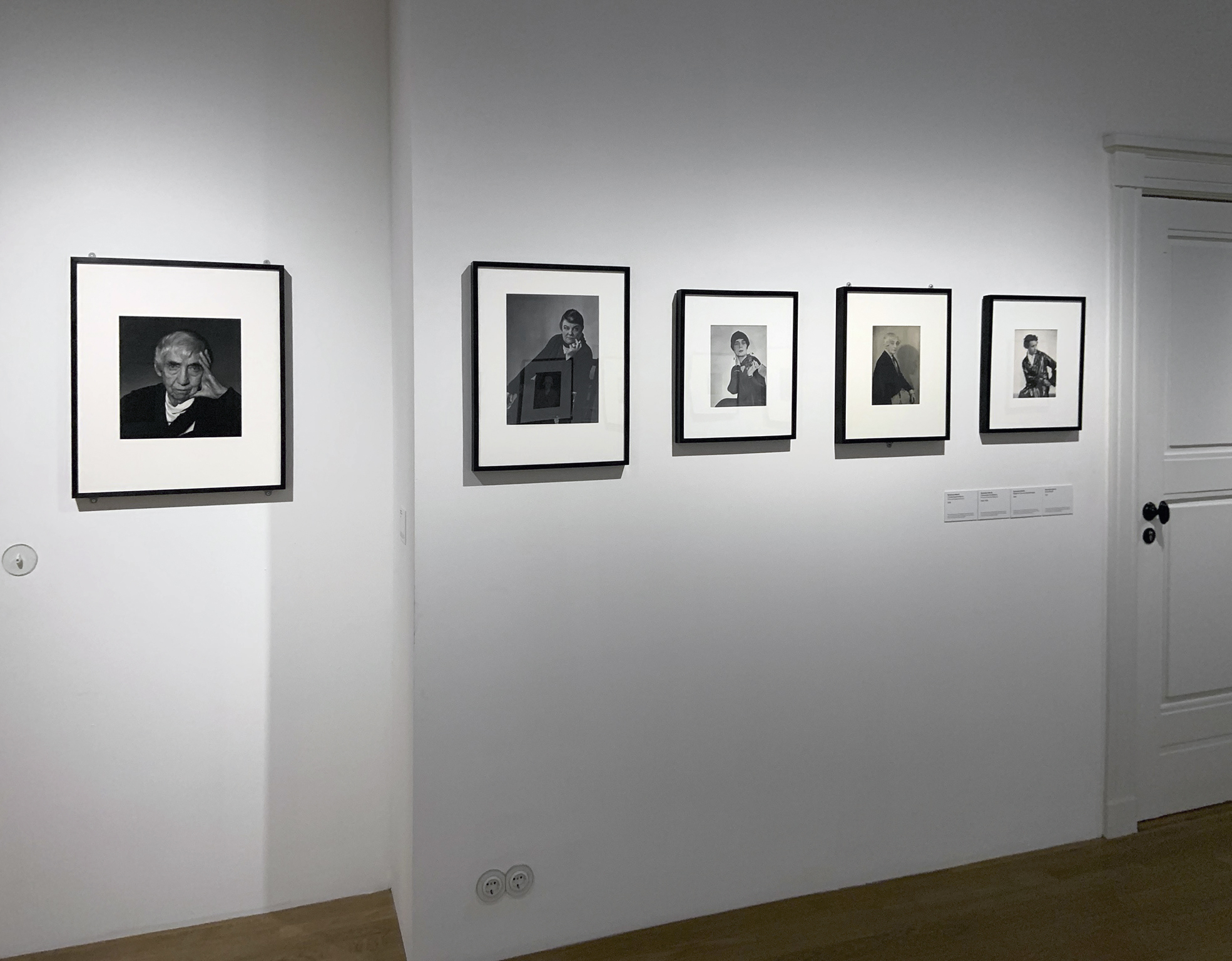
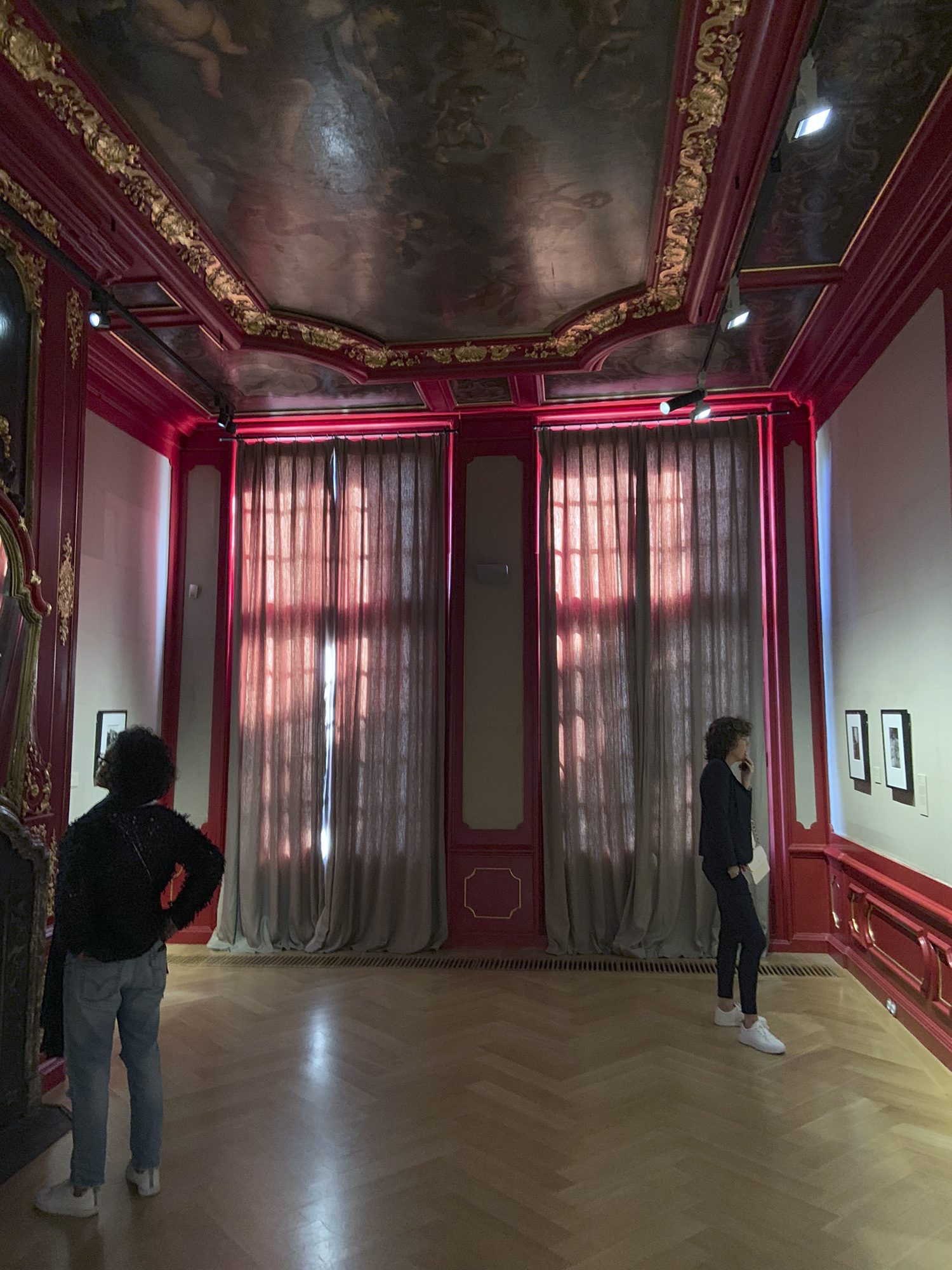
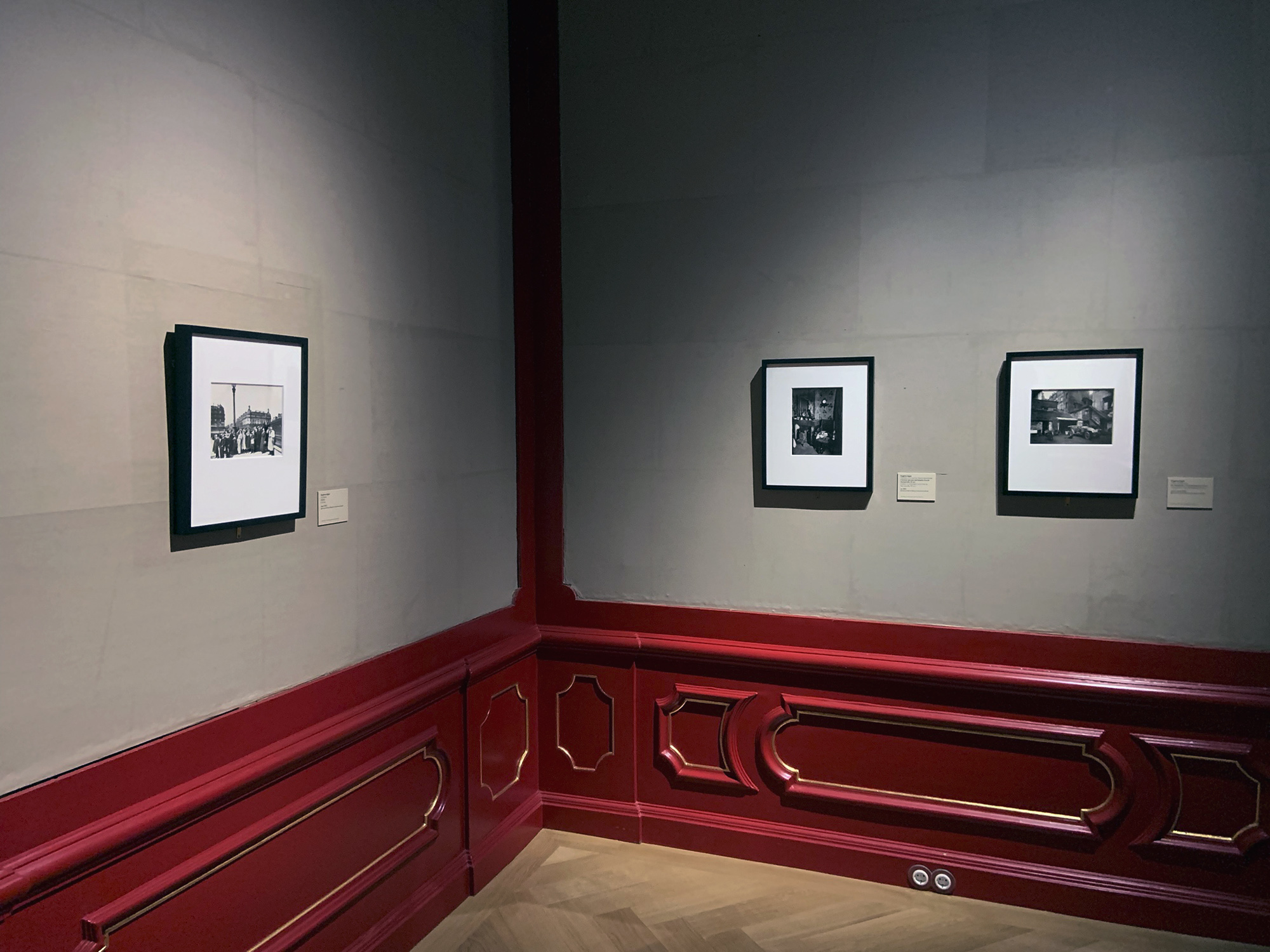
Exhibition: ‘The New Woman Behind the Camera’ at the Metropolitan Museum of Art, New York

Exhibition dates: 2nd July – 3rd October, 2021

Curators: The New Woman Behind the Camera is curated by Andrea Nelson, Associate Curator in the Department of Photographs, National Gallery of Art, Washington, D.C. The Met’s presentation is organised by Mia Fineman, Curator, with Virginia McBride, Research Assistant, both in the Department of Photographs.


Marion Post Wolcott (American, 1910-1990) '[Haircutting in Front of General Store and Post Office on Marcella Plantation, Mileston, Mississippi]' 1939 from the exhibition 'The New Woman Behind the Camera' at the Metropolitan Museum of Art, New York, July - Oct, 2021


Marion Post Wolcott (American, 1910-1990)
[Haircutting in Front of General Store and Post Office on Marcella Plantation, Mileston, Mississippi]
1939
Gelatin silver print
9 13/16 × 12 11/16 in. (25 × 32.2cm)
Ford Motor Company Collection, Gift of Ford Motor Company and John C. Waddell, 1987
Metropolitan Museum of Art
Public domain


This is the first of two postings on this exhibition, this first one when it is taking place at the Metropolitan Museum of Art, New York. The second posting will be its iteration at the National Gallery of Art, Washington starting on 31st October, with many more images. I will write more about the exhibition in the second posting.

The only thing you really need to know is… I bought the catalogue. Rarely do I buy catalogues, but that’s how important I think this exhibition is.

My favourite photographs in this posting are two atmospheric self-portraits: Gertrud Arndt’s Masked Self-Portrait (No. 16) (1930, below) and Marta Astfalck-Vietz’s Self-Portrait (nude with lace) (c. 1927, below). The most disturbing but uplifting are Margaret Bourke-White’s photographs of the liberation of Buchenwald concentration camp: after all that he had gone through, how the young man can smile at the flash of the camera is miraculous.

But really, there is not a dud photograph in this posting. They are all strong, intelligent, creative images. I admire them all.

Dr Marcus Bunyan


Many thankx to the Metropolitan Museum of Art for allowing me to publish the photographs in the posting. Please click on the photographs for a larger version of the image.


The New Woman of the 1920s was a powerful expression of modernity, a global phenomenon that embodied an ideal of female empowerment based on real women making revolutionary changes in life and art. Featuring more than 120 photographers from over 20 countries, this groundbreaking exhibition explores the work of the diverse “new” women who embraced photography as a mode of professional and artistic expression from the 1920s through the 1950s. During this tumultuous period shaped by two world wars, women stood at the forefront of experimentation with the camera and produced invaluable visual testimony that reflects both their personal experiences and the extraordinary social and political transformations of the era.

The exhibition is the first to take an international approach to the subject, highlighting female photographers’ innovative work in studio portraiture, fashion and advertising, artistic experimentation, street photography, ethnography, and photojournalism. Among the photographers featured are Berenice Abbott, Ilse Bing, Lola Álvarez Bravo, Florestine Perrault Collins, Imogen Cunningham, Madame d’Ora, Florence Henri, Elizaveta Ignatovich, Consuelo Kanaga, Germaine Krull, Dorothea Lange, Dora Maar, Tina Modotti, Niu Weiyu, Tsuneko Sasamoto, Gerda Taro, and Homai Vyarawalla. Inspired by the global phenomenon of the New Woman, the exhibition seeks to reevaluate the history of photography and advance new and more inclusive conversations on the contributions of female photographers.


The New Woman Behind the Camera Virtual Opening

The New Woman of the 1920s through the 1950s was a powerful expression of modernity, a global phenomenon that embodied an ideal of female empowerment based on real women making revolutionary changes in life and art. During this tumultuous period shaped by two world wars, women stood at the forefront of experimentation with the camera and produced invaluable visual testimony that reflects both their personal experiences and the extraordinary social and political transformations of the era.

Join Mia Fineman, Curator in the Department of Photographs, for a tour of The New Woman Behind the Camera, a groundbreaking exhibition, which features more than 120 photographers from over 20 countries and explores the work of the diverse “new” women who embraced photography as a mode of professional and artistic expression.


New Woman Behind the Camera

The New Woman of the 1920s was a powerful expression of modernity, a global phenomenon that embodied an ideal of female empowerment based on real women making revolutionary changes in life and art. Featuring more than 120 photographers from over 20 countries, this groundbreaking exhibition explores the work of the diverse “new” women who embraced photography as a mode of professional and artistic expression from the 1920s through the 1950s. During this tumultuous period shaped by two world wars, women stood at the forefront of experimentation with the camera and produced invaluable visual testimony that reflects both their personal experiences and the extraordinary social and political transformations of the era.


Consuelo Kanaga (American, 1894-1978) 'Annie Mae Merriweather' 1935 from the exhibition 'The New Woman Behind the Camera' at the Metropolitan Museum of Art, New York, July - Oct, 2021


Consuelo Kanaga (American, 1894-1978)
Annie Mae Merriweather
1935
Gelatin silver print
32.9 × 24.8cm (12 15/16 × 9 3/4 in.)
Purchase, Dorothy Levitt Beskind Gift, 1974
Metropolitan Museum of Art


Consuelo Kanaga photographed Annie Mae Merriweather for the October 22, 1935 issue of New Masses (vol. 17, no. 4). This portrait accompanies a Merriweather’s account of a lynch mob in Lowndes County, Alabama. In response to a strike of the Sharecropper’s Union, members of the mob terrorised demonstrators, attacking Merriweather and murdering her husband.

The artist created this portrait of Annie Mae Meriwether for New Masses magazine, an Marxist periodical published in the United States from 1926 to 1948. The picture was commissioned to accompany an account of Meriwether’s escape from the lynch mob that had murdered her husband as retribution for his involvement with an Alabama sharecroppers’ union.


Consuelo Kanaga (American, 1894-1978)

Born in Astoria, Oregon, Consuelo Kanaga came from a family that valued ideals of social justice. After completing high school, she began writing for the San Francisco Chronicle in 1915. Within three years, she had learned darkroom technique from the paper’s photographers and become a staff photographer. She met Imogen Cunningham, Edward Weston, and Dorothea Lange through the California Camera Club, and was interested in the fine-art photography in Alfred Stieglitz’s Camera Work. A series of three marriages and one canceled engagement precipitated Kanaga’s periodic relocations between New York and San Francisco, where she established a portrait studio in 1930. While not an official member of the f/64 group, her images were exhibited in its first exhibition at San Francisco’s M. H. de Young Memorial Museum in 1932. Kanaga was involved in West Coast liberal politics, and when she returned to New York in 1935, she was associated with the leftist Photo League; she lectured there in 1938 with Aaron Siskind, then occupied with his Harlem Document. Her photography was championed by Edward Steichen, who included her in ‘The Family of Man’ exhibition in 1955. Kanaga’s work was featured in the 1979 ICP exhibition “Recollections: Ten Women of Photography,” and she was the subject of a retrospective at the Brooklyn Museum of Art in 1992.

In terms of photographic technique and depiction of subjects, romantic instincts characterise Kanaga’s work. An advocate for the rights of African-Americans and other people of colour, Kanaga distinguished her portraits from the documentary images of the Farm Security Administration by conveying her subject’s physical comfort and personal pride. The tactile sense of volume in her work is reinforced by strong contrasts in printing light and dark forms.

Meredith Fisher in Handy et al. Reflections in a Glass Eye: Works from the International Center of Photography Collection, New York: Bulfinch Press in association with the International Center of Photography, 1999, p. 219 published on the International Center of Photography website [Online] Cited 16/07/2021.
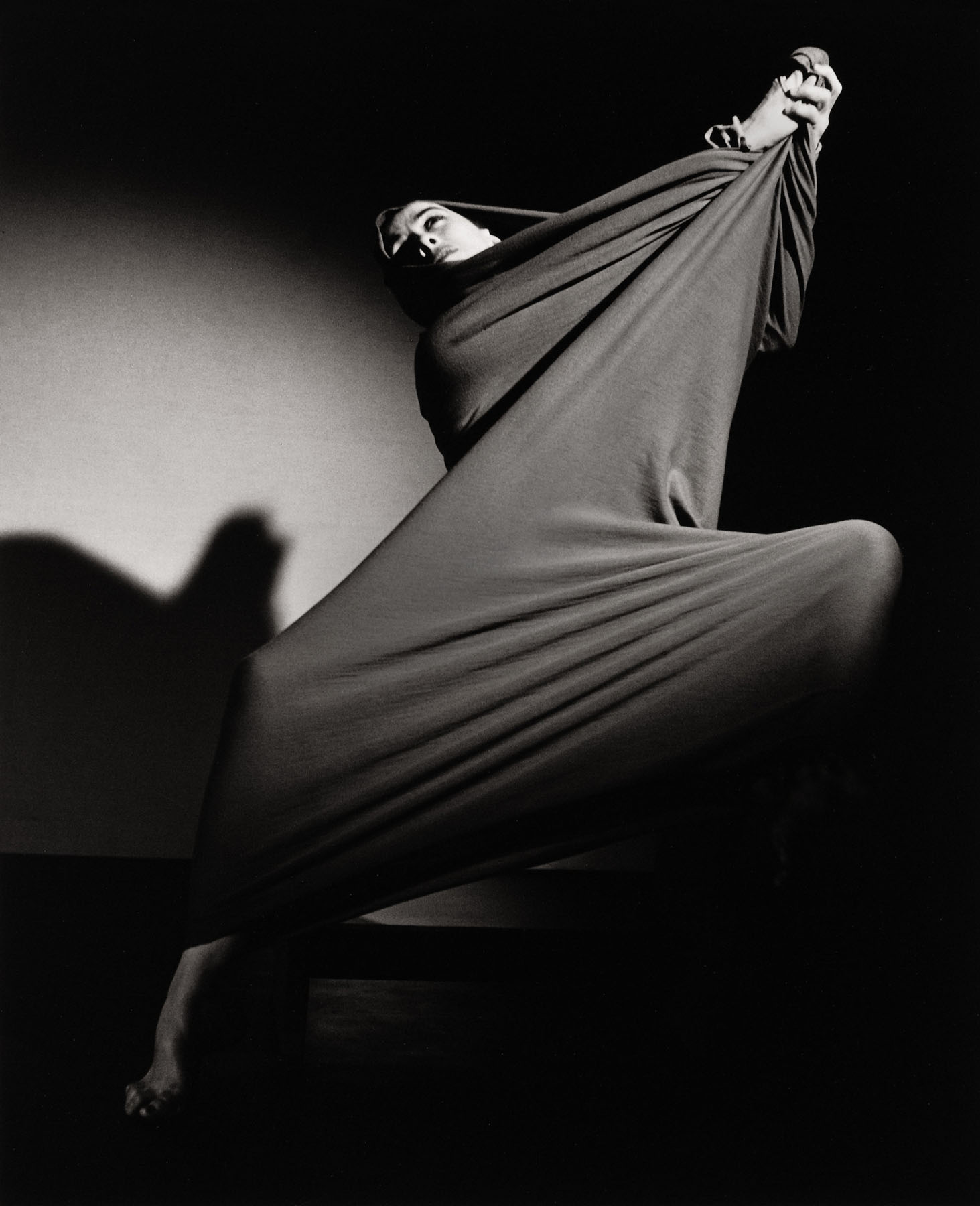
 

Barbara Morgan (American, 1900-1992) 'Martha Graham – Lamentation' 1935


Barbara Morgan (American, 1900-1992)
Martha Graham – Lamentation
1935
Gelatin silver print
12 5/16 × 10 9/16 in. (31.2 × 26.9cm)
Purchase, Dorothy Levitt Beskind Gift, 1974
Metropolitan Museum of Art


Barbara Morgan (American, 1900-1992)

Barbara Morgan (July 8, 1900 – August 17, 1992) was an American photographer best known for her depictions of modern dancers. She was a co-founder of the photography magazine Aperture.

Morgan is known in the visual art and dance worlds for her penetrating studies of American modern dancers Martha Graham, Merce Cunningham, Erick Hawkins, José Limón, Doris Humphrey, Charles Weidman and others. Morgan’s drawings, prints, watercolours and paintings were exhibited widely in California in the 1920s, and in New York and Philadelphia in the 1930s. …

In 1935 Barbara attended a performance of the young Martha Graham Dance Company. She was immediately struck with the historical and social importance of the emerging American Modern Dance movement:

“The photographers and painters who dealt with the Depression, often, it seemed to me, only added to defeatism without giving courage or hope. Yet the galvanising protest danced by Martha Graham, Humphrey-Weidman, Tamiris and others was heartening. Often nearly starving, they never gave up, but forged life affirming dance statements of American society in stress and strain. In this role, their dance reminded me of Indian ceremonial dances which invigorate the tribe in drought and difficulty.”


Morgan conceived of her 1941 book project Martha Graham: Sixteen Dances in Photographs – the year she met Graham. From 1935 through the 1945 she photographed more than 40 established dancers and choreographers, and she described her process:

“To epitomise… a dance with camera, stage performances are inadequate, because in that situation one can only fortuitously record. For my interpretation it was necessary to redirect, relight, and photographically synthesise what I felt to be the core of the total dance.”


Many of the dancers Morgan photographed are now regarded as the pioneers of modern dance, and her photographs the definitive images of their art. These included Valerie Bettis, Merce Cunningham, Jane Dudley, Erick Hawkins, Hanya Holm, Doris Humphrey, José Limón, Sophie Maslow, May O’Donnell, Pearl Primus, Anna Sokolow, Helen Tamiris, and Charles Weidman. Critics Clive Barnes, John Martin, Elizabeth McCausland, and Beaumont Newhall have all noted the importance of Morgan’s work.

Graham and Morgan developed a relationship that would last some 60 years. Their correspondence attests to their mutual affection, trust and respect. In 1980, Graham stated:

“It is rare that even an inspired photographer possesses the demonic eye which can capture the instant of dance and transform it into timeless gesture. In Barbara Morgan I found that person. In looking at these photographs today, I feel, as I felt when I first saw them, privileged to have been a part of this collaboration. For to me, Barbara Morgan through her art reveals the inner landscape that is a dancer’s world.”

Text from the Wikipedia website


Lucia Moholy (British born Austria-Hungary, 1894-1989) 'László Moholy-Nagy' 1925-1926


Lucia Moholy (British born Austria-Hungary, 1894-1989)
László Moholy-Nagy
1925-1926
10 3/16 × 7 15/16 in. (25.8 × 20.1cm)
Ford Motor Company Collection, Gift of Ford Motor Company and John C. Waddell, 1987
Metropolitan Museum of Art
© 2021 Artists Rights Society (ARS), New York


Lucia Moholy (British born Austria-Hungary, 1894-1989)

Lucia Moholy was one of the most prolific photographers at the Bauhaus between 1923 and 1928, while her husband, László Moholy-Nagy, was an instructor there. For both, photography was not simply a transparent window onto objective reality but a specific technology to be systematically explored in the modern spirit of exuberant experimentation. Here, illustrating the effect of selective focus, Moholy imprints his hand against the invisible picture plane that separates viewer and subject-a playful, disorienting gesture that collapses illusionistic depth into the concrete reality of the photographic image.

Lucia Moholy’s 1925-26 image of her celebrated photographer husband, László Moholy-Nagy, extending his hand in front of the camera was long assumed to be his own self-portrait, but research has led scholars to conclude that his wife shot the image. A wall label calls it “a striking example of the tendency to attribute the work of women artists to their male partners”.

Text from Nancy Kenney. “Triumphant in their time, yet largely erased later: a Met exhibition explores ‘The New Woman Behind the Camera’,” on The Art Newspaper website 1st July 2021 [Online] Cited 22/07/2021


Ringl and Pit (German, active 1930-1933) Grete Stern (Argentinian born Germany, 1904-1999) Ellen Auerbach (German, 1906-2004) 'Pétrole Hahn' 1931


Ringl and Pit (German, active 1930-1933)
Grete Stern (Argentinian born Germany, 1904-1999)
Ellen Auerbach (German, 1906-2004)
Pétrole Hahn
1931
Gelatin silver print
9 7/16 × 11 1/8 in. (23.9 × 28.2cm)
Ford Motor Company Collection, Gift of Ford Motor Company and John C. Waddell, 1987
Metropolitan Museum of Art
© 2021 VG Bild-Kunst, Bonn / Artists Rights Society (ARS), New York
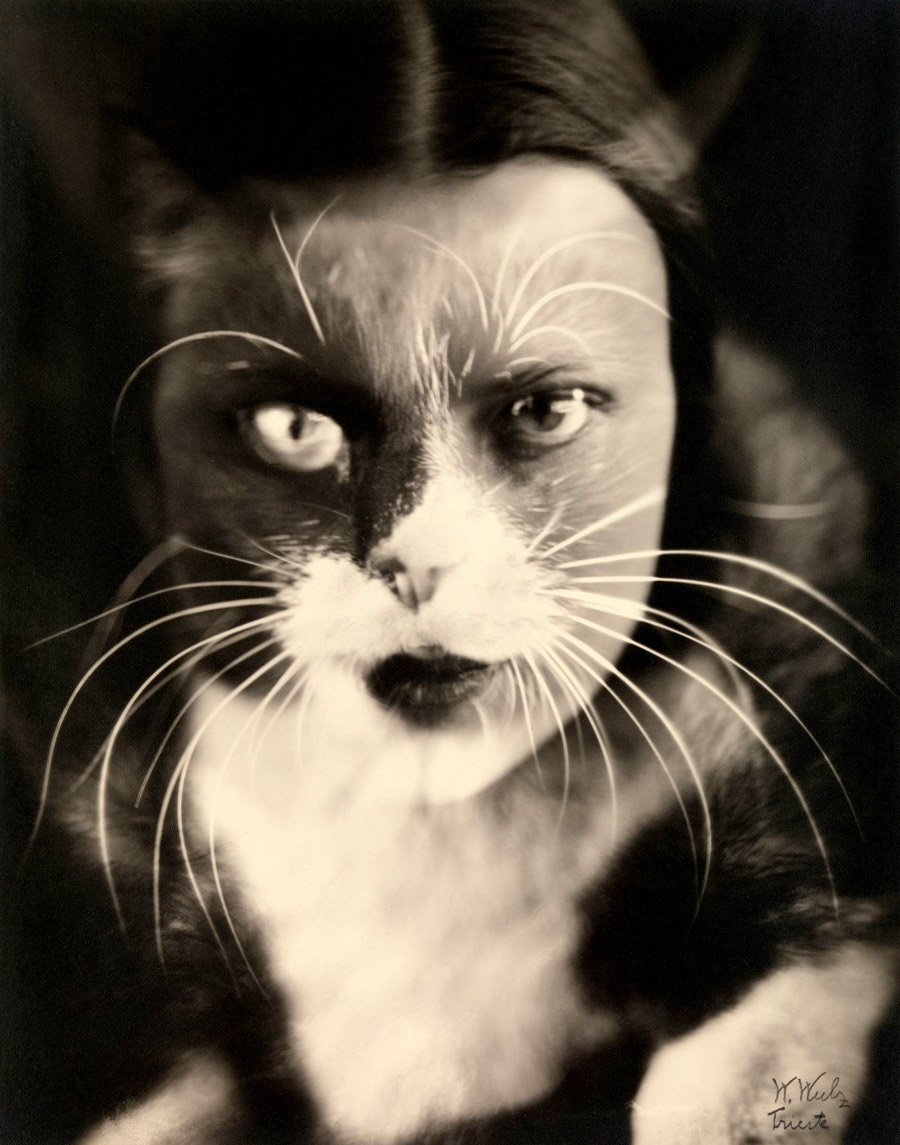
 

Wanda Wulz. 'Io + gatto (Cat + I)' 1932


Wanda Wulz (Italian, 1903-1984)
Io + gatto (Cat + I)
1932
Gelatin silver print
11 9/16 × 9 1/8 in. (29.4 × 23.2cm)
Ford Motor Company Collection, Gift of Ford Motor Company and John C. Waddell, 1987
Metropolitan Museum of Art


Wulz, a portrait photographer loosely associated with the Italian Futurist movement, created this striking composite by printing two negatives – one of her face, the other of the family cat – on a single sheet of photographic paper, evoking by technical means the seamless conflation of identities that occurs so effortlessly in the world of dreams.


Lucy Ashjian (American, 1907-1993) '[Savoy Dancers]' 1935-1943


Lucy Ashjian (American, 1907-1993)
[Savoy Dancers]
1935-1943
Gelatin silver print
24 × 18.8cm (9 7/16 × 7 3/8 in.)
Gift of Gregor Ashjian Preston, 2004
Metropolitan Museum of Art
© Lucy Ashjian Estate


Lucy Ashjian (1907-1993) was an American photographer best known as a member of the New York Photo League. Her work is included in the collections of the Metropolitan Museum of Art, New York, the Center for Creative Photography in Tucson, Arizona and the Museum of the City of New York.


Groundbreaking Exhibition to Explore How Women Photographers Worldwide Shaped the Medium from the 1920s to the 1950s

The New Woman of the 1920s was a powerful expression of modernity, a global phenomenon that embodied an ideal of female empowerment based on real women making revolutionary changes in life and art. Opening July 2, 2021 at The Metropolitan Museum of Art, The New Woman Behind the Camera will feature 185 photographs, photo books, and illustrated magazines by 120 photographers from over 20 countries. This groundbreaking exhibition will highlight the work of the diverse “new” women who made significant advances in modern photography from the 1920s to the 1950s. During this tumultuous period shaped by two world wars, women stood at the forefront of experimentation with the camera and produced invaluable visual testimony that reflects both their personal experiences and the extraordinary social and political transformations of the era.

The exhibition is made possible in part by the Horace W. Goldsmith Foundation, The Daniel and Estrellita Brodsky Foundation, and the National Endowment for the Arts. It is organised by the National Gallery of Art, Washington, in association with The Metropolitan Museum of Art, New York.

Max Hollein, Marina Kellen French Director of The Met, commented, “The international scope of this project is unprecedented. Though the New Woman is often regarded as a Western phenomenon, this exhibition proves otherwise by bringing together rarely seen photographs from around the world and presenting a nuanced, global history of photography. The women featured are responsible for shifting the direction of modern photography, and it is exhilarating to witness the accomplishments of these extraordinary practitioners.”

The first exhibition to take an international approach to the subject, The New Woman Behind the Camera will examine women’s pioneering work in a number of genres, from avant-garde experimentation and commercial studio practice to social documentary, photojournalism, ethnography, and sports, dance, and fashion photography. It will highlight the work of photographers such as Ilse Bing, Lola Álvarez Bravo, Claude Cahun, Florestine Perrault Collins, Elizaveta Ignatovich, Dorothea Lange, Lee Miller, Niu Weiyu, Tsuneko Sasamoto, Gerda Taro, and Homai Vyarawalla, among many others.

About the exhibition

Known by different names, from nouvelle femme and neue Frau to modan gāru and xin nüxing, the New Woman of the 1920s was easy to recognise but hard to define. Her image – a woman with bobbed hair, stylish dress, and a confident stride – was everywhere, splashed across the pages of magazines and projected on the silver screen. A symbol that broke down conventional ideas of gender, the New Woman was inspiring for some and controversial for others, embraced and resisted to varying degrees from country to country.

For many of these daring women, the camera was a means to assert their self-determination and artistic expression. The exhibition begins with a selection of compelling self-portraits, often featuring the photographer with her camera. Highlights include innovative self-portraits by Florence Henri, Annemarie Heinrich, and Alma Lavenson.

For many women, commercial studios were an important entry point into the field of photography, allowing them to forge professional careers and earn their own income. From running successful businesses in Berlin, Buenos Aires, and Vienna to earning recognition as one of the first female photographers in their respective country, women around the world, including Karimeh Abbud, Steffi Brandl, Trude Fleischmann, Annemarie Heinrich, Eiko Yamazawa, and Madame Yevonde, reinvigorated studio practice. Photography studios run by Black American women, such as Florestine Perrault Collins, not only preserved likenesses but also countered racist images then circulating in the mass media.

The availability of smaller, lightweight cameras spurred a number of women photographers to explore the city and the diversity of urban experience outside the studio. The exhibition features stunning street scenes and architectural views by Alice Brill, Rebecca Lepkoff, Helen Levitt, Lisette Model, Genevieve Naylor, and Tazue Satō Matsunaga, among others. Creative formal approaches – such as photomontage, photograms, unconventional cropping, and dizzying camera angles – came to define photography during this period. On view are experimental works by such artists as Valentina Kulagina, Dora Maar, Tina Modotti, Lucia Moholy, Toshiko Okanoue, and Grete Stern, all of whom pushed the boundaries of the medium.

During this period, many women traveled extensively for the first time and took photographs documenting their experiences abroad in Africa, China, Afghanistan, and elsewhere. Others, including Marjorie Content, Eslanda Goode Robeson, and Anna Riwkin, engaged in more formal ethnographic projects. This period also gave rise to new ideas about health and sexuality and to changing attitudes about movement and dress. Women photographers such as Lotte Jacobi, Jeanne Mandello, and Germaine Krull produced images of liberated modern bodies, from pioneering photographs of the nude to exuberant pictures of sport and dance.

The unprecedented demand for fashion and advertising pictures between the world wars provided new employment opportunities for many female photographers, including Lillian Bassman, Louise Dahl-Wolfe, Toni Frissell, Frances McLaughlin-Gill, Margaret Watkins, Caroline Whiting Fellows, and Yva. Fashion magazines such as Vogue and Harper’s Bazaar visually defined the tastes and aspirations of the New Woman and offered a space in which women could experiment with pictures intended for a predominantly female readership.

The rise of the picture press also established photojournalism and social documentary photography as dominant forms of visual expression. Galvanised by the effects of a global economic crisis and growing political unrest, many women photographers, including Lucy Ashjian, Margaret Bourke-White, Kati Horna, Dorothea Lange, and Hansel Mieth, created powerful images that exposed injustice and swayed public opinion. While women photojournalists often received so-called “soft assignments” on the home front, others risked their lives on the battlefield. The exhibition features combat photographs by Thérèse Bonney, Galina Sanko, and Gerda Taro, as well as unsparing views of the liberation of Nazi concentration camps by Lee Miller. Views of Hiroshima by Tsuneko Sasamoto and photographs of the newly formed People’s Republic of China by Hou Bo and Niu Weiyu underscore the global complexities of the postwar era.

Credits

The New Woman Behind the Camera is curated by Andrea Nelson, Associate Curator in the Department of Photographs, National Gallery of Art, Washington, D.C. The Met’s presentation is organised by Mia Fineman, Curator, with Virginia McBride, Research Assistant, both in the Department of Photographs.

Following its presentation at The Metropolitan Museum of Art, the exhibition will travel to the National Gallery of Art, Washington, D.C., where it will be on view from October 31, 2021 through January 30, 2022. The exhibition is accompanied by a fully illustrated catalogue, published by the National Gallery of Art, Washington, D.C., and distributed by DelMonico Books.

Press release from The Metropolitan Museum of Art


Elizabeth Buehrmann (American, 1886-1965) 'Advertisement for Robert Burns Cigar' c. 1920


Elizabeth Buehrmann (American, 1886-1965)
Advertisement for Robert Burns Cigar
c. 1920
Gelatin silver print mounted in press book
Image: 19.69 x 18.42cm (7 3/4 x 7 1/4 in.)
The Miriam and Ira D. Wallach Division of Art, Prints and Photographs: Photography Collection, The New York Public Library


Elizabeth Buehrmann (1886-1965)

Elizabeth “Bessie” Buehrmann (1886-1965) was born June 13, 1886, in Cape Girardeau, Missouri. Elizabeth was an American photographer and artist who was one of the pioneers of taking formal portraits of people in their own homes rather than in a studio. …

At about the age of 15 she enrolled in painting and drawing classes at the Art Institute of Chicago. While she was still a teenager she began assisting Eva Watson-Schütze in her photography studio on West 57th Street, and it was there that she learned both the technical and aesthetic aspects of photography. She made such progress that by the time she was just 18 years old she was accepted as an Associate Member in Alfred Stieglitz’s important Photo-Secession.

Buehrmann specialised in taking portraits of clients in their homes, and she never used artificial scenery or props. She said “I have never had a studio at home but take my pictures in houses. A person is always much more apt to be natural, and then I can get different background effects.” She also did not pose her subjects; instead she would “spend several hours getting acquainted with her subjects before attempting to reproduce the character found in an interesting face.” Leading businessmen and diplomats commissioned her as well as prominent society women, and she was well known for both her artistry and her ability to capture “some of the soul along with the physical features of her sitters.”

In 1906-1907 she spent a year living in London and Paris in order to learn the latest techniques and styles of European photographers. As another sign of her prominence, she was invited to join the Photo-Club de Paris, where she worked for several months.

When she returned, the Art Institute of Chicago gave her a large exhibition of 61 prints, including portraits, landscapes and still lifes. Included among her portraits were photographs of Alvin Langdon Coburn, Robert Demachy, Russell Thorndike, Fannie Zeisler, Sydney Greenstreet and Helena Modjeska.

In 1909 Stieglitz included three of her prints in the prominent National Arts Club exhibition which he organised. Another photographer, Robert Demachy, insisted her prints be included in an important show he was organising in Paris the next year. She is shown as still living with her parents, in Chicago, in the 1910 census. She continued doing portraiture until the late 1910s when she began exploring the then relatively new market for advertising photography. She spent the next decade working on a variety of advertising commissions. Her last known commercial photography took place in the early 1930s.

Text from the Wikipedia website
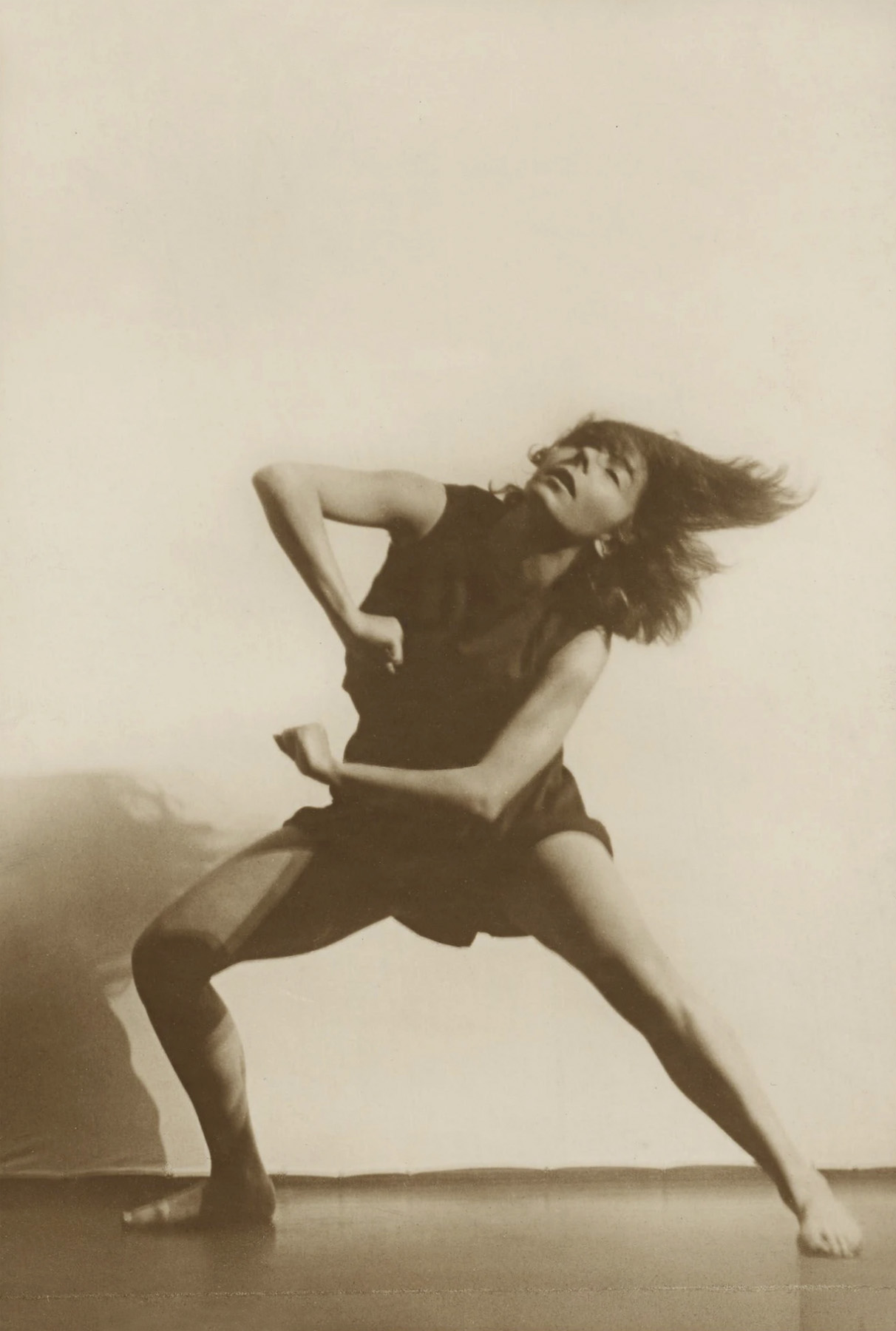
 

Charlotte Rudolph (German, 1896-1983) 'Gret Palucca' 1925


Charlotte Rudolph (German, 1896-1983)
Gret Palucca
1925
Gelatin silver print
8 13/16 × 6 9/16 in. (22.4 × 16.6cm)
National Gallery of Art, Washington, DC, Alfred H. Moses and Fern M. Schad Fund


Charlotte Rudolph (German, 1896-1983)

Charlotte Rudolph (1896-1983) was a German photographer. After training with Hugo Erfurth, Charlotte Rudolph opened a photo studio in Dresden in 1924 and concentrated on portrait and dance photography. In particular, Rudolph became known through her photographs of dancers such as Gret Palucca, with whom she was friends, Mary Wigman , Vera Skoronel and countless Wigman students such as Chinita Ullmann.

Her photos of the avant-garde German dancers of the 1920s and 1930s are among the most important documents of expressive dance today. In contrast to other photographers, Charlotte Rudolph did not take the dancers in a pose, but in action. Her pictures of Gret Palucca’s jumps made a major contribution to Palucca’s international fame in 1924 and were also Charlotte Rudolph’s breakthrough. As a result, many women went to their studio because they were hoping for such jump pictures from Rudolph.

Charlotte Rudolph continued to work in Germany during the Nazi era, and temporarily also in the USA after the Second World War. Her archives and her studio in Dresden, which she took over in 1938 after the death of Genja Jonas, were destroyed in the Second World War when Dresden was bombed on February 13, 1945.

Text from the German Wikipedia website


Gret Palucca, born Margarethe Paluka (8 January 1902 – 22 March 1993), was a German dancer and dance teacher, notable for her dance school, the Palucca School of Dance, founded in Dresden in 1925.


Yvonne Chevalier (French, 1899-1982) 'Nu' (Nude) 1929


Yvonne Chevalier (French, 1899-1982)
Nu (Nude)
1929
Gelatin silver print
15 3/8 × 10 1/8 in. (39 × 25.7cm)
© National Gallery of Art, Washington, Alfred H. Moses and Fern M. Schad Fund


Yvonne Chevalier (French, 1899-1982)

Yvonne Chevalier (French, 1899-1982). Coming from a well-to-do background, Yvonne Chevalier went to study drawing and painting after high school. Her first photographs of seascapes and cliffs date back to 1909. She married a doctor in 1920, with whom she had a daughter the following year. She and her husband welcomed and socialised with many artists and writers, including her friends Colette (1873-1954), Adrienne Monnier (1892-1955) and Mariette Lydis (1887-1990), whom she photographed. In 1929 she devoted herself entirely to her art and in 1930 she opened a portrait studio which was a great success. She became the official photographer of painter Georges Rouault. In 1936 she joined the association of French illustrator and advertising photographers, Le Rectangle, founded by Emmanuel Sougez, René Servant and Pierre Adam, which demanded a return to classicism.

The artist exhibited her photos of nudes, architecture and landscapes during two solo exhibitions, in 1935 and 1937. She explored portraiture and photojournalism (Algeria and Southern France, 1937), worked on sculpture (Rodin, 1935), architecture (Thoronet Abbey, 1936) and objects, particularly musical instruments. She tightly framed images – hands, for example – and used high- and low-angle shots, close-ups, shadow and light effects. In 1932 her portrait of Colette submerged in almost total darkness left only the writer’s eye fully illuminated. Included in many group exhibitions, she also regularly published in various magazines, such as Arts et métiers graphiquesCinégraph and Musica. Following the bombings of of the Second World War, the majority of her works disappeared in a fire.

In 1946 she became one of the founding members of the group XV, which wanted photography to be recognised as an art in and of itself. She exhibited with this group on several occasions. Together with the writer Marcelle Auclair, in 1949 she made a long report on the Spanish Carmelites to commemorate the foundation of the order by Teresa of Avila. She continued working extensively as a book illustrator, but stopped taking photographs in 1970. In 1980 the artist sorted and destroyed a large number of her prints.

Catherine Gonnard

Translated from French by Katia Porro.
From the Dictionnaire universel des créatrices
© 2013 Des femmes – Antoinette Fouque
© Archives of Women Artists, Research and Exhibitions

Catherine Gonnard. “Yvonne Chevalier,” on the AWARE: Archives of Women Artists, Research and Exhibitions website [Online] Cited 24/08/2021


Karimeh Abbud (Palestinian, 1893-1940) 'Three Women' 1930s


Karimeh Abbud (Palestinian, 1893-1940)
Three Women
1930s
Gelatin silver print
3 1/2 × 5 1/2 in. (8.9 × 14 cm)
Issam Nassar


Gertrud Arndt (German born Poland, 1903-2000) 'Masked Self-Portrait (No. 16)' 1930


Gertrud Arndt (German born Poland, 1903-2000)
Masked Self-Portrait (No. 16)
1930
Gelatin silver print
8 15/16 × 6 15/16 in. (22.7 × 17.6cm)
Museum Folkwang, Essen


Costuming played a central role at the Bauhaus. From the very beginning, masquerade balls were celebrated regularly under a wide variety of mottoes. And the Bauhaus people rushed over, sometimes preparing for weeks in the workshops and privately the Bauhaus festivals that were popular beyond the walls of the school: Decorations, demonstrations, but above all their costumes – made of simple materials – transformed the Bauhaus people into miraculous figures, incarnate objects and masked beings. Gertrud Arndt’s mask photographs (a series of 43 self-portraits) derive directly from these Bauhaus festivals. …

Arndt’s mask photos are private photographs and were never intended for the public. The mask photographs were taken, rather, independently of viewers, as an experimental excursion into the possibilities and limits of one’s own face – and into the many different characters Arndt transformed herself into in her pictures. They are the record of an intimate conversation conducted between Arndt and her camera. The special thing about Gertrud Arndt’s mask photos is that they were taken in a comprehensive series. Within the 43 photos in the series, smaller picture series can be recognized. In her mask photos, Gertrud Arndt developed a kind of external image of herself, a “visual identity.”12 Arndt only rarely photographed herself once in the same costume. She often made two, three or four pictures in the same costume (or with minor changes). Here the pose, facial expression or picture detail change. In a series of three pictures within the series, Arndt shows herself in a high-necked top with a frill collar and hat, frontally with her eyes closed, then looking directly into the camera in a half-profile, and finally posing in a larger frame with a surprised facial expression. In another mini-series consisting of two photos, Arndt once photographed herself with her eyes closed, her head raised high, and in the next picture, squinting at her nose. The true woman behind the façade is not visible to the viewer. The pictures can illustrate the conflict women faced during the Weimar Republic: faced by entrenched, conservative notions of femininity on the one hand while opposed models for how a modern emancipated woman might act were also present, if to a lesser degree. The contradictory models available within society may be one source behind Arndt’s decision to use her mask photographs as a means to observe herself from the outside, as it were, and to investigate to what degree the many women into whom she transformed herself were actually part of her own feminine persona. At the same time, perhaps unconsciously, she may have also used her portrait project in the service of the traditionally feminine image expected of her, which also did not necessarily correspond to reality. Stereotypical ideas of womanhood with broad social currency circulating during the Weimar Republic included conservative images of women – such as the wife and mother, the widow and the naïve young girl – and these clichés are present in Arndt’s photographs. Or was it that she deliberately exaggerated these role models because she herself felt like a “non-doer” at the Bauhaus, was uncomfortable in this role and felt herself degraded by being thought thusly when her own self-image was that of an emancipated a modern woman? And then again, perhaps Gertrud Arndt’s mask photos are actually merely the result of her “boredom,” which she was desperately trying to alleviate, with role plays.

Extract from Anja Guttenberger. “Festive and Theatrical: The Mask Photos of Gertrud Arndt and Josef Albers as an Expression of Festival Culture,” on the Bauhaus Imaginista Journal website Nd [Online] Cited 16/09/2021


Edith Tudor-Hart (Austrian-British, 1908–1973) 'Man Selling Lemons, Vienna' c. 1932, printed later


Edith Tudor-Hart (Austrian-British, 1908–1973)
Man Selling Lemons, Vienna
c. 1932, printed later
Gelatin silver print
9 1/16 × 9 7/16 in. (23 × 24cm)
Collection of Peter Suschitzky. Julia Donat and Misha Donat


Edith Tudor-Hart (née Suschitzky; 28 August 1908 – 12 May 1973) was an Austrian-British photographer and spy for the Soviet Union. Brought up in a family of socialists, she trained in photography at Walter Gropius’s Bauhaus in Dessau, and carried her political ideals through her art. Through her connections with Arnold Deutsch, Tudor-Hart was instrumental in the recruiting of the Cambridge Spy ring which damaged British intelligence from World War II until the security services discovered all their identities by the mid-1960s. She recommended Litzi Friedmann and Kim Philby for recruitment by the KGB and acted as an intermediary for Anthony Blunt and Bob Stewart when the rezidentura at the Soviet Embassy in London suspended its operations in February 1940.

Text from the Wikipedia website


Ilse Bing (German, 1899-1998) 'Ballet "L'Errante", Paris' 1933


Ilse Bing (German, 1899-1998)
Ballet “L’Errante”, Paris
1933
Gelatin silver print
Image: 28.3 x 22.2 cm (11 1/8 x 8 3/4 in.)
National Gallery of Art, Washington, Alfred H. Moses and Fern M. Schad Fund


Andrea Nelson, an associate curator in the department of photographs at the National Gallery of Art (NGA) in Washington, DC who conceived and organised the exhibition, says the idea for it arose after she was hired in 2010 and was ruminating about generating shows drawn from the NGA’s permanent collection. She was struck by a trove of 90 images by the interwar photographer Ilse Bing that were variously donated by the artist or left by her estate after Bing died in 1998. “She was actually one of the few women photographers that the National Gallery had collected in depth,” Nelson said in an interview. (The show, which was originally scheduled to open first at the NGA last September but was then deferred because of the coronavirus pandemic, travels there this autumn.)

Born into a Jewish family in Frankfurt, Bing became interested in photography while creating architectural illustrations for her art history dissertation there, and eventually gave up her academic studies to pursue a career with the camera. She bought a Leica 35mm model in 1929 and moved the following year to Paris, where she met leading lights in avant-garde photography including Brassaï and André Kertész. Bing began experimenting compositionally and with light effects in self-portraits, images of Parisian streets and photographs of quotidian objects, followed by a striking series of pictures of dancers at the Moulin Rouge and other performers as well as commercial and fashion work in the burgeoning German and French magazine industry.

Known to the cognoscenti as “the Queen of the Leica”, she became a firmament in the constellation of Modernist photographers, included in important exhibitions in Paris and New York. Then the Second World War intervened, and Bing and her husband were both interned with other Jews in the south of France before fleeing to New York in 1941. Her photographic career gradually diminished after that, and she gave it up altogether in 1959.

Yet what she achieved from 1930 to 1940 remains a wonder to behold. “To me, she represents the established narrative of the interwar photographer,” says Nelson. “And as I began to dive deeper, I started to think about this larger community of women photographers who were entering the field, particularly in Germany and France. Did they have the same experiences as Bing, different experiences? But then I just started asking, wait a minute, was that true elsewhere [in the world]? What I really wanted to do was hopefully move beyond the Euro-American narrative that has really structured the history of photography.”

“I just felt that there wasn’t a look at the greater diversity of practitioners during the Modern period. So I took off down that road.”

Extract from Nancy Kenney. “Triumphant in their time, yet largely erased later: a Met exhibition explores ‘The New Woman Behind the Camera’,” on The Art Newspaper website 1st July 2021 [Online] Cited 22/07/2021


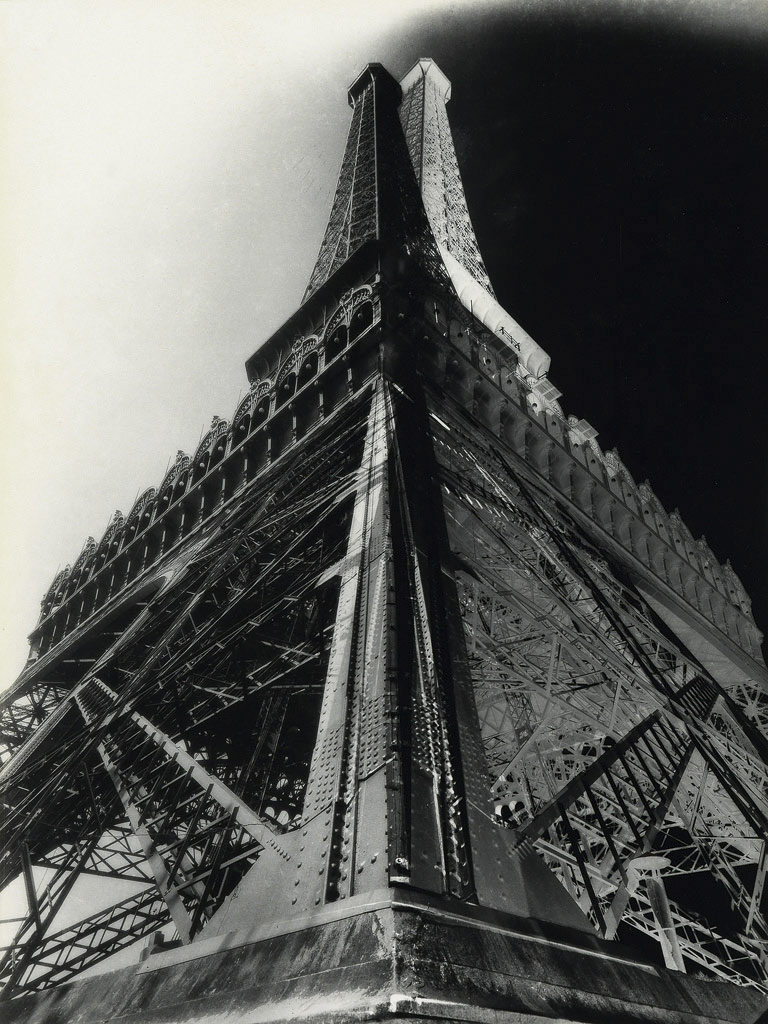
Germaine Krull. 'La Tour Eiffel' (The Eiffel Tower) c. 1928


Germaine Krull (German, French, and Dutch (born Poland) 1897-1985 Wetzlar, Germany)
La Tour Eiffel (The Eiffel Tower)
c. 1928
Gelatin silver print
8 7/8 in. × 6 in. (22.5 × 15.2cm)
Museum Folkwang, Essen


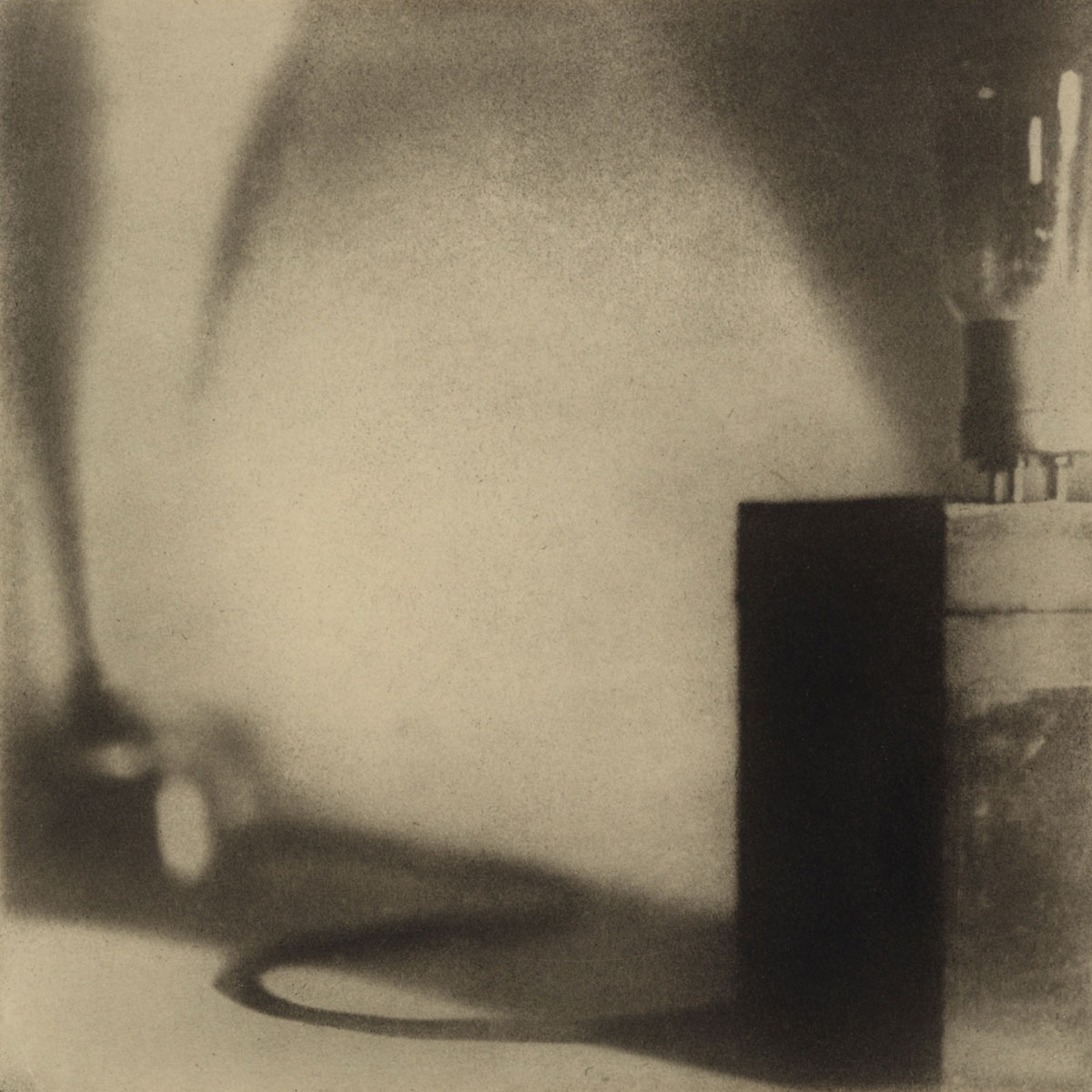
Elfriede Stegemeyer (German, 1908-1988) 'Glühbirne, Spiralfeder, Quadrate und Kreise' (Light Bulb, Spring, Squares, and Circles) 1934


Elfriede Stegemeyer (German, 1908-1988)
Glühbirne, Spiralfeder, Quadrate und Kreise (Light Bulb, Spring, Squares, and Circles)
1934
Gelatin silver photogram
Image: 23.5 x 17.1cm (9 1/4 x 6 3/4 in.)
The Sir Elton John Photography Collection


From 1929 to 1932, Stegemeyer (German, 1908-1988) studied art in Berlin and Cologne. In Cologne she was involved in the activities of the Cologne Progressive art association together with Raoul Ubac, Heinrich Hoerle and others. From 1932 to 1938 Stegemeyer concentrated on photographic experiments such as cameraless photography, multiple exposure, photomontage and object studies. Meeting Raoul Hausmann in his Ibiza exile in 1935 nourished her photographic studies of landscape and rural architecture (also during travels in Eastern Europe in the late 1930s). Stegemeyer took part in underground political resistance activities in Nazi Germany, which led to her imprisonment in 1941. Her archive was destroyed during air raids in Berlin in 1943. After the war, Stegemeyer’s work shifted towards drawing, painting, writing and prize-winning animation. In her late work in the 1980s, the artist turned to montage work of different materials.

Text from the Kicken Berlin website [Online] Cited 16/09/2021


Dora Maar (French, 1907-1997) '[Boy with a Cat]' 1934


Dora Maar (French, 1907-1997)
[Boy with a Cat]
1934
Gelatin silver print
16 5/16 × 11 7/16 in. (41.4 × 29cm)
Purchase, Twentieth-Century Photography Fund and Kurtz Family Foundation Gift, 2015
Metropolitan Museum of Art
© 2021 Artists Rights Society (ARS), New York


From 1930 to 1934 Maar turned her camera to the inhabitants of the streets of Paris and London, blending documentary and Surrealist modes. Her photographs often focus on socially marginal figures such as the poor or disabled, revealing her own political engagement. In this striking image, an adolescent with rumpled hair protectively grasps a cat to his chest, his gaze challenging Maar’s camera. The boy’s expression and posture imbue this chance encounter – and the composition – with an arresting psychological dimension.
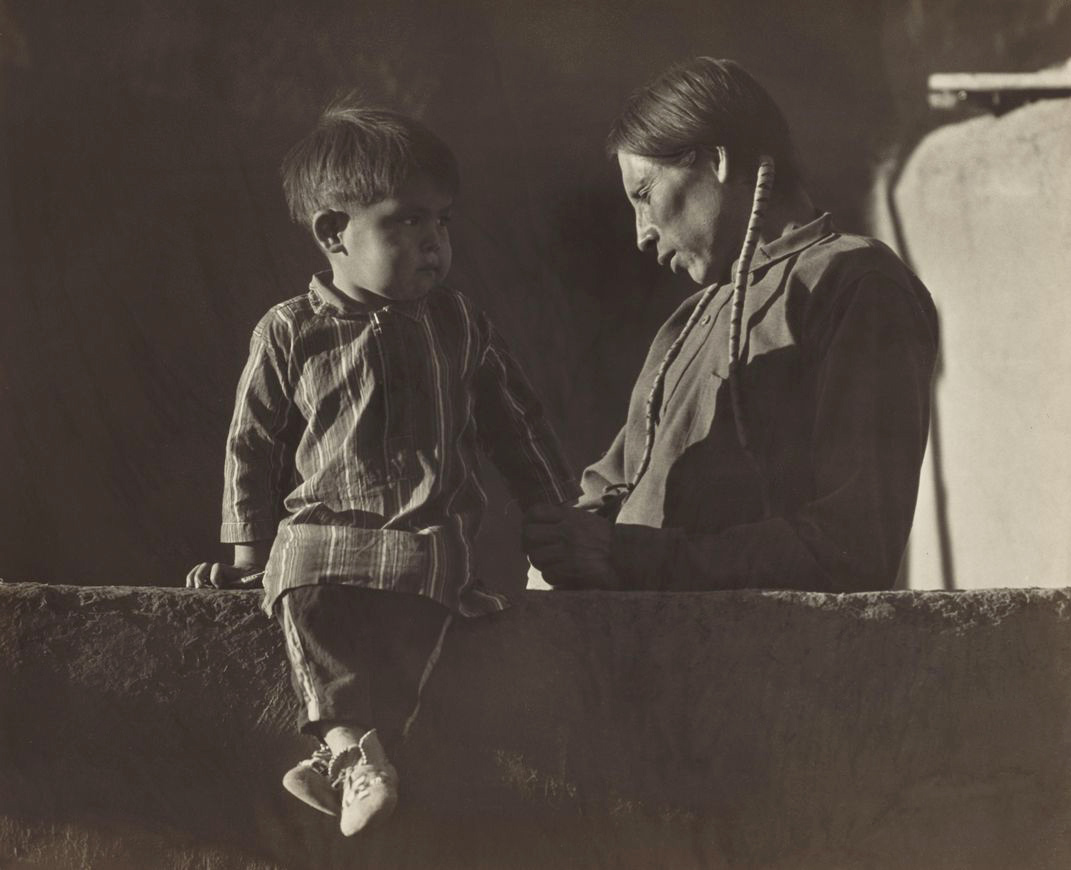
 

Marjorie Content (American, 1895-1984) 'Adam Trujillo and His Son Pat, Taos' Summer 1933


Marjorie Content (American, 1895-1984)
Adam Trujillo and His Son Pat, Taos
Summer 1933
Gelatin silver print
4 1/2 × 5 9/16 in. (11.5 × 14.2 cm)
National Gallery of Art, Washington, DC, Purchased as the Gift of the Gallery Girls


Marjorie Content (1895-1984) was an American photographer from New York City active in modernist social and artistic circles. Her photographs were rarely published and never exhibited in her lifetime. Since the late 20th century, collectors and art historians have taken renewed interest in her work. Her photographs have been collected by the Metropolitan Museum of Art and the Chrysler Museum of Art; her work has been the subject of several solo exhibitions.
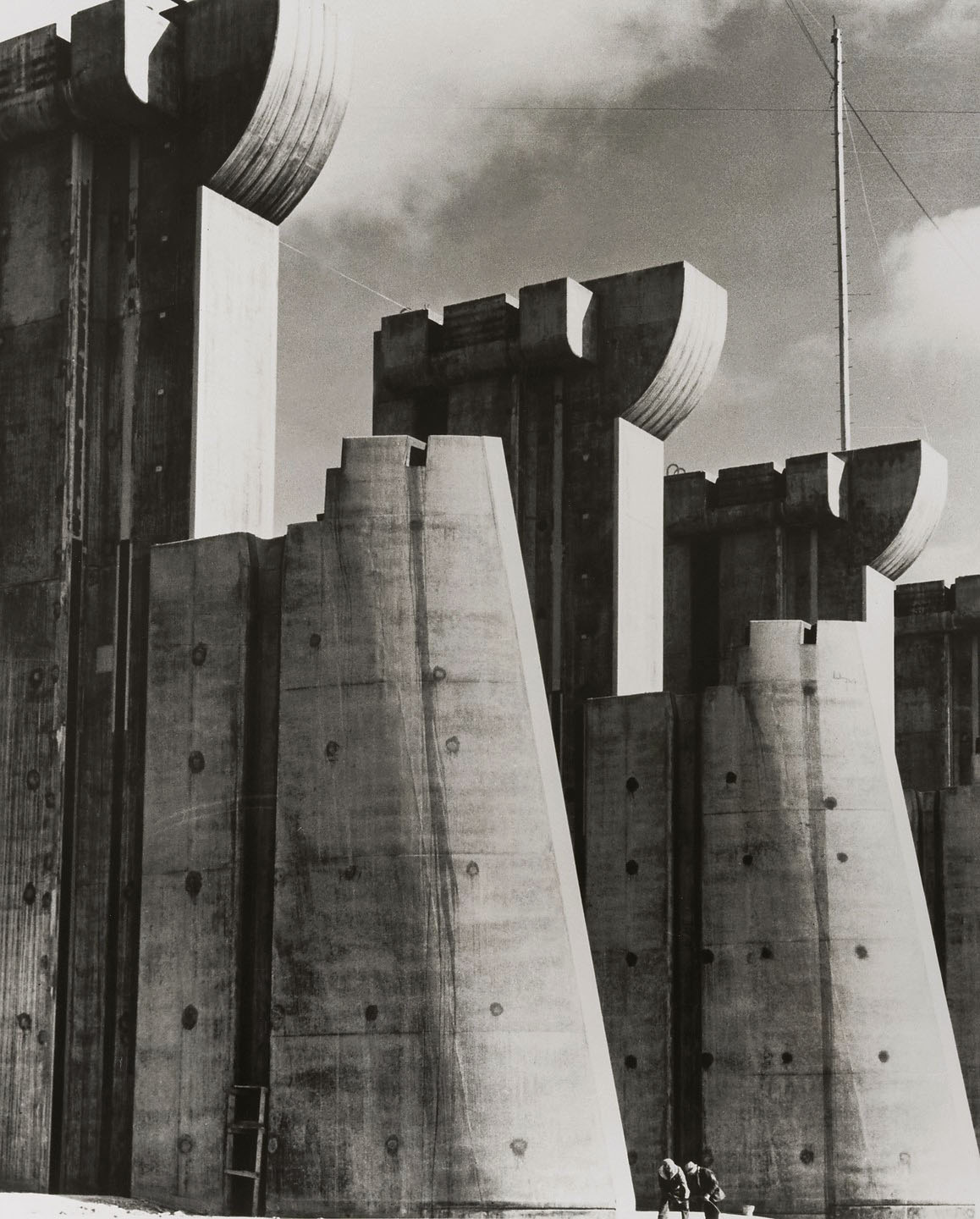
 

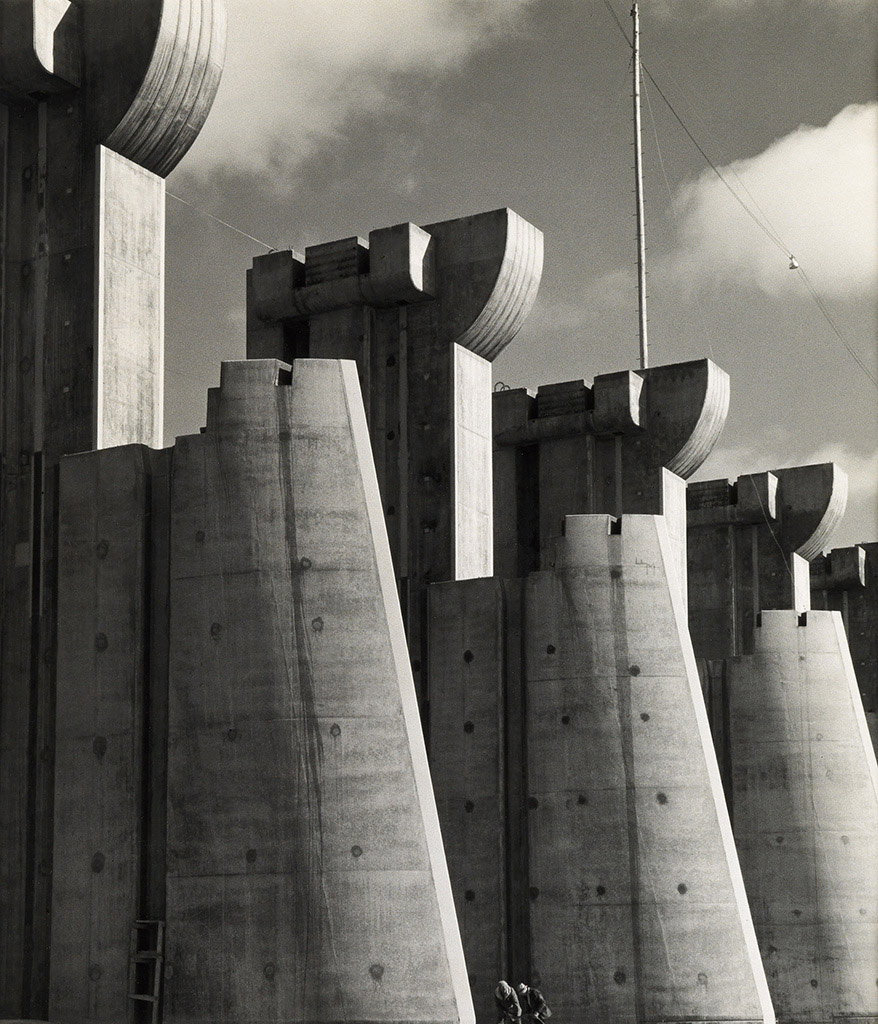
Margaret Bourke-White (American, 1904-1971) 'Fort Peck Dam, Montana' 1936


Margaret Bourke-White (American, 1904-1971)
Fort Peck Dam, Montana
1936
Gelatin silver print
12 15/16 × 10 13/16 in. (32.9 × 27.4cm)
National Gallery of Art, Washington, DC, Patrons’ Permanent Fund


Margaret Bourke-White (American, 1904-1971) 'World's Highest Standard of Living' 1937


Margaret Bourke-White (American, 1904-1971)
World’s Highest Standard of Living
1937
Gelatin silver print


Kati Horna (Mexican born Hungary, 1912-2000) 'Stairway to the Cathedral, Spain' 1938


Kati Horna (Mexican born Hungary, 1912-2000)
Stairway to the Cathedral, Spain
1938
Gelatin silver print
9 1/2 × 7 1/16 in. (24.1 × 17.9cm)
National Gallery of Art, Washington, DC, Alfred H. Moses and Fern M. Schad Fund


Kati Horna (Mexican born Hungary, 1912-2000) 'Sin titulo (Milicianos en una trinchera / Militiamen in a trench) '1937-1938


Kati Horna (Mexican born Hungary, 1912-2000)
Sin titulo (Milicianos en una trinchera/Militiamen in a trench)
1937-1938
Gelatin silver print
7 1/2 × 7 1/2 in. (19 × 19cm)
National Gallery of Art, Washington, DC, R. K. Mellon Family Foundation


Kati Horna (Mexican born Hungary, 1912-2000)

Kati Horna (May 19, 1912 – October 19, 2000), born Katalin Deutsch, was a Hungarian-born Mexican photojournalist, surrealist photographer and teacher. She was born in Budapest and lived in France, Berlin, Spain, and later was naturalised Mexican. Most of her work was lost during the Spanish Civil War. She was also one of the most influential women artists/photographers of her time. Through her photographs she was able to change the way that people viewed war. One way that Horna was able to do this was through the utilisation of a strategy called “gendered witnessing”. Gendered witnessing consisted of putting a more “feminine” view on the notion that war was a predominantly masculine thing. Horna became a legendary photographer after taking on a woman’s perspective of the war, she was able to focus on the behind the scenes, which led her to portraying the impact the war had on women and children. One of her most striking images is the Tête de poupée. Horna worked for various magazines including Mujeres and S.NOB, in which she published a series of Fétiches; but even her more commercial commissions often contained surreal touches. …

In 1937, during the Spanish Civil War, she moved to Barcelona, commissioned by the Spanish Republican government and the Confédération Générale du Travail, to document the war as well as record the everyday life of communities on the front lines, such as Aragón, Valencia, Madrid, and Lérida. She photographed elderly women, young children, babies and mothers, and was considered visionary for her choice of subject matter. She was editor of the magazine Umbral (where she me José Horna). Kati Horna collaborated with other magazines, most of which were anarchic, such as Tiempos Nuevos, Libre-Studio, Mujeres Libres and Tierra y Libertad. Her images of scenes from the civil war not only revealed her Republican sympathies but also gained her almost legendary status. Some of her photos were used as posters for the Republican cause.

Text from the Wikipedia website


Lisette Model (American born Austria, 1901-1983) 'Blind Man Walking, Paris' 1933-1938


Lisette Model (American born Austria, 1901-1983)
Blind Man Walking, Paris
1933-1938
Gelatin silver print on newspaper mount
11 3/16 × 8 3/4 in. (28.4 × 22.3cm)
National Gallery of Art, Washington, DC, Pepita Milmore Memorial Fund
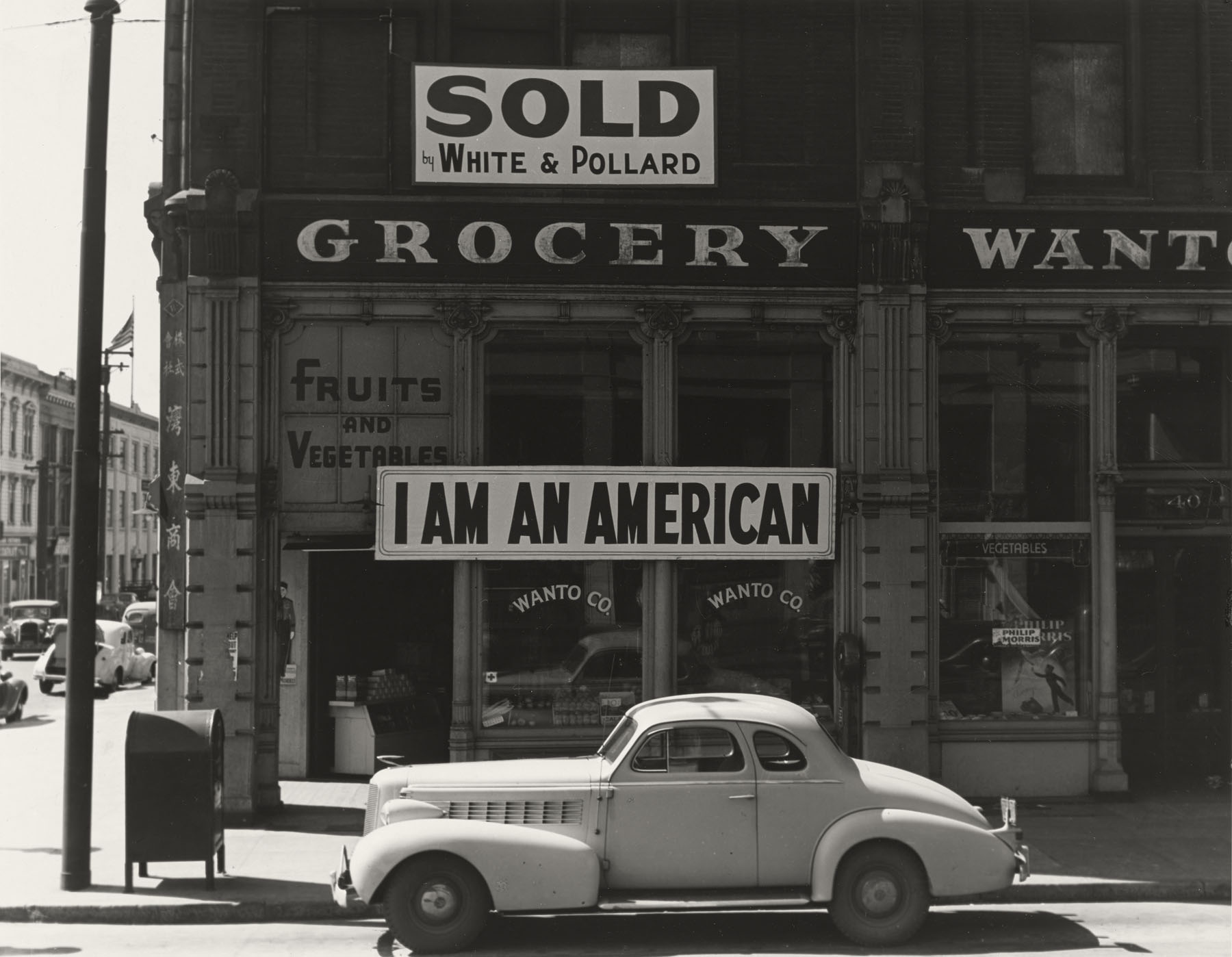
 

Dorothea Lange (American, 1895-1965) 'Japanese-American owned grocery store in Oakland, California March' 1942


Dorothea Lange (American, 1895-1965)
Japanese-American owned grocery store in Oakland, California
March 1942
Gelatin silver print
National Gallery of Art, Washington, DC, Gift of Daniel Greenberg and Susan Steinhauser


Dorothea Lange (American, 1895-1965) 'One Nation Indivisible, San Francisco' 1942


Dorothea Lange (American, 1895-1965)
Children of the Weill Public School shown in a flag pledge ceremony, San Francisco, California
April 1942, printed c. 1965
Gelatin silver print
9 1/4 × 6 7/8 in. (23.5 × 17.4cm)
National Gallery of Art, Washington, DC, Gift of Daniel Greenberg and Susan Steinhauser
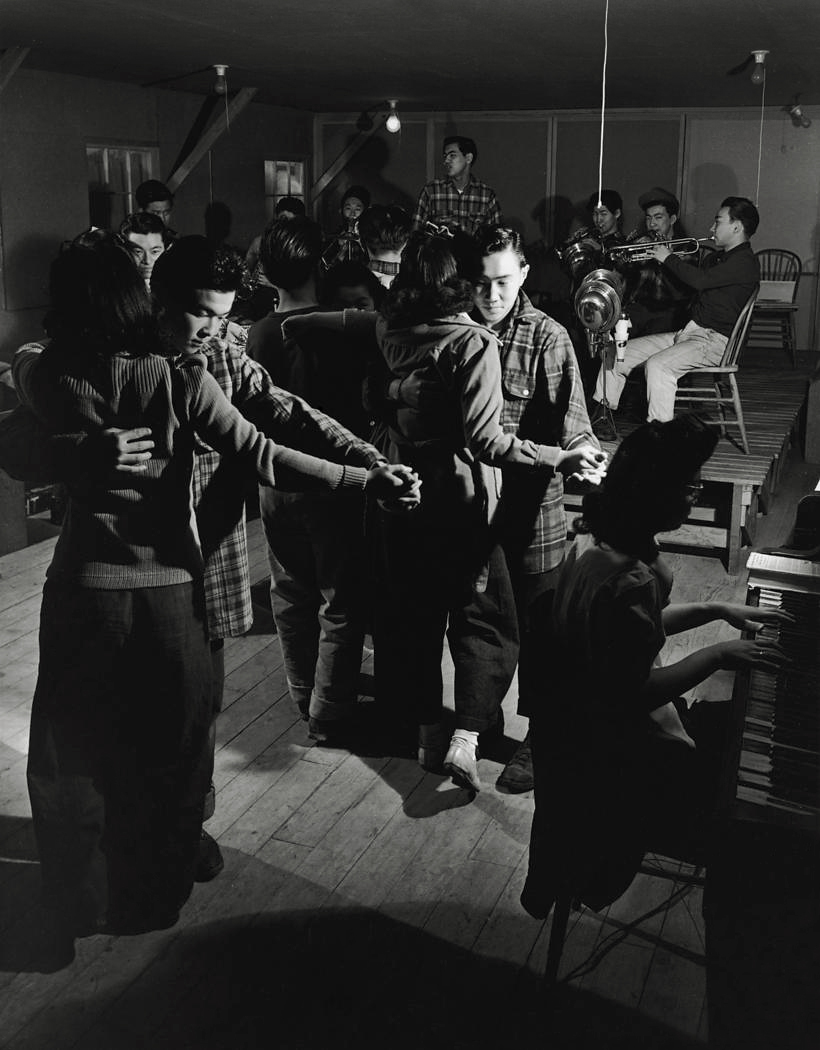
 

Hansel Mieth (German, 1909-1998) 'March of Dimes Dance' 1943


Hansel Mieth (German, 1909-1998)
March of Dimes Dance
1943
Gelatin silver print
Collection of Ron Perisho


Homai Vyarawalla (Indian, 1913-2012) 'The Victoria Terminus, Bombay' early 1940s, printed later


Homai Vyarawalla (Indian, 1913-2012)
The Victoria Terminus, Bombay
early 1940s, printed later
Inkjet print
11 9/16 × 11 13/16 in. (29.3 × 30cm)
Homai Vyarawalla Archive / The Alkazi Collection of Photography


Homai Vyarawalla (Indian, 1913-2012)

Homai Vyarawalla (9 December 1913 – 15 January 2012), commonly known by her pseudonym Dalda 13, was India’s first woman photojournalist. She began work in the late 1930s and retired in the early 1970s. In 2011, she was awarded Padma Vibhushan, the second highest civilian award of the Republic of India. She was amongst the first women in India to join a mainstream publication when she joined The Illustrated Weekly of India. …

Vyarawalla started her career in the 1930s. At the onset of World War II, she started working on assignments for Mumbai-based The Illustrated Weekly of India magazine which published many of her most admired black-and-white images. In the early years of her career, since Vyarawalla was unknown and a woman, her photographs were published under her husband’s name. Vyarawalla stated that because women were not taken seriously as journalists she was able to take high-quality, revealing photographs of her subjects without interference:

People were rather orthodox. They didn’t want the women folk to be moving around all over the place and when they saw me in a sari with the camera, hanging around, they thought it was a very strange sight. And in the beginning they thought I was just fooling around with the camera, just showing off or something and they didn’t take me seriously. But that was to my advantage because I could go to the sensitive areas also to take pictures and nobody will stop me. So I was able to take the best of pictures and get them published. It was only when the pictures got published that people realised how seriously I was working for the place.

~  Homai Vyarawalla in Dalda 13: A Portrait of Homai Vyarawalla (1995)


Eventually her photography received notice at the national level, particularly after moving to Delhi in 1942 to join the British Information Services. As a press photographer, she recorded many political and national leaders in the period leading up to independence, including Mohandas Gandhi, Jawaharlal Nehru, Muhammad Ali Jinnah, Indira Gandhi and the Nehru-Gandhi family.

The Dalai Lama in ceremonial dress enters India through Nathu La in Sikkim on 24 November 1956, photographed by Homai Vyarawalla. In 1956, she photographed for Life Magazine the 14th Dalai Lama when he entered Sikkim in India for the first time via the Nathu La.

Most of her photographs were published under the pseudonym “Dalda 13”. The reasons behind her choice of this name were that her birth year was 1913, she met her husband at the age of 13 and her first car’s number plate read “DLD 13”.

Text from the Wikipedia website
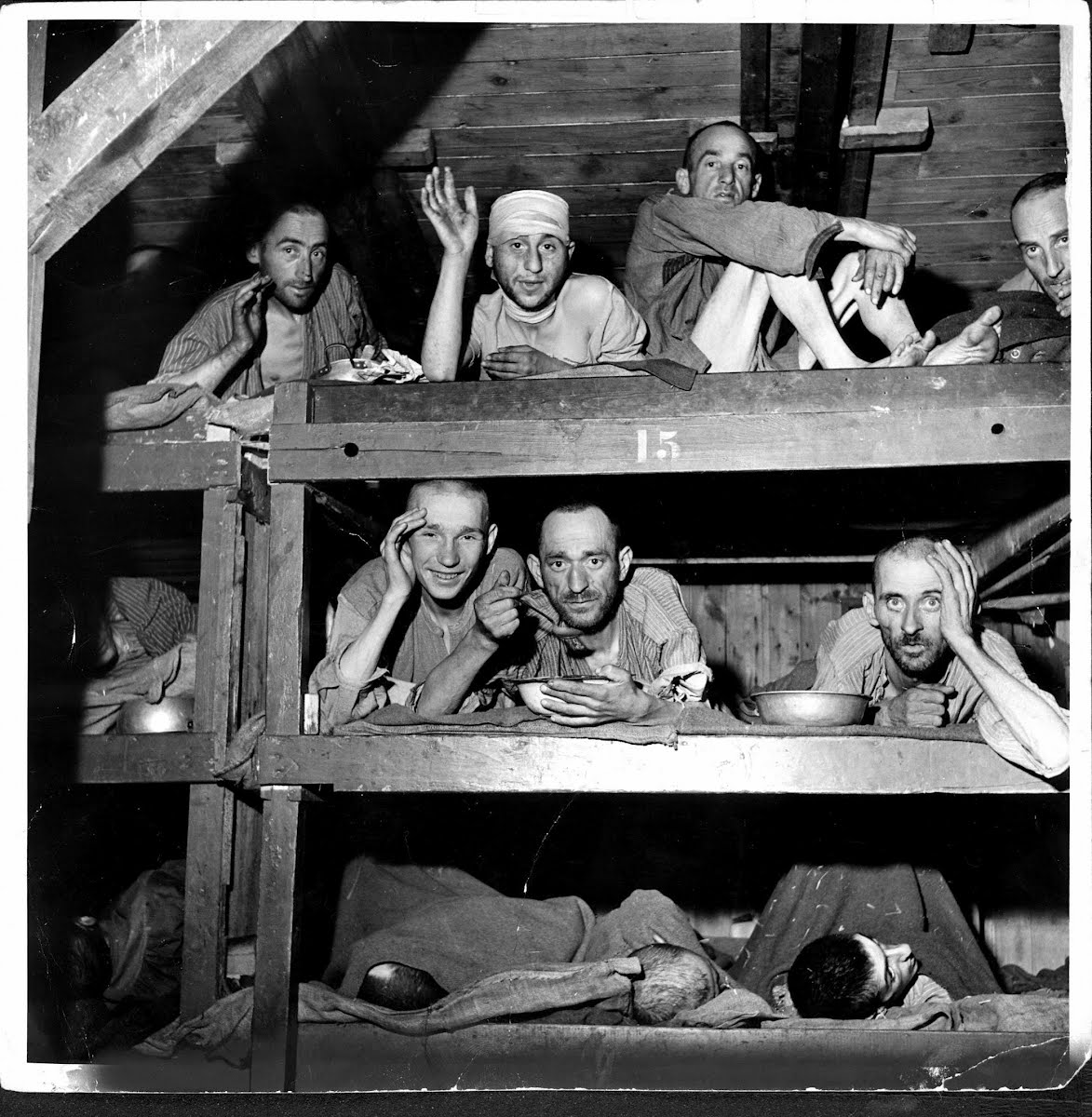
 

Margaret Bourke-White (American, 1904-1971) 'Buchenwald Prison' 13th April 1945


Margaret Bourke-White (American, 1904-1971)
Buchenwald Prison
13th April 1945
Gelatin silver print


Margaret Bourke-White (American, 1904-1971) 'The Liberation of Buchenwald' April 1945


Margaret Bourke-White (American, 1904-1971)
The Liberation of Buchenwald
April 1945
Gelatin silver print


Caption from LIFE. “Deformed by malnutrition, a Buchenwald prisoner leans against his bunk after trying to walk. Like other imprisoned slave labourers, he worked in a Nazi factory until too feeble.”


Margaret Bourke-White (American, 1904-1971) 'Self-Portrait with Camera' c. 1933


Margaret Bourke-White (American, 1904-1971)
Self-Portrait with Camera
c. 1933
Gelatin-silver print, toned
13 1/4 × 9 1/8 in. (33.66 × 23.18cm)


Lee Miller (American, 1907-1977) 'Dead SS Prison Guard Floating in Canal, Dachau, Germany' 1945


Lee Miller (American, 1907-1977)
Dead SS Prison Guard Floating in Canal, Dachau, Germany
1945
Gelatin silver print
6 1/4 in. × 6 in. (15.9 × 15.2cm)
Lee Miller Archives
© Lee Miller Archives, England 2021


Sometime in the 1930s, Hungarian photographer Anna Barna shot “Onlooker,” a picture of a boy standing on a chair seen from behind as he peers over a palisade.

As his shadow stretches out across the planks blocking his way, it takes the shape of a bearded profile that reads as a second “onlooker” in the shot. A bit further off stands yet a third “looker” who, though quite invisible in the image, was very much present in the mind of any prewar viewer who saw the shot’s photo credit: That looker is Anna Barna, a woman who has dared to pick up the camera that would normally have been held by a man. Like all the camera-wielding women of her era, Barna made a bold move that gave her a powerful cultural presence.

That presence is on display in “The New Woman Behind the Camera,” an inspired and inspiring exhibition at the Metropolitan Museum of Art through Oct. 3. In late October, it moves on to the National Gallery of Art in Washington. Curated by Andrea Nelson of the NGA, the show has been installed at the Met by Mia Fineman.

The more than 200 pictures on view, taken from the 1920s through the ’50s, let us watch as women everywhere become photo pros. I guess some of their shots could have been snapped by men, but female authorship shaped what these images meant to their contemporaries. It shapes what we need to make of them now, as we grasp the challenges their makers faced.

The Met shows women photographing everything from factories to battles to the oppressed, but also gowns and children and other traditionally “feminine” subjects. Sometimes the goal is straight documentation: Figures like Dorothea Lange in the United States and Galina Sanko in the Soviet Union recorded the worlds they moved through, often at the request of their governments. But many of their sisters prefer the aggressive viewpoints and radical lightings of what was then called the New Vision, as developed at the Bauhaus and other hot spots of modern style. It was to sight what jazz was to sound.

That made the New Vision a perfect fit for the New Woman, a term that went global early in the 20th century to describe all the many women who took on roles and responsibilities – new personas and even new powers – they’d rarely had before. When a New Woman took up photography, she often turned her New Vision on herself, as one of the modern world’s most striking creations.

A self-portrait by American photographer Alma Lavenson leaves out everything but her hands and the camera they’re holding; the only thing we need to know is that Lavenson is in control of this machine, and therefore of the vision it captures.

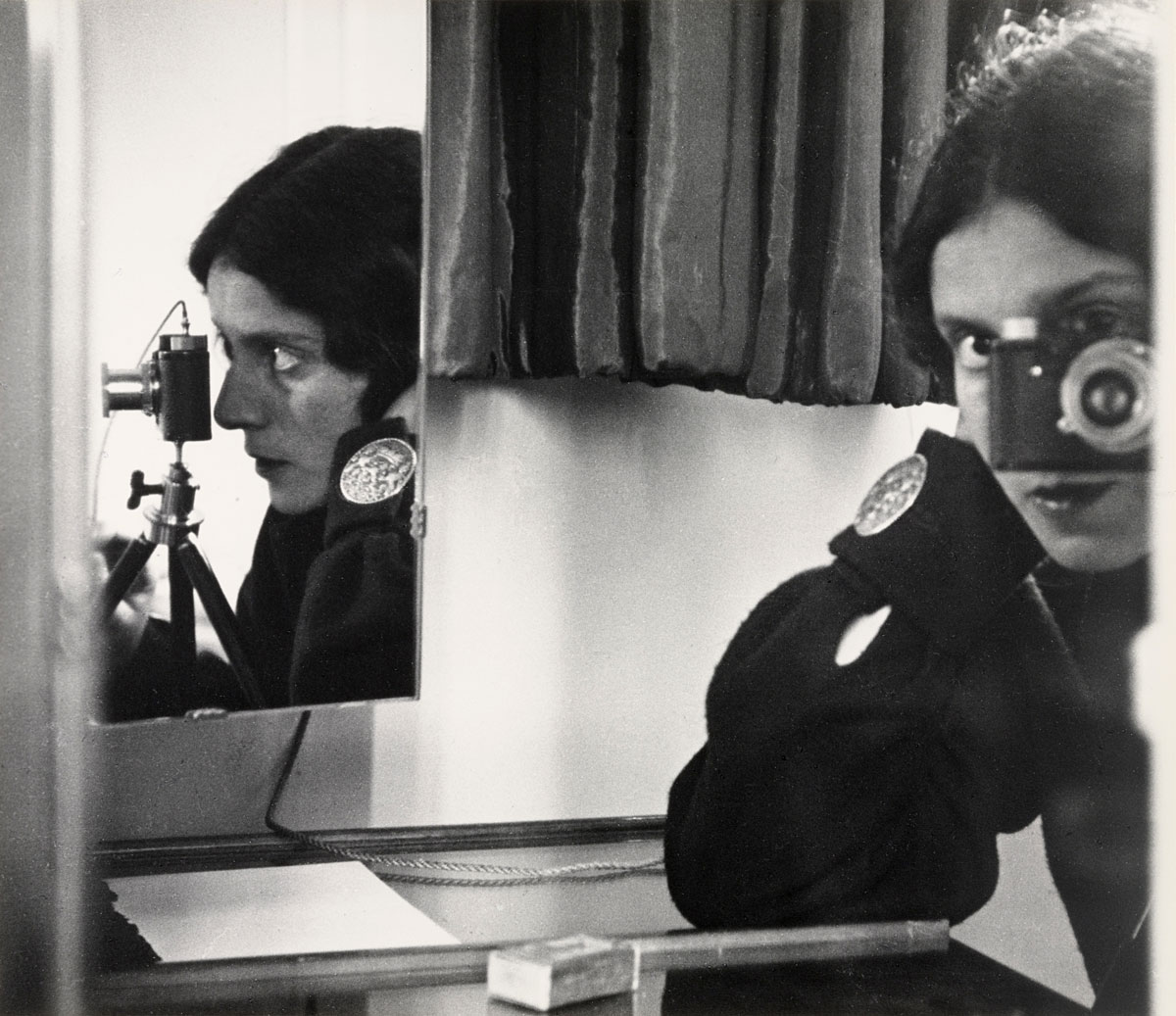
German photographer Ilse Bing shoots into the hinged mirrors on a vanity, giving us both profile and head-on views of her face and of the Leica that almost hides it. Since antiquity, the mirror had been a symbol of woman and her vanities; Bing claims that old symbol for herself, making it yield a new image.

The mirror deployed by the German Argentine photographer Annemarie Heinrich is a silvered sphere; capturing herself and her sister in it, she depicts the fun-house pleasures, and distortions, of being a woman made New.

Heinrich’s European peers sometimes go further in disturbing their self-presentation. In “Masked Self-Portrait (No. 16),” Gertrud Arndt double- or maybe triple-exposes her face, as though to convey the troubled identity she’s taken on as a woman who dares to photograph. (Multiple exposure is almost a hallmark of New Woman photographers; maybe that shouldn’t surprise us.) In a collage titled “I.O.U. (Self-Pride),” French photographer Claude Cahun presents herself as 11 different masked faces, surrounded by the words “Under this mask, another mask. I’ll never be done lifting off all these faces.”

It’s as though the act of getting behind a camera turns any New Woman into an ancestor and avatar of Cindy Sherman, trying on all sorts of models for gender.

If there’s one problem with this show, it’s that it mostly gives us women who succeeded in achieving the highest levels of excellence, barely hinting at the much greater number of women who were prevented from reaching their creative goals by the rampant sexism of their era: talented women whose places in a photo school were given to men instead, or who were streamed into the lowest or most “feminine” tiers of the profession – retouching, or cheap kiddie portraits – or who were never promoted above studio assistant.

It’s a problem that bedevils all attempts at recovering the lost art of the disadvantaged: By telling the same stories of success that you do with white males, you risk making it look as though others were given the same chance to rise.

A quite straight shot of Chinese photojournalist Niu Weiyu may best capture what it really meant for the New Woman to start taking pictures. As snapped by her colleague Shu Ye, Niu stands perched with her camera at the edge of a cliff. Every female photographer adopted this daredevil pose, at least in cultural terms, just by clicking a shutter.

Several of the women featured at the Met actually took over studios originally headed by husbands or fathers. In the Middle East and Asia, this gave them access to a reality that men could not document: Taken in 1930s Palestine, a photo by an entrepreneur who styled herself as “Karimeh Abbud, Lady Photographer” shows three women standing before the camera with complete self-confidence – the youngest smiles broadly into the lens – in a relaxed shot that a man would have been unlikely to capture.

Gender was almost as powerfully in play for women in the West. If taking up a camera was billed as “mannish,” many a New Woman in Europe was happy to go with that billing: Again and again, they portray themselves coiffed with the shortest of bobs, sometimes so short they read as male styles. Cahun, who at times was almost buzz-cut, once wrote “Masculine? Feminine? It depends on the situation. Neuter is the only gender that always suits me.”

Margaret Bourke-White, an American photographer who achieved true celebrity, shoots herself in a bob long enough to just about cover her ears, but this almost girlish style is more than offset by manly wool slacks. (In the 1850s, Rosa Bonheur had to get a police license to wear pants when she went to draw the horse-breakers of Paris. As late as 1972, my grandmother, born into the age of the New Woman, boasted of the courage she’d recently mustered to start wearing pants to work.)

A New Woman clicking the shutter might seem almost as much on display as any subject before her lens. Bourke-White’s photo of the Fort Peck dam graced the cover of Life magazine’s first modern issue, in 1936, and it got that play in part because it had been shot by her: The editors go on about that “surprising” fact as they introduce their new magazine, and how they were “unable to prevent Bourke-White from running away with their first nine pages.”

When a subject is in fact another woman, shooter and sitter can collapse into one. Lola Álvarez Bravo, the great Mexican photographer, once took a picture of a woman with shadows crisscrossing her face, titling it “In Her Own Prison.” As a photographic Everywoman, Álvarez Bravo comes off as in that same jail.

To capture the predicament of women in Catholic Spain, Kati Horna double-exposed a girl’s face onto the barred windows beside a cathedral; it’s hard not to see the huge eye that looks out at us from behind those bars as belonging to Horna herself, peering through the viewfinder.

For centuries before they went New, women had been objectified and observed as few men were likely to be. Picking up the camera didn’t pull eyes away from a New Woman; it could put her all the more clearly on view. But thanks to photography, she could begin to look back, with power, at the world around her.

Blake Gopnik. “Women Who Shaped Modern Photography,” on The New York Times website July 11, 2021 [Online] Cited 16/07/2021


Bernice Kolko (American born Poland, 1905-1970) 'Photogram' c. 1944


Bernice Kolko (American born Poland, 1905-1970)
Photogram
c. 1944
Gelatin silver print
9 3/4 × 11 1/2 in. (24.8 × 29.2cm)
National Gallery of Art, Washington, DC, Alfred H. Moses and Fern M. Schad Fund


Bernice Kolko (American born Poland, 1905-1970)

Bernice Kolko (1905-1970) was a Polish-American photographer. During World War II, she joined the Women’s Army Corps as a photographer. In 1953 she became friends with Diego Rivera and Frida Kahlo, who she had met when they visited Chicago. They invited her to Mexico, where she travelled, taking pictures of the women of Mexico. She and Kahlo travelled frequently, with Kolko taking photos of Kahlo in the two years before Kahlo’s death. In 1955 she became the first woman to exhibit at the Palacio de Bellas Artes.

Text from the Wikipedia website
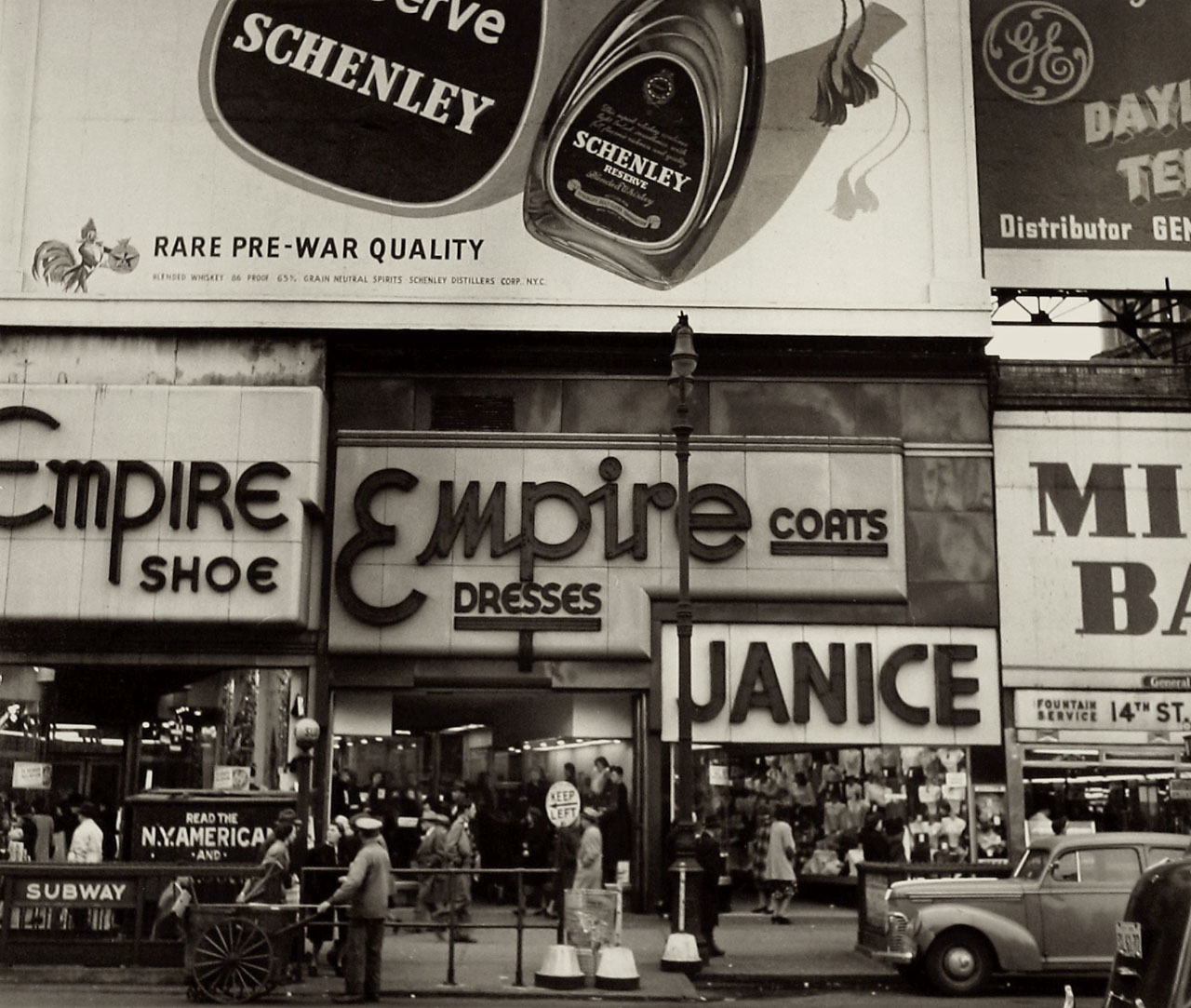
 

Rebecca Lepkoff (American, 1916–2014) '14th Street, New York City' 1947-1948


Rebecca Lepkoff (American, 1916–2014)
14th Street, New York City
1947-48
Gelatin silver print
10 5/8 × 12 9/16 in. (27 × 31.9cm)
Purchase, Phillip and Edith Leonian Foundation Gift, 2012
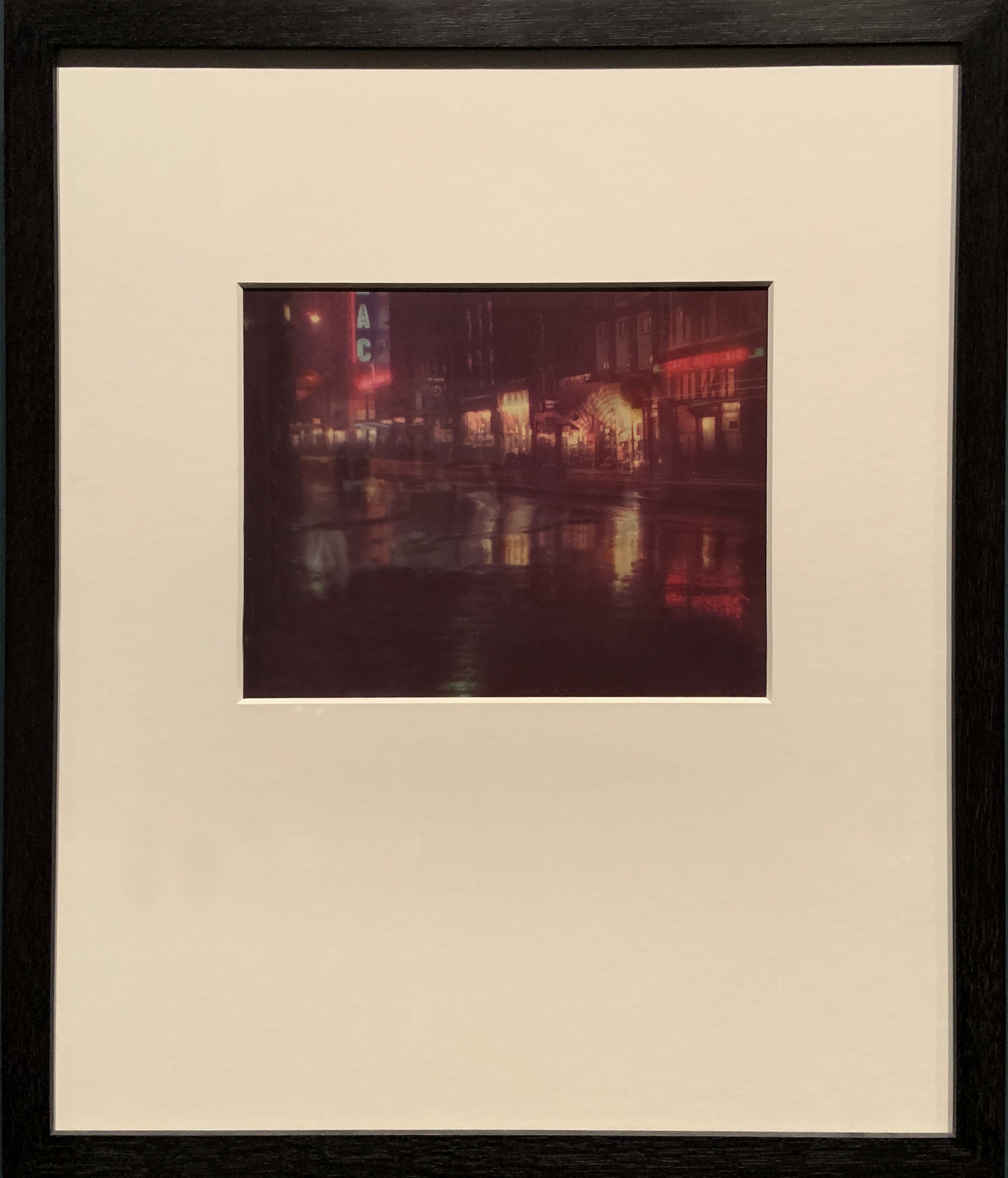
Metropolitan Museum of Art


Rebecca Lepkoff (American, 1916-2014)

Rebecca Lepkoff (born Rebecca Brody; 1916-2014) was an American photographer. She is best known for her images depicting daily life in the Lower East Side neighbourhood of New York City in the 1940s. …

Fascinated by the area where she lived, she first photographed Essex and Hester Street which, she recalls, “were full of pushcarts.” They no longer exist today but then “everyone was outside: the mothers with their baby carriages, and the men just hanging out.” Her photographs captured people in the streets, especially children, as well as the buildings and the signs on store fronts.

In 1950, she also photographed people at work and play in Vermont. The images were used to illustrate the book Almost Utopia: The Residents and Radicals of Pikes Falls, Vermont, 1950, published by the Vermont Historical Society. They present the area before its character was changed with paved roads and vacationers. In the 1970s, she photographed the next generation of inhabitants in a series she called Vermont Hippies.

Rebecca Lepkoff was an active member of the Photo League from 1947 until 1951 when it was dissolved as a “communist organisation” in the McCarthy era.

Text from the Wikipedia website
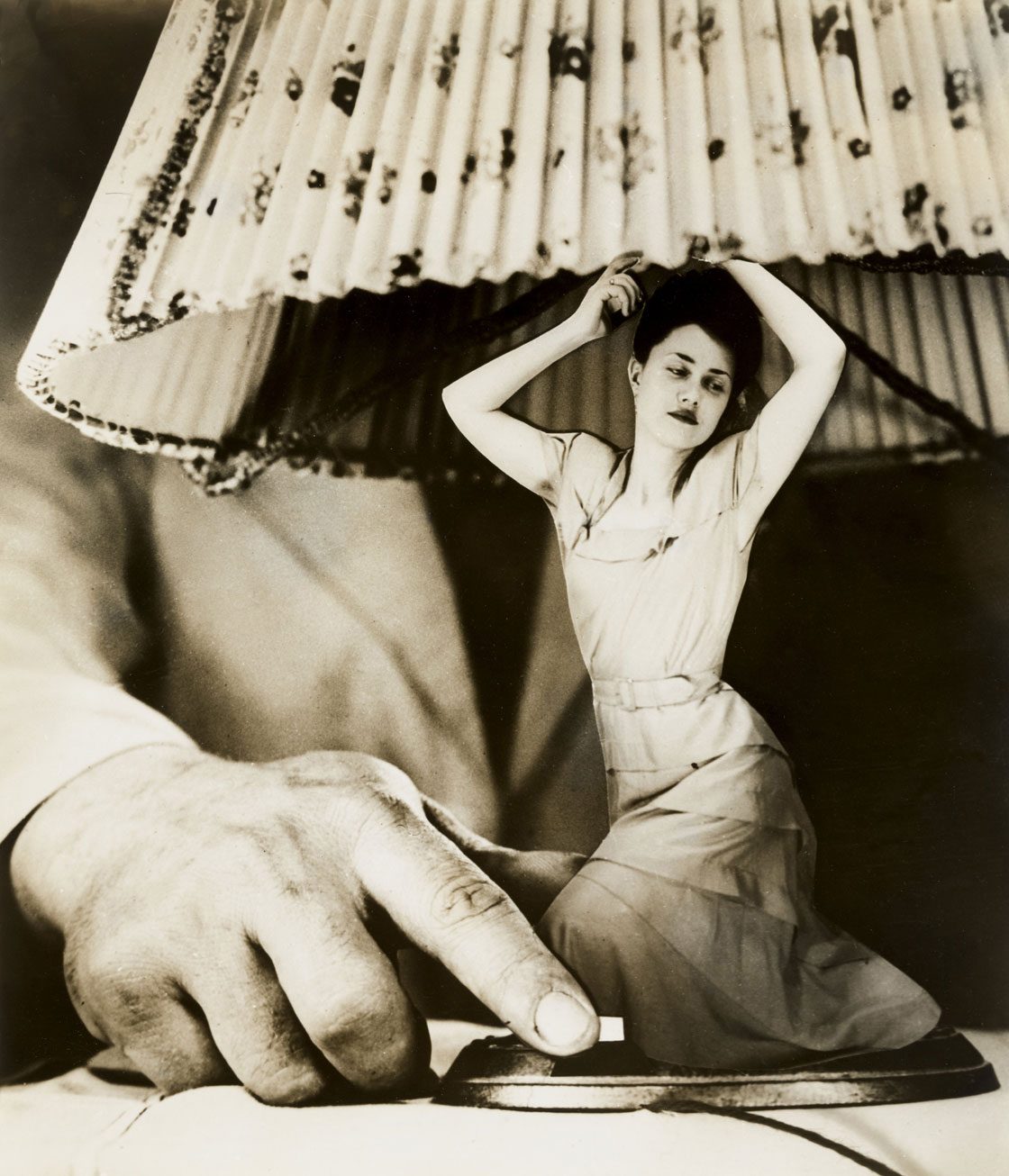
 

Grete Stern (Argentinian, born Germany, 1904-1999) 'Sueño No. 1: "Articulos eléctricos para el hogar" (Dream No. 1: "Electrical Household items")' c. 1949


Grete Stern (Argentinian born Germany, 1904-1999)
Sueño No. 1: “Articulos eléctricos para el hogar” (Dream No. 1: “Electrical Household items”)
1949
Gelatin silver print
18 1/4 × 15 11/16 in. (46.4 × 39.8cm)
Twentieth-Century Photography Fund, 2012
Metropolitan Museum of Art


In 1948 the Argentine women’s magazine Idilio introduced a weekly column called “Psychoanalysis Will Help You,” which invited readers to submit their dreams for analysis. Each week, one dream was illustrated with a photomontage by Stern, a Bauhaus-trained photographer and graphic designer who fled Berlin for Buenos Aires when the Nazis came to power. Over three years, Stern created 140 photomontages for the magazine, translating the unconscious fears and desires of its predominantly female readership into clever, compelling images. Here, a masculine hand swoops in to “turn on” a lamp whose base is a tiny, elegantly dressed woman. Rarely has female objectification been so erotically and electrically charged.
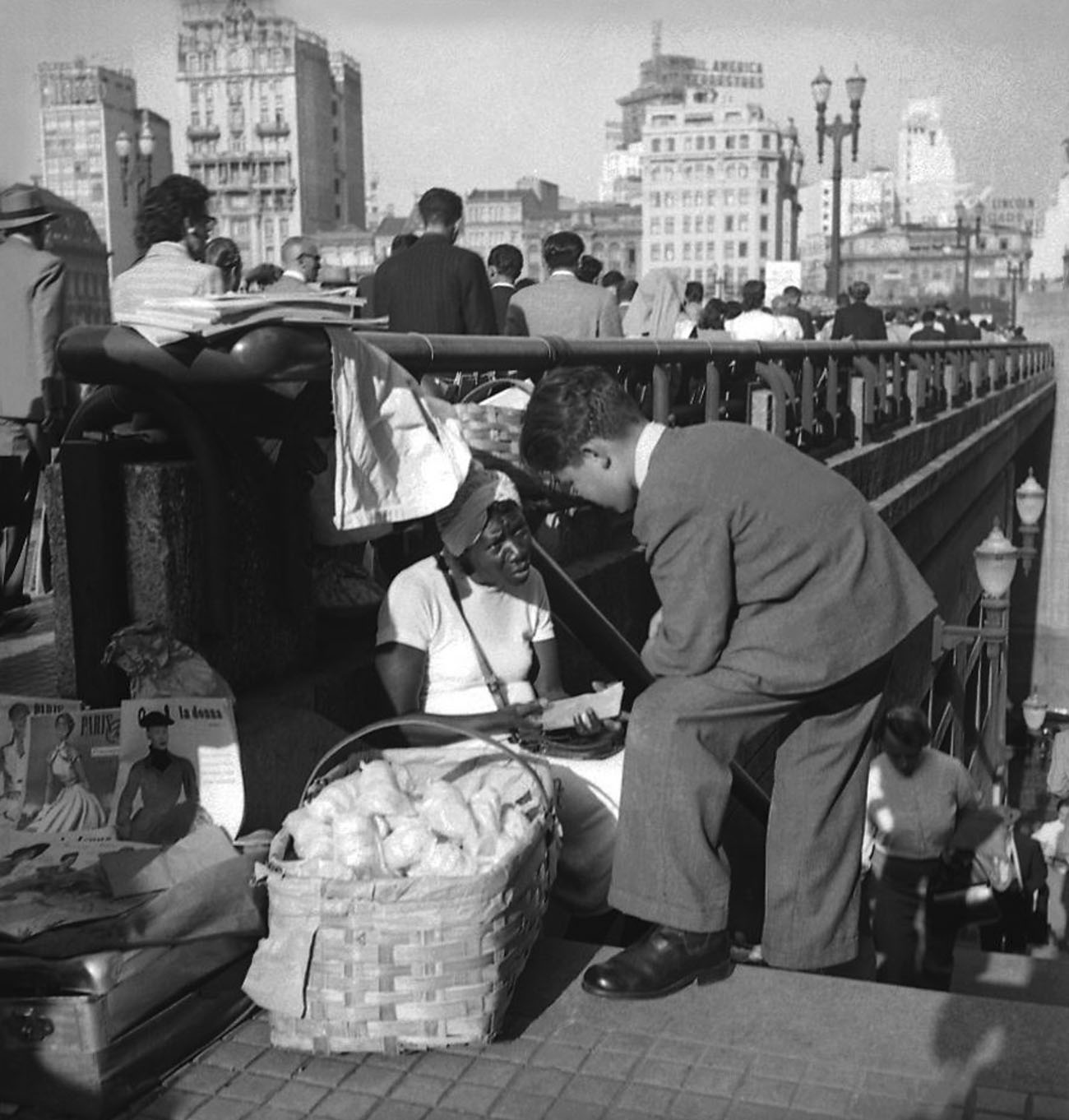
 

Alice Brill (Brazilian born Cologne, 1920-2013) 'Street Vendor at the Chá Viaduct, São Paulo' c. 1953


Alice Brill (Brazilian born Cologne, 1920-2013)
Street Vendor at the Chá Viaduct, São Paulo
c. 1953
Gelatin silver print
32 × 32cm (12 5/8 × 12 5/8 in.)
Instituto Moreira Salles


Alice Brill (Brazilian born Germany, 1920-2013)

Alice Brill (December 13, 1920 – June 29, 2013) was a German-born Brazilian photographer, painter, and art critic.

Alice Brill Czapski was born in Cologne, Germany, in 1920. She was Jewish, the daughter of the painter Erich Brill [de] and the journalist Martha Brill [de]. In 1934 she and her parents left Germany to escape the National Socialist (Nazi) regime; her mother, long divorced from Erich Brill, emigrated to Brazil, and in 1935 Alice Brill and her father also emigrated there. Influenced by a schoolteacher, she recorded in a diary the trips made during exile, with a photographic camera given to her by her father. She passed through Spain, Italy and the Netherlands before landing in Brazil. Her father returned alone to Germany in 1936. He was subsequently imprisoned and died, a Holocaust victim, in 1942 at the Jungfernhof concentration camp.

At age 16 she studied with the painter Paulo Rossi Osir, who influenced her production of photographs and batik paintings. She participated in the Santa Helena Group, an informal association of painters from São Paulo, maintaining contact with artists such as Mario Zanini and Alfredo Volpi. In 1946, she won a Hillel Foundation scholarship to study at the University of New Mexico and the Art Students League of New York where she studied photography, painting, sculpture, engraving, art history, philosophy and literature.

After returning to Brazil in 1948, she worked as a photographer for Habitat magazine, coordinated by architect Lina Bo Bardi. She documented architecture, fine arts and made portraits of artists, as well as recording works and exhibitions of the São Paulo Art Museum and Sao Paulo Museum of Modern Art He also participated in an expedition in Corumbá organised by the Central Brazil Foundation, photographing the Carajás people. In 1950, she performed the essay at the Psychiatric Hospital of Juqueri at the invitation of the plastic artist Maria Leontina da Costa, registering the wing of the Free Art Workshop. In the same year, Pietro Maria Bardi commissioned an essay on São Paulo for the city’s fourth centennial. It portrayed the process of modernisation of the city between 1953 and 1954, but the publication project was not completed.

In addition to being a photographer, she worked as a painter, participating in the I and IX Bienal de São Paulo (1951 and 1967 respectively), as well as several individual and collective exhibitions. Her subjects involved urban landscapes and abstractionism, performing watercolours and batik paintings. She graduated in philosophy from PUC-SP in 1976, graduating in 1982 and a doctorate in 1994 and worked as an art critic, writing articles for the culture section of the newspaper O Estado de S. Paulo, which were later collected in the book “Da arte e da linguagem” (Perspectiva, 1988).

Text from the Wikipedia website


Frieda Gertrud Riess (German, 1890-1957) 'The Sculptor Renée Sintenis' 1925, printed 1925-1935


Frieda Gertrud Riess (German, 1890-1957)
The Sculptor Renée Sintenis
1925, printed 1925-1935
Gelatin silver print
8 7/8 × 6 13/16 in. (22.6 × 17.3 cm)
The Museum of Modern Art, New York. Thomas Walther Collection. Bequest of Gertrude Palmer, by exchange


Frieda Gertrud Riess (German, 1890-1957)

Frieda Gertrud Riess (1890 – c. 1955) was a German portrait photographer in the 1920s with a studio in central Berlin.

In 1918, she opened a business on the Kurfürstendamm in Berlin; it became one of the most popular studios in the city. Partly as a result of her marriage to the journalist Rudolf Leonhard in the early 1920s, she extended her clientele to celebrities such as playwright Walter Hasenclever, novelist Gerhart Hauptmann and actors and actresses including Tilla Durieux, Asta Nielsen and Emil Jannings. This group extended to include dancers, music-hall stars and fine artists: Anna Pavlova, Mistinguett, Lil Dagover, Renée Sintenis, Max Liebermann and Xenia Boguslawskaja. Other clients included representatives of the old aristocracy, diplomats, politicians and bankers. Boxers (and nudes thereof) were a notable group in which she specialised, including Erich Brandl, Hermann Herse, Max Schmeling, Ensor Fiermonte.

Such was her renown that she became known simply as Die Reiss. While on a trip to Italy in 1929, she was invited to photograph Benito Mussolini. In addition, she contributed to the journals and magazines of the day including Die Dame, Berliner Illustrierte Zeitung, Der Weltspiegel, Querschnit and Koralle. In 1932, after falling in love with Pierre de Margerie, the French ambassador in Berlin (1922-1931). She moved to Paris with him, and he died in 1942. She disappeared from the public eye during the Occupation. Even the date of her death cannot be clearly established and her place of burial remains unknown.

Text from the Wikipedia website


Renée Sintenis (German, 1888-1965)

Renée Sintenis, née Renate Alice Sintenis (March 20, 1888, Glatz – April 22, 1965, West Berlin), was a German sculptor, medalist and graphic artist who worked in Berlin. She created mainly small-sized animal sculptures, female nudes, portraits (drawings and sculptures) and sports statuettes. …

In 1928 Sintenis won the bronze medal in the sculpture section of the art competition for the Summer Olympics in Amsterdam; she is thought to be the first LGBTQ+ Olympic medallist. Renée Sintenis took part in the 1929 exhibition of the German Association of Artists in the Cologne State House, with five small-format animal sculptures. In 1930 she met the French sculptor Aristide Maillol in Berlin. In 1931 she was appointed as the first sculptor, and second woman after Käthe Kollwitz, together with 13 other artists, to join the Berlin Academy of the Arts – Fine Arts section, although the National Socialists forced her to leave in 1934.

Due to her body size, slim figure, charisma, her self-confident, fashionable demeanor and androgynous beauty, she was often portrayed by artists like her husband, Emil Rudolf Weiß and Georg Kolbe, and by photographers, like Hugo Erfurth, Fritz Eschen and Frieda Riess. She embodied perfectly the type of the ‘new woman’ of the 1920s, even if she appeared rather reserved.

Text from the Wikipedia website


Renée Sintenis’ work was included in the Schwules Museum’s exhibition LESBIAN VISIONS – Artistic positions from Berlin, May – August 2018.

The exhibition conceptualised a utopian and melancholic gallery that follows the tracks of lesbian forms of pleasure and experience as well as lesbian identity constructions and lifestyles. In this context, the exhibition understood and recognised the term “lesbian” in its broadest sense, which is to say that desire and gender can be fluid.
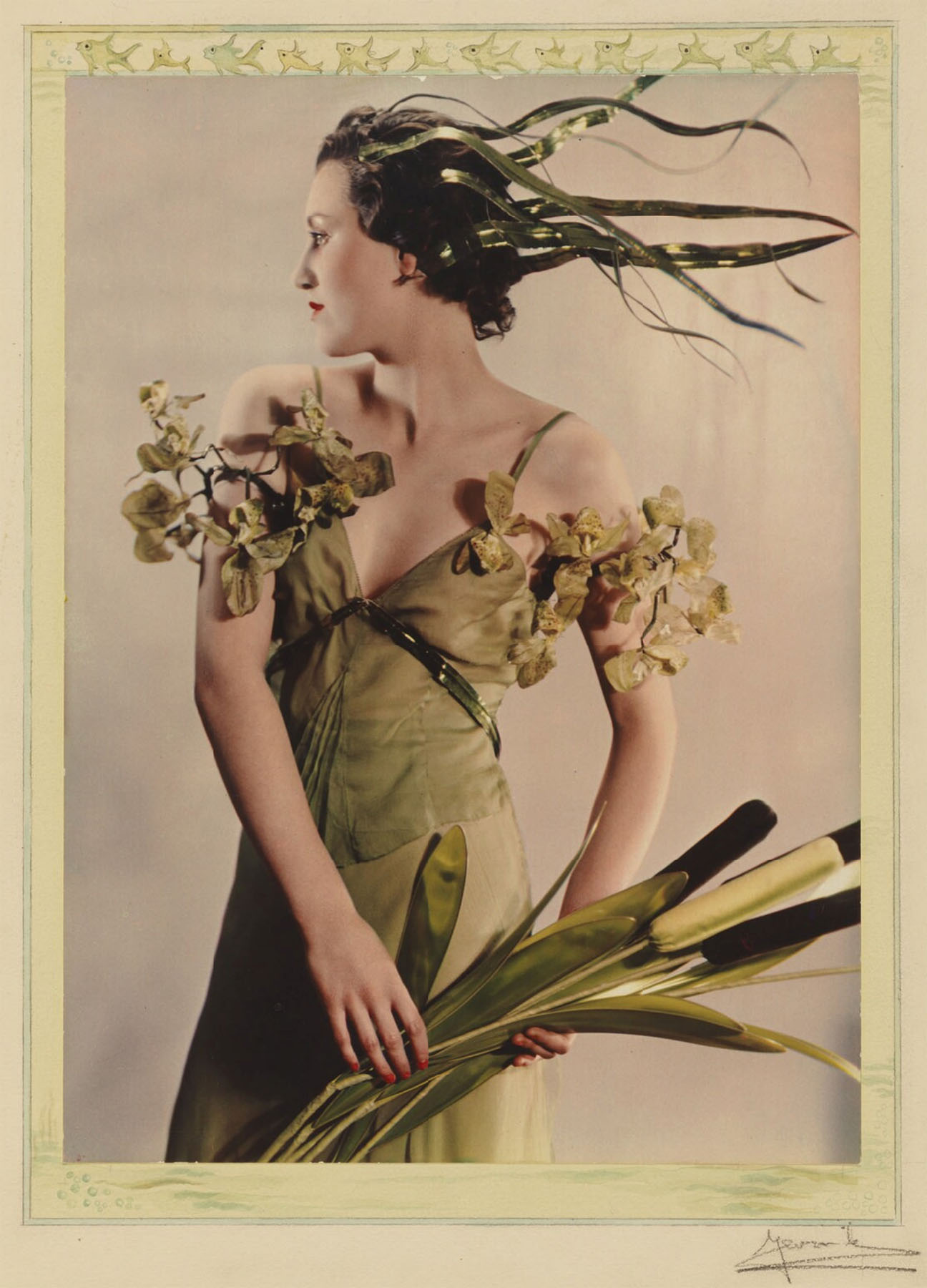
 

Yevonde Cumbers Middleton (British, 1893–1975) 'Lady Bridget Poulett as 'Arethusa'' 1935


Yevonde Cumbers Middleton (British, 1893–1975)
Lady Bridget Poulett as ‘Arethusa’
1935
Vivex colour print
14 3/4 × 10 3/4 in. (37.5 × 27.3cm)
National Portrait Gallery, London, Given by Madame Yevonde, 1971


Yevonde Philone Middleton (English, 1893-1975)

Yevonde Philone Middleton (English, 1893-1975) was an English photographer, who pioneered the use of colour in portrait photography. She used the professional name Madame Yevonde. …

Cumbers sought, and was given, a three-year apprenticeship with the portrait photographer Lallie Charles. With the technical grounding she received from working with Charles, and a gift of £250 from her father, at the age of 21 Yevonde set up her own studio at 92 Victoria Street, London, and began to make a name for herself by inviting well-known figures to sit for free. Before long her pictures were appearing in society magazines such as the Tatler and The Sketch. Her style quickly moved away from the stiff “pouter pigeon” look of Lallie Charles, toward a still formal, but more creative, style. Her subjects were often pictured looking away from the camera, and she began using props to creative effect.

By 1921 Madame Yevonde had become a well-known and respected portrait photographer, and moved to larger premises at 100 Victoria Street. Here she began taking advertising commissions and also photographed many of the leading personalities of the day, including A.A. Milne, Barbara Cartland, Diana Mitford, Louis Mountbatten and Noël Coward.

In the early 1930s, Yevonde began experimenting with colour photography, using the new Vivex colour process from Colour Photography Limited of Willesden. The introduction of colour photography was not universally popular; indeed photographers and the public alike were so used to black-and-white pictures that early reactions to the new process tended toward the hostile. Yevonde, however, was hugely enthusiastic about it and spent countless hours in her studio experimenting with how to get the best results. Her dedication paid huge dividends. In 1932 she put on an exhibition of portrait work at the Albany Gallery, half monochrome and half colour, to enthusiastic reviews.

In 1933, Madame Yevonde moved once again, this time to 28 Berkeley Square. She began using colour in her advertising work as well as her portraits, and took on other commissions too. In 1936, she was commissioned by Fortune magazine to photograph the last stages in the fitting out of the new Cunard liner, the Queen Mary. This was very different from Yevonde’s usual work, but the shoot was a success. People printed twelve plates, and pictures were exhibited in London and New York City. One of the portraits was of artist Doris Zinkeisen who was commissioned together with her sister Anna to paint several murals for the Queen Mary. Another major coup was being invited to take portraits of leading peers to mark the coronation of King George VI and Queen Elizabeth. She joined the Royal Photographic Society in 1933, and became a Fellow in 1940. The RPS Collection holds examples of her work.

Yevonde’s most famous work was inspired by a theme party held on 5 March 1935, where guests dressed as Roman and Greek gods and goddesses. Yevonde subsequently took studio portraits of many of the participants (and others), in appropriate costume and surrounded by appropriate objects. This series of prints showed Yevonde at her most creative, using colour, costume and props to build an otherworldly air around her subjects. She went on to produce further series based on the signs of the zodiac and the months of the year. Partly influenced by surrealist artists, particularly Man Ray, Yevonde used surprising juxtapositions of objects which displayed her sense of humour.

This highly creative period of Yevonde’s career would only last a few years. At the end of 1939, Colour Photographs Ltd closed, and the Vivex process was no more. It was the second major blow to Yevonde that year – her husband, the playwright Edgar Middleton, had died in April. Yevonde returned to working in black and white, and produced many notable portraits. She continued working up until her death, just two weeks short of her 83rd birthday, but is chiefly remembered for her work of the 1930s, which did much to make colour photography respectable.

Text from the Wikipedia website


Lady Bridget Elizabeth Felicia Henrietta Augusta Poulett (English, 1912-1975), was an English socialite, sometime model of Cecil Beaton.


Tina Modotti (Italian, 1896-1942) 'La técnica [or, Mella's Typewriter]' 1928


Tina Modotti (Italian, 1896-1942)
La técnica [or, Mella’s Typewriter]
1928
Gelatin silver print
24 × 19.2cm (9 7/16 × 7 9/16 in.)
The Museum of Modern Art, New York, Anonymous gift
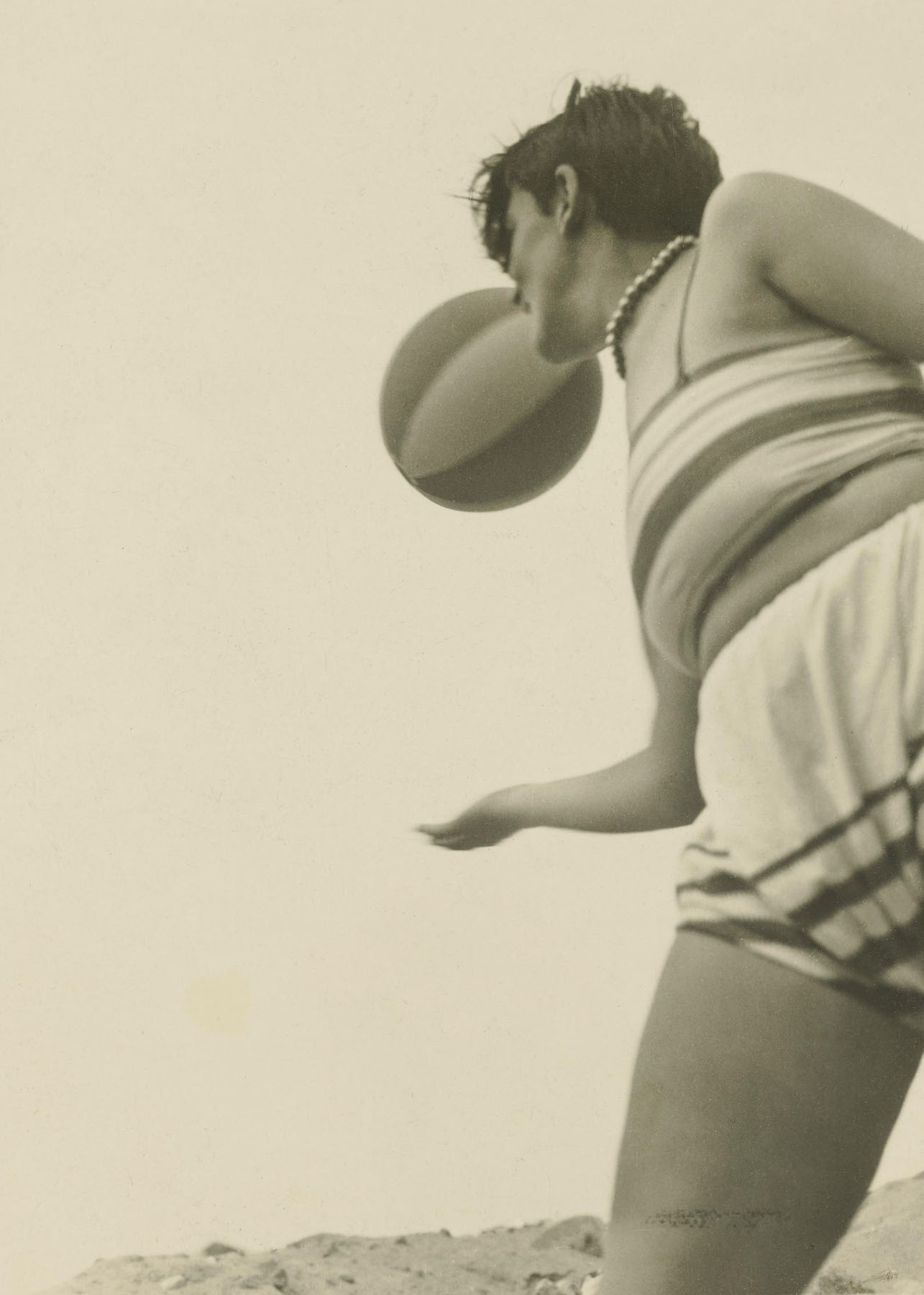
 

Irene Bayer-Hecht (American, 1898-1991) 'Female Student with Beach Ball' c. 1925


Irene Bayer-Hecht (American, 1898-1991)
Female Student with Beach Ball
c. 1925
Gelatin silver print
4 1/8 × 3 1/16 in. (10.5 × 7.8cm)
The J. Paul Getty Museum, Los Angeles


Irene Bayer-Hecht (1898-1991) was an American born photographer involved in the Bauhaus movement. Her photographs “feature experimental approaches and candid views of life at the Bauhaus.”


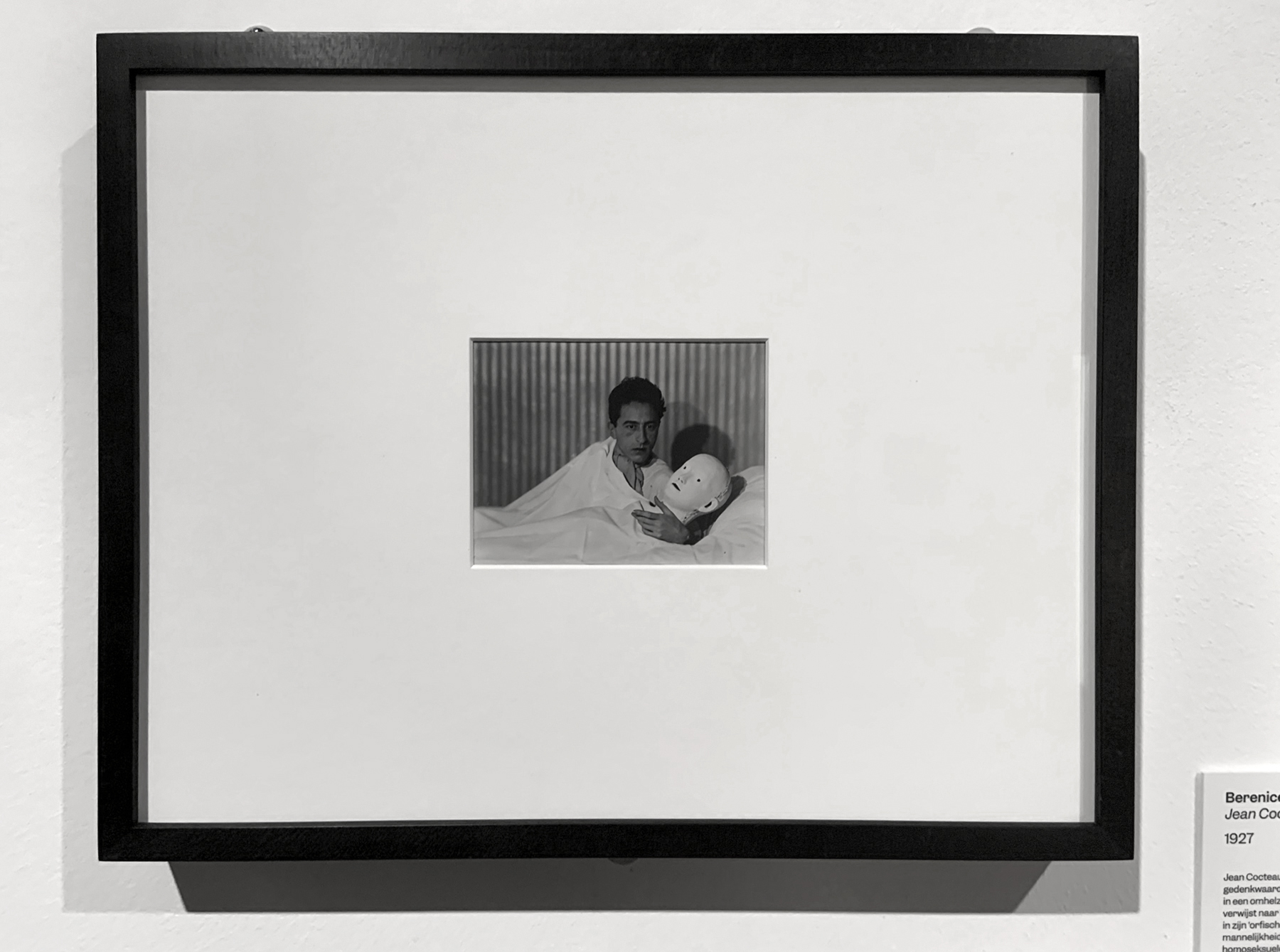
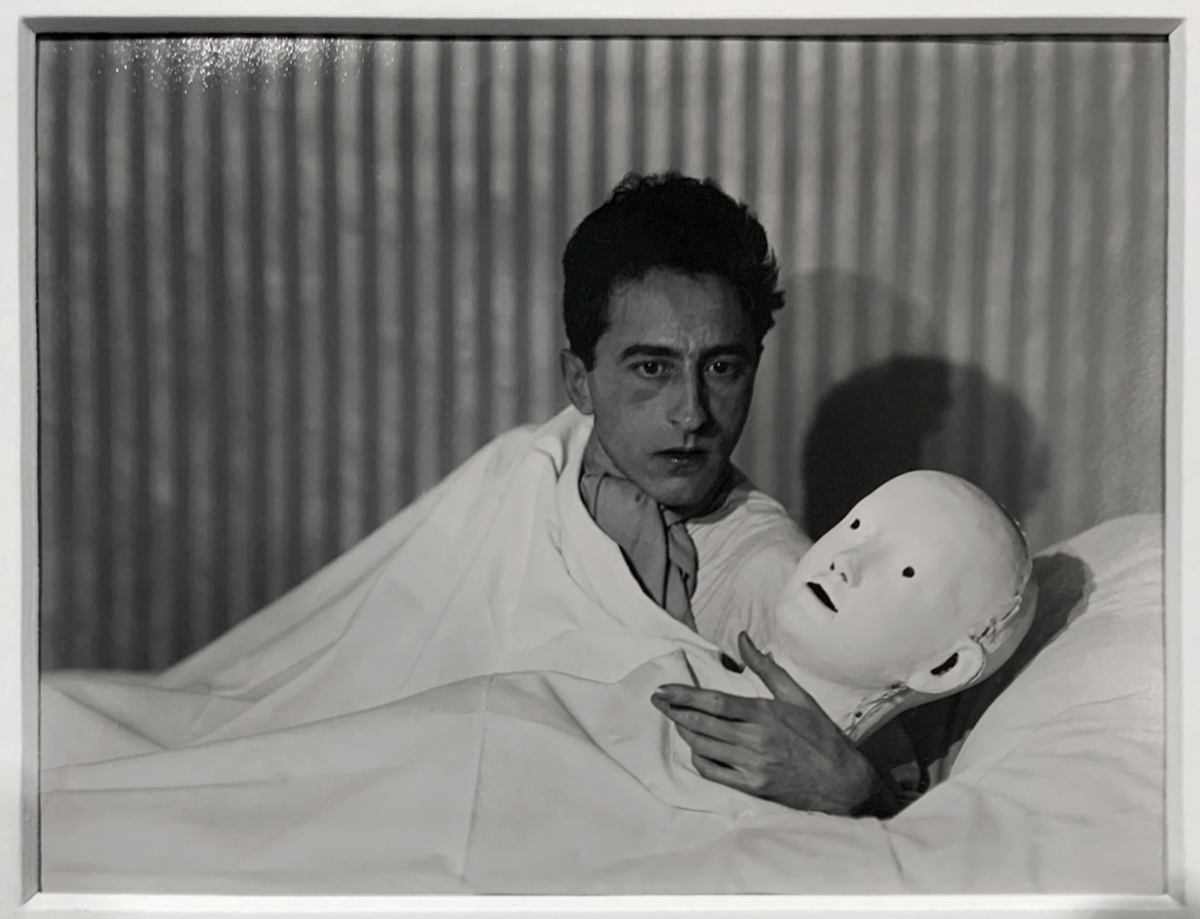
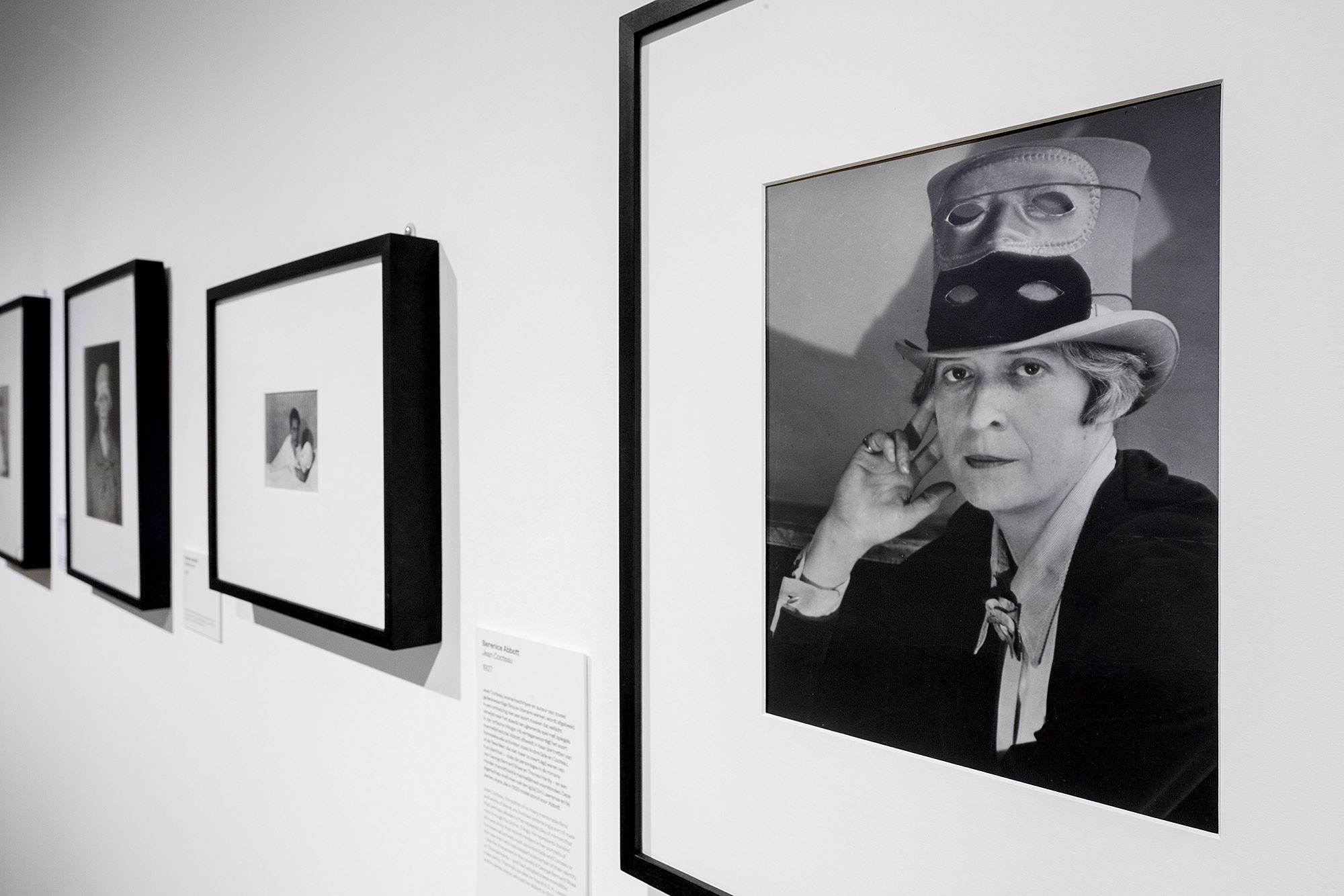
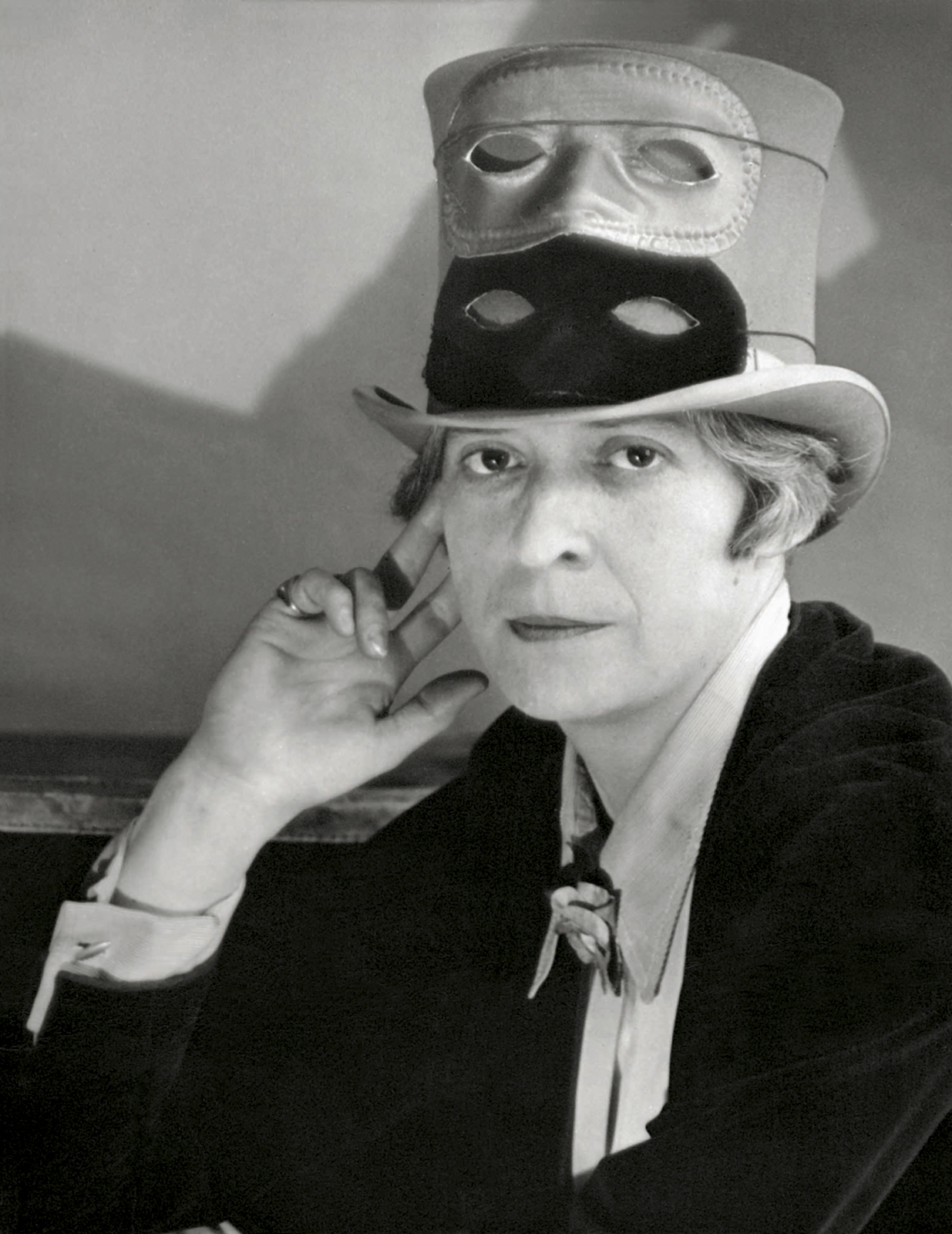
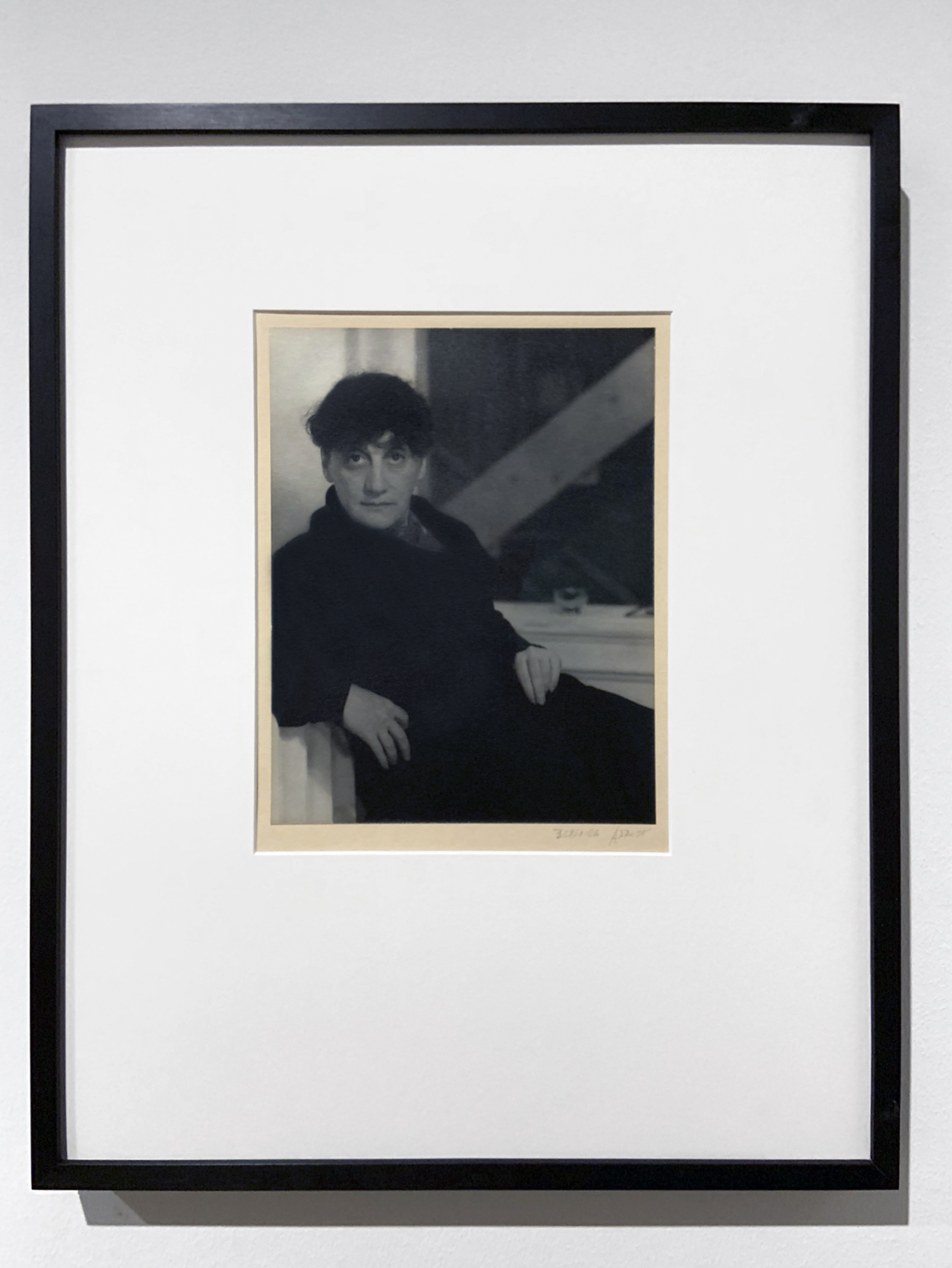
Berenice Abbott (American, 1898-1991) 'Jean Cocteau with Gun, Paris' c. 1926


Berenice Abbott (American, 1898-1991)
Jean Cocteau with Gun, Paris
c. 1926
From Faces of the 20’s
Gelatin silver print
34 x 25.5cm (13.4 x 10 in.)
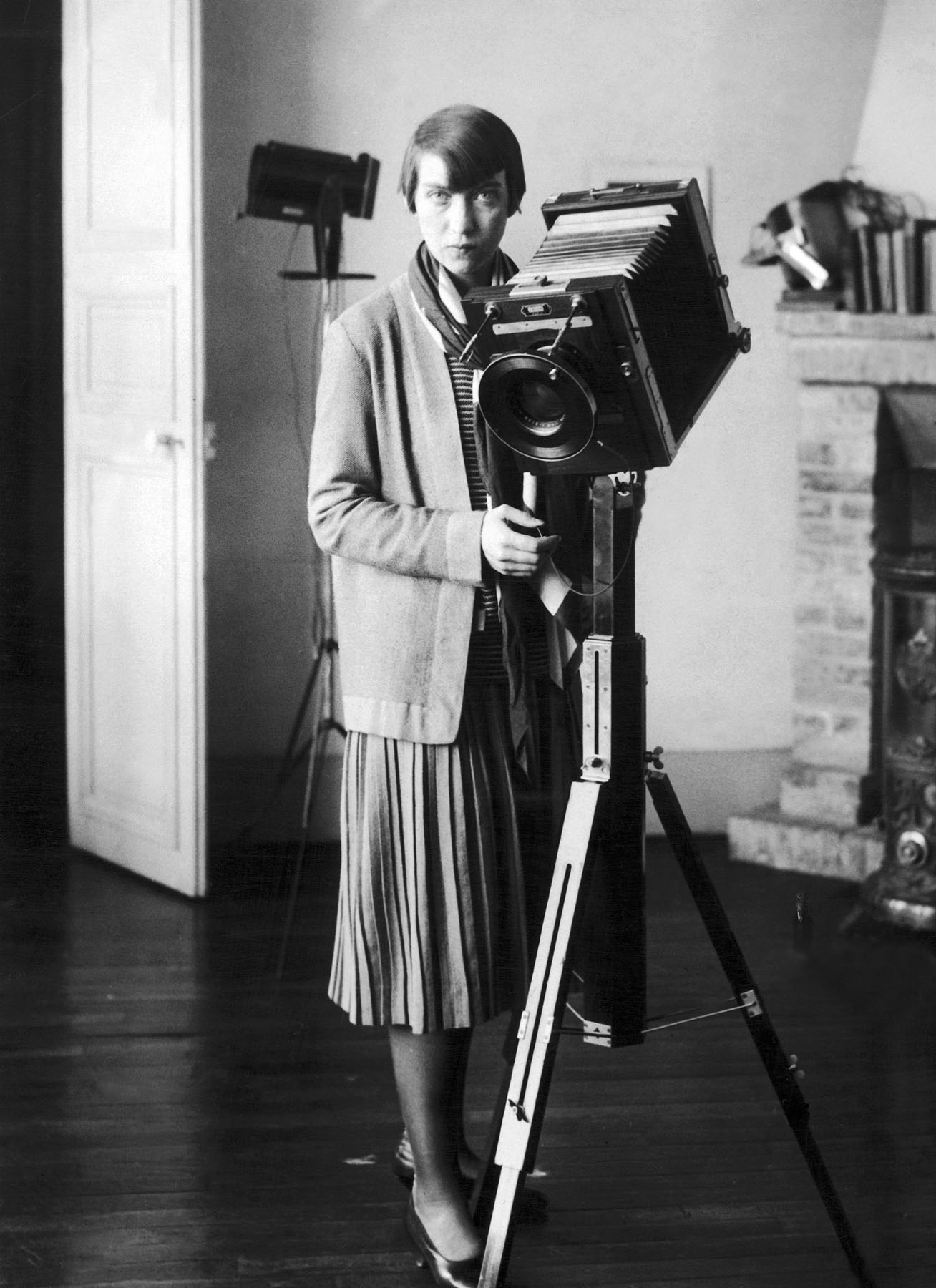
 

Berenice Abbott in an undated photo. Photographer and source unknown 1930s


Berenice Abbott in an undated photo. Photographer and source unknown 1930s
Public domain


Annelise Kretschmer (German, 1903–1987) 'Young Woman' 1928


Annelise Kretschmer (German, 1903–1987)
Young Woman
1928
Gelatin silver print
18 3/8 × 15 11/16 in. (46.7 × 39.8cm)
Museum Folkwang, Essen
© Museum Folkwang Essen – ARTOTHEK


Annelise Kretschmer (1903-1987) was a German portrait photographer. Kretschmer is best known for her depictions of women in Germany in the early 20th century and is credited with helping construct the ‘Neue Frau’ or New Woman image of modern femininity.
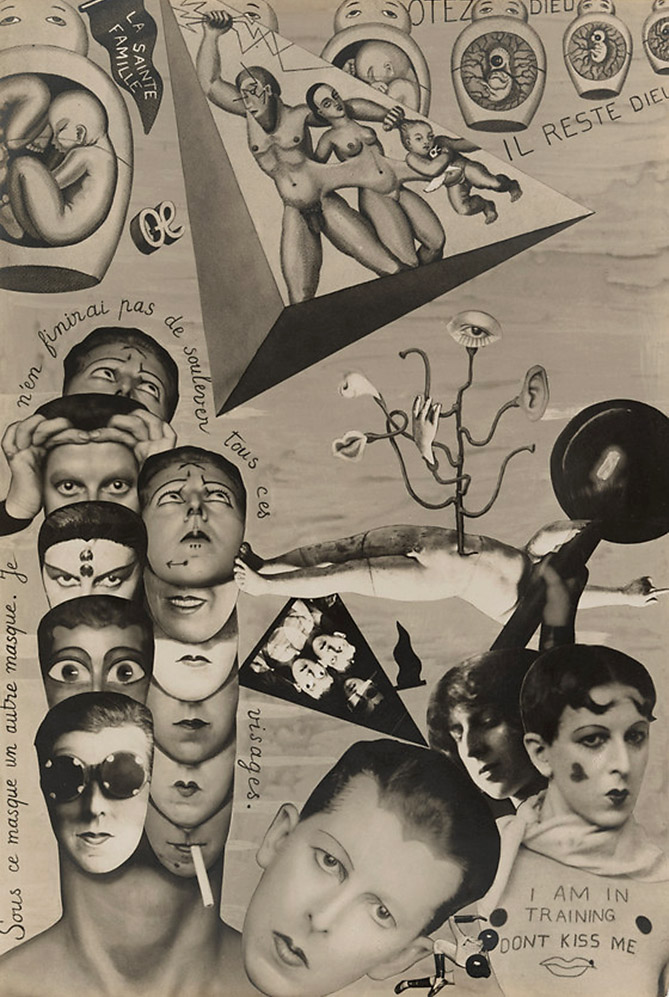
 

Claude Cahun (French, 1894-1954) 'I.O.U. (Self-Pride) in Aveux non avenus' 1930


Claude Cahun (French, 1894-1954)
I.O.U. (Self-Pride) in Aveux non avenus
1930
Book
Open: 8 3/4 × 12 1/2 in. (22.2 × 31.8cm)
Closed: 8 3/4 × 6 3/4 in. (22.2 × 17.2cm)
National Gallery of Art Library, Washington, DC,


Claude Cahun (French, 1894-1954) 'Self-portrait (reflected image in mirror with chequered jacket)' 1927


Claude Cahun (French, 1894-1954)
Self-portrait (reflected image in mirror with chequered jacket)
1927
Silver gelatin print
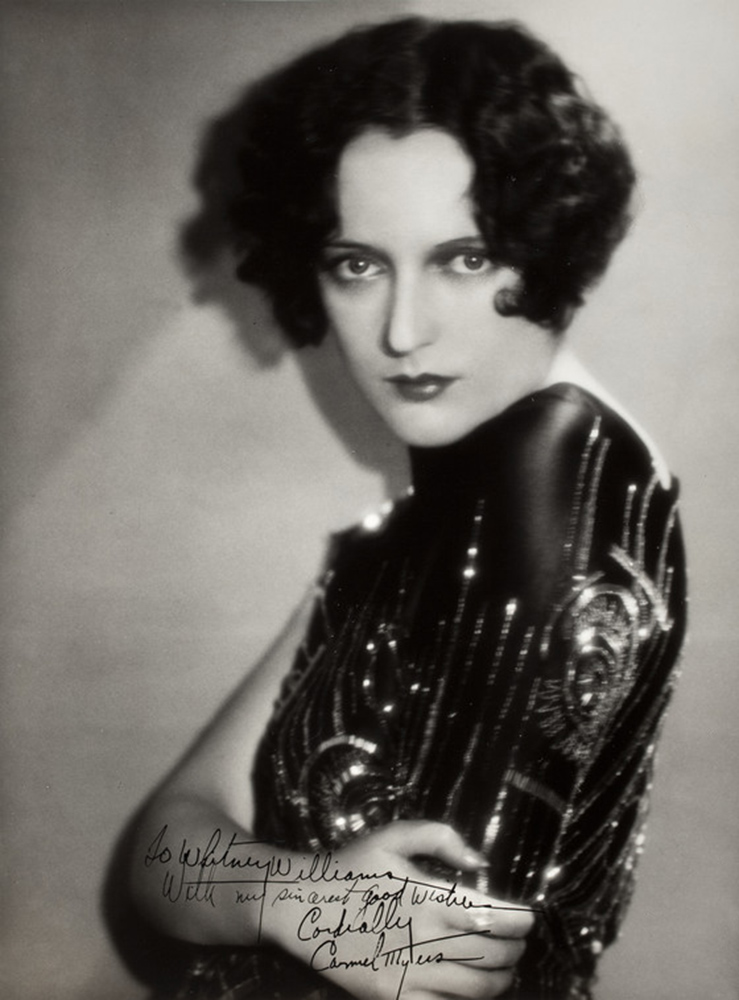
 

Ruth Harriet Louise (American, 1906-1944) 'Carmel Myers' 1925-1930


Ruth Harriet Louise (American, 1906-1944)
Carmel Myers
1925-1930
Gelatin silver print
12 7/16 × 9 1/4 in. (31.6 × 23.5cm)
The Marjorie and Leonard Vernon Collection, gift of The Annenberg Foundation, acquired from Carol Vernon and Robert Turbin


Ruth Harriet Louise (American, 1906-1944)

Ruth Harriet Louise (born Ruth Goldstein, January 13, 1903 – October 12, 1940) was an American photographer. She was the first woman photographer active in Hollywood, and she ran Metro-Goldwyn-Mayer’s portrait studio from 1925 to 1930.

Ruth Harriet Louise was born Ruth Goldstein in New York City and raised in New Brunswick, New Jersey. She was the daughter of Klara Jacobson Sandrich Goldstein, who was born in Rajec, Hungary (present-day Slovakia) and Jacob Goldstein, who was a rabbi originally from England. Her brother was director Mark Sandrich, and she was a cousin of silent film actress Carmel Myers.

Louise began working as a portrait photographer in 1922, working out of a music store down the block from the New Brunswick temple at which her father was a rabbi. Most of her photographs from this period are of family members and members of her father’s temple congregation.

In 1925 she moved to Los Angeles and set up a small photo studio on Hollywood and Vine. Louise’s first published Hollywood photo was of Vilma Banky in costume for Dark Angel, and appeared in Photoplay magazine in September 1925. When Louise was hired by MGM as chief portrait photographer, she was twenty-two years old, and the only woman working as a portrait photographer for the Hollywood studios. In a career that lasted only five years, Louise photographed all the stars, contract players, and many of the hopefuls who passed through the studio’s front gates, including Greta Garbo (Louise was one of only seven photographers permitted to make portraits of her), Lon Chaney, John Gilbert, Joan Crawford, Marion Davies, Anna May Wong, Nina Mae McKinney, and Norma Shearer. It is estimated that she took more than 100,000 photos during her tenure at MGM. Today she is considered an equal with George Hurrell Sr. and other renowned glamour photographers of the era.

In addition to paying close attention to costume and setting for studio photographs, Louise also incorporated aspects of modernist movements such as Cubism, futurism, and German expressionism into her studio portraits.

Text from the Wikipedia website


Carmel Myers (American, 1899-1980)

Carmel Myers (American, 1899-1980) was an American actress who achieved her greatest successes in silent film.

Myers left for New York City, where she acted mainly in theatre for the next two years. She was signed by Universal, where she emerged as a popular actress in vamp roles. Her most popular film from this period – which does not feature her in a vamp role – is probably the romantic comedy All Night, opposite Rudolph Valentino, who was then a little-known actor. She also worked with him in A Society Sensation. By 1924, she was working for Metro-Goldwyn-Mayer, making such films as Broadway After Dark, which also starred Adolphe Menjou, Norma Shearer, and Anna Q. Nilsson.

In 1925, she appeared in arguably her most famous role, that of the Egyptian vamp Iras in Ben-Hur, who tries to seduce both Messala (Francis X. Bushman) and Ben-Hur himself (Ramón Novarro). This film was a boost to her career, and she appeared in major roles throughout the 1920s, including Tell It to the Marines in 1926 with Lon Chaney, Sr., William Haines, and Eleanor Boardman. Myers appeared in Four Walls and Dream of Love, both with Joan Crawford in 1928; and in The Show of Shows (1929), a showcase of popular contemporary film actors.

Myers had a fairly successful sound career, mostly in supporting roles, perhaps due to her image as a vamp rather than as a sympathetic heroine. Subsequently, she began giving more attention to her private life following the birth of her son in May 1932. Amongst her popular sound films are Svengali (1931) and The Mad Genius (1931), both with John Barrymore and Marian Marsh, and a small role in 1944’s The Conspirators, which featured Paul Henreid, Peter Lorre, and Sydney Greenstreet.

Text from the Wikipedia website


Hildegard Rosenthal (Brazilian born Zürich, 1913-1990) 'Street Scene, São Paulo' c. 1940, printed later


Hildegard Rosenthal (Brazilian born Switzerland, 1913-1990)
Street Scene, São Paulo
c. 1940, printed later
Gelatin silver print
24 × 36cm (9 7/16 × 14 3/16 in.)
Instituto Moreira Salles


Hildegard Rosenthal (Brazilian born Switzerland, 1913-1990)

Hildegard Baum Rosenthal (March 25, 1913 – September 16, 1990) was a Swiss-born Brazilian photographer, the first woman photojournalist in Brazil. She was part of the generation of European photographers who emigrated during World War II and, acting in the local press, contributed to the photographic aesthetic renovation of Brazilian newspapers.

Rosenthal was born in Zurich, Switzerland. Until her adolescence, she lived in Frankfurt (Germany), where she studied pedagogy from 1929 until 1933. She lived in Paris between 1934 and 1935. Upon her return to Frankfurt, she studied photography for about 18 months in a program led by Paul Wolff [de]. Wolff emphasised small, portable cameras that used 35 mm film. These were a recent innovation at the time, and could be used unobtrusively for street photography. She also studied photographic laboratory techniques at the Gaedel Institute.

In this same period, she had entered a relationship with Walter Rosenthal. Rosenthal was Jewish, and Jews were increasingly persecuted in Germany in the 1930s under the National Socialist (Nazi) regime that took power in 1933. Walter Rosenthal emigrated to Brazil in 1936. Hildegard joined him in São Paulo in 1937. That same year she began working as a laboratory supervisor at the Kosmos photographic materials and services company. A few months later, the agency Press Information hired her as a photojournalist and she did news reports for national and international newspapers. During this period, she took photographs of the city of São Paulo and the state countryside of Rio de Janeiro and other cities in southern Brazil, as well as portraying several personalities from the São Paulo cultural scene, such as the painter Lasar Segall, the writers Guilherme de Almeida and Jorge Amado, the humorist Aparicio Torelly (Barão de Itararé) and the cartoonist Belmonte. Her images sought to capture the artist at his moment of creation, in obvious connection with his spirit of reporter. She interrupted her professional activity in 1948, after the birth of her first daughter. And in 1959, after her husband died, she took over the management of her family’s company.

Her photographs remained little known until 1974, when art historian Walter Zanini [pt] held a retrospective of her work at the Museum of Contemporary Art of the University of São Paulo. The following year the Museum of Image and Sound of São Paulo (MIS) was opened with the exhibition Memória Paulistana, by Rosenthal. In 1996 the Instituto Moreira Salles acquired more than 3,000 of her negatives, in which urban scenes of São Paulo from the 1930s and 1940s stood out, during which time the city underwent a vertiginous growth, both material and cultural. Other negatives were donated by her during her life to the Lasar Segall Museum.

“Photography without people does not interest me,” she said at the Museum of Image and Sound of São Paulo in 1981.

Text from the Wikipedia website


Marta Astfalck-Vietz (German, 1901-1994) 'Ohne Titel (Marta Vietz, Akt mit Spitze)' c. 1927


Marta Astfalck-Vietz (German, 1901-1994)
Self-Portrait (Marta Vietz, Akt mit Spitze)
c. 1927
Gelatin silver print
Berlinische Galerie – Landesmuseum für Moderne Kunst, Fotografie und Architektur
© 2021 Artists Rights Society (ARS), New York


Marta Astfalck-Vietz (German, 1901-1994)

Astfalck-Vietz‘s works offer a “range of her personal responses to the social, sexual and political transformations that shaped the German metropolis after World War One. Inspired by film and dance, they are all mediated realities in which human figures imply the figurative: a black dancer embraces a white woman, stirring Germany’s fears and fascinations about blackness and the primitive; a woman’s decapitated head conjures gutter-press reports of the grisly stigmata borne by victims of Berlin’s seedy underworld. Comprising mostly self-portraits, this show is a rich microcosm of creative registers: courage, black humour and sexual passion. In Astfalck-Vietz’s erotic images, domestic objects take on a powerful fantasy life – with a piece of lace she becomes a high society lady, a remote goddess, a masked seductress. The erotic atmosphere in these photographs encompasses dream and loneliness, joie de vivre and the mourning of lost love. Berlin, oft mythologised as a mercurial woman, is reflected in this romantic, bittersweet array of female fortunes; through it, Marta Astfalck-Vietz makes the city her own.

Almost all of her archive was lost when her Berlin home was bombed in 1943. What remains was discovered by the curator Janos Frecot in 1989 and is now housed at the Berlinische Galerie in Berlin. Sadly, her original photographs are in bad condition and rarely travel. This show, however, is a precious opportunity to see reproduction prints. These works are a valuable addition to the history of Berlin’s avant-garde, but they have wider significance. They add a new facet to the practice of female self-portraiture in photography. Like Lady Hawarden before her and Cindy Sherman after, Marta Astfalck-Vietz is model, stylist and creative director in images that provocatively examine the construction of identity. As she once put it:Only when your self is no longer visible, may you be as you are.

Anonymous text from The Glasgow School of Art website 2012 [Online] Cited 22/07/2021.
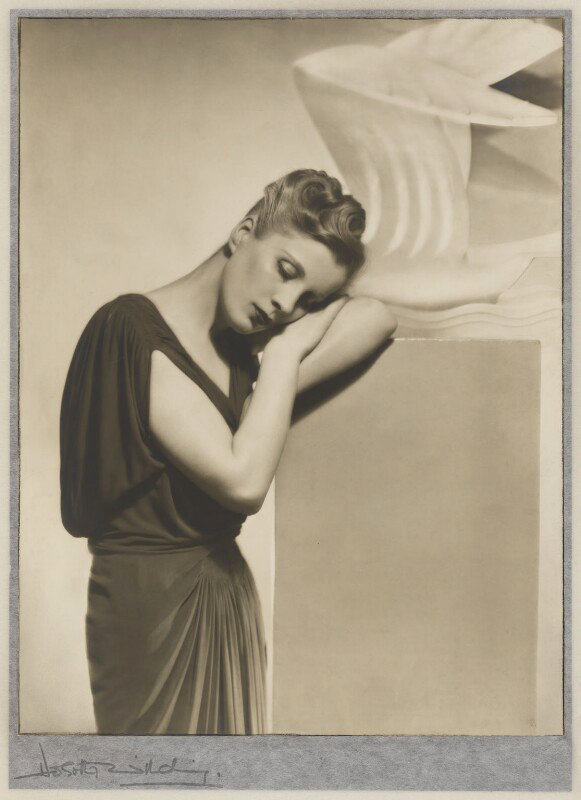
 

Dorothy Wilding (English, 1893-1976) 'Diana Wynyard' 1937


Dorothy Wilding (English, 1893-1976)
Diana Wynyard
1937


Dorothy Frances Edith Wilding (10 January 1893 – 9 February 1976) was an English professional portrait photographer from Gloucester, who established successful studios in both London and New York. She is known for her portraits of the British Royal Family, some of which were used to illustrate postage stamps, and in particular for her studies of actors and celebrities which fused glamour with modernist elegance. The historian Val Williams noted Wilding’s combination of business savvy and deep understanding of aesthetic impact: ‘nobody knew better than Dorothy Wilding the power of the photograph to create or destroy the desired image’.

Diana Wynyard, CBE (born Dorothy Isobel Cox, 16 January 1906 – 13 May 1964) was an English stage and film actress.


Yva (Else Ernestine Neuländer-Simon) (German, 1900-1944) 'Fashion Photograph' c. 1930


Yva (Else Ernestine Neuländer-Simon) (German, 1900-1944)
Fashion Photograph
c. 1930
National Gallery of Art, Washington, Corcoran Collection


Yva (26 January 1900 – 31 December 1944) was the professional pseudonym of Else Ernestine Neuländer-Simon who was a German Jewish photographer renowned for her dreamlike, multiple exposed images. She became a leading photographer in Berlin during the Weimar Republic.

When the Nazi Party came to power, she was forced into working as a radiographer. She was deported by the Gestapo in 1942 and murdered, probably in the Majdanek concentration camp during World War II.
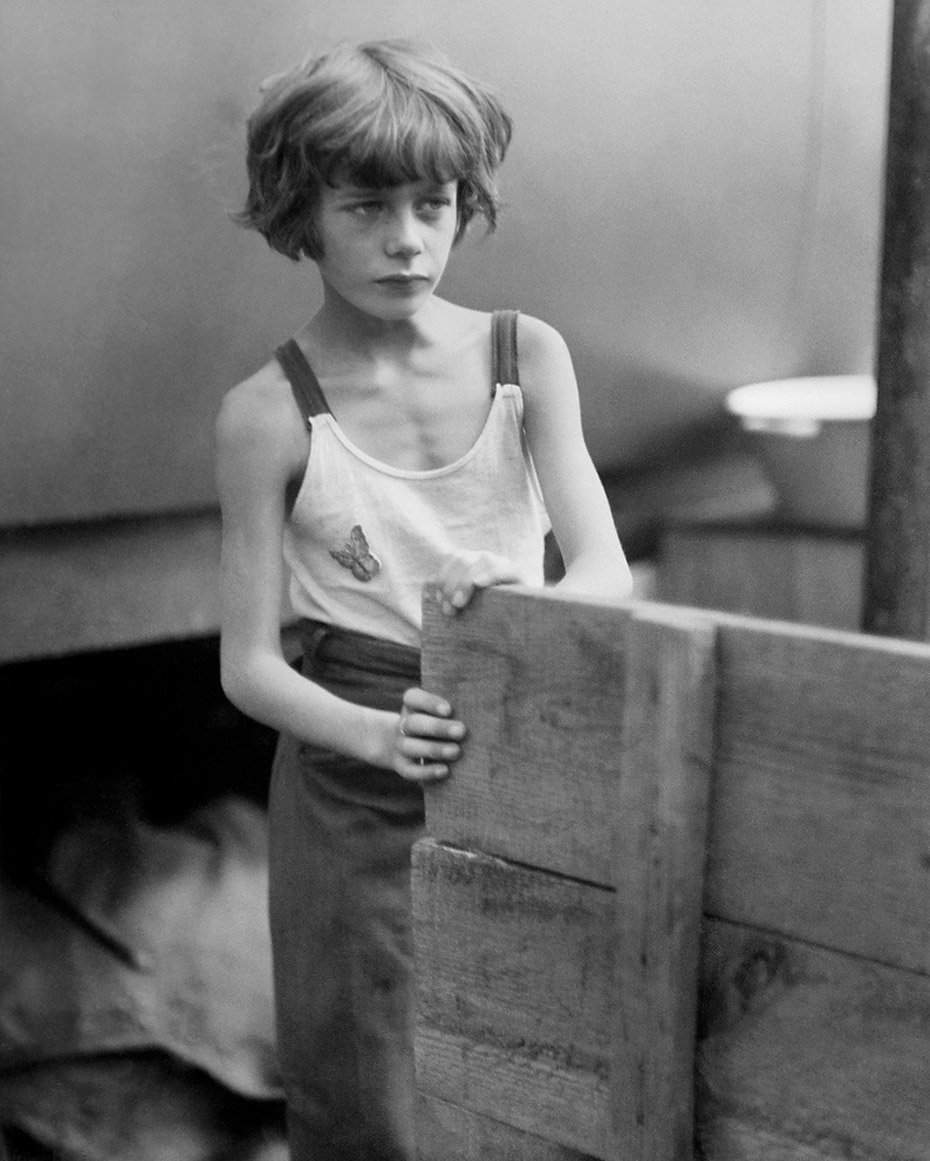
 

Marianne Breslauer (German, 1909-2001) 'Circus, Berlin' 1931


Marianne Breslauer (German, 1909-2001)
Circus, Berlin
1931


Marianne Breslauer (German, 1909-2001)

Marianne Breslauer (married surname Feilchenfeldt, 20 November 1909 – 7 February 2001) was a German photographer, photojournalist and pioneer of street photography during the Weimar Republic.

Marianne was born in Berlin, the daughter of the architect Alfred Breslauer (1866-1954) and Dorothea Lessing (the daughter of art historian Julius Lessing). She took lessons in photography in Berlin from 1927 to 1929, and she admired the work of the then well-known portrait photographer Frieda Riess and later of the Hungarian André Kertész.

In 1929 she travelled to Paris, where she briefly became a pupil of Man Ray, whom she met through Helen Hessel, a fashion correspondent for the Frankfurter Zeitung and family friend. Man Ray encouraged Breslauer to “go her own way without his help.” A year later she started work for the Ullstein photo studio in Berlin, headed up by Elsbeth Heddenhausen, where she mastered the skills of developing photos in the dark-room. Until 1934 her photos were published in many leading magazines such as the Frankfurter Illustrierten, Der Querschnitt, Die Dame, Zürcher Illustrierten, Der Uhu and Das Magazin.

In the early 1930s, Breslauer travelled to Palestine and Alexandria, before traveling with her close friend, the Swiss writer, journalist, and photographer Annemarie Schwarzenbach, whom she met through Ruth Landshoff and whom she photographed many times. She described Schwarzenbach as: “Neither a woman nor a man, but an angel, an archangel.” In 1933 they travelled together to the Pyrenees to carry out a photographic assignment for the Berlin photographic agency Academia. This led to Marianne’s confrontation with the anti-Semitic practices then coming into play in Germany. Her employers wanted her to publish her photos under a pseudonym, to hide the fact that she was Jewish. She refused to do so and left Germany. However her photo Schoolgirls won the “Photo of the Year” award at the “Salon international d’art photographique” in Paris in 1934.

She emigrated in 1936 to Amsterdam where she married the art dealer Walter Feilchenfeldt [de] – he had previously left Germany after seeing Nazis break up an auction of modern art. Her first child, Walter, was born here. Family life and work as an art dealer hindered her work in photography, which she gave up to concentrate on her other activities. In 1939 the family fled to Zurich where her second son, Konrad, was born.

After the war, in 1948, the couple set up an art business specialising in French paintings and 19th-century art. When her husband died in 1953 she took over the business, which she ran with her son Walter from 1966 to 1990. She died in Zollikon, near Zurich.

Breslauer’s work demonstrates an interest in overlooked or marginalised subjects. Her earlier work in Paris, encouraged by the surrealist photographer Man Ray, focused on the homeless along the river Seine.

Her portraits show influence from the photographic experiments of Bauhaus students and the contemporary style Neues Sehen. Nonetheless, her photography conveys a strong personal interest in and approach to capturing dynamic motion, conveyed partially through her selection of bustling urban settings.

Breslauer ended work in her photographic career in 1936 due to the rise of Nazism.

Text from the Wikipedia website


Ruth Orkin (American, 1921-1985) 'Ethel Waters, Carson McCullers, and Julie Harris at the Opening Night Party for "The Member of The Wedding," New York City' 1950


Ruth Orkin (American, 1921-1985)
Ethel Waters, Carson McCullers, and Julie Harris at the Opening Night Party for “The Member of The Wedding,” New York City
1950
Gelatin silver print
39.7 × 49.5cm (15 5/8 × 19 1/2 in.)
Purchase, Dorothy Levitt Beskind Gift, 1980
Metropolitan Museum of Art
© Ruth Orkin


Sandra Weiner (American, 1921-2014) 'Boy Smoking' c. 1948


Sandra Weiner (Polish-American, 1921-2014)
Boy Smoking
c. 1948
Gelatin silver print
6 1/4 x 9 3/8in (16.58 x 24.7cm)


Sandra Weiner (née Smith; 1921-2014) was a Polish-American street photographer and children’s book author.

Weiner was born in Drohiczan, Poland, and emigrated to the United States in 1928. She joined the Photo League in 1942. There, she first studied under photographers Paul Strand, and Dan Weiner whom she would later marry. Following the dissolution of the Photo League in 1951, she was a commercial photographer in the 1950s and later wrote four published children’s books.
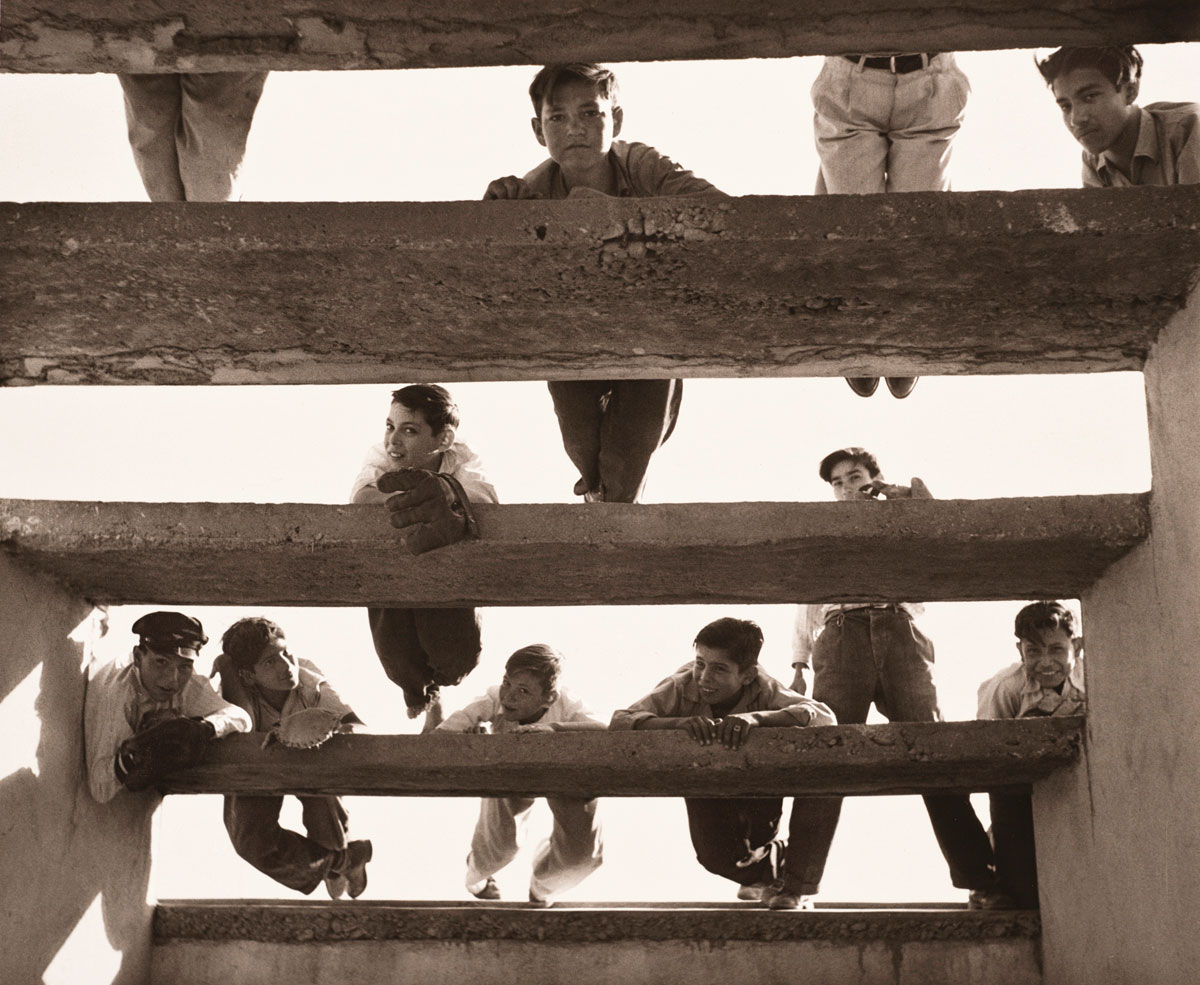
 

Lola Álvarez Bravo (Mexican, 1903-1993) 'The Freeloaders' c. 1955


Lola Álvarez Bravo (Mexican, 1903-1993)
The Freeloaders
c. 1955
Gelatin silver print
9 5/8 × 11 3/4 in. (24.4 × 29.8cm)
Collection of Daniel Greenberg and Susan Steinhauser


The Metropolitan Museum of Art
1000 Fifth Avenue at 82nd Street
New York, New York 10028-0198
Phone: 212-535-7710

Opening hours:
Thursday – Tuesday 10am – 5pm
Closed Wednesday

The Metropolitan Museum of Art website

LIKE ART BLART ON FACEBOOK

Back to top

Exhibition: ‘Underexposed: Women Photographers from the Collection’ at the High Museum of Art, Atlanta

Exhibition dates: 17th April – 1st August, 2021

Curator: Sarah Kennel with Maria Kelly, curatorial assistant for photography


Paula Chamlee (American, b. 1944) 'Nude Collage #1' 1998 from the exhibition 'Underexposed: Women Photographers from the Collection' at the High Museum of Art, Atlanta, April - August, 2021


Paula Chamlee (American, b. 1944)
Nude Collage #1
1998
Gelatin silver print
7 3/4 x 9 1/2 inches
Gift of Lucinda W. Bunnen for the Bunnen Collection
© Paula Chamlee


Paula Chamlee’s work stretches beyond the realm of straight photography and into assemblage, painting, and drawing. This collage was inspired by photocopies of prints that her husband, the late photographer Michael A. Smith, intended to share with a prospective collector. Because the photographs’ dimensions did not match with that of the copy machine, the images required cropping and taping. Intrigued by the nature of these cast-off bits piled together and the relationship of the parts to the whole, Chamlee created this collage by piecing together images of her body that Smith had taken.


Out of energy this weekend with all that is going on with being made redundant at the University. Physically and emotionally drained. Apologies.

So just two words… more please!

Marcus


Many thankx to the High Museum of Art for allowing me to publish the photographs in the posting. Please click on the photographs for a larger version of the image.


For nearly all of photography’s one hundred eighty-year history, women have shaped the development of the art form and experimented with every aspect of the medium.

Conceived in conjunction with the centennial of the passage of the Nineteenth Amendment, which granted suffrage for some women, this exhibition showcases more than one hundred photographs from the High’s collection, many of them never before on view, and charts the medium’s history from the dawn of the modern period to the present through the work of women photographers.

Organised roughly chronologically, each section emphasises a distinct arena in which women contributed and often led the way. Among the artists featured are pioneers of the medium such as Anna Atkins as well as more recent innovators and avid experimenters, including Betty Hahn, Barbara Kasten, and Meghann Riepenhoff. The exhibition also celebrates the achievements of numerous professional photographers, including Berenice Abbott, Margaret Bourke-White, and Marion Post Wolcott, who worked in photojournalism, advertising, and documentary modes and promoted photography as a discipline.

The exhibition also highlights photographers who photograph other women, children, and families, among them Sally Mann, Nan Goldin, and Diane Arbus, and those who interrogate ideals of femininity through self-portraiture. Also on view will be works by contemporary photographers who challenge social constructions of gender, sexuality, and identity, including Zanele Muholi, Sheila Pree Bright, Cindy Sherman, Mickalene Thomas, and Carrie Mae Weems.


Underexposed B roll


Mickalene Thomas (American, b. 1971) 'Les Trois Femmes Deux' 2018 from the exhibition 'Underexposed: Women Photographers from the Collection' at the High Museum of Art, Atlanta, April - August, 2021


Mickalene Thomas (American, b. 1971)
Les Trois Femmes Deux
2018
Dye coupler print
High Museum of Art, Atlanta. purchase with funds from the Friends of Photography


Mickalene Thomas creates vibrantly layered artworks that reclaim iconic images to centre Black female subjectivity in the history of art. A direct response to Edouard Manet’s Luncheon on the Grass, this photograph transposes the scene of three White figures having a picnic in a park to an interior view of three exquisitely coiffed and adorned Black women (including Thomas’s partner at right) gazing directly and confidently at the viewer. The colourful, wood-panelled living room, complete with fake plants and mismatched African textiles, evokes Thomas’s 1970s childhood and the aesthetics of Blaxploitation cinema, known for its audacious, dangerous, and sexually confident gun-toting heroines.


This spring, the High Museum of Art will present “Underexposed: Women Photographers from the Collection” (April 17 – August 1), an exhibition featuring more than 100 photographs from the Museum’s collection, including many that have never before been exhibited. The artworks demonstrate the notable contributions of women throughout the history of photography, spanning from innovators of the medium to contemporary practitioners who investigate the intersections of photography, representation and identity.

Originally conceived in conjunction with the centennial of the passage of the 19th Amendment, “Underexposed” pays homage to the work of women who have pioneered and championed the art of photography, from its earliest days through today. The exhibition is arranged roughly chronologically and showcases distinct arenas in which women photographers flourished and often led the way: as professionals working across multiple genres; as avid experimenters pushing photography into new directions; as teachers and patrons who supported the growth of the medium; and as creative, critically engaged artists exploring such issues as gender, identity and politics.

“With this exhibition’s focus on women photographers, ‘Underexposed’ highlights a trajectory of participation and influence extending from the earliest days of photography to a leading role in defining the medium today,” said Rand Suffolk, the High’s Nancy and Holcombe T. Green, Jr., director.

Sarah Kennel, the High’s Donald and Marilyn Keough Family curator of photography, added, “Focusing on the last 100 years, this exhibition highlights how women have embraced photography as a powerful form of professional and creative expression. In bringing together pioneers of the medium with artists who reflect critically on photography’s capacity to shape and challenge concepts of gender and identity, we have an extraordinary opportunity to expand the history of photography and bring greater recognition to the many women who have contributed to and led the field.”

The exhibition opens with a selection of work by artists who transformed the practice of photography from the 1920s through the 1950s. Coinciding with the global rise of the feminist ideal of the “New Woman” in the late 1900s, practitioners including Ilse Bing, Margaret Bourke White, Dorothea Lange and Imogen Cunningham emerged as savvy leaders in the fields of  documentary, fashion and fine art photography. The exhibition continues with a section focused on artists who have experimented with photographic technologies and alternative processes to redefine the expressive and material limits of the medium. Works made in the 1970s and 1980s by artists including Barbara Kasten, Olivia Parker and Sheila Pinkel join pieces by contemporary makers, such as Meghann Riepenhoff and Elizabeth Turk, who continue to expand the language of photography.

The second half of the exhibition explores how women photographers have used photography to reflect on and interrogate the personal, social and cultural dimensions of gender and identity. Works by Diane Arbus, Nan Goldin, Susan Meiselas, Anne Noggle and Clarissa Sligh reveal different ways women have looked at and photographed other women. Similarly, works by Sheila Pree Bright, Sandy Skoglund and Susan Worsham deconstruct ideas around domesticity and feminine ideals. The exhibition closes with a selection of portraits and self-portraits by Judy Dater, Zaneli Muholi, Cindy Sherman, Mickalene Thomas and Carrie Mae Weems, among others, that explore the intersections of photography, representation and identity.

“Underexposed: Women Photographers from the Collection” will be presented on the lower level of the High’s Wieland Pavilion. This exhibition is curated by Sarah Kennel with Maria Kelly, curatorial assistant for photography.

Press release from the High Museum of Art


Anna Atkins (British, 1799-1871) 'Mauritius, from Cyanotypes of British and Foreign Flowering Plants and Fern' 1851-1854


Anna Atkins (British, 1799-1871)
Mauritius, from Cyanotypes of British and Foreign Flowering Plants and Fern
1851-1854
Cyanotype
10 1/8 x 7 15/15 inches
Gift in honour of Edward Anthony Hill


Doris Ulmann (American, 1884-1934) 'Studious Girl, Fleischman Relative' before 1931


Doris Ulmann (American, 1884-1934)
Studious Girl, Fleischman Relative
before 1931
Platinum print
Purchase


Doris Ulmann began her photographic career while attending the Clarence H. White School of Photography in New York – the first art photography school in the United States. There she worked in the Pictorialist tradition, embraced the “painterly” qualities of soft focus, and manipulated surfaces. After undergoing a major surgery, Ulmann decided to pursue her interest in people “for whom life had not been a dance.” She began traveling throughout the southeastern United States documenting the folk traditions and people of the Appalachian Mountains. She made several sun-dappled portraits of this young girl (identified on other prints as “Kreiger girl”) in and around Berea, Kentucky.


Ilse Bing (American, born Germany, 1899-1998) 'Self-Portrait in Mirrors' Paris, 1931


Ilse Bing (American born Germany, 1899-1998)
Self-Portrait in Mirrors
Paris, 1931, printed c. 1941
Gelatin silver print
High Museum of Art, Atlanta
Purchase with funds from Georgia-Pacific Corporation


Berenice Abbott (American, 1898-1991) '"El" Station Interior, Sixth and Ninth Avenue Lines, Downtown Side' 1936


Berenice Abbott (American, 1898-1991)
“El” Station Interior, Sixth and Ninth Avenue Lines, Downtown Side
1936
Gelatin silver print
10 3/8 x 13 3/8
Purchase with funds from a Friend of the Museum


A towering figure of photography, Berenice Abbott learned the craft while assisting artist Man Ray in Paris. By 1926, she had established her own portrait studio, capturing the leading cultural icons of the day. She also befriended French photographer Eugène Atget and became his tireless champion, even rescuing many of his negatives after his death. After returning to New York in 1929, Abbott spent the next decade working on a major project documenting the rapidly transforming cityscape, which she published in the 1939 book Changing New York, produced with her partner, art critic Elizabeth McCausland. Although known for her urban views, in the 1950s, Abbott started working with Massachusetts Institute of Technology to explore the potential for photography to illustrate scientific principles and phenomena, as shown in this picture.


Lola Alvarez Bravo (Mexican, 1903-1993) 'Frida looking into mirror' 1944


Lola Alvarez Bravo (Mexican, 1903-1993)
Frida looking into mirror
1944
Gelatin silver print
8 3/4 x 7 1/4 inches
Purchase with funds from Margaretta J. Taylor
© Lola Alvarez Bravo/Artists Rights Society (ARS), New York


Doris Derby (American, b. 1939) 'Grass Roots Organizer, Mississippi' 1968


Doris Derby (American, b. 1939)
Grass Roots Organizer, Mississippi
1968
Gelatin silver print
Purchase with funds from Jeff and Valerie Levy


Dr. Doris Derby is an educator, anthropologist, and photojournalist based in Atlanta. In the 1960s and 1970s, she was an active member of the Student Nonviolent Coordinating Committee (SNCC), the Mississippi Freedom Democratic Party, and the Adult Literacy Project. Derby’s photographs reflect her interest in and concern for the role of poor, disenfranchised women during the movement. Many women had been fired from their jobs for registering to vote; in response, they built skill-based cooperatives and community groups that kept their families and communities together in very difficult times.


Diane Arbus. 'A family on their lawn one Sunday in Westchester, N.Y.,' 1968


Diane Arbus (American, 1923-1971)
A Family on the Lawn One Sunday in Westchester in June, 1968
1968, printed 1970
Gelatin silver print
14 3/4 x 15 inches
Purchase with funds from a friend of the Museum


Imogen Cunningham (American, 1883-1976) 'Magnolia Blossom' 1975


Imogen Cunningham (American, 1883-1976)
Magnolia Blossom
1975
Gelatin silver print
10 1/4 x 13 inches
Purchase with funds from a Friend of the Museum
© The Imogen Cunningham Trust


Joyce Neimanas (American, b. 1944) 'Daytime Fantasies' 1976


Joyce Neimanas (American, b. 1944)
Daytime Fantasies
1976
Gelatin silver print with applied colour
Gift of Lucinda W. Bunnen for the Bunnen Collection


For most of her career, Joyce Neimanas has created photographic images without directly using a camera, choosing instead to make complex collages and photograms of found imagery derived primarily from mass culture. In this work, Neimanas enlarged and printed a still from a 16 mm pornographic film to which she applied colour and annotated with text drawn from the controversial Kinsey Report on Sexual Behavior in the Human Female (1953). Made at a time of expanded conversation around gender, feminism, and sexual liberation, this work explores and challenges conventional representations of women’s sexuality.


Cindy Sherman (American, b. 1954) 'Untitled' 1979


Cindy Sherman (American, b. 1954)
Untitled
1979, printed 1989
From the Untitled Film Stills series
Chromogenic print
Gift of Lucinda W. Bunnen for the Bunnen Collection


Cindy Sherman has used self-portraiture as a strategy to interrogate representations of identity, gender, and mass culture. In her breakout Untitled Film Stills series, she photographed herself in varied guises inspired by generic Hollywood depictions of female characters: the bereft housewife, the sultry vamp, the wide-eyed ingénue. She challenges traditional understandings of photography and self-portraiture and exposes mass media’s constructed norms and ideas about femininity. Although she shot the original series in black and white as a nod to mid-twentieth-century B-grade black and white films, she also reprised the themes in colour works like this one.


Graciela Iturbide (Mexican, b. 1942) 'Magnolia, Juchitán, México' 1986


Graciela Iturbide (Mexican, b. 1942)
Magnolia, Juchitán, México
1986
Gelatin silver print
20 x 16 inches


Nan Goldin (American, b. 1953) 'Cookie and Sharon on the Bed, Provincetown, MA, Sept. 1989' 1989


Nan Goldin (American, b. 1953)
Cookie and Sharon on the Bed, Provincetown, MA, Sept. 1989
1989
Dye destruction print
Gift of Lucinda W. Bunnen for the Bunnen Collection


One of the most important photographers of her generation, Nan Goldin is an artist whose personal life is at the centre of her art. Her Cookie Portfolio documents her intimate friendship with Cookie Mueller. This photograph strikes a somber note as we see Cookie’s friend and lover Sharon sitting at the front of her bed, disconnected from a frail-appearing Cookie, who lies underneath her wedding picture. Cookie’s husband, Vittorio, died from AIDS the month this picture was made, and Cookie would die two months later. Despite the palpable loss sensed in the distance between the earlier and later works in the portfolio, Goldin conveys the steadfastness and tenderness of female friendship and support, which also infused her process: “I’m looking with a warm eye, not a cold eye. I’m not analysing what’s going on – I just get inspired to take a picture by the beauty and vulnerability of my friends.”


Sandy Skoglund (American, born 1946) 'Gathering Paradise' 1991


Sandy Skoglund (American, b. 1946)
Gathering Paradise
1991
Dye coupler print
47 x 60 1/2 inches
Gift of Mr. and Mrs. James L. Henderson, III


Like many of installation artist and photographer Sandy Skoglund’s surrealist views of domestic spaces, this macabre, pink-tinged scene of squirrels running riot across a patio suggests the frenetic anxiety that bubbles beneath the placid appearance of suburban life. Eschewing digital manipulation, Skoglund meticulously constructs room-size theatrical sets – in this case, complete with sculpted squirrels – which she then photographs. At once funny and unsettling, her photographs of everyday spaces invaded by a menagerie of fantastical animals reveal the nightmarish aspects of the American dream.


Judy Dater (American, born 1941) 'Self-Portrait on Deserted Road' 1982


Judy Dater (American, b. 1941)
Self-Portrait on Deserted Road
1982
Gelatin silver print
14 1/4 x 18 1/4
Gift of Lucinda W. Bunnen for the Bunnen Collection


Over the course of her career, Judy Dater has primarily photographed women, including herself. This work is from a series she made during ten trips to national parks in the West between 1980 and 1983, where she photographed herself nude amidst the grandeur of nature. Seemingly stranded on an empty, endless road, she appears vulnerable and lost, but across the larger series, her photographs veer from savage self-examination to carefully constructed performances that explore identity, subjectivity, and femininity. One of the key influences on Dater’s photography is the work of Imogen Cunningham, who was also a close friend.


Barbara Kasten (American, b. 1936) 'Architectural Site 17' 1988


Barbara Kasten (American, b. 1936)
Architectural Site 17
1988
Dye destruction print
Support/Overall: 50 x 60 inches
Purchase


Sheila Pree Bright (American, born 1967) 'Untitled 13' 2006


Sheila Pree Bright (American, b. 1967)
Untitled 13
2006
From the Suburbia series
Dye coupler print
49 1/2 inches
Gift of Sandra Anderson Baccus in loving memory of Lloyd Tevis Baccus, M.D.
© Sheila Pree Bright


Sheila Pree Bright (American, b. 1967) '#1960Now Ferguson protest: National March in Ferguson, "We Can't Stop" Mike Brown, Ferguson, MO, March 2015' 2015


Sheila Pree Bright (American, b. 1967)
#1960Now Ferguson protest: National March in Ferguson, “We Can’t Stop” Mike Brown, Ferguson, MO, March 2015
2015
From the series #1960Now
Gelatin silver print
Purchase with funds from the Friends of Photography


Sheila Pree Bright is one of Atlanta’s most prominent photographers working today. For the ongoing series #1960Now, she travels with and photographs the civic actions and protests of the Black Lives Matter movement. The title refers to the similarities between these contemporary protests and the civil rights movement and photography of the 1960s. The hashtag in the title refers to social media’s growing role in circulating images and defining current events. Here, two young girls and a little boy are at the forefront of a march in Ferguson, emphasising how the youth of today can be change makers for tomorrow.


Xaviera Simmons (American, born 1974) '10A Untitled' 2010


Xaviera Simmons (American, b. 1974)
10A Untitled
2010
From the Utah series
Dye coupler print
30 x 40 inches
Purchase with David C. Driskell African American Art Acquisition Fund
© Xaviera Simmons


Zanele Muholi (South African, b. 1972) 'Zibuyile I (Syracuse)' 2015


Zanele Muholi (South African, b. 1972)
Zibuyile I (Syracuse)
2015
Gelatin silver print
25 5/8 x 17 inches
Purchase with funds from the Donald and Marilyn Keough Family and the H. B. and Doris Massey Charitable Trust


Visual activist Zanele Muholi, whose personal gender pronoun is they, uses self-portraiture to address the politics of gender and race in the ongoing body of work Somnyama Ngonyama (which translates to “Hail, The Dark Lioness” from their mother tongue, Zulu). Muholi poses in locations around the world and incorporates everyday found objects such as props, costumes, and set dressing to build images that draw on their personal family history, consumer culture, and art history. In this photograph, Muholi addresses the viewer with a forceful, piercing gaze, challenging the conventional exoticised, othered, and sexualised depictions of Black female bodies.


Jill Frank (American, born 1978) 'everyone who woke up at the yellow house' 2016


Jill Frank (American, b. 1978)
everyone who woke up at the yellow house
2016
Double sided inkjet print
High Museum of Art, gift of Louis Corrigan


V. Elizabeth Turk (American, b. 1945) 'Calaeno' 2018


V. Elizabeth Turk (American, born 1945)
Calaeno
2018
Van Dyke print
High Museum of Art, Atlanta, purchase with funds from Lucinda W. Bunnen for the Bunnen Collection
© Elizabeth Turk


The High Museum of Art
1280 Peachtree St NE
Atlanta, GA
30309

Opening hours:
Tuesday – Saturday 10am – 5pm
Sunday 12 – 5pm
Monday closed

The High Museum of Art website

LIKE ART BLART ON FACEBOOK

Back to top

Text: “Atget’s shadow,” on his Paris photographs

August 2020


Eugène Atget (French, 1857-1927) 'Fontaine des Quatre-Parties-du-Monde, Jardin Marco Polo, Paris' 1907


Eugène Atget (French, 1857-1927)
Fontaine des Quatre-Parties-du-Monde, Jardin Marco Polo, Paris
1907
Albumen silver print


Atget’s shadow

A delicious posting on the work of the French photographer Eugène Atget (1857-1927). Atget’s photographs bridge the gap between subjective and objective representation – on the one hand extolling the subjective quality of art as an expression of the artist’s inner self; but on the other, providing a rejection of artistic consciousness, his objective “documents for artists” appealing to the Surrealists who used his images in publications such as Révolution Surréaliste.

In their presence, the photographs of Atget proffer an intimate in/tension (intention) – between representation and abstraction, documentary and modern, ordinary and dream. His photography, “which focussed on seemingly ordinary sights on the streets of Paris – a door knocker, a mannequin, a window rail – is seen as a forerunner of Surrealist and modern approaches to photography.”1

Further, “The critic and philosopher Walter Benjamin famously invoked crime scenes in discussing Atget’s photographs. He was pointing to their emptiness, their clinical attention to details of the urban landscape, their absolute rejection of the sentimental and the grandiose. … In Atget’s Paris, “the city is evacuated, like an apartment that hasn’t yet found its new tenant,” Benjamin wrote.”2

And yet, there is always something of the artist in every photograph, no matter how criminal the raping of time.

Thinking of my latest body of work “A Day in the Tiergarten”, my current research into parks and photographers, and then looking at Atget’s photographs of parks, I believe that the “park” with Atget takes some of its meaning from the ownership of the parks and the royalty / citizen system that was in place at the time AND what that might allow. Here is the photographer bearing his heavy camera like a tramp on the road, wandering in an empty domain owned by a higher power – and using its magnificence to discover more about the self searching vagabond.

Sometimes the question: “is there anyone here” is answered like Cocteau in Beauty and the Beast, and the answer is: “yes there is – yourself” says the (objective) camera. Sometimes, in other ways, the photographer goes nearly crazy with the possibilities of photography: what is the truth about my presence, the presence of a rock, or the sky? Yes, there is you, but in saying that it opens up all these other (subjective) possibilities. The options of inserting ourselves into representation, into what photography can hold, drives us crazy.

As Lee Friedlander observes, “The photographs of these places … are a hint, just a blink at a piece of the real world. At most, an aphrodisiac.”

Dr Marcus Bunyan


1/ “Surrealism did not always involve the strange and absurd. For example, the photography of Eugène Atget (1857-1927), which focussed on seemingly ordinary sights on the streets of Paris – a door knocker, a mannequin, a window rail – is seen as a forerunner of Surrealist and modern approaches to photography… Only a year before his death, in 1926, Atget was approached by Man Ray for approval to use his photograph, L’Eclipse – Avril 1912 for the front cover of the publication La Révolution Surréaliste. Despite protestations that, “these are simply documents I make”, Atget’s rejection of artistic self-consciousness combined with his pictures of an old, often hauntingly deserted Paris, appealed to Surrealists.”

Anonymous. “Surrealist photography,” on the V&A website [Online] Cited 07/08/2020

2/ Anonymous. “Atget’s Paris, 100 years later,” on the Art Daily website 31/05/2020


Please click on the photographs for a larger version of the image.


“The subject itself,” he wrote of landscape, “is simply perfect, and no matter how well you manage as a photographer, you will only ever give a hint as to how good the real thing is. We photographers don’t really make anything: we peck at the world and try to find something curious or wild or beautiful that might fit into what the medium of photography can hold.”

“The photographs of these places,” he added, “are a hint, just a blink at a piece of the real world. At most, an aphrodisiac.”


Lee Friedlander


Eugène Atget (French, 1857-1927) 'Ancien Hotel dit de Sartine – 21 rue du Cherche-Midi, Paris' 1906


Eugène Atget (French, 1857-1927)
Ancien Hotel dit de Sartine – 21 rue du Cherche-Midi, Paris
1906
Albumen silver print


Eugène Atget (French, 1857-1927) 'Ancien Monastère des Bénédictins Anglais, 269 rue Saint-Jacques. Paris 5' 1900


Eugène Atget (French, 1857-1927)
Ancien Monastère des Bénédictins Anglais, 269 rue Saint-Jacques. Paris 5
1900
Albumen silver print


Eugène Atget. 'Hôtel du Maréchal de Tallard, 78 rue des Archives' c. 1898-1905


Eugène Atget (French, 1857-1927)
Hôtel du Maréchal de Tallard, 78 rue des Archives
c. 1898-1905
Albumen silver print


Eugène Atget (French, 1857-1927) 'Grille de l'ancien pavillon de chasse de Philippe-Égalité (Hospice Debrousse), 148 rue de Bagnolet. Paris 20' 1900


Eugène Atget (French, 1857-1927)
Grille de l’ancien pavillon de chasse de Philippe-Égalité (Hospice Debrousse), 148 rue de Bagnolet. Paris 20
1900
Albumen silver print


Eugène Atget (French, 1857-1927) 'Heurtoir, 19bis Rue Tournefort' 1906


Eugène Atget (French, 1857-1927)
Heurtoir, 19bis Rue Tournefort
1906
Albumen silver print


Eugène Atget (French, 1857-1927) 'Heurtoir, St. Étienne du Mont (Cherub Door Knocker)' 1909


Eugène Atget (French, 1857-1927)
Heurtoir, St. Étienne du Mont (Cherub Door Knocker)
1909
Albumen silver print


Eugène Atget (France 1857-1927) 'Heurtoir, 6 rue du Parc Royal' c. 1901-1914


Eugène Atget (French, 1857-1927)
Heurtoir, 6 rue du Parc Royal
c. 1901-1914
Albumen silver print


Eugène Atget (French, 1857-1927) 'L'Oranger (with Shadow of Photographer and His Camera)' 1900


Eugène Atget (French, 1857-1927)
L’Oranger (with Shadow of Photographer and His Camera)
1900
Albumen silver print


Eugène Atget (French, 1857-1927) 'Le Portail de l'église Saint-Éliphe, Rampillon (Seine-et-Marne)' 1921


Eugène Atget (French, 1857-1927)
Le Portail de l’église Saint-Éliphe, Rampillon (Seine-et-Marne)
1921
Albumen silver print


Eugène Atget (French, 1857-1927) 'Le Portail de l'église Saint-Éliphe, Rampillon (Seine-et-Marne)' 1921


Eugène Atget (French, 1857-1927)
Le Portail de l’église Saint-Éliphe, Rampillon (Seine-et-Marne)
1921
Albumen silver print


Eugène Atget (French, 1857-1927) 'Le Portail de l'église Saint-Éliphe, Rampillon (Seine-et-Marne)' 1921


Eugène Atget (French, 1857-1927)
Le Portail de l’église Saint-Éliphe, Rampillon (Seine-et-Marne)
1921
Albumen silver print


Eugène Atget (French, 1857-1927) 'Le Portail de l'église Saint-Éliphe, Rampillon (Seine-et-Marne)' 1921


Eugène Atget (French, 1857-1927)
Le Portail de l’église Saint-Éliphe, Rampillon (Seine-et-Marne)
1921
Albumen silver print


Eugène Atget (French, 1857-1927) 'Le Portail de l'église Saint-Éliphe, Rampillon (Seine-et-Marne)' 1921


Eugène Atget (French, 1857-1927)
Le Portail de l’église Saint-Éliphe, Rampillon (Seine-et-Marne)
1921
Albumen silver print


The critic and philosopher Walter Benjamin famously invoked crime scenes in discussing Atget’s photographs. He was pointing to their emptiness, their clinical attention to details of the urban landscape, their absolute rejection of the sentimental and the grandiose.

As Benjamin observed, Atget established a beneficial “distance between man and his environment.” And Lima’s haunting updated recreations confirm the long-dead photographer’s disquieting insight – Paris doesn’t care about your presence. It is indifferent, and will certainly go on without you.

You can feel joy at standing on a Paris street, but the feeling is not reciprocated.

Atget, who was born in 1857, initially tried unsuccessfully at acting and painting. In 1890, he set up shop as a photographer, in order – as a sign over his door said – to provide “Documents for Artists.” He knew that painters needed images as models for their work, and he set about furnishing them.

For nearly three decades, he trudged through the city, bearing his heavy tripod and documenting a Paris of narrow streets and grime-covered low buildings that was already disappearing.

In 1920, Atget wrote: “I can say that I possess all of Old Paris.”

The world was mostly indifferent to Atget’s work until, several years before his death in 1927, he met a young American photographer, Berenice Abbott, who was working as an assistant to the artist Man Ray. She photographed him, wrote about him, acquired many of his prints and promoted him relentlessly for 50 years.

Today, Atget is recognised as a major figure in the history of photography.

The empty Paris of his prints looms out of the half-light of what seems like perpetual fog. His buildings are independent of people. They don’t even need them. Paris, the message seems to be, continues. It does not care about the individual presence. The city is not sentimental about humankind.

True, traces of humanity are ever-present in his pictures – torn advertising posters, artisanal shop signs, bins of vegetables, rows of boots. But these are only reminders that the city might once have been inhabited. And there are few people in the images to confirm this.

In Atget’s Paris, “the city is evacuated, like an apartment that hasn’t yet found its new tenant,” Benjamin wrote.

Compare that with the images from today. The occasional masked figures are incidental to the landscape. That they wear masks, hiding part of their faces, is a further denial of their humanity.

The “picturesque” – which Atget shunned, as Benjamin points out – is more difficult to avoid…”

Anonymous. “Atget’s Paris, 100 years later,” on the Art Daily website 31/05/2020


Eugène Atget (French, 1857-1927) 'Notre Dame (Stalles), Paris' 1905


Eugène Atget (French, 1857-1927)
Notre Dame (Stalles), Paris
1905
Albumen silver print


Eugène Atget (French, 1857-1927) 'Notre Dame, Paris' 1906


Eugène Atget (French, 1857-1927)
Notre Dame, Paris
1906
Albumen silver print


Eugène Atget (French, 1857-1927) 'Quai d'Anjou, Paris' 1910


Eugène Atget (French, 1857-1927)
Quai d’Anjou, Paris
1910
Albumen silver print


Eugène Atget. 'Saint-Cloud' 1926


Eugène Atget (French, 1857-1927)
Saint-Cloud
1926
Albumen silver print


Eugène Atget (French, 1857-1927) 'Rue des Lombards, Paris' 1910


Eugène Atget (French, 1857-1927)
Rue des Lombards, Paris
1910
Albumen silver print


Eugène Atget (French, 1857-1927) 'Tuileries Gardens' 1907


Eugène Atget (French, 1857-1927)
Tuileries Gardens
1907
Albumen silver print


Eugène Atget (French, 1857-1927) 'Tuileries Gardens' 1907


Eugène Atget (French, 1857-1927)
Tuileries Gardens
1907
Albumen silver print


Eugène Atget (French, 1857-1927) 'Tuileries Gardens' 1907


Eugène Atget (French, 1857-1927)
Tuileries Gardens
1907
Albumen silver print


Eugène Atget (French, 1857-1927) 'Tuileries Gardens' 1907


Eugène Atget (French, 1857-1927)
Tuileries Gardens
1907
Albumen silver print


Eugène Atget (French, 1857-1927) 'Tuileries Gardens' 1907


Eugène Atget (French, 1857-1927)
Tuileries Gardens
1907
Albumen silver print


Eugène Atget (French, 1857-1927) 'Vigne (Grape Vine)' 1920


Eugène Atget (French, 1857-1927)
Vigne (Grape Vine)
1920
Albumen silver print


LIKE ART BLART ON FACEBOOK

Back to top

European photographic research tour exhibition: ‘Berenice Abbott: Portraits of Modernity’ at Huis Marseille, Amsterdam Part 2

Exhibition dates: 7th September – 1st December, 2019

Visited September 2019 posted June 2020

Curator: Estrella de Diego, Professor of Modern Art at the Complutense University of Madrid


Installation view of the exhibition 'Berenice Abbott: Portraits of Modernity' at Huis Marseille, Amsterdam


Installation view of the exhibition Berenice Abbott: Portraits of Modernity at Huis Marseille, Amsterdam
Photo: Dr Marcus Bunyan


Old New York, new New York

This was an impressive exhibition from this powerhouse of a photographer in that most beautiful of galleries, Huis Marseille in Amsterdam. While her debt to that French master photographer Eugène Atget (1857-1927) is acknowledged through Abbott’s statement that she planned “to do for New York what Atget did for Paris,” Abbott’s photographs and her ‘point of view’ differ significantly to that of her Parisian hero.

Inflections of the influence of the Parisian master are present in the work, but in the project Changing New York Abbott develops a unique visual language through her representation of city life. Her photographs of shop fronts are more static and formal than that of Atget, more interested in the multiplicities of form than they are of reflections in glass, or ghostly people standing in doorways. Further, Atget would never have taken a photograph such as Gunsmith and Police Department, 6 Centre Market Place, Manhattan (1937, below) because the angle of the composition looking upwards is too severe, too modernist. Similarly, the placement by Abbott of the lamppost and U.S. Mail box in Old Law Tenements, 35-47 East 1st Street (1937, below) as the focus of attention, make this photograph uniquely her own.

Abbott photographs the co-mingled elements of old New York and new New York – the crowded tenements, rushing people, and “grand canyons” lined with monolithic skyscrapers of the bustling metropolis – as a city caught in the shadows of a piercing New York light. If you have been to New York you know that the city has that light, a hard, clinical light that bounces off surfaces until it sinks into the deepening shadows and recesses of overshadowed buildings. In her vital, still, intense, renditions of the cityscape Abbott’s photographs capture this light.

But what really changes her attitude (or altitude you might say) to the city is Abbott’s depiction of those edifices of modernism that are the crowning glory of New York: the skyscraper. Paraphrasing Karen Chambers from her article, “Paris to New York: Photographs by Eugène Atget and Berenice Abbott,” we can say that Abbott’s photographs of skyscrapers are different from the human scale of Atget’s photographs and of Abbott’s of a disappearing New York. Whether looking up from the bowls of the city (Canyon: Broadway and Exchange Place, 1936 below); across at the regimented forms of building (New York Telephone Company’s Lower Broadway Building, 1930-31 below); or down from a God-like perspective (Waterfront, from roof of Irving Trust Company Building, 1938 below), Abbott’s photographs of skyscrapers and the spaces they inhabit perfectly capture the layered forms and walls of isolation of the contemporary working metropolis, complete with Tempo of the City automatons.

Through the meritocracy of her talent, Abbott’s vision soars and plunges, meticulously, into the utopian / dystopian fabric of the city, Atget influences subsumed into American light, form and culture… the brooding hulks of towering skyscrapers; the skeletal form of bridges; and Abbott’s clear persistence of vision – seeing modernity clearly, with focus, in focus.

Dr Marcus Bunyan


All iPhone photographs by Dr Marcus Bunyan. Please click on the photographs for a larger version of the image. See Part 1 of the posting.


“When Abbott returned to New York in 1929, she planned “to do for New York what Atget did for Paris.” The project became known as ‘Changing New York’, and in her application for funding from the Federal Art Project (FAP), a part of the Farm Security Administration, best known for sending photographers, including Dorothea Lange and Walker Evans, into the American heartland to document rural poverty, she wrote that the purpose of the project was “to preserve for the future an accurate and faithful chronicle in photographs of the changing aspect of the world’s greatest metropolis”.”


Karen S. Chambers. “”Paris to New York: Photographs by Eugène Atget and Berenice Abbott,” Taft Museum of Art, through January 20, 2019,” on the AEQAI website October 28th, 2018 [Online] Cited 08/06/2020


Installation view of the exhibition Berenice Abbott: Portraits of Modernity at Huis Marseille, Amsterdam showing Abbott's 'Gunsmith and Police Department Headquarters' 1937


Installation view of the exhibition Berenice Abbott: Portraits of Modernity at Huis Marseille, Amsterdam showing Abbott’s Gunsmith and Police Department Headquarters 1937
Photo: Dr Marcus Bunyan


Berenice Abbott (American, 1898-1991) 'Gunsmith and Police Department Headquarters'  February 4, 1937 (installation view)


Berenice Abbott (American, 1898-1991)
Gunsmith and Police Department Headquarters (installation view)
February 4, 1937
Gelatin silver print
International Center of Photography
Photo: Dr Marcus Bunyan


Berenice Abbott (American, 1898-1991) 'Gunsmith and Police Department, 6 Centre Market Place, Manhattan'  February 4, 1937 from the exhibition 'Berenice Abbott: Portraits of Modernity' at Huis Marseille, Amsterdam, Sept - Dec, 2019


Berenice Abbott (American, 1898-1991)
Gunsmith and Police Department, 6 Centre Market Place, Manhattan 
February 4, 1937
Gelatin silver print
Wikipedia Commons, Public domain


Installation view of the exhibition 'Berenice Abbott: Portraits of Modernity' at Huis Marseille, Amsterdam

Installation view of the exhibition 'Berenice Abbott: Portraits of Modernity' at Huis Marseille, Amsterdam


Installation view of the exhibition Berenice Abbott: Portraits of Modernity at Huis Marseille, Amsterdam
Photos: Dr Marcus Bunyan


Berenice Abbott (American, 1898-1991) 'New York Harbour' 1938 (installation view)


Berenice Abbott (American, 1898-1991)
New York Harbour (installation view)
1938
Gelatin silver print
International Center of Photography
Photo: Dr Marcus Bunyan


Berenice Abbott (American, 1898-1991) 'Waterfront, from roof of Irving Trust Company Building' 1938 (installation view)


Berenice Abbott (American, 1898-1991)
Waterfront, from roof of Irving Trust Company Building (installation view)
1938
Gelatin silver print
The Miriam and Ira D. Wallach Division of Art, Prints and Photographs, Photography Collection
The New York Public Library, Astor, Lenox and Tilden Foundations
Photo: Dr Marcus Bunyan


Berenice Abbott (American, 1898-1991) 'Daily News Building, 42nd Street between 2nd and 3rd Avenues, Manhattan' 1935 (installation view)


Berenice Abbott (American, 1898-1991)
Daily News Building, 42nd Street between 2nd and 3rd Avenues, Manhattan
1935
Gelatin silver print
The Miriam and Ira D. Wallach Division of Art, Prints and Photographs, Photography Collection
The New York Public Library, Astor, Lenox and Tilden Foundations
Photo: Dr Marcus Bunyan


Berenice Abbott (American, 1898-1991) 'Daily News Building, 42nd Street between 2nd and 3rd Avenues, Manhattan' 1935 from the exhibition 'Berenice Abbott: Portraits of Modernity' at Huis Marseille, Amsterdam, Sept - Dec, 2019


Berenice Abbott (American, 1898-1991)
Daily News Building, 42nd Street between 2nd and 3rd Avenues, Manhattan
1935
Gelatin silver print
The Miriam and Ira D. Wallach Division of Art, Prints and Photographs, Photography Collection
The New York Public Library, Astor, Lenox and Tilden Foundations
Wikipedia Commons, Public domain


Berenice Abbott (American, 1898-1991) 'New York Telephone Company’s Lower Broadway Building' 1930-31 (installation view)


Berenice Abbott (American, 1898-1991)
New York Telephone Company’s Lower Broadway Building (installation view)
1930-1931
Gelatin silver print
Courtesy of Howard Greenberg Gallery
Photo: Dr Marcus Bunyan


Berenice Abbott (American, 1898-1991) 'New York Telephone Company Building, 140 West Street, Manhattan' 1936 (installation view)


Berenice Abbott (American, 1898-1991)
New York Telephone Company Building, 140 West Street, Manhattan (installation view)
1936
Gelatin silver print
The Miriam and Ira D. Wallach Division of Art, Prints and Photographs, Photography Collection
The New York Public Library, Astor, Lenox and Tilden Foundations
Photo: Dr Marcus Bunyan


Berenice Abbott (American, 1898-1991) 'Canyon: Broadway and Exchange Place' July 16, 1936


Berenice Abbott (American, 1898-1991)
Canyon: Broadway and Exchange Place
July 16, 1936
Gelatin silver print
The Miriam and Ira D. Wallach Division of Art, Prints and Photographs, Photography Collection
The New York Public Library, Astor, Lenox and Tilden Foundations
Photo: Dr Marcus Bunyan


Installation view of the exhibition 'Berenice Abbott: Portraits of Modernity' at Huis Marseille, Amsterdam

Installation view of the exhibition 'Berenice Abbott: Portraits of Modernity' at Huis Marseille, Amsterdam

Installation view of the exhibition 'Berenice Abbott: Portraits of Modernity' at Huis Marseille, Amsterdam


Installation views of the exhibition Berenice Abbott: Portraits of Modernity at Huis Marseille, Amsterdam
Photos: Dr Marcus Bunyan


Berenice Abbott (American, 1898-1991) 'R.C.A. building' c. 1932 (installation view)


Berenice Abbott (American, 1898-1991)
R.C.A. building (installation view)
c. 1932 (printed before 1950)
Gelatin silver print
Courtesy of Howard Greenberg Gallery
Photo: Dr Marcus Bunyan


Berenice Abbott (American, 1898-1991) 'Manhattan Skyline: I. South Street and Jones Lane' 1936 (installation view)

Berenice Abbott (American, 1898-1991) 'Manhattan Skyline: I. South Street and Jones Lane' 1936 (installation view)

Berenice Abbott (American, 1898-1991) 'Manhattan Skyline: I. South Street and Jones Lane' 1936 (installation view)


Berenice Abbott (American, 1898-1991)
Manhattan Skyline: I. South Street and Jones Lane (installation views)
1936
Gelatin silver print
The Miriam and Ira D. Wallach Division of Art, Prints and Photographs, Photography Collection
The New York Public Library, Astor, Lenox and Tilden Foundations
Photos: Dr Marcus Bunyan


Berenice Abbott (American, 1898-1991) 'Manhattan Skyline: I. South Street and Jones Lane' 1936


Berenice Abbott (American, 1898-1991)
Manhattan Skyline: I. South Street and Jones Lane
1936
Gelatin silver print
The Miriam and Ira D. Wallach Division of Art, Prints and Photographs, Photography Collection
The New York Public Library, Astor, Lenox and Tilden Foundations
Public domain


Berenice Abbott (American, 1898-1991) 'Old Law Tenements, 35-47 East 1st Street' February 11, 1937 (installation view)


Berenice Abbott (American, 1898-1991)
Old Law Tenements, 35-47 East 1st Street (installation view)
February 11, 1937
Gelatin silver print
Courtesy of Howard Greenberg Gallery
Photo: Dr Marcus Bunyan


Berenice Abbott (American, 1898-1991) 'Old Law Tenements, 35-47 East 1st Street' February 11, 1937


Berenice Abbott (American, 1898-1991)
Old Law Tenements, 35-47 East 1st Street
February 11, 1937
Gelatin silver print
Public domain


Berenice Abbott (American, 1898-1991) 'Shelter on the Waterfront, Coenties Slip, Pier 5, East River, Manhattan' 1938 (installation view)


Berenice Abbott (American, 1898-1991)
Shelter on the Waterfront, Coenties Slip, Pier 5, East River, Manhattan (installation view)
1938
Gelatin silver print
The Miriam and Ira D. Wallach Division of Art, Prints and Photographs, Photography Collection
The New York Public Library, Astor, Lenox and Tilden Foundations
Photo: Dr Marcus Bunyan


Berenice Abbott (American, 1898-1991) 'Provincetown Playhouse, 133 MacDougal Street, Manhattan' December 29, 1936 (installation view)

Berenice Abbott (American, 1898-1991) 'Provincetown Playhouse, 133 MacDougal Street, Manhattan' December 29, 1936 (installation view)


Berenice Abbott (American, 1898-1991)
Provincetown Playhouse, 133 MacDougal Street, Manhattan  (installation view)
December 29, 1936
Gelatin silver print
Courtesy of Howard Greenberg Gallery
Photos: Dr Marcus Bunyan


Berenice Abbott (American, 1898-1991) 'Country Store Interior' October 11, 1935 (installation view)

Berenice Abbott (American, 1898-1991) 'Country Store Interior' October 11, 1935 (installation view)


Berenice Abbott (American, 1898-1991)
Country Store Interior (installation view)
October 11, 1935
Gelatin silver print
Gift of the Metropolitan Museum of Art, 1948
Photo: Dr Marcus Bunyan


Berenice Abbott (American, 1898-1991) 'Country Store Interior' October 11, 1935


Berenice Abbott (American, 1898-1991)
Country Store Interior
October 11, 1935
Gelatin silver print
Public domain


Installation view of the exhibition 'Berenice Abbott: Portraits of Modernity' at Huis Marseille, Amsterdam

Installation view of the exhibition 'Berenice Abbott: Portraits of Modernity' at Huis Marseille, Amsterdam


Installation views of the exhibition Berenice Abbott: Portraits of Modernity at Huis Marseille, Amsterdam
Photos: Dr Marcus Bunyan


Berenice Abbott (American, 1898-1991) 'Charles Lane, between West and Washington Street' September 20, 1938 (installation view)


Berenice Abbott (American, 1898-1991)
Charles Lane, between West and Washington Street (installation view)
September 20, 1938
Gelatin silver print
The Miriam and Ira D. Wallach Division of Art, Prints and Photographs, Photography Collection
The New York Public Library, Astor, Lenox and Tilden Foundations
Photo: Dr Marcus Bunyan


Berenice Abbott (American, 1898-1991) 'Charles Lane, between West and Washington Street' September 20, 1938


Berenice Abbott (American, 1898-1991)
Charles Lane, between West and Washington Street
September 20, 1938
Gelatin silver print
The Miriam and Ira D. Wallach Division of Art, Prints and Photographs, Photography Collection
The New York Public Library, Astor, Lenox and Tilden Foundations
Public domain


Berenice Abbott (American, 1898-1991) 'Newsstand, 32nd Street and 3rd Avenue, Manhattan' 1935 (installation view)


Berenice Abbott (American, 1898-1991)
Newsstand, 32nd Street and 3rd Avenue, Manhattan (installation view)
1935
Gelatin silver print
The Miriam and Ira D. Wallach Division of Art, Prints and Photographs, Photography Collection
The New York Public Library, Astor, Lenox and Tilden Foundations
Photo: Dr Marcus Bunyan


Berenice Abbott (American, 1898-1991) 'Newsstand, 32nd Street and 3rd Avenue, Manhattan' 1935


Berenice Abbott (American, 1898-1991)
Newsstand, 32nd Street and 3rd Avenue, Manhattan
1935
Gelatin silver print
The Miriam and Ira D. Wallach Division of Art, Prints and Photographs, Photography Collection
The New York Public Library, Astor, Lenox and Tilden Foundations
Public domain


Berenice Abbott (American, 1898-1991) 'Cheese Store, 276 Bleecker Street, Manhattan' 1937 (installation view)


Berenice Abbott (American, 1898-1991)
Cheese Store, 276 Bleecker Street, Manhattan (installation view)
1937
Gelatin silver print
The Miriam and Ira D. Wallach Division of Art, Prints and Photographs, Photography Collection
The New York Public Library, Astor, Lenox and Tilden Foundations
Photo: Dr Marcus Bunyan


New York must have seem to Abbott extremely photogenic, with its skyscrapers and street vendors on Hester Street on the Lower East Side. It is a city of contrasts; of light and shade, and bustling squares; of all manner of shoes overflowing with bread, bric-a-brac, ricotta in Little Italy, rope, metal objects… Abbott depicts a city that heralds the consumer society and its abundance – its excess, even.


Berenice Abbott (American, 1898-1991) 'Cheese Store, 276 Bleecker Street, Manhattan' 1937


Berenice Abbott (American, 1898-1991)
Cheese Store, 276 Bleecker Street, Manhattan
1937
Gelatin silver print
The Miriam and Ira D. Wallach Division of Art, Prints and Photographs, Photography Collection
The New York Public Library, Astor, Lenox and Tilden Foundations
Public domain


Berenice Abbott (American, 1898-1991) 'A & P (Great Atlantic & Pacific Tea Co.), 246 3rd Avenue, Manhattan' 1936 (installation view)


Berenice Abbott (American, 1898-1991)
A & P (Great Atlantic & Pacific Tea Co.), 246 3rd Avenue, Manhattan (installation view)
1936
Gelatin silver print
The Miriam and Ira D. Wallach Division of Art, Prints and Photographs, Photography Collection
The New York Public Library, Astor, Lenox and Tilden Foundations
Photo: Dr Marcus Bunyan


Berenice Abbott (American, 1898-1991) 'Hardware Store, 316-318 Bowery' 1938 (installation view)


Berenice Abbott (American, 1898-1991)
Hardware Store, 316-318 Bowery (installation view)
1938
Gelatin silver print
Courtesy of Howard Greenberg Gallery
Photo: Dr Marcus Bunyan


Berenice Abbott (American, 1898-1991) 'Pingpank Barber Shop, 413 Bleecker Street, Manhattan' 1938 (installation view)


Berenice Abbott (American, 1898-1991)
Pingpank Barber Shop, 413 Bleecker Street, Manhattan (installation view)
1938
Gelatin silver print
The Miriam and Ira D. Wallach Division of Art, Prints and Photographs, Photography Collection
The New York Public Library, Astor, Lenox and Tilden Foundations
Photo: Dr Marcus Bunyan


Berenice Abbott (American, 1898-1991) 'Pingpank Barber Shop, 413 Bleecker Street, Manhattan' 1938


Berenice Abbott (American, 1898-1991)
Pingpank Barber Shop, 413 Bleecker Street, Manhattan
1938
Gelatin silver print
The Miriam and Ira D. Wallach Division of Art, Prints and Photographs, Photography Collection
The New York Public Library, Astor, Lenox and Tilden Foundations
Public domain


Berenice Abbott (American, 1898-1991) 'Sumner Healey Antique Shop, 942 3rd Avenue and 57th Street, Manhattan' 1936 (installation view)


Berenice Abbott (American, 1898-1991)
Sumner Healey Antique Shop, 942 3rd Avenue and 57th Street, Manhattan (installation view)
1936
Gelatin silver print
The Miriam and Ira D. Wallach Division of Art, Prints and Photographs, Photography Collection
The New York Public Library, Astor, Lenox and Tilden Foundations
Photo: Dr Marcus Bunyan


Berenice Abbott (American, 1898-1991) 'Sumner Healey Antique Shop, 942 3rd Avenue and 57th Street, Manhattan' 1936


Berenice Abbott (American, 1898-1991)
Sumner Healey Antique Shop, 942 3rd Avenue and 57th Street, Manhattan
1936
Gelatin silver print
The Miriam and Ira D. Wallach Division of Art, Prints and Photographs, Photography Collection
The New York Public Library, Astor, Lenox and Tilden Foundations
Public domain


Berenice Abbott (American, 1898-1991) 'Union Square, 14th Street and Broadway, Manhattan' 1936 (installation view)


Berenice Abbott (American, 1898-1991)
Union Square, 14th Street and Broadway, Manhattan (installation view)
1936
Gelatin silver print
The Miriam and Ira D. Wallach Division of Art, Prints and Photographs, Photography Collection
The New York Public Library, Astor, Lenox and Tilden Foundations
Photo: Dr Marcus Bunyan


Berenice Abbott (American, 1898-1991) 'Union Square' July 16, 1936


Berenice Abbott (American, 1898-1991)
Union Square
July 16, 1936
Gelatin silver photograph
6 7/8 x 8 7/8 in. (17.5 x 22.5cm)
Brooklyn Museum, Brooklyn Museum Collection
Public domain


Installation view of the exhibition 'Berenice Abbott: Portraits of Modernity' at Huis Marseille, Amsterdam

Installation view of the exhibition 'Berenice Abbott: Portraits of Modernity' at Huis Marseille, Amsterdam

Installation view of the exhibition 'Berenice Abbott: Portraits of Modernity' at Huis Marseille, Amsterdam

Installation view of the exhibition 'Berenice Abbott: Portraits of Modernity' at Huis Marseille, Amsterdam

Installation view of the exhibition 'Berenice Abbott: Portraits of Modernity' at Huis Marseille, Amsterdam

Installation view of the exhibition 'Berenice Abbott: Portraits of Modernity' at Huis Marseille, Amsterdam


Installation views of the exhibition Berenice Abbott: Portraits of Modernity at Huis Marseille, Amsterdam
Photos: Dr Marcus Bunyan


Berenice Abbott (American, 1898-1991) 'Lewis Hine' 1930 (Installation view)


Berenice Abbott (American, 1898-1991)
Lewis Hine (installation view)
1930
Gelatin silver photograph
International Centre of Photography
Purchase with funds provided by the Lois and Bruce Henkel purchase Fund, 1984
Photo: Dr Marcus Bunyan


Berenice Abbott (American, 1898-1991) 'Edward Hopper' 1949 (installation view)


Berenice Abbott (American, 1898-1991)
Edward Hopper (installation view)
1949
Gelatin silver photograph
International Centre of Photography
Gift of Jonathan A. Berg, 1984
Photo: Dr Marcus Bunyan


Installation view of the exhibition 'Berenice Abbott: Portraits of Modernity' at Huis Marseille, Amsterdam

Installation view of the exhibition 'Berenice Abbott: Portraits of Modernity' at Huis Marseille, Amsterdam

Installation view of the exhibition 'Berenice Abbott: Portraits of Modernity' at Huis Marseille, Amsterdam

Installation view of the exhibition 'Berenice Abbott: Portraits of Modernity' at Huis Marseille, Amsterdam


Installation views of the exhibition Berenice Abbott: Portraits of Modernity at Huis Marseille, Amsterdam
Photos: Dr Marcus Bunyan


Berenice Abbott (American, 1898-1991) 'Manhattan Bridge, Manhattan' 1935 (installation view)

Berenice Abbott (American, 1898-1991) 'Manhattan Bridge, Manhattan' 1935 (installation view)


Berenice Abbott (American, 1898-1991)
Manhattan Bridge, Manhattan (installation view)
1935
Gelatin silver print
The Miriam and Ira D. Wallach Division of Art, Prints and Photographs, Photography Collection
The New York Public Library, Astor, Lenox and Tilden Foundations
Photos: Dr Marcus Bunyan


Berenice Abbott (American, 1898-1991) 'Penn Station, Manhattan' 1935 (installation view)


Berenice Abbott (American, 1898-1991)
Penn Station, Manhattan (installation view)
1935
Gelatin silver print
The Miriam and Ira D. Wallach Division of Art, Prints and Photographs, Photography Collection
The New York Public Library, Astor, Lenox and Tilden Foundations
Photo: Dr Marcus Bunyan


Berenice Abbott (American, 1898-1991) 'El': 2nd & 3rd Avenue lines, looking W. from Second & Pearl St., Manhattan' 1936


Berenice Abbott (American, 1898-1991)
El’: 2nd & 3rd Avenue lines, looking W. from Second & Pearl St., Manhattan
1936
Gelatin silver print
The Miriam and Ira D. Wallach Division of Art, Prints and Photographs, Photography Collection
The New York Public Library, Astor, Lenox and Tilden Foundations
Public domain


Yousuf Karsh (Armenian-Canadian, 1908-2002) 'Portrait of Berenice Abbott, Monson, Maine' August 1989 (installation view)


Photography Collection, Miriam and Ira D. Wallach Division of Art, Prints and Photographs
The New York Public Library, Astor, Lenox and Tilden Foundations
Gift of the photographer


Huis Marseille
Keizersgracht 401
1016 EK Amsterdam
Phone: +31 20 531 89 89

Opening hours
Tue – Sun, 11 – 18 h

Huis Marseille website

LIKE ART BLART ON FACEBOOK

Back to top

European photographic research tour exhibition: ‘Berenice Abbott: Portraits of Modernity’ at Huis Marseille, Amsterdam Part 1

Exhibition dates: 7th September – 1st December, 2019

Visited September 2019 posted June 2020

Curator: Estrella de Diego, Professor of Modern Art at the Complutense University of Madrid


Berenice Abbott (American, 1898-1991) 'George Antheil' 1927 (installation view)


Berenice Abbott (American, 1898-1991)
George Antheil (installation view)
1927
Gelatin silver print
The Miriam and Ira D. Wallach Division of Art, Prints and Photographs, Photography Collection
The New York Public Library, Astor, Lenox and Tilden Foundations
Photo: Dr Marcus Bunyan


George Antheil was an American avant-garde composer, pianist, author, and inventor whose modernist musical compositions explored the modern sounds – musical, industrial, and mechanical – of the early 20th century.


This was one of the most memorable photography exhibitions of my European sojourn during August – October 2019, in the most beautiful of gallery spaces. I was so very lucky to complete my time in Europe before the current pandemic arrived.

I will comment more on the exhibition in Part 2 of the posting, but suffice to say it was a real pleasure to see the work of Berenice Abbott side by side with the photographs of Eugène Atget, an artist she did much to champion (including printing his photographs). Her portraits of Atget taken in the year of his death were magnificent. They provide a portal between old and new, between the artist looking back on his work (his life), and the 20th century artist realising that they have to accommodate Atget within their future kinēsis … and in so doing, Abbott pictures an artist whose spirit possessed all of Old Paris.

Dr Marcus Bunyan


All iPhone photographs by Dr Marcus Bunyan. Please click on the photographs for a larger version of the image. See Part 2 of the posting.


Berenice Abbott (American, 1898-1991) 'George Antheil' 1927 from the exhibition 'Berenice Abbott: Portraits of Modernity' at Huis Marseille, Amsterdam, Sept - Dec, 2019


Berenice Abbott (American, 1898-1991)
George Antheil
1927
Gelatin silver print
The Miriam and Ira D. Wallach Division of Art, Prints and Photographs, Photography Collection
The New York Public Library, Astor, Lenox and Tilden Foundations © Getty Images/Berenice Abbott


Installation view of the exhibition 'Berenice Abbott: Portraits of Modernity' at Huis Marseille, Amsterdam

Installation view of the exhibition 'Berenice Abbott: Portraits of Modernity' at Huis Marseille, Amsterdam


Installation views of the exhibition Berenice Abbott: Portraits of Modernity at Huis Marseille, Amsterdam
Photos: Dr Marcus Bunyan


This autumn Huis Marseille will present a large retrospective of the famous American photographer Berenice Abbott (1898-1991). This is the first time that an extensive selection of her work, held by important American collections, will be shown in the Netherlands. Abbott is one of the key figures in the history of 20th-century photography. Her legacy is not only an eclectic photographic oeuvre but also a strong opinion on the role of photography in society, to which she gave expression in numerous publications. Her work forms a bridge linking the artistic avant-garde in the ‘Old World’ with the emerging art scene of the 1920s and 1930s in New York.

Modernity

The idea of modernity pervades all of Berenice Abbott’s work: from her portraits of pioneering artists and intellectuals, and her astonishing views of the city of New York, to her photos of scientific themes, documenting the results of various physics experiments. Abbott’s oeuvre also reflects her own modernism, her constant desire to be on the front line, and her exceptional talent for not just noticing the changes that were going on around her but for depicting them to striking effect. Berenice Abbott was an enthusiastic proponent of modernism in photography, and was strongly opposed to pictoralism, the painterly style that dominated photography in the early 20th century. In her view a good photograph was shaped by the specific characteristics of photography itself, and not by those of painting.

Lost Generation

In 1918 Berenice Abbott left her birthplace Ohio and moved to New York to study sculpture, where she soon gravitated towards Greenwich Village, a hotbed of avant-garde and radical artists, bohemians, and others whose lifestyles put them outside the American mainstream. In 1921 she arrived in Paris and joined the artistic community of Montparnasse on the famous left bank of the Seine. Its writers and artists included many American expats who, disillusioned by the senseless violence of the First World War and by Prohibition in America, had taken refuge in Europe. The American writer Gertrude Stein called them the ‘lost generation’, a generation to which Abbott also belonged, which questioned traditional values and favoured an alternative kind of life. Abbott would go on to portray many of these writers, including Djuna Barnes and Edna St. Vincent Millay.

Portrait photographer

Abbott’s life as a photographer began in 1923, in the Parisian studio of the famous American photographer, Dadaist and Surrealist Man Ray. As his assistant she learned the technical, artistic and commercial aspects of portrait photography. In 1926, with financial support from the immensely rich American art collector Peggy Guggenheim, she opened her own Paris studio. Her clients were mostly expats, socialites, bohemians, writers, artists and the ‘new women’ who, like herself, were willing to live on the margins of society in order to be free. Many had broken ties with their origins and their gender, such as the journalist Janet Flanner, the publisher Jane Heap, and the writer Sylvia Beach. Abbott immortalised them in assertive, powerful portraits. Beach was also the publisher of James Joyce’ Ulysses (1922), a book that Abbott greatly admired, and she portrayed the writer, his wife and daughter on several occasions.

Eugène Atget

Through Man Ray in Paris Abbott met the photographer Eugène Atget, with whose work she felt an immediate visual and artistic affinity. For decades Atget had documented Paris in plain, unadorned images, and with a keen eye for seemingly unimportant details. After his death in 1927 Abbott looked after a large part of his oeuvre, promoting it tirelessly in America through exhibitions and books. The present exhibition therefore also includes a small selection of photos by Eugène Atget, which Abbott printed from the original negatives in 1956.

Changing New York

The heart of the exhibition is formed by Abbott’s photos of New York City. When she returned to New York in 1929 she felt an immediate urge to photograph the city itself, with its enormous contrasts and contradictions, a city that changed constantly and was never the same from moment to moment. In 1935 she received a substantial grant from the Federal Art Project, a government initiative that was intended to create jobs and boost the economy following the crisis years, and this allowed her to begin work in earnest. She called her project Changing New York; it was also published in book form in 1939, with texts by her partner Elizabeth McCausland. Her camera transformed New York into a living being, with an extraordinary character, which visitors can experience to this day as they move through its busy streets and stare amazed at the modern beauty of its skyscrapers. Shops, people, bridges, streets, interiors, construction sites, iconic buildings seen from outside or from above – everything comes together to create a portrait of the city.

Science

In the late 1930s Abbott became deeply interested in science, and saw that photography could play a role as spokesperson. The cerebral world of science needed the vitality and imaginative powers of photography to reach a wider audience. Moreover, the scientific interpretation of the world was not reserved for scientists alone; any citizen ought to be able to consider a scientific question, and photography could serve as an intermediary. With this goal in mind, for years Abbott did darkroom experiments with all kinds of camera techniques. In 1957 the Physical Science Study Committee of the renowned Massachusetts Institute of Technology hired her services to provide photographic illustrations for new and influential schoolbooks.

Curation

The exhibition was created in collaboration with Fundación MAPFRE, a Spanish non-profit organisation with which Huis Marseille has worked regularly over the last ten years – most recently in 2016 for the Stephen Shore retrospective in Huis Marseille. It was curated by Estrella de Diego, Professor of Modern Art at the Complutense University of Madrid, and has been shown in Barcelona and Madrid.

Loans

The exhibition comprises almost 200 vintage photographs generously loaned from the New York Public Library, the Museum of the City of New York, the International Center of Photography (NY), the George Eastman House (Rochester, NY), the Howard Greenberg Gallery (NY) and the MIT Museum (Cambridge, Massachusetts), together with a selection of Abbott’s publications on loan from the Rijksmuseum library and other collections.

Publication

Estrella de Diego, Julia van Haaften, Berenice Abbott: Portraits of Modernity, Madrid (Fundación Mapfre) 2019.

Text from the Huis Marseille website


Berenice Abbott (American, 1898-1991) 'Jean Cocteau' 1927 (installation view)

Berenice Abbott (American, 1898-1991) 'Jean Cocteau' 1927 (installation view)


Berenice Abbott (American, 1898-1991)
Jean Cocteau (installation views)
1927
Gelatin silver print
The Miriam and Ira D. Wallach Division of Art, Prints and Photographs, Photography Collection
The New York Public Library, Astor, Lenox and Tilden Foundations
Photos: Dr Marcus Bunyan


Jean Cocteau, the author of so many memorable films and works of literature, is shown embracing a sort of mask that perhaps alludes to the repeated play of mirrors that runs through his Orphic Trilogy. He represents the kind of masculinity that Abbott renders in her portraits of homosexual activists such as André Gide and Cocteau or the ‘new men’ who had ceased to be certain of their identity – like the characters in the novels of George Bernard Shaw or Thomas Hardy – and had adopted a less monolithic masculinity. This trait can also be found in D.H. Lawrence, and in James Joyce, who sat for Abbott in 1928.


Berenice Abbott (American, 1898-1991) 'Janet Flanner in Paris' 1927 (installation view)


Berenice Abbott (American, 1898-1991)
Janet Flanner in Paris (installation view)
1927
Gelatin silver print
The Miriam and Ira D. Wallach Division of Art, Prints and Photographs, Photography Collection
The New York Public Library, Astor, Lenox and Tilden Foundations
Photo: Dr Marcus Bunyan


Installation view of the exhibition 'Berenice Abbott: Portraits of Modernity' at Huis Marseille, Amsterdam showing at right the image 'Janet Flanner in Paris' 1927


Installation view of the exhibition Berenice Abbott: Portraits of Modernity at Huis Marseille, Amsterdam showing at right the image Janet Flanner in Paris, 1927
Photo: Eddo Hartmann


Berenice Abbott (American, 1898-1991) 'Janet Flanner in Paris' 1927 from the exhibition 'Berenice Abbott: Portraits of Modernity' at Huis Marseille, Amsterdam, Sept - Dec, 2019


Berenice Abbott (American, 1898-1991)
Janet Flanner in Paris
1927
Gelatin silver print
The Miriam and Ira D. Wallach Division of Art, Prints and Photographs, Photography Collection
The New York Public Library, Astor, Lenox and Tilden Foundations


Abbott’s portraits depict some of the modern intellectuals with whom she associated in New York’s Greenwich Village following her arrival there from the native Ohio. These included people who also had links with Paris, such as the writer and journalist Janet Flanner, a personal friend of the writer Djuna Barnes. Abbott gave Flanner an ambiguous aspect; with her cropped hair and masculine dress she is another representative of the strong ‘New Women’. Abbott photographed many of these New Women who were prepared to live on the margins of society in order to safeguard their freedom.


Installation view of the exhibition 'Berenice Abbott: Portraits of Modernity' at Huis Marseille, Amsterdam showing at left, the photograph of 'Janet Flanner' (1927); and at second left, 'Eugène Atget' (1927)

Installation view of the exhibition 'Berenice Abbott: Portraits of Modernity' at Huis Marseille, Amsterdam

Installation view of the exhibition 'Berenice Abbott: Portraits of Modernity' at Huis Marseille, Amsterdam

Installation view of the exhibition 'Berenice Abbott: Portraits of Modernity' at Huis Marseille, Amsterdam


Installation views of the exhibition Berenice Abbott: Portraits of Modernity at Huis Marseille, Amsterdam showing in the top image at left, the photograph of Janet Flanner (1927, above); and at second left, Eugène Atget (1927, below)
Photos: Dr Marcus Bunyan


Berenice Abbott (American, 1898-1991) 'Eugène Atget' 1927 (installation view)


Berenice Abbott (American, 1898-1991)
Eugène Atget (installation view)
1927
Gelatin silver print
The Miriam and Ira D. Wallach Division of Art, Prints and Photographs, Photography Collection
The New York Public Library, Astor, Lenox and Tilden Foundations
Photo: Dr Marcus Bunyan


Berenice Abbott (American, 1898-1991) 'Eugène Atget' 1927


Berenice Abbott (American, 1898-1991)
Eugène Atget
1927
Gelatin silver print
The Miriam and Ira D. Wallach Division of Art, Prints and Photographs, Photography Collection
The New York Public Library, Astor, Lenox and Tilden Foundations


Berenice Abbott (American, 1898-1991) 'Eugène Atget' 1927 (installation view)


Berenice Abbott (American, 1898-1991)
Eugène Atget (installation view)
1927
Gelatin silver print
International Center of Photography
Photo: Dr Marcus Bunyan


In 1927 Berenice Abbott produced two portraits, front-facing and in profile, of Eugène Atget, the photographer who was adored by the Surrealists and who captured the mood of late 19th-century Paris. The portraits, reminiscent of a documentary work – of police records, almost – highlight Abbott’s extraordinary skill as a portrait photographer. Atget provided the inspiration for Abbott’s wonderful portrait of New York City, Changing New York. She made generous efforts to promote the French photographer’s work, even acquiring his negatives after his death.


Berenice Abbott (American, 1898-1991) 'Eugène Atget' 1927


Berenice Abbott (American, 1898-1991)
Eugène Atget
1927
Gelatin silver print
International Center of Photography


Installation view of the exhibition 'Berenice Abbott: Portraits of Modernity' at Huis Marseille, Amsterdam showing Abbott's photographs of Eugène Atget showing Abbott's photographs of Eugène Atget


Installation view of the exhibition Berenice Abbott: Portraits of Modernity at Huis Marseille, Amsterdam showing Abbott’s photographs of Eugène Atget
Photo: Eddo Hartmann


Berenice Abbott (American, 1898-1991) James Joyce, Paris 1920 (installation view)


Berenice Abbott (American, 1898-1991)
James Joyce, Paris (installation view)
1920
Gelatin silver print
The Miriam and Ira D. Wallach Division of Art, Prints and Photographs, Photography Collection
The New York Public Library, Astor, Lenox and Tilden Foundations
Photo: Dr Marcus Bunyan


Berenice Abbott (American, 1898-1991) 'Audrey McMahon' 1925-1946 (installation view)


Berenice Abbott (American, 1898-1991)
Audrey McMahon (installation view)
1925-1946
Gelatin silver print
The Miriam and Ira D. Wallach Division of Art, Prints and Photographs, Photography Collection
The New York Public Library, Astor, Lenox and Tilden Foundations
Photo: Dr Marcus Bunyan


Audrey McMahon was the Director of the New York region of the Federal Art Project from 1935 to 1943; the region she oversaw included New York City, New Jersey, and Philadelphia. Born in New York City in 1898, she attended the Sorbonne, and she was the director of the College Art Association. …

Her approach to the administration of the Federal Art Project attempted to give the artists employed a great deal of freedom, and as she recalled later, “It is gratifying to note… that almost all of the painters, sculptors, graphic artists, and muralists who recall those days remember little or no artistic stricture.”

Text from the Wikipedia website


Berenice Abbott (American, 1898-1991) 'Jane Heap' 1929-1931 (installation view)


Berenice Abbott (American, 1898-1991)
Jane Heap (installation view)
1929-1931
Gelatin silver print
International Center of Photography
Photo: Dr Marcus Bunyan


Jane Heap (November 1, 1883 – June 18, 1964) was an American publisher and a significant figure in the development and promotion of literary modernism. Together with Margaret Anderson, her friend and business partner (who for some years was also her lover), she edited the celebrated literary magazine The Little Review, which published an extraordinary collection of modern American, English and Irish writers between 1914 and 1929. Heap herself has been called “one of the most neglected contributors to the transmission of modernism between America and Europe during the early twentieth century.”

Text from the Wikipedia website


Berenice Abbott (American, 1898-1991) 'Jane Heap' 1929-1931


Berenice Abbott (American, 1898-1991)
Jane Heap
1929-1931
Gelatin silver print
International Center of Photography
Photo: Dr Marcus Bunyan


Wall text from the exhibition 'Berenice Abbott: Portraits of Modernity' at Huis Marseille, Amsterdam

Installation view of the exhibition 'Berenice Abbott: Portraits of Modernity' at Huis Marseille, Amsterdam


Installation views of the exhibition Berenice Abbott: Portraits of Modernity at Huis Marseille, Amsterdam
Photos: Dr Marcus Bunyan


Installation view of the exhibition 'Berenice Abbott: Portraits of Modernity' at Huis Marseille, Amsterdam

Installation view of the exhibition 'Berenice Abbott: Portraits of Modernity' at Huis Marseille, Amsterdam showing at left, Eugène Atget's photo 'Eclipse, Paris' 1912


Installation views of the exhibition Berenice Abbott: Portraits of Modernity at Huis Marseille, Amsterdam with in the bottom image at left, Eugène Atget’s photo Eclipse, Paris 1912
Photos: Dr Marcus Bunyan


Eugène Atget (French, 1857-1927) 'L'éclipse' April 1912 (installation view)


Eugène Atget (French, 1857-1927)
L’éclipse (installation view)
April 1912
Printed in 1956 by Berenice Abbott
Gelatin silver print
Courtesy of George Eastman Museum
Photo: Dr Marcus Bunyan


Eugène Atget (French, 1857-1927) 'Pendant l'éclipse' 1912


Eugène Atget (French, 1857-1927)
Pendant l’éclipse
1912
Albumen print


Although the moon is not visible in this photograph by Eugène Atget, its presence and appeal are implied. The crowd gathered in Paris’s Place de la Bastille on April 17, 1912, was observing a solar eclipse through viewing apparatuses. Atget, rather than recording the astronomical event itself, turned his attention to its spectators. Though Atget made more than 8,500 pictures of Paris and its environs in a career that spanned over thirty years – most documenting the built environment – this photograph is an unusual example that focuses on a crowd of people.

Text from the MoMA website


Installation view of the exhibition 'Berenice Abbott: Portraits of Modernity' at Huis Marseille, Amsterdam showing the photographs of Eugène Atget with at second right 'Avenue des Gobelins' 1925


Installation views of the exhibition Berenice Abbott: Portraits of Modernity at Huis Marseille, Amsterdam showing the photographs of Eugène Atget with at second right Avenue des Gobelins, 1925
Photo: Dr Marcus Bunyan


Eugène Atget (French, 1857-1927) 'Avenue des Gobelins' 1925


Eugène Atget (French, 1857-1927)
Avenue des Gobelins
1925
Albumen print


Eugène Atget (French, 1857-1927) 'Interior of a worker's room, Rue de Romainville, 19th arr.' c. 1910 (installation view)


Eugène Atget (French, 1857-1927)
Interior of a worker’s room, Rue de Romainville, 19th arr. (installation view)
c. 1910
Printed in 1956 by Berenice Abbott
Gelatin silver print
Courtesy of George Eastman Museum
Photo: Dr Marcus Bunyan


Eugène Atget (French, 1857-1927) 'Courtyard, 7 Rue de Valence, 5th arr.' June 1922 (installation view)


Eugène Atget (French, 1857-1927)
Courtyard, 7 Rue de Valence, 5th arr. (installation view)
June 1922
Printed in 1956 by Berenice Abbott
Gelatin silver print
Courtesy of George Eastman Museum
Photo: Dr Marcus Bunyan


Eugène Atget (French, 1857-1927) 'Courtyard, 7 Rue de Valence, 5th arr.' June 1922


Eugène Atget (French, 1857-1927)
Courtyard, 7 Rue de Valence, 5th arr.
June 1922
Gelatin silver print
In portfolio: 20 photographs by Eugène Atget, 1856-1927. New York : Berenice Abbott, 1956, no. 13.
Library of Congress


Eugène Atget (French, 1857-1927) 'Rue St. Rustique' March 1922 (installation view)


Eugène Atget (French, 1857-1927)
Rue St. Rustique (installation view)
March 1922
Printed in 1956 by Berenice Abbott
Gelatin silver print
Courtesy of George Eastman Museum
Photo: Dr Marcus Bunyan


Eugène Atget (French, 1857-1927) 'Rue St. Rustique' March 1922


Eugène Atget (French, 1857-1927)
Rue St. Rustique
March 1922
Gelatin silver print
In portfolio: 20 photographs by Eugène Atget, 1856-1927. New York : Berenice Abbott, 1956, no. 9.
Library of Congress


Eugène Atget (French, 1857-1927) 'Ragpicker's Hut' 1910 (installation view)

Eugène Atget (French, 1857-1927) 'Ragpicker's Hut' 1910 (installation view)


Eugène Atget (French, 1857-1927)
Ragpicker’s Hut (installation views)
1910
Printed in 1956 by Berenice Abbott
Gelatin silver print
Courtesy of George Eastman Museum
Photos: Dr Marcus Bunyan


Eugène Atget (French, 1857-1927) 'Street diversions (or B organ)' 1898-1899


Eugène Atget (French, 1857-1927)
Street diversions (or B organ)
1898-1899
Gelatin silver print
In portfolio: 20 photographs by Eugène Atget, 1856-1927. New York : Berenice Abbott, 1956, no. 16
Library of Congress


Eugène Atget (French, 1857-1927) 'Street Pavers' 1899-1900 (installation view)

Eugène Atget (French, 1857-1927) 'Street Pavers' 1899-1900 (installation view)


Eugène Atget (French, 1857-1927)
Street Pavers (installation views)
1899-1900
Printed in 1956 by Berenice Abbott
Gelatin silver print
Courtesy of George Eastman Museum
Photos: Dr Marcus Bunyan


Eugène Atget (French, 1857-1927) 'Street Pavers' 1899-1900


Eugène Atget (French, 1857-1927)
Street Pavers
1899-1900
Gelatin silver print
In portfolio: 20 photographs by Eugène Atget, 1856-1927. New York : Berenice Abbott, 1956, no. 12
Library of Congress


Abbott saw in Eugène Atget a documentary photographer who revealed in his photographs of Paris a city frozen in time, a city that one might almost describe as antiheroic. Abbott understood that all documentary photography (and an photograph can be documentary, free from fault lines) contains a larger amount of autobiography, and Atget’s photography tells the story of a man and his camera traipsing around the city to seek out its nooks and crannies. To take a photo is to think with your eyes and with your brain. To observe is to be part of the scene.


Eugène Atget (French, 1857-1927) 'Butcher's shop, Rue Christine' c. 1923 (installation view)


Eugène Atget (French, 1857-1927)
Butcher’s shop, Rue Christine (installation view)
c. 1923
Printed in 1956 by Berenice Abbott
Gelatin silver print
Courtesy of George Eastman Museum
Photo: Dr Marcus Bunyan


Eugène Atget (French, 1857-1927) 'Butcher's shop, Rue Christine' c. 1923


Eugène Atget (French, 1857-1927)
Butcher’s shop, Rue Christine
c. 1923
Gelatin silver print
In portfolio: 20 photographs by Eugène Atget, 1856-1927. New York : Berenice Abbott, 1956, no. 17
Library of Congress


The surrealists were fascinated by Eugène Atget and his shifting play with Paris’s innermost structure, his phantasmagorias. In contrast with this, Abbott emphasises the documentary characteristics of Atget, at first glance a ‘realist’ photographer who captured the deserted landscapes of the city described by Albert Valentin in 1928 as “cerebral landscapes”. Atget photographed the everyday, the events in the house next door, expressing the sense of encountering the strange in the familiar and the familiar in the strange – rather like Abbott did, years later.


Eugène Atget (French, 1857-1927) 'Mannequin' 1926-27 (installation view)

Eugène Atget (French, 1857-1927) 'Mannequin' 1926-27 (installation view)


Eugène Atget (French, 1857-1927)
Mannequin (installation views)
1926-1927
Printed in 1956 by Berenice Abbott
Gelatin silver print
Courtesy of George Eastman Museum
Photos: Dr Marcus Bunyan


Eugène Atget (French, 1857-1927) 'Mannequin' 1926-1927


Eugène Atget (French, 1857-1927)
Mannequin
1926-1927
Gelatin silver print
In portfolio: 20 photographs by Eugène Atget, 1856-1927. New York : Berenice Abbott, 1956, no. 15.
Library of Congress


Eugène Atget (French, 1857-1927) 'Shop, Avenue des Gobelins' 1925 (installation view)


Eugène Atget (French, 1857-1927)
Shop, Avenue des Gobelins (installation view)
1925
Printed in 1956 by Berenice Abbott
Gelatin silver print
Courtesy of George Eastman Museum
Photo: Dr Marcus Bunyan


Eugène Atget (French, 1857-1927) 'Avenue des Gobelins' 1925


Eugène Atget (French, 1857-1927)
Shop, Avenue des Gobelins
1925
Albumen print


Eugène Atget (French, 1857-1927) 'Bar interior, 15 Rue Boyer, 20th arr.' 1900-1911


Eugène Atget (French, 1857-1927)
Bar interior, 15 Rue Boyer, 20th arr.
1900-1911
Albumen print


Wall text from the exhibition 'Berenice Abbott: Portraits of Modernity' at Huis Marseille, Amsterdam

Installation view of the exhibition 'Berenice Abbott: Portraits of Modernity' at Huis Marseille, Amsterdam

Installation view of the exhibition 'Berenice Abbott: Portraits of Modernity' at Huis Marseille, Amsterdam

Installation view of the exhibition 'Berenice Abbott: Portraits of Modernity' at Huis Marseille, Amsterdam


Installation view of the exhibition Berenice Abbott: Portraits of Modernity at Huis Marseille, Amsterdam showing Aerial View of New York by Night at centre and New York Stock Exchange at centre right
Photos: Dr Marcus Bunyan


Installation view of the exhibition 'Berenice Abbott: Portraits of Modernity' at Huis Marseille, Amsterdam showing at left, 'Aerial View of New York by Night' (1936)


Installation view of the exhibition Berenice Abbott: Portraits of Modernity at Huis Marseille, Amsterdam showing at left, Aerial View of New York by Night (1936, below)
Photo: Dr Marcus Bunyan


Bernice Abbott. 'Night View, New York City' 1932


Berenice Abbott (American, 1898-1991)
Aerial View of New York by Night
March 20, 1936
Gelatin silver print
International Center of Photography


The changes in points of view in [the book] Changing New York – which sometimes seem like a juggling act or a pirouette, ways of seeing form above and from outside – are what convert the most emblematic or familiar places into landscape seen for the first time. And then there is the beautiful photograph of New York at night, the image that offers a full view, the one captured whole by our gaze” an exercise in light that prefigures Abbott’s later photographs on scientific themes.


Installation view of the exhibition 'Berenice Abbott: Portraits of Modernity' at Huis Marseille, Amsterdam showing at right, Abbott's New York Stock Exchange (1933)

Installation view of the exhibition 'Berenice Abbott: Portraits of Modernity' at Huis Marseille, Amsterdam showing Abbott's New York Stock Exchange (1933)


Installation views of the exhibition Berenice Abbott: Portraits of Modernity at Huis Marseille, Amsterdam showing Abbott’s New York Stock Exchange (1933, below)
Photos: Dr Marcus Bunyan


Berenice Abbott (American, 1898-1991) 'New York Stock Exchange' 1933


Berenice Abbott (American, 1898-1991)
New York Stock Exchange
1933
Gelatin silver print
International Center of Photography


Berenice Abbott (American, 1898-1991) 'Washington Square, looking north' April 16, 1936 (installation view)

Berenice Abbott (American, 1898-1991) 'Washington Square, looking north' April 16, 1936 (installation view)


Berenice Abbott (American, 1898-1991)
Washington Square, looking north (installation views)
April 16, 1936
Gelatin silver print
Museum of the City of New York
Gift of the Metropolitan Museum of Art, 1949
Photos: Dr Marcus Bunyan


Berenice Abbott (American, 1898-1991) 'From Trinity Church Yard' March 1, 1938 (installation view)


Berenice Abbott (American, 1898-1991)
From Trinity Church Yard (installation view)
March 1, 1938
Gelatin silver print
International Center of Photography
Photo: Dr Marcus Bunyan


Berenice Abbott (American, 1898-1991) 'John Watts statue, from Trinity Churchyard looking toward One Wall Street, Manhattan' March 1, 1938


Berenice Abbott (American, 1898-1991)
John Watts statue, from Trinity Churchyard looking toward One Wall Street, Manhattan
March 1, 1938
Gelatin silver print
Wikipedia, Public domain


Berenice Abbott (American, 1898-1991) 'Broadway near Broome Street, Manhattan' 1935 (installation view)

Berenice Abbott (American, 1898-1991) 'Broadway near Broome Street, Manhattan' 1935 (installation view)


Berenice Abbott (American, 1898-1991)
Broadway near Broome Street, Manhattan (installation views)
1935
Gelatin silver print
The Miriam and Ira D. Wallach Division of Arts, Prints and Photographs, Photography Collection
The New York Public Library, Astor, Lenox and Tilden Foundations
Photos: Dr Marcus Bunyan


Installation view of the exhibition 'Berenice Abbott: Portraits of Modernity' at Huis Marseille, Amsterdam showing at bottom left, 'Lamport Export Company, 507-511 Broadway, Manhattan' October 7, 1935; and at top right, 'Broadway and Thomas Street' 1936


Installation view of the exhibition Berenice Abbott: Portraits of Modernity at Huis Marseille, Amsterdam showing at bottom left, Lamport Export Company, 507-511 Broadway, Manhattan October 7, 1935; and at top right, Broadway and Thomas Street 1936
Photo: Dr Marcus Bunyan


Berenice Abbott (American, 1898-1991) Broadway and Thomas Street 1936 (installation view)


Berenice Abbott (American, 1898-1991)
Broadway and Thomas Street (installation view)
1936
Gelatin silver print
The Miriam and Ira D. Wallach Division of Arts, Prints and Photographs, Photography Collection
The New York Public Library, Astor, Lenox and Tilden Foundations
Photo: Dr Marcus Bunyan


Installation view of the exhibition 'Berenice Abbott: Portraits of Modernity' at Huis Marseille, Amsterdam showing at third right, Abbott's '5th Avenue, No's 4, 6, 8' March 20, 1936


Installation view of the exhibition Berenice Abbott: Portraits of Modernity at Huis Marseille, Amsterdam showing at third right, Abbott’s 5th Avenue, No’s 4, 6, 8 March 20, 1936
Photo: Dr Marcus Bunyan


Installation view of the exhibition Berenice Abbott: Portraits of Modernity at Huis Marseille, Amsterdam


Installation view of the exhibition Berenice Abbott: Portraits of Modernity at Huis Marseille, Amsterdam showing Abbott’s 5th Avenue, No’s 4, 6, 8 March 20, 1936
Photo: Dr Marcus Bunyan


Berenice Abbott (1898-1991) '5th Avenue, No's 4, 6, 8' 1936


Berenice Abbott (American, 1898-1991)
5th Avenue, No’s 4, 6, 8
March 20, 1936
Gelatin silver print
International Center of Photography


Berenice Abbott (American, 1898-1991) 'Tempo of the City II, Fifth Avenue and 42nd Street looking west from Seymour Building, 503 Fifth Avenue' September 6, 1938


Berenice Abbott (American, 1898-1991)
Tempo of the City II, Fifth Avenue and 42nd Street looking west from Seymour Building, 503 Fifth Avenue
September 6, 1938
Gelatin silver print
The Miriam and Ira D. Wallach Division of Art, Prints and Photographs: Photography Collection
Wikipedia, Public domain


Berenice Abbott (American, 1898-1991) 'Allen Street, No's 55-57, Manhattan' 1937 (installation view)


Berenice Abbott (American, 1898-1991)
Allen Street, No’s 55-57, Manhattan (installation view)
1937
Gelatin silver print
The Miriam and Ira D. Wallach Division of Arts, Prints and Photographs, Photography Collection
The New York Public Library, Astor, Lenox and Tilden Foundations
Photo: Dr Marcus Bunyan


Huis Marseille
Keizersgracht 401
1016 EK Amsterdam
Phone: +31 20 531 89 89

Opening hours
Tuesday – Sunday, 11 – 18 h

Huis Marseille website

LIKE ART BLART ON FACEBOOK

Back to top

European photographic research tour: V&A Photography Centre, London

Visited October 2019 posted May 2020


Unknown photographer. 'Photograph of Allied War exhibition, Serbian Section, V&A' 1917 (installation view)


Unknown photographer
Photograph of Allied War exhibition, Serbian Section, V&A (installation view)
1917
Gelatin silver print
The Royal Photographic Society Collection at the V&A Museum
Photo: Marcus Bunyan


The older I grow, the more exponentially I appreciate and love these early photographs. Imagine having a collection like this!

Wonderful to see Edward Steichen’s Portrait – Lady H (1908, below) as I have a copy of Camera Work 22 in my collection.

Dr Marcus Bunyan


All iPhone images © Dr Marcus Bunyan. Please click on the photographs for a larger version of the image.


The V&A has been collecting photographs since 1856, the year the Museum was founded, and it was one of the first museums to present photography exhibitions. Since then the collection has grown to be one of the largest and most important in the world, comprising around 500,000 images. The V&A is now honoured to have added the Royal Photographic Society (RPS) collection to its holdings, which contains around 270,000 photographs, an extensive library, and 6,000 cameras and pieces of equipment associated with leading artists and photographic pioneers.

Take a behind-the-scenes look at our world class photography collection following the transfer of the Royal Photographic Society (RPS) Collection, which has enabled a dramatic reimagining of the way photography is presented at the V&A. The photographs curators introduce a series of five highlights that are on display in the new Photography Centre, which opened on 12th October 2018. The first phase of the centre will more than double the space dedicated to photography at the Museum.

Text from the V&A and YouTube websites


Unknown photographer. 'Photograph of Allied War exhibition, Serbian Section, V&A' 1917


Unknown photographer
Photograph of Allied War exhibition, Serbian Section, V&A (installation view)
1917
Gelatin silver print
The Royal Photographic Society Collection at the V&A Museum
Photo: Marcus Bunyan


The V&A has been collecting and exhibiting photographs since the 1850s. This image shows part o a photographic exhibition held over 100 years ago in the same galleries you are standing in today. The exhibition presented a densely packed display of images depicting the Allied Powers during the First World War.


Installation view of the V&A Photography Centre, London

Installation view of the V&A Photography Centre, London

Installation view of the V&A Photography Centre, London

Installation view of the V&A Photography Centre, London

Wall text from the V&A Photography Centre, London

Installation view of the V&A Photography Centre, London


Installation views of the V&A Photography Centre, London
Photos: Marcus Bunyan


Joseph Nicéphore Niépce (French, 1765-1833) 'Christ Carrying his Cross' 1827 (installation view)

Joseph Nicéphore Niépce (French, 1765-1833) 'Christ Carrying his Cross' 1827 (installation view)


Joseph Nicéphore Niépce (French, 1765-1833)
Christ Carrying his Cross (installation views)
1827
Heliograph on pewter plate
The Royal Photographic Society Collection at the V&A Museum
Photos: Marcus Bunyan


The French inventor Niépce made the earliest surviving photographic images, which he called ‘heliographs’ or ‘sun-writing’. Only 16 are thought to still exist. Although Niépce experimented with light-sensitive plates inside a camera, he made most of his images, including this one, by placing engravings of works by other artists directly onto a metal plate. He would probably have had the resulting heliographs coated in ink and printed.


Joseph Nicéphore Niépce (French, 1765-1833) 'Christ Carrying his Cross' 1827 (installation view)


Joseph Nicéphore Niépce (French, 1765-1833)
Christ Carrying his Cross (installation view)
1827
Heliograph on pewter plate
The Royal Photographic Society Collection at the V&A Museum
Photo: Marcus Bunyan


David Octavius Hill (Scottish, 1802-70) and Robert Adamson (Scottish, 1821-48) 'The Adamson Family' 1843-1845 (installation view)


David Octavius Hill (Scottish, 1802-1870) and Robert Adamson (Scottish, 1821-1848)
The Adamson Family (installation view)
1843-1845
Salted paper print
The Royal Photographic Society Collection at the V&A Museum
Photo: Marcus Bunyan


The partnership between Scottish painter Hill and chemist Adamson merged the art and science of photography. The pair initially intended to create preliminary studies for Hill’s paintings, but soon recognised photography’s artistic potential. With Hill’s knowledge of composition and lighting, and Adamson’s considerable sensitivity and dexterity in handling the camera, together they produced some of the most accomplished photographic portraits of their time.


William Henry Fox Talbot (British, 1800-77) 'The Haystack' 1844 from  the V&A Photography Centre, London 2019


William Henry Fox Talbot (British, 1800-1877)
The Haystack
1844
From The Pencil of Nature
Salted paper print
The Royal Photographic Society Collection at the V&A Museum


Benjamin Brecknell Turner (British, 1815-94) 'Hedgerow Trees, Clerkenleap' 1852-1854 (installation view)

Benjamin Brecknell Turner (British, 1815-94) 'Hedgerow Trees, Clerkenleap' 1852-1854 (installation view)


Benjamin Brecknell Turner (British, 1815-1894)
Hedgerow Trees, Clerkenleap (installation views)
1852-1854
Albumen print; Calotype negative
The Royal Photographic Society Collection at the V&A Museum
Photos: Marcus Bunyan


Turner took out a licence to practice ‘calotype’ photography from Talbot in 1848. He contact-printed positive images from paper negatives. The negative (below) and its corresponding positive (above) are reunited here to illustrate this process, but the pairing as you see them would not have been the photographer’s original intention for display. Although unique negatives were sometimes exhibited in their own right, only showing positive prints was the norm.


Benjamin Brecknell Turner (British, 1815-94) 'Hedgerow Trees, Clerkenleap' 1852-1854 (installation view)


Benjamin Brecknell Turner (British, 1815-1894)
Hedgerow Trees, Clerkenleap (installation view)
1852-1854
Albumen print; Calotype negative
The Royal Photographic Society Collection at the V&A Museum
Photo: Marcus Bunyan


Gustave Le Gray (French, 1820-84) 'The Road to Chailly, Forest of Fontainebleau' 1852 (installation view)


Gustave Le Gray (French, 1820-1884)
The Road to Chailly, Forest of Fontainebleau (installation view)
1852
Albumen print from a collodion glass negative
Bequeathed to the V&A by Chauncey Hare Townshend
Photo: Marcus Bunyan


Installation view of the V&A Photography Centre, London

Installation view of the V&A Photography Centre, London

Wall text from the V&A Photography Centre, London


Installation views of the V&A Photography Centre, London
Photos: Marcus Bunyan


Gustave Le Gray (French, 1820-84) 'The Marseillaise (The Departure of the Volunteers of 1792), by Francois Rude, 1833-35, Arc de Triomphe de l’Etoile, Paris' 1852 (installation view)


Gustave Le Gray (French, 1820-1884)
The Marseillaise (The Departure of the Volunteers of 1792), by Francois Rude, 1833-35, Arc de Triomphe de l’Etoile, Paris (installation view)
1852
Albumen print
Bequeathed to the V&A by Chauncey Hare Townshend
Photo: Marcus Bunyan


Gustave Le Gray (French, 1820-1884) 'The Marseillaise (The Departure of the Volunteers of 1792), by Francois Rude, 1833-1835, Arc de Triomphe de l’Etoile, Paris' 1852 (installation view)


Gustave Le Gray (French, 1820-1884)
The Marseillaise (The Departure of the Volunteers of 1792), by Francois Rude, 1833-35, Arc de Triomphe de l’Etoile, Paris (installation view)
1852
Albumen print
Bequeathed to the V&A by Chauncey Hare Townshend
Photo: Marcus Bunyan


Roger Fenton (British, 1819-1869) 'Parian Vase, Grapes and Silver Cup' 1860 (installation view)


Roger Fenton (British, 1819-1869)
Parian Vase, Grapes and Silver Cup (installation view)
1860
Albumen print
The Royal Photographic Society Collection at the V&A Museum
Photo: Marcus Bunyan


Fenton was one of the most versatile and technically brilliant photographers of the 19th century. He excelled at many subjects, including war photography, portraiture, architecture and landscape. He also made a series of lush still lives. Here, grapes, plums and peaches are rendered in exquisite detail, and the silver cup on the right reflects a camera tripod.


Roger Fenton (British, 1819-1869) 'Parian Vase, Grapes and Silver Cup' 1860 (installation view)


Roger Fenton (British, 1819-1869)
Parian Vase, Grapes and Silver Cup (installation view)
1860
Albumen print
The Royal Photographic Society Collection at the V&A Museum
Photo: Marcus Bunyan


Roger Fenton (British, 1819-1869) 'Parian Vase, Grapes and Silver Cup' 1860 (installation view)


Roger Fenton (British, 1819-1869)
Parian Vase, Grapes and Silver Cup (installation view)
1860
Albumen print
The Royal Photographic Society Collection at the V&A Museum
Photo: Marcus Bunyan


Roger Fenton (British, 1819-1869) 'Parian Vase, Grapes and Silver Cup' 1860 (installation view detail)


Roger Fenton (British, 1819-1869)
Parian Vase, Grapes and Silver Cup (installation view detail)
1860
Albumen print
The Royal Photographic Society Collection at the V&A Museum
Photo: Marcus Bunyan


Roger Fenton (British, 1819-1869) 'Still Life with Fruit and Decanter' 1860 from the V&A Photography Centre, London 2019


Roger Fenton (British, 1819-1869)
Still Life with Fruit and Decanter
1860
Albumen print
The Royal Photographic Society Collection at the V&A Museum


Oscar Gustaf Rejlander (British born Sweden, 1813-1875) 'Head of St John the Baptist on a Charger' c. 1856 (installation view)


Oscar Gustaf Rejlander (British born Sweden, 1813-1875)
Head of St John the Baptist on a Charger (installation view)
c. 1856
Albumen print
The Royal Photographic Society Collection at the V&A Museum
Photo: Marcus Bunyan


Rejlander probably intended this photograph to be part of a larger composition telling the biblical story of Salome, in which the severed head of John the Baptist was presented to her on a plate. Rejlander never made the full picture, however, and instead produced multiple prints of the head alone.


Oscar Gustaf Rejlander (British born Sweden, 1813-75) 'Head of St John the Baptist on a Charger' c. 1856 (installation view)


Oscar Gustaf Rejlander (British born Sweden, 1813-1875)
Head of St John the Baptist on a Charger (installation view)
c. 1856
Albumen print
The Royal Photographic Society Collection at the V&A Museum


Francis Frith (British, 1822-1898) 'Th', from Egypt, Sinai, and Jerusalem: A Series of Twenty Photographic Views by Francis Frith 1858 (published 1860 or 1862) (installation view)


Francis Frith (British, 1822-1898)
The Pyramids of Dahshoor [Dahshur], from the East, from Egypt, Sinai, and Jerusalem: A Series of Twenty Photographic Views by Francis Frith (installation view)
1858 (published 1860 or 1862)
Albumen print
The Royal Photographic Society Collection at the V&A Museum
Photo: Marcus Bunyan


Frith’s photographs were popular and circulated widely, both because of their architectural interest and because they often featured sites mentioned in the Bible. Photographs of places described in biblical stories brought a new level of realism to a Christian Victorian audience, previously only available through the interpretations of a painter or illustrator.


Francis Frith (British, 1822-1898) 'Th', from Egypt, Sinai, and Jerusalem: A Series of Twenty Photographic Views by Francis Frith 1858 (published 1860 or 1862) (installation view)


Francis Frith (British, 1822-1898)
The Pyramids of Dahshoor [Dahshur], from the East, from Egypt, Sinai, and Jerusalem: A Series of Twenty Photographic Views by Francis Frith (installation view)
1858 (published 1860 or 1862)
Albumen print
The Royal Photographic Society Collection at the V&A Museum
Photo: Marcus Bunyan


Francis Frith (British, 1822-98) 'The Pyramids of Dahshoor [Dahshur], from the East, from Egypt, Sinai, and Jerusalem: A Series of Twenty Photographic Views by Francis Frith' 1858 (published 1860 or 1862) from the V&A Photography Centre, London 2019


Francis Frith (British, 1822-1898)
The Pyramids of Dahshoor [Dahshur], from the East, from Egypt, Sinai, and Jerusalem: A Series of Twenty Photographic Views by Francis Frith
1858 (published 1860 or 1862)
Albumen print
The Royal Photographic Society Collection at the V&A Museum
Photo: Marcus Bunyan


Installation view of the V&A Photography Centre, London


Installation view of the V&A Photography Centre, London
Photo: Marcus Bunyan


Gustave Le Gray (French, 1820-1884) 'Solar Effect in the Clouds – Ocean' 1856-1859 (installation view)


Gustave Le Gray (French, 1820-1884)
Solar Effect in the Clouds – Ocean (installation view)
1856-1859
Albumen Print
Bequeathed to the V&A by Chauncey Hare Townshend
Photo: Marcus Bunyan


Gustave Le Gray (French, 1820-1884) 'Solar Effect in the Clouds – Ocean' 1856-1859


Gustave Le Gray (French, 1820-1884)
Solar Effect in the Clouds – Ocean
1856-1859
Albumen Print
Art Institute of Chicago
Creative Commons Zero (CC0)


Gustave Le Gray (French, 1820-1884) 'The Imperial Yacht, La Reine Hortense, Le Havre' 1856-1857 (installation view)


Gustave Le Gray (French, 1820-1884)
The Imperial Yacht, La Reine Hortense, Le Havre (installation view)
1856-1857
Albumen print
Bequeathed to the V&A by Chauncey Hare Townshend
Photo: Marcus Bunyan


Gustave Le Gray (French, 1820-1884) 'The Imperial Yacht, La Reine Hortense, Le Havre' 1856-1857 (installation view)


Gustave Le Gray (French, 1820-1884)
The Imperial Yacht, La Reine Hortense, Le Havre (installation view)
1856-1857
Albumen print
Bequeathed to the V&A by Chauncey Hare Townshend
Photo: Marcus Bunyan


Gustave Le Gray (French, 1820-1884) 'The Imperial Yacht, La Reine Hortense, Le Havre' 1856-1857


Gustave Le Gray (French, 1820-1884)
The Imperial Yacht, La Reine Hortense, Le Havre
1856-1857
Albumen print
The Metropolitan Museum of Art
Public domain


Gustave Le Gray (French, 1820-1884) 'Pavilion Richelieu, Louvre, Paris' 1857-1859 (installation view)


Gustave Le Gray (French, 1820-1884)
Pavilion Richelieu, Louvre, Paris (installation view)
1857-1859
Albumen print
Bequeathed to the V&A by Chauncey Hare Townshend
Photo: Marcus Bunyan


Gustave Le Gray (French, 1820-1884) 'Pavilion Richelieu, Louvre, Paris' 1857-1859 (installation view)


Gustave Le Gray (French, 1820-1884)
Pavilion Richelieu, Louvre, Paris (installation view)
1857-1859
Albumen print
Bequeathed to the V&A by Chauncey Hare Townshend
Photo: Marcus Bunyan


Roger Fenton (British, 1819-1869) 'Balaclava from Guard’s Hill, the Crimea' 1855 (installation view)


Roger Fenton (British, 1819-1869)
Balaclava from Guard’s Hill, the Crimea (installation view)
1855
Albumen print
Bequeathed to the V&A by Chauncey Hare Townshend
Photo: Marcus Bunyan


Roger Fenton (British, 1819-1869) 'Balaclava from Guard’s Hill, the Crimea' 1855 (installation view)


Roger Fenton (British, 1819-69)
Balaclava from Guard’s Hill, the Crimea (installation view)
1855
Albumen print
Bequeathed to the V&A by Chauncey Hare Townshend
Photo: Marcus Bunyan


Julia Margaret Cameron (British born India, 1815-1879) 'Lucia' 1864-1865 (installation view)


Julia Margaret Cameron (British, born India, 1815-1879)
Lucia (installation view)
1864-1865
Albumen print
The Royal Photographic Society Collection at the V&A Museum
Photo: Marcus Bunyan


Charles Lutwide Dodgson (also known as Lewis Carroll)(British, 1832-1898) 'Tea Merchant (On Duty)' and 'Tea Merchant (Off Duty)' 1873 (installation view)


Charles Lutwide Dodgson (also known as Lewis Carroll)(British, 1832-1898)
Tea Merchant (On Duty) and Tea Merchant (Off Duty) (installation view)
1873
Albumen prints
The Royal Photographic Society Collection at the V&A Museum
Photo: Marcus Bunyan


Lewis Carroll is best known as the author of Alice’s Adventures in Wonderland, but he was also an accomplished amateur photographer. Approximately half of his photographs are portraits of children, sometimes wearing foreign costumes or acting out scenes. Here, Alexandra ‘Xie’ Kitchen, his most frequent child sitter, poses in Chinese dress on a stack of tea chests.


Charles Lutwide Dodgson (also known as Lewis Carroll)(British, 1832-1898) 'Tea Merchant (On Duty)' 1873 (installation view)


Charles Lutwide Dodgson (also known as Lewis Carroll)(British, 1832-1898)
Tea Merchant (On Duty) (installation view)
1873
Albumen prints
The Royal Photographic Society Collection at the V&A Museum
Photo: Marcus Bunyan


Charles Lutwide Dodgson (also known as Lewis Carroll)(British, 1832-1898) 'Tea Merchant (Off Duty)' 1873 (installation view)


Charles Lutwide Dodgson (also known as Lewis Carroll)(British, 1832-1898)
Tea Merchant (Off Duty) (installation view)
1873
Albumen prints
The Royal Photographic Society Collection at the V&A Museum
Photo: Marcus Bunyan


Julia Margaret Cameron (British, born India, 1815-1879) 'Pomona' 1887 (installation view)


Julia Margaret Cameron (British, born India, 1815-1879)
Pomona (installation view)
1887
Albumen print
The Royal Photographic Society Collection at the V&A Museum
Photo: Marcus Bunyan


The South Kensington museum (now the V&A) was the only museum to collect and exhibit Julia Margaret Cameron’s during her lifetime. This is one of several studies she made of Alice Liddell, who as a child had modelled for the author and photographer Lewis Carroll and inspired his novel Alice’s Adventures in Wonderland. Cameron, Carroll and Liddell moved in overlapping artistic and intellectual circles. Here, surrounded by foliage, a grown-up Alice poses as the Roman goddess of orchards and gardens.


Julia Margaret Cameron (British, born India, 1815-1879) 'Pomona' 1887 (installation view)


Julia Margaret Cameron (British, born India, 1815-1879)
Pomona (installation view)
1887
Albumen print
The Royal Photographic Society Collection at the V&A Museum
Photo: Marcus Bunyan


Installation view of the V&A Photography Centre, London


Installation view of the V&A Photography Centre, London
Photo: Marcus Bunyan


Alvin Langdon Coburn (American 1882-1966) 'Frederick Holland Day' 1900 (installation view)


Alvin Langdon Coburn (American 1882-1966)
Frederick Holland Day (installation view)
1900
Gum platinum print
The Royal Photographic Society Collection at the V&A Museum
Photo: Marcus Bunyan


The British-American photographer Alvin Langdon Coburn enjoyed success on both sides of the Atlantic. Active in the early 20th century, he gained recognition from a young age as a talented photographer. His style ranged from the painterly softness of Pictorialism to the unusual vantage points and abstraction of Modernism. As well as being a practising photographer, Coburn was an avid collector. In 1930 he donated over 600 photographs to the Royal Photographic Society. The gift included examples of Coburn’s own work alongside that of his contemporaries, many of whom are now considered to be the most influential of their generation. Coburn also collected historic photographs, and was among the first in his time to rediscover and appreciate the work of 19th-century masters like Julia Margaret Cameron and Hill and Adamson.


Fredrick Holland Day (American, 1864-1933) 'Head of a Girl, Hampton, Virginia' 1905 (installation view)


Fredrick Holland Day (American, 1864-1933)
Head of a Girl, Hampton, Virginia (installation view)
1905
Gum platinum print
The Royal Photographic Society Collection at the V&A Museum
Photo: Marcus Bunyan


Day made this portrait when he visited the Hampton Institute in Virginia, which was founded after the American Civil War as a teacher-training school for freed slaves. The institute’s camera club invited Day to visit the school and critique the work of its students. Day’s friend and fellow photographer, Frederick Evans, donated this strikingly modern composition to the Royal Photographic Society in 1937.


Fredrick Holland Day (American, 1864-1933) 'Head of a Girl, Hampton, Virginia' 1905 (installation view)


Fredrick Holland Day (American, 1864-1933)
Head of a Girl, Hampton, Virginia (installation view)
1905
Gum platinum print
The Royal Photographic Society Collection at the V&A Museum
Photo: Marcus Bunyan


Fredrick Holland Day (American, 1864-1933) 'Head of a Girl, Hampton, Virginia' 1905 (installation view)


Fredrick Holland Day (American, 1864-1933)
Head of a Girl, Hampton, Virginia (installation view)
1905
Gum platinum print
The Royal Photographic Society Collection at the V&A Museum
Photo: Marcus Bunyan


Fredrick Holland Day (American, 1864-1933) 'Head of a Girl, Hampton, Virginia' 1905


Fredrick Holland Day (American, 1864-1933)
Head of a Girl, Hampton, Virginia
1905
Gum platinum print
The Royal Photographic Society Collection at the V&A Museum


Gertrude Käsebier (American, 1852-1934) 'The Letter' 1906


Gertrude Käsebier (American, 1852-1934)
The Letter
1906
Platinum print
The Royal Photographic Society Collection at the V&A Museum


Käsebier studied painting before opening a photography studio in New York. Her Pictorialist photographs often combine soft focus with experimental printing techniques. These sisters were dressed in historic costume for a ball, but their pose transforms a society portrait into a narrative picture. In a variant image, they turn to look at the framed silhouette on the wall.


Installation view of the V&A Photography Centre, London

Wall text from the V&A Photography Centre, London


Installation views of the V&A Photography Centre, London
Photo: Marcus Bunyan


Francis James Mortimer (British, 1874-1944) 'Alvin Langdon Coburn at the Opening of His One-Man Exhibition the Royal Photographic Society, London' 1906 (installation view)


Francis James Mortimer (British, 1874-1944)
Alvin Langdon Coburn at the Opening of His One-Man Exhibition the Royal Photographic Society, London (installation view)
1906
Carbon print
The Royal Photographic Society Collection at the V&A Museum
Photo: Marcus Bunyan


Annie Wardrope Brigman (American, 1869-1950) 'The Spirit of Photography' c. 1908


Annie Wardrope Brigman (American, 1869-1950)
The Spirit of Photography
c. 1908
Platinum print
The Royal Photographic Society Collection at the V&A Museum


Alvin Langdon Coburn (American 1882-1966) 'Kensington Gardens' 1910 (installation view)


Alvin Langdon Coburn (American 1882-1966)
Kensington Gardens (installation view)
1910
Platinum print
The Royal Photographic Society Collection at the V&A Museum
Photo: Marcus Bunyan


Cover of 'Camera Work'


Cover of Camera Work Number XXVI (installation view)
Photo: Marcus Bunyan


Edward Steichen (American, 1879-1973) 'Portrait – Lady H' 1908 from 'Camerwork 22'


Edward Steichen (American, 1879-1973)
Portrait – Lady H (installation view)
1908
Camera Work 22
1908
Photogravure
The Royal Photographic Society Collection at the V&A Museum
Photo: Marcus Bunyan


Edward Steichen (American, 1879-1973) 'Portrait – Lady H' 1908 from 'Camerwork 22'


Edward Steichen (American, 1879-1973)
Portrait – Lady H
1908
Camera Work 22
1908
Photogravure
The Royal Photographic Society Collection at the V&A Museum


Paul Strand (American, 1890-1976) 'New York' 1916 from 'Camerwork 48' (installation view)


Paul Strand (American, 1890-1976)
New York (installation view)
1916
Camera Work 48
1916
Photogravure
The Royal Photographic Society Collection at the V&A Museum
Photo: Marcus Bunyan


Alfred Stieglitz (American, 1864-1946) was an American photographer, publisher, writer and gallery owner. From 1903-1917, he published the quarterly journal Camera Work, which featured portfolios of exquisitely printed photogravures (a type of photograph printed in ink), alongside essays and reviews. Camera Work promoted photography as an art form, publishing the work of Pictorialist photographers who drew inspiration from painting, and reproducing 19th-century photographs. It also helped to introduce modern art to American audiences, including works by radical European painters such as Matisse and Picasso.


Alvin Langdon Coburn (American 1882-1966) 'Vortograph' 1917 (installation view)


Alvin Langdon Coburn (American 1882-1966)
Vortograph (installation view)
1917
Bromide print
The Royal Photographic Society Collection at the V&A Museum
Photo: Marcus Bunyan


Rudolph Koppitz. 'Movement Study' 1925


Rudolph Koppitz (American, 1884-1936)
Bewegungsstudie (Movement Study)
1926
Carbon print
The Royal Photographic Society Collection at the V&A Museum


Koppitz was a leading art photographer in Vienna between the two World Wars, as well as a master of complex printing processes, including the pigment, gum and broccoli process of transfer printing. Tis dynamic and sensual composition captures dancers from the Vienna State Opera Ballet frozen mid-movement.


Herbert Bayer (Austrian American, 1900-1985) 'Shortly Before Dawn' 1932-1939 (installation view)


Herbert Bayer (Austrian American, 1900-85)
Shortly Before Dawn (installation view)
1932-39
Gelatin silver print
The Royal Photographic Society Collection at the V&A Museum
Photo: Marcus Bunyan


Bayer had a varied and influential career as a designer, painter, photographer, sculptor, art director and architect. He taught at the Bauhaus school in Dessau, Germany, and later began to use photomontage, both in his artistic and advertising work. Using this process, he combined his photographs with found imagery, producing surreal or dreamlike pictures.


Herbert Bayer (Austrian American, 1900-1985) 'Shortly Before Dawn' 1932-1939 (installation view)


Herbert Bayer (Austrian American, 1900-85)
Shortly Before Dawn (installation view)
1932-39
Gelatin silver print
The Royal Photographic Society Collection at the V&A Museum
Photo: Marcus Bunyan


Bernard Eilers (Dutch, 1878-1951) 'Reguliersbreestraat, Amsterdam' 1934 (installation view)


Bernard Eilers (Dutch, 1878-1951)
Reguliersbreestraat, Amsterdam (installation view)
1934
Foto-choma Eilers
Given by Joan Luckhurst Eilers
Photo: Marcus Bunyan


In the 1930s, the Dutch photographer Bernard Eilers developed an experimental new photographic colour separation process known as ‘Foto-chroma Eilers’. Although the process was short-lived, Eilers successfully used this technique to produce prints like this of great intensity and depth of colour. Here, the misty reflections and neon lights create an atmospheric but modern view of a rain-soaked Amsterdam at night.


Bernard Eilers (Dutch, 1878-1951) 'Reguliersbreestraat, Amsterdam' 1934 (installation view)


Bernard Eilers (Dutch, 1878-1951)
Reguliersbreestraat, Amsterdam (installation view)
1934
Foto-choma Eilers
Given by Joan Luckhurst Eilers
Photo: Marcus Bunyan


Edward Weston (American, 1886-1958) 'Valentine to Charis' 1935 (installation view)


Edward Weston (American, 1886-1958)
Valentine to Charis (installation view)
1935
Gelatin silver print
The Royal Photographic Society Collection at the V&A Museum
Photo: Marcus Bunyan


When Weston met the model and writer Charis Wilson in 1934, he was immediately besotted. This valentine to her contains a cluster of objects arranged as a still life, including the photographer’s camera lens and spectacles. Some of the objects seem to hold a special significance that only the lovers could understand. The numbers on the right possibly refer to their ages – there were almost thirty years between them.


Horst P. Horst (German-American, 1906-1999) 'Portrait of Gabrielle ('Coco') Chanel' 1937 (installation view)


Horst P. Horst (German-American, 1906-1999)
Portrait of Gabrielle (‘Coco’) Chanel
1937
Gelatin silver print
The Royal Photographic Society Collection at the V&A Museum

Variant, American Vogue, 1 December 1937, p. 86: ‘Fashion: Mid-Season Prophecies’

Caption reads: Chanel in her fitted, three-quarters coat / Mademoiselle Chanel, in one of her new coats that are making the news – a three quarters coat buttoned tightly and trimmed with astrakham like her cap. 01/12/1937


Nickolas Muray (American, 1892-1965) 'Women with headscarf, 'McCall’s' Cover, July 1938' 1938 (installation view)


Nickolas Muray (American, 1892-1965)
Women with headscarf, McCall’s Cover, July 1938 (installation view)
1938
Tricolour carbro print
The Royal Photographic Society Collection at the V&A Museum


Berenice Abbott (American, 1898-1991) 'Hardware Store' 1938 (installation view)


Berenice Abbott (American, 1898-1991)
Hardware Store (installation view)
1938
Gelatin silver print
The Royal Photographic Society Collection at the V&A Museum
Photo: Marcus Bunyan


Between 1935 and 1939, the Federal Art Project emptied Abbott to make a series of photographs entitled Changing New York, documenting the rapid development and urban transformation of the city. This picture shows the facade of a downtown hardware store, its wares arranged in a densely-packed window display with extend onto the pavement.


Berenice Abbott (American, 1898-1991) 'Hardware Store' 1938 (installation view)


Berenice Abbott (American, 1898-1991)
Hardware Store (installation view)
1938
Gelatin silver print
The Royal Photographic Society Collection at the V&A Museum
Photo: Marcus Bunyan


Berenice Abbott (American, 1898-1991) 'Hardware Store' 1938


Berenice Abbott (American, 1898-1991)
Hardware Store
1938
Gelatin silver print
The Royal Photographic Society Collection at the V&A Museum


Walker Evans (American, 1903-1975) 'Photographs of African masks, from an exhibition entitled African Negro Art at the Museum of Modern Art, New York' 1935 (installation view)


Walker Evans (American, 1903-75)
Photographs of African masks, from an exhibition entitled African Negro Art at the Museum of Modern Art, New York (installation view)
1935
Gelatin silver prints
The Royal Photographic Society Collection at the V&A Museum
Photo: Marcus Bunyan


In 1935, the Museum of Modern Art commissioned Evans to photograph objects in its major exhibition of African art. Using his 8 x 10 inch view camera, he highlighted the artistry and detail of the objects, alternating between front, side and rear views. In total, Evans produced 477 images, and 17 complete sets of them were printed. Several of these sets were donated to colleges and libraries in America, and the V&A bought one set in 1936 to better represent African art in its collection.

The term ‘negro’ is given here in its original historical context.


Walker Evans (American, 1903-1975) 'Photograph of African mask, from an exhibition entitled African Negro Art at the Museum of Modern Art, New York' 1935 (installation view)


Walker Evans (American, 1903-75)
Photograph of African mask, from an exhibition entitled African Negro Art at the Museum of Modern Art, New York (installation view)
1935
Gelatin silver prints
The Royal Photographic Society Collection at the V&A Museum
Photo: Marcus Bunyan


Walker Evans (American, 1903-1975) 'Photograph of African mask, from an exhibition entitled African Negro Art at the Museum of Modern Art, New York' 1935 (installation view)


Walker Evans (American, 1903-75)
Photograph of African mask, from an exhibition entitled African Negro Art at the Museum of Modern Art, New York (installation view)
1935
Gelatin silver prints
The Royal Photographic Society Collection at the V&A Museum
Photo: Marcus Bunyan


Walker Evans (American, 1903-1975) 'Photograph of African mask, from an exhibition entitled African Negro Art at the Museum of Modern Art, New York' 1935 (installation view)


Walker Evans (American, 1903-75)
Photograph of African mask, from an exhibition entitled African Negro Art at the Museum of Modern Art, New York (installation view)
1935
Gelatin silver prints
The Royal Photographic Society Collection at the V&A Museum
Photo: Marcus Bunyan


Bill Brandt (British, 1904-1983) 'Dubuffet’s Right Eye, Alberto Giacometti’s Left Eye, Louise Nevelson’s Eye, Max Ernst’s Left Eye' 1960-1963 (installation view)


Bill Brandt (British, 1904-1983)
Dubuffet’s Right Eye
Alberto Giacometti’s Left Eye
Louise Nevelson’s Eye
Max Ernst’s Left Eye (installation view)
1960-1963
Gelatin silver print
The Royal Photographic Society Collection at the V&A Museum
Photo: Marcus Bunyan


Bill Brandt (British, 1904-1983) 'Dubuffet’s Right Eye' 1960-1963 (installation view)


Bill Brandt (British, 1904-83)
Dubuffet’s Right Eye (installation view)
1960-1963
Gelatin silver print
The Royal Photographic Society Collection at the V&A Museum
Photo: Marcus Bunyan


German-born Brandt moved to London in the 1930s. In his long and varied career, he made many compelling portraits of people including Ezra Pound, Dylan Thomas, the Sitwell family, Robert Graves and E.M. Forster. For this series he photographed the eyes of well-known artists over several years, creating a substantial collection of intense and unique portraits. The pictures play upon ideas of artistic vision and the camera lens, which acts as a photographer’s ‘mechanical eye’.


Josef Sudek (Czech, 1896-1976) 'Simple Still Life, Egg' 1950 (installation view)


Josef Sudek (Czech, 1896-1976)
Simple Still Life, Egg (installation view)
1950
Gelatin silver print
The Royal Photographic Society Collection at the V&A Museum
Photo: Marcus Bunyan


Throughout his career, Sudek used various photographic styles but always conveyed an intensely lyrical vision of the world. Here, his formal approach to a simple still life presents a poetic statement, and evokes an atmosphere of contemplation. Sudek’s motto and advice to his students – ‘hurry slowly’ – encapsulates his legendary patience and the sense of meditative stillness in his photographs.


Otto Steiner (German, 1915-1978) 'Luminogram' 1952 (installation view)


Otto Steiner (German, 1915-1978)
Luminogram (installation view)
1952
Gelatin silver print
The Royal Photographic Society Collection at the V&A Museum
Photo: Marcus Bunyan


Otto Steiner (German, 1915-1978) 'Luminogram' 1952 (installation view)


Otto Steiner (German, 1915-1978)
Luminogram (installation view)
1952
Gelatin silver print
The Royal Photographic Society Collection at the V&A Museum
Photo: Marcus Bunyan


Mark Cohen (American, b. 1943) 'True Color' 1974-1987 (installation view)

Mark Cohen (American, b. 1943) 'True Color' 1974-1987 (installation view)


Mark Cohen (American, b. 1943)
True Color (installation views)
1974-1987
Portfolio of thirty dye transfer prints, printed in 2007
American Friends of the V&A through the generosity of The Michael G. and C. Jane Wilson 2007 Trust
Photos: Marcus Bunyan


Known for his dynamic street photography, Cohen’s work presents a fragmented, sensory image of his hometown of Wiles-Barre, Pennsylvania. This set of pictures was taken at a time when colour photography was just beginning to be recognised as a fine art. Until the 1970s, colour had largely been associated with other advertising or family snapshots, and was not thought of as a legitimate medium for artists. Cohen and other photographers like William Eggleston transferred this perception using the dye-transfer printing process. Although complicated and time-consuming, the technique results in vibrant and high quality colour prints.


Mark Cohen (American, b. 1943) 'True Color' 1974-1987 (installation view detail)


Mark Cohen (American, b. 1943)
True Color (installation view detail)
1974-1987
Portfolio of thirty dye transfer prints, printed in 2007
American Friends of the V&A through the generosity of The Michael G. and C. Jane Wilson 2007 Trust
Photo: Marcus Bunyan


Mark Cohen (American, b. 1943) 'True Color' 1974-1987 (installation view detail)


Mark Cohen (American, b. 1943)
True Color (installation view detail)
1974-1987
Portfolio of thirty dye transfer prints, printed in 2007
American Friends of the V&A through the generosity of The Michael G. and C. Jane Wilson 2007 Trust
Photo: Marcus Bunyan


Graham Smith (British, b. 1947) 'What she wanted & who she got' 1982  (installation view)


Graham Smith (British, b. 1947)
What she wanted & who she got (installation view)
1982
Gelatin silver print
The Royal Photographic Society Collection at the V&A Museum
Photo: Marcus Bunyan


Since the 1980s, Graham Smith has been photographing his hometown of South Bank near Middlesbrough. His images convey his deep sensitivity towards the effects of changing working conditions on the former industrial north-east. In this photograph, despite the suggested humour of the title, we are left wondering who the couple are and what the nature of their relationship might be.


Jan Kempenaers (b. 1968) 'Spomenik #3' 2006


Jan Kempenaers (Belgian, b. 1968)
Spomenik #3
2006
C-type print


The Kosmaj monument in Serbia is dedicated to soldiers of the Kosmaj Partisan detachment from World War II.


Jan Kempenaers (b. 1968) 'Spomenik #4' 2007


Jan Kempenaers (Belgian, b. 1968)
Spomenik #4
2007
C-type print


This monument, authored by sculptor Miodrag Živković, commemorates the Battle of Sutjeska, one of the bloodiest battles of World War II in the former Yugoslavia.


Kempenaers toured the balkans photographing ‘Spomeniks’ – monuments built in former Yugoslavia in the 1960s and ’70s on the sites of Second World War battles and concentration camps. Some have been vandalised in outpourings of anger against the former regime, while others are well maintained. In Kempenaers’ photographs, the monuments appear otherworldly, as if dropped from outer space into a pristine landscape.


Installation view of the V&A Photography Centre, London


Installation view of the V&A Photography Centre, London
Photo: Marcus Bunyan


Victoria and Albert Museum
Cromwell Road
London
SW7 2RL
Phone: +44 (0)20 7942 2000

Opening hours:
Daily 10.00 – 17.45
Friday 10.00 – 22.00

V&A website

V&A Photography Centre website

LIKE ART BLART ON FACEBOOK

Back to top

Exhibition: ‘The Shape of Things: Photographs from Robert B. Menschel’ at The Museum of Modern Art (MoMA), New York

Exhibition dates: 29th October, 2016 – 7th May, 2017

Curators: Quentin Bajac, the Joel and Anne Ehrenkranz Chief Curator of Photography, with Katerina Stathopoulou, Curatorial Assistant, Department of Photography, MoMA


Roger Fenton (British, 1819-1869) 'Greek Hero' c. 1857 from the exhibition 'The Shape of Things: Photographs from Robert B. Menschel' at The Museum of Modern Art (MoMA), New York, Oct 2016 - May 2017


Roger Fenton (British, 1819-1869)
Greek Hero
c. 1857
Salted-paper print from a wet-collodion glass negative
13 7/16 × 10 3/16″ (34.2 × 25.8cm)
The Museum of Modern Art, New York
Robert and Joyce Menschel Fund


Photography is … a language for asking questions about the world. The Shape of Things imbues this aphorism with a linear taxonomy in its written material (while the installation “occasionally diverges from a strict chronological progression”), no matter that each “moment” in the history of photography – historical, modern, contemporary – is never self contained or self sufficient, that each overlaps and informs one another, in a nexus of interweaving threads.

Charles Harry Jones’ Peapods (c. 1900) are as modern as Bernd and Hilla Becher’s Cooling Towers (1973); Margaret Watkins’ Design Angles (1919) are as directorial as Jan Groover’s Untitled (1983) or Charles Harry Jones’ Onions (c. 1900). And so it goes…

The ideation “the shape of things” is rather a bald fundamental statement in relation to how we imagine and encounter the marvellous. No matter the era, the country or the person who makes them; no matter the meanings readable in photographs or their specific use value in a particular context – the photograph is still the footprint of an idea and, as John Berger asks, a trace naturally left by something that has past? That flicker of imagination in the mind’s eye which has no time.

As Sartre says in Being and Nothingness, “Temporality is only a tool of vision.”

Dr Marcus Bunyan


Many thankx to MoMA for allowing me to publish the photographs in posting. Please click on the photographs for a larger version of the image.


The Shape of Things presents a compact and non-comprehensive history of photography, from its inception to the early twenty-first century, in one hundred images. The exhibition is drawn entirely from the 504 photographs that have entered The Museum of Modern Art’s collection with the support of Robert B. Menschel over the past forty years, including a notable selection of works from his personal collection that were given in 2016 and are being shown here for the first time.

“Photography is less and less a cognitive process, in the traditional sense of the term, or an affirmative one, offering answers, but rather a language for asking questions about the world,” wrote the Italian photographer and critic Luigi Ghirri in 1989. Echoing these words, the exhibition presents the history of the medium in three parts, emphasising the strengths of Menschel’s collection and mirroring his equal interest in historical, modern, and contemporary photography. Each section focuses on a moment in photography’s history and the conceptions of the medium that were dominant then: informational and documentary in the nineteenth and early twentieth centuries, more formal and subjective in the immediate postwar era, and questioning and self-referential from the 1970s onward. The installation occasionally diverges from a strict chronological progression, fuelled by the conviction that works from different periods, rather than being antagonistic, correspond with and enrich each other.


Installation view of 'The Shape of Things: Photographs from Robert B. Menschel' at The Museum of Modern Art, New York, October 29, 2016 - May 7, 2017

Installation view of 'The Shape of Things: Photographs from Robert B. Menschel' at The Museum of Modern Art, New York, October 29, 2016 - May 7, 2017

Installation view of 'The Shape of Things: Photographs from Robert B. Menschel' at The Museum of Modern Art, New York, October 29, 2016 - May 7, 2017

Installation view of 'The Shape of Things: Photographs from Robert B. Menschel' at The Museum of Modern Art, New York, October 29, 2016 - May 7, 2017

Installation view of 'The Shape of Things: Photographs from Robert B. Menschel' at The Museum of Modern Art, New York, October 29, 2016 - May 7, 2017


Installation views of The Shape of Things: Photographs from Robert B. Menschel at The Museum of Modern Art, New York, October 29, 2016 – May 7, 2017
© 2016 The Museum of Modern Art
Photo: John Wronn


The exhibition The Shape of Things: Photographs from Robert B. Menschel presents a compact history of photography, from its inception to the early 21st century, in 100 images. On view from October 29, 2016, through May 7, 2017, the exhibition is drawn entirely from the 504 photographs that have entered The Museum of Modern Art’s collection over the past 40 years with the support of longtime Museum trustee Robert B. Menschel. It includes a notable selection of works from his personal collection that were given in 2016 and are being shown here for the first time. The Shape of Things is organised by Quentin Bajac, the Joel and Anne Ehrenkranz Chief Curator of Photography, with Katerina Stathopoulou, Curatorial Assistant, Department of Photography, MoMA.

Borrowing its title from the eponymous work by Carrie Mae Weems (American, b. 1953), the exhibition presents the history of the medium in three parts, emphasising the strengths of Menschel’s collection and mirroring his equal interest in historical, modern, and contemporary photography. Each section focuses on a moment in photography’s history and the conceptions of the medium that were dominant then: informational and documentary in the 19th and early 20th centuries, more formal and subjective in the immediate postwar era, and questioning and self-referential from the 1970s onward. The installation occasionally diverges from a strict chronological progression, fuelled by the conviction that works from different periods, rather than being antagonistic, correspond with and enrich each other.

Historical

From 1840 to 1900, in photography’s infancy as a medium, artists principally sought to depict truthful representations of their surrounding environments. This primal stage is distinguished by a debate on the artistic-versus-scientific nature of the invention. Photographers engaged with the aesthetic and technical qualities of the medium, experimenting with tone, texture, and printing processes. The exhibition begins with seminal photographs such as William Henry Talbot Fox’s (British, 1800-1877) 1843 picture Rue Basse des Remparts, Paris, taken from the windows of the Hôtel de Douvres. Also on view is the astronomer Jules Janssen’s (French, 1824-1907) masterpiece L’Atlas de photographies solaires (Atlas of solar photographs), published in 1903. Summing up a quarter-century of daily photography at Janssen’s observatory in Meudon, France, the volume on view contains 30 images of the photosphere, demonstrating photography’s instrumental role in advancing the study of science. Other artists included in this section are Louis-August and Auguste-Rosalie Bisson (Bisson brothers), Eugène Cuvelier, Roger Fenton, Hugh W. Diamond, Charles Marville, and Henri Le Secq.

Modern

As photographers grappled with war and its aftermath, they began to turn their focus away from documenting the world around them and toward capturing their own personal experiences in a more formal, subjective way. A selection of works from 1940 to 1960 explores this theme, including works by two artists whose images Menschel collected extensively: Harry Callahan (American, 1912-1999) and Aaron Siskind (American, 1903-1991). A selection from Callahan’s quintessential photographs of urban environments – from Chicago and New York to Aix-en Provence and Cuzco, Peru – double exposures of city views, and portraits of his wife Eleanor and daughter Barbara, underscore the breadth of his oeuvre. In the summer of 1951, while teaching alongside Callahan at Black Mountain College in North Carolina, Siskind began the series of pictures of the surfaces of walls for which he is best known. One of the early works in the series on view, North Carolina 30 (1951), shows the bare legs of a woman framed by the words “IN” and”AND” amid layers of peeling layers of posters. In their planarity and graphic quality, these pictures also have a kinship with paintings by the Abstract Expressionists, alongside whom Siskind began exhibiting in the late 1940s. Other artists in this section include Berenice Abbott, Robert Frank, Lee Friedlander, John Gossage, André Kertész, Clarence John Laughlin, and Dora Maar.

Contemporary

From the 1970s onward, photographers began working in what A. D. Coleman defined as “The Directorial Mode,” wherein the photographer consciously creates events for the sole purpose of making images. John Coplans (British, 1920-2003) took his own body, naked and with the head invisible, as the subject of his work – both carrying on and contradicting the tradition of the self-portrait centred on the face – as seen in Self-Portrait (Back with Arms Above) (1984). Joan Fontcuberta’s (Spanish, b. 1955) series Herbarium appears at first glance to be a collection of botanical studies, depicting plants with new and distinctive contours and rigorously scientific names. However, as revealed by his fictional character Dr Hortensio Verdeprado (“green pasture” in Spanish), the “plants” are actually carefully composed by the photographer using scrap picked up in industrial areas around Barcelona. Made of bits of paper and plastic, small animal bones, and other detritus, these forms are not only non-vegetal – there is almost nothing natural about them at all. Fontcuberta is interested in the way data assumes meaning through its presentation and in the acceptance of the photographic image as evidence of truth. Other artists in this section include Jan Groover, David Levinthal, An-My Lê, Michael Spano, JoAnn Verburg, and William Wegman.

Press release from the Museum of Modern Art


Hugh W. Diamond (British, 1809-1886) 'Untitled' c. 1852-1855 from the exhibition 'The Shape of Things: Photographs from Robert B. Menschel' at The Museum of Modern Art (MoMA), New York, Oct 2016 - May 2017


Hugh W. Diamond (British, 1809-1886)
Untitled
c. 1852-55
Albumen silver print from a glass negative
6 1/2 x 5 5/16″ (16.6 x 13.5cm)
Horace W. Goldsmith Fund through Robert B. Menschel


William Henry Fox Talbot (British, 1800-1877) 'Rue Basse des Remparts, Paris' May 1843


William Henry Fox Talbot (British, 1800-1877)
Rue Basse des Remparts, Paris
May 1843
Salted paper print
6 11/16 × 6 3/4″ (17 × 17.2cm)
Promised gift of Robert B. Menschel


Charles Marville (French, 1816-1879) 'Pont Neuf' 1870s


Charles Marville (French, 1816-1879)
Pont Neuf
1870s
Albumen silver print
14 1/8 x 8 1/4″ (36 x 23.5cm)
Horace W. Goldsmith Fund through Robert B. Menschel


Charles Marville (French, 1816-1879) 'Rue des Prêtres-Saint-Germain-l'Auxerrois' c. 1866


Charles Marville (French, 1816-1879)
Rue des Prêtres-Saint-Germain-l’Auxerrois
c. 1866
Albumen silver print
11 13/16 × 10 1/2″ (30 × 26.6cm)
Promised gift of Robert B. Menschel


Charles Marville (French, 1816-1879) 'Rue du Cygne' c. 1865


Charles Marville (French, 1816-1879)
Rue du Cygne
c. 1865
Albumen silver print from a glass negative
11 3/4 x 10 9/16″ (29.9 x 26.9cm)
Horace W. Goldsmith Fund through Robert B. Menschel


Alfred Stieglitz (American, 1864-1946) 'The Terminal' 1893


Alfred Stieglitz (American, 1864-1946)
The Terminal
1893
Photogravure mounted to board
10 × 13 3/16″ (25.4 × 33.5cm)
Promised gift of Robert B. Menschel


Truthful representations, 1840-1930

“One advantage of the discovery of the Photographic Art will be, that it will enable us to introduce into our pictures a multitude of minute details which add to the truth and reality of the representation, but which no artist would take the trouble to copy faithfully from nature.

Contenting himself with a general effect, he would probably deem it beneath his genius to copy every accident of light and shade; nor could he do so indeed, without a disproportionate expenditure of time and trouble, which might be otherwise much better employed.

Nevertheless, it is well to have the means at our disposal of introducing these minutiae without any additional trouble, for they will sometimes be found to give an air of variety beyond expectation to the scene represented.”

William Henry Fox Talbot, The Pencil of Nature, 1844-1846


“I was interested in a straightforward 19th-century way of photographing an object. To photograph things frontally creates the strongest presence and you can eliminate the possibilities of being too obviously subjective. If you photograph an octopus, you have to work out which approach will show the most typical character of the animal. But first you have to learn about the octopus. Does it have six legs or eight? You have to be able to understand the subject visually, through its visual appearance. You need clarity and not sentimentality.”

Hilla Becher, in “The Music of the Blast Furnaces: Bernhard and Hilla Becher in Conversation with James Lingwood,” Art Press, no. 209 (1996)


Charles Harry Jones (British, 1866-1959) 'Peapods' c. 1900


Charles Harry Jones (British, 1866-1959)
Peapods
c. 1900
Gelatin silver printing-out-paper print
6 5/16 x 8 1/4″ (16 x 20.9cm)
Promised gift of Robert B. Menschel


Bernd Becher (German, 1931-2007), Hilla Becher (German, 1934-2015) 'Cooling Towers' 1973


Bernd Becher (German, 1931-2007), Hilla Becher (German, 1934-2015)
Cooling Towers
1973
Gelatin silver prints
Each 15 3/4 × 11 13/16″ (40 × 30cm)
The Museum of Modern Art, New York
Promised gift of Robert B. Menschel
© 2016 Estate Bernd and Hilla Becher


Berenice Abbott (American, 1898-1991) 'George Washington Bridge, Riverside Drive and West 179th Street, Manhattan' January 17, 1936


Berenice Abbott (American, 1898-1991)
George Washington Bridge, Riverside Drive and West 179th Street, Manhattan
January 17, 1936
Gelatin silver print
9 9/16 x 7 5/8″ (24.3 x 19.3cm)
The Museum of Modern Art, New York
Promised gift of Robert B. Menschel
© 2016 Berenice Abbott/Commerce Graphics


Berenice Abbott (American, 1898-1991) 'Gunsmith, 6 Centre Market Place, Manhattan' February 4, 1937


Berenice Abbott (American, 1898-1991)
Gunsmith, 6 Centre Market Place, Manhattan
February 4, 1937
Gelatin silver print
9 5/8 x 7 9/16″ (24.4 x 19.1cm)
Gift of the Robert and Joyce Menschel Foundation


Bernd Becher (German, 1931-2007), Hilla Becher (German, 1934-2015) 'Hannover Mine 1/2/5, Bochum-Hordel, Ruhr Region, Germany' 1973


Bernd Becher (German, 1931-2007), Hilla Becher (German, 1934-2015)
Hannover Mine 1/2/5, Bochum-Hordel, Ruhr Region, Germany
1973
Gelatin silver print
18 7/16 x 22 11/16″ (46.9 x 57.6cm)
Horace W. Goldsmith Fund through Robert B. Menschel


Bernd Becher (German, 1931-2007), Hilla Becher (German, 1934-2015) 'Duisburg-Bruckhausen, Ruhr Region, Germany' 1999


Bernd Becher (German, 1931-2007), Hilla Becher (German, 1934-2015)
Duisburg-Bruckhausen, Ruhr Region, Germany
1999
Gelatin silver print
19 5/16 x 24″ (49.1 x 60.9cm)
Horace W. Goldsmith Fund through Robert B. Menschel


Louis-Auguste Bisson (French, 1814-1876) 'Cathedral of Notre Dame, Paris (detail of facade)' c. 1853


Louis-Auguste Bisson (French, 1814-1876)
Cathedral of Notre Dame, Paris (detail of facade)
c. 1853
Albumen silver print from a glass negative
14 7/16 x 17 13/16″ (36.6 x 45.3cm)
Acquired through the generosity of Robert B. Menschel


Germaine Krull (Dutch, born Germany. 1897-1985) 'Rails' c. 1927


Germaine Krull (Dutch born Germany, 1897-1985)
Rails
c. 1927
Gelatin silver print
15 7/16 x 10 3/8″ (39.2 x 26.3cm)
Horace W. Goldsmith Fund through Robert B. Menschel


Germaine Krull (Dutch born Germany. 1897-1985) 'Le Metal Inspirateur d'Art (Metal Inspiration of Art)' 1930


Germaine Krull (Dutch born Germany, 1897-1985)
Le Metal Inspirateur d’Art (Metal Inspiration of Art)
1930
Gelatin silver print
6 5/8 x 8 7/16″ (16.8 x 21.5cm)
Promised gift of Robert B. Menschel


Personal experiences, 1940-1960

“As photographers, we must learn to relax our beliefs. Move on objects with your eye straight on, to the left, around on the right. Watch them grow large as you approach, group and regroup themselves as you shift your position. Relationships gradually emerge, and sometimes assert themselves with finality. And that’s your picture.

What I have just described is an emotional experience. It is utterly personal: no one else can ever see quite what you have seen, and the picture that emerges is unique, never made and never to be repeated. The picture – and this is fundamental – has the unity of an organism. Its elements were not put together, with whatever skill or taste or ingenuity. It came into being as an instant act of sight.”

Aaron Siskind, “The Drama of Objects,” Minicam Photography 8, no. 9 (1945)


“The business of making a photograph may be said in simple terms to consist of three elements: the objective world (whose permanent condition is change and disorder), the sheet of paper on which the picture will be realised, and the experience which brings them together. First, and emphatically, I accept the flat plane of the picture surface as the primary frame of reference of the picture. The experience itself may be described as one of total absorption in the object. But the object serves only a personal need and the requirements of the picture. Thus rocks are sculptured forms; a section of common decorated ironwork, springing rhythmic shapes; fragments of paper sticking to a wall, a conversation piece. And these forms, totems, masks, figures, shapes, images must finally take their place in the tonal field of the picture and strictly conform to their space environment. The object has entered the picture in a sense; it has been photographed directly. But it is often unrecognisable; for it has been removed from its usual context, disassociated from its customary neighbours and forced into new relationships.”

Aaron Siskind, “Credo,” Spectrum 6, No. 2 (1956)


Weegee (Arthur Fellig) (American born Austria, 1899-1968) 'The Gay Deceiver' c. 1939


Weegee (Arthur Fellig) (American born Austria, 1899-1968)
The Gay Deceiver
c. 1939
Gelatin silver print
13 x 10 1/4″ (33 x 26cm)
Promised gift of Robert B. Menschel


Harry Callahan (American, 1912-1999) 'Chicago' 1951


Harry Callahan (American, 1912-1999)
Chicago
1951
Dye transfer print
10 5/16 x 15 11/16″ (26.2 x 39.9cm)
Promised gift of Robert B. Menschel


Clarence John Laughlin (American, 1905-1985) 'Spectre of Coca-Cola' 1962


Clarence John Laughlin (American, 1905-1985)
Spectre of Coca-Cola
1962
Gelatin silver print, printed 1981
13 1/4 x 10 3/8″ (33.6 x 26.4cm)
Robert B. Menschel Fund


Harry Callahan (American, 1912-1999) 'Siena' 1968


Harry Callahan (American, 1912-1999)
Siena
1968
Gelatin silver print
9 × 8 7/8″ (22.9 × 22.5cm)
Promised gift of Robert B. Menschel


Harry Callahan (American, 1912-1999) 'Chicago' c. 1952


Harry Callahan (American, 1912-1999)
Chicago
c. 1952
Dye transfer print
8 3/4 × 13 7/16″ (22.3 × 34.1cm)
Promised gift of Robert B. Menschel


Harry Callahan (American, 1912-1999) 'Chicago' c. 1949


Harry Callahan (American, 1912-1999)
Chicago
c. 1949
Gelatin silver print
7 11/16 x 9 9/16″ (19.5 x 24.3cm)
Gift of Robert and Joyce Menschel


Harry Callahan (American, 1912-1999) 'Eleanor and Barbara, Chicago' 1953


Harry Callahan (American, 1912-1999)
Eleanor and Barbara, Chicago
1953
Gelatin silver print
7 11/16 x 9 11/16″ (19.5 x 24.6cm)
Gift of Robert and Joyce Menschel


Harry Callahan (American, 1912-1999) 'Providence' 1974


Harry Callahan (American, 1912-1999)
Providence
1974
Gelatin silver print
6 9/16 × 6 7/16″ (16.6 × 16.3cm)
Promised gift of Robert B. Menschel


André Kertész (American born Hungary, 1894-1985) 'New York' August 10, 1969


André Kertész (American born Hungary, 1894-1985)
New York
August 10, 1969
Gelatin silver print
13 11/16 x 9 3/4″ (34.7 x 24.7cm)
Promised gift of Robert B. Menschel


Directorial modes, 1970s and beyond

“Here the photographer consciously and intentionally creates events for the express purpose of making images thereof. This may be achieved by intervening in ongoing ‘real’ events or by staging tableaux – in either case, by causing something to take place which would not have occurred had the photographer not made it happen.

Here the authenticity of the original event is not an issue, nor the photographer’s fidelity to it, and the viewer would be expected to raise those questions only ironically. Such images use photography’s overt veracity by evoking it for events and relationships generated by the photographer’s deliberate structuring of what takes place in front of the lens as well as of the resulting image. There is an inherent ambiguity at work in such images, for even though what they purport to describe as ‘slices of life’ would not have occurred except for the photographer’s instigation, nonetheless those events (or a reasonable facsimile thereof) did actually take place, as the photographs demonstrate.

… This mode I would define as the directorial.”

A. D. Coleman, “The Directorial Mode: Notes Towards a Definition,” Artforum 15, No. 1 (1976)


Aaron Siskind (American, 1903-1991) 'Chicago 30' 1949


Aaron Siskind (American, 1903-1991)
Chicago 30
1949
Gelatin silver print
14 x 17 13/16″ (35.6 x 45.3cm)
Gift of Robert and Joyce Menschel


Aaron Siskind (American, 1903-1991) 'North Carolina 30' 1951


Aaron Siskind (American, 1903-1991)
North Carolina 30
1951
Gelatin silver print
13 1/16 × 9 11/16″ (33.2 × 24.6cm)
Promised gift of Robert B. Menschel


Lee Friedlander (American, b. 1934) 'Glenwood Springs, Colorado' 1981


Lee Friedlander (American, born 1934)
Glenwood Springs, Colorado
1981
Gelatin silver print
8 5/8 x 12 15/16″ (21.9 x 32.8cm)
Horace W. Goldsmith Fund through Robert B. Menschel


Jan Groover (American, 1943-2012) 'Untitled' 1983


Jan Groover (American, 1943-2012)
Untitled
1983
Gelatin silver print
10 3/16 x 13 1/2″ (25.9 x 34.3cm)
Promised gift of Robert B. Menschel


Margaret Watkins (Canadian, 1884-1969) 'Design Angles' 1919


Margaret Watkins (Canadian, 1884-1969)
Design Angles
1919
Gelatin silver print
8 5/16 x 6 3/8″ (21.1 x 16.2cm)
Acquired through the generosity of Robert B. Menschel


Charles Harry Jones (British, 1866-1959) 'Onions' c. 1900


Charles Harry Jones (British, 1866-1959)
Onions
c. 1900
Gelatin silver printing-out-paper print
5 7/8 x 8 1/4″ (15 x 21cm)
Promised gift of Robert B. Menschel


Aaron Siskind (American, 1903-1991) 'Jalapa 30 (Homage to Franz Kline)' 1973


Aaron Siskind (American, 1903-1991)
Jalapa 30 (Homage to Franz Kline)
1973
Gelatin silver print
9 1/2 x 9 15/16″ (24.1 x 23.6cm)
Gift of Robert and Joyce Menschel


Aaron Siskind (American, 1903-1991) 'Jalapa 38 (Homage to Franz Kline)' 1973


Aaron Siskind (American, 1903-1991)
Jalapa 38 (Homage to Franz Kline)
1973
Gelatin silver print
9 1/2 x 8 15/16″ (24.1 x 22.8cm)
Gift of Robert and Joyce Menschel


Aaron Siskind (American, 1903-1991) 'Lima 89 (Homage to Franz Klein)' 1975


Aaron Siskind (American, 1903-1991)
Lima 89 (Homage to Franz Klein)
1975
Gelatin silver print
10 3/16 × 9 5/8″ (25.9 × 24.4cm)
Promised gift of Robert B. Menschel


John Gossage (American, b. 1946) 'Monumentenbricke' 1982


John Gossage (American, b. 1946)
Monumentenbricke
1982
Gelatin silver print
12 3/16 x 9 11/16″ (30.9 x 24.6cm)
Promised gift of Robert B. Menschel


Val Telberg (American born Russia, 1910-1995) 'Exhibition of the Witch' c. 1948


Val Telberg (American born Russia, 1910-1995)
Exhibition of the Witch
c. 1948
Gelatin silver print
10 15/16 × 13 3/4″ (27.8 × 35cm)
The Museum of Modern Art, New York
Promised gift of Robert B. Menschel
© 2016 Estate of Val Telberg


Frederick Sommer (American born Italy, 1905-1999) 'I Adore You' 1947


Frederick Sommer (American born Italy, 1905-1999)
I Adore You
1947
Gelatin silver print
7 9/16 × 9 1/2″ (19.2 × 24.1 cm)
The Museum of Modern Art, New York
Promised gift of Robert B. Menschel


John Coplans (British, 1920-2003) 'Self-Portrait (Back with Arms Above)' 1984


John Coplans (British, 1920-2003)
Self-Portrait (Back with Arms Above)
1984
Gelatin silver print
19 13/16 × 15″ (50.4 × 38.1cm)
Promised gift of Robert B. Menschel


Joan Fontcuberta (Spanish, b. 1955) 'Giliandria Escoliforcia' 1983


Joan Fontcuberta (Spanish, b. 1955)
Giliandria Escoliforcia
1983
Gelatin silver print
10 9/16 x 8 1/2″ (26.8 x 21.5cm)
Robert and Joyce Menschel Fund


Joan Fontcuberta (Spanish, b. 1955) 'Mullerpolis Plunfis' 1983


Joan Fontcuberta (Spanish, b. 1955)
Mullerpolis Plunfis
1983
Gelatin silver print
10 9/16 x 8 1/2″ (26.8 x 21.5cm)
Robert and Joyce Menschel Fund


An-My Lê (American born Vietnam, b. 1960) '29 Palms: Mortar Impact' 2003-2004


An-My Lê (American born Vietnam, b. 1960)
29 Palms: Mortar Impact
2003-2004
Gelatin silver print
26 1/2 × 38 1/16″ (67.3 × 96.7cm)
The Museum of Modern Art, New York
Robert B. Menschel Fund
© 2016 An-My Lê


An-My Lê (American born Vietnam, b. 1960) '29 Palms: Infantry Platoon (Machine Gunners)' 2003-2004


An-My Lê (American born Vietnam, b. 1960)
29 Palms: Infantry Platoon (Machine Gunners)
2003-2004
Gelatin silver print
26 1/2 × 38 1/16″ (67.3 × 96.7cm)
The Museum of Modern Art, New York
Robert B. Menschel Fund
© 2016 An-My Lê


David Levinthal (American, b. 1949) 'Hitler Moves East' 1977


David Levinthal (American, b. 1949)
Untitled from the series Hitler Moves East
1975
Gelatin silver print
10 9/16 x 13 7/16″ (26.8 x 34.1cm)
The Fellows of Photography Fund and Horace W. Goldsmith Fund through Robert B. Menschel


William Wegman (American, b. 1943) 'Contemplating the Bust of Man Ray from the portfolio Man Ray' 1976


William Wegman (American, b. 1943)
Contemplating the Bust of Man Ray from the portfolio Man Ray
1976
Gelatin silver print
7 5/16 × 6 7/8″ (18.5 × 17.5cm)
Promised gift of Robert B. Menschel


Michael Spano (American, b. 1949) 'Photogram-Michael Spano' 1983


Michael Spano (American, b. 1949)
Photogram-Michael Spano
1983
Gelatin silver print
57 7/8 x 23 15/16″ (145.2 x 60.8cm) (irregular)
Robert B. Menschel Fund


Carrie Mae Weems (American, b. 1953) 'The Shape of Things' 1993


Carrie Mae Weems (American, b. 1953)
The Shape of Things
1993
Gelatin silver prints
a) 26 7/8 x 26 15/16″ (68.2 x 68.4 cm) b) 26 15/16 x 26 7/8″ (68.5 x 68.3 cm)
Gift of Robert B. Menschel


The Museum of Modern Art
11 West 53 Street
New York, NY 10019
Phone: (212) 708-9400

Opening hours:
10.30am – 5.30pm
Open seven days a week

MoMA website

LIKE ART BLART ON FACEBOOK

Back to top

Exhibition: ‘diane arbus: in the beginning’ at the Metropolitan Museum of Art, New York

Exhibition dates: 12th July – 27th November, 2016

Curator: Jeff L. Rosenheim, Curator in Charge of the Department of Photographs at The Met


Diane Arbus (American, 1923-1971) 'Taxicab driver at the wheel with two passengers, N.Y.C. 1956' 1956 from the exhibition 'diane arbus: in the beginning' at the Metropolitan Museum of Art, New York, July - Nov, 2025


Diane Arbus (American, 1923-1971)
Taxicab driver at the wheel with two passengers, N.Y.C. 1956
1956
Silver gelatin print
© Diane Arbus/The Estate of Diane Arbus LLC


#1

This looks to be a fascinating exhibition, presenting as it does images from the first seven years of Arbus’ career as an independent artist. I wish I could see it.

What strikes one when viewing the 35mm photographs is how loose they are in terms of the framing and composition. Most of them could do with a good crop to tighten the image frame. Stripper with Bare Breasts Sitting in Her Dressing Room, Atlantic City, N.J. 1961 would have worked better if the focus had been tightened on the central figure. Similarly, Lady on a Bus, N.Y.C. 1957 works much better as a square image as seen in the feature image for the exhibition (below). Gone is the extraneous frontal detritus which adds nothing to the image. But just feel the intensity of the withering look of the women being projected out of the photograph – it’s as if she could bit your head off at any moment. She’s not a happy camper at being photographed.

This is Arbus experimenting, feeling out the medium and trying to find her signature voice as an artist. All the later, well known elements are there: keen observation; wonderful timing; a love of intimacy and a formal, visual relationship with the subject; strong central characters; a respect for outsiders; an understanding of the pain of others; and “the poignancy of a direct personal encounter … [and] a passionate interest in the individual.”

My favourite photographs in this posting are the two images Boy stepping off the curb, N.Y.C. 1957-58 and Girl with schoolbooks stepping onto the curb, N.Y.C., 1957. There is a marvellous insouciance about these photographs, “the divineness in ordinary things” embedded in the innocence of youth. We could be these people caught half-stride in their young lives, lightly stepping onto the pavement of the future. The reciprocal gaze makes us stare, and stare again… for even as those photographs are glimpses, glances of a life they become so much more, long lasting archetypes to which we can all relate. As Arthur Lubow observes citing John Szarkowski, a longtime director of photography at the Museum of Modern Art, “The reciprocal gaze that marks her early photographs would be furthered and intensified in the collaborative form of portraiture in her mature work, done with a medium-format camera. Szarkowski, for one, believed that the sharpness that larger film offered was in keeping with her aim to be both particular and mythic.”

Particular and mythic. How magical.

Not only did her work need the sharpness that medium format film offered, what a lot of people forget is that using a medium format camera like a Rollei is a totally different way of seeing the world. This is something that hardly anybody mentions. With a 35mm camera you bring the camera to your face and look through the viewfinder; with a medium format camera such as Arbus’ Rolleiflex or her Mamiya C330 (seen around her neck in a portrait of her in Central Park, below), the camera is held at waist level and you look down into the viewing prism of the camera… and everything is seen in reverse. I remember travelling around the world in 2000 and using a Mamiya C220 and thinking to myself, this is the most amazing experience staring down at the world, moving the camera left and right and the image moving the opposite way to what you think it will move, and then having to account for for parallax in the framing (where the image seen in the viewfinder is not framed the same as the image seen through the lens, because the viewfinder is in a slightly different position to the lens). Even with the one medium format image featured in this posting, I can just feel the different relationship of the camera and photographer to the world – in the format, in the cropping and in the previsualisation of the image. Looking down, back up to the subject, back down into the camera – instead of a horizontal perspective, both a horizontal, vertical and square perspective on the world. It’s all about feeling (in) her work. And you couldn’t really miss her if she wanted to take your photograph… look at all the equipment slung around her neck in her portrait in Central Park: twin lens hoods to stop glare, boom and large flash. She wanted you to know that she was there, to acknowledge her presence.

Arbus intuitively knew what she wanted – the presence of the person and the presence of the photographer acknowledged through a circular, two-way relationship. And we, the viewer, understand that process and acknowledge it. Hence, these photographs are not “apparently artless”, they are the very antithesis of that. They are both a thinking and feeling person’s photography. All of her photographs are intelligent investigations of the human condition which produce an empathic response in the viewer. They are a form of empathic vision in which the viewer is drawn into that magical and transcendent relationship. In my opinion, there has never been anyone like her, before or since: no devotees, followers or disciples (except, perhaps, Mary Ellen Mark). Arbus is one of a kind. She will always be my #1.

Dr Marcus Bunyan


Many thankx to the Metropolitan Museum of Art for allowing me to publish the photographs in the posting. Please click on the photographs for a larger version of the image.


The photographs from her early career reveal that the salient characteristics of her work – its centrality, boldness, intimacy and apparent artlessness – were present in her pictures since the very beginning. Arbus’s creative life in photography after 1962 is well documented and already the stuff of legend; now, for the first time, we can properly examine its origins.


'diane arbus: in the beginning' book cover


“The camera is cruel, so I try to be as good as I can to make things even.”

“I do feel I have some slight corner on something about the quality of things. I mean it’s very subtle and a little embarrassing to me but I really believe there are things which nobody would see unless I photographed them.”

“One thing that struck me early is that you don’t put into a photograph what’s going to come out. Or, vice versa, what comes out is not what you put in.”

“…I would never choose a subject for what it means to me. I choose a subject and then what I feel about it, what it means, begins to unfold.”


Diane Arbus


“I think Arbus was suggesting that just as people are looking at us and we’re looking at them every day, the pictures made us introspective as viewers. They forced us to confront our own identity. And that’s a really beautiful switch, that switcheroo. We’re looking at somebody else but we’re mindful of our voyeurism, and we’re mindful of how we ourselves are presenting. ‘How am I different? How did I become the person I am?’ That’s one of the qualifying elements of an Arbus photograph: that you feel something about you, often something that might not be comfortable.”

“Arbus’s early photographs are wonderfully rich in achievement and perhaps as quietly riveting and ultimately controversial as the iconic images for which she is so widely known. She brings us face-to-face with what she had first glimpsed at the age of 16 – “the divineness in ordinary things” – and through her photographs we begin to see it too.”


Exhibition curator Jeff L. Rosenheim


Installation view of the exhibition 'diane arbus: in the beginning' at the Metropolitan Museum of Art, New York

Installation view of the exhibition 'diane arbus: in the beginning' at the Metropolitan Museum of Art, New York

Installation view of the exhibition 'diane arbus: in the beginning' at the Metropolitan Museum of Art, New York


Installation views of the exhibition diane arbus: in the beginning at the Metropolitan Museum of Art, New York


This landmark exhibition features more than 100 photographs that together redefine Diane Arbus (American, 1923-1971), one of the most influential and provocative artists of the 20th century. It focuses on the first seven years of her career, from 1956 to 1962, the period in which she developed the idiosyncratic style and approach for which she has been recognised praised, criticised, and copied the world over.

Arbus made most of her photographs in New York City, where she lived and died, and where she worked in locations such as Times Square, the Lower East Side, and Coney Island. Her photographs of children and eccentrics, couples and circus performers, female impersonators and Fifth Avenue pedestrians are among the most intimate and surprising images of the era.

The majority of the photographs in the exhibition have never before been seen and are part of the Museum’s Diane Arbus Archive, acquired in 2007 by gift and promised gift from the artist’s daughters, Doon Arbus and Amy Arbus. It was only when the archive came to The Met that this remarkable early work came to be fully explored. Arbus’s creative life in photography after 1962 is well documented and already the stuff of legend; now, for the first time, we can properly examine its origins.


Diane Arbus (American, 1923-1971) 'Boy above a crowd, N.Y.C., 1957' 1957 from the exhibition 'diane arbus: in the beginning' at the Metropolitan Museum of Art, New York, July - Nov, 2025


Diane Arbus (American, 1923-1971)
Boy above a crowd, N.Y.C., 1957
1957
Silver gelatin print
© Diane Arbus/The Estate of Diane Arbus LLC


Diane Arbus (American, 1923-1971) 'Girl with a pointy hood and white schoolbag at the curb, N.Y.C. 1957' 1957


Diane Arbus (American, 1923-1971)
Girl with a pointy hood and white schoolbag at the curb, N.Y.C. 1957
1957
Silver gelatin print
© Diane Arbus/The Estate of Diane Arbus LLC


Diane Arbus (American, 1923-1971) 'Empty snack bar, N.Y.C., 1957' 1957


Diane Arbus (American, 1923-1971)
Empty snack bar, N.Y.C., 1957
1957
Silver gelatin print
© Diane Arbus/The Estate of Diane Arbus LLC


Diane Arbus (American, 1923-1971) 'Windblown headline on a dark pavement, N.Y.C., 1956' 1956


Diane Arbus (American, 1923-1971)
Windblown headline on a dark pavement, N.Y.C., 1956
1956
Silver gelatin print
© Diane Arbus/The Estate of Diane Arbus LLC


Diane Arbus (American, 1923-1971) 'Screaming woman with blood on her hands, 1961' 1961


Diane Arbus (American, 1923-1971)
Screaming woman with blood on her hands, 1961
1961
Silver gelatin print
© Diane Arbus/The Estate of Diane Arbus LLC


“This is a shot inside a theater, of a movie called ‘Horrors of the Black Museum.’ The woman is using binoculars and when she focuses, daggers come out and blind her.”


As part of the inaugural season at The Met Breuer, diane arbus: in the beginning will open on July 12, featuring more than 100 photographs that together will redefine one of the most influential and provocative artists of the 20th century. This landmark exhibition will highlight never-before-seen early work of Diane Arbus (1923-1971), focusing on the first seven years of her career, from 1956 to 1962 – the period in which she developed the idiosyncratic style and approach for which she has been recognised, praised, criticised, and copied the world over. The exhibition is made possible by the Alfred Stieglitz Society. Additional support is provided by The Horace W. Goldsmith Foundation and the Art Mentor Foundation Lucerne.

“It is a rare privilege to present an exhibition this revelatory, on an artist of Arbus’s stature. More than two-thirds of these works have never before been exhibited or published,” said Thomas P. Campbell, Director and CEO of The Met. “We sincerely thank the Estate of Diane Arbus for entrusting us to show an unknown aspect of this remarkable artist’s legacy with the camera.”

Jeff Rosenheim, Curator in Charge of the Department of Photographs, added, “Arbus’s early photographs are wonderfully rich in achievement and perhaps as quietly riveting and ultimately controversial as the iconic images for which she is so widely known. She brings us face-to-face with what she had first glimpsed at the age of 16 – ‘the divineness in ordinary things’ – and through her photographs we begin to see it too.”

diane arbus: in the beginning focuses on seven key years that represent a crucial period of the artist’s genesis, showing Arbus as she developed her style and honed her practice. Arbus was fascinated by photography even before she received a camera in 1941 at the age of 18 as a present from her husband, Allan, and made photographs intermittently for the next 15 years while working with him as a stylist in their fashion photography business. But in 1956 she numbered a roll of 35mm film #1, as if to claim to herself that this moment would be her definitive beginning. Through the course of the next seven years (the period in which she primarily used a 35mm camera), an evolution took place – from pictures of individuals that sprang out of fortuitous chance encounters to portraits in which the chosen subjects became engaged participants, with as much stake in the outcome as the photographer. This greatly distinguishes Arbus’s practice from that of her peers, from Walker Evans and Helen Levitt to Garry Winogrand and Lee Friedlander, who believed that the only legitimate record was one in which they, themselves, appear to play little or no role. In almost complete opposition, Arbus sought the poignancy of a direct personal encounter.

Arbus made most of her photographs in New York City, where she was born and died, and where she worked in locations such as Times Square, the Lower East Side, Coney Island, and other areas. Her photographs of children and eccentrics, couples and circus performers, female impersonators and Fifth Avenue pedestrians are among the most intimate and surprising images of the era. From the beginning, Arbus believed fully that she had something special to offer the world, a glimpse of its many secrets: “I do feel I have some slight corner on something about the quality of things. I mean it’s very subtle and a little embarrassing to me but I really believe there are things which nobody would see unless I photographed them.”

Nearly half of the photographs that Arbus printed during her lifetime were made between 1956 and 1962, the period covered by this exhibition. At the time of her death in 1971, much of this work was stored in boxes in an inaccessible corner of her basement darkroom at 29 Charles Street in Greenwich Village. These prints remained undiscovered for several years thereafter and were not even inventoried until a decade after her death. The majority of the photographs included in the exhibition are part of the Museum’s vast Diane Arbus Archive, acquired in 2007 by gift and promised gift from the artist’s daughters, Doon Arbus and Amy Arbus. It was only when the archive – a treasury of photographs, negatives, notebooks, appointment books, correspondence, and collections – came to The Metropolitan Museum of Art in 2007 that this seminal early work began to be fully explored.

Among the highlights in the exhibition are lesser-known published works such as Lady on a bus, N.Y.C. 1957, Boy stepping off the curb, N.Y.C. 1957-58, The Backwards Man in his hotel room, N.Y.C. 1961, and Jack Dracula at a bar, New London, Conn. 1961, as well as completely unknown additions to her oeuvre, such as Taxicab driver at the wheel with two passengers, N.Y.C. 1956, Woman with white gloves and a pocket book, N.Y.C. 1956, Female impersonator holding long gloves, Hempstead, L.I. 1959, and Man in hat, trunks, socks and shoes, Coney Island, N.Y. 1960. Included among the selection of six square-format photographs from 1962 is the iconic Child with a toy hand grenade in Central Park, N.Y.C. 1962, a photograph that signals the moment when Arbus turned away from the 35mm camera and started working with the 2 1/4 inch square format Rolleiflex camera, a format that remained a distinctive attribute of her work for the rest of her life. The photographs from her early career reveal that the salient characteristics of her work – its centrality, boldness, intimacy, and apparent artlessness – were present in her pictures since the very beginning. Arbus’s creative life in photography after 1962 is well documented and already the stuff of legend; now, for the first time, we can properly examine its origins.

diane arbus: in the beginning is curated by Jeff L. Rosenheim, Curator in Charge of the Department of Photographs at The Met.

Press release from the Metropolitan Museum of Art


Diane Arbus (American, 1923-1971) 'Child teasing another, N.Y.C., 1960' 1960


Diane Arbus (American, 1923-1971)
Child teasing another, N.Y.C., 1960
1960
Silver gelatin print
© Diane Arbus/The Estate of Diane Arbus LLC


Diane Arbus (American, 1923-1971) 'Boy at the pool hall, N.Y.C., 1959' 1959


Diane Arbus (American, 1923-1971)
Boy at the pool hall, N.Y.C., 1959
1959
Silver gelatin print
© Diane Arbus/The Estate of Diane Arbus LLC


Diane Arbus (American, 1923-1971) 'Child in a nightgown, Wellfleet, Mass., 1957' 1957


Diane Arbus (American, 1923-1971)
Child in a nightgown, Wellfleet, Mass., 1957
1957
Silver gelatin print
© Diane Arbus/The Estate of Diane Arbus LLC


Diane Arbus (American, 1923-1971) 'Woman wearing a mink stole and bow shoes, N.Y.C., 1956' 1956


Diane Arbus (American, 1923-1971)
Woman wearing a mink stole and bow shoes, N.Y.C., 1956
1956
Silver gelatin print
© Diane Arbus/The Estate of Diane Arbus LLC


Diane Arbus (American, 1923-1971) 'Woman with white gloves and a pocket book, N.Y.C. 1956' 1956


Diane Arbus (American, 1923-1971)
Woman with white gloves and a pocket book, N.Y.C. 1956
1956
Silver gelatin print
© Diane Arbus/The Estate of Diane Arbus LLC


“We’re in the isolationist ’50s, and here’s a glamorous woman on Fifth Avenue, wearing gloves, with her pocketbook, but with this anxiety on her face.”


Diane Arbus (American, 1923-1971) 'Lady on a Bus, N.Y.C. 1957' 1957


Diane Arbus (American, 1923-1971)
Lady on a Bus, N.Y.C. 1957
1957
Gelatin silver print
8 1/2 x 5 3/4 in. (21.6 x 14.6cm)
The Metropolitan Museum of Art, New York, Gift of Danielle and David Ganek, 2005
© Diane Arbus/The Estate of Diane Arbus LLC


Jeff L. Rosenheim curator: There are many pictures from her first 50 rolls of film in the show. And you can see for yourself that she is already isolating individuals, pedestrians on Fifth Avenue. She is approaching people, and in almost every instance, it’s one image and the subject is addressing the camera. Arbus did not want to do what almost every one of her peers was doing, which she was highly aware of – she was well versed in the history of the medium; she was taking classes from Lisette Model and she had studied with Berenice Abbott and Alexey Brodovitch. What she took away from that training was this feeling that she could find her subject and they could find her in equal measure. She allowed herself to be vulnerable enough. Helen Levitt used a right-angle viewfinder so her subjects couldn’t see what she was doing. Walker Evans used the folds of his coat to hide his camera on the subway. The style of documentary photography was that you wanted to see but you didn’t want to be seen, and Arbus had a completely different method. It was to use the camera as an expressive device that allows the viewer of the photograph to be implicated by the subject looking directly at the artist.

Randy Kennedy. “The Diane Arbus You’ve Never Seen,” on the New York Times website 26 May 2016 [Online] Cited 25/10/2021


“Arbus is not without her critics and, where some people praise her ability to celebrate the marginalized and glorify the unusual, others see her work as cruel and exploitative. Lubow, however, claims that both stances oversimplify the real complexity of her work, which is perhaps where both he and Jeff Rosenheim, the curator in charge of photography at the Met, take a stab at redefining Arbus, because if we define her solely by the people she photographed, we’re missing the point.

“I think both Jeff and I realized that from the beginning she wanted to capture a moment where she was seeing and being seen, she wanted a reciprocal look,” Lubow says. “Jeff is doing that formally, and showing you that she needed it as an artist, and I’ve tried to show that she needed it as a person. She was motivated to feel and to record the response of her subject to her. That was how she felt real, this was how she felt alive.””

Krystal Grow. “Diane Arbus and the Art of Exchange,” on the Popular Photography website July 15, 2016 [Online] Cited 25/10/2021


“From the very beginning of her career, she was taking photographs to obtain a vital proof – a corroboration of her own existence. The pattern was set early. When she was 15, she described to a friend how she would undress at night in her lit bathroom and watch an old man across the courtyard watch her (until his wife complained). She not only wanted to see, she needed to be seen. As a street photographer, she dressed at times in something attention-grabbing, like a fake leopard-skin coat. She didn’t blend into the background, she jumped out of it. And she fascinated her subjects. “People were interested in Diane, just as interested in her as she was in them,” John Szarkowski, a longtime director of photography at the Museum of Modern Art, once told me…

Diane had a talent for friendship, and she maintained long-term connections with all sorts of people – eccentrics in rooming houses, freaks in sideshows, socialites on Park Avenue. She needed those relationships. But she also relied on filmed verification of her impact on others. The reciprocal gaze that marks her early photographs would be furthered and intensified in the collaborative form of portraiture in her mature work, done with a medium-format camera. Szarkowski, for one, believed that the sharpness that larger film offered was in keeping with her aim to be both particular and mythic.”

Arthur Lubow. “How Diane Arbus Became ‘Arbus’,” on the New York Times website May 26, 2016 [Online] Cited 25/10/2021


Diane Arbus (American, 1923-1971) 'Boy stepping off the curb, N.Y.C. 1957-58' 1957-1958


Diane Arbus (American, 1923-1971)
Boy stepping off the curb, N.Y.C. 1957-58
1957-1958
Silver gelatin print
© Diane Arbus/The Estate of Diane Arbus LLC


Diane Arbus (American, 1923-1971) 'Girl with schoolbooks stepping onto the curb, N.Y.C., 1957' 1957


Diane Arbus (American, 1923-1971)
Girl with schoolbooks stepping onto the curb, N.Y.C., 1957
1957
Silver gelatin print
© Diane Arbus/The Estate of Diane Arbus LLC


Diane Arbus (American, 1923-1971) 'Kid in a hooded jacket aiming a gun, N.Y.C., 1957' 1957


Diane Arbus (American, 1923-1971)
Kid in a hooded jacket aiming a gun, N.Y.C., 1957
1957
Silver gelatin print
© Diane Arbus/The Estate of Diane Arbus LLC


Diane Arbus (American, 1923-1971) 'Man in hat, trunks, socks and shoes, Coney Island, N.Y. 1960' 1960


Diane Arbus (American, 1923-1971)
Man in hat, trunks, socks and shoes, Coney Island, N.Y. 1960
1960
Silver gelatin print
© Diane Arbus/The Estate of Diane Arbus LLC


Diane Arbus (American, 1923-1971) 'The Backwards Man in his hotel room, N.Y.C. 1961' 1961


Diane Arbus (American, 1923-1971)
The Backwards Man in his hotel room, N.Y.C. 1961
1961
Silver gelatin print
© Diane Arbus/The Estate of Diane Arbus LLC


Diane Arbus (American, 1923-1971) 'Stripper with Bare Breasts Sitting in Her Dressing Room, Atlantic City, N.J. 1961' 1961


Diane Arbus (American, 1923-1971)
Stripper with Bare Breasts Sitting in Her Dressing Room, Atlantic City, N.J. 1961
1961
Silver gelatin print
© Diane Arbus/The Estate of Diane Arbus LLC


Diane Arbus (American, 1923-1971) 'Female impersonator holding long gloves, Hempstead, L.I., 1959' 1959


Diane Arbus (American, 1923-1971)
Female impersonator holding long gloves, Hempstead, L.I., 1959
1959
Silver gelatin print
© Diane Arbus/The Estate of Diane Arbus LLC


Diane Arbus (American, 1923-1971) 'Jack Dracula at a bar, New London, Conn. 1961' 1961


Diane Arbus (American, 1923-1971)
Jack Dracula at a bar, New London, Conn. 1961
1961
Silver gelatin print
© Diane Arbus/The Estate of Diane Arbus LLC


I think Arbus was suggesting that just as people are looking at us and we’re looking at them every day, the pictures made us introspective as viewers. They forced us to confront our own identity. And that’s a really beautiful switch, that switcheroo. We’re looking at somebody else but we’re mindful of our voyeurism, and we’re mindful of how we ourselves are presenting. ‘How am I different? How did I become the person I am?’ That’s one of the qualifying elements of an Arbus photograph: that you feel something about you, often something that might not be comfortable.

Randy Kennedy. “The Diane Arbus You’ve Never Seen,” on the New York Times website 26 May 2016 [Online] Cited 25/10/2021


Diane Arbus (American, 1923-1971) 'Elderly Woman Whispering to Her Dinner Partner, Grand Opera Ball, N.Y.C. 1959' 1959


Diane Arbus (American, 1923-1971)
Elderly Woman Whispering to Her Dinner Partner, Grand Opera Ball, N.Y.C. 1959
1959
Silver gelatin print
© Diane Arbus/The Estate of Diane Arbus LLC


Diane Arbus (American, 1923-1971) 'Fire Eater at a Carnival, Palisades Park, N.J. 1957' 1957


Diane Arbus (American, 1923-1971)
Fire Eater at a Carnival, Palisades Park, N.J. 1957
1957
Silver gelatin print
© Diane Arbus/The Estate of Diane Arbus LLC


Diane Arbus (American, 1923-1971) 'Little man biting woman's breast, N.Y.C.' 1958


Diane Arbus (American, 1923-1971)
Little man biting woman’s breast, N.Y.C.
1958
Silver gelatin print
© Diane Arbus/The Estate of Diane Arbus LLC


Diane Arbus (American, 1923-1971) 'Old woman with hands raised in the ocean, Coney Island, N.Y.C.' 1960


Diane Arbus (American, 1923-1971)
Old woman with hands raised in the ocean, Coney Island, N.Y.C.
1960
Silver gelatin print
© Diane Arbus/The Estate of Diane Arbus LLC


Diane Arbus (American, 1923-1971) 'Blonde receptionist behind a picture window, N.Y.C.' 1962


Diane Arbus (American, 1923-1971)
Blonde receptionist behind a picture window, N.Y.C.
1962
Silver gelatin print
© Diane Arbus/The Estate of Diane Arbus LLC


“This is the transition year, when she changed to square format. The receptionist is in a kind of diorama, not one made by the woman but by the culture.”


Diane Arbus in Central Park with her Mamiya Camera in 1967


Diane Arbus in Central Park with her Mamiya Camera (330?) in 1967


Diane Arbus (American, 1923-1971) 'Child with a toy hand grenade in Central Park, N.Y.C. 1962'


Diane Arbus (American, 1923-1971)
Child with a toy hand grenade in Central Park, N.Y.C. 1962
1962
Silver gelatin print


The Metropolitan Museum of Art
1000 Fifth Avenue at 82nd Street
New York, New York 10028-0198
Phone: 212-535-7710

Opening hours:
Sunday – Tuesday and Thursday: 10am – 5pm
Friday and Saturday: 10am – 9pm
Closed Wednesday

The Metropolitan Museum of Art website

LIKE ART BLART ON FACEBOOK

Back to top

Exhibition: ‘Modern Photographs from the Thomas Walther Collection, 1909-1949’ at the Museum of Modern Art (MoMA), New York

Exhibition dates: 13th December, 2014 – 19th April, 2015

Exhibition coincides with the culmination of the Thomas Walther Collection Project, a four-year research collaboration between MoMA’s curatorial and conservation staff

Co-curators: Quentin Bajac, Chief Curator of Photography, MoMA, and Sarah Hermanson Meister, Curator in the Department of Photography, MoMA


Unknown photographer. 'British 'Chute Jumpers' 1937 from the exhibition Exhibition: 'Modern Photographs from the Thomas Walther Collection, 1909-1949' at the Museum of Modern Art (MoMA), New York, December 2014 - April 2015


Unknown photographer
British ‘Chute Jumpers
1937
Gelatin silver print
5 15/16 x 6 15/16″ (15.1 x 17.6cm)
The Museum of Modern Art, New York
Thomas Walther Collection. Gift of Thomas Walther


OMG, OMG, OMG if we had tele-transportation to travel around the world, I would be at this exhibition in an instant. Please MoMA, fly me to New York so that I can do a proper review of the exhibition!

Not only are there photographs from well known artists that I have never seen before – for example, the brooding mass of Boat, San Francisco (1925) by Edward Weston with the name of the boat… wait for it… ‘DAYLIGHT’ – there are also outstanding photographs from artists that I have never heard of before.

There is so much to like in this monster posting, from the glorious choreography of British ‘Chute Jumpers (1937) to the muscular symmetry and abstraction of Rodchenko’s Dive (1934); from the absolutely stunning light and movement of Riefenstahl’s Nocturnal Start of Decathlon 1,500m Race (August 1936) to the ecstatic, ghost-like swimming in mud apparitions of Kate Steinitz’s Backstroke (1930) – an artist who I knew nothing about (Kate Steinitz was a German-American artist and art historian affiliated with the European Bauhaus and Dadaist movements in the early 20th century. She is best known for her collaborative work with the artist Kurt Schwitters, and, in later life, her scholarship on Leonardo da Vinci). Another artist to flee Germany in the mid-1930s to evade the persecution of the Nazis.

In fact, when I looked through the checklist for this exhibition I observed the country of origin of the artist, and the date of their death. There are a lot of artists from Germany and France. Either they lived through the maelstrom of the Second World War and survived, escaped to America or England, or died during the war and their archive was lost (such as the artist Robert Petschow (German, 1888-1945). For some artists surviving the war was not enough either… trapped behind the Iron Curtain after repatriation, artists such as Edmund Kesting went unacknowledged in their lifetime. What a tough time it must have been. To have created this wonderful avant-garde art and then to have seen it dashed against the rocks of violence, prejudice and bigotry – firstly degenerate, then non-conforming to Communist ideals.

Out of the six sections of the exhibition (The Modern World, Purisms, Reinventing Photography, The Artist’s Life, Between Surrealism and Magic Realism, and Dynamics of the City) it would seem that the section ‘Reinventing Photography’ is the weakest – going from the checklist – with a lack of really memorable images for this section, hence only illustrated in this posting by one image. But this is a minor quibble. When you have images such as Anne W. Brigman’s A Study in Radiation (1924) or Edmund Kesting’s magnificent Glance to the Sun (Blick zur Sonne) (1928) who cares!

I just want to see them all and soak up their atmosphere.

Dr Marcus Bunyan

PS. There is an excellent website titled Object: Photo to accompany the exhibition. It contains sections that map and compare photographs, connect and map artists’ lives along with many more images from the collection, conservation analysis and essays about the works. Well worth a look.


Many thankx to the MoMA for allowing me to publish the photographs and text in the posting. Please click on the photographs for a larger version of the image. All images © The Museum of Modern Art

Note: Images below correspond to their sections in the exhibition.


Gustav Klutsis (Latvian, 1895-1938) 'Postcard for the All Union Spartakiada Sporting Event' 1928 from the exhibition Exhibition: 'Modern Photographs from the Thomas Walther Collection, 1909-1949' at the Museum of Modern Art (MoMA), New York, December 2014 - April 2015


Gustav Klutsis (Latvian, 1895-1938)
Postcard for the All Union Spartakiada Sporting Event
1928
Offset lithograph
5 3/4 x 4 1/8″ (14.1 x 10.5cm)
The Museum of Modern Art, New York


Gustav Klutsis (Latvian, 1895-1938) 'Postcard for the All Union Spartakiada Sporting Event' 1928


Gustav Klutsis (Latvian, 1895-1938)
Postcard for the All Union Spartakiada Sporting Event
1928
Offset lithograph
5 3/4 x 4 1/8″ (14.1 x 10.5cm)
The Museum of Modern Art, New York


Gustav Klutsis (Latvian, 1895-1938) 'Postcard for the All Union Spartakiada Sporting Event' 1928


Gustav Klutsis (Latvian, 1895-1938)
Postcard for the All Union Spartakiada Sporting Event
1928
Offset lithograph
5 3/4 x 4 1/8″ (14.1 x 10.5cm)
The Museum of Modern Art, New York


Gustav Klutsis (Latvian, 1895-1938)

Latvian painter, sculptor, graphic artist, designer and teacher, active in Russia. He was an important exponent of Russian Constructivism. He studied in Riga and Petrograd (now St Petersburg), but in the 1917 October Revolution joined the Latvian Rifle Regiment to defend the Bolshevik government; his sketches of Lenin and his fellow soldiers show Cubist influence. In 1918 he designed posters and decorations for the May Day celebrations and he entered the Free Art Studios (Svomas) in Moscow, where he studied with Malevich and Antoine Pevsner. Dynamic City (1919; Athens, George Costakis priv. col., see Rudenstine, no. 339) illustrates his adoption of the Suprematist style. In 1920 Klucis exhibited with Pevsner and Naum Gabo on Tver’skoy Boulevard in Moscow; in the same year Klucis joined the Communist Party. In 1920-21 he started experimenting with materials, making constructions from wood and paper that combined the geometry of Suprematism with a more Constructivist concern with actual volumes in space. In 1922 Klucis applied these experiments to utilitarian ends when he designed a series of agitprop stands based on various combinations of loudspeakers, speakers’ platforms, display units, film projectors and screens. He taught a course on colour in the Woodwork and Metalwork Faculty of the Vkhutemas (Higher Artistic and Technical Workshops) from 1924 to 1930, and in 1925 helped to organise the Soviet section at the Exposition Internationale des Arts Décoratifs et Industriels Modernes in Paris. During the 1920s he became increasingly interested in photomontage, using it in such agitprop posters as ‘We will repay the coal debt to the country’ (1928; e.g. New York, MoMA). During the 1930s he worked on graphic and typographical design for periodicals and official publications. He was arrested and died during the purges in World War II.

From Grove Art Online
© 2009 Oxford University Press


Gustav Klutsis (Latvian, 1895-1938) 'Postcard for the All Union Spartakiada Sporting Event' 1928


Gustav Klutsis (Latvian, 1895-1938)
Postcard for the All Union Spartakiada Sporting Event
1928
Offset lithograph
5 3/4 x 4 1/8″ (14.1 x 10.5cm)
The Museum of Modern Art, New York


Modern Photographs from the Thomas Walther Collection, 1909-1949, on view from December 13, 2014, to April 19, 2015, explores photography between the First and Second World Wars, when creative possibilities were never richer or more varied, and when photographers approached figuration, abstraction, and architecture with unmatched imaginative fervour. This vital moment is dramatically captured in the photographs that constitute the Thomas Walther Collection, a remarkable group of works presented together for the first time through nearly 300 photographs. Made on the street and in the studio, intended for avant-garde exhibitions or the printed page, these objects provide unique insight into the radical intentions of their creators. Iconic works by such towering figures as Berenice Abbott, Karl Blossfeldt, Alvin Langdon Coburn, El Lissitzky, Lucia Moholy, László Moholy-Nagy, Aleksandr Rodchenko, and Paul Strand are featured alongside lesser-known treasures by more than 100 other practitioners. The exhibition is organised by Quentin Bajac, the Joel and Anne Ehrenkranz Chief Curator of Photography, and Sarah Hermanson Meister, Curator, Department of Photography, MoMA.

The exhibition coincides with Object: Photo. Modern Photographs: The Thomas Walther Collection 1909-1949, the result of a four-year collaborative project between the Museum’s departments of Photography and Conservation, with the participation of over two dozen leading international photography scholars and conservators, making it the most extensive effort to integrate conservation, curatorial, and scholarly research efforts on photography to date. That project is composed of multiple parts including a website that features a suite of digital-visualisation research tools that allow visitors to explore the collection, a hard-bound paper catalogue of the entire Thomas Walther collection, and an interdisciplinary symposium focusing on ways in which the digital age is changing our engagement with historic photographs.

Modern Photographs from the Thomas Walther Collection, 1909-1949, is organised thematically into six sections, suggesting networks between artists, regions, and objects, and highlighting the figures whose work Walther collected in depth, including André Kertész, Germaine Krull, Franz Roh, Willi Ruge, Maurice Tabard, Umbo, and Edward Weston. Enriched by key works in other mediums from MoMA’s collection, this exhibition presents the exhilarating story of a landmark chapter in photography’s history.”

Press release from the MoMA website


The Collection

In the 1920s and ’30s photography underwent a period of exploration, experimentation, technical innovation, and graphic discovery so dramatic that it generated repeated claims that the true age of discovery was not when photography was invented but when it came of age, in this era, as a dynamic, infinitely flexible, and easily transmissible medium. The Thomas Walther Collection concentrates on that second moment of growth. The Walther Collection’s 341 photographs by almost 150 artists, most of them European, together convey a period of collective innovation that is now celebrated as one of the major episodes of modern art.

The Project

Our research is based on the premise that photographs of this period were not born as disembodied images; they are physical things – discrete objects made by certain individuals at particular moments using specific techniques and materials. Shaped by its origin and creation, the photographic print harbours clues to its maker and making, to the causes it may have served, and to the treatment it has received, and these bits of information, gathered through close examination of the print, offer fresh perspectives on the history of the era. “Object: Photo” – the title of this study – reflects this approach.

In 2010, the Andrew W. Mellon Foundation gave the Museum a grant to encourage deep scholarly study of the Walther Collection and to support publication of the results. Led by the Museum’s Departments of Photography and Conservation, the project elicited productive collaborations among scholars, curators, conservators, and scientists, who investigated all of the factors involved in the making, appearance, condition, and history of each of the 341 photographs in the collection. The broadening of narrow specialisations and the cross-fertilisation between fields heightened appreciation of the singularity of each object and of its position within the history of its moment. Creating new standards for the consideration of photographs as original objects and of photography as an art form of unusually rich historical dimensions, the project affords both experts and those less familiar with its history new avenues for the appreciation of the medium. The results of the project are presented in multiple parts: on the website, in a hard-bound paper catalogue of the entire Thomas Walther Collection (also titled Object: Photo), and through an interdisciplinary symposium focusing on the ways in which the digital age is changing our engagement with historic photographs.

Historical Context

The Walther Collection is particularly suited to such a study because its photographs are so various in technique, geography, genre, and materials as to make it a mine of diverse data. The revolutions in technology that made the photography of this period so flexible and responsive to the impulse of the operator threw open the field to all comers. The introduction of the handheld Leica
 in 1925 (a small camera using strips of 35mm motion-picture film), of enlargers to make positive prints from the Leica’s little negatives, and of easy-to-use photographic papers – each of these was respectively a watershed event. Immediately sensing the potential of these tools, artists began to explore the medium; without any specialised training, painters such as László Moholy-Nagy and Aleksandr Rodchenko could become photographers and teachers almost overnight. Excitedly and with an open sense of possibility, they freely experimented in the darkroom and in the studio, producing negative prints, collages and photomontages, photograms, solarisations, and combinations of these. Legions of serious amateurs also began to photograph, and manufacturers produced more types of cameras with different dimensions and capacities: besides the Leica, there was the Ermanox, which could function in low light, motion-picture cameras that could follow and stop action, and many varieties of medium- and larger-format cameras that could be adapted for easy transport. The industry responded to the expanding range of users and equipment with a bonanza of photographic papers in an assortment of textures, colours, and sizes. Multiple purposes also generated many kinds of prints: best for reproduction in books or newspapers were slick, ferrotyped glossies, unmounted and small enough to mail, while photographs for exhibition were generally larger and mounted to stiff boards. Made by practitioners ranging from amateurs to professional portraitists, journalists, illustrators, designers, critics, and artists of all stripes, the pictures in the Walther Collection are a true representation of the kaleidoscopic multiplicity of photography in this period of diversification.

Text from the MoMA website


Willi Ruge (German, 1882-1961) 'Photo of Myself at the Moment of My Jump' (Selbstfoto im Moment des Abspringens) 1931


Willi Ruge (German, 1882-1961)
Photo of Myself at the Moment of My Jump (Selbstfoto im Moment des Abspringens)
1931
Gelatin silver print
5 9/16 × 8 1/16″ (14.2 × 20.4cm)
The Museum of Modern Art, New York
Thomas Walther Collection. Gift of Thomas Walther


Willi Ruge (German, 1882-1961) 'With My Head Hanging Down before the Parachute Opened...' (Mit dem Kopf nach unten hängend, bei ungeöffnetem Fallschirm...) 1931


Willi Ruge (German, 1882-1961)
With My Head Hanging Down before the Parachute Opened . . .
(Mit dem Kopf nach unten hängend, bei ungeöffnetem Fallschirm . . .)
1931
Gelatin silver print
5 1/2 × 8″ (14 × 20.3cm)
The Museum of Modern Art, New York
Thomas Walther Collection. Gift of Thomas Walther


Willi Ruge (German, 1882-1961) 'Seconds before Landing' (Sekunden vor der Landung) 1931


Willi Ruge (German, 1882-1961)
Seconds before Landing (Sekunden vor der Landung)
From the series I Photograph Myself during a Parachute Jump (Ich fotografiere mich beim Absturz mit dem Fallschirm)
1931
Gelatin silver print
8 1/16 × 5 9/16″ (20.4 × 14.1cm) (irreg.)
The Museum of Modern Art, New York
Thomas Walther Collection. Gift of Thomas Walther


Willi Ruge (German, 1882-1961) 'Seconds before Landing' (Sekunden vor der Landung) 1931 (detail)


Willi Ruge (German, 1882-1961)
Seconds before Landing (Sekunden vor der Landung) (detail)
From the series I Photograph Myself during a Parachute Jump (Ich fotografiere mich beim Absturz mit dem Fallschirm)
1931
Gelatin silver print
8 1/16 × 5 9/16″ (20.4 × 14.1cm) (irreg.)
The Museum of Modern Art, New York
Thomas Walther Collection. Gift of Thomas Walther


Robert Petschow (German, 1888-1945) 'Lines of Modern Industry: Cooling Tower' (Linien der modernen Industrie: Kühlturmanlage) 1920-1929


Robert Petschow (German, 1888-1945)
Lines of Modern Industry: Cooling Tower (Linien der modernen Industrie: Kühlturmanlage)
1920-29
Gelatin silver print
3 3/8 × 4 1/2″ (8.5 × 11.5cm)
The Museum of Modern Art, New York
Thomas Walther Collection. Gift of Albert Renger-Patzsch, by exchange


Robert Petschow (German, 1888-1945) 'The Course of the Mulde with Sand Deposits in the Curves' (Der Lauf der Mulde mit Versandungen in den Windungen) 1920-1933


Robert Petschow (German, 1888-1945)
The Course of the Mulde with Sand Deposits in the Curves (Der Lauf der Mulde mit Versandungen in den Windungen)
1920-33
Gelatin silver print
3 3/8 × 4 1/2″ (8.5 × 11.5cm)
The Museum of Modern Art, New York
Thomas Walther Collection. Gift of Albert Renger-Patzsch, by exchange


Robert Petschow (German, 1888-1945)

Robert Petschow was studying in Danzig as a free balloon pilot in the West Prussian air force. During the First World War Petschow was a balloon observer with the rank of lieutenant in Poland, France and Belgium. Maybe it was the work of a balloon observer which led him to photography, in which he was worked freelance from 1920. His images appeared in the prestigious photographic yearbook The German photograph in which he was presented with photographers such as Karl Blossfeldt, Albert Renger-Patzsch Chargesheimer and Erich Salomon. The book Land of the Germans, which was published in 1931 by Robert Diesel and includes many photographs of Petschow went on to be published in four editions. In 1931 he journeyed with the airship LZ 127, the “Graf Zeppelin” to Egypt. He participated as an unofficial member of the crew to document the trip photographically. In 1936, at the age of 48 years, Petschow joined the rank of captain in the Air Force and ended his work as a senior editor at the daily newspaper The West, a position he held from 1930. For the following years, there is no information to Petschow.

Robert Petschow died at the age of 57 years on 17 October 1945 in Haldensleben after he had to leave his apartment in Berlin-Steglitz due to the war. He left there a picture archive with about 30,000 aerial photographs, which fell victim of the war. His contemporaries describe Petschow as a humorous person and a great raconteur.

Translated from the German Wikipedia website by Google Translate


Aleksandr Rodchenko (Russian, 1891-1956) 'Dive' (Pryzhok v vodu) 1934


Aleksandr Rodchenko (Russian, 1891-1956)
Dive (Pryzhok v vodu)
1934
Gelatin silver print
11 11/16 x 9 3/8″ (29.7 x 23.8cm)
The Museum of Modern Art, New York
Thomas Walther Collection. Gift of Shirley C. Burden, by exchange


Aleksandr Rodchenko (Russian, 1891-1956) 'Dive' (Pryzhok v vodu) 1934


Aleksandr Rodchenko (Russian, 1891-1956)
Dive (Pryzhok v vodu)
1934
Gelatin silver print
11 3/4 × 9 5/16″ (29.9 × 23.6cm)
The Museum of Modern Art, New York
Thomas Walther Collection. Gift of Shirley C. Burden, by exchange


Leni Riefenstahl (German, 1902-2003) 'Nocturnal Start of Decathlon 1,500m Race' (Nächtlicher Start zum 1500-m-Lauf des Zehnkampfes) August 1936


Leni Riefenstahl (German, 1902-2003)
Nocturnal Start of Decathlon 1,500m Race
(Nächtlicher Start zum 1500-m-Lauf des Zehnkampfes)

August 1936
Gelatin silver print 9 5/16 x 11 3/4″ (23.7 x 29.8cm)
The Museum of Modern Art, New York
Thomas Walther Collection. Abbott-Levy Collection funds, by exchange


Leni Riefenstahl (German, 1902-2003) 'Untitled' 1936


Leni Riefenstahl (German, 1902-2003)
Untitled
1936
Gelatin silver print
9 3/16 x 11 5/8″ (23.4 x 29.5cm)
The Museum of Modern Art, New York
Thomas Walther Collection. Abbott-Levy Collection funds, by exchange


Kate Steinitz (American born Germany, 1889-1975) 'Backstroke' (Rückenschwimmerinnen) 1930


Kate Steinitz (American born Germany, 1889-1975)
Backstroke (Rückenschwimmerinnen)
1930
Gelatin silver print
10 1/2 × 13 7/16″ (26.6 × 34.1cm)
The Museum of Modern Art, New York
Thomas Walther Collection. Gift of Thomas Walther


The Modern World

Even before the introduction of the handheld Leica camera in 1925, photographers were avidly exploring fresh perspectives, shaped by the unique experience of capturing the world through a lens and ideally suited to express the tenor of modern life in the wake of World War I. Looking up and down, these photographers found unfamiliar points of view that suggested a new, dynamic visual language freed from convention. Improvements in the light sensitivity of photographic films and papers meant that photographers could capture motion as never before. At the same time, technological advances in printing resulted in an explosion of opportunities for photographers to present their work to ever-widening audiences. From inexpensive weekly magazines to extravagantly produced journals, periodicals exploited the potential of photographs and imaginative layouts, not text, to tell stories. Among the photographers on view in this section are Martin Munkácsi (American, born Hungary, 1896-1963), Leni Riefenstahl (German, 1902-2003), Aleksandr Rodchenko (Russian, 1891-1956), and Willi Ruge (German, 1882-1961).


Anne W. Brigman (American born Hawaii, 1869-1950) 'A Study in Radiation' 1924


Anne W. Brigman (American born Hawaii, 1869-1950)
A Study in Radiation
1924
Gelatin silver print
7 11/16 × 9 3/4″ (19.6 × 24.8cm)
The Museum of Modern Art, New York
Thomas Walther Collection. Gift of Mrs. B. S. Sexton and Mina Turner, by exchange


Bernard Shea Horne (American, 1867-1933) 'Untitled' 1916-1917


Bernard Shea Horne (American, 1867-1933)
Untitled
1916-17
Platinum print
8 1/16 × 6 1/8″ (20.5 × 15.5cm)
The Museum of Modern Art, New York
Thomas Walther Collection. Gift of Thomas Walther


Bernard Shea Horne (American, 1867-1933) 'Design' 1916-1917


Bernard Shea Horne (American, 1867-1933)
Design
1916-1917
Platinum print
7 15/16 x 6 1/8″ (20.2 x 15.5cm)
The Museum of Modern Art, New York
Thomas Walther Collection. Gift of Thomas Walther


Bernard Shea Horne (American, 1867-1933)

Bernard Shea Horne was the son of Joseph Horne, who built a legendary department store in Pittsburgh. The younger Horne retired from the family business when he was in his thirties and moved to northern Virginia to pursue his interests in golf and photography. In 1916 he enrolled at the Clarence H. White School of Photography, in New York, and became friends with one of its teachers, the avant-garde painter Max Weber. Horne produced numerous Weber-inspired design exercises, which he compiled into albums of twenty Platinum prints each. The four prints in the Thomas Walther Collection belonged to an album that he gave to Weber.

In 1917 Horne was elected president of the White School’s alumni association, a post he retained until 1925. In 1918 instructor Paul L. Anderson left the school, and Horne took his place as teacher of the technique class, a job he held until 1926. That a middle-aged man of independent means commuted to the school several days a week from Princeton, New Jersey, where he then lived with his two sons, suggests Horne’s devotion to White and his Pictorialist aims. During these years, Horne played a major role in the White School’s activities. In 1920 he was given a one-person show in the exhibition room of the school’s new building, a show that the alumni bulletin described as “interesting and varied in subject and technique, rich in bromoils, strong in design.” Supportive of the practical applications of artistic photography, in 1920 White joined his school to other institutions, including the American Institute of Graphic Arts and the Art Directors Club, to form The Art Center in New York. In 1926 Horne was given a one-person show at The Art Center, which marked the end of his active association with the school.

Abbaspour, Mitra, Lee Ann Daffner, and Maria Morris Hambourg


Jarislav Rössler (Czech, 1902-1990) 'Untitled' 1924


Jarislav Rössler (Czech, 1902-1990)
Untitled
1924
Pigment print
9 1/16 × 9 1/16″ (23 × 23 cm)
The Museum of Modern Art, New York
Thomas Walther Collection. Horace W. Goldsmith Fund through Robert B. Menschel


Jarislav Rössler (Czech, 1902-1990)

Jaroslav Rössler (1902-1990) was one of the Czech avant-garde photographers of the first half of the twentieth century whose work has only recently become known outside Eastern Europe. Czech photography in the twenties and thirties produced radical modernist works that incorporated principles of abstract art and constructivism; Jaroslav Rossler was one of the most important and distinctive artists of the period. He became known for his fusing of different styles, bringing together elements of Symbolism, Pictorialism, Expressionism, Cubism, Futurism, Constructivism, New Objectivity, and abstract art. His photographs often reduced images to elementary lines and shapes that seemed to form a new reality; he would photograph simple objects against a stark background of black and white, or use long exposures to picture hazy cones and spheres of light. From 1927 to 1935 he lived and worked in Paris, producing work influenced by constructivism and new objectivity. He used the photographic techniques and compositional approaches of the avant-garde, including photograms, large details, diagonal composition, photomontage, and double exposures, and experimented with colour advertising photographs and still lifes produced with the carbro print process. After his return to Prague, he was relatively inactive until the late 1950s, when he reconnected with Czech artistic and photographic trends of that period, including informalism. This book documents each stage of Rossler’s career with a generous selection of duotone images, some of which have never been published before. The photographs are accompanied by texts by Vladimir Birgus, Jan Mlcoch, Robert Silverio, Karel Srp, and Matthew Witkovsky.

Text from the Amazon website


Manuel Álvarez Bravo (Mexican, 1902-2002) 'A Fish Called Sierra' (Un pez que llaman sierra) 1944


Manuel Álvarez Bravo (Mexican, 1902-2002)
A Fish Called Sierra (Un pez que llaman sierra)
1944
Gelatin silver print
9 1/2 x 7 1/4″ (24.1 x 18.4cm)
The Museum of Modern Art, New York
Thomas Walther Collection
Edward Steichen Estate and gift of Mrs. Flora S. Straus, by exchange


Manuel Alvarez Bravo (Mexican, 1902-2002) 'Somewhat Gay and Graceful' (Un poco alegre y graciosa) 1942


Manuel Alvarez Bravo (Mexican, 1902-2002)
Somewhat Gay and Graceful (Un poco alegre y graciosa)
1942
Gelatin silver print
6 5/8 × 9 1/2″ (16.9 × 24.2cm)
The Museum of Modern Art, New York
Thomas Walther Collection. Grace M. Mayer Fund


Manuel Alvarez Bravo (Mexican, 1902-2002) 'Day of Glory' (Día de gloria) 1940s


Manuel Alvarez Bravo (Mexican, 1902-2002)
Day of Glory (Día de gloria)
1940s
Gelatin silver print
6 3/4 × 9 1/2″ (17.2 × 24.2cm)
The Museum of Modern Art, New York
Thomas Walther Collection. Grace M. Mayer Fund


Edward Weston (American, 1886-1958) 'Steel: Armco, Middletown, Ohio' October 1922


Edward Weston (American, 1886-1958)
Steel: Armco, Middletown, Ohio
October 1922
Palladium print
9 1/16 × 6 7/8″ (23 × 17.4cm)
The Museum of Modern Art, New York
Thomas Walther Collection. Gift of Thomas Walther


In Edward Weston’s journals, which he began on his trip to Ohio and New York in fall 1922, the artist wrote of the exhilaration he felt while photographing the “great plant and giant stacks of the American Rolling Mill Company” in Middletown, Ohio. He then went to see the great photographer and tastemaker Alfred Stieglitz. Were he still publishing the magazine Camera Work, Stieglitz told him, he would have reproduced some of Weston’s recent images in it, including, in particular, one of his smokestacks. The photograph’s clarity and the photographer’s frank awe at the beauty of the brute industrial subject seemed clear signs of advanced modernist tendencies.

In moving away from the soft focus and geometric stylisation of his recent images, such as Attic of 1921 (MoMA 1902.2001), Weston was discovering a more straightforward approach, one of considered confrontation with the facts of the larger world much like that of his close friend Johan Hagemeyer, who was photographing such modern subjects as smokestacks, telephone wires, and advertisements. Shortly before his trip east, Weston had met R. M. Schindler, the Austrian architect, and had been excited by his unapologetically spare, modern house and its implications for art and design. Weston was also reading avant-garde European art magazines full of images and essays extolling machines and construction. Stimulated by these currents, Weston saw that by the time he got to Ohio he was “ripe to change, was changing, yes changed.”

The visit to Armco was the critical pivot, the hinge between Weston’s Pictorialist past and his modernist future. It marked a clear leave-taking from his bohemian circle in Los Angeles and the first step toward the cosmopolitan connections he made in New York and in Mexico City, where he moved a few months later to live with the Italian actress and artist Tina Modotti. The Armco photographs went with him and became talismans of the sea change, emblematic works that decorated his studio in Mexico, along with a Japanese print and a print by Picasso. When he sent a representation of his best work to the Film und Foto exhibition in Stuttgart in 1929, one of the smokestacks was included.

In the midst of such transformation, Weston maintained tried-and-true darkroom procedures. He had used an enlarger in earlier years but had abandoned the technique because he felt that too much information was lost in the projection. Instead he increasingly favoured contact printing. To make the smokestack print, Weston enlarged his 3 ¼ by 4 ¼ inch (8.3 by 10.8 centimetre) original negative onto an 8 by 10 inch (20.3 by 25.4 centimetre) interpositive transparency, which he contact printed to a second sheet of film in the usual way, creating the final 8 by 10 inch negative. Weston was frugal; he was known to economise by purchasing platinum and palladium paper by the roll from Willis and Clements in England and trimming it to size. He exposed a sheet of palladium paper to the sun through the negative and, after processing the print, finished it by applying aqueous retouching media to any flaws. The fragile balance of the photograph’s chemistry, however, is evinced in a bubble-shaped area of cooler tonality hovering over the central stacks. The print was in Modotti’s possession at the time of her death in Mexico City, in 1942.

Lee Ann Daffner, Maria Morris Hambourg


Edward Weston (American, 1886-1958) 'Boat, San Francisco' 1925


Edward Weston (American, 1886-1958)
Boat, San Francisco
1925
Gelatin silver print
9 5/16 x 7 9/16″ (23.7 x 19.2cm)
The Museum of Modern Art, New York
Thomas Walther Collection. Grace M. Mayer Fund


Edward Weston (American, 1886-1958) 'Tina' January 30, 1924


Edward Weston (American, 1886-1958)
Tina
January 30, 1924
Gelatin silver print
9 1/16 x 6 7/8″ (23 x 17.5cm)
The Museum of Modern Art, New York
Thomas Walther Collection. Grace M. Mayer Fund and The Fellows of Photography Fund, by exchange


Karl Blossfeldt (German, 1865-1932) 'Acanthus mollis' (Acanthus mollis [Akanthus, Bärenklau. Deckblätter, die Blüten sind entfernt, in 4facher Vergrößerung]) 1898-1928


Karl Blossfeldt (German, 1865-1932)
Acanthus mollis (Acanthus mollis [Akanthus, Bärenklau. Deckblätter, die Blüten sind entfernt, in 4facher Vergrößerung])
1898-1928
Gelatin silver print
11 3/4 × 9 3/8″ (29.8 × 23.8cm)
The Museum of Modern Art, New York
Thomas Walther Collection. Gift of Thomas Walther


Purisms

The question of whether photography ought to be considered a fine art was hotly contested from its invention in 1839 into the 20th century. Beginning in the 1890s, in an attempt to distinguish their efforts from hoards of Kodak-wielding amateurs and masses of professionals, “artistic” photographers referred to themselves as Pictorialists. They embraced soft focus and painstakingly wrought prints so as to emulate contemporary prints and drawings, and chose subjects that underscored the ethereal effects of their methods. Before long, however, most avant-garde photographers had come to celebrate precise and distinctly photographic qualities as virtues. On both sides of the Atlantic, photographers were making this transition from Pictorialism to modernism, while occasionally blurring the distinction. Exhibition prints could be made with precious platinum or palladium, or matte surfaces that mimicked those materials. Perhaps nowhere is this variety more clearly evidenced than in the work of Edward Weston, whose suite of prints in this section suggests the range of appearances achievable with unadulterated contact prints from his large-format negatives. Other photographers on view include Karl Blossfeldt (German, 1865-1932), Manuel Álvarez Bravo (Mexican, 1902-2002), Jaromír Funke (Czech, 1896-1945), Bernard Shea Horne (American, 1867-1933), and Alfred Stieglitz (American, 1864-1946).


Alvin Langdon Coburn (American, 1882-1966) 'Vortograph' 1916-1917


Alvin Langdon Coburn (American, 1882-1966)
Vortograph
1916-17
Gelatin silver print
11 1/8 x 8 3/8″ (28.2 x 21.2cm)
The Museum of Modern Art, New York
Thomas Walther Collection. Grace M. Mayer Fund


Vortograph

The intricate patterns of light and line in this photograph, and the cascading tiers of crystalline shapes, were generated through the use of a kaleidoscopic contraption invented by the American / British photographer Alvin Langdon Coburn, a member of London’s Vorticist group. To refute the idea that photography, in its helplessly accurate capture of scenes in the real world, was antithetical to abstraction, Coburn devised for his camera lens an attachment made up of three mirrors, clamped together in a triangle, through which he photographed a variety of surfaces to produce the results in these images. The poet and Vorticist Ezra Pound coined the term “vortographs” to describe Coburn’s experiments. Although Pound went on to criticise these images as lesser expressions than Vorticist paintings, Coburn’s work would remain influential.

Reinventing Photography – Here Comes New Photographer 

In 1925, László Moholy-Nagy articulated an idea that became central to the New Vision movement: although photography had been invented 100 years earlier, it was only now being discovered by the avant-garde circles for all its aesthetic possibilities. As products of technological culture, with short histories and no connection to the old fine-art disciplines – which many contemporary artists considered discredited – photography and cinema were seen as truly modern instruments that offered the greatest potential for transforming visual habits. From the photogram to solarisation, from negative prints to double exposures, the New Vision photographers explored the medium in countless ways, rediscovering known techniques and inventing new ones. Echoing the cinematic experiments of the same period, this emerging photographic vocabulary was rapidly adopted by the advertising industry, which appreciated the visual efficiency of its bold simplicity. Florence Henri (Swiss, born America, 1893-1982), Edward Quigley (American, 1898-1977), Franz Roh (German, 1890-1965), Franciszka Themerson and Stefan Themerson (British, born Poland, 1907-1988 and 1910-1988), and František Vobecký (Czech, 1902-1991) are among the numerous photographers represented here.


André Kertész (American born Hungary, 1894-1985) 'Magda, Mme Beöthy, M. Beöthy, and Unknown Guest, Paris' 1926-1929


André Kertész (American born Hungary, 1894-1985)
Magda, Mme Beöthy, M. Beöthy, and Unknown Guest, Paris
1926-1929
Gelatin silver print
3 1/8 × 3 7/8″ (7.9 × 9.8cm)
The Museum of Modern Art, New York
Thomas Walther Collection. Gift of Thomas Walther


André Kertész (American born Hungary, 1894-1985) 'Mondrian's Glasses and Pipe' 1926


André Kertész (American born Hungary, 1894-1985)
Mondrian’s Glasses and Pipe
1926
Gelatin silver print
3 1/8 × 3 11/16″ (7.9 × 9.3cm)
The Museum of Modern Art, New York
Thomas Walther Collection. Grace M. Mayer Fund


Unknown Photographer. 'White Party, Dessau' (Weißes Fest, Dessau) March 20, 1926


Unknown Photographer
White Party, Dessau (Weißes Fest, Dessau)
March 20, 1926
Gelatin silver print
3 x 1 15/16″ (7.6 x 5cm)
The Museum of Modern Art, New York
Thomas Walther Collection. Acquired through the generosity of Howard Stein


Iwao Yamawaki (Japanese, 1898-1987) 'Lunch (12-2 p.m.)' (Mittagessen [12-2 Uhr]) 1931


Iwao Yamawaki (Japanese, 1898-1987)
Lunch (12-2 p.m.) (Mittagessen [12-2 Uhr])
1931
Gelatin silver print
6 7/16 × 4 5/8″ (16.3 × 11.7cm)
The Museum of Modern Art, New York
Thomas Walther Collection. Abbott-Levy Collection funds, by exchange


Gertrud Arndt (German, 1903-2000) 'At the Masters' Houses' (An den Meisterhäusern) 1929-1930


Gertrud Arndt (German, 1903-2000)
At the Masters’ Houses (An den Meisterhäusern)
1929-1930
Gelatin silver print
8 7/8 x 6 1/4″ (22.6 x 15.8cm)
The Museum of Modern Art, New York
Thomas Walther Collection. Gift of Thomas Walther


Gertrud Arndt (German, 1903-2000)

Gertrud Arndt (née Hantschk; 20 September 1903 – 10 July 2000) was a photographer associated with the Bauhaus movement. She is remembered for her pioneering series of self-portraits from around 1930.

Arndt’s photography, forgotten until the 1980s, has been compared to that of her contemporaries Marta Astfalck-Vietz and Claude Cahun. Over the five years when she took an active interest in photography, she captured herself and her friends in various styles, costumes and settings in the series known as Masked Portraits. Writing for Berlin Art Link, Angela Connor describes the images as “ranging from severe to absurd to playful.” Today Arndt is considered to be a pioneer of female self-portraiture, long predating Cindy Sherman and Sophie Calle.

Text from the Wikipedia website


Iwao Yamawaki (Japanese, 1898-1987) 'Untitled' 1931


Iwao Yamawaki (Japanese, 1898-1987)
Untitled
1931
Gelatin silver print
8 11/16 x 6 1/2″ (22 x 16.5cm)
The Museum of Modern Art, New York
Thomas Walther Collection. Abbott-Levy Collection funds, by exchange


Hajo Rose (German, 1910-1989) 'Untitled (Self-Portrait)' 1931


Hajo Rose (German, 1910-1989)
Untitled (Self-Portrait)
1931
Gelatin silver print
9 7/16 × 7 1/16″ (23.9 × 17.9cm)
The Museum of Modern Art, New York
Thomas Walther Collection. Gift of Thomas Walther


Hajo Rose (German, 1910-1989)

‘Finally – a house made of steel and glass!’ This was the enthusiastic reaction of Hajo Rose (1910-1989) to the Bauhaus building in Dessau when he began his studies there in 1930. Rose promoted the methods of the Bauhaus throughout his lifetime: as a lecturer at universities in Amsterdam, Dresden and Leipzig, and also as an artist and photographer.

Hajo Rose experimented with a wide variety of materials and techniques. The photomontage of his self-portrait combined with the Dessau Bauhaus building (c. 1930), the surrealism of his photograph Seemannsbraut (Sailor’s Bride, 1934), and the textile print designs that he created with a typewriter (1932) are examples of the extraordinary creativity of this artist. He also contributed to an advertising campaign for the Jena Glass Company: the first heat-resistant household glassware stood for modern product design and is still regarded as a kitchen classic today.

Shortly before the Bauhaus was closed, Hajo Rose was one of the last students to receive his diploma. Subsequent periods in various cities shaped his biography, which is a special example of the migratory experience shared by many Bauhaus members after 1933. After one year as an assistant in the Berlin office of László Moholy-Nagy, Hajo Rose immigrated to The Netherlands together with Paul Guermonprez, a Bauhaus colleague, in 1934. He worked there as a commercial artist and taught at the Nieuwe Kunstschool in Amsterdam. At the 1937 World Exposition in Paris, he won an award for his poster ‘Amsterdam’. After the Second World War, Rose worked as a graphic designer, photographer and teacher in Dresden and Leipzig. He continued to advocate Bauhaus ideas in the GDR, even though the Bauhaus was regarded in East Germany as bourgeois and formalistic well into the 1960s. Rose resigned from the Socialist Unity Party (SED) – in spite of the loss of his teaching position as a consequence. From that time, he worked as one of the few freelance graphic designers in the GDR. Hajo Rose died at the age of 79 – shortly before the fall of the Berlin Wall.


Edward Steichen (American born Luxembourg, 1879-1973) 'Gertrude Lawrence' 1928


Edward Steichen (American born Luxembourg, 1879-1973)
Gertrude Lawrence
1928
Gelatin silver print
9 7/16 × 7 9/16″ (24 × 19.2cm)
The Museum of Modern Art, New York
Thomas Walther Collection. Edward Steichen Estate and gift of Mrs. Flora S. Straus, by exchange


The Artist’s Life

Photography is particularly well suited to capturing the distinctive nuances of the human face, and photographers delighted in and pushed the boundaries of portraiture throughout the 20th century. The Thomas Walther Collection features a great number of portraits of artists and self-portraits as varied as the individuals portrayed. Additionally, the collection conveys a free-spirited sense of community and daily life, highlighted here with photographs made by André Kertész and by students and faculty at the Bauhaus. When the Hungarian-born Kertész moved to Paris in 1925, he couldn’t afford to purchase photographic paper, so he would print on less expensive postcard stock. These prints, whose small scale requires that the viewer engage with them intimately, function as miniature windows into the lives of Kertész’s bohemian circle of friends. The group of photographs made at the Bauhaus in the mid-1920s, before the medium was formally integrated into the school’s curriculum, similarly expresses friendships and everyday life captured and printed in an informal manner. Portraits by Claude Cahun (French, 1894-1954), Lotte Jacobi (American, born Germany, 1896-1990), Lucia Moholy (British, born Czechoslovakia, 1894-1989), Man Ray (American, 1890-1976), August Sander (German, 1876-1964) and Edward Steichen (American, born Luxembourg, 1879-1973) are among the highlights of this gallery.


Aenne Biermann (German, 1898-1933) 'Summer Swimming' (Sommerbad) 1925-1930


Aenne Biermann (German, 1898-1933)
Summer Swimming (Sommerbad)
1925-1930
Gelatin silver print
7 x 7 7/8″ (17.8 x 20cm)
The Museum of Modern Art, New York
Thomas Walther Collection. Bequest of Ilse Bing, by exchange


Aenne Biermann (German, 1898-1933)

Aenne Biermann (March 8, 1898 – January 14, 1933), born Anna Sibilla Sternfeld, was a German photographer of Ashkenazi origin. She was one of the major proponents of New Objectivity, a significant art movement that developed in Germany in the 1920s.

Biermann was a self-taught photographer. Her first subjects were her two children, Helga and Gershon. The majority of Biermann’s photographs were shot between 1925 and 1933. Gradually she became one of the major proponents of New Objectivity, an important art movement in the Weimar Republic. Her work became internationally known in the late 1920s, when it was part of every major exhibition of German photography.

Major exhibitions of her work include the Munich Kunstkabinett, the Deutscher Werkbund and the exhibition of Folkwang Museum in 1929. Other important exhibitions include the exhibition entitled Das Lichtbild held in Munich in 1930 and the 1931 exhibition at the Palace of Fine Arts (French: Palais des Beaux Arts) in Brussels. Since 1992 the Museum of Gera has held an annual contest for the Aenne Biermann Prize for Contemporary German Photography, which is one of the most important events of its kind in Germany.

Text from the Wikipedia website


Helmar Lerski (Swiss born Germany, 1871-1956) 'Metamorphosis 601' (Metamorphose 601) 1936


Helmar Lerski (Swiss born Germany, 1871-1956)
Metamorphosis 601 (Metamorphose 601)
1936
Gelatin silver print
11 7/16 × 9 1/16″ (29 × 23cm)
The Museum of Modern Art, New York
Thomas Walther Collection. The Family of Man Fund


Helmar Lerski (Swiss, born Germany 1871-1956)

There can hardly be another name in the international history of photography whose work has been so frequently misunderstood and so controversially evaluated as that of Helmar Lerski (1871-1956). “In every human being there is everything; the question is only what the light falls on”. Guided by this conviction, Lerski took portraits that did not primarily strive for likeness but which left scope for the viewer’s imagination, thus laying himself open to the criticism of betraying the veracity of the photographic image.

… Lerski’s pictures were only partly in line with the maxims of the New Photography, and they questioned the validity of pure objectivity. The distinguishing characteristics of his portraits included a theatrical-expressionistic, sometimes dramatic use of lighting inspired by the silent film. Although his close-up photographs captured the essential features of a face – eyes, nose and mouth –, his primary concern was not individual appearance or superficial likeness but the deeper inner potential: he emphasised the changeability, the different faces of an individual. Lerski, who sympathised with the political left wing, thereby infiltrated the photography of types that was practised  (and not infrequently misused for racist purposes) by many of Lerski’s contemporaries.

… Helmar Lerski’s attitude was at its most radical in his work entitled Metamorphosis. This was completed within a few months at the beginning of 1936 in Palestine, to where Lerski and his second wife Anneliese had immigrated in 1932. In Verwandlungen durch Licht (this is the second title for this work), Lerski carried his theatrical talent to extremes. With the help of up to 16 mirrors and filters, he directed the natural light of the sun in constant new variations and refractions onto his model, the Bernese-born, at the time out-of-work structural draughtsman and light athlete Leo Uschatz. Thus he achieved, in a series of over 140 close-ups “hundreds of different faces, including that of a hero, a prophet, a peasant, a dying soldier, an old woman and a monk from one single original face” (Siegfried Kracauer). According to Lerski, these pictures were intended to provide proof “that the lens does not have to be objective, that the photographer can, with the help of light, work freely, characterise freely, according to his inner face.” Contrary to the conventional idea of the portrait as an expression of human identity, Lerski used the human face as a projection surface for the figures of his imagination. We are only just becoming aware of the modernity of this provocative series of photographs.

Peter Pfrunder
Fotostiftung Schweiz


Max Burchartz (German, 1887-1961) 'Lotte (Eye)' (Lotte [Auge]) 1928


Max Burchartz (German, 1887-1961)
Lotte (Eye) (Lotte [Auge])
1928
Gelatin silver print
11 7/8 x 15 3/4″ (30.2 x 40cm)
The Museum of Modern Art, New York
Thomas Walther Collection. Acquired through the generosity of Peter Norton


Stanisław Ignacy Witkiewicz (Polish, 1885-1939) 'Anna Oderfeld, Zakopane' 1911-1912


Stanisław Ignacy Witkiewicz (Polish, 1885-1939)
Anna Oderfeld, Zakopane
1911-1912
Gelatin silver print 6 11/16 × 4 3/4″ (17 × 12.1cm)
The Museum of Modern Art, New York
Thomas Walther Collection. Gift of Mrs. Willard Helburn, by exchange


Edmund Kesting (German, 1892-1970) 'Glance to the Sun' (Blick zur Sonne) 1928


Edmund Kesting (German, 1892-1970)
Glance to the Sun (Blick zur Sonne)
1928
Gelatin silver print
13 1/16 x 14 1/2″ (33.2 x 36.8cm)
The Museum of Modern Art, New York
Thomas Walther Collection. Gift of Thomas Walther


Edmund Kesting (German, 1892-1970)

Edmund Kesting (27 July 1892, Dresden – 21 October 1970, Birkenwerder) was a German photographer, painter and art professor. He studied until 1916 at the Dresden Academy of Fine Arts before participating as a soldier in the First World War, upon returning his painting teachers were Richard Müller and Otto Gussmann and in 1919 he began to teach as a professor at the private school Der Weg. In 1923 he had his first exposition in the gallery Der Sturm in which he showed photograms. When Der Weg opened a new academy in Berlin in 1927, he moved to the capital.

He formed relations with other vanguardists in Berlin and practiced various experimental techniques such as solarisation, multiple images and photograms, for which reason twelve of his works were considered degenerate art by the Nazi regime and were prohibited. Among the artists with whom he interacted are Kurt Schwitters, László Moholy-Nagy, El Lissitzky and Alexander Archipenko. At the end of World War II he formed part of a Dresden artistic group known as Künstlergruppe der ruf – befreite Kunst (Call to an art in freedom) along with Karl von Appen, Helmut Schmidt-Kirstein and Christoph Hans, among others. In this city he made an experimental report named Dresdner Totentanz (Dance of death in Dresden) as a condemnation of the bombing of the city. In 1946 he was named a member of the Academy of Art in the city.

He participated in the controversy between socialist realism and formalism that took place in the German Democratic Republic, therefore his work was not realist and could not be shown in the country between 1949 and 1959. In 1955 he began to experiment with chemical painting, making photographs without the use of a camera and only with the use of chemical products such as the developer and the fixer and photographic paper, for which he made exposures to light using masks and templates. Between 1956 and 1967 he was a professor at the Academy of Cinema and Television of Potsdam.

His artistic work was not recognised by the authorities of the German Democratic Republic until 1980, ten years after his death.

Text from the Wikipedia website


Maurice Tabard (French, 1897-1984) 'Am I Beautiful?' (Suis-je belle?) 1929


Maurice Tabard (French, 1897-1984)
Am I Beautiful? (Suis-je belle?)
1929
Gelatin silver print
9 5/16 × 6 15/16″ (23.6 × 17.7cm)
The Museum of Modern Art, New York
Thomas Walther Collection. Gift of Shirley C. Burden, by exchange


Between Surrealism and Magic Realism

In the mid-1920s, European artistic movements ranging from Surrealism to New Objectivity moved away from a realist approach by highlighting the strange in the familiar or trying to reconcile dreams and reality. Echoes of these concerns, centred on the human figure, can be found in this gallery. Some photographers used anti-naturalistic methods – capturing hyperreal, close-up details; playing with scale; and rendering the body as landscape – to challenge the viewer’s perception. Others, in line with Sigmund Freud’s definition of “the uncanny” as an effect that results from the blurring of distinctions between the real and the fantastic, offered visual plays on life and the lifeless, the animate and the inanimate, confronting the human body with surrogates in the form of dolls, mannequins, and masks. Photographers influenced by Surrealism, such as Maurice Tabard, subjected the human figure to distortions and transformations by experimenting with photographic techniques either while capturing the image or while developing it in the darkroom. Additional photographers on view include Aenne Biermann (German, 1898-1933), Jacques-André Boiffard (French, 1902-1961), Max Burchartz (German, 1887-1961), Helmar Lerski (Swiss, 1871-1956), and Stanisław Ignacy Witkiewicz (Polish, 1885-1939)


Berenice Abbott (American, 1898-1991) 'Daily News Building, 220 East 42nd Street, Manhattan' November 21, 1935


Berenice Abbott (American, 1898-1991)
Daily News Building, 220 East 42nd Street, Manhattan
November 21, 1935
Gelatin silver print
9 5/8 × 7 1/2″ (24.4 × 19.1cm)
The Museum of Modern Art, New York
Thomas Walther Collection. Abbott-Levy Collection funds, by exchange


Marjorie Content (American, 1895-1984) 'Steamship Pipes, Paris' Winter 1931


Marjorie Content (American, 1895-1984)
Steamship Pipes, Paris
Winter 1931
Gelatin silver print
3 13/16 × 2 11/16″ (9.7 × 6.8cm)
The Museum of Modern Art, New York
Thomas Walther Collection. Gift of Andreas Feininger, by exchange


Marjorie Content (American, 1895-1984)

Marjorie Content (1895-1984) was an American photographer active in modernist social and artistic circles. Her photographs were rarely published and never exhibited in her lifetime, but have become of interest to collectors and art historians. Her work has been collected by the Metropolitan Museum of Art and the Chrysler Museum of Art; it has been the subject of several solo exhibitions. (Wikipedia)

Marjorie Content (1895-1984) was a modest and unpretentious photographer who kept her work largely to herself, never published or exhibited. Overshadowed by such close friends as Georgia O’Keefe and Alfred Stieglitz, she was more comfortable as a muse and source of encouragement for others, including her fourth husband, poet Jean Toomer. This text presents her beautiful, varied photographs and provides a glimpse into her life. Her pictures portray a variety of images including: New York’s frenetic cityscape distilled to essential patterns and rhythms; the Southwestern light and heat along with the strength and dignity of the Taos pueblo culture; and cigarettes and other everyday items arranged in jewel-like compositions. The discovery of the quality and extent of her work is proof that an artist’s determination can surmount a lack of recognition in her lifetime.

Text from the Amazon website


Walker Evans (American, 1903-1975) 'Votive Candles, New York City' 1929-1930


Walker Evans (American, 1903-1975)
Votive Candles, New York City
1929-1930
Gelatin silver print
8 1/2 x 6 15/16″ (21.6 x 17.7cm)
The Museum of Modern Art, New York
Thomas Walther Collection. Gift of Willard Van Dyke and Mr. and Mrs. Alfred H. Barr, Jr., by exchange


Georgii Zimin (Russian, 1900-1985) 'Untitled' 1926


Georgii Zimin (Russian, 1900-1985)
Untitled
1926
Gelatin silver print
3 11/16 x 3 1/4″ (9.4 x 8.3cm)
The Museum of Modern Art, New York
Thomas Walther Collection. Gift of Thomas Walther


Georgii Zimin (Russian, 1900-1985)

Georgii Zimin was born in Moscow in 1900, where he lived and worked for his entire life. Before the Russian Revolution he enrolled as a student at the Artistic-Industrial Stroganov Institute, known after 1918 as SVOMAS (Free state art studios). Zimin continued his studies at VKhUTEMAS (Higher state artistic and technical studios), which replaced SVOMAS in 1920. It was during his time at the school that he published the portfolio Skrjabin in Lukins Tanz (Scriabin in Lukin’s dance), in an edition of one hundred. This set of Cubo-Futurist lithographs from 1922 features costumed dancers in erotic poses, complementing a ballet choreographed by Lev Lukin. This work garnered Zimin acknowledgment by the Academy of Arts and Sciences and marked his affiliation with the Russian Art of Movement group. Throughout the 1920s he showed regularly at Art of Movement exhibitions at GAKhN (State academy for artistic sciences), in Moscow. Zimin also experimented with photography in the late 1920s and early 1930s, producing photograms akin to those made by László Moholy-Nagy and others at the time. Later in life, he served as Art Director of Exhibitions at the Department of Trade and held a post at the All-Union Agricultural Exhibition.

~ Ksenia Nouril


Umbo (Otto Umbehr) (German, 1902-1980) 'Mystery of the Street' (Mysterium der Strasse) 1928


Umbo (Otto Umbehr) (German, 1902-1980)
Mystery of the Street (Mysterium der Strasse)
1928
Gelatin silver print
11 7/16 x 9 1/4″ (29 x 23.5cm)
The Museum of Modern Art, New York
Thomas Walther Collection. Gift of Shirley C. Burden, by exchange


Umbo (Otto Umbehr) (German, 1902-1980)

Trained at the Bauhaus under Johannes Itten, a master of expressivity, Berlin-based photographer Umbo (born Otto Umbehr) believed that intuition was the source of creativity. To this belief, he added Constructivist structural strategies absorbed from Theo Van Doesburg, El Lissitzky, and others in Berlin in the early twenties. Their influence is evident in this picture’s diagonal, abstract construction and its spatial disorientation. It is also classic Umbo, encapsulating his intuitive vision of the world as a resource of poetic, often funny, ironic, or dark bulletins from the social unconscious.

After he left the Bauhaus, Umbo worked as assistant to Walther Ruttmann on his film Berlin, Symphony of a Great City 1926. In 1928, photographing from his window either very early or very late in the day and either waiting for his “actors” to achieve a balanced composition or, perhaps, positioning them as a movie director would, Umbo exposed three negatives. He had an old 5 by 7 inch (12.7 by 17.8 centimetre) stand camera and a 9 by 12 centimetre (3 9/16 by 4 3/4 inch) Deckrullo Contessa-Nettle camera, but which he used for these overhead views is not known, as he lost all his prints and most negatives in the 1943 bombing of Berlin. The resulting images present a world in which the shadows take the active role. Umbo made the insubstantial rule the corporeal and the dark dominate the light through a simple but inspired inversion: he mounted the pictures upside down (note the signature in ink in the lower right) .
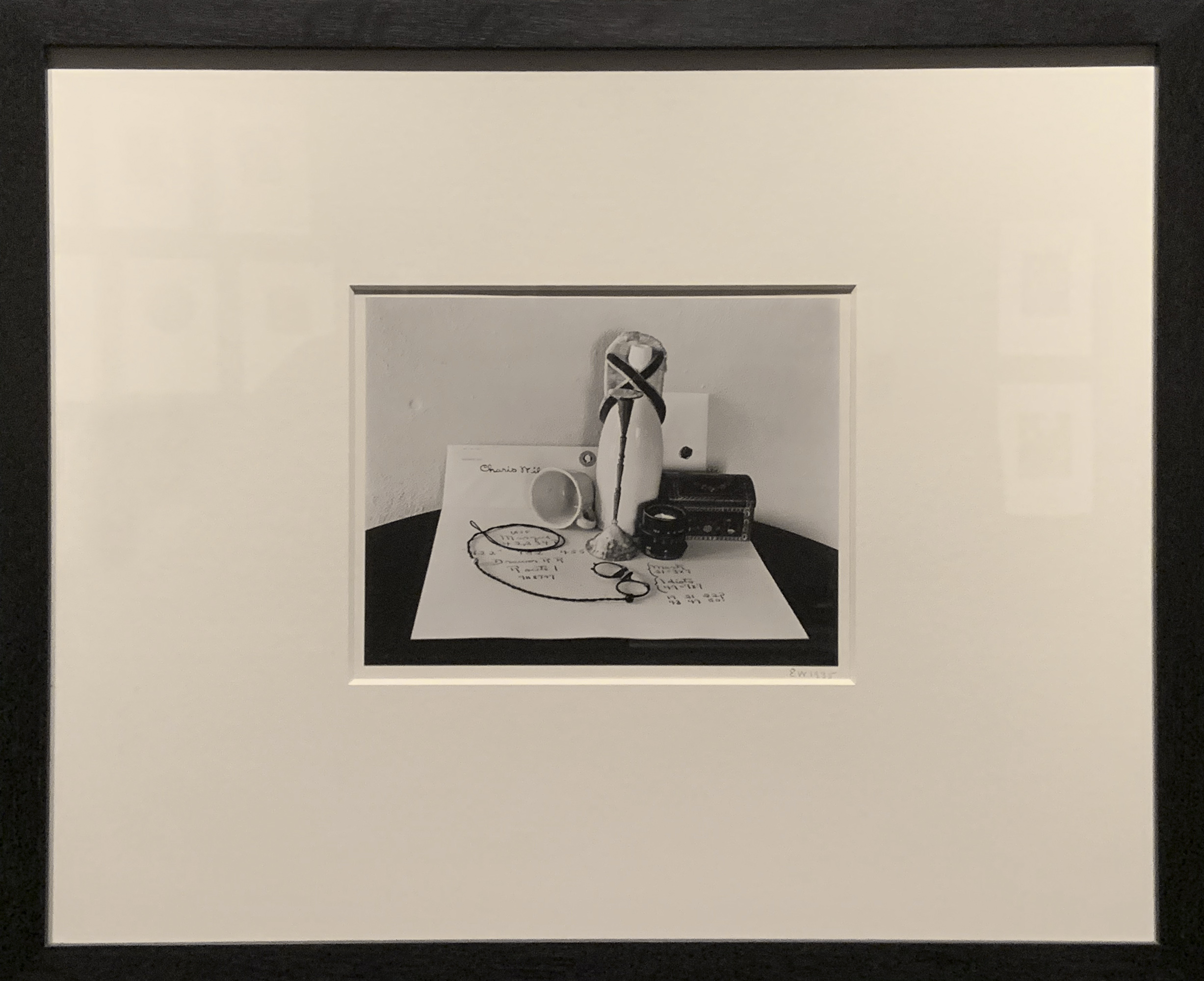
In 1928-29, Umbo was a founding photographer at Dephot (Deutscher Photodienst), a seminal photography agency in Berlin dedicated to creating socially relevant and visually fascinating photoessays, an idea originated by Erich Solomon. Simon Guttmann, who directed the business, hired creative nonconformists, foremost among them the bohemian Umbo, who slept in the darkroom; Umbo in turn drew the brothers Lore Feininger and Lyonel Feininger to the agency, which soon also boasted Robert Capa and Felix H. Man. Dephot hired Dott, the best printer in Berlin, and it was he who made the large exhibition prints, such as this one, ordered by New York gallerist Julien Levy when he visited the agency in 1931. Umbo showed thirty-nine works, perhaps also printed by Dott, in the 1929 exhibition Film und Foto, and he put Guttmann in touch with the Berlin organizer of the show; accordingly, Dephot was the source for some images in the accompanying book, Es kommt der neue Fotograf! (Here comes the new photographer!). Levy introduced Umbo’s photographs to New York in Surréalisme (January 1932) and showcased them again at the Julien Levy Gallery, together with images by Herbert Bayer, Jacques-André Boiffard, Roger Parry, and Maurice Tabard, in his 1932 exhibition Modern European Photography.

Maria Morris Hambourg, Hanako Murata


Umbo (Otto Umbehr) (German, 1902-1980) 'Six at the Beach' (Sechs am Strand) 1930


Umbo (Otto Umbehr) (German, 1902-1980)
Six at the Beach (Sechs am Strand)
1930
Gelatin silver print
9 3/8 × 7 1/8″ (23.8 × 18.1cm)
The Museum of Modern Art, New York
Thomas Walther Collection. Gift of Shirley C. Burden, by exchange


Alvin Langdon Coburn (American, 1882-1966) 'The Octopus' 1909


Alvin Langdon Coburn (American, 1882-1966)
The Octopus
1909
Gelatin silver print
22 1/8 × 16 3/4″ (56.2 × 42.6cm)
The Museum of Modern Art, New York
Thomas Walther Collection. Gift of Thomas Walther


Dynamics of the City – Symphony of a Great City 

In his 1928 manifesto “The Paths of Contemporary Photography,” Aleksandr Rodchenko advocated for a new photographic vocabulary that would be more in step with the pace of modern urban life and the changes in perception it implied. Rodchenko was not alone in this quest: most of the avant-garde photographers of the 1920s and 1930s were city dwellers, striving to translate the novel and shocking experience of everyday life into photographic images. Equipped with newly invented handheld cameras, they used unusual vantage points and took photos as they moved, struggling to re-create the constant flux of images that confronted the pedestrian. Reflections in windows and vitrines, blurry images of quick motions, double exposures, and fragmentary views portray the visual cacophony of the metropolis. The work of Berenice Abbott (American, 1898- 1991), Alvin Langdon Coburn (American, 1882-1966), Germanie Krull (Dutch, born Germany, 1897-1985), Alexander Hackenschmied (Czech, 1907-2004), Umbo (German, 1902-1980), and Imre Kinszki (Hungarian, 1901-1945) is featured in this final gallery.


The Museum of Modern Art
11 West 53 Street
New York, NY 10019
Phone: (212) 708-9400

Opening hours:
10.30 am – 5.30 pm
Open seven days a week

MoMA website

LIKE ART BLART ON FACEBOOK

Back to top

Selection of images part 1

April 2015


Berenice Abbott (American, 1898-1991) 'Fifth Avenue Houses' 1936


Berenice Abbott (American, 1898-1991)
Fifth Avenue Houses (5th Avenue and 8th Street)
1936, printed later
Silver gelatin print


A selection of interesting images.

The Vanishing Race by Edward S. Curtis is simple, yet one of the best. Their shadows seem more substantial than their owners.

Any photographer worth their salt would recognise the light on the foliage in a certain location that they know, but the chance of it being as perfect as this are about a billion to one. Notice how the original frame extends the synthesis of man and landscape as well. Such a great amalgam of image and frame, such a perfect marriage where one complements the other without the frame being overpowering, as though the frame were an extension of the image (and organic nature of the landscape).

The line of the riders in the image … they would have virtually ridden over the photographer and the tripod if they had kept that line! And the outrider – magnificent!!

Marcus


Please click on the photographs for a larger version of the image.


Edward S. Curtis (American, 1868-1952) 'The Vanishing Race' 1904


Edward S. Curtis (American, 1868-1952)
The Vanishing Race – Navaho
1904
Orotone (in original frame)


“The passing of every old man or woman means the passing of some tradition, some knowledge of sacred rites possessed by no other… consequently the information that is to be gathered, for the benefit of future generations, respecting the mode of life of one of the great races of mankind, must be collected at once or the opportunity will be lost for all time.”

~ Edward S. Curtis


Ansel Adams (American, 1902-1984) 'Surf Sequence #4' 1940


Ansel Adams (American, 1902-1984)
Surf Sequence #4
1940, printed later
Silver gelatin print


Paul Caponigro (American, 1932-2024) 'Redding Stream, Redding, Connecticut' 1968


Paul Caponigro (American, 1932-2024)
Redding Stream, Redding, Connecticut
1968, printed later
Gelatin silver print


Paul Caponigro (American, 1932-2024) 'Nautilus Shell, Ipswich, Mass' 1960


Paul Caponigro (American, 1932-2024)
Nautilus Shell, Ipswich, Mass
1960
Silver gelatin print


Paul Caponigro (American, 1932-2024) 'Two Leaves, Brewster, New York' 1963


Paul Caponigro (American, 1932-2024)
Two Leaves, Brewster, New York
1963
Silver gelatin print


Harry Callahan (American, 1912-1999) 'Eleanor, Port Huron' c. 1954


Harry Callahan (American, 1912-1999)
Eleanor, Port Huron
c. 1954
Silver gelatin print


With her raven hair and ripe figure, Eleanor Callahan is one of the most recognisable models in the history of 20th-century photography, an inseparable part of both the life and work of one of its most renowned artists. Clothed and standing among trees in a public park, or nude and turned to the wall while clutching a radiator in an empty room, she served as a formal element within Mr. Callahan’s austere compositions as well as a symbol of womanhood. From 1941 to his death in 1999, she allowed herself to be photographed by him, without complaint, hundreds of times…

“He just liked to take the pictures of me,” she told an interviewer in 2008. “In every pose. Rain or shine. And whatever I was doing. If I was doing the dishes or if I was half asleep. And he knew that I never, never said no. I was always there for him. Because I knew that Harry would only do the right thing.”

Text from Richard B. Woodward. “Eleanor Callahan, Photographic Muse, Dies at 95,” on the New York Times website 28th February 2012. Used under fair use conditions for the purposes of education and research


Dorothea Lange (American, 1895-1965) 'Potato truck in the field near Shafter, California' 1937


Dorothea Lange (American, 1895-1965)
Potato truck in the field near Shafter, California
1937
Ferrotyped silver print


Walker Evans (American, 1903-1975) 'Fish Market near Birmingham, Alabama' 1936


Walker Evans (American, 1903-1975)
Fish Market near Birmingham, Alabama
1936
Silver gelatin print


Robert Doisneau (French, 1912-1994) 'Le gardien des géants du Nord' Nd


Robert Doisneau (French, 1912-1994)
Le gardien des géants du Nord
Nd
Silver gelatin print


Berenice Abbott (American, 1898-1991) 'Christopher Street Shop' late 1940s


Berenice Abbott (American, 1898-1991)
Christopher Street Shop
late 1940s
Silver gelatin print


Francesca Woodman (American, 1958-1981) 'But Lately I Find a Sliver of a Mirror is Simply to Slice an Eyelid' 1979/1980


Francesca Woodman (American, 1958-1981)
But Lately I Find a Sliver of a Mirror is Simply to Slice an Eyelid
1979-1980
Silver gelatin print


Francesca Woodman (American, 1958-1981) 'Untitled, Rome, Italy' 1977/1978


Francesca Woodman (American, 1958-1981)
Untitled, Rome, Italy
1977-1978
Silver gelatin print


André Kertész (Hungarian, 1894-1985) 'Fan, December 1937' 1937


André Kertész (Hungarian, 1894-1985)
Fan, December 1937
1937
Silver gelatin print


“I am an amateur and I intend to stay that way for the rest of my life.”

~ André Kertész


Margaret Bourke-White (American, 1904-1971) 'Fort Peck Dam, Montana' 1936


Margaret Bourke-White (American, 1904-1971)
Fort Peck Dam, Montana
1936
Silver gelatin print


This photograph became an icon of the machine age, not only because it was printed as the cover of the first issue of Life magazine (November 23, 1936), but also because it showed the power of modern technology to dwarf humankind. The giant buttresses and what seem to be crenellated battlements (actually the supports for an elevated highway) are meant to be as raw and impressive as the towering walls of ancient monuments. The engineers on the spillway provide the necessary indication of scale.


Margaret Bourke-White (American, 1904-1971) 'Terminal Tower [Cleveland]' c. 1928


Margaret Bourke-White (American, 1904-1971)
Terminal Tower [Cleveland]
c. 1928
Silver gelatin print


“I stood on the deck to watch the city [Cleveland] come into view. As the skyline took form in the morning mist, I felt I was coming to my promised land … columns of machinery gaining height as we drew toward the pier, derricks swinging like living creatures. Deep inside I knew these were my subjects.”

~ Margaret Bourke-White 1927


François Kollar (Hungarian, 1904-1979) 'Double-impression of the Eiffel Tower' 1931


François Kollar (Hungarian, 1904-1979)
Double-impression of the Eiffel Tower
1931
Solarised silver gelatin print


In this unique and widely-reproduced photograph, the French modernist photographer has overlaid positive and negative images of the magnificent Eiffel Tower. The iconic structure is depicted from an unusual perspective, thrusting upward, with Kollar’s special solarised effect.


Edward J. Kelty (American, 1888-1967) 'X-ray of Ajax, the sword swallower' 1928


Edward J. Kelty (American, 1888-1967)
X-ray of Ajax, the sword swallower
1928
 Silver print
18 × 11 inches (45.7 × 27.9cm)
With a New York X-ray lab credit in the negative


Edward J. Kelty (American, 1888-1967) 'Marcellus Golden Models' 1933


Edward J. Kelty (American, 1888-1967)
Marcellus Golden Models
1933
Silver print
11 1/4 × 8 7/8 inches (28.6 × 22.5cm)
With Kelty’s credit and title in the negative


LIKE ART BLART ON FACEBOOK

Back to top