
Exhibition dates: 15th March – 15th July, 2018
Presented in conjunction with the exhibition Colony: Frontier Wars (15 March – 2 September 2018) which presents a powerful response to colonisation through a range of historical and contemporary works by Indigenous and non-Indigenous artists dating from pre-contact times to present day.
Warning: Aboriginal and Torres Strait Islander readers should be aware that this posting contains images and names of people who may have since passed away.

Installation view of the exhibition Colony: Australia 1770-1861 at NGV Australia at Federation Square, Melbourne showing how some of the photographs were displayed in the case at rear.
Photo: © Dr Marcus Bunyan and the National Gallery of Victoria
” …what the generality of the white population of the Colony consist of, which is of the most debased and vilest dregs of Great Britain and Ireland… they never look on the Blacks in the light of human beings, but, would just as soon shoot them as they would a crow, or hunt them as they would a kangaroo. Indeed in some districts the dogs used to be thought good for nothing unless they could kill a Black as well as a kangaroo, and they used to teach them to do so, by giving them some of the poor Black’s blood.”
James Graham. ‘Overland Letter’ part of the Graham Bros collection at The University of Melbourne archives quoted in Dr Katherine Ellinghaus. “Criss-Cross History Hidden in a Letter,” on the Pursuit website 12 June 2018 [Online] Cited 16/02/2022
“The bad deeds of some leading frontier politicians, administrators and military men have been almost overlooked; many history books – even more modern online popular resources such as the Australian Dictionary of Biography – diminish, attempt to justify or overlook completely their proven excesses against this continent’s Indigenes. …
“On any occasion of seeing or falling in with the Natives, either in Bodies or Singly, they are to be called upon, by your friendly Native Guides, to surrender themselves to you as Prisoners of War. If they refuse to do so, make the least show of resistance, or attempt to run away from you, you will fire upon and compel them to surrender, breaking and destroying the Spears, Clubs and Waddies of all those you take Prisoners. Such natives as happen to be killed on such occasions, if grown up men, are to be hanged up on Trees in Conspicuous Situations, to Strike the Survivors with the greater terror.”
Lachlan Macquarie, fifth governor of New South Wales quoted in Paul Daley, “Heroes, Monuments and History,” in Meanjin, Autumn 2018
Terror incognita
Firstly, let me state that I am no expert in Australian colonial history, culture or photography. These are very specialised fields. But what I can do is use my eyes, my knowledge and my feelings to provide comment on this exhibition.
This magnificent exhibition at NGV Australia at Federation Square is a fascinating interrogation of the early history of the Australian nation, yet at the same time I found it very disturbing and sad. The exhibition more resembles a natural history exhibition than an art exhibition, a cabinet of curiosities, a Wunderkammer, were encyclopaedic collections of objects whose categorical boundaries are yet to be defined are mixed with the first European art made on this continent. The exhibition is a microcosm or theatre of the world, and a memory theatre, for all that has passed since before invasion of this land up until the year 1861. The installation mixes together colonial and Indigenous artefacts from within the allotted time period. There is so much to see that I have visited three times and not got to the bottom of this exhibition it is so dense. Paintings, drawings, sculpture, colonial furniture, clothing, pottery, jewellery, photography, maps, artefacts, etc… are displayed in a melange of techniques, offering a huge range of artists and media. Please see Part 1 of the posting for the installation images of the exhibition.
Some observations can be made. Generally, the paintings and drawings are of a very classical form, very tightly controlled and painted. They set out to document the landscape, firstly the Australian landscape as seen in the European tradition, and then in a more realistic yet romanticised form in later paintings. Early colour aquatints of Aboriginal people depict them climbing trees in an almost reptilian manner while later representations picture “a romantic vision of a vast, silent and forbidding land. Two generic Aboriginal people figures are included in the foreground in the guise of the noble savage.” Of a vanishing race. Other collages (a fictionalised representational technique), such as James Wallis’ View of Awabakal Aboriginal people, with beach and river inlet, and distant Aboriginal group in background (c. 1818), propose “a harmonious relationship between the Awabakal, colonisers and the military. Such a suggestion is at odds with earlier events of April 1816 when Wallis, under the direction of Governor Macquarie, led an armed regiment against Dharawal and Gandangara people south of Sydney, in what is now acknowledged as the first officially sanctioned massacre of Indigenous people in Australia.” (Exhibition text) Further, the romanticised vistas of colonial interloper John Glover (1767-1849) evoke, “an idyll where the natives were at one with nature, even as the slaughter was upon them…” (Damian Smith, 2018). This connection to nature can be seen in Glover’s painting The River Nile, Van Diemen’s Land, from Mr Glover’s farm (1837). But, as the exhibition text notes, “Glover had not experienced the conflict or witnessed the violence between Tasmanian Aboriginal resistance fighters and white settlers during the 1820s. By the time of his arrival in 1831, the Tasmanian Aboriginal survivors had been forced to leave Country and relocate to Flinders Island.” These representations of Aboriginal life are pure fiction constructed in the imagination of the artists and colonisers.
By way of contrast, the portraits of landed gentry, such as Thomas Bock’s four paintings of Captain William Robertson and his family (1830s-1850s), are elegant and flattering. They are portraits executed in the grand Georgian manner fashionable in England and were greatly prized by colonists. Here is a family who has made it, and they want everyone to know about it. The roots of their representation are in the old country, their allegiance there also, to the mother country. Australia is a colony, part of the British Empire, an outpost of all that is right and proper in the world. Imagine just for a second that you are back in the 1850s. No electricity, only candle power. Now imagine arriving at a home with these portraits, or the landscapes of John Glover, lit by candle light. The skin would be luminescent, the golden frames glowing in the light; the trees in the Glover paintings would have writhed, seeming almost alive in the flickering light. A forbidding landscape indeed.
In portraiture, the same disposition can be seen in the early daguerreotype and ambrotype photographs of Aboriginals and colonists.
“Within a decade of the arrival of European colonists in the Port Phillip District a number of professional photographers had established studios in Melbourne, and prominent among these was Douglas Kilburn. Around 1847, Kilburn made a series of portraits [see below] of people thought to be from the Kulin nation. The images testify to the power of photographs to record kin and define identity. They also show Aboriginal people who had experienced a decade of dispossession following the arrival of settlers. It is believed Kilburn’s subjects were among the numbers of First Nations people who had few choices other than to return to Melbourne because they had been driven out of their Country.” (Exhibition text)
If we look at these small, personal, one-off photographs housed in leather cases that can be closed off from the world, when opened to reveal the Aboriginal sitters … we notice how frontal they are, how they face straight on to the camera, how grouped they are, how they fill the picture plane with little negative space around them, how the camera seems to press in on them, as though to capture every last detail of their countenance and clothing. Their visage. The aspect of their being. These are ethnographic documents as much as they are portraits, for they map the condition of the captives. If, as Michael Graham-Stewart states in his book Bitter fruit: Australian photographs to 1963, “photography operates not only as an instrument of oppression, but also as a means of connecting with people of the past,” what do contemporary Indigenous Australians make of these images. Do they find evidence of wrongdoing and suffering but also of resistance, adaptation, and continuity? Are they also angry and sad at what they have lost, as in a thriving and incredibly diverse culture? I would be.
Again, by way of contrast we look at how the colonists viewed themselves in these personal treasures. Here, we must remember that these early photographs would have been relatively expensive for a family to have commissioned them, almost as expensive say, in contemporary terms, as buying a plasma television when they first came out. Only the well-to-do would have been able to afford to have their portrait taken. Two examples of this providence and bounty can be seen in this posting. The portrait of The Lashmar family by William Millington Nixon (1857-58, see below) shows a family who were pioneering pastoralists on Kangaroo Island in the 1850s. “Despite the relative remoteness of their home, and the harshness of the environment, the family evidently prospered. Thomas Young Lashmar not only had the means to travel to Adelaide with his wife and family, but was also able to commission photographic portraits at a time when it was still a relatively expensive exercise.” (Exhibition text) While Aboriginals while forced from their land and massacred, pastoralists were making money and prospering from the confiscated lands.
Nothing better shows the sense of entitlement that the early pastoralists had (and still do today, with their illegal land clearing) towards their possession of the land and their identity that arose from that possession, than the commissioned set of five portraits by daguerreotype portraitist George Goodman of the daughters of prominent local land holder William Lawson II in the town of Bathurst, north-west of Sydney. Dressed in their finest, the young daughters, arms covered, clutch flowers and either look away from the camera or directly at it. The camera is placed directly at eye level, or slightly below it, and the space around the sitter is open and amorphous, a plain background which isolates the figure in space. Unlike the claustrophobic portraits by Douglas Kilburn of the Aboriginals from the Kulin nation, here the sitters seem to possess the space of the photograph, they inhabit and can breathe in the pictorial plane. In particular, the portrait of Susannah Caroline Lawson (1845, below) pictures a young woman with an incredibly determined stare and haughty demeanour. She seems to radiate a perfect sense of entitlement within the physical presence of the photograph.
Other photographs reinforce this vision of the world that the colonists enacted. Thomas Bock’s Portrait of two boys (1848-50, below) “shows that he was a skilled photographer by 1848… Any parent would have been thrilled by such a vivid image of their sons, especially as, like many colonial sons, they might be getting ready to be sent ‘home’ to the United Kingdom for schooling. The image of the boys was a memento for their parents as well as proof for relatives in Britain that colonial society could produce the same well-dressed and well-bred young boys as the old country.” (Gael Newton)
There is the rub. For migrants who were a long way from home, photography was proof that they were alive, successful, flourishing… and could live up to the expectations of their family back home and the standards of the old country. “Photography served several interrelated roles associated with the experience of migration and colonisation. For those European migrants transplanted halfway across the world, often without family or friends, the most immediate and heartfelt use for the camera was portraiture. Some of Australia’s earliest surviving photographs are small, sturdily cased portraits which provided ‘likenesses as if by magic’ of those depicted and were sent back ‘home’, thus providing an emotional connection to family members.” (Exhibition text) An emotional connection for people living in a far off land to those back “home”, and an emotional connection to family in a forbidding land, to remind themselves of their strength and unity in the face of the unknown.
What this exhibition does not show, because they are later photographs, is evidence of the overt oppression of Indigenous peoples that photography documented. While terra nullius is a Latin expression meaning “nobody’s land” usually associated with colonising Australia, the British Government using this term to justify the dispossession of Indigenous people, there is also another term, terra incognita, a term used in cartography for regions that have not been mapped or documented. In many ways the terror that Indigenous people experienced during invasion is still being mapped and explored. Much of it is still not known or is unaccepted, as a terror incognita. Dr Katherine Ellinghaus in her article “Criss-Cross History Hidden in a Letter,” notes that, “Reconciliation Australia’s own biennial survey [2016 Australian Reconciliation Barometer survey 5 September 2016] has found that more than one in three Australians don’t accept that Aboriginal and Torres Strait Islander people were subject to mass killings, incarceration, and forced removal from their lands.”
This is the terror that still exists in the Australian psyche. The terror of cutting ties to the motherland, the terror of an incognita, an “unknown land”, and the hidden terror prescribed and enacted on the cultural body of the Aboriginal, unacknowledged by some even today.
Dr Marcus Bunyan
Word count: 1,853
Many thankx to the National Gallery of Victoria for allowing me to publish the photographs in the posting. Please click on the photographs for a larger version of the image. All installation photographs © Dr Marcus Bunyan and the National Gallery of Victoria.

Unknown photographer
Robert Lyall with the New Norfolk Cup (installation view)
1851
Ambrotype
National Gallery of Victoria, Melbourne
Purchased, 2004
Photo: © Dr Marcus Bunyan and the National Gallery of Victoria
Robert Lyall was a successful Tasmanian publican and businessman whose interests extended to horse racing. In 1851 his prized horse Patience won the New Norfolk Cup and Lyall was the recipient of a handsome silver presentation cup. Not only evidence of his success and standing, the cup was apparently also of great personal significance to Lyall as he included it as a decorative element when this large-scale ambrotype was commissioned. Unlike more intimately scaled cased images, this photograph was framed so that it could be prominently displayed on the wall.
Exhibition text
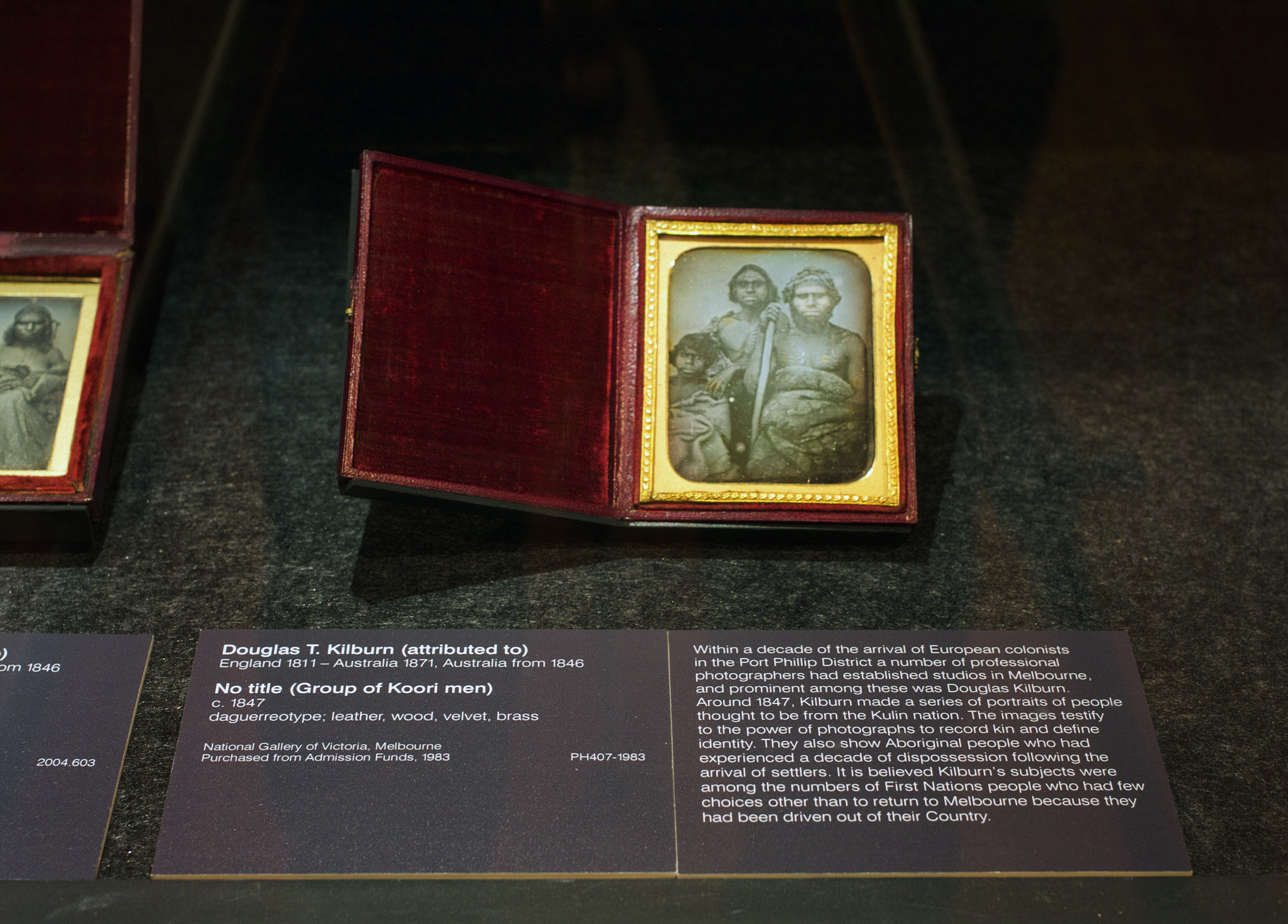

Douglas T. Kilburn (attributed to) (England 1811 – Australia 1871, Australia from 1846)
No title (Group of Koori men) (installation views)
c. 1847
Daguerreotype; leather, wood, velvet, brass
National Gallery of Victoria, Melbourne
Purchased from Admission Funds, 1983
Photos: © Dr Marcus Bunyan and the National Gallery of Victoria
Within a decade of the arrival of European colonists in the Port Phillip District a number of professional photographers had established studios in Melbourne, and prominent among these was Douglas Kilburn. Around 1847, Kilburn made a series of portraits of people thought to be from the Kulin nation. The images testify to the power of photographs to record kin and define identity. They also show Aboriginal people who had experienced a decade of dispossession following the arrival of settlers. It is believed Kilburn’s subjects were among the numbers of First Nations people who had few choices other than to return to Melbourne because they had been driven out of their Country.
Exhibition text
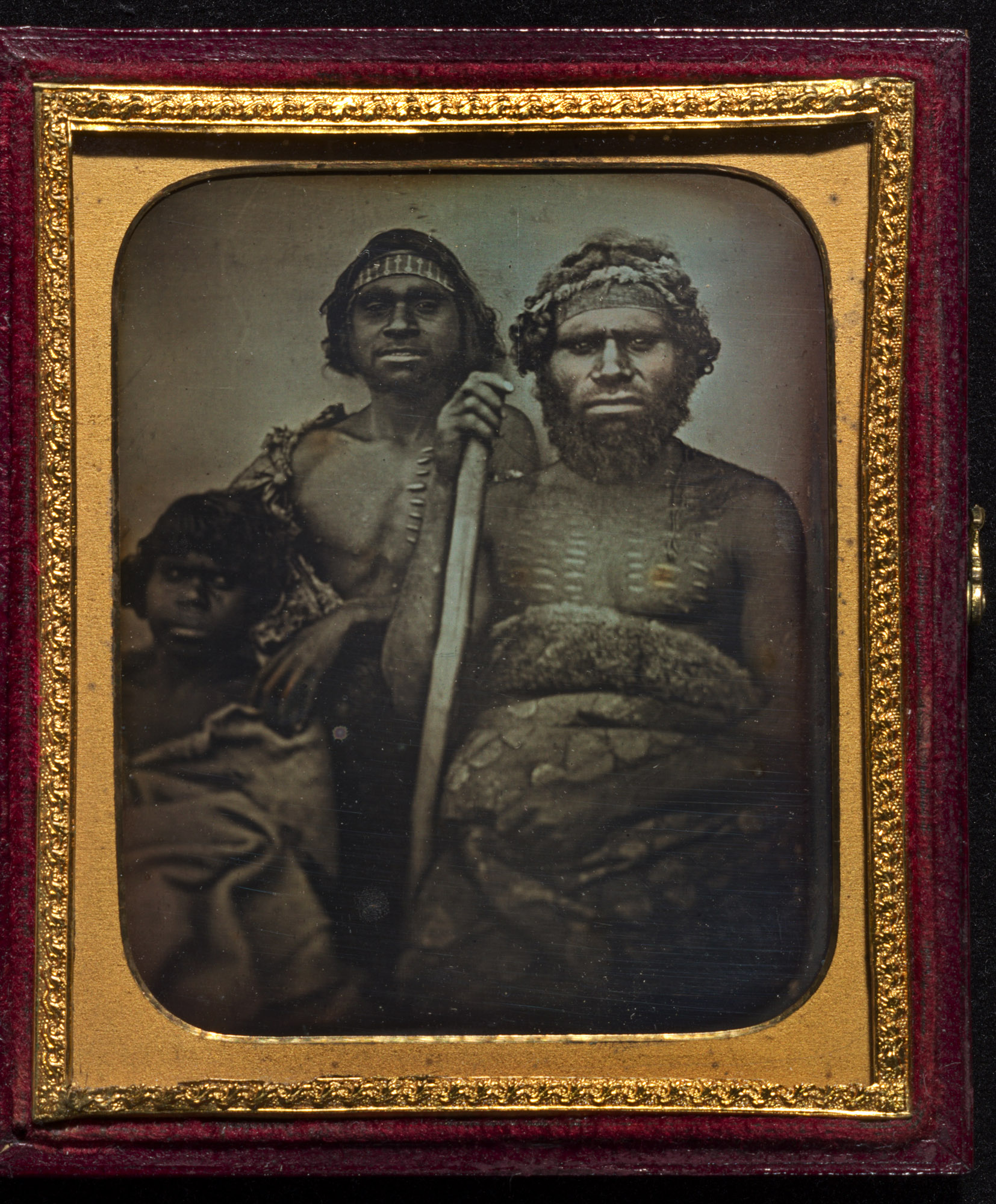
Douglas T. Kilburn (attributed to) (England 1811 – Australia 1871, Australia from 1846)
No title (Group of Koori men)
c. 1847
Daguerreotype; leather, wood, velvet, brass
National Gallery of Victoria, Melbourne
Purchased from Admission Funds, 1983
Kulin
The Kulin nation is an alliance of five Indigenous Australian tribes in south central Victoria, Australia. Their collective territory extended around Port Phillip and Western Port, up into the Great Dividing Range and the Loddon and Goulburn River valleys. Before British colonisation, the tribes spoke five related languages. These languages were spoken in two groups: the Eastern Kulin group of Woiwurrung, Boonwurrung, Taungurong and Ngurai-illam-wurrung; and the western language group of just Wathaurung.
The central Victoria area has been inhabited for an estimated 60,000 to 100,000 years before European settlement. At the time of British settlement in the 1830s, the collective populations of the Woiwurrung, Boonwurrung and Wathaurong tribes of the Kulin nation was estimated to be under 20,000. The Kulin lived by fishing, hunting and gathering, and made a sustainable living from the rich food sources of Port Phillip and the surrounding grasslands.
Due to the upheaval and disturbances from British settlement from the 1830s on, there is limited physical evidence of the Kulin peoples’ collective past. However, there is a small number of registered sites of cultural and spiritual significance in the Melbourne area.
Text from the Wikipedia website


Left
Douglas T. Kilburn (attributed to) (England 1811 – Australia 1871, Australia from 1846)
No title (South-east Australian Aboriginal man and two younger companions) (installation view)
1847
Daguerreotype
National Gallery of Australia, Canberra
Purchased 2007
Right
Douglas T. Kilburn (attributed to) (England 1811 – Australia 1871, Australia from 1846)
No title (Two Koori women) (installation view)
c. 1847
Daguerreotype, brass, glass, gold, velvet
National Gallery of Victoria, Melbourne
Purchased, 2004
Photos: © Dr Marcus Bunyan and the National Gallery of Victoria

Douglas T. Kilburn (attributed to) (England 1811 – Australia 1871, Australia from 1846)
No title (Two Koori women) (installation view)
c. 1847
Daguerreotype, brass, glass, gold, velvet
National Gallery of Victoria, Melbourne
Purchased, 2004
Photo: © Dr Marcus Bunyan and the National Gallery of Victoria
As a way of attracting attention to his newly opened business Douglas Kilburn took at least eight daguerreotypes of Aboriginal people in the lands of the Kulin nation. As a result of the nineteenth-century belief that the Aboriginal people were doomed to annihilation, Kilburn intended the images as ethnographic studies rather than individual portraits; nevertheless, his unnamed sitters project a proud and dignified presence. His photographs were popular with local artists such as Eugene von Guérard and John Skinner Prout, who copied them, and they also reached an international audience when they were used as the basis for wood engravings in William Westgarth’s Australia Felix in 1848, Nordisk Penning-Magazin in 1849 and the Illustrated London News in 1850.
Exhibition text
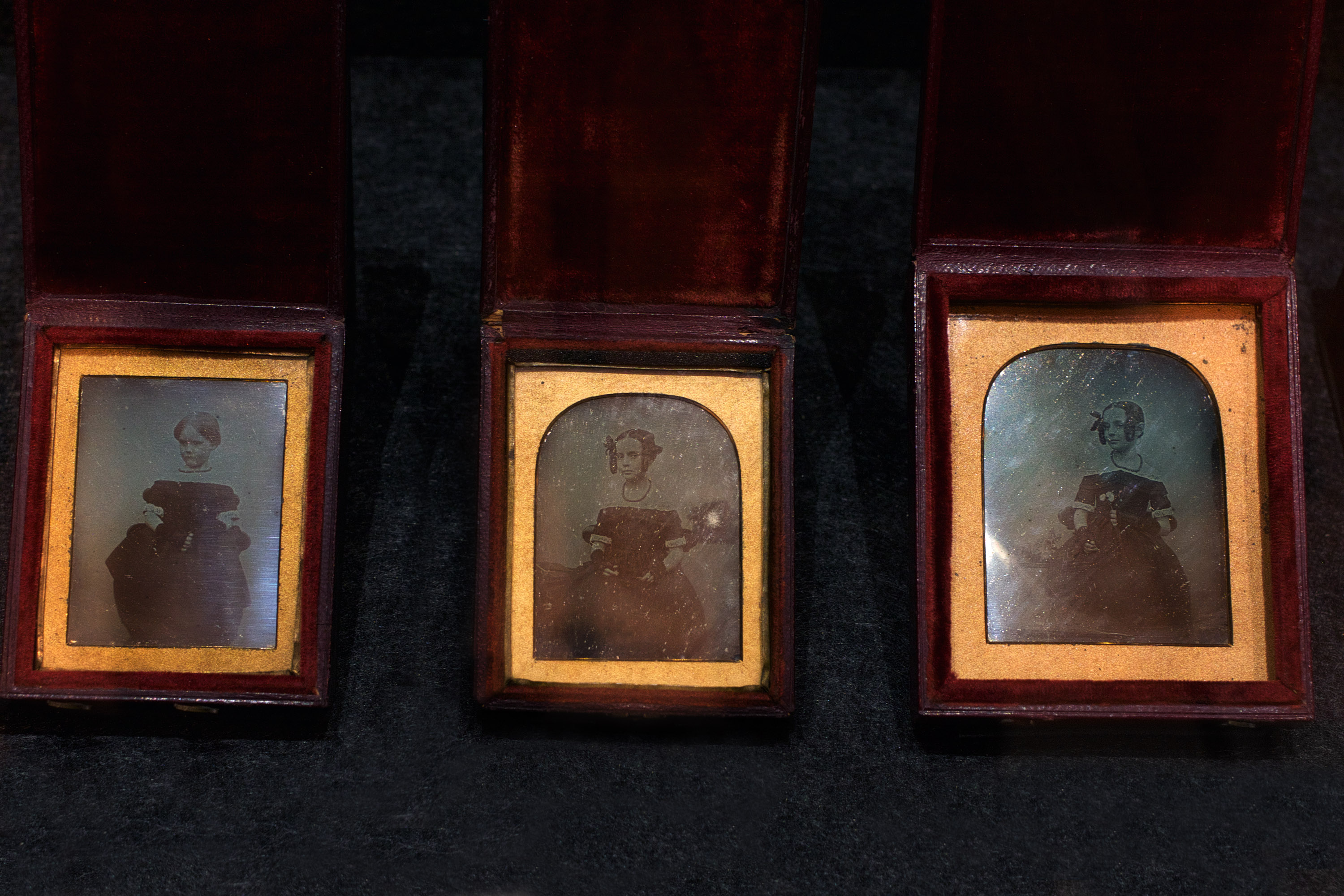
George Goodman (active in Australia 1842-1851)
Left
Maria Emily Lawson
1845
Daguerreotype
Mitchell Library, State Library of New South Wales, Sydney
Presented 1993
Middle
Susannah Caroline Lawson
1845
Daguerreotype; leather, velvet
Mitchell Library, State Library of New South Wales, Sydney
Presented by Sir Kenneth Street, 1960
Right
Eliza Lawson
1845
Daguerreotype, leather, velvet
Mitchell Library, State Library of New South Wales, Sydney
Presented by Sir Kenneth Street, 1960
Photo: © Dr Marcus Bunyan and the National Gallery of Victoria
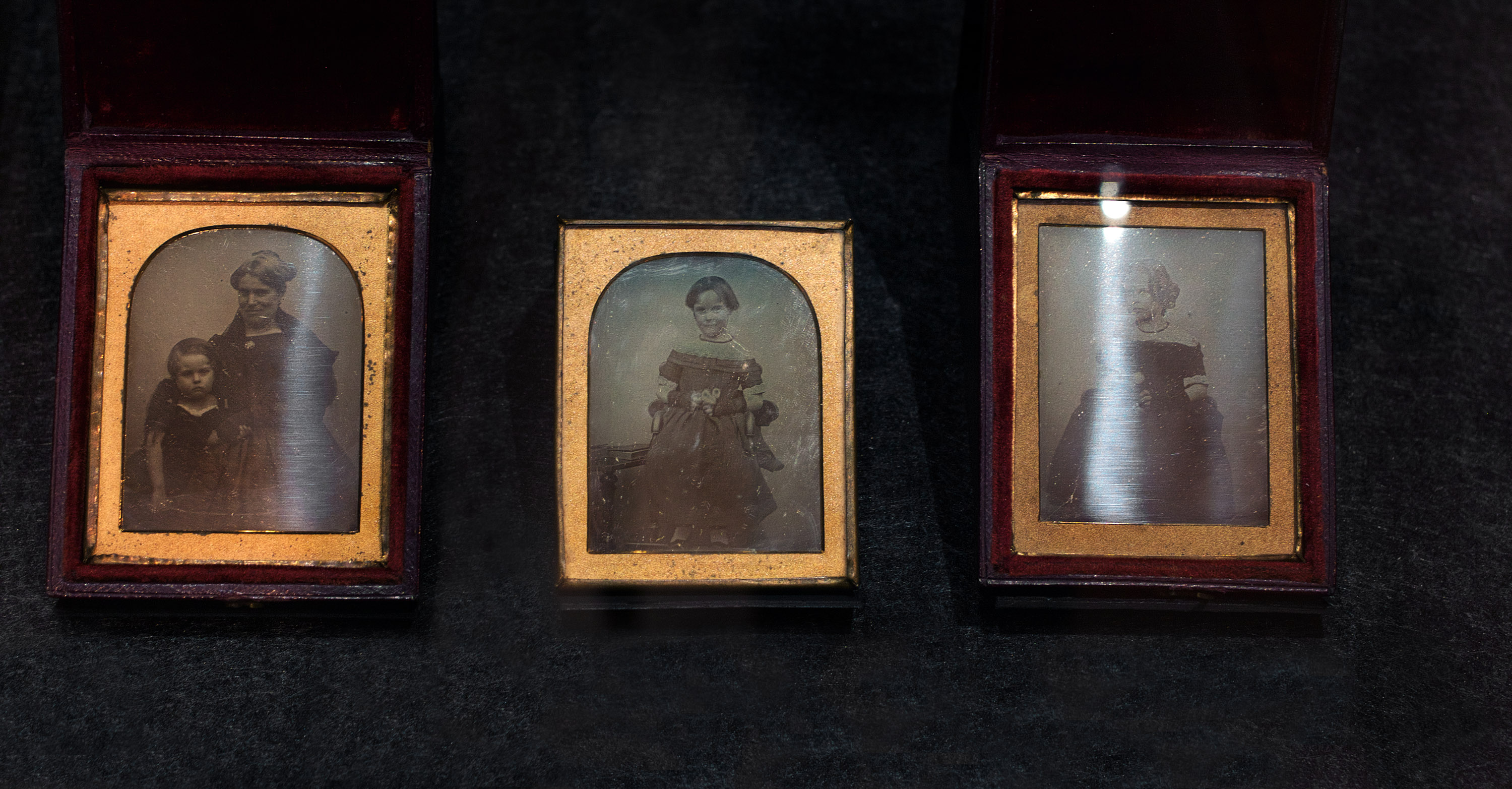
George Goodman (active in Australia 1842-1851)
Left
Caroline and Thomas James Lawson
1845
Daguerreotype, leather, velvet
Mitchell Library, State Library of New South Wales, Sydney
Presented 1991
Middle
Sophia Rebecca Lawson
1845
Daguerreotype, leather, velvet
Mitchell Library, State Library of New South Wales, Sydney
Presented by Sir Kenneth Street, 1960
Right
Sarah Ann Lawson
1845
Daguerreotype, leather, velvet
Mitchell Library, State Library of New South Wales, Sydney
Presented by Sir Kenneth Street, 1960
Photo: © Dr Marcus Bunyan and the National Gallery of Victoria
George Goodman arrived in Sydney in 1842 and established the first professional photography studio in Australia. Although he is known to have made photographs of Tasmanian street scenes, his stock-in-trade was portraiture. Goodman travelled to regional towns where he advertised his services as a daguerreotype portraitist. In 1845 he visited the town of Bathurst, north-west of Sydney, and was commissioned to photograph the family of prominent local land holder William Lawson II. The resulting series includes five individual portraits of Lawson’s young daughters and a charming, and surprisingly informal, image showing his wife Caroline Lawson and their young son.
Exhibition text

George Goodman (active in Australia 1842-1851)
Susannah Caroline Lawson
1845
Daguerreotype; leather, velvet
Mitchell Library, State Library of New South Wales, Sydney
Presented by Sir Kenneth Street, 1960

George Goodman (active in Australia 1842-1851)
Eliza Lawson
1845
Daguerreotype, leather, velvet
Mitchell Library, State Library of New South Wales, Sydney
Presented by Sir Kenneth Street, 1960

George Goodman (active in Australia 1842-1851)
Caroline and Thomas James Lawson
1845
Daguerreotype, leather, velvet
Mitchell Library, State Library of New South Wales, Sydney
Presented 1991
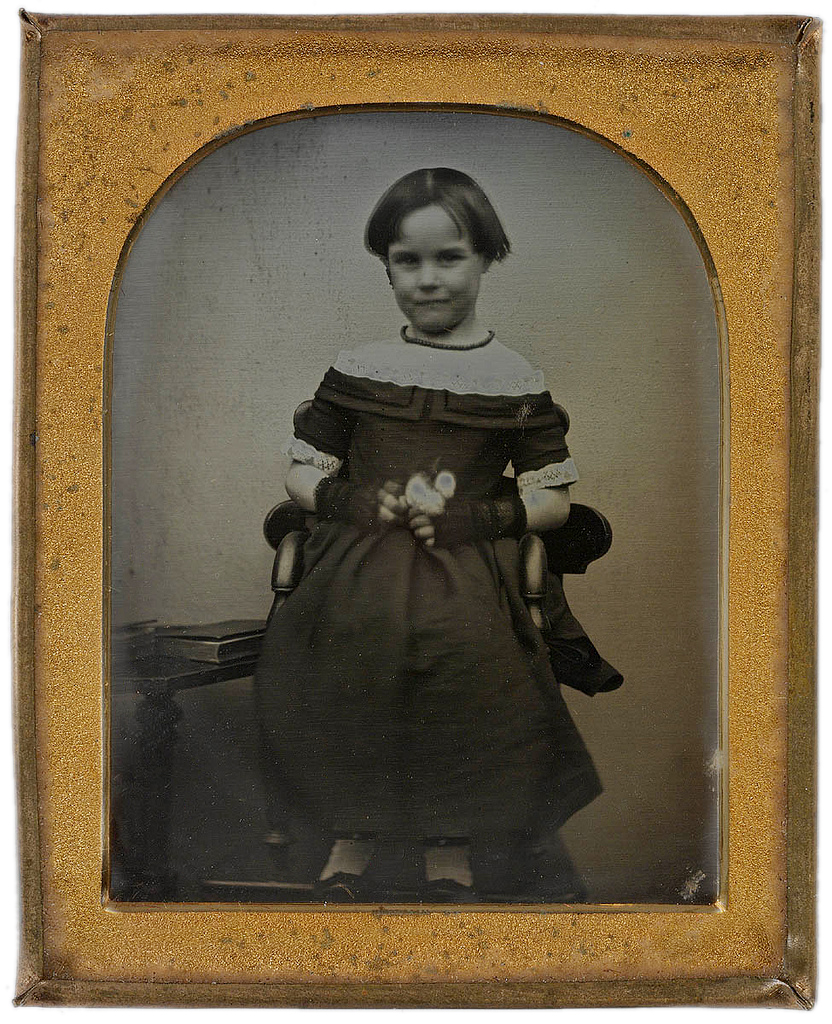
George Goodman (active in Australia 1842-1851)
Sophia Rebecca Lawson
1845
Daguerreotype, leather, velvet
Mitchell Library, State Library of New South Wales, Sydney
Presented by Sir Kenneth Street, 1960
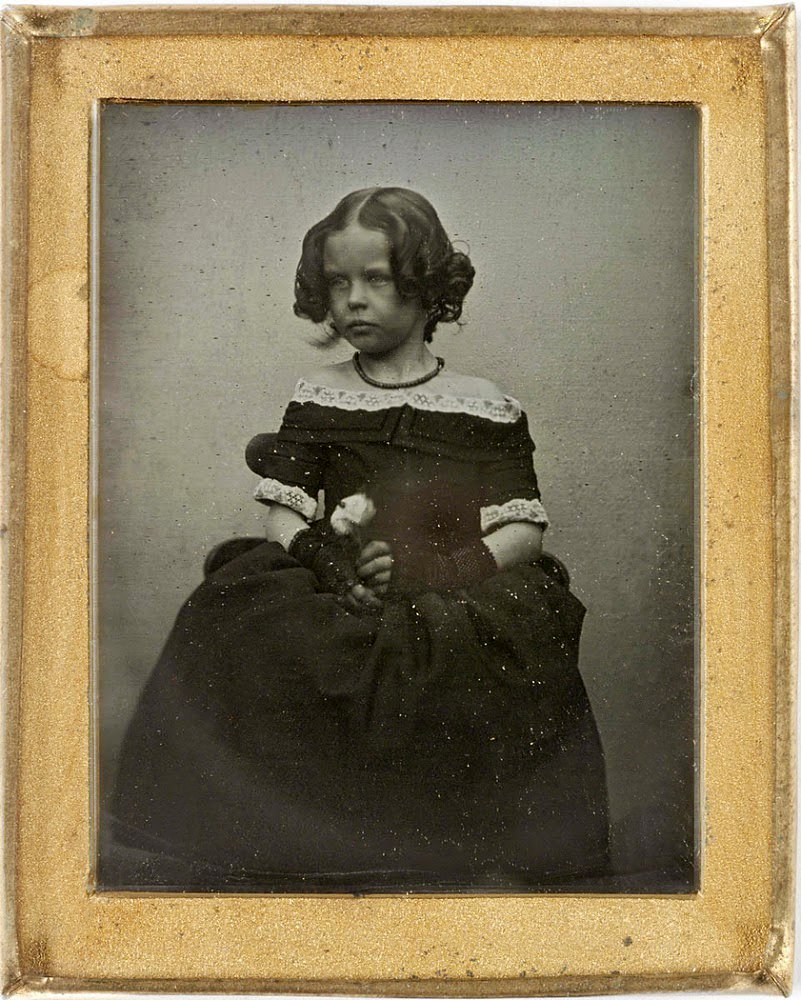
George Goodman (active in Australia 1842-1851)
Sarah Ann Lawson
1845
Daguerreotype, leather, velvet
Mitchell Library, State Library of New South Wales, Sydney
Presented by Sir Kenneth Street, 1960
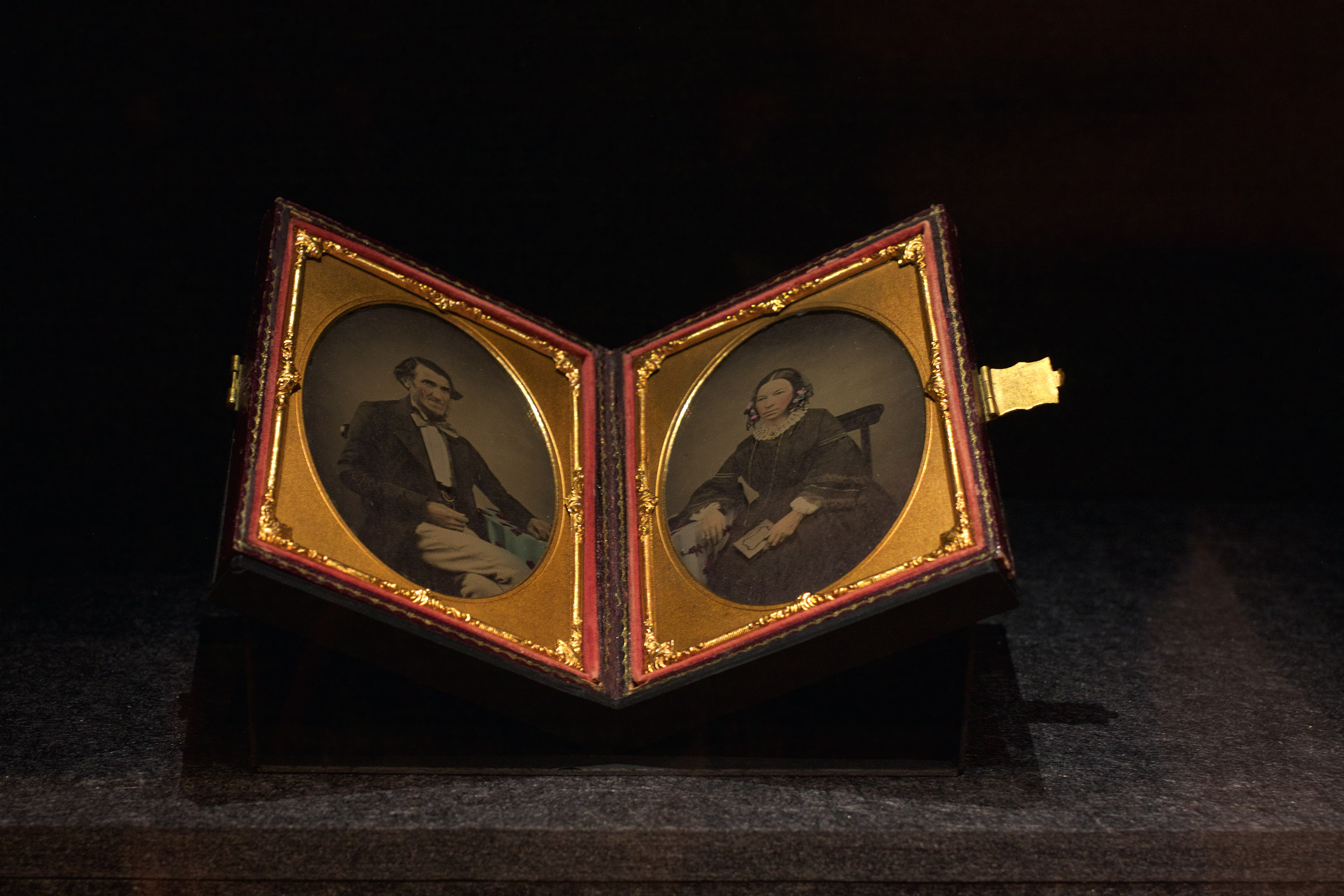
Unknown photographer (working 1850s)
Pair of portraits: George Taylor, his wife Ann (nee Collis Pratt)
c. 1856, Adelaide
Two ambrotypes, colour dyes, gold paint
9.4 x 6.8cm (each image, oval)
J.C. Earl Bequest Fund 2010
Art Gallery of South Australia, Adelaide
Photo: © Dr Marcus Bunyan and the National Gallery of Victoria
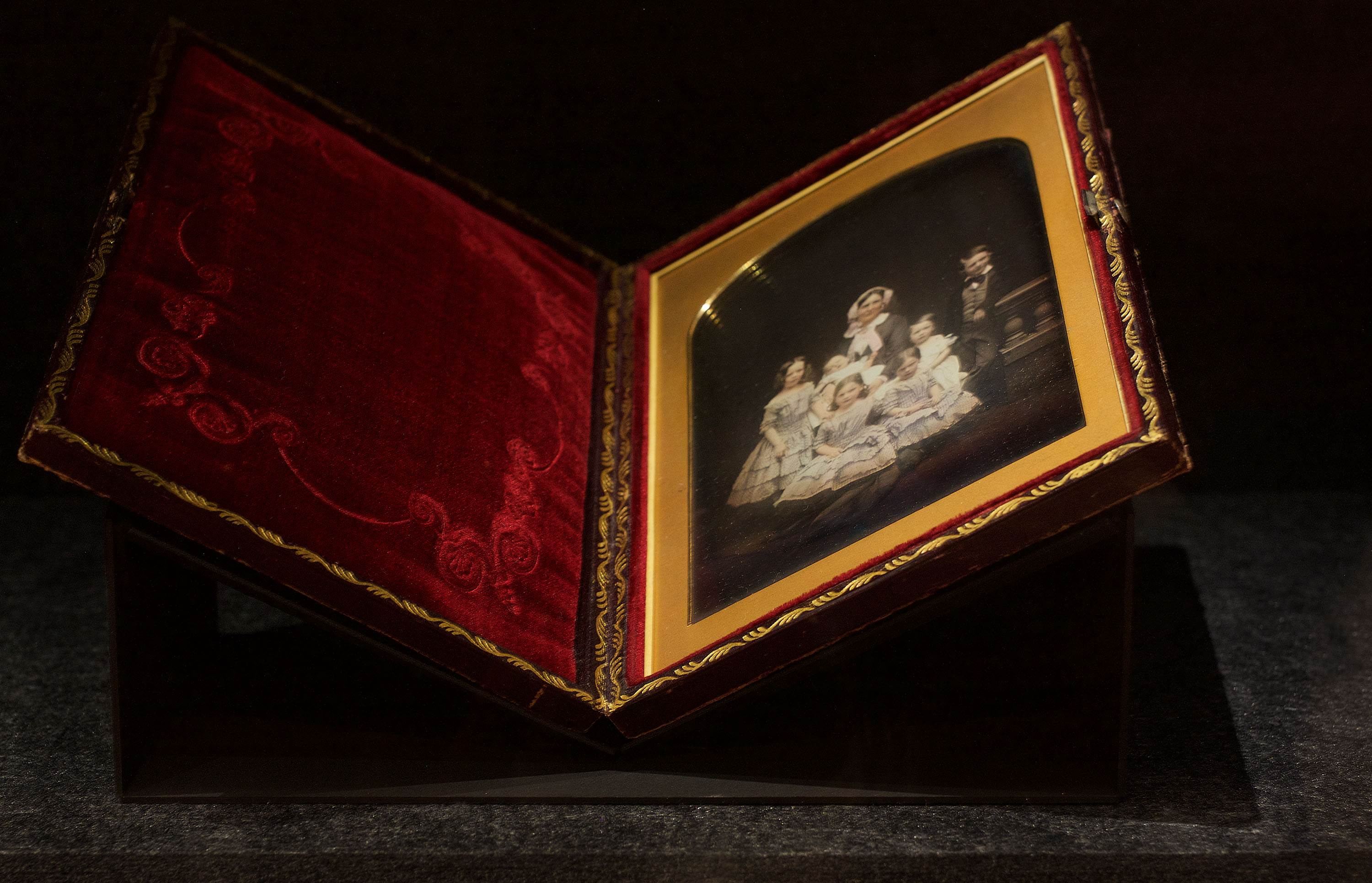
Freeman Brothers Studio, Sydney (1854-1900)
James Freeman (England 1814 – Australia 1890, Australia from early 1850s)
William Freeman (England 1809 – Australia 1895, Australia from early 1850s)
No title (Mother and children)
1855-1856
Daguerreotype, oil paint; leather, gold, paint, glass, velvet, metal, wood (case)
National Gallery of Victoria, Melbourne
Gerstl Bequest, 2001
Photo: © Dr Marcus Bunyan and the National Gallery of Victoria

Freeman Brothers Studio, Sydney (1854-1900)
James Freeman (England 1814 – Australia 1890, Australia from early 1850s)
William Freeman (England 1809 – Australia 1895, Australia from early 1850s)
No title (Mother and children)
1855-1856
Daguerreotype, oil paint; leather, gold, paint, glass, velvet, metal, wood (case)
National Gallery of Victoria, Melbourne
Gerstl Bequest, 2001
One of the largest and most celebrated Sydney photographic studios was run by the Freeman Brothers, whose skilful portraits were much admired. This pair of entrepreneurial photographers used the latest processes, building a large, well-appointed studio and actively promoting their work through display in international exhibitions. James Freeman was also extremely well versed in the potential uses of the medium, delivering a comprehensive lecture on the topic to a Sydney society in 1858.
Exhibition text

Thomas Glaister (England 1824 – United States 1904, Australia 1850s)
No title (Seated woman)
c. 1858
Ambrotype, coloured dyes
13.6 h x 10.7 w cm (case)
National Gallery of Australia, Canberra
Purchased 1983
Photo: © Dr Marcus Bunyan and the National Gallery of Victoria

Left
Professor Robert Hall (active in Australia mid 19th century)
No title (Portrait of a gentleman with check pants)
1855-1865
Stereo ambrotype, colour dyes
8.8 x 17.1cm (overall)
Art Gallery of South Australia, Adelaide
R. J. Noye Collection
Gift of Douglas and Barbara Mullins, 2004
Right
Thomas Glaister (England 1824 – United States 1904, Australia 1850s)
George Coppin
c. 1855
Daguerreotype, hand tinted, gilt-matted and glazed
5.2 x 12.7cm
Mitchell Library, State Library of New South Wales, Sydney
Photo: © Dr Marcus Bunyan and the National Gallery of Victoria
George Selth Coppin (8 April 1819 – 14 March 1906) was a comic actor, entrepreneur and politician, active in Australia. For more information see the Australian Dictionary of Biography entry.
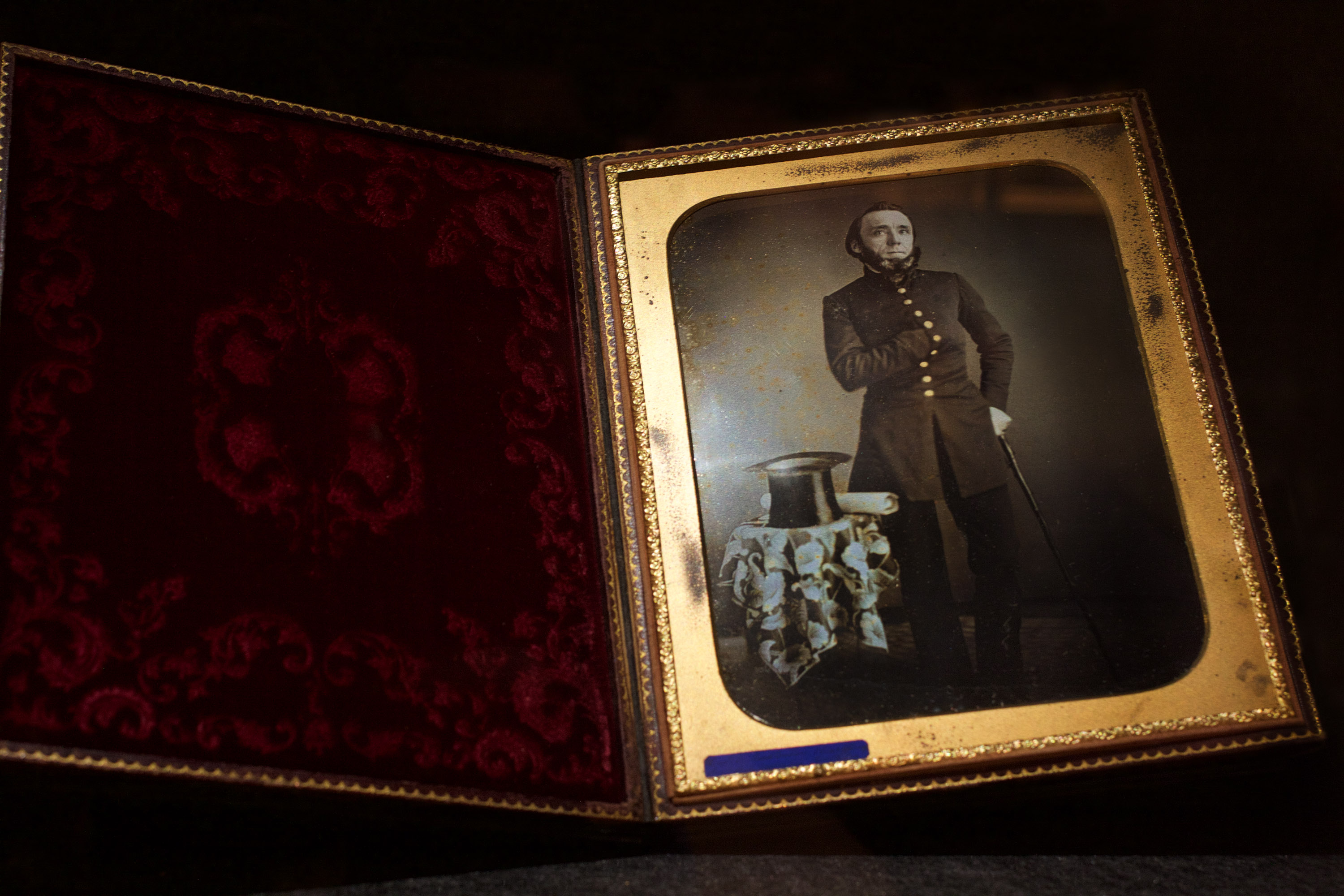
Meade Brothers Studio, Melbourne (studio active in Australia 1850s)
Thomas Glaister (attributed to) (photographer England 1825 – United States 1904)
No title (Gentleman)
c. 1854
Daguerreotype, colour pigments; gold, leather, velvet, brass, glass (case)
National Gallery of Victoria, Melbourne
Purchased through the NGV Foundation with the assistance of T. H. Lustig and Moar Families, Governor, 2001
Photo: © Dr Marcus Bunyan and the National Gallery of Victoria
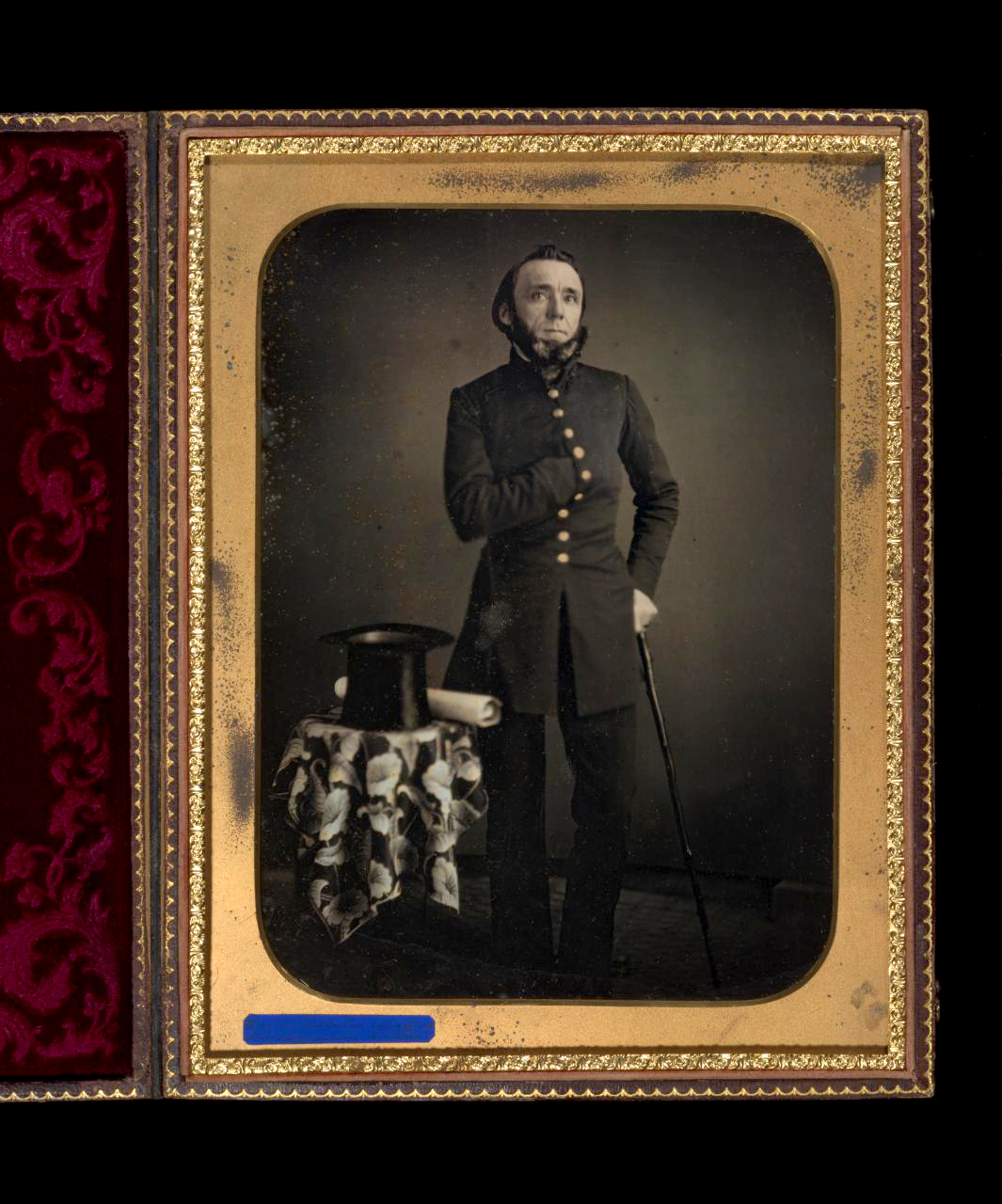
Meade Brothers Studio, Melbourne (studio active in Australia 1850s)
Thomas Glaister (attributed to) (photographer England 1825 – United States 1904)
No title (Gentleman)
c. 1854
Daguerreotype, colour pigments; gold, leather, velvet, brass, glass (case)
National Gallery of Victoria, Melbourne
Purchased through the NGV Foundation with the assistance of T. H. Lustig and Moar Families, Governor, 2001
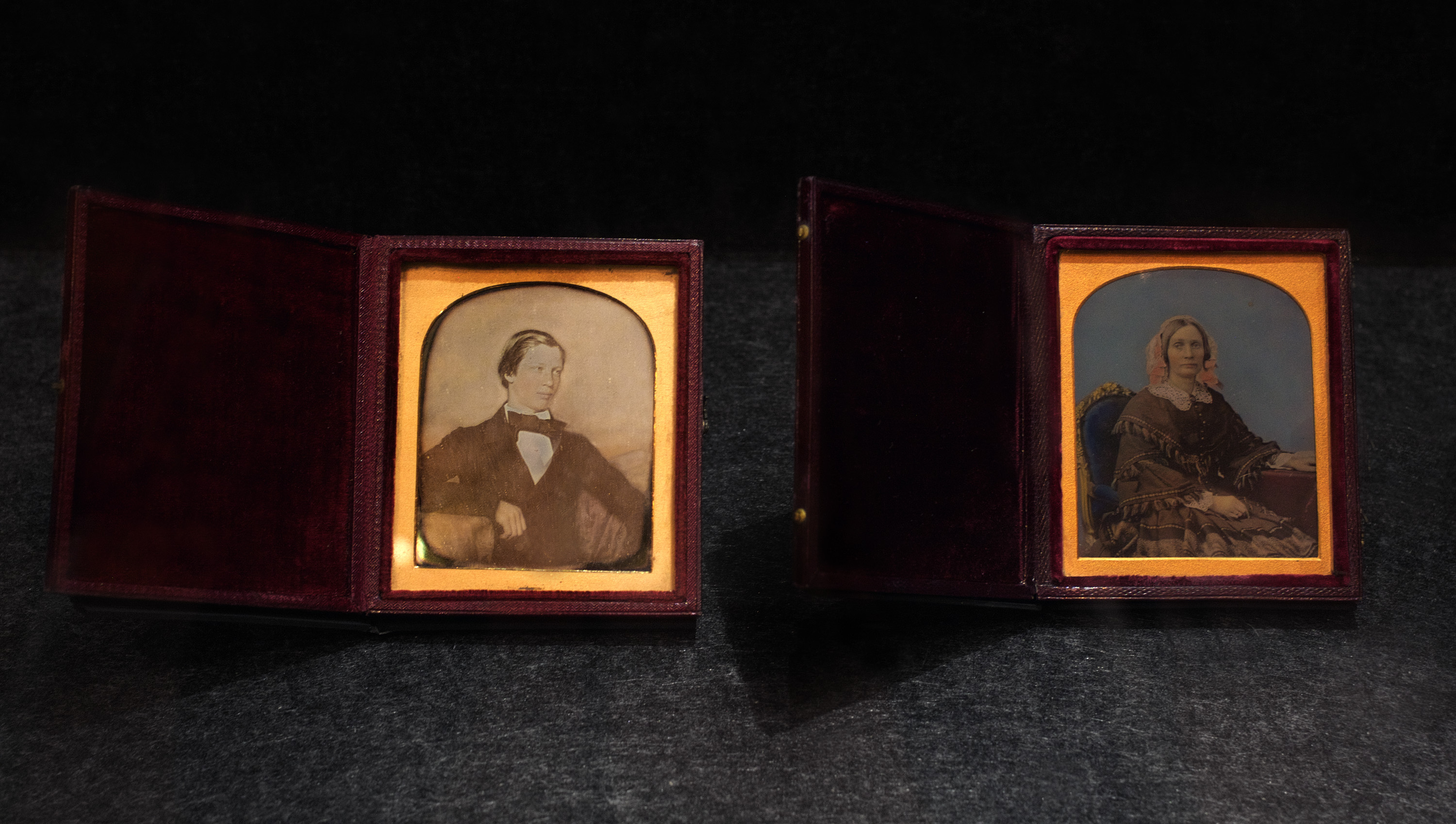
Left
Thomas Bock (attributed to) (England 1790 – Australia 1855, Australia from 1824)
William Robertson Jnr.
c. 1852
Daguerreotype, hand coloured
case: 9.2 x 8.0cm, image: 7.0 x 5.5cm
National Portrait Gallery, Canberra
Gift of Fiona Turner (nee Robertson) and John Robertson, 2001
Donated through the Australia Government’s Cultural Gifts Program
Right
Thomas Bock (attributed to) (England 1790 – Australia 1855, Australia from 1824)
Margaret Robertson
c. 1852
Ambrotype, hand coloured
case: 9.3 x 8.0cm, image: 7.0 x 6.0cm
National Portrait Gallery, Canberra
Gift of Fiona Turner (nee Robertson) and John Robertson, 2001
Donated through the Australia Government’s Cultural Gifts Program
Photo: © Dr Marcus Bunyan and the National Gallery of Victoria
News of scientific discoveries reached Australia via the flotillas of ships plying the southern trade routes. The first demonstrations of photography occurred in England and France in 1839. News of this reached Australia that same year and was described in an account in the Tasmanian newspaper The Cornwall Chronicle on 19 October 1839. Former convict Thomas Bock was one of the earliest Tasmanian photographers, first advertising his studio in September 1843. His daguerreotype portraits resemble his paintings and drawings in their composition and use of hand-colouring.
Exhibition text
Thomas Bock (Australian born England, 1790-1855)
Thomas Bock, artist, printmaker and photographer, is believed to have been born at Sutton Coldfield, near Birmingham, in 1790. He completed an apprenticeship as an engraver with Thomas Brandard in Birmingham and in 1814 established his own business there, advertising himself as an ‘Engraver and Miniature Painter’. In April 1823, Bock and a woman named Mary Day Underhill appeared at the Warwickshire Assizes charged with ‘administering concoctions of certain herbs to Ann Yates, with the intent to cause a miscarriage.’ Both were found guilty and sentenced to transportation for fourteen years. At the time of his conviction, Bock was thirty-two, married and father to five children. Bock arrived in Hobart aboard the Asia in January 1824. His convict record stated he had ‘served an apprenticeship to the Engraving Business’ and described him as ‘well connected and very orderly.’ The colonial authorities found immediate use for Bock, some of his earliest Tasmanian works being bank notes engraved for the Bank of Van Diemen’s Land and a drawing of executed cannibal, Alexander Pearce, made in July 1824 at the request of the Colonial Surgeon. Bock worked as a printmaker during the 1820s, engraving stationery along with illustrations for publications such as the Hobart Town Almanack while also producing portraits. He received a conditional pardon in 1832 and free pardon a year later, thereafter establishing a highly successful practice as Hobart’s most sought-after portrait artist. Bock was particularly known for his portrait drawings utilising watercolour, pencil, chalk and pastel (or ‘French crayon’), but his practice was diverse, incorporating printmaking and oil painting as well as photography. On his death in Hobart in March 1855 he was described as ‘an artist of a very high order’ whose works ‘adorned the homes of a number of our old colonists and citizens.’
Text from the National Portrait Gallery website

Thomas Bock (attributed to) (England 1790 – Australia 1855, Australia from 1824)
William Robertson Jnr.
c. 1852
Daguerreotype, hand coloured
case: 9.2 x 8.0cm, image: 7.0 x 5.5cm
National Portrait Gallery, Canberra
Gift of Fiona Turner (nee Robertson) and John Robertson, 2001
Donated through the Australia Government’s Cultural Gifts Program
William Robertson (Australian, 1839-1892)
William Robertson (1839-1892), barrister and politician, was the third of the seven children of pastoralist William Robertson (1798-1874) and his wife Margaret (née Whyte, 1811-1866). Robertson was born and educated in Hobart and then at Wadham College, Oxford. He is believed to be the first Australian to row in an Oxford eight, his team victorious against Cambridge in the Boat Race of 1861. Robertson graduated with a BA in 1862 and was married and called to the bar the following year. On his return to Australia, Robertson practised law in Hobart before heading to Victoria in 1864. He worked as a barrister in Melbourne and then assisted in the management of the family property, Corangamarah, which he and his three brothers jointly inherited on the death of their father in 1874. Robertson served as a member of the Victorian Legislative Assembly between 1871 and 1874 and again from 1881 to 1886; he was also President of the Colac Shire council in 1880-81. After the dissolution of the partnership with his brothers in 1885, Robertson became sole owner of Corangamarah, later called The Hill, and in retirement enjoyed the lifestyle of an ‘hospitable and sports-loving country gentleman.’
Text from the National Portrait Gallery website

Thomas Bock (attributed to) (England 1790 – Australia 1855, Australia from 1824)
Margaret Robertson
c. 1852
Ambrotype, hand coloured
case: 9.3 x 8.0cm, image: 7.0 x 6.0cm
National Portrait Gallery, Canberra
Gift of Fiona Turner (nee Robertson) and John Robertson, 2001
Donated through the Australia Government’s Cultural Gifts Program
Margaret Robertson (Australian, 1811-1866)
Margaret Robertson (née Whyte, 1811-1866) was the daughter of settlers George and Jessie Whyte, who emigrated to Van Diemen’s Land from Scotland in 1832. In September 1834, Margaret married Scottish-born entrepreneur and landowner William Robertson (1798-1874), who had arrived in the colony in 1822 and who, in the decade leading up to his marriage, had acquired land nearby to a property owned by Margaret’s family. The first of Margaret and William’s seven children – four sons and three daughters – was born in 1835. The family resided in Hobart until the early 1860s, when Roberston relocated to his Victorian estate, where Margaret died in February 1866.
Text from the National Portrait Gallery website
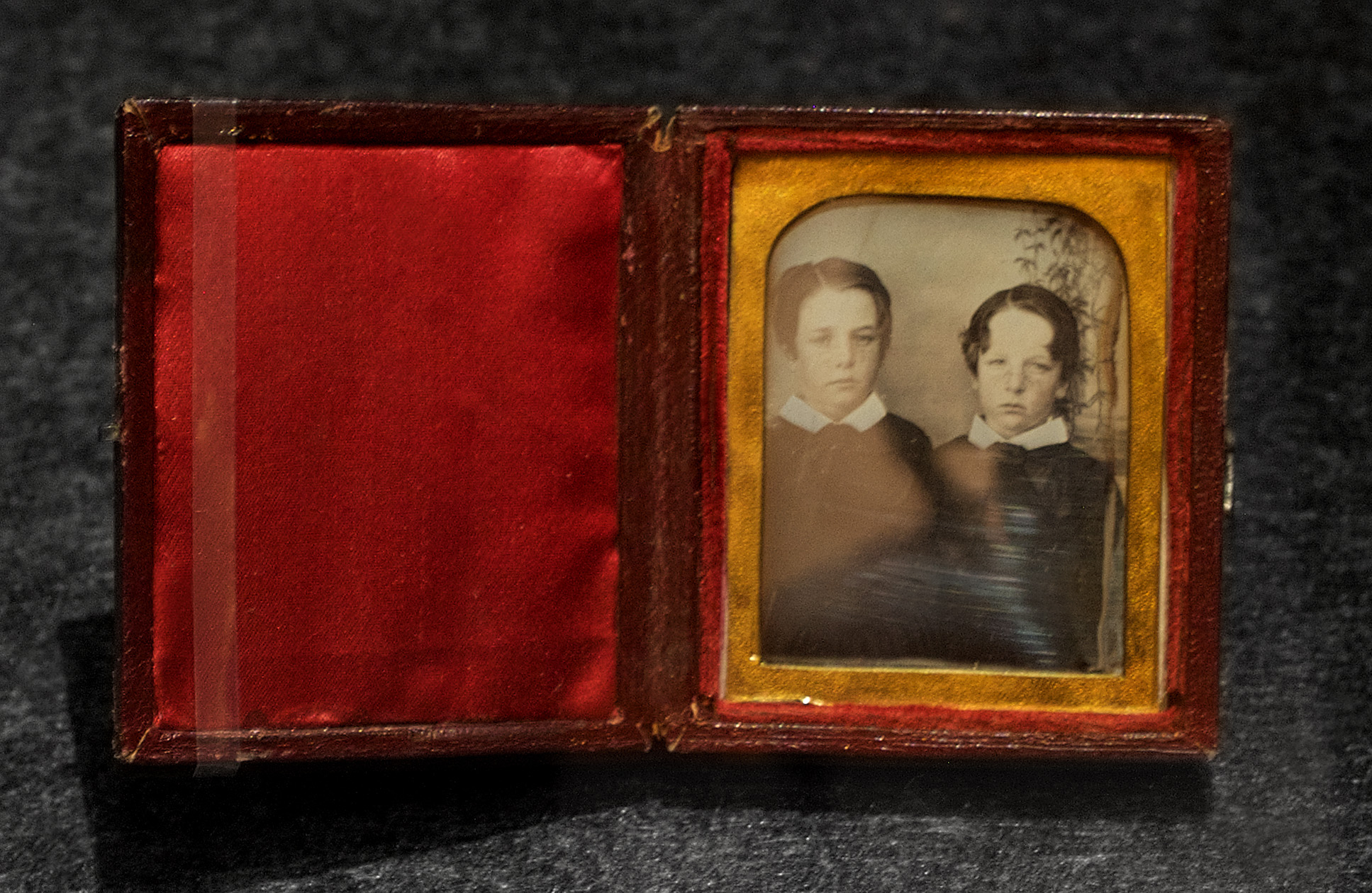
Thomas Bock (England 1790 – Australia 1855, Australia from 1824)
No title (Portrait of two boys)
1848-1850, Hobart, Tasmania, Australia
Daguerreotype
case closed 7.0 h x 6.0 w cm case open 7.5 h x 13.0 w cm
National Gallery of Australia, Canberra
Purchased 2009
Photo: © Dr Marcus Bunyan and the National Gallery of Victoria
The daguerreotype was first demonstrated in Australia in Sydney in May 1841. Late the following year, London’s George Goodman set up the first commercial studio in Sydney, claiming to have an exclusive license to use the daguerreotype in the colonies. Goodman was working in Hobart in August 1843, where he came in direct competition with British convict artist Thomas Bock.
Although an engraver by trade, Bock had a keen interest in photography and, in the Hobart Town Advertiser of 29 September 1843, he advertised that ‘in a short time he would be enabled to take photographic likenesses in the first style of the art’. Infuriated, Goodman threatened legal action and Bock promptly withdrew until five years later when he opened a portrait photography studio in Hobart.
Bock’s stepson Alfred assisted him in the photography-side of the studio business. They had seen daguerreotype portraits brought from London by Reverend Francis Russell Nixon in Hobart in June 1843 – before Goodman’s arrival in Tasmania – and had purchased a camera from a Frenchman in Hobart so that they could learn the new art form using photographic formulas published in English magazines. Their lack of proper training, however, shows in Hobart dignitary GTYB Boyes’s records of August 1849, in which he comments, ‘Bock understands the nature of his apparatus but very imperfectly!’ Despite this and other unfavourable remarks between 1849 and 1853, Boyes continued to visit Bock’s studios for daguerreotype portraits.
Bock’s portrait of two freckle-faced boys dressed in matching outfits shows that he was a skilled photographer by 1848 – a year before Boyes’s initial disparaging remark. Any parent would have been thrilled by such a vivid image of their sons, especially as, like many colonial sons, they might be getting ready to be sent ‘home’ to the United Kingdom for schooling. The image of the boys was a memento for their parents as well as proof for relatives in Britain that colonial society could produce the same well-dressed and well-bred young boys as the old country. The sitters are as yet unidentified but the daguerreotype has been dated by comparison with several identified examples of double portraits of children that have survived out of the hundreds of images made by the Bock studio.
Gael Newton
Senior Curator, Photography
in artonview, issue 61, autumn 2010


William Millington Nixon (England 1814 – Australia 1893, Australia from 1855)
The Lashmar family (installation views)
1857-1858
Daguerreotype, coloured inks; gold, leather, brass, metal, velvet and glass (case)
National Gallery of Victoria, Melbourne
Purchased, 2004
Photos: © Dr Marcus Bunyan and the National Gallery of Victoria
Shortly after his arrival in Adelaide in 1855, William Millington Nixon began making daguerreotypes, and quickly become a skilled daguerreotypist. By 1858 he had built a reputation as a portraitist and established a studio in King William Street, Adelaide.
The Lashmar family were pioneering pastoralists on Kangaroo Island in the 1850s. Despite the relative remoteness of their home, and the harshness of the environment, the family evidently prospered. Thomas Young Lashmar not only had the means to travel to Adelaide with his wife and family, but was also able to commission photographic portraits at a time when it was still a relatively expensive exercise.
Exhibition text
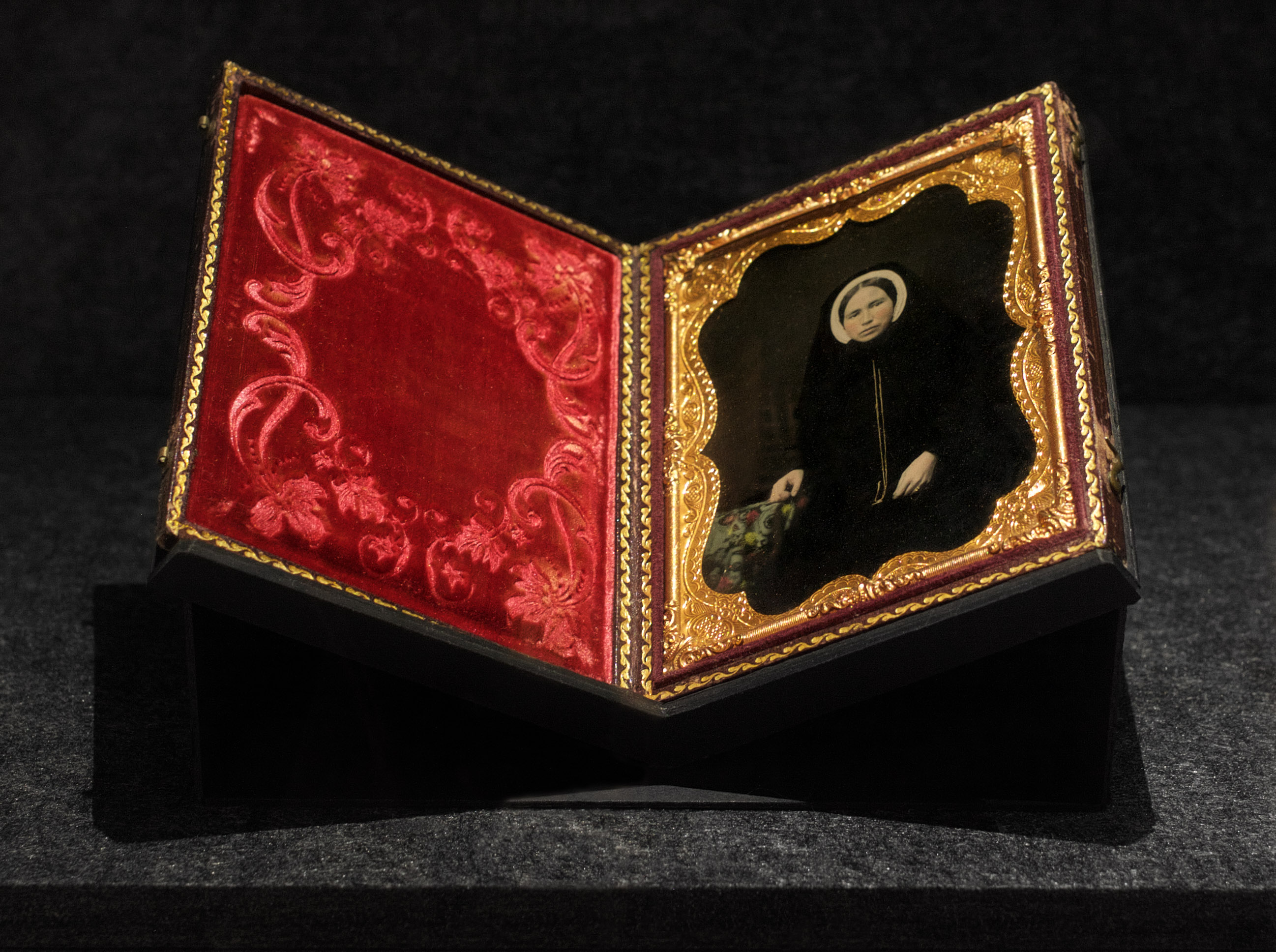
Unknown photographer
No title (Portrait of a nun) (installation view)
c. 1860
Ambrotype with hand tinting
4.0 x 16.5 x 12.5cm (box)
Art Gallery of South Australia, Adelaide
R.J. Noye Collection
Gift of Douglas and Barbara Mullins, 2004
Photo: © Dr Marcus Bunyan and the National Gallery of Victoria

Thomas Glaister (England 1824 – United States 1904, Australia 1850s)
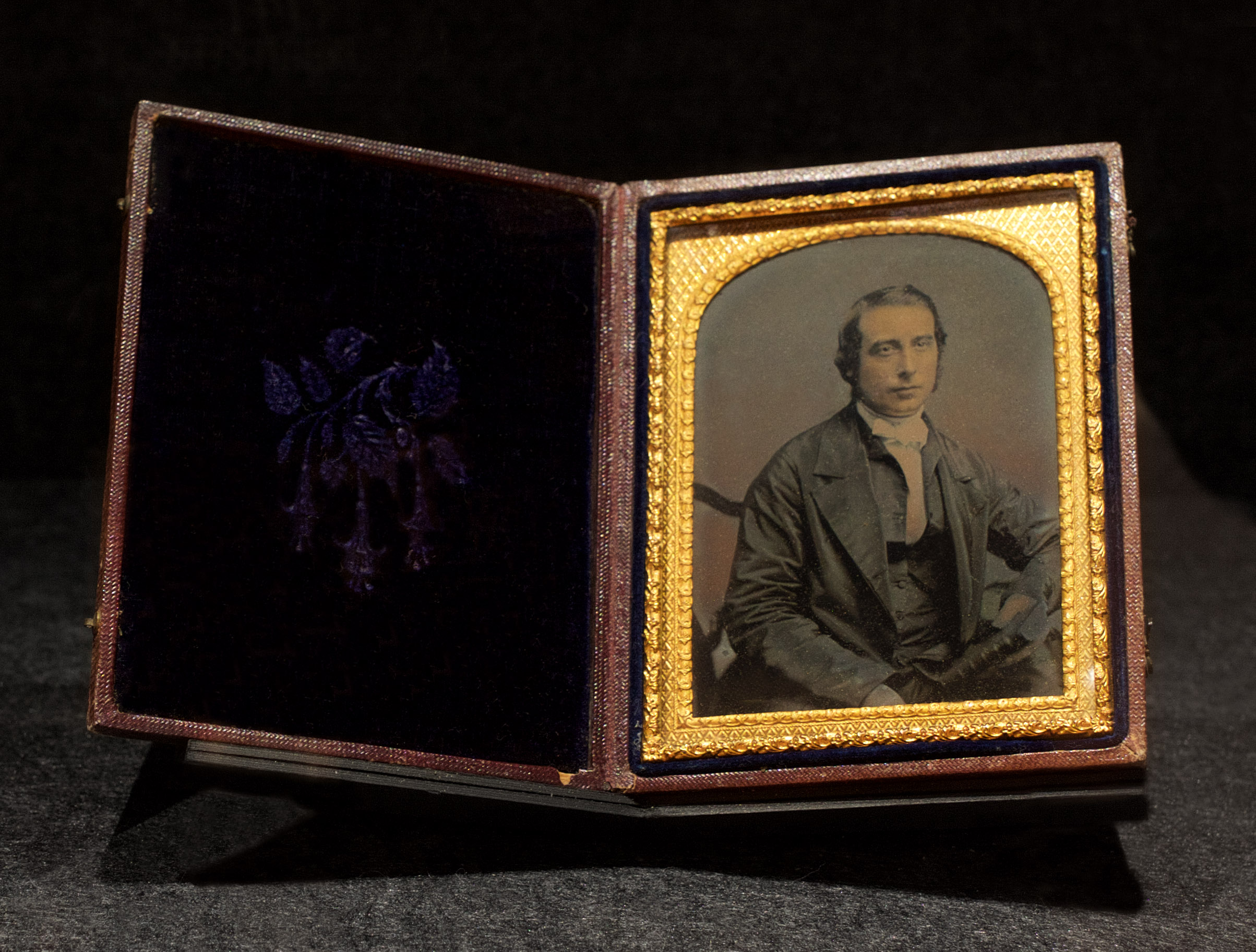
Reverend Jabez Bunting Waterhouse (installation view)
1861
Ambrotype, coloured-dyes
Mitchell Library, State Library of New South Wales, Sydney
Photo: © Dr Marcus Bunyan and the National Gallery of Victoria
Jabez Bunting Waterhouse (Australian born England, 1821-1891)
WATERHOUSE BROTHERS: Jabez Bunting (1821-1891), Joseph (1828-1881), and Samuel (1830-1918), Wesleyan ministers, were the fifth, ninth and tenth children of Rev. John Waterhouse (d. 1842) and his wife Jane Beadnell, née Skipsey. In 1838 their father, a prominent Yorkshire Methodist, was appointed general superintendent of the Wesleyan Methodist Mission in Australia and Polynesia with a roving commission. With his wife, seven sons and three daughters, he reached Hobart Town in the James on 1 February 1839.
Jabez was born in London on 19 April 1821, educated at Kingswood School in 1832-35 and apprenticed to a printer. In Hobart, A. Bent’s printing premises were purchased and worked by Jabez. In 1840 he became a local preacher extending his ministry to convict road menders. Received as a probationer in 1842, he returned to England to enter Richmond (Theological) College and in 1845 was appointed to Windsor circuit. After his ordination at the Methodist chapel, Spitalfields, he was sent to Van Diemen’s Land in 1847, and ministered successively in the Hobart, Westbury, Campbell Town and Longford circuits. In 1855 the first conference of the Wesleyan Church in Australia appointed him to South Australia; he served at Kapunda, Willunga and Adelaide, his ministry marked by his business acumen and his role as secretary of the Australasian Conference at Adelaide in 1862.
In 1864 Waterhouse was transferred to New South Wales and was appointed successively to Maitland, Goulburn, Orange, Waverley, Parramatta, Newcastle and Glebe. In 1874-1875 he was secretary of the New South Wales and Queensland Annual Conference and president in 1876; he was elected secretary of the first three general conferences of the Australasian Wesleyan Methodist Church: in Melbourne 1875, Sydney 1878 and Adelaide 1881. In 1882 he retired as a supernumerary, but remained on committees such as those of the Sustentation and Extension Society and the Missionary Society, frequently looking after missionary interests during the absence of George Brown. He supported the Wesleyan Church in Tonga in the dispute with S. W. Baker and published The Secession and the Persecution in Tonga … (Sydney, 1886). Regarded as a gifted preacher by his denomination and as the architect of most of the conference legislation, he died of heart disease and dropsy at Randwick on 18 January 1891 and was buried in the Wesleyan section of Rookwood cemetery. He was survived by his wife Maria Augusta, née Bode, whom he had married at Windsor, England, on 13 August 1847, and by seven sons; his second son John was headmaster of Sydney High School.
Niel Gunson. Australian Dictionary of Biography

Left
Freeman Brothers Studio (Sydney 1854-1900)
James Freeman (England 1814 – Australia 1890, Australia from early 1850s)
William Freeman (England 1809 – Australia 1895, Australia from early 1850s)
Jemima Jane Davis
c. 1860
Ambrotype, coloured dyes; wood, leather, velvet, glass and gilt metal (case)
National Gallery of Victoria, Melbourne
Gift of Warwick Reeder, 1991
Right
Freeman Brothers Studio (Sydney 1854-1900)
James Freeman (England 1814 – Australia 1890, Australia from early 1850s)
William Freeman (England 1809 – Australia 1895, Australia from early 1850s)
Walter Davis
c. 1860
Ambrotype, coloured dyes; wood, leather, velvet, glass and gilt metal (case)
National Gallery of Victoria, Melbourne
Gift of Warwick Reeder, 1991
Photo: © Dr Marcus Bunyan and the National Gallery of Victoria
Freeman Brothers Studio (Sydney 1854-1900)
James Freeman (England 1814 – Australia 1890, Australia from early 1850s)
William Freeman (England 1809 – Australia 1895, Australia from early 1850s)
Walter Davis
c. 1860
Ambrotype, coloured dyes; wood, leather, velvet, glass and gilt metal (case)
National Gallery of Victoria, Melbourne
Gift of Warwick Reeder, 1991
Photo: © Dr Marcus Bunyan and the National Gallery of Victoria
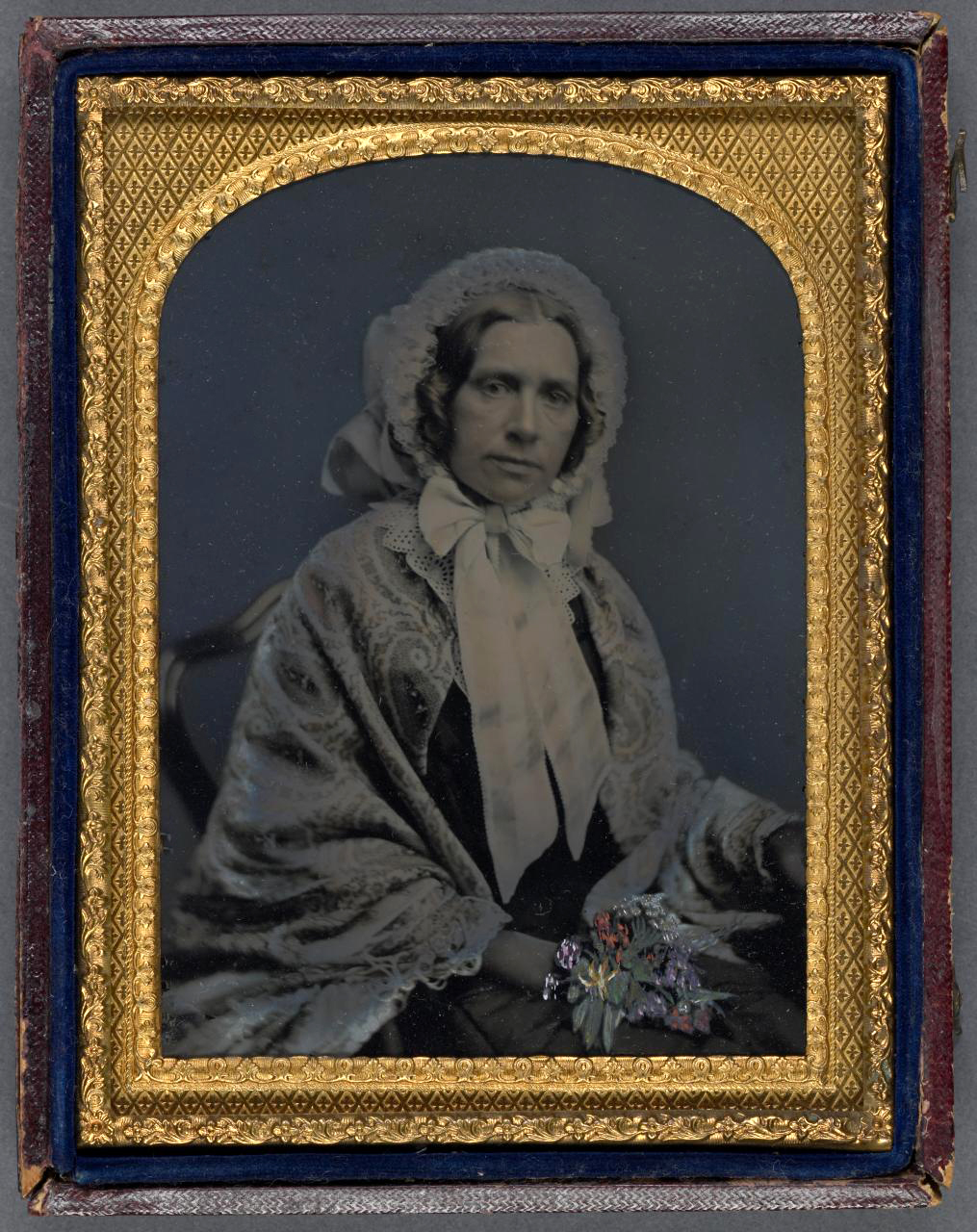
Freeman Brothers Studio (Sydney 1854-1900)
James Freeman (England 1814 – Australia 1890, Australia from early 1850s)
William Freeman (England 1809 – Australia 1895, Australia from early 1850s)
Jemima Jane Davis
c. 1860
Ambrotype, coloured dyes; wood, leather, velvet, glass and gilt metal (case)
National Gallery of Victoria, Melbourne
Gift of Warwick Reeder, 1991
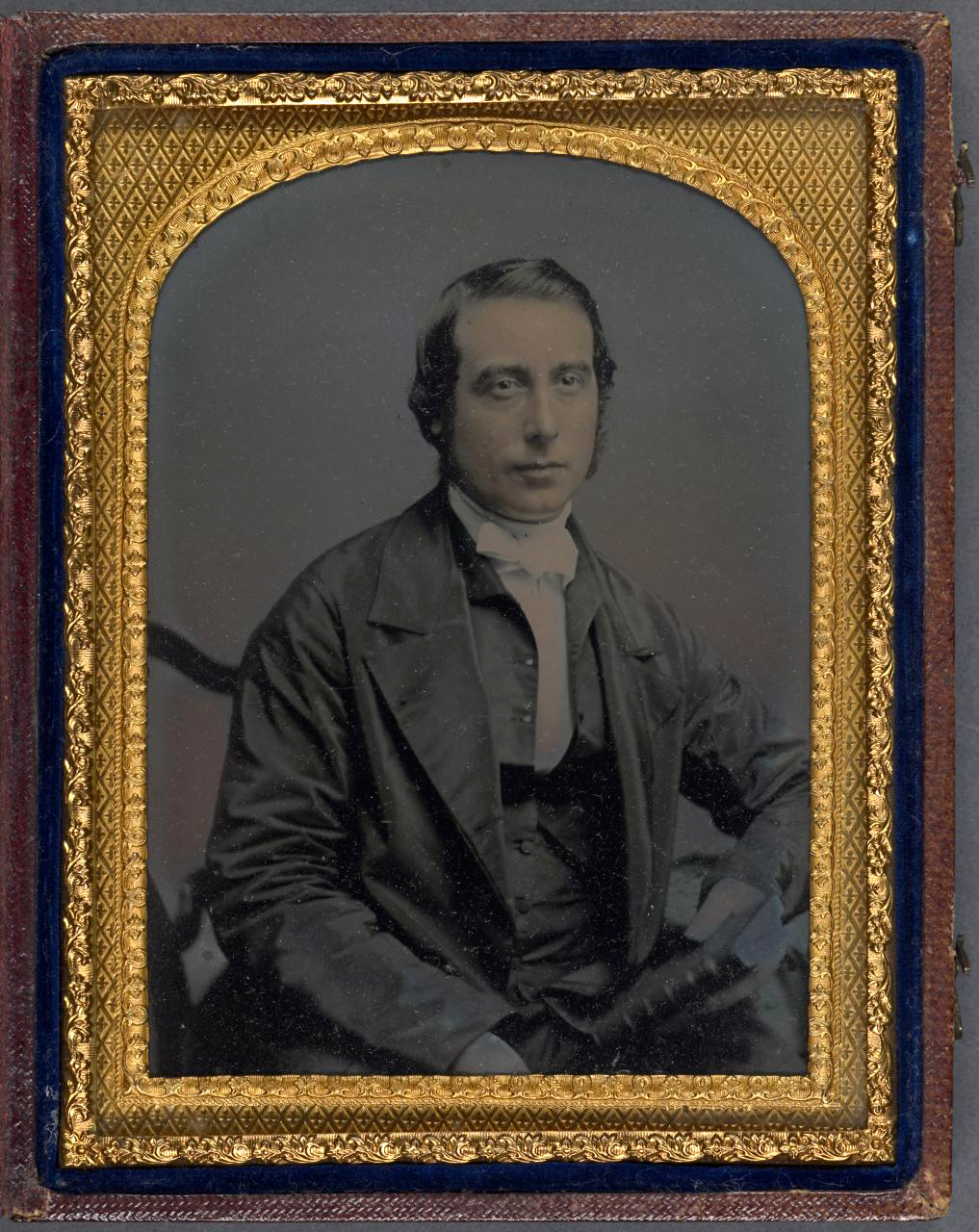
Freeman Brothers Studio (Sydney 1854-1900)
James Freeman (England 1814 – Australia 1890, Australia from early 1850s)
William Freeman (England 1809 – Australia 1895, Australia from early 1850s)
Walter Davis
c. 1860
Ambrotype, coloured dyes; wood, leather, velvet, glass and gilt metal (case)
National Gallery of Victoria, Melbourne
Gift of Warwick Reeder, 1991
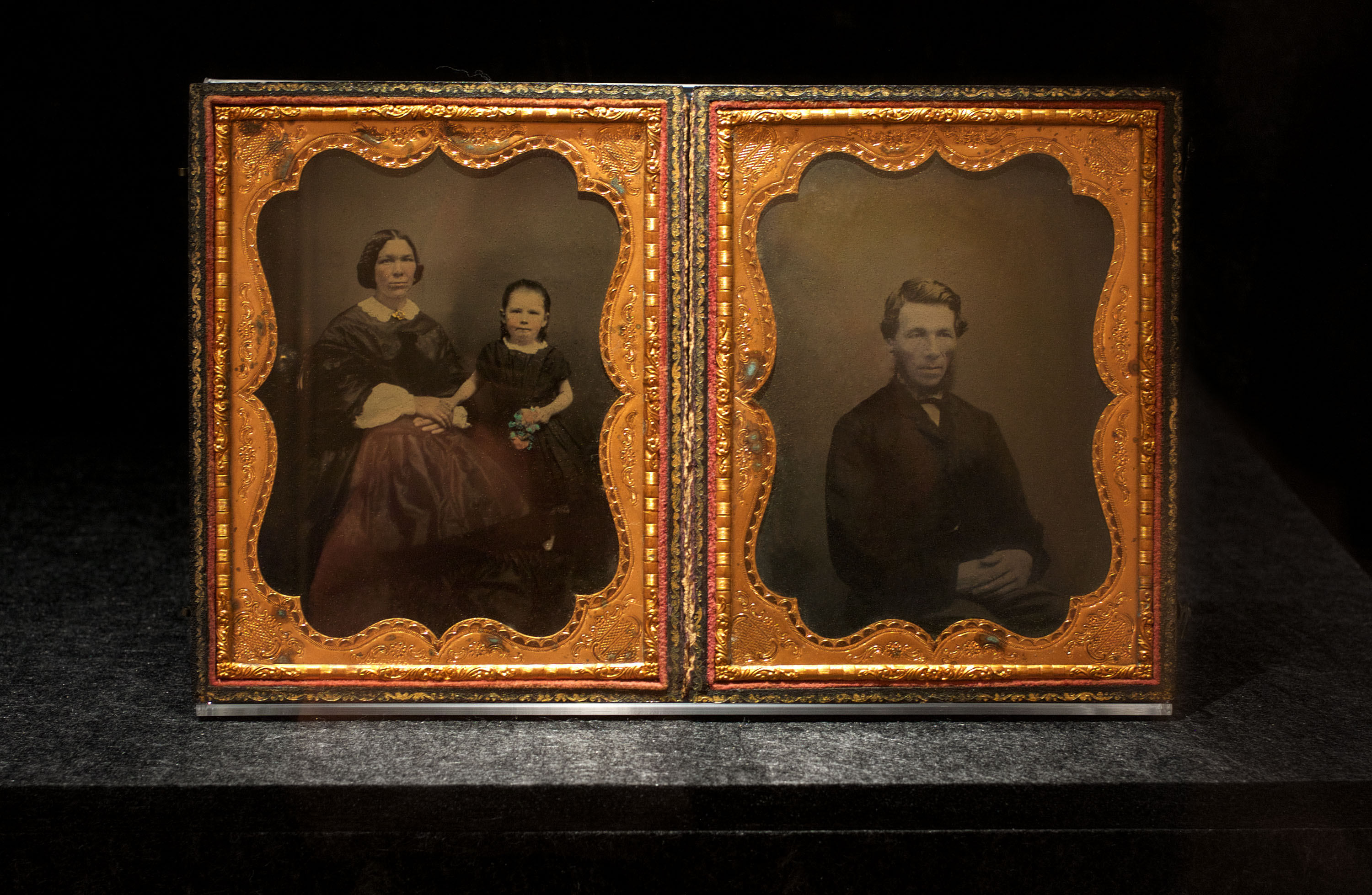
Unknown photographer
No title (Portrait of a man, woman and child)
c. 1860
Ambrotype, coloured dyes; wood, leather, brass, glass, silk (velvet) (case)
Museum of Applied Arts and Sciences, Sydney
Photo: © Dr Marcus Bunyan and the National Gallery of Victoria

Unknown photographer
No title (Portrait of mother and child)
c. 1855
Ambrotype, coloured dyes; wood, leather, brass, glass, silk (velvet) (case)
Museum of Applied Arts and Sciences, Sydney
Gift of Tooth & Company Ltd under the Australian Government’s Tax Incentives for the Arts Scheme, 1986
Photo: © Dr Marcus Bunyan and the National Gallery of Victoria


Left
Unknown photographer
Jemima, wife of Jacky with William T. Mortlock
c. 1860
Daguerreotype
Ayers House Museum, National Trust of South Australia, Adelaide
Right
Unknown photographer
Jacky, known as Master Mortlock
c. 1860-1865
Daguerreotype
Ayers House Museum, National Trust of South Australia, Adelaide
Photos: © Dr Marcus Bunyan and the National Gallery of Victoria
The Mortlock family were wealthy pastoralists in South Australia. Along with the daguerreotypes of family members they commissioned around 1860 are two portraits of their domestic servants known as Jemima and Jacky. Each member of the Mortlock family has been named in these images, but the identity of the two Aboriginal sitters has been lost – initially with the assignment of European first names and then the addition of the surname ‘master Mortlock’, which identified them as servants of the pastoralists who employed them.
Exhibition text
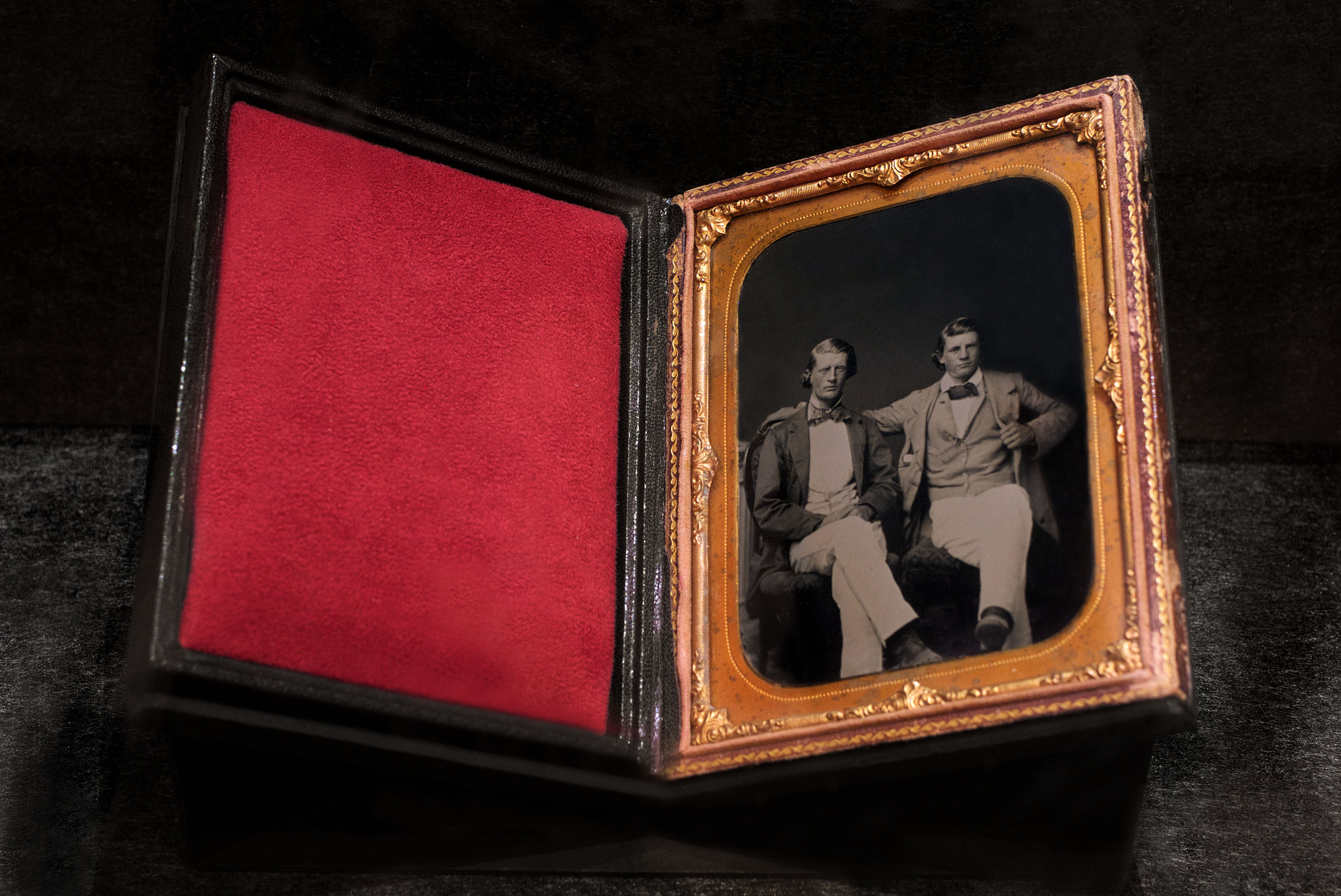
Unknown photographer
Brothers William Paul and Benjamin Featherstone
c. 1860
Ambrotype, gold paint
15.5 x 12.1cm (case)
Art Gallery of South Australia, Adelaide
J.C. Earl Bequest Fund, 2010
Photo: © Dr Marcus Bunyan and the National Gallery of Victoria

Thomas Glaister (England 1824 – United States 1904, Australia 1850s)
Professor John Smith
c. 1858
Daguerreotype
Tasmanian Museum and Art Gallery, Hobart
Presented by Miss Kate Crouch, 1942
Photo: © Dr Marcus Bunyan and the National Gallery of Victoria

Unknown photographer
Emily Spencer Wills (installation view)
c. 1859
Daguerreotype, coloured dyes; brass, glass, leather, wood
1/6th plate daguerreotype with applied colour in al brass matt (without original leather case)
Frame: 8.5 x 7.2cm, sight: 6.6 x 5.4cm
National Portrait Gallery, Canberra Gift of T S Wills Cooke 2014
Donated through the Australian Government’s Cultural Gifts Program
Photo: © Dr Marcus Bunyan and the National Gallery of Victoria

Unknown photographer
Emily Spencer Wills
c. 1859
Daguerreotype, coloured dyes; brass, glass, leather, wood
1/6th plate daguerreotype with applied colour in al brass matt (without original leather case)
Frame: 8.5 x 7.2cm, sight: 6.6 x 5.4cm
National Portrait Gallery, Canberra Gift of T S Wills Cooke 2014
Donated through the Australian Government’s Cultural Gifts Program
Photography served several interrelated roles associated with the experience of migration and colonisation. For those European migrants transplanted halfway across the world, often without family or friends, the most immediate and heartfelt use for the camera was portraiture. Some of Australia’s earliest surviving photographs are small, sturdily cased portraits which provided ‘likenesses as if by magic’ of those depicted and were sent back ‘home’, thus providing an emotional connection to family members.
This group of family portraits shows members of the Wills family, including Thomas Wentworth Wills, who was a prominent sportsman and one of the authors of the rules of the game that later became known as Australian Rules.
Exhibition text

Left
Unknown photographer
No title (Group of people in front of a crushing plant on a goldfield) (installation view)
1860s
Ambrotype; embossed leather, wood, velvet, brass, gilt metal
National Gallery of Victoria, Melbourne Purchased, 2007
Right
Henry King (Australia 1855-1923)
Henry Kay (installation view)
1855-1860
Ambrotype, coloured dyes
2 photographs: ambrotypes with hand-colouring ; 8.9 x 6.5cm (oval, sight, f.1) in pinchbeck and gilt brass mount 10.9 x 8.3cm and 9.6 x 7.0cm (oval, sight, f.2) in gilt brass mount 10.9 x 8.2cm, in brown union case 12.0 x 9.4cm
Pictures Collection, State Library Victoria, Melbourne
Gift of Mrs W.G. Haysom 1964
Photo: © Dr Marcus Bunyan and the National Gallery of Victoria
The discovery of gold in 1851 led to extraordinary change in the colonies as migrants flooded in and previously unknown wealth enabled expansion and development. Across the colony mines were dug and small towns and settlements were established. This ambrotype shows a working mine in central Victoria and also reveals the environmental damage that resulted from the scramble for gold.
The desire to make a fortune on the goldfields brought about significant social change. Migrants such as Henry Kay, who arrived from Penang in the 1850s, came seeking gold but stayed on in various other roles, including that of court interpreter.
Exhibition text

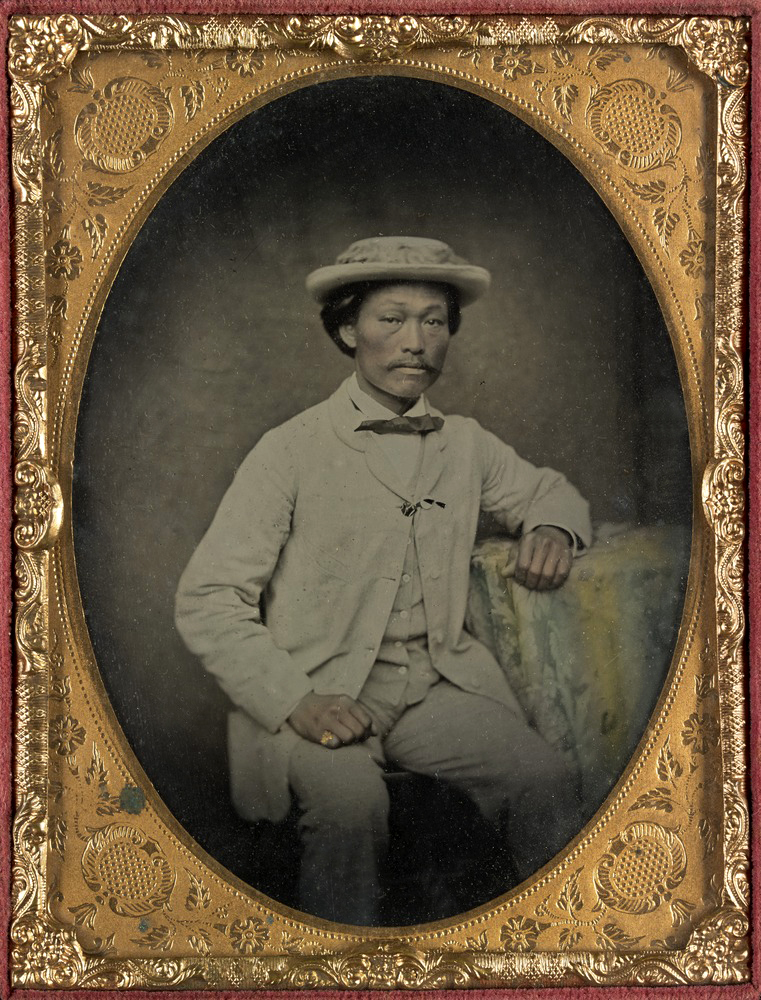
Henry King (Australia 1855-1923)
Henry Kay
1855-1860
Ambrotype, coloured dyes
2 photographs: ambrotypes with hand-colouring ; 8.9 x 6.5cm (oval, sight, f.1) in pinchbeck and gilt brass mount 10.9 x 8.3cm and 9.6 x 7.0cm (oval, sight, f.2) in gilt brass mount 10.9 x 8.2cm, in brown union case 12.0 x 9.4cm
Pictures Collection, State Library Victoria, Melbourne
Gift of Mrs W.G. Haysom 1964
The Ian Potter Centre: NGV Australia
Federation Square
Corner of Russell and
Flinders Streets, Melbourne
Opening hours:
Daily 10am – 5pm


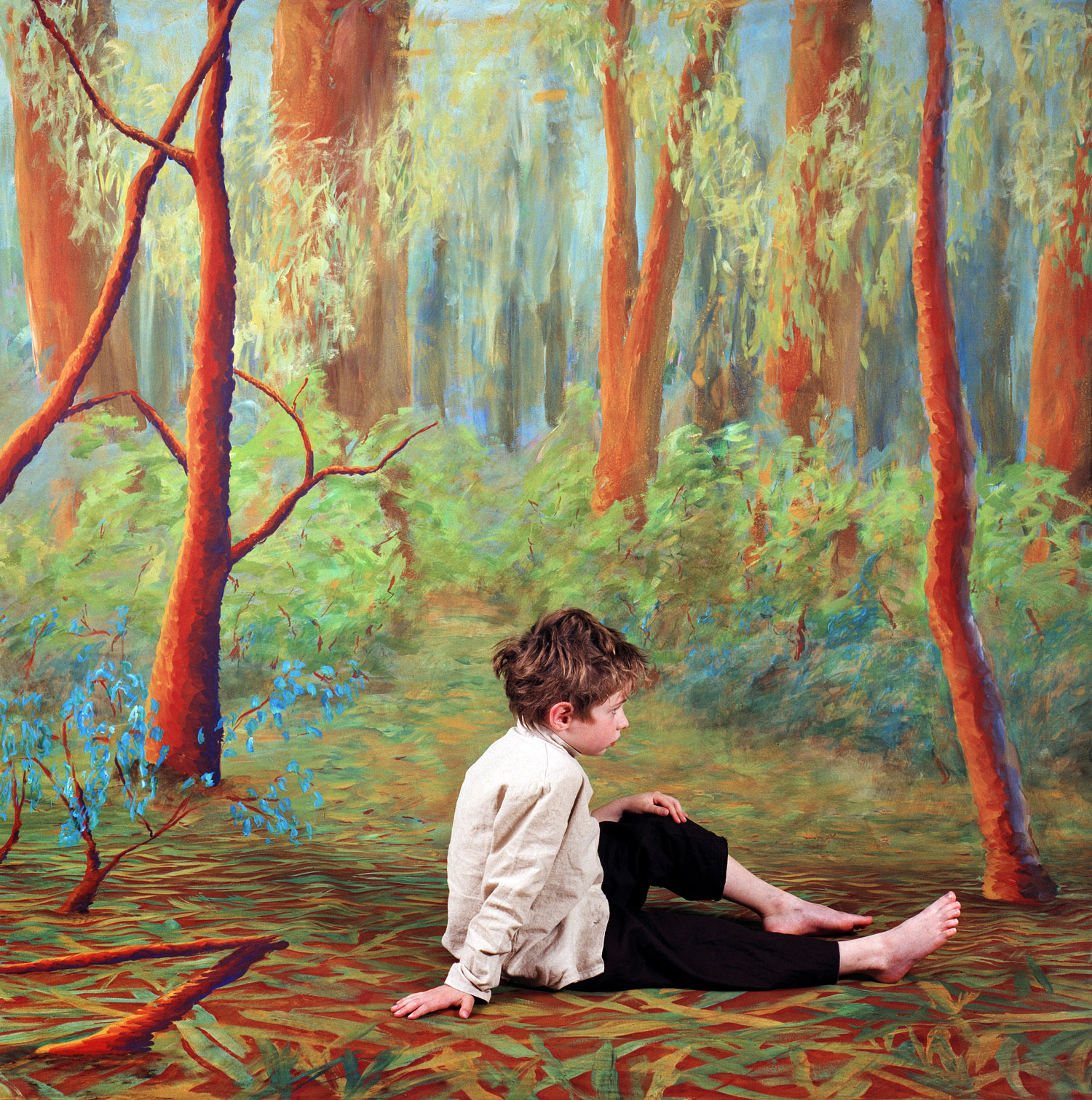





































![August Sander (German, 1876-1964) 'Political Prisoner [Erich Sander]' 1943, printed 1990](https://artblart.com/wp-content/uploads/2013/10/august-sander-political-prisoner-erich-sander-1943-photograph-gelatin-silver-print-on-paper-b.jpg "August Sander (German, 1876-1964) 'Political Prisoner [Erich Sander]' 1943, printed 1990")
![George Platt Lynes (American, 1907-1955) 'Tex Smutley and Buddy Stanley [no title (two sleeping boys)]' 1941](https://artblart.com/wp-content/uploads/2013/10/george-platt-lynes-united-states-of-america-1907-e28093-1955-tex-smutley-and-buddy-stanley-no-title-two-sleeping-boys-1941-gelatin-silver-photograph-printed-image-19-2-h-x-24-4-w-cm.jpg "George Platt Lynes (American, 1907-1955) 'Tex Smutley and Buddy Stanley [no title (two sleeping boys)]' 1941")






 Art Blart _ art and cultural memory archive
You must be logged in to post a comment.