Exhibition and auction, photographs and text: ‘The Gay Day Archive 1974-83’ – photographs by Hank O’Neal; text by Alan Ginsberg

Exhibition dates: 15th June – 20th June 2019

Auction: 20th June, 2019 at 1:30pm


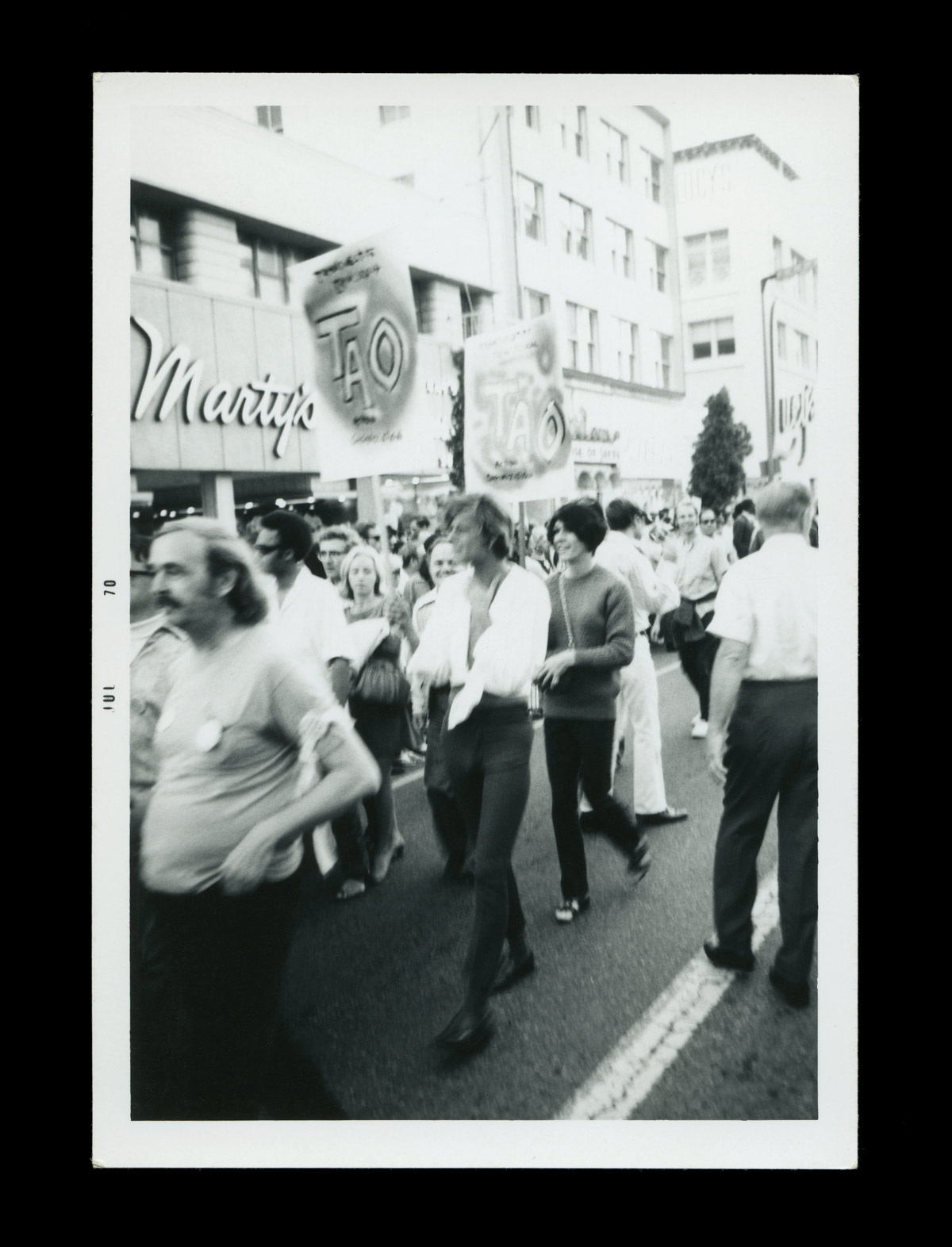
Hank O'Neal (American, b. 1940) 'The Gay Day Archive' 1974-1983 from the exhibition 'The Gay Day Archive 1974-83' – photographs by Hank O'Neal; text by Alan Ginsberg, June 2019


Hank O’Neal (American, b. 1940) (photographer)
Alan Ginsberg (American, 1926-1997) (writer)
Untitled (Gay Daddies)
1974-1983
From The Gay Day Archive
Gelatin silver print


“Born gay and free”

I was born in 1958 and came out as a gay man in 1975, six short years after the Stonewall uprising, the nominal (the UK had decriminalised homosexuality in 1967) but official start of Gay Liberation around the world, especially in the United States of America. I survived the plague that hit in the early 1980s. A lot of my friend’s didn’t.

These fabulous photographs and lilting prose make wonderful bedfellows, shining a light on those very early years of outness, campness, empowerment and sexual and personal freedom pre HIV/AIDS. From Gay Daddies to Gay Teachers, from being nowhere (in sight) … to being everywhere. As Ginsberg eloquently proposes, “wearing their hearts on a banner for nothing but love.” Gay youth, dignity and equality, proud of my gay son whoever he may be.

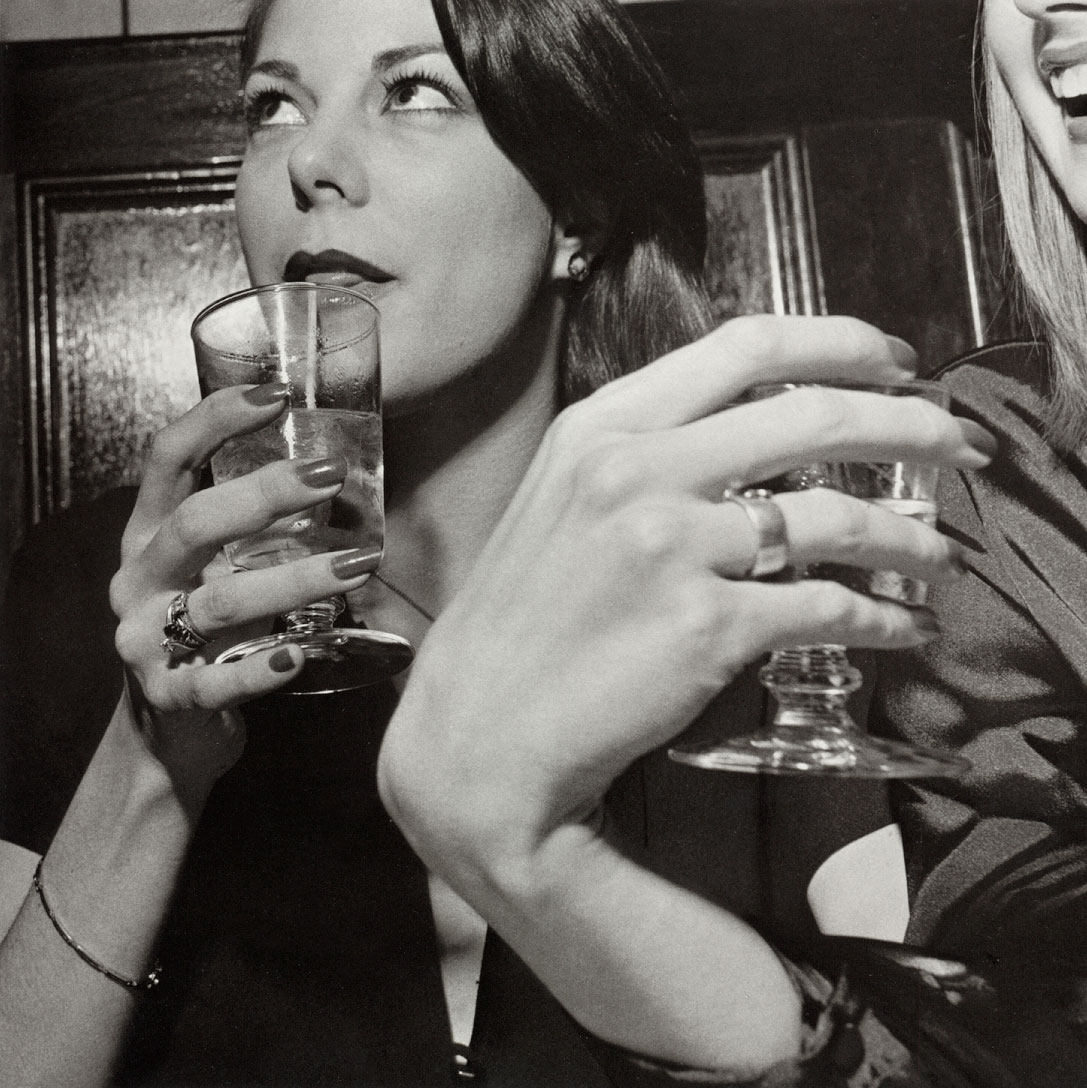
There is such a sense of joy, happiness and love contained in these photographs. The two lads in “Untitled [summery mouths]” are redolent of the era. Cute as a button: platform shoes, tight flared jeans, keys hanging, hands clasped around, small waists, tight singlets, sultry curly hair. Disco love is in the air. I could have been one of these men, memories of those days, those halcyon 70s days.

There are heroes too. Marsha P. Johnson, performance artist, drag mother, transgender, gender nonconforming survival sex worker political activist human… probably murdered by thugs after the 1992 pride parade. And Harvey Milk, that assassinated visionary who became a martyr to the cause, marching in spirit with the crowd. The man carrying a wreath with his name – head down, black armband, gay rights t-shirt – is such a poignant image of the loss of a hero. And then Ginsberg’s text, “Harvey Milk died for your sins.” (He had initially written “our” but crossed it out).

That erasure is so important. I remember working at Channel 7 as a set painter in Melbourne in the late 1980s to pay for university. It was a typical male only workplace at the time, all “blokes”, and I was confronted one day by one of them about being openly gay. My response: I’m quite happy being how I am, it’s you that obviously has the problem. Why don’t you look at yourself first before you start attacking other people.

This is why it is so important that Ginsberg crossed out “our” and wrote “your” sins. LGBTQI people have not sinned. There just are. They have nothing to forgive themselves for. It is the prejudice of others that leads them to fight for dignity and equality. As one of the posters in the photographs says, “People should love one another regardless of race, religion, age or sex.” A men to that.

Dr Marcus Bunyan


PS. The exhibition of these photographs is only on for a few days. Please see them if you can.

The photographs and text are used under “fair use” for the purposes of freedom of speech, research, education and informed comment. Please click on the photographs for a larger version of the image.


A festive visual compilation by the NY-based photographer and author O’Neal of the parade signifying the Gay Liberation Movement. Pictured are an array of fun-loving and politically-motivated participants, several openly displaying affection. With photographs of the transgender activist Marsha P. Johnson. Silver prints, various sizes, with most of the sheets 6 x 7 1/2 inches, 15.2 x 19 cm., or the reverse; each captioned by Ginsberg, and signed and dated by O’Neal on verso. 1974-1983. AND – An additional group of approximately 165 photographs by O’Neal of the NYC parades, comprising 95 silver prints, various sizes but most 11 x 14 inches, 28 x 35.6 cm., and the reverse, 5 are signed and dated by O’Neal and contain Ginsberg’s captions; and 70 smaller silver prints, various sizes to 8 x 10 inches, 20.3 x 25.4 cm., and the reverse, a few with O’Neal’s hand stamp and notations and many are dated, in pencil, on verso; with duplicates and triplicates. 1974-1983.

Estimate $70,000 – 100,000

Text for the Swann Auction Galleries website [Online] Cited 30/05/2019. No longer available online


Hank O'Neal (American, b. 1940) 'The Gay Day Archive' 1974-1983 from the exhibition 'The Gay Day Archive 1974-83' – photographs by Hank O'Neal; text by Alan Ginsberg, June 2019


Hank O’Neal (American, b. 1940) (photographer)
Alan Ginsberg (American, 1926-1997) (writer)
Untitled (WE ARE EVERYWHERE)
1974-1983
From The Gay Day Archive
Gelatin silver print


Hank O'Neal (American, b. 1940) (photographer) Alan Ginsberg (American, 1926-1997) (writer) 'The Gay Day Archive' 1974-1983


Hank O’Neal (American, b. 1940) (photographer)
Alan Ginsberg (American, 1926-1997) (writer)
Untitled [WE ARE EVERYWHERE] (verso)
1974-1983
From The Gay Day Archive
Gelatin silver print


We all look pretty normal,
boy next door, handsome punk,
ad man’s delight, daughters of the
American Revolution.
 

Hank O'Neal (American, b. 1940) 'The Gay Day Archive' 1974-1983


Hank O’Neal (American, b. 1940) (photographer)
Alan Ginsberg (American, 1926-1997) (writer)
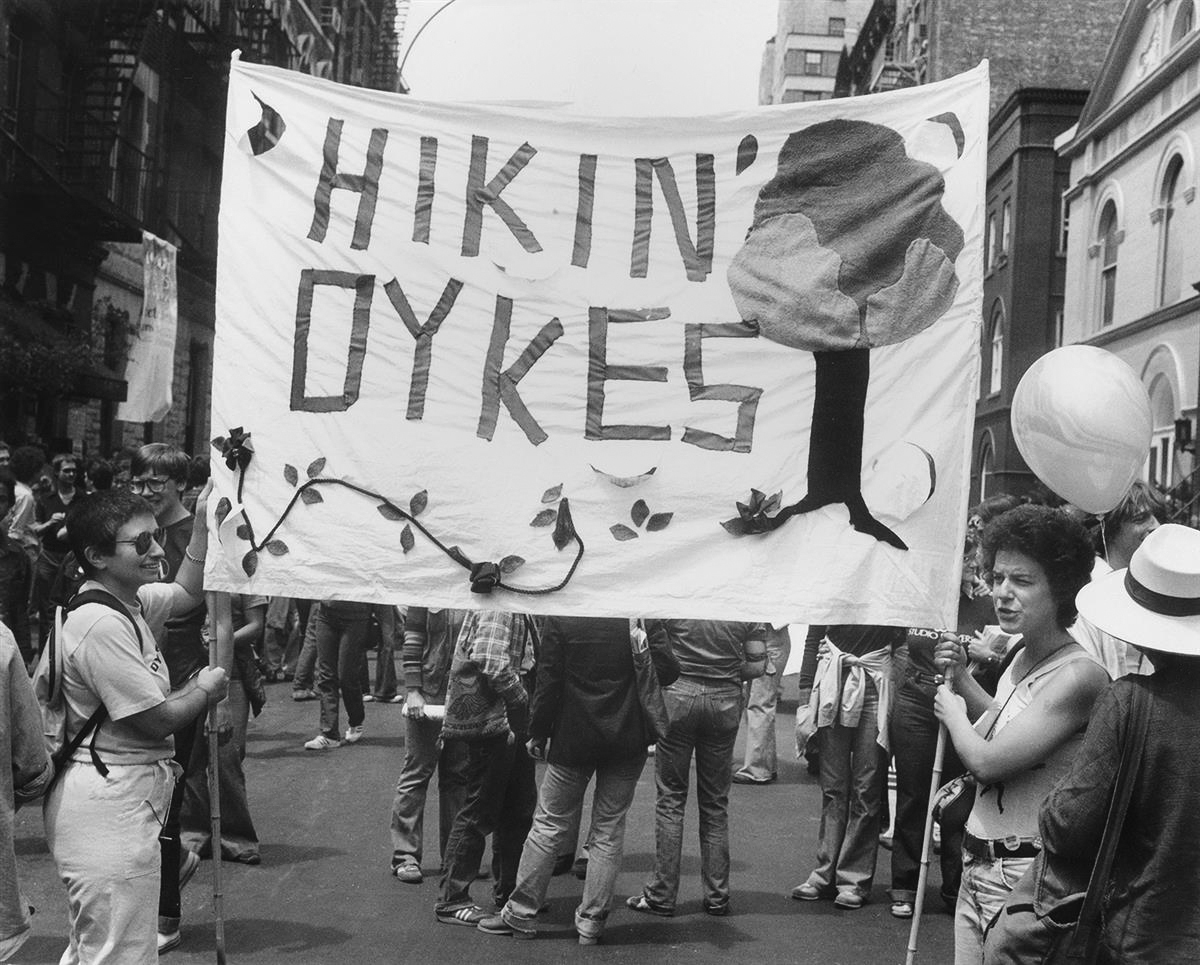
Untitled (Hikin’ Dykes)
1974-1983
From The Gay Day Archive
Gelatin silver print


Hank O'Neal (American, b. 1940) (photographer) Alan Ginsberg (American, 1926-1997) (writer) 'The Gay Day Archive' 1974-1983


Hank O’Neal (American, b. 1940) (photographer)
Alan Ginsberg (American, 1926-1997) (writer)
Untitled (Hikin’ Dykes) (verso)
1974-1983
From The Gay Day Archive
Gelatin silver print


Black white brown boy girl what idealism! –
wearing their
hearts on a banner for nothing but love
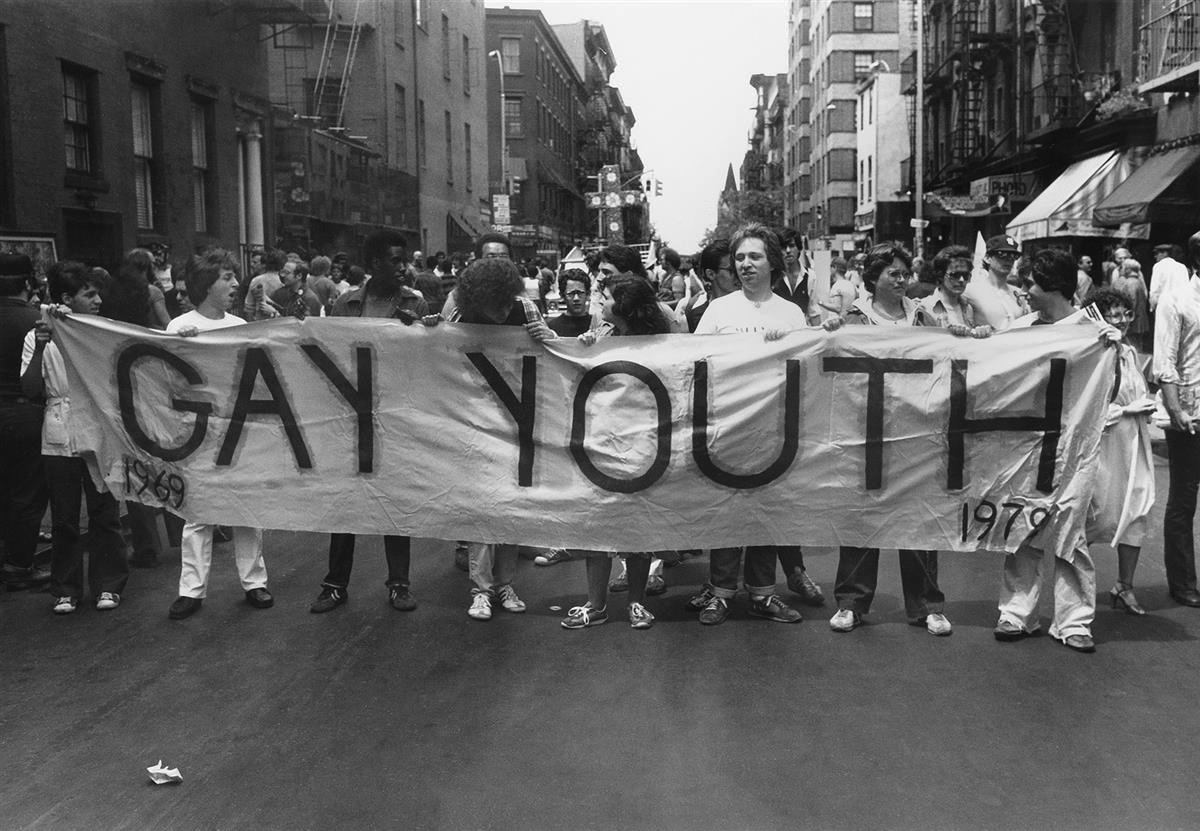
 

Hank O'Neal (American, b. 1940)  'The Gay Day Archive' 1974-1983


Hank O’Neal (American, b. 1940) (photographer)
Alan Ginsberg (American, 1926-1997) (writer)
Untitled (GAY YOUTH 1969-1979)
1974-1983
From The Gay Day Archive
Gelatin silver print


Hank O'Neal (American, b. 1940) (photographer) Alan Ginsberg (American, 1926-1997) (writer) 'The Gay Day Archive' 1974-1983


Hank O’Neal (American, b. 1940) (photographer)
Alan Ginsberg (American, 1926-1997) (writer)
Untitled (GAY YOUTH 1969-1979) (verso)
1974-83
From The Gay Day Archive
Gelatin silver print


The Guy in the right looks like my daddy when
he was young (and alive).


Hank O'Neal (American, b. 1940) 'The Gay Day Archive' 1974-1983


Hank O’Neal (American, b. 1940) (photographer)
Alan Ginsberg (American, 1926-1997) (writer)
Untitled (Dominant/Submissive Love)
1974-83
From The Gay Day Archive
Gelatin silver print


Allen Ginsberg (American, 1926-1997)

Irwin Allen Ginsberg (June 3, 1926 – April 5, 1997) was an American poet, philosopher and writer. He is considered to be one of the leading figures of both the Beat Generation during the 1950s and the counterculture that soon followed. He vigorously opposed militarism, economic materialism, and sexual repression and was known as embodying various aspects of this counterculture, such as his views on drugs, hostility to bureaucracy and openness to Eastern religions. He was one of many influential American writers of his time who were associated with the Beat Generation, including Jack Kerouac and William S. Burroughs.

Ginsberg is best known for his poem “Howl”, in which he denounced what he saw as the destructive forces of capitalism and conformity in the United States. In 1956, “Howl” was seized by San Francisco police and US Customs. In 1957, it attracted widespread publicity when it became the subject of an obscenity trial, as it described heterosexual and homosexual sex at a time when sodomy laws made homosexual acts a crime in every U.S. state. “Howl” reflected Ginsberg’s own sexuality and his relationships with a number of men, including Peter Orlovsky, his lifelong partner. Judge Clayton W. Horn ruled that “Howl” was not obscene, adding, “Would there be any freedom of press or speech if one must reduce his vocabulary to vapid innocuous euphemisms?”

Ginsberg was a practicing Buddhist who studied Eastern religious disciplines extensively. He lived modestly, buying his clothing in second-hand stores and residing in downscale apartments in New York’s East Village. One of his most influential teachers was the Tibetan Buddhist Chögyam Trungpa, the founder of the Naropa Institute in Boulder, Colorado. At Trungpa’s urging, Ginsberg and poet Anne Waldman started The Jack Kerouac School of Disembodied Poetics there in 1974.

Ginsberg took part in decades of non-violent political protest against everything from the Vietnam War to the War on Drugs. His poem “September on Jessore Road”, calling attention to the plight of Bangladeshi refugees, exemplifies what the literary critic Helen Vendler described as Ginsberg’s tireless persistence in protesting against “imperial politics, and persecution of the powerless.”

His collection The Fall of America shared the annual U.S. National Book Award for Poetry in 1974. In 1979, he received the National Arts Club gold medal and was inducted into the American Academy and Institute of Arts and Letters. Ginsberg was a Pulitzer Prize finalist in 1995 for his book Cosmopolitan Greetings: Poems 1986-1992.

Full text “Alan Ginsberg,” on the Wikipedia website


Hank O'Neal (American, b. 1940) 'The Gay Day Archive' 1974-1983


Hank O’Neal (American, b. 1940) (photographer)
Alan Ginsberg (American, 1926-1997) (writer)
Untitled (Miss Rollerind)
1974-1983
From The Gay Day Archive
Gelatin silver print


Hank O'Neal (American, b. 1940) (photographer) Alan Ginsberg (American, 1926-1997) (writer) 'The Gay Day Archive' 1974-1983


Hank O’Neal (American, b. 1940) (photographer)
Alan Ginsberg (American, 1926-1997) (writer)
Untitled (Miss Rollerind) (verso)
1974-1983
From The Gay Day Archive
Gelatin silver print


Miss Rollerind, queen of late 70s
disco world universe drama, observed by
a (gay??) black man on the asphalt.


Hank O'Neal (American, b. 1940) 'The Gay Day Archive' 1974-83


Hank O’Neal (American, b. 1940) (photographer)
Alan Ginsberg (American, 1926-1997) (writer)
Untitled (COME! DIGNITY + EQUALITY)
1974-1983
From The Gay Day Archive
Gelatin silver print


Hank O'Neal (American, b. 1940) (photographer) Alan Ginsberg (American, 1926-1997) (writer) 'The Gay Day Archive' 1974-1983


Hank O’Neal (American, b. 1940) (photographer)
Alan Ginsberg (American, 1926-1997) (writer)
Untitled (COME! DIGNITY + EQUALITY) (verso)
1974-1983
From The Gay Day Archive
Gelatin silver print


Come all over the sky, look up!
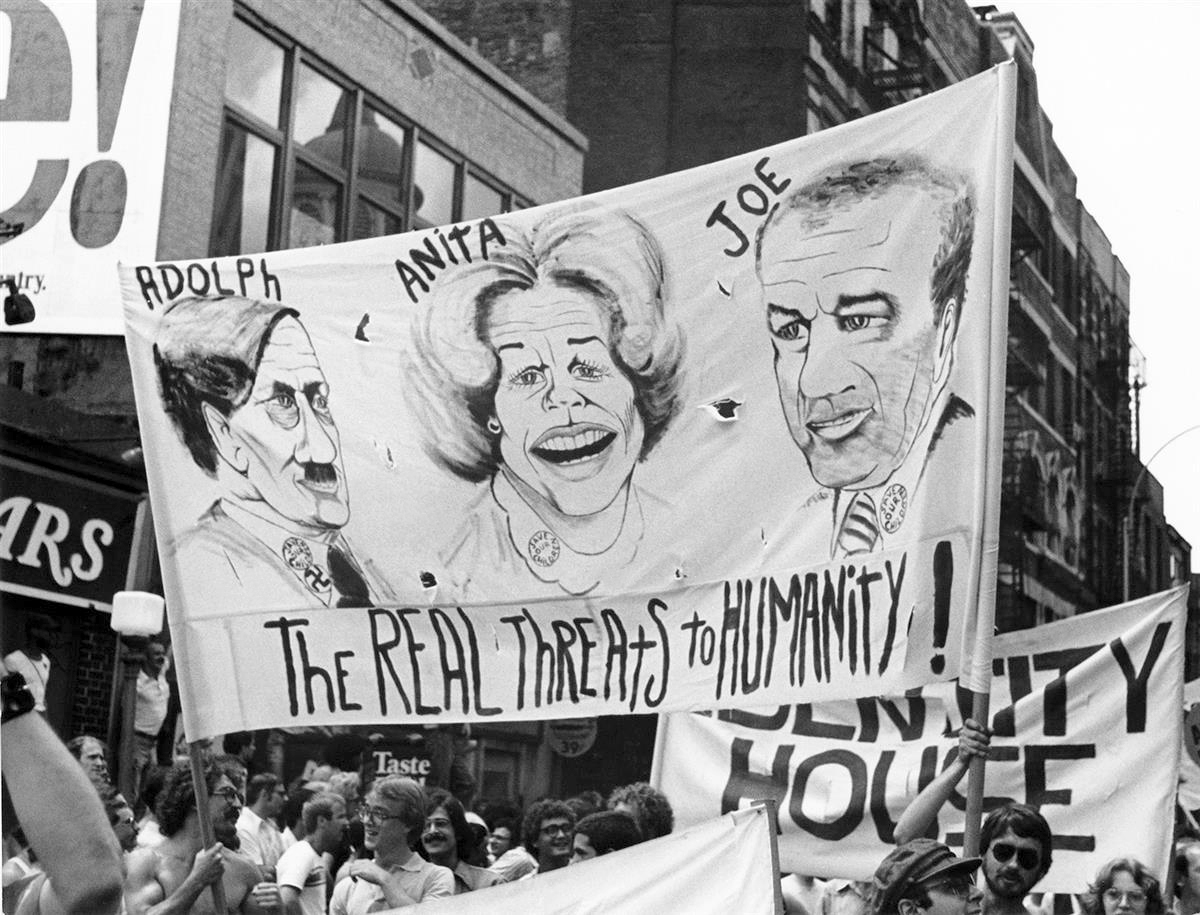
 

Hank O'Neal (American, b. 1940) 'The Gay Day Archive' 1974-1983


Hank O’Neal (American, b. 1940) (photographer)
Alan Ginsberg (American, 1926-1997) (writer)
Untitled (ADOLPH ANITA JOE – The REAL ThREAtS to HUMANITY!)
1974-1983
From The Gay Day Archive
Gelatin silver print


Hank O'Neal (American, b. 1940) (photographer) Alan Ginsberg (American, 1926-1997) (writer) 'The Gay Day Archive' 1974-1983


Hank O’Neal (American, b. 1940) (photographer)
Alan Ginsberg (American, 1926-1997) (writer)
Untitled (ADOLPH ANITA JOE – The REAL ThREAtS to HUMANITY!) (verso)
1974-1983
From The Gay Day Archive
Gelatin silver print


What a pleasant conversation they are having under Hitler’s head,
guy with handsome bicep chest, holding the banner aloft
lightly, and the eye passed smiling inquirer.


Hank O'Neal (American, b. 1940) 'The Gay Day Archive' 1974-1983


Hank O’Neal (American, b. 1940) (photographer)
Alan Ginsberg (American, 1926-1997) (writer)
Untitled (GAY MEN’S HEALTH PROJECT)
1974-1983
From The Gay Day Archive
Gelatin silver print
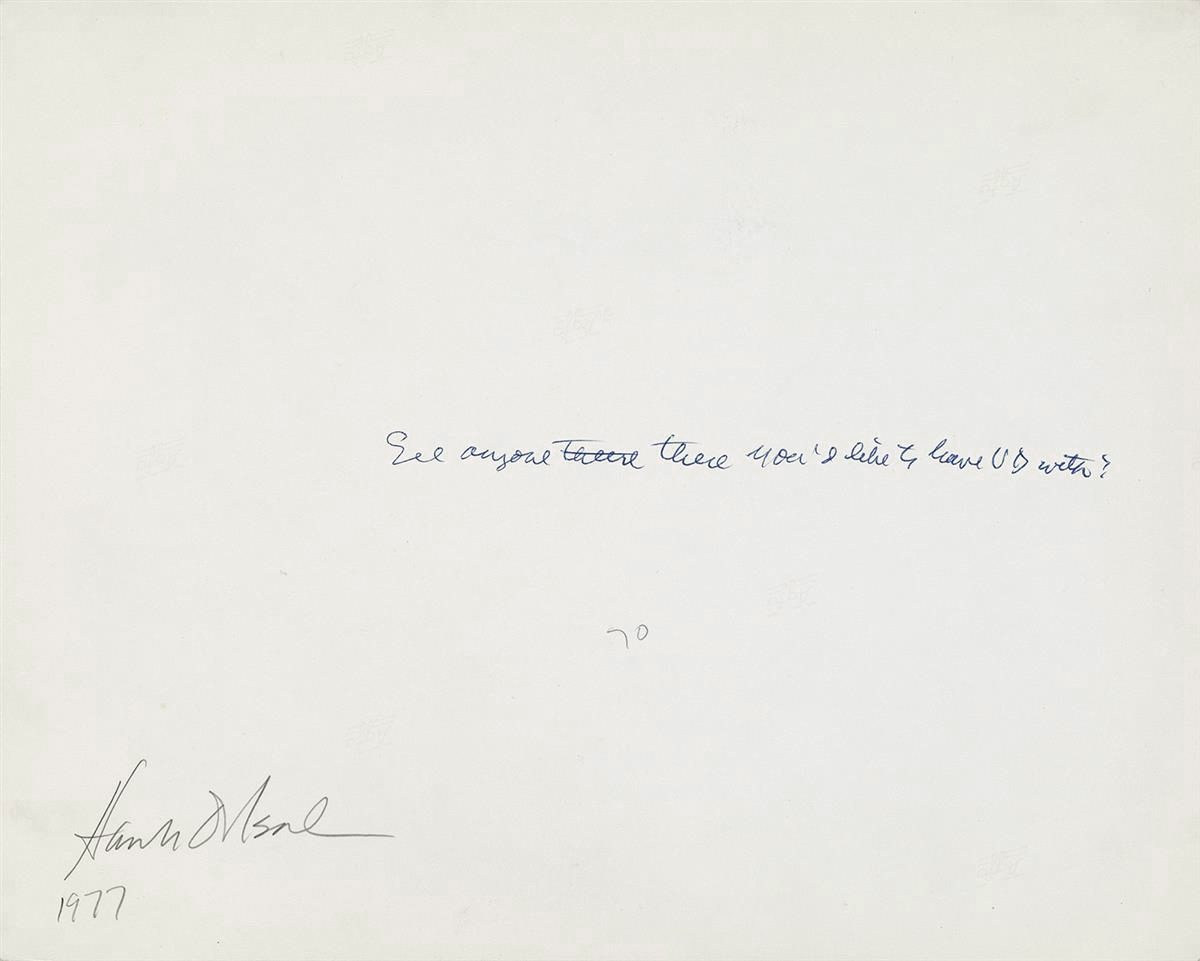
 

Hank O'Neal (American, b. 1940) (photographer) Alan Ginsberg (American, 1926-1997) (writer) 'The Gay Day Archive' 1974-1983


Hank O’Neal (American, b. 1940) (photographer)
Alan Ginsberg (American, 1926-1997) (writer)
Untitled (GAY MEN’S HEALTH PROJECT) (verso)
1974-1983
From The Gay Day Archive
Gelatin silver print


See anyone there you’d like to leave VD with?
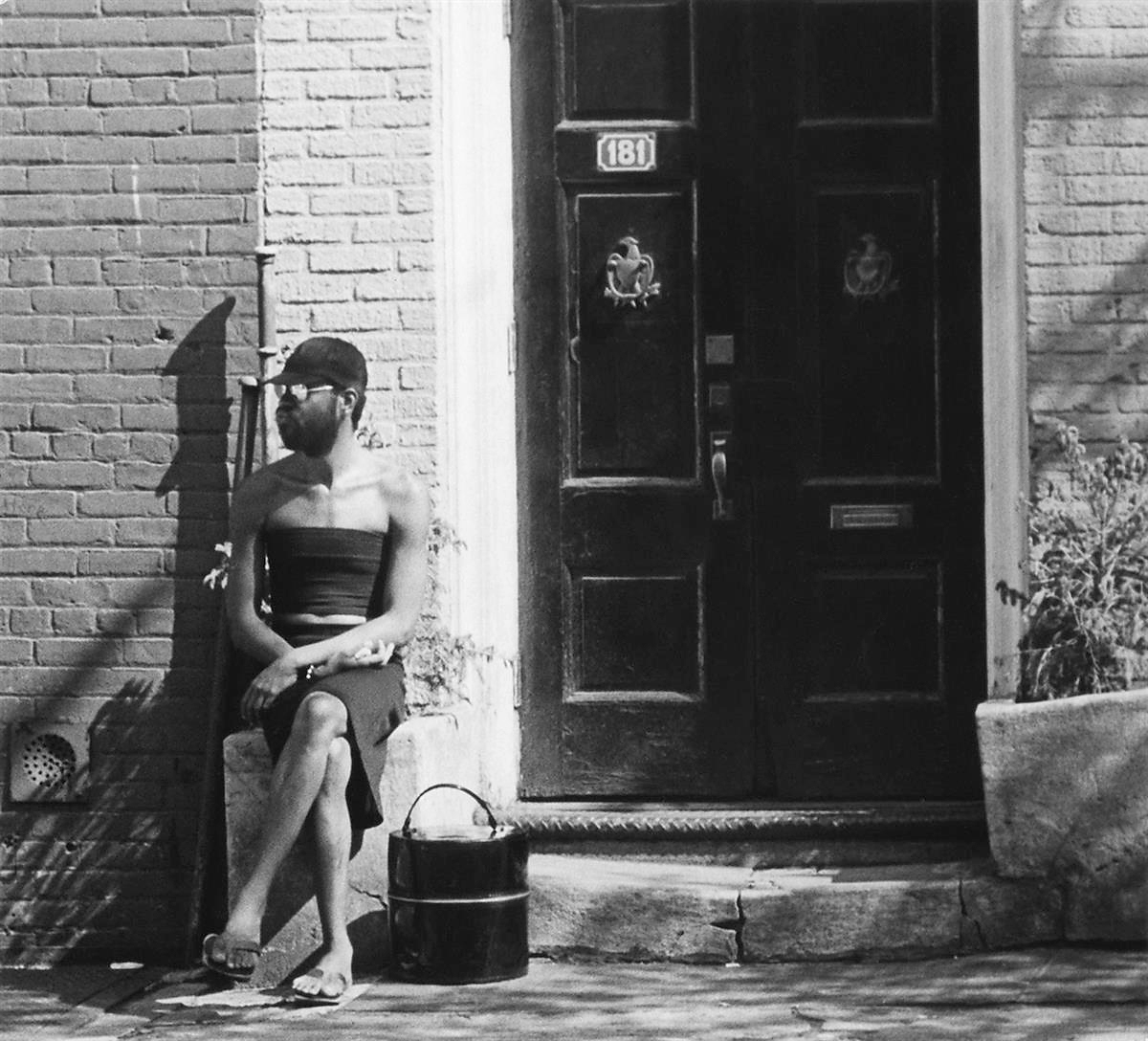
 

Hank O'Neal (American, b. 1940) 'The Gay Day Archive' 1974-1983


Hank O’Neal (American, b. 1940) (photographer)
Alan Ginsberg (American, 1926-1997) (writer)
Untitled (Good tight dress)
1974-1983
From The Gay Day Archive
Gelatin silver print


Hank O'Neal (American, b. 1940) (photographer) Alan Ginsberg (American, 1926-1997) (writer) 'The Gay Day Archive' 1974-1983


Hank O’Neal (American, b. 1940) (photographer)
Alan Ginsberg (American, 1926-1997) (writer)
Untitled (Good tight dress) (verso)
1974-1983
From The Gay Day Archive
Gelatin silver print


Good tight dress, totally olive oil lady
from midtown, but the top’s a baseball
capped ruffian whistling at the whore


Hank O'Neal (American, b. 1940) 'The Gay Day Archive' 1974-1983


Hank O’Neal (American, b. 1940) (photographer)
Alan Ginsberg (American, 1926-1997) (writer)
Untitled (I’m PROUD of my Gay Son)
1974-1983
From The Gay Day Archive
Gelatin silver print


Hank O'Neal (American, b. 1940) (photographer) Alan Ginsberg (American, 1926-1997) (writer) 'The Gay Day Archive' 1974-1983


Hank O’Neal (American, b. 1940) (photographer)
Alan Ginsberg (American, 1926-1997) (writer)
Untitled (I’m PROUD of my Gay Son) (verso)
1974-1983
From The Gay Day Archive
Gelatin silver print


Resolute parents that have gone thru the mill
& seen the skeleton in the closet & come out of the
gruesome fun house into the light – now they’re on their own feet
older + dignified; with house dresses + majestic walrus mustaches.


Hank O'Neal (American, b. 1940) 'The Gay Day Archive' 1974-1983


Hank O’Neal (American, b. 1940) (photographer)
Alan Ginsberg (American, 1926-1997) (writer)
Untitled (Look at her! Mad but actually handsome)
1974-1983
From The Gay Day Archive
Gelatin silver print


Hank O'Neal (American, b. 1940) (photographer) Alan Ginsberg (American, 1926-1997) (writer) 'The Gay Day Archive' 1974-1983


Hank O’Neal (American, b. 1940) (photographer)
Alan Ginsberg (American, 1926-1997) (writer)
Untitled (Look at her! Mad but actually handsome) (verso)
1974-1983
From The Gay Day Archive
Gelatin silver print


Look at her! Mad but actually handsome


Hank O'Neal (American, b. 1940) 'The Gay Day Archive' 1974-1983


Hank O’Neal (American, b. 1940) (photographer)
Alan Ginsberg (American, 1926-1997) (writer)
Untitled (Cops with personal mustaches)
1974-1983
From The Gay Day Archive
Gelatin silver print


Hank O'Neal (American, b. 1940) (photographer) Alan Ginsberg (American, 1926-1997) (writer) 'The Gay Day Archive' 1974-1983


Hank O’Neal (American, b. 1940) (photographer)
Alan Ginsberg (American, 1926-1997) (writer)
Untitled (Cops with personal mustaches) (verso)
1974-1983
From The Gay Day Archive
Gelatin silver print


Cops with person mustaches, shun photogs, big tit guy in pancake suffering their own vision in the sun, and a thin socialist dyke


Hank O'Neal (American, b. 1940) 'The Gay Day Archive' 1974-1983


Hank O’Neal (American, b. 1940) (photographer)
Alan Ginsberg (American, 1926-1997) (writer)
Untitled (Gay Rights)
1974-1983
From The Gay Day Archive
Gelatin silver print


Hank O'Neal (American, b. 1940) (photographer) Alan Ginsberg (American, 1926-1997) (writer) 'The Gay Day Archive' 1974-1983


Hank O’Neal (American, b. 1940) (photographer)
Alan Ginsberg (American, 1926-1997) (writer)
Untitled (Gay Rights) (verso)
1974-1983
From The Gay Day Archive
Gelatin silver print


You mean all that hair + teeth is gay?


Hank O’Neal

Hank O’Neal (born June 5, 1940) is an American music producer, author and photographer.

Photography

He began taking photographs while a teenager, and began to pursue the field seriously in 1969, when he bought a professional camera and began documenting recording sessions and jazz concerts that he was producing. Long before Berenice Abbott admonished him to always have a project, he undertook his first, in rural East Texas during 1970-1973. These photographs led to his first exhibition in September 1973, at The Open Mind Gallery in New York City.

In the 1970s he associated with a diverse group of photographers, notably Walker Evans, André Kertész and most importantly, Berenice Abbott, with whom he worked for the last 19 years of her life.

From 1970 to 1999 (in addition to undertaking many photographic projects), O’Neal also published numerous books related to photography. In 1999, at the urging of gallery director Evelyn Daitz, he had a major retrospective of his work to that point at The Witkin Gallery. Since that time, he has focused his activities toward photography, and continues to mount exhibitions yearly throughout the U.S. and Canada. In 2003 his photographic career was summarised in a profile in The New York Times.

Books (text and illustrations)

The Eddie Condon Scrapbook of Jazz (St. Martin’s Press, 1973)
A Vision Shared (St. Martin’s Press, 1976)
Berenice Abbott – American Photographer (McGraw-Hill, 1982)
Life Is Painful, Nasty and Short … In My Case It Has Only Been Painful and Nasty – Djuna Barnes L 1978-81 (Paragon, 1990)
Charlie Parker (Filipacchi, 1995)
The Ghosts of Harlem (Filipacchi, 1997) French language edition
The Ghosts of Harlem (Vanderbilt University Press, 2009) English language edition
Hank O’Neal Portraits 1971-2000 (Sordoni Art Gallery, 2000)
Billie & Lester in Oslo (A Play with Music, 2005)
Gay Day – The Golden Age of the Christopher Street Parade (Abrams, 2006)
Berenice Abbott (Steidl, 2008)
The Unknown Berenice Abbott – Steidl (October 15, 2013)
A Vision Shared – 40th Anniversary Edition – Steidl (December 1, 2016)
Berenice Abbott – The Paris Portraits – Steidl (November 22, 2016)

Books (photographs only)

Allegra Kent’s Water Beauty Book (St Martin’s Press, 1976)
All the King’s Men (Limited Editions Club, 1990)
XCIA’s Street Art Project: The First Four Decades (Siman Media Works, 2012)

Portfolios

Berenice Abbott – Portraits In Palladium (Text Only, Commerce Graphics / Lunn Limited, 1990)
Hank O’Neal – Photographs (Text and 12 gravure prints), Limited Editions Club, 1990)
The Ghosts of Harlem (Text and 12 photographs), Glenside Press, 2007)

Text from “Hank O’Neal,” on the Wikipedia website


Hank O'Neal (American, b. 1940) 'The Gay Day Archive' 1974-1983


Hank O’Neal (American, b. 1940) (photographer)
Alan Ginsberg (American, 1926-1997) (writer)
Untitled [MY SON IS GAY AND THAT’S OK]
1974-1983
From The Gay Day Archive
Gelatin silver print
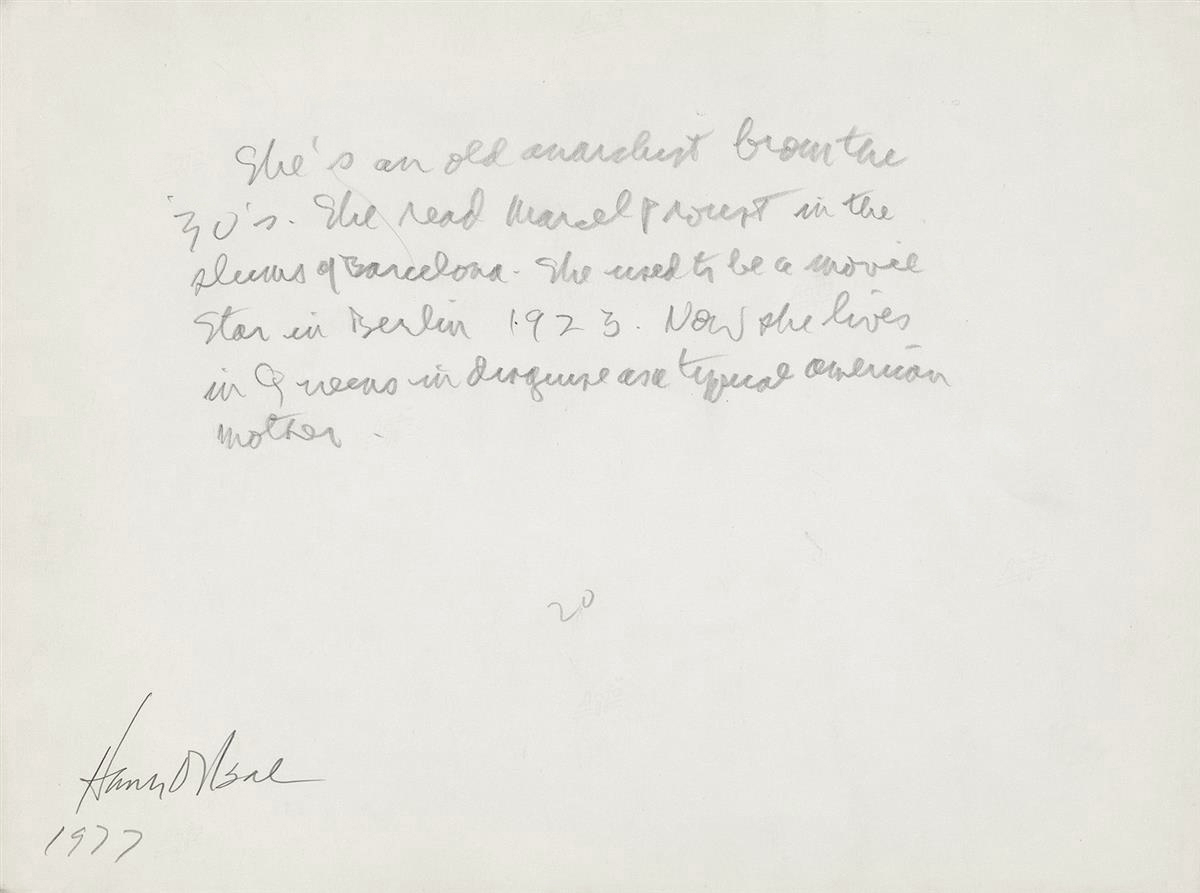
 

Hank O'Neal (American, b. 1940) (photographer) Alan Ginsberg (American, 1926-1997) (writer) 'The Gay Day Archive' 1974-1983


Hank O’Neal (American, b. 1940) (photographer)
Alan Ginsberg (American, 1926-1997) (writer)
Untitled (MY SON IS GAY AND THAT’S OK) (verso)
1974-1983
From The Gay Day Archive
Gelatin silver print


She’s an old anarchist from the
30’s. She read Marcel Proust in the
slums of Barcelona. She used to be a movie
Star in Berlin in 1923. Now she lives
in Queens in disguise as a typical american
mother.


Hank O'Neal (American, b. 1940) 'The Gay Day Archive' 1974-1983


Hank O’Neal (American, b. 1940) (photographer)
Alan Ginsberg (American, 1926-1997) (writer)
Untitled (GOD is GAY)
1974-1983
From The Gay Day Archive
Gelatin silver print


Hank O'Neal (American, b. 1940) (photographer) Alan Ginsberg (American, 1926-1997) (writer) 'The Gay Day Archive' 1974-1983


Hank O’Neal (American, b. 1940) (photographer)
Alan Ginsberg (American, 1926-1997) (writer)
Untitled (GOD is GAY) (verso)
1974-1983
From The Gay Day Archive
Gelatin silver print


According to Barbelo Gnostic theory,
God reflected on himself (or herself) & thus shone Sophia,
the First Word-thought, who thereat made sex
with herself and birthed the first Aeon,
Laldabaoth


Barbēlō refers to the first emanation of God in several forms of Gnostic cosmogony. Barbēlō is often depicted as a supreme female principle, the single passive antecedent of creation in its manifoldness. This figure is also variously referred to as ‘Mother-Father’ (hinting at her apparent androgyny), ‘First Human Being’, ‘The Triple Androgynous Name’, or ‘Eternal Aeon’. So prominent was her place amongst some Gnostics that some schools were designated as Barbeliotae, Barbēlō worshippers or Barbēlōgnostics.

Gnosticism (from Ancient Greek: γνωστικός gnostikos, “having knowledge”, from γνῶσις gnōsis, knowledge) is a modern name for a variety of ancient religious ideas and systems, originating in Jewish Christian milieux in the first and second century AD. These systems believed that the material world is created by an emanation or ‘works’ of a lower god (demiurge), trapping the divine spark within the human body. This divine spark could be liberated by gnosis, spiritual knowledge acquired through direct experience. Some of the core teachings include the following:

1/ All matter is evil, and the non-material, spirit-realm is good.
2/ There is an unknowable God, who gave rise to many lesser spirit beings called Aeons.
3/ The creator of the (material) universe is not the supreme god, but an inferior spirit (the Demiurge).
4/ Gnosticism does not deal with “sin,” only ignorance.
5/ To achieve salvation, one needs gnosis (knowledge).

Laldabaoth is the demiurge (a heavenly being, subordinate to the Supreme Being, that is considered to be the controller of the material world and antagonistic to all that is purely spiritual) from Gnostic Christianity.
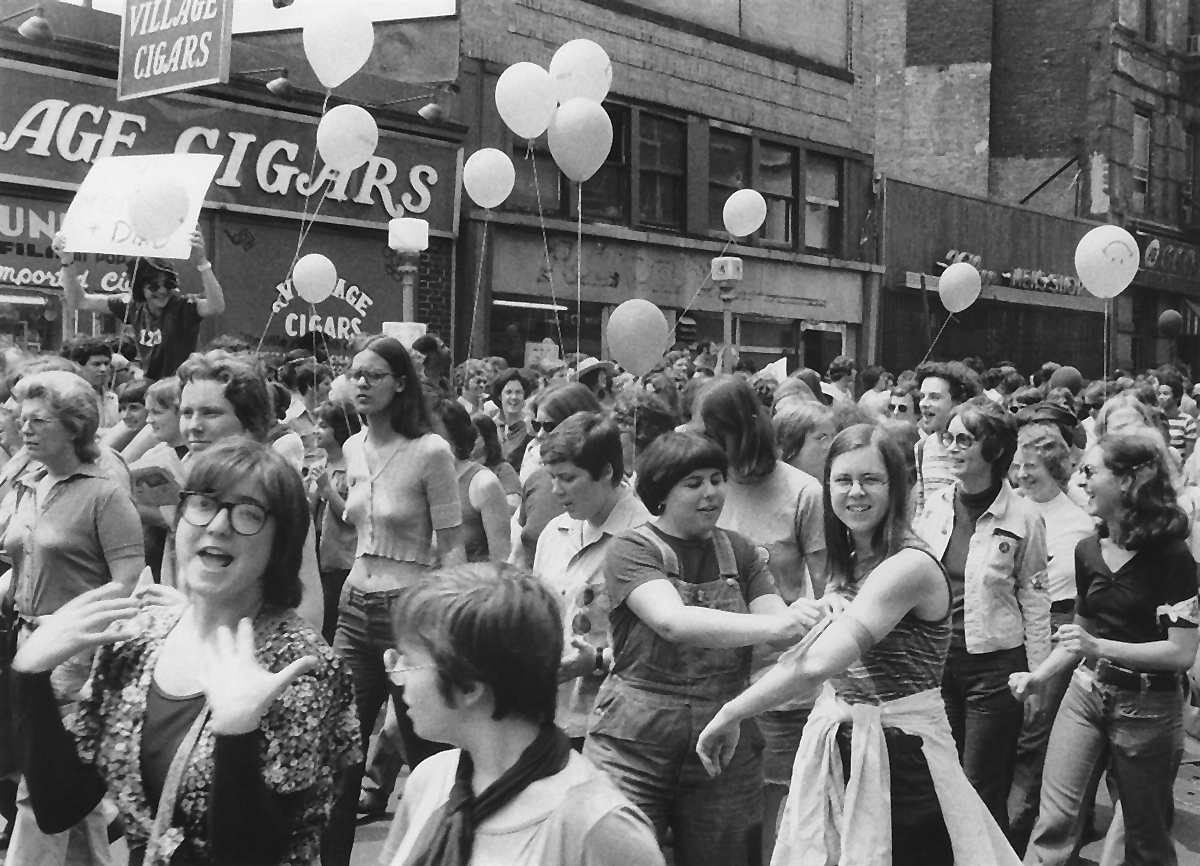
 

Hank O'Neal (American, b. 1940) 'The Gay Day Archive' 1974-1983


Hank O’Neal (American, b. 1940) (photographer)
Alan Ginsberg (American, 1926-1997) (writer)
Untitled (a big crowd)
1974-1983
From The Gay Day Archive
Gelatin silver print


Hank O'Neal (American, b. 1940) (photographer) Alan Ginsberg (American, 1926-1997) (writer) 'The Gay Day Archive' 1974-1983


Hank O’Neal (American, b. 1940) (photographer)
Alan Ginsberg (American, 1926-1997) (writer)
Untitled (a big crowd) (verso)
1974-1983
From The Gay Day Archive
Gelatin silver print


a big crowd of boys + girls + …? – but
that tall girl looks worried, doesn’t she have a baloon?


Hank O'Neal (American, b. 1940) 'The Gay Day Archive' 1974-1983


Hank O’Neal (American, b. 1940) (photographer)
Alan Ginsberg (American, 1926-1997) (writer)
Untitled (STONEWALL CHORALE)
1974-1983
From The Gay Day Archive
Gelatin silver print


Hank O'Neal (American, b. 1940) (photographer) Alan Ginsberg (American, 1926-1997) (writer) 'The Gay Day Archive' 1974-1983


Hank O’Neal (American, b. 1940) (photographer)
Alan Ginsberg (American, 1926-1997) (writer)
Untitled (STONEWALL CHORALE) (verso)
1974-1983
From The Gay Day Archive
Gelatin silver print


Masculine & Feminine Sopranos!
marching on the Stone
floor on Manhattan, Explaining Life
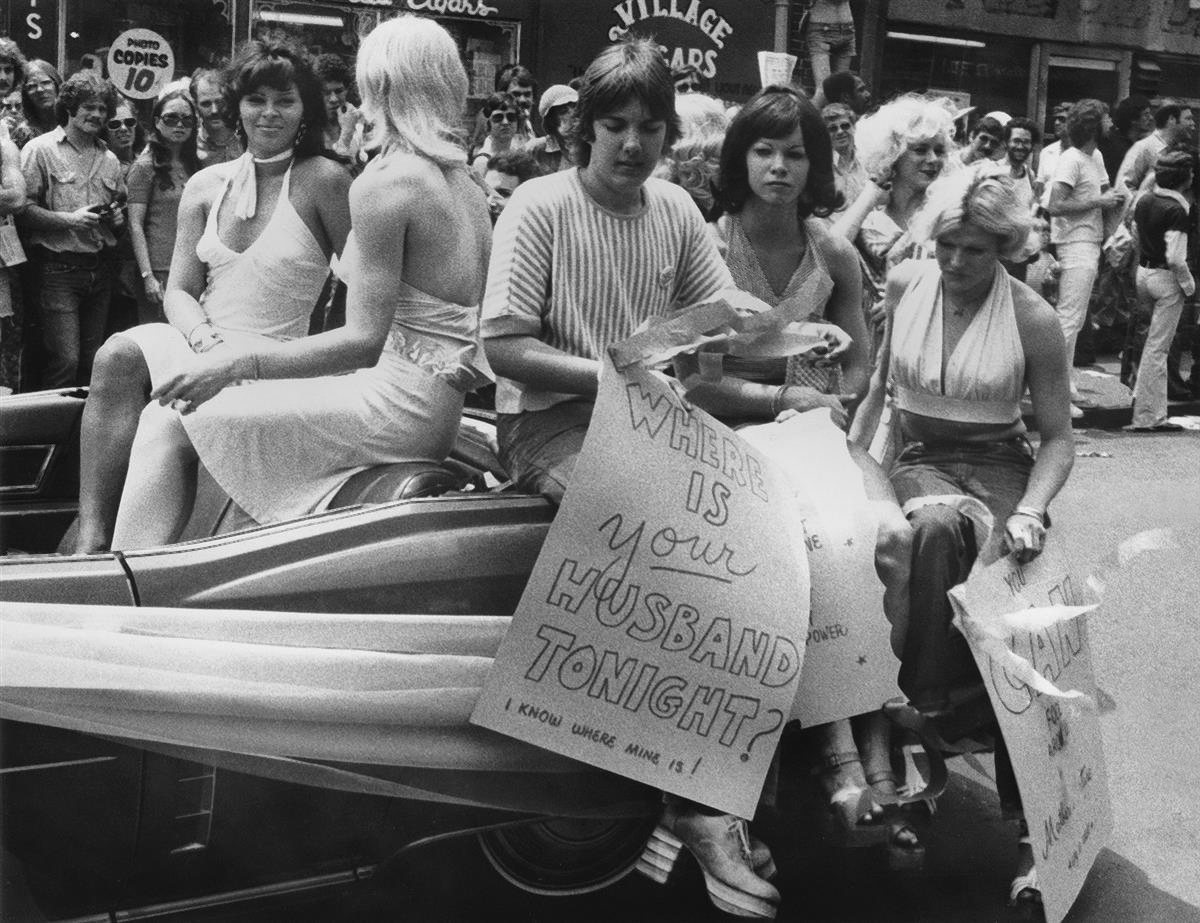
 

Hank O'Neal (American, b. 1940) 'The Gay Day Archive' 1974-1983


Hank O’Neal (American, b. 1940) (photographer)
Alan Ginsberg (American, 1926-1997) (writer)
Untitled (WHERE IS your HUSBAND TONIGHT?)
1974-1983
From The Gay Day Archive
Gelatin silver print


Hank O'Neal (American, b. 1940) (photographer) Alan Ginsberg (American, 1926-1997) (writer) 'The Gay Day Archive' 1974-1983


Hank O’Neal (American, b. 1940) (photographer)
Alan Ginsberg (American, 1926-1997) (writer)
Untitled (WHERE IS your HUSBAND TONIGHT?) (verso)
1974-1983
From The Gay Day Archive
Gelatin silver print


What pretty wives!
are they photocopies of men?
do they smoke cigars in secret?


Hank O'Neal (American, b. 1940) 'The Gay Day Archive' 1974-1983


Hank O’Neal (American, b. 1940) (photographer)
Alan Ginsberg (American, 1926-1997) (writer)
Untitled (singing to skyscrapers)
1974-1983
From The Gay Day Archive
Gelatin silver print


Hank O'Neal (American, b. 1940) (photographer) Alan Ginsberg (American, 1926-1997) (writer) 'The Gay Day Archive' 1974-1983


Hank O’Neal (American, b. 1940) (photographer)
Alan Ginsberg (American, 1926-1997) (writer)
Untitled (singing to skyscrapers) (verso)
1974-1983
From The Gay Day Archive
Gelatin silver print


They’ve been meeting in secret + public
for years, & now sing to skyscrapers.


Today, at least a million spectators line the Pride parade route along Fifth Avenue. But, in its earliest days, the celebration was a much smaller event characterised by NY-style high energy, pithy signage, raucous crowd chants, extensive cruising and great music (remember disco?). Most of O’Neal’s photographs focused on NY’s West Village or Christopher Street, the epicenter of gaydom. A range of sub-cultures associated with the LGBTQ+ community are depicted: young and longhaired post-hippies, bare-chested muscle men, drag queens, fairies, leather-ites, Gay Daddies, protestors, pastors, parents of gays and the hikin’ dykes.

Some participants hold placards, including those protesting Anita Bryant, the once popular singer, who emerged as an strident anti-gay crusader in the late 1970s and teamed up with the divisive evangelical figure Jerry Falwell. A banner for the Gay Men’s Health Project is a harbinger of the tragic era to come.

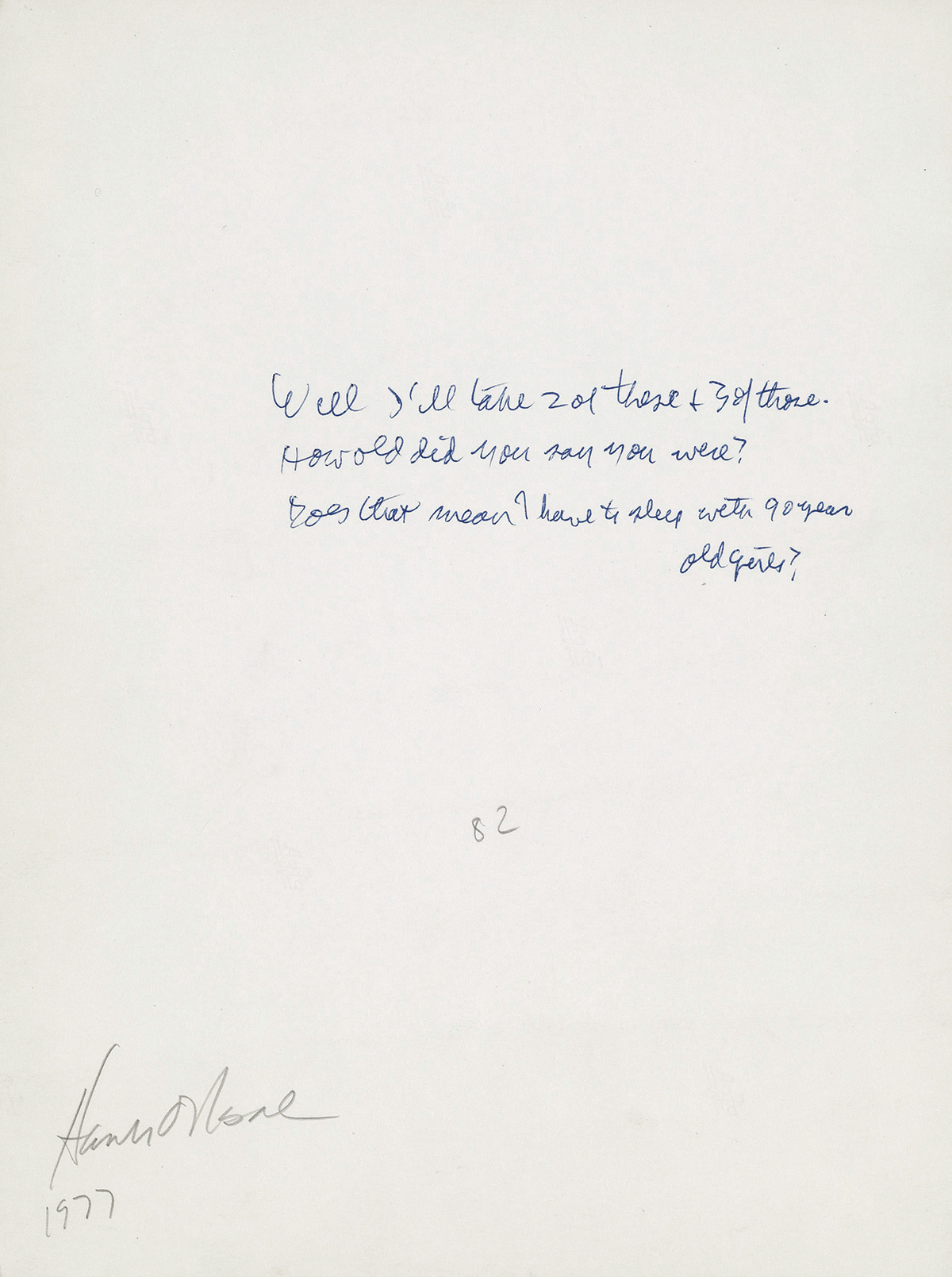
Ginsberg first saw the photographs in 1982 and, according to O’Neal, was inspired to add his distinctive captions to the backs of the prints. His brief handwritten notes, which often reflect personal or historic observations, strike a wonderful tone. A caption that accompanies a picture of a group of men holding the banner WE ARE EVERYWHERE reads, “We all look pretty normal, boy next door, handsome punk, ad man’s delight, daughters of the American Revolution.” A shot depicting two men dressed in ancient Roman costume reads, “Clark Gable and Nero on a date, smiling for the 1920s Hollywood photogs.” His lengthy caption for the Johnson print (featured on the catalog cover) reads: “If I keep dressing up like this I’ll save the world from nuclear apocalypse. But will anyone love me for it? I’ll save the world anyway I know that looks good.” And still others honour the courageous and brave: one participant holds a wreath bearing the name Harvey Milk; Ginsberg wrote, “Harvey Milk died for your sins.” (He had initially written “our” but crossed it out).

O’Neal’s photographs were reproduced in the book, Gay Day: The Golden Age of the Christopher Street Parade, 1974-1983 (Abrams, 2006), with a Preface by William Burroughs. Interestingly during this same period Ginsberg had revisited his own Beat-era photographs, which were shot in the 1950s and processed at a local drugstore. He developed a unique hybrid picture-text style, adding detailed, handwritten mini-narratives to the lower margins of the prints, which captured his vivid, visual memories.

Text for the Swann Auction Galleries website [Online] Cited 30/05/2019. No longer available online
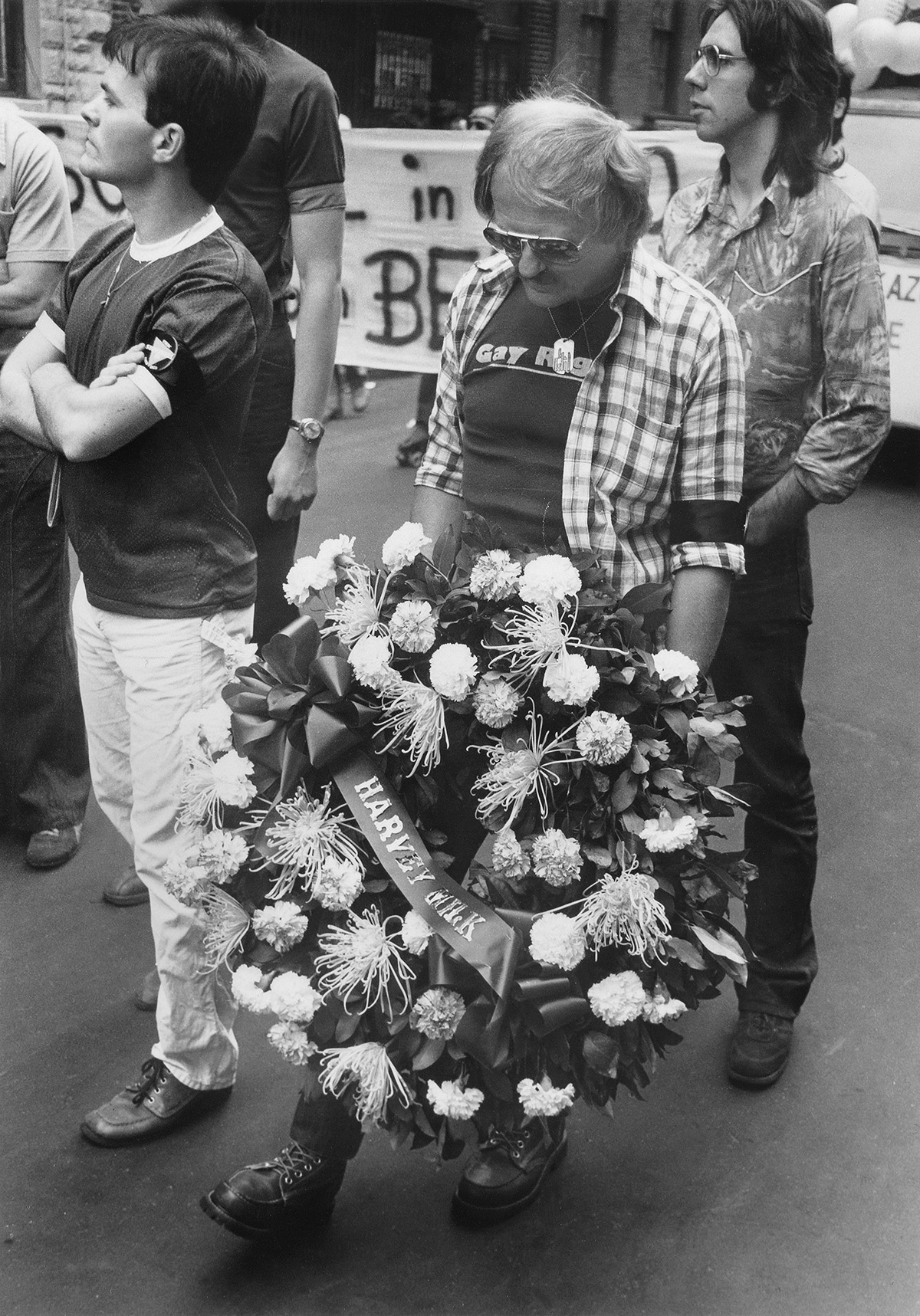
 

Hank O'Neal (American, b. 1940) 'The Gay Day Archive' 1974-1983


Hank O’Neal (American, b. 1940) (photographer)
Alan Ginsberg (American, 1926-1997) (writer)
Untitled (HARVEY MILK)
1974-1983
From The Gay Day Archive
Gelatin silver print


Hank O'Neal (American, b. 1940) (photographer) Alan Ginsberg (American, 1926-1997) (writer) 'The Gay Day Archive' 1974-1983


Hank O’Neal (American, b. 1940) (photographer)
Alan Ginsberg (American, 1926-1997) (writer)
Untitled (HARVEY MILK) (verso)
1974-1983
From The Gay Day Archive
Gelatin silver print


Harvey Milk died for your sins


Harvey Milk (1930-1978)

Harvey Bernard Milk (May 22, 1930 – November 27, 1978) was an American politician and the first openly gay elected official in the history of California, where he was elected to the San Francisco Board of Supervisors. Although he was the most pro-LGBT politician in the United States at the time, politics and activism were not his early interests; he was neither open about his sexuality nor civically active until he was 40, after his experiences in the counterculture movement of the 1960s.

In 1972, Milk moved from New York City to the Castro District of San Francisco amid a migration of gay and bisexual men. He took advantage of the growing political and economic power of the neighbourhood to promote his interests and unsuccessfully ran three times for political office. Milk’s theatrical campaigns earned him increasing popularity, and in 1977 he won a seat as a city supervisor. His election was made possible by a key component of a shift in San Francisco politics.

Milk served almost eleven months in office, during which he sponsored a bill banning discrimination in public accommodations, housing, and employment on the basis of sexual orientation. The Supervisors passed the bill by a vote of 11-1 and was signed into law by Mayor Moscone. On November 27, 1978, Milk and Mayor George Moscone were assassinated by Dan White, who was another city supervisor. White had recently resigned to pursue a private business enterprise, but that endeavour eventually failed and he sought to get his old job back. White was sentenced to seven years in prison for manslaughter, which was later reduced to five years. He was released in 1983 and committed suicide by carbon monoxide inhalation two years later.

Despite his short career in politics, Milk became an icon in San Francisco and a martyr in the gay community. In 2002, Milk was called “the most famous and most significantly open LGBT official ever elected in the United States”. Anne Kronenberg, his final campaign manager, wrote of him: “What set Harvey apart from you or me was that he was a visionary. He imagined a righteous world inside his head and then he set about to create it for real, for all of us.” Milk was posthumously awarded the Presidential Medal of Freedom in 2009.

Extract from “Harvey Milk,” on the Wikipedia website
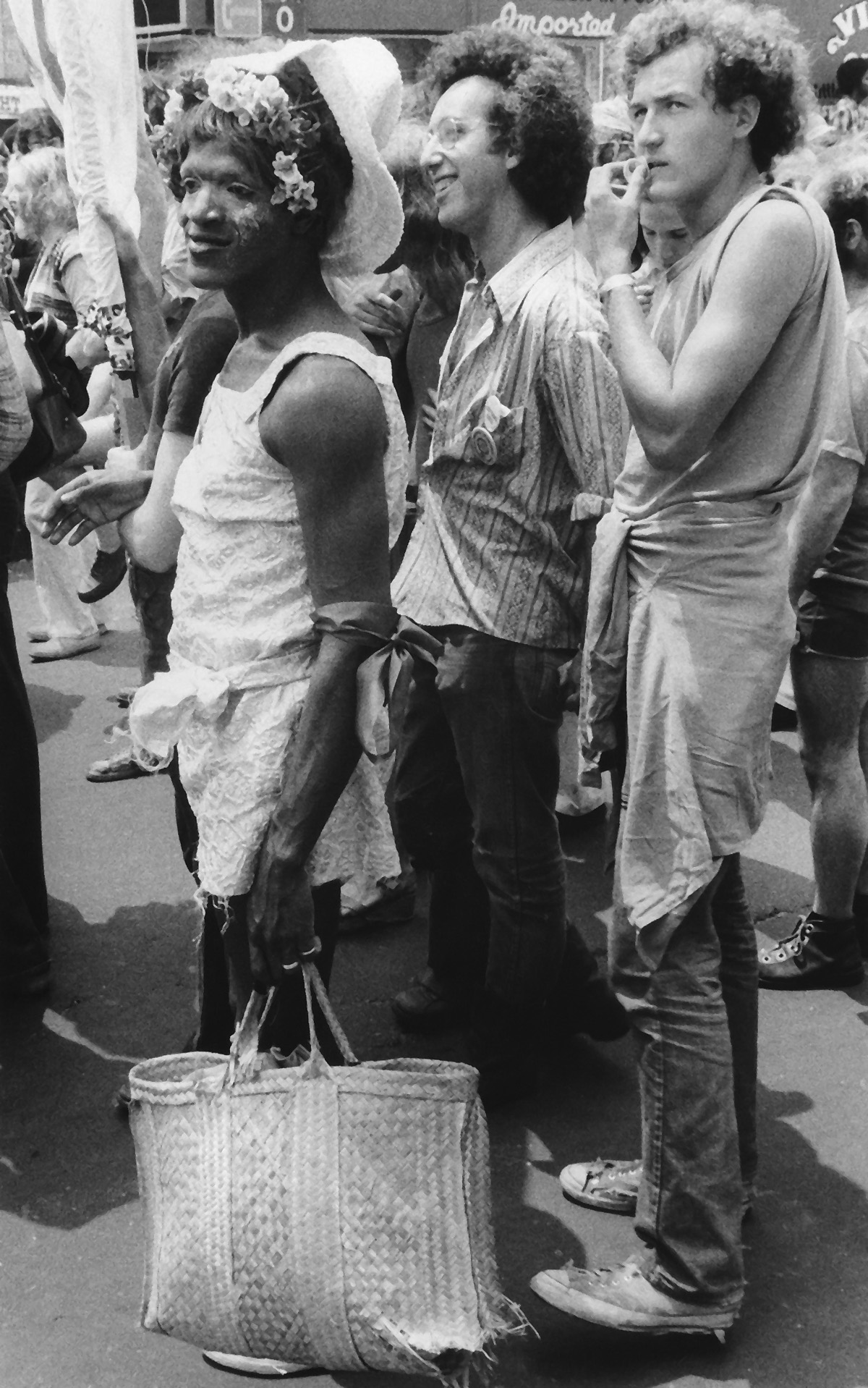
 

Hank O'Neal (American, b. 1940) 'The Gay Day Archive' 1974-1983


Hank O’Neal (American, b. 1940) (photographer)
Alan Ginsberg (American, 1926-1997) (writer)
Untitled (Blacks are most truthful)
1974-1983
From The Gay Day Archive
Gelatin silver print
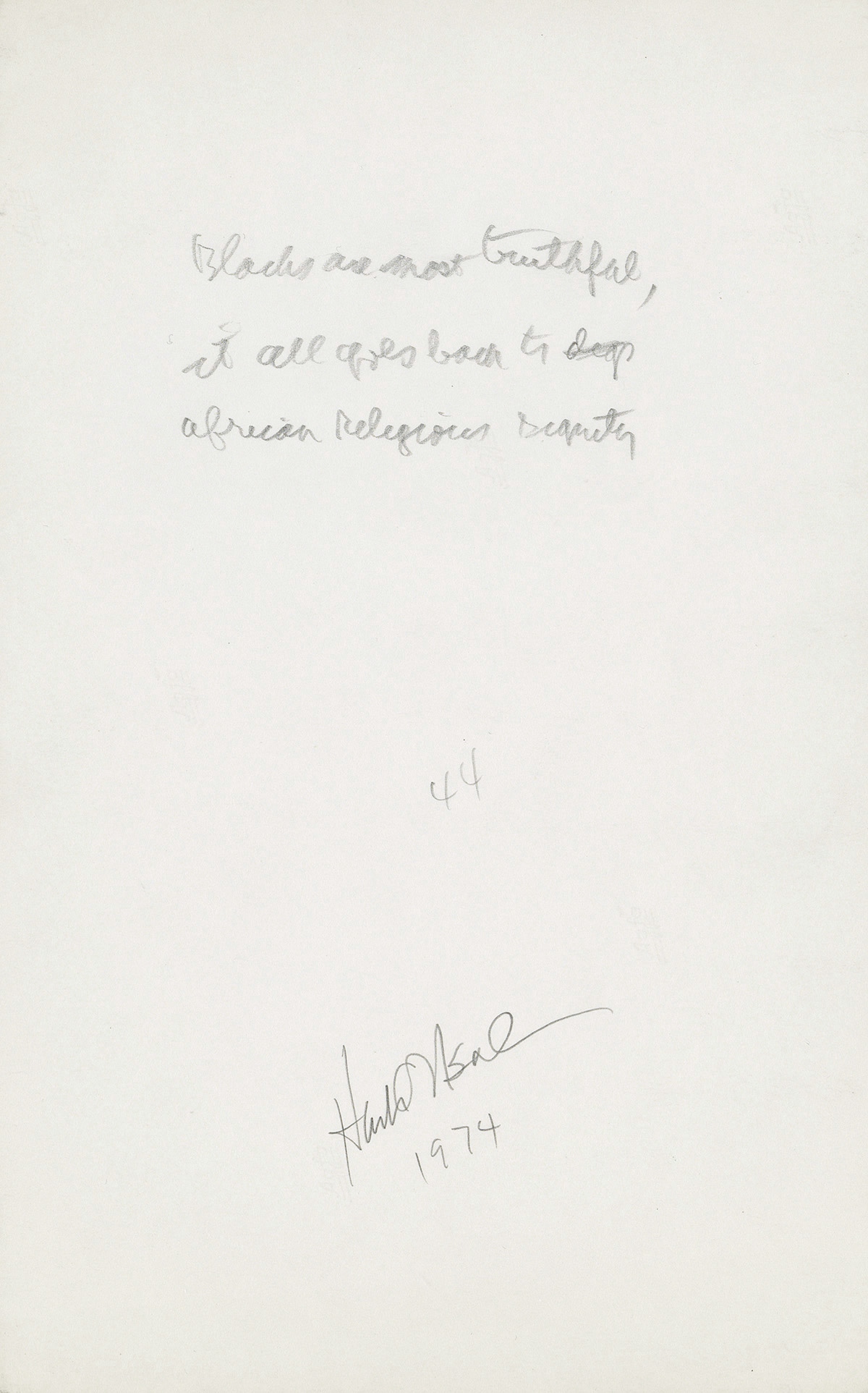
 

Hank O'Neal (American, b. 1940) (photographer) Alan Ginsberg (American, 1926-1997) (writer) 'The Gay Day Archive' 1974-1983


Hank O’Neal (American, b. 1940) (photographer)
Alan Ginsberg (American, 1926-1997) (writer)
Untitled (Blacks are most truthful) (verso)
1974-1983
From The Gay Day Archive
Gelatin silver print


Blacks are most truthful,
it all goes back to deep
african religious ?
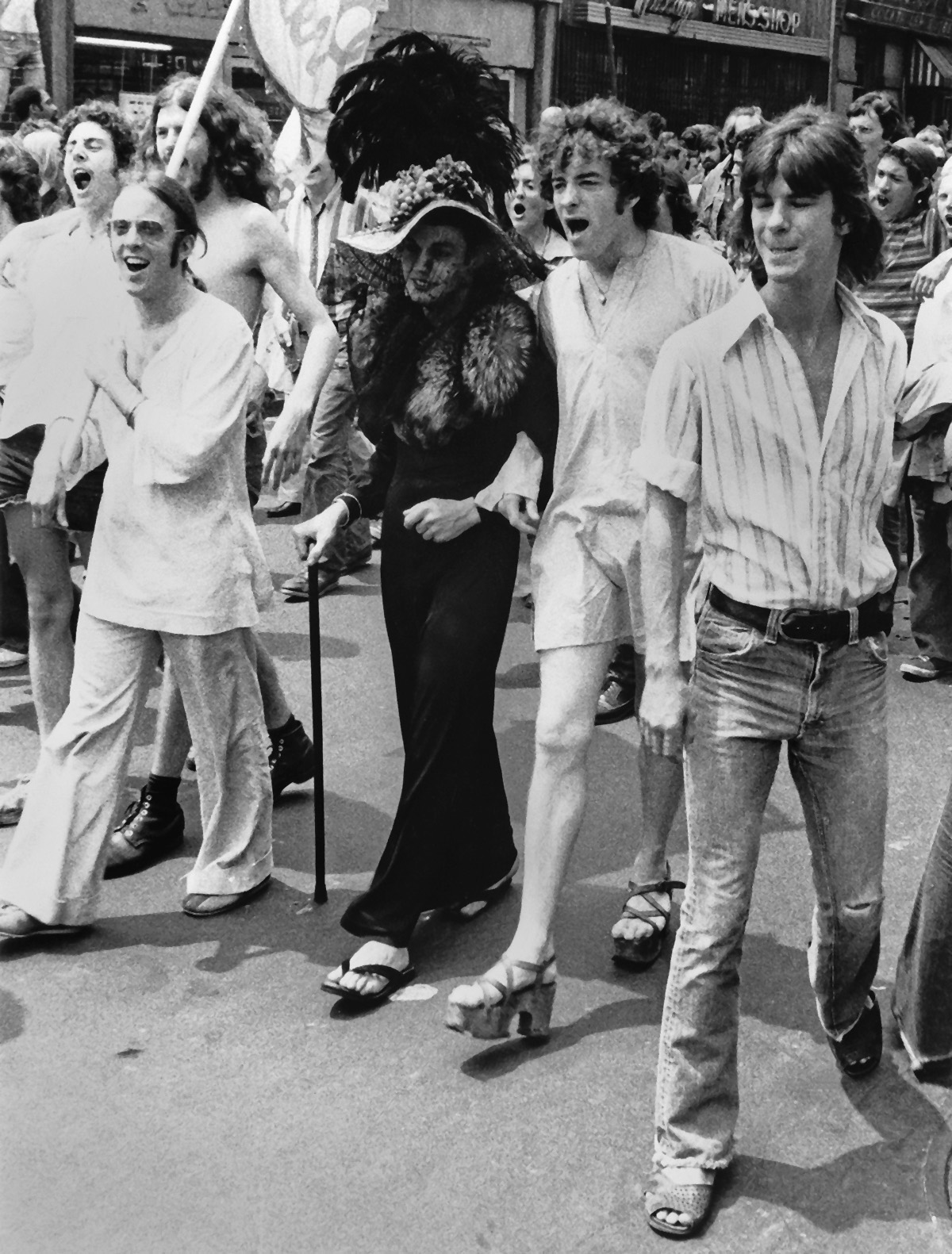
 

Hank O'Neal (American, b. 1940) 'The Gay Day Archive' 1974-1983


Hank O’Neal (American, b. 1940) (photographer)
Alan Ginsberg (American, 1926-1997) (writer)
Untitled (Judy Garland)
1974-1983
From The Gay Day Archive
Gelatin silver print
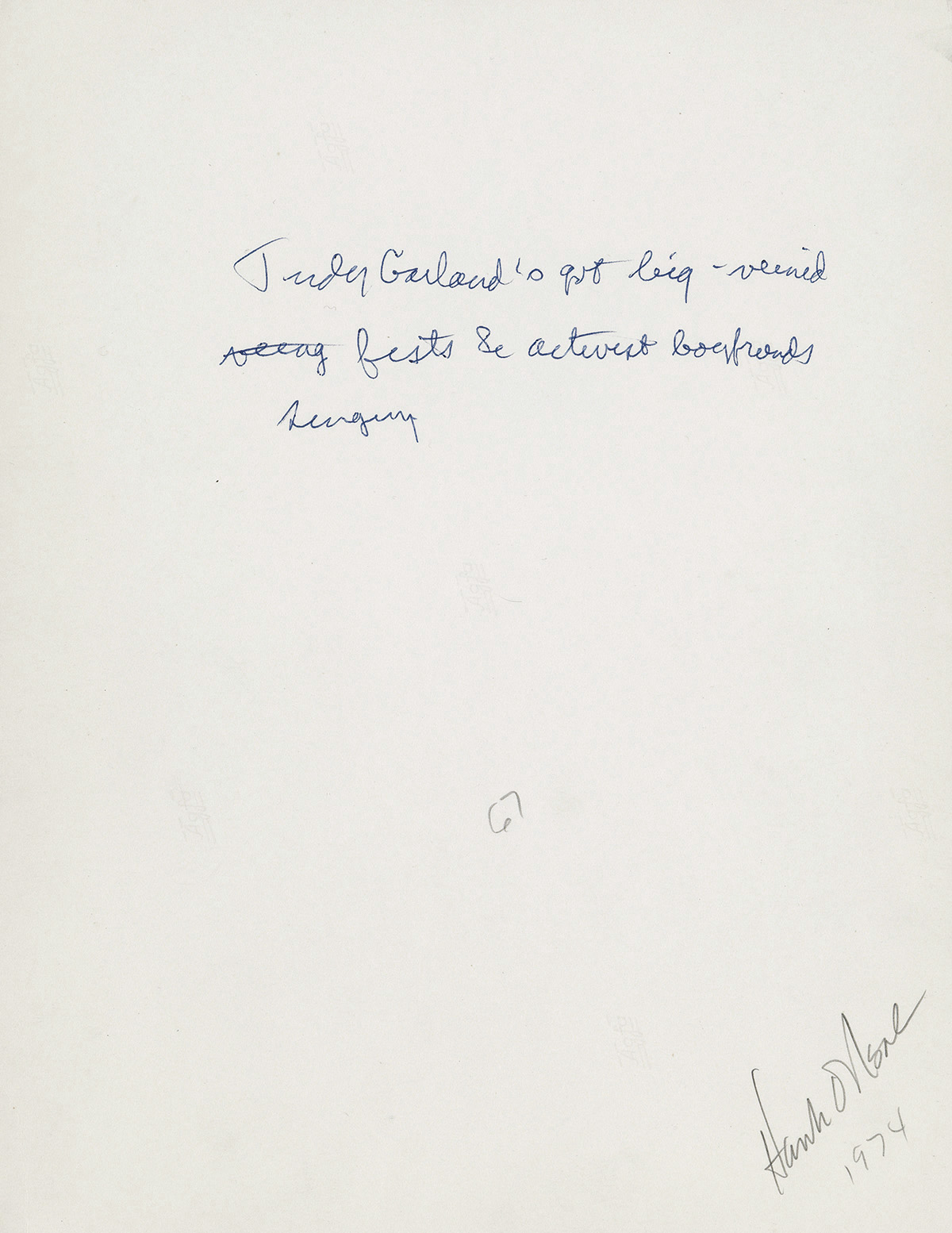
 

Hank O'Neal (American, b. 1940) (photographer) Alan Ginsberg (American, 1926-1997) (writer) 'The Gay Day Archive' 1974-1983


Hank O’Neal (American, b. 1940) (photographer)
Alan Ginsberg (American, 1926-1997) (writer)
Untitled (Judy Garland) (verso)
1974-1983
From The Gay Day Archive
Gelatin silver print


Judy Garland’s got big-veined
fists & activist boyfriends
singing


Hank O'Neal (American, b. 1940) 'The Gay Day Archive' 1974-1983


Hank O’Neal (American, b. 1940) (photographer)
Alan Ginsberg (American, 1926-1997) (writer)
Untitled (PEOPLE SHOULD LOVE ONE ANOTHER)
1974-1983
From The Gay Day Archive
Gelatin silver print
 

Hank O'Neal (American, b. 1940) (photographer) Alan Ginsberg (American, 1926-1997) (writer) 'The Gay Day Archive' 1974-1983


Hank O’Neal (American, b. 1940) (photographer)
Alan Ginsberg (American, 1926-1997) (writer)
Untitled (PEOPLE SHOULD LOVE ONE ANOTHER) (verso)
1974-1983
From The Gay Day Archive
Gelatin silver print


Well I’ll take 2 of these + 3 of those.
How old did you say you were?
Does that mean I have to sleep with 90 year old girls?


Hank O'Neal (American, b. 1940) 'The Gay Day Archive' 1974-1983


Hank O’Neal (American, b. 1940) (photographer)
Alan Ginsberg (American, 1926-1997) (writer)
Untitled (summery mouths)
1974-1983
From The Gay Day Archive
Gelatin silver print


Hank O'Neal (American, b. 1940) (photographer) Alan Ginsberg (American, 1926-1997) (writer) 'The Gay Day Archive' 1974-1983


Hank O’Neal (American, b. 1940) (photographer)
Alan Ginsberg (American, 1926-1997) (writer)
Untitled (summery mouths) (verso)
1974-1983
From The Gay Day Archive
Gelatin silver print


Young meat Catholes (?)
appreciating each other’s
summery mouths


Hank O'Neal (American, b. 1940) 'The Gay Day Archive' 1974-1983


Hank O’Neal (American, b. 1940) (photographer)
Alan Ginsberg (American, 1926-1997) (writer)
Untitled (ANITA SLEEPS WITH BIG BUSINESS)
1974-1983
From The Gay Day Archive
Gelatin silver print


Hank O'Neal (American, b. 1940) (photographer) Alan Ginsberg (American, 1926-1997) (writer) 'The Gay Day Archive' 1974-1983


Hank O’Neal (American, b. 1940) (photographer)
Alan Ginsberg (American, 1926-1997) (writer)
Untitled (ANITA SLEEPS WITH BIG BUSINESS) (verso)
1974-1983
From The Gay Day Archive
Gelatin silver print


Anita O’Day is still singing.


Hank O'Neal (American, b. 1940) 'The Gay Day Archive' 1974-1983


Hank O’Neal (American, b. 1940) (photographer)
Alan Ginsberg (American, 1926-1997) (writer)
Untitled (ANITA DEAR SHOVE IT)
1974-1983
From The Gay Day Archive
Gelatin silver print


Hank O'Neal (American, b. 1940) (photographer) Alan Ginsberg (American, 1926-1997) (writer) 'The Gay Day Archive' 1974-1983


Hank O’Neal (American, b. 1940) (photographer)
Alan Ginsberg (American, 1926-1997) (writer)
Untitled (ANITA DEAR SHOVE IT) (verso)
1974-1983
From The Gay Day Archive
Gelatin silver print


I’ll bet Anita had affairs in
high school with her girlfriends.
Pretty Girl.


Anita Bryant (American, b. 1940)

Anita Jane Bryant (born March 25, 1940) is an American singer and political activist. …

In the 1970s, Bryant became known as an outspoken opponent of gay rights in the US. In 1977, she ran the “Save Our Children” campaign to repeal a local ordinance in Dade County, Florida which prohibited discrimination on the basis of sexual orientation. Her involvement with the campaign was condemned by gay rights activists. They were assisted by many other prominent figures in music, film, and television, and retaliated by boycotting the orange juice which she had promoted. This, as well as her later divorce, damaged her financially…

Victory and defeat

On June 7, 1977, Bryant’s campaign led to a repeal of the anti-discrimination ordinance by a margin of 69 to 31 percent. However, the success of Bryant’s campaign galvanised her opponents, and the gay community retaliated against her by organising a boycott of orange juice. Gay bars all over North America stopped serving screwdrivers and replaced them with the “Anita Bryant Cocktail”, which was made with vodka and apple juice. Sales and proceeds went to gay rights activists to help fund their fight against Bryant and her campaign.

In 1977, Florida legislators approved a measure prohibiting gay adoption.The ban was overturned more than 30 years later when, on November 25, 2008, Miami-Dade Circuit Court Judge Cindy S. Lederman declared it unconstitutional.

Bryant led several more campaigns around the country to repeal local anti-discrimination ordinances, including campaigns in St. Paul, Minnesota; Wichita, Kansas; and Eugene, Oregon. In 1978, her success led to the Briggs Initiative in California, which would have made pro-gay statements regarding homosexual people or homosexuality by any public school employee cause for dismissal. Grassroots liberal organisations, chiefly in Los Angeles and the San Francisco Bay Area, organised to defeat the initiative. Days before the election, the California Democratic Party opposed the proposed legislation. President Jimmy Carter, governor Jerry Brown, former president Gerald Ford, and former governor Ronald Reagan – then planning a run for the presidency – all voiced opposition to the initiative, and it ultimately suffered a massive defeat at the polls.

In 1998, Dade County repudiated Bryant’s successful campaign of 20 years earlier and reauthorised an anti-discrimination ordinance protecting individuals from discrimination on the basis of sexual orientation by a seven-to-six vote. In 2002, a ballot initiative to repeal the 1998 law, called Amendment 14, was voted down by 56 percent of the voters. The Florida statute forbidding gay adoption was upheld in 2004 by a federal appellate court against a constitutional challenge but was overturned by a Miami-Dade circuit court in November 2008.

Bryant became one of the first persons to be publicly “pied” as a political act (in her case, on television), in Des Moines, Iowa, on October 14, 1977. Bryant quipped “At least it’s a fruit pie,” making a pun on the derogatory term of “fruit” for a gay man. While covered in pie, she began to pray to God to forgive the activist “for his deviant lifestyle” before bursting into tears as the cameras continued rolling. Bryant’s husband said that he would not retaliate, but followed the protesters outside and threw a pie at them. By this time, gay activists ensured that the boycott on Florida orange juice had become more prominent and it was supported by many celebrities, including Barbra Streisand, Bette Midler, Paul Williams, Dick Clark (Bryant had made several appearances on his shows, especially his namesake television show), Vincent Price (he joked in a television interview that Oscar Wilde’s A Woman of No Importance referred to her), John Waters, Carroll O’Connor, Linda Lavin, Mary Tyler Moore, Charles Schulz, Billie Jean King, and Jane Fonda. In 1978, Bryant and Bob Green told the story of their campaign in the book At Any Cost. The gay community continued to regard Bryant’s name as synonymous with bigotry and homophobia.

Extract from “Anita Bryant,” on the Wikipedia website


Hank O'Neal (American, b. 1940) 'The Gay Day Archive' 1974-1983


Hank O’Neal (American, b. 1940) (photographer)
Alan Ginsberg (American, 1926-1997) (writer)
Untitled (I deserve a cute boy’s kiss) (Marsha P. Johnson)
1974-1983
From The Gay Day Archive
Gelatin silver print


Hank O'Neal (American, b. 1940) (photographer) Alan Ginsberg (American, 1926-1997) (writer) 'The Gay Day Archive' 1974-1983


Hank O’Neal (American, b. 1940) (photographer)
Alan Ginsberg (American, 1926-1997) (writer)
Untitled (I deserve a Cute boy’s kiss) (verso)
1974-1983
From The Gay Day Archive
Gelatin silver print


I deserve a Cute
boy’s kiss for this truthful hat. And he’s
so sensitive, look at that
tiny white dog!


Hank O'Neal (American, b. 1940) 'The Gay Day Archive' 1974-1983


Hank O’Neal (American, b. 1940) (photographer)
Alan Ginsberg (American, 1926-1997) (writer)
Untitled (BORN GAY AND FREE)
1974-1983
From The Gay Day Archive
Gelatin silver print


Hank O'Neal (American, b. 1940) (photographer) Alan Ginsberg (American, 1926-1997) (writer) 'The Gay Day Archive' 1974-1983


Hank O’Neal (American, b. 1940) (photographer)
Alan Ginsberg (American, 1926-1997) (writer)
Untitled (BORN GAY AND FREE) (verso)
1974-1983
From The Gay Day Archive
Gelatin silver print


What a pretty mother! Brave
handsome courageous + true.


Hank O'Neal (American, b. 1940) 'The Gay Day Archive' 1974-1983


Hank O’Neal (American, b. 1940) (photographer)
Alan Ginsberg (American, 1926-1997) (writer)
Untitled (Marsha P. Johnson)
1974-1983
From The Gay Day Archive
Gelatin silver print


Hank O'Neal (American, b. 1940) (photographer) Alan Ginsberg (American, 1926-1997) (writer) 'The Gay Day Archive' 1974-1983


Hank O’Neal (American, b. 1940) (photographer)
Alan Ginsberg (American, 1926-1997) (writer)
Untitled (Marsha P. Johnson) (verso)
1974-1983
From The Gay Day Archive
Gelatin silver print


If I keep dressing up like this
I’ll save the world from
Nuclear Apocalypse. But will anyone
love me for it? I’ll save the world
anyway. I know what looks good.


Marsha P. Johnson (American, 1945-1992)

Marsha P. Johnson (August 24, 1945 – July 6, 1992) was an American gay liberation activist and self-identified drag queen. Known as an outspoken advocate for gay rights, Johnson was one of the prominent figures in the Stonewall uprising of 1969. A founding member of the Gay Liberation Front, Johnson co-founded the gay and transvestite advocacy organisation S.T.A.R. (Street Transvestite Action Revolutionaries), alongside close friend Sylvia Rivera. A popular figure in New York City’s gay and art scene, Johnson modelled for Andy Warhol, and performed onstage with the drag performance troupe, Hot Peaches. Known for decades as a welcoming presence in the streets of Greenwich Village, Johnson was known as the “mayor of Christopher Street”. From 1987 through 1992, Johnson was an AIDS activist with ACT UP.

Performance work and identity

Johnson initially called herself “Black Marsha” but later decided on “Marsha P. Johnson” as her drag queen name, getting Johnson from the restaurant Howard Johnson’s on 42nd Street. She said that the P stood for “pay it no mind” and used the phrase sarcastically when questioned about her gender, saying “it stands for pay it no mind”. She said the phrase once to a judge, who was humoured by it and released her. Johnson variably identified herself as gay, as a transvestite, and as a queen (referring to drag queen). According to Susan Stryker, a professor of human gender and sexuality studies at the University of Arizona, Johnson’s gender expression may be called gender non-conforming in absence of Johnson’s use of transgender, which was not used broadly during her lifetime.

Johnson said her style of drag was not serious (or “high drag”) because she could not afford to purchase clothing from expensive stores. She received leftover flowers after sleeping under tables used for sorting flowers in the Flower District of Manhattan, and was known for placing flowers in her hair. Johnson was tall, slender and often dressed in flowing robes and shiny dresses, red plastic high heels, and bright wigs, which tended to draw attention.

Johnson sang and performed as a member of J. Camicias’ international, NYC-based, drag performance troupe, Hot Peaches, from 1972 through to shows in the 1990s. When The Cockettes, a similar drag troupe from San Francisco, formed an East Coast troupe, The Angels of Light, Johnson was also asked to perform with them. In 1973, Johnson performed the role of “The Gypsy Queen” in the Angels’ production, “The Enchanted Miracle”, about the Comet Kohoutek. In 1975, Johnson was photographed by famed artist Andy Warhol, as part of a “Ladies and Gentlemen” series of Polaroids. In 1990, Johnson performed with The Hot Peaches in London. Now an AIDS activist, Johnson also appears in The Hot Peaches production The Heat in 1990, singing the song “Love” while wearing an ACT UP, “Silence = Death” button.

Stonewall uprising and other activism

Johnson said she was one of the first drag queens to go to the Stonewall Inn, after they began allowing women and drag queens inside; it was previously a bar for only gay men. On the early morning hours of June 28, 1969, the Stonewall uprising occurred. While the first two nights of rioting were the most intense, the clashes with police would result in a series of spontaneous demonstrations and marches through the gay neighbourhoods of Greenwich Village for roughly a week afterwards.

Johnson has been named, along with Zazu Nova and Jackie Hormona, by a number of the Stonewall veterans interviewed by David Carter in his book, Stonewall: The Riots That Sparked the Gay Revolution, as being “three individuals known to have been in the vanguard” of the pushback against the police at the uprising. Johnson denied she had started the uprising, stating in 1987 that she had arrived at around “2:00 [that morning]”, and that “the riots had already started” when she arrived and that the Stonewall building “was on fire” after cops set it on fire. The riots reportedly started at around 1:20 that morning after Stormé DeLarverie fought back against the police officer who attempted to arrest her that night.

Carter writes that Robin Souza had reported that fellow Stonewall veterans and gay activists such as Morty Manford and Marty Robinson had told Souza that on the first night, Johnson “threw a shot glass at a mirror in the torched bar screaming, ‘I got my civil rights'”. Souza told the Gay Activists Alliance shortly afterwards that it “was the shot glass that was heard around the world”. Carter, however, concluded that Robinson had given several different accounts of the night and in none of the accounts were Johnson’s name brought up, possibly in fear that if he publicly credited the uprising to Johnson due to her well-known mental state and gender nonconforming, then Stonewall, and indirectly the gay liberation movement, “could have been used effectively by the movement’s opponents”. The alleged “shot glass” incident has also been heavily disputed. Prior to Carter’s book, it was claimed Johnson had “thrown a brick” at a police officer, an account that was never verified. Johnson also claimed herself that she was not at the Stonewall Inn when the rioting broke out but instead had heard about it and went to get Sylvia Rivera who was at a park uptown sleeping on a bench to tell her about it. However, many have corroborated that on the second night, Johnson climbed up a lamppost and dropped a bag with a brick in it down on a cop car, shattering the windshield.

Following the Stonewall uprising, Johnson joined the Gay Liberation Front and participated in the first Christopher Street Liberation Pride rally on the first anniversary of the Stonewall rebellion in June 1970. One of Johnson’s most notable direct actions occurred in August 1970 when she and fellow GLF members staged a sit-in protest at Weinstein Hall at New York University after administrators canceled a dance when they found out was sponsored by gay organisations. Shortly after that, she and close friend Sylvia Rivera co-founded the Street Transvestite Action Revolutionaries (STAR) organisation (initially titled Street Transvestites Actual Revolutionaries). The two of them became a visible presence at gay liberation marches and other radical political actions. In 1973, Johnson and Rivera were banned from participating in the gay pride parade by the gay and lesbian committee who were administering the event stating they “weren’t gonna allow drag queens” at their marches claiming they were “giving them a bad name”. Their response was to march defiantly ahead of the parade. During a gay rights rally at New York City Hall in the early ’70s, photographed by Diana Davies, a reporter asked Johnson why the group was demonstrating, Johnson shouted into the microphone, “Darling, I want my gay rights now!”

During another incident around this time, which landed Johnson in court, she was confronted by police officers for hustling in New York, and when they went to apprehend her, she hit them with her handbag, which contained two bricks. When Johnson was asked by the judge why she was hustling, Johnson explained she was trying to secure enough money for her husband’s tombstone. During a time when same-sex marriage was illegal in the United States, the judge asked her what “happened to this alleged husband”, Johnson responded, “Pigs killed him”. Initially sentenced to 90 days in prison for the assault, Johnson’s lawyer eventually convinced the judge to send her to Bellevue instead.

With Rivera, Johnson established the STAR House, a shelter for gay and trans street kids in 1972, and paid the rent for it with money they made themselves as sex workers. While the House was not focused on performance, Marsha was a “drag mother” of STAR House, in the longstanding tradition of chosen family in the Black and Latino LGBT community. Johnson worked to provide food, clothing, emotional support and a sense of family for the young drag queens, trans women, gender nonconformists and other gay street kids living on the Christopher Street docks or in their house on the Lower East Side of New York.

In the 1980s Johnson continued her street activism as a respected organiser and marshal with ACT UP. In 1992, when George Segal’s Stonewall memorial was moved to Christopher Street from Ohio to recognise the gay liberation movement, Johnson commented, “How many people have died for these two little statues to be put in the park to recognise gay people? How many years does it take for people to see that we’re all brothers and sisters and human beings in the human race? I mean how many years does it take for people to see that we’re all in this rat race together.

Extract from “Marsha P. Johnson,” on the Wikipedia website


Swann Galleries
104 East 25th Street
New York, NY 10010
Phone: (212) 254-4710

Exhibition opening times:
Saturday, June 15 – 12 to 5pm
Monday, June 17 – 10am to 6pm
Tuesday, June 18 – 10am to 6pm
Wednesday, June 19 – 10am to 6pm
Thursday, June 20 – 10am to 12pm
Swann Auction Galleries website

LIKE ART BLACK ON FACEBOOK

Back to top

Exhibition: ‘diane arbus: in the beginning’ at the Metropolitan Museum of Art, New York

Exhibition dates: 12th July – 27th November, 2016

Curator: Jeff L. Rosenheim, Curator in Charge of the Department of Photographs at The Met


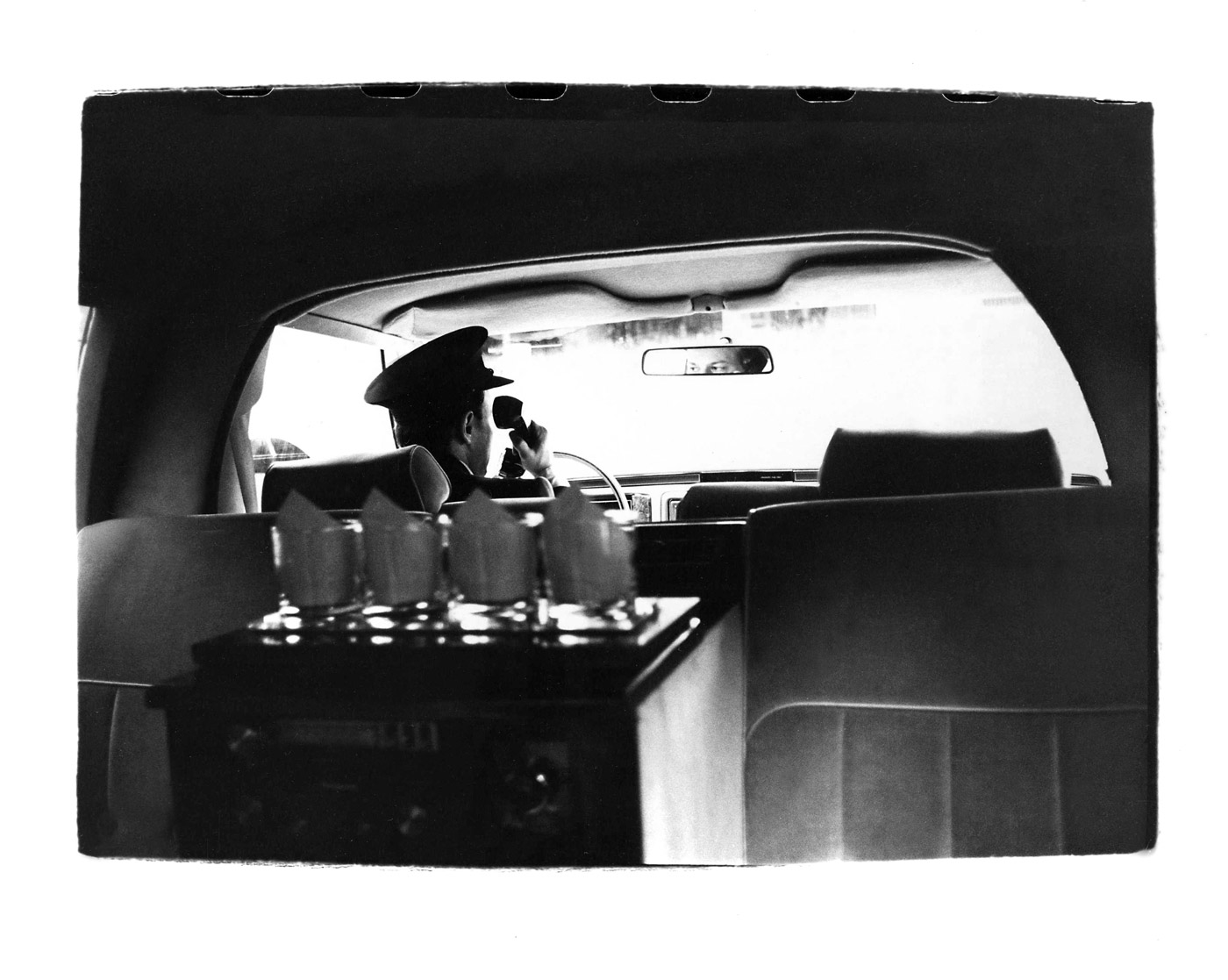
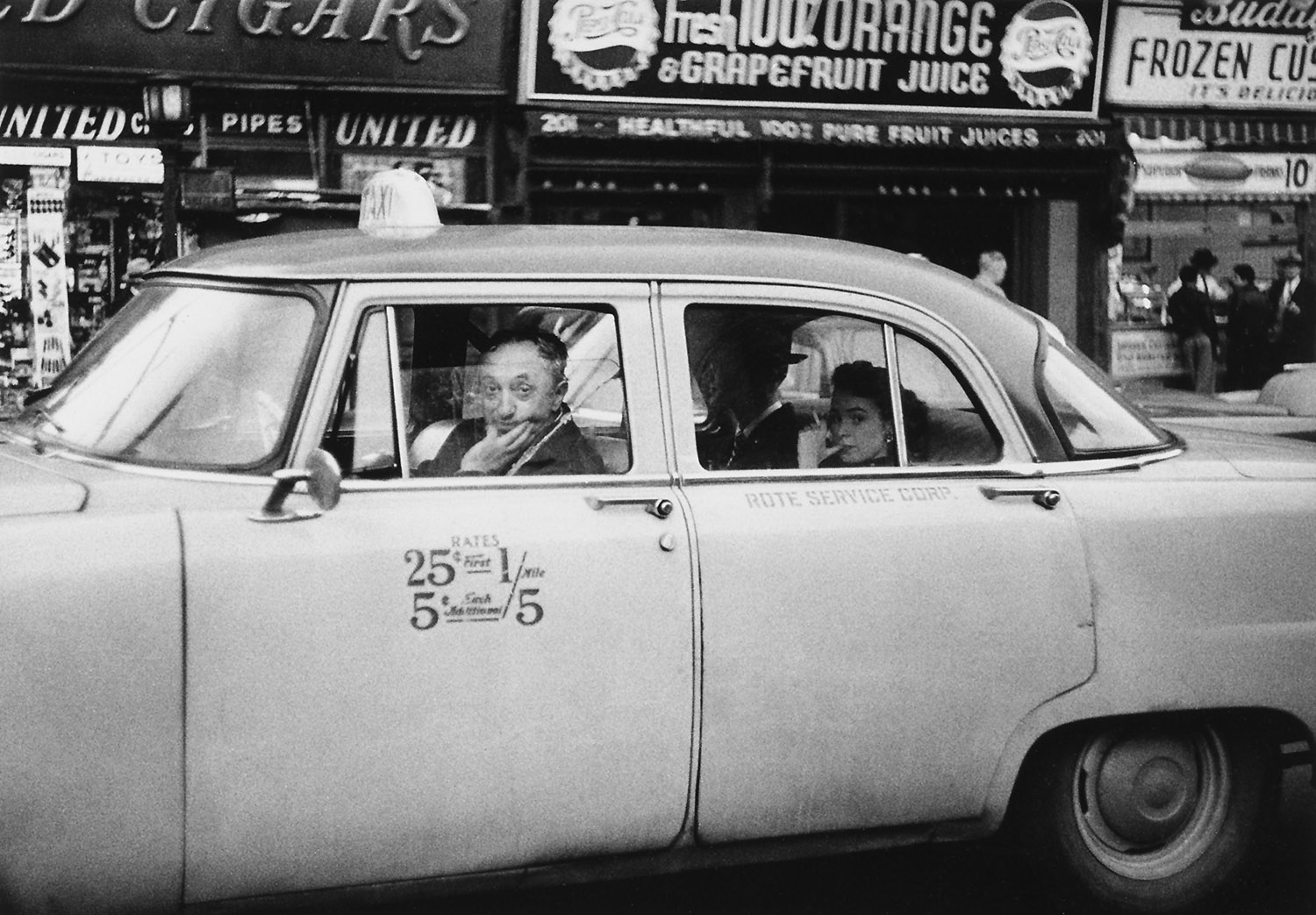
Diane Arbus (American, 1923-1971) 'Taxicab driver at the wheel with two passengers, N.Y.C. 1956' 1956 from the exhibition 'diane arbus: in the beginning' at the Metropolitan Museum of Art, New York, July - Nov, 2025


Diane Arbus (American, 1923-1971)
Taxicab driver at the wheel with two passengers, N.Y.C. 1956
1956
Silver gelatin print
© Diane Arbus/The Estate of Diane Arbus LLC


#1

This looks to be a fascinating exhibition, presenting as it does images from the first seven years of Arbus’ career as an independent artist. I wish I could see it.

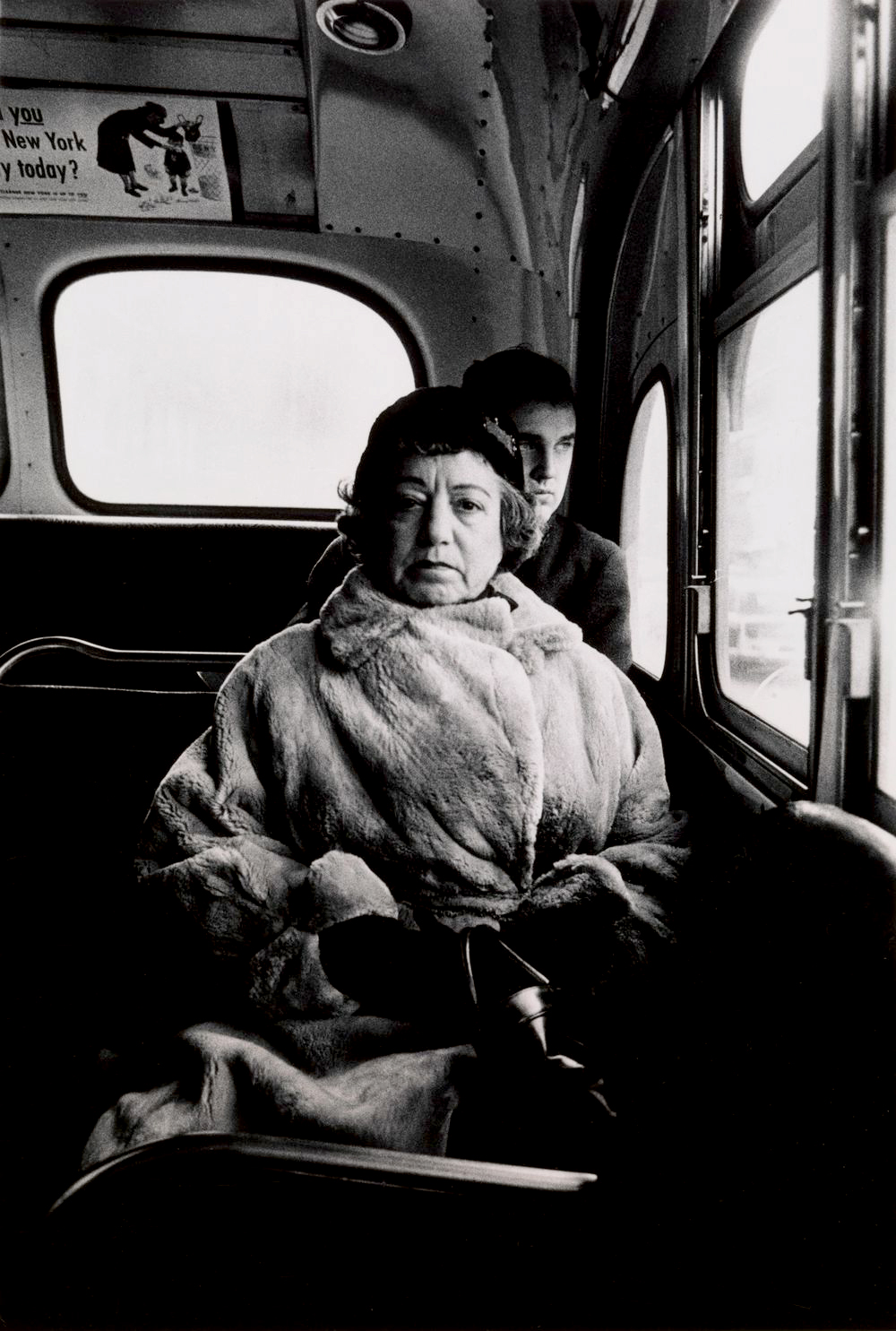
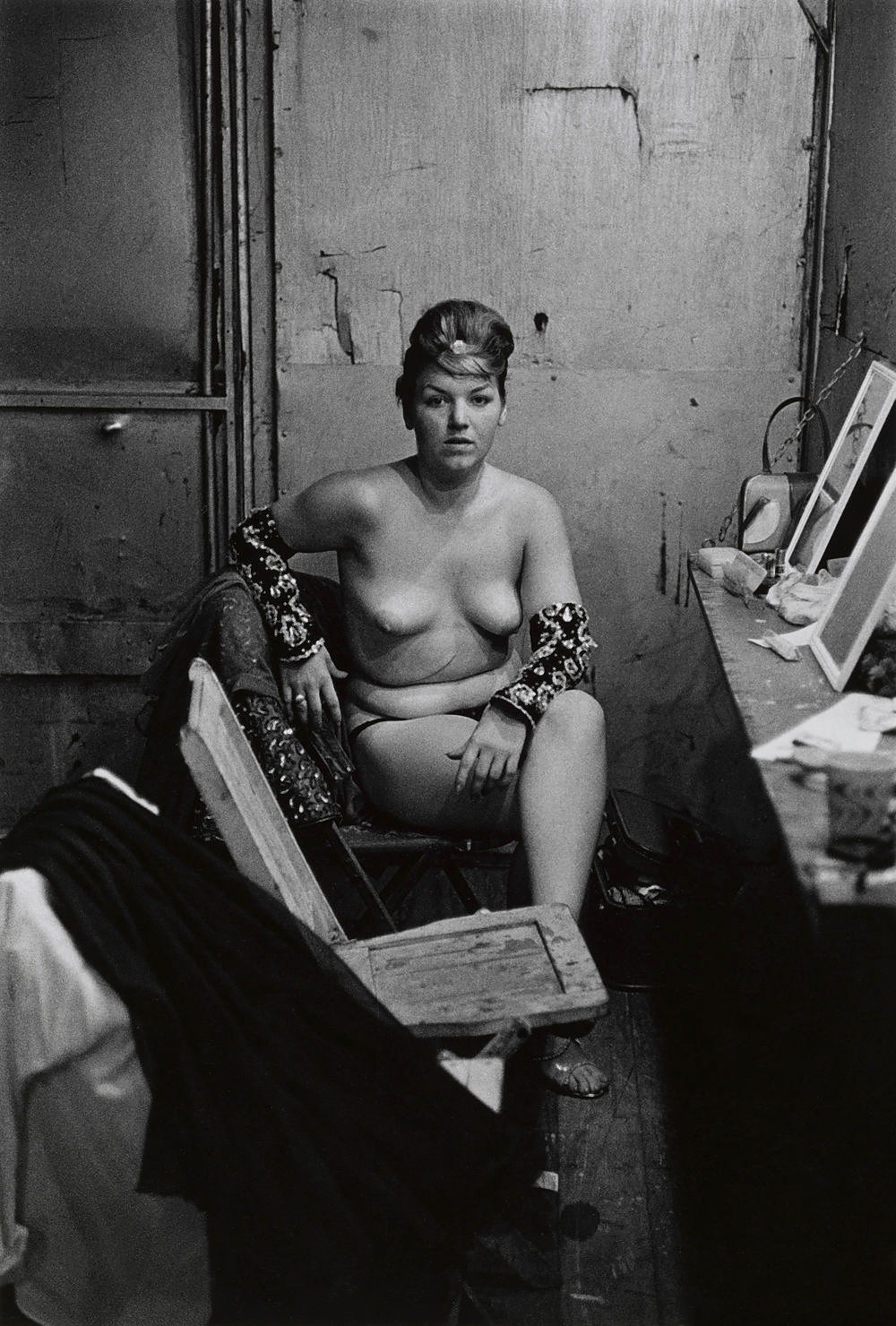
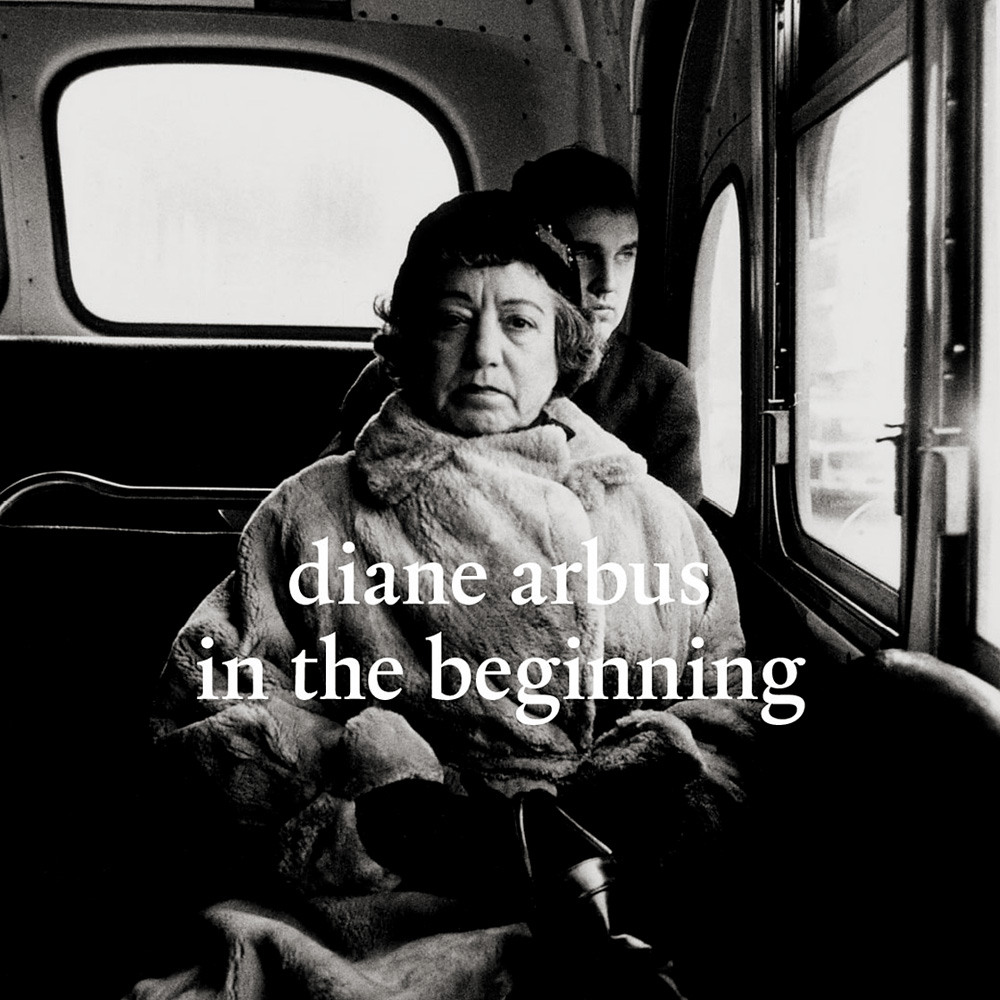
What strikes one when viewing the 35mm photographs is how loose they are in terms of the framing and composition. Most of them could do with a good crop to tighten the image frame. Stripper with Bare Breasts Sitting in Her Dressing Room, Atlantic City, N.J. 1961 would have worked better if the focus had been tightened on the central figure. Similarly, Lady on a Bus, N.Y.C. 1957 works much better as a square image as seen in the feature image for the exhibition (below). Gone is the extraneous frontal detritus which adds nothing to the image. But just feel the intensity of the withering look of the women being projected out of the photograph – it’s as if she could bit your head off at any moment. She’s not a happy camper at being photographed.

This is Arbus experimenting, feeling out the medium and trying to find her signature voice as an artist. All the later, well known elements are there: keen observation; wonderful timing; a love of intimacy and a formal, visual relationship with the subject; strong central characters; a respect for outsiders; an understanding of the pain of others; and “the poignancy of a direct personal encounter … [and] a passionate interest in the individual.”

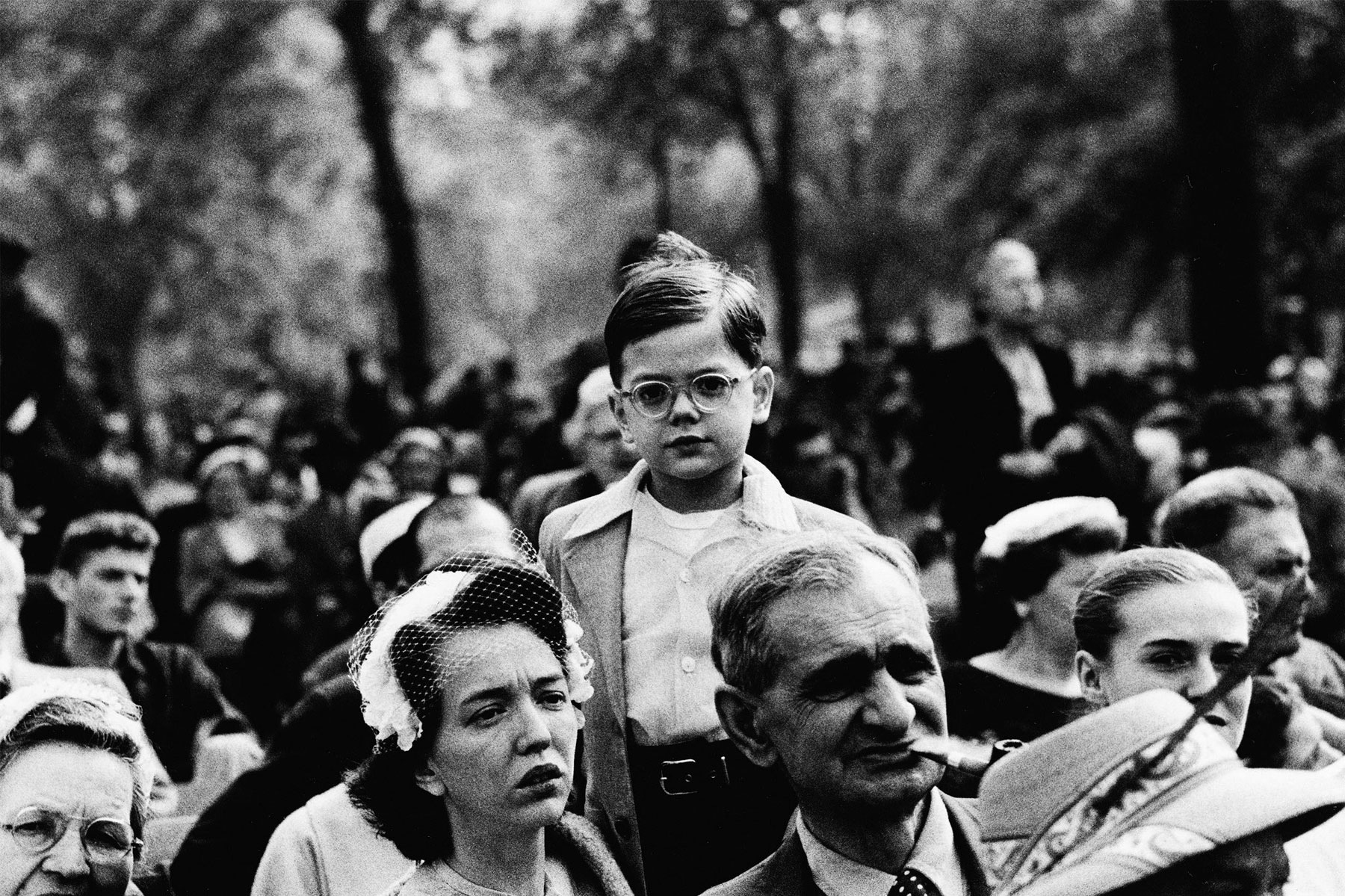
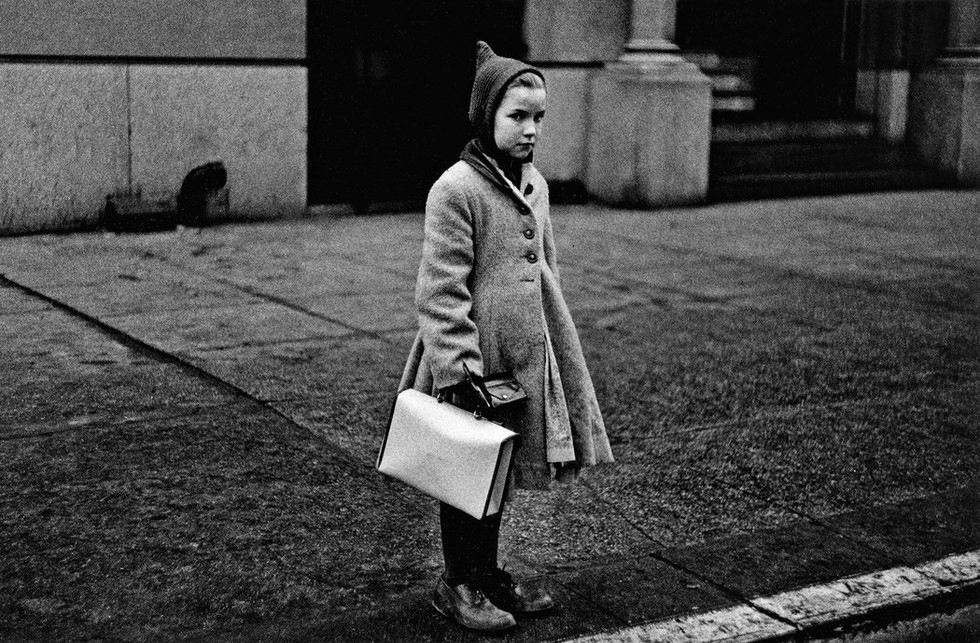
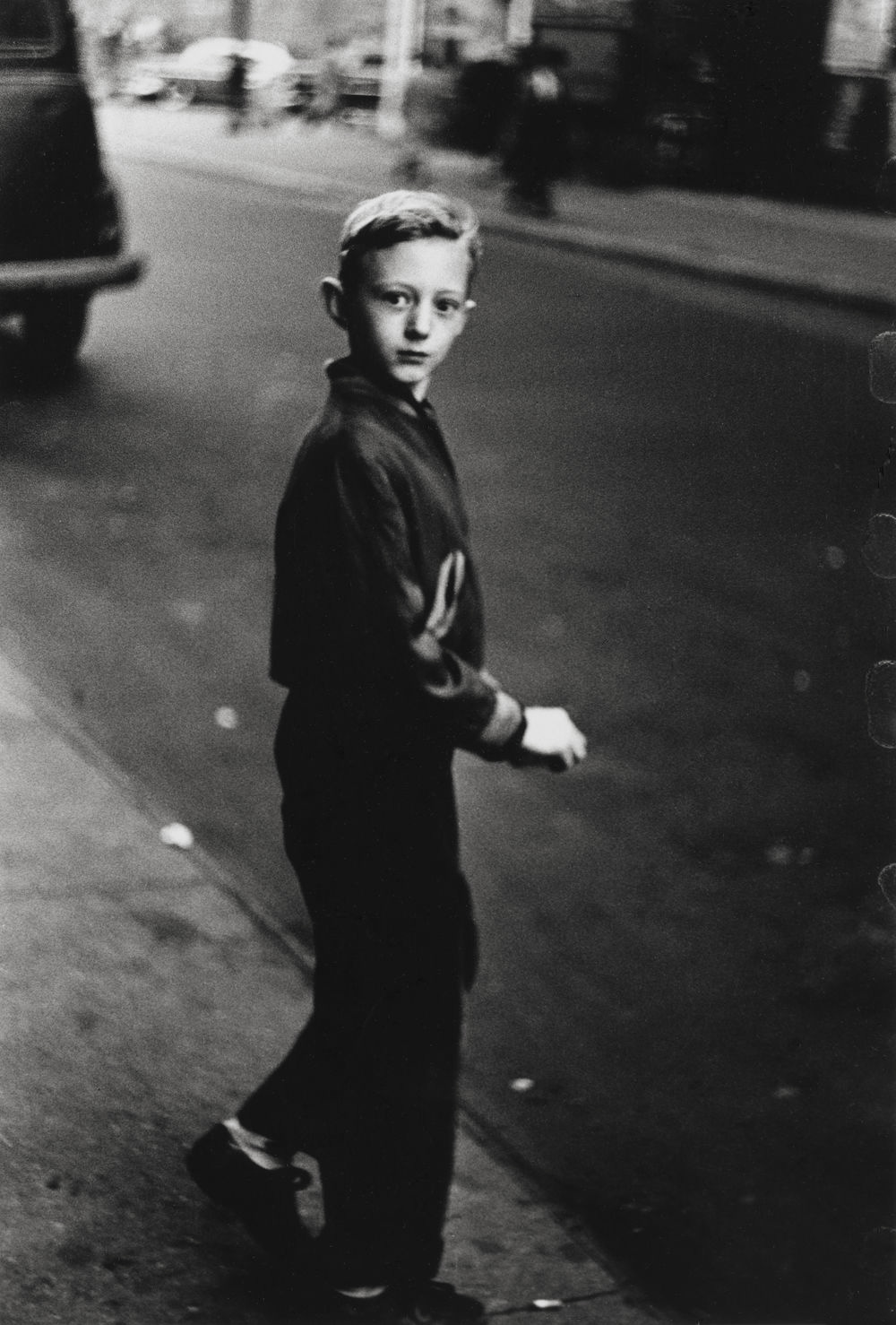
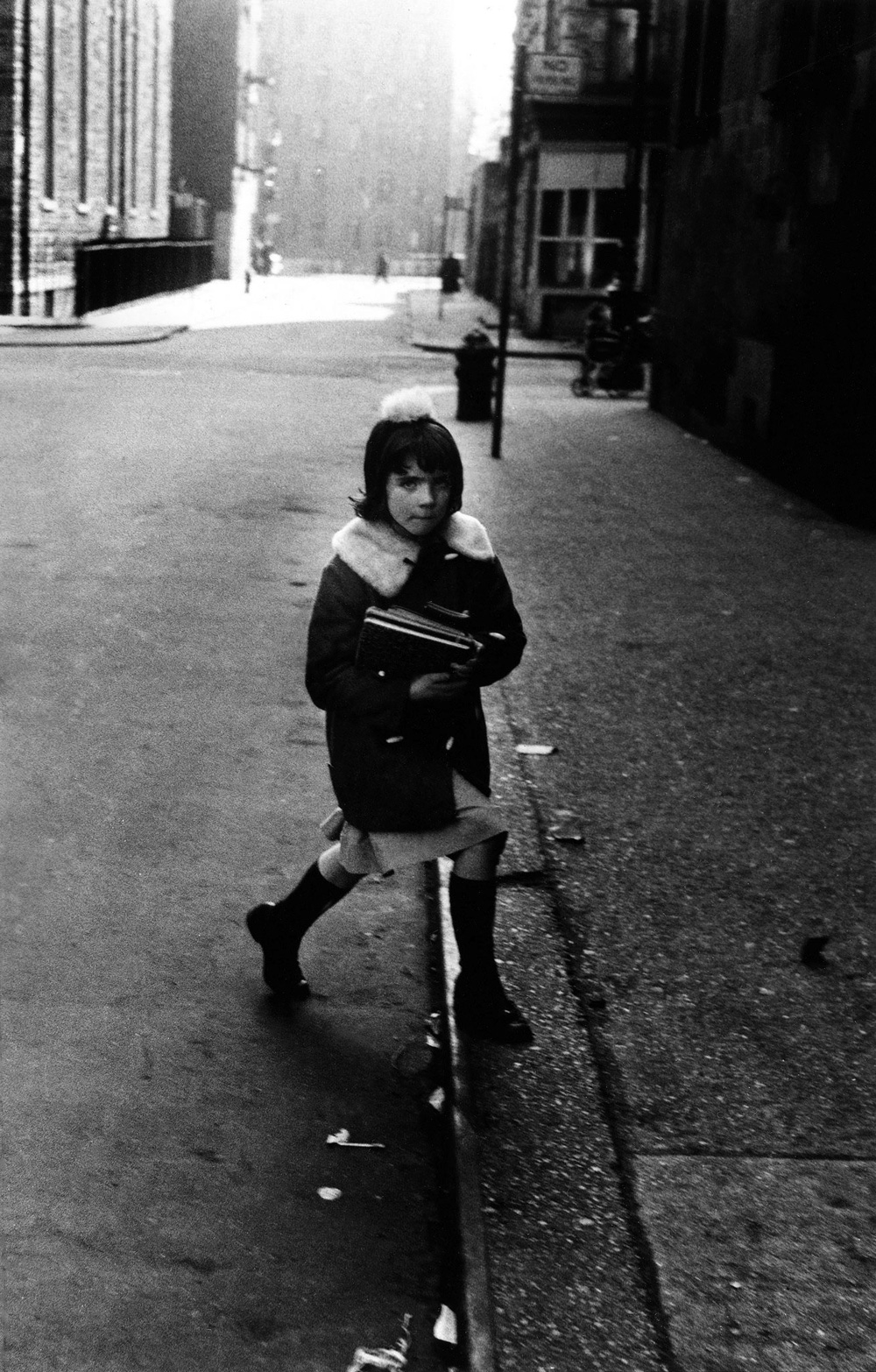
My favourite photographs in this posting are the two images Boy stepping off the curb, N.Y.C. 1957-58 and Girl with schoolbooks stepping onto the curb, N.Y.C., 1957. There is a marvellous insouciance about these photographs, “the divineness in ordinary things” embedded in the innocence of youth. We could be these people caught half-stride in their young lives, lightly stepping onto the pavement of the future. The reciprocal gaze makes us stare, and stare again… for even as those photographs are glimpses, glances of a life they become so much more, long lasting archetypes to which we can all relate. As Arthur Lubow observes citing John Szarkowski, a longtime director of photography at the Museum of Modern Art, “The reciprocal gaze that marks her early photographs would be furthered and intensified in the collaborative form of portraiture in her mature work, done with a medium-format camera. Szarkowski, for one, believed that the sharpness that larger film offered was in keeping with her aim to be both particular and mythic.”

Particular and mythic. How magical.

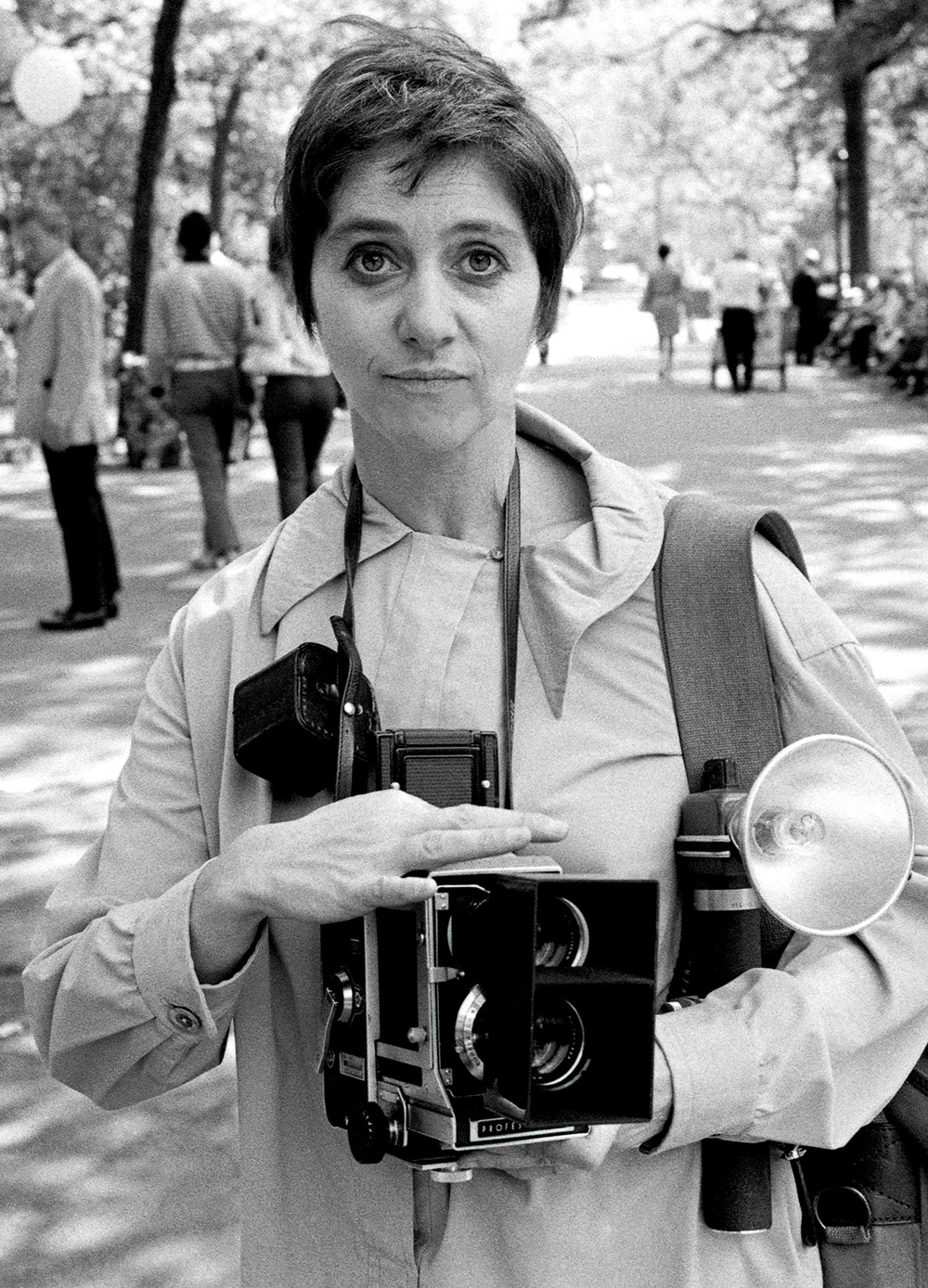
Not only did her work need the sharpness that medium format film offered, what a lot of people forget is that using a medium format camera like a Rollei is a totally different way of seeing the world. This is something that hardly anybody mentions. With a 35mm camera you bring the camera to your face and look through the viewfinder; with a medium format camera such as Arbus’ Rolleiflex or her Mamiya C330 (seen around her neck in a portrait of her in Central Park, below), the camera is held at waist level and you look down into the viewing prism of the camera… and everything is seen in reverse. I remember travelling around the world in 2000 and using a Mamiya C220 and thinking to myself, this is the most amazing experience staring down at the world, moving the camera left and right and the image moving the opposite way to what you think it will move, and then having to account for for parallax in the framing (where the image seen in the viewfinder is not framed the same as the image seen through the lens, because the viewfinder is in a slightly different position to the lens). Even with the one medium format image featured in this posting, I can just feel the different relationship of the camera and photographer to the world – in the format, in the cropping and in the previsualisation of the image. Looking down, back up to the subject, back down into the camera – instead of a horizontal perspective, both a horizontal, vertical and square perspective on the world. It’s all about feeling (in) her work. And you couldn’t really miss her if she wanted to take your photograph… look at all the equipment slung around her neck in her portrait in Central Park: twin lens hoods to stop glare, boom and large flash. She wanted you to know that she was there, to acknowledge her presence.

Arbus intuitively knew what she wanted – the presence of the person and the presence of the photographer acknowledged through a circular, two-way relationship. And we, the viewer, understand that process and acknowledge it. Hence, these photographs are not “apparently artless”, they are the very antithesis of that. They are both a thinking and feeling person’s photography. All of her photographs are intelligent investigations of the human condition which produce an empathic response in the viewer. They are a form of empathic vision in which the viewer is drawn into that magical and transcendent relationship. In my opinion, there has never been anyone like her, before or since: no devotees, followers or disciples (except, perhaps, Mary Ellen Mark). Arbus is one of a kind. She will always be my #1.

Dr Marcus Bunyan


Many thankx to the Metropolitan Museum of Art for allowing me to publish the photographs in the posting. Please click on the photographs for a larger version of the image.


The photographs from her early career reveal that the salient characteristics of her work – its centrality, boldness, intimacy and apparent artlessness – were present in her pictures since the very beginning. Arbus’s creative life in photography after 1962 is well documented and already the stuff of legend; now, for the first time, we can properly examine its origins.


'diane arbus: in the beginning' book cover


“The camera is cruel, so I try to be as good as I can to make things even.”

“I do feel I have some slight corner on something about the quality of things. I mean it’s very subtle and a little embarrassing to me but I really believe there are things which nobody would see unless I photographed them.”

“One thing that struck me early is that you don’t put into a photograph what’s going to come out. Or, vice versa, what comes out is not what you put in.”

“…I would never choose a subject for what it means to me. I choose a subject and then what I feel about it, what it means, begins to unfold.”


Diane Arbus


“I think Arbus was suggesting that just as people are looking at us and we’re looking at them every day, the pictures made us introspective as viewers. They forced us to confront our own identity. And that’s a really beautiful switch, that switcheroo. We’re looking at somebody else but we’re mindful of our voyeurism, and we’re mindful of how we ourselves are presenting. ‘How am I different? How did I become the person I am?’ That’s one of the qualifying elements of an Arbus photograph: that you feel something about you, often something that might not be comfortable.”

“Arbus’s early photographs are wonderfully rich in achievement and perhaps as quietly riveting and ultimately controversial as the iconic images for which she is so widely known. She brings us face-to-face with what she had first glimpsed at the age of 16 – “the divineness in ordinary things” – and through her photographs we begin to see it too.”


Exhibition curator Jeff L. Rosenheim


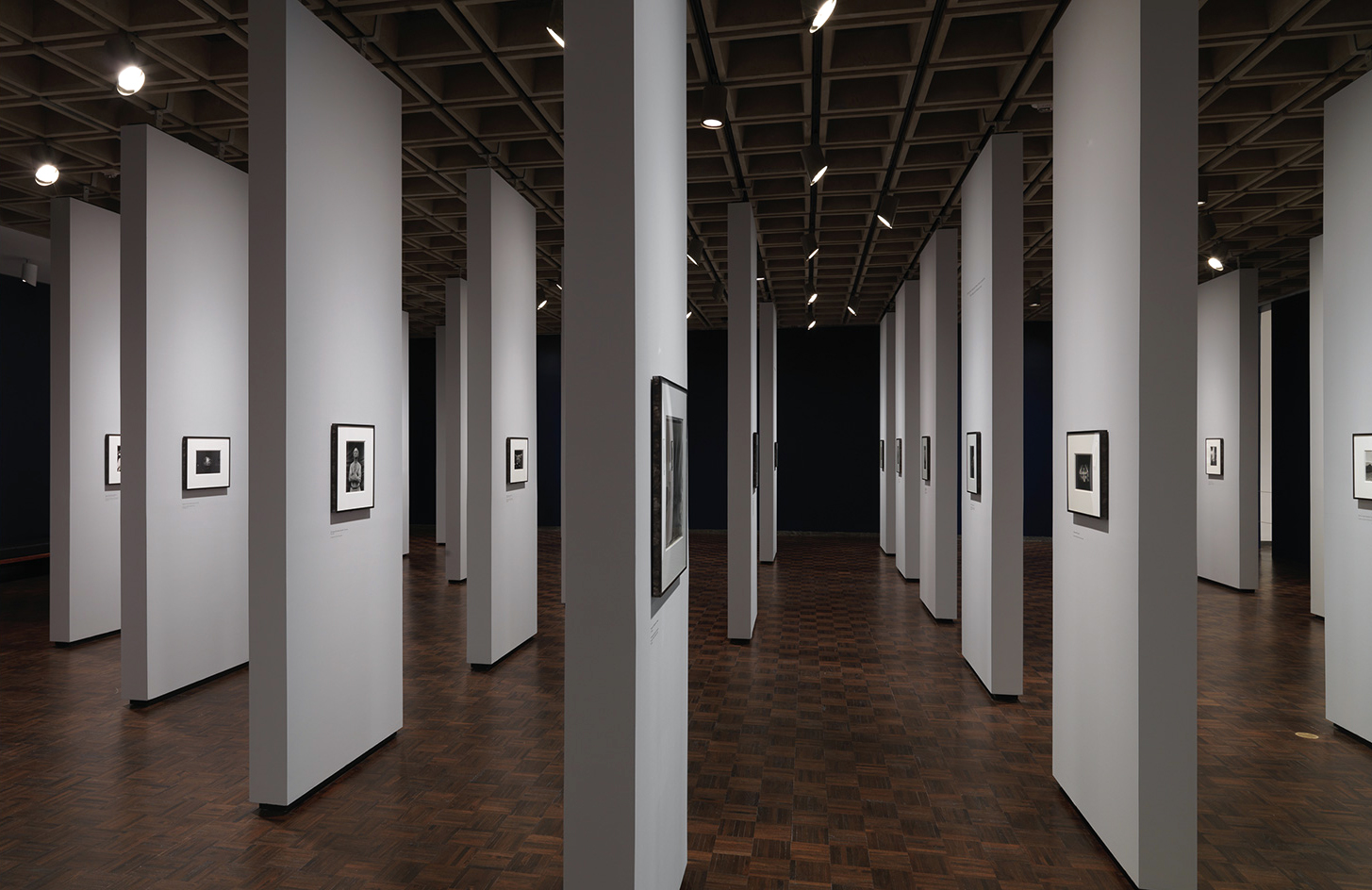
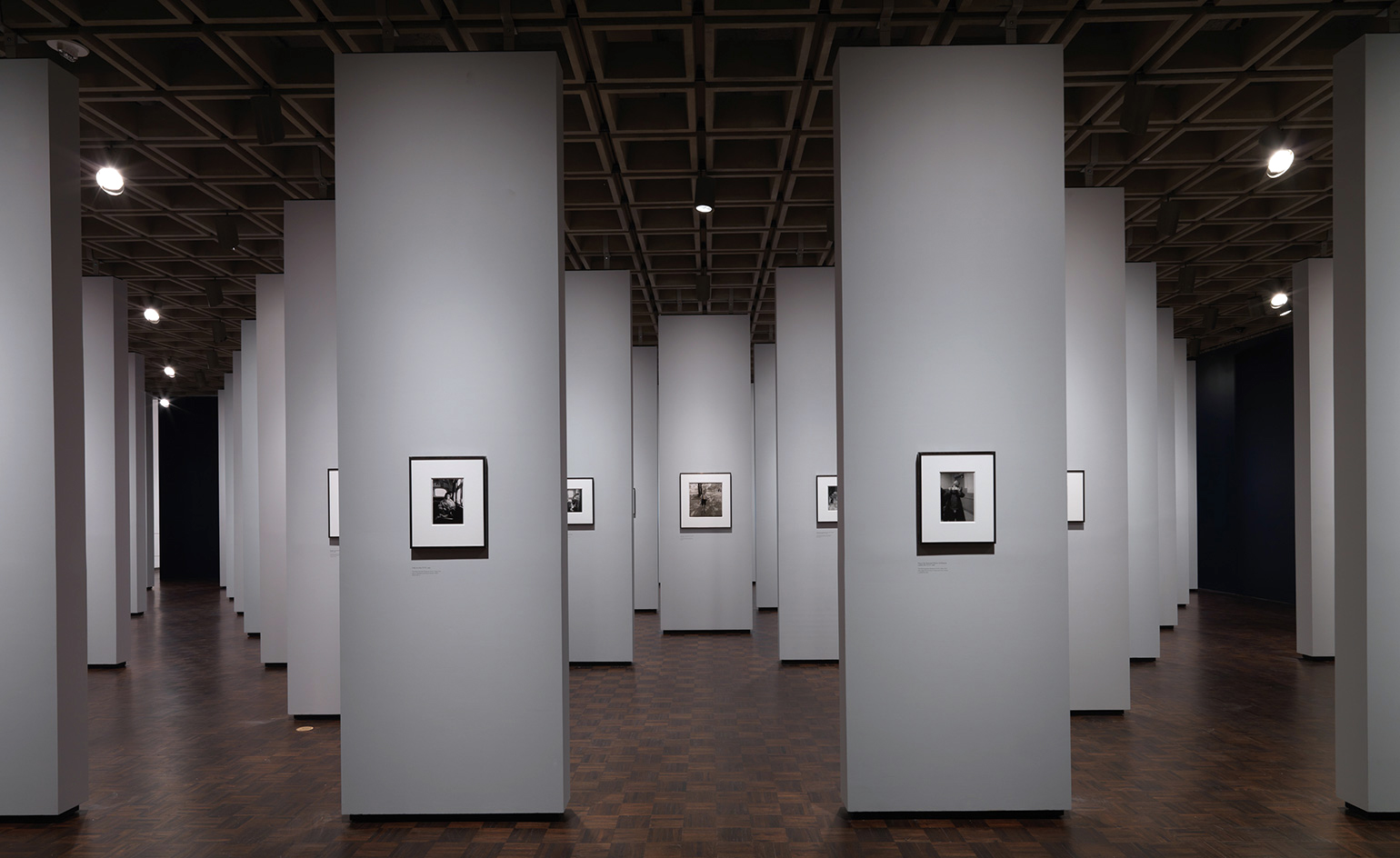
Installation view of the exhibition 'diane arbus: in the beginning' at the Metropolitan Museum of Art, New York

Installation view of the exhibition 'diane arbus: in the beginning' at the Metropolitan Museum of Art, New York

Installation view of the exhibition 'diane arbus: in the beginning' at the Metropolitan Museum of Art, New York


Installation views of the exhibition diane arbus: in the beginning at the Metropolitan Museum of Art, New York


This landmark exhibition features more than 100 photographs that together redefine Diane Arbus (American, 1923-1971), one of the most influential and provocative artists of the 20th century. It focuses on the first seven years of her career, from 1956 to 1962, the period in which she developed the idiosyncratic style and approach for which she has been recognised praised, criticised, and copied the world over.

Arbus made most of her photographs in New York City, where she lived and died, and where she worked in locations such as Times Square, the Lower East Side, and Coney Island. Her photographs of children and eccentrics, couples and circus performers, female impersonators and Fifth Avenue pedestrians are among the most intimate and surprising images of the era.

The majority of the photographs in the exhibition have never before been seen and are part of the Museum’s Diane Arbus Archive, acquired in 2007 by gift and promised gift from the artist’s daughters, Doon Arbus and Amy Arbus. It was only when the archive came to The Met that this remarkable early work came to be fully explored. Arbus’s creative life in photography after 1962 is well documented and already the stuff of legend; now, for the first time, we can properly examine its origins.


Diane Arbus (American, 1923-1971) 'Boy above a crowd, N.Y.C., 1957' 1957 from the exhibition 'diane arbus: in the beginning' at the Metropolitan Museum of Art, New York, July - Nov, 2025


Diane Arbus (American, 1923-1971)
Boy above a crowd, N.Y.C., 1957
1957
Silver gelatin print
© Diane Arbus/The Estate of Diane Arbus LLC


Diane Arbus (American, 1923-1971) 'Girl with a pointy hood and white schoolbag at the curb, N.Y.C. 1957' 1957


Diane Arbus (American, 1923-1971)
Girl with a pointy hood and white schoolbag at the curb, N.Y.C. 1957
1957
Silver gelatin print
© Diane Arbus/The Estate of Diane Arbus LLC


Diane Arbus (American, 1923-1971) 'Empty snack bar, N.Y.C., 1957' 1957


Diane Arbus (American, 1923-1971)
Empty snack bar, N.Y.C., 1957
1957
Silver gelatin print
© Diane Arbus/The Estate of Diane Arbus LLC


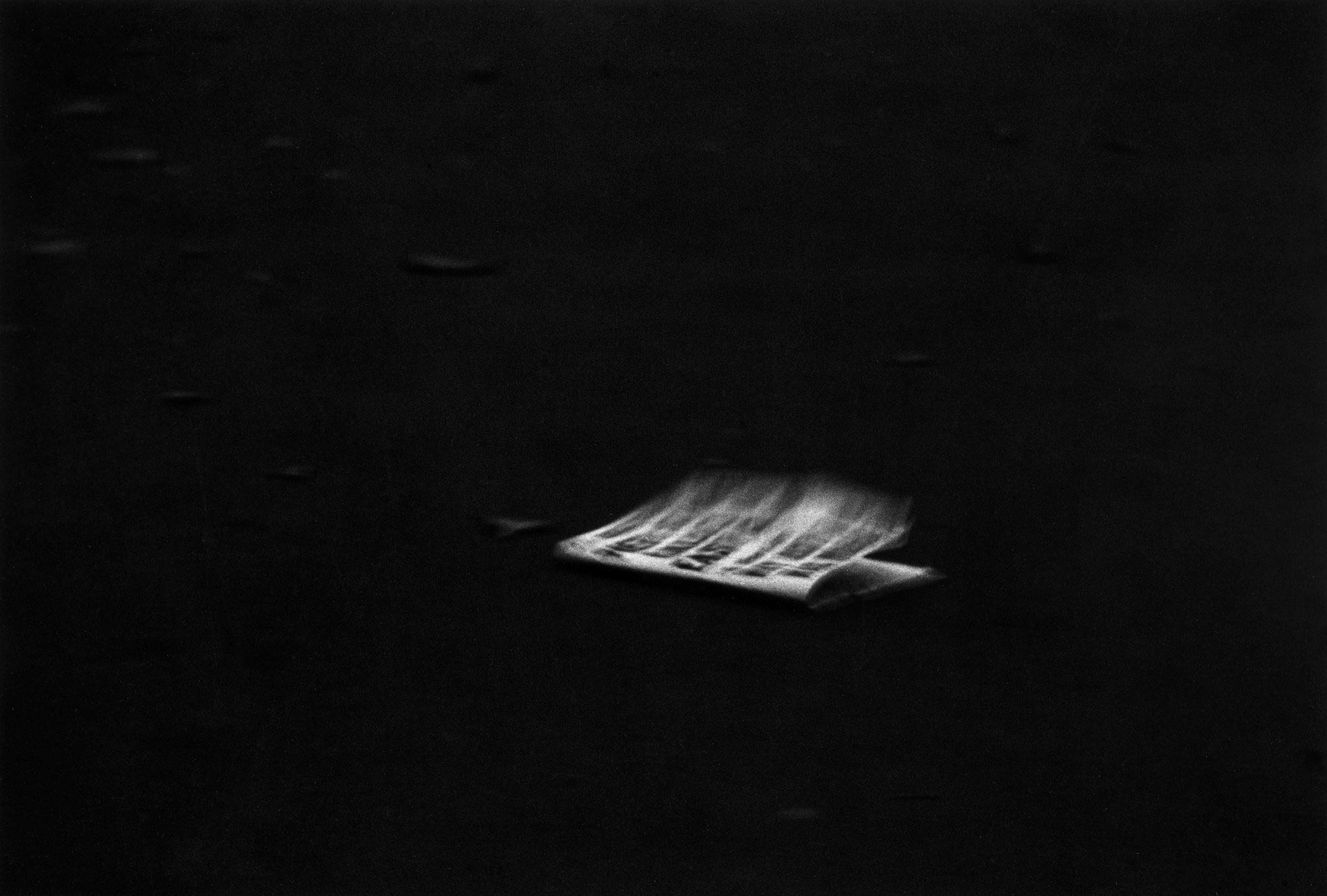
Diane Arbus (American, 1923-1971) 'Windblown headline on a dark pavement, N.Y.C., 1956' 1956


Diane Arbus (American, 1923-1971)
Windblown headline on a dark pavement, N.Y.C., 1956
1956
Silver gelatin print
© Diane Arbus/The Estate of Diane Arbus LLC


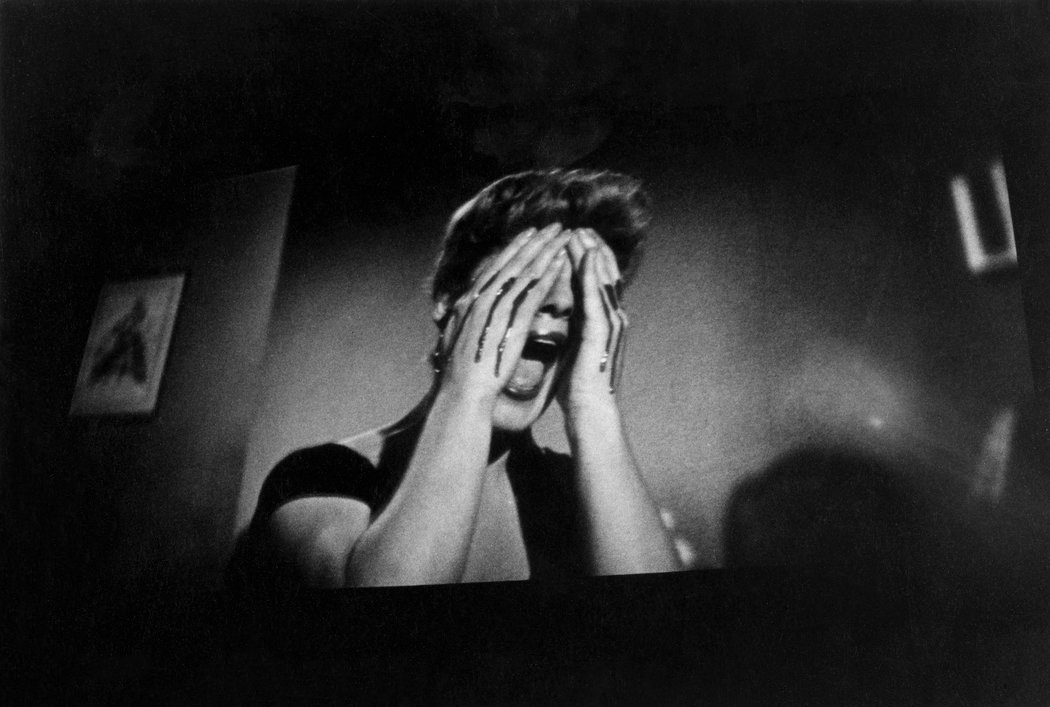
Diane Arbus (American, 1923-1971) 'Screaming woman with blood on her hands, 1961' 1961


Diane Arbus (American, 1923-1971)
Screaming woman with blood on her hands, 1961
1961
Silver gelatin print
© Diane Arbus/The Estate of Diane Arbus LLC


“This is a shot inside a theater, of a movie called ‘Horrors of the Black Museum.’ The woman is using binoculars and when she focuses, daggers come out and blind her.”


As part of the inaugural season at The Met Breuer, diane arbus: in the beginning will open on July 12, featuring more than 100 photographs that together will redefine one of the most influential and provocative artists of the 20th century. This landmark exhibition will highlight never-before-seen early work of Diane Arbus (1923-1971), focusing on the first seven years of her career, from 1956 to 1962 – the period in which she developed the idiosyncratic style and approach for which she has been recognised, praised, criticised, and copied the world over. The exhibition is made possible by the Alfred Stieglitz Society. Additional support is provided by The Horace W. Goldsmith Foundation and the Art Mentor Foundation Lucerne.

“It is a rare privilege to present an exhibition this revelatory, on an artist of Arbus’s stature. More than two-thirds of these works have never before been exhibited or published,” said Thomas P. Campbell, Director and CEO of The Met. “We sincerely thank the Estate of Diane Arbus for entrusting us to show an unknown aspect of this remarkable artist’s legacy with the camera.”

Jeff Rosenheim, Curator in Charge of the Department of Photographs, added, “Arbus’s early photographs are wonderfully rich in achievement and perhaps as quietly riveting and ultimately controversial as the iconic images for which she is so widely known. She brings us face-to-face with what she had first glimpsed at the age of 16 – ‘the divineness in ordinary things’ – and through her photographs we begin to see it too.”

diane arbus: in the beginning focuses on seven key years that represent a crucial period of the artist’s genesis, showing Arbus as she developed her style and honed her practice. Arbus was fascinated by photography even before she received a camera in 1941 at the age of 18 as a present from her husband, Allan, and made photographs intermittently for the next 15 years while working with him as a stylist in their fashion photography business. But in 1956 she numbered a roll of 35mm film #1, as if to claim to herself that this moment would be her definitive beginning. Through the course of the next seven years (the period in which she primarily used a 35mm camera), an evolution took place – from pictures of individuals that sprang out of fortuitous chance encounters to portraits in which the chosen subjects became engaged participants, with as much stake in the outcome as the photographer. This greatly distinguishes Arbus’s practice from that of her peers, from Walker Evans and Helen Levitt to Garry Winogrand and Lee Friedlander, who believed that the only legitimate record was one in which they, themselves, appear to play little or no role. In almost complete opposition, Arbus sought the poignancy of a direct personal encounter.

Arbus made most of her photographs in New York City, where she was born and died, and where she worked in locations such as Times Square, the Lower East Side, Coney Island, and other areas. Her photographs of children and eccentrics, couples and circus performers, female impersonators and Fifth Avenue pedestrians are among the most intimate and surprising images of the era. From the beginning, Arbus believed fully that she had something special to offer the world, a glimpse of its many secrets: “I do feel I have some slight corner on something about the quality of things. I mean it’s very subtle and a little embarrassing to me but I really believe there are things which nobody would see unless I photographed them.”

Nearly half of the photographs that Arbus printed during her lifetime were made between 1956 and 1962, the period covered by this exhibition. At the time of her death in 1971, much of this work was stored in boxes in an inaccessible corner of her basement darkroom at 29 Charles Street in Greenwich Village. These prints remained undiscovered for several years thereafter and were not even inventoried until a decade after her death. The majority of the photographs included in the exhibition are part of the Museum’s vast Diane Arbus Archive, acquired in 2007 by gift and promised gift from the artist’s daughters, Doon Arbus and Amy Arbus. It was only when the archive – a treasury of photographs, negatives, notebooks, appointment books, correspondence, and collections – came to The Metropolitan Museum of Art in 2007 that this seminal early work began to be fully explored.

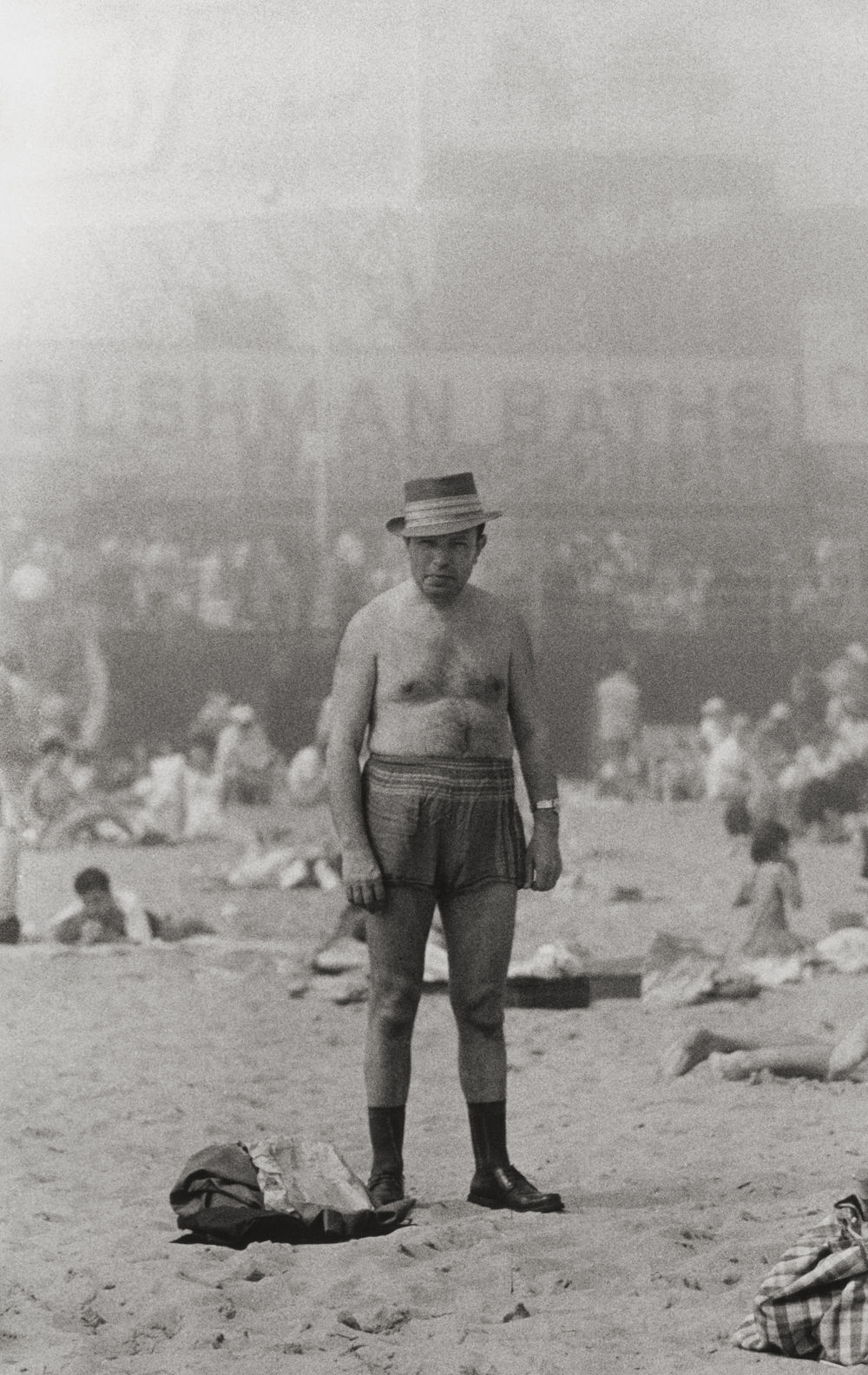
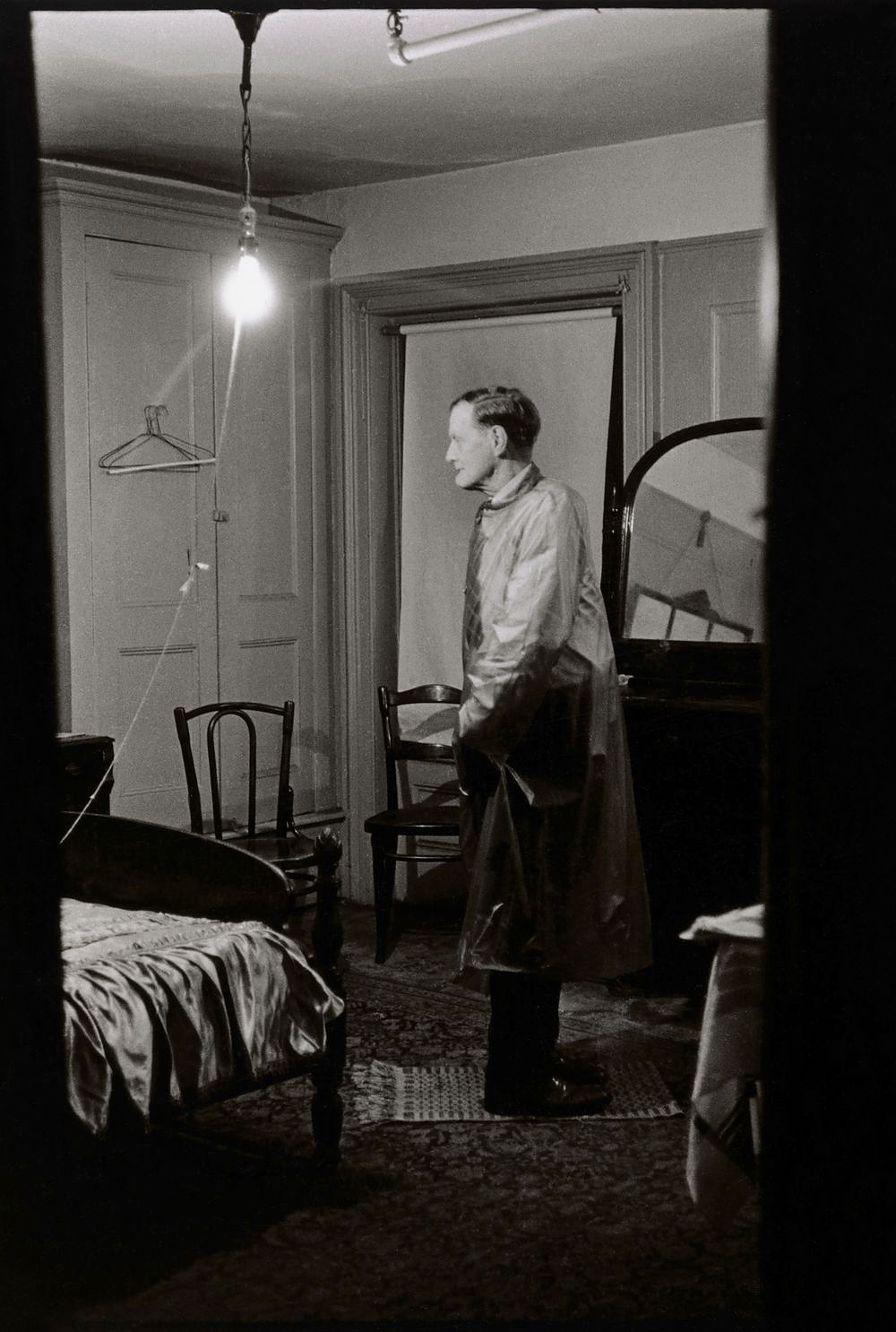
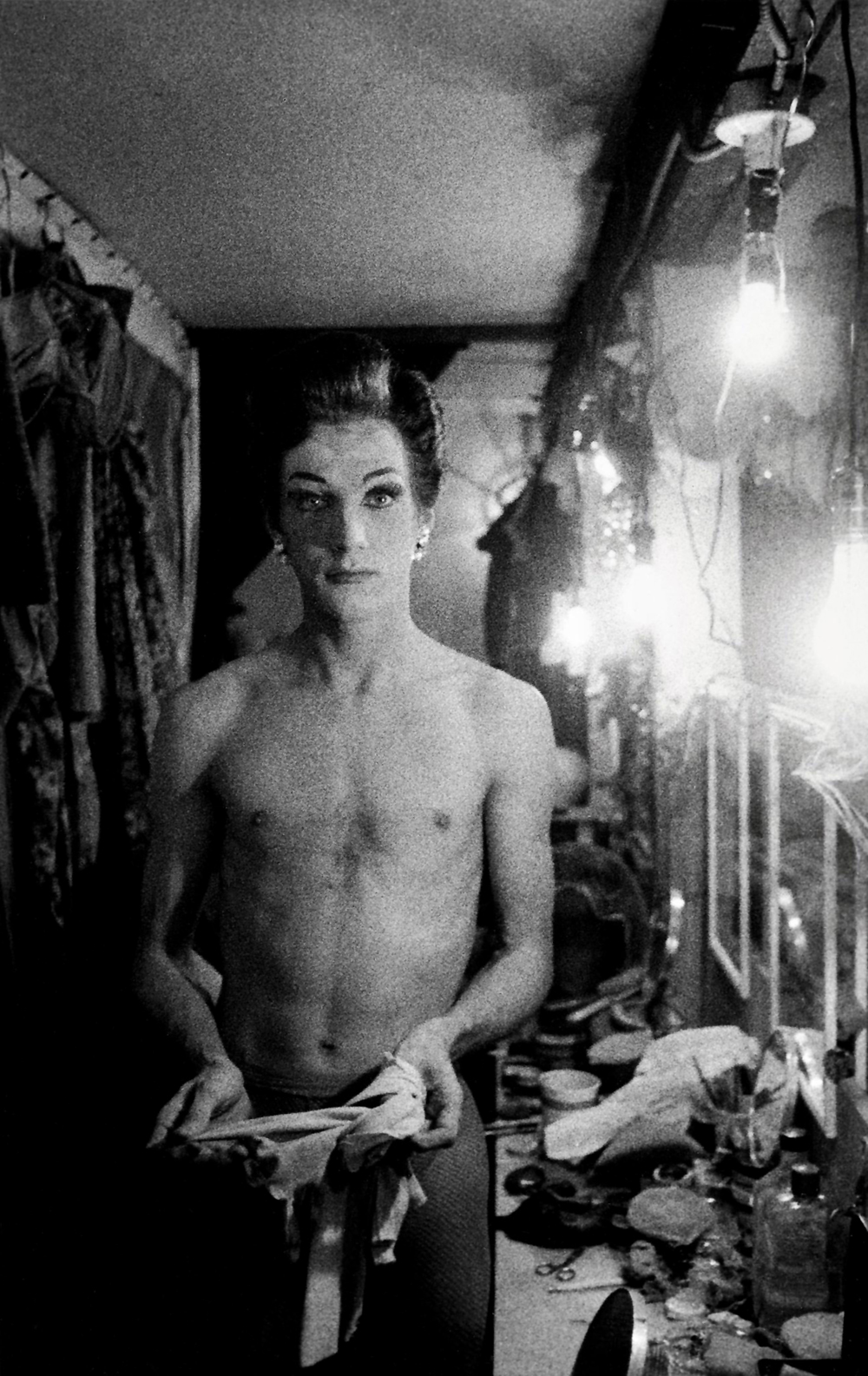
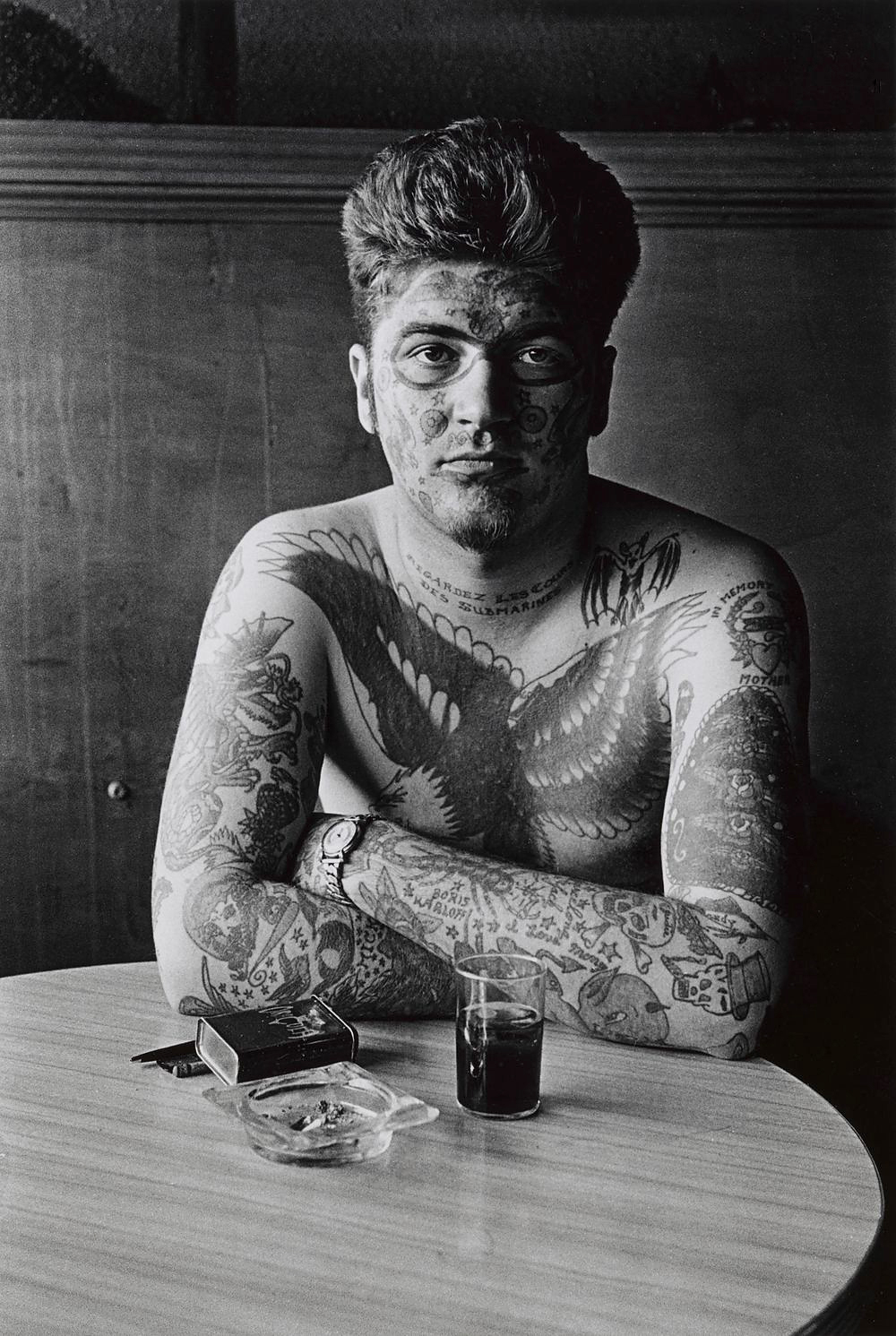
Among the highlights in the exhibition are lesser-known published works such as Lady on a bus, N.Y.C. 1957, Boy stepping off the curb, N.Y.C. 1957-58, The Backwards Man in his hotel room, N.Y.C. 1961, and Jack Dracula at a bar, New London, Conn. 1961, as well as completely unknown additions to her oeuvre, such as Taxicab driver at the wheel with two passengers, N.Y.C. 1956, Woman with white gloves and a pocket book, N.Y.C. 1956, Female impersonator holding long gloves, Hempstead, L.I. 1959, and Man in hat, trunks, socks and shoes, Coney Island, N.Y. 1960. Included among the selection of six square-format photographs from 1962 is the iconic Child with a toy hand grenade in Central Park, N.Y.C. 1962, a photograph that signals the moment when Arbus turned away from the 35mm camera and started working with the 2 1/4 inch square format Rolleiflex camera, a format that remained a distinctive attribute of her work for the rest of her life. The photographs from her early career reveal that the salient characteristics of her work – its centrality, boldness, intimacy, and apparent artlessness – were present in her pictures since the very beginning. Arbus’s creative life in photography after 1962 is well documented and already the stuff of legend; now, for the first time, we can properly examine its origins.

diane arbus: in the beginning is curated by Jeff L. Rosenheim, Curator in Charge of the Department of Photographs at The Met.

Press release from the Metropolitan Museum of Art


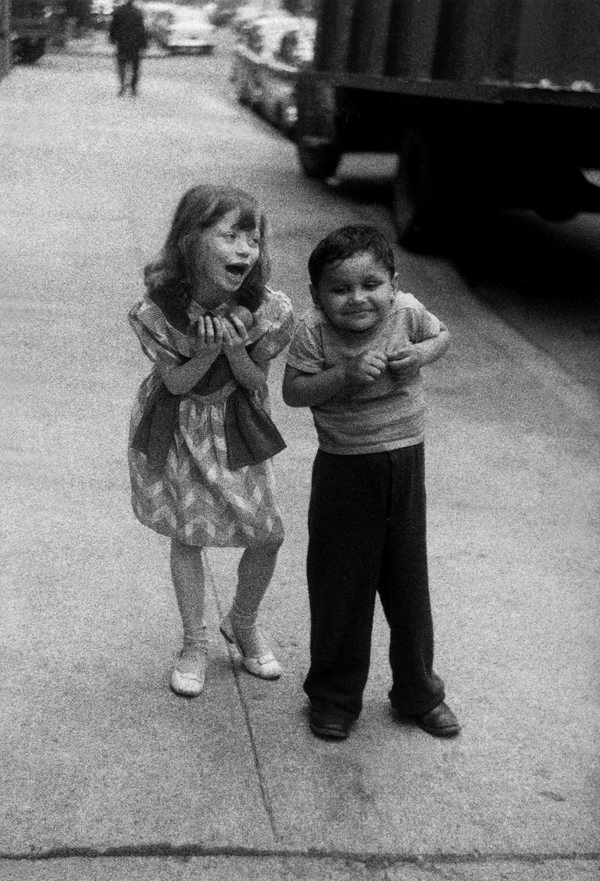
Diane Arbus (American, 1923-1971) 'Child teasing another, N.Y.C., 1960' 1960


Diane Arbus (American, 1923-1971)
Child teasing another, N.Y.C., 1960
1960
Silver gelatin print
© Diane Arbus/The Estate of Diane Arbus LLC


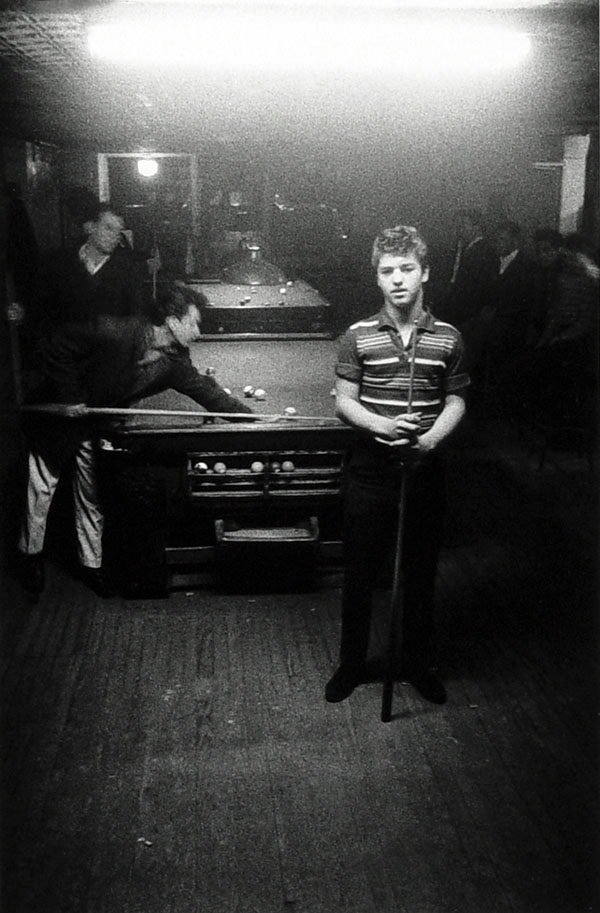
Diane Arbus (American, 1923-1971) 'Boy at the pool hall, N.Y.C., 1959' 1959


Diane Arbus (American, 1923-1971)
Boy at the pool hall, N.Y.C., 1959
1959
Silver gelatin print
© Diane Arbus/The Estate of Diane Arbus LLC


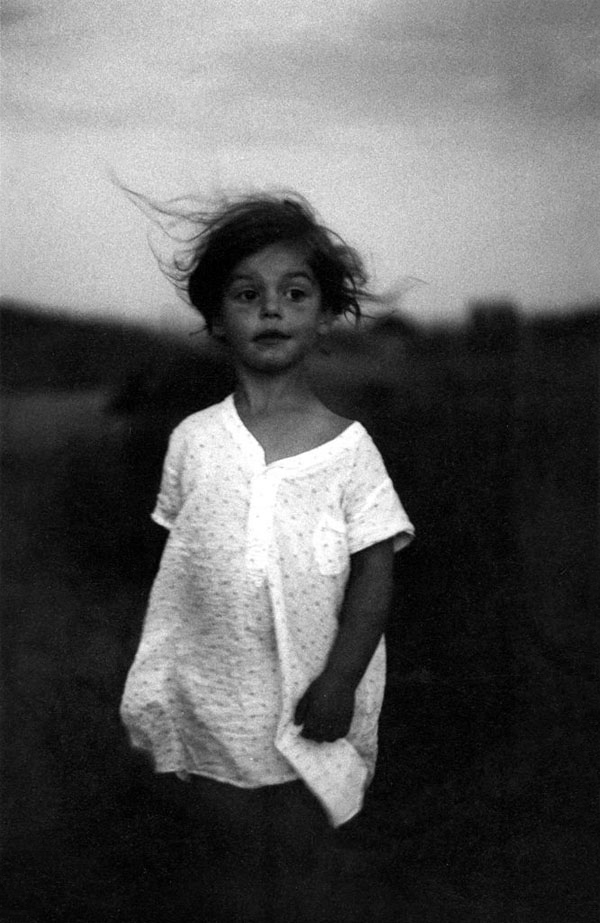
Diane Arbus (American, 1923-1971) 'Child in a nightgown, Wellfleet, Mass., 1957' 1957


Diane Arbus (American, 1923-1971)
Child in a nightgown, Wellfleet, Mass., 1957
1957
Silver gelatin print
© Diane Arbus/The Estate of Diane Arbus LLC


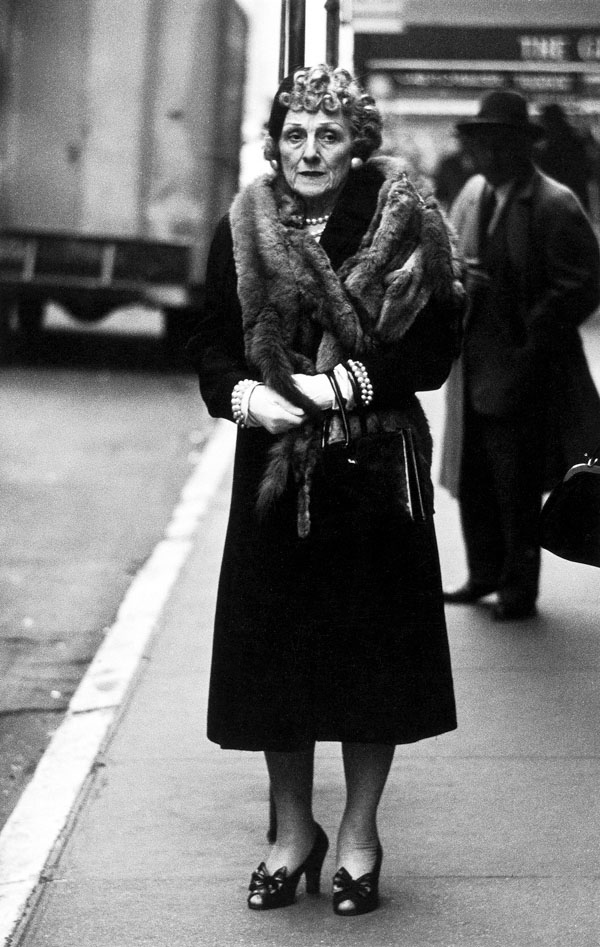
Diane Arbus (American, 1923-1971) 'Woman wearing a mink stole and bow shoes, N.Y.C., 1956' 1956


Diane Arbus (American, 1923-1971)
Woman wearing a mink stole and bow shoes, N.Y.C., 1956
1956
Silver gelatin print
© Diane Arbus/The Estate of Diane Arbus LLC


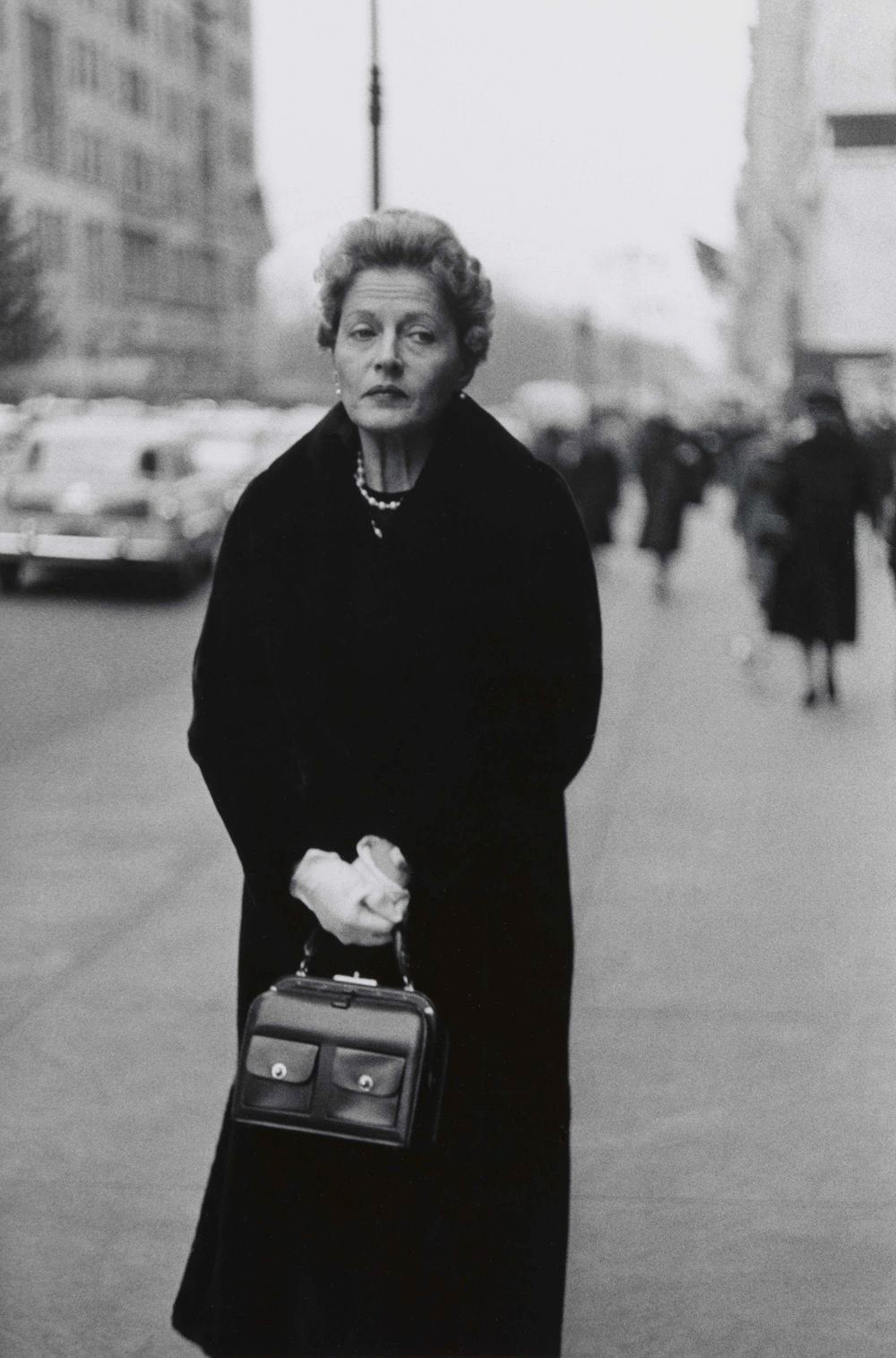
Diane Arbus (American, 1923-1971) 'Woman with white gloves and a pocket book, N.Y.C. 1956' 1956


Diane Arbus (American, 1923-1971)
Woman with white gloves and a pocket book, N.Y.C. 1956
1956
Silver gelatin print
© Diane Arbus/The Estate of Diane Arbus LLC


“We’re in the isolationist ’50s, and here’s a glamorous woman on Fifth Avenue, wearing gloves, with her pocketbook, but with this anxiety on her face.”


Diane Arbus (American, 1923-1971) 'Lady on a Bus, N.Y.C. 1957' 1957


Diane Arbus (American, 1923-1971)
Lady on a Bus, N.Y.C. 1957
1957
Gelatin silver print
8 1/2 x 5 3/4 in. (21.6 x 14.6cm)
The Metropolitan Museum of Art, New York, Gift of Danielle and David Ganek, 2005
© Diane Arbus/The Estate of Diane Arbus LLC


Jeff L. Rosenheim curator: There are many pictures from her first 50 rolls of film in the show. And you can see for yourself that she is already isolating individuals, pedestrians on Fifth Avenue. She is approaching people, and in almost every instance, it’s one image and the subject is addressing the camera. Arbus did not want to do what almost every one of her peers was doing, which she was highly aware of – she was well versed in the history of the medium; she was taking classes from Lisette Model and she had studied with Berenice Abbott and Alexey Brodovitch. What she took away from that training was this feeling that she could find her subject and they could find her in equal measure. She allowed herself to be vulnerable enough. Helen Levitt used a right-angle viewfinder so her subjects couldn’t see what she was doing. Walker Evans used the folds of his coat to hide his camera on the subway. The style of documentary photography was that you wanted to see but you didn’t want to be seen, and Arbus had a completely different method. It was to use the camera as an expressive device that allows the viewer of the photograph to be implicated by the subject looking directly at the artist.

Randy Kennedy. “The Diane Arbus You’ve Never Seen,” on the New York Times website 26 May 2016 [Online] Cited 25/10/2021


“Arbus is not without her critics and, where some people praise her ability to celebrate the marginalized and glorify the unusual, others see her work as cruel and exploitative. Lubow, however, claims that both stances oversimplify the real complexity of her work, which is perhaps where both he and Jeff Rosenheim, the curator in charge of photography at the Met, take a stab at redefining Arbus, because if we define her solely by the people she photographed, we’re missing the point.

“I think both Jeff and I realized that from the beginning she wanted to capture a moment where she was seeing and being seen, she wanted a reciprocal look,” Lubow says. “Jeff is doing that formally, and showing you that she needed it as an artist, and I’ve tried to show that she needed it as a person. She was motivated to feel and to record the response of her subject to her. That was how she felt real, this was how she felt alive.””

Krystal Grow. “Diane Arbus and the Art of Exchange,” on the Popular Photography website July 15, 2016 [Online] Cited 25/10/2021


“From the very beginning of her career, she was taking photographs to obtain a vital proof – a corroboration of her own existence. The pattern was set early. When she was 15, she described to a friend how she would undress at night in her lit bathroom and watch an old man across the courtyard watch her (until his wife complained). She not only wanted to see, she needed to be seen. As a street photographer, she dressed at times in something attention-grabbing, like a fake leopard-skin coat. She didn’t blend into the background, she jumped out of it. And she fascinated her subjects. “People were interested in Diane, just as interested in her as she was in them,” John Szarkowski, a longtime director of photography at the Museum of Modern Art, once told me…

Diane had a talent for friendship, and she maintained long-term connections with all sorts of people – eccentrics in rooming houses, freaks in sideshows, socialites on Park Avenue. She needed those relationships. But she also relied on filmed verification of her impact on others. The reciprocal gaze that marks her early photographs would be furthered and intensified in the collaborative form of portraiture in her mature work, done with a medium-format camera. Szarkowski, for one, believed that the sharpness that larger film offered was in keeping with her aim to be both particular and mythic.”

Arthur Lubow. “How Diane Arbus Became ‘Arbus’,” on the New York Times website May 26, 2016 [Online] Cited 25/10/2021


Diane Arbus (American, 1923-1971) 'Boy stepping off the curb, N.Y.C. 1957-58' 1957-1958


Diane Arbus (American, 1923-1971)
Boy stepping off the curb, N.Y.C. 1957-58
1957-1958
Silver gelatin print
© Diane Arbus/The Estate of Diane Arbus LLC


Diane Arbus (American, 1923-1971) 'Girl with schoolbooks stepping onto the curb, N.Y.C., 1957' 1957


Diane Arbus (American, 1923-1971)
Girl with schoolbooks stepping onto the curb, N.Y.C., 1957
1957
Silver gelatin print
© Diane Arbus/The Estate of Diane Arbus LLC


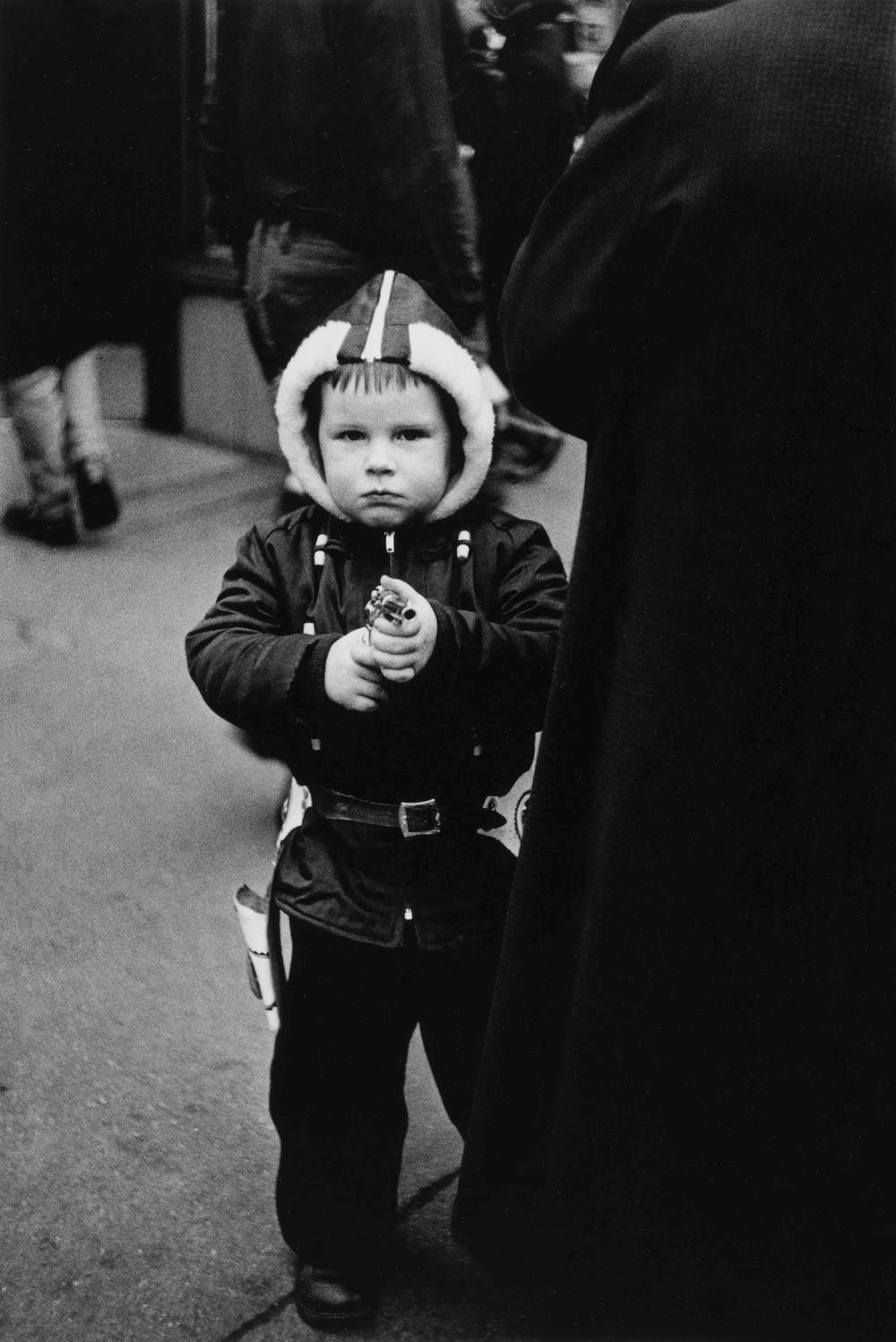
Diane Arbus (American, 1923-1971) 'Kid in a hooded jacket aiming a gun, N.Y.C., 1957' 1957


Diane Arbus (American, 1923-1971)
Kid in a hooded jacket aiming a gun, N.Y.C., 1957
1957
Silver gelatin print
© Diane Arbus/The Estate of Diane Arbus LLC


Diane Arbus (American, 1923-1971) 'Man in hat, trunks, socks and shoes, Coney Island, N.Y. 1960' 1960


Diane Arbus (American, 1923-1971)
Man in hat, trunks, socks and shoes, Coney Island, N.Y. 1960
1960
Silver gelatin print
© Diane Arbus/The Estate of Diane Arbus LLC


Diane Arbus (American, 1923-1971) 'The Backwards Man in his hotel room, N.Y.C. 1961' 1961


Diane Arbus (American, 1923-1971)
The Backwards Man in his hotel room, N.Y.C. 1961
1961
Silver gelatin print
© Diane Arbus/The Estate of Diane Arbus LLC


Diane Arbus (American, 1923-1971) 'Stripper with Bare Breasts Sitting in Her Dressing Room, Atlantic City, N.J. 1961' 1961


Diane Arbus (American, 1923-1971)
Stripper with Bare Breasts Sitting in Her Dressing Room, Atlantic City, N.J. 1961
1961
Silver gelatin print
© Diane Arbus/The Estate of Diane Arbus LLC


Diane Arbus (American, 1923-1971) 'Female impersonator holding long gloves, Hempstead, L.I., 1959' 1959


Diane Arbus (American, 1923-1971)
Female impersonator holding long gloves, Hempstead, L.I., 1959
1959
Silver gelatin print
© Diane Arbus/The Estate of Diane Arbus LLC


Diane Arbus (American, 1923-1971) 'Jack Dracula at a bar, New London, Conn. 1961' 1961


Diane Arbus (American, 1923-1971)
Jack Dracula at a bar, New London, Conn. 1961
1961
Silver gelatin print
© Diane Arbus/The Estate of Diane Arbus LLC


I think Arbus was suggesting that just as people are looking at us and we’re looking at them every day, the pictures made us introspective as viewers. They forced us to confront our own identity. And that’s a really beautiful switch, that switcheroo. We’re looking at somebody else but we’re mindful of our voyeurism, and we’re mindful of how we ourselves are presenting. ‘How am I different? How did I become the person I am?’ That’s one of the qualifying elements of an Arbus photograph: that you feel something about you, often something that might not be comfortable.

Randy Kennedy. “The Diane Arbus You’ve Never Seen,” on the New York Times website 26 May 2016 [Online] Cited 25/10/2021


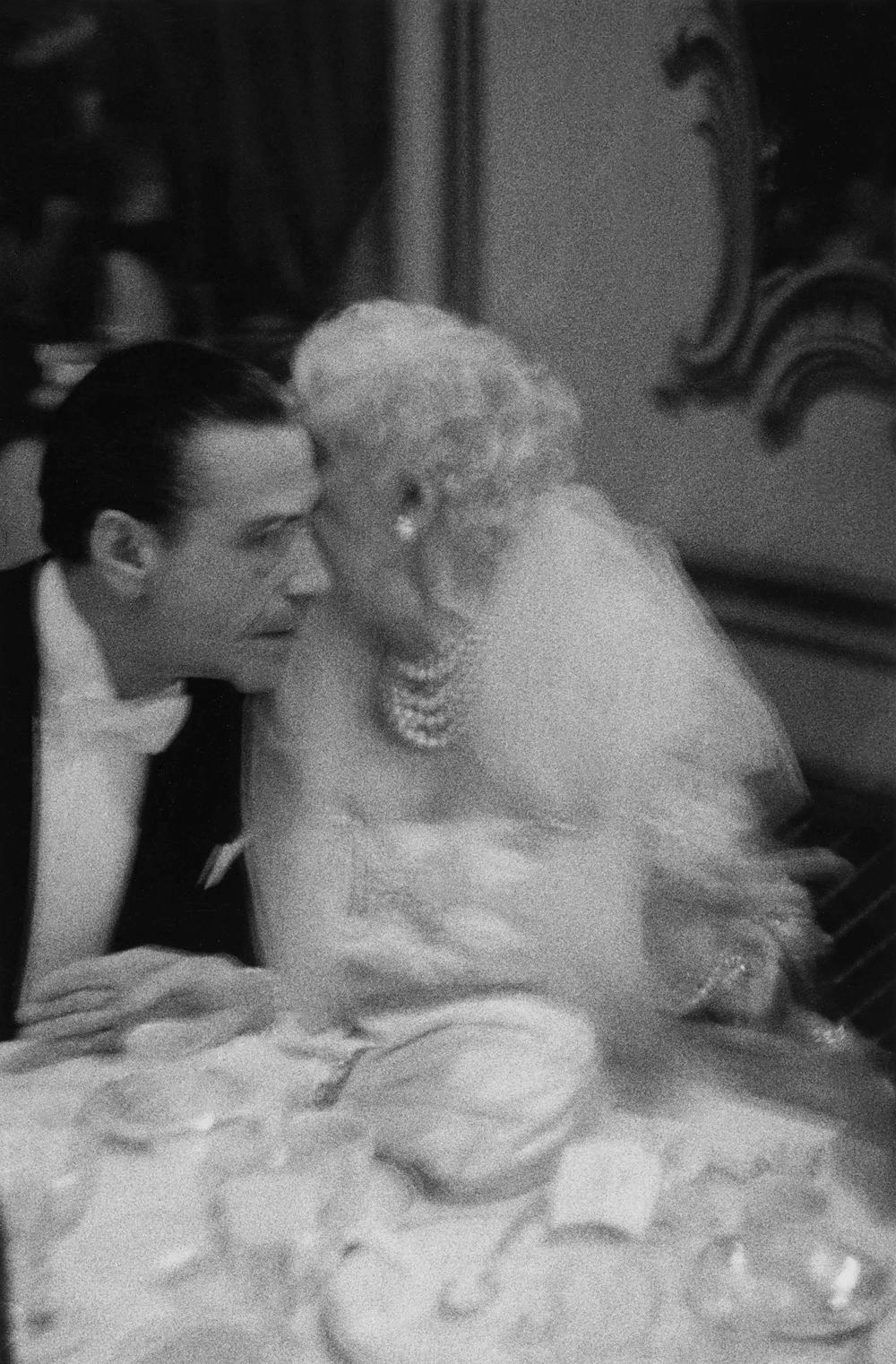
Diane Arbus (American, 1923-1971) 'Elderly Woman Whispering to Her Dinner Partner, Grand Opera Ball, N.Y.C. 1959' 1959


Diane Arbus (American, 1923-1971)
Elderly Woman Whispering to Her Dinner Partner, Grand Opera Ball, N.Y.C. 1959
1959
Silver gelatin print
© Diane Arbus/The Estate of Diane Arbus LLC


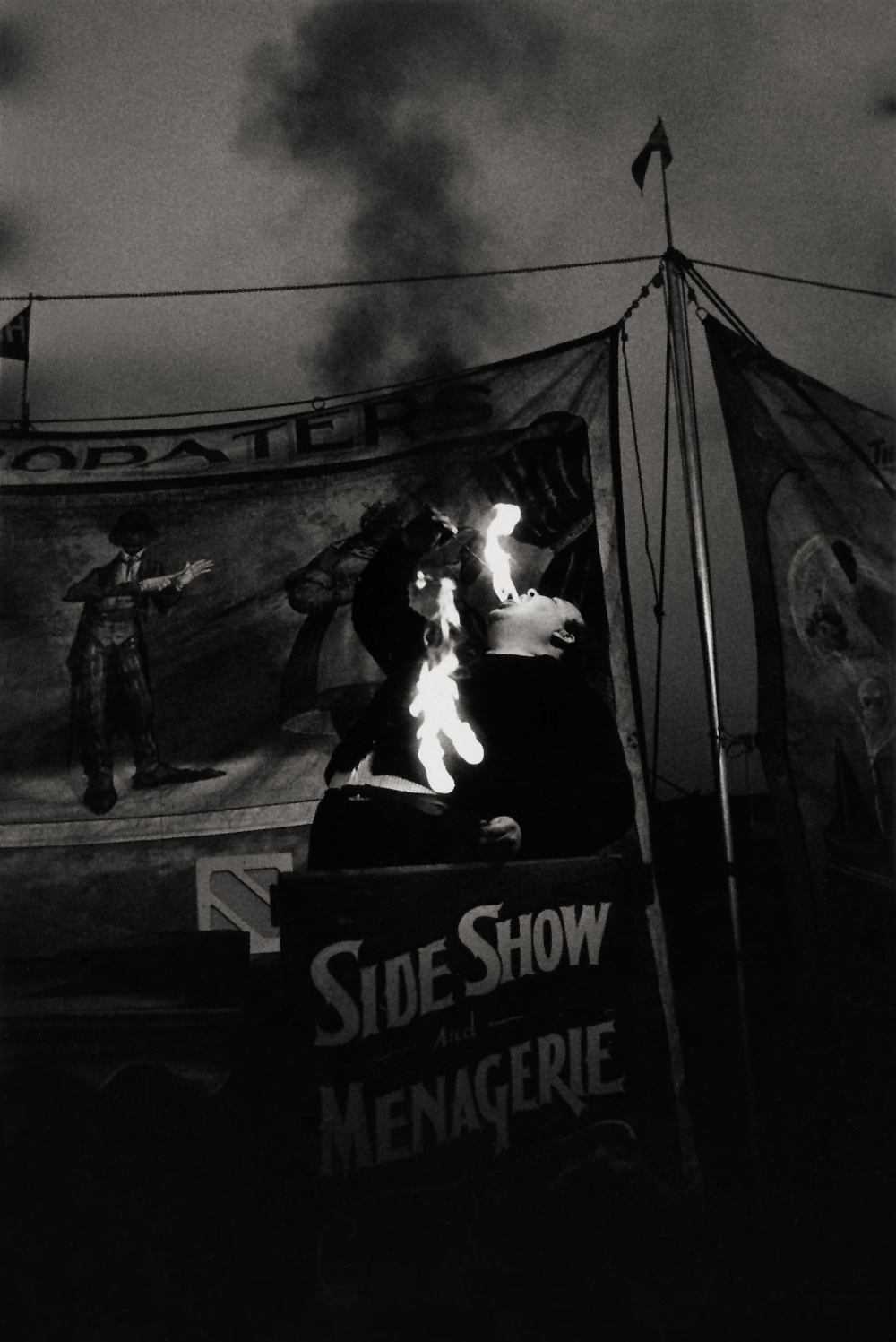
Diane Arbus (American, 1923-1971) 'Fire Eater at a Carnival, Palisades Park, N.J. 1957' 1957


Diane Arbus (American, 1923-1971)
Fire Eater at a Carnival, Palisades Park, N.J. 1957
1957
Silver gelatin print
© Diane Arbus/The Estate of Diane Arbus LLC


Diane Arbus (American, 1923-1971) 'Little man biting woman's breast, N.Y.C.' 1958


Diane Arbus (American, 1923-1971)
Little man biting woman’s breast, N.Y.C.
1958
Silver gelatin print
© Diane Arbus/The Estate of Diane Arbus LLC


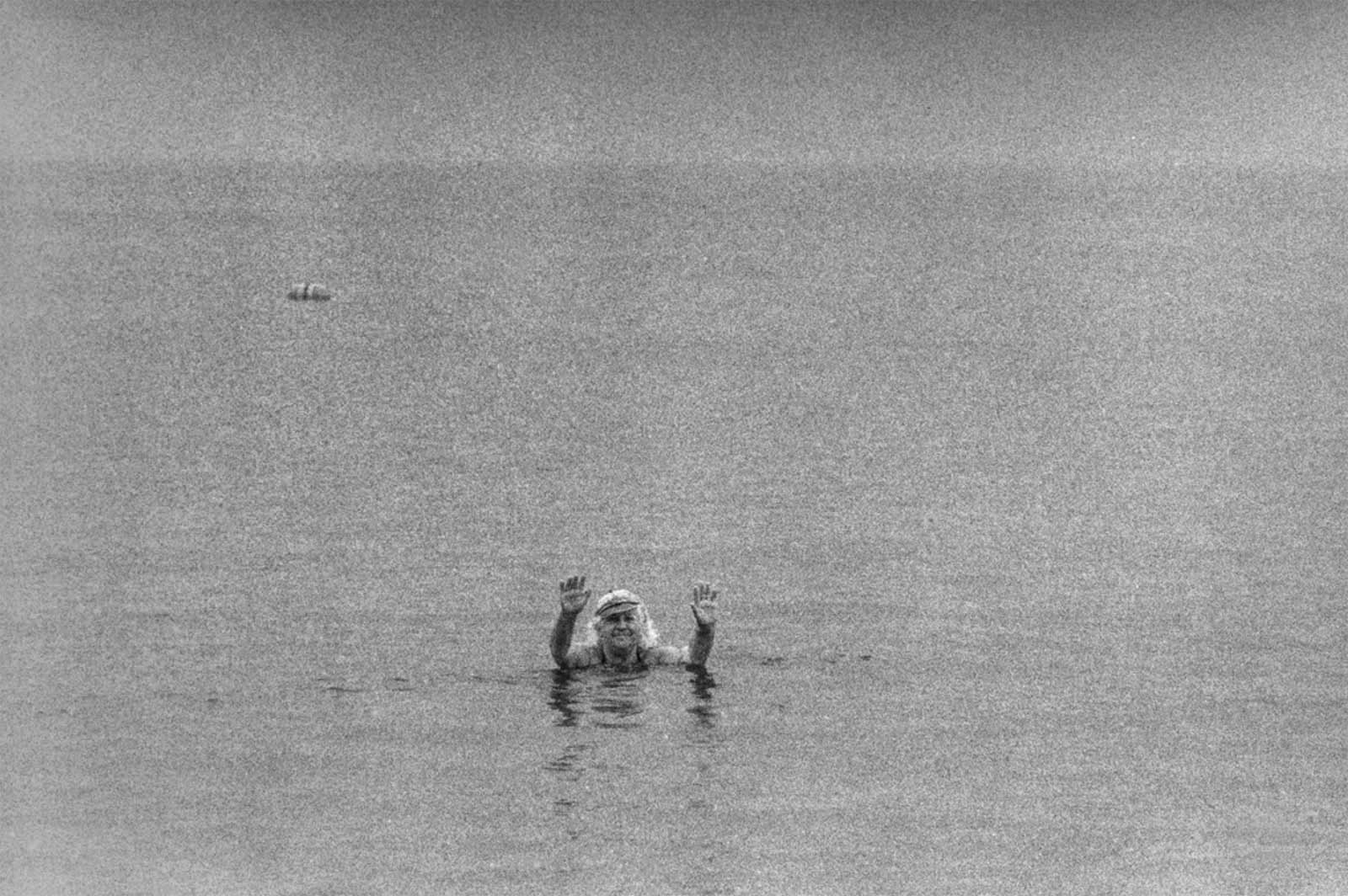
Diane Arbus (American, 1923-1971) 'Old woman with hands raised in the ocean, Coney Island, N.Y.C.' 1960


Diane Arbus (American, 1923-1971)
Old woman with hands raised in the ocean, Coney Island, N.Y.C.
1960
Silver gelatin print
© Diane Arbus/The Estate of Diane Arbus LLC


Diane Arbus (American, 1923-1971) 'Blonde receptionist behind a picture window, N.Y.C.' 1962


Diane Arbus (American, 1923-1971)
Blonde receptionist behind a picture window, N.Y.C.
1962
Silver gelatin print
© Diane Arbus/The Estate of Diane Arbus LLC


“This is the transition year, when she changed to square format. The receptionist is in a kind of diorama, not one made by the woman but by the culture.”


Diane Arbus in Central Park with her Mamiya Camera in 1967


Diane Arbus in Central Park with her Mamiya Camera (330?) in 1967


Diane Arbus (American, 1923-1971) 'Child with a toy hand grenade in Central Park, N.Y.C. 1962'


Diane Arbus (American, 1923-1971)
Child with a toy hand grenade in Central Park, N.Y.C. 1962
1962
Silver gelatin print


The Metropolitan Museum of Art
1000 Fifth Avenue at 82nd Street
New York, New York 10028-0198
Phone: 212-535-7710

Opening hours:
Sunday – Tuesday and Thursday: 10am – 5pm
Friday and Saturday: 10am – 9pm
Closed Wednesday

The Metropolitan Museum of Art website
LIKE ART BLART ON FACEBOOK

Back to top

Exhibition: ‘In Light of the Past’ at the National Gallery of Art, Washington

Exhibition dates: 3rd May – 26th July 2015

Curators: The curators of In Light of the Past: Celebrating 25 Years of Photography at the National Gallery of Art are Sarah Greenough, senior curator and head of the department of photographs, and Diane Waggoner, associate curator, department of photographs, National Gallery of Art.


Charles Nègre (French, 1820-1880) 'Market Scene at the Port of the Hotel de Ville, Paris' before February 1852


Charles Nègre (French, 1820-1880)
Market Scene at the Port of the Hotel de Ville, Paris
before February 1852
Salted paper print
14.7 x 19.9cm
National Gallery of Art, Washington, Patrons’ Permanent Fund, 2003


What a great title for an exhibition. Photography always evidences light of the past, we live in light of the past (the light of the Sun takes just over 8 minutes to reach Earth) and, for whatever reason, human beings never seem to learn from mistakes, in light of the past history of the human race.

My favourites in this postings are the 19th century photographs, to which I am becoming further attuned the more I look at them. There is almost a point when you become psychologically enmeshed with their light, with the serenity of the images, a quality that most contemporary photographs seem to have lost. There is a quietness to their presence, a contemplation on the nature of the world through the pencil of nature that is captivating. You only have to look at Gustave Le Gray’s The Pont du Carrousel, Paris: View to the West from the Pont des Arts (1856-1858, below) to understand the everlasting, transcendent charisma of these images. Light, space, time, eternity.

Dr Marcus Bunyan


Many thankx to the National Gallery of Art for allowing me to publish the photographs in the posting. Please click on the photographs for a larger version of the image.

The Collection of Photographs at the National Gallery of Art, Washington (110kb Word doc)


William Henry Fox Talbot (English, 1800-1877) 'A Scene in York: York Minster from Lop Lane' 1845


William Henry Fox Talbot (English, 1800-1877)
A Scene in York: York Minster from Lop Lane
1845
Salted paper print
16.2 x 20.4cm
National Gallery of Art, Washington, Edward J. Lenkin Fund, Melvin and Thelma Lenkin Fund and Stephen G. Stein Fund, 2011


A British polymath equally adept in astronomy, chemistry, Egyptology, physics, and philosophy, Talbot spent years inventing a photographic process that created paper negatives, which were then used to make positive prints – the conceptual basis of nearly all photography until the digital age. Calotypes, as he came to call them, are softer in effect than daguerreotypes, the other process announced in 1839. Though steeped in the sciences, Talbot understood the ability of his invention to make striking works of art. Here the partially obstructed view of the cathedral rising from the confines of the city gives a sense of discovery, of having just turned the corner and encountered this scene.


Carleton E. Watkins (American, 1829-1916) 'Piwac, Vernal Falls, 300 feet, Yosemite' 1861


Carleton E. Watkins (American, 1829-1916)
Piwac, Vernal Falls, 300 feet, Yosemite
1861
Albumen print
39.9 x 52.3cm
National Gallery of Art, Washington, Gift of Mary and David Robinson, 1995


The westward expansion of America opened up new opportunities for photographers such as Watkins and William Bell. Joining government survey expeditions, hired by railroad companies, or catering to tourists and the growing demand for grand views of nature, they created photographic landscapes that reached a broad audience of scientists, businessmen, and engineers, as well as curious members of the middle class. Watkins’s photographs of the sublime Yosemite Valley, which often recall landscape paintings of similar majestic subjects, helped convince Congress to pass a bill in 1864 protecting the area from development and commercial exploitation.


Eugène Cuvelier (French, 1837-1900) 'Belle-Croix' 1860s


Eugène Cuvelier (French, 1837-1900)
Belle-Croix
1860s
Albumen print
25.4 x 34.3cm
National Gallery of Art, Washington, Gail and Benjamin Jacobs for the Millennium Fund, 2007


In the second half of the nineteenth century, some photographers in France, hired by governmental agencies to make photographic inventories or simply catering to the growing demand for pictures of Paris, drew on the medium’s documentary abilities to record the nation’s architectural patrimony and the modernisation of Paris. Others explored the camera’s artistic potential by capturing the ephemeral moods of nature in the French countryside. Though photographers faced difficulties in carting around heavy equipment and operating in the field, they learned how to master the elements that directly affected their pictures, from securing the right vantage point to dealing with movement, light, and changing atmospheric conditions during long exposure times.


Gustave Le Gray (French, 1820-1884) 'The Pont du Carrousel, Paris: View to the West from the Pont des Arts' 1856-1858


Gustave Le Gray (French, 1820-1884)
The Pont du Carrousel, Paris: View to the West from the Pont des Arts
1856-1858
Albumen print
37.8 x 48.8cm
National Gallery of Art, Washington, Patrons’ Permanent Fund, 1995


Édouard-Denis Baldus (French, 1813-1889) 'Toulon, Train Station' c. 1861


Édouard-Denis Baldus (French, 1813-1889)
Toulon, Train Station
c. 1861
Albumen print
27.4 x 43.1cm
National Gallery of Art, Washington, Patrons’ Permanent Fund, 1995


In Light of the Past: Celebrating 25 Years of Photography at the National Gallery of Art, on view in the West Building from May 3 through July 26, 2015, will commemorate more than two decades of the Gallery’s robust photography program. Some 175 of the collection’s most exemplary holdings will reveal the evolution of the art of photography, from its birth in 1839 to the late 1970s. In Light of the Past is one of three stellar exhibitions that will commemorate the 25th anniversary of the National Gallery of Art’s commitment to photography acquisitions, exhibitions, scholarly catalogues, and programs.

In Light of the Past includes some of the rarest and most compelling photographs ever created,” said Earl A. Powell III, director, National Gallery of Art, Washington. “It also honours the generous support of our donors who have enabled us to achieve this new place of prominence for photography at the Gallery.

About the exhibition

In Light of the Past begins with exceptional 19th-century salted paper prints, daguerreotypes, and albumen prints by acclaimed early practitioners such as William Henry Fox Talbot (1800-1877), Gustave Le Gray (1820-1884), Roger Fenton (1819-1869), Julia Margaret Cameron (1815-1879), Albert Sands Southworth (1811-1894), and Josiah Johnson Hawes (1808-1901). It also displays works by American expeditionary photographers, including William Bell (1830-1910) and Carleton E. Watkins (1829-1916).

The exhibition continues with late 19th- and early 20th-century American Pictorialist photographs by Alfred Stieglitz (1864-1946), Clarence H. White (1871-1925), Gertrude Käsebier (1852-1934), and Alvin Langdon Coburn (1882-1966), among others, as well as European masters such as Eugène Atget (1857-1927). The exhibition also examines the international photographic modernism of artists such as Paul Strand (1890-1976), André Kertész (1894-1985), Marianne Brandt (1893-1983), László Moholy-Nagy (1895-1946), and Ilse Bing (1899-1998) before turning to the mid-20th century, where exceptional work by Walker Evans (1903-1975), Robert Frank (b. 1924), Harry Callahan (1912-1999), Irving Penn (1917-2009), Lee Friedlander (b. 1934), and Diane Arbus (1923-1971) will be on view.

The exhibition concludes with pictures from the 1960s and 1970s, showcasing works by photographers such as Robert Adams (b. 1937), Lewis Baltz (1945-2014), and William Eggleston (b. 1939), as well as Mel Bochner (b. 1940) and Sol LeWitt (1928-2007), which demonstrate the diverse practices that invigorated photography during these decades.

Press release from the National Gallery of Art


Albert Sands Southworth (American, 1811-1894) and Josiah Johnson Hawes (American, 1808-1901) 'The Letter' c. 1850


Albert Sands Southworth (American, 1811-1894) and Josiah Johnson Hawes (American, 1808-1901)
The Letter
c. 1850
Daguerreotype
Plate: 20.3 x 15.2cm
National Gallery of Art, Washington, Patrons’ Permanent Fund, 1999


Working together in Boston, the portrait photographers Southworth and Hawes aimed to capture the character of their subjects using the daguerreotype process. Invented in France and one of the two photographic processes introduced to the public in early 1839, the daguerreotype is made by exposing a silver-coated copper plate to light and then treating it with chemicals to bring out the image. The heyday of the technique was the 1840s and 1850s, when it was used primarily for making portraits. The daguerreotype’s long exposure time usually resulted in frontal, frozen postures and stern facial expressions; this picture’s pyramidal composition and strong sentiments of friendship and companionship are characteristic of Southworth and Hawes’s innovative approach.


Clarence H. White (American, 1871-1925) 'The Hillside' c. 1898


Clarence H. White (American, 1871-1925)
The Hillside
c. 1898
Gum dichromate print
20.8 x 15.88cm
National Gallery of Art, Washington, Patrons’ Permanent Fund, 2008


The Photo-Secession

At the turn of the century in America, Alfred Stieglitz and his colleague Edward Steichen led the movement to establish photography’s status as a fine art. In 1902 Stieglitz founded an organisation called the Photo-Secession, consisting of young artists who shared his belief in the creative potential of the medium. Many of the photographers featured here were members of the group, including Gertrude Käsebier, Clarence White, and Alvin Langdon Coburn. Through the exhibitions Stieglitz organised in his New York gallery, called 291, and the essays he published in his influential quarterly, Camera Work, he and the Photo-Secession promoted the Pictorialist aesthetic of softly textured, painterly pictures that elicit emotion and appeal to the imagination. Occasionally the photographers’ compositions refer to other works of art, such as Steichen’s portrait of his friend Auguste Rodin, whose pose recalls one of the sculptor’s most famous works, The Thinker. Influenced by the modern European and American painting, sculpture, and drawing he exhibited at 291, Stieglitz lost interest in the Photo-Secession in the early 1910s and began to explore a more straightforward expression.


Eugène Atget (French, 1857-1927) 'Saint-Cloud' 1926


Eugène Atget (French, 1857-1927)
Saint-Cloud
1926
Albumen print
22.2 x 18.1cm
National Gallery of Art, Washington, Gift of Mary and Dan Solomon and Patrons’ Permanent Fund, 2006


Using a cumbersome camera mounted on a tripod, Atget recorded the myriad facets of Paris and its environs at the turn of the century. Transforming ordinary scenes into poetic evocations, he created a visual compendium of the objects, architecture, and landscapes that were expressive of French culture and its history. He sold his photographs to artists, architects, and craftsmen, as well as to libraries and museums interested in the vanishing old city. Throughout his career he returned repeatedly to certain subjects and discovered that the variations caused by changing light, atmosphere, and season provided inexhaustible subjects for the perceptive photographer.


Julia Margaret Cameron (British, 1815-1879) 'The Mountain Nymph, Sweet Liberty' June 1866


Julia Margaret Cameron (British, 1815-1879)
The Mountain Nymph, Sweet Liberty
June 1866
Albumen print
36.1 x 26.7cm
National Gallery of Art, Washington, New Century Fund, 1997


Ensconced in the intellectual and artistic circles of midcentury England, Cameron manipulated focus and light to create poetic pictures rich in references to literature, mythology, and history. Her monumental views of life-sized heads were unprecedented, and with them she hoped to define a new mode of photography that would rival the expressive power of painting and sculpture. The title of this work alludes to John Milton’s mid-seventeenth-century poem L’Allegro. Describing the happy life of one who finds pleasure and beauty in the countryside, the poem includes the lines:

Come, and trip it as ye go
On the light fantastic toe;
And in thy right hand lead with thee,
The mountain nymph, sweet Liberty.


Dr Guillaume-Benjamin-Amant Duchenne (de Boulogne) (French, 1806-1875) 'Figure 63, "Fright" from "Mécanisme de la physionomie humaine (Mechanism of human physiognomy)" (1862)' 1854-1855


Dr Guillaume-Benjamin-Amant Duchenne (de Boulogne) (French, 1806-1875)
Figure 63, “Fright” from “Mécanisme de la physionomie humaine (Mechanism of human physiognomy)” (1862)
1854-1855
Albumen print
21.5 × 16cm
National Gallery of Art, Washington, Pepita Milmore Memorial Fund, 2015


A neurologist, physiologist, and photographer, Duchenne de Boulogne conducted a series of experiments in the mid-1850s in which he applied electrical currents to various facial muscles to study how they produce expressions of emotion. Convinced that these electrically-induced expressions accurately rendered internal feelings, he then photographed his subjects to establish a precise visual lexicon of human emotions, such as pain, surprise, fear, and sadness. In 1862 he included this photograph representing fright in a treatise on physiognomy (a pseudoscience that assumes a relationship between external appearance and internal character), which enjoyed broad popularity among artists and scientists.


Lewis Hine (American, 1874-1940) 'An Anaemic Little Spinner in a New England Cotton Mill (North Pownal, Vermont)' 1910


Lewis Hine (American, 1874-1940)
An Anaemic Little Spinner in a New England Cotton Mill (North Pownal, Vermont)
1910
Gelatin silver print
24.1 × 19.2cm
National Gallery of Art, Washington, Pepita Milmore Memorial Fund, 2015


Trained as a sociologist and initially employed as a teacher, Hine used the camera both as a research tool and an instrument of social reform. One of the earliest and most influential social documentary photographers of his time, he made many pictures under the auspices of the National Child Labor Committee, an organisation formed in 1904 to promote better working conditions for children. Hine’s focus on the thin, frail body of this barefoot twelve-year-old spinner, who stands before rows of bobbins in the mill where she worked, was meant to illustrate the unhealthy effects of her employment. Photographs like this one were crucial to the campaign to change American child labor laws in the early twentieth century.


In Light of the Past: Twenty-Five Years of Photography at the National Gallery of Art

Georgia O’Keeffe and the Alfred Stieglitz Estate laid the foundation of the photography collection of the National Gallery of Art in 1949 with their donation of 1,650 Stieglitz photographs, an unparalleled group known as the Key Set. Yet the Gallery did not start actively acquiring photographs until 1990, when it launched an initiative to build a collection of works by European and American photographers from throughout the history of the medium and mount major exhibitions with scholarly publications. Now including nearly fifteen thousand prints, the collection encompasses the rich diversity of photographic practice from fine art to scientific and amateur photography, as well as photojournalism. It is distinguished by its large holdings of works by many of the medium’s most acclaimed masters, such as Paul Strand, Walker Evans, André Kertész, Ilse Bing, Robert Frank, Harry Callahan, Lee Friedlander, Gordon Parks, Irving Penn, and Robert Adams, among others.

In Light of the Past celebrates the twenty-fifth anniversary of the 1990 initiative by presenting some of the Gallery’s finest photographs made from the early 1840s to the late 1970s. It is divided into four sections arranged chronologically. The first traces the evolution of the art of photography during its first decades in the work of early British, French, and American practitioners. The second looks at the contributions of late nineteenth and early twentieth-century photographers, from Stieglitz and the American Pictorialists to European masters such as Eugène Atget. The third section examines the international photographic modernism of the 1920s and 1930s, and the fourth features seminal mid-twentieth-century photographers. The exhibition concludes with pictures representing the varied practices of those working in the late 1960s and 1970s.

The Nineteenth Century: The Invention of Photography

In 1839 a new means of visual representation was announced to a startled world: photography. Although the medium was immediately and enthusiastically embraced by the public at large, photographers themselves spent the ensuing decades experimenting with techniques and debating the nature of this new invention. The works in this section suggest the range of questions addressed by these earliest practitioners. Was photography best understood as an art or a science? What subjects should photographs depict, what purpose should they serve, and what should they look like? Should photographers work within the aesthetics established in other arts, such as painting, or explore characteristics that seemed unique to the medium? This first generation of photographers became part scientists as they mastered a baffling array of new processes and learned how to handle their equipment and material. Yet they also grappled with aesthetic issues, such as how to convey the tone, texture, and detail of multicoloured reality in a monochrome medium. They often explored the same subjects that had fascinated artists for centuries – portraits, landscapes, genre scenes, and still lifes – but they also discovered and exploited the distinctive ways in which the camera frames and presents the world.

Photography at the Turn of the Twentieth Century

In the late nineteenth century, improvements in technology and processing, along with the invention of small handheld cameras such as the Kodak, suddenly made it possible for anyone of middle-class means to take photographs. Many amateurs took up the camera to commemorate family, friends, and special events. Others, such as the sociologist Lewis Hine, used it as a tool for social and political change. Partially in response to the new ease of photography, more serious practitioners in America and Europe banded together to assert the artistic merit of the medium. Called Pictorialists, they sought to prove that photography was just as capable of poetic, subjective expression as painting. They freely manipulated their prints to reveal their authorial control, often resulting in painterly effects, and consciously separated themselves from amateur photographers and mechanised processes.

Photography Between the Wars

In the aftermath of World War I – the first modern, mechanised conflict – sweeping changes transformed photography. Avant-garde painters, graphic designers, and journalists turned to the medium, seeing it as the most effective tool to express the fractured, fast-paced nature of modernity and the new technological culture of the twentieth century. A wide variety of new approaches and techniques flourished during these years, especially in Europe. Photographers adopted radical cropping, unusual angles, disorienting vantage points, abstraction, collage, and darkroom alchemy to achieve what the influential Hungarian teacher László Moholy-Nagy celebrated as the “new vision.” Other photographers, such as the German August Sander or the Americans Alfred Stieglitz, Edward Weston, and Walker Evans, sought a more rigorous objectivity grounded in a precise examination of the world.

Postwar Photography

Photography thrived in the decades after World War II, invigorated by new ideas, practices, and expanding venues for circulating and displaying pictures. Immediately after the war, many photographers sought to publish their pictures in illustrated magazines, which prospered during these years. Some, such as Gordon Parks, made photographs highlighting racial, economic, and social disparities. Others, such as Louis Faurer, Sid Grossman, and Robert Frank, turned to the street to address the conditions of modern life in pictures that expose both its beauty and brutality. Using handheld cameras and available light, they focused on the random choreography of sidewalks, making pictures that are often blurred, out of focus, or off-kilter.

In the later 1950s and 1960s a number of photographers pushed these ideas further, mining the intricate social interactions of urban environments. Unlike photographers from the 1930s, these practitioners, such as Garry Winogrand, Lee Friedlander, and Diane Arbus, sought not to reform American society but to record it in all its complexity, absurdity, and chaos. By the late 1960s and 1970s, other photographers, such as Robert Adams and Lewis Baltz, looked beyond conventional notions of natural beauty to explore the despoliation of the urban and suburban landscape. Their pictures of tract houses, highways, and motels are stripped of any artistic frills, yet they are exquisitely rendered and replete with telling details. Also starting in the 1960s, many conceptual or performance artists working in a variety of media embraced what they perceived to be photography’s neutrality and turned to it as an essential part of their experiments to expand traditional notions of art. In the late 1960s, improvements in colour printing techniques led others, such as William Eggleston, to explore the artistic potential of colour photography.


Edward Steichen (American, 1879-1973) 'An Apple, A Boulder, A Mountain' 1921


Edward Steichen (American, 1879-1973)
An Apple, A Boulder, A Mountain
1921
Platinum print
National Gallery of Art, Washington, Patrons’ Permanent Fund, 2014


After World War I, Steichen became disillusioned with the painterly aesthetic of his earlier work and embarked on a series of experiments to study light, form, and texture. Inverting an apple, he demonstrated how a small object, when seen in a new way, can assume the monumentality and significance of a much larger one. His close-up scrutiny of a natural form closely links this photograph with works by other American modernists of the 1920s, such as Edward Weston, Paul Strand, and Georgia O’Keeffe.


Paul Strand (American, 1890-1976) 'People, Streets of New York, 83rd and West End Avenue' 1916


Paul Strand (American, 1890-1976)
People, Streets of New York, 83rd and West End Avenue
1916
Platinum print
24.2 x 33cm
National Gallery of Art, Washington, Patrons’ Permanent Fund, 1990


Strand was introduced to photography in high school by his teacher Lewis Hine, who instilled in him a strong interest in social issues. In 1907, Hine took his pupil to Alfred Stieglitz’s 291 gallery in New York, which launched Strand’s desire to become a fine art photographer. By the early 1910s, influenced by Stieglitz, he began to make clearly delineated portraits, pictures of New York, and nearly abstract still lifes. Strand came to believe that photography was a gift of science to the arts, that it was an art of selection, not translation, and that objectivity was its very essence.


American 20th Century. 'Untitled' c. 1930


American 20th Century
Untitled
c. 1930
Gelatin silver print
5.7 x 10cm
National Gallery of Art, Washington, Gift of Robert E. Jackson, 2007


Snapshots

After World War I, a parade of technological improvements transformed the practice of photography. With smaller cameras, faster shutter speeds, and more sensitive film emulsions, both amateurs and more serious practitioners could now easily record motion, investigate unexpected angles and points of view, and work in dim light and inclement weather. The amateur’s less staid, more casual approach began to play an important role in the work of modernist photographers as they explored spontaneity and instantaneity, seeking to capture the cacophony and energy of modern life. Blurriness, distorted perspectives, and seemingly haphazard cropping-once considered typical amateur mistakes-were increasingly embraced as part of the modern, vibrant way of picturing the world.


Robert Frank (Swiss, 1924-2019) 'City of London' 1951


Robert Frank (Swiss, 1924-2019)
City of London
1951
Gelatin silver print
23 x 33.6cm
National Gallery of Art, Washington, Robert Frank Collection, Purchased as a Gift of The Howard Gilman Foundation, in Honor of the 50th Anniversary of the National Gallery of Art, 1991


Robert Frank (Swiss, 1924-2019) 'Woman/Paris' 1952


Robert Frank (Swiss, 1924-2019)
Woman/Paris
1952
Gelatin silver print in bound volume
Image: 35.1 x 25.4cm
National Gallery of Art, Washington, Robert Frank Collection, Gift (Partial and Promised) of Robert Frank, in Honor of the 50th Anniversary of the National Gallery of Art, 1990


In the late 1940s and early 1950s, Frank made several handbound volumes of photographs, exploring different ways to link his pictures through non-narrative sequences. While in Zurich in October 1952, he assembled pictures taken in Europe, South America, and the United States in a book called Black White and Things. With a brief introductory quote from Antoine de Saint-Exupéry – “it is only with the heart that one can see rightly; what is essential is invisible to the eye” – the photographs are arranged in a sophisticated sequence that uses formal repetition, conceptual contrasts, and, as here, witty juxtapositions to evoke a range of ideas …

While in Zurich in October of 1952, Frank assembled photographs taken in Europe, South America, and the United States in the preceding years into a bound book called Black White and Things. Designed by Frank’s friend Werner Zryd, and with only a brief introductory statement describing the three sections, the photographs appear in a sophisticated sequence that relies on subtle, witty juxtapositions and powerful visual formal arrangements to evoke a wide range of emotions.

Frank made three copies of this book, all identical in size, construction, and sequence. He gave one copy to his father, gave one to Edward Steichen, and kept one. The book that belonged to his father is now in a private collection; Steichen’s copy resides at the Museum of Modern Art, New York; and in 1990 Frank gave his copy to the Robert Frank Collection at the National Gallery of Art.


Robert Frank (Swiss, 1924-2019) 'Trolley - New Orleans' 1955


Robert Frank (Swiss, 1924-2019)
Trolley – New Orleans
1955
Gelatin silver print
Sheet: 21 x 31.6cm
National Gallery of Art, Washington, Gift of Maria and Lee Friedlander, 2001


Roy DeCarava (American, 1919-2009) 'Mississippi Freedom Marcher, Washington, D.C.' 1963


Roy DeCarava (American, 1919-2009)
Mississippi Freedom Marcher, Washington, D.C.
1963
Gelatin silver print
25.5 x 33cm
National Gallery of Art, Washington, Horace W. Goldsmith Foundation through Robert and Joyce Menschel, 1999


Lee Friedlander (American, b. 1934) 'New York City' 1966


Lee Friedlander (American, b. 1934)
New York City
1966
Gelatin silver print
Image: 13.3 x 20.6 cm
National Gallery of Art, Washington, Trellis Fund, 2001


Heir to the tradition of documentary photography established by Eugène Atget, Walker Evans, and Robert Frank, Friedlander focuses on the American social landscape in photographs that can seem absurd, comical, and even bleak. In dense, complex compositions, he frequently depicts surprising juxtapositions that make the viewer look twice. He has made numerous self-portraits, yet he appears in these pictures in oblique and unexpected ways, for example reflected in a mirror or window. The startling intrusion of Friedlander’s shadow onto the back of a pedestrian’s coat, at once threatening and humorous, slyly exposes the predatory nature of street photography.


Giovanni Anselmo (Italian, 1934-2023) 'Entering the Work' 1971


Giovanni Anselmo (Italian, 1934-2023)
Entering the Work
1971
Photographic emulsion on canvas
49 x 63.5cm
National Gallery of Art, Washington, Glenstone in honor of Eileen and Michael Cohen, 2008


Conceptual Photography

In the 1960s, many painters and sculptors questioned the traditional emphasis on aesthetics and turned to creating art driven by ideas. Photography’s association with mechanical reproduction appealed to them as they sought to downplay the hand of the artist while promoting his or her role as idea maker. Some conceptual artists, such as Sol Lewitt and Mel Bochner, used photographs to explore an interest in perspective, scale, and mathematics. Others turned to photography as a tool to record performances and artistic undertakings, the resulting pictures acting as an integral part of those projects.

Anselmo was a member of the Italian Arte Povera group, which sought to break down the separation of art and life through experimental performances and the use of natural materials such as trees and leaves. To make this work, Anselmo set his camera up with a timed shutter release, and raced into view so that his running figure creates a modest yet heroic impression on the landscape.


Robert Adams (American, b. 1937) 'Colorado Springs, Colorado' 1974


Robert Adams (American, b. 1937)
Colorado Springs, Colorado
1974
Gelatin silver print, printed 1983
15.2 x 15.2cm
National Gallery of Art, Washington, Gift of Mary and Dan Solomon and Patrons’ Permanent Fund, 2006


For more than forty years, Adams has recorded the changing American landscape, especially the ongoing settlement of the West. Although he has photographed roads, tract houses, and strip malls that have utterly transformed the landscape, he has also captured the beauty that remains and indeed, that refuses to die, as in his poetic picture of morning fog over California hills. He is convinced, as he wrote in 1974, that “all land, no matter what has happened to it, has over it a grace, an absolutely persistent beauty.”


Margaret Bourke-White (American, 1904-1971) 'Fort Peck Dam, Montana' 1936


Margaret Bourke-White (American, 1904-1971)
Fort Peck Dam, Montana
1936
Gelatin silver print
33.02 × 27.31cm
National Gallery of Art, Washington, Patrons’ Permanent Fund, 2014


One of the most iconic photographs by the pioneering photojournalist Bourke-White, Fort Peck Dam, Montana was published on the cover of the inaugural issue of Life magazine on November 23, 1936. A striking representation of the machine age, the photograph depicts the stark, massive piers for an elevated highway over the spillway near the dam. The two men at the bottom of the print indicate the piers’ massive scale while revealing the vulnerable position of the worker in the modern industrial landscape.


György Kepes (American born Hungary, 1906-2001) 'Juliet with Peacock Feather and Red Leaf' 1937-1938


György Kepes (American born Hungary, 1906-2001)
Juliet with Peacock Feather and Red Leaf
1937-1938
Gelatin silver print with gouache
15.7 × 11.6cm
National Gallery of Art, Washington, Pepita Milmore Memorial Fund, 2014


Trained as a painter at the Academy of Fine Arts in Budapest, Kepes was an influential designer, educator, aesthetic theorist, and photographer. In 1930 he moved to Berlin, where he worked with László Moholy-Nagy, but eventually settled in Chicago and later Cambridge, Massachusetts. Created soon after his arrival in America, this startling photograph is both an intimate depiction of Kepes’s wife and a study of visual perception. Like the red leaf that seems to float above the image, the peacock feather – its eye carefully lined up with Juliet’s – obscures not only her vision but also the viewer’s ability to see her clearly.


Irving Penn (American, 1917-2009) 'Woman with Roses (Lisa Fonssagrives-Penn in Lafaurie Dress), Paris' 1950


Irving Penn (American, 1917-2009)
Woman with Roses (Lisa Fonssagrives-Penn in Lafaurie Dress), Paris
1950
Platinum/palladium print, 1977
55.1 x 37cm
National Gallery of Art, Washington, Gift of Irving Penn, 2002


One of the most influential fashion and portrait photographers of his time, Penn made pictures marked by refinement, elegance, and clarity. Trained as a painter and designer, he began to photograph in the early 1940s while working at Vogue; more than 150 of his photographs appeared on the cover of the magazine during his long career. A perfectionist, Penn explored earlier printing techniques, such as a late nineteenth-century process that used paper coated with solutions of platinum or palladium rather than silver, to achieve the subtle tonal range he desired.


National Gallery of Art
National Mall between 3rd and 7th Streets
Constitution Avenue NW, Washington

Opening hours:
Open daily 10.00 am – 5.00pm

National Gallery of Art website

LIKE ART BLART ON FACEBOOK

Back to top

Photographs: Andy Warhol unplugged 2

May 2015


Andy Warhol (American, 1928-1987)
 'Air France' 
dated Jun 21 1982


Andy Warhol (American, 1928-1987)
Air France
Jun 21 1982
Unique gelatin silver print
8 x 10 in. (20.3 x 25.4cm)


Andy Warhol being, well … Andy Warhol.

Artist, tourist, celebrity, poofter, man about town and spontaneous, thoughtful snapper. The photograph of the Prado at night is superb as are the multiple, stitched together photographs. Warhol certainly loved his high key, 35mm images.

Marcus


Please click on the photographs for a larger version of the image.


Andy Warhol (American, 1928-1987)
 'Cessna Plane'
 c. 1977


Andy Warhol (American, 1928-1987)
Cessna Plane
c. 1977
Four stitched gelatin silver prints
Each: 11 x 14 in. (27.9 x 35.6cm)
Overall: 2 1 1/4 x 27 3/8 in. (54 x 69.5cm)


Andy Warhol (American, 1928-1987) 
'
City View
' May 07 1984


Andy Warhol (American, 1928-1987)
City View

May 07 1984
Unique gelatin silver print
8 x 10 in. (20.3 x 25.4cm)


Andy Warhol (American, 1928-1987) 'Houston Skyline' c. 1979


Andy Warhol (American, 1928-1987)
Houston Skyline
c. 1979
Unique gelatin silver print
8 x 10 in. (20.3 x 25.4cm)


Andy Warhol (American, 1928-1987) 'German Trolley
' Jun 23 1980


Andy Warhol (American, 1928-1987)
German Trolley

Jun 23 1980
Unique gelatin silver print
8 x 10 in. (20.3 x 25.4cm)


Andy Warhol (American, 1928-1987)
 'Limousine Interior' c. 1980


Andy Warhol (American, 1928-1987)
Limousine Interior
c. 1980
Unique gelatin silver print
8 x 10 in. (20.3 x 25.4cm)


Andy Warhol (American, 1928-1987)
 'Luxor Temple' c. 1977


Andy Warhol (American, 1928-1987)
Luxor Temple
c. 1977
Two unique gelatin silver prints
Each: 8 x 5 in. (20.3 x 12.7cm)


Andy Warhol (American, 1928-1987)
 Luxor Temple c. 1977 (detail)


Andy Warhol (American, 1928-1987)
Luxor Temple (detail)
c. 1977
Two unique gelatin silver prints
Each: 8 x 5 in. (20.3 x 12.7cm)


Andy Warhol (American, 1928-1987)
 'Ocean Landscape' 1986


Andy Warhol (American, 1928-1987)
Ocean Landscape
1986
Four stitched gelatin silver prints
Each: 11 x 14 in. (27.9 x 35.6cm)
Overall: 2 1/4 x 27 1/2 in. (54 x 69.9cm)


Andy Warhol (American, 1928-1987)
 'Statues Outside Musée D'Orsay' c. 1980


Andy Warhol (American, 1928-1987)
Statues Outside Musée D’Orsay
c. 1980
Unique gelatin silver print
8 x 10 in. (20.3 x 25.4cm)


Andy Warhol (American, 1928-1987)
 'Monastery of Saint John of the Kings, Toledo' Jan 24 1983


Andy Warhol (American, 1928-1987)
Monastery of Saint John of the Kings, Toledo
Jan 24 1983
Unique gelatin silver print
8 x 10 in. (20.3 x 25.4 cm)


Andy Warhol (American, 1928-1987)
 'Museo del Prado Exterior, Madrid, Spain' Jan 24 1983


Andy Warhol (American, 1928-1987)
Museo del Prado Exterior, Madrid, Spain
Jan 24 1983
Unique gelatin silver print
8 x 10 in. (20.3 x 25.4cm)


Andy Warhol (American, 1928-1987)
 'Spanish Portico' 
Jan 24 1983


Andy Warhol (American, 1928-1987)
Spanish Portico
Jan 24 1983
Unique gelatin silver print
8 x 10 in. (20.3 x 25.4cm)


Andy Warhol (American, 1928-1987)
 'Richard Coeur de Lion at Westminster' c. 1980


Andy Warhol (American, 1928-1987)
Richard Coeur de Lion at Westminster
c. 1980
Unique gelatin silver print
8 x 10 in. (20.3 x 25.4cm)


Andy Warhol (American, 1928-1987)
 'Pyramid' c. 1977


Andy Warhol (American, 1928-1987)
Pyramid
c. 1977
Unique gelatin silver print
5 x 8 in. (12.7 x 20.3cm)


Andy Warhol (American, 1928-1987)
 'Street Scene' c. 1982


Andy Warhol (American, 1928-1987)
Street Scene
c. 1982
Unique gelatin silver print
8 x 10 in. (20.3 x 25.4cm)


Andy Warhol (American, 1928-1987)
 'Riders from the Car' c. 1979


Andy Warhol (American, 1928-1987)
Riders from the Car
c. 1979
Two unique polaroid prints mounted on board
Each: 4 1/4 x 3 3/8 in. (10.8 x 8.6cm)


Andy Warhol (American, 1928-1987)
 'Unidentified Men' c. 1980


Andy Warhol (American, 1928-1987)
Unidentified Men
c. 1980
Unique gelatin silver print
8 x 10 in. (20.3 x 25.4cm)


Andy Warhol (American, 1928-1987)
 'Venetian Canal' 1977


Andy Warhol (American, 1928-1987)
Venetian Canal
1977
Unique gelatin silver print
8 x 10 in. (20.3 x 25.4cm)


Andy Warhol (American, 1928-1987)
 'Table Setting' c. 1980


Andy Warhol (American, 1928-1987)
Table Setting
c. 1980
Unique gelatin silver print
8 x 10 in. (20.3 x 25.4cm)


Andy Warhol (American, 1928-1987)
 'Beach Scene' c. 1975


Andy Warhol (American, 1928-1987)
Beach Scene
c. 1975
Unique polaroid print
4¼ x 3½ in. (10.8 x 8.8cm)


Andy Warhol (American, 1928-1987)
 'Place de la Concorde' c. 1980


Andy Warhol (American, 1928-1987)
Place de la Concorde
c. 1980
Unique gelatin silver print
10 x 8 in. (25.4 x 20.3cm)


Andy Warhol (American, 1928-1987)
 'Rockefeller Center' c. 1984


Andy Warhol (American, 1928-1987)
Rockefeller Center
c. 1984
Unique gelatin silver print
10 x 8 in. (25.4 x 20.3cm)


Andy Warhol (American, 1928-1987)
 'Sears Tower' c. 1980


Andy Warhol (American, 1928-1987)
Sears Tower
c. 1980
Unique gelatin silver print
10 x 8 in. (25.4 x 20.3cm)


Andy Warhol (American, 1928-1987)
 'Max Delys at the Saloon' c. 1980


Andy Warhol (American, 1928-1987)
Max Delys at the Saloon
c. 1980
Unique polaroid print mounted on board
4 1/4 x 3/ 3/8 in. (10.8 x 8.5cm)


Andy Warhol (American, 1928-1987)
 'Union Square' c. 1975


Andy Warhol (American, 1928-1987)
Union Square
c. 1975
Unique polaroid print
4 1/4 x 3 3/8 in. (10.8 x 8.5cm)


Andy Warhol (American, 1928-1987)
 'Tunnel' c. 1980


Andy Warhol (American, 1928-1987)
Tunnel
c. 1980
Unique gelatin silver print
8 x 10 in. (20.3 x 25.4cm)


LIKE ART BLART ON FACEBOOK

Back to top

Exhibition: ‘The Social Medium’ at the deCordova Sculpture Park and Museum, Lincoln, MA

Exhibition dates: 31st October 2014 – 19th April 2015


Charles "Teenie" Harris (American, 1908-1998) 'Three men and three women, seated as couples in banquette in bar or restaurant advertising "Fried Shrimp Plate $.85" and "1/4 Fried Chicken $.70"' c. 1959; printed 2001


Charles “Teenie” Harris (American, 1908-1998)
Three men and three women, seated as couples in banquette in bar or restaurant advertising “Fried Shrimp Plate $.85” and “1/4 Fried Chicken $.70”
c. 1959; printed 2001
Silver gelatin print
Gift of Arlette and Gus Kayafas


Another fun posting to add to the archive!

Marcus


Many thankx to the deCordova Sculpture Park and Museum for allowing me to publish some of the photographs in the posting. Please click on the photographs for a larger version of the image.


Charles "Teenie" Harris (American, 1908-1998) 'Photographer taking picture of Muhammad Ali (Cassius Clay) possibly in Carlton House Hotel, Downtown' 1963; printed 2001


Charles “Teenie” Harris (American, 1908-1998)
Photographer taking picture of Muhammad Ali (Cassius Clay) possibly in Carlton House Hotel, Downtown
1963; printed 2001
Silver gelatin print
Gift of Arlette and Gus Kayafas


Charles “Teenie” Harris photographed the African-American community of his hometown of Pittsburgh, primarily for the Pittsburgh Courier, the preeminent national African-American newspaper (c. 1930-1960). Photographing community members, visiting political figures, athletes, and entertainers, Harris set out to balance negative views of African-Americans and their communities. Nicknamed “One-Shot,” Harris photographed confidently and with ease, rarely asking his subjects to pose more than once. The resulting 80,000 negatives make up one of the largest collections of photographs of a black urban community in the United States. Harris’ artistic output helps define photography as a tool for preserving the past, his photographs serving as invaluable documentation of the spirit of a particular time, place, and people.

Prefiguring the paparazzi images of celebrities that pervade contemporary media, Harris’ photographs of singer / actress Lena Horne and boxer Cassius Clay (Muhammad Ali) capture his famous subjects in relaxed settings that humanise them. Furthermore, Harris’ photograph of Clay shows the boxer having his portrait taken by another photographer, giving Harris’ image of a photograph-in-process an even greater behind-the-scenes feel.


Jules Aarons (American, 1921-2008) 'Untitled (Bronx)', from the portfolio 'In The Jewish Neighborhoods 1946-76' c. 1970; printed 2003


Jules Aarons (American, 1921-2008)
Untitled (Bronx), from the portfolio In The Jewish Neighborhoods 1946-76
c. 1970; printed 2003
Silver gelatin print, printer’s proof II
Gift of Arlette and Gus Kayafas


Jules Aarons was one of the most respected and prolific American social documentary photographers in the twentieth century. His street photography captured personal moments in the public eye within the urban neighbourhoods in which he lived: the Bronx, where he was born and raised, and Boston, where he spent the majority of his adult life. Shot with his twin lens Rolleiflex camera held at waist-level, Aarons’ images are casual, intimate, and lively. Although the artist did not personally know his subjects, his work does not exhibit the detachment found in earlier forms of social documentary photography. His deep associations with the places and people he photographed imbue his images with a warmth and familiarity.


Greg Schmigel (American, b. 1969) 'Subway Triptych' 2011


Greg Schmigel (American, b. 1969)
Subway Triptych
2011
Digital photographic prints
Courtesy of the artist


Greg Schmigel (American, b. 1969) 'An Afternoon in the Sun' 2012


Greg Schmigel (American, b. 1969)
An Afternoon in the Sun
2012
Digital photographic prints
Courtesy of the artist


Greg Schmigel (American, b. 1969) 'Ideal Hosiery' 2013


Greg Schmigel (American, b. 1969)
Ideal Hosiery
2013
Digital photographic prints
Courtesy of the artist


Greg Schmigel (American, b. 1969) 'Late Day On Broadway' 2012


Greg Schmigel (American, b. 1969)
Late Day On Broadway
2012
Digital photographic prints
Courtesy of the artist


Greg Schmigel (American, b. 1969) 'This Isn't Fucking Paris' 2012


Greg Schmigel (American, b. 1969)
This Isn’t Fucking Paris
2012
Digital photographic prints
Courtesy of the artist


Greg Schmigel works in the vernacular of mid-twentieth century black and white street photography, capturing candid glimpses of everyday moments. While inspired by pioneering artists such as Jules Aarons, whose work is also on view in this gallery, Schmigel creates photographs with a decidedly twenty-first century quality. A mobile photographer since 2007, his device of choice is the most itinerant and convenient camera available: his iPhone. In his work, Schmigel emphasises that the production of a good photograph is due mainly to the eye of the photographer, and not necessarily dependent on the equipment he uses.

By producing black and white prints from his digital images, the artist casts a timeless aura over contemporary scenes. In photographs such as Ideal Hosiery, the faded signs of a New York City street corner provide an uncanny setting that could easily be found in a photograph taken many decades ago. In other images, however, the omnipresence of smartphones in the hands of pedestrians instantly signals the twenty-first century. In these photographs, Schmigel aptly captures the ironic isolation caused by the very technology created to increase interpersonal communication.


Presented at a time when the compulsion to digitally document and share human activity has increased exponentially, this exhibition features works from deCordova’s permanent collection that prefigure and inform current trends in social photography, as well as recent work by contemporary artists who utilise smartphones and social media to record the world around them. The Social Medium features work spanning from the mid-twentieth century to the present, and includes multiple photographic genres such as social documentary, street, society/celebrity, and portrait photography.

The Social Medium was largely inspired by a recent gift of one of Andy Warhol’s Little Red Books, which contains a set of colour Polaroids. With his camera, Warhol documented the events of his life – from glamorous celebrity parties to mundane occurrences. The arrival of these photographs, which record Warhol’s artistic and social milieu (or environment), created an opportunity to examine the work of other artists who also photograph social experience. Together, the images in this exhibition speak to the continued relevance of the photographic medium’s singular power to capture and preserve personal and societal histories, and provide a selective history of the camera’s role as an extension of memory and a tool that is at once a witness to and participant in human social activity.

Text from the deCordova Sculpture Park and Museum


Eugene Richards (American, b. 1944) 'First Communion, Dorchester' 1976


Eugene Richards (American, b. 1944)
First Communion, Dorchester
1976
Silver gelatin print
Gift of the artist


Eugene Richards captures a specific, local community in which he was embedded, to offer us uncanny views of small-town America. In the 1970s, Richards returned to his native Boston neighbourhood and produced photographs such as First Communion, which would later comprise his seminal book, Dorchester Days (1978). Richards documented a small section of urban Boston at a time when racial tensions and economic decline were defining Dorchester along with swaths of American cities and towns in similar states of transition and decline. First Communion captures a moment that nods towards social frictions at large, where religious traditions and street life converge in ambiguously innocent tension.


Larry Fink (American, 1941-2023) 'N.Y.C. Club Cornich', from the portfolio '82 Photographs 1974 to 1982' 1977; printed 1983


Larry Fink (American, 1941-2023)
N.Y.C. Club Cornich, from the portfolio 82 Photographs 1974 to 1982
1977; printed 1983
Silver gelatin print, 28/30
Gift of Diane and Eric Pearlman


Larry Fink (American, 1941-2023) 'N.Y.C. Club Cornich', from the portfolio '82 Photographs 1974 to 1982' 1977; printed 1983


Larry Fink (American, 1941-2023)
N.Y.C. Club Cornich, from the portfolio 82 Photographs 1974 to 1982
1977; printed 1983
Silver gelatin print, 28/30
Gift of Diane and Eric Pearlman


Larry Fink (American, 1941-2023) 'Peter Beard's, East Hampton', from the portfolio '82 Photographs 1974 to 1982' 1982; printed 1983


Larry Fink (American, 1941-2023)
Peter Beard’s, East Hampton, from the portfolio 82 Photographs 1974 to 1982
1982; printed 1983
Silver gelatin print, 28/30
Gift of Diane and Eric Pearlman


Larry Fink is a prominent American photographer who is best known for capturing images of high-profile social events. Fink’s images from the 1970s and 1980s capture individual vignettes within social gatherings, and nod to the development of documentary photography within the image-driven culture of the second half of the twentieth century. These photographs from Fink’s series 82 Photographs 1974 to 1982 and Making Out 1957-1980 depict scenes from clubs and parties in and around New York City. Fink’s subjects are caught off-guard by his camera, and their expressions provide windows into their weariness or giddy party euphoria. Capturing groups and individuals at surprisingly intimate and vulnerable moments, his photographs subtly reveal the disconnect often found between a subject’s public image and his or her inner self. For example, in Peter Beard’s, East Hampton, Fink captures a dynamic group of people in various levels of engagement with one another. While some are intertwined, others glance outward to the party beyond, having seemingly lost interest in the gathering at hand.


Tod Papageorge (American, b. 1940) 'Studio 54' 1977


Tod Papageorge (American, b. 1940)
Studio 54
1977
Silver gelatin print
Gift of Pete and Constance Kayafas


In this photograph, Tod Papageorge captures revellers in gritty black and white, employing straightforward photography to show significant, poetic moments from everyday life. Highlighted by the timeless quality of a silver gelatin print, his photograph of partygoers at the infamous New York City nightclub, Studio 54, captures such a scene. Dramatic without arranging its subjects, Papageorge’s photograph freezes the precise moment just before the woman’s upstretched hand makes contact with balloon floating wistfully above her head.


Phillip Maisel (American, b. 1981) 'Wall Photos', from the series 'A More Open Place' 2010


Phillip Maisel (American, b. 1981)
Wall Photos, from the series A More Open Place
2010
Archival inkjet print
Courtesy of the artist


Phillip Maisel (American, b. 1981) 'Profile Pictures (4702)', from the series 'A More Open Face' 2011


Phillip Maisel (American, b. 1981)
Profile Pictures (4702), from the series A More Open Face
2011
Archival inkjet print
Courtesy of the artist


Phillip Maisel’s photographs are layered, ethereal images that evoke the fleeting nature of memories. Though nostalgic in tone, these images derive from a very contemporary source. Setting long exposures on his camera, the artist captures the images appearing on his computer screen as he clicked through his friends’ Facebook albums. The resulting picture-of-pictures is twice removed from its source, emphasising the swollen state of image culture and the manner in which digital images are created, uploaded, and discarded at an ever increasing rate.

The title of these series derives from Facebook founder Mark Zuckerberg, who noted that, through the social media platform, he was trying “to make the world a more open place.” Facebook and other sites have certainly achieved that; however, this extreme openness, the compulsion to over-share personal images and information, creates a paradox given the subsequent lack of privacy inherent in these activities. Maisel’s work comments on this contemporary phenomenon in which individuals willingly share images of their private memories in public venues. Furthermore, by reducing a collection of images to a single photograph, the artist manifests the compression of time and space in the internet age. This layering of images is also a form of erasure; each new image obscures the last, consistently degrading the significance of each individual picture and memory.


Neal Slavin (American, b. 1941) 'Capitol Wrestling Corporation, Washington, D.C .,' from the portfolio 'Groups in America' 1979


Neal Slavin (American, b. 1941)
Capitol Wrestling Corporation, Washington, D.C ., from the portfolio Groups in America
1979
Color coupler print, 60/75
Gift of Stephen L. Singer and Linda G. Singer


Neal Slavin is acclaimed for his group portraits, which range from corporate associates to recreational cohorts to families. The photographs on display offer astute yet humorous studies of groups with specific shared interests that lay at the edges of societal norms. In Slavin’s images, no single member of the group pulls focus from the others and the ultimate personality of the portrait hinges upon the collective aura.


Andy Warhol (American, 1928-1987) 'The Little Red Book 128' 1972


Andy Warhol (American, 1928-1987)
The Little Red Book 128
1972
Twenty Polacolor Type 108 Polaroid prints
Gift of The Andy Warhol Foundation for the Visual Arts, Inc. 2014

Examples of Polaroids in book. 20 total.


During the 1970s and early 1980s, Andy Warhol used the Polaroid colour film camera. A then-novel technology which developed photographs in a matter of seconds, he employed it to document the events of his life – from the most glamorous celebrity parties to the most mundane and inconsequential occurrences. Warhol catalogued many of these photographs into small red Holston Polaroid albums, consequently known as Little Red Books. DeCordova’s Little Red Book 128, recently donated to the museum by The Warhol Foundation, features twenty photographs from a day in 1972 that Warhol shared with acclaimed writer Truman Capote, socialite Lee Radziwill and her family, and his business associates Vincent Fremont, Fred Hughes, and Jed Johnson. Consisting of both staged portraits and casual snapshots, the book is part paparazzi portfolio and part quaint family album.

Throughout the height of his fame, Andy Warhol was rarely without a camera in hand. The enigmatic artist often preferred social situations to be passively mitigated by his camera lens, rather than experienced physically and emotionally. In many ways, Warhol’s detachment mirrors a contemporary reliance on electronic forms of communication that limit human contact. Warhol once said, “In the future, everyone will be world – famous for 15 minutes.” Unsurprisingly, in all his work and in this collection of Polaroids, the artist blurs the lines between public / private and commoner / celebrity in a manner which is eerily prophetic of current social media platforms, such as Facebook, Twitter, Instagram, YouTube, among others, which allow anyone and everyone to have their Warholian 15 minutes of fame, or perhaps even just 15 seconds of infamy.


Andy Warhol (American, 1928-1987) 'Anthony Radziwill' 1972


Andy Warhol (American, 1928-1987)
Anthony Radziwill
1972
Polacolor Type 108 Polaroid print


Prince Anthony Stanislaw Albert Radziwill (4 August 1959 – 10 August 1999) was an American television executive and filmmaker.

Born in Lausanne, Switzerland, Radziwill was the son of socialite / actress Caroline Lee Bouvier (younger sister of First Lady Jacqueline Lee Bouvier) and Polish Prince Stanisław Albrecht Radziwiłł. He married a former ABC colleague, Emmy Award-winning journalist Carole Ann DiFalco, on 27 August 1994 on Long Island, New York.

As a member of the Radziwills, one of Central Europe’s noble families, Anthony Radziwill was customarily accorded the title of Prince and styled His Serene Highness, although he never used it. He descended from King Frederick William I of Prussia, King George I of Great Britain, and King John III Sobieski of Poland. The family’s vast hereditary fortune was lost during World War II, and Anthony’s branch of the family emigrated to England, where they became British subjects.

Radziwill’s career began at NBC Sports, as an associate producer. During the 1988 Summer Olympics in Seoul, he contributed Emmy Award-winning work. In 1989, he joined ABC News as a television producer for Prime Time Live. In 1990, he won the Peabody Award for an investigation on the resurgence of Nazism in the United States. Posthumously, Cancer: Evolution to Revolution was awarded a Peabody. His work was nominated for two Emmys.

Around 1989 he was diagnosed with testicular cancer, undergoing treatment which left him sterile, but in apparent remission. However, shortly before his wedding, new tumours emerged. Radziwill battled metastasising cancer throughout his five years of marriage, his wife serving as his primary caretaker through a succession of oncologists, hospitals, operations and experimental treatments. The couple lived in New York, and both Radziwill and his wife tried to maintain their careers as journalists between his bouts of hospitalisation. During this period, Radziwill became especially close to his aunt Jacqueline Kennedy Onassis, who was also terminally ill with cancer. He died on 10 August 1999, and was survived by his sister, Anna Christina Radziwill.

Text from the Wikipedia website


Andy Warhol (American, 1928-1987) 'Lee Radziwill' 1972


Andy Warhol (American, 1928-1987)
Lee Radziwill
1972
Polacolor Type 108 Polaroid print


Andy Warhol (American, 1928-1987) 'Jed Johnson' 1972


Andy Warhol (American, 1928-1987)
Jed Johnson
1972
Polacolor Type 108 Polaroid print


Jed Johnson (December 30, 1948 – July 17, 1996) was an American interior designer and film director. Initially hired by Andy Warhol to sweep floors at Warhol’s Factory, he subsequently moved in with Warhol and became his lover. As a passenger in the First Class cabin, he was killed when TWA Flight 800 exploded shortly after takeoff in 1996.


Andy Warhol (American, 1928-1987) 'Truman Capote' 1972


Andy Warhol (American, 1928-1987)
Truman Capote
1972
Polacolor Type 108 Polaroid print


deCordova Sculpture Park and Museum
51 Sandy Pond Rd, Lincoln, MA
01773, United States
Phone: +1 781-259-8355

Opening hours:
Summer
Every day
10am – 5pm

deCordova Sculpture Park and Museum website

LIKE ART BLART ON FACEBOOK

Back to top

Exhibition: ‘Eyes on the Street: street photography in the 21st century’ at the Cincinnati Art Museum

Exhibition dates: 11th October 2014 – 4th January 2015

Artists

Olivo Barbieri (Italian; lives and works in Modena, Italy)
Philip-Lorca diCorcia (American; lives and works in New York)
Jason Evans (British; lives and works in London)
Paul Graham (British; lives and works in New York)
Mark Lewis (Canadian; lives and works in London)
Jill Magid (American; lives and works in New York)
James Nares (American; lives and works in New York)
Barbara Probst (German; lives and works in New York)
Jennifer West (American; lives and works in Los Angeles)
Michael Wolf (German; lives and works in Paris and Hong Kong)


Installation view of the exhibition 'Eyes on the Street: street photography in the 21st century' at the Cincinnati Art Museum photo by Rob Deslongchamps


Installation view by Rob Deslongchamps


Watching the watcher watching…

Marcus


Many thankx to the Cincinnati Art Museum for allowing me to publish the photographs in the posting. Please click on the photographs for a larger version of the image.


“Some of the artists in ‘Eyes on the Street’ made their work at street level; others sought higher vantage points. Some sharpen our appreciation for individuals, while others underscore universal urban traits. Some work with still images, while others create films and videos. What links them, and binds them to the historical tradition of street photography, is the quality of attention they give these bustling environments. They are watchful. What distinguishes them from the twentieth-century street-photography tradition, however, is that these artists are also acutely conscious of the active roles cameras play in making urban public places today. They know they are part of a greater system of watching.”


Brian Sholis, Associate Curator of Photography, Cincinnati Art Museum


Installation view of the exhibition 'Eyes on the Street: street photography in the 21st century' at the Cincinnati Art Museum photo by Rob Deslongchamps


Installation view by Rob Deslongchamps


Barbara Probst (German, b. 1964) 'Exposure #106: N.Y.C., Broome & Crosby Streets, 04.17.13, 2:29 p.m.' 2013


Barbara Probst (German, b. 1964)
Exposure #106: N.Y.C., Broome & Crosby Streets, 04.17.13, 2:29 p.m.
2013
Ultrachrome ink on cotton paper in twelve parts
Each 29 x 44 inches
Courtesy of the artist and Murray Guy, New York


On January 7, 2000, Barbara Probst first deployed a photographic technique that has become her signature and which she is still fruitfully exploring. On that night she used a remote-control device to synchronise the shutters of twelve cameras, creating as many perspectives on the same scene. In that work, and the more than one hundred that have followed, Probst dissects the photographic moment. Take, for example, the twelve-panel Exposure #106, exhibited here, which combines colour and black-and-white film, multiple photographic genres, staged and unscripted elements, and a patchwork of vantage points. One can’t help but “read” these individual images sequentially, creating a false sense of narrative momentum from a collection of pictures taken in the same instant. One likewise builds, as Probst has called it, a “sculpture in the mind” by piecing together a three-dimensional scene from two-dimensional fragments. The process is never perfect, underscoring, as does all of Probst’s work, the incompleteness and partiality of any photograph.

“Probst forcefully deconstructs the notion of photographic truth, not by specifically questioning that photographic truth but merely by pointing out its necessary incompleteness.

~ Jens Erdman Rasmussen, Dutch curator.


Jason Evans (Welsh, b. 1968) 'Untitled,' from the series "NYLPT," 2008


Jason Evans (Welsh, b. 1968)
Untitled from the series NYLPT
2008
Gelatin silver print
24 x 24 inches
Courtesy of the photographer


Jason Evans is a street photographer who, in his words, simply likes to “walk around and look at things, follow people, and get lost.” The series exhibited here, NYLPT, was made between 2005 and 2012 in New York, London, Paris, and Tokyo. Evans would expose a roll of 35-mm black-and-white film in one of these cities, then rewind and set aside the roll until his travels brought him to another. There, he would reload the film and re-expose the frames, doing so up to five times without knowing what the results would look like. Sometimes a fragment of language or familiar landmark reveals where part of the picture was made. More often, however, the textures, shapes, and surreal combinations of built environments come together to connote urbanness as a category of experience. Aware that people consume images in myriad ways, Evans not only developed the photographs in a darkroom, but also worked closely with a book publisher and digital programmers to create versions of the series specific to different mediums.


Olivo Barbieri (Italian, b. 1954) 'site specific_ISTANBUL #4' 2011


Olivo Barbieri (Italian, b. 1954)
site specific_Istanbul #4
2011
Archival pigment print
45 x 61 inches
Courtesy of the artist and Yancey Richardson Gallery, New York


Between 2003 and 2013, the Italian artist Olivo Barbieri photographed more than forty of the world’s cities from low-flying helicopters. Fascinated by the expanding megalopolises, Barbieri sought a new visual language to present their shifting forms. He hit upon the idea of using a tilt-shift lens – normally used to correct the apparent convergence of parallel lines in pictures of buildings – to render sections of his images out of focus. By also slightly overexposing the photographs, Barbieri created a diorama-like effect; the people and places he captured seemed to inhabit miniature worlds. His pictures contained enormous amounts of information yet placed some of it tantalisingly out of focus.

This visual effect became so popular that Barbieri sought other ways to push photography’s language in response to the cities that inspired him. In recent years he has adopted a wide array of digital post-production techniques to modify his images, all in service of representing the dizzying state of cities today.

“Captivated by a vision of the twenty-first-century city as a kind of site-specific installation – temporary, malleable, and constantly in flux – [Barbieri] sought a photographic corollary for the radical mutations of urban form that he saw taking place.”

~ Christopher S. Phillips, curator


Installation view of the exhibition 'Eyes on the Street: street photography in the 21st century' at the Cincinnati Art Museum photo by Rob Deslongchamps


Installation view by Rob Deslongchamps


Cameras are an integral part of our lives, and the Cincinnati Art Museum’s new exhibition, Eyes on the Street, on view Oct. 11, 2014 – Jan. 4, 2015, examines how they can be used in public spaces. Through a collection of photographs, films and videos by 10 internationally renowned artists – most of whom have never previously exhibited in Cincinnati – the exhibition reimagines street photography and reveals how cameras shape perceptions of cities. Eyes on the Street is the Art Museum’s contribution to the region-wide FotoFocus festival and is a celebration of street photography in the twenty-first century.

“Street photography is a perennial subject of museum exhibitions, but by emphasising the role cameras’ technical capabilities play in making these artworks, I hope to broaden our understanding of the genre,” said Brian Sholis, associate curator of photography. “At the same time, it’s important to recognise that we are not merely subject to faceless surveillance, but can use cameras to amplify the invigorating aspects of city life.”

Eyes on the Street reimagines the genre of street photography and demonstrates how cameras shape our perceptions of cities. It features ten internationally renowned artists who work in photography, film, and video, each of whom deliberatively uses the camera’s technical capabilities to reveal new aspects of the urban environment. Through high-speed and high-definition lenses, multiple or simultaneous exposures, “impossible” film shots, and appropriated surveillance-camera footage, these artists breathe new life into the genre and remind us that urban public places are sites of creative and imaginative encounters.

The exhibition title comes from influential urban theorist Jane Jacobs, who wrote, in her classic treatise The Death and Life of Great American Cities, of “eyes on the street” being crucial to urban neighbourhoods’ vitality – and their ability to accommodate different people and activities. Today, discussion of cameras in public spaces often revolves around surveillance tactics or battles over first-amendment rights. Eyes on the Street reflects the diversity of urban experience and shows us how cameras can help us comprehend the complex urban environment.

The show includes artworks made in New York, San Francisco, Paris, Beirut, Tokyo, Istanbul, and elsewhere by artists who have exhibited widely and have received numerous grants, fellowships, and prizes. Most have never before exhibited in the Cincinnati area.

Press release from the Cincinnati Art Museum


Philip-Lorca diCorcia (American, b. 1951) 'Head #23' 2001


Philip-Lorca diCorcia (American, b. 1951)
Head #23
2001
Fujicolor Crystal Archive print
48 x 60 inches
Courtesy of the artist and David Zwirner, New York/London


To make the photographs exhibited in Eyes on the Street, Philip-Lorca diCorcia affixed a powerful strobe flash to construction scaffolding above a sidewalk in Times Square. He placed his camera some distance away, so as to remain unnoticed, and photographed unwitting strangers bathed in a halo of light. This outdoor “studio” married control and chance, isolating people from their busy surroundings. Their pensive faces reveal complex interior lives it would be easy to miss if we passed them on a busy street.

The resulting series, Heads, comprises a few dozen photographs chosen from the thousands that diCorcia made between 1999 and 2001. Erno Nussenzweig, the subject of Head #13, discovered the photograph of him in 2005. He sued the photographer for using his image without permission. The case went to the New York Court of Appeals, where judges ruled that diCorcia’s images qualify as art, not as advertising, thereby exempting him from privacy protections afforded by law. The case has become an important precedent for artists who wish to take pictures in public places.


Jill Magid (American, b. 1973) 'Control Room' 2004


Jill Magid (American, b. 1973)
Control Room
2004
Still from a two-channel digital video, ten minutes
Courtesy of the artist and Galerie Yvon Lambert, Paris


For more than a decade artist Jill Magid has deliberately worked with institutions of authority to create videos, books, installations, and other artworks. For a series made in Liverpool in 2004, Magid spent thirty-one days in the English port city – the length of time footage from its Citywatch surveillance system is stored. Wearing a red trench coat, she aimed “to use the CCTV system as a film crew, to act as the protagonist, and to be saved in [its] evidence locker.”

During the project she developed relationships with the camera operators. In the video Trust, Magid closes her eyes and allows a CCTV operator to verbally guide her safely through the city’s busy streets. She has described the interaction as one of the most intimate she has experienced, and wrote the Subject Access Request Forms, used to obtain the footage, in the form of love letters. As she later said, “Only by being watched, and influencing how I was watched, could I touch the system and become vulnerable to it.”


Installation view of James Nares's film 'Street' in the exhibition 'Eyes on the Street: street photography in the 21st century' at the Cincinnati Art Museum photo by Rob Deslongchamps


Installation view of James Nares’s film Street. Photo by Rob Deslongchamps.


James Nares Street


James Nares moved to New York during the 1970s and joined the experimental music and art scenes as a filmmaker, painter, sculptor, musician, and performer. Today he is perhaps best known for his beautiful abstract paintings, but he has made still- and moving-image work throughout his career. His 2012 film STREET has drawn renewed attention to his work with cameras. STREET uses the remarkable clarity offered by a high-speed, high-definition camera to mesmerising effect. Shot from the window of a car, “the camera is moving in one line at a constant speed,” he has said. “I take small fragments of time and extend them. […] I just wanted to see the drama in small things that happen all the time, everywhere, the little dramas that become big along the way.”

STREET is an unscripted 61-minute high definition video filmed by artist James Nares over one week in September 2011. The final video is a mesmerising experiment in the nuance and beauty of everyday people and people-watching; providing a global view that extends beyond the streets of New York where it was filmed: from Battery Park to the furthest reaches of Upper Broadway, and West Side to East Side in Nares’ personal homage to actualité films. In Nares’ words, “I wanted the film to be about people. All it needed were magical moments, and there are enough of those happening every moment of any given day.”

The scenes are drawn from more than sixteen hours of material and accompanied by a guitar soundtrack performed by Thurston Moore of Sonic Youth.


Eyes on the Street

Brian Sholis

Associate Curator of Photography
Cincinnati Art Museum


The title of this exhibition comes from the architecture writer and urban activist Jane Jacobs, who, in her classic 1961 treatise The Death and Life of Great American Cities, wrote of eyes on the street being crucial to the vitality of urban neighbourhoods, in particular their ability to accommodate different people and activities. She was celebrating her Greenwich Village neighbours, “allies whose eyes help us natives keep the peace of the street,” the “lucky possessors of a city order that makes it relatively simple to keep the peace.” She was quick to add, “there is nothing simple about that order itself, or the bewildering number of components that go into it.” Fifty years later the elements that make urban life vibrant and challenging are even greater in number, and the omnipresence of cameras is one of the greatest changes to the ways we manage a city’s order. Today, discussion of cameras in public places often concentrates on issues of surveillance, personal privacy, and first-amendment rights. As the writer Tom Vanderbilt asked in a 2002 essay that touches on Jacobs’s legacy, “Why is a police surveillance camera on a public street any more intrusive than a patrolman stationed on the corner? […] The real question in all of this is motive, not means: who’s doing the watching, and for what purpose?” The artworks brought together in Eyes on the Street offer ways to think about the social, political, legal, and architectural implications of these questions.

The photographs, films, and videos exhibited here also offer ways to reimagine the genre of street photography, which art historians typically associate with Jacobs’s mid-twentieth-century era. At the time she was drafting the ideas quoted above, photographers like Robert Frank, Henri Cartier-Bresson, and Garry Winogrand prowled Western cities, 35-mm cameras in hand, taking pictures of the daily sidewalk ballet. They worked tirelessly, often photographing rapidly and without introducing themselves to their subjects, whom they corralled into rectangular compositions that expressed some of the dynamism of the passing parade. By contrast, the artists in Eyes on the Street, all working in the twenty-first century, respond to the changed conditions of the city in part by using more deliberative strategies to capture their subjects. They recognise the pervasive influence of cameras on the urban environment by employing their own cameras’ special capabilities to show things our eyes may not see or our minds might not notice. For photographers working half a century ago, the lens was a natural extension of their hands and a relatively simple conduit of their artistic sensibilities. The artists in Eyes on the Street work more self-consciously to disclose the forces conditioning the urban environment and to acknowledge cameras’ active role in that process. In so doing, they create stunning still- and moving-image artworks that show us such places as New York, Shanghai, Beirut, Paris, Chicago, and Istanbul as we’ve never seen them before.

Faces in the Crowd

Writing more than a century ago, German sociologist Georg Simmel diagnosed the mental life of people living in rapidly modernising cities, suggesting that our psychological survival depended upon separating ourselves from the many stimulations of the urban environment. The influence of Simmel’s thinking upon the social sciences has been profound, but scholars today increasingly identify an inversion of his theory as true: for the survival of the metropolis, we must overcome narrow individualism to empathise with others who share it with us. However, one’s capacity to relate to others is necessarily limited, and this cosmopolitan ethics can be difficult to maintain. James Nares’s 2012 film Street uses the remarkable clarity offered by a high-speed, high-definition camera to offset the potentially numbing effect of so many encounters. By slowing down his footage of New York sidewalks, taken from the window of a car moving thirty miles per hour, Nares isolates small vignettes unspooling on the sidewalk. Peoples’ movements are picked out in fine detail, their individual gestures and expressions heightened into a slow-motion monumentality. A similar effect characterises the photographs in Philip-Lorca diCorcia’s series Heads (1999-2001). To make these works, diCorcia, affixed a flash strobe to construction scaffolding on a sidewalk in Times Square. Placing his camera far enough away to be unnoticed, he pre-focused his lens on the spot illuminated by the flash and captured unwitting strangers bathed in a halo of light. His improvised outdoor studio married control and chance, isolating people from their busy surroundings and catching them in moments of inwardness. Their pensive faces reveal complex interior lives it would be all too easy to ignore should we be strolling past them. The quality of attention afforded by Nares and diCorcia’s cameras results in the humanism of their work and grants the dignity we can read in these faces. As the critic Ken Johnson observed of Street, what results is an update of “Walt Whitman’s poetic embrace of humanity. The camera gazes at all with the same equanimity and finds each person, in his or her own way, dignified, loveable, and even beautiful.”

In his series NYLPT, photographer Jason Evans reverses this penchant for individuation. The acronym stands for “New York London Paris Tokyo.” Working over a period of eight years, Evans would expose a roll of 35-mm black-and-white film in one of these cities, then rewind and set aside the roll until his travels brought him to another. There, he would reload the film and re-expose the frames, sometimes doing so up to five times without knowing what the results would look like. As he has said, “The ‘decisive moment’ was no longer out there waiting to be hunted down,” as with traditional street photography. Instead, “it had moved behind the lens, onto the film plane.” Sometimes a fragment of language or familiar landmark reveals where part of the picture was made. More often, however, the textures, shapes, and surreal combinations of built environments come together to connote urbanness as a category of experience.


Jennifer West (American, b. 1966) Still from 'One Mile Film' 2012


Jennifer West (American, b. 1966)
One Mile Film (5,280 feet of 35mm film negative and print taped to the mile-long High Line walk way in New York City for 17 hours on Thursday, September 13th, 2012 with 11,500 visitors – the visitors walked, wrote, jogged, signed, drew, touched, danced, parkoured, sanded, keyed, melted popsicles, spit, scratched, stomped, left shoe prints of all kinds and put gum on the filmstrip – it was driven on by baby stroller and trash can wheels and was traced by art students – people wrote messages on the film and drew animations, etched signs, symbols and words into the film emulsion lines drawn down much of the filmstrip by visitors and Jwest with highlighters and markers – the walk way surfaces of concrete, train track steel, wood, metal gratings and fountain water impressed into the film; filmed images shot by Peter West – filmed Parkour performances by Thomas Dolan and Vertical Jimenez – running on rooftops by Deb Berman and Jwest – film taped, rolled and explained on the High Line by art students and volunteers)
2012
Still from 35-mm film transferred to high-definition video
Commissioned and produced by Friends of the High Line and the New York City Department of Parks and Recreation
Courtesy of the artist and Marc Foxx, Los Angeles


Jennifer West is resolutely experimental in her approach to film, and is known in particular for the ways she treats her film stock: submerging it in seawater, bathing it in chemicals, or exposing it to different types of radiation, usually to psychedelic effect. Her One Mile Film … (2012), commissioned by and for the High Line, an elevated park in New York, documents free-running practitioners – athletes who explore environments without limitations of movement – climbing, jumping, and exploring the park and its environs. Here, though, her “treatment” is an alternative method of recording people in this public space. Once she had completed filming, West affixed her film stock to the High Line’s footpaths, inviting park visitors – some 11,500 of them – to walk on, roll over, draw on, and otherwise imprint their presence upon her work. The finished film appears semi-abstract but is in fact a trace of the people who passed through that particular place on that September 2012 day, like the rubbings people make of manholes and headstones.


Michael Wolf (German, 1954-2019) 'Night #20' 2007


Michael Wolf (German, 1954-2019)
Night #20
2007
Digital c-print
48 x 60 inches
Courtesy of the artist and Bruce Silverstein Gallery, New York


The number of both people and buildings tucked into Hong Kong’s small landmass inspired Michael Wolf to express the verticality and compactness of that unique place. His series Architecture of Density emphasises the repetition inherent to most large-scale construction by zeroing in on building facades and eliminating the ground, the sky, and all other elements that might reveal the picture’s scale. The residential towers seem to stretch on forever; the only variation comes from small human elements, such as laundry hung out to dry. The buildings depicted in the series Transparent City, made in 2007 and 2008 in Chicago, are not quite as close together, and Wolf subsequently created looser compositions. He likewise took advantage of a 300-mm lens and the buildings’ glass curtain-wall construction to peer through the windows at the life inside. “I became acutely aware of being a voyeur,” Wolf said.


Mark Lewis (Canadian, b. 1958) Still from 'Beirut' 2011


Mark Lewis (Canadian, b. 1958)
Beirut
2011
Still from a high-definition video, 8 minutes 11 seconds
Courtesy of the artist and Daniel Faria Gallery, Toronto


In his short films, Mark Lewis repeatedly isolates the fundamental gestures of cinema, exaggerating a zoom or a tracking shot to reveal the constructedness of a seemingly natural scene. Without sacrificing beauty or mystery, Lewis’s meticulously planned works uncover the kinds of artifice that big-budget popular movies aim to conceal. In his eight-minute film Beirut (2011), Lewis crafts a Steadicam shot to explore the multiple cultures and tangled histories represented on a Lebanese street. In a remarkable single take, the camera rounds a corner, proceeds down the street, then lifts magically into the air, floating above roofline to situate these histories in the larger urban fabric. And the end of this short film reminds us of the life that continues around us even as we focus only at street level.


Cincinnati Art Museum
953 Eden Park Drive
Cincinnati, Ohio 45202
Phone: (513) 721-ARTS (2787)

Opening hours:
Open Tuesday – Sunday 11am – 5pm
Closed Mondays

Cincinnati Art Museum website

LIKE ART BLART ON FACEBOOK

Back to top

Exhibition: ‘Philip-Lorca diCorcia: Photographs 1975-2012’ at the De Pont museum of contemporary art, Tilburg

Exhibition dates: 5th October 2013 – 19th January 2014

PLEASE NOTE: THIS POSTING CONTAINS ART PHOTOGRAPHS OF FEMALE NUDITY – IF YOU DO NOT LIKE PLEASE DO NOT LOOK, FAIR WARNING HAS BEEN GIVEN


Philip-Lorca diCorcia (American, b. 1951) 'Norfolk' 1979


Philip-Lorca diCorcia (American, b. 1951)
Norfolk
1979
Fujicolor Crystal Archive print
16 x 20 inches (40.6 x 50.8cm)
Courtesy the artist and David Zwirner, New York/London


This is (our) reality.


Many thankx to the De Pont museum of contemporary art for allowing me to publish the photographs in the posting. Please click on the photographs for a larger version of the image.


Philip-Lorca diCorcia (American, b. 1951) 'Marilyn; 28 years old; Las Vegas, Nevada; $30' 1990-1992


Philip-Lorca diCorcia (American, b. 1951)
Marilyn; 28 years old; Las Vegas, Nevada; $30
1990-1992
© Philip-Lorca diCorcia, Courtesy David Zwirner, New York/London


Philip-Lorca diCorcia (American, b. 1951) 'Ike Cole, 38 years old, Los Angeles, California, $25' 1990-1992


Philip-Lorca diCorcia (American, b. 1951)
Ike Cole, 38 years old, Los Angeles, California, $25
1990-1992
Fujicolor Crystal Archive print
30 x 40 inch (111.8 x 167.6cm)
© Courtesy of the artist and David Zwirner, New York and Sprüth Magers, London/Berlin


Philip-Lorca diCorcia (American, b. 1951) 'Eddie Anderson, 21 years old, Houston, Texas, $ 20' 1990-1992


Philip-Lorca diCorcia (American, b. 1951)
Eddie Anderson, 21 years old, Houston, Texas, $ 20
1990-1992
Fujicolor Crystal Archive print
30 x 40 inches (76.2 x 101.6cm)
Courtesy the artist and David Zwirner, New York/London


Philip-Lorca diCorcia (American, b. 1951) 'New York' 1993


Philip-Lorca diCorcia (American, b. 1951)
New York
1993
Ektacolor print
30 x 40 inches (76.2 x 101.6cm)
Courtesy the artist and David Zwirner, New York/London


Philip-Lorca diCorcia (American, b. 1951) 'Wellfleet' 1993


Philip-Lorca diCorcia (American, b. 1951)
Wellfleet
1993
Fujicolor Crystal Archive print
41.3 x 51.8cm
© Courtesy of the artist and David Zwirner, New York/London


Philip-Lorca diCorcia (American, b. 1951) 'Hong Kong' 1996


Philip-Lorca diCorcia (American, b. 1951)
Hong Kong
1996
Ektacolor print
25 x 37 1/2 inches (63.50 x 95.25cm)
Courtesy the artist, and David Zwirner, New York/London


Philip-Lorca diCorcia (American, b. 1951) 'New York City' 1996


Philip-Lorca diCorcia (American, b. 1951)
New York City
1996
Fujicolor Crystal Archive print
16 1/4 x 20 3/8 inches (41.3 x 51.8cm)
© Courtesy of the artist and David Zwirner, New York/London


Starting October 5, 2013 De Pont museum of contemporary art is hosting the first European survey of the oeuvre of US photographer Philip-Lorca diCorcia. Born in 1951, diCorcia is one of the most important and influential contemporary photographers. His images oscillate between everyday elements and arrangements that are staged down to the smallest detail. In his works, seemingly realistic images that are taken with an ostensibly documentary eye are undermined by their highly elaborate orchestration. This exhibition is organised in collaboration with Schirn Kunsthalle Frankfurt.

One of the primary issues that diCorcia addresses is the question of whether it is possible to depict reality, and this is what links his photographs, most of which he creates as series. For Hustlers (1990-1992), for example, he took pictures of male prostitutes in meticulously staged settings, while in what is probably his most famous series, Heads (2000-2001), he captured an instant in the everyday lives of unsuspecting passers­‐by. Alongside the series Streetwork (1993-1999), Lucky 13 (2004) and A Storybook Life (1975-1999), the exhibition at the Schirn, which was organised in close collaboration with the artist, will also present works from his new and ongoing East of Eden (2008-) project for the first time.

In addition, the work Thousand (2007) will also be on show in Tilburg. This installation consisting of 1,000 Polaroid’s, which are considered one complete work, offers a distinctive vantage point into the artist’s sensibility and visual preoccupations. Seen alongside Polaroid’s from some of diCorcia’s most recognised bodies of work and distinctive series – Hustlers, Streetwork, Heads, Lucky Thirteen – are intimate scenes with friends, family members, and lovers; self portraits; double-exposures; test shots from commercial and fashion shoots; the ordinary places of everyday life, such as airport lounges, street corners, bedrooms; and still life portraits of common objects, including clocks and lamps.

For the Hustlers series (1990-1992), diCorcia shot photographs of male prostitutes along Santa Monica Boulevard in Hollywood. The artist carefully staged the protagonists’ positions as well as the setting and the accompanying lighting. The titles of the respective photographs make reference to the name, age, and birthplace of the men as well as the amount of money diCorcia paid them for posing and which they typically receive for their sexual services. Staged in Tinseltown, the Hollywood district of Los Angeles, the hustlers become the touching performers of their own lost dreams.

The streets of New York, Tokyo, Paris, London, Mexico City, or Los Angeles are the setting for diCorcia’s Streetwork series. Produced between 1993 and 1999, passers-by walk into the artist’s photo trap on their way home, to work, to the gym, or to the grocery store, unsuspectingly passing through diCorcia’s arranged photoflash system. The photographer releases the shutter at a certain moment, “freezing” it in time. DiCorcia has time stand still in the hustle and bustle of big-city life and shifts individuals and groups of people into the centre of events. In much the same way as in Hustlers, what counts here is not the documentary character of the work; instead, diCorcia poses the question: What is reality?

The artist heightens this focus on the individual in his subsequent series, Heads (2000-2001), for which he selected seventeen heads out of a total of some three thousand photographs. The viewer’s gaze is directed toward the face of the passer-by, who is moved into the centre of the image by means of the lighting and the pictorial detail. The rest remains in shadowy darkness. The individuals – a young woman, a tourist, a man wearing a suit and tie – seem strangely isolated, almost lonely, their gazes otherworldly. DiCorcia turns the inside outward and for a brief moment elevates the individual above the crowd. The artist produces a profound intimacy.

With Streetwork and Heads, diCorcia treads a very individual path of street photography, which in America looks back at a long tradition established by artists such as Walker Evans, Robert Frank, or Diane Arbus. He reinvents the seemingly chance moment and transfers it into the present.

The painterly quality of diCorcia’s photographs, which is produced by means of dramatic lighting, becomes particularly evident in the series Lucky 13 (2004). The artist captures the athletic, naked bodies of pole dancers in the midst of a falling motion. The women achieve a sculptural plasticity by means of the strong lighting and the almost black background, and seem to have been chiselled in stone. Although the title of the series, an American colloquialism used to ward off a losing streak, makes reference to the seamy milieu of strip joints, the artist is not seeking to create a milieu study or celebrate voyeurism. Instead, the performers become metaphors for impermanence, luck, or the moment they begin to fall, suggesting the notion of “fallen angels.”

DiCorcia also includes a religious element in his most recent works, the series East of Eden, a work in progress that is being published for the first time in the catalogue accompanying the exhibition. Besides the biblical inspiration, which the title underscores, a literary connection can furthermore be made to the eponymous novel by John Steinbeck, which relates the story of Cain and Abel in the form of an American family saga set between the period of the Civil War and World War I. In his choice of motifs, diCorcia makes use of iconographic visual worlds: an apple tree in all its tantalising glory, a blind married couple sitting at the dining table, a landscape photograph that leads us into endless expanses.

DiCorcia deals intensely with the motif of the figure in his oeuvre. His compact compositions are marked by a non-dialogue between people and their environment or between individual protagonists. The motifs captured in compositional variations in most of the series feature painterly qualities. Subtly arranged and falling back on a complex orchestration of the lighting, the visual worlds created by the American manifest social realities in an almost poetic way. The emotionally and narratively charged works are complex nexuses of iconographic allusions to and depictions of contemporary American society.

Press release from the De Pont website


Philip-Lorca diCorcia (American, b. 1951) 'Head #10' 2001


Philip-Lorca diCorcia (American, b. 1951)
Head #10
2001
Fujicolor Crystal Archive print
48 x 60 inches (121.9 x 152.4cm)
Courtesy the artist and David Zwirner, New York/London


Philip-Lorca diCorcia (American, b. 1951) 'Head #11' 2001


Philip-Lorca diCorcia (American, b. 1951)
Head #11
2001
Fujicolor Crystal Archive print
48 x 60 inches (121.9 x 152.4cm)
Collection De Pont museum of contemporary art, Courtesy the artist and David Zwirner, New York/London


Philip-Lorca diCorcia (American, b. 1951) 'Head #23' 2001


Philip-Lorca diCorcia (American, b. 1951)
Head #23
2001
Fujicolor Crystal Archive print
48 x 60 inches (121.9 x 152.4cm)
© Courtesy of the artist and David Zwirner, New York/London


Philip-Lorca diCorcia (American, b. 1951) 'Lola' 2004


Philip-Lorca diCorcia (American, b. 1951)
Lola
2004
Fujicolor Crystal Archive print
64 1/2 x 44 1/2 inches (163.8 x 113cm)
Courtesy the artist and David Zwirner, New York/London


Philip-Lorca diCorcia (American, b. 1951) 'Juliet Ms. Muse' 2004


Philip-Lorca diCorcia (American, b. 1951)
Juliet Ms. Muse
2004
Fujicolor Crystal Archive print
64 1/2 x 44 1/2 inches (163.8 x 113cm)
Courtesy the artist and David Zwirner, New York/London


Philip-Lorca diCorcia (American, b. 1951) 'The Hamptons' 2008


Philip-Lorca diCorcia (American, b. 1951)
The Hamptons
2008
Inkjet print
40 x 60 inches (101.6 x 152.4cm)
Courtesy the artist and David Zwirner, New York/London


Philip-Lorca diCorcia (American, b. 1951) 'Sylmar, California' 2008


Philip-Lorca diCorcia (American, b. 1951)
Sylmar, California
2008
Inkjet print
56 x71 inches (142.2 x 180.3cm)
Collection De Pont museum of contemporary art, Courtesy the artist and David Zwirner, New York/London


De Pont museum of contemporary art
Wilhelminapark 1
5041 EA Tilburg

Opening hours:
Tuesday through Sunday 11am – 5pm

De Pont museum of contemporary art website

LIKE ART BLART ON FACEBOOK

Back to top

Exhibition: ‘Color! American Photography Transformed’ at the Amon Carter Museum of American Art, Fort Worth, Texas

Exhibition dates: 5th October 2013 – 5th January, 2014


Alex Prager (American, b. 1979) 'Crowd #1 (Stan Douglas)' 2010


Alex Prager (American, b. 1979)
Crowd #1 (Stan Douglas)
2010
Dye coupler print
© Alex Prager, courtesy of the artist and Yancey Richardson Gallery


A very big subject to cover in one exhibition.

Marcus


Many thankx to the Amon Carter Museum of American Art for allowing me to publish the photographs in the posting. Please click on the photographs for a larger version of the image.


Jack Delano (American, 1914-1997) 'Chopping cotton on rented land near White Plains, Greene County, Georgia, 1941' 1941


Jack Delano (American, 1914-1997)
Chopping cotton on rented land near White Plains, Greene County, Georgia, 1941
1941
Inkjet print, 2013
Courtesy the Library of Congress


Laura Gilpin (American, 1891-1979) 'Still Life with Peaches' 1912


Laura Gilpin (American, 1891-1979)
Still Life with Peaches
1912
Lumière Autochrome
© 1979 Amon Carter Museum of American Art, Fort Worth, Texas


Jan Groover (American, 1943-2012) 'Untitled' 1978


Jan Groover (American, 1943-2012)
Untitled
1978
Dye coupler print
Amon Carter Museum of American Art, Fort Worth, Texas
© 1978 Jan Groover


Unknown photographer. 'Untitled (Woman with two daughters)' c. 1850s


Unknown photographer 
Untitled (Woman with two daughters)
c. 1850s
Salted paper print with applied color
Amon Carter Museum of American Art


Gregory Crewdson (American, b. 1962) 'Untitled (Dylan on the Floor)' from the 'Twilight Series' 1998-2002


Gregory Crewdson (American, b. 1962)
Untitled (Dylan on the Floor) from the Twilight Series
1998-2002
Dye coupler print
© Gregory Crewdson, Courtesy Gagosian Gallery


On October 5, the Amon Carter Museum of American Art opens Color! American Photography Transformed, a compelling examination of how colour has changed the very nature of photography, transforming it into today’s dominant artistic medium. Color! includes more than 70 exceptional photographs by as many photographers and is on view through January 5, 2014.

“Colour is so integral to photography today that it is difficult to remember how new it is or realise how much it has changed the medium,” says John Rohrbach, senior curator of photographs.

The exhibition covers the full history of photography, from 1839, when Frenchman Louis-Jacques-Mandé Daguerre (1787-1851) introduced his daguerreotype process, to the present. From the start, disappointed that photographs could only be made in black and white, photographers and scientists alike sought with great energy to achieve colour. Color! begins with a rare direct-colour photograph made in 1851 by Levi L. Hill (1816-1865), but explains how Hill could neither capture a full range of colour nor replicate his achievement. It then shows finely rendered hand-coloured photographs to share how photographers initially compensated for the lack of colour.

When producing colour photographs became commercially feasible in 1907 in the form of the glass-plate Autochrome, leading artists like Alfred Stieglitz (1864-1946) were initially overjoyed, according to Rohrbach. Color! offers exquisite examples of their work even as it explains their ultimate rejection of the process because it was too difficult to display and especially because they felt it mirrored human sight too closely to be truly creative.

“Although many commercial photographers embraced colour photography over succeeding decades, artists continued to puzzle over the medium,” Rohrbach explains. Color! reveals that many artists from Richard Avedon (1923-2004) to Henry Holmes Smith (1909-1986) tried their hand at making colour photographs through the middle decades of the 20th century, and it shows the wide range of approaches they took to colour. It also shares the background debates among artists and photography critics over how to employ colour and even whether colour photographs could have the emotional force of their black-and-white counterparts.

Only in 1976, when curator John Szarkowski at the Museum of Modern Art in New York heralded the young Memphis photographer William Eggleston’s (b. 1939) snapshot-like colour photographs as the solution to artful colour, did fine art colour photography gain full acceptance.

“Eggleston revealed how colour can simultaneously describe objects and stand apart from those objects as pure hue,” Rohrbach says. “In so doing, he successfully challenged the longstanding conception of photography as a medium that found its calling on close description.”

Color! illustrates through landmark works by Jan Groover (1943-2012), Joel Meyerowitz (b. 1938) and others the blossoming of artists’ use of colour photography that followed in the wake of Szarkowski’s celebration of Eggleston. It also reveals artists’ gradual absorption of the notion that colour could be used flexibly to critique cultural mores and to shape stories. In this new colour world, recording the look of things was important, but it was less important than conveying a message about life. In this important shift, led by artists as diverse as Andres Serrano (b. 1950) and Laurie Simmons (b. 1949), the exhibition explains, photography aligned itself far more closely with painting.

Color! shows how the rise of digital technologies furthered this transformation, as photographers such as Gregory Crewdson (b. 1962), Richard Misrach (b. 1949) and Alex Prager (b. 1979) have explicitly embraced the hues, scale, and even subjects of painting and cinema.

“Photography still gains its power and wide popularity today from its ability to closely reflect the world,” explains Rohrbach, “but Color! reveals how contemporary artists have been using reality not as an end unto itself, but as a jumping off point for exploring the emotional and cultural power of colour, even blurring of line between record and fiction to make their points. These practices, founded on colour, have transformed photography into the dominant art form of today even as they have opened new questions about the very nature of the medium.”

The exhibition will include an interactive photography timeline enabling visitors to contribute to the visual dialogue by sharing their own colour images. The photographs will be displayed along the timeline and on digital screens in the museum during the exhibition to illustrate how quantity, format and colour quality have evolved over time.

“By telling the full story of colour photography’s evolution, the exhibition innovatively uncovers the fundamental change that colour has brought to how photographers think about their medium,” says Andrew J. Walker, museum director. “The story is fascinating and the works are equally captivating. Photography fans and art enthusiasts in general will revel in the opportunity to see works by this country’s great photographers.

Press release from the Amon Carter Museum of American Art website


Patrick Nagatani (American, b. 1945) and Andree Tracey (American, b. 1948) 'Alamogordo Blues' 1986


Patrick Nagatani (American, b. 1945)
Andree Tracey (American, b. 1948)
Alamogordo Blues
1986
Dye diffusion print
Center for Creative Photography, University of Arizona
© Patrick Nagatani and Andree Tracey


Laurie Simmons (American, b. 1949) 'Woman/Red Couch/Newspaper' 1978


Laurie Simmons (American, b. 1949)
Woman/Red Couch/Newspaper
1978
Silver dye-bleach print
Los Angeles County Museum of Art, Ralph M. Parsons Fund
© Laurie Simmons


Sandy Skoglund (American, b. 1946) 'Revenge of the Goldfish, 1980' 1980


Sandy Skoglund (American, b. 1946)
Revenge of the Goldfish, 1980
1980
Silver dye-bleach print
St. Louis Art Museum, Gift of Mr. and Mrs. Fielding Lewis Holmes
© 1981 Sandy Skoglund


Mark Cohen (American, b. 1943) 'Boy in Yellow Shirt Smoking' 1977


Mark Cohen (American, b. 1943)
Boy in Yellow Shirt Smoking
1977
Dye coupler print
Courtesy the artist and ROSEGALLERY
© Mark Cohen


John F. Collins (American, 1888?-1988) 'Tire' 1938


John F. Collins (American, 1888?-1988)
Tire
1938
Silver dye-bleach print
Courtesy Howard Greenberg Gallery


Richard Misrach (American, b. 1949) 'Paradise Valley (Arizona), 3.22.95, 7:05 P.M.' 1995


Richard Misrach (American, b. 1949)
Paradise Valley (Arizona), 3.22.95, 7:05 P.M.
1995
Dye coupler print
© Richard Misrach, courtesy Fraenkel Gallery, San Francisco, Marc Selwyn Fine Art, Los Angeles and Pace/MacGill Gallery, NY


Henry Holmes Smith (American, 1909-1986) 'Tricolor Collage on Black' 1946


Henry Holmes Smith (American, 1909-1986)
Tricolor Collage on Black
1946
Dye imbibition print over gelatin silver print
Indiana University Art Museum, Henry Holmes Smith Archive
© Smith Family Trust


Mitch Epstein (American, b. 1952) 'Flag' 2000


Mitch Epstein (American, b. 1952)
Flag
2000
Dye coupler print
Private collection
© Black River Productions


Trevor Paglen (American, b. 1974) 'The Fence (Lake Kickapoo, Texas)' 2010


Trevor Paglen (American, b. 1974)
The Fence (Lake Kickapoo, Texas)
2010
Dye coupler print, 2011
Amon Carter Museum of American Art, Fort Worth, Texas
© Trevor Paglen


Joaquin Trujillo (American, b. 1976) 'Jacky' 2003


Joaquin Trujillo (American, b. 1976)
Jacky
2003
From the series Los Niños
Inkjet print, 2011
Amon Carter Museum of American art, purchase with funds provided by the Stieglitz Circle of the Amon Carter Museum of American Art
© Joaquin Trujillo 2013


James N. Doolittle (American, 1889-1954) 'Ann Harding' c. 1932


James N. Doolittle (American, 1889-1954)
Ann Harding
c. 1932
Tricolor carbro print
Nelson-Atkins Museum of Art, Kansas City, MO


Amon Carter Museum
3501 Camp Bowie Boulevard
Fort Worth, TX 76107-2695

Opening hours:
Tuesday, Wednesday, Friday, Saturday:
 10am – 5pm
Thursday: 10am – 8pm
Sunday: 12am – 5pm
Closed Mondays and major holidays.

Amon Carter Museum of American Art website

LIKE ART BLART ON FACEBOOK

Back to top

Exhibition: ‘Lee Friedlander – America by Car’ at Foam, Amsterdam

Exhibition dates: 13th September – 11th December 2013


Lee Friedlander (American, b. 1934) 'Bettina Katz, Cleveland, Ohio' 2009


Lee Friedlander (American, b. 1934)
Bettina Katz, Cleveland, Ohio
2009
From the series America by Car, 1995-2009
Gelatin silver print
15 × 15 in. (38.1 × 38.1cm)
Collection of the artist; courtesy Fraenkel Gallery, San Francisco
© Lee Friedlander, courtesy Fraenkel Gallery, San Francisco


“I’m not trying to do something to you, I’m trying to do something with you.”


American pianist and composer Keith Jarrett at a concert in Melbourne, 1970s


The eye of Lee Friedlander is incredible. His complex, classical photographs in books such as Letters from the People (1993), Flowers and Trees (1981), The American Monument (1976) and America by Car (2010) have redefined the (photographic) landscape. The artist is constantly reinventing himself, reinventing pictorial space – cutting, distorting, reflecting it back onto itself – to create layered images (after Eugène Atget and Walker Evans). These self-reflective spaces are as much about the artist and his nature as they are about the world in which he lives. They have become the basis of Friedlander’s visual language. Here is a love of the medium and of the world that is a reflection of Self.

I don’t see these cars (or photographs) as illusion factories. For me, this series of work is akin to a tri-view self-portrait. Instead of the artist painting the sitter (as in the triple portrait of Cardinal Richelieu, 1627 below), a vision, an energy of Self emanates outwards from behind the bulwark of the car steering wheel and dash. It is a Self and its relationship to the world split into multifaceted angles and views. He looks out the left window, the front window, the side window – and then he splits his views between side and front windows using the A pillar of the car as a dividing, framing tool. Sometimes he throws in the reflections of him / self with camera in the rear view mirror for good measure. There is wit, humour and irony in these photographs. There is cinematic panorama and moments of intimacy. There is greatness in these images.

Friedlander is not trying to do something to you, but something with you, for he is showing you something that you inherently know but may not be aware of. Like a Zen master, he asks you questions but also shows you the way. If you understand the path of life and the energy of the cosmos, you understand what a journey this is.

Dr Marcus Bunyan


Many thankx to Foam for allowing me to publish the photographs in the posting. Please click on the photographs for a larger version of the image.


Philippe de Champaigne (French, 1602-1674) 'Triple portrait of Cardinal Richelieu' 1642


Philippe de Champaigne (French, 1602-1674)
Triple portrait of Cardinal Richelieu
c. 1640
Oil on canvas
58cm (22.8 in) x 72cm (28.3 in)
The National Gallery, London
This reproduction is in the public domain


Lee Friedlander: America by Car

Published by D.A.P./Fraenkel


Lee Friedlander (American, b. 1934) 'Houston, Texas' 2006


Lee Friedlander (American, b. 1934)
Houston, Texas
2006
From the series America by Car, 1995-2009
Gelatin silver print
15 × 15 in. (38.1 × 38.1cm)
Collection of the artist; courtesy Fraenkel Gallery, San Francisco
© Lee Friedlander, courtesy Fraenkel Gallery, San Francisco


Lee Friedlander (American, b. 1934) 'Denali National Park, Alaska' 2007


Lee Friedlander (American, b. 1934)
Denali National Park, Alaska
2007
From the series America by Car, 1995-2009
Gelatin silver print
15 × 15 in. (38.1 × 38.1cm)
Collection of the artist; courtesy Fraenkel Gallery, San Francisco
© Lee Friedlander, courtesy Fraenkel Gallery, San Francisco


Lee Friedlander (American, b. 1934) 'Nebraska' 1999


Lee Friedlander (American, b. 1934)
Nebraska
1999
From the series America by Car, 1995-2009
Gelatin silver print
15 × 15 in. (38.1 × 38.1cm)
Collection of the artist; courtesy Fraenkel Gallery, San Francisco
© Lee Friedlander, courtesy Fraenkel Gallery, San Francisco


The automobile has come to symbolise the American dream and the associated urge for freedom. It is therefore no surprise that cars play a central role in the series America by Car and The New Cars 1964 by renowned American photographer Lee Friedlander (1934, US), now receiving their first showing in the Netherlands.

Road Trip

America by Car documents Friedlander’s countless wanderings around the United States over the past decade. In this he follows a trail laid down by numerous photographers, film makers and writers like Robert Frank, Stephen Shore and Jack Kerouac. Friedlander nevertheless succeeds in giving the theme of the American road trip his own very original twist, using the cars’ windscreens and dashboards to frame the familiar American landscape, as well as exploiting the reflections found in their wing and rear view mirrors. It is a simple starting point which results in complex and layered images that are typical for Friedlander’s visual language. He also has a sharp eye for the ironic detail. He makes free use of text on billboards and symbols on store signs to add further meaning to his work. His images are so layered that new information continues to surface with every glance, making America by Car a unique evocation of contemporary America.

Car portraits

The New Cars 1964 is a much older series. Friedlander had been commissioned by Harper’s Bazaar to photograph all the new models of automobile introduced in 1964. Rather than placing them centrally and showing them to best advantage, Friedlander decided to set the cars in the most banal of locations, in front of a furniture store or in a scrap yard for instance. Exploiting reflections, available light and unusual perspectives, his cars are almost completely absorbed into the street scene. Although they were rejected at the time by the magazine’s editorial board on the grounds that the images were not attractive enough, the pictures were put away in a drawer and since forgotten. Friedlander however recently rediscovered this series. The New Cars 1964 has since become a special historical and social document and has in its own right become part of Friedlander’s impressive oeuvre.

Fifty-year career

Lee Friedlander was born in the US in 1934. In a career extending across 5 decades Friedlander has maintained an obsessive focus on the portrayal of the American social landscape. His breakthrough in the eyes of the wider public came with the New Documents exhibition at the MoMA in 1967, where his work was presented alongside that of Diane Arbus and Garry Winogrand. Friedlander accumulated numerous awards during his career, including the MacArthur Foundation Award and three Guggenheim Fellowships. He also published more than twenty books. His work has been shown at many venues around the world, including the Whitney Museum of American Art and the MoMA in New York, San Francisco’s SFMOMA, the MAMM in Moscow and the National Museum of Photography in Copenhagen.

Press release from the FOAM website


Lee Friedlander (American, b. 1934) 'Cleveland, Ohio' 2009


Lee Friedlander (American, b. 1934)
Cleveland, Ohio
2009
From the series America by Car, 1995-2009
Gelatin silver print
15 × 15 in. (38.1 × 38.1cm)
Collection of the artist; courtesy Fraenkel Gallery, San Francisco
© Lee Friedlander, courtesy Fraenkel Gallery, San Francisco


Lee Friedlander (American, b. 1934) 'Montana' 2008


Lee Friedlander (American, b. 1934)
Montana
2008
From the series America by Car, 1995-2009
Gelatin silver print
15 × 15 in. (38.1 × 38.1cm)
Collection of the artist; courtesy Fraenkel Gallery, San Francisco
© Lee Friedlander, courtesy Fraenkel Gallery, San Francisco


Lee Friedlander (American, b. 1934) 'Montana' 2008


Lee Friedlander (American, b. 1934)
Montana
2008
From the series America by Car, 1995-2009
Gelatin silver print
15 × 15 in. (38.1 × 38.1cm)
Collection of the artist; courtesy Fraenkel Gallery, San Francisco
© Lee Friedlander, courtesy Fraenkel Gallery, San Francisco


Mr. Friedlander took his black-and-white, square-format photographs entirely from the interior of standard rental cars – late-model Toyotas and Chevys, by the looks of them – on various road trips over the past 15 years. In these pictures our vast, diverse country is buffered by molded plastic dashboards and miniaturized in side-view mirrors…

Mr. Friedlander groups images by subject, not geography: monuments, churches, houses, factories, ice cream shops, plastic Santas, roadside memorials.

So “America by Car,”… is more of an exercise in typology, along the lines of Ed Ruscha’s “Twentysix Gasoline Stations.” But there’s nothing deadpan or straightforward about the way Mr. Friedlander composes his pictures. He knows that cars are essentially illusion factories – to wit: “Objects in the mirror are closer than they appear.”

Some of the illusions on view here exploit the technology of the camera Mr. Friedlander has been using since the 1990s, the square-format Hasselblad Superwide (so named for its extra-wide-angle lens). The Superwide produces crisp and detail-packed images that are slightly exaggerated in perspective, giving the foreground – the car – a heightened immediacy…

Some of the photographs are dizzyingly complex, like one taken in Pennsylvania in 2007. The camera looks out through the passenger-side window, at a man whose feet appear to be perched on the door frame. He is standing in front of a trompe l’oeil mural of a train, which seems to be heading right at the car. In the side-view mirror you can see a woman approaching. It’s a bizarre pileup of early cinematic trickery (as in the Lumière Brothers), amateur photography and surveillance technology.

Mr. Friedlander’s love of such layering can be traced to Walker Evans and Eugène Atget. He also shares, in this series, Evans’s wry eye for signs of all kinds: the matter-of-fact “Bar” advertising a Montana watering hole, or the slightly more cryptic “ME RY RISTMAS” outside a service station in Texas [see image below]. He strikes semiotic gold at Mop’s Reaching the Hurting Ministry in Mississippi: “LIVE IN RELATIONSHIP ARE LIKE RENTAL CARS NO COMMITMENT.”

Cars distance people from one another, this series reminds us over and over. When Mr. Friedlander photographs people he knows – the photographer Richard Benson, or the legendary MoMA curator John Szarkowski (to whom the book is dedicated) – he remains in his seat, shooting through an open window. In just a few instances the subjects poke their heads inside, a gesture that seems transgressive in its intimacy…

Did he ever get out of the vehicle? Just once in this series, for a self-portrait. It’s the last picture, and it shows him leaning into the driver’s-side window, elbow propped on the door, left hand reaching for the steering wheel.

Maybe he was thinking of the last image in “The Americans” – a shot of Mr. Frank’s used Ford taken from the roadside, showing his wife and son huddled in the back seat. In Mr. Frank’s photograph the car is a protective cocoon. Mr. Friedlander seems to see it that way too, but from the inside out.

Excerpts of an excellent review of “America by Car” by Karen Rosenberg published on The New York Times website on September 2, 2010.


Lee Friedlander (American, b. 1934) 'Alaska' 2007


Lee Friedlander (American, b. 1934)
Alaska
2007
From the series America by Car, 1995-2009
Gelatin silver print
15 × 15 in. (38.1 × 38.1cm)
Collection of the artist; courtesy Fraenkel Gallery, San Francisco
© Lee Friedlander, courtesy Fraenkel Gallery, San Francisco


Lee Friedlander (American, b. 1934) 'Montana' 2008


Lee Friedlander (American, b. 1934)
Montana
2008
From the series America by Car, 1995-2009
Gelatin silver print
15 × 15 in. (38.1 × 38.1cm)
Collection of the artist; courtesy Fraenkel Gallery, San Francisco
© Lee Friedlander, courtesy Fraenkel Gallery, San Francisco


Lee Friedlander (American, b. 1934) 'California' 2008


Lee Friedlander (American, b. 1934)
California
2008
From the series America by Car, 1995-2009
Gelatin silver print
15 × 15 in. (38.1 × 38.1cm)
Collection of the artist; courtesy Fraenkel Gallery, San Francisco
© Lee Friedlander, courtesy Fraenkel Gallery, San Francisco


Lee Friedlander (American, b. 1934) 'Texas' 2006


Lee Friedlander (American, b. 1934)
Texas
2006
From the series America by Car, 1995-2009
Gelatin silver print
15 × 15 in. (38.1 × 38.1cm)
Collection of the artist; courtesy Fraenkel Gallery, San Francisco
© Lee Friedlander, courtesy Fraenkel Gallery, San Francisco


Foam
Keizersgracht 609
1017 DS Amsterdam
The Netherlands
Phone: + 31 20 5516500

Opening hours:
Daily from 10am – 6pm
Thurs – Friday 10am – 9pm

Foam website

LIKE ART BLART ON FACEBOOK

Back to top