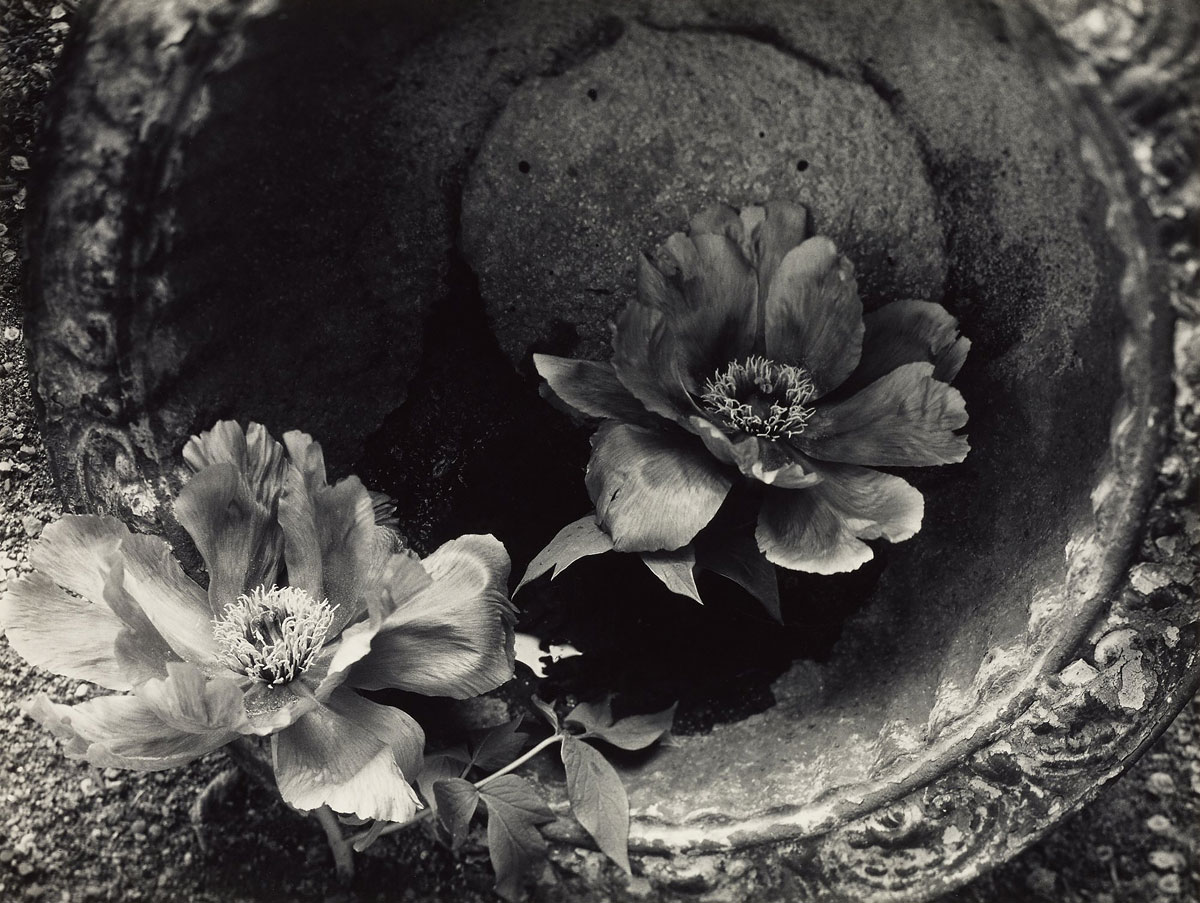
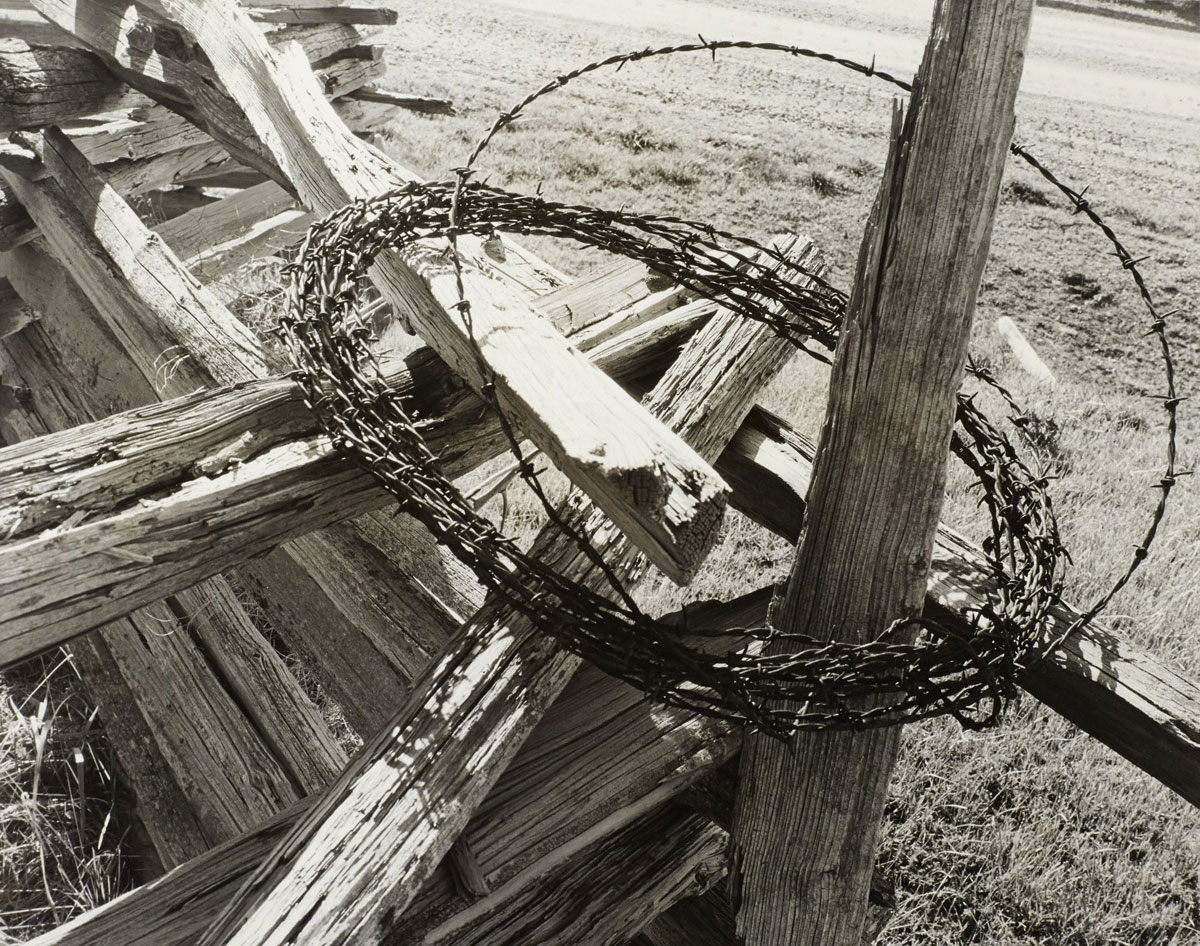
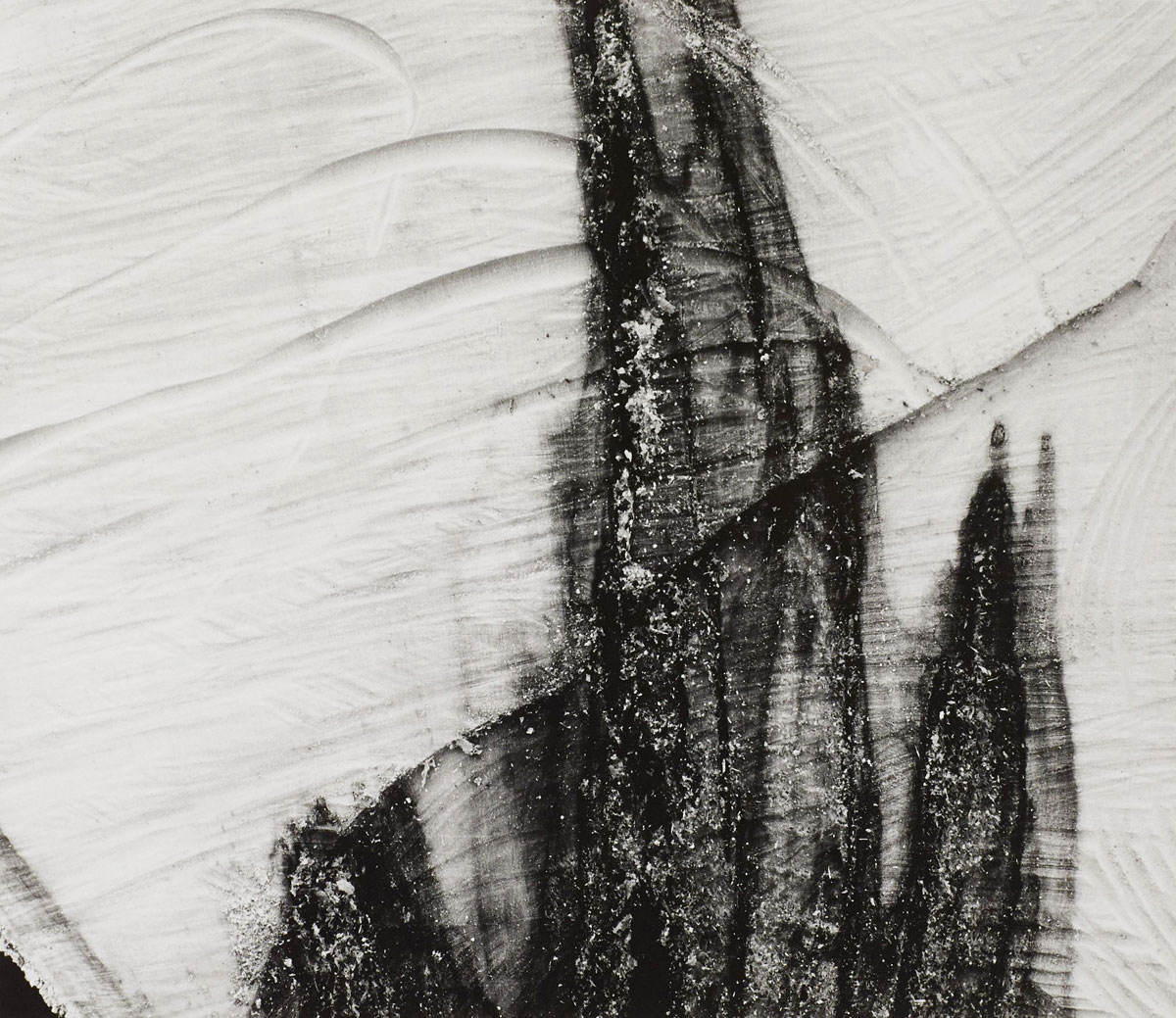
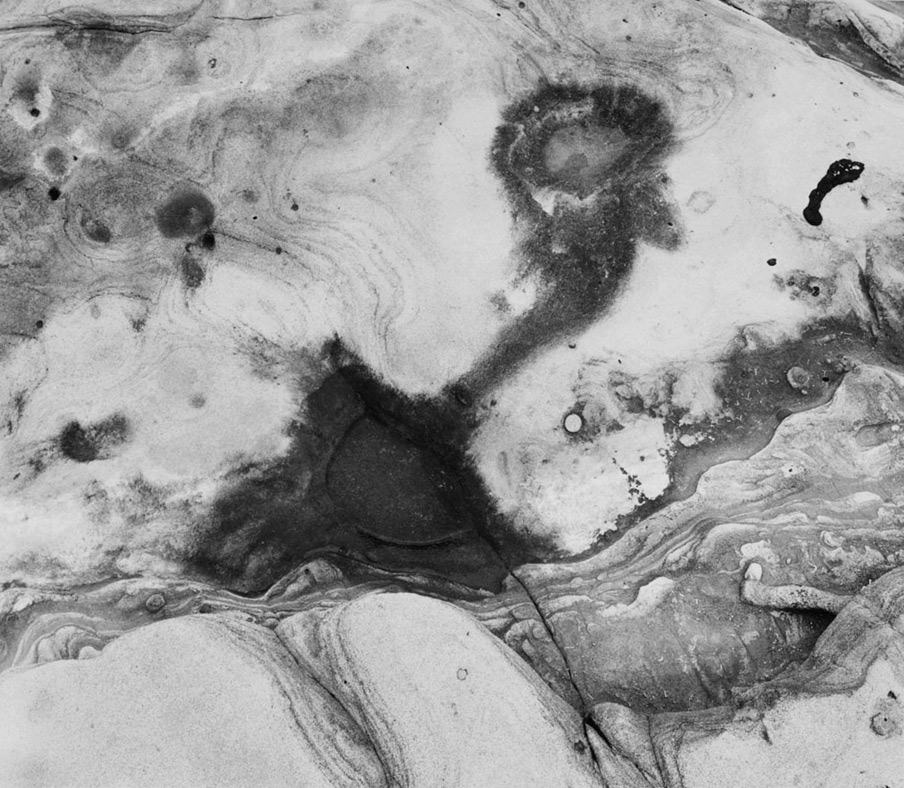
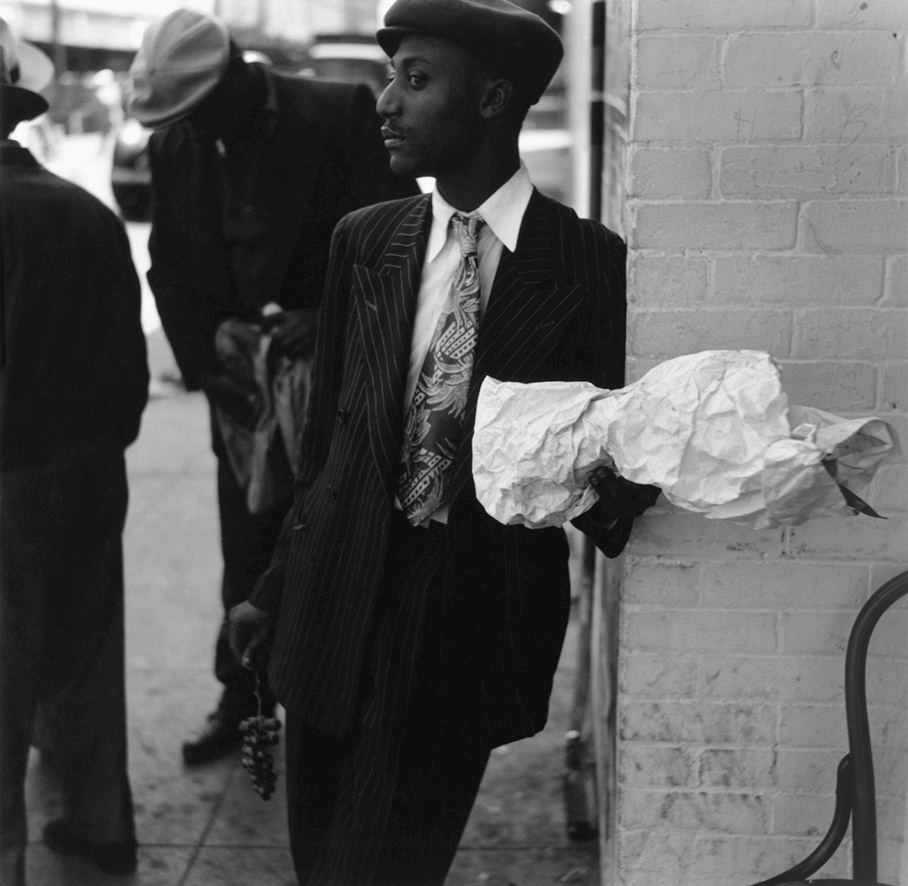
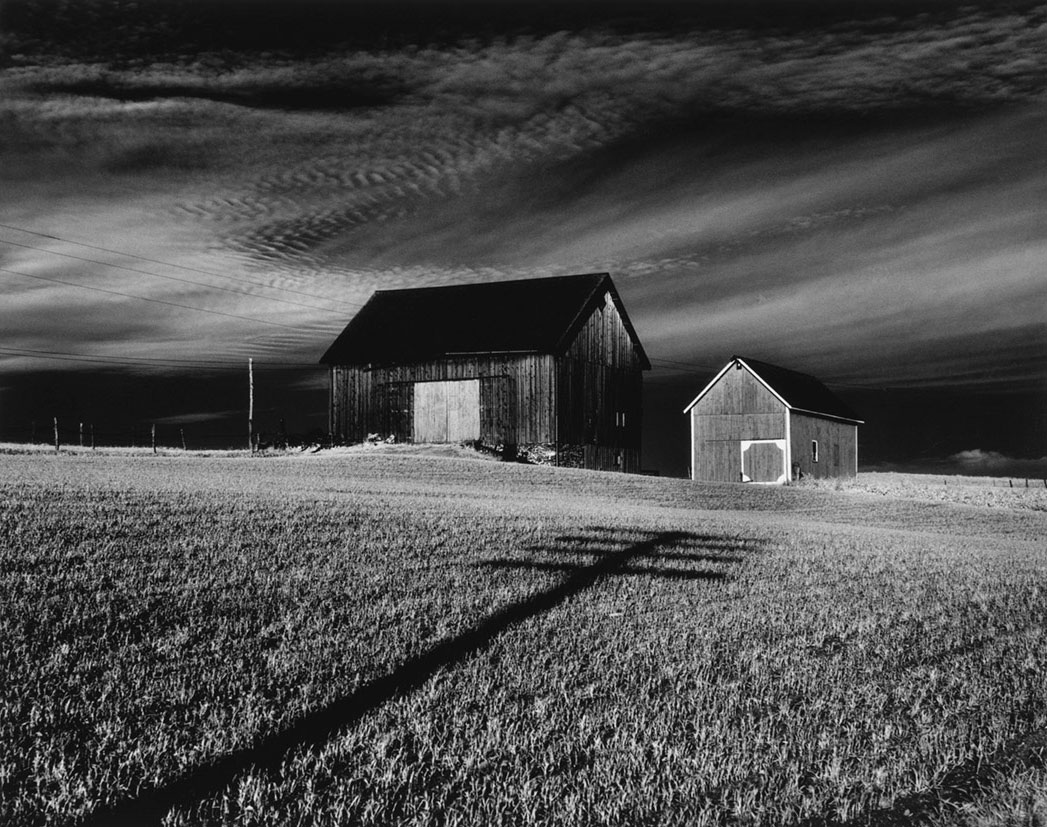
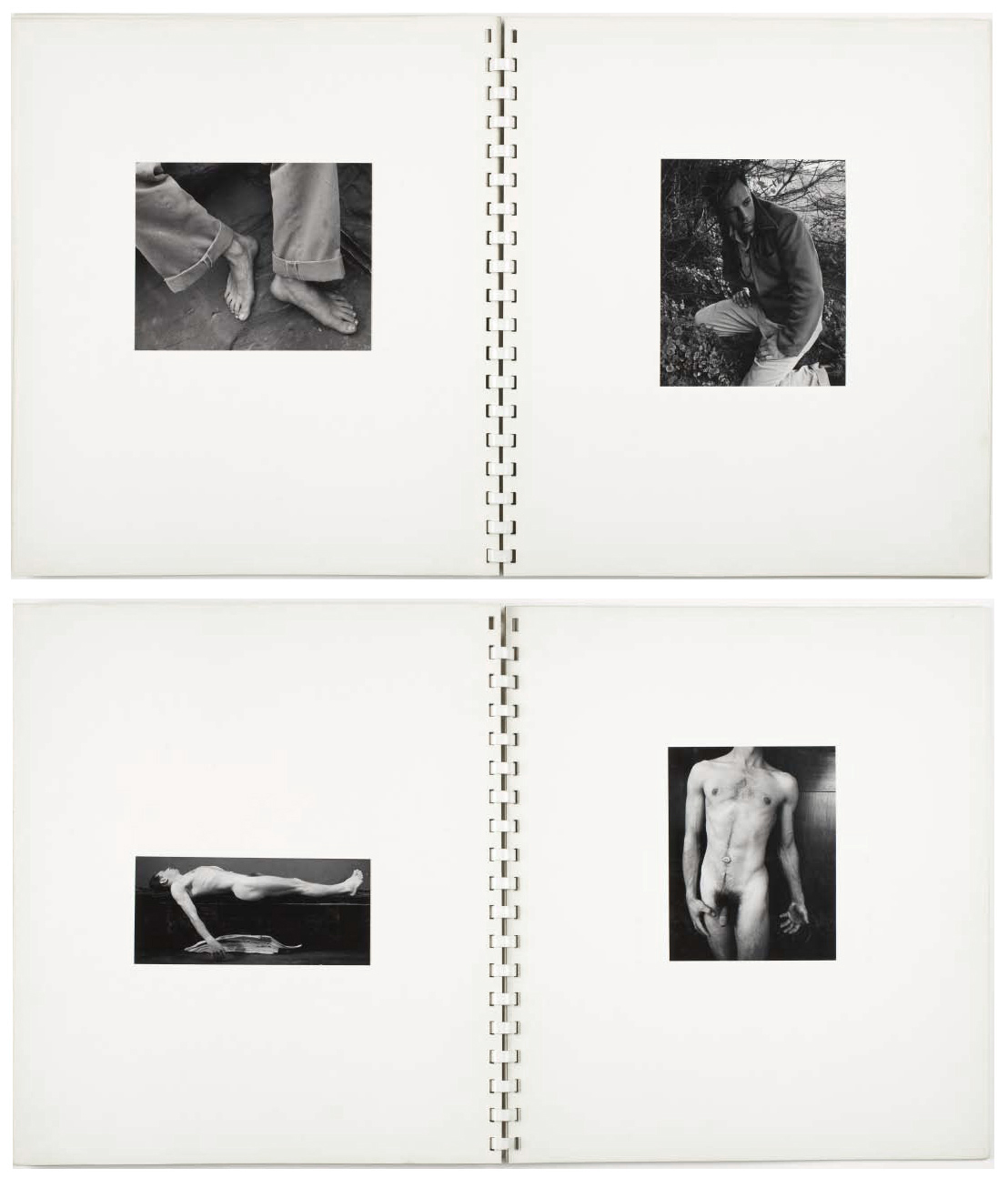
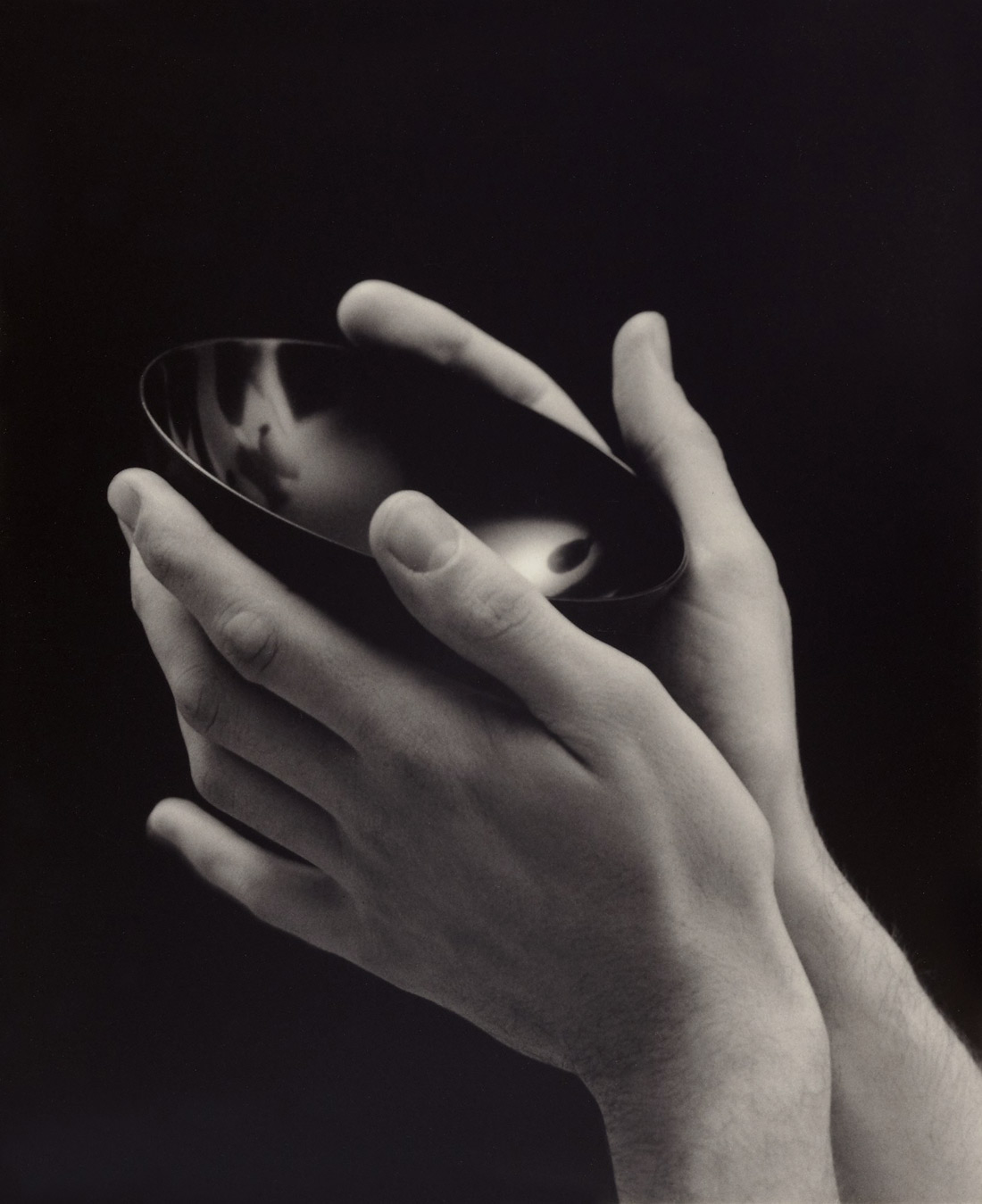
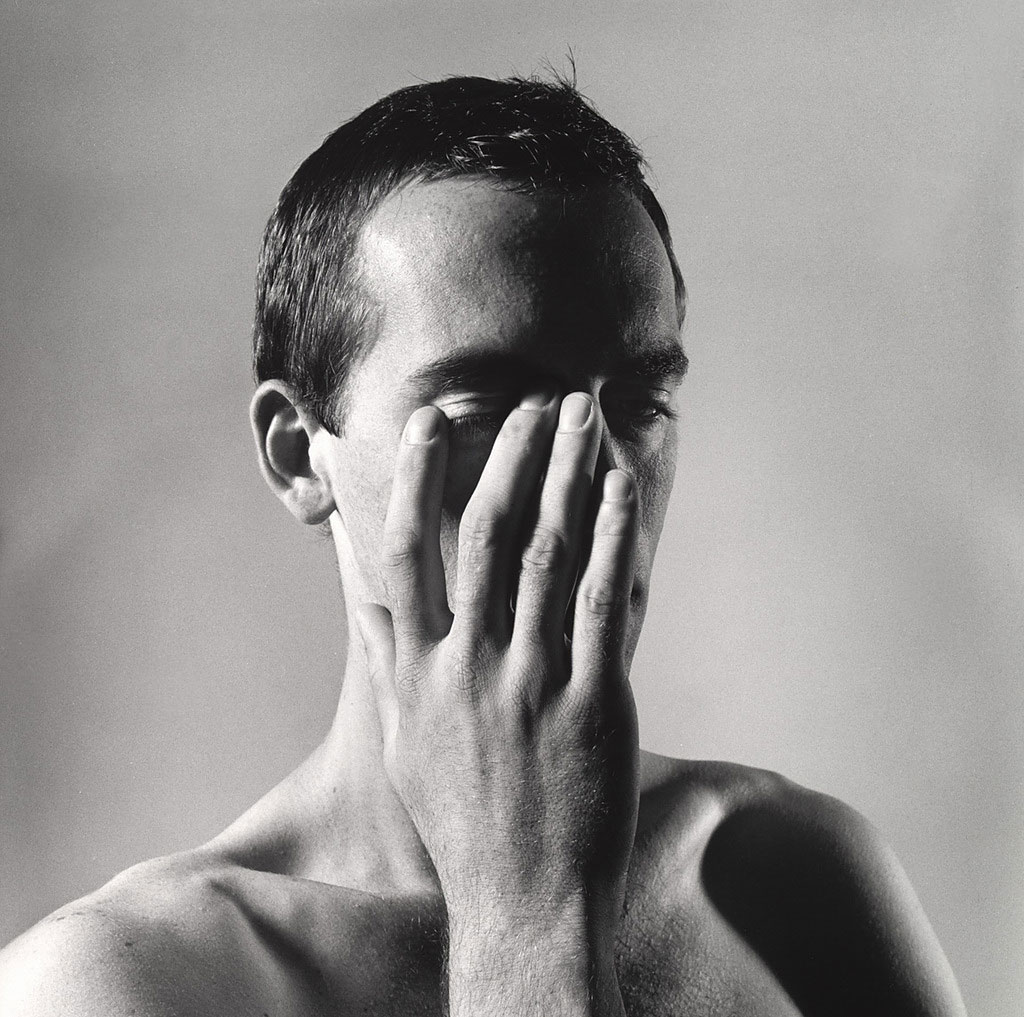
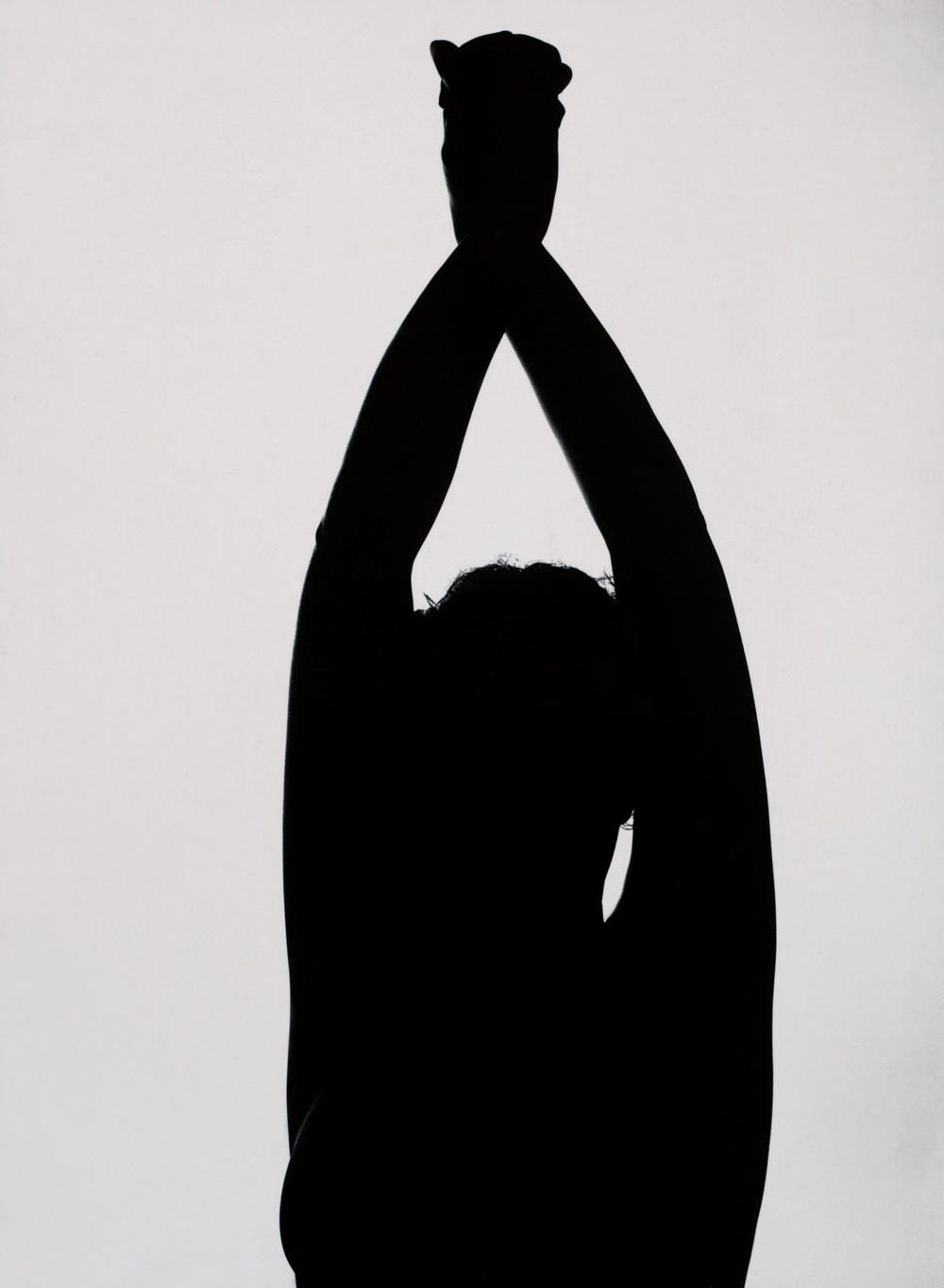
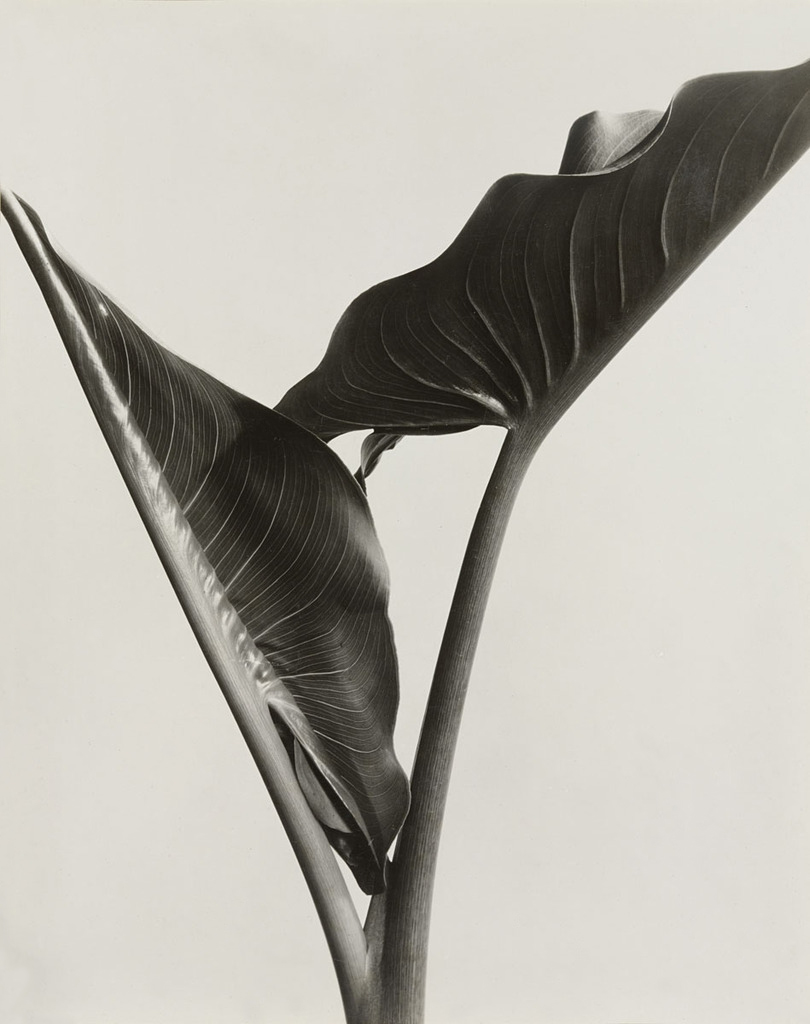
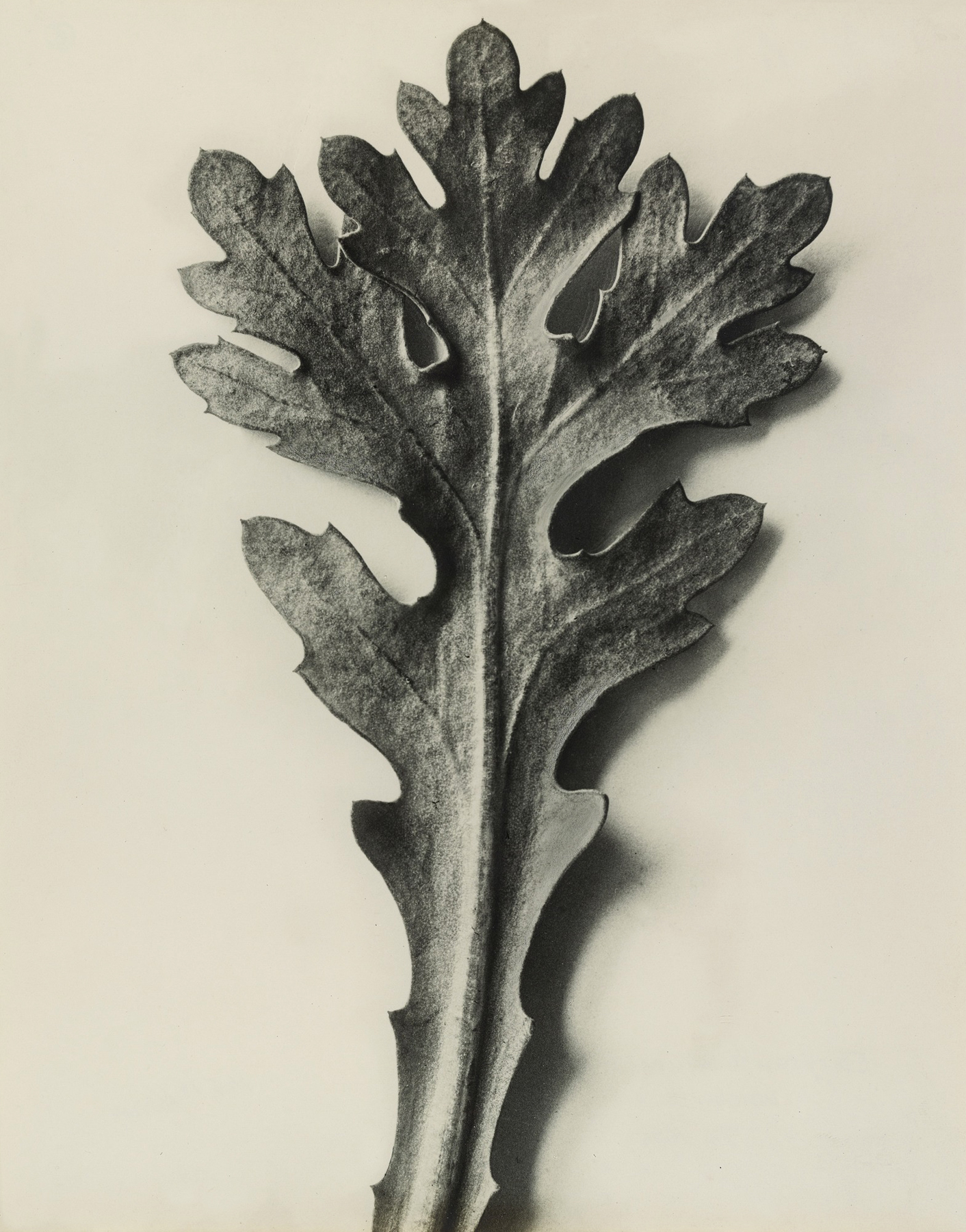
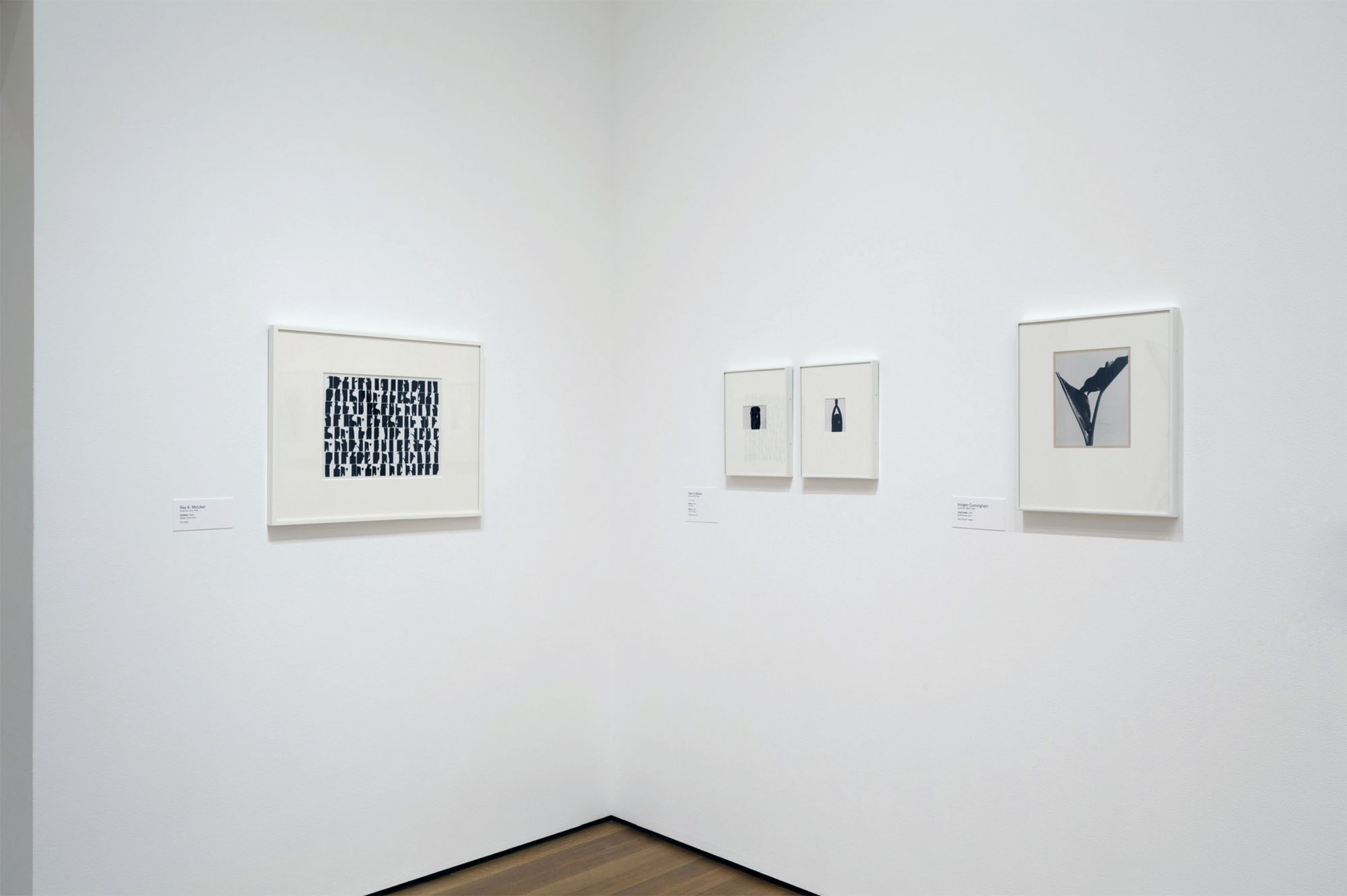
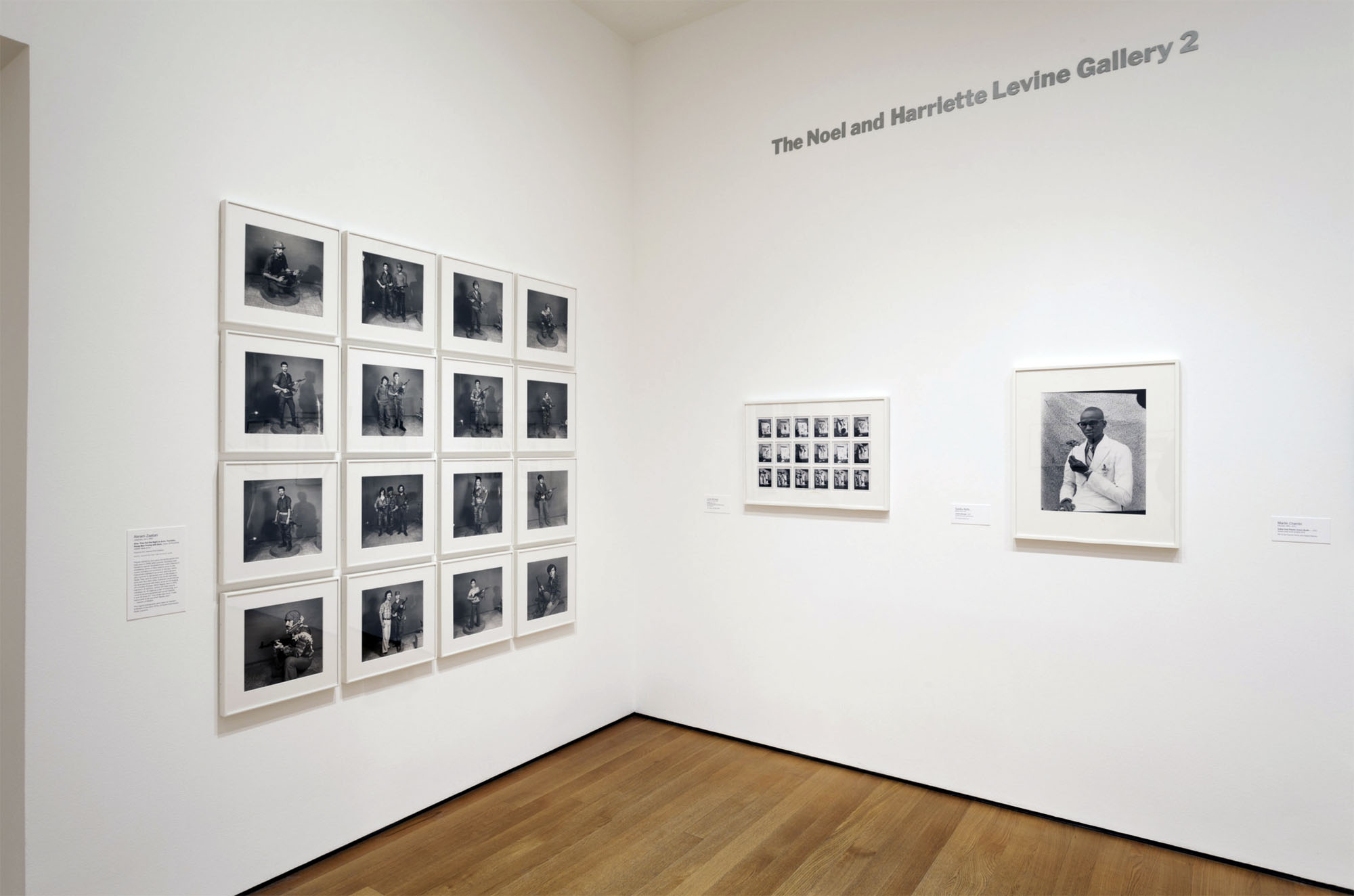
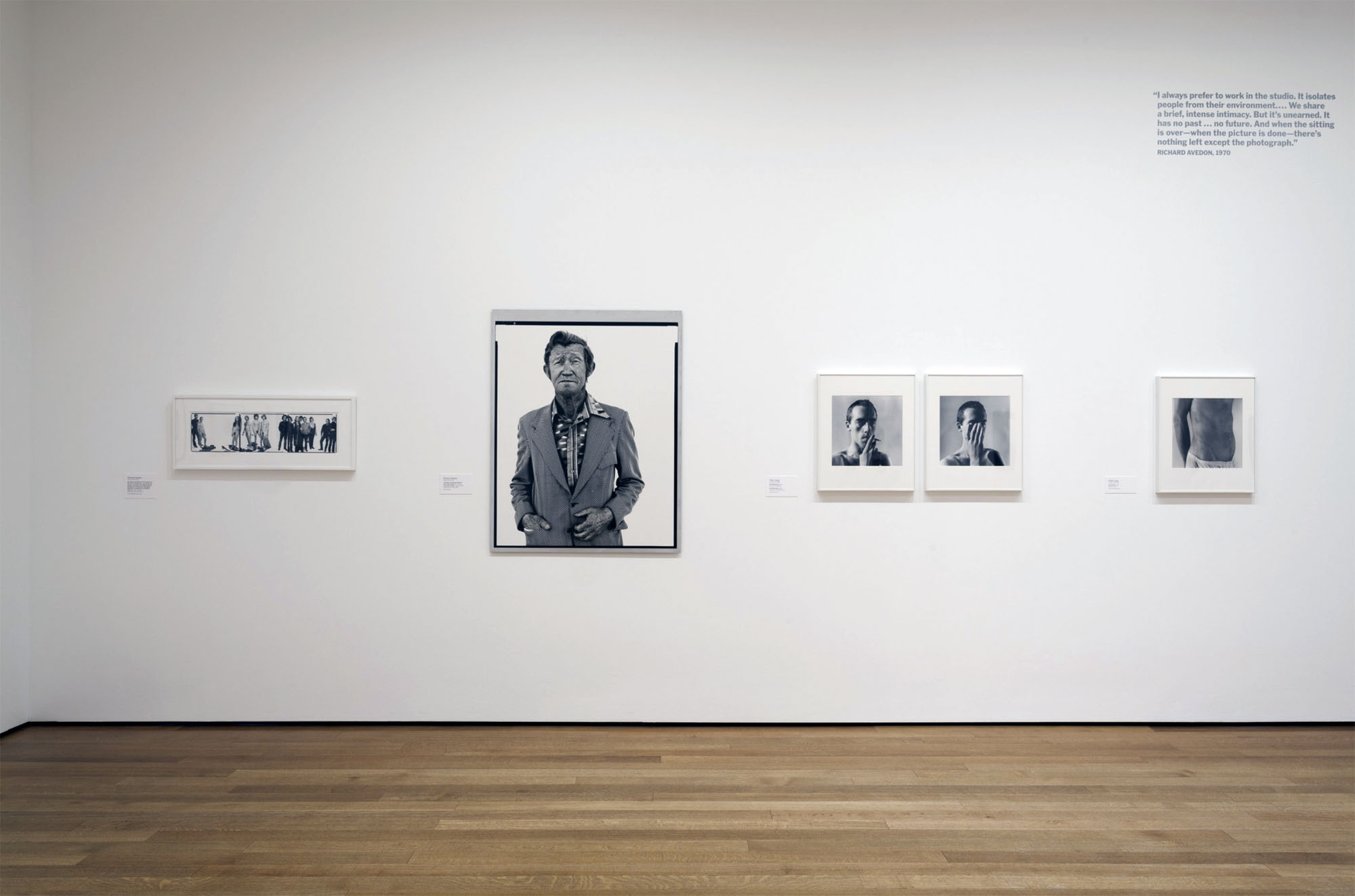
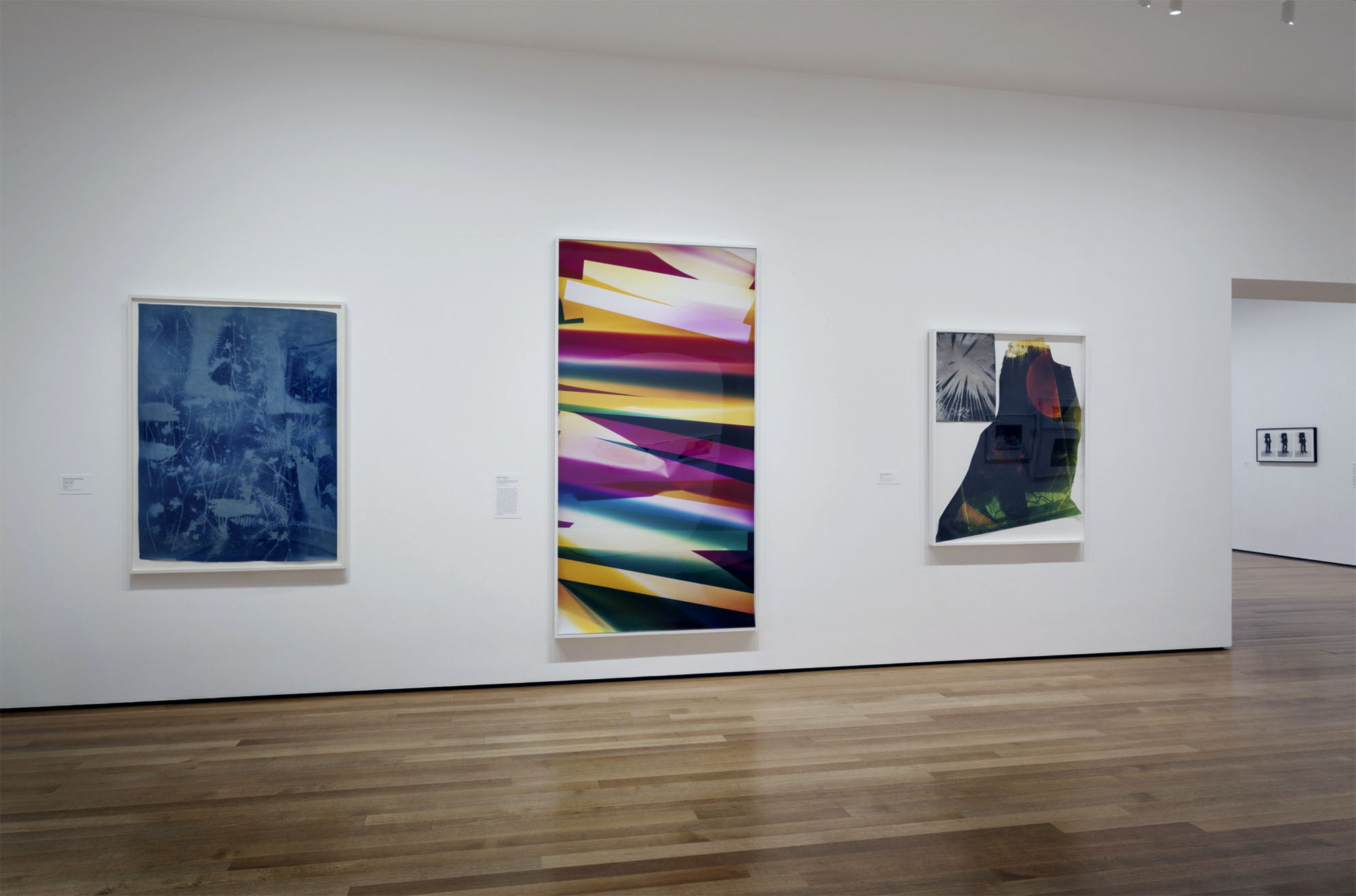
Exhibition: ‘Modern Photographs from the Thomas Walther Collection, 1909-1949’ at the Museum of Modern Art (MoMA), New York

Exhibition dates: 13th December 2014 – 19th April 2015

Exhibition coincides with the culmination of the Thomas Walther Collection Project, a four-year research collaboration between MoMA’s curatorial and conservation staff

The Edward Steichen Photography Galleries, third floor


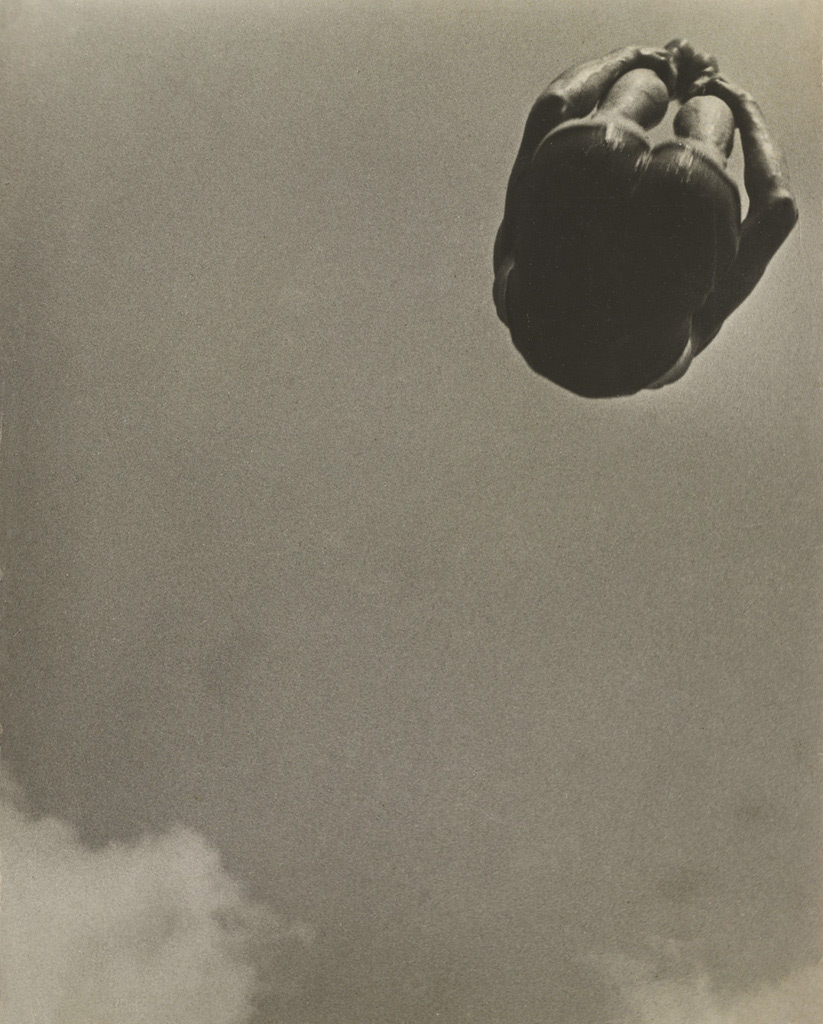
Unknown photographer. 'British 'Chute Jumpers' 1937


Unknown photographer
British ‘Chute Jumpers
1937
Gelatin silver print
5 15/16 x 6 15/16″ (15.1 x 17.6cm)
The Museum of Modern Art, New York
Thomas Walther Collection. Gift of Thomas Walther


OMG, OMG, OMG if we had tele-transportation to travel around the world, I would be at this exhibition in an instant. Please MoMA, fly me to New York so that I can do a proper review of the exhibition!

Not only are there photographs from well known artists that I have never seen before – for example, the brooding mass of Boat, San Francisco (1925) by Edward Weston with the name of the boat… wait for it… ‘DAYLIGHT’ – there are also outstanding photographs from artists that I have never heard of before.

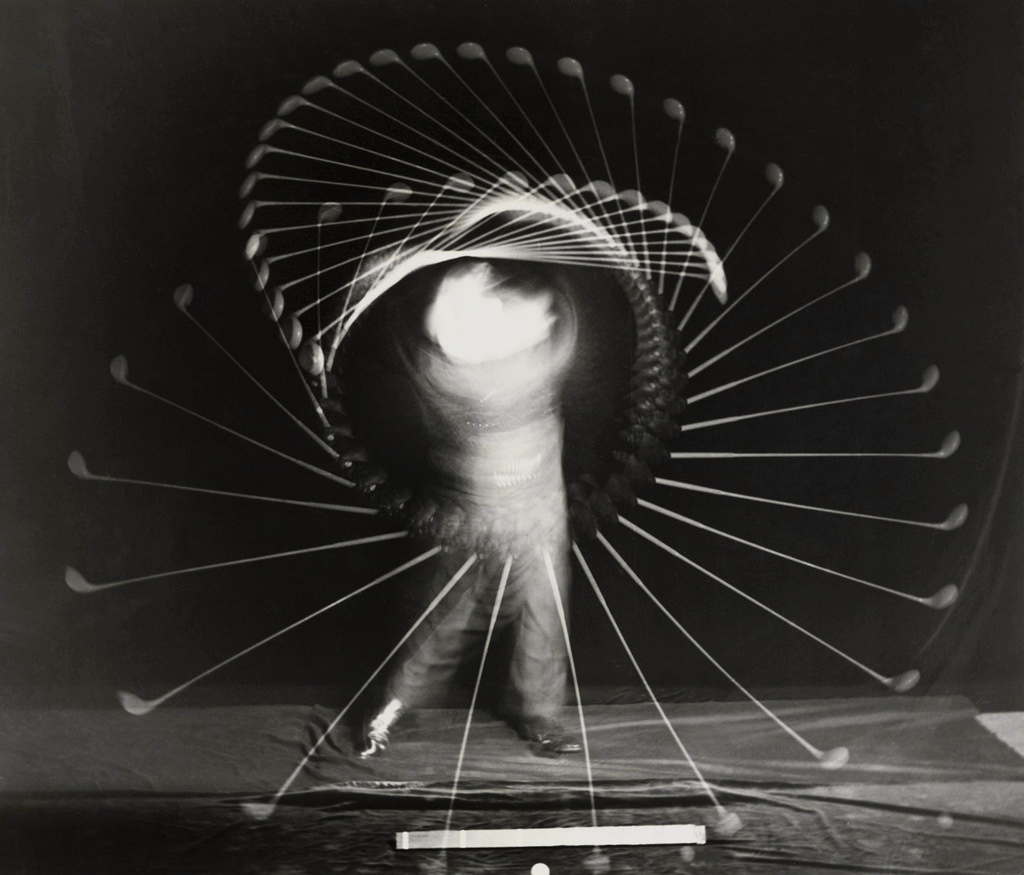
There is so much to like in this monster posting, from the glorious choreography of British ‘Chute Jumpers (1937) to the muscular symmetry and abstraction of Rodchenko’s Dive (1934); from the absolutely stunning light and movement of Riefenstahl’s Nocturnal Start of Decathlon 1,500m Race (August 1936) to the ecstatic, ghost-like swimming in mud apparitions of Kate Steinitz’s Backstroke (1930) – an artist who I knew nothing about (Kate Steinitz was a German-American artist and art historian affiliated with the European Bauhaus and Dadaist movements in the early 20th century. She is best known for her collaborative work with the artist Kurt Schwitters, and, in later life, her scholarship on Leonardo da Vinci). Another artist to flee Germany in the mid-1930s to evade the persecution of the Nazis.

In fact, when you look through the checklist for this exhibition I look at the country of origin of the artist, and the date of their death. There are a lot of artists from Germany and France. Either they lived through the maelstrom of the Second World War and survived, escaped to America or England, or died during the war and their archive was lost (such as the artist Robert Petschow (German, 1888-1945). For some artists surviving the war was not enough either… trapped behind the Iron Curtain after repatriation, artists such as Edmund Kesting went unacknowledged in their lifetime. What a tough time it must have been. To have created this wonderful avant-garde art and then to have seen it dashed against the rocks of violence, prejudice and bigotry – firstly degenerate, then non-conforming to Communist ideals.

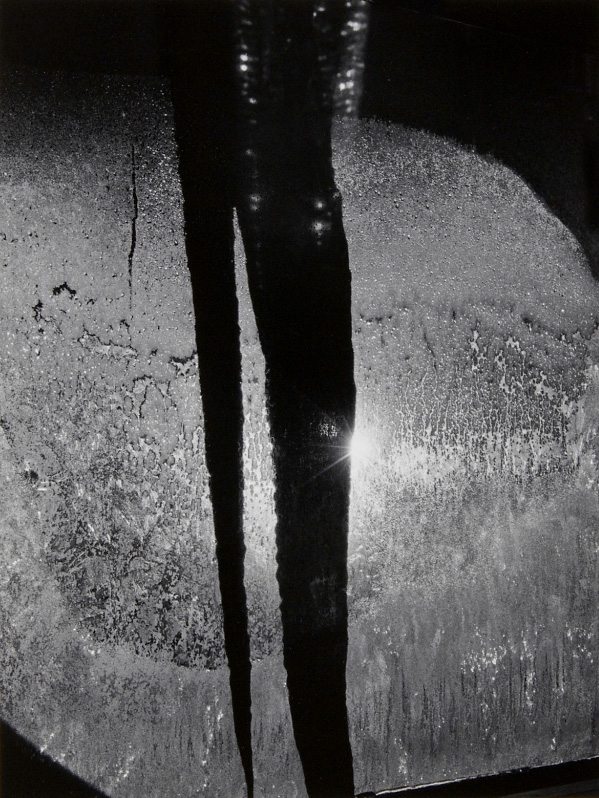
Out of the six sections of the exhibition (The Modern World, Purisms, Reinventing Photography, The Artist’s Life, Between Surrealism and Magic Realism, and Dynamics of the City) it would seem that the section ‘Reinventing Photography’ is the weakest – going from the checklist – with a lack of really memorable images for this section, hence only illustrated in this posting by one image. But this is a minor quibble. When you have images such as Anne W. Brigman’s A Study in Radiation (1924) or Edmund Kesting’s magnificent Glance to the Sun (Blick zur Sonne) (1928) who cares! I just want to see them all and soak up their atmosphere.

Dr Marcus Bunyan

PS. There is an excellent website titled Object: Photo to accompany the exhibition. It contains sections that map and compare photographs, connect and map artists’ lives along with many more images from the collection, conservation analysis and essays about the works. Well worth a look.


Many thankx to the MoMA for allowing me to publish the photographs and text in the posting. Please click on the photographs for a larger version of the image. All images © The Museum of Modern Art

Note: Images below correspond to their sections in the exhibition.
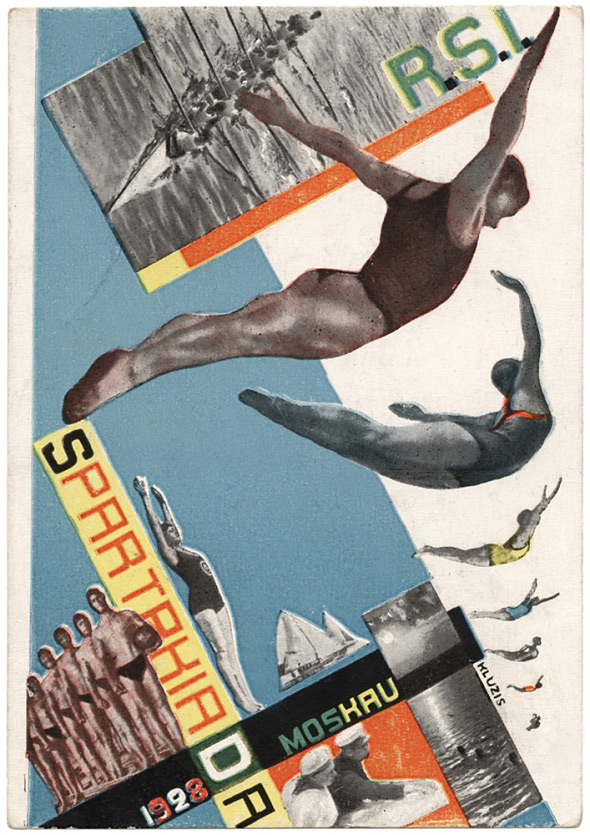


Gustav Klutsis. 'Postcard for the All Union Spartakiada Sporting Event' 1928


Gustav Klutsis (Latvian, 1895-1938)
Postcard for the All Union Spartakiada Sporting Event
1928
Offset lithograph
5 3/4 x 4 1/8″ (14.1 x 10.5cm)
The Museum of Modern Art, New York


Gustav Klutsis (Latvian, 1895-1938) 'Postcard for the All Union Spartakiada Sporting Event' 1928


Gustav Klutsis (Latvian, 1895-1938)
Postcard for the All Union Spartakiada Sporting Event
1928
Offset lithograph
5 3/4 x 4 1/8″ (14.1 x 10.5cm)
The Museum of Modern Art, New York
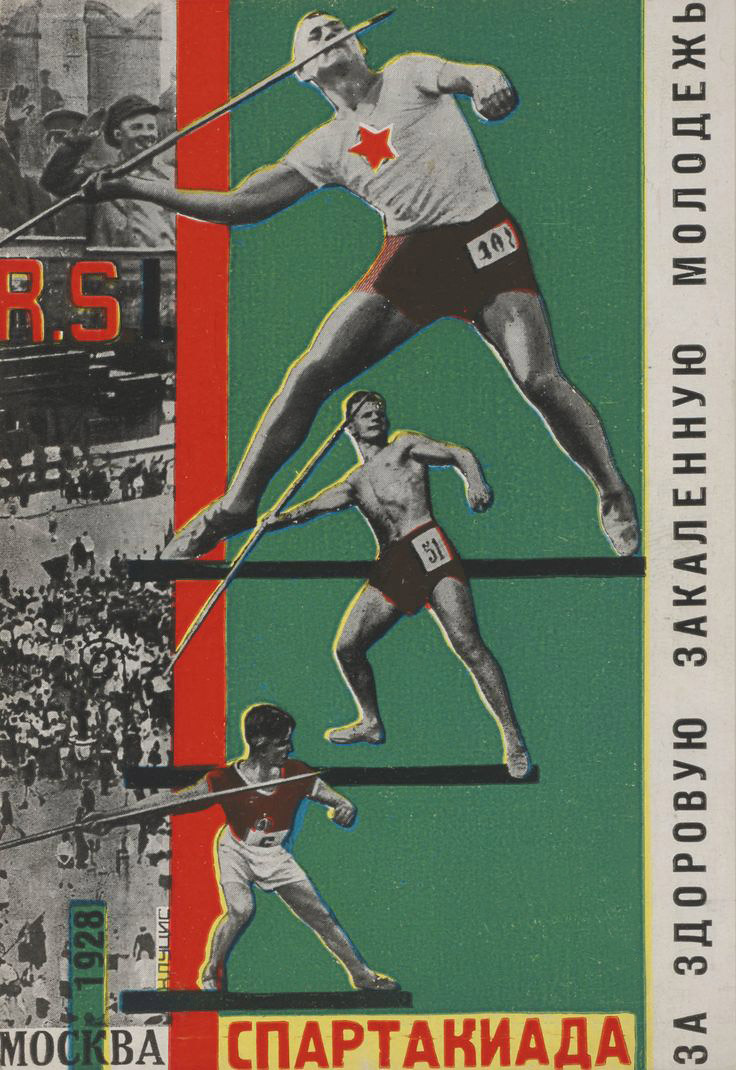
 

Gustav Klutsis (Latvian, 1895-1938) 'Postcard for the All Union Spartakiada Sporting Event' 1928


Gustav Klutsis (Latvian, 1895-1938)
Postcard for the All Union Spartakiada Sporting Event
1928
Offset lithograph
5 3/4 x 4 1/8″ (14.1 x 10.5cm)
The Museum of Modern Art, New York


Gustav Klutsis (Latvian, 1895-1938)

Latvian painter, sculptor, graphic artist, designer and teacher, active in Russia. He was an important exponent of Russian Constructivism. He studied in Riga and Petrograd (now St Petersburg), but in the 1917 October Revolution joined the Latvian Rifle Regiment to defend the Bolshevik government; his sketches of Lenin and his fellow soldiers show Cubist influence. In 1918 he designed posters and decorations for the May Day celebrations and he entered the Free Art Studios (Svomas) in Moscow, where he studied with Malevich and Antoine Pevsner. Dynamic City (1919; Athens, George Costakis priv. col., see Rudenstine, no. 339) illustrates his adoption of the Suprematist style. In 1920 Klucis exhibited with Pevsner and Naum Gabo on Tver’skoy Boulevard in Moscow; in the same year Klucis joined the Communist Party. In 1920-21 he started experimenting with materials, making constructions from wood and paper that combined the geometry of Suprematism with a more Constructivist concern with actual volumes in space. In 1922 Klucis applied these experiments to utilitarian ends when he designed a series of agitprop stands based on various combinations of loudspeakers, speakers’ platforms, display units, film projectors and screens. He taught a course on colour in the Woodwork and Metalwork Faculty of the Vkhutemas (Higher Artistic and Technical Workshops) from 1924 to 1930, and in 1925 helped to organise the Soviet section at the Exposition Internationale des Arts Décoratifs et Industriels Modernes in Paris. During the 1920s he became increasingly interested in photomontage, using it in such agitprop posters as ‘We will repay the coal debt to the country’ (1928; e.g. New York, MoMA). During the 1930s he worked on graphic and typographical design for periodicals and official publications. He was arrested and died during the purges in World War II.

From Grove Art Online
© 2009 Oxford University Press


Gustav Klutsis (Latvian, 1895-1938) 'Postcard for the All Union Spartakiada Sporting Event' 1928


Gustav Klutsis (Latvian, 1895-1938)
Postcard for the All Union Spartakiada Sporting Event
1928
Offset lithograph
5 3/4 x 4 1/8″ (14.1 x 10.5cm)
The Museum of Modern Art, New York


Modern Photographs from the Thomas Walther Collection, 1909-1949, on view from December 13, 2014, to April 19, 2015, explores photography between the First and Second World Wars, when creative possibilities were never richer or more varied, and when photographers approached figuration, abstraction, and architecture with unmatched imaginative fervour. This vital moment is dramatically captured in the photographs that constitute the Thomas Walther Collection, a remarkable group of works presented together for the first time through nearly 300 photographs. Made on the street and in the studio, intended for avant-garde exhibitions or the printed page, these objects provide unique insight into the radical intentions of their creators. Iconic works by such towering figures as Berenice Abbott, Karl Blossfeldt, Alvin Langdon Coburn, El Lissitzky, Lucia Moholy, László Moholy-Nagy, Aleksandr Rodchenko, and Paul Strand are featured alongside lesser-known treasures by more than 100 other practitioners. The exhibition is organised by Quentin Bajac, the Joel and Anne Ehrenkranz Chief Curator of Photography, and Sarah Hermanson Meister, Curator, Department of Photography, MoMA.

The exhibition coincides with Object: Photo. Modern Photographs: The Thomas Walther Collection 1909-1949, the result of a four-year collaborative project between the Museum’s departments of Photography and Conservation, with the participation of over two dozen leading international photography scholars and conservators, making it the most extensive effort to integrate conservation, curatorial, and scholarly research efforts on photography to date. That project is composed of multiple parts including a website that features a suite of digital-visualisation research tools that allow visitors to explore the collection, a hard-bound paper catalogue of the entire Thomas Walther collection, and an interdisciplinary symposium focusing on ways in which the digital age is changing our engagement with historic photographs.

Modern Photographs from the Thomas Walther Collection, 1909-1949, is organised thematically into six sections, suggesting networks between artists, regions, and objects, and highlighting the figures whose work Walther collected in depth, including André Kertész, Germaine Krull, Franz Roh, Willi Ruge, Maurice Tabard, Umbo, and Edward Weston. Enriched by key works in other mediums from MoMA’s collection, this exhibition presents the exhilarating story of a landmark chapter in photography’s history.”

Press release from the MoMA website


The Collection

In the 1920s and ’30s photography underwent a period of exploration, experimentation, technical innovation, and graphic discovery so dramatic that it generated repeated claims that the true age of discovery was not when photography was invented but when it came of age, in this era, as a dynamic, infinitely flexible, and easily transmissible medium. The Thomas Walther Collection concentrates on that second moment of growth. The Walther Collection’s 341 photographs by almost 150 artists, most of them European, together convey a period of collective innovation that is now celebrated as one of the major episodes of modern art.

The Project

Our research is based on the premise that photographs of this period were not born as disembodied images; they are physical things – discrete objects made by certain individuals at particular moments using specific techniques and materials. Shaped by its origin and creation, the photographic print harbours clues to its maker and making, to the causes it may have served, and to the treatment it has received, and these bits of information, gathered through close examination of the print, offer fresh perspectives on the history of the era. “Object: Photo” – the title of this study – reflects this approach.

In 2010, the Andrew W. Mellon Foundation gave the Museum a grant to encourage deep scholarly study of the Walther Collection and to support publication of the results. Led by the Museum’s Departments of Photography and Conservation, the project elicited productive collaborations among scholars, curators, conservators, and scientists, who investigated all of the factors involved in the making, appearance, condition, and history of each of the 341 photographs in the collection. The broadening of narrow specialisations and the cross-fertilisation between fields heightened appreciation of the singularity of each object and of its position within the history of its moment. Creating new standards for the consideration of photographs as original objects and of photography as an art form of unusually rich historical dimensions, the project affords both experts and those less familiar with its history new avenues for the appreciation of the medium. The results of the project are presented in multiple parts: on the website, in a hard-bound paper catalogue of the entire Thomas Walther Collection (also titled Object: Photo), and through an interdisciplinary symposium focusing on the ways in which the digital age is changing our engagement with historic photographs.

Historical Context

The Walther Collection is particularly suited to such a study because its photographs are so various in technique, geography, genre, and materials as to make it a mine of diverse data. The revolutions in technology that made the photography of this period so flexible and responsive to the impulse of the operator threw open the field to all comers. The introduction of the handheld Leica
 in 1925 (a small camera using strips of 35mm motion-picture film), of enlargers to make positive prints from the Leica’s little negatives, and of easy-to-use photographic papers – each of these was respectively a watershed event. Immediately sensing the potential of these tools, artists began to explore the medium; without any specialised training, painters such as László Moholy-Nagy and Aleksandr Rodchenko could become photographers and teachers almost overnight. Excitedly and with an open sense of possibility, they freely experimented in the darkroom and in the studio, producing negative prints, collages and photomontages, photograms, solarisations, and combinations of these. Legions of serious amateurs also began to photograph, and manufacturers produced more types of cameras with different dimensions and capacities: besides the Leica, there was the Ermanox, which could function in low light, motion-picture cameras that could follow and stop action, and many varieties of medium- and larger-format cameras that could be adapted for easy transport. The industry responded to the expanding range of users and equipment with a bonanza of photographic papers in an assortment of textures, colours, and sizes. Multiple purposes also generated many kinds of prints: best for reproduction in books or newspapers were slick, ferrotyped glossies, unmounted and small enough to mail, while photographs for exhibition were generally larger and mounted to stiff boards. Made by practitioners ranging from amateurs to professional portraitists, journalists, illustrators, designers, critics, and artists of all stripes, the pictures in the Walther Collection are a true representation of the kaleidoscopic multiplicity of photography in this period of diversification.

Text from the MoMA website
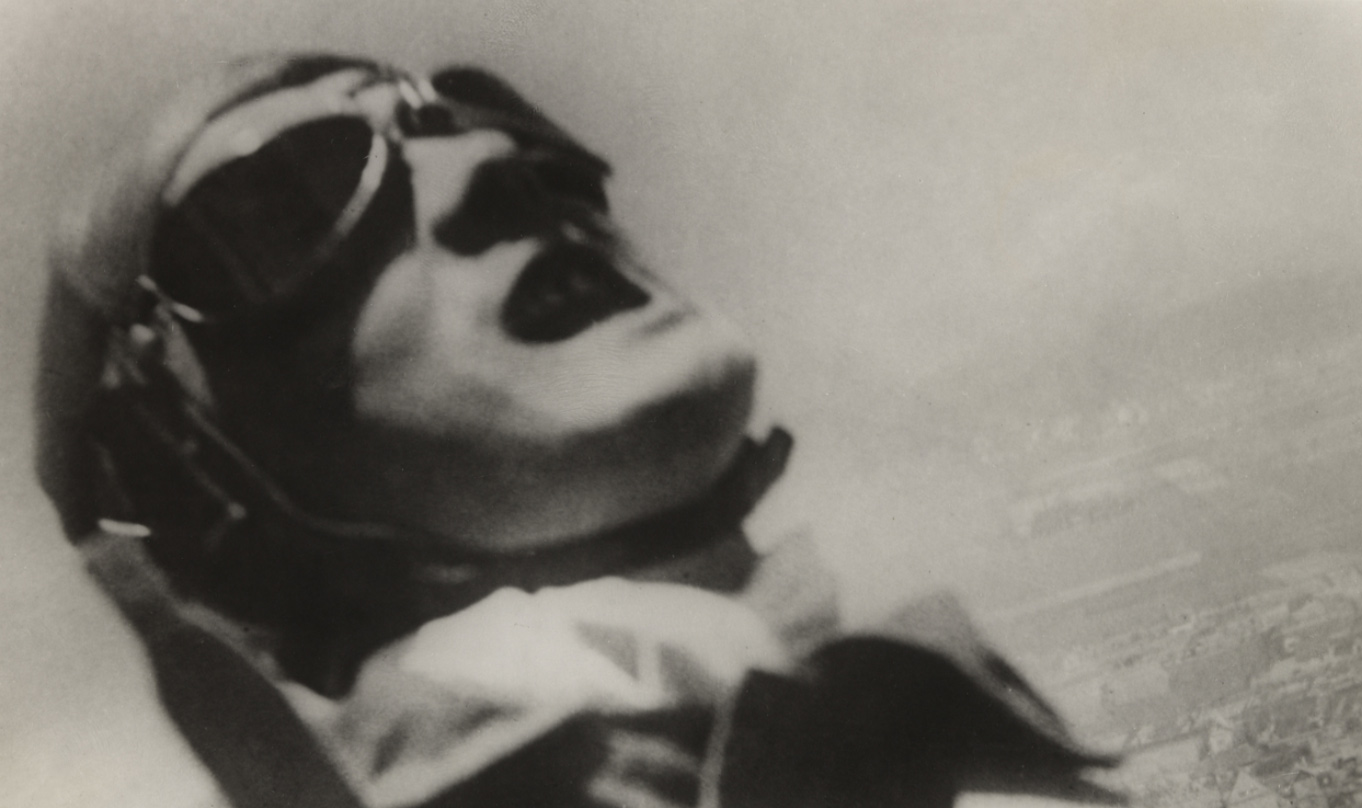
 

Willi Ruge (German, 1882-1961) 'Photo of Myself at the Moment of My Jump' (Selbstfoto im Moment des Abspringens) 1931


Willi Ruge (German, 1882-1961)
Photo of Myself at the Moment of My Jump (Selbstfoto im Moment des Abspringens)
1931
Gelatin silver print
5 9/16 × 8 1/16″ (14.2 × 20.4cm)
The Museum of Modern Art, New York
Thomas Walther Collection. Gift of Thomas Walther
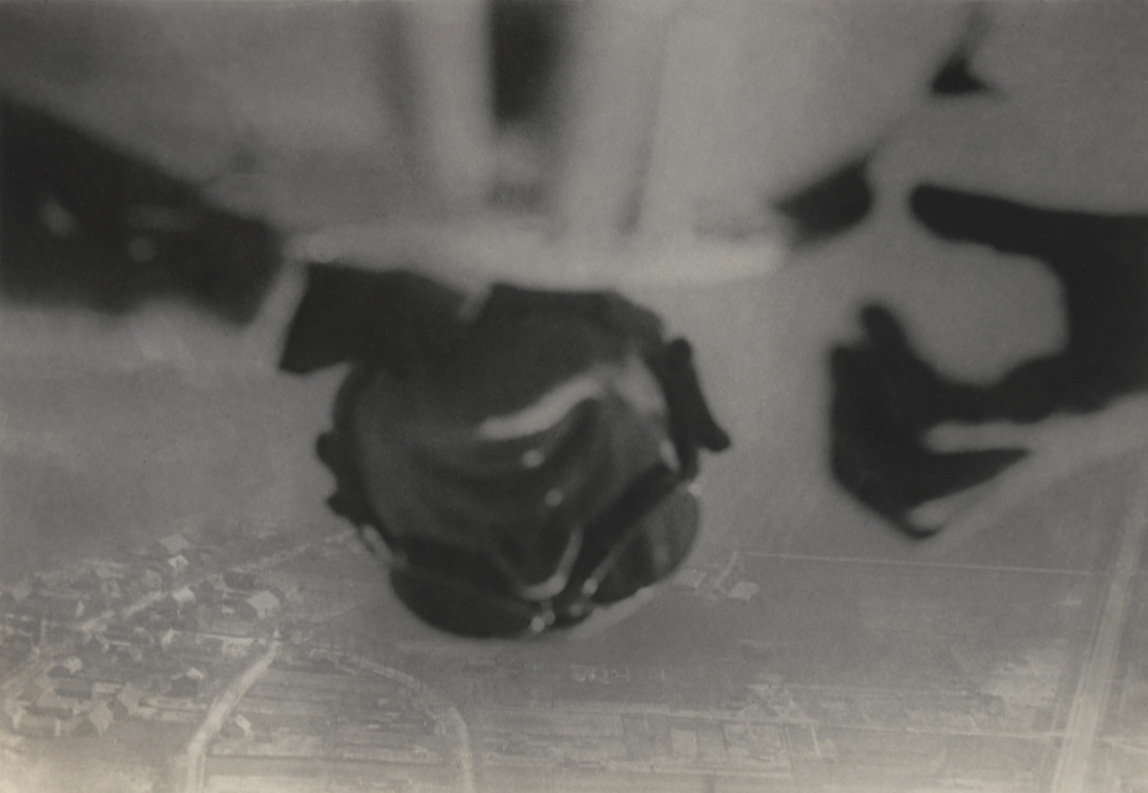
 

Willi Ruge (German, 1882-1961) 'With My Head Hanging Down before the Parachute Opened...' (Mit dem Kopf nach unten hängend, bei ungeöffnetem Fallschirm...) 1931


Willi Ruge (German, 1882-1961)
With My Head Hanging Down before the Parachute Opened . . .
(Mit dem Kopf nach unten hängend, bei ungeöffnetem Fallschirm . . .)
1931
Gelatin silver print
5 1/2 × 8″ (14 × 20.3cm)
The Museum of Modern Art, New York
Thomas Walther Collection. Gift of Thomas Walther


Willi Ruge (German, 1882-1961) 'Seconds before Landing' (Sekunden vor der Landung) 1931


Willi Ruge (German, 1882-1961)
Seconds before Landing (Sekunden vor der Landung)
From the series I Photograph Myself during a Parachute Jump (Ich fotografiere mich beim Absturz mit dem Fallschirm)
1931
Gelatin silver print
8 1/16 × 5 9/16″ (20.4 × 14.1cm) (irreg.)
The Museum of Modern Art, New York
Thomas Walther Collection. Gift of Thomas Walther
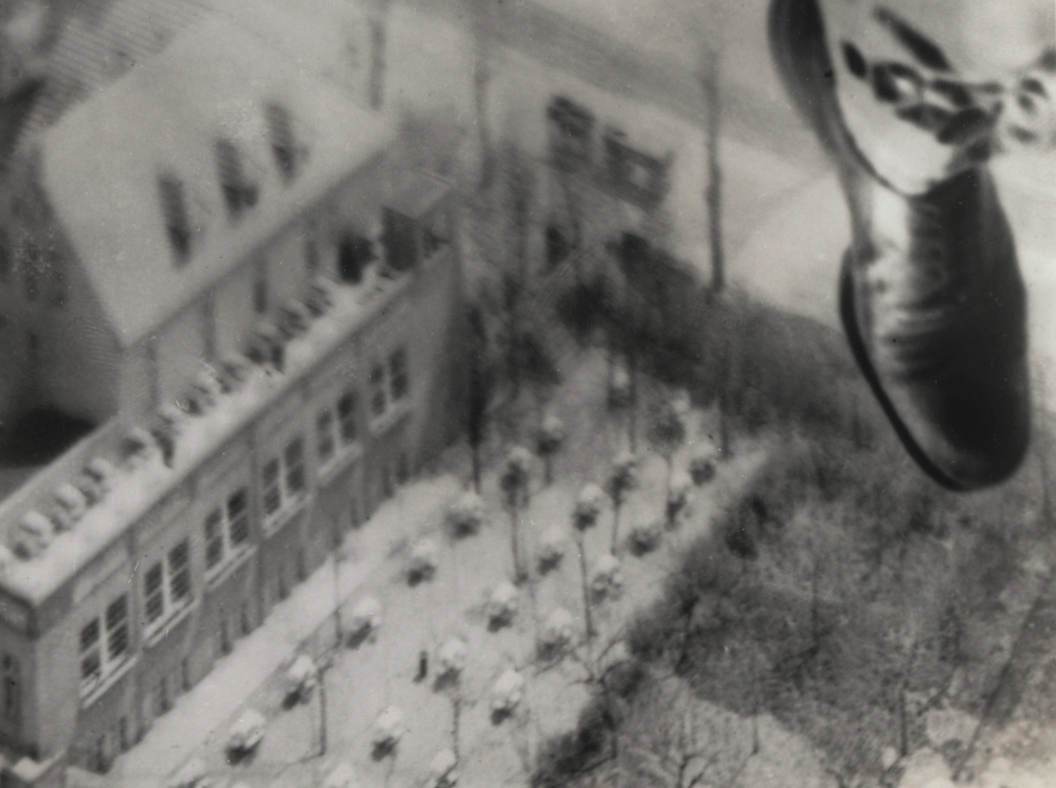
 

Willi Ruge (German, 1882-1961) 'Seconds before Landing' (Sekunden vor der Landung) 1931 (detail)


Willi Ruge (German, 1882-1961)
Seconds before Landing (Sekunden vor der Landung) (detail)
From the series I Photograph Myself during a Parachute Jump (Ich fotografiere mich beim Absturz mit dem Fallschirm)
1931
Gelatin silver print
8 1/16 × 5 9/16″ (20.4 × 14.1cm) (irreg.)
The Museum of Modern Art, New York
Thomas Walther Collection. Gift of Thomas Walther
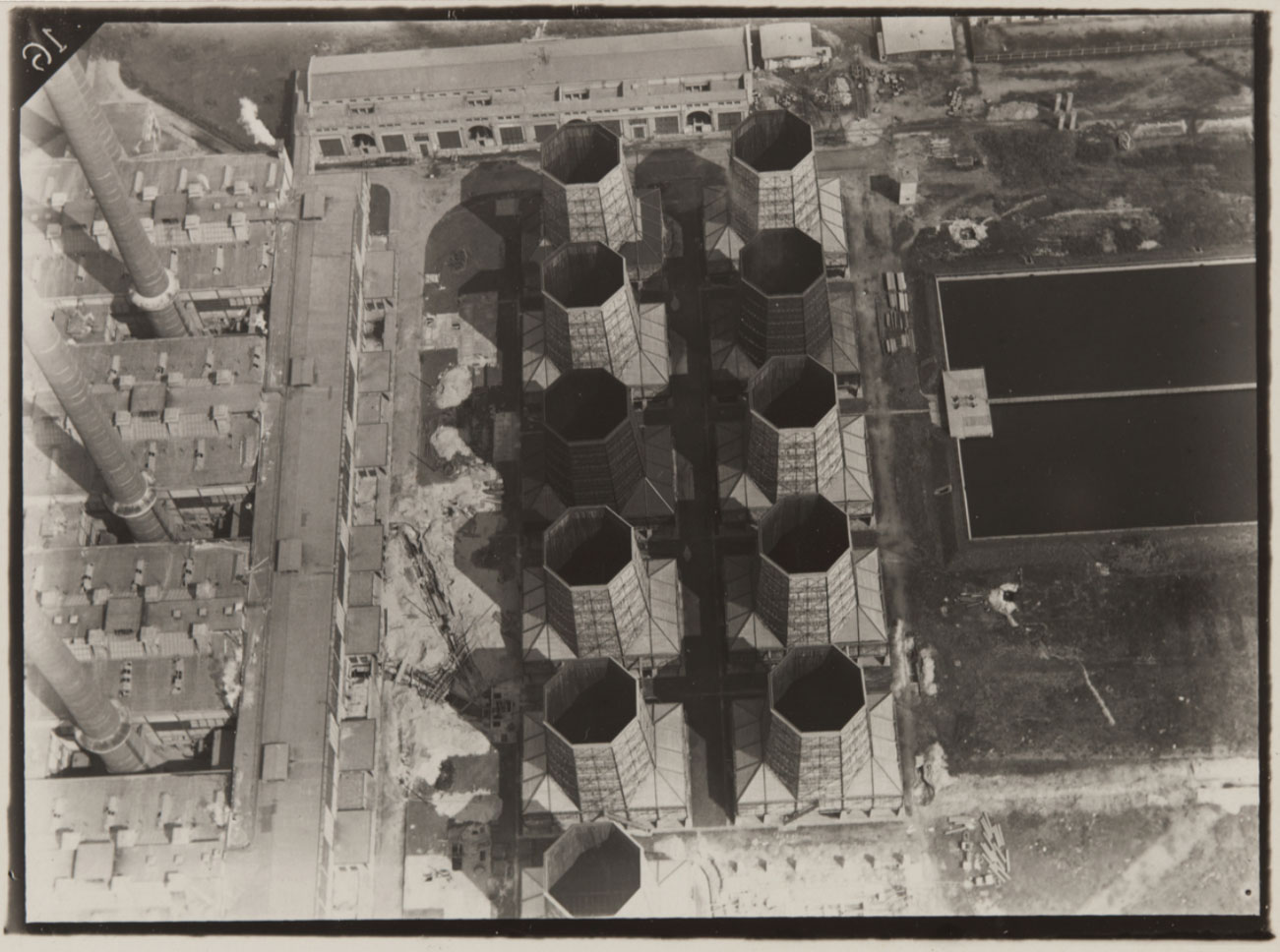
 

Robert Petschow (German, 1888-1945) 'Lines of Modern Industry: Cooling Tower' (Linien der modernen Industrie: Kühlturmanlage) 1920-1929


Robert Petschow (German, 1888-1945)
Lines of Modern Industry: Cooling Tower (Linien der modernen Industrie: Kühlturmanlage)
1920-29
Gelatin silver print
3 3/8 × 4 1/2″ (8.5 × 11.5cm)
The Museum of Modern Art, New York
Thomas Walther Collection. Gift of Albert Renger-Patzsch, by exchange
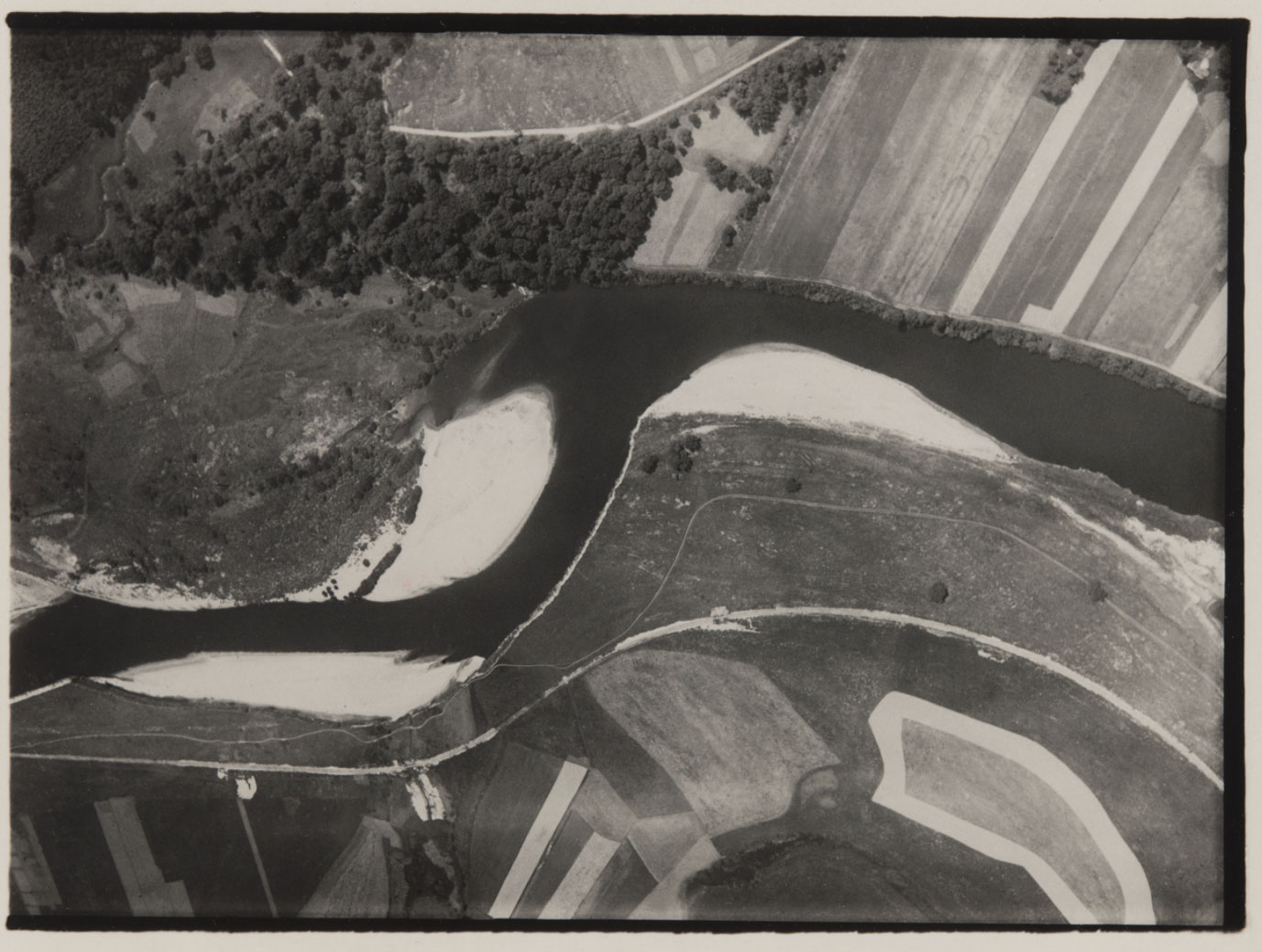
 

Robert Petschow (German, 1888-1945) 'The Course of the Mulde with Sand Deposits in the Curves' (Der Lauf der Mulde mit Versandungen in den Windungen) 1920-1933


Robert Petschow (German, 1888-1945)
The Course of the Mulde with Sand Deposits in the Curves (Der Lauf der Mulde mit Versandungen in den Windungen)
1920-33
Gelatin silver print
3 3/8 × 4 1/2″ (8.5 × 11.5cm)
The Museum of Modern Art, New York
Thomas Walther Collection. Gift of Albert Renger-Patzsch, by exchange


Robert Petschow (German, 1888-1945)

Robert Petschow was studying in Danzig as a free balloon pilot in the West Prussian air force. During the First World War Petschow was a balloon observer with the rank of lieutenant in Poland, France and Belgium. Maybe it was the work of a balloon observer which led him to photography, in which he was worked freelance from 1920. His images appeared in the prestigious photographic yearbook The German photograph in which he was presented with photographers such as Karl Blossfeldt, Albert Renger-Patzsch Chargesheimer and Erich Salomon. The book Land of the Germans, which was published in 1931 by Robert Diesel and includes many photographs of Petschow went on to be published in four editions. In 1931 he journeyed with the airship LZ 127, the “Graf Zeppelin” to Egypt. He participated as an unofficial member of the crew to document the trip photographically. In 1936, at the age of 48 years, Petschow joined the rank of captain in the Air Force and ended his work as a senior editor at the daily newspaper The West, a position he held from 1930. For the following years, there is no information to Petschow.

Robert Petschow died at the age of 57 years on 17 October 1945 in Haldensleben after he had to leave his apartment in Berlin-Steglitz due to the war. He left there a picture archive with about 30,000 aerial photographs, which fell victim of the war. His contemporaries describe Petschow as a humorous person and a great raconteur.

Translated from the German Wikipedia website


Aleksandr Rodchenko (Russian, 1891-1956) 'Dive' (Pryzhok v vodu) 1934


Aleksandr Rodchenko (Russian, 1891-1956)
Dive (Pryzhok v vodu)
1934
Gelatin silver print
11 11/16 x 9 3/8″ (29.7 x 23.8cm)
The Museum of Modern Art, New York
Thomas Walther Collection. Gift of Shirley C. Burden, by exchange
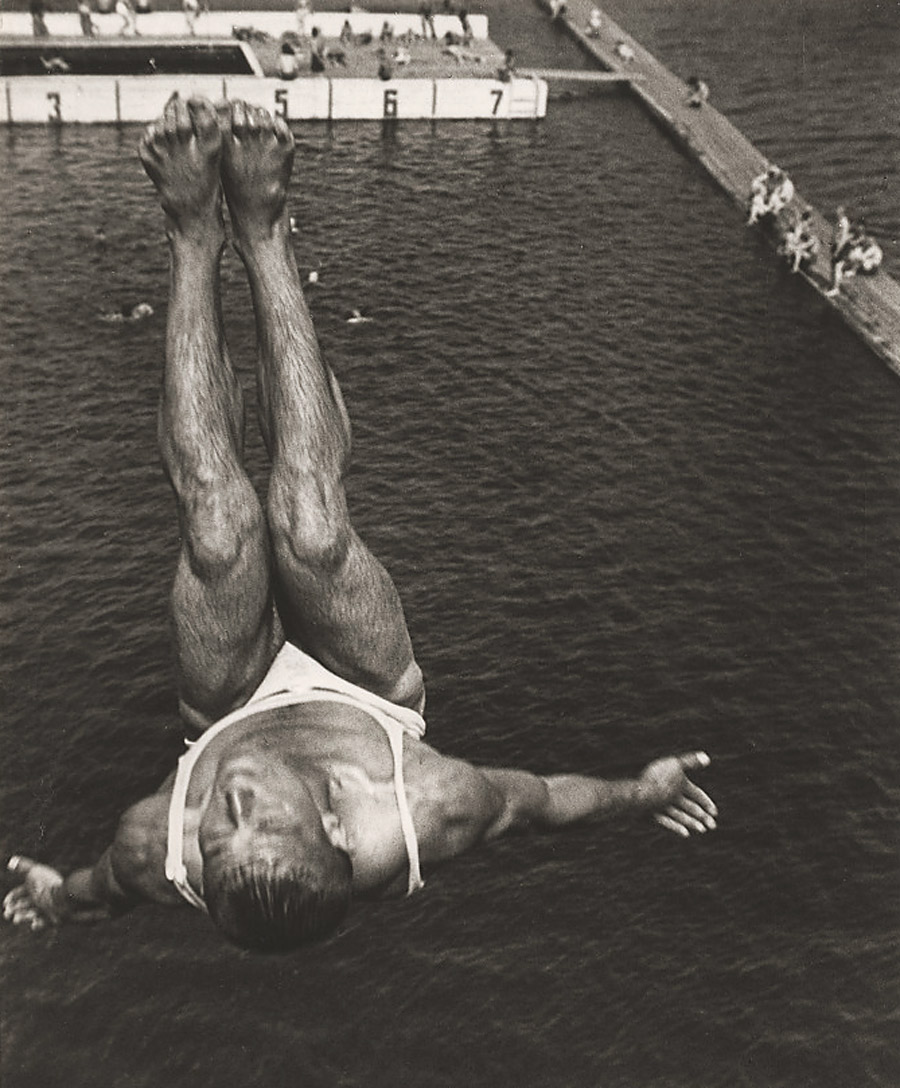
 

Aleksandr Rodchenko (Russian, 1891-1956) 'Dive' (Pryzhok v vodu) 1934


Aleksandr Rodchenko (Russian, 1891-1956)
Dive (Pryzhok v vodu)
1934
Gelatin silver print
11 3/4 × 9 5/16″ (29.9 × 23.6cm)
The Museum of Modern Art, New York
Thomas Walther Collection. Gift of Shirley C. Burden, by exchange


Leni Riefenstahl (German, 1902-2003) 'Nocturnal Start of Decathlon 1,500m Race' (Nächtlicher Start zum 1500-m-Lauf des Zehnkampfes) August 1936


Leni Riefenstahl (German, 1902-2003)
Nocturnal Start of Decathlon 1,500m Race
(Nächtlicher Start zum 1500-m-Lauf des Zehnkampfes)

August 1936
Gelatin silver print 9 5/16 x 11 3/4″ (23.7 x 29.8cm)
The Museum of Modern Art, New York
Thomas Walther Collection. Abbott-Levy Collection funds, by exchange
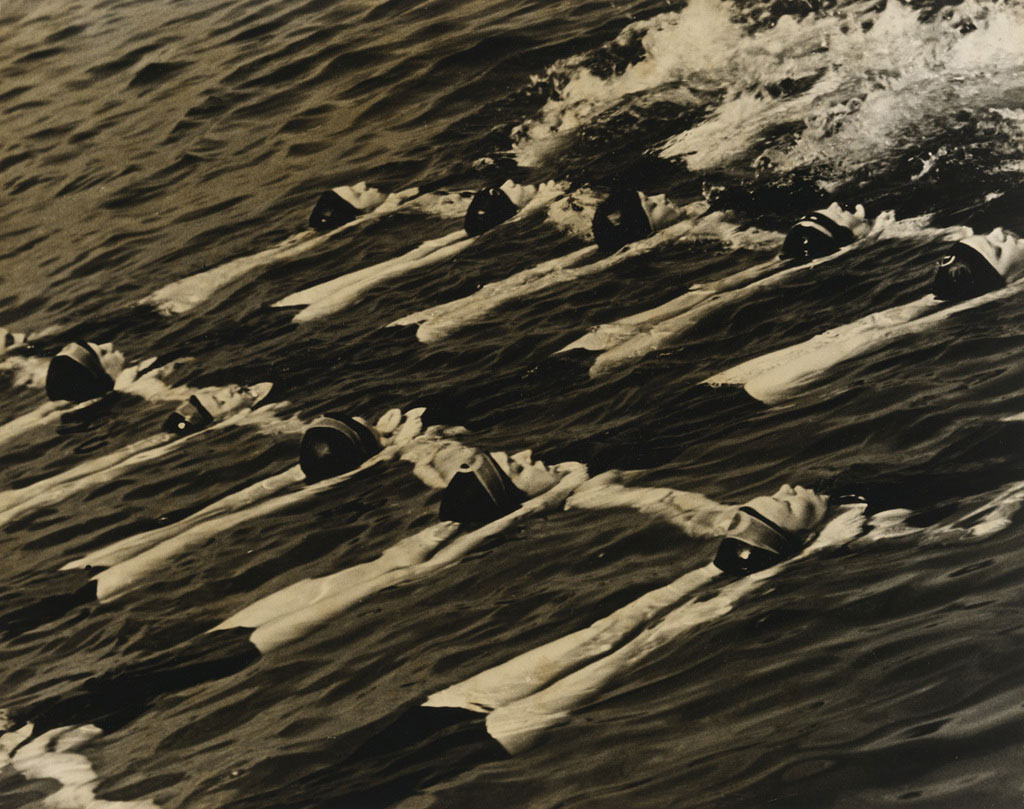
 

Leni Riefenstahl (German, 1902-2003) 'Untitled' 1936


Leni Riefenstahl (German, 1902-2003)
Untitled
1936
Gelatin silver print
9 3/16 x 11 5/8″ (23.4 x 29.5cm)
The Museum of Modern Art, New York
Thomas Walther Collection. Abbott-Levy Collection funds, by exchange


Kate Steinitz (American born Germany, 1889-1975) 'Backstroke' (Rückenschwimmerinnen) 1930


Kate Steinitz (American born Germany, 1889-1975)
Backstroke (Rückenschwimmerinnen)
1930
Gelatin silver print
10 1/2 × 13 7/16″ (26.6 × 34.1cm)
The Museum of Modern Art, New York
Thomas Walther Collection. Gift of Thomas Walther


The Modern World

Even before the introduction of the handheld Leica camera in 1925, photographers were avidly exploring fresh perspectives, shaped by the unique experience of capturing the world through a lens and ideally suited to express the tenor of modern life in the wake of World War I. Looking up and down, these photographers found unfamiliar points of view that suggested a new, dynamic visual language freed from convention. Improvements in the light sensitivity of photographic films and papers meant that photographers could capture motion as never before. At the same time, technological advances in printing resulted in an explosion of opportunities for photographers to present their work to ever-widening audiences. From inexpensive weekly magazines to extravagantly produced journals, periodicals exploited the potential of photographs and imaginative layouts, not text, to tell stories. Among the photographers on view in this section are Martin Munkácsi (American, born Hungary, 1896-1963), Leni Riefenstahl (German, 1902-2003), Aleksandr Rodchenko (Russian, 1891-1956), and Willi Ruge (German, 1882-1961).
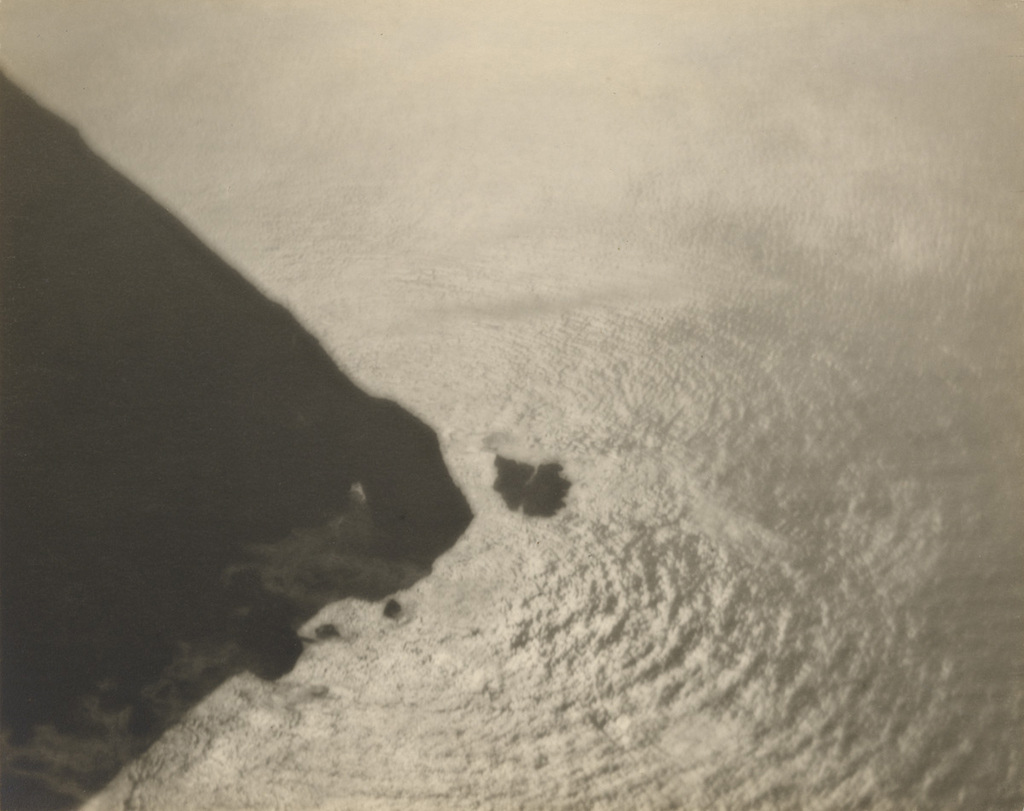
 

Anne W. Brigman (American born Hawaii, 1869-1950) 'A Study in Radiation' 1924


Anne W. Brigman (American born Hawaii, 1869-1950)
A Study in Radiation
1924
Gelatin silver print
7 11/16 × 9 3/4″ (19.6 × 24.8cm)
The Museum of Modern Art, New York
Thomas Walther Collection. Gift of Mrs. B. S. Sexton and Mina Turner, by exchange
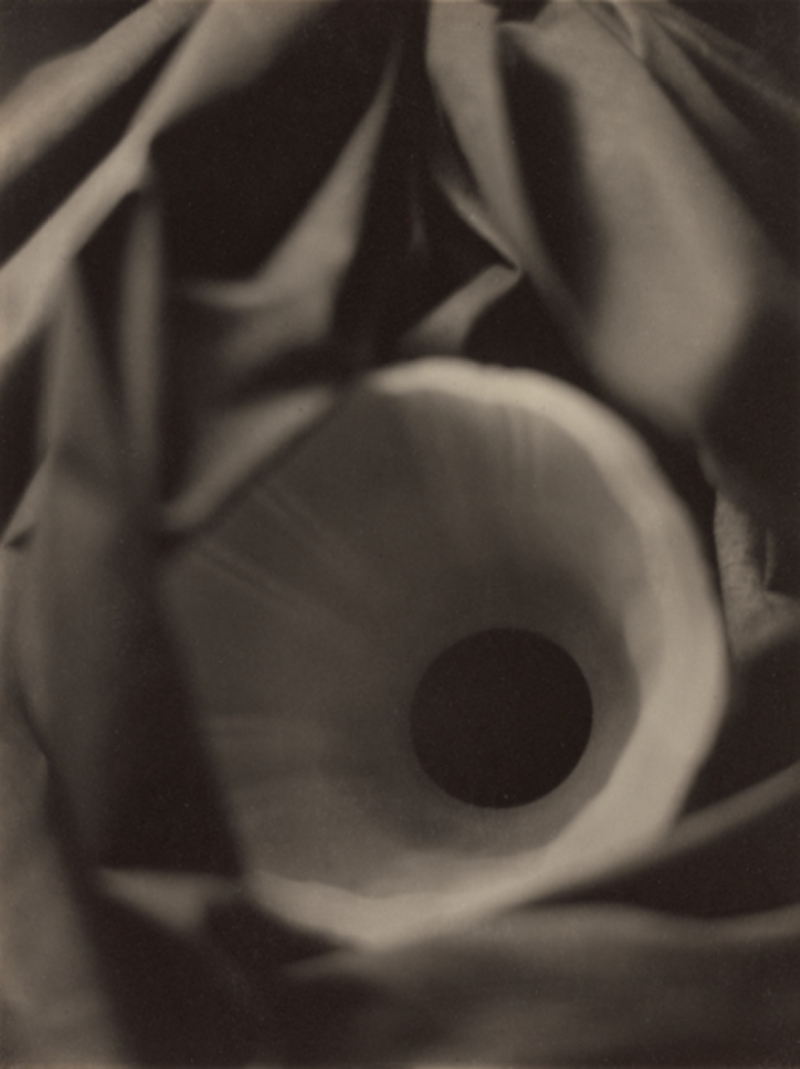
 

Bernard Shea Horne (American, 1867-1933) 'Untitled' 1916-1917


Bernard Shea Horne (American, 1867-1933)
Untitled
1916-17
Platinum print
8 1/16 × 6 1/8″ (20.5 × 15.5cm)
The Museum of Modern Art, New York
Thomas Walther Collection. Gift of Thomas Walther
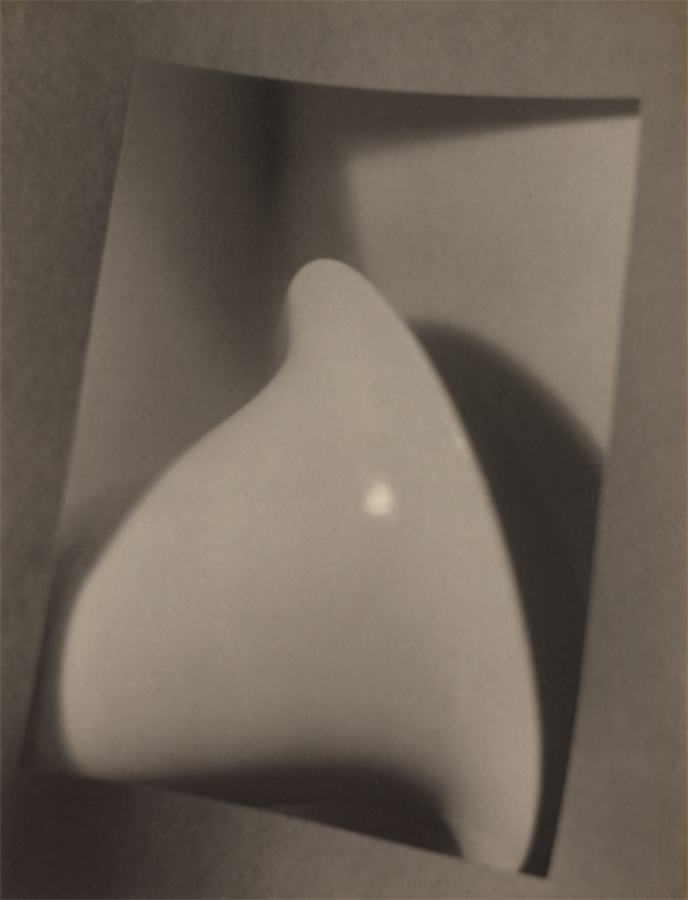
 

Bernard Shea Horne (American, 1867-1933) 'Design' 1916-1917


Bernard Shea Horne (American, 1867-1933)
Design
1916-1917
Platinum print
7 15/16 x 6 1/8″ (20.2 x 15.5cm)
The Museum of Modern Art, New York
Thomas Walther Collection. Gift of Thomas Walther


Bernard Shea Horne (American, 1867-1933)

Bernard Shea Horne was the son of Joseph Horne, who built a legendary department store in Pittsburgh. The younger Horne retired from the family business when he was in his thirties and moved to northern Virginia to pursue his interests in golf and photography. In 1916 he enrolled at the Clarence H. White School of Photography, in New York, and became friends with one of its teachers, the avant-garde painter Max Weber. Horne produced numerous Weber-inspired design exercises, which he compiled into albums of twenty Platinum prints each. The four prints in the Thomas Walther Collection belonged to an album that he gave to Weber.

In 1917 Horne was elected president of the White School’s alumni association, a post he retained until 1925. In 1918 instructor Paul L. Anderson left the school, and Horne took his place as teacher of the technique class, a job he held until 1926. That a middle-aged man of independent means commuted to the school several days a week from Princeton, New Jersey, where he then lived with his two sons, suggests Horne’s devotion to White and his Pictorialist aims. During these years, Horne played a major role in the White School’s activities. In 1920 he was given a one-person show in the exhibition room of the school’s new building, a show that the alumni bulletin described as “interesting and varied in subject and technique, rich in bromoils, strong in design.” Supportive of the practical applications of artistic photography, in 1920 White joined his school to other institutions, including the American Institute of Graphic Arts and the Art Directors Club, to form The Art Center in New York. In 1926 Horne was given a one-person show at The Art Center, which marked the end of his active association with the school.

Abbaspour, Mitra, Lee Ann Daffner, and Maria Morris Hambourg
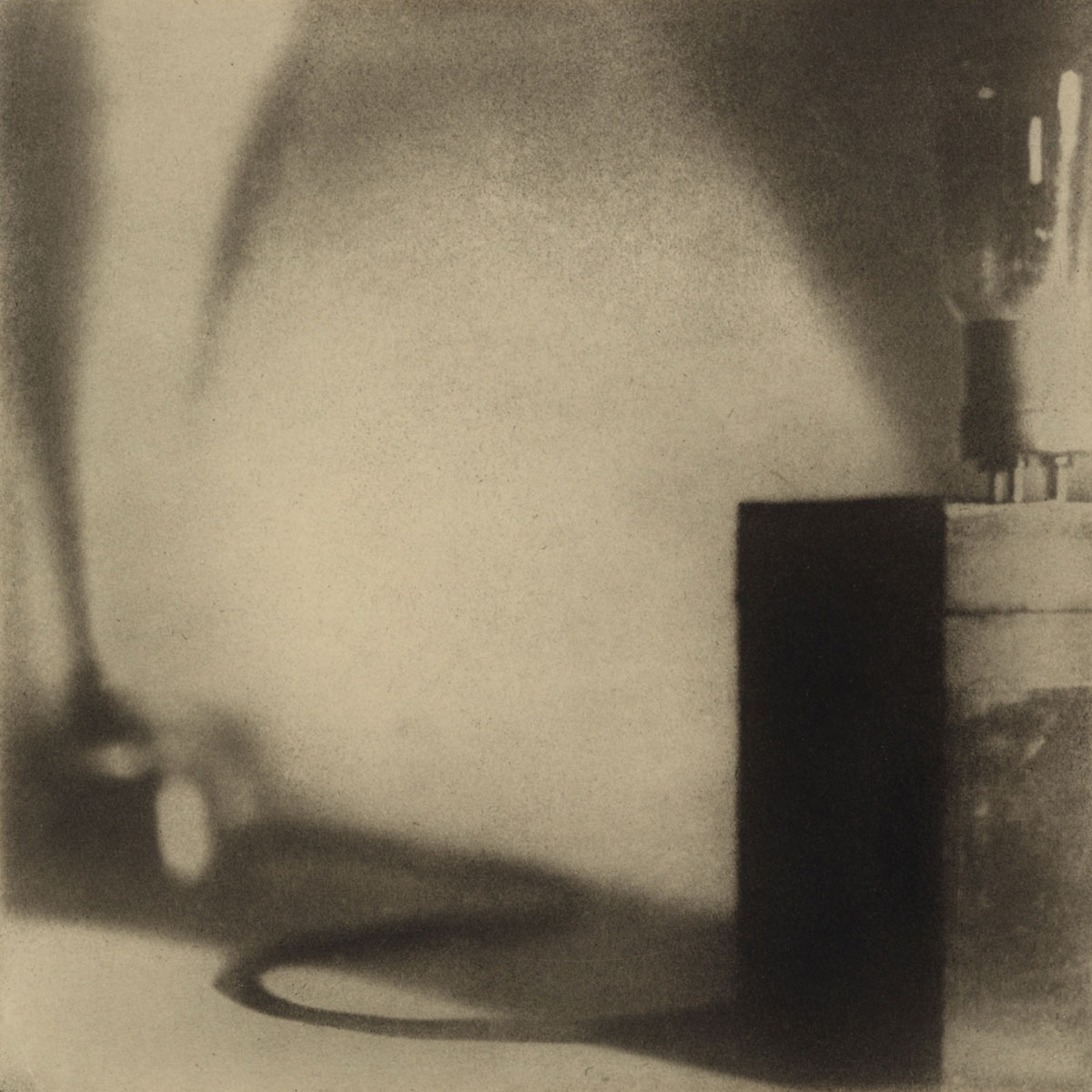
 

Jarislav Rössler (Czech, 1902-1990) 'Untitled' 1924


Jarislav Rössler (Czech, 1902-1990)
Untitled
1924
Pigment print
9 1/16 × 9 1/16″ (23 × 23 cm)
The Museum of Modern Art, New York
Thomas Walther Collection. Horace W. Goldsmith Fund through Robert B. Menschel


Jarislav Rössler (Czech, 1902-1990)

Jaroslav Rössler (1902-1990) was one of the Czech avant-garde photographers of the first half of the twentieth century whose work has only recently become known outside Eastern Europe. Czech photography in the twenties and thirties produced radical modernist works that incorporated principles of abstract art and constructivism; Jaroslav Rossler was one of the most important and distinctive artists of the period. He became known for his fusing of different styles, bringing together elements of Symbolism, Pictorialism, Expressionism, Cubism, Futurism, Constructivism, New Objectivity, and abstract art. His photographs often reduced images to elementary lines and shapes that seemed to form a new reality; he would photograph simple objects against a stark background of black and white, or use long exposures to picture hazy cones and spheres of light. From 1927 to 1935 he lived and worked in Paris, producing work influenced by constructivism and new objectivity. He used the photographic techniques and compositional approaches of the avant-garde, including photograms, large details, diagonal composition, photomontage, and double exposures, and experimented with colour advertising photographs and still lifes produced with the carbro print process. After his return to Prague, he was relatively inactive until the late 1950s, when he reconnected with Czech artistic and photographic trends of that period, including informalism. This book documents each stage of Rossler’s career with a generous selection of duotone images, some of which have never been published before. The photographs are accompanied by texts by Vladimir Birgus, Jan Mlcoch, Robert Silverio, Karel Srp, and Matthew Witkovsky.

Text from the Amazon website
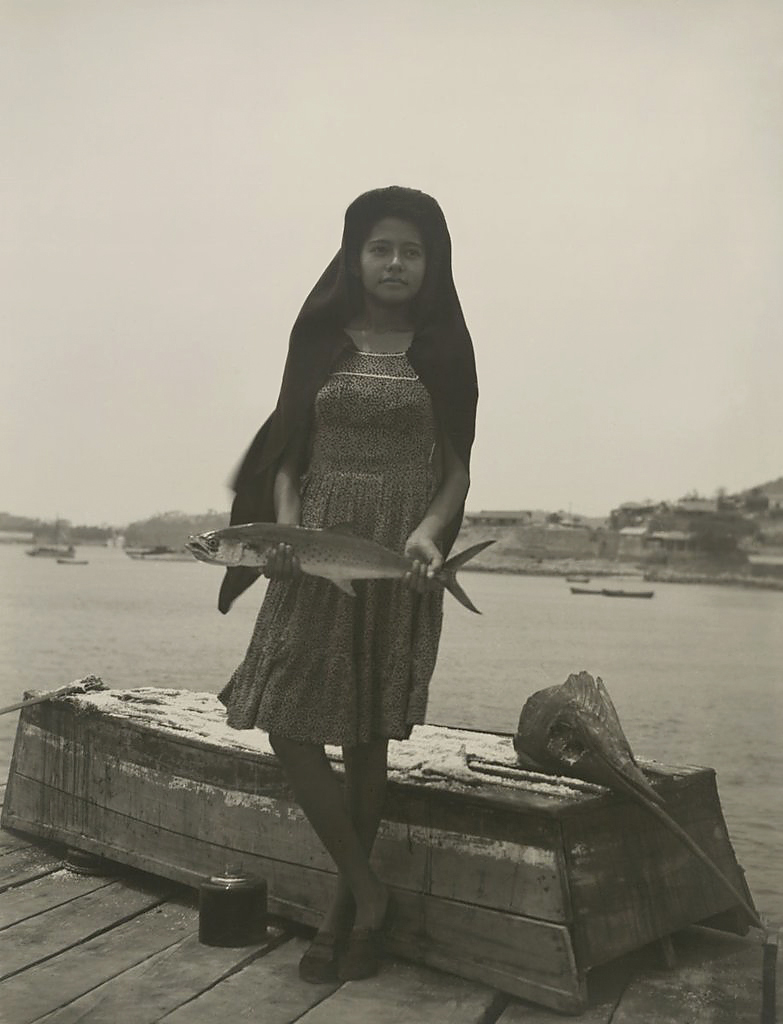
 

Manuel Álvarez Bravo (Mexican, 1902-2002) 'A Fish Called Sierra' (Un pez que llaman sierra) 1944


Manuel Álvarez Bravo (Mexican, 1902-2002)
A Fish Called Sierra (Un pez que llaman sierra)
1944
Gelatin silver print
9 1/2 x 7 1/4″ (24.1 x 18.4cm)
The Museum of Modern Art, New York
Thomas Walther Collection
Edward Steichen Estate and gift of Mrs. Flora S. Straus, by exchange
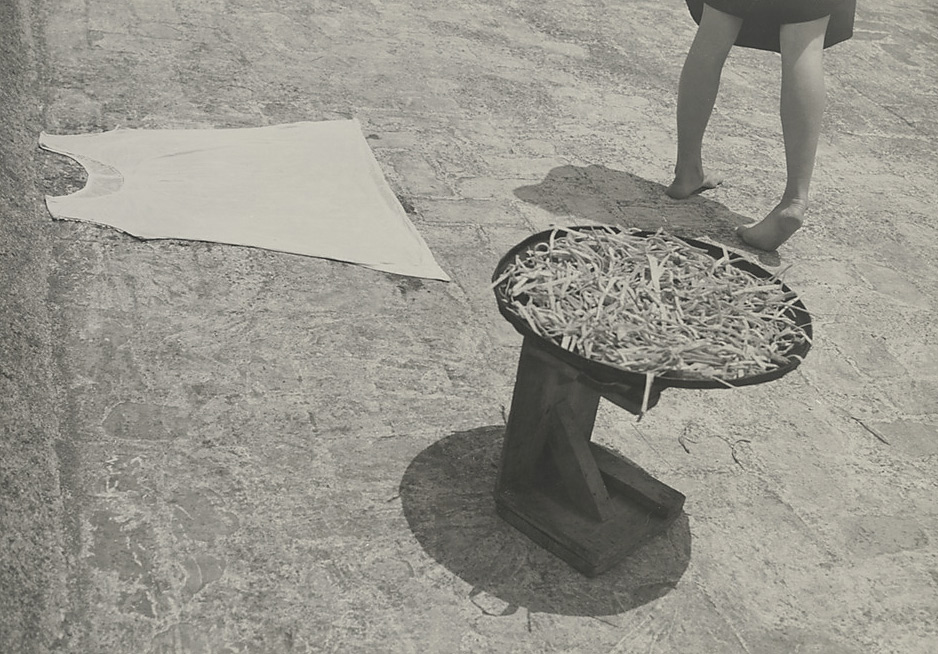
 

Manuel Alvarez Bravo (Mexican, 1902-2002) 'Somewhat Gay and Graceful' (Un poco alegre y graciosa) 1942


Manuel Alvarez Bravo (Mexican, 1902-2002)
Somewhat Gay and Graceful (Un poco alegre y graciosa)
1942
Gelatin silver print
6 5/8 × 9 1/2″ (16.9 × 24.2cm)
The Museum of Modern Art, New York
Thomas Walther Collection. Grace M. Mayer Fund


Manuel Alvarez Bravo (Mexican, 1902-2002) 'Day of Glory' (Día de gloria) 1940s


Manuel Alvarez Bravo (Mexican, 1902-2002)
Day of Glory (Día de gloria)
1940s
Gelatin silver print
6 3/4 × 9 1/2″ (17.2 × 24.2cm)
The Museum of Modern Art, New York
Thomas Walther Collection. Grace M. Mayer Fund


Edward Weston (American, 1886-1958) 'Steel: Armco, Middletown, Ohio' October 1922


Edward Weston (American, 1886-1958)
Steel: Armco, Middletown, Ohio
October 1922
Palladium print
9 1/16 × 6 7/8″ (23 × 17.4cm)
The Museum of Modern Art, New York
Thomas Walther Collection. Gift of Thomas Walther


In Edward Weston’s journals, which he began on his trip to Ohio and New York in fall 1922, the artist wrote of the exhilaration he felt while photographing the “great plant and giant stacks of the American Rolling Mill Company” in Middletown, Ohio. He then went to see the great photographer and tastemaker Alfred Stieglitz. Were he still publishing the magazine Camera Work, Stieglitz told him, he would have reproduced some of Weston’s recent images in it, including, in particular, one of his smokestacks. The photograph’s clarity and the photographer’s frank awe at the beauty of the brute industrial subject seemed clear signs of advanced modernist tendencies.

In moving away from the soft focus and geometric stylisation of his recent images, such as Attic of 1921 (MoMA 1902.2001), Weston was discovering a more straightforward approach, one of considered confrontation with the facts of the larger world much like that of his close friend Johan Hagemeyer, who was photographing such modern subjects as smokestacks, telephone wires, and advertisements. Shortly before his trip east, Weston had met R. M. Schindler, the Austrian architect, and had been excited by his unapologetically spare, modern house and its implications for art and design. Weston was also reading avant-garde European art magazines full of images and essays extolling machines and construction. Stimulated by these currents, Weston saw that by the time he got to Ohio he was “ripe to change, was changing, yes changed.”

The visit to Armco was the critical pivot, the hinge between Weston’s Pictorialist past and his modernist future. It marked a clear leave-taking from his bohemian circle in Los Angeles and the first step toward the cosmopolitan connections he made in New York and in Mexico City, where he moved a few months later to live with the Italian actress and artist Tina Modotti. The Armco photographs went with him and became talismans of the sea change, emblematic works that decorated his studio in Mexico, along with a Japanese print and a print by Picasso. When he sent a representation of his best work to the Film und Foto exhibition in Stuttgart in 1929, one of the smokestacks was included.

In the midst of such transformation, Weston maintained tried-and-true darkroom procedures. He had used an enlarger in earlier years but had abandoned the technique because he felt that too much information was lost in the projection. Instead he increasingly favoured contact printing. To make the smokestack print, Weston enlarged his 3 ¼ by 4 ¼ inch (8.3 by 10.8 centimetre) original negative onto an 8 by 10 inch (20.3 by 25.4 centimetre) interpositive transparency, which he contact printed to a second sheet of film in the usual way, creating the final 8 by 10 inch negative. Weston was frugal; he was known to economise by purchasing platinum and palladium paper by the roll from Willis and Clements in England and trimming it to size. He exposed a sheet of palladium paper to the sun through the negative and, after processing the print, finished it by applying aqueous retouching media to any flaws. The fragile balance of the photograph’s chemistry, however, is evinced in a bubble-shaped area of cooler tonality hovering over the central stacks. The print was in Modotti’s possession at the time of her death in Mexico City, in 1942.

Lee Ann Daffner, Maria Morris Hambourg
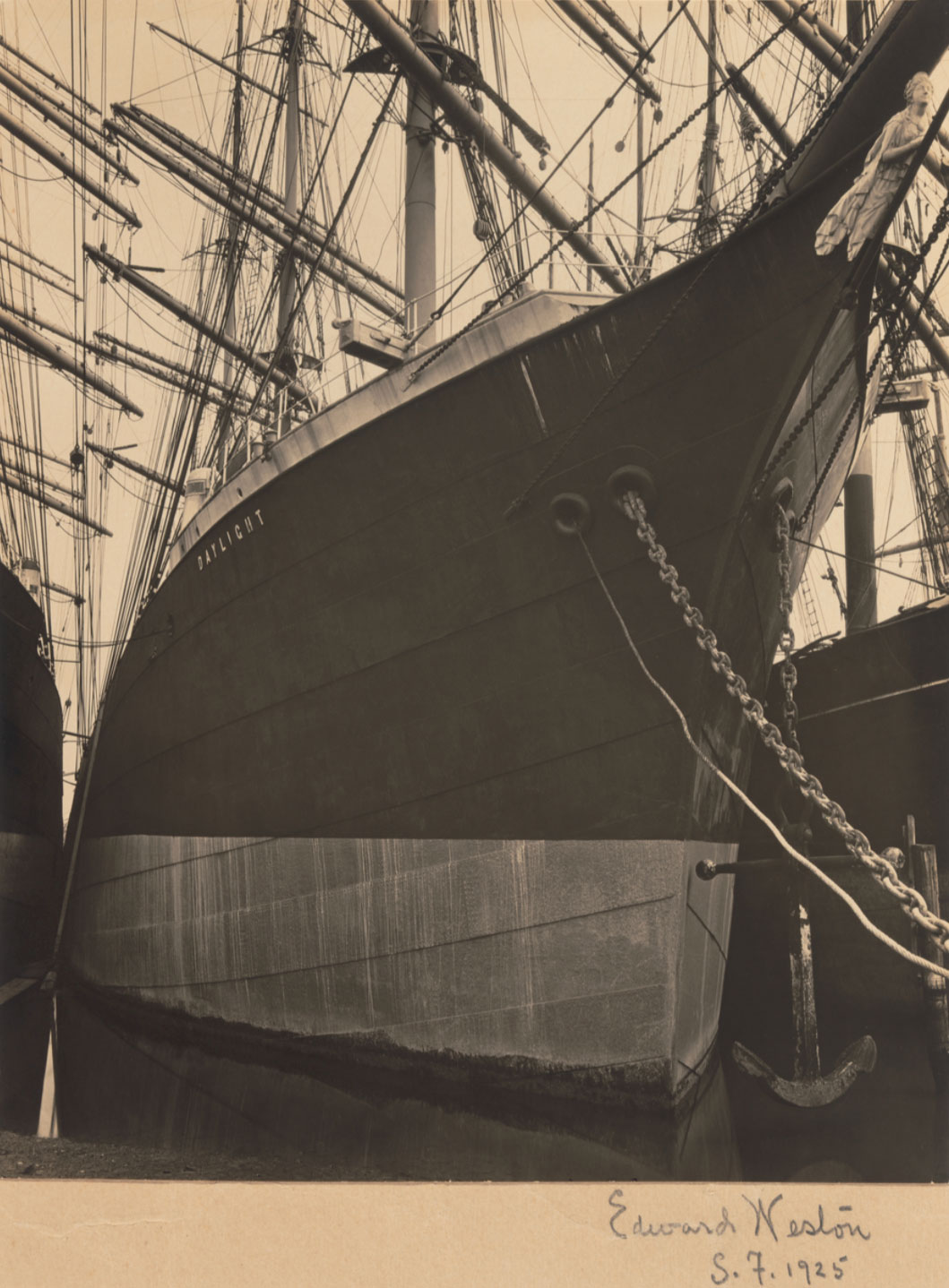
 

Edward Weston (American, 1886-1958) 'Boat, San Francisco' 1925


Edward Weston (American, 1886-1958)
Boat, San Francisco
1925
Gelatin silver print
9 5/16 x 7 9/16″ (23.7 x 19.2cm)
The Museum of Modern Art, New York
Thomas Walther Collection. Grace M. Mayer Fund
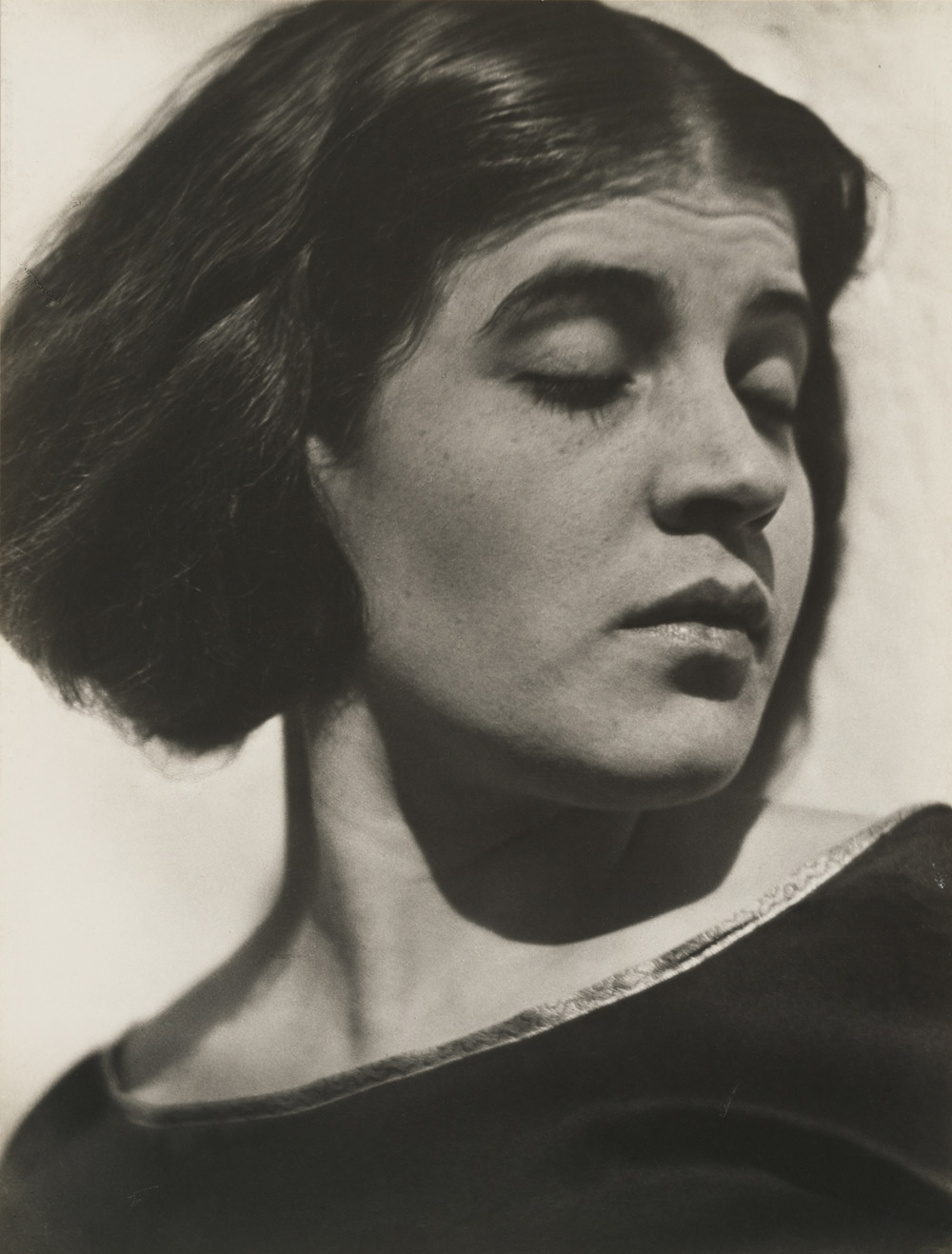
 

Edward Weston (American, 1886-1958) 'Tina' January 30, 1924


Edward Weston (American, 1886-1958)
Tina
January 30, 1924
Gelatin silver print
9 1/16 x 6 7/8″ (23 x 17.5cm)
The Museum of Modern Art, New York
Thomas Walther Collection. Grace M. Mayer Fund and The Fellows of Photography Fund, by exchange


Karl Blossfeldt (German, 1865-1932) 'Acanthus mollis' (Acanthus mollis [Akanthus, Bärenklau. Deckblätter, die Blüten sind entfernt, in 4facher Vergrößerung]) 1898-1928


Karl Blossfeldt (German, 1865-1932)
Acanthus mollis (Acanthus mollis [Akanthus, Bärenklau. Deckblätter, die Blüten sind entfernt, in 4facher Vergrößerung])
1898-1928
Gelatin silver print
11 3/4 × 9 3/8″ (29.8 × 23.8cm)
The Museum of Modern Art, New York
Thomas Walther Collection. Gift of Thomas Walther


Purisms

The question of whether photography ought to be considered a fine art was hotly contested from its invention in 1839 into the 20th century. Beginning in the 1890s, in an attempt to distinguish their efforts from hoards of Kodak-wielding amateurs and masses of professionals, “artistic” photographers referred to themselves as Pictorialists. They embraced soft focus and painstakingly wrought prints so as to emulate contemporary prints and drawings, and chose subjects that underscored the ethereal effects of their methods. Before long, however, most avant-garde photographers had come to celebrate precise and distinctly photographic qualities as virtues. On both sides of the Atlantic, photographers were making this transition from Pictorialism to modernism, while occasionally blurring the distinction. Exhibition prints could be made with precious platinum or palladium, or matte surfaces that mimicked those materials. Perhaps nowhere is this variety more clearly evidenced than in the work of Edward Weston, whose suite of prints in this section suggests the range of appearances achievable with unadulterated contact prints from his large-format negatives. Other photographers on view include Karl Blossfeldt (German, 1865-1932), Manuel Álvarez Bravo (Mexican, 1902-2002), Jaromír Funke (Czech, 1896-1945), Bernard Shea Horne (American, 1867-1933), and Alfred Stieglitz (American, 1864-1946).
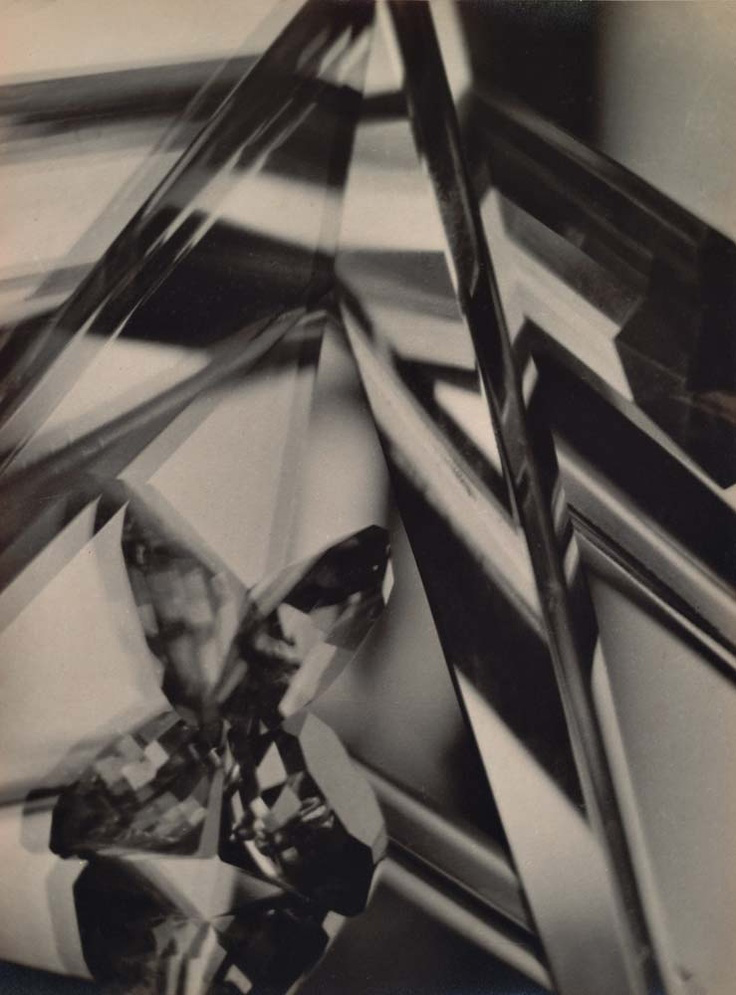
 

Alvin Langdon Coburn (American, 1882-1966) 'Vortograph' 1916-1917


Alvin Langdon Coburn (American, 1882-1966)
Vortograph
1916-17
Gelatin silver print
11 1/8 x 8 3/8″ (28.2 x 21.2cm)
The Museum of Modern Art, New York
Thomas Walther Collection. Grace M. Mayer Fund


Vortograph

The intricate patterns of light and line in this photograph, and the cascading tiers of crystalline shapes, were generated through the use of a kaleidoscopic contraption invented by the American / British photographer Alvin Langdon Coburn, a member of London’s Vorticist group. To refute the idea that photography, in its helplessly accurate capture of scenes in the real world, was antithetical to abstraction, Coburn devised for his camera lens an attachment made up of three mirrors, clamped together in a triangle, through which he photographed a variety of surfaces to produce the results in these images. The poet and Vorticist Ezra Pound coined the term “vortographs” to describe Coburn’s experiments. Although Pound went on to criticise these images as lesser expressions than Vorticist paintings, Coburn’s work would remain influential.

Reinventing Photography – Here Comes New Photographer 

In 1925, László Moholy-Nagy articulated an idea that became central to the New Vision movement: although photography had been invented 100 years earlier, it was only now being discovered by the avant-garde circles for all its aesthetic possibilities. As products of technological culture, with short histories and no connection to the old fine-art disciplines – which many contemporary artists considered discredited – photography and cinema were seen as truly modern instruments that offered the greatest potential for transforming visual habits. From the photogram to solarisation, from negative prints to double exposures, the New Vision photographers explored the medium in countless ways, rediscovering known techniques and inventing new ones. Echoing the cinematic experiments of the same period, this emerging photographic vocabulary was rapidly adopted by the advertising industry, which appreciated the visual efficiency of its bold simplicity. Florence Henri (Swiss, born America, 1893-1982), Edward Quigley (American, 1898-1977), Franz Roh (German, 1890-1965), Franciszka Themerson and Stefan Themerson (British, born Poland, 1907-1988 and 1910-1988), and František Vobecký (Czech, 1902-1991) are among the numerous photographers represented here.
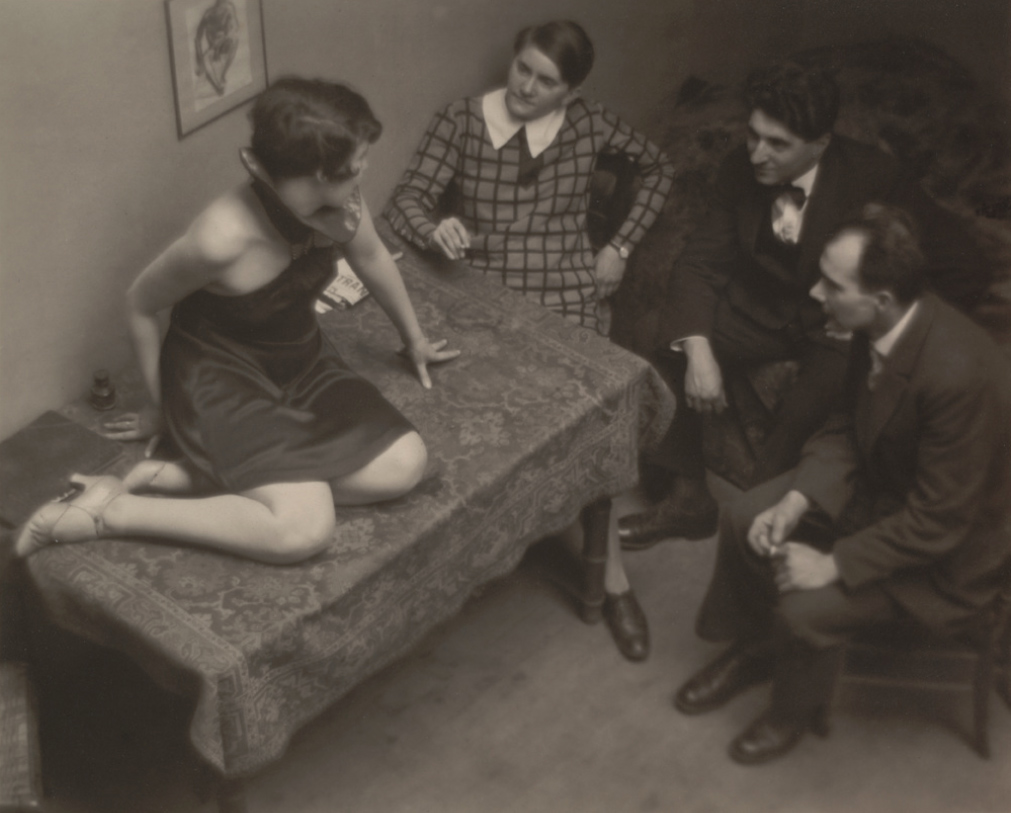
 

André Kertész (American born Hungary, 1894-1985) 'Magda, Mme Beöthy, M. Beöthy, and Unknown Guest, Paris' 1926-1929


André Kertész (American born Hungary, 1894-1985)
Magda, Mme Beöthy, M. Beöthy, and Unknown Guest, Paris
1926-1929
Gelatin silver print
3 1/8 × 3 7/8″ (7.9 × 9.8cm)
The Museum of Modern Art, New York
Thomas Walther Collection. Gift of Thomas Walther
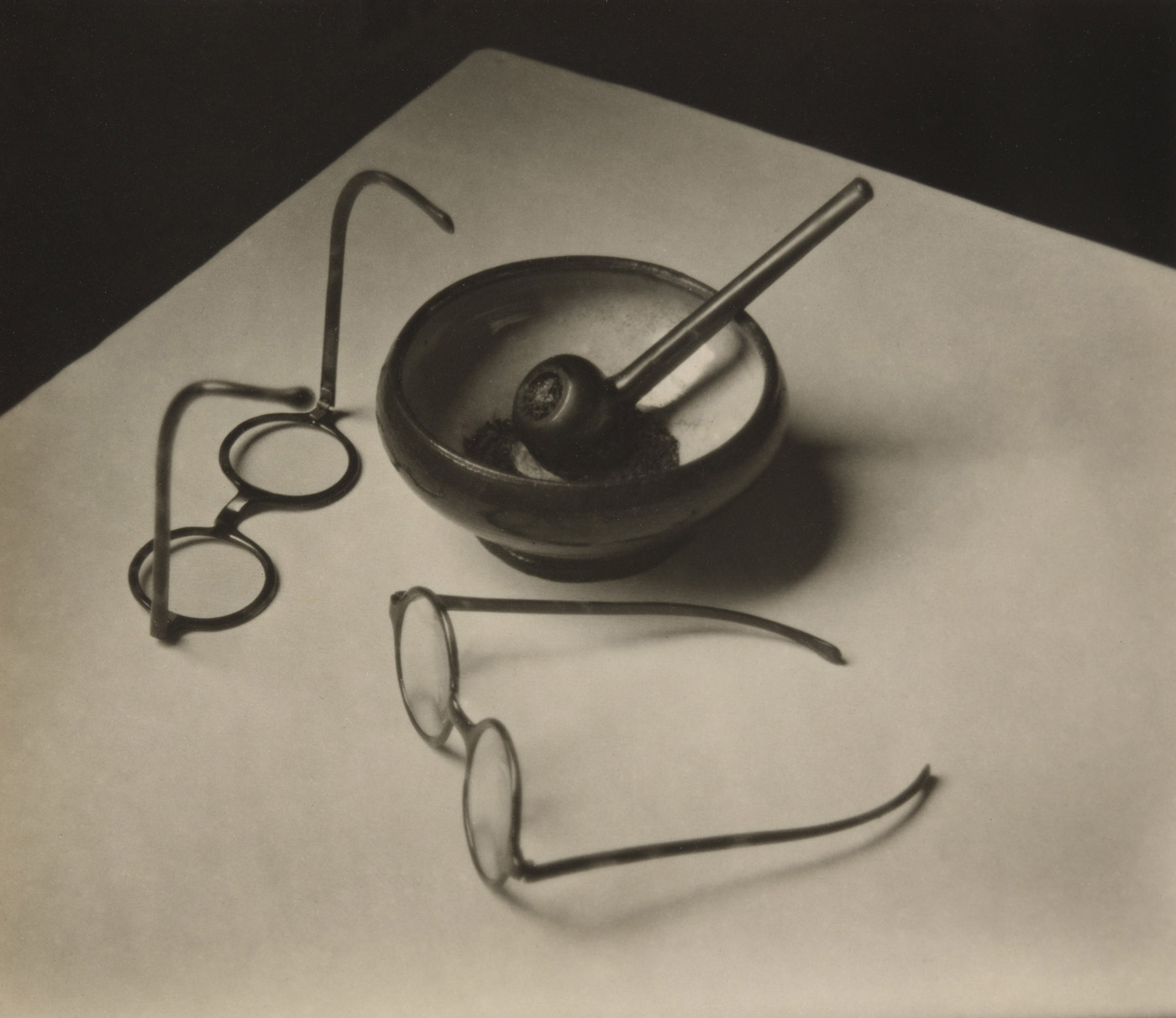
 

André Kertész (American born Hungary, 1894-1985) 'Mondrian's Glasses and Pipe' 1926


André Kertész (American born Hungary, 1894-1985)
Mondrian’s Glasses and Pipe
1926
Gelatin silver print
3 1/8 × 3 11/16″ (7.9 × 9.3cm)
The Museum of Modern Art, New York
Thomas Walther Collection. Grace M. Mayer Fund
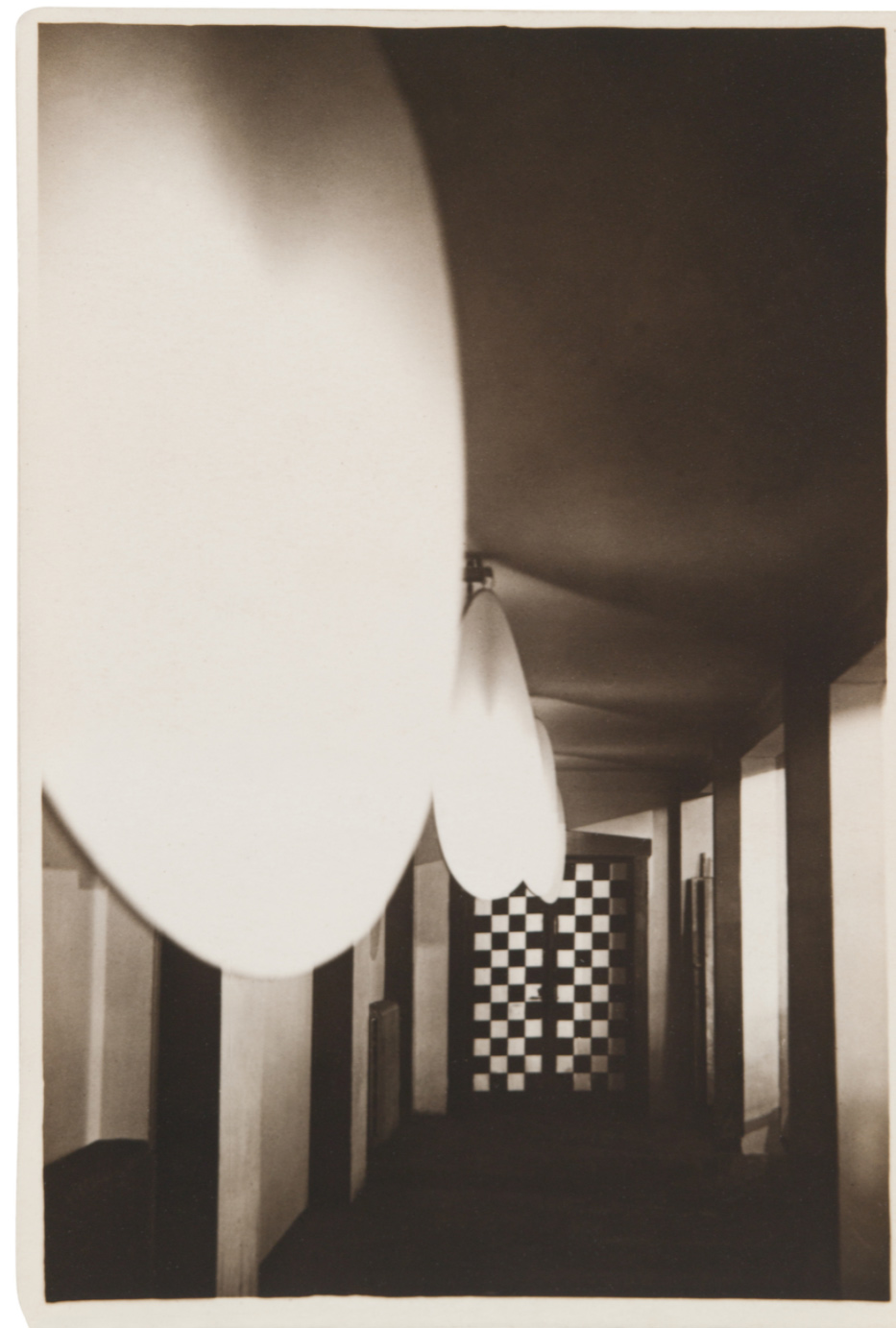
 

Unknown Photographer. 'White Party, Dessau' (Weißes Fest, Dessau) March 20, 1926


Unknown Photographer
White Party, Dessau (Weißes Fest, Dessau)
March 20, 1926
Gelatin silver print
3 x 1 15/16″ (7.6 x 5cm)
The Museum of Modern Art, New York
Thomas Walther Collection. Acquired through the generosity of Howard Stein


Iwao Yamawaki (Japanese, 1898-1987) 'Lunch (12-2 p.m.)' (Mittagessen [12-2 Uhr]) 1931


Iwao Yamawaki (Japanese, 1898-1987)
Lunch (12-2 p.m.) (Mittagessen [12-2 Uhr])
1931
Gelatin silver print
6 7/16 × 4 5/8″ (16.3 × 11.7cm)
The Museum of Modern Art, New York
Thomas Walther Collection. Abbott-Levy Collection funds, by exchange


Gertrud Arndt (German, 1903-2000) 'At the Masters' Houses' (An den Meisterhäusern) 1929-1930


Gertrud Arndt (German, 1903-2000)
At the Masters’ Houses (An den Meisterhäusern)
1929-1930
Gelatin silver print
8 7/8 x 6 1/4″ (22.6 x 15.8cm)
The Museum of Modern Art, New York
Thomas Walther Collection. Gift of Thomas Walther


Gertrud Arndt (German, 1903-2000)

Gertrud Arndt (née Hantschk; 20 September 1903 – 10 July 2000) was a photographer associated with the Bauhaus movement. She is remembered for her pioneering series of self-portraits from around 1930.

Arndt’s photography, forgotten until the 1980s, has been compared to that of her contemporaries Marta Astfalck-Vietz and Claude Cahun. Over the five years when she took an active interest in photography, she captured herself and her friends in various styles, costumes and settings in the series known as Masked Portraits. Writing for Berlin Art Link, Angela Connor describes the images as “ranging from severe to absurd to playful.” Today Arndt is considered to be a pioneer of female self-portraiture, long predating Cindy Sherman and Sophie Calle.

Text from the Wikipedia website


Iwao Yamawaki (Japanese, 1898-1987) 'Untitled' 1931


Iwao Yamawaki (Japanese, 1898-1987)
Untitled
1931
Gelatin silver print
8 11/16 x 6 1/2″ (22 x 16.5cm)
The Museum of Modern Art, New York
Thomas Walther Collection. Abbott-Levy Collection funds, by exchange
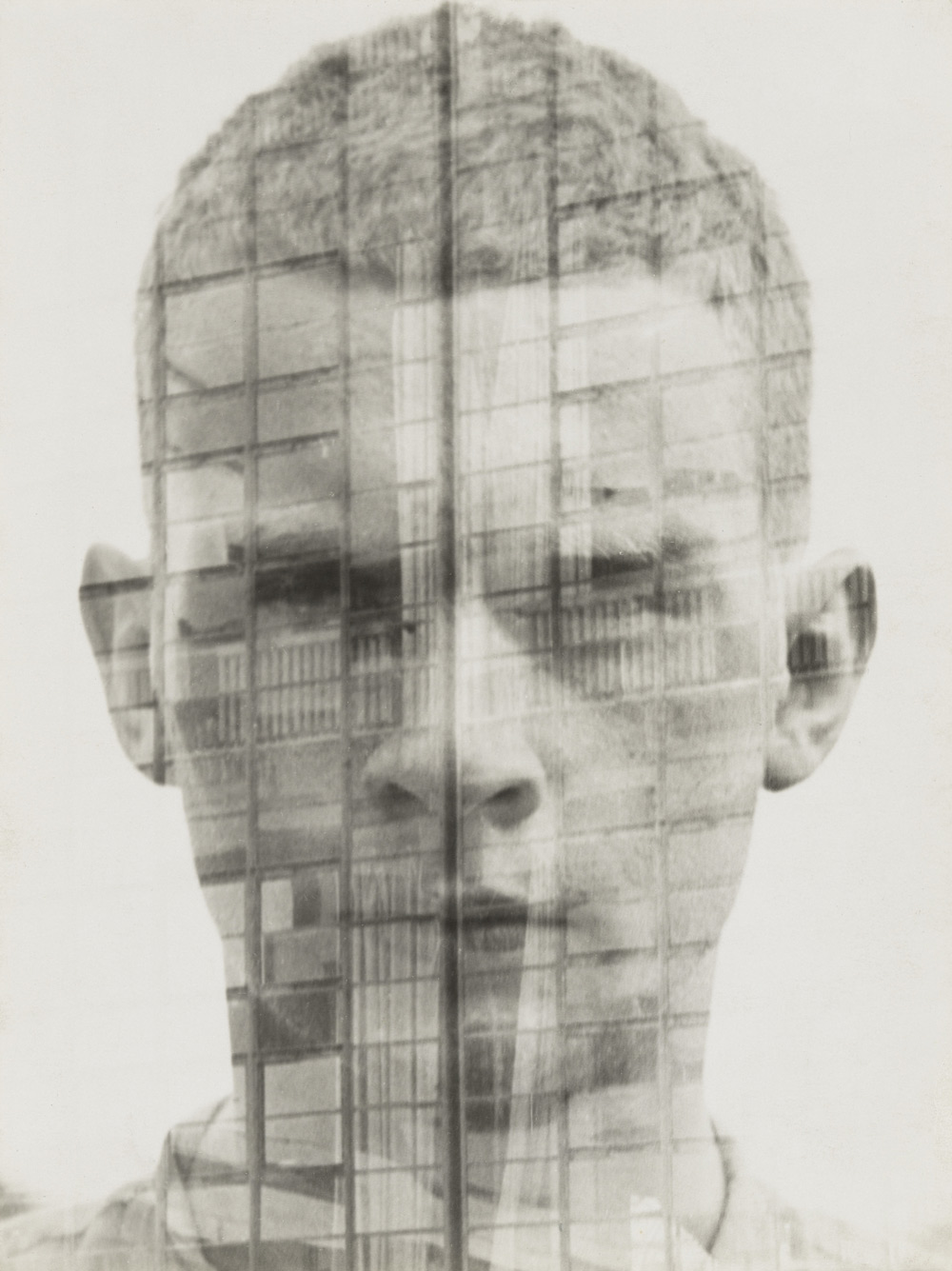
 

Hajo Rose (German, 1910-1989) 'Untitled (Self-Portrait)' 1931


Hajo Rose (German, 1910-1989)
Untitled (Self-Portrait)
1931
Gelatin silver print
9 7/16 × 7 1/16″ (23.9 × 17.9cm)
The Museum of Modern Art, New York
Thomas Walther Collection. Gift of Thomas Walther


Hajo Rose (German, 1910-1989)

‘Finally – a house made of steel and glass!’ This was the enthusiastic reaction of Hajo Rose (1910-1989) to the Bauhaus building in Dessau when he began his studies there in 1930. Rose promoted the methods of the Bauhaus throughout his lifetime: as a lecturer at universities in Amsterdam, Dresden and Leipzig, and also as an artist and photographer.

Hajo Rose experimented with a wide variety of materials and techniques. The photomontage of his self-portrait combined with the Dessau Bauhaus building (c. 1930), the surrealism of his photograph Seemannsbraut (Sailor’s Bride, 1934), and the textile print designs that he created with a typewriter (1932) are examples of the extraordinary creativity of this artist. He also contributed to an advertising campaign for the Jena Glass Company: the first heat-resistant household glassware stood for modern product design and is still regarded as a kitchen classic today.

Shortly before the Bauhaus was closed, Hajo Rose was one of the last students to receive his diploma. Subsequent periods in various cities shaped his biography, which is a special example of the migratory experience shared by many Bauhaus members after 1933. After one year as an assistant in the Berlin office of László Moholy-Nagy, Hajo Rose immigrated to The Netherlands together with Paul Guermonprez, a Bauhaus colleague, in 1934. He worked there as a commercial artist and taught at the Nieuwe Kunstschool in Amsterdam. At the 1937 World Exposition in Paris, he won an award for his poster ‘Amsterdam’. After the Second World War, Rose worked as a graphic designer, photographer and teacher in Dresden and Leipzig. He continued to advocate Bauhaus ideas in the GDR, even though the Bauhaus was regarded in East Germany as bourgeois and formalistic well into the 1960s. Rose resigned from the Socialist Unity Party (SED) – in spite of the loss of his teaching position as a consequence. From that time, he worked as one of the few freelance graphic designers in the GDR. Hajo Rose died at the age of 79 – shortly before the fall of the Berlin Wall.


Edward Steichen (American born Luxembourg, 1879-1973) 'Gertrude Lawrence' 1928


Edward Steichen (American born Luxembourg, 1879-1973)
Gertrude Lawrence
1928
Gelatin silver print
9 7/16 × 7 9/16″ (24 × 19.2cm)
The Museum of Modern Art, New York
Thomas Walther Collection. Edward Steichen Estate and gift of Mrs. Flora S. Straus, by exchange


The Artist’s Life

Photography is particularly well suited to capturing the distinctive nuances of the human face, and photographers delighted in and pushed the boundaries of portraiture throughout the 20th century. The Thomas Walther Collection features a great number of portraits of artists and self-portraits as varied as the individuals portrayed. Additionally, the collection conveys a free-spirited sense of community and daily life, highlighted here with photographs made by André Kertész and by students and faculty at the Bauhaus. When the Hungarian-born Kertész moved to Paris in 1925, he couldn’t afford to purchase photographic paper, so he would print on less expensive postcard stock. These prints, whose small scale requires that the viewer engage with them intimately, function as miniature windows into the lives of Kertész’s bohemian circle of friends. The group of photographs made at the Bauhaus in the mid-1920s, before the medium was formally integrated into the school’s curriculum, similarly expresses friendships and everyday life captured and printed in an informal manner. Portraits by Claude Cahun (French, 1894-1954), Lotte Jacobi (American, born Germany, 1896-1990), Lucia Moholy (British, born Czechoslovakia, 1894-1989), Man Ray (American, 1890-1976), August Sander (German, 1876-1964) and Edward Steichen (American, born Luxembourg, 1879-1973) are among the highlights of this gallery.


Aenne Biermann (German, 1898-1933) 'Summer Swimming' (Sommerbad) 1925-1930


Aenne Biermann (German, 1898-1933)
Summer Swimming (Sommerbad)
1925-1930
Gelatin silver print
7 x 7 7/8″ (17.8 x 20cm)
The Museum of Modern Art, New York
Thomas Walther Collection. Bequest of Ilse Bing, by exchange


Aenne Biermann (German, 1898-1933)

Aenne Biermann (March 8, 1898 – January 14, 1933), born Anna Sibilla Sternfeld, was a German photographer of Ashkenazi origin. She was one of the major proponents of New Objectivity, a significant art movement that developed in Germany in the 1920s.

Biermann was a self-taught photographer. Her first subjects were her two children, Helga and Gershon. The majority of Biermann’s photographs were shot between 1925 and 1933. Gradually she became one of the major proponents of New Objectivity, an important art movement in the Weimar Republic. Her work became internationally known in the late 1920s, when it was part of every major exhibition of German photography.

Major exhibitions of her work include the Munich Kunstkabinett, the Deutscher Werkbund and the exhibition of Folkwang Museum in 1929. Other important exhibitions include the exhibition entitled Das Lichtbild held in Munich in 1930 and the 1931 exhibition at the Palace of Fine Arts (French: Palais des Beaux Arts) in Brussels. Since 1992 the Museum of Gera has held an annual contest for the Aenne Biermann Prize for Contemporary German Photography, which is one of the most important events of its kind in Germany.

Text from the Wikipedia website


Helmar Lerski (Swiss born Germany, 1871-1956) 'Metamorphosis 601' (Metamorphose 601) 1936


Helmar Lerski (Swiss born Germany, 1871-1956)
Metamorphosis 601 (Metamorphose 601)
1936
Gelatin silver print
11 7/16 × 9 1/16″ (29 × 23cm)
The Museum of Modern Art, New York
Thomas Walther Collection. The Family of Man Fund


Helmar Lerski (Swiss, born Germany 1871-1956)

There can hardly be another name in the international history of photography whose work has been so frequently misunderstood and so controversially evaluated as that of Helmar Lerski (1871-1956). “In every human being there is everything; the question is only what the light falls on”. Guided by this conviction, Lerski took portraits that did not primarily strive for likeness but which left scope for the viewer’s imagination, thus laying himself open to the criticism of betraying the veracity of the photographic image.

… Lerski’s pictures were only partly in line with the maxims of the New Photography, and they questioned the validity of pure objectivity. The distinguishing characteristics of his portraits included a theatrical-expressionistic, sometimes dramatic use of lighting inspired by the silent film. Although his close-up photographs captured the essential features of a face – eyes, nose and mouth –, his primary concern was not individual appearance or superficial likeness but the deeper inner potential: he emphasised the changeability, the different faces of an individual. Lerski, who sympathised with the political left wing, thereby infiltrated the photography of types that was practised  (and not infrequently misused for racist purposes) by many of Lerski’s contemporaries.

… Helmar Lerski’s attitude was at its most radical in his work entitled Metamorphosis. This was completed within a few months at the beginning of 1936 in Palestine, to where Lerski and his second wife Anneliese had immigrated in 1932. In Verwandlungen durch Licht (this is the second title for this work), Lerski carried his theatrical talent to extremes. With the help of up to 16 mirrors and filters, he directed the natural light of the sun in constant new variations and refractions onto his model, the Bernese-born, at the time out-of-work structural draughtsman and light athlete Leo Uschatz. Thus he achieved, in a series of over 140 close-ups “hundreds of different faces, including that of a hero, a prophet, a peasant, a dying soldier, an old woman and a monk from one single original face” (Siegfried Kracauer). According to Lerski, these pictures were intended to provide proof “that the lens does not have to be objective, that the photographer can, with the help of light, work freely, characterise freely, according to his inner face.” Contrary to the conventional idea of the portrait as an expression of human identity, Lerski used the human face as a projection surface for the figures of his imagination. We are only just becoming aware of the modernity of this provocative series of photographs.

Peter Pfrunder
Fotostiftung Schweiz


Max Burchartz (German, 1887-1961) 'Lotte (Eye)' (Lotte [Auge]) 1928


Max Burchartz (German, 1887-1961)
Lotte (Eye) (Lotte [Auge])
1928
Gelatin silver print
11 7/8 x 15 3/4″ (30.2 x 40cm)
The Museum of Modern Art, New York
Thomas Walther Collection. Acquired through the generosity of Peter Norton
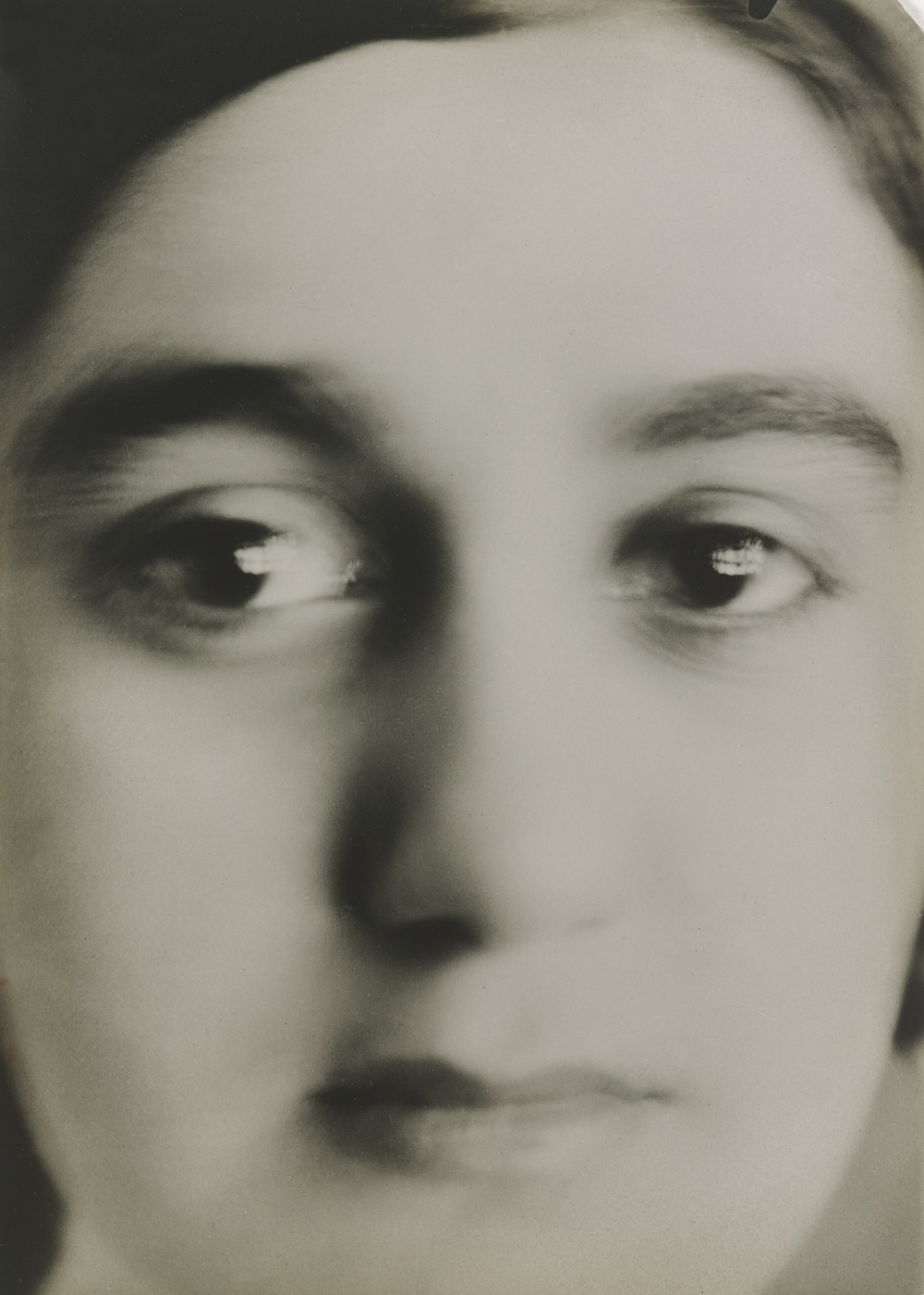
 

Stanisław Ignacy Witkiewicz (Polish, 1885-1939) 'Anna Oderfeld, Zakopane' 1911-1912


Stanisław Ignacy Witkiewicz (Polish, 1885-1939)
Anna Oderfeld, Zakopane
1911-1912
Gelatin silver print 6 11/16 × 4 3/4″ (17 × 12.1cm)
The Museum of Modern Art, New York
Thomas Walther Collection. Gift of Mrs. Willard Helburn, by exchange
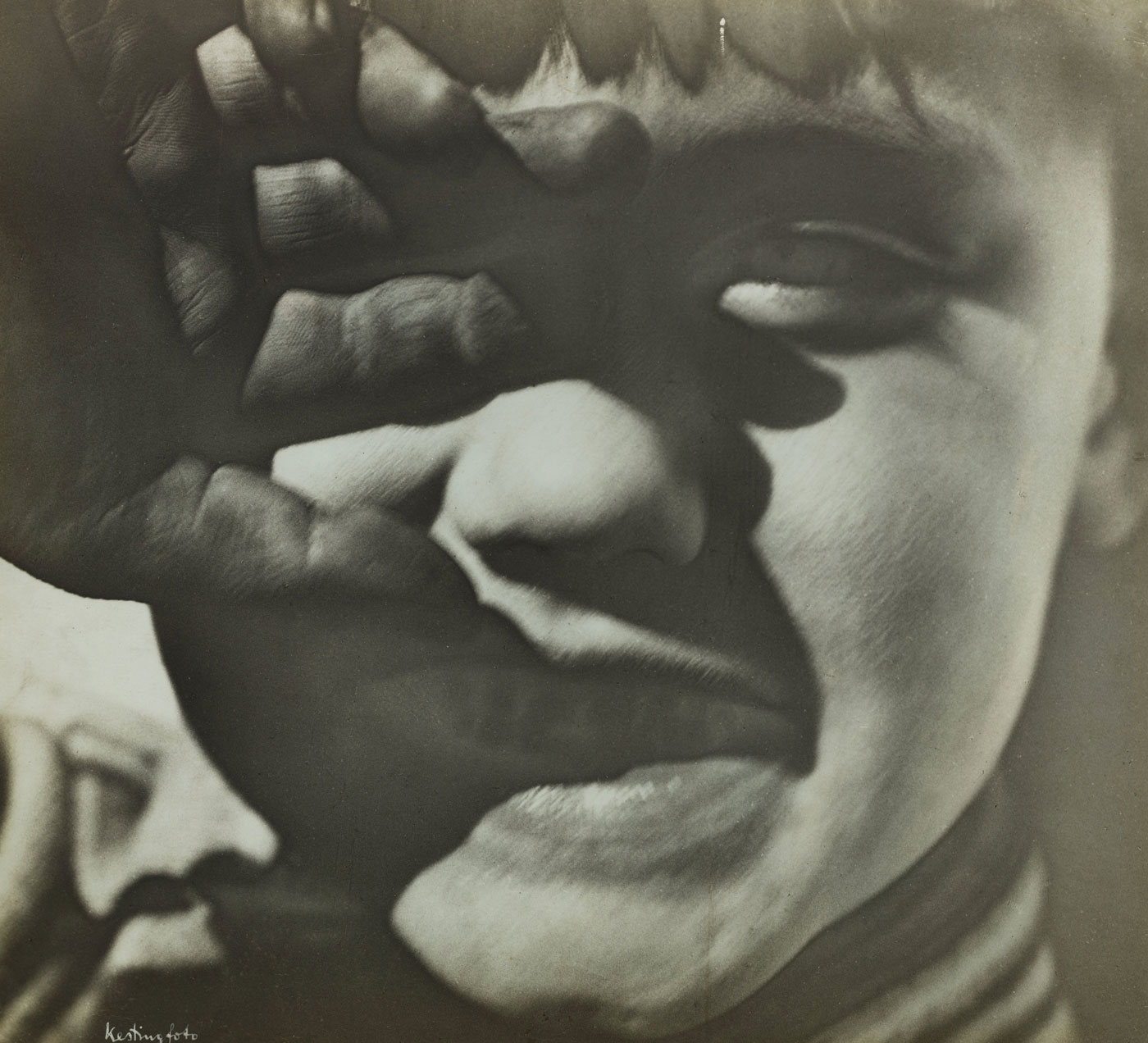
 

Edmund Kesting (German, 1892-1970) 'Glance to the Sun' (Blick zur Sonne) 1928


Edmund Kesting (German, 1892-1970)
Glance to the Sun (Blick zur Sonne)
1928
Gelatin silver print
13 1/16 x 14 1/2″ (33.2 x 36.8cm)
The Museum of Modern Art, New York
Thomas Walther Collection. Gift of Thomas Walther


Edmund Kesting (German, 1892-1970)

Edmund Kesting (27 July 1892, Dresden – 21 October 1970, Birkenwerder) was a German photographer, painter and art professor. He studied until 1916 at the Dresden Academy of Fine Arts before participating as a soldier in the First World War, upon returning his painting teachers were Richard Müller and Otto Gussmann and in 1919 he began to teach as a professor at the private school Der Weg. In 1923 he had his first exposition in the gallery Der Sturm in which he showed photograms. When Der Weg opened a new academy in Berlin in 1927, he moved to the capital.

He formed relations with other vanguardists in Berlin and practiced various experimental techniques such as solarisation, multiple images and photograms, for which reason twelve of his works were considered degenerate art by the Nazi regime and were prohibited. Among the artists with whom he interacted are Kurt Schwitters, László Moholy-Nagy, El Lissitzky and Alexander Archipenko. At the end of World War II he formed part of a Dresden artistic group known as Künstlergruppe der ruf – befreite Kunst (Call to an art in freedom) along with Karl von Appen, Helmut Schmidt-Kirstein and Christoph Hans, among others. In this city he made an experimental report named Dresdner Totentanz (Dance of death in Dresden) as a condemnation of the bombing of the city. In 1946 he was named a member of the Academy of Art in the city.

He participated in the controversy between socialist realism and formalism that took place in the German Democratic Republic, therefore his work was not realist and could not be shown in the country between 1949 and 1959. In 1955 he began to experiment with chemical painting, making photographs without the use of a camera and only with the use of chemical products such as the developer and the fixer and photographic paper, for which he made exposures to light using masks and templates. Between 1956 and 1967 he was a professor at the Academy of Cinema and Television of Potsdam.

His artistic work was not recognised by the authorities of the German Democratic Republic until 1980, ten years after his death.

Text from the Wikipedia website


Maurice Tabard (French, 1897-1984) 'Am I Beautiful?' (Suis-je belle?) 1929


Maurice Tabard (French, 1897-1984)
Am I Beautiful? (Suis-je belle?)
1929
Gelatin silver print
9 5/16 × 6 15/16″ (23.6 × 17.7cm)
The Museum of Modern Art, New York
Thomas Walther Collection. Gift of Shirley C. Burden, by exchange


Between Surrealism and Magic Realism

In the mid-1920s, European artistic movements ranging from Surrealism to New Objectivity moved away from a realist approach by highlighting the strange in the familiar or trying to reconcile dreams and reality. Echoes of these concerns, centred on the human figure, can be found in this gallery. Some photographers used anti-naturalistic methods – capturing hyperreal, close-up details; playing with scale; and rendering the body as landscape – to challenge the viewer’s perception. Others, in line with Sigmund Freud’s definition of “the uncanny” as an effect that results from the blurring of distinctions between the real and the fantastic, offered visual plays on life and the lifeless, the animate and the inanimate, confronting the human body with surrogates in the form of dolls, mannequins, and masks. Photographers influenced by Surrealism, such as Maurice Tabard, subjected the human figure to distortions and transformations by experimenting with photographic techniques either while capturing the image or while developing it in the darkroom. Additional photographers on view include Aenne Biermann (German, 1898-1933), Jacques-André Boiffard (French, 1902-1961), Max Burchartz (German, 1887-1961), Helmar Lerski (Swiss, 1871-1956), and Stanisław Ignacy Witkiewicz (Polish, 1885-1939)
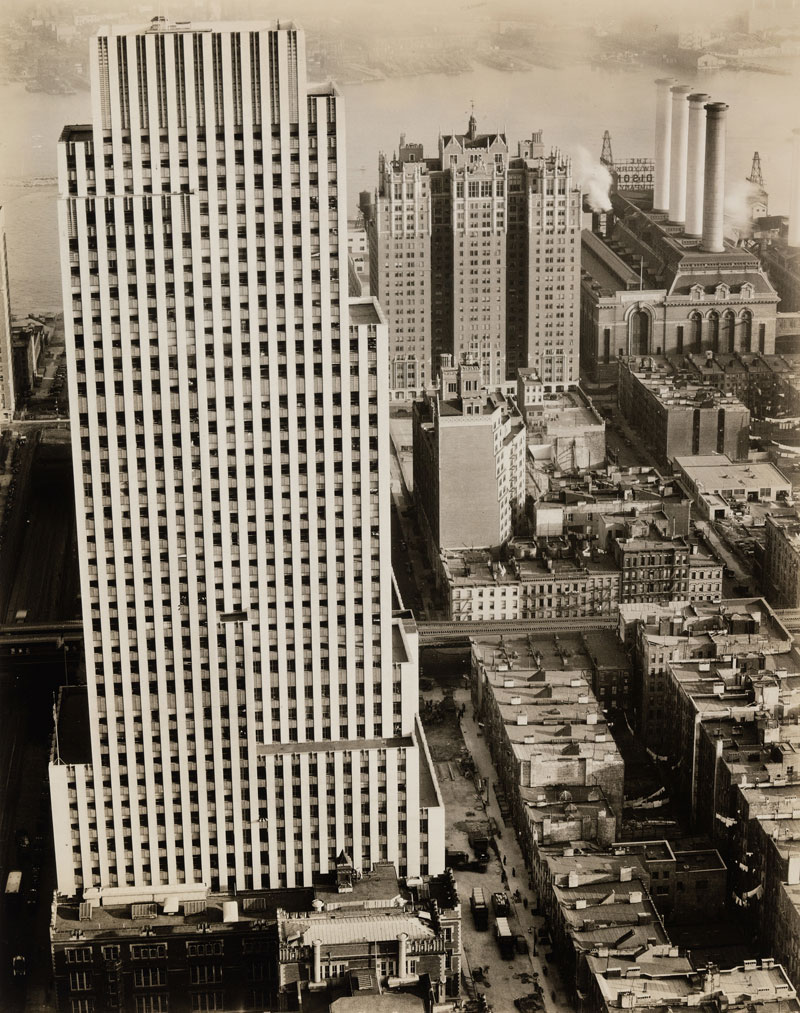
 

Berenice Abbott (American, 1898-1991) 'Daily News Building, 220 East 42nd Street, Manhattan' November 21, 1935


Berenice Abbott (American, 1898-1991)
Daily News Building, 220 East 42nd Street, Manhattan
November 21, 1935
Gelatin silver print
9 5/8 × 7 1/2″ (24.4 × 19.1cm)
The Museum of Modern Art, New York
Thomas Walther Collection. Abbott-Levy Collection funds, by exchange


Marjorie Content (American, 1895-1984) 'Steamship Pipes, Paris' Winter 1931


Marjorie Content (American, 1895-1984)
Steamship Pipes, Paris
Winter 1931
Gelatin silver print
3 13/16 × 2 11/16″ (9.7 × 6.8cm)
The Museum of Modern Art, New York
Thomas Walther Collection. Gift of Andreas Feininger, by exchange


Marjorie Content (American, 1895-1984)

Marjorie Content (1895-1984) was an American photographer active in modernist social and artistic circles. Her photographs were rarely published and never exhibited in her lifetime, but have become of interest to collectors and art historians. Her work has been collected by the Metropolitan Museum of Art and the Chrysler Museum of Art; it has been the subject of several solo exhibitions. (Wikipedia)

Marjorie Content (1895-1984) was a modest and unpretentious photographer who kept her work largely to herself, never published or exhibited. Overshadowed by such close friends as Georgia O’Keefe and Alfred Stieglitz, she was more comfortable as a muse and source of encouragement for others, including her fourth husband, poet Jean Toomer. This text presents her beautiful, varied photographs and provides a glimpse into her life. Her pictures portray a variety of images including: New York’s frenetic cityscape distilled to essential patterns and rhythms; the Southwestern light and heat along with the strength and dignity of the Taos pueblo culture; and cigarettes and other everyday items arranged in jewel-like compositions. The discovery of the quality and extent of her work is proof that an artist’s determination can surmount a lack of recognition in her lifetime.

Text from the Amazon website
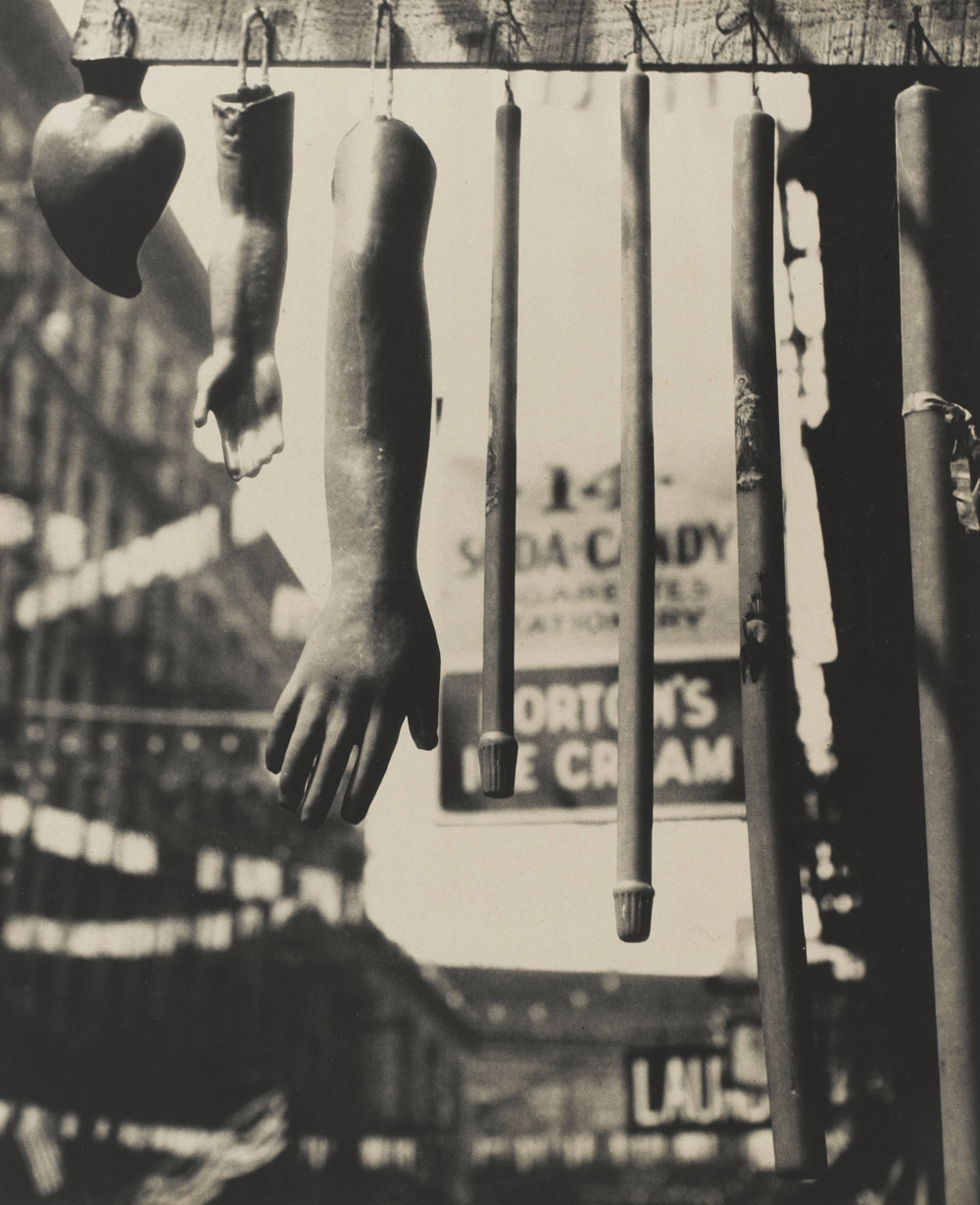
 

Walker Evans (American, 1903-1975) 'Votive Candles, New York City' 1929-1930


Walker Evans (American, 1903-1975)
Votive Candles, New York City
1929-1930
Gelatin silver print
8 1/2 x 6 15/16″ (21.6 x 17.7cm)
The Museum of Modern Art, New York
Thomas Walther Collection. Gift of Willard Van Dyke and Mr. and Mrs. Alfred H. Barr, Jr., by exchange
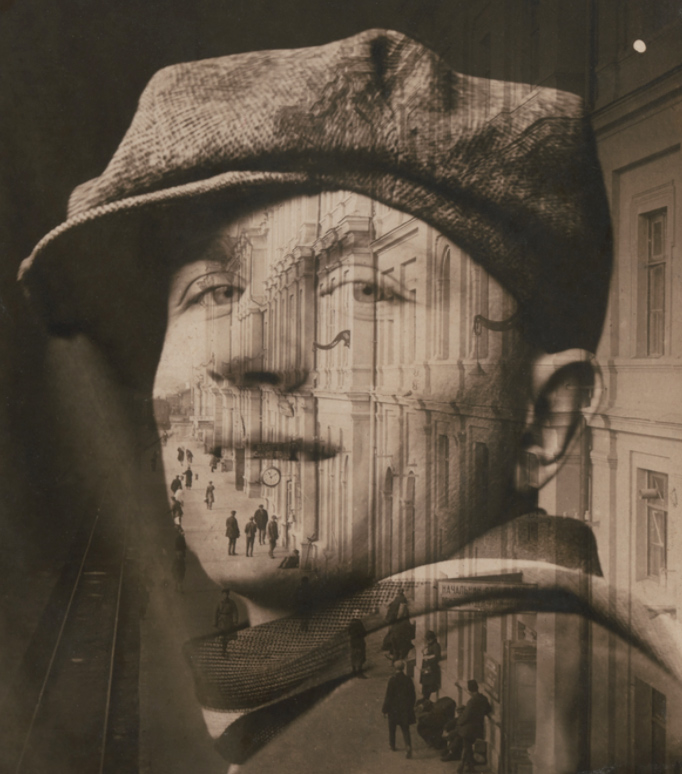
 

Georgii Zimin (Russian, 1900-1985) 'Untitled' 1926


Georgii Zimin (Russian, 1900-1985)
Untitled
1926
Gelatin silver print
3 11/16 x 3 1/4″ (9.4 x 8.3cm)
The Museum of Modern Art, New York
Thomas Walther Collection. Gift of Thomas Walther


Georgii Zimin (Russian, 1900-1985)

Georgii Zimin was born in Moscow in 1900, where he lived and worked for his entire life. Before the Russian Revolution he enrolled as a student at the Artistic-Industrial Stroganov Institute, known after 1918 as SVOMAS (Free state art studios). Zimin continued his studies at VKhUTEMAS (Higher state artistic and technical studios), which replaced SVOMAS in 1920. It was during his time at the school that he published the portfolio Skrjabin in Lukins Tanz (Scriabin in Lukin’s dance), in an edition of one hundred. This set of Cubo-Futurist lithographs from 1922 features costumed dancers in erotic poses, complementing a ballet choreographed by Lev Lukin. This work garnered Zimin acknowledgment by the Academy of Arts and Sciences and marked his affiliation with the Russian Art of Movement group. Throughout the 1920s he showed regularly at Art of Movement exhibitions at GAKhN (State academy for artistic sciences), in Moscow. Zimin also experimented with photography in the late 1920s and early 1930s, producing photograms akin to those made by László Moholy-Nagy and others at the time. Later in life, he served as Art Director of Exhibitions at the Department of Trade and held a post at the All-Union Agricultural Exhibition.

~ Ksenia Nouril
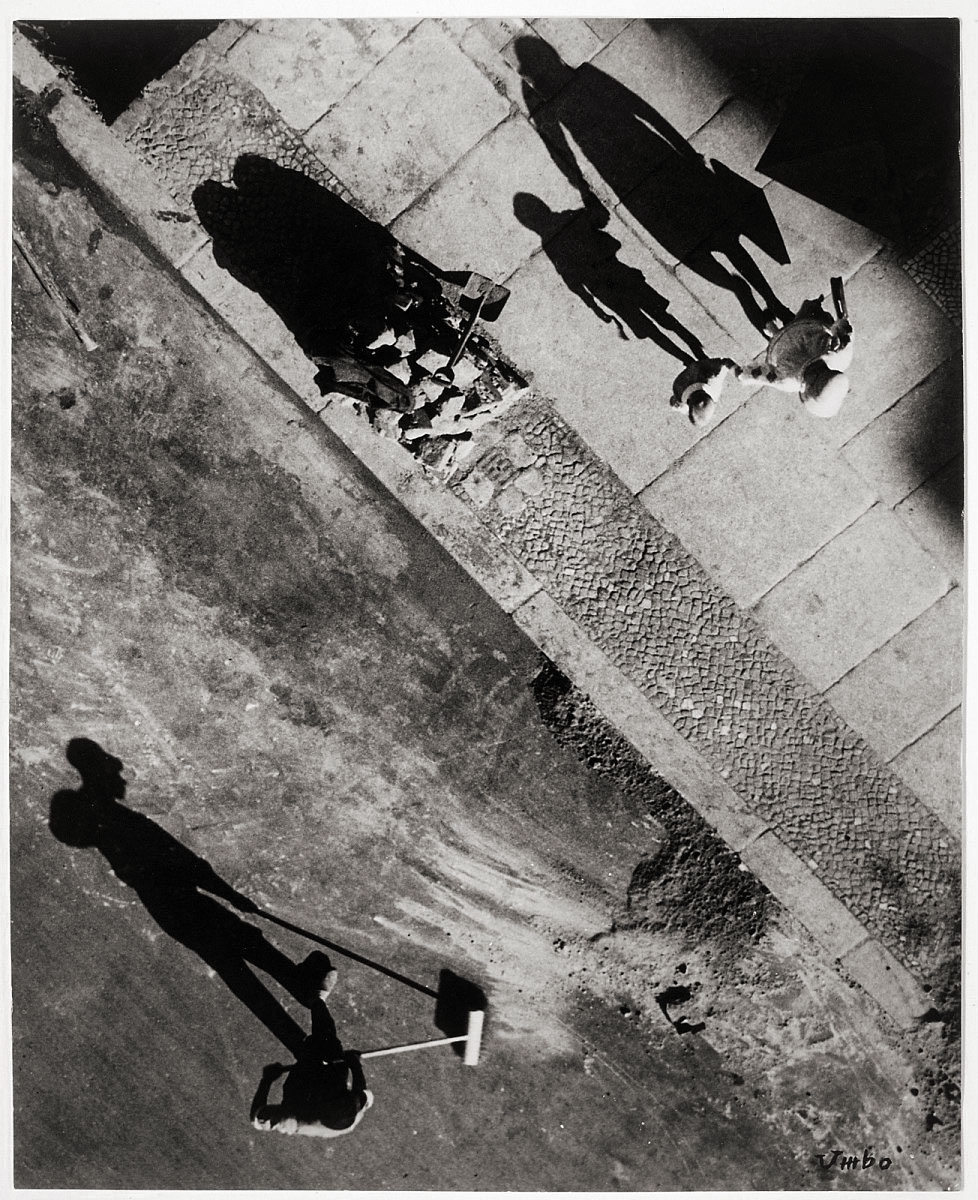
 

Umbo (Otto Umbehr) (German, 1902-1980) 'Mystery of the Street' (Mysterium der Strasse) 1928


Umbo (Otto Umbehr) (German, 1902-1980)
Mystery of the Street (Mysterium der Strasse)
1928
Gelatin silver print
11 7/16 x 9 1/4″ (29 x 23.5cm)
The Museum of Modern Art, New York
Thomas Walther Collection. Gift of Shirley C. Burden, by exchange


Umbo (Otto Umbehr) (German, 1902-1980)

Trained at the Bauhaus under Johannes Itten, a master of expressivity, Berlin-based photographer Umbo (born Otto Umbehr) believed that intuition was the source of creativity. To this belief, he added Constructivist structural strategies absorbed from Theo Van Doesburg, El Lissitzky, and others in Berlin in the early twenties. Their influence is evident in this picture’s diagonal, abstract construction and its spatial disorientation. It is also classic Umbo, encapsulating his intuitive vision of the world as a resource of poetic, often funny, ironic, or dark bulletins from the social unconscious.

After he left the Bauhaus, Umbo worked as assistant to Walther Ruttmann on his film Berlin, Symphony of a Great City 1926. In 1928, photographing from his window either very early or very late in the day and either waiting for his “actors” to achieve a balanced composition or, perhaps, positioning them as a movie director would, Umbo exposed three negatives. He had an old 5 by 7 inch (12.7 by 17.8 centimetre) stand camera and a 9 by 12 centimetre (3 9/16 by 4 3/4 inch) Deckrullo Contessa-Nettle camera, but which he used for these overhead views is not known, as he lost all his prints and most negatives in the 1943 bombing of Berlin. The resulting images present a world in which the shadows take the active role. Umbo made the insubstantial rule the corporeal and the dark dominate the light through a simple but inspired inversion: he mounted the pictures upside down (note the signature in ink in the lower right) .

In 1928-29, Umbo was a founding photographer at Dephot (Deutscher Photodienst), a seminal photography agency in Berlin dedicated to creating socially relevant and visually fascinating photoessays, an idea originated by Erich Solomon. Simon Guttmann, who directed the business, hired creative nonconformists, foremost among them the bohemian Umbo, who slept in the darkroom; Umbo in turn drew the brothers Lore Feininger and Lyonel Feininger to the agency, which soon also boasted Robert Capa and Felix H. Man. Dephot hired Dott, the best printer in Berlin, and it was he who made the large exhibition prints, such as this one, ordered by New York gallerist Julien Levy when he visited the agency in 1931. Umbo showed thirty-nine works, perhaps also printed by Dott, in the 1929 exhibition Film und Foto, and he put Guttmann in touch with the Berlin organizer of the show; accordingly, Dephot was the source for some images in the accompanying book, Es kommt der neue Fotograf! (Here comes the new photographer!). Levy introduced Umbo’s photographs to New York in Surréalisme (January 1932) and showcased them again at the Julien Levy Gallery, together with images by Herbert Bayer, Jacques-André Boiffard, Roger Parry, and Maurice Tabard, in his 1932 exhibition Modern European Photography.

Maria Morris Hambourg, Hanako Murata


Umbo (Otto Umbehr) (German, 1902-1980) 'Six at the Beach' (Sechs am Strand) 1930


Umbo (Otto Umbehr) (German, 1902-1980)
Six at the Beach (Sechs am Strand)
1930
Gelatin silver print
9 3/8 × 7 1/8″ (23.8 × 18.1cm)
The Museum of Modern Art, New York
Thomas Walther Collection. Gift of Shirley C. Burden, by exchange


Alvin Langdon Coburn (American, 1882-1966) 'The Octopus' 1909


Alvin Langdon Coburn (American, 1882-1966)
The Octopus
1909
Gelatin silver print
22 1/8 × 16 3/4″ (56.2 × 42.6cm)
The Museum of Modern Art, New York
Thomas Walther Collection. Gift of Thomas Walther


Dynamics of the City – Symphony of a Great City 

In his 1928 manifesto “The Paths of Contemporary Photography,” Aleksandr Rodchenko advocated for a new photographic vocabulary that would be more in step with the pace of modern urban life and the changes in perception it implied. Rodchenko was not alone in this quest: most of the avant-garde photographers of the 1920s and 1930s were city dwellers, striving to translate the novel and shocking experience of everyday life into photographic images. Equipped with newly invented handheld cameras, they used unusual vantage points and took photos as they moved, struggling to re-create the constant flux of images that confronted the pedestrian. Reflections in windows and vitrines, blurry images of quick motions, double exposures, and fragmentary views portray the visual cacophony of the metropolis. The work of Berenice Abbott (American, 1898- 1991), Alvin Langdon Coburn (American, 1882-1966), Germanie Krull (Dutch, born Germany, 1897-1985), Alexander Hackenschmied (Czech, 1907-2004), Umbo (German, 1902-1980), and Imre Kinszki (Hungarian, 1901-1945) is featured in this final gallery.


The Museum of Modern Art
11 West 53 Street
New York, NY 10019
Phone: (212) 708-9400

Opening hours:
10.30 am – 5.30 pm
Open seven days a week
MoMA website

LIKE ART BLART ON FACEBOOK

Back to top

Selection of images part 1

April 2015


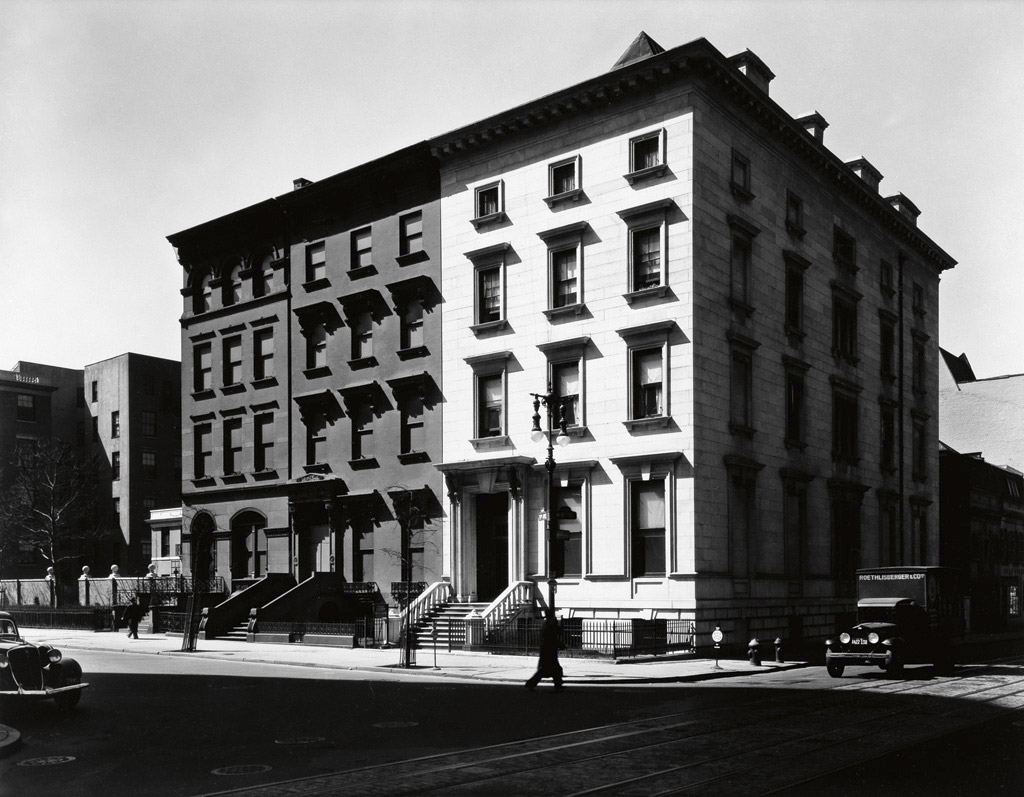
Berenice Abbott (American, 1898-1991) 'Fifth Avenue Houses' 1936


Berenice Abbott (American, 1898-1991)
Fifth Avenue Houses (5th Avenue and 8th Street)
1936, printed later
Silver gelatin print


A selection of interesting images.

The Vanishing Race by Edward S. Curtis is simple, yet one of the best. Already their shadows seem more substantial than their owners.

Any photographer worth their salt would recognise the light on the foliage in a certain location that they know, but the chance of it being as perfect as this are about a billion to one. Notice how the original frame extends the synthesis of man and landscape as well. Such a great amalgam of image and frame, such a perfect marriage where one complements the other without the frame being overpowering, as though the frame were an extension of the image (and organic nature of the landscape).

The line of the riders in the image as well… they would have virtually ridden over the photographer and the tripod if they had kept that line! And the outrider – magnificent!!

Marcus


Please click on the photographs for a larger version of the image.


Edward S. Curtis (American, 1868-1952) 'The Vanishing Race' 1904


Edward S. Curtis (American, 1868-1952)
The Vanishing Race – Navaho
1904
Orotone (in original frame)


“The passing of every old man or woman means the passing of some tradition, some knowledge of sacred rites possessed by no other… consequently the information that is to be gathered, for the benefit of future generations, respecting the mode of life of one of the great races of mankind, must be collected at once or the opportunity will be lost for all time.”

~ Edward S. Curtis


Ansel Adams (American, 1902-1984) 'Surf Sequence #4' 1940


Ansel Adams (American, 1902-1984)
Surf Sequence #4
1940, printed later
Silver gelatin print


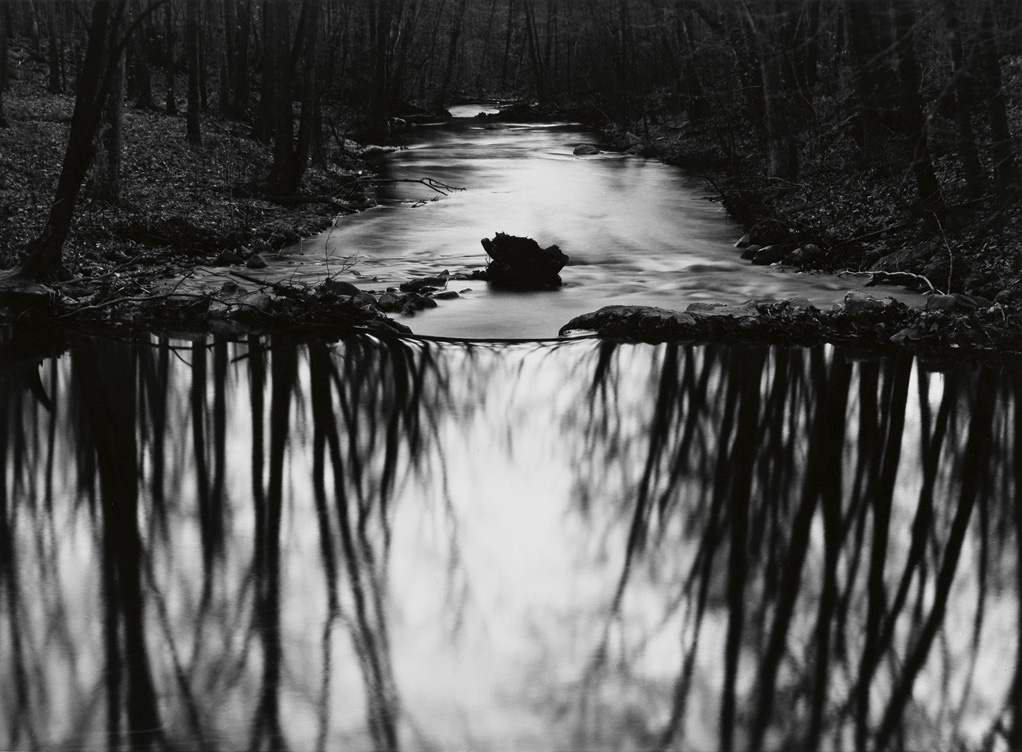
Paul Caponigro (American, 1932-2024) 'Redding Stream, Redding, Connecticut' 1968


Paul Caponigro (American, 1932-2024)
Redding Stream, Redding, Connecticut
1968, printed later
Gelatin silver print


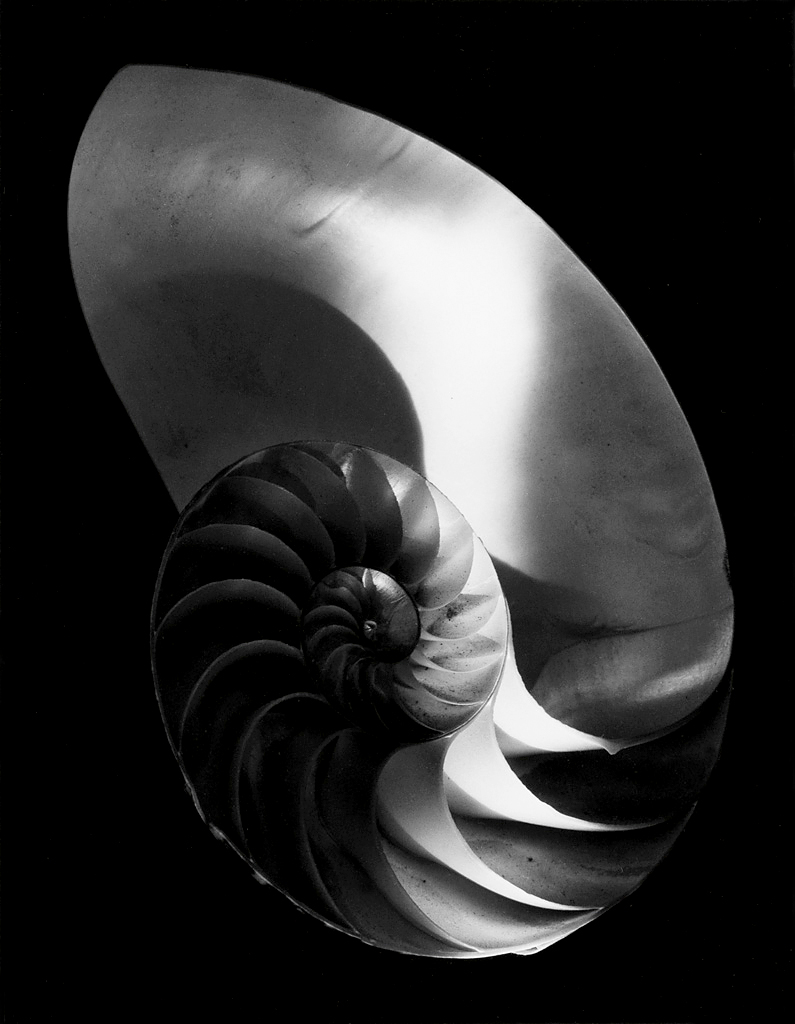
Paul Caponigro (American, 1932-2024) 'Nautilus Shell, Ipswich, Mass' 1960


Paul Caponigro (American, 1932-2024)
Nautilus Shell, Ipswich, Mass
1960
Silver gelatin print


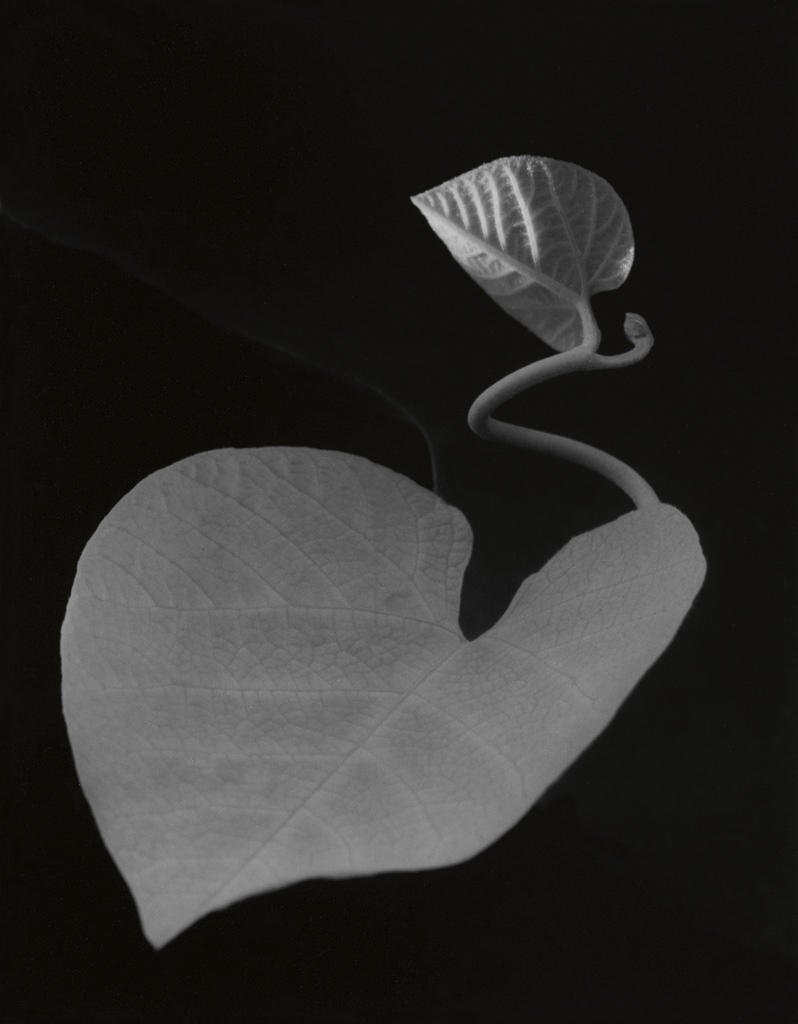
Paul Caponigro (American, 1932-2024) 'Two Leaves, Brewster, New York' 1963


Paul Caponigro (American, 1932-2024)
Two Leaves, Brewster, New York
1963
Silver gelatin print


Harry Callahan (American, 1912-1999) 'Eleanor, Port Huron' c. 1954


Harry Callahan (American, 1912-1999)
Eleanor, Port Huron
c. 1954
Silver gelatin print


With her raven hair and ripe figure, Eleanor Callahan is one of the most recognisable models in the history of 20th-century photography, an inseparable part of both the life and work of one of its most renowned artists. Clothed and standing among trees in a public park, or nude and turned to the wall while clutching a radiator in an empty room, she served as a formal element within Mr. Callahan’s austere compositions as well as a symbol of womanhood. From 1941 to his death in 1999, she allowed herself to be photographed by him, without complaint, hundreds of times…

“He just liked to take the pictures of me,” she told an interviewer in 2008. “In every pose. Rain or shine. And whatever I was doing. If I was doing the dishes or if I was half asleep. And he knew that I never, never said no. I was always there for him. Because I knew that Harry would only do the right thing.”

Text from Richard B. Woodward. “Eleanor Callahan, Photographic Muse, Dies at 95,” on the New York Times website 28th February 2012.


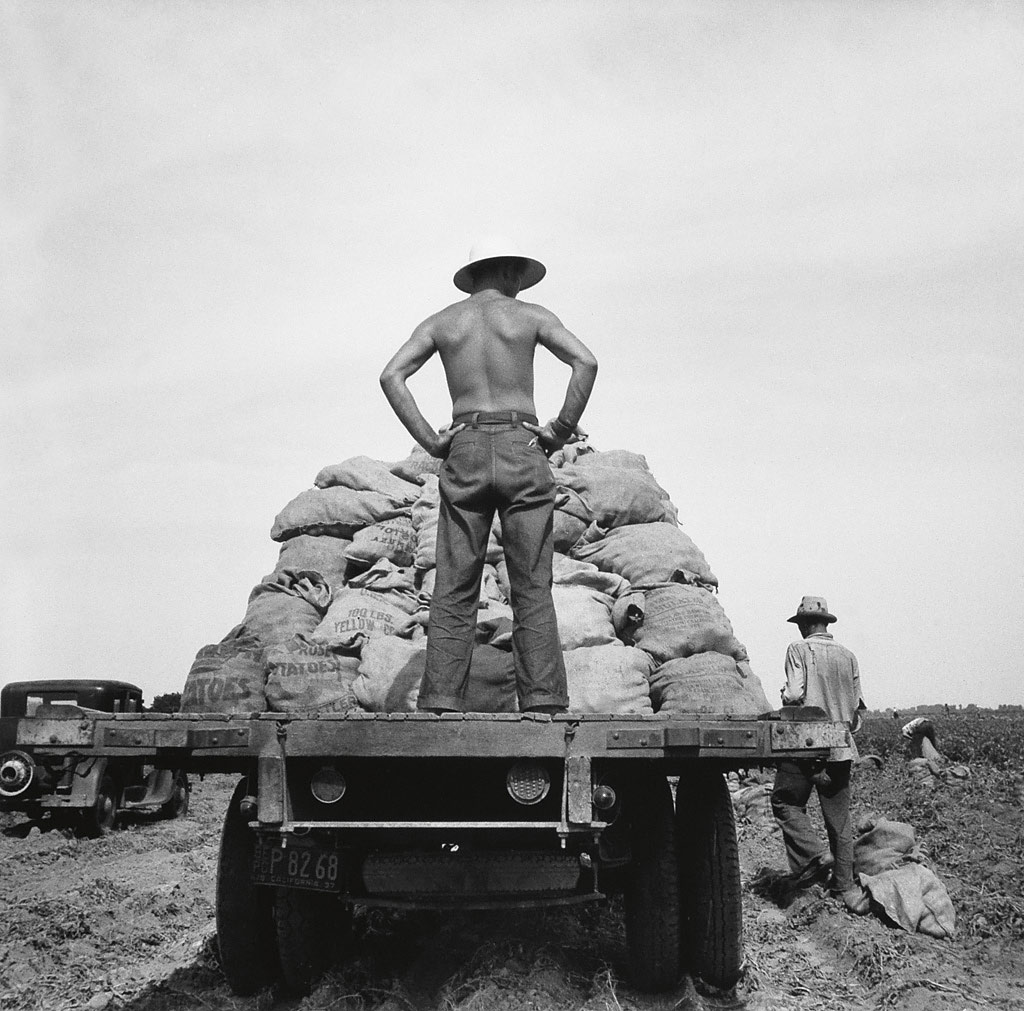
Dorothea Lange (American, 1895-1965) 'Potato truck in the field near Shafter, California' 1937


Dorothea Lange (American, 1895-1965)
Potato truck in the field near Shafter, California
1937
Ferrotyped silver print


Walker Evans (American, 1903-1975) 'Fish Market near Birmingham, Alabama' 1936


Walker Evans (American, 1903-1975)
Fish Market near Birmingham, Alabama
1936
Silver gelatin print


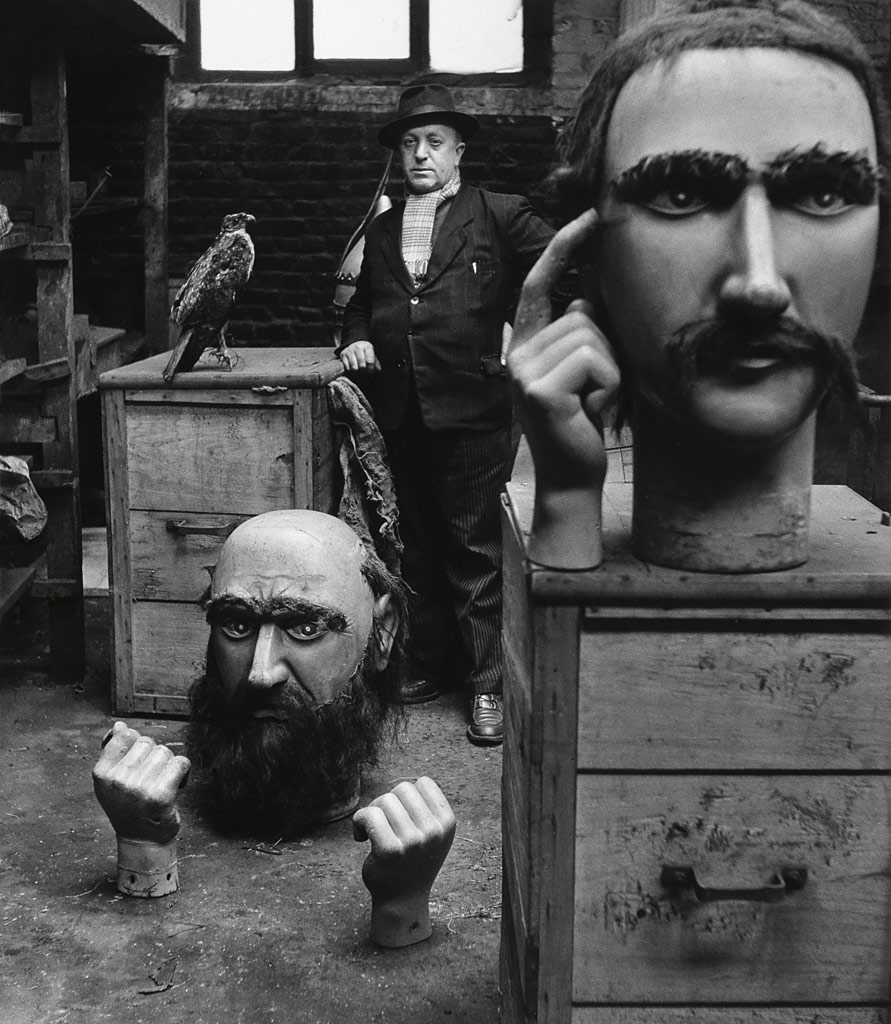
Robert Doisneau (French, 1912-1994) 'Le gardien des géants du Nord' Nd


Robert Doisneau (French, 1912-1994)
Le gardien des géants du Nord
Nd
Silver gelatin print


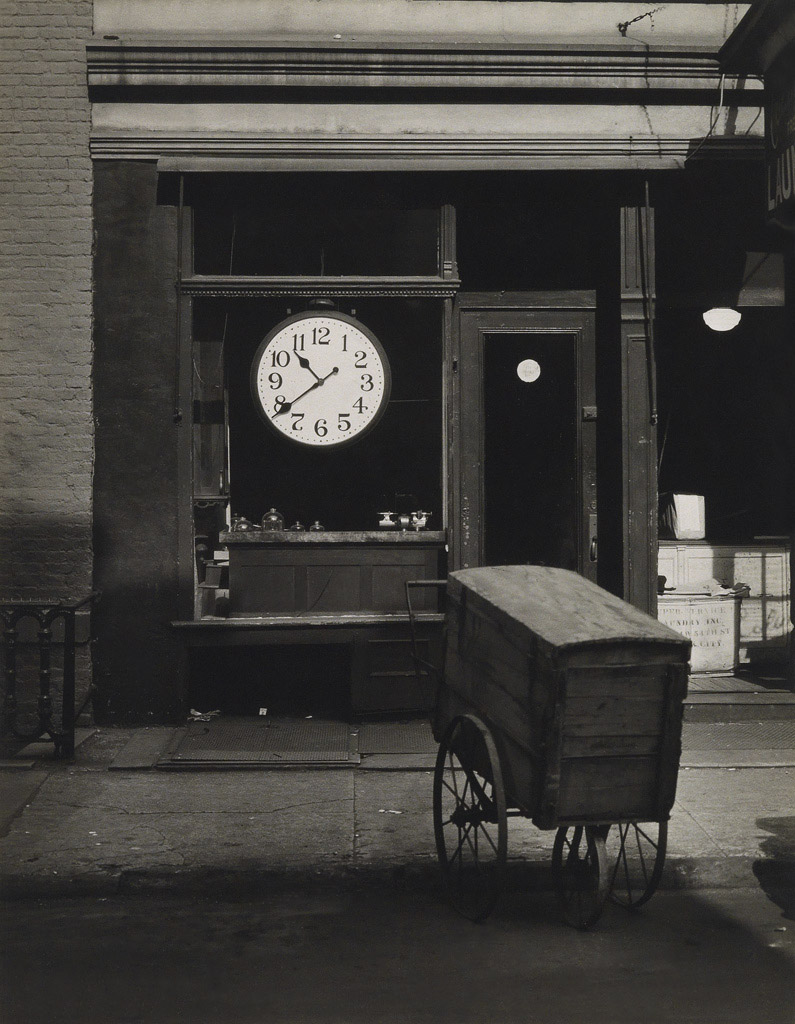
Berenice Abbott (American, 1898-1991) 'Christopher Street Shop' late 1940s


Berenice Abbott (American, 1898-1991)
Christopher Street Shop
late 1940s
Silver gelatin print


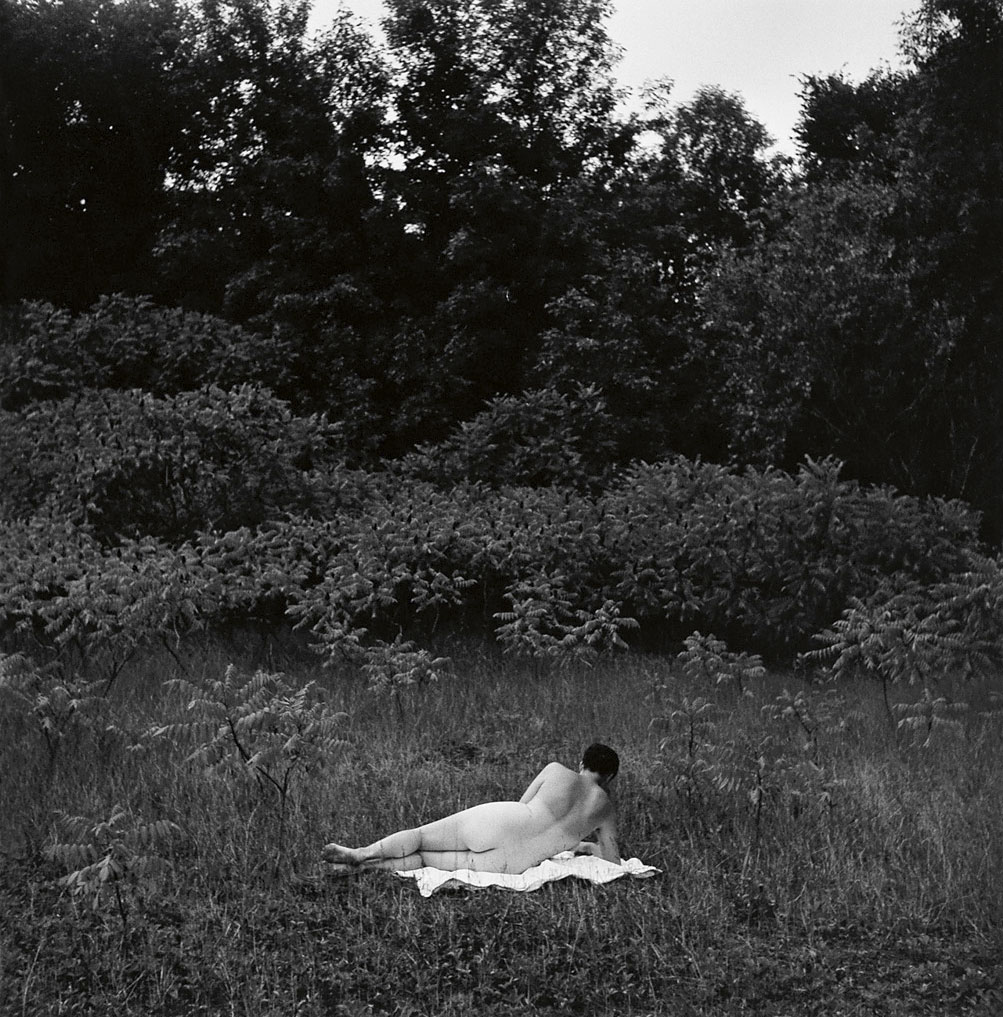
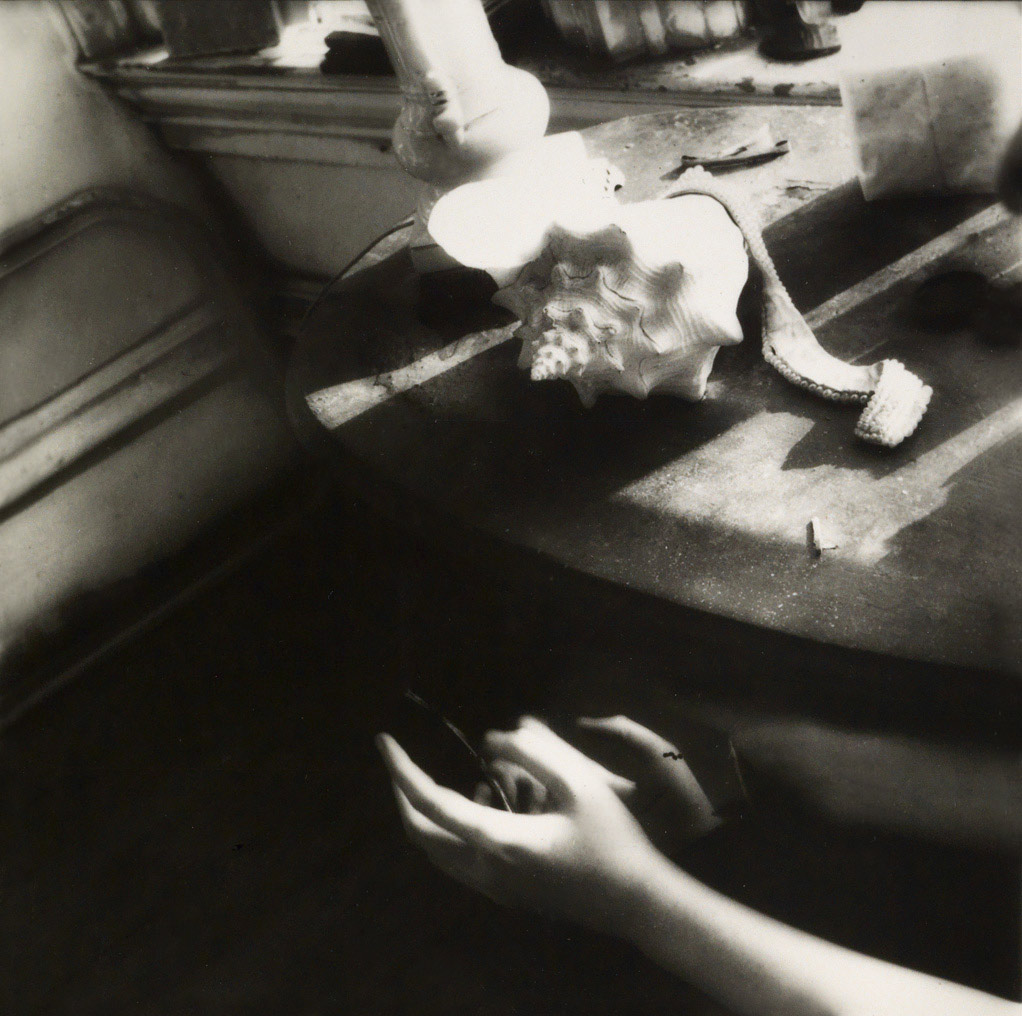
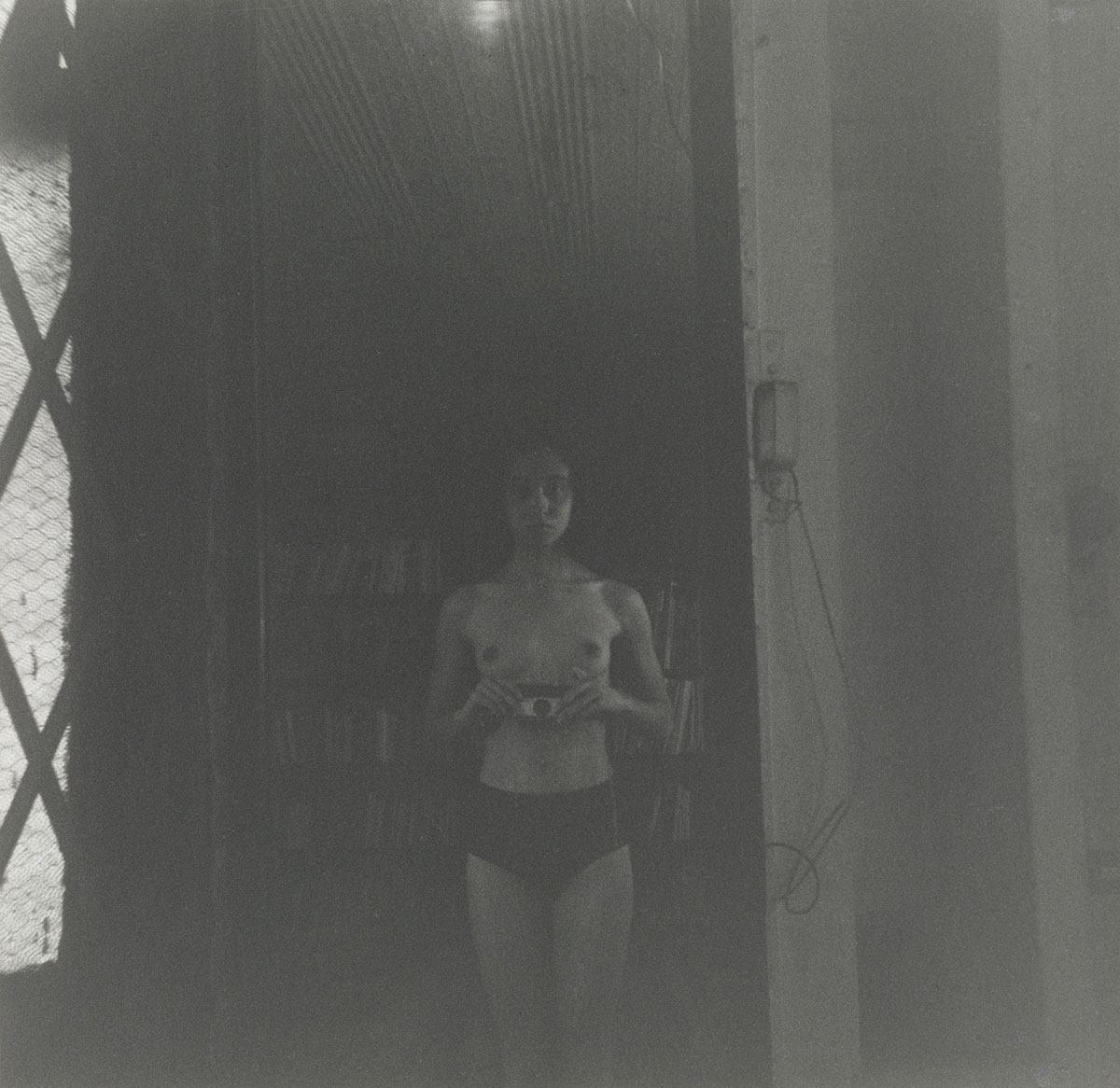
Francesca Woodman (American, 1958-1981) 'But Lately I Find a Sliver of a Mirror is Simply to Slice an Eyelid' 1979/1980


Francesca Woodman (American, 1958-1981)
But Lately I Find a Sliver of a Mirror is Simply to Slice an Eyelid
1979-1980
Silver gelatin print


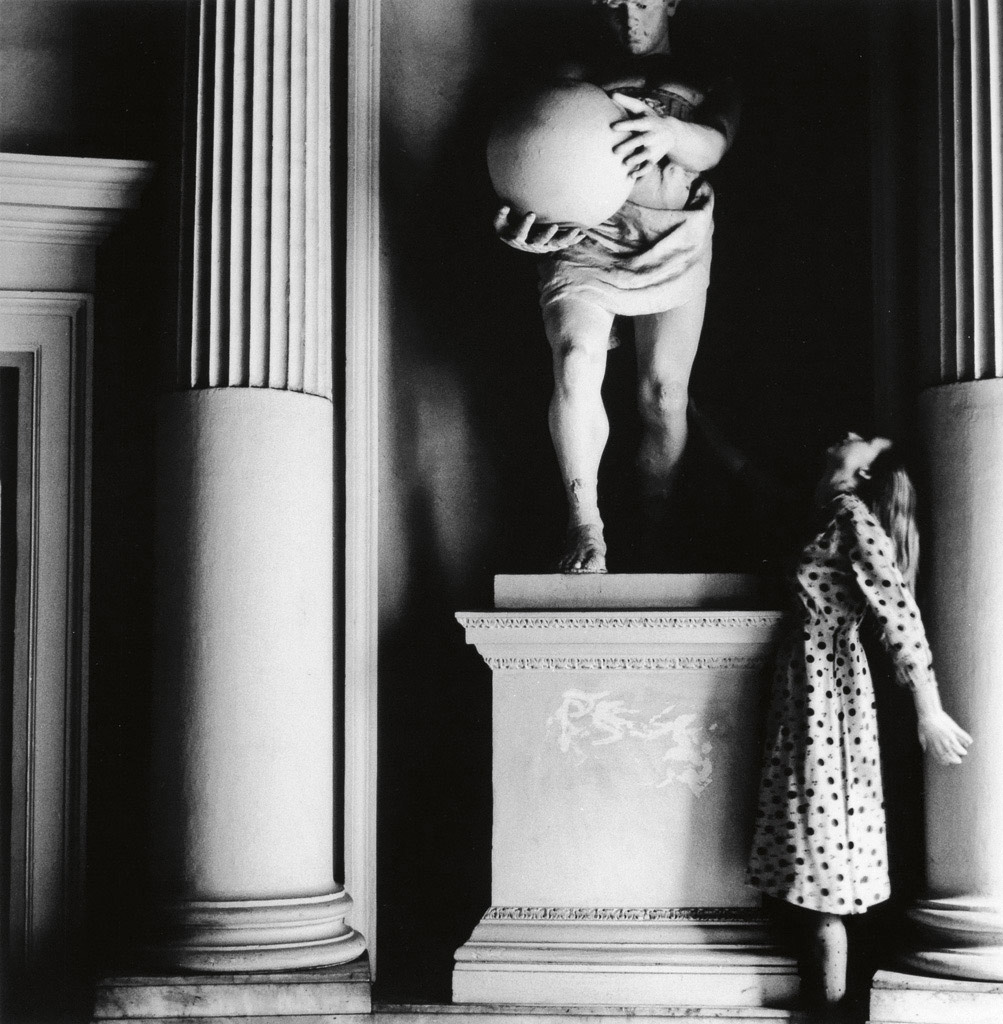
Francesca Woodman (American, 1958-1981) 'Untitled, Rome, Italy' 1977/1978


Francesca Woodman (American, 1958-1981)
Untitled, Rome, Italy
1977-1978
Silver gelatin print


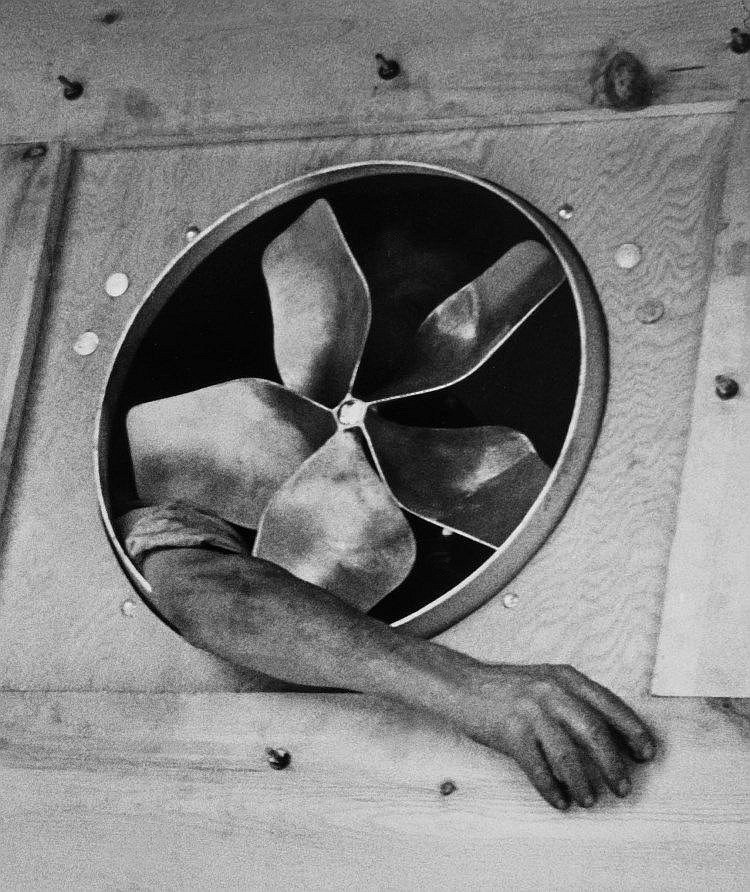
André Kertész (Hungarian, 1894-1985) 'Fan, December 1937' 1937


André Kertész (Hungarian, 1894-1985)
Fan, December 1937
1937
Silver gelatin print


“I am an amateur and I intend to stay that way for the rest of my life.”

~ André Kertész


Margaret Bourke-White (American, 1904-1971) 'Fort Peck Dam, Montana' 1936


Margaret Bourke-White (American, 1904-1971)
Fort Peck Dam, Montana
1936
Silver gelatin print


This photograph became an icon of the machine age, not only because it was printed as the cover of the first issue of Life magazine (November 23, 1936), but also because it showed the power of modern technology to dwarf humankind. The giant buttresses and what seem to be crenellated battlements (actually the supports for an elevated highway) are meant to be as raw and impressive as the towering walls of ancient monuments. The engineers on the spillway provide the necessary indication of scale.


Margaret Bourke-White (American, 1904-1971) 'Terminal Tower [Cleveland]' c. 1928


Margaret Bourke-White (American, 1904-1971)
Terminal Tower [Cleveland]
c. 1928
Silver gelatin print


“I stood on the deck to watch the city [Cleveland] come into view. As the skyline took form in the morning mist, I felt I was coming to my promised land … columns of machinery gaining height as we drew toward the pier, derricks swinging like living creatures. Deep inside I knew these were my subjects.”

~ Margaret Bourke-White 1927


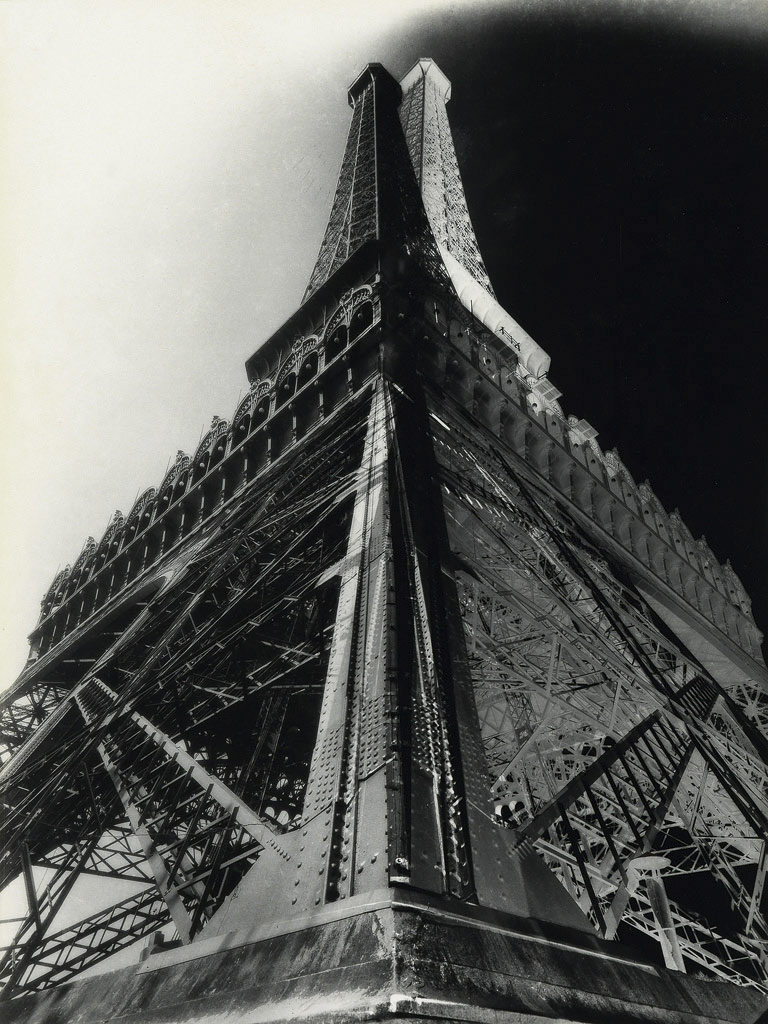
François Kollar (Hungarian, 1904-1979) 'Double-impression of the Eiffel Tower' 1931


François Kollar (Hungarian, 1904-1979)
Double-impression of the Eiffel Tower
1931
Solarised silver gelatin print


In this unique and widely-reproduced photograph, the French modernist photographer has overlaid positive and negative images of the magnificent Eiffel Tower. The iconic structure is depicted from an unusual perspective, thrusting upward, with Kollar’s special solarised effect.


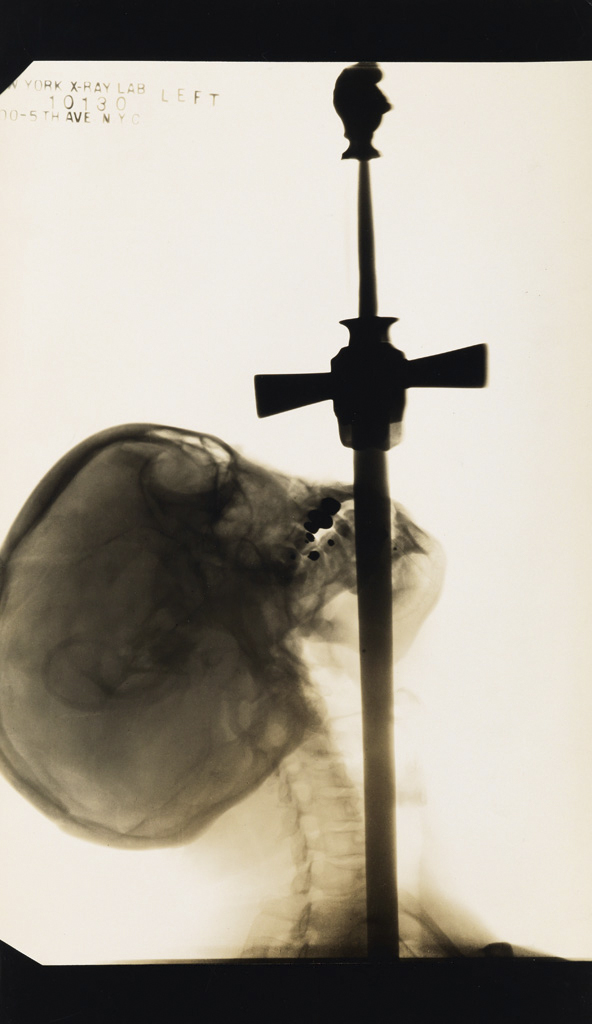
Edward J. Kelty (American, 1888-1967) 'X-ray of Ajax, the sword swallower' 1928


Edward J. Kelty (American, 1888-1967)
X-ray of Ajax, the sword swallower
1928
 Silver print
18 × 11 inches (45.7 × 27.9cm)
With a New York X-ray lab credit in the negative


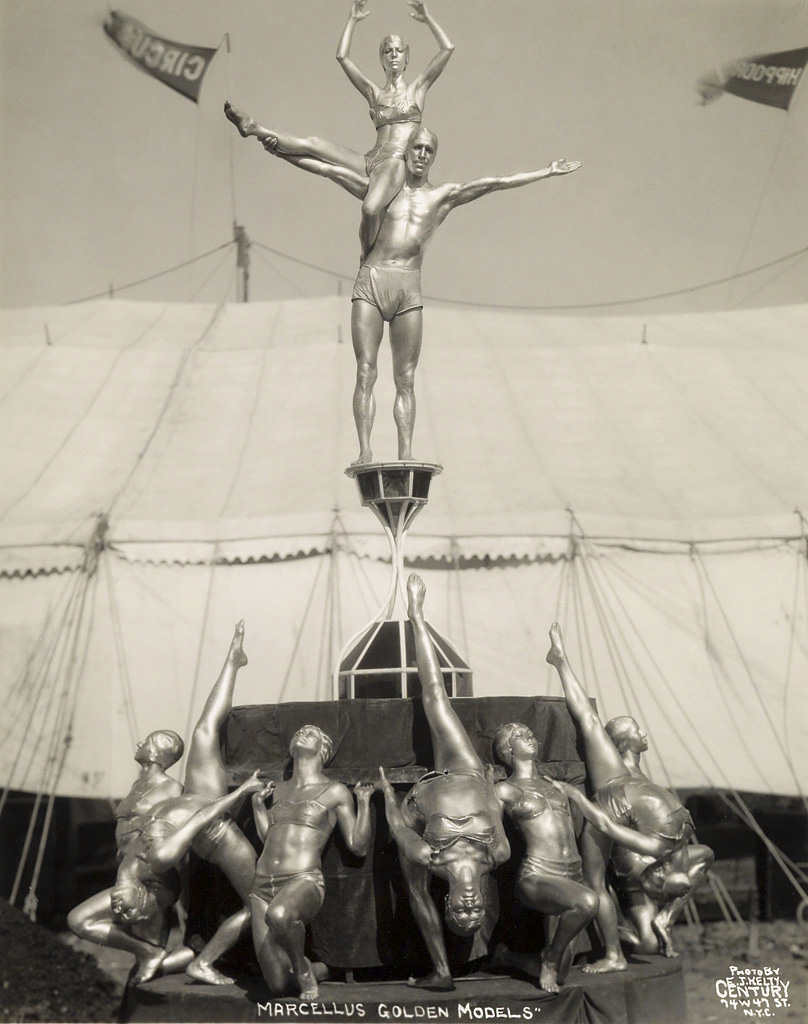
Edward J. Kelty (American, 1888-1967) 'Marcellus Golden Models' 1933


Edward J. Kelty (American, 1888-1967)
Marcellus Golden Models
1933
Silver print
11 1/4 × 8 7/8 inches (28.6 × 22.5cm)
With Kelty’s credit and title in the negative


LIKE ART BLART ON FACEBOOK

Back to top

Exhibition: ‘Bevan Davies: New York’ at Joseph Bellows Gallery, La Jolla, California

Exhibition dates: 14th March – 9th May, 2015


Bevan Davies (American, b. 1941) '94 Greene Street, New York' 1975


Bevan Davies (American, b. 1941)
94 Greene Street, New York
1975
Vintage gelatin silver print
16 x 20 inches
© Bevan Davies


This stunning suite of large format photographs emanates from an esteemed lineage: the early morning light of Atget’s photographs of Old Paris during that cities urban renewal; the frontality of Walker Evans and his photographs of Southern churches (with both artist’s attention to the storefront facade); and the formal qualities of the New Topographic movement and the gridded topos of Bernd and Hilla Becher.

While Eugène Atget photographed the vanishing environs of Old Paris, Davies captures the urban decay of New York City, a city that was undergoing serious urban renewal in the 1970s.

The redevelopment of large sections of New York City and New York State by Robert Moses between the 1930s and the 1970s was a notable and prominent example of urban redevelopment. Moses directed the construction of new bridges, highways, housing projects, and public parks. Moses was a controversial figure, both for his single-minded zeal and for its impact on New York City… The Rondout neighbourhood in Kingston, New York (on the Hudson River) was essentially destroyed by a federally funded urban renewal program in the 1960s, with more than 400 old buildings demolished, most of them historic brick structures built in the 19th century. Similarly ill-conceived urban renewal programs gutted the historic centres of other towns and cities across America in the 1950s and 1960s.” (Anon. “Urban Renewal,” on the Wikipedia website)

In Davies’ project (and essential to his task), is the revealing of detail in these undervalued buildings. An ethereal light radiates, almost pulsates from these night time buildings – all rendered in beautifully ferrotyped prints that display a surplus of detail.

The previsualisation in these photographs is excellent. Notice how Davies pushes and pulls the viewer forward and backward in the image plane by using the device of the footpath to frame his compositions. In an image such as 94 Greene Street, New York (1975, above) – one of my favourite in this posting – the artist frames the image to stop at the edge of the pavement, allowing enough room so that the eye is led into the image. In other images, such as Broadway, New York (1976, below) or 425 Broome Street, New York (1976, below), Davies crops right up to the base of the building, forcing the viewer to acknowledge the geometric, cellular structure of the facade and nothing else. In yet other images, such as Column, Mercer Street, New York (1975, below) or 155 West Broadway, New York (1975, below) the artist pulls back from the building, allowing the pavement to anchor the building’s displacement while emphasising the columns grounding within the scene.

These really are magnificent photographs that bring the silence of the city to the fore front of our consciousness. Without the presence of human beings, the buildings take on a majesty that is usually usurped, overlooked or just plain passed by during the humdrum nature of everyday life.

Dr Marcus Bunyan


Many thankx to the Joseph Bellows Gallery for allowing me to publish the photographs in the posting. Please click on the photographs for a larger version of the image.


Bevan Davies (American, b. 1941 '652 Broadway, New York' 1976


Bevan Davies (American, b. 1941)
652 Broadway, New York
1976
Vintage gelatin silver print
16 x 20 inches
© Bevan Davies


Bevan Davies (American, b. 1941) 'Broadway, New York' 1976


Bevan Davies (American, b. 1941)
Broadway, New York
1976
Vintage gelatin silver print
16 x 20 inches
© Bevan Davies


Bevan Davies (American, b. 1941) '425 Broome Street, New York' 1976


Bevan Davies (American, b. 1941)
425 Broome Street, New York
1976
Vintage gelatin silver print
16 x 20 inches
© Bevan Davies


Bevan Davies (American, b. 1941) 'Walker Street., New York' 1976


Bevan Davies (American, b. 1941)
Walker Street., New York
1976
Vintage gelatin silver print
16 x 20 inches
© Bevan Davies


Bevan Davies (American, b. 1941) 'Hudson Street, New York' 1975


Bevan Davies (American, b. 1941)
Hudson Street, New York
1975
Vintage gelatin silver print
16 x 20 inches
© Bevan Davies


Joseph Bellows Gallery is pleased to announce its upcoming solo exhibition, Bevan Davies New York. The exhibition opens on March 14th and will continue through May 9, 2015. An opening reception will be held on Saturday, March 14th, from 6-8 pm. New York will present Davies’ luminous and highly detailed large-format black and white architectural views from the mid 1970’s, along with a selection of his earlier street portraiture from the preceding decade, in the atrium gallery.

Bevan Davies studied photography with Bruce Davidson, at the University of Chicago in early 1960’s and benefitted greatly through mentoring from Diane Arbus later in that decade. After working the street in both daylight and evening hours, photographing people at odds with society, with a hand camera, Davies changed his working methodology to describing the physical environs of the street: the building facades, alleys and streets with a tripod mounted view camera.

This change in subject and approach resulted in Davies most celebrated work. Created in 1975/76 Bevan Davies’ architectural photographs situated themselves wholly within the dictum laid forth by William Jenkins, as “New Topographics”. In fact, Davies writes of his approach as, “an effort being made to let the camera almost see by itself.” This notion was carried further by the late photographer, Lewis Baltz, who in 1976, referred to Davies’ photographs as, “rigorously contemporary, while acknowledging a use of the camera which dates from the inception of the medium.” The New York facades, taken in the early morning hours and devoid of people, describe spaces defined by light and shadow. They depict a specific time and place, as seen by the window dressings and signage, as well as portray a formal grace among the building’s details that are included within Davies’ camera frame. New York is the first comprehensive exhibition of Davies’ photographs in over two decades.

Davies photographs can be found in the collections of the J. Paul Getty Museum, Center for Creative Photography, Art Institute of Chicago, Nelson-Atkins Museum, Minneapolis Institute of the Arts, Museum of Fine Arts, Houston, George Eastman House, Corcoran Gallery of Art, Harry Ransom Center, Metropolitan Museum of Art, and the International Center of Photography.

In 2014, Nazraeli Press released Los Angeles, 1976, a monograph on Davies’ photographs from that region and era. The photographs depict the residential architecture and neighbourhoods through nuanced arrangement and clarity. A forthcoming volume on Davies’ New York photographs is in prepublication.

Press release from the Joseph Bellows Gallery


Bevan Davies (American, b. 1941) '144 Wooster Street, New York' 1976


Bevan Davies (American, b. 1941)
144 Wooster Street, New York
1976
Vintage gelatin silver print
16 x 20 inches
© Bevan Davies


Bevan Davies (American, b. 1941) 'View from 475 Broadway, New York' 1976


Bevan Davies (American, b. 1941)
View from 475 Broadway, New York
1976
Vintage gelatin silver print
16 x 20 inches
© Bevan Davies


Bevan Davies (American, b. 1941) 'Bond Street, Facing North, New York' 1976


Bevan Davies (American, b. 1941)
Bond Street, Facing North, New York
1976
Vintage gelatin silver print
16 x 20 inches
© Bevan Davies


Bevan Davies (American, b. 1941) 'Franklin and West Broadway, New York' 1976


Bevan Davies (American, b. 1941)
Franklin and West Broadway, New York
1976
Vintage gelatin silver print
16 x 20 inches
© Bevan Davies


Bevan Davies (American, b. 1941) '426 West Broadway, New York' 1975


Bevan Davies (American, b. 1941)
426 West Broadway, New York
1975
Vintage gelatin silver print
20 x 16 inches
© Bevan Davies


Bevan Davies (American, b. 1941) 'Column, Mercer Street, New York' 1975


Bevan Davies (American, b. 1941)
Column, Mercer Street, New York
1975
Vintage gelatin silver print
20 x 16 inches
© Bevan Davies


Bevan Davies (American, b. 1941) '11 Mercer Street, New York' 1976


Bevan Davies (American, b. 1941)
11 Mercer Street, New York
1976
Vintage gelatin silver print
20 x 16 inches
© Bevan Davies


Bevan Davies (American, b. 1941) '155 West Broadway, New York' 1975


Bevan Davies (American, b. 1941)
155 West Broadway, New York
1975
Vintage gelatin silver print
20 x 16 inches
© Bevan Davies


Joseph Bellows Gallery
7661 Girrard Avenue
La Jolla, California
Phone: 858 456 5620

Opening hours:
Tuesday – Saturday 11am – 5pm and by appointment

Joseph Bellows Gallery website

LIKE ART BLART ON FACEBOOK

Back to top

Exhibition: ‘Bruce Davidson / Paul Caponigro: Two American Photographers in Britain and Ireland’ at The Huntington Library, San Marino, CA

Exhibition dates: 8th November 2014 – 9th February 2015

Curators: Scott Wilcox and Jennifer A. Watts


Paul Caponigro (American, 1932-2024) 'Avebury, Wiltshire, England' 1967


Paul Caponigro (American, 1932-2024)
Avebury, Wiltshire, England
1967
Gelatin silver print
9 3/8 × 13 1/8 in.
© Paul Caponigro


Individually, the work of these two photographers is outstanding, but together?

The premise for the exhibition (two American photographers in Britain and Ireland) seems weak, tenuous at best. The exhibition focuses on the contrasting styles of the two photographers – Davidson is a photojournalist and Caponigro practices a pure, formalist approach to landscape photography – “as they trained American eyes on enduring landscapes and changing cultural scenes… “Britain and Ireland are the countries to which each man embarked on significant creative journeys in the course of refining his art.” (Jennifer A. Watts)”

But is this enough? For example, the ground breaking exhibition Caravaggio – Bacon at Gallery Borghese, Rome in 2009-2010 offered the viewer something that they had never thought about before: “Instinctively, intellectually we know how the paintings of a Baroque artist of the early 17th century affect how we look at the paintings of Bacon. This exhibition offers the reverse, in fact it rewrites how we look at Caravaggio – through the benediction of Bacon.”

Here no such revelation occurs. You could argue that the connection lies outside photography in a concern for what is present in the landscape, what is present in a community, what is present beyond bricks and mortar, leaves and rocks – what is our place in the world, full stop. But the work of the artists is so different, one from the other, that this diffident relationship is strained at best. No wonder these humans had never met before the opening of the exhibition, for they seem artistically to have little in common.

I have tried to sequence the photographs in the posting, so that they might have some reflection, some conversation one to the other: the presence of The Duke of Argyll, fag in hand kitted out in traditional Scottish attire, and the grandness of his residence playing off the darkness, isolation and simplicity of the house in Caponigro’s Connemara, County Galway, Ireland; the luminous stones in Stonehenge, Wiltshire, England becoming the dark edged reflections in Davidson’s London (1960); and the church in Caponigro’s Church, St. MacDara’s Island, County Galway, Ireland morphing into the temple of the British sun, the beach holiday, in Davidson’s Blackpool (1965) – but it is hard work.

Best to just enjoy the photographs individually, especially Caponigro’s glorious paen to ancient forces Avebury, Wiltshire, England (1967, above). The life force of the tree, the life force of the stone – the communion of those two things with the landscape – with sheep in the background. A friend of mine (Ian Lobb) who knows Caponigro told me that he said he never travelled anywhere without a blow up sheep in the back of the car.

Dr Marcus Bunyan


Many thankx to the The Huntington Library for allowing me to publish the photographs in the posting. Please click on the photographs for a larger version of the image.


Bruce Davidson (American, b. 1933) 'Brighton' 1960


Bruce Davidson (American, b. 1933)
Brighton
1960
Gelatin silver print
8 3/4 ×12 7/8 in.
Yale Center for British Art, Gift of Ralph and Nancy Segall
© Bruce Davidson/Magnum Photos


Paul Caponigro (American, 1932-2024) 'Callanish Stone Circle, Isle of Lewis, Outer Hebrides, Scotland' 1972


Paul Caponigro (American, 1932-2024)
Callanish Stone Circle, Isle of Lewis, Outer Hebrides, Scotland
1972
Gelatin silver print
17 1/4 × 23 3/4 in.
© Paul Caponigro


Paul Caponigro (American, 1932-2024) 'Stonehenge, Wiltshire, England' 1967


Paul Caponigro (American, 1932-2024)
Stonehenge, Wiltshire, England
1967
Gelatin silver print
17 × 23 3/8 in.
© Paul Caponigro


Bruce Davidson (American, b. 1933) 'The Duke of Argyll, Inverary, Scotland' 1960


Bruce Davidson (American, b. 1933)
The Duke of Argyll, Inverary, Scotland
1960
Gelatin silver print
9 × 13 1/4 in.
Yale Center for British Art, Gift of Ralph and Nancy Segall
© Bruce Davidson/Magnum Photos


Paul Caponigro (American, 1932-2024) 'Connemara, County Galway, Ireland' 1970


Paul Caponigro (American, 1932-2024)
Connemara, County Galway, Ireland
1970
Gelatin silver print
9 1/2 × 12 1/8 in.
© Paul Caponigro


Bruce Davidson (American, b. 1933) 'Wales' 1965


Bruce Davidson (American, b. 1933)
Wales
1965
Gelatin silver print
8 1/4 × 12 1/2 in.
Yale Center for British Art, Gift of Henry S. Hacker, Yale BA 1965
© Bruce Davidson/Magnum Photos


Bruce Davidson (American, b. 1933) 'Wales' 1965


Bruce Davidson (American, b. 1933)
Wales
1965
Gelatin silver print
8 3/8 × 12 5/8 in.
Yale Center for British Art, Gift of Henry S. Hacker, Yale BA 1965
© Bruce Davidson/Magnum Photos


Paul Caponigro (American, 1932-2024) 'Running White Deer, Wicklow, Ireland' 1967


Paul Caponigro (American, 1932-2024)
Running White Deer, Wicklow, Ireland
1967
Gelatin silver print
7 1/2 × 19 1/8 in.
© Paul Caponigro


Paul Caponigro (American, 1932-2024) 'Stonehenge, Wiltshire, England' 1977


Paul Caponigro (American, 1932-2024)
Stonehenge, Wiltshire, England
1977
Gelatin silver print
13 5/8 × 19 in.
© Paul Caponigro


Bruce Davidson (American, b. 1933) 'London' 1960


Bruce Davidson (American, b. 1933)
London
1960
Gelatin silver print
8 5/8 × 12 7/8 in.
Yale Center for British Art, Friends of British Art Fund
© Bruce Davidson/Magnum Photos


Bruce Davidson (American, b. 1933) 'Wales' 1965


Bruce Davidson (American, b. 1933)
Wales
1965
Gelatin silver print
8 3/8 × 12 1/2 in.
Yale Center for British Art, Gift of Henry S. Hacker, Yale BA 1965
© Bruce Davidson/Magnum Photos


Bruce Davidson (American, b. 1933) 'Wales' 1965


Bruce Davidson (American, b. 1933)
Wales
1965
Gelatin silver print
8 1/4 × 12 1/2 in.
Yale Center for British Art, Gift of Henry S. Hacker, Yale BA 1965
© Bruce Davidson/Magnum Photos


Paul Caponigro (American, 1932-2024) 'Tralee Bay, County Kerry, Ireland' 1977


Paul Caponigro (American, 1932-2024)
Tralee Bay, County Kerry, Ireland
1977
Gelatin silver print
9 5/8 × 13 1/4 in.
© Paul Caponigro


Bruce Davidson/Paul Caponigro: Two American Photographers in Britain and Ireland is set to open at The Huntington Library, Art Collections, and Botanical Gardens on Nov. 8 after a successful run at the Yale Center for British Art in New Haven over the summer. Focusing on the contrasting styles of two of the greatest American photographers of their generation, the exhibition of 128 works by Paul Caponigro (b. 1932) and Bruce Davidson (b. 1933) showcases their photography of Britain and Ireland beginning in 1960. It will be presented in a newly designed installation in the MaryLou and George Boone Gallery through March 9, 2015.

Davidson traveled to England and Scotland in 1960, where he brought the same gritty street sensibility that had made his photography a sensation in the United States. Caponigro went to Ireland and Britain in 1966 on a prestigious Guggenheim fellowship. Those countries became sites of creative energy to which he returned repeatedly in the 1960s and beyond. The exhibition examines the work of the two virtuosic photographers as they trained American eyes on enduring landscapes and changing cultural scenes.

“This is the first exhibition to pair these influential contemporaries who followed overlapping yet distinct creative paths,” said Jennifer A. Watts, the exhibition’s co-curator and curator of photographs at The Huntington. “Britain and Ireland are the countries to which each man embarked on significant creative journeys in the course of refining his art. How fitting, then, to bring these works to The Huntington, where we have one of the strongest collections of British art and historical materials in the country.”

The exhibition is also curated by Scott Wilcox, chief curator of art collections and senior curator of prints and drawings at the Yale Center for British Art. Watts and Wilcox also coauthored a richly illustrated catalog of the exhibition, published by Yale University Press.

The Artists and Their Work in Britain and Ireland

While Caponigro and Davidson were acquainted with each other’s work, the two had never met until the opening of the exhibition in New Haven.

Davidson is a photojournalist and member of the prestigious Magnum Agency; Caponigro practices a pure, formalist approach to landscape photography. Both are devoted to black-and-white film and continue to make prints by hand. And both of them produced important bodies of work in Britain and Ireland beginning in 1960.

In trips to Britain in 1960 and 1965, Davidson created an evocative and sometimes tongue-in-cheek portrait of the British people at work and play. During numerous visits starting in 1967, Caponigro focused on the ancient stone circles, dolmens, and early churches in the British and Celtic landscape. “There’s a force in the land and it’s intelligent” became Caponigro’s mantra and guide. He returned repeatedly to the United Kingdom and Ireland (his latest photographs in the exhibition are from 1993).

Paul Caponigro was born in Boston, a shy child in a boisterous Italian-American family. Drafted into the Army in 1953, he was sent to San Francisco and eventually fell under the influence of Ansel Adams, Edward Weston, and other luminaries of the Bay Area school, a loose affiliation of photographers who took the natural landscape as their subject and used razor-sharp focus and superb printing techniques as expressive tools. In 1966, he went to Ireland and Britain on a Guggenheim grant. He had intended to travel to Egypt, but unrest in the Middle East interrupted his plans. “Ireland became my Egypt,” he said, “and the stones my temples.”

That year marked the beginning of a sustained relationship with places that significantly shaped his career. He returned a dozen times over the next decade.

Bruce Davidson grew up in suburban Chicago and purchased his first camera as a young boy. In 1952, he enrolled in the Rochester Institute of Technology in upstate New York, encountering there the work of Henri Cartier-Bresson and Robert Frank. The spontaneity and emotional depth of their pictures proved a revelation.

In the late 1950s, Davidson was invited to join Magnum, the elite organisation of photojournalists founded by Cartier-Bresson, Robert Capa, and several others. He received wide acclaim with the publication in 1960 of Brooklyn Gang, a series featuring a notorious group of streetwise teens. He left the United States shortly thereafter for England and Scotland on a two-month assignment for British magazine The Queen.

He would return to the United Kingdom periodically thereafter, producing photography documenting a range of people in diverse settings, including Blackpool, the mining districts of southern Wales, and a traveling circus in rural Ireland.


Still Looking (excerpt)


Installation

The installation will divide the gallery into two separate but equal sections devoted to each artist’s work. Davidson’s photographs are organised according to the four trips he made on assignment between 1960 and 1967. Caponigro’s work will be seen in geographic sections that account for the numerous trips he made to the British Isles over more than two decades. The Huntington’s presentation of the show will incorporate two recently acquired Caponigro prints. (The institution also holds a substantial collection of Caponigro’s work that focuses on California and the West.)

Still Looking, a film featuring both photographers and produced exclusively for the exhibition, is installed in a separate room of the exhibition and is also posted online. Created in early 2014 by Huntington filmmaker Kate Lain, the 16-minute film is a series of evocative moments with Davidson and Caponigro on location in their respective homes in New York City and Maine.”

Press release from The Huntington Library website


Still Looking


Bruce Davidson (American, b. 1933) 'Trafalgar Square, London' 1960


Bruce Davidson (American, b. 1933)
Trafalgar Square, London
1960
Gelatin silver print
13 1/4 × 8 7/8 in.
Yale Center for British Art, Friends of British Art Fund
© Bruce Davidson/Magnum Photos


Paul Caponigro (American, 1932-2024) 'Trethevy Quoit, Cornwall, England' 1977


Paul Caponigro (American, 1932-2024)
Trethevy Quoit, Cornwall, England
1977
Gelatin silver print
19 × 13 1/2 in.
© Paul Caponigro


Paul Caponigro (American, 1932-2024) 'Church, St. MacDara’s Island, County Galway, Ireland' 1989


Paul Caponigro (American, 1932-2024)
Church, St. MacDara’s Island, County Galway, Ireland
1989
Gelatin silver print
19 1/8 × 14 in.
© Paul Caponigro


Bruce Davidson (American, b. 1933) 'Blackpool' 1965


Bruce Davidson (American, b. 1933)
Blackpool
1965
Gelatin silver print
12 7/8 × 8 3/4 in.
Yale Center for British Art, Gift of Henry S. Hacker, Yale BA 1965
© Bruce Davidson/Magnum Photos


Bruce Davidson (American, b. 1933) 'Brighton' 1960


Bruce Davidson (American, b. 1933)
Brighton
1960
Gelatin silver print
13 1/4 × 8 7/8 in.
Yale Center for British Art, Gift of Ralph and Nancy Segall
© Bruce Davidson/Magnum Photos


Bruce Davidson (American, b. 1933) 'London' 1960


Bruce Davidson (American, b. 1933)
London
1960
Gelatin silver print
13 1/4 × 9 in.
Yale Center for British Art, Gift of Richard S. and Jeanne Press
© Bruce Davidson/Magnum Photos


Paul Caponigro (American, 1932-2024) 'Dead Calf in the Sand, County Kerry, Ireland' 1993


Paul Caponigro (American, 1932-2024)
Dead Calf in the Sand, County Kerry, Ireland
1993
Gelatin silver print
18 1/8 × 13 in.
© Paul Caponigro


Bruce Davidson (American, b. 1933) 'Albert Hall, London' 1960


Bruce Davidson (American, b. 1933)
Albert Hall, London
1960
Gelatin silver print
13 × 8 7/8 in.
Yale Center for British Art, Friends of British Art Fund
© Bruce Davidson/Magnum Photos


Paul Caponigro (American, 1932-2024) 'Reefert Church, Glendalough, County Wicklow, Ireland' 1988


Paul Caponigro (American, 1932-2024)
Reefert Church, Glendalough, County Wicklow, Ireland
1988
Gelatin silver print
19 × 13 1/4 in.
© Paul Caponigro


The Huntington Library, Art Collections, and Botanical Gardens
1151 Oxford Road San Marino, CA 91108

Opening hours:
Wed – Mon 10am – 5pm
Closed Tuesdays

The Huntington Library website

LIKE ART BLART ON FACEBOOK

Back to top

Exhibition: ‘Paul Strand: Master of Modern Photography’ at the Philadelphia Museum of Art

Exhibition dates: 21st October 2014 – 4th January 2015


Paul Strand (American, 1890-1976) 'White Fence, Port Kent, New York' 1916 (negative); 1945 (print)


Paul Strand (American, 1890-1976)
White Fence, Port Kent, New York
1916 (negative); 1945 (print)
Gelatin silver print
9 5/8 × 12 13/16 inches (24.5 × 32.5cm)
Philadelphia Museum of Art
The Paul Strand Retrospective Collection, 1915-1975
Gift of the estate of Paul Strand, 1980
© Paul Strand Archive/Aperture Foundation


Seeing clearly

What can you say about one of the greatest photographers in the history of the medium, a man with a social conscience, a man who’s fame “rests on his extraordinary artistic talent as well as his belief in the transformative power of the medium in which he chose to work.”

From a personal perspective, in my first year at university learning the history of the medium in the early 1990s, the image White Fence, Port Kent, New York (1916, below) was proposed as the first truly modernist photograph. I remember seeing this image for the first time, placing myself in that time (the First World War) and trying to understand what a shock that photograph must have been to the world of Pictorialism. Even now, the strength of that white picket fence is electrifying in its frontality and geometric solidity. In this image, “Strand deliberately destroyed perspective to build a powerful composition from tonal planes and rhythmic pattern.”1 A year earlier Strand had produced what is one of my favourite photographs of all time, a modernist image – Wall Street, New York (1915, below), with the dark maw of industry ready to swallow the rushing workers framed in streaming sunlight. We cannot underestimate the impact that Strand’s revolutionary photographs had on the history of photography.

You only have to look at the images. Look at the tonality and intense stare in Young Boy, Gondeville, Charente, France (1951, below), so haunting and beautiful. Observe the ensemble of figures so tightly choreographed in The Family, Luzzara (The Lusettis) (1953, below) or the darkness and weight of the cheese in Parmesan, Luzzara (1953, below) – an image I had never seen before – as it presses into the upturned hand. Magnificent. What seems so difficult to others and what is difficult in reality, is expressed simply and eloquently by Strand, whether it be portraits of tribal elders, market squares or oil refineries. That is the mark of a master craftsman, when the difficult appears simple and insightful at one and the same time. I vividly recall seeing a folio from The garden series (1957-67, printed in the year of his death 1976) – still lifes of his garden in Orgeval, outside Paris – at the National Gallery of Victoria and being awestruck by their tonality, their beauty, quietness and lyricism. No ego here… just a reflection of life on earth and “the beauty of myriad textures.” Several of these photographs are at the bottom of the posting.

An aphorism that I was taught when first starting out as a photographer was that Strand said it took ten years to become a photographer. Ten years of study to understand your equipment, your medium and what you are trying to say yourself as an artist – and to get rid of ego in the work, to let the work just speak for itself. Whether he actually said this I am not sure, but from my experience I would say that it is about right. Strand starting studying photography at the Ethical Culture School in 1907 under the tutelage of documentary photographer Lewis Hine and his first important images were produced in 1915. The timeline is there.

For Strand, “the camera was a machine – a modern machine,” says curator of the exhibition Peter Barberie. “He was preoccupied with the question of how modern art – whether it’s photography or not – could contain all of the humanity that you see in the western artistic traditions.”

A big ask but a great artist to produce such work.

Dr Marcus Bunyan


Many thankx to the Philadelphia Museum of Art for allowing me to publish the photographs in the posting. Please click on the photographs for a larger version of the image.


“Who can say what amalgam of memory, dreams, study, pain and discipline brought Paul Strand to photograph Mr. Bennett and to record him so perfectly? The picture is almost as unaccountable as the fact of Mr. Bennett, we are left with our little cosmologies and the certainty that we will never fully know. But we continue to speculate, as with all great art, because the picture is clearer than life and this is consoling.”


Robert Adams, Why People Photograph


“Treating the human condition in the modern urban context, Strand’s photographs are a subversive alternative to the studio portrait of glamour and power. A new kind of portrait akin to a social terrain, they are, as Sanford Schwartz put it, “cityscapes that have faces for subjects.””


Department of Photographs, The Metropolitan Museum of Art


“The portrait of a person is one of the most difficult things to do, because in order to do it it means that you must almost bring the presence of that person photographed to other people in such a way that they don’t have to know that person personally in any way, but they are still confronted with a human being that they won’t forget. The images of that person that they will never forget. That’s a portrait.”


Paul Strand


Paul Strand (American, 1890-1976) 'Wall Street, New York' 1915 (negative); 1915 (print)


Paul Strand (American, 1890-1976)
Wall Street, New York
1915 (negative); 1915 (print)
Platinum print
9 3/4 × 12 11/16 inches (24.8 × 32.2cm)
Philadelphia Museum of Art
The Paul Strand Retrospective Collection, 1915-1975
Gift of the estate of Paul Strand, 1980
© Paul Strand Archive/Aperture Foundation


Paul Strand’s 1915 photograph of Wall Street workers passing in front of the monolithic Morgan Trust Company can be seen as the quintessential representation of the uneasy relationship between early twentieth-century Americans and their new cities. Here the people are seen not as individuals but as abstract silhouettes trailing long shadows down the chasms of commerce. The intuitive empathy that Strand demonstrates for these workers of New York’s financial district would be evident throughout the wide and varied career of this seminal American photographer and filmmaker, who increasingly became involved with the hardships of working people around the world. In this and his other early photographs of New York, Strand helped set a trend toward pure photography of subject and away from the Pictorialist imitation of painting. Wall Street is one of only two known vintage platinum prints of this image and one of the treasures of some five hundred photographs in the Museum’s Paul Strand Retrospective Collection.

Martha Chahroudi, from Philadelphia Museum of Art: Handbook of the Collections (1995), p. 230.


Manhatta (1921) | Paul Strand – Charles Sheeler


Paul Strand (American, 1890-1976) 'Church, Ranchos de Taos, New Mexico' 1931


Paul Strand (American, 1890-1976)
Church, Ranchos de Taos, New Mexico
1931 (negative); 1931 (print)
Platinum print
5 7/8 x 4 5/8 inches (15 x 11.7cm)
Philadelphia Museum of Art
The Paul Strand Collection, purchased with funds contributed by Barbara B. and Theodore R. Aronson, 2013
© Paul Strand Archive/Aperture Foundation


Paul Strand (American, 1890-1976) 'Women of Santa Ana, Lake Pátzcuaro, Mexico' 1933


Paul Strand (American, 1890-1976)
Women of Santa Ana, Lake Pátzcuaro, Mexico
1933
Platinum print
4 11/16 × 5 7/8 inches (11.9 × 14.9cm)
Philadelphia Museum Of Art
The Paul Strand Collection, purchased with Museum funds, 2010
© Paul Strand Archive/Aperture Foundation


Redes / The Wave (1936) Paul Strand


Paul Strand (American, 1890-1976) 'Mr. Bennett, East Jamaica, Vermont' 1944


Paul Strand (American, 1890-1976)
Mr. Bennett, East Jamaica, Vermont
1944
From Portfolio Three. 1944
Gelatin silver print
7 1/4 × 9 3/16 inches (18.4 × 23.3cm)
Philadelphia Museum Of Art
The Paul Strand Collection, purchased with Museum funds, 2010
© Paul Strand Archive/Aperture Foundation


Paul Strand (American, 1890-1976) "Never Despair" 1963-1964


Paul Strand (American, 1890-1976)
“Never Despair”
1963-1964
Gelatin silver print
7 5/8 × 9 5/8 inches (19.4 × 24.4cm)
Philadelphia Museum Of Art
Gift of Lynne and Harold Honickman
© Paul Strand Archive/Aperture Foundation


Paul Strand (American, 1890-1976) 'Chief and Elders, Nayagnia, Ghana' 1963-1964


Paul Strand (American, 1890-1976)
Chief and Elders, Nayagnia, Ghana
1963-1964
Philadelphia Museum Of Art
The Paul Strand Retrospective Collection, 1915-1975
Gift of the estate of Paul Strand
© Paul Strand Archive/Aperture Foundation


The Philadelphia Museum of Art is presenting the first major retrospective in nearly fifty years to be devoted to Paul Strand (American, 1890-1976), one of the greatest photographers in the history of the medium. It explores the remarkable evolution of Strand’s work spanning six decades, from the breakthrough moment when he brought his art to the brink of abstraction to his broader vision of the place of photography in the modern world. This exhibition examines every aspect of Strand’s work, from his early efforts to establish photography as a major independent art form and his embrace of filmmaking as a powerful medium capable of broad public impact to his masterful extended portraits of people and places that would often take compelling shape in the form of printed books. Paul Strand: Master of Modern Photography celebrates the recent acquisition of more than 3,000 prints from the Paul Strand Archive, which has made the Philadelphia Museum of Art the world’s largest and most comprehensive repository of Strand’s work.

Timothy Rub, the George D. Widener Director, stated: “Strand’s achievement was remarkable. The distinctive place he holds in the history of modern photography rests on his extraordinary artistic talent as well as his belief in the transformative power of the medium in which he chose to work. From his early experiments with street photography in New York to his sensitive portrayal of daily life in New England, Italy, and Ghana, Strand came to believe that the most enduring function of photography and his work as an artist was to reveal the essential nature of the human experience in a changing world. He was also a master craftsman, a rare and exacting maker of pictures. We are delighted to be able to present in this exhibition a selection of works drawn almost exclusively from the Museum’s collection, and to share these with audiences in the United States and abroad. Paul Strand: Master of Modern Photography will introduce a new generation of visitors to a great modern artist.”

Paul Strand’s career spanned a period of revolutionary change both in the arts and in the wider world. Always motivated by a strong sense of social purpose, he came to believe that depicting the human struggle, both economic and political, was central to his responsibility as an artist. The exhibition begins with his rapid mastery of the prevailing Pictorialist style of the 1910s, reflected in serene landscapes such as The River Neckar, Germany (1911). On view also are his innovative photographs of 1915-1917 in which he explored new subject matter in the urban landscape of New York and innovative aesthetic ideas in works such as Abstraction, Porch Shadows, Twin Lakes, Connecticut (1916). These new directions in Strand’s photography demonstrated his growing interest both in contemporary painting – especially Cubism and the work of the American artists championed by Alfred Stieglitz – and in discovering for photography a unique means of expressing modernity. Strand’s work of this period includes candid, disarming portraits of people observed on the street – the first of their type – such as Blind Woman, New York (1916), and Wall Street, New York (1915), an arrangement of tiny figures passing before the enormous darkened windows of the Morgan Trust Company Building, which illustrates Strand’s fascination with the pace of life and changing scale of the modern city.

During the 1920s – a period often called “the Machine Age” – Strand became transfixed by the camera’s capacity to record mesmerising mechanical detail. At this time his ideas about the nature of portraiture began to expand significantly. These new and varied concerns can be seen in the sensuous beauty of close-up images of his wife, Rebecca Salsbury Strand, to cool, probing studies of his new motion picture camera, such as Akeley Camera with Butterfly Nut, New York (1922-23). His ideas about portraiture also extended to his growing preoccupation with photographic series devoted to places beyond New York, such as the southwest and Maine, where he would make seemingly ordinary subjects appear strikingly new. The exhibition looks at Strand’s widening engagement with his fellow artists of the Stieglitz circle, placing his works alongside a group of paintings by Georgia O’Keeffe, Marsden Hartley, Arthur Dove, and John Marin, as well as photographs by Stieglitz, who played an important role in launching Strand’s career. These juxtapositions reveal the rich interaction between Strand and his friends and peers during this time.

Over the next several decades Strand traveled widely, seeking always to establish a broader role for photography. The exhibition conveys his growing interest in the medium’s unique ability to record the passage of time and the specific qualities of place, as seen in Elizabethtown, New Mexico (1930), one of many photographs he made of abandoned buildings. It shows Strand returning to a core motif – the portraiture of anonymous subjects – during the time when he lived in Mexico, from 1932 to 1934. This period abroad had a profound influence on him, deepening his engagement with the politics of the left. Many of the works he created at this time, whether depicting individuals, groups of people, or even religious icons, show in their exceptional compositions a deep empathy. This can also be seen in his series devoted to Canada’s Gaspé Peninsula from the same decade.

By the 1940s, books would become Strand’s preferred form of presentation for his work, reflecting a synthesis of his aims both as a photographer and filmmaker, and offering him the opportunity to create multifaceted portraits of modern life. In his photographs of New England, Strand drew upon cultural history, conveying a sense of past and present in order to suggest an ongoing struggle for democracy and individual freedom. Images of public buildings, such as Town Hall, New Hampshire (1946), and portraits of people he met, including Mr. Bennett, East Jamaica, Vermont (1943), were reproduced in Time in New England. This book was published in 1950, the year Strand moved to France in response to a growing anti-Communist sentiment in the U.S., and reflected his political consciousness. Strand described New England as “a battleground where intolerance and tolerance faced each other over religious minorities, over trials for witchcraft, over the abolitionists … It was this concept of New England that led me to try to find … images of nature and architecture and faces of people that were either part of or related in feeling to its great tradition.”

The exhibition also highlights his project in Luzzara, Italy (1953), where he focused his attention on the everyday realities of a northern village recovering from the miseries of war and fascism. This series is centred on images of townspeople, as seen in The Family, Luzzara (The Lusettis) (1953), and fulfils his long-held ambition to create a major work of art about a single community. Strand’s photographs of Luzzara were published in Un Paese: Portrait of an Italian Village (1955).

In 1963, Strand was invited to Ghana at the invitation of Kwame Nkrumah, its first president following the end of British rule. Fascinated by Ghana’s democracy during these years, Strand was excited to photograph a place undergoing rapid political change and modernisation. He saw modernity in the efforts of a newly independent nation to chart its future unfolding simultaneously alongside traditional aspects of Ghanaian culture. Portraiture was central to the project, as seen in Anna Attinga Frafra, Accra, Ghana (1964), in which a young schoolgirl balances books on her head. The project led to the publication of Ghana: An African Portrait (1976).

In Strand’s later years, he would increasingly turn his attention close to his home in Orgeval, outside Paris, often addressing the countless discoveries he could make within his own garden. There he produced a remarkable series of still life. These were at times reflective of earlier work, but also forward-looking in their exceptional compositions that depict the beauty of myriad textures, free-flowing movement, and evoke a quiet lyricism.

In addition to Strand’s still photography, the exhibition features three of his most significant films. Manhatta (1921), his first film and an important collaboration with painter and photographer Charles Sheeler, will be shown in full. This brief non-narrative “scenic” is considered the first American avant-garde film. It portrays the vibrant energy of New York City, juxtaposing the human drama on the street with abstracted bird’s-eye perspectives taken from high buildings and scenes of the ferry and harbour, all punctuated by poetry from Walt Whitman. Two of the films are seen in excerpts. Redes (1936), Strand’s second film, reflects the artist’s growing social awareness during his time in Mexico. Released as The Wave in the U.S., the film is a fictional account of a fishing village struggling to overcome the exploitation of a corrupt boss. Native Land (1942) is Strand’s most ambitious film. Co-directed with Leo Hurwitz and narrated by Paul Robeson, it was created after his return to New York when Strand became a founder of Frontier Films and oversaw the production of leftist documentaries. Ahead of its time in its blending of fictional scenes and documentary footage, Native Land focuses on union-busting in the 1930s from Pennsylvania to the Deep South. When its release coincided with the Japanese attack on Pearl Harbor, it was criticised as out-of-step with the nation, leading Strand to return exclusively to still photography.

Paul Strand: Master of Modern Photography is curated by Peter Barberie, the Brodsky Curator of Photographs, Alfred Stieglitz Center at the Philadelphia Museum of Art, with the assistance of Amanda N. Bock, Project Assistant Curator of Photographs. Barberie said, “Whether he was printing in platinum, palladium, gelatin-silver, making films, or preparing books, Strand was ultimately more than a photographer. He was a great modern artist whose eloquent voice addressed the widest possible audience, and this voice continues to resonate today.

Press release from the Philadelphia Museum of Art


Paul Strand (American, 1890-1976) 'Young Boy, Gondeville, Charente, France' 1951 (negative); mid- to late 1960s (print)


Paul Strand (American, 1890-1976)
Young Boy, Gondeville, Charente, France
1951 (negative); mid- to late 1960s (print)
Gelatin silver print
7 5/8 × 9 5/8 inches (19.4 × 24.4cm)
Philadelphia Museum of Art
The Paul Strand Collection, purchased with funds contributed by Tom Callan and Martin McNamara, 2012
© Paul Strand Archive/Aperture Foundation


Paul Strand (American, 1890-1976) 'The Family, Luzzara (The Lusettis)' 1953 (negative); mid- to late 1960s (print)


Paul Strand (American, 1890-1976)
The Family, Luzzara (The Lusettis)
1953 (negative); mid- to late 1960s (print)
Gelatin silver print
11 7/16 x 14 9/16 inches (29 x 37cm)
Philadelphia Museum of Art
The Paul Strand Collection, purchased with funds contributed by Mr. and Mrs. Robert A. Hauslohner, 1972
© Paul Strand Archive/Aperture Foundation


Paul Strand (American, 1890-1976) 'Anna Attinga Frafra, Accra, Ghana' 1964


Paul Strand (American, 1890-1976)
Anna Attinga Frafra, Accra, Ghana
1964 (negative); 1964 (print)
Gelatin silver print
7 5/8 × 9 5/8 inches (19.4 × 24.4cm)
Philadelphia Museum of Art
The Paul Strand Collection, purchased with The Henry McIlhenny Fund and other Museum funds, 2012
© Paul Strand Archive/Aperture Foundation


Paul Strand (American, 1890-1976) 'Market, Accra, Ghana' 1963-1964


Paul Strand (American, 1890-1976)
Market, Accra, Ghana
1963-1964
Philadelphia Museum Of Art
The Paul Strand Collection
Partial and promised gift of Marguerite and Gerry Lenfest
© Paul Strand Archive/Aperture Foundation


Paul Strand (American, 1890-1976) 'Market Day, Luzzara' 1953


Paul Strand (American, 1890-1976)
Market Day, Luzzara
1953
Gelatin silver print
4 5/8 × 5 7/8 in. (11.7 x 15cm)
Philadelphia Museum of Art
The Paul Strand Collection, purchased with funds contributed by Zoë and Dean Pappas
© Paul Strand Archive/Aperture Foundation


Paul Strand (American, 1890-1976) 'Oil Refinery, Tema, Ghana' 1963-1964


Paul Strand (American, 1890-1976)
Oil Refinery, Tema, Ghana
1963-1964
Philadelphia Museum Of Art
The Paul Strand Collection, purchased with funds contributed by Lynne and Harold Honickman
© Paul Strand Archive/Aperture Foundation


Paul Strand (American, 1890-1976) 'Place to meet, Luzzara' 1953


Paul Strand (American, 1890-1976)
Place to meet, Luzzara
1953
Gelatin silver print
4 5/8 × 5 7/8 in. (11.8 x 15cm)
Philadelphia Museum of Art
The Paul Strand Collection, purchased with funds contributed by Zoë and Dean Pappas
© Paul Strand Archive/Aperture Foundation


Paul Strand (American, 1890-1976) 'Parmesan, Luzzara
' 1953


Paul Strand (American, 1890-1976)
Parmesan, Luzzara
1953
Gelatin silver print
4 5/8 × 5 7/8 in. (11.8 x 15cm)
Philadelphia Museum of Art
The Paul Strand Collection, purchased with funds contributed by Andrea M. Baldeck, MD, and William M. Hollis Jr.,
© Paul Strand Archive/Aperture Foundation


Paul Strand (American, 1890-1976) 'The Farm, Luzzara' 1953


Paul Strand (American, 1890-1976)
The Farm, Luzzara

1953
Gelatin silver print
4 11/16 × 5 7/8 in. (11.9 × 15cm)
Philadelphia Museum of Art
The Paul Strand Collection, purchased with funds contributed by Barbara B. and Theodore R. Aronson
© Paul Strand Archive/Aperture Foundation


Paul Strand (American, 1890-1976) 'Worker at the Co-op, Luzzara
' 1953


Paul Strand (American, 1890-1976)
Worker at the Co-op, Luzzara
1953
Gelatin silver print
4 5/8 × 5 7/8 in. (11.8 × 14.9cm)
Philadelphia Museum of Art
The Paul Strand Retrospective Collection, 1915 - 1975
Gift of the estate of Paul Strand
© Paul Strand Archive/Aperture Foundation


Paul Strand (American, 1890-1976) 'The Couple, Luzzara' 
1953


Paul Strand (American, 1890-1976)
The Couple, Luzzara
1953
Gelatin silver print
4 5/8 × 5 7/8 in. (11.8 × 14.9cm)
Philadelphia Museum of Art
The Paul Strand Collection, purchased with funds contributed by Ralph Citino and Lawrence Taylor
© Paul Strand Archive/Aperture Foundation


About Paul Strand

Born in New York City, Strand first studied with the social documentary photographer Lewis Hine at New York’s Ethical Culture School from 1907-1909, and subsequently became close to the pioneering photographer Alfred Stieglitz. Strand fused these powerful influences and explored the modernist possibilities of the camera more fully than any other photographer before 1920. In the 1920s, Strand tested the camera’s potential to exceed human vision, making intimate, detailed portraits, and recording the nuances of machine and natural forms. He also created portraits, landscapes, and architectural studies on various travels to the Southwest, Canada, and Mexico. The groups of pictures of these regions, in tandem with his documentary work as a filmmaker in the 1930s, convinced Strand that the medium’s great purpose lay in creating broad and richly detailed photographic records of specific places and communities. For the rest of his career he pursued such projects in New England, France, Italy, the Hebrides, Morocco, Romania, Ghana, and other locales, producing numerous celebrated books. Together, these later series form one of the great photographic statements about modern experience. The last major retrospective dedicated to Strand was organised by the Philadelphia Museum of Art in 1971.

The Paul Strand Collection at the Philadelphia Museum of Art

In 2010, the Philadelphia Museum of Art began to acquire the core collection of photographs by Paul Strand. Through the generosity of philanthropists Lynne and Harold Honickman, Marjorie and Jeffrey Honickman, and H.F. “Gerry” and Marguerite Lenfest, the Museum received as partial and promised gifts from The Paul Strand Archive at the Aperture Foundation, as well as master prints from Strand’s negatives by the artist Richard Benson.

The Paul Strand Collection permits the study of Strand’s career with prints from the majority of his negatives, including variants and croppings of individual images. Together with other photographs already owned by the Museum, the acquisition makes the Philadelphia Museum of Art the world’s most comprehensive repository for the study of his work.

Catalogue

The exhibition will be accompanied by a substantial scholarly catalogue, co-published by the Philadelphia Museum of Art and Yale University press in collaboration with MAPFRE. The accompanying publication is supported by Lynne and Harold Honickman and The Andrew W. Mellon Fund for Scholarly Publications at the Philadelphia Museum of Art.”

Press release from the Philadelphia Museum of Art


Paul Strand (American, 1890-1976) 'Blind Woman, New York' 1916 (negative); 1945 (print)


Paul Strand (American, 1890-1976)
Blind Woman, New York
1916 (negative); 1945 (print)
Gelatin silver print
12 3/4 × 9 3/4 inches (32.4 × 24.8cm)
The Paul Strand Collection, partial and promised gift of Marguerite and Gerry Lenfest, 2009
© Paul Strand Archive/Aperture Foundation


Paul Strand (American, 1890-1976) 'Abstraction, Bowls, Twin Lakes, Connecticut' 1916


Paul Strand (American, 1890-1976)
Abstraction, Bowls, Twin Lakes, Connecticut
1916
Gelatin silver print
13 1/16 × 9 5/8 inches (33.1 × 24.4cm)
The Paul Strand Retrospective Collection, 1915-1975
Gift of the estate of Paul Strand, 1980
© Paul Strand Archive/Aperture Foundation


Paul Strand (American, 1890-1976) 'Abstraction, Porch Shadows' 1916


Paul Strand (American, 1890-1976)
Abstraction, Porch Shadows, Twin Lakes, Connecticut
1916 (negative); 1950s (print)
Gelatin silver print
12 15/16 × 8 15/16 inches (32.9 × 22.7cm)
The Paul Strand Retrospective Collection, 1915-1975
Gift of the estate of Paul Strand, 1980

© Paul Strand Archive/Aperture Foundation


Paul Strand (American, 1890-1976) 'Elizabethtown, New Mexico' 1930


Paul Strand (American, 1890-1976)
Elizabethtown, New Mexico
1930 (negative); 1930 (print)
Platinum print
9 5/8 x 7 5/8 inches (24.4 x 19.4cm)
The Paul Strand Collection, partial and promised gift of Marguerite and Gerry Lenfest, 2009
© Paul Strand Archive/Aperture Foundation


Paul Strand (American, 1890-1976) 'Farmworker, Luzzara, Italy' 1953


Paul Strand (American, 1890-1976)
Farmworker, Luzzara, Italy
1953 (negative); early to mid- 1980s (print)
Gelatin silver print
5 7/8 x 4 5/8 inches (14.9 x 11.8cm)
The Paul Strand Collection, partial and promised gift of Marguerite and Gerry Lenfest, 2009

© Paul Strand Archive/Aperture Foundation


Paul Strand (American, 1890-1976) 'Asenah Wara, Leader of the Women’s Party, Wa, Ghana' 1964


Paul Strand (American, 1890-1976)
Asenah Wara, Leader of the Women’s Party, Wa, Ghana
1964
Gelatin silver print
12 1/8 x 9 7/8 inches (30.8 x 25.1cm)
The Paul Strand Retrospective Collection, 1915-1975
Gift of the estate of Paul Strand, 1980

© Paul Strand Archive/Aperture Foundation


Paul Strand (American, 1890-1976) 'Mary Hammond, Winneba, Ghana' 1963


Paul Strand (American, 1890-1976)
Mary Hammond, Winneba, Ghana
1963 (negative); 1964 (print)
9 1/4 × 7 1/4 inches (23.5 × 18.4cm)
The Paul Strand Collection, purchased with the Henry P. McIlhenny Fund in memory of Frances P. McIlhenny, 2012

© Paul Strand Archive/Aperture Foundation


Paul Strand (American, 1890-1976) 'Cobweb in Rain, Georgetown, Maine' 1927


Paul Strand (American, 1890-1976)
Cobweb in Rain, Georgetown, Maine
1927 (negative); 1927 (print)
Gelatin silver print
9 11/16 x 7 13/16 inches (24.6 x 19.8cm)
Philadelphia Museum of Art, 125th Anniversary Acquisition
The Paul Strand Collection, The Lynne and Harold Honickman Gift of the Julien Levy Collection, 2001
© Paul Strand Archive/Aperture Foundation


Paul Strand (American, 1890-1976) 'Church, Ranchos de Taos, New Mexico' 1931


Paul Strand (American, 1890-1976)
Church, Ranchos de Taos, New Mexico
1931 (negative); 1931 (print)
Platinum print
5 7/8 x 4 5/8 inches (15 x 11.7cm)
Philadelphia Museum of Art
The Paul Strand Collection, purchased with funds contributed by Barbara B. and Theodore R. Aronson, 2013
© Paul Strand Archive/Aperture Foundation


Paul Strand (American, 1890-1976) 'Toward the Sugar House, Vermont' 1944


Paul Strand (American, 1890-1976)
Toward the Sugar House, Vermont
1944 (negative); 1944 (print)
Gelatin silver print
9 5/8 × 7 5/8 inches (24.4 × 19.4cm)
Philadelphia Museum of Art
The Paul Strand Collection, purchased with funds contributed by Barbara B. and Theodore R. Aronson, 2010
© Paul Strand Archive/Aperture Foundation


Paul Strand (American, 1890-1976) 'Jungle, Ashanti Region, Ghana' 1964


Paul Strand (American, 1890-1976)
Jungle, Ashanti Region, Ghana
1964
Gelatin silver print
9 5/8 × 7 11/16 inches (24.4 × 19.6cm)
The Paul Strand Collection, purchased with the Henry P. McIlhenny Fund in memory of Frances P. McIlhenny, 2012

© Paul Strand Archive/Aperture Foundation


Paul Strand (American, 1890-1976) 'Woman and Boy, Tenancingo, Mexico' 1933


Paul Strand (American, 1890-1976)
Woman and Boy, Tenancingo, Mexico
1933 (negative); c. 1940-1945 (print)
5 7/8 × 4 5/8 inches (15 × 11.8cm)
The Paul Strand Collection, partial and promised gift of Marguerite and Gerry Lenfest, 2009
© Paul Strand Archive/Aperture Foundation


Paul Strand (American, 1890-1976) 'Rebecca, New York' 1921


Paul Strand (American, 1890-1976)
Rebecca, New York
1921 (negative); 1921 (print)
Platinum print
9 1/2 x 7 5/8 inches (24.1 x 19.4cm)
The Paul Strand Collection, partial and promised gift of Marguerite and Gerry Lenfest, 2009
© Paul Strand Archive/Aperture Foundation


Paul Strand (American, 1890-1976) 'Mr. Bolster, Weston, Vermont' 1943


Paul Strand (American, 1890-1976)
Mr. Bolster, Weston, Vermont
1943 (negative); 1943 (print)
Gelatin silver print
5 7/8 × 4 5/8 inches (14.9 × 11.7cm)
The Paul Strand Collection, partial and promised gift of Marguerite and Gerry Lenfest, 2009
© Paul Strand Archive/Aperture Foundation


Paul Strand (American, 1890-1976) 'Fern, Georgetown, Maine' 1928


Paul Strand (American, 1890-1976)
Fern, Georgetown, Maine
1928 (negative); 1940s (print)
Platinum print
9 5/8 x 7 5/8 inches (24.4 x 19.4cm)
The Paul Strand Collection, purchased with funds contributed by Barbara B. and Theodore R. Aronson, 2014
© Paul Strand Archive/Aperture Foundation


Paul Strand (American, 1890-1976) 'Town Hall, New Hampshire' 1946


Paul Strand (American, 1890-1976)
Town Hall, New Hampshire
1946
Gelatin silver print
9 5/8 × 7 5/8 inches (24.4 × 19.4cm)
The Paul Strand Collection, gift of Lynne and Harold Honickman, 2013
© Paul Strand Archive/Aperture Foundation


Paul Strand (American, 1890-1976) 'Cobbler, Luzzara' 1953


Paul Strand (American, 1890-1976)
Cobbler, Luzzara
1953 (negative); 1953 (print)
Gelatin silver print
5 7/8 × 4 5/8 inches (15 × 11.8cm)
The Paul Strand Collection, gift of Marjorie and Jeffrey Honickman, 2012
© Paul Strand Archive/Aperture Foundation


Paul Strand (American, 1890-1976) 'Young Man, Luzzaro (Ivo Lusetti)' 1953


Paul Strand (American, 1890-1976)
Young Man, Luzzaro (Ivo Lusetti)
1953
Gelatin silver print
5 7/8 × 4 5/8 in. (15 × 11.8cm)
Philadelphia Museum of Art
The Paul Strand Retrospective Collection, 1915 -1975
Gift of the estate of Paul Strand
© Paul Strand Archive/Aperture Foundation


Paul Strand (American, 1890-1976) 'Virgin, San Felipe, Oaxaca, Mexico' 1933


Paul Strand (American, 1890-1976)
Virgin, San Felipe, Oaxaca, Mexico
1933
Platinum print
9 5/8 × 7 5/8 inches (24.4 × 19.3cm)
The Paul Strand Collection, partial and promised gift of Marguerite and Gerry Lenfest, 2009
© Paul Strand Archive/Aperture Foundation


Paul Strand (American, 1890-1976) 'Bachelor Buttons, Orgeval' early 1960s


Paul Strand (American, 1890-1976)
Bachelor Buttons, Orgeval
early 1960s
9 5/8 × 7 5/8 inches (24.4 × 19.4cm)
The Paul Strand Retrospective Collection, 1915-1975
Gift of the estate of Paul Strand, 1980
© Paul Strand Archive/Aperture Foundation


Paul Strand (American, 1890-1976) 'Cabbages and Pinks' 1957-1958


Paul Strand (American, 1890-1976)
Cabbages and Pinks, Orgeval
1957-1958
Gelatin silver print
9 5/8 × 7 5/8 inches (24.4 × 19.4cm)
The Paul Strand Collection, partial and promised gift of Marguerite and Gerry Lenfest, 2009
© Paul Strand Archive/Aperture Foundation


Paul Strand (American, 1890-1976) 'Hoar Frosted Vines, Orgeval' 1969


Paul Strand (American, 1890-1976)
Hoar Frosted Vines, Orgeval
1969 (negative); 1969 or early 1970s (print)
Gelatin silver print
7 13/16 × 7 13/16 inches (19.8 × 19.8cm)
The Paul Strand Collection, partial and promised gift of Marguerite and Gerry Lenfest, 2009
© Paul Strand Archive/Aperture Foundation


Philadelphia Museum of Art
26th Street and the Benjamin Franklin Parkway
Philadelphia, PA 19130

Opening hours:
Sunday, 10.00 am – 5.00pm
Monday, 10.00am – 5.00pm
Tuesday, Closed
Wednesday, Closed
Thursday, 10.00am – 5.00pm
Friday, 10.00am – 8.45pm
Saturday, 10.00am – 5.00pm

Philadelphia Museum of Art website

LIKE ART BLART ON FACEBOOK

Back to top

Exhibition: ‘Irving Penn, Resonance’ at the Palazzo Grassi, Venice

Exhibition dates: 13th April – 31st December 2014

Curators: Pierre Apraxine and Matthieu Humery


Irving Penn (American, 1917-2009) 'Lion (Front View)' Prague 1986


Irving Penn (American, 1917-2009)
Lion (Front View)
Prague, 1986
Copyright © by The Irving Penn Foundation


Irving Penn’s platinum photographs fetch tens of thousands of dollars at auction. I could think of better things to spend my money on…

I have never been a fan – of his cigarette butts, fruit dishes, vanitas as well as animal skulls and ethnographic photos. There are just too clinically cold and dead for me. Other people may love them, but for work that supposedly investigates the ephemerality and brevity of human existence Penn tightens his essentially reductive approach until the conceptual (and formal) noose strangles the subject.

Irving Penn’s Worlds in a Small Room (where he set up baffles and stood “mudpeople” and other tribespeople), his masks, and his platinum prints of cigarette butts are his claim to fame. They were championed by the US East Coast and commercial interests. They are not terrible, but I don’t believe they are deserving of their fame – well, they are terrible in a way because they are just sort of mildly pathetic really. The work was deliberately made to attract the limelight too, at least in the vibe I get from them.

Dr Marcus Bunyan


Many thankx to the Palazzo Grassi for allowing me to publish the photographs in the posting. Please click on the photographs for a larger version of the image.


Irving Penn: The Enduring Power of Formal Simplicity

“Irving Penn was one of the most significant and prolific photographers of the 20th century whose signature blend of classical elegance, cool minimalism and monumentality still command our attention… Penn’s visual innovations, compositional originality and intensity, his diversity and range, his meticulous perfectionism and his technical precision and insistence on clean spare elegant compositions are his trademarks… A remarkable sixty-year career was filled with amazing commissioned images which could not have been sustained without a relentless sense of precision and unyielding attention to details as well as a restless sense of curiosity… Penn’s approach from the beginning was essentially reductive – he described it as a ‘tightening process – the plastic search.’ He preferred the simple studio backdrop in order to concentrate on preserving the ‘sanctity of the document’… Penn’s legacy is his prodigious insatiable breadth of work blurring the worlds of commerce and fine art. He was constantly questioning the meaning of time, of life and its fragility.


Diana Edkins. “Irving Penn: The Enduring Power of Formal Simplicity,” on The Eye of Photography website April 2014 [Online] Cited 21/11/2022


Irving Penn (American, 1917-2009) 'Poppy: Showgirl' London, 1968


Irving Penn (American, 1917-2009)
Poppy: Showgirl
London, 1968
Copyright © by Condé Nast Publications, Inc.


Irving Penn (American, 1917-2009) 'Cuzco Children' 1948


Irving Penn (American, 1917-2009)
Cuzco Children
1948
Copyright © by Condé Nast Publications, Inc.


The exhibition Irving Penn, Resonance, curated by Pierre Apraxine and Matthieu Humery, brings together on the second floor of Palazzo Grassi 130 photographs, taken between the end of the 1940s and the mid-1980s. The exhibition is a collection of 90 platinum prints, 30 gelatin silver prints, 4 colourful dye transfer prints and 17 internegatives, which will be shown to the public for the first time.

It tackles the themes dear to Irving Penn and which, beyond their apparent diversity, all capture every facet of ephemerality. This is true of the selection of photographs from the series small trades, taken in France, England and the United States in the 1950s. It is also the case for the portraits taken between the 1950s and the 1970s of celebrities from the world of art, cinema, and literature. Exhibited alongside ethnographic photographs of the people of Dahomey and of tribesmen from New Guinea and Morocco, they strongly underline the brevity of human existence, whether affluent or resourceless, famous or unknown.

The exhibition path, which encourages dialogue and connections between works that differ in subject matter and period of time, gives prominence to still life photography from the late 1970s and the beginning of the 1980s: they are composed of cigarette ends, fruit dishes, vanitas as well as animal skulls photographed at the Narodni National Museum in Prague in 1986 for the series Cranium Architecture.

This broad overview of Irving Penn’s work puts relatively unknown images side-by-side with the most iconic ones, thereby revealing the particular ability to synthesise that characterises this photographer: in his work, modernity is not necessarily in opposition with the past and the way he exerts control over every step of the process, from the studio to the printing (to which he dedicates a lot of attention and unprecedented care), enables one to come nearer to the truth of things and people, through a constant questioning of the meaning of time, of life and of its fragility.

Irving Penn

Irving Penn was born in 1917 in Plainfield, New Jersey. In 1934 he enrolled at the Philadelphia Museum School of Industrial Art where he studied design with Alexey Brodovitch. In 1938 he began a career in New York as a graphic artist – then, after a year painting in Mexico, he returned to New York City and began work at Vogue magazine where Alexander Liberman was art director.

Liberman encouraged Penn to take his first colour photograph, a still life which became the October 1, 1943 cover of Vogue, beginning a fruitful collaboration with the magazine that lasted until his death in 2009. In addition to his editorial and fashion work for Vogue, Penn also worked for other magazines and for numerous commercial clients in America and abroad.

He published many books of his photographs including: Moments Preserved (1960); Worlds in a Small Room (1974); Inventive Paris Clothes (1977); Flowers (1980); Passage (1991); Irving Penn Regards The Work of Issey Miyake (1999); Still Life (2001); Dancer (2001); Earthly Bodies (2002); A Notebook At Random (2004); Dahomey (2004); Irving Penn: Platinum Prints (2005); Small Trades (2009); and two books of drawings and paintings.

Penn’s photographs are in the collections of major museums in America and abroad, including the Metropolitan Museum of Art, Moderna Museet in Stockholm, The National Gallery of Art in Washington, D.C., Smithsonian American Art Museum in Washington, D.C., The J. Paul Getty Museum in Los Angeles, and the Museum of Modern Art in New York, which honoured him with a retrospective exhibition in 1984. This exhibition was circulated to museums in twelve countries. Irving Penn made a donation, in 1997, to the Art Institute of Chicago of prints and archival material. In November of that year, the Art Institute mounted a retrospective that also toured to 5 museums around the world beginning at The State Hermitage in St. Petersburg, Russia.

Press release from the Palazzo Grassi website


Irving Penn (American, 1917-2009) 'Black and White Vogue Cover (Jean Patchett)' New York, 1950


Irving Penn (American, 1917-2009)
Black and White Vogue Cover (Jean Patchett)
New York, 1950
Copyright © by Condé Nast Publications, Inc.


Irving Penn (American, 1917-2009) 'Truman Capote (1 of 2)' New York, 1965


Irving Penn (American, 1917-2009)
Truman Capote (1 of 2)
New York, 1965
Copyright © by Condé Nast Publications, Inc.


Irving Penn (American, 1917-2009) 'Deep-Sea Diver (C)' New York, 1951


Irving Penn (American, 1917-2009)
Deep-Sea Diver (C)
New York, 1951
Copyright © by Condé Nast Publications, Inc.


Palazzo Grassi
Dorsoduro, 2 
30123
Venezia
, Italy

Opening hours:

Wednesday – Monday 10am – 7pm
Closed Tuesdays

Palazzo Grassi website

LIKE ART BLART ON FACEBOOK

Back to top

Review: ‘Minor White: Manifestations of the Spirit’ at the J. Paul Getty Museum, Los Angeles

Exhibition dates: 8th July – 19th October 2014

Curator: Paul Martineau is associate curator in the Department of Photographs at the J. Paul Getty Museum.


Minor White (American, 1908-1976) 'Vicinity of Rochester, New York' 1954


Minor White (American, 1908-1976)
Vicinity of Rochester, New York
1954
Gelatin silver print
18.4 x 23.2cm (7 1/4 x 9 1/8 in.)
Promised gift of Daniel Greenberg and Susan Steinhauser
Reproduced with permission of the Minor White Archive, Princeton University Art Museum
© Trustees of Princeton University


Never the objective camera, always a mixture of spirit and emotion

Minor White and Eugène Atget. Eugène Atget and Minor White. These two photographers were my heroes when I first started studying photography in the early 1990s. They remain so today. Nothing anyone can say can take away from the sheer simple pleasure of really looking at photographs by these two icons of the art form.

I have waited six years to do a posting on the work of Minor White, and this exhibition is the first major retrospective of White’s work since 1989. This posting contains thirty seven images, one of the biggest collections of his photographs available on the web.

What drew me to his work all those years ago? I think it was his clarity of vision that so enthralled me, that showed me what is possible – with previsualisation, clear seeing, feeling and thinking – when exposing a photograph. And that exposing is really an exposing of the Self.

Developing the concept of Steiglitz’s ‘equivalents’ (where a photograph can stand for an/other state of being), White “sought to access, and have connection to, fundamental truths… Studying Zen Buddhism, Gurdjieff and astrology, White believed in the photographs’ connection to the subject he was photographing and the subject’s connection back via the camera to the photographer forming a holistic circle. When, in meditation, this connection was open he would then expose the negative in the camera hopeful of a “revelation” of spirit in the subsequent photograph.” (MB) The capturing of these liminal moments in the flux of time and space is such a rare occurrence that one must be patient for the sublime to reveal itself, if only for a fraction of a second.

Although I cannot view this exhibition, I have seen the checklist of all the works in the exhibition. The selection is solid enough covering all the major periods in White’s long career. The book is also solid enough BUT BOTH EXHIBITION AND BOOK ARE NOT WHAT WE REALLY WANT TO SEE!

At first, Minor White photographed for the individual image – and then when he had a body of work together he would form a sequence. He seemed to be able to switch off the sequence idea until he felt “a storm was brewing” and his finished prints could be placed in another context. It was only with the later sequences that he photographed with a sequence in mind (of course there is also the glorious fold-out in The Eye That Shapes that is the Totemic sequence that is more a short session that became a sequence). In his maturity Minor White composed in sequences of images, like music, with the rise and fall of tonality and range, the juxtaposition of one image next to another, the juxtaposition of twenty or more images together to form compound meanings within a body of work. This is what we really need to see and are waiting to see: an exhibition and book titled: THE SEQUENCES OF MINOR WHITE. I hope in my lifetime! **

How can you really judge his work without understanding the very form that he wanted the work to be seen in? We can access individual images and seek to understand and feel them, but in MW their meaning remains contingent upon their relationship to the images that surround them, the ice/fire frisson of that space between images that guides the tensions and relations to each other. Using my knowledge as an artist and musician, I have sequenced the first seven images in this posting just to give you an idea of what a sequence of associations may look like using the photographs of Minor White. I hope he would be happy with my selection. I hope I have made them sing.

Other than a superb range of tones (for example, in Pavilion, New York 1957 between the flowers in shadow and sun – like an elegy to Edward Weston and the nautilus shell / pepper in the tin) the size, contrast, lighter/darker – warmer/cooler elements of MW’s photographs are all superb. These are the first things we look at when we technically critique prints from these simple criteria, and there aren’t many that pass. But these are all well made images by MW. He was never Diogenes with a camera, never the objective camera, he was always involved… and his images were printed with a mixture of spirit and emotion. Now, try and FEEL your response to the first seven images that I have put together. Don’t be too analytical, just try, with clear, peaceful mind and still body, to enter into the space of those images, to let them take you away to a place that we rarely allow ourselves to visit, a place that is is out of our normal realm of existence. It is possible, everything is possible. If photography becomes something else -then it does -then it does.

Finally, I want to address the review of the book by Blake Andrews on the photo-eye blog website (Blake Andrews. “Book Review: Manifestations of the Spirit,” on the photo-eye blog website October 6, 2014 [Online] Cited 26/06/2021). The opening statement opines: “Is photography in crisis again? Well then, it must be time for another Minor White retrospective.” What a thrown away line. As can be seen from the extract of an interview with MW (published 1977, below), White didn’t care what direction photography took because he could do nothing about it. He just accepted it for what it is and moved with it. He was not distressed at the direction of contemporary photography because it was all grist to the mill. To say that when photography is in crisis (it’s always in crisis!) you wheel out the work of Minor White to bring it back into line is just ridiculous… photography is -what it is, -what it is.

Blake continues, “Minor White was a jack-of-all-styles in the photo world, trying his hand at just about everything at one time or another. The plates in the book give a flavour of his shifting – some might say dilettantish – photo styles.” Obviously he agrees with this assessment otherwise he would not have put it in. I do not. Almost every artist in the world goes on a journey of discovery to find their voice, their metier, and that early experimentation is part of the overall journey, the personal and universal narrative that an artist pictures. Look at the early paintings of Jackson Pollock or Mark Rothko in their representational ease, or the early photographs of Aaron Siskind and how they progress from social documentary to abstract expressionism. The same with MW. In this sense every artist is a dilettante. Every photograph is part of his journey as an artist and has value in an of itself.

And I don’t believe that his mature voice was “internalised, messy, and deliberately obtuse,” – it is only so to those that do not understand what he sought to achieve through his images, those who don’t really understand his work.

Blake comments, “Twenty-five years later White’s star is rising again. One could speculate the reasons for the timing, that photography is in crisis, or at least adrift, and in need of a guru. But the truth is photography has been on the therapist’s couch since day one, going through this or that level of doubt or identity crisis. Is it an art? Science? Documentation? Can it be trusted? When Minor White came along none of these questions had been resolved, and they never will. But every quarter century or so it sure feels good to hang your philosopher’s hat on something solid. Or at least someone self-assured.”

Every quarter of a century, hang your philosophers hat on something solid? Or at least someone self-assured? The last thing that you would say about MW was that the was self-assured (his battles with depression, homosexuality, God, and the aftermath of his experiences during the Second World War); and the last thing that you would say about the philosophy and photographs of MW is that they are something solid and immovable.

For me, the man and his images are always moving, always in a constant state of flux, as avant-garde (in the sense of their accessing of the eternal) and as challenging and essential as they ever were. Through his work and writings Minor White – facilitator, enabler – allowed the viewer to become an active participant in an aesthetic experience that alters reality, creating an über reality (if you like), one whose aesthetics promotes an interrogation of both ourselves and the world in which we live.

“There are plays written on the simplest themes which in themselves are not interesting. But they are permeated by the eternal and he who feels this quality in them perceives that they are written for all eternity.” ~ Constantin Stanislavsky, (1863-1938) / My Life in Art.

Dr Marcus Bunyan


**The Minor White Archive at Princeton University Museum of Art has a project called The Minor White Archive proof cards: “The ultimate goal of this project is a stand-alone website dedicated to the Minor White Archive, and the completely scanned proof cards represent significant progress to this end. The website will be an authoritative source for the titles and dates of White’s photographs. All of the scanned proof cards will be available on the website so that users can search the primary source information as well as major published titles. Additionally, the website will include White’s major published sequences, with additional sequences uploaded gradually until the complete set is online. Eventually, the hope is to have subject-term browsing available, adding another access point to the Archive.”

Sarah Moore. “The Minor White Archive proof cards,” on the Princeton University Art Museum website 2014 [Online] Cited 26/06/2021


Many thankx to the J. Paul Getty Museum for allowing me to publish the photographs in the posting. Please click on the photographs for a larger version of the image.


“Self-discovery through a camera? I am scared to look for fear of discovering how shallow my Self is! I will persist however … because the camera has its eye on the exterior world. Camera will lead my constant introspection back into the world. So camerawork will save my life.”

“When you try to photograph something for what it is, you have to go out of yourself, out of your way, to understand the object, its facts and essence. When you photograph things for what ‘Else’ they are, the object goes out of its way to understand you.”


Minor White


When Paul Martineau, an associate curator at the J. Paul Getty Museum, in Los Angeles, was collecting photographs for a new retrospective of Minor White’s photography, he discovered an album called The Temptation of Saint Anthony Is Mirrors. Only two copies of the volume were produced, each containing thirty-two images of Tom Murphy, Minor’s student and model. “It’s a visual love letter: he only created two, one given to Tom and one for him,” Martineau told me.

Martineau’s show, Minor White: Manifestations of the Spirit, is the first major retrospective of White’s work since 1989. White was born in Minneapolis, in 1908, took photographs for the Works Progress Administration during the nineteen-thirties, and served in the Army during the Second World War. He kept company with Ansel Adams, Alfred Steiglitz, and Edward Steichen, and, in 1952, he helped found the influential photography magazine Aperture. Martineau said that, while the Getty retrospective “comes at a time when life is rife with visual imagery, most of it designed to capture our attention momentarily and communicate a simple message,” White aimed to more durably express “our relationships with one another, with the natural world, with the infinite.” White believed that all of his photographs were self-portraits; as Martineau put it, “he pushed himself to live what he called a life in photography.”


Minor White (American, 1908-1976) 'Stony Brook State Park, New York' 1960


Minor White (American, 1908-1976)
Stony Brook State Park, New York
1960
Gelatin silver print
30.5 x 24.1cm (12 x 9 1/2 in.)
Daniel Greenberg and Susan Steinhauser
Reproduced with permission of the Minor White Archive, Princeton University Art Museum
© Trustees of Princeton University


Minor White (American, 1908-1976) '72 N. Union Street, Rochester, New York' 1960Minor White. '72 N. Union Street, Rochester, New York' 1960


Minor White (American, 1908-1976)
72 N. Union Street, Rochester, New York
1960
Gelatin silver print
30.5 x 24.1cm (12 x 9 1/2 in.)
Daniel Greenberg and Susan Steinhauser
Reproduced with permission of the Minor White Archive, Princeton University Art Museum
© Trustees of Princeton University


Minor White (American, 1908-1976) 'The Sound of One Hand Clapping, Pultneyville, New York' 1957


Minor White (American, 1908-1976)
The Sound of One Hand Clapping, Pultneyville, New York
1957
Gelatin silver print
24.4 x 25.1cm (9 5/8 x 9 7/8 in.)
Purchased in part with funds provided by Daniel Greenberg, Susan Steinhauser, and the Greenberg Foundation
Reproduced with permission of the Minor White Archive, Princeton University Art Museum
© Trustees of Princeton University


Minor White (American, 1908-1976) 'Haags Alley, Rochester, New York' 1960


Minor White (American, 1908-1976)
Haags Alley, Rochester, New York
1960
Gelatin silver print
30.5 x 24.1cm (12 x 9 1/2 in.)
Daniel Greenberg and Susan Steinhauser
Reproduced with permission of the Minor White Archive, Princeton University Art Museum
© Trustees of Princeton University


Minor White (American, 1908-1976) 'Tom Murphy, San Francisco, California' 1948


Minor White (American, 1908-1976)
Tom Murphy, San Francisco, California
1948
Gelatin silver print
12.5 x 10cm (4 15/16 x 3 15/16 in.)
The Minor White Archive, Princeton University Art Museum, bequest of Minor White
© Trustees of Princeton University


Minor White (American, 1908-1976) '72 N. Union Street, Rochester, New York' 1958


Minor White (American, 1908-1976)
72 N. Union Street, Rochester, New York
1958
Gelatin silver print
26.7 x 29.2cm (10 1/2 x 11 1/2 in.)
Promised gift of Daniel Greenberg and Susan Steinhauser
Reproduced with permission of the Minor White Archive, Princeton University Art Museum
© Trustees of Princeton University


Controversial, misunderstood, and sometimes overlooked, Minor White (American 1908-1976) pursued a life in photography with great energy and ultimately extended the expressive possibilities of the medium. A tireless worker, White’s long career as a photographer, teacher, editor, curator, and critic was highly influential and remains central to understanding the history of photographic modernism. Minor White: Manifestations of the Spirit, on view July 8 – October 19, 2014 at the J. Paul Getty Museum, Getty Center is the first major retrospective of his work since 1989.

The exhibition includes never-before-seen photographs from the artist’s archive at Princeton University, recent Getty Museum acquisitions, a significant group of loans from the collection of Daniel Greenberg and Susan Steinhauser, alongside loans from the Museum of Modern Art, New York, the Portland Art Museum, and the Los Angeles County Museum of Art. Also featured is White’s masterly photographic sequence Sound of One Hand (1965).

“Minor White had a profound impact on his many students, colleagues, and the photographers who considered him a true innovator, making this retrospective of his work long overdue” says Timothy Potts, director of the J. Paul Getty Museum. “The exhibition brings together a number of loans from private and public collections, and offers a rare opportunity to see some of his greatest work alongside unseen photographs from his extensive archive.”

One of White’s goals was to photograph objects not only for what they are but also for what they may suggest, and his pictures teem with symbolic and metaphorical allusions. White was a closeted homosexual, and his sexual desire for men was a source of turmoil and frustration. He confided his feelings in the journal he kept throughout his life and sought comfort in a variety of Western and Eastern religious practices. This search for spiritual transcendence continually influenced his artistic philosophy.

Early Career, 1937-1945

In 1937, White relocated from Minneapolis, where he was born and educated, to Portland, Oregon. Determined to become a photographer, he read all the photography books he could get his hands on and joined the Oregon Camera Club to gain access to their darkroom. Within five years, he was offered his first solo exhibition at the Portland Art Museum (1942). White’s early work exhibits his nascent spiritual awakening while exploring the natural magnificence of Oregon. His Cabbage Hill, Oregon (Grande Ronde Valley) (1941) uses a split-rail fence and a coil of barbed wire to demonstrate the hard physical labor required to live off the land as well as the redemption of humankind through Christ’s sacrifice on the cross.

During World War II, White served in Army Intelligence in the South Pacific. Upon discharge, rather than return to Oregon, he spent the winter in New York City. There, he studied art history with Meyer Shapiro at Columbia University, museum work with Beaumont Newhall at the Museum of Modern Art, and creative thought in photography with photographer, gallerist, and critic Alfred Stieglitz (American, 1864-1946).

Midcareer, 1946-1964

In 1946, famed photographer Ansel Adams (American, 1902-1984) invited White to teach photography at the California School of Fine Arts (CSFA) in San Francisco. The following year, White established himself as head of the program and developed new methods for training students. His own work during this period began to shift toward the metaphorical with the creation of images charged with symbolism and a critical aspect known as “equivalence,” meaning an image may serve as an idea or emotional state beyond the subject pictured. In 1952, White co-founded the seminal photography journal Aperture and was its editor until 1975.

In 1953, White accepted a job as an assistant curator at the George Eastman House (GEH) in Rochester, New York, where he organised exhibitions and edited GEH’s magazine Image. Coinciding with his move east was an intensification of his study of Christian mysticism, Zen Buddhism, and the I Ching. In 1955, he began teaching a class in photojournalism at the Rochester Institute of Technology and shortly after began to accept one or two live-in students to work on a variety of projects that were alternately practical and spiritually enriching. During the late 1950s and continuing until the mid-1960s, White traveled the United States during the summers, making his own photographs and organising photographic workshops in various cities across the country.

By the late 1950s, at the height of his career, White pushed himself to do the impossible – to make the invisible world of the spirit visible through photography. White’s masterpiece – and the summation of his persistent search for a way to communicate ecstasy – is the sequence Sound of One Hand, so named after the Zen koan which asks “What is the sound of one hand clapping?”

“White’s sequences are meant to be viewed from left to right, preferably in a state of relaxation and heightened awareness,” says Paul Martineau, associate curator of photographs at the J. Paul Getty Museum and curator of the exhibition. “White called on the viewer to be an active participant in experiencing the varied moods and associations that come from moving from one photograph to the next.”

Late Career, 1965-1976

In 1965, White was appointed professor of creative photography at the Massachusetts Institute of Technology (MIT), where he developed an ambitious program in photographic education. As he aged, he became increasingly concerned with his legacy, and began working on his first monograph, Mirrors Messages Manifestations, which was published by Aperture in 1969. The following year, White was awarded a Guggenheim Foundation Fellowship, and he was the subject of a major traveling retrospective organised by the Philadelphia Museum of Art in 1971.

Beginning in the late 1960s and continuing until the early 1970s, White organised a series of groundbreaking thematic exhibitions at MIT – the first of which served as a springboard for forming the university’s photographs collection. In 1976, White died of heart failure and bequeathed his home to the Aperture Foundation and his photographic archive of more than fifteen thousand objects to Princeton University. The exhibition also includes work by two of White’s students, each celebrated photographers in their own right, Paul Caponigro (American, 1932-2024) and Carl Chiarenza (American, born 1935).

“An important aspect of Minor White’s legacy was his influence on the next generation of photographers,” says Martineau. “Over the course of a career that lasted nearly four decades, he managed to maintain personal and professional connections with hundreds of young photographers – an impressive feat for a man dedicated to the continued exploration of photography’s possibilities.

Press release from the J. Paul Getty Museum website


Minor White (American, 1908-1976) 'Navarro River, California' 1947


Minor White (American, 1908-1976)
Navarro River, California
1947
Gelatin silver print
35.6 x 45.7cm (14 x 18 in.)
Lent by Gloria Katz and Willard Huyck
Reproduced with permission of the Minor White Archive, Princeton University Art Museum
© Trustees of Princeton University


Minor White (American, 1908-1976) 'Nude Foot, San Francisco, California' Negative, 1947; print, 1975


Minor White (American, 1908-1976)
Nude Foot, San Francisco, California
Negative, 1947; print, 1975
Gelatin silver print
22.9 x 30.5cm (9 x 12 in.)
Promised gift of Daniel Greenberg and Susan Steinhauser
Reproduced with permission of the Minor White Archive, Princeton University Art Museum
© Trustees of Princeton University


Minor White (American, 1908-1976) 'Pavilion, New York' 1957


Minor White (American, 1908-1976)
Pavilion, New York
1957
Gelatin silver print
22.5 x 29.5cm (8 7/8 x 11 5/8 in.)
Purchased in part with funds provided by Daniel Greenberg, Susan Steinhauser, and the Greenberg Foundation
Reproduced with permission of the Minor White Archive, Princeton University Art Museum
© Trustees of Princeton University


Minor White (American, 1908-1976) 'Cabbage Hill, Oregon (Grande Ronde Valley)' 1941


Minor White (American, 1908-1976)
Cabbage Hill, Oregon (Grande Ronde Valley)
1941
Gelatin silver print
18 x 22.9cm (7 1/16 x 9 in.)
The Minor White Archive, Princeton University Art Museum, bequest of Minor White
© Trustees of Princeton University


Minor White (American, 1908-1976) 'Self-Portrait, West Bloomfield, New York' 1957


Minor White (American, 1908-1976)
Self-Portrait, West Bloomfield, New York
1957
Gelatin silver print
17.8 x 20.6cm (7 x 8 1/8 in.)
The Minor White Archive, Princeton University Art Museum, bequest of Minor White
© Trustees of Princeton University


Interview with Minor White

Q. How would you like to see photography develop?

A. It makes absolutely no difference what I want it to do. It’s going to do what it’s going to do. All I can do is stand back and observe it.

Q. What don’t you want it to do?

A. That doesn’t make any difference either, It’ll do that whether I want it to or not!

Q. Surely, you’ve got to have some feelings?

A. In one sense I don’t care what photography does at all. I can just watch it do it. I can control my photography, I can do what I want with it – a little. If I can get into  contact  with something much wiser than myself , and it says get out of photography, maybe I would. I hesitate to say this because I know its going to be misunderstood. I’ll put I this way – I’m trying to be in contact with my Creator when I photograph. I know perfectly well its not possible to do this all the time, but there can be moments.

Q. Do you see anything in contemporary photography that distresses you?

A. What ever they do is fine.

Q. Is there any work that you are particularly interested in?

A. What ever my students are doing.

Q. There seems to be a passing on of certain sets of ideas and understandings. Do you feel yourself to be an inheritor of a set of ideas or ideals?

A. Naturally. After all I have two parents, so I inherited some thing. I’ve had many spiritual fathers for example. The photographers who I have been influenced by for example. There have been many other external influences. Students have had an influence. In a sense that’s an inheritance. After a while we work with material that comes to us and it becomes ours, we digest it. It becomes energy and food for us, its ours. And then I can pass it on to somebody else with a sense of responsibility and validity. I am quoting it in my words, it has become mine and that person will take it from me – just as I have taken it from people who have influenced me. Take what you can use, digest it, make it yours, and then transmit it to your children or your students.

Q. It’s a cycle?

A. No, it’s a continuous line. Not a cycle at all.


Interview by Paul Hill and Thomas Cooper of Minor White, published in 3 parts in the January, February and March editions of Camera 1977.


Minor White (American, 1908-1976) 'Point Lobos, California' 1948


Minor White (American, 1908-1976)
Point Lobos, California
1948
Gelatin silver print
16.8 x 19.5cm (6 5/8 x 7 11/16 in.)
The Minor White Archive, Princeton University Art Museum, bequest of Minor White
© Trustees of Princeton University


Minor White (American, 1908-1976) 'San Francisco, California' 1949


Minor White (American, 1908-1976)
San Francisco, California
1949
Gelatin silver print
18.5 x 18.7cm (7 5/16 x 7 3/8 in.)
The Museum of Modern Art, New York. Purchase
Reproduced with permission of the Minor White Archive, Princeton University Art Museum
© Trustees of Princeton University


Minor White (American, 1908-1976) 'Vicinity of Dansville, New York' Negative, 1955; print, 1975


Minor White (American, 1908-1976)
Vicinity of Dansville, New York
Negative, 1955; print, 1975
Gelatin silver print
22.9 x 30.5cm (9 x 12 in.)
Promised gift of Daniel Greenberg and Susan Steinhauser
Reproduced with permission of the Minor White Archive, Princeton University Art Museum
© Trustees of Princeton University


Minor White (American, 1908-1976) Images in the bound sequence 'The Temptation of Saint Anthony Is Mirrors'


(top)
Minor White (American, 1908-1976)
Images 9 and 10 in the bound sequence The Temptation of Saint Anthony Is Mirrors
1948
Gelatin silver prints
9.3 x 11.8cm; 11.2 x 9.1cm
The Minor White Archive, Princeton University Art Museum, bequest of Minor White
© Trustees of Princeton University

(bottom)
Minor White (American, 1908-1976)
Images 27 and 28 in the bound sequence The Temptation of Saint Anthony Is Mirrors
1948
Gelatin silver prints
5.3 x 11.6cm; 10.6 x 8.9cm
The Minor White Archive, Princeton University Art Museum, bequest of Minor White
© Trustees of Princeton University


Minor White (American, 1908-1976) 'Rochester, New York' 1963


Minor White (American, 1908-1976)
Rochester, New York
1963
Gelatin silver print
9.2 x 7.3cm (3 5/8 x 2 7/8 in.)
Promised gift of Daniel Greenberg and Susan Steinhauser
Reproduced with permission of the Minor White Archive, Princeton University Art Museum
© Trustees of Princeton University


Minor White: Manifestations of the Spirit book

Controversial, eccentric, and sometimes overlooked, Minor White (1908-1976) is one of the great photographers of the twentieth century, whose ideas and philosophies about the medium of photography have exerted a powerful influence on a generation of practitioners and still resonate today. Born and raised in Minneapolis, his photographic career began in 1938 in Portland, Oregon with assignments as a “creative photographer” for the Oregon Art Project, an outgrowth of the Works Progress Administration (WPA).

After serving in World War II as a military intelligence officer, White studied art history at Columbia University in New York. It was during this period that White’s focus started to shift toward the metaphorical. He began to create images charged with symbolism and a critical aspect called “equivalency,” which referred to the invisible spiritual energy present in a photograph made visible to the viewer and was inspired by the work of Alfred Stieglitz. White’s belief in the spiritual and metaphysical qualities in photography, and in the camera as a tool for self-discovery, was crucial to his oeuvre.

Minor White: Manifestations of the Spirit (Getty Publications, 2014) gathers together for the first time a diverse selection of more than 160 images made by Minor White over five decades, including some never published before. Accompanying the photographs is an in-depth critical essay by Paul Martineau entitled “‘My Heart Laid Bare’: Photography, Transformation, and Transcendence,” which includes particularly insightful quotations from his journals, which he kept for more than forty years.

The result is an engaging narrative that weaves through the main threads of White’s work and life – his growth and tireless experimentation as an artist; his intense mentorship of his students; his relationships with Edward Weston, Alfred Stieglitz, and Ansel Adams, who had a profound influence on his work; and his labor of love as cofounder and editor of Aperture magazine from 1952 until 1976. The book also addresses White’s life-long spiritual search and ongoing struggle with his own sexuality and self-doubt, in response to which he sought comfort in a variety of religious practices that influenced his continually metamorphosing artistic philosophy.

Published here in its entirety for the first time is White’s stunning series The Temptation of Anthony Is Mirrors, consisting of 32 photographs of White’s student and model Tom Murphy made in 1947 and 1948 in San Francisco. White’s photographs of Murphy’s hands and feet are interspersed within a larger group of portraits and nude figure studies. White kept the series secret for years as at the time he made the photographs it was illegal to publish or show images with male frontal nudity. Anyone making such images would be assumed to be homosexual and outed at a time when this invariably meant losing gainful employment.

Other works shown in this rich collection are White’s early images of the city of Portland that depict his experimentations with different styles and nascent spiritual awakening; his photographs of the urban streets of San Francisco where he lived for a time; his elegant images of rocks, sandy beaches and tidal pools in Point Lobos State Park in Northern California that are an homage to Edward Weston; and the series The Sound of One Hand made in the vicinity of Rochester, New York where he also taught classes at the Rochester Institute of Technology (RIT) and curated shows at the George Eastman House (GEH). Paul Martineau describes this iconic series as “White’s chef d’oeuvre, the work that is the summation of his persistent search or a way to communicate ecstasy.” Among the eleven images in the Getty collection are Windowsill Daydreaming, Rochester, Night Icicle, 72 N. Union Street, Rochester, and Pavilion, New York.

Text from the J. Paul Getty Museum


Minor White (American, 1908-1976) '"Something Died Here," San Francisco, California' 1947


Minor White (American, 1908-1976)
“Something Died Here,” San Francisco, California
1947
Gelatin silver print
22.8 x 17.5cm (9 x 6 7/8 in.)
The Minor White Archive, Princeton University Art Museum, bequest of Minor White
© Trustees of Princeton University


Minor White (American, 1908-1976) 'Dodd Building, Portland, Oregon' c. 1939


Minor White (American, 1908-1976)
Dodd Building, Portland, Oregon
c. 1939
Gelatin silver print
34.3 x 26.7cm (13 1/2 x 10 1/2 in.)
Fine Arts Program, Public Buildings Service, U.S. General Services Administration


Minor White (American, 1908-1976) 'San Mateo County, California / Leonard Nelson, Vicinity of Stinson Beach, Marin County, California, November 1947' 1947


Minor White (American, 1908-1976)
San Mateo County, California / Leonard Nelson, Vicinity of Stinson Beach, Marin County, California, November 1947
1947
Gelatin silver print
30.5 x 50.8cm (12 x 20 in.)
Los Angeles County Museum of Art, Ralph M. Parsons Fund
Reproduced with permission of the Minor White Archive, Princeton University Art Museum
© Trustees of Princeton University


Minor White (American, 1908-1976) 'Lily Pads and Pike, Portland, Oregon' c. 1939


Minor White (American, 1908-1976)
Lily Pads and Pike, Portland, Oregon
c. 1939
Gelatin silver print
34 x 26.8cm (13 3/8 x 10 9/16 in.)
Fine Arts Program, Public Buildings Service, U.S. General Services


Minor White (American, 1908-1976) 'Design (Cable and Chain), Portland, Oregon' c. 1940


Minor White (American, 1908-1976)
Design (Cable and Chain), Portland, Oregon
c. 1940
Gelatin silver print
33.8 x 25.8cm (13 5/16 x 10 3/16 in.)
Fine Arts Program, Public Buildings Service, U.S. General Services Administration


Minor White (American, 1908-1976) 'Peeled Paint, Rochester, New York' 1959


Minor White (American, 1908-1976)
Peeled Paint, Rochester, New York
1959
Gelatin silver print
31.1 x 22.9cm (12 1/4 x 9 in.)
Promised gift of Daniel Greenberg and Susan Steinhauser
Reproduced with permission of the Minor White Archive, Princeton University Art Museum
© Trustees of Princeton University


Minor White (American, 1908-1976) 'Empty Head, 72 N. Union Street, Rochester, New York' 1962


Minor White (American, 1908-1976)
Empty Head, 72 N. Union Street, Rochester, New York
1962
Gelatin silver print
30 x 23cm (11 13/16 x 9 1/16 in.)
Purchased in part with funds provided by Daniel Greenberg, Susan Steinhauser, and the Greenberg Foundation
Reproduced with permission of the Minor White Archive, Princeton University Art Museum
© Trustees of Princeton University


Minor White (American, 1908-1976) 'Burned Mirror, Rochester, New York' 1959


Minor White (American, 1908-1976)
Burned Mirror, Rochester, New York
1959
Gelatin silver print
30.5 x 22cm (12 x 8 11/16 in.)
Purchased in part with funds provided by Daniel Greenberg, Susan Steinhauser, and the Greenberg Foundation
Reproduced with permission of the Minor White Archive, Princeton University Art Museum
© Trustees of Princeton University


Minor White (American, 1908-1976) 'Essence of Boat, Lanesville, Massachusetts' 1967


Minor White (American, 1908-1976)
Essence of Boat, Lanesville, Massachusetts
1967
Gelatin silver print
31.8 x 23.8cm (12 1/2 x 9 3/8 in.)
Daniel Greenberg and Susan Steinhauser
Reproduced with permission of the Minor White Archive, Princeton University Art Museum
© Trustees of Princeton University


Minor White (American, 1908-1976) 'Ivy, Portland, Oregon' Negative,1964; print, 1975


Minor White (American, 1908-1976)
Ivy, Portland, Oregon
Negative,1964; print, 1975
Gelatin silver print
22.9 x 30.5cm (9 x 12 in.)
Promised gift of Daniel Greenberg and Susan Steinhauser
Reproduced with permission of the Minor White Archive, Princeton University Art Museum
© Trustees of Princeton University


Minor White (American, 1908-1976) '72 N. Union Street, Rochester, New York' 1960


Minor White (American, 1908-1976)
72 N. Union Street, Rochester, New York
1960
Gelatin silver print
30.5 x 24.1cm (12 x 9 1/2 in.)
Daniel Greenberg and Susan Steinhauser
Reproduced with permission of the Minor White Archive, Princeton University Art Museum
© Trustees of Princeton University


Minor White (American, 1908-1976) 'Moencopi Strata, Capitol Reef National Park, Utah' 1962


Minor White (American, 1908-1976)
Moencopi Strata, Capitol Reef National Park, Utah
1962
Gelatin silver print
32.7 x 24.1cm (12 7/8 x 9 1/2 in.)
Promised gift of Daniel Greenberg and Susan Steinhauser
Reproduced with permission of the Minor White Archive, Princeton University Art Museum
© Trustees of Princeton University


Minor White (American, 1908-1976) 'Windowsill Daydreaming, Rochester, New York' 1958


Minor White (American, 1908-1976)
Windowsill Daydreaming, Rochester, New York
1958
Gelatin silver print
24.4 x 25.1cm (9 5/8 x 9 7/8 in.)
Purchased in part with funds provided by Daniel Greenberg, Susan Steinhauser, and the Greenberg Foundation
Reproduced with permission of the Minor White Archive, Princeton University Art Museum
© Trustees of Princeton University


Minor White (American, 1908-1976) 'Notom, Utah' 1963


Minor White (American, 1908-1976)
Notom, Utah
1963
Gelatin silver print
39.4 x 31.1cm (15 1/2 x 12 1/4 in.)
The J. Paul Getty Museum, Los Angeles
Reproduced with permission of the Minor White Archive, Princeton University Art Museum
© Trustees of Princeton University


Minor White (American, 1908-1976) 'Gloucester, Massachusetts' 1973


Minor White (American, 1908-1976)
Gloucester, Massachusetts
1973
Gelatin silver print
21.6 x 29.2cm (8 1/2 x 11 1/2 in.)
Daniel Greenberg and Susan Steinhauser
Reproduced with permission of the Minor White Archive, Princeton University Art Museum
© Trustees of Princeton University


Minor White (American, 1908-1976) 'Batavia, New York' 1958


Minor White (American, 1908-1976)
Batavia, New York
1958
Gelatin silver print
34 x 20.3cm (13 3/8 x 8 in.)
Purchased in part with funds provided by Daniel Greenberg, Susan Steinhauser, and the Greenberg Foundation
Reproduced with permission of the Minor White Archive, Princeton University Art Museum
© Trustees of Princeton University


Minor White (American, 1908-1976) 'Night Icicle, 72 N. Union Street, Rochester, New York' 1959


Minor White (American, 1908-1976)
Night Icicle, 72 N. Union Street, Rochester, New York
1959
Gelatin silver print
30.5 x 23cm (12 x 9 1/16 in.)
Purchased in part with funds provided by Daniel Greenberg, Susan Steinhauser, and the Greenberg Foundation
Reproduced with permission of the Minor White Archive, Princeton University Art Museum
© Trustees of Princeton University


Minor White (American, 1908-1976) '203 Park Ave., Arlington, Massachusetts' 1966


Minor White (American, 1908-1976)
203 Park Ave., Arlington, Massachusetts
1966
Gelatin silver print
34.3 x 12.7cm (13 1/2 x 5 in.)
Promised gift of Daniel Greenberg and Susan Steinhauser
Reproduced with permission of the Minor White Archive, Princeton University Art Museum
© Trustees of Princeton University


Minor White (American, 1908-1976) 'Easter Sunday, Stony Brook State Park, New York' 1963


Minor White (American, 1908-1976)
Easter Sunday, Stony Brook State Park, New York
1963
Gelatin silver print
23.7 x 9.2cm (9 5/16 x 3 5/8 in.)
Promised gift of Daniel Greenberg and Susan Steinhauser
Reproduced with permission of the Minor White Archive, Princeton University Art Museum
© Trustees of Princeton University


Minor White (American, 1908-1976) 'Mission District, San Francisco, California' 1949


Minor White (American, 1908-1976)
Mission District, San Francisco, California
1949
Gelatin silver print
33.8 x 9.5cm (13 5/16 x 3 3/4 in.)
The Museum of Modern Art, New York. Purchase
Reproduced with permission of the Minor White Archive, Princeton University Art Museum. © Trustees of Princeton University


The J. Paul Getty Museum
1200 Getty Center Drive
Los Angeles, California 90049

Opening hours:
Tuesday – Friday, Sunday 10am – 5.30pm
Saturday 10am – 8pm
Monday Closed

The J. Paul Getty Museum website

LIKE ART BLART ON FACEBOOK

Back to top

Exhibition: ‘A World of Its Own: Photographic Practices in the Studio’ at the Museum of Modern Art (MoMA), New York Part 2

Exhibition dates: 8th February – 2nd November 2014

The Edward Steichen Photography Galleries, third floor

Curators: Organised by Quentin Bajac, The Joel and Anne Ehrenkranz Chief Curator, with Lucy Gallun, Assistant Curator, Department of Photography


Peter Hujar (American, 1934-1987) 'David Wojnarowicz' 1981


Peter Hujar (American, 1934-1987)
David Wojnarowicz
1981
Gelatin silver print
14 x 14″ (35.6 x 35.6cm)
The Fellows of Photography Fund
Museum of Modern Art Collection


Many thankx to MoMA for allowing me to publish four of the photographs in the posting. The rest of the images were sourced from the Internet in order to give the reader a more comprehensive understanding of what this exhibition is actually about – especially if you are thousands of miles away and have no hope of ever seeing it!

Dr Marcus Bunyan


Please click on the photographs for a larger version of the image.


The exhibition is divided into 6 themes each with its own gallery space:

1/ Surveying the Studio
2/ The Studio as Stage
3/ The Studio as Set
4/ A Neutral Space
5/ Virtual Spaces
6/ The Studio, from Laboratory to Playground


A Neutral Space


Harry Callahan (American, 1912-1999) 'Eleanor' 1948


Harry Callahan (American, 1912-1999)
Eleanor
1948
Gelatin silver print
4 1/2 x 3 1/4″ (11.4 x 8.3cm)
Gift of the artist
Museum of Modern Art Collection


Charles Harry Jones (English, 1866-1959) 'Brussels Sprouts' c. 1900


Charles Harry Jones (English, 1866-1959)
Brussels Sprouts
c. 1900
Gelatin silver printing-out-paper print
6 1/8 × 8 1/16″ (15.5 × 20.5cm)
Acquired through the generosity of Robert B. Menschel
Museum of Modern Art Collection


Charles Harry Jones (1866 – 15 November 1959) was an English gardener and photographer, noted for his still lifes of fruit and vegetables.

The photographs were probably made between 1895 and 1910, and likely while he was employed at Ote Hall. Jones’ work was never exhibited in his lifetime, and was largely unknown even to his family, until the photographic prints were discovered by accident in 1981. Sean Sexton found a suitcase containing hundreds of prints of vegetables, fruits and flowers at Bermondsey antiques market. Other than a very few exceptions, Jones’ photographs exist only in unique examples. None of the glass-plate negatives have been located.

Jones isolated his vegetables, fruits and flowers against neutral dark or light backgrounds, in the manner of formal studio portraits. He used long exposures and small apertures to give depth of field.

Text from the Wikipedia website


Imogen Cunningham (American, 1883-1976) 'Cala Leaves' 1932


Imogen Cunningham (American, 1883-1976)
Cala Leaves
1932
Gelatin silver print
9 9/16 x 7 9/16″ (24.3 x 19.2cm)
Gift of Paul F. Walter
Museum of Modern Art Collection


Karl Blossfeldt (German, 1865-1932) 'Chrysanthemum segetum – Feverfew' before 1928


Karl Blossfeldt (German, 1865-1932)
Chrysanthemum segetum – Feverfew Enlarged 8 Times
Before 1928
Gelatin silver print
11 15/16 × 9 7/16″ (30.4 × 23.9cm)
Thomas Walther Collection. Gift of James Thrall Soby, by exchange
Museum of Modern Art Collection
© 2022 Karl Blossfeldt / Artists Rights Society (ARS), New York


Edward Weston (American, 1886-1958) 'Nude, Mexico' 1925


Edward Weston (American, 1886-1958)
Nude, Mexico
1925
Palladium print
8 3/8 × 7 5/8″ (21.2 × 19.3cm)
Gift of David H. McAlpin
Museum of Modern Art Collection
© 1981 Center for Creative Photography, Arizona Board of Regents


Richard Avedon (American, 1923-2004) 'Carl Hoefert, unemployed blackjack dealer, Reno, Nevada', from the series 'In the American West' August 30, 1983


Richard Avedon (American, 1923-2004)
Carl Hoefert, unemployed blackjack dealer, Reno, Nevada, from the series In the American West
August 30, 1983
Gelatin silver print, printed 1985
47 1/2 x 37 1/2″ (120.6 x 95.2cm)
Gift of the artist
Museum of Modern Art Collection


Peter Hujar (American, 1934-1987) 'Pascal (Paris)' 1980


Peter Hujar (American, 1934-1987)
Pascal (Paris)
1980
Gelatin silver print
14 5/8 x 14 11/16″ (37.1 x 37.3cm)
Gift of David Wojnarowicz
Museum of Modern Art Collection


Valérie Belin (French, b. 1964) 'Untitled' from the series 'Mannequins' 2003


Valérie Belin (French, b. 1964)
Untitled from the series Mannequins
2003
Gelatin silver print
61 x 49″ (154.9 x 124.5cm)
Purchase
Museum of Modern Art Collection


Laurie Simmons (American, b. 1949) Allan McCollum (American, b. 1944) 'Untitled' from the series 'Actual Photos' 1985


Laurie Simmons (American, b. 1949)
Allan McCollum (American, b. 1944)
Untitled from the series Actual Photos
1985
Silver dye bleach print
9 5/16 x 6 5/16″ (23.7 x 16.1cm)
Joel and Anne Ehrenkranz Fund
Museum of Modern Art Collection


Josephine Meckseper (German, b. 1964) 'Blow-Up (Michelli, Knee-Highs)' 2006


Josephine Meckseper (German, b. 1964)
Blow-Up (Michelli, Knee-Highs)
2006
Chromogenic colour print
78 5/8 x 62 5/8″ (199.7 x 159.1cm)
Fund for the Twenty-First Century
Museum of Modern Art Collection


Robert Mapplethorpe (American, 1946-1989) 'Hermes' 1988


Robert Mapplethorpe (American, 1946-1989)
Hermes
1988
Gelatin silver print
19 1/4 × 19 1/4″ (48.9 × 48.9cm)
Gift of Agnes Gund
Museum of Modern Art Collection
© 2022 Robert Mapplethorpe Foundation


Virtual Spaces


Christian Marclay (American and Swiss, b. 1955) 'Allover (Genesis, Travis Tritt, and Others)' 2008


Christian Marclay (American and Swiss, b. 1955)
Allover (Genesis, Travis Tritt, and Others)
2008
Cyanotype
Composition and sheet: 51 1/2 x 97 3/4″ (130.8 x 248.3cm)
Publisher and printer: Graphic studio, University of South Florida, Tampa
Acquired through the generosity of Steven A. and Alexandra M. Cohen
Museum of Modern Art Collection


Luigi Veronesi (Italian, 1908-1998) 'Composition' 1935


Luigi Veronesi (Italian, 1908-1998)
Composition
1935
Gelatin silver print
9 7/16 × 11 1/4″ (24 × 28.6 cm)
Thomas Walther Collection. Gift of Ansel Adams, by exchange
Museum of Modern Art Collection
© 2022 Archivio Luigi Veronesi, Milan


Luigi Veronesi (28 May 1908 – 25 February 1998) was an Italian photographer, painter, scenographer and film director born in Milan.


Thomas Ruff (German, b. 1958) 'phg.06' 2012


Thomas Ruff (German, b. 1958)
phg.06
2012
Chromogenic colour print
100 3/8 x 72 13/16″ (255 x 185cm)
Courtesy David Zwirner, New York/London
Museum of Modern Art Collection


Man Ray (American, 1890-1976) 'Rayograph' 1923


Man Ray (American, 1890-1976)
Rayograph
1923
Gelatin silver print
9 7/16 x 7″ (23.9 x 17.8cm)
Purchase
Museum of Modern Art Collection


György Kepes (American born Hungary, 1906-2001) 'Abstraction – Surface Tension #2' c. 1940


György Kepes (American born Hungary, 1906-2001)
Abstraction – Surface Tension #2
c. 1940
Gelatin silver print
14 x 11 1/8″ (35.6 x 28.3cm)
Gift of the artist
Museum of Modern Art Collection


The Studio, from Laboratory to Playground


Barbara Morgan (American, 1900-1992) 'Pure Energy and Neurotic Man' 1941


Barbara Morgan (American, 1900-1992)
Pure Energy and Neurotic Man
1941
Gelatin silver print, printed 1971
19 1/8 x 15 1/2″ (48.6 x 39.3cm)
Gift of the artist
Museum of Modern Art Collection


Barbara Morgan (American, 1900-1992) 'Cadenza' 1940


Barbara Morgan (American, 1900-1992)
Cadenza
1940
Gelatin silver print, printed 1971
17 7/8 x 15″ (45.4 x 38.2cm)
Gift of the artist
Museum of Modern Art Collection


Berenice Abbott (American, 1898-1991) 'Focusing Water Waves, Massachusetts Institute of Technology' 1958-1961


Berenice Abbott (American, 1898-1991)
Focusing Water Waves, Massachusetts Institute of Technology
1958-1961
Gelatin silver print
6 9/16 x 7 15/16″ (16.7 x 20.1cm)
Gift of Ronald A. Kurtz
Museum of Modern Art Collection


Berenice Abbott (American, 1898-1991) 'Wave Pattern with Glass Plate, Massachusetts Institute of Technology' 1958-1961


Berenice Abbott (American, 1898-1991)
Wave Pattern with Glass Plate, Massachusetts Institute of Technology
1958-1961
Gelatin silver print
6 9/16 x 7 9/16″ (16.7 x 19.2cm)
Gift of Ronald A. Kurtz
Museum of Modern Art Collection


Heinz Hajek-Halke (German, 1898-1983) 'Embrace (Umarmung)' 1947-1951


Heinz Hajek-Halke (German, 1898-1983)
Embrace (Umarmung)
1947-1951
Gelatin silver print
15 5/8 x 11 3/8″ (39.7 x 29.0cm)
Gift of the artist
Museum of Modern Art Collection


Harold Edgerton (American, 1903-1990) 'Lead Falling in a Shot Tower' 1936


Harold Edgerton (American, 1903-1990)
Lead Falling in a Shot Tower
1936
Gelatin silver print
7 9/16 x 9 1/2″ (19.3 x 24.2cm)
Gift of Gus and Arlette Kayafas
Museum of Modern Art Collection


Harold Edgerton (American, 1903-1990) 'Bouncing Ball Bearing' 1962


Harold Edgerton (American, 1903-1990)
Bouncing Ball Bearing
1962
Gelatin silver print
9 9/16 x 7 11/16″ (24.3 x 19.5cm)
Gift of Gus and Arlette Kayafas
Museum of Modern Art Collection


Harold Edgerton (American, 1903-1990) 'This is Coffee' 1933


Harold Edgerton (American, 1903-1990)
This is Coffee
1933
Gelatin silver print
9 7/8 x 12 7/8″ (25.1 x 32.7cm)
Gift of the artist
Museum of Modern Art Collection


Roman Signer (Swiss, b. 1938) 'Sand Curtain (Sandvorhang)' 1983


Roman Signer (Swiss, b. 1938)
Sand Curtain (Sandvorhang)
1983
Super 8 film transferred to video (colour, silent)
Approximately 2 min.
Committee on Media Funds
Museum of Modern Art Collection


Roman Signer (Swiss, b. 1938) 'Sand Stairs (Sandtreppe)' 1975


Roman Signer (Swiss, b. 1938)
Sand Stairs (Sandtreppe)
1975
Super 8 film transferred to video (colour, silent)
Approximately 2 min.
Committee on Media Funds
Museum of Modern Art Collection


Roman Signer (Swiss, b. 1938) 'Rubber Motor (Gummimotor)' 1983


Roman Signer (Swiss, b. 1938)
Rubber Motor (Gummimotor)
1983
Super 8 film transferred to video (colour, silent)
Approximately 2 min.
Committee on Media Funds
Museum of Modern Art Collection


Roman Signer (Swiss, b. 1938) 'Sand Cone (Sandkegel)' 1984


Roman Signer (Swiss, b. 1938)
Sand Cone (Sandkegel)
1984
Super 8 film transferred to video (colour, silent)
Approximately 2 min.
Committee on Media Funds
Museum of Modern Art Collection


Roman Signer (Swiss, b. 1938) 'Sand Pillar (Sandturm)' 1987


Roman Signer (Swiss, b. 1938)
Sand Pillar (Sandturm)
1987
Super 8 film transferred to video (colour, silent)
Approximately 2 min.
Committee on Media Funds
Museum of Modern Art Collection


Roman Signer (Swiss, b. 1938) 'Sand (Sand)' 1988


Roman Signer (Swiss, b. 1938)
Sand (Sand)
1988
Super 8 film transferred to video (colour, silent)
Approximately 2 min.
Committee on Media Funds
Museum of Modern Art Collection


Roman Signer (Swiss, b. 1938) 'Umbrella (Schirm)' 1989


Roman Signer (Swiss, b. 1938)
Umbrella (Schirm)
1989
Super 8 film transferred to video (colour, silent)
Approximately 2 min.
Committee on Media Funds
Museum of Modern Art Collection


Roman Signer (Swiss, b. 1938) 'Barrel (Fass)' 1985


Roman Signer (Swiss, b. 1938)
Barrel (Fass)
1985
Super 8 film transferred to video (colour, silent)
Approximately 2 min.
Committee on Media Funds
Museum of Modern Art Collection


Roman Signer (Swiss, b. 1938) 'Carriage (Wagen)' 1982


Roman Signer (Swiss, b. 1938)
Carriage (Wagen)
1982
Super 8 film transferred to video (colour, silent)
Approximately 2 min.
Committee on Media Funds
Museum of Modern Art Collection


Roman Signer (Swiss, b. 1938) 'Tube (Schlauch)' 1982


Roman Signer (Swiss, b. 1938)
Tube (Schlauch)
1982
Super 8 film transferred to video (colour, silent)
Approximately 2 min.
Committee on Media Funds
Museum of Modern Art Collection


Roman Signer (b. 1938 in Appenzell, Switzerland) is principally a visual artist who works in sculpture, installations photography, and video. Signer’s work has grown out of, and has affinities with both land art and performance art, but they are not typically representative of either category.It is often being described as following the tradition of the Swiss engineer-artist, such as Jean Tinguely and Peter Fischli & David Weiss.

Signer’s “action sculptures” involve setting up, carrying out, and recording “experiments” or events that bear aesthetic results. Day-to-day objects such as umbrellas, tables, boots, containers, hats and bicycles are part of Signer’s working vocabulary. Following carefully planned and strictly executed and documented procedures, the artist enacts and records such acts as explosions, collisions, and the projection of objects through space. Signer advocates ‘controlled destruction, not destruction for its own sake’. Action Kurhaus Weissbad (1992) saw chairs catapulted out of a hotel’s windows; Table (1994) launched a table into the sea on four buckets; Kayak (2000) featured the artist being towed down a road in a canoe. In documenta 8 (1987), he catapulted thousands of sheets of paper into the air to create an ephemeral wall in the room for a brief, but all the more intense moment. As the Swiss representative at the Venice Biennale in 1999, he made 117 steel balls fall from the ceiling on to lumps of clay lying on the ground. Many of his happenings are not for public viewing, and are only documented in photos and film. Video works like Stiefel mit Rakete (Boot with Rocket) are integral to Signer’s performances, capturing the original setup of materials that self-destruct in the process of creating an emotionally and visually compelling event.

Text from Wikipedia website


Kiki Smith (American born Germany, b. 1954) 'My Secret Business' 1993


Kiki Smith (American born Germany, b. 1954)
My Secret Business
1993
Lithograph
23 9/16 x 18 1/8″ (59.8 x 46cm)
Gift of Howard B. Johnson
Museum of Modern Art Collection


Adrian Piper (American, b. 1948) 'Food for the Spirit #2' 1971, printed 1997


Adrian Piper (American, b. 1948)
Food for the Spirit #2
1971, printed 1997
Gelatin silver print
14 9/16 x 15″ (37 x 38.1cm)
The Family of Man Fund
Museum of Modern Art Collection


Adrian Piper (American, b. 1948) 'Food for the Spirit #8' 1971, printed 1997


Adrian Piper (American, b. 1948)
Food for the Spirit #8
1971, printed 1997
Gelatin silver print
14 9/16 x 14 15/16″ (37 x 38cm)
The Family of Man Fund
Museum of Modern Art Collection


Adrian Piper (American, b. 1948) 'Food for the Spirit #14' 1971, printed 1997


Adrian Piper (American, b. 1948)
Food for the Spirit #14
1971, printed 1997
Gelatin silver print
14 9/16 x 15″ (37 x 38.1cm)
The Family of Man Fund
Museum of Modern Art Collection


Harold Edgerton (American, 1903-1990) 'Indian Club Demonstration' 1939


Harold Edgerton (American, 1903-1990)
Indian Club Demonstration
1939
Gelatin silver print
13 x 10″ (33.0 x 26.0cm)
Gift of the artist
Museum of Modern Art Collection


Harold Edgerton (American, 1903-1990) 'Bobby Jones with an Iron' 1938


Harold Edgerton (American, 1903-1990)
Bobby Jones with an Iron
1938
Gelatin silver print
9 5/8 x 11 1/2″ (24.4 x 29.2cm)
Gift of the artist
Museum of Modern Art Collection


John Divola (American, b. 1949) 'Untitled' from the series 'Vandalism' 1974


John Divola (American, b. 1949)
Untitled from the series Vandalism
1974
Gelatin silver print
7 1/16 x 7 1/16″ (18.0 x 18.0cm)
Purchase
Museum of Modern Art Collection


John Divola (American, b. 1949) 'Untitled' from the series 'Vandalism' 1974


John Divola (American, b. 1949)
Untitled from the series Vandalism
1974
Gelatin silver print
7 x 7″ (17.9 x 17.9cm)
Purchase
Museum of Modern Art Collection


Robert Frank (American born Switzerland, 1924-2019) 'Boston' March 20, 1985 (detail)


Robert Frank (American born Switzerland, 1924-2019)
Boston (detail)
March 20, 1985
Colour instant prints (Polaroids) with hand-applied paint and collage
Each 27 3/4 x 22 1/4″ (70.3 x 56.4cm)
Acquired through the generosity of Polaroid Corporation
Museum of Modern Art Collection


Anna Blume (German, 1937-2020) Bernhard Blume (German, 1937-2011) 'Kitchen Frenzy (Küchenkoller)' 1986 (detail)


Anna Blume (German, 1937-2020)
Bernhard Blume (German, 1937-2011)
Kitchen Frenzy (Küchenkoller) (detail)
1986
Gelatin silver prints
Each 66 15/16 x 42 1/2″ (170 x 108cm)
Acquired through the generosity of the Contemporary Arts Council of The Museum of Modern Art
Museum of Modern Art Collection


Anna Blume (née Helming; 21 April 1936 – 18 June 2020) and Bernhard Johannes Blume (8 September 1937 – 1 September 2011) were German art photographers. They created sequences of large black-and-white photos of staged scenes in which they appeared themselves, with objects taking on a “life” of their own. Their works have been shown internationally in exhibitions and museums, including New York’s MoMA. They are regarded as “among the pioneers of staged photography”. …

Anna and Bernhard Blume together created installations, sequences of large photo scenes and, mostly in the 1990s, Polaroids. Both created drawings. They staged and photographed scenes in which they appeared themselves, with objects taking on a “life” of their own. According to the Deutsche Börse Photography Foundation, their process was to create their picture sequences together and complete all related tasks without outside help. That included designing the sets and costumes, developing the negatives, and producing enlargements; at each stage the artwork was refined, polished and painted. Anna said: “Wir malen mit der Kamera, und diese malerische Arbeit findet auch noch im Labor statt.” (We paint with our camera, and this painterly work continues in the lab, too.) The images were produced without the aid of digital manipulation or post-production montages. Taking pictures of a “flying, crashing, and swirling world”, the artists used safety features such as ropes, nets and mattresses.

Text from the Wikipedia website


The Museum of Modern Art
11 West 53 Street
New York, NY 10019
Phone: (212) 708-9400

Opening hours:
10.30am – 5.30pm
Open seven days a week
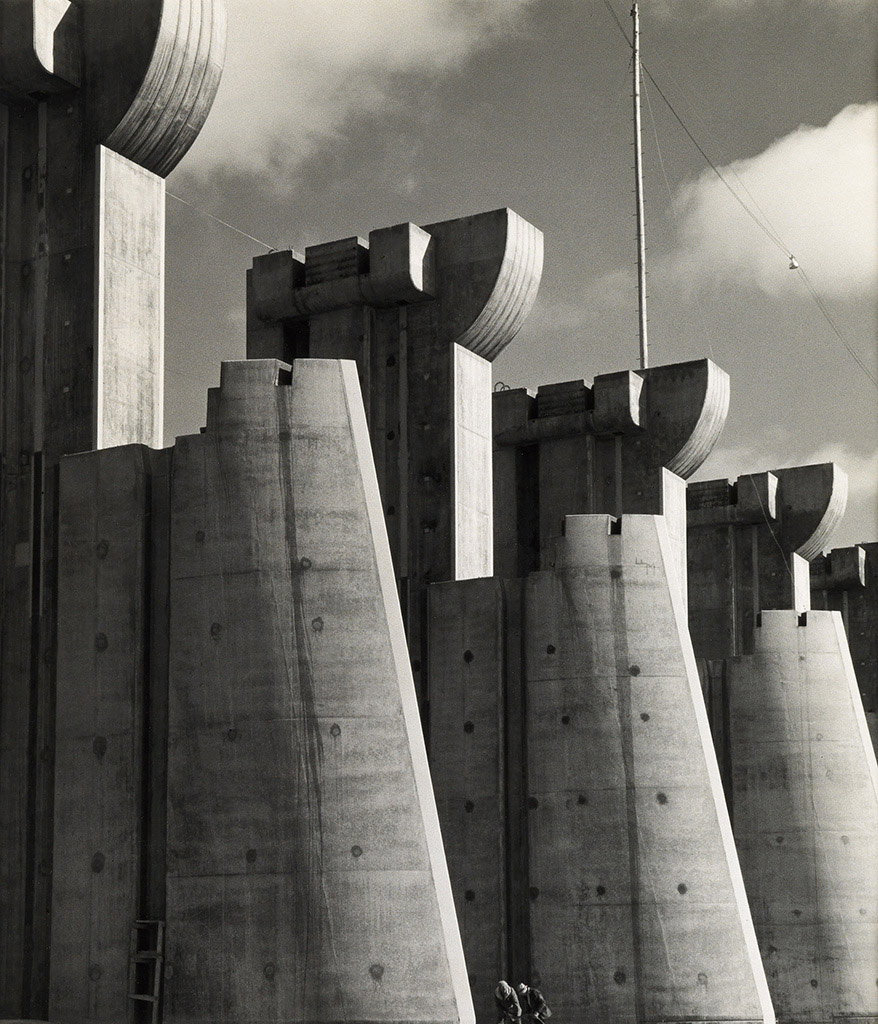
MoMA website

LIKE ART BLART ON FACEBOOK

Back to top

Exhibition: ‘A World of Its Own: Photographic Practices in the Studio’ at the Museum of Modern Art (MoMA), New York Part 1

Exhibition dates: 8th February – 2nd November 2014

The Edward Steichen Photography Galleries, third floor

Curators: Organised by Quentin Bajac, The Joel and Anne Ehrenkranz Chief Curator, with Lucy Gallun, Assistant Curator, Department of Photography


Bruce Nauman (American, b. 1941) 'Composite Photo of Two Messes on the Studio Floor' 1967


Bruce Nauman (American, b. 1941)
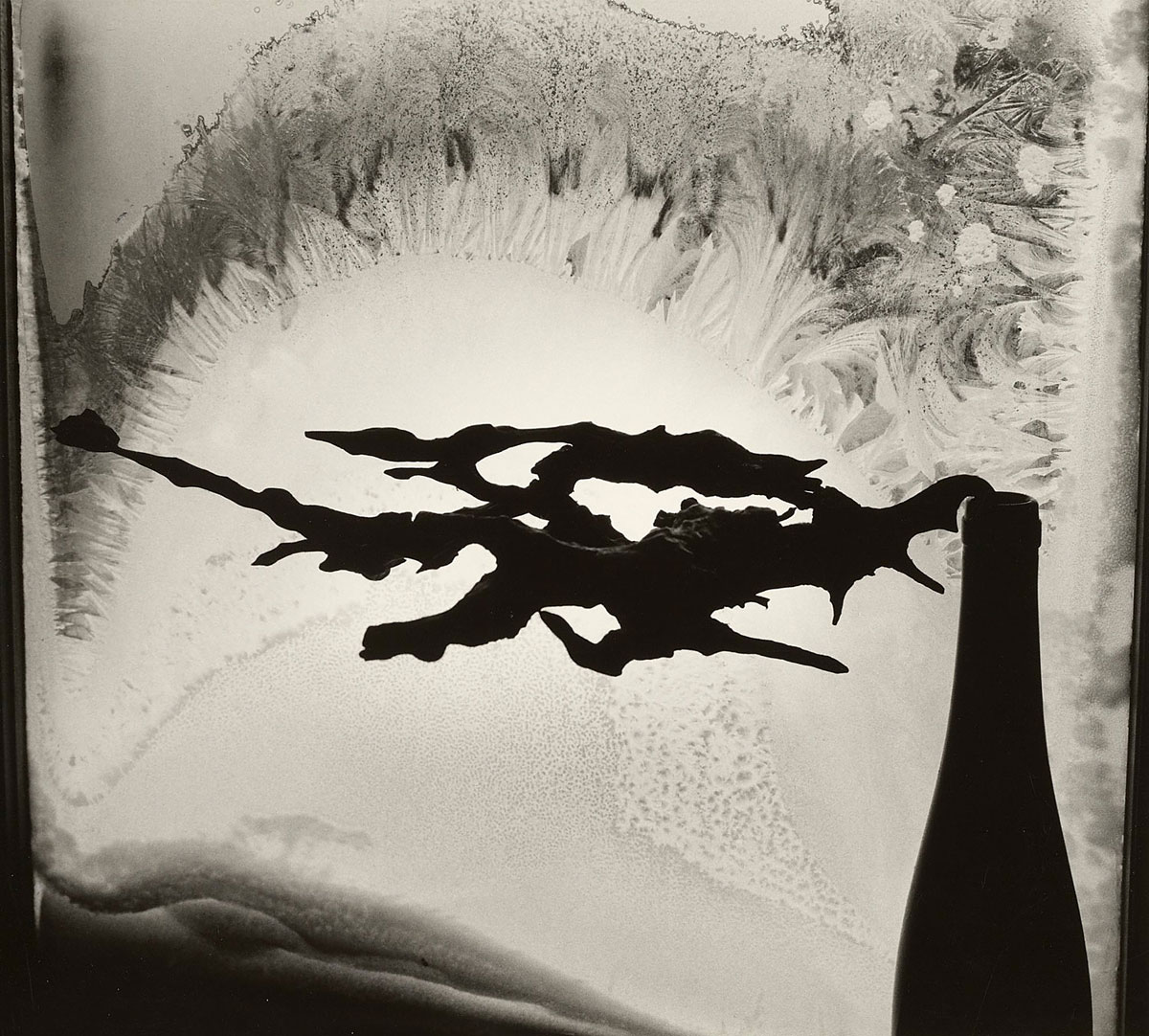
Composite Photo of Two Messes on the Studio Floor 
1967
Gelatin silver print
40 1/2″ x 10′ 3″ (102.9 x 312.4cm)
Gift of Philip Johnson
Museum of Modern Art Collection


A bumper two part posting on this fascinating, multi-dimensional subject: photographic practices in the studio, which may be a stage, a laboratory, or a playground. The exhibition occupies all MoMA’s six photography galleries, each gallery with its own sub theme, namely, Surveying the Studio, The Studio as Stage, The Studio as Set, A Neutral Space, Virtual Spaces and The Studio, from Laboratory to Playground.

The review of this exhibition “When a Form Is Given Its Room to Play” by Roberta Smith on the New York Times website (6th February 2014) damns with faint praise. The show is a “fabulous yet irritating survey” which “dazzles but often seems slow and repetitive.” Smith then goes on to list the usual suspects: “And so we get professional portraitists, commercial photographers, lovers of still life, darkroom experimenters, artists documenting performances and a few generations of postmodernists, dead and alive, known and not so, exploring the ways and means of the medium. This adds up to plenty to see: around 180 images from the 1850s to the present by some 90 photographers and artists. The usual suspects here range from Julia Margaret Cameron to Thomas Ruff, with Laszlo Moholy-Nagy, Lucas Samaras, John Divola and Barbara Kasten in between.” There are a few less familiar and postmodern artists thrown in for good measure, but all is “dominated by black-and-white images in an age when colour reigns.” The reviewer then rightly notes the paucity of “postmodern photography of the 1980s, much of it made by women, that did a lot to reorient contemporary photo artists to the studio. It is a little startling for an exhibition that includes so many younger artists dealing with the artifice of the photograph (Ms. Belin, for example) to represent the Pictures Generation artists with only Cindy Sherman, James Casebere and (in collaboration with Allan McCollum) Laurie Simmons” before finishing on a positive note (I think!), noting that the curators “had aimed for a satisfying viewing experience, which, these days, is something to be grateful for.”


SOMETHING TO BE GRATEFUL FOR… OH, TO BE SO LUCKY IN AUSTRALIA!

Just to have the opportunity to view an exhibition of this quality, depth and breadth of concept would be an amazing thing. Even a third of the number of photographs (say 60 works) that address this subject at any one of the major institutions around Australia would be fantastic but, of that, there is not a hope in hell.

Think Marcus, think… when was the last major exhibition, I mean LARGE exhibition, at a public institution in Australia that actually addressed specific ISSUES and CONCEPTS in photography (such as this), not just putting on monocular exhibitions about an artists work or exhibitions about a regions photographs? Ah, well… you know, I can’t really remember. Perhaps the American Dreams exhibition at Bendigo Art Gallery, but that was a GENERAL exhibition about 20th century photography with no strong investigative conceptual theme and it was imported from George Eastman House.

Here in Australia, all we can do is look from afar, purchase the catalogue and wonder wistfully what the exhibition actually looks like and what we are missing out on. MoMA sent me just 10 images media images. I have spent hours scouring the Internet for other images to fill the void of knowledge and vision (and then cleaning those sometimes degraded images), so that those of us not privileged enough to be able to visit New York may gain a more comprehensive understanding of what this exhibition, and this multi-faceted dimension of photography, is all about. It’s a pity that our venerable institutions and the photography curators in them seem to have had a paucity of ideas when it comes to expounding interesting critiques of the medium over the last twenty years or so. What a missed opportunity.

Dr Marcus Bunyan


Many thankx to MoMA for allowing me to publish six of the photographs in the posting. The rest of the images were sourced from the Internet. Please click on the photographs for a larger version of the image.


Installation view of the exhibition 'A World of Its Own: Photographic Practices in the Studio' at the Museum of Modern Art (MoMA), New York


Installation view of the exhibition A World of Its Own: Photographic Practices in the Studio at the Museum of Modern Art (MoMA), New York


Surveying the Studio


Uta Barth (American, b. 1958) 'Sundial (07.13)' 2007


Uta Barth (American, b. 1958)
Sundial (07.13)
2007
Chromogenic colour prints
each 30 x 28 1/4″ (76.2 x 71.8cm)
The Photography Council Fund
Museum of Modern Art Collection


Geta Brâtescu (Romanian, 1926-2018) 'The Studio. Invocation of the Drawing' (L'Atelier. Invocarea desenului) 1979


Geta Brâtescu (Romanian, 1926-2018)
The Studio. Invocation of the Drawing (L’Atelier. Invocarea desenului)
1979
Gelatin silver prints with tempera on paper
33 1/16 x 27 9/16″ (84 x 70cm)
Modern Women’s Fund
Museum of Modern Art Collection


Geta Brătescu was a Romanian visual artist with works in drawing, collage, photography, performance, illustration and film. In 2008, Brătescu received an honorary doctorate from the Bucharest National University of Arts for “her outstanding contributions to the development of contemporary Romanian art”. Brătescu was artistic director of literature and art magazine Secolul 21. A major retrospective of her work was held at the National Museum of Art of Romania in December 1999. In 2015 Brătescu’s first UK solo exhibition was held at the Tate Liverpool. In 2017, she was selected to represent Romania at the 57th Venice Biennale.


Man Ray (American, 1890-1976) 'Laboratory of the Future' 1935


Man Ray (American, 1890-1976)
Laboratory of the Future
1935
Gelatin silver print
9 1/16 x 7″ (23.1 x 17.8cm)
Gift of James Johnson Sweeney
Museum of Modern Art Collection


Charles Sheeler (American, 1883-1965) 'Cactus and Photographer's Lamp, New York' 1931


Charles Sheeler (American, 1883-1965)
Cactus and Photographer’s Lamp, New York
1931
Gelatin silver print
9 1/2 x 6 5/8″ (23.5 x 16.6cm)
Gift of Samuel M. Kootz
Museum of Modern Art Collection


Bringing together photographs, films, videos, and works in other mediums, A World of Its Own: Photographic Practices in the Studio examines the ways in which photographers and artists using photography have worked and experimented within the four walls of the studio space, from photography’s inception to today. Featuring both new acquisitions and works from the Museum’s collection that have not been on view in recent years, A World of Its Own includes approximately 180 works, by approximately 90 artists, such as Berenice Abbott, Uta Barth, Zeke Berman, Karl Blossfeldt, Constantin Brancusi, Geta Brătescu, Harry Callahan, Robert Frank, Jan Groover, Barbara Kasten, Man Ray, Bruce Nauman, Paul Outerbridge, Irving Penn, Adrian Piper, Edward Steichen, William Wegman, and Edward Weston.

The exhibition considers the various roles played by the photographer’s studio as an autonomous space; depending on the time period, context, and the individual motivations (commercial, artistic, scientific) and sensibilities of the photographer, the studio may be a stage, a laboratory, or a playground. Organised thematically, the display unfolds in multiple chapters. Throughout the 20th century, artists have explored their studio spaces using photography, from the use of composed theatrical tableaux (in photographs by Julia Margaret Cameron or Cindy Sherman) to neutral, blank backdrops (Richard Avedon, Robert Mapplethorpe); from the construction of architectural sets within the studio space (Francis Bruguière, Thomas Demand) to chemical procedures conducted within the darkroom (Walead Beshty, Christian Marclay); and from precise recordings of time and motion (Eadweard Muybridge, Dr. Harold E. Edgerton) to amateurish or playful experimentation (Roman Signer, Peter Fischli / David Weiss). A World of Its Own offers another history of photography, a photography created within the walls of the studio, and yet as groundbreaking and inventive as its seemingly more extroverted counterpart, street photography.”

Text from the MoMA website


The exhibition is divided into 6 themes each with its own gallery space:

1/ Surveying the Studio
2/ The Studio as Stage
3/ The Studio as Set
4/ A Neutral Space
5/ Virtual Spaces
6/ The Studio, from Laboratory to Playground


The Studio as Stage


Unidentified photographer (French?) 'Untitled' c. 1855


Unidentified photographer (French?)
Untitled
c. 1855
Albumen silver print from a wet-collodion glass negative
9 3/16 × 6 1/8″ (23.4 × 15.5cm)
Gift of Paul F. Walter
Museum of Modern Art Collection


Cecil Beaton (British, 1904-1980) 'Edith Sitwell' 1927


Cecil Beaton (British, 1904-1980)
Edith Sitwell
1927
Gelatin silver print
11 1/2 × 9 5/8″ (29.3 × 24.5 cm)
Gift of Paul F. Walter
Museum of Modern Art Collection
© 2022 Estate of Cecil Beaton


George Platt Lynes (American, 1907-1955) 'Untitled' 1941


George Platt Lynes (American, 1907-1955)
Untitled
1941
Gelatin silver print
7 5/8 x 9 5/8″ (19.2 x 24.4cm)
Anonymous gift
Museum of Modern Art Collection


Lucas Samaras (American, 1936-2024) 'Auto Polaroid' 1969-1971


Lucas Samaras (American born Greece, 1936-2024)
Auto Polaroid
1969-1971
Eighteen black-and-white instant prints (Polapan), with hand-applied ink
Each 3 3/4 x 2 15/16″ (9.5 x 7.4cm)
Overall 14 5/8 x 24″ (37.2 x 61cm)
Gift of Robert and Gayle Greenhill
Museum of Modern Art Collection


Working in the digital realm long before it was associated with fine art, Samaras pioneered radical new modes of image making throughout his storied career, pushing and redefining the boundaries of portraiture and self-portraiture over the course of seven decades. Centering on the body and the psyche, Samaras’s autobiographical work across photography, painting, installation, assemblage, drawing, textile, and sculpture often meditates on the malleable, shapeshifting nature of selfhood. “I like remaking myself in photography,” the artist once said. …

In the late 1960s, Samaras began working with a Polaroid 360 camera, creating his iconic Auto Polaroids by altering hundreds of images, mostly self-portraits, with applications of ink by his own hand. In 1973, using a Polaroid SX-70, he took this collagist approach further by manipulating the wet emulsion of the film with a stylus or his fingertip before the chemicals set. The resulting distortions in his Photo-Transformations series took on abstract, otherworldly effects, which he would continue exploring amid the rise of other image making technologies in the following decades.

Anonymous. “Remembering Lucas Samaras,” on the Pace Gallery website Mar 7, 2024 [Online] Cited 06/06/2024


Lucas Samaras (American, 1936-2024) 'Auto Polaroid' 1969-1971 (detail)

Lucas Samaras (American, 1936-2024) 'Auto Polaroid' 1969-1971 (detail)

Lucas Samaras (American, 1936-2024) 'Auto Polaroid' 1969-1971 (detail)


Lucas Samaras (American, 1936-2024)
Auto Polaroid (details)
1969-1971
Eighteen black-and-white instant prints (Polapan), with hand-applied ink
Each 3 3/4 x 2 15/16″ (9.5 x 7.4cm)
Overall 14 5/8 x 24″ (37.2 x 61cm)
Gift of Robert and Gayle Greenhill
Museum of Modern Art Collection


Julia Margaret Cameron (British, 1815-1879) 'Madonna with Children' 1864


Julia Margaret Cameron (British, 1815-1879)
Madonna with Children
1864
Albumen silver print
10 1/2 x 8 5/8″ (26.7 x 21.9cm)
Gift of Shirley C. Burden
Museum of Modern Art Collection


Julia Margaret Cameron (British, 1815-1879) 'Untitled (Mary Ryan?)' c. 1867


Julia Margaret Cameron (British, 1815-1879)
Untitled (Mary Ryan?)
c. 1867
Albumen silver print
13 3/16 x 11″ (33.5 x 27.9cm)
Gift of Shirley C. Burden
Museum of Modern Art Collection


Nadar (Gaspard-Félix Tournachon) (French, 1820-1910) Adrien Tournachon (French, 1825-1903) 'Pierrot Surprised' 1854-1855


Nadar (Gaspard-Félix Tournachon) (French, 1820-1910)
Adrien Tournachon (French, 1825-1903)
Pierrot Surprised
1854-1855
Albumen silver print
11 1/4 x 8 3/16″ (28.6 x 20.8cm)
Suzanne Winsberg Collection. Gift of Suzanne Winsberg
Museum of Modern Art Collection


Maurice Tabard (French, 1897-1984) 'Untitled' 1929


Maurice Tabard (French, 1897-1984)
Untitled
1929
Gelatin silver print
6 9/16 x 6 1/2″ (16.7 x 16.5cm)
Gift of Robert Shapazian
Museum of Modern Art Collection


Edward Steichen (American born Luxembourg, 1879-1973) 'Anna May Wong' 1930


Edward Steichen (American born Luxembourg, 1879-1973)
Anna May Wong
1930
Gelatin silver print
16 9/16 x 13 7/16″ (42.1 x 34.1cm)
Gift of the artist
Museum of Modern Art Collection


“Taking people away from their natural circumstances and putting them into the studio in front of a camera did not simply isolate them, it transformed them. Sometimes the change was subtle; sometimes it was great enough to be almost shocking. But always there was transformation.”

~ Irving Penn 1974


Cindy Sherman (American, b. 1954) 'Untitled #131' 1983


Cindy Sherman (American, b. 1954)
Untitled #131
1983
Chromogenic colour print
35 x 16 1/2″ (89 x 41.9cm)
Joel and Anne Ehrenkranz Fund
Museum of Modern Art Collection


The Studio as Set


Barbara Kasten (American, b. 1936) 'Construct I-F' 1979


Barbara Kasten (American, b. 1936)
Construct I-F
1979
Colour instant print (Polaroid Polacolor)
9 1/2 x 7 1/2″ (24.0 x 19.0cm)
Acquired through the generosity of Wendy Larsen
Museum of Modern Art Collection


Barbara Kasten (American, b. 1936) 'Construct NYC 17' 1984


Barbara Kasten (American, b. 1936)
Construct NYC 17
1984
Silver dye bleach print
29 3/8 x 37 1/16″ (74.7 x 94.1cm)
Gift of Foster Goldstrom
Museum of Modern Art Collection


James Casebere (American, b. 1953) 'Subdivision with Spotlight' 1982


James Casebere (American, b. 1953)
Subdivision with Spotlight
1982
Gelatin silver print
14 13/16 x 18 15/16″ (37.6 x 48.1cm)
Purchase
Museum of Modern Art Collection


Francis Bruguière (American, 1879-1945) 'Light Abstraction' c. 1925


Francis Bruguière (American, 1879-1945)
Light Abstraction
c. 1925
Gelatin silver print
9 15/16 x 7 15/16″ (25.2 x 20.2cm)
Gift of Arnold Newman
Museum of Modern Art Collection


Francis Joseph Bruguière (15 October 1879 – 8 May 1945) was an American photographer.

Francis Bruguière was born in San Francisco, California, to Emile Antoine Bruguière (1849-1900) and Josephine Frederikke (Sather) Bruguière (1845-1915). He was the youngest of four sons born into a wealthy banking family and was privately educated. His brothers were painter and physician Peder Sather Bruguière (1874-1967), Emile Antoine Bruguiere Jr. (1877-1935), and Louis Sather Bruguière (1882-1954), who married wealthy heiress Margaret Post Van Alen. He was also a grandson of banker Peder Sather. His mother died in the 1915 sinking of the British ocean liner SS Arabic by a German submarine.

In 1905, having studied painting in Europe, Bruguière became acquainted with photographer and modern art promoter Alfred Stieglitz (who accepted him as a Fellow of the Photo-secession), and set up a studio in San Francisco, recording in a Pictorialist style images of the city after the earthquake and fire; some of them were reproduced in a book called San Francisco in 1918. He co-curated the photographic exhibition at the 1915 Panama-California Exposition in San Diego, and nine of his photographs were included in The Evanescent City (1916) by George Sterling.

In 1918, following the decline of the family fortune, he moved to New York City where he made his living by photographing for Vanity Fair, Vogue, and Harper’s Bazaar. Soon he was appointed the official photographer of the New York Theatre Guild. In this role he photographed the British stage actress Rosalinde Fuller, who was debuting in What’s in a Name? (1920), and she partnered him for the rest of his life.

Throughout his life, Bruguière experimented with multiple-exposure, solarization (years ahead of Man Ray), original processes, abstracts, photograms, and the response of commercially available film to light of various wavelengths. Until his one-man show at the Art Centre of New York in 1927, he showed this work only to friends. In the mid-1920s, he planned to make a film called The Way, depicting stages in a man’s life, to be played by Sebastian Droste with Rosalinde doing all the female parts. To obtain funding, Bruguière took photographs of projected scenes, but Droste died before filming started; so we are left with only the still pictures.

In 1927 they moved to London, where Bruguière co-created the first British abstract film, Light Rhythms, with Oswell Blakeston. Long thought to have been lost, it has now been recovered. During World War II, he returned to painting.

Text from the Wikipedia website


Jaromír Funke (Czech, 1896-1945) 'Composition' c. 1925


Jaromír Funke (Czech, 1896-1945)
Composition
c. 1925
Gelatin silver print
9 1/4 × 11 9/16″ (23.4 × 29.3cm)
Acquired through the generosity of Blanchette Hooker Rockefeller
Museum of Modern Art Collection
© 2022 Miloslava Rupešová


Jaromír Funke (1 August 1896 – 22 March 1945) was a leading Czech photographer during the 1920s and 1930s.

Funke was recognised for his “photographic games” using mirrors, lights, and insignificant objects, such as plates, bottles, or glasses, to create unique works. In his still life imagery he created abstracts of forms and shadows reminiscent of photograms. His work was regarded as logical, original and expressive in nature. A typical feature of Funke’s work would be the “dynamic diagonal.”

Text from the Wikipedia website


Paul Outerbridge (American, 1896-1958) 'Images de Deauville' 1936


Paul Outerbridge (American, 1896-1958)
Images de Deauville
1936
Tri-colour carbro print
15 3/4 x 12 1/4″ (40 x 31.1cm)
Gift of Mrs. Ralph Seward Allen
Museum of Modern Art Collection


Shozo Kitadai, Kiyoji Otsuji. 'Untitled' from the portfolio 'APN (Asahi Picture News)' 1953-1954


Shozo Kitadai, Kiyoji Otsuji
Untitled from the portfolio APN (Asahi Picture News)
1953-1954
Gelatin silver print, printed 2003
7 1/2 × 5 9/16″ (19 × 14.2cm)
Gift of Shigeru Yokota
Museum of Modern Art Collection
© 2022 Seiko Otsuji


Irving Penn (American, 1917-2009) 'Three Steel Blocks, New York' 1980


Irving Penn (American, 1917-2009)
Three Steel Blocks, New York
1980
Platinum/palladium print
13 1/4 × 20 11/16″ (33.6 × 52.5cm)
Acquired through the generosity of Lily Auchincloss
Museum of Modern Art Collection
© The Irving Penn Foundation


Elad Lassry (Israeli, b. 1977) 'Nailpolish' 2009


Elad Lassry (Israeli, b. 1977)
Nailpolish
2009
Chromogenic colour print
14 1/2 x 11 1/2″ (36.8 x 29.2cm)
Fund for the Twenty-First Century
Museum of Modern Art Collection


The Museum of Modern Art
11 West 53 Street
New York, NY 10019
Phone: (212) 708-9400

Opening hours:
10.30am – 5.30pm
Open seven days a week

MoMA website

LIKE ART BLART ON FACEBOOK

Back to top

Exhibition: ‘Emmet Gowin’ at the Fondation Henri Cartier-Bresson, Paris

Exhibition dates: 14th May – 27th July 2014


Emmet Gowin (American, b. 1941) 'Nancy, Danville (Virginia)' 1969


Emmet Gowin (American, b. 1941)
Nancy, Danville (Virginia)
1969
Gelatin silver print
© Emmet Gowin, cortesy Pace/MacGill Gallery, New York


Emmet Gowin is a superlative photographic artist. His images possess a unique sensuality that no other artist, save Frederick Sommer, dare approach.

His own family was an early significant subject matter, one to which only he had ready access. “I was wondering about in the world looking for an interesting place to be, when I realised that where I was was already interesting.”1 I feel that the photographs of his family are his strongest work for they image an intimate story, and Gowin is nothing if not a magnificent storyteller. Look at the beauty of images such as Nancy, Danville (Virginia) (1969, above) or Ruth, Danville (Virginia) (1968, below) and understand what awareness it takes – first to visualise, then capture on the negative, then print these almost mystical moments of time.

As Gowin observed in his senior thesis, which was predicated upon the necessary co-ingredients of art and spirituality, “Art is the presence of something mysterious that transports you to a place where life takes on a clearness that it ordinarily lacks, a transparency, a vividness, a completeness.”2 He complemented this understanding of art and spirituality with an interest in science. He was in harmony with the physicists and the scientists, finding them to be the most poetic people of the age.3 Inspired by Sommer, Gowin perfected his printing technique through a respect for the medium, respect for the materials and conviction as to what the materials were capable of doing.4

“Sommer freely shared with Gowin his knowledge of photographic equipment, materials, chemicals and printing techniques and Gowin often repeats Sommer’s admonition to him: “Don’t let anyone talk you out of physical splendour.” Over the years Gowin developed methods of printing born from patient experimentation and a love of craft. His background in painting and drawing taught him that there are many solution to making a finished work of art… which he often builds to achieve the most satisfying integration of elements: “The mystery of a beautiful photograph really is revealed when nothing is obscured. We recognise that nothing has been withheld from us, so that we must complete its meaning. We are returned, it seems directly, to the sense and smell of its origin… A complete print is simply a fixed set of relationships, which accommodates its parts as well as our feelings. Clusters of stars in the sky are formed by us into constellations. Perhaps I feel that this constellation has enough stars, and doesn’t need any more. This grouping is complete. It feels right. Feeling, alone, tells us when a print is complete.””5

His later more universal work, such as the landscapes and aerial photographs, are no less emphatic than the earlier personal work but they are a second string to the main bow. The initial impetus of this work can be seen in the book Emmet Gowin Photographs as a development from still life photographs such as Geography Pages, 1974 (p. 62). This second theme took Gowin longer to develop but his photographs are no less powerful for it. His photographs of Petra possess the most amazing serenity of any taken at this famous site; his photographs of Mount St Helens after the volcanic eruption and the aerial photographs of nuclear sites and aeration ponds are among the strongest aerial photographs that I have ever seen. Gowin’s experimentation with the development of the negative, using different times and developers; his experimentation with the development of the print, sometimes using multiple developers and monotones or strong / subtle split toning (as can be seen in the photographs below) is outstanding. His poetic ability rouses the senses and is munificent but for me these photographs do not possess the “personality” or significance of his earlier family photographs. But only just, and we are talking fractions here!

“These photographs of the tracings of human beings reveal mankind not as a nurturer but as a blind and godlike power. Even his latest aerial agricultural landscapes made on route to nuclear sites have a magnificent indifference to human scale. For Gowin, confrontation of man’s part in the creation of ecological problems would seem to require the most transcendental point of view, and as his subjects have become more difficult and frightening, he has created his lushest and most seductive prints.”6

Gowin is an artist centred in a space of sensibility. An understanding of the interrelationships between people and the earth is evidenced through aware and clearly seen images. Gowin digs down into the essence of the earth in order to understand our habituation of it. How we fail to change the course we are on even as we recognise what it is that we are doing to the world. When the stimulus is constantly repeated there is a reduction of psychological or behavioural response and this is what Gowin pokes a big stick at. As he observes,

“We are products of nature. We are nature’s consciousness and awareness, the custodians of this planet… We begin as the intimate person that clings to our mother’s breast, and our conception of the world is that interrelationship. Out safety depends on that mother. And now I’m beginning to see that there’s a mother larger than the human mother and it’s the earth; if we don’t take care of that we will have lost everything.”7

I was luck enough to meet Emmet Gowin when he visited Australia in 1995. He had an exhibition in the small gallery in Building 2 in Bowens Lane at RMIT University, presented a public lecture and held a workshop with about 20 students. I remember I was bowled over by his intensity and star power and I admit, I asked a stupid question. The impetuousness of youth with stars in their eyes certainly got the better of me. Now when I look at the work again I am still in awe of the works sincerity, spirituality, sensuality and respect for subject matter. No matter what he is photographing.

Dr Marcus Bunyan


1/ Gowin, Emmet quoted in Chahroudi, Martha. “Introduction,” in Emmet Gowin Photographs. Philadelphia Museum of Art, 1990, p. 10.
2/ Ibid., p. 9.
3/ Ibid., p. 11.
4/ Ibid., p. 11.
5/ Gowin quoted in Kelly, Jain (ed.,). Darkroom 2. New York, 1978, p. 43 quoted in Chahroudi, Martha. “Introduction,” in Emmet Gowin Photographs. Philadelphia Museum of Art, 1990, p. 11.
6/ Chahroudi, Op. cit., p. 15.
7/ Ibid., p. 15.

Only two of the images are from the Fondation Henri Cartier-Bresson – the rest I sourced from the internet. Please click on the photographs for a larger version of the image.


“For me, pictures provide a means of holding, intensely, a moment of communication between one human and another.”

“There is a profound silence that whines in the ear, a breathless quiet, as if the light or something unheard was breathing. I hold my breath to make certain it’s not me. It must be the earth itself breathing.


Emmet Gowin


Emmet Gowin (American, b. 1941) 'Edith and Ruth, Danville (Virginia)' 1966


Emmet Gowin (American, b. 1941)
Edith and Ruth, Danville (Virginia)
1966
Gelatin silver print
© Emmet Gowin, cortesy Pace/MacGill Gallery, New York


Emmet Gowin (American, b. 1941) 'Barry, Dwayne and Turkeys, Danville, Virginia' 1970


Emmet Gowin (American, b. 1941)
Barry, Dwayne and Turkeys, Danville, Virginia 
1970
Gelatin silver print
© Emmet Gowin, cortesy Pace/MacGill Gallery, New York


Emmet Gowin, the catalog accompanying a retrospective now touring in Spain, is a great introduction to the artist’s works and a great keepsake for a fan. The writings by Keith Davis, Carlos Gollonet and Gowin himself identify the photographer’s humanist and spiritual roots and detail his journey from 1960’s-era people pictures focused on his wife, Edith and family in Danville, VA, to aerial photographs of ravaged landscapes, like the nuclear test grounds in Nevada, and his most recent project  archiving tropical, nocturnal-moths.

While his disparate bodies of work may look like geologic shifts in subject matter, Gowin talks in the book about the spiritual quest he’s on, and his realisation that humankind inhabits the land, and that the land is a vital part of who we are. To my eye, what holds all the works together is Gowin’s never-ceasing focus on non-conventional beauty. His way of photographing both people and the wasted landscapes plays up the dark sublime. These are not traditional pretty pictures, but they are exquisitely beautiful. All Gowin photos smoulder with emotion and feel like they were snapped with a breath held, bated with desire.

Roberta Fallon. “Emmett Gowin – From family of man to mariposas nocturnas at Swarthmore’s List Gallery,” on The Artblog website, March 22, 2012 [Online] Cited 05/07/2014


Emmet Gowin (American, b. 1941) 'Edith, Noël, Danville (Virginia)' 1971


Emmet Gowin (American, b. 1941)
Edith, Noël, Danville (Virginia)
1971
Gelatin silver print
© Emmet Gowin, Courtesy Pace/MacGill Gallery, New York


Emmet Gowin (American, b. 1941) 'Edith, Danville (Virginia)' 1971


Emmet Gowin (American, b. 1941)
Edith, Danville (Virginia)
1971
Gelatin silver print
7 3/4 x 9 7/8″ (19.7 x 25.1cm)
Gift of Judith Joy Ross
© Emmet Gowin, Courtesy Pace/MacGill Gallery, New York


Emmet Gowin (American, b. 1941) 'Edith, Danville (Virginia)' 1970


Emmet Gowin (American, b. 1941)
Edith, Danville (Virginia)
1970
Gelatin silver print
© Emmet Gowin, Courtesy Pace/MacGill Gallery, New York


Emmet Gowin (American, b. 1941) 'Edith, Newtown (Pennsylvania)' 1974


Emmet Gowin (American, b. 1941)
Edith, Newtown (Pennsylvania)
1974
Gelatin silver print
© Emmet Gowin, cortesy Pace/MacGill Gallery, New York


Emmet Gowin (American, b. 1941) 'Ruth, Danville (Virginia)' 1968


Emmet Gowin (American, b. 1941)
Ruth, Danville (Virginia)
1968
Gelatin silver print
© Emmet Gowin, cortesy Pace/MacGill Gallery, New York


Emmet Gowin (American, b. 1941) 'Edith, Chincoteague Island (Virginia)' 1967


Emmet Gowin (American, b. 1941)
Edith, Chincoteague Island (Virginia)
1967
Gelatin silver print
© Emmet Gowin, Courtesy Pace/MacGill Gallery, New York


From May 14th to July 27th 2014, Fondation Henri Cartier-Bresson will hold an exhibition of the American photographer Emmet Gowin. This important retrospective is showing 130 prints of one of the most original and influential photographer of these last forty years. This exhibition shows on two floors his entire career: his most famous series from the end of the sixties, the moths’ flights and the aerial photographs. The exhibition organised by Fundación MAPFRE in collaboration with Fondation HCB is accompanied by a catalogue published by Xavier Barral edition.

Born in Danville (Virginia) in 1941, Emmet Gowin grows up in Chincoteague Island, in a religious family. His father, a Methodist minister gives him a righteous discipline and a strict education, while his mother, musician, was a gentle, nurturing presence. During his spare time, Emmet encounters the surrounding landscape and begins drawing.

He completes his high school education and enrols in a local business school in 1951 and works at the same time at the design department of Sears, the multinational department store chain. In 1961, Gowin enters in the Commercial Art Department at Richmond Professional Institute, where he studies drawing, painting, graphic design, and history of Art. After a few months, he realises that photography is the best mean of expression and gives him the possibility to seize the Fate and the Unexpected.

Gowin’s early photographic influences came in the form of books and catalogues such as Images à la Sauvette by Henri Cartier-Bresson, History of Photography by Beaumont Newhall or Walker Evans’s American Photographs. Emmet Gowin acquires his first Leica 35mm in 1962 and after two years spent observing the Masters of photography, he finally feels ready to affirm his own photographic style. In 1963, he goes for the first time in New York and meets Robert Franck who encouraged him.

The first Gowin’s portfolios realised in 1965, is technically simple in approach. While the subjects vary considerably, all are drawn from everyday life: kids playing outdoors, Edith’s family, adults in the streets or squares, cars and early pictures of Edith. They get married in 1964. Edith Morris and Emmet Gowin are born in the same city but they grew up in totally different families. Edith’s one, was more exuberant and emotionally close than Emmet’s. As we can discover in the first floor of the exhibition, Edith and her family are the heart of the photograph’s creative universe. As mentioned by Carlos Gollonet, curator of the exhibition, Gowin’s work, seen cumulatively, is a portrait of the artist.

In 1965, they move to Providence, and Emmet begins his studies with Harry Callahan at Rhode Island School of Design. He begins to consistently use a 4 x 5 inch view camera from this time on. This bigger negative produced prints with beautiful transparent details and correspondingly finer and smoother tonal scale.

Just before his first son’s birth, Elijah, in 1967, Emmet and Edith moved to Ohio, where he begins teaching at the Dayton Art Institute. This marks the start of a teaching career that spans more than four decades. He concentrates his work on Edith and let us going through his private life and proposes a very personal artistic vision of this work: I do not feel that I can make picture impersonally, but that I am affected by and involved with the situations which lead to, or beyond, the making of the pictures. In these years, he met Ralph Eugene Meatyard and Frederik Sommer, who would become his close friend and mentor.

At the end of the 1960’s, Gowin begins making circular images of Edith, her family, and their own household, both indoors and out. The Gowin’s second son, Isaac, born in 1974, was the subject – both before and after birth – of many of these circular 8×10 inch photographs, which give the impression of looking through a keyhole. At the beginning of the 1970’s, the exhibitions at the Light Gallery and MoMA mark a significant step toward his American success. In 1973, he’s appointed Lecturer at Princeton University. He is later appointed Full Professor, a position he will hold until his retirement in 2009. He inspired a new generation of photographers such as Fazal Sheikh, David Maisel or Andrew Moore.

From 1973, Gowin goes back to sources, nature and landscape and introduces the idea of Working Landscapes in which the contributions of many generations, overtime, shape the use and care of the land. He travels in Europe, Ireland and Italy, where he discovered the ancient Etruscan city of Matera. His first monograph, Emmet Gowin: photographs, is published in 1976. In 1982, the Queen Noor of Jordan, one of Gowin’s students at Princeton, invites him to photograph the archeological site of Petra. Some of these photos are exhibited on the second floor of the foundation. Later, he continues making views of nature and traveled overseas, reverting to a traditional rectangular format. His interest in gardens and the historical balance between nature and human culture stimulates a dedication to a larger landscape, recorded first from the ground and then from the air. He photographs the incredible destruction of the Mount St. Helens volcano, Washington, and spent years recording the inhabited – and often scarred – face of the American West. Gowin is not an environmental activist. Nonetheless, once he comes to know and experience these landscapes his acute moral and intellectual sense is also conveyed in his images. He wants to show the conflict that exists in our relationship with nature. “It is not a call for an action … It’s a call for reflection, meditation and consideration to be on a more intimate basis with the world.”

Over the past few years, Gowin has constantly photographed nocturnal moths. His scientific interest has led him to catalog thousands of species working alongside with biologists in tropical jungles. By chance, he traveled with a cutout silhouette of Edith in his wallet or luggage and produced a series of photographs in which Edith is once again the principal subject, in this case through her silhouette. They recall the instrument known as the physionotrace, a forerunner of the earliest photographs which was used to male silhouette reproducing the images of loved ones. Those images, printed on handmade paper with the silver image gold toned confirm that Emmet Gowin is one of the finest photographers of any period.

Press release from the Fondation Henri Cartier-Bresson website


Emmet Gowin (American, b. 1941) 'Old Handford City Site and the Columbia River, Handford Nuclear Reservation, near Richland (Washington)' 1986


Emmet Gowin (American, b. 1941)
Old Handford City Site and the Columbia River, Handford Nuclear Reservation, near Richland (Washington)
1986
Gelatin silver print
© Emmet Gowin, Courtesy Pace/MacGill Gallery, New York


The aerial photos, taken while flying over bomb test sites and waste water catchment basins and other scenes of industrial/military destruction are almost abstract to the eye. They are also very beautiful. Getting nose to nose with these works and reading the title card, however, allows the slowly-dawning realisation that you are looking at a full blown horror. This suite of works dates from 1980 when Gowin took to the air to view the aftermath of the Mt. St. Helens volcanic eruption in Washington state and was taken with the way things not visible from “human” space below revealed themselves from above. In 1986 he started exploring man-made industrial inroads into the land from the air, flying over Hanford Reservation, for one, where nuclear reactors and chemical separation plants made scars on the land like nothing nature had done. These are truly devastating pictures, and what makes them more so is the thought that this is the tip of the iceberg and that many other sites on earth bear the scars of man-made intrusion.

Roberta Fallon. “Emmett Gowin – From family of man to mariposas nocturnas at Swarthmore’s List Gallery,” on The Artblog website, March 22, 2012 [Online] Cited 05/07/2014


Emmet Gowin (American, b. 1941) 'Aeration Pond, Toxic Water Treatment Facility, Pine Bluff, AK (Arkansas)' 1989


Emmet Gowin (American, b. 1941)
Aeration Pond, Toxic Water Treatment Facility, Pine Bluff, AK (Arkansas)
1989
Toned gelatin silver print
© Emmet Gowin, Courtesy Pace/MacGill Gallery, New York


Emmet Gowin (American, b. 1941) 'Golf Course under Construction (Arizona)' 1993


Emmet Gowin (American, b. 1941)
Golf Course under Construction (Arizona)
1993
Gelatin silver print
© Emmet Gowin, Courtesy Pace/MacGill Gallery, New York


Emmet Gowin (American, b. 1941) 'Aerial view: Mt. St. Helens rim, crater and lava dome' 1982


Emmet Gowin (American, b. 1941)
Aerial view: Mt. St. Helens rim, crater and lava dome
1982
Gelatin silver print
© Emmet Gowin, Courtesy Pace/MacGill Gallery, New York


Every Time less than the pulsation of the artery

Is equal in its period & value to Six Thousand Years.


For in this Period the Poet’s Work is Done, and all the Great

Events of Time start forth & are conceiv’d in such a Period

Within an Moment, a Pulsation of the Artery. …


For every Space larger than a red Globule of Man’s blood,

Is visionary, and is created by the Hammer of Los:

And every Space smaller than a red Globule of Man’s blood opens

Into Eternity of which this vegetable Earth is but a shadow…


William Blake. From “Milton”


Emmet Gowin (American, b. 1941) 'The Khazneh from the Sîq, Petra (Jordan)' 1985


Emmet Gowin (American, b. 1941)
The Khazneh from the Sîq, Petra (Jordan)
1985
Gelatin silver print
© Emmet Gowin, Courtesy Pace/MacGill Gallery, New York


Emmet Gowin (American, b. 1941) 'Edith, Newtown (Pennsylvania)' 1994


Emmet Gowin (American, b. 1941)
Edith, Newtown (Pennsylvania)
1994
Gelatin silver print
© Emmet Gowin, Courtesy Pace/MacGill Gallery, New York


Emmet Gowin (American, b. 1941) 'Edith, Danville (Virginia)' 1963


Emmet Gowin (American, b. 1941)
Edith, Danville (Virginia)
1963
Gelatin silver print
© Emmet Gowin, Courtesy Pace/MacGill Gallery, New York


Emmet Gowin (American, b. 1941) 'Edith and Moth Flight' 2002


Emmet Gowin (American, b. 1941)
Edith and Moth Flight
2002
Digital ink jet print
19 x 19cm (7 1/2 x 7 1/2 in.)
National Gallery of Art, Washington, Charina Endowment Fund
© Emmet and Edith Gowin, Courtesy Pace/MacGill Gallery, New York


Fondation Henri Cartier-Bresson
79 rue des Archives
75003 Paris

Opening hours:
Tuesday – Sunday 11am – 7pm
Closed on Mondays

Fondation Henri Cartier-Bresson website

LIKE ART BLART ON FACEBOOK

Back to top