I loved putting the Florence Henri and the skull together. Too exhausted after a long day at work to say much else!
Marcus
Many thankx to Museum Bellerive for allowing me to publish the photographs in the posting. Please click on the photographs for a larger version of the image.
“I believe in the future resolution of these two states, dream and reality, which are seemingly so contradictory, into a kind of absolute reality, a surreality, if one may so speak.”
In 1930 Stern and Ellen Rosenberg Auerbach founded ringl+pit, a critically acclaimed, prize-winning Berlin based photography and design studio. They used equipment purchased from Peterhans and became well known for innovative work in advertising. The name ringl+pit is from their childhood nicknames (Ringl for Grete, Pit for Ellen).
Intermittently between April 1930 and March 1933, Stern continued her studies with Peterhans at the Bauhaus photography workshop in Dessau, where she met the Argentinian photographer Horacio Coppola. In 1933 the political climate of Nazi Germany led her to emigrate with her brother to England, where Stern set up a new studio, soon to resume her collaboration there with Auerbach.
Stern first traveled to Argentina in the company of her new husband, Horacio Coppola in 1935. The newlyweds mounted an exhibition in Buenos Aires at Sur magazine, which according to the magazine, was the first modern photography exhibition in Argentina. In 1958, she became a citizen of Argentina.
In 1948 Stern began working for Idilio, an illustrated women’s magazine, targeted specifically at lower / lower-middle class women. In the late 1940s and early 1950s, Stern created Los Sueños as illustrations for the woman’s magazine Idilio and its column “El psicoanálisis te ayudará” (Psychoanalysis Will Help You). Readers were encouraged to submit their dreams to be analysed by the ‘experts’ as an aid for its readers to find “self-knowledge and self-aid that would help them succeed in love, family and work”. Each week, one dream would be selected, analysed in depth by the expert, Richard Rest, and then illustrated by Stern through photomontage. Stern created about 150 of these photomontages, of which only 46 survive in negatives. Stern’s photomontages are surreal interpretations of the readers’ dreams that often subtly pushed back on the traditional values and concepts in Idilio magazine by inserting feminist critique of Argentinian gender roles and the psychoanalytic project in her images. The Idilio series has often been compared to Francisco Goya’s Sueños drawings, a series of preliminary drawings for his later body of work, Los Caprichos; they have also been directly compared to Los Caprichos themselves.
Stern provided photographs for the magazine and served for a stint as a photography teacher in Resistencia at the National University of the Northeast in 1959 and continued to teach until 1985.
In 1985, she retired from photography, but lived another 14 years until 1999, dying in Buenos Aires on 24 December at the age of 95.
Avant-garde photographs seem like pictures from a dream world. From new kinds of compositions and perspectives to photomontage, technical experiments, and staged scenes, Real Surreal offers a chance to rediscover the range and multifacetedness of photography between the real and the surreal. The exhibition leads the visitor through the Neues Sehen (New Vision) movement in Germany, Surrealism in France, and the avant-garde in Prague. Thanks to rare original prints from renowned photographers between 1920 and 1950, this exhibition offers a chance to see these works in a new light. In addition to some 220 photographs, a selection of historical photography books and magazines as well as rare artists’ books allow visitors to immerse themselves in this new view of the world. Furthermore, examples of films attest to the fruitful exchanges between avant-garde photography and cinema during this time.
An exhibition in cooperation with the Kunstmuseum Wolfsburg
Artistic polymath Herbert Bayer was one of the Bauhaus’s most influential students, teachers, and proponents, advocating the integration of all arts throughout his career. Bayer began his studies as an architect in 1919 in Darmstadt. From 1921 to 1923 he attended the Bauhaus in Weimar, studying mural painting with Vasily Kandinsky and typography, creating the Universal alphabet, a typeface consisting of only lowercase letters that would become the signature font of the Bauhaus. Bayer returned to the Bauhaus from 1925 to 1928 (moving in 1926 to Dessau, its second location), working as a teacher of advertising, design, and typography, integrating photographs into graphic compositions.
He began making his own photographs in 1928, after leaving the Bauhaus; however, in his years as a teacher the school was a fertile ground for the New Vision photography passionately promoted by his close colleague László Moholy-Nagy, Moholy-Nagy’s students, and his Bauhaus publication Malerei, Photographie, Film (Painting, photography, film). Most of Bayer’s photographs come from the decade 1928-38, when he was based in Berlin working as a commercial artist. They represent his broad approach to art, including graphic views of architecture and carefully crafted montages.
In 1938 Bayer emigrated to the United States with an invitation from Alfred H. Barr, Jr., founding director of The Museum of Modern Art, to apply his theories of display to the installation of the exhibition Bauhaus: 1919-28 (1938) at MoMA. Bayer developed this role through close collaboration with Edward Steichen, head of the young Department of Photography, designing the show Road to Victory (1942), which would set the course for Steichen’s influential approach to photography exhibition. Bayer remained in America working as a graphic designer for the remainder of his career.
Introduction by Mitra Abbaspour, Associate Curator, Department of Photography, 2014 on the MoMA website [Online] Cited 01/10/2021.
Genia Rubin (actually Jewgeni Germanowitsch Rubin, 1906-2001) was a Russian fashion and portrait photographer and painter .
Rubin left Russia in 1927 and initially assisted the cameraman Karl Freund in Berlin. He then studied photography at AGFA IG Farben. In 1929 Rubin went to Paris, where he worked as a still photographer in the Pathé film studios and as a portrait photographer. In 1931 he returned to Berlin, met the photographer Rolf Mahrenholz and opened his own photo studio on Berlin’s splendid boulevard, the Kurfürstendamm. It was soon discovered and launched by Franz Wolfgang Koebner, editor-in-chief of the popular magazines Das Magazin and Elegante Welt. In 1935 Rubin moved back to Paris, where he met Harry Ossip Meerson; after his departure for America Meerrson took over his studio. During this time Rubin photographed fashion for “Femina”, Harper’s Bazaar and Australian “The Home”. After the war he met the English court photographer Baron (Stirling Henry Nahum); until 1956 he worked alternately as a “fashion guest photographer” in “Baron’s Studios” in London and as a Parisian photo correspondent for the Daily Express.
Rubin had started to paint in Paris at this time. Through his acquaintance with André Breton, for example, he came into contact with contemporary painting in Paris and was among other things. In 1947 he took part in the international surrealist exhibition at the Maeght Gallery .
In 1957 Rubin stopped photographing fashion and took pictures of parks, gardens, palaces and art objects in France, England and Italy for “Maison et Jardin” (“House and Garden”, Condé-Nast ). From 1959 he devoted himself again to modern painting, also as a collector.
“… Olga Solarics (1896-1969) and her husband Adorjan von Wlassics (1893-1946) ran the Manasse’ Foto-Salon in Vienna from 1922-1938. Olga seems to have been the one interested in the photographic nude. She (or they) exhibited at the 1st International Salon of Nude Photography in Paris in 1933…”
“… Studio Manasse, which flourished in the 1930s in Vienna, captured more than just portrait photography bursting with erotic charge; it immortalised the fluid state of beauty and the ‘new woman’: confident in her own sexuality as she struggled to redefine her position in the modern world. Each picture offers a conflict of concepts, as provocative poses are presented in such traditional roles that the cynicism intended renders them humorously absurd. Adorjan and Olga Wlassics, a husband-and-wife team, founded Studio Manasse in the early 1920s. The first Manasse illustrations appeared in magazines in 1924, a booming industry at the time, as the movie industry skyrocketed and publications aimed to satisfy a public obsessed with glimpses into the world of glamour. Attracting some of the leading ladies of the time from film, theatre, opera, and vaudeville, Studio Manasse created masterpieces, employing all the techniques of makeup, retouching, and overpainting to keep their subjects happy while upholding an uncompromised artistic vision. Moulded bodies were dreams with alabaster or marble-like skin; backgrounds were staged so that the photographer could control each environment. And as their art found a home, the Wlassics found themselves able to afford a style of life similar to those reflected in their photographs. Their clients ran the gamut, from the advertising agencies to private buyers. When the Wlassics opened a new studio in Berlin, their business in Vienna was managed more and more by associates, until 1937, when the firm’s name was sold to another photographer. Adorjan passed away just 10 years later; Olga remarried and died in 1969… “
Text from the Historical Ziegfeld Group website Nd [Online] Cited 20/06/2016, No longer available online
To be honest, Robert Capa was not the most natural colour photographer, especially when you compare him to the likes of Paul Outerbridge and Saul Leiter who were working at around the same time. Even the official text from Jeu de Paume that accompanies the exhibition is littered with descriptions like “uninspired”, “the color photographs lack focus”, or worse, “Fleur Cowles at Look and Len Spooner at Illustrated were disappointed with the color images.”
His work in this medium is what I would call “observational” colour photography. The images are best when the subject is intimate, human and ‘on set’, preferably using a limited palette with splashes of subdued colour – such as in the gorgeous Model wearing Dior on the banks of the Seine, Paris, France (1948), the delicate Woman on the beach, Biarritz, France (1951), and the simpatico duo of Humphrey Bogart and Peter Lorre on the set of ‘Beat the Devil’, Ravello, Italy (April 1953) and Truman Capote and Jennifer Jones on the set of ‘Beat the Devil’, Ravello, Italy (April 1953). The photographs of Ava Gardner on set are also cracking images for their vitality and overall balance, as is the almost monochromatic Gen X girl, Colette Laurent, at the Chantilly racetrack, France (1952). Other ensemble tableaux might as well have been shot in black and white, such as Spectators at the Longchamp Racecourse, Paris, France (c. 1952).
Capa too often resorts to one or two strong primary colours for effect, as in Capucine, French model and actress, on a balcony, Rome, Italy (August 1951), Rambaugh Family Circus, Indiana, USA (1949) or American Judith Stanton, Zermatt, Switzerland (1950). In the the former two images the composition doesn’t work with the colour; only in the latter does it become a vigorous and joyous structural element.
Sometimes I think that Capa didn’t exactly know what to do with colour – Woman at an ice bar, Zürs, Austria (1949-1950) and Party, Rome, Italy (August 1951) are not very good at all – but here we must acknowledge an artist experimenting with a relatively new commercial medium, even as he seeks to sell these images to his clients.
Capa in Color is at his best when he employs subtlety, constructing strong human compositions with nuanced placement of shades and hues.
One of the most complex images in the posting is Anna Magnani on the set of Luchino Visconti’s ‘Bellissima’ (Rome, 1951-1952). Just look at this image: your eye plays over the surface, investigating every nook and cranny, every modular plane. The blue of the skirt, the brown of the top, the patterns of the two bikinis and the earthiness of tree and earth. I am reminded of the paintings of Paul Cézanne.
Dr Marcus Bunyan
Many thankx to Jeu de Paume for allowing me to publish the photographs in the posting. Please click on the photographs for a larger version of the image.
The first exhibition dedicated to Capa’s fourteen years of color photographs, Capa in Color has an ambition to evaluate and place these photographs in the timeline of his career and of their period. Capa in Color shows how color photography renewed his vision and how his work gained from a new sensibility after the war, by readapting his compositions in colour, but also to a public attracted to entertainment and to the discovery of new types of images.
Recently presented at the International Center of Photography and now available for travel, Capa in Color presents Robert Capa’s colour photographs to the European public for the first time. Although he is recognised almost exclusively as a master of black-and-white photography, Capa began working regularly with colour film in 1941 and used it until his death in 1954. While some of this work was published in the magazines of the day, the majority of these images have never been printed or seen in any form.
Capa in Color includes over 150 contemporary colour prints by Capa, as well as personal papers and tear sheets from the magazines in which the images originally appeared. Organised by Cynthia Young, curator of Capa Collections at ICP, the exhibition presents an unexpected aspect of Capa’s career that has been previously edited out of posthumous books and exhibitions, and show how he embraced colour photography and integrated it into his work as a photojournalist in the 1940s and 1950s.
Robert Capa’s (1913-1954) reputation as one of history’s most notable photojournalists is well established. Born Endre Ernö Friedmann in Budapest and naturalised as a U.S. citizen in 1946, he was deemed “The Greatest War Photographer in the World” by Picture Post in a late 1938 publication of his Spanish Civil War photographs. During World War II, he worked for such magazines as Collier’s and Life, extensively portraying preparation for war as well as its devastating aftermath. His best-known images symbolised for many the brutality and valour of war and changed the public perception of, and set new standards for, war photography.
July 27, 1938, while in China for eight months covering the Sino-Japanese war, Robert Capa wrote to a friend at his New York agency, “… send 12 rolls of Kodachrome with all instructions; … Send it “Via Clipper” because I have an idea for Life“. Although no colour film from China survives except for four prints published in the October 17, 1938, issue of Life, Capa was clearly interested in working with colour photography even before it was widely used by many other photojournalists.
In 1941, he photographed Ernest Hemingway at his home in Sun Valley, Idaho, in colour, and used colour for a story about crossing the Atlantic on a freighter with an Allied convoy, published in the Saturday Evening Post. While Capa is best known for the black-and-white images of D-Day, he also used colour film sporadically during World War II, most notably to photograph American troops and the French Camel Corps in Tunisia in 1943.
Capa’s use of colour film exploded in his postwar stories for magazines such as Holiday (USA ), Ladies’ Home Journal (USA ), Illustrated (UK), and Epoca (Italy). These photographs, which until now have been seen only in magazine spreads, brought the lives of ordinary and exotic people from around the world to American and European readers alike, and were markedly different from the war reportage that had dominated Capa’s early career. Capa’s technical ability coupled with his engagement with human emotion in his prewar black-and-white stories enabled him to move back and forth between black and white and colour film and integrate colour to complement the subjects he photographed. These early stories include photographs of Moscow’s Red Square from a 1947 trip to the USS R with writer John Steinbeck and refugees and the lives of new settlers in Israel in 1949-50. For the Generation X project, Capa traveled to Oslo and northern Norway, Essen, and Paris to capture the lives and dreams of youth born before the war.
Capa’s photographs also provided readers a glimpse into more glamorous lifestyles that depended on the allure and seduction of colour photography. In 1950, he covered fashionable ski resorts in the Swiss, Austrian, and French Alps, and the stylish French resorts of Biarritz and Deauville for the burgeoning travel market capitalised on by Holiday magazine. He even tried fashion photography by the banks of the Seine and on the Place Vendôme. Capa also photographed actors and directors on European film sets, including Ingrid Bergman in Roberto Rossellini’s Viaggio in Italia, Orson Welles in Black Rose, and John Huston’s Moulin Rouge. Additional portraiture in this period included striking images of Picasso, on the beach near Vallauris, France with his young son Claude.
Capa carried at least two cameras for all of his postwar stories: one with black-and-white film and one with colour, using a combination of 35mm and 4 x 5 Kodachrome and medium-format Ektachrome film, emphasising the importance of this new medium in his development as a photographer. He continued to work with colour until the end of his life, including in Indochina, where he was killed in May 1954. His colour photographs of Indochina presage the colour images that dominated the coverage from Vietnam in the 1960s.
Capa in Color is the first museum exhibition to explore Capa’s fourteen-year engagement with colour photography and to assess this work in relation to his career and period in which he worked. His talent with black-and-white composition was prodigious, and using colour film halfway through his career required a new discipline. Capa in Color explores how he started to see anew with colour film and how his work adapted to a new postwar sensibility. The new medium required him to readjust to colour compositions, but also to a postwar audience, interested in being entertained and transported to new places.
It is surprising, even shocking to some, that famous photojournalist Robert Capa (born Budapest 1913, died Indochina 1954) photographed in colour, and not just occasionally, but regularly after 1941. His coloured work is essentially unknown. Capa is considered a master of black-and-white war photography, a man who documented some of the most important political events of Western Europe in the mid-twentieth century. His photographs of 1930s Paris, the Spanish Civil War, World War II, postwar Europe, and his last images in Indochina are known to us in black-and-white. None of the posthumous retrospective projects of his work have included colour, with a few rare exceptions..
Capa first experimented with colour in 1938, two years after Kodak developed Kodachrome, the first colour roll film. While in China covering the Sino-Japanese War, he wrote to a friend at his New York agency, Pix, “Please immediately send 12 rolls of Kodachrome with all instructions; whether special filters are needed, etc. – in short, all I should know. Send it ‘Via Clipper’, because I have an idea for Life“. Only four colour images from China were published, but Capa’s enthusiasm for colour was born. He photographed with colour film again in 1941 and for the next two years he fought hard to persuade editors to buy his colour images in addition to the black-and-white. After the war, the magazines were eager to include colour and his colour assignments increased. For the rest of his life, he almost always carried at least two cameras: one for black-and-white and one for colour film.
Jay F. Shelley, Sr., 88, of Yuma,formerly of Scottsdale, Arizona, entered Eternity on June 6, 2004. Jay was born May 16, 1916, in Long Beach, California. He was a decorated B-17 Bomber Pilot during WWII and flew 54 combat missions. He received a degree in business administration with a major in accounting from University of Montana. Jay worked as an accountant until 1979 when he retired with his wife to Scottsdale, Arizona. Capt. Jay F Shelleywas assigned to the 301st BG 32nd Squadron.
In 1941, Capa produced his first colour film story for the Saturday Evening Post, about crossing the Atlantic from New York on a convoy. Once in England, he was also able to sell these images to the English magazine Illustrated, because the two magazines did not have the same readerships.
He made the crossing again the next year, carrying a larger format camera that made bigger, more spectacular portraits of the ship’s crew. The turnaround time for Kodachrome film was several weeks. As Kodak maintained secrecy surrounding the formula, the undeveloped film had to go to a special Kodak processing plant and then returned to the photographer. It was not ideal for timely news. The magazines published few of Capa’s colour images from the UK, but he persisted in using it. In 1943, he entered the battlefields of World War II in North Africa, first traveling on a troop ship from England to Casablanca. His last colour images from the war were taken on a boat from Tunisia to Sicily in July 1943, where he debarked and moved up to Naples with America soldiers over the following months. It appears that for the rest of the war he did not use colour film, apparently discouraged by a combination of the slow shutter speed of the film, long processing times, and the uneven commitment to his colour images by the magazines.
Soon after his return from England, in the fall of 1941, Capa traveled to Sun Valley, Idaho, to do a story for life on his friends, the writers Ernest Hemingway and Martha Gellhorn, whom he had met during the Spanish Civil War. After World War II, Capa sought out new relationships with magazines and holiday became one of his most important supporters.
A glamorous travel magazine that featured New Yorker – caliber writers, Holiday was launched in 1946 by the Philadelphia-based Curtis Publishing Company, which also carried The Saturday Evening Post and Ladies’ Home Journal. Born in full colour, it was a peacetime publication catering to an ideal of American postwar prosperity. Holiday covered American cities, but immediately assigned stories on stylish international hot spots, places readers could dream of visiting with the advent in 1947 of nonstop transatlantic flights. In 1950, Holiday sent Capa to Indianapolis, and while his pictures of a nuclear family of five exploring the city are uninspired, he also photographed a family-run traveling circus. Despite Capa’s lukewarm attitude toward American culture, the colour images present a strong vision of American small-town life.
The year 1947 was a turning point in Capa’s life. He founded Magnum, the photographers cooperative agency he had dreamed of since 1938. The same year, he traveled to the Soviet Union, a trip that he had wanted to make in 1937 and then in 1941, both times unable to obtain a visa or magazine support for the trip.
He teamed up with writer John Steinbeck to report on the lives and opinions of ordinary Russians in opposition to Cold War rhetoric. Their adventures were published in the book A Russian Journal the following year and syndicated in newspapers and international picture magazines. Although the colour images were well represented in the magazines and on the cover of Illustrated for a special issue, Capa did not shoot much colour film in the Soviet Union, and no colour was included in A Russian Journal, except for the cover. Either he deemed only a few places worthy of the new medium format Ektachrome colour film that did not require special processing – chiefly Moscow and collective farms in the Ukraine and Georgia – or he had only a limited amount of film and used it sparingly. The images of Red Square take full advantage of colour film.
Some of Capa’s colour works were considerably less successful than his black-and-white photographs. This was the case with his 1948 feature on Picasso, originally sold to look as a story about the artist’s pottery, but as Capa failed to take pictures of the pottery, it became a story about Picasso and his family.
He instructed his Magnum colleague Maria Eisner: “Look gave me a definite assignment but no price so you have to insist on $200 pro black and white and $300 pro coloured page, and $250 for expenses. If they are not willing to pay a reasonable sum, you can withdraw, but Madame Fleurs Cowles was so positive on this matter and the pictures are so exclusive that I could be very surprise[d] if this doesn’t work”. Both Fleur Cowles at Look and Len Spooner at Illustrated were disappointed with the colour images, although delighted with the story, which included Capa’s now famous picture of Picasso holding a sun umbrella over his ravishing young artist girlfriend, Françoise Gilot, parading on the beach.
Hungary
In 1948, Holiday sent Capa to his native Budapest and commissioned him to write the accompanying article. Capa had been widely praised for the hilarious and self-deprecating 1947 book about his wartime exploits, slightly out of focus, so the editors were hardly taking risk by asking him to write a long article.
Holiday used four colour images in the November 1949 issue. Unlike the glamorous destinations the magazine usually covered or that Capa would later cover for them, the images and accompanying article, one of the strongest texts he wrote about a place, functioned more as a letter from Budapest. He observes with fascination and humour the clashing end of one empire with the start of another, bittersweet against the reality of what his childhood city had become. While he seemed to have had more colour film on this assignment than in Russia, it was expensive to buy and process, so he still conserved, and there are many more black-and-white negatives of similar scenes than in colour.
Morocco
Capa’s 1949 trip to Morocco was one of the few postwar stories he made concerning a political subject, but it was a complicated sell and failed as an international news story.
The assignment was muddled from the start, as it combined Moroccan politics, lead mines, and the filming of The Black Rose with Orson Welles. Paris Match first published some of the pictures in a piece about the annual tour of the country by the Moroccan leader Sultan Sidi Mohammed. Illustrated published a story with only black-and-white images about the strange effects of the Marshall Plan, in which as a French colony Morocco received American aid through France, although the French General was not recognised as the leader in charge by the U.S. State Department. Some of the best images are portraits of the Moroccan people.
Capa’s big geopolitical assignment of the late 1940s took him to Israel. He first traveled there in 1948 to cover the Arab-Israeli war, then returned in 1949, for Holiday and Illustrated, with writer Irwin Shaw.
He came back in 1950 to continue photographing the new nation in transition, focusing on the influx of refugees arriving from Europe and neighbouring Arab countries, the ongoing repair of the physical destruction, portraits of immigrants, agricultural work, kibbutzim, and various Jewish festivities. While there is only one colour image from the 1948 trip, of the Altalena ship burning in the water off the beach in Tel Aviv – a result of the conflict between extreme right-wing Irgunists and the Israeli government – by the time Capa arrived in 1949, he seemed to have all the colour film he needed. His Israel stories were picked up by all the major international picture news magazines, spurred by the 1950 publication Report on Israel, with text by Shaw and photos by Capa.
Following the success of his skiing story, Capa proposed a piece on French seaside resorts. In the summer of 1950, he traveled to Deauville in Normandy, with its racetrack and casino, photographing only in black-and-white (all that appeared in Illustrated).
He knew he could do more with the story and pitched it to Holiday as a double feature with Biarritz, in Basque Country. A year later, he returned to Deauville with colour film to photograph the scene, capturing the mix of social classes at the horse races. He then traveled to Biarritz, covering the beach, nightlife, and traditional folklore. For this story, the black-and-white and colour images complement each other – the colour adding details to the black-and-white, which set the stage. The layout, not published until September 1953, balances the colour and black-and-white with Capa’s humorous, self-deprecating text about his time in each resort.
Capucine (6 January 1928 – 17 March 1990) was a French fashion model and actress known for her comedic roles in The Pink Panther (1963) and What’s New Pussycat? (1965). She appeared in 36 films and 17 television productions between 1948 and 1990. At age 17, while riding in a carriage in Paris, she was noticed by a commercial photographer. She became a fashion model, working for fashion houses Givenchy and Christian Dior.She adopted the name, “Capucine” (French for nasturtium). She met Audrey Hepburn while modelling for Givenchy in Paris. The two would remain close friends for the rest of Capucine’s life.
In 1957, film producer Charles K. Feldman spotted Capucine while she was modelling in New York City. Feldman brought her to Hollywood to learn English and study acting under Gregory Ratoff. She was signed to a contract with Columbia Pictures in 1958 and landed her first English-speaking role in the film Song Without End (1960) for which she was nominated for a Golden Globe Award. Over the next few years, Capucine made six more major motion pictures. They included North to Alaska (1960), a comedy, as a prostitute who becomes the love interest of John Wayne, and Walk on the Wild Side (1962), in which she portrayed a redeemed hooker, before moving to Switzerland in 1962.
Much of 1963’s hit film The Pink Panther was shot in Europe. A crime comedy that led to a number of sequels, the film starred David Niven and Peter Sellers along with Capucine. The risqué comedy What’s New Pussycat? (1965), which co-starred Sellers and Peter O’Toole, was filmed entirely in France. She continued making films in Europe until her death.
In his article on Norway for Holiday, Capa wrote: “I have revisited Budapest because i happen to have been born there, and because the place offered only a short season for revisiting. I even got to Moscow, which usually offers no revisiting at all. I kept on revisiting Paris because I used to live there before the war; London, because I lived there during the war; and Rome, because I was sorry that I had never lived there at all.”
Capa traveled to Rome for Holiday in 1951 and his pictures were published in April 1952, with a text authored by Alan Moorehead. A writer for The New Yorker at the time of the Rome assignment, Moorehead had been a correspondent for the Daily Express of London during World War II, and he and Capa had been together in North Africa, Sicily, and Normandy. Capa’s accompanying colour photographs pursued a glamorous city filled with beautiful people engaged in endless partying, reflecting a Rome removed from postwar destruction and entering the period of La Dolce Vita.
Skiing was one of Capa’s favourite pastimes and he vacationed annually in Klosters, Switzerland, to relax and recuperate. In 1948, he and a Magnum colleague were trying to drum up a story on Megève, France, a popular ski resort for Parisians, on its “dual personality … simple peasant life and gay, café society set.”
Capa photographed in Zürs, Austria, in early 1949, for a Life story, although the magazine ultimately killed it. Holiday pulled in after Life dropped out and, in late 1949, signed on to a feature about the great skiing resorts of Austria, Switzerland, and France, which would become one of Capa’s most joyous and successful colour stories. In fact, it was arguably better in colour, which provided the additional elements of glitter and humour that black-and-white often missed. For two months, he traveled from the Austrian resorts of Kitzbühel, St. Anton, Zürs, and Lech, to the Swiss towns of Davos, Klosters, and Zermatt, then over the French border to Val d’Isère. In each place, he found a glamorous circle to depict: director Billy Wilder and writer Peter Viertel from Hollywood, young international ski champions, and current and ex-European royalty, including the Queen and Prince of Holland. Everyone was healthy and the mood festive. Capa found a relaxed, casual confidence in his subjects.
Paris was Capa’s de facto home from 1933 to 1939 and then as his postwar base, usually in a back room of the elegant Hotel Lancaster off the Champs-Élysées, where he was friend with the owner.
Holiday‘s editor Ted Patrick commissioned Capa to provide photographs for a special issue on Paris in 1952, and Capa brought in other Magnum colleagues – Henri Cartier-Bresson, Chim, and the young Dennis Stock. The magazine included texts by Irwin Shaw, Paul Bowles, Ludwig Bemelmans, Art Buchwald, and Colette, among others, and is a romantic paean to the city, almost a stage set for romance, gastronomy, and history. Some of Capa’s best images from this story are the quirkiest ones and play with the contrasts that he seemed to revel in, between the young and old, human and animal, high-life and low-life, particularly at the horse races, about which he noted: “The sport of kings is also the sport of concierges”. For his photographs of plein air painters, Capa wrote: “Place du Tertre is a painter’s paradise. A few stops from Sacré Coeur we find an old gentleman in beard and beret looking like an American movie producer’s idea of the kind of French painter found in Montmartre”.
Capa developed Generation X, also known as Gen X, for Magnum on the mark of the half century in late 1949. McCall’s was originally behind the project, but had pulled out by 1951, when Capa insisted on injecting more political content.
Holiday filled the void and supported the project all the way to a three-part series published in early 1953. Capa observed, “it was one of those projects, of which many are born in the minds of people who have big ideas and little money. The funny thing about this project is that it was accomplished.” He assigned the photographers, including Chim, Cartier-Bresson, and Eve Arnold, to each create a portrait of a boy and/or girl in countries where they were already working or had worked. Each subject answered a detailed questionnaire about his or her life, family, personal beliefs, and goals. The project eventually included twenty-four individuals in fourteen countries on five continents. Capa photographed all his subjects – a French girl, a German boy, and Norwegian boy and girl – in colour and black-and-white, but only the Norwegian photos were published in colour. Capa’s biographer Richard Whelan suggested that Capa’s depiction of the French girl, Colette Laurent, was an oblique portrait of himself at the time: “Her life is superficial, artificial on the surface and holds none of the good things except the material ones.”
Capa was friends with a number of movie stars and directors and incorporated them into his professional work. He met John Huston in Naples in 1944, while Huston was making films for the Army Signal Corps, and Ingrid Bergman in 1945 when she was filming in Paris, before beginning a one-year love affair.
As part of his 1948 trip to Morocco, he included a story on The Black Rose and its star Orson Welles. He photographed the set of Huston’s Beat the Devil, written by Truman Capote and filmed in the hillside town of Ravello, Italy. The cast visited the set of Viaggio in Italia in nearby Almalfi with Bergman, Roberto Rossellini, and George Sanders and Capa also dipped down to Paestum with his friend Martha Gellhorn, casting her as a caryatid in the ancient ruins. Capa covered another Huston film, Moulin Rouge, about the life of painter Toulouse Lautrec, shot in Paris and at Shepparton Studios near London. Capa’s colour portraits of the actors eschew traditional head shots and capture the varied pace and playful moments on the set.
In 1953, Capa traveled to London to cover the coronation of the young Elizabeth II with friends Humphrey Bogart and John Huston. His colour images of crowds waiting for the parade of guests before the coronation, for which he used 35mm Kodachrome, suggest a new interest in colour for colour’s sake.
In 1954, he received an invitation from Mainichi Press to travel to Japan for six weeks with Japanese cameras and an unrestricted amount of film to shoot what he liked in return for images they could publish. The trip was an easy one, but the colour photographs lack focus. He wandered around markets, documented foreign signs, watched people visiting temples and shrines, and photographed Children’s Day in Osaka, but they are little better than tourist snaps. Only a few images of a May Day workers’ celebration in Tokyo, in bright colours, show some engagement, reminiscent of his 1930s images of workers in France and Spain.
In 1953, Capa expressed his readiness “to get back to real work, and soon. What and where I do not know, but the Deauville and Biarritz and motley movie period is over.”
In the same letter, he writes of his desire to go to “Indochina, or any other proposition which would get me back to reporting on my own type of territory”. While in Japan the next year, Capa received a cable from Life asking him to cover for their photographer in Indochina. The assignment was only for a few weeks and would bring in some needed money. He reached Hanoi on May 9 and on May 25, with Time reporter John Mecklin and Scripps-Howard correspondent John Lucas, left Mandihn with two cameras, a Contax with black-and-white film, and a Nikon with colour film. Their convoy traveled along a dirt road lined by rice paddies. Moving toward Thaibinh, Capa left the convoy and walked on by himself. He photographed the soldiers advancing through the fields, and as he climbed the dike along the road, he stepped on a land mine and was killed. While the colour images are some of the strongest war pictures he made, none were used in the press at the time, probably in part because of the extra time required to process the colour film.
Jeu de Paume – Château de Tours 25 avenue André Malraux 37000 Tours
Opening hours: Tuesday to Sunday: 2pm – 6pm Closed Mondays
This mega-exhibition has been a popular success for the National Gallery of Victoria, Melbourne, with over 300,000 visitors during its run. But does that make it an interesting, or even memorable, exhibition? Personally, I think this is an exhibition based on a curatorial concept, an interesting concept, that does not then lead to a memorable exhibition. I will explain why.
The idea behind the exhibition, to compare and contrast the work of Andy Warhol (one of the most influential artists of the twentieth century) and the work of Ai Weiewei (that denizen and superstar of contemporary art and free speech, in China and around the world) is sound but in reality, on actual viewing, the relationship between the ideas of both artists seems rather forced.
While the synergy of ideas between both artists is present – “a vocabulary which celebrates freedom of speech and, at the same time, the wisdom of pop culture” – evidenced through the symbology of popular culture and the specificity and uniqueness of the original, the installation of the work does neither of the artist’s work justice.
In this game of comparisons (where Andy Warhol’s photographs of New York sit opposite those of Ai Weiwei’s, where Andy Warhol’s portraits of Chairman Mao sit diagonally opposite Ai Weiwei’s) neither artist’s work can be contemplated as a whole… and it is Warhol’s work that comes out a poor second best in this artistic exchange.
Why?
Mainly because both artist’s are talking about completely different things from completely different eras and it is Ai who dominates the conversation. As Monica Tan observes in an article on the Guardian website, “In their art, Ai aggressively engages with politics and current affairs… while Warhol was forever occupied with consumerism, pop culture iconography and celebrity.”1
With regard to the work of Ai Weiwei there is the key word, aggressively. His brazen installations simply overwhelm the sophistication of the work of Andy Warhol, and this should never have happened, should never have been allowed to happen. The exhibition does not do Warhol’s work justice.
Ai Weiwei comments, “We’re dealing with different societies, Andy Warhol and I. We are involved with very different social and political circumstances. But we’re both trying to face out reality honestly and to give a better illustration of our time.”2
While the last sentence is true, facing out reality honestly does not mean that both mens work can be understood or compared in the same breath, which is what happens in this exhibition. For each artist’s work I felt there was no space to breathe in the whole eight galleries. The visitor needs at least three hours, and a couple of visits, to get through all of the work and at the end of it all you feel is rather exhausted and only a little enlightened.
After the forced curatorial concept of the whole exhibition, this is my second major criticism of the show: the unnecessary “noise” of the installation. Everything and the art kitchen sink (preferably teamed with an ancient Chinese sink with ceramic flowers growing out of it) has been thrown at the installation of the exhibition, not necessarily to its benefit.
Susan Sontag despairs of the “ambience of distraction” that pervades contemporary museums – less room to contemplate, more rooms for noise.
The NGV seems particularly adept at this distraction and this exhibition is just another example of the phenomenon. Room after room is filled to the brim with artefacts which are then placed on more noise – busy, repetitious wallpaper!
Andy Warhol’s silkscreen portraits of Mao (1972) are hung on his Mao Wallpaper (1974, reprint 2015), on the exterior of Ai Weiwei’s Letgo room (2015) meaning that you can’t really “read” the colours of the silkscreens properly as they are subsumed amongst this mass of wallpaper noise. A similar thing happens with Warhol’s Electric Chairs (1971) silkscreens and his Electric Chair (1967) painting which are hung on Warhol’s Washington Monument Wallpaper (1974, reprint 2015). This means that the luminosity of the colours of the silkscreens and painting completely loose their impact if you were viewing the works against a plain wall. They just blend into the gallery wall.
It’s as though the curators at the NGV are frightened of empty wall space, both in the number of objects in a room and the lack of negative space (plain coloured walls) behind the art works. And this is not a singular occurrence of this phenomenon at the NGV… the exhibition David McDiarmid: When This You See Remember Me featured this installation technique while the exhibition Masterpieces from the Hermitage: The Legacy of Catherine the Greatwas nearly ruined by garish wall colourings and patterned floors. Less is more.
Speaking of which, some of superstar of the contemporary art world Ai Weiwei’s work was, dare I say it, woeful. When he hits the mark, such as in bodies of work like the photographic series Study of Perspective (1995-2011, below), his incisive commentary on freedom and surveillance With Flowers(2013-2015) or his installation of S.A.C.R.E.D. Maquettes(2011), which depicts scenes from the detention cell where he was held without charge by the Chinese government for eighty-one days – he is masterful as an artist, in complete control of his visual and symbolic language.
But then you have pieces of work such as the dire Letgo (2015) (focusing on Australian activists, advocates and champions of human rights and freedom of speech) made of pseudo-LEGO which is just a hideous and ugly art work that has very few redeeming features. There also seems no logical reason to remake the famous photographic triptych Dropping a Han Dynasty Urn (1995, below) in children’s building bricks. To no particularly good effect, why is this statement, this re-imagining being made?
Similarly, when Ai remakes a pair of handcuffs in jade and wood, Handcuffs (2015), other than the historic qualities of the materials in relation to the history of China and issues of freedom of speech, where does the work actually take you? Not very far. Noise, noise and more noise, just a symptom and comment on our social media society.
The third major criticism of this exhibition and the most crucial to its failure to be a memorable exhibition: is its lack of TIME.
Lumping both Warhol and Ai Weiwei side by side, cheek by jowl, gives neither artist’s work the time to breathe and the viewer no time to contemplate, to IMAGINE, the relationship between the two artists. Two artist’s from different eras separated by time. Here, time (and space) is conflated as though the intervening period between them never existed. My idea was this: first, have the first four gallery rooms full of Warhol’s work so that you could understand the ambience of his colour and subtlety, yes subtlety, of his visual language. Then a dark passageway before emerging into four galleries of Ai Weiwei’s work. In this way, you could have understood each artist’s work independently of each other in a holistic way, and then made you own linkages between the two artist’s works… instead of, oh look, here’s Warhol’s photographs of NY and, oh, there’s Ai Weiwei’s photographs of NY!
This simplistic, popularist, comparative curatorial strategy never allows these major artists work room to breathe or the time and space to exist in the sphere and realm of each other. Warhol’s work is denuded by Ai’s aggressive, contemporary take on politics and freedom of speech. Warhol did not deserve that. A sense of TIME and SPACE is what this exhibition needed in its installation in order for the viewer to be able to fully contemplate and IMAGINE the relationship between the two artists. To trust the intelligence of the viewer to make the connections, not treat them as some number walking through the door. Less noise and more imagination.
2/ “Max Delany in conversation with Ai Weiwei,” in Gallery magazine, January-February 2016. National Gallery of Victoria, 2016, p. 29.
Many thankx to the National Gallery of Victoria for allowing me to publish the art work in the posting. Please click on the photographs for a larger version of the image.
“Marilyn Monroe, the electric chair, Mickey Mouse, Mao Zedong, wallpaper, disasters, comic books, the Empire State Building, dollar bills, Coca-Cola, Einstein – no one knows how many works he left behind; they are varied and miscellaneous, touching upon almost all the important personalities and things of his time, and encompassing almost any possible means of expression: design, painting, sculpture, installation, recordings, photography, video, texts, advertising … Andy Warhol’s creations have rebelled against traditional, commercial, consumerist, plebeian, capitalist and globalised art… no matter when or where he was he was always taking photographs and recording; he was several decades ahead of his time. …
Andy Warhol was a self-created product, and the transmission of that product was a characteristic of his identity, including all of his activities and his life itself. He was a complicated composite of interests and actions; he practiced the passions, desires, ambitions and imaginations of his era. He shaped a broad perception of the world, an experimental world, a popular world, and a non-traditional, anti-elitist world. This is the true significance of Andy Warhol that people aren’t willing to accept, and the reason that he is still not recognised as a true artist by everyone.”
Ai Weiwei. “Ai Weiwei: A tribute to Andy Warhol,” in Gallery magazine, January-February 2016. National Gallery of Victoria, 2016, pp. 31-32.
“Warhol is someone I think of as a unique treasure from the past century, which I call the ‘American Century’. His work has all the qualities of that time and reflects all its mythologies. Warhol’s value has always been underrated. He was many evades ahead of his time. I think, even today, he is still one of the most important figures in contemporary art.”
Ai Weiwei quoted in “Max Delany in conversation with Ai Weiwei,” in Gallery magazine, January-February 2016. National Gallery of Victoria, 2016, p. 27.
Gao Yuan Ai Weiwei 2012 Image courtesy Ai Weiwei Studio
This major international exhibition features two of the most significant artists of the twentieth and twenty-first centuries: Andy Warhol and Ai Weiwei.
Andy Warhol | Ai Weiwei, developed by the NGV and The Andy Warhol Museum, with the participation of Ai Weiwei, explores the significant influence of these two exemplary artists on modern art and contemporary life, focusing on the parallels, intersections and points of difference between the two artists’ practices. Surveying the scope of both artists’ careers, the exhibition at the NGV presents more than 300 works, including major new commissions, immersive installations and a wide representation of paintings, sculpture, film, photography, publishing and social media.
Presenting the work of both artists, the exhibition explores modern and contemporary art, life and cultural politics through the activities of two exemplary figures – one of whom represents twentieth century modernity and the ‘American century’; and the other contemporary life in the twenty-first century and what has been heralded as the ‘Chinese century’ to come.
Andy Warhol | Ai Weiwei premieres a suite of major new commissions from Ai Weiwei, including an installation from the Forever Bicycles series, composed from almost 1500 bicycles; a major five-metre-tall work from Ai’s Chandelier series of crystal and light; Blossom 2015, a spectacular installation in the form of a large bed of thousands of delicate, intricately designed white porcelain flowers; and a room-scale installation featuring portraits of Australian advocates for human rights and freedom of speech and information.
Text from the National Gallery of Victoria website
Ai Weiwei in conversation with Virginia Trioli
Icons and iconoclasm
Andy Warhol is among the most influential artists of the twentieth century. He was a leading figure in the development of Pop Art, and his influence extended to the worlds of film, music, television and popular culture. Warhol created some of the most defining iconography of the late twentieth century through his exploration of consumer society, fame and celebrity, media and advertising, politics and capital.
Ai Weiwei is a Chinese artist, social activist and one of today’s most renowned contemporary artists. His provocative work encompasses diverse fields, including visual art, architecture, curatorial practice, cultural criticism, social media and activism. Ai’s practice addresses some of the most critical global issues of the early twenty-first century, such as the relationship between tradition and modernity, the role of the individual and the state, questions of human rights and the value of freedom of expression.
In this gallery we are introduced to the artists through their engagement with self-portraiture and self-representation, and through some of their most iconic, performative and iconoclastic works. These works not only attest to both artists’ transformation of aesthetic value through artistic innovation and experimentation, but also reference their shared interest in cultural heritage and vernacular expression in the United States and China, respectively.
The source image for Warhol’s numerous portraits of Mao Zedong is the frontispiece to the Chairman’s famous Little Red Book of quotations. Mao’s image was in the media spotlight in 1972, the year US President Richard Nixon travelled to China, and his official portrait could be seen on the walls of homes, businesses and government buildings throughout the country. It was also extremely popular among literary and intellectual circles in the West. Warhol’s repetition of the image as pop-cultural icon underlines the cult of celebrity surrounding Mao, and the ways in which the proliferation of images in media and advertising promotes consumer desire and identification.
Text from exhibition wall panel
Cultural revolutions
Andy Warhol’s Mao paintings, based on a photograph of Mao Zedong taken from his famous Little Red Book of quotations (1964-1976), adopt the subject matter of totalitarian propaganda to create pop portraits of the communist leader. Created in 1972, the year US President Richard Nixon travelled to China – signalling a thawing of relations between the two nations after almost three decades of intense political rivalry – Warhol’s paintings address the cult of personality surrounding Mao. Warhol’s Mao paintings, prints and wallpaper highlight not only the status and influence of the Chinese leader at the height of the Cold War, but also the instrumental role the repetition of images played in establishing his fame.
In the aftermath of the Cultural Revolution, avant-garde artists in China embraced a wide range of aesthetic positions, including Pop and postmodern critiques of Socialist Realism, sometimes known as cynical realism, to recalibrate historical Chinese images and propaganda. These deadpan critiques of official state imagery are apparent in Ai Weiwei’s large-scale, hand-painted images of Mao produced in the mid 1980s in New York. Ai’s representations of Mao subject the communist leader to various distortions familiar from television signals and screens and painterly gestural abstraction.
This self-portrait was shot by Ai in an elevator while being taken into police custody in 2009. On the night before the trial of a fellow political activist in Chengdu Ai was preparing for, Chinese police officers forced their way into his hotel room around 3 am and arrested him. This candid, documentary-style snap plays on the tradition of the ‘selfie’ in contemporary social media, transforming the form into a political tool. Illumination is a defiant expression of personal autonomy.
Images of death and disaster were a recurrent theme for Warhol from the early 1960s onwards – a preoccupation fatefully realised at a personal level in 1968 when he was shot and seriously injured by the radical feminist writer Valerie Solanas. The gun in the painting is similar to the .22 pistol that Solanas used. While it may be read as autobiographical, Warhol’s Gun series can also be considered in the tradition of still life. It reflects on the ubiquity of violence in popular culture and the media, as well as the role of guns in US culture.
Andy Warhol’s and Ai Weiwei’s practices, like those of many artists, began with a strong interest in drawing. Following art school at the Carnegie Institute of Technology, Pittsburgh, Warhol relocated to New York and worked as a commercial illustrator throughout the 1950s. His professional success was largely due to a simple yet sophisticated style and his ability to create art quickly using the ‘blotted line’ technique – a signature style which combined drawing with very basic printmaking. One of his best known advertising campaigns in the 1950s was for I. Miller Shoes; other clients included book publishers, record companies and fashion magazines. These early drawings are of a more personal nature and reveal Warhol’s interest in themes explored in later paintings, screen-prints and films, such as beauty, celebrity, commodities and urban life.
Ai’s early drawings display the poetic sensibility of a young artist whose childhood was largely spent in western Xinjiang Province, a remote desert area where his father, the eminent poet and intellectual Ai Qing had been sent for manual labour and ‘re-education’ during the Cultural Revolution. Made in the late 1970s, when Ai became involved in burgeoning democracy movements and the avant-garde artists’ collective the Stars group, the drawings – while classical in appearance – are marked by an individualistic world view and artistic experimentation at odds with the officially sanctioned aesthetics of Socialist Realism.
Warhol’s paintings of Marilyn Monroe were made from a production still from the 1953 film Niagara, and are among his first photo-silkscreen works. Warhol recalls that he began using this process in August 1962: ‘When Marilyn Monroe happened to die that month, I got the idea to make silkscreens of her beautiful face – the first Marilyns’. The repetition of Monroe’s image can be read as a memorial for the deceased American icon as well as a reflection of the media’s insatiable appetite for celebrity and tragedy.
It is perhaps surprising, in view of his self-consciousness and fondness for the anonymity of silkscreen printing, that Warhol produced many self-portraits over a twenty-year period. In Self-Portrait No. 9 his gaunt, disembodied image floats against a starry black background, partially concealed by a fluorescent camouflage pattern – an eloquent reflection on the nature of fame and privacy in an age of mass media. Produced only months before Warhol’s death from surgical complications, this haunting self-portrait is sometimes interpreted as a postmodern death mask.
Nine months before his untimely death due to complications after gall bladder surgery, Warhol undertook a large series of iconic self-portrait paintings. Many viewers and critics alike regard these gaunt staring faces as memento mori, or reminders of human mortality. Each work centres on a levitating head surrounded by a halo of spiky hair. Monumental in scale, the works have a melancholic, haunting quality created in part by the use of dark tones and a dense black ground, and in part by variations across the series in the ghostlike negative photographic reproduction.
The first series of Warhol paintings on a silver background – the Electric Chairs and Tunafish Disasters of 1963 – suggest that the artist’s silver paintings are related to death. Even in the Liz paintings, which appear to highlight Elizabeth Taylor’s Hollywood career, there is an underlying theme of mortality. Warhol created this portrait when Taylor was at the height of stardom, but also very ill with pneumonia. He later recalled: ‘I started those a long time ago, when she was so sick and everyone said she was going to die. Now I’m doing them all over, putting bright colours on her lips and eyes’.
Warhol returned to the Statue of Liberty image many times during his career, repeatedly adapting the iconic form from different stylistic angles. In this work, Warhol focused on Lady Liberty’s face to produce a heroic celebrity portrait. The painting was created in 1986 – 100 years after the statue arrived in New York as a gift from France. The Fabis logo in the painting’s left corner is that of a French cookie company. Warhol played with all sorts of brands and logos in large-scale paintings of this period, often juxtaposing brands on top of images in contradictory and humorous ways.
The Study of Perspective series of photographs depicts Ai defiantly raising his middle finger to architectural monuments symbolic of state and cultural power. Measuring the distance between the artist and his subject, the composition of these works invokes the spatial relationship between the individual and the state while also echoing the unforgettable image of a lone demonstrator blocking the path of a military tank at Tiananmen Square in 1989.
Andy Warhol | Ai Weiwei at the NGV maps out where the two artists intersect. Works such as Ai’s neolithic urn defaced with a Coca-Cola logo seem to echo Warhol’s Campbell’s Soup Cans. But it would be reductive to call Ai “the Andy Warhol of 2015”. He says the show is interesting because it simultaneously highlights how close but also “so far away, so far apart” the artists are in their respective cultural backgrounds.
In their art, Ai aggressively engages with politics and current affairs (such as his moving roll call of the more than 5,000 students that died in the 2008 Sichuan earthquake) while Warhol was forever occupied with consumerism, pop culture iconography and celebrity.
A frisson is created by their respective portrayals of Mao Zedong hung in tandem. Ai says Warhol was a “very keen and very sensitive” artist, but portrayed the chairman as “no different to Marilyn Monroe or a Coca-Cola sign – purely a sign or signature of that time.”
The Chinese artist has a very different relationship to the ruthless political leader who he says was “very responsible” for damaging the nation, the destruction of so much Chinese tradition and so much personal, family crisis (Ai’s father, the notable poet Ai Qing, was exiled to Xinjiang as part of the late 1950s anti-rightist campaign).
In another room Warhol’s photographic impressions of China during a 1982 visit face Ai’s photos of his life in New York. Ai finds it strange Warhol visited the country since it was “every bit” the opposite of what he believed. “He said China was not beautiful because it didn’t have McDonald’s yet.”
AW: Contemporary art always changes its own form; it is always questioning its own condition. Social media is a way to connect and, for me as an artist, it is also a way to connect to reality and search for new expressions and ways to communicate. This has become essential because contemporary art is not a series but a practice. It is connected to our inherent human need to express our inner world, and to make that association possible with others. Social media is the best for this purpose.
MD: Warhol’s Polaroids and portrait paintings not only document his social milieu but also constitute a form of history painting. You recently embarked upon two major portrait projects, including Trace, 2014, and Letgo, 2015, focusing on Australian activists, advocates and champions of human rights and freedom of speech. Can you expand on the relationship between portraiture, celebrity, dissidence and political authority?
AW: These things differ a lot and they form different sections of human expression. As humans, our feelings relate to our desires, fears, anxieties or inner needs for justice and fairness. Above all, we have the idea of right or wrong, but we also make aesthetic judgements about proportion, light, colour, shape and sound. All these aspects have to work together to express ourselves.
Our values are not abstract. They are really about out wellbeing as humanity. We’re dealing with different societies, Andy Warhol and I. We are involved with very different social and political circumstances. But we’re both trying to face out reality honestly and to give a better illustration of our time.
Ai Weiwei quoted in “Max Delany in conversation with Ai Weiwei,” in Gallery magazine, January-February 2016. National Gallery of Victoria, 2016, p. 29.
A major international exhibition featuring two of the most significant artists of the twentieth and twenty-first centuries – Andy Warhol and Ai Weiwei – will open at the National Gallery of Victoria (NGV), Melbourne, in December 2015, and The Andy Warhol Museum, Pittsburgh, in June 2016.
Andy Warhol | Ai Weiwei, developed by the NGV and The Warhol, with the participation of Ai Weiwei, will explore the significant influence of these two exemplary artists on modern and contemporary life, focussing on the parallels, intersections and points of difference between the two artists’ practices. Surveying the scope of both artists’ careers, the exhibition at the NGV will present over 300 works, including major new commissions, immersive installations and a wide representation of paintings, sculpture, film, photography, publishing and social media.
Presenting the work of both artists’ in dialogue and correspondence, the exhibition will explore modern and contemporary art, life and cultural politics through the activities of two exemplary figures – one of whom represents twentieth century modernity and the ‘American century’; and the other contemporary life in the twenty-first century and what has been heralded as the ‘Chinese century’ to come.
Ai Weiwei commented, “I believe this is a very interesting and important exhibition and an honour for me to have the opportunity to be exhibited alongside Andy Warhol. This is a great privilege for me as an artist.”
Ai Weiwei lived in the United States from 1981 until 1993, where he experienced the works of Marcel Duchamp, Andy Warhol and Jasper Johns, among others. The Philosophy of Andy Warhol (From A to B & Back Again) was the first book that Ai Weiwei purchased in New York, and was a significant influence upon his conceptual approach. Ai Weiwei’s relationship to Warhol is explicitly apparent in a photographic self-portrait (taken in New York in 1987) in which Ai Weiwei poses in front of Warhol’s multiple self-portrait, adopting the same gesture.
Each artist is also recognised for his unique approach to notions of artistic value and studio production. Warhol’s Factory was legendary for its bringing together of artists and poets, film-makers and musicians, bohemians and intellectuals, drag queens, superstars and socialites, and for the serial-production of silkscreen paintings, films, television, music and publishing.
The studio of Ai Weiwei is renowned for its interdisciplinary approach, post-industrial modes of production, engagement with teams of assistants and collaborators, and strategic use of communications technology and social media. Both artists have been equally critical in redefining the role of ‘the artist’ – as impresario, cultural producer, activist, and brand – and both are known for their keen observation and documentation of contemporary society and everyday life.
Andy Warhol (born Pittsburgh 1928 – died New York 1987) was a leading protagonist in the development of Pop Art, and his influence extended beyond the world of fine art to music, film, television, celebrity and popular culture. Warhol created some of the most defining iconography of the late twentieth century, through his exploration of consumer society, fame and celebrity, media, advertising, politics and capital.
The NGV will present over 200 of Warhol’s most celebrated works including portraits, paintings and silkscreens such as Campbell’s Soup, Mao, Elvis, Three Marilyns, Flowers, Electric Chairs, Skulls and Myths series; early drawings and commercial illustrations from the 1950s; sculpture and installation, including Brillo Boxes 1964, Heinz Tomato Ketchup Boxes 1964, and Silver Clouds 1968; films such as Empire 1964, Blow job 1964, and Screen Tests 1965, among others from Warhol’s extensive filmography; music and publishing; alongside a selection of previously unseen work. The exhibition will also bring together a wide range of photography including over 500 Polaroids documenting Warhol’s friends, colleagues, artistic and social milieux.
Ai Weiwei (born Beijing 1957) is an artist and social activist who is among the most renowned contemporary artists practicing today. One of China’s most provocative artists, his work encompasses diverse fields including visual art, architecture, publishing and curatorial practice, cultural criticism, social media and activism. Ai Weiwei’s work addresses some of the most critical global issues of the early twenty-first century, including the relationship between tradition and modernity, the role of the individual and the state, questions of human rights, and the value of freedom of expression.
For the NGV exhibition, a suite of major commissions will be premiered, including a new installation from the Forever bicycles series and a new monumental work from his Chandelier series, among others. These will be presented alongside key works by Ai Weiwei from his early drawings in the 1970s, readymades of the 1980s, and painting, sculpture and photography of the 1990s and 2000s. New and recent installations, including new configurations of major works such as S.A.C.R.E.D. 2013 and Trace 2014, will sit alongside a wide range of photography, film and social media from over the past four decades. It will be the most comprehensive representation of the artist’s work in Australia to date.
Three major illustrated publications
The Andy Warhol | Ai Weiwei exhibition will be accompanied by a suite of three dynamic and visually-led publication formats: a deluxe collectors’ book in a presentation case, including an original limited-edition print by Ai Weiwei; a prestigious hardback edition; and sumptuous paperback volume. The major publications will explore the conceptual, formal, strategic and historical resonances between both artists’ work.
Press release from the National Gallery of Victoria
Andy Warhol’s expanded cinema and multimedia performance the Exploding Plastic Inevitable (EPI), featuring legendary rock group The Velvet Underground and Nico, debuted in April 1966 at The Dom, a Polish meeting hall in New York City. In the context of Warhol’s own practice, the EPI evolved from his work as a filmmaker, the social environment of his studio and earlier performances known as Andy Warhol, Up-Tight, in which members of Warhol’s entourage antagonistically confronted the audience while The Velvet Underground played onstage.
The EPI was a sensory assault – an immersive sound-and-light environment involving numerous collaborators. Warhol shot new footage that was projected simultaneously with older films as part of the show. Danny Williams helped orchestrate light effects, including strobes, spotlights and assorted coloured gels and mattes; Jackie Cassen created psychedelic slides; Gerard Malanga, Mary Woronov, and Ingrid Superstar staged dance routines with sadomasochistic theatrics; and The Velvet Underground performed their proto-punk songs and avant-garde rock improvisations at ear-splitting volume.
This evocation of the EPI is the result of detailed research by The Andy Warhol Museum into the original performances. It includes films that were projected during the shows, digitised copies of the slides, mattes that were used and live recordings of the Velvet Underground and Nico.
In Ai’s series of Coloured Vases, ongoing since 2006, Neolithic and Han dynasty urns are plunged into tubs of industrial paint to create an uneasy confrontation between tradition and modernity. In what might be considered an iconoclastic form of action painting, Ai gives ancient vessels a new glaze and painterly glow, appealing to new beginnings and cultural change through transformative acts of obliteration, renovation and renewal.
Warhol’s paintings of Campbell’s Soup Cans were first exhibited at the Ferus Gallery, Los Angeles, in 1962, and he returned to the subject repeatedly throughout his career. The works’ readymade commercial imagery, mechanical manufacture and serial production ran counter to prevailing artistic tendencies, offering a comment on notions of artistic originality, uniqueness and authenticity. The familiar red-and-white label of a Campbell’s Soup can was immediately recognisable to most Americans, regardless of their social or economic status, and eating Campbell’s Soup was a widely shared experience. This quintessential American product represented modern ideals: it was inexpensive, easily prepared and available in any supermarket.
First created in late 1963, Warhol’s Brillo Soap Pads Box recasts the Duchampian readymade through the lens of American popular culture. Warhol produced approximately 100 of these boxes for his exhibition at Stable Gallery, New York, in March 1964, where they were tightly packed and piled high in a display reminiscent of a grocery warehouse. Unlike Duchamp’s use of real objects as readymade works of art, Warhol’s Brillo Soap Pads Boxes are carefully painted and silkscreened to resemble everyday consumer items. For philosopher Arthur C. Danto, Warhol’s Brillo boxes marked the end of an art-historical epoch and represented a new model of how art could be produced, displayed and perceived.
The assembly and replication of readymade bicycles in Ai’s Forever Bicycles series, ongoing since 2003, promotes an intensely spectacular effect. ‘Forever’ is a popular brand of mass-produced bicycles manufactured in China since the 1940s and desired by Ai as a child. Composed from almost 1500 bicycles, this installation suggests both the individual and the multitude, with the collective energy of social progress signalled in the assemblage and perspectival rush of multiple forms.
Forever Bicycles disconnects the bicycles from their everyday function – reconfiguring them as an immense labyrinth-like network. The multi-tiered installation also achieves an architectural presence, much like a traditional arch or gateway to the exhibition.
Experimenting with decoration – one of modernist painting’s most controversial subjects – Warhol’s Flowers prints were exhibited in tight grids at his first show at Leo Castelli Gallery, New York City, in 1964. A subsequent series was exhibited in Paris, where more than 100 works were hung almost edge to edge, mimicking the decorative effect of wallpaper. The source photograph, taken by Patricia Caulfield, appeared in the June 1964 issue of Modern Photography magazine. Caulfield sued to maintain ownership of the image, and while the suit was settled out of court, the issues of authorship and copyright it raised remain relevant to contemporary art debates.
Text from exhibition wall panel
Flowers
Flowers in Western art history have symbolised love, death, sexuality, nobility, sleep and transience. In Chinese culture flowers also carry rich and auspicious symbolic meanings; from wealth and social status to beauty, reflection and enlightenment. The flower is a repeated motif in Andy Warhol’s work, from his earliest drawings and commercial illustrations to his Pop paintings and prints, first shown at the Leo Castelli Gallery, New York, in 1964. While the production of Warhol’s Flower paintings and silkscreens through the 1960s and early 1970s coincided with the burgeoning Flower Power movement, their bold plasticity, mechanical reproduction and seriality also suggested a more commercial undercurrent to the counterculture.
Flowers feature repeatedly in the work of Ai Weiwei, from his celebrated Sunflower Seeds, 2010, to a new installation, Blossom, 2015, composed of thousands of delicate white flowers created in the finest traditions of Chinese porcelain production. Along with poetic ideals of beauty, remembrance and renewal Ai directs the symbolism of flowers towards political ends in projects such as With Flowers, 2013-15, a daily act of placing fresh flowers in the basket of a bicycle outside Ai’s studio, for the benefit of surveillance cameras trained upon it. The act was a form of protest against the Chinese authorities’ confiscation of the artist’s passport and restriction of his right to travel freely.
Andy Warhol fanatically recorded his everyday life on audiotape, celluloid and photographic film. He moved effortlessly between underground, avant-garde and glamorous social circles and his photographs of the 1970s and 1980s provide an intimate insight into his social world. They also show his keen observation of the urban life, architecture, advertising, popular culture and personalities of his adopted New York City. When Warhol visited China in 1982, he turned his photographic gaze to the people and significant sites of a culture in transition.
Ai Weiwei lived in New York for a decade from 1983 onwards, and his New York Photographs document the young artist’s social context as part of the city’s Chinese artistic and intellectual diaspora community. The images also show his participation on the margins of the New York art world; his commitment to social activism; his involvement with influential poets, such as Allen Ginsberg; and his identification with the work of Marcel Duchamp, Jasper Johns and Warhol.
In one photograph, taken at the Museum of Modern Art in 1987 – the year of Warhol’s death – Ai, in his late twenties, identifies himself explicitly with Warhol by adopting a Warholian pose in front of the Pop artist’s multiple Self-Portrait of 1966.
This stark, singular image of an empty electric chair is one of Warhol’s most austere works. It is based on a 1953 death chamber photograph taken at New York’s notorious Sing Sing Prison, where the convicted Soviet spies Julius and Ethel Rosenberg had been executed in January 1953 at the height of the Cold War. Warhol used this image for all of his Electric Chair paintings and prints, varying the cropping and background colours. As Warhol noted: ‘You’d be surprised how many people want to hang an electric chair on their living-room wall. Specially if the background colour matches the drapes’.
The Electric Chairs series of prints from 1971 employ imagery first developed in Warhol’s paintings of 1967. The repeated single image derives from a photograph of the electric chair in New York’s Sing Sing Penitentiary released by the press service Wide World Photo on the day two Soviet spies were executed in 1953, at the height of the Cold War. Warhol’s treatment, using pastel decorator colours applied in a painterly manner, contrasts with the macabre scene devoid of human presence.
Ai’s major installation S.A.C.R.E.D., [is] a series of architecturally scaled dioramas depicting scenes from the detention cell where he was held without charge by the Chinese government for eighty-one days in 2011. The work consists of six parts to which its acronymic title refers: Supper, Accusers, Cleansing, Ritual, Entropy and Doubt. The maquettes serve as archaeological evidence of the denial of personal freedom and dignity that Ai and many other dissidents have experienced, and cast him in the dual roles of rebel and victim of oppression.
Text from exhibition wall panel
The individual and the state
The relationship between individual freedom and state power is a relevant subject for both Andy Warhol and Ai Weiwei. Warhol began exploring the electric chair as a motif in 1963, and the image remains a potent symbol of state disciplinary power. The artist’s celebrated Death and Disaster series – including representations of political assassinations, guns and knives, the hammer and sickle and most-wanted men – also explores the glamorisation of violence in the United States. These works, as well as the spectacular images of capital itself in Warhol’s Dollar Signs series, might be seen as a grand narrative of his time.
As an artist and human rights activist committed to freedom of expression, Ai Weiwei has been a longstanding advocate of individual acts of resistance against state, political or corporate power. Ai’s irrepressible impulse to defy the authority of the state is illustrated through his art and political activism. Vocal criticisms of Chinese government policy made by Ai on his blog led to its shutdown by authorities in 2009, and he was detained without charge for eighty-one days in 2011. Ai regained the right to travel only recently, in July 2015, when his passport was reinstated.
Warhol’s full-length portraits of Elvis Presley were first shown in 1963, accompanied by a series of portraits of film star Elizabeth Taylor. These large-scale screen-printed paintings show Warhol’s innovative painterly approach in the early 1960s. The image of popular American singer and actor Elvis Presley – derived from a publicity still for the film Flaming Star (1960) – captures him at the height of his acting career. The painting references the power and transience of fame while also highlighting violence in the cultural mythology of America.
Curator: Karen Hellman, Assistant Curator of Photographs in the Department of Photographs at The J. Paul Getty Museum
Unknown maker (American) Portrait of Young Girl with a Guitar c. 1850 Daguerreotype 1/6 plate Open: 9.2 x 15.2cm (3 5/8 x 6 in.) Graham Nash Collection
The last in my trilogy of postings on 19th century photography features a rather uninspiring collection of daguerreotypes. Perhaps there were better ones in the exhibition.
Of most interest to me are two:
Nude Woman in Photographer’s Studio (c. 1850, below) with its almost van Gogh-esque perspective of the figure, chair and rug. The image is also notable for the daguerreotypes of men who stare down on the women from the wall behind: the objectification of the male gaze – of the photographer and of the observers. This daguerreotype also reminds me of the later haunting photographs by E. J. Bellocq (1873-1949) of the prostitutes of Storyville, New Orleans.
Joseph-Philibert Girault de Prangey’s ghostly, evocativeFacade and North Colonnade of the Parthenon on the Acropolis, Athens (1842, below). Can you imagine being shown this full plate, I repeat, full plate daguerreotype of one of the wonders of Ancient Greece just 3 years after the public announcement of the invention of photography. You would have never seen many, if any, images of foreign places in your life before, and that moment of initiation into the magic arts of photography would have taken on the deepest significance. Even now, the effect of this plate on the imagination and consciousness of the viewer is outstanding.
The rest of the daguerreotypes in this posting are more prosaic: vaguely interesting still life vanitas or portrait social documentation. If you were not told that these were images of a president of the United States, the inventor of the daguerreotype, or the writer Edgar Allen Poe they could be any “Portrait of a man” or “Portrait of a woman”.
It’s amazing how even at this early stage of photography the codification of the image, its semiotic language if you like, was intimately tied up with the caption and text that accompanied it. Of course, unless we know that it’s called the Eiffel Tower then a photograph of the object without that knowledge would mean very little; but as soon as that title is present in collective consciousness, then anywhere an image of that structure is found, it is already known as such.
Now there’s a good idea for an exhibition: the influence of the title on the interpretation of the photographic image. ‘(Un)titled images’ anyone?
Dr Marcus Bunyan
Many thankx to the J. Paul Getty Museum for allowing me to publish the photographs in the posting. Please click on the photographs for a larger version of the image.
James Maguire (American, 1816-1851) [Portrait of Zachary Taylor] 1847 Daguerreotype 1/4 plate Image: 7.9 x 5.4cm (3 1/8 x 2 1/8 in.) Mat: 12.7 x 10.8cm (5 x 4 1/4 in.) The J. Paul Getty Museum, Los Angeles
James Maguire (American, 1816-1851)
James Maguire (American, 1816-1851) Daguerreotypist, dealer in daguerreian supplies; active Tuscaloosa, Ala., before 1842; New Orleans 1842-50; Natchez, Miss., 184; Vicksburg, Miss., 1842; Plaquemine, La., 1842; Baton rouge, La., 1842; Belfast, Ireland, 1844; London, England, 1844; Paris, France, 1844.
According to his obituary, James Maguire was born in Belfast, Ireland, around 1815. By early 1842 he had learned the daguerreian art from Frederick A. P. Barnard and Dr. William H. Harrington in Tuscaloosa, Alabama. Maguire was one of the earliest daguerreians to establish a permanent gallery in New Orleans. In that city on January 28, 1842 he advertised that he had opened a portrait gallery at 31 Canal Street, upstairs, where he would “remind a short time.” …
Maguire’s New orleans gallery flourished during the Mexican War, when the city enjoyed a boom as a key shipping centre and rendezvous for troops bound for Mexico…
When General Zachary Taylor passed through New Orleans in late 1847 on his triumphant return from the Mexican War, he favoured Acquire by sitting for his portrait. The Daily Picayune noted not January 11, 1848, that Macquire’s portrait was ‘the best and most striking likeness of ‘Old Zach’ we have yet seen of him anywhere.”
Peter E. Palmquist and Thomas R. Kailbourn. Pioneer Photographers from the Mississippi to the Continental Divide: A Biographical Dictionary 1839-1865. Stanford: Stanford University Press, 2005, pp. 411-412.
Zachary Taylor (American, 1784-1850)
Zachary Taylor (November 24, 1784 – July 9, 1850) was the 12th President of the United States, serving from March 1849 until his death in July 1850. Before his presidency, Taylor was a career officer in the United States Army, rising to the rank of major general.
Taylor’s status as a national hero as a result of his victories in the Mexican-American War won him election to the White House despite his vague political beliefs. His top priority as president was preserving the Union, but he died seventeen months into his term, before making any progress on the status of slavery, which had been inflaming tensions in Congress.
Unknown maker (American) Nude Woman in Photographer’s Studio c. 1850 Daguerreotype 1/6 plate Image: 9.5 x 7.6cm (3 3/4 x 3 in.) Graham Nash Collection
Unknown maker (American) Nude Woman in Photographer’s Studio (detail) c. 1850 Daguerreotype 1/6 plate Image: 9.5 x 7.6cm (3 3/4 x 3 in.) Graham Nash Collection
Unknown maker (American) Portrait of Edgar Allan Poe late May – early June 1849 Daguerreotype 1/2 plate Image: 12.2 x 8.9cm (4 13/16 x 3 1/2 in.) Mat (and overmat): 15.6 x 12.7cm (6 1/8 x 5 in.) Object (whole): 17.9 x 14.9cm (7 1/16 x 5 7/8 in.) The J. Paul Getty Museum, Los Angeles
Unknown maker (American) Portrait of a Nurse and a Child c. 1850 Daguerreotype, hand-coloured 1/6 plate Image: 6.2 x 4.8cm (2 7/16 x 1 7/8 in.) Mat: 8.3 x 7.1cm (3 1/4 x 2 13/16 in.) The J. Paul Getty Museum, Los Angeles
Charles Richard Meade (American, 1826-1858) Portrait of Louis-Jacques-Mandé Daguerre 1848 Daguerreotype, hand-coloured 1/2 plate Image: 15.7 x 11.5cm (6 3/16 x 4 1/2 in.) Mat: 16 x 12cm (6 5/16 x 4 13/16 in.) Object (whole): 22.1 x 17.8cm (8 11/16 x 7 in.) The J. Paul Getty Museum, Los Angeles
Louis Daguerre (French, 1787-1851)
Louis Daguerre (1787 – 10 July 1851) was born in Cormeilles-en-Parisis, Val-d’Oise, France. He was apprenticed in architecture, theatre design, and panoramic painting to Pierre Prévost, the first French panorama painter. Exceedingly adept at his skill of theatrical illusion, he became a celebrated designer for the theatre, and later came to invent the diorama, which opened in Paris in July 1822.
In 1829, Daguerre partnered with Nicéphore Niépce, an inventor who had produced the world’s first heliograph in 1822 and the first permanent camera photograph four years later.Niépce died suddenly in 1833, but Daguerre continued experimenting, and evolved the process which would subsequently be known as the daguerreotype. After efforts to interest private investors proved fruitless, Daguerre went public with his invention in 1839. At a joint meeting of the French Academy of Sciences and the Académie des Beaux Artson 7 January of that year, the invention was announced and described in general terms, but all specific details were withheld. Under assurances of strict confidentiality, Daguerre explained and demonstrated the process only to the Academy’s perpetual secretary François Arago, who proved to be an invaluable advocate. Members of the Academy and other select individuals were allowed to examine specimens at Daguerre’s studio. The images were enthusiastically praised as nearly miraculous, and news of the daguerreotype quickly spread. Arrangements were made for Daguerre’s rights to be acquired by the French Government in exchange for lifetime pensions for himself and Niépce’s son Isidore; then, on 19 August 1839, the French Government presented the invention as a gift from France “free to the world”, and complete working instructions were published. In 1839, he was elected to the National Academy of Design as an Honorary Academician.
Daguerre died on 10 July 1851 in Bry-sur-Marne, 12 km (7 mi) from Paris. A monument marks his grave there.
James P. Weston (American, active South America about 1849 and New York 1851-1852 and 1855 -1857) [Portrait of an Asian Man in Top Hat] c. 1856 Daguerreotype, hand-coloured 1/9 plate Image: 5.4 x 4.3cm (2 1/8 x 1 11/16 in.) Mat: 6.4 x 5.1cm (2 1/2 x 2 in.) Open: 5.1 x 10.8cm (2 x 4 1/4 in.) The J. Paul Getty Museum, Los Angeles
A “mirror with a memory,” a daguerreotype is a direct-positive photographic image fixed on a silver-coated metal plate. The earliest form of photography, this revolutionary invention was announced to the public in 1839. In our present image-saturated age, it is difficult to imagine a time before the ability to record the world in the blink of an eye and the touch of a fingertip. This exhibition, drawn from the Getty Museum’s permanent collection with loans from two private collections, presents unique reflections of people, places, and events during the first two decades of the medium.
Popularly described as “a mirror with a memory,” the daguerreotype was the first form of photography to be announced to the world in 1839 and immediately captured the imagination of the public. The “Daguerreotypomania” that followed may seem surprising today, as photographs have become an omnipresent part of contemporary life. In Focus: Daguerreotypes, on view from November 3, 2015 – March 20, 2016 at the Getty Center, offers the photography enthusiast and the general visitor alike a unique opportunity to view rare and beautiful examples of this early photographic process. The works in the exhibition are drawn from the Getty Museum’s exceptional collection of more than two thousand daguerreotypes alongside loans from the outstanding private collections of musician Graham Nash and collector Paul Berg.
“Today, photographs can be taken, edited, and deleted within seconds and are the principal record of our everyday lives,” says Timothy Potts, director of the J. Paul Getty Museum. “It takes a leap of the imagination to appreciate what they represented to the pioneer inventors and to the public of the day. This exhibition explores how these first captured images – fragile, one-of-a-kind works – were treasured, not only by those who were just discovering the possibilities of the medium, but by those being photographed as well.”
By the mid-1840s, exposure times and costs had decreased markedly and, as a result, daguerreotypes became more accessible to a broader audience. Over the years, attempts were made to enhance the capabilities of the daguerreotype. To make up for the deficiency of colour, many portrait daguerreotypists employed former miniature painters to hand-paint each plate; an example of which is Portrait of a Woman with a Mandolin (1860), where light specks of colour enhance the ornamentation on the costume. Daguerreotypes were also nearly impossible to reproduce, though some attempts were made, including making the daguerreotype plate into a printing plate. Examples of this process will be on view in the exhibition.
Inside the Portrait Studio
Daguerreotype studios were plentiful by the mid-19th century, and each studio developed novel ways to create distinctive and personal images for its customers. Confined to a well-lit indoor or outdoor location, many daguerreotypists would stage everyday scenes that might include painted backdrops of domestic interiors and subjects posing as if in conversation or seated at tables with everyday props. As it was extremely difficult to capture a smiling face without blurring the features, most sitters wore somber expressions. An unusual exception on view in the exhibition is Portrait of a Father and Smiling Child (about 1855).
Customers remarked on the incredible fidelity of the silver image and praised it as a means of preserving a loved one’s presence. Some family members – often children – passed away before they could pose for the camera, and their likenesses were preserved in post-mortem portraits, as in Carl Durheim’s (Swiss, 1810-1890) Postmortem Portrait of a Child (about 1852), which creates the illusion of quiet slumber rather than death.
Prominent and well-known members of society also had their daguerreotype portraits taken, which made their likenesses more accessible to the public than ever before. “The exhibition will include daguerreotypes of the Duke of Wellington, Edgar Allen Poe, and Queen Kalama of Hawaii,” says Karen Hellman, assistant curator of photographs in the J. Paul Getty Museum’s Department of Photographs and curator of the exhibition. “Because of the unique direct positive process, we find ourselves face to face with these historical figures.”
Outside the Portrait Studio
Some of the first subjects for the daguerreotype process were ancient monuments and far-off cityscapes that were previously accessible only to a small, educated elite. Some photographers traveled long distances to capture these remote locales; the exhibition includes images of the Parthenon in Athens, the Pantheon in Rome, and the Temple of Seti I in Egypt. Others trained their lenses closer to home, focusing on vernacular architecture or such structures of national significance as John Plumbe Jr.’s (American, born Wales, 1809-1857) 1846 image of the United States Capitol.
Despite its inability to capture fleeting moments, the daguerreotype nevertheless was used to document historical events. The exhibition includes images of parades and military festivals as well as pivotal historical moments, such as Ezra Greenleaf Weld’s (American, 1801-1874) image of the 1850 Fugitive Slave Law Convention in Cazenovia, New York.
Because it was perceived as a faithful record, it was difficult to elevate the daguerreotype to the status of an art form. Nevertheless some photographers attempted to expand their studio practice to create more artistic scenes, such as The Sands of Time (1850-52), a still-life by Thomas Richard Williams (English, 1825-1871) that features books, glasses, an hourglass, and a human skull. Daguerreotypes were sometimes used for scientific experimentation, as is the case with Antoine Claudet, who used the medium as an instrument to measure focal distance.
The exhibition also features a selection of distinctive daguerreotype cases – wrapped in leather or decorated with oil painting, shell inlay, and gold foil. These elaborate cases emphasise the care that families took in protecting these treasured images, and the value they held from generation to generation.
In Focus: Daguerreotypes is on view November 3, 2015-March 20, 2016 at the J. Paul Getty Museum, Getty Center. The exhibition is curated by Karen Hellman, assistant curator of photographs in the Getty Museum’s Department of Photographs.
Press release from the J. Paul Getty Museum
William Langenheim (American, born Germany, 1807-1874) Portrait of Frederick Langenheim c. 1848 Daguerreotype 1/4 plate Image: 8.9 x 7cm (3 1/2 x 2 3/4 in.) Mat: 10.6 x 8.3cm (4 3/16 x 3 1/4 in.) The J. Paul Getty Museum, Los Angeles
As a young man, William Langenheim emigrated to the United States from Germany. He settled in Texas, where he served in the Mexican-American War under General Samuel Houston and helped to recapture the Alamo in 1836. In 1840 William moved to Philadelphia with his brother Frederick. They opened a daguerreian gallery in Philadelphia’s Mercantile Exchange, displaying samples of their work to build their clientele. Their daguerreotype business flourished, placing the brothers among the first successful commercial photographers in America.
Upon learning of William Henry Fox Talbot’s calotype process, William Langenheim acquired the patent rights for the United States, but that investment proved to be a failure. Although the calotype was never commercially successful for them, the Langenheims used the process and exhibited a calotype panorama at the Crystal Palace Exposition in London in 1851. They were later pioneers in the use of the stereograph and the lantern slide. After William’s death, Frederick sold the photographic business.
In 1841-1842, William and Frederick Langenheim opened a daguerreotype studio in Philadelphia. Known for their technical innovations the former journalists were not the city’s first but were certainly its most celebrated photographers. The brothers pioneered a technique of hand-coloring daguerreotypes (1846), purchased Henry Talbot’s United States patent for paper photography (1849), invented a system of making negatives and positives on glass (1848-1850), and introduced stereoscopic photography to the American public (1850).
Carl Durheim (Swiss, 1810-1890) Postmortem of a Child c. 1852 Daguerreotype, hand-coloured 1/4 plate Image: 6.8 x 9.4cm (2 11/16 x 3 11/16 in.) Object (whole): 12.7 x 15.1cm (5 x 5 15/16 in.) The J. Paul Getty Museum, Los Angeles
Carl or Charles Durheim was a lithographer and photographer with a studio in Bern, Switzerland. According to a label affixed on the back of one of his daguerreotypes, his studio specialized in lithography, pen and crayon drawings, cartes-de-visite, and daguerreotype portraits. The studio also featured a glass pavilion, a sure selling point in the early years when photographs were made using sunlight.
Unknown maker (American) Portrait of a Family c. 1850 Framed: 35.6 x 40.6cm (14 x 16 in.) Graham Nash Collection
Unknown maker (American) Portrait of a Family (detail) c. 1850 Framed: 35.6 x 40.6cm (14 x 16 in.) Graham Nash Collection
Théodore Maurisset (French, active 1834-1859) La Daguerreotypomanie (Daguerreotypomania) December 1839 Lithograph Image: 26 x 35.7cm (10 1/4 x 14 1/16 in.) The J. Paul Getty Museum, Los Angeles, Gift of Samuel J. Wagstaff, Jr.
Very little is known about Theodore Maurisset. He was a painter, lithographer, engraver, and caricaturist in Paris who is best remembered for his caricature of daguerreotypy published in 1839.
Louis-Jacques-Mandé Daguerre began investigating the possibilities of copying an image from nature using sunlight and chemicals in the early 1820s and entered into a partnership in 1829 with Nicéphore Niépce, who was also experimenting with similar concepts. Daguerre made the first successful daguerreotype in 1837, four years after Niépce’s death. In the summer of 1839 the French government agreed to pay Daguerre along with Niépce’s son a pension for their lifetimes in exchange for patent rights to the daguerreotype process and then immediately transferred the rights into the public domain. Once the secret procedures and chemical formulas were made known, the need for users to pay royalties or license fees to Daguerre was eliminated, causing a great rush by opportunity seekers. The situation was very different across the Channel, where licensing fees still had to be paid to William Henry Fox Talbot for the right to use his processes. Similarly, in order to use Daguerre’s process in England, a licensing fee had to be paid to entrepreneur Richard Beard, who had the sole patent rights for daguerreotypes in England, Wales, and the British colonies.
Théodore Maurisset’s lithograph playfully presents a time when vast crowds would line up to have their likenesses made. It chronicles the many ways entrepreneurs hoped to cash in on the craze, from selling supplies and equipment to giving lessons on how to make a daguerreotype.
Maurisset imagines a world dominated by photography and where even time, in the form of a camera-like clock, is measured by it. Notice the engravers to the right of center who are committing suicide because their jobs have been taken away by the advent of the camera. In a comically exaggerated way, Maurisset was expressing the fears of artists about a discovery many believed posed a threat to their profession.
Horatio B. King (American, 1820-1889) Seth Eastman at Dighton Rock, July 7, 1853 1853
Dighton Rock
The Dighton Rock is a 40-ton boulder, originally located in the riverbed of the Taunton River at Berkley, Massachusetts (formerly part of the town of Dighton). The rock is noted for its petroglyphs (“primarily lines, geometric shapes, and schematic drawings of people, along with writing, both verified and not.”),carved designs of ancient and uncertain origin, and the controversy about their creators. In 1963, during construction of a coffer dam, state officials removed the rock from the river for preservation. It was installed in a museum in a nearby park, Dighton Rock State Park. In 1980 it was listed on the National Register of Historic Places (NRHP).
Seth Eastman (American, 1808-1875)
Seth Eastman (1808-1875) and his second wife Mary Henderson Eastman (1818 – 24 February 1887) were instrumental in recording Native American life. Eastman was an artist and West Point graduate who served in the US Army, first as a mapmaker and illustrator. He had two tours at Fort Snelling, Minnesota Territory; during the second, extended tour he was commanding officer of the fort. During these years, he painted many studies of Native American life. He was notable for the quality of his hundreds of illustrations for Henry Rowe Schoolcraft’s six-volume study on Indian Tribes of the United States (1851-1857), commissioned by the US Congress.From their time at Fort Snelling, Mary Henderson Eastman wrote a book about Dakota Sioux life and culture, which Seth Eastman illustrated. In 1838, he was elected into the National Academy of Design as an Honorary Academician…
Having retired as a Union brigadier general for disability during the American Civil War, Seth Eastman was reactivated when commissioned by Congress to make several paintings for the US Capitol. Between 1867 and 1869, he painted a series of nine scenes of American Indian life for the House Committee on Indian Affairs. In 1870 Congress commissioned Eastman to create a series of 17 paintings of important U.S. forts, to be hung in the meeting rooms of the House Committee on Military Affairs.He completed the paintings in 1875.
In 1849 Horatio B. King operated a daguerreotypy studio in Boston at 121 Washington Street. In 1850 he moved to Taunton, Massachusetts, where he maintained various studios and residences until 1876. On at least one occasion, he collaborated with draftsman and painter Seth Eastman near Taunton. Little else is known about his life or career.
Thomas Richard Williams (English, 1825-1871) The Sands of Time 1850-1852 Stereo-daguerreotype Two 1/6 plates Image (each): 7 x 5.9cm (2 3/4 x 2 5/16 in.) Object (whole): 8.3 x 17.1cm (3 1/4 x 6 3/4 in.) The J. Paul Getty Museum, Los Angeles
Thomas Richard Williams (English, 1825-1871) The Sands of Time (detail) 1850-1852 Stereo-daguerreotype Two 1/6 plates Image (each): 7 x 5.9cm (2 3/4 x 2 5/16 in.) Object (whole): 8.3 x 17.1cm (3 1/4 x 6 3/4 in.) The J. Paul Getty Museum, Los Angeles
Thomas Richard Williams (British, 1824-1871)
Thomas Richard Williams (5 May 1824 – 5 April 1871) was a British professional photographer and one of the pioneers of stereoscopy.
Williams’s first business was in London around 1850. He is known for his celebrated stereographic daguerreotypes of the Crystal Palace. He also did portrait photography, now in the Getty Museum’s archives, which he regarded as his greatest success…
Williams’ first studio in Lambeth served both as business and home. Here, “Williams rapidly acquired a fine reputation as portraitist. One source describes how the vicinity of the studio was often ‘blocked with a dozen carriages awaiting the visitors at Mr. Williams’ studio.’His portraits were exquisitely crafted, and displayed a restrained elegance which became his hallmark.”
Soon his success allowed him to open a studio separate from his home, in Regent Street in 1854. With over twenty photography studios nearby competition was keen – and included his former mentor and teacher, Claudet. “Williams, with his characteristic discretion and low-key approach, did not advertise his business or put up large signs to attract clientele. It seems, though, that the gentry beat a path to his door, and his stereoscopic portraits became highly popular.”
While the mainstay of his business was his stereoscopic (3-D) portraits, he was coming into his own with an artistic vision of what photography could and would become. He became one of the first photographers on record to shoot still life and other artistic compositions. These images became popular to the point that they became “part of the birth of a new genre that was to become the stereoscopic boom of the 1850s.”The Victorians loved them; sales boomed.
In the mid-1850s, Williams contracted with the London Stereoscopic Company to publish his images. The LSC published the work of many eminent stereo photographers, including William England, and was able to mass-produce his works, which helped meet growing demand for his prints.
The LSC published three stereoscopic series by Williams.
His “First Series” was made up of portraits, artistic compositions and still life, many taken in his studio. Dr. Brian May and Elena Vidal write: “The still life studies, with their fine detail and careful composition, showed a clear influence from the 17th century Dutch painting tradition, and a profound knowledge of the iconography surrounding this genre. Photographs such as ‘The Old Larder,’ ‘Mortality’ and ‘Hawk and Duckling’ are superb examples of the unique power of stereography, with their superb three-dimensional compositions, and wealth of detail, which, combined with an outstanding artistic sensibility, resulted in images of astonishing finesse. Another remarkable group of images in this series, entitled “The Launching of the Marlborough”, taken on 31 July 1855, was highly praised in the Victorian press, since they embodied the achievement of ‘instantaneous’ photography, executed as they were from a moving boat, and managing to ‘freeze’ the waves on the surface of the sea.”
The second series was “The Crystal Palace,” this time at Sydenham, as the original Palace in Hyde Park had been dismantled. “The quality of Williams’ original daguerreotypes from this event are such that, though they contain images of hundreds of people, individual facial features of Queen Victoria and her party are clearly discernible.” …
May and Vidal write, “Through his work, Williams is now widely recognised as pivotal in the history of stereoscopic photography, since his stereo cards were the first examples of photographic art for its own sake ever to achieve wide commercial success.”
Joseph-Philibert Girault de Prangey (French, 1804-1892) Facade and North Colonnade of the Parthenon on the Acropolis, Athens 1842 Daguerreotype Whole plate Image: 18.8 x 24cm (7 3/8 x 9 7/16 in.) Object (whole): 18.8 x 24cm (7 3/8 x 9 7/16 in.) The J. Paul Getty Museum, Los Angeles
Joseph-Philibert Girault de Prangey (French, 1804-1892)
Until recently, pioneering daguerreotypist Joseph-Philibert Girault de Prangey was unknown in the world of fine-art photography. His extraordinary images were discovered in a storeroom of his estate in the 1920s and only made known some eighty years later.
Girault de Prangey studied painting at the École des Beaux-Arts in Paris and learned daguerreotypy in 1841, the same year inventor Louis-Jacques-Mandé Daguerre publicly demonstrated the process. Girault de Prangey may have learned photography from Daguerre himself, or from Hippolyte Bayard, with whom he shared a mutual artist friend.
Aside from his creative interests, Girault de Prangey was an avid student of Ancient Near East architecture and in 1842 embarked on a three-year tour of Italy, Greece, Egypt, Turkey, Syria, and Palestine. He carried hundreds of pounds of photography equipment and made more than 800 daguerreotypes. His pictures of the Acropolis are the earliest surviving photographs of the famous site.
After returning to his home in Langres, France, Girault de Prangey made watercolor and pen-and-ink studies after his photographs and created a small-edition publication of lithographs from them. He also made stereographs of his estate and the exotic plants he collected. Girault de Prangey was apparently quite proud of his Near East photographs but did not exhibit or otherwise make them known before his death in 1892.
Alphonse-Louis Poitevin (French, 1819-1882) The Pantheon, Paris 1842 Daguerreotype 1/2 plate Image: 15.1 x 10.2cm (5 15/16 x 4 in.) Mat: 21.5 x 15.6cm (8 7/16 x 6 1/8 in.) Object (whole): 27.9 x 21.9cm (11 x 8 5/8 in.) The J. Paul Getty Museum, Los Angeles
Alphonse-Louis Poitevin, a chemical engineer, photographed landscapes near his family home, as well as his coworkers at the saltworks factory at Montmorot, France. He was known for his use of carbon printing and photolithography, both photomechanical processes. By the mid-1850s he was printing work by other photographers, including Nadar.
Unknown maker (American) Portrait of a Young Man in a Top Hat c. 1850s Daguerreotype 1/9 plate Open: 7.3 x 12.4cm (2 7/8 x 4 7/8 in.) Graham Nash Collection
Attributed to Dr. Hugo Stangenwald (Austrian born Germany, 1829-1899) Portrait of Queen Kalama of Hawaii c. 1853-1854 Daguerreotype, hand-coloured 1/16 plate Image: 3 x 2.5cm (1 3/16 x 1 in.) Mat: 4.1 x 3.5cm (1 5/8 x 1 3/8 in.) Open: 5.1 x 8.9cm (2 x 3 1/2 in.) The J. Paul Getty Museum, Los Angeles
Kalama Hakaleleponi Kapakuhaili (1817 – September 20, 1870) was a Queen consort of the Kingdom of Hawai’i alongside her husband, Kauikeaouli, who reigned as King Kamehameha III. Her second name is Hazelelponi in Hawaiian.
Dr Hugo Stangenwald was an Austrian physician and pioneer photographer who arrived in Honolulu in 1853.
“In January 1853m Stangenwald landed at Hilo, on the island of Hawaii, aboard a British brig. He was bound for Sydney, Australia, with his partner, Stephen Goodfellow, recently a resident of San Franciso. Together, as Stangenwald and Goodfellow, they found a profitable field of enterprise taking portraits of American missionaries and views of Hawaiian scenery during what was to have been a temporary stay. Missionary titus Coan called Stangenwald “the chief artist” and “a physician (so reported),” and summed him up as “a pleasant and pious young man.” On February 10, Coan wrote that Stangenwald and Goodfellow “are now using up all the faces in Hilo, and they soon with be through.” Can added that their prices were comparatively moderate; they charged “3$ for the smallest plates in a neat case, and a frame in proportion to the size, the amount of gold in ornamentation.” This helpful missionary went so far as to enlist the help of his colleagues in Honolulu to assist Stangenwald and Goodfellow in establishing themselves in that town.
By March 26, Stangenwald and Goodfellow were advertising the imminent opening of the daguerreian rooms next to the shoe store of J. H. Woods in Honolulu. After a week engaged in setting up their equipment and adjusting there work to the light, they were prepared to take portraits and “correct views of gentlemen’ residences, vessels, machinery and parts of the city … without reversing.” When a devastating outbreak of smallpox hit Honolulu in May, Goodfellow elected to dissolve his partnership with Stangenwald and resume his voyage to Australia. Stangenwald decided to remain in Hawaii.”
Peter E. Palmquist and Thomas R. Kailbourn. Pioneer Photographers of the Far West: A Biographical Dictionary 1840-1865. Stanford: Stanford University Press, 2000, p. 515.
Unknown maker (American) [Portrait of an Unidentified Daguerreotypist Displaying a Selection of Daguerreotypes] / Daguerreotypist (?) Displaying Thirteen Daguerreotypes 1845 Daguerreotype, hand-coloured 1/6 plate Image: 6.7 x 5.2cm (2 5/8 x 2 1/16 in.) Mat: 8.3 x 7cm (3 1/4 x 2 3/4 in.) Open: 8.9 x 15.2cm (3 1/2 x 6 in.) The J. Paul Getty Museum, Los Angeles
Unknown maker (American) [Chinese Woman with a Mandolin] 1860 Daguerreotype, hand-coloured 1/4 plate Image: 9 x 6.5cm (3 9/16 x 2 9/16 in.) Mat: 10.8 x 8.3cm (4 1/4 x 3 1/4 in.) Open: 12.7 x 20.6cm (5 x 8 1/8 in.) The J. Paul Getty Museum, Los Angeles
Unknown maker (American) [Chinese Woman with a Mandolin] (detail) 1860 Daguerreotype, hand-coloured 1/4 plate Image: 9 x 6.5cm (3 9/16 x 2 9/16 in.) Mat: 10.8 x 8.3cm (4 1/4 x 3 1/4 in.) Open: 12.7 x 20.6cm (5 x 8 1/8 in.) The J. Paul Getty Museum, Los Angeles
Unknown maker (American) Portrait of a Girl Holding a Doll c. 1845 Daguerreotype Framed: 24.1 x 19.1cm (9 1/2 x 7 1/2 in.) Graham Nash Collection
Auguste Belloc (French, 1800-1867) Portrait of a Woman May 1844 Daguerreotype Image: 10.2 x 7.6cm (4 x 3 in.) Framed: 24.8 x 22.9cm (9 3/4 x 9 in.) Graham Nash Collection
Auguste Belloc (French, 1800-1867) Portrait of a Woman (detail) May 1844 Daguerreotype Image: 10.2 x 7.6cm (4 x 3 in.) Framed: 24.8 x 22.9cm (9 3/4 x 9 in.) Graham Nash Collection
Auguste Belloc (French, 1800-1867)
Auguste Belloc (French, 1800-1867) was born in the beginning of the 19th century, in Montrabe, located in the Southwest of France (Haute-Garonne).
He began his career as a painter of miniatures and watercolours. Belloc’s first photographic studio was mentioned in 1851. Practicing daguerreotype, he became involved in wet collodion development and improved the wax coating process, helping the pictures to keep their wet-like luster.
But the most important research he led was about color stereoscopy (3 dimensional photography). Known for his nudes and portraits, he looked for the best way to express the reality and found a new method. This practice considered erotic photography and was declared illegal by the police in 1856 and 1860.
Marion Perceval. “Auguste Belloc,”in John Hannavy (ed.,). Encyclopedia of Nineteenth-Century Photography. Routledge, 2008, p. 146.
The J. Paul Getty Museum 1200 Getty Center Drive Los Angeles, California 90049
Curators: David C. Ward, Portrait Gallery senior historian, and guest curator Heather Shannon, former photo archivist at the Smithsonian’s National Museum of the American Indian, with research assistance from Sarah Campbell
Alexander Gardner (American born Scotland, 1821-1882) Ulysses S. Grant (1822-1885) c. 1864 Albumen silver print National Portrait Gallery, Smithsonian Institution
THIS IS THE FIRST OF THREE POSTINGS ABOUT (MAINLY AMERICAN) 19th CENTURY PHOTOGRAPHY.
This monster posting is both fascinating and gruesome by turns. They were certainly dark fields, stained crimson with the blood of men of opposing armies, left bloated and rotting in the hot sun. Can you imagine the smell one or two days later when Alexander Gardner arrived to photograph those very fields.
Particularly in the early war years (1861-62).”Gardner has often had his work misattributed to Brady.” Gardner worked for Mathew Brady, running his Washington office and working in the field (as many other operatives did) during the early part of the Civil War. Gardner’s negatives were published under the banner of the studio of Brady. He finished working for Brady in 1862 before setting up his own studio in May 1863 a few blocks from Brady’s Washington studio. This fluidity of authorship continues later in the war when Timothy H. O’Sullivan’s photographs, an assistant to Gardner, appeared under the masthead of Gardner’s studio. Evidence of this can be observed in the image Home of a Rebel Sharpshooter (July 1863, below) where, at least, Sullivan is credited with the negative at bottom left under the image.
Gardner changed the face of photography. He endowed it with an immediacy and energy that it had previously been lacking. His photographs of the battlefield brought the action “presently” into the lounge rooms of the well-heeled and, by engravings taken from the photographs, into newspapers of the time. His series of photographs of the hanging of the conspirators convicted of Abraham Lincoln’s assassination are “considered one of the first examples of photojournalism ever recorded.” But he wasn’t above rearranging the scene to his liking, as in the moving of the body in Home of a Rebel Sharpshooter (July 1863, below) to make a more advantageous “view” … much like Roger Fenton’s moving of the cannonballs in his epic photograph The Valley of the Shadow of Death(1855). Today this would be frowned upon, but in the era these photographs were taken it seemed the most “natural” thing to do, to make a better photograph, and nothing was thought of it.
The exhibition text states, “But his arrangement of the corpse reflects how difficult it was for Gardner and his contemporaries to process the reality of mass casualties in which the dead became anonymous. Caught at a transitional moment, Gardner did not trust the images his camera captured. That this photographic construction would be more marketable to a public still steeped in Victorian sentimentality only adds to Gardner’s malfeasance.” Malfeasance is a strong word. Malfeasance is defined as an affirmative act, “the performance by a public official of an act that is legally unjustified, harmful, or contrary to law; wrongdoing (used especially of an act in violation of a public trust).” (Dictionary.com) The exhibition text also states that “His actions are unforgivable from both a moral and artistic point of view,” and are a blot on Gardner’s career.
I don’t agree. Of course Gardner trusted the images that his camera captured, he was a photographer! This is a ludicrous statement… it is just that, arriving days after the battle, he wanted compositions that created news and views that were memorable. His affirmative action was not illegal or contrary to the law. Although morally it could be seen as a violation of public trust he was reporting the depravities of war within the first 25 years of the beginning of photography, and he was trying to get across to the general public the lonely desperation of death. In that era, at the very beginning of photographic reportage, who was to tell him it was wrong or illegal? We view these actions through retrospective eyes knowing that this kind of re-arrangement would not be tolerated today (but it is, in the digital manipulation of images!) and the condemnation of today is just a hollow statement. Photography has ALWAYS re-presented reality – through the hand of the author, through the eyes of the viewer.
Other interesting things to note in the posting are:
~ the mechanical overlaying of colour in the stereograph View on Battle Field of Antietam, Burial party at work (1862, below) where the colour is applied subtly in the left hand photograph while in the right hand image, the colour almost obliterates the figures
~ the attitude of the participants in Indian Peace Commissioners in council with the Northern Cheyenne and Northern Arapaho, Fort Laramie, Dakota Territory (1868, below). The military and civilian representatives of the government sit at right on boxes, four of them staring directly into the camera aware they are being photographed for prosperity (General William T. Sherman does not, looking pensive with his hands clasped) while on the left, the Native American Indian representatives sit on the ground wrapped in blankets with the backs of two interpreters towards the camera. They do not make eye contact with the camera except for one man, who has turned his head towards the camera and gives it a defiant stare (perhaps I am imagining, but I think not)
The strongest photographs in this posting, other than the masterpiece Home of a Rebel Sharpshooter are not the empirical scenes of the battlefield but two portraits: Ulysses S. Grant (1864, below) and the war weary “cracked plate” image of Abraham Lincoln (1865, below). Both are memorable not just for the low depth of field or the “capture” of remarkable leaders of men during war but for something essentially interior to themselves – their contemplation of self. With Grant you can feel the steely determination (this in the second last year of the war) and, yet, comprehend his statement,
“Though I have been trained as a soldier, and participated in many battles, there never was a time when, in my opinion, some way could not be found to prevent the drawing of the sword”
in this image. What must be done has to be done, but by God I wish it wasn’t so. The eyes have it.
With the Lincoln portrait – of which Gardner only pulled one print from the plate before he destroyed it, making this the rarest of images – the charismatic leader is shown with craggy, war weariness. The contextless space around the body is larger than is normal at this time, allowing us to focus on the “thing itself” … and then we have that prophetic crack. “During this sitting, Gardner created this portrait by accident,” says the text from the exhibition. How do you create a portrait like this by accident? With the length of the exposure, Lincoln would have had to remain immobile for seconds… not something that you do by accident. No, both Gardner and Lincoln knew that a portrait was being taken. This is previsualisation (depth of field, space around and above the body) at its finest. That the plate was accidentally cracked and then discarded in no way makes this portrait an accident. If this is a portrait of, “Lincoln between life and death, between his role as a historical actor and the mystical figure that he would become with his assassination,” it is also the face of a man that you could almost reach out and touch!
Dr Marcus Bunyan
Many thankx to the National Portrait Gallery, Washington for allowing me to publish the photographs in the posting. Please click on the photographs for a larger version of the image.
Alexander Gardner (American born Scotland, 1821-1882)
Gardner has often had his work misattributed to Brady, and despite his considerable output, historians have tended to give Gardner less than full recognition for his documentation of the Civil War. Lincoln dismissed McClellan from command of the Army of the Potomac in November 1862, and Gardner’s role as chief army photographer diminished. About this time, Gardner ended his working relationship with Brady, probably in part because of Brady’s practice of attributing his employees’ work as “Photographed by Brady”. That winter, Gardner followed General Ambrose Burnside, photographing the Battle of Fredericksburg. Next, he followed General Joseph Hooker. In May 1863, Gardner and his brother James opened their own studio in Washington, D.C, hiring many of Brady’s former staff. Gardner photographed the Battle of Gettysburg (July 1863) and the Siege of Petersburg (June 1864-April 1865) during this time.
In 1866, Gardner published a two-volume work, Gardner’s Photographic Sketch Book of the Civil War. Each volume contained 50 hand-mounted original prints. The book did not sell well. Not all photographs were Gardner’s; he credited the negative producer and the positive print printer. As the employer, Gardner owned the work produced, as with any modern-day studio. The sketchbook contained work by Timothy H. O’Sullivan, James F. Gibson, John Reekie, William Pywell, James Gardner (his brother), John Wood, George N. Barnard, David Knox and David Woodbury, among others. Among his photographs of Abraham Lincoln were some considered to be the last to be taken of the President, four days before his assassination, although later this claim was found to be incorrect, while the pictures were actually taken in February 1865, the last one being on the 5th of February. Gardner would photograph Lincoln on a total of seven occasions while Lincoln was alive.He also documented Lincoln’s funeral, and photographed the conspirators involved (with John Wilkes Booth) in Lincoln’s assassination. Gardner was the only photographer allowed at their execution by hanging, photographs of which would later be translated into woodcuts for publication in Harper’s Weekly.
Installation views of the exhibition Dark Fields of the Republic: Alexander Gardner Photographs, 1859-1872 at the National Portrait Gallery, Washington
Dark Fields of the Republic: Alexander Gardner Photographs, 1859-1872
His photographs have “a terrible distinctness.” So wrote the New York Times about the work of trailblazing photographer Alexander Gardner (1821-1882). In a career spanning the critical years of the nineteenth century, Gardner created images that documented the crisis of the Union, the Civil War, the United States’ expansion into the western territories, and the beginnings of the Indian Wars.
As one of a pioneering generation of American photographers, Gardner helped revolutionise photography, both in his mastery of techniques and by recognising that the camera’s eye could be fluid and mobile. In addition to creating portraits of leaders and generals – he was Abraham Lincoln’s favourite photographer – Gardner followed the Union army, taking indelible images of battlefields and military campaigning. His battlefield photographs – including those of the newly dead – created a public sensation, contributing to the change under way in American culture from romanticism to realism, a realism that was the hallmark of his work.
At war’s end, Gardner went west. Fascinated, like many artists, by American Indians, he took a series of stunning images of the western tribes, setting set these figures in their native grounds: these photographs are the pictorial evocation of the seemingly limitless western land and sky. He also took images of the Indians in Washington, D.C., where they traveled to negotiate preservation of their way of life. Gardner’s portraits of Native Americans are dignified likenesses of a resistant people fighting for their way of life.
In their documentary clarity and startling precision, Alexander Gardner’s photographs – taken in the studio, on battlefields, and in the western territories – are a summons back into a darkly turbulent and heroic period in American history.”
Text from the exhibition website
Installation views of the exhibition Dark Fields of the Republic: Alexander Gardner Photographs, 1859-1872 at the National Portrait Gallery, Washington with, in the bottom photograph, two people looking at a photograph of Lieutenant General Grant.
Alexander Gardner (American born Scotland, 1821-1882) Ulysses S. Grant (detail) c. 1864 Albumen silver print National Portrait Gallery, Smithsonian Institution
There is a story that when Ulysses S. Grant traveled east in 1864 to take command of all the Union armies, the desk clerk at Washington’s Willard Hotel did not recognise him and assigned him to a mean, nondescript room. (When Grant identified himself, he was upgraded to a suite.) The anecdote points out that likenesses were not yet widely distributed, even after the advent of photography. It was possible for famous people to remain unidentified. But fame meant that one had one’s photograph taken, as Grant did in this image Gardner took after the western general arrived in Washington. Grant was coming off a string of successes in the West, including the successful siege of Vicksburg, which made him the inevitable choice for overall command. In Grant, Lincoln finally found a general who would consistently engage the enemy’s forces. Indicative of Grant’s stature, Lincoln bestowed on him the rare title of lieutenant general, a rank previously held only by George Washington.
Text from the exhibition website
Alexander Gardner (American born Scotland, 1821-1882) Abraham Lincoln 1861 Albumen silver print National Portrait Gallery, Smithsonian Institution
Alexander Gardner (American born Scotland, 1821-1882) Abraham Lincoln (detail) 1863 Albumen silver print National Portrait Gallery, Smithsonian Institution
This portrait of Abraham Lincoln was taken on February 24, 1861, just before his inauguration on March 4. It has been conjectured that Lincoln is hiding his right hand in his lap because it was swollen from shaking so many hands during his travel from Illinois to Washington. This is also the first studio image depicting Lincoln with a full beard, which he had famously grown between the election and inauguration, purportedly at the behest of a little girl who wrote him from New York that it would improve his appearance. Lincoln was early to recognise the power of the relatively new medium of photography to mould and shape a public persona. He credited a photograph by Mathew Brady, taken when he came to New York City to present himself to Republican Party power brokers, as helping to confirm his suitability for the presidency by showing him well-dressed and dignified. Interestingly, the Brady photograph shows Lincoln standing; in this portrait he is seated, as if ready to begin work as president.
Text from the exhibition website
Installation view of the exhibition Dark Fields of the Republic: Alexander Gardner Photographs, 1859-1872 at the National Portrait Gallery, Washington showing the “Imperial” glass-plate negative of President Abraham Lincoln from his August 9, 1863, sitting at Gardner’s Washington studio, with a print from the negative on the wall behind
This exhibition provides the rare opportunity to display the means by which a photographic image was produced on paper: the glass-plate negative that was the “film” of early photography. Because of their fragility, surviving glass-plate negatives of this size (the so-called “imperial”) are rare: this is one of two of Lincoln that have survived and dates from his August 9, 1863, sitting at Gardner’s Washington studio. The process Gardner used was relatively new to America and consisted of hand-coating a glass plate with collodion – a syrupy mixture of guncotton dissolved in alcohol and ether to which bromide and iodine salts had been added. The difficulty for the photographer was that the glass plate had to be coated with collodion, sensitised in a bath of silver nitrate, and exposed in the camera immediately, while the emulsion was still damp. Gardner was acknowledged as a master in evenly coating the plate, which resulted in prints of exceptional clarity.
Text from the exhibition website
Alexander Gardner (American born Scotland, 1821-1882) Abraham Lincoln 1865 Albumen silver print National Portrait Gallery, Smithsonian Institution
The “cracked-plate” image of Abraham Lincoln, taken by Alexander Gardner on February 5, 1865, is one of the most important and evocative photographs in American history. In preparing for his second inaugural, Lincoln had a series of photographs taken at Gardner’s studio. During this sitting, Gardner created this portrait by accident: at some point, possibly when the glass-plate negative was heated to receive a coat of varnish, a crack appeared in the upper half of the plate. Gardner pulled a single print and then discarded the plate, so only one such portrait exists.
The portrait represents a radical departure from Gardner’s usual crisp empiricism. The shallow depth of field created when Gardner moved his camera in for a close-up yielded a photograph whose focus is confined to the plane of Lincoln’s cheeks, while the remainder of the image appears diffused and even out of focus. Lincoln is careworn and tired, his face grooved by the emotional shocks of war. Yet his face also bears a small smile, perhaps as he contemplates the successful conclusion of hostilities and the restoration of the Union. This is Lincoln between life and death, between his role as a historical actor and the mystical figure that he would become with his assassination. Although Lincoln looked forward to his second term, we know, as he could not, that he will soon be assassinated. This image inextricably links history and myth, creating one of the most powerful American portraits.
Text from the exhibition website
Alexander Gardner (American born Scotland, 1821-1882) Abraham Lincoln (detail) 1865 Albumen silver print National Portrait Gallery, Smithsonian Institution
Smithsonian’s First Major Retrospective of Alexander Gardner’s Photographs at the National Portrait Gallery
Exhibition Will Highlight Gardner’s Civil War Photographs, Including His One-of-a-Kind Image of President Lincoln
Considered America’s first modern photographer, just as the Civil War is considered the first modern war, Alexander Gardner created dramatic and vivid photographs of battlefields and played a crucial role in the transformation of American culture by injecting a sobering note of realism to American photography.
“Gardner’s photographs showed how the new medium and art form could develop to meet the challenges of modern society,” said Kim Sajet, director of the Portrait Gallery. “These are a record of the sacrifice and loss that occurred in the great national struggle over the Union. Our photograph of Lincoln by him, known as the ‘cracked-plate,’ is the museum’s ‘Mona Lisa.'” [see above]
The first section of the exhibition will highlight Gardner’s Civil War photographs, and his role as President Abraham Lincoln’s preferred photographer. Gardner photographed the president many times, recording the impact of the war on his face. Among these images is the “cracked-plate” portrait, a photograph that is arguably the most iconic image of Lincoln. In addition, the exhibition will encompass Gardner’s portraits of other prominent statesmen and generals, as well as private citizens.
Also in the exhibition are Gardner’s landscapes of the American West and portraits of American Indians. These document the course of American expansion as postwar settlers moved westward, challenged by geography and Indian tribes resistant to losing their ancestral homelands. Gardner’s landscapes are evocative studies of almost limitless horizons, giving a sense of the emptiness of western space. These are contrasted with his detailed portraits of Indian chiefs and tribal delegations.
Curated by David C. Ward, Portrait Gallery senior historian, and guest curator Heather Shannon, former photo archivist at the Smithsonian’s National Museum of the American Indian, with research assistance from Sarah Campbell, this exhibition will feature more than 140 objects, including photographs, prints and books. The exhibition will be the finale of the Portrait Gallery’s seven-part series commemorating the 150th anniversary of the Civil War.
Press release from the National Portrait Gallery
Alexander Gardner (American born Scotland, 1821-1882) Samuel Wilkeson (1817-1889) c. 1859 Salted paper print Smithsonian American Art Museum Museum purchase from the Charles Isaacs Collection made possible in part by the Luisita L. and Franz H. Denghausen Endowment
On July 1, 1863, at the Battle of Gettysburg, nineteen-year-old Lieutenant Bayard Wilkeson and his men attempted to slow the Confederate forces. A shell mangled the lieutenant’s right knee as his unit, Battery G of the Fourth U.S. Artillery, drew the attention of Confederate cannons. After amputating his leg with a pocket knife and being carried to an almshouse, Wilkeson ordered his men to return to battle. A few days later, his father, Samuel Wilkeson, a journalist, wrote home to say he had found Bayard dead “from neglect and bleeding.” On the front page of the July 6 New York Times, Samuel wrote a moving, influential, and widely circulated account of the battle. Bayard’s story and his father’s grief became symbolic of the North’s suffering, sacrifice, and righteousness. The article concludes, “oh, you dead, who at Gettysburg have baptised with your blood the second birth of Freedom in America, how you are to be envied!”
Text from the exhibition website
Alexander Gardner (American born Scotland, 1821-1882) Samuel Wilkeson (1817-1889) c. 1859 Salted paper print Smithsonian American Art Museum Museum purchase from the Charles Isaacs Collection made possible in part by the Luisita L. and Franz H. Denghausen Endowment
Alexander Gardner (American born Scotland, 1821-1882) Samuel Wilkeson (1817-1889) (detail) c. 1859 Salted paper print Smithsonian American Art Museum Museum purchase from the Charles Isaacs Collection made possible in part by the Luisita L. and Franz H. Denghausen Endowment
Alexander Gardner (American born Scotland, 1821-1882) Self-Portrait c. 1861 Albumen silver print National Portrait Gallery, Smithsonian Institution
In this self-portrait taken at Mathew Brady’s Washington studio, Alexander Gardner presents himself wearing the garb of a mountain man or trapper, sporting buckskins and a fur hat; Gardner’s trademark full, ungroomed beard only adds to the frontiersman image. Gardner holds a bow and arrow while standing on Indian rugs. The image captures America’s enduring fascination with the West and adopting the garb of Native peoples. It also shows Gardner, a man about whom we know little, in disguise, hiding himself in a fictional frontier persona. Although he is acting a role, Gardner, whose family had bought land in Iowa in the antebellum period, was genuinely interested in the western lands and the fate of the Indians. In the 1860s he began his project of photographing the western tribal delegations when they came to Washington. After the Civil War he went west to photograph Indians on their native grounds.
Text from the exhibition website
James Gardner (American born Scotland, c. 1832 – ?) Alexander Gardner 1863 Albumen silver print National Portrait Gallery, Smithsonian Institution; gift of Larry J. West
James Gardner (American born Scotland, c. 1832 – ?) Alexander Gardner (detail) 1863 Albumen silver print National Portrait Gallery, Smithsonian Institution; gift of Larry J. West
Not as flamboyantly costumed as in his first self-portrait, this image of Alexander Gardner shows him as a workingman, which was his family’s heritage back in Scotland. Gardner’s proficiency as a photographer was based in part on his manual dexterity; he was a master at coating the glass-plate negatives with collodion, which formed the plate’s light-sensitive emulsion. By the beginnings of 1863 James Gardner was working with his brother in Washington.
Text from the exhibition website
Alexander Gardner (American born Scotland, 1821-1882) Rose Greenhow (c. 1854-?) Rose O’Neal Greenhow (c. 1815-1864) 1862 Albumen silver print National Portrait Gallery, Smithsonian Institution
One of the Confederacy’s most successful female spies, Rose O’Neal Greenhow was a prominent Washington widow and a staunch southern sympathiser. The Confederacy recruited her as a spy after war erupted in 1861. Most notably, Greenhow is credited with passing along intelligence prior to the First Battle of Manassas, insuring a southern victory. Soon after, her covert activities were uncovered and she was placed under house arrest. Gardner took this photograph after “Rebel Rose” and her daughter, Little Rose, were transferred to the Old Capitol Prison in 1862. Greenhow served five months before being exiled to the South. She then traveled to Europe to promote the Confederate cause. Returning in September 1864, Greenhow drowned attempting to run the federal blockade of Wilmington, N.C. The Confederacy buried her with military honours.
Text from the exhibition website
Alexander Gardner (American born Scotland, 1821-1882) View on Battle Field of Antietam, Burial party at work 1862 Coloured Stereograph (Albumen silver print on stereo card)
Alexander Gardner (American born Scotland, 1821-1882) View on Battle Field of Antietam, Burial party at work (detail) 1862 Coloured Stereograph (Albumen silver print on stereo card)
Alexander Gardner (American, 1821-1882) View on Battle Field of Antietam, Burial party at work (details of left and right photographs) 1862 Coloured Stereograph (Albumen silver print on stereo card)
Alexander Gardner (American born Scotland, 1821-1882) Antietam Bridge, Maryland 1862 Albumen silver print Photograph by Alexander Gardner, from Gardner’s Photographic Sketch Book of the War Records of the War Department General and Special Staffs, Record Group 165, National Archives Still Picture Branch, College Park, Maryland
Antietam Bridge (not to be confused with the more famous Burnside Bridge located to the south, which was the site of a confused Union attack during the Battle of Antietam’s third phase) spanned Antietam Creek, roughly in the middle of the battlefield. Before the battle, some Union troops used it to move toward the Confederate lines arrayed just outside the village of Sharpsburg. The bridge was not brought into play during the battle since George McClellan, fearful of overcommitting his troops, kept a large reserve near his headquarters at the Pry House, a reserve that would have used the bridge in its attack if it had been sent against Robert E. Lee’s lines. Unlike Burnside Bridge, the original stone Antietam Bridge, with its three arches, has not survived and has been replaced by a modern span.
Text from the exhibition website
Alexander Gardner (American born Scotland, 1821-1882) Scouts and Guides to the Army of the Potomac, Berlin, MD, October, 1862 October 1862 Albumen silver print Photograph by Alexander Gardner, from Gardner’s Photographic Sketch Book of the War Records of the War Department General and Special Staffs, Record Group 165, National Archives Still Picture Branch, College Park, Maryland
Alexander Gardner (American born Scotland, 1821-1882) Scouts and Guides to the Army of the Potomac, Berlin, MD, October, 1862 October 1862 Albumen silver print Photograph by Alexander Gardner, from Gardner’s Photographic Sketch Book of the War Records of the War Department General and Special Staffs, Record Group 165, National Archives Still Picture Branch, College Park, Maryland
Alexander Gardner (American born Scotland, 1821-1882) Scouts and Guides to the Army of the Potomac, Berlin, MD, October, 1862 (detail) October 1862 Albumen silver print Photograph by Alexander Gardner, from Gardner’s Photographic Sketch Book of the War Records of the War Department General and Special Staffs, Record Group 165, National Archives Still Picture Branch, College Park, Maryland
Gardner documented specialised units in the Union army, as with the Telegraphic Corps, and here with the so-called “Scouts and Guides,” who were part of the intelligence service that Allan Pinkerton ran for the Army of the Potomac. Gardner took this group portrait when he returned to the area around Antietam; Berlin (now Brunswick), Maryland, is on the Potomac, just downstream from Harpers Ferry. In his Sketchbook Gardner wrote about the hardship and dangers faced by men who frequently acted as spies and could be executed if caught: “Their faces are indexes of the character required for such hazardous work.” Gardner’s statement exemplifies how connections are drawn between appearance and personality; a photograph was seen as particularly informative psychologically.
Text from the exhibition website
Alexander Gardner (American born Scotland, 1821-1882) Completely Silenced: Dead Confederate Artillerymen, as they lay around their battery after the Battle of Antietam 1862 Stereograph (Albumen silver print on stereo card) Collection of Bob Zeller
Alexander Gardner (American born Scotland, 1821-1882) Completely Silenced: Dead Confederate Artillerymen, as they lay around their battery after the Battle of Antietam (detail) 1862 Stereograph (Albumen silver print on stereo card) Collection of Bob Zeller
The Battle of Antietam (Maryland) occurred on September 17, 1862, and it is still America’s bloodiest day, with more than 25,000 combined casualties (killed and wounded) on both sides. Despite a nearly three-to-one numerical advantage, the Union forces were unable to score a decisive victory. The heavy casualties did force Robert E. Lee to withdraw, however, ending his first invasion of the North. Gardner probably arrived at the battlefield on September 18. He took this image of dead Confederates near the Dunker Church, a focal point of the Union attack, which began shortly after 7.00 am the day before.
Text from the exhibition website
Alexander Gardner (American born Scotland, 1821-1882) Gathered Together for Burial after the Battle of Antietam (View in Ditch on the Right Wing after the Battle of Antietam) 1862 Stereograph (Albumen silver print on stereo card) Collection of Bob Zeller
This photograph, probably taken on September 19, graphically exposes the savagery of the fighting that occurred at the “Sunken Road” during the second, midday phase of the Union assault on Lee’s defensive line. A worn-down cart path provided perfect cover for Confederate troops, who initially blunted the Union attack, inflicting tremendous casualties. However, once the northerners had flanked the road, southern troops were trapped and exposed to a withering fire that choked the road with their corpses; hereinafter, the “Sunken Road” was known as “Bloody Lane.”
Text from the exhibition website
Alexander Gardner (American born Scotland, 1821-1882) and Timothy O’Sullivan (American, 1840-1882) Field Where General Reynolds Fell, Gettysburg, July, 1863 July 1863 Albumen silver print Photograph by Timothy O’Sullivan, from Alexander Gardner’s Photographic Sketch Book of the War. Records of the War Department General and Special Staffs, Record Group 165, National Archives Still Picture Branch, College Park, Maryland
General John Reynolds (1820-1863) of Pennsylvania was the highest-ranking casualty at Gettysburg. One of the Union’s best generals, Reynolds had been considered a potential replacement for George McClellan. On July 1, commanding the left wing of the Union forces, Reynolds moved his infantry forward to blunt the Confederate advance, bringing on a wholesale engagement of the two armies; his decisiveness bought time for the Union to consolidate its forces at Gettysburg. He was killed leading a charge by the Second Wisconsin just west of the town. Despite its title, it is unlikely that Gardner’s photograph depicted this spot since he did not photograph any of the sites from Gettysburg’s first day. Instead, documentary evidence indicates that it was probably taken near Rose Farm, south of the battlefield. Initially Gardner published the photograph without reference to Reynolds. That was added later when Gardner realised he had missed an opportunity and sought to capitalise on Reynolds’s heroism.
Text from the exhibition website
Alexander Gardner (American born Scotland, 1821-1882) Incidents of the War: Unfit for Service at the Battle of Gettysburg July 1863 Albumen silver print Chrysler Museum of Art, Norfolk, VA Gift of David L. Hack and Museum purchase, with funds from Walter P. Chrysler, Jr., by exchange
After the success of his series “The Dead of Antietam,” which he had made while working for Mathew Brady, Gardner paid special attention in his Gettysburg photography to concentrate on the casualties, both human and animal. He got to the battlefield quickly, probably by July 7, as the process of burying the dead was just under way. In addition to the more than 7,000 soldiers killed, it has been estimated that more than 1,500 artillery horses died during the battle. Disposal of the horses complicated the task of clearing the land; while attempts were made to deal respectfully with human remains, the horses were collected into piles and burned. Gardner’s title for this picture may be taken as ironically low-key: the graphic image needed no rhetorical embellishments.
Gardner and his family immigrated to the United States in 1856. Finding that many friends and family members at the cooperative he had helped to form were dead or dying of tuberculosis, he stayed in New York. He initiated contact with Brady and came to work for him that year, continuing until 1862. At first, Gardner specialised in making large photographic prints, called Imperial photographs, but as Brady’s eyesight began to fail, Gardner took on increasing responsibilities. In 1858, Brady put him in charge of his Washington, D.C. gallery. (Wikipedia)
“Before leaving home, he had seen and admired photographs by Mathew Brady, who was already famous and prosperous as a portraitist of American presidents and statesmen. It was Brady that likely paid Gardner’s passage to New York and soon after arriving, he went to visit the famous photographer’s studio and decided to stay.
Gardner was so successful there that Brady sent him to manage his Washington, D.C., studio, and soon after that, he was photographing Abraham Lincoln as the owner of his own studio [May 1863], and about to produce his historic images of the nation’s struggle. But there was more – after Appomattox, unknown to most of those who have praised his groundbreaking photographs of the war, he went on to record the westward march of the railroads and the Native American tribes scattering around them.
When the Civil War began, Mathew Brady sent more than 20 assistants into the field to follow the Union army. All of their work, including that of Gardner and the talented Timothy O’Sullivan, was issued with the credit line of the Brady studio. Thus the public assumed that Brady himself had lugged the fragile wagonload of equipment into the field, focused the big boxy camera and captured the images. Indeed, sometimes he had. But beginning with the battle of Antietam in September 1862, Gardner determined to take a step beyond his boss and his colleagues.
It pictured a dead Confederate soldier in a rocky den [see above], with his weapon propped nearby. Photographic historian William Frassanito has compared it to other images and believes that Gardner moved that body to a more dramatic hiding place to make the famous photo. Taking such license would blend with the dramatic way his album mused over the fallen soldier: “Was he delirious with agony, or did death come slowly to his relief, while memories of home grew dearer as the field of carnage faded before him? What visions, of loved ones far away, may have hovered above his stony pillow?”
Significantly, as illustrated by that image and description, Gardner’s book spoke of himself as “the artist.” Not the photographer, journalist or artisan, but the artist, who is by definition the creator, the designer, the composer of a work. But of course rearranging reality is not necessary to tell a gripping story, as he showed conspicuously after the Lincoln assassination. First he made finely focused portraits that caught the character of many of the surviving conspirators (much earlier in 1863, he had done the slain assassin, the actor John Wilkes Booth). Then, on the day of execution, he pictured the four – Mary Surrat, David Herold, Lewis Powell and George Atzerodt – standing as if posing on the scaffold, while their hoods and ropes were adjusted. Then their four bodies are seen dangling below while spectators look on from the high wall of the Washington Arsenal – as fitting a last scene as any artist might imagine.
After all Gardner had seen and accomplished, the rest of his career was bound to be anticlimax, but he was only 43 years old, and soon took on new challenges. In Washington, he photographed Native American chieftains and their families when they came to sign treaties that would give the government control over most of their ancient lands. Then he headed west.
In 1867, Gardner was appointed chief photographer for the eastern division of the Union Pacific Railway, a road later called the Kansas Pacific. Starting from St. Louis, he traveled with surveyors across Kansas, Colorado, New Mexico and Arizona and on to California. In their long, laborious trek, he and his crew documented far landscapes, trails, rivers, tribes, villages and forts that had never been photographed before. At Fort Laramie in Wyoming, he pictured the far-reaching treaty negotiations between the government and the Oglala, Miniconjou, Brulé, Yanktonai, and Arapaho Indians. This entire historic series was published in 1869 in a portfolio called Across the Continent on the Kansas Pacific Railroad (Route of the 35th Parallel).
Those rare pictures and the whole expanse of Gardner’s career are now on display at the National Portrait Gallery in a show entitled Dark Fields of the Republic: Alexander Gardner Photographs, 1859-1872. Among the dozens of images included are not only his war pictures and those of the nation’s westward expansion, but the famous “cracked-plate” image that was among the last photographs of a war-weary Abraham Lincoln. With this show, which will run into next March, the gallery is recognising a body of photography – of this unique art – unmatched in the nation’s history.”
Alexander Gardner (American born Scotland, 1821-1882) Gardner’s Gallery c. 1863-1865 Albumen silver print DeGolyer Library, Southern Methodist University, Dallas, Texas
The nation’s capital was a centre for photography during the war, and Alexander Gardner set up his new studio in May 1863 at Seventh and D Streets, just a few blocks from that of his former employer, Mathew Brady. Gardner split with Brady after the success of his Antietam photographs. The signage gives a full range of Gardner’s services, showing how he catered to the market for photographic images; the main sign reads “News of the War.”
Text from the exhibition website
Alexander Gardner (American born Scotland, 1821-1882) Walt Whitman and Party c. 1863 Albumen silver print The Western Reserve Historical Society, Cleveland, Ohio
“This picture comes from a time when materials worked for each other. If pictures from these times were enlarged we would find their sharpness to be disappointing … but as this concept was not imagined, it shouldn’t be considered. The lens, the paper, the chemistry, the contact process all worked together. It is a superb image. If it were possible to make images like this, it is no wonder that highly talented people wanted to be photographers. And with talent, there were some with this level of sensitivity.
Note how the enlargement shows us some details that were not easily visible, but the tonality of the original has not carried over. Look at how the tonality of the curved branch combines with the figure of Whitman in the original, but it has crumbled in the enlargement … it is probably not possible to scan the original and keep the tonality without spending a squillion. Anyhow, it is a moment that has not been lost. It is almost too big a step of faith to believe that this much of the “air” of the original scene could be preserved.”
Dr Marcus Bunyan, March 2016
Alexander Gardner (American, 1821-1882) Walt Whitman and Party (detail) c. 1863 Albumen silver print The Western Reserve Historical Society, Cleveland, Ohio
Walt Whitman (1819-1892) came to Washington from New York City in search of his brother George, who had been wounded on December 13, 1862, at the Battle of Fredericksburg. Whitman found his brother, whose wound was not serious, and decided to stay in Washington. Whitman had been in a funk in New York: Leaves of Grass was not selling, and he was finding it difficult to write or revise his poetry. In Washington, Whitman assumed the role of a hospital visitor, comforting wounded soldiers, bringing them small treats, and, most important, writing their letters. He observed Abraham Lincoln, whom he idolised, from afar. And he began a relationship with Peter Doyle, a former Confederate soldier, whom he met on a streetcar and lived with for eight years. The other people in this photograph cannot be identified. The leaves on the trees would indicate that it was taken in late spring or summer of 1863.
Text from the exhibition website
Alexander Gardner (American born Scotland, 1821-1882) Home of a Rebel Sharpshooter July 1863 Albumen silver print Collection of Ron Perisho
Alexander Gardner (American born Scotland, 1821-1882) Home of a Rebel Sharpshooter July 1863 Albumen silver print Collection of Ron Perisho
Alexander Gardner (American born Scotland, 1821-1882) Home of a Rebel Sharpshooter (detail) July 1863 Albumen silver print Collection of Ron Perisho
Gardner’s manipulation of this Confederate casualty to create a narrative vignette about the soldier’s fate indicates how unstable the line was between fiction and truth in the creation of photographs. Gardner’s intrusion shows that he thought he had to improve his images so that they would function as a sentimental narrative that could be more easily read by his audience. His actions are unforgivable from both a moral and artistic point of view. But his arrangement of the corpse reflects how difficult it was for Gardner and his contemporaries to process the reality of mass casualties in which the dead became anonymous. Caught at a transitional moment, Gardner did not trust the images his camera captured. That this photographic construction would be more marketable to a public still steeped in Victorian sentimentality only adds to Gardner’s malfeasance.
In his Sketchbook Gardner created an elaborate story around his photographs of a dead Confederate “sharpshooter” who apparently had fallen during fighting at the Devil’s Den. Gardner claimed that he took photographs when he returned to the battlefield in the fall of 1863 and “discovered” the corpse, along with the rifle propped against the stone wall, still undisturbed where the soldier had fallen. The story isn’t credible: four months after the battle, the body would have long since decayed, and souvenir hunters would have picked up the rifle. The truth, untangled by photographic historian William Frassanito, is a blot on Gardner’s career: Gardner and his assistants moved a dead soldier [below] from a nearby line of bodies being readied for burial. Shortly after the battle they posed it amid the boulders, including the carefully positioned rifle. The soldier was a regular infantryman, not a sharpshooter or sniper.
Text from the exhibition website
Alexander Gardner (American born Scotland, 1821-1882) A Sharpshooter’s Last Sleep, Gettysburg, July 1863 1863 Albumen silver print National Archives, Washington, D.C.
Alexander Gardner (American born Scotland, 1821-1882) Ruins of the Arsenal, Richmond, Virginia, April 1863 1865 Albumen silver print Bowdoin College Museum of Art, Brunswick, Maine, Museum Purchase, Lloyd O. and Marjorie Strong Coulter Fund
Ironically, destruction of the major Confederate armoury occurred not from a Union assault but by an accidental fire that started in Richmond after the government began to evacuate the city on April 1, 1865, leaving it vulnerable. Chaos and confusion reigned as panicked residents faced the prospect of being occupied by the invading northerners; looting and destruction of property occurred as well. In the breakdown of order, fires broke out and quickly spread, destroying as many as fifty city blocks, until Union soldiers acting as firefighters extinguished them in part. Among the major buildings destroyed were the Tredegar Iron Works and the Arsenal. The Arsenal had been built earlier in the century but had fallen into disuse. It was made operative again when the war broke out; among the weapons it housed were those taken from the federal arsenal at Harpers Ferry in 1861.
Text from the exhibition website
Alexander Gardner (American born Scotland, 1821-1882) Abraham Lincoln delivering his second inaugural address as President of the United States, Washington, D.C. March 4, 1865 Albumen silver print Prints & Photographs Division, Library of Congress
Alexander Gardner (American born Scotland, 1821-1882) Abraham Lincoln delivering his second inaugural address as President of the United States, Washington, D.C. (detail) March 4, 1865 Albumen silver print Prints & Photographs Division, Library of Congress
Abraham Lincoln’s major speeches as president – at both inaugurals and at Gettysburg – focused on large themes, in particular human nature and God’s will, as well as the character of the nation. The hard politics of formulating and implementing the details of, for instance, emancipation, civil rights, and reconstruction, were kept offstage in the day-to-day process of governing. So at his second inaugural on March 4, 1865, Lincoln delivered a moral homily on how neither side, North or South, could know God’s will for mankind, and that the war had unintended consequences. Both parties now had to accept living with those consequences, namely the end of slavery and the beginning of civil equality for African Americans, Lincoln hinted. He ended with his majestic call to move on from war to civic peace: “With malice toward none, with charity for all,” let us “bind up the nation’s wounds” to “achieve and cherish a just and lasting peace.” Flush with victory, many in the North were puzzled or displeased by the president’s conciliatory words.
Text from the exhibition website
Alexander Gardner (American born Scotland, 1821-1882) Adjusting the Ropes July 7, 1865 Albumen silver print Indiana Historical Society (P0409) Daniel R. Weinberg Lincoln Conspirators Collection
Alexander Gardner (American born Scotland, 1821-1882) Adjusting the Ropes (detail) July 7, 1865 Albumen silver print Indiana Historical Society (P0409) Daniel R. Weinberg Lincoln Conspirators Collection
Of the eight Booth conspirators tried for their role in the assassination plot, four were sentenced to death: Mary Surratt, David Herold, Lewis Powell, and George Atzerodt. While the men had been major participants in the plot (even if Herold and Atzerodt had failed at their assignments), Mary Surratt’s sentence was more controversial, as it was argued that her boardinghouse was simply where the conspirators had met; that her son John was part of the conspiracy did not help her cause. The jury was also uneasy about the federal government executing a woman for the first time. Convicted and sentenced on June 30, the conspirators were executed on July 7 at Washington’s Old Arsenal Prison, out of public view. In a macabre display of chivalry, a man holding an umbrella shielded Mary Surratt from the sun before the traps were sprung.
Gardner was the only photographer allowed to document the executions, a recognition of his prominence as a documentarian. His camera position on the wall of the prison allowed him a panoramic view.
Text from the exhibition website
The date was July 7, 1865. Alexander Gardner and his assistant Timothy O’Sullivan took a series of ten photographs using both a large format camera with collodion glass-plate negatives and a stereo camera (used to make 3D stereoscope pictures). This series of photographs are considered one of the first examples of photojournalism ever recorded.
Mary Surratt, Lewis Powell, David Herold and Georg Atzerodt. The four conspirators are now standing (Mrs. Surratt is supported by two soldiers) and is being bound. A hood has already been placed over Lewis Powell’s head by Lafayette Baker’s detective John H. Roberts. The nooses are being fitted around the necks of David Herold and George Atzerodt.
Alexander Gardner (American born Scotland, 1821-1882) The Drop July 7, 1865 Albumen silver print Stereograph (Albumen silver print on stereo card) Library of Congress
On July 7, 1865, at 1.15 pm., a procession led by General Hartranft escorted the four condemned prisoners through the courtyard and up the steps to the gallows. Each had their ankles and wrists bound by manacles. Mary Surratt led the way, wearing a black bombazine dress, black bonnet, and black veil. More than 1,000 people – including government officials, members of the U.S. armed forces, friends and family of the accused, official witnesses, and reporters – watched. General Hancock limited attendance to those who had a ticket, and only those who had a good reason to be present were given a ticket. (Most of those present were military officers and soldiers, as fewer than 200 tickets had been printed.) Alexander Gardner, who had photographed the body of Booth and taken portraits of several of the male conspirators while they were imprisoned aboard naval ships, photographed the execution for the government. Hartranft read the order for their execution. Surratt, either weak from her illness or swooning in fear (perhaps both), had to be supported by two soldiers and her priests. The condemned were seated in chairs, Surratt almost collapsing into hers. She was seated to the right of the others, the traditional “seat of honor” in an execution. White cloth was used to bind their arms were bound to their sides, and their ankles and thighs together. The cloths around Surratt’s legs were tied around her dress below the knees. Each person was ministered to by a member of the clergy. From the scaffold, Powell said, “Mrs. Surratt is innocent. She doesn’t deserve to die with the rest of us”. Fathers Jacob and Wiget prayed over Mary Surratt, and held a crucifix to her lips. About 16 minutes elapsed from the time the prisoners entered the courtyard until they were ready for execution.
A white bag was placed over the head of each prisoner after the noose was put in place. Surratt’s bonnet was removed, and the noose put around her neck by a Secret Service officer. She complained that the bindings about her arms hurt, and the officer preparing said, “Well, it won’t hurt long.” Finally, the prisoners were asked to stand and move forward a few feet to the nooses. The chairs were removed. Mary Surratt’s last words, spoken to a guard as he moved her forward to the drop, were “Please don’t let me fall.” Surratt and the others stood on the drop for about 10 seconds, and then Captain Rath clapped his hands. Four soldiers of Company F of the 14th Veteran Reserves knocked out the supports holding the drops in place, and the condemned fell. Surratt, who had moved forward enough to barely step onto the drop, lurched forward and slid partway down the drop – her body snapping tight at the end of the rope, swinging back and forth. Surratt’s death appeared to be the easiest. Atzerodt’s stomach heaved once and his legs quivered, and then he was still. Herold and Powell struggled for nearly five minutes, strangling to death.
Each body was inspected by a physician to ensure that death had occurred. The bodies of the executed were allowed to hang for about 30 minutes. The bodies began to be cut down at 1.53 pm. A corporal raced to the top of the gallows and cut down Atzerodt’s body, which fell to the ground with a thud. He was reprimanded, and the other bodies cut down more gently. Herold’s body was next, followed by Powell’s. Surratt’s body was cut down at 1.58 pm. As Surratt’s body was cut loose, her head fell forward. A soldier joked, “She makes a good bow” and was rebuked by an officer for his poor use of humour.
Upon examination, the military surgeons determined that no one’s neck had been broken by the fall, as intended. The manacles and cloth bindings were removed (but not the white execution masks), and the bodies were placed into the pine coffins. The name of each person was written on a piece of paper by acting Assistant Adjutant R. A. Watts, and inserted in a glass vial (which was placed into the coffin). The coffins were buried against the prison wall in shallow graves, just a few feet from the gallows.
Alexander Gardner (American born Scotland, 1821-1882) General Sheridan and His Staff c. 1865 Albumen silver print National Portrait Gallery, Smithsonian Institution
Another in Alexander Gardner’s valedictory series of the major Union commanders in each theatre of the war, this photograph groups four of the figures from the 1864 campaign in the Shenandoah Valley under the command of Philip Sheridan (1831-1888). Sheridan is standing to the left; at the table are cavalry officer Wesley Merritt (1834-1910); George Crook (1830-1890), who had an independent force in western Virginia before joining Sheridan’s army; Sheridan’s chief of staff, James W. Forsyth (1835-1906); and perhaps America’s most famous cavalryman, George A. Custer (1839-1876).
This photograph brings together the men who would be major figures in the settlement of the Great Plains and the Indian Wars – none more emblematic than Custer. As such, it provides the bridge between the first half of Gardner’s career during the Civil War and the images of western land and people on which he focused during the rest of his photographic career. One war had ended; another was beginning.
Text from the exhibition website
Alexander Gardner (American born Scotland, 1821-1882) General Sheridan and His Staff c. 1865 Albumen silver print National Portrait Gallery, Smithsonian Institution
Alexander Gardner (American born Scotland, 1821-1882) General Sheridan and His Staff (detail) c. 1865 Albumen silver print National Portrait Gallery, Smithsonian Institution
” … Gardner was born in Paisley in 1821 and trained as a jeweller before moving into the world of newspapers. An idealist and socialist, he formed the left-leaning newspaper the Glasgow Sentinel in 1851. His keen interest in photography led to him emigrating across the pond in the hope of furthering his career. He was headhunted by [Matthew] Brady and at the outbreak of the war was well-positioned in Washington.
He was recruited as a staff photographer by General George B. McClellan, commander of the Army of the Potomac, and made history on 19 September 1862 when he took the first photographs of casualties on the battlefield at Antietam. In 1863, Gardner split from Brady and formed his own gallery in Washington with his brother James [May 1863]. In July of that year, he photographed the aftermath of the Battle of Gettysburg, developing images in his travelling darkroom.
Author Keith Steiner said: ‘Gardner was essentially a photojournalist. He had to process and develop the photographs on the move and in the middle of a battlefield which was not easy. He was highly regarded and Walt Whitman once said that he ‘saw beyond his camera’… ‘He was an artist, in some ways a scientist and a publisher. He was the complete package.’
Gardner was also the official photographer to President Abraham Lincoln. He captured him seven times, including before his inauguration in March 1861 and in February 1865, just weeks before he was assassinated. The war-time leader personally visited Gardner to have his photograph taken every year instead of the Scotsman visiting the White House.
Keith said: ‘Most of the photographs you see of Lincoln were taken by Gardner and chart how he aged physically. He was pictured in 1861 then a few years later and it is like a different man. In February 1865, he is a broken man and has aged about 20 years through the stress of the civil war. It is an incredibly revealing photograph’.”
After the war, Alexander Gardner photographed events and people associated with one of the most abiding preoccupations of the nineteenth century: westward expansion. From 1867 to 1872 he made portraits of American Indian leaders who traveled to Washington to negotiate preservation of their traditional lands and lifeways, even as white Americans flooded the frontier. In 1867, Gardner became the first photographer to document a transcontinental project, making views of the Kansas Pacific Railroad’s construction activities, bustling frontier towns and settlements, Army forts, Indian villages, and magnificent empty landscapes.
The federal government then hired Gardner to photograph the spring 1868 treaty negotiations between the Indian Peace Commission and leaders of the Crow, Northern Cheyenne, Northern Arapaho, and Lakota in the Dakota Territory. The Fort Laramie Treaty established reservations on the northern Plains, marking a watershed moment in the relationship between Native peoples and the government. Gardner’s images are the only photographs of treaty negotiations ever commissioned by the U.S. government.
Text from the exhibition website
Alexander Gardner (American born Scotland, 1821-1882) “Westward the Course of Empire Takes its Way.” Laying track, 300 miles west of Missouri River, 19th October, 1867 1867 Albumen silver print William T. Sherman Collection of Alexander Gardner Photographs, National Museum of the American Indian, Smithsonian Institution (P10134)
Alexander Gardner (American born Scotland, 1821-1882) “Westward the Course of Empire Takes its Way.” Laying track, 300 miles west of Missouri River, 19th October, 1867 (detail) 1867 Albumen silver print William T. Sherman Collection of Alexander Gardner Photographs, National Museum of the American Indian, Smithsonian Institution (P10134)
Alexander Gardner quoted from the final stanza of a 1726 poem by Bishop George Berkeley for the title of this photograph. The Anglo-Irish philosopher had originally offered his verse as a lamentation on the decline of British influence in North America, but after the Civil War, as the United States turned with determination to its expansionist agenda, Americans found particular resonance in Berkeley’s line, “Westward the course of empire takes its way.” Constructing a transcontinental railroad was central to the achievement of these ambitions. Although the company survived into the 1870s, the Kansas Pacific Railroad was unable to rally federal support for a transcontinental route along the southerly thirty-fifth and thirty-second parallels. On May 10, 1869, at Promontory Point in the Utah Territory, the “Golden Spike” ceremony joined the more northern tracks of the Union Pacific Railroad with those of the Central Pacific Railroad, marking the completion of the first railroads to link the East and West coasts of the United States.
Text from the exhibition website
Alexander Gardner (American born Scotland, 1821-1882) Bridge over the Laramie River near its Junction with the North Platte River, Fort Laramie, Dakota Territory 1868 Albumen silver print William T. Sherman Collection of Alexander Gardner Photographs, National Museum of the American Indian, Smithsonian Institution (P10128)
Alexander Gardner (American born Scotland, 1821-1882) Indian Peace Commissioners in council with the Northern Cheyenne and Northern Arapaho, Fort Laramie, Dakota Territory 1868 Albumen silver print National Museum of the American Indian, Smithsonian Institution; William T. Sherman Collection of Alexander Gardner Photographs (P15390)
Alexander Gardner (American born Scotland, 1821-1882) Indian Peace Commissioners in council with the Northern Cheyenne and Northern Arapaho, Fort Laramie, Dakota Territory (details) 1868 Albumen silver print National Museum of the American Indian, Smithsonian Institution; William T. Sherman Collection of Alexander Gardner Photographs (P15390)
Left to right: Colonel Samuel F. Tappan (1831-1913), General William S. Harney (1800-1889), General William T. Sherman (1820-1891), General John B. Sanborn (1826-1904), General Christopher C. Augur (1821-1898), General Alfred H. Terry (1827-1890), and Commission Secretary Ashton S. H. White (life dates unknown)
In the summer of 1867, when Congress convened the Indian Peace Commission, popular opinion in the eastern United States supported a diplomatic resolution to the so-called “Indian problem” on both the northern and southern Plains. (The negotiations on the southern Plains were not photographed.) Consisting of civilians and army generals, the commission managed to secure treaties with the region’s “hostile” tribes and convened its final meeting on October 7, 1868. By then, public sentiment had taken an aggressive turn and demanded increased military intervention in Indian matters. Overruling their more diplomatically minded colleagues, the commission’s military members – led by General William T. Sherman – used the shift in the political landscape to advantage. As a body, the commission resolved that the government “should cease to recognise the Indian tribes as ‘domestic dependent nations.'” Treaty-making, or diplomacy, was at an end, and in the coming years, military conflict characterised U.S.-Indian relations on the Plains.
Text from the exhibition website
Alexander Gardner (American born Scotland, 1821-1882) Lakota delegates Medicine Bull, Iron Nation, and Yellow Hawk with their Agent-Interpreter, Washington, D.C. 1867 Albumen silver print William T. Sherman Collection of Alexander Gardner Photographs, National Museum of the American Indian, Smithsonian Institution (P10139)
Alexander Gardner (American born Scotland, 1821-1882) Lakota delegates Medicine Bull, Iron Nation, and Yellow Hawk with their Agent-Interpreter, Washington, D.C. (detail) 1867 Albumen silver print William T. Sherman Collection of Alexander Gardner Photographs, National Museum of the American Indian, Smithsonian Institution (P10139)
Left to right: Medicine Bull (life dates unknown), unidentified interpreter, Iron Nation (1815-1894), and Yellow Hawk (life dates unknown)
Alexander Gardner made three portraits of each American Indian pictured here: a group portrait and two separate portraits of each delegate, one in his Native and one in his Western attire. (A suit was often among the gifts given to Native delegates to the capital.) It is unknown how Medicine Bull (Sicangu Lakota), Iron Nation (Sicangu Lakota), and Yellow Hawk (Itazipacola Lakota) were dressed when they arrived to sit for their portraits, but Gardner’s apparent desire to make two individual portraits of each in many ways anticipates the popular “before and after” photographs of Native people that circulated in the following decades. The photographs were made to document the supposed salutary benefits of the sitter’s exposure to American civilisation.
Text from the exhibition website
The Lakȟóta people (pronounced [laˈkˣota]; also known as Teton, Thítȟuŋwaŋ (“prairie dwellers”),and Teton Sioux (from Nadouessioux – ‘snake’ or ‘enemy’) are an indigenous people of the Great Plains of North America. They are part of a confederation of seven related Sioux tribes, the Očhéthi Šakówiŋ or seven council fires, and speak Lakota, one of the three major dialects of the Sioux language. The Lakota are the westernmost of the three Siouan language groups, occupying lands in both North and South Dakota. The seven bands or “sub-tribes” of the Lakota are:
Sičháŋǧu (Brulé, Burned Thighs) Oglála (“They Scatter Their Own”) Itázipčho (Sans Arc, Without Bows) Húŋkpapȟa (“End Village”,Camps at the End of the Camp Circle) Mnikȟówožu (“Plant beside the Stream”,Planters by the Water) Sihásapa (“Black Feet”) Oóhenuŋpa (Two Kettles)
Notable Lakota persons include Tȟatȟáŋka Íyotake (Sitting Bull) from the Húnkpapȟa band; Touch the Clouds from the Miniconjou band; and, Tȟašúŋke Witkó (Crazy Horse), Maȟpíya Lúta (Red Cloud), Heȟáka Sápa (Black Elk), Siŋté Glešká (Spotted Tail), and Billy Mills from the Oglala band.
Alexander Gardner (American born Scotland, 1821-1882) Ihanktonwan Nakota delegates Long Foot and Little Bird, Washington, D.C. 1867 Albumen silver print National Museum of the American Indian, Smithsonian Institution; William T. Sherman Collection of Alexander Gardner Photographs (P10149)
Alexander Gardner (American born Scotland, 1821-1882) Ihanktonwan Nakota delegates Long Foot and Little Bird, Washington, D.C. (detail) 1867 Albumen silver print National Museum of the American Indian, Smithsonian Institution; William T. Sherman Collection of Alexander Gardner Photographs (P10149)
In a letter dated February 20, 1867, Smithsonian Institution Secretary Joseph Henry pressed Commissioner of Indian Affairs Lewis V. Bogy to fund a comprehensive effort to photograph Native delegates to Washington. Henry envisioned a kind of archive, a “trustworthy collection of likenesses of the principal tribes of the United States,” urgently adding that with the passing of “the Indian” only a few years remained to undertake such a project. Bogy apparently passed on the project, but the Smithsonian found an alternative collaborator in Englishman William Blackmore. (Blackmore posed before Alexander Gardner’s camera with Oglala Lakota leader Red Cloud. The portrait of the two men is on display nearby.) Blackmore commissioned local Washington photographers like Gardner to make portraits of visiting delegates such as the Ihanktonwan Nakota delegates Long Foot (life dates unknown) and Little Bird (life dates unknown), pictured here. Blackmore made his photographs available to the Smithsonian; they represent the institution’s very first photograph collection and are now housed in the National Anthropological Archives.
Text from the exhibition website
Smithsonian National Portrait Gallery 8th and F Sts NW Washington, DC 20001
Exhibition dates: 11th December, 2015 – 24th April, 2016
Curator: Max Delany, Senior Curator of Contemporary Art at the NGV
Marcus photographing the exhibition Andy Warhol | Ai Weiwei at the National Gallery of Victoria Photo: Nick Henderson
A monster posting of installation images of the exhibition Andy Warhol | Ai Weiwei at the National Gallery of Victoria, in chronological order. Thoughts to follow. See my review of the exhibition.
The assembly and replication of readymade bicycles in Ai’s Forever Bicycles series, ongoing since 2003, promotes an intensely spectacular effect. ‘Forever’ is a popular brand of mass-produced bicycles manufactured in China since the 1940s and desired by Ai as a child. Composed from almost 1500 bicycles, this installation suggests both the individual and the multitude, with the collective energy of social progress signalled in the assemblage and perspectival rush of multiple forms.
Forever Bicycles disconnects the bicycles from their everyday function – reconfiguring them as an immense labyrinth-like network. The multi-tiered installation also achieves an architectural presence, much like a traditional arch or gateway to the exhibition.
In Ai’s series of Coloured Vases, ongoing since 2006, Neolithic and Han dynasty urns are plunged into tubs of industrial paint to create an uneasy confrontation between tradition and modernity. In what might be considered an iconoclastic form of action painting, Ai gives ancient vessels a new glaze and painterly glow, appealing to new beginnings and cultural change through transformative acts of obliteration, renovation and renewal.
Ai’s photographic triptych Dropping a Han Dynasty Urn, 1995, which shows the artist holding, releasing and smashing a Han dynasty vase, is one of the artist’s most iconic works and demonstrates his critical engagement with China’s violent cultural tradition. Drawing attention to the desecration of cultural heritage, the artist’s performative action is presented matter-of-factly, with the viewer left to contemplate the event and what might be salvaged from the destruction. Ai has recreated the image here in children’s building blocks, in pixelated form, attesting to the distribution of images by digital technologies.
Bringing together a readymade cultural artefact (after Marcel Duchamp) and pop-cultural imagery (after Andy Warhol), Ai’s painted Neolithic vase presents a rich albeit uneasy confrontation of elements. The Coca-Cola logo – emblem of American capitalism and brand identity – adorns an ancient, revered Chinese artefact. In branding a unique handcrafted object with a product of mass-consumption, Ai delivers a nuanced cultural comment, candidly invoking the conflicted contemporary identity of Chinese cultural heritage, socialist government and capitalist economics.
Installation views of second room including at centre, Ai Weiwei’s Pillar through Round Table (2004-2005) with Ai’s black and white photographs behind
Pillar through Round Table is constructed from a pair of elmwood half-tables bisected horizontally by an ironwood pillar. It is one of an extensive body of works by Ai composed of furniture and architectural fragments from the Qing dynasty period (1644-1911) which have been dismantled and painstakingly reassembled with the assistance of highly skilled carpenters to create new and often confounding arrangements. Ai’s reinvention of historical forms serves to enliven traditional crafts and skills, while his disavowal of modern industrial production processes also acts as a counterpoint to contemporary models of productivity and efficiency in Chinese industrial production.
Ai Weiwei (Chinese, b. 1957) Tonne of Tea 2006 Compressed pu’er tea, wood base Ai Weiwei Studio, Beijing
Ai’s Tonne of Tea is a readymade object redolent of the artist’s cultural context and heritage. Ai’s compressed cube of Pu’er tea – a staple of Chinese life, trade and custom – recalls not only the commercial aesthetics of Warhol’s Brillo Soap Pads Box but also the minimalist sculpture of postwar American artists such as Donald Judd, while introducing a specifically Chinese historical reference and cultural narrative into the readymade tradition.
Andy Warhol (American, 1928-1987) Brillo Soap Pads Box 1964 Silkscreen ink and house paint on plywood The Andy Warhol Museum, Pittsburgh Founding Collection, Contribution The Andy Warhol Foundation for the Visual Arts, Inc.
First created in late 1963, Warhol’s Brillo Soap Pads Box recasts the Duchampian readymade through the lens of American popular culture. Warhol produced approximately 100 of these boxes for his exhibition at Stable Gallery, New York, in March 1964, where they were tightly packed and piled high in a display reminiscent of a grocery warehouse. Unlike Duchamp’s use of real objects as readymade works of art, Warhol’s Brillo Soap Pads Boxes are carefully painted and silkscreened to resemble everyday consumer items. For philosopher Arthur C. Danto, Warhol’s Brillo boxes marked the end of an art-historical epoch and represented a new model of how art could be produced, displayed and perceived.
Andy Warhol (American, 1928-1987) You’re in 1967 Spray paint, glass bottles, printed wooden crate The Andy Warhol Museum, Pittsburgh Founding Collection, Contribution The Andy Warhol Foundation for the Visual Arts, Inc.
Warhol was interested in the democratic cultural significance of mass-produced consumer goods. Popular grocery items distributed in vast quantities worldwide, at an affordable price, represented the best and brightest of American consumer society. Warhol’s first paintings of Coke bottles appeared in 1961. Here the artist turned to readymade objects as source material, coating the actual softdrink bottles with silver paint. Three years later Warhol went a step further by filling 100 silver bottles with a perfume he rakishly labelled ‘You’re In’ / ‘Eau d’Andy’. Not surprisingly, the Coca-Cola Company responded with a cease and desist letter.
A major international exhibition featuring two of the most significant artists of the twentieth and twenty-first centuries – Andy Warhol and Ai Weiwei – opened at the National Gallery of Victoria, Melbourne, on 11 December 2015.
Andy Warhol | Ai Weiwei, developed by the NGV and The Warhol, with the participation of Ai Weiwei, explores the significant influence of these two exemplary artists on modern art and contemporary life, focussing on the parallels, intersections and points of difference between the two artists’ practices. Surveying the scope of both artists’ careers, the exhibition at the NGV presents over 300 works, including major new commissions, immersive installations and a wide representation of paintings, sculpture, film, photography, publishing and social media.
The exhibition explores modern and contemporary art, life and cultural politics through the activities of two exemplary figures – one of whom represents twentieth century modernity and the ‘American century’; and the other contemporary life in the twenty-first century and what has been heralded as the ‘Chinese century’ to come. Ai Weiwei commented, “I believe this is a very interesting and important exhibition and an honour for me to have the opportunity to be exhibited alongside Andy Warhol. This is a great privilege for me as an artist.”
Andy Warhol | Ai Weiwei premieres a suite of major new commissions from Ai Weiwei, including an installation from the Forever bicycles series, composed from nearly 1500 bicycles; a major five metre-tall work from Ai’s Chandelier series of crystal and light; Blossom 2015, a spectacular installation in the form of a large bed of thousands of delicate, intricately designed white porcelain flowers; and a room-scale installation featuring portraits of Australian advocates for human rights and freedom of speech and information.
Ai Weiwei lived in the United States from 1981 until 1993, where he experienced the works of Marcel Duchamp, Andy Warhol and Jasper Johns, among others. The Philosophy of Andy Warhol (From A to B & Back Again) was the first book that Ai Weiwei purchased in New York, and was a significant influence upon his conceptual approach. Ai Weiwei’s relationship to Warhol is explicitly apparent in a photographic self-portrait, taken in New York in 1987, in which Ai Weiwei poses in front of Warhol’s multiple self-portrait, adopting the same gesture.
Each artist is also recognised for his unique approach to notions of artistic value and studio production. Warhol’s Factory was legendary for its bringing together of artists and poets, film-makers and musicians, bohemians and intellectuals, ‘drag queens’, ‘superstars’ and socialites, and for the serial-production of silkscreen paintings, films, television, music and publishing.
The studio of Ai Weiwei is renowned for its interdisciplinary approach, post-industrial modes of production, engagement with teams of assistants and collaborators, and strategic use of communications technology and social media. Both artists have been equally critical in redefining the role of ‘the artist’ – as impresario, cultural producer, activist and brand – and both are known for their keen observation and documentation of contemporary society and everyday life.
Blossom is a new installation in the form of a garden bed, comprising thousands of flowers made from fine white porcelain. In response to the Flowers for Freedom movement which grew out of the artist’s With Flowers project, Blossom serves as a memorial to people who live in restricted conditions because of their fight for freedom of speech or human rights. The work was fabricated in collaboration with the finest craftspeople from Jingdezhen, whose predecessors once produced the highest quality porcelain for emperors of the past. Because of its size, the technical aspect of manufacturing this work was highly complex.
By reassembling Qing Dynasty furniture, which was constructed by traditional joinery techniques without glue or nails, Ai transforms the meaning and function of these cultural artefacts. Here he reconfigures a collection of wooden stools into a group resembling an organically formed cluster of grapes. The arrangement serves as a metaphor for the relationship between the individual and the collective, signifying the deferral of personal interests to those of the community and state characteristic of China’s socialist history. The linked structure of Grapes also recalls the idea of networks and communication, which are recurrent motifs in the Ai work. Manufactured by skilled craftsmen, this type of three-legged stool was used for centuries in China by all kinds of people – the rich and the poor, in towns and in the country. Every family had one, and they were passed on through many generations.
In 2011 Ai was detained by Chinese authorities for eighty-one days without being charged. Upon his release, Ai’s passport was revoked and his studio placed under constant surveillance. With Flowers saw the artist place a fresh bunch of flowers in the basket of a bicycle outside his studio on a daily basis in a poetic protest against restriction on his right to travel. Images of the flowers were posted to Ai’s social media feeds, and an internet movement called Flowers for Freedom emerged. The project concluded upon the return of Ai’s passport in July 2015.
Composed of more than three million plastic building blocks, Ai Weiwei’s Letgo room is a new installation featuring portraits of Australian activists and champions of human rights and freedom of speech. Ai has chosen people who represent grassroots community activism and advocacy within the fields of international law and academia, social welfare and the rights of Indigenous people, asylum seekers, sex workers and the gender nonspecific, among other cultural contexts. Each subject was asked to provide a one-line statement reflecting their philosophy and views to accompany his or her portrait.
The work attests to Ai’s longstanding commitment to liberty, manifested in his work as an artist, social commentator, activist and public intellectual. Letgo room was intended to be constructed from LEGO blocks; however, the LEGO company declined to provide a bulk order of their product due to the purported ‘political’ nature of the proposed work. Instead, the installation is composed of building blocks manufactured in China, continuing the artist’s exploration of the copy and fake.
Andy Warhol (American, 1928-1987) Mao 1972 Colour silkscreens on paper, ed. 162/250 National Gallery of Australia, Canberra Purchased, 1973
The source image for Warhol’s numerous portraits of Mao Zedong is the frontispiece to the Chairman’s famous Little Red Book of quotations. Mao’s image was in the media spotlight in 1972, the year US President Richard Nixon travelled to China, and his official portrait could be seen on the walls of homes, businesses and government buildings throughout the country. It was also extremely popular among literary and intellectual circles in the West. Warhol’s repetition of the image as pop-cultural icon underlines the cult of celebrity surrounding Mao, and the ways in which the proliferation of images in media and advertising promotes consumer desire and identification.
These maquettes are sculptural models for Ai’s major installation S.A.C.R.E.D., a series of architecturally scaled dioramas depicting scenes from the detention cell where he was held without charge by the Chinese government for eighty-one days in 2011. The work consists of six parts to which its acronymic title refers: Supper, Accusers, Cleansing, Ritual, Entropy and Doubt. The maquettes serve as archaeological evidence of the denial of personal freedom and dignity that Ai and many other dissidents have experienced, and cast him in the dual roles of rebel and victim of oppression.
Ai Weiwei (Chinese, b. 1957) Feet 2005 Set of 13 fragments of sculpture from the Northern Wei dynasty CE 386-535 and North Qi dynasty CE 550-77 on a table stone, wood Queensland Art Gallery/Gallery of Modern Art, Brisbane Purchased, 2006
Ai Weiwei is a connoisseur of Chinese antiquity and Feet is an example of his practice of giving new life to found cultural artefacts. These stone feet are the remains of looted Buddhist statues dating from the Northern Wei (386-535 CE) and Northern Qi (550-577 CE) dynasties. Much destruction took place during periods of dynastic change in China as new regimes attempted to destroy the cultural and aesthetic achievements of former rulers. These fragments gathered by Ai demonstrate that the past cannot be erased that easily.
Ai Weiwei (Chinese, b. 1957) Handcuffs 2015 Jade Ai Weiwei Studio, Beijing
This pair of handcuffs sculpted in jade – the most precious stones in Chinese culture – replicate those worn by Ai during his imprisonment in 2011. Historically, the wearing of jade was reserved for high-ranking members of the imperial family, and today wearing jade jewellery is still believed to bestow good health and protection upon the wearer. Here Ai recasts this material and its historical cultural connotations in relation to the containment of dissident political expression in contemporary China.
Ai Weiwei’s Circle of Animals is based on twelve zodiac animal heads which functioned as a water clock-fountain in the European-style gardens of Yuanmingyuan palace, Beijing, designed in the eighteenth century by two European Jesuits for the Qing dynasty Emperor Qianlong. In 1860 Yuanmingyuan was ransacked by French and British troops and the heads were pillaged. In reinterpreting these objects, Ai focuses attention on the ethics of looting and repatriation, the role of the fake and the copy and power relations between China and the West.
Exhibition dates: 19th September – 20th December, 2015
Curators: Keith F. Davis, Senior Curator of Photography at The Nelson-Atkins Museum of Art and Peter Barberie, The Brodsky Curator of Photographs, Alfred Stieglitz Center, Philadelphia Museum of Art
Dave Heath (American, 1931-2016) Kansas City, Missouri, March 1967 1967 (negative); 1968 (print) Gelatin silver print 7 1/8 x 10 1/2 inches (18.1 x 26.7cm) The Nelson-Atkins Museum, Kansas City, Missouri: Gift of the Hall Family Foundation
Following on from the magnificent Francesca Woodman, here we have an artist from a previous period who investigates aspects of alienation, despair, loss and hope. These are of the era:
Post-McCarthyism but still caught in that cataclysm / Henri Cartier-Bresson / Irving Penn / Ansel Adams / Saturday Evening Post / Allen Ginsberg / Beat Generation / emerging counterculture of the 1960s.
It is an Americana (the despairing history, geography and culture of the United States) with an elusive meaning and a aesthetic that seems to be tight … but one that can’t stand to be scratched.
While some of the images are memorable (such as Vengeful Sister, Chicago, 1956) there is not much living, lying underneath. Nothing that reveals itself to me over time, that makes me return to the image again and again, for insight and, possibly, refreshment. A little hope and much sadness.
Dr Marcus Bunyan
Many thankx to the Philadelphia Museum of Art for allowing me to publish the photographs in the posting. Please click on the photographs for a larger version of the image.
“City streets were Heath’s first studio: Philadelphia; Chicago; New York, where he came to prominence; and later Toronto. Isolation is a prevailing theme: Subjects gaze cryptically into the camera, their expressions unreadable. Often they stare beyond the frame, lost in thought. Crowds of individuals populate a single location, but don’t interact; disconnected, in their own worlds.
The dispossessed and alienated are Heath’s subjects, and he wrote his autobiography with their images: children with ragged clothes and dirty faces, stone-faced or crying, hardly ever smiling. A sweet-faced girl with tangled hair and huge light eyes stares out from the cover of Heath’s masterwork A Dialogue with Solitude, as if to say, “Here I am,” and nothing more…
Heath, who had to find his way alone, photographed passengers looking out of car windows and riding in elevated trains, going who knows where? Many photos are of just one person, and even the group shots set one occupant apart. Faces are expressionless, but their eyes are full of sorrow, uncertainty, loneliness, fear. We recognise that look: the one we all have when our public mask falls away and our faces betray the thoughts that wake us in the middle of the night.”
Pamela J. Forsythe. “Alone together,” on the Broad Street Review website October 18, 2015 [Online] Cited 07/09/2015. No longer available online
Dave Heath (American, 1931-2016) Berkeley, California, 1964 1964 Gelatin silver print 4 5/8 x 6 13/16 inches (11.7 x 17.3cm) The Nelson-Atkins Museum, Kansas City, Missouri: Gift of the Hall Family Foundation
Dave Heath (American, 1931-2016) Erin Freed, New York City, 1963 1963 Gelatin silver print 7 5/16 x 8 3/4 inches (18.6 x 22.2cm) The Nelson-Atkins Museum, Kansas City, Missouri: Gift of the Hall Family Foundation
Dave Heath (American, 1931-2016) Carl Dean Kipper, Korea, 1953-54 1953-1954 Gelatin silver print 6 3/4 x 9 3/4 inches (17.1 x 24.8cm) The Nelson-Atkins Museum of Art, Kansas City, Missouri: Gift of Hallmark Cards, Inc.,
Dave Heath (American, 1931-2016) Philadelphia, 1952 1952 The Nelson-Atkins Museum, Kansas City, Missouri: Gift of the Hall Family Foundation
Experience Dave Heath’s bittersweet vision of modern life in his powerful photographs of loss and hope.
From a crowd gathered in Central Park to solitary figures lost in thought, Dave Heath’s images conjure feelings of alienation and a desire for human connection. Multitude, Solitude highlights the photographer’s black-and-white pictures of the 1950s and 1960s, an intense period of self-discovery and innovation for the artist. During these pivotal years, Heath developed groundbreaking approaches to narrative and image sequence, producing exquisite individual prints, handmade book maquettes, his poetic masterwork, A Dialogue with Solitude, and multimedia slide presentations. His sensitive explorations of loss, pain, love, and hope reveal Heath to be one of the most original photographers of those decades.
This exhibition is the first comprehensive survey of Heath’s deeply personal early work. Abandoned by both his parents by the age of four, Heath lived in Philadelphia foster homes and in an orphanage until the age of sixteen. The turmoil of his childhood profoundly shaped Heath and his artistic vision. Just before his sixteenth birthday, he encountered a poignant photo-essay about foster care in Life magazine, and became intrigued by photography’s potential to transcend simple reportage. Almost entirely self-taught, Heath channeled his feelings of abandonment into a body of work that underscores the importance and difficulties of human contact and interaction. Multitude, Solitude reaffirms Heath’s status as a key figure in twentieth-century photography and highlights his deeply empathetic sensibility.
About the artist
Born in Philadelphia in 1931, Dave Heath became interested in photography as a teenager. In the following years he trained himself in the craft, taking courses in commercial art, working in a photo-processing lab, and studying paintings at the Philadelphia Museum of Art. While stationed in Korea with the US Army, he photographed his fellow soldiers, creating images that are at once candid and subdued. In 1957 Heath moved to New York City and established himself as a major artistic talent.Heath taught at the Dayton Art Institute, Ohio, and Moore College of Art, Philadelphia, before moving in 1970 to Toronto, where he headed the photography program at Ryerson University for many years. His work is in the collections of leading museums, including The Nelson-Atkins Museum of Art, Kansas City, Missouri; the Philadelphia Museum of Art; the Museum of Modern Art, New York; the Art Institute of Chicago; and the National Gallery of Canada, Ottawa.
Heath’s major monograph, A Dialogue with Solitude, was published in 1965 and reprinted in 2000. His work has been included in important historical studies and surveys, such as Robert M. Doty’s Photography in America (1974); John Szarkowski’s Mirrors and Windows: American Photography Since 1960 (1978); James Borcoman’s Magicians of Light: Photographs from the Collection of the National Gallery of Canada (1993); and Keith F. Davis’s An American Century: From Dry-Plate to Digital (1999).
Text from the Philadelphia Museum of Art website
Dave Heath (American, 1931-2016) Drowning Scene, Central Park, New York City, 1957 1957 Gelatin silver print 6 3/8 x 9 9/16 inches (16.2 x 24.3cm) The Nelson-Atkins Museum, Kansas City, Missouri: Gift of the Hall Family Foundation
Dave Heath (American, 1931-2016) Drowning Scene, Central Park, New York City, 1957 (detail) 1957 Gelatin silver print 6 3/8 x 9 9/16 inches (16.2 x 24.3cm) The Nelson-Atkins Museum, Kansas City, Missouri: Gift of the Hall Family Foundation
Dave Heath (American, 1931-2016) Vengeful Sister, Chicago, 1956 1956 Gelatin silver print 7 3/16 x 8 15/16 inches (18.3 x 22.7cm) The Nelson-Atkins Museum, Kansas City, Missouri: Gift of the Hall Family Foundation
Dave Heath (American, 1931-2016) 7 Arts Coffee Gallery, New York City, 1959 1959 Gelatin silver print 7 3/4 x 8 3/4 inches The Nelson-Atkins Museum, Kansas City, Missouri: Gift of the Hall Family Foundation
Dave Heath (American, 1931-2016) New York City, 1958-59 1958-1959 Gelatin silver print 7 x 8 5/8 inches The Nelson-Atkins Museum, Kansas City, Missouri: Gift of the Hall Family Foundation
Dave Heath (American, 1931-2016) 5th Avenue at 43rd Street, New York City, 1958 1958 Gelatin silver print 6 1/2 x 9 3/4 inches The Nelson-Atkins Museum, Kansas City, Missouri: Gift of the Hall Family Foundation
Dave Heath (American, 1931-2016) Santa Barbara, California, 1964 1964 Gelatin silver print 5 x 7 9/16 inches (12.7 x 19.2cm) The Nelson-Atkins Museum, Kansas City, Missouri: Gift of the Hall Family Foundation
Dave Heath (American, 1931-2016) Rochester, New York, 1958 1958 Gelatin silver print 6 9/16 x 9 13/16 inches (16.7 x 24.9cm) The Nelson-Atkins Museum, Kansas City, Missouri: Gift of Hallmark Cards, Inc.,
Dave Heath (American, 1931-2016) Washington Square, New York City, 1959-1960 1959-1960 Gelatin silver print 7 1/2 x 9 1/4 inches The Nelson-Atkins Museum, Kansas City, Missouri: Gift of the Hall Family Foundation
Forever the outsider
Heath left Philadelphia to serve in the Korean War, where he photographed fellow soldiers and his impressions of war. Soon after his return, he departed for Chicago, where he worked as a photographer’s assistant. He began to assemble handmade books, grouping photos into themed essays and putting text to the images, establishing the template he would use in ADialogue with Solitude.
Relocating to New York in 1957, Heath studied with photojournalist W. Eugene Smith, refining his photo essay technique and adopting Smith’s practice of making fine art prints of his work. He took photos with available light, in the street and at favourite haunts like Washington Square Park and Seven Arts Coffee Gallery, mounting the Dialogue exhibition in 1963. In that same year, he won his first Guggenheim.
Accepting life on its own terms
When Dialogue went to print in 1965, Heath employed the same editorial control he had with earlier creations, selecting, sizing, and laying out every photo, dictating typeface and size, and selecting text from famous authors, such as William Butler Yeats, Hermann Hesse, and T.S. Eliot. Only in the preface did he use his own words:
“Pressed from all sides by the rapid pace of technological progress and increased authoritarian control, many people are caught up in an anguish of alienation. Adrift and without sense of purpose, they are compelled to engage in a dialogue with the inmost depths of their being in a search for renewal.” He concludes, “What I have endeavoured to convey in my work is not a sense of futility… but an acceptance… that the pleasures and joys of life are fleeting and rare.”
The final sections convey a few of those pleasurable moments: In two photos entitled Chicago (1956), a small boy stands, head thrown back in exultation, and two boys mug for the camera. In Fifth Avenue, New York City (1960), a father snuggles his baby to his face, looking over the child’s head protectively, and in Barbara Freed and Her Son Sean, New York City (1959), a toddler heads toward a pair of outstretched female hands. Heath selected the final excerpt from Eliot’s “Journey of the Magi”:
All this was a long time ago, I remember, And I would do it again, but set down This set down This: were we led all that way for Birth or Death?
Pamela J. Forsythe. “Alone together” on the Broad Street Review website October 18, 2015 [Online] Cited 07/09/2015. No longer available online
Dave Heath (American, 1931-2016) Greenwich Village, New York City, 1957 1957 Gelatin silver print 12 5/8 x 9 9/16 inches (32.1 x 24.3cm) The Nelson-Atkins Museum, Kansas City, Missouri: Gift of the Hall Family Foundation
Dave Heath (American, 1931-2016) New York City, 1962 1962 Gelatin silver print 10 13/16 x 7 7/16 inches (27.5 x 18.9cm) The Nelson-Atkins Museum, Kansas City, Missouri: Gift of the Hall Family Foundation
Dave Heath (American, 1931-2016) Chicago, 1956 1956 Gelatin silver print 12 9/16 x 8 9/16 inches (31.9 x 21.7cm) The Nelson-Atkins Museum, Kansas City, Missouri: Gift of the Hall Family Foundation
Dave Heath (American, 1931-2016) Chicago, 1956 1956 Gelatin silver print 9 3/4 x 6 5/8 inches The Nelson-Atkins Museum, Kansas City, Missouri: Gift of the Hall Family Foundation
Dave Heath (American, 1931-2016) Chicago, 1956 1956 Gelatin silver print 10 x 8 inches The Nelson-Atkins Museum, Kansas City, Missouri: Gift of the Hall Family Foundation
Dave Heath (Canadian, born United States, 1931) Washington Square, New York City, 1960 1960 Gelatin silver print 12 5/8 x 8 5/8 inches (32.1 x 21.9cm) The Nelson-Atkins Museum, Kansas City, Missouri: Gift of the Hall Family Foundation
Dave Heath (American, 1931-2016) Washington Square, New York City, 1958 1958 Gelatin silver print 12 5/8 x 8 3/8 inches (32.1 x 21.3cm) The Nelson-Atkins Museum, Kansas City, Missouri: Gift of the Hall Family Foundation
Dave Heath (American, 1931-2016) Howard Crawford, c. 1953-54 c. 1953-1954 Gelatin silver print 13 1/2 x 9 1/4 inches The Nelson-Atkins Museum, Kansas City, Missouri: Gift of the Hall Family Foundation
Philadelphia Museum of Art 26th Street and the Benjamin Franklin Parkway Philadelphia, PA 19130
Francesca Woodman (1958-1981) achieved more in eight years of artistic creativity than many artists achieve in a lifetime.
As a viewer you can read whatever you want into her photographs: feminism, surrealism, psychoanalytical theory, avant-garde, sexuality, gender, identity, sadness, happiness, joy. One of Francesca Woodman’s teachers was Aaron Siskind but you can also feel echoes of Diane Arbus, the conceptual, narrative mystery of Duane Michals, the postmodern generation of Cindy Sherman (1977 onwards) and, someone who nobody mentions as an influence, the darkness of Ralph Eugene Meatyard (family members enacting symbolic dramas in masks, often set in abandoned places). Woodman also places masks on or off of her face. Further, “There are similarities in style to surrealistic photography, such as Woodman’s frequent use of mirrors, doubles, shadows, gloves, hands, swans, fish, eels, masks, and sexual symbols. Photographers such as Hans Bellmer, Claude Cahun, and Man Ray spring to mind.”1
Here, I see the influence of Carl Jung in her work, specifically in Jungian psychology, the shadow or “shadow aspect” of the self (traces and silhouettes) which may refer to an unconscious aspect of the personality which the conscious ego does not identify in itself. This shadow aspect may be positive or negative. “Everyone carries a shadow,” Jung wrote, “and the less it is embodied in the individual’s conscious life, the blacker and denser it is.”2 This shadow aspect can be see in the photograph Untitled, Providence, Rhode Island, 1976 (below).
Another element embedded in the work is that of the Mirror stage, which is a concept in the psychoanalytic theory of Jacques Lacan. “The mirror stage is based on the belief that infants recognise themselves in a mirror (literal) or other symbolic contraption which induces apperception (the turning of oneself into an object that can be viewed by the child from outside themselves) from the age of about 15 to 18 months… Lacan believed that the mirror stage represented a permanent structure of subjectivity, or as the paradigm of “Imaginary order”.”3 The basis of the Imaginary order is the formation of the ego in the “mirror stage”. “Since the ego is formed by identifying with the counterpart or specular image, “identification” is an important aspect of the imaginary. The relationship whereby the ego is constituted by identification is a locus of “alienation”, which is another feature of the imaginary, and is fundamentally narcissistic.”4 This imaginary order can be seen in photographs such as Self-deceit #1, Rome, Italy, 1978 (below), where the image and even the title alludes to a form of self-alienation.
Riffing on the “highly influential writings of French philosophers and cultural critics such as Michel Foucault, Roland Barthes, and Julia Kristeva that were just beginning to be made available in translation. Among these thinkers’ central ideas was that identity was not organic and innate, but manufactured and learned through highly refined social constructions of gender, race, sexuality, and citizenship”5, Woodman’s work can also be seen to embody and ennoble these subjective and surrealist constructions (of self).
The artist is a CHIMERICAL CREATURE. Imaginary, visionary. Woodman’s transformations, her interior elements, become part of the wall or the house. She vanishes “from the room, out of the picture, at any given second.” A preoccupation with the body / her own body, and the dichotomy of subject-object, also adds multiple meanings and complexity to Woodman’s work. Her many angel images (and also images of umbrellas – Mary Poppins was released in 1964 when Woodman was growing up) suggest movement and the ability to fly, a fascination that found its ultimate expression when she jumped off a building in lower Manhattan at the age of 22.
We can read of all these things into the image/inary of Francesca Woodman if we want to. But they are not necessary to admire or appreciate her work. All we have to do is look at the photographs themselves; just return to the work. Here was a young artist, a young human being, expressing themselves through photography. She was just going for it and, as Corey Keller (a curator of photography at the San Francisco Museum of Modern Art) has noted, her youth was the source of her potency.
“Art students are drawn to the conviction she brought to her work and, in contrast to the cool slickness of the digital, it embraces tactility and decay in a very sensual and seductive way.” Keller sees Woodman’s youth not as a liability, but as the source of her potency, though she admits the issue of her self-portraits continues to be fraught. “They are certainly an expression of selfhood. She’s not interested in images of women in general, for example, and even when the subject of the photograph is not herself physically, one always has the sense it is about her psychically.””6
While she may not have fully understood the layered nuances of French philosophy and Jungian psychology she INTUITIVELY knew what she was doing and what she wanted to achieve and capture in her work. There are lots of other photographers around the world that work in this same idiom, at art school and as mature artists, but none have that special something that Woodman has, something that one cannot quite put your finger on.
It is … a gap we can see across but cannot map.
Woodman is one of the greats. In her few short years as an artist, she achieved immortality through her images. Her narrative – one of youth and vitality, of self exploration and transformation – is no myth. For she is legend.
Many thankx to the Moderna Museet, Stockholm for allowing me to publish the photographs in the posting. Please click on the photographs for a larger version of the image.
The American photographer Francesca Woodman (1958-1981) created a body of fascinating photographic works in a few intense years before her premature death. Her oeuvre has been the object of numerous in-depth studies and major exhibitions in recent years, and her photographs have inspired artists all over the world. Francesca Woodman began photographing in her teens and studied at the Rhode Island School of Design from 1975 to 1978. Her output is usually divided into periods, from her early works, her years as a student in Providence, Italy (1977-1978), the Mac Dowell Colony, and, lastly, New York from 1979 until she died. The collection she left behind consists of a few hundred gelatin silver prints, but she also tried other techniques, such as large-format diazotypes, colour photography and video.
Woodman’s photographs explore gender, representation, sexuality and body. Her production includes several self-portraits, using herself and her friends as models. The figures are often placed behind furniture and other interior elements; occasionally, the images are blurred in such a way that their identity is hidden from the viewer. The intimate nature of the subject matter is enhanced by the small formats. Woodman worked in unusual settings such as derelict buildings, using mirrors and glass to evoke surrealist and occasionally claustrophobic moods.
Moderna Museet will present some hundred photographs by Francesca Woodman, with a selection from the series and themes she explored. The exhibition is produced by Moderna Museet in association with Betty and George Woodman and the Estate of Francesca Woodman. Alongside this exhibition, Moderna Museet will present a compilation of photography from the same period from its collection, to show Francesca Woodman in context and expand the perspective on her oeuvre to the public.
The American photographer Francesca Woodman (1958-1981) created a body of fascinating photographic works in a few intense years before her premature death. Her oeuvre has been shown in number of major exhibitions in recent years, and her photographs have inspired artists all over the world.
Woodman’s photographs explore gender, representation, sexuality and body. The intimate nature of the subject matter is enhanced by the small formats. Her production includes several portraits, using herself and her friends as models. The figures are often placed behind furniture and other interior elements; occasionally, the images are blurred and the models hidden from the viewer. Woodman worked in settings such as derelict buildings, using mirrors and glass, evoking surrealist and at times even claustrophobic moods.
Francesca Woodman began photographing in her teens and studied at the Rhode Island School of Design from 1975 to 1978. Her output is usually divided into periods: the early works, her years as a student in Providence, Italy (1977-1978), the Mac Dowell Colony, and, lastly, New York from 1979 until she died. The collection she left behind consists of several hundred gelatin silver prints, but she also tried other techniques, such as large-format diazotypes and video.
Francesca Woodman. On being an angel presents 102 photographs and one video, representing most of the artist’s series and themes. The exhibition is produced by Moderna Museet in association with the Estate of Francesca Woodman. Alongside this exhibition, Moderna Museet presents a compilation of photography from the same period from its collection, to show Francesca Woodman in context and expand the perspective on her oeuvre to the public.
Biography
Francesca Woodman was born into a family of artists in Denver, Colorado, on April 3, 1958. Her mother, Betty, was a sculptor, her father, George, a painter and photographer, and her brother, Charlie, was a video artist.
Italy
The family often traveled to Italy and lived in Florence for a year between 1965 and 1966. Then they returned home to Boulder, Colorado, and Francesca continued her schooling. In 1968 her parents bought a farmhouse outside of Florence in Antella, and there they would spend their summers. Italy and its language, culture, and art history were frequent sources of inspiration for Francesca Woodman.
Providence
Woodman started taking pictures as a teenager and had attended a few art courses before she moved to Providence to study at the Rhode Island School of Design (RISD) in 1975. The college is among the oldest art schools in the United States, and the well-known photographer Aaron Siskind was one of her teachers. While at college, she lived in her studio in an industrial area where many of her pictures from that time were created. Between 1977 and 1978 Francesca Woodman spent a year in Rome as part of the school’s honours program. In the fall of 1978, she earned her BFA and exhibited the series Swan Song (1978) at the graduate show in RISD’s Woods-Gerry Gallery.
New York
Months later, in January 1979, Woodman moved to New York, where she lived at various addresses while looking for work. She spent the summer together with her boyfriend, Benjamin Moore, in Stanwood, Washington. Over the course of the next year, she exhibited her work at a number of smaller galleries and experimented with new techniques such as large format diazotypes, and colour images. She was a fellow at the MacDowell Colony in Peterborough, New Hampshire, in the summer of 1980. There, she worked on a series of images exploring the relationship between nature and her body, among other projects. In early 1981, her artist’s book Some Disordered Interior Geometries was published by Synapse Press in Philadelphia. This was one of seven notebooks (including photographs that were glued in) that she worked with from 1976 onwards. Francesca Woodman took her own life on January 19, 1981.
Previous exhibitions
The first major retrospective of Francesca Woodman’s work was produced in 1986 by Ann Gabhart in collaboration with Rosalind Krauss for the Wellesley College Museum. It then toured a number of museums at American universities. Her first European exhibition was held in 1992 by Shedhalle in Zurich and the Westfälischer Kunstverein in Münster and was shown in the spring of 1993 at The Finnish Museum of Photography, in the Cable Factory in Helsinki. On its way there, it stopped for two months at Kulturhuset in Stockholm. The critic Lars O Ericsson wrote in Dagens Nyheter that the exhibition may have been the most important one to see in the capital at the time. To date, at least fifty separate exhibitions of Woodman’s photography have been held in Europe and the United States.
Photography from the Moderna Museet Collection
In connection to the exhibition with Francesca Woodman, Moderna Museet presents a selection of photographs from the same period from its collection, to show her in context. In Francesca Woodman’s active years in the late 1970s and early 1980s, photography was in a period of transition. Many photographers who had worked with classic black and white photography were experimenting with other forms and were pushing the documentary tradition towards more subjective and surrealist projects.
The United States paved the way in this development, and when many started working more professionally with photography, it was institutionalised. This shift in the field eventually spread to Europe. Major photographic exhibitions were held at The Museum of Modern Art in New York, featuring artists such as Diane Arbus, Robert Frank, and Lee Friedlander, all of whom were influential to many younger photographers.
One of Francesca Woodman’s teachers was Aaron Siskind. His photography is often compared to that of Harry Callahan, since both were active for many years as teachers at the Institute of Design at the Illinois Institute of Technology in Chicago, and later at the Rhode Island School of Design in Providence. Another figure in American post-war photography is Minor White, who also had influence as a teacher. White wrote about and taught methods for understanding and interpreting photographs. New Topographics. Photographs of a Man-Altered Landscape (1975) was a significant exhibition. It was held at the International Museum of Photography at George Eastman House in Rochester and one of the featured artists was Lewis Baltz. Other notable photographers in the new American wave were personalities as diverse as Robert Mapplethorpe, Melissa Shook, and Jerry Uelsmann.
But it was also then, from 1977 forward, that Cindy Sherman started working on her break-out series Untitled Film Stills. Sherman is an artist of the postmodern generation, and it is not known if Woodman had been aware of the so-called Pictures Generation. Duane Michals stood for a more conceptual approach. He was one of the photographers who we know interested Woodman.
Diazotype
In the spring of 1980 Francesca Woodman started working on Blueprint for a Temple, where she was recreating the facade of a Greek temple using models draped in tunics similar to caryatids. The series began with a collection of details from bathrooms in New York, reminiscent of classical motifs. From having worked on a smaller scale, she had now moved on to truly large formats, some several meters in size.
These pictures are often categorised as blueprints, referring to a method of reproduction most frequently used for architectural plans. This is a contact print process on photosensitive paper; white lines on a blue background distinguish the finished product. (Other types of paper produced different background colours.)
The technique Woodman used was diazotype: a dry photographic process on paper coated with diazonium compounds, which are sensitive to blue and UV light and developed by ammonia vapour. Woodman experimented with this technique. She created the largest of these images by hanging a long sheet of photosensitive diazo paper on the wall of a darkroom. A photographic slide was projected onto the paper from a slide projector, often for hours. The paper was then developed in a diazo processor at a company that made commercial reproductions of architectural plans. The result was a set of magnificent works in blue, purple, and sepia tones.
Moderna Museet’s first exhibition this autumn features the American photographer Francesca Woodman, whose oeuvre has been the subject of numerous in-depth studies and major exhibitions in recent years. Her photography has inspired generations of artists and photographers around the world. Woodman has been called a prodigy, and those who met her testify to her as a young woman who was always working and looking for themes and material for her photographs. Examining Francesca Woodman’s aesthetic oeuvre is a challenge and an adventure.
Francesca Woodman’s (1958-1981) photographs explore gender, representation and body. Her aesthetic world reveals surrealist influences, with frequent use of mirrors, doubles, shadows, masks, and sexual symbols, bringing to mind the works of photographers such as Hans Bellmer, Claude Cahun and Man Ray. Woodman’s output includes several portraits using herself and her friends as models. The intimate nature of the subject matter is enhanced by the small formats. Transformation emerges as a theme in many of Woodman’s images, for example in one of her strongest and eeriest series, House from 1976, in which she gradually merges with the walls, the torn wallpaper and the open fireplace.
“Francesca Woodman created a body of fascinating photographic works in a few intense years before her premature death. Her images reference history and the history of photography, but they also reflect their time, while unlocking new interpretations. She is deeply personal, and so her themes become universal. All of this is what On Being an Angel is about,” says curator Anna Tellgren.
Francesca Woodman began photographing in her teens and studied at the Rhode Island School of Design from 1975 to 1978. Her output is usually divided into periods, from her early works, her years as a student in Providence, in Italy (1977-1978), at the MacDowell Colony, and, lastly, in New York from 1979 until she died. Analyses of her work are often linked to her biography and chronology. During her active years, Woodman produced thousands of images and she also tried other techniques such as large-format diazotypes, colour photography and video. Some eight hundred photographs have been preserved. The words, short sentences, or quotations she scrawled on many of her prints have since given those pieces their titles.
The exhibition Francesca Woodman. On Being an Angel is comprised of 102 photographs and one video by Francesca Woodman, and selections from most of her thematic groups and series are represented, including Polka Dots (1976), the From Angel series (1977), Swan Song (1978), Charlie the Model (1976-1977) and her large Caryatid (Study for a Temple Project) (1980). In Woodman’s active years in the late 1970s and early 1980s, photography was in a period of transition. Many photographers who had worked with classic black and white photography were experimenting with other forms, pushing the documentary tradition towards more subjective and surrealist projects. Alongside the exhibition, Moderna Museet will present a selection of photography from the same period from its collection, to show Francesca Woodman in context.
Moderna Museet is ten minutes away from Kungsträdgården, and twenty minutes from T-Centralen or Gamla Stan. Walk past Grand Hotel and Nationalmuseum on Blasieholmen, opposite the Royal Palace. After crossing the bridge to Skeppsholmen, continue up the hill. The entrance to Moderna Museet and Arkitekturmuseet is on the left-hand side.
Some of the photographs in this posting are sad, others are just gruesome.
One animal’s in/humanity to many others.
Dr Marcus Bunyan
Many thankx to the J. Paul Getty Museum for allowing me to publish the photographs in the posting. Please click on the photographs for a larger version of the image.
In the United States, all living white tigers are the result of selective inbreeding to artificially create the genetic conditions that lead to white fur, ice-blue eyes and a pink nose. Kenny was born to a breeder in Bentonville, Arkansas on February 3, 1999. As a result of inbreeding, Kenny is mentally retarded and has significant physical limitations. Due to his deep-set nose, he has difficulty breathing and closing his jaw, his teeth are severely malformed and he limps from abnormal bone structure in his forearms. The three other tigers in Kenny’s litter are not considered to be quality white tigers as they are yellow-coated, crosseyed, and knock-kneed.
Frank Haes (British, 1832-1916) The South African Cheetah (Felis Jubata.) c. 1865 Albumen silver print 8.2 x 17.2cm (3 1/4 x 6 3/4 in.) The J. Paul Getty Museum, Los Angeles
Frank Haes (British, 1832-1916) The South African Cheetah (Felis Jubata.) (detail) c. 1865 Albumen silver print 8.2 x 17.2cm (3 1/4 x 6 3/4 in.) The J. Paul Getty Museum, Los Angeles
Frank Haes (British, 1832-1916) The Zebra, Burchell’s, or Dauw. (Asinus Burchellii.) c. 1865 Albumen silver print 8.3 x 17.2cm (3 1/4 x 6 3/4 in.) The J. Paul Getty Museum, Los Angeles
Frank Haes (British, 1832-1916) The Zebra, Burchell’s, or Dauw. (Asinus Burchellii.) (detail) c. 1865 Albumen silver print 8.3 x 17.2cm (3 1/4 x 6 3/4 in.) The J. Paul Getty Museum, Los Angeles
Frank Haes (British, 1832-1916) The Tiger. (Felis Tigris.) c. 1865 Albumen silver print 8.2 x 17.1cm (3 1/4 x 6 3/4 in.) The J. Paul Getty Museum, Los Angeles
Frank Haes (British, 1832-1916) The Tiger. (Felis Tigris.) (detail) c. 1865 Albumen silver print 8.2 x 17.1cm (3 1/4 x 6 3/4 in.) The J. Paul Getty Museum, Los Angeles
Capt. Horatio Ross (British, 1801-1886) [Dead stag in a sling] c. 1850s – 1860s Albumen silver print 27.9 x 33.2cm (11 x 13 1/16 in.) The J. Paul Getty Museum, Los Angeles
Capt. Horatio Ross (British, 1801-1886) [Dead stag in a sling] (detail) c. 1850s – 1860s Albumen silver print 27.9 x 33.2cm (11 x 13 1/16 in.) The J. Paul Getty Museum, Los Angeles
Animals have never been camera shy – almost since the introduction of the medium in 1839, they have appeared in photographs. While early photographs typically depicted animals that were tame, captive, or dead, modern and contemporary artists have delved into the interdependent relationship between man and beast.
Drawn entirely from the J. Paul Getty Museum’s photographs collection, In Focus: Animalia, on view May 26-October 18, 2015 at the Getty Center, illustrates some of the complex relationships between people and animals. From an intimate studio portrait with dog and owner to the calculated cruelty of inbreeding practices, these photographs offer nuanced views of the animal kingdom.
“It is easy to understand why artists choose animals for their subject matter – their lives are profoundly intertwined with our own, often eliciting powerful emotions,” says Timothy Potts, Director of the J. Paul Getty Museum. “Whether seen as beloved pets, kept in zoos, or threatened by human activity, animals continue to fascinate and act as catalysts for artistic creativity. This exhibition highlights the many different ways in which animals as subject matter have served as an endearing theme for photographers throughout history right up to the present day.”
Photographs of pets, working animals, taxidermied game, and exotic beasts in newly opened zoos circulated widely during the second half of the 19th century. Early daguerreotypes required a subject to remain still for several minutes to ensure that the image would not blur, so photographing moving animals posed a problem. In Study of a White Foal (about 1845) the Swiss nobleman and amateur daguerreotypist Jean-Gabriel Eynard (1775-1863), focused the lens of his camera on a foal at rest, a moment when its movements were limited, in order to make a successful picture.
By the early 1850s most major cities in Europe and America could boast studios specialising in daguerreotype photography. Customers sat for portraits in order to preserve their own images, and also commissioned photographs of their family members and loved ones, including pets. In Dog Sitting on a Table (about 1854; artist unknown) an eager dog is photographed sitting on a tasseled pedestal. The slight blurring of the head, indicating movement during exposure, betrays the barely contained energy of this otherwise well-trained animal.
The mid-19th century saw increasing demand for stereoscopic photographs – two nearly identical prints made with a double lens camera that created a three-dimensional image when viewed in a stereoscope viewer. Frank Haes (British, 1832-1916) made a reputation for himself by photographing animals at the London Zoo, much to the delight of those fascinated by hippos, lions, zebras, and other exotic beasts. Eadweard J. Muybridge’s (American, born England, 1830-1904) pioneering work in motion studies are best remembered for his depictions of animals. Devising a system for successively tripping the shutters of up to 24 cameras, Muybridge created the illusion of movement in a galloping horse.
Artists have also relied on animals to convey symbolism and to represent fantastical worlds. A photograph by Alfred Stieglitz (American, 1864-1946) of a harnessed and castrated horse serves as a critical metaphor for American identity in the early 1920s, which Stieglitz viewed as materialist and culturally bankrupt. An elaborately staged photograph by Sandy Skoglund (American, b. 1946) presents a dreamlike atmosphere filled with handmade, larger-than-life sculptures of goldfish that create a scene at once playful and disturbing. Recently-acquired works by Daniel Naudé (South African, b. 1984) depict portraits of wild dogs the photographer found on the arid plains of South Africa. Made from a low vantage point, individual dogs are cast against broad views of the landscape, and the photographs harken back to the equestrian portrait tradition popular during the 17th century. Taryn Simon’s photograph of a caged white tiger (American, b. 1975) demonstrates the oftentimes debilitating results of the inbreeding practices utilised to obtain highly desired traits such as a white coat. This work illuminates the mistakes and failures of human intervention into a territory governed by natural selection.
In Focus: Animalia is on view May 26 – October 18, 2015 at the J. Paul Getty Museum, Getty Center. The exhibition will be accompanied by the publication of Animals in Photographs (Getty Publications) by Arpad Kovacs.
Press release from the J. Paul Getty Museum website
Like many of her other works, such as Radioactive Cats and Fox Games, the piece is a set composed of props and human models, which Skoglund poses and then photographs.In the piece, a child sits on the edge of a bed while an adult sleeps next to him. The set of the scene is a monochromatic blue, with contrasting bright orange goldfish floating through the room. The goldfish in the piece were sculpted by Skoglund out of terracotta and bring an element of fantasy to an otherwise normal scene.According to Skoglund, “If the fish are eliminated the image shows nothing unusual; just a room with two people in bed.” The piece was first on display at the Saint Louis Art Museum in 1981.Since then, the piece has been in several collections at various museums, including Smith College Museum of Art,Dallas Museum of Art,Akron Art Museum,and Amon Carter Museum of American Art.Smith College Museum of Art also owns the original installation.
Eadweard J. Muybridge (American born England, 1830-1904) Running (Galloping) 1878-1881 Iron salt process 18.9 x 22.6cm (7 7/16 x 8 7/8 in.) The J. Paul Getty Museum, Los Angeles
Unknown maker (American) Portrait of a Girl with her Deer c. 1854 Daguerreotype 1/4 plate Image: 6.9 x 9cm (2 11/16 x 3 9/16 in.) Plate: 8.1 x 10.7cm (3 3/16 x 4 3/16 in.) Mat: 8.2 x 10.6cm (3 3/16 x 4 3/16 in.) The J. Paul Getty Museum, Los Angeles
Unknown maker (American) Portrait of a Girl with her Deer (detail) c. 1854 Daguerreotype 1/4 plate Image: 6.9 x 9cm (2 11/16 x 3 9/16 in.) Plate: 8.1 x 10.7cm (3 3/16 x 4 3/16 in.) Mat: 8.2 x 10.6cm (3 3/16 x 4 3/16 in.) The J. Paul Getty Museum, Los Angeles
Alfred Stieglitz (American, 1864-1946) Spiritual America 1923 Gelatin silver print The J. Paul Getty Museum, Los Angeles
Unknown maker (American) [Dog sitting on a table] c. 1854 Hand-coloured daguerreotype 1/6 plate Image: 6.8 x 5.7cm (2 11/16 x 2 1/4 in.) Mat: 8.3 x 7cm (3 1/4 x 2 3/4 in.) The J. Paul Getty Museum, Los Angeles
Legendary photographer Yasuhiro Wakabayashi, known as “Hiro,” the man whose fashion photography revolutionized the medium as an art form and defined the aesthetic of a generation, died this week at the age of 90.
Though the son of Japanese parents, Hiro was born in Shanghai, China, in 1930, one year before the outbreak of the Sino-Japanese War. He and his family eventually repatriated to Japan in 1946, but it wasn’t long after that he relocated to New York City. There, Hiro became an apprentice to Richard Avedon, whose iconic and exclusively black-and-white photography brought a new facet to fashion photography: stark portraiture that bordered on the surreal and often showed celebrities and other high-profile figures as they were, not gilded by fashion editors.
By 1956, Hiro had become a staff photographer for the fashion magazine Harper’s Bazaar, where he remained until the mid-1970s. He opened his own New York studio in 1958, just months after the untimely death of fashion icon Christian Dior. A decade earlier, Dior had debuted his “New Look,” which was a strikingly architectural approach to fashion that emphasized the female figure by casting it in dresses designed to accentuate a “figure eight,” with pronounced shoulders and hips and a tiny waist. Dior’s simple silhouettes dominated the fashion and art world just as Hiro was coming of age into it.
Hiro, similar to his mentor Avedon, dealt in stark, clean images with elements of the surreal. One collector described his work as a “simple but elegant design with sophisticated technique and striking color.”
“A diamond-and-ruby Harry Winston necklace draped on the hoof of a Black Angus steer. A pyramid of Cartier watches set in a luminous lunar landscape of vivid green and shocking blue. A mysterious woman in the dunes at twilight, floating like a ghost off the ground in a windblown black nightgown,” wrote the New York Times’s Robert D. McFadden in a description of Hiro’s most famous images. His work was more “brilliant and infinitely more beautiful than reality.”
Beyond simply beautiful, Hiro’s photography is known for its precision: light, lines, objects all precisely placed and measured to create works reminiscent of surrealist artists such as Salvador Dali and Renee Magritte. The effect was something phantasmagorical but adamantly, elegantly real.
His life itself was surreal. His father was a Japanese linguist living in Shanghai putatively for the purpose of creating a Japanese-Chinese dictionary. However, the New York Times noted in Hiro’s obituary, his father might have actually been a spy. Following the end of World War II, Hiro and his family returned home to a changed, and occupied, Japan reeling in the aftermath of Hiroshima and Nagasaki. Amid that chaos, Hiro became “fascinated with Jeeps, Red Fox beer cans and other artifacts of American culture.” He collected fashion magazines and saved for a camera, honing his skills until he could travel to the United States, where he worked entry-level jobs until he was able to score the coveted New York apprenticeship with Avedon.
He became an American citizen in 1990.
Hiro eventually became so influential in fashion photography that American Photographer dedicated an issue entirely devoted to Hiro’s work, provocatively asking, “Is this man America’s greatest photographer?”
“Hiro stands as one of the pre-eminent photographers of his adopted country,” the 1982 magazine said. “With the pragmatic brilliance of a Renaissance master, Hiro has changed the way photographs look, and with an endlessly inventive technique has changed the way photographers work.”
Yasuhiro Wakabayashi is survived by his wife, designer Elizabeth Clark, two sons, and several grandchildren, as well as a remarkable body of work that will continue to live on far after.
Emily Zanotti. “Hiro Wakabayashi, 1930-2021,” on the Yahoo News! website August 20, 2021 [Online] Cited 25/12/2022. No longer available online
“The untold want by life and land ne’er granted, Now, voyager, sail thou forth, to seek and find.”
Walt Whitman (1819-1892). “Untold Want,” from Leaves of Grass. 1900
Joseph Cornell is my favourite artist who has ever lived on this Earth. I do not make this observation lightly, but after much consideration, thought and reflection.
I have always loved his work, from the very first time I saw it in a book. To then see a recreation of one of his 1950s exhibitions at the Art Institute of Chicago in 2001 was one of those seminal moments where you are lifted out of yourself, where your life becomes forever changed. For me that transcendent experience is up there with being alone with the Rembrandt portraits in the Louvre for 10 precious minutes. Both were among the most exquisite, poignant and beautiful spiritual experiences I have had in my life.
I am not an expert on Cornell, although I have read many books on his work and on his spirituality. He saw himself as an “armchair voyager”, a bit like a latter day Baudelaire, a man who has romantic notions of travel but never actually goes anywhere, who has romantic notions of love but never finds it, except in his imagination. Cornell never left his native New York. Cornell expressed his self through a passion for the artefacts he collected, through his assemblage of those artefacts into magical boxes that addressed unrequited love and faith – for Hollywood and movie stars, ballerinas, hotels, birds, the Renaissance, princes and princesses, the stars, games and chance. He was an avid collector, rummaging through the junk shops of New York and storing his collectibles for his art, something to which I have an affinity, being an avid op shopper (or thrift shopper) myself.
Here I can see an association with the words of Walt Whitman in his lines “Untold Want” from Leaves of Grass, those lines forming the title for the book upon which the film Now Voyager (1942) with Bette Davis was based. “The untold want” of Whitman’s lines are whatever you yearn for and cannot get in the social context (“life”) and place (“land”) where you are born. Whitman says, stop “studying the charts,” and “now obey, thy cherish’d, secret wish,” – in other words he’s saying that your heart’s desire is the best indicator of where your destiny lies, but it is possible to miss out on it by not going for it. Fast forward to Now Voyager where frumpy Bette Davis has an affair with a married man, becomes independent, defies her tyrannical mother who promptly dies, and ends up circuitously looking after her lover’s daughter. They decide to have a platonic relationship “sustaining a romantic, unconsummated relationship and creating a ‘family’ by becoming the surrogate, adoptive care-giver for his daughter.”
There is a specific desire here. Davis and Whitman are freed to love without restriction in a romantic way, and after the end of Now Voyager, perhaps Cornell is channelling Bette Davis. He loved in his mind, he created boxes in his imagination (and then physically), he astral travelled through the stars, he created games of chance (such as penny arcades and slot machines) and shooting galleries (that exposed his inner mind) letting the air rush out into the world. He created surreality itself but he was never surreal, for his work is always based on the collision of realities. His boxes are tiny cosmos, like the Tardis from Dr Who, the interior (under a microscope, within four walls) larger than the exterior … yet, magically, they inhabit the whole world, they inhabit our mind. He used the alchemical reaction of elements, the elementary, to affect travel, love, life and change. And he did it in four dimensions for his boxes affect us as much today as he did when he created them. Perhaps that is why I like his work so much… he used seemingly mundane materials, multi/media objects, imagination and love to let’s our spirits soar into the universe. No other artist has ever affected me so much. No one ever will.
Undeniably, Cornell’s poetic theatres are joyous creations that free our soul from the everyday.
Perhaps it is through love, or in death, or the afterlife, that the Voyager can seek that untold want.
Dr Marcus Bunyan
My Mind to me a Kingdom Is
Sir Edward Dyer (1543-1607)
1 My mind to me a kingdom is; 2 Such perfect joy therein I find 3 That it excels all other bliss 4 Which God or nature hath assign’d. 5 Though much I want that most would have, 6 Yet still my mind forbids to crave.
7 No princely port, nor wealthy store, 8 No force to win a victory, 9 No wily wit to salve a sore, 10 No shape to win a loving eye; 11 To none of these I yield as thrall, – 12 For why? my mind despise them all.
13 I see that plenty surfeit oft, 14 And hasty climbers soonest fall; 15 I see that such as are aloft 16 Mishap doth threaten most of all. 17 These get with toil and keep with fear; 18 Such cares my mind can never bear.
19 I press to bear no haughty sway, 20 I wish no more than may suffice, 21 I do no more than well I may, 22 Look, what I want my mind supplies. 23 Lo ! thus I triumph like a king, 24 My mind content with anything.
25 I laugh not at another’s loss, 26 Nor grudge not at another’s gain; 27 No worldly waves my mind can toss; 28 I brook that is another’s bane. 29 I fear no foe, nor fawn on friend, 30 I loathe not life, nor dread mine end.
31 My wealth is health and perfect ease, 32 And conscience clear my chief defence; 33 I never seek by bribes to please, 34 Nor by desert to give offence. 35 Thus do I live, thus will I die, – 36 Would all did so as well as I!
“Beauty should be shared for it enhances our joys. To explore its mystery is to venture towards the sublime.”
“Life can have significance even if it appears to be a series of failures.”
Joseph Cornell
Bette Davis ~ Don’t Let’s Ask For The Moon (Now Voyager 1942)
“Cornell was a voyager, travelling through space and time to dimensions of the imagination and the spirit. He infused this sense of adventure and an infinite beyond into modestly scaled works whose fragments of reality give way to worlds to be explored.”
Robert Lehrman, Joseph Cornell: Shadowplay Eterniday, 2003
“White is just what I mean. Not monstrously, but in wonderful variations. All I want to perform is white magic.”
Joseph Cornell quoted in Tracking the Marvellous: A Life in the New York Art World, John Bernard Myers, 1984
Unidentified photographer The Cornell family c. 1915 Joseph Cornell (far right) with his parents (Joseph I. Cornell, Sr. and Helen Storms Cornell) and siblings (l to r: Elizabeth, Helen, and Robert) Joseph Cornell papers, Archives of American Art, Smithsonian Institution
“What kind of man is this, who, from old brown cardboard photographs collected in second-hand bookstores, has reconstructed the nineteenth century “grand tour” of Europe for his mind’s eye more vividly than those who took it, who was not born then and has never been abroad, who knows Vesuvius’s look on a certain morning of AD 79, and of the cast-iron balconies of that hotel in Lucerne?”
Robert Motherwell on Joseph Cornell, Joseph Cornell’s Theatre of the Mind, 1993
“He uses selected, sought-for, desired objects. He must have been clipping all the time, poring through magazines, collecting things and haunting junk shops and flea markets, looking for the images that corresponded to his imagination.”
Susan Sontag, Joseph Cornell: Worlds in a Box, directed by Mark Stokes, 1991
“Creative filing Creative arranging As poetics As technique As joyous creation”
Joseph Cornell, diary entry, 9 March 1959
“On the way to ART OF THIS CENTURY from Julien’s, carrying De Medici girl Slot Machine and bird with cracked glass saw Marlene Dietrich in polo coat and black beanie cap on back of hair waiting at curb of Jay Thorpe’s for a taxi. First time I’d seen her off screen and brought an unexpectedly elated feeling. Working in cellar that night on Soap Bubble Set the green glass locket portrait of her on the floor evoked very special feelings.”
Joseph Cornell, diary entry, spring 1944
“Original inspiration of the bird store, windows, simplicity of magic, pet shop.”
Joseph Cornell, c. 1943, Joseph Cornell Papers, Archives of American Art, Smithsonian Institution, Washington, DC
“Some of his boxes are less cryptic, and more naturalistic, such as Untitled (Owl Habitat), from the 1940s. The snowy owl trapped behind a pane of glass is not a fancy piece of taxidermy fit for a natural history diorama, but a mere paper illustration pasted onto plywood. The midnight-blue forest the owl inhabits is contrived from painted bark and lichen. Cornell, of course, was himself a famous night owl. In some ways the owl box can seem as close as he ever came to self-portraiture, with its majestic creature alone in the woods, eyes wide, watching.”
The title of our Joseph Cornell exhibition is Wanderlust. Curator Sarah Lea describes how this theme is closely linked to Cornell’s artistic practice, and his travels of the imagination.
Joseph Cornell (1903-1972), born on Christmas Eve in Nyack, New York, remains one of the most enigmatic yet influential American artists of the twentieth century. Almost entirely self-taught as an artist, Cornell lived quietly for most of his life with his mother and younger brother, crafting in the confines of his basement or on the kitchen table the ‘shadow boxes’ for which he is best known.
He rarely travelled, and almost never left New York, yet his work, based on collage and assemblage, resonates with references to foreign places and distant times. In the course of his life he befriended ballerinas, film stars, poets and generations of world-famous artists. He showed in a succession of New York galleries, participated in landmark group shows at the Wadsworth Atheneum in Hartford, Connecticut, and the Museum of Modern Art, New York, and was honoured before he died with major surveys at the Pasadena Museum of Californian Art and the Solomon R. Guggenheim Museum.
A popular romanticised image of Cornell pervades as an ascetic outsider – a shy, eccentric man yearning for intimacy, unable to converse with the women who enthralled him but with a vibrant interior life of daydreams and an imagination capable of crossing oceans, centuries and the celestial realm. Yet this mythologised version of the man belies his active interest in the art movements of his time, and the innovative nature of his creations which have paved the way for today’s appropriation and installation artists, contemporary collage and archive based practices.
This exhibition at the Royal Academy brings together 80 of Cornell’s most remarkable shadow boxes, assemblages, collages and films, including many works held in private collections and a number never seen before outside of the USA. The first major UK exhibition solely devoted to Cornell in almost 35 years, it presents a rare chance to experience a concentrated survey of his oeuvre, and to journey inside the mind of an artist who described himself as ‘an armchair voyager’. The ‘wanderlust’ referenced in the exhibition title – the desire to explore and travel the world – is central to Cornell’s art, as was his penchant for collecting and his astonishingly wide-ranging interests. His creations transport the viewer into private universes, populated with objects and ephemera imbued with personal associations.
From a basement in New York, Joseph Cornell channelled his limitless imagination into some of the most original art of the 20th century. Step into his beguiling world at this landmark exhibition. Cornell hardly ventured beyond New York State, yet the notion of travel was central to his art. His imaginary voyages began as he searched Manhattan’s antique bookshops and dime stores, collecting a vast archive of paper ephemera and small objects to make his signature glass-fronted ‘shadow boxes’. These miniature masterpieces transform everyday objects into spellbinding treasures. Together they reveal his fascination with subjects from astronomy and cinema to literature and ornithology and especially his love of European culture, from the Romantic ballet to Renaissance Italy.
Wanderlust brings together 80 of Cornell’s most remarkable boxes, assemblages, collages and films, some never before seen outside the USA. Entirely self-taught, the independence of Cornell’s creative voice won the admiration of artists from Marcel Duchamp and the Surrealists, to Robert Motherwell and the Abstract Expressionists, with echoes of his work felt in Pop and Minimalist art. Wanderlust is a long overdue celebration of an incomparable artist, a man the New York Times called “a poet of light; an architect of memory-fractured rooms and a connoisseur of stars, celestial and otherwise.”
Early Life
Joseph Cornell was the eldest of four children – he had two sisters, Elizabeth and Helen, and a brother, Robert, who suffered from cerebral palsy and was confined to a wheelchair for most of his life. When Cornell was thirteen, his father died of leukaemia and Robert became Joseph’s responsibility (partly to assuage their overbearing mother). Robert however was a cheerful child and took pleasure in drawing and collecting model trains. Cornell considered Robert to be a pure soul, and willingly took on his brother’s care. A salesman and textile designer, Cornell’s father had left considerable debts for his family to manage and for several years Cornell’s mother was forced to take odd jobs to support the family, and move them into a succession of smaller rented houses. In 1917, with the help of his father’s former employer, Joseph was able to enrol at the Phillips Academy in Andover, Massachusetts: a highly regarded private school. There he discovered an interest in American and European literature, poetry, history and French. Yet, away from his close knit family and after the relatively recent death of his father, Cornell struggled and was a mediocre student. He developed the first in a lifelong series of nervous crises and stomach problems, and left the Academy in 1921 without graduating.
Upon his return home, Cornell assumed the role of ‘man of the house’ and became a sample salesman in his father’s trade for a wholesale textile business, the William Whitman Company on lower Madison Avenue. Cornell found the job mundane and himself unsuited to its demands. In his twenties, a time when the stress of supporting his family was exacerbating his stomach ailments, he converted to Christian Science. This religion teaches that reality is purely spiritual and the material world an illusion, so disease and other afflictions associated with the physical body are thought to be manifestations of a troubled mind that ought to be treated with prayer, not medicine. Joseph remained an active member until his death and recruited his brother Robert and sister Elizabeth into the fold.
In 1929, Mrs Cornell moved the family to an unassuming house at 3708 Utopia Parkway in Flushing, Queens, New York. Here, Cornell would live with his mother and brother until he died. His main escape from the tedium of domestic life and the awkward social interactions thrust upon him at work was to walk the city streets in his lunch hour, browsing the second-hand bookshops on Fourth Avenue, the flea markets and dime stores, collecting keepsakes and scavenging for relics and once-precious fragments of other people’s lives. Cornell loved to explore Manhattan and the ‘teeming life of the metropolis’, which seemed to him the epitome of glamour. These wanderings led to Cornell amassing a vast personal archive of treasured finds – books, prints, postcards and three-dimensional ephemera such as clay pipes and watch springs – often tinged with the romance of foreign places and the nostalgia of times past, which would in due course form the material elements of the very personal poetry that is his art.
Play and Experiment
Although he did not complete his formal education, Cornell was extremely well read and kept abreast of Manhattan’s literary, musical and artistic events. Not only did he regularly attend the theatre and the ballet, but he also became an avid cinema-goer, thriving on the excitement of the city. Indeed, Cornell often waited at the stage door of theatres and opera houses for a glimpse of the female performers he idolised. He also spent time in art galleries, and in 1931 at the Julien Levy Gallery he came across collages by Max Ernst (1891-1976), a pioneer of Surrealism, who combined high art and popular imagery in his work.
Although Cornell was never officially part of the Surrealist movement and came to dismiss Surrealist associations with his own practice, it had a major influence on him, most notably inspiring his embrace of unexpected juxtapositions in his assemblages and his experimental films, like Rose Hobart (1936). Rejecting Surrealism’s more violent and erotic aspects – the shock effect of jarring images – Cornell preferred instead what he described as the ‘white magic’ side of Surrealism, and the poetic connections between everyday objects.
By 1931 Cornell had shifted from simply collecting objects to creating them. He began to make collages and assemblages first in a style resembling Max Ernst’s, then in his own manner. The basis of collage – piecing together and assembling – would be central to Cornell’s works throughout his life, be they two- or three-dimensional. At this early stage he took images from the dense dossiers of engravings and clippings that he had accumulated by this time, fashioning compositions from seemingly unrelated cutout images to create whimsical pairings, which often revealed his dual interests in science and the world of children. Both these themes would recur and overlap throughout his career…
After viewing a number of Cornell’s small surreal collages, such as Untitled (Schooner), 1931, Julien Levy invited him to show in his exhibition, Surréalisme, which opened in January 1932. Later, Levy offered Cornell a solo show, the first of several that were held at his gallery. Entitled Objects by Joseph Cornell: Minutiae, Glass Bells, Shadow Boxes, Coups d’Oeil, Jouets Surréalistes, it included a series of collages and small three-dimensional objects such as bell jars and pillboxes. All the works were made at his kitchen table at night as his mother and brother slept.
Uneasy about his work being associated with Surrealism, Cornell later wrote to Alfred H. Barr, founding director of the Museum of Modern Art in New York and organiser of the 1936 exhibition, Fantastic Art, Dada, Surrealism, in which Cornell’s work was to feature: “In the event that you are saying a word or two about my work in the catalogue, I would appreciate your saying that I do not share in the subconscious and dream theories of the Surrealists. While fervently admiring much of their work I have never been an official Surrealist, and I believe that Surrealism has healthier possibilities than have been developed.” Regardless of Cornell’s own attempt to distance himself from the movement, Surrealism provided him, at least, with a context in which he could make his collages and objets, and understand them as deserving of a mature and discerning audience.
Around this time, Cornell encountered the collages and box constructions of Kurt Schwitters (1887-1948), composed of urban detritus, and the ‘readymades’ of Marcel Duchamp (1887-1968), which are ordinary, unaltered manufactured objects designated by the artist to be works of art. In Duchamp, Cornell discovered an unlikely friend; the two regularly corresponded throughout their lifetime. When Duchamp visited New York in the 1940s, he enlisted Cornell to help him with a new project, a miniature ‘museum’ of his work, known as the Boîte-en-valise or ‘box in a suitcase’. Cornell already had his own ‘valise’ experiment, Untitled (The Crystal Cage: Portrait of Berenice).
Collecting and Classification
In the 1930s, Cornell began to make the ‘shadow boxes’ for which he is best known – glass-fronted box constructions containing intimately-scaled arrangements of found objects and paper ephemera, assembled in a sort of three-dimensional collage. The 1936 exhibition Fantastic Art, Dada, Surrealism at MoMA, New York, showed one of his first shadow boxes, Untitled (Soap Bubble Set) (above). This was the first in a long series of the same name and recalls the children’s pastime of blowing bubbles, as well as the eighteenth-century European painting association of bubbles as memento mori, a reminder of the transience of life. Precisely what led Cornell to the idea of the box remains unclear. In a Life magazine article from 1967 he said that it came to him during one of his walks through Manhattan, as he passed a collection of compasses in the window of an antique shop:
“I thought, everything can be used in a lifetime, can’t it, and went on walking. I’d scarcely gone two blocks when I came on another shop window full of boxes, all different kinds […] Halfway home on the train that night, I thought of the compasses and boxes, it occurred to me to put the two together.”
Before Cornell developed his own carpentry skills, his early shadow boxes were housed in prefabricated, semi-antique wooden boxes, popular during the Victorian era for displaying small paintings, ship models, ladies’ handiwork and mementoes. In the nineteenth century, a similar tradition existed in China, where hardwood boxes with sliding glass covers and papered or silk-lined interiors were used to display fine ceramics, especially figurines made for export. Cornell’s approach also recalls European traditions that began to appear in his research dossiers during the 1930s: small seventeenth- and eighteenth-century Dutch and Flemish kunstschranke or kunstkammer – cabinets that housed separate elements assembled to represent the world in miniature. In the mid 1930s, Cornell’s neighbour Carl Backman taught him some basic carpentry skills, which allowed him to construct his own boxes. The boxes are often hard to date accurately, as Cornell would tinker with and refine his constructions over several years, returning to them gradually. However, except for his early boxes which tend to be singular, we can see patterns emerging in his practice as he worked on larger ‘families’ of works that share discernible visual motifs, often unfolding over a decade or more. These series include: ‘Hotels’, ‘Pharmacies’, ‘Aviaries’, ‘Dovecotes’, ‘Observatories’ and ‘Night Skies’.
The ‘Pharmacy’ assemblages, with their compartmentalised structures and associations with collection and classification – a nod to the ordered world of museum display – are a good illustration of one of Cornell’s ‘families’. Here, in this early example of a series that stretched over a decade with at least six similar works, we see a small specimen case containing four ordered rows of five glass jars. Its title appears to refer to medicine and healing, yet as a practising Christian Scientist, Cornell was forbidden to take medicine. Instead, in this miniature apothecary, he has created tonics for the soul and the imagination, with each fragile jar containing an object or substance that has poetic connotations – shells and sand for travel, feathers, delicate butterfly wings, tiny snippets of parchment. The interior is lined with mirrors, creating echoing reflections of the jars that line the shelves. Though its contents may seem trivial, each jar is imbued with significance, its humble items elevated and made precious through the language of their display. Looking into this box, we see a world of associations, nostalgia and elusive meaning.
By the time Cornell created Pharmacy, he had stopped working, and was pursuing his art full time. From this point on, Cornell regularly exhibited and sold his artwork. He also did freelance design work and picture research for magazines such as Vogue and House & Garden. He set up a workshop and storage area in the basement of the house on Utopia Parkway. Working in his new studio, which he sometimes referred to as his ‘laboratory’, Cornell was able to conceive works with more complex craftsmanship than he had been able to do when working at the kitchen table. While most days were spent at home, he would still escape into New York in search of inspiration and to visit friends. A keen diarist, he would sit in Manhattan coffee shops, indulging his notorious sweet tooth with sugary snacks while furiously scribbling notes on scraps of paper that would later be typed up into more formal diary entries.
As well as being an avid people-watcher, Cornell enjoyed ornithology and expressed his love of birds in the ‘Aviary’ and ‘Habitat’ series, which speak of their exoticism and beauty. Birds often symbolise freedom, their flight paths linking the heavens and the earth. In myths and religion, small birds in particular have been used to represent the souls of children freed from their earthly bonds.
While visually distinct from the ‘Pharmacy’ series, Habitat Group for a Shooting Gallery (above) continues the theme of arrangement and classification in Cornell’s work, with the cut-out illustrations of macaws, a parrot and a cockatoo mounted like museum specimens or dioramas against a bright white background. However, this dynamic construction has an uncharacteristic aura of violence, and contrasts with other pieces where the box is seen as a safe environment in which objects could be placed, secure and cherished. In this case, the glass that protects the sanctuary of the box has been cracked, its contents exposed to external elements. The central ‘bullet hole’ directly in front of the cockatoo’s crown acts as a focal point for the assemblage, guiding our eye in and then out to the four corners of the box. Bold splashes of colour convey a sense of theatricality and drama (Cornell referred to some of his boxes as ‘poetic theatres’), and the game counters placed over each bird evoke the targets of shooting galleries in penny arcades. Scattered feathers at the bottom of the construction, the shot glass and splotches of paint all suggest a violent event. In a rare moment of political commentary in Cornell’s work, this habitat serves as a metaphor for the horrors of the Second World War, with the birds embodying the innocence of victims caught up in the destruction of war.
Observation and Exploration
One of the great paradoxes in Cornell’s life was the gulf between the multitudinous references in his work to distant times and foreign places, and the fact that he himself never physically left the USA. He was a devotee of nineteenth century European culture and a collector of Baedeker Guides (to travel, published in the 1830s), timetables and travel literature, yet he never went abroad – not because he didn’t have the means to do so but because, as one commentator noted, he ‘preferred the ticket to the trip’, which makes his evocation of a traveller’s sense of wanderlust even more remarkable. Cornell let dreams of voyages, particularly to Europe, remain imagined and thus unrealised, preserving his reveries in the same fashion as his glass-fronted boxes. Recurring often in his work are poignant emblems of transience and travel – birds, celestial maps, exotic-sounding hotels and luggage tags – but they remain frozen in their boxed confinement. Thus, fittingly, the central paradox in Cornell’s life found expression in the very medium for which he is now best known.
“Original inspiration of the bird store, windows, simplicity of magic, pet shop.”
Joseph Cornell, c. 1943, Joseph Cornell Papers, Archives of American Art, Smithsonian Institution, Washington, DC
Cornell also dreamed of celestial navigation and was fascinated by the night sky and planets. In Soap Bubble Set (1948, below), Cornell arranged fragments collected during his Manhattan wanderings against the backdrop of an antique lunar map, the roundness of the moon alluding to the titular spherical soap bubble. In his shadow boxes, soap bubbles came to symbolise the relationship between science and childhood imagination, knowledge and wonder, as well as serving as an allegory of vanitas and the ephemerality of life. White Dutch clay pipes, the signature motif of the ‘Soap Bubble’ series, are positioned symmetrically in side compartments, laid out like scientific instruments in a lab, gleaming against the dark velvet interior of the case. These pipes, used as toys for blowing bubbles, suggest the element air, while at a lower level a fragment of driftwood (probably scavenged by Cornell while beach combing on Long Island) grounds us in the natural world and hints at the weathering effects of wind and water over time. A cordial glass stands alone, delicate and vulnerable, empty in this construction but in others from this series cradling a marble, perhaps as a metaphor for forces securing the planets in place. At the top of the construction, the artist has hung a row of seven cylinders, the number possibly invoking the Copernican model of the solar system (in which seven planets orbit the Sun). The overall impression is of a poetic understanding of science, the infinity of space made bearable by the inclusion of objects whose culturally recognisable associations position us, along with Cornell, on Earth.
Ironically, Cornell’s first recorded response to the cosmos was fear. According to his sister Elizabeth, after having returned from school for the Christmas holidays, he woke her one night, ‘shaking like a leaf’, and stood at the window while confessing his anxiety about the concept of infinity. His concern translated to intrigue later in life and his shadow boxes abound with references to astronomy and space exploration. Cornell kept up to date with the latest scientific discoveries and was a keen stargazer, regularly observing the night sky from his backyard, or his kitchen window, sometimes referred to as his ‘observatory’.
In 1949, Cornell joined the Egan Gallery in New York, run by Charles Egan. Around this time we can see a fresh approach emerging in his work, as he branched away from the more theatrical Victorian constructs of his early career, which can appear comparatively dense. This may have been a reaction to Abstract Expressionism, a new movement developed by American painters such as Jackson Pollock (1912-1956) and Robert Motherwell (1915-1991) who used abstraction and gesture to convey expressive content. The Egan Gallery’s roster of artists included notable Abstract Expressionists such as Willem de Kooning (1904-1997) and Franz Kline (1910-1962).
Cornell continued to explore themes of astronomy and celestial navigation in the ‘Observatory’, ‘Night Skies’, and ‘Hotel’ series (the latter also playing with the notion of a hotel as a microcosm of the wider world and, for Cornell, the universe). This work, Andromeda: Grand Hôtel de l’Observatoire (1954, above), combines many of the motifs prevalent in these series, yet is noticeably pared back. The deep, contemplative blue of the composition suggests a starry night sky, and the cracked, aged, white frame evokes the faded grandeur of forgotten European hotels, built for wealthy travellers between the 1880s and 1920s but now fallen into disrepair. Cornell scrapbooked the names of the hotels in this series from adverts in turn-of-the-century guidebooks to European cities.
Despite the smallness of the box, Cornell has created a sense of space within by foregrounding a delicate silver chain and white dowel against the rich starry expanse beyond. The female figure we see in the background is Andromeda, a character in Greek mythology who was chained to a rock as a sacrificial offering to a sea monster because her mother, Cassiopeia, had angered the sea god Poseidon and the Nereids by boasting of her and her daughter’s beauty. Andromeda was rescued from her plight by the hero Perseus, who then married her. Upon her death, she was placed in the skies as a constellation alongside her husband and her mother. Like her rescuer, Cornell has liberated Andromeda from the chains that bound her to the Earth. She is not attached to the silver chain, which both recalls the myth and suggests a ladder to the heavens. With the lightest touch, Cornell has skilfully created both the physical presence of a beautiful woman, and her heavenly equivalent as a constellation in the night sky.
As well as seeking inspiration across galaxies and the limitless expanses of space, Cornell would also delve into myth and history, both factual and personal, to seek out the characters who reside in his shadow boxes. In one of his most famous series, the ‘Medici Slot Machines’, Cornell superimposed memories of his own happy childhood (before his father’s death) onto reproductions of portraits of Medici princes and princesses by the Renaissance artists Sofonisba Anguissola (1532-1625), Bronzino (1503-1572) and Pinturicchio (1454-1513). By mixing his personal history (Cornell recalled with fondness the outings to penny arcades and shooting galleries of his youth) with these Florentine children, and further juxtaposing Old Master paintings with symbols of popular amusement, he created a mysterious world that contrasts high and low culture with haunting beauty.
This elegiac composition centres around Bronzino’s posthumous portrait of Bia de’ Medici. Bia, the illegitimate but beloved daughter of Cosimo I de’ Medici, died from a fever aged 6, and Bronzino used her death mask as a model. Around her neck, she wears a medallion with her father’s profile on it. Cornell has effectively enshrined Bia in this box, simultaneously surrounded by the trappings of childhood (marbles, jacks, toy blocks), and, notably, the metal spirals of watch springs in the upper corners, which act as a metaphor for time cycles and life repeating itself. A bright red ball in front of the young girl attracts the viewer, as do the sightlines, mimicking the cross-hair targets of amusement park shooting galleries, which converge over one eye. Bia is flanked by columns, decorated with Baedeker maps of Italy, and further side compartments stacked with repeated images, like the spliced frames of a film, recalling Eadweard Muybridge’s (1830-1904) early sequences of animal and human movement, as well as foreshadowing Pop artist Andy Warhol’s (1928-1987) multiple silkscreen homages to celebrities like Elizabeth Taylor and Marilyn Monroe. There is a concealed drawer at the base of the box, containing a bundle of letters tied with thread, and a paper fan, perhaps a nod to the attributes of the courtly life of a princess. Cornell’s creations often included kinetic elements like marbles or toy balls, although they are seldom activated now, as the assemblages are too delicate. In this box, the unfixed objects placed around Bia accentuate her stillness and steady gaze. Perhaps because of the blue staining of the glass, we become more aware of the wall that separates us from this young girl, frozen in a world that we can look in upon, but not enter. She looks out at us directly, but is she imprisoned or merely on display?
“Peering into glass panelled boxes to inspect their contents is not unlike looking through a telescope in order to bring the distant closer. Windows, doors, compartments, drawers, cross-hair targets – all of these elements grant access or focus as we navigate the world Cornell has framed.”
Lynda Roscoe Hartigan, Joseph Cornell: Shadowplay Eterniday, 2003
That he visited the opera and the ballet in New York is not surprising, as his miniature dioramas also recall stage sets with a scenic and narrative quality. As Mary Ann Caws writes in Joseph Cornell’s Theatre of the Mind, “Cornell’s shadow boxes invite us to peek, to peep, and finally to yield to our imagination… We meet in the confines of this tiny frame, this microcosm of complicity.” The boxes are filled with potential energy, as if just about to move, and are spaces in which multiple scales co-exist: time and history, the natural world and the cosmos. They are places of curious juxtaposition: take Untitled (Celestial Navigation) (1956-1958, above), in which the universe is depicted through everyday objects.
Longing and Reverie
For Cornell, a relationship with a woman (other than his mother) seemed unattainable. He never married, and for him the female figure took on an elevated accumulation of hope and desire of almost mythic proportions. Throughout his life he developed obsessions with opera singers, waitresses, film stars, shop girls and most vividly, ballerinas (alive or dead). In the 1930s he discovered the international revival of the Romantic ballet, and spent the next 30 years exploring his fascination with the ‘queens of the dance’. His favourites included Romanticera prima ballerinas Marie Taglioni (1804-1884) and Fanny Cerrito (1817-1909), and their modern counterparts Tamara Toumanova (1919-1996) and Allegra Kent (b. 1937). He also became good friends with Pavel Tchelitchew (1898-1957), the Russian Surrealist painter and set and costume designer who, as a well-known figure on the international dance scene, introduced Cornell to dancers and other balletomanes.
This box (Naples, 1942, below) is a tender homage to Fanny Cerrito, a nineteenth-century ballerina who captivated Cornell (he first came across her likeness in a bookstore on Fourth Avenue, on a souvenir lithograph from 1842). Cerrito was best known for her 1843 performance in Ondine, a ballet based on a fairy tale about a knight who falls in love with an ethereal water sprite. For her first entrance on stage, Cerrito posed in a giant cockleshell, rising up on a platform through the stage. In this assemblage, Cornell celebrates her birthplace of Naples, illustrating its famously narrow streets festooned with lines of laundry. The luggage label and the handle of the box, which recall a suitcase, give a sense of travel and distance, but the seashells propped up in the corners of the box and the faded sea-green paint that borders the scene speak to Cerrito’s most famous role.
Another example of Cornell’s devotional works is this stunningly austere piece entitled Toward the Blue Peninsula: for Emily Dickinson (1953, below). The purity of this box and the inclusion of a grid-like structure recall the signature style of Piet Mondrian (1872-1944), a Minimalist artist who radically simplified the elements of painting to reflect the underlying spiritual order of the visible world that he believed in. Cornell admired Mondrian’s work and mentioned him in his 1946 diary: ‘Mondrian feeling strong. Feeling of progress and satisfaction.’
As the title suggests, this shadow box was created for the nineteenth-century American poet Emily Dickinson (1830-1886), with whom Cornell felt a deep affinity. Like Cornell, Dickinson lived with her family, never travelled far from home or married, and translated her intense longing into her art. A withdrawn and enigmatic woman, she rarely left the upstairs bedroom in her home in Amherst, Massachusetts, where she wrote her poems. Dickinson’s bedroom inspired the setting for this simple, white-washed box that resembles an abandoned aviary. At first, almost everything about this box suggests containment – the white mesh cage, the dowel perch and bird feeder – but we find no resident here. In fact, the mesh has been cut open and to the left we see a rectangle of clear, refreshing blue suggesting a window open to the sky – the infinite beyond into which our bird has flown. Emily Dickinson sometimes referred to herself as a ‘little wren’ and often, like Cornell, included birds in her work. Here, Cornell ensures that she has been set free, present only in spirit, with two small scraps of printed paper at the bottom of the case the only physical reminder of her presence. The empty box is silent, a vacuum left after the action has occurred. The title of this work comes from a poem by Dickinson that begins: ‘It might be lonelier / Without the Loneliness / I’m so accustomed to my Fate.’ It ends:
It might be easier To fail – with Land in Sight – Than gain – My Blue Peninsula – To perish – of Delight –
Here, Dickinson is asking whether longing is better than having, a question that clearly spoke to Cornell and his own deep-seated yearning. Better that dream remain imagined but unrealised, the poet advises, lest it disappoint. It seems these are words that Cornell heeded his entire life.
In the early 1960s, Cornell did finally break with tradition and became attached to a young woman, a New York waitress named Joyce Hunter. This was Cornell’s first real-life romance and he was dazzled by her, making her several gifts of his boxes and collages. Joyce eventually stole artworks from his home (though he refused to prosecute her), and was later murdered by an acquaintance in an unrelated incident in December 1964. Her death devastated Cornell, and marks the beginning of his decline into isolation; his brother Robert died in 1965, his mother a year later. In the winter of 1965 he began a series of collages dedicated to Robert’s memory…
Now alone in his family home, Cornell still received visitors (an invitation to Utopia Parkway had become something of an art-world trophy) but conditions in the house declined as his involvement in Christian Science and the metaphysical world increased. He would write letters to the ghosts of his former life – Robert, his mother, Joyce Hunter. Cornell became more and more interested in sharing his work with a younger audience and one of his last exhibitions in 1972 was expressly for children: A Joseph Cornell Exhibition for Children at the Cooper Union School of Art and Architecture, where cake and soda pops were served instead of the traditional champagne and canapés. He often said children were his most enthusiastic and receptive audience, and lent boxes to children in his neighbourhood for their enjoyment. Cornell continued to work until the end of his life, although he stopped making new boxes sometime in the 1960s, after which he focused on ‘refurbishing’ earlier boxes by breaking them down and reconstituting them. His main focus was a renewed interest in creating collages, which he saw as freer and more spontaneous than box construction. He also concentrated on making films and re-editing earlier cinematic work. Following prostate surgery in June 1972, he spent several months recuperating with family in Westhampton before returning to Utopia Parkway in November. Cornell died of heart failure alone at home, just a few days after his sixty-ninth birthday.
Conclusion
What can we make of the life of Joseph Cornell? From his shadow boxes we get the impression of a man who preferred fantasy to reality, finding inspiration and affinity with long-dead characters from history, from Renaissance princesses to Romantic ballerinas. But Cornell was also conscious of and responded to the changing landscape of twentieth-century art – Surrealism, Abstract Expressionism, Pop Art and Minimalism – and had a tremendous influence on other artists during his lifetime. He had an appetite for subjects that were as far ranging as his imagination, and was able to express, with the deftest of touches, huge concepts within intimate, self-contained spaces. Cornell’s cloistered worlds seem to encompass the entire universe in microcosm – its infinity, wonder, mystery and power all contained within a small box. Their appeal can only be accentuated by the fact that their creator conjured these worlds purely from imagination rather than experience. His last reported words to his sister Elizabeth on the day he died were, “You know, I was thinking, I wish I hadn’t been so reserved.” While this restraint may have caused him regret in his daily life, we see little trace of it in his art, which seems instead to be a magical, generous invitation to the viewer as a gateway to reverie, and to dream.
Joseph Cornell: Wanderlust offers an overview of the American artist’s inventive oeuvre, surveying around 80 of his remarkable box constructions, assemblages, collages and films. The last major solo exhibition of Cornell in Europe took place nearly 35 years ago, originating at the Museum of Modern Art, New York, in 1980, and travelling to the Whitechapel Gallery in the UK. With very few works on permanent display in European museums, the exhibition is an opportunity to see rarely lent masterpieces from public and private collections in the United States, Europe and Japan.
Cornell (1903-1972) never left America and hardly ventured beyond New York City, yet through his art he set out to travel through history, the continents of the globe and even the spiritual realm. His works are manifestations of a powerful ‘wanderlust’ of the mind and soul.
Collecting was central to Cornell’s creativity; he amassed a vast and eclectic personal archive of paper ephemera and found objects, eventually numbering tens of thousands of items. This material revealed his wide-ranging interests from opera, ballet, cinema and theatre to history, ornithology, poetry and astronomy. Europe held a special place in Cornell’s imagination, and many of the works selected for this exhibition highlight his love of its historic cultures, from the Belle Époque to the Italian Renaissance. Inspired by these interests, he incorporated his collected materials inside glass-fronted wooden box constructions creating miniature worlds known as his ‘shadow boxes’, as well as producing collages and film.
Cornell was entirely self-taught and has often been characterised as an outsider to the New York art scene. In reality, he was highly engaged with the art movements and artists of the time, exhibiting regularly alongside the Surrealists and Abstract Expressionists, whilst carefully maintaining his independence from any one group. He counted many vanguard artists among his friends including Marcel Duchamp, Robert Motherwell, and Dorothea Tanning.
The exhibition is arranged thematically in four sections that reflect the artistic processes expressed in Cornell’s diaries and notes; Play and Experiment, Collecting and Classification, Observation and Exploration and Longing and Reverie. The selection brings together key works from his major series: Museums, Aviaries, Soap Bubble Sets, Palaces, Medici Slot Machines, Hotels and Dovecotes.
Press release from the Royal Academy of Arts website
“Impressions intriguingly diverse – that, in order to hold fast, one might assemble, assort, and arrange into a cabinet – the contraption kind of the amusement resorts with endless ingenuity of effect, worked by coin and plunger, or brightly coloured pin-balls – travelling inclined runways – starting in motion compartment after compartment with a symphony of mechanical magic of sight and sound borrowed from the motion picture art – into childhood – into fantasy – through the streets of New York – through tropical skies – etc. – into the receiving trays the balls come to rest releasing prizes.”
Joseph Cornell
Royal Academy of Arts Piccadilly site Burlington House, Piccadilly London W1J 0BD Burlington Gardens site 6 Burlington Gardens London W1S 3ET


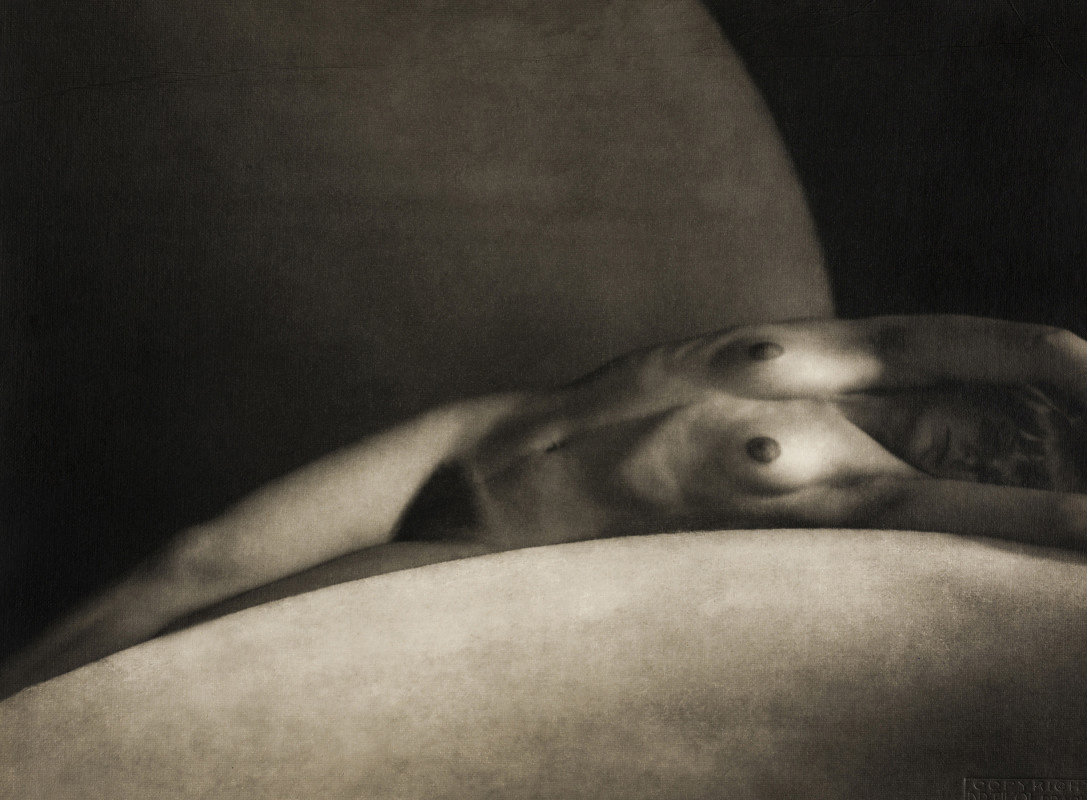

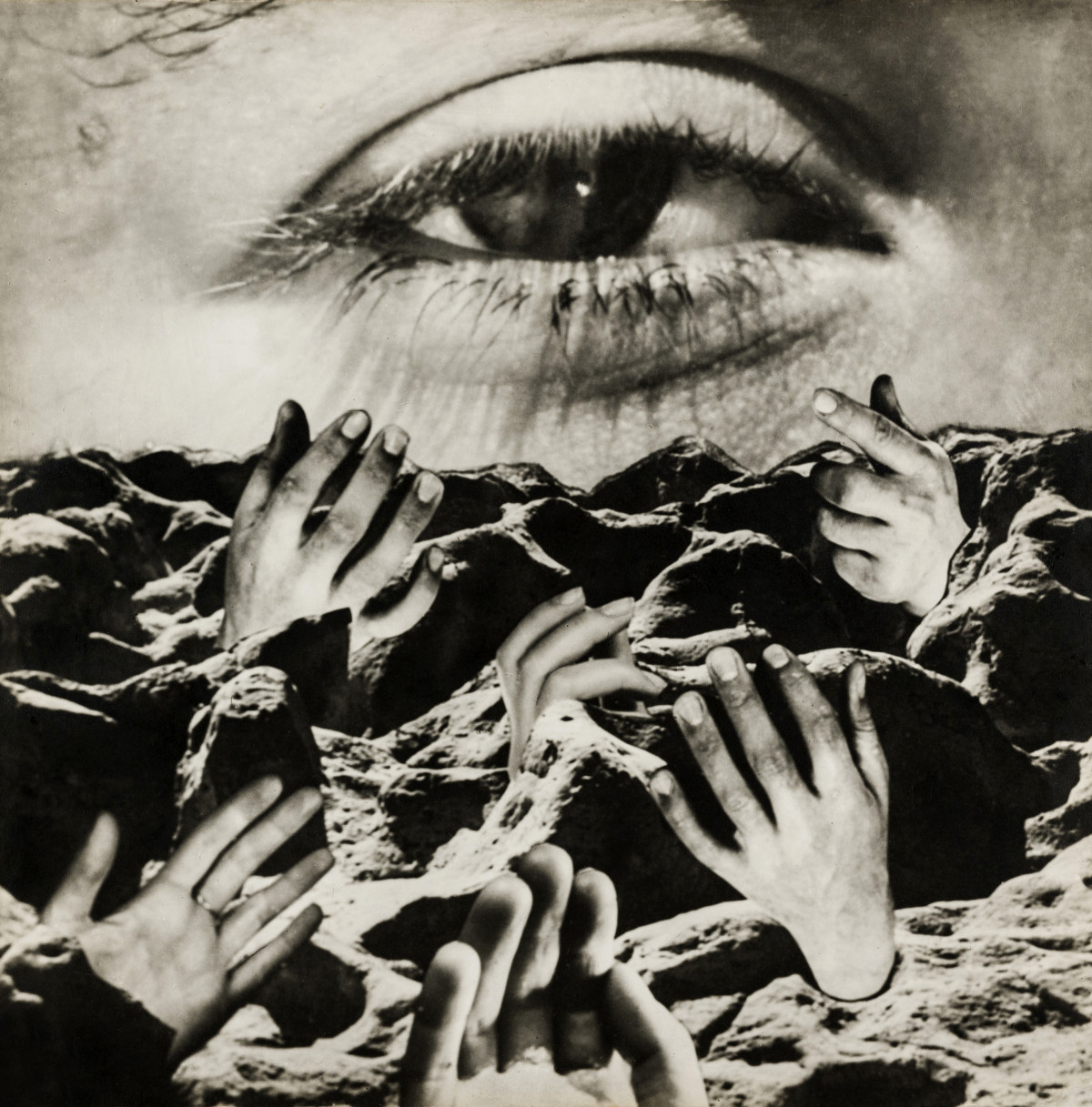
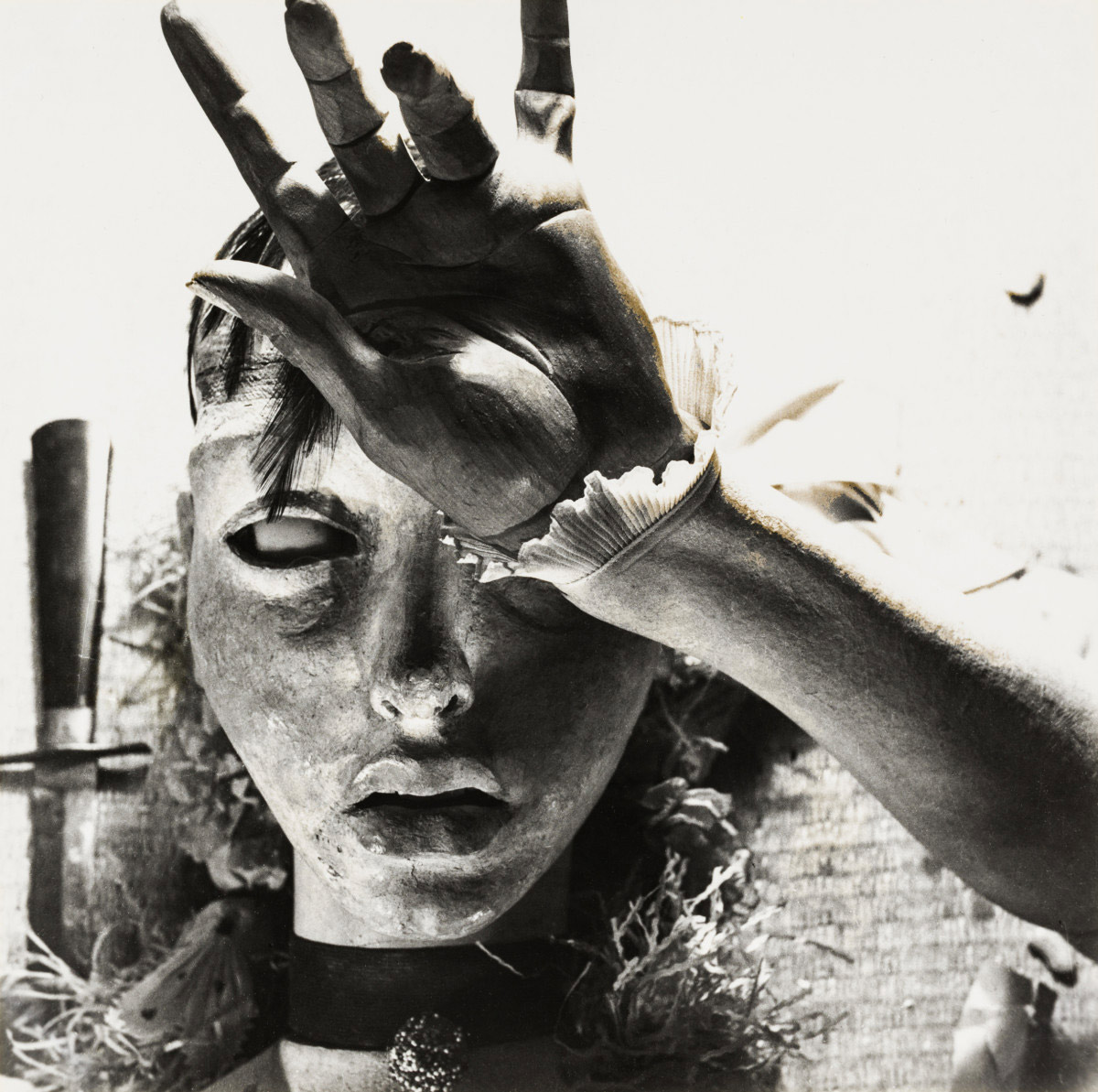


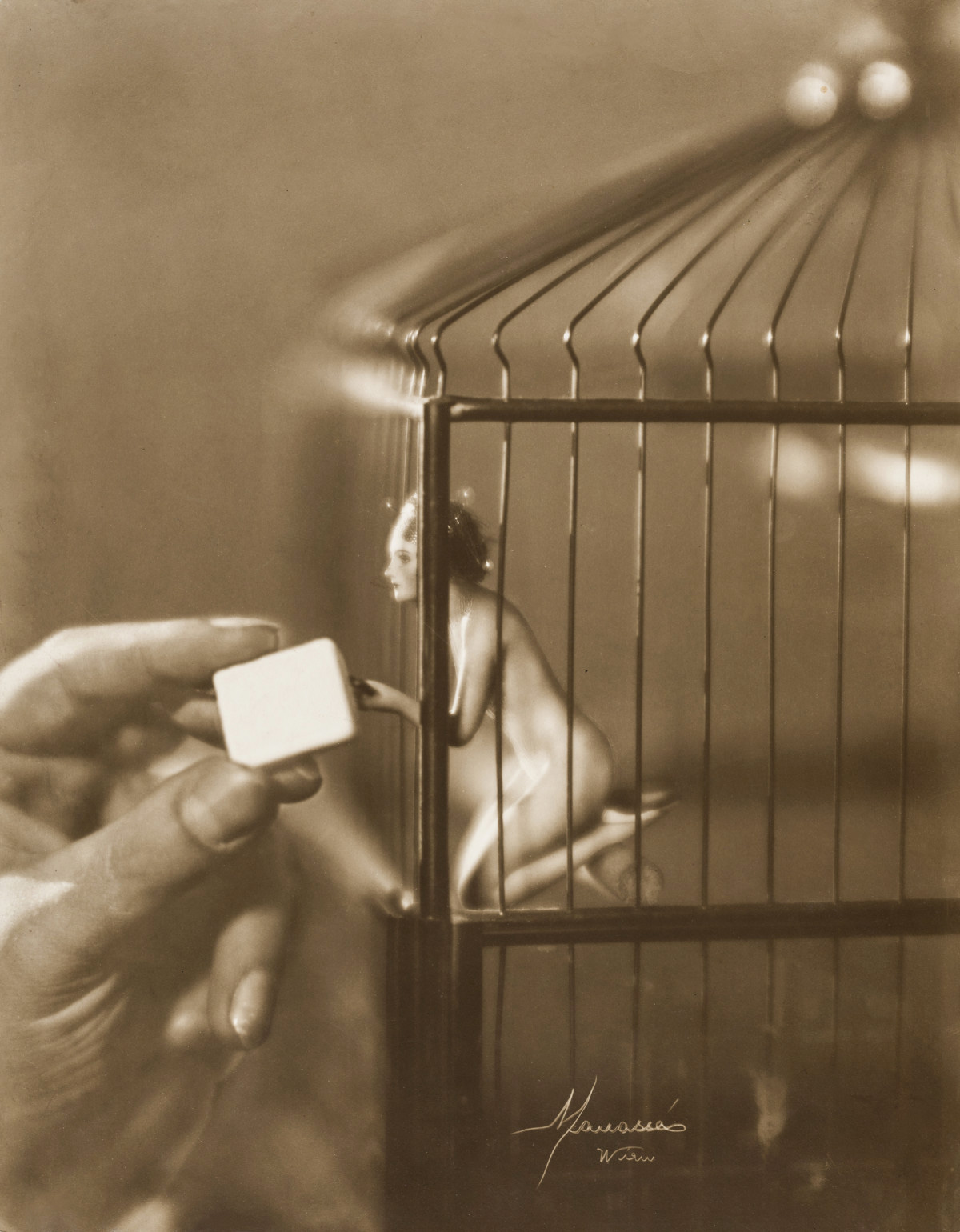


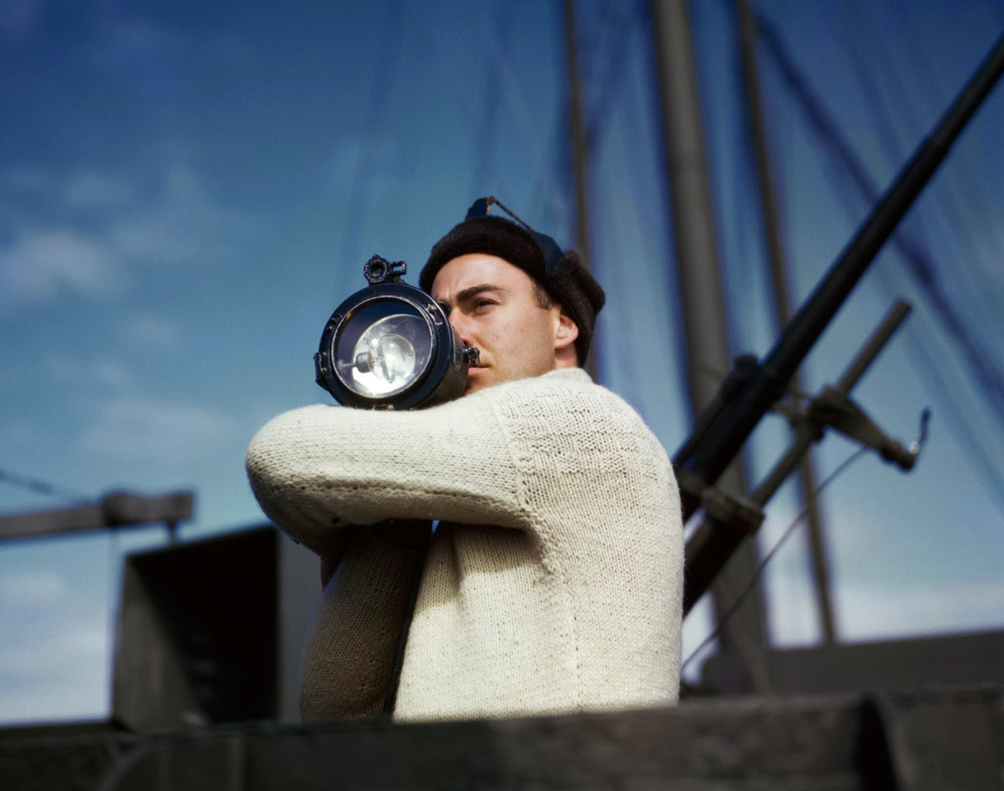


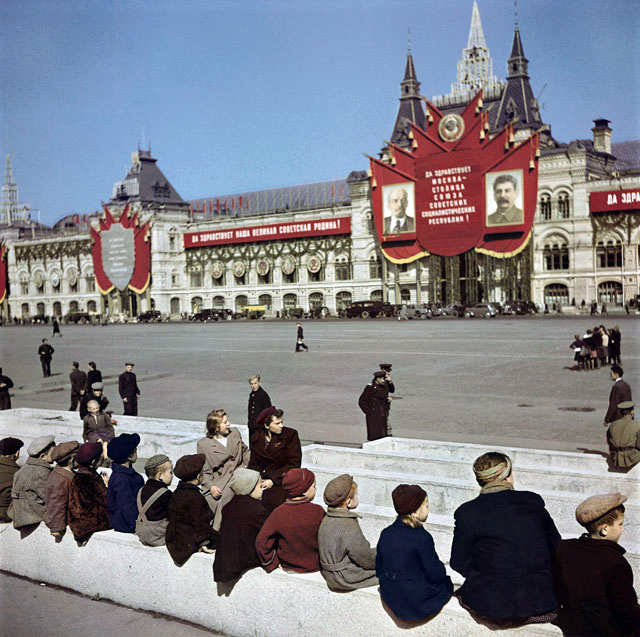


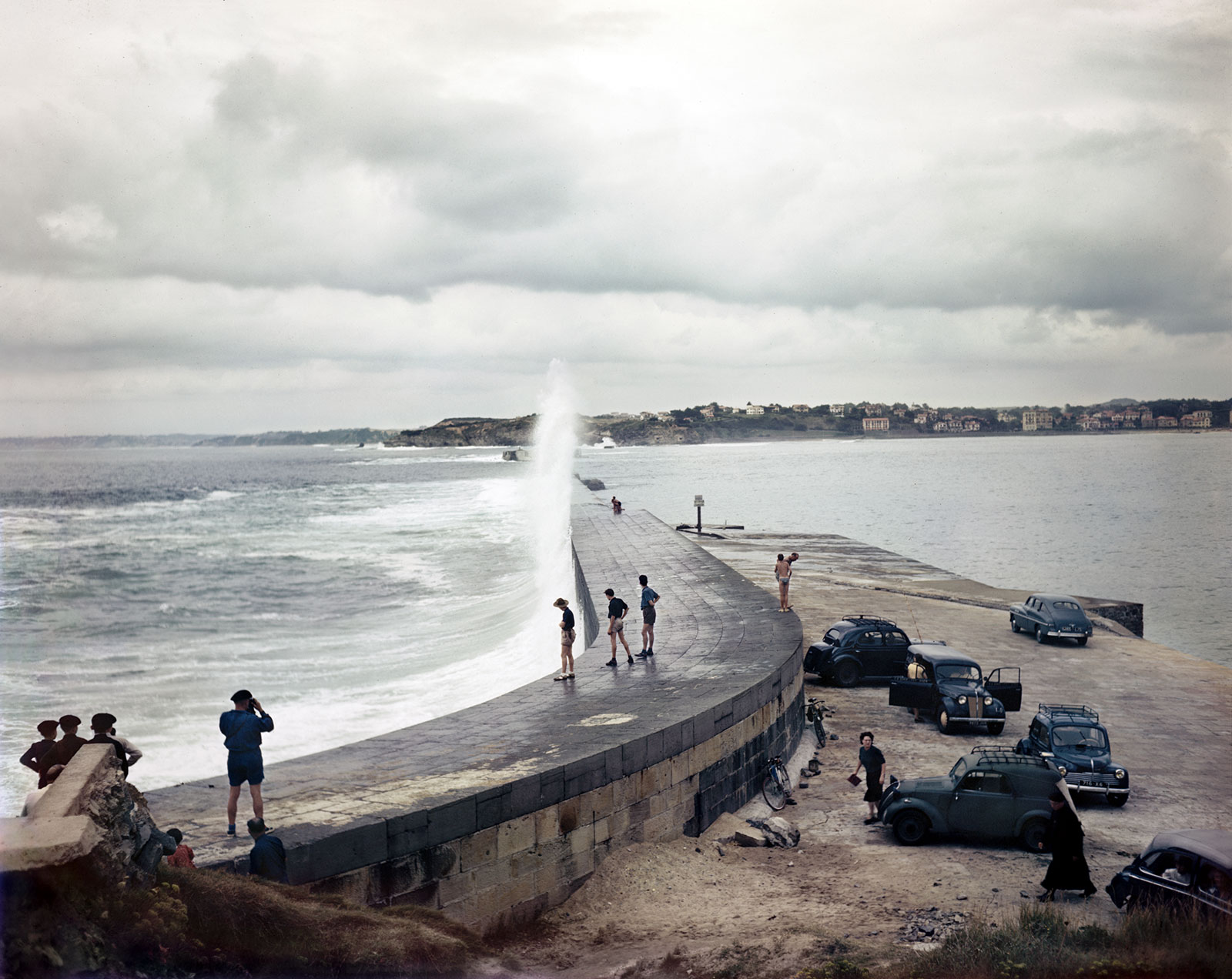
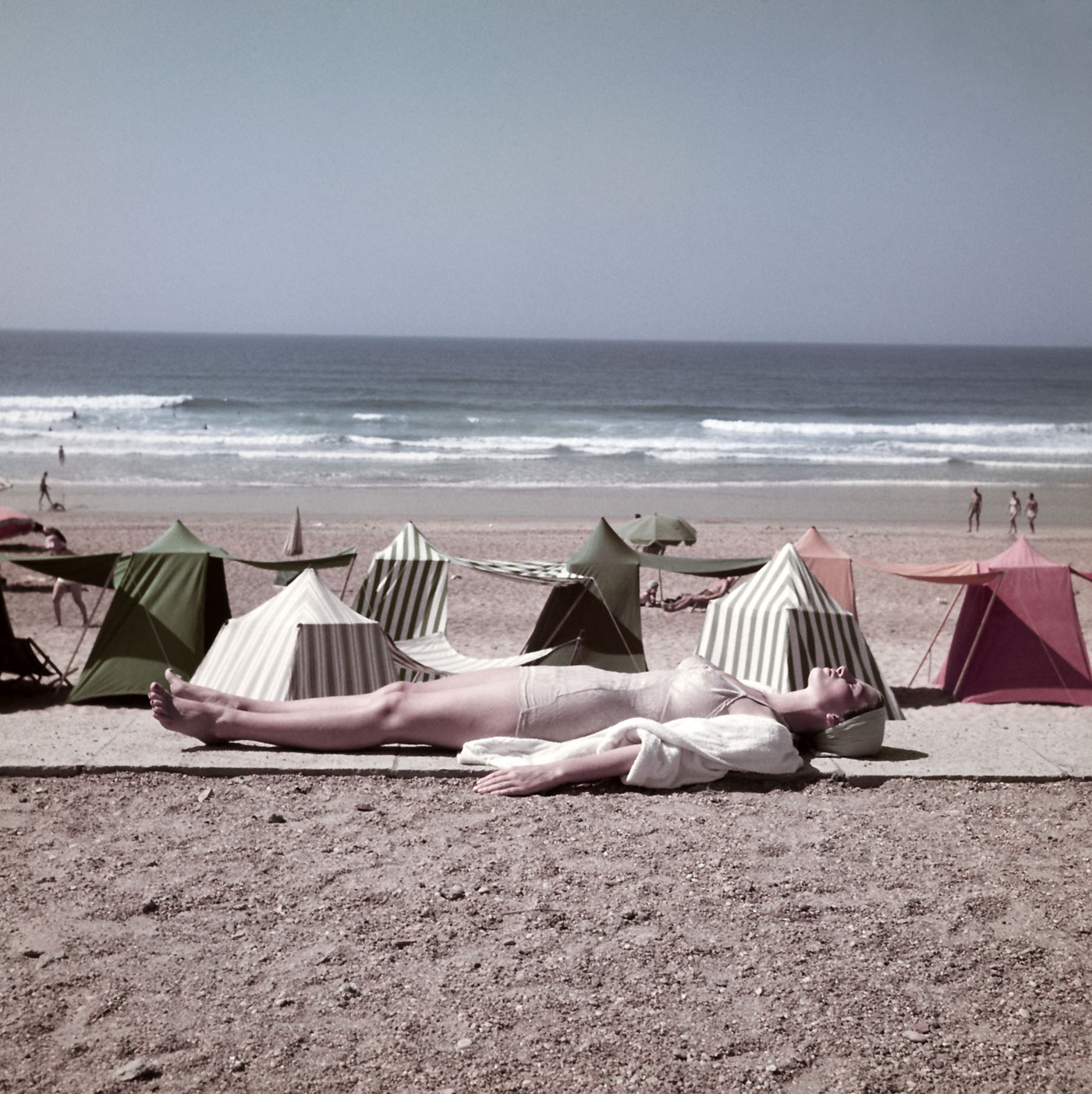

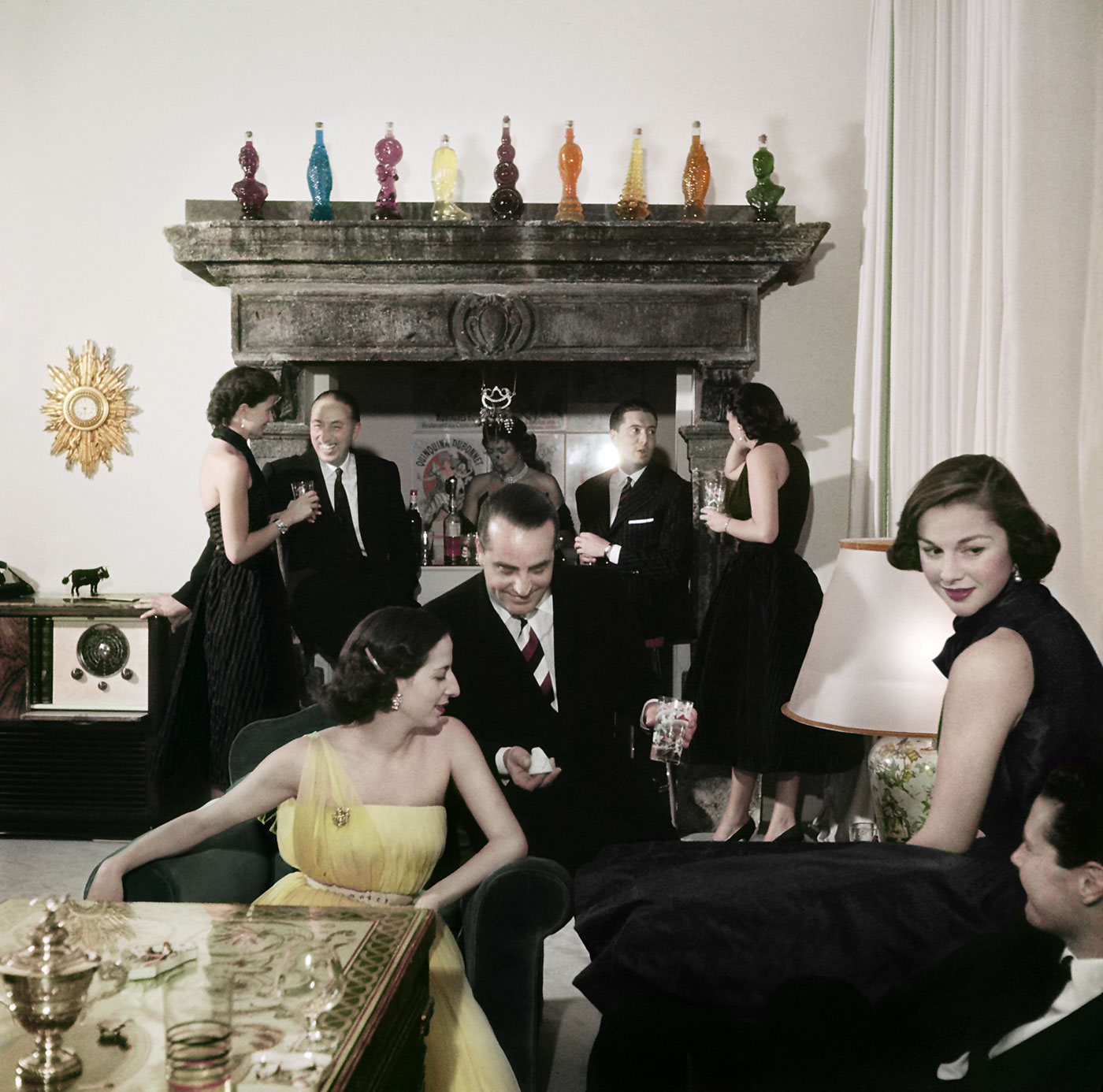
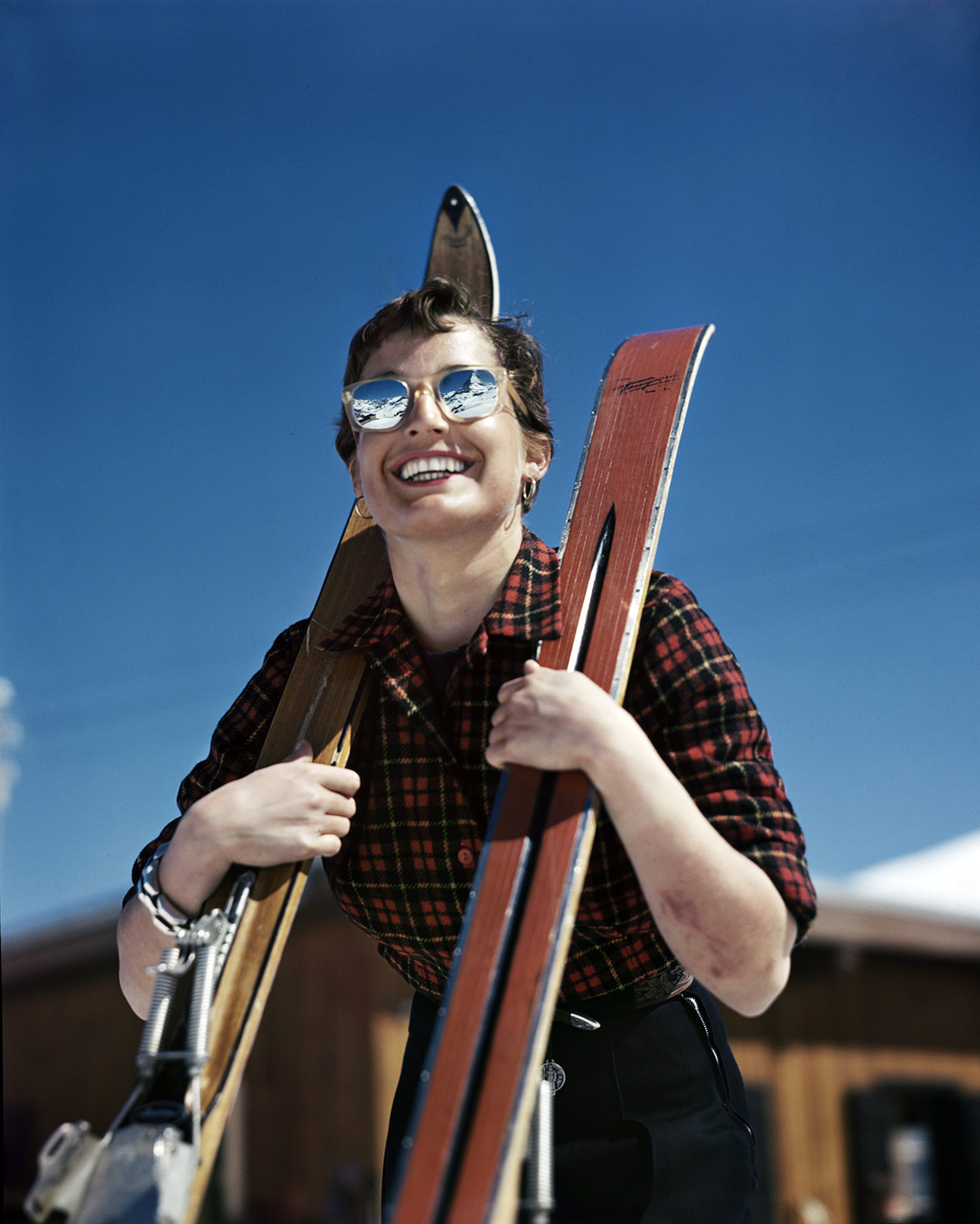


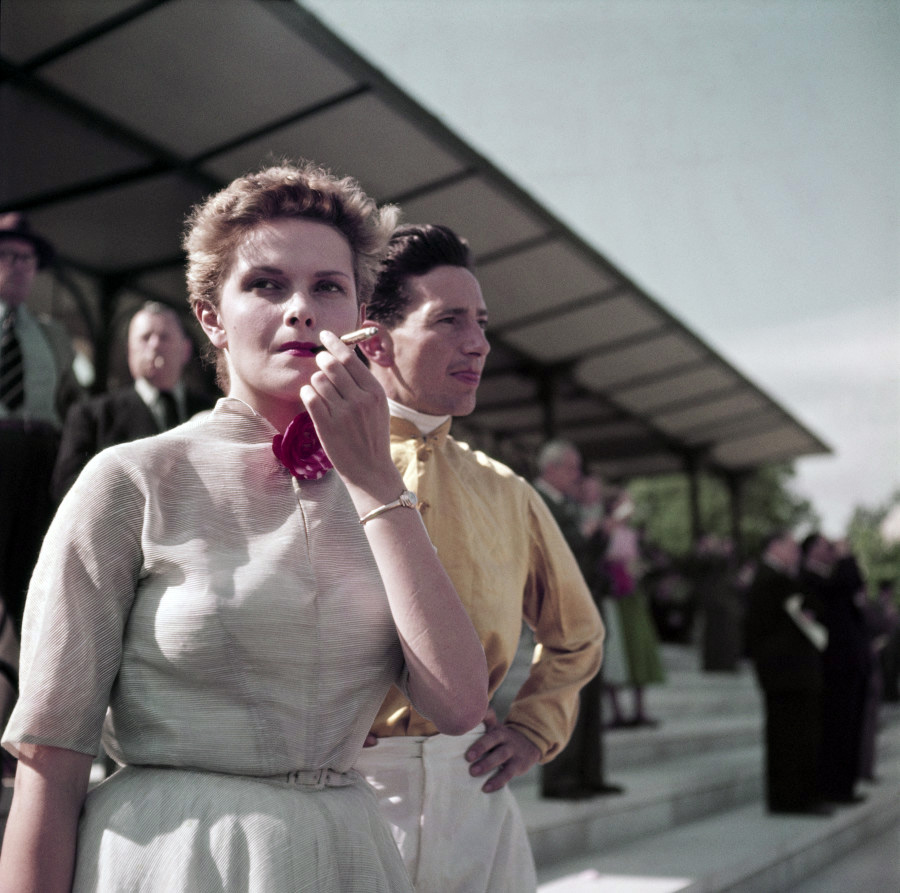
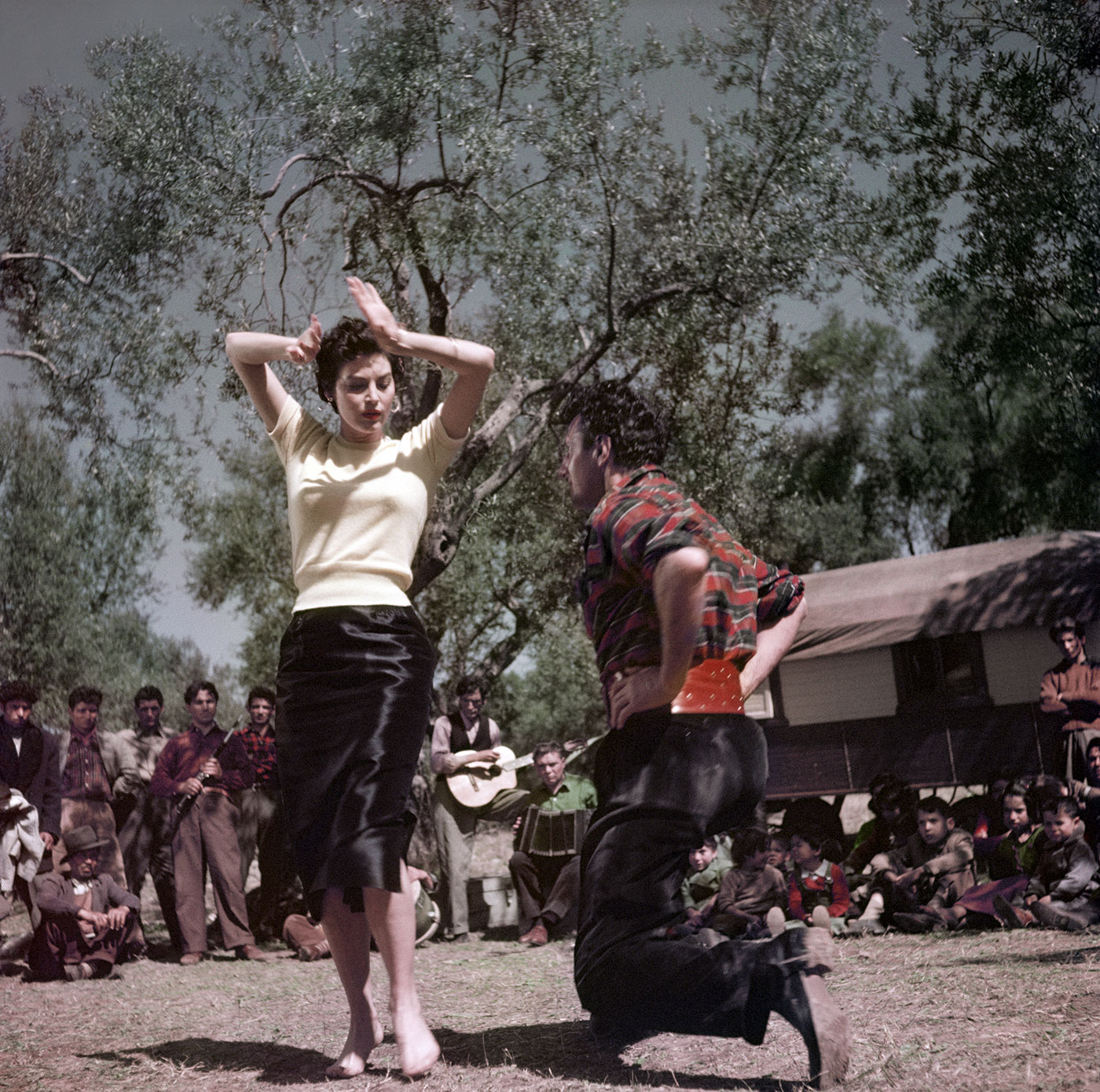


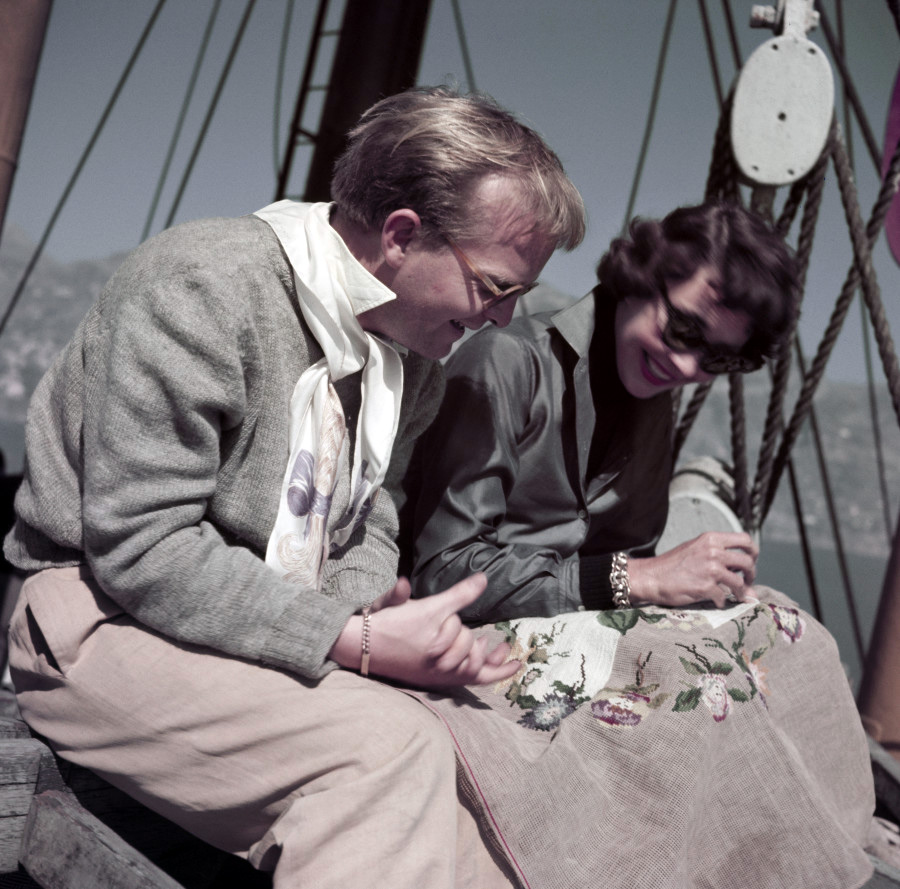


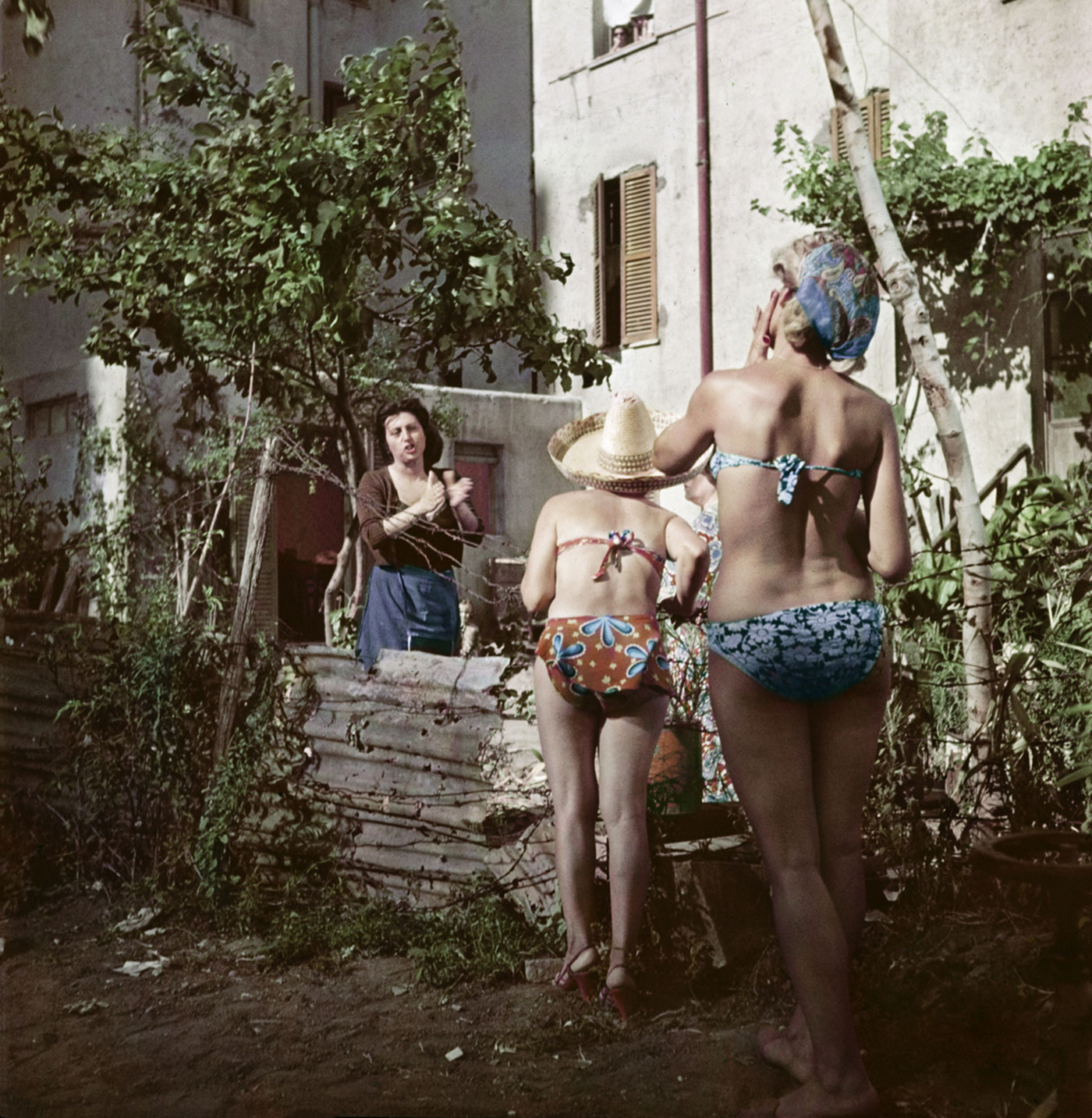


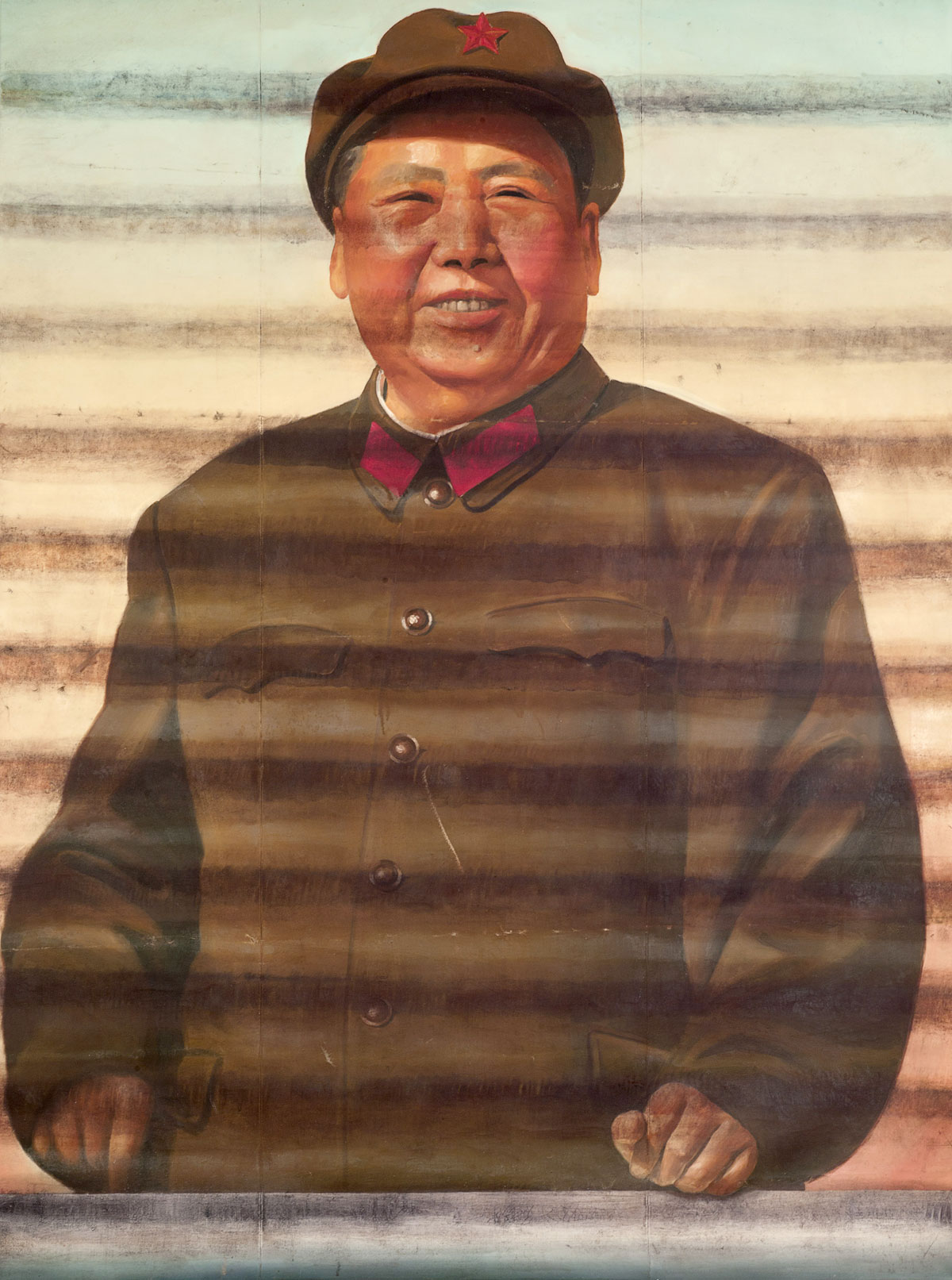
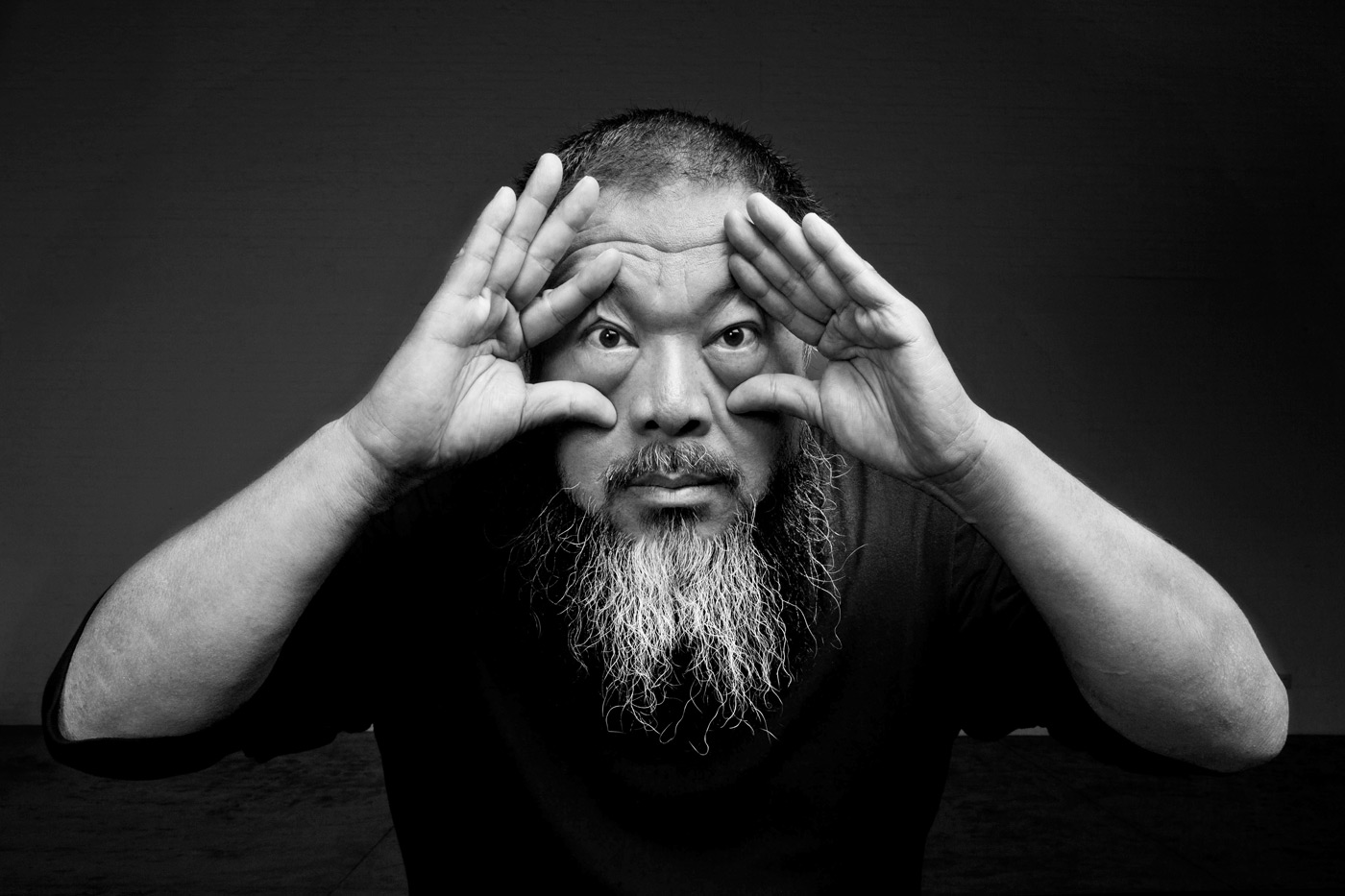
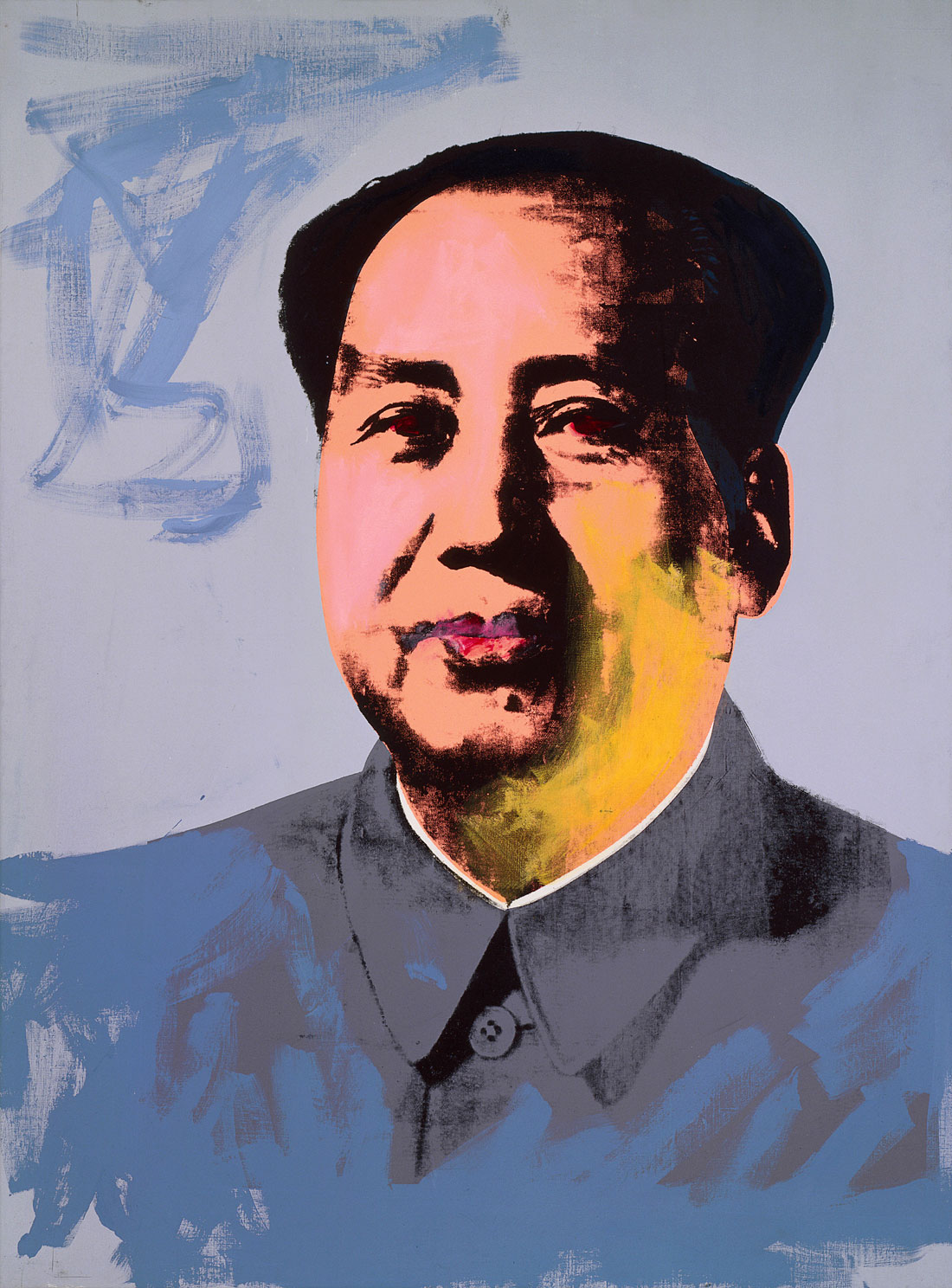
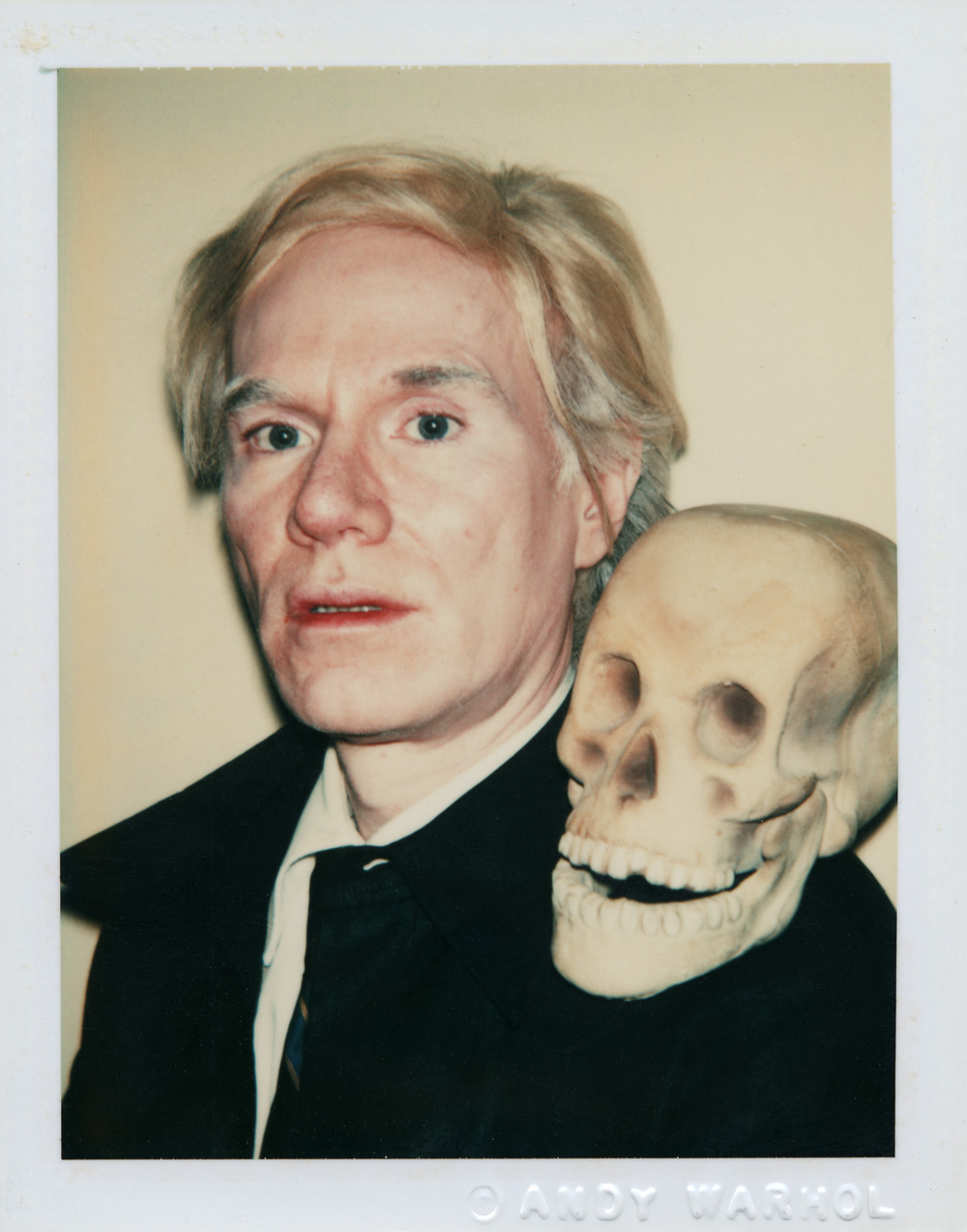
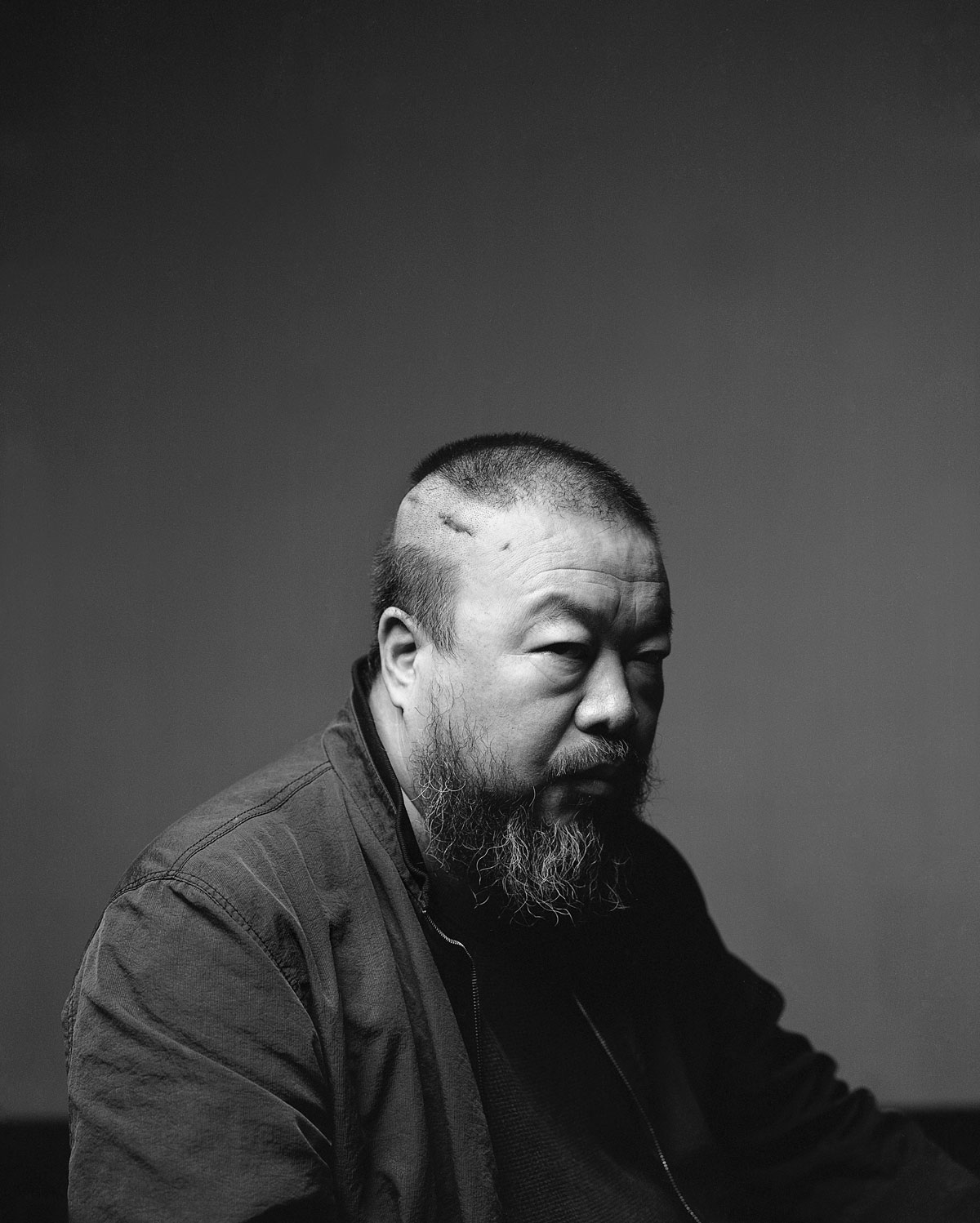
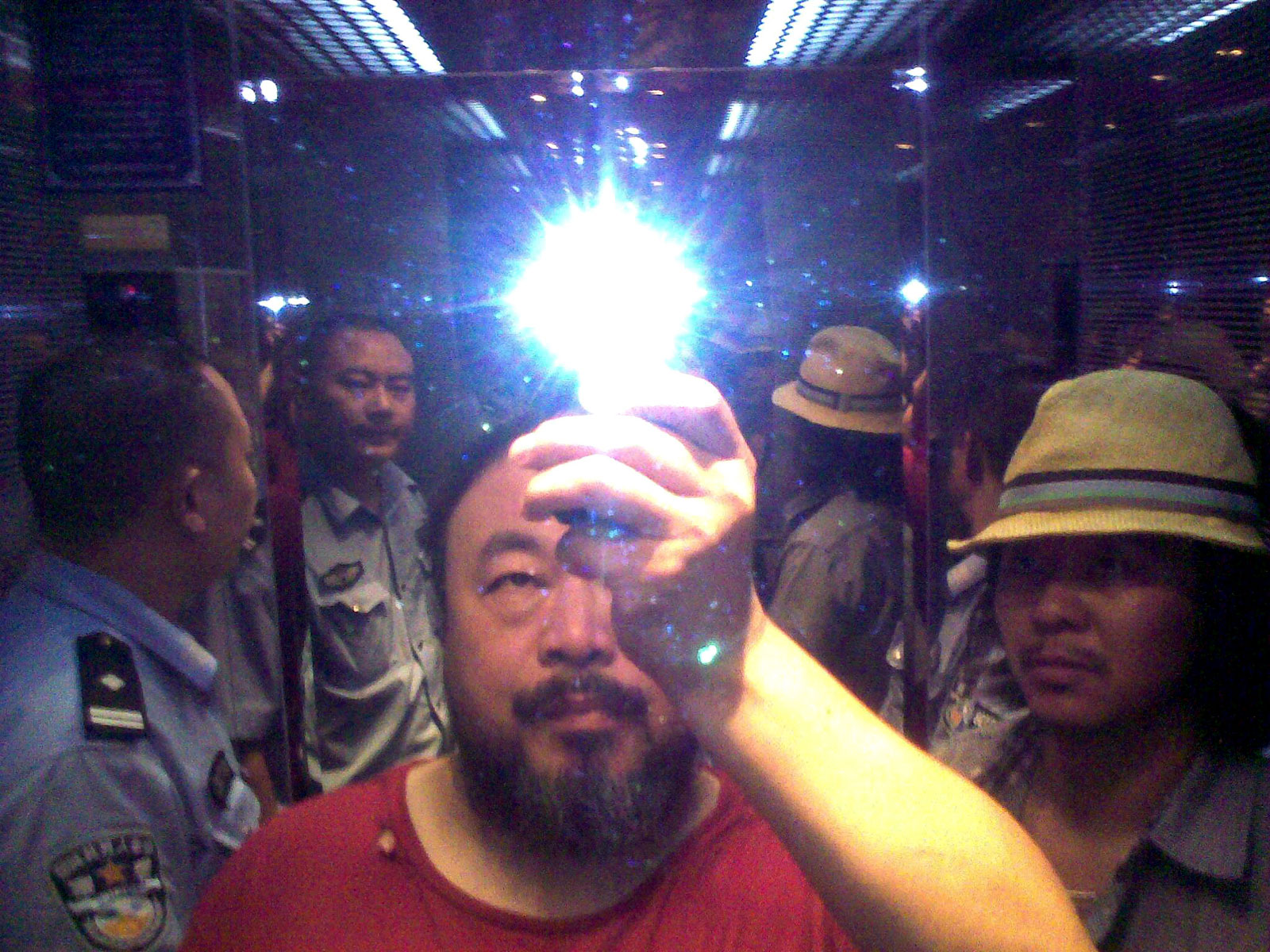

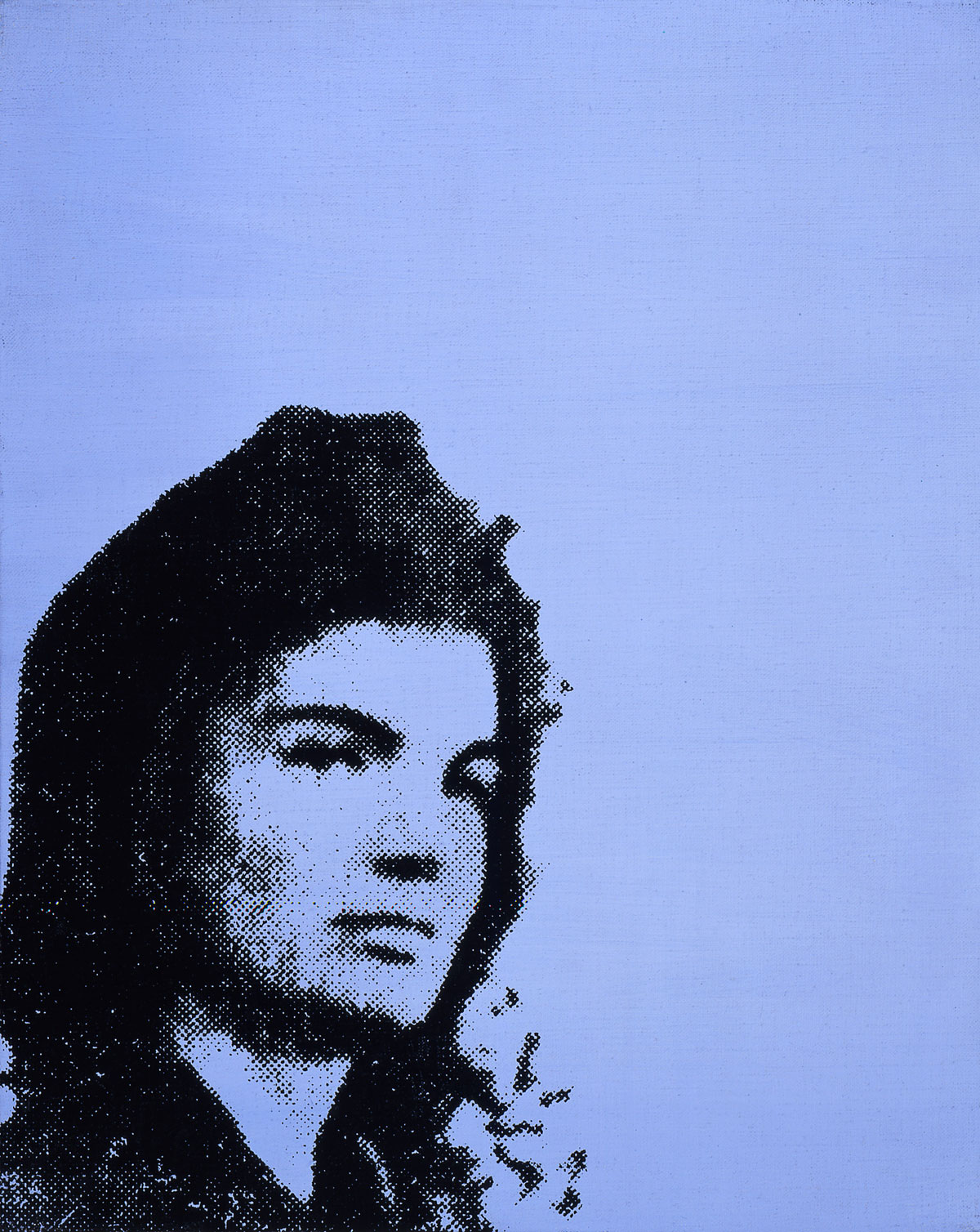
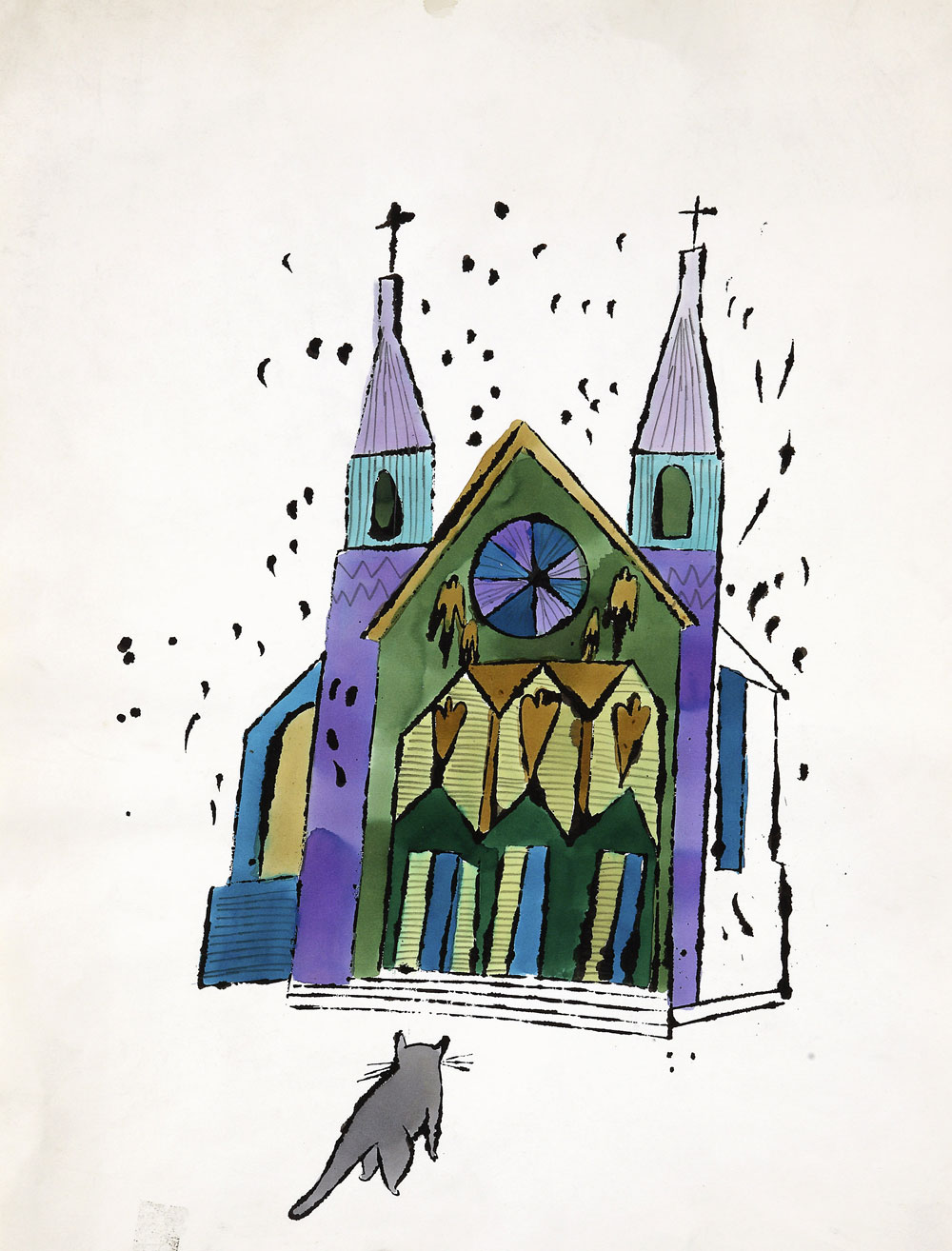
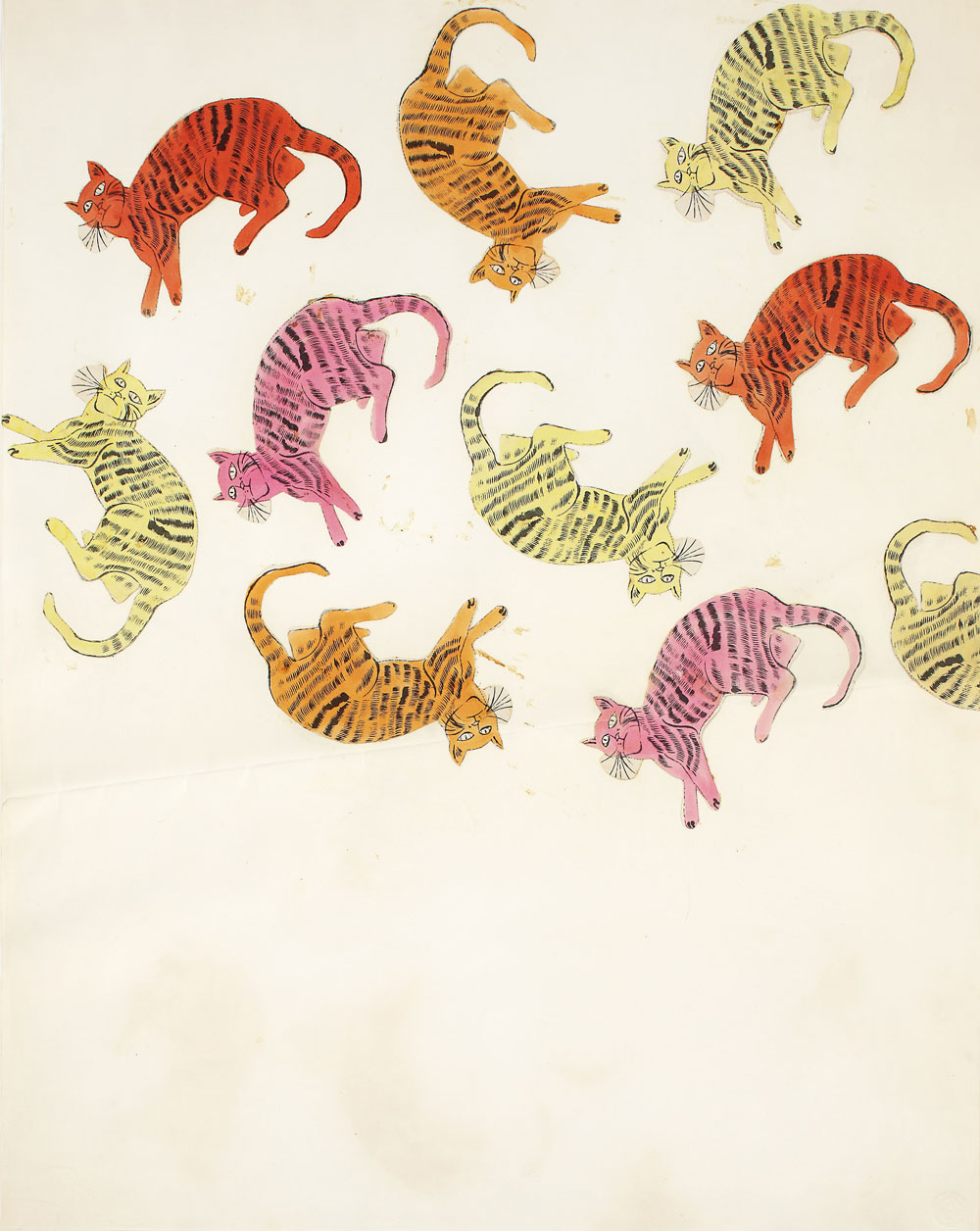
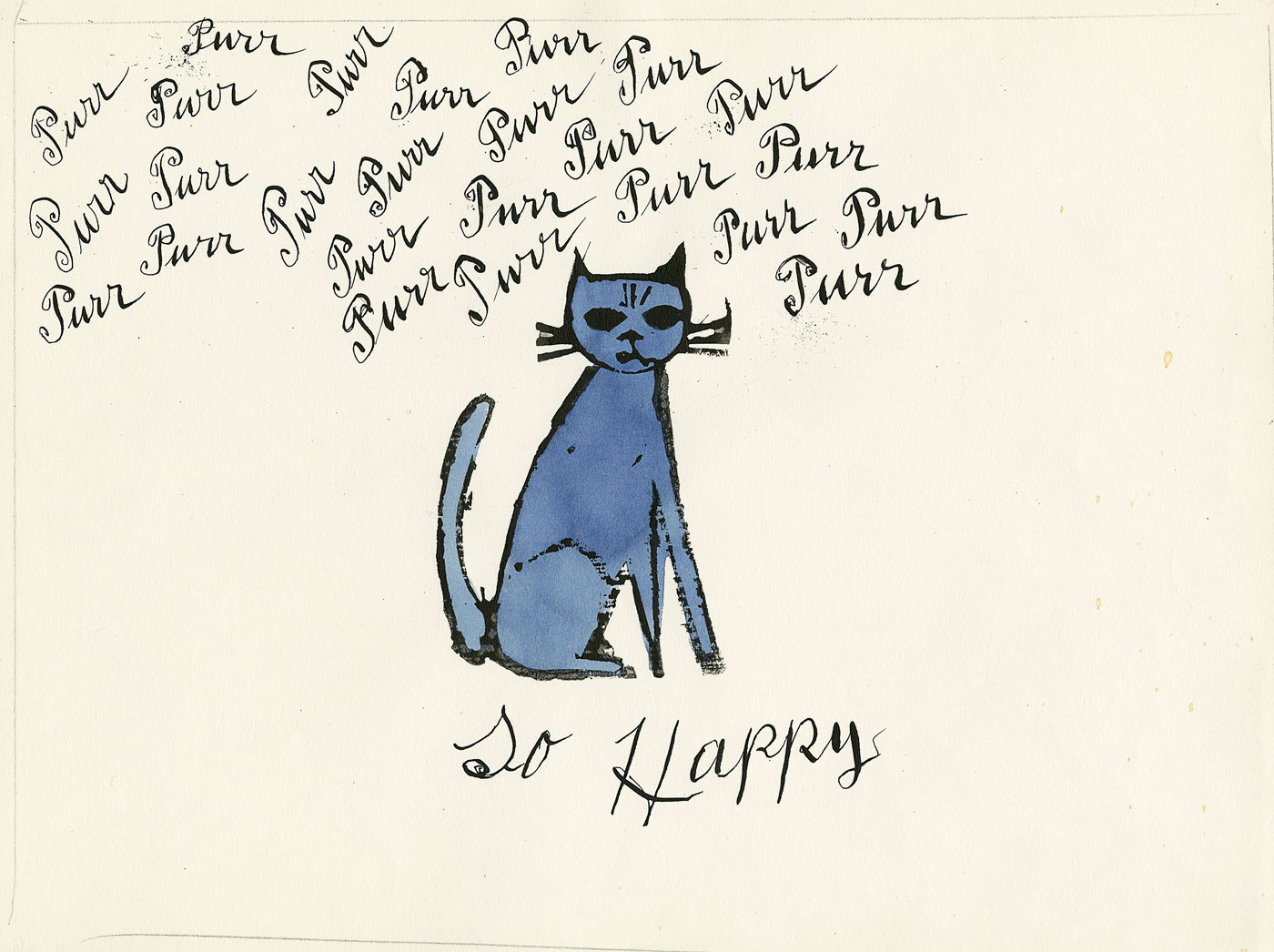

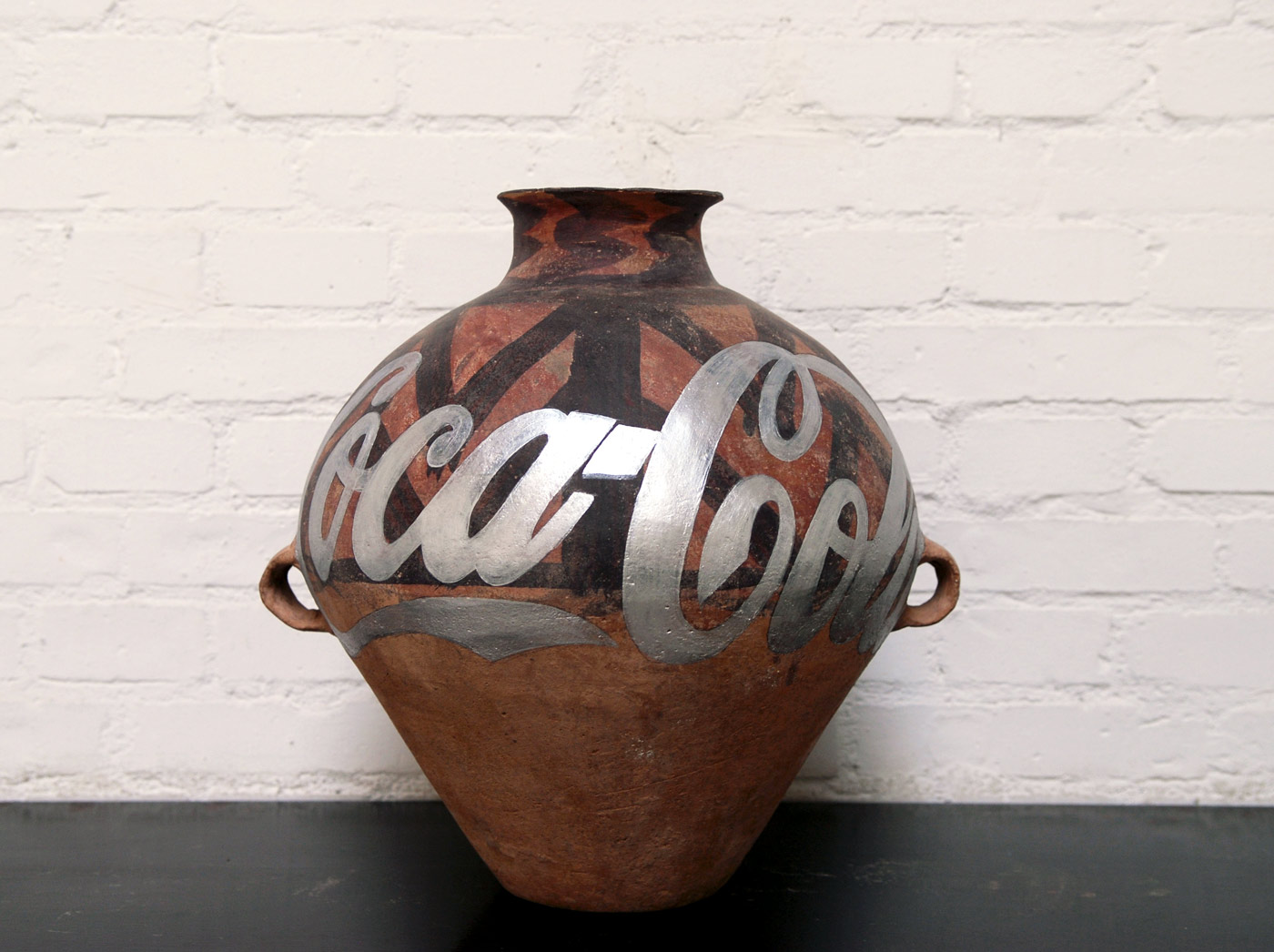
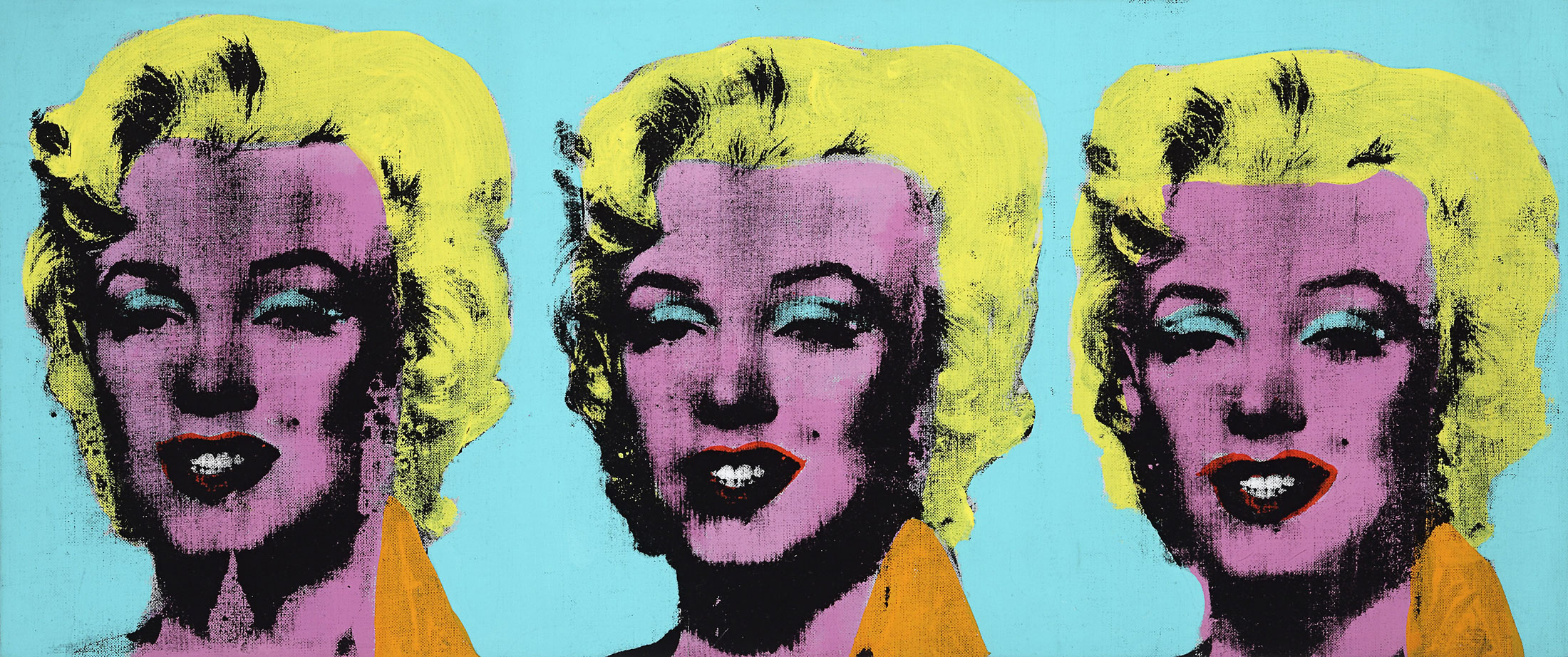
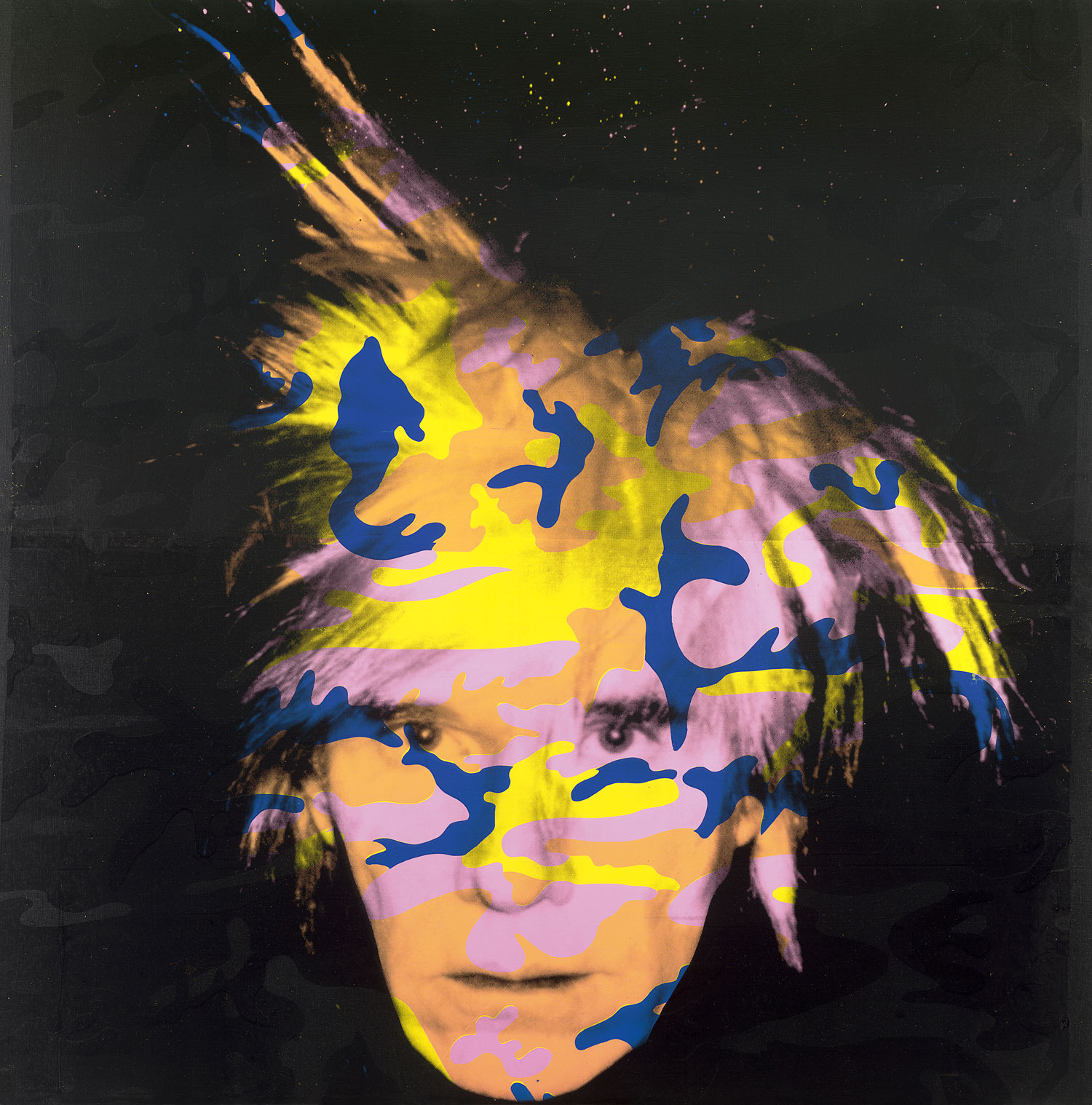
![Andy Warhol (American, 1928-1987) 'Silver Liz [Ferus Type]' 1963](https://artblart.com/wp-content/uploads/2016/03/exhi032777-web.jpg "Andy Warhol (American, 1928-1987) 'Silver Liz [Ferus Type]' 1963")
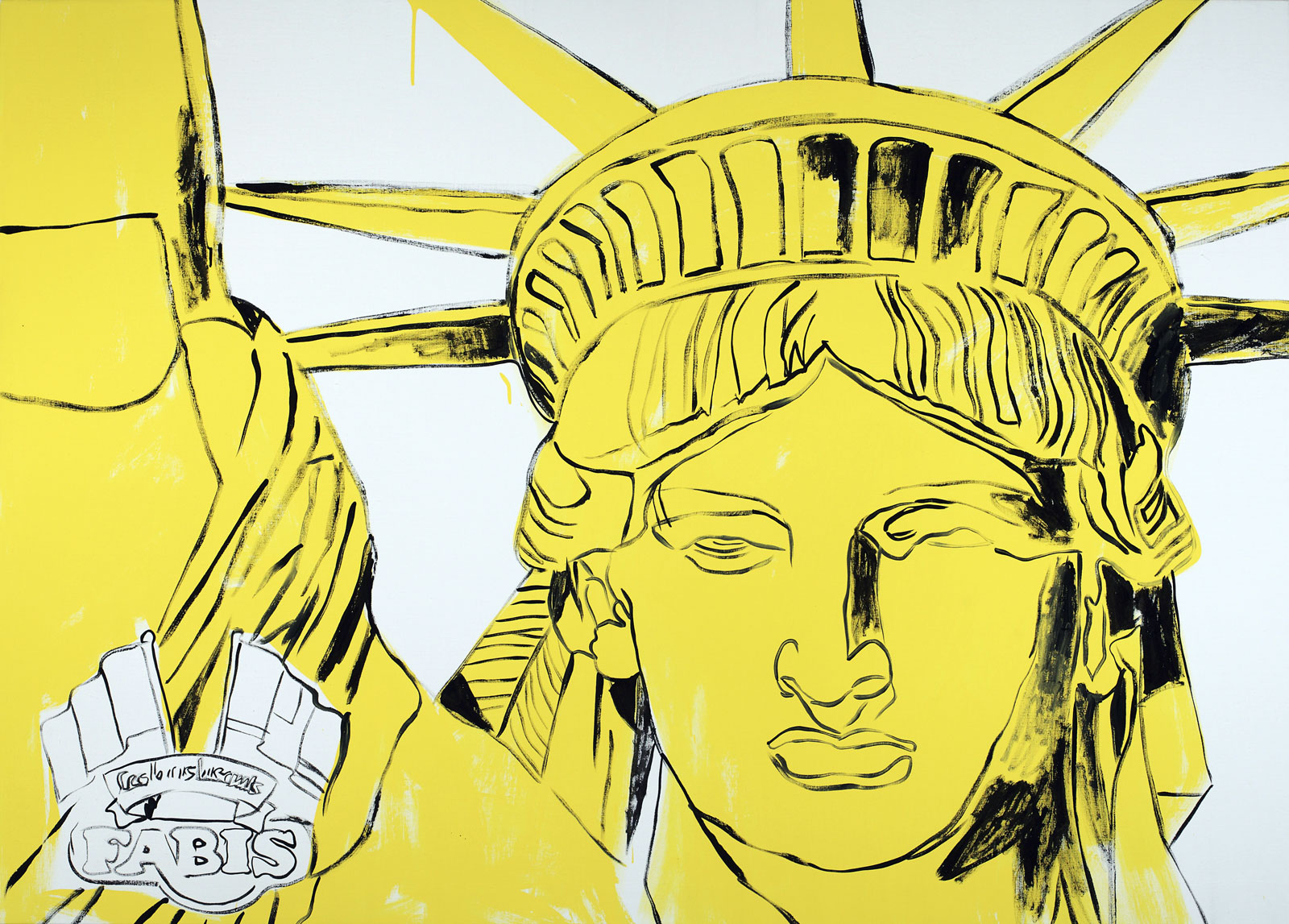
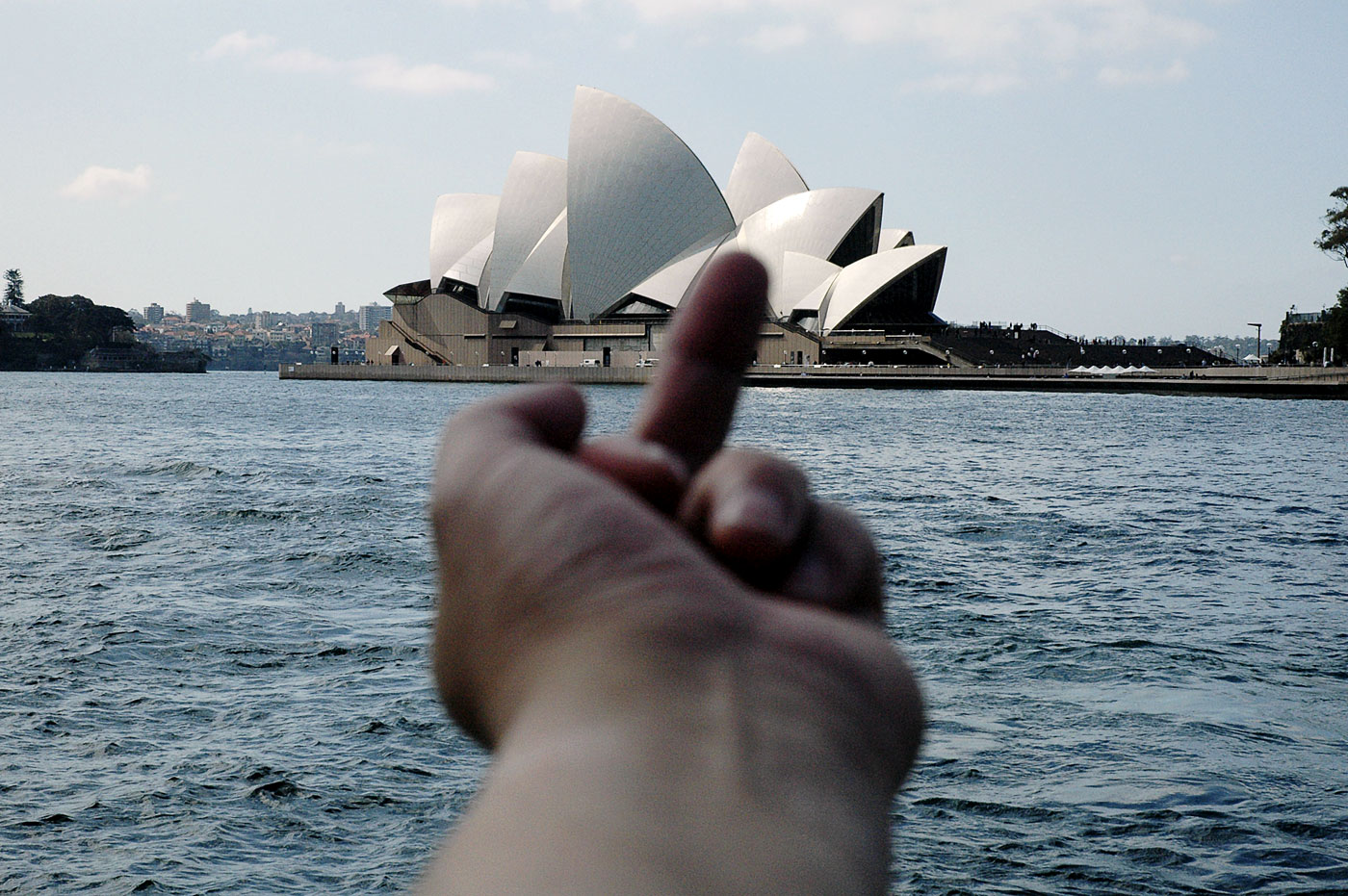


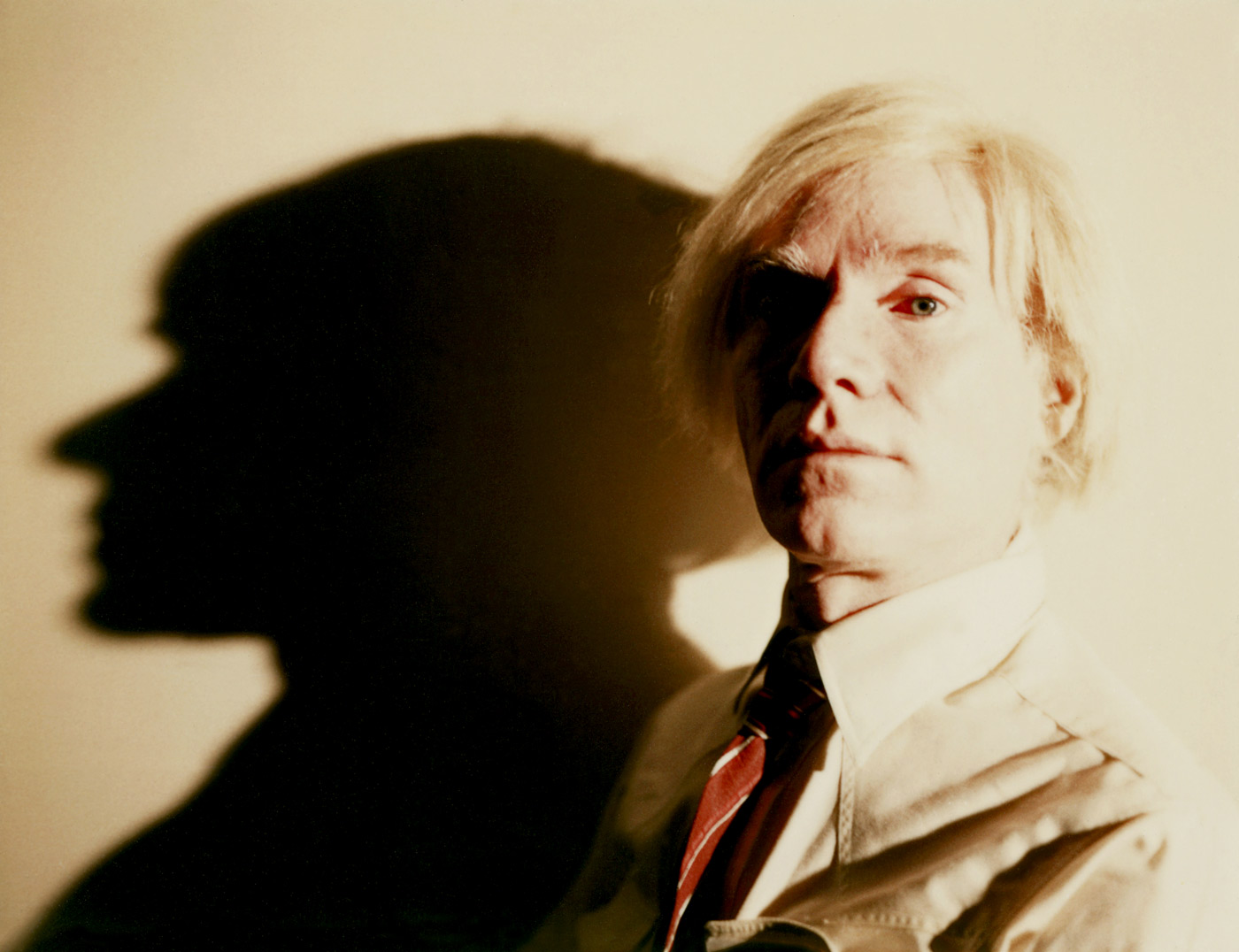
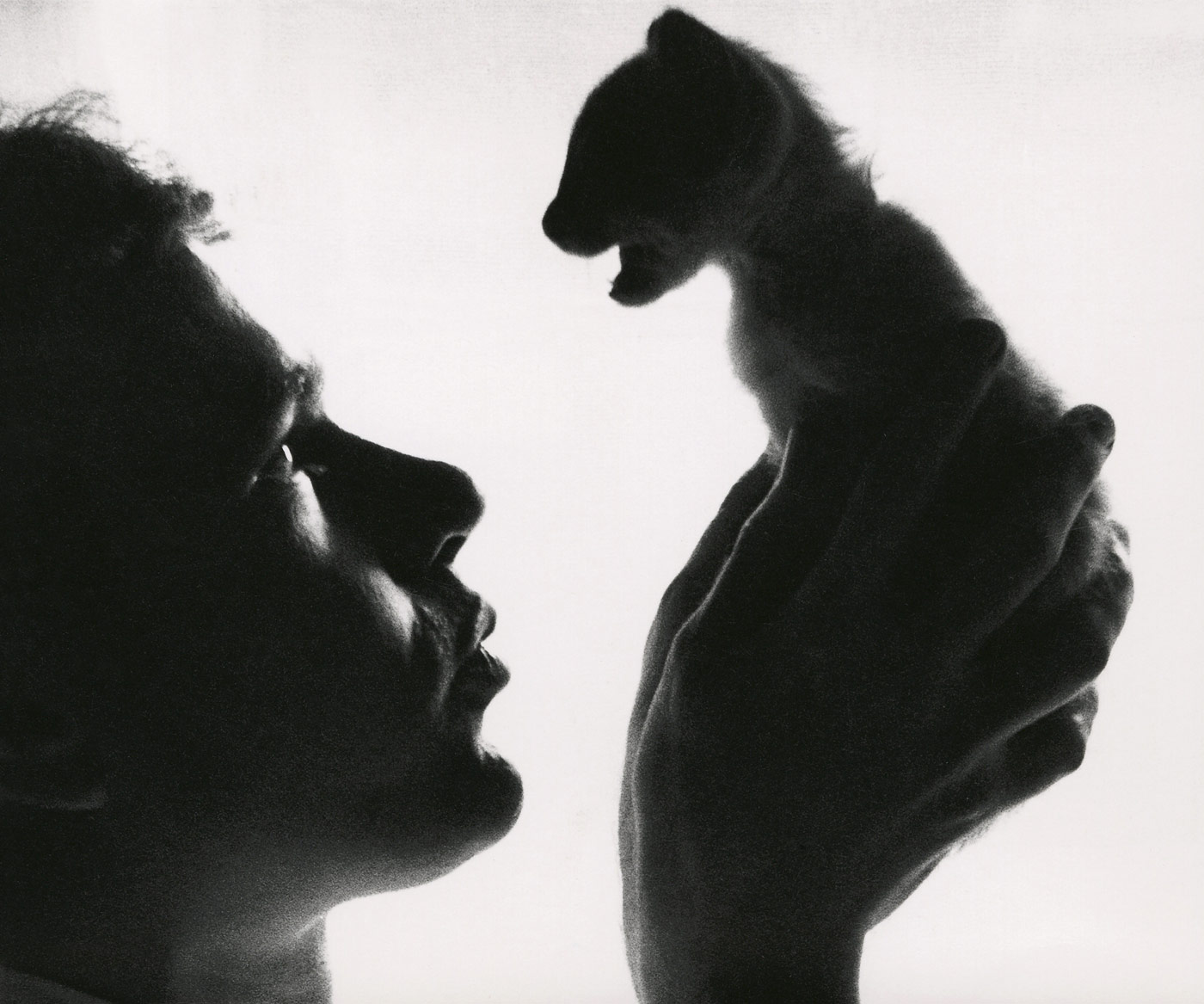
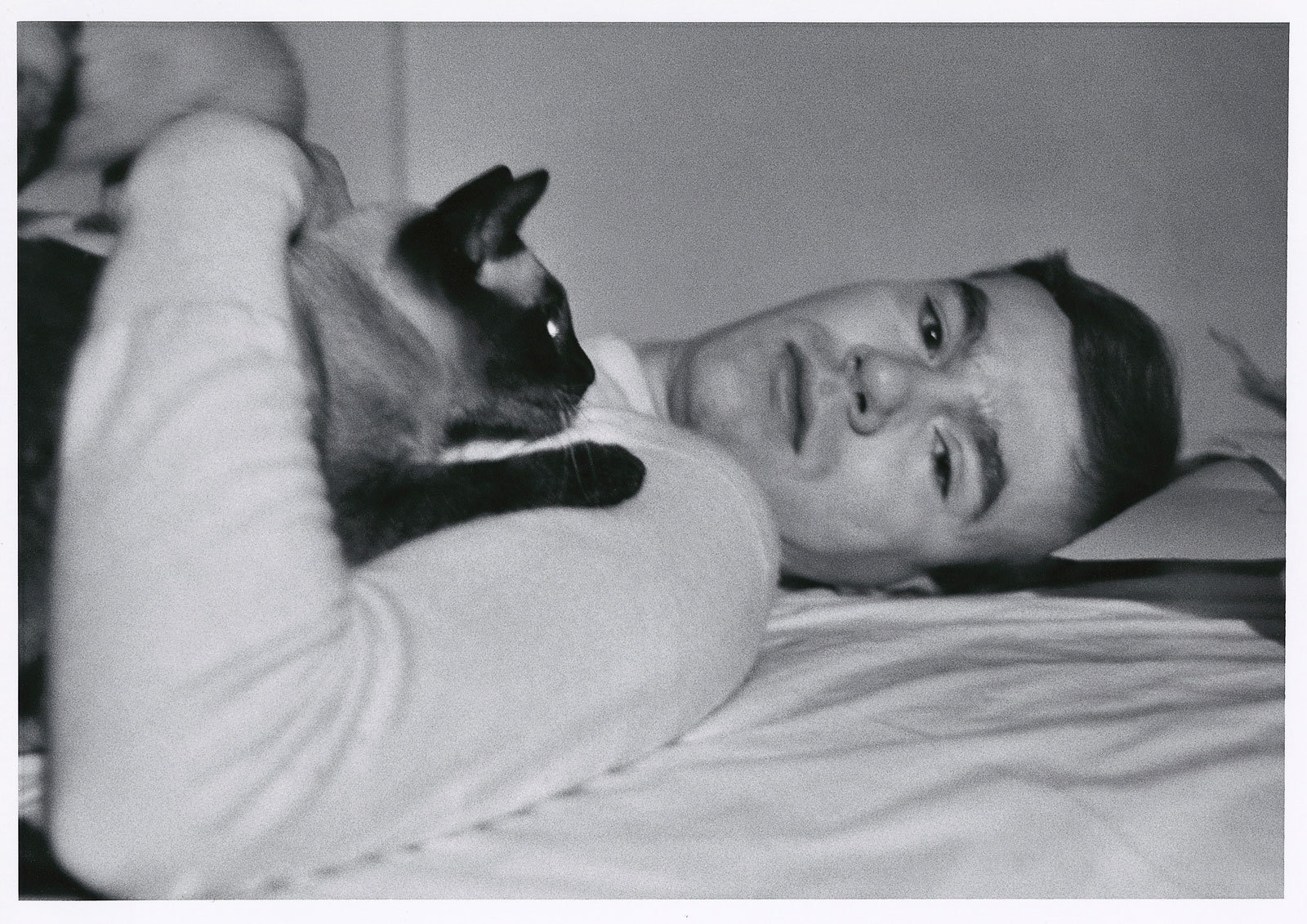
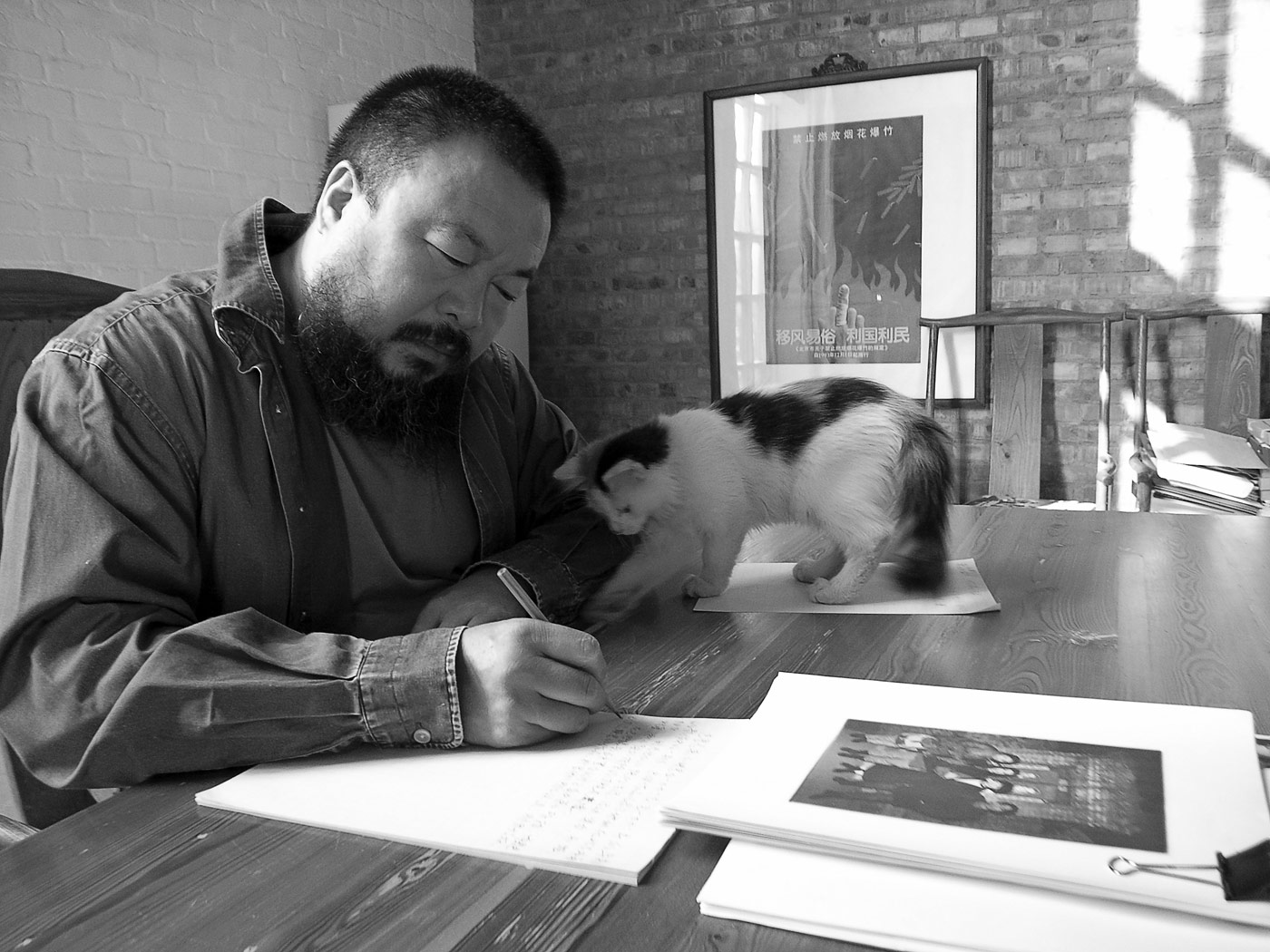
![Andy Warhol (American, 1928-1987) 'Screen Test: Edie Sedgwick [ST308]' 1965](https://artblart.com/wp-content/uploads/2016/03/exhi037605-web.jpg "Andy Warhol (American, 1928-1987) 'Screen Test: Edie Sedgwick [ST308]' 1965")
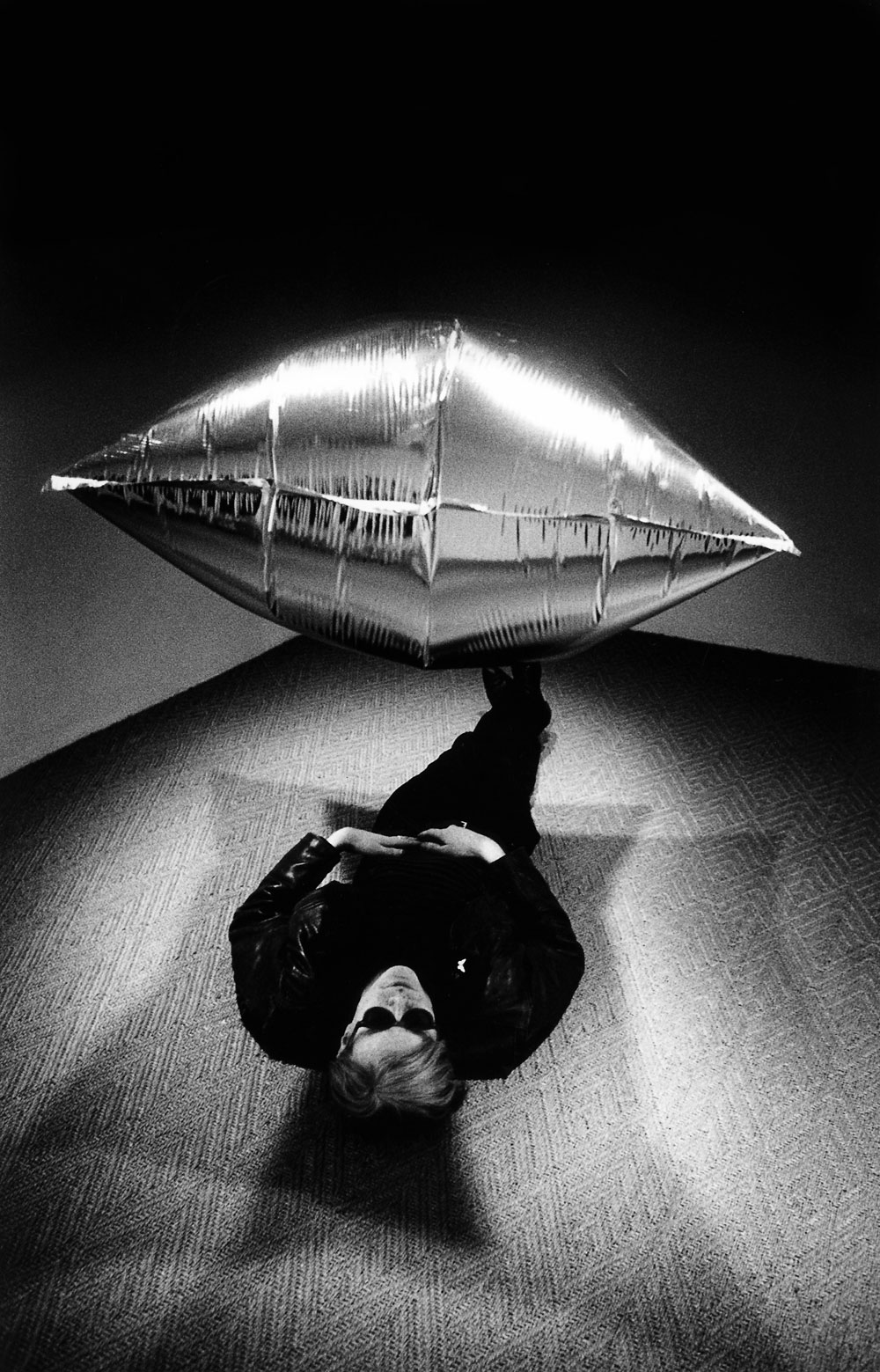
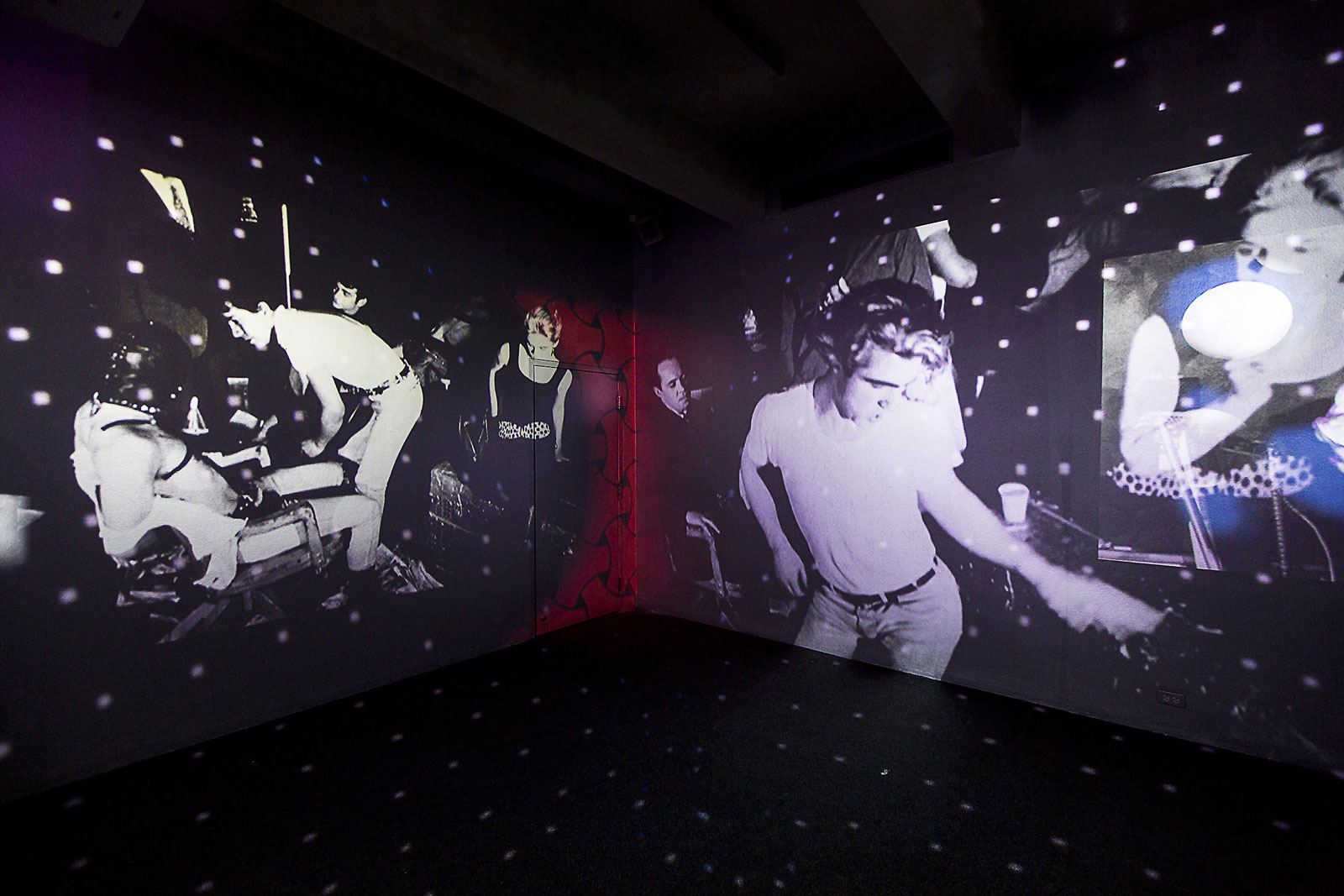
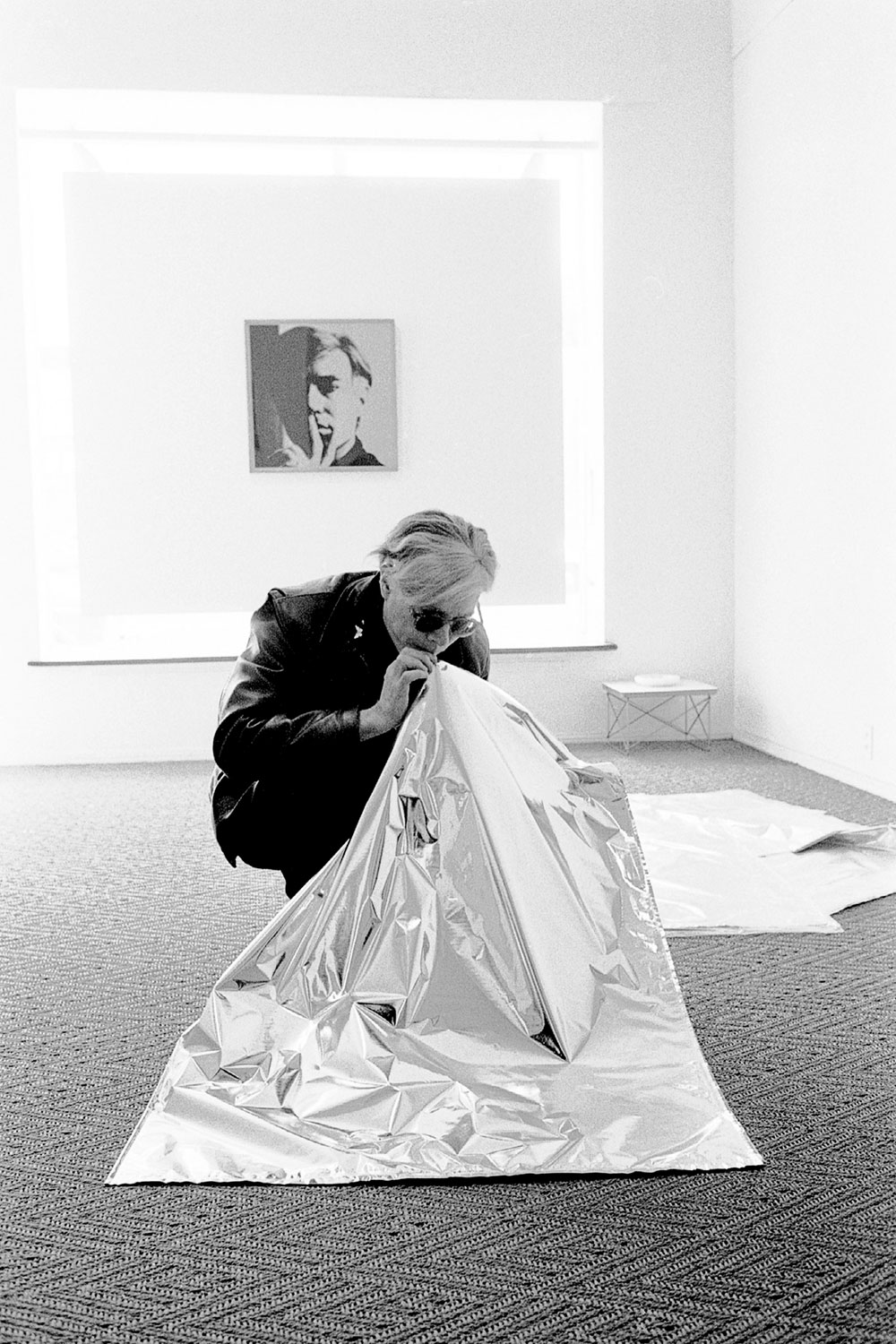

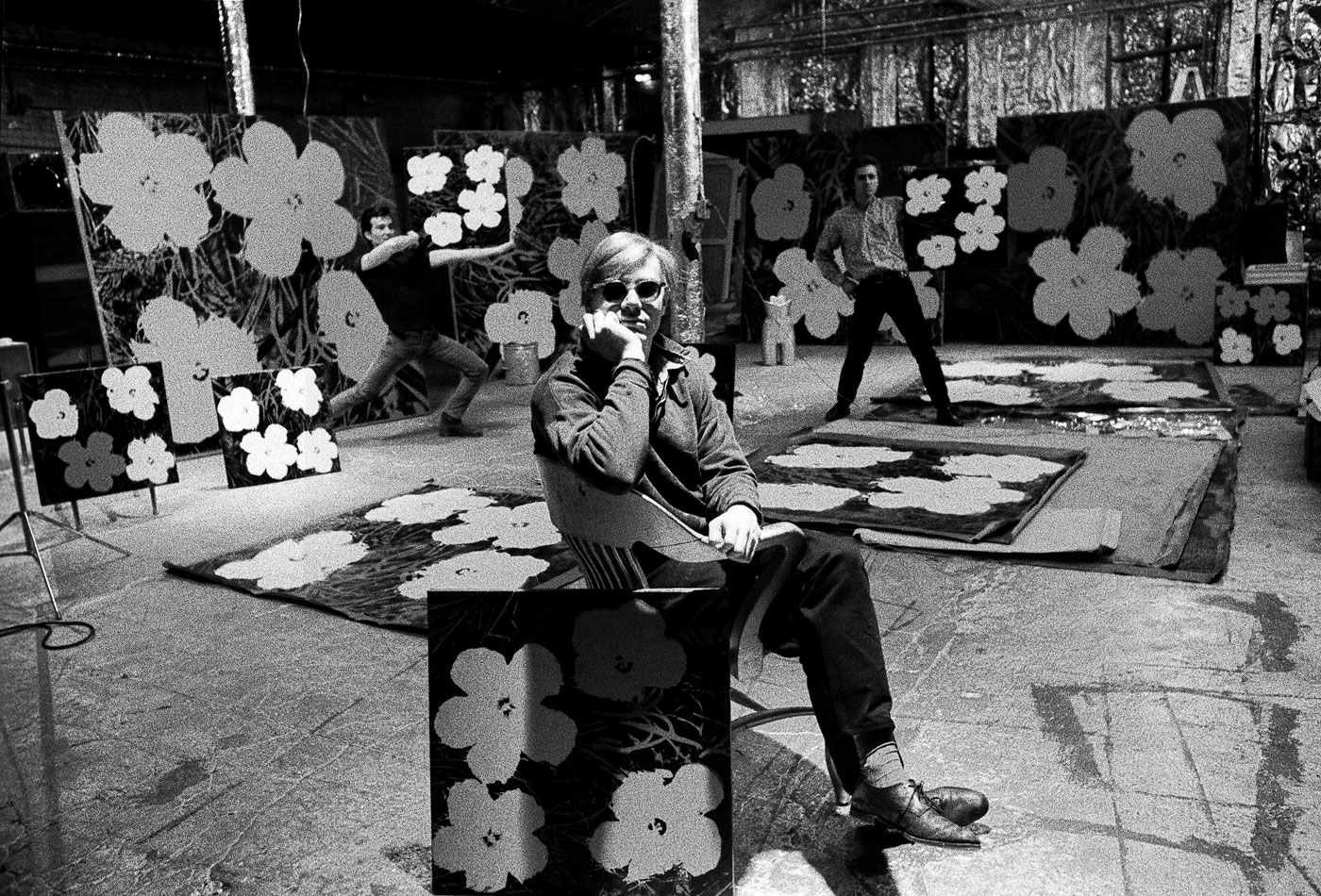
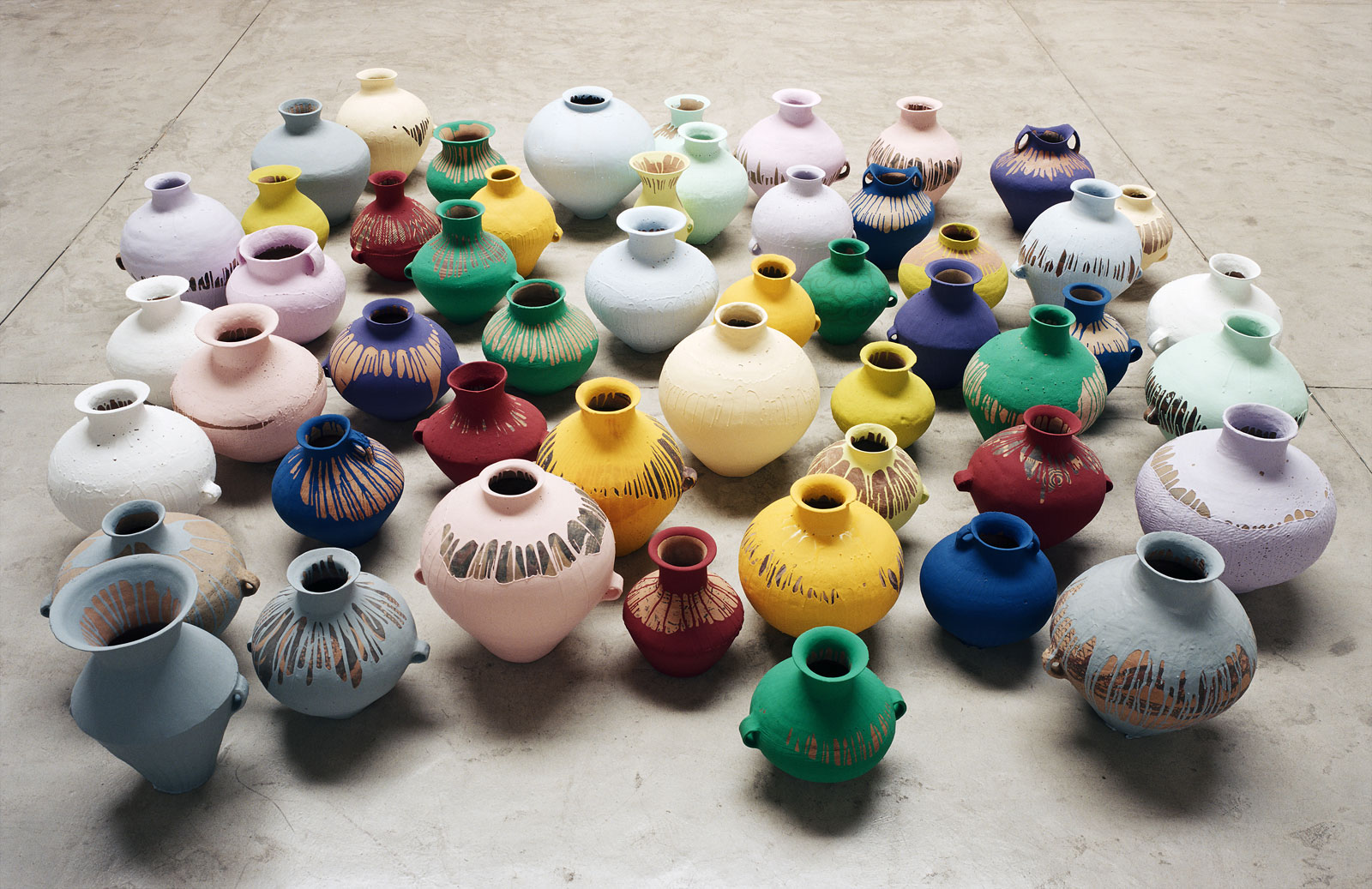
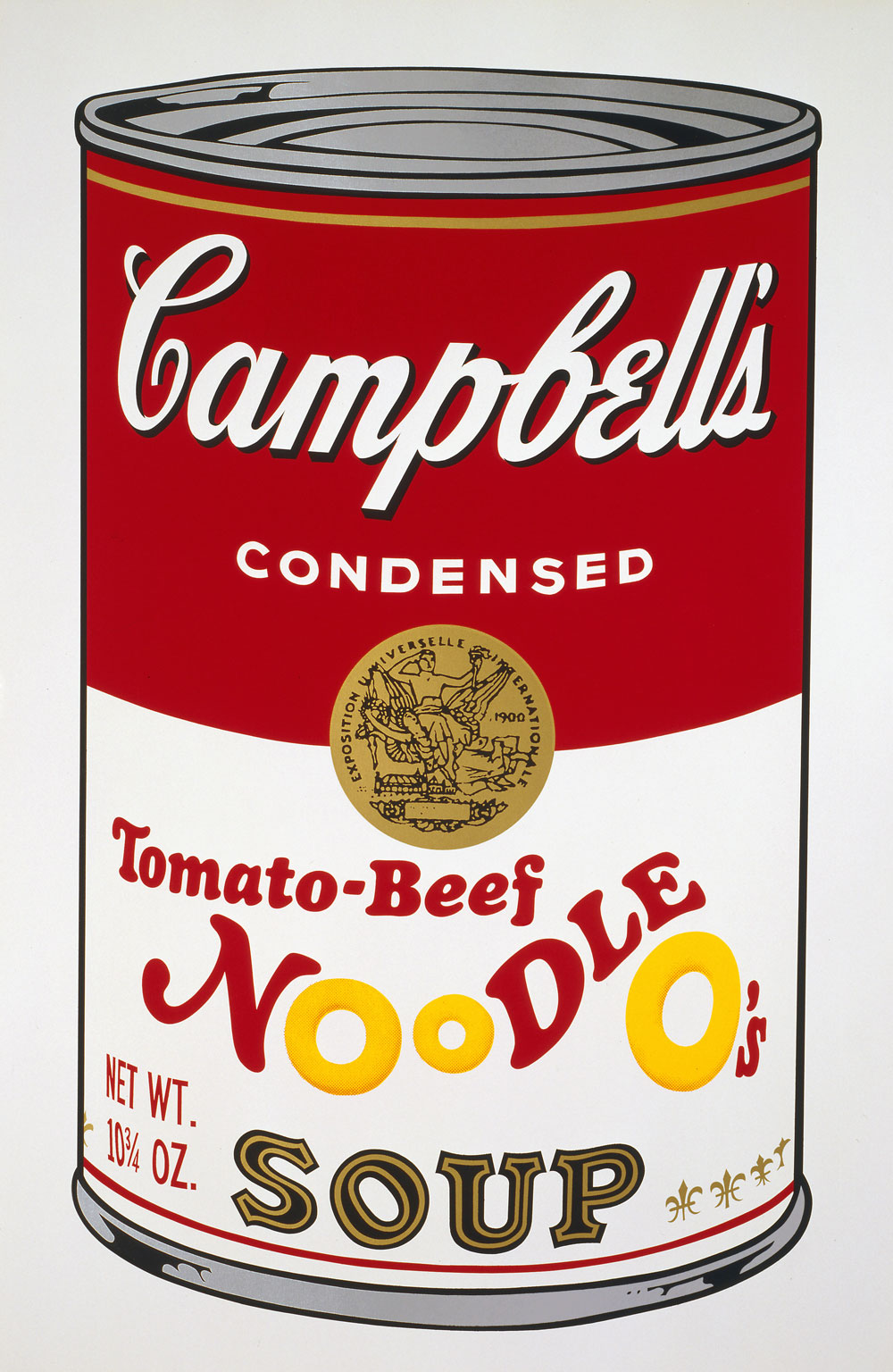
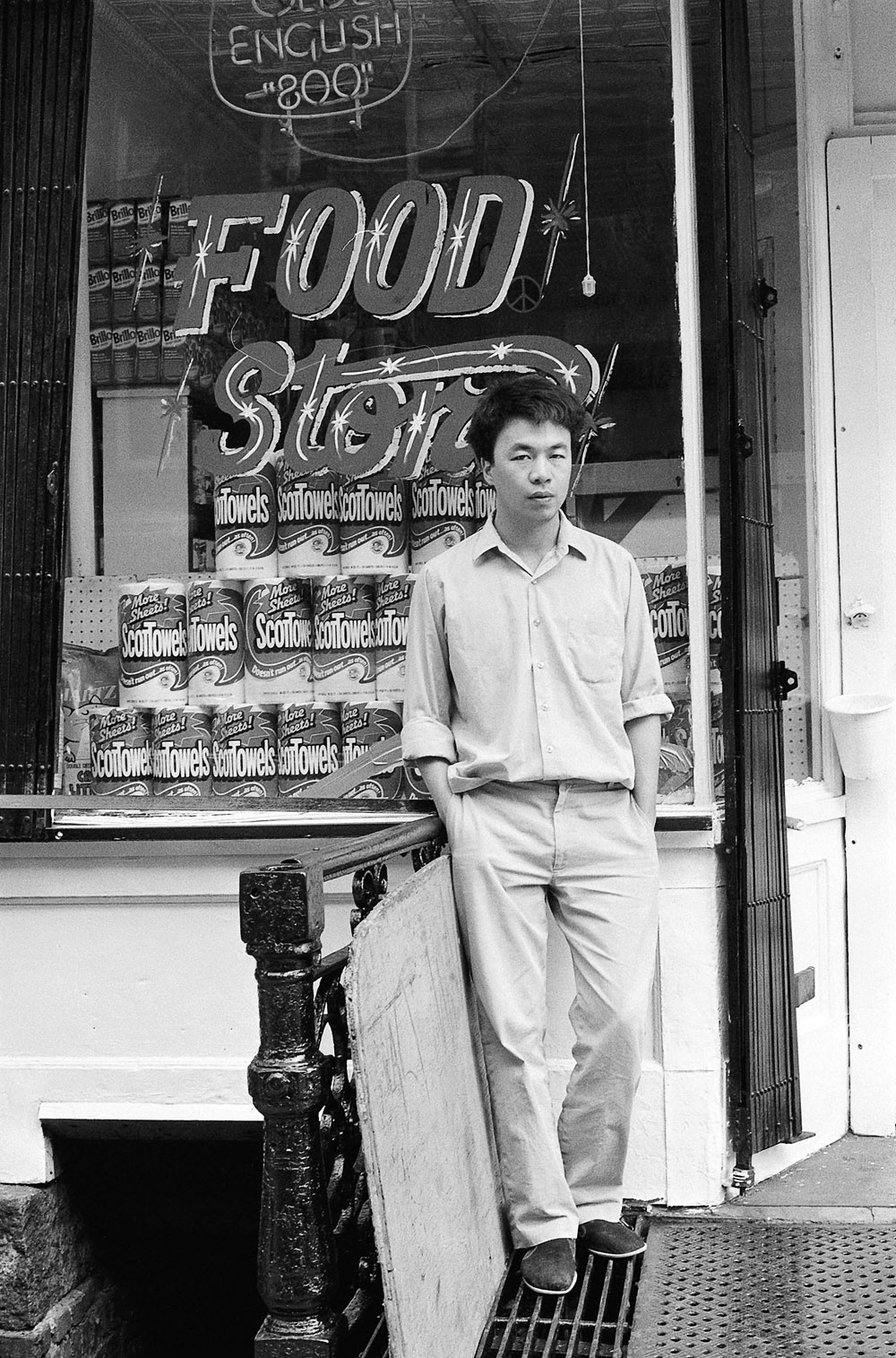
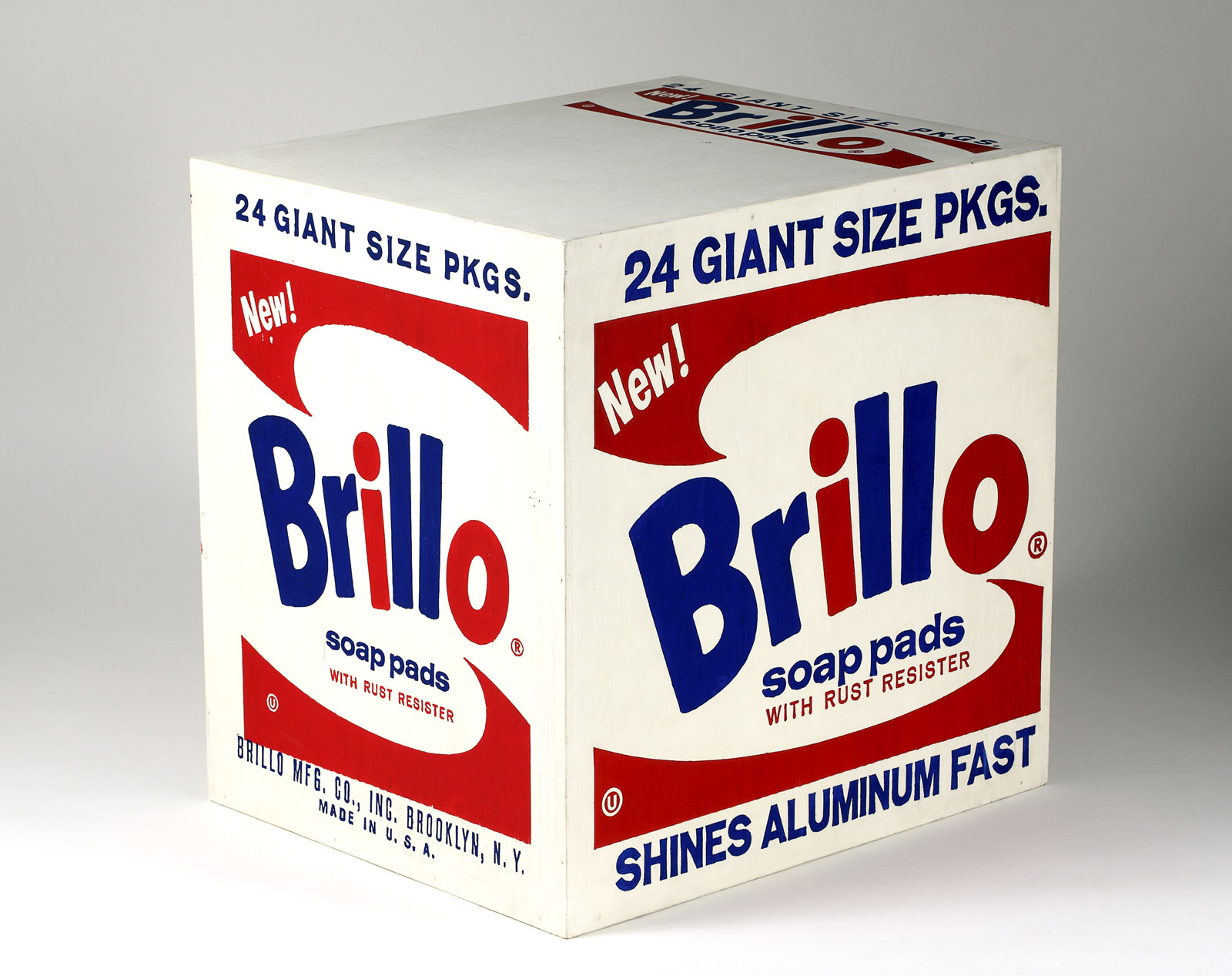
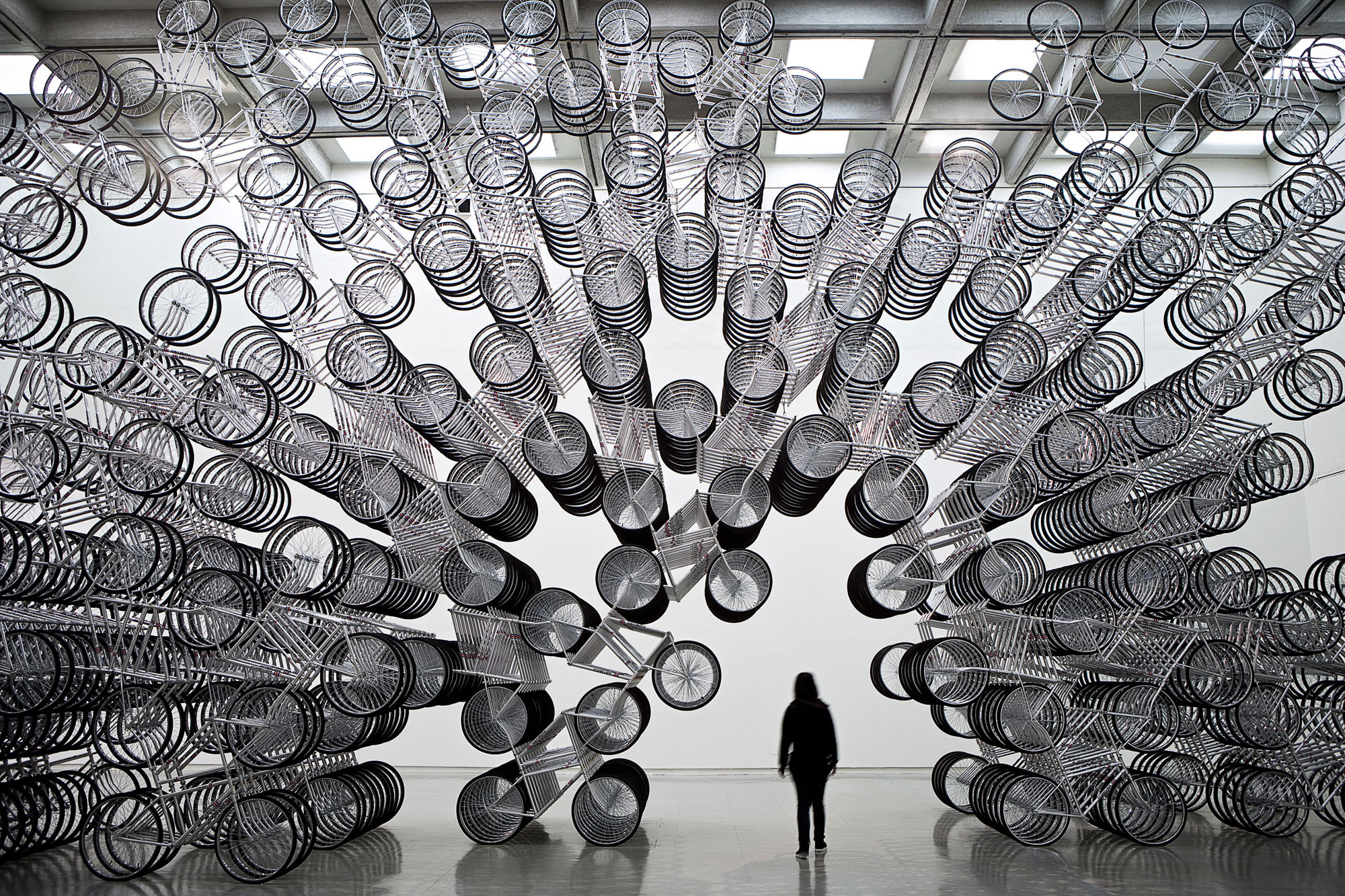
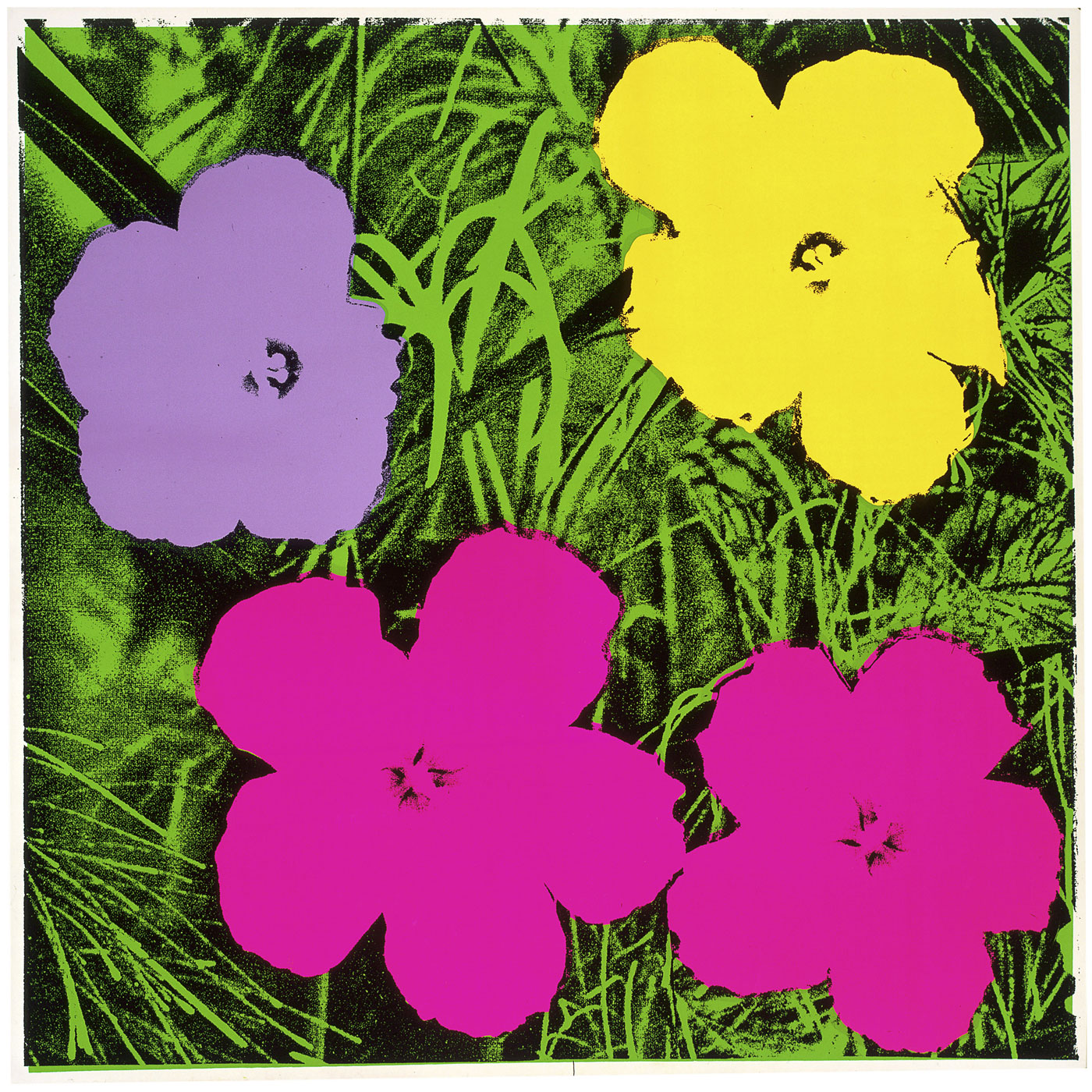
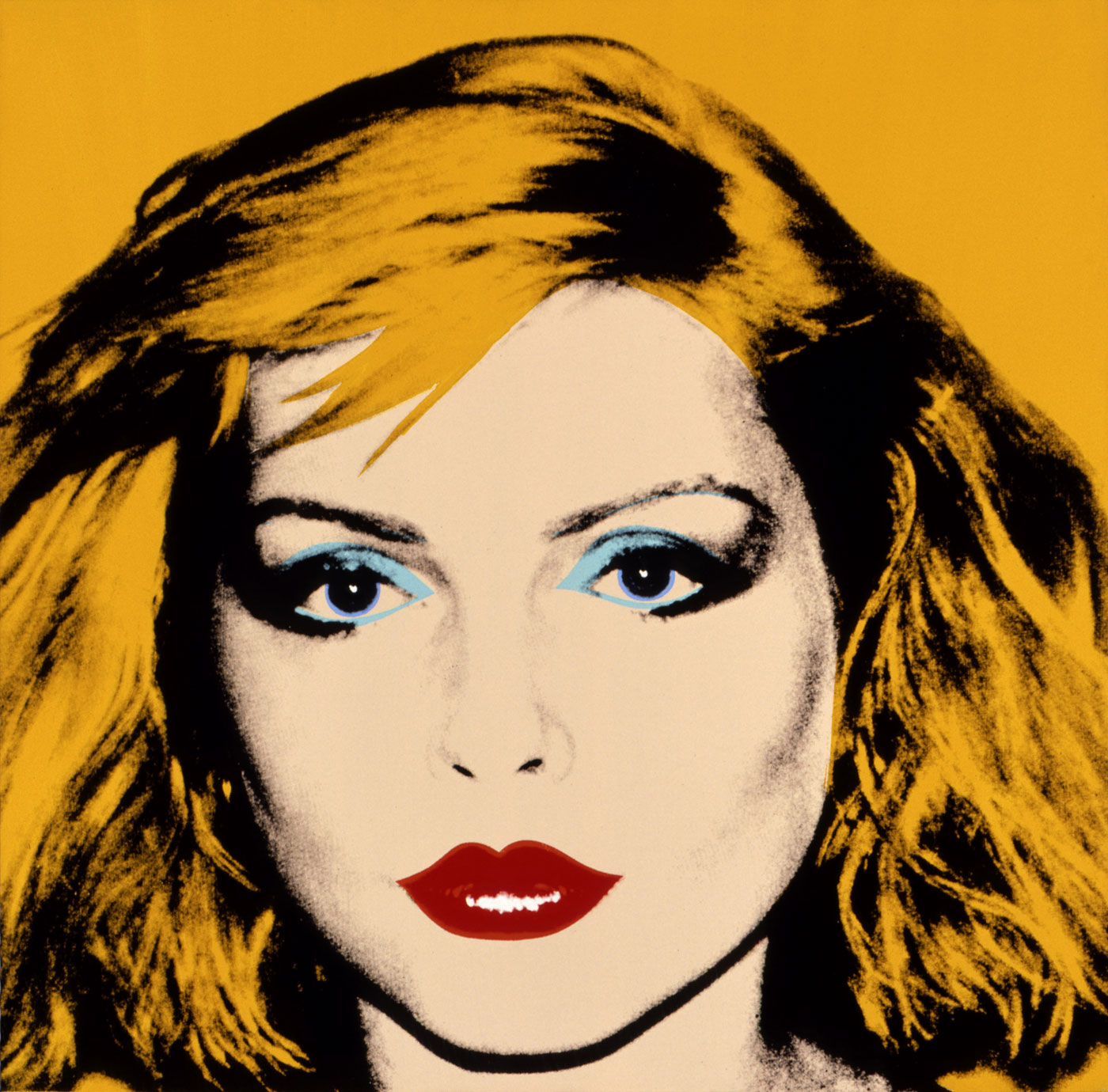
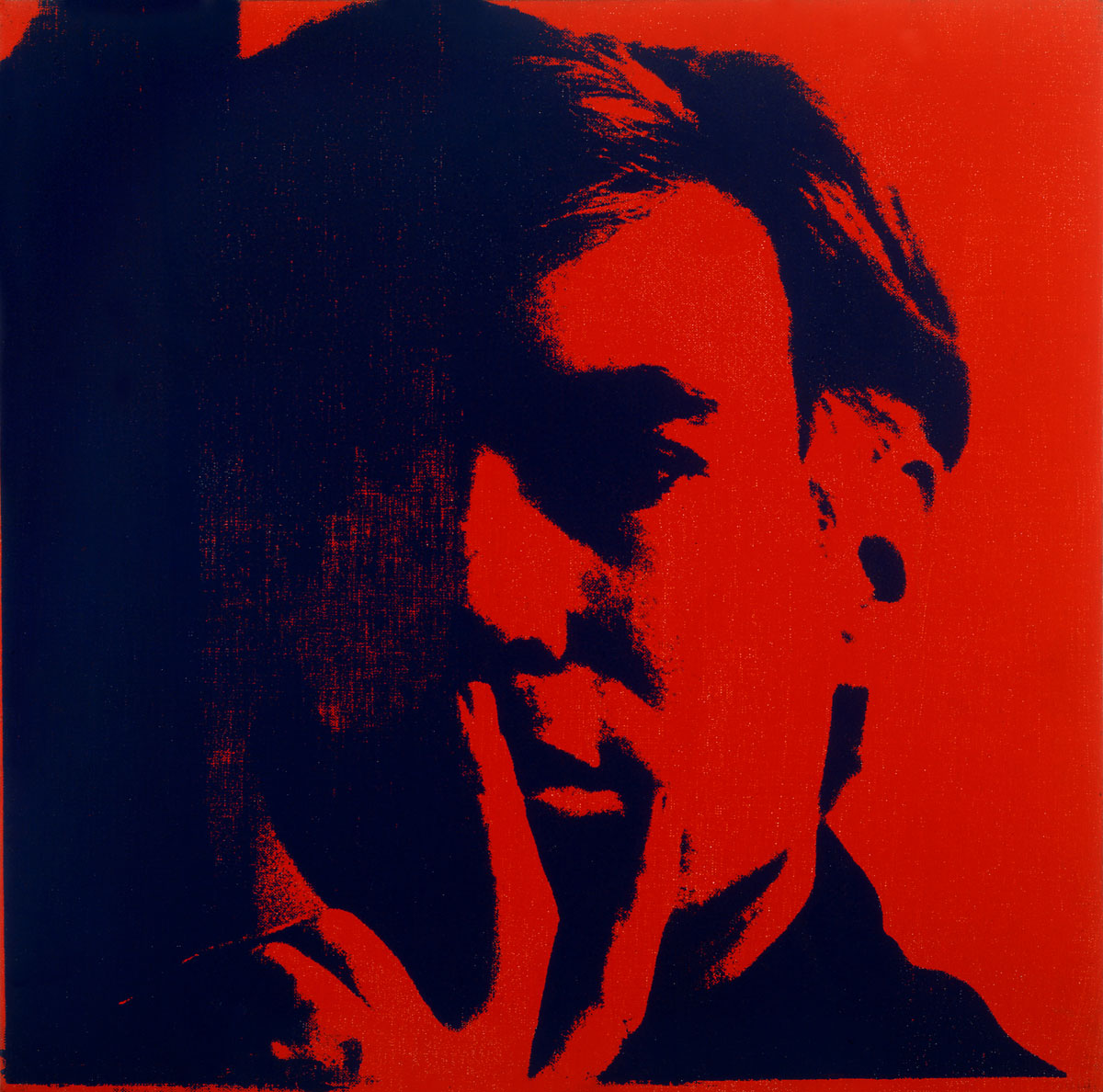

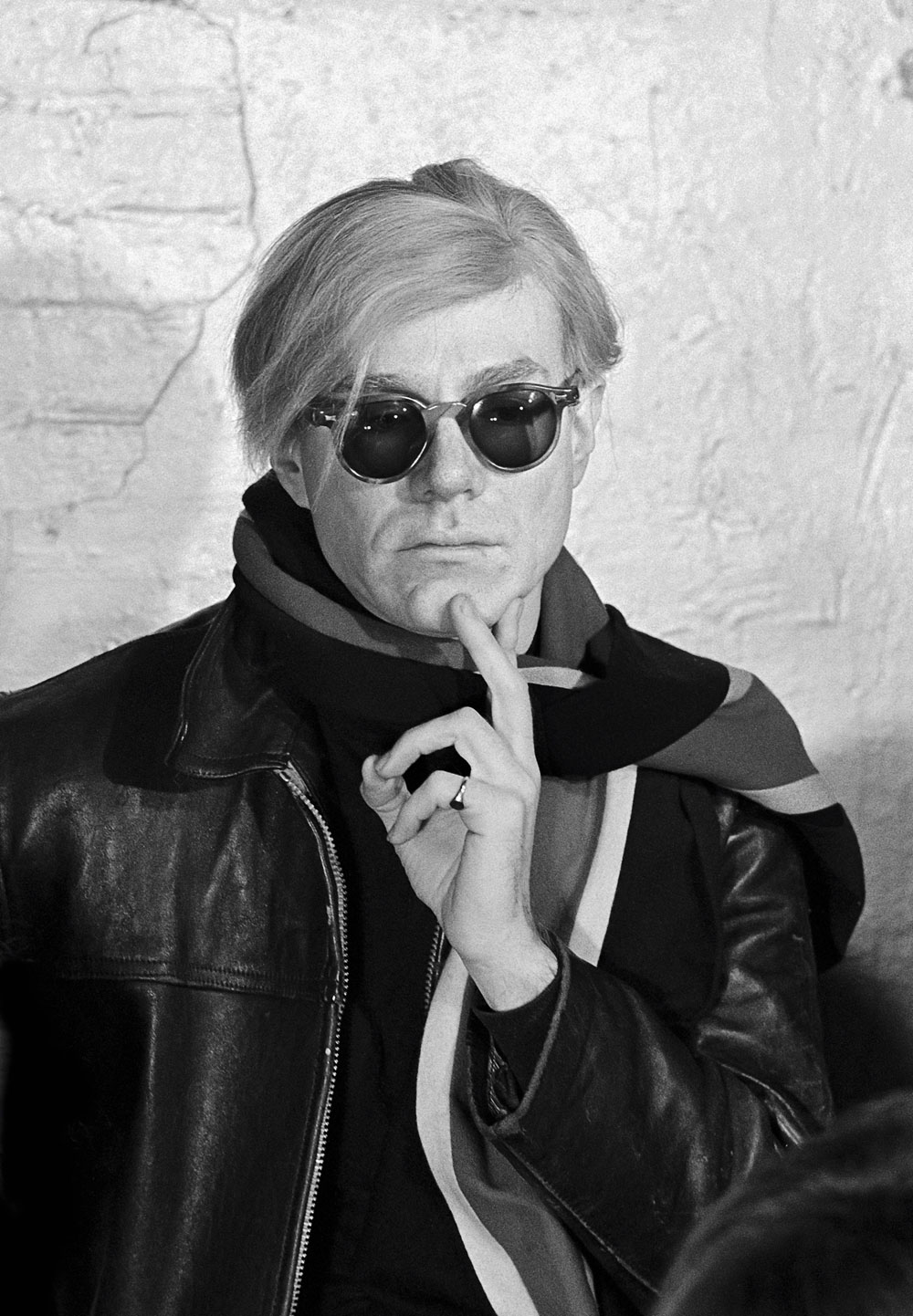
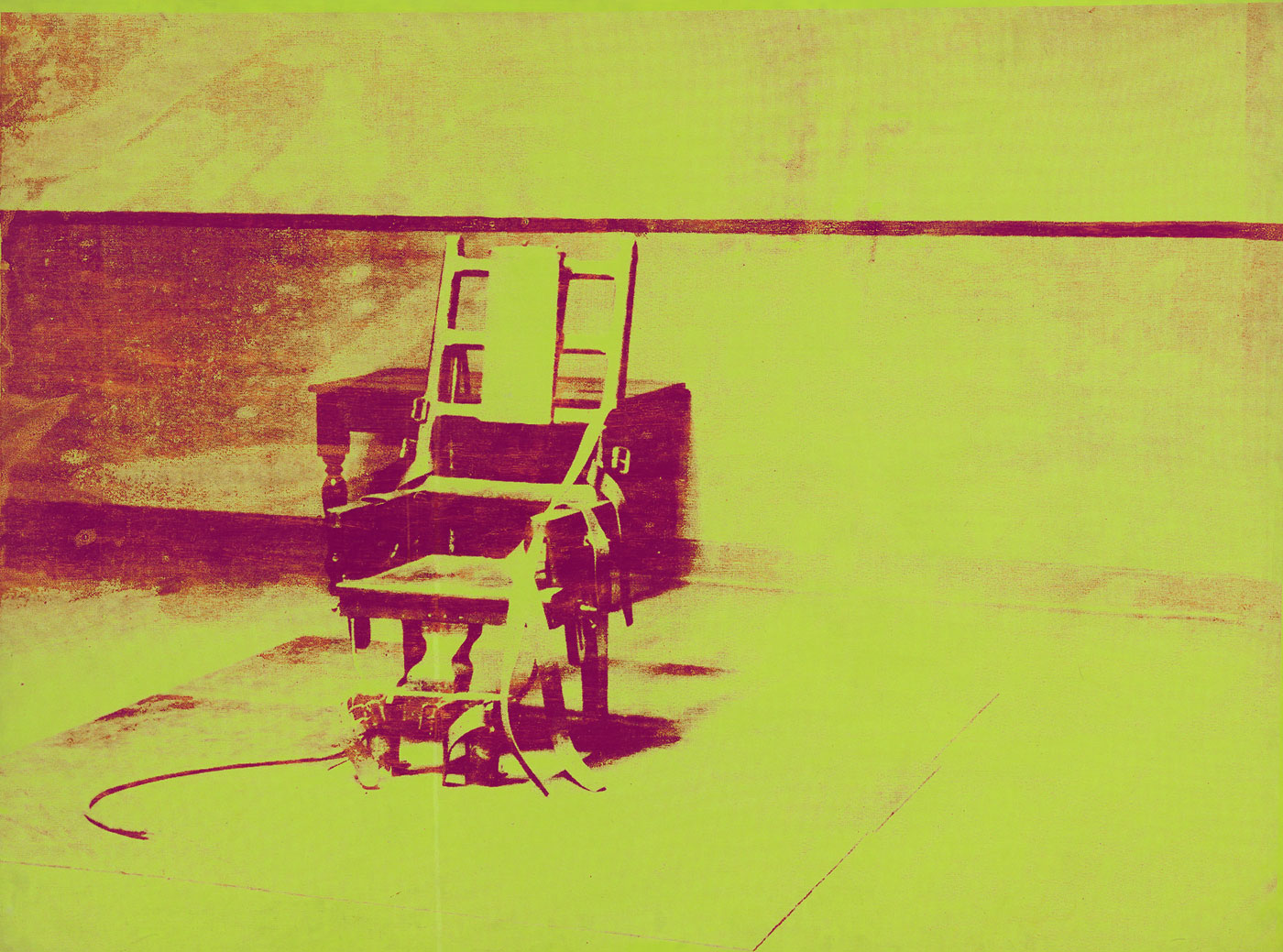
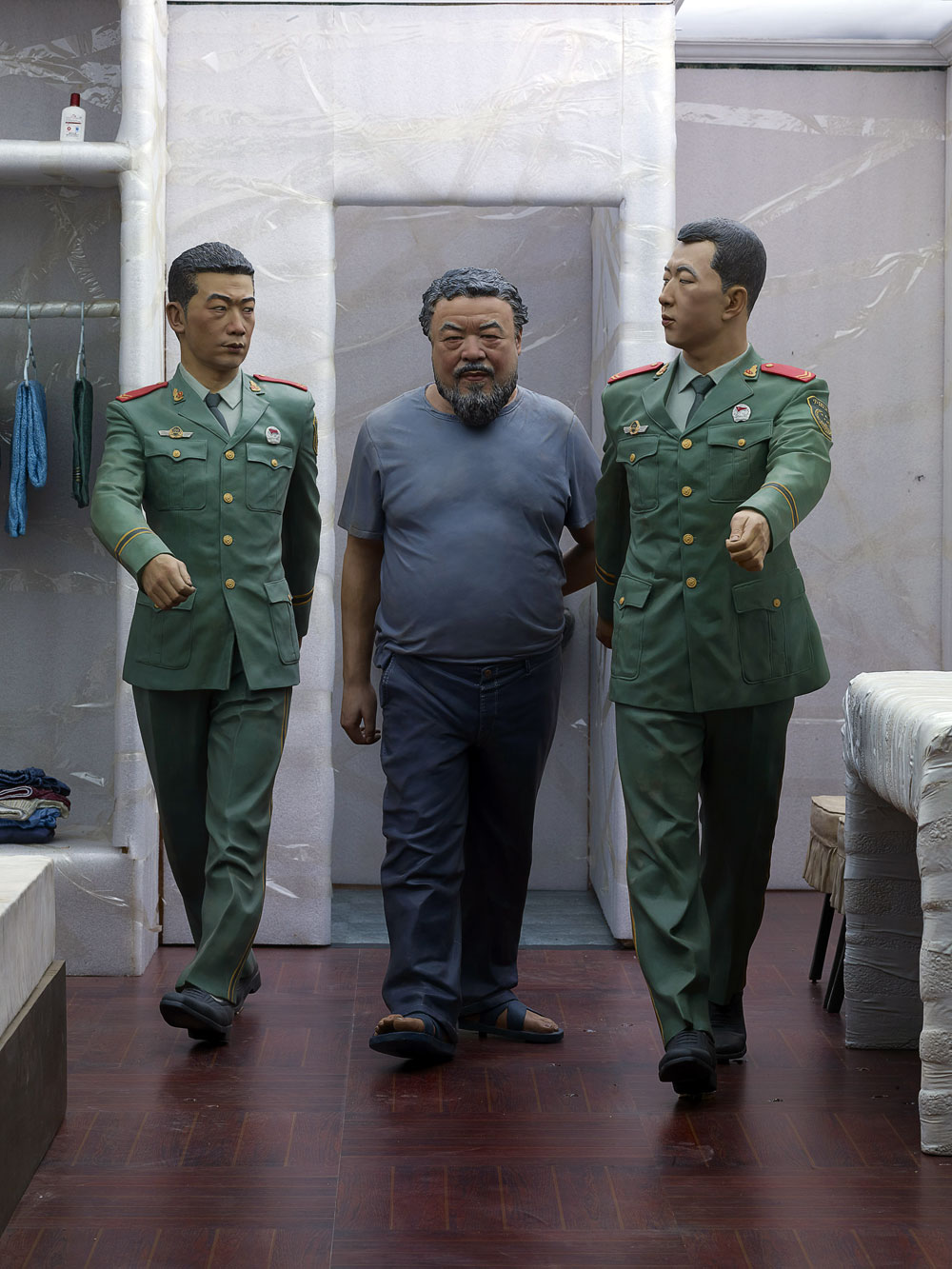
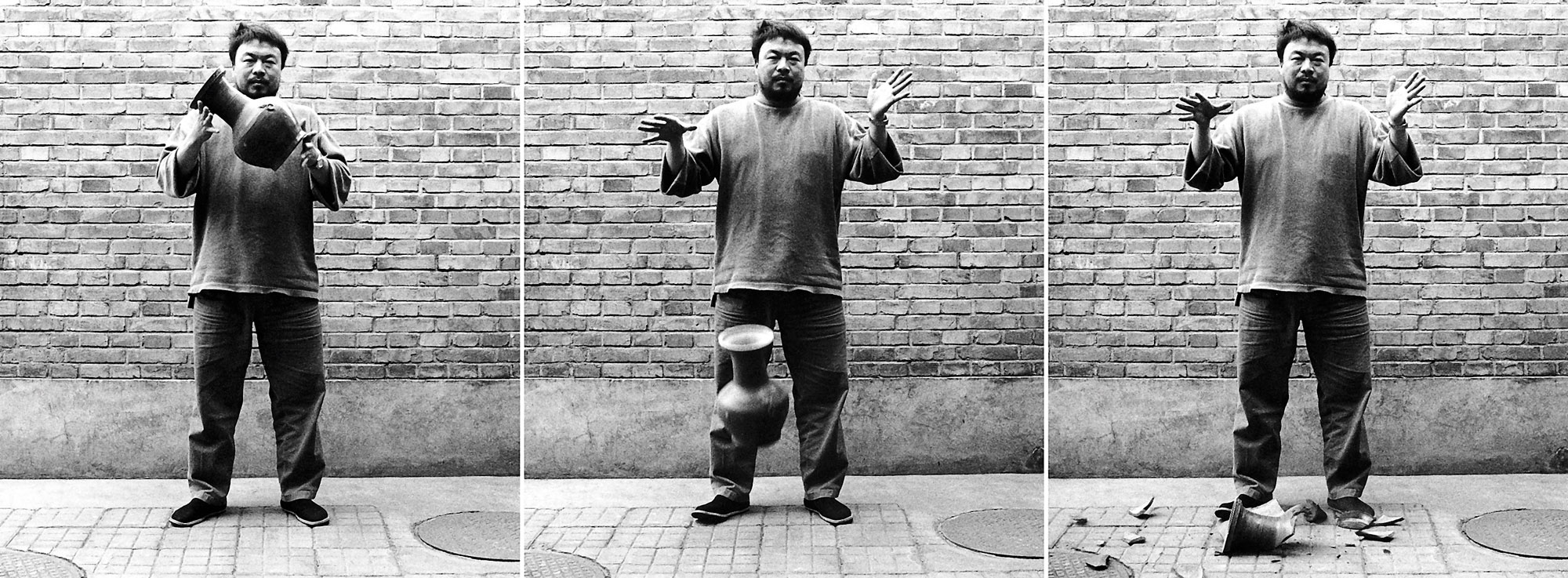
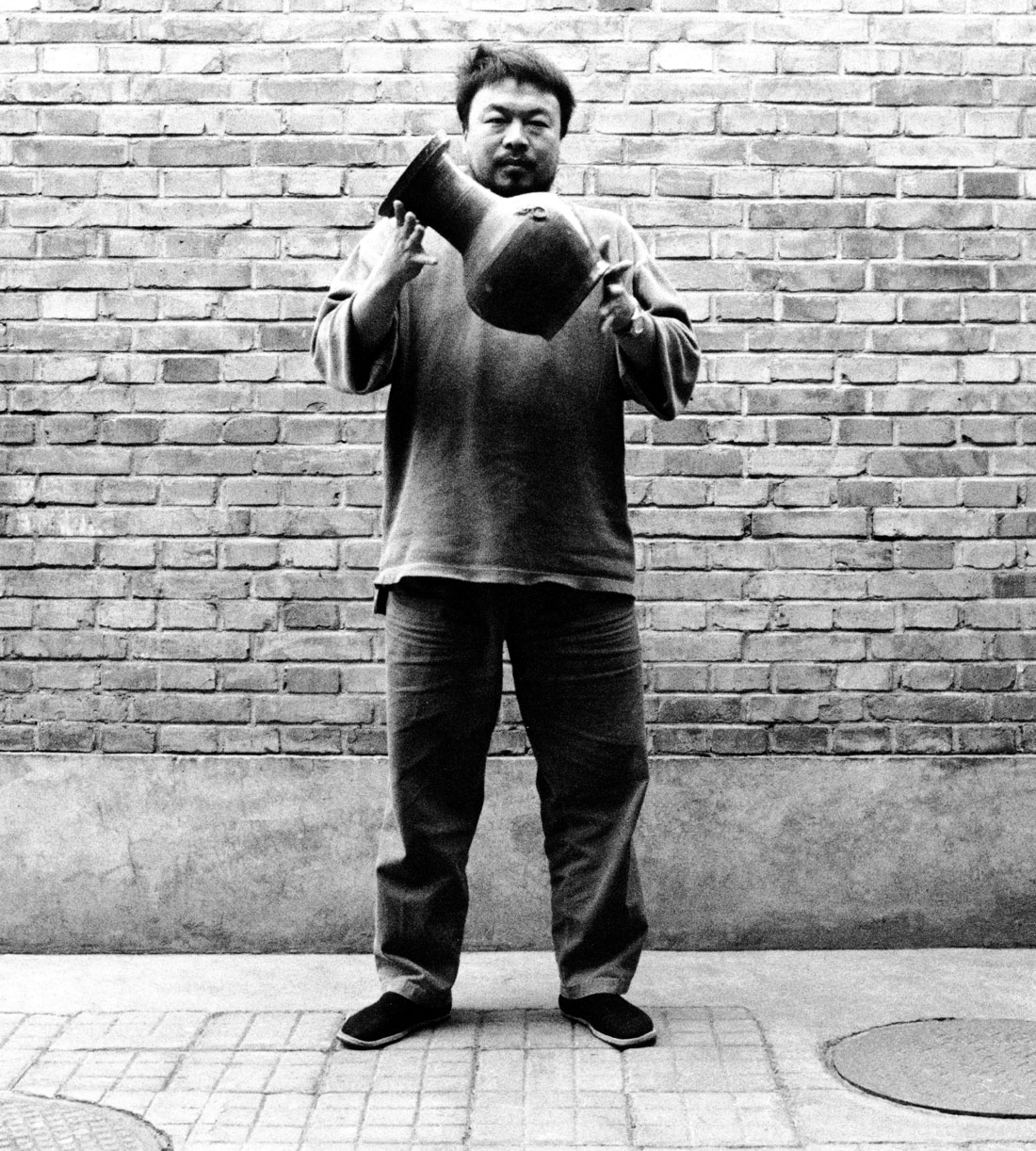
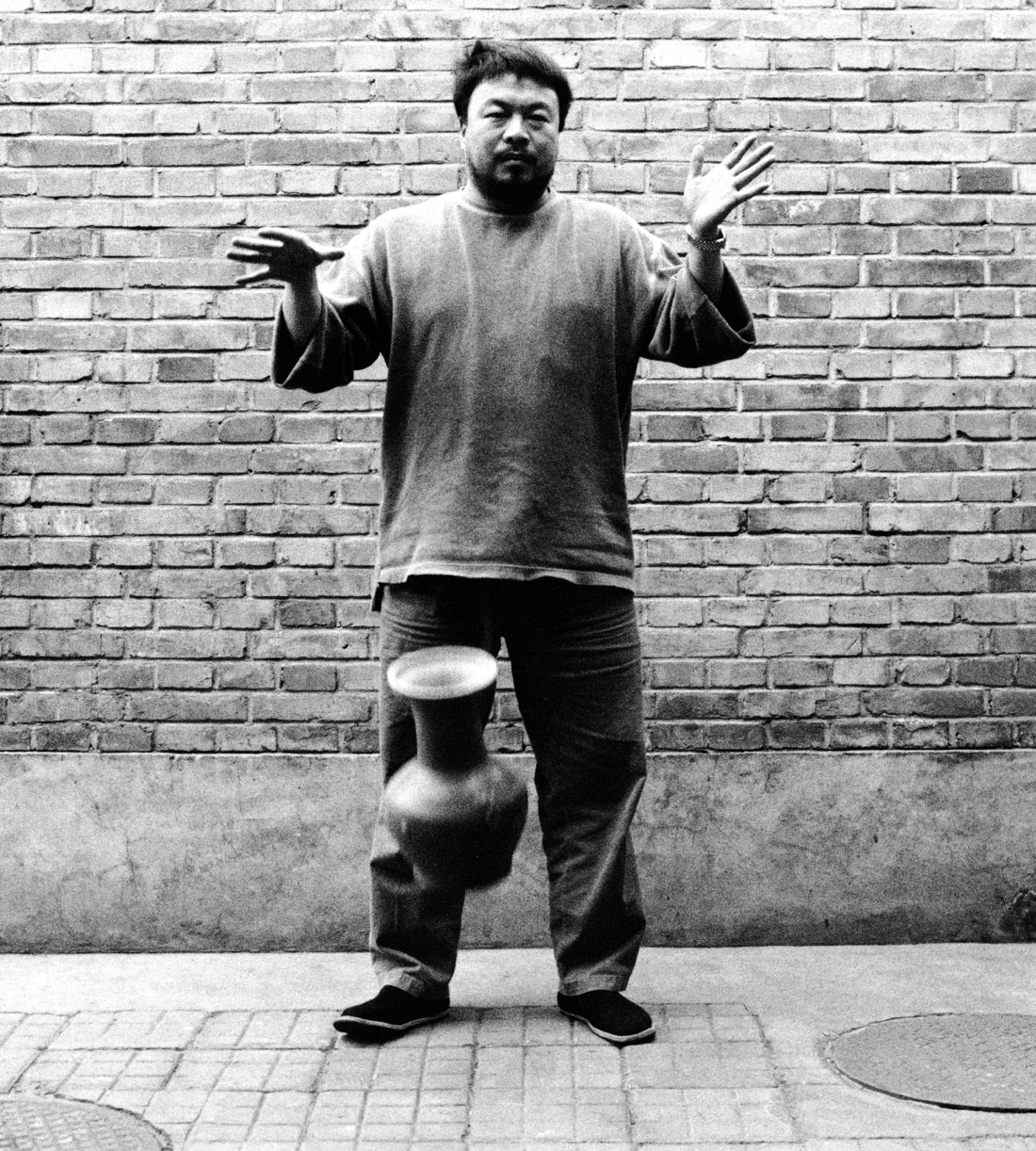
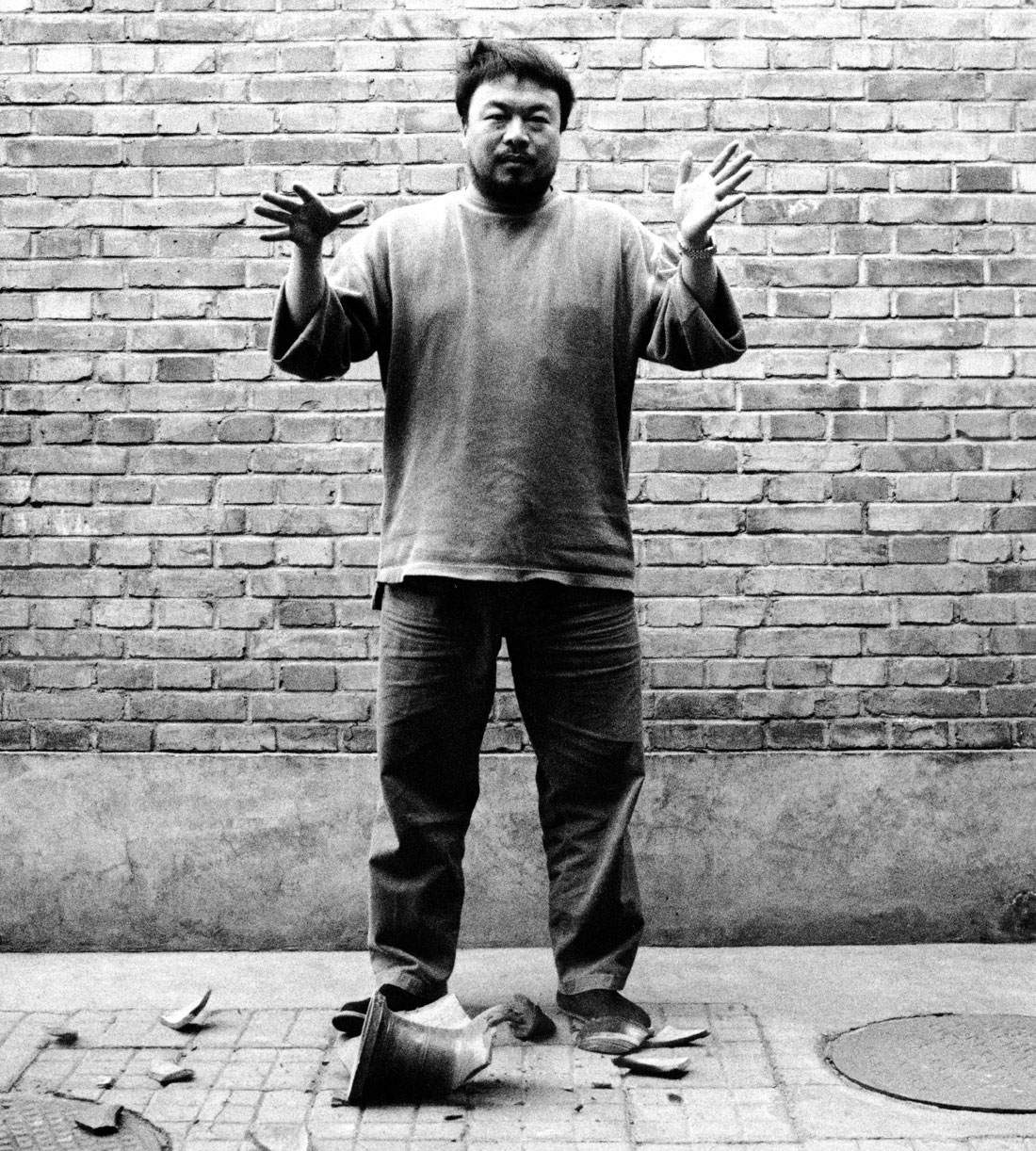
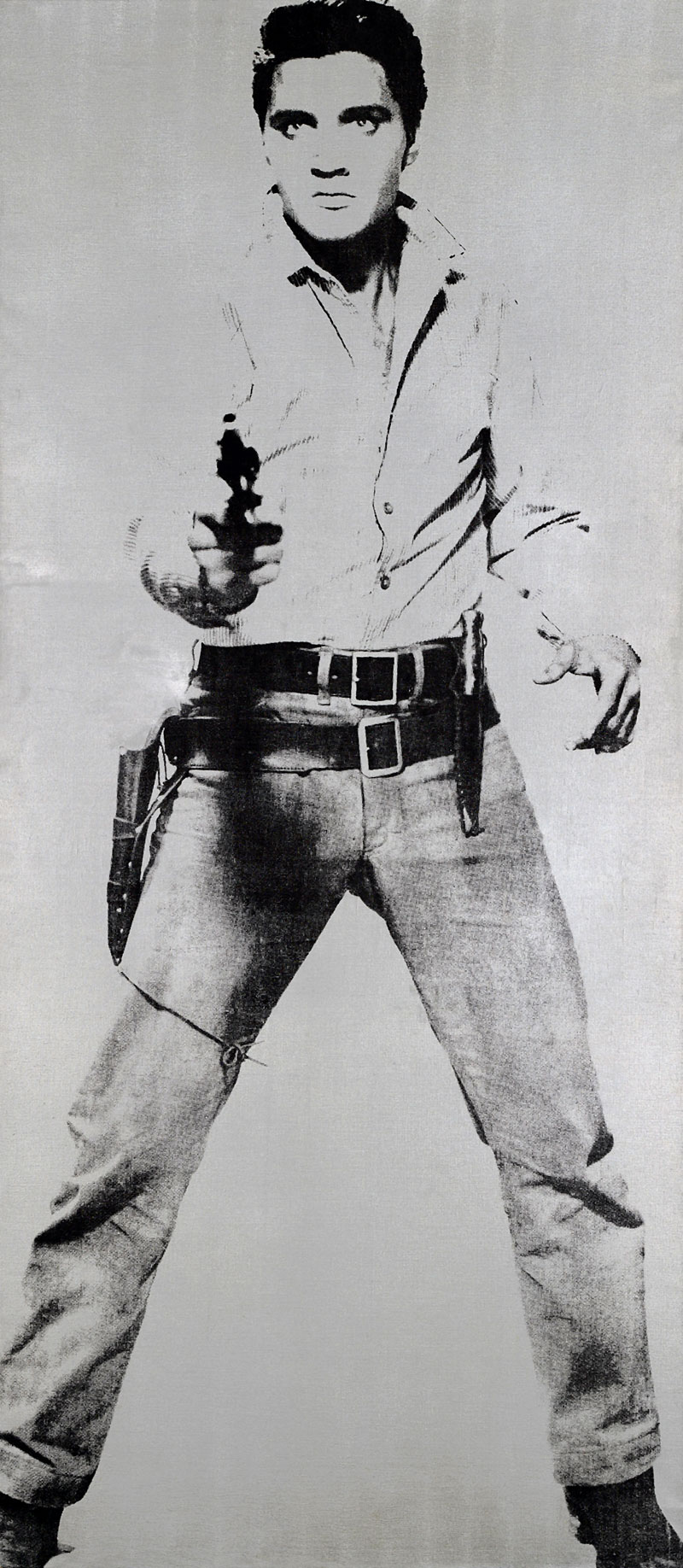
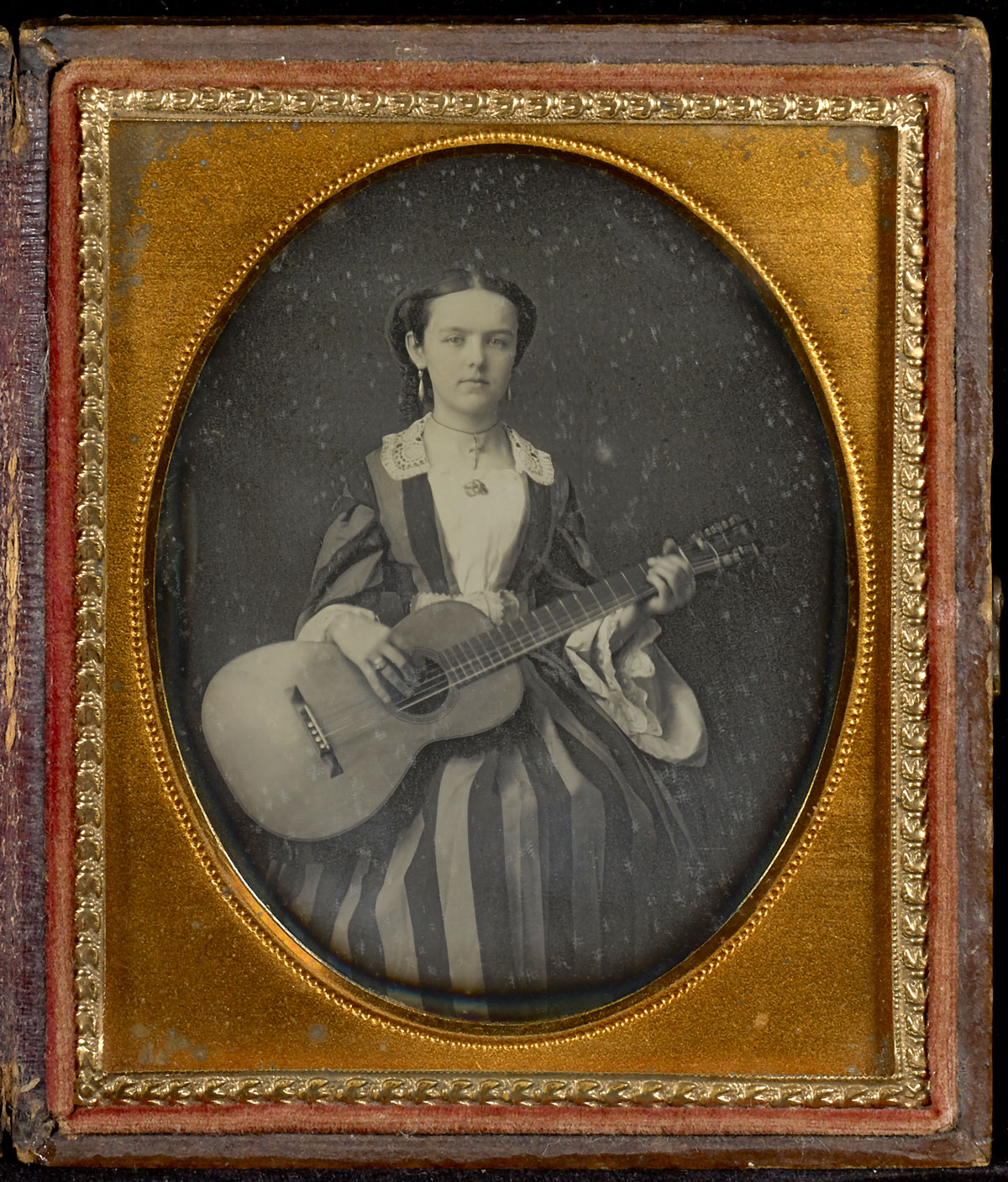
![James Maguire (American, 1816-1851) '[Portrait of Zachary Taylor]' 1847 from the exhibition 'In Focus: Daguerreotypes' at the J. Paul Getty Museum, Getty Center, Los Angeles, Nov 2015 - March 2016](https://artblart.com/wp-content/uploads/2016/02/gm_06991301-web.jpg "James Maguire (American, 1816-1851) '[Portrait of Zachary Taylor]' 1847 from the exhibition 'In Focus: Daguerreotypes' at the J. Paul Getty Museum, Getty Center, Los Angeles, Nov 2015 - March 2016")


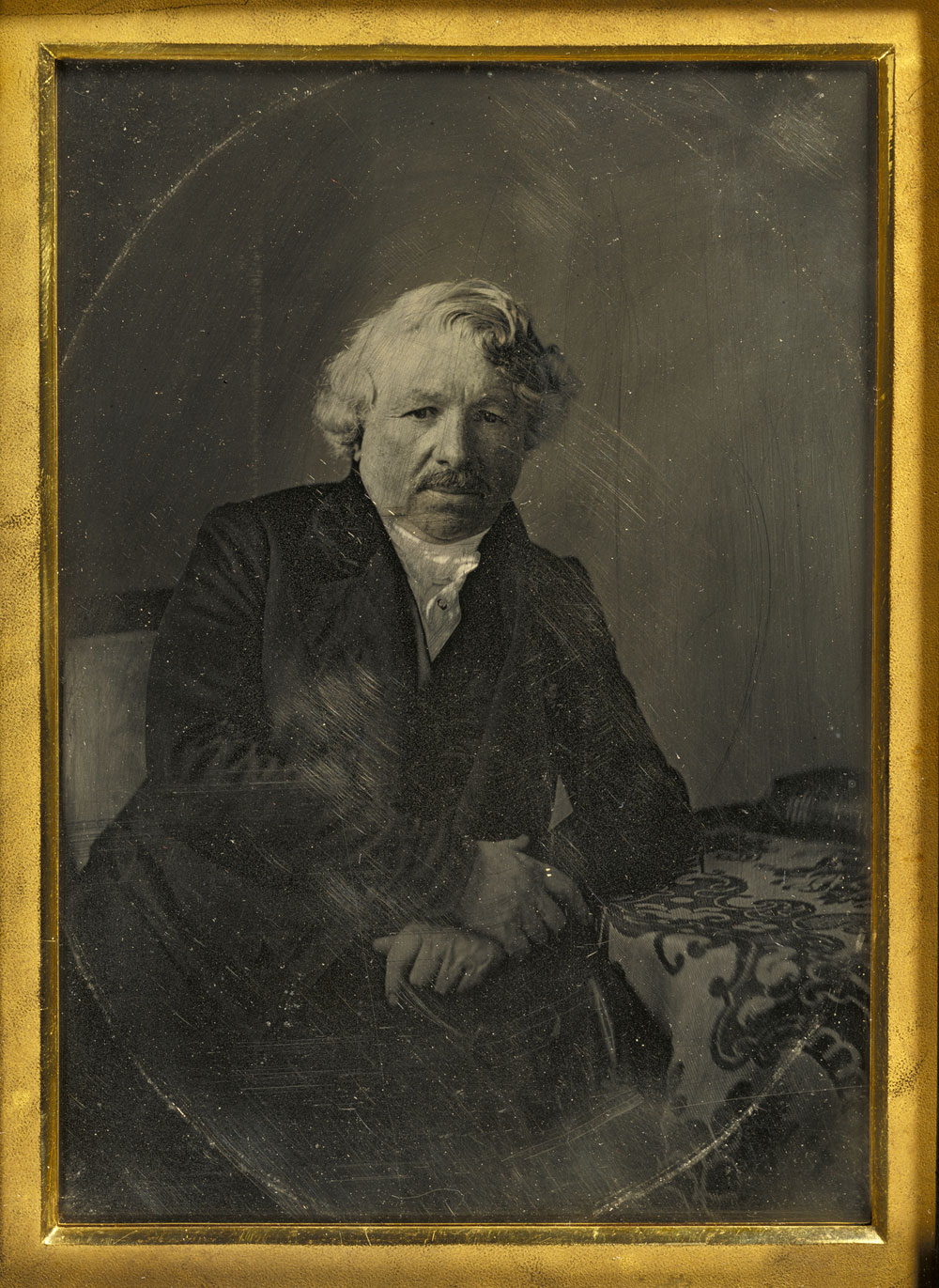
![James P. Weston (American, active South America about 1849 and New York 1851-1852 and 1855-1857) '[Portrait of an Asian Man in Top Hat]' c. 1856](https://artblart.com/wp-content/uploads/2016/02/gm_05595301-web.jpg "James P. Weston (American, active South America about 1849 and New York 1851-1852 and 1855-1857) '[Portrait of an Asian Man in Top Hat]' c. 1856")

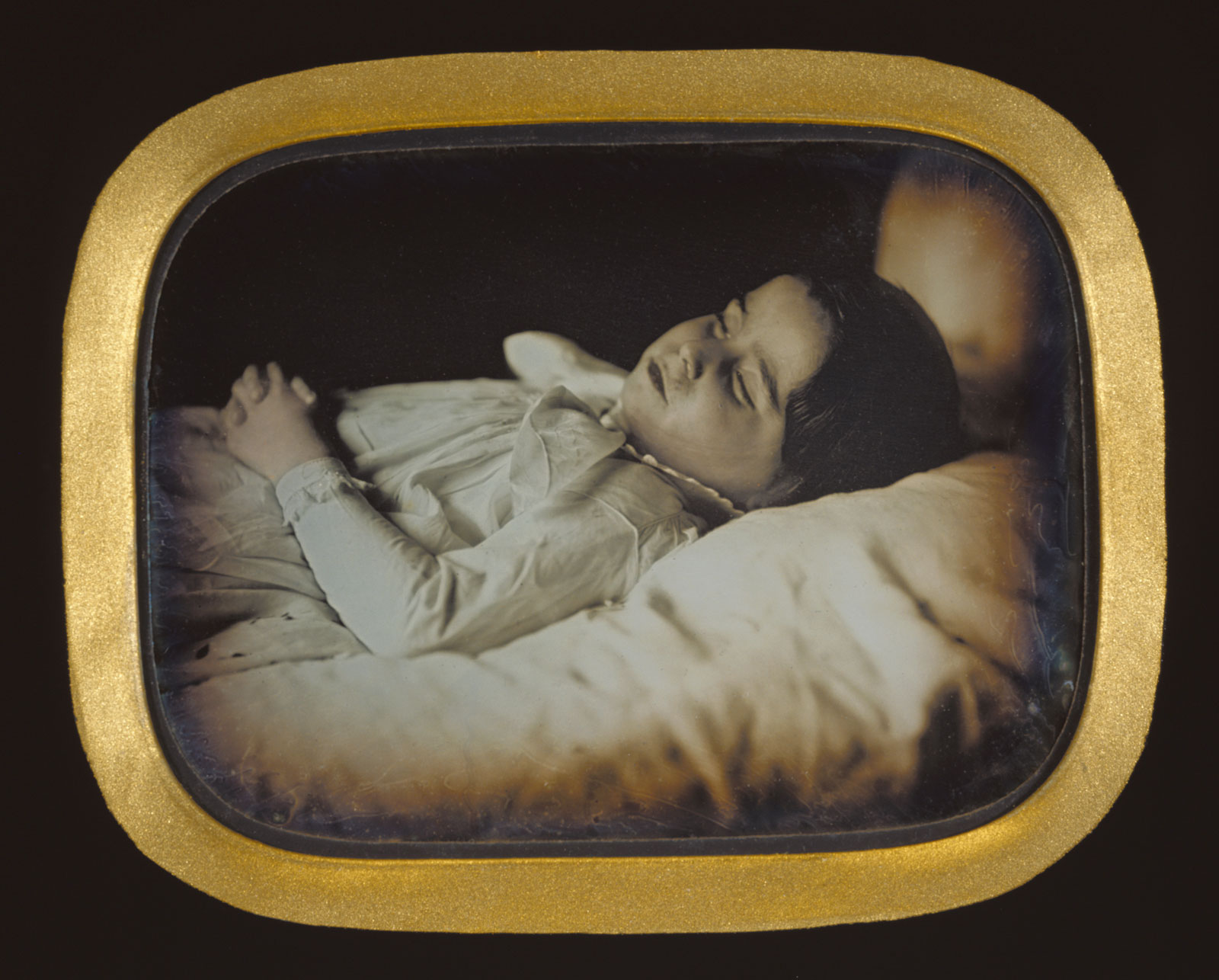




![Unknown maker (American) '[Portrait of an Unidentified Daguerreotypist Displaying a Selection of Daguerreotypes] / Daguerreotypist (?) Displaying Thirteen Daguerreotypes' 1845](https://artblart.com/wp-content/uploads/2016/02/gm_06329401-web.jpg "Unknown maker (American) '[Portrait of an Unidentified Daguerreotypist Displaying a Selection of Daguerreotypes] / Daguerreotypist (?) Displaying Thirteen Daguerreotypes' 1845")
![Unknown maker (American) '[Chinese Woman with a Mandolin]' 1860](https://artblart.com/wp-content/uploads/2016/02/gm_05620001-web.jpg "Unknown maker (American) '[Chinese Woman with a Mandolin]' 1860")
![Unknown maker (American) '[Chinese Woman with a Mandolin]' 1860 (detail)](https://artblart.com/wp-content/uploads/2016/02/gm_05620001-detail.jpg "Unknown maker (American) '[Chinese Woman with a Mandolin]' 1860 (detail)")

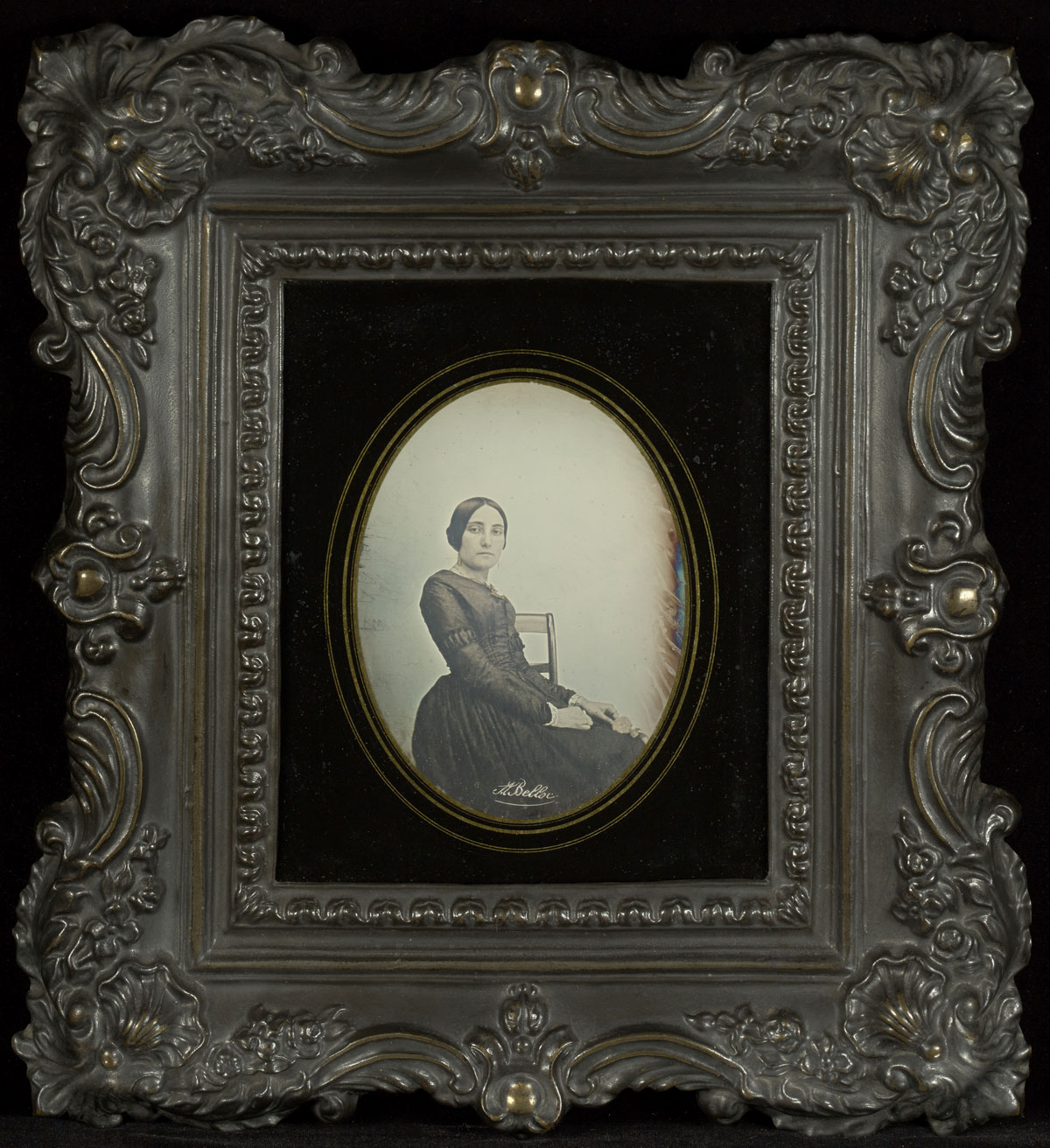
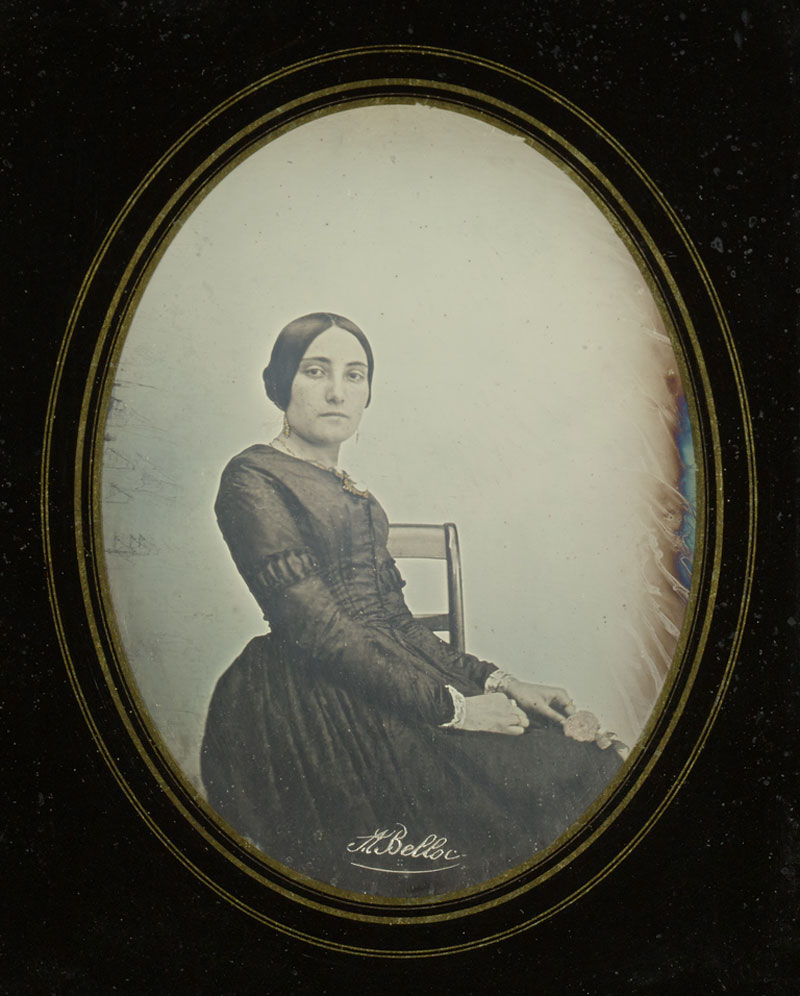


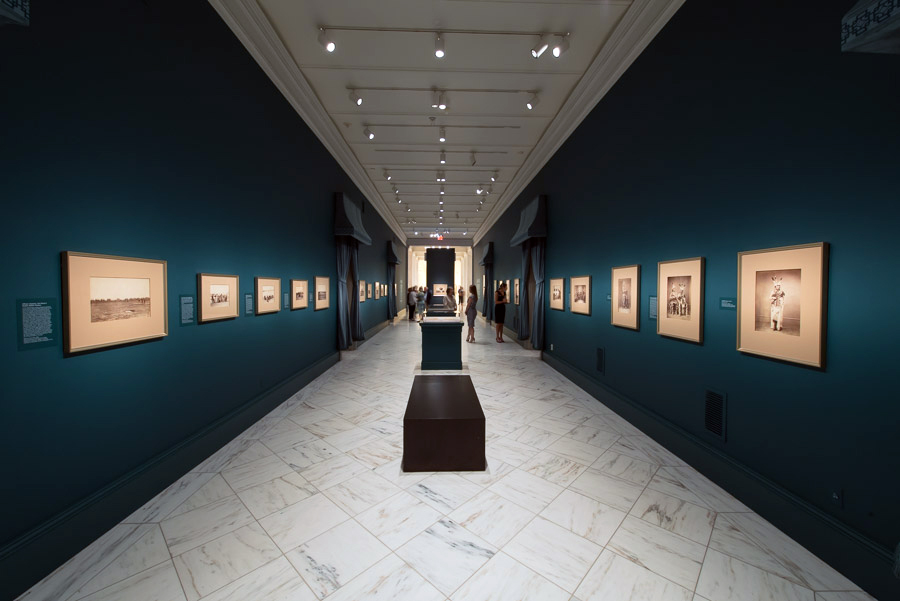

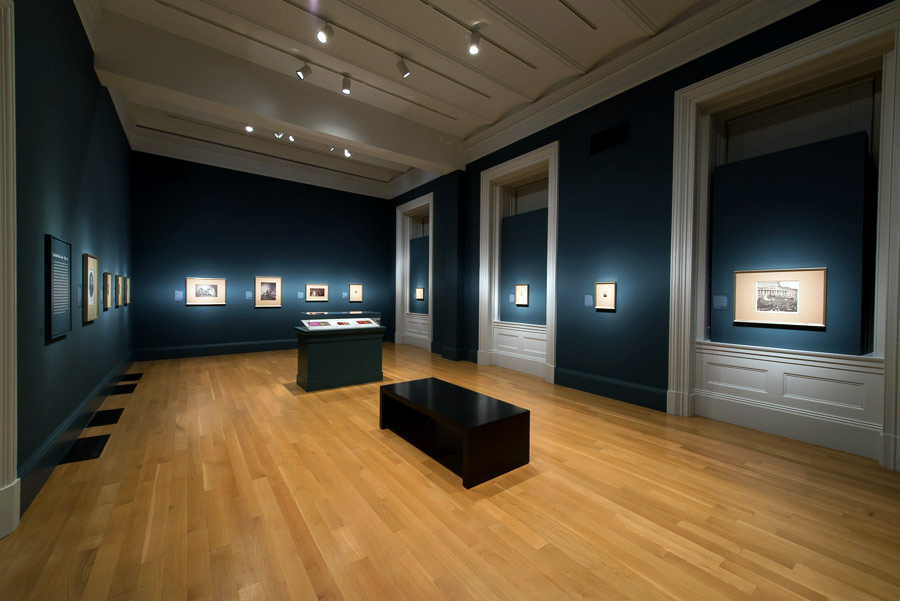
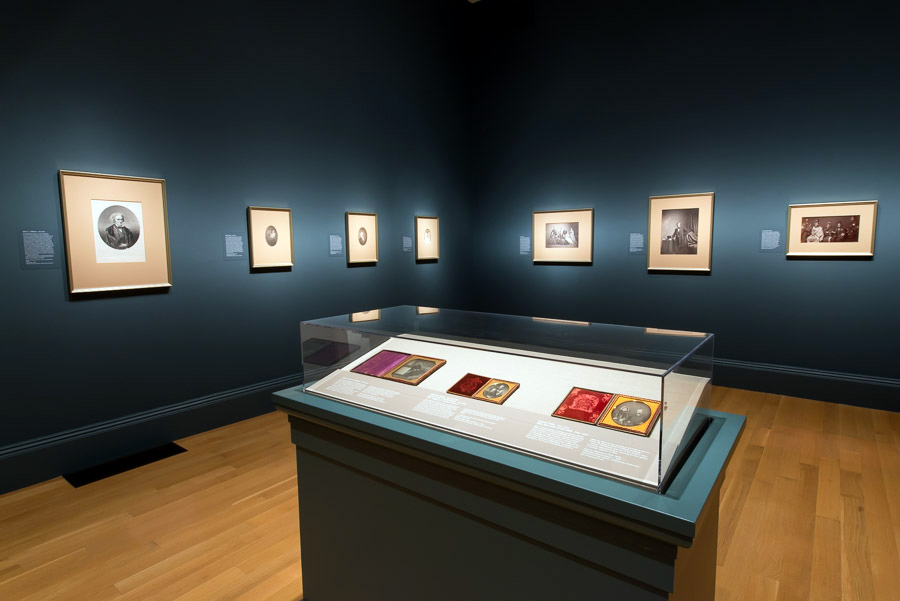
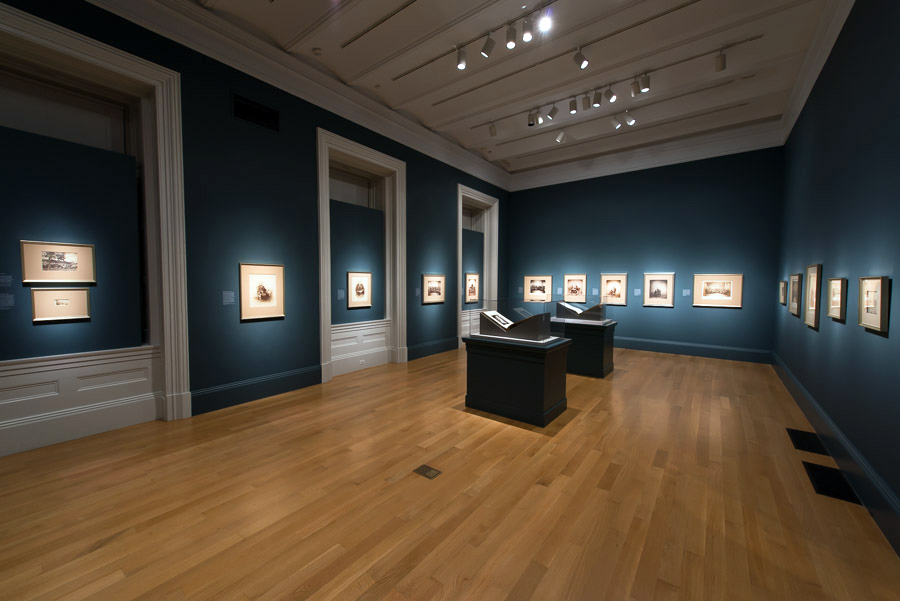
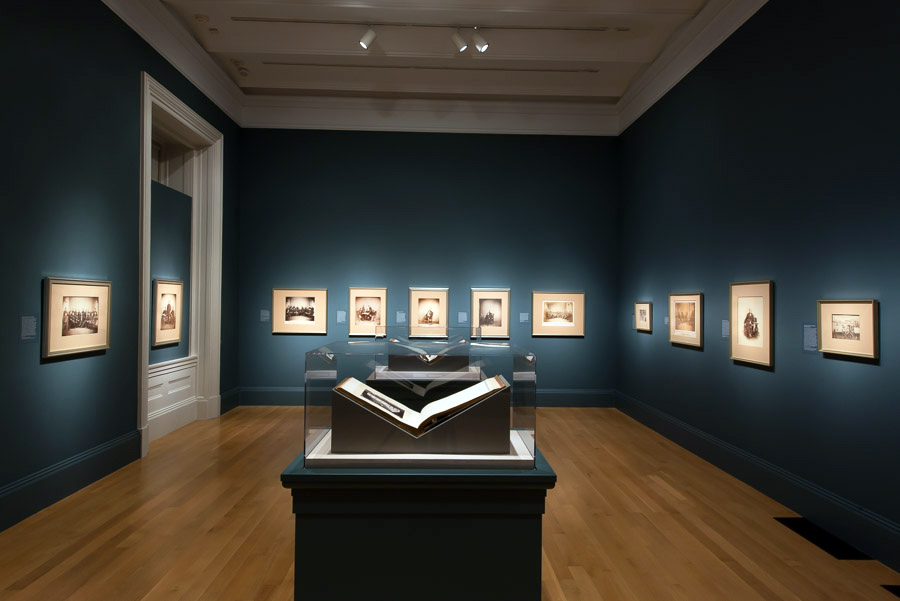

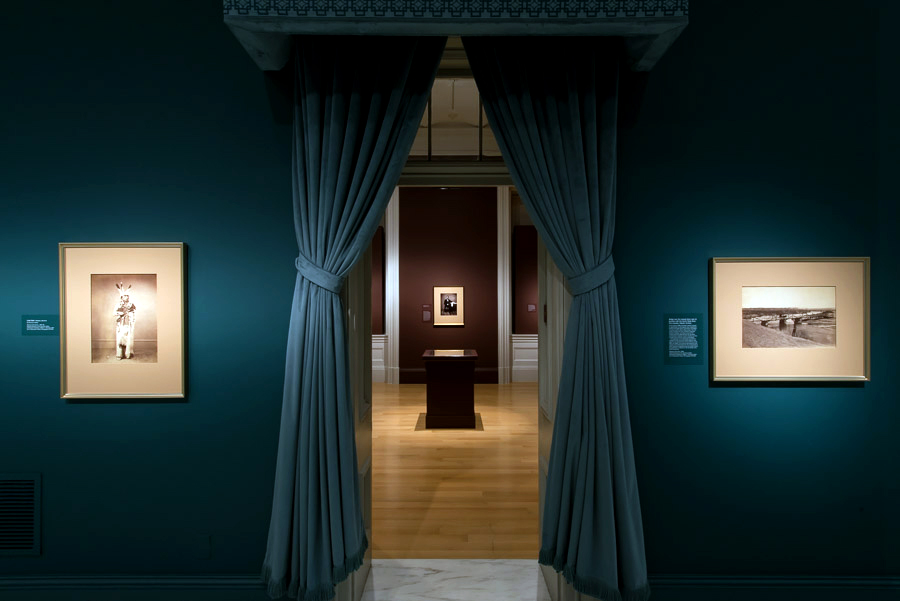
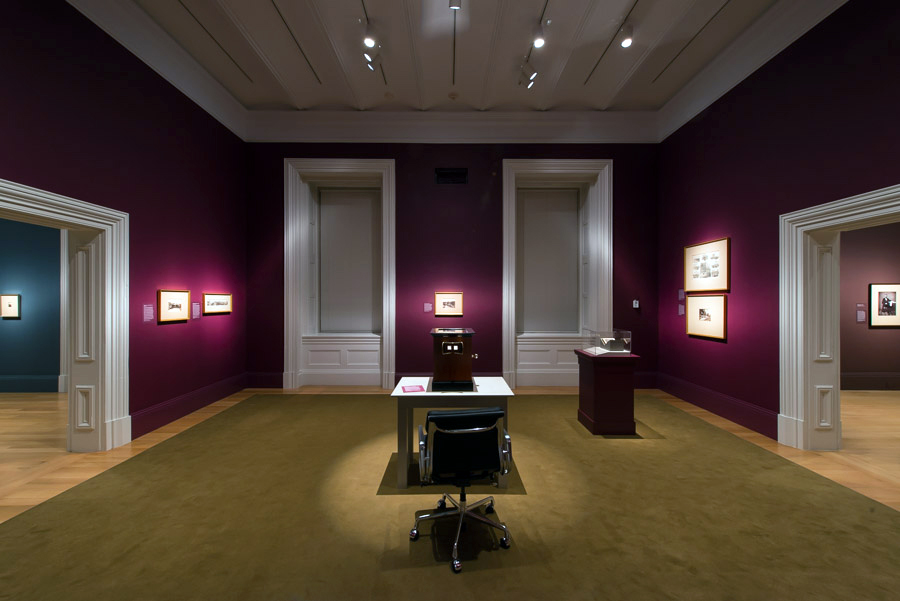
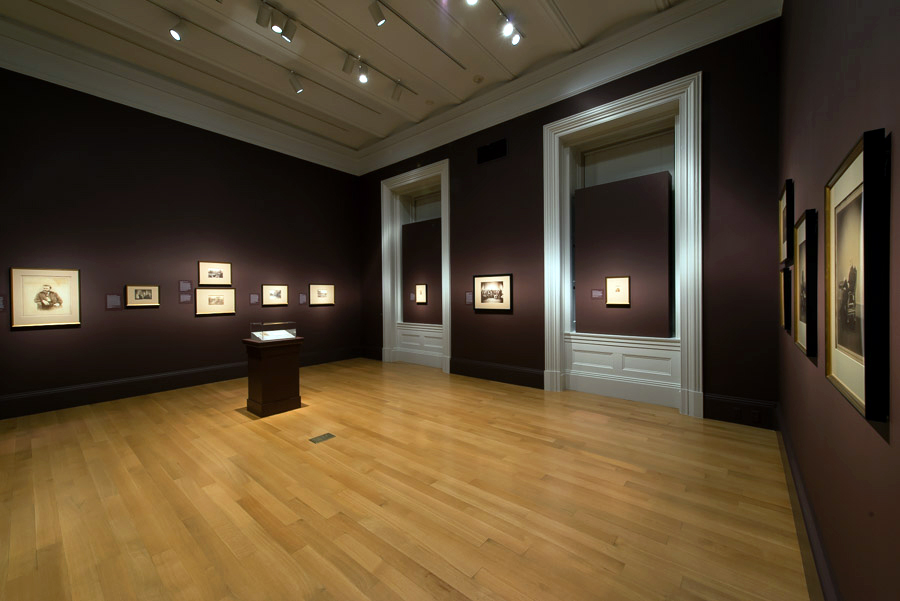

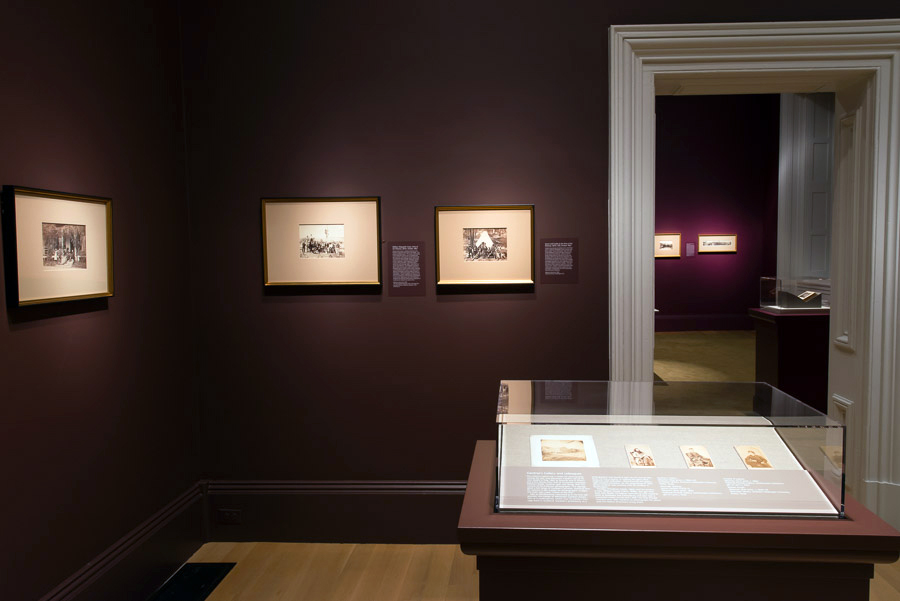
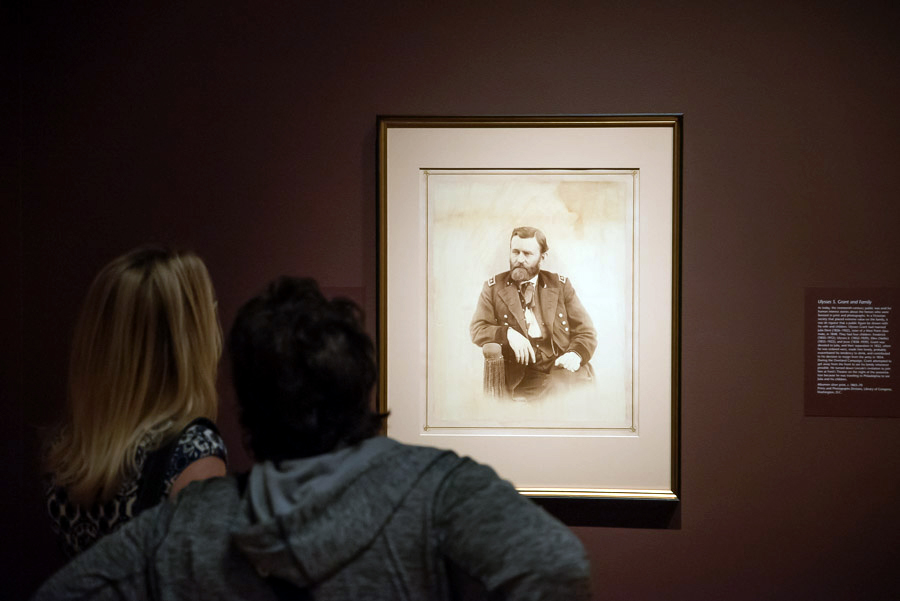


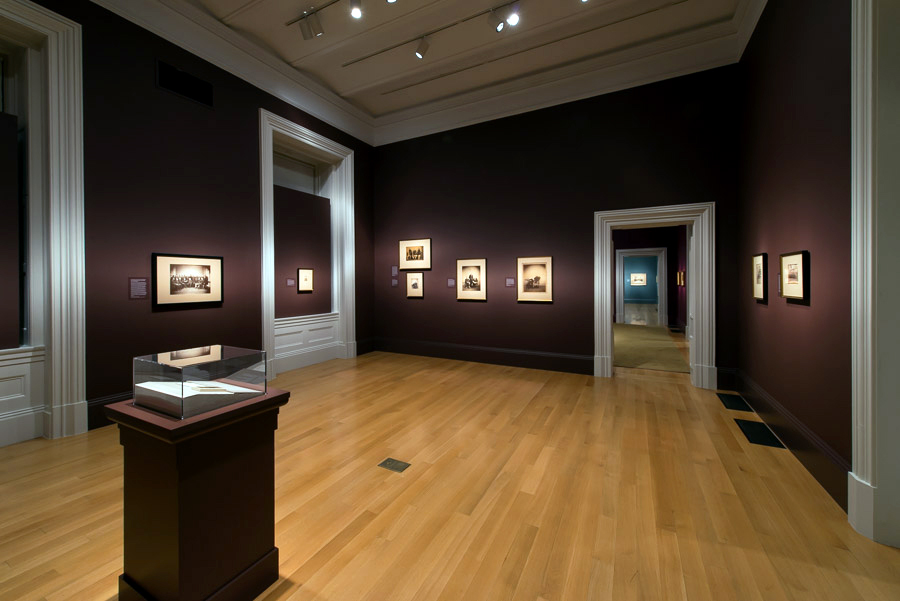


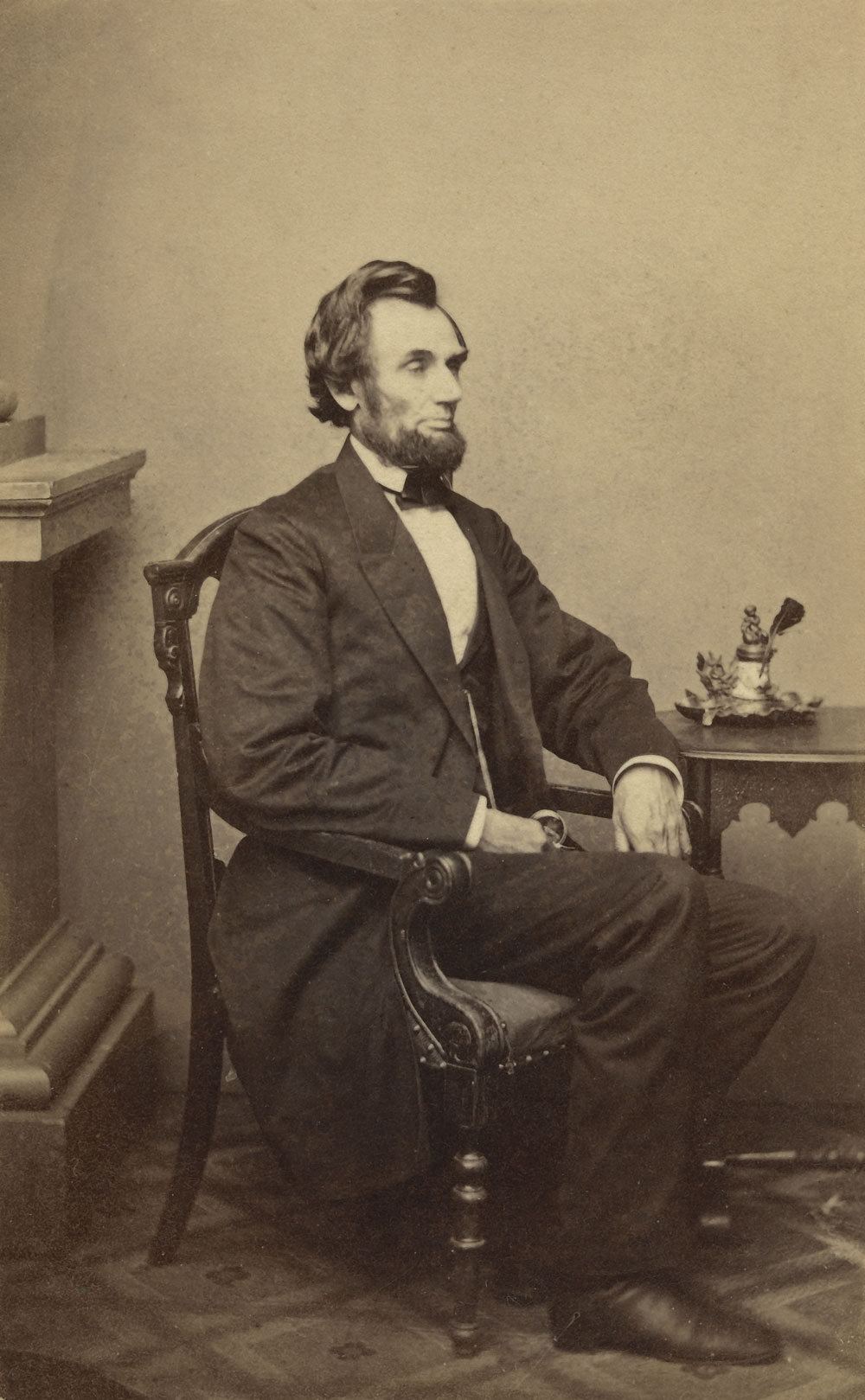
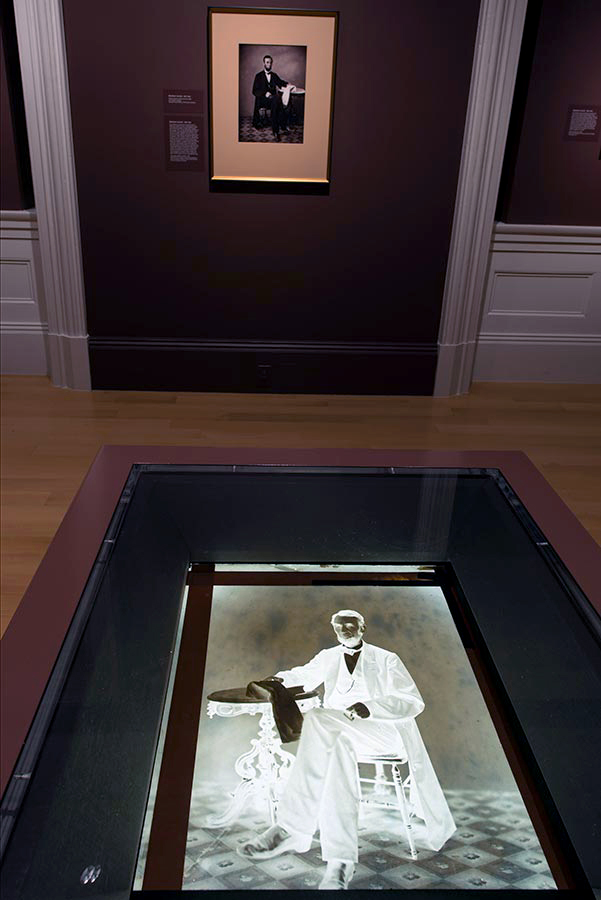


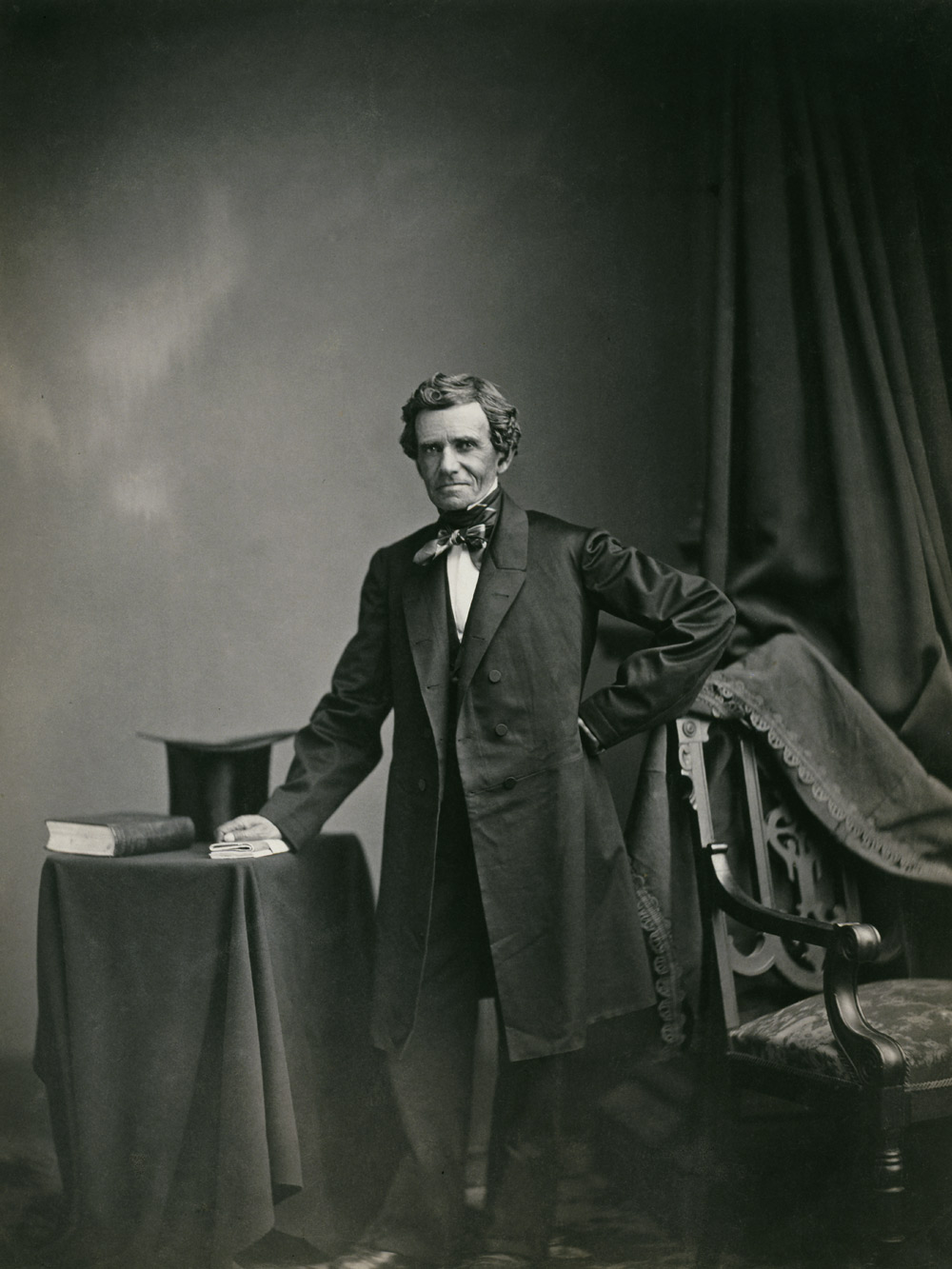


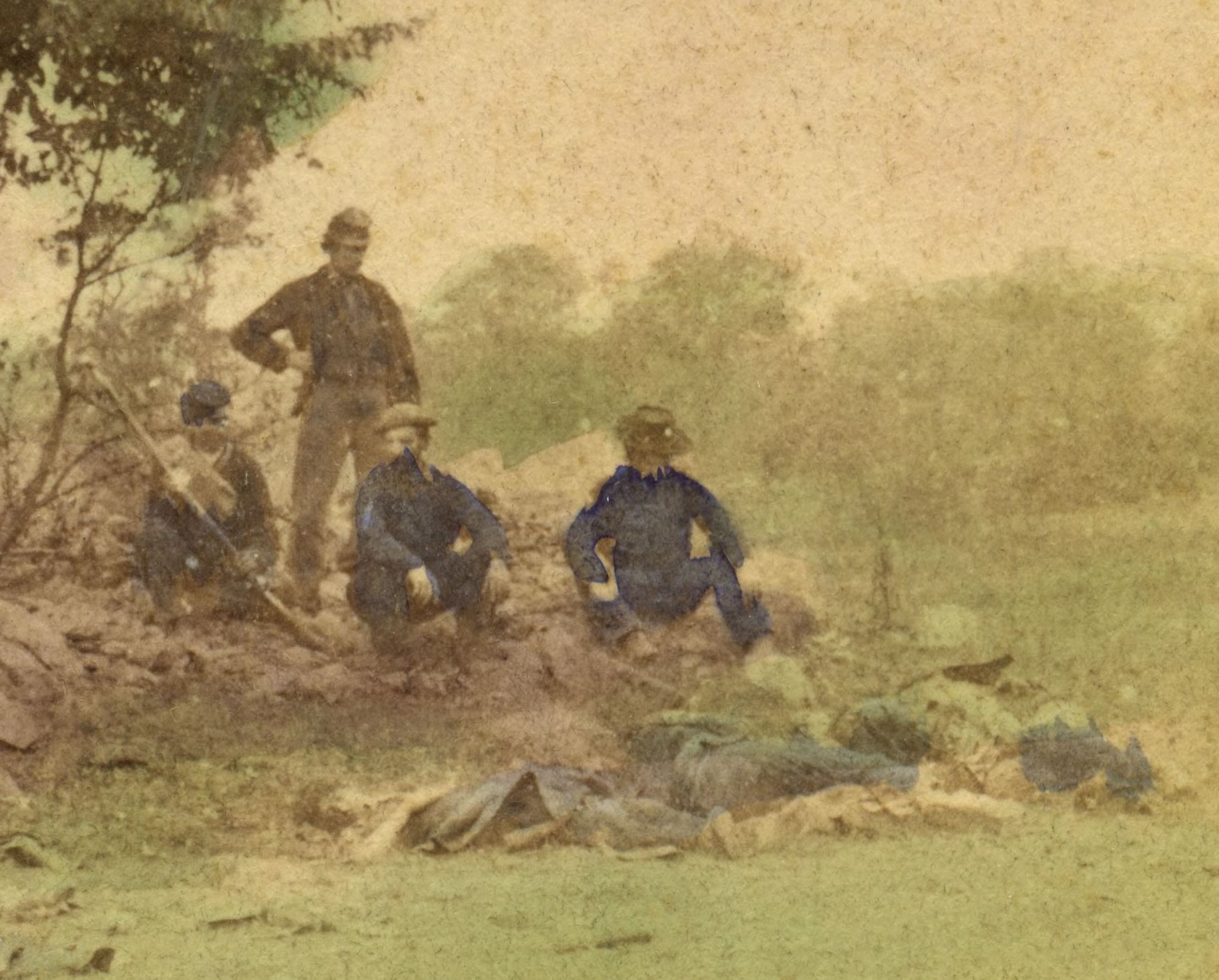













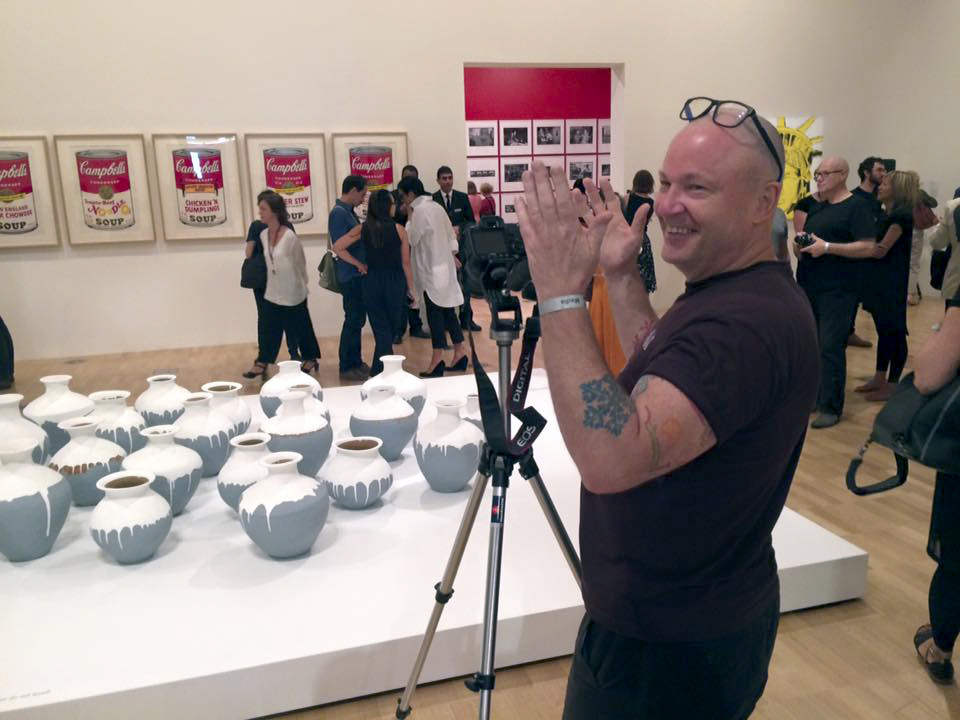
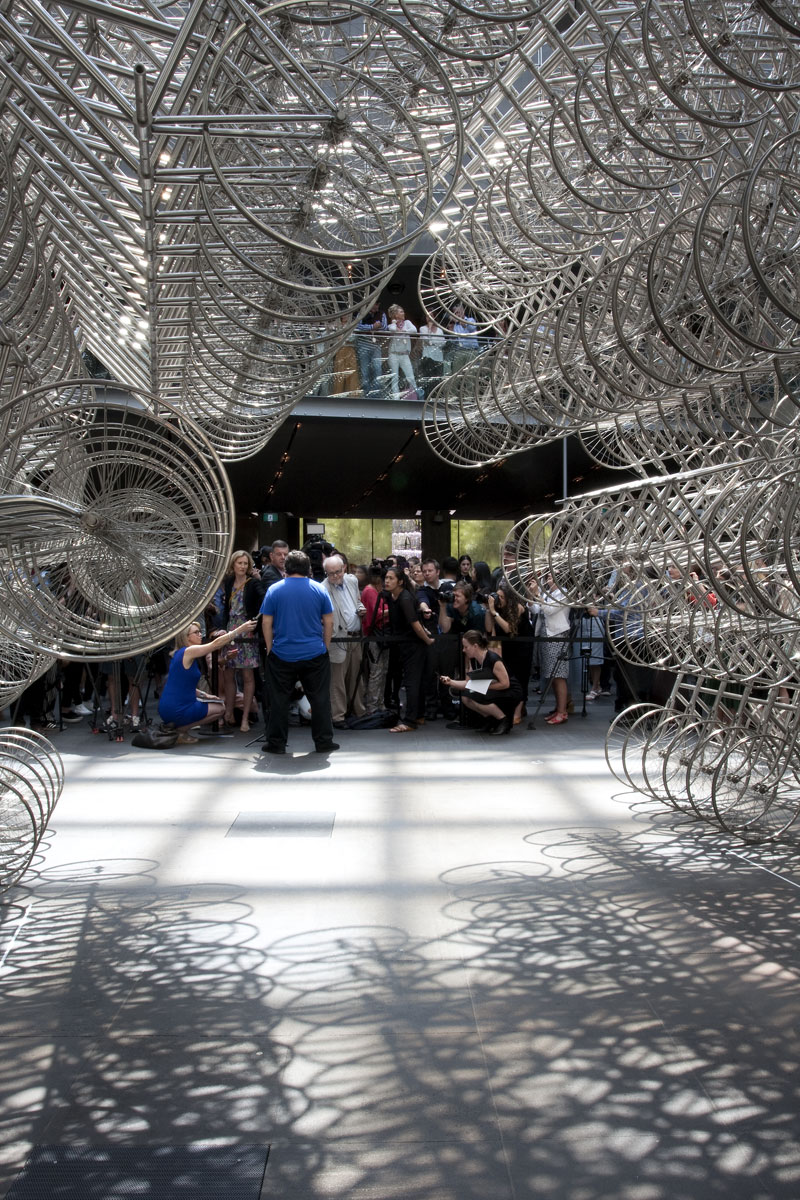
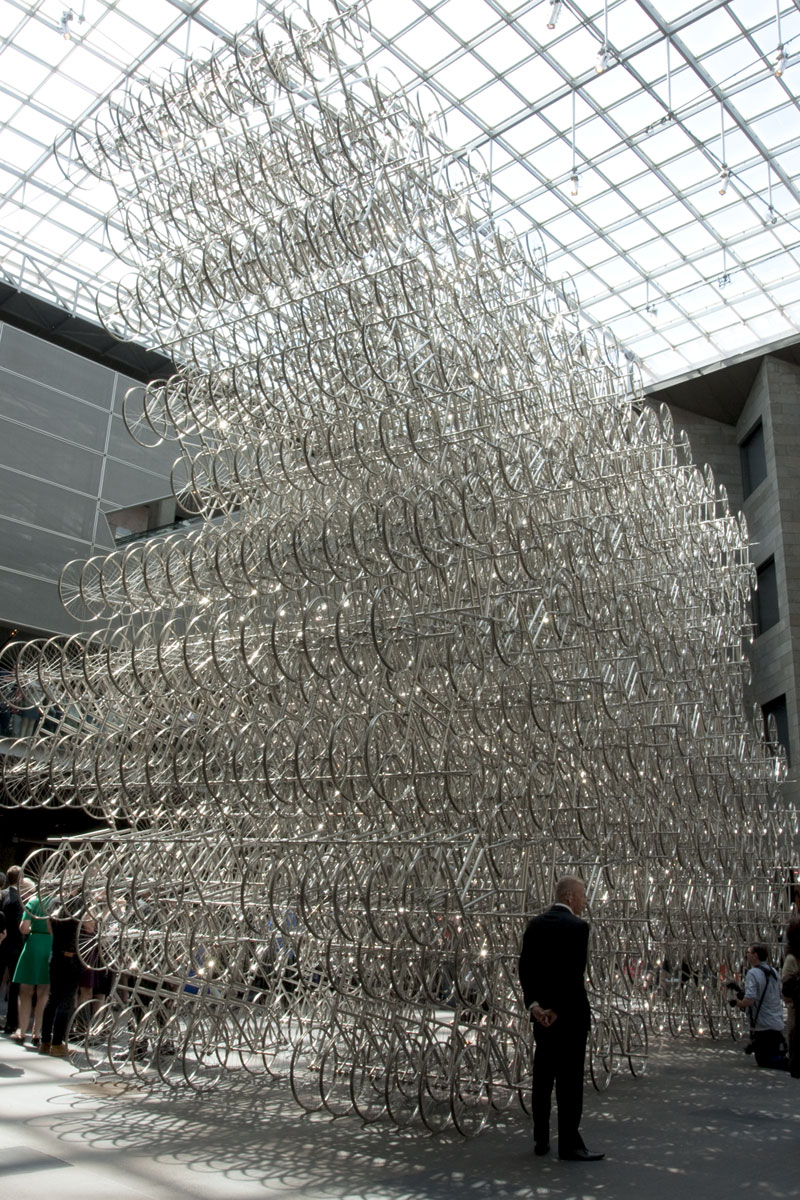
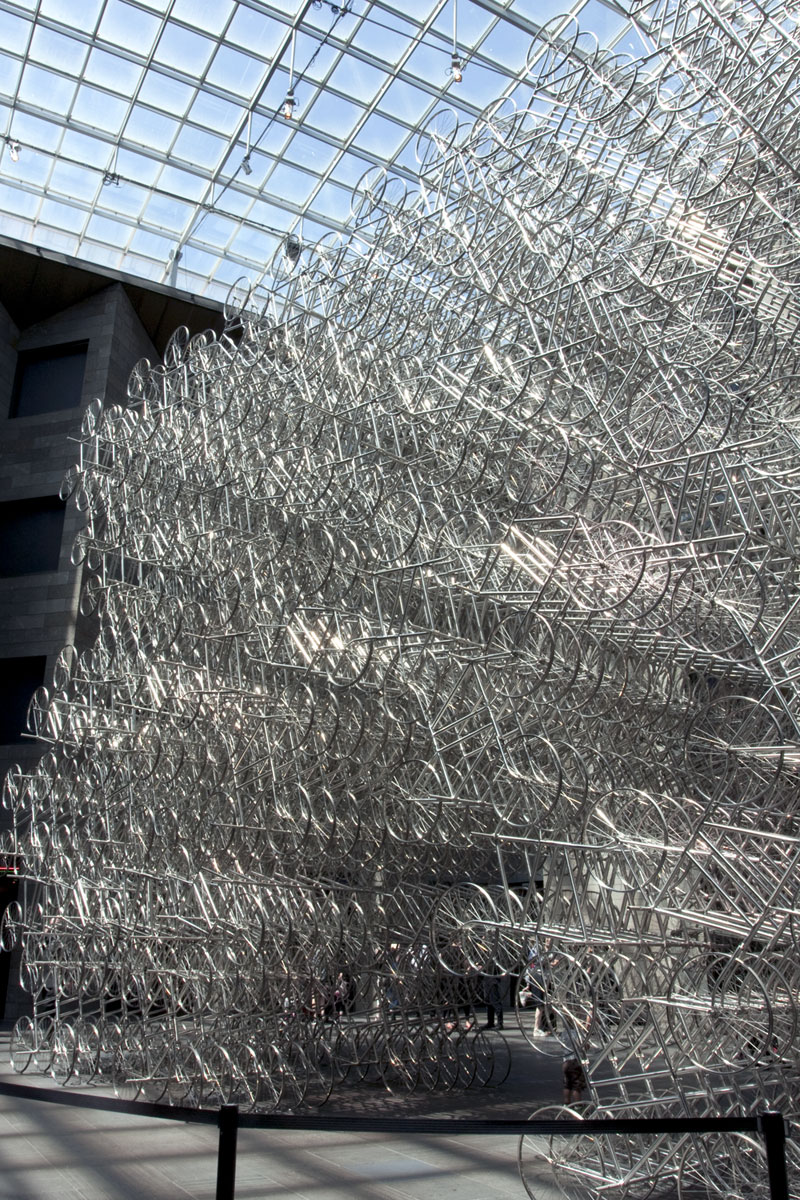
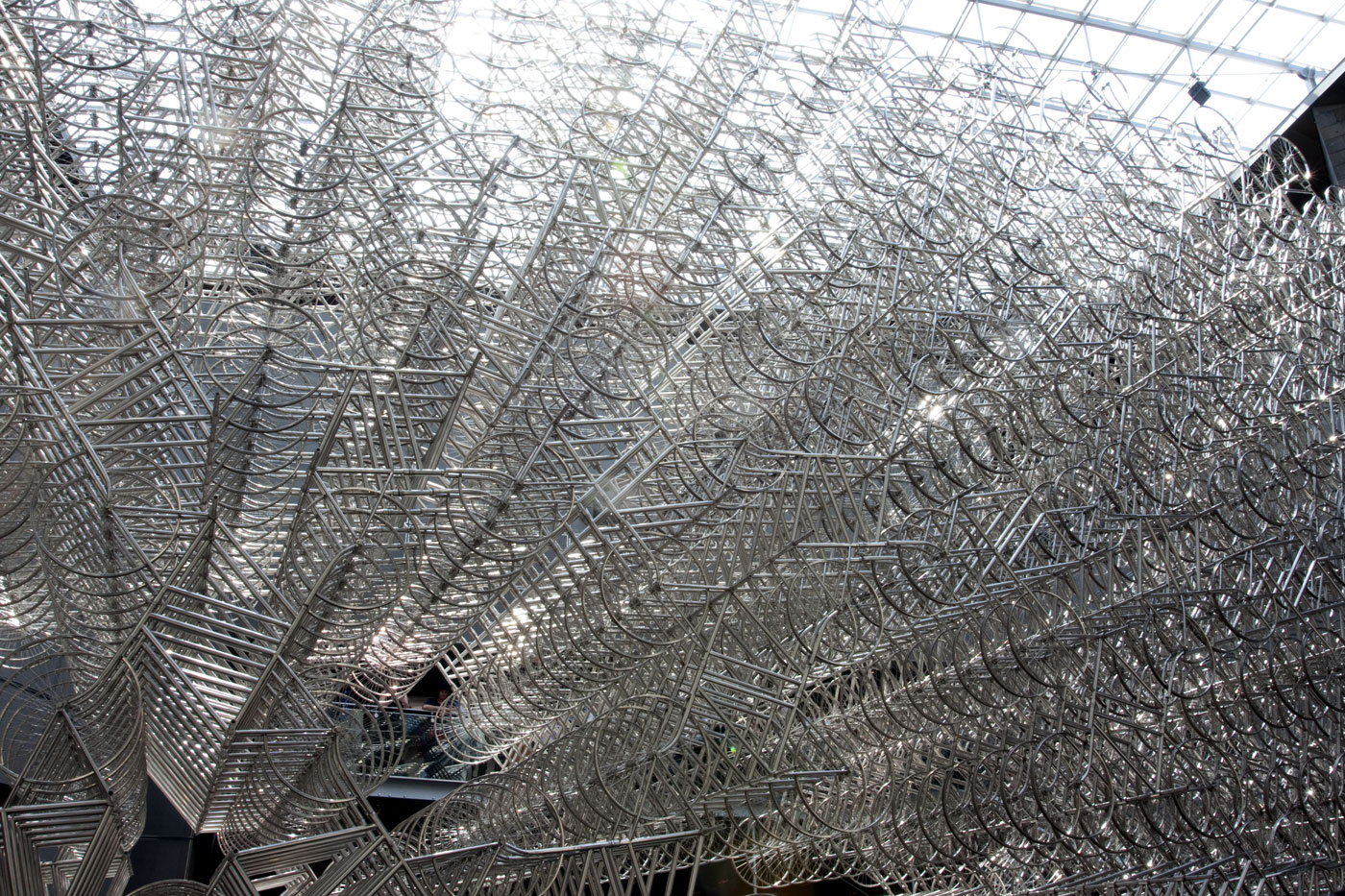
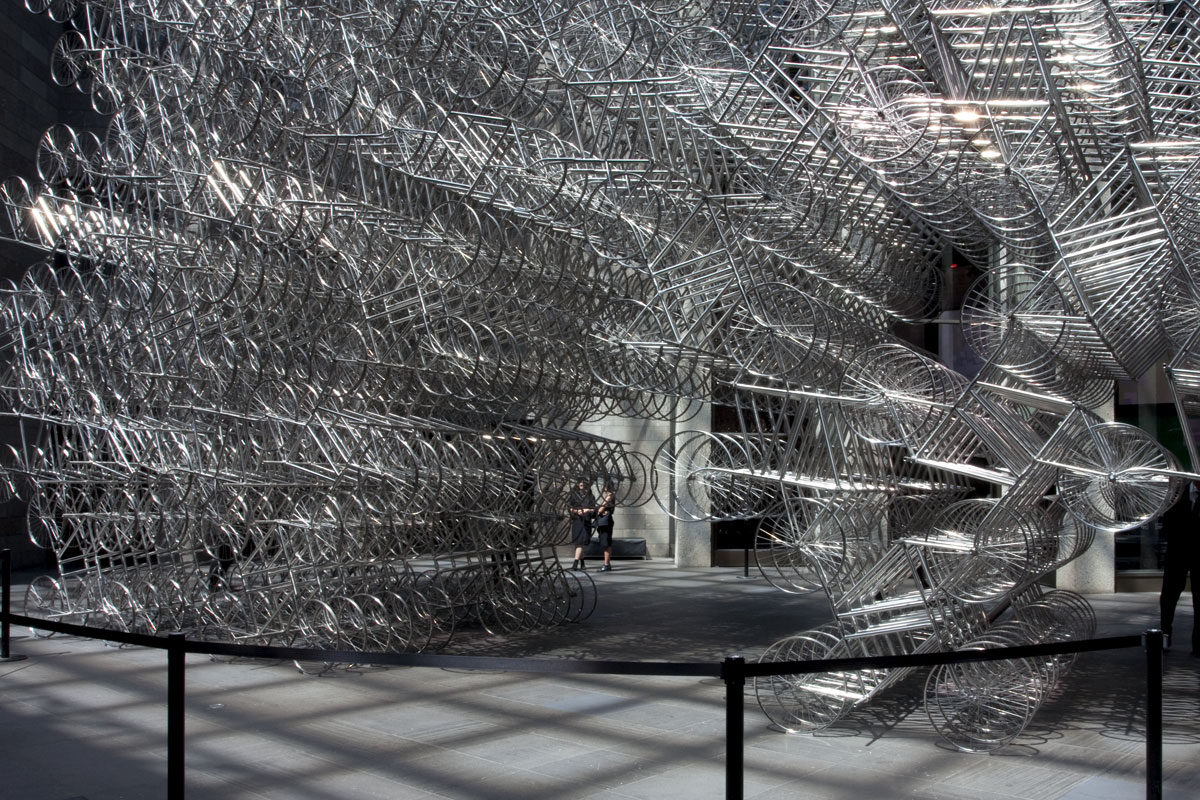
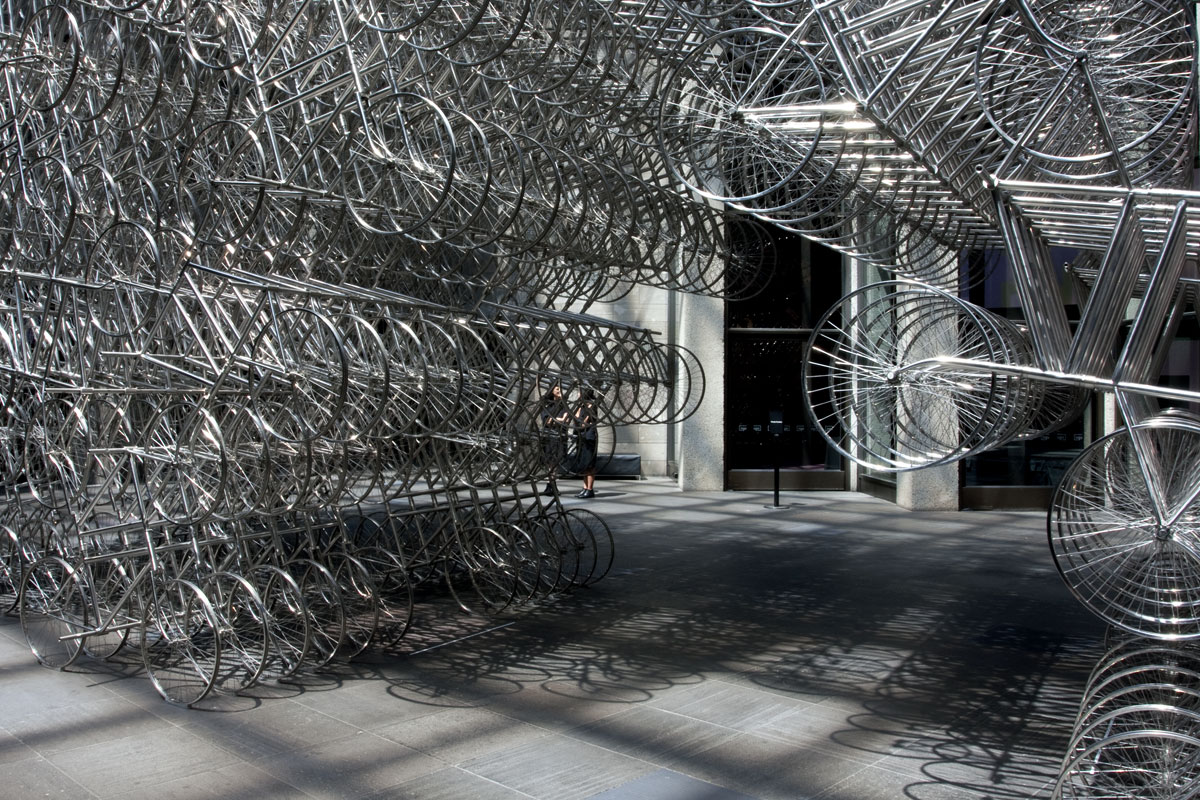
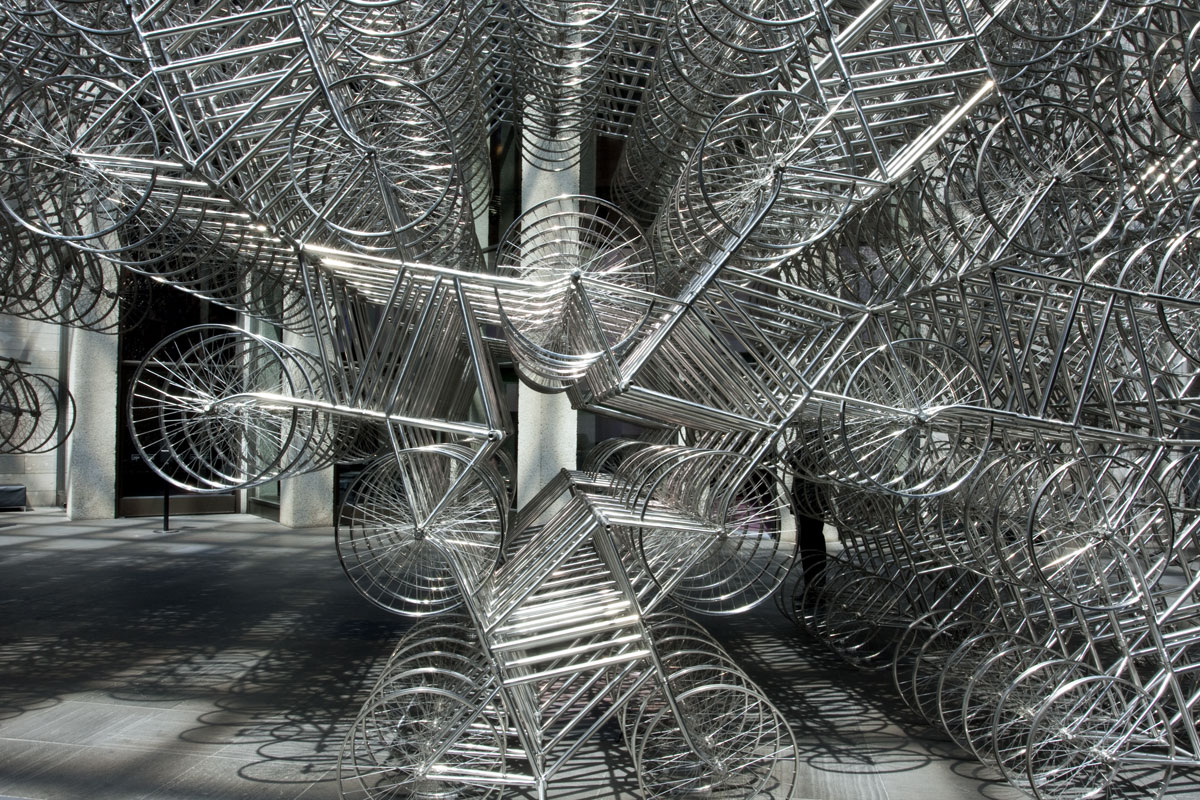
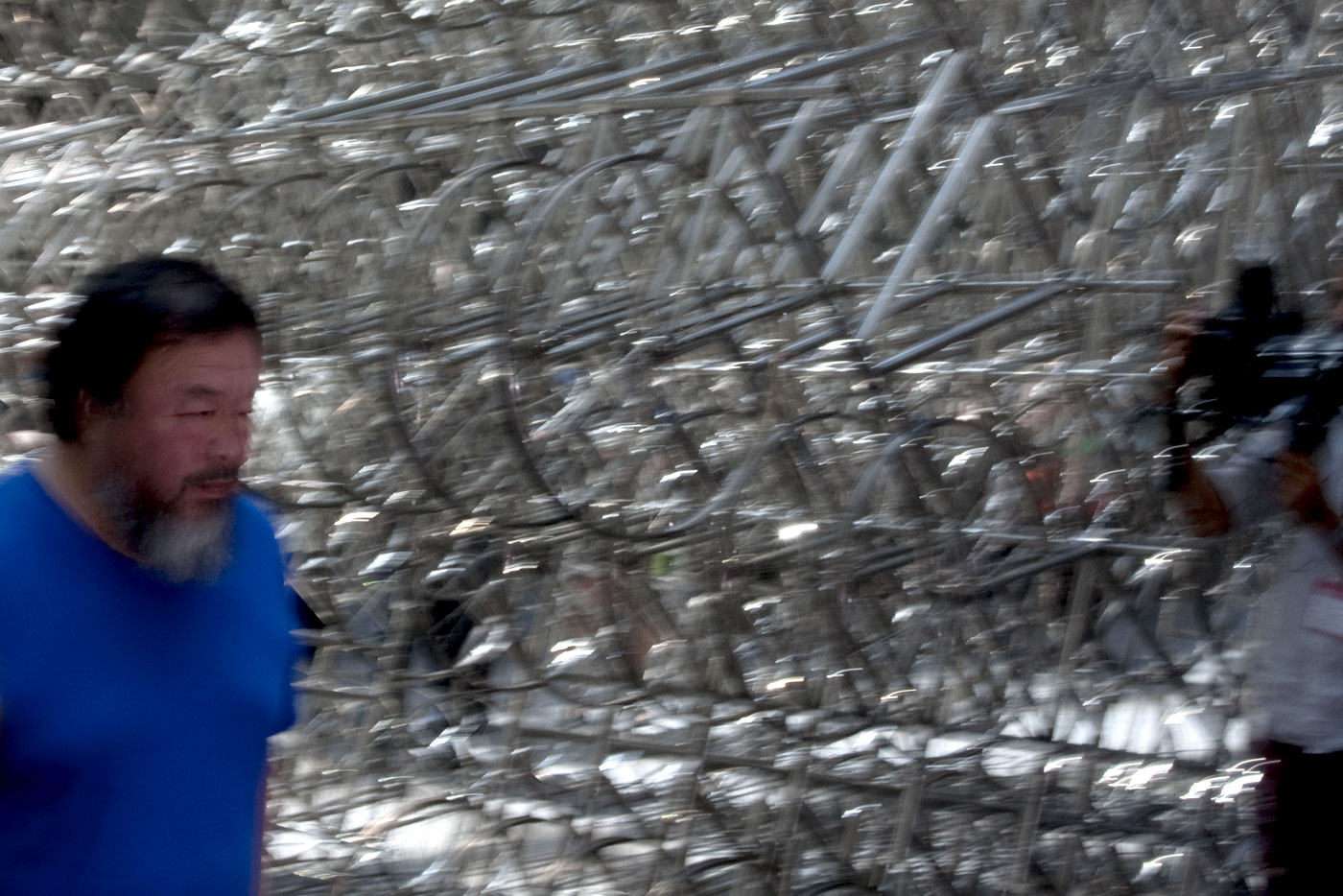
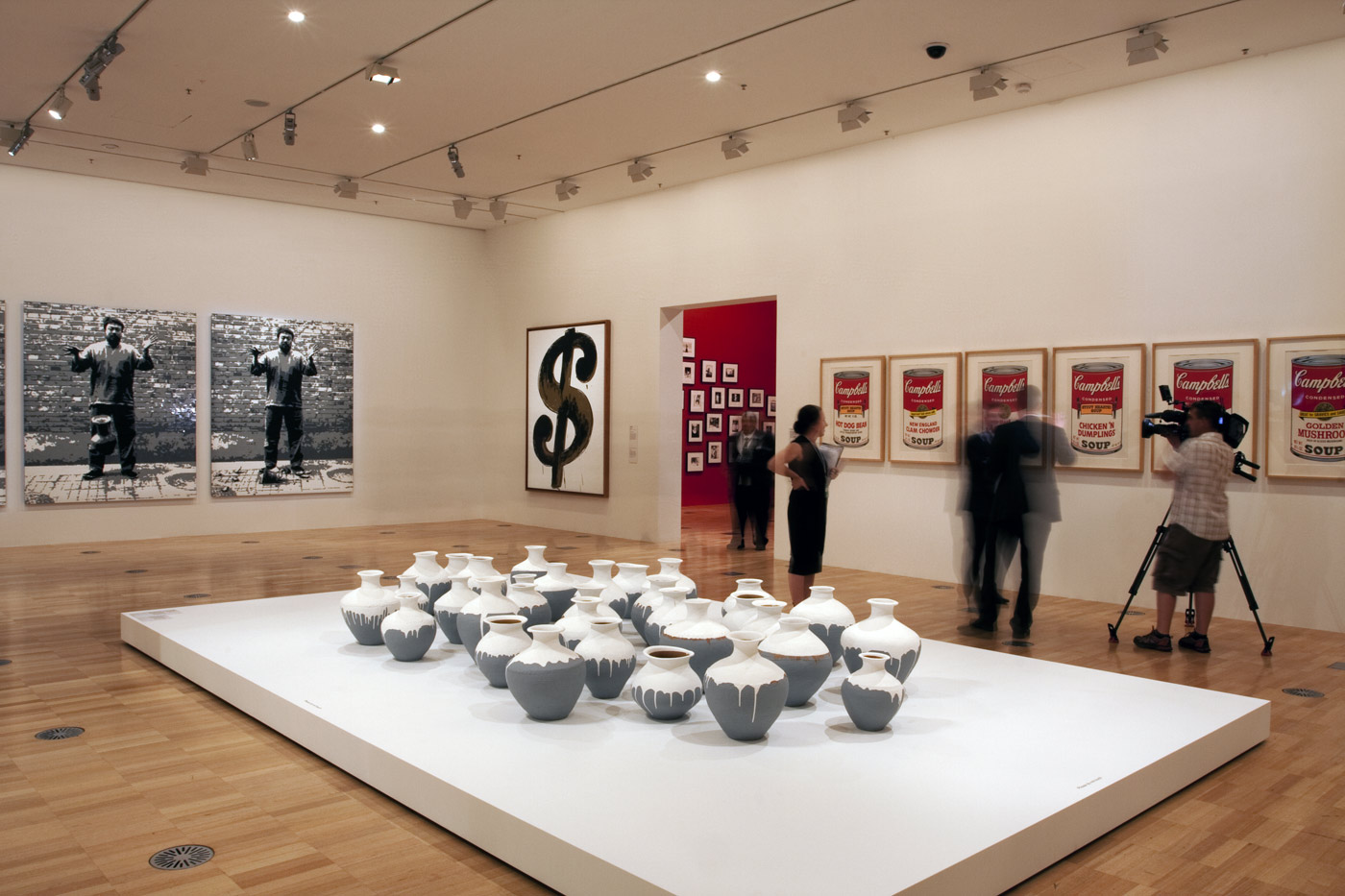
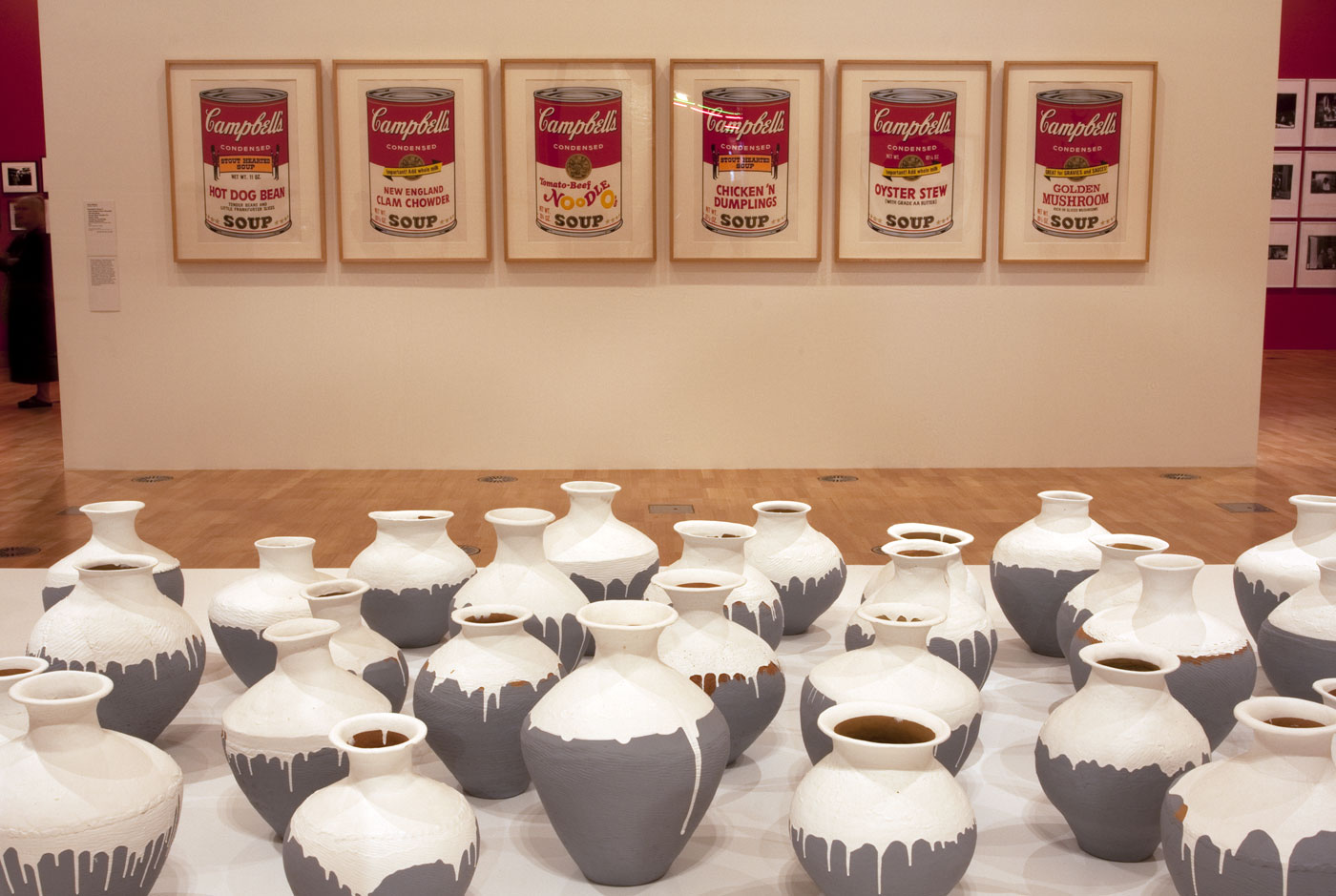
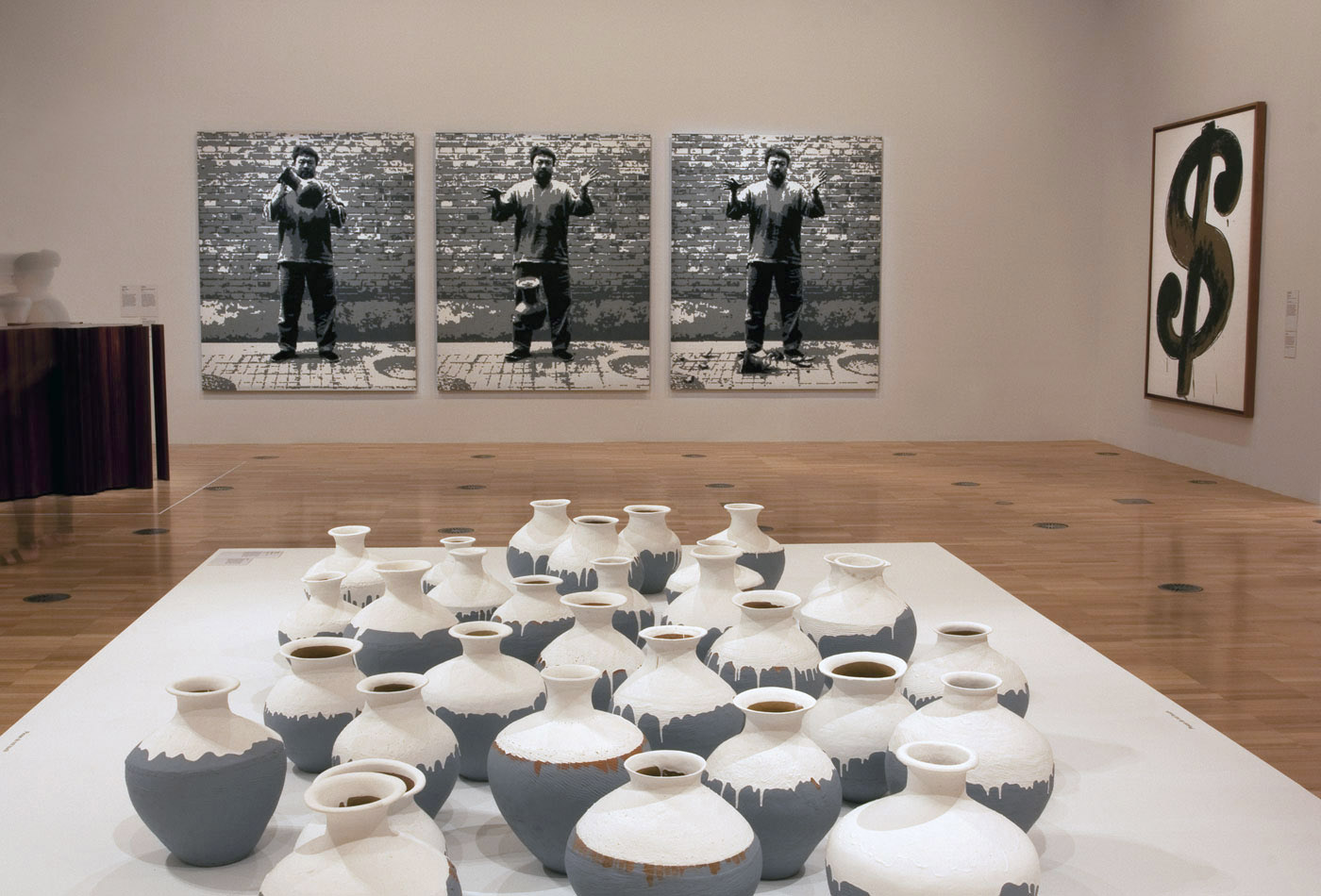
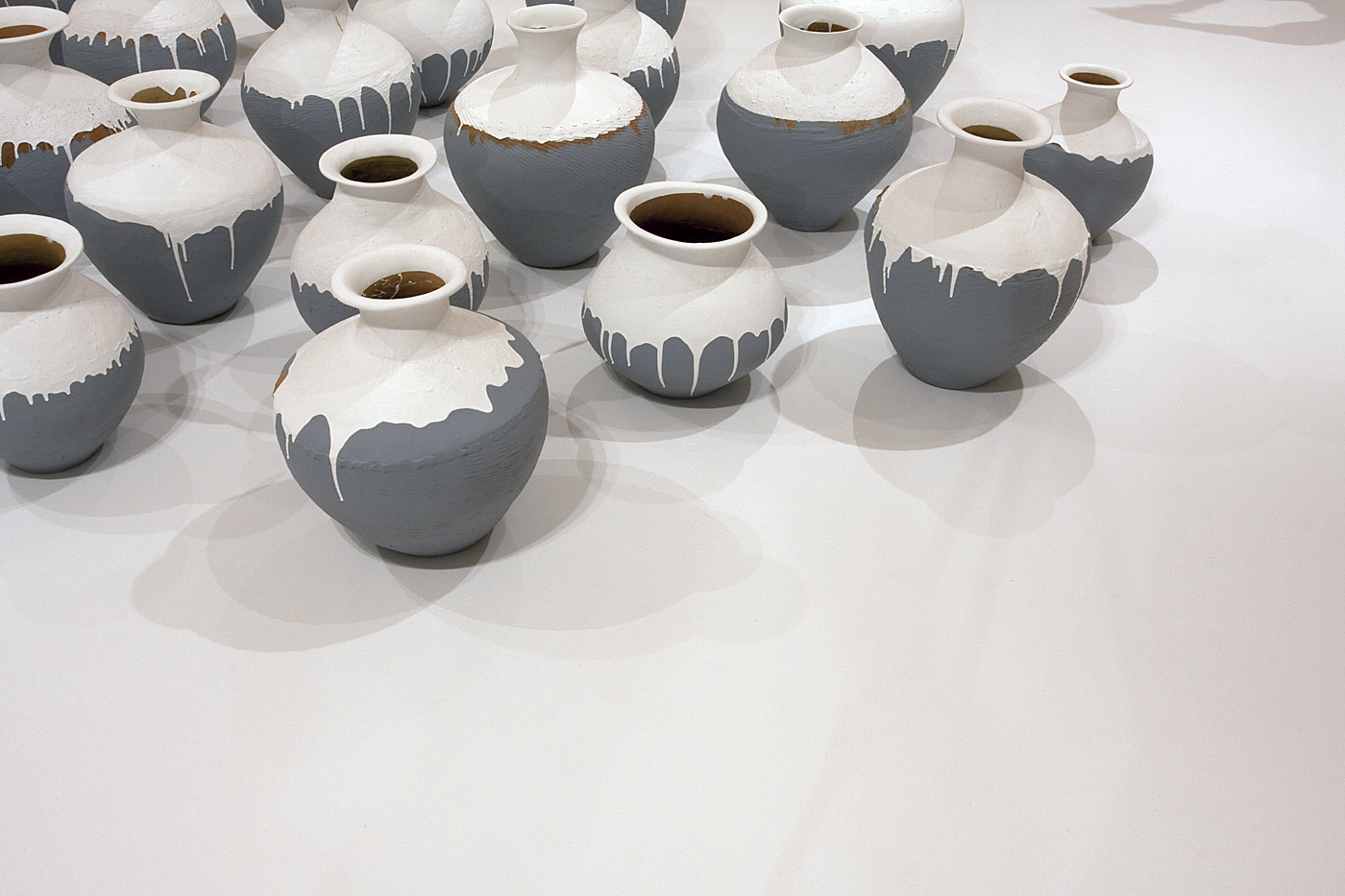
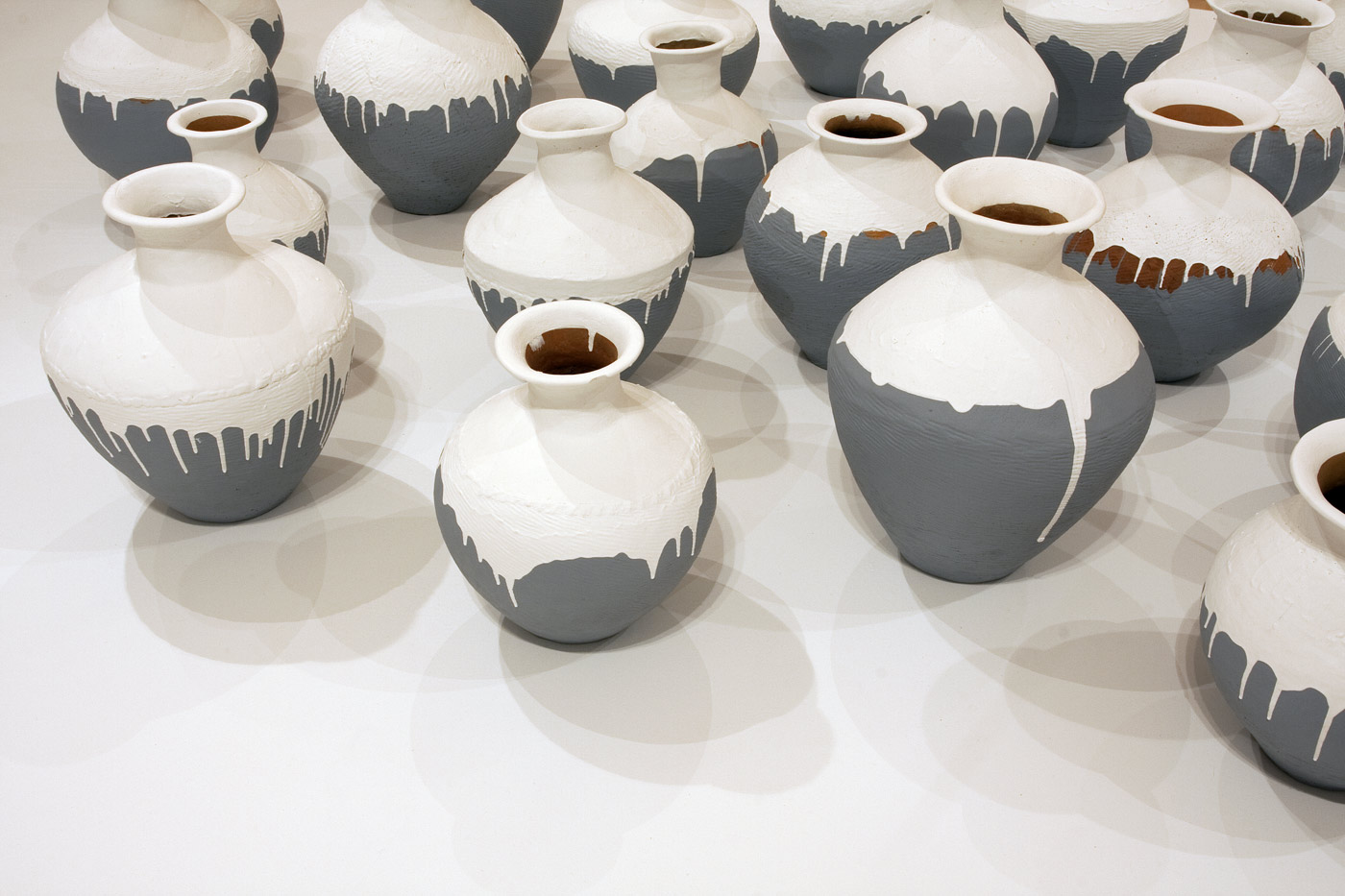
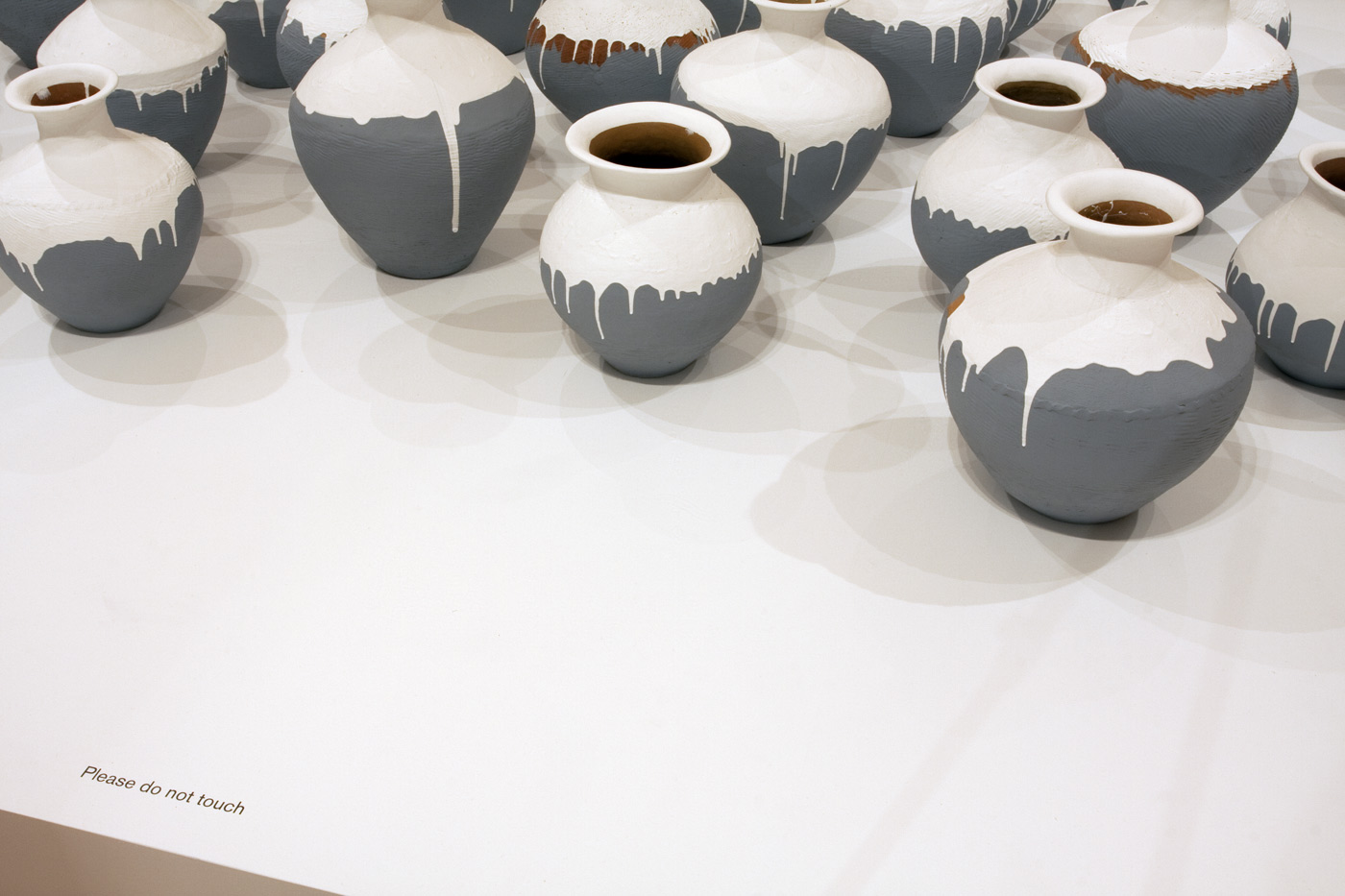
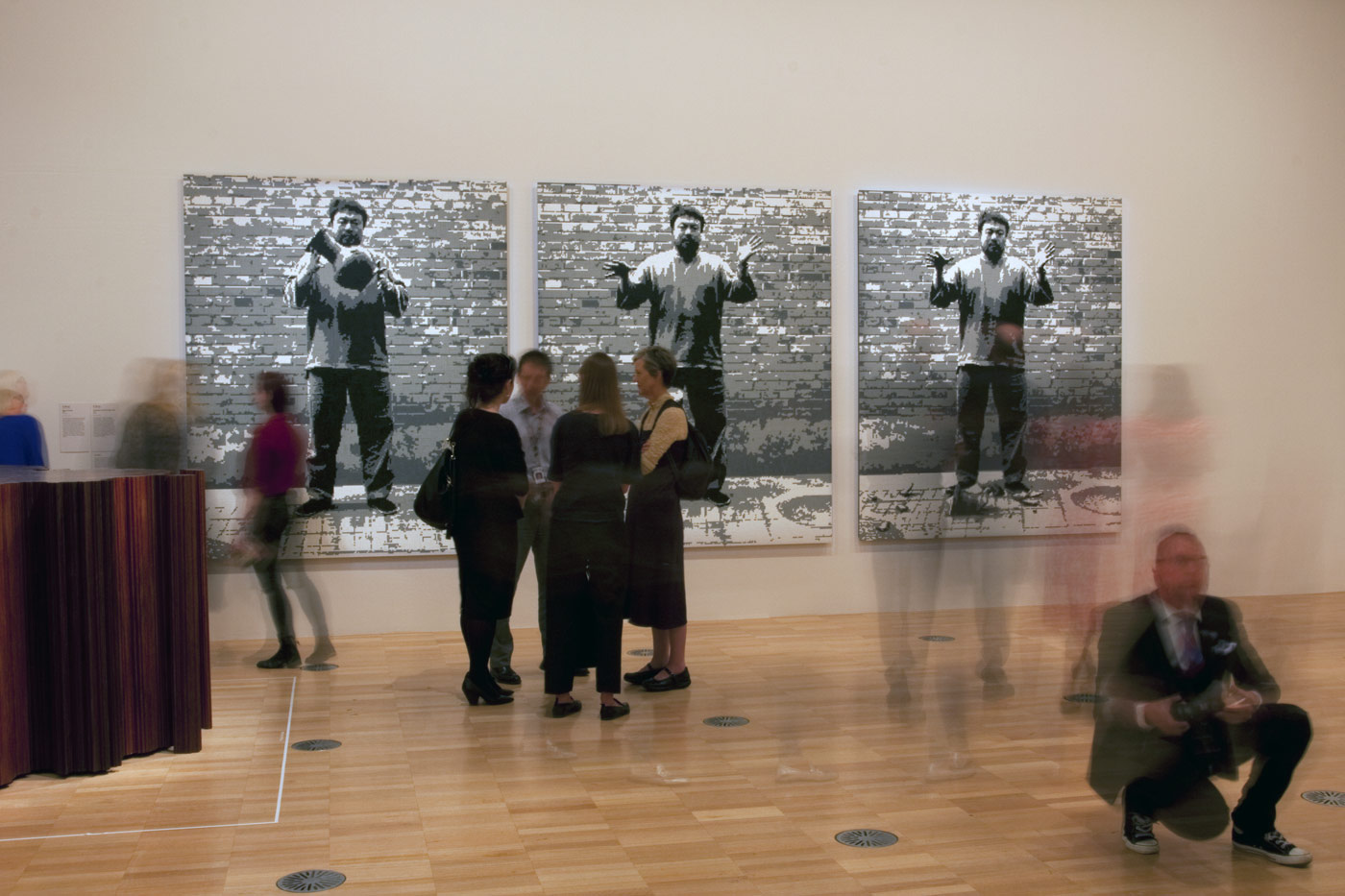
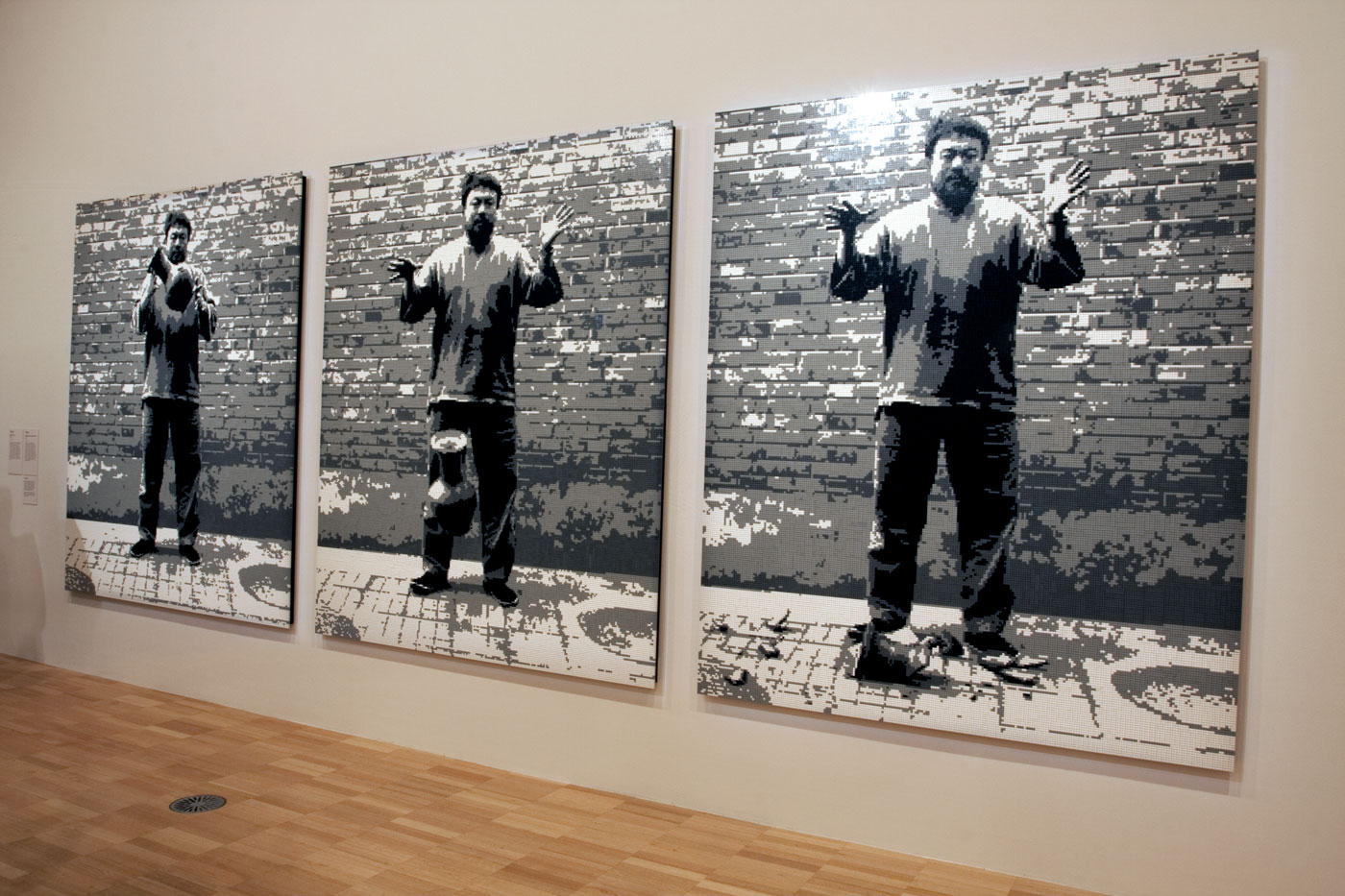
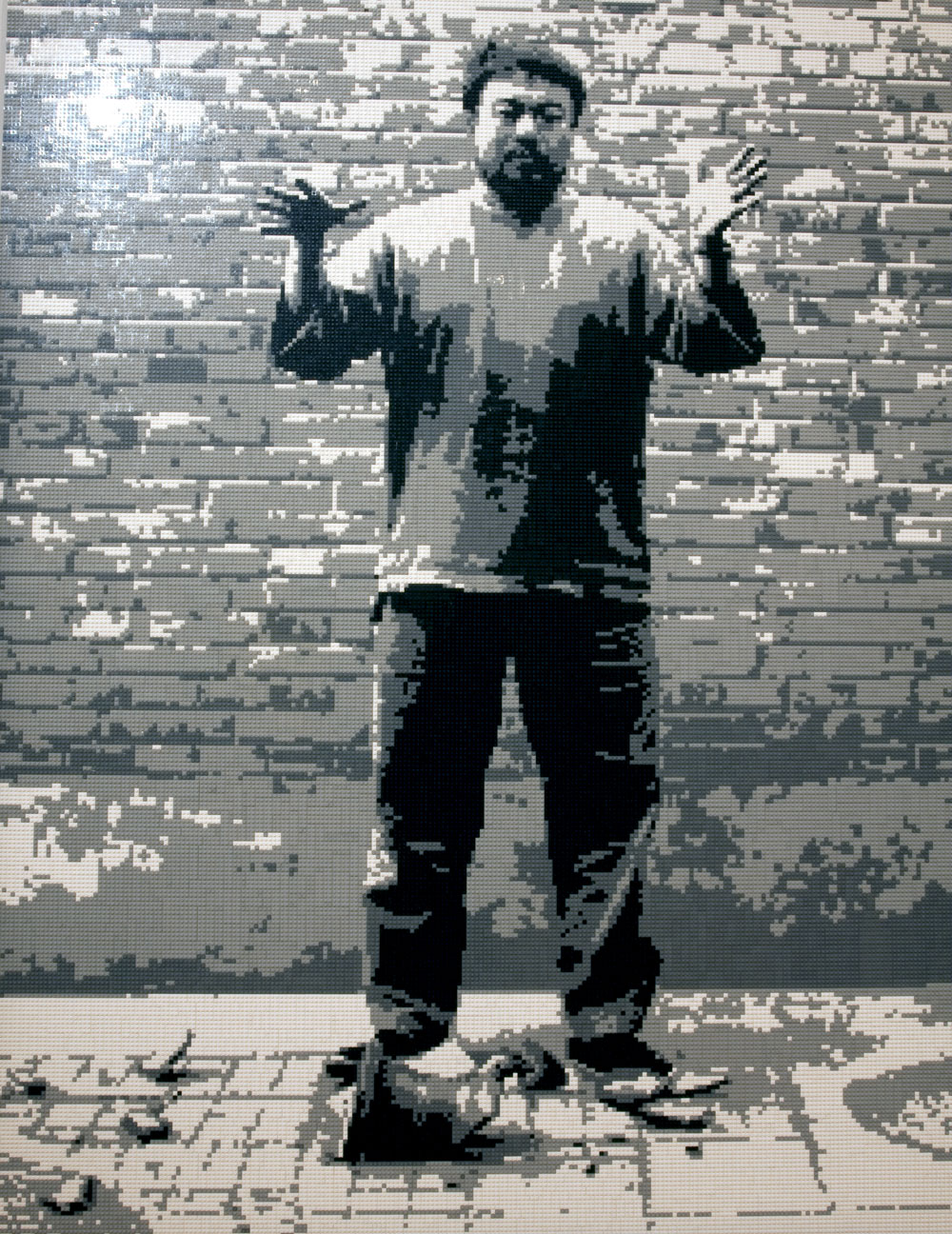
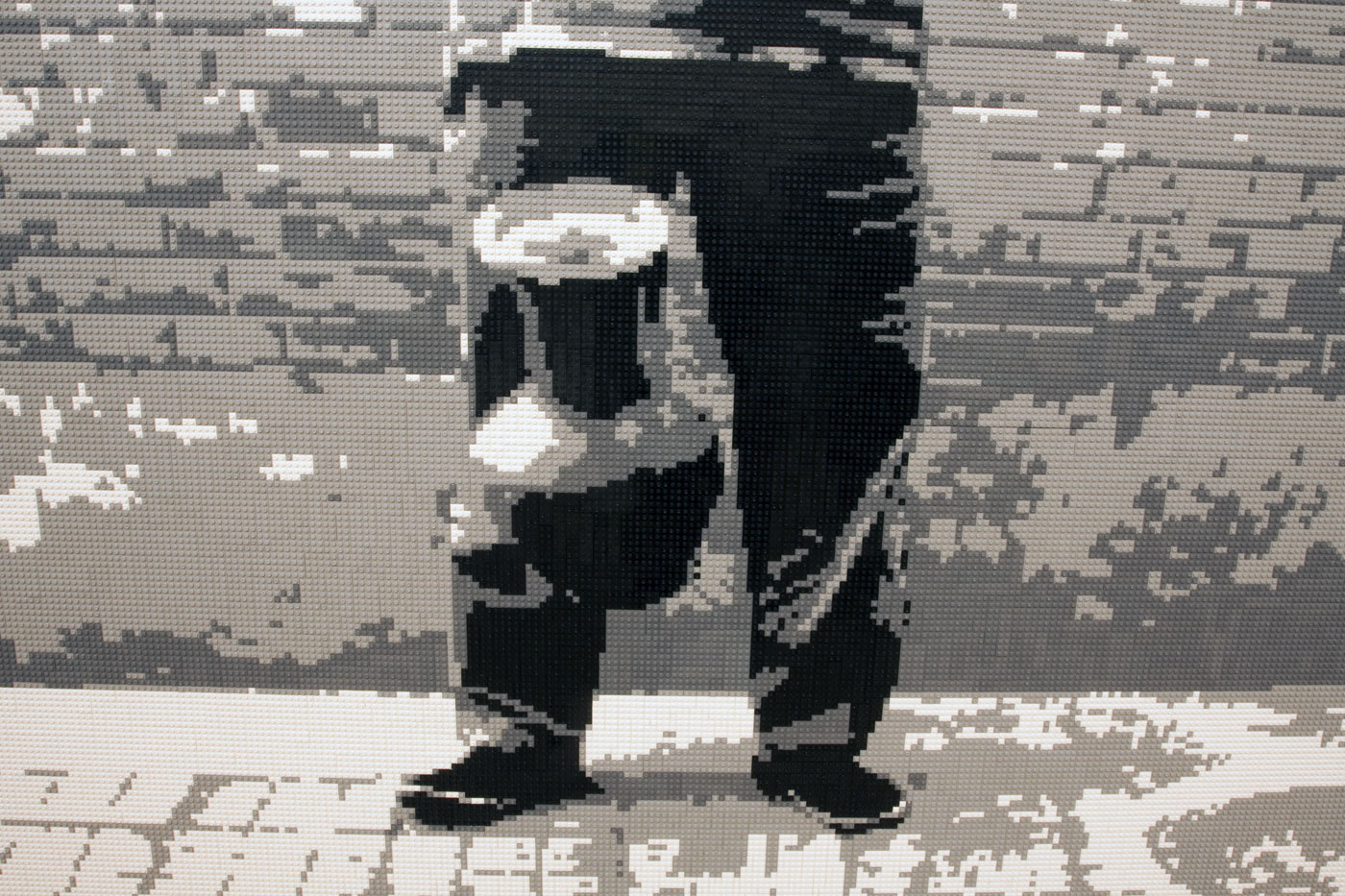
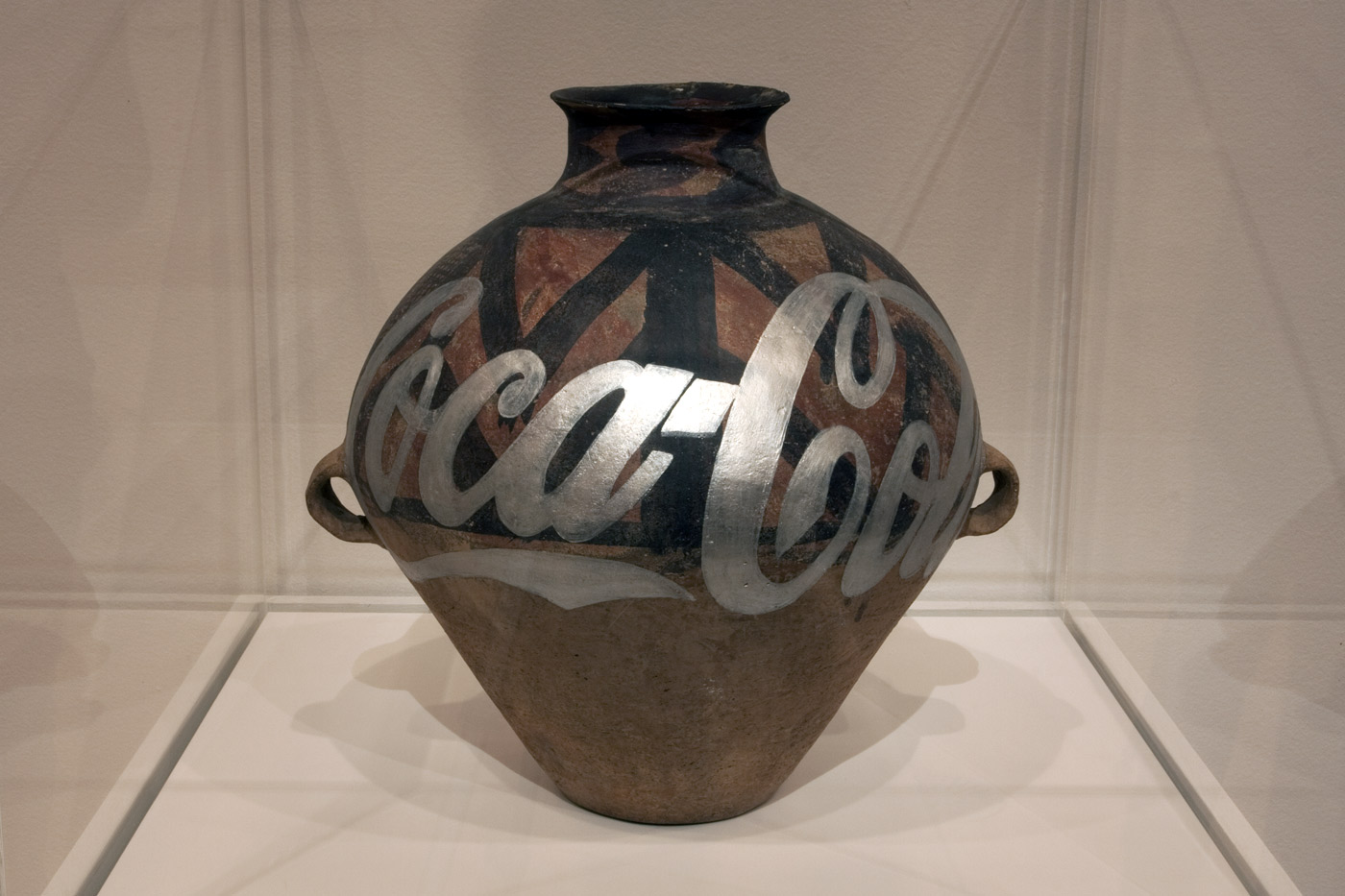
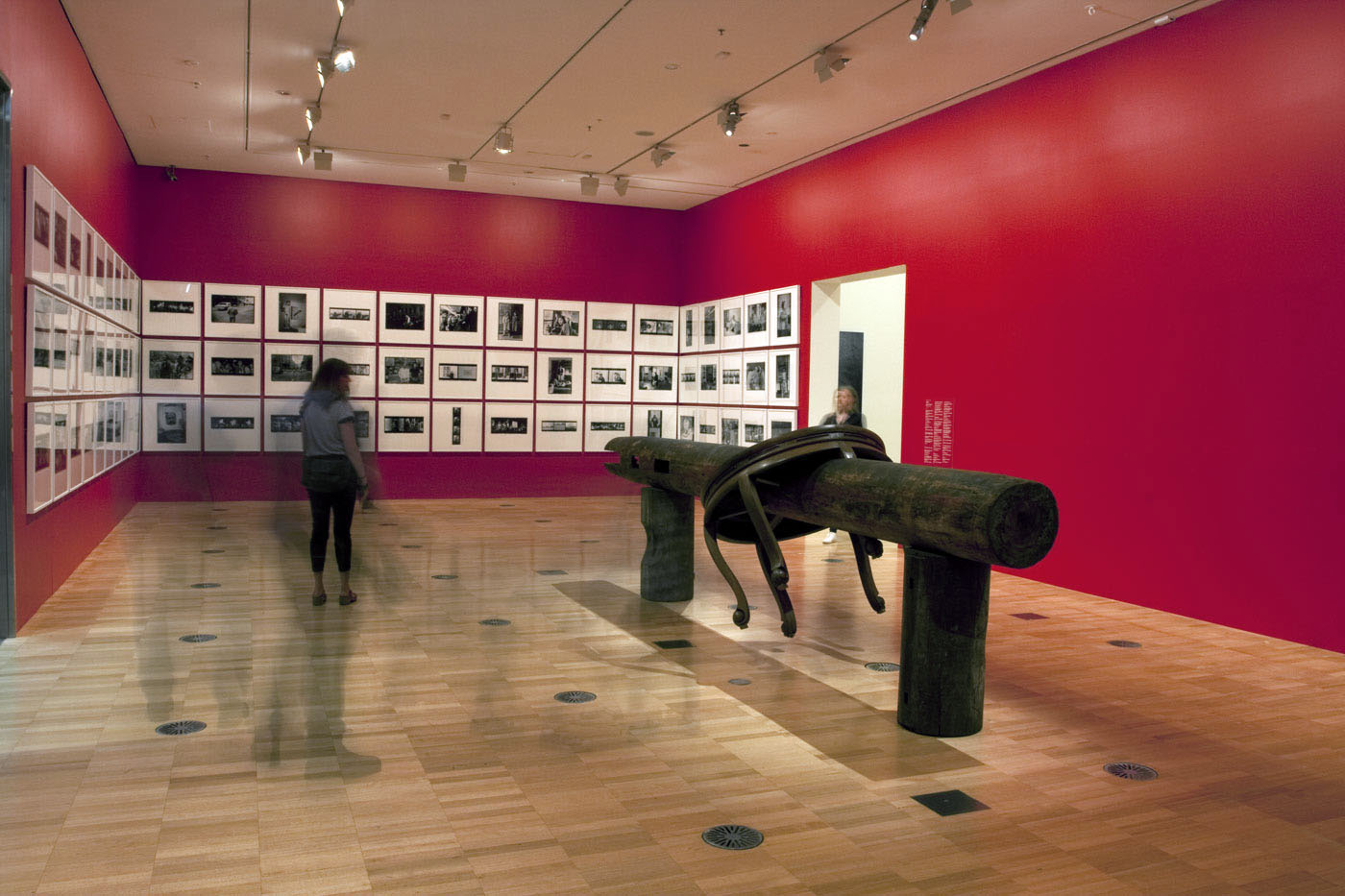
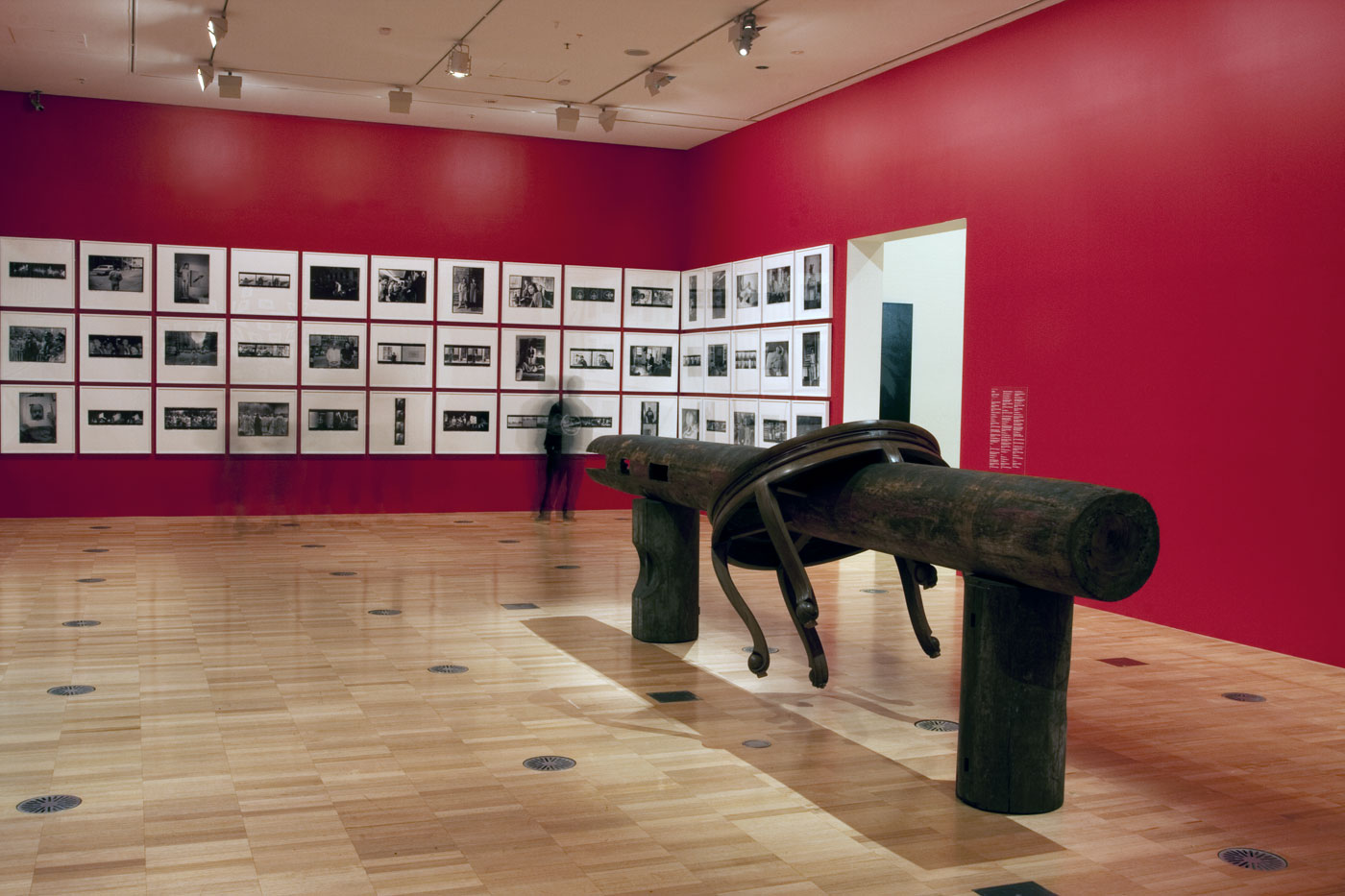
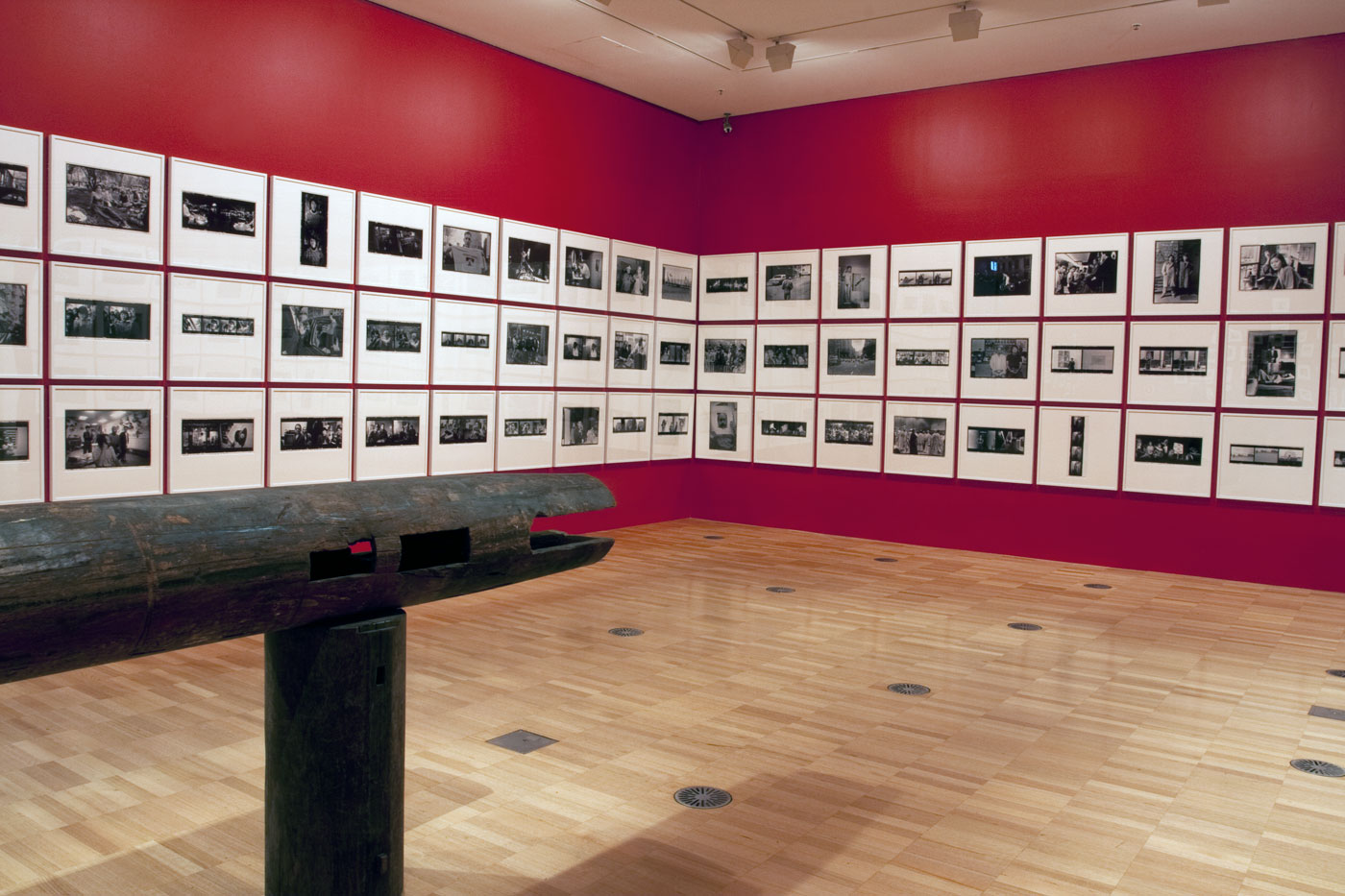
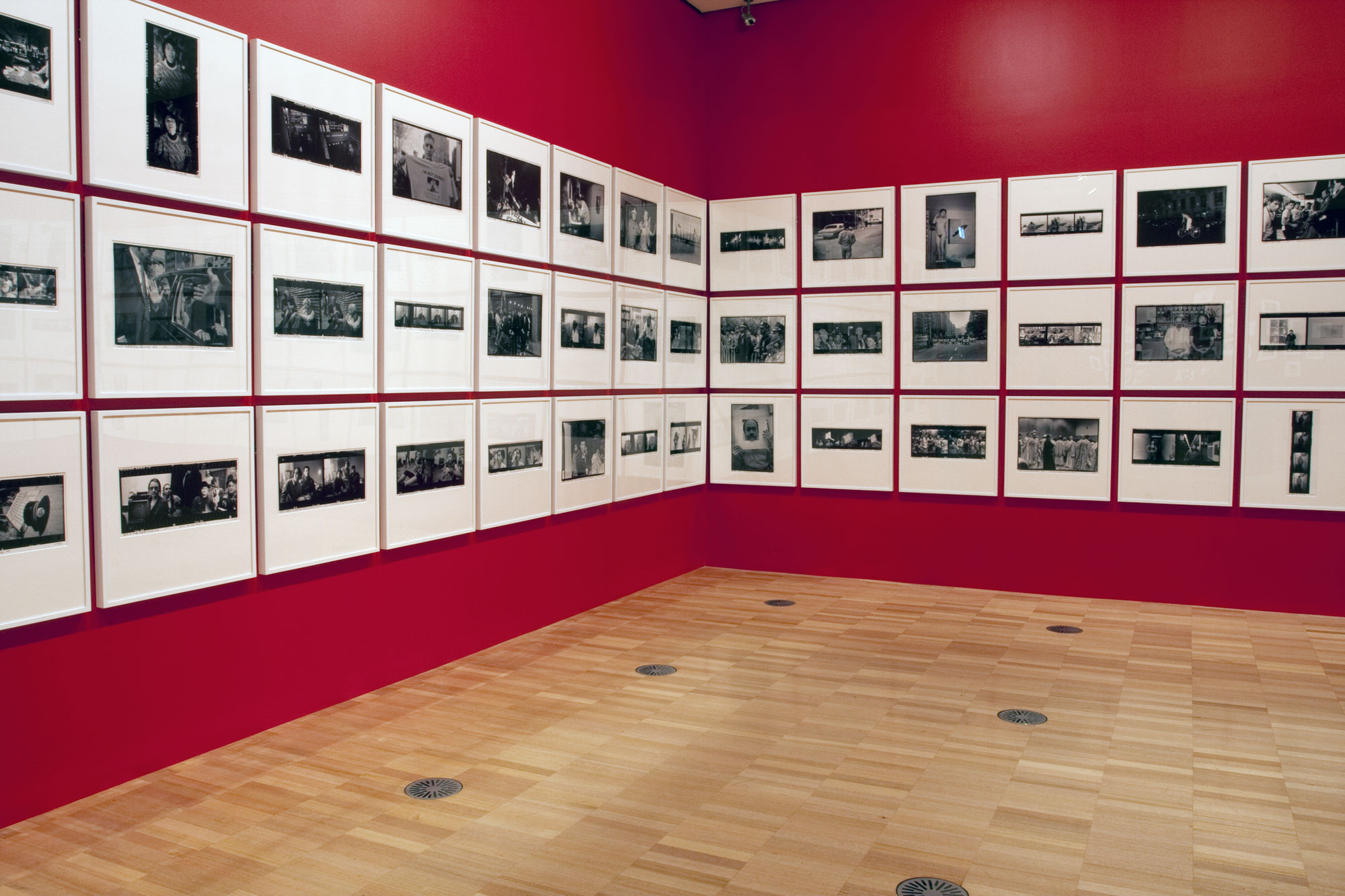
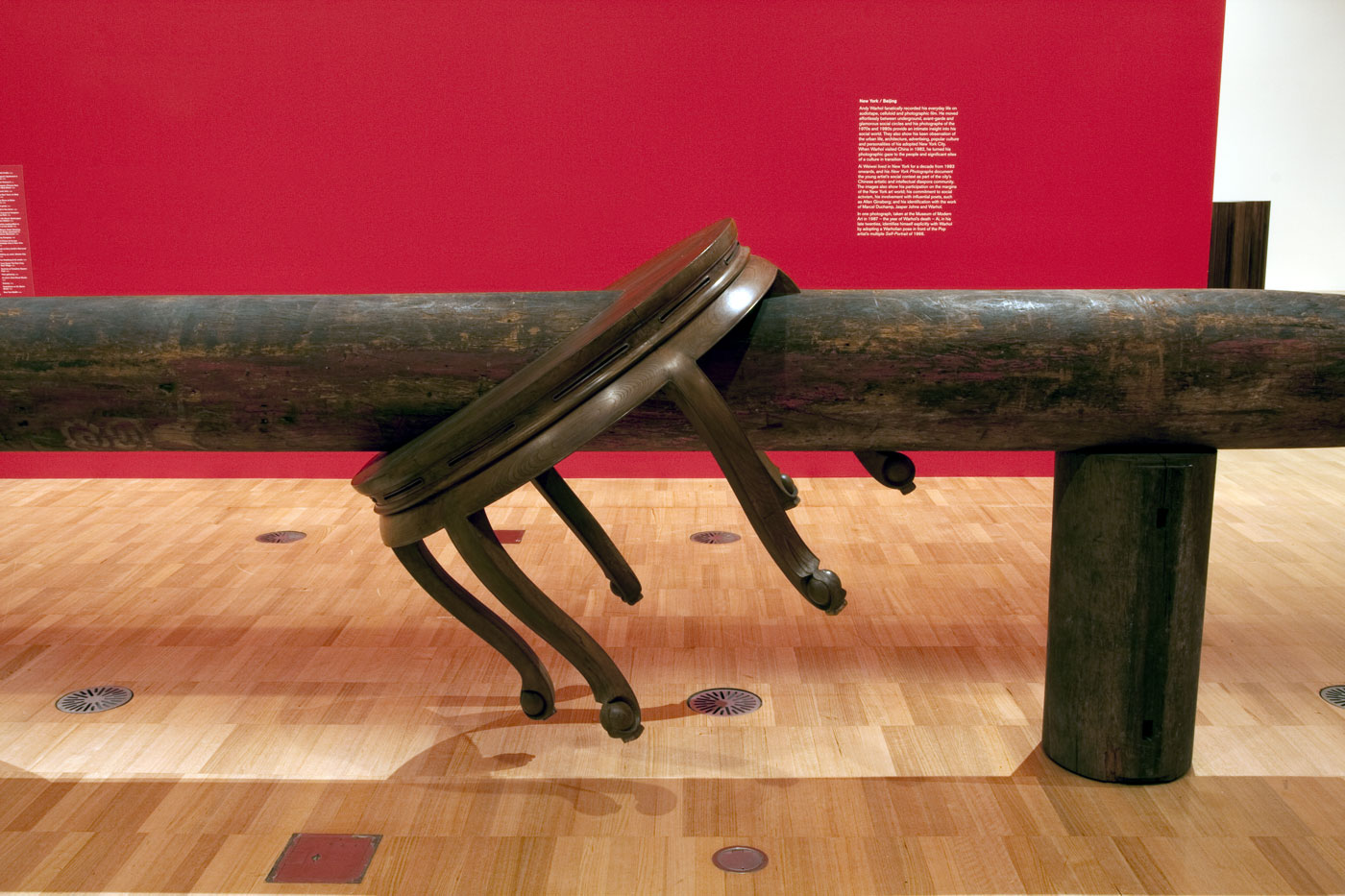
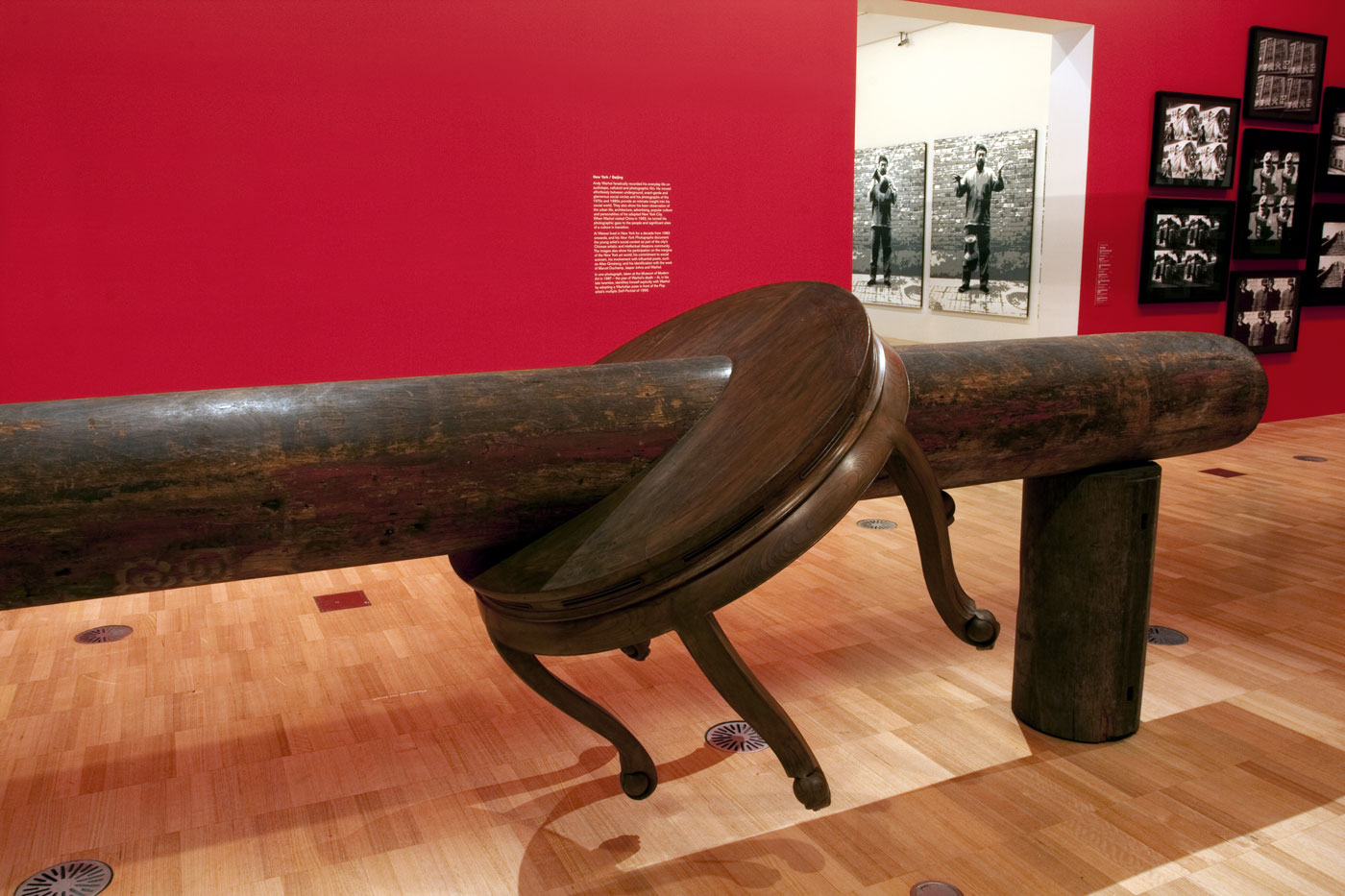
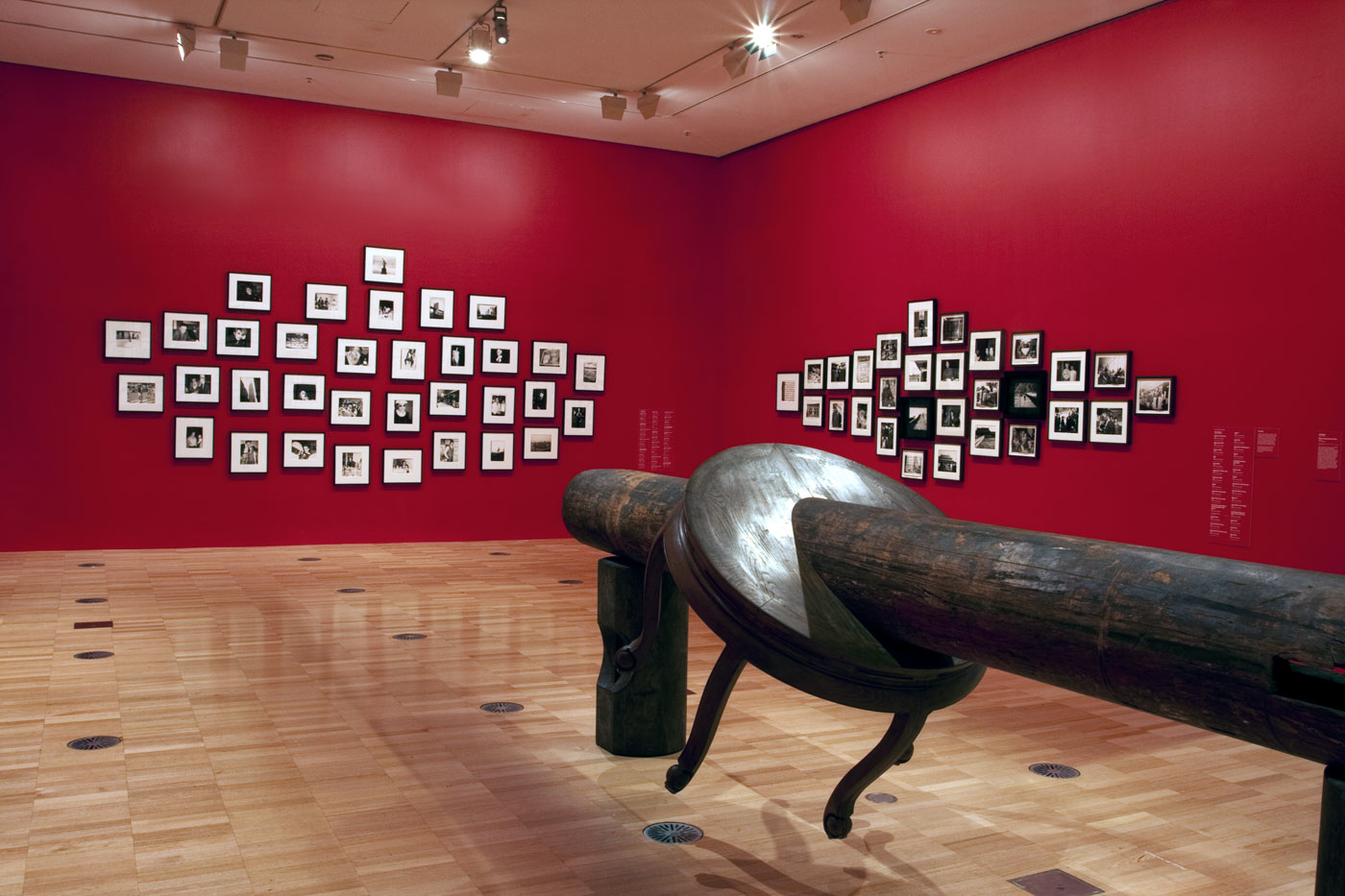
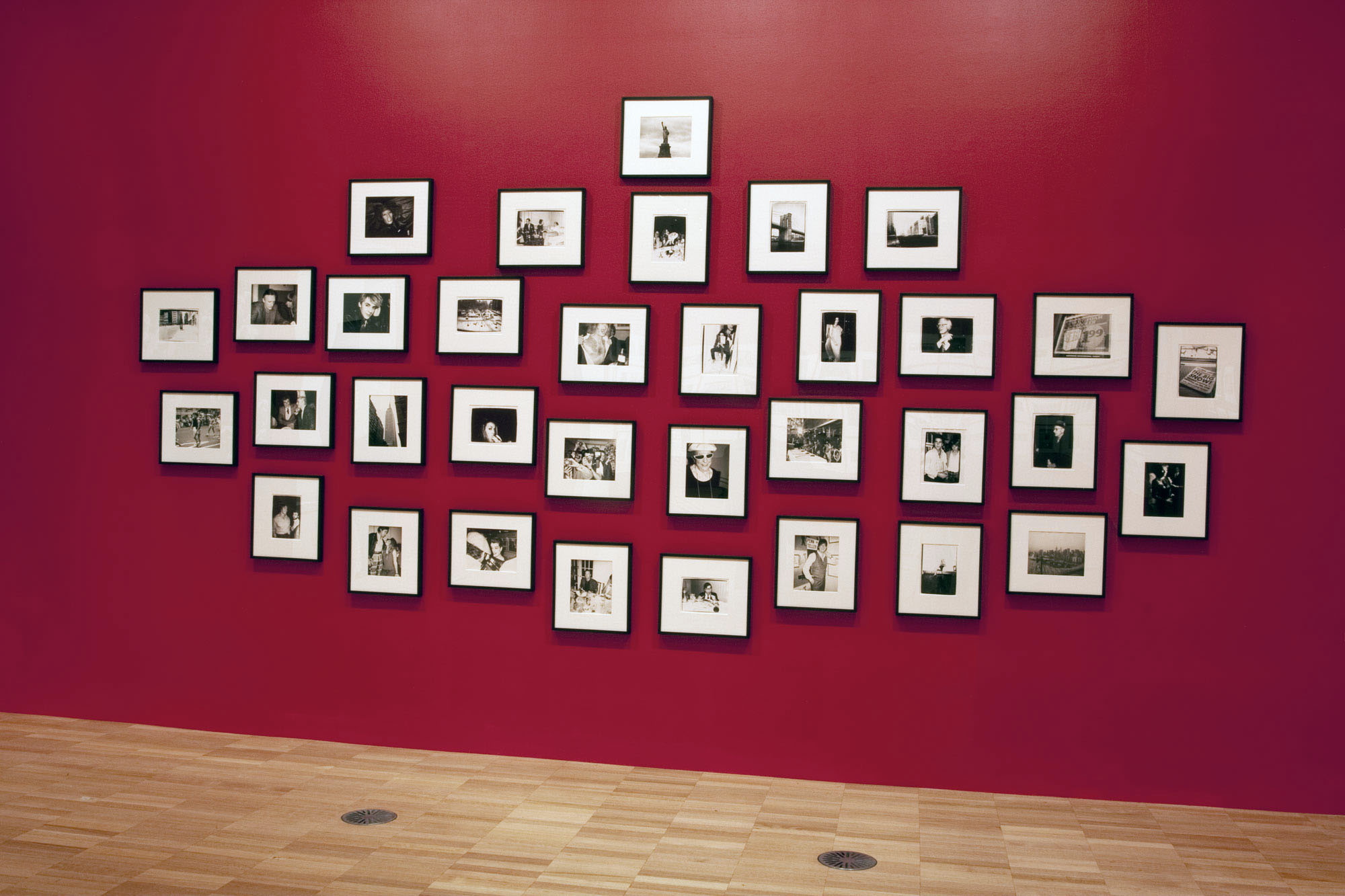
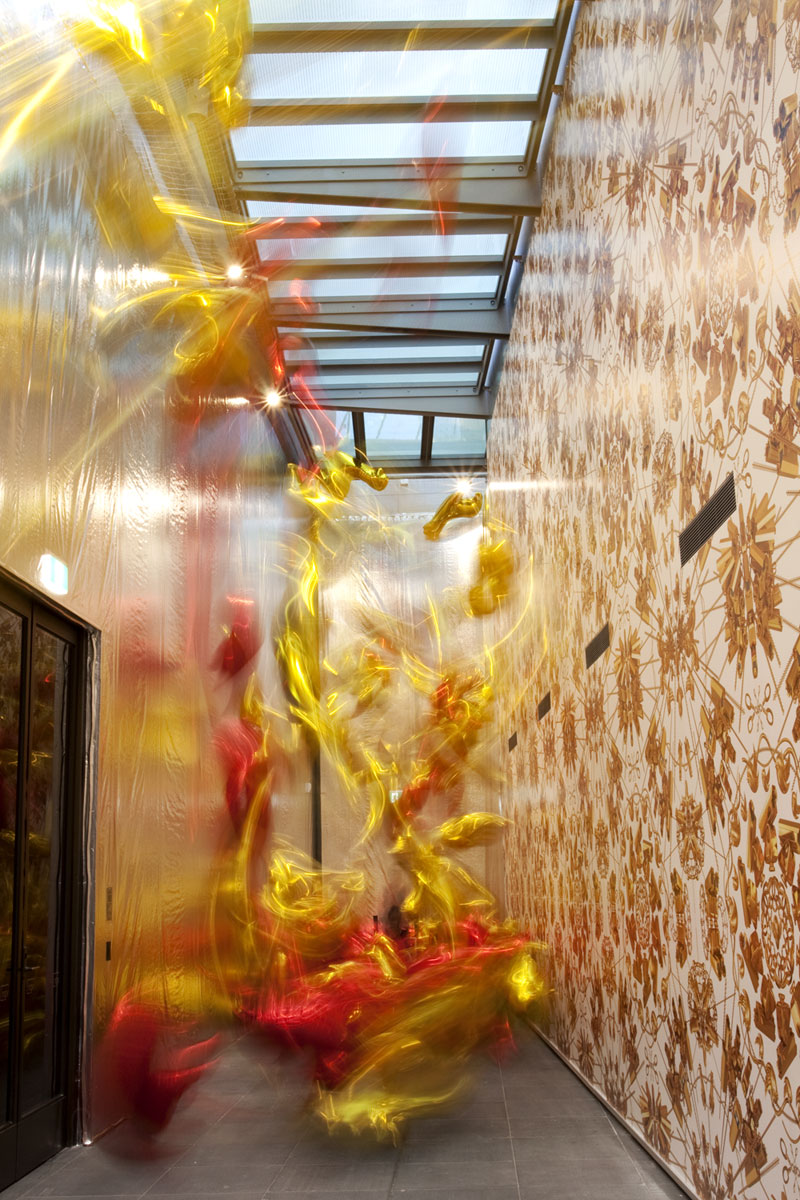
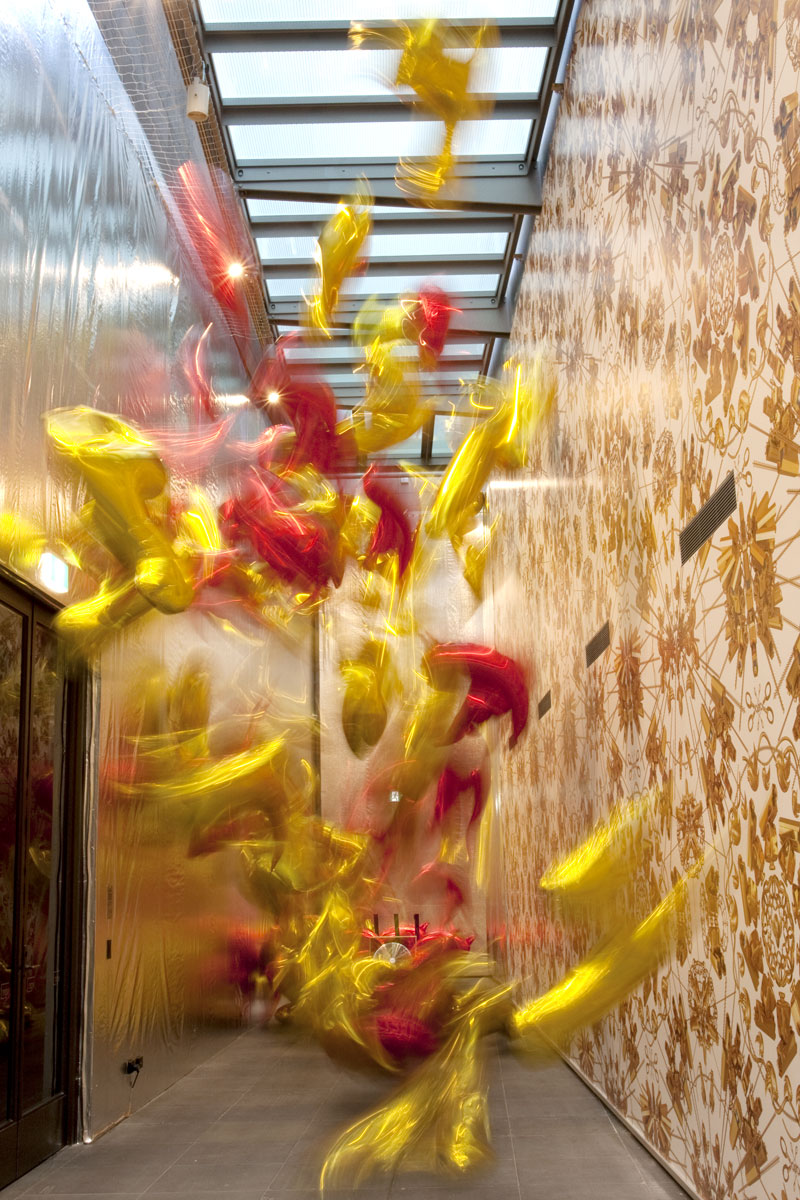
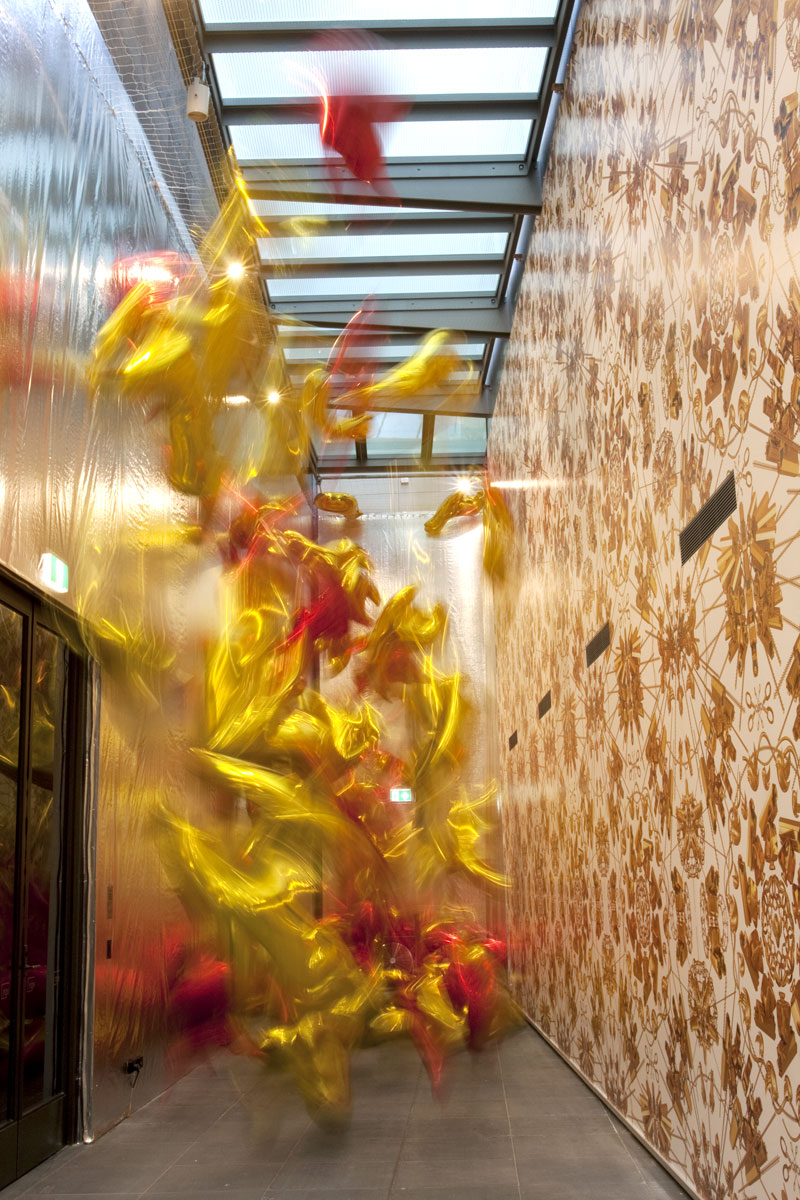
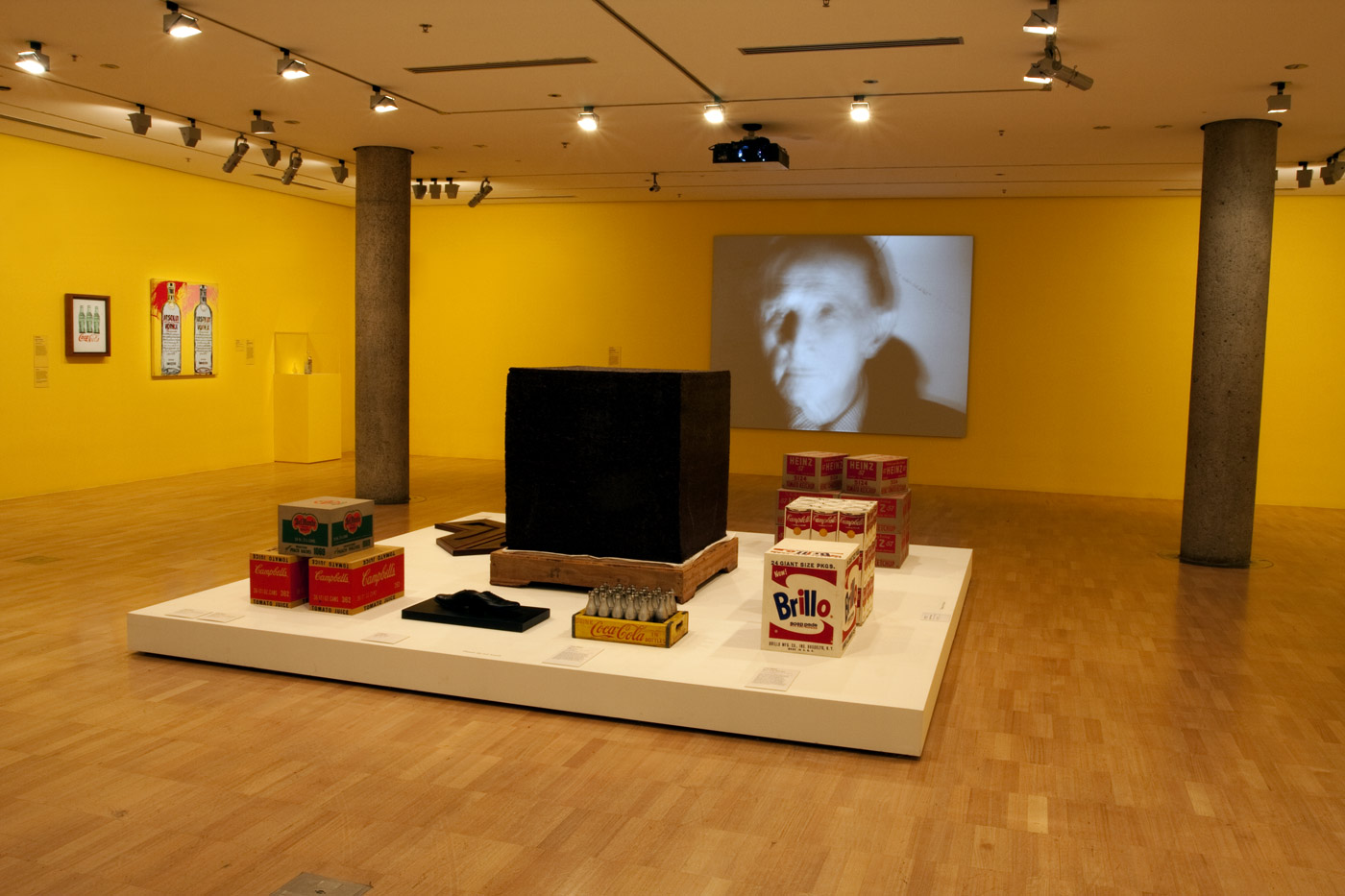
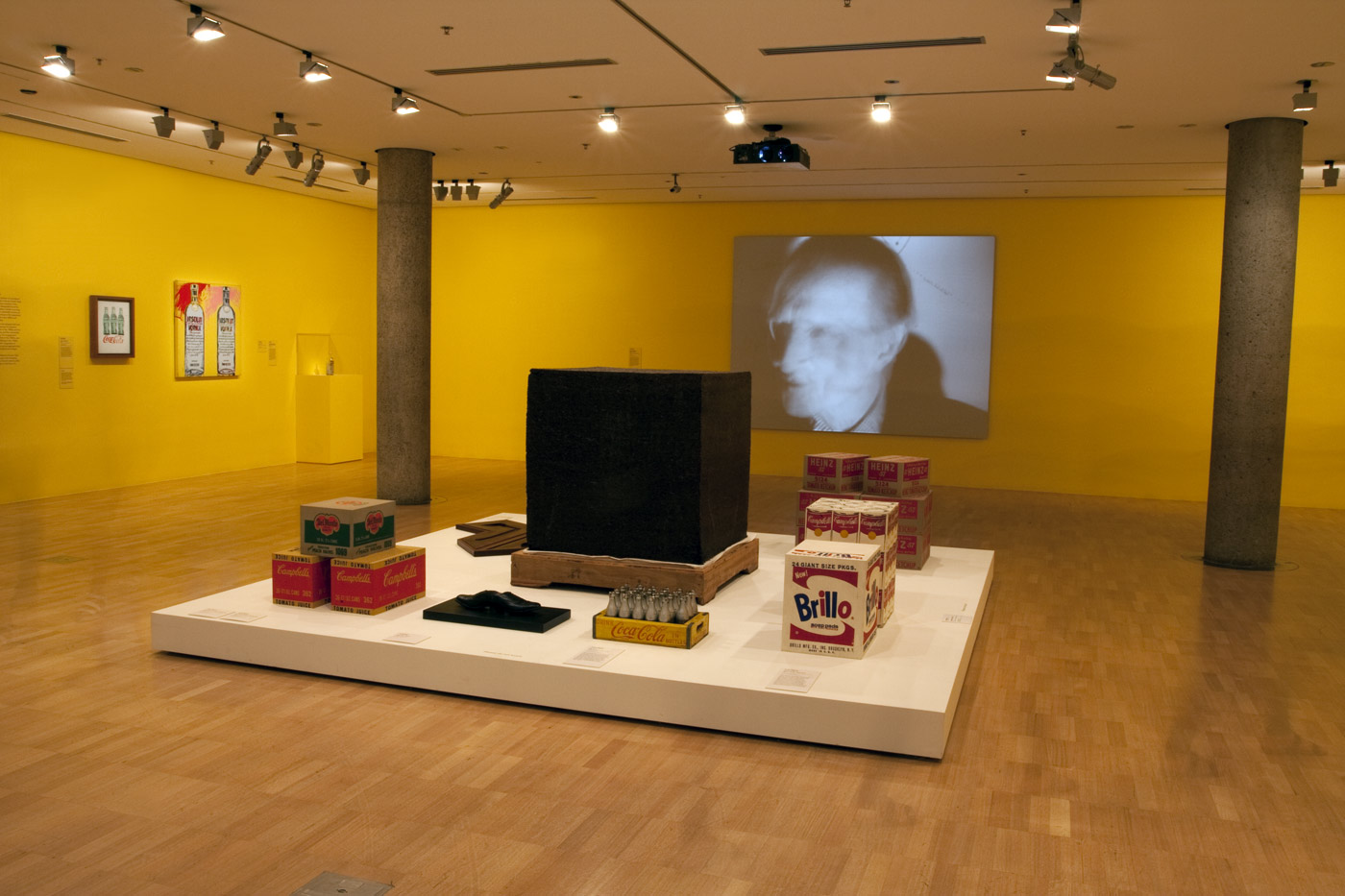
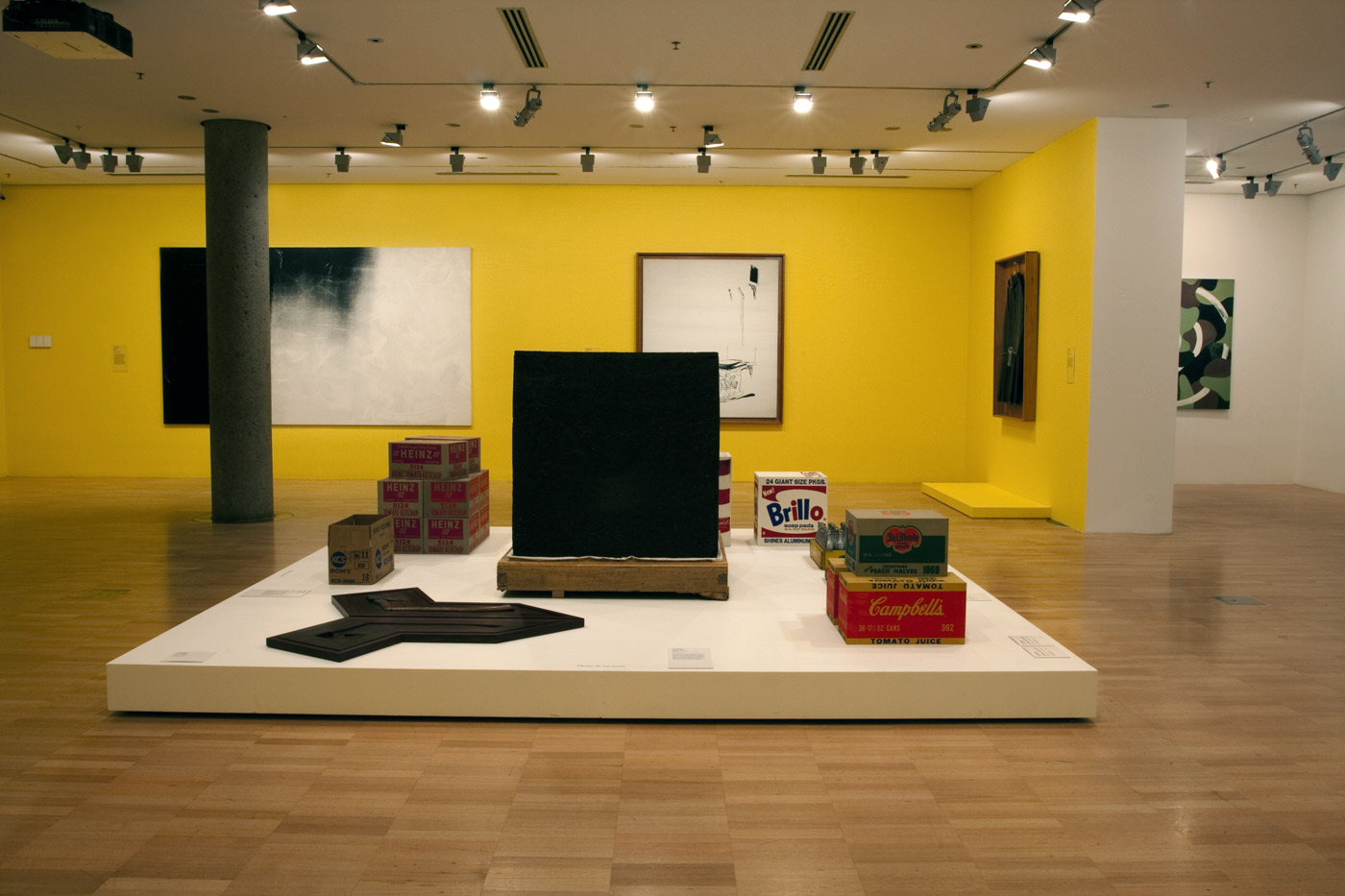
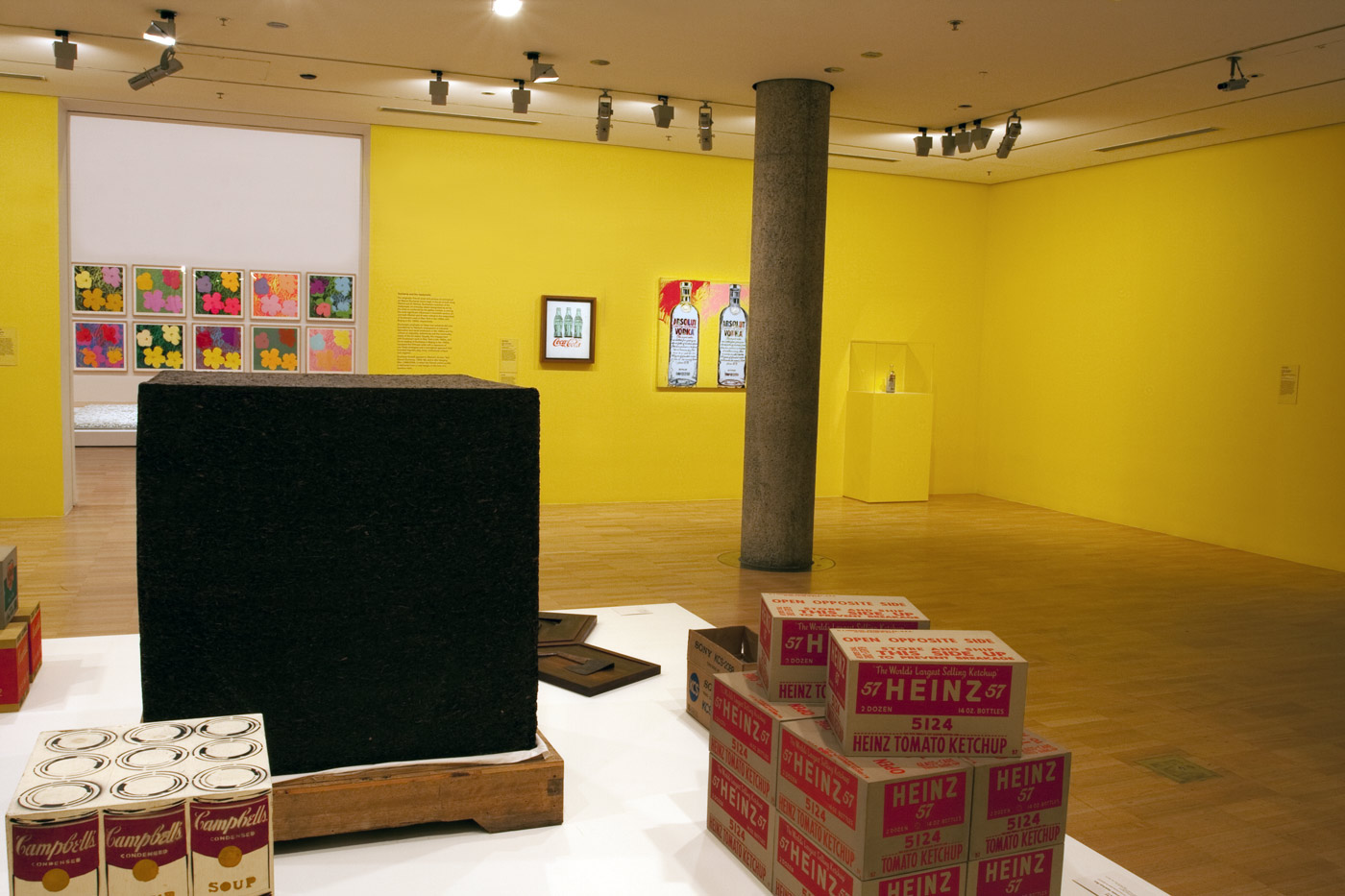
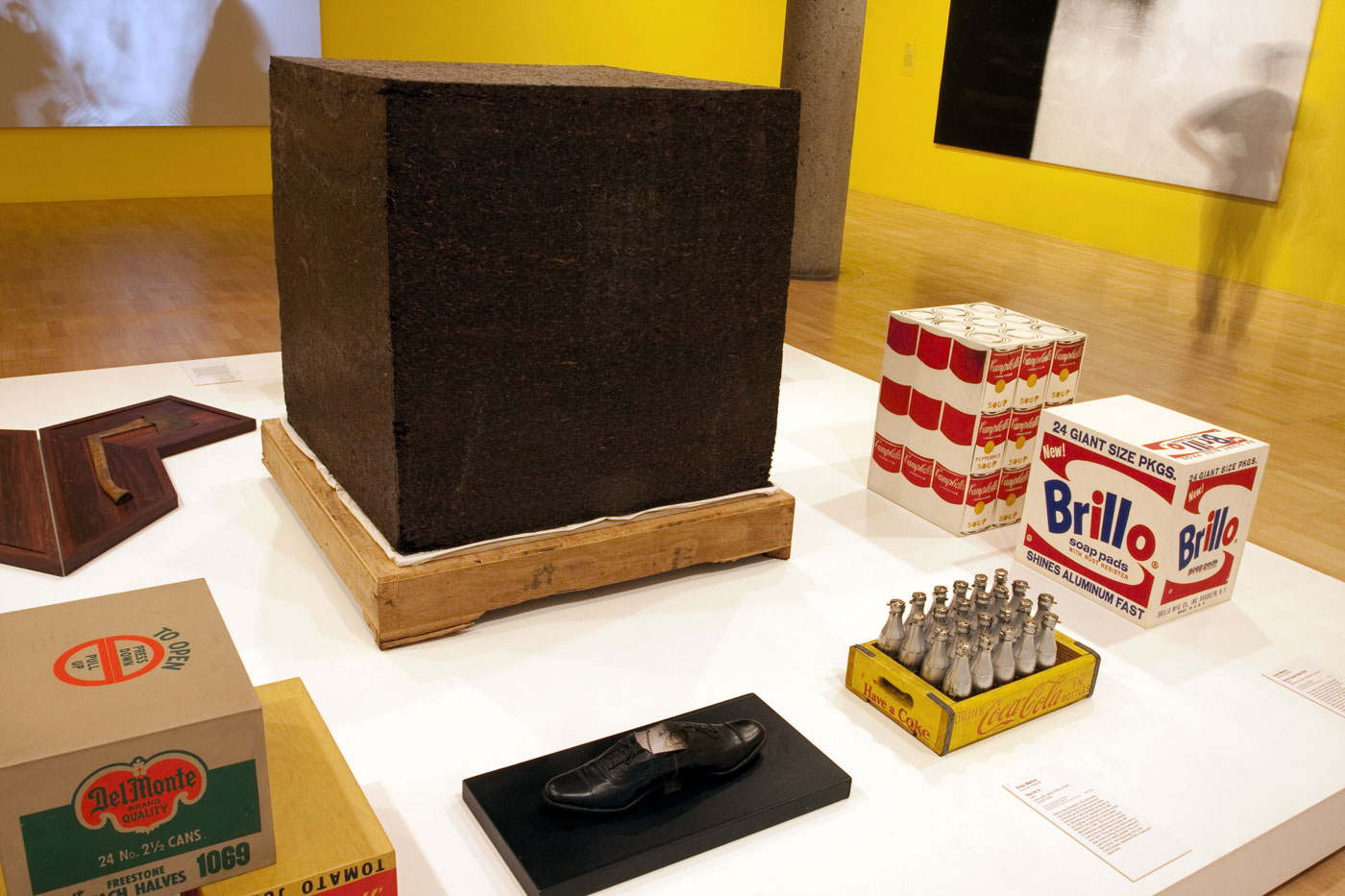
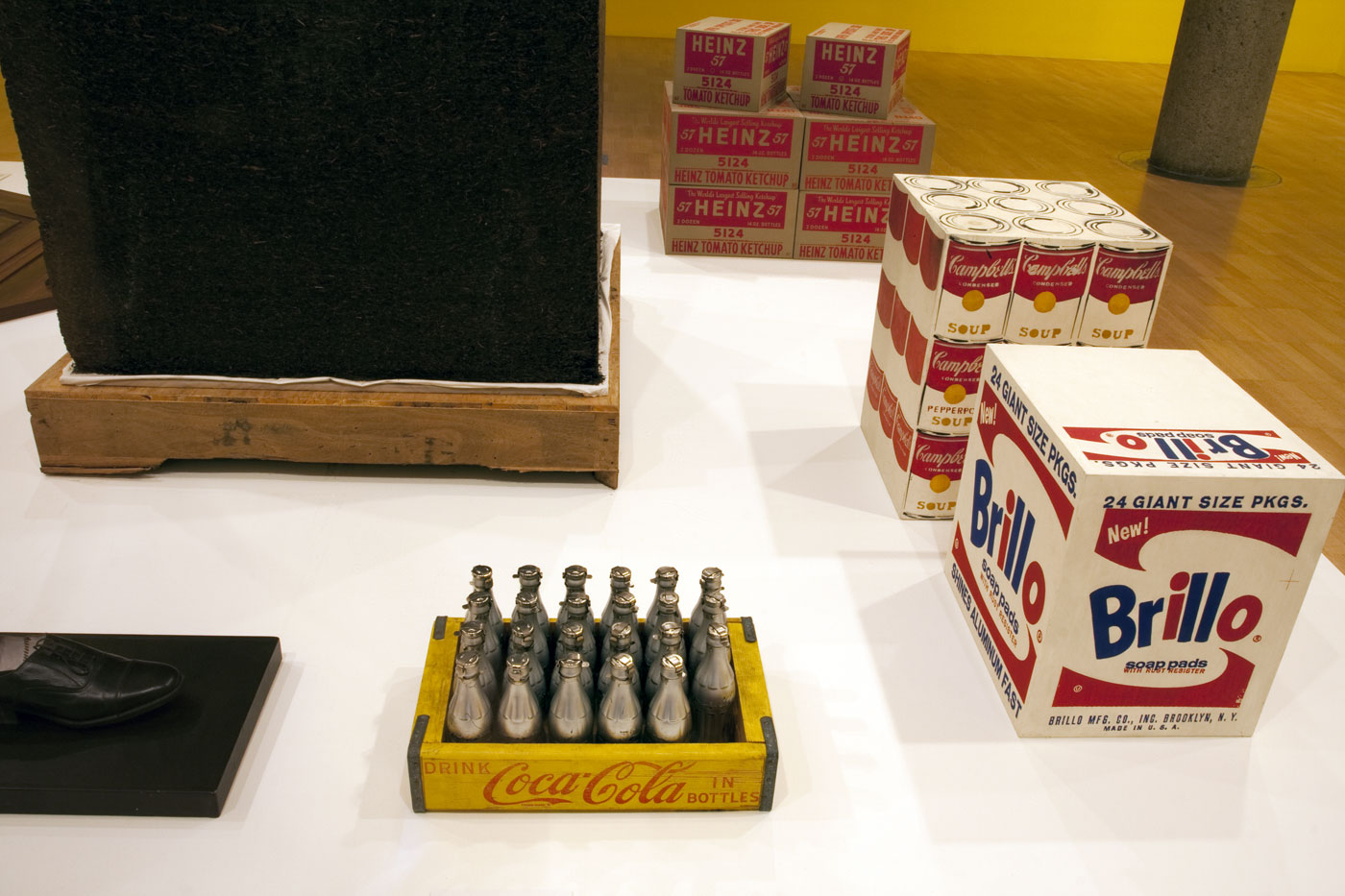
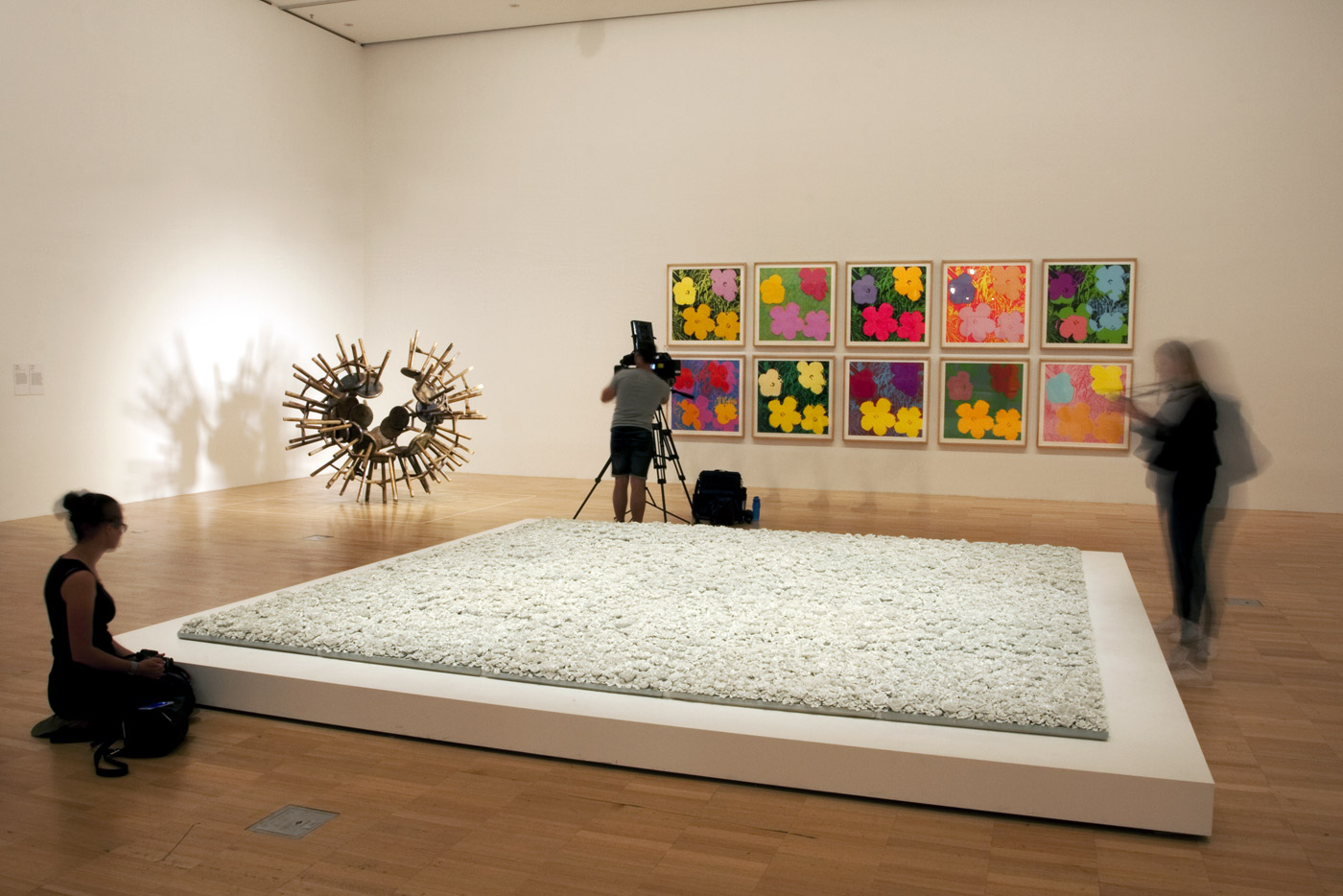
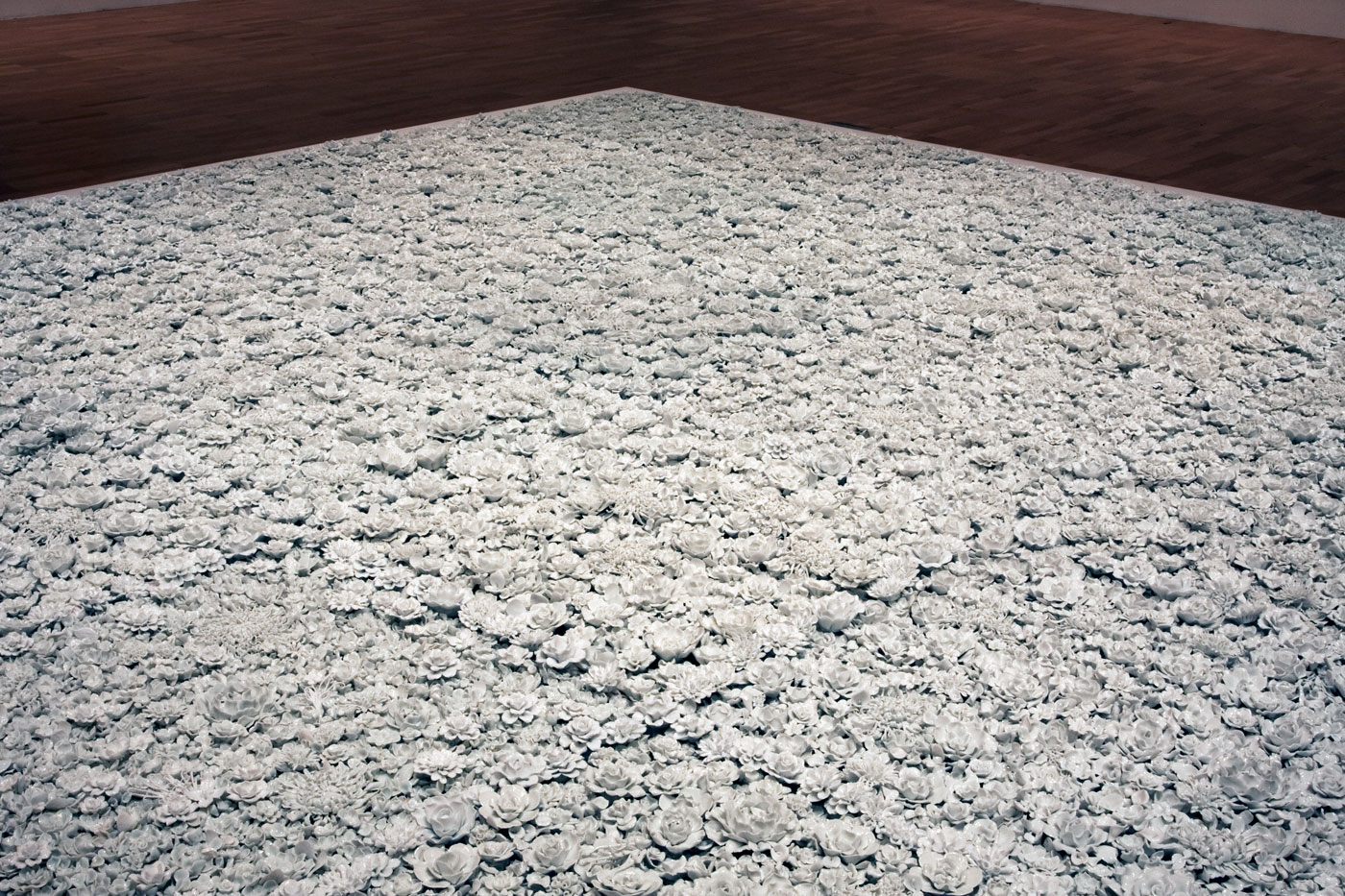
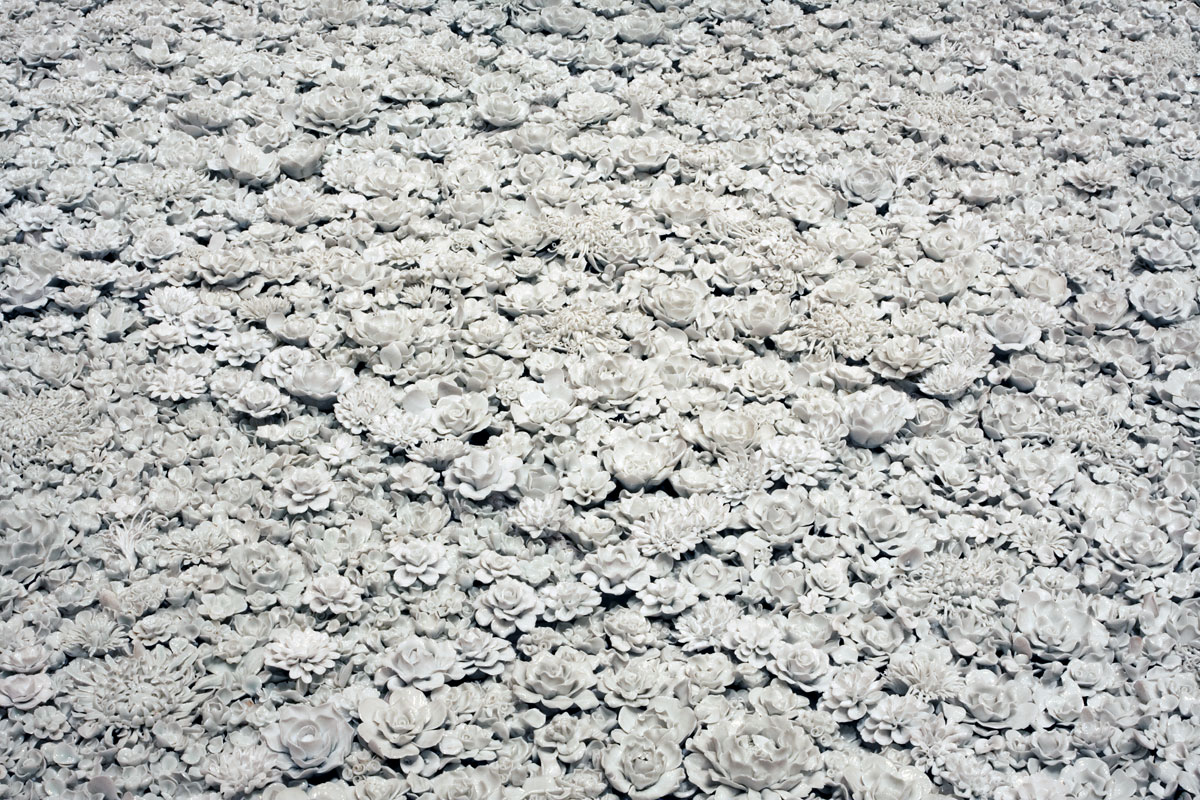
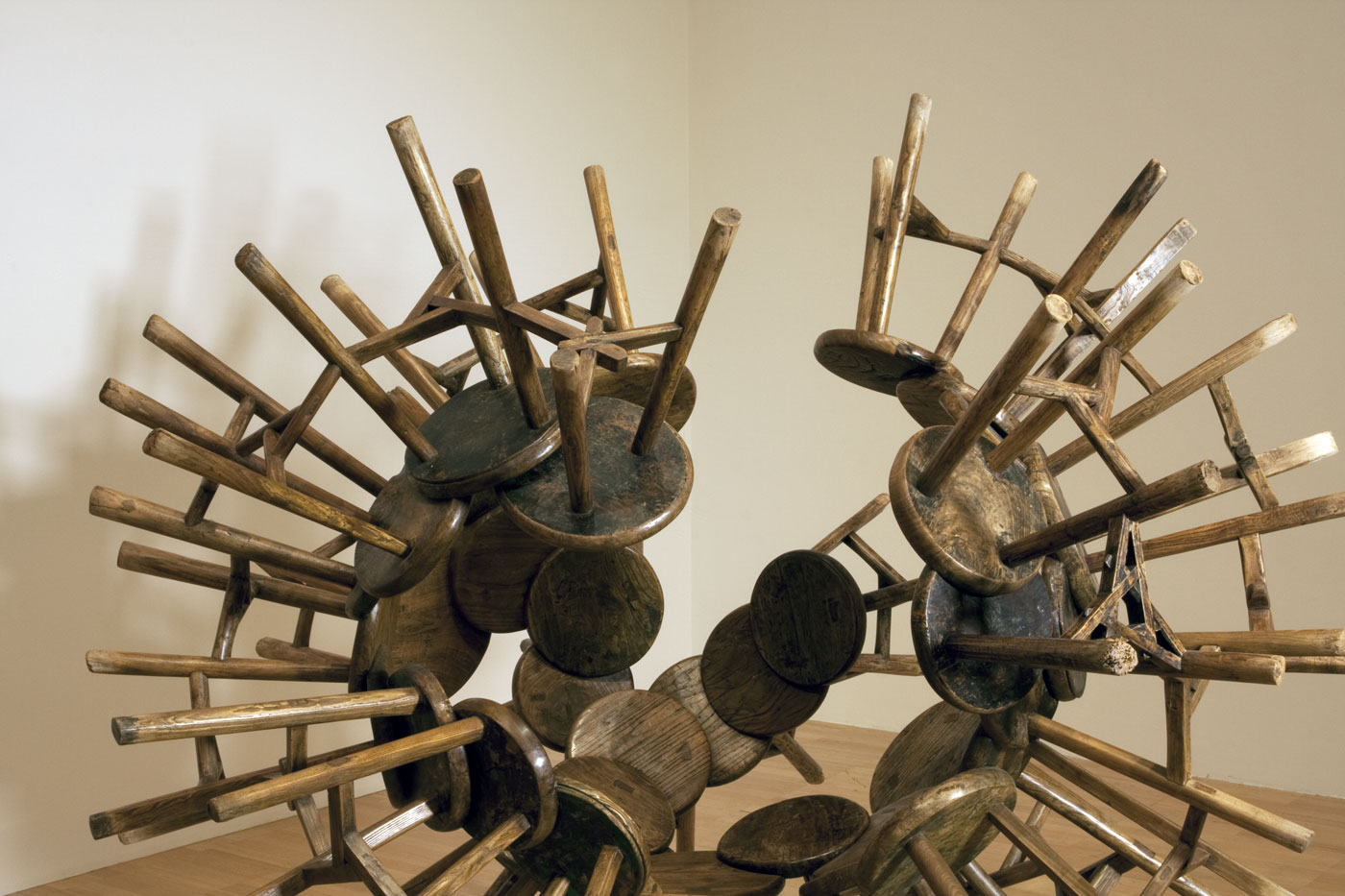
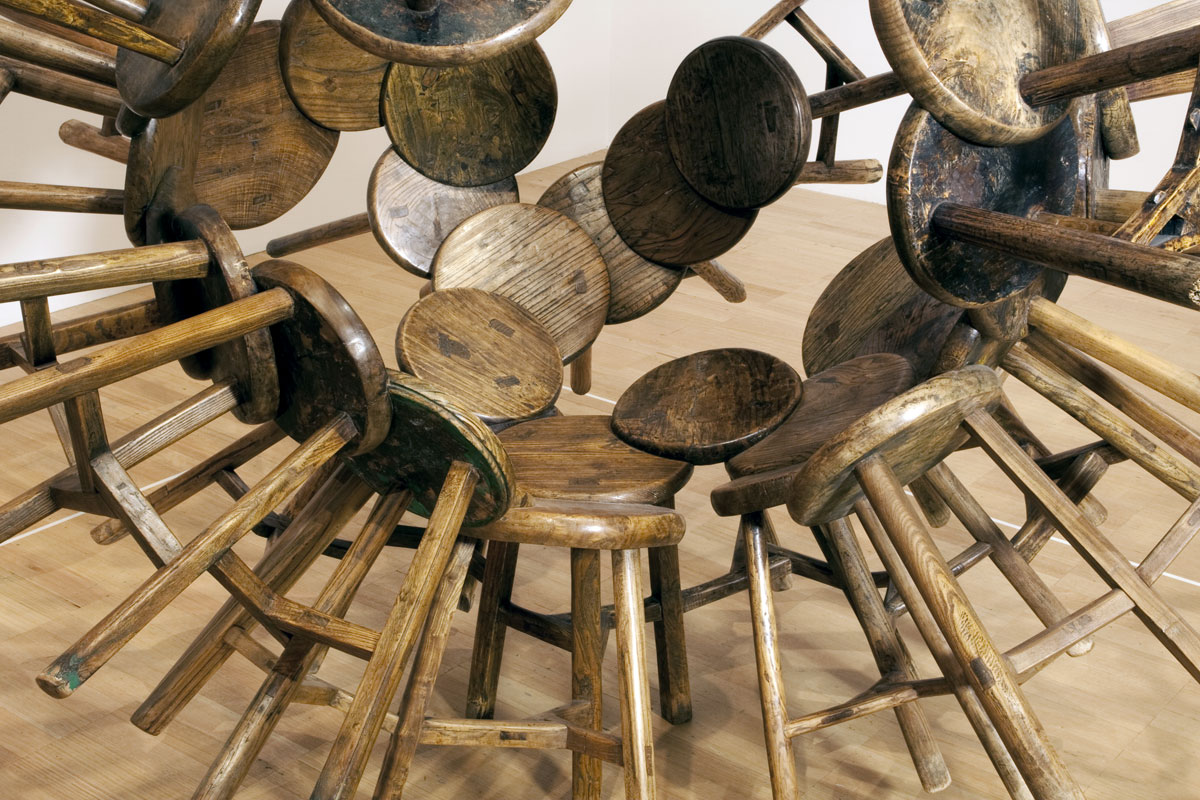
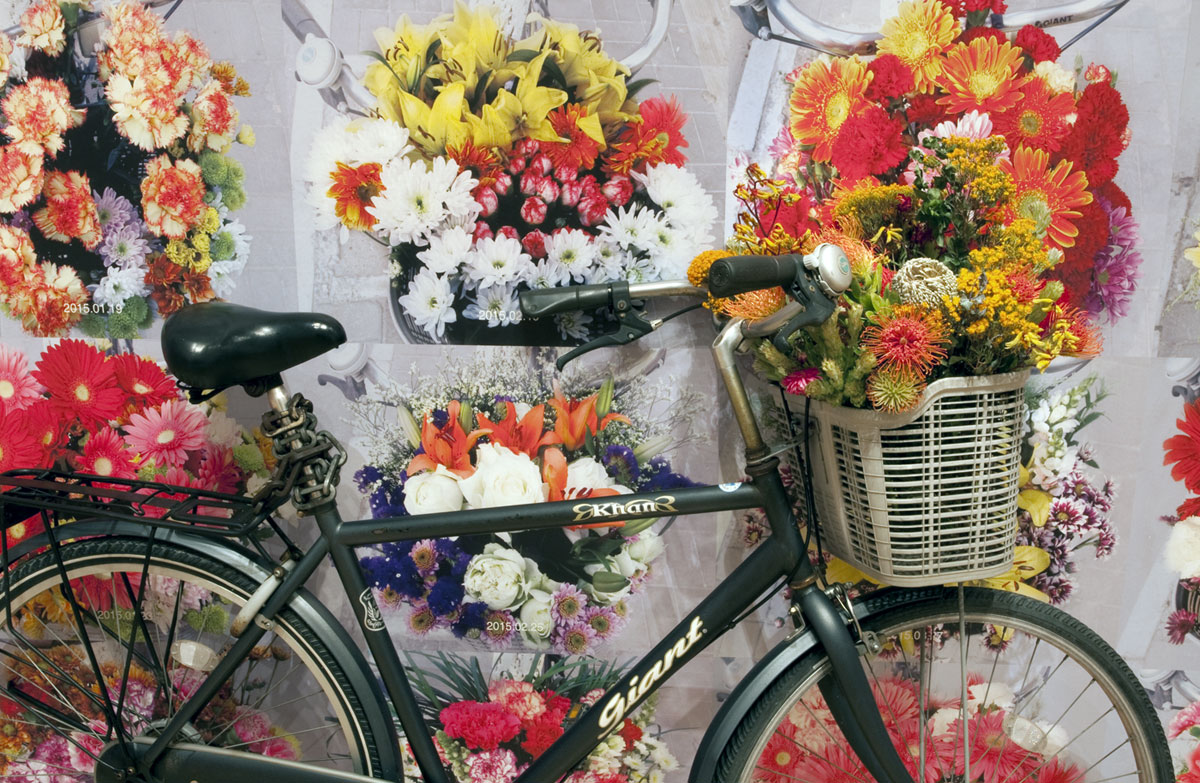
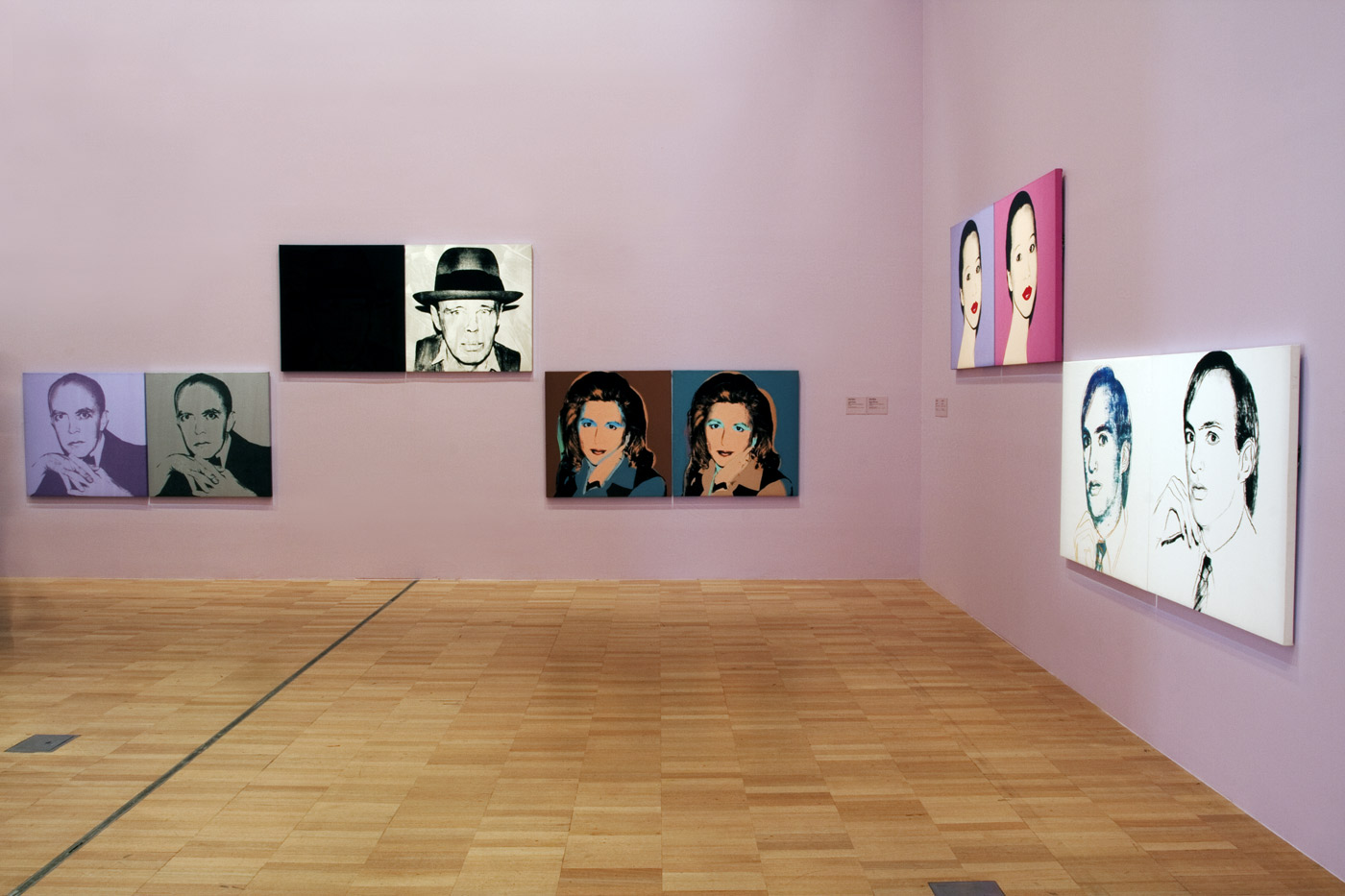
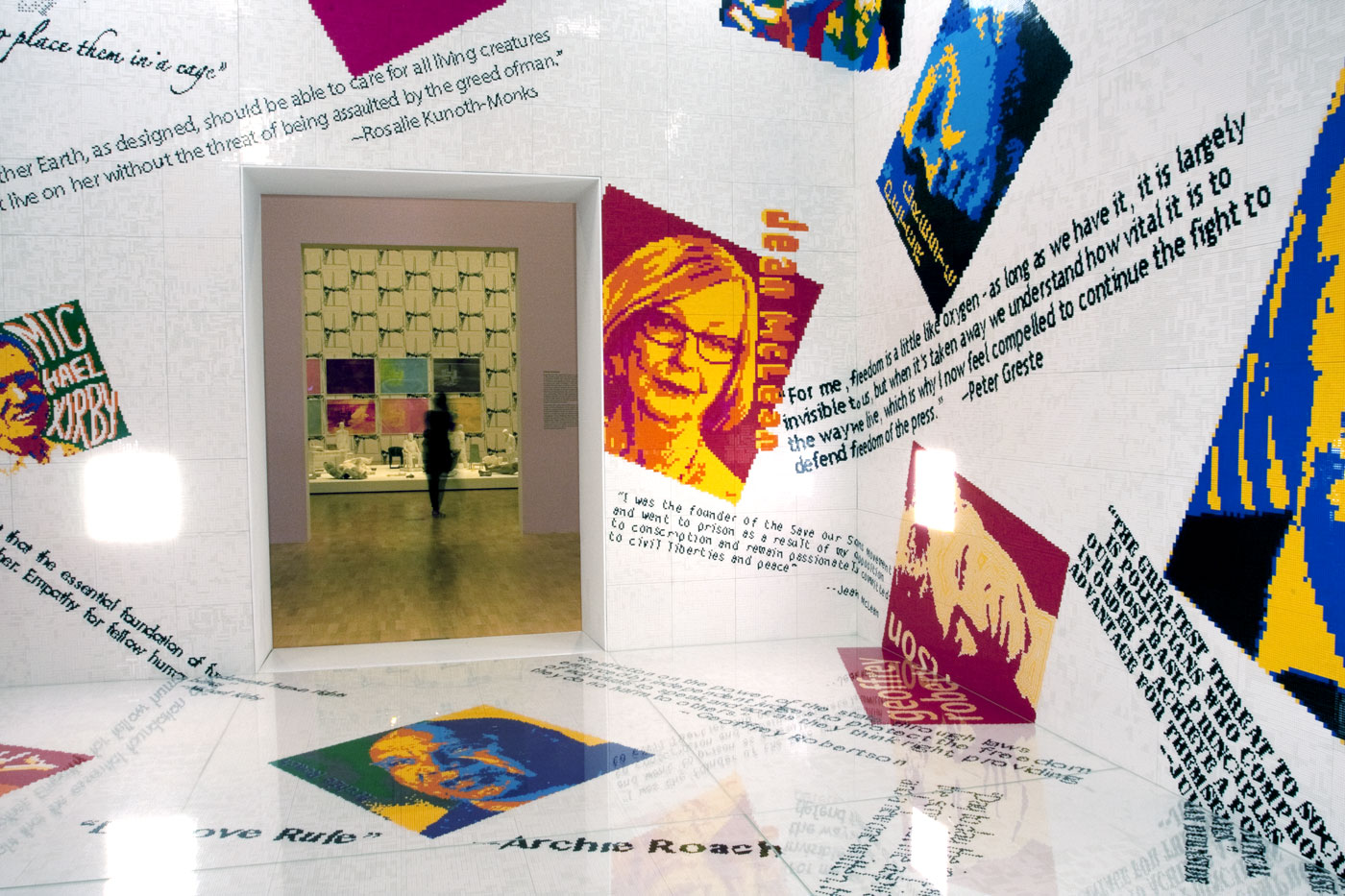
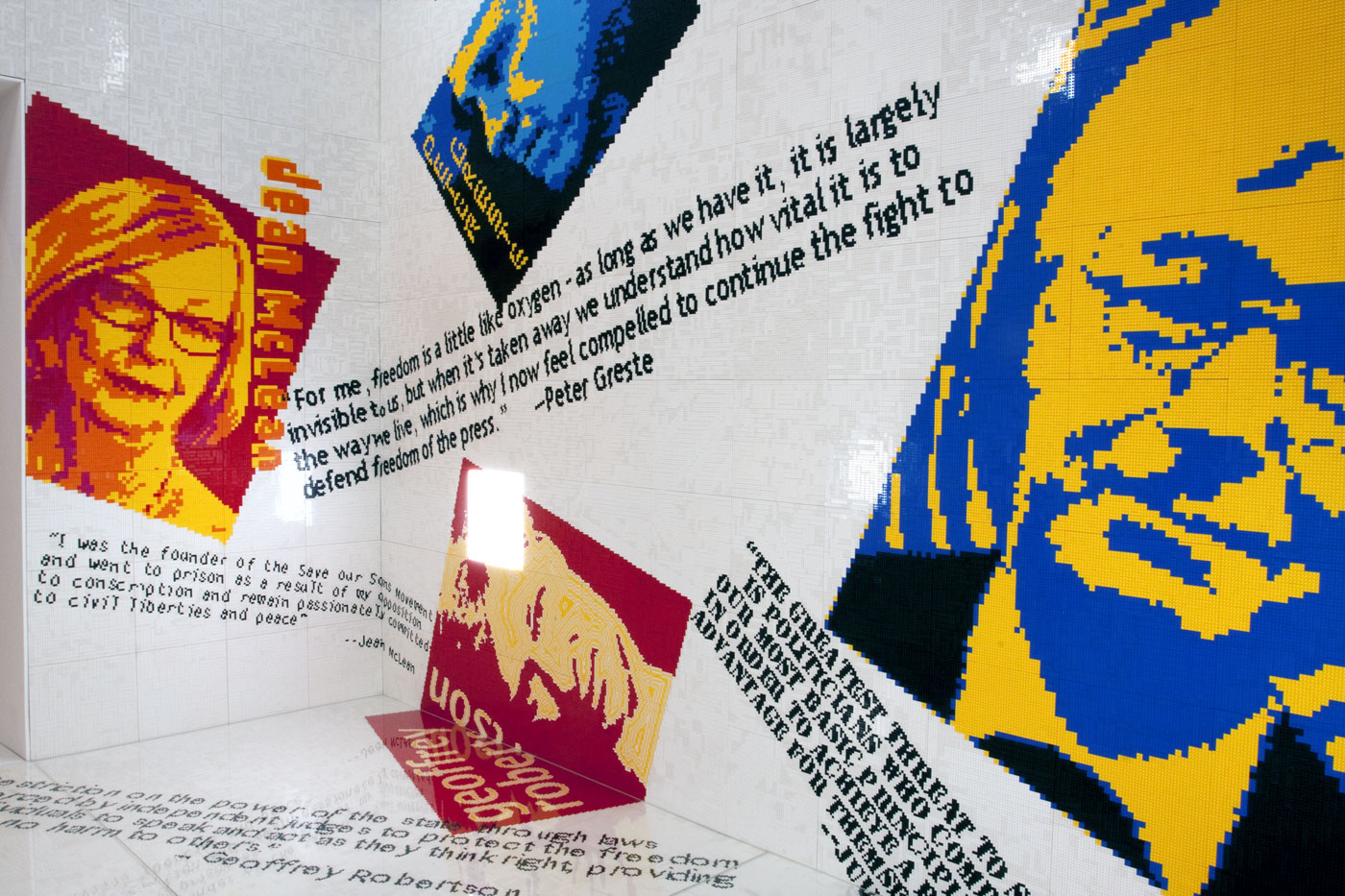
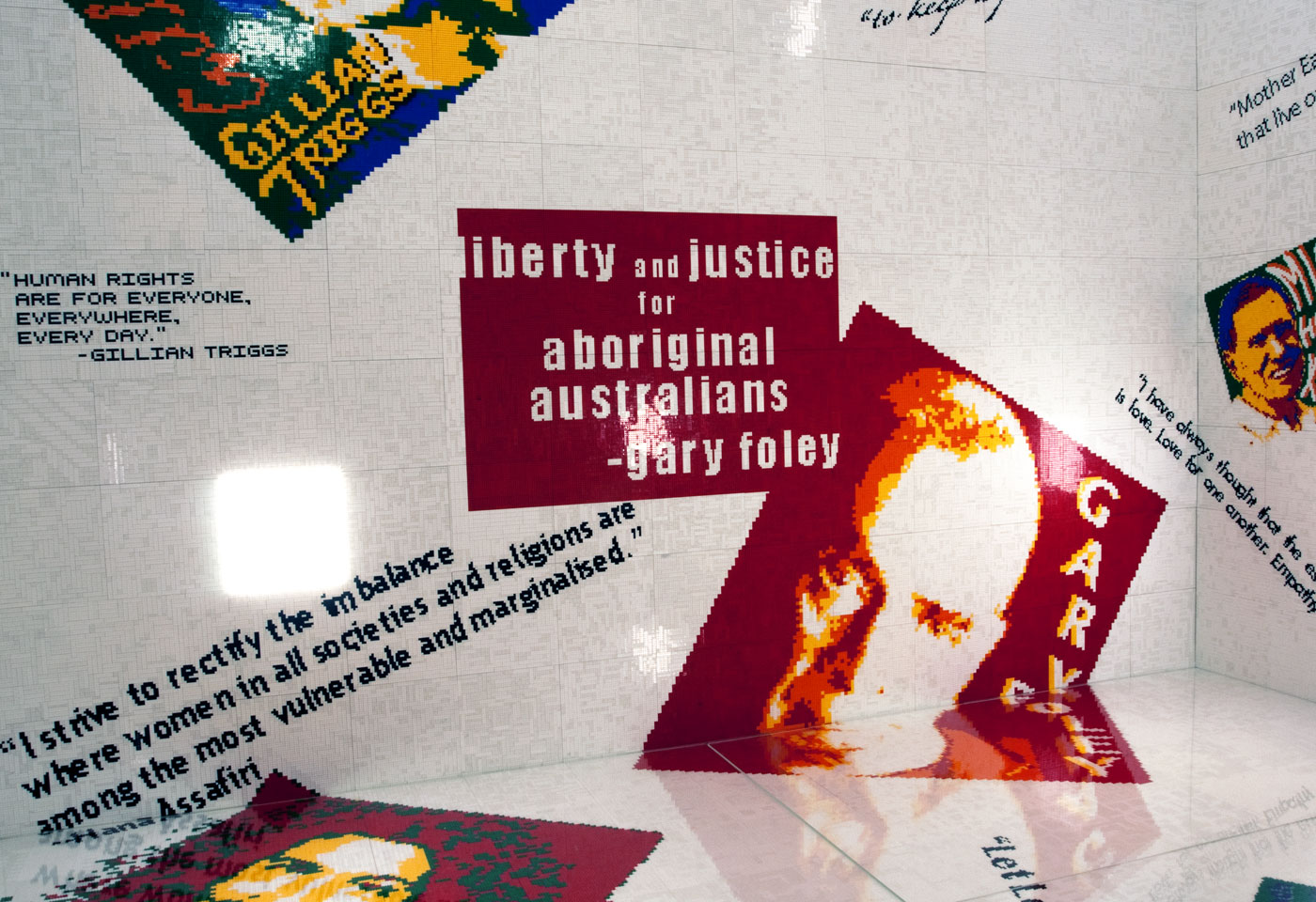
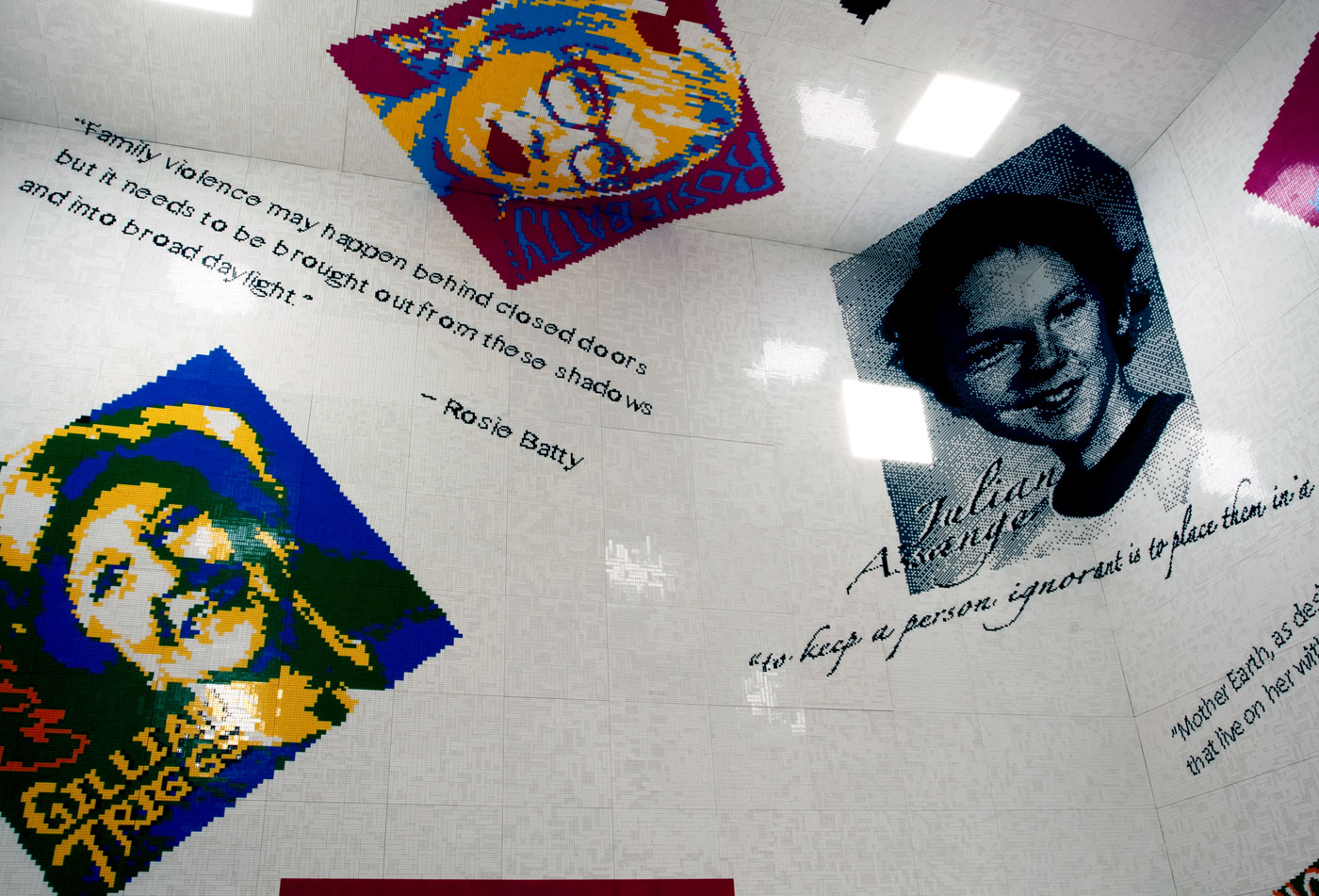
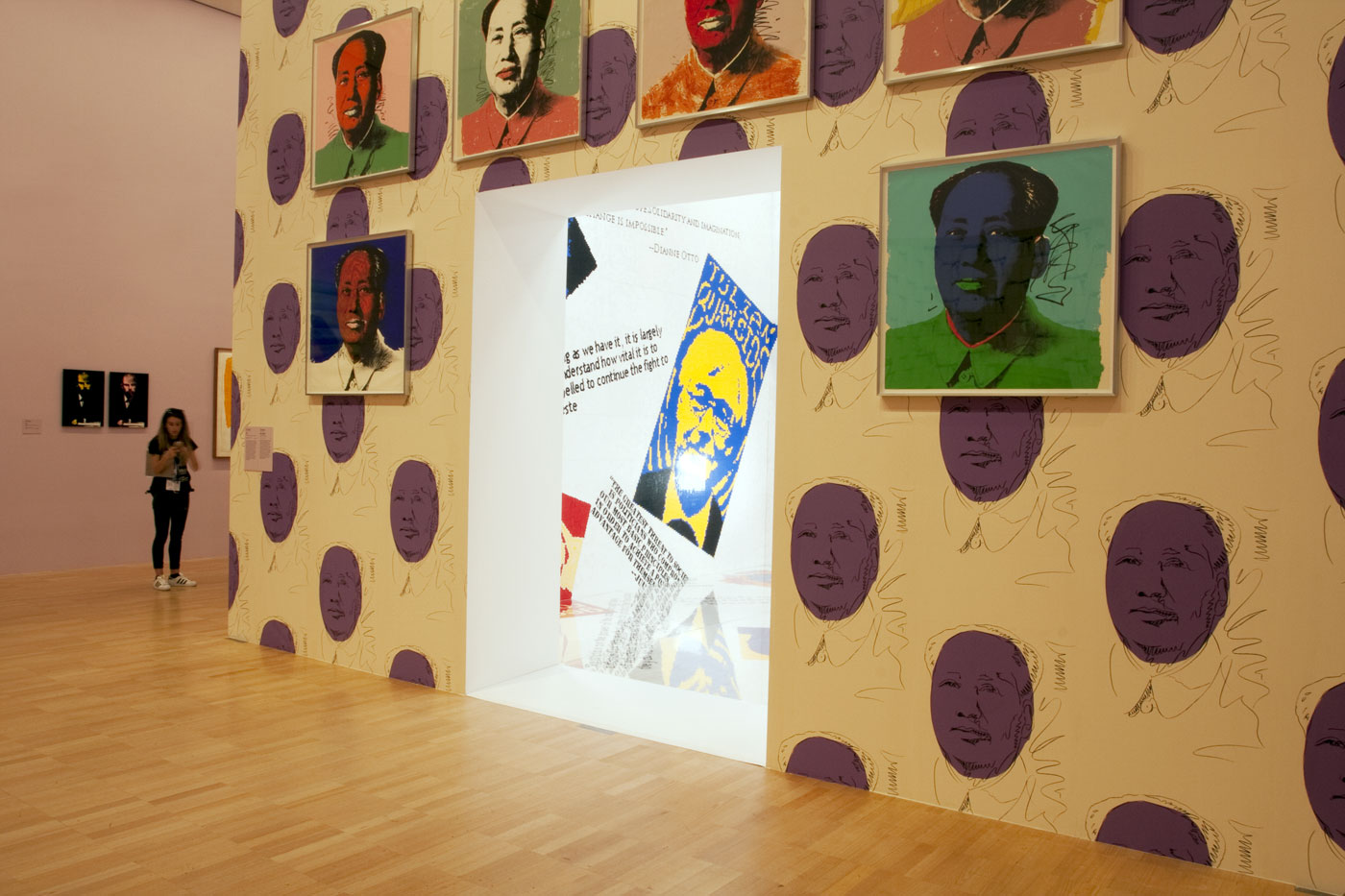
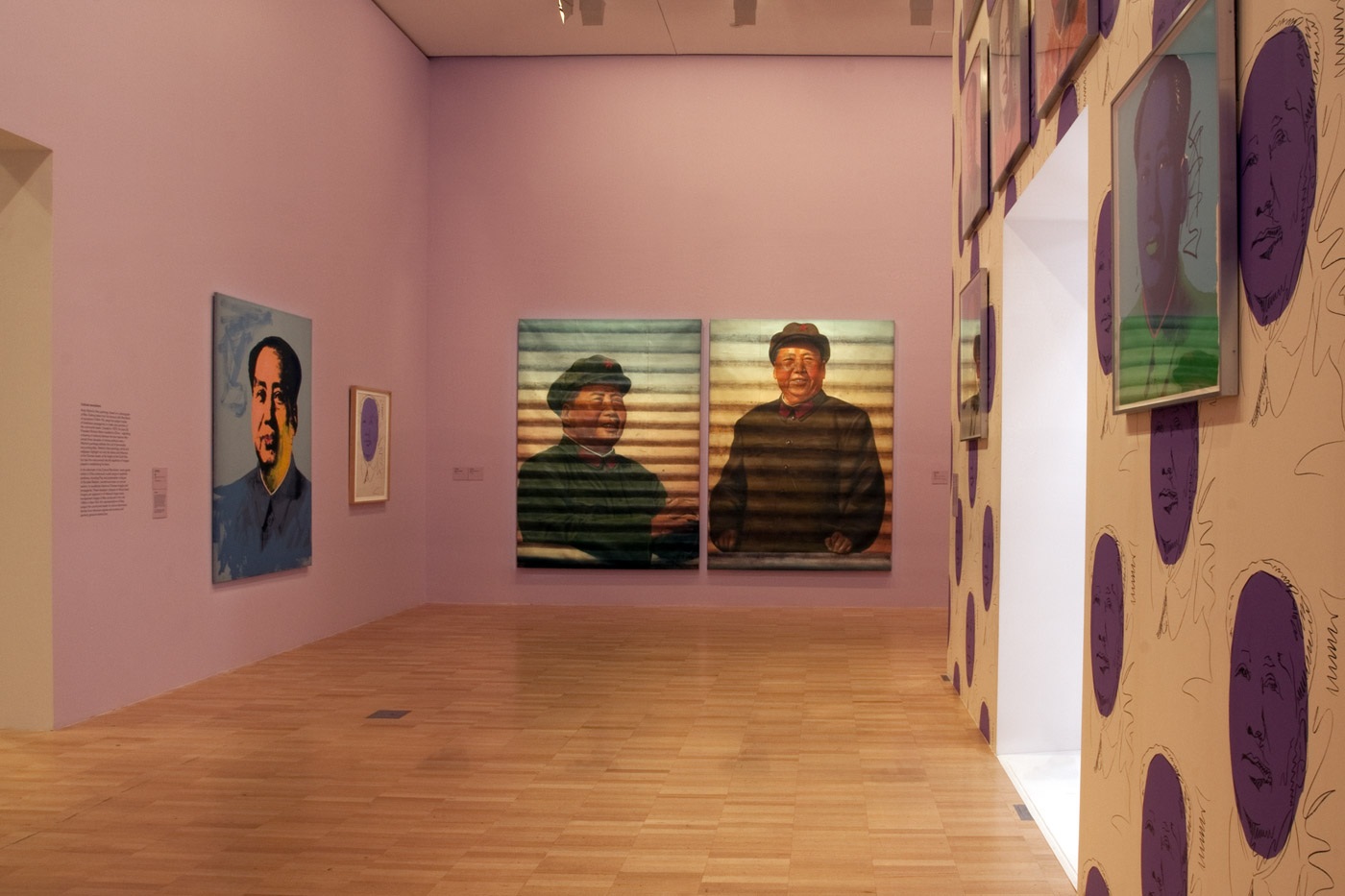
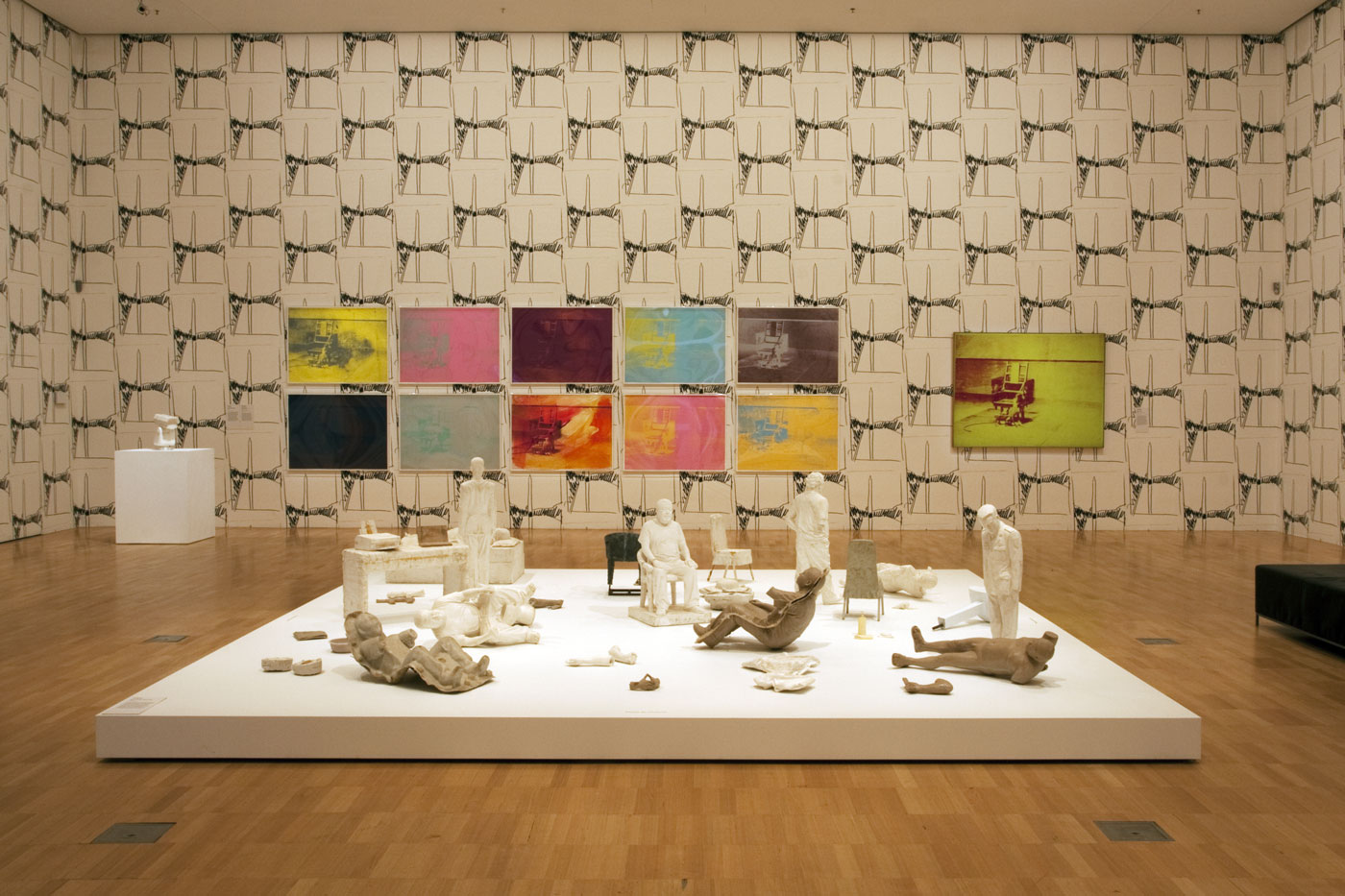
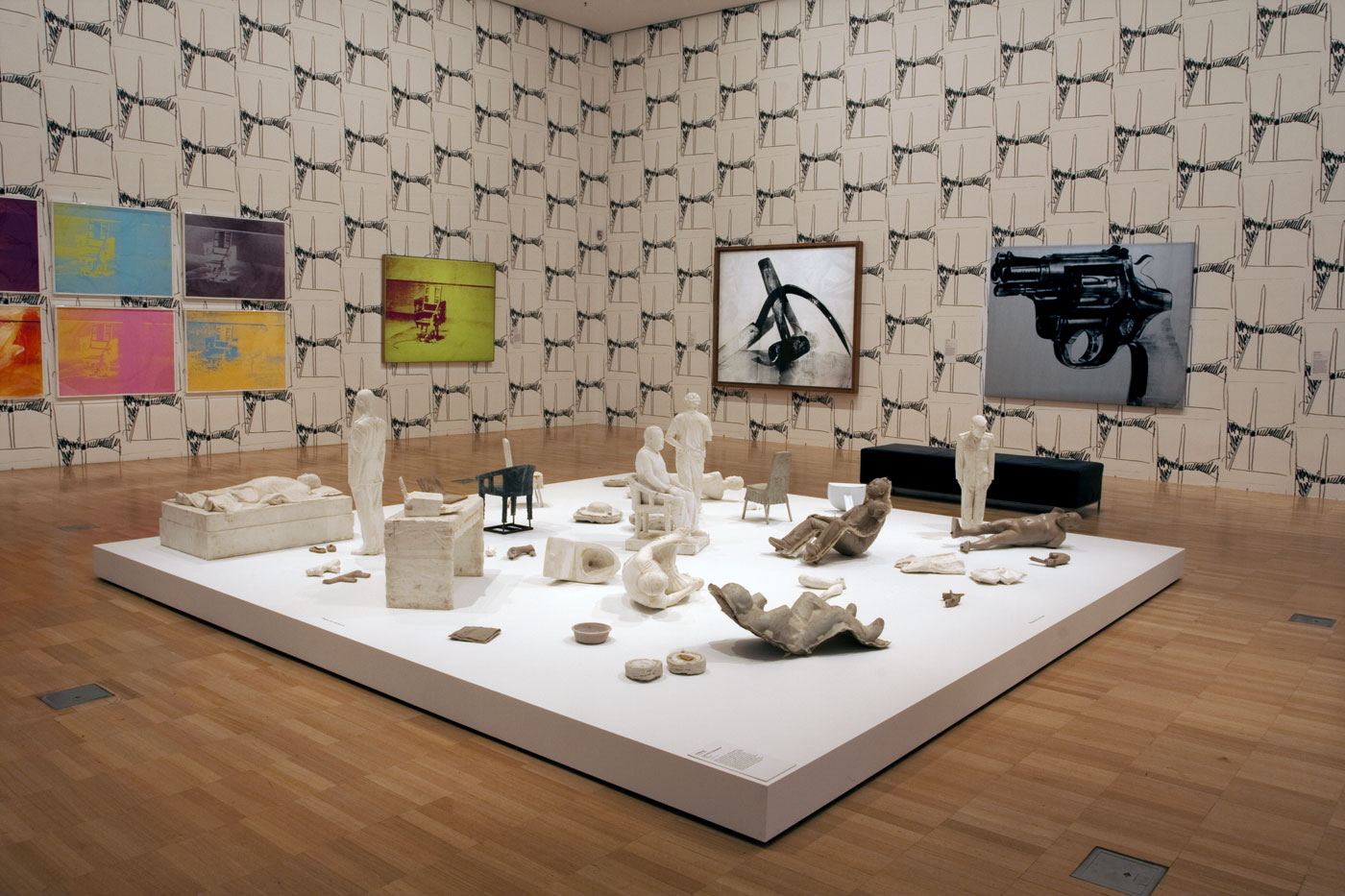
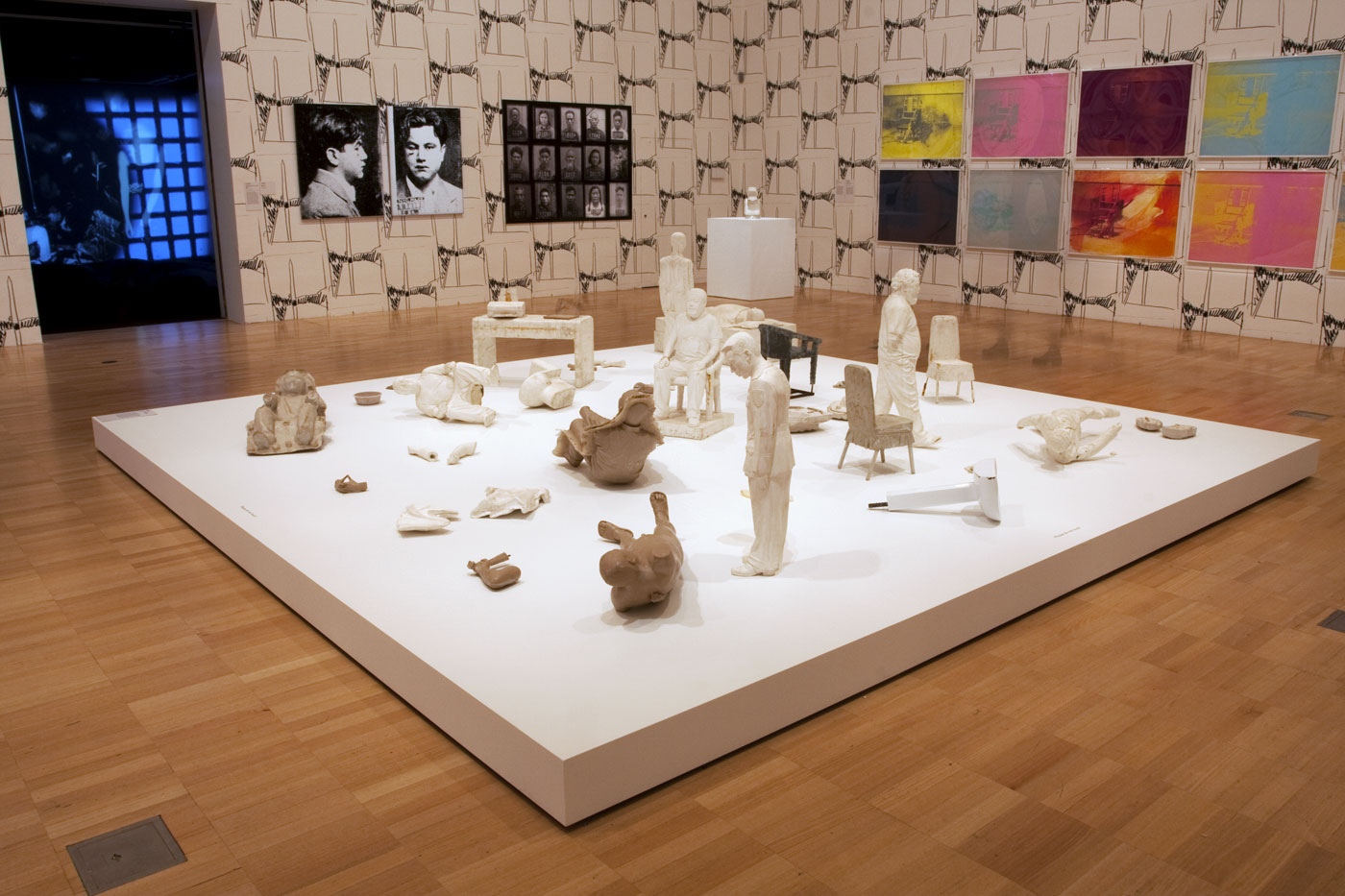
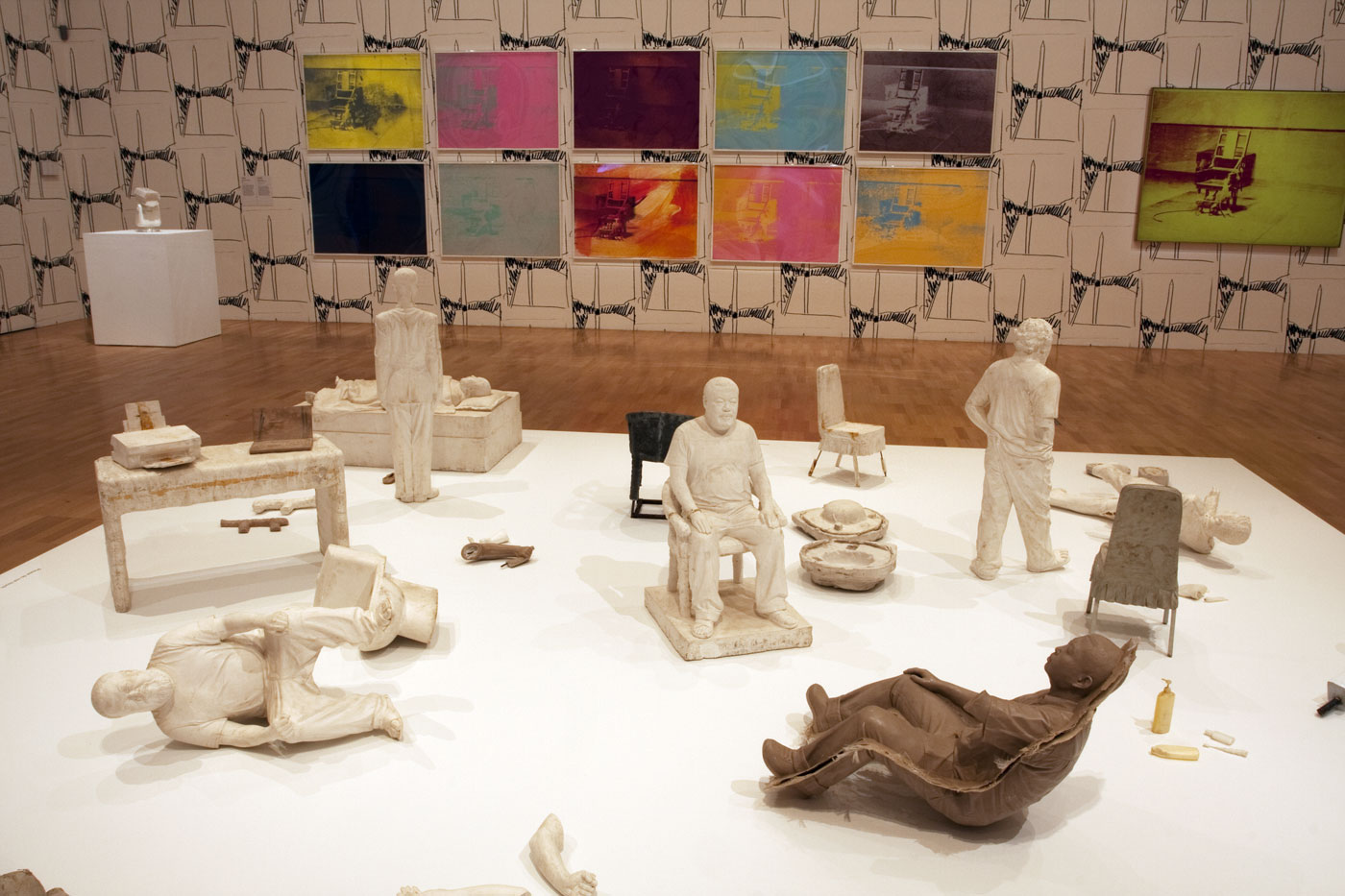
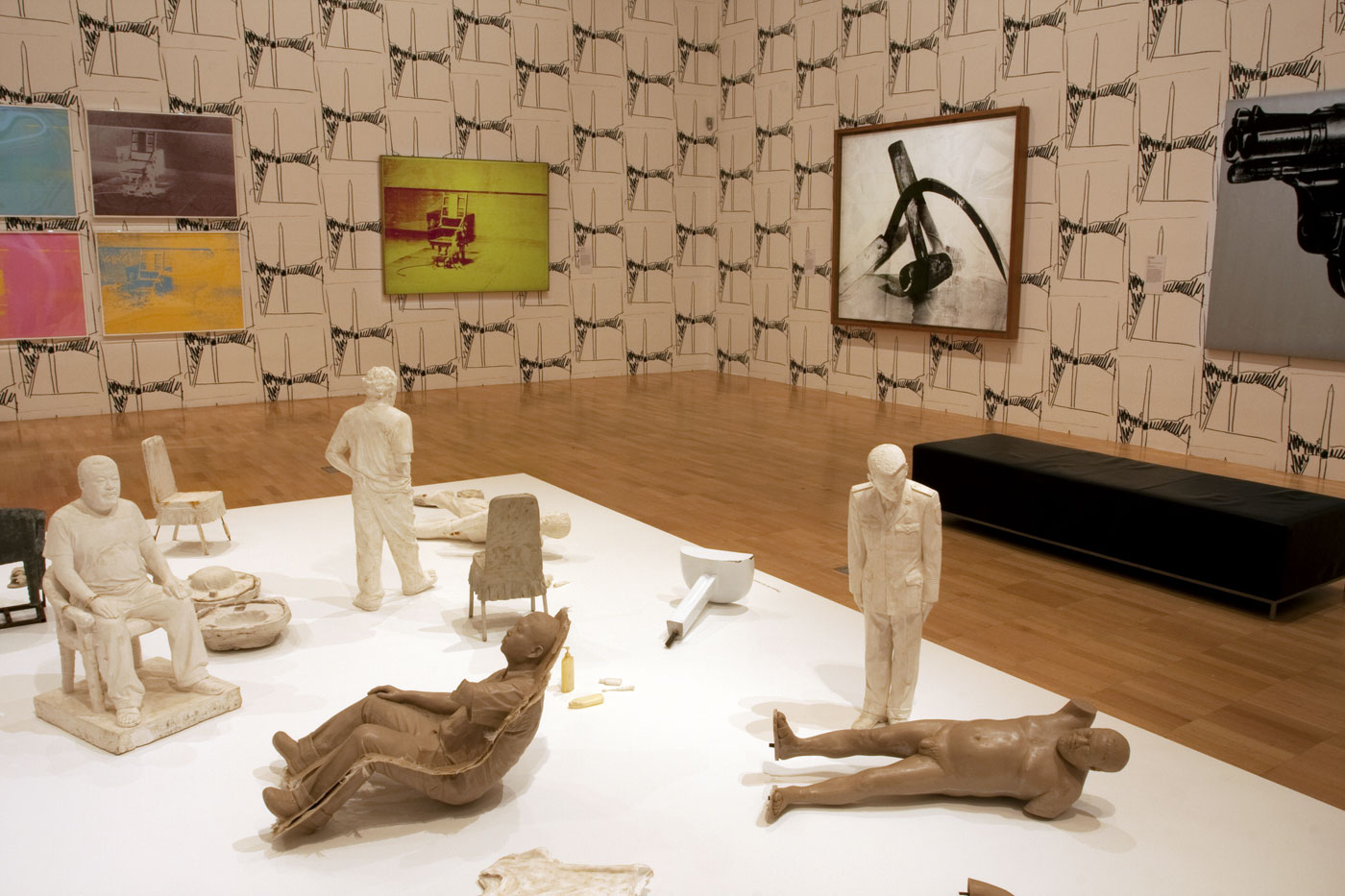
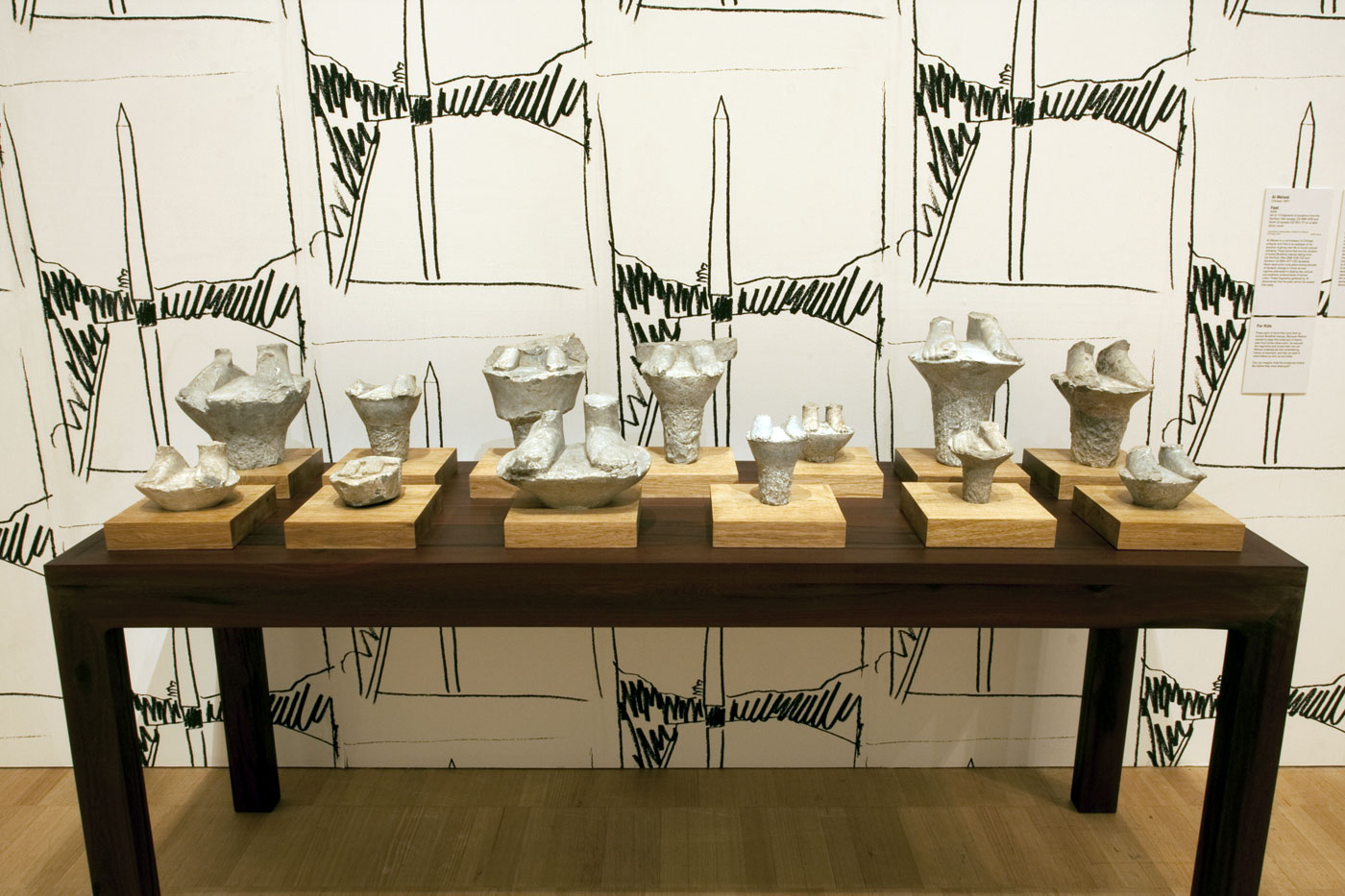
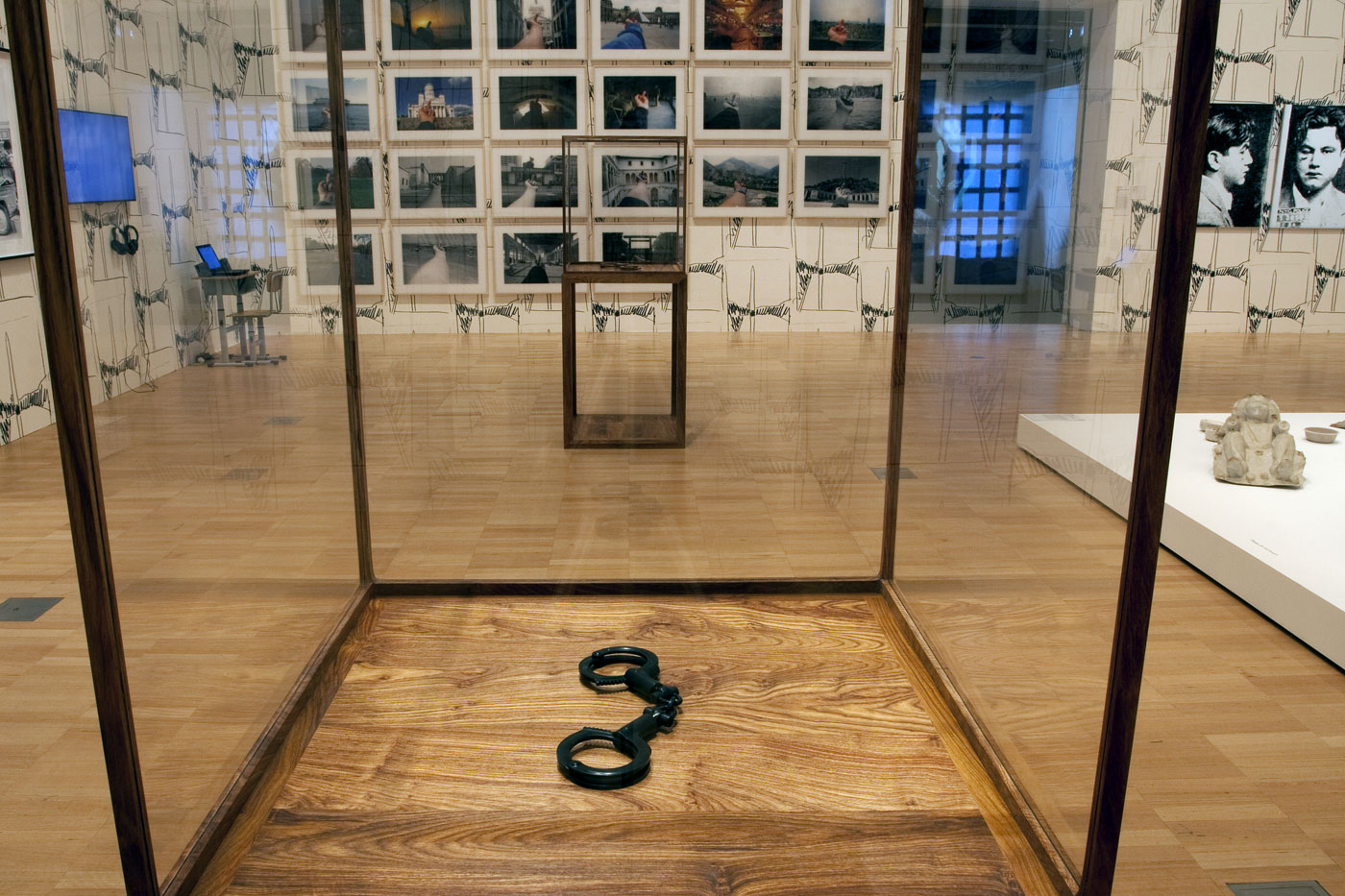
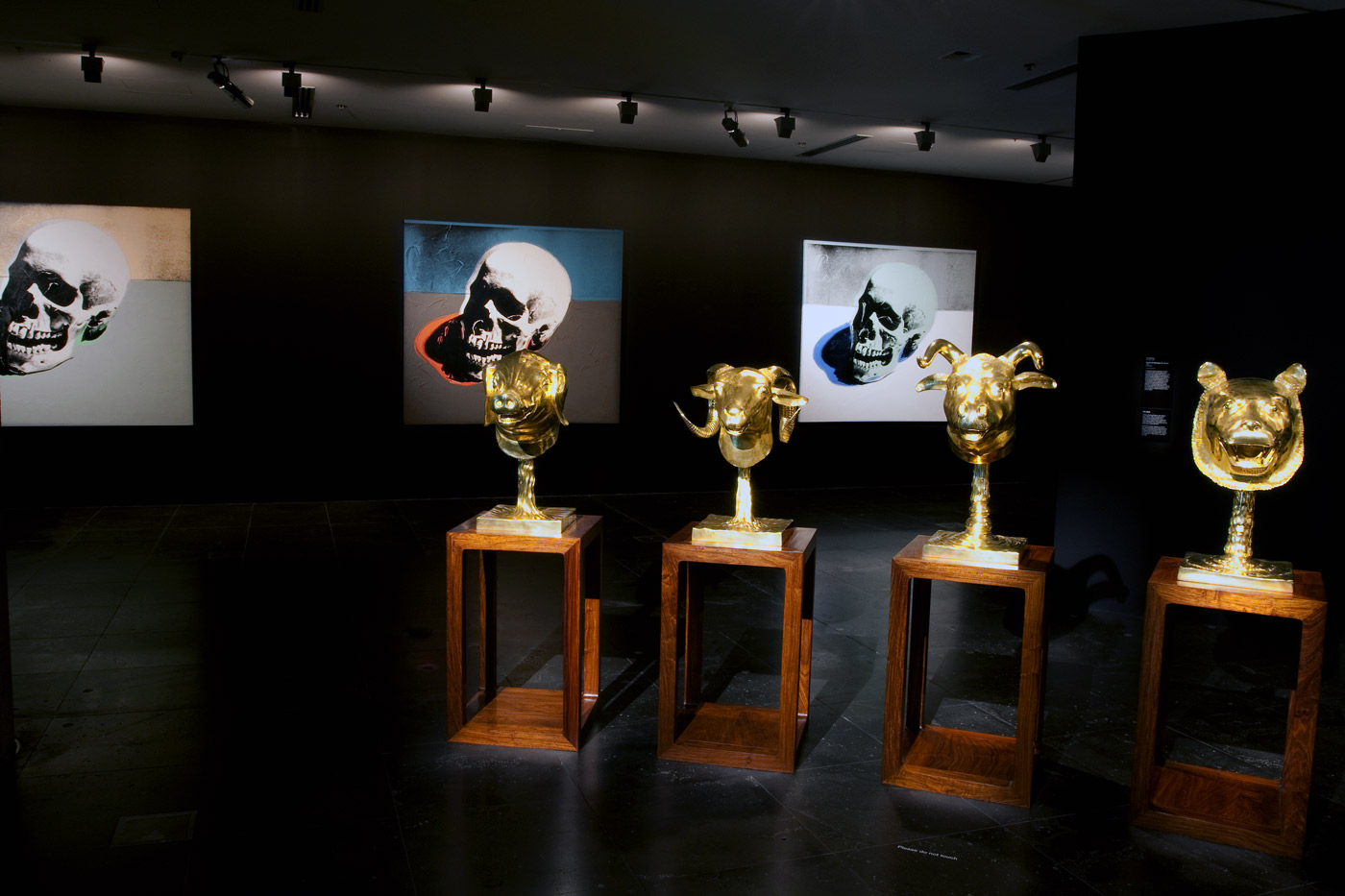
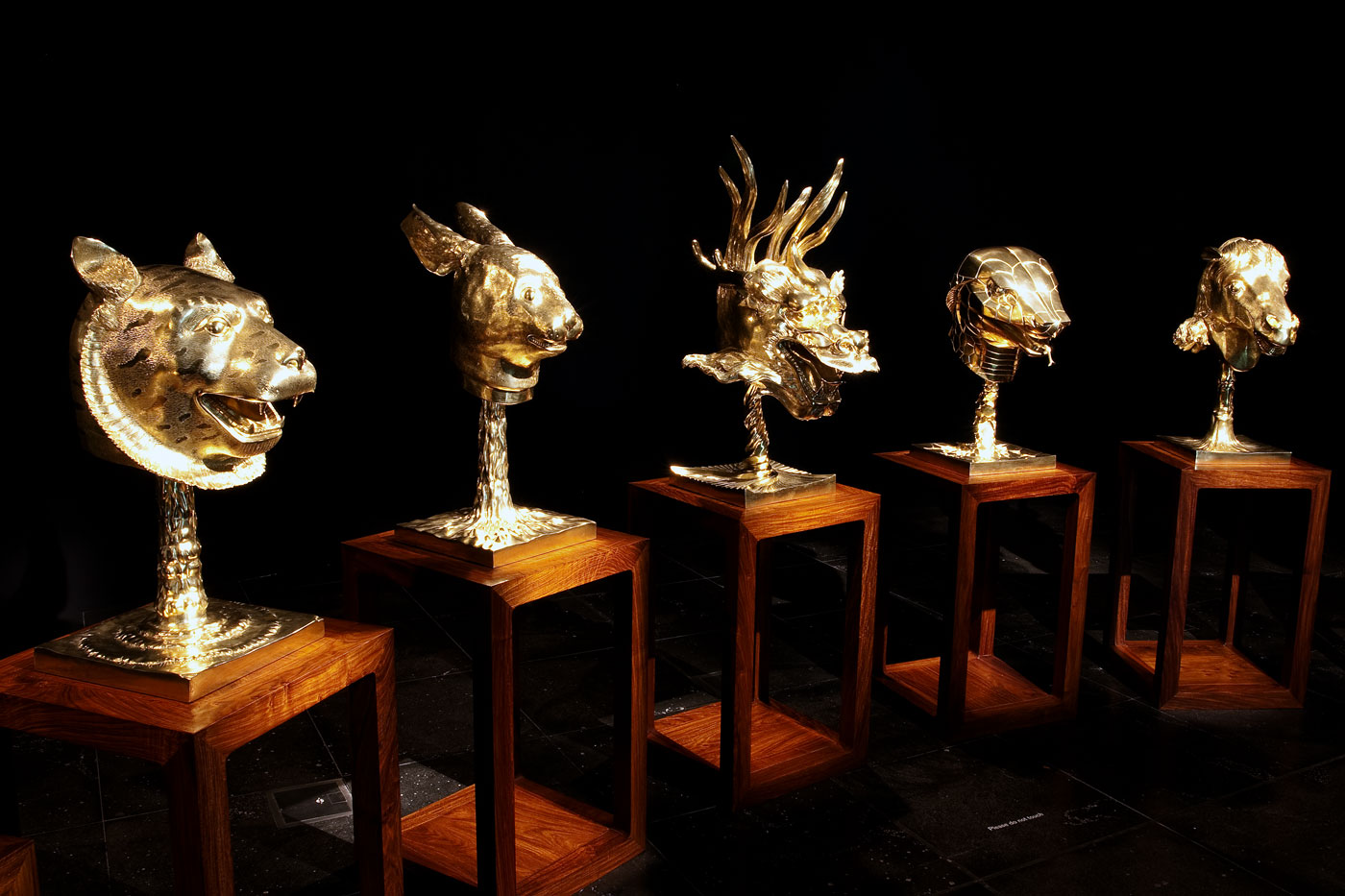
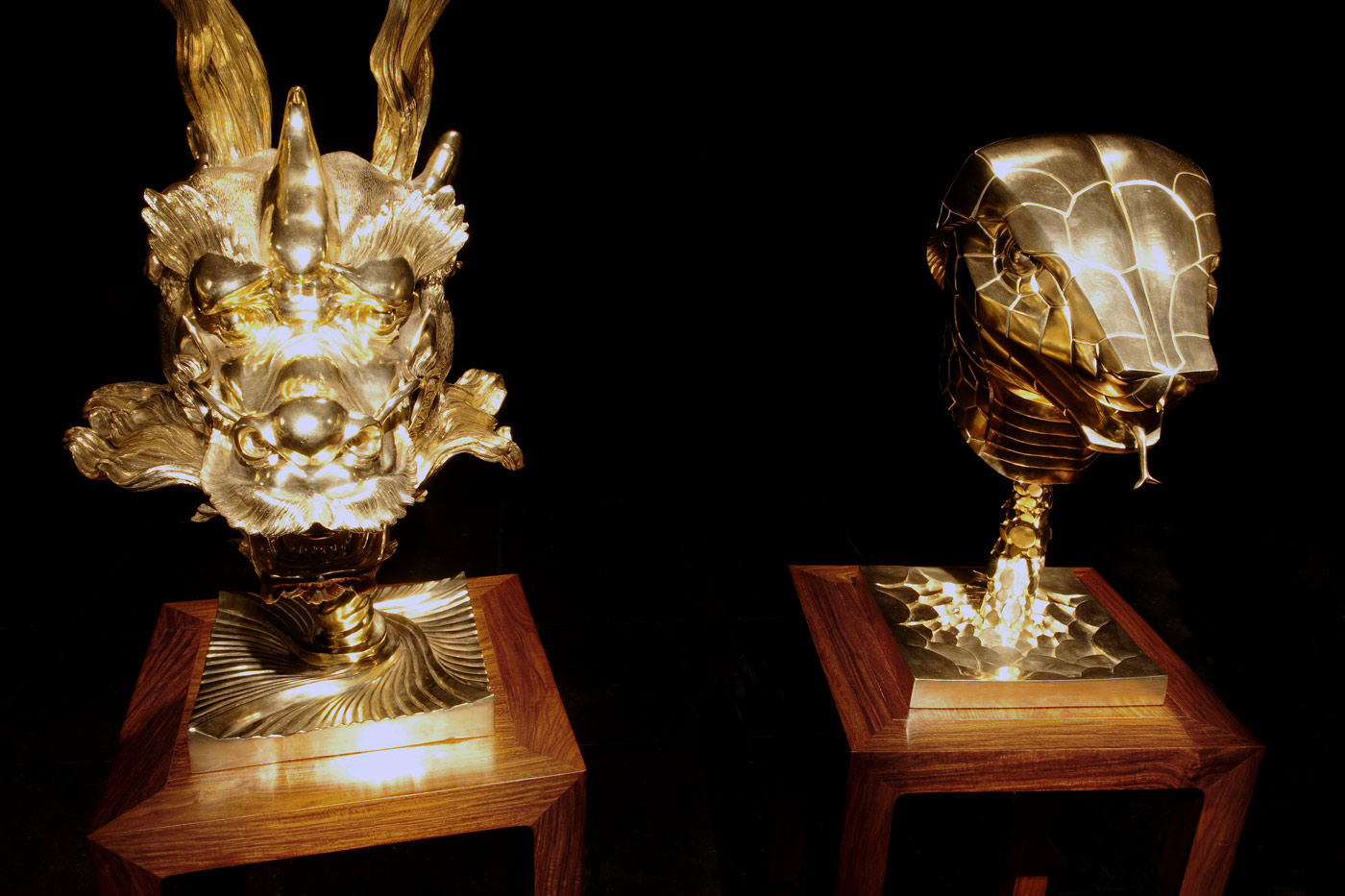
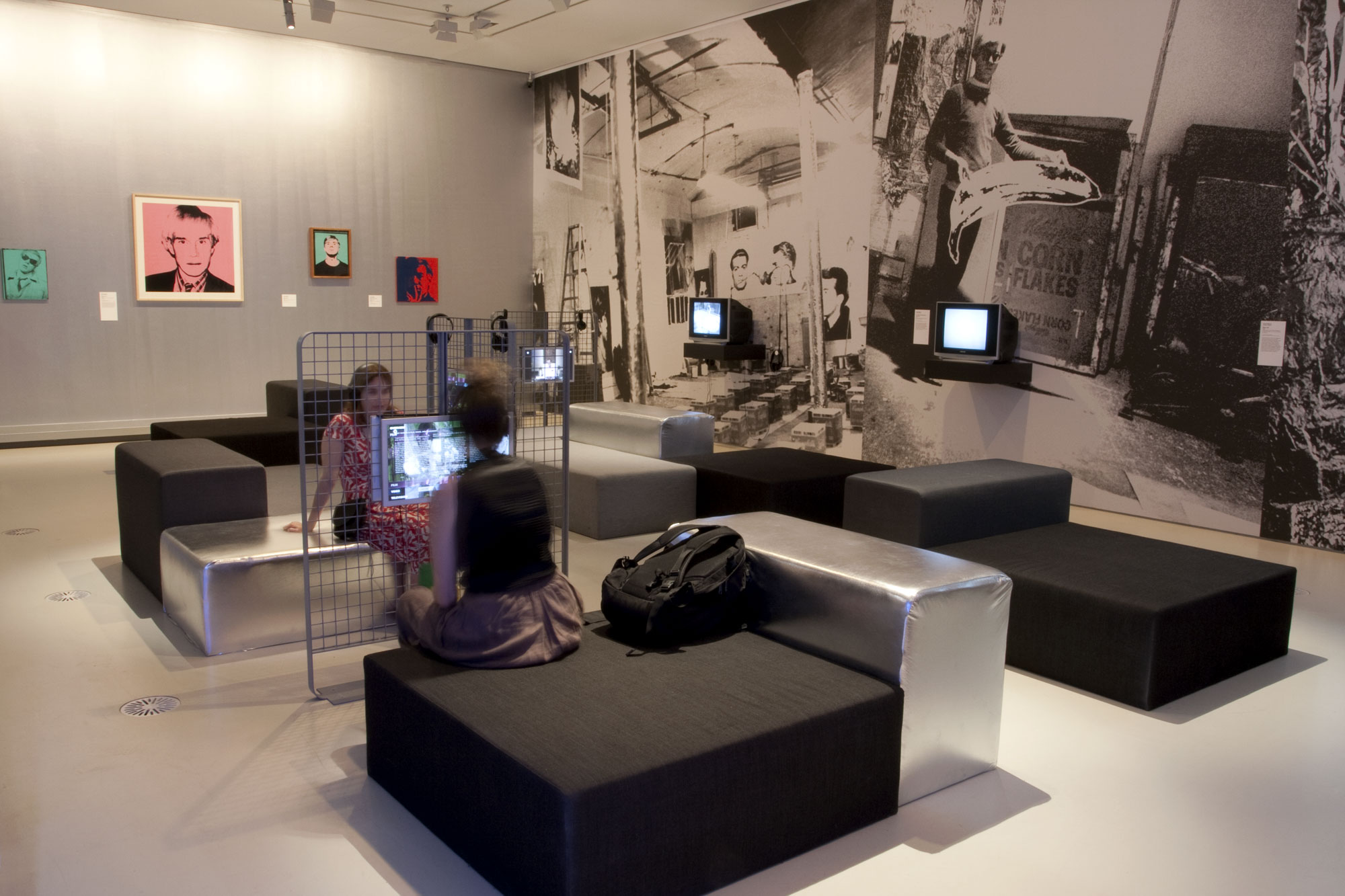
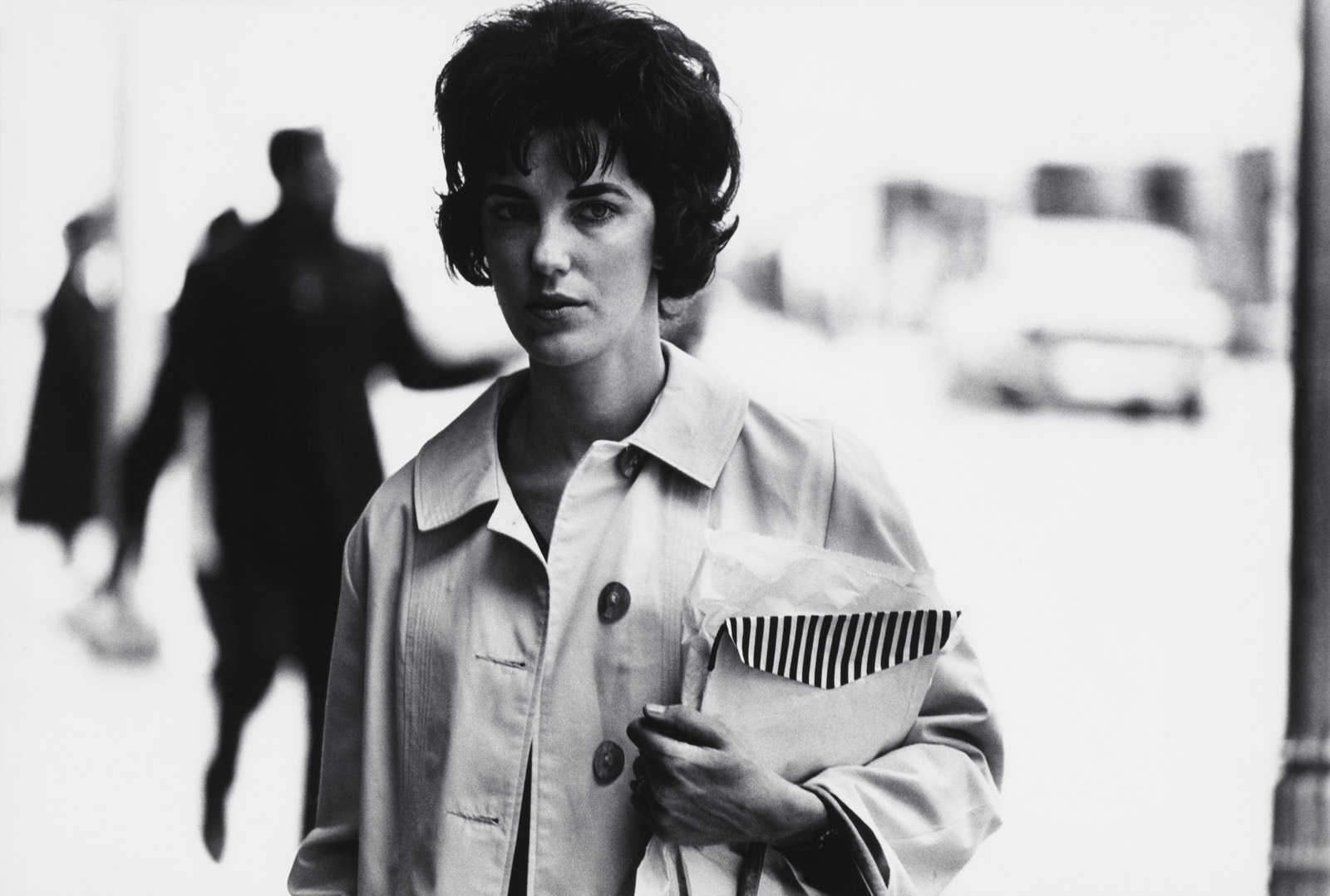
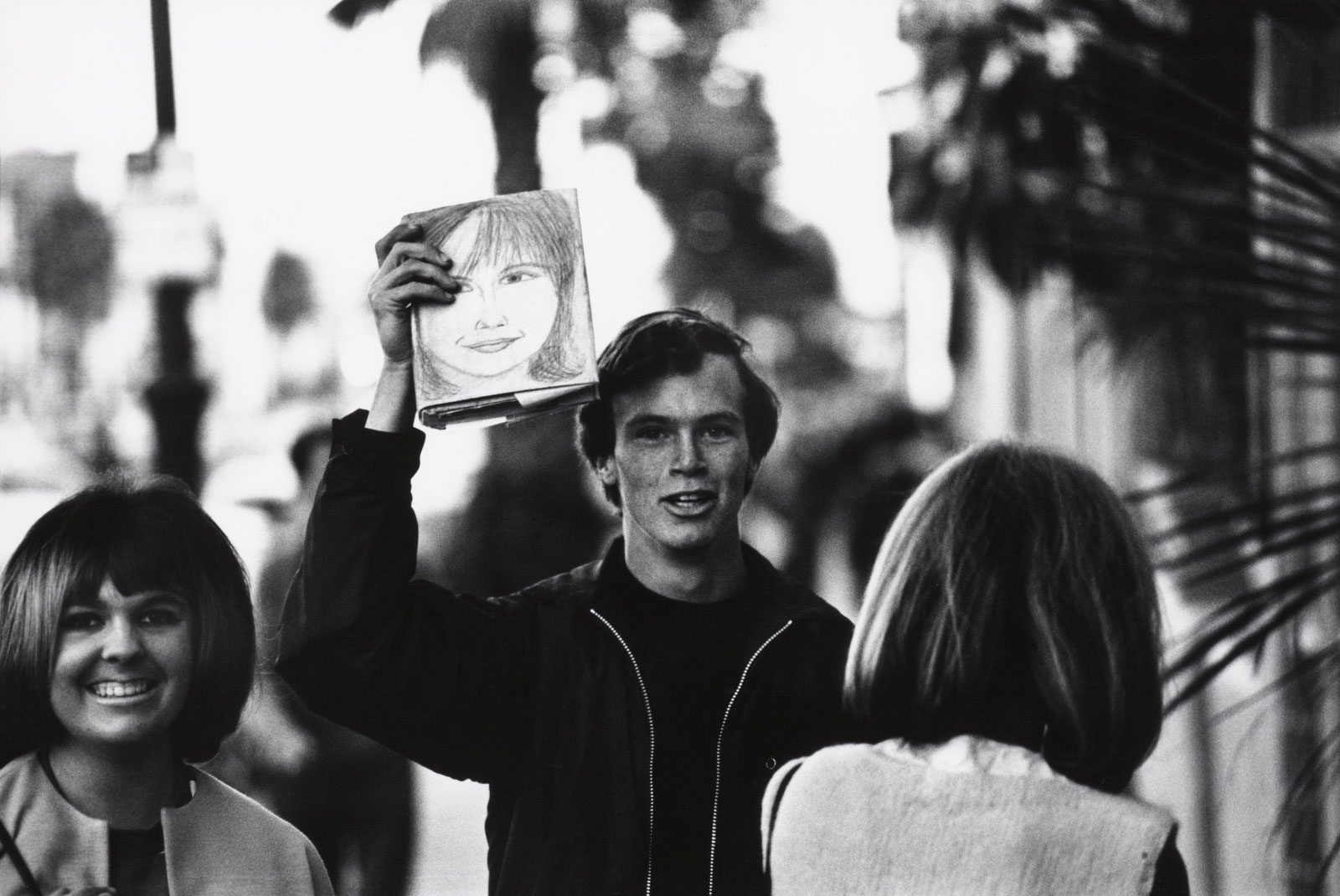
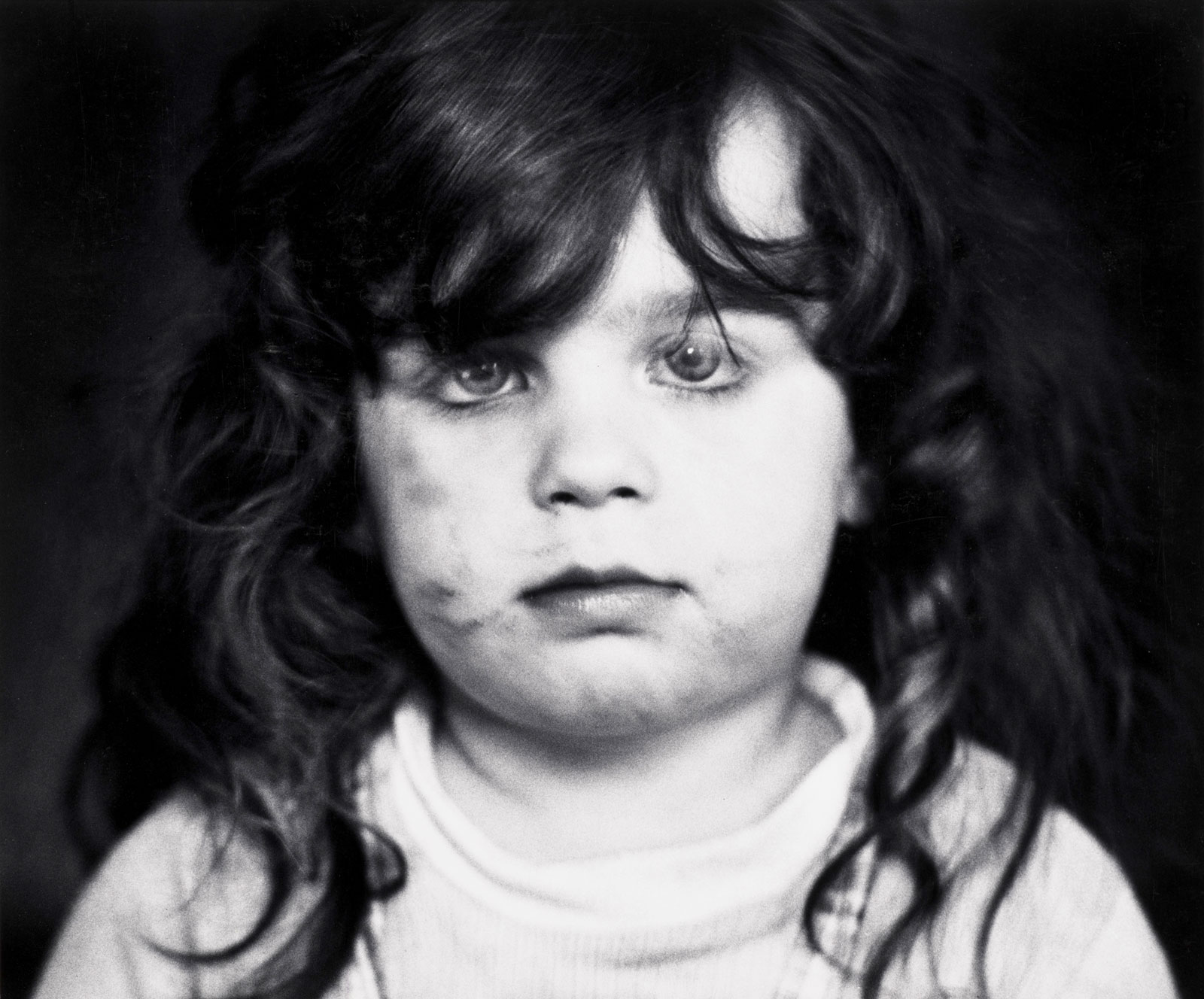
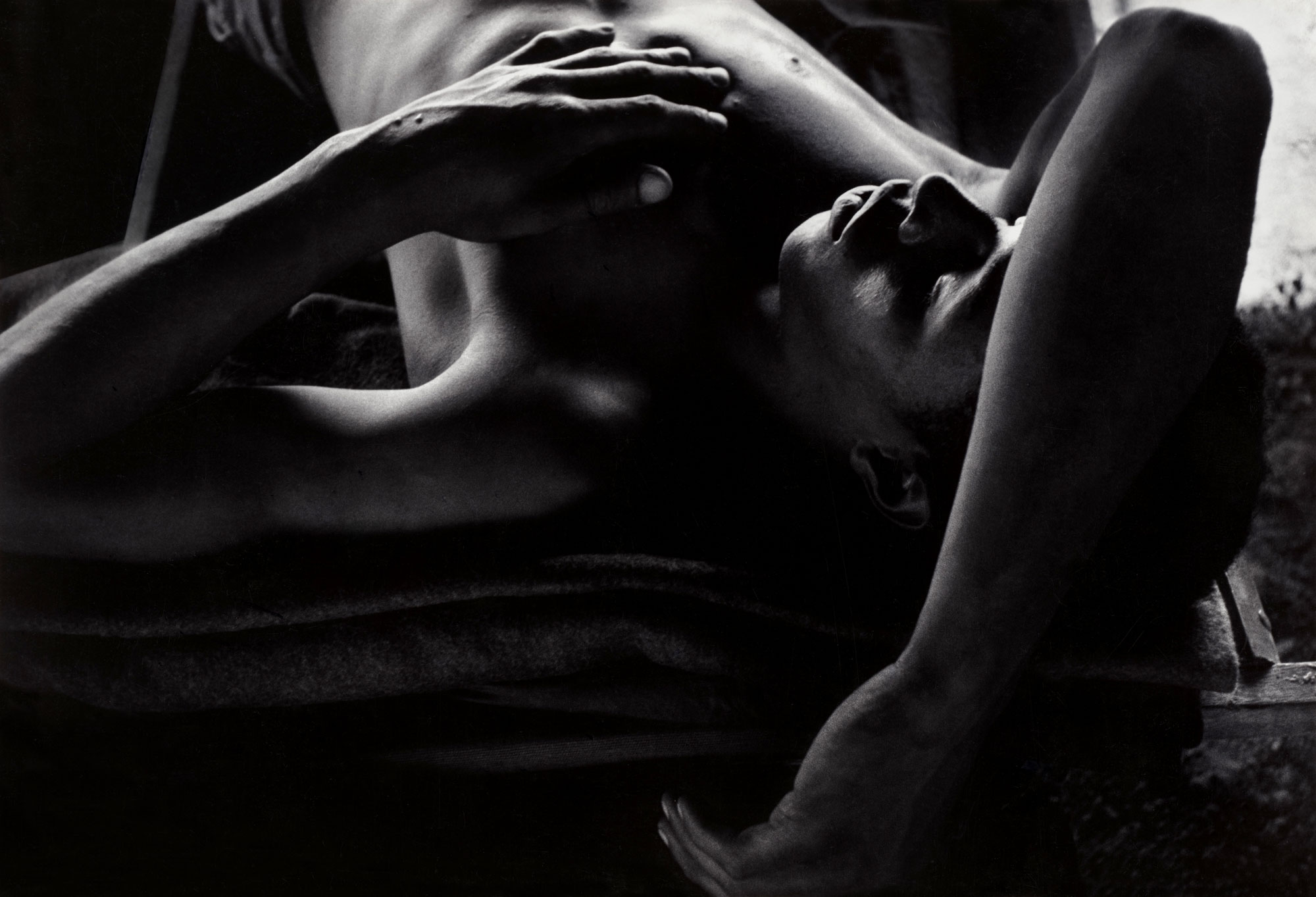
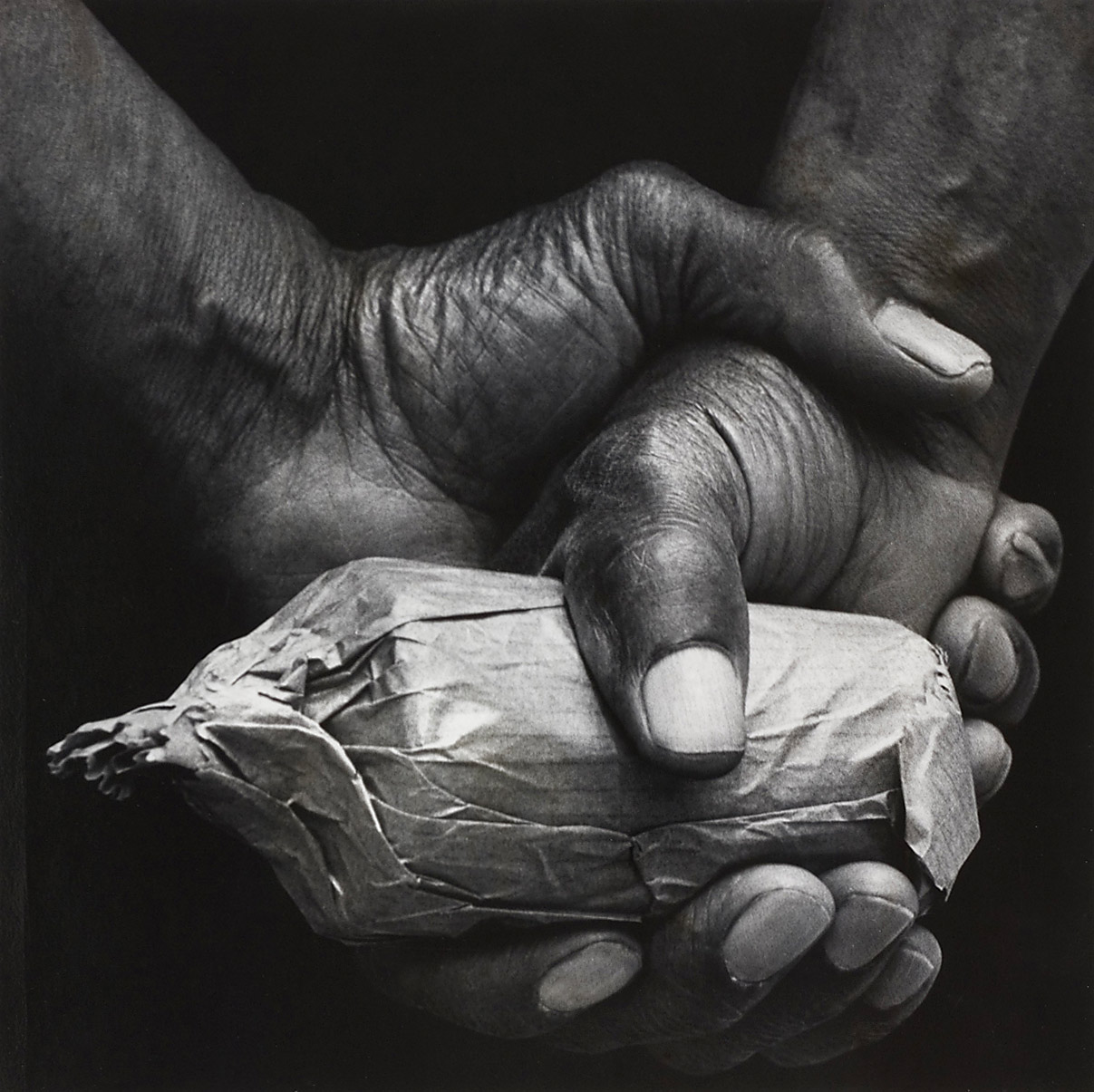
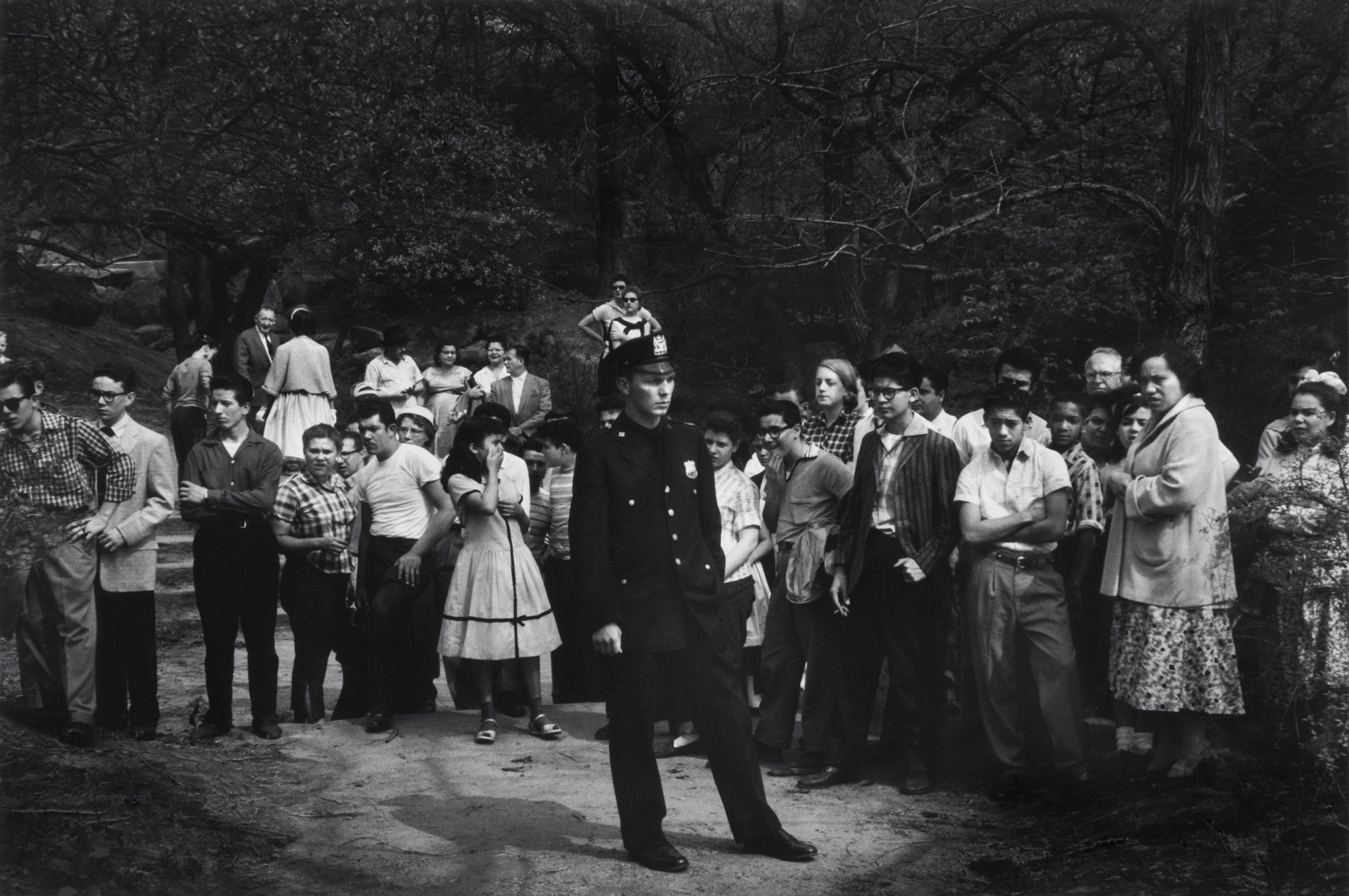
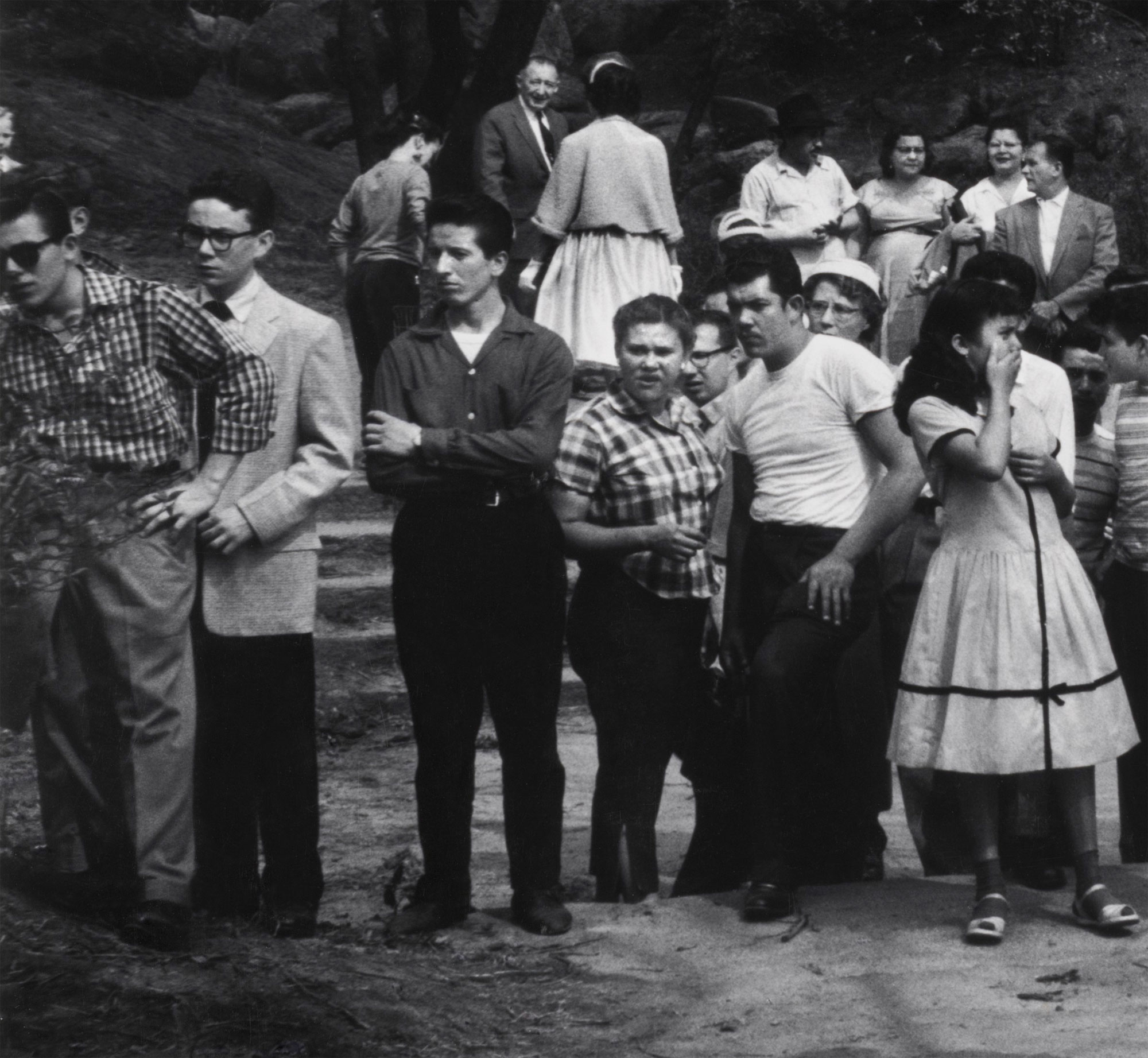
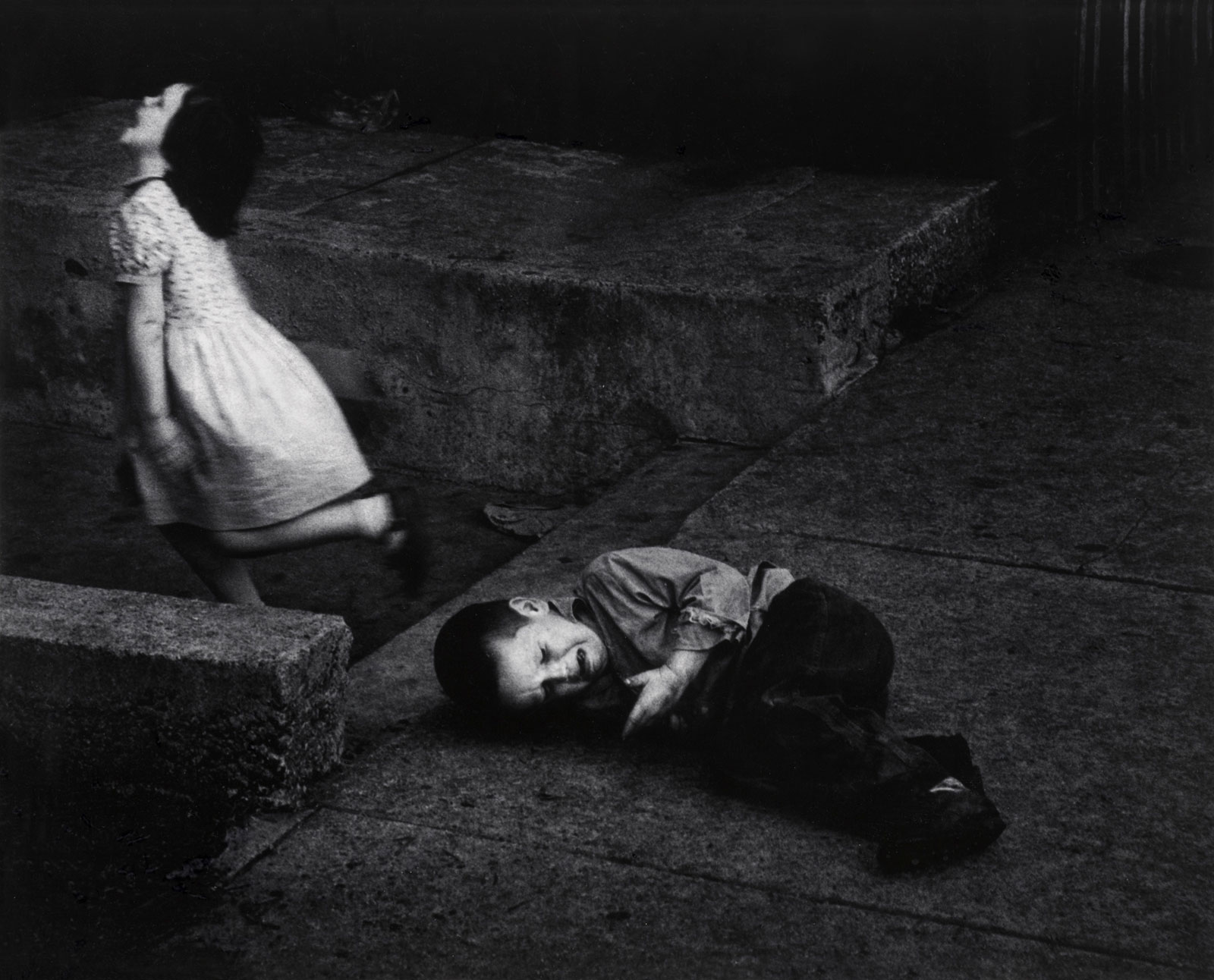
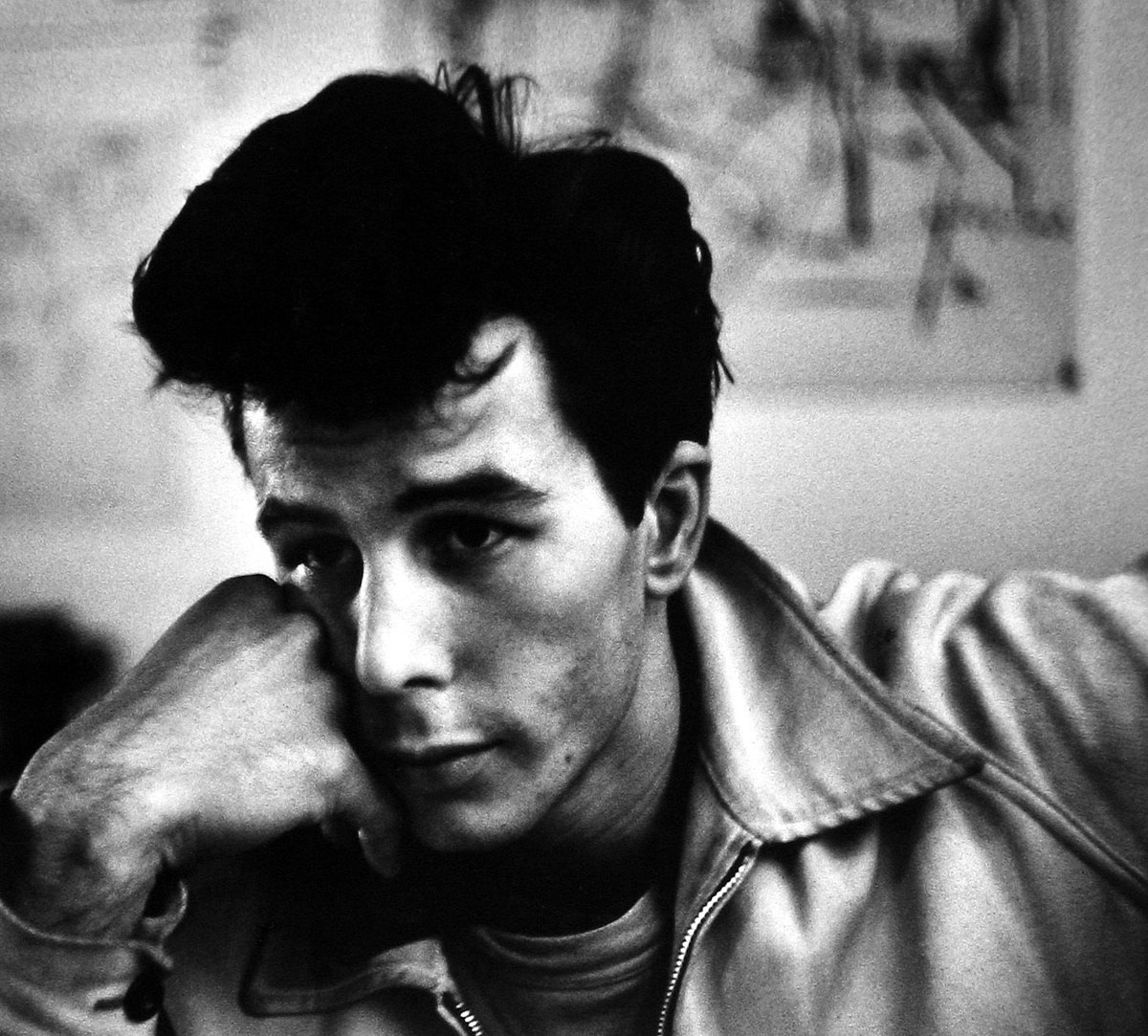
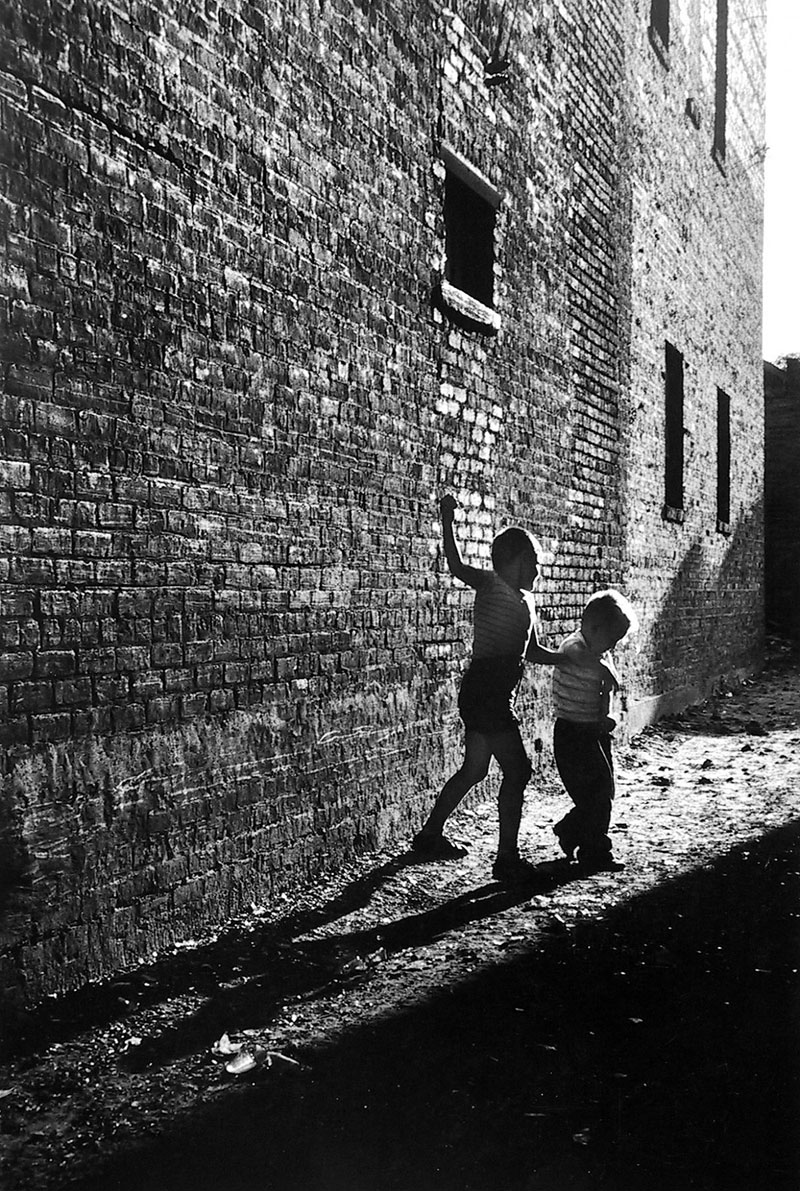
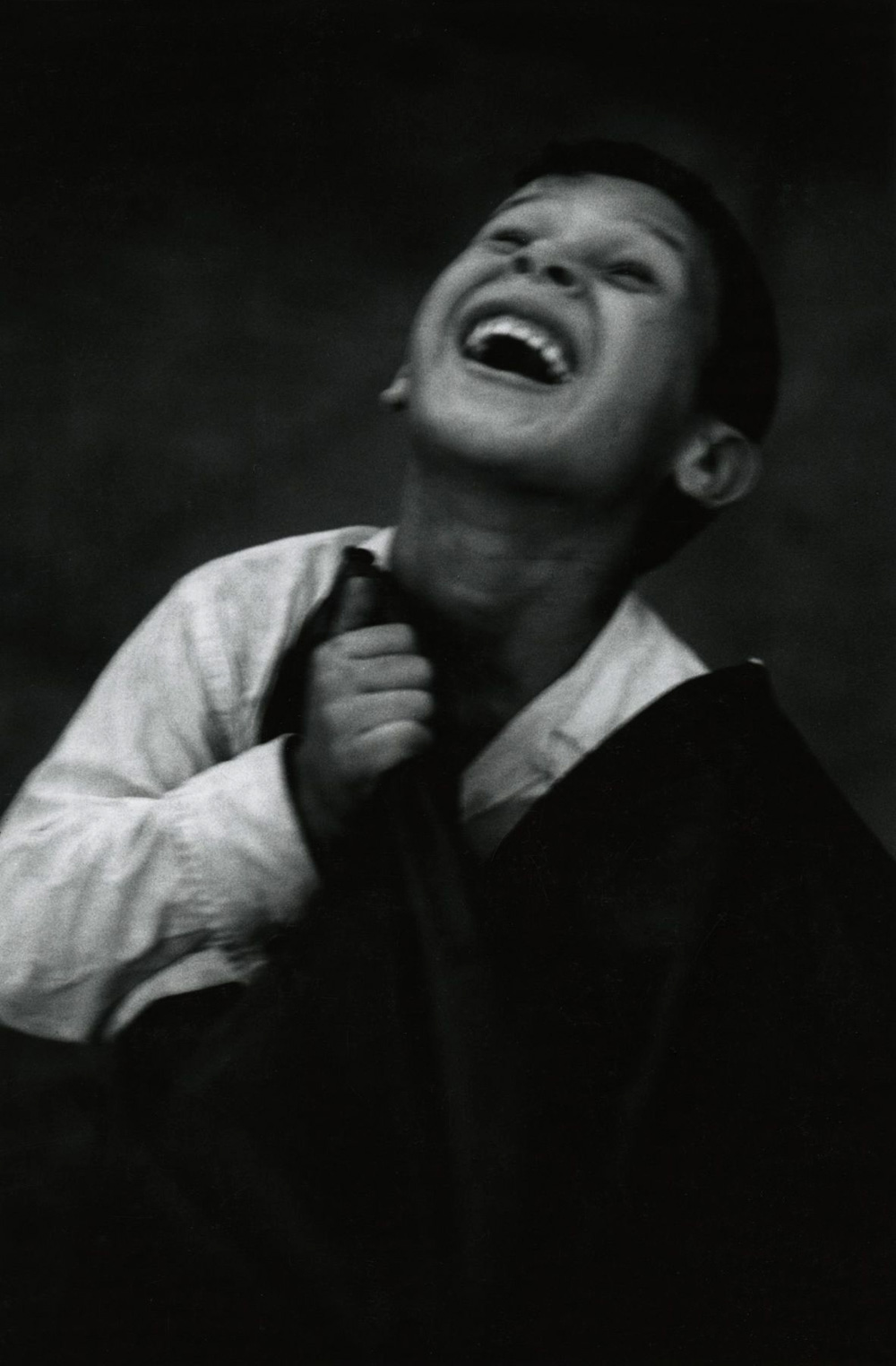
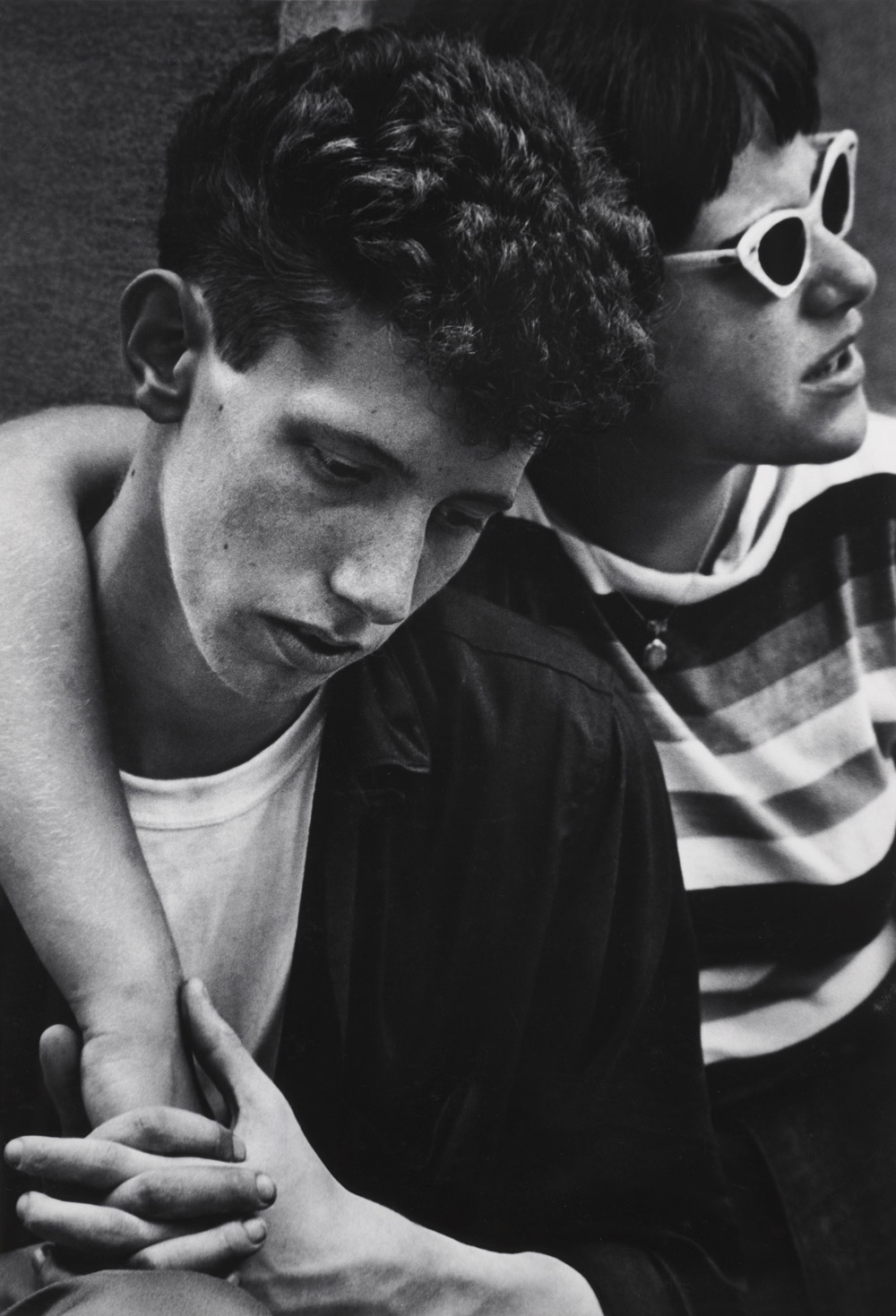
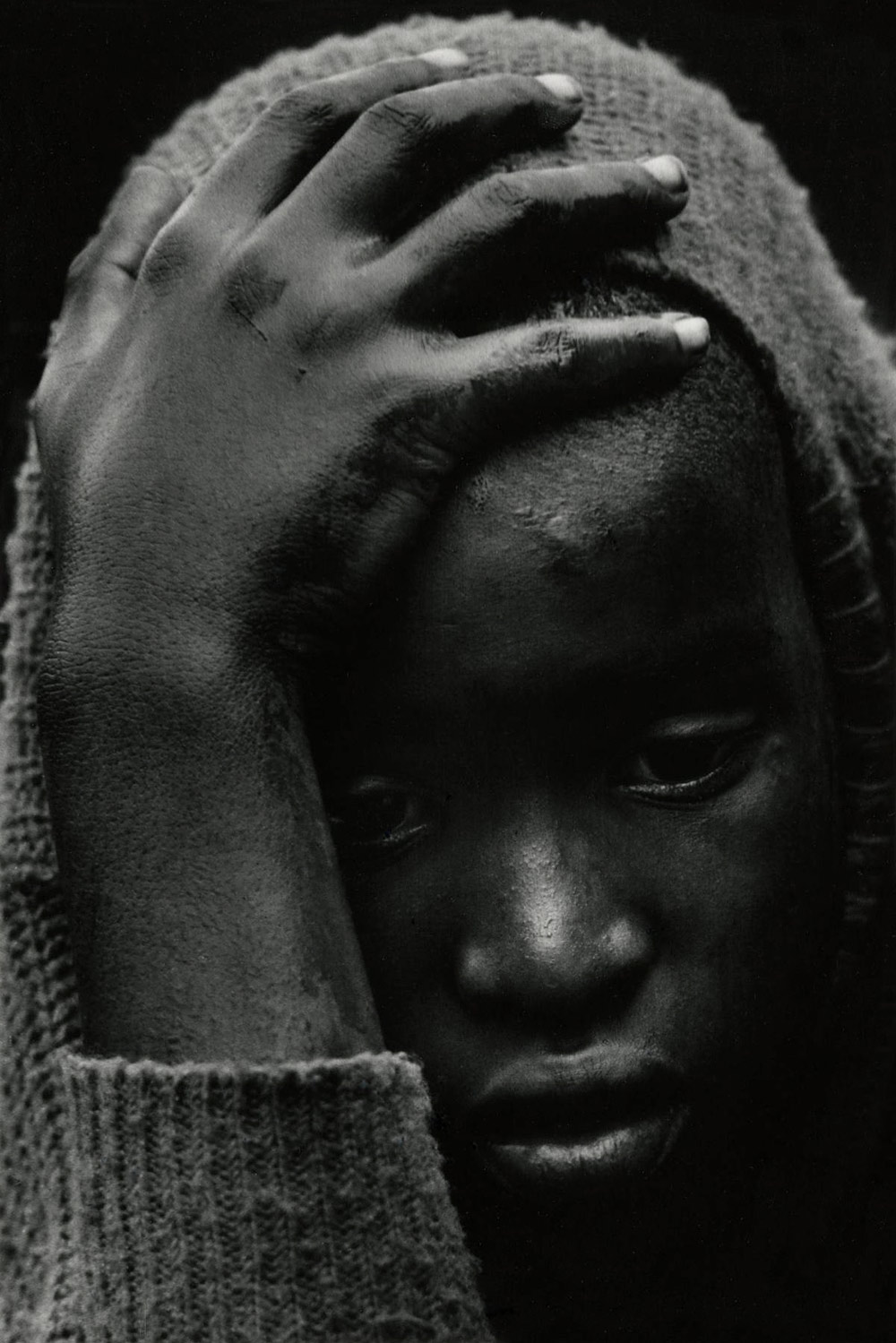
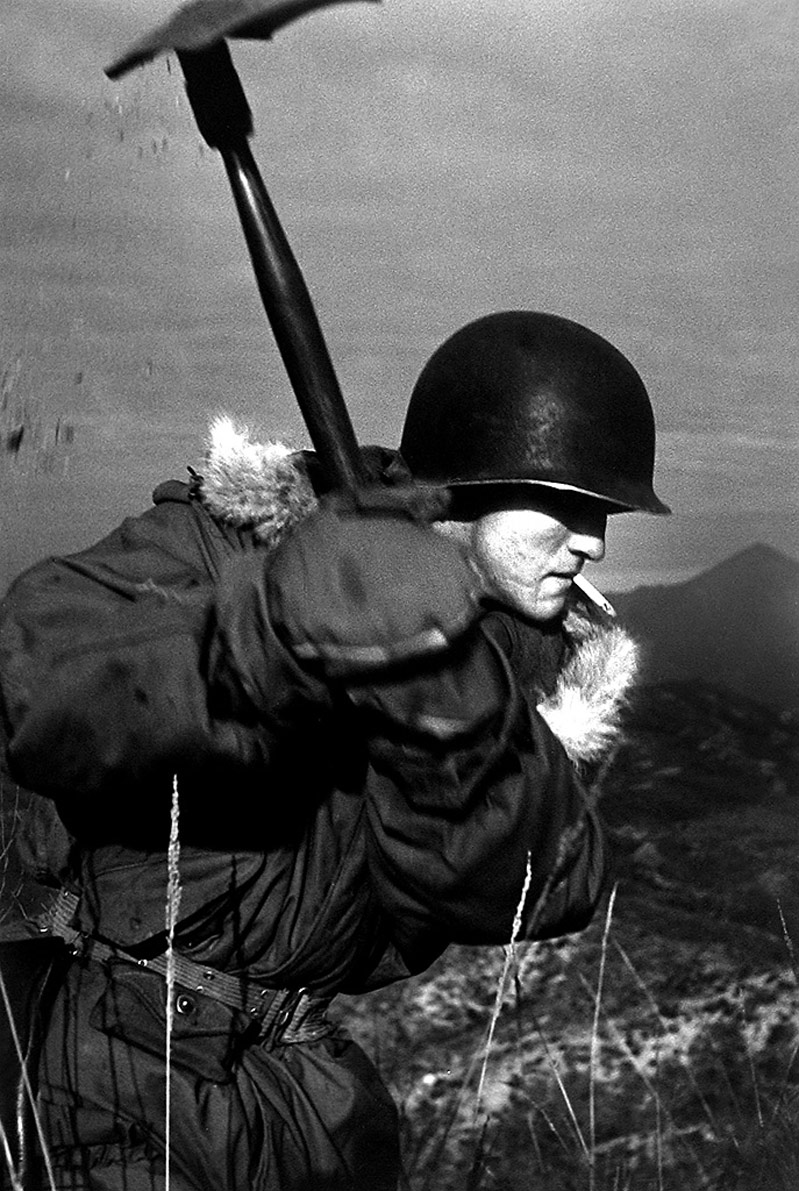


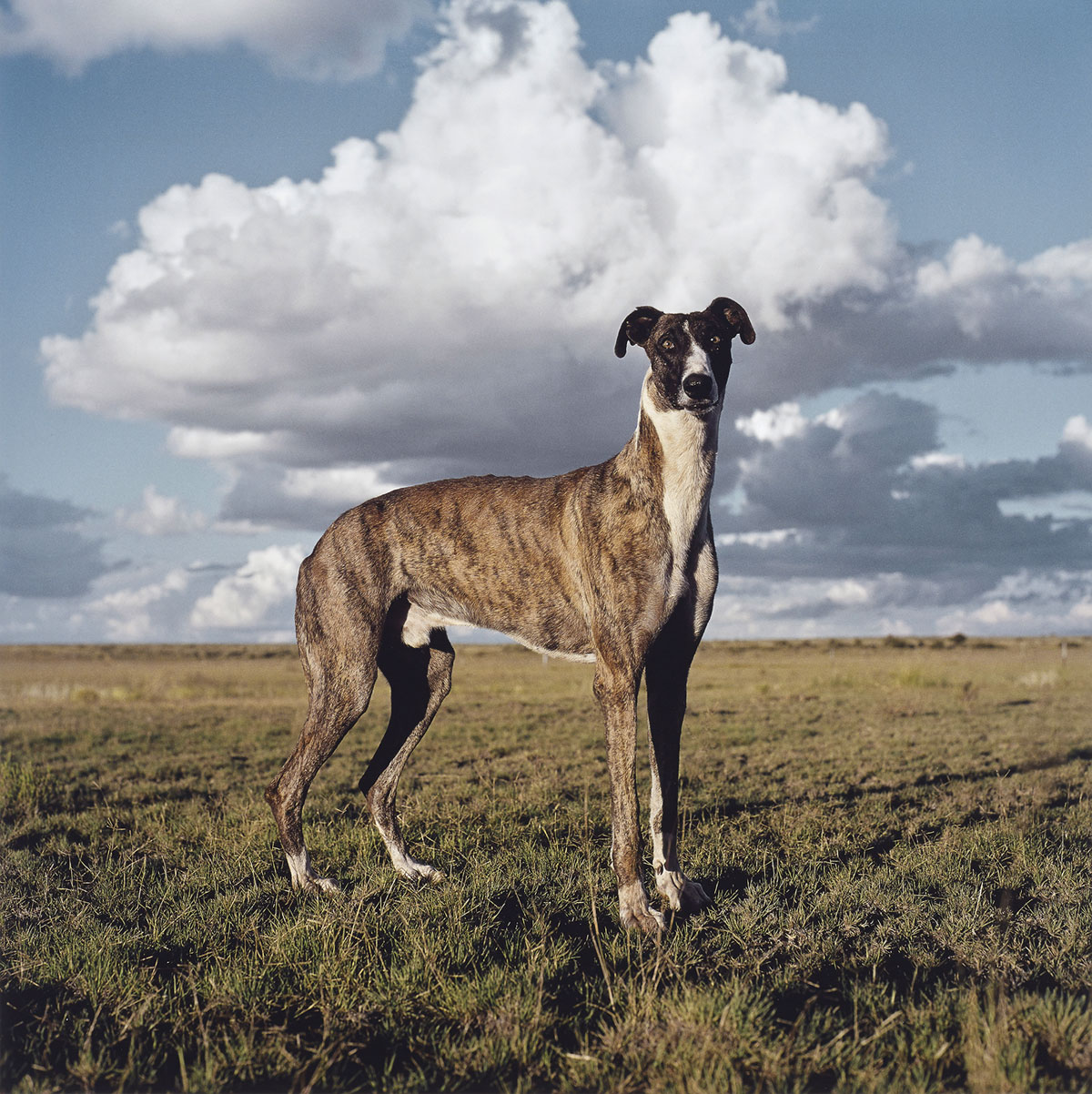
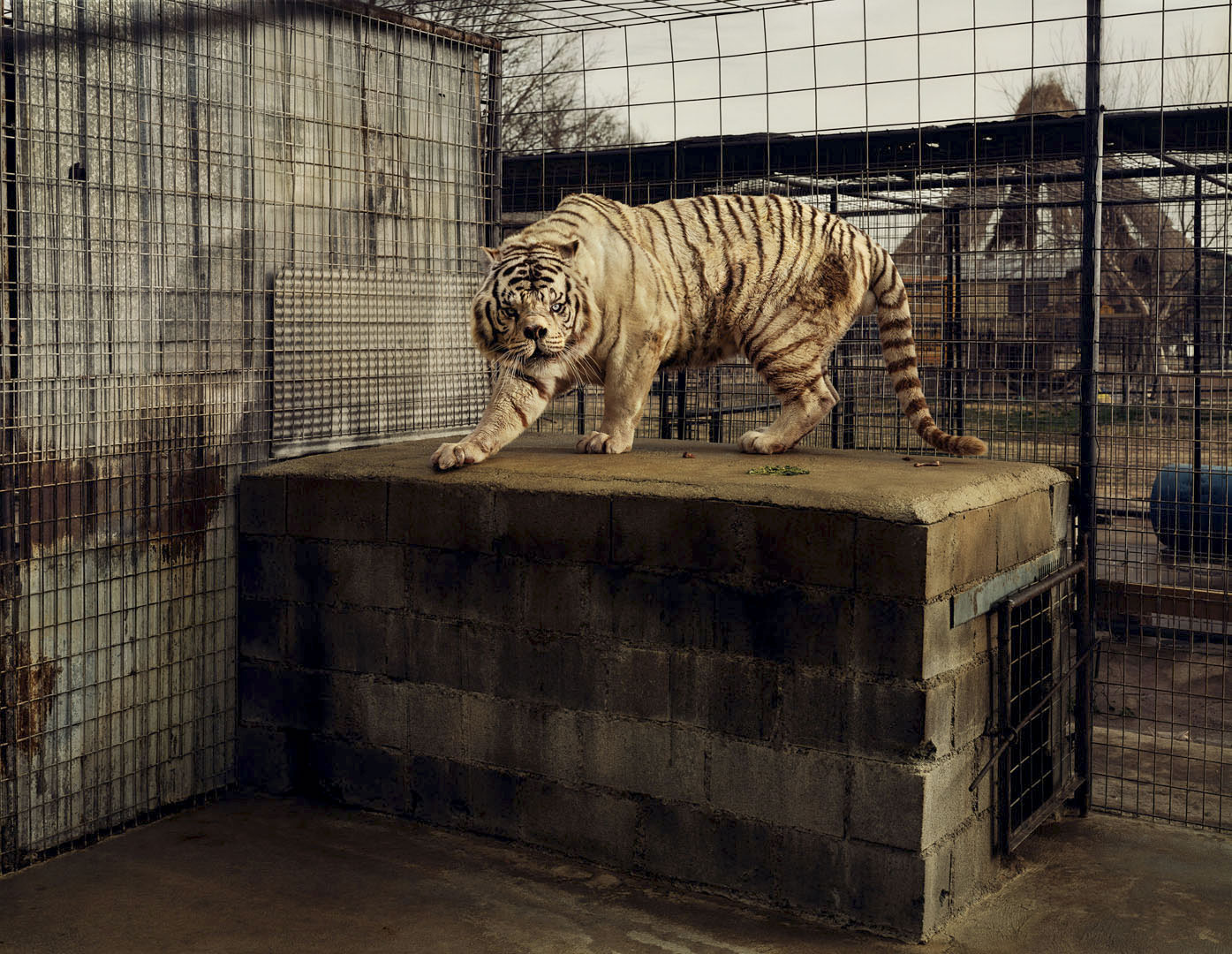
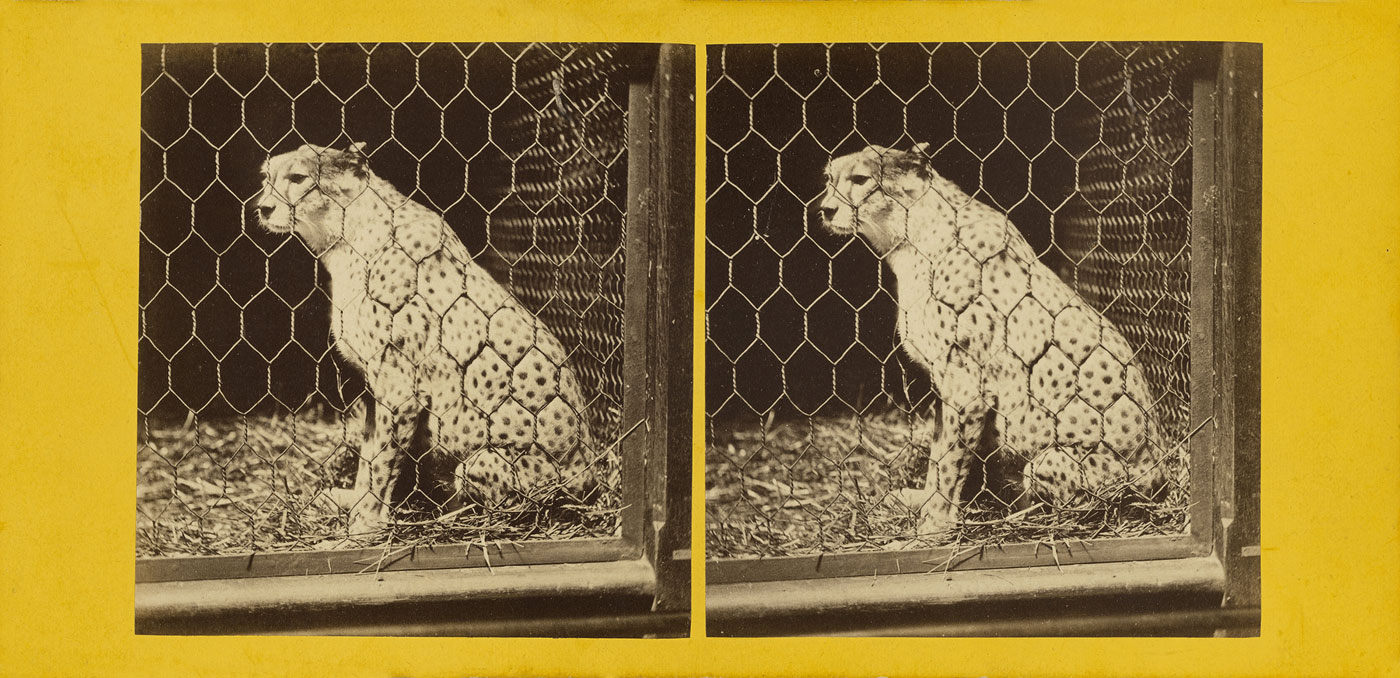
![Capt. Horatio Ross (British, 1801-1886) '[Dead stag in a sling]' c. 1850s - 1860s](https://artblart.com/wp-content/uploads/2015/10/gm_05996801-web.jpg "Capt. Horatio Ross (British, 1801-1886) '[Dead stag in a sling]' c. 1850s - 1860s")
![Capt. Horatio Ross (British, 1801-1886) '[Dead stag in a sling]' c. 1850s - 1860s (detail)](https://artblart.com/wp-content/uploads/2015/10/gm_05996801-detail.jpg "Capt. Horatio Ross (British, 1801-1886) '[Dead stag in a sling]' c. 1850s - 1860s (detail)")
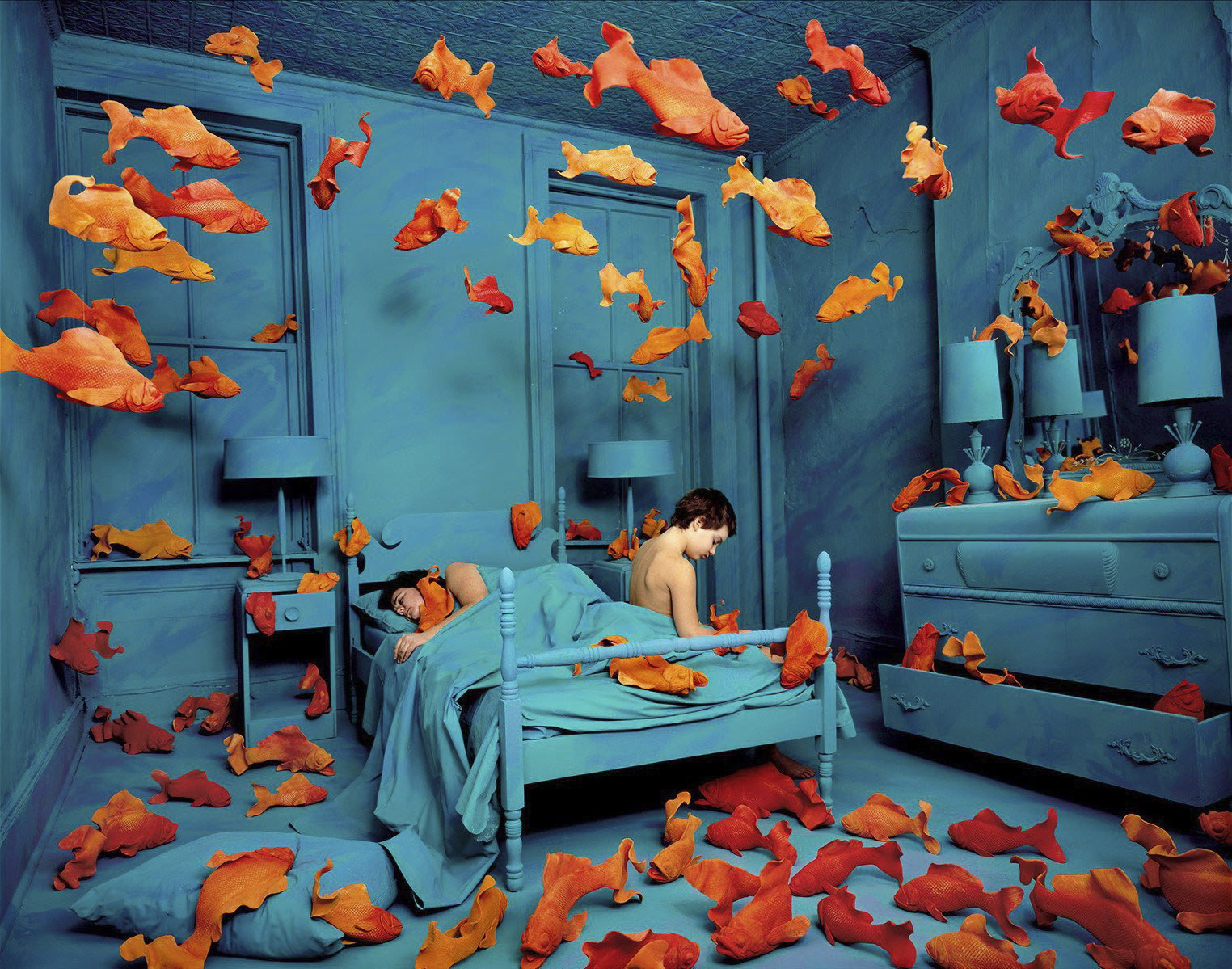
![André Kertész (American born Hungary, 1894-1985) '[Wooden Mouse and Duck]' 1929](https://artblart.com/wp-content/uploads/2015/10/gm_04006701-web.jpg "André Kertész (American born Hungary, 1894-1985) '[Wooden Mouse and Duck]' 1929")
![Unknown maker (American) '[Dog sitting on a table]' c. 1854](https://artblart.com/wp-content/uploads/2015/10/gm_05620501-web.jpg "Unknown maker (American) '[Dog sitting on a table]' c. 1854")
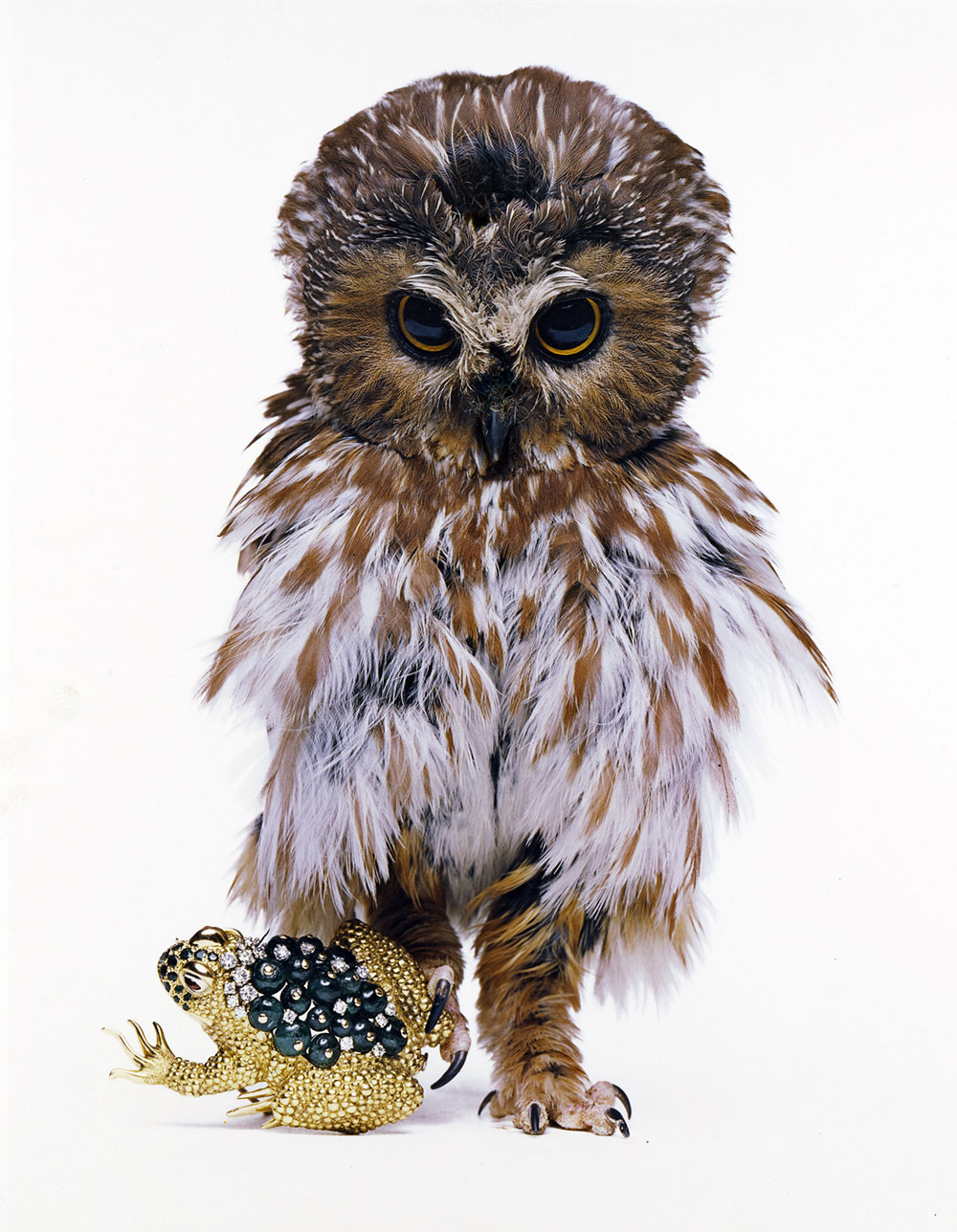
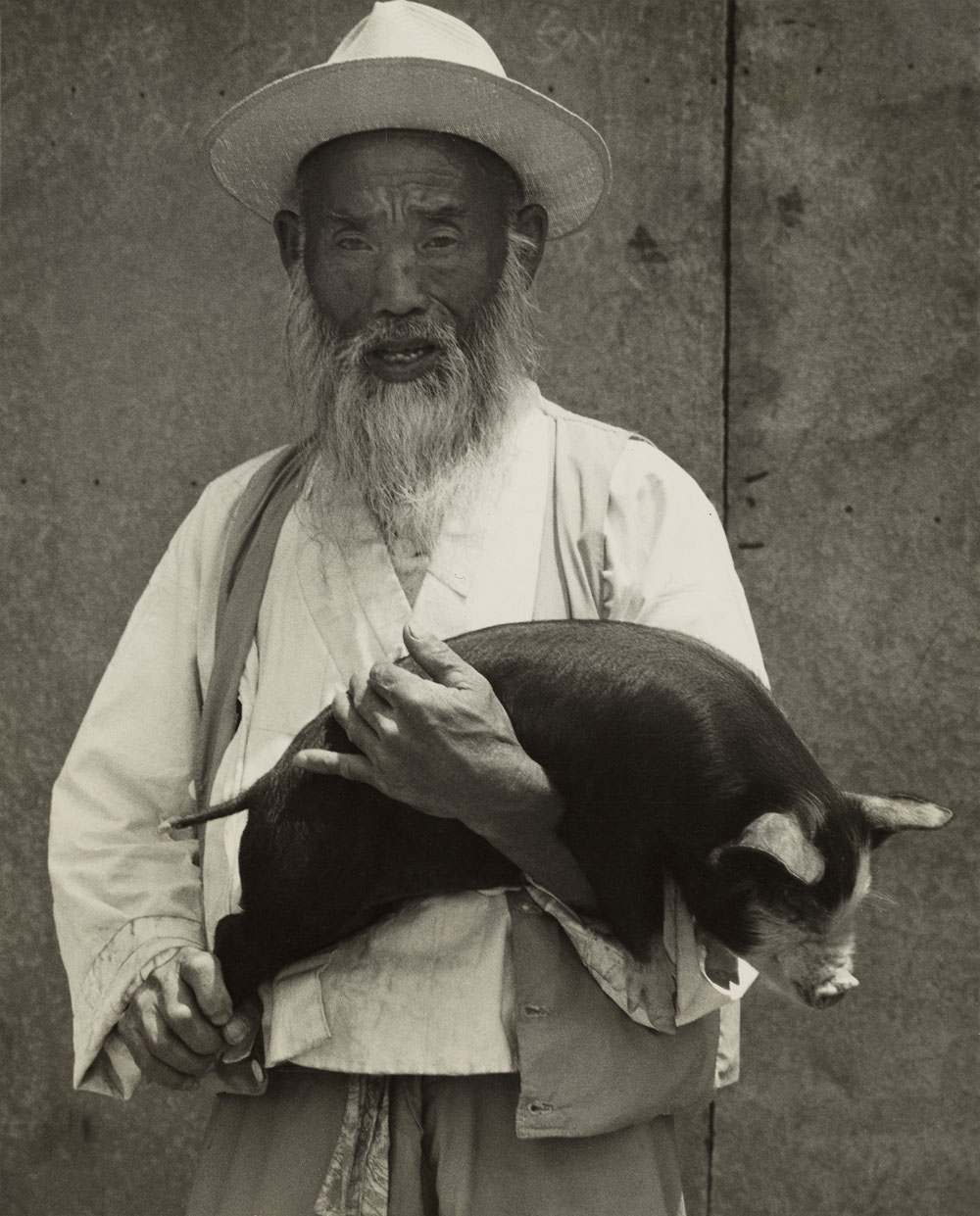
![William Wegman (American, b. 1943) 'In the Box/Out of the Box [right]' 1971](https://artblart.com/wp-content/uploads/2015/10/gm_32612201-web.jpg "William Wegman (American, b. 1943) 'In the Box/Out of the Box [right]' 1971")
![William Wegman (American, b. 1943) 'In the Box/Out of the Box [left]' 1971](https://artblart.com/wp-content/uploads/2015/10/gm_32612101-web.jpg "William Wegman (American, b. 1943) 'In the Box/Out of the Box [left]' 1971")

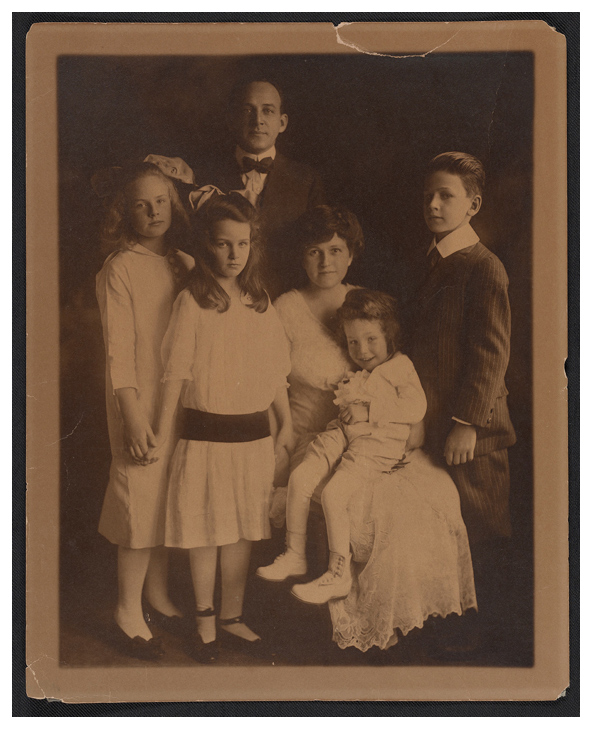
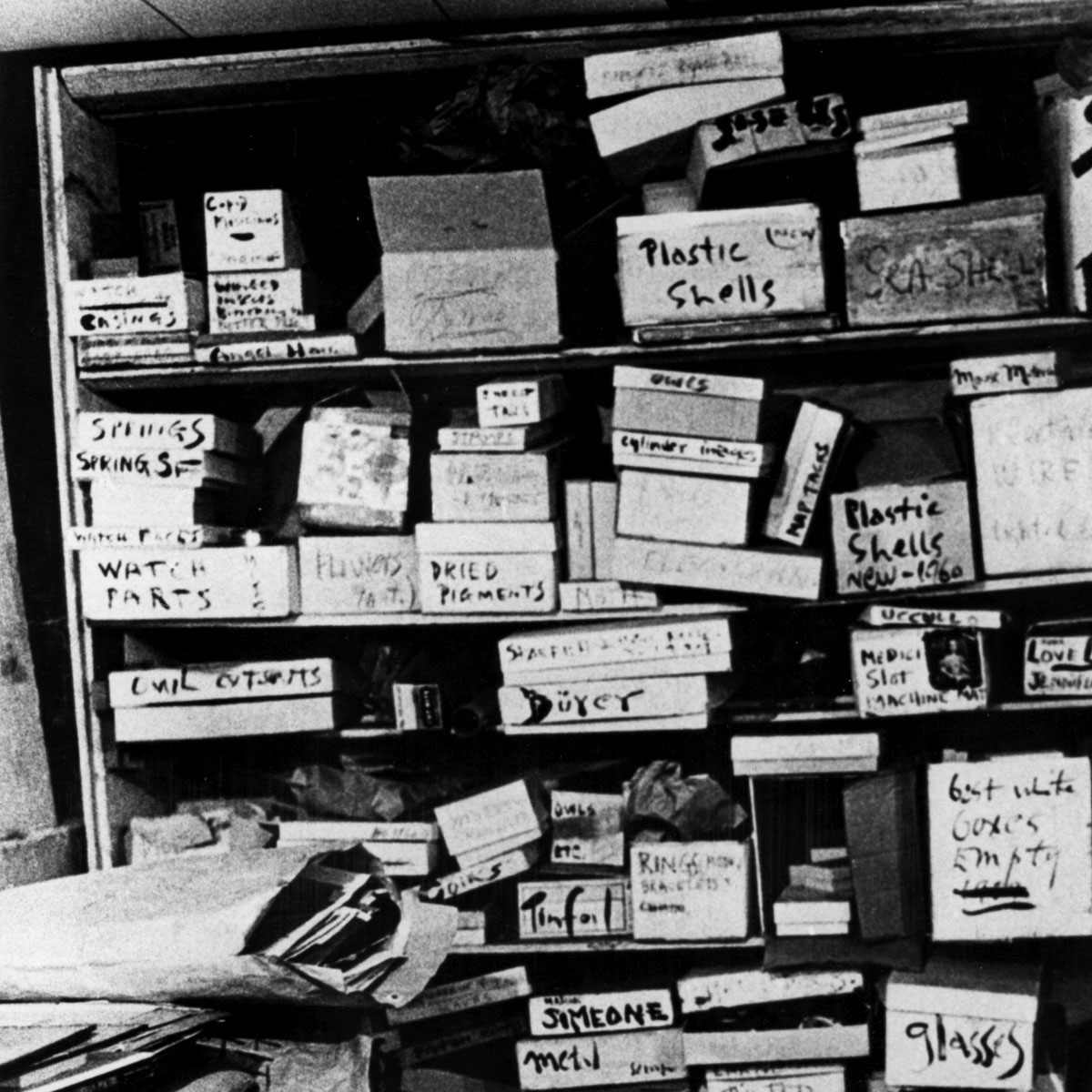


![Joseph Cornell (American, 1903-1972) 'Untitled [Sagittarius, Scorpio, and Lupus Constellations]' c.1934](https://artblart.com/wp-content/uploads/2015/09/joseph-cornell-untitled-c-1934-web.jpg "Joseph Cornell (American, 1903-1972) 'Untitled [Sagittarius, Scorpio, and Lupus Constellations]' c.1934")


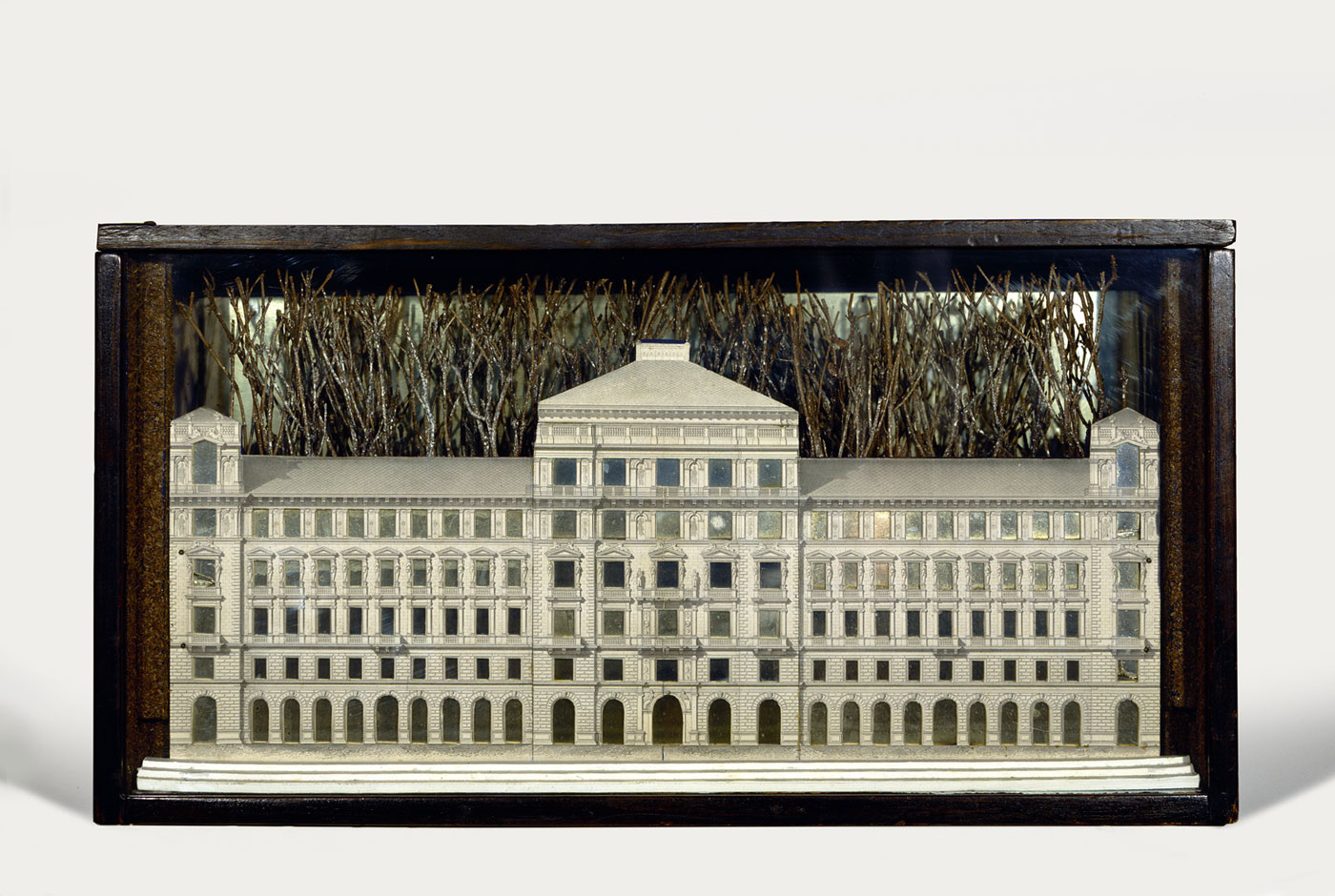


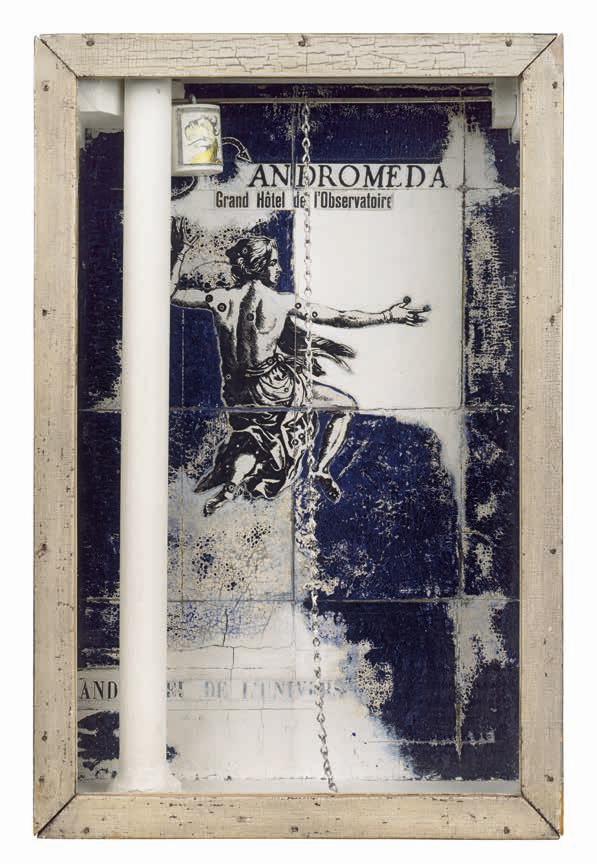

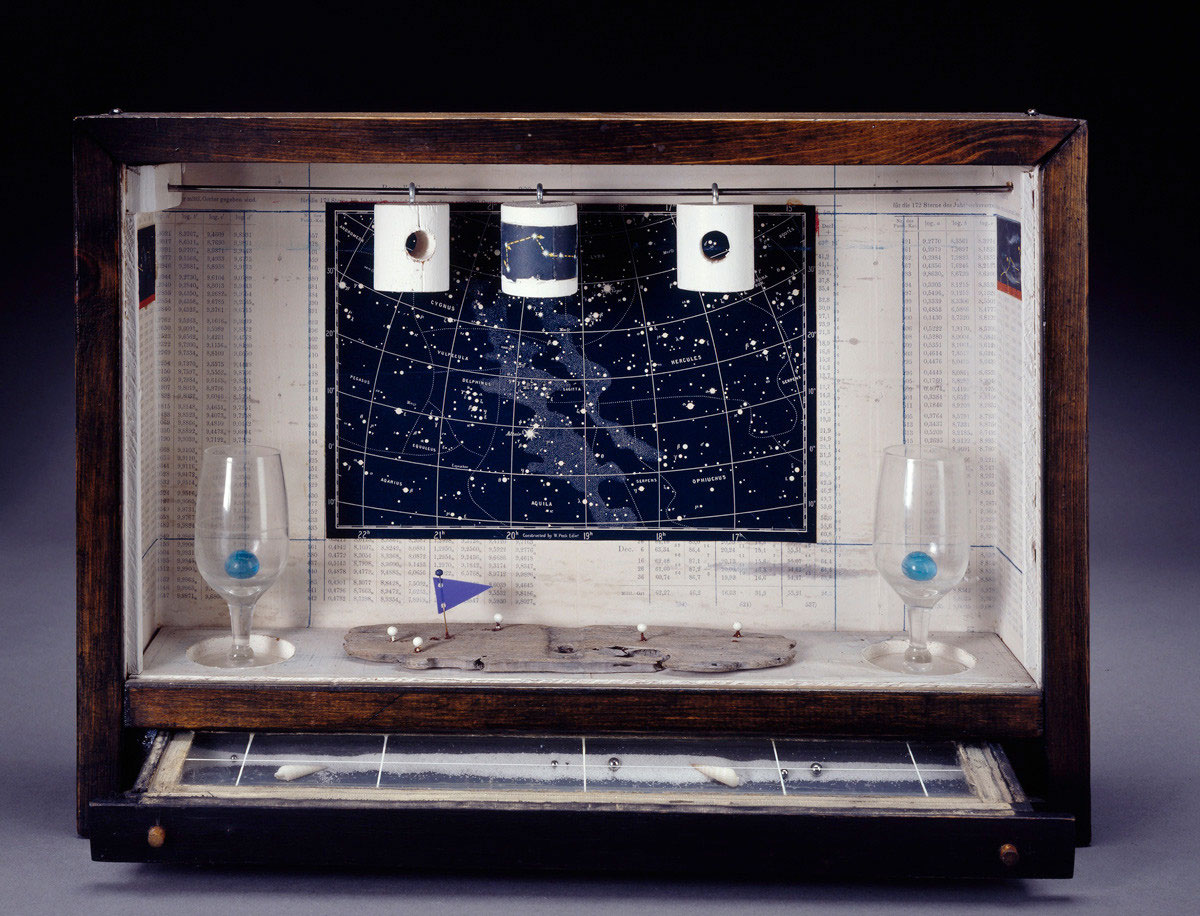


 Art Blart _ art and cultural memory archive
You must be logged in to post a comment.