Exhibition: ‘Robert Mapplethorpe’ at the Grand Palais, Paris

Exhibition dates: 26th March – 13th July 2014

Grand Palais
Galerie sud-est, entrée avenue Winston Churchill


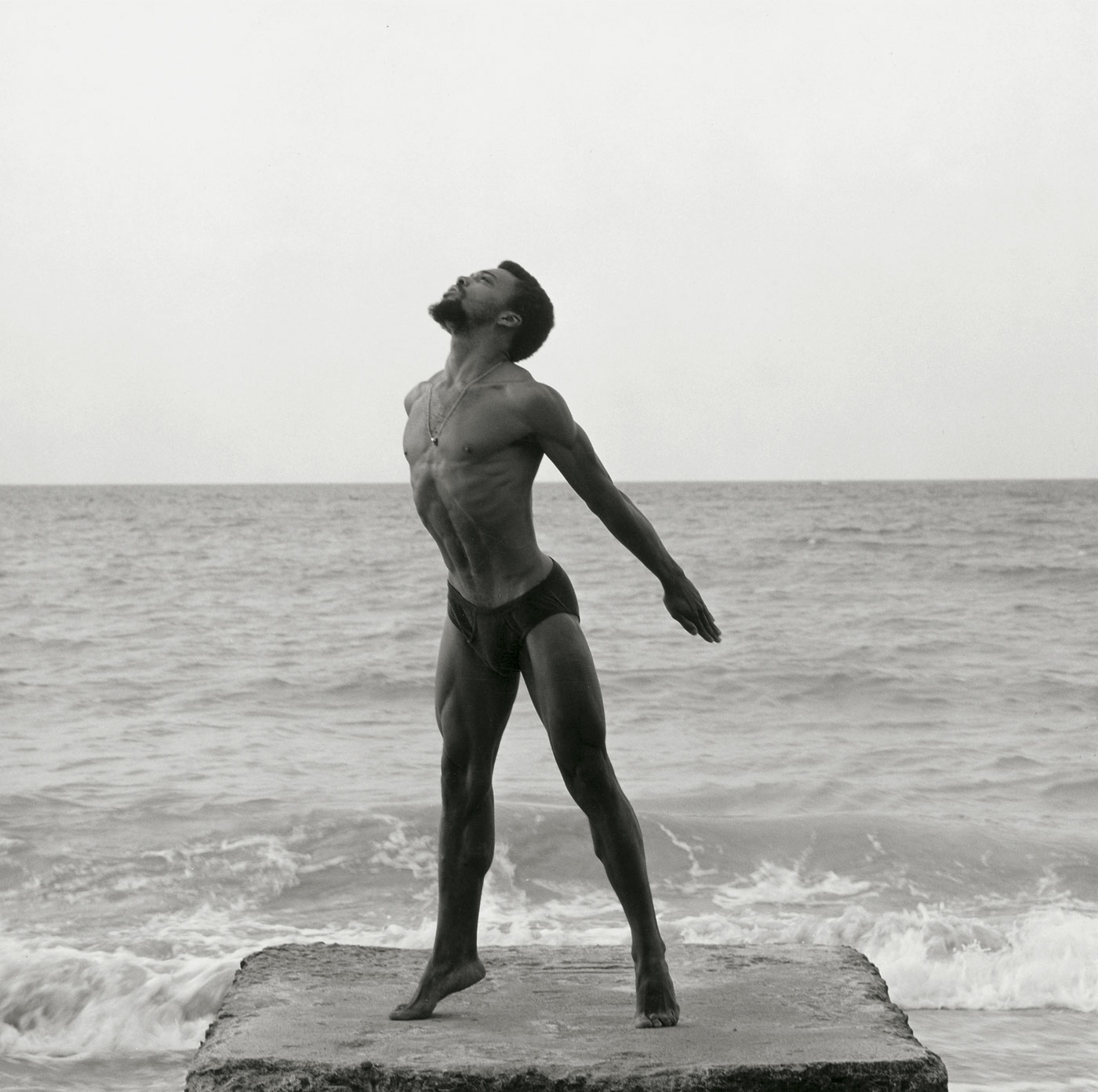
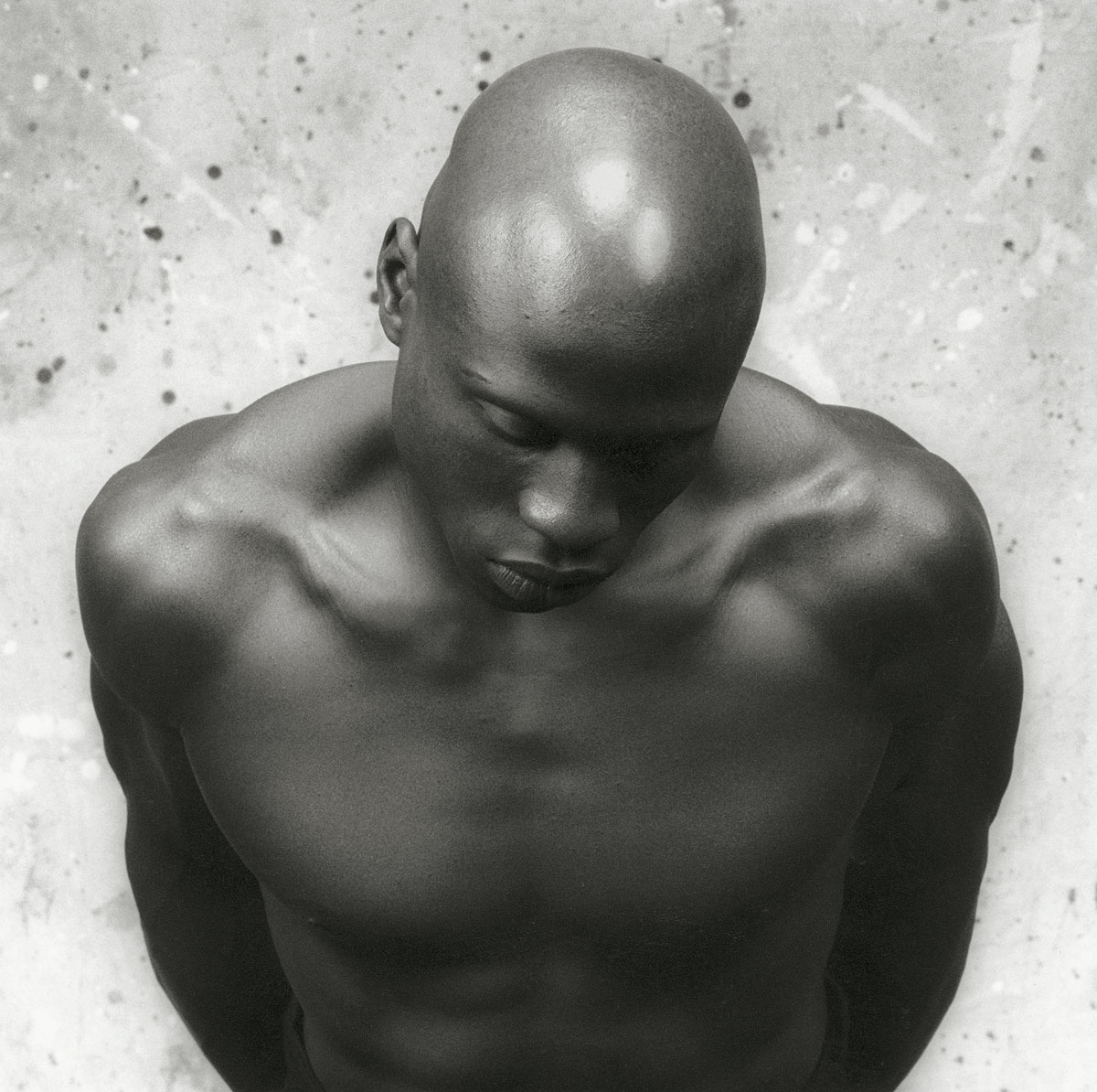
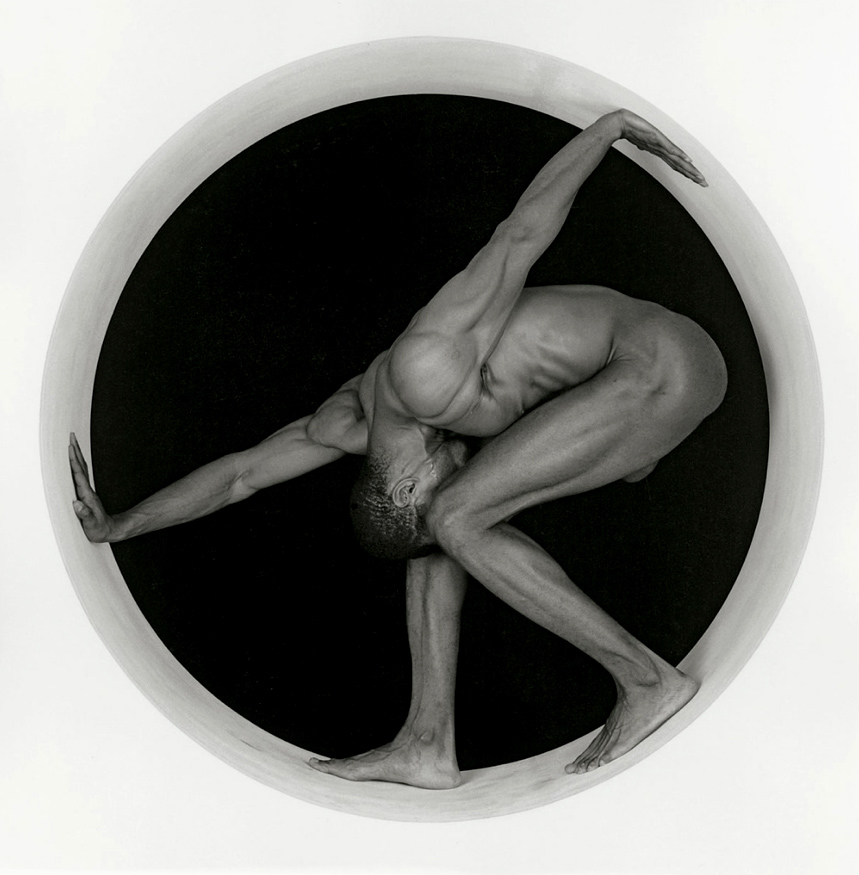
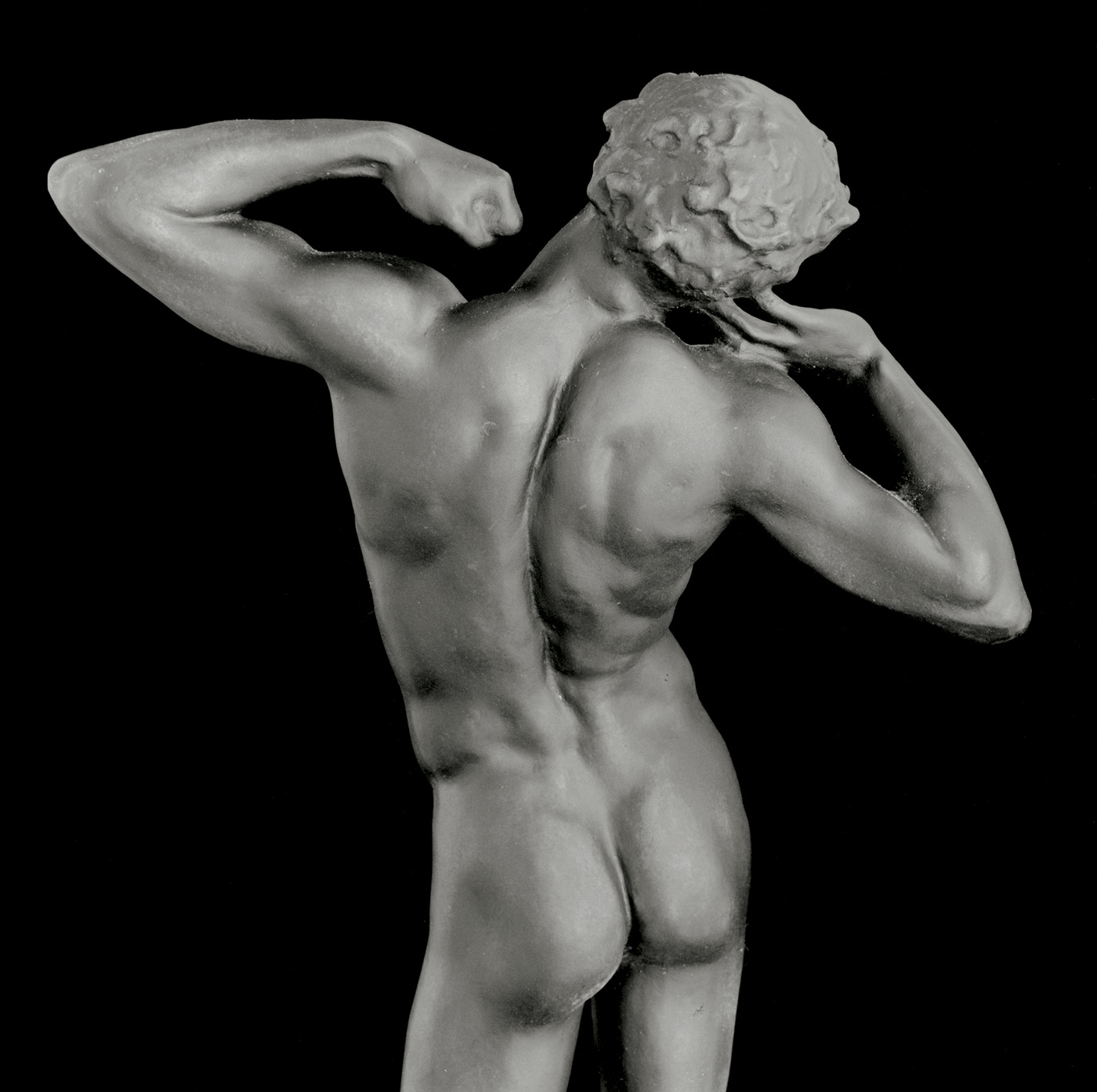
Many thankx to the Grand Palais for allowing me to publish the photographs in the posting. Please click on the photographs for a larger version of the image.


“I have boundless admiration for the naked body. I worship it.”

“I was a Catholic boy, I went to church every Sunday. A church has a certain magic and mystery for a child. It still shows in how I arrange things. It’s always little altars.”

“I am looking for perfection in form. I do that with portraits. I do it with cocks. I do it with flowers.”


Robert Mapplethorpe


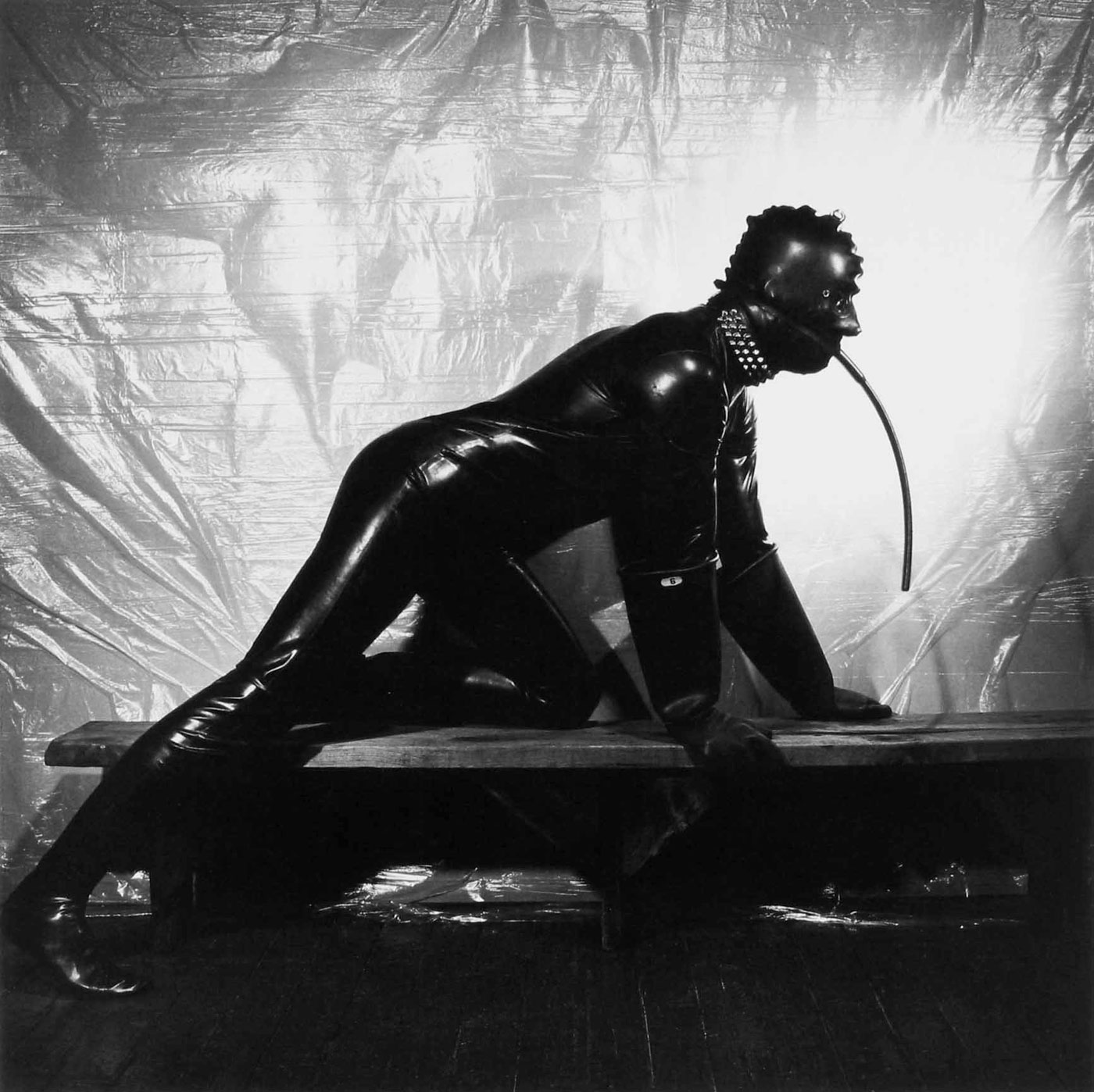
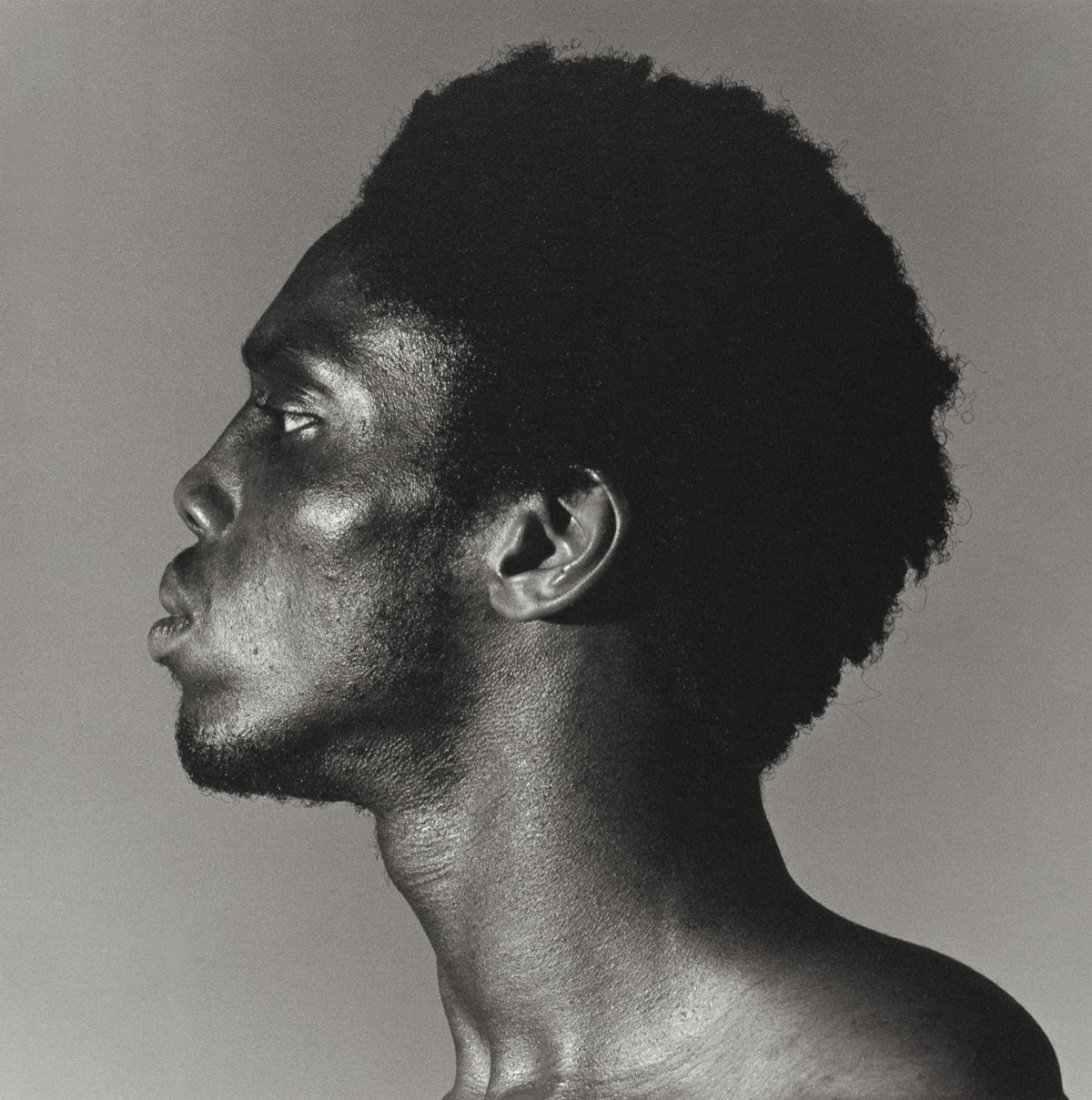
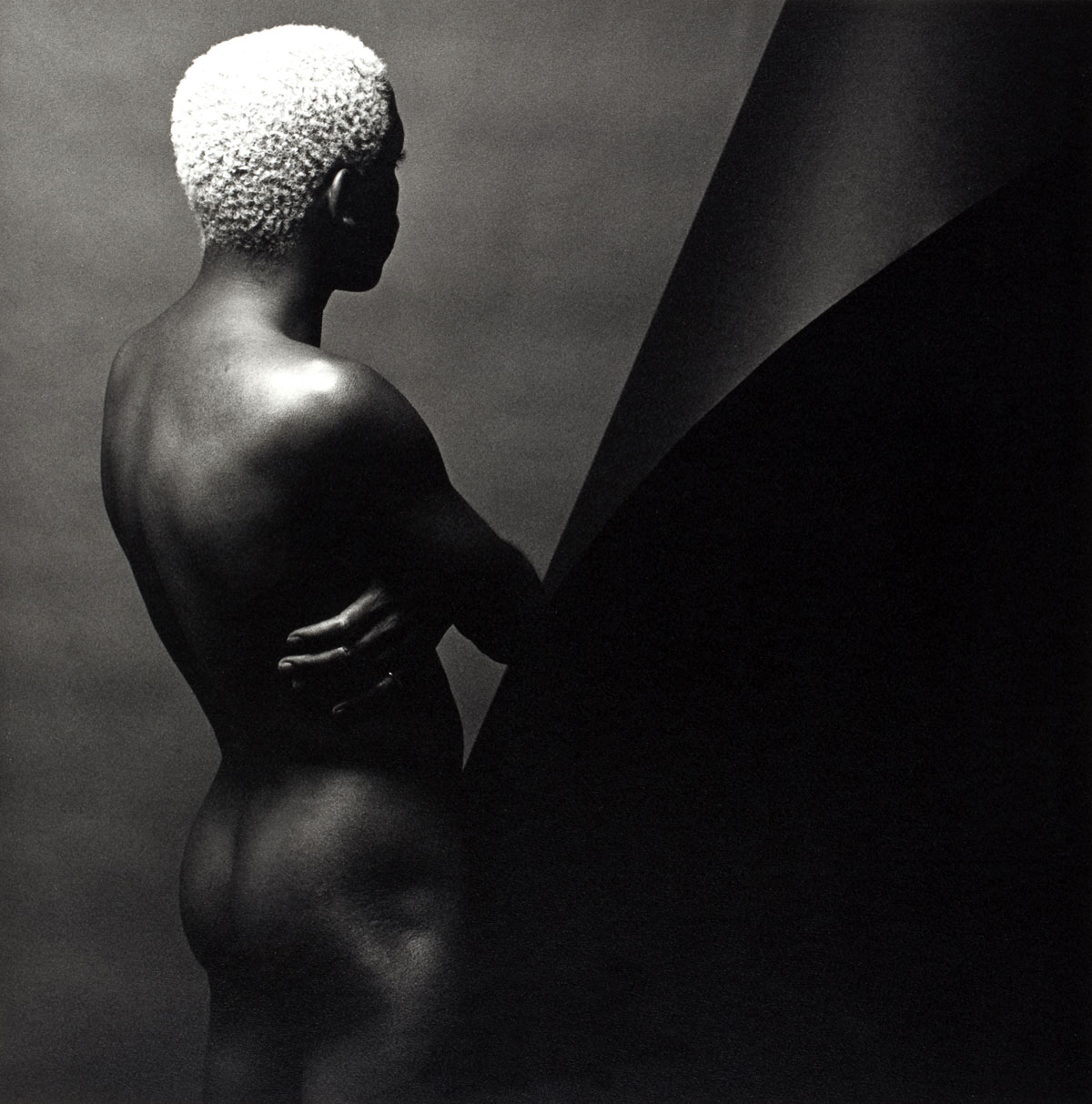
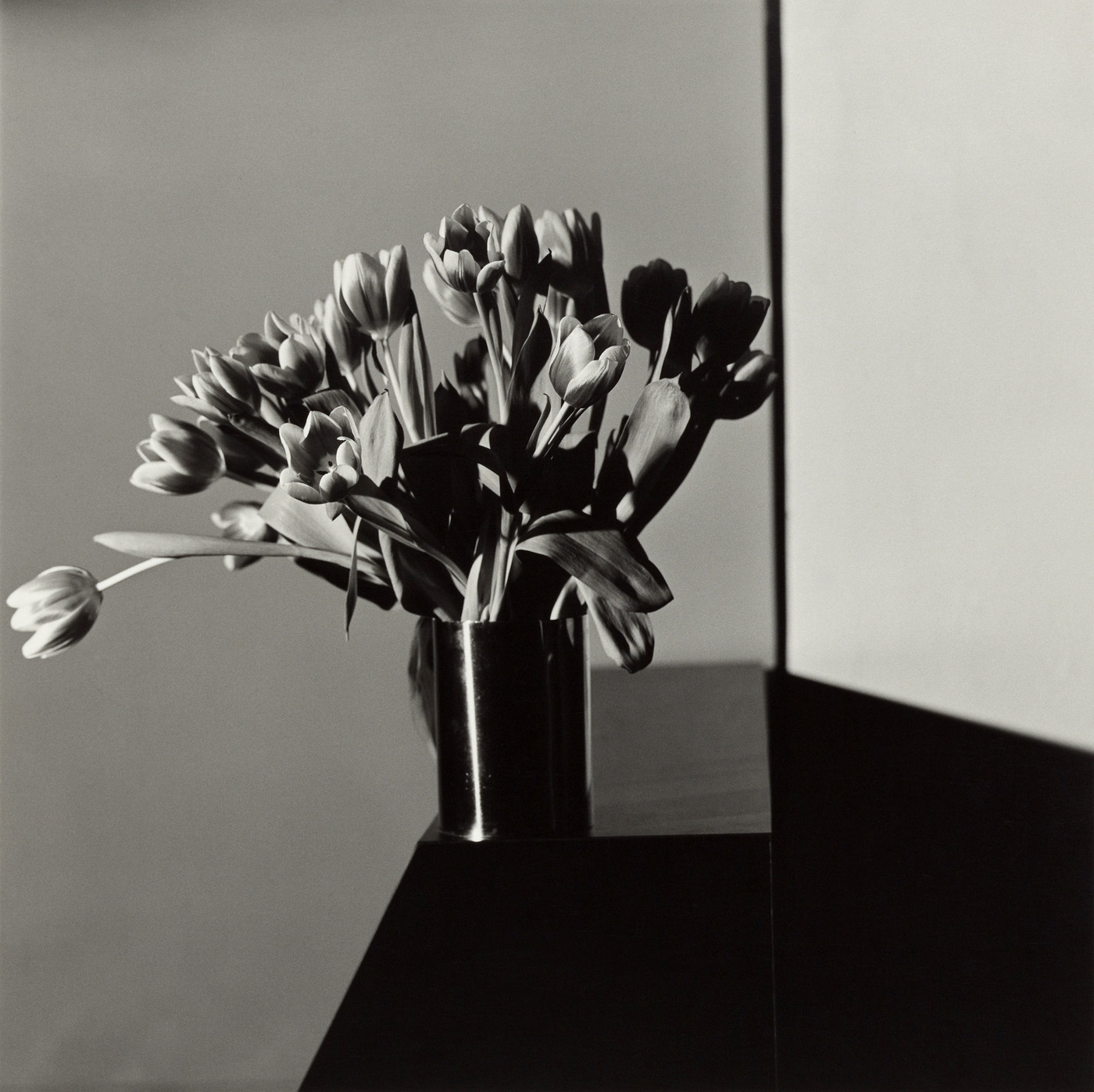
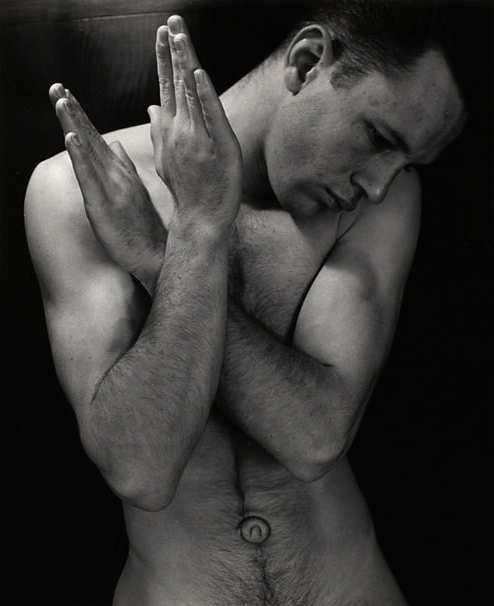
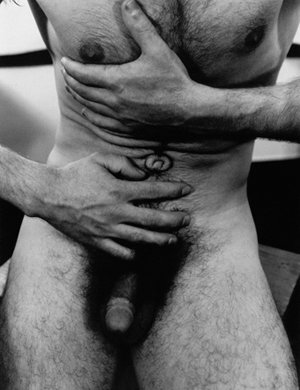
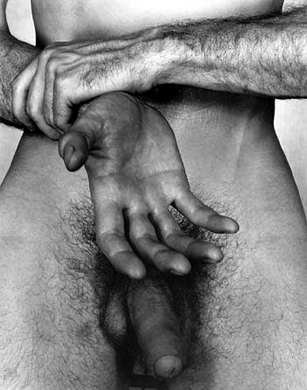
Installation view of the exhibition 'Robert Mapplethorpe' at the Grand Palais, Paris 2014

Installation view of the exhibition 'Robert Mapplethorpe' at the Grand Palais, Paris 2014

Installation view of the exhibition 'Robert Mapplethorpe' at the Grand Palais, Paris 2014

Installation view of the exhibition 'Robert Mapplethorpe' at the Grand Palais, Paris 2014


Installation views of the exhibition Robert Mapplethorpe at the Grand Palais, Paris 2014
© Didier Plowy pour la Réunion des musées nationaux-Grand Palais, Paris 2014


The exhibition will present over 250 works making it one of the largest retrospective shows for this artist ever held in a museum. It will cover Mapplethorpe’s entire career as a photographer, from the Polaroids of the early 1970s to the portraits from the late 1980s, touching on his sculptural nudes and still lifes, and sadomasochism.

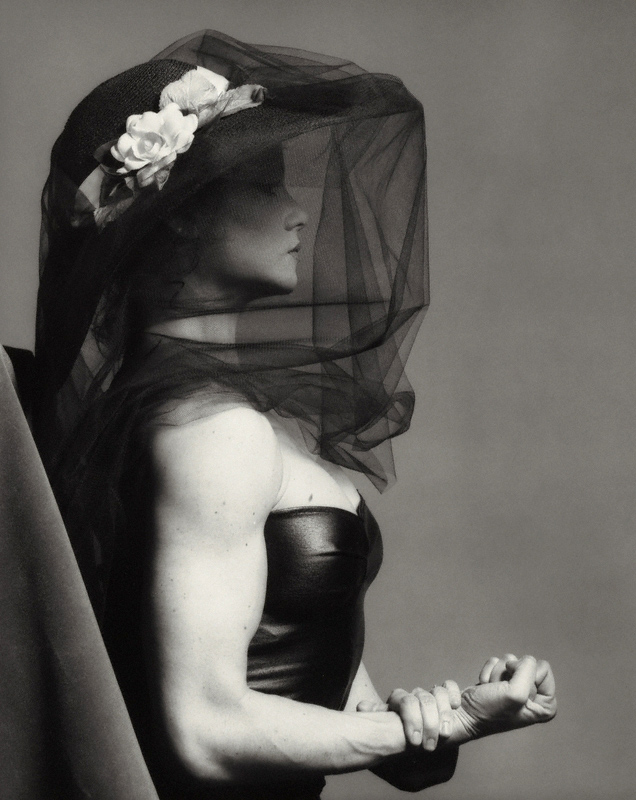
The focus on his two muses Patti Smith and Lisa Lyon explores the theme of women and femininity and reveals a less known aspect of the photographer’s work. The challenge of this exhibition is to show that Mapplethorpe is a great classical artist, who addressed issues in art using photography as he might have used sculpture. It also puts Mapplethorpe’s art into the context of the New York art scene in the 1970-1980s.

In his interview with Janet Kardon in 1987, Mapplethorpe explained that photography in the 1970s was the perfect medium for a fast-paced time. He did not really choose photography; in a way it was photography that chose him. Later in the same interview, he said “If I had been born one hundred or two hundred years ago, I might have been a sculptor, but photography is a very quick way to see, to make a sculpture. Lisa Lyon reminded me of Michelangelo’s subjects, because he did muscular women.”

Mapplethorpe positioned himself from the outset as an Artist, with a capital A. Unlike Helmut Newton, who as a teenager already wanted to be a fashion photographer, and imposed his vision of the world and photography, making it an art in its own right, Robert Mapplethorpe is a sculptor at heart, a plastic artist driven by the question of the body and its sexuality and obsessed by the search for perfect form.

Like Man Ray, Mapplethorpe wanted to be “a creator of images” rather than a photographer, “a poet” rather than a documentarist. In the catalogue for the Milan exhibition which compared the two artists, Bruno Cora recalls the parallels in their lives and works: “Before becoming masterly photographers, Man Ray and Mapplethorpe had both been painters and sculptors, creators of objects; they both lived in Brooklyn in New York; they both made portraits of the intellectuals of their time; and they were both incisive explorers of the nude form, its sculptural qualities and the energy emanating from it.”

Mapplethorpe was an artist before being a photographer. His images come from a pictorial culture in which we find Titian (The Flaying of Marsyas / Dominick and Elliot), David, Dali, and even the great artists of the Italian Renaissance, Michelangelo, Piero della Francesca, Bernini …

As in Huysmans’s novel, the exhibition is a countdown for this other dandy from the end of another world, Robert Mapplethorpe. It starts with his self-portrait with a skull-headed cane, the image of a young man already old, the tragedy of a life cut down in full flight by AIDS. But his almost royal final posture, as if beyond death, still (just) alive but already in the posterity of his oeuvre, seems to beckon us with a gesture of his pastoral cane to follow him into the world that he constructed in twenty years of photography. The exhibition continues with statuary, a dominant theme in Mapplethorpe’s last years, photos of statues of the gods in his personal pantheon: Eros, of course, and Hermes … The artist always said he used photography to make sculptures, and he ended his oeuvre with photographs of sculptures. His nudes were already photographic sculptures.

Works are not created just anywhere. To be fully appreciated, Mapplethorpe’s art must be put into the socio-cultural context of arty New York in the 1970s and 80s, and the underground gay culture there at that time. Two permeable and equally radical worlds. To take the measure of the libertarian explosion of the time, we need to watch Flesh, Warhol’s film with Joe Dalessandro, which narrates 24 hours in the life of a young New York male prostitute. To understand the violence and passion of gay sexuality for young New Yorkers fighting for freedom in a repressive period, we must read Edmund White’s The Beautiful Room is Empty, the story of a young gay in the years of riots and demonstrations and extreme emancipation; and Andrew Holleran’s Dancer from the Dance (1978), to plunge into the sexual experiments of Fire Island in the 1970s.

Mapplethorpe is hailed as one of the world’s greatest photographers and the exhibition aims to give a broad view of his work.

Press release from the Grand Palais website


Robert Mapplethorpe (American, 1946-1989) 'Milton Moore' 1981


Robert Mapplethorpe (American, 1946-1989)
Milton Moore
1981
50.8 x 40.6cm / 50.8 x 40.6cm
Silver gelatin prints
New York, Fondation Robert Mapplethorpe
© Robert Mapplethorpe Foundation. Used by permission


Robert Mapplethorpe (American, 1946-1989) 'Milton Moore' 1981 (detail)


Robert Mapplethorpe (American, 1946-1989)
Milton Moore (detail)
1981
50.8 x 40.6cm
Silver gelatin print
New York, Fondation Robert Mapplethorpe
© Robert Mapplethorpe Foundation. Used by permission


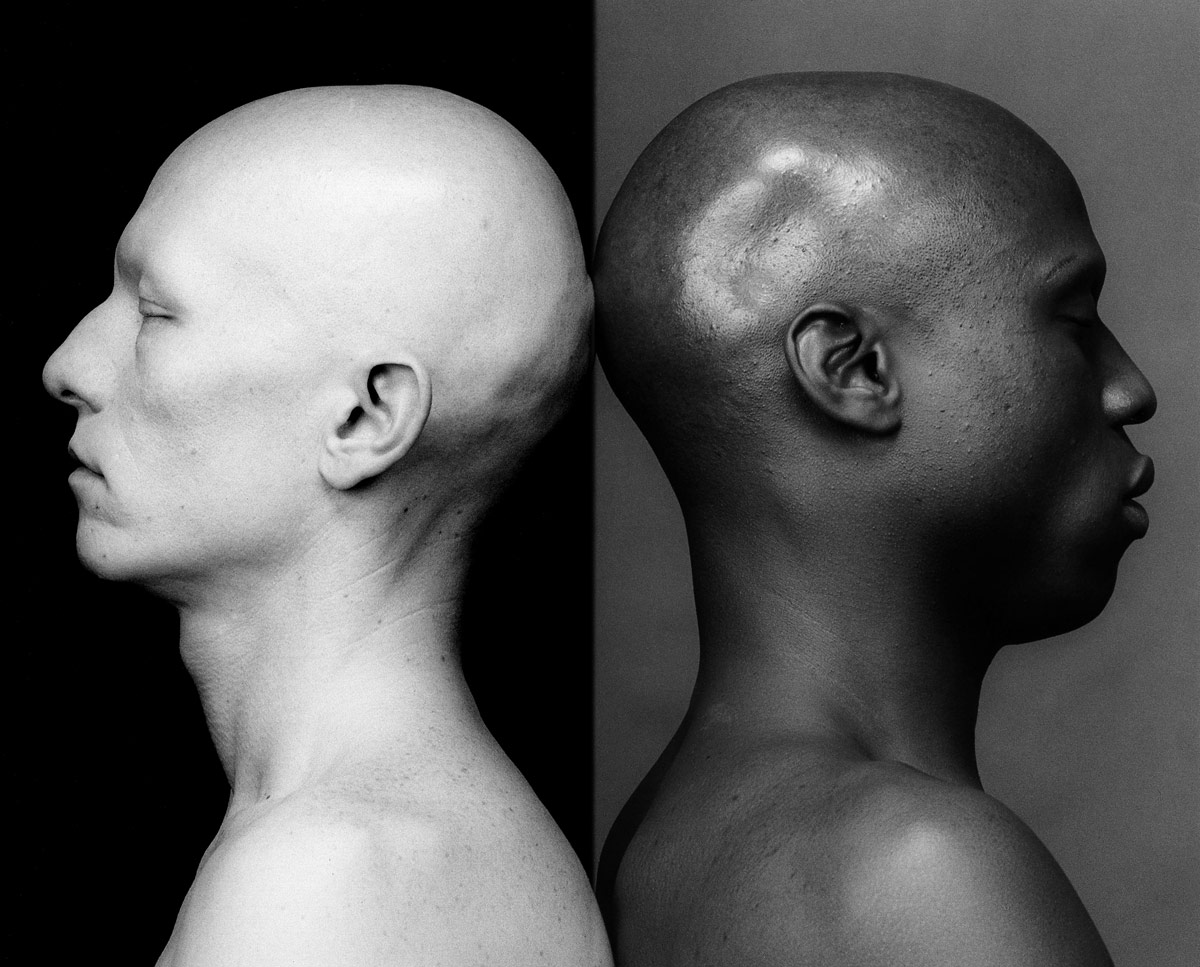
Robert Mapplethorpe (American, 1946-1989) 'Ken Moody' 1983


Robert Mapplethorpe (American, 1946-1989)
Ken Moody
1983
50.8 x 40.6cm
Silver gelatin print
New York, Fondation Robert Mapplethorpe
© Robert Mapplethorpe Foundation. Used with permission


Introductory text

Robert Mapplethorpe was an artist with an obsessive quest for aesthetic perfection.

A sculptor at heart, and in his imagination, he wanted “people to see [his] works first as art and second as photography.”1 An admirer of Michelangelo, Mapplethorpe championed the classical ideal – revised and reworked for the libertarian New York of the 1970s – and explored sophisticated printing techniques to create unique works and mixed compositions, which he framed in unusual ways.

Like the novel by Joris-Karl Huysmans, this exhibition has been organised “À rebours” [against the nap] and examines the work of another dandy, living at the end of another world. It opens with Mapplethorpe’s self-portrait with the skull-head cane: the image of a young man, already old, tragically cut down in the prime of life by AIDS, it also reveals how the master of the realm of shadows – photography – gave free rein to his imagination. Like a modern day Orpheus, beyond death, he seems alive – although only just – yet already in the afterlife of his work, beckoning us with his satanic cane to follow him into the underworld of his life, in search of his desire.

“Photography and sexuality have a lot in common,” explains Mapplethorpe. “Both are question marks, and that’s precisely what excites me most in life.”2 Exploring the photography of the body, he pushed it to the limits of pornography, perhaps like no other artist before him. The desire we see in these images – often the photographer’s own desire – also reflects life in New York, as lived by some, in the 1970s and 80s, at the height of the sexual liberation movement. “I’m trying to record the moment I’m living in and where I’m living, which happens to be in New York. I am trying to pick up on the madness and give it some order.”3

This retrospective of Mapplethorpe’s work – the first in France since he passed away – features some two hundred and fifty images exploring a range of themes. They cover every aspect of Mapplethorpe’s art – bronze bodies and flesh sculptures, geometric and choreographic, still lives and anatomical details, bodies as flowers and flowers as bodies, court portraiture, night photography, and eroticism, soft and hard – interspersed with self-portraiture in all its forms. The works from the photographer’s early career, which close the exhibition, reveal how the path taken by his art was already mapped out in his first Polaroids. The sign of a great artist.

1/ Inge Biondi, “The Yin and the Yang of Robert Mapplethorpe,” in The Print Collector’s Newsletter, New York, January 1979, p. 11
2/ Mark Thompson, “Mapplethorpe,” in The Advocate, Atlanta, 24 July 1980
3/ Sarah Kent, “Mapplethorpe,” in Time Out, London, 3-9 November 1983


Robert Mapplethorpe (American, 1946-1989) 'Thomas' 1987


Robert Mapplethorpe (American, 1946-1989)
Thomas
1987
61 x 50.8cm
Silver gelatin print
New York, Fondation Robert Mapplethorpe
© Robert Mapplethorpe Foundation. Used with permission


Robert Mapplethorpe (American, 1946-1989) 'Calla Lily' 1986


Robert Mapplethorpe (American, 1946-1989)
Calla Lily
1986
92.7 x 92.7cm
Silver gelatin print
© Robert Mapplethorpe Foundation. Used with permission


Robert Mapplethorpe (American, 1946-1989) 'The Sluggard' (Le Paresseux) 1988


Robert Mapplethorpe (American, 1946-1989)
The Sluggard (Le Paresseux)
1988
61 x 50.8cm
Silver gelatin print
New York, Fondation Robert Mapplethorpe
© Robert Mapplethorpe Foundation. Used with permission


Robert Mapplethorpe (American, 1946-1989) 'Self-portrait (Autoportrait)' 1988


Robert Mapplethorpe (American, 1946-1989)
Self-portrait (Autoportrait)
1988
61 x 50.8cm
Platinum print
© Robert Mapplethorpe Foundation. Used with permission


Grand Palais, Galeries Nationales
3, Avenue du Général Eisenhower
75008 Paris

Opening hours:
Wednesday – Saturday 10am – 10pm
Monday and Sunday 10am – 8pm
Closed every Tuesday

Grand Palais website

LIKE ART BLART ON FACEBOOK

Back to top

Exhibition: ‘Picturing New York: Photographs from the Museum of Modern Art’ at the Art Gallery of Western Australia (AGWA), Perth

Exhibition dates: 26th January – 12th May 2013


Berenice Abbott (American, 1898-1991) 'Fifth Avenue, nos. 4, 6, 8, Manhattan' March 20, 1936


Berenice Abbott (American, 1898-1991)
Fifth Avenue, nos. 4, 6, 8, Manhattan
March 20, 1936
Gelatin silver print
15 x 19 1/4″ (38.1 x 48.9cm)
The Museum of Modern Art, New York
Thomas Walther Collection
© 2012 Berenice Abbott/Commerce Graphics


A second tranche of images from this touring exhibition of photographs from the MoMA collection, presented at the Art Gallery of Western Australia in Perth. My personal favourites in this posting are the tonal Abbott, mean streets Gedney, luminous Groover and the intimate Burckhardt. There are two photographers I don’t know at all (Gedney and Burckhardt) and one who is very underrated: Peter Hujar.

Dr Marcus Bunyan


Many thankx to the AGWA for allowing me to publish the photographs in the posting. Please click on the photographs for a larger version of the image.


William Gedney (American, 1924-1989) 'Brooklyn' 1966


William Gedney (American, 1924-1989)
Brooklyn
1966
Gelatin silver print
7 9/16 x 11 5/16″ (19.3 x 28.8cm)
The Museum of Modern Art, New York
Gift of the Duke University Rare Book, Manuscript, and Special Collections Library
© 2012 Estate of William Gedney


William Gale Gedney (October 29, 1932 – June 23, 1989) was an American photographer. It wasn’t until after his death that his work gained momentum and his work is now widely recognised… William Gedney died of AIDS in 1989, aged 56, in New York City and is buried in Greenville, New York, a few short miles from his childhood home. He left his photographs and writings to his lifelong friend Lee Friedlander.

Text from the Wikpedia website

See more photographs by William Gedney on the Duke Libraries website and on The Selvedge Yard website


Jan Groover (American, 1943-2012) 'Untitled' 1981


Jan Groover (American, 1943-2012)
Untitled
1981
Platinum/palladium print
7 5/8 x 9 1/2″ (19.4 x 24.2cm)
The Museum of Modern Art, New York
Gift of Howard Stein
© 2012 Jan Groover


“Depicting the iconic New York that captivates the world’s imagination and the idiosyncratic details that define New Yorkers’ sense of home, this exhibition from MoMA’s extraordinary photography collection celebrates the city in all its vitality, ambition and beauty. Made by approximately 90 artists responding to the city as well as professionals on assignment, including Henri Cartier-Bresson, Walker Evans, Lewis Hine, Helen Levitt, Cindy Sherman, Alfred Stieglitz, and Weegee, over 150 works reveal the deeply symbiotic relationship between photography and the ‘city that never sleeps’ – New York. Both an exploration of the life of the city and a documentation of photography’s evolution throughout the twentieth century, Picturing New York celebrates the great and continuing tradition of capturing the grit and glamour of one of the world’s greatest urban centres.

Artists include Berenice Abbott, Diane Arbus, Henri Cartier-Bresson, Walker Evans, Lee Friedlander, Nan Goldin, Helen Levitt, Cindy Sherman, Alfred Stieglitz, Paul Strand, Weegee, and Garry Winogrand, among many others.”

Text from the AGWA website


Lisette Model (American born Austria, 1901-1983) 'Times Square' 1940


Lisette Model (American born Austria, 1901-1983)
Times Square
1940
Gelatin silver print
15 9/16 x 19 9/16″ (39.6 x 49.7cm)
The Museum of Modern Art, New York
Gift of the photographer
© 2012 Estate of Lisette Model, courtesy Baudoin Lebon Gallery, Paris and Keitelman Gallery, Brussels


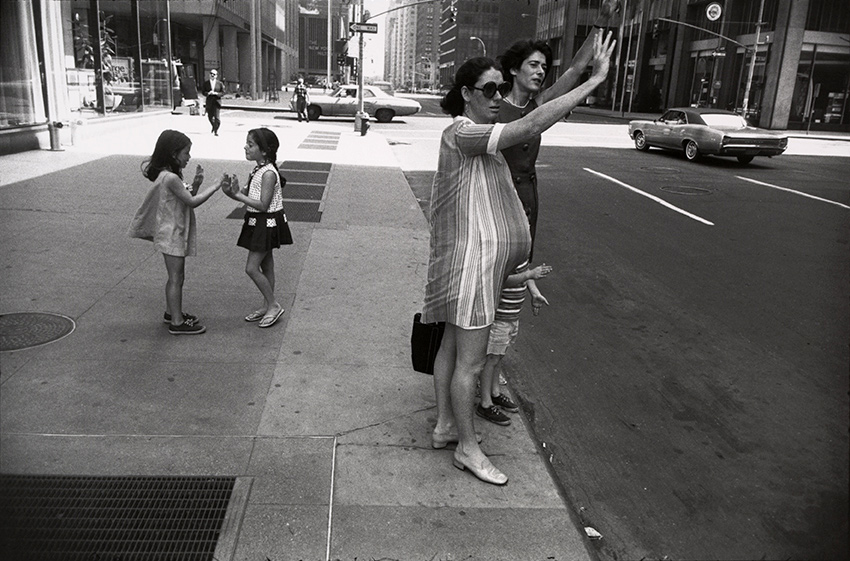
Garry Winogrand (American, 1928-1984) 'New York City' 1968


Garry Winogrand (American, 1928-1984)
New York City
1968
Gelatin silver print
8 7/8 x 13 3/16″ (22.5 x 33.5cm)
The Museum of Modern Art, New York
Purchase and gift of Barbara Schwartz in memory of Eugene M. Schwartz
© The Estate of Garry Winogrand, courtesy Fraenkel Gallery


Henri Cartier-Bresson (French, 1908-2004) 'Near the Hall of Records, New York' 1947


Henri Cartier-Bresson (French, 1908-2004)
Near the Hall of Records, New York
1947
Gelatin silver print
15 5/16 x 22 13/16″ (38.9 x 57.9cm)
The Museum of Modern Art, New York
Gift of the photographer
© 2012 Henri Cartier-Bresson/Magnum, courtesy Foundation HCB, Paris


Rudy Burckhardt (American born Switzerland, 1914-1999) 'A View From Brooklyn I' 1954


Rudy Burckhardt (American born Switzerland, 1914-1999)
A View From Brooklyn I
1954
Gelatin silver print
10 5/16 x 9 3/16″ (26.2 x 23.4cm)
The Museum of Modern Art, New York
Gift of CameraWorks, Inc. and Purchase
© 2012 Rudy Burckhardt / Artists Rights Society (ARS), New York


Rudy Burckhardt (1914, Basel – 1999) was a Swiss-American filmmaker, and photographer, known for his photographs of hand-painted billboards which began to dominate the American landscape in the nineteen-forties and fifties.

Burckhardt discovered photography as a medical student in London. He left medicine to pursue photography in the 1930s. He immigrated to New York City in 1935. Between 1934 and 1939, he traveled to Paris, New York and Haiti making photographs mostly of city streets and experimenting with short 16mm films. While stationed in Trinidad in the Signal Corps from 1941-1944, he filmed the island’s residents. In 1947, he joined the Photo League in New York City. Burckhardt married painter Yvonne Jacquette whom he collaborated with throughout their 40 year marriage. He taught filmmaking and painting at the University of Pennsylvania from 1967 to 1975.

On his 85th birthday, Burckhardt committed suicide by drowning in the lake on his property.

Text from the Wikipedia website


Rudy Burckhardt and Edwin Denby
The Climate of New York
1980


Trailer for Rudy Burckhardt Films from Tibor de Nagy Gallery on Vimeo.


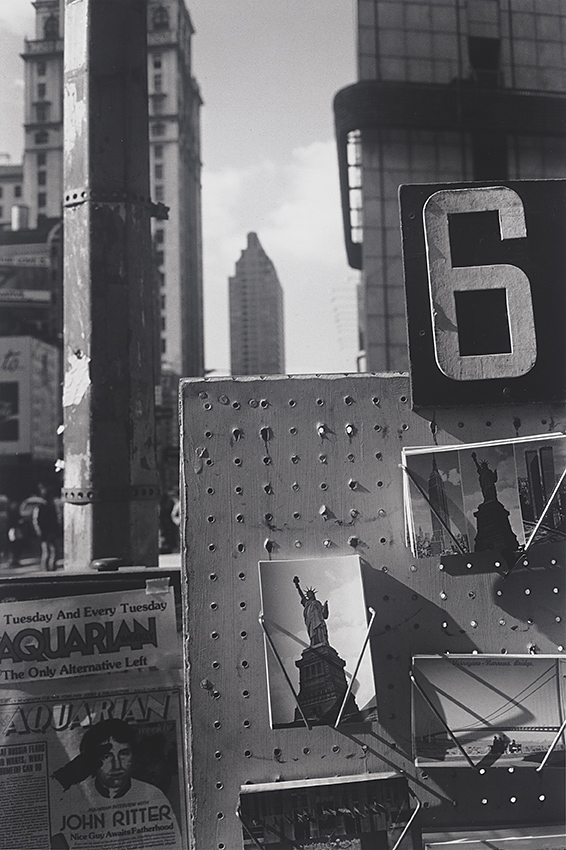
Lee Friedlander (American, b. 1934) 'New York City' 1980


Lee Friedlander (American, b. 1934)
New York City
1980
Gelatin silver print
18 5/8 x 12 3/8″ (47.3 x 31.5cm)
The Museum of Modern Art, New York
The Family of Man Fund
© 2012 Lee Friedlander


Underwood and Underwood (American, active 1880-1934) 'Above Fifth Avenue, Looking North' 1905


Underwood and Underwood (American, active 1880-1934)
Above Fifth Avenue, Looking North
1905
Gelatin silver print
9 1/2 x 7 5/16″ (24.2 x 18.6cm)
The Museum of Modern Art, New York
The New York Times Collection


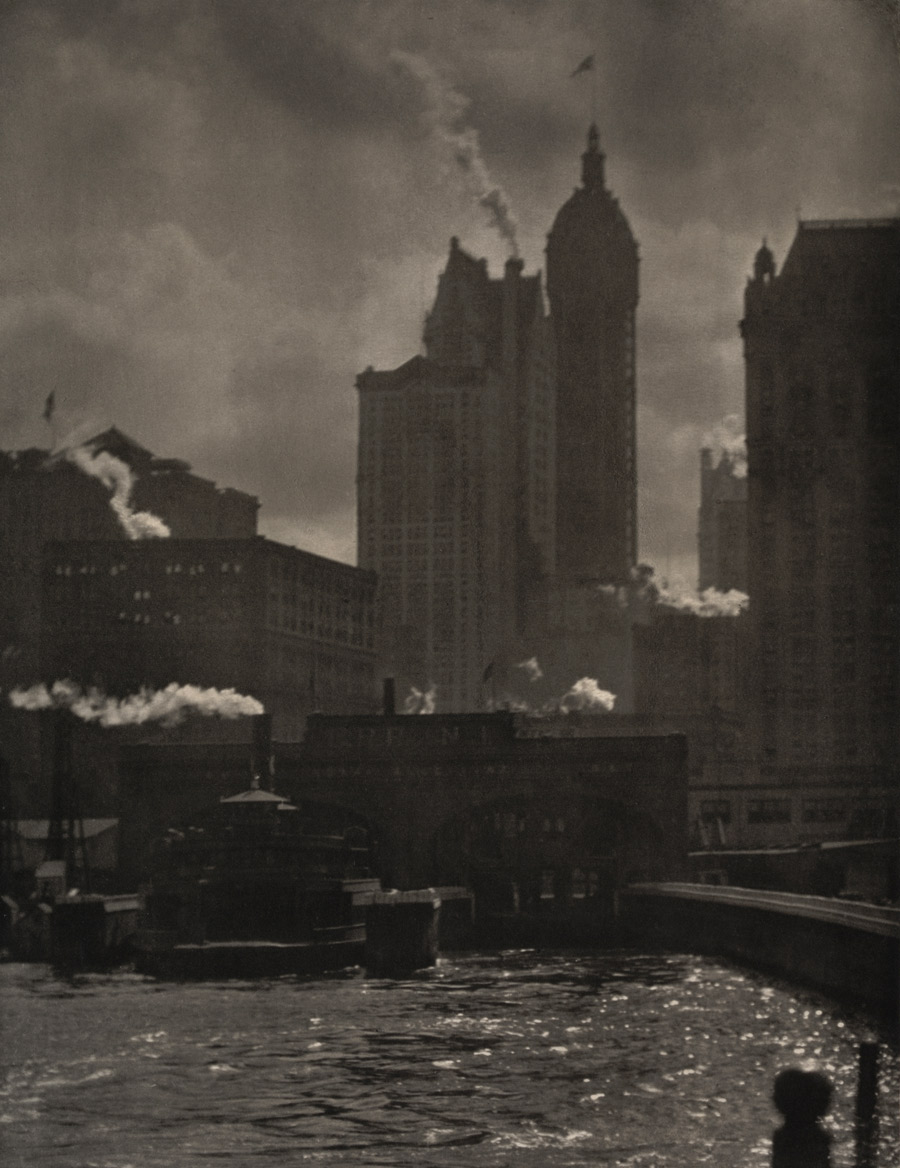
Alfred Stieglitz (American, 1864-1946) 'City of Ambition' 1910


Alfred Stieglitz (American, 1864-1946)
City of Ambition
1910
Photogravure
13 3/8 x 10 1/4″ (34 x 26.1cm)
The Museum of Modern Art, New York
© 2012 Estate of Alfred Stieglitz / Artists Rights Society (ARS), New York


Peter Hujar (American, 1934-1987) 'New York Series #22' 1976


Peter Hujar (American, 1934-1987)
New York Series #22
1976
Gelatin silver print
14 5/8 x 14 3/4″ (37.1 x 37.4cm)
The Museum of Modern Art, New York
Gift of the Estate of Peter Hujar and James Danziger Gallery, New York
© 2012 Peter Hujar Archive


Peter Hujar (October 11, 1934 – November 26, 1987) was an American photographer known for his black and white portraits. Born in Trenton, New Jersey, United States. Hujar later moved to Manhattan to work in the magazine, advertising, and fashion industries. His subjects also consisted of farm animals and nudes. His most famous photograph is Candy Darling on Her Deathbed which was later used by the group Antony and the Johnsons as cover for their album I Am a Bird Now. The one-time lover, friend and mentor of artist David Wojnarowicz, Hujar died of AIDS complications on November 26, 1987, aged 53.

See the more photographs on the Peter Hujar Archive website


Fairchild Aerial Surveys, Inc. 'The Mount Everest of Manhattan: The Silvered Peak of the Chrysler Building' 1930


Fairchild Aerial Surveys, Inc.
The Mount Everest of Manhattan: The Silvered Peak of the Chrysler Building
1930
Gelatin silver print
8 3/4 x 6 13/16″ (22.3 x 17.3cm)
The Museum of Modern Art, New York
The New York Times Collection


Walker Evans (American, 1903-1975) 'Girl in Fulton Street, New York 1929' 1929


Walker Evans (American, 1903-1975)
Girl in Fulton Street, New York 1929
1929
Gelatin silver print
7 1/2 x 4 5/8″ (19.1 x 11.7cm)
The Museum of Modern Art, New York
Gift of the photographer


Lewis W. Hine (American, 1874–1940) 'Italian Family Looking for Lost Baggage, Ellis Island, New York' 1905


Lewis W. Hine (American, 1874-1940)
Italian Family Looking for Lost Baggage, Ellis Island, New York
1905
Gelatin silver print
5 9/16 x 4 5/16″ (14.1 x 10.9cm)
The Museum of Modern Art, New York


Art Gallery of Western Australia
Perth Cultural Centre, James Street Mall, Perth

Opening hours:
Wednesday – Monday 10am – 5pm
Closed Tuesdays

AGWA website

LIKE ART BLART ON FACEBOOK

Back to top

Exhibition: ‘In Focus: Robert Mapplethorpe’ at The J. Paul Getty Museum, Los Angeles

Exhibition dates: 23rd October 2012 – 24th March 2013


Robert Mapplethorpe
 (American, 1946-1989) 'Ken Moody and Robert Sherman' 1984 Platinum print


Robert Mapplethorpe
 (American, 1946-1989)
Ken Moody and Robert Sherman
1984
Platinum print
Jointly acquired by the Los Angeles County Museum of Art, with funds provided by The David Geffen Foundation, and The J. Paul Getty Trust
© Robert Mapplethorpe Foundation


One of the reasons for setting up Art Blart nearly five years ago was the idea of an exhibition archive – the cataloguing of the archive so that featured exhibitions did not ephemerally drift off into virtual space. One of the problems of a blog is its roll-through postings one after the other and I didn’t want this to happen. Thankfully, I recognised the need for a taxonomic ordering of the information early on in the life of the archive, so that Art Blart has now become a form of cultural memory.

The impulse for this idea was the memory of seeing the Robert Mapplethorpe retrospective at the Museum of Contemporary Art (MCA) in Sydney in 1995 (and what an outstanding experience it was) and being able to find nothing about this exhibition online (at the time of writing in 2013). Thankfully, there is now a Mapplethorpe Retrospective web page with 7 installation photographs on the MCA website, so at least there is some representation online.

Dr Marcus Bunyan


This exhibition runs concurrently with that of the last posting, Robert Mapplethorpe: XYZ at the Los Angeles County Museum of Art (LACMA). Many thankx to The J. Paul Getty Museum for allowing me to publish the photographs in the posting. Please click on the photographs for a larger version of the image.


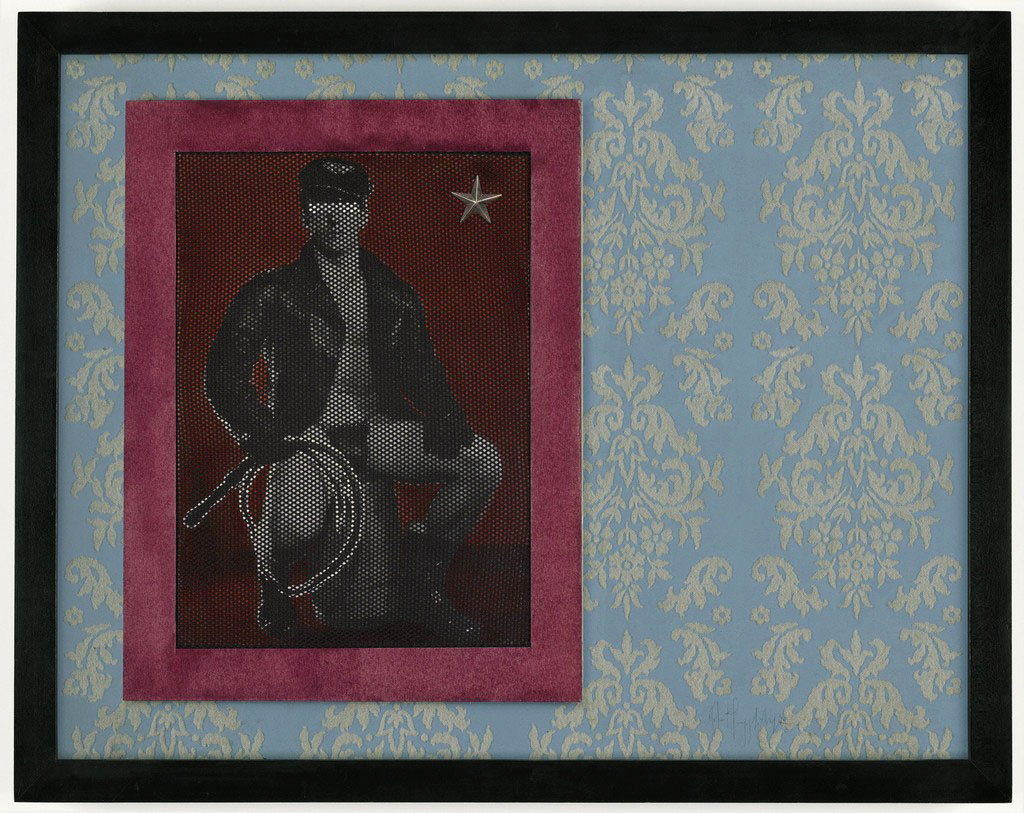
Robert Mapplethorpe
 (American, 1946-1989) 'Leatherman #1' 1970


Robert Mapplethorpe
 (American, 1946-1989)
Leatherman #1
1970
Mixed media print
9 7/16 x 6 3/4 in
Jointly acquired by the Los Angeles County Museum of Art, with funds provided by The David Geffen Foundation, and The J. Paul Getty Trust
© Robert Mapplethorpe Foundation


Early Work

Born in Queens, New York, Mapplethorpe studied graphic arts at Pratt Institute in Brooklyn. His early work included collage, found objects, and jewellery. Before he took up the camera, Mapplethorpe often used pictures he cut out of magazines as collaged elements to explore sexuality and eroticism. By altering this fetishistic image and re-presenting it in a shadow box, Mapplethorpe removed the picture from its original context and elevated it to a homoerotic icon. The five-pointed star is a symbol of religious significance and the plastic mesh covering the figure evokes the metal screens commonly found in confessionals in Roman Catholic churches.

In 1972 Mapplethorpe met two influential curators: John McKendry, who gave him a Polaroid camera, and Samuel Wagstaff Jr., who became the artist’s lover and mentor. By the mid-1970s, Mapplethorpe had acquired a medium format camera and began documenting New York’s gay S&M community.


Robert Mapplethorpe
 (American, 1946-1989) 'Holly Solomon' Negative 1976; print 2005


Robert Mapplethorpe
 (American, 1946-1989)
Holly Solomon
Negative 1976; print 2005
Gelatin silver print
35.3 × 35.5 cm (13 7/8 × 14 in.)
Jointly acquired by the J. Paul Getty Trust and the Los Angeles County Museum of Art, with funds provided by the J. Paul Getty Trust and the David Geffen Foundation
© Robert Mapplethorpe Foundation


Robert Mapplethorpe
 (American, 1946-1989) 'Lisa Lyon' 1982


Robert Mapplethorpe
 (American, 1946-1989)
Lisa Lyon
1982
Jointly acquired by the Los Angeles County Museum of Art, with funds provided by The David Geffen Foundation, and The J. Paul Getty Trust
© Robert Mapplethorpe Foundation


Portraits

Mapplethorpe met writer-musician Patti Smith in 1967, and they lived together as intimate and artistic partners until 1974. This image of Smith was one of his earliest celebrity portraits. 

The two collaborated to create this image as the cover for her 1975 debut rock album, Horses. Working in a borrowed apartment, Mapplethorpe suggested using a wall adjacent to a window where a triangle of light fell at a certain time in the afternoon. Smith dressed in men’s clothes and channeled the American entertainer Frank Sinatra with her jacket slung over her shoulder. Her uncombed hair and androgynous air broke radically from the image that the music industry expected women in rock to assume.


Robert Mapplethorpe
 (American, 1946-1989) 'Patti Smith' Negative 1975; print 1995


Robert Mapplethorpe
 (American, 1946-1989)
Patti Smith
Negative 1975; print 1995
Jointly acquired by the Los Angeles County Museum of Art, with funds provided by The David Geffen Foundation, and The J. Paul Getty Trust
© Robert Mapplethorpe Foundation


A man’s jacket slung over one shoulder, the cuffs of her shirt cut off with scissors, the Bohemian poet and performer Patti Smith levels her gaze outward with authority and calm. The set of her jaw and lift of her chin suggest she wears confrontation lightly. Simultaneously, a waifish delicacy haunts her tiny body. She touches the ribbon around her neck with long fingers cupped near her heart – a shy gesture and nod to the garb of the 19th-century Romantic poets she admires. With quiet ferocity, the portrait hovers between masculine and feminine, strength and vulnerability.

Intimately bonded in life and work, Mapplethorpe and Smith made this image for the cover of her debut rock album, Horses. It is one of his earliest celebrity portraits, a genre in which he went on to distinguish himself. He often amplified the glamour of his subjects, but modernised conventional portrayals with provocative depictions of race, gender, and sexuality. For example, record executives, concerned that Smith with her lack of makeup and messy hair wasn’t conventionally pretty enough to sell records like other “girl singers,” wanted to airbrush this image. Knowing Mapplethorpe would back her up, Smith refused and the image and album shaped the start of both their iconoclastic careers.


Robert Mapplethorpe (American, 1946-1989) 'Jim, Sausalito' 1977


Robert Mapplethorpe
 (American, 1946-1989)
Jim, Sausalito
1977
Gelatin silver print
35.2 × 35.3cm (13 7/8 × 13 7/8 in.)
Jointly acquired by the J. Paul Getty Trust and the Los Angeles County Museum of Art, with funds provided by the J. Paul Getty Trust and the David Geffen Foundation
© Robert Mapplethorpe Foundation


Robert Mapplethorpe (American, 1946-1989) 'Ken Moody' 1983


Robert Mapplethorpe
 (American, 1946-1989)
Ken Moody
1983
Gelatin silver print
38.5 × 38.7cm (15 3/16 × 15 1/4 in.)
Jointly acquired by the J. Paul Getty Trust and the Los Angeles County Museum of Art, with funds provided by the J. Paul Getty Trust and the David Geffen Foundation
© Robert Mapplethorpe Foundation


The model Ken Moody poses face front, eyes closed, centred in a simple composition characteristic of the photographer Robert Mapplethorpe’s clean aesthetic. His perfectly hairless head, face, and body, the result of alopecia universalis, appear to take on a sculptural weight and dimension. The dark shadows of the background seem to lap at his neck, shoulders and under his arms, as if he emerges from a timeless, dark sea. The sophisticated lighting also sculpts the curves of his face, collarbone, and chest to further heighten their elegant forms.

This figure study is part of a large body of work featuring African-American men. Mapplethorpe was absorbed by the texture and colour of their skin, which he referred to as bronze. He used Agfa’s Portriga 118 paper for its ability to produce the velvety texture and glow discernible in this reproduction. His strong, uncluttered compositions of statuesque male models fused a classical sensibility with homoerotic content at a time when the male nude was not a popular subject among camera artists.

Text from the J. Paul Getty Museum website


Robert Mapplethorpe
 (American, 1946-1989) 'Ajitto' 1981


Robert Mapplethorpe
 (American, 1946-1989)
Ajitto
1981
Gelatin silver print
45.4 × 35.5cm (17 7/8 × 14 in.)
Jointly acquired by the J. Paul Getty Trust and the Los Angeles County Museum of Art, with funds provided by the J. Paul Getty Trust and the David Geffen Foundation
© Robert Mapplethorpe Foundation


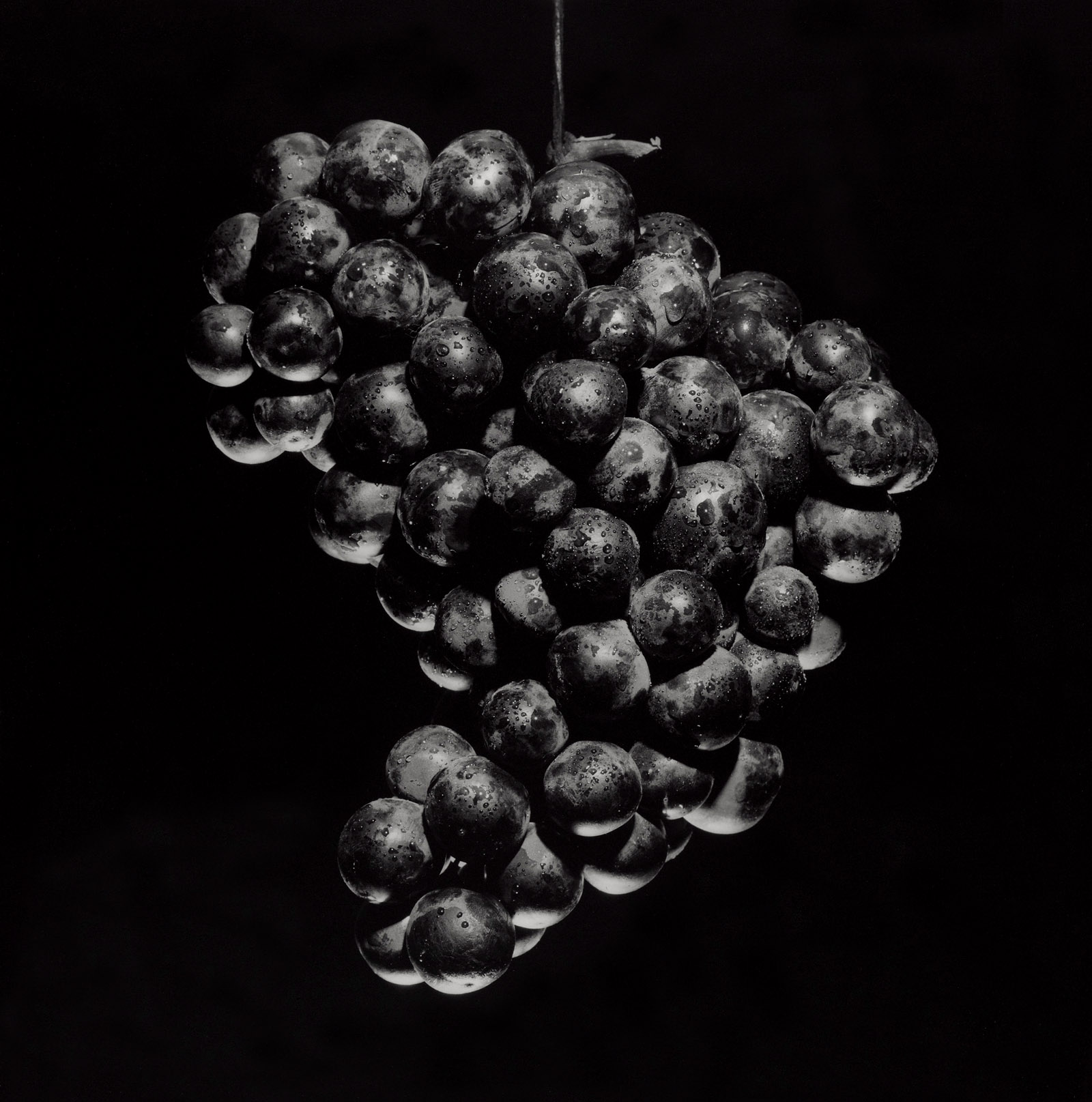
Robert Mapplethorpe (American, 1946-1989) 'Grapes' Negative 1985; print 2004


Robert Mapplethorpe (American, 1946-1989)
Grapes
Negative 1985; print 2004
Gelatin silver print
38.5 × 38cm (15 3/16 × 14 15/16 in.)
Jointly acquired by the J. Paul Getty Trust and the Los Angeles County Museum of Art, with funds provided by the J. Paul Getty Trust and the David Geffen Foundation
© Robert Mapplethorpe Foundation


Robert Mapplethorpe. 'Calla Lily' Negative 1988; print 1990


Robert Mapplethorpe
 (American, 1946-1989)
Calla Lily
Negative 1988; print 1990
Gelatin silver print
The J. Paul Getty Museum, Los Angeles, Jointly acquired by The J. Paul Getty Trust and the Los Angeles County Museum of Art. Partial gift of The Robert Mapplethorpe Foundation; partial purchase with funds provided by The J. Paul Getty Trust and the David Geffen Foundation
© Robert Mapplethorpe Foundation


Flowers and Still Lifes

Mapplethorpe refined his style in the early 1980s, creating images of timeless elegance. After his erotic nudes, his delicate floral still lifes encouraged sexual interpretations. Although floral still lifes have traditionally held these connotations, Mapplethorpe transformed them from a subject that sophisticated collectors were reluctant to display in their homes into an important contemporary theme.

 Arranged with his characteristic sense of balance and meticulously lit, this image of a calla lily appears to glow from within. Although preternaturally still, the composition exudes a sense of latent excitement, with the milky white flower almost vibrating against the rich, black background.


“My whole point is to transcend the subject… go beyond the subject somehow, so that the composition, the lighting, all around, reaches a certain point of perfection.”

~ Robert Mapplethorpe


Mapplethorpe’s work, whether in his fashion or fine art photography, is distinguished by a tension between opposites. At the base of this image of a calla lily, he punctuates the wide planes of black and white with what seems a decadent surprise: the three-dimensional, curving lip of the flower’s edge. He explores the effects of light as a painter might experiment with a palette of colours. At the top, the flower glows milky white, reminiscent of light seen through delicate alabaster or porcelain. Mapplethorpe’s spare compositions often showcase familiar subjects in unusual ways. Floral still lifes, for example, have long encouraged sexual interpretations, and especially here, given the artist’s other work with erotic and sadomasochistic subjects. His imagination transformed and energised what some had considered a stale genre.


Robert Mapplethorpe
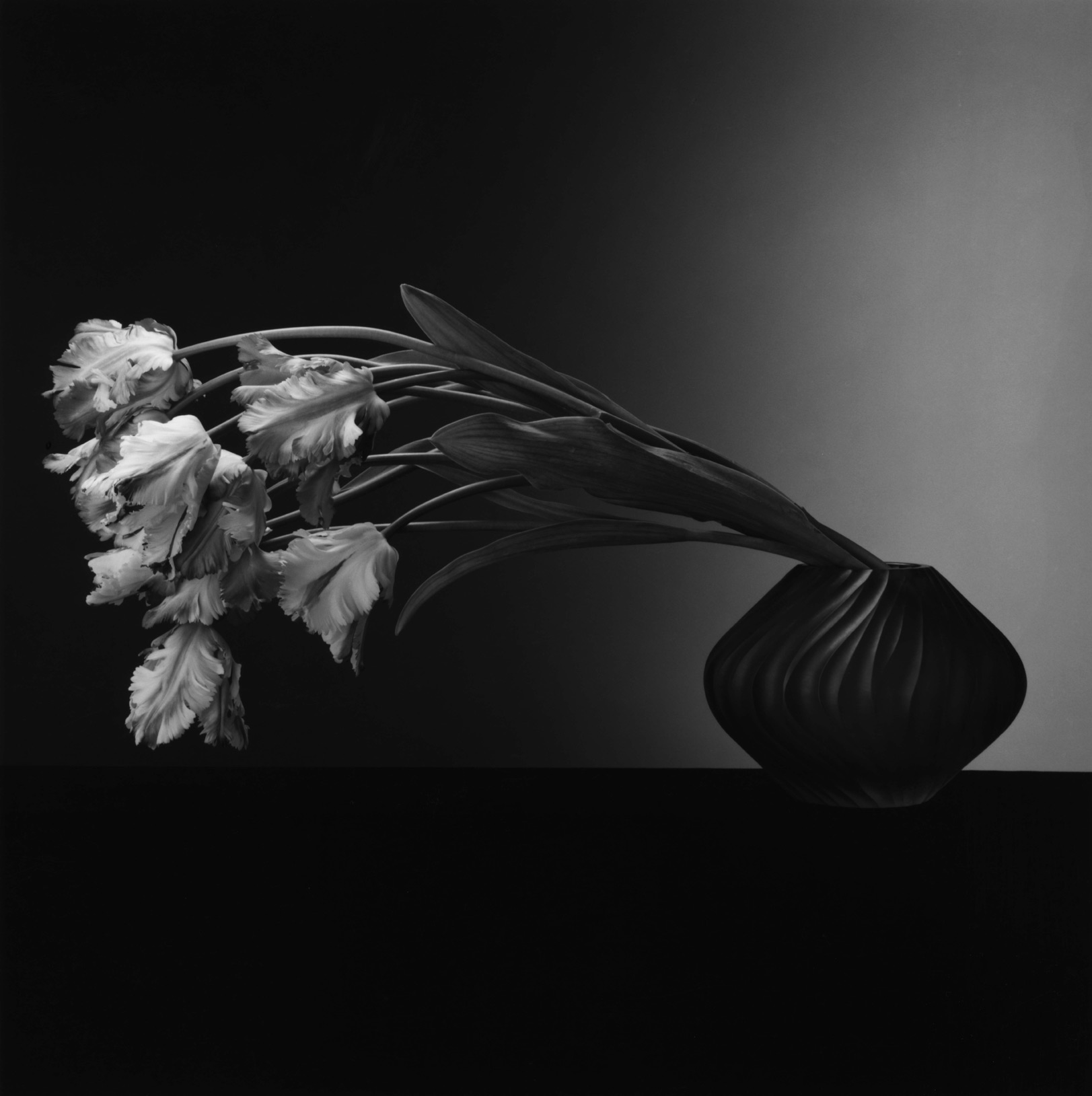
 (American, 1946-1989) 'Parrot Tulips' 1988


Robert Mapplethorpe
 (American, 1946-1989)
Parrot Tulips
Negative 1988; print 1990
49 × 49cm (19 5/16 × 19 5/16 in.)
Jointly acquired by the J. Paul Getty Trust and the Los Angeles County Museum of Art; partial gift of The Robert Mapplethorpe Foundation; partial purchase with funds provided by the J. Paul Getty Trust and the David Geffen Foundation
© Robert Mapplethorpe Foundation


Robert Mapplethorpe (American, 1946-1989) is one of the best-known and most controversial photographers of the second half of the 20th century. As a tastemaker and provocateur, his highly stylised explorations of gender, race, and sexuality became hallmarks of the period and exerted a powerful influence on his contemporaries. In recognition of the 2011 joint acquisition of Mapplethorpe’s art and archival materials with the Getty Research Institute and the Los Angeles County Museum of Art (LACMA), the Getty Museum presents In Focus: Robert Mapplethorpe, on view October 23, 2012 – March 24, 2013 at the J. Paul Getty Museum, Getty Center.

Containing 23 images that date from the early 1970s to the late 1980s, the Getty’s exhibition features key last of edition prints, rarely shown early unique mixed-media objects, and PolaroidsTM, as well as a wide range of subject matter including self-portraits, nudes and still lifes.

Before he took up the camera, Mapplethorpe often used pictures he cut out of magazines as collaged elements to explore sexuality and eroticism. In Leatherman #1 (1970), Mapplethorpe alters a fetishistic image and re- presents it in a shadow box, removing the picture from its original context and elevating it to a homoerotic icon. His early work also reflected the influence of his idol, Andy Warhol, and it is perhaps Warhol’s cover art for the band The Velvet Underground’s 1967 debut album featuring a banana that inspired Banana & Keys (1973), a photograph-in-a-box construction. This object marks a transition in Mapplethorpe’s work between his collages and sculpture and his work as a photographer. Much of the tension is contained in the object’s success as a clever trompe l’oeil.

“The mixed-media objects and PolaroidTM snapshots in the exhibition demonstrate the struggle of a budding artist to find his proper medium of expression and develop his aesthetic vision,” said Paul Martineau, associate curator of photographs at the J. Paul Getty Museum. “However, the carefully crafted gelatin silver and platinum prints make evident Mapplethorpe’s mature style as well as his eye for prints of the highest quality and beauty.”

As Mapplethorpe committed his focus to photography, he began to explore the subjects to which he would return throughout his career – portraits, self-portraits, and nudes. Photographs that feature these subjects are among his best-known, and continue to influence artists today. One of his earliest celebrity portraits, Patti Smith (1975), was carefully staged by Mapplethorpe and Smith, his lifelong friend. Dressed in men’s clothes and channeling the American entertainer Frank Sinatra, Smith broke radically from the image that women in rock were expected to assume, and embodies the androgyny often found in Mapplethorpe’s photographs.

Mapplethorpe also evoked classical themes in his work, particularly in his nude figure studies. Using the motif of the three graces as depicted by artists from ancient Greece to the 19th century, Ken and Lydia and Tyler (1985) features one female and two male models of different racial backgrounds. Mapplethorpe chose a range of skin tones from light to dark in order to invite new, non-binary interpretations of gender, race and sexual orientation.

Concurrent to the Getty’s exhibition, the Los Angeles County Museum of Art will present Robert Mapplethorpe: XYZ, from October 21, 2012 – March 24, 2013. The exhibition presents the 39 black and white photographs that make up the X, Y, and Z Portfolios created by Mapplethorpe and published in 1978, 1978, and 1981, respectively. Taken together, the portfolios summarise his ambitions as a fine-art photographer and contemporary artist.

About Robert Mapplethorpe (1946-1989)

Mapplethorpe was a major cultural figure during a period of tumultuous change who contributed to shaping not only the art of photography but the larger social landscape. His international fame derives from his prolific body of almost 2,000 editioned, large format black-and-white and colour photographs, which have been featured in over 200 solo exhibitions around the world since 1977. Extensively exhibited and widely published, Mapplethorpe’s elegant prints representing portraits, nudes, flowers, and erotic and sadomasochistic subjects dominated photography in the late 20th century. Less known are the over 1,500 PolaroidTM works that Mapplethorpe produced in the early 1970s before he took up the Hasselblad 500 camera given to him in 1975 by Sam Wagstaff, the visionary curator who became Mapplethorpe’s benefactor and mentor.

Widely recognised for the role he played in elevating photography to the level of art, Robert Mapplethorpe always considered himself not only a photographer, but an artist. From 1963 to 1969, Mapplethorpe studied for a B.F.A. at the Pratt Institute, Brooklyn, where he majored in graphic arts and took courses in painting and sculpture – but never attended photography courses. In the late 1960s, he started clipping images from magazines to incorporate into collages. While living at the Chelsea Hotel with his friend and muse, Patti Smith, he borrowed a PolaroidTM camera in 1971 from fellow hotel resident Sandy Daley to create his own images for use in collages. Overshadowed by the power of his later large format photographs, Mapplethorpe’s early drawings, collages and assemblages, created between 1968 and 1972, remain largely unfamiliar, despite the importance they hold in understanding the artist’s formative years.

In the mid-1970s, using the Hasselblad 500, he began photographing participants in New York’s S&M subculture and created many of the strikingly powerful studies for which he is most renowned. He refined his style in the early 1980s and began concentrating on elegant figure studies and delicate floral still lifes, as well as glamorous celebrity portraits. In the late 1980s and early 1990s, his work emerged at the centre of a culture war over the use of public money to support art that some deemed obscene or blasphemous. When some of Mapplethorpe’s more controversial works were exhibited at The Contemporary Arts Center in Cincinnati, director Dennis Barrie was arrested and charged with pandering (a charge of which he was ultimately acquitted after a landmark public trial).

Mapplethorpe died in 1989 at age 42 from complications of AIDS.

Press release from the J. Paul Getty Museum website


Nudes

Mapplethorpe often evoked classical themes in his work, particularly in his nude figure studies. In this image, he began with motif of the Three Graces as depicted by artists from the ancient Greeks to the nineteenth century, but took the reference in fresh directions. 

He selected one female and two male models of different racial backgrounds to achieve a range of skin tones from light to dark and to invite new, non-binary interpretations of gender, race, and sexual preference. Mapplethorpe trained his lens on the models’ conjoined bodies, purposely excluding their heads from the frame. Although he identified his models by name in the title, instead of a portrait, he created an elegant study of form and tone.


Robert Mapplethorpe
 (American, 1946-1989) 'Thomas' Negative 1987; print 1994


Robert Mapplethorpe
 (American, 1946-1989)
Thomas
Negative 1987; print 1994
Jointly acquired by the Los Angeles County Museum of Art, with funds provided by The David Geffen Foundation, and The J. Paul Getty Trust
© Robert Mapplethorpe Foundation


Mapplethorpe’s strong, uncluttered compositions of statuesque male models fused a classical sensibility with homoerotic content at a time when the male nude was not a popular subject among camera artists. In this image, the model’s body is taut with compressed energy, his muscled limbs bent in a way that is reminiscent of those seen on ancient Greek figure vases.


Robert Mapplethorpe
 (American, 1946-1989) 'Ken and Lydia and Tyler Negative' 1985, print 2004


Robert Mapplethorpe
 (American, 1946-1989)
Ken and Lydia and Tyler
Negative 1985, print 2004
Gelatin silver print
5 1/8 x 15 1/16 in.
Jointly acquired by the Los Angeles County Museum of Art, with funds provided by The David Geffen Foundation, and The J. Paul Getty Trust
© Robert Mapplethorpe Foundation


Robert Mapplethorpe
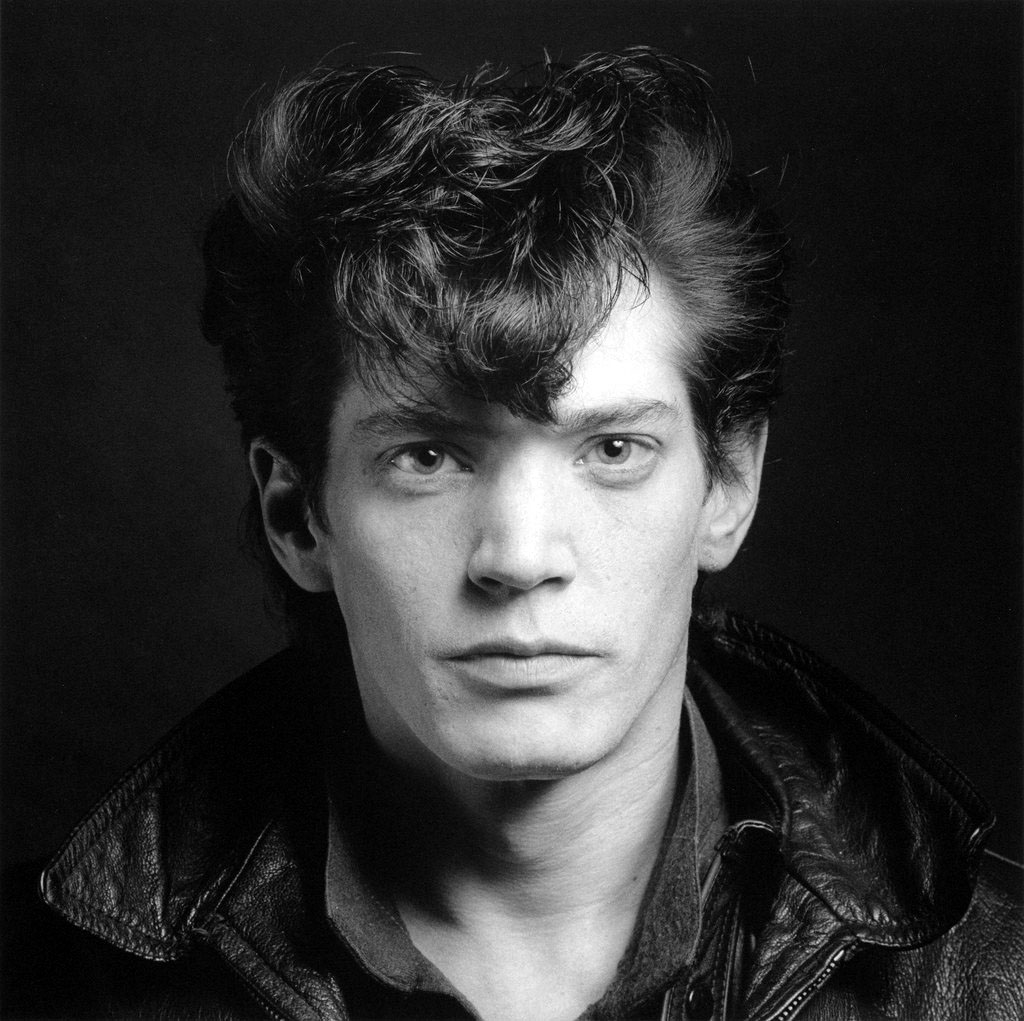
 (American, 1946-1989) 'Self-Portrait' 1980


Robert Mapplethorpe
 (American, 1946-1989)
Self-Portrait
1980
Gelatin silver print
14 x 14 in.
Jointly acquired by The J. Paul Getty Trust and the Los Angeles County Museum of Art. Partial gift of The Robert Mapplethorpe Foundation; partial purchase with funds provided by The J. Paul Getty Trust and the David Geffen Foundation
© Robert Mapplethorpe Foundation


Self Portraits

From 1970 until his untimely death in 1989, Mapplethorpe continually returned to the self-portrait as a means of expression. Despite his elaborate pompadour and face so attractive as to be almost pretty, the artist’s stare in this self-portrait is forceful and direct. Mapplethorpe’s sophisticated use of lighting gives the outlines of his mouth, nostrils, and earlobes a refined, even sculptural quality. The same elements of glamour and striking simplicity for which he is known in his celebrity and fashion portraiture are visible here, including a tightly cropped composition and uncluttered background that further dramatise the face. Mapplethorpe drew on his early commercial work for magazines, including Vogue. This aspect of his career followed the examples of other noted photographers such as Edward Steichen, Irving Penn, Richard Avedon, and Herb Ritts.


Robert Mapplethorpe
 (American, 1946-1989) 'Self-Portrait' 1985


Robert Mapplethorpe
 (American, 1946-1989)
Self-Portrait
1985
Gelatin silver print
15 1/4 x 15 3/16 in.
Jointly acquired by the Los Angeles County Museum of Art, with funds provided by The David Geffen Foundation, and The J. Paul Getty Trust
© Robert Mapplethorpe Foundation


The J. Paul Getty Museum
1200 Getty Center Drive
Los Angeles, California 90049

Opening hours:
Tuesday – Friday, Sunday 10am – 5.30pm
Saturday 10am – 8pm
Monday Closed

The J. Paul Getty Museum website

LIKE ART BLART ON FACEBOOK

Back to top

Exhibition: ‘Robert Mapplethorpe: XYZ’ at The Los Angeles County Museum of Art (LACMA)

Exhibition dates: 21st October 2012 – 24th March 2013


Robert Mapplethorpe (American, 1946-1989) 'Y Portfolio' 1978


Robert Mapplethorpe (American, 1946-1989)
Y Portfolio
1978
37.7 x 35.5 x 4.9cm closed
The J. Paul Getty Museum, Los Angeles, jointly acquired by the J. Paul Getty Trust and the Los Angeles County Museum of Art. Partial Gift of the Robert Mapplethorpe Foundation; partial purchase with funds provided by the David Geffen Foundation and the J. Paul Getty Trust
© Robert Mapplethorpe Foundation


“The X Portfolio centers on men engaged in gay sex, including hard-core sadomasochism. The subject wasn’t entirely new. In Greek vase decorations, Indian miniatures and pagan temple sculptures, candid and highly refined sex pictures, heterosexual and homosexual, have been around since before Alexander the Great and the Mahabharata.”


Christopher Knight, Los Angeles Times Art Critic


Robert Mapplethorpe made photographs of hard-core sadomasochistic gay sex. Robert Mapplethorpe made photographs of hard-core sadomasochistic gay sex. Robert Mapplethorpe made photographs of hard-core sadomasochistic gay sex. Robert Mapplethorpe made photographs of hard-core sadomasochistic gay sex.

A fist up an arse, a finger down the penis, a dildo up the bum. These photographs are seminal images in the work of the artist and yet we never get to see them online. Would it be too shocking for the sensibilities of the gallery or the Robert Mapplethorpe Foundation that these cause célèbre images, five of which were used as evidence in the obscenity trial of Director Dennis Barrie and the Cincinnati Contemporary Arts Center in 1990, were actually seen?

Instead we have two tame representations from the X Portfolio in the posting.

If you go to the slick Robert Mapplethorpe Foundation website, what do you find in the portfolio section: tasteful self portraits, male nudes, female nudes, flowers, portraits, statuary. Nothing to suggest that Mapplethorpe was one of the most transgressive artists of the twentieth century, an artist who documented an essential element of gay culture AS ART, who famously said that there was nothing shown in his photographs that he hadn’t done himself. Not an inkling, not a whisper, not a bull whip up the arse to be found. This is the sanitised vision of the artist – the desire, the pleasure, the release of living, re-shackled under the commercialisation of brand Mapplethorpe.

It’s like the Foundation is afraid of the artist’s shadow. On their website they state that the Foundation was set up by Mapplethorpe in part to protect his work and advance his creative vision. The X Portfolio and his early work are part of that vision, deserving to be seen by everyone – online!

Dr Marcus Bunyan


Many thankx to The Los Angeles County Museum of Art (LACMA) for allowing me to publish some of the photographs in the posting. Please click on the photographs for a a larger version of the image.


Robert Mapplethorpe (American, 1946-1989) 'Cedric, N.Y.C. (X Portfolio)' 1978


Robert Mapplethorpe (American, 1946-1989)
Cedric, N.Y.C. (X Portfolio)
1978
19.5 x 19.5cm
The J. Paul Getty Museum, Los Angeles, jointly acquired by the J. Paul Getty Trust and the Los Angeles County Museum of Art. Partial Gift of the Robert Mapplethorpe Foundation; partial purchase with funds provided by the David Geffen Foundation and the J. Paul Getty Trust
© Robert Mapplethorpe Foundation


Robert Mapplethorpe (American, 1946-1989) 'Irises, N.Y.C. (Y Portfolio)' 1977


Robert Mapplethorpe (American, 1946-1989)
Irises, N.Y.C. (Y Portfolio)
1977
19.5 x 19.5cm
The J. Paul Getty Museum, Los Angeles, jointly acquired by the J. Paul Getty Trust and the Los Angeles County Museum of Art. Partial Gift of the Robert Mapplethorpe Foundation; partial purchase with funds provided by the David Geffen Foundation and the J. Paul Getty Trust
© Robert Mapplethorpe Foundation


Robert Mapplethorpe (American, 1946-1989) 'Jim, Sausalito (X Portfolio)' 1977


Robert Mapplethorpe (American, 1946-1989)
Jim, Sausalito (X Portfolio)
1977
19.5 x 19.5cm
The J. Paul Getty Museum, Los Angeles, jointly acquired by the J. Paul Getty Trust and the Los Angeles County Museum of Art. Partial Gift of the Robert Mapplethorpe Foundation; partial purchase with funds provided by the David Geffen Foundation and the J. Paul Getty Trust
© Robert Mapplethorpe Foundation


Robert Mapplethorpe (1946-1989) 'Joe' 1978


Robert Mapplethorpe (American, 1946-1989)
Joe, N.Y.C
1978
Gelatin silver print
7 11/16 × 7 11/16 in
Los Angeles County Museum of Art
Jointly acquired by the Los Angeles County Museum of Art and The J. Paul Getty Trust; Partial gift of The Robert Mapplethorpe Foundation; partial purchase with funds provided by The David Geffen Foundation and The J. Paul Getty Trust
© Robert Mapplethorpe Foundation


Robert Mapplethorpe (American, 1946-1989) 'Patrice, N.Y.C.' 1977


Robert Mapplethorpe (American, 1946-1989)
Patrice, N.Y.C.
1977
Gelatin silver print
7 11/16 × 7 11/16 in.
Jointly acquired by the Los Angeles County Museum of Art and The J. Paul Getty Trust; Partial gift of The Robert Mapplethorpe Foundation; partial purchase with funds provided by The David Geffen Foundation and The J. Paul Getty Trust
© Robert Mapplethorpe Foundation


Robert Mapplethorpe (American, 1946-1989) 'Helmut, N.Y.C.' 1978


Robert Mapplethorpe (American, 1946-1989)
Helmut, N.Y.C.
1978
Gelatin silver print
7 3/4 × 7 11/16 in.
Jointly acquired by the Los Angeles County Museum of Art and The J. Paul Getty Trust; Partial gift of The Robert Mapplethorpe Foundation; partial purchase with funds provided by The David Geffen Foundation and The J. Paul Getty Trust
© Robert Mapplethorpe Foundation


The Los Angeles County Museum of Art (LACMA) presents three portfolios created by American photographer Robert Mapplethorpe (1946-1989). The exhibition, Robert Mapplethorpe: XYZ, features a total of thirty-nine black-and-white photographs, exploring three subject matters: homosexual sadomasochistic imagery (X, published in 1978); flower still lifes (Y, 1978); and nude portraits of African American men (Z, 1981). LACMA’s presentation will showcase the works in three rows – X above, Y in the middle, and Z along the bottom – an idea which was suggested by Mapplethorpe in 1989.

“Robert Mapplethorpe is among the most important photographic artists of the twentieth century,” comments Britt Salvesen, Department Head and Curator of the Wallis Annenberg Photography Department at LACMA. “The X, Y, and Z portfolios not only defined the artist’s career, but also played a role in an important moment of American cultural politics that is still pertinent to us today.”

This is the first presentation of Mapplethorpe’s work since last year’s widely publicised joint acquisition by LACMA, The J. Paul Getty Museum, and The Getty Research Institute of Mapplethorpe’s art and archives – including over 1,900 editioned prints and over 1,000 non-editioned prints, 200 unique mixed-media objects, over 160 Polaroids, 120,000 negatives, and extensive working materials, ephemera, and documents. The majority of the acquisition originated as a generous gift from the Robert Mapplethorpe Foundation, and the remainder of the funds provided by the David Geffen Foundation and the J. Paul Getty Trust.

Concurrent with the LACMA exhibition, The J. Paul Getty Museum presents In Focus: Robert Mapplethorpe, on view October 23, 2012 – March 24, 2013. This single-gallery exhibition reviews the artist’s work from the early 1970s to the late 1980s, and features editioned prints, rarely seen mixed-media objects, and Polaroids that depict a wide range of subject matter including self-portraits, nudes, and still lifes. A larger Mapplethorpe retrospective, jointly organised by LACMA and the Getty, is planned for 2016.

About the artist

Born in 1946, Robert Mapplethorpe grew up in the suburban area of Floral Park, Queens. As a student at the Pratt Institute in New York, he studied drawing, painting, and sculpture and experimented with various materials in mixed-media collages. When Mapplethorpe acquired a Polaroid camera in 1970, he began incorporating his own photos into his constructions. His first solo gallery exhibition, Polaroids, took place at Light Gallery in New York City in 1973.

Two years later he transitioned from the Polaroid to a Hasselblad medium format camera and began shooting his circle of friends and acquaintances. His subjects – artists, musicians, socialites, pornographic film stars, and members of the S & M underground – came from a variety of backgrounds. Mapplethorpe’s interest in documenting the New York S&M scene was strongest in the late 1970s, when he produced photographs with shocking content but remarkable technique and formal mastery. In 1978, the Robert Miller Gallery in New York City became his exclusive dealer. Throughout the 1980s, Mapplethorpe produced images that challenged and adhered to classical aesthetic standards including stylised compositions of male and female nudes, delicate flower still lifes, and studio portraits of artists and celebrities. He explored and refined different techniques and formats – including colour 20″ x 24″ Polaroids, photogravures, platinum prints on paper and linen, Cibachrome and dye transfer colour processes – but gelatin silver printing remained his primary medium.

In 1986, Robert Mapplethorpe was diagnosed with AIDS. Despite his illness, he accelerated his creative efforts, broadened the scope of his photographic inquiry, and accepted numerous commissions. The Whitney Museum of American Art mounted his first major American museum retrospective in 1988, one year before his death in 1989. Beyond the art historical and social significance of his work, his legacy lives on through the work of Robert Mapplethorpe Foundation, which he established in 1988 to promote photography, support museums that exhibit photographic art, and to find medical research in the fight against AIDS and HIV related infection.

Exhibition history

Mapplethorpe’s work has historically provoked strong reactions, most notably during the so-called Culture Wars of the 1980s, a period of conflict between conservative and liberal factions. The traveling retrospective, The Perfect Moment, opened at the Institute of Contemporary Art in Philadelphia in 1988. Among the 150 photographs and objects in the show were the sadomasochistic imagery of Mapplethorpe’s X portfolio, as well as the Y and Z portfolios; the show appeared in two venues without any incident. When it was due to open at the Corcoran Gallery of Art in Washington, D.C., during the summer of 1989, politicians who opposed federal funding for the arts became alarmed. The Corcoran canceled the exhibition, resulting in a protest against the gallery’s withdrawal of the show. Controversy ensued further at a subsequent venue, the Contemporary Arts Center in Cincinnati, where charges of obscenity were brought against director David Barrie. In this high-profile trial, five images from the X portfolio were used as evidence. Barrie was acquitted, and Mapplethorpe has been linked to debates about censorship ever since.

Press release from The Los Angeles County Museum of Art (LACMA) website


Robert Mapplethorpe (American, 1946-1989) 'Carnation, N.Y.C. (Y Portfolio)' 1978


Robert Mapplethorpe (American, 1946-1989)
Carnation, N.Y.C. (Y Portfolio)
1978
19.5 x 19.5cm
The J. Paul Getty Museum, Los Angeles, jointly acquired by the J. Paul Getty Trust and the Los Angeles County Museum of Art. Partial Gift of the Robert Mapplethorpe Foundation; partial purchase with funds provided by the David Geffen Foundation and the J. Paul Getty Trust
© Robert Mapplethorpe Foundation


Robert Mapplethorpe (American, 1946-1989) 'Alistair Butler, N.Y.C. (Z Portfolio)' 1980


Robert Mapplethorpe (American, 1946-1989)
Alistair Butler, N.Y.C. (Z Portfolio)
1980
Gelatin Silver Print
19.5 x 19.5cm
The J. Paul Getty Museum, Los Angeles, jointly acquired by the J. Paul Getty Trust and the Los Angeles County Museum of Art. Partial Gift of the Robert Mapplethorpe Foundation; partial purchase with funds provided by the David Geffen Foundation and the J. Paul Getty Trust
© Robert Mapplethorpe Foundation


Robert Mapplethorpe (American, 1946-1989) 'Leigh Lee, N.Y.C. (Z Portfolio)' 1980


Robert Mapplethorpe (American, 1946-1989)
Leigh Lee, N.Y.C. (Z Portfolio)
1980
Gelatin Silver Print
19.5 x 19.5cm
The J. Paul Getty Museum, Los Angeles, jointly acquired by the J. Paul Getty Trust and the Los Angeles County Museum of Art. Partial Gift of the Robert Mapplethorpe Foundation; partial purchase with funds provided by the David Geffen Foundation and the J. Paul Getty Trust
© Robert Mapplethorpe Foundation


Robert Mapplethorpe (American, 1946-1989) 'Philip Prioleau, N.Y.C.' 1979


Robert Mapplethorpe (American, 1946-1989)
Philip Prioleau, N.Y.C.
1979
Gelatin silver print
7 1/2 × 7 7/16 in. (19.05 × 18.89cm)
Jointly acquired by the Los Angeles County Museum of Art and The J. Paul Getty Trust; Partial gift of The Robert Mapplethorpe Foundation; partial purchase with funds provided by The David Geffen Foundation and The J. Paul Getty Trust
© Robert Mapplethorpe Foundation


Robert Mapplethorpe (American, 1946-1989) 'Rose, N.Y.C. (Y Portfolio)' 1977


Robert Mapplethorpe (American, 1946-1989)
Rose, N.Y.C. (Y Portfolio)
1977
Gelatin silver print
Image 19.5 x 19.5cm
The J. Paul Getty Museum, Los Angeles, jointly acquired by the J. Paul Getty Trust and the Los Angeles County Museum of Art. Partial Gift of the Robert Mapplethorpe Foundation; partial purchase with funds provided by the David Geffen Foundation and the J. Paul Getty Trust
© Robert Mapplethorpe Foundation


Robert Mapplethorpe (American, 1946-1989) 'Tulips' 1978


Robert Mapplethorpe (American, 1946-1989)
Tulips
1978
Gelatin silver print
7 11/16 × 7 3/4 in. (19.53 × 19.69cm)
Jointly acquired by the Los Angeles County Museum of Art and The J. Paul Getty Trust; Partial gift of The Robert Mapplethorpe Foundation; partial purchase with funds provided by The David Geffen Foundation and The J. Paul Getty Trust
© Robert Mapplethorpe Foundation


Robert Mapplethorpe (American, 1946-1989) 'Z Portfolio' 1978


Robert Mapplethorpe (American, 1946-1989)
Z Portfolio
1978
37.7 x 35.5 x 4.9 cm closed
The J. Paul Getty Museum, Los Angeles, jointly acquired by the J. Paul Getty Trust and the Los Angeles County Museum of Art. Partial Gift of the Robert Mapplethorpe Foundation; partial purchase with funds provided by the David Geffen Foundation and the J. Paul Getty Trust
© Robert Mapplethorpe Foundation


Los Angeles County Museum of Art (LACMA)
5905 Wilshire Boulevard (at Fairfax Avenue)
Los Angeles, CA, 90036
Phone: 323 857-6000

Opening hours:
Monday, Tuesday, Thursday: 11am – 5pm
Friday: 11am – 8pm
Saturday, Sunday: 10am – 7pm
Closed Wednesday

LACMA website

LIKE ART BLART ON FACEBOOK

Back to top

Text: ‘The defining of Apollonian and Dionysian ideals in images of the male body’ Dr Marcus Bunyan / Exhibition: ‘Robert Mapplethorpe’ at the Ludwig Museum of Contemporary Art, Budapest

Exhibition dates: 25th May – 30th September 2012


F. Holland Day (American, 1864-1933) 'The Vision (Orpheus Scene)' 1907


F. Holland Day (American, 1864-1933)
The Vision (Orpheus Scene)
1907
Platinum print
24.4 x 18.4cm (9 5/8 x 7 1/4 in.)


“Perfection means you don’t question anything about the photograph. There are certain pictures I’ve taken in which you really can’t move that leaf or that hand. It’s where it should be, and you can’t say it could have been there. There is nothing to question as in a great painting. I often have trouble with contemporary art because I find it’s not perfect. It doesn’t have to be anatomically correct to be perfect either. A Picasso portrait is perfect. It’s just not questionable. In the best of my pictures, there’s nothing to question – it’s just there.”


Robert Mapplethorpe


Written in 1996 (but never published until now), this is one of my earliest pieces of research and writing. While it is somewhat idealistic in many ways, hopefully this piece still has some relevance for the reader for there are important ideas contained within the text. It examines the Apollonian and Dionysian ideals in images of the male body by 4 gay photographers: Baron Wilhelm von Gloeden, F. Holland Day, Minor White, and Robert Mapplethorpe.


The defining of Apollonian and Dionysian ideals in images of the male body

Photography has portrayed the Apollonian and Dionysian ideals of the body throughout its history, but has never fully explored the theoretical implications and consequences of this pairing. Our presentation of the body says precise things about the society in which we live, the degree of our integration within that society and the controls which society exerts over the innerman.1 My research concentrated on how images of the male body, as a representation of the Self / Other split, have been affected by these ideals.

We can clearly define the Apollonian (beauty, perfection, obsession, narcissism, voyeurism, idols, fascism, frigid, constraint, oppression, the defined, the personalised, an aggression of the eye linked to greed and desire) and Dionysian (ecstasy, eroticism, hysteria, energy, anarchy, promiscuity, death, emotion, bodily substances and the universal). In reality the boundaries between these ideals are more ambiguous.

For example, in the work of the American photographer Fred Holland Day we see allegorical myths portrayed by beautiful youths, many of which to modern eyes have a powerful homoerotic quality.

“In close proximity to eroticism associated with homosocial bonding and sexuality, these pictures were infused with desire and anxiety, repulsion and attraction … Day’s male nudes possess the aesthetic trappings of refined art and high culture … but also contain a frisson of impending sexual release and bodily pleasure, to say nothing of their sado-erotic inflection and paedophilic associations.”2


According to some critics,3 societies acceptance of photographs of Apollonian or Orphic (Dionysian) youths [see 2 different critical views]4 in that era (the fin de siecle of the nineteenth century and the early years of the twentieth century), was based on what was seen as their chaste, idyllic nature. They represented ‘ephebes’ – males who were between boy and man – who posed no threat to the patriarchal status quo. To other critics5 these ‘ephebes’ present a challenge to the construction of heterosexual / homosexual identity along gender lines, echoing Foucault’s thoughts on the imprisoning nature of categories of sexual identity.6

For Day, physical beauty was the testimony of a transcendent spirit.7 His portraits tried to uncover the true spirit of his subjects, revealing what was hidden behind the mask of e(x)ternal beauty. But what was being revealed? Was it the subject’s own spiritual integrity, his true self, or a false self as directed by the photographer whose instructions he was enacting? Was it F. Holland Day’s erotic fantasies the subject was acting out, or was it a perception of his own identity or a combination of both? These works show Day as both director and collaborator, his idols equally unattainable and available, resilient and vulnerable. In portraying this beauty, was Day embracing a seductive utopia in which this Apollonian beauty leads away from the very Dionysian spirit he was trying to engage with?

At around the same time a Prussian named Baron Wilhelm von Gloeden was also taking photographs of scantily clad local peasant youths, based on Arcadian themes. “In von Gloeden’s perception of the world human figures are not in themselves merely erotic, but become aesthetic objects … a setting in which beautiful things are the content of the image.”8

While this may be true, the focus of the images is always on what Von Gloeden desired, his full frontal nudes drawing our eyes to the locus of sexual desire, the penis. Von Gloeden’s “transformation of ordinary working class boys into the very image of antique legend,”9 the conjunction of the Apollonian and the Dionysian, blurs the distinctions between the two. Both Day and Von Gloeden were wealthy, educated, influential men who had a desire for working class boys. Did they help create an erotic tension across class lines and effect a particular Camp taste when society at that time (the first decade of the 20th century) was beginning to define areas of sexual categorisation that would label gay men perverts and degenerates? Even today, comparing contemporary critical analysis of Von Gloeden’s photographs can produce vastly differing conceptualisations as to the evidence of sexual overtones:

“The distinction between form and sexual attractiveness is tenuously maintained and the expression of the subjects’ face suggests a lofty remoteness rather than sexual availability or provocativeness.”10

“Von Gloeden’s pictures are fairly specific in depicting erotically based encounters between Mediterranean males. In many of them, the gazes shared between young men or the suggestive relationships of figure to figure hint at activities that might take place beyond the cameras range.”11


For Day and Von Gloeden the need to possess something beautiful, something that was taboo, compensated both photographers for something they had lost – their youth. This transfers their death onto the object of their possession; the beautiful youths ‘captured’ in their photographs. Georges Bataille links eroticism to the inner life of man, the true self, and the eroticism of these photographs opens the way to a viewing of death and allows the photographer the power to look death in the face. According to Bataille, possession of something beautiful negates our need to die because we have objectified our need in someone else.12

What we know and understand about the world is partially built on images that are recorded, interpreted and imprinted in our brains as the result of the experiences we encounter throughout our lives. Our memory is forever fragmenting our remembered reality. It provides us with a point of view of the reality of the world in which we live and on which our identities are formed. When we look at a photograph we (sub)consciously bring all of our social encultration, our hates, our desires and our spirit to bear on the definition of that photograph at the time of viewing (an each viewing can be different!). Inherently embedded in any photograph then, are all these Dionysian stirrings – of desire, of eroticism, of death and of memory. Even if the photograph is entirely Apollonian in content the definition of that photograph can be open to any possibility, by any body.

One photographer who sought to access, and have connection to, fundamental truths was the American photographer Minor White. Studying Zen Buddhism, Gurdjieff and astrology, White believed in the photographs’ connection to the subject he was photographing and the subject’s connection back via the camera to the photographer forming a holistic circle.13 When, in meditation, this connection was open he would then expose the negative in the camera hopeful of a “revelation” of spirit in the subsequent photograph. White feared public exposure as a homosexual and struggled for years to resist the shame and disgust he felt over his sexual desires. Very few of his male portraits were exhibited during his lifetime, his Dionysian urgings difficult to reconcile with or assimilate into his images of peace and serenity, images that urged unity of self and spirit, of yin and yang. In the East yin / yang is both / and, being transformable and interpenetrating whilst in the West black / white is either/or not both, being exclusive and non-interactive. But who is to say what is ugly or what is beautiful? What is black or what is white?

In the work of the American photographer Robert Mapplethorpe, we can see the formalised classical aesthetic of beauty combined with content which many people are repelled by (pornography, sexuality, violence, power) creating work which is both Apollonian and Dionysian.14 Peoples’ disgust at the content of some of Mapplethorpe’s images is an Apollonian response, an aesthetic judgement, a backing away from a connection to ‘nature’, meaning ‘that which is born’. Mapplethorpe said, “I’ve done everything I show in my photographs,”15 revealing a connection to an inner self, regardless of whether he intended to shock. Those seeking suppression of Mapplethorpe’s photographs, mainly conservative elements of society, cite the denigration of moral values as the main reason for their attacks. However Mapplethorpe’s S&M photographs sought to re-present the identity of a small subculture of the gay community that exists within the general community and by naming this subculture he sought to document and validate its existence. The photograph can and does lie but here was the ‘truth’ of these Dionysian experiences, which conservative bigots could not deny – that they exist.

In the NEA/Cincinnati Contemporary Arts Center controversy surrounding Mapplethorpe16 his work was defended on aesthetic grounds, not on the grounds of homoerotic content, of freedom of expression or artistic freedom. The classical Apollonian form of his images was emphasised. As one juror put it, “Going in, I would never have said the pictures have artistic value. Learning as we did about art, I and everyone else thought they did have some value. We are learning about something ugly and harsh in society.”17 Ugly and harsh. To some people in the world S&M scenes are perfectly natural and beautiful and can lead to the most transcendent experience that a human being can ever have in their life. Who is to decide for the individual his or her freedom to choose?

This Apollonian fear of the Dionysian ‘Other’, the emotional chaotic self, was found to involve fear of that which is potentially the ‘same as’ – two sides of the same coin. This fear of ‘the same’, or of the proximity of the same, or of the threat of the same, can lead to violence, homophobia, racism and bigotry. Mapping out sexual identities’ toleration of difference, which is ‘the same as’, recognises that there are many different ways of being, and many truths in the world.


In conclusion I have determined that the definition of Apollonian and Dionysian ideals in images of the male body are at best ambiguous and open to redefinition and reinterpretation. The multiplicity of readings that can be attached to images of the male body, in different eras, by different people illustrates the very problematic theoretical area these images inhabit. As we seek to ‘name’, to categorise, to nullify the ‘Other’ as a Dionysian connection to earth and nature, it may cause an alienated ‘Self’ to revolt against Apollonian powers of control in order to break down the lived distance that divides people. This creates situations / encounters / experiences that are regarded as transgressive and a threat to the hegemonic fabric of society.

But do these experiences offer an alternative path for the evolution of the human race? Not the replacing of one patriarchal, capitalist system with another based on ecstatic spiritual consciousness but perhaps a more level playing field, one based on a horizontal consciousness (a balance between Apollonian and Dionysian), a ‘knowing’ and understanding, a respect for our self and others. My claim as an’Other’ is that these perceived transgressions, not just the binary either / or, may ultimately free human beings and allow them to experience life and grow. Where nothing is named, everything is possible.

Marcus Bunyan 1996


1/ Blain, Robert. The Decorated Body. London: Thames & Hudson, 1979, p. 5, Introduction
2/ Crump, James. F. Holland Day – Suffering the Ideal. Santa Fe: Twin Palms, 1995, p. 11
3/ Foster, Alasdair. Behold The Man – The Male Nude In Photography. Edinburgh: Stills, 1989, p. 9
4/ Jussim, Estelle. Slave To Beauty – The Eccentric Life And Controversial Career of F. Holland Day, Photographer, Publisher, Aesthete. Boston: Godine, 1981, pp. 175-176; Ellenzweig, Allan. The Homoerotic Photograph. New York: Columbia University, 1992, p. 59
5/ Ellenzweig, p. 59
6/ Weeks, Jeffrey. Against Nature:  Essays on history, sexuality and identity. London: Rivers Osram Press, 1991, p. 164
7/ Day, F. Holland. “Is Photography An Art?” p. 8, quoted in Crump, James. F. Holland Day – Suffering The Ideal. Santa Fe: Twin Palms, 1995, p. 20
8/ Ellenzweig, p. 39
9/ Leslie, Charles. Wilhelm von Gloeden, Photographer. New York: Soho Photographic, 1997, p. 86
10/ Dutton, Kenneth R. The Perfectible Body. London: Cassell, 1995, p. 95
11/ Ellenzweig, p. 43
12/ Bataille, Georges. Death And Sensuality. New York: Walker And Company, 1962, p. 24
13/ Bateson, Gregory. Steps To An Ecology Of Mind – Collected Essays On Anthropology, Psychiatry, Evolution And Epistemology. St. Albans: Paladin, 1973
14/ Danto, Arthur C. Mapplethorpe – Playing With The Edge. Essay. London: Jonathon Cape, 1992, p. 331
15/ Interview with Robert Mapplethorpe quoted in Cooper, Emmanuel. The Sexual Perspective. London: Routledge, 1986, p. 286
16/ Ellenzweig, p. 205, Footnote 1
17/ Cembalest, Robin. “The Obscenity Trial: How They Voted To Acquit,” in Art News December 1990 89 (10), p. 141 quoted in Ellenzweig, p. 208


Many thankx to the Ludwig Museum of Contemporary Art for allowing me to publish the photographs in the posting. Please click on the photographs for a larger version of the image.


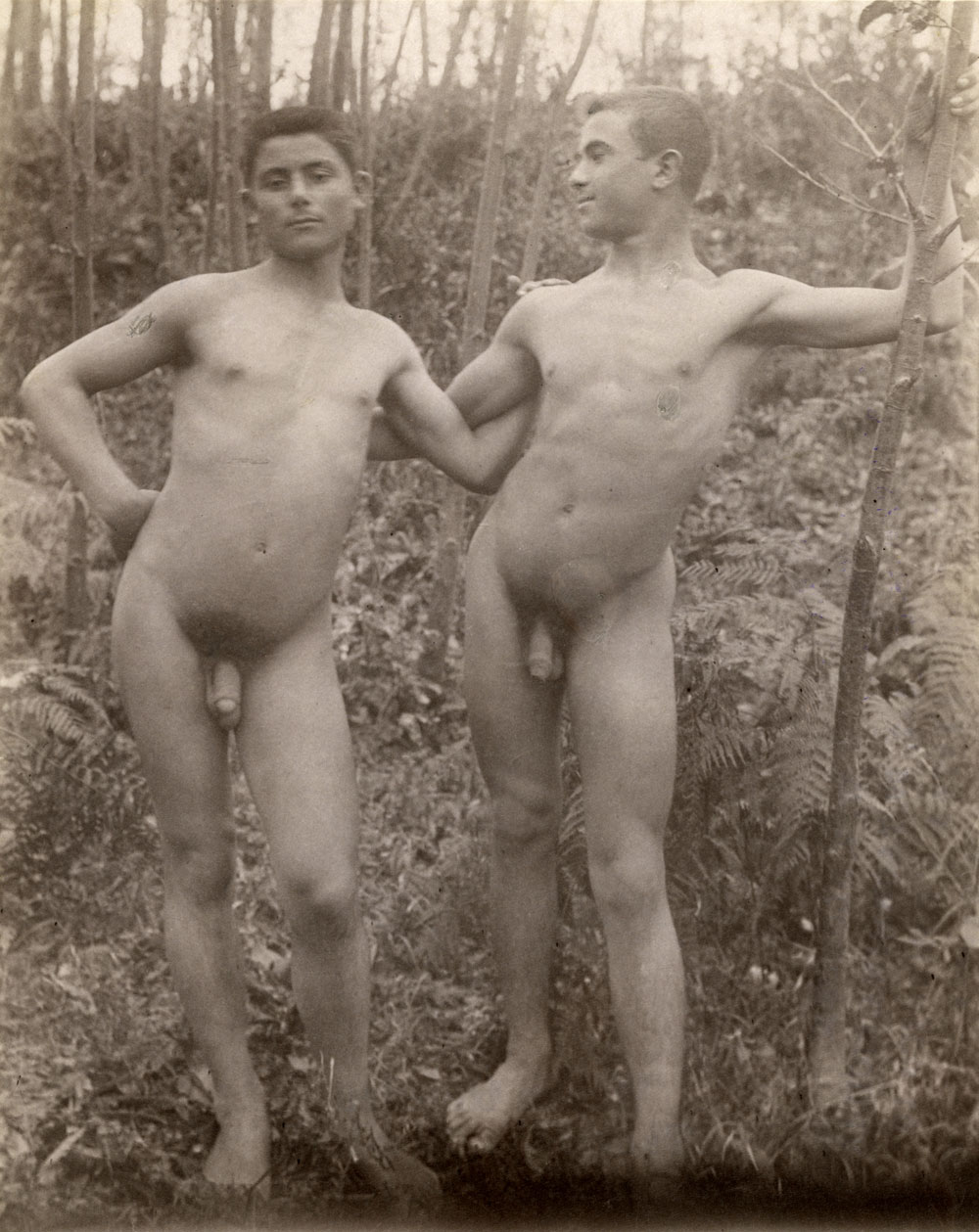
Baron Wilhelm von Gloeden (German, 1856-1931) 'Two nude men standing in a forest' Taormina, Sicily, 1899


Baron Wilhelm von Gloeden (German, 1856-1931)
Two nude men standing in a forest
Taormina, Sicily, 1899
Albumen print


Minor White (American, 1908-1976) 'Arches of the Dodd Building (Southwest Front Avenue and Ankeny Street)' 1938


Minor White (American, 1908-1976)
Arches of the Dodd Building (Southwest Front Avenue and Ankeny Street)
1938
Gelatin silver print


Minor White (American, 1908-1976) 'Tom Murphy (San Francisco)' 1948


Minor White (American, 1908-1976)
Tom Murphy (San Francisco)
1948
Gelatin silver print


Robert Mapplethorpe (American, 1946-1989) 'Self Portrait' 1975


Robert Mapplethorpe (American, 1946-1989)
Self Portrait
1975
Gelatin silver print
© Robert Mapplethorpe Foundation. Used with permission


Robert Mapplethorpe (American, 1946-1989) 'Derrick Cross' 1983


Robert Mapplethorpe (American, 1946-1989)
Derrick Cross
1983
Gelatin silver print
© Robert Mapplethorpe Foundation. Used with permission


Robert Mapplethorpe (American, 1946-1989) 'Thomas' 1987


Robert Mapplethorpe (American, 1946-1989)
Thomas
1987
Gelatin silver print
© Robert Mapplethorpe Foundation. Used with permission


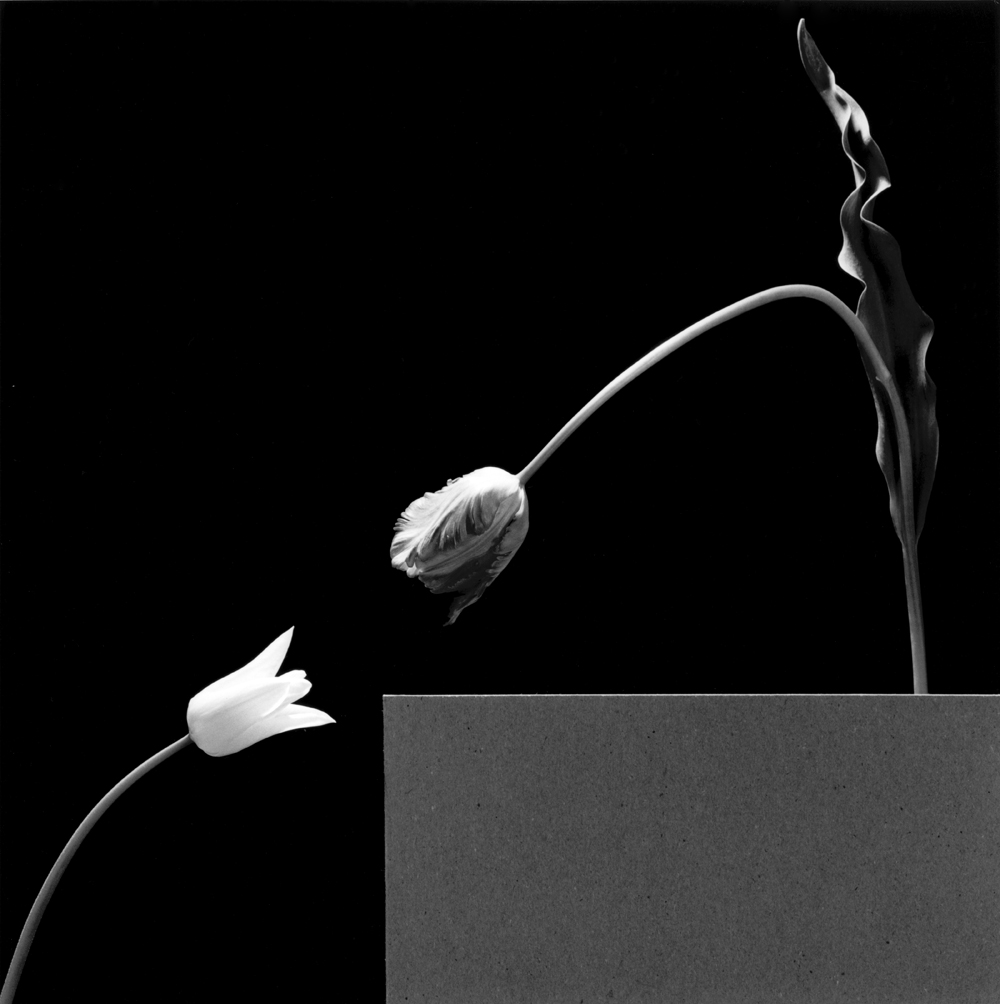
Robert Mapplethorpe (American, 1946-1989) 'Two Tulips' 1984


Robert Mapplethorpe (American, 1946-1989)
Two Tulips
1984
Gelatin silver print
© Robert Mapplethorpe Foundation. Used with permission


A renowned figure of contemporary photography, Robert Mapplethorpe (1946-1989) was in his element in a domain defined by conventions and revolt, classicism and non-conformist cultures, where each picture serves as a document of hard-fought identities, as well as inciting and recording social and artistic debates. The Ludwig Museum Budapest features nearly two hundred works by Robert Mapplethorpe, from his early Polaroid photos to pieces from his final years. Realised in collaboration with the Robert Mapplethorpe Foundation New York, this large-scale exhibition is presented to a Hungarian audience for the first time.

Initially, Mapplethorpe had no intention of becoming a photographer. His early collages and altar-like installations incorporated found elements including photos from magazines. Seeking to give these works a more personal and perfect touch, he decided to shoot the photos himself. His major subjects were his immediate environment and personal desires: the alternative circles of the New York art scene, his identity as a homosexual, non-traditional forms of sexuality, and the communities organised around them. The New York of the seventies was a great melting pot of contiguous subcultures, sexual freedom, post-Pop and rock’n’roll. Mapplethorpe’s environment included Andy Warhol and his entourage from the Factory, the superstars of his films as well as the inhabitants of the legendary Chelsea Hotel, who inspired his art and became part of his audience.

His portraits of famous individuals and those longing for fame also positioned their photographer within their circle. He was a renowned artist seeking to establish relationships with people who stand out, one way or another, from the rest of society, without submitting himself to them. Posing for his camera were film stars, musicians, writers and visual artists, the celebrities and central figures of New York in the seventies and eighties, including pornographic film stars and body builders. He made engaging and elegant portraits attesting to his intense attention, humour, and ambition toward a sense of the monumental.

Mapplethorpe developed an increasingly committed and professional attitude to photography. His quest for the perfect image led him to classical compositions and subjects. While precision of forms and a quality of reserve were combined in his works, his intense attention to his models remained unchanged; he photographed torsos and floral still-lifes with the same cool professionalism. His nudes evoke classical Greek statues and Renaissance masterpieces, with their arrangement and sculptural approach to the body dating back to traditions that have existed for several hundred years. Such an incarnation of classical formalism, however, was juxtaposed with shocking new subjects and stark sexual fetishes, resulting in radical re-creations of the approach to tradition.

The perfect image called for the perfect body: his shots of black men, female body-builders and austere flowers seem to articulate his one and only vision, again and again. He almost always worked in the studio, most often in black and white, using increasingly defined tones. With unified backgrounds and balance of forms, his photos remove the subjects from their own realities to relocate them in the timeless, frozen space of the photograph. In terms of their statue-like beauty and rigorous composition of every detail, his pictures continue and renew the classical photographic tradition all at once. Such classical virtues, however, did not make these photos exempt from criticism: both his subject matter and their manner of presentation sparked controversy. Their sexual themes aroused unease, and criticism of the work failed to make a distinction between the statue-like beauty of body parts and torsos, the sexual stereotypes associated with black male bodies, and the objectification of the bodies.

Mapplethorpe’s works created a place for homosexual and S&M identities in the domain of high art, subverting conventions, transgressing unspoken social agreements and revealing prejudices, in line with the artist’s personal desires and self-definition. In the United States, during the eighties, in the first moments of horror in the face of AIDS, the condemnation of homosexuality and the undefined dread of the disease became entwined. Such developments stirred up the already intense controversies around Mapplethorpe’s photos, adding a new overtone to the voice of conservative protesters. (Mapplethorpe was diagnosed with AIDS in 1986, and he died in the spring of 1989 due to complications related to the disease).

The cultural-political debates of the so-called Culture Wars in the late 1980s and 1990s in the United States, fuelled the decision of the Corcoran Gallery of Art in Washington, D.C., to cancel its leg of the travelling exhibition “The Perfect Moment,” which included several thought-provoking photos that the conservative right-wing had denounced as obscene and arrogant assaults on public taste. A long and heated debate was to follow, including both hysterical and absurd commentaries, triggering police actions and a trial against a subsequent venue, the Contemporary Arts Center in Cincinnati as well as its director. Though the museum and its director were eventually cleared of all charges, the case continued to shape the cultural-political landscape in the US, which partly concluded in a revision of the public funding of artworks and is still referred to today as an outstanding example of the methodology of censorship.

Press release from the Ludwig Museum of Contemporary Art website


Robert Mapplethorpe (American, 1946-1989) 'Ken Moody and Robert Sherman' 1984


Robert Mapplethorpe (American, 1946-1989)
Ken Moody and Robert Sherman
1984
Gelatin silver print
© Robert Mapplethorpe Foundation. Used with permission


Robert Mapplethorpe (American, 1946-1989) 'Untitled' c. 1973


Robert Mapplethorpe (American, 1946-1989)
Untitled
c. 1973
Gelatin silver print
© Robert Mapplethorpe Foundation. Used with permission


Robert Mapplethorpe (American, 1946-1989) 'Lisa Lyon' 1982


Robert Mapplethorpe (American, 1946-1989)
Lisa Lyon
1982
Gelatin silver print
© Robert Mapplethorpe Foundation. Used with permission


Robert Mapplethorpe (American, 1946-1989) 'Ajitto' 1981


Robert Mapplethorpe (American, 1946-1989)
Ajitto
1981
Gelatin silver print
© Robert Mapplethorpe Foundation. Used with permission


Robert Mapplethorpe (American, 1946-1989) 'Self Portrait' 1988


Robert Mapplethorpe (American, 1946-1989)
Self Portrait
1988
© Robert Mapplethorpe Foundation. Used with permission


Ludwig Museum of Contemporary Art
1095 Budapest  Komor Marcell Street 1
Hungary 06 1 555-3444

Opening hours:
Tuesday – Sunday 10.00 – 20.00
Closed on Mondays

Ludwig Museum of Contemporary Art website

LIKE ART BLART ON FACEBOOK

Back to top

Text/Exhibition: “George Platt Lynes, Minor White and ‘The Temptation of Saint Anthony Is Mirrors’ ” on the exhibition ‘HIDE/SEEK: Difference and Desire in American Portraiture’ at the Brooklyn Museum, New York

Exhibition dates: 18th November 2011 – 12th February 2012


Minor White (American, 1908-1976) 'Tom Murphy (San Francisco)' 1948


Minor White (American, 1908-1976)
Tom Murphy (San Francisco)
1948
from The Temptation of St Anthony is Mirrors 1948
Gelatin silver print
4 5/8 x 3 5/8 in. (11.7 x 9.2cm)
The Minor White Archive, Princeton University Art Museum Bequest of Minor White, MWA 48-136
© Trustees of Princeton University


“The possibility of using our bodies as a possible source of very numerous pleasures is something that is very important. For instance, if you look at the traditional construction of pleasure, you see that bodily pleasure, or pleasures of the flesh, are always drinking, eating and fucking. And that seems to be the limit of the understanding of our bodies, our pleasures ….

It is very interesting to note, for instance, that for centuries people generally, as well as doctors, psychiatrists, and even liberation movements, have always spoken about desire, and never about pleasure. “We have to liberate our desire,” they say. No! We have to create new pleasure. And then maybe desire will follow.” (My bold)


Michel Foucault 1


George Platt Lynes, Minor White and The Temptation of Saint Anthony Is Mirrors

I had the great privilege of visiting The Minor White Archive at Princeton University while I was researching for my PhD. While there I studied the work cards and classic prints of the great photographer, paying particular attention to his photography of the male. What was a great surprise and delight to me were the presence of photographs of explicit sexual acts, men photographed with erections – images that have, to my knowledge, never been published. I don’t think that many people would even know that Minor White took such photographs. Although these images would have never been for public consumption it is still very unusual to find a classical photographer with such a public profile taking photographs of erect penises, especially in the 1940s!

Disturbed by having been in battle in the Second World War and seeing some of his best male friends killed, White’s early photographs of men (in their uniforms) depict the suffering and anguish that the mental and physical stress of war can cause. He was even more upset than most because he was battling his own inner sexual demons at the same time, his shame and disgust at being a homosexual and attracted to men, a difficulty compounded by his religious upbringing. In his photographs White both denied his attraction to men and expressed it. His photographs of the male body are suffused with both sexual mystery and a celebration of his sexuality despite his bouts of guilt. After the war he started to use the normal everyday bodies of his friends to form sequences of photographs, sometimes using the body as a metaphor for the landscape and vice versa. In the above photograph (Tom Murphy, left), based on a religious theme, we see a dismembered hairy body front on, the hands clutching and caressing the body, the lower hand hovering near the exposed genitalia, the upper hand cupping the breast. We see the agony and ecstasy of a homoerotic desire cloaked in a religious theme.

The image comes from the The Temptation of St Anthony is Mirrors (1948), four pages of which can be seen below. While at The Minor White Archive I looked at the only complete, undamaged book in existence. What an experience!

The book has a powerful and intense presence. It was beautifully sequenced as you would expect from Minor White and features photographs of Tom Murphy. There is a series of his hands over the back of a chair in different positions: hanging, curled, splayed, held slightly upwards, and these are paired with photographs of bare feet and turned up jeans, bare feet and rocks, and three other photographs of Tom Murphy. In an excellent paper Cruising and Transcendence in the Photographs of Minor White (Nd. Later published as an online-only feature accompanying Aperture magazine’s Spring 2015 issue, “Queer”), author Kevin Moore observes that the hand-bound volume with images paired on facing pages – “mirrors” to both one another and the artist – is a personal account as well as a meditation on the sins of the flesh.

“Temptation (which was never published or exhibited) begins with a sort of prologue, comprising a single full-length nude of Tom Murphy, White’s student and the model most commonly associated with his work. The pose is similar to those found in the beefcake pictures White was producing at this time: Murphy adopts a classical contrapposto stance and is entirely nude, his pale, wiry body positioned against a dark backdrop. A piece of driftwood at the model’s feet proposes a theme of innocence – man in his natural state. The sequence then moves to pairings of images describing man in his civilised state, featuring several loving close-ups of Murphy’s gesturing hands, a shot of his bare feet, and a single shoulder-length portrait, in which he wears a buttoned shirt and looks intently off to the side. Next, there is an interlude suggesting growing dissolution: an image of Murphy’s feet and a petrified stone is paired with a shot of Murphy in full dress slouched on a mass of rocks and staring vacantly off into the distance. The next pairing (images 9 and 10 below) accelerates the descent into temptation. Here, the pose in a second picture of Murphy’s feet suggests agitation, while a three-quarter length portrait of Murphy, crouched in the bushes and looking back over his shoulder, is as emblematic an image of cruising as White ever produced. The photographs that follow descend further into lust and self-recrimination, conveyed through photographs in which Murphy’s naked body alternates between expressions of pain and pleasure. The sequence ends with a series of beatific nudes (images 27 and 28 below), which express redemption through nonsexual treatments of the body and in the body’s juxtaposition with natural forms – a return to nature.

White may have thought at first that the sequence format would help him transcend the limits of personal biography, that he could use the breadth and fluidity of the sequence to emphasize a universal narrative while exercising control over the potentially explosive and revealing content of individual images. This proved to be overly optimistic, at least in his earliest uses of the form. White’s colleagues, for example, immediately understood Temptation for what it really was: an agonized portrayal of White’s love for his male student.”


Moore goes on to conclude that White obsfucated his sexuality, displacing gay ‘cruising’ “by a universalised mystical searching – sexual longing setting in motion a heroic search” using photography as his medium, and that his photographs became a dreamscape, perhaps even a dream(e)scape: “in which meanings are obscured, not clarified; signs are effaced, not illuminated; beauty is closeted, not set out for all to see. White was attracted to the ambiguity of the dream because it offered cover and protection but also freedom to maneuver. The dream supported the irrational, maintained a sense of mystery, and beautified frustration.”

I have to disagree with Kevin Moore. Anyone who has seen The Temptation of Saint Anthony Is Mirrors in the flesh (so to speak) can feel the absolute presence of these images, their reality, the connection between image and viewer. Maybe White was a Romantic but he was realistically romantic; his images are not dreamscapes, they offer multiple readings and contexts, insights into the human condition. Even though there was anguish and guilt present about his sexuality, channelled through his photography, anyone bold enough to take photographs of erections in 1940 has some ticker. It takes a clear eye and a courageous heart to do this, knowing what was at stake in this era of sexual repression. Beauty is not closeted here, unless I am looking at different images from Kevin Moore. In fact the magic of the photography of Minor White is his ability to modulate space, to modulate bodies so that they are beautiful, ambiguous and mystical whatever their context. Not everything in this world has to be in your face. Like a Glen Gould playing the Goldberg Variations revelation of beauty takes time, concentration and meditation.

Also, an overriding feeling when viewing the images was one of loneliness, sadness and anguish, for the bodies seemed to be observed and not partaken of, to be unavailable both physically and in a strange way, photographically. For a photographer who prided himself on revealing the spirit within, through photography, these are paradoxical photographs, visually accessible and mysteriously (un)revealing, photographs of a strange and wonderful ambivalence. Two great words: obsfucation, ambivalence. Clouded with mixed feelings and emotions, not necessarily anything to do with sexuality. Not everything has to be about sexuality. It is the difference between imbibing Freud or Jung – personally I prefer the more holistic, more inclusive, more spiritual Jung.


And so to the image of George Platt Lynes that I have paired with the nude of Tom Murphy (below).

Platt Lynes was another artist who struggled with is sexuality, but seemingly not to such an extent as Minor White did. GPL worked as a fashion photographer and had his own studio in New York where he photographed dancers, artists and celebrities among others. He undertook a series of mythological photographs on classical themes (which are amazing in composition and feature Surrealist motifs). Privately he photographed male nudes but was reluctant to show them in public for fear of the harm that they could do to his reputation and business with the fashion magazines. Generally his earlier male nude photographs concentrate on the idealised youthful body or ephebe.

As Lynes became more despondent with his career as a fashion photographer his private photographs of male nudes tended to take on a darker and sharper edge. After a period of residence in Hollywood he returned to New York nearly penniless. His style of photographing the male nude underwent a revision. While the photographs of his European colleagues still relied on the sun drenched bodies of young adolescent males evoking memories of classical beauty and the mythology of Ancient Greece the later nudes of Platt Lynes feature a mixture of youthful ephebes and heavier set bodies which appear to be more sexually knowing. The compositional style of dramatically lit photographs of muscular torsos of older men shot in close up (see photograph below for example) were possibly influenced by a number of things – his time in Hollywood with its images of handsome, swash-buckling movie stars with broad chests and magnificent physiques; the images of bodybuilders by physique photographers that George Platt Lynes visited; the fact that his lover George Tichenor had been killed during WWII; and the knowledge that he was penniless and had cancer. There is, I believe, a certain sadness but much inner strength in his later photographs of the male nude that harnesses the inherent sexual power embedded within their subject matter.

When undertaking research into GPL’s photographs at The Kinsey Institute as part of my PhD I noted that most of the photographs had annotations in code on the back of them giving details of age, sexual proclivities of models and what they are prepared to do and where they were found. This information gives a vital social context to GPL’s nude photographs of men and positions them within the moral and ethical framework of the era in which they were made. The strong image (below) is always quoted as an example of GPL’s more direct way of photographing the male nude in the last years of his life. The male is solid, imposing, lit from above, heavy set, powerful, massive. The eyes are almost totally in shadow. Later photos have more chiaroscuro than earlier work, more use of contrasting light (especially down lit or uplit figures) but are they more direct? Yes. The men look straight into camera.

This monumentality of body and form was matched by a new openness in the representation of sexuality. There are intimate photographs of men in what seem to be post-coital revere, in unmade beds, genitalia showing or face down showing their butts off. Some of the faces in these later photographs remain hidden, as though disclosure of identity would be detrimental for fear of persecution. The photograph above is very ‘in your face’ for the conservative time from which it emerges, remembering it was the era of witch hunts against communists and subversives (including homosexuals). Conversely, this photograph is quite restrained compared to the most striking series of GPL’s photographs that I saw at The Kinsey Institute which involves an exploration the male anal area (a photograph from the 1951 series can be found in the book titled George Platt Lynes: Photographs from The Kinsey Institute). This explicit series features other photographs of the same model – in particular one that depicts the male with his buttocks in the air pulling his arse cheeks apart. After Lynes found out he had cancer he started to send his photographs to the German homoerotic magazine Der Kries under the pseudonym Roberto Rolf, and in the last years of his life he experimented with paper negatives, which made his images of the male body even more grainy and mysterious.

I believe that Lynes understood, intimately, the different physical body types that gay men find desirable and used them in his photographs. He visited Lon of New York (a photographer of beefcake men) in his studio and purchased photographs of bodybuilders for himself, as did the German photographer George Hoyningen-Huene. It is likely that these images of bodybuilders did influence his later compositional style of images of men; it is also possible that he detected the emergence of this iconic male body type as a potent sexual symbol, one that that was becoming more visible and sexually available to gay men.


The differences between the White and GPL nudes is instructive. White: introspective, haunted, religious with an unrequited sense of longing – hands clutching self, inward pointing; GPL: more closely cropped, more open, one hand firmly grasping but the other hand open, receptive, presented to the viewer above the available phallic organ. It reminds me for some unknown reason, some quirk of my brain association, of the shell of Botticelli’s Birth of Venus (1486) inverted. There is difference between the two artists – one struggling with his sexuality, being realistically romantic, the other physically doing something about it – posting his photographs to one of the first gay magazines in the world. But both were taking photographs of intimate sexual acts that could never have been published in their lifetimes – that are still are hidden from view today. When, oh when, will someone have the courage to publish this work?

Dr Marcus Bunyan


My notes on Minor White’s photographs and notes on George Platt Lynes photographs from my Phd thesis Pressing the Flesh: Sex, Body Image and the Gay Male (2001) can be found below.


Many thankx to the Brooklyn Museum for allowing me to publish the photographs in the posting. Please click on the photographs for a larger version of the image.

1/ Gallagher, Bob and Wilson, Alexander. “Sex and the Politics of Identity: An Interview with Michel Foucault,” in Thompson, Mark. Gay Spirit: Myth and Meaning. New York: St. Martin’s Press, 1987, p.31.


Research notes on photographs from the Minor White Archive, Princeton University, New Jersey 06/08/1999

Download the Minor White research notes (85kb pdf)

Research at The Kinsey Institute , Bloomington, Indiana 16/08/1999 – 19/08/1999. George Platt Lynes photographs from the Collection at The Kinsey Institute

Download the George Platt Lynes research notes (55kb pdf)


Minor White (American, 1908-1976) 'The Temptation of Saint Anthony Is Mirrors' 1948


(top)
Minor White (American, 1908-1976)
Images 9 and 10 in the bound sequence The Temptation of Saint Anthony Is Mirrors
1948
9.3 x 11.8cm; 11.2 x 9.1cm

(bottom)
Minor White (American, 1908-1976)
Images 27 and 28 in the bound sequence The Temptation of Saint Anthony Is Mirrors
1948. 5.3 x 11.6cm; 10.6 x 8.9cm


 Minor White (American, 1908-1976) 'Tom Murphy (San Francisco)' 1948  George Platt Lynes (American, 1907-1955) 'Untitled' Nd


(left)
Minor White (American, 1908-1976)
Tom Murphy (San Francisco)
1948
from The Temptation of St Anthony is Mirrors 1948
Gelatin silver print
4 5/8 x 3 5/8 in. (11.7 x 9.2 cm)

(right)
George Platt Lynes 
(American, 1907-1955)
Untitled
Nd
Gelatin silver print


George Platt Lynes (American, 1907-1955) 'Untitled (Frontal Male Nude)' Nd (early 1950s)


George Platt Lynes (American, 1907-1955)
Untitled (Frontal Male Nude)
Nd (early 1950s)
Gelatin silver print


Thomas Eakins (American, 1844-1916) 'Walt Whitman' (American, 1818-1892) 1891


Thomas Eakins (American, 1844-1916)
Walt Whitman (American, 1818-1892)
1891
10.3 x 12.2cm
National Portrait Gallery, Smithsonian Institute


Charles Demuth (American, 1883-1935) 'Dancing Sailors' 1917


Charles Demuth (American, 1883-1935)
Dancing Sailors
1917
Watercolour and pencil on paper
20.3 x 25.4cm
Cleveland Museum of Art, Ohio; Mr and Mrs William H Marlatt Fund


George Wesley Bellows (American, 1882-1925) 'Riverfront No.1' 1915


George Wesley Bellows (American, 1882-1925)
Riverfront No.1
1915
Oil on canvas
115.3 x 160.3cm
Columbus Museum of Art, Ohio: Howald Fund Purchase


Marsden Hartley (American, 1877-1943) 'Eight Bells Folly: Memorial to Hart Crane' 1933


Marsden Hartley (American, 1877-1943)
Eight Bells Folly: Memorial to Hart Crane
1933
Oil on canvas
Gift of Ione and Hudson D. Walker
Frederick R. Weisman Art Museum, University of Minnesota


Harold Hart Crane (July 21, 1899 – April 27, 1932) was an American poet. Finding both inspiration and provocation in the poetry of T. S. Eliot, Crane wrote modernist poetry that is difficult, highly stylised, and very ambitious in its scope. In his most ambitious work, The Bridge, Crane sought to write an epic poem in the vein of The Waste Land that expressed something more sincere and optimistic than the ironic despair that Crane found in Eliot’s poetry. In the years following his suicide at the age of 32, Crane has come to be seen as one of the most influential poets of his generation…

Crane visited Mexico in 1931-32 on a Guggenheim Fellowship and his drinking continued as he suffered from bouts of alternating depression and elation … While on board the steamship SS Orizaba enroute to New York, he was beaten after making sexual advances to a male crew member, seeming to confirm his own idea that one could not be happy as a homosexual. Just before noon on April 27, 1932, Hart Crane jumped overboard into the Gulf of Mexico. Although he had been drinking heavily and left no suicide note, witnesses believed his intentions to be suicidal, as several reported that he exclaimed “Goodbye, everybody!” before throwing himself overboard. (The legend among poets is: He walked to the fantail, took off his coat quietly, and jumped.) His body was never recovered.

Text from the Wikipedia website


Peter Hujar (1937-1987) 'Susan Sontag' (1933-2004) 1975


Peter Hujar (American, 1937-1987)
Susan Sontag (American, 1933-2004)
1975
Gelatin silver print
National Portrait Gallery, Smithsonian Institute
© Estate of Peter Hujar


Keith Haring (American, 1958-1990). 'Unfinished Painting' 1989


Keith Haring (American, 1958-1990)
Unfinished Painting
1989
Acrylic on canvas
100 x 100cm
Courtesy of Katia Perlstein, Brussels, Belgium
© Keith Haring Foundation


David Wojnarowicz (American, 1954-1992) 'A Fire In My Belly' (Film In Progress) (film still), 1986-87


David Wojnarowicz (American, 1954-1992)
A Fire In My Belly (Film In Progress) (film still)
1986-1987
Super 8mm film
black and white & color (transferred to video)
Courtesy of The Estate of David Wojnarowicz and P.P.O.W Gallery, New York and The Fales Library and Special Collection


One day before World AIDS Day, the renown painter, photographer, writer, filmmaker, performance artist and activist David Wojnarowicz, who died in 1992 at the age of 37 from AIDS-related complications, has had one of his most important works, A Fire In My Belly, pulled from The Smithsonian Institution’s National Portrait Gallery’s HIDE / SEEK exhibit because of pressure from conservative politicians and the Catholic League.”


HIDE/SEEK: Difference and Desire in American Portraiture, the first major museum exhibition to explore how gender and sexual identity have shaped the creation of American portraiture, organised by and presented at the National Portrait Gallery last fall, will be on view at the Brooklyn Museum from November 18, 2011, through February 12, 2012. With the cooperation of the National Portrait Gallery, the Brooklyn Museum has reconstituted the exhibition in concert with the Tacoma Art Museum, where it will be on view from March 17 through June 10, 2012.

HIDE/SEEK includes approximately a hundred works in a wide range of media created over the course of one hundred years that reflect a variety of sexual identities and the stories of several generations. Highlighting the influence of gay and lesbian artists, many of whom developed new visual strategies to code and disguise their subjects’ sexual identities as well as their own, HIDE/ SEEK considers such themes as the role of sexual difference in depicting modern Americans, how artists have explored the definition of sexuality and gender, how major themes in modern art – especially abstraction – have been influenced by marginalisation, and how art has reflected society’s changing attitudes.

Announcing the Brooklyn presentation, Museum Director Arnold L. Lehman states, “From the moment I first learned about this extraordinary exhibition in its planning stages, presenting it in Brooklyn has been a priority. It is an important chronicle of a neglected dimension of American art and a brilliant complement and counterpoint to ‘Youth and Beauty: Art of the American Twenties’, a touring exhibition organised by the Brooklyn Museum, also on view this fall.”

In addition to its commentary on a marginalised cultural history, HIDE/ SEEK offers an unprecedented survey of more than a century of American art. Beginning with late nineteenth-century portraits by Thomas Eakins and John Singer Sargent, it includes works from the first half of the 1900s by such masters as Romaine Brooks, George Bellows, Marsden Hartley, and Georgia O’Keeffe; the exhibition continues through the postwar period with works by Jasper Johns, Robert Rauschenberg, Agnes Martin, and Andy Warhol, and concludes with major works by late twentieth-century artists such as Keith Haring, Glenn Ligon, Nan Goldin, Felix Gonzalez-Torres, and Catherine Opie.

The Brooklyn presentation will feature nearly all of the works included in the National Portrait Gallery exhibition. Among them are rarely seen paintings by Charles Demuth, whose better-known industrialised landscapes are on view in the Brooklyn Museum exhibition Youth and Beauty; a poignant portrait of New Yorker writer Janet Flanner wearing two masks, taken by photographer Bernice Abbott; Andrew Wyeth’s painting of a young neighbour standing nude in a wheat field, much like Botticelli’s Venus emerging from her shell; Robert Mapplethorpe’s photograph riffing on the classic family portrait, in which a leather-clad Brian Ridley is seated on a wingback chair shackled to his whip-wielding partner, Lyle Heeter; and Cass Bird’s photographic portrait of a friend staring out from under a cap emblazoned with the words “I look Just Like My Daddy.” The exhibition will also include David Wojnarowicz’s A Fire in My Belly, an unfinished film the artist created between 1986 and 1987.

Press release from the Brooklyn Museum website


Berenice Abbott (American, 1898-1991) 'Janet Flanner' (1892-1978) 1927


Berenice Abbott (American, 1898-1991)
Janet Flanner (American, 1892-1978)
1927
Photographic print
23 x 17.3cm
Prints and Photographs Division, Library of Congress, Washington, D.C
C Berenice Abbott / Commerce Graphics Ltd., Inc.


Thomas Eakins (American, 1844 -1916) 'Salutat' 1898


Thomas Eakins (American, 1844-1916)
Salutat
1898
Oil on canvas
127.0 x 101.6cm
Addison Gallery of American Art, Phillips Academy, Andover, Massachusetts
Gift of anonymous donor


Walker Evans (American, 1903-1975) 'Lincoln Kirstein' 1930


Walker Evans (American, 1903-1975)
Lincoln Kirstein (American, 1907-1996)
1930
Gelatin silver print
16.1cm x 11.4cm
The Metropolitan Msuem of Art, Ford Motor Company Collection
© Walker Evans Archive, The Metropolitan Museum of Art


Lincoln Edward Kirstein (May 4, 1907 – January 5, 1996) was an American writer, impresario, art connoisseur, philanthropist, and cultural figure in New York City, noted especially as co-founder of the New York City Ballet. He developed and sustained the company with his organising ability and fundraising for more than four decades, serving as the company’s general director from 1946 to 1989. According to the New York Times, he was “an expert in many fields,” organising art exhibits and lecture tours in the same years.


Marsden Hartley (American, 1877-1943) 'Painting No. 47, Berlin' 1915


Marsden Hartley (American, 1877-1943)
Painting No. 47, Berlin
1915
Oil on canvas
39 7/16 x 32 in (100.1 x 81.3cm)
Hirshhorn Museum and Sculpture Garden, Smithsonian Institution, Washington, D.C.
Gift of Joseph H. Hirshhorn, 1972


George Platt Lynes (American, 1907-1955) 'Marsden Hartley' 1942


George Platt Lynes (American, 1907-1955)
Marsden Hartley
1942
Gelatin silver print
23.5 x 19.1cm
Bates College Museum of Art, Lewiston, ME, Marsden Hartley Memorial Collection
© Estate of George Platt Lynes


Beauford Delaney (American, 1901-1979) 'James Baldwin' 1963


Beauford Delaney (American, 1901-1979)
James Baldwin
1963
Pastel on paper
64.8 x 49.8cm
National Portrait Gallery, Smithsonian Institution


Cass Bird (American, b. 1974) 'I Look Just Like My Daddy' 2003


Cass Bird (American, b. 1974)
I Look Just Like My Daddy
2003
C-type print
72.6 x 101.6cm
Collection of the artist, New York
© Cass Bird


Brooklyn Museum
200 Eastern Parkway
Brooklyn, NY 11238-6052
Phone: (718) 638-5000

Opening hours:
Wednesday – Sunday 11am – 6pm
Monday and Tuesday closed

Brooklyn Museum website

LIKE ART BLART ON FACEBOOK

Back to top

Essay: ‘Now you see it, now you don’t: the history and conservation of The Keith Haring Mural, Johnston Street, Collingwood, Melbourne,’ by Dr Marcus Bunyan

November 2011


Keith Haring (American, 1958-1990) 'Barking Dogs and Spaceships and Angels and Coyotes' both 1982 'Subway drawings'


Keith Haring (American, 1958-1990)
Barking Dogs and Spaceships and Angels and Coyotes
both 1982
Subway drawings
Chalk on subway posters laid on canvas


In response to the polemic article “Brushed aside: artistic landmark must return to 1980s glory” by Hannah Mathews in The Age newspaper on November 17th, 2011 I feel compelled to offer a more balanced appraisal of the problems regarding the conservation and preservation of the Keith Haring Mural painted on a wall of the former Collingwood Technical School in Collingwood, Melbourne.

I was not going to publish this essay but now the time is right!

As I note in the essay Haring’s attitude to repainting seems to be at best ambiguous. As several people advocate, I support building a wall perpendicular to the original and painting a facsimile on the new wall. As the original is one of few remaining outdoor murals in the artists hand, I believe it is important to conserve what we have left of the original and painting a simulacra would satisfy those that want a “fresh” copy.

This essay is based on my own question, namely an investigation into the deterioration of a public work of art; the stabilisation of an ephemeral work; the role of the conservator in preserving the work; and the broader cultural perspectives involved when treating the work: reflections on the community from which it originates and notions of ownership and authorship. It was completed as part of my Master of Art Curatorship being undertaken at The University of Melbourne.

Please remember that this essay was written last year in September 2010, before the report from Arts Victoria and was then recently updated. Many thankx to Dr Ted Gott and to Andrew Thorn for their knowledge and help during the research for this essay.

Dr Marcus Bunyan


PS. Apologies that there are no image credits in the essay. If anyone knows the photographers please let me know and I will post but I hope they do not mind me using the photographs (in the interests of art, research and conservation).


Abstract

This essay will examine the history and conservation of The Keith Haring Mural painted on a wall of the former Collingwood Technical School in Collingwood, Melbourne. The essay will attempt to identify the issues involved with current attempts to conserve the mural, including issues of authorship, custodianship vs ownership, stabilisation of the mural and the debate between repainting and conserving. This essay is based on my own question, namely an investigation into the deterioration of a public work of art; the stabilisation of an ephemeral work; the role of the conservator in preserving the work; and the broader cultural perspectives involved when treating the work: reflections on the community from which it originates and notions of ownership and authorship.

Keywords

Keith Haring, Collingwood Technical School, Collingwood, Melbourne, painting, mural, public art, urban art, graffiti, Ted Gott, Andrew Thorn, THREAD, gay art group, homosexuality, HIV/AIDS, New York, National Gallery of Victoria, Australian Centre for Contemporary Art, Arts Victoria.

Word count: 5,056


Keith Haring Water Wall Mural at The National Gallery of Victoria


Keith Haring Water Wall Mural at The National Gallery of Victoria, later destroyed


Introduction

In the early 1980s, New York artist and social activist Keith Haring (4th May, 1958 – 16th February, 1990) was on the brink of fame. He appeared at the Whitney Biennial and Sao Paulo Biennale in 1983 and made friendships with Andy Warhol and Jean-Michel Basquiat.1 Haring was also gay; he died of HIV/AIDS at a young age. His folk art/graffiti style of bold figures and pagan inspired designs outlined in black and other colours investigated concepts of birth, life, death, power, money, technology and the relationship of human beings to the planet on which they live. Haring never feared confronting his viewer with difficult socio-political problems. Embedded in the street culture of the day, Haring was one of the first artists to be heavily influenced by disco dancing and rap music, his ghetto blaster blaring out as he painted his trademark murals. Today his work can be seen to represent the quintessential essence of the 1980s: through its use of colour; the vibrancy of the gyrating bodies; and the topicality of the issues the work addressed. His imagery “has become a widely recognised visual language of the 20th century”2 and his work represents a culture in which “notions of graffiti, advertising and design became increasingly blurred.”3

Early expressions of his creativity that are precursors to his mature style were the chalk drawings on black paper that Haring undertook in the subway stations of New York, using vacant advertising spaces. These drawings were made using quickness and stealth for fear of being caught and were ephemeral; either being destroyed when the next advert was pasted in place or, when his fame became greater, souvenired by acolytes.

“Riding the subway from his uptown apartment to the clubs, Haring noticed black paper hanging next to advertisements in the cars, awaiting the next ad. He used this opportunity to draw in chalk on the black paper with all sorts of childlike imagery: barking dogs, babies, unisex figures, spaceships, TV sets, etc. The outline style of imagery could be appreciated individually as cartoon cels or together to form a narrative. The subway drawings magnify Haring’s cartoons into a new Pop Art that at once was urban narrative, science fiction and hieroglyphics. These subway drawings initiated his first one man shows.”4


As Ted Gott has commented, “… Haring was seen as revolutionary, around 1981, for the manner in which he mastered the freedom and fluidity of the graffiti artists’ calligraphic defacement of public property, and catapulted it over into a mainstream artistic form. By presenting the visual language of one social class in the medium [paint on canvas] and milieus [commercial art galleries] of another elite class, Haring broke the rules then prescribed by the art world…”5

Into this context of rising fame came John Buckley, inaugural Director of Melbourne’s new Centre for Contemporary Art (CCA, later called the Australian Centre for Contemporary Art, or ACCA).6  Buckley met Haring in 1982 on a research visit to New York and invited him to Australia. After organising various grants to fund the trip, Haring arrived for a three-week visit. He was in Australia from 18th February to 8th March 1984 and completed three major projects (The Water Wall mural at The National Gallery of Victoria, the mural painted in the forecourt of The Art Gallery of New South Wales and the mural painted on the side of the former Collingwood Technical School).7 During this period he also completed other smaller works (such as a piece for the Hardware Club in Melbourne and the Glamorgan preparatory school, part of Geelong Grammar School), as well as thirteen large exhibition-quality ink drawings and four acrylic paintings.8 The latter were eventually used in the exhibition Keith Haring at ACCA’s new premises in Melbourne between 10th October – 17th November, 1985,9 and then returned to the artist by John Buckley. Some confusion exists in this matter as Haring states in his biography that his Australian experience wasn’t that hot and that he felt ripped off because the paintings he left in Australia were never returned to him, that there had never been any exhibition of his work and that the work had never been paid for.10

Since ACCA had not secured a physical home at the time of the arrival of Haring (later to be in the Botanical Gardens), Buckley arranged for Haring to paint a large mural on the inside of the water wall at The National Gallery of Victoria between 21st – 22nd February 1984. Haring then travelled to Sydney and painted the AGNSW mural between 28th February – 1st March 1984 before returning to Melbourne and painting the mural at The Collingwood Technical School in one day on Tuesday 6th March 1984.11 While the first two murals were intentionally impermanent (the Water Wall was supposed to last 3 months but was destroyed by vandalism just 2 weeks after its creation,12 Haring mistakenly believing that it was attacked as a protest against the mistaken belief that he had appropriated Aboriginal motifs in its composition13 and the AGNSW mural was painted over after one month to make way for the Biennale exhibition of 1984),14 the community based project in Collingwood would become Haring’s only large, permanent evidence of his visit to Australia:

“In his interview given at the Collingwood Technical School immediately upon completion of the project on 6 March 1984, Keith Haring said about the Collingwood mural: “I had fun. I mean, it’s the most fun I’ve had since I’ve been here. It’s more fun working here than it is inside a museum. [and] It’s the only permanent thing that I did while I was in Australia.””15

“The base tint of yellow was painted onto the wall with rollers by Collingwood Technical School staff on Monday 5 March 1984,”16 the day before Haring’s ‘performance’ when he painted the mural in just two main colours, red and green, in front of a large audience; the performance was photographed and videotaped giving us unique footage of the artist at work.17 The mural features a multi-layered frieze of dancing figures in the lower half of the mural and his fear of technology in the upper half, a “hybrid man/computer monster, his vision of a future de-humanising evolution, which was ridden by two human figures …”18

In all three murals the work was undertaken freehand with no use of preparatory drawings or grids using ladders and a cherry-picker to raise and lower the artist into position – all to the blare of his ghetto blaster. For Haring there was no turning back: “Whatever marks I make are immediately recorded and immediately on view. There are no “mistakes” because nothing can be erased.”19
 

Keith Haring painting The Keith Haring Mural, Johnston Street, Collingwood, Melbourne, 1984


Keith Haring painting The Keith Haring Mural, Johnston Street, Collingwood, Melbourne, 1984


The painting of The Keith Haring Mural, Johnston Street, Collingwood, Melbourne, 1984


The painting of The Keith Haring Mural, Johnston Street, Collingwood, Melbourne, 1984


Significance of the Mural

According to the Statement of Significance on the Heritage Council of Victoria database, “The Mural has historical and social significance as the work of a major artist. Keith Haring is considered one of the most significant artists of his generation. As a role model for gay artists and Aids activism his influence was international.

The Keith Haring Mural is of social significance as a landmark piece of public art in Melbourne. Its prominent inner city location is indicative of the changing physical and social landscape of a former working class suburb.

The Mural is also of social significance for its influence on young artists for its inner city setting and use of popular culture themes and imagery.”20

Emily Sharpe states that the mural may also be the last surviving extant [outdoor] mural in the world painted entirely by his hand,21 although this information is contradicted by The Haring Foundation in a quotation later in the essay (see the section ‘To restore or conserve?’ below, Footnote 49).
 

Keith Haring mural on the side of the former Collingwood Technical School in 2010 (painted 1984)


Keith Haring mural on the side of the former Collingwood Technical School in 2010 (painted 1984)


Issues in Conservation

During the period 1994-1995 a recently formed gay art group in Melbourne called THREAD (of which I was a part, the acronym of which is now lost to my memory) became concerned about the deterioration of the Keith Haring mural on the side of the Collingwood Technical School in Johnston Street, Collingwood. The group tried to engage the city of Yarra (the inner Melbourne municipality where the mural is located) and other organisations (The National Trust) about the possibility of repainting the mural due to the importance of the mural and its painting by an internationally renowned gay artist. Basically, as conservator Andrew Thorn succinctly puts it, “to repaint the mural on the basis of identity giving ownership.”22

While the intentions of the group were entirely honourable in such a proposal, on reflection and with the passing of the years, being older and wiser, I realise the error of our ways. While acknowledging that the group probably did want to take ownership of the mural on the basis of sexual identity at the time I think the group was just motivated by a desire to get something to happen and we did at least succeed in starting a dialogue between those that had an interest in conserving the mural. One of the problems was that none of us had conservation experience and, as Tom Dixon noted in a phone call to him about the mural,23  the representation of the group was never consistent as it was always a different person that you were talking to.

The profile of the mural was also raised through newspaper articles: “A series of newspaper articles drew attention to the vexed issues around its historic significance and increasing deterioration; these articles formed an important research component of the subsequent classification report” (The book in which this article is quoted incorrectly states that students helped Haring paint the mural – see p. 146).24 These concerns eventually led to the stabilisation of the mural by conservator Andrew Thorn in 1996 and its listing by the National Trust of Australia (Victoria) (NTAV) in 1997. During the treatment of the mural in 1996 Thorn undertook various conservation treatments, namely cleaning of the paint surface (including removal of stains), paint consolidation (fine cracking and detachments within the red paint and reattachment of the yellow paint), reattachments of lower render due to rising damp, consolidation and protection of the paint film with a protective coating system and reintegration of small areas of loss. A proposal for future maintenance was envisaged that included regular inspections, maintenance and care,25 but unfortunately it would seem that this maintenance has not been undertaken. In a recent report (2007) on the condition of the mural Thorn notes that, “incipient deterioration can be avoided, but if regular maintenance is not continued, the painting will be lost.”26 Thorn also notes that the resin gloss layer applied in 1996 to prevent AO (anti-oxidant) and UV (ultraviolet) deterioration “shows clear signs of degradation,” and should have been reapplied at 5 yearly intervals to maintain effectiveness.27 The report also notes that the yellow ground has become paler since 1996, the eroded reds need consolidation, the rising moisture is having a greater effect on the surface than previously and the green brushstrokes are beginning to show signs of loss.28
 

The missing door of the Keith Haring mural on the side of the former Collingwood Technical School in 2010 detail (painted 1984)
 

The missing door of the Keith Haring mural on the side of the former Collingwood Technical School in 2010 detail (painted 1984)


Keith Haring mural on the side of the former Collingwood Technical School in 2010 detail (painted 1984)


Keith Haring mural on the side of the former Collingwood Technical School in 2010 detail (painted 1984)


Ownership or custodianship

I support the concept of custodianship (or shared ownership) of a work of art rather than ownership per se. I believe that many people have a stake in the cultural value of a work of art and that custodianship, being a caretaker of the work, engages with the idea that the work belongs to everyone and that everyone should have access to enjoy it. Of course being gay offers a close affinity to the work of Keith Haring but, as Andrew Thorn notes, “that does not impart greater ownership of common property or of visual arts and imagery. It does give some ownership but not the right to snatch ownership from others.”29

In a separate email he continues, “At the same time it is necessary in giving ownership to wrest it from those that have claims and this process requires substantial diplomacy. It moves ownership from exclusive to shared. Ownership and identity are good and necessary things and if a work or an artist provides inspiration and support that is not to be denigrated and must be respected … Claiming of ownership is not an aggressive act but part of belonging and identity … It is necessary to engage in a community spirit to ensure a highly significant work and its maker are treated with the respect they deserve.”30

While the earlier attempts by the THREAD group could be seen as an attempt to obtain cultural ownership I acknowledge that this position is untenable. It must be a difficult task – the diplomacy of negotiating with all vested interests. But as Thorn rightly notes this comes down to the modern democratic process, the freedom to elect decision makers – not make the decisions themselves but delegate the responsibility to elected others. We must possess the ability to respect anybody’s relationship and enjoyment of the mural as much as we should respect Thorn’s professional judgment as an internationally renowned conservator to ensure this work is protected in the best possible way so that future generations can enjoy the work.
 

Keith Haring mural on the side of the former Collingwood Technical School in 2010 detail (painted 1984)

Keith Haring mural on the side of the former Collingwood Technical School in 2010 detail (painted 1984)


Keith Haring mural on the side of the former Collingwood Technical School in 2010 detail (painted 1984)


The conservator and the cultural landscape

The conservation of artefacts is an integral part of the cultural landscape. The nature of the cultural landscape is a fluid environment: a palimpsest where the authorship of the original work of art is a textual site, where “change (and decay), alteration, editing, revision and restoration represent the true life of objects.”31

“”The document is the textual site where the agents of textuality meet: author, copyist, editor, typesetter and reader.” In art and architecture there would be, besides artist and architect, builders, conservators, curators, preservationists, historians, viewers and users.”32 Embedded within the work are the memory and history of the object, within culture. Conservator Andrew Thorn observes, “It is a societal need to preserve the past and keep it for the future. Far more pragmatic issues dominate the profession [that of conservation] and unlike some contemporary art practice it does not need the props of modernist theory in any form to exist.”33

I beg to differ. Conservation exists only within culture. It is embedded within it and linked to the history and memory of the object. The nature of the cultural landscape and our heritage is a constitutive process: “an approach to heritage which understands it not as an object which is the static locus of some internal value, but as a process.”34 And that process invokes the social, cultural, economic and political contexts that include the act of interpretation and the concept of representation.

Laurajane Smith argues that, “heritage is heritage because it is subjected to the management and preservation/ conservation process, not because it simply ‘is’. The process does not just ‘find’ sites and places to manage and protect. It is itself a constitutive cultural process that identifies those things and places that can be given meaning and value as ‘heritage’, reflecting contemporary and cultural social values, debates and aspirations.”35 Gibson and Pendlebury unpack this statement further:

“In the first and most obvious sense, it follows from this position that there is nothing self-apparent or given about regimes of value and significance, rather these frameworks are specific to our particular social, cultural, economic and political contexts. Drawing on the anthropologist Marcel Mauss’s famous proscription on the cultural and historical specificity of contemporary personhood, objects, building and places are ‘formulated’ as heritage ‘only for us, amongst us’.”36

The value of an object cannot exist without reference to its historicity, its relationship to everything and everyone around us and conservation needs these frameworks of theory to have existence. As Foucault notes, “The space in which we live, which draws us out of ourselves, in which the erosion of our lives, our time and our history occurs, the space that claws and gnaws at us, is also, in itself, a heterogeneous space. In other words, we do not live in a kind of void, inside of which we could place individuals and things. We do not live inside a void that could be colored with diverse shades of light, we live inside a set of relations that delineates sites which are irreducible to one another and absolutely not superimposable on one another.”37

Complementary to Foucault’s notion of a set of relations that delineates sites and heterotopic spaces is how Janet Wolff positions these sites, these texts, within a sociology of cultural production:

“… the meaning which audiences ‘read’ in texts and other cultural products is partly constructed by those audiences. Cultural codes, including language itself, are complex and dense systems of meaning, permeated by innumerable sets of connotations and significations. This means that they can be read in different ways, with different emphases, and also in a more or less critical or detached frame of mind. In short, any reading of any cultural product is an act of interpretation … the way in which we ‘translate’ or interpret particular works is always determined by our own perspective and our own position in ideology. This means that the sociology of art cannot simply discuss ‘the meaning’ of a novel or painting, without reference to the question of who reads or sees it, and how. In this sense, a sociology of cultural production must be supplemented with, and integrated into, a sociology of cultural reception.”38


I understand that the conservator is not an editor (and here I am not abrogating the right of conservators to conserve, far from it). What I am proposing, however, is that an acknowledgment of the many voices that constitute the life and memory of an object, including the post-structuralist theory that analyses these histories and interpretations, be included in the negotiations with all parties and stakeholders. This perspective also acknowledges the changing contexts of interpretation of the Keith Haring Mural as it becomes ever more precious as one of the few outdoor murals left in the world painted in the author’s hand.


Keith Haring mural on the side of the former Collingwood Technical School in 2010 (painted 1984)


Keith Haring mural on the side of the former Collingwood Technical School in 2010 (painted 1984)


To restore or conserve?

“The painting can be preserved and not fade or deteriorate further if the recommendations of my 1996 and 2010 reports are adhered to. If you think this is not true you need to provide the evidence … it is assumed you respect my professional judgement in ensuring this work is protected in the best possible way so that all people can enjoy the masterpiece painted by Keith Haring as far into the future as possible. Over painting the mural ends the work of Keith Haring on that day.”39


The vexatious issue of restoring or conserving the Keith Haring mural has been an ongoing source of debate since the early attempts by the THREAD group to have the work “restored” (i.e. over painted) in the mid-1990s. Haring’s attitude to repainting seems to be at best ambiguous. The statement of significance of the mural when listed by The National Trust of Australia (Victoria) in 1997 notes that,

“Crucial to the fate of the mural and, given its exposure to the elements, is whether the artist himself would have accepted the deterioration of the mural or have condoned some form of restoration. Haring’s own feelings appear to have been ambivalent in the matter. In favour of restoring the mural i.e., repainting – is the fact that the simplistic three colour design devoid of subtle harmonies would not present serious problems in restoring it to its original condition. Opinion appears to be divided regarding the moral considerations in the matter and even the Estate of Keith Haring is unclear in this matter.”40


John Buckley “recalls a conversation with Haring who, with a characteristic lack of preciousness, said that the mural could, when needed, just be repainted by any good signwriter”41 but Andrew Thorn disputes this interpretation noting that “Keith talked about the continuity of his work. What Buckley stated contradicts the attitude presented by Haring throughout his biography. Another point to consider here is that Keith died within 6 years of completing the painting and I am certain beyond doubt that the condition of the painting even after 6 years would have been more or less pristine. There is no indication throughout the last two years of his life that Keith had any concern for his made works and that his declining health and the pain associated with that allowed him little time to consider anything other than his current work and failing health. If Buckley provides evidence of a friendship that Keith denies in his biography I for one would re-assess the intention of the artist.”42

This brings up the thorny issue of the ephemerality of street art. “Art academic Chris McAuliffe expressed his view regarding the impermanence of this work, arguing that ‘… as graffiti, it should be left to fade … If you subject it to conservation procedures then you transpose graffiti into a realm that it was opposed to. You make it art’.43 Personally I believe that all street art, whether officially sanctioned (like the Keith Haring mural) or not, is art. Distinction can only be made between street art / graffiti (not necessarily officially sanctioned: think the early chalk drawings of Haring or the street art of Banksy) and vandalism or tagging. Perhaps ephemerality is inherently built into street art, that documentation is enough to substantiate the life of the work, but that does not mean we have to sit by and let work be defaced or fade away without attempts at conservation.

According to Donna Wheeler there is an “unbreachable divide” between the two camps of Haring devotees. “Those on the conservatorial side see the mural as a cultural artefact, one that contains the artist’s rare and authentic touch evidenced in each singular brushstroke; they advocate a commitment to preservation, or stabilisation, with the caveat that even with their best efforts, the mural will continue to fade and eventually cease to exist. The Haring Foundation, and many others, including several curators and Haring’s original Australian contact, John Buckley, are hoping to restore, or more accurately, repaint the work, claiming that this would most closely follow Haring’s wishes. Yes, the original paint and brushstrokes would be forever lost, but Haring’s intent, creative vision and integral design will live on, in all its jellybean vibrancy.”44

I disagree with the stance taken by those that wish to repaint the mural. The hand of the author would be lost and the mural would simply become a simulacra of the original, a sign value that is an illusion of reality, a repainting purporting to “look like” the original but actually nothing like it.45 Support for this stance are the photographs of the original Crack is Wack (1986) mural painted by Keith Haring and the over painted mural photographs shown by Andrew Thorn at the public forum into the future of the mural in April 2010.46 In this presentation Thorn, “illustrated the losses inherent with repainting and also showed that the most iconic Haring mural ‘Crack is Wack’, is not the painting that Haring is photographed in front of the day he completed it.”47

Thorn states, “I support making a new copy of the painting, I just believe it should not devalue the original. Repainting over the original destroys the original work by Keith Haring. What you have is a copy and an irretrievable original, that is to say you have destroyed the work of Keith Haring. This is against the law administered by Heritage Victoria and devalues the work monetarily. This may seem an odd point to raise but becomes more significant when one considers the copyright act in relation to artists and their rights. The law there clearly states that any action that devalues a work or diminishes the artist’s reputation is a violation of the copyright act. The Haring Foundation need to be aware of this international law and particularly in the context of the Crack is Wack no longer being the work of Keith Haring and thereby diminishing his reputation by deception.”

In reply the Haring Foundation note that, “the ONLY Haring mural that was completely repainted was the Crack is Wack mural in NYC, due to it’s absolutely dreadful condition. It, too, is a landmark and highly valued by its community, and while no longer the original, it most definitely remains a Keith Haring mural. There are several outdoor murals that are untouched: Tuttomondo in Pisa (cleaned only); Necker Hospital in Paris; murals in Amsterdam and Phoenix, AZ. Numerous outdoor murals were only cleaned and lightly repaired and there are over a dozen indoor murals in public institutions that are untouched …

The Haring Foundation does not always recommend a complete repainting, that would be silly. But the awful condition of the Collingwood mural is similar to that of Crack is Wack and therefore the Foundation does highly recommend that it be repainted. Further to Crack is Wack, when Keith originally painted it, he had no permission, and so was required by the city to paint it out, completely covering over his first version. Shortly thereafter, he was granted permission by the city, and the second version he painted was different from the first version. Keith’s first version is often reproduced in books and catalogs and this has led to the utterly incorrect assumption that the Haring Foundation actually destroyed his first version and replaced it with something completely different over it. Not true.”49

While it is correct that Haring returned on the following day and painted a second version, not a copy of the first, conservator Andrew Thorn states that, “Since his death in 1990, the west painting has been repainted with imagery not resembling either of the two original Haring works … and this has in turn been reapplied more or less faithfully in 2007. This last painting, the one currently visible, is the fourth in the series and bears no resemblance to either of the two original works … The current painting appears not to be the work of Keith Haring, but continues to be considered his signature outdoor work … Haring may have painted the third image, but there is no record of this … The third and seemingly anonymous rendition continues the overall message but with new iconography, and appears not to be the work of Keith Haring.”50

Thorn supports the painting of a facsimile, a replica of the original, as does artist and academic Dr Megan Evans: “I think the best option is to preserve it [the original] and then do a replica nearby which is done in honour of the Haring work. I think this would be more interesting conceptually also as to have a repainted work is like covering up the mark of the past and to make a facsimile is to recreate it in a contemporary context.”51 I agree with the concept of making a facsimile positioned close to the original. Perhaps this could be completed on a new wall that is perpendicular to the original wall that the mural is painted on. Of course the pertinent question would be the permissions needed to erect such a wall, the cost of its construction, the cost of painting the new mural and its upkeep.
 

Keith Haring (American, 1958-1990) 'Crack is Wack' as completed by Haring in 1986


Keith Haring (American, 1958-1990)
Crack is Wack
as completed by Haring in 1986 (1st version, now overpainted)


Anonymous. 'Crack is Wack' 1986


Current Crack is Wack
painted after 1990


Now you see it, now you don’t

This brings me to my final point: now you see it, now you don’t. While I must take at face value the assertion by Andrew Thorn that the mural can be preserved and not fade or deteriorate further if the recommendations of his 1996 and 2010 reports are adhered to, and while I respect his professional judgment in that statement, unfortunately past experience (i.e. the lack of maintenance of the mural between 1996, the year of the last stabilisation, and now) tells me that the mural will continue to deteriorate and fade unless a specific and regular maintenance plan is financially funded and put in place. Donna Wheeler observes that the mural “is but a shadow of its former self”52 and I agree with this assertion. I was shocked to see the mural when visiting it recently compared to how I remember it in 1996 (ah, memory!). Though still an original Haring, it is pale and wane, almost an imitation of itself (and that is an irony in itself), and it made me sad to see the mural in this condition, as I remember how vibrant it was back in the early 1990s.

“According to ACCA curator Hannah Mathews, when the mural was last stabilised in 1996, it was estimated that a tiny sum of A$200 ($178) was needed annually to maintain the work. A combination of factors including pollution and time has left the mural in its current degraded state. Some estimate that it could cost around A$25,000 ($22,000) to stabilise, with an additional A$1,000 ($900) a year for maintenance. Although the issue of whether to repaint the mural is up for debate, all parties agree that the work needs stabilisation as soon as possible to prevent further surface lifting and cracking of the paint … Yarra mayor Jane Garrett said … “Following the forum [Yarra Talking Art forum: “The Keith Haring Mural: yesterday, today, tomorrow” on 29th April 2010 held in Collingwood], [the] Council [is setting up] a working group, which will seek to include representatives from Skills Victoria, Heritage Victoria, the arts community and other stakeholders, to discuss the mural’s future and come to a consensus on the most appropriate way to preserve it.”53

All parties need to agree and as quickly as possible. While Haring was quite happy to send his work out into the world for the enjoyment of all it would be a disservice to his memory and his status as an internationally renowned artist to have the only Haring mural in Australia deteriorate further. Time is of the essence. As Mark Holsworth on his Melbourne Art & Culture Critic blog insightfully opines, “Street art is not the property of the street artists – it belongs to everyone. Even if the artist intends for the art to be ephemeral there is no reason for their wishes to be carried out; the person giving the gift does not get to determine how the gift is used.”54

In the final analysis everyone needs to come to consensus about the future of the Keith Haring Mural for without proper conservation and maintenance it will truly be a case of now you see it, no you don’t.

Dr Marcus Bunyan

Word count: 5,056


Endnotes

1/ Keith Haring on Wikipedia [Online] Cited 25/09/2010
2/ Ibid.,
3/ Gott, Ted. “Fragile Memories: Keith Haring and the Water Window Mural at the National Gallery of Victoria,” in Art Bulletin of Victoria Vol. 43. Melbourne: National Gallery of Victoria, p. 8
4/ “Keith Haring New York,” on the Woodward Gallery website [Online] Cited 25/09/2010. No longer available online
5/ Gott, Ted. Op cit., pp. 7-8
6/ Gott, Ted. Op cit., p. 8
7/ Gott, Ted. Keith Haring’s Collingwood Mural. Draft of a paper given at a Keith Haring Public Forum, Collingwood, 29th April 2010 by Ted Gott, Senior Curator, International Art, National Gallery of Victoria
8/ Gott, Ted and Sullivan, Lisa. “Keith Haring in Australia.” in Art and Australia, Vol. 39, No.4, June-July-Aug 2002: (560)-567. ISSN: 0004-301X. Cited 09/10/2010
9/ Buckley, John. “Keith Haring” exhibition catalogue. Melbourne: Australian Centre for Contemporary Art (ACCA), 1985
10/ Gott, Ted and Sullivan, Lisa. Op. cit., p. 564. See also Footnote 15 and Gruen, John. Keith Haring: The Authorized Biography. New York: Prentice-Hall, 1991, p. 113
11/ Gott, Ted and Sullivan, Lisa. Op. cit.,
12/ Gott, Ted and Sullivan, Lisa. Op. cit., p. 562. See also Footnote 10 and Footnote 15. “Vandals,” Herald, Saturday 10th March 1984, p. 1; “Vandals smash gallery pane,” The Age, Monday 12th March , 1984, p. 19
13/ Gott, Ted and Sullivan, Lisa. Op. cit., Footnote 15 and Gruen, John. Keith Haring: The Authorized Biography. New York: Prentice-Hall, 1991, p. 113
14/ Gott, Ted and Sullivan, Lisa. Op. cit., p. 564
15/ Gott, Ted. Keith Haring’s Collingwood Mural. Op cit.,
16/ Gott, Ted. Keith Haring’s Collingwood Mural. Op cit.,
17/ Gott, Ted. Keith Haring’s Collingwood Mural. Op cit.,
18/ Gott, Ted and Sullivan, Lisa. Op. cit., p. 566. See also Gott, Ted. Keith Haring’s Collingwood Mural. Op cit.,
“Uniquely, we have a surviving record of Keith Haring’s own interpretation of the Collingwood mural, revealed during an interview conducted with the artist shortly after the painting’s completion on Tuesday 6 March 1984. There Keith Haring noted how: “What’s going on in the bottom is about – I mean, all these people are doing different things, right? Some of them are like dancing, like rap dancing, or acrobatics.  Some of them are almost like they are fighting. But the way they are all together means that they can’t – I mean, if one of them comes out, the whole thing falls down. So they sort of depend on all of them to make it work. So it’s sort of like society or whatever, where the world only works when lots of individuals do their part, right?
The thing at the top is, I guess, the impending doom or impending possibility of technological … the confrontation between technology and the human element, which is still holding up the technology, and based on the technology. But it sort of takes a semi-circle in evolution, where people evolved up to a certain point, and now they’ve evolved so far that they’ve invented a computer or a machine to evolve further. And the computer is maybe evolving more than people were. So it’s about that sort of confrontation, I guess.””
19/ Gott, Ted and Sullivan, Lisa. Op. cit., p. 562. See also Footnote 8 and Haring, Keith. “Keith Haring,” in Flash Art, No. 116, March 1984, p. 22
20/ Anonymous. “Keith Haring Mural: Statement of Significance,” on Heritage Council of Victoria database [Online] Cited 04/10/2010
21/ Sharpe, Emily. “Saving Keith Haring Down Under: Melbourne work is last surviving wall painting by the late artist’s own hand,” on The Art Newspaper website. Published online 08/06/2010. Cited 06/08/2010. No longer available online
22/ Thorn, Andrew. Email to the author. 24/08/2010.
23/ Dixon, Tom. Member of the Public Art Committee of the National Trust of Australia (Victoria) (NTAV). Telephone conversation with the author 26/08/2010. The Public Art Committee considers murals, mosaics, and sculptures; and such works can be found in parks and reserves, public streets, squares and buildings; and publicly accessible parts of privately owned buildings.
24/ Masterson, Andrew. “Off the wall art,” in The Age. Melbourne: Summer Age supplement. December 27th, 1994, p. 4-5 quoted in Gibson, Lisanne and Pendlebury, John R. “Values not Shared: The Street Art of Melbourne’s City Laneways,” chapter in Valuing historic environments. Farnham: Ashgate Publishing Limited, 2009, p. 146
25/ Thorn, Andrew. “Conservation Treatment Report.” The Keith Haring Mural Johnston Street, Collingwood. Final Report prepared for Northern Institute, 1997.
26/ Thorn, Andrew. “Review of Condition and Treatment.” The Keith Haring Mural Johnston Street, Collingwood. Prepared for City of Yarra, 2007, p. 1
27/ Ibid., p. 2
28/ Ibid., p. 3-5
29/ Thorn, Andrew. Email to the author. 23/08/2010.
30/ Thorn, Andrew. Email to the author. 24/08/2010.
31/ McCaughy, Patrick. Review of “Securing the Past: Conservation in Art, Architecture and Literature” by Paul Eggert in The Australian, December 02, 2009. [Online] Cited 12/06/2010. No longer available online
32/ Ibid.,
33/ Thorn, Andrew. Email to the author. 23/08/2010.
34/ Gibson, Lisanne and Pendlebury, John R. Valuing historic environments. Farnham: Ashgate Publishing Limited, 2009, p. 72
35/ Smith, Laurajane. Uses of Heritage. Oxford: Routledge, 2006, p. 3 (italics in original) quoted in Gibson, Lisanne and Pendlebury, John R. Valuing historic environments. Farnham: Ashgate Publishing Limited, 2009, p. 72
36/ Mauss, Marcel. “A category of the human mind: The notion of person; the notion of self,” in Carrithers, M., Collins, S. and Lukes, S. (eds.,). The Category of the Person: Anthropology, Philosophy, History. Cambridge: Cambridge University Press, 1985, p. 22, cited in Gibson, Lisanne and Pendlebury, John R. Valuing historic environments. Farnham: Ashgate Publishing Limited, 2009, p. 72
37/ Foucault, Michel. Of Other Spaces (1967), “Heterotopias.” Diacritics 16 (Spring 1986), pp. 22-27
38/ Wolff, Janet. The Social Production of Art. Basingstoke: Macmillan, 1993, p. 97
39/ Thorn, Andrew. Email to the author. 23/08/2010.
40/ National Trust of Australia (Victoria). Classification Report for ‘Keith Haring Mural’, Johnston Street, Collingwood, File number 6675. Extract from Statement of Significance, 4th August 1997 quoted in Gibson, Lisanne and Pendlebury, John R. “Values not Shared: The Street Art of Melbourne’s City Laneways,” in Valuing historic environments. Farnham: Ashgate Publishing Limited, 2009, p. 146
41/ Wheeler, Donna. “When Keith Came To Town,” on Holiday Goddess, Female-Friendly Travel website. [Online] Cited 06/08/2010. No longer available online
42/ Thorn, Andrew. Email to the author. 23/08/2010.
43/ McAuliffe, Chris quoted in Masterson, Andrew “Off the wall art,” in The Age. Melbourne: Summer Age supplement. December 27th, 1994, p. 4-5 quoted in Gibson, Lisanne and Pendlebury, John R. Valuing historic environments. Farnham: Ashgate Publishing Limited, 2009, p. 72
44/ Op. cit.,
45/ See Tseëlon, E. The Masque of Femininity: The Representation of Women in Everyday Life. London: Sage, 1995, p. 128
46/ Yarra Talking Arts forum. “The Keith Haring mural: yesterday, today, tomorrow.” Thursday 29th April, 2010
47/ Thorn, Andrew. Email to the author. 23/08/2010.
48/ Ibid.,
49/ Gruen, Julia. “Save the Keith Haring Mural” web page on Facebook [Online] Cited 21/11/2011. No longer available online
50/ Thorn, Andrew. “Another Red Haring,” keynote paper presented at the International Council of Museums Conservation Committee  (ICOMCC) triennial Conference, Lisbon, October 2011
51/ Evans, Megan. Email to the author. 08/09/2010.
52/ Wheeler, Donna Op cit.,
53/ Sharpe, Emily Op cit.,
54/ Holsworth, Mark. “Another Banksy Gone,” on Melbourne Art & Culture Critic blog. [Online] Cited 06/10/2010.


LIKE ART BLART ON FACEBOOK

Back to top

Exhibition, Films, Events and Symposia: ‘Jack Smith: A Feast for Open Eyes’ at the Institute of Contemporary Arts (ICA), London

Dates: 7th – 18th September 2011


Jack Smith (American, 1932-1989) 'Untitled' c. 1958-1962/2011


Jack Smith (American, 1932-1989)
Untitled
c. 1958-1962/2011
Analog C-print hand printed from original colour negative on Fuji Crystal Archive paper
14 x 11 inches (35.6 x 27.9cm)
Copyright Estate of Jack Smith
Courtesy Gladstone Gallery, New York and Brussels


His photographic works are rare and remain largely unknown according to Wikipedia. They shouldn’t be.

Dr Marcus Bunyan


Many thankx to the ICA for allowing me to publish the photographs in the posting. Please click on the photographs for a larger version of the image.


Jack Smith: A Feast for Open Eyes

‘The only true underground filmmaker’ – John Waters

ICA director Gregor Muir introduces the work of Jack Smith in this two week season. Jack Smith: A Feast for Open Eyes is on from 7 – 18 September 2011


Jack Smith (American, 1932-1989) 'Untitled' 1982


Jack Smith (American, 1932-1989)
Untitled
1982
Mixed media on paper
6 1/8 x 8 7/8 inches (15.6 x 22.5cm)
Copyright Estate of Jack Smith
Courtesy Gladstone Gallery, New York and Brussels


Jack Smith (American, 1932-1989) 'Untitled' c. 1958-1962/2011


Jack Smith (American, 1932-1989)
Untitled
c. 1958-1962/2011
Black and white gelatin silver print
10 x 8 inches (25.4 x 20.3cm)
Copyright Estate of Jack Smith
Courtesy Gladstone Gallery, New York and Brussels


“Jack Smith (November 14, 1932 in Columbus, Ohio – September 25, 1989 in New York City) was an American filmmaker, actor, and pioneer of underground cinema. He is generally acclaimed as a founding father of American performance art, and has been critically recognised as a master photographer, though his photographic works are rare and remain largely unknown.

Smith was one of the first proponents of the aesthetics which came to be known as ‘camp’ and ‘trash’, using no-budget means of production (e.g. using discarded colour reversal film stock) to create a visual cosmos heavily influenced by Hollywood kitsch, orientalism and with Flaming Creatures created drag culture as it is currently known. Smith was heavily involved with John Vaccaro, founder of The Playhouse of The Ridiculous, whose disregard for conventional theater practice deeply influenced Smith’s ideas about performance art. In turn, Vaccaro was deeply influenced by Smith’s aesthetics. It was Vaccaro who introduced Smith to glitter and in 1966 and 1967, Smith created costumes for Vaccaro’s Playhouse of The Ridiculous. Smith’s style influenced the film work of Andy Warhol as well as the early work of John Waters. While all three were part of the 1960s gay arts movement, Vaccaro and Smith refuted the idea that their sexual orientation was responsible for their art.

After his last film, No President (1967), Smith created performance and experimental theatre work until his death on September 25, 1989 from AIDS-related pneumonia.”

Text from the Wikipedia entry


Jack Smith (American, 1932-1989) 'Untitled' c. 1958-1962/2011


Jack Smith (American, 1932-1989)
Untitled
c. 1958-1962/2011
Analog C-print hand printed from original colour negative on Fuji Crystal Archive paper
14 x 11 inches (35.6 x 27.9cm)
Copyright Estate of Jack Smith
Courtesy Gladstone Gallery, New York and Brussels


Legendary American artist, filmmaker and actor Jack Smith (1932-1989), described by Andy Warhol as the only person he would ever copy and by John Waters as “the only true underground filmmaker”, is celebrated at the Institute of Contemporary Arts (ICA) in film, performance and debate with a retrospective of Smith’s work from 7 to 18 September 2011.

Working in New York from the 1950s until his death in 1989, Smith unequivocally resisted and upturned accepted conventions, whether artistic, moral or legal. Irreverent in tone and delirious in effect, Smith’s films, such as the notorious Flaming Creatures (1963), are both wildly camp and subtly polemical. Smith is best known for his contributions to underground cinema but his influence extends across performance art, photography and experimental theatre.

A Feast for Open Eyes: Jack Smith maps out the breadth of Smith’s practice, from his collaborative film productions to his individual writings, and looks at his legacy in the UK drawing upon a generation of New York artists with whom Smith was closely involved, including Jonas Mekas and Penny Arcade, and younger artists and filmmakers whom he influenced. John Zorn, a long-term Smith collaborator selects records to accompany an installation of slides documenting Smith’s work, as he used to in collaboration with Smith in the 1970s and 80s.

The retrospective opens with a screening of Flaming Creatures introduced by Chris Dercon, Director of Tate Modern, who was a close friend of Smith’s. The film is followed by the screening of an interview, recorded exclusively for the ICA this summer, with Jonas Mekas, a founder member of Anthology Film Archives who faced obscenity charges for defending Flaming Creatures in the 1960s. The presentation is introduced by Dominic Johnson, author of the forthcoming monograph Glorious Catastrophe: Jack Smith, Performance and Visual Culture (Manchester University Press) and co-curator of A Feast for Open Eyes.

Press release from the ICA website


Jack Smith (American, 1932-1989) 'Untitled' c. 1978


Jack Smith (American, 1932-1989)
Untitled
c. 1978
Mixed media on paper
13 x 20 3/4 inches (33 x 52.7cm)
Copyright Estate of Jack Smith
Courtesy Gladstone Gallery, New York and Brussels


Jack Smith (American, 1932-1989) 'Untitled' c. 1958-1962/2011


Jack Smith (American, 1932-1989)
Untitled
c. 1958-1962/2011
Analog C-print hand printed from original colour negative on Fuji Crystal Archive paper
14 x 11 inches (35.6 x 27.9cm)
Copyright Estate of Jack Smith
Courtesy Gladstone Gallery, New York and Brussels


Jack Smith (American, 1932-1989) 'Untitled' c. 1958-1962/2011


Jack Smith (American, 1932-1989)
Untitled
c. 1958-1962/2011
Black and white gelatin silver print
10 x 8 inches (25.4 x 20.3cm)
Copyright Estate of Jack Smith
Courtesy Gladstone Gallery, New York and Brussels


Jack Smith (American, 1932-1989) 'Untitled' c. 1958-1962/2011


Jack Smith (American, 1932-1989)
Untitled
c. 1958-1962/2011
Black and white gelatin silver print
10 x 8 inches (25.4 x 20.3cm)
Copyright Estate of Jack Smith
Courtesy Gladstone Gallery, New York and Brussels


Jack Smith (American, 1932-1989) 'Untitled' c. 1958-1962


Jack Smith (American, 1932-1989)
Untitled
c. 1958-1962
Color negative
2 1/4 x 2 1/4 inches 
(5.7 x 5.7cm)
Copyright Estate of Jack Smith
Courtesy Gladstone Gallery, New York and Brussels


Institute of Contemporary Arts
The Mall,
London,
SW1Y 5AH

Opening hours:
Tuesday – Sunday 12 – 9pm
Closed Mondays

ICA website

LIKE ART BLART ON FACEBOOK

Back to top
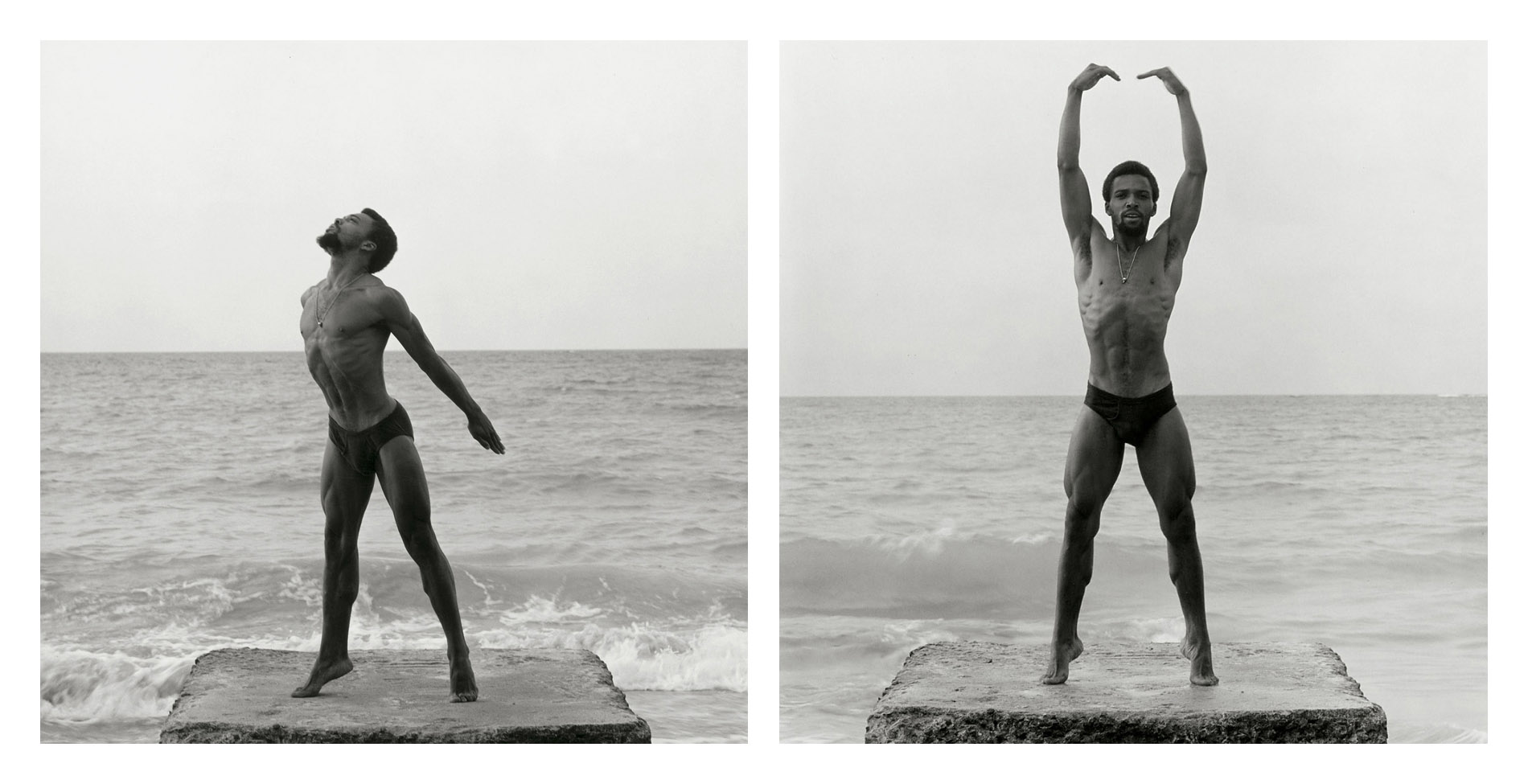
Exhibition: ‘Mark Morrisroe’ at Fotomuseum Winterthur, Zurich

Exhibition dates: 27th November 2010 – 13th February, 2011


Mark Morrisroe (American, 1959-1989) 'Untitled [Self-Portrait]' 1979 from the exhibition 'Mark Morrisroe' at Fotomuseum Winterthur


Mark Morrisroe (American, 1959-1989)
Untitled [Self-Portrait]
1979
T-108 Polaroid
8.5 x 10.7cm
Sammlung Matthew Marks
© Nachlass Mark Morrisroe (Sammlung Ringier) im Fotomuseum Winterthur


This is an emotional posting for me. I came out as a gay man in 1975, six short years after the Stonewall Riots in New York City that were the touchstone of the gay liberation movement. I partied hard in my youth in London and didn’t have my first HIV test until 1982/1983. We just didn’t know about the disease at all. Those two weeks waiting for the result of that first test, for that is how long it took to get the test results back in those days, seemed terribly long. Even worse was the time spent sitting outside the doctor’s office waiting to be called in to get the test results – literally life and death as there was no treatment, no drugs to help, no hope.

I lost many friends over the years to this terrible disease that continues to decimate human beings all around the world. It was only by pure luck that I survived. This posting shows the work of one artist who didn’t survive. He as experimenting with his sexuality (and documenting it) in Boston at much the same time that I was in London and so I feel an affinity with this beautiful and gifted man. What great images he made! How much poorer is the world without his presence and indeed the presence of all human beings who have succumbed to the disease.

Dr Marcus Bunyan


Many thankx to the Fotomuseum Winterthur, Zurich for allowing me to publish the photographs in the posting. Please click on the photographs for a larger version of the image.


“You know, I’m going to be really famous, so you’re lucky to be meeting me.”


Mark Morrisroe, as quoted by Jack Pierson


Mark Morrisroe (American, 1959-1989) '
After the Laone (In the Home of a London Rubber Fetishist, Dec 82)' 1982 from the exhibition 'Mark Morrisroe' at Fotomuseum Winterthur


Mark Morrisroe (American, 1959-1989)
After the Laone (In the Home of a London Rubber Fetishist, Dec 82)
1982
C-Print von Sandwich-Negativ, bearbeitet mit Retuschefarben und Marker
39.5 x 50.6cm
© Nachlass Mark Morrisroe (Sammlung Ringier) im Fotomuseum Winterthur


Mark Morrisroe (American, 1959-1989) '
La Môme Piaf [Pat and Thierry]' 1982 from the exhibition 'Mark Morrisroe' at Fotomuseum Winterthur


Mark Morrisroe (American, 1959-1989)
La Môme Piaf [Pat and Thierry]
1982
C-Print von Sandwich-Negativ, bearbeitet mit Retuschefarben und Marker
50.7 x 40.5cm
© Nachlass Mark Morrisroe (Sammlung Ringier) im Fotomuseum Winterthur


Mark Morrisroe (American, 1959-1989) 'Pat as Kiki, fall 81 Paris' 1985 from the exhibition 'Mark Morrisroe' at Fotomuseum Winterthur


Mark Morrisroe (American, 1959-1989)
Pat as Kiki, fall 81 Paris
1985
Silbergelatine-Abzug von T-665 Polaroid Negativ, bearbeitet mit Retuschefarbe
25.2 x 20.2cm
© Nachlass Mark Morrisroe (Sammlung Ringier) im Fotomuseum Winterthur


Mark Morrisroe (American, 1959-1989) 'Still Life with Marble Figures (in the Home of Stephen Tashjian NYC)' 1985 from the exhibition 'Mark Morrisroe' at Fotomuseum Winterthur


Mark Morrisroe (American, 1959-1989)
Still Life with Marble Figures (in the Home of Stephen Tashjian NYC)
1985
Negative sandwich
40 x 50cm
© Nachlass Mark Morrisroe (Sammlung Ringier) im Fotomuseum Winterthur


Mark Morrisroe (American, 1959-1989) '
Blow Both of Us, Gail Thacker and Me, Summer 1978' 1986 from the exhibition 'Mark Morrisroe' at Fotomuseum Winterthur


Mark Morrisroe (American, 1959-1989)
Blow Both of Us, Gail Thacker and Me, Summer 1978
1986
C-Print, bearbeitet mit Marker
40.5 x 40.5cm
© Nachlass Mark Morrisroe (Sammlung Ringier) im Fotomuseum Winterthur


More than twenty years after Mark Morrisroe’s early death, Fotomuseum Winterthur is presenting the first comprehensive survey exhibition on his work – an extraordinarily diverse body of works that has usually been shown in group shows, mostly in connection with his famous Boston colleagues Nan Goldin and David Armstrong. The exhibition, curated by Beatrix Ruf and Thomas Seelig, is a collaboration between Fotomuseum Winterthur and the Estate of Mark Morrisroe (Ringier Collection).

In the Boston of the early 1980s, Mark Morrisroe was a well-known, charismatic figure, who often appeared in drag together with the artist friends he had met while studying and who performed in bars and clubs with Stephen Tashjian (alias Tabboo!) as the “Clam Twins.” As an artist and photographer he was also at the center of the lively Boston punk scene, whose most important protagonists were known well beyond the city. Like Nan Goldin and David Armstrong before him, Mark Morrisroe moved to New York in the mid-1980s to try his luck there. He died – far too early – in July 1989, at the age of just 30, from the consequences of AIDS.

References to Morrisroe’s origins and past are surrounded by a dense mist that makes it impossible to differentiate between truth and fantasy. By continually inventing and varying scenarios about himself, the settings for which extended from the past to the future, Morrisroe always understood how to collaborate actively in shaping his own myth, feeding it with fanciful layers of lies, or indeed letting it float into the void. His public presence could be engaging, and sometimes loud and disturbing, too, but silence fell after his death – both around the artist and his photography.

In retrospect, Morrisroe’s art studies in Boston and his years in the punk and art world of that city can in fact be seen as his most content and productive period. There he discovered a positive approach to his sexuality, and in the person of Jonathan “Jack” Pierson, who appears in many of his photographs and Polaroids, found his first great love. The first intimate portraits of close friends such as Lynelle White (with whom he published five editions of the collaged, photocopied and coloured-in Dirt fanzine in 1975-1976) were produced there, as were many of his first narcissistic self-scenarios in front of the camera. There Morrisroe shot the low-budget trash film Nymph-O-Maniac in the style of his idol John Waters, with Pia Howard as the main performer.

Mark Morrisroe’s short creative period, of barely ten years, was characterized by an amazing output of photographic experiments, and stands out for its constantly searching, inquisitive, and always individual aesthetic, as a glance at the photographer’s extensive estate reveals. The estate was acquired by the Ringier Collection in 2004 and was placed in the care of the Fotomuseum Winterthur in 2006. The estate comprises around 600 colour prints – a few of them duplicates – approximately as many gelatin silver prints, about 800 of the 2,000 known Polaroid shots by Morrisroe, all the negatives, contact prints, and some of his personal papers, giving some idea of the unbridled enjoyment and energy with which Mark Morrisroe threw himself into his life and work.

The exhibition will feature early colour and black-and-white prints, Polaroids, and Polaroid negatives from which it was possible to make enlargements, as well as the early and late photograms he processed by hand. During his art studies at the School of the Museum of Fine Arts Boston (1978-1982) Morrisroe was already experimenting with various interpretations of reprography, trying to understand the possibilities of the medium and its inherent limitations, and using different ingenious printing processes for his photographic prints. Within his close circle of friends he soon laid claim to the “invention” of what are called “sandwich” prints – enlargements of double negatives of the same subject mounted on top of one another – which yielded an elaborate pictorial quality, producing a very iconic impression in the final result, which over time Morrisroe learned to use in an increasingly controlled way. Early on, the artist recognised the intrinsic value of prints – irrespective of the medium used to produce them – as pictorial objects that he could manipulate, colour, paint, and write on at will.

By all accounts, Mark Morrisroe was a man driven to achieve fame and recognition. Restless and demanding – of himself as well as of others – he always wanted more, and from this inner restlessness he derived enormous resources of artistic energy. Right to the very end, his life and work, down to the photograms feverishly produced in the makeshift darkroom in his hospital, which have hardly ever been publicly shown until today, attest to an unlimited and ecstatic search for a sensual, aesthetic, and always ambivalently charged pictorial world.

The Estate of Mark Morrisroe (Collection Ringier) at the Fotomuseum Winterthur


Following Pat Hearn’s untimely death in 2000, there was a break in exhibition activities focusing on Mark Morrisroe. From 1998 the Ringier Collection had been continuously in contact with Pat Hearn about Mark Morrisroe’s work and they continued the discussion with Pat Hearn’s husband, Colin de Land of American Fine Arts, who had inherited the Mark Morrisroe estate. In 2002 Colin de Land approached Michael Ringier and Beatrix Ruf to discuss options for the future of the Morrisroe estate because he had also fallen ill and was very aware that he was going to die soon himself. In their conversations, the main concern was how responsibility for this important artist could be taken on by keeping the oeuvre together as a comprehensive group of works and making it accessible to a broad audience internationally as well. The Ringier Collection proposed to Colin de Land that they secure the estate by acquiring it and placing it in the Fotomuseum Winterthur. Furthermore, the decision was made to form a foundation for the Morrisroe estate, which would be the home to a comprehensive group of works and would keep the estate together, provide conversational and curatorial continuity, and act as the leading force in communicating and distributing the work through exhibitions and publications.”

Press release from Fotomuseum Winterthur website


Mark Morrisroe (American, 1959-1989) 'Untitled [Self-Portrait with Jonathan]' c. 1978 from the exhibition 'Mark Morrisroe' at Fotomuseum Winterthur


Mark Morrisroe (American, 1959-1989)
Untitled [Self-Portrait with Jonathan]
c. 1978
T-665 Polaroid
10.7 x 8.5cm
© Nachlass Mark Morrisroe (Sammlung Ringier) im Fotomuseum Winterthur


Mark Morrisroe (American, 1959-1989) '
Self-Portrait (to Brent)' 1982
 from the exhibition 'Mark Morrisroe' at Fotomuseum Winterthur


Mark Morrisroe (American, 1959-1989)
Self-Portrait (to Brent)
1982
C-Print von Sandwich-Negativ, bearbeitet mit Retuschefarben und Marker
50.5 x 40.5cm
Privatsammlung Brent Sikkema
© Nachlass Mark Morrisroe (Sammlung Ringier) im Fotomuseum Winterthur


Mark Morrisroe (American, 1959-1989) 'Untitled (Lynelle)' c. 1985 from the exhibition 'Mark Morrisroe' at Fotomuseum Winterthur


Mark Morrisroe (American, 1959-1989)
Untitled [Lynelle]
c. 1985
T-665 Polaroid
10.7 x 8.5cm
© Nachlass Mark Morrisroe (Sammlung Ringier) im Fotomuseum Winterthur


Mark Morrisroe (American, 1959-1989) 'Baby Steffenelli [John S.]' 1985 from the exhibition 'Mark Morrisroe' at Fotomuseum Winterthur


Mark Morrisroe (American, 1959-1989)
Baby Steffenelli [John S.]
1985
Negative sandwich, retouched with ink and inscribed with marker
31 x 44cm
© Nachlass Mark Morrisroe (Sammlung Ringier) im Fotomuseum Winterthur


The portrait of Baby Steffenelli, captured by the provocative photographer Mark Morrisroe, offers a glimpse into the bold, rebellious spirit of the 1980s underground art scene. Morrisroe, known for his raw and unflinching style, frequently blurred the lines between art and performance, creating images that were both intimate and confrontational. This photograph of Steffenelli, a figure often associated with the New York City art world of the time, reflects the vibrant energy of a subculture that thrived on pushing societal boundaries. Steffenelli, much like Morrisroe, embraced unconventional identities, and their collaboration in this photo serves as a visual statement of individuality and defiance, characteristic of the era’s exploration of gender, sexuality, and self-expression.

The 1980s were a transformative time for the art world, particularly in New York, where artists like Morrisroe, Robert Mapplethorpe, and David Wojnarowicz were redefining the possibilities of photography, painting, and performance. Morrisroe, who was also a member of the artistic collective called “The Factory” and part of the East Village art scene, used his camera as a tool to document the subversive lifestyles of his peers. His work, often marked by a sense of urgency and intimacy, captured the raw emotions and complexities of those living on the fringes of society. This photo of Steffenelli, taken in 1985, is a prime example of how Morrisroe’s photographs served as a historical document, reflecting the ongoing dialogues surrounding identity and the body in the context of the post-punk, pre-AIDS crisis era.

For Steffenelli, this image became an emblem of the intersection between personal expression and the broader cultural shifts taking place in the 1980s. The vibrant, sometimes jarring energy of Morrisroe’s photography mirrored the boldness with which people like Steffenelli navigated their place in an increasingly complex world. The photo not only immortalises Steffenelli’s individuality but also serves as a testament to the powerful and often controversial art scene that defined this period. In this single frame, Morrisroe captures not only a person but the essence of a moment in time – a snapshot of defiance, liberation, and transformation in the face of societal norms.

Text from the Old Historical Facebook page


Mark Morrisroe (American, 1959-1989) 'Untitled [Self-Portrait]' 1986
 from the exhibition 'Mark Morrisroe' at Fotomuseum Winterthur


Mark Morrisroe (American, 1959-1989)
Untitled [Self-Portrait]
1986
Silbergelatine-Abzug
42.5 x 29.8cm
© Nachlass Mark Morrisroe (Sammlung Ringier) im Fotomuseum Winterthur


Mark Morrisroe (American, 1959-1989) '
Untitled' 1987 from the exhibition 'Mark Morrisroe' at Fotomuseum Winterthur


Mark Morrisroe (American, 1959-1989)
Untitled
1987
Silbergelatine-Abzug, Fotogramm von Drucksache
50.4 x 40.3cm
© Nachlass Mark Morrisroe (Sammlung Ringier) im Fotomuseum Winterthur


Mark Morrisroe (American, 1959-1989) '
Untitled' c. 1988 from the exhibition 'Mark Morrisroe' at Fotomuseum Winterthur


Mark Morrisroe (American, 1959-1989)
Untitled
c. 1988
C-Print von Sandwich-Negativ
50.7 x 40.5cm
© Nachlass Mark Morrisroe (Sammlung Ringier) im Fotomuseum Winterthur


Fotomuseum Winterthur
Grüzenstrasse 44 + 45
CH-8400 Winterthur (Zurich)

Opening hours:
Tuesday to Sunday 11am – 6pm
Wednesday 11am to 8pm
Closed on Mondays

Fotomuseum Winterthur website

LIKE ART BLART ON FACEBOOK

Back to top