Exhibition dates: 29th April – 22nd September, 2014
Curatorship: Manuel J. Borja-Villel, Tamara Díaz y Teresa Velázquez
Artists: Vito Acconci, Efrén Álvarez , Erich Andrés, Karel Appel, Archigram, Archizoom, Ricardo Baroja, Bernardo Bertolucci, Lina Bo Bardi; André Vainer and Marcelo Ferraz. Photography: Paquito, André Breton, Hans Bruggeman, Caja Lúdica, Camping Producciones, Henri Cartier-Bresson, Tranquillo Casiraghi, Mariana Castillo Deball, Francesc Català-Roca, Mario Cattaneo, Agustí Centelles, Chto Delat?, Julieta Colomer, Joan Colom, Constant (Constant Nieuwenhuys), Waldemar Cordeiro, Corneille, Violette Cornelius, Margit Czenki, Guy Debord, Maya Deren, Disobedience Archive. Curator: Marco Scotini, Ed van der Elsken , James Ensor, El equipo de Mazzanti (Giancarlo Mazzanti, Carlos Medellín, Stanley Schultz, Juliana Zambrano, Eugenia Concha, Lucia Lanzoni and Mariana Bravo), Escuela de Valparaíso, Marcelo Expósito, Aldo van Eyck, Kattia García Fayat, Priscila Fernandes, Ángel Ferrant, José A. Figueroa, Robert Filliou, Peter Fischli, Peter Friedl, Alberto Giacometti, John Goldblatt, Francisco de Goya, GRAV (Groupe de Recherche d’Art Visuel), Grupo Contrafilé, Eric Hobsbawm, Lady Allen of Hurtwood, Internationale Situationniste, Cor Jaring, Kindel (Joaquín del Palacio), Henri Lefebvre, Fernand Léger, Helen Levitt, Liverani, L.S. Lowry, Maruja Mallo (Ana María Gómez González), Man Ray (Emmanuel Radnitzky), Melchor María Mercado, Boris Mikhailov, Masato Nakagawa, Beaumont Newhall, Palle Nielsen , Isamu Noguchi , Nils Norman, Nudo (Eduardo Marín and Vladimir Llaguno), Hélio Oiticica, OMA / Rem Koolhaas, Cas Oorthuys, Amédée Ozenfant, Martin Parr, Jan H Peeterse, Erik Petersen, Adrian Piper, Cedric Price, Ab Pruis, Edgar Reitz and Alexander Kluge, Oliver Ressler, Jorge Ribalta, Xavier Ribas, Marcos L. Rosa, Emilio Rosenstein (Emil Vedin), Roberto Rossellini, Otto Salemon, Louis Sciarli, Alison y Peter Smithson, Kenneth Snelson, José Solana (José Gutiérrez Solana), Carl Theodor Sørensen, Humphrey Spender, Christensen Tage, Túlio Tavares (comp.), Teatro Ojo, Robert Venturi, Denise Scott Brown and Steven Izenour, Jean Vigo, Nuria Vila, Dmitry Vilensky, Pedro Vizcaíno, Peter Watkins, Weegee (Arthur H. Fellig), David Weiss
Many thankx to the Museo Nacional Centro de Arte Reina Sofía for allowing me to publish the photographs in the posting. Please click on the photographs for a larger version of the image.
Installation views of the exhibition Playgrounds. Reinventing the square at the Museo Nacional Centro de Arte Reina Sofía, Madrid
Through a selection of works from different time periods and in different mediums (paintings, sculptures, installations, videos, photographs, archive devices…), this exhibition analyses the socialising, transgressive and political potential of play when it appears linked to public space. The premise of Playgrounds is twofold: on one side, the popular tradition of carnival shows how the possibility of using recreational logic to subvert, reinvent and transcend exists, if only temporarily. On the other side, there has been two fundamental constants in utopian imagery throughout history: the vindication of the need for free time (countering work time, productive time) and the acknowledged existence of a community of shared property, with a main sphere of materialisation in public space.
The historical-artistic approach to the political and collective dimension of spaces of play, on view in this exhibition, gets under way in the second half of the 19th century, a time that signals the start of the process of free time becoming consumption time; a process that threw the concept of public space into crisis as it started to be conceived not only as an element for exercising (political) control, but also one for financial gain. Thus, cities started to become the objects of rational and utilitarian planning, where the field of architecture was redefined, providing spaces for play with new values, built as one of the key points of the modern ideology of the public.
This ideology was reshaped in the early decades of the 20th century; for instance, during this time projects were implemented that allowed the recovery and increased value of land that had been completely torn apart by war, turning it into areas of play aimed at nurturing children’s independence. The significant turning point in this process of restructuring took place during the 1960s, when, as demonstrated by numerous artistic and activist experiences and practices in recent decades, the festive subversion and anti-authoritarian outbursts from carnivalesque logic started to be employed as political tools attempting to generate other ways of making and contemplating the city, as well as organising community life.
With some 300 works, the exhibition recounts a different history of art, from the end of the 19th century to the present day, whereby the artwork plays a part in redefining public space by exploring the city as a game board, questioning modern-day carnival, vindicating the right to laziness, reinventing the square as a place of revolt and discovering the possibilities of a new world through its waste. The exhibit takes the playground model as an ideological interrogation of an alienated and consumerist present.
Text from the Museo Nacional Centro de Arte Reina Sofía website
Frank Burke (Australian, 1920-1984) A kids scooter race at the Paddy’s Markets in Sydney, 19 August 1956 1956 Silver gelatin print
Helen Levitt (American, 1913-2009) Boy with Ribbon 1940 Silver gelatin print
Helen Levitt (American, 1913-2009) New York (Two girls with ribbon) c. 1940
Agustí Centelles (Catalan, 1909-1985) Barcelona, España. Guardería infantil en Vía Layetana [Babysitting in Layetana Road] 1936-1939 Silver gelatin print
Fernand Léger (French, 1881-1951) Les Loisirs – Hommage à Louis David [Leisure – Homage to Louis David] 1948-1949
Louis Sciarli (French, b. 1925) Le Corbusier. Marseille: Unité d’habitation, École Maternelle [Le Corbusier. Marseille: housing unit, Kindergarten] 1945/2014
Maruja Mallo (Ana María Gómez González) (Viveiro, Lugo, Spain, 1902 – Madrid, Spain, 1995) The Fair (La verbena) 1927 (September) Oil on canvas 119 x 165cm
In 1928, at a one-woman exhibition put on by Ortega y Gasset in the rooms of the Revista de Occidente, Maruja Mallo showed the four oil paintings in the Madrid Fair series from which La verbena (The Fair), currently in the Museo Reina Sofía collection, is taken. In this colourful painting, an example of her personal world-view, the artist creates Baroque-filled scenes that are apparently without logic, where the motifs self-multiply into a whirlwind of lines and sensations. Imbued with a sharp critical sense, which is translated by the painter into subtle satire, the painting contains all the elements of the traditional popular Madrid fairs (the shooting gallery, the test-your-strength machine), alongside the principal characters and other, stranger kinds of characters like the one-eyed giant, the priest enjoying one of the sideshows or the man with deformed feet, begging with a guitar on his back. All this contributes to an undeniably Surrealist atmosphere.
Marcos L. Rosa Revisitando los playgrounds de Aldo van Eyck 1974/2011
The exhibition addresses the socialising, transgressive and political potential of play in relation to public space. Ever since the popular tradition of the carnival, it has been recognised that it is possible, even if only temporarily, to subvert, reinvent and transcend an everyday life reduced to a mere exercise in survival. The recognition of the existence of communal goods and the need for free time, in direct contradistinction to working time, are two fundamental constants of the utopian imagination throughout history.The public space, as an ambience which synthesises the notion of communal goods, is materialised as part of the experience of citizen participation.
Adopting as its premise the notion of carnival pageantry as a practice that alters the established order, the exhibition Playgrounds. Reinventing the square will explore the collective dimension of play and the need for a “ground” of its own in order to engage in the construction of a new public arena. Playgrounds (curated by Manuel J. Borja-Villel, Tamara Díaz and Teresa Velázquez) takes a historical and artistic approach to the space reserved for play and its socialising, transgressive and political potential from the dawn of modernity to the present day. The show to be seen at the Museo Reina Sofía aims to explore the recreational, playful, festive side of life that puts the humdrum reality of the everyday on hold, subverting, reinventing and transcending it for one fleeting moment.
With approximately 300 works in several formats (painting, sculpture, facilities, video, photography, graphical arts, cinema and documents) of artists like James Ensor, Francisco of Goya, Henri Cartier-Bresson, Helen Levitt, Alberto Giacometti, Ángel Ferrant, Hélio Oiticica, Lina Bo Bardi, Fischli and Weiss, Vito Acconci, Priscila Fernandes, or Xabier Rivas, Playgrounds. Reinventing the square shows how the playful element, understood as creative strategy, coexists with questions related to the public sphere Departing from this idea, the exhibition explores the recognition of the time and the space of the game as areas of essay and learning.
The show adopts the model of the ‘playground’ as an ideological interrogation of an alienated and consumerist present. After the industrial revolution and the gradual implantation of labor systems based on the capitalist principle of minimum investment for maximum gain, there emerges an indissociable identification between producer and consumer, one of whose immediate consequences is the conversion of free time into consumption time. The alienation of labor dominates modes of life and gives rise to a crisis in public spaces, threatened in their turn by economic forces. Derived from a rational and utilitarian planning of the city, the public park is instituted as a surrogate collective paradise, leading from the mid-19th century to great urban facilities for mass consumption and entertainment. From architecture, within the Modern Movement and its derivates, comes the definition of the playground, endowed with new social, pedagogical and functional values while at the same time emerging as one of the key points of the modern ideology of the public.
The ideas of a “junk playground”, proposed by the Danish architect Carl Theodor Sørensen in 1935, and of an “adventure playground”, which was promoted in the United Kingdom by the landscape architect Lady Allen of Hurtwood and spread to several European cities after the Second World War, are means of retrieving and attaching significance to wastelands and bomb sites as play areas aimed at child autonomy. In the sixties, the child is vindicated as an autonomous political subject in a context dominated by the vindication of the right to the city, and coinciding with the high point of the revolt of the homo ludens (borrowing from the essay of the same name by Johan Huizinga) in the context of May ’68. As evidenced by the numerous processes of social activism in recent years, festive subversion and the anti-authoritarian overspilling of boundaries by the carnival become new ways of practising politics. The movements of 2011 in such scattered locations as Tahrir (Cairo), Sol (Madrid), Syntagma (Athens), and other squares, streets and neighbourhoods restored the public and democratic dimension of such spaces. This temporary occupation, articulated through virtual communications networks, implied a reappropriation of the political and experimentation with other forms of organisation and communal life.
The introduction to the exhibition will provide background on the carnivalesque concept of life, underscoring certain aspects related to the notion of free time in modern life. The show will also revisit the street as a place of play and self-realisation, through examples of adventure playgrounds as well as photographs and films that will give a historic panoramic since the 1930s from a documentary perspective. The nucleus of the exhibition is devoted to the model of the modern playground and its contradictions, with relevant materials accounting for the urban revolution of the 1960s, the consideration of the city as a relational and psychological construction and works that parallel aesthetic and political transformations.
The last section of the show will consist of a series of experiments based on anti-hegemonic exercises, such us the civil appropriation of the street for “playground” use and works that challenge passive recreation through the emancipative power of play, not to mention recent experiences that resume the collective reinvention of the square and have become essential in envisioning new ways of doing politics.
Press release from the Museo Nacional Centro de Arte Reina Sofía
Helen Levitt (American, 1913-2009) Untitled (Boy and gun) 1940 Silver gelatin print
Helen Levitt (American, 1913-2009) Children playing with a picture frame, New York (Niños jugando con un marco, Nueva York) c. 1940
Helen Levitt (American, 1913-2009) Fruit and candy Nd
Francesc Català-Roca Valls (Tarragona, Spain, 1922 – Barcelona, Spain, 1998) Games in an Empty Lot 1950 (circa) / Posthumous print, 2003 Selenium-toned gelatin silver print on paper
Joan Colom (Spanish, 1921-2017) No title 1958-1961 (circa) / Vintage print From the series El carrer (The Street) Gelatin silver print on paper
Joan Colom published his series on Barcelona’s Chinatown in the magazine AFAL (1962) with an autobiography: “Age: 40. Profession: Accountant. Hobbies: Apart from photography, obviously, none.” Of his method, Colom said: “I have decided to only work with subjects that I have predetermined.” Oriol Maspons adds the technical details: “Everything was taken using a Leica M2, shot from the hip without framing or focusing. A real photographer’s work. More than a year on the same subject.” The series had been exhibited with some success (and controversy) at the Sala Aixelá in Barcelona the previous year, under the title El carrer (The Street). In 1964 it was finally published by Lumen in one of the finest photo-books in their Palabra e Imagen collection, “Izas, rabizas y colipoterras”, designed by Oscar Tusquets and Cristian Cirici. Camilo José Cela contributed a text based around Colom’s (surreptitious but captionless) photos that was full of broad, cruel humour, pitilessly mocking the women, photographed by Colom and judged by Cela. Somewhat ahead of her time, one of the women actually sued the photographer, the only result of which was the photo-book’s withdrawal from bookshops, and Colom’s retirement from photography for years. From the 1980s onwards public obscurity became public recognition, which has continued to grow.
Museo Nacional Centro de Arte Reina Sofía Sabatini building. Room A1 Calle Santa Isabel, 52 Madrid 28012 Spain Phone: (+34) 91 7741000
Curators: Ángeles Alonso Espinosa, anthropologist and curator at the Museo Amparo in Mexico, and José Antonio Rodríguez, historian of the image and freelance curator
I really love the work of artists such as Kati Horna and Florence Henri “with the production of collages and photomontages inspired by the avant-garde movements of the 1930s (the Bauhaus, Surrealism, German Neue Sachlichkeit, Russian Constructivism).”
Horna’s photographs have more of a political edge than that of Florence Henri, with her unique photographic reportage of the Spanish Civil War between 1937-39 and her Hitler series both having a strong social critique. Here is another politically aware artist who stood up for the cause, who recorded the “everyday life for the civilian population through a vision that was in empathy with the environment and the people.” Again, here is another who was lucky to survive the maelstrom of the Second World War, who would have certainly ended up dead if she and her Andalusian artist husband José Horna had not fled Paris in 1939 for their adopted country Mexico.
Dr Marcus Bunyan
PS I spent hours cleaning up the press images, there were in a really poor state, but the work was so worthwhile… they really sing now!
Many thankx to the Jeu de Paume for allowing me to publish the photographs in the posting. Please click on the photographs for a larger version of the image.
This summer, the Jeu de Paume, which is celebrating 10 years devoted to the image, will be inviting the public to discover Kati Horna (1912-2000), an avant-garde, humanist photographer, who was born in Hungary and exiled in Mexico, where she documented the local art scene.
In collaboration with the Museo Amparo in Puebla (Mexico), the Jeu de Paume is presenting the first retrospective of the work of photographer Kati Horna (Szilasbalhási, Hungary, 1912-Mexico, 2000), showing more than six decades of work in Hungary, France, Spain and Mexico. Kati Horna, a photographer whose adopted homeland was Mexico, was one of a generation of Hungarian photographers (including André Kertész, Robert Capa, Eva Besnyö, László Moholy-Nagy, Nicolás Muller, Brassaï, Rogi André, Ergy Landau and Martin Munkácsi) forced to flee their country due to the conflicts and social upheaval of the 1930s.
Cosmopolitan and avant-garde, Kati Horna was known above all for her images of the Spanish Civil War, produced at the request of the Spanish Republican government between 1937 and 1939. Her work is characterised by both its adherence to the principles of Surrealist photography and her very personal approach to photographic reportage.
This major retrospective helps to bring international recognition to this versatile, socially committed, humanist photographer, highlighting her unusual artistic creativity and her contribution to photojournalism. It offers a comprehensive overview of the work of this artist, who started out as a photographer in Hungary at the age of 21, in the context of the European avant-garde movements of the 1930s: Russian Constructivism, the Bauhaus school, Surrealism and German Neue Sachlichkeit. Her vast output, produced both in Europe and Mexico, her adopted country, is reflected in a selection of over 150 works – most of them vintage prints, the vast majority of them unpublished or little known.
In Mexico, Kati Horna formed a new family with the émigré artists Remedios Varo, Benjamin Péret, Emerico ‘Chiki’ Weisz, Edward James and, later on, Leonora Carrington. In parallel with her reportages, she took different series of photographs of visual stories, extraordinary creations featuring masks and dolls, motifs that began to appear in her work in the 1930s.
Kati Horna also became the great portraitist of the Mexican literary and artistic avant-garde; her visionary photographs captured the leading artists in Mexico during the 1960s, such as Alfonso Reyes, Germán Cueto, Remedios Varo, Pedro Friedeberg, Alejandro Jodorowsky, Mathias Goeritz and Leonora Carrington.
The exhibition is divided into five periods: her beginnings in Budapest, Berlin and Paris between 1933 and 1937; Spain and the Civil War from 1937 to 1939; Paris again in 1939; then Mexico. The exhibition also presents a number of documents, in particular the periodicals that she contributed to during her travels between Hungary, France, Spain and Mexico. The works come from the Archivo Privado de Fotografía y Gráfica Kati y José Horna, the Centro Documental de la Memoria Histórica de España, Salamanca, the Museo Amparo, Puebla, as well as private collections.
Afterwards I returned to Paris, and do you know why I didn’t die of hunger in Paris? Before I left, everyone mocked me, “there’s the photographer”, I was the photographer of eggs. I had this idea of being the first one to do things, not with figurines, but little stories with eggs, and it was that wonderful draughtsman who subsequently committed suicide who did the faces for me… The first was the romantic story of a carrot and a potato. The carrot declared its love to the potato. He always did the faces and I staged the scenes. I took the photos with my big camera with 4 x 5 negatives.
Kati Horna
Born in Hungary to a family of bankers of Jewish origin during a period of political and social instability, Kati Horna would always be deeply marked by the violence, injustice and danger around her. This situation helped to forge her ideological commitment, her perpetual search for freedom, her particular way of denouncing injustice, as well as her compassionate and human vision, like that of Lee Miller and her pictures of the Second World War. As was the case for her great childhood friend Robert Capa, to whom she would remain close throughout her life, photography became a fundamental means of expression.
At the age of 19 she left Budapest to live in Germany for a year, where she joined the Bertolt Brecht collective. She frequented photographer friends and compatriots Robert Capa and ‘Chiki’ Weisz, as well as other major figures in Hungarian photography, such as László Moholy-Nagy – who at the time was a teacher at the Bauhaus school – and Simon Guttman, founder of the Dephot agency (Deutscher Photodienst). On her return from Budapest, she enrolled in the studio of József Pécsi – the famous Hungarian photographer (1889-1956) – before leaving her birth country again, in 1933, to settle in Paris.
It was during this period of apprenticeship that her own aesthetic took shape, which marked her entire career, with the production of collages and photomontages inspired by the avant-garde movements of the 1930s (the Bauhaus, Surrealism, German Neue Sachlichkeit, Russian Constructivism). Paris was a cosmopolitan capital and Surrealism was at its height at the time. This movement heavily influenced Kati Horna’s style, both through its themes and its techniques, be it the narrative collage, superimposition or photomontage. Her photography was closely linked to the arts of the image, used as an illustrative technique and as a support for a poetics of the object. Her taste for stories and staged images are clearly evident. From 1933 she worked for the Lutetia-Press agency, for whom she did her first photo stories: Mercado de pulgas [Flea Market] (1933), which would not be published until 1986 in the Mexican periodical Foto Zoom, and Cafés de París (1934).
Photography, with its various possibilities, enables one to show, liberate and develop one’s own sensibility which can be expressed in graphic images.
And at the moment of pressing the shutter you had to keep the image, let your emotion, discovery and visual surprise flow, the moment had to be kept in your head. That’s what I call developing one’s visual memory.
Kati Horna
Between 1937 and 1939, Kati Horna covered the Spanish Civil War with great sensitivity. The Spanish Republican government asked her to produce images on the Civil War. Thus, between 1937 and 1939 she photographed the places where the major events of the war took place, in the Aragon province, in the country’s cities (Valencia, Madrid, Barcelona and Lerida), as well as a number of strategic villages in Republican Spain.
A collection of more than 270 negatives has survived from this period, today conserved in the Centro Documental de la Memoria Histórica de España, Salamanca. They bear witness to the reality of the conflict at the front as well as, and above all, everyday life for the civilian population through a vision that was in empathy with the environment and the people. Committed to the anarchist cause, she became the editor of the periodical Umbral, where she would meet her future husband, the Andalusian anarchist José Horna – and worked on the cultural periodical of the National Confederation of Labour, Libre-Studio. She also collaborated on the periodicals Tierra y Libertad, Tiempos Nuevos and Mujeres Libres, publications that are being exhibited for the first time. At the time, her work was distinguished by its photomontages, which have both a symbolic and metaphorical character.
I am in an existential crisis. Today everyone is running, today everyone is driving. My pictures? They were the product of a creative love, linked to my experiences and the way they were taken. I was never in a hurry.
S.nob was a joy… I don’t know why I enjoyed myself so much, but the facility that Salvador [Elizondo] and the team, and Juan [García Ponce] gave me, a great creativity came out of me.
Kati Horna
Kati Horna returned to Paris in 1939. Her husband, the Andalusian artist José Horna, enlisted in the Ebra division that covered the retreat of the Spanish civilians to France. In October, as soon as he reached Prats-de-Mollo, in the French Pyrenees, he was incarcerated in a camp for Spanish refugees. Kati Horna succeeded in getting him freed. They left for Paris where they were again harassed, obliging them to flee France for Mexico. Mexico would become her final homeland.
During her everyday life she came into contact with some of the extraordinary figures of Surrealism (Leonora Carrington, Remedios Varo, Benjamin Péret and Edward James) and the Panic movement (Alejandro Jodorowsky), as well as avant-garde Mexican artists, writers and architects (Mathias Goeritz, Germán Cueto, Pedro Friedeberg, Salvador Elizondo, Alfonso Reyes and Ricardo Legorreta).
Kati Horna established herself as a chronicler of the period, leaving for posterity a unique corpus. In Mexico, she worked as a reporter for periodicals such as Todo (1939), Nosotros (1944-1946), Mujeres (1958-1968), Mexico this Month (1958-1965), S.nob (1962) and Diseño (1968-1970). During the last 20 years of her life, she also taught photography at the Universidad Iberoamericana and the San Carlos Academy (Univesidad Nacional Autónoma de México), where she trained an entire generation of contemporary photographers.
Horna’s quotes come from the catalogue, co-published by the Jeu de Paume and the Museo Amparo
Curators: by José Roca and María Wills Londoño (adjunct curator)
Oscar Muñoz (Colombian, b. 1951) El juego de las probabilidades [The Game of Probabilities]
2007
12 colour photographs
47 x 40cm each with frame
Courtesy of the artist and Sicardi Gallery, Houston
Another artist investigating the medium of photography in totally fascinating ways… breaking the glass, deconstructing the support, fragmenting the image, questioning the imprint of photography – in memory, in the photographs physicality, in what leaves an impression, in what remains. The un/stable image, in flux, in sediment, investigated through “work [that] defies systematic classification because he works in so many different media: photography, printmaking, drawing, installations, video and sculpture.”
Such inventiveness over such a long period of time “developing special techniques to produce images that reveal themselves as a kind of counterpoint to photography and the “decisive moment” it once claimed to capture.”
Ephemeral photography that is truly remarkable.
Dr Marcus Bunyan
Many thankx to the Jeu de Paume for allowing me to publish the photographs in the posting. Please click on the photographs for a larger version of the image.
This summer, the Jeu de Paume, which is celebrating 10 years devoted to the image, will be inviting the public to discover Oscar Muñoz (born in 1951), Colombia’s most emblematic artist, who has been producing a body of work for nearly forty years that centres on the capacity of images to preserve memory.
CALI-DOSCOPE: CITY FRAGMENTS
Oscar Muñoz (Colombian, b. 1951) Ambulatorio [Ambulatory] 1994 Aerial photograph enclosed in security glass, wood and aluminium, 36 units 100 x 100cm each Courtesy O.K. Centrum, Linz
Muñoz emerged on the Colombian art scene with his series of large-format hyperrealist drawings in charcoal on paper that revealed his interest in the social implications of empty or deteriorating spaces. This group includes drawings from the series entitled Inquilinatos [Tenement Houses] (1979) and Interiores [Interiors] (1980-1981). Also on display are works referring to Cali’s urban life, such as Ambulatorio [Ambulatory] (1994), El Puente [The Bridge] (2004), Archivo Porcontacto [Bycontact Archive] (2004-2008), which are images of a specific period and specific places in the city, and A través del cristal [Through the Glass] (2008-2009), the latter a way of introducing an absent cultural reference through sound.
Cali recurs in Muñoz’s work as a contextual reference or a support. This is literally the case with Ambulatorio, an aerial photograph of the city blown up to a monumental scale and laid out in a regular grid. Each segment of the photograph is fixed to a piece of security glass, which breaks into pieces when the viewer walks on the work. Each break creates another random mesh of lines over the urban image of a chaotic city in which rational planning and the unstructured coexist in a way typical of all modern South American cities.
THE SUPPORT RECONSIDERED
Oscar Muñoz (Colombian, b. 1951) Cortinas de Baño [Shower curtains] 1985-1986 Acrylic on plastic, 5 elements 190 x 140 cm and 190 x 70cm each, dimensions variable Banco de la República collection, Bogotá
Having achieved international renown as an exceptional draughtsman, in the 1980s Muñoz gradually abandoned paper as a support and experimented with new techniques of drawing and printmaking, using unconventional materials and supports such as acrylic applied to damp plastic and charcoal dust on water. This group includes the series Cortinas de Baño [Shower Curtains] (1985-1986), Tiznados [Tainted] (1990), Narcisos secos [Dry Narcissi] (1994-1995) and Simulacros [Simulacra] (1999).
In Cortinas de baño Muñoz experimented for the first time with an unconventional support, in this case an everyday plastic shower curtain, in order to construct an image from a photograph transferred onto a silkscreen mesh. In the printing process, executed with an airbrush through previously prepared silkscreen, the image was transferred onto an unstable surface, with the artist preventing the pigment from being totally fixed by sprinkling water on it.
Oscar Muñoz (Colombian, b. 1951) Narcisos(en proceso)[Narcissi (in process)] 1995-2011 Charcoal dust and paper on water, Plexiglas, 6 elements 10 x 50 x 50cm each Overall dimensions: 10 x 70 x 400cm Courtesy of the artist
Narcisos was a key series in the artist’s quest to dematerialise the support of the photographic image. Muñoz developed a new technique unprecedented in the history of art and probably never to be encountered again – that of printing on water. The earliest photographic images emerged from water, from the chemical baths that fixed the silver salts in different gradations of intensity produced by the action of light. The support was an incidental necessity. Muñoz has referred to the three phases in the process of Narcissi as allegories of an individual’s progress through life: creation, at the moment when the charcoal dust touches the surface of the water; the changes that come about during evaporation; and death, at the moment when the dried out dust finally settles at the bottom of the container. The result, which the artist has called Narcisos secos, is both the final image and the death of the process: the remains of a photograph that possessed a life after it was fixed for posterity. In this sense, Dry Narcissi are the record of a double death of the image.
Oscar Muñoz (Colombian, b. 1951) Narciso [Narcissus]
2001
Single-channel video 4:3, colour, sound, 3 min
Courtesy of the artist
Muñoz’s first work in video was Narciso, in which he dramatically presented the processes developed in his Narcissi of the 1990s (in which the evaporation was invisible to the naked eye) by making the water disappear in a few minutes. As in those earlier works, a self-portrait floats on the surface of the water but the drain in the sink and the sound of running water foretell for the viewer what the image’s final fate will be. In reality, there are two images here: that of the subject and that of its shadow on the white bottom of the basin. The images gradually come closer together, as if to suggest that life is a constant quest for self-understanding. However, at the moment when the two images are about to coincide, it is already too late: they fuse into a single distorted stain that disappears down the drain.
Oscar Muñoz (Colombian, b. 1951) Re/trato [Portrait/I Try Again] 2004 Single-channel video projection 4:3, colour, no sound, 28 min Courtesy of the artist
About the exhibition
“Through a multifaceted body of work that moves freely between photography, printmaking, drawing, installation, video and sculpture, eliminating the borderlines between these disciplines through innovative practices, Oscar Muñoz (Popayán, Colombia, 1951) explores the capacity of images to retain memory.
In 1826, for the first time in history the French inventor Nicéphore Niépce succeeded in fixing the elusive image produced by the camera obscura, a device known since antiquity. In contrast to painting or drawing, the camera obscura was able to obtain an image from life without the assistance of the human hand and in real time: what it could not do was freeze it or fix it onto a support in order to extract it from the passing of time. It could thus be said that the essence of the photographic act does not lie in taking the image but in permanently fixing it. What, then, is the status of the image in the instant prior to the moment when it is fixed for posterity?
If the ontology of photography lies in fixing a moving image for all time, extracting it from life, we might say that Oscar Muñoz’s work is located in the temporal space prior (or subsequent) to the true decisive moment when the image is fixed: that proto-moment when the image is finally about to become photography. In that sense, it could be said that Muñoz’s work is protographic.
The exhibition
Born in 1951 in Popayán (Colombia), Oscar Muñoz is regarded as one of the country’s most important contemporary artists, whilst also garnering attention on the international art scene. A graduate of the Escuela de Bellas Artes in Cali, he has built up over a period of four decades a body of work whose images deal with the realm of memory, loss and the precarious nature of human life. Muñoz’s work defies systematic classification because he works in so many different media: photography, printmaking, drawing, installations, video and sculpture.
“Protographs” (a term coined to evoke the instant just before or just after that split-second when the photographic image is captured and frozen for ever) presents his major series grouped by theme. These themes poetically and metaphorically juxtapose Muñoz’s own past and the different material states of the image. For example, he combines the dissolution, deterioration or disintegration of the image with the inherent fragility of memory and the impossibility of making time stand still; or the image’s evaporation and transformation with the tension between rationality and chaos in our urban societies. Finally, in the main part of his work, he creates ephemeral images that, as they disappear, invite the spectator to share in an experience that is simultaneously rational and sensual.
Oscar Muñoz began his career in the 1970s in Cali in a period when a whirlwind of cultural and cross-disciplinary activity saw the emergence of a generation of writers, photographers and filmmakers who today play a leading role in the contemporary art scene (with Carlos Mayolo, Luis Ospina, Fernell Franco and Andrés Caicedo to name but a few). At that time, Muñoz was drawing with charcoal on large-format supports presenting a cast of sad and sometimes sordid characters with a deep emotional charge. The main characteristics of his work emerged at an early stage. These include a profound and tireless interest in social questions, an original approach to materials, the use of photography as an aid to memory and the exploiting of the dramatic possibilities afforded by the play of shadow and light in defining the image. Moreover, the artist developed a phenomenological approach to minimalism by insisting on the relationship between the artwork, the spectator and the surrounding exhibition space.
In the mid-1980s, Oscar Muñoz moved away from traditional artistic methods and began to experiment with innovative processes that created a real interactive exchange with the spectator. This was the time of a radical reassessment of his artistic practices, whether drawing, printmaking, or photography, and a questioning of the relationship between the artwork and its surroundings. He abandoned traditional formats and techniques, whilst preserving something of their roots and wellsprings, to investigate ephemerality, highlighting the very essence of the materials themselves and their poetic associations. His use of the fundamental elements – water, air and fire – refers to the processes, the cycles and the transcendental manifestations of life, our very existence and death itself. “My work attempts to understand why the past and the present are so full of violent acts,” says the artist. By choosing to use a diverse selection of media and to apply innovative and unique processes, Oscar Muñoz blurs the boundaries between artistic disciplines.
The “Protographs” exhibition showcases a career that has lasted nearly forty years. It presents series of works grouped around the artist’s major themes, starting with his works on paper and his series of large format hyperrealist drawings in charcoal (1976-1981) – bearing witness to his deep interest in social context – and the drawings and engravings that he started making in the 1980s, which marked the relinquishing of paper for an exploration of unconventional materials and processes (printing on damp plastic, the use of sugar and coffee, etc.); continuing with his experiments in the 1990s and 2000s on the stability of the image and its relationship to the processes of memory; and including his latest works (2009-2014), characterised by a continual process of appearance and disappearance, including a new work produced specifically for the exhibition.”
Text by José Roca and María Wills Londoño
IMPRINTS
Over the last decade, Muñoz has created a series of works on the indicative relationship between the object and its image, making use of contact printing, a characteristic printmaking process. This was the case with La mirada del Cíclope [The Cyclops’ Gaze] (2001-2002), Intervalos (mientras respiro) [Intervals (While I Breathe)] (2004) and Paístiempo [Countrytime] (2007), as well as series from a number of other periods.
Oscar Muñoz (Colombian, b. 1951)
Aliento [Breath]
1995
Metal mirrors, screen-printed with grease, 7 mirrors Diameter: 20 cm each
Courtesy of the artist
The series Aliento comprises portraits printed in photo-silkscreen with grease on small round metal mirrors located at eye level. The mirrors initially seem blank and the printed image only reveals itself when the viewer, having recognised himself / herself, breathes onto the circular mirror. During this brief moment the reflected image is replaced by the printed image (photographs taken from obituaries) of a deceased person who fleetingly returns through the viewer’s breath.
Oscar Muñoz (Colombian, b. 1951) La mirada del cíclope [The Cyclops’ Gaze]
2002
Digital print on paper, 6 photographs
50 x 50 cm each one
Courtesy of the artist
La mirada del cíclope, in which the subject is considered in relation to death, uses one of the oldest techniques of portraiture and printmaking: a mould made by direct contact, in this case of the artist’s own face. This sculptural object (inspired by the ancient Roman tradition of funerary masks) becomes two-dimensional when it is captured by the camera’s single eye (hence the title). Lacking references to volume, the viewer’s eye cannot decide if the object represented is concave or convex, in a play of perceptual opposites: negative / positive, presence / absence, reality or illusions. Quoting Pierre Bourdieu, Muñoz has noted that “the imagines of ancient Rome are exactly equivalent to the social nature of some modern photographs; they play an important role in the tortuous act of mourning: we accept a reality by ‘becoming accustomed to the unreality of its images’.”
Oscar Muñoz (Colombian, b. 1951) Horizonte [Horizon] 2011 From the series Impresiones débiles [Weak Impressions] Charcoal dust print on methacrylate 4 elements, 85 x 73.5cm each Galerie mor. charpentier, Paris
The earliest successful images taken by Niépce were proto-photographs that did not survive intact as images because the light that had created them continued to affect them until they eventually succumbed to darkness in an inexorable fade to black. This is what happens in film photography when a photograph is not properly rinsed and the developing agent continues to act, or when the photographic paper is directly exposed to the action of light. However, the image can also move towards clarity. In Impresiones débiles, Muñoz employs photographs of great historical and political significance for Colombia and subjects them to a process that makes them seem like “washed out” photos in which over-exposure to light has made the image deteriorate to the point of near invisibility. The works that make up this series are in fact prints rather than photographs, given that they are silkscreens made with charcoal dust on acrylic. The variable distance between the silkscreen mesh and the support allows the artist to single out a different element from the original photograph in each print, making it more highly defined than the rest. The “variable focus” in this series questions another of the supposedly essential characteristics of photography, namely the camera’s systematic, technical objectivity in relation to its subjects.
THE IMAGE IN FLUX
In his most recent works, Muñoz depicts images in a process of continual appearance and disappearance. These are subtle impressions with varying emphases on the different parts of the image that are literally in flux and cannot be fixed, such as those produced by a camera obscura. This section includes the video Cíclope [Cyclops] (2011), the installation Editor solitario [Solitary Editor] and the work Sedimentaciones [Sedimentations] (2011), the latter comprising three tables with projections of documents that are constantly created and destroyed. The exhibition ends with the highly personal Fundido al blanco [Fade to White] (2010).
Oscar Muñoz (Colombian, b. 1951) Fundido a blanco (dos retratos)[Fade to White (Two Portraits)] 2010 HD Video, colour, sound, 7 min 40 s Courtesy of the artist
Fundido a blanco (dos retratos) is an autobiographical work: a family portrait with Muñoz behind the camera, constituting the third side of a temporal triangle that includes his mother and father. It is, in other words, a memorial. Rather than making their features more clear, the strong light that bathes the scene makes them imprecise and ethereal. Muñoz has referred to the intense light in Cali at a certain time of day, when people seem to “disintegrate”, and also to the blinding brilliance of the sun when the artist came out after seeing a film at the city’s film club. The central figure in Fundido a blanco momentarily falls asleep now and then, entering into the light. Rather than fixing that figure at a precise moment of its existence, in the manner of a photographic portrait or snapshot, Muñoz creates a portrait that develops in time. Fundido a blanco is one of the artist’s most moving works, an image that touches the viewer. Its power may perhaps lie in the fact that for the first time in his extensive output, we are here seeing a specific subject rather than the generic representation of one.
Oscar Muñoz (Colombian, b. 1951) Sedimentaciones [Sedimentations] 2011 2 HD video projections, colour, sound, 42 min 27 s, 41 min 42 s, on wooden tables Courtesy of the artist
The strategy of dissolving the image reappears in Sedimentaciones, a photographic development table on which there are numerous photographs arranged in lines, with various blank sheets between them. The photos are extremely varied in nature, ranging from universally known images to others that are very specific to a Colombian context, personal portraits by the artist and anonymous, generic images. There are two developing trays at opposite corners. A hand takes a photograph from the table and puts it in a plastic tray filled with liquid in which the image dissolves. The paper emerges white and is then randomly placed in one of the lines. On the other side of the table another hand takes up one of the empty sheets and slides it into another tray. On taking out the sheet, the image has magically re-formed on it and the hand places it in the line of photographs. The process starts again in the other corner. Through this alternation we thus witness the ceaseless life and death of the image (see video below).
More work
Oscar Muñoz (Colombian, b. 1951) Línea del destino [Line of Destiny] 2006 Single-channel video 4:3, black and white, no sound, 1 min 54 s Courtesy of the artist
Oscar Muñoz (Colombian, b. 1951) Pixeles [Pixels] 1999-2000 Coffee stains on sugar cubes, Plexiglas 9 panels 35 x 35 x 3cm each Courtesy of the artist and Sicardi Gallery, Houston
The magazine’s camera has gone behind the scenes of Oscar Muñoz’ exhibition Protographs at the Jeu de Paume. It attempts to show how the artist and his assistant, Juliana Guevara, produce unstable images, using unconventional materials and supports such as water, charcoal dust, grease on metal, the spectator’s breath, and shower curtains. Since the early 80s, Muñoz has been developing special techniques to produce images that reveal themselves as a kind of counterpoint to photography and the “decisive moment” it once claimed to capture.
Narcissi (1995), Breath (1995), Simulacra (1999), The Collector (2014): all these works question the fragile status of images and the way they live - and die – in our memory.
Jeu de Paume 1, Place de la Concorde 75008 Paris métro Concorde Phone: 01 47 03 12 50
Exhibition dates: Cecil Beaton at Wilton: 3rd May – 14th September, 2014 Cecil Beaton at Home: Ashcombe & Reddish: 23rd May – 19th September, 2014
Bright Young Things, Costume Balls And Country House Parties From The Roaring ’20s To The Swinging ’60s An Exhibition Of Cecil Beaton Photographs Designed And Curated By Jasper Conran
Frippery and finery taken by that dandy doyen of chic Cecil Beaton, partying in a highly structured class society that is seemingly oblivious to the approaching horrors of the Second World War (which only adds to the photographs air of insouciance). It must have been so much fun.
The thing is, Beaton was a talented artist who captured it all with total aplomb. To go from the haughty, stylish Georgia Sitwell, Renishaw (1930, below) to the Arcadian beauty of Rex Whistler (1927, below); from the formal organisation of The 15th Earl and Countess of Pembroke dressed for the coronation of George VI (1937, below) to the classic beauty of Princess Natasha Paley (1930s, below); or the structure and stillness of Alice von Hofmannsthal (1937, below) to the vivaciousness and movement of Lady Plunket (Dorothé) and Mr Maurice (1937, below) – takes a consistency of vision and an understanding of craft that few photographers possess.
The photograph of Lady Plunket is particularly astonishing… to see this composition in the twinkling of an eye: the movement, the joy, the flower in the hair, the women with the crossed legs in the background, and just the sheer grace of the couple, he suspended on one foot, she flying through the air. Unforgettable.
Dr Marcus Bunyan
Many thankx to Sotheby’s, Wilton House and The Salisbury Museum for allowing me to publish the photographs in the posting. Please click on the photographs for a larger version of the image.
Edith Maud Olivier MBE (31 December 1872 – 10 May 1948) was an English writer, also noted for acting as hostess to a circle of well-known writers, artists, and composers in her native Wiltshire… Olivier had lived with her father and younger sister Mildred, and it was after Mildred died in 1927 that she started to engage a broader social circle. She formed a profound friendship with Rex Whistler and acted as a frequent hostess to an elite, artistic, and largely homosexual, social set which included Cecil Beaton, Siegfried Sassoon, William Walton, and Osbert Sitwell.
Her first novel, The Love Child was published in 1927, and was followed by further novels, biographies, including one of Alexander Cruden, and the autobiographical Without Knowing Mr Walkley.
Georgia Doble, the Canadian-born wife of Sacheverell Sitwell, was born in 1905 to a banker of Cornish descent. She met Sitwell at a party in 1924 while participating in the social gaiety of the London season. Georgia was familiar with Sitwell’s Southern Baroque Art and enjoyed his company, but she waited almost a year before accepting his marriage proposals. They were married in Paris on October 12, 1925. Their first son, Reresby, was born in 1927 and his younger brother, Francis, in 1935.
Georgia found it difficult to blend in with the Sitwell family, which had more than the usual share of dynamics. She did her best to play the self-assigned role of muse, but Sitwell was not a social man and Georgia missed the busy whirl of London. She attended many social events without him, which led to a great deal of friction between them. They both had affairs over the years, but remained deeply attached to one another throughout their lives. Georgia died in 1980.
Stephen James Napier Tennant (21 April 1906 – 28 February 1987) was a British aristocrat known for his decadent lifestyle. During the 20s and 30s, Tennant was an important member – the “Brightest”, it is said – of the “Bright Young People.” His friends included Rex Whistler, Cecil Beaton, the Sitwells, Lady Diana Manners and the Mitford girls. He is widely considered to be the model for Cedric Hampton in Nancy Mitford’s novel Love in a Cold Climate; one of the inspirations for Lord Sebastian Flyte in Evelyn Waugh’s Brideshead Revisited, and a model for Hon. Miles Malpractice in some of his other novels.
Sir William Turner Walton OM (29 March 1902 – 8 March 1983) was an English composer. During a sixty-year career, he wrote music in several classical genres and styles, from film scores to opera. His best-known works include Façade, the cantata Belshazzar’s Feast, the Viola Concerto, and the First Symphony.
Zita Jungman‘s accounts of her fellow bright young things of the 1920s stress their high vocal pitch and decibel level – “shrieking”, “screaming”, “howling with laughter”. So it is significant that when, in 1926, Cecil Beaton met Zita, who has died aged 102, in the Gargoyle Club, Soho, he responded to her quietness and understanding. She was, he wrote, a “thoroughly unflashy” original… The antics of the bright young things were relatively innocent: bottle parties, fancy dress balls and pageants, with cocktails and fast cars. The Jungman girls, along with clever Alannah Harper, Eleanor Smith and Loelia Ponsonby, staged treasure hunts, using their connections to arrange a fake edition of the Evening Standard or Hovis loaves baked to order with clues inside.
Enter aspirant photographer Beaton. He had spotted the sisters at a performance of Edith Sitwell’s Facade, and met Zita again in Venice rehearsing for a ball. Alannah Harper modelled for him; Zita followed. He was financially thrilled. “They certainly would get into the papers … so very saleable.” She spent hours before the lens in the Beaton house: “She loved doing her hair in various exotic ways and looked quite beautiful and quite extraordinarily funny. She is a perfect young lady.”
Beaton described the sisters as “a pair of decadent 18th-century angels made of wax” and wrote of Zita: “With her smooth fringes, and rather flat head, like a silky coconut, like a medieval page, and with her swinging gait, she looks very gallant, very princely. But she can, if she wishes, easily become a snake-like beauty, with a mysterious smile and a cold glint in her upward slanting eyes.” Her reaction to the pictures was to “lay back in a chair looking at them for ages, never speaking, just occasionally grunting a grunt of satisfaction”.
Veronica Horwell. “Zita Jungman,” on the Guardian website Friday 3 March 2006 [Online] Cited 07/11/2022. Used under fair use conditions for the purposes of education and research
Reginald John “Rex” Whistler (24 June 1905 – 18 July 1944) was a British artist, designer and illustrator.
Reginald John Whistler was born in Britain on 24 June 1905, at Eltham, Kent, the son of Harry and Helen Frances Mary Whistler. In May 1919 he was sent to boarding school at Haileybury, where he showed a precocious talent for art, providing set designs for play productions and giving away sketches to prefects in lieu of “dates” (a punishment at Haileybury, similar to “lines” whereby offenders are required to write out set lists of historical dates).
After Haileybury the young Whistler was accepted at the Royal Academy, but disliked the regime there and was “sacked for incompetence”. He then proceeded to study at the Slade School of Art, where he met Stephen Tennant, soon to become one of his best friends and a model for some of the figures in his works. Through Tennant, he later met the poet Siegfried Sassoon and his wife Hester, to both of whom Whistler became close.
Upon leaving the Slade he burst into a dazzling career as a professional artist. His work encompassed all areas of art and design – from the West End theatre to book illustration (including works by Evelyn Waugh and Walter de la Mare, and perhaps most notably, for Gulliver’s Travels) and mural and trompe-l’oeil painting. Paintings at Port Lympne Mansion (within Port Lympne Wild Animal Park), Plas Newydd, Mottisfont Abbey and Dorneywood among others, show his outstanding talent in this genre. During his time at Plas Newydd he may well have become the lover of the daughter of the 6th Marquess of Anglesey, the owner of the house, who had commissioned him to undertake the decorative scheme. Whistler and Lady Caroline Paget are known to have become very close friends and he painted numerous portraits of her, including a startling nude. Whether this painting was actually posed for or whether it was how Whistler imagined her naked is a matter of debate.
His most noted work during the early part of his career was for the café at the Tate Gallery, completed in 1927 when he was only 22. He was commissioned to produce posters and illustrations for Shell Petroleum and the Radio Times. He also created designs for Wedgwood china based on drawings he made of the Devon village of Clovelly. Whistler’s elegance and wit ensured his success as a portrait artist among the fashionable; he painted many members of London society, including Edith Sitwell, Cecil Beaton and other members of the set to which he belonged that became known as the “Bright Young Things”.His murals for Edwina Mountbatten’s 30-room luxury flat in Brook House, Park Lane, London were later installed by the Mountbattens’ son-in-law, decorator David Hicks, in his own houses.
Whistler’s activities also extended to ballet design. He designed the scenery and costumes for Ninette de Valois and Gavin Gordon’s Hogarth-inspired 1935 ballet The Rake’s Progress.
When war broke out, although he was 35, Whistler was eager to join the army. He was commissioned into the Welsh Guards as Lieutenant 131651. His artistic talent, far from being a stumbling block to his military career, was greatly appreciated and he was able to find time to continue some of his work, including a notable self-portrait in uniform now in the National Army Museum. In 1944 he was sent to France following the D-Day landings.
In July he was with the Guards Armoured Division in Normandy as the invasion force was poised to break out of the salient east of Caen. On the hot and stuffy 18 July his tank, after crossing a railway line, drove over some felled telegraph wires beside the railway, which became entangled in its tracks. He and the crew got out to free the tank from the wire when a German machine gunner opened fire on them, preventing them from getting back into their tank. Whistler dashed across an open space of 60 yards to another tank to instruct its commander, a Sergeant Lewis Sherlock, to return the fire. As he climbed down from Sherlock’s tank a mortar bomb exploded beside him and killed him instantly, throwing him into the air. He was the first fatality suffered by the battalion in the Normandy campaign.
Sotheby’s and Wilton House will pay tribute to the life and work of the photographer, writer and Oscar-winning designer Cecil Beaton (1904-1980) with a new exhibition of photographs from Sotheby’s Cecil Beaton Studio Archive, designed and curated by Jasper Conran. Capturing the spirit of country house parties and costume balls, the exhibition will showcase previously unseen images from one of Britain’s most celebrated photographers, giving a fascinating glimpse into his life and a vivid portrait of a charmed age.
Staged at Wilton House in Wiltshire where Beaton was entertained by his friends the Pembroke family at grand parties and pageants for over 50 years, the exhibition will run between 18th- 21st April and 3rd May – 14th September 2014.
Described as “a worldly Peter Pan” who never aged1, Cecil Beaton – the acclaimed photographer for Vogue and Vanity Fair – was at the forefront of the fashion for costume and pageantry which swept through British society in the 1920s. Immortalised in the Noël Coward song ‘I’ve been to a marvellous party’, “Dear Cecil arrived wearing armour / Some shells and a black feather boa…,” Beaton was renowned for his flair for fancy dress and costumery, later winning Oscars, Academy and Tony awards for his designs. He invited friends from all over the world to legendary parties at his Wiltshire home Ashcombe, where guests arrived “in the knowledge that they were to exchange reality for a complete escape into the realms of fantasy.”2
As fancy dress became a popular feature of country house parties, and costume balls a highlight of the social calendar, Beaton seamlessly integrated his high-society personal life with his professional artistic quest to experiment with photography and fashion. Using the settings of Britain’s grandest country houses as the perfect backdrop, Beaton persuaded his friends to sit for him in their exotic costumes, often designed by him, for these most unconventional of photographs.
This fascinating collection of photographs will be displayed in a new exhibition space, especially renovated for the event at Wilton House. Situated just a few miles from Beaton’s country houses Ashcombe and Reddish, Wilton was the location for costume balls and theatrical events enjoyed and photographed by Beaton for over 50 years. Despite being pushed into a river at the first Ball he attended there in 1927, Beaton later became great friends with the Earls of Pembroke. Over time he photographed and chronicled the lives of three generations of the family in the surroundings of the house which he described as “perhaps the most wonderful piece in all Wiltshire’s heritage of domestic architecture… at every time of year, in all weathers, unfailing in its beauty.”3 On 14th January 1980, just three days before his death, Beaton celebrated his 76th birthday with a lunch party hosted by the family.
The Cecil Beaton Studio Archive
Sotheby’s is the privileged guardian of the Cecil Beaton Studio Archive, a matchless repository of over 100,000 negatives, 9,000 vintage prints and 42 scrapbooks from the celebrated photographer’s personal collection. Cecil Beaton negotiated the transfer of his private archive to Sotheby’s in 1977 in order to preserve its role for future generations. Today, the collection – some of which is still stored in Beaton’s original filing cabinets – is available for use as a picture library, lending images to be reproduced on the printed page and for exhibition worldwide.
Further photographs from the Cecil Beaton Studio Archive will be displayed at Salisbury Museum’s exhibition Cecil Beaton at Home: Ashcombe & Reddish between 23rd May – 19th September 2014. This exhibition will bring together original photographs, artworks and possessions from Cecil Beaton’s two Wiltshire homes, Ashcombe and Reddish which served as retreats, inspirations, and stages for impressive entertaining, to present a fascinating picture of Beaton’s extraordinary life.”
1/ Hugo Vickers, Cecil Beaton: The Authorised Biography, Introduction, p. xxiii 2/ Cecil Beaton, Ashcombe: The Story of a Fifteen-year Lease, p. 33 3/ Cecil Beaton, Ashcombe: The Story of a Fifteen-year Lease, p. 35
Princess Natalia Pavlovna Paley (Наталья Павловна Палей), Countess de Hohenfelsen (December 5, 1905 – December 27, 1981) was a member of the Romanov family. A daughter of Grand Duke Paul Alexandrovich of Russia, she was a first cousin of the last Russian emperor, Nicholas II. After the Russian revolution she emigrated first to France and later to the United States. She became a fashion model, socialite, vendeuse, and briefly pursued a career as a film actress…
Ethereal and glamorous, Princess Natalia would not follow any fashion trend, but would dictate her own. Hats and gloves were her signature. With deep-set gray eyes and pale blond hair, she became a sought after model establishing an image for herself in the Parisian elite becoming a well known socialite. As a model, she appeared in many magazines including Vogue. She was a favourite model for the great photographers of her time: Edward Steichen, Cecil Beaton, Horst P. Horst, Andre Durst and George Hoyningen-Huene.
Beauty, decadence and a damned good party: Cecil Beaton at Salisbury Museum
The not so private world of Cecil Beaton – photographer to the Royals, painter, designer of interiors, stage and costume and secret diarist – seems to have been as opulent as his professional career was varied. If we are to believe his candid diaries, it was a world of decadent parties and languid weekend soirees full of bright young things who caroused at his Wiltshire homes against a backdrop of sumptuous interiors and fabulous gardens.
The first of these private pleasure houses was Ashcombe, which he rented for £50 a year between 1930-1945. It was followed by Reddish, which Beaton purchased in 1945 and lived in until his death in 1980. By all accounts both were splendid residences, and the stream of celebrities and society people who came and went were photographed by Beaton or captured in his notoriously frank scrapbooks and diaries.
And it is these extravagant worlds that can be glimpsed at Salisbury Museum who, with the help of the vast Cecil Beaton Archive at Sotheby’s, are teasing them back to life. A tantalising glimpse into the photographer’s more hidden moments and the celebrity in-crowd of friends and acquaintances he lavishly entertained, the exhibition brings together 183 unique photographs (including 35 vintage prints) exhibited with some of his artworks and personal possessions within recreations of the interiors.
But it’s the cast of players that grabs the attention; bohemian aristocrats, socialites and some of the biggest stars of the stage, screen, fashion and art world form a procession of decadence that stretched across five decades from 1930-1980. Famous faces include Truman Capote, Leslie Caron, David Hockney, Bianca Jagger and Ivor Novello interspersed here with private snaps of his great loves – the Hollywood icon Greta Garbo, with whom he had an affair, and millionaire art collector Peter Watson, with whom (we are told) he didn’t.
But as well as the society faces the exhibition includes images of the photographer’s inspired garden designs at Reddish and his theatrically-styled home interiors at Ashcombe, which he created so he could ‘live in scenery’, inspired by his visit to Hollywood in 1929. Work in progress shots show the making of Beaton’s fantastical ‘Circus Bedroom’ in 1932 with freshly painted murals of a circus clown, a girl on a merry-go-round horse and a jolly fat lady.
The bedroom was apparently created “on a rainy weekend in 1932” by a typically decadent gang of dazzling society types that included artists Rex Whistler, ‘Jack’ von Bismarck, Oliver Messel, Lord Berners, Edith Olivier, Jorg von Reppert Bismarck and of course Beaton himself. Whistler also designed Beaton’s theatrical four-poster ‘carousel’ bed with gilded unicorns, stripey circus-top canopy and barley twist bedposts. Beaton is pictured with Watson amidst this baroque creation. And visitors can experience it for themselves courtesy of a full-scale recreation reconstructed for the very first time since it was broken up in 1945. A fascinating glance into a decadent disappeared world.
Richard Moss. “Beauty, decadence and a damned good party: Cecil Beaton at Salisbury Museum,” on the Culture 24 website 28 May 2014 [Online] Cited 16/06/2021. No longer available online. Used under fair use conditions for the purposes of education and research
Dorian Leigh (April 23, 1917 – July 7, 2008), born Dorian Elizabeth Leigh Parker, was an American model and one of the earliest modelling icons of the fashion industry.She is considered one of the first supermodels and was well known in the United States and Europe.
Henry Taylor Lamb (British born Australia, 1883-1960)
Henry Taylor Lamb MC RA (Adelaide 21 June 1883 – 8 October 1960 Salisbury) was an Australian-born British painter. A follower of Augustus John, Lamb was a founder member of the Camden Town Groupin 1911 and of the London Group in 1913.
Lamb is noted for his unusual portraits, as exemplified by his well-known picture of an elongated Lytton Strachey.He was elected an Associate of the Royal Academy in 1940 and was made a full Member in 1949. He was a Trustee of the National Portrait Gallery from 1942 and of the Tate Gallery from 1944 to 1951.His auction record was set at Christie’s in London in June 2006 when his 1910 Breton Boy oil on panel fetched £60,000.As well as the Imperial War Museum, works by Lamb are held in regional museums throughout Britain, in the British Government Art Collectionand in the National Gallery of Canada, which received the majority of Lambs portraits of Canadian troops at the end of World War Two.
Wilton House Wilton, Salisbury SP2 0BJ, United Kingdom +44 1722 746714
Opening hours: Temporarily closed
The Salisbury Museum The King’s House, 65 The Close, Salisbury SP1 2EN Phone: 01722 332151
One of the greats – mainly for his series Gypsies, Invasion and Exiles.
Powerful images: strong, honest, respectful, beautifully composed but above all gritty, gritty, gritty. There is a dark radiance here, an ether/reality, as though the air was heavy with melancholy, emotion, loss, violence, isolation and, sometimes, love. No wonder he describes his work as a “theater of the real.” Humanism, and photography at its most essential.
Dr Marcus Bunyan
Many thankx to the Art Institute of Chicago for allowing me to publish the photographs in the posting. Please click on the photographs for a larger version of the image.
“I try to be a photographer. I cannot talk. I am not interested in talking. If I have anything to say, it may be found in my images. I am not interested in talking about things, explaining about the whys and the hows. I do not mind showing my images, but not so much my contact sheets. I mainly work from small test prints. I often look at them, sometimes for a long time. I pin them to the wall, I compare them to make up my mind, be sure of my choices. I let others tell me what they mean. [To Robert Delpire] My photographs, you know them. You have published them, you have exhibited them, then you can tell whether they mean something or not.”
“There is still an enormous amount of hostility and racial prejudice towards Roma, especially in Eastern Europe, but not just there. It does not matter on which political spectrum you are, left or right, it is very universal, people are often very discriminatory against them.”
Czech-born French artist Josef Koudelka belongs in the firmament of classic photographers working today. Honoured with the French Prix Nadar (1978), the Hasselblad Prize (1992), and the International Center of Photography Infinity Award (2004), Koudelka is also a leading member of the world-renowned photo agency Magnum. This exhibition, his first retrospective in the United States since 1988, is also the first museum show ever to emphasise his original vintage prints, period books, magazines, and significant unpublished materials.
Koudelka became famous in anonymity through the worldwide publication of his daring photographs of the Soviet-led invasion of Prague in August 1968. Just 30 years old at the time, Koudelka had already worked for a decade, principally on Gypsies, for which he visited Roma populations for weeks at a time in his home country and later abroad over the course of years. This ambitious series beautifully combines a sense of modern history with timeless humanism.
Choosing exile to avoid reprisals for his Invasion photographs, Koudelka travelled throughout Europe during the 1970s and 1980s, camping at village festivals from spring through fall and then printing in wintertime. His photographs of those decades became the series Exiles. Since the late 1980s Koudelka has made panoramic landscape photographs in areas massively shaped by industry, territorial conflict, or – in the case of the Mediterranean rim – the persistence of Classical civilisation.
Tracing this long and impressive career, this exhibition draws on Koudelka’s extensive holdings of his own work and on recent major acquisitions by the Art Institute, including the complete surviving contents of the debut presentation of Gypsies in 1967 (22 photographs), as well as ten Invasion images printed by the photographer just weeks after the event. Also on display are early experimental and theatre photographs and some of the photographer’s beautifully produced books – which stretch dozens of feet when unfolded. A fully illustrated catalogue accompanies the exhibition, which after its debut at the Art Institute travels to the J. Paul Getty Museum, Los Angeles, and Fundación MAPFRE, Madrid.
Text from the Art Institute of Chicago website
Gypsies exists as an invaluable documentation of a people during a tumultuous time in their history. From an image of a trio of suited musicians engrossed in their instruments, to stirring portraits of families in cramped living conditions, the photoessay is both a testament to the strength of Roma culture and a stark document of the realities of these people’s lives. Having fully immersed himself in the project, Koudelka’s work presents an unbiased and honest portrait of a community whose nomadic way of life has been contested throughout history.
Anonymous text from the Magnum Photos website [Online] Cited 15/06/2021
Josef Koudelka (Czech-French, b. 1938) Festival of gypsy music. Straznice, Czechoslovakia 1966 From the series Gypsies Gelatin silver print
Josef Koudelka (Czech-French, b. 1938) Slovakia 1967 From the series Gypsies Gelatin silver print
Josef Koudelka (Czech-French, b. 1938) Slovakia 1967 From the series Gypsies Gelatin silver print
Josef Koudelka (Czech-French, b. 1938) Reconstruction of a homicide. In the foreground: a young gypsy suspected of being guilty. Jarabina, Czechoslovakia 1963 From the series Gypsies Gelatin silver print
Josef Koudelka (Czech-French, b. 1938) Jarabina, Czechoslovakia 1963 From the series Gypsies Gelatin silver print
Josef Koudelka (Czech-French, b. 1938) Slovakia 1963 From the series Gypsies Gelatin silver print
Josef Koudelka (Czech-French, b. 1938) Velka Lomnica, Slovakia, Czechoslovakia 1963 From the series Gypsies Gelatin silver print
Josef Koudelka (Czech-French, b. 1938) Velka Lomnica, Slovakia, Czechoslovakia 1966 From the series Gypsies Gelatin silver print
Josef Koudelka (Czech-French, b. 1938) Slovakia. Zehra 1967 From the series Gypsies Gelatin silver print
Josef Koudelka (Czech-French, b. 1938) Gypsy. Okres Poprad, Slovakia, Czechoslovakia 1967 From the series Gypsies Gelatin silver print
Josef Koudelka (Czech-French, b. 1938) Images from the series Gypsies Gelatin silver print Book printed 1975; new Aperture edition 2011
Josef Koudelka(Czech-French, b. 1938) Spain 1971 From the series Gypsies Gelatin silver print
Aperture’s new edition of Koudelka: Gypsies (2011) rekindles the energy and astonishment of this foundational body of work by master photographer Josef Koudelka. Lavishly printed in a unique quadratone mix by artisanal printer Gerhard Steidl, it offers an expanded look at Cikáni (Czech for “gypsies” ) – 109 photographs of Roma society taken between 1962 and 1971 in then-Czechoslovakia (Bohemia, Moravia and Slovakia), Romania, Hungary, France and Spain. The design and edit for this volume revisits the artist’s original intention for the work, and is based on a maquette originally prepared in 1968 by Koudelka and graphic designer Milan Kopriva. Koudelka intended to publish the work in Prague, but was forced to flee Czechoslovakia, landing eventually in Paris. In 1975, Robert Delpire, Aperture and Koudelka collaborated to publish Gitans, la fin du voyage (Gypsies, in the English-language edition), a selection of 60 photographs taken in various Roma settlements around East Slovakia.
The unforgettable photographs of acclaimed Czech-born, French photographer Josef Koudelka (b. 1938), including eyewitness images of the 1968 Soviet-led invasion of Czechoslovakia, have not been shown at a major U.S. museum since 1988. These documentary works as well as extensive selections from the photographer’s work going back to 1958 – including his renowned series Gypsies, Exiles, and a variety of recent panoramic photographs – will feature in the major retrospective exhibition Josef Koudelka: Nationality Doubtful, from June 7 through September 14, 2014. It is the first museum show ever to emphasise Koudelka’s original vintage prints, period publications and unpublished study materials.
Josef Koudelka: Nationality Doubtful, which takes place in the Abbott (182-4) and Bucksbaum (188) galleries on the ground floor of the Modern Wing, draws primarily on Koudelka’s extensive holdings of his own work. For decades, the photographer has exhibited new and recent prints of images that have grown iconic through frequent exhibitions and reproductions, while holding back the earliest, vintage prints – until now. For example, over the years there have been more than one dozen solo exhibitions of Gypsies and numerous reprints of the book of the same name, which has appeared in two editions and six languages. Among the rarities that will be included in Josef Koudelka: Nationality Doubtful is the only surviving maquette for the first book version of Gypsies, which Koudelka had to leave unfinished at his exile from Prague in 1970.
Koudelka’s habit of revisiting past projects while simultaneously advancing into new territory will be squarely on view in Josef Koudelka: Nationality Doubtful. Twenty-two original photographs from the very first show of Gypsies, held in Prague in 1967, will be displayed for the first time since that date. In an adjacent room, a different selection from the series, printed at a different size and in another way, will also be shown. Similarly, extremely rare vintage prints of Invasion, made and circulated anonymously to the press directly following the Soviet invasion of Czechoslovakia, will be shown alongside much larger prints commissioned soon after the fall of the Berlin Wall in 1989, when Koudelka returned from exile and had his first post-Soviet exhibition in Prague.
Also on display will be selections from his early experimental photographs and years of work with Prague theatre companies, made during the flowering of the Czech stage and cinema in the 1960s.
Koudelka was born in a small Moravian town in 1938 and moved to Prague, then the capital of Czechoslovakia, in the 1950s. He studied aeronautical engineering while practicing photography obsessively from 1958; in 1966, he turned full-time to a photographic career. Already in 1961, Koudelka had begun his most ambitious life project, Gypsies, for which he visited Roma populations for weeks at a time, principally in Slovakia. The rigorously humanist pictures became his calling card at home and internationally in the later 1960s after being published in the Swiss magazine Camera and shown to curators and photography representatives around Western Europe and the United States. Meanwhile, Koudelka’s Invasion photographs became famous after they appeared worldwide to commemorate the first anniversary of the events of August 1968. Worried about reprisals even though the images had been published anonymously, Koudelka chose to leave his country in May 1970.
In exile Koudelka adopted a semi-nomadic existence. He followed village festivals, pilgrimages, and Roma gatherings throughout the United Kingdom (his country of asylum in the 1970s), Spain, Italy, and France (his principal residence from 1981, and country of citizenship from 1986), photographing throughout the year and printing largely in wintertime. The world-famous photography agency Magnum, which had stewarded publication of the Invasion photographs, became Koudelka’s home base and as he says his “family.” Koudelka’s photographs of these years were gathered together in 1988 as Exiles, which will also be part of the exhibition.
Since the late 1980s Koudelka has made panoramic landscape photographs in areas massively shaped by industry, territorial conflict, or – in the case of the Mediterranean rim – the persistence of Classical civilisation. The final gallery of Josef Koudelka: Nationality Doubtful will showcase six of these mural-size black-and-white images, as well as three of the impressive accordion-fold books that Koudelka has made of them since 1989, some of which stretch to more than 100 feet long.
Despite his peripatetic life, Koudelka’s moving and stunning photographs have made him one of the most sought-after figures in print and at exhibition. Honoured with the French Prix Nadar (1978), the Hasselblad Prize (1992), and the International Center of Photography Infinity Award (2004), Koudelka remains today a leading member of Magnum.
A fully illustrated catalogue accompanies the exhibition, overseen closely by the artist and designed by the Czech firm Najbrt Studio. Edited by Matthew S. Witkovsky, the Richard and Ellen Sandor Chair and Curator of Photography at the Art Institute, the book provides extensive new information on Koudelka’s formative years in Prague during the thaw of the 1960s, as well as the first complete history of Gypsies, its twists and turns from 1961 through 2011. Amanda Maddox, assistant curator of photographs at the J. Paul Getty Museum, which has co-organised the exhibition, provides fresh knowledge on Koudelka’s underrepresented decade in England and the UK. Stuart Alexander and Gilles Tiberghien, two longtime friends of the photographer, have contributed illuminating essays on Koudelka’s years in France and his fascination for panoramic landscape, respectively.
Press release from the Art Institute of Chicago
Josef Koudelka (Czech-French, b. 1938) France 1987 Gelatin silver print
Josef Koudelka (Czech-French, b. 1938) Lisbon, Portugal 1975 Gelatin silver print
Drama was an important part of Koudelka’s early career: In a literal sense, because he worked for a theatre magazine in the ’60s, creating fantastically emotive images, but also because theatricality was, and still is, deeply embedded in the photographer’s world view. The week in 1968 when young Czechoslovakians stood up against invading Soviet forces occurred when he was working as a stage photographer, and so it became not only a tragedy but also a drama to be recorded. Likewise, his “Gypsies” series, created in the same period, is described by Koudelka as a “theater of the real.”
Through dynamic composition and juxtaposition, Koudelka’s work challenges us to differentiate between spectacle and reality, and while there is no positive indication that one is valued over the other, this is not at all the same as the disbelief in reality that is characteristic of postmodernism. As he puts it, “You form the world in your viewfinder, but at the same time the world forms you.”
In a sense, Koudelka does not want us to become too comfortable with his works as definitive statements. Instead, he crops bodies in images abruptly; we often see people cut off at the knees or ankles, visually and figuratively separating them from the Earth. In other works, disembodied arms and legs jut into the space of the photograph, making scenes surreal and reminding us that whatever coherency the composition has, we can never see the whole picture of what’s really going on. Even with the more poetic and purposefully aesthetic panorama prints of his later “Chaos” series – monumental testaments to the violence we enact both on the natural world and upon each other – through the pitted insistence of film grain and the lack of bright tones or highlights, we are not permitted redemption through “art” or the creation of “beautiful” objects.
In this respect Koudelka’s work, in its celebration of the imperfect, has more in common with the aesthetics of the haiku poet Basho, or the tea master Sen no Rikyu, than with the luscious highly detailed colour images that largely dominate the world of contemporary art photography.”
John L. Tran. “Josef Koudelka: the theatrics of life” on The Japan Times website 18 December 2013 [Online] Cited 15/06/2021. Used under fair use conditions for the purposes of education and research
Exhibition dates: 7th February – 7th September, 2014
Curators: Joel Dinerstein and Frank H. Goodyear III
Bruce Davidson (American, b. 1933) Untitled from the Brooklyn Gang series 1959 Gelatin silver print
Danny Lyon (American, b. 1942) Crossing the Ohio River, Louisville, 1966 1966 Silver gelatin print
This exhibition does not reflect our opinion of who’s cool. Each cool figure was considered with the following historical rubric in mind and possesses at least three elements of this singular American self-concept:
1/ an original artistic vision carried off with a signature style 2/ cultural rebellion or transgression for a given generation 3/ iconic power, or instant visual recognition 4/ a recognised cultural legacy
Every individual here created an original persona without precedent in American culture. These photographs capture the complex relationship between the real-life person, the image embraced by fans and the media, and the person’s artistic work.
What does it mean when a generation claims a certain figure as cool? What qualities does this person embody at that historical moment? American Cool explores these questions through photography, history, and popular culture. In this exhibition, cool is rendered visible, as shot by some of the finest art photographers of the past century.
Anonymous text from the ‘American Cool’ National Portrait Gallery website [Online] Cited 13/06/2021. No longer available online
When less – less famous, less obvious – is more
I don’t know about you, but the photographs chosen to represent American “cool” in this exhibition – 39 of which are shown in the posting out of a total of 108, but the rest are mainly of the same ilk – seem to me to be a singularly strange bunch of images to choose for such a concept. Personally, I find very few of them are “cool”, that is a mixture of a social charge of rebellious self-expression, charisma, edge and mystery with a certain self-made sense of style.
The only images that I find definitely “cool” among this bunch are, firstly Bob Dylan, closely followed by Jackson Pollock (notice the skull lurking behind him) and Susan Sontag. There is no proposition of cool in these three photographs, the people in them just are. The rest of the photographs, and there really are some atrociously plain and boring portraits among this lot (including a poor portrait of James Dean), really don’t speak to me of cool, don’t speak to me of anything much at all. How you could ever think that the portrait of Willie Nelson, 1989 (printed 2009, below) is cool is beyond me… and what is it with the reprints of the photographs, not originals but modern prints made years later? Perhaps the National Portrait Gallery needed to look beyond their own collection for a more rounded representation of American cool.
The two photographs I have included above are my top picks of American cool, and neither are in the exhibition. These iconic American images don’t feature famous people, they are not “posed” for the camera, and yet there is that ineffable something that makes the people in them absolutely, totally cool. THIS IS AMERICAN COOL: their own style, their own rebelliousness and mystery without possibly realising it = a naturalness that comes from doing their own thing, making their own way. Perhaps that is the point that this exhibition misses: you don’t have to be famous to be “cool”. A portrait is not just a mug shot. And an original persona does not have to come with fame attached.
This exhibition just doesn’t cut the mustard. The whole shebang needed a bloody good rethink, from the concept (does a generation have to “claim” someone is cool? Is it necessary or desirable to portray American Cool through media images? Do they have to be famous or instantly recognisable people to be “cool”) to the choice of images which could better illustrate the theme.
Surely the qualities that person embodies changes from moment to moment, from photographer to photographer, from context to context (just look at the portraits of a haggard James Dean). To attempt to illustrate three elements in a single photograph – good luck with that one!
Dr Marcus Bunyan
PS I have added the videos to add a bit of spice to the proceedings… in them you can, occasionally, feel the charisma of the person.
Many thankx to the Smithsonian National Portrait Gallery for allowing me to publish the photographs in the posting. Please click on the photographs for a larger version of the image.
Bob Willoughby (American, 1927-2009) Billie Holiday 1951, printed 1991 Gelatin silver print 25.2 x 35.3cm (19 15/16 x 13 15/16″) National Portrait Gallery, Smithsonian Institution
Rare live footage of one of the first anti-racism songs.
Elvis Presley Jailhouse Rock 1957 colour Colourised version of the song from the film
Herman Leonard (American, 1923-2010) Frank Sinatra c. 1956 Gelatin silver print 16.5 x 24.1cm (6 1/2 x 9 1/2″) Institute of Jazz Studies at Rutgers University
Marcia Resnick (American, b. 1950) David Byrne 1981 Gelatin silver print 21.8 x 32.5cm (8 9/16 x 12 13/16″) National Portrait Gallery, Smithsonian Institution
Julian Wasser (American, b. 1938) Joan Didion 1970 Gelatin silver print 24.3 x 34cm (9 9/16 x 13 3/8″) National Portrait Gallery, Smithsonian Institution
Joan Didion (1934-2021) is an American author best known for her novels and her literary journalism. Her novels and essays explore the disintegration of American morals and cultural chaos, where the overriding theme is individual and social fragmentation.
Roy Schatt (American, 1909-2002) James Dean 1954 Gelatin silver print 34.7 x 42.2cm (13 11/16 x 16 5/8″) National Portrait Gallery, Smithsonian Institution
William Claxton (American, 1927-2008) Steve McQueen 1962 Gelatin silver print 40 x 58.7cm (15 3/4 x 23 1/8″) Fahey Klein Gallery
Martin Schoeller (American, b. 1968) Tony Hawk 1999 (printed 2010) Archival pigment print 58.5 x 58.6cm (23 1/16 x 23 1/16″) National Portrait Gallery, Smithsonian Institution
What do we mean when we say someone is cool? Cool carries a social charge of rebellious self-expression, charisma, edge and mystery.
Cool is an original American sensibility and remains a global obsession. In the early 1940s, legendary jazz saxophonist Lester Young brought this central African American concept into the modern vernacular. Cool became a password in bohemian life connoting a balanced state of mind, a dynamic mode of performance, and a certain stylish stoicism. A cool person has a situation under control, and with a signature style. Cool has been embodied in jazz musicians such as Miles Davis and Billie Holiday, in actors such as Robert Mitchum, Faye Dunaway, and Johnny Depp, and in singers such as Elvis Presley, Patti Smith, and Jay-Z. American Cool is a photography and cultural studies exhibition featuring portraits of such iconic figures, each of whom has contributed an original artistic vision to American culture symbolic of a particular historical moment. They emerged from a variety of fields: art, music, film, sports, comedy, literature, and political activism. American Cool is the zeitgeist taking embodied form.
American Cool is captured by a roll call of fine-art photographers from Henri Cartier-Bresson to Annie Leibovitz, from Richard Avedon to Herman Leonard to Diane Arbus. This exhibition is accompanied by an illustrated catalogue with essays by Joel Dinerstein, the James H. Clark Endowed Chair in American Civilization and Director of the New Orleans Center for the Gulf South at Tulane University, and Frank H. Goodyear III, co-director of the Bowdoin College Museum of Art and former curator of photographs at the National Portrait Gallery.
Unidentified Artist Jack Nicholson in “One Flew Over the Cuckoo’s Nest” 1975 Gelatin silver print 17.3 x 25.1cm (6 13/16 x 9 7/8″) The Kobal Collection
John Cohen (American, 1932-2019) Jack Kerouac 1959 Gelatin silver print Image: 15.9 x 24.1cm (6 1/4 x 9 1/2″) Sheet: 20.2 x 25.4cm (7 15/16 x 10″) National Portrait Gallery, Smithsonian Institution
William Paul Gottlieb (American, 1917-2006) Thelonious Monk at Minton’s Playhouse, New York City 1947 Gelatin silver print Sheet: 25.4 x 20.3cm (10 x 8″) Estate of William Gottlieb
Thelonious Monk Quartet – Round Midnight Thelonious Monk(p) Charlie Rouse(ts) Larry Gales(b) Ben Riley(ds) Recorded in Norway 1966 dvd “LIVE in ’66”
Peter Hujar (American, 1934-1987) Susan Sontag 1975 Gelatin silver print 37.1 x 37.6cm (14 5/8 x 14 13/16″) National Portrait Gallery, Smithsonian Institution
Michael O’Brien (American, b. 1950) Willie Nelson 1989 (printed 2009) Chromogenic print 38.1 x 38.1cm (15 x 15″) National Portrait Gallery, Smithsonian Institution
Introduction
What do we mean when we say someone is cool? To be cool means to exude the aura of something new and uncontainable. Cool is the opposite of innocence or virtue. Someone cool has a charismatic edge and a dark side. Cool is an earned form of individuality. Each generation has certain individuals who bring innovation and style to a field of endeavour while projecting a certain charismatic self-possession. They are the figures selected for this exhibition: the successful rebels of American culture.
The legendary jazz saxophonist Lester Young created the modern usage of “cool” in the 1940s. At first it meant being relaxed in one’s environment against oppressive social forces, but within a generation it became a password for stylish self-control. This exhibition does not reflect our opinion of who’s cool. Each cool figure was considered with the following historical rubric in mind and possesses at least three elements of this singular American self-concept:
1/ an original artistic vision carried off with a signature style 2/ cultural rebellion or transgression for a given generation 3/ iconic power, or instant visual recognition 4/ a recognised cultural legacy
Every individual here created an original persona without precedent in American culture. These photographs capture the complex relationship between the real-life person, the image embraced by fans and the media, and the person’s artistic work.
What does it mean when a generation claims a certain figure as cool? What qualities does this person embody at that historical moment? American Cool explores these questions through photography, history, and popular culture. In this exhibition, cool is rendered visible, as shot by some of the finest art photographers of the past century.
The Roots of Cool: Before 1940
The stage was set for the emergence of cool as a cultural phenomenon in the early 1940s by a series of sweeping transformations in the first decades of the twentieth century. The figures in this first section were not called cool in their day but were leading exemplars of new energies that were changing the social contours of American life. A fresh rebelliousness was revealed in the new film capital of Hollywood, in modernist literature and art, in emerging youth entertainments, and in a new music called jazz. The advent of technologies such as radio, film, and the automobile and the increasing diversity in America’s booming cities accelerated the pace of change. Though Prohibition in the 1920s sought to regulate American morality by ending the consumption of alcohol, this period saw the expression of a new independence among young people and others historically on the margins of public life. In particular, both African Americans and women sought and began to attain freedoms long denied. Cool has long denoted a person’s sense of calm and composure. Charismatic individuals such as those featured here contributed greatly to the changing mores in American society before World War II. Cool would ultimately serve as the term that would describe this new rebel.
The Birth of Cool: 1940-1959
Being cool was a response to the rapid changes of modernity: it was about maintaining a state of equipoise within swirling, dynamic social forces. The legendary jazz saxophonist Lester Young disseminated the word and concept of cool into jazz culture in the early 1940s, and it quickly crossed over as a rebel masculine sensibility. When Young said, “I’m cool,” he meant, first, that he was relaxed in the environment and, second, that he was keeping it together under social and economic pressure as well as the absurdity of life in a racist society. This mask of cool emerged as a form of American stoicism and was manifested in jazz, film noir, Beat literature, and abstract expressionism. In jazz, a generation of younger musicians rejected big-band swing entertainment to create bebop, a fast, angular, virtuosic style that moved jazz out of dance halls and into nightclubs. In Hollywood, film noir represented postwar anxiety through crime dramas shot through with working-class existentialism and the fear of women’s sexual and economic power. Among Beat writers and abstract painters, cool referred to a combination of wildness and intensity in men unconcerned with social conformity. Starting from jazz, cool was a rebel sensibility suggesting that an individual’s importance could be registered only through self-expression and the creation of a signature style. By 1960 cool was the protean password of a surging underground aesthetic.
Cool and the Counterculture: 1960-1979
In the 1960s and 1970s, to be cool was to be antiauthoritarian and open to new ideas from young cultural leaders in rock and roll, journalism, film, and African American culture. Cool was a badge of opposition to “the System,” by turns a reference to the police, the government, the military-industrial complex, or traditional morality. Using drugs such as marijuana or even LSD was an indicator of risk taking and expanding one’s consciousness; not experimenting with drugs suggested a fear of opening one’s mind or perspective, of being “uptight” or “square.” The same was true of sexual exploration, social protest, and ethnic politics. The aesthetic of stylised understatement still held power, yet cool itself morphed under the era’s social upheavals. The counterculture valued being authentic and emotionally naked: being cool meant a person was “out-front” with others and comfortable in his or her own skin. For African Americans, what had once been suppressed under the mask of cool transformed into defiant civic engagement in music, sports, and politics. “Cool” meant to communicate a set of emotions without losing control, and rock and roll was the art form (and forum) best suited for this shift, especially for women. Patti Smith, Bonnie Raitt, Deborah Harry, and Chrissie Hynde all carved out new iconic stances, styles, and voices for independent women who were sexy on their own terms. Cool became the supreme compliment for creative public figures who broke new cultural ground and maintained their personal integrity over time.
The Legacies of Cool: 1980-Present
In 1980s America, the selling of rebellion as style became ingrained in cool. From highbrow fashion to mass-culture video games, product designers, advertisers, and consumers embraced the cool aesthetic. For many during this era, selling out was no longer a curse, as youth culture increasingly embraced the pursuit of wealth. And though some might proclaim that cool was dead, the concept stayed alive and grew in many quarters. From hip-hop to Seattle grunge, from skateboarding to the Internet, from street graffiti to MTV, cool became central to many of these new cultural forms. While its popularisation tended to whiten this phenomenon, African American culture remained central to its growth. By the 1980s cool also had an easily recognisable history, and many figures from its past – like heroes from a bygone era – continued to resonate widely. Indeed, new icons of cool often built careers that owed much to these earlier exemplars. Throughout the twentieth century, cool was America’s chief cultural export. With the rapid growth of global communication and markets, it plays an even larger role both in the world’s understanding of America and in Americans’ own sense of national identity. The figures in this final section are representative of the legacies of cool as a distinct form of American expression.
Press release from the Smithsonian National Portrait Gallery website
Martin Munkacsi (Hungarian, 1896-1963) Fred Astaire 1936 Gelatin silver print 24.1 x 19cm (9 1/2 x 7 1/2″) National Portrait Gallery, Smithsonian Institution
Swing Time – Rogers and Astaire
In this Swing Time clip, Lucky, Astaire, saves Penny’s, Rogers, job by showing how much she has taught him.
Philippe Halsman (American, 1906-1979) Audrey Hepburn 1955 Gelatin silver print Image/Sheet: 34.9 x 27cm (13 3/4 x 10 5/8″) National Portrait Gallery, Smithsonian Institution
Dmitri Kasterine (British, b. 1932) Jean-Michel Basquait 1986 Gelatin silver print 38.3 x 37.7cm (15 1/16 x 14 13/16″) National Portrait Gallery, Smithsonian Institution
Cass Bird (American, b. 1974) Benicio Del Toro 2008 (printed 2012) Inkjet print 45.3 x 35.3cm (17 13/16 x 13 7/8″) National Portrait Gallery, Smithsonian Institution
Carl Van Vechten (American, 1880-1964) Bessie Smith 1936 Gelatin silver print Image/Sheet: 25.2 x 18.6cm (9 15/16 x 7 5/16″) National Portrait Gallery, Smithsonian Institution
Bessie Smith (April 15, 1894 – September 26, 1937) was an African-American blues singer widely renowned during the Jazz Age. Nicknamed the “Empress of the Blues”, she was the most popular female blues singer of the 1930s. Inducted into the Rock and Roll Hall of Fame in 1989, she is often regarded as one of the greatest singers of her era and was a major influence on fellow blues singers, as well as jazz vocalists.
Born in Chattanooga, Tennessee, Smith was young when her parents died, and she and her six siblings survived by performing on street corners. She began touring and performed in a group that included Ma Rainey, and then went out on her own. Her successful recording career with Columbia Records began in 1923, but her performing career was cut short by a car crash that killed her at the age of 43.
ST. LOUIS BLUES. Blues Legend Bessie Smith’s only film appearance. Uncut 1929
This is not only a landmark because it contains Bessie Smith’s only known film appearance but also for being one of the very first talkies ever made. This is the complete film co-starring Jimmy Mordecai as her gigolo boyfriend.
Robert Mapplethorpe (American, 1946-1989) Deborah Harry 1978 Gelatin silver print Image: 34.9 x 34.9cm (13 3/4 x 13 3/4″) Robert Mapplethorpe Foundation
Philippe Halsman (American born Latvia, 1906-1979) Humphrey Bogart 1944 Gelatin silver print Image: 11.3 x 8.6cm (4 7/16 x 3 3/8″) Mat: 45.7 x 35.6cm (18 x 14″) National Portrait Gallery, Smithsonian Institution
Samuel Hollyer (British, 1826-1919) Leaves of Grass, 1st Edition Copy after: Gabriel Harrison 1855 Book (closed): 28.9 x 20.6 x 1cm (11 3/8 x 8 1/8 x 3/8″) Private Collection
Unidentified Artist Frederick Douglas 1856 Quarter-plate ambrotype Image: 10.6 x 8.6cm (4 3/16 x 3 3/8″) Case (open): 11.9 x 19.1 x 1.3cm (4 11/16 x 7 1/2 x 1/2″) National Portrait Gallery, Smithsonian Institution
Linda McCartney (American, 1941-1998) Jimi Hendrix 1967 (printed later) Platinum print 51.3 x 35.3 cm (20 3/16 x 13 7/8″) National Portrait Gallery, Smithsonian Institution
The Jimi Hendrix Experience – Voodoo Child (Slight Return) (Live In Maui, 1970)
An incredible live performance of Voodoo Child (Slight Return) by Jimmy and his band in Maui, 1970.
William Paul Gottlieb (American, 1917-2006) Duke Ellington c. 1946 (printed 1991) Gelatin silver print 34.1 x 26.7 cm (13 7/16 x 10 1/2″) National Portrait Gallery, Smithsonian Institution
Duke Ellington & His Orchestra live in Tivoli Garden 1969
Fantastic performance footage of one of Jazz’s greatest stars – Duke Ellington.
Duke Ellington may have turned 70 in 1969, but he was never short of energy, creativity and innovations. At the time of this Nov. 2, 1969 concert in Copenhagen, Ellington had been leading his orchestra for 44 years, but he still never really looked back in time or sought to recreate the past. Even when he performed older favorites, they were rearranged and full of surprises, and Duke’s own piano playing was modern, percussive and unpredictable. Twelve soloists are heard from during this 83-minute set including such veterans as trumpeters Cootie Williams and Cat Anderson, trombonist Lawrence Brown, altoist Harry Carney and Paul Gonsalves on tenor. Along with exciting versions of “C Jam Blues,” “Rockin’ In Rhythm” and “Take The ‘A’ Train,” the highlights include a three-song Johnny Hodges medley, a haunting “La Plus Belle Africaine,” and a tenor battle among Gonsalves, Harold Ashby and Norris Turney on “Diminuendo And Crescendo In Blue.” Filmed in colour and with close-ups that give listeners the experience of being onstage with the Duke Ellington Orchestra.
Mark Seliger (American, b. 1959) Kurt Cobain 1993 (printed 2013) Platinum Palladium print 46.7 × 35.5cm (18 3/8 × 14″) National Portrait Gallery, Smithsonian Institution
Nirvana – Smells Like Teen Spirit (Official Music Video)
Philippe Halsman (American, 1906-1979) Marlon Brando 1950 (printed later) Gelatin silver print 34.4 x 26.8cm (13 9/16 x 10 9/16″) National Portrait Gallery, Smithsonian Institution
Charles H. “Chuck” Stewart (American, 1927-2017) Muddy Waters c. 1960 Gelatin silver print 25.4 x 18.4cm (10 x 7 1/4″) Institute of Jazz Studies at Rutgers University
Muddy Waters – Got My Mojo Workin’
Alfred Eisenstaedt (American, 1898-1995) Lauren Bacall 1949 (printed 2013) Pigmented ink jet print 40.3 x 27.9cm (15 7/8 x 11″)
Aram Avakian (American, 1926-1987) Miles Davis 1955 (printed 2012) Modern print made from original negative 34.6 × 24.1cm (13 5/8 × 9 1/2″)
Miles Davis – So What (Official Video)
Unidentified Artist Bix Beiderbecke c. 1920 Gelatin silver print 19.1 x 11.4cm (7 1/2 x 4 1/2″) Institute of Jazz Studies at Rutgers University
At the Jazz Band Ball – Bix Beiderbecke and His Gang, 1927
Royal Garden Blues – Bix Beiderbecke 1927
Leon Bismark “Bix” Beiderbecke (March 10, 1903 – August 6, 1931) was an American jazz cornetist, jazz pianist, and composer.
With Louis Armstrong and Muggsy Spanier, Beiderbecke was one of the most influential jazz soloists of the 1920s. His turns on “Singin’ the Blues” and “I’m Coming, Virginia” (both 1927), in particular, demonstrated an unusual purity of tone and a gift for improvisation. With these two recordings, especially, he helped to invent the jazz ballad style and hinted at what, in the 1950s, would become cool jazz. “In a Mist” (1927), one of a handful of his piano compositions and one of only two he recorded, mixed classical (Impressionist) influences with jazz syncopation.
Leon Bismark “Bix” Beiderbecke (March 10, 1903 – August 6, 1931) was an American jazz cornetist, jazz pianist, and composer. A native of Davenport, Iowa.
Bix Beiderbecke was one of the great jazz musicians of the 1920’s; he was also a child of the Jazz Age who drank himself to an early grave with illegal Prohibition liquor. His hard drinking and beautiful tone on the cornet made him a legend among musicians during his life. The legend of Bix grew even larger after he died. Bix never learned to read music very well, but he had an amazing ear even as a child. His parents disapproved of his playing music and sent him to a military school outside of Chicago in 1921. He was soon expelled for skipping class and became a full-time musician. In 1923 Beiderbecke joined the Wolverine Orchestra and recorded with them the following year. Bix was influenced a great deal by the Original Dixieland Jass Band, but soon surpassed their playing. In late 1924 Bix left the Wolverines to join Jean Goldkette’s Orchestra, but his inability to read music eventually resulted in him losing the job. In 1926 he spent some time with Frankie Trumbauer’s Orchestra where he recorded his solo piano masterpiece “In a Mist”. He also recorded some of his best work with Trumbauer and guitarist, Eddie Lang, under the name of Tram, Bix, and Eddie.
Bix was able to bone up on his sight-reading enough to re-join Jean Goldkette’s Orchestra briefly, before signing up as a soloist with Paul Whiteman’s Orchestra. Whiteman’s Orchestra was the most popular band of the 1920’s and Bix enjoyed the prestige and money of playing with such a successful outfit, but it didn’t stop his drinking. In 1929 Bix’s drinking began to catch up with him. He suffered from delirium tremens and he had a nervous breakdown while playing with the Paul Whiteman Orchestra, and was eventually sent back to his parents in Davenport, Iowa to recover. It should be noted that Paul Whiteman was very good to Bix during his struggles. He kept Bix on full pay long after his breakdown, and promised him that his chair was always open in the Whiteman Orchestra, but, Bix was never the same again, and never rejoined the band.
He returned to New York in 1930 and made a few more records with his friend Hoagy Carmichael and under the name of Bix Beiderbecke and his Orchestra. But mainly, he holed himself up in a rooming house in Queens, New York where he drank a lot and worked on his beautiful solo piano pieces “Candlelight”, “Flashes”, and “In The Dark” (played here by Ralph Sutton; Bix never recorded them). He died at age 28 in 1931 during an alcoholic seizure. The official cause of death was lobar pneumonia and edema of the brain.
Arnold A. Newman (American, 1918-2006) Jackson Pollock 1949 Gelatin silver print 46 x 36.7cm (18 1/8 x 14 7/16″) National Portrait Gallery, Smithsonian Institution
Lynn Goldsmith (American, b. 1948) Patti Smith 1976 (printed 2012) Digital inkjet print Image: 46.9 x 30cm (18 7/16 x 11 13/16″) National Portrait Gallery, Smithsonian Institution
Philippe Halsman (American, 1906-1979) Clint Eastwood 1971 Gelatin silver print 34.3 x 27.3cm (13 1/2 x 10 3/4″) National Portrait Gallery, Smithsonian Institution
From the Hard to Handle concert film. Bob Dylan, backed by Tom Petty and the Heartbreakers during their Australian tour in 1986.
Eli Reed (American, b. 1946) Tupac Shakur 1992 (printed 2013) Digitally exposed chromogenic print 34.6 x 27.3cm (13 5/8 x 10 3/4″) National Portrait Gallery, Smithsonian Institution
William Paul Gottlieb (American, 1917-2006) Gene Krupa at 400 Restaurant, New York City June 1946 Gelatin silver print Sheet: 35.6 x 27.9cm (14 x 11″) Estate of William Gottlieb
Eugene Bertram “Gene” Krupa (January 15, 1909 – October 16, 1973) was an American jazz and big band drummer, actor and composer, known for his highly energetic and flamboyant style. In the 1930s, Krupa became the first endorser of Slingerland drums. At Krupa’s urging, Slingerland developed tom-toms with tuneable top and bottom heads, which immediately became important elements of virtually every drummer’s setup. Krupa developed and popularized many of the cymbal techniques that became standards. His collaboration with Armand Zildjian of the Avedis Zildjian Company developed the modern hi-hat cymbals and standardised the names and uses of the ride cymbal, the crash cymbal, the splash cymbal, the pang cymbal and the swish cymbal. One of his bass drums, a Slingerland inscribed with Benny Goodman’s and Krupa’s initials, is preserved at the Smithsonian museum in Washington, D.C. In 1978, Krupa became the first drummer inducted into the Modern Drummer Hall of Fame.
Gene Krupa – Having A Good Time
Gene Krupa – Big Noise From Winnetka
Smithsonian National Portrait Gallery 8th and F Sts NW Washington, DC 20001
Exhibition dates: 15th March – 7th September, 2014
Curators: Eva Respini, Curator, with Drew Sawyer, Beaumont and Nancy Newhall Curatorial Fellow, Department of Photography, The Museum of Modern Art
*PLEASE NOTE THIS POSTING CONTAINS ART PHOTOGRAPHS OF FEMALE NUDITY – IF YOU DO NOT LIKE PLEASE DO NOT LOOK, FAIR WARNING HAS BEEN GIVEN*
Robert Heinecken (American, 1931-2006) Figure Horizon #1 1971 Ten canvas panels with photographic emulsion Each 11 13/16 x 11 13/16″ (30 x 30cm) The Museum of Modern Art, New York Gift of Shirley C. Burden, by exchange
A bumper posting on probably the most important photo-media artist who has ever lived. This is how to successfully make conceptual photo-art.
A revolutionary artist, this para-photographer’s photo puzzles are just amazing!
Dr Marcus Bunyan
Many thank to MoMA for allowing me to publish the photographs in the posting. Please click on the photographs for a larger version of the image.
Robert Heinecken (American, 1931-2006) Le Voyeur / Robbe-Grillet #2 1972 Three canvas panels with bleached photographic emulsion and pastel chalk 14 x 40″ (35.6 x 101.6cm) George Eastman House, Rochester, New York Museum purchase with National Endowment for the Arts support
Robert Heinecken (American, 1931-2006) Child Guidance Toys 1965 Black-and-white film transparency 5 x 18 1/16″ (12.7 x 45.8cm) The Art Institute of Chicago Gift of Boardroom, Inc.
Robert Heinecken (American, 1931-2006) Lessons in Posing Subjects / Matching Facial Expressions 1981 Fifteen internal dye diffusion transfer prints (SX-70 Polaroid) and lithographic text on Rives BFK paper 15 x 20″ (38.1 x 50.8cm) Collection UCLA Grunwald Center for Graphic Art, Hammer Museum, Los Angeles Gift of Dean Valentine and Amy Adelson
Robert Heinecken (American, 1931-2006) Kodak Safety Film / Taos Church 1972 Black-and-white film transparency 40 x 56″ (101.6 x 142.2cm) The Museum of Modern Art, New York Committee on Photography Fund
Robert Heinecken (American, 1931-2006) As Long As Your Up 1965 Black-and-white film transparency 15 1/2 x 19 5/8″ (39.4 x 49.8cm) The Robert Heinecken Trust, Chicago Courtesy Petzel Gallery, New York
Robert Heinecken (American, 1931-2006) Periodical #5 1971 Offset lithography on found magazine 12 1/4 x 9″ (31.1 x 22.9cm) Collection Philip Aarons and Shelley Fox Aarons, New York
Robert Heinecken (American, 1931-2006) Six Figures/Mixed 1968 Layered Plexiglas and black-and-white film transparencies 5.75 x 9.75 x 1.5″ (14.61 x 24.77 x 3.81cm) Collection Darryl Curran, Los Angeles
Robert Heinecken (American, 1931-2006) Figure / Foliage #2 1969 Layered Plexiglas and black-and-white film transparencies 5 x 5 x 1 1/4″ (12.7 x 12.7 x 3.2cm) Collection Anton D. Segerstrom, Corona del Mar, California
Robert Heinecken (American, 1931-2006) Kaleidoscopic Hexagon #2 1965 Six gelatin silver prints on wood Diameter: 14″ (35.6cm) Black Dog Collection Promised gift to San Francisco Museum of Modern Art
Robert Heinecken (American, 1931-2006) 24 Figure Blocks 1966 Twelve gelatin silver prints on wood blocks, and twelve additional wood blocks 14 1/16 x 14 1/16 x 13/16″ (35.7 x 35.7 x 2.1cm) Whitney Museum of American Art, New York Gift of Jeanne and Richard S. Press
Robert Heinecken (American, 1931-2006) Multiple Solution Puzzle 1965 Sixteen gelatin silver prints on wood 11 1/4 x 11 1/4 x 1″ (28.6 x 28.6 x 2.5cm) Collection Maja Hoffmann/LUMA Foundation
The Museum of Modern Art presents Robert Heinecken: Object Matter, the first retrospective of the work of Robert Heinecken since his death in 2006 and the first exhibition on the East Coast to cover four decades of the artist’s unique practice, from the early 1960s through the late 1990s, on view from March 15 to September 7, 2014. Describing himself as a “para-photographer,” because his work stood “beside” or “beyond” traditional ideas associated with photography, Heinecken worked across multiple mediums, including photography, sculpture, printmaking, and collage. Culling images from newspapers, magazines, pornography, and television, he recontextualized them through collage and assemblage, photograms, darkroom experimentation, and rephotography. His works explore themes of commercialism, Americana, kitsch, sex, the body, and gender. In doing so, the works in this exhibition expose his obsession with popular culture and its effects on society, and with the relationship between the original and the copy. Robert Heinecken: Object Matter is organised by Eva Respini, Curator, with Drew Sawyer, Beaumont and Nancy Newhall Curatorial Fellow, Department of Photography, The Museum of Modern Art. The exhibition will travel to the Hammer Museum, and will be on view there from October 5, 2014 through January 17, 2015.
Heinecken dedicated his life to making art and teaching, establishing the photography program at UCLA in 1964, where he taught until 1991. He began making photographs in the early 1960s. The antithesis of the fine-print tradition exemplified by West Coast photographers Ansel Adams and Edward Weston, who photographed landscapes and objects in sharp focus and with objective clarity, Heinecken’s early work is marked by high contrast, blur, and under- or overexposure, as seen in Shadow Figure (1962) and Strip of Light (1964). In the mid-1960s he began combining and sequencing disparate pictures, as in Visual Poem/About the Sexual Education of a Young Girl (1965), which comprises seven black-and-white photographs of dolls with a portrait of his then-five-year-old daughter Karol at the centre.
The female nude is a recurring motif, featured in Refractive Hexagon (1965), one of several “photopuzzles” composed of photographs of female body parts mounted onto 24 individual “puzzle” pieces. Other three-dimensional sculptures – geometric volumes ranging in height from five to 22 inches – consist of photographs mounted onto individual blocks, which rotate independently around a central axis. In Fractured Figure Sections (1967), as in Refractive Hexagon, the female figure is never resolved as a single image – the body is always truncated, never contiguous. In contrast, a complete female figure can be reconstituted in his largest photo-object, Transitional Figure Sculpture (1965), a towering 26-layer octagon composed from photographs of a nude that have been altered using various printing techniques. At the time, viewer engagement was key to creating random configurations and relationships in the work; any number of possibilities may exist, only to be altered with the next manipulation. Today, due to the fragility of the works, these objects are displayed in Plexiglas-covered vitrines. However, the number of sculptures and puzzles gathered here offer the viewer a sense of this diversity.
Heinecken’s groundbreaking suite Are You Rea (1964-1968) is a series of 25 photograms made directly from magazine pages. Representative of a culture that was increasingly commercialised, technologically mediated, and suspicious of established truths, Are You Rea cemented Heinecken’s interest in the multiplicity of meanings inherent in existing images and situations. Culled from more than 2000 magazine pages, the work includes pictures from publications such as Life, Time, and Woman’s Day, contact-printed so that both sides are superimposed in a single image. Heinecken’s choice of pages and imagery are calculated to reveal specific relationships and meanings – ads for Coppertone juxtaposed with ads for spaghetti dinners and an article about John F. Kennedy superimposed on an ad for Wessex carpets – the portfolio’s narrative moves from relatively commonplace and alluring images of women to representations of violence and the male body.
Heinecken began altering magazines in 1969 with a series of 120 periodicals titled MANSMAG: Homage to Werkman and Cavalcade. He used the erotic men’s magazine Cavalcade as source material, making plates of every page, and randomly printing them on pages that were then reassembled into a magazine, now scrambled. In the same year, he disassembled numerous Time magazines, imprinting pornographic images taken from Cavalcade on every page, and reassembled them with the original Time covers. He circulated these reconstituted magazines by leaving them in waiting rooms or slipping them onto newsstands, allowing the work to come full circle – the source material returning to its point of origin after modification. He reprised this technique in 1989 with an altered issue of Time titled 150 Years of Photojournalism, a greatest hits of historical events seen through the lens of photography.
Robert Heinecken (American, 1931-2006) Breast / Bomb #5 1967 Gelatin silver prints, cut and reassembled 38 1/2 x 38 1/4″ (97.8 x 97.2cm) Denver Art Museum Funds From 1992 Alliance For Contemporary Art Auction
Robert Heinecken (American, 1931-2006) Then People Forget You 1965 Gelatin silver print 10 3/8 x 12 15/16″ (26.3 x 32.8cm) The Art Institute of Chicago Gift of Boardroom, Inc.
Robert Heinecken (American, 1931-2006) Cliche Vary / Autoeroticism 1974 Eleven canvas panels with photographic emulsion and pastel chalk 39 1/2 x 39 1/2 in. (100.3 x 100.3cm) Collection Susan and Peter MacGill, New York
Transparent film is also used in many of Heinecken’s works to explore different kinds of juxtapositions. In Kodak Safety Film / Christmas Mistake (1971), pornographic images are superimposed on a Christmas snapshot of Heinecken’s children with the suggestion in the title that somehow two rolls of film were mixed up at the photo lab. Kodak Safety Film / Taos Church (1972) takes photography itself as a subject, picturing an adobe church in New Mexico that was famously photographed by Ansel Adams and Paul Strand, and painted by Georgia O’Keeffe and John Marin. Presented as a negative, Heinecken’s version transforms an icon of modernism into a murky structure flanked by a pickup truck, telephone wires, and other modern-day debris.
Heinecken’s hybrid photographic paintings, created by applying photographic emulsion on canvas, are well represented in the exhibition. In Figure Horizon #1 (1971), Heinecken reprised the cut-and-reassemble techniques from his puzzles and photo-sculptures, sequencing images of sections of the nude female body, to create impossible undulating landscapes. Cliché Vary, a pun on the 19th-century cliché verre process, is comprised of three large-scale modular works, all from 1974: Autoeroticism, Fetishism, and Lesbianism. The works are comprised of separately stretched canvas panels with considerable hand-applied colour on the photographic image, invoking clichés associated with autoeroticism, fetishism, and lesbianism. Reminiscent of his cut-and-reassembled pieces, each panel features disjointed views of bodies and fetish objects that never make a whole, and increase in complexity, culminating with Lesbianism, which is made with seven or eight different negatives.
In the mid-1970s, Heinecken experimented with new materials introduced by Polaroid – specifically the SX-70 camera (which required no darkroom or technical know-how) – to produce the series He/She (1975-1980) and, later, Lessons in Posing Subjects (1981-82). Heinecken experimented with different types of instant prints, including the impressive two-panel S.S. Copyright Project: “On Photography” (1978), made the year after the publication of Susan Sontag’s collection of essays On Photography (1977). The S.S. Copyright Project consists of a magnified and doubled picture of Sontag, derived from the book’s dustcover portrait (taken by Jill Krementz). The work equates legibility with physical proximity – from afar, the portraits appear to be grainy enlargements from a negative (or, to contemporary eyes, pixilated low-resolution images), but at close range, it is apparent that the panels are composed of hundreds of small photographic scraps stapled together. The portrait on the left is composed of photographs of Sontag’s text; the right features random images taken around Heinecken’s studio by his assistant.
Heinecken’s first large-scale sculptural installation, TV/Time Environment (1970), is the earliest in a series of works that address the increasingly dominant presence of television in American culture. In the installation, a positive film transparency of a female nude is placed in front of a functioning television set in an environment that evokes a living room, complete with recliner chair, plastic plant, and rug. Continuing his work with television, Heinecken created videograms – direct captures from the television that were produced by pressing Cibachrome paper onto the screen to expose the sensitized paper. Inaugural Excerpt Videograms (1981) features a composite from the live television broadcast of Ronald Reagan’s inauguration speech and the surrounding celebrations. The work, originally in 27 parts, now in 24, includes randomly chosen excerpts of the oration and news reports of it. Surrealism on TV (1986) explores the idea of transparency and layering using found media images to produce new readings. It features a slide show comprised of more than 200 images loaded into three slide projectors and projected in random order. The images generally fit into broad categories, which include newscasters, animals, TV evangelists, aerobics, and explosions.
Text from the MoMA press release
Robert Heinecken (American, 1931-2006) Figure Cube 1965 Gelatin silver prints on Masonite 5 7/8 x 5 7/8″ (15 x 15cm) The Robert Heinecken Trust Courtesy Center for Creative Photography, University of Arizona, Tucson
Robert Heinecken (American, 1931-2006) Figure in Six Sections 1965 Gelatin silver prints on wood blocks 8 1/2 x 3 x 3″ (21.6 x 7.6 x 7.6cm) Collection Kathe Heinecken Courtesy The Robert Heinecken Trust, Chicago
Robert Heinecken (American, 1931-2006) Fractured Figure Sections 1967 Gelatin silver prints on wood blocks 8 1/4 x 3 x 3″ (21 x 7.6 x 7.6cm) The Museum of Modern Art, New York The Photography Council Fund and Committee on Photography Fund
Robert Heinecken (American, 1931-2006) The S.S. Copyright Project: “On Photography” (Part 1 of 2) 1978 Collage of black and white instant prints attached to composite board with staples 47 13/16 x 47 13/16″ (121.5 x 121.5cm) The Museum of Modern Art, New York Purchased as the partial gift of Celeste Bartos
Robert Heinecken (American, 1931-2006) Recto/Verso #2 1988 Silver dye bleach print 8 5/8 x 7 7/8″ (21.9 x 20cm) The Museum of Modern Art, New York Mr. and Mrs. Clark Winter Fund
Robert Heinecken (American, 1931-2006) Figure Parts / Hair 1967 Black-and-whtie film transparencies over magazine-page collage 16 x 12″ (40.6 x 30.5cm) Collection Karol Heinecken Mora, Los Angeles
Robert Heinecken (American, 1931-2006) V.N. Pin Up 1968 Black-and-white film transparency over magazine-page collage 12 1/2 x 10″ (31.8 x 25.4cm) Museum of Contemporary Art, Chicago Gift of Daryl Gerber Stokols
Robert Heinecken (American, 1931-2006) Typographic Nude 1965 Gelatin silver print 14 1/2 x 7″ (36.8 x 17.8cm) Collection Geofrey and and Laura Wyatt, Santa Barbara, California
Robert Heinecken (American, 1931-2006) Are You Rea #1 1968 Twenty-five gelatin silver prints Various dimensions Collection Jeffrey Leifer, San Francisco
Robert Heinecken (American, 1931-2006) Are You Rea #25 1968 Twenty-five gelatin silver prints Various dimensions Collection Jeffrey Leifer, San Francisco
Robert Heinecken (American, 1931–2006) Cybill Shepherd / Phone Sex 1992 Silver dye bleach print on foamcore 63 x 17″ (160 x 43.2cm) The Robert Heinecken Trust Courtesy of Petzel Gallery, New York
Robert Heinecken (American, 1931-2006) MANSMAG: Homage to Werkman and Cavalcade 1969 Offset lithography on bound paper 8 3/4 x 6 5/8″ (22.2 x 16.8cm) The Robert Heinecken Trust, Chicago
The Museum of Modern Art 11 West 53 Street New York, NY 10019 Phone: (212) 708-9400
Johann Joachim Winckelmann (German, 1717-1768) Histoire de l’art de l’antiquité 1781 Leipzig: J. G. I. Brietkopf
Winckelmann was murdered in Trieste on June 8, 1768. The frontispiece to this French translation of the History presents an allegory of his death designed by his friend, the painter Adam Friedrich Oeser (1717-1799)
Johann Joachim Winckelmann (German, 1717-1768)
Johann Joachim Winckelmann (9 December 1717 – 8 June 1768) was a German art historian and archaeologist. He was a pioneering Hellenist who first articulated the difference between Greek, Greco-Roman and Roman art. “The prophet and founding hero of modern archaeology”, Winckelmann was one of the founders of scientific archaeology and first applied the categories of style on a large, systematic basis to the history of art. Many consider him the father of the discipline of art history. He was one of the first to separate Greek Art into periods, and time classifications. His would be the decisive influence on the rise of the Neoclassical movement during the late 18th century. His writings influenced not only a new science of archaeology and art history but Western painting, sculpture, literature and even philosophy. Winckelmann’s History of Ancient Art (1764) was one of the first books written in German to become a classic of European literature. His subsequent influence on Lessing, Herder, Goethe, Hölderlin, Heine, Nietzsche, George, and Spengler has been provocatively called “the Tyranny of Greece over Germany.”
Today, Humboldt University of Berlin’s Winckelmann Institute is dedicated to the study of classical archaeology. Winckelmann was homosexual, and open homoeroticism formed his writings on aesthetics. This was recognised by his contemporaries, such as Goethe.
These were the only press images I could get for this exhibition. I would have liked to have seen many more!
Dr Marcus Bunyan
Many thankx to the ONE Archives for allowing me to publish the photographs in the posting. Please click on the photographs for a larger version of the image.
Michelangelo Buonarroti (Italian, 1475-1564) Study of Satyr (The Last Judgement) 1540 Black chalk on paper 7.25 x 11.75 in. Collection of Mr. and Mrs. Mark Borghi
Zanele Muholi (South African, b. 1972) Caitlin and I 2009 C-print 17.125 x 23.75 (triptych) Zanele Muholi Courtesy of Yancey Richardson Gallery, New York
George Platt Lynes (American, 1907-1955) Nicholas Magallanes and Francisco Moncion in Balachines’s Orpheus II 1948 Gelatin silver print 8 x 10 inches Private Collection
Nicholas Magallanes (American born Mexico, 1922-1977)
Nicholas Magallanes (November 27, 1922 – May 2, 1977) was a principal dancer and charter member of the New York City Ballet. Along with Francisco Moncion, Maria Tallchief, and Tanaquil Le Clercq, Magallanes was among the core group of dancers with which George Balanchine and Lincoln Kirstein formed Ballet Society, the immediate predecessor of the New York City Ballet.
Magallanes embodied the Balanchinian archetype with the melancholy heroes of Serenade, La Valse, and La Sonnambula. He performed Orpheus, opposite Francisco Moncion as the Dark Angel and Tallchief as Eurydice. A set of photographs of the trio by George Platt Lynes suggests the drama of their interrelationships.
Edwin Townsend (American, 1877-1948) Tony Sansone c. 1950s Gelatin silver print 9.5 x 7.5 inches Collection of the Leslie-Lohman Museum of Gay and Lesbian Art, New York
Edwin F. Townsend (American, 1877-1948)
Born in Iowa in 1877, Edwin F. Townsend came to New York early in the 1900s. After the armistice, he took up professional photography, working with Lockeed Pictorial Co. In early autumn of 1921, he opened a studio on the upper west side of Manhattan. He established his credentials in the world of theatrical photography with a suite of portraits of opera singer / movie actress Geraldine Ferrar. He would continue as an active theatrical and celebrity photographer for the next two decades, excelling in dance photography.
In the mid-1920s, noting the success of fellow New Yorkers Edwin Bower Hesser and Alfred Cheney Johnston in supplementing studio income from portraiture with nudes (sold to “art magazines” and privately by mail order), Townsend began shooting male physique photographs. Among the Broadway photographers only Nickolas Muray then made the male nude an important component of his work. Bernarr Macfadden, the publisher and promoter of physical culture, and Ted Shawn, the modern dancer, in the 1920s elaborated a new aesthetics of the male body. Two poles of imagery came to the fore: a neoclassicism in which models posed in the attitudes of Greek statues, and a native Americanism in which models moved in dances enacting natural masculinity. Though Townsend (and Muray) had dealings with both Macfadden and Shawn, his own aesthetics tended toward the classical. Indeed, the produced the most famous set of physique photographs of the interwar period when he posed the model / actor Tony Sansone, whom he discovered in a David Belasco theatrical production, in a series of poses of Greek simplicity and dignity.
Townsend published two small books of photographic studies, dutifully airbrushed, of Sansone: Modern Classics (1932) and Rhythm (1935). For true connoisseurs, Townsend sold original prints, signed in red ink, of Sansone fully revealed. These images are among the most cherished and artistic icons of physique photography, establishing a standard of masculine beauty.
In 1933 Townsend moved his studio to midtown Manhattan. There he shot society portraiture, fashion layouts for department stores, and occasional theatrical and movie publicity work. The studio operated until the late 1950s.
David S. Shields/ALS. “Edwin F. Townsend,” on the Broadway Photographs website [Online] Cited 05/06/2021. Used under fair use conditions for the purposes of education and research
James Bidgood (American, 1933-2022) Pan 1965 Digital C-print 22 x 22 inches Courtesy of the artist and ClampArt, New York
James Bidgood (American, 1933-2022)
His artistic output has embraced a number of media and disciplines, including music, set and window design, and drag performance. In time, his interests led him to photography and film and it is for this work that he is most widely known. Highly recognisable, his photographs are distinguished by an aesthetic of high fantasy and camp. His work which was inspired by an early interest in Florenz Ziegfeld, Folies Bergère, and George Quaintance has, in turn, served as important inspiration for a slew of artists including Pierre et Gilles and David LaChapelle. …
Bidgood’s work is characterised by a heavy reliance on invention. His photographs feature elaborate sets built ground up from the materials of the theatre, fashion, design, and fine art. In a profile of the artist published in Aperture, Philip Gefter writes,
Necessity was the mother of invention for Bidgood, who created elaborate photographic tableaux in his small midtown Manhattan studio apartment. His first erotic series was an underwater epic called Water Colors, made in the early 1960s, in which he used a dancer from Club 82 named Jay Garvin as his subject. The underwater atmosphere is completely fabricated; the bottom of the ocean was created with silver lame spread across the floor of Bidgood’s apartment; he made the arch of a cave out of waxed paper, and fashioned red lame into the shape of lobster. He coated Garvin with mineral oil and pasted glitter and sequins to his skin so the silver fabric under photographic lights would reflect on his body like water. For weeks at a time, Bidgood would eat and sleep within the sets he constructed in his apartment. (Philip Gefter. “Off to the Camp,” in Aperture 191, Summer 2008)
Many contemporary themes are found even in the earliest of Bidgood’s work. Camp, identity, erotica, desire, marginality, and performance all figure heavily in his portraits of nude men. Bidgood’s complex references to the theatre and performance seem to presage Queer articulations of Performance. His techniques, working processes, and masterful use of illusionistic colour indicate both a mature understanding of his influences and goals and an important contrast to the art movements of the time the work was first created.
Organised by the Leslie-Lohman Museum of Gay and Lesbian Art and curated by scholar Jonathan David Katz, The Classical Nude and the Making of Queer History investigates how the visual iconography of Greco-Roman culture has acted as a recurring touchstone in the development of same-sex representation. Within the canon of western art history, images of the classical past have acted as a sensitive barometer for the shifting constructions of what we today call LGBT or queer culture. The classical past is queer culture’s central origin myth, and tracing how this tradition has been utilised by queer artists over time offers far more information about the cultural context that appropriates the classical than it does about that past itself.
Examining the classical nude across centuries of artistic production, this exhibition considers four major periods: Antiquity, the Renaissance, the nineteenth century, and the modern/contemporary period. Drawn almost exclusively from the collections of the Leslie-Lohman Museum of Gay and Lesbian Art in New York, the objects are diverse in medium and format. While all periods are represented, the majority of the works illustrate how artists in recent history have utilised classical iconography and themes to explore same-sex desire. It is in the recent past, as artists reimagined a classical legacy that had not accounted for diverse gender and racial perspectives, that we find queer culture’s relationship to the classical tradition at both its most complex and dynamic.
This presentation at the ONE Gallery is a condensed preview of a show to open at the Leslie-Lohman Museum in October 2014. Containing over ninety-five objects, the exhibition in New York will include works by Albrecht Dürer, Michelangelo, Jacopo Pontormo, Andrea Mantegna, F. Holland Day, Romaine Brooks, Claude Cahun, Herbert List, Jess, Paul Cadmus, and Pierre et Gilles, in addition to the works presented here, and will be accompanied by a scholarly exhibition catalogue.
Text from the ONE Archives website
Alonze James Hanagan (aka Lon of New York) (American, 1911-1999) Howard Hunter c. 1950s Gelatin silver print 13.25 x 7 inches Collection of the Leslie-Lohman Museum of Gay and Lesbian Art, New York
Jacopo Pontormo (Italian, 1494-1557) Study of a Male 1528-1530 Red chalk on paper 14 x 6 in. Collection of Mr. and Mrs. Mark Borghi
Jacopo Pontormo (Italian, 1494-1557)
Jacopo Carucci or Carrucci (May 24, 1494 – January 2, 1557), usually known as Jacopo (da) Pontormo or simply Pontormo, was an Italian Mannerist painter and portraitist from the Florentine School. His work represents a profound stylistic shift from the calm perspectival regularity that characterised the art of the Florentine Renaissance. He is famous for his use of twining poses, coupled with ambiguous perspective; his figures often seem to float in an uncertain environment, unhampered by the forces of gravity.
Albrecht Dürer (German, 1471-1528) The Men’s Bath c. 1498 Woodcut 14.438 x 11.125 in. New York Public Library
Artist unknown Replica of The Warren Cup Original c. mid-1st century AD Silver Unnumbered issue from edition of twelve Collection of the Leslie-Lohman Museum of Gay and Lesbian Art, New York. Image of the original courtesy of The British Museum
Jean-Léon Gérôme (French, 1824-1904) The Serpent Charmer 1894 Photogravure 7.75 x 11.75 in. Museum Purchase Collection of Leslie-Lohman Museum
Jean-Léon Gérôme (French, 1824-1904)
Jean-Léon Gérôme (11 May 1824 – 10 January 1904) was a French painter and sculptor in the style now known as academicism. His paintings were so widely reproduced that he was “arguably the world’s most famous living artist by 1880.” The range of his works includes historical paintings, Greek mythology, Orientalism, portraits, and other subjects. Gérôme is considered among the most important painters from the academic period and was, with Meissonier and Cabanel, one of “the three most successful artists of the Second Empire”.
He was also a teacher with a long list of students, including Mary Cassatt, Thomas Eakins, and Osman Hamdi Bey, among others.
Herbert List (German, 1903-1975) Beneath the Poseidon Temple 1937 Silver gelatin print 11.614 x 10.827 in. Herb Ritts Foundation Collection of William Zewadski
Jean Jacques Pradier (French, 1790-1852) Standing Sappho 1848-1851 Bronze 33.875 x 14.563 x 13 in. The Dahesh Museum of Art, New York
Florine Stettheimer (American, 1871-1944) Nude Study, Standing With Hands Clasped Late 1890s Oil on canvas mounted on board 30 x 18 in. Columbia University
Florine Stettheimer (American, 1871-1944)
Florine Stettheimer (August 19, 1871 – May 11, 1944) was an American modernist painter, feminist, theatrical designer, poet, and salonnière.
Stettheimer developed a feminine, theatrical painting style depicting her friends, family, and experiences in New York City. She made the first feminist nude self-portrait and paintings depicting controversies of race and sexuality. She and her sisters hosted a salon that attracted members of the avant-garde. In the mid-1930s, Stettheimer created the stage designs and costumes for Gertrude Stein and Virgil Thomson’s avant-garde opera, Four Saints in Three Acts. She is best known for her four monumental works illustrating what she considered New York City’s “Cathedrals”: Broadway, Wall Street, Fifth Avenue, and New York’s three major art museums.
During her lifetime, Stettheimer exhibited her paintings at more than 40 museum exhibitions and salons in New York and Paris. In 1938, when the Museum of Modern Art sent the first American art exhibition to Europe, Stettheimer and Georgia O’Keeffe were the only women whose work was included. Following her death in 1944, her friend Marcel Duchamp curated a retrospective exhibition of her work at the Museum of Modern Art in 1946. It was the museum’s first retrospective exhibition of work by a woman artist. After her death, Stettheimer’s paintings were donated to museums throughout the United States. In addition to her many paintings and costume and set designs, Stettheimer designed custom frames for her paintings and matching furniture, and wrote humorous, often biting poetry. A book of her poetry, Crystal Flowers, was published privately and posthumously by her sister Ettie Stettheimer in 1949.
Ruth Bernhard (American born Germany, 1905-2006) Draped Torso 1962 Selenium-toned silver gelatin print 12.75 x 8.25 in. Ruth Bernhard Estate Courtesy Peter Fetterman Gallery, Santa Monica, Calif.
Bruce LaBruce (Canadaian, b. 1964) with Nina Arsenault (Canadian, b. 1974) Tripartite Goddess I, II, III 2011 Archival photograph Signed on verso 1/10 18 x 28 in.
Austin Young (American, b. 1966) Dani Daniels, Los Angeles 2011 Archival inkjet print Edition 1/10
Austin Young (American, b. 1966)
Austin Young (born April 12, 1966) is an American photographer, film maker and new media artist currently based in Los Angeles, known for both celebrity portraits and an encyclopaedic documentation of sub and trans culture in New York City, Los Angeles and San Francisco. Young is also co-founder of Fallen Fruit, an art collective that uses fruit as a common denominator for public engagement and collaboration. Young’s photographs have been featured in major publications such as Interview, OK, and Flaunt and have been shown in solo exhibitions and projects at LACMA (Los Angeles), Machine Project (Los Angeles), Hammer Museum (Los Angeles), Berkeley Art Museum (Berkeley, California); as well as groups shows at Los Angeles Contemporary Exhibitions (Los Angeles) and Stephen Cohen Gallery (Los Angeles).
Wilhelm Von Gloeden (German, 1856-1931) Untitled (Three seated youths) c. 1900 Black and white photograph glued to board Foundation purchase Collection of Leslie-Lohman Museum
Wilhelm Von Gloeden (German, 1856-1931) Untitled 1895 Albumen silver print 9 x 6.75 inches Collection of Sinski/McLaughlin
Wilhelm Von Gloeden (German, 1856-1931)
Wilhelm Iwan Friederich August Freiherr von Gloeden (September 16, 1856 – February 16, 1931) was a German photographer who worked mainly in Italy. He is mostly known for his pastoral nude studies of Sicilian boys, which usually featured props such as wreaths or amphoras, suggesting a setting in the Greece or Italy of antiquity. From a modern standpoint, his work is commendable due to his controlled use of lighting as well as the often elegant poses of his models. His innovations include the use of photographic filters and special body makeup (a mixture of milk, olive oil, and glycerin) to disguise skin blemishes. …
Works
While today Gloeden is mainly known for his nudes, in his lifetime he was also famous for his landscape photography that helped popularize tourism to Italy. In addition, he documented damage from the 1908 Messina earthquake, which may explain why the locals mostly approved of his work.
The majority of Gloeden’s pictures were made before the First World War, in the years from 1890 to 1910. During the war, he had to leave Italy. After returning in 1918, he photographed very little but continued to make new prints from his voluminous archives. In total, he took over 3000 images (and possibly up to 7000), which after his death were left to one of his models, Pancrazio Buciunì (also spelled Bucini; his dates sometimes given as c. 1864 – c. 1951 but probably should be 1879-1963), known as Il Moro (or U Moru) for his North African looks. Il Moro had been Gloeden’s lover since the age of 14 when he had first joined his household. In 1933, some 1,000 glass negatives from Gloeden’s collection (inherited by Buciuni) and 2,000 prints were confiscated by Benito Mussolini’s Fascist police under the allegation that they constituted pornography, and were destroyed; another 1,000 negatives were destroyed in 1936, but Buciuni was tried and cleared at a court in Messina (1939-1941) of disseminating pornographic images. Most of the surviving pictures (negatives and prints) are now in the Fratelli Alinari photographic archive in Florence (which in 1999 bought 878 glass negatives and 956 vintage prints formerly belonging to Buciuni to add to its existing collection of 106 prints) and further prints (which fetch hundreds of pounds at auction) are in private collections or held by public institutions such as the Civico Archivo Fotographico in Milan.
Attitudes towards his work during his lifetime and later
Gloeden generally made several different kinds of photographs. The ones that garnered the most widespread attention in Europe and overseas were usually relatively chaste studies of peasants, shepherds, fisherman, etc., featured in clothing like togas or Sicilian traditional costume, and which generally downplayed their homoerotic implications. He also photographed landscapes and some studies were of, or included, women. His models were usually posed either at his house, among the local ancient ruins, or on Monte Ziretto (c. 600 metres), located two kilometres to the north of Taormina and famous in antiquity for its quarries of red marble. He wrote in 1898: “The Greek forms appealed to me, as did the bronze-hued descendants of the ancient Hellenes, and I attempted to resurrect the old, classic life in pictures…The models usually remained merry and cheerful, lightly clad and at ease in the open air, striding forward to the accompaniment of flutes and animated chatter. More than a few greatly enjoyed the work and anxiously awaited the moment when I would show them the finished picture.”
More explicit photos in which boys aged between about 10 and 20, and occasionally older men, were nude (sometimes with prominent genitalia) and which, because of eye contact or physical contact were more sexually suggestive, were traded “under the counter” and among close friends of the photographer, but “as far as is known, Gloeden’s archive contained neither pornographic nor erotically lascivious motifs”.
Friedrich O. Wolter (German, 1865-1931) Drei Grazien (Three Graces) Date unknown Photograph 5.5 x 3.5 inches Collection of the Leslie-Lohman Museum of Gay and Lesbian Art, New York
Del LaGrace Volcano (American, b. 1957) The Three Graces, Jasper, Suzie and Gill, London 1992 Digital C-print 30 x 23.5 inches Collection of the Leslie-Lohman Museum of Gay and Lesbian Art, New York
Del LaGrace Volcano (American, b. 1957)
Del LaGrace Volcano (born July 26th, 1957) is an American artist, performer, and activist from California. A formally trained photographer, Volcano’s work includes installation, performance and film and interrogates the performance of gender on several levels, especially the performance of masculinity and femininity. …
Volcano’s work complicates understandings of both femininity and masculinity by depicting lesbian masculinity. In “The Feminine Principle” Volcano takes queer femininities as a focus; including in this project is a portrait of Kate Bornstein. In “Lesbian Boyz and Other Inverts,” Volcano’s celebration of butch dykes, transsexual boys and other gender-queers. In the project, masculinity is shown as a tool of subversion.
Volcano’s recent photographs demonstrate how intersex bodies can offer an entirely new perspective on the body. The “normal” body in relation to Volcano’s photographs becomes queer, describing the bodies in their latest works as “sites of mutation, loss, and longing.” In these newer works, Volcano takes on the loss of their friend, Kathy Acker and the transformation of their lover Simo Maronati’s abled body into a disabled one. Here, Volcano illustrates the queerness of any body marked by illness or trauma. Their self-portrait “INTER*me” photograph series (formally the “Herm Body” series) is a raw rendition of the artist’s body using black and white Polaroid film, in conversation with their previous work it speaks to the construction of different age-selves and the technologies of gender in photography.
Volcano’s artist statement of September 2005 reads:
As a gender variant visual artist I access ‘technologies of gender’ in order to amplify rather than erase the hermaphroditic traces of my body. I name myself. A gender abolitionist. A part time gender terrorist and an intentional mutation My journey must be distinguished from the thousands of intersex individuals who have had their ‘ambiguous’ bodies mutilated and disfigured in a misguided attempt at “normalisation”. I believe in crossing the line, not just once, but as many times as it takes to build a bridge we can all walk across.
Volcano also explores themes of both sexual and gender fluidity throughout their work. Volcano often depicts the instability of gender identity, by pushing past the binary gender system, and frequently uses their queerness in their work to contest the idea of sexual identity as something that is permanently embodied. As shown in Volcano’s photography book, “Love Bites”, Volcano presents various images of women at sexual play, dressed “in costumes ranging from brides to gay leather men”. Volcano, in this way, seems to aim at defying conventional gender norms and feminist principles within their text. In “Teddy Boy David”, Volcano further pushes this agenda and toys with the idea of age dynamics and, mainly, youthfulness in terms of sexuality and sexual play.
Exhibition dates: 21st February – 1st September, 2014
Curator: Vivien Greene, Senior Curator of 19th- and Early 20th-Century Art at the Guggenheim
Many thankx to the Solomon R. Guggenheim Museum for allowing me to publish the art work in the posting. Please click on the photographs for a larger version of the art.
Around 1902, [Balla] taught Divisionist techniques to Umberto Boccioni and Gino Severini. Influenced by Filippo Tommaso Marinetti, Giacomo Balla adopted the Futurism style, creating a pictorial depiction of light, movement and speed. He was a signatory of the Futurist Manifesto in 1910. Typical for his new style of painting is Dynamism of a Dog on a Leash (1912) and his 1914 work Abstract Speed + Sound (Velocità astratta + rumore) (below). In 1914, he began to design Futurist furniture, as well as so-called Futurist “antineutral” clothing. Balla also began working as a sculptor, creating, in 1915, the well-known work titled Boccioni’s Fist, based on ‘lines of force’ (Linee di forza del pugno di Boccioni).
During World War I, Balla’s studio became a meeting place for young artists.
Balla’s most famous works, such as his 1912 Dynamism of a Dog on a Leash where efforts to express movement – and thus the passage of time – through the medium of painting. One of Balla’s main inspirations was the chronophotography of Étienne-Jules Marey. Balla’s 1912 The Hand of the Violinist (above) depicts the frenetic motion of a musician playing, and draws on inspiration from Cubism and the photographic experiments of Marey and Eadweard Muybridge.
In his abstract 1912-1914 series Iridescent Interpenetration, Balla attempts to separate the experience of light from the perception of objects as such. Abstract Speed + Sound (1913-14, below) is a study of speed symbolised by the automobile. Originally, it may have been part of a triptych.
Neapolitan writer and painter who made an important contribution to Futurism’s experiments in poetry and drama.
The Napolitano artist was born on January 27th, 1884 and was largely self-taught. He joined the Futurist movement in 1910 and took part in the important Futurist exhibition in Rome in 1914, creating art collaboratively with both Filippo Tommaso Marinetti and Giacomo Balla. Cangiullo created his best-known artwork in 1915; in Café-Concert: Unexpected Alphabet he playfully portrays a lively evening at the theatre in his hometown of Naples in which the singers, dancers, acrobats, and comedians are composed of letters, numbers, and mathematical sings. In 1924 he distanced himself form the Futurists, but still continued a friendship with Marinetti. Fondly reminiscing on his experiences with the art movement, Cangiullo published Futurist Evenings recounting his memories with the group.
Filippo Masoero (Italian, 1894-1969) Descending over Saint Peter (Scendendo su San Pietro) c. 1927-1937 (possibly 1930-1933) Gelatin silver print 24 x 31.5cm Touring Club Italiano Archive
Ivo Pannaggi (Italian, 1901-1981) Speeding Train (Treno in corsa) 1922 Oil on canvas 100 x 120cm Fondazione Carima – Museo Palazzo Ricci, Macerata, Italy Photo: Courtesy Fondazione Cassa di risparmio della Provincia di Macerata
Ivo Pannaggi (Italian, 1901-1981)
Futurism
Pannaggi joined the Futurist movement in 1918, but left soon after because of disagreements with Fillippo Marinetti. In 1922, he and Vinicio Paladini [it] published their “Manifesto of Futurist Mechanical Art.” The manifesto emphasised the importance of machine aesthetics (arte meccanica), which became one of the dominant strands of Futurism in the 1920s. He and Paladini also staged the Mechanical Futurist Ballet (Ballo meccano futurista) at Anton Giulio Bragaglia’s Casa d’Arte.
Around the same time he painted Speeding Train (Treno in corsa), perhaps his most famous work (above). He also created many photomontage works. In Postal Collages (1925), Pannaggi created a series of unfinished photomontages that would be completed through the inevitable addition of stamps and seals by postal workers – an early instance of mail art.
Germany and the Bauhaus
In 1927, Pannaggi traveled to Berlin, where he would live until 1929. He became friends with Kurt Schwitters and Walter Benjamin and published photomontage works in German newspapers. Between 1932 and 1933, Pannaggi attended the Bauhaus, the only Futurist other than Nicolaj Diugheroff to do so.
From February 21 through September 1, 2014, the Solomon R. Guggenheim Museum presents Italian Futurism, 1909-1944: Reconstructing the Universe, the first comprehensive overview in the United States of one of Europe’s most important 20th-century avant-garde movements. Featuring over 360 works by more than 80 artists, architects, designers, photographers, and writers, this multidisciplinary exhibition examines the full historical breadth of Futurism, from its 1909 inception with the publication of Filippo Tommaso Marinetti’s first Futurist manifesto through its demise at the end of World War II. The exhibition includes many rarely seen works, some of which have never traveled outside of Italy. It encompasses not only painting and sculpture, but also the advertising, architecture, ceramics, design, fashion, film, free-form poetry, photography, performance, publications, music, and theatre of this dynamic and often contentious movement that championed modernity and insurgency.
About Futurism
Futurism was launched in 1909 against a background of growing economic and social upheaval. In Marinetti’s “The Founding and Manifesto of Futurism,” published in Le Figaro, he outlined the movement’s key aims, among them: to abolish the past, to champion modernisation, and to extol aggression. Although it began as a literary movement, Futurism soon embraced the visual arts as well as advertising, fashion, music and theatre, and it spread throughout Italy and beyond. The Futurists rejected stasis and tradition and drew inspiration from the emerging industry, machinery, and speed of the modern metropolis. The first generation of artists created works characterised by dynamic movement and fractured forms, aspiring to break with existing notions of space and time to place the viewer at the centre of the artwork. Extending into many mediums, Futurism was intended to be not just an artistic idiom but an entirely new way of life. Central to the movement was the concept of the opera d’arte totaleor “total work of art,” in which the viewer is surrounded by a completely Futurist environment.
More than two thousand individuals were associated with the movement over its duration. In addition to Marinetti, central figures include: artists Giacomo Balla, Benedetta (Benedetta Cappa Marinetti), Umberto Boccioni, Carlo Carrà, Fortunato Depero, and Enrico Prampolini; poets and writers Francesco Cangiullo and Rosa Rosà; architect Antonio Sant’Elia; composer Luigi Russolo; photographers Anton Giulio Bragaglia and Tato (Guglielmo Sansoni); dancer Giannina Censi; and ceramicist Tullio d’Albisola. These figures and other lesser-known ones are represented in the exhibition.
Futurism is commonly understood to have had two phases: “heroic” Futurism, which lasted until around 1916, and a later incarnation that arose after World War I and remained active until the early 1940s. Investigations of “heroic” Futurism have predominated and comparatively few exhibitions have explored the subsequent life of the movement; until now, a comprehensive overview of Italian Futurism had yet to be presented in the U.S. Italian art of the 1920s and ’30s is little known outside of its home country, due in part to a taint from Futurism’s sometime association with Fascism. This association complicates the narrative of this avant-garde and makes it all the more necessary to delve into and clarify its full history.
Exhibition overview
Italian Futurism unfolds chronologically, juxtaposing works in different mediums as it traces the myriad artistic languages the Futurists employed as their practice evolved over a 35-year period. The exhibition begins with an exploration of the manifesto as an art form, and proceeds to the Futurists’ catalytic encounter with Cubism in 1911, their exploration of near-abstract compositions, and their early efforts in photography. Ascending the rotunda levels of the museum, visitors follow the movement’s progression as it expanded to include architecture, clothing, design, dinnerware, experimental poetry, and toys.
Along the way, it gained new practitioners and underwent several stylistic evolutions – shifting from the fractured spaces of the 1910s to the machine aesthetics (or arte meccanica) of the ’20s, and then to the softer, lyrical forms of the ’30s. Aviation’s popularity and nationalist significance in 1930s Italy led to the swirling, often abstracted, aerial imagery of Futurism’s final incarnation, aeropittura. This novel painting approach united the Futurist interest in nationalism, speed, technology, and war with new and dizzying visual perspectives. The fascination with the aerial spread to other mediums, including ceramics, dance, and experimental aerial photography.
The exhibition is enlivened by three films commissioned from documentary filmmaker Jen Sachs, which use archival film footage, documentary photographs, printed matter, writings, recorded declamations, and musical compositions to represent the Futurists’ more ephemeral work and to bring to life their words-in-freedom poems. One film addresses the Futurists’ evening performances and events, called serate, which merged “high” and “low” culture in radical ways and broke down barriers between spectator and performer. Mise-en-scène installations evoke the Futurists’ opera d’arte totale interior ensembles, from those executed for the private sphere to those realized under Fascism.
Italian Futurism concludes with the five monumental canvases that compose the Syntheses of Communications (1933-1934) by Benedetta (Benedetta Cappa Marinetti), which are being shown for the first time outside of their original location. One of few public commissions awarded to a Futurist in the 1930s, the series of paintings was created for the Palazzo delle Poste (Post Office) in Palermo, Sicily. The paintings celebrate multiple modes of communication, many enabled by technological innovations, and correspond with the themes of modernity and the “total work of art” concept that underpinned the Futurist ethos.
Text from the Solomon R. Guggenheim Museum website
In 1928 Crali flew for the first time. His enthusiasm for flying and his experience as a pilot influenced his art. In 1929, through Sofronio Pocarini, he made contact with Marinetti, the founder of Futurism, and joined the movement. In the same year aeropittura was launched in the manifesto, Perspectives of Flight, signed by Benedetta, Depero, Dottori, Fillia, Marinetti, Prampolini, Somenzi and Guglielmo Sansoni (Tato). The manifesto stated that “The changing perspectives of flight constitute an absolutely new reality that has nothing in common with the reality traditionally constituted by a terrestrial perspective” and that “Painting from this new reality requires a profound contempt for detail and a need to synthesise and transfigure everything.”
Despite his relative youth, Crali played a significant part in aeropittura. His earliest aeropitture represent military planes, Aerial Squadron and Aerial Duel (both 1929). In the 1930s, his paintings became realistic, intending to communicate the experience of flight to the viewer. His best-known work, Nose Dive on the City (1939), shows an aerial dive from the pilot’s point of view, the buildings below drawn in dizzying perspective.
Crali exhibited in Trieste and Padua. In 1932 Marinetti invited him to exhibit in Paris in the first aeropittura exhibition there. He participated in the Rome Quadrennial in 1935, 1939 and 1943 and the Venice Biennale of 1940. At that time Crali was researching signs and scenery, leading in 1933 to his participation in the film exhibition Futuristi Scenotecnica in Rome. In 1936 he exhibited with Dottori and Prampolini in the International Exhibition of Sports Art at the Berlin Olympics.
Crali’s declamatory abilities and his friendship with Marinetti led him to organise Futurist evenings at Gorizia, Udine and Trieste, where he read the manifesto Plastic Illusionism of War and Protecting the Earth which he had co-authored with Marinetti. He also published a Manifesto of Musical Words – Alphabet in Freedom.
After the Second World War
Crali lived in Turin after the war, where he continued to promote Futurist events. Despite the ending of the Futurist movement with the death of Marinetti in 1944 and its Fascist reputation, Crali remained attached to its ideals and aesthetic.
Between 1950 and 1958 he lived in Paris, making occasional visits to Britain. He moved to Milan in 1958 where he remained (apart from a five-year period teaching at the Italian Academy of Fine Arts, Cairo) for the rest of his life. In Milan he began to collect and catalogue documents relating to his life and work. He donated his archive and several of his works to the Museo di arte moderna e contemporanea di Trento e Rovereto.
Gerardo Dottori (11 November 1884 – 13 June 1977) was an Italian Futurist painter. He signed the Futurist Manifesto of Aeropainting in 1929. He was associated with the city of Perugia most of his life, living in Milan for six months as a student and in Rome from 1926-39. Dottori’s’ principal output was the representation of landscapes and visions of Umbria, mostly viewed from a great height. Among the most famous of these are Umbrian Spring and Fire in the City, both from the early 1920s; this last one is now housed in the Museo civico di Palazzo della Penna in Perugia, with many of Dottori’s other works. His work was part of the art competitions at the 1932 Summer Olympics and the 1936 Summer Olympics.
Umberto Boccioni (19 October 1882 – 17 August 1916) was an influential Italian painter and sculptor. He helped shape the revolutionary aesthetic of the Futurism movement as one of its principal figures. Despite his short life, his approach to the dynamism of form and the deconstruction of solid mass guided artists long after his death. His works are held by many public art museums, and in 1988 the Metropolitan Museum of Art in New York City organised a major retrospective of 100 pieces. …
Boccioni moved to Milan in 1907. There, early in 1908, he met the Divisionist painter Gaetano Previati. In early 1910 he met Filippo Tommaso Marinetti, who had already published his Manifesto del Futurismo (“Manifesto of Futurism”) in the previous year. On 11 February 1910 Boccioni, with Balla, Carlo Carrà, Luigi Russolo and Severini, signed the Manifesto dei pittori futuristi (“Manifesto of Futurist painters”), and on 8 March he read the manifesto at the Politeama Chiarella theatre in Turin.
Boccioni became the main theorist of the artistic movement. “Only when Boccioni, Balla, Severini and a few other Futurists traveled to Paris toward the end of 1911 and saw what Braque and Picasso had been doing did the movement begin to take real shape.” He also decided to be a sculptor after he visited various studios in Paris, in 1912, including those of Georges Braque, Alexander Archipenko, Constantin Brâncuși, Raymond Duchamp-Villon, August Agero and, probably, Medardo Rosso. In 1912 he exhibited some paintings together with other Italian futurists at the Galerie Bernheim-Jeune, and the following year returned to show his sculptures at the Galerie La Boétie: all related to the elaboration of what Boccioni had seen in Paris, where he had visited the studios of Cubist sculptors, including those of Constantin Brâncuși, Raymond Duchamp-Villon and Alexander Archipenko to further his knowledge of avant-garde sculpture.
In 1914 he published Pittura e scultura futuriste (dinamismo plastico) explaining the aesthetics of the group:
“While the impressionists paint a picture to give one particular moment and subordinate the life of the picture to its resemblance to this moment, we synthesise every moment (time, place, form, colour-tone) and thus paint the picture.”
Development of Futurism
Boccioni worked for nearly a year on La città sale or The City Rises, 1910, a huge (2m by 3m) painting, which is considered his turning point into Futurism. “I attempted a great synthesis of labor, light and movement” he wrote to a friend. Upon its exhibition in Milan in May 1911, the painting attracted numerous reviews, mostly admiring. By 1912 it had become a headline painting for the exhibition traveling Europe, the introduction to Futurism. It was sold to the great pianist, Ferruccio Busoni for 4,000 lire that year, and today is frequently on prominent display at the Museum of Modern Art in New York, at the entrance to the paintings department.
La risata (1911, The Laugh) is considered Boccioni’s first truly Futurist work. He had fully parted with Divisionism, and now focused on the sensations derived from his observation of modern life. Its public reception was quite negative, compared unfavourably with Three Women, and it was defaced by a visitor, running his fingers through the still fresh paint. Subsequent criticism became more positive, with some considering the painting a response to Cubism. It was purchased by Albert Borchardt, a German collector who acquired 20 Futurist works exhibited in Berlin, including The Street Enters the House (1911) which depicts a woman on a balcony overlooking a busy street. Today the former also is owned by the Museum of Modern Art, and the latter by the Sprengel Museum in Hanover.
Boccioni spent much of 1911 working on a trilogy of paintings titled “Stati d’animo” (“States of Mind”), which he said expressed departure and arrival at a railroad station – The Farewells, Those Who Go, and Those Who Stay. All three paintings were originally purchased by Marinetti, until Nelson Rockefeller acquired them from his widow and later donated them to the Museum of Modern Art in New York.
Beginning in 1912, with Elasticità or Elasticity (above), depicting the pure energy of a horse, captured with intense chromaticism, he completed a series of Dynamist paintings: Dinamismo di un corpo umano (Human Body), ciclista (Cyclist), Foot-baller, and by 1914 Dinamismo plastico: cavallo + caseggiato (Plastic Dynamism: Horse + Houses).While continuing this focus, he revived his previous interest in portraiture. Beginning with L’antigrazioso (The antigraceful) in 1912 and continuing with I selciatori (The Street Pavers) and Il bevitore (The Drinker) both in 1914.
In 1914 Boccioni published his book, Pittura, scultura futuriste (Futurist Painting and Sculpture), which caused a rift between himself and some of his Futurist comrades. As a result, perhaps, he abandoned his exploration of Dynamism, and instead sought further decomposition of a subject by means of colour. With Horizontal Volumes in 1915 and the Portrait of Ferruccio Busoni in 1916, he completed a full return to figurative painting. Perhaps fittingly, this last painting was a portrait of the maestro who purchased his first Futurist work, The City Rises.
Enrico Prampolini and Maria Ricotti, with cover by Enrico Prampolini Program for the Theater of Futurist Pantomime (Théâtre de la Pantomine Futuriste) Illustrated leaflet (Paris: M. et J. De Brunn, 1927) 27.5 x 22.7cm Fonds Alberto Sartoris, Archives de la Construction Moderne-Ecole polytechnique fédérale de Lausanne (EPFL), Switzerland By permission of heirs of the artist Photo: Jean-Daniel Chavan
Carlo Carrà (Italian, February 11, 1881 – April 13, 1966) was an Italian painter and a leading figure of the Futurist movement that flourished in Italy during the beginning of the 20th century. In addition to his many paintings, he wrote a number of books concerning art. He taught for many years in the city of Milan.
In 1899-1900, Carrà was in Paris decorating pavilions at the Exposition Universelle, where he became acquainted with contemporary French art. He then spent a few months in London in contact with exiled Italian anarchists, and returned to Milan in 1901. In 1906, he enrolled at Brera Academy (Accademia di Brera) in the city, and studied under Cesare Tallone. In 1910 he signed, along with Umberto Boccioni, Luigi Russolo and Giacomo Balla the Manifesto of Futurist Painters, and began a phase of painting that became his most popular and influential.
Luigi Russolo (Italian, 1885-1947) “The Art of Noises: Futurist Manifesto” (“L’arte dei rumori: Manifesto futurista”) Leaflet (Milan: Direzione del Movimento Futurista, 1913) 29.2 x 23cm Wolfsoniana – Fondazione regionale per la Cultura e lo Spettacolo, Genoa By permission of heirs of the artist Photo: Courtesy Wolfsoniana – Fondazione regionale per la Cultura e lo Spettacolo, Genoa
Luigi Russolo (Italian, 1885-1947)
Luigi Carlo Filippo Russolo (30 April 1885 – 6 February 1947) was an Italian Futurist painter, composer, builder of experimental musical instruments, and the author of the manifesto The Art of Noises (1913). He is often regarded as one of the first noise music experimental composers with his performances of noise music concerts in 1913–14 and then again after World War I, notably in Paris in 1921. He designed and constructed a number of noise-generating devices called Intonarumori.
Luigi Russolo was perhaps the first noise artist. His 1913 manifesto, L’Arte dei Rumori (The Art of Noises), stated that the industrial revolution had given modern men a greater capacity to appreciate more complex sounds. Russolo found traditional melodic music confining, and he envisioned noise music as its future replacement.
Russolo designed and constructed a number of noise-generating devices called Intonarumori, and assembled a noise orchestra to perform with them. A performance of his Gran Concerto Futuristico (1917) was met with strong disapproval and violence from the audience, as Russolo himself had predicted.
Benedetta Cappa (14 August 1897 – 15 May 1977) was an Italian futurist artist who has had retrospectives at the Walker Art Center and the Solomon R. Guggenheim Museum. Her work fits within the second phase of Italian Futurism.
Though she was an artist active in Futurist circles, Cappa felt labels were restrictive and initially rejected the designation. In a 1918 correspondence with F.T. Marinetti she writes, “I am too free and rebellious – I do not want to be restricted. I want only to be me.” Despite entering her marriage with such determined independence, the considerable contributions made by Cappa are often overshadowed by the figure of Marinetti and the vociferous manner with which he directed the movement. Cappa’s body of work spanned a range of media that included pen, paper, paint, metal and textiles. She wrote poetry and prose, signed, and spoke as an individual, but only recently has she garnered independent recognition.
In 1919, Cappa published Spicologia di 1 Uomo, a collection of poetry which incorporates “unusual word placement, typographic experimentation, and visual and auditory correspondences.” Subsequently published in 1924, Le Forze Umane: Romanzo Astratto con Sintesi Grafiche (Human Forces: Abstract Novel with Graphic Synthesis), has a similar structure presented in an extrapolated form. Two images from this novel provide an interesting conceptual contrast. The first, Forze Feminile: Spirale di Dolcezza + Serpe di Fascino (Feminine Forces: Spiral of Sweetness + Serpent of Charm) consists simply of three curved lines, one of which provides a central axis for the other two. The linear composition of the second drawing, Forze Maschili: Armi e Piume (Masculine Forces: Weapons and Feathers), has numerous straight lines and arcs arranged in an impenetrable tangle.
Cappa’s publication of Le Forze Umane was one of three books she has written. The release of her book made many futurists question her allegiance with Futurism, for her book seemed to align more with Neo-Plasticism at the time by many male Futurists who have written reviews on Cappa’s book. Cappa collected all of the reviews in her Librone which can be found at the Getty Research Institute. It was a decision made from many reviewers that Cappa’s first book represents the unwillingness from the reviewers to accept a women’s work as part of Futurism.
The action and aesthetic of the machine age is a trope within Futurism that appears frequently in Cappa’s artwork. One early abstract painting, Velocità di Motoscafo, (Velocity of a Motorboat), (1923-24), contains many of the elements that would come to mark Cappa’s painting style. Well defined, curvilinear shapes, painted in gradient tones are compositionally arranged to imply objects in motion: “… the interplay of ‘force lines,’ become the subject.” The artist’s exploration of the machine continued with Luci + Rumori di un Treno Notturno, (Lights + Sounds of a Night Train), (c. 1924) and with Aeropittura (1925). A trip to Latin America in 1926 was followed by a series of abstract paintings done in gouache on paper.
As Cappa developed her artistic practice, her influence within the Futurist Movement expanded. Between the end of World War I and the early 1930s, there was an ideological transformation which led to the period commonly known as Second Wave Futurism. The notably misogynistic tone of the foundation texts was largely muted as the number of female Futurists increased. Several other themes, such as Technology, Speed, and Mechanisation carried over into this new incarnation of Futurism. For this reason, Cappa’s oil painting Il Grande X (1931) is considered the culmination of one era and the prelude to another. In the two decades since F.T. Marinetti’s manifesto, the brash avant-garde movement had largely become the establishment.
It was the Futurists’ affiliation with the state establishment that would lead to one of Cappa’s most recognisable paintings, her mural series for the Conference Room at the Palazzo delle Poste in Palermo, Sicily. The building is an amalgam of works by several Futurist artists. Designed by the Rationalist architect, Angiolo Mazzoni, the Poste Italiane houses tile wall mosaics by Luigi Colombo Filìa and Enrico Prampolini in addition to the murals by Benendetta. The shared themes of synthesis and communication are critical to the aesthetic program of the Futurist structure. Completed between 1933 and 1934, each painting depicts a form of information transfer, including terrestrial, maritime, aerial, radio, telegraphic and telephonic communication. The pale blue and green colour palette, along with the use of tempera and encaustic media, were designed to invoke resonances with Pompeian frescos. The collection represents the idealised speed and efficiency of message delivery in the modern world.
Artists: Micky Allan, Virginia Coventry, Gerrit Fokkema, John Gollings, Tim Handfield, Ian North, Robert Rooney, Wes Stacey
Virginia Coventry (Australian, b. 1942) Service road 1976-1978 1 of 34 gelatin silver prints and two text panels 26.5 x 32.5cm (each) Collection: Powerhouse Museum, Sydney Courtesy of the artist and Liverpool Street Gallery (Sydney)
This is another stimulating exhibition at the Monash Gallery of Art, a gallery that consistently puts on some of the best photography exhibitions in Melbourne each year. Kudos to them.
Each of the eight artists in this exhibition present mainly conceptually based work. Each body of work is individually strong but in the context of the exhibition they come together seamlessly to form a kind of giant jigsaw puzzle of images, a series of impressions of Australia and the road: work that responds to the experience of automotive travel in Australia, announcing “the road-trip as the quintessential Australian journey, highlighting the challenges to life and culture that accompanied suburban expansion and the ways that Australians embraced the road during the 1970s and ‘80s.”
It is a pleasure to finally see Ian North’s colour series Canberra suite (1980-1981, below). Having seen but a few images online, to see the whole body of work in the flesh was illuminating. While lacking the formal rigour and structure of some of the other work in the exhibition, I enjoyed the natural simplicity of the photographs, their planned naïveté, which perfectly captures the suburbs of Canberra at that time. I also delighted in the intimacy of the small silver gelatin prints of Micky Allan’s Mock-up for ‘My trip’ 1976 (1976, below) with their pithy aphorisms such as “Need help?” when the car is bogged.
Another great series is Wes Stacey’s spunky The road (1974-1975, below) – small automated chemist shop prints with their 1970s colours and rounded corners all housed in cheap plastic sleeves pinned to board. This series is beautifully resolved which today allows for a sensually self-indulgent nostalgia to form for the time in which they were taken. The cars, the colours, the travel, people and places so evocatively captured on an Instamatic camera form a captivating narrative of “the sense of movement and adventure that underpins a road trip in a relatively cheap and expedient way.” Another strong series of photographs are by Tim Handfield who I have always thought is an excellent photographer with a good eye. As can be seen by the four images in this posting, Handfield is a master at handling form, structure and colour in the image field. In these photographs he almost seems to compress the space inside the photograph so that they have a vaguely threatening presence.
Finally, there is the wonderful Surfers Paradise Boulevard (1973, below) by John Gollings. The artist’s riff on the American artist Ed Ruscha’s book Every building on the Sunset Strip (1966) – which presented composite black and white panoramas of each side of Los Angeles’s Sunset Strip – Gollings vision is in glorious Ektacolour film which highlights the sensuality of what can, at that time, be seen as a sleepy surf coast town. The shock comes on seeing the main strip of the town and envisioning in your mind what a monster it has become today… how human beings almost always despoil the very thing that is beautiful and valuable in a spiritual sense (such as my favourite place in Australia, Byron Bay). This fragmented, Hockney-esque view of the vernacular forms of cultural expression perfectly captures the insouciance of a town that doesn’t yet know what’s going to hit ’em – through an ideal representation of contemporary urban space and the automotive experience of it.
Installation view of Ian North’s series Canberra suite 1980-1981 at the exhibition The road: Photographers on the move 1970-1975 at the Monash Gallery of Art
Installation views of Wesley Stacey’s series The road 1974-1975 at the exhibition The road: Photographers on the move 1970-1975 at the Monash Gallery of Art
This exhibition brings together a range of photographic projects that responded to the experience of automotive travel in Australia during the 1970s and ’80s. The work in this exhibition shows that there was a strong relationship between photography and the road in Australian culture at this time. Photography helped to make sense of the particular experience of movement made possible by faster cars and better roads; at the same time, it helped to demonstrate the challenges to life and culture that accompanied suburban expansion and the rise of the road in Australia.
The road is one of the great subjects in Australian visual culture. In many of our greatest films, books and works of art, the road is a place where personal identity is negotiated, where the national story unfolds, and where culture, technology and nature come together at times in extraordinary ways. MGA’s latest exhibition The road: Photographers on the move 1970-1975 brings together a range of photographic projects that explore the road as experienced by many Australians in the 1970s and ’80s.
Presenting the work of eight prominent Australian artists, The road: Photographers on the move 1970-1975 announces the road-trip as the quintessential Australian journey, highlighting the challenges to life and culture that accompanied suburban expansion and the ways that Australians embraced the road during the 1970s and ‘80s. Using a range of strategies – from Instamatic cameras and chemist-shop printing, to expansive composite panoramas and photographic grids that replicate the experience of the modern city – these photographers helped to make sense of the particular experience of movement and landscape made possible by faster cars and better roads, in a way only photography could.
The exhibition features some of the most significant photographic projects produced by Australian photographers during this period. Wes Stacey’s mythic series of over 300 photographs The road presents an epic travelogue of road trips made by the artist in his Kombi Van during 1973 and 1974. The exhibition also features John Gollings’s monumental, ten-metre long streetscapes of Surfers Paradise Boulevard from 1973, as well as Robert Rooney’s iconic Holden park, featuring the artist’s Holden car parked in 20 different locations across Melbourne. The road also features work by two of Australia’s most important feminist photographers, Micky Allan and Virginia Coventry, who both challenged many of the gendered assumptions about the road, automotive travel and Australian life during the ’70s and ’80s.
As MGA Curator Stephen Zagala notes, “The road has often provided Australian photographers with a means to an end, whether a landscape or a picturesque community in some distant part of the country. But as this important exhibition shows, during the 1970s, the road took on a whole new meaning for Australian photographers. It provided a space for innovation and experimentation, and also a photographic reconsideration of Australian life.”
Gallery Director Shaune Lakin states, “The history of MGA – with its genesis in the late 1970s – is intricately linked to The road, one of our most important exhibitions of the year. Relatively cheap and accessible petrol, increased private car ownership, and a vastly improved network of roads encouraged the suburban expansion of Melbourne, and MGA is one of the many legacies of this expansion. We are proud to present this exhibition, which provides an as-yet untold account of Australian photography and has such a close historical association with our gallery.”
Press release from the MGA website
Installation views of Micky Allan’s Mock-up for ‘My trip’ 1976 (1976) at the exhibition The road: Photographers on the move 1970-1975 at the Monash Gallery of Art
Micky Allan (Australia, b. 1944)
Micky Allan’s My trip is a conceptual art project based on a road trip that she made through country Victoria in 1976. Allan’s conceptual premise was to photograph everyone who spoke to her and then invite these people to use her camera to photograph whatever they chose. Allan also recorded the conversations that transpired in these encounters, and subsequently compiled all these elements as a photographic essay that was printed and distributed as a broadsheet. Like many road trip narratives, Allan’s My trip conceptualises travel as a trajectory of chance encounters that illuminate social differences.
Micky Allan completed a Bachelor of Fine Arts at the University of Melbourne in 1967 and a Diploma of Painting at the National Gallery School in 1968. Allan began taking photographs in 1974 after joining the loosely formed feminist collective at Melbourne’s experimental arts and theatre space the Pram Factory. In this context Allan was part of a vibrant community of feminist artists that included Sue Ford, Ruth Maddison, Ponch Hawkes and Virginia Coventry, who taught her how to take and print photographs. Allan is well-known for reclaiming the antiquated practice of hand-colouring monotone photographs, as a way of investing the photo-mechanical process with subjective qualities. She has often used the theme of travel to embed her practice in a personal journey of discovery.
Installation view of Virginia Coventry’s series Service road 1976-1978 (detail) at the exhibition The road: Photographers on the move 1970-1975 at the Monash Gallery of Art
Virginia Coventry (Australian, b. 1942) Service road 1976-1978 1 of 34 gelatin silver prints and two text panels 26.5 x 32.5cm (each) Collection: Powerhouse Museum, Sydney Courtesy of the artist and Liverpool Street Gallery (Sydney)
Virginia Coventry (Australian, b. 1942) Service road 1976-1978 1 of 34 gelatin silver prints and two text panels 26.5 x 32.5cm (each) Collection: Powerhouse Museum, Sydney Courtesy of the artist and Liverpool Street Gallery (Sydney)
Virginia Coventry (Australian, b. 1942) Service road 1976-1978 1 of 34 gelatin silver prints and two text panels 26.5 x 32.5cm (each) Collection: Powerhouse Museum, Sydney Courtesy of the artist and Liverpool Street Gallery (Sydney)
Virginia Coventry (b. Melb 1942)
Virginia Coventry’s Service road continued the artist’s interest in reflecting social and emotional experiences that differed from dominant, particularly masculine positions and experiences. The series presents two rows of reverse-angle photographs of houses and empty blocks that line a service road near the recently-completed Princes Freeway at Moe, Victoria. The weatherboard houses and the scene no doubt reflect the experience of many Australians living in postwar suburban developments who commuted between home and work, in this case the thousands of men who worked at the nearby Yallourn and Morewell power stations. Coventry photographed these homes and empty blocks as if viewed from a car passing by. Coventry has also included a number of views of the road, seen from inside the homes. The dark interiors take on a particular psychological and emotional countenance, one that contrasts starkly with the brightly lit outside. In this way, the series illuminates the experience of many women for whom the service road was a place of loneliness and dislocation.
Virginia Coventry studied painting at the Royal Melbourne Institute of Technology during the early 1960s, before undertaking postgraduate studies at the Slade School of Fine Art, University College, London. While painting and drawing have remained a constant part of Coventry’s practice, she started taking photographs during the mid-1960s and developed a significant reputation during the 1970s for her photographs and installations. Her photographic work often comprised sequences of images combined with text and other fragments, and examined the relationship of landscape, place and power – particularly in relation to the experience of women. Her photographs were included in a number of key exhibitions of the period, including Three women photographers at George Paton Gallery, the Sydney Biennales of 1976 and 1979, Ten viewpoints (Australian Centre for Photography, 1976), and Self portrait / self image (Victorian College of the Arts, 1980).
Gerrit Fokkema (b. 1954, Papua New Guinea; Australia since 1958)
During the 1970s Gerrit Fokkema used the spacious streetscapes of Canberra to compose surreal photographs of contemporary urban life. In Exit Canberra and Ligertwood Street, the infrastructure of new suburbs has become overgrown with grass while waiting to be populated. The road itself doesn’t appear in these photographs, but its presence is alluded to with street signs and a lamp post. In this way, Fokkema suggests that these places exist at the ‘end of the road’ or on a ‘road to nowhere’. The optimistic skies that feature in these photographs seem to mock the aspirations of Canberra’s town planners.
Gerrit Fokkema studied photography at Canberra Technical College (1974-1977) while working as a press photographer. In 1980 he moved to Sydney to work for the Sydney Morning Herald, and in 1986 he left the paper to pursue a freelance commercial career. Throughout his professional life Fokkema has maintained a personal photographic practice and exhibited his work on numerous occasions. He held his first solo exhibition at the Australian Centre for Photography in 1975, where he exhibited regularly throughout the late 1970s. His photographs are executed in a social-documentary mode, with a particular interest in urban landscapes and situated portraits of ‘everyday’ Australians.
Installation and detail views of John Gollings’ work Surfers Paradise Boulevard 1973 (details) at the exhibition The road: Photographers on the move 1970-1975 at the Monash Gallery of Art
John Gollings (Australian, b. Melb 1944)
John Gollings is best known for his architectural photography, and has over the last four decades photographed most of Australia’s and Asia’s most significant architectural projects. In 1973, Gollings travelled to Surfers Paradise to photograph its buildings, streetscape and signage. He had recently read influential architects Robert Venturi, Denise Scott-Brown and Steven Izenour’s book Learning from Las Vegas (1972), which asked architects to pay closer attention to vernacular forms of cultural expression in favour of heroic or monumental architecture of the past. Gollings was also familiar with the work of the Californian artist Ed Ruscha, notably his book Every building on the Sunset Strip (1966), which presented composite panoramas of each side of Los Angeles’s Sunset Strip. For many urbanists at the time – including the authors of Learning from Las Vegas – Ruscha’s book realised an ideal representation of contemporary urban space and the automotive experience of it.
Gollings undertook a depiction of Surfers Paradise Boulevard that drew on Ruscha’s composite panorama of Sunset Strip. Sitting on the bonnet of a V8 Valiant station wagon, Gollings drove up and down Surfers Paradise Boulevard on a quiet Sunday morning, progressively photographing each side of the strip with his Nikon camera using Ektacolour film. The resulting composite panorama has become a remarkable historical record of an urban setting that has undergone radical transformation in the time since 1973.
Installation view of Tim Handfield’s work Babinda 1981 at the exhibition The road: Photographers on the move 1970-1975 at the Monash Gallery of Art
Installation view of Tim Handfield’s work Gordonvale 1981 at the exhibition The road: Photographers on the move 1970-1975 at the Monash Gallery of Art
Tim Handfield (Australian, b. 1952) Promenade 1985 Silver dye bleach print 51 x 67cm Collection of the artist Courtesy of the artist and M. 33 (Melbourne)
Tim Handfield (Australian, b. 1952) Bayview Heights, Cairns 1980 Silver dye bleach print 51 x 67cm Collection of the artist Courtesy of the artist and M. 33 (Melbourne)
Tim Handfield (Australian, b. Melb 1952)
These photographs come from an extended series of pictures taken by Tim Handfield on the road. The series features images of the roadside landscape of places Handfield travelled through and visited along Australia’s eastern seaboard during the 1980s. The photographs relate to a broad body of often diaristic postwar literature, cinema and visual arts that considered the particular experience of the world made possible by the road (at least in the West). In this way, the pictures reflect the dominance of American culture at this time, when earlier assumptions about the road as a place of quest and opportunity were giving way to accounts of the road as a place of boredom, sameness and danger. The series is also about the particular experience of travel and landscape in Australia, at a time when the impending bicentennial of European settlement led many to reconsider the assumptions upon which Australian life was based.
Tim Handfield has been working at the forefront in Australia of new colour photographic processes since the mid-1970s. Spending extended periods of time in the United States during the early to mid-1970s, Handfield became interested in the work of American photographers such as William Eggleston and Stephen Shore, who found deadpan beauty in the banality of American suburban life. After returning to Australia, Handfield sought out non-dramatic urban sites, which he photographed in highly formal ways. These images were ideally served by the Cibachrome printing process, a dye destruction positive-to-positive photographic process noted for the purity of its colour, clarity of image and archival stability.
Ian North (Australian born New Zealand, 1945-2024) Canberra suite 1980-1981 1 of 24 chromogenic prints, printed 1984 37 x 46cm (each) National Gallery of Victoria, Melbourne Purchased through the NGV Foundation with the assistance of David Symen & Co. Limited, 2001 Courtesy of the artist
Ian North (Australian born New Zealand, 1945-2024) Canberra suite 1980-1981 1 of 24 chromogenic prints, printed 1984 37 x 46cm (each) National Gallery of Victoria, Melbourne Purchased through the NGV Foundation with the assistance of David Symen & Co. Limited, 2001 Courtesy of the artist
Ian North (Australian born New Zealand, 1945-2024)
Ian North developed his Canberra suite while living in Canberra during 1980-1984. The suite reflects North’s experience of the particular suburban interface that is so intrinsic to Walter Burley-Griffin’s vision of Canberra. Having grown up in New Zealand, making artwork about the sublime urban spaces of Wellington, North brought a particularly soulful sensibility to Australia’s suburban capital. Canberra suite also reflects North’s professional experience of the city. He moved to Canberra in 1980 as the first Curator of Photography at the National Gallery of Australia. A key feature of NGA’s collection development at the time was the acquisition of work by contemporary American photographers, including prints by William Eggleston and Stephen Shore and books by Ed Ruscha. After work hours, North made a pastime of wandering the streets of Canberra and taking photographs in a similar vein. Like his American contemporaries, North embraced the roadside as an uncanny threshold between public and private space, systematically documenting the everyday in order to imbue it with a sense of mystery.
Ian North initially studied art history and spent most of his professional life working as a curator and an academic. Alongside his career as a curator, North developed a substantial artistic practice which flourished when he moved away from museum-based work. Working with photography and painting, North’s art practice focuses on the representation of the landscape.
Installation views of Robert Rooney’s series Holden Park 1 & 2, May 1970 at the exhibition The road: Photographers on the move 1970-1975 at the Monash Gallery of Art
Robert Rooney (Australian, b. Melb 1937-2017)
Robert Rooney’s Holden Park 1 & 2, May 1970 is one of the key works of postwar Australian photography. The work comprises a grid of photographs depicting Rooney’s Holden car parked at 19 different sites around the artist’s East Hawthorn home, locations which Rooney chose at random from a street directory. Holden Park draws on a range of influences that include the photographic books of American conceptualist Ed Ruscha, the absurd topographies of the Swiss conceptualist Daniel Spoerri, and the American composer John Cage’s interest in chance as a creative principle. However, and while the work is very ‘literate’ in relation to these influences, Holden Park is very much a product of postwar Melbourne. Rooney has always maintained a strong interest in the suburban experience and the way that Melbourne has developed around this experience. While it would be disingenuous to say that Holden Park is a product of social history, it was certainly informed by and reflects the sensation of driving around Melbourne’s suburbs on a Sunday afternoon.
Robert Rooney is one of Australia’s best-known artists. Rooney studied art and design at Swinburne Technical College and quickly developed a significant reputation for his abstract painting and art criticism. Rooney gave up painting during the early 1970s and for over a decade focussed largely on photographic work. Using an Instamatic and later a 35 mm camera, Rooney photographed in great detail his suburban life, organising his pictures according to gridded frameworks that seemed to distil the rigour of European and American conceptualism and performance art, the humour of Pop Art, and the particular countenance of Australian suburban life during the 1970s. Examples include AM/PM of 1974, for which Rooney photographed his bed each morning and night for 107 days, and Garments 1972-1973, for which he photographed the clothes he would wear each day for 107 days.
Installation views of Wesley Stacey’s series The road 1974-1975 (details) at the exhibition The road: Photographers on the move 1970-1975 at the Monash Gallery of Art
Wesley Stacey (Australian, 1941-2023) The road (installation view details) 1974-1975 304 chromogenic prints 9.0 x 12.7cm (each) Monash Gallery of Art, City of Monash Collection Courtesy of the artist
Wesley Stacey (Australian, 1941-2023)
Wesley Stacey’s The road is an epic travelogue that documents a series of specific road trips made by the artist in his Kombi Van during 1973 and 1974. This project grew out of Stacey’s interest in Instamatic cameras and automated colour printing, which became readily available during the early 1970s. Remote Australian landscapes are a persistent theme in Stacey’s photography, but these new technologies allowed him to document the sense of movement and adventure that underpins a road trip in a relatively cheap and expedient way. The road was initially exhibited as a series of sequential panels at the Australian Centre for Photography in 1975, and then re-configured as a series of photobooks containing 305 prints. A second version containing 280 photographs was printed for the National Gallery of Australia in 1984.
Wesley Stacey studied drawing and design at East Sydney Technical College (1960-1962) before working as a graphic designer and photographer for the ABC in Sydney and the BBC in London through the 1960s. In the late 1960s he worked as a magazine photographer in Sydney and from 1969-1975 worked as a freelance commercial photographer. In 1973 Stacey helped establish the Australian Centre for Photography and was a member of its inaugural board of management. In 1976 Stacey moved to the Bermagui area of the NSW South Coast, where he purchased land and established a rudimentary bush camp where he continues to live.

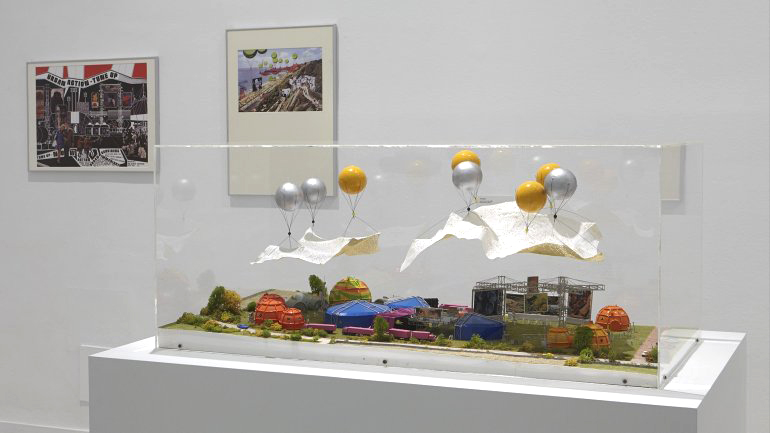
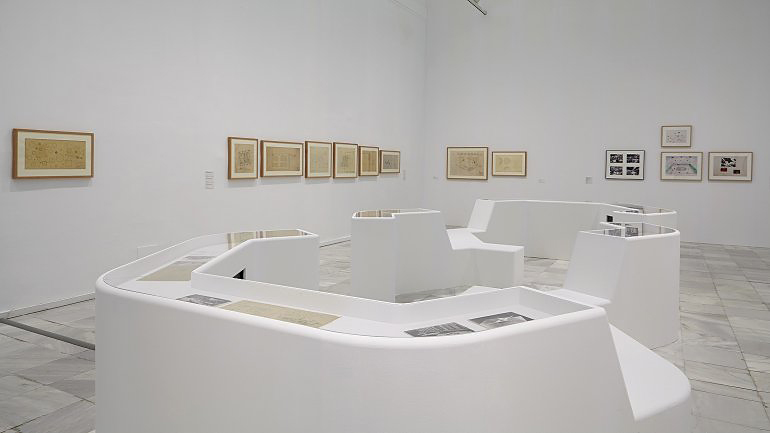
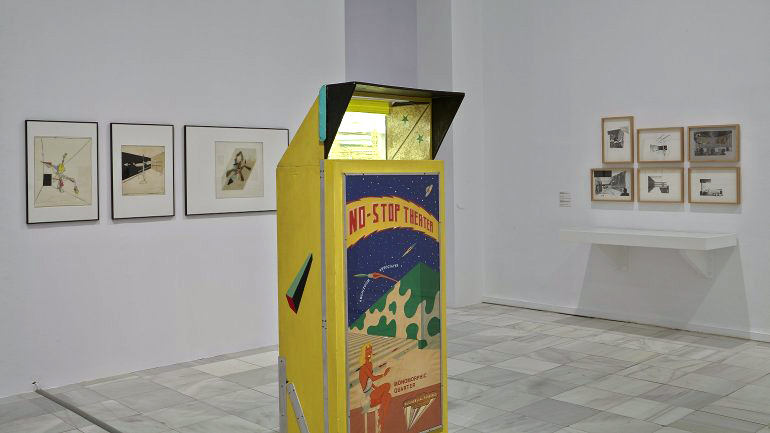

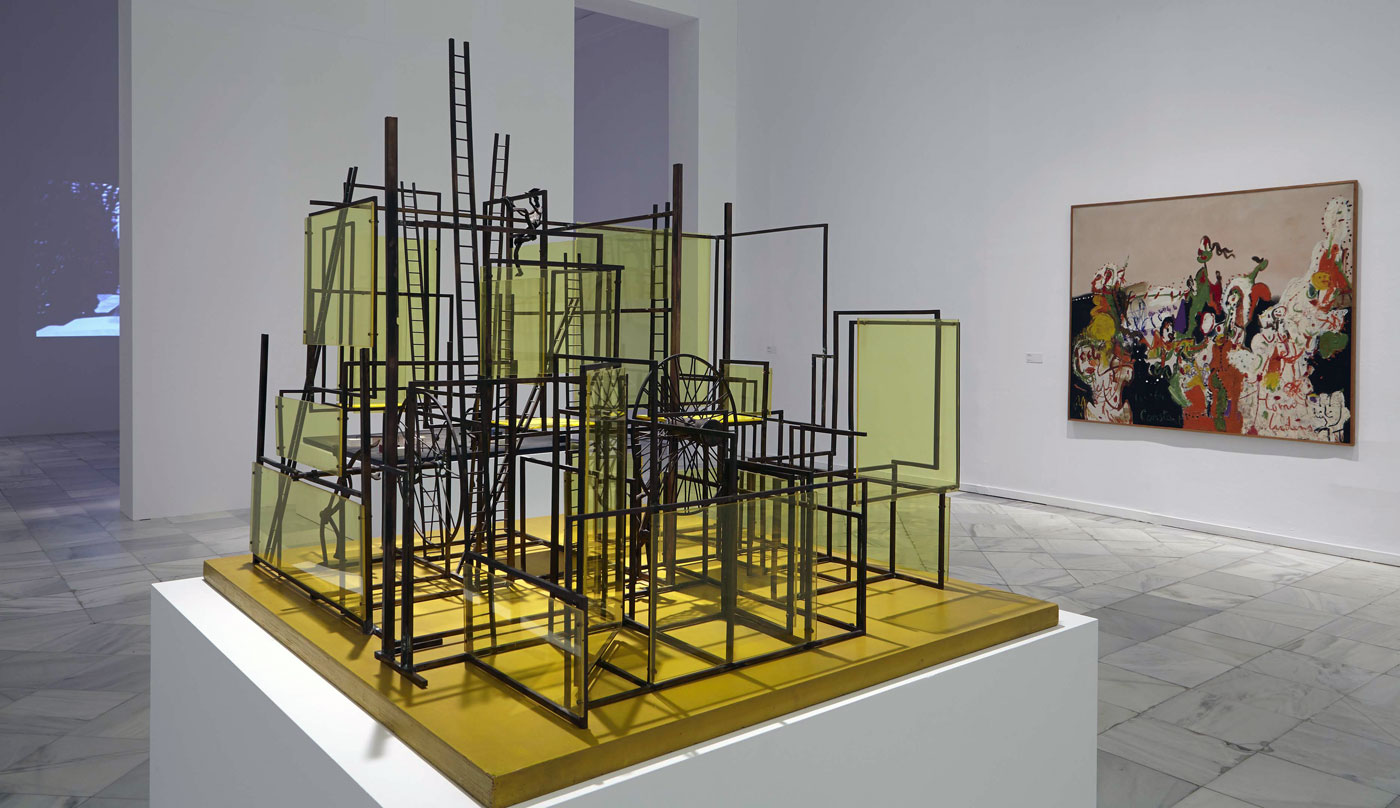


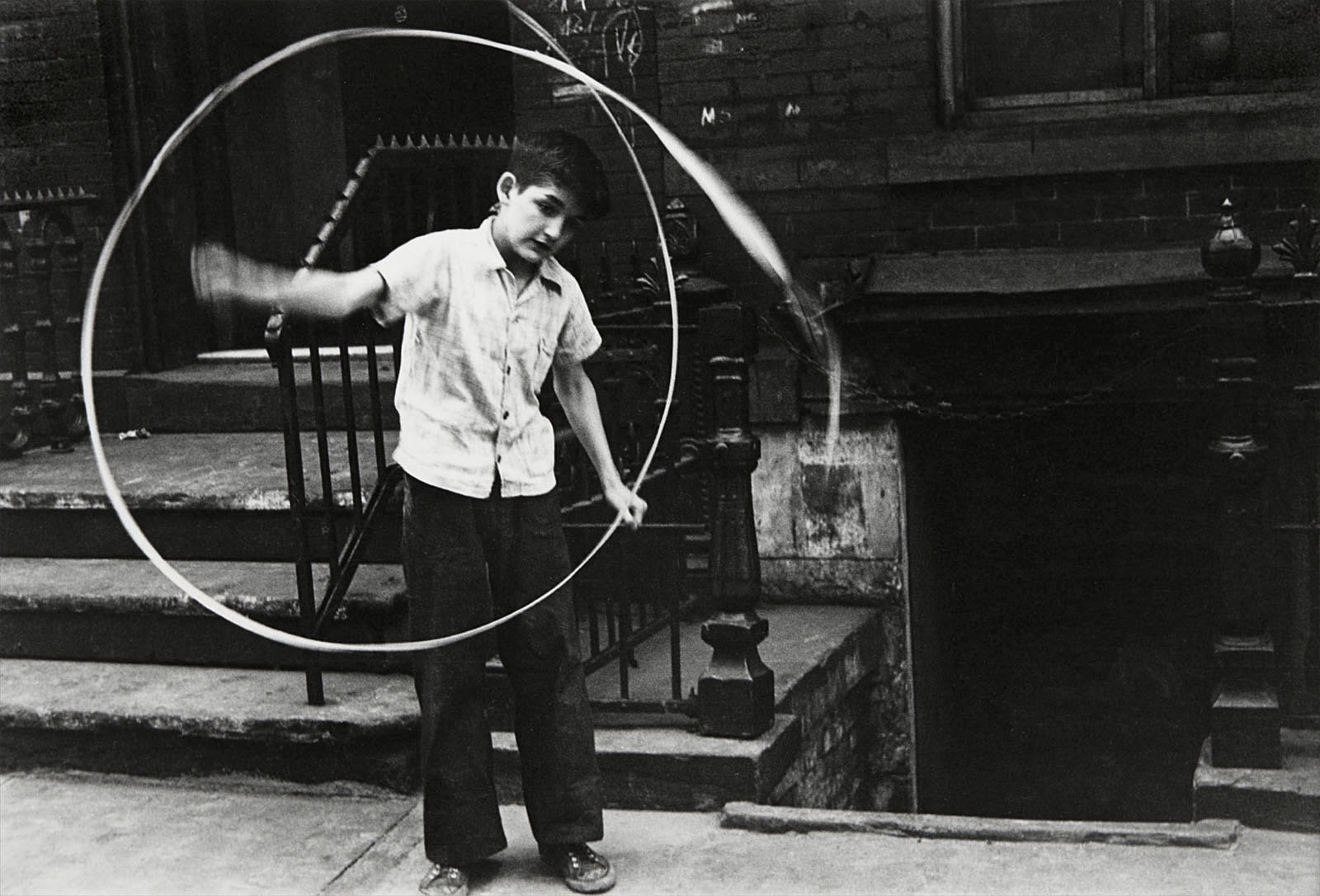

![Agustí Centelles (Catalan, 1909-1985) 'Barcelona, España. Guardería infantil en Vía Layetana' [Babysitting in Layetana Road] 1936-1939](https://artblart.com/wp-content/uploads/2014/09/agusti_centelles-guarderia_infantil-web.jpg "Agustí Centelles (Catalan, 1909-1985) 'Barcelona, España. Guardería infantil en Vía Layetana' [Babysitting in Layetana Road] 1936-1939")
![Fernand Léger (French, 1881-1951) 'Les Loisirs - Hommage à Louis David' [Leisure - Homage to Louis David] 1948-1949](https://artblart.com/wp-content/uploads/2014/09/leger-les_loisirs-web.jpg "Fernand Léger (French, 1881-1951) 'Les Loisirs - Hommage à Louis David' [Leisure - Homage to Louis David] 1948-1949")
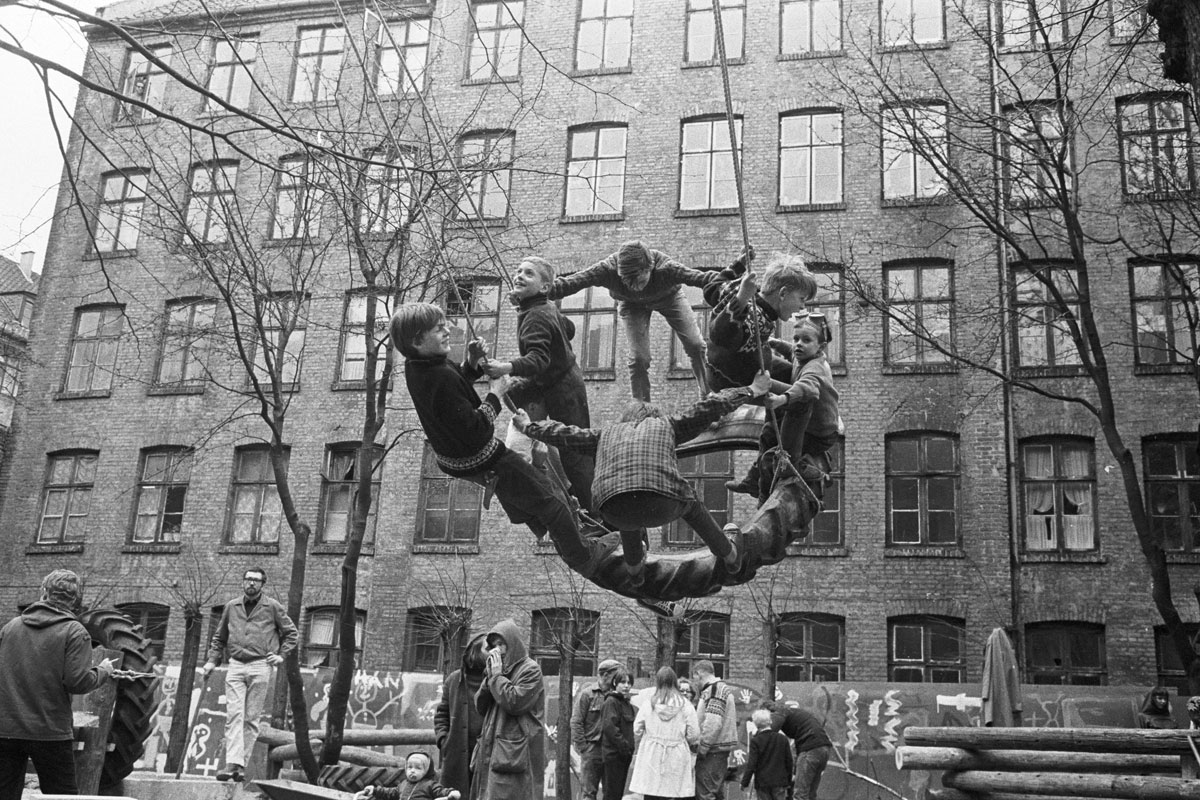
![Louis Sciarli (French, b. 1925) 'Le Corbusier. Marseille: Unité d'habitation, École Maternelle' [Le Corbusier. Marseille: housing unit, Kindergarten] 1945/2014](https://artblart.com/wp-content/uploads/2014/09/sciarli-le_corbusier_marseille-web.jpg "Louis Sciarli (French, b. 1925) 'Le Corbusier. Marseille: Unité d'habitation, École Maternelle' [Le Corbusier. Marseille: housing unit, Kindergarten] 1945/2014")

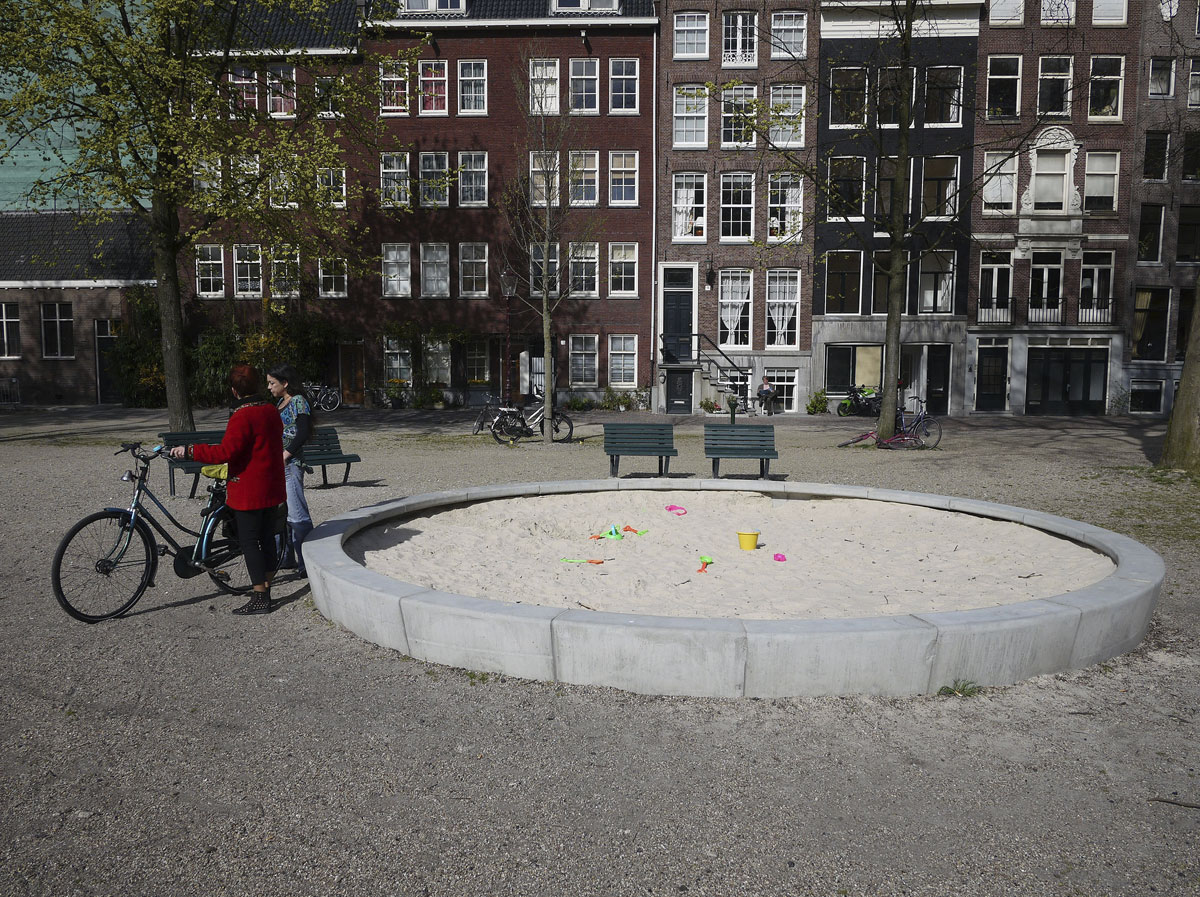
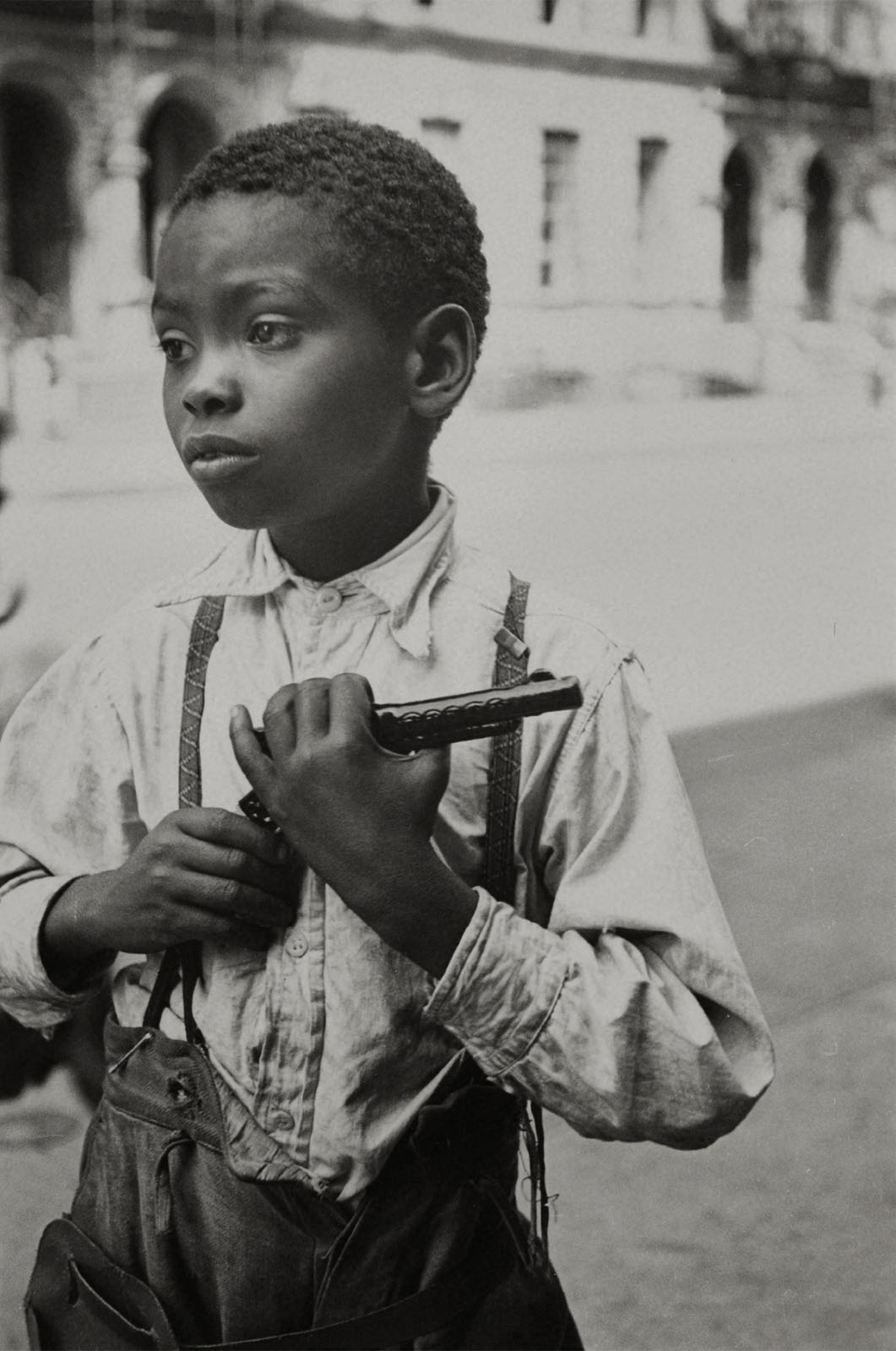

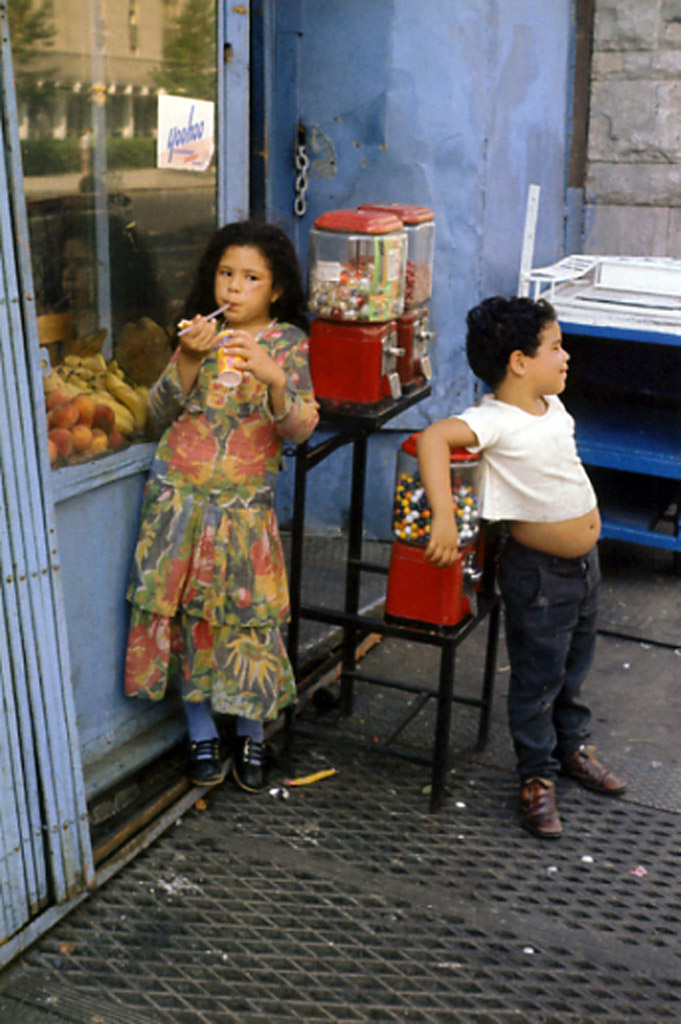
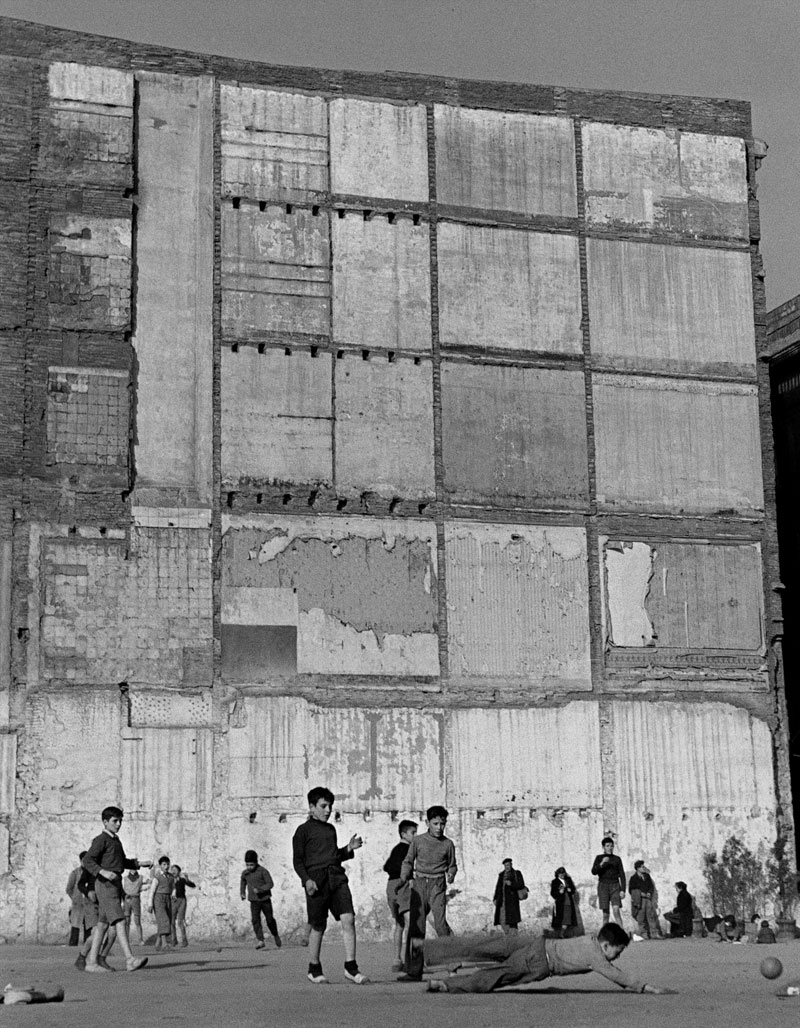


![Kati Horna (Mexican born Hungary, 1912-2000) 'Invierno en el patio' [Winter in the Courtyard] Paris, 1939](https://artblart.com/wp-content/uploads/2014/09/invierno-en-el-patio-web.jpg "Kati Horna (Mexican born Hungary, 1912-2000) 'Invierno en el patio' [Winter in the Courtyard] Paris, 1939")


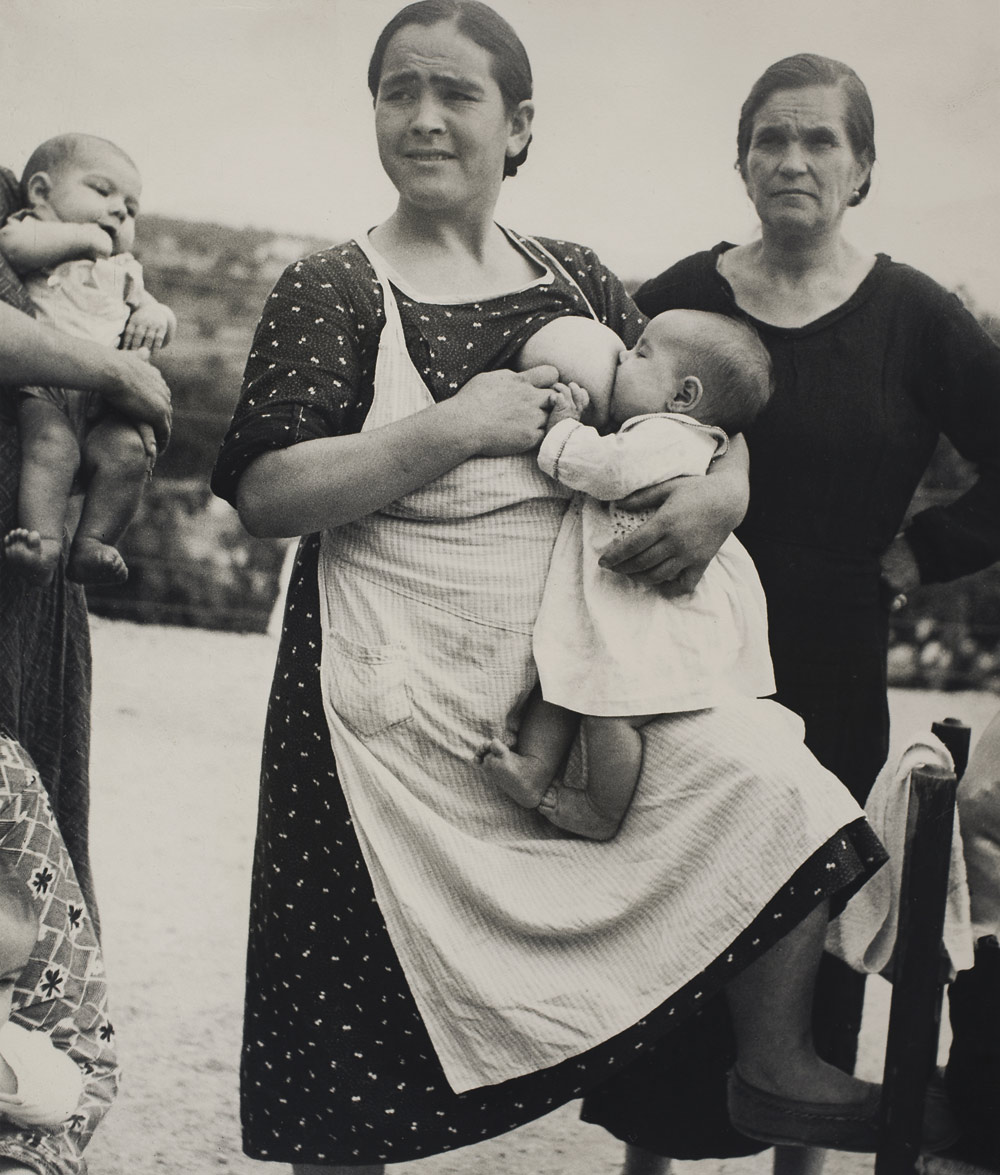
![Kati Horna (Mexican born Hungary, 1912-2000) 'Subida a la catedral [Ascending to the Cathedral], Spanish Civil War' Barcelona 1938](https://artblart.com/wp-content/uploads/2014/09/subida-a-la-catedral-web.jpg "Kati Horna (Mexican born Hungary, 1912-2000) 'Subida a la catedral [Ascending to the Cathedral], Spanish Civil War' Barcelona 1938")
![Kati Horna (Mexican born Hungary, 1912-2000) 'Los Paraguas, mitin de la CNT' [Umbrellas, Meeting of the CNT], Spanish Civil War Barcelona, 1937](https://artblart.com/wp-content/uploads/2014/09/los-paraguas-mitin-de-la-cnt-web.jpg "Kati Horna (Mexican born Hungary, 1912-2000) 'Los Paraguas, mitin de la CNT' [Umbrellas, Meeting of the CNT], Spanish Civil War Barcelona, 1937")
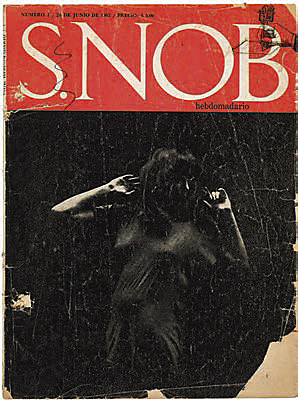
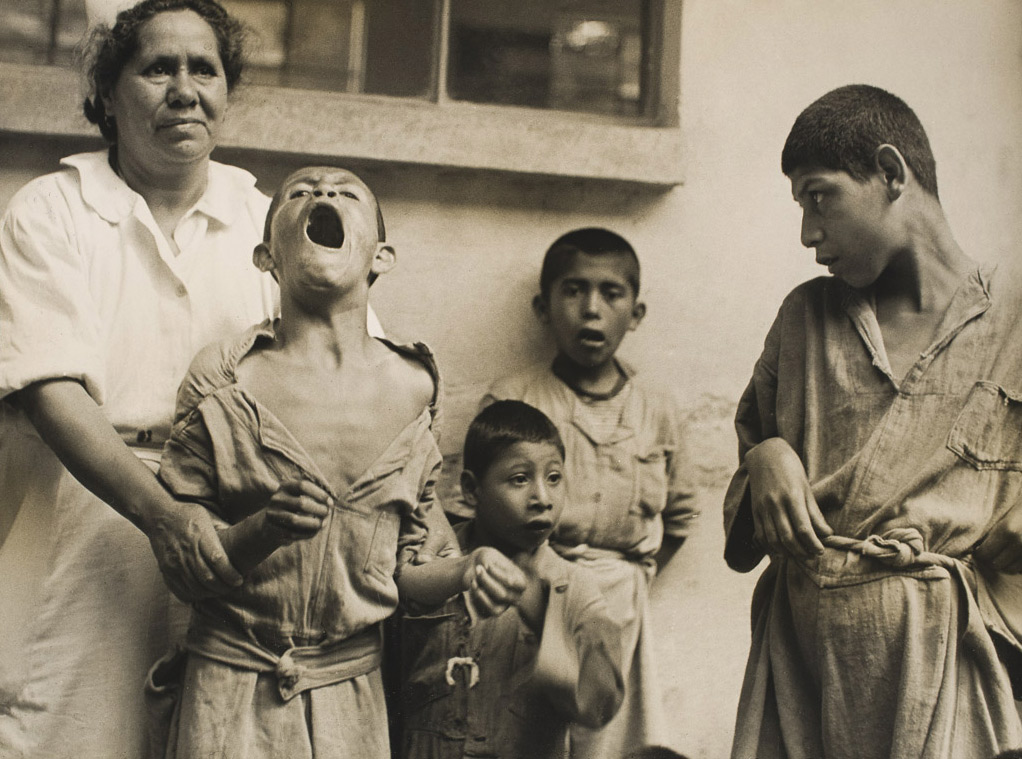
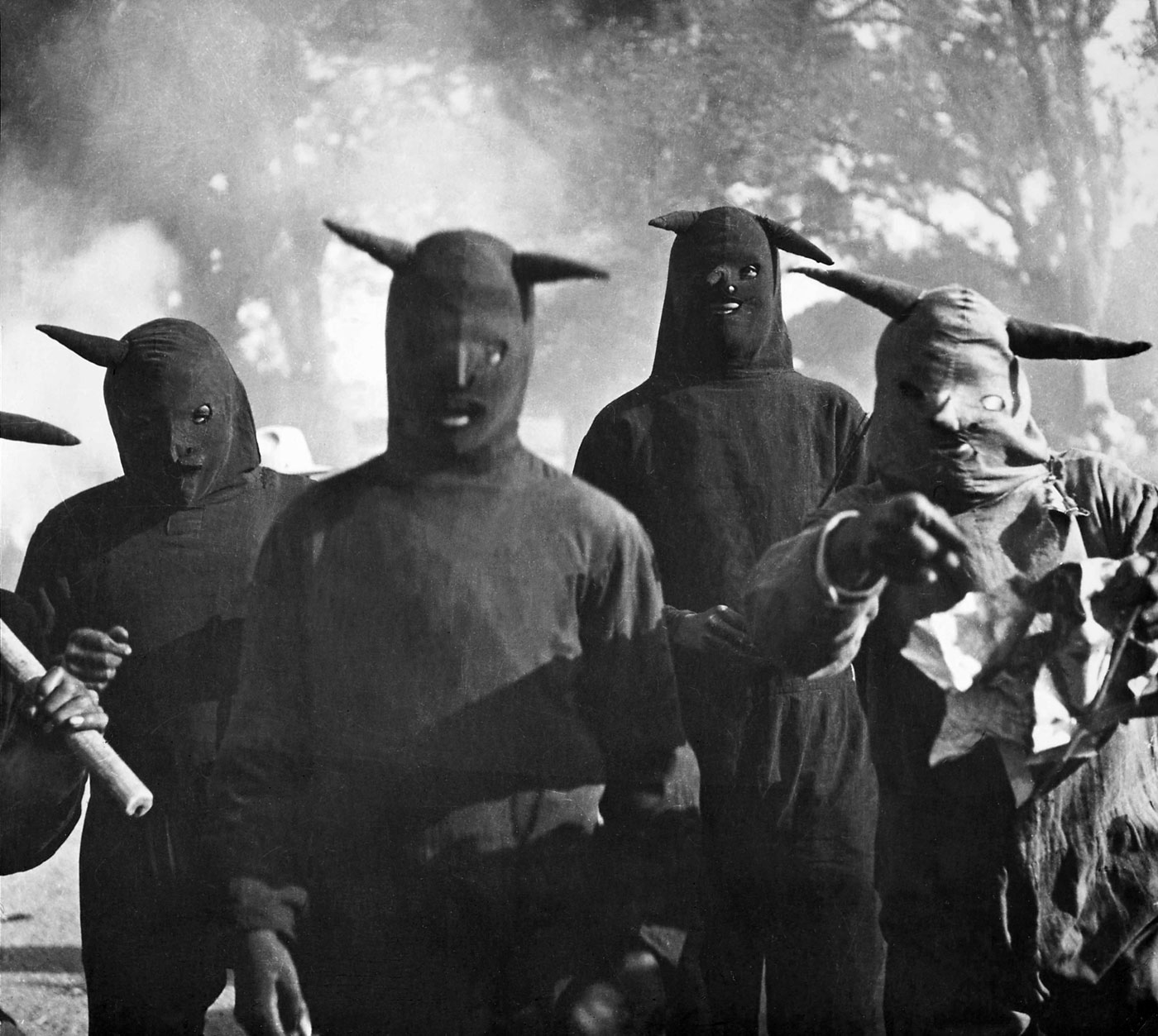
![Kati Horna (Mexican born Hungary, 1912-2000) 'Untitled, Oda a la necrofília series [Ode to Necrophilia]' Mexico 1962](https://artblart.com/wp-content/uploads/2014/09/necrophilia-web.jpg "Kati Horna (Mexican born Hungary, 1912-2000) 'Untitled, Oda a la necrofília series [Ode to Necrophilia]' Mexico 1962")
![Kati Horna (Mexican born Hungary, 1912-2000) 'El botellón' [The Bottle] Mexico, 1962](https://artblart.com/wp-content/uploads/2014/09/el-botellc3b3n-web.jpg "Kati Horna (Mexican born Hungary, 1912-2000) 'El botellón' [The Bottle] Mexico, 1962")

![Kati Horna (Mexican born Hungary, 1912-2000) 'Antonio Souza y su esposa Piti Saldivar' [Antonio Souza and his Wife Piti Saldivar] Mexico, 1959](https://artblart.com/wp-content/uploads/2014/09/souza-web.jpg "Kati Horna (Mexican born Hungary, 1912-2000) 'Antonio Souza y su esposa Piti Saldivar' [Antonio Souza and his Wife Piti Saldivar] Mexico, 1959")
![Kati Horna (Mexican born Hungary, 1912-2000) 'José Horna elaborando la maqueta de la casa de Edward James' [José Horna Working on the Maquette for Edward James's House] Mexico, 1960](https://artblart.com/wp-content/uploads/2014/09/josc3a9-horna-elaborando-web.jpg "Kati Horna (Mexican born Hungary, 1912-2000) 'José Horna elaborando la maqueta de la casa de Edward James' [José Horna Working on the Maquette for Edward James's House] Mexico, 1960")
![Kati Horna (Mexican born Hungary, 1912-2000) 'Mujer y máscara' [Woman with Mask] Mexico, 1963](https://artblart.com/wp-content/uploads/2014/09/woman-with-mask-web.jpg "Kati Horna (Mexican born Hungary, 1912-2000) 'Mujer y máscara' [Woman with Mask] Mexico, 1963")
![Oscar Muñoz (Colombian, b. 1951) 'El juego de las probabilidades' [The Game of Probabilities] 2007 from the exhibition Exhibition: 'Oscar Muñoz: Protographies' at Jeu de Paume, Paris, June - September, 2014](https://artblart.com/wp-content/uploads/2014/09/el-juego-de-las-probabilidades-web.jpg "Oscar Muñoz (Colombian, b. 1951) 'El juego de las probabilidades' [The Game of Probabilities] 2007 from the exhibition Exhibition: 'Oscar Muñoz: Protographies' at Jeu de Paume, Paris, June - September, 2014")
![Oscar Muñoz (Colombian, b. 1951) 'Ambulatorio' [Ambulatory] 1994](https://artblart.com/wp-content/uploads/2014/09/ambulatorio-web.jpg "Oscar Muñoz (Colombian, b. 1951) 'Ambulatorio' [Ambulatory] 1994")
![Oscar Muñoz (Colombian, b. 1951) 'Cortinas de Baño' [Shower curtains] 1985-1986](https://artblart.com/wp-content/uploads/2014/09/cortinas-de-bac3b1o-web.jpg "Oscar Muñoz (Colombian, b. 1951) 'Cortinas de Baño' [Shower curtains] 1985-1986")
![Oscar Muñoz (Colombian, b. 1951) 'Narcisos (en proceso)' [Narcissi (in process)] 1995-2011](https://artblart.com/wp-content/uploads/2014/09/narcisos-web.jpg "Oscar Muñoz (Colombian, b. 1951) 'Narcisos (en proceso)' [Narcissi (in process)] 1995-2011")
![Oscar Muñoz (Colombian, b. 1951) 'Narciso' [Narcissus] 2001](https://artblart.com/wp-content/uploads/2014/09/narciso-web.jpg "Oscar Muñoz (Colombian, b. 1951) 'Narciso' [Narcissus] 2001")
![Oscar Muñoz (Colombian, b. 1951) 'Re/trato' [Portrait/I Try Again] 2004](https://artblart.com/wp-content/uploads/2014/09/re_trato-web.jpg "Oscar Muñoz (Colombian, b. 1951) 'Re/trato' [Portrait/I Try Again] 2004")
![Oscar Muñoz (Colombian, b. 1951) 'Aliento' [Breath] 1995](https://artblart.com/wp-content/uploads/2014/09/aliento-web.jpg "Oscar Muñoz (Colombian, b. 1951) 'Aliento' [Breath] 1995")
![Oscar Muñoz (Colombian, b. 1951) 'La mirada del cíclope' [The Cyclops' Gaze] 2002](https://artblart.com/wp-content/uploads/2014/09/la-mirada-del-cc3adclope-web.jpg "Oscar Muñoz (Colombian, b. 1951) 'La mirada del cíclope' [The Cyclops' Gaze] 2002")
![Oscar Muñoz (Colombian, b. 1951) 'Horizonte [Horizon]' 2011](https://artblart.com/wp-content/uploads/2014/09/horizonte-web.jpg "Oscar Muñoz (Colombian, b. 1951) 'Horizonte [Horizon]' 2011")
![Oscar Muñoz (Colombian, b. 1951) 'Fundido a blanco (dos retratos)' [Fade to White (Two Portraits)] 2010](https://artblart.com/wp-content/uploads/2014/09/fade-to-white-web.jpg "Oscar Muñoz (Colombian, b. 1951) 'Fundido a blanco (dos retratos)' [Fade to White (Two Portraits)] 2010")
![Oscar Muñoz (Colombian, b. 1951) 'Sedimentaciones' [Sedimentations] 2011](https://artblart.com/wp-content/uploads/2014/09/sedimentaciones-web.jpg "Oscar Muñoz (Colombian, b. 1951) 'Sedimentaciones' [Sedimentations] 2011")
![Oscar Muñoz (Colombian, b. 1951) 'Línea del destino' [Line of Destiny] 2006](https://artblart.com/wp-content/uploads/2014/09/lc3adnea-del-destino-web.jpg "Oscar Muñoz (Colombian, b. 1951) 'Línea del destino' [Line of Destiny] 2006")
![Oscar Muñoz (Colombian, b. 1951) 'Línea del destino' [Line of Destiny] 2006](https://artblart.com/wp-content/uploads/2014/09/lc3adnea-del-destino-b-web.jpg "Oscar Muñoz (Colombian, b. 1951) 'Línea del destino' [Line of Destiny] 2006")
![Oscar Muñoz (Colombian, b. 1951) 'Línea del destino' [Line of Destiny] 2006](https://artblart.com/wp-content/uploads/2014/09/lc3adnea-del-destino-c-web.jpg "Oscar Muñoz (Colombian, b. 1951) 'Línea del destino' [Line of Destiny] 2006")
![Oscar Muñoz (Colombian, b. 1951) 'Pixeles' [Pixels] 1999-2000](https://artblart.com/wp-content/uploads/2014/09/pixeles-web.jpg "Oscar Muñoz (Colombian, b. 1951) 'Pixeles' [Pixels] 1999-2000")


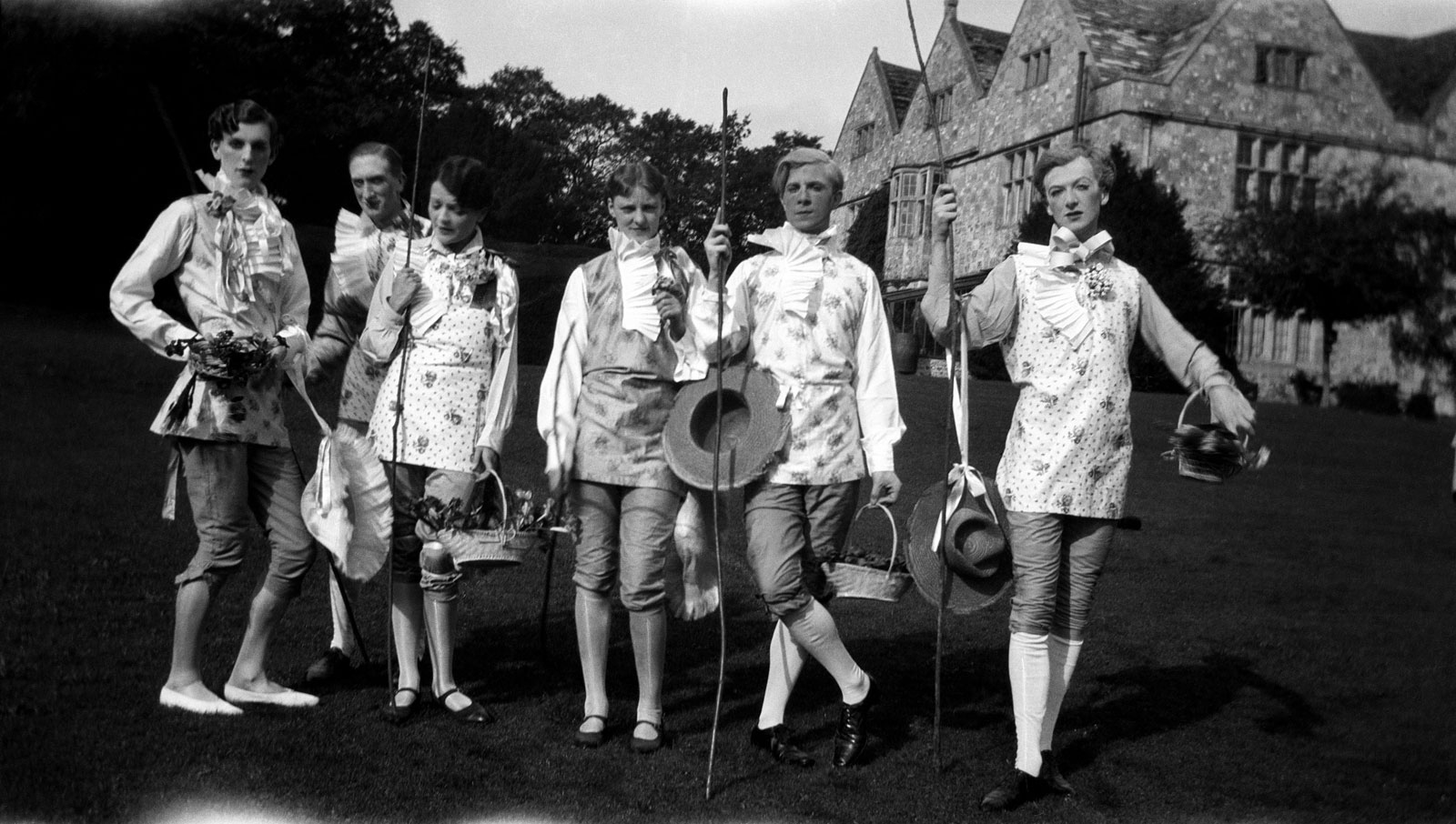


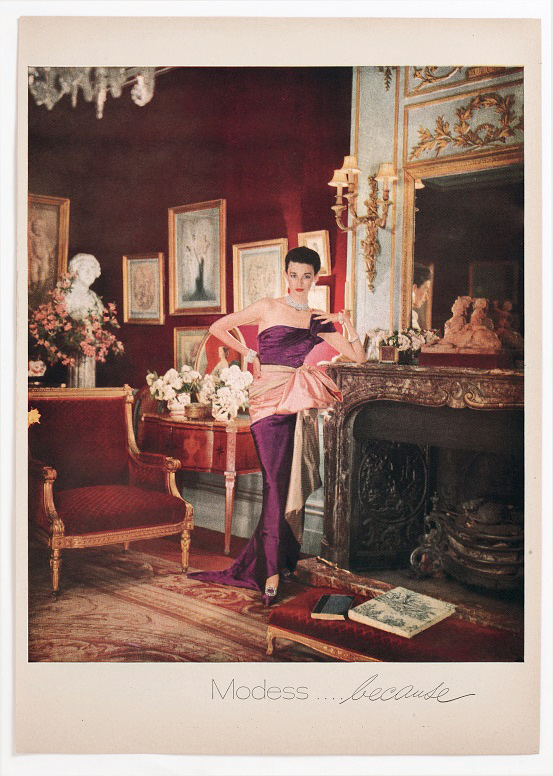
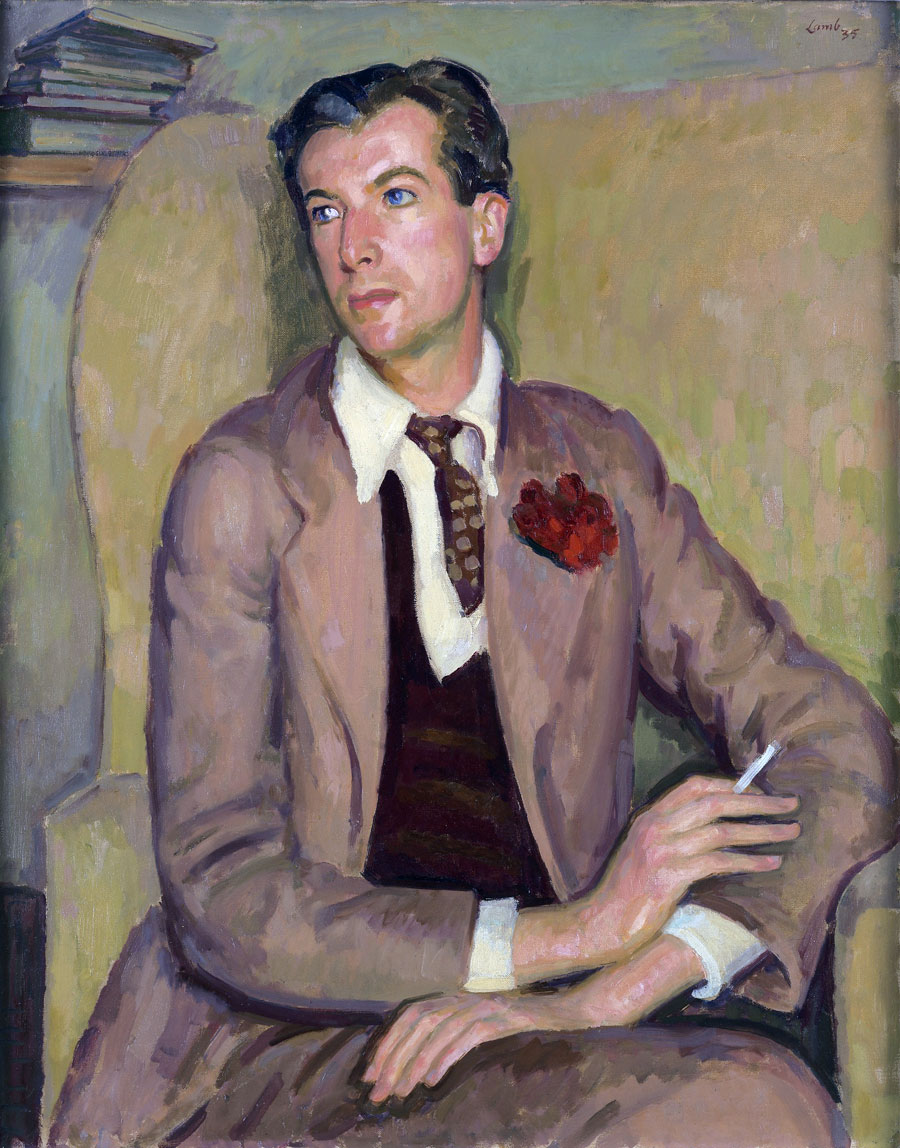


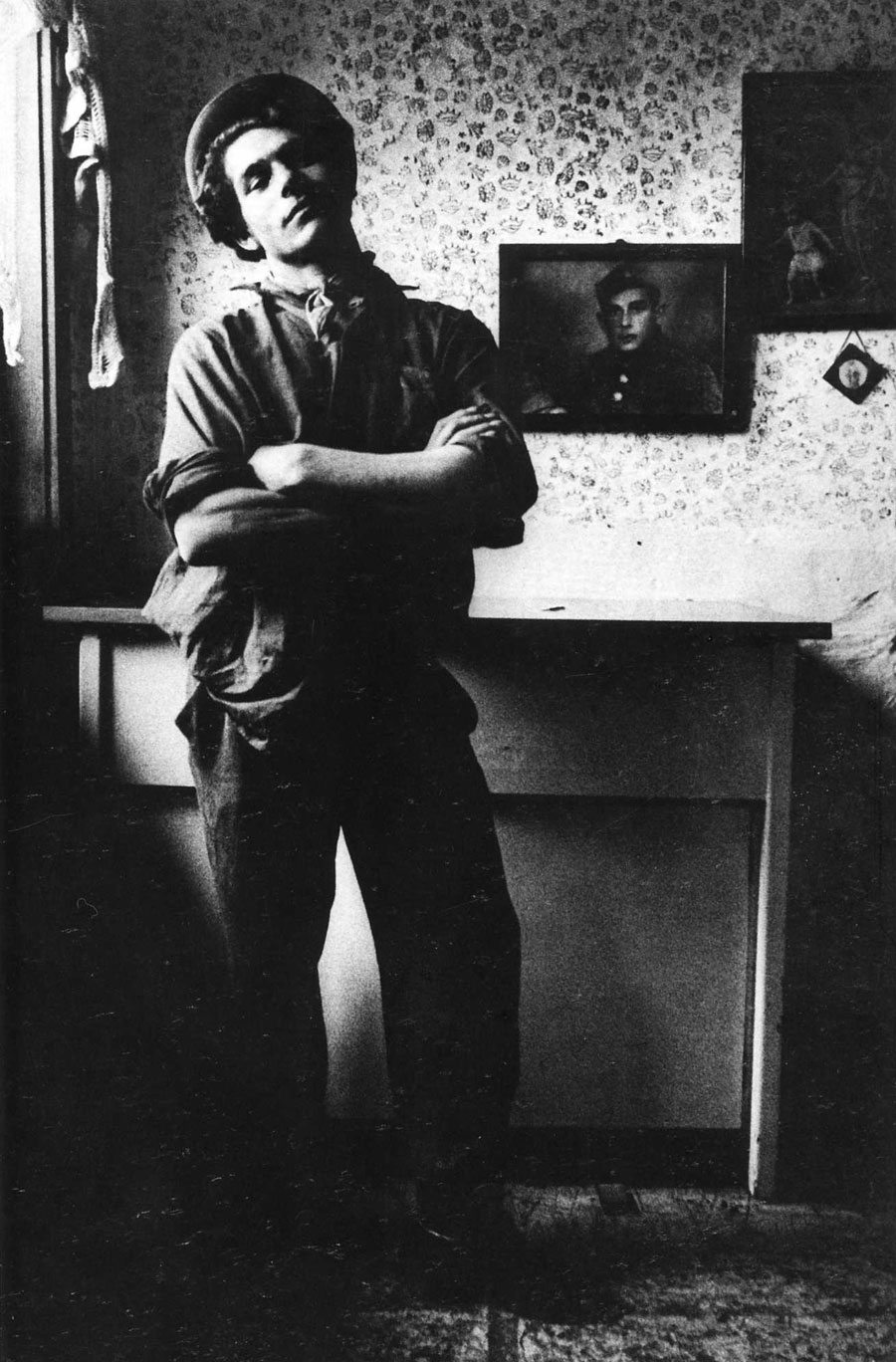
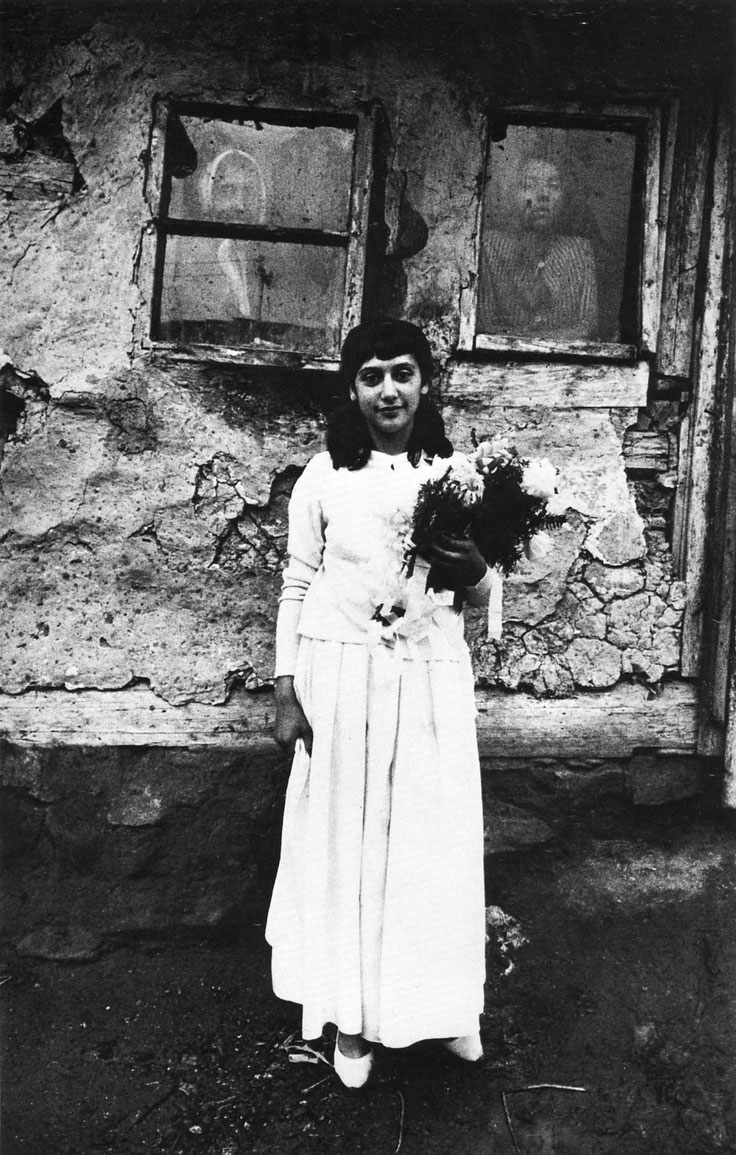


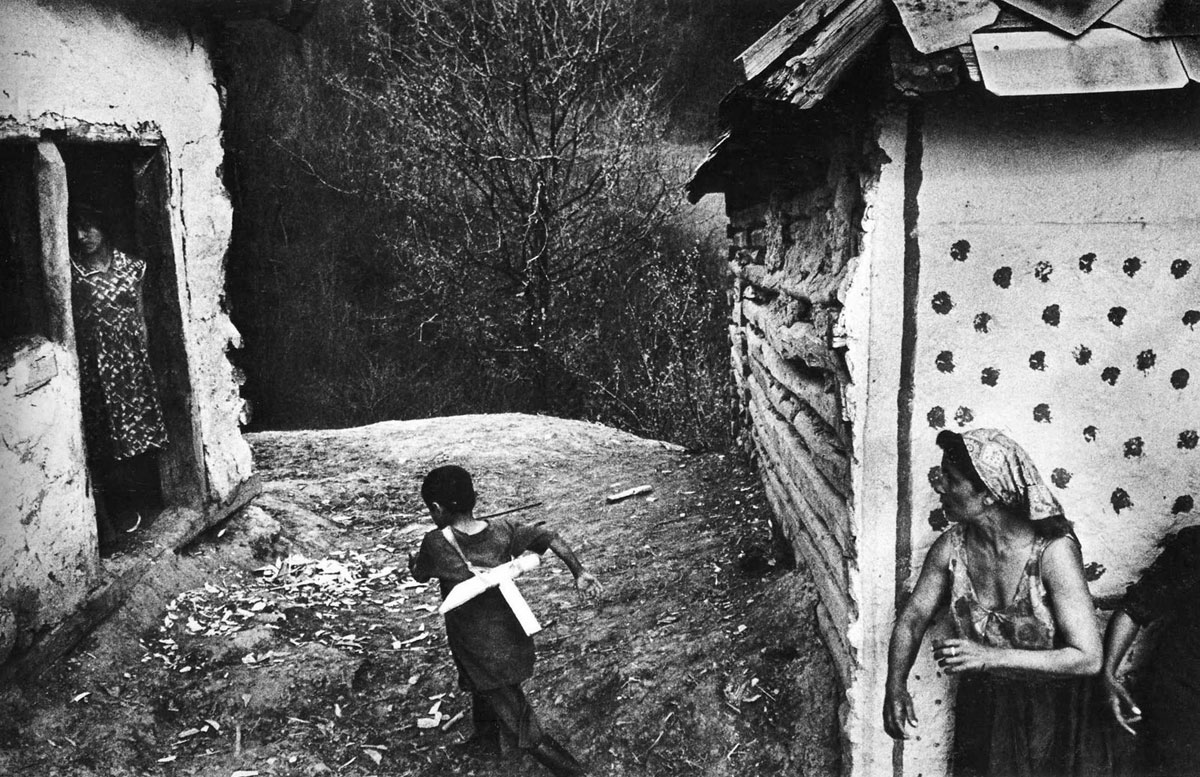


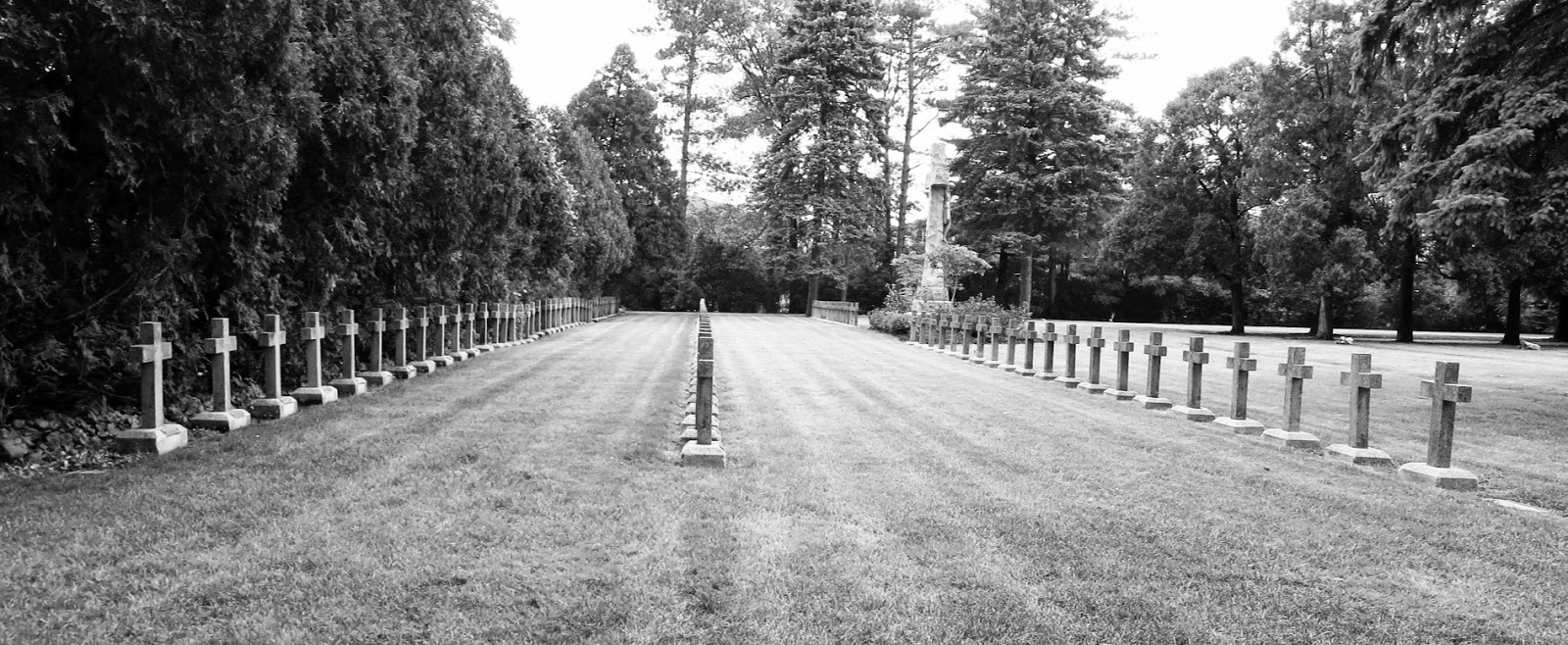


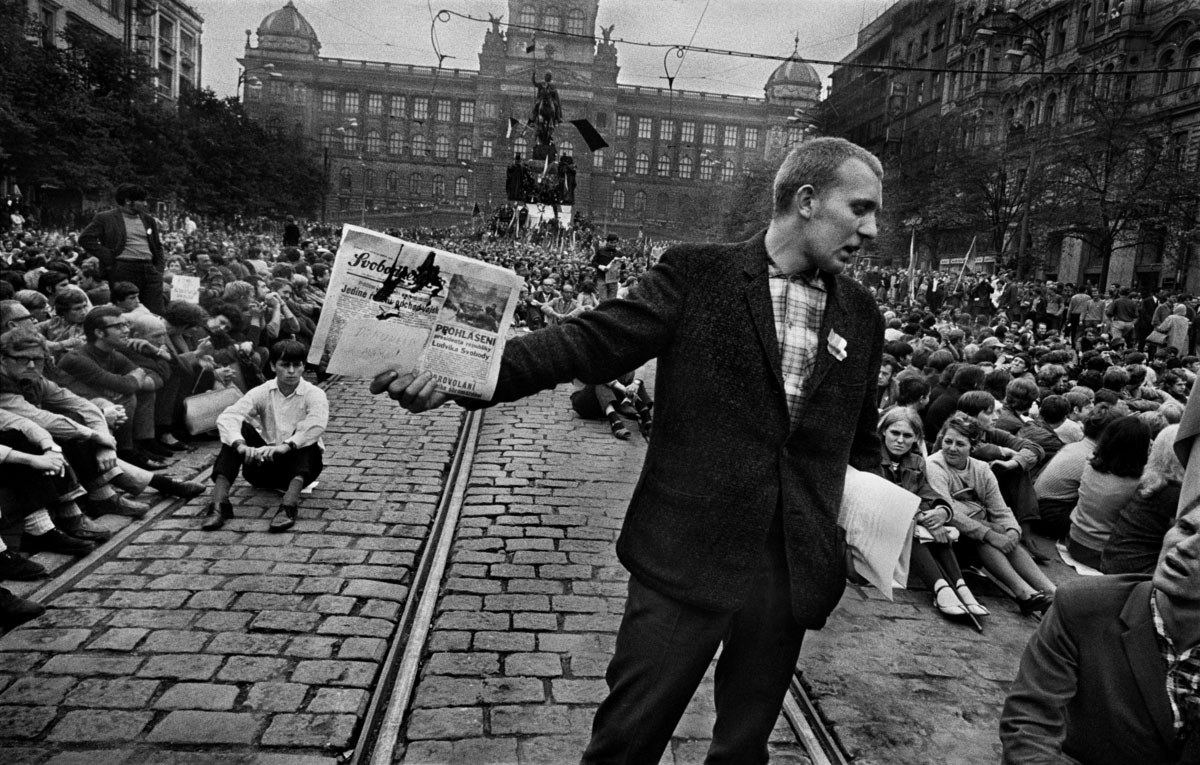


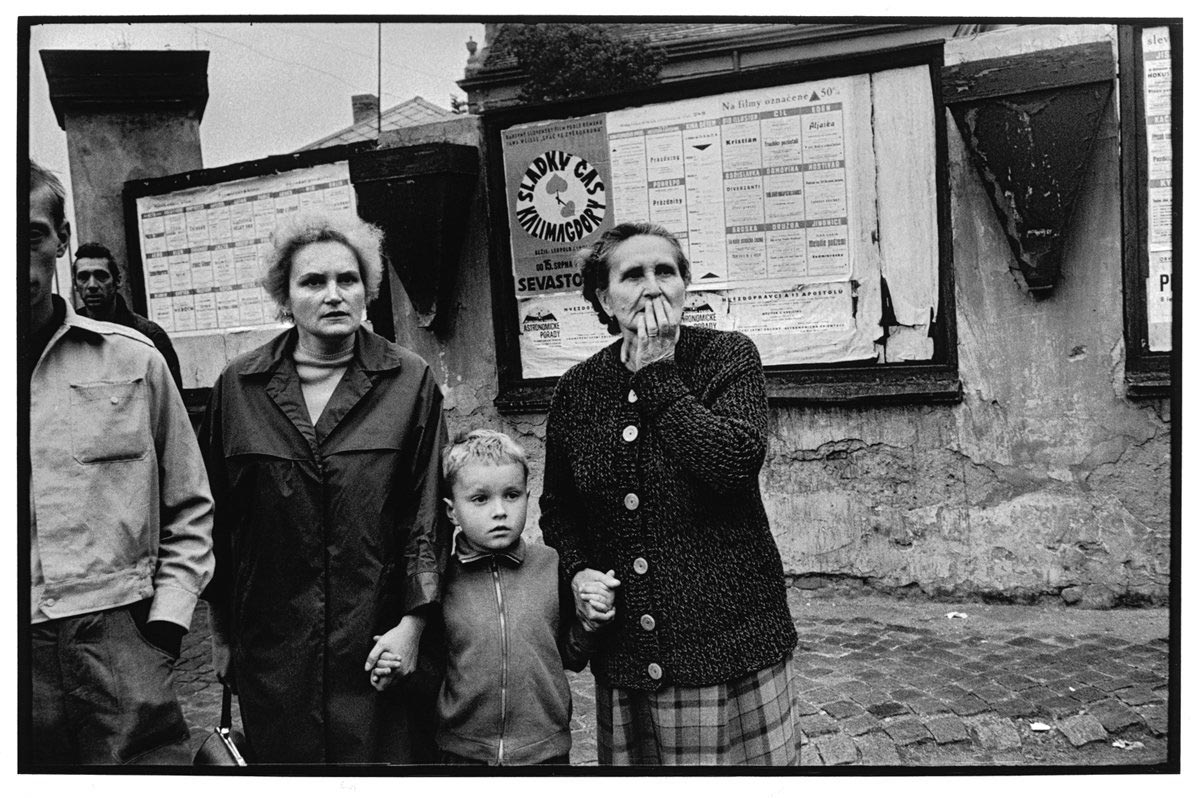
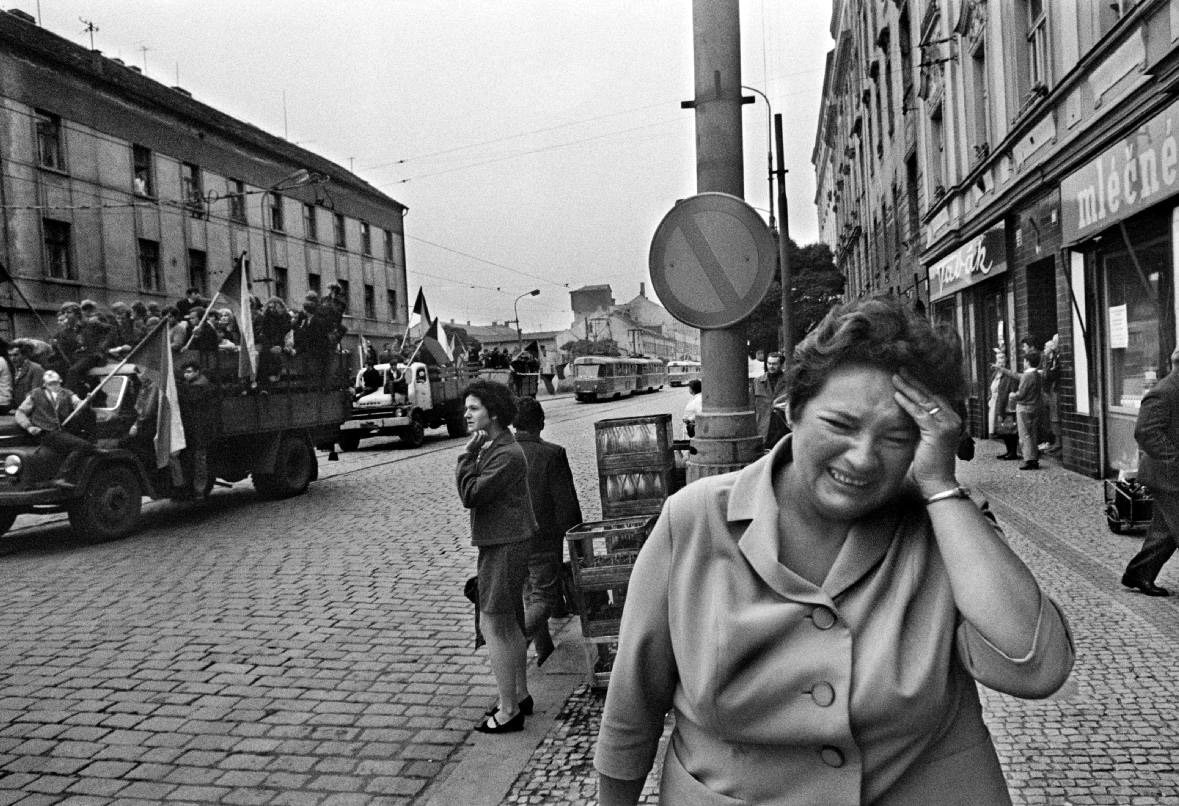

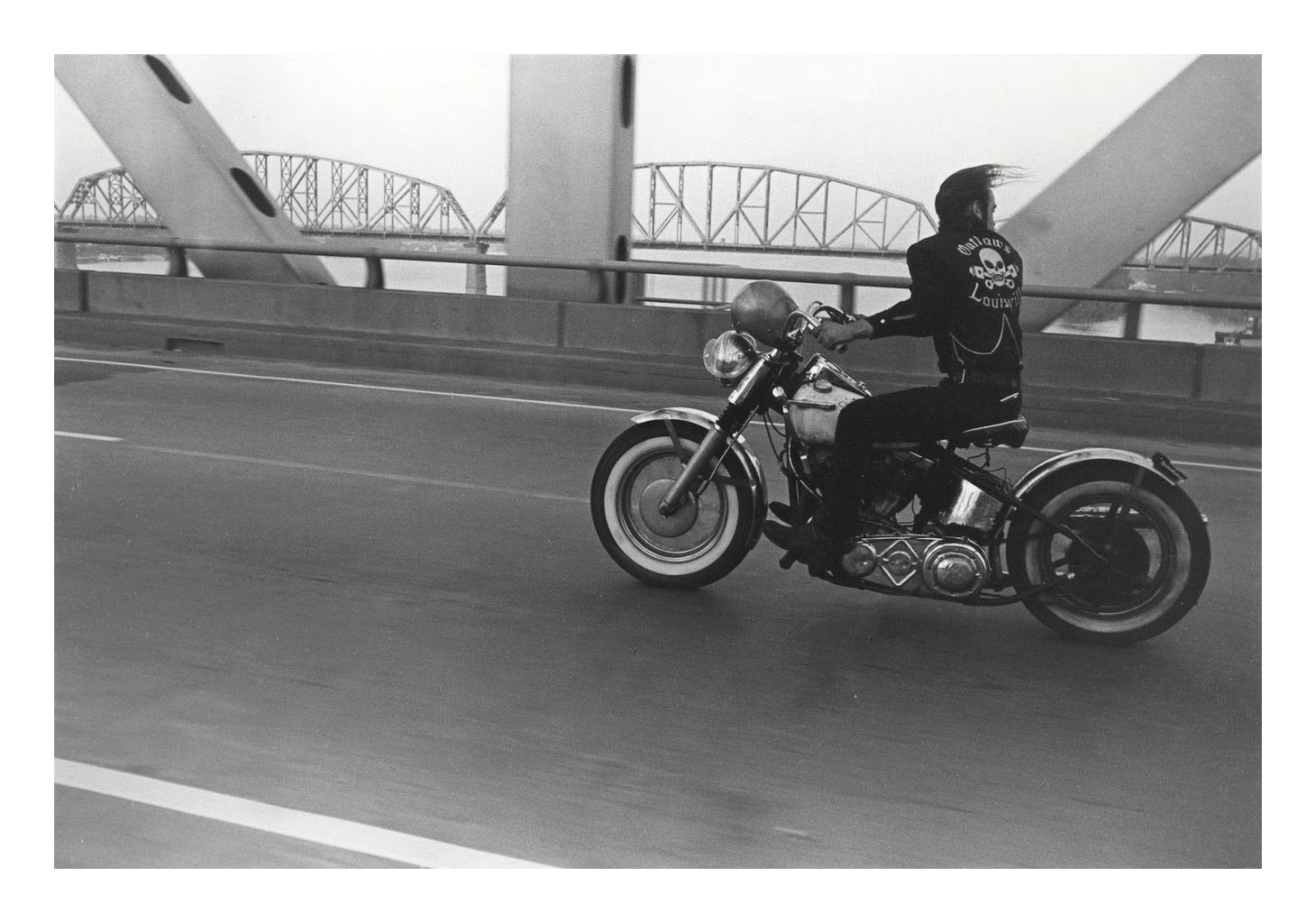


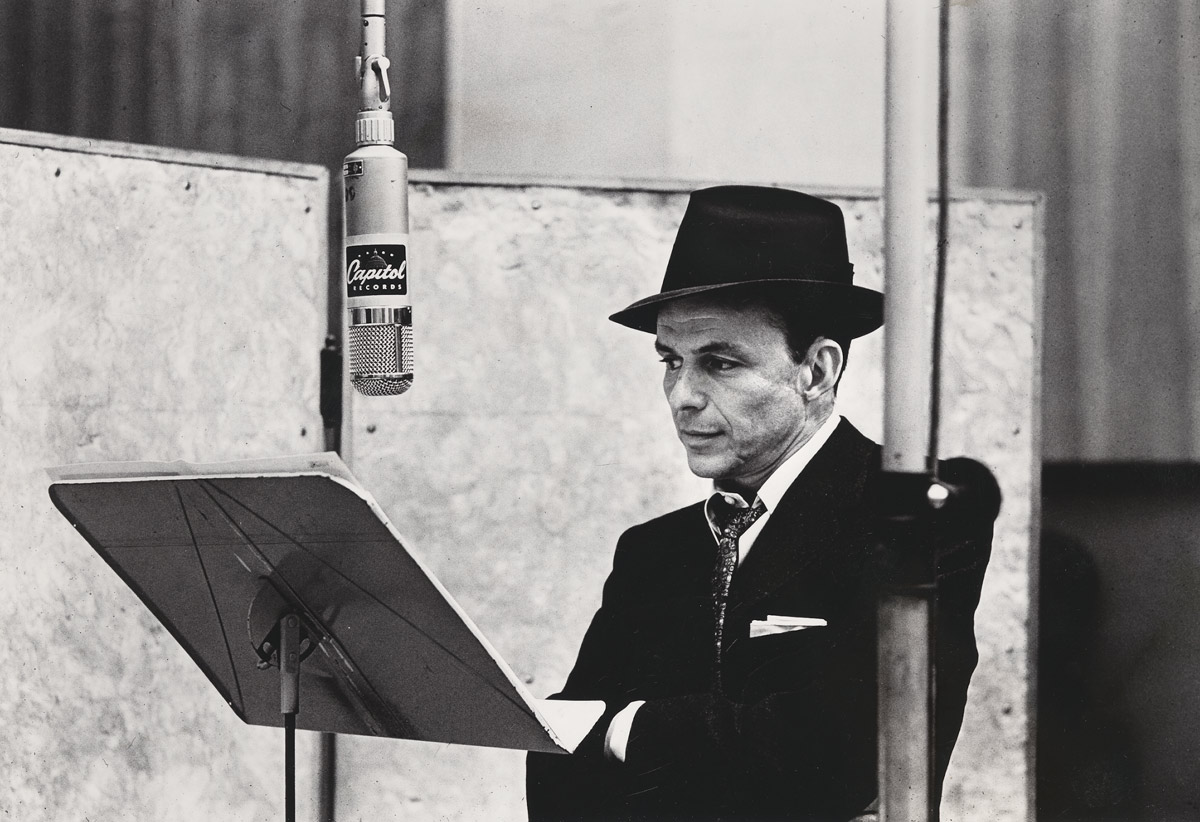


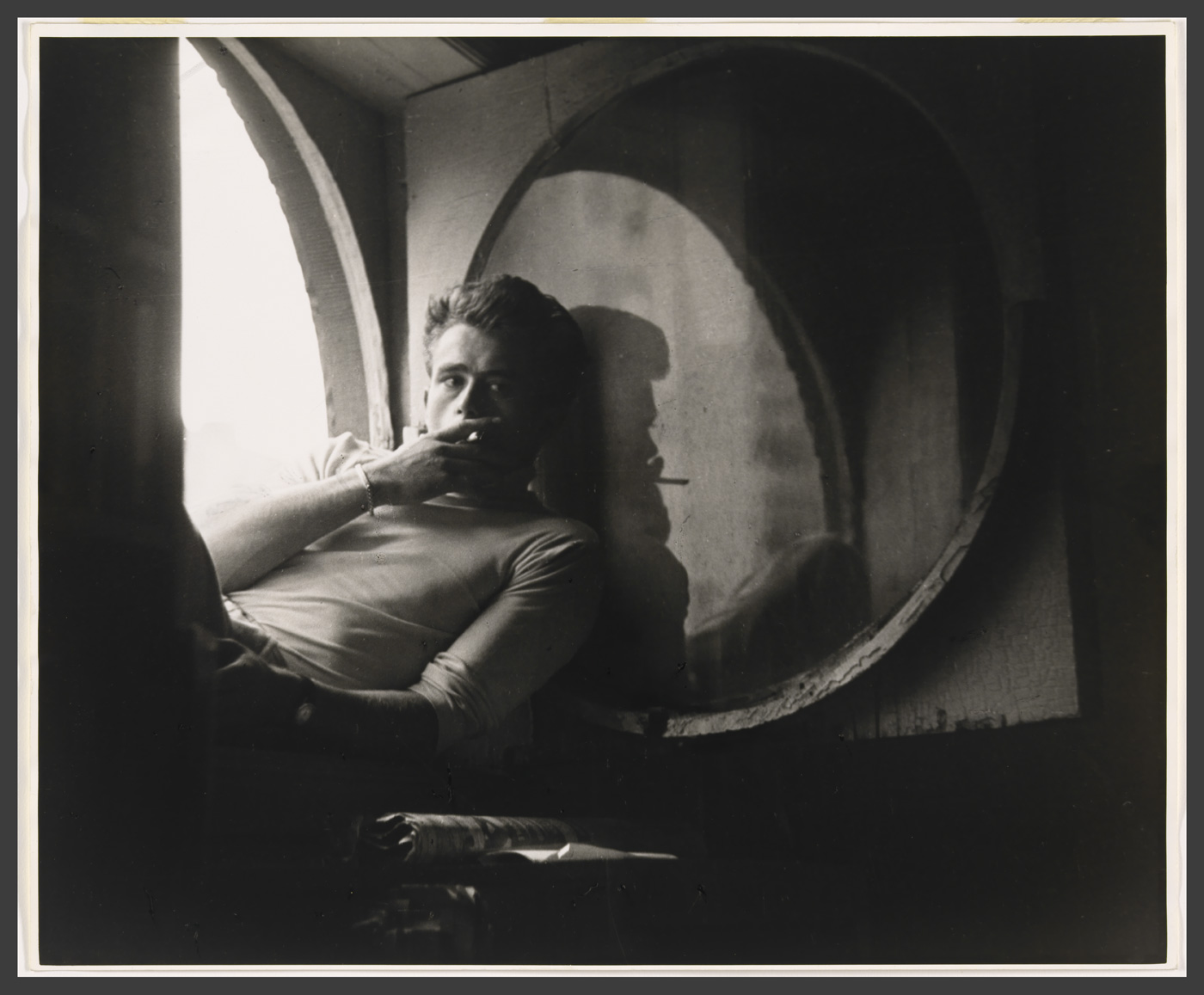
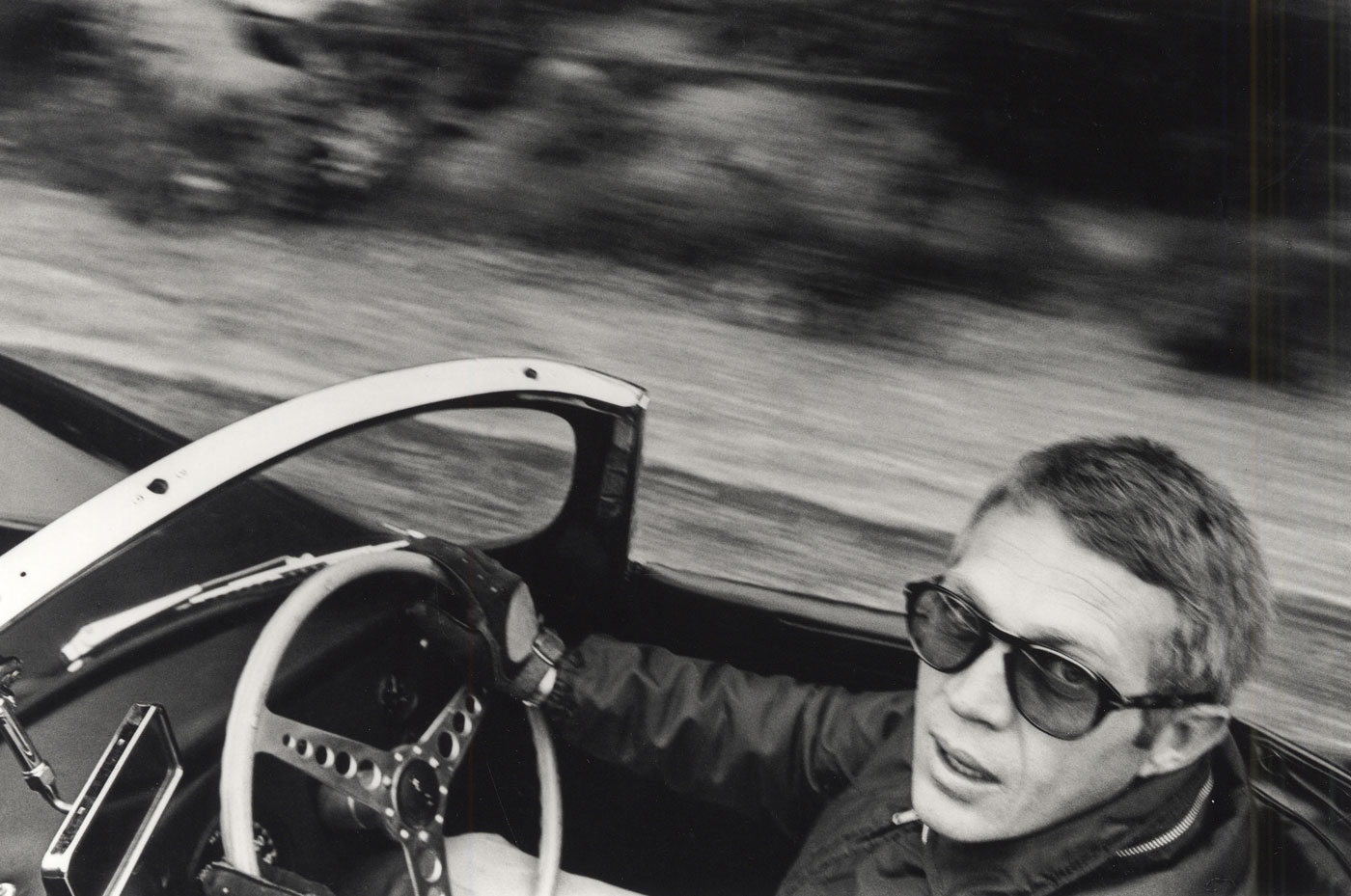











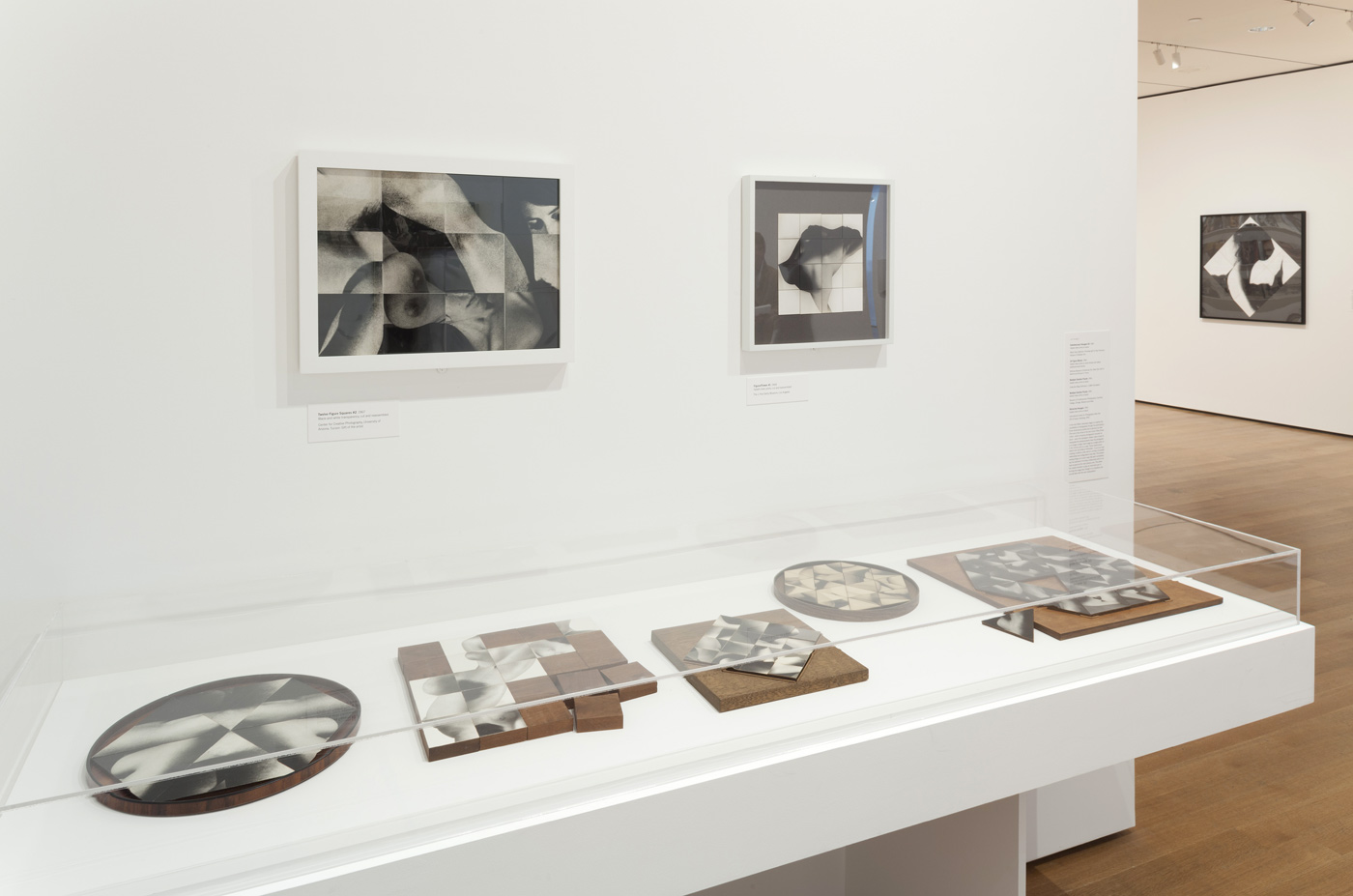
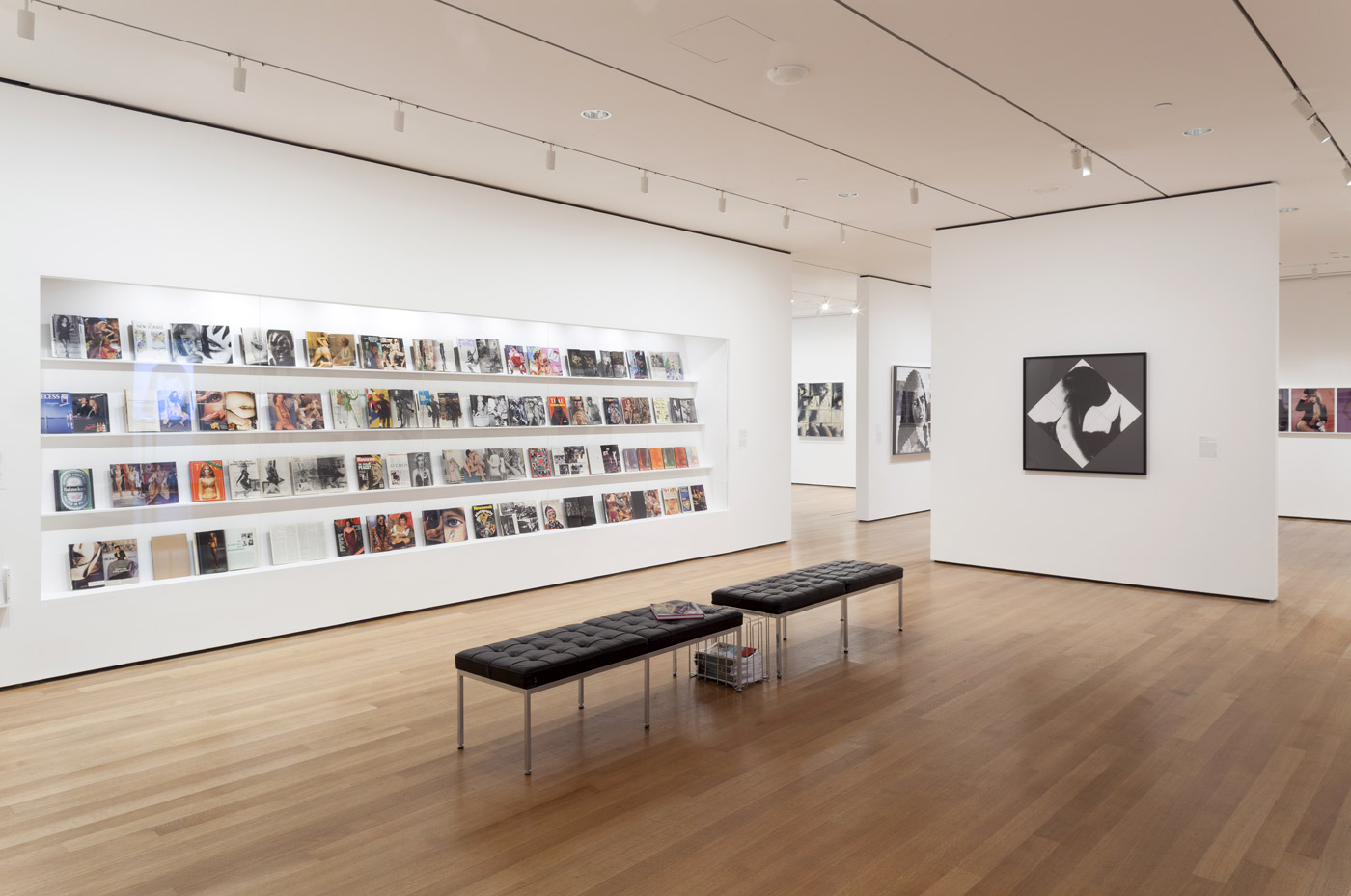
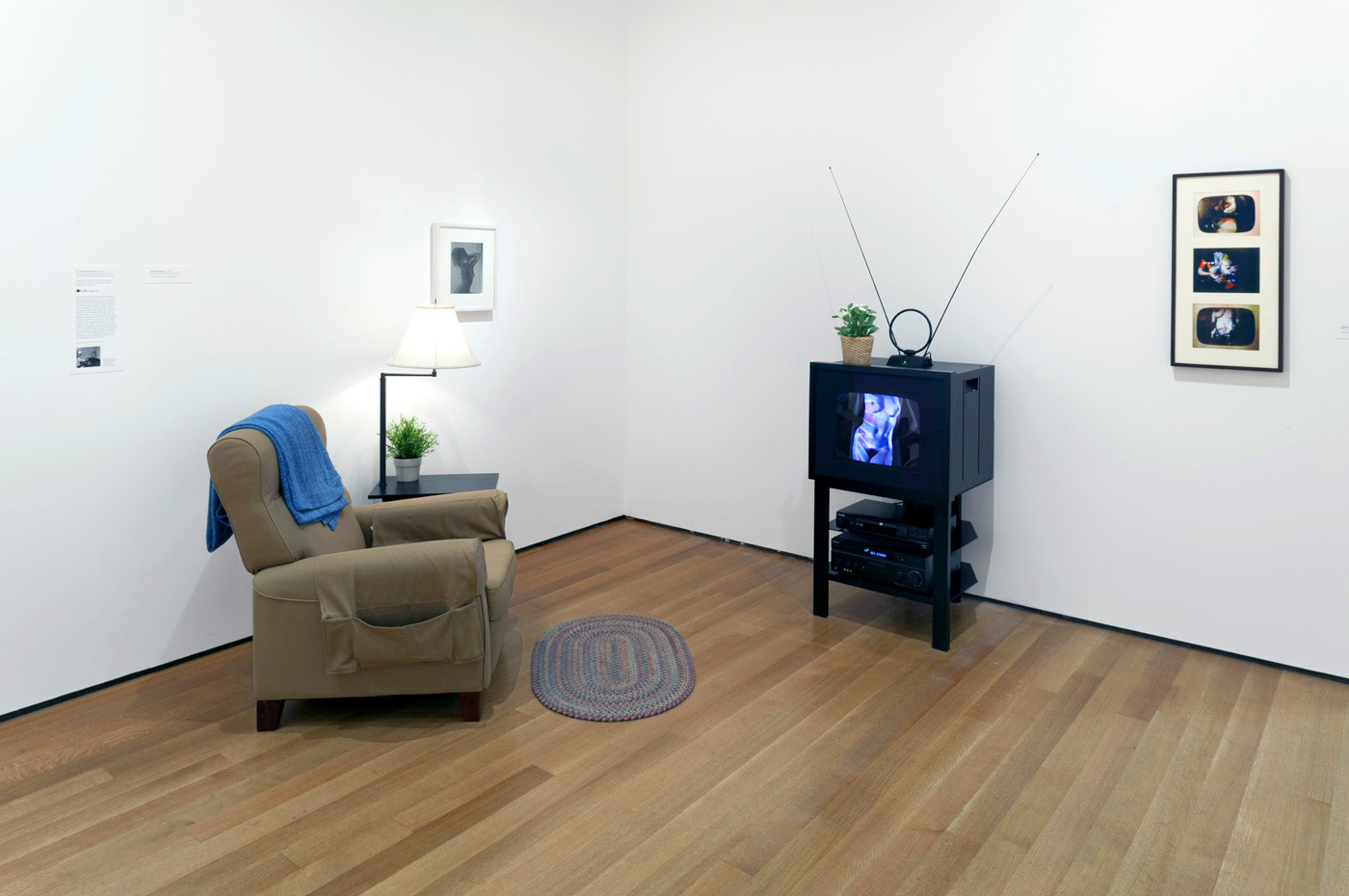
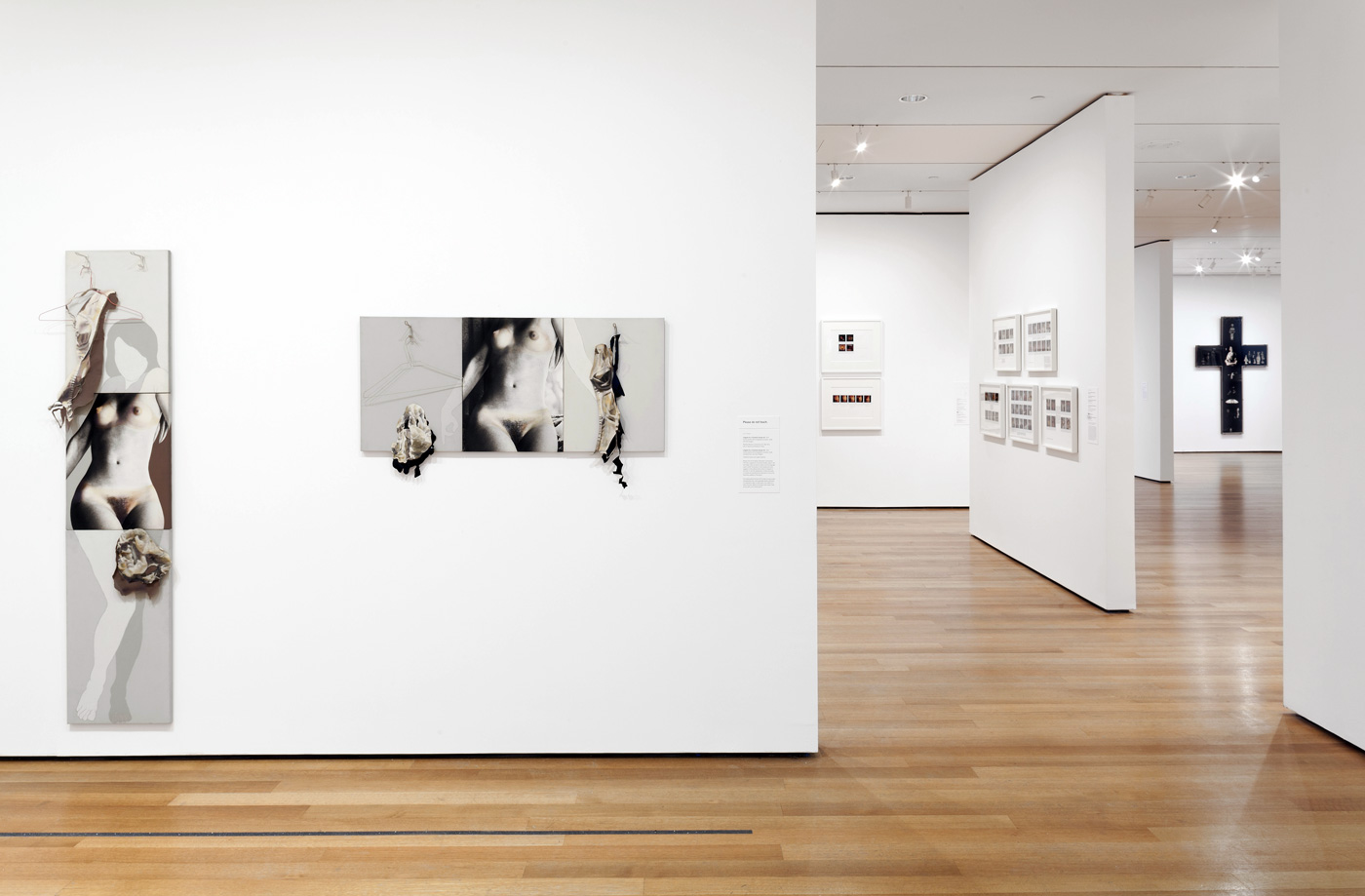
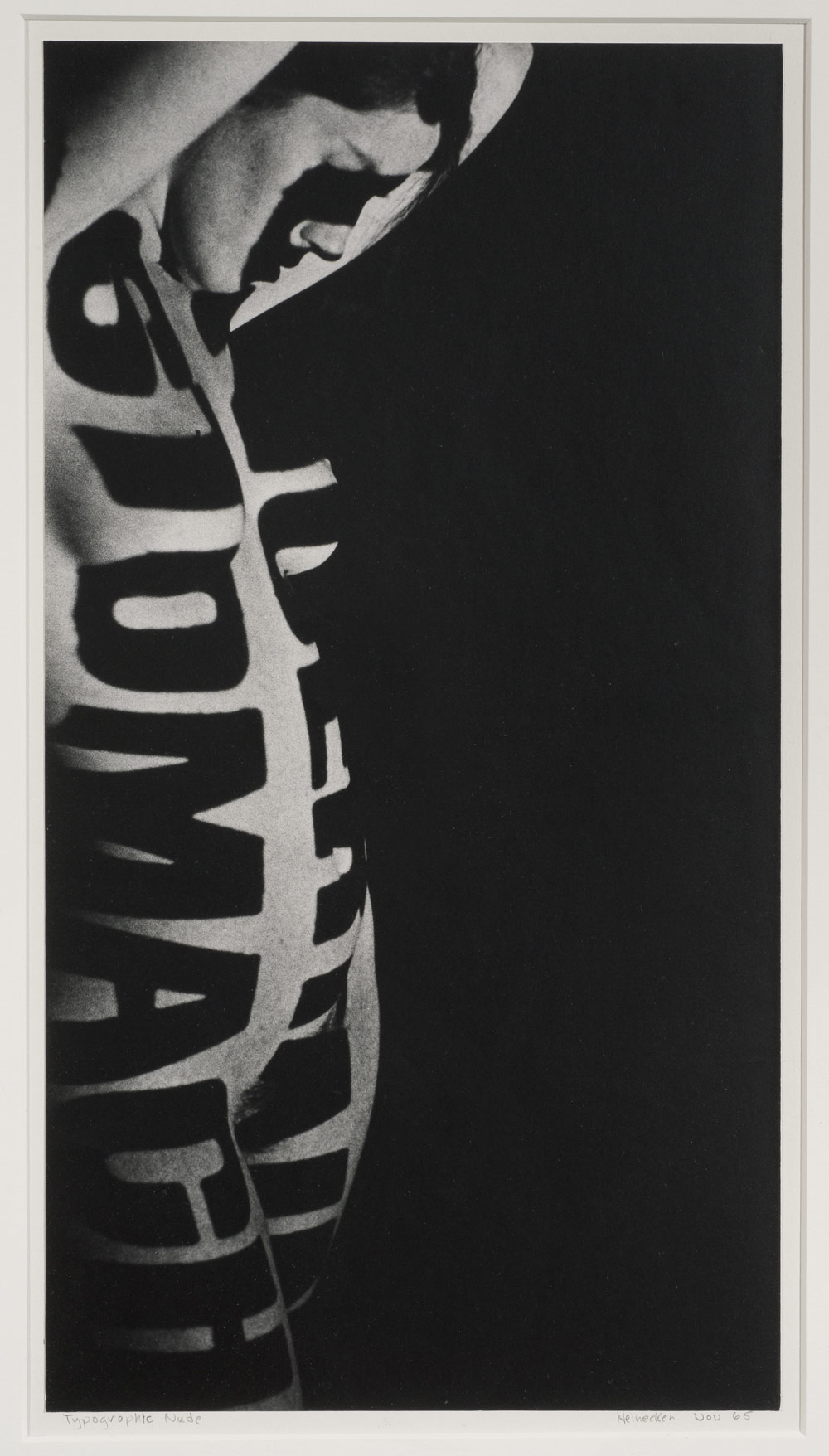
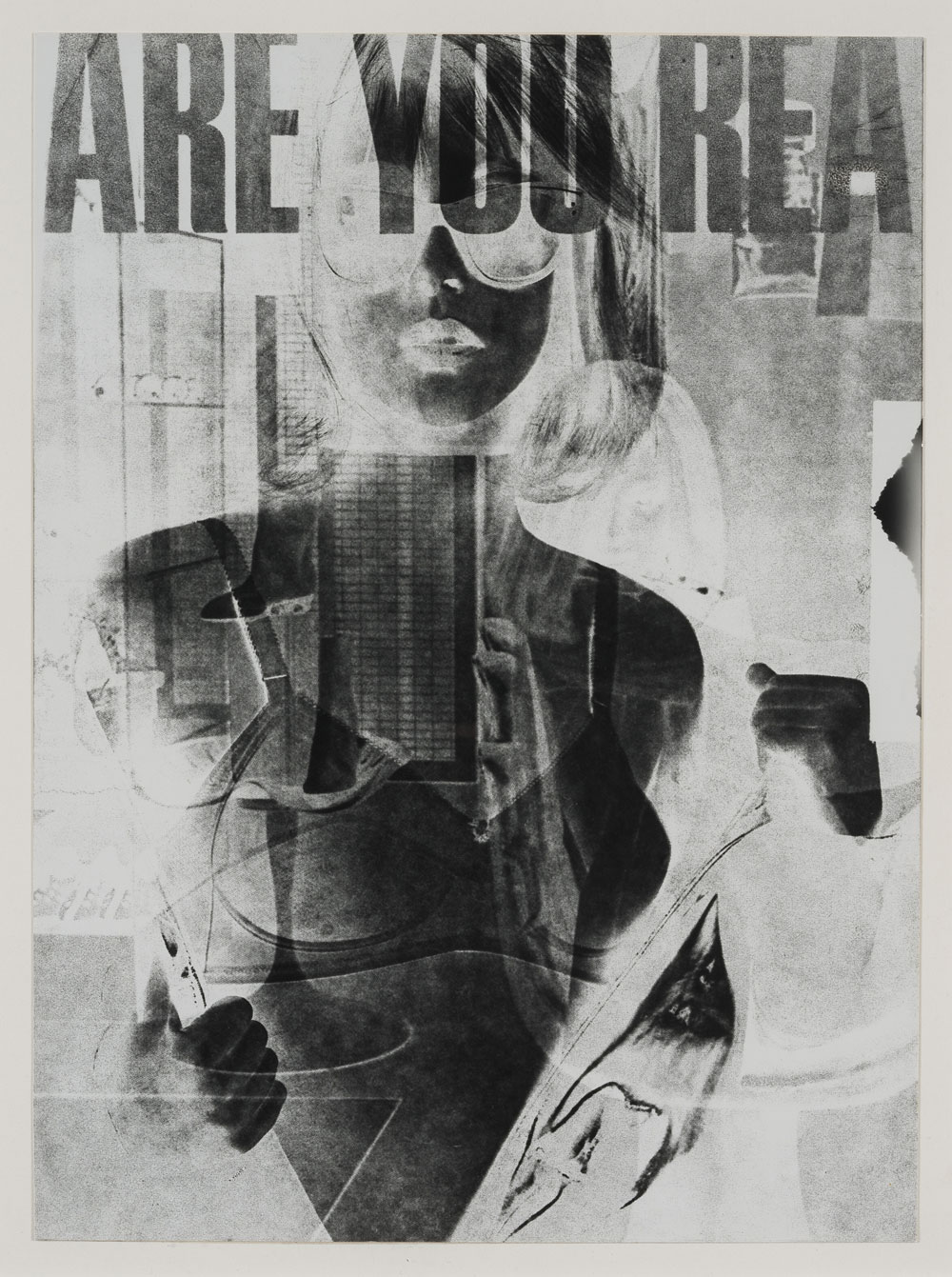
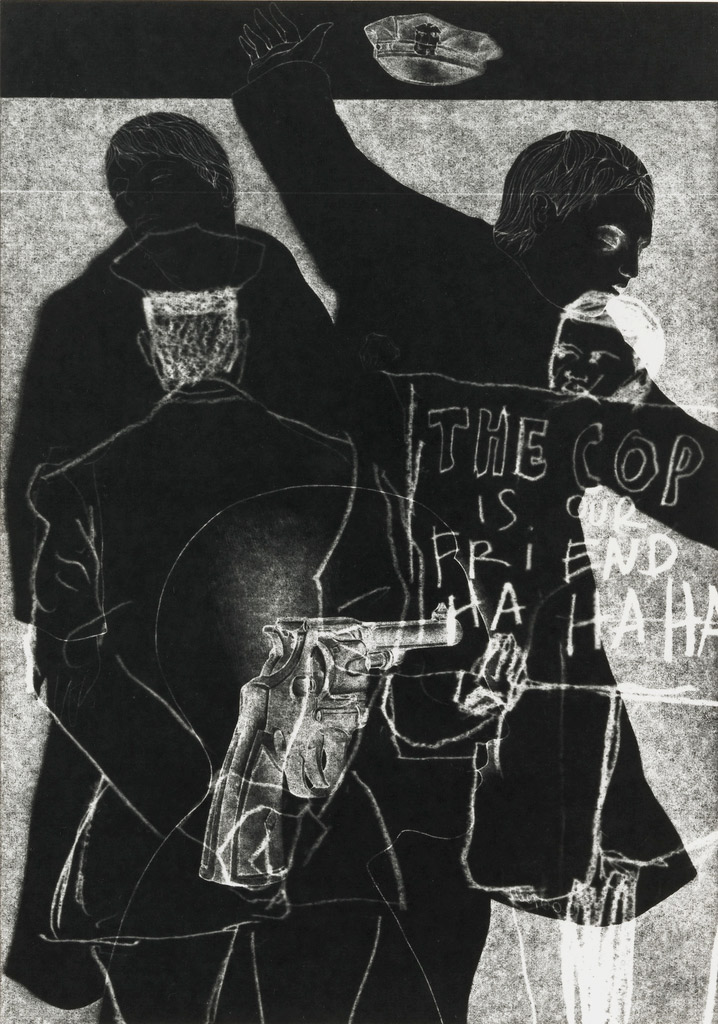
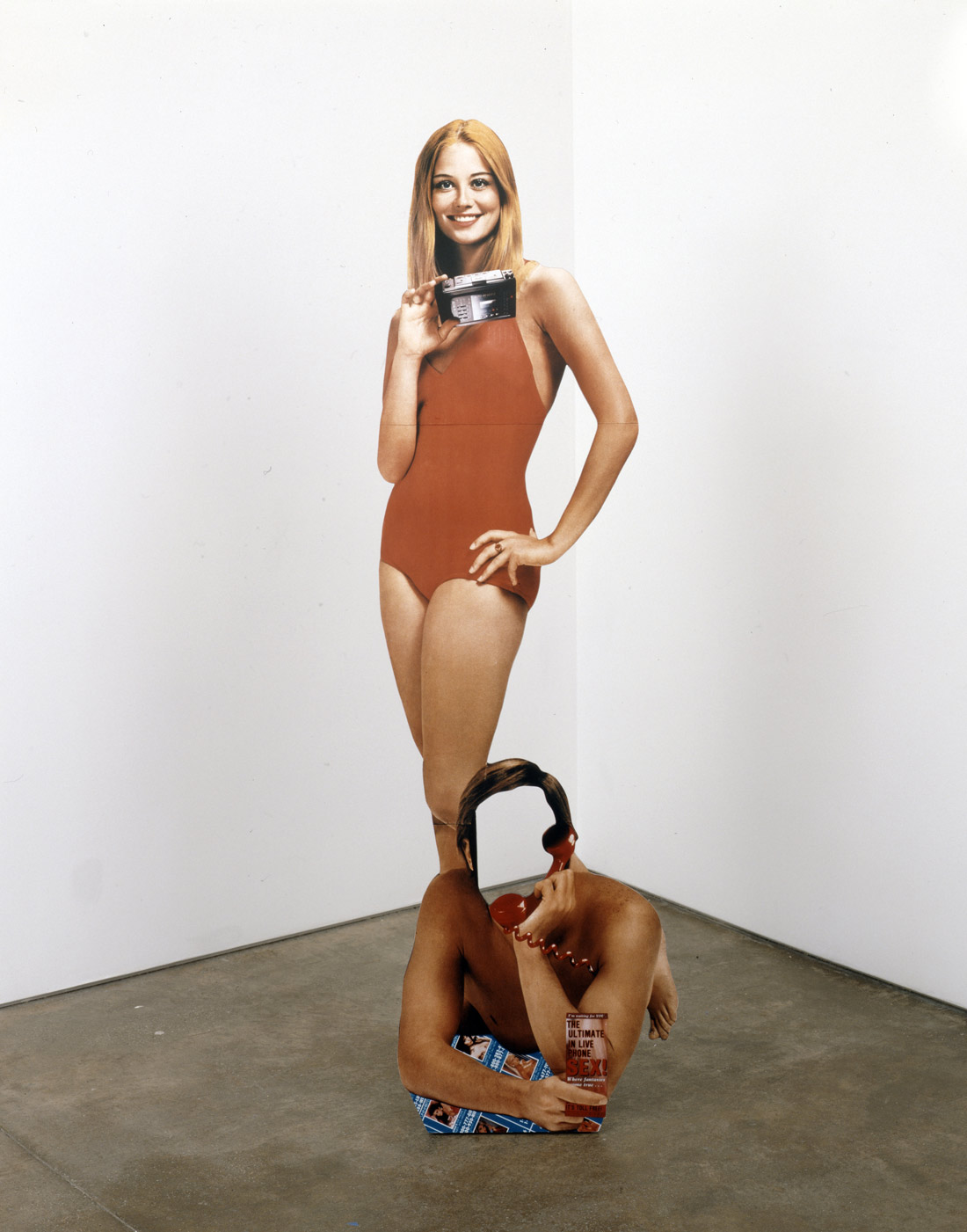




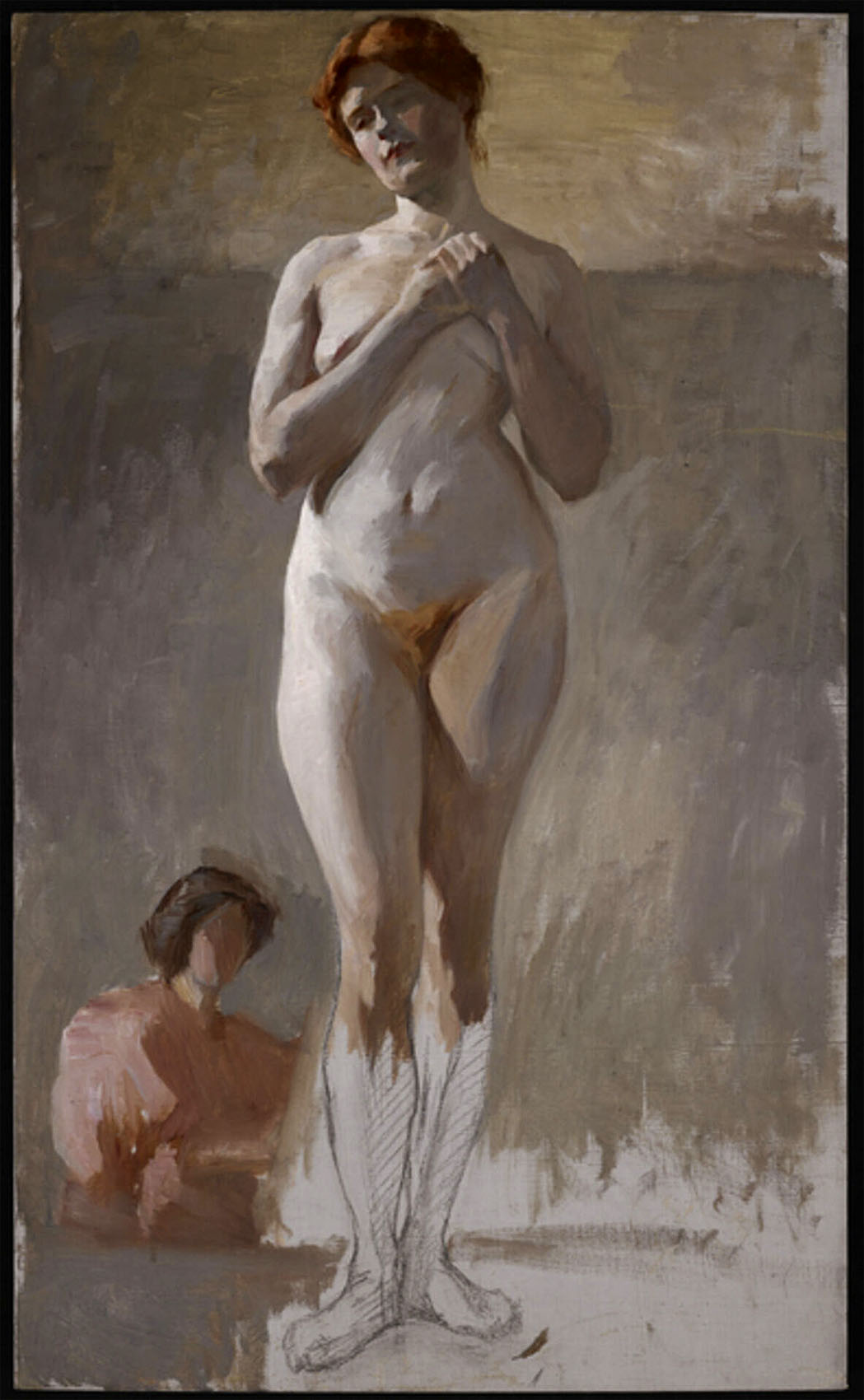
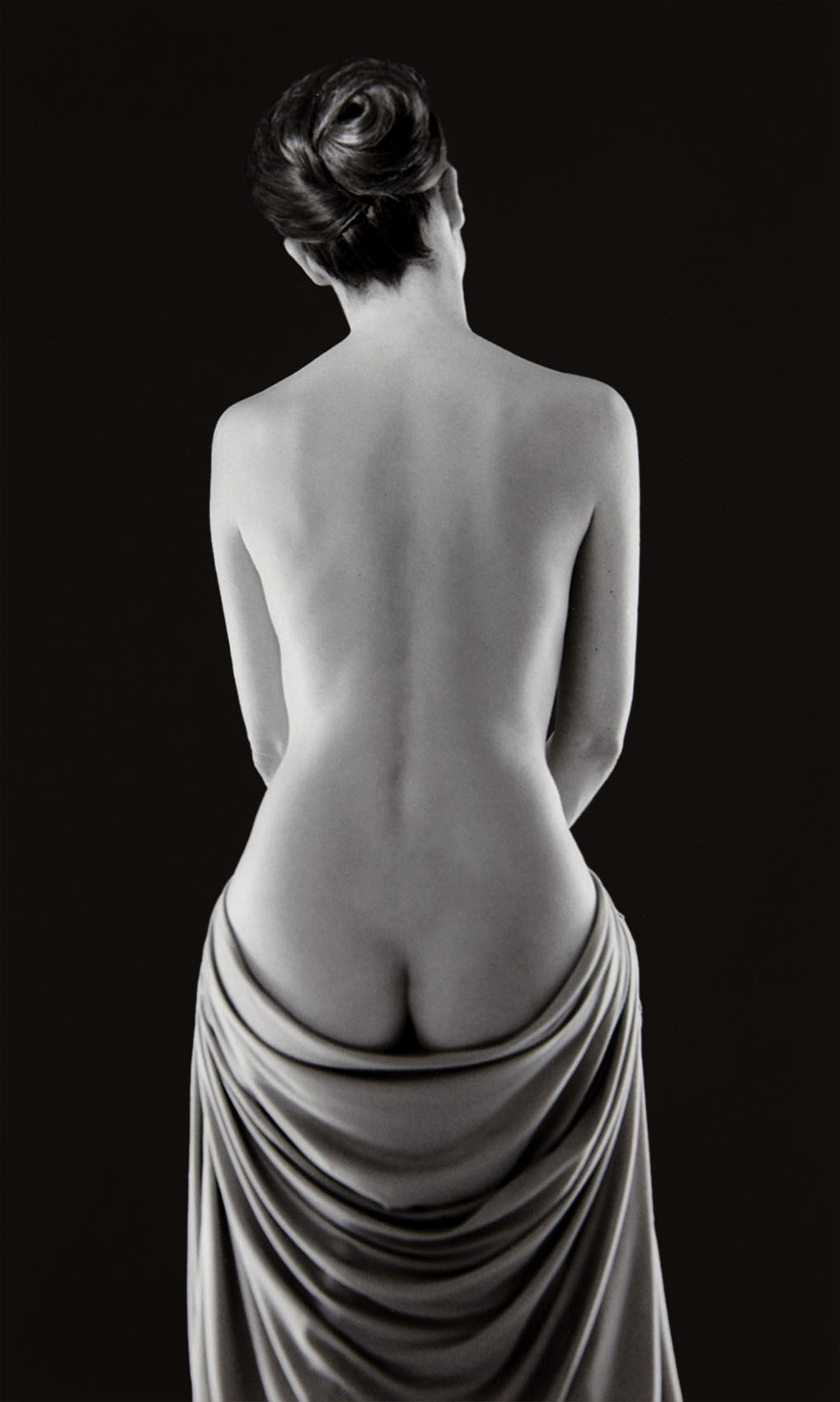

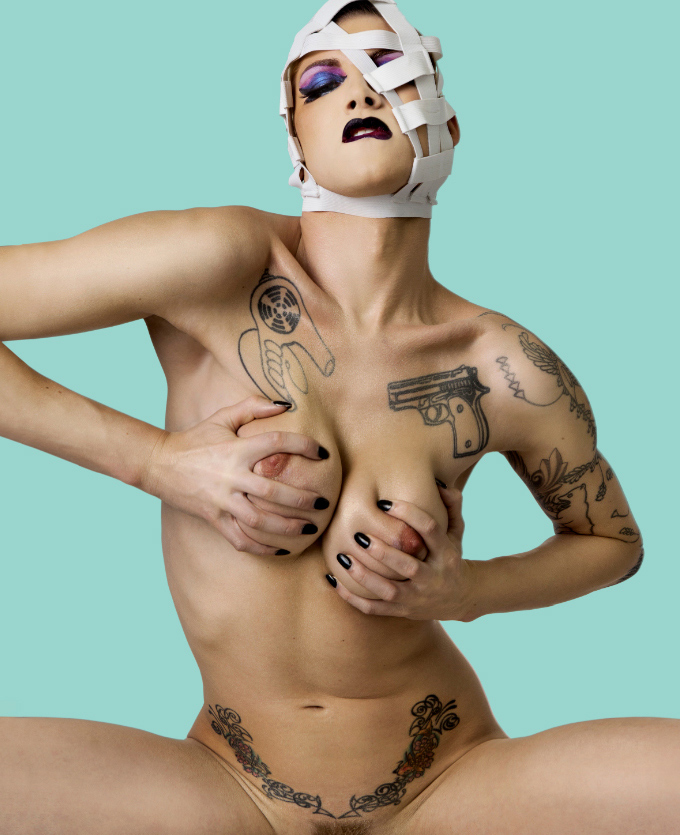
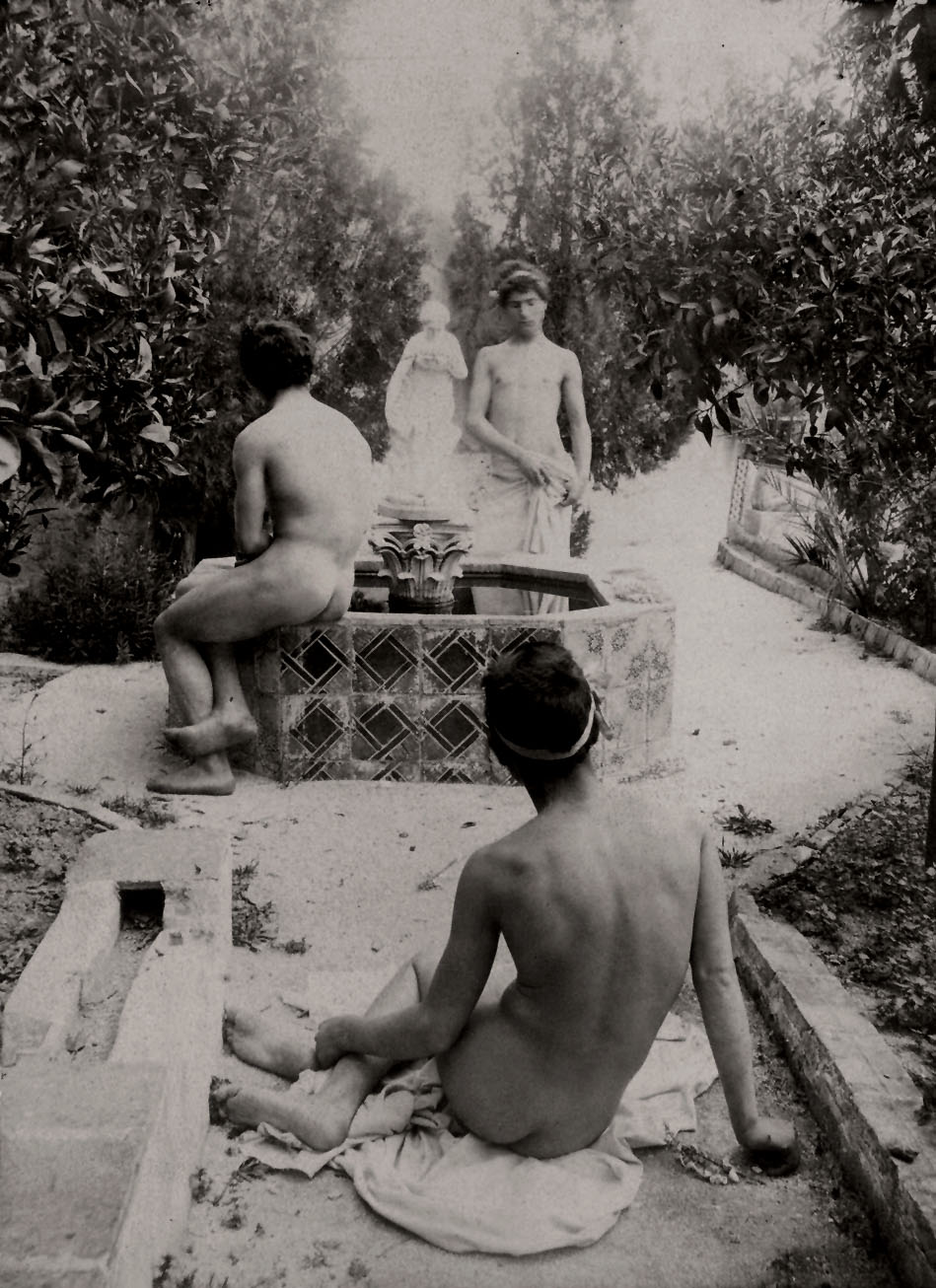


![Giacomo Balla (Italian, 1871-1958) 'The Hand of the Violinist (The Rhythms of the Bow)' (La mano del violinista [I ritmi dell’archetto]) 1912 from the exhibition 'Italian Futurism, 1909-1944: Reconstructing the Universe' at the Solomon R. Guggenheim Museum, New York, February - September, 2014](https://artblart.com/wp-content/uploads/2014/08/01_balla_handoftheviolinist-web.jpg "Giacomo Balla (Italian, 1871-1958) 'The Hand of the Violinist (The Rhythms of the Bow)' (La mano del violinista [I ritmi dell’archetto]) 1912 from the exhibition 'Italian Futurism, 1909-1944: Reconstructing the Universe' at the Solomon R. Guggenheim Museum, New York, February - September, 2014")


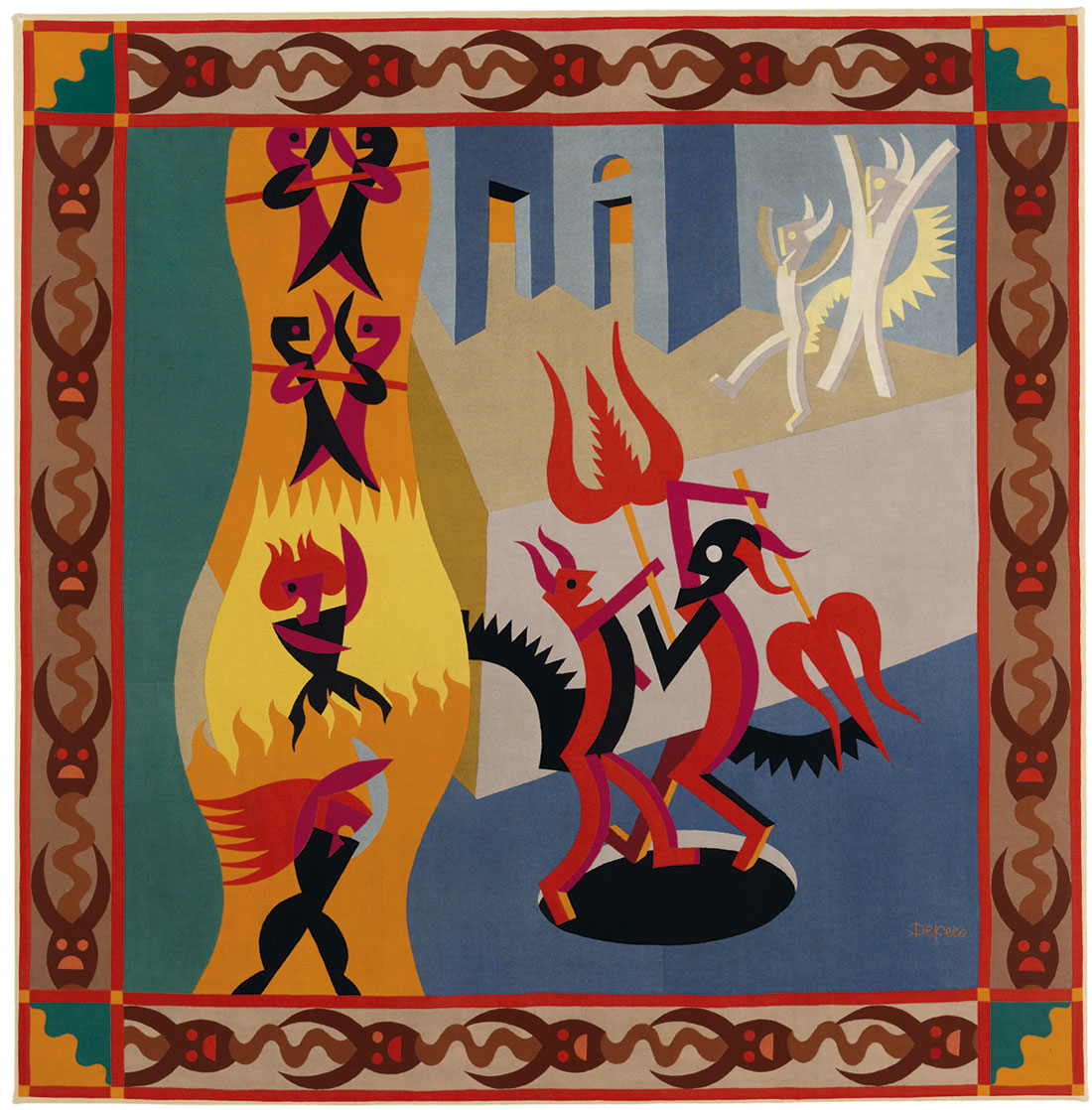


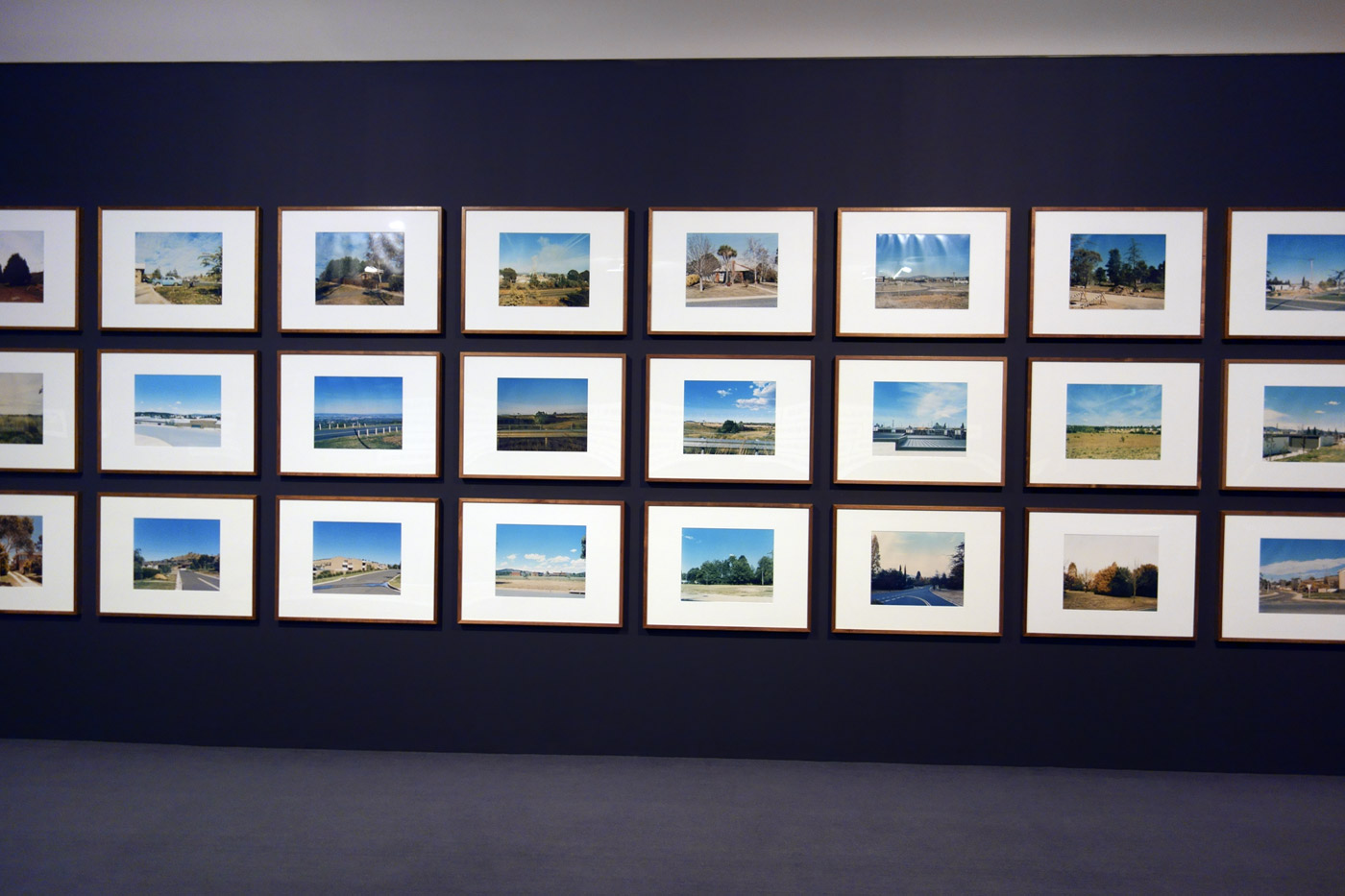
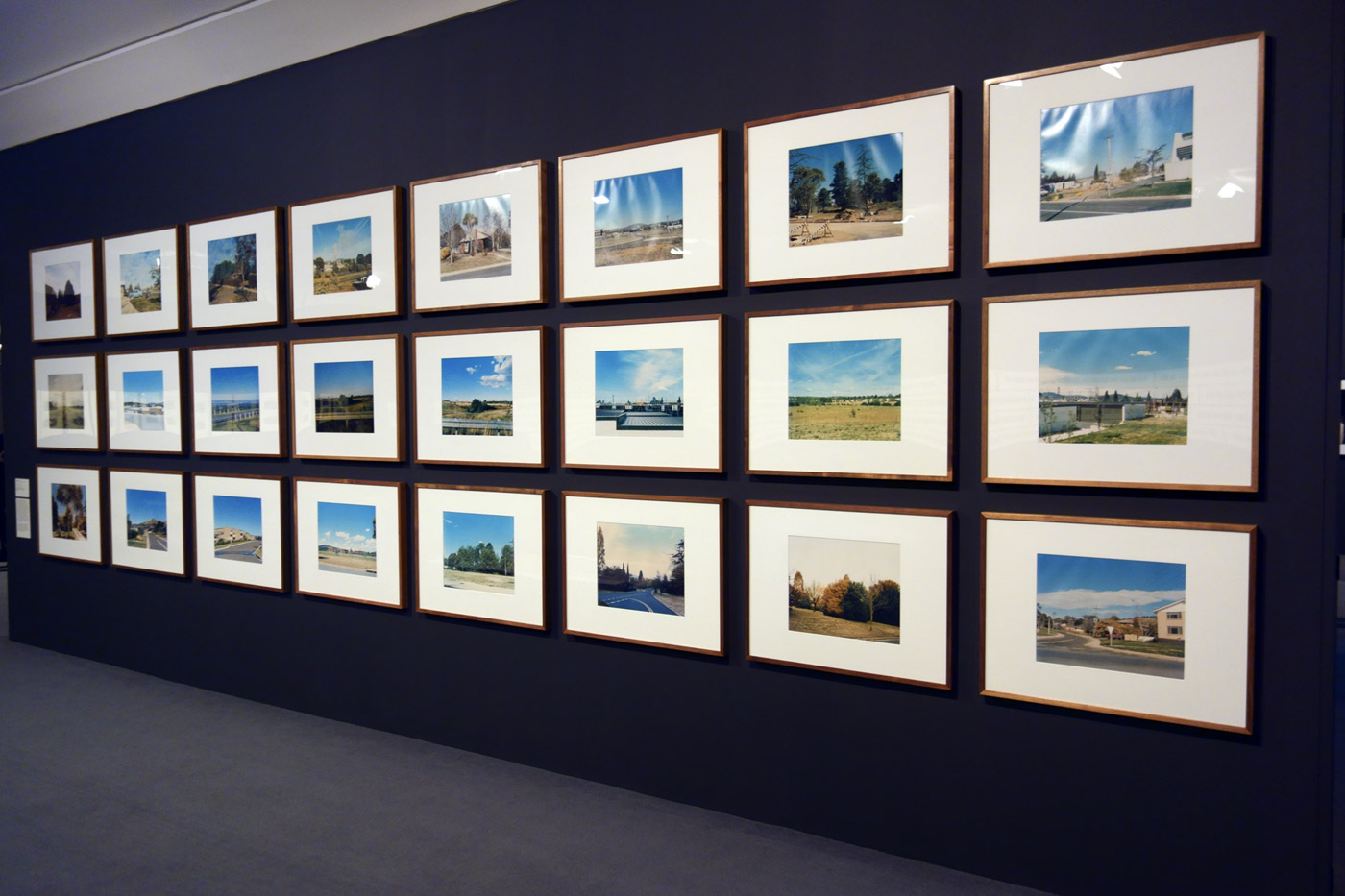
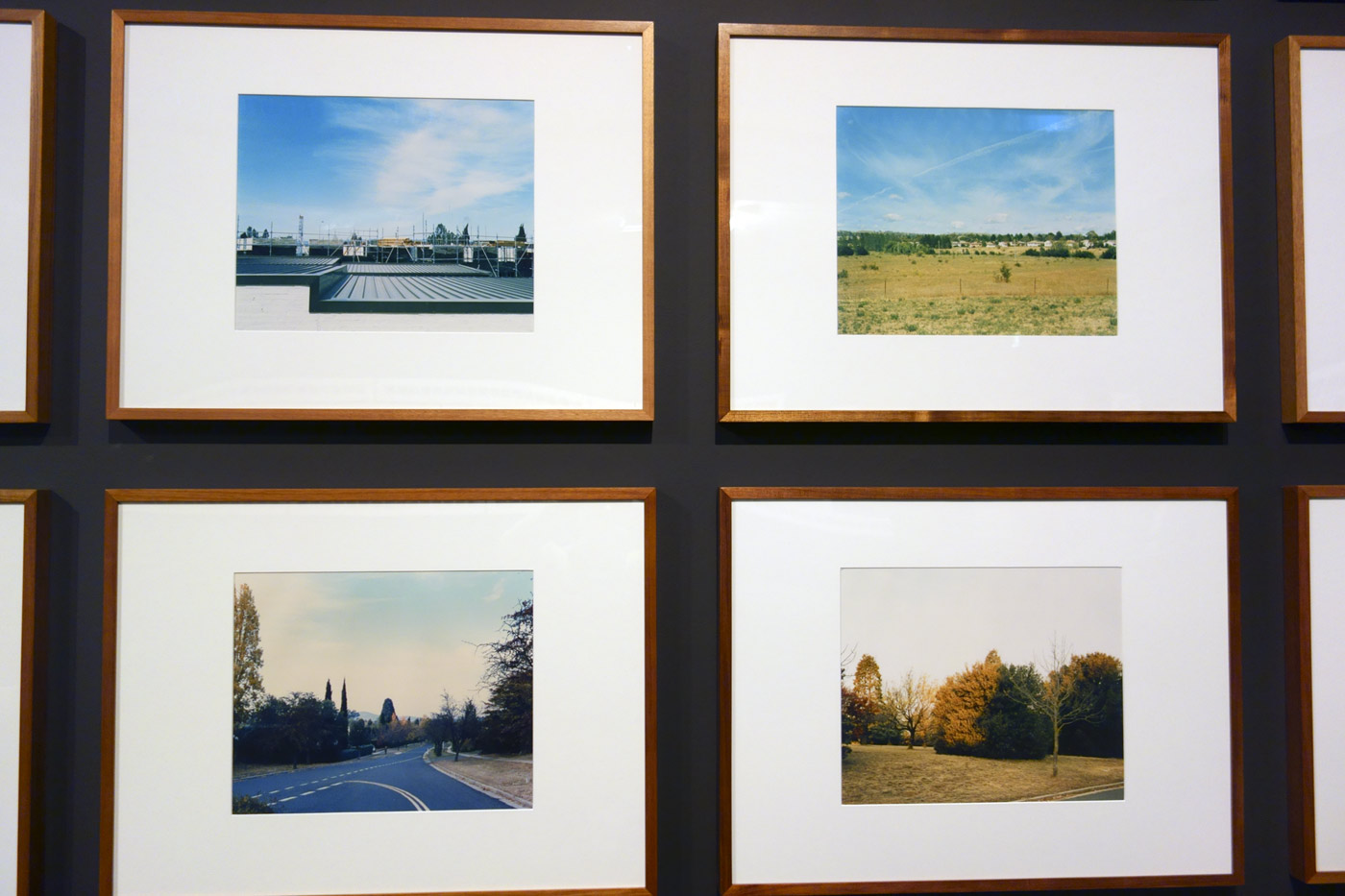
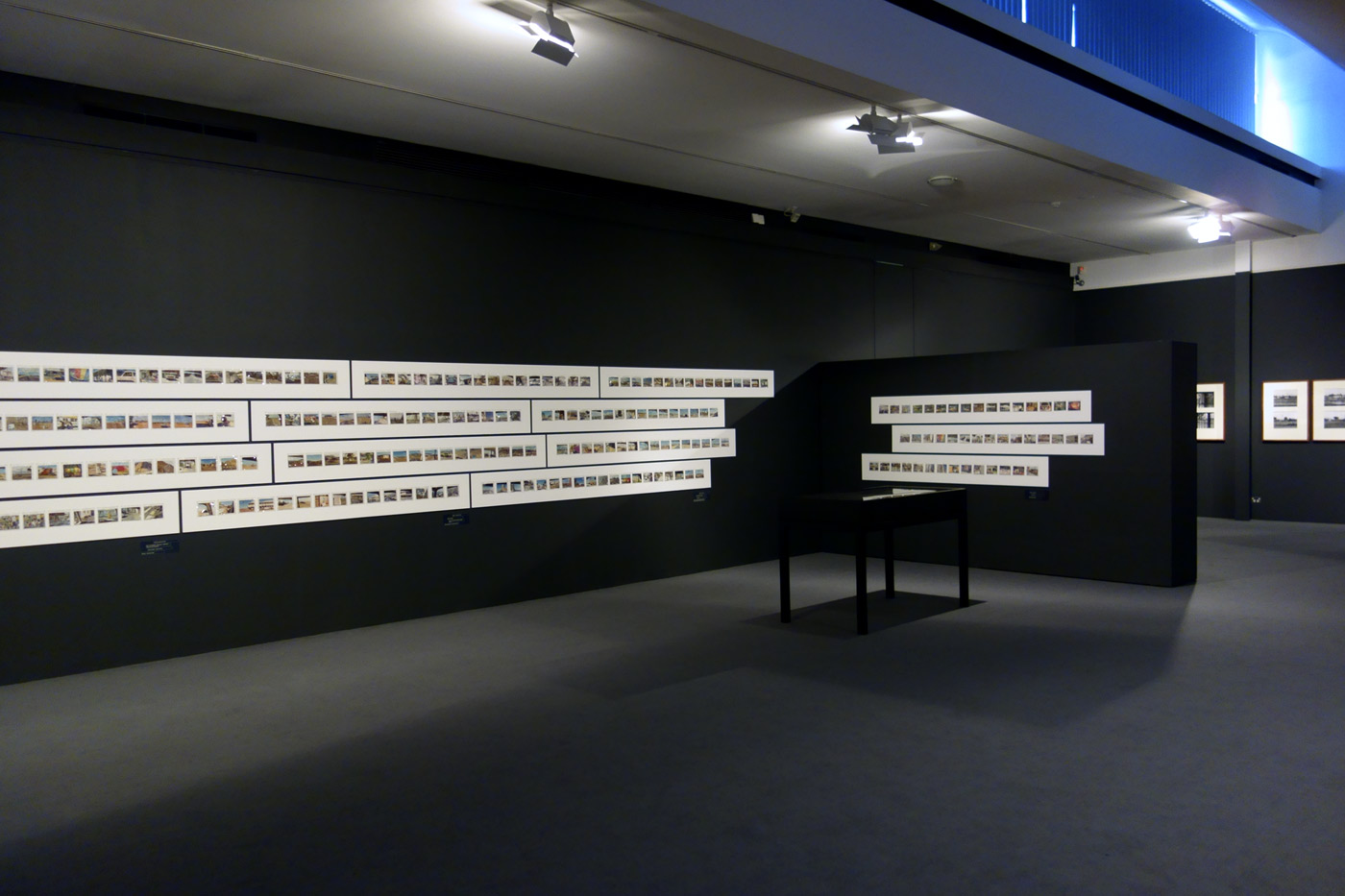
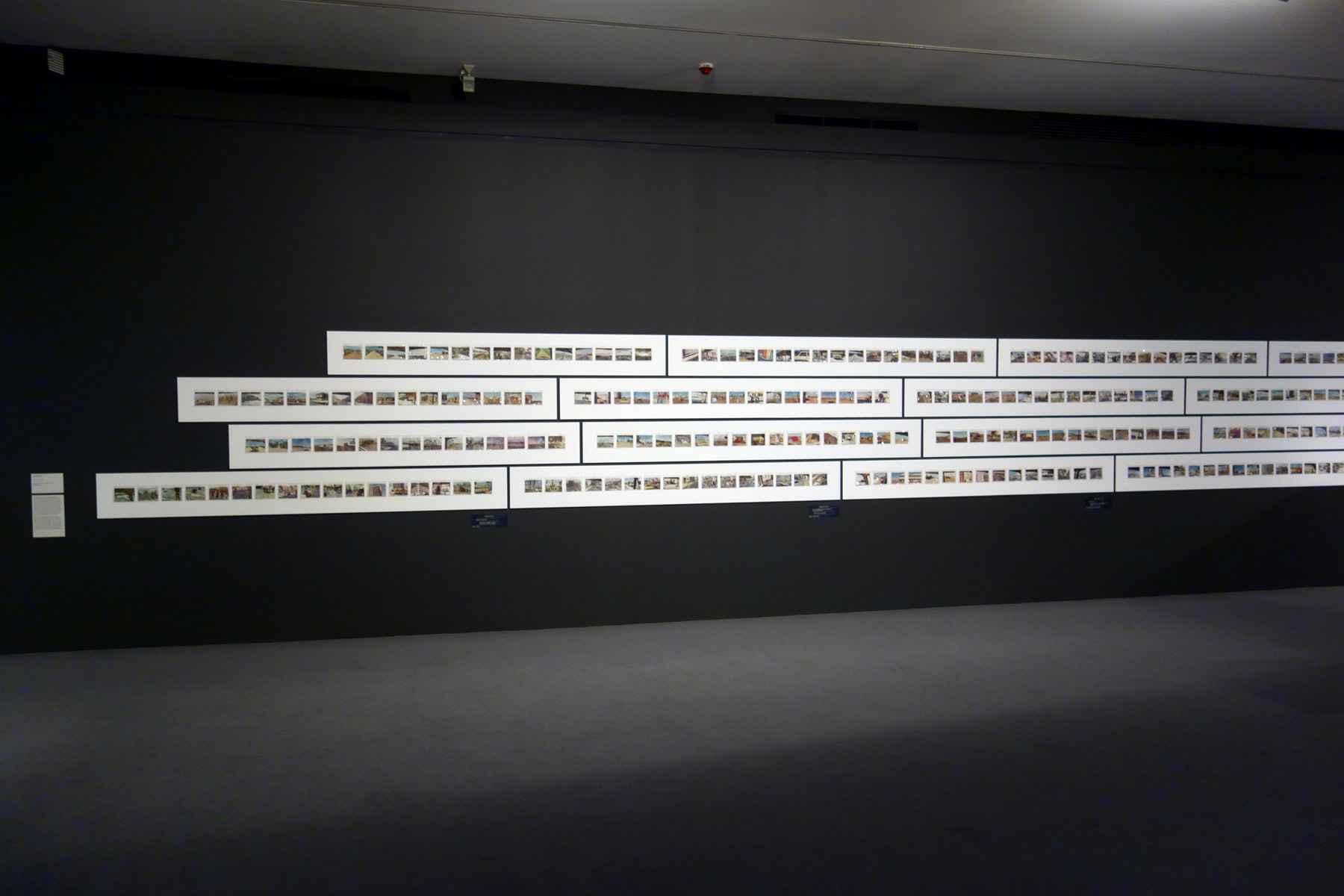
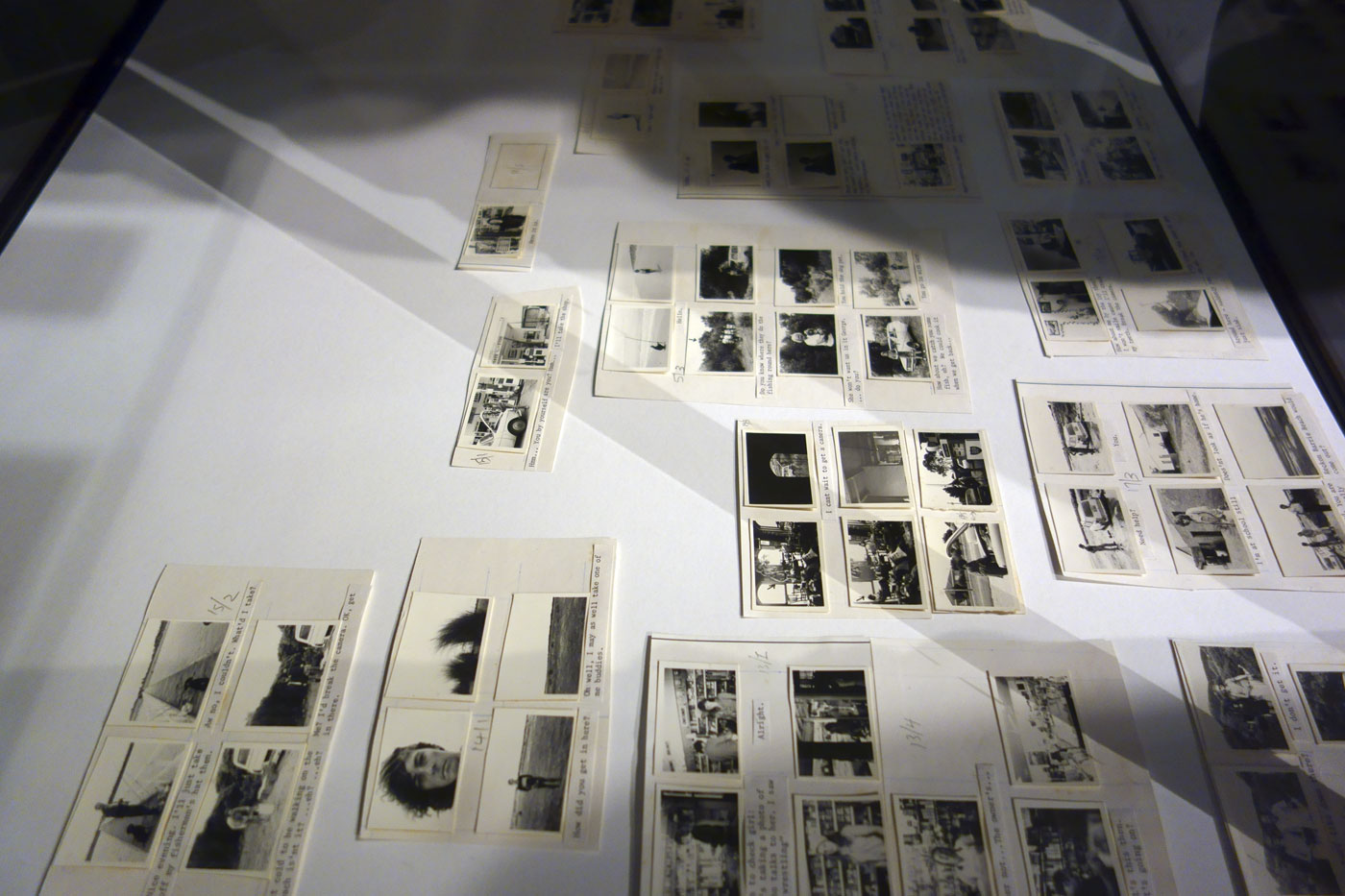
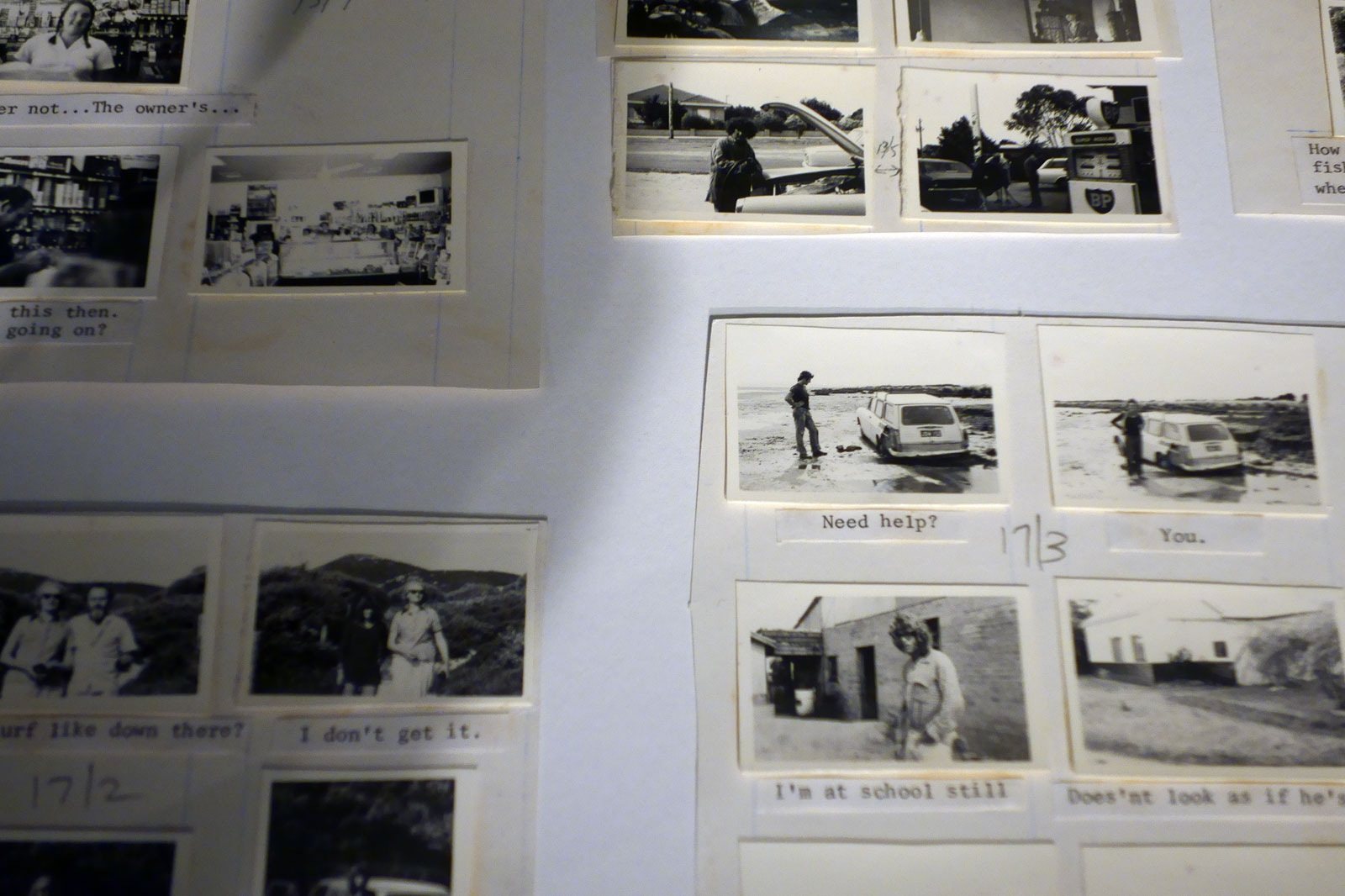
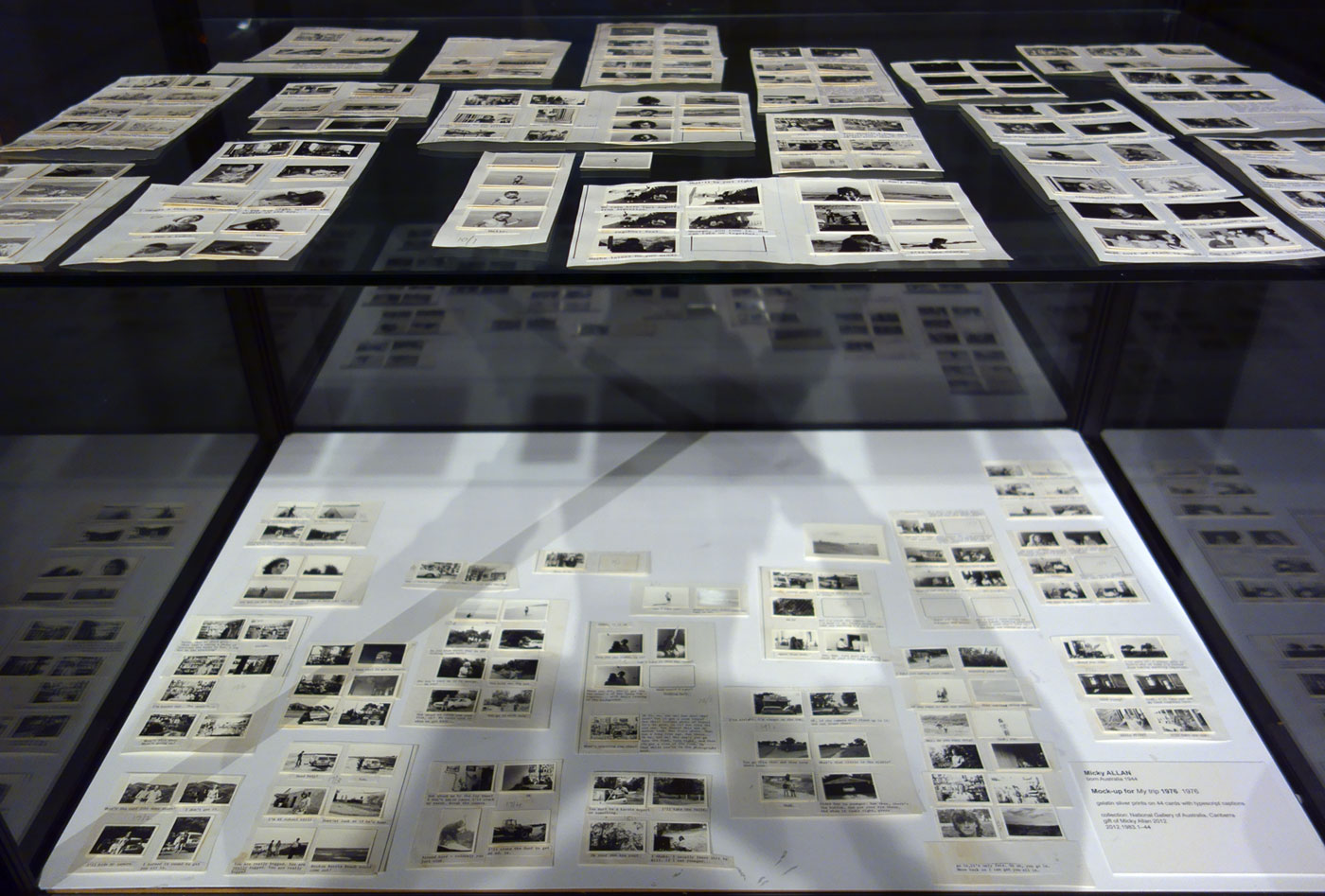
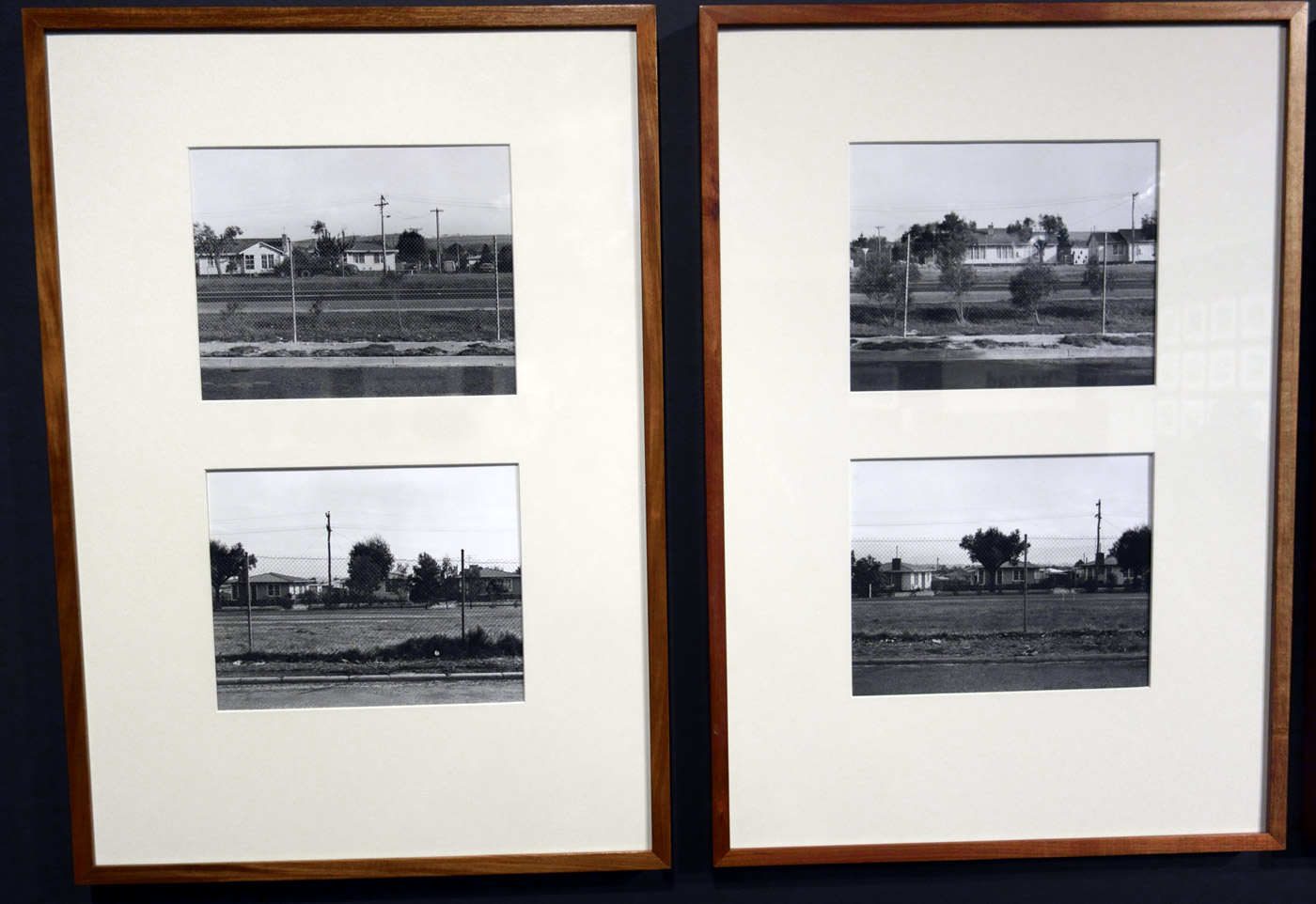

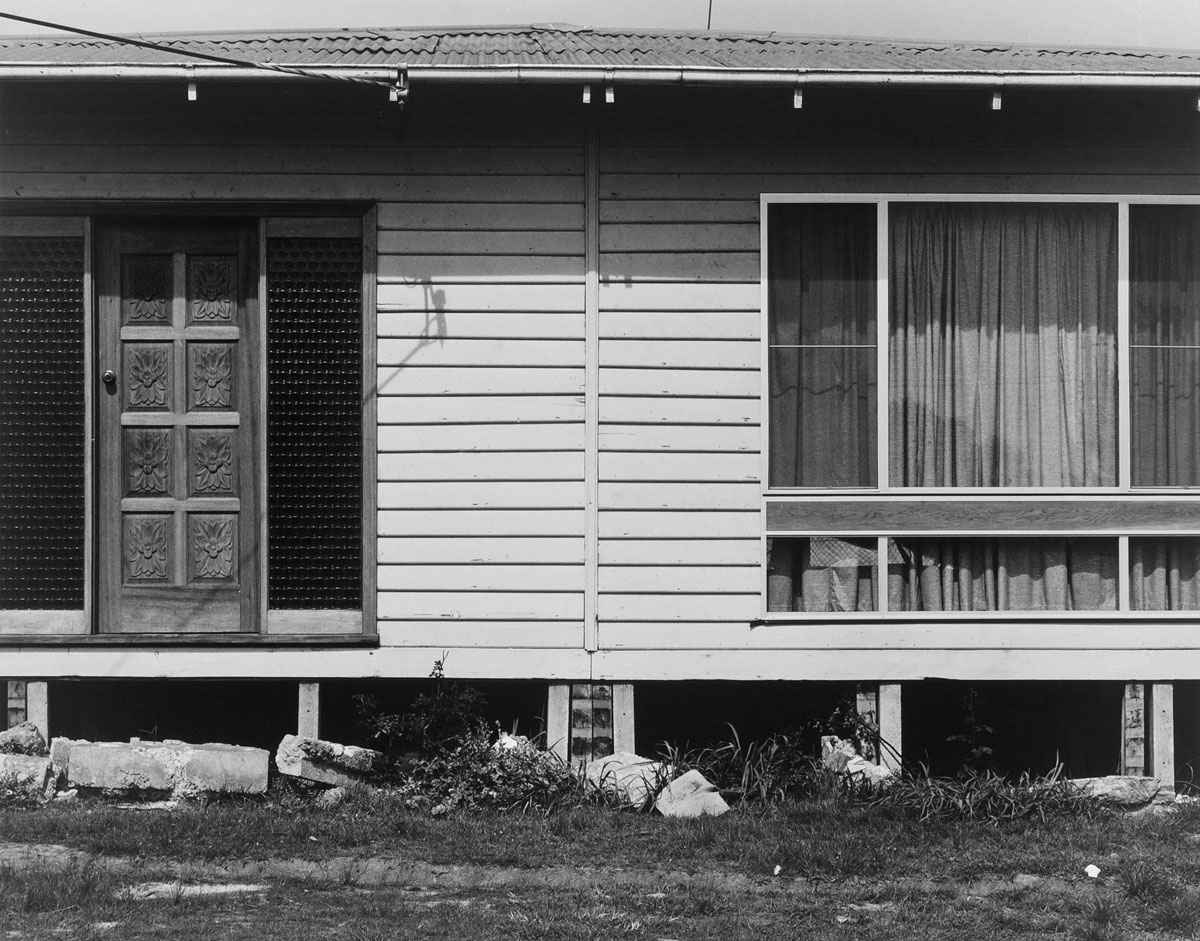

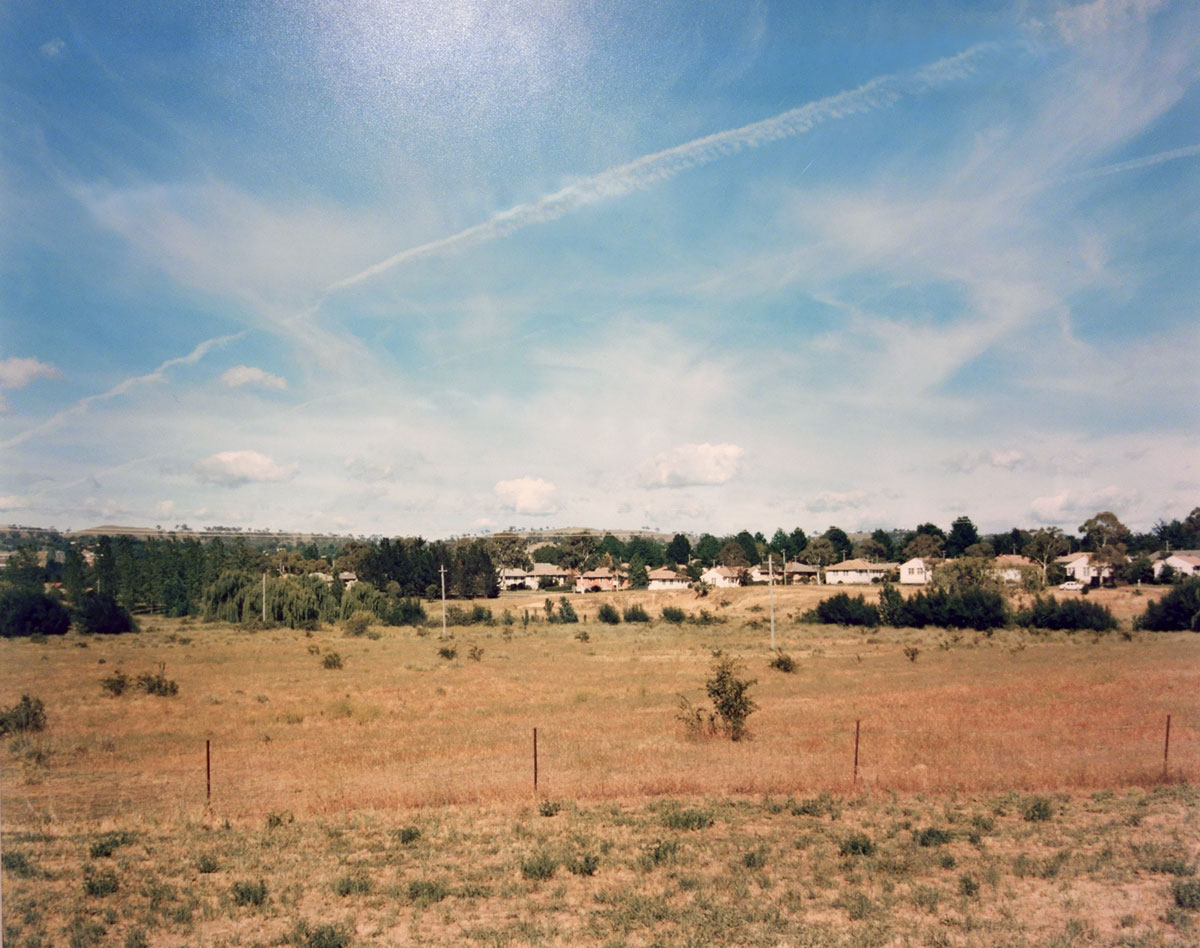

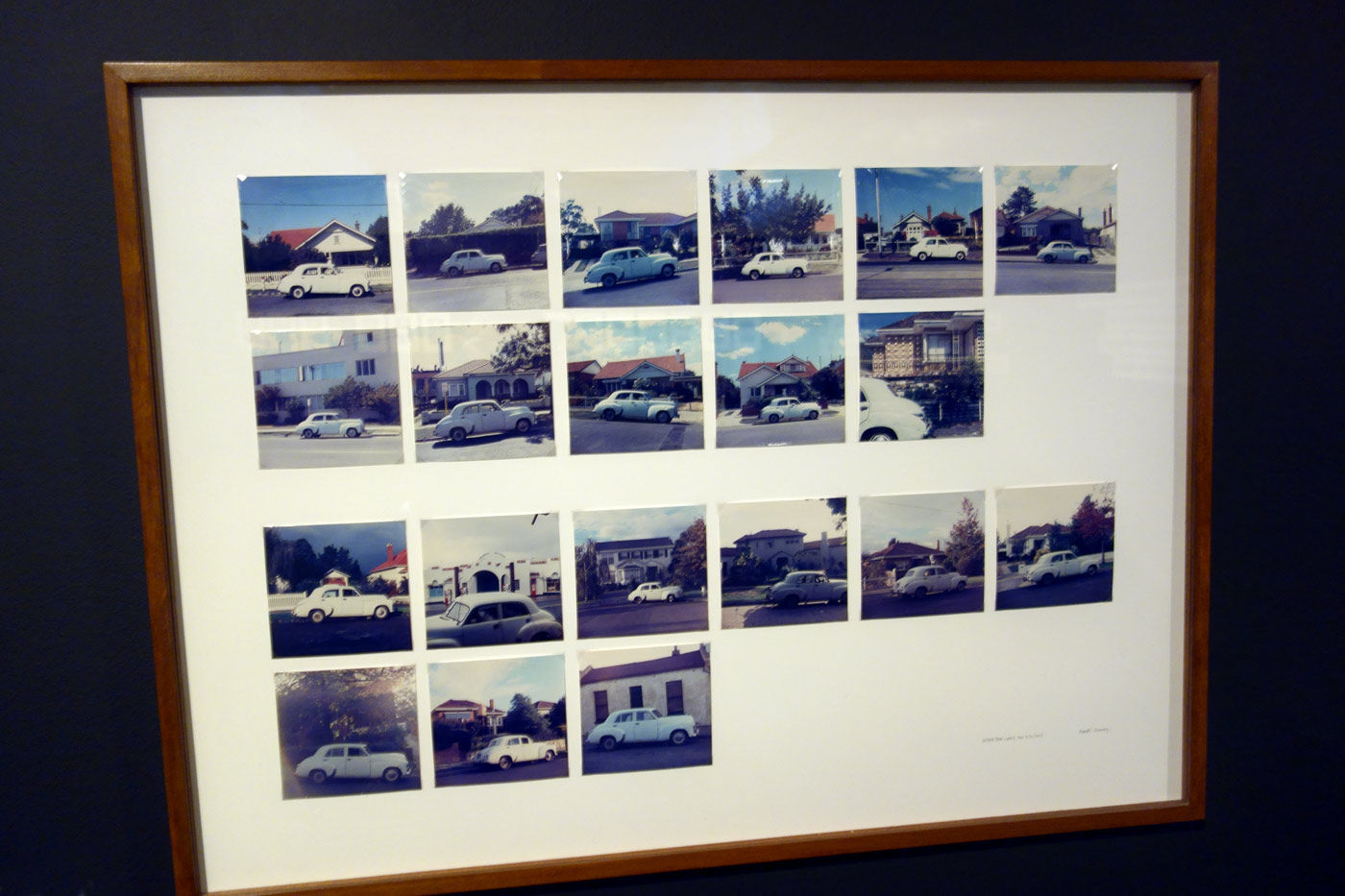
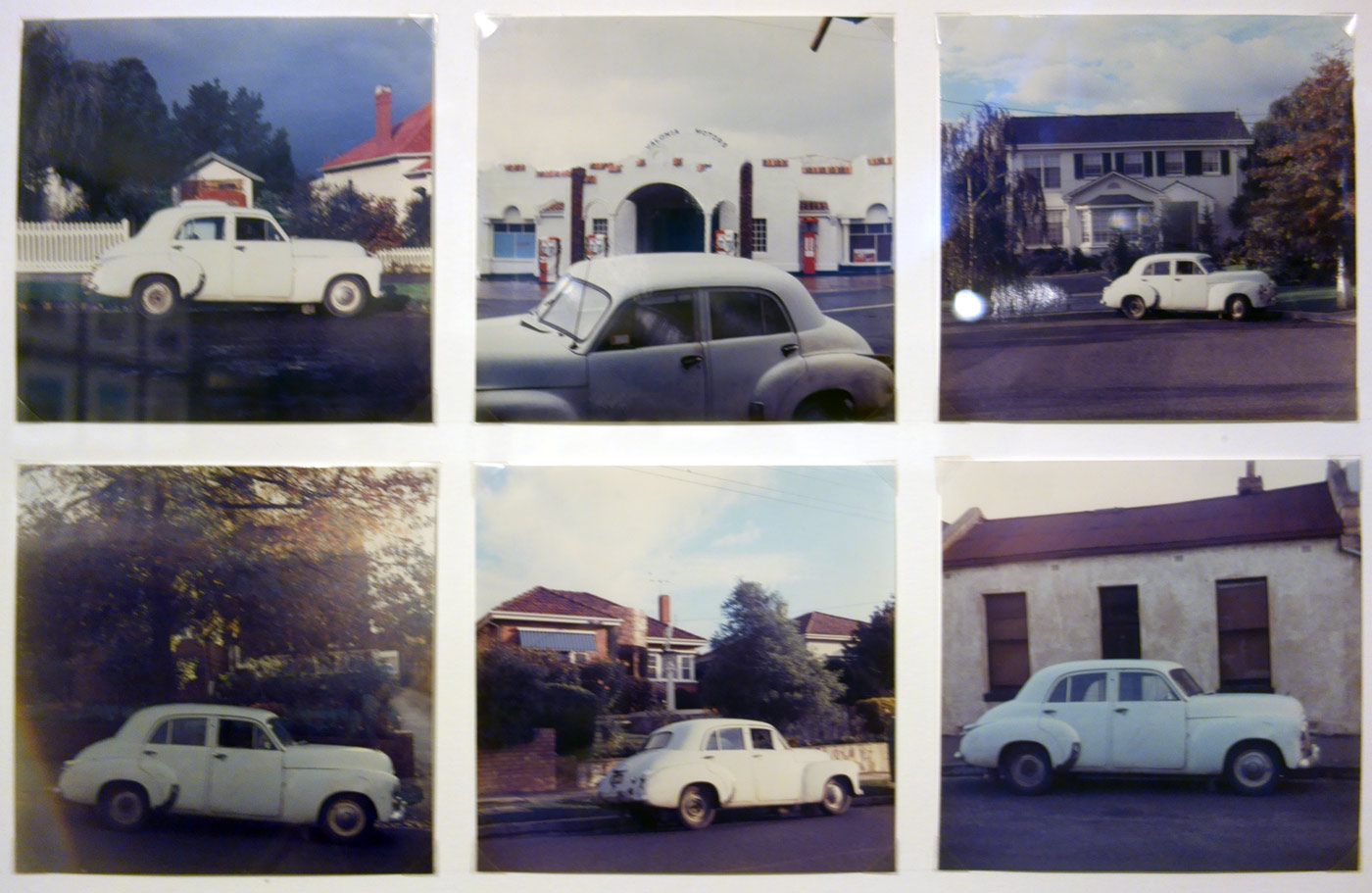
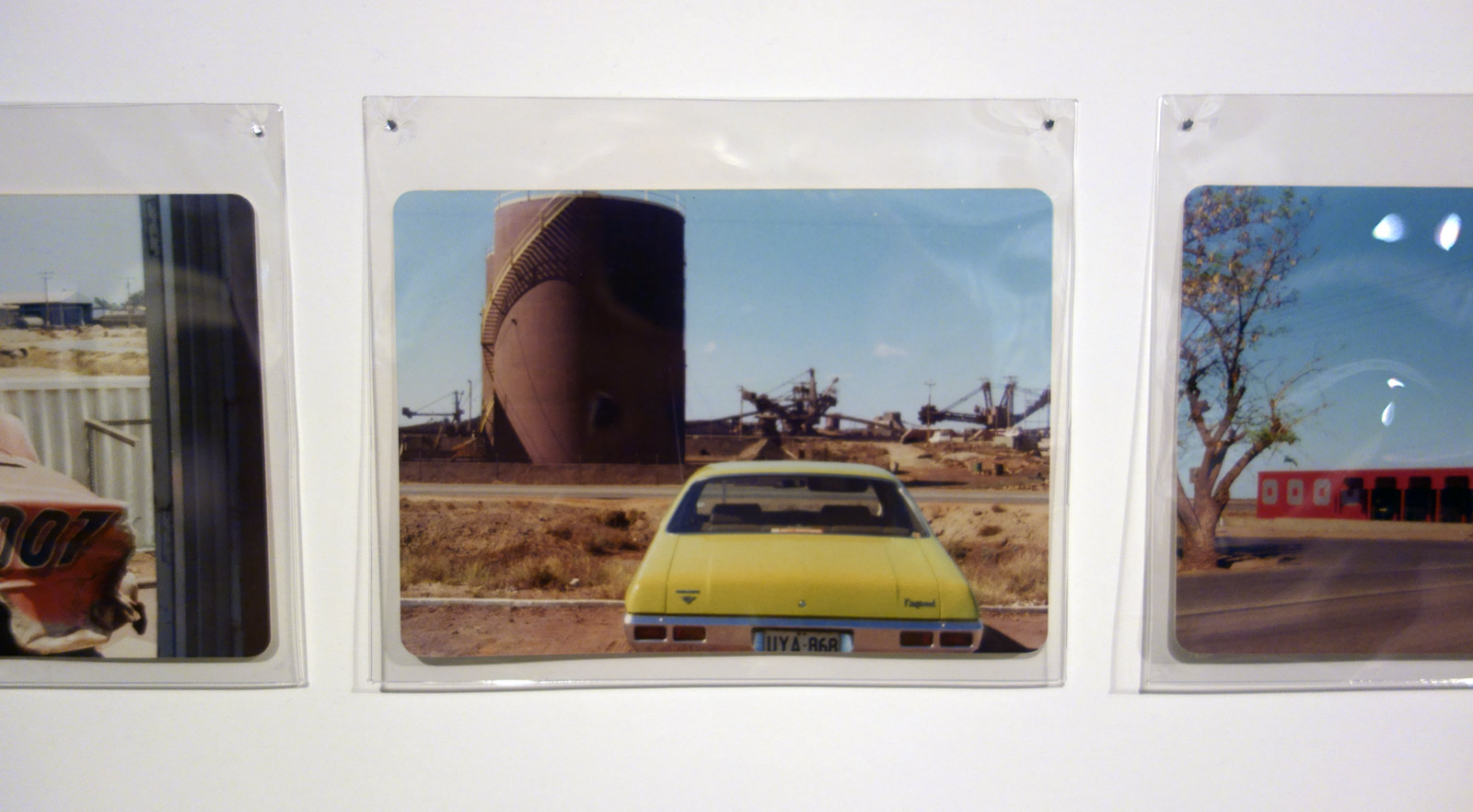




 Art Blart _ art and cultural memory archive
You must be logged in to post a comment.