Exhibition dates: 25th March – 4th September, 2016
Curator: Christine Macel
Artists include: Pawel Althamer/ Maja Bajević / Yto Barrada / Jean-Michel Basquiat / Taysir Batniji / Christian Boltanski / Erik Boulatov / Mohammed Bourouissa / Frédéric Bruly Bouabré / Sophie Calle and Greg Shephard / Mircea Cantor / Chen Zhen / Hassan Darsi / Destroy All Monsters / Atul Dodiya / Marlene Dumas / Ayşe Erkmen / Fang Lijun / Harun Farocki and Andrei Ujica / Samuel Fosso / Michel François / Coco Fusco und Paula Heredia / Regina José Galindo / Kendell Geers / Liam Gillick / Fernanda Gomes / Dominique Gonzalez-Foerster / Felix Gonzalez-Torres / Renée Green / Subodh Gupta / Andreas Gursky / Hans Haacke / Petrit Halilaj / Edi Hila / Gregor Hildebrandt / Thomas Hirschhorn / Nicholas Hlobo / Carsten Höller / Pierre Huyghe / Fabrice Hyber / Isaac Julien / Oleg Kulik / Glenn Ligon / Robert Longo / Sarah Lucas / Gonçalo Mabunda / David Maljković / Chris Marker / Ahmed Mater / Mike Kelley and Paul McCarthy / Annette Messager / Rabih Mroué / Zanele Muholi / Jun Nguyen-Hatsushiba / Roman Ondák / Gabriel Orozco / Damián Ortega / Philippe Parreno / Nira Pereg / Dan Perjovschi / Wilfredo Prieto / Tobias Putrih / Walid Raad / Sara Rahbar / Tobias Rehberger / Nick Relph und Oliver Payne / Pipilotti Rist / Chéri Samba / Anne-Marie Schneider / Santiago Sierra / Mladen Stilinović / Georges Tony Stoll / Wolfgang Tillmans / Rirkrit Tiravanija / Danh Vo / Marie Voignier / Akram Zaatari / Zhang Huan
Take your pick: some interesting, some not. My favourite: Annette Messager Mes voeux (1989, below) … such a strong, creative and inspiring artist.
I’m not writing so much as I have bad RSI in my left wrist at the moment.
Dr Marcus Bunyan
Many thankx to Haus der Kunst for allowing me to publish the art work in the posting. Please click on the photographs for a larger version of the image.
In 2016, two prominent exhibition projects explore the pressing question of which factors remain relevant to the writing of art history. While “Postwar – Art between the Pacific and Atlantic, 1945-1965” concentrates on the time immediately after World War II, “A History: Contemporary Art from the Centre Pompidou” provides an overview of contemporary art since the 1980s with 160 works by more than 100 artists.
The year 1989 marked a break with the past and the start of a new era. The fall of the Berlin Wall toppled divisions in the world of European art, while the events of Tiananmen Square focused attention on a new China. The ongoing globalisation allows for an unprecedented mobility. The static understanding of identity, once based on origin and nationality, has since given way to a more transnational and variable narrative. Contemporary artistic proposals, which arise from the new “decolonised subjectivity”, are also based on a new understanding of site-specificity. For example, in the 1960s and 1970s the protagonists of Land Art still understood landscapes primarily as post-industrial ruins. In contemporary artistic practice, however, space is defined above all socially and politically – by traumatic historical events, home country, exile, diaspora and hybrid identities, such as African-American, Latino, Turkish-German, African-Brazilian, and so forth. The new presentation of the Centre Pompidou contemporary collections at Haus der Kunst focuses particularly on this altered geography, notably the former Eastern Europe, China, Lebanon, and various Middle Eastern countries, India, Africa, and Latin America. This is the first time such a large-scale view of the Centre Pompidou collection has been presented outside France.
Lijun Fang (Chinese, b. 1963) Sans titre 2003 Woodcut on paper 400 x 854cm Each panel: 400 x 120cm Achat en 2004, Ankauf / Purchase Collection Centre Pompidou, Paris Musée national d’art moderne – Centre de création industrielle
Haus der Kunst is pleased to present A History: Contemporary Art from Centre Pompidou, an exhibition originally curated by Christine Macel at the Centre Pompidou, Paris. With approximately 160 works by more than 100 artists from across the world, “A History: Contemporary Art from the Centre Pompidou” provides an incisive overview of artistic positions since the 1980s in painting, sculpture, installation, video, photography, and performance.
The Centre Pompidou’s collection of contemporary art has rarely been presented so comprehensively outside France. The selected works on view date from the 1980s to the present raising two significant questions: What factors are relevant for ensuring that art history is written in a specific way, and what does an ever changing understanding of the term ‘contemporary’ mean for public museums and their collections? Still, the concentration on Euro- American domains, which many museums formerly pursued in the acquisition of works for their collections, can hardly be sustained today and is no longer the aspiration of most museums. Globalisation, with its expanded narratives, has recently become too determining for the position of contemporary art to ignore. Curator Christine Macel defines her intention accordingly: to present ‘one’ among many possible histories of contemporary art.
With the progression of globalisation – understood here as the consolidation of economic, technological and financial systems, but also the questioning of linear history, and hegemonic cultural narratives – our perception of identity has changed. Since the first globally-oriented biennial in Havana in 1986, exhibition organisers and larger museums in Europe and North America have strived to display art created beyond the Western artistic circuit. The static understanding of identity as something based in origins and a “home base” has largely given way to a transnational and variable one.
The turning point for Centre Pompidou was its 1989 exhibition “Les Magiciens de la Terre”, in which curator Jean-Hubert Martin aimed to confront the problematic phenomenon of “one hundred percent of exhibitions that ignore eighty percent of the world.” Half the participating artists came from non-Western countries, while the other half came from the West. In addition, all exhibiting artists were – without exception – still active, making the presentation truly contemporary. Since then, the Centre Pompidou, like many large museums, has had to confront the reality of the expanded circuits of contemporary art. Over the years the museum gradually changed its acquisition practices and has increasingly opened its focus toward Eastern Europe, China, Lebanon, the Middle East, India, Congo, Nigeria, South Africa, Cameroon, Mexico and Brazil.
Meanwhile, our understanding of the term “origins” has continued to evolve. Consequently, the definition of “site-specific” has also changed. In the 1960s and 70s, artists of the Land Art movement still essentially regarded landscapes as post-industrial ruins. By contrast, Okwui Enwezor, director of Haus der Kunst believes that, in today’s artistic practice, space is defined by impermanence, by the mutability of politically and socially grounded positions, by aesthetic pluralism, and by cultural differences. Furthermore, colonial and postcolonial experiences shaped by traumatic historical events, home, exile, diaspora produced hybrid identities – such as African-American, Euro- American, Latino, Turkish-German, French-Arabic, African-Brazilian, etc. Consequently new forms of cosmopolitanism and provincialism jostle next to one another. It is no coincidence that the exhibition practice of today can already look back on a number of shows that focused on borders and issues of migration.
Against this backdrop of dynamism and permanent transition the exhibition is divided into seven chapters:
The Artist as Historian
An interest in the historical document and a more general obsession with the past, have led to the nostalgic excavation and re-enactments of existing works of art. Artists from the Arab speaking world are increasingly present in the art world; having borne witness to the Gulf War in 1991, these artists have developed new practices around the examination of history.
The Artist as Archivist
A passion for the archive initially led to a demand for completeness and later to an acceptance of the fragmentary, resulting on the one hand in concurrence of taxonomic efforts and endless accumulation, and, on the other, in an insight into the accelerated loss of memory. On a higher level, both coincide: Archives are especially useful in helping to identify and address wounds in the collective memory.
Sonic Boom
Trying to capture the sensation of listening to music in an image has a long tradition. Yet, even for artists who take their works to the edge of physical dissolution, listening often moves to the fore. Further, changes in the music industry and music production have reinforced the permeability of art and composition.
The Artist as Producer: The “Traffic” Generation
The concept of artwork is transformed through its dematerialisation. An awareness of temporality, volatility, and process shifts to the foreground. Artists develop new forms of collaboration and collective creation, and make aesthetic use of clips, sampling, and film narrative (which is also regarded as an exhibition platform). As a result, copyright as an object of reflection has come into focus.
The Artist as Documentarist: As Close as Possible to the Real
The proliferation of the Internet in the context of a market economy and consumer society has led to a greater interest in the real, in the status quo of the observer and the reporter and generally in an engagement with all areas of human life. The artist takes on the role of a witness who accepts the subjectivity of his observations.
Artist and Object
Between 1980 and 1990, artists turned to an exploration of the everyday and the object; the 1990’s can be considered as the ultimate epoch of the aesthetic of the mundane. The now-famous video, “The Way Things Go” by Fischli and Weiss (1986-87) sings this song of songs to the everyday. No less iconic is Gabriel Orozco’s modified Citroën (La DS, 1993). The confrontation with consumer society is manifested in photography in detailed and richly coloured compositions like Gursky’s 99 Cent (1999), and in sculpture with the integration of found objects. The common denominator is the attention artists pay to excessive consumption – as an opportunity or as a fact.
The Artist and the Body
Video and photography seem to be particularly fitting mediums for artists whose works include a performative element. The theme of the human body – wounded or damaged by oppression – returns as a theme with a vengeance. Many works with erotic and sexual overtones emerge. New technical possibilities, either through plastic surgery or image manipulation, bring the grotesque into the fold.
HAND-COLOURED NEW ZEALAND: THE PHOTOGRAPHS OF WHITES AVIATION by Peter Alsop cover
A beautiful book by my New Zealand friend Peter Alsop about that countries hand coloured scenic photos. Whites Aviation changed the way New Zealanders viewed their country. Take a look inside this book.
Dr Marcus Bunyan
“A magical cocktail of aviation and photography … painted with cotton wool.”
“Nothing can change the authenticity and aesthetic of a hand-made craft.”
“This beautiful book follows Marcus King: Painting New Zealand for the World in providing another significant step towards understanding New Zealand’s art and design. However, for me, reading this book has been a transformational experience. In my youth, a Whites Aviation photograph, whether in a living room or office, represented the absence of other art in everyday Kiwi lives. Having read this book, I’ve come to realise that Whites’ hand-coloured photos were instead a harbinger; a forerunner, an object of contemporary art in thousands of New Zealand homes.”
Douglas Lloyd Jenkins, Art & Design Historian
Book blurb
Every single photo coloured by hand? Using cotton wool? Yes, such was the era of hand-coloured photography – a painting and photograph in one – the way you got a high-quality colour photo before colour photography became mainstream.
Some of New Zealand’s best hand-coloured photos were produced by Whites Aviation from 1945. For over 40 years, the glorious scenic vistas were a sensation, adorning offices and lounges around the land; patriotic statements within New Zealand’s emerging visual arts. Now, despite massive changes in society and photography, the stunning scenes and subtle tones still enchant, as coveted collectibles; decorations on screen; and as respected pieces of photographic art.
But, until now, this inspirational story has not been told; nor the full stories of Leo White (company founder); Clyde Stewart (chief photographer and head of colouring); and the mission-critical ‘colouring girls’. New Zealand’s first published collection of hand-coloured photography is also now enshrined, ready to enchant for decades more. Nothing, it seems, can change the appeal of an alluring hand-made craft.
The Colourist
Lovely 3 min doco on hand-coloured photography and Whites Aviation. Every photo coloured by hand.
HAND-COLOURED NEW ZEALAND: THE PHOTOGRAPHS OF WHITES AVIATION by Peter Alsop pages 31, 41 and 50.
Curators: Jeff L. Rosenheim (Curator in Charge of the Department of Photographs), with Doug Eklund (Curator and a key organiser) and Mia Fineman (Associate Curator), with Beth Saunders (Curatorial Assistant)
Unknown photographer (American) [Jeff Briggs, Robert Sims, Otis Hall, and Peter Pamphlet; Full-Length Mugshot from the Chicago Police Department] 1936 Gelatin silver prints Image: 5 15/16 × 9 1/8 in. (15.1 × 23.1cm) Sheet: 6 1/8 × 9 5/16 in. (15.6 × 23.6cm) Twentieth-Century Photography Fund, 2014
One wrong does not a life make
A very large posting on a fascinating subject, for an exhibition that examines “the numerous ways that photography has influenced that favourite human activity, speculating about crimes and the people who commit them.” As the press release notes, “Since the earliest days of the medium, photographs have been used for criminal investigation and evidence gathering, to record crime scenes, to identify suspects and abet their capture, and to report events to the public. This exhibition explores the multifaceted intersections between photography and crime…”
And all this history displayed in just two gallery spaces!
What the press release fails to note is that it is often the people in power (the police, judiciary, and even the photographer) who name and shame those whose likenesses are captured by the camera. In other words, the people in these photographs are already labelled – deviant, lifter, wife poisoner, forger, sneak thief; cracksman, pickpocket, burglar, highwayman; murderer, counterfeiter, abortionist – before their photograph is ever taken. They have already been dressed for the part.
This verdict is further reinforced when images, such as those by Weggee, appear in newspapers and, using Walker Evans phrase, the “Ladies and gentlemen of the jury” confirm what has been fed to them. As noted in the text in the posting about the photographs of Samuel G. Szabó, “Would the serious young man in the overcoat and silk top hat appear roguish without the caption “John McNauth alias Keely alias little hucks / Pick Pocket” below his portrait?” I think not (which is what the viewer does when confronted with the veracity of the photograph and the text supplied by those in a position of power)…
What strikes me about the “mugshot” photographs of Samuel G. Szabó and Alphonse Bertillon is the ordinariness of the people he captured – tailor, printer, accountant, photographer, seamstress – and how they have forever been labelled “anarchists”. Nothing is known of the rest of their lives and a search on the internet reveals nothing about them, except those people indelibly printed onto the fabric of history: Ravachol, murderer and anarchist who was bent on improving the conditions of the poor (no name or age under his photograph); and Félix Fénéon – head and eyes directed away from the camera whereas most others stare straight into the camera (upon direction) – all haughty superiority, as though the process of being photographed as an “anarchist” was beneath the witty critique (no name or age under his photograph as well). Only by this is it recorded that they are morally suspicious and this is done at the behest of the authorities. Whatever else they did in their life counts as if for nothing.
What also strikes me about the “en situ” photographs of the habitats of the murdered victims and the places where they were found, is again the mundanity of the interiors and places of execution. In the photographs that document the Assassination of Monsieur V. Lecomte, 74 Rue des Martyrs, 1902 we note the ephemera of human existence – the photographs standing on three-tiered wooden shelves, the open box on the table, the body on the floor – photographed from both directions, once with the camera pointing towards the windows, the other from 180 degrees, with the camera pointing into the room. And then we notice the mantlepiece photographed from another direction, with the open box on the table. And the bound and gagged man on the floor is still on the floor out of frame. And then another place of murder, that of the ending of a life, marked out in Bertillon’s photograph “Place where the corpse was found” by two pieces of wood laying on the ground and two pieces of wood propped at 45 degrees against the wall. As though this is all that is left of the existence of Mademoiselle Mercier along a street (Rue de l’Yvette) that still exists in Paris to this day … a photograph of pieces of wood and an empty space. Pace HEAD by Weggee.
It’s all about the stories, or the lack of them, that these photographs tell/sell. Weggee’s photographs of a sixteen-year old child killer, Frank Pape, are brutal in their exposure of this adolescent man. The way the horizontal negative has been cropped over and over again, to gain best effect, best value for the tabloid dollar, gives an idea of the pejorative pronunciation of guilt upon this individual before trial. What happened to Frank Pape? I’ve been digging, trying to find out… but nothing. Did he live, was he executed? What led him to that point and what happened to the rest of his life? This is the great unknown after the click of the shutter, the key in the lock, the silence of history. Here I am not advocating for the celebrity of the criminal, as in Richard Avedon’s photographs of the murderer Dick Hickock, but an acknowledgement that one wrong does not a life make.
But then again, for the victim, in shootings like that of Sen. Robert F. Kennedy – the pain of the photograph and the look in his eyes says it all. Here he is a victim, twice over (the victim of the assassin and the camera), and is to remain a victim for eternity, as long as people look at this photograph. This is such a sad and painful photograph. I remember the day it happened. I was ten years old at the time, and it’s one of those events that you will always remember the rest of you life, where you were, who you were with – like the moon landings or 9/11. I was in a car outside a small shop and the news came on the radio. Robert F. Kennedy had been shot – first aural, then visual on the black and white tv that night, then textual in the newspapers and then visual again with this photograph. The pain of the loss of those heady days of hope lessen not.
Today we live in a police state where surveillance and recognition are everything, where those in power seek to control and regulate ever more the freedom of the people, and the people are lost to anonymity and time.
Dr Marcus Bunyan
Word count: 1,046
Many thankx to the Metropolitan Museum of Art for allowing me to publish the photographs in the posting. Please click on the photographs for a larger version of the image.
“Crime Stories: Photography and Foul Play,” an exhibit currently on display at the Metropolitan Museum of Art, proposes to examine the numerous ways that photography has influenced that favorite human activity, speculating about crimes and the people who commit them. This would be an ambitious undertaking for a ten-room show; this one is limited to only two. The result is something of a hodgepodge, hemmed in by a vague set of constraints. The bulk of the photos were taken in the United States between the mid-nineteenth and mid-twentieth centuries, none after the seventies, and all are in black and white, as if to emphasize their historical remove from our own filtered times. But the aesthetic and ethical questions the exhibit raises – about the American attraction to criminal glamour, and our queasy, not always critical fascination with looking at violence – are the right ones to ask during the current vogue for “true crime,” that funny phrase we use for stories told in public about terrible things others suffer privately.
Since the earliest days of the medium, photographs have been used for criminal investigation and evidence gathering, to record crime scenes, to identify suspects and abet their capture, and to report events to the public. This exhibition explores the multifaceted intersections between photography and crime, from 19th-century “rogues’ galleries” to work by contemporary artists inspired by criminal transgression. The installation will feature some 70 works, drawn entirely from The Met collection, ranging from the 1850s to the present.
Among the highlights of the installation is Alexander Gardner’s documentation of the events following the assassination of President Lincoln, as well as rare forensic photographs by Alphonse Bertillon, the French criminologist who created the system of criminal identification that gave rise to the modern mug shot. Also on display is a vivid selection of vintage news photographs related to cases both obscure and notorious, such as a study of John Dillinger’s feet in a Chicago morgue in 1934; Jack Ruby shooting Lee Harvey Oswald in 1963; and Patty Hearst captured by bank surveillance cameras in 1974. In addition to exploring photography’s evidentiary uses, the exhibition will feature work by artists who have drawn inspiration from the criminal underworld, including Richard Avedon, Larry Clark, Walker Evans, John Gutmann, Andy Warhol, and Weegee.
This press photo of John Dillinger, the celebrity gangster from Chicago shot down at age 31, morbidly embodies the twentieth-century’s obsession with fame and hunger for physical contact with media personae. As the Depression era’s most successful bank robber, Dillinger had become a folk hero for his brash, cocky manner and disregard for authority. This unflinching view of Dillinger laid out on a slab in the Chicago morgue not only bares the facts but ironically recalls Mantegna’s The Lamentation Over the Dead Christ (c. 1490).
John Dillinger & “Baby Face” Nelson Hunted by FBI
Unknown photographer (American) [Jeff Briggs, Robert Sims, Otis Hall, and Peter Pamphlet; Full-Length Mugshot from the Chicago Police Department] 1936 Gelatin silver prints Image: 5 15/16 × 9 1/8 in. (15.1 × 23.1cm) Sheet: 6 1/8 × 9 5/16 in. (15.6 × 23.6cm) Twentieth-Century Photography Fund, 2014
The Chicago Police Department likely made these discarded file photographs when arrested suspects entered the precinct for booking. Each is accompanied by a typewritten caption recording the subjects’ names, vital statistics, and, in some cases, the crimes for which they were arrested (carrying concealed weapons, assault and robbery at gunpoint). With their subjects lined up theatrically against a dark velvet curtain, the images vividly evoke an era and milieu familiar to fans of film noir and hard-boiled detective fiction of the 1930s and 1940s.
A similar defiant dignity is evident in two booking photographs taken by the Chicago Police Department, part of a series made between 1936 and 1946. In the first, four black men in suits line up in front of what seems to be a theatre curtain. In the second, they strike the same pose, now in longer coats and with hats, as if auditioning for different parts in the same play. One of the men smiles affably, a flash of personality in a process meant to cloak it. The others look out evenly, returning the camera’s gaze and reminding whoever is behind the shutter that they, too, have the power to see.
“Ladies and gentlemen of the jury,” Evans called his unwitting subjects. In this example, a smirking, vaguely menacing young man is engrossed in his copy of the Daily News. PAL TELLS HOW GUNGIRL KILLS, reads the headline. An obese woman, obviously not an acquaintance, sits miserably beside him.
During the winter months between 1938 and 1941, Evans strapped a camera to his midsection, cloaked it with his overcoat, and snaked a cable release down his suit sleeve to photograph New York City subway passengers unawares. In his book of these unposed portraits, Many Are Called (1966), the artist referred to his quarry as “the ladies and gentlemen of the jury.” What he was after stylistically, though, was more in keeping with the criminal mug shot: frontal and without emotional inflection. In this photograph, the tabloid headline “PAL TELLS HOW GUNGIRL KILLED” across the newspaper nods to Evans’s interest in vernacular source material.
Inspired by the incisive realism of Honoré Daumier’s Third-Class Carriage, Walker Evans sought to avoid the vanity, sentimentality, and artifice of conventional studio portraiture. The subway series, he later said, was “my idea of what a portrait ought to be: anonymous and documentary and a straightforward picture of mankind.”
Walker Evans’ candid photos of 1930s subway passengers are early conceptual art | Art, Explained
“I think it is one of the first conceptual art projects that I’m aware of.”
Art, Explained invites 100 curators from across the Museum to talk about 100 works of art that changed the way they see the world.
In April 1960 Avedon traveled to Garden City, Kansas, to photograph the individuals connected with the savage murder of the four-member Clutter family in their remote farmhouse. He came at the request of his friend Truman Capote, who was there gathering material for his groundbreaking true-crime novel In Cold Blood (1966). Working with a handheld Rolleiflex camera, Avedon made this striking photograph of one of the killers, Richard “Dick” Hickcock, while he was in jail awaiting trial. The mug shot-like portrait captures Hickock’s sullen, lopsided face with mesmerising clarity, as if searching for physiognomic clues to his criminal pathology.
“One of the show’s most striking pictures is a Richard Avedon portrait of Dick Hickock, one of the two murderers immortalized in Truman Capote’s true-crime touchstone “In Cold Blood.” Hickock and Perry Smith, both ex-convicts out on parole, had set out to rob the home of Herbert Clutter, a farmer in Holcomb, Kansas; when they didn’t find the safe they’d been looking for, they killed Clutter, his wife, and his two children. Looking at Hickock’s mug shot, Capote writes, the wife of the case’s investigator is reminded “of a bobcat she’d once seen caught in a trap, and of how, though she’d wanted to release it, the cat’s eyes, radiant with pain and hatred, had drained her of pity and filled her with terror.” Here, Hickock gets the soft-focus celebrity treatment, the line between notoriety and fame as blurred as ever. Hickock, according to Capote, had always been self-conscious about his long, lopsided face. His nose juts out at a Picasso angle, and while his right eye meets Avedon’s lens straight on, his smaller left one seems to look inward. The result is a double portrait, part persona, part awkward, vulnerable self, both haunted by Capote’s own verbal portrait of Hickock’s victims, the Clutter family, at their funeral: “The head of each was completely encased in cotton, a swollen cocoon twice the size of an ordinary blown-up balloon, and the cotton, because it had been sprayed with a glossy substance, twinkled like Christmas-tree snow.”
“Richard Avedon is represented by his 1960 portrait of Dick Hickock, the Kansas murderer who was one of the subjects of Truman Capote’s In Cold Blood. In his typical style, Avedon presents a large-scale investigation of Hickock’s face: the black greased pompadour combed just so, the slightly fleshy nose, the disturbingly engaging eyes, all of it ever so slightly skewed by the impression of Hickock’s inscrutable lopsided grievance. (Hickock had suffered a brain injury in an automobile accident when he was nineteen.) As with Gardner’s 1865 portrait of Lewis Powell (who was also executed by hanging for his crime), you sense how seriously Hickock takes being photographed, his wish to give something of himself, to influence, if not control, the emanations of his image and how he is being portrayed.”
Michael Greenberg. “Caught in the Act,” on The New York Review of Books website, April 7, 2016 [Online] Cited 22/06/2016
Robert H. Jackson (American, born 1934) FATAL BULLET HITS OSWALD. Jack Ruby fires bullet point blank into the body of Lee Harvey Oswald at Dallas Police Station. Oswald grimaces in agony November 24, 1963 Gelatin silver print Image: 16.8 x 19.5 cm (6 5/8 x 7 11/16 in.) Sheet: 20.5 x 20.1 cm (8 1/16 x 7 15/16 in.) Twentieth-Century Photography Fund, 2011
Before today’s fast-paced twenty-four hour news cycle, an eager American public followed the development of criminal investigations through the grey tones of press photographs. News outlets used a wire service to send images via in-house or portable transmitters, converting black-and-white tones into electrical pulses that were instantaneously received and printed using the same technology. Mundane courtroom proceedings, such as arraignments and evidence display, became newsworthy through the immediacy of reportage. Every small detail was devoured by a public impatient for news about notorious bank robbers and murderers – some of whom, like John Dillinger, were elevated to the status of folk heroes. In other instances, such as the assassinations of Robert F. Kennedy and Lee Harvey Oswald, newspapers and television brought the drama and intensity of firsthand observation into people’s homes.
Boris Yaro (American, 1938-2020) LOS ANGELES. KENNEDY MOMENTS AFTER SHOOTING. Sen. Robert F. Kennedy Lies Gravely Wounded on the floor at the Ambassador Hotel in Los Angeles shortly after midnight today, moments after he was shot during a celebration of his victory in yesterday’s California primary election June 5, 1968 Gelatin silver print 17.2 x 21.1cm (6 3/4 x 8 5/16 in.) Twentieth-Century Photography Fund, 2010
June 5, 1968: “Presidential candidate Robert F. Kennedy lies on the floor at the Ambassador Hotel in Los Angeles moments after he was shot in the head. He had just finished his victory speech upon winning the California primary. Times photographer Boris Yaro was standing 3 feet from Kennedy when the shooting began. “The gunman started firing at point-blank range. Sen. Kennedy didn’t have a chance,” Yaro recounted in a June 6, 1968, story for The Times. The Democratic senator, 42, was alive for more than 24 hours and was declared dead on the morning of June 6. The shooter was later identified as Sirhan B. Sirhan, who was found guilty of Kennedy’s assassination on April 17, 1969. His motives remain a mystery and controversy to this day.”
1964 Pulitzer Prize, Photography, Robert Jackson, Dallas Times Herald November 22, 1963
Andy Warhol (American, Pittsburgh, Pennsylvania 1928 – 1987 New York) Electric Chair 1971 Printer: Silkprint Kettner, Zurich Publisher: Bruno Bischofberger Portfolio of ten screenprints 35 1/2 x 48 inches (90.2 x 121.9cm) Gift of Robert Meltzer, 1972
Assassination of Monsieur V. Lecomte, 74 Rue des Martyrs, 1902 (and detail)
Assassination of Monsieur V. Lecomte, 74 Rue des Martyrs, 1902 (and detail)
Assassination of Monsieur V. Lecomte, 74 Rue des Martyrs, 1902 (and detail)
Assassination of Monsieur V. Lecomte, 74 Rue des Martyrs, 1902 (and detail)
Murder of Madame Veuve Bol, Projection on a Vertical Plane (and detail)
1st November 1902. Assassination of Mademoiselle Mercier, Rue de l’Yvette á Bouvry la Reine. Photograph of the corpse.
Place where the corpse was found (and detail)
House of the victim (and detail)
Attributed to Alphonse Bertillon (French, 1853-1914) [Album of Paris Crime Scenes] 1901-1908 Gelatin silver prints Overall: 24.3 x 31cm (9 9/16 x 12 3/16in.) Page: 23 x 29cm (9 1/16 x 11 7/16 in.) Gilman Collection, Purchase, The Howard Gilman Foundation Gift, 2001
Alphonse Bertillon, the chief of criminal identification for the Paris police department, developed the mug shot format and other photographic procedures used by police to register criminals. Although the images in this extraordinary album of forensic photographs were made by or under the direction of Bertillon, it was probably assembled by a private investigator or secretary who worked at the Paris prefecture. Photographs of the pale bodies of murder victims are assembled with views of the rooms where the murders took place, close-ups of objects that served as clues, and mug shots of criminals and suspects. Made as part of an archive rather than as art, these postmortem portraits, recorded in the deadpan style of a police report, nonetheless retain an unsettling potency.
Samuel G. Szabó (Hungarian, active America c. 1854-1861) Rogues, a Study of Characters c. 1860 Salted paper prints from glass negatives From 8.8 x 6.6cm (3 7/16 x 2 5/8 in.) to 11.5 x 8.8cm (4 1/2 x 3 7/16 in.) Gilman Collection, Purchase, Ann Tenenbaum and Thomas H. Lee Gift, 2005 The Metropolitan Museum of Art
Lifter, wife poisoner, forger, sneak thief; cracksman, pickpocket, burglar, highwayman; murderer, counterfeiter, abortionist – each found a place in this gallery of rogues. Photography was first put to service for the identification and apprehension of criminals in the late 1850s. In New York, for example, 450 photographs of known criminals could be viewed by the public in a real rogues’ gallery at police headquarters, the portraits arranged by category, such as “Leading pickpockets, who work one, two, or three together, and are mostly English.”
Little is known of Samuel G. Szabó, his methods or his intentions. He appears to have left his native Hungary in the early or mid-1850s by necessity, but the reason for his exile remains a mystery.
In the United States Szabó moved frequently. Between May 1857 and his return to Europe in July 1861 he traveled to New Orleans, Cincinnati, Chicago, Saint Louis, Philadelphia, and New York, settling for a brief period in Baltimore, where he was listed in the city directory as a daguerreotypist. His whereabouts when he made this album are unknown. One may speculate that Szabó made these portraits while working for, or with the cooperation of, the police, and some of the 218 prints in the album appear to be copy prints made from other photographic portraits.
But this is more than a collection of mug shots; it is a study of characters by a “photogr[aphic] artist,” as Szabó signed the title page of this album. Just as Mathew Brady believed that portraits of America’s great men and women held clues to the nobility of their character and could serve as moral and political exemplars to those who contemplated them, others attempted to discern in photographs such as Szabó’s physical characteristics of the criminal psyche. Yet, as in Hugh Diamond’s portraits of the insane (no. 30), the reading of individual portraits is not always self-evident. Would the serious young man in the overcoat and silk top hat appear roguish without the caption “John McNauth alias Keely alias little hucks / Pick Pocket” below his portrait?
Eyebrows, eyelids, globes, orbits, wrinkles
Alphonse Bertillon (French, 1853-1914) Tableau synoptic des traits physionomiques: pour servir a l’étude du “portrait parlé” (and details) c. 1909 Gelatin silver print 39.4 x 29.5cm (15 1/2 x 11 5/8 in.) The Metropolitan Museum of Art, New York Twentieth-Century Photography Fund, 2009
Nineteenth-century police headquarters were host to disorganised “rogues’ galleries” swollen with photographic portraits of criminals, which turned even the simplest of searches into a Sisyphean labor. As a response, police clerk Alphonse Bertillon introduced a rigorous system of classification, or signalment, to help organise archives, a process that included not only quantitative anthropometric measurements of the head, body, and extremities but also qualitative descriptions of the face. Photography’s potential for exactitude made it a crucial tool for Bertillon’s system, and his portrait parlé – the basis for today’s mugshot – posited a powerful analogy between a photographic likeness and the ink fingerprint.
Akin to a cheat-sheet for police clerks, this composite photograph illustrates how the mugshot could yield a series of classifications, dividing the male criminal’s face into discrete units of information. Such points of identification include the precise differentiation between left ear and right, the angle of inclination of the chin, and the pattern of the folds on the brow. Although intended merely as a filing aide, this image of the human face in all its striations of repetition and difference renders surveillance as a terrifying manifestation of the modern sublime.
“Bertillon’s other major legacy in the field of forensics was his invention of the mug shot. In the mid-nineteenth century, criminal photography focussed on identifying types of offenders; the exhibit’s earliest images are from an album of “rogues,” taken around 1860 in the United States by the photographer Samuel G. Szabó, who sought to distinguish the physiognomy of a counterfeiter from that of a “sneak thief,” a burglar, and a pickpocket. (Whatever revealing differences Szabó may have discerned, his subjects all look mad as hell to be stuck in his perp pictures.) Bertillon countered this hypothetical typology with empirical method, taking “anthropometric” measurements – determining the length of a convict’s middle finger, for example – as well as making elaborate verbal descriptions of a subject’s physical aspect, covering everything from his wrinkles to his eyelids, and two standardised photographs of his face, one from the front, one in profile.”
Alphonse Bertillon (French, 1853-1914) Véret. 0ctave-Jean. 19 ans, né à Paris XXe. Photographe. Anarchiste. 2/3/94 1894 Albumen silver print from glass negative 10.5 x 7 x 0.5cm (4 1/8 x 2 3/4 x 3/16 in.) Gilman Collection, Museum Purchase, 2005
Alphonse Bertillon (French, 1853-1914) Beaulieu. Henri, Félix, Camille. 23 ans, né le 30/11/70 à Paris Ve. Comptable. Anarchiste. 23/5/94 1894 Albumen silver print from glass negative 10.5 x 7 x 0.5cm (4 1/8 x 2 3/4 x 3/16 in.) Gilman Collection, Museum Purchase, 2005
Alphonse Bertillon (French, 1853-1914) Soubrier. Annette (femme Chericotti). 28 ans, né Paris Ille. Coutiére. Anarchiste. 25/3/94 1894 Albumen silver print from glass negative 10.5 x 7 x 0.5cm (4 1/8 x 2 3/4 x 3/16 in.) Gilman Collection, Museum Purchase, 2005
Alphonse Bertillon (French, 1853-1914) Schulé. Armand. 21 ans, né le 28/2/73 Choisy-le-Roi. Comptable. Anarchiste. 2/7/94 1894 Albumen silver print from glass negative 10.5 x 7 x 0.5cm (4 1/8 x 2 3/4 x 3/16 in.) Gilman Collection, Museum Purchase, 2005
Alphonse Bertillon (French, 1853-1914) Roobin. Joseph. 40 ans, né Bourgneuf (Loire-Inférieure). Terrassier. Anarchiste. 2/3/94 1894 Albumen silver print from glass negative 10.5 x 7 x 0.5cm (4 1/8 x 2 3/4 x 3/16 in.) Gilman Collection, Museum Purchase, 2005
Alphonse Bertillon (French, 1853-1914) Robillard. Guillaume, Joseph. 24 ans, né le 17/11/68 Vaucresson. Fondeur en cuivre. Anarchiste. 2/7/94 1894 Albumen silver print from glass negative 10.5 x 7 x 0.5cm (4 1/8 x 2 3/4 x 3/16 in.) Gilman Collection, Museum Purchase, 2005
Alphonse Bertillon (French, 1853-1914) Ravachol. François Claudius Kœnigstein. 33 ans, né St-Chamond (Loire). Condamné le 27/4/92 1892 Albumen silver print from glass negative 10.5 x 7 x 0.5 cm (4 1/8 x 2 3/4 x 3/16 in.) Gilman Collection, Museum Purchase, 2005
Condemned 27/04/1892
François Claudius Koenigstein, known as Ravachol (1859-1892), was a French anarchist. He was born on 14 October 1859, at Saint-Chamond, Loire and died guillotined on 11 July 1892, at Montbrison.
François Koenigstein was born in Saint-Chamond, Loire as the eldest child of a Dutch father (Jean Adam Koenigstein) and a French mother (Marie Ravachol). As an adult, he adopted his mother’s maiden name as his surname, following years of struggle after his father abandoned the family when François was only 8 years old. From that time on he had to support his mother, sister, and brother; he also looked after his nephew. He eventually found work as a dyer’s assistant, a job which he later lost. He was very poor throughout his life. For additional income he played accordion at society balls on Sundays at Saint-Étienne.
Ravachol became politically active. He joined the anarchists as well as groups organising to improve working conditions. Labor unrest resulted in fierce reprisals by police. On 1 May 1891, at Fourmies, a workers demonstration took place for the eight-hour day; confrontations with the police followed. The Police opened fire on the crowd, resulting in nine deaths amongst the demonstrators. The same day, at Clichy, serious incidents erupted in a procession in which anarchists were taking part. Three men were arrested and taken to the commissariat of police. There they were interrogated (and brutalised with beatings, resulting in injuries). A trial (the Clichy Affair (fr)) ensued, in which two of the three anarchists were sentenced to prison terms (despite their abuse in jail.
In addition to these events, authorities kept up repression of the communards, which had continued from the time of the insurrection of the Paris Commune of 1871. Ravachol was aroused to take action in 1892 against members of the judiciary. He placed bombs in the living quarters of the Advocate General, Léon Bulot (executive of the Public Ministry), and Edmond Benoît, the councillor who had presided over the Assises Court during the Clichy Affair.
An informant told of his actions, and Ravachol was arrested on 30 March 1892 for his bombings at the Restaurant Véry. The day before the trial, anarchists bombed the restaurant where the informant worked. Ravachol was tried at the Assises Court of Seine on 26 April. He was convicted and condemned to prison for life. On 23 June, Ravachol was condemned to death in a second trial at the Assises Court of Loire for three murders. His participation in two of them is disputed (he confessed only to the murder of the hermit of Montbrison, claiming it was due to his own poverty). On 11 July 1892, Ravachol was publicly guillotined.
Cover page of “Le Petit Journal” illustrating the arrest of French anarchist and assassin Ravachol (1859-1892) Bibliothèque nationale de France
Alphonse Bertillon (French, 1853-1914) Rampin. Pierre. 3/7/94 1894 Albumen silver print from glass negative 10.5 x 7 x 0.5cm (4 1/8 x 2 3/4 x 3/16 in.) Gilman Collection, Museum Purchase, 2005
Alphonse Bertillon (French, 1853-1914) Peticolin. Henri. 23 ans, né le 8/6/71 Goersdorf (Bas-Rhin). Vernisseur. Anarchiste. 2/7/94 1894 Albumen silver print from glass negative 10.5 x 7 x 0.5cm (4 1/8 x 2 3/4 x 3/16 in.) Gilman Collection, Museum Purchase, 2005
Varnisher. Anarchist.
Alphonse Bertillon (French, 1853-1914) Olguéni Gustave. 24 ans, né à Sala (Suède) le 24-5-69. Artiste-peintre. Anarchiste. 14-3-94 1894 Albumen silver print from glass negative 10.5 x 7 x 0.5cm (4 1/8 x 2 3/4 x 3/16 in.) Gilman Collection, Museum Purchase, 2005
Olguéni Gustave. 24 years old, born in Sala (Sweden) on 24-5-69. Painter. Anarchist. 14-3-94
Alphonse Bertillon (French, 1853-1914) Adnet. Clotilde. 19 ans, née en décembre 74 à Argentant (Orne). Brodeuse. Anarchiste. Fichée le 7/1/94 1894 Albumen silver print from glass negative 10.5 x 7 x 0.5cm (4 1/8 x 2 3/4 x 3/16 in.) Gilman Collection, Museum Purchase, 2005
Embroiderer. Anarchist.
Alphonse Bertillon (French, 1853-1914) Nic. Celestin. 20 ans, né Conflans-St-Honorine (Seine & Oise). Emballeur. 26/2/94 1894 Albumen silver print from glass negative 10.5 x 7 x 0.5cm (4 1/8 x 2 3/4 x 3/16 in.) Gilman Collection, Museum Purchase, 2005
Alphonse Bertillon (French, 1853-1914) Mocquet. Georges, Gustave. 17 ans, né le 17/5/76 Paris IXe. Tapissier. Anarchiste. 6/1/94 1894 Albumen silver print from glass negative 10.5 x 7 x 0.5cm (4 1/8 x 2 3/4 x 3/16 in.) Gilman Collection, Museum Purchase, 2005
Alphonse Bertillon (French, 1853-1914) Feneon. Felix. Clerk of the Galerie Berheim Jeune 1894-1895 Albumen silver print from glass negative 10.5 x 7 x 0.5cm (4 1/8 x 2 3/4 x 3/16 in.) Gilman Collection, Museum Purchase, 2005
Félix Fénéon (22 June 1861, Turin, Italy – 29 February 1944, Châtenay-Malabry) was a Parisian anarchist and art critic during the late 19th century. He coined the term “Neo-Impressionism” in 1886 to identify a group of artists led by Georges Seurat, and ardently promoted them.
Felix Fénéon was a prominent literary stylist, art critic, and anarchist born in Turin, Italy in 1861.He was later raised in Burgundy, presumably because his father was a travelling salesman. After placing first in the competitive exams for jobs, Fénéon moved to Paris to work for the War Office where he achieved the rank of chief clerk.During his time in the war office he edited many works, including those of Rimbaud and Lautréamont, as well as helped to advance the fledgling pointillist movement under Georges Seurat.He was also a regular at Mallarmé’s salons on Tuesday evenings as well as active in anarchist circles.
Fénéon, ironically, worked 13 years at the War Office while remaining heavily active in supporting anarchist circles and movements.In March 1892 French police talked about Fénéon as an ‘active Anarchist’, and they had him shadowed.In 1894 Fénéon was arrested on suspicion of conspiracy because of an anarchist bombing of the Foyot restaurant, a popular haunt of politicians.He was also suspected of connection with the assassination of the French President, Sadi Carnot, by an Italian anarchist.He and twenty-nine others were arrested under charges of conspiracy in what became known as the “Trial of Thirty”. Fénéon was acquitted with many of the original thirty.However, the trial was a high point in publicity for Fénéon, normally behind the scenes, as he championed his wit to the amusement of the jury. Of the courtroom scene, Julian Barnes writes, “When the presiding judge put it to him that he had been spotted talking to a known anarchist behind a gas lamp, he replied coolly: Can you tell me, Monsieur le Président, which side of a gas lamp is its behind?”
After the trial, Fénéon became even more elusive. In 1890, the Neo-Impressionist Paul Signac asked to produce a portrait of the lauded critic. Fénéon refused several times before agreeing, on the condition that Signac produced a full face effigy. Signac naturally refused, painting instead a famous profile of Fénéon with his characteristic goatee, a picture that largely became a symbol of the movement, spawning many variations. Fénéon, though displeased, hung the picture on his wall until Signac’s death 45 years later. Aside from Novels in Three Lines that first appeared as clippings in the Parisian Le Matins in 1906 and later as a collection, only because his mistress Camille Pateel had collected them in an album, Fénéon published only a 43-page monograph in Les Impressionists (1886). When asked to produce Les Nouvelles en Trois Lignes as a collection, Fénéon famously replied with an angry “I aspire only to silence”.As Luc Sante points out, Fénéon, one might say, is invisibly famous, having affected so much without being recognisable to many.
Alphonse Bertillon (French, 1853-1914) Dupuis. Augustin. 53 ans, né le 24/6/41 Dourdan (Seine & Oise). Charron, forgeron. Anarchiste. 3/7/94 1894 Albumen silver print from glass negative 10.5 x 7 x 0.5cm (4 1/8 x 2 3/4 x 3/16 in.) Gilman Collection, Museum Purchase, 2005
Wheelwright, blacksmith. Anarchist.
Alphonse Bertillon (French, 1853-1914) Charrié. Cyprien. 26 ans, né le 7/10/67 Paris XVIlle. Imprimeur. Anarchiste 2/7/94 1894 Albumen silver print from glass negative 10.5 x 7 x 0.5cm (4 1/8 x 2 3/4 x 3/16 in.) Gilman Collection, Museum Purchase, 2005
Alphonse Bertillon (French, 1853-1914) Bellemans. Eugène (ou Michel). 23 ans, né à Gand (Belgique). Tailleur d’habits. Anarchiste. 9/3/94 1894 Albumen silver print from glass negative 10.5 x 7 x 0.5cm (4 1/8 x 2 3/4 x 3/16 in.) Gilman Collection, Museum Purchase, 2005
Born into a distinguished family of scientists and statisticians, Bertillon began his career as a clerk in the Identification Bureau of the Paris Prefecture of Police in 1879. Tasked with maintaining reliable police records of offenders, he developed the first modern system of criminal identification. The system, which became known as Bertillonage, had three components: anthropometric measurement, precise verbal description of the prisoner’s physical characteristics, and standardised photographs of the face.
In the early 1890s Paris was subject to a wave of bombings and assassination attempts carried out by anarchist proponents of “propaganda of the deed.” One of Bertillon’s greatest successes came in March 1892, when his system of criminal identification led to the arrest of an anarchist bomber and career criminal who went by the name Ravachol. The publicity surrounding the case earned Bertillon the Legion of Honor and encouraged police departments around the world to adopt his anthropometric system.
Unknown photographer (American) [Broadside for the Capture of John Wilkes Booth, John Surratt, and David Herold] Artist: Alexander Gardner (American, Glasgow, Scotland 1821 – 1882 Washington, D.C.) Photography Studio: Silsbee, Case & Company (American, active Boston) Photography Studio: Unknown April 20, 1865 Ink on paper with three albumen silver prints from glass negatives Sheet: 60.5 x 31.3cm (23 13/16 x 12 5/16 in.) Each photograph: 8.6 x 5.4cm (3 3/8 x 2 1/8 in.) Gilman Collection, Purchase, The Horace W. Goldsmith Foundation Gift, through Joyce and Robert Menschel, 2005
On the night of April 14, 1865, just five days after Lee’s surrender to Grant at Appomattox, John Wilkes Booth shot Lincoln at the Ford Theatre in Washington, D.C. Within twenty-four hours, Secret Service director Colonel Lafayette Baker had already acquired photographs of Booth and two of his accomplices. Booth’s photograph was secured by a standard police search of the actor’s room at the National Hotel; a photograph of John Surratt, a suspect in the plot to kill Secretary of State William Seward, was obtained from his mother, Mary (soon to be indicted as a fellow conspirator), and David Herold’s photograph was found in a search of his mother’s carte-de-visite album. The three photographs were taken to Alexander Gardner’s studio for immediate reproduction. This bill was issued on April 20, the first such broadside in America illustrated with photographs tipped onto the sheet.
The descriptions of the alleged conspirators combined with their photographic portraits proved invaluable to the militia. Six days after the poster was released Booth and Herold were recognised by a division of the 16th New York Cavalry. The commanding officer, Lieutenant Edward Doherty, demanded their unconditional surrender when he cornered the two men in a barn near Port Royal, Virginia. Herold complied; Booth refused. Two Secret Service detectives accompanying the cavalry, then set fire to the barn. Booth was shot as he attempted to escape; he died three hours later. After a military trial Herold was hanged on July 7 at the Old Arsenal Prison in Washington, D.C.
Surratt escaped to England via Canada, eventually settling in Rome. Two years later a former schoolmate from Maryland recognised Surratt, then a member of the Papal Guard, and he was returned to Washington to stand trial. In September 1868 the charges against him were nol-prossed after the trial ended in a hung jury. Surratt retired to Maryland, worked as a clerk, and lived until 1916.
Alexander Gardner (American, Glasgow, Scotland 1821 – 1882 Washington, D.C.) Lewis Powell [alias Lewis Payne] April 27, 1865 Albumen silver print from glass negative 22.4 × 17.4cm (8 13/16 × 6 7/8 in.) Gilman Collection, Purchase, The Horace W. Goldsmith Foundation Gift, through Joyce and Robert Menschel, 2005
Alexander Gardner’s 1865 portrait of Lewis Powell, a conspirator with John Wilkes Booth. At roughly the same time that John Wilkes Booth shot President Lincoln, Lewis Paine attempted unsuccessfully to murder Secretary of State William Seward. The son of a Baptist minister from Alabama, Paine (alias Wood, alias Hall, alias Powell) was one of at least five conspirators who planned with Booth the simultaneous assassinations of Lincoln, Vice President Andrew Johnson, and Seward. A tall, powerful man, Paine broke into the secretary’s house, struck his son Frederick with the butt of his jammed pistol, brutally stabbed the bedridden politician, and then escaped after stabbing Seward’s other son, Augustus.
Four days later, Paine was caught in a sophisticated police dragnet and arrested at the H Street boarding house of fellow conspirator Mary Surratt. Detained aboard two iron-clad monitors docked together on the Potomac, Paine and seven other presumed conspirators were photographed by Alexander Gardner on April 27. Gardner made full-length, profile, and full-face portraits of each of the men, presaging the pictorial formula later adopted by law-enforcement photographers. Of the ten known photographs of Paine, six show him against a canvas awning on the monitor’s deck, the others against the dented gun turret. In this portrait, Paine, towering more than a head above the deck officer, appears menacingly free of handcuffs. He was twenty years old.
Alexander Gardner (American, Glasgow, Scotland 1821 – 1882 Washington, D.C.) Execution of the Conspirators July 7, 1865 Albumen silver print from glass negative 16.8 x 24.2cm (6 5/8 x 9 1/2 in.) Gilman Collection, Purchase, The Horace W. Goldsmith Foundation Gift, through Joyce and Robert Menschel, 2005
Alexander Gardner’s intimate involvement in the events following President Lincoln’s assassination would have challenged even the most experienced twentieth-century photojournalist. In just short of four months, Gardner documented in hundreds of portraits and views one of the most complex national news stories in American history. The U.S. Secret Service provided Gardner unlimited access to individuals and places unavailable to any other photographer. Free to retain all but one of his negatives-a portrait of Booth’s corpse-Gardner attempted to sell carte-de-visite and large-format prints of the whole picture story. America, still wounded from the four-year war, was less than interested.
The photographs of the execution of Mary Surratt, Lewis Paine, David Herold, and George Atzerodt on July 7, 1865, were, however, highly sought after by early collectors of Civil War ephemera beginning in the 1880s. This photograph shows the final preparations on the scaffolding in the yard of the Old Arsenal Prison. The day was extremely hot and a parasol shades Mary Surratt, seated at the far left of the stage. (She would become the first woman in America to be hanged.) Two soldiers stationed beneath the stage grasp the narrow beams that hold up the gallows trapdoors. The soldier on the left would later admit he had just vomited, from heat and tension. Only one noose is visible, slightly to the left of Surratt; the other three nooses moved during the exposure and are registered by the camera only as faint blurs. Members of the clergy crowd the stage and provide final counsel to the conspirators. A private audience of invited guests stands at the lower left. Minutes after Gardner’s exposure, the conspirators were tied and blindfolded and the order was given to knock out the support beams.
Unknown photographer (American) Policeman Posing with Four “Collared” Thugs c. 1875 Tintype Image: 4 5/8 × 3 9/16 in. (11.7 × 9cm), visible Plate: 5 7/16 × 4 1/16 in. (13.8 × 10.3cm), approx. Gift of Stanley B. Burns, MD and The Burns Archive, in honour of Elizabeth A. Burns, 2016
This rare narrative tintype of a policeman posing with four criminals handcuffed to one another may be viewed as an occupational portrait of sorts. The officer’s police cap and gleaming badge indicate his profession, while his pose and central placement emphasise his authority.
Unknown photographer (American) [Five Members of the Wild Bunch] c. 1892 Tintype Image: 8.4 x 6.2cm (3 5/16 x 2 7/16 in.) Gilman Collection, Gift of The Howard Gilman Foundation, 2005
The Wild Bunch was the largest and most notorious band of outlaws in the American West. Led by two gunmen better known by their aliases, Butch Cassidy (Robert LeRoy Parker) and Kid Curry (Harvey Logan), the Wild Bunch was an informal trust of thieves and rustlers that preyed upon stagecoaches, small banks, and especially railroads from the late 1880s to the first decade of the twentieth century.
This crudely constructed tintype portrait of five members of the gang dressed in bowler hats and city clothes shows, clockwise, from the top left, Kid Curry, Bill McCarty, Bill (Tod) Carver, Ben Kilpatrick, and Tom O’Day. Without their six shooters and cowboy hats the outlaws appear quite civilised and could easily be mistaken for the sheriffs and Pinkerton agents who pursued them in a “Wild West” already much tamed by the probable date of this photograph. Gone was the open range – instead, homesteads and farms dotted the landscape and barbed-wire fences frustrated the cattleman’s drive to market. Gone too was the anonymity associated with distance, as the camera and the telegraph conspired to identify criminals. Bank and train robbery were still lucrative, but the outlaw’s chances for escape gradually shifted in favour of the sheriff’s chances for arrest and conviction.
By 1903 the Wild Bunch had disbanded. A few members of the gang followed Butch Cassidy to South America, while the majority remained in the West, trying to avoid capture. McCarty was shot dead in 1893, in a street in Delta, Colorado, after a bank robbery; Carver died in prison; Kilpatrick was killed during a train robbery in 1912; Tom O’Day was captured by a Casper, Wyoming, sheriff in 1903; and Kid Curry died either by his own hand in Parachute, Colorado, in 1904, or, as legend has it, lived until he was killed by a wild mule in South America in 1909. The photograph comes from the collection of Camillus S. Fly, a pioneer photographer in Tombstone, Arizona, in the 1880s and sheriff of Cochise County in the 1890s.
In spite of the universal ban on cameras in American death chambers, news editors have long recognised the public’s hunger for eyewitness images of high-profile executions. In January 1928 Tom Howard made tabloid history when he photographed, using a miniature camera strapped to his ankle, the electrocution of the convicted murderer Ruth Snyder at Sing Sing prison in Ossining, New York. The sensational picture ran under banner headlines on the front page of the New York Daily News two days in a row.
“In 1925, Snyder, a housewife from Queens Village, Queens, New York City, began an affair with Henry Judd Gray, a married corset salesman. She then began to plan the murder of her husband, enlisting the help of her new lover, though he appeared to be very reluctant. Her distaste for her husband apparently began when he insisted on hanging a picture of his late fiancée, Jessie Guishard, on the wall of their first home, and named his boat after her. Guishard, whom Albert described to Ruth as “the finest woman I have ever met”, had been dead for 10 years.
Ruth Snyder first persuaded her husband to purchase insurance, with the assistance of an insurance agent (who was subsequently fired and sent to prison for forgery) “signed” a $48,000 life insurance policy that paid extra (“double indemnity”) if an unexpected act of violence killed the victim. According to Henry Judd Gray, Ruth had made at least seven attempts to kill her husband, all of which he survived. On March 20, 1927, the couple garrotted Albert Snyder and stuffed his nose full of chloroform-soaked rags, then staged his death as part of a burglary.Detectives at the scene noted that the burglar left little evidence of breaking into the house; moreover, that the behaviour of Mrs. Snyder was inconsistent with her story of a terrorised wife witnessing her husband being killed.
Then the police found the property Ruth claimed had been stolen. It was still in the house, but hidden. A breakthrough came when a detective found a paper with the letters “J.G.” on it (it was a memento Albert Snyder had kept from former love Jessie Guishard), and asked Ruth about it. A flustered Ruth’s mind immediately turned to her lover, whose initials were also “J.G.,” and she asked the detective what Gray had to do with this. It was the first time Gray had been mentioned, and the police were instantly suspicious. Gray was found upstate, in Syracuse. He claimed he had been there all night, but eventually it turned out a friend of his had created an alibi, setting up Gray’s room at a hotel. Gray proved far more forthcoming than Ruth about his actions. He was caught and returned to Jamaica, Queens and charged along with Ruth Snyder.Dorothy Parker told Oscar Levant that Gray tried to escape the police by taking a taxi from Long Island to Manhattan, New York, which Levant noted was “quite a long trip.” According to Parker, in order “not to attract attention, he gave the driver a ten-cent tip.” …
Snyder became the first woman executed in Sing Sing since 1899. She went to the electric chair only moments before her former lover. Her execution (by “State Electrician” Robert G. Elliott) was caught on film, by a photograph of her as the electricity was running through her body, with the aid of a miniature plate camera custom-strapped to the ankle of Tom Howard, a Chicago Tribune photographer working in cooperation with the Tribune-owned New York Daily News. Howard’s camera was owned for a while by inventor Miller Reese Hutchison,then later became part of the collections of the Smithsonian’s National Museum of American History.”
Unknown photographer (French) Publisher: Le Petit Parisien (French, active 1876–1944) Marius Bourotte 1929 Gelatin silver print with applied colour 11.6 x 16.2cm (4 9/16 x 6 3/8 in.) Purchase, The Horace W. Goldsmith Foundation Gift, through Joyce and Robert Menschel, 1996
These photographs of thieves and assassins were heavily retouched with ink and gouache to facilitate their reproduction in illustrated newspapers and magazines. Although they were not conceived as typological studies, the cropping and retouching deliberately intensified their sinister aspect, producing caricatures of criminality that satisfied the sensationalism of the picture press.
Unknown photographer (American) [Automobile Murder Scene] c. 1935 Gelatin silver print 24.3 x 20.1cm (9 9/16 x 7 15/16 in.) Twentieth-Century Photography Fund, 2008
This picture is a master class in the aesthetics of the crime photograph. As the writer Luc Sante has noted, photography stops time, while crime photography shows the stopped time of an individual life cut short. The anonymous cameraman (whose shadow can be seen in the image) may have worked for the police but was more likely a newspaper photographer. His editors must have considered this an absolute bull’s-eye combination of titillation, voyeurism, and fig-leaf moralising that lets readers have their cake and eat it too. Most importantly, the stopped time of the crime photograph imparts a heightened significance to all the details within the frame, which could either be clues or random accident.
It is hard to decide which of the several mysteries contained in this macabre photograph is the most bizarre: the murder to which the title alludes, the headless bodies standing flat-footedly around a bodyless head, the “scriptboy” who enters at upper left, how the police photographer can be both rooted to the spot and levitating above it, why he wears his hat as he works, or where Weegee is standing.
Trained as a painter, Gutmann fled Germany for America in 1933. In need of money, the artist began photographing across the country as a foreign correspondent for the tremendously popular picture magazines of his homeland, which had an insatiable appetite for all things American. What began as an assignment in exile – travelling from New York, Chicago, and Detroit to New Orleans and San Francisco – became a remarkable lifelong career in a new medium and country.
One of the earliest and most inventive practitioners of street photography, Gutmann was one of the great poets and chroniclers of a particularly American kind of city life – the endless supply of characters and spontaneous dramas set against a backdrop of skyscrapers, signs, and graffiti.
Weegee Tells How
Arthur Fellig, better known as Weegee, was a New York city freelance news photographer from the 1930s to the 1950s. Here he talks about his career and gives advice to those wanting to become news photographers.
Working as a freelance press photographer in New York City during the mid-1930s and 1940s, Weegee achieved notoriety through sensational photographs of a crime-ridden metropolis. Although his nickname derived from an earlier job as a “squeegee boy” drying photographic prints in a professional darkroom, through brazen self-styling he designated himself a human Ouija board, who always seemed to know where the next big scoop would be. In fact, he lived across the street from police headquarters and used a department-issued radio. Here, Weegee distills the genre of the crime scene photograph into a minimalist trace: the camera’s flashbulb illuminates a hastily drawn chalk outline bearing the stark label “HEAD.”
PHOTOGRAPH NOT IN EXHIBITION. Taken prior to the famous image by Weggee below.
The first of these 8 by 10s (above), although not without its pleasures (the sad ambivalence registered on Pape’s face; the awkward delicacy with which he toys with his cap; the encroaching elbow at right announcing the crowdedness of the photographic field here), is utterly banal. It is “photojournalism” as generally understood, an ostensibly uncomplicated document relating the newsworthy event, its composition dictated only by the informational concern of Pape’s bittersweet apprehension in the wake of the false accusation of the victim’s older brother.
Weegee (Arthur Fellig) (American born Ukraine (Austria), Złoczów (Zolochiv) 1899 – 1968 New York) Frank Pape, Arrested for Homicide 1944 Gelatin silver print 33.6 x 26.4cm (13 1/4 x 10 3/8 in.) Anonymous Gift, 2005
“For Weegee… a photographic print was usually nothing more than a by-product. Weegee’s prints served as the matrices from which halftone and gravure printing plates were made (by others) for reproduction in magazines, books, and newspapers. Weegee intended these mass-produced multiples, and not the photographic prints themselves, to be the final forms of his imagery… He did not expect or intend his work to be experienced in the form of photographic prints.”
A. D. Coleman, “Weegee as Printmaker: An Anomaly in the Marketplace,” in Tarnished Silver: After the Photo Boom. New York: Midmarch, 1996, p. 28. (Emphasis added.) quoted in Jason E. Hill.
The subject of this photograph, a sixteen-year-old boy, confessed to tying up and strangling four-year-old William Drach in the Bronx on October 29, 1944, allegedly mimicking what he had seen in a movie. Here, Weegee adapts the traditional tropes of portraiture, in which the sitter’s hands and facial features are of the utmost importance, to present a caged criminal still armed with his weapons. Exploiting the cramped quarters of the police van, Weegee frames the boy’s placid face within the crisscross of the chain-linked fence. The boy’s hands – the presumed tools of his crime – are eerily dismembered from his body.
“On November 9, 1944, the American photographer Weegee made three exposures of Frank Pape, moments after the sixteen year old was arraigned on homicide charges for the accidental strangling death of a four-year-old neighbor and as he was escorted into a police wagon outside the Manhattan Police Headquarters, on Centre Market Place, en route to the 161st Street courthouse in the Bronx.1 Of these, the third expo- sure, which pictures the young Pape through the luminously articulated mesh of that police wagon’s grated rear window and is the basis for Frank Pape, Arrested for Homicide, November 10, 1944 in the Thomas Walther Collection, now stands among the photographer’s best-known and most widely collected and reproduced works.”
1/ On October 29, 1944, four-year-old Billy Drach was found by his father and eight-year-old brother, Bobby, bound and gagged in the basement of the apartment building where the family lived. Initially Bobby confessed that he had tied Billy up while playing “commando,” and the police ruled the death accidental. The Drach family, however, pressed for further investigation, which ultimately led to the confession of Pape, who lived nearby. Pape said that he had wanted to mimic a scene from a movie he had just seen, had found Billy drawing with chalk on the street, and had asked him, “Want to play tie-up?” As the tabloid story that accompanied the publication of Weegee’s photograph recounts (see fig. 9), Pape claimed he panicked when Billy began to struggle, and he left the younger boy bound with rope in the basement, with a handkerchief in his mouth and a burlap sack over his head. See “Neighbor Boy Admits Tying Bobby Drach,” PM, November 10, 1944, p. 15.
This print, made by Sid Kaplan in 1983, shows the entire view of Weegee’s original negative for the third exposure he took of Frank Pape in November 1944. Coloured frames indicate the cropping of prints, now in various collections, derived from the negative: Sid Kaplan’s portfolio of Weegee’s prints, International Center of Photography, New York (red); Frank Pape, Arrested for Homicide, J. Paul Getty Museum, Los Angeles (blue); Sixteen-Year-Old Boy Who Strangled a Four-Year-Old Child to Death, Museum of Fine Arts, Boston (dark green); Frank Pape, Arrested for Homicide, November 10, 1944, National Gallery of Art, Washington, D.C. (brown); Frank Pape, Arrested for Homicide, November 10, 1944, The Museum of Modern Art, New York (orange); Frank Pape, Arrested for Strangling Boy to Death, New York, International Center of Photography (yellow); the image as it was first published in PM (white); the image as it appeared in Weegee’s 1945 book, Naked City (light green).
William Klein (American, 1928-2022) Gun 1, New York 1954, printed 1986 Gelatin silver print 45.4 x 33.3cm (17 7/8 x 13 1/8 in.) Gift of the artist, in honor of his mother, Mrs. Helen Klein, 1987
Upon his return home in the late 1940s after eight years abroad in the army, Klein found his native New York City familiar but strange. Commissioned by Vogue to create a photographic book about the city, Klein recorded its vibrancy and grittiness, producing an uncompromising portrait that the magazine ultimately rejected. He subsequently took his photographs to Paris and published them under the title Life is Good & Good for You in New York. For this photograph, Klein asked two boys on Upper Broadway to pose. One pointed a gun at the camera, his face erupting with rage, mimicking the stereotypical poses of criminals in our image-saturated society.
United Press International (American) Person in Photograph: Patricia Hearst (American, b. 1954) SAN FRANCISCO. Fugitive newspaper heiress Patricia Hearst and three other members of the Symbionese Liberation Army (SLA) were reported captured in the Mission District here 9/18, bringing to an end one of the most bizarre criminal cases in U.S. History. In this photo released by the FBI 4/15/74, a girl resembling Miss Hearst is shown with a weapon in hand during a robbery of the Hibernia Bank 1974 Gelatin silver print 22.4 x 17.5cm (8 13/16 x 6 7/8 in.) Gift of Alan L. Paris, 2011
The newspaper heiress Patricia Hearst in a 1974 shot from a bank surveillance camera.
The kidnapping of newspaper heiress Patty Hearst by the Symbionese Liberation Army (SLA) was one of the most sensational news stories of the twentieth century. As part of its mission to dismantle the U.S. government and its capitalist values, the SLA abducted Hearst, an act that catapulted the terrorist group onto an international stage. A few months later, the SLA released tapes of Hearst declaring that she had joined their crusade, and within weeks she was photographed participating in a San Francisco bank robbery. The bank’s surveillance camera captured the photographs, vividly demonstrating the power of the medium to render a dramatic image of an event, even without a person behind the lens.
A child of Eisenhower’s strait laced and conformist 1950s America, Clark saw the camera as a way to “turn back the years” and photograph a younger crowd doing the kinds of things he either did or wanted to have done when he himself was a teenager – shooting drugs, shacking up with prostitutes, and committing all manner of crimes. Because of the nature of who and what he was photographing, almost all of Clark’s work from this period would become memorial in nature. This double portrait makes manifest the dangerous allure that is often attached to portrayals of criminality.
United Press International (American) [Bank Robber Aiming at Security Camera, Cleveland, Ohio] March 8, 1975 Gelatin silver print Image: 6 7/8 × 4 13/16 in. (17.4 × 12.2cm) Sheet: 7 1/2 × 5 7/8 in. (19.1 × 15cm) Twentieth-Century Photography Fund, 2015
This startling photograph captures a robber firing his pistol at a bank camera to prevent it from recording his identity. Although he and his accomplices absconded with $11,600 in the heist, the gunman was too slow for the ever-watchful eye of the security camera, which caught his face right before the shot rang out, enabling authorities to identify their suspect.
The Metropolitan Museum of Art 1000 Fifth Avenue at 82nd Street New York, New York 10028-0198 Phone: 212-535-7710
Opening hours: Sunday – Tuesday and Thursday: 10am – 5pm Friday and Saturday: 10am – 9pm Closed Wednesday
Curators: Matthieu Rivallin, collections officer, Médiathèque de l’architecture et du patrimoine, Paris, and Pia Viewing, curator – researcher at the Jeu de Paume, Paris.
François Kollar is a magnificent photographer. He produced strong images that possess few histrionics, even less ego. They simply just are.
People quoted in this posting comment that in his photographs “human measure is omnipresent”; that you never loose the sense of scale; that there are “frequent contrasts between near and far, the intimate and the monumental”; that his photographs are “an anthropological investigation into the behaviour, gestures and postures of people at work”; that “Men and women and their functions and roles in the production process are recurrent elements.”
All these statements are true.
Further, his images are sensitive, beautiful, show no traces of any social movements, and little sign of emotion. As Dominique Vautrin observes, “François Kollar is a photographer who resembles his images: somewhat mysterious, beautiful, and discreet…” And as the text from Jeu de Paume states, “He revealed himself to be a temperate photographer, somewhere between the barebones modernism of Bauhaus and a humanist approach to photography.” Other photographers who could fit into this playlist could be Bill Brandt in England, Walker Evans in America and Wolfgang Sievers in Australia.
But what a splendid description – a “temperate photographer”. Showing moderation and self-restraint… there is far too little of that in contemporary photography. A humanist with an avant-garde edge, a photographer whose vision was clear and consistent throughout his oeuvre, who could turn his hand to anything: advertising, fashion, avant-garde, double exposures, solarisation, photomontage, documentary reportage, surrealism, constructivism, modernism.
Joseph Nechvatal comments that Kollar’s work is poignant. This is an incorrect word to describe the work, for the photographs never evoke a keen sense of sadness or regret. They are of a different order altogether. Let me explain.
There is a wonderful stoicism about the people who Kollar chooses to photograph, who inhabit his world of work. The endurance of work without the display of feelings and without complaint. Labour is not represented in any glorified way, not as a noble undertaking, and certainly not heroic (although the worker can be represented as intimate and monumental). The workers are represented as an adjunct to the machine but not in a cyborg fashion. In his photographs there is a distinctness about the worker which sets the human apart from the machine, even as he is “deeply embedded within their functions and roles in the production process.” I don’t believe that people understand this separation, preferring instead to comment on the embedding of the human within machine processes. But something was bothering me when I looked at these images and I have pondered long and hard over how to interpret them. There was something I could not put my finger on and it is this…
In the work of Lewis Hine, the workers are in the present looking to the future. In the work of François Kollar there is no justification for the work it is just work… being there in the present. No ego, no elevation of experience or emotion, and the photographs are just so. Just being in the world. The thing itself. Nothing more, nothing less. It seems simple when you say it like that, but the concept is very complex – to allow the photograph to materialise from consciousness, as a sort of previsualisation of experience – of being a poor, working class immigrant (which Kollar was) picturing his own.
That he achieved such photographs “with his 5 x 7 large-format camera and cumbersome lighting equipment” is a testament to the dedication to his craft, to his work, and to his roots – a connection to the working man and woman. These are honest and forthright photographs of what most humans do for most of their life: work at a job they may not like – to pay the bills, to put food on the table. The lighting is superb, the compositions eloquent, the characters in his images unforgettable (Kollar particularly likes portraits of men shot from below with their arms folded) but it is the balance between the subjective and objective which is so finely honed in his work. The dispassionate nature of humans when at work is balanced by the aesthetics of the artist and the humanity of the individual.
Dr Marcus Bunyan
Many thankx to Jeu de Paume for allowing me to publish the photographs in the posting. Please click on the photographs for a larger version of the image. View an interesting video of the exhibition and the work of François Kollar on Vimeo.
This retrospective features an ensemble of 130 vintage prints, some of which are previously unseen, as well as others from the photographer’s family’s bequest to the state. It puts Kollar’s work in the spotlight and shows how he managed to lift the veil on the working world in the 20th century. As visitors discover the documentary, artistic and historical qualities of the material on show, they will be able to observe how individuals found their place in society by the means of their occupation and realise the profound changes that took place in industry between the 1930s and the 1960s.
François Kollar. Courtesy Jeu de Paume
“Without falling into hammy Socialist Realism style, Kollar rendered French working class heroes in beautiful, discreet, lush black-and-white tones. These images of the working person endow them with qualities of excellence, nobility, and respect, and evoked in me mixed sensations of hard materialistic capability and human tenderness. These images of men and women, such as “Nettoyage des lampes. Société des mines de Lens, Lens (Pas-de-Calais)” [1931-34, below], show people deeply embedded within their functions and roles in the production process. In that sense, they contrast with Dorothea Lange’s famous and beautiful Migrant Mother series and the uninhabited, rigorously stark industrial scenes photographed by Bernd and Hilla Becher…
Kollar’s distinctive aesthetic provides a strong, sweet spot amid the sour struggles for employment taking place today in economies shaped by histories of slavery, colonialism, union-busting, sexual exploitation, and corporate capitalism. His artistic style, one that colorlessly abstracts, unifies, and embeds the worker within his or her technological environment, broadens the social politics of employment beyond the heroic human. Rather, he depicts through his unifying, ashen tones the conjunction of laborer and machine. In these photographs, the human worker is bound up with non-human apparatuses in cyborg fashion, depicting a complex technological laborer who is no less real and worthy of our aesthetic delectation.”
François Kollar (French born Slovakia, 1904-1979) Construction des grands paquebots, Rivetage de tôles d’un pont de navire, chantier et ateliers de Saint-Nazaire à Penhoët Construction of large ships, riveting the sheets of a ships deck, site workshops of Saint Nazaire Penhoët 1931-1932 Vintage silver gelatin photograph 28.9 x 23.5cm Donation François Kollar, Médiathèque de l’architecture et du patrimoine
François Kollar: “A Working Eye” from 09 February 2016 until 22 May 2016 at Jeu de Paume, Paris
François Kollar (French born Slovakia, 1904-1979) Dans le port, à bord. Super Ile de France: cisaillage au chalumeau oxhydrique. Société des chantiers et ateliers de Saint-Nazaire à Penhoët In port, on board. Super Ile de France: cutting using the welding torch. Company building sites and workshops of Saint Nazaire Penhoët 1931 Vintage silver gelatin photograph
François Kollar (French born Slovakia, 1904-1979) Dans le port, à bord. Champlain: grattage du pont. Société des chantiers et ateliers de Saint-Nazaire à Penhoët In port, on board. Champlain: scraping the bridge. Company building sites and workshops of Saint Nazaire Penhoët 1931 Vintage silver gelatin photograph
François Kollar (French born Slovakia, 1904-1979) Dans le port, à bord. “Negre” soutier, Bordeaux (Gironde) In port, on board. “Negro” help, Bordeaux (Gironde) 1931 Vintage silver gelatin photograph
François Kollar was born in Szenc, Hungary in 1904 (now the Slovakian town of Senec) and died in Créteil, France in 1979. He was first employed on the railways in his native country and then worked as a lathe operator at Renault’s Boulogne-Billancourt factory, before becoming a professional photographer at the age of 24 after gaining solid experience as a studio manager at the Parisian printer’s, Draeger. His in-depth knowledge of the world of work, in sectors as diverse as advertising, fashion, industry, handicrafts and agriculture, allowed him to portray tools, materials and gestures with exceptional professional expertise.
This retrospective features an ensemble of 130 vintage prints, some of which are previously unseen, as well as others from the photographer’s family’s bequest to the state. It puts Kollar’s work in the spotlight and shows how he managed to lift the veil on the working world in the 20th century. As visitors discover the documentary, artistic and historical qualities of the material on show, they will be able to observe how individuals found their place in society by the means of their occupation and realise the profound changes that took place in industry between the 1930s and the 1960s.
In 1930 Kollar got married and set up his own studio in Paris. His wife, who was his first model, worked faithfully by his side throughout his life. He worked for advertising agencies and famous luxury brands and excelled in showcasing the qualities of his models, forms and fabrics thanks to his feeling for light and texture. François Kollar worked with several fashion magazines, notably Harper’s Bazaar for which, over the course of more than fifteen years, he produced many photographic series, particularly images shot on location. Whether he was photographing the period’s fashion celebrities (Coco Chanel, Elsa Schiaparelli, Pierre Balmain) or models and adverts for the major fashion houses (Hermès, Molyneux, Oméga, Christofle and Worth et Coty perfumes…), he experimented with a wide variety of modern photographic techniques, freely creating original compositions using backlighting, double exposures, overprinting and solarisation…
In 1930, after exhibiting at “Das Lichtbild”, an international photography exhibition in Munich alongside Florence Henri, André Kertész, Germaine Krull and Ergy Landau, François Kollar received a major commission from a publishing company, Horizons de France entitled La France travail (1931-1934) that would establish his reputation as one of the period’s greatest industrial reporters. During the war he refused to collaborate with the powers that be during the German occupation and left the public eye, moving with his wife and three children to the Poitou-Charentes region and only returning to photography in 1945 on his return to Paris. In the 1950s and 1960s, Kollar covered numerous industrial subjects in France and abroad.
Text from the Jeu de Paume website
François Kollar (French born Slovakia, 1904-1979) La Tour Eiffel (The Eiffel Tower) 1930 Montage of a negative and interpositive, period photomontage 18 x 24cm Donation François Kollar, Médiathèque de l’architecture et du patrimoine
François Kollar (French born Slovakia, 1904-1979) Bouche du tunnel Sainte-Catherine, Sotteville-lés-Rouen St. Catherine tunnel mouth, Sotteville-lés-Rouen 1931-1932 Vintage silver gelatin photograph Donation François Kollar, Médiathèque de l’architecture et du patrimoine
François Kollar (French born Slovakia, 1904-1979) Étude publicitaire pour Magic Phono, portrait de Marie Bell en photomontage Advertising study for Magic Photo, Marie Bell portrait photomontage 1930 Vintage silver gelatin photograph Donation François Kollar, Médiathèque de l’architecture et du patrimoine
François Kollar (French born Slovakia, 1904-1979) Publicité pour machine à écrire Hermès Advertising for the Hermes typewriter 1930 Vintage silver gelatin photograph 30.1 x 23.7cm Donation François Kollar, Médiathèque de l’architecture et du patrimoine
François Kollar (French born Slovakia, 1904-1979) Escalier chez Chanel Staircase at Chanel 1937 Vintage silver gelatin photograph Donation François Kollar, Médiathèque de l’architecture et du patrimoine
François Kollar (French born Slovakia, 1904-1979) Gabrielle Chanel 1938 Silver gelatin photograph
François Kollar (French born Slovakia, 1904-1979) Le mannequin Muth, Balenciaga The model Muth, Balenciaga 1930 Vintage silver gelatin photograph Donation François Kollar, Médiathèque de l’architecture et du patrimoine
François Kollar (French born Slovakia, 1904-1979) Haute couturière Elsa Schiaparelli in a window of her showroom at 21 Place Vendôme in Paris 1938 Vintage silver gelatin photograph Courtesy Jeu de Paume
The design of the three large exhibition halls, which sometimes suffers from inadequate lighting, is completed by numerous documents (leaflets, magazines, personal albums) and an extensive slide show. The rooms are color-coded: white, blue-grey, and light beige, corresponding to the curators’ pedagogical intention. The beige in the last room is particularly interesting because it nearly blends in with the wooden frames, thereby intensifying the magical black-and-white tones in François Kollar’s work.
In addition to the documentary dimension of his work, the power of this photographer lies in his evocation of a “journey”: hence the exhibition walls are brimming with gems such as Les enseignes lumineuses (“Illuminated signs”, above), La bouche du tunnel (“The entrance of the tunnel”, above), or La fabrique à papier (“Paper factory”), advertisements for Hermès or Chanel (above), and many other photographs which, I have no doubt, will resonate with the visitor.
François Kollar is a photographer who resembles his images: somewhat mysterious, beautiful, and discreet, such as his small picture of a river outside the city of Abidjan. A Working Eye which conveys the nobility of men who, one day, had to travel far from home to earn their living.
François Kollar was commissioned by the publishers Horizons de France for a major documentary investigation into the world of work. He took a large number of photos, a part of which were published in a work that has since become famous: La France travaille. This ensemble comprises the main part of the exhibition. The photographer criss-crossed the whole of France, observing the country through the prism of work. Kollar delivered more than 2,000 images covering agricultural and industrial activity in twenty regions of France, including Paris and its suburbs. Horizons de France published La France travaille between 1932 and 1934 in the form of fifteen separate booklets, which are presented in the exhibition in relation to a selection of around sixty prints. The images are organised by theme. Each theme corresponds to a type of raw material used in industry: coal, iron, products of the sea, glass, textiles etc. Slideshows are used to underline the extent of this archive and the variety of photos it contains, as well as analysing it from a contemporary point of view.
The fifteen booklets that comprise La France Travaille constitute “an anthropological investigation into the behaviour, gestures and postures of people at work” (Jean-François Chevrier, ‘La France travaille: les vertus de l’illustration’, Jeu de Paume, Editions de La Martinière). These fifteen volumes touch on the revolutions taking place across the country – factories, hydroelectric installations etc – as well as the place of the workers in these infrastructures. Apart from the recognition that he had earned in the world of fashion and luxury products, it was through his work to fulfil this commission, the most important in France in the 1930s, that Kollar distinguished himself as a photographer and an ‘industrial reporter’.
From 1931 to 1934, just before the major protests led by the Popular Front, François Kollar (1904-1979) traveled across France meeting its working population. This wide-ranging survey of the working world, which featured 1400 illustrations, was published in 1934 in booklets entitled La France Travaille (France at Work). With his 5 x 7 large-format camera and cumbersome lighting equipment, this Slovak immigrant of humble origins convinced miners, winemakers, boatmen and railroad men to pose for him during their daily routines. The images from La France Travaille, negatives and positives, are preserved at the Bibliothèque Forney and distributed exclusively by the Agence Roger-Viollet.
François Kollar’s body of work covers two major periods in photographic history and the history of the 20th century: the 1930s and the 1950s-1960s. This retrospective at the Jeu de Paume is part of a cycle of exhibitions devoted to the emblematic photographers of the period, such as Laure Albin Guillot, André Kertész, Claude Cahun and Germaine Krull. The exhibition gives pride of place to the photographer’s three children’s bequest of negatives, prints, magazines, press cuttings and advertising pamphlets that was accepted by the French state in 1987.
The exhibition is organised chronologically following the photographer’s life and career, starting with his experimentations in the 1930s (self-portraits and photomontages) with his wife and close collaborator, Fernande. Right from the start of his photographic work in the field of advertising and fashion, François Kollar asserted his talent with photo shoots for Oméga, Christofle, Hermès and Worth et Coty perfumes. For many years he worked with such magazines as Harper’s Bazaar, L’Illustration, VU, Voilà, Le Figaro Illustré and Plaisir de France. Following his coverage of the transformation of the working world in the 1930s, during the 1950s and 60s industrial reports in French West Africa and in France set the tempo for the later years of his career.
Thanks to his experience as a manual worker in Renault, François Kollar’s photography demonstrates his awareness of the world of industry and industrial spaces. ‘Un ouvrier du regard’ bears witness to his high level of technical expertise, both in the studio and on location and his deep-seated interest for industrial trades. It highlights the wide variety of subjects photographed by François Kollar throughout his career, a variety that is mirrored in the techniques he used, as well as the evolutions in the working world as it transitioned from handicrafts and cottage industries to industrial production.
The central part of the exhibition is devoted to the high point of François Kollar’s career, La France travaille. This commission from the publishing company Horizons de France comprises some fifteen booklets produced between 1931 and 1934. The reports, indexed by sector – from agriculture to the steel industry, including the maritime industry and electricity production – were produced with the aim of showcasing France’s leading companies and the figure of the working man, contributing in this way to idealising the image of men and women at work. Taken as a whole, these reports constitute a unique chronicle in images of the world of work and French society from the beginning of the 1930s up until the 1960s. During this entire period, François Kollar endeavoured to photograph the mechanised world of serial production, standardisation and the rationalisation of production.
Through a play with light, transparency and chiaroscuro effects, as well as compositions that highlighted different textures, François Kollar managed to reveal a sensitive side to industrial landscapes. He revealed himself to be a temperate photographer, somewhere between the barebones modernism of Bauhaus and a humanist approach to photography. At the beginning of his career, François Kollar had immortalised dresses, jewellery and objets d’art for Harper‘s Bazaar in a manner that demonstrated his attention to the gesture and the ‘intelligence of the hand’. Kollar’s work is characterised by an approach that is simultaneously sensitive and distant: sensitive to shape and light in the situations in which objects and human bodies are portrayed; distant because of this lens between him and the general population. The camera’s lens distanced him from the ordinary men and women and their demands, which explains why his work shows no traces of any social movements, although they were frequent at the time (1929 and 1931-1936).
The retrospective provides the means to fully-apprehend the diversity of a photographer who was himself a ‘worker’ (ouvrier) at the service of his clients – whether advertising companies, clients from the world of fashion and the media, or industrialists – but who nevertheless managed to preserve a strong photographic identity and a unique view on his times. Throughout his body of work, François Kollar bears witness to the ideology of progress that drives the capitalist economy, whilst preserving his characteristic objectivity.
First part
The first part of the exhibition features Kollar’s experimental period including self-portraits taken in his Parisian studio, as well as his work for advertising firms and the fashion industry. This section is made up of photos that reflect the spirit of the modern world he lived in and bear witness to Kollar’s desire to develop an experimental and expressive style of photography through an almost playful approach to his models, objects, lighting and composition. Detailed documentary resources enable visitors to understand the context of his advertising work and the photos for the blossoming illustrated magazine sector, which were published in L’Illustration, Vu, Voilà, Art et Médecine and Plaisir de France, amongst others.
Second part
The central part of the exhibition, devoted to La France travaille (1931-1934), features vintage prints and slideshows, as well as archives and publications. This photographic commission constitutes a unique record of the world of work in the 1930s. Kollar photographed every sector of activity: industry, agriculture, aviation, handicrafts, as well as the automobile, maritime and railway industries. Men and women and their functions and roles in the production process are recurrent elements in François Kollar’s images. Published in the form of fifteen themed booklets, printed in photogravure by Editions Horizons de France, Kollar’s photographs were used to illustrate texts by popular authors from the period (Paul Valéry, Pierre Hamp, Lucien Favre…) dealing with the main professions in French industry.
Third part
The third part of the exhibition presents works by Kollar from the period following on from La France travaille, notably fashion photography and commissions for industrial reporting assignments. Thanks to his reputation as a talented advertising photographer, François Kollar was much in demand for portrait work and he notably photographed Coco Chanel, Elisa Schiaparelli and the Duchess of Windsor. Although his collaboration with Harper’s Bazaar came to an end in 1955, Kollar continued to enjoy a successful career in industrial photography. Amongst his numerous photographic series, the Jeu de Paume has chosen to show in particular the 1951 commission from the French State for a report on French West Africa (now Burkina Faso, Ivory Coast, Mali and Senegal), as well as a series of photos showing the workshops of the Union Aéromaritime de Transport. In this way, the exhibition highlights the transformations in the world of work during the 20th century and the place occupied by men and women at a time when the world was in a state of upheaval because of global conflicts, as well as in the midst of rebuilding itself.
Text from Jeu de Paume
François Kollar (French born Slovakia, 1904-1979) Untitled 1930
François Kollar (French born Slovakia, 1904-1979) Untitled 1930
François Kollar (French born Slovakia, 1904-1979) Fleur d’ail (Garlic flower) 1930 Vintage silver gelatin photograph 29.4 x 22.6cm Donation François Kollar, Médiathèque de l’architecture et du patrimoine
FRENCH WEST AFRICA (A.O.F.) COMMISSION ED BY THE FRENCH STATE, 1951
When France invested massively in the 1950s in the construction of infrastructures in French West Africa, Kollar went to document this milestone in the relationship between France and its colonies, notably today’s Burkina Faso, Ivory Coast, Mali and Senegal. His photos were published in the magazines of French West Africa to portray France’s initiatives in a positive light. Continuing to play his part in the ‘manufacture’ of consensual, positive images, Kollar continued his career by taking photos of men and women at work in factories, building roads or on ships plying their trade… “What François Kollar wants to portray is a sort of gradual disengagement of the colonial power, (…) but also how behind the ‘modernity’ (which is the subject of his remit) lies a form of tradition, rather as if he wanted to show how the two aspects are in contradiction with each other” (Pascal Blanchard, ‘Francois Kollar. Afrique 50. Dans l’oeil de la propagande’, Jeu de Paume, Editions de La Martinière).
Text from Jeu de Paume
INDUSTRIAL REPORTS 1950-1960
Back in Paris in 1945, François Kollar re-established his contacts and started receiving commissions from French industry once more. His photos powerfully document the relationship between the human body, the machine and the working environment. “In Kollar’s images, the human measure is omnipresent; one almost never loses the sense of scale […] with frequent contrasts between near and far, the intimate and the monumental”. (Jean-François Chevrier, ‘La France travaille: les vertus de l’illustration’, Jeu de Paume, Editions de La Martinière). Indeed the design of new industrial buildings took the question of ergonomics into account, which went hand-in-hand with the evolutions in the roles and tasks of factory workers. Amongst others, François Kollar worked for the Union Aéromaritime de Transport, (an airline that mainly served Africa, and French West Africa in particular, later to become UTA); the potash mines of Alsace; Moulinex; Christofle; and Poliet-et-Chausson. Kollar, who learnt how to use colour photography techniques early on, used this new medium for some of these reports.
Text from Jeu de Paume
François Kollar (French born Slovakia, 1904-1979) Chaussures Bata, Rufisque, Senegal Bata Shoes, Rufisque, Senegal 1951 Vintage silver gelatin photograph 22.6 x 24.8cm Donation François Kollar, Médiathèque de l’architecture et du patrimoine
François Kollar (French born Slovakia, 1904-1979) Poliet et Chausson, Gargenville 1957-1958 Vintage silver gelatin photograph 29.7 x 21.6cm Donation François Kollar, Médiathèque de l’architecture et du patrimoine
François Kollar (French born Slovakia, 1904-1979) Untitled [Emplacement de traverses, usine Cima, Croix] [Replacement of sleepers, Cima factory, Croix] c. 1954 Vintage silver gelatin photograph 29.7 x 21.6cm Donation François Kollar, Médiathèque de l’architecture et du patrimoine
François Kollar (French born Slovakia, 1904-1979) Type de laiterie dans une ferme Normande Type of dairy farm in Normandy 1950 Vintage silver gelatin photograph 15.5 x 11.5cm Donation François Kollar, Médiathèque de l’architecture et du patrimoine
François Kollar (French born Slovakia, 1904-1979) Fabrication de corps de chauffe de chauffe-eau, usine Brandt, France Manufacturing water heater, heater factory Brandt, France 1950 Vintage silver gelatin photograph 13.6 x 8.9cm Donation François Kollar, Médiathèque de l’architecture et du patrimoine
François Kollar (French born Slovakia, 1904-1979) Untitled [Fabrication des moulins à légumes, usine Moulinex, Alençon] [Production of vegetable mills, Moulinex factory, Alençon] 1950 Vintage silver gelatin photograph 29.6 x 21.6cm Donation François Kollar, Médiathèque de l’architecture et du patrimoine
François Kollar (French born Slovakia, 1904-1979) Untitled [Emboutissage des couverts, Christofle, France] [Stamping cutlery, Christofle, France] 1957-1958 Vintage silver gelatin photograph 30 x 21.6cm Donation François Kollar, Médiathèque de l’architecture et du patrimoine
Other François Kollar photographs
François Kollar (French born Slovakia, 1904-1979) Untitled 1931 Silver gelatin photograph
François Kollar (French born Slovakia, 1904-1979) Untitled 1936 Silver gelatin photograph
François Kollar (French born Slovakia, 1904-1979) Construction 1936 Silver gelatin photograph
Jeu de Paume 1, Place de la Concorde 75008 Paris métro Concorde Phone: 01 47 03 12 50
Roger Ballen (South African born America, b. 1950) Caged 2011 Image courtesy of the artist and Stills Gallery
Taken as a whole, the artist Roger Ballen’s body of work is exceptionally strong. From his early documentary series Dorps (1986) and Platteland (1996) which featured alienated and poverty poverty stricken whites in South Africa struggling with their place in the world after Apartheid; through my favourite series Outland (2001), Shadow Chamber (2005) and Boarding House (2009) which portrayed down and out whites on the fringe of South African society in a surrealist, performative art; to the more recent Animal Abstraction (2011), I Fink U Freeky (2013) and Asylum of the Birds (2014) … through each of these series you can trace the development of this preternatural artist, whose work seems to exist almost beyond nature itself.
The move from documentary photographer to director / collaborator / actor / observer was critical to the development of Ballen’s art. As the text on the Outland web page on Roger Ballen’s website states, “Where previously his pictures, however troubling, fell firmly into the category of documentary photography, these pictures move into the realms of fiction. Ballen’s characters act out dark and discomfiting tableaux, providing images which are exciting and disturbing in equal measure. One is forced to wonder whether they are exploited victims, colluding directly in their own ridicule, or newly empowered and active participants within the drama of their representation.” [No longer available online]
From the videos included in this posting, it is obvious that the latter statement is the correct interpretation. Through this thematic development, the viewer may come to understand the nature of the artist’s collaboration with the people, places and things that he photographs. The empathy that these photographs and videos evidence, the interchangeable director/actor roles, and the connection that he has with his subject matter gives insight into the compassion of this man. He never judges anyone. He accepts them for who they are and works with them to create these challenging art works.
Apparently these photographs, “have a singular ability to cause disquiet to the viewer.” Personally, they have never caused me disquiet for I find them quite fascinating. They follow on from a long line of photographers who have observed the marginalised in society, from the circus freak show photographs, through Diane Arbus and Arthur Tress (who also has a book called Theater of the Mind) to Joel Peter-Witkin and Roger Ballen. Much like the earlier Robert Frank’s seminal book The Americans, which featured an outsider photographing a world from a different point of view, Ballen moved to South Africa from America in 1982 and has never fully lost that outsider status. As John McDonald observes, “He has been there long enough to be an insider, but retains the probing eye of an outsider, able to see a side of life that native-born can’t see, or don’t wish to see.” And that is the point: all of these artists, with their probing eyes, can perceive difference and accept it on its own terms. They portray the world through a horizontal consciousness (an equal “living field” if you like), not a hierarchical system of privilege, power and control, where some are better, more worthy than others.
But what nature is he investigating? Is it human nature and its ability to survive under the most dire circumstances? Is it the nature of the relationship of the body to its environment, or the human to animals, or the relationship between our souls and our subconscious? It’s all of these and more. Ballen probes these nexus, the strands that connect and link our lives together: our dreams, nightmares and desires. His photographs act as a form of binding together, bringing the periphery of society into the centre (of attention). He creates an extant reality in which we are asked to question: how do we feel towards these people and how do we feel about our own lives?
He achieves this creation through the use of what I call “heightened awareness” – both situationally and subconsciously. Ballen is fully aware and receptive towards the conditions of his environment and his dreams. Instead of a desire to possess the object of his longing and then to be possessed by that desire (desire to possess / possessed by desire) Ballen has learnt, as Krishnamurti did, not to make images out of every word, out of every vision and desire. Ballen understands that he must be attentive to the clarity of not making images – of desire, of prejudice, of flattery – because only then might you become aware of the world that surrounds us, just for what it is and nothing more. He accepts what he can create and what is given to him by being fully aware. Then you are sensitive to every occasion, it brings its own right action.1 His images become a blend of the space of intimacy and world-space as he strains toward, “communion with the universe, in a word, space, the invisible space that man can live in nevertheless, and which surrounds him with countless presences.”2
His photographs become an enveloping phenomenon in which the viewer is draped in their affect… this ‘wearing of images’ is both magical and all encompassing.
We are the people in his pictures. We are their dreams.
Dr Marcus Bunyan
Footnotes
1/ Concepts from Krishnamurti. Beginnings of Learning. Harmondsworth: Penguin Books, 1978, pp. 130-131.
2/ Bachelard, Gaston. The Poetics of Space. (trans Maria Jolas). Boston: Beacon Press, 1994, p. xxxv.
Many thankx to SCA Galleries for allowing me to publish the photographs in the posting. Please click on the photographs for a larger version of the image.
“Archetypal levels of the deeper subconscious pervade my photographs… When I create my photographs I often travel deep into my own interior, a place where dreams and many of my images originate. I see my photographs as mirrors, reflectors, connectors into the mind… The light comes from the dark.”
“These pictures are a very complex way of seeing, a very complex way of viewing the world and you know perhaps this went back to the time I was in my mother’s stomach… I can’t really say what exactly is the primary cause of what I do.”
“So the thing is is my pictures, my better pictures or a lot of my pictures, embed themselves deeply in the subconscious, because the mind isn’t ready for those photographs, they don’t have any corresponding experience in some way or another, so the pictures tend to have more of an impact on the person’s deeper mind than something we would normally think of as disturbing because the pictures get into the mind. People aren’t used to having things get in there and stay in there and threaten their image of themselves in some way or another and so that’s why they call them disturbing, they’re not actually disturbing a better way of saying it is that if somebody has some kind of consciousness they’re actually enlightening.”
Roger Ballen
Roger Ballen’s Asylum of the Birds (full film)
To mark the publication of his long-awaited new monograph Asylum of the Birds, photographer Roger Ballen, with director Ben Crossman, has produced this psychologically powerful, unforgettable film that follows Roger into a world synonymous with his photographs, as never before seen on film.
Roger Ballen’s Outland (2015)
Phaidon Press has released a revised version of the iconic book Outland by photographer Roger Ballen. Film maker Ben Jay Crossman takes us on a journey to the Outland to show us the mind inside the mind.
ROGER BALLEN: PHOTOGRAPHS 1982-2009 Part 3: Outland
Roger Ballen talks about his past projects leading up to his current work in the celebrated exhibition ROGER BALLEN: PHOTOGRAPHS 1982-2009, on display at George Eastman House from Feb. 27 – June 6, 2010. Hear more from the curator of the exhibition, Eastman House director Dr. Anthony Bannon, discussing Ballen’s work in ‘Embracing Difficult Art’
His raw, black & white images are alluring, fascinating and disturbing. He is one of the most important and exciting photographers of the 21st century. The intriguing work of Roger Ballen is coming to Australia, to Sydney College of the Arts (SCA), this March in the artist’s first major Sydney exhibition. Staged to coincide with the 20th Biennale of Sydney, Roger Ballen’s Theatre of the Mind is a provocative exhibition of 75 contemporary works created by the artist over the last two decades.
Professor Colin Rhodes, Dean of the University of Sydney’s contemporary art school and curator of the exhibition, said: “For a long time Roger Ballen’s photography has trodden a path where others are too timid to tread, toying with our innermost dreams, nightmares and desires. The raw, atmospheric exhibition spaces at Sydney College of the Arts [the site of the former Rozelle Psychiatric Hospital] are the ideal setting to articulate this core aspect of Ballen’s work.”
Born in New York in 1950, Ballen has lived in Johannesburg since the 1970s. His work as a geologist took him across the countryside and led him to explore, through the camera lens, the smaller South African towns. His early photographs of the hidden lives of people living on the fringes of society made considerable impact, receiving acclaim from American writer and filmmaker Susan Sontag among others.
Through the medium of black and white photography, Ballen has achieved a unique integration of drawing, painting and installation that have been compared to the masters of art brut. His peculiar and somewhat shocking imagery confronts the viewer and drags them into the work. Viewers are participants in the work – not merely observers – taking them on a journey into the recesses of their minds, as Ballen explores his own.
Roger Ballen’s Theatre of the Mind consists of five sections that see people, birds, animal and inanimate subjects become the ‘cast’ in an exhibition that is hard-hitting, psychological theatre. The Sydney exhibition includes a new installation work created onsite at SCA by Ballen in response to the site’s mental health history, in the labyrinth of underground cells of the former Rozelle hospital.
The show includes Ballen’s award-winning music video ‘I Fink U Freeky’ (2012) by South African rap-rave group Die Antwoord, which has received over 76 million hits on YouTube and earned a cult following. In addition, the public will be able to access his equally remarkable video works Outland and Asylum of the Birds.
The worldwide impact of Ballen’s work was celebrated in major retrospective exhibition at Washington DC’s Smithsonian National Museum of African Art from 2013 to 2014. It was this exhibition that drove Rhodes’ interest to bring Ballen’s work to Australia.
“When I first saw Ballen’s work en masse, I was struck by the role of drawing in his photos and what seemed to me a relationship with Art Brut or Outsider Art. The artist’s interest in and knowledge of Outsider Art is a key part of understanding the growth of Ballen’s identity as an international artist,” said Professor Rhodes.
Roger Ballen will present a public talk in Sydney at SCA on 9 March, ahead of the official opening of his Sydney exhibition on Tuesday 15 March. Roger Ballen’s Theatre of the Mind is showing at SCA Galleries from 16 March to 7 May 2016. A 96-page book will accompany the exhibition featuring Ballen’s photography and an essay by Professor Rhodes.
Press release from SCA Galleries
Roger Ballen (South African born America, b. 1950) Bewitched 2012 Image courtesy of the artist and Stills Gallery
Roger Ballen (South African born America, b. 1950) Untitled 2015 Image courtesy of the artist and Stills Gallery
Roger Ballen (South African born America, b. 1950) Twirling Wires 2001 Image courtesy of the artist and Stills Gallery
Roger Ballen (South African born America, b. 1950) Mirrored 2012 Image courtesy of the artist and Stills Gallery
Ballen has no qualms about creating dramatic scenarios in his search for “archetypal” symbols that speak to the viewer’s subconscious. He began as a documentary photographer but over the years his pictures have become filled with drawings, paintings and sculptural brac-a-brac, created by the artist himself, or by his subjects. In works such as Collision (2005) or Deathbed (2010), there are no figures, but the human presence is implied by a face drawn on a pillow or the broken head of a doll. The walls in both photos are covered in crude drawings and dirty marks – signs of previous occupation…
[Ballen] argues that these images are primarily psychological, not sociological. He wants to address that deep, dark part of the mind that Freud called “the Id”. As a concept it’s more poetic than biological – a shared repository of instinctive drives that remains buried under the trappings of civilisation…
Despite the extreme nature of her work, Diane Arbus remained within the documentary tradition, whereas a figure such as Joel-Peter Witkin constructs his own theatrical tableaux in the studio. Ballen’s work is somewhere between these two poles. The subjects of his photographs are society’s misfits, but his approach is shamelessly theatrical. His figures are not posing passively, they are collaborating with someone who has won their trust, creating a form of ad hoc performance art in bare, filthy rooms…
It’s more interesting to ask what Ballen feels when he enters such environments. To take these photos he has immersed himself in a world of violence and madness. If he has built up a rapport with his subjects it is by treating them not as freaks, but as people with their own sense of dignity. He refuses to buy into conventional distinctions about what is normal and abnormal, presumably as a legacy of his early exposure to the counterculture and the anti-psychiatry movement.
John McDonald. “Roger Ballen,” on the John McDonald website April 7, 2016 [Online] Cited 25/04/2016
Roger Ballen (South African born America, b. 1950) Lunchtime 2001 Image courtesy of the artist and Stills Gallery
Roger Ballen (South African born America, b. 1950) Take off 2012 Image courtesy of the artist and Stills Gallery
Roger Ballen (South African born America, b. 1950) Cat and Mouse 2001 Image courtesy of the artist and Stills Gallery
Roger Ballen (South African born America, b. 1950) School Room 2003 Image courtesy of the artist and Stills Gallery
Roger Ballen (South African born America, b. 1950) Portrait of sleeping girl 2000
Roger Ballen (South African born America, b. 1950) Deathbed 2010
Roger Ballen (South African born America, b. 1950) Three hands 2006
Roger Ballen (South African born America, b. 1950) Head inside shirt 2001
SCA Galleries Sydney College of the Arts (University of Sydney) Kirkbride Way, off Balmain Road, Lilyfield (enter opposite Cecily Street) Phone: +61 2 9351 1008
This mega-exhibition has been a popular success for the National Gallery of Victoria, Melbourne, with over 300,000 visitors during its run. But does that make it an interesting, or even memorable, exhibition? Personally, I think this is an exhibition based on a curatorial concept, an interesting concept, that does not then lead to a memorable exhibition. I will explain why.
The idea behind the exhibition, to compare and contrast the work of Andy Warhol (one of the most influential artists of the twentieth century) and the work of Ai Weiewei (that denizen and superstar of contemporary art and free speech, in China and around the world) is sound but in reality, on actual viewing, the relationship between the ideas of both artists seems rather forced.
While the synergy of ideas between both artists is present – “a vocabulary which celebrates freedom of speech and, at the same time, the wisdom of pop culture” – evidenced through the symbology of popular culture and the specificity and uniqueness of the original, the installation of the work does neither of the artist’s work justice.
In this game of comparisons (where Andy Warhol’s photographs of New York sit opposite those of Ai Weiwei’s, where Andy Warhol’s portraits of Chairman Mao sit diagonally opposite Ai Weiwei’s) neither artist’s work can be contemplated as a whole… and it is Warhol’s work that comes out a poor second best in this artistic exchange.
Why?
Mainly because both artist’s are talking about completely different things from completely different eras and it is Ai who dominates the conversation. As Monica Tan observes in an article on the Guardian website, “In their art, Ai aggressively engages with politics and current affairs… while Warhol was forever occupied with consumerism, pop culture iconography and celebrity.”1
With regard to the work of Ai Weiwei there is the key word, aggressively. His brazen installations simply overwhelm the sophistication of the work of Andy Warhol, and this should never have happened, should never have been allowed to happen. The exhibition does not do Warhol’s work justice.
Ai Weiwei comments, “We’re dealing with different societies, Andy Warhol and I. We are involved with very different social and political circumstances. But we’re both trying to face out reality honestly and to give a better illustration of our time.”2
While the last sentence is true, facing out reality honestly does not mean that both mens work can be understood or compared in the same breath, which is what happens in this exhibition. For each artist’s work I felt there was no space to breathe in the whole eight galleries. The visitor needs at least three hours, and a couple of visits, to get through all of the work and at the end of it all you feel is rather exhausted and only a little enlightened.
After the forced curatorial concept of the whole exhibition, this is my second major criticism of the show: the unnecessary “noise” of the installation. Everything and the art kitchen sink (preferably teamed with an ancient Chinese sink with ceramic flowers growing out of it) has been thrown at the installation of the exhibition, not necessarily to its benefit.
Susan Sontag despairs of the “ambience of distraction” that pervades contemporary museums – less room to contemplate, more rooms for noise.
The NGV seems particularly adept at this distraction and this exhibition is just another example of the phenomenon. Room after room is filled to the brim with artefacts which are then placed on more noise – busy, repetitious wallpaper!
Andy Warhol’s silkscreen portraits of Mao (1972) are hung on his Mao Wallpaper (1974, reprint 2015), on the exterior of Ai Weiwei’s Letgo room (2015) meaning that you can’t really “read” the colours of the silkscreens properly as they are subsumed amongst this mass of wallpaper noise. A similar thing happens with Warhol’s Electric Chairs (1971) silkscreens and his Electric Chair (1967) painting which are hung on Warhol’s Washington Monument Wallpaper (1974, reprint 2015). This means that the luminosity of the colours of the silkscreens and painting completely loose their impact if you were viewing the works against a plain wall. They just blend into the gallery wall.
It’s as though the curators at the NGV are frightened of empty wall space, both in the number of objects in a room and the lack of negative space (plain coloured walls) behind the art works. And this is not a singular occurrence of this phenomenon at the NGV… the exhibition David McDiarmid: When This You See Remember Me featured this installation technique while the exhibition Masterpieces from the Hermitage: The Legacy of Catherine the Greatwas nearly ruined by garish wall colourings and patterned floors. Less is more.
Speaking of which, some of superstar of the contemporary art world Ai Weiwei’s work was, dare I say it, woeful. When he hits the mark, such as in bodies of work like the photographic series Study of Perspective (1995-2011, below), his incisive commentary on freedom and surveillance With Flowers(2013-2015) or his installation of S.A.C.R.E.D. Maquettes(2011), which depicts scenes from the detention cell where he was held without charge by the Chinese government for eighty-one days – he is masterful as an artist, in complete control of his visual and symbolic language.
But then you have pieces of work such as the dire Letgo (2015) (focusing on Australian activists, advocates and champions of human rights and freedom of speech) made of pseudo-LEGO which is just a hideous and ugly art work that has very few redeeming features. There also seems no logical reason to remake the famous photographic triptych Dropping a Han Dynasty Urn (1995, below) in children’s building bricks. To no particularly good effect, why is this statement, this re-imagining being made?
Similarly, when Ai remakes a pair of handcuffs in jade and wood, Handcuffs (2015), other than the historic qualities of the materials in relation to the history of China and issues of freedom of speech, where does the work actually take you? Not very far. Noise, noise and more noise, just a symptom and comment on our social media society.
The third major criticism of this exhibition and the most crucial to its failure to be a memorable exhibition: is its lack of TIME.
Lumping both Warhol and Ai Weiwei side by side, cheek by jowl, gives neither artist’s work the time to breathe and the viewer no time to contemplate, to IMAGINE, the relationship between the two artists. Two artist’s from different eras separated by time. Here, time (and space) is conflated as though the intervening period between them never existed. My idea was this: first, have the first four gallery rooms full of Warhol’s work so that you could understand the ambience of his colour and subtlety, yes subtlety, of his visual language. Then a dark passageway before emerging into four galleries of Ai Weiwei’s work. In this way, you could have understood each artist’s work independently of each other in a holistic way, and then made you own linkages between the two artist’s works… instead of, oh look, here’s Warhol’s photographs of NY and, oh, there’s Ai Weiwei’s photographs of NY!
This simplistic, popularist, comparative curatorial strategy never allows these major artists work room to breathe or the time and space to exist in the sphere and realm of each other. Warhol’s work is denuded by Ai’s aggressive, contemporary take on politics and freedom of speech. Warhol did not deserve that. A sense of TIME and SPACE is what this exhibition needed in its installation in order for the viewer to be able to fully contemplate and IMAGINE the relationship between the two artists. To trust the intelligence of the viewer to make the connections, not treat them as some number walking through the door. Less noise and more imagination.
2/ “Max Delany in conversation with Ai Weiwei,” in Gallery magazine, January-February 2016. National Gallery of Victoria, 2016, p. 29.
Many thankx to the National Gallery of Victoria for allowing me to publish the art work in the posting. Please click on the photographs for a larger version of the image.
“Marilyn Monroe, the electric chair, Mickey Mouse, Mao Zedong, wallpaper, disasters, comic books, the Empire State Building, dollar bills, Coca-Cola, Einstein – no one knows how many works he left behind; they are varied and miscellaneous, touching upon almost all the important personalities and things of his time, and encompassing almost any possible means of expression: design, painting, sculpture, installation, recordings, photography, video, texts, advertising … Andy Warhol’s creations have rebelled against traditional, commercial, consumerist, plebeian, capitalist and globalised art… no matter when or where he was he was always taking photographs and recording; he was several decades ahead of his time. …
Andy Warhol was a self-created product, and the transmission of that product was a characteristic of his identity, including all of his activities and his life itself. He was a complicated composite of interests and actions; he practiced the passions, desires, ambitions and imaginations of his era. He shaped a broad perception of the world, an experimental world, a popular world, and a non-traditional, anti-elitist world. This is the true significance of Andy Warhol that people aren’t willing to accept, and the reason that he is still not recognised as a true artist by everyone.”
Ai Weiwei. “Ai Weiwei: A tribute to Andy Warhol,” in Gallery magazine, January-February 2016. National Gallery of Victoria, 2016, pp. 31-32.
“Warhol is someone I think of as a unique treasure from the past century, which I call the ‘American Century’. His work has all the qualities of that time and reflects all its mythologies. Warhol’s value has always been underrated. He was many evades ahead of his time. I think, even today, he is still one of the most important figures in contemporary art.”
Ai Weiwei quoted in “Max Delany in conversation with Ai Weiwei,” in Gallery magazine, January-February 2016. National Gallery of Victoria, 2016, p. 27.
Gao Yuan Ai Weiwei 2012 Image courtesy Ai Weiwei Studio
This major international exhibition features two of the most significant artists of the twentieth and twenty-first centuries: Andy Warhol and Ai Weiwei.
Andy Warhol | Ai Weiwei, developed by the NGV and The Andy Warhol Museum, with the participation of Ai Weiwei, explores the significant influence of these two exemplary artists on modern art and contemporary life, focusing on the parallels, intersections and points of difference between the two artists’ practices. Surveying the scope of both artists’ careers, the exhibition at the NGV presents more than 300 works, including major new commissions, immersive installations and a wide representation of paintings, sculpture, film, photography, publishing and social media.
Presenting the work of both artists, the exhibition explores modern and contemporary art, life and cultural politics through the activities of two exemplary figures – one of whom represents twentieth century modernity and the ‘American century’; and the other contemporary life in the twenty-first century and what has been heralded as the ‘Chinese century’ to come.
Andy Warhol | Ai Weiwei premieres a suite of major new commissions from Ai Weiwei, including an installation from the Forever Bicycles series, composed from almost 1500 bicycles; a major five-metre-tall work from Ai’s Chandelier series of crystal and light; Blossom 2015, a spectacular installation in the form of a large bed of thousands of delicate, intricately designed white porcelain flowers; and a room-scale installation featuring portraits of Australian advocates for human rights and freedom of speech and information.
Text from the National Gallery of Victoria website
Ai Weiwei in conversation with Virginia Trioli
Icons and iconoclasm
Andy Warhol is among the most influential artists of the twentieth century. He was a leading figure in the development of Pop Art, and his influence extended to the worlds of film, music, television and popular culture. Warhol created some of the most defining iconography of the late twentieth century through his exploration of consumer society, fame and celebrity, media and advertising, politics and capital.
Ai Weiwei is a Chinese artist, social activist and one of today’s most renowned contemporary artists. His provocative work encompasses diverse fields, including visual art, architecture, curatorial practice, cultural criticism, social media and activism. Ai’s practice addresses some of the most critical global issues of the early twenty-first century, such as the relationship between tradition and modernity, the role of the individual and the state, questions of human rights and the value of freedom of expression.
In this gallery we are introduced to the artists through their engagement with self-portraiture and self-representation, and through some of their most iconic, performative and iconoclastic works. These works not only attest to both artists’ transformation of aesthetic value through artistic innovation and experimentation, but also reference their shared interest in cultural heritage and vernacular expression in the United States and China, respectively.
The source image for Warhol’s numerous portraits of Mao Zedong is the frontispiece to the Chairman’s famous Little Red Book of quotations. Mao’s image was in the media spotlight in 1972, the year US President Richard Nixon travelled to China, and his official portrait could be seen on the walls of homes, businesses and government buildings throughout the country. It was also extremely popular among literary and intellectual circles in the West. Warhol’s repetition of the image as pop-cultural icon underlines the cult of celebrity surrounding Mao, and the ways in which the proliferation of images in media and advertising promotes consumer desire and identification.
Text from exhibition wall panel
Cultural revolutions
Andy Warhol’s Mao paintings, based on a photograph of Mao Zedong taken from his famous Little Red Book of quotations (1964-1976), adopt the subject matter of totalitarian propaganda to create pop portraits of the communist leader. Created in 1972, the year US President Richard Nixon travelled to China – signalling a thawing of relations between the two nations after almost three decades of intense political rivalry – Warhol’s paintings address the cult of personality surrounding Mao. Warhol’s Mao paintings, prints and wallpaper highlight not only the status and influence of the Chinese leader at the height of the Cold War, but also the instrumental role the repetition of images played in establishing his fame.
In the aftermath of the Cultural Revolution, avant-garde artists in China embraced a wide range of aesthetic positions, including Pop and postmodern critiques of Socialist Realism, sometimes known as cynical realism, to recalibrate historical Chinese images and propaganda. These deadpan critiques of official state imagery are apparent in Ai Weiwei’s large-scale, hand-painted images of Mao produced in the mid 1980s in New York. Ai’s representations of Mao subject the communist leader to various distortions familiar from television signals and screens and painterly gestural abstraction.
This self-portrait was shot by Ai in an elevator while being taken into police custody in 2009. On the night before the trial of a fellow political activist in Chengdu Ai was preparing for, Chinese police officers forced their way into his hotel room around 3 am and arrested him. This candid, documentary-style snap plays on the tradition of the ‘selfie’ in contemporary social media, transforming the form into a political tool. Illumination is a defiant expression of personal autonomy.
Images of death and disaster were a recurrent theme for Warhol from the early 1960s onwards – a preoccupation fatefully realised at a personal level in 1968 when he was shot and seriously injured by the radical feminist writer Valerie Solanas. The gun in the painting is similar to the .22 pistol that Solanas used. While it may be read as autobiographical, Warhol’s Gun series can also be considered in the tradition of still life. It reflects on the ubiquity of violence in popular culture and the media, as well as the role of guns in US culture.
Andy Warhol’s and Ai Weiwei’s practices, like those of many artists, began with a strong interest in drawing. Following art school at the Carnegie Institute of Technology, Pittsburgh, Warhol relocated to New York and worked as a commercial illustrator throughout the 1950s. His professional success was largely due to a simple yet sophisticated style and his ability to create art quickly using the ‘blotted line’ technique – a signature style which combined drawing with very basic printmaking. One of his best known advertising campaigns in the 1950s was for I. Miller Shoes; other clients included book publishers, record companies and fashion magazines. These early drawings are of a more personal nature and reveal Warhol’s interest in themes explored in later paintings, screen-prints and films, such as beauty, celebrity, commodities and urban life.
Ai’s early drawings display the poetic sensibility of a young artist whose childhood was largely spent in western Xinjiang Province, a remote desert area where his father, the eminent poet and intellectual Ai Qing had been sent for manual labour and ‘re-education’ during the Cultural Revolution. Made in the late 1970s, when Ai became involved in burgeoning democracy movements and the avant-garde artists’ collective the Stars group, the drawings – while classical in appearance – are marked by an individualistic world view and artistic experimentation at odds with the officially sanctioned aesthetics of Socialist Realism.
Warhol’s paintings of Marilyn Monroe were made from a production still from the 1953 film Niagara, and are among his first photo-silkscreen works. Warhol recalls that he began using this process in August 1962: ‘When Marilyn Monroe happened to die that month, I got the idea to make silkscreens of her beautiful face – the first Marilyns’. The repetition of Monroe’s image can be read as a memorial for the deceased American icon as well as a reflection of the media’s insatiable appetite for celebrity and tragedy.
It is perhaps surprising, in view of his self-consciousness and fondness for the anonymity of silkscreen printing, that Warhol produced many self-portraits over a twenty-year period. In Self-Portrait No. 9 his gaunt, disembodied image floats against a starry black background, partially concealed by a fluorescent camouflage pattern – an eloquent reflection on the nature of fame and privacy in an age of mass media. Produced only months before Warhol’s death from surgical complications, this haunting self-portrait is sometimes interpreted as a postmodern death mask.
Nine months before his untimely death due to complications after gall bladder surgery, Warhol undertook a large series of iconic self-portrait paintings. Many viewers and critics alike regard these gaunt staring faces as memento mori, or reminders of human mortality. Each work centres on a levitating head surrounded by a halo of spiky hair. Monumental in scale, the works have a melancholic, haunting quality created in part by the use of dark tones and a dense black ground, and in part by variations across the series in the ghostlike negative photographic reproduction.
The first series of Warhol paintings on a silver background – the Electric Chairs and Tunafish Disasters of 1963 – suggest that the artist’s silver paintings are related to death. Even in the Liz paintings, which appear to highlight Elizabeth Taylor’s Hollywood career, there is an underlying theme of mortality. Warhol created this portrait when Taylor was at the height of stardom, but also very ill with pneumonia. He later recalled: ‘I started those a long time ago, when she was so sick and everyone said she was going to die. Now I’m doing them all over, putting bright colours on her lips and eyes’.
Warhol returned to the Statue of Liberty image many times during his career, repeatedly adapting the iconic form from different stylistic angles. In this work, Warhol focused on Lady Liberty’s face to produce a heroic celebrity portrait. The painting was created in 1986 – 100 years after the statue arrived in New York as a gift from France. The Fabis logo in the painting’s left corner is that of a French cookie company. Warhol played with all sorts of brands and logos in large-scale paintings of this period, often juxtaposing brands on top of images in contradictory and humorous ways.
The Study of Perspective series of photographs depicts Ai defiantly raising his middle finger to architectural monuments symbolic of state and cultural power. Measuring the distance between the artist and his subject, the composition of these works invokes the spatial relationship between the individual and the state while also echoing the unforgettable image of a lone demonstrator blocking the path of a military tank at Tiananmen Square in 1989.
Andy Warhol | Ai Weiwei at the NGV maps out where the two artists intersect. Works such as Ai’s neolithic urn defaced with a Coca-Cola logo seem to echo Warhol’s Campbell’s Soup Cans. But it would be reductive to call Ai “the Andy Warhol of 2015”. He says the show is interesting because it simultaneously highlights how close but also “so far away, so far apart” the artists are in their respective cultural backgrounds.
In their art, Ai aggressively engages with politics and current affairs (such as his moving roll call of the more than 5,000 students that died in the 2008 Sichuan earthquake) while Warhol was forever occupied with consumerism, pop culture iconography and celebrity.
A frisson is created by their respective portrayals of Mao Zedong hung in tandem. Ai says Warhol was a “very keen and very sensitive” artist, but portrayed the chairman as “no different to Marilyn Monroe or a Coca-Cola sign – purely a sign or signature of that time.”
The Chinese artist has a very different relationship to the ruthless political leader who he says was “very responsible” for damaging the nation, the destruction of so much Chinese tradition and so much personal, family crisis (Ai’s father, the notable poet Ai Qing, was exiled to Xinjiang as part of the late 1950s anti-rightist campaign).
In another room Warhol’s photographic impressions of China during a 1982 visit face Ai’s photos of his life in New York. Ai finds it strange Warhol visited the country since it was “every bit” the opposite of what he believed. “He said China was not beautiful because it didn’t have McDonald’s yet.”
AW: Contemporary art always changes its own form; it is always questioning its own condition. Social media is a way to connect and, for me as an artist, it is also a way to connect to reality and search for new expressions and ways to communicate. This has become essential because contemporary art is not a series but a practice. It is connected to our inherent human need to express our inner world, and to make that association possible with others. Social media is the best for this purpose.
MD: Warhol’s Polaroids and portrait paintings not only document his social milieu but also constitute a form of history painting. You recently embarked upon two major portrait projects, including Trace, 2014, and Letgo, 2015, focusing on Australian activists, advocates and champions of human rights and freedom of speech. Can you expand on the relationship between portraiture, celebrity, dissidence and political authority?
AW: These things differ a lot and they form different sections of human expression. As humans, our feelings relate to our desires, fears, anxieties or inner needs for justice and fairness. Above all, we have the idea of right or wrong, but we also make aesthetic judgements about proportion, light, colour, shape and sound. All these aspects have to work together to express ourselves.
Our values are not abstract. They are really about out wellbeing as humanity. We’re dealing with different societies, Andy Warhol and I. We are involved with very different social and political circumstances. But we’re both trying to face out reality honestly and to give a better illustration of our time.
Ai Weiwei quoted in “Max Delany in conversation with Ai Weiwei,” in Gallery magazine, January-February 2016. National Gallery of Victoria, 2016, p. 29.
A major international exhibition featuring two of the most significant artists of the twentieth and twenty-first centuries – Andy Warhol and Ai Weiwei – will open at the National Gallery of Victoria (NGV), Melbourne, in December 2015, and The Andy Warhol Museum, Pittsburgh, in June 2016.
Andy Warhol | Ai Weiwei, developed by the NGV and The Warhol, with the participation of Ai Weiwei, will explore the significant influence of these two exemplary artists on modern and contemporary life, focussing on the parallels, intersections and points of difference between the two artists’ practices. Surveying the scope of both artists’ careers, the exhibition at the NGV will present over 300 works, including major new commissions, immersive installations and a wide representation of paintings, sculpture, film, photography, publishing and social media.
Presenting the work of both artists’ in dialogue and correspondence, the exhibition will explore modern and contemporary art, life and cultural politics through the activities of two exemplary figures – one of whom represents twentieth century modernity and the ‘American century’; and the other contemporary life in the twenty-first century and what has been heralded as the ‘Chinese century’ to come.
Ai Weiwei commented, “I believe this is a very interesting and important exhibition and an honour for me to have the opportunity to be exhibited alongside Andy Warhol. This is a great privilege for me as an artist.”
Ai Weiwei lived in the United States from 1981 until 1993, where he experienced the works of Marcel Duchamp, Andy Warhol and Jasper Johns, among others. The Philosophy of Andy Warhol (From A to B & Back Again) was the first book that Ai Weiwei purchased in New York, and was a significant influence upon his conceptual approach. Ai Weiwei’s relationship to Warhol is explicitly apparent in a photographic self-portrait (taken in New York in 1987) in which Ai Weiwei poses in front of Warhol’s multiple self-portrait, adopting the same gesture.
Each artist is also recognised for his unique approach to notions of artistic value and studio production. Warhol’s Factory was legendary for its bringing together of artists and poets, film-makers and musicians, bohemians and intellectuals, drag queens, superstars and socialites, and for the serial-production of silkscreen paintings, films, television, music and publishing.
The studio of Ai Weiwei is renowned for its interdisciplinary approach, post-industrial modes of production, engagement with teams of assistants and collaborators, and strategic use of communications technology and social media. Both artists have been equally critical in redefining the role of ‘the artist’ – as impresario, cultural producer, activist, and brand – and both are known for their keen observation and documentation of contemporary society and everyday life.
Andy Warhol (born Pittsburgh 1928 – died New York 1987) was a leading protagonist in the development of Pop Art, and his influence extended beyond the world of fine art to music, film, television, celebrity and popular culture. Warhol created some of the most defining iconography of the late twentieth century, through his exploration of consumer society, fame and celebrity, media, advertising, politics and capital.
The NGV will present over 200 of Warhol’s most celebrated works including portraits, paintings and silkscreens such as Campbell’s Soup, Mao, Elvis, Three Marilyns, Flowers, Electric Chairs, Skulls and Myths series; early drawings and commercial illustrations from the 1950s; sculpture and installation, including Brillo Boxes 1964, Heinz Tomato Ketchup Boxes 1964, and Silver Clouds 1968; films such as Empire 1964, Blow job 1964, and Screen Tests 1965, among others from Warhol’s extensive filmography; music and publishing; alongside a selection of previously unseen work. The exhibition will also bring together a wide range of photography including over 500 Polaroids documenting Warhol’s friends, colleagues, artistic and social milieux.
Ai Weiwei (born Beijing 1957) is an artist and social activist who is among the most renowned contemporary artists practicing today. One of China’s most provocative artists, his work encompasses diverse fields including visual art, architecture, publishing and curatorial practice, cultural criticism, social media and activism. Ai Weiwei’s work addresses some of the most critical global issues of the early twenty-first century, including the relationship between tradition and modernity, the role of the individual and the state, questions of human rights, and the value of freedom of expression.
For the NGV exhibition, a suite of major commissions will be premiered, including a new installation from the Forever bicycles series and a new monumental work from his Chandelier series, among others. These will be presented alongside key works by Ai Weiwei from his early drawings in the 1970s, readymades of the 1980s, and painting, sculpture and photography of the 1990s and 2000s. New and recent installations, including new configurations of major works such as S.A.C.R.E.D. 2013 and Trace 2014, will sit alongside a wide range of photography, film and social media from over the past four decades. It will be the most comprehensive representation of the artist’s work in Australia to date.
Three major illustrated publications
The Andy Warhol | Ai Weiwei exhibition will be accompanied by a suite of three dynamic and visually-led publication formats: a deluxe collectors’ book in a presentation case, including an original limited-edition print by Ai Weiwei; a prestigious hardback edition; and sumptuous paperback volume. The major publications will explore the conceptual, formal, strategic and historical resonances between both artists’ work.
Press release from the National Gallery of Victoria
Andy Warhol’s expanded cinema and multimedia performance the Exploding Plastic Inevitable (EPI), featuring legendary rock group The Velvet Underground and Nico, debuted in April 1966 at The Dom, a Polish meeting hall in New York City. In the context of Warhol’s own practice, the EPI evolved from his work as a filmmaker, the social environment of his studio and earlier performances known as Andy Warhol, Up-Tight, in which members of Warhol’s entourage antagonistically confronted the audience while The Velvet Underground played onstage.
The EPI was a sensory assault – an immersive sound-and-light environment involving numerous collaborators. Warhol shot new footage that was projected simultaneously with older films as part of the show. Danny Williams helped orchestrate light effects, including strobes, spotlights and assorted coloured gels and mattes; Jackie Cassen created psychedelic slides; Gerard Malanga, Mary Woronov, and Ingrid Superstar staged dance routines with sadomasochistic theatrics; and The Velvet Underground performed their proto-punk songs and avant-garde rock improvisations at ear-splitting volume.
This evocation of the EPI is the result of detailed research by The Andy Warhol Museum into the original performances. It includes films that were projected during the shows, digitised copies of the slides, mattes that were used and live recordings of the Velvet Underground and Nico.
In Ai’s series of Coloured Vases, ongoing since 2006, Neolithic and Han dynasty urns are plunged into tubs of industrial paint to create an uneasy confrontation between tradition and modernity. In what might be considered an iconoclastic form of action painting, Ai gives ancient vessels a new glaze and painterly glow, appealing to new beginnings and cultural change through transformative acts of obliteration, renovation and renewal.
Warhol’s paintings of Campbell’s Soup Cans were first exhibited at the Ferus Gallery, Los Angeles, in 1962, and he returned to the subject repeatedly throughout his career. The works’ readymade commercial imagery, mechanical manufacture and serial production ran counter to prevailing artistic tendencies, offering a comment on notions of artistic originality, uniqueness and authenticity. The familiar red-and-white label of a Campbell’s Soup can was immediately recognisable to most Americans, regardless of their social or economic status, and eating Campbell’s Soup was a widely shared experience. This quintessential American product represented modern ideals: it was inexpensive, easily prepared and available in any supermarket.
First created in late 1963, Warhol’s Brillo Soap Pads Box recasts the Duchampian readymade through the lens of American popular culture. Warhol produced approximately 100 of these boxes for his exhibition at Stable Gallery, New York, in March 1964, where they were tightly packed and piled high in a display reminiscent of a grocery warehouse. Unlike Duchamp’s use of real objects as readymade works of art, Warhol’s Brillo Soap Pads Boxes are carefully painted and silkscreened to resemble everyday consumer items. For philosopher Arthur C. Danto, Warhol’s Brillo boxes marked the end of an art-historical epoch and represented a new model of how art could be produced, displayed and perceived.
The assembly and replication of readymade bicycles in Ai’s Forever Bicycles series, ongoing since 2003, promotes an intensely spectacular effect. ‘Forever’ is a popular brand of mass-produced bicycles manufactured in China since the 1940s and desired by Ai as a child. Composed from almost 1500 bicycles, this installation suggests both the individual and the multitude, with the collective energy of social progress signalled in the assemblage and perspectival rush of multiple forms.
Forever Bicycles disconnects the bicycles from their everyday function – reconfiguring them as an immense labyrinth-like network. The multi-tiered installation also achieves an architectural presence, much like a traditional arch or gateway to the exhibition.
Experimenting with decoration – one of modernist painting’s most controversial subjects – Warhol’s Flowers prints were exhibited in tight grids at his first show at Leo Castelli Gallery, New York City, in 1964. A subsequent series was exhibited in Paris, where more than 100 works were hung almost edge to edge, mimicking the decorative effect of wallpaper. The source photograph, taken by Patricia Caulfield, appeared in the June 1964 issue of Modern Photography magazine. Caulfield sued to maintain ownership of the image, and while the suit was settled out of court, the issues of authorship and copyright it raised remain relevant to contemporary art debates.
Text from exhibition wall panel
Flowers
Flowers in Western art history have symbolised love, death, sexuality, nobility, sleep and transience. In Chinese culture flowers also carry rich and auspicious symbolic meanings; from wealth and social status to beauty, reflection and enlightenment. The flower is a repeated motif in Andy Warhol’s work, from his earliest drawings and commercial illustrations to his Pop paintings and prints, first shown at the Leo Castelli Gallery, New York, in 1964. While the production of Warhol’s Flower paintings and silkscreens through the 1960s and early 1970s coincided with the burgeoning Flower Power movement, their bold plasticity, mechanical reproduction and seriality also suggested a more commercial undercurrent to the counterculture.
Flowers feature repeatedly in the work of Ai Weiwei, from his celebrated Sunflower Seeds, 2010, to a new installation, Blossom, 2015, composed of thousands of delicate white flowers created in the finest traditions of Chinese porcelain production. Along with poetic ideals of beauty, remembrance and renewal Ai directs the symbolism of flowers towards political ends in projects such as With Flowers, 2013-15, a daily act of placing fresh flowers in the basket of a bicycle outside Ai’s studio, for the benefit of surveillance cameras trained upon it. The act was a form of protest against the Chinese authorities’ confiscation of the artist’s passport and restriction of his right to travel freely.
Andy Warhol fanatically recorded his everyday life on audiotape, celluloid and photographic film. He moved effortlessly between underground, avant-garde and glamorous social circles and his photographs of the 1970s and 1980s provide an intimate insight into his social world. They also show his keen observation of the urban life, architecture, advertising, popular culture and personalities of his adopted New York City. When Warhol visited China in 1982, he turned his photographic gaze to the people and significant sites of a culture in transition.
Ai Weiwei lived in New York for a decade from 1983 onwards, and his New York Photographs document the young artist’s social context as part of the city’s Chinese artistic and intellectual diaspora community. The images also show his participation on the margins of the New York art world; his commitment to social activism; his involvement with influential poets, such as Allen Ginsberg; and his identification with the work of Marcel Duchamp, Jasper Johns and Warhol.
In one photograph, taken at the Museum of Modern Art in 1987 – the year of Warhol’s death – Ai, in his late twenties, identifies himself explicitly with Warhol by adopting a Warholian pose in front of the Pop artist’s multiple Self-Portrait of 1966.
This stark, singular image of an empty electric chair is one of Warhol’s most austere works. It is based on a 1953 death chamber photograph taken at New York’s notorious Sing Sing Prison, where the convicted Soviet spies Julius and Ethel Rosenberg had been executed in January 1953 at the height of the Cold War. Warhol used this image for all of his Electric Chair paintings and prints, varying the cropping and background colours. As Warhol noted: ‘You’d be surprised how many people want to hang an electric chair on their living-room wall. Specially if the background colour matches the drapes’.
The Electric Chairs series of prints from 1971 employ imagery first developed in Warhol’s paintings of 1967. The repeated single image derives from a photograph of the electric chair in New York’s Sing Sing Penitentiary released by the press service Wide World Photo on the day two Soviet spies were executed in 1953, at the height of the Cold War. Warhol’s treatment, using pastel decorator colours applied in a painterly manner, contrasts with the macabre scene devoid of human presence.
Ai’s major installation S.A.C.R.E.D., [is] a series of architecturally scaled dioramas depicting scenes from the detention cell where he was held without charge by the Chinese government for eighty-one days in 2011. The work consists of six parts to which its acronymic title refers: Supper, Accusers, Cleansing, Ritual, Entropy and Doubt. The maquettes serve as archaeological evidence of the denial of personal freedom and dignity that Ai and many other dissidents have experienced, and cast him in the dual roles of rebel and victim of oppression.
Text from exhibition wall panel
The individual and the state
The relationship between individual freedom and state power is a relevant subject for both Andy Warhol and Ai Weiwei. Warhol began exploring the electric chair as a motif in 1963, and the image remains a potent symbol of state disciplinary power. The artist’s celebrated Death and Disaster series – including representations of political assassinations, guns and knives, the hammer and sickle and most-wanted men – also explores the glamorisation of violence in the United States. These works, as well as the spectacular images of capital itself in Warhol’s Dollar Signs series, might be seen as a grand narrative of his time.
As an artist and human rights activist committed to freedom of expression, Ai Weiwei has been a longstanding advocate of individual acts of resistance against state, political or corporate power. Ai’s irrepressible impulse to defy the authority of the state is illustrated through his art and political activism. Vocal criticisms of Chinese government policy made by Ai on his blog led to its shutdown by authorities in 2009, and he was detained without charge for eighty-one days in 2011. Ai regained the right to travel only recently, in July 2015, when his passport was reinstated.
Warhol’s full-length portraits of Elvis Presley were first shown in 1963, accompanied by a series of portraits of film star Elizabeth Taylor. These large-scale screen-printed paintings show Warhol’s innovative painterly approach in the early 1960s. The image of popular American singer and actor Elvis Presley – derived from a publicity still for the film Flaming Star (1960) – captures him at the height of his acting career. The painting references the power and transience of fame while also highlighting violence in the cultural mythology of America.
Curator: Laura Webster, Curator of Art at the Australian War Memorial (AWM)
Installation view of the exhibition Ben Quilty: After Afghanistan at the Castlemaine Art Gallery showing from left to right, Trooper M, after Afghanistan (2012); and Trooper M, after Afghanistan, no. 2 (2012) Photo: Marcus Bunyan
This is the most profound exhibition that I have seen so far this year. Simply put, the exhibition is magnificent … a must see for any human being with an ounce of understanding and compassion in their body.
While I am vehemently anti-war, and believe that we should have never have been in Afghanistan in the first place, these sensual and skeletal paintings represent the danger that these soldiers exposed themselves to in the line of duty. The sensuousness and vulnerability of their solitary, contorted poses – poses which they themselves chose to for Quilty to paint – reflect an actual event, such as taking cover to engage insurgents. That these naked poses then turn out to have a quiet eroticism embedded in them confirms the link between eroticism, death and sensuality as proposed by Georges Bataille. The three forms of eroticism (physical, emotional, religious) try to substitute continuity (life) for discontinuity (death). In these paintings the soldiers lay bare their inner self. They bring forth experiences that have been buried – their dissociation from the reality of what occurred, the experiences they have repressed, the post-traumatic stress – brought to the surface and examined in these paintings through the re-presentation of suppressed emotions, through a form of emotional eroticism, a primordial rising of eroticism, death and sensuality. An affirming act of life over death.
As an artist, Quilty intimately understands this process. I think a strong element of this exhbition is the feeling that there is something missing, that the range of concerns is lacking something. I suspect this is deliberate. Something is being withheld. And what is being withheld in the paintings is, I believe, narrative.
While there is an overarching text narrative – soldiers painted “after Afghanistan” – and individual paintings have titles such as Sergeant P, Troy Park, Trooper M and Trooper Daniel Westcott, these paintings could almost be of any human being who has been a soldier. Other than the specific triptych of Air Commodore John Oddie (and even then the portraits remind me of the ambiguity of Francis Bacon’s Study after Velázquez’s Portrait of Pope Innocent X, 1953), these paintings could be of any soldier. As Gerhard Ricther observes, “You can only express in words what words are capable of expressing, what language can communicate. Painting has nothing to do with that.” After Richter, you might say that “there is no plan”, there is only feeling in the work of Ben Quilty, embodied through his brush. Here, I see links to the work of that great British painter, Francis Bacon.
“Bacon was deeply suspicious of narrative. For him, narrative seems to be the natural enemy of vision; it blinds… Bacon seems to propose an opposition between narrative as a product that can be endlessly reproduced, as re-presentation – the ‘boredom’ is inspired by the deja vu of repetition – and narrative as process, as sensation. Conveying a story implies that a pre-existing story, fictional or not, is transferred to an addressee. Narrative is then reduced to a kind of transferable message. Opposed to this ‘conveying of story’, ‘telling a story’ focuses on the activity or process of narrative. This process is not repeatable; it cannot be iterative because it takes place, it happens, whenever ‘story’ happens… Bacon’s hostility toward narrative is directed against narrative as product, as re-presentation, not against narrative as process. (Bacon) does not paint characters, but figures. Figures, unlike characters, do not imply a relationship between an object outside the painting and the figure in the painting that supposedly illustrates that object. The figure is, and refers only to itself.”1
The figure is, and refers only to itself, and it is up to the viewer to actively interpret this telling of the story each time they view one of Quilty’s paintings. There is no transferable message.
Further, much like Bacon’s triptychs, Quilty’s paintings depict isolated figures or figural events on the panels. The figures are isolated in their space and their is never any clear interaction between the figures. “Bacon explains the use of the triptych as follows: ‘It helps to avoid storytelling if the figures are painted on three different canvases’ … The figures never fully become characters, while the figural events are never explained by being embedded in a sequence of events. The figures interact neither with each other nor with their environment. Although Bacon’s paintings display many signs which traditionally signify narrativity, by the same token any attempt to postulate narratives based on the paintings is countered.”2
In these paintings, Quilty does not turn away from the evidence of the soldiers before him who express through their bodies that life is violent. He does not attempt to save the viewer from such unpleasantries. As Bacon comments, “The feelings of desperation and unhappiness are more useful to an artist than the feeling of contentment, because desperation and unhappiness stretch your whole sensibility.” Quilty stretches his sensibility as an artist and as a human being by getting down and dirty with his subject matter, both physically and emotionally. In fact, I would say Quilty becomes his subject, so close does the artist get to the object of his attention (after all, this is also Quilty’s experience of Afghanistan, as much as it is the soldiers who he is painting. The artist is always present in the work). The closer you get to one of his paintings, the more the detail vanishes and the more the paint becomes like blood and guts. The artist presses up against his subject which dissolves into abstraction. A bravura tour de force of painting that it so confident in its intent… [that there are] huge stretches of bare white canvas as flesh, with these striking gestures for throat and nipple executed without fear in one stroke of the brush. The black hole appearing out of the side of the soldiers head reminds me of Carl Jung’s ambivalent feelings toward his unconscious shadow; and at one end of the gallery you have a black hole (Trooper Luke Korman, Tarin Kot, 2012, below) and at the other a white hole (Trooper Luke Korman, 2012, below), such are the energies of yin yang that flow through the lighter of the gallery spaces.
Using what the photographer Imogen Cunningham termed the ‘paradox of expansion via reduction’ – closing in on subject (either physically and/or mentally), the intensity and focus attendant to a clear way of seeing – allows Quilty’s work to be flooded with sensuality and reductive power. The horror of the body, of how fragile we are (Damien Hirst) is expressed through the visceral paint. The viewer’s mind tells the story, creates the horror, the closer you get to the work. As I said earlier, there is no transferable message, no actual interpretation but universal triggers that impinge on the viewer’s mind.
Quilty plays with the flow of time and space, memory and war by disassociating himself from traditional narrative. As the quotation below from Peter Handke’s novel Across eloquently expresses it, it is a sense of “being-empty” (Zen), an empty form that is also full at the same time. Every object in Quilty’s opus moves into place and we pass over, quietly, into a place we have never been before, through paintings that picture the unknowable. Something we have never seen or felt before.
In painting, I don’t think there are many artists that could have achieved what Quilty has with this body of work.
“With the light of that moment, silence fell. The warming emptiness that I need so badly spread. My forehead no longer needed a supporting hand. It wasn’t exactly a warmth, but a radiance; it welled up rather than spread; not an emptiness, but a being-empty; not so much my being-empty as an empty form. And the empty form meant: story. But it also meant that nothing happened. When the story began, my trail was lost. Blurred. This emptiness was no mystery; but what made it effective remained a mystery. It was as tyrannical as it was appeasing; and its peace meant: I must not speak. Under its implosion, everything (every object) moved into place. “Emptiness!” The word was equivalent to the invocation of the Muse at the beginning of an epic. It provoked not a shudder but lightness and joy, and presented itself as a law: As it is now, so shall it be. In terms of image, it was a shallow river crossing.”
Peter Handke. Across. Ralph Manheim (translator). Farrar, Straus and Giroux, 2000, p. 5.
“I do not want to avoid telling a story, but I want very, very much to do the thing that Valery said – to give the sensation without the boredom of its conveyance. And the moment the story enters, the boredom comes upon you.”
Francis Bacon
Installation view of the exhibition Ben Quilty: After Afghanistan at the Castlemaine Art Gallery showing from left to right, Sergeant P, after Afghanistan (2012); Trooper Daniel Westcott, after Afghanistan (2012); and Troy Park, after Afghanistan (2012) Photo: Marcus Bunyan
Sergeant P, a Special Operations Task Group soldier, is a survivor of a Black Hawk helicopter crash that claimed the lives of three Australians. Some of the soldiers depicted in the other portraits witnessed the crash and were first on the scene to provide assistance. The memory of this experience, and the friends who did not make it, will stay with these men for a long time.
Ben Quilty (Australian, b. 1951) Trooper Daniel Westcott, after Afghanistan (installation view) 2012 Oil on linen Collection of the artist Photo: Marcus Bunyan
Ben Quilty (Australian, b. 1951) Troy Park, after Afghanistan (installation view) 2012 Oil on linen Collection of the artist Photo: Marcus Bunyan
Installation views of the exhibition Ben Quilty: After Afghanistan at the Castlemaine Art Gallery showing from left to right in the bottom three images, Troy Park, after Afghanistan, no. 2 (2012); Trooper M, after Afghanistan (2012); and Trooper M, after Afghanistan, no. 2 (2012) Photos: Marcus Bunyan
Ben Quilty (Australian, b. 1951) Troy Park, after Afghanistan, no. 2 (installation view) 2012 Oil on linen Collection of the artist Photo: Marcus Bunyan
Quilty asked the soldiers to suggest a post that encapsulated some of the emotions that surrounded their experience in Afghanistan. Often the pose is quite contorted, as it reflects an actual event, such as taking cover to engage insurgents.
Ben Quilty (Australian, b. 1951) Trooper M, after Afghanistan (installation view) 2012 Oil on linen Collection of the artist Photo: Marcus Bunyan
“You can’t really stop out there. You have to keep doing your job and keep moving forward … There is no time, until you get home, to stop and think about it.”
Trooper M
Ben Quilty (Australian, b. 1951) Trooper M, after Afghanistan, no. 2 (installation view detail) 2012 Oil on linen Collection of the artist Photo: Marcus Bunyan
“Sitting for Ben is therapeutic; it does get a lot of stuff off your chest. And actually seeing your portrait on canvas, I think for me it’s definitely a chapter that I can close and leave there.”
Trooper M
Ben Quilty (Australian, b. 1951) Bushmaster (installation view) 2012 Aerosol and oil on linen Donated by Ben Quilty through the Australian Government’s Cultural Gifts Program in 2013 Photo: Marcus Bunyan
Portraiture for Quilty can also take a vehicle as its subject. This destroyed Bushmaster reflects the soldiers’ identity and is a vestige of their physical experience. They risk their lives while carrying out their duties in these versatile military vehicles.
“I met a young man who’d been in the back of a Bushmaster that had blown up. The Bushmaster is the big armoured four-wheel-drive vehicle that’s saving a lot of Australian lives, but even so the explosion caused every single you man inside that vehicle to suffer from concussion and one of them was blown out of the gun turret and landed in front of the vehicle among possibly more hidden explosive devices.”
Ben Quilty
Ben Quilty (Australian, b. 1951) Captain S, after Afghanistan (installation view) 2012 Oil on linen Acquired under the official art scheme 2012 Photo: Marcus Bunyan
“I think when Ben paints, he’s not looking for what’s on the outside … He’s more after what they’re feeling o what they’ve been through … He’s looking at the inner instead of just the outer.”
Captain S
Ben Quilty (Australian, b. 1951) Lance Corporal M, after Afghanistan (installation view) 2012 Oil on linen Collection of the artist Photo: Marcus Bunyan
Ben Quilty (Australian, b. 1951) Lance Corporal M, after Afghanistan (installation view detail) 2012 Oil on linen Collection of the artist Photo: Marcus Bunyan
The naked portraits have a sensuousness and vulnerability in their solitary, contorted poses. The rough surface signifies the uniform and body armour that have been stripped away in front of us, and them. We and they recognise what they have endured and achieved.
“I wanted [this soldier] to be naked, showing not only his physical strength but also the frailty of human skin and the darkness of the emotional weight of the war.”
Ben Quilty
Installation view of drawings from the exhibition Ben Quilty: After Afghanistan at the Castlemaine Art Gallery including, at bottom left, Captain M II, Tarin Kot (October 2011, below) and third from left top, Waiting, Tarin Kot (October 2011, below) Photo: Marcus Bunyan
“This very wild place”
Sitting and talking with the Australian soldiers in Afghanistan, Quilty became intrigued by their experiences. He came to feel responsible for telling the stories of these young men and women.
“I started doing drawings of the soldiers, and hearing their stories about their experiences of being in this very wild place. I realised that I needed to just sit with them … making portraits of these guys in Tarin Kot or wherever I was … getting them to sit still and talk to me about their experience. Those little drawings are a reminder to me of the time that I spent with those people. I hoped that there’d be some remnant of that experience that I could then draw out … to put into the paintings when I returned to Australia.”
Ben Quilty
The trust that Quilty developed with these soldiers in Afghanistan was strong enough to continue at home in Quilty’s studio, where he invited some to sit for larger portraits.
(top row, first three from left)
Ben Quilty (Australian, b. 1951) Private C, Tarin Kot October 2011 Drawn at Tarin Kot, Uruzgan province, Afghanistan Coloured felt tip pen on paper Acquired under the official art scheme 2012
Ben Quilty (Australian, b. 1951) Trooper M, Special Forces, Tarin Kot October 2011 Drawn at Tarin Kot, Uruzgan province, Afghanistan Coloured felt tip pen, pencil and ink wash on paper Collection of the artist
Ben Quilty (Australian, b. 1951) Captain Kate Porter 27 October 2011 Drawn at Tarin Kot, Uruzgan province, Afghanistan Coloured pencil and ink wash on paper Acquired under the official art scheme 2012
(bottom row, first three from left)
Ben Quilty (Australian, b. 1951) Sergeant M II, Tarin Kot October 2011 Drawn at Tarin Kot, Uruzgan province, Afghanistan Pencil and ink wash on paper Collection of the artist
Ben Quilty (Australian, b. 1951) Chinook pilot, Kandahar Airfield October 2011 Drawn at Kandahar Airfield, Kandahar province, Afghanistan Pencil and ink wash on paper Collection of the artist
Ben Quilty (Australian, b. 1951) Brigadier General Noorullah, Afghan National Army, Tarin Kot 22 October 2011 Drawn at Tarin Kot, Uruzgan province, Afghanistan Coloured felt tip pen on paper Acquired under the official art scheme 2012
Photo: Marcus Bunyan
While in Tarin Kot, Quilty attended a marching out parade of 400 Afghan National Army (ANA) soldiers who had completed training under the Australian Mentoring Task Fore. There he met a senior ANA commander, Brigadier General Noorullah. Just days later, three Australian soldiers were killed at a similar training parade being held at Forward Operating Base Sorkh Bed (aka Pacemaker). Quilty learnt of the incident the day after he left Afghanistan, giving him an even greater sense of the dangers that the soldiers he met face daily.
Ben Quilty (Australian, b. 1951) Captain Kate Porter (installation view) 27 October 2011 Drawn at Tarin Kot, Uruzgan province, Afghanistan Coloured pencil and ink wash on paper Acquired under the official art scheme 2012 Photo: Marcus Bunyan
Quilty wanted to meet a cross-section of people serving in Afghanistan – soldiers driving Bushmasters, Chinook pilots, Special Forces soldiers, and both men and women of all ranks – to try to understand who makes up the Australian Defence Force. He met Captain Kate Porter at Tarin Kot. There he spoke to her about her experiences as female in the very masculine community of the Special Operations Task Group, as well as her general experience as a soldier in Afghanistan.
Ben Quilty (Australian, b. 1951) Trooper M, Special Forces, Tarin Kot (installation view) October 2011 Drawn at Tarin Kot, Uruzgan province, Afghanistan Coloured felt tip pen, pencil and ink wash on paper Collection of the artist Photo: Marcus Bunyan
Ben Quilty (Australian, b. 1951) Waiting, Tarin Kot (installation view) October 2011 Drawn at Tarin Kot, Uruzgan province, Afghanistan Coloured felt tip pen on paper Acquired under the official art scheme 2012 Photo: Marcus Bunyan
Ben Quilty (Australian, b. 1951) Captain M II, Tarin Kot (installation view) October 2011 Drawn at Tarin Kot, Uruzgan province, Afghanistan Pencil and ink wash on paper Collection of the artist Photo: Marcus Bunyan
“Ben Quilty: After Afghanistan is an extraordinary Australian War Memorial Touring Exhibition by one of the nation’s most incisive artists, and is of great relevance to all Australians. The exhibition officially opens at Castlemaine Art Gallery on Friday 15 January 2016.
The exhibition itself was the result of the Archibald Prize-winning artist’s three-week tour across Afghanistan in October 2011. Engaged as an Official War Artist, his purpose was to record and interpret the experiences of Australians deployed as part of Operation Slipper in Kabul, Kandahar, and Tarin Kot in Afghanistan and at Al Minhad Airbase in the United Arab Emirates. In fulfilling his brief, Quilty spoke with many Australian servicemen and women, gaining an insight into their experiences whilst serving in the region, and ultimately leaving with an overwhelming need to tell their stories.
Quilty recently spoke on ANZAC Day 2015 and paid tribute not only to those who did not return from Afghanistan and their grieving families, but also to “the young men and women who live amongst us who have paid so dearly and will quietly wear the thick cloak of trauma for many years to come, after Afghanistan.”
The exhibition is a must see as Quilty is arguably one of Australia’s greatest living painters, and this exhibition, with its intense and emotional subject matter is particularly important to Castlemaine, a town with a history of young men and women serving their country far from home. The exhibition has been very well received across the country with over 70,000 visitors attending the works when on display most recently in Darwin. Dr Brendan Nelson, Director of the Australian War Memorial believes Quilty should be considered one of Australia’s great official war artists.
“Ben Quilty’s works follows a truly great tradition at the Australian War Memorial of appointing artists to record and interpret the Australian experience of war.”
“Ben brought to this task all his brilliance, sensitivity and compassion. The works he produced will leave Australians a legacy which informs them not only about the impact of war on our country, but even more importantly, about the effects on the men and women he has depicted,” said Dr Nelson.
Dr Jan Savage, President of the Castlemaine Art Gallery and Historical Museum Committee of Management said the exhibition, “was significant in understanding the impact of war on serving members of the Australian armed forces and I encourage visitors to attend this most important exhibition.”
Ben Quilty: After Afghanistan is on display at Castlemaine Art Gallery from 15 January until 15 April 2016.
An Australian War Memorial Touring Exhibition, proudly sponsored by Thales.”
Text from the Castlemaine Art Gallery and Historical Museum website
Ben Quilty (Australian, b. 1951) Tarin Kot, Hilux (installation view) 2012 Oil on linen Collection of the artist Photo: Marcus Bunyan
Ben Quilty (Australian, b. 1951) Kandahar (installation view) 2012 Oil on linen Acquired under the official art scheme 2012 Photo: Marcus Bunyan
Ben Quilty (Australian, b. 1951) Kandahar (installation view detail) 2012 Oil on linen Acquired under the official art scheme 2012 Photo: Marcus Bunyan
Kandahar Airfield is a multinational vase with approximately 35,000 people from the International Security Assistance Fore, aid organisations, and a pool of local civilian staff. Weapons are carried at all times by both military and civilian personnel, creating a tense atmosphere with a violent undercurrent. Quilty described Kandahar as being a cross between the worlds of Mad Max: Beyond Thunderdome and Catch 22, a surreal, dusty, and violent place. “For the first week in Kandahar, I basically felt like I was dodging rockets. The first night we landed there, two or three rockets landed inside the compound.”
This painting was Quilty’s first visceral response on his return from Afghanistan and i sums up his emotions, particularly his personal experience of Kandahar and being a part of the maelstrom of war.
Installation view of the exhibition Ben Quilty: After Afghanistan at the Castlemaine Art Gallery showing at centre, Tarin Kot, Hilux (2012); and at right, Kandahar (2012) Photo: Marcus Bunyan
Installation views of the exhibition Ben Quilty: After Afghanistan at the Castlemaine Art Gallery showing at left in the bottom image, Air Commodore John Oddie, after Afghanistan, no. 3 (2012, below) Photos: Marcus Bunyan
Returning from war
“You can’t take the experiences out of your head. You can’t take the damages out of your head.”
John Oddie
On his return to Australia, Ben Quilty contacted Air Commodore John Oddie (Ret’d), whom he had met during his Afghanistan deployment, to invite him to sit for a portrait in his studio. From February to October 2011, Oddie had been the Deputy Commander of Australian forces in the Middle east, a position of immense responsibility.
Quilty eventually produced three portraits over five months. These works reveal a man returning from war and its burden of responsibility, exhausted emotionally and mentally, and his progress towards a more positive view of life and of himself as a survivor.
Ben Quilty (Australian, b. 1951) Air Commodore John Oddie, after Afghanistan, no. 3 (installation view) 2012 Oil on linen Collection of the artist Photo: Marcus Bunyan
Ben Quilty (Australian, b. 1951) Air Commodore John Oddie, after Afghanistan, no. 3 (installation view detail) 2012 Oil on linen Collection of the artist Photo: Marcus Bunyan
“I don’t necessarily see beauty, I see insight in what Ben does. That’s reflected in the way he paints … I think his later portraits, done after he’s got to know us better, are different from the raw emotion of the first ones.”
John Oddie
Ben Quilty (Australian, b. 1951) Air Commodore John Oddie, after Afghanistan, no. 1 (installation view) 2012 Oil on linen Collection of the artist Photo: Marcus Bunyan
“With through a lack of insight or through an unwillingness … I wasn’t always admitting the truth to myself about my life. Ben really took that out and put it on a table in front of me like a three-course dinner and said, well, how about that? And you know, I sort of thought well, I’m not going to come to this restaurant again in a hurry!”
John Oddie
Ben Quilty (Australian, b. 1951) Air Commodore John Oddie, after Afghanistan, no. 2 (installation view) 2012 Oil on linen Collection of the artist Photo: Marcus Bunyan
“He’s got this one little gash of paint and it brings out this wry smile that I didn’t even know I had … When I stood back and had a look, I was just stunned at the honesty of the painting – until then I hadn’t really been fully honest with myself about what I was feeling.”
John Oddie
Introductory titles and text for the exhibition Ben Quilty: After Afghanistan at the Castlemaine Art Gallery Photos: Marcus Bunyan
Installation view of the exhibition Ben Quilty: After Afghanistan at the Castlemaine Art Gallery showing the work Trooper Daniel Spain, Tarin Kot (2012, below) Photo: Marcus Bunyan
Ben Quilty (Australian, b. 1951) Trooper Daniel Spain, Tarin Kot (installation view) 2012 Oil on linen diptych Collection of the artist Photo: Marcus Bunyan
In some of the works, Quilty has used dramatic symbols to represent the emotional weight and the sense of emptiness he felt some soldiers brought home with them after Afghanistan. The black hole motif also reflects his own feelings of anxiety and uncertainty during his time there.
“I had such extreme feelings about the smell, sound, emotions of being in Afghanistan … I wanted to convey this.”
Ben Quilty (Australian, b. 1951) Trooper Luke Korman (installation view) 2012 Aerosol and oil on linen Acquired under the official art scheme 2012 Photo: Marcus Bunyan
Installation view of the exhibition Ben Quilty: After Afghanistan at the Castlemaine Art Gallery showing on the far wall, Trooper Luke Korman, Tarin Kot (2012, left) and SOTG, after Afghanistan (2011, right) Photo: Marcus Bunyan
Ben Quilty (Australian, b. 1951) Trooper Luke Korman, Tarin Kot (installation view) 2012 Aerosol and oil on linen diptych Collection of the artist Photo: Marcus Bunyan
Ben Quilty (Australian, b. 1951) SOTG, after Afghanistan (installation view) 2011 Oil on linen diptych Acquired under the official art scheme 2012 Photo: Marcus Bunyan
As part of his initial idea for the war artist commission, Quilty photographed soldiers of the Special Operations Task Group in Afghanistan in the same pose. He asked each of them to face the sun with their eyes closed, then open them and stare into the blinding light. At that instant Quilty would take the photograph. “To me, this symbolises what they’re facing, something immense, overwhelming.”
Back in Australia, Quilty attempted to work from these photographs, and created a handful of portraits. He was dissatisfied with the results. Determined to re-establish a personal connection with his subjects, he invited some of them to sit for portraits in his studio.
Castlemaine Art Gallery and Historical Museum 14 Lyttleton Street (PO Box 248) Castlemaine, Vic 3450 Australia Phone: (03) 5472 2292 Email:info@castlemainegallery.com
Curator: Pascal Rousseau, Professor of Contemporary History of Art at the University of Paris I Panthéon Sorbonne
Louis Darget (French, 1847-1923) Fluidic Thought-Image Photography 1896
(L) Inscribed: “Photo… of thought. Head obtained by Mr. Henning, having a plate wrapped in black paper on his forehead while he played the piano. Opposite him on the piano was a portrait of Beethoven. Could this be that [same] portrait reflected by the brain onto the plate through the black paper. Comt. Darget”
(R) “Photograph of a Dream: The Eagle.” 25 June, 1896. Inscribed: “Obtained by placing a photographic plate above the forehead of Mme Darget while she was asleep.”
Telepathic art in the 20th century. What a fascinating subject for a spiritual, phantasmagoric exhibition which explores artists’ fascination with the direct transmission of thought and emotion. A lot of phenomena – for example telepathy, X-rays, psychoanalysis – were named or discovered in the last half of the nineteenth century or are concepts and things that began to gain popularity in the collective consciousness at that time, such as the unconscious mind, the anima and animus, the study of signs, photographs of thought, photographs of hysteria (Charcot) and notes and photographs on unexplained paranormal experiences.
“The exhibition enables the spectator to understand how, throughout the 20th century, attempts to give material and visible form to thought processes coincide with the experiments of avant-garde artists. This fantasy of a direct projection of thought not only had a decisive impact on the birth of abstraction but also influenced surrealism and its obsession with the collective sharing of creation and, in the post war period, it gave rise to numerous visual and sound installations inspired by the revolution in information technology, leading to the declaration of “the dematerialisation of art” in conceptual practices.”
Love the work of Émile Cohl and Len Lye, both a revelation to me.
Dr Marcus Bunyan
Many thankx to the Centre Pompidou-Metz for allowing me to publish the photographs in the posting. Please click on the photographs for a larger version of the image.
When conceived in 1880 in its original size (approx. 70cm) as the crowning element of The Gates of Hell, seated on the tympanum, The Thinker was entitled The Poet. He represented Dante, author of the Divine Comedy which had inspired The Gates, leaning forward to observe the circles of Hell, while meditating on his work. The Thinker was therefore initially both a being with a tortured body, almost a damned soul, and a free-thinking man, determined to transcend his suffering through poetry. The pose of this figure owes much to Carpeaux’s Ugolino (1861) and to the seated portrait of Lorenzo de Medici carved by Michelangelo (1526-31).
While remaining in place on the monumental Gates of Hell, The Thinker was exhibited individually in 1888 and thus became an independent work. Enlarged in 1904, its colossal version proved even more popular: this image of a man lost in thought, but whose powerful body suggests a great capacity for action, has became one of the most celebrated sculptures ever known. Numerous casts exist worldwide, including the one now in the gardens of the Musée Rodin, a gift to the City of Paris installed outside the Panthéon in 1906, and another in the gardens of Rodin’s house in Meudon, on the tomb of the sculptor and his wife.
Text from the Rodin Museum website [Online] Cited 22/03/2016. No longer available online
Cosa Mentale is a unique exhibition that offers a re-reading of the history or art from 1990 to modern day by exploring artists’ fascination with the direct transmission of thought and emotion. It invites the spectator to re-live one of the unexpected adventures of modernity: telepathic art in the 20th century. This exhibition traces a chronological path from symbolism to conceptual art with a collection of some one hundred works by major artists, ranging from Edvard Munch to Vassily Kandinsky, and from Joan Miró to Sigmar Polke. These artists provide innovative ways of communicating with spectators that take us beyond conventional linguistic codes.
The exhibition enables the spectator to understand how, throughout the 20th century, attempts to give material and visible form to thought processes coincide with the experiments of avant-garde artists. This fantasy of a direct projection of thought not only had a decisive impact on the birth of abstraction but also influenced surrealism and its obsession with the collective sharing of creation and, in the post war period, it gave rise to numerous visual and sound installations inspired by the revolution in information technology, leading to the declaration of “the dematerialisation of art” in conceptual practices.
The exhibition begins with the invention of the term “telepathy” in 1882, at a time when the study of psychology interacted with rapid developments in telecommunications. Endeavours ranged from the creation of “photographs of thought” in 1895 to the first “encephalograms” in 1924 (the year when the Surrealist Manifesto was published) and it was the actual activity of the brain which was to be shown in all its transparency, which encouraged artists to reject the conventions of representation by suppressing all restrictions of translation. Telepathy was far from remaining an obscure paranormal fantasy and consistently intrigued and enthralled artists throughout the 20th century. Always present in the world of science fiction, it resurfaced in psychedelic and conceptual art in the period from 1960 to 1970 before reappearing today in contemporary practices enraptured by technologies of “shared knowledge” and the rapid development of neuroscience.
Curator
Pascal Rousseau, professor of contemporary history of art at the University of Paris I Panthéon Sorbonne. Pascal Rousseau has also curated Robert Delaunay exhibitions: From impressionism to abstraction, 1906-1914, at the Centre Pompidou (1999) and To the origins of abstraction (1800-1914) at the Musée d’Orsay (2003).
Len Lye (New Zealand/America, 1901-1980) Tusalava 1929 Film 10 min. 5 sec.
As a student, Lye became convinced that motion could be part of the language of art, leading him to early (and now lost) experiments with kinetic sculpture, as well as a desire to make film. Lye was also one of the first Pākehā artists to appreciate the art of Māori, Australian Aboriginal, Pacific Island and African cultures, and this had great influence on his work. In the early 1920s Lye travelled widely in the South Pacific. He spent extended periods in Australia and Samoa, where he was expelled by the New Zealand colonial administration for living within an indigenous community.
Working his way as a coal trimmer aboard a steam ship, Lye moved to London in 1926. There he joined the Seven and Five Society, exhibited in the 1936 International Surrealist Exhibition and began to make experimental films. Following his first animated film Tusalava, Lye began to make films in association with the British General Post Office, for the GPO Film Unit. He reinvented the technique of drawing directly on film, producing his animation for the 1935 film A Colour Box, an advertisement for “cheaper parcel post”, without using a camera for anything except the title cards at the beginning of the film. It was the first direct film screened to a general audience. It was made by painting vibrant abstract patterns on the film itself, synchronising them to a popular dance tune by Don Baretto and His Cuban Orchestra. A panel of animation experts convened in 2005 by the Annecy film festival put this film among the top ten most significant works in the history of animation (his later film Free Radicals was also in the top 50).
A room of the exhibition features ten blackboards by Rudolf Steiner. They are the instructions of a new design language that the artist wants to develop. Steiner believes in the development of a supersensible consciousness, a big change for the future of humanity. He gives many lectures in which he details his research on the concept of transmission and its influence on the social. Whether true or not, artists such as Piet Mondrian, Wassily Kandinsky and others are interested in the complex graphics of Steiner and his research. Mondrian will even write: “Art is a way of development of mankind.”
Text from the Culture Box website translated from the French
The exhibition starts with a version of the famous figure of Rodin’s Thinker, set off against a sequence of seven photographs from the start of the century, in which the Pictorialist dimension seems to attempt to show lighting emissions produced by the cerebral concentration of the subject. This collection is presented opposite TV Rodin, a video installation created by the artist Nam June Paik who, in the 1970s, reinterpreted electromagnetic animation of closed-circuit thought, when interest in cybernetics was at its peak.
Auras
The direct visualisation of thought and emotional states and the impact of this on the beginnings of abstraction at the start of the 20th century.
The first room focuses on the passion during the century for “photography of thought.” As a direct response to the discovery of radiography by Röntgen, in 1895, numerous amateur researchers attempted to produce images of the brain on photosensitive plates. Since it was possible to see through opaque bodies, why not try to see through the skull, which was now transparent? A curiosity cabinet presents the photographic experiments of Hippolyte Baraduc and Louis Darget with “psychic ones” or “images of thought.” This selection of photographs interacts with two film animation extracts by Émile Cohl, showing, with some humour, the direct projection of thought onto the big screen with the arrival of the cinema.
In the second room, a collection of engravings from the theosophical works of Annie Besant and Charles Leadbeater, presented by the American artist Christian Sampson, reveals the close relationship between the representation of emotional states (thought-patterns) and early abstract painting. They inspired many pioneers of abstract painters, including Kupka and Kandinsky. A group of auras and halos is shown, associated with a colour code for different effects, captured by Kandinsky in order to paint authentic abstract (auto) portraits. In the same vein, paintings by Wilhelm Morgner, Janus de Winter and Jacob Bendien present “psychic portraits” which illustrate a psychological range of emotions by means of chromatic signs.
The third room presents a sequence of ten “blackboards” by Rudolph Steiner, the founder of anthroposophy (the “science of the mind” that was a major influence on some of the members of the avant-garde abstract movement), showing how he developed his theories of the “mental body” and “psychic force”. Next to this is a collection of watercolours by the Swedish painter Hilma af Klint, a pioneer of abstract art. Around this area a multimedia installation by the artist Tony Oursler has been specially created for this exhibition reinterpreting the historical imagination of these “mental projections”.
Magnetic fields
The spread of telepathy in the inter-war period and its influence on surrealism.
In 1924, André Breton published the Surrealist Manifesto (1924) just when the neurologist Hans Berger invented the first electroencephalogram as a result of experimental research into telepathy: this being a less than accidental coincidence, relating to automated transcriptions of the mind. The “exquisite corpses” or “communicated drawings” of the surrealists are linked to experiments that took place at that time into the telepathic transfer of images.
The first room presents a sequence of photographs of the surrealist group in poses in which heads and bodies communicate with each other to produce a collective work under the mysterious influence of “magnetic fields.” Tusalava (1929), a film by the Australian artist Len Lye, illustrates the cinematographic solution found to make mental activity visible, in the form of abstract ideograms taken from aboriginal language.
The second room shows a collection of photographs from the 1920s, some of which are presented by the artist Frédéric Vaesen, relating to the materialisation of psychic entities, the famous “ectoplasms” which give a more tangible reality to imponderable thought. Next to this is a series of works by Joan Miró, in which the painter depicts coloured auras, including a mental map of emotional states, a “photograph of his dreams”.
Mind expander
With the reconstruction of the post war period, divided between the cybernetic model and psychedelic liberation, telepathy remained more than ever a creative horizon for artists in search of perception extended to the electromagnetic manifestations of consciousness.
The New Age spirit of the 1960s witnessed the curious revival of “photographs of thought” (Ted Serios and Salas Portugal), which influenced experimental cinema and psychedelic video (Jordan Belson), a well as some photographic practices (Anna and Bernhard Blume, Dieter Appelt, Suzanne Hiller, John Baldessari and Sigmar Polke).
Under the influence of psychotropic drugs or immersed in highly intense audiovisual devices, electric thought in motion is captured with a penetrating eye. Experimental and radical architectural patterns embody “expanded consciousness”, as is seen in the Mind Expander project (1967) by the Austrian group Haus Rucker Co, which invites the spectator to venture into “superception.” Music has its role here, with the rise in “biomusic” at the end of the 1960s, led by Alvin Lucier, Pierre Henry and David Rosenboom, who produced authentic “brain symphonies,” by means of the sound transcription of the activity of electric waves emitted by the brain, directly captured by electrodes.
Telepathy
The establishment of telepathic art in the 1970s influenced by conceptual practices.
On the margins of pop art, avant-garde artists in the 1970s produced a critique of both form and the art market, by means of strategies that emphasised language and sociological discourse. This also involved a major project in the dematerialisation of art works in which telepathy could be an ideal model for a new non-standard form of communication.
The American artist Robert Morris produced his own Autoportrait in the form of an encephalogram (EEG Portrait) at the same time as his compatriot Robert Barry, a central figure in conceptual art, produced Telepathic Pieces (1969) and Vito Acconci explored extra sensory perception through the form of video (Remote Control, 1971). Against this backdrop, we see considerable new interest in a utopia of shared creation (Robert Filliou and Marina Abramovic) in the era of global communication and the “noosphere” prophetically declared by Teilhard de Chardin and Marshall McLuhan.
The exhibition ends with a vast installation by the artist Fabrice Hyber, a major figure of contemporary art in France, with experimental telepathic booths, paintings, drawings and “prototypes of operating objects” (POF). Hyber invites the spectator to participate, alone or in groups, in an experience which has several surprises, reminding us how, today, under the influence of information networks, neuroscience and the globalised internet, telepathy (ultra democratic and utopian yet also obscure) is more topical than ever and can be explored by artists with the same spirit of derision or anticipation.
Press release from the Centre Pompidou-Metz
Haus-Rucker-Co (Viennese, founded 1967) Laurids, Zamp and Pinter with Environment Transformern (Flyhead, Viewatomizer and Drizzler) 1968 From the Mind Expander project Photo: Gert Winkler
Taking their cue from the Situationist’s ideas of play as a means of engaging citizens, Haus-Rucker-Co created performances where viewers became participants and could influence their own environments, becoming more than just passive onlookers. These installations were usually made from pneumatic structures such as Oase No. 7 (1972), which was created for Documenta 5 in Kassel, Germany. An inflatable structure emerged from the façade of an existing building creating a space for relaxation and play, of which contemporary echoes can be found in the ‘urban reserves’ of Santiago Cirugeda. The different versions of the Mind Expander series (1967-1969), consisted of various helmets that could alter the perceptions of those wearing them, for example the ‘Fly Head’ disoriented the sight and hearing of the wearer to create an entirely new apprehension of reality; it also produced one of their most memorable images.
Haus-Rucker-Co’s installations served as a critique of the confined spaces of bourgeois life creating temporary, disposable architecture, whilst their prosthetic devices were designed to enhance sensory experience and highlight the taken-for-granted nature of our senses, seen also in the contemporaneous work of the Brazilian artist Lygia Clark. Contemporary versions of such work can be found in the pneumatic structures favoured by Raumlabor and Exyzt.
Installation view of Haus-Rucker-Co, Mindexpander 1 1967 in the exhibition Cosa mentale at the Centre Pompidou-Metz. Photo Pompidou Centre. MNAM CCI-distrib. RMN / G. Meguerditchian.
In 1968, the Austrian collective Haus-Rucker-Co designed the Mind Expander as an immersive capsule propelling the audience into a new mode of perception of reality: the “Superception”. This, then, is a synthesis of avant-garde utopias, throughout the twentieth century, influenced by the imagination that gave rise to the development of telecommunications, seeking to develop a way of live transmission of emotion. Its aim was to invent a new, immediate, relationship between the artist and the viewer.
Haus-Rucker-Co (Viennese, founded 1967) Mind Expander 1967 Vienna Epreuve gélatino-argentique Photo: Michael Plitz. Haus-Rucker-Co.
Pianist-composer J.B. Floyd, a long-time collaborator with David Rosenboom is seen with electrodes attached to his head while performing a solo version of Rosenboom’s brainwave music composition Portable Gold and Philosophers’ Stones at Centre Culturel Americain in Paris on 7 January 1975. The equipment shown includes a brainwave monitoring device and an ARP 2600 Synthesizer. The performance occurred simultaneously with a lecture given by David Rosenboom in a presentation titled Biofeedback and the Arts. Artist Jacqueline Humbert, who also participated in the performance, is seated off to the right of the picture frame.
Nam June Paik (American, 1932-2006) TV Rodin (detail) 1976-1978 Plaster, video camera, tripod, monitor, pedestal 132 x 110 x 115 cm
Long considered the most important video artist since the advent of the form in the late 1960s, Nam June Paik’s TV Rodin is one of several related works that involve sculpture – in this case, a cast of Auguste Rodin’s Thinker, studying itself in a small video monitor via closed circuit television. As museum visitors walk around the work and look over the sculpture’s shoulder, their image also appears on the screen. Paik’s influential vision of television as a global cultural force found intelligent and witty form in his videotapes, video sculptures, and intercontinental satellite performances.
Text from the Carnegie Museum of Art website [Online] Cited 22/03/2016.
Nam June Paik (American, 1932-2006) TV Rodin 1976-1978 Plaster, video camera, tripod, monitor, pedestal 132 x 110 x 115cm Photo: Primae / Claude Germain. The Estate of Nam June Paik
Curators: Gilbert & George with organising curators, Mona’s Co-Directors of Exhibitions and Collections, Olivier Varenne and Nicole Durling
Gilbert & George (Gilbert Prousch, British born Italy, 1943; George Passmore, British, b. 1942) FORWARD 2008 Mixed media 381 x 604cm Courtesy of the artists and White Cube
Gentlemen of the gutter
While I admire the mythology of Gilbert and George, that ever so British pair of deviant artists, they have never been among my favourites.
They had a tough road. Imagine meeting in 1967, pre-Stonewall and the beginning of gay liberation, and then moving into the roughest part of London, the East End, to live together and make art, dressed as a pair of besuited businessmen. The prejudice and the abuse would have been intense, but they stuck together, they stuck to their path as artists, and they stuck to each other as human beings. It is fascinating to see the trajectory of their development, to follow the development of the grid, the introduction of one colour and then multiple colours.
I understand what they do, empathise with their endeavour (anti-nationalism, religion, bigotry, racism, homophobia etc etc…) but wonder whether they have not painted themselves and their art into a corner. They are so well known for their long running performance – their vaudeville act reminding me of a contemporary Hieronymus Bosch with text ripped from the headlines / images riffed from hell (portraits of cut up reflections assembled to make surreal creatures with gaping mouths), the gridded works, the colours, the content AS graphic gothic cathedral with stained glass windows – that they seem incapable or willing to push themselves and their art further. To shock us in an altogether different way? Now that would be a greater surprise, than just semen, spit and shit.
What I am saying is that they have got their schtick down pat. They worked hard for their anti-establishment schlock horror. The work has presence and they do know how to reach people with a picture but with each repetition, with each ritual performance the cracks grow ever larger. As John McDonald observes, “They are iconoclastic non-entities making art that attracts and repels.”
What actually lies underneath all of this rhetoric. Two caring human beings, two compassionate souls? I think not, therefore I am.**
As can be seen in many of their works, the emperors literally have no clothes…
Dr Marcus Bunyan
** Perhaps it should have been “I care not, therefore I am” … because they don’t really give a dam what people think. This is part of the problem: their rather mean spirited view of the world.
Many thankx to MONA for allowing me to publish the photographs in the posting. Please click on the photographs for a larger version of the image.
“We are unhealthy, middle-aged, dirty-minded, depressed, cynical, empty, tired-brained, seedy, rotten, dreaming, badly-behaved, ill-mannered, arrogant, intellectual, self-pitying, honest, successful, hard-working, thoughtful, artistic, religious, fascistic, blood-thirsty, teasing, destructive, ambitious, colourful, damned, stubborn, perverted and good. We are artists.”
“Art has just become decoration for the very, very rich. We manage to keep our feet on the ground. We have never been part of an elitist art group. Our art is so confrontational that a lot of collectors would never touch it because they don’t want a naked shit picture in their living room… More and more it is difficult to speak as an artist. Nobody hears you because there are too many and there are too many different ways of making art today that there didn’t use to be when we started out in 1969.”
“We never go to the cinema, the theatre, or the ballet or opera. We stopped 40 years ago. We just didn’t want to become contaminated. We know what we’re interested in, we know how we can reach people with a picture. We have a feeling, what we put in that picture that will mean something to somebody.”
Gilbert & George
Gilbert & George: The Art Exhibition
Gilbert & George In Conversation With Olivier Varenne
Two people, but one artist: the legendary Gilbert & George’s first ever exhibition in Australasia, Gilbert & George: The Art Exhibition, is now open at the Museum of Old and New Art in Tasmania, Australia, until March 28, 2016.
Gilbert & George: The Art Exhibition is a major retrospective, including pictures spanning five decades; dating from 1970 to most recent pictures of 2014. Curated by Gilbert & George with organising curators, Mona’s Co-Directors of Exhibitions and Collections, Olivier Varenne and Nicole Durling, the pictures are installed across the entirety of Mona’s touring galleries, 14 metres underground.
“Our pictures deal with the great universals: death, hope, life, fear, sex, money, race and religion. Seeing is believing. See for yourself: Gilbert & George: The Art Exhibition. This is your very first – and last – chance to see one hundred of our pictures, at the wonderful Museum of Old and New Art in Hobart, Tasmania.” ~ Gilbert & George
Since first meeting at St Martin’s school of Art, London, in 1967, Gilbert & George have lived and worked together as one single and fiercely independent artist, dedicated solely to the creation of their art. They have no allegiance to any other trend, school, movement, doctrine, theory or style of art.
Gilbert & George already knew that they were seeking for a form of art that was to them entirely rooted in the real world – in the streets and clamour and traffic and buildings and hearts of strangers: an “Art for All.”
Today, their art continues to be multi-allusive, contemporary and contentious, as their subject is literally at their feet – along countless streets, the thoroughfares of the passage of millions of lives, and dense with the sedimentary tracings of social existence.
Text from MONA
Installation view of the exhibition Gilbert & George: The Art Exhibition at the Museum of Old and New Art, Hobart showing at left, BOMBERS (2006), and at right, FORWARD (2008)
Gilbert & George (Gilbert Prousch, British born Italy, 1943; George Passmore, British, b. 1942) BOMBERS 2006 From Bomb Pictures Mixed media 336 x 493cm Courtesy of the artists and White Cube
Gilbert & George created an important group of six pictures for their major retrospective at Tate Modern. The six Bomb Pictures, the only pictures created by the artists in 2006, comprise a 14 metre triptych entitled Bomb and five other pictures: Bombs; Bomber; Bombers; Bombing; and Terror. The artists have described this group of pictures as their most chilling to date. The artists intend the pictures to be seen as modern townscapes reflecting the daily exposure in urban life to terror alerts.
Installation view of the exhibition Gilbert & George: The Art Exhibition at the Museum of Old and New Art, Hobart showing at left, TOPSY TURVY (1989) from The Cosmological Pictures
Gilbert & George (Gilbert Prousch, British born Italy, 1943; George Passmore, British, b. 1942) DEAD HEAD 1989 From The Cosmological Pictures Picture courtesy of the artists and Mona, Museum of Old and New Art, Tasmania, Australia
With this body of work Gilbert & George stress the power of human thought to remake life and so create the future through a process of communication, discussion and questioning, stimulated by the pictures. The word ‘cosmology’ derives from the Greek words for ‘world’ and ‘discourse’. Since September 1991, The Cosmological Pictures have been touring many European cities. Gilbert and George’s aim – to speak to many people in all of these cities – is at the heart of their cosmology.
Installation view of the exhibition Gilbert & George: The Art Exhibition at the Museum of Old and New Art, Hobart showing at left, NEXT DOOR (2013), in the middle HANDBALL (2008), and at right, SUICIDE STRAIGHT (2011) from The London Pictures
Gilbert & George (Gilbert Prousch, British born Italy, 1943; George Passmore, British, b. 1942) KILLERS STRAIGHT 2011 From The London Pictures
The London Pictures are made up of 292 of the 3,712 newspaper ‘bills’ the pair have doggedly pilfered from outside London newsagents over many years. The pictures present an epic survey of modern urban life in all its volatility, tragedy, absurdity and routine violence. They are Dickensian in scope and ultra-modern in sensibility.
Installation view of the exhibition Gilbert & George: The Art Exhibition at the Museum of Old and New Art, Hobart showing in the middle HANDBALL (2008), and at right, SUICIDE STRAIGHT (2011) from The London Pictures
Installation view of the exhibition Gilbert & George: The Art Exhibition at the Museum of Old and New Art, Hobart showing from left (large pictures), CITY DROP (1991), FLAT MAN (1991), EIGHT SHITS (1994) and ILL WORLD (1994), both from The Naked Shit Pictures
Gilbert & George (Gilbert Prousch, British born Italy, 1943; George Passmore, British, b. 1942) ILL WORLD 1994 Mixed media 253 x 426cm Courtesy of the artists
The frieze-like composition of The Naked Shit Pictures, with its striking contrasts of scale, was displayed high on the gallery walls. As the title indicates, works in the group depict the artists naked, or semi-dressed, often in conjunction with scaled-up images of faeces. These primary motifs are juxtaposed with urban/parkland scenes, giant anonymous suited bodies and the artists, or set against colour grounds. Marked contrasts in scale are a dominant feature in the series.
Installation view of the exhibition Gilbert & George: The Art Exhibition at the Museum of Old and New Art, Hobart showing at middle, IN THEIR ELEMENT (1998) from the series The Rudimentary Pictures (1998) followed by FIVE (1992)
Gilbert & George (Gilbert Prousch, British born Italy, 1943; George Passmore, British, b. 1942) IN THEIR ELEMENT 1988 From the series The Rudimentary Pictures Mixed media 254 x 528 cm Courtesy of the artists
The Rudimentary Pictures, presents thirty-three new works, in which they explore such themes as alienation, sex, race, and human existence. Many of these striking pictures extend the distinctive range of images they have created exploring city life. In Gum City, City Sweat, Money City, Blood City, Piss City, Sex City and Crying City, backgrounds of London street plans are combined with map-like microscopic details of blood, sweat, tears, urine and semen, together with themselves.
Installation view of the exhibition Gilbert & George: The Art Exhibition at the Museum of Old and New Art, Hobart showing at middle, FLYING SHIT WHEEL OF DEATH (1998) and, at right, RAIN WHEEL OF LIFE (1998), both from The Rudimentary Pictures
Gilbert & George (Gilbert Prousch, British born Italy, 1943; George Passmore, British, b. 1942) FLYING SHIT WHEEL OF DEATH (installation view) 1998 from the series The Rudimentary Pictures
Gilbert & George hardcover catalogue Photo Credit: Mona/Rémi Chauvin Image Courtesy Mona, Museum of Old and New Art, Hobart, Tasmania, Australia
Gilbert & George (Gilbert Prousch, British born Italy, 1943; George Passmore, British, b. 1942) RED MORNING DEATH 1977 Mixed media 241 x 201cm Private collection
Gilbert & George (Gilbert Prousch, British born Italy, 1943; George Passmore, British, b. 1942) BLACK JESUS 1980 Mixed media 181 x 251cm Private collection
In the early 1980s, Gilbert & George began to add a range of bright colours to their photographic images. They dramatically expanded their palette although black & white still remained. The series of photo-pieces that emerge during this vibrant period display a heightened reality, moving away from the earlier naturalism. They also began photographing each other as gargoyles, producing large close-ups of their faces, lit from below, grimacing horribly.
“… In a show as vast as the MONA survey, one sees the shit pictures as only a small chapter in their catalogue of would-be outrages. There are microscopic close-ups of their own sweat, blood, piss and sperm, presented as a form of decorative art. There are galleries of handsome young men, lined up like homoerotic altarpieces. There are works that excoriate religion – all forms of religion – and nationalism.
It would be an understatement to say these works sail close to the edge – they have plunged joyously over the precipice, beyond any conventions of good or bad taste. The “moral dimension” Gilbert & George seek is a systematic attempt to explode everything they see as false morality and hypocrisy. Homophobia is a constant target, as is racism and religious dogmatism. They are not the first to see organised religion as the root of all evil, but few artists or thinkers have been so consistently, so violently anti-religious.
The joke, of course, is that they look and act like conservative businessmen. Even their most confronting works are as bold and colourful as advertising billboards, or perhaps stained glass windows. They are iconoclastic non-entities making art that attracts and repels.
From behind a façade of consummate Englishness they set out to expose the grossness and depravity of the world around them. The Jack Freak Pictures (2008) use images of the Union Jack combined with grotesque morphings of their own figures that make them look like demons or mutants. The London Pictures (2011) use hundreds of daily newspaper banners, purloined from newsagents, to produce a chorus of sordidness and sensationalism.
We see two deadpan comedians enjoying the adolescent humour of exposing themselves to an audience, making wall-sized images of all those things not spoken of in ‘polite’ society. I could almost accept the idea of Gilbert & George as two overgrown children, intent on making mischief, but every so often they hit the mark with surprising force.”
John McDonald. “Gilbert & George,” on the John McDonald website December 4, 2015 [Online] Cited 11/03/2016.
Installation view of the exhibition Gilbert & George: The Art Exhibition at the Museum of Old and New Art, Hobart showing at left, MONEY (2011) from The London Pictures and, at right, Raack (2005) from Ginkgo Pictures
Installation view of the exhibition Gilbert & George: The Art Exhibition at the Museum of Old and New Art, Hobart showing at left, VALLANCE ROAD (2013); at centre left RIDLEY ROAD (2013) and at centre right HABDABS (2013) all from the series Scapegoating Pictures
There are 292 pieces in this series featuring whippets and hippy crack (laughing gas). The SCAPEGOATING PICTURES unflinchingly describe the volatile, tense, accelerated and mysterious reality of our increasingly technological, multi-faith and multi-cultural world. It is a world in which paranoia, fundamentalism, surveillance, religion, accusation and victimhood become moral shades of the city’s temper.
Installation view of the exhibition Gilbert & George: The Art Exhibition at the Museum of Old and New Art, Hobart showing at left, Citied Gents (2005) from Ginkgo Pictures; at left rear, COLOURED FRIENDS (1982); and at right rear SPEAKING YOUTH (1981)
Installation view of the exhibition Gilbert & George: The Art Exhibition at the Museum of Old and New Art, Hobart showing at left, RAIN WHEEL OF LIFE (1998), and at right KINK (1998), both from The Rudimentary Pictures
Installation view of the exhibition Gilbert & George: The Art Exhibition at the Museum of Old and New Art, Hobart showing at left, TONGUES (1992) followed by IN THEIR ELEMENT (1998) from the series The Rudimentary Pictures followed by FIVE (1992); to the right TOFF’S OUT! (2014) followed by THEY SHOT THEM! (2014), both from the series Utopian Pictures
Gilbert & George (Gilbert Prousch, British born Italy, 1943; George Passmore, British, b. 1942) THEY SHOT THEM! 2014 Mixed media 254 x 453 cm Courtesy of ARNDT and Gilbert & George
The 26 UTOPIAN PICTURES convey, like an energy storm, the frenetic forces of an endlessly embattled state: between the voices of authority and civic order. These pictures depict a modern world in which authority and the resentment of authority, rules and rebellion, advertising and public information, dogma and warning, boasts and threats co-exist in seemingly endless proclamations.
Installation view of the exhibition Gilbert & George: The Art Exhibition at the Museum of Old and New Art, Hobart showing from left to right, SHIT ON SPIT (1997) from The New Testamental Pictures, BLOOD ROADS (1998), BLOOD CITY (1998) and PISS GARDEN (1998) from The Rudimentary Pictures
Gilbert & George (Gilbert Prousch, British born Italy, 1943; George Passmore, British, b. 1942) BLOOD CITY 1988 Mixed media 151 x 127 cm Courtesy of the artists
Installation view of the exhibition Gilbert & George: The Art Exhibition at the Museum of Old and New Art, Hobart showing at left, KINK (1998), and at rear, COLD STREET (1991)
Installation view of the exhibition Gilbert & George: The Art Exhibition at the Museum of Old and New Art, Hobart showing from left to right, BLOODY LIFE No. 4 (1975), AKIMBO (2005) from Sonofagod Pictures,SHITTY WORLD (1994), DEAD HEAD (1989), and CHRISTS (1992) from The China Pictures
In the BLOODY LIFE pictures, from 1975, Gilbert & George strike poses with clenched fists and legs kicking. Even the introspective image of the artists in BLOODY LIFE NO.3 is embedded within a frame of alcohol and the boxing ring. The brutality of these pictures reflects their experience at the time. ‘We went through this big destructive period of the drunken scenery, exploring ourselves, exploring our dark side, going out, getting drunk, all those destructive elements’.
The SONOFAGOD PICTURES consist of 20 paintings that possess a darkly graven strangeness, at once archaic and ultra-modern, in which their temper no less than their signage appears deeply contemporary, ritualistic and disturbed and have all of the dramatic visual impact which one might expect to find in neo-Gothic medievalism.
Christs shows a local youth imagining a butterfly Christ with Gilbert and George wings.
Installation view of the exhibition Gilbert & George: The Art Exhibition at the Museum of Old and New Art, Hobart showing at left, FORWARD (2008) and in the middle right, SCAPEGOATING (2013)
Gilbert & George (Gilbert Prousch, British born Italy, 1943; George Passmore, British, b. 1942) ASTRO STAR 2013 From Scapegoating Pictures Picture courtesy of the artists and Mona, Museum of Old and New Art, Tasmania, Australia
There are 292 pieces in this series featuring whippets and hippy crack (laughing gas). The SCAPEGOATING PICTURES unflinchingly describe the volatile, tense, accelerated and mysterious reality of our increasingly technological, multi-faith and multi-cultural world. It is a world in which paranoia, fundamentalism, surveillance, religion, accusation and victimhood become moral shades of the city’s temper.
Gilbert & George (Gilbert Prousch, British born Italy, 1943; George Passmore, British, b. 1942) FIGHT BACK 2014 From the series Utopian Pictures Mixed media 254 x 377cm Courtesy of ARNDT and Gilbert & George
Gilbert & George (Gilbert Prousch, British born Italy, 1943; George Passmore, British, b. 1942) ONE WORLD 1988 Mixed media 226 x 254cm Courtesy of the artists
Gilbert & George (Gilbert Prousch, British born Italy, 1943; George Passmore, British, b. 1942) ALL MY LIFE I GIVE YOU NOTHING AND STILL YOU ASK FOR MORE (Gilbert) 1970 Mixed media Each 193 x 75cm Private collection
Gilbert & George (Gilbert Prousch, British born Italy, 1943; George Passmore, British, b. 1942) ALL MY LIFE I GIVE YOU NOTHING AND STILL YOU ASK FOR MORE (George) 1970 Mixed media Each 193 x 75cm Private collection
Museum of Old and New Art 655 Main Road Berriedale Hobart Tasmania 7011, Australia
If I had to nominate one period of art that is my favourite, it would be European avant-garde art between 1919-1939. The sense of renewed creativity, inventiveness, and sustained enquiry into the nature of things by artists, this texture of reality, just fascinates me. A hyper-sensory, objective sobriety, yes, but more – an opposite, apposite expression of critical, cultural opprobrium that sticks its proboscis into mental and machinic spaces.
The relations between the physical and the psychic are evidenced during this period “as a general movement and multiplicity, rather than just a series of mechanisms.” What surrounds the metaphysical body, its environment, is enacted as a performance upon the body through a “continuous set of relations, multiplicities, speeds, connections. Bodies are only distinguished by certain singularities, which are clarifications of expression drawing together certain multiplicities, under the aegis of an event.” Bodies are (en)acted upon. Conversely, “Just as bodies can be seen as machinic, so too does the machinic depend upon bodies wrought out of vibration [of energy, of ideas] by clarity of expression of events.” They are folded and refolded into each other, in a series of multiplicities and intensities – of architecture and art, of sex and gender, of flagellation and flight – so that there is a ‘synthesis of heterogeneties’, or hetero(gene)ties that evidence the DNA of our becoming, our diverse difference, our heterogeneic alterity. This folding, this vibration of energy, these clear zones of expression and performance produce this dazzling, de(gene)rate art.1
In this huge posting I have tried to sequence the machinic (the spelling auto correct keeps changing it to “mechanic” which is quite ironic) with the figurative, the painting of architecture with the architectural photograph; the photograph of the sewing machine with the painting of the Paper Machine; the distorted, etched face with the photographic war damaged face; the Modernist housing estate with the alienation of the Picture of Industry. You get the picture. One is folded into the other as performance, as vibration of energy, as (destructive, or creative) ritual of re/production. And there we have the gay lovers, the first transgender woman who dies after operations on her body, the climax – in an erotic sense – of the scar on the woman’s leg in Friedrich Seidenstücker’s Untitled (c. 1930, below) or the blood lines of the eyeball in Herbert Ploberger’s Self-Portrait with Ophthalmological Models (c. 1928-1930, below). Or the cool objectiveness of Sander’s photographs – Coal Carrier, Painter’s Wife, The Architect – against the detached titles (The Jeweller, Portrait of a Lawyer, Portrait of an Architect, name of person secondary) but outrageous colours and distortions / elongations of the painted portraits. Fascinating archetypal, subjective / objective correlation.
This is a mad, dangerous, exciting world in which these artists lived, which they mapped and depicted in all its glorious intensity. Flowering one minute, dead the next.
Dr Marcus Bunyan
Many thankx to the Los Angeles County Museum of Art for allowing me to publish the photographs in the posting. Please click on the photographs for a larger version of the image.
1/ Some of these ideas came from Murphie, Andrew. “Computers are not theatre: the machine in the ghost in Gilles Deleuze and Félix Guattari’s thought,” in Genosko, Gary (ed.,). Deleuze and Guattari: Critical Assessments of Leading Philosophers. London, Routledge, 2001, pp. 1311-1312
“German Expressionism is an art which above all, celebrated, inwardness.”
“There’s no contradiction between being a Fascist and being an artist… I’m sorry but there isn’t. It happens that not very many good artists have been Nazis.”
Willie Vicarage, suffering facial wounds in the Battle of Jutland 1916 Naval Battle was one of the first men to receive facial reconstruction using plastic surgery. Doctor Harold Gillies created the “tubed pedicle” technique that used a flap of skin from the chest or forehead and swung it into place over the face. The flap remained attached but was stitched into a tube, keeping the original blood supply intact and dramatically reducing the infection rate.
This photograph is not in the exhibition, but I have included it to show an actual case study of facial reconstruction during WW1. While there were few books in Britain about the war, soldiers injuries and facial reconstruction, Otto Dix produced his seminal portfolio Der Krieg (War)(below).
“Otto Dix was born in 1891 in Untermhaus, Thuringia, the son of an ironworker. He initially trained in Gera and at the Dresden School of Arts and Crafts as a painter of wall decorations and later taught himself how to paint on canvas. He volunteered as a machine-gunner during World War I and in the autumn of 1915 he was sent to the Western Front. He was at the Somme during the major allied offensive of 1916.
After the war he studied at the academies of Dresden and Dusseldorf. Together with George Grosz, he was one of the leading exponents of the artistic movement Die Neue Sachlichkeit (New Objectivity), a form of social realist art which unsentimentally examined the decadence and underlying social inequality of post-war German society. With the rise of the National Socialists in 1933, Dix was dismissed from his teaching post at the Dresden Academy. He moved south to Lake Constance and was only allowed to continue practising as an artist after he agreed to relinquish overtly political subject matter in favour of landscape painting. Dix was conscripted into the army during World War II and in 1945 was captured and put into a prisoner of war camp. He returned to Dresden after the war where his paintings became more religiously reflective of his war-time experiences. He died in 1969.
Der Krieg (War) 1924 arose out of Dix’s own experiences of the horrors of war. As outlined above, he had volunteered for service in the army and fought as a machine-gunner on the Western Front. He was wounded a number of times, once almost fatally. War profoundly affected him as an individual and as an artist, and he took every opportunity, both during his active service and afterwards, to document his experiences. These experiences would become the subject matter of many of his later paintings and are central to the Der Krieg cycle.
Der Krieg itself, as a cycle of prints (51 in total), is consciously modelled on Goya’s (1746-1828) equally famous and equally devastating Los Desastres de la Guerra (The disasters of war). Los Desastres detailed Goya’s own account of the horrors of the Napoleonic invasion and the Spanish War of Independence from 1808 to 1814. Goya’s cycle of 82 etchings, which he worked on for a decade after the Spanish War of Independence were not, however, published until 1863, long after his death.
Like Los Desastres, Der Krieg uses a variety of etching techniques and does so with an equally astonishing facility. Similarly, it exploits the cumulative possibilities of a long sequence of images and mirrors Goya’s unflinching, stark realism in terms of its fundamental presentation. GH Hamilton describes Dix’s cycle as ‘perhaps the most powerful as well as the most unpleasant anti-war statements in modern art… It was truly this quality of unmitigated truth, truth to the most commonplace and vulgar experiences, as well as the ugly realities of psychological experience, that gave his work a strength and consistency attained by no other contemporary artist, not even by (George) Grosz…’ It has become a commonplace to see this cycle as an admonition against the barbarity of war. And there is no doubt that as a human document it is a powerful cautionary work. At a psychological level, however, its truth goes deeper than this. Dix was both horrified and fascinated by the experience of war…
This nightmarish, hallucinatory quality pervades all of the Der Krieg images. Paradoxically, there is also a quality of sensuousness, an almost perverse delight in the rendering of horrific detail, which indicates that there was perhaps, in Dix’s case, an almost addictive quality to the hyper-sensory input of war. In terms of the general corpus of Dix’s work, Der Krieg occupies a central place amongst the large number of paintings and works-on-paper devoted to the theme of war. The work is astonishingly powerful and, as stated above, it remains one of the most powerful indictments of war ever conceived. It is universally regarded as one of the great masterpieces of twentieth century. Dix’s oeuvre as a whole, and Der Krieg in particular, was hugely influential on a number of other twentieth century artist such as Ben Shahn, Pablo Picasso and Robert Motherwell.”
Mark Henshaw. “The Art of War: Otto Dix’s Der Krieg [War] cycle 1924,” on the National Gallery of Australia website [Online] Cited 07/01/2016
The Los Angeles County Museum of Art (LACMA) presents New Objectivity: Modern German Art in the Weimar Republic, 1919-1933, the first comprehensive show in the United States to explore the themes that characterize the dominant artistic trends of the Weimar Republic. Organised in association with the Museo Correr in Venice, Italy, this exhibition features nearly 200 paintings, photographs, drawings, and prints by more than 50 artists, many of whom are little known in the United States. Key figures – Otto Dix, George Grosz, Christian Schad, August Sander, and Max Beckmann – whose heterogeneous careers are essential to understanding 20th century German modernism, are presented together with lesser known artists, including Herbert Ploberger, Hans Finsler, Georg Schrimpf, Heinrich Maria Davringhausen, Carl Grossberg, and Aenne Biermann, among others. Special attention is devoted to the juxtaposition of painting and photography, offering the rare opportunity to examine both the similarities and differences between the movement’s diverse media.
During the 14 years of the Weimar Republic (1919-1933), artists in Germany grappled with the devastating aftermath of World War I: the social, cultural, and economic effects of rapid modernisation and urbanisation; staggering unemployment and despair; shifting gender identities; and developments in technology and industry. Situated between the end of World War I and the Nazi assumption of power, Germany’s first democracy thrived as a laboratory for widespread cultural achievement, witnessing the end of Expressionism, the exuberant anti-art activities of the Dadaists, the establishment of the Bauhaus design school, and the emergence of a new realism.
This new turn to realism, best recognised by a 1925 exhibition in Mannheim, Neue Sachlichkeit (of which New Objectivity is the English translation), has at times been called Post-Expressionism, neo-naturalism, Verism, and Magic Realism. The diverse group of artists associated with this new realism was not unified by manifesto, political tendency, or geography, they shared a skepticism regarding the direction Germany society was taking in the years following World War I and an awareness of the human isolation these changes brought about.
Germany’s financial, sociopolitical, and emotional defeat in WWI took a profound toll on the nation. In contrast to their Expressionist predecessors – who had enthusiastically embraced the war before confronting its harrowing realities on the battlefield – practitioners of the New Objectivity movement were disillusioned with the complex realities of the new Germany. Digressing from Expressionism’s penchant for bold, abstract subjectivity, the Weimar Republic’s burgeoning group of artists favoured realism, precision, objective sobriety, and the appropriation of Old Master painting techniques, including a nostalgic return to portraiture and heightened attention to the appearance of surface…
Born in Munich, Hans Finsler was a gifted teacher of photography in Switzerland from the 1920s to the 1950s, where he taught students the vocabulary of modernism and its strength of vision. Finsler was also well-known for his stylish and innovative commercial work reflecting the contemporary Neue Sachlichkeit (New Vision) aesthetic of describing machinery, architecture and manufactured products with clarity and respect. His private work, however, was more profound and philosophical. He experimented tirelessly with simple and elemental forms, developing theories of motion and stillness with highlights and shadows, often using eggs as his principal subject matter. Finsler’s photographs were exhibited in the important exhibition Film und Foto in Stuttgart in 1929.
Carl Grossberg (German, 1894-1940) The Yellow Boiler (Der Gelbe Kessel) 1933 Oil on wood 37 x 29 in. (94 x 73.7cm) Von der Heydt-Museum Wuppertal, Germany Photo courtesy Von der Heydt-Museum Wuppertal, Germany
Carl Grossberg (German, 1894-1940) The Paper Machine (Die Papiermaschine) 1934 Oil on wood 35 7/16 x 45 11/16 in. (90 x 116cm) Private collection Photo by Benjamin Hasenclever, Munich
Wanda von Debschitz-Kunowski (German, 1870-1935) Sewing Machine (Nähmaschine) c. 1930 Photograph 7 7/16 x 5 5/16 in. (18.9 x 15.1cm) Galerie Berinson, Berlin Photo: Galerie Berinson, Berlin
Wanda von Debschitz-Kunowski was a German portrait photographer based in Munich. From 1902 through 1914, she worked at the Debschitz School, first in the metal workshop (1902-1905) and later teaching photography (1905-1914). By 1921, she had opened her own photography studio in Berlin. Her work included nudes, and dancers.
“We still don’t sufficiently appreciate the opportunity to capture the magic of material things. The structure of wood, stone, and metal can be shown with a perfection beyond the means of painting… To do justice to modern technology’s rigid linear structure… only photography is capable of that.”
So wrote Albert Renger-Patzsch in 1927 about the camera’s innate ability to depict the Industrial Age. Here he studied the materials of identically shaped, finished wooden handles and industrially produced steel heads, while also representing the flatirons as an army of tools standing at attention like bowling pins. Renger-Patzsch’s photograph celebrates the beauty of the commonplace object.
Text from the J. Paul Getty Museum website
Albert Renger-Patzsch(German, 1897-1966)
Renger-Patzsch was born in Würzburg and began making photographs by age twelve.After military service in the First World War he studied chemistry at Dresden Technical College. In the early 1920s he worked as a press photographer for the Chicago Tribune before becoming a freelancer and, in 1925, publishing a book, The choir stalls of Cappenberg. He had his first museum exhibition in 1927. A second book followed in 1928, Die Welt ist schön (The World is Beautiful). This, his best-known book, is a collection of one hundred of his photographs in which natural forms, industrial subjects and mass-produced objects are presented with the clarity of scientific illustrations. The book’s title was chosen by his publisher; Renger-Patzsch’s preferred title for the collection was Die Dinge (“Things”).
In its sharply focused and matter-of-fact style his work exemplifies the aesthetic of The New Objectivity that flourished in the arts in Germany during the Weimar Republic. Like Edward Weston in the United States, Renger-Patzsch believed that the value of photography was in its ability to reproduce the texture of reality, and to represent the essence of an object.He wrote: “The secret of a good photograph – which, like a work of art, can have aesthetic qualities – is its realism … Let us therefore leave art to artists and endeavour to create, with the means peculiar to photography and without borrowing from art, photographs which will last because of their photographic qualities.”
Lachnit was born in the small town of Gittersee; his family moved to Dresden in 1906. He studied at the Kunstgewerbeschule Dresden under Richard Guhr, and later at the Dresden Academy of Fine Arts, where he was acquainted with and influenced by Otto Dix, Conrad Felixmüller, and Otto Griebel. He joined the Communist Party of Germany in 1924 and was active in producing various forms of Agitprop throughout the 1920s. He co-founded the “Neue Gruppe” with Hans Grundig, Otto Griebel, and Fritz Skade; successful exhibitions in Paris, Düsseldorf, Ansterdam, and Dresden followed.
After the Nazis seized power in 1933, Lachnit’s work was declared “degenerate” and confiscated by authorities. During this period he was not allowed to make art and worked as an exhibition designer. Much of his confiscated work was destroyed during the February 1945 firebombing of Dresden. His 1923 watercolours Man and Woman in the Window and “Girl at Table” were found in the 2012 Nazi loot discovery.
Hans Mertens (German, 1906-1944) Still Life with Household Appliances (Stilleben mit Hausgeräten) 1928 Oil on canvas 25 5/8 x 27 9/16 in. (65 x 70cm) Sprengel Museum Hannover Photo: bpk, Berlin/Sprengel Museum/Aline Gwose/Art Resource, NY
Hans Mertens (German, 1906-1944)
Hans Mertens (January 2, 1906 – August 18, 1944) was a German painter associated with the New Objectivity. Mertens was born in Hanover and had his artistic training there at the School of Arts and Crafts during 1925-1926. He found work as a restorer, first in the Provinzialmuseum and then in the Kestner-Museum in Hanover. He was a friend of Carl Buchheister and Kurt Schwitters.
During the 1920s, Mertens painted still lifes, landscapes, and figurative subjects in a controlled style. A Constructivist tendency is visible in his painting Card Players (1926): the imposition of geometric order onto organic forms causes the man’s hair part, shirtfront, and cards to align with an edge of a background wall. Still Life with Household Articles (1928, above) is typical of much New Objectivity painting in its dispassionate rendering of mundane objects.
Mertens remained dependent on work as a commercial artist to make a living. In 1933 he married Hanna Vogel. In 1939 he was called to military service. Many of his works were destroyed when his studio was bombed by Allied forces in 1943. In 1944 Mertens was killed in action at Albi.
Karl Völker (17 October 1889 – 28 December 1962) was a German architect and painter associated with the New Objectivity movement. He was born in Halle, Saxony-Anhalt. After an apprenticeship as an interior decorator from 1904 to 1910, he studied in 1912-1913 at the Dresden School of Arts and Crafts where Richard Guhr was his teacher. His first solo exhibition was in 1918 at the Halle Kunstverein.
Völker was the director of the Halle Artists Group, founded in 1919 and associated with the Berlin November Group. In the early years of the Weimar Republic he contributed many articles and prints to newspapers of the KPD (Communist Party of Germany).
He joined the Berlin “Red Group” in 1924 and was a contributor to the journal Das Wort. His early paintings, such as Industriebild (Picture of Industry, 1923 above) are in a constructivist style. His painting Railroad Station (1924) celebrates both the station – newly built by Halle’s KPD government – and the unity of the massed workers descending the stairs.
He worked as an architect until 1933, when Hitler took power. Declared a degenerate artist by the Nazis, he was forced to support himself from 1933 to 1943 performing architectural conservation work. After military service in World War II he resumed working as an architect and painter. In 1949 he had a retrospective exhibition at the Moritzburgmuseum in Halle. He died in Halle in 1962.
Unknown photographer Karl Völker early 1930s Silver gelatin photograph
This photograph is not in the exhibition. The portrait looks like the man at left in the painting Picture of Industry (Industriebild) (c. 1924, above). Therefore, it could be a self-portrait of the artist in the painting.
“In Grosz’s Germany, everything and everybody is for sale. All human transactions, except for the class solidarity of the workers, are poisoned. The world is owned by four breeds of pig: the capitalist, the officer, the priest and the hooker, whose other form is the sociable wife. He was one of the hanging judges of art.”
~ Robert Hughes
Degenerate Art – 1993, The Nazis vs. Expressionism
This is a documentary from 1993 by David Grubin (written, produced, and directed) about the art exhibit under the Nazi regime of what they considered to be the most corrupting and corrosive examples of what they called ‘Entartete Kunst’ or ‘Degenerate Art.’ The exhibit, which opened in July of 1937, was meant to be laughed at and despised. I ran across it in a class on Modernism and Post-Modernism. The film is not generally available at the time of this writing (other than on VHS). Personally, I could think of no better backdrop for the ideas and pathos of expressionist art than Nazi Germany, shown by a great deal of actual footage (most provided by the Los Angeles County Museum of Art – they had an exhibit of their own based on the event that same year). The music is similarly striking, including Schoenberg, Hindemith, and Wagner.
“You know, one of the, most grotesque kind of, unintended results of this… I remember seeing as a kid one of the newsreels of the liberation of the camps… I never forgot that shot of the bulldozer rolling the mass of starved corpses, the typhoid dead, the murdered, into this mass grave… and it always comes back to me strangely enough when I look at the distortion and elongation in German, in certain German expressionist pictures… as though the, uh, the aesthetic distortions of expressionism had been made real, absolute and concrete on the real suffering human body by the Nazis, you know as though this was some kind of climactic work of art which ended up mimicking what they had attempted to suppress. This is a very superficial way of looking at it, I know, because it leaves out the actual content of the suffering, but for a, a gentile boy seeing that in Australia, forty-some years ago… uh, on a grainy movie – I compare the two images and I can’t help thinking of it.”
In 1934-1935 Räderscheidt lived in Berlin. He fled to France in 1936, and settled in Paris, where his work became more colourful, curvilinear and rhythmic. He was interned by the occupation authorities in 1940, but he escaped to Switzerland. In 1949 he returned to Cologne and resumed his work, producing many paintings of horses shortly before adopting an abstract style in 1957.
Anton Räderscheidt (German, 1892-1970)
Anton Räderscheidt (October 11, 1892 – March 8, 1970) was a German painter who was a leading figure of the New Objectivity.
Räderscheidt was born in Cologne. His father was a schoolmaster who also wrote poetry. From 1910 to 1914, Räderscheidt studied at the Academy of Düsseldorf. He was severely wounded in the First World War, during which he fought at Verdun. After the war he returned to Cologne, where in 1919 he cofounded the artists’ group Stupid with other members of the local constructivist and Dada scene. The group was short-lived, as Räderscheidt was by 1920 abandoning constructivism for a magic realist style. In 1925 he participated in the Neue Sachlichkeit (“New Objectivity”) exhibition at the Mannheim Kunsthalle.
Many of the works Räderscheidt produced in the 1920s depict a stiffly posed, isolated couple that usually bear the features of Räderscheidt and his wife, the painter Marta Hegemann. The influence of metaphysical art is apparent in the way the mannequin-like figures stand detached from their environment and from each other. A pervasive theme is the incompatibility of the sexes, according to the art historian Dennis Crockett. Few of Räderscheidt’s works from this era survive, because most of them were either seized by the Nazis as degenerate art and destroyed, or were destroyed in Allied bombing raids. His work was also part of the painting event in the art competition at the 1932 Summer Olympics.
His marriage to Marta ended in 1933. In 1934-1935 he lived in Berlin. He fled to France in 1936, and settled in Paris, where his work became more colourful, curvilinear and rhythmic. He was interned by the occupation authorities in 1940, but he escaped to Switzerland. In 1949 he returned to Cologne and resumed his work, producing many paintings of horses shortly before adopting an abstract style in 1957.
Räderscheidt was to return to the themes of his earlier work in some of his paintings of the 1960s. After suffering a stroke in 1967, he had to relearn the act of painting. He produced a penetrating series of self-portraits in gouache in the final years of his life. Anton Räderscheidt died in Cologne in 1970.
During the 1920s and ’30s Mantz photographed functionalist architecture such as houses, factories, bridge constructions and motorways. The pictures are extremely detailed, and with their bold cropping and angles they profit from architecture’s geometric and modern idiom. Mantz later moved to the Netherlands where he set up a portrait studio.
A Kodak Brownie camera launched Werner Mantz’s photographic career. As an adolescent, he photographed Cologne and the surrounding landscape and later studied photography at the Bavarian State Academy in Munich. He returned to Cologne, set up a studio and began a freelance career. Mantz soon distinguished himself as an architectural photographer, receiving numerous commissions. In 1932 he moved to Maastricht, in the Netherlands near the German border. He opened a second studio there and closed the Cologne studio in 1938. Mantz received public and private commissions throughout his career and retired in 1971.
Franz Radziwill was a German painter best known for his use of haunting, dream-like imagery. The artist often depicted apocalyptic cityscapes, overcome by war, death, and extreme weather, inspired by his service in both World War I and World War II.
Radziwill spent most of his life in the North Sea resort Dangast at Varel on Jadebusen. During the period of National Socialism he had repeatedly been banned from exhibiting, three of his early works were shown in the exhibition “Entartete Kunst”.Despite the exhibition ban he was committed to Nazism and was a functionary of the Nazi Party.He addressed the tension between art and nature.
Aenne Biermann (German, 1898-1933) Ficus elastic: Rubber Plant (Ficus elastic: Gummibaum) c. 1927 Gelatin silver print 18 2/5 x 13 3/4 in. (46.7 x 35cm) Bayerische Staatsgemäldesammlungen, Munich, Pinakothek der Moderne Photo: Bayerische Staatsgemäldesammlungen, Fotoarchiv
Aenne Biermann(German, 1898-1933)
Biermann’s photographs of minerals transformed her practice from the early personal views of her children to the close-up, direct studies of form that would define her photographs of plants and people that followed and make her a central figure in New Objectivity photography. Thus 1926 began a period of intense productivity for Biermann that lasted until her untimely death, from liver disease, at the age of thirty-five, in 1933.
A self-taught photographer, Aenne Biermann was born Anna Sibilla Sternfeld into a wealthy mercantile family in Goch, on the Lower Rhine, where she received an education in culture and music. In 1920 she married Herbert Joseph Biermann, a prosperous textile merchant and art lover whose family was a founding member of the Jewish community in Goch; following their wedding, they moved to the progressive town of Gera. The couple soon had two children, Helga (born 1921) and Gershon (born 1923), who were the photographer’s first subjects. An avid amateur mineralogist, it was through her collection of rocks that in 1926 she met the geologist Rudolf Hundt, who commissioned her to photograph his specimens the following year for his scientific work. Her photographs of minerals transformed her practice from the early personal views of her children to the close-up, direct studies of form that would define her photographs of plants and people that followed and make her a central figure in New Objectivity photography.
Thus 1926 began a period of intense productivity for Biermann that lasted until her untimely death, from liver disease, at the age of thirty-five, in 1933. In those years, Biermann published in international photography journals and participated in numerous exhibitions, including a solo show in 1929 at the Kunstkabinett, Munich, as well as the influential exhibitions Fotografie der Gegenwart in Essen and Film und Foto in Stuttgart, the same year. This exposure led to art historian Franz Roh’s choice to feature her work in the monograph 60 Fotos: Aenne Biermann (1930), the second (and, ultimately, final) volume in his Fototek series, securing her place in the photographic discourse of the era.
New Objectivity: Modern German Art in the Weimar Republic, 1919-1933 is organised into five thematic sections: Life in Democracy and the Aftermath of the War examines both the polar conditions dividing Germany’s rising bourgeoisie and those who suffered most from the war’s aftereffects, including maimed war veterans, the unemployed, prostitutes, and victims of political corruption and violence; The City and the Nature of Landscape addresses the growing disparity between an increasingly industrialised urbanity and nostalgic longing for the pastoral; Still Life and Commodities highlights a new form of the traditional still life in which quotidian objects – often indicative of mass production – are staged to create object-portraits; Man and Machine looks to artists’ attempts to reconcile the transformative yet dehumanising effects of rapid industrialisation; and lastly, New Identities: Type and Portraiture showcases a new trend in portraiture in which subjects are rendered as social typecasts rather than individual subjects.
Stephanie Barron, Exhibition Curator and Senior Curator of Modern Art at LACMA, said, “Close examinations of this period still yield new insights into a complicated chapter in modern German art. With very different backgrounds, these artists – some among the most well-known artists of the century, while others are virtually unknown outside Germany – eschewed emotion, gesture, and ecstasy, and sought instead to record and unmask the world around them with a close, impersonal, restrained gaze. Together, they created a collective portrait of a society in uneasy transition, in images that are as striking today as they were in their own time.”
“Contemporary art and popular culture alike are preoccupied with documenting ‘the real,’ and it is worth taking a fresh look at how artists in the 1920s dealt with the uses of realism in a time of postwar uncertainty,” said Michael Govan, LACMA CEO and Wallis Annenberg Director. “We hope that New Objectivity: Modern German Art in the Weimar Republic, 1919-1933 will shed new light on this important intersection of art, politics, and modernisation that marks one of the most crucial periods of the 20th century.”
Installation photograph, New Objectivity: Modern German Art in the Weimar Republic, 1919-1933, showing photographs by August Sander.
Installation photograph, New Objectivity: Modern German Art in the Weimar Republic, 1919-1933, showing Aenne Biermann, Woman with Monocle (Dame mit Monokel), c. 1928 at left, with photographs by Friedrich Seidenstücker (right top) and Franz Roh (right bottom)
Exhibition themes
New Objectivity is divided into five sections that address the competing and, at times, conflicting approaches that the adherents to this new realism applied to the turbulent and ever-changing Weimar years.
The first section, Life in the Democracy and the Aftermath of the War, highlights the disparity between victims of the Weimar Republic and the growing bourgeoisie that benefited from the deprivation of that period. Artists such as Max Beckmann, Otto Dix, George Grosz, August Sander, and Heinrich Maria Davringhausen, portrayed urban landscapes highlighting postwar outcasts and their environs: the unemployed, disfigured, victims of violence, and prostitutes are set amid backdrops of bordellos, street corners and other scenes fraught with menace. In contrast, the Weimar Republic’s burgeoning upper class was often depicted as corrupt and ruthless. Davringhausen’s The Profiteer (1920-1921), for example, caricatures a common social type of the early Weimar era: the exploitative businessman making his fortune during the period of hyperinflation. Davringhausen places his profiteer on the top floor of a skyscraper in a long, narrow room filled with windows that appear to be left open, as if there may be the danger of falling out. The brick red walls add to the psychological intensity of the hyper-modern space, in which the well-dressed businessman sits at his desk, enjoying a glass of wine and a cigar as he stares out dispassionately, avoiding the viewer’s gaze.
In The City and the Nature of Landscape, artists respond to the tensions caused by the effects of industrialisation, which bled from cities into rural areas. As factories and jobs proliferated, Germany experienced a mass migration of its population from the countryside to urban areas. The notion of the city became associated with the future while the rural was nostalgically regarded as the past, and those who experienced the transition of migration were subject to feelings of displacement. The complex relationship between the urban and rural reflected the disparate conditions of the Weimar Republic. In addition to artists such as Leonhard Schmidt, Gustav Wunderwald, Erich Wegner, Georg Scholz, and Anton Räderscheidt, this section features Arthur Köster, whose photographs of architect Otto Haesler’s Georgsgarten Siedlung represented architectural spaces using high-contrast lighting and experimental framing. In St. Georgs-Garten Siedlung, Architekt Otto Haesler, Köster’s human subjects, dwarfed by the buildings’ geometric rigour and frozen in the composition’s overriding sense of stillness, suggest an apprehension toward the new, modernised Germany; meanwhile, his images portraying the green spaces of Georgsgarten Siedlung distill nature through the lens of industry.
Still Life and Commodities proposes a new form of the still life, meticulously staged compositions that might be called object-portraits. Zeroing in on disparate, banal objects of everyday life, these images represent things as markers of modernity and mass production. This section sees a recurring motif of cacti and rubber plants – “exotic” plants that were common in households at the time – and includes work by Aenne Biermann, Georg Scholz, Albert Renger-Patzsch, and Finsler, among others.
Man and Machine, the penultimate section of New Objectivity, highlights artists’ attention to the Weimar Republic’s advancements in technology and industry. While some were skeptical about the lack of humanity found within networks of new machinery, others acknowledged the transformative power of technologies and sought new ways of conceiving man’s relationship to industry. Photography plays a key role in this section, not only commenting on its newly accepted position as an art form, but also serving as a key influence for painters such as Carl Grossberg, who executed paintings of factories with photographic precision as seen in Paper Machine (1934). Additionally, some artists, such as Renger-Patzch, attempted to bridge the psychological divide between the natural and the industrial by drawing structural parallels between machinery and botany.
The final section of New Objectivity is dedicated to New Identities: Type and Portraiture, which examines the way artists including Beckmann, Dix, Schad, and their peers turned to portraiture. While diverse in approach, the portraits featured numerous commonalities, including social typecasting, unsentimental renderings, and self-portraiture. Dominating these portraits are depictions of other artists, writers, and performers, the working class, and marginalsed members of society as well as newly established types specific to the period, such as the war veteran and the “new woman.” One of the most iconic images to derive from this new trend informal realism is Max Beckmann’s Self-Portrait in Tuxedo (1927) in which he wears a smoking jacket and its class connotations like a costume and stares brazenly at the viewer. Another of the most important practitioners of this new portraiture is August Sander, who photographed his many subjects in somber, unexpressive poses, which he then arranged according to profession. The faces captured in his unfinished series – his subjects are only rarely identified by name – form an indelible archive of Weimar society.
Text from the LACMA press release
Die Insel (The Island), L-R: June 1928, July 1930, April 1931 Schwules Museum, Berlin Photo by Nana Bahlmann
Die Freundin (The Girlfriend), September 1932, and Liebende Frauen (Women in Love), 1929 Spinnboden Berlin Photo by Nana Bahlmann
Niels Hoyer (editor) Lili Elbe. Ein Mensch wechseit sein Geschlecht (Man into Woman The First Sex Change) 1932 Los Angeles County Museum of Art Photo by Nana Bahlmann
Lili Elbe (Danish, 1882-1931)
Lili Ilse Elvenes, better known as Lili Elbe (28 December 1882 – 13 September 1931), was a Danish transgender woman and one of the first identifiable recipients of sex reassignment surgery.Elbe was born Einar Magnus Andreas Wegenerand was a successful artist under that name. She also presented as Lili, sometimes spelled Lily, and was publicly introduced as Einar’s sister. After transitioning, however, she made a legal name change to Lili Ilse Elvenesand stopped painting.
Elbe met Gerda Gottlieb at the Royal Danish Academy of Fine Arts in Copenhagen,and they married in 1904, when Gottlieb was 19 and Wegener was 22.The two of them worked as illustrators, with Elbe specialising in landscape paintings, while Gottlieb illustrated books and fashion magazines. They both travelled through Italy and France, eventually settling in Paris in 1912, where Elbe could live openly as a woman, and Gottlieb a lesbian.Elbe received the Neuhausens prize in 1907 and exhibited at Kunstnernes Efterårsudstilling (the Artists Fall Exhibition), at the Vejle Art Museum, and in the Saloon and Salon d’Automme in Paris. She is represented at Vejle Art Museum in Denmark.
Elbe started dressing in women’s clothes one day filling in for Gottlieb’s absentee model; she was asked to wear stockings and heels so her legs could substitute for those of the model. Elbe felt surprisingly comfortable in the clothing.Over time, Gottlieb became famous for her paintings of beautiful women with haunting almond-shaped eyes dressed in chic fashions. In 1913, the unsuspecting public was shocked to discover that the model who had inspired Gottlieb’s depictions of petites femmes fatales was in fact Gottlieb’s spouse, “Elbe”.
In 1930, Elbe went to Germany for sex reassignment surgery, which was experimental at the time. A series of four operations was carried out over a period of two years.The first surgery, removal of the testicles, was made under the supervision of sexologist Magnus Hirschfeld in Berlin.The rest of Elbe’s surgeries were carried out by Kurt Warnekros, a doctor at the Dresden Municipal Women’s Clinic.The second operation was to implant an ovary onto her abdominal musculature, the third to remove the penis and the scrotum,and the fourth to transplant a uterus and construct a vaginal canal. At the time of Elbe’s last surgery, her case was already a sensation in newspapers of Denmark and Germany. A Danish court invalidated the Wegeners’ marriage in October 1930,and Elbe managed to get her sex and name legally changed, including receiving a passport as Lili Ilse Elvenes…
In June 1931, Elbe had her fourth operation, which consisted of a uterus transplant and the construction of a vagina, both of which were new and experimental procedures at that time.She died three months after the surgery due to heart paralysis caused by the uterus transplant.
Der Eigene (The Unique) 1925 Schwules Museum, Berlin Photo by Nana Bahlmann
Der Eigene was one of the first gay journals in the world, published from 1896 to 1932 by Adolf Brand in Berlin. Brand contributed many poems and articles; other contributors included writers Benedict Friedlaender, Hanns Heinz Ewers, Erich Mühsam, Kurt Hiller, Ernst Burchard, John Henry Mackay, Theodor Lessing, Klaus Mann, and Thomas Mann, as well as artists Wilhelm von Gloeden, Fidus, and Sascha Schneider. The journal may have had an average of around 1500 subscribers per issue during its run, but the exact numbers are uncertain.
Christian Schad (August 21, 1894 – February 25, 1982) was a German painter associated with Dada and the New Objectivity movement. Considered as a group, Schad’s portraits form an extraordinary record of life in Vienna and Berlin in the years following World War I.
Schad’s art was not condemned by the Nazis in the way that the work of Otto Dix, George Grosz, Max Beckmann, and many other artists of the New Objectivity movement was; this may have been because of his lack of commercial success. He became interested in Eastern philosophy around 1930, and his artistic production declined precipitously.After the crash of the New York stock market in 1929, Schad could no longer rely on his father’s financial support, and he largely stopped painting in the early 1930s. In 1937, unknown to him, the Museum of Modern Art showed three Schadographs, given by Tristan Tzara, in a show about Dada and Surrealism. The same year, Nazis included Schad in Great German Art, their antidote to the Degenerate Art show.
Schad lived in obscurity in Germany through the war and after it. After the destruction of his studio in 1943 Schad moved to Aschaffenburg. The city commissioned him to copy Matthias Grünewald’s Virgin and Child (Stuppach, parish church), a project on which he worked until 1947. Schad continued to paint in the 1950s in Magic Realist style and returned in the 1960s to experiments with photograms.Schad’s reputation did not begin to recover until the 1960s, when a couple of shows in Europe dovetailed with the rise of Photorealism.
Meeting of Fetishists and Maniacal Flagellants (1921) is a group fantasy of clothed males, half-naked women, old men masturbating and young women with knee-high boots flashing what Mick Jagger once called “far away eyes”.
Rudolf Schlichter (German, 1890-1955)
Rudolf Schlichter (or Rudolph Schlichter) (December 6, 1890 – May 3, 1955) was a German painter and one of the most important representatives of the Neue Sachlichkeit (New Objectivity) movement.
Schlichter was born in Calw, Württemberg. After an apprenticeship as an enamel painter at a Pforzheim factory he attended the School of Arts and Crafts in Stuttgart. He subsequently studied under Hans Thoma and Wilhelm Trübner at the Academy in Karlsruhe. Called for military service in World War I, he carried out a hunger strike to secure early release, and in 1919 he moved to Berlin where he joined the Communist Party of Germany and the “November” group. He took part in a Dada fair in 1920 and also worked as an illustrator for several periodicals.
A major work from this period is his Dada Roof Studio, a watercolour showing an assortment of figures on an urban rooftop. Around a table sit a woman and two men in top hats. One of the men has a prosthetic hand and the other, also missing a hand, appears on closer scrutiny to be mannequin. Two other figures in gas masks may also be mannequins. A child holds a pail and a woman wearing high button shoes (for which Schlichter displayed a marked fetish) stands on a pedestal, gesturing inexplicably.
In 1925 Schlichter participated in the “Neue Sachlichkeit” exhibit at the Mannheim Kunsthalle. His work from this period is realistic, a good example being the Portrait of Margot (1924) now in the Berlin Märkisches Museum. It depicts a prostitute who often modelled for Schlichter, standing on a deserted street and holding a cigarette.
When Adolf Hitler took power, bringing to an end the Weimar period, his activities were greatly curtailed. In 1935 he returned to Stuttgart, and four years later to Munich. In 1937 his works were seized as degenerate art, and in 1939 the Nazi authorities banned him from exhibiting. His studio was destroyed by Allied bombs in 1942.
At the war’s end, Schlichter resumed exhibiting works. His works from this period were surrealistic in character. He died in Munich in 1955.
Gert Wollheim (German, 1894-1974) Untitled (Couple) (Ohne Titel [Paar]) 1926 Oil on canvas 39 1/2 x 29 1/2 in. (100.3 x 74.9cm) The Jewish Museum, New York, gift of Charlotte Levite in memory of Julius Nassau, 1990-1930 Photo: The Jewish Museum, New York/Art Resource, NY by John Parnell
Gert Wollheim (German, 1894-1974)
Immediately after Hitler’s seizure of power in 1933 his works were declared degenerate art and many were destroyed.He fled to France and became active in the Resistance. He was one of the co-founders of the artists’ federation, the Union des Artistes Allemandes Libres, an organisation of exiled German artists founded in Paris in autumn 1937.In that same year, he became the companion of the dancer Tatjana Barbakoff. Meanwhile, in Munich, three of his pictures were displayed in the defamatory Nazi exhibition Entartete Kunst (Degenerate Art) in 1937.
From Paris, he fled to Saarbrücken and later to Switzerland. He was arrested in 1939 and held in a series of labor camps in France (Vierzon, Ruchard, Gurs and Septfonds) until his escape in 1942, after which he and his wife hid in the Pyrénées with the help of a peasant woman.At war’s end in 1945 he returned to France, and in 1947 moved to New York and became an American citizen. He died in New York in 1974.
Homosexuality was invented in Germany? While this might at first sound like a rather preposterous proposition, the idea of an identity based on a fixed sexual orientation did indeed originate in Germany. The public discourse and political movement supporting this idea also started in Germany, in Berlin in particular, and not, as one might assume, in London or New York. As Robert Beachy describes in his recent groundbreaking book Gay Berlin: Birthplace of a Modern Identity (2014), even the term HOMOSEXUALITÄT itself was a German invention, first appearing in a German language pamphlet in 1869. Although the origins of the movement date back to the 19th century, it was during the Weimar Republic (1919-1933), with its new social and democratic freedoms, that gay life experienced its unprecedented heyday. Despite the fact that sexual acts between men (women were simply not addressed) were still criminalized by Paragraph 175 of the penal code, homosexual men and women were able to express their identity more visibly than ever before. By the mid-1920s, around fifty thousand gays and lesbians lived in Berlin. With its countless nightclubs and meeting points for homosexuals, bisexuals, or transvestites, the city became a true “Eldorado” for this growing and vibrant community.
Our exhibition, New Objectivity: Modern German Art in the Weimar Republic, 1919-1933 (on view until January 18, 2016), devotes a whole section to these new social identities of the Weimar Republic. Here you will find stunning paintings and photographs depicting the so-called New Woman, with her bob, monocle, cigarette, and overall masculine demeanor, next to striking renderings of even more androgynous types, whose gender identity is ambiguous and even inscrutable at times. Look at Gert Wollheim’s Couple (1926, above), for instance, who might have come straight out of the popular nightclub Eldorado. With its transvestite hostesses, the infamous establishment attracted an illustrious crowd from all over Europe and featured performances by the likes of Marlene Dietrich. A contemporary visitor described the clientele of the famous cabaret as follows: “… you had lesbians looking like beautiful women, lesbians dressed exactly like men and looking like men. You had men dressed like women so you couldn’t possibly recognise they were men (…) Then you would see couples dancing and wouldn’t know anymore what it was.”
Or look at Christian Schad’s extraordinary Boys in Love (1929, above). This exquisite silverpoint drawing is a rare rendering of male homosexuality. The tenderness of the embrace is astonishing and congruent with the delicate subject matter. The loving intimacy between men so sensitively represented here seems even more provocative than a more explicit depiction of homosexual acts.
To illustrate the vast and far-reaching discourse surrounding the new identities of the Weimar Republic and to introduce the main protagonists defining and steering the movement, we are presenting books, magazines, and other ephemeral objects alongside the artworks. The vitrines in the exhibition include publications by the influential physician and sexologist Magnus Hirschfeld, a pioneer and principal advocate of homosexual and transgender rights. The so-called “Einstein of Sex” founded the Scientific Humanitarian Committee, the first gay-rights organisation and gathered more than five thousand signatures to overturn Paragraph 175. His prolific empirical research resulted in the publication of several anthologies examining gender and sexual identity and in the founding of the Institute for Sexual Research in Berlin, a museum, clinic, meeting point, and research centre. There, in 1930, the first sex reassignment surgery in history was performed on Lili Elbe (previously Einar Wegener). This process is chronicled in the book Man into Woman, also displayed in the exhibition and the basis for the film The Danish Girl directed by Tom Hooper, which is currently playing in theatres across America.
Shining a light on the various publications – over thirty at the time – for homosexuals, bisexuals, transsexuals, and transvestites, a selection of the most important gay and lesbian magazines is also presented in these vitrines. They include Der Eigene (The Unique), the first gay journal in the world. Published from 1896 until 1932 by Adolf Brand, it featured texts about politics and homosexual rights, literature, art, and culture, as well as aesthetic nude photography. Der Eigene was followed by many other gay magazines like Friedrich Radzuweit’s Die Insel (The Island). Surprisingly, these publications were displayed publicly and sold at newsstands alongside other mainstream papers. They included advertisements and announcements for various kinds of nightspots and meeting points, catering to the respective preferences of their readers.
Throughout the 1920s, Radzuweit, who was also an important homosexual rights activist and author, established a publishing network for gay and lesbian magazines. In 1924 he issued Die Freundin (The Girlfriend: Journal for Ideal Friendship between Women), the first lesbian magazine, for instance, and later Das dritte Geschlecht (The Third Gender). After his death in 1932, his son Martin took over the business. Other lesbian magazines presented here are Liebende Frauen (Women in Love), and Frauenliebe (Women Love).
With Hitler’s assumption of power in 1933, the vibrant movement came to an abrupt and brutal end. The Nazis immediately raided Hirschfeld’s Institute for Sexual Research and burned its archives. Wisely, Hirschfeld had not returned from a speaking tour and remained in exile until his death in 1935. Gay publications and organisations were banned and homosexuals were incarcerated, sent to concentration camps, or murdered; the Nazis eradicated the achievements and memories of this pioneering movement in Germany. We are happy to bring it back to life here in our exhibition at LACMA.
Georg Schrimpf (13 February 1889 – 19 April 1938) was a German painter and graphic artist. Along with Otto Dix, George Grosz and Christian Schad, Schrimpf is broadly acknowledged as a main representative of the art movement Neue Sachlichkeit (usually translated New Objectivity), which developed, in Weimar Germany, from 1919 to 1933, as an outgrowth of Expressionism. Schrimpf was listed as a producer of Degenerate Art by the German National Socialist government in the 1930s.
Friedrich Seidenstücker (German, 1882-1966) Untitled c. 1930 Vintage print 6 15/16 x 5 1/16 in. (17.6 x 12.9cm) Galerie Berinson, Berlin Photo: Galerie Berinson, Berlin
Friedrich Seidenstücker (1882-1966) is noted for his atmospheric photographs of everyday life in Berlin during the Weimar Republic. Thanks to his compassionate studies of animals, he has an almost legendary reputation among animal and zoo lovers, and his haunting pictures of Berlin in ruins are a precious source of material for historians. His images seem to be spontaneous, sympathetic examples of the kind of photography that excels at capturing the moment. They are free of any exaggeration or extravagance, and display a sense of humour rarely found in photography. His work is buoyed by a fundamental optimism, yet it does not ignore the harshness, poverty, and suffering that prevailed at that time.
“We have to lay our hearts bare, to the cries of people who have been lied to.”
~ Max Beckmann
Max Beckmann (German, 1884-1950)
Unlike several of his avant-garde contemporaries, Beckmann rejected non-representational painting; instead, he took up and advanced the tradition of figurative painting. He greatly admired not only Cézanne and Van Gogh, but also Blake, Rembrandt, and Rubens, as well as Northern European artists of the late Middle Ages and early Renaissance, such as Bosch, Bruegel, and Matthias Grünewald. His style and method of composition are partially rooted in the imagery of medieval stained glass.
Engaging with the genres of portraiture, landscape, still life, and history painting, his diverse body of work created a very personal but authentic version of modernism, one with a healthy deference to traditional forms. Beckmann reinvented the religious triptych and expanded this archetype of medieval painting into an allegory of contemporary humanity.
From his beginnings in the fin de siècle to the period after World War II, Beckmann reflected an era of radical changes in both art and history in his work. Many of Beckmann’s paintings express the agonies of Europe in the first half of the 20th century. Some of his imagery refers to the decadent glamor of the Weimar Republic’s cabaret culture, but from the 1930s on, his works often contain mythologized references to the brutalities of the Nazis. Beyond these immediate concerns, his subjects and symbols assume a larger meaning, voicing universal themes of terror, redemption, and the mysteries of eternity and fate.
Sander’s Face of our Time was published in 1929. It contains a selection of 60 portraits from his series People of the 20th Century, and is introduced by an essay by Alfred Döblin titled “On Faces, Pictures, and their Truth.” Under the Nazi regime, his work and personal life were greatly constrained. His son Erich, who was a member of the left wing Socialist Workers’ Party (SAP), was arrested in 1934 and sentenced to 10 years in prison, where he died in 1944, shortly before the end of his sentence. Sander’s book Face of our Time was seized in 1936 and the photographic plates destroyed. Around 1942, during World War II, he left Cologne and moved to a rural area, allowing him to save most of his negatives. His studio was destroyed in a 1944 bombing raid. Thirty thousand of Sander’s roughly forty-thousand negatives survived the war, only to perish in an accidental fire in Cologne in 1946. Sander practically ceased to work as a photographer after World War II. He died in Cologne in 1964.
Wilhelm Schnarrenberger (June 30, 1892 – April 12, 1966) was a German painter associated with the New Objectivity. He was born in Buchen. From 1911 to 1916 he studied at the Munich School of Arts and Crafts. He had his first solo exhibition in 1916 at Hans Goltz’ gallery in Munich. In that same year he began a period of military service.
By 1920 he had returned to Munich, where he contributed illustrations to magazines such as Simplicissimus and Wieland. In 1921 he was made a professor of commercial art at the Karlsruhe Academy and joined the “Rih” group of artists that included Karl Hubbuch, Rudolph Schlichter, and Georg Scholz. At about this time, he published a series of lithographs of meticulously rendered landscape scenes.
The influence of Henri Rousseau is evident in Schnarrenberger’s work of the early 1920s. Paintings such as Old Men Going for a Walk (1922) adopt a deliberately naive approach to composition and the depiction of the figures. By 1924, when Schnarrenberger painted The Friends, his work fully exemplified the New Objectivity style in its sharp-edged, dispassionate rendering of a prosaic contemporary scene. According to art historian Sergiusz Michalski, “Schnarrenberger almost demonstratively refrains from portraying an emotional link between the persons in the picture.”
In 1925 Schnarrenberger’s paintings were included in the Neue Sachlichkeit (“New Objectivity”) exhibition organised by Gustav Friedrich Hartlaub at the Kunsthalle in Mannheim. By 1929, Schnarrenberger had begun to paint in a looser style. His work met with official disfavour during the Nazi era: In 1933 he was dismissed from his teaching job, and in 1937 he was declared a degenerate artist. From 1938 until 1947 he lived in Lenzkirch. In 1947 he regained his position as a professor the Karlsruhe Academy, and he relocated to Karlsruhe in 1948. In 1955 he began exhibiting with the Baden-Wurttemberg Federation of Artists. He was awarded the Hans Thoma State Prize [de] in 1962. Schnarrenberger died in Karlsruhe in 1966.
Aenne Biermann (German, 1898-1933) Woman with Monocle (Dame mit Monokel) c. 1928 Gelatin silver print 7 1/4 x 5 1/5 in. (18.4 x 13cm) Bayerische Staatsgemäldesammlungen, Munich, Pinakothek der Moderne Photo: Bayerische Staatsgemäldesammlungen, Fotoarchiv
Jeanne Mammen (21 November 1890 – 22 April 1976) was a German painter and illustrator of the Weimar period. Her work is associated with the New Objectivity and Symbolism movements. She is best known for her depictions of strong, sensual women and Berlin city life.
Perhaps the best-known work from Davringhausen’s New Objectivity period is Der Schieber (The Black-Marketeer), a Magic realist painting of 1920-1921, which is in the Kunstmuseum Düsseldorf im Ehrenhof. Painted in acidulous colours, it depicts a glowering businessman seated at a desk in a modern office suite that foreshortens dramatically behind him. Although Davringhausen rarely presented social criticism in his work, in Der Schieber “the artist created the classic pictorial symbol of the period of inflation that was commencing.”



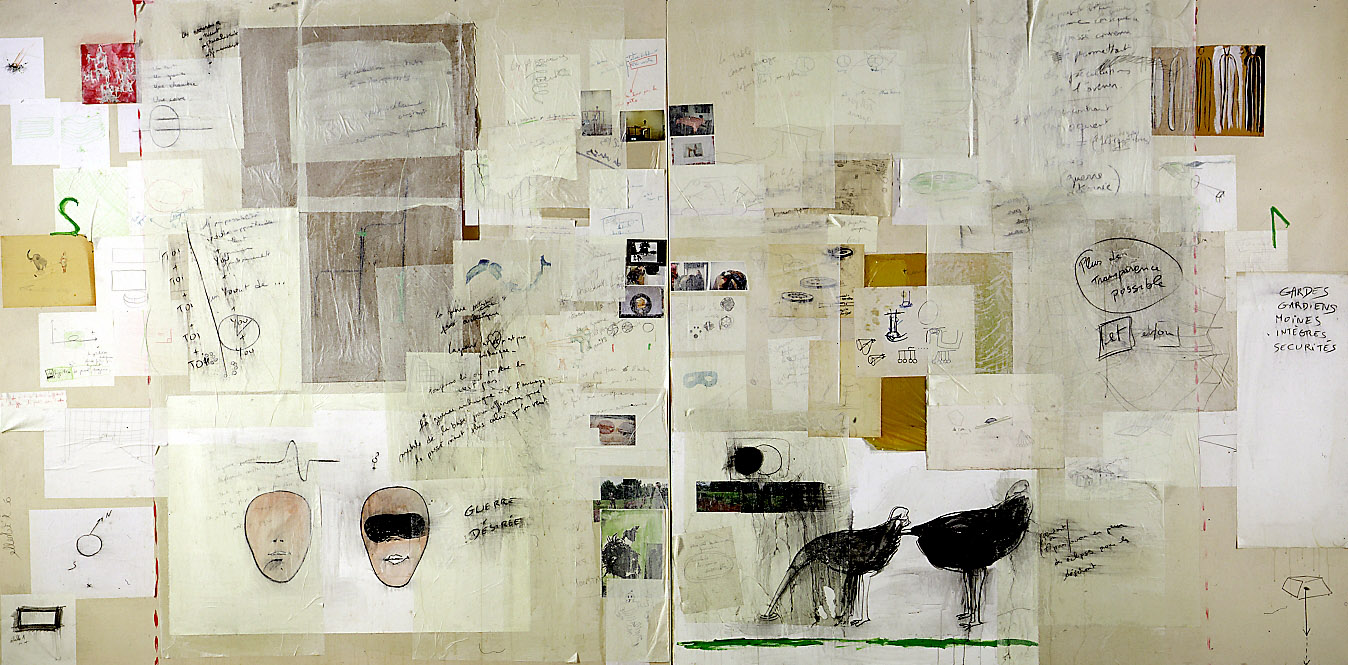
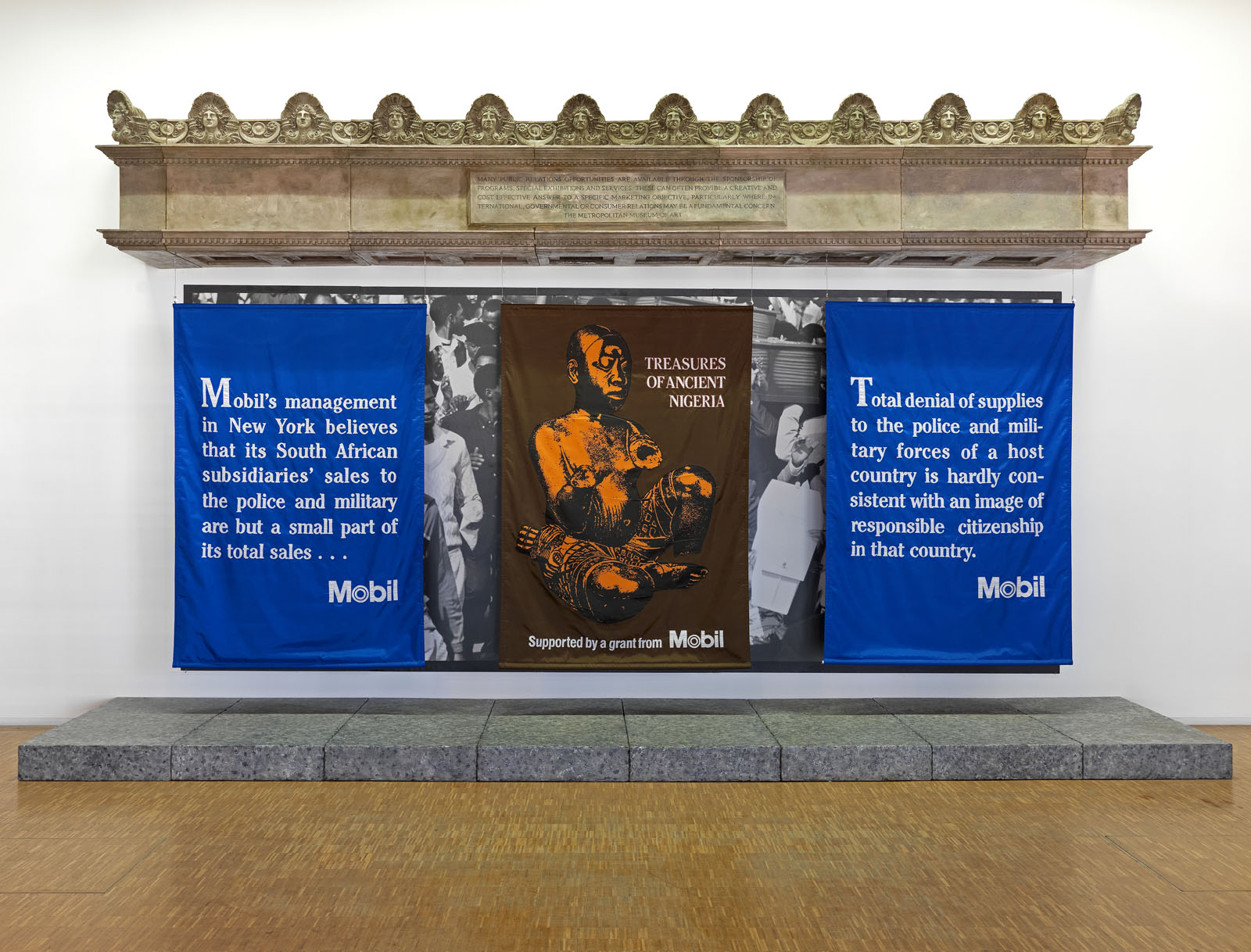
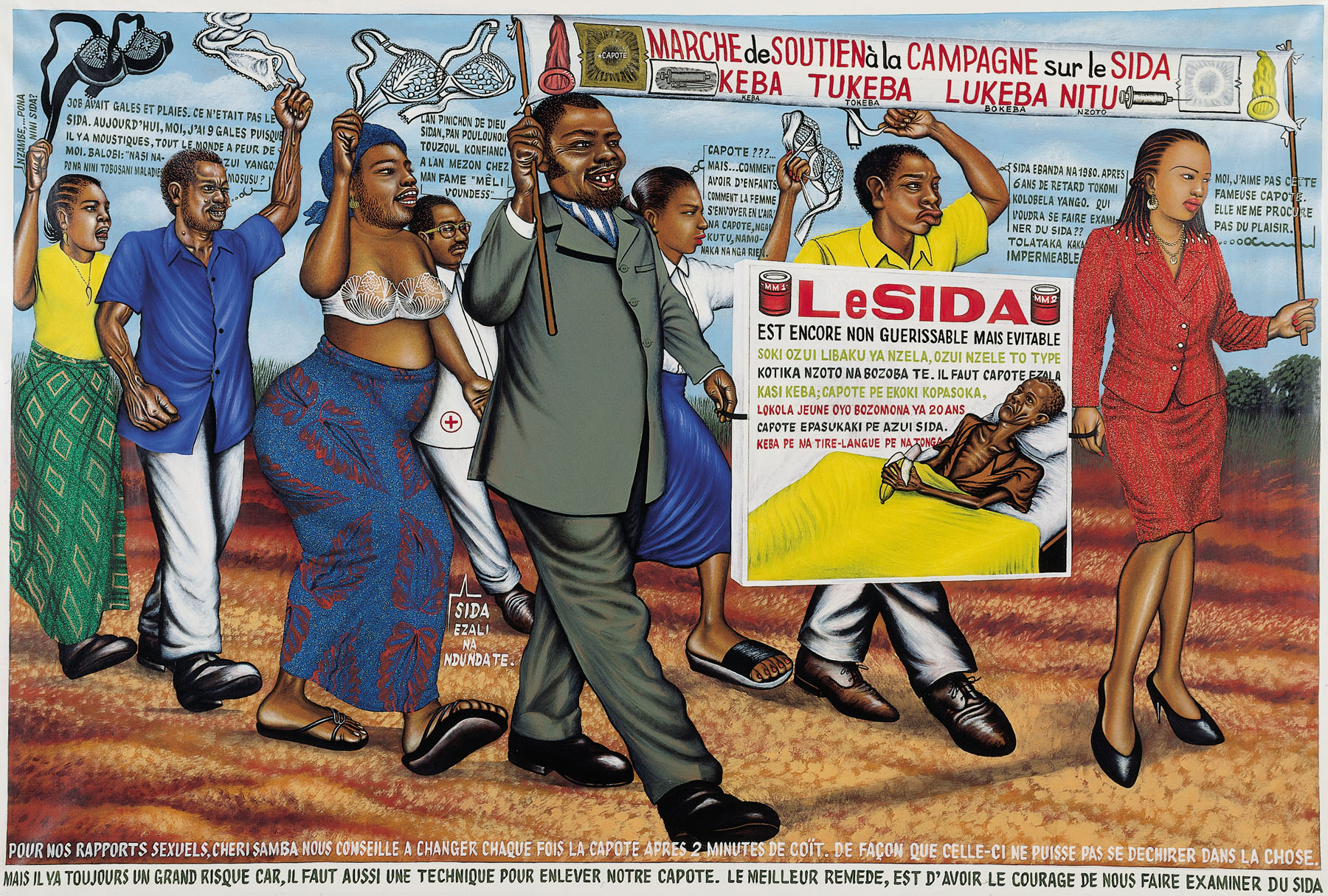


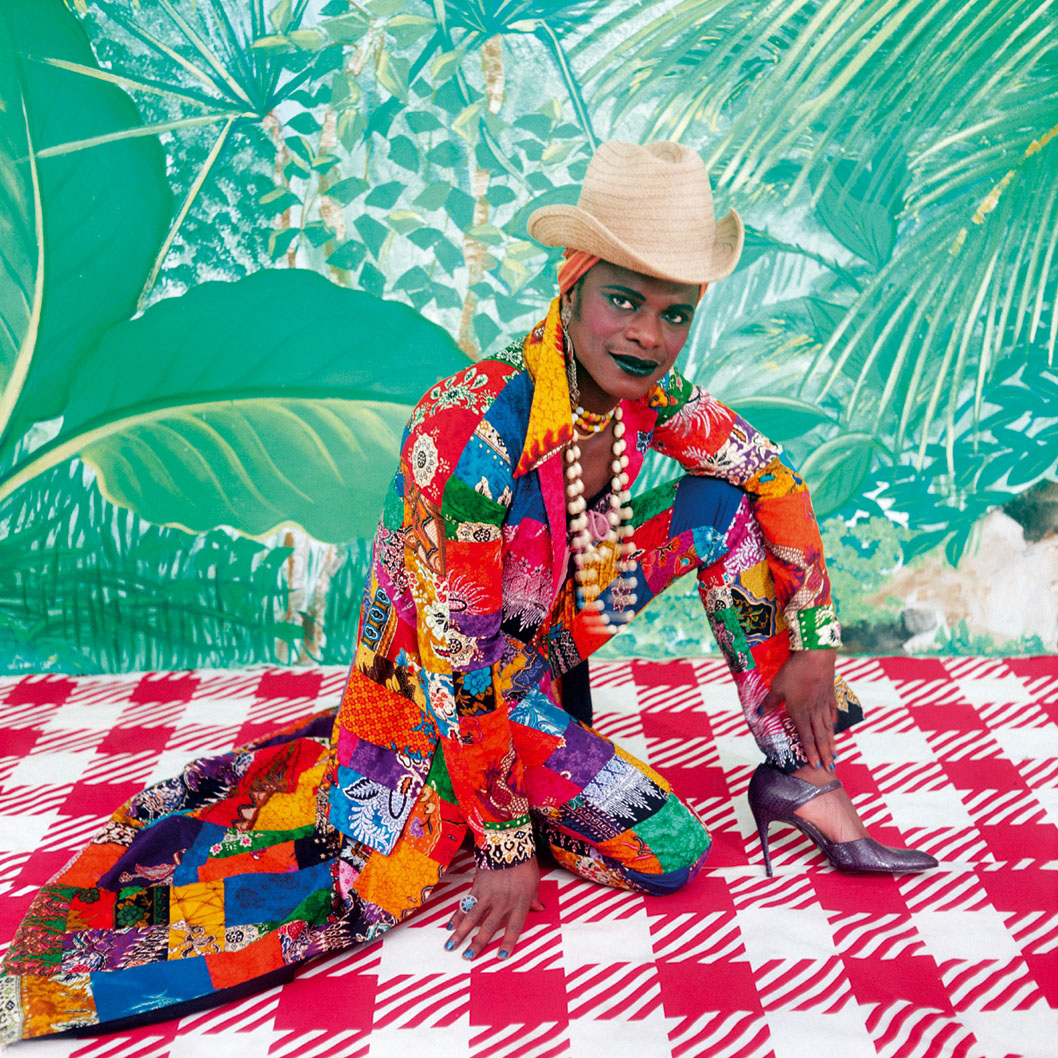
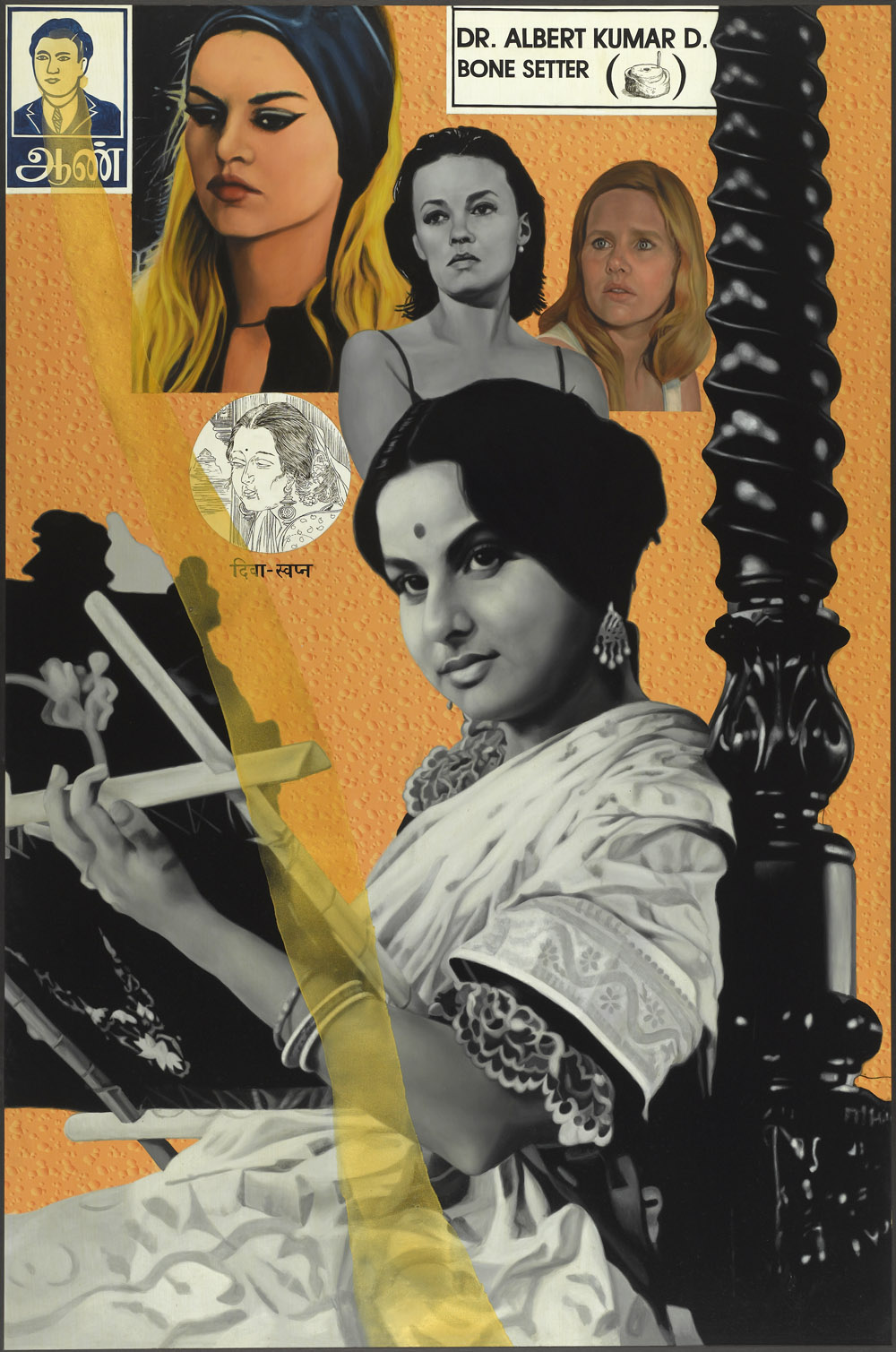
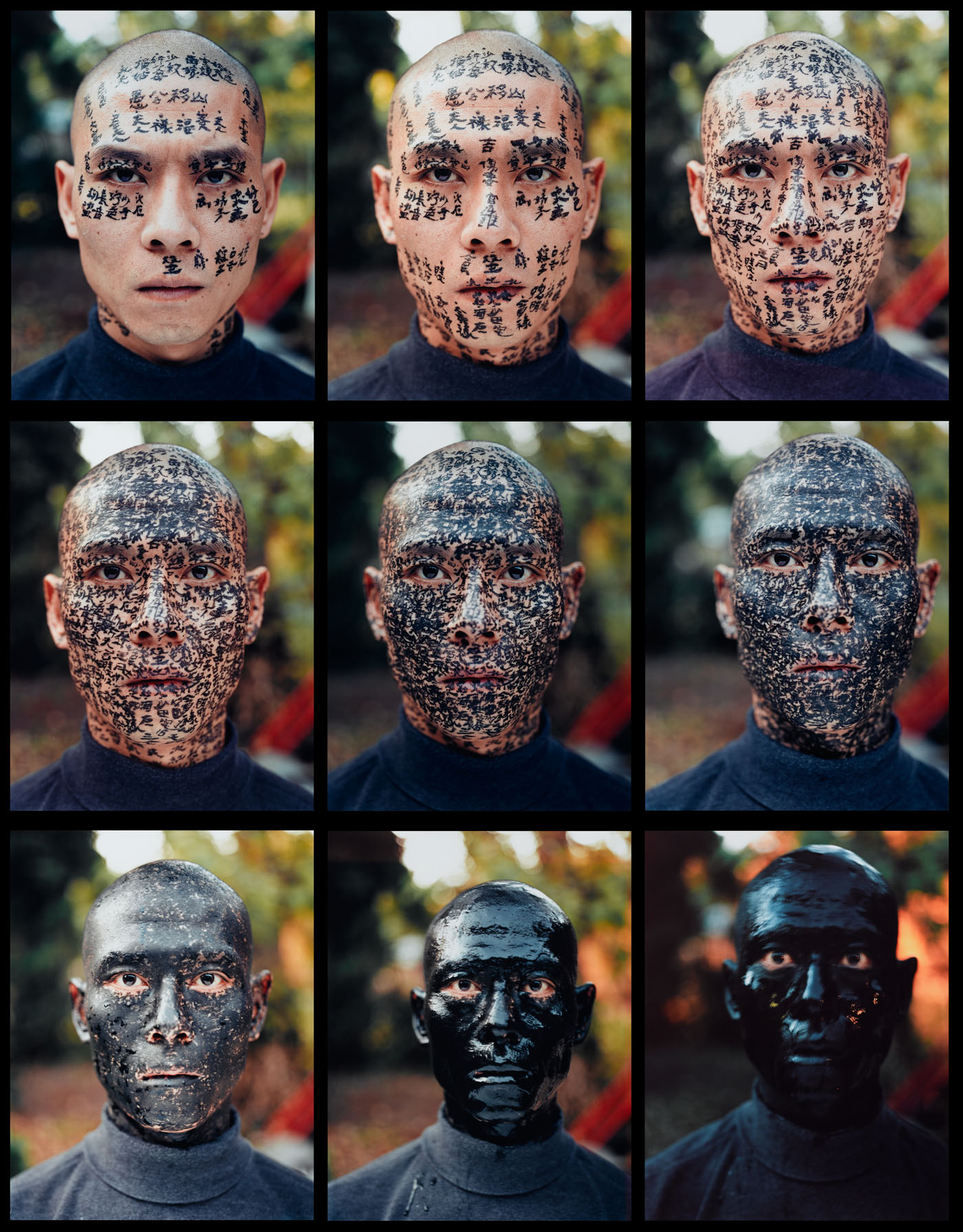
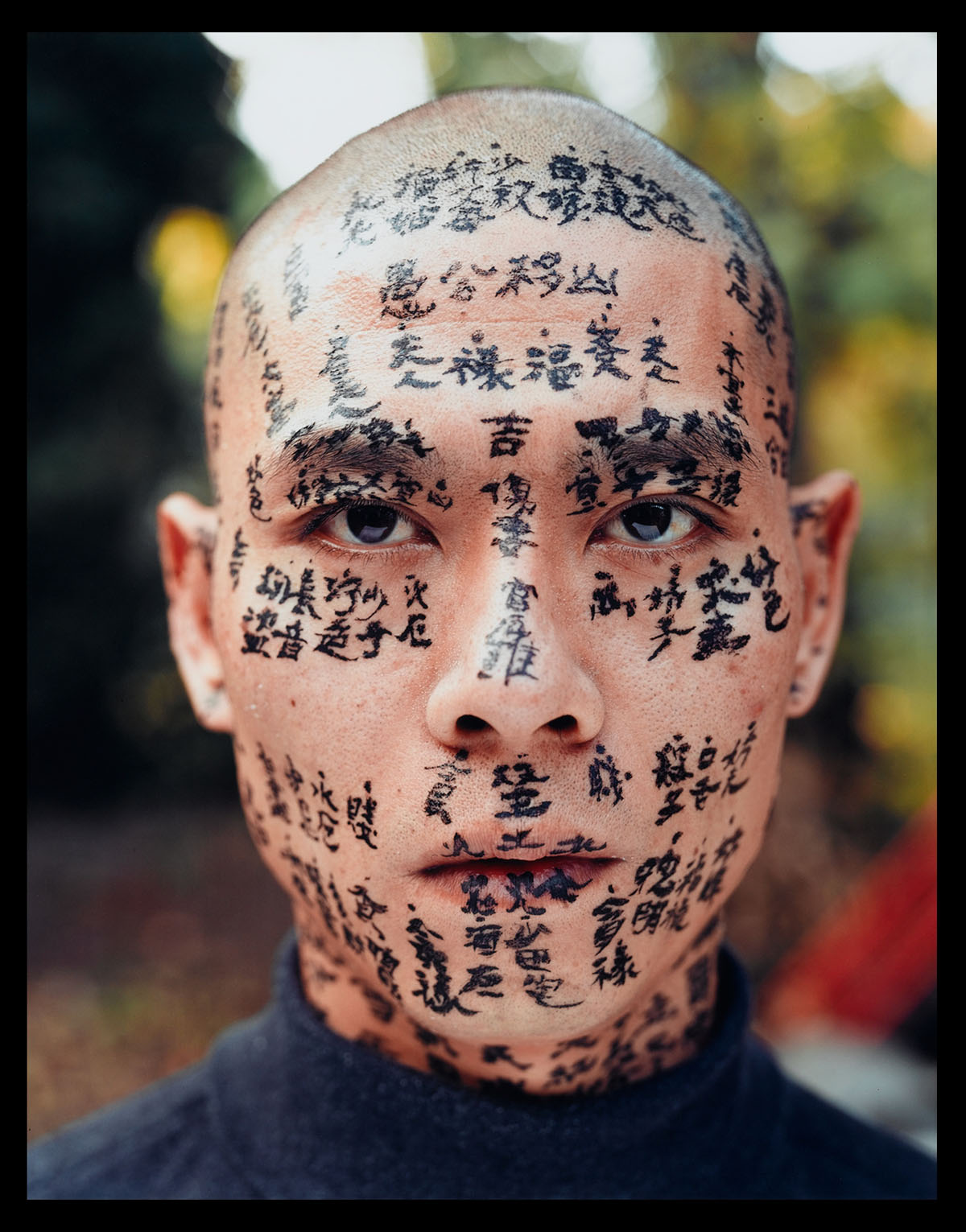
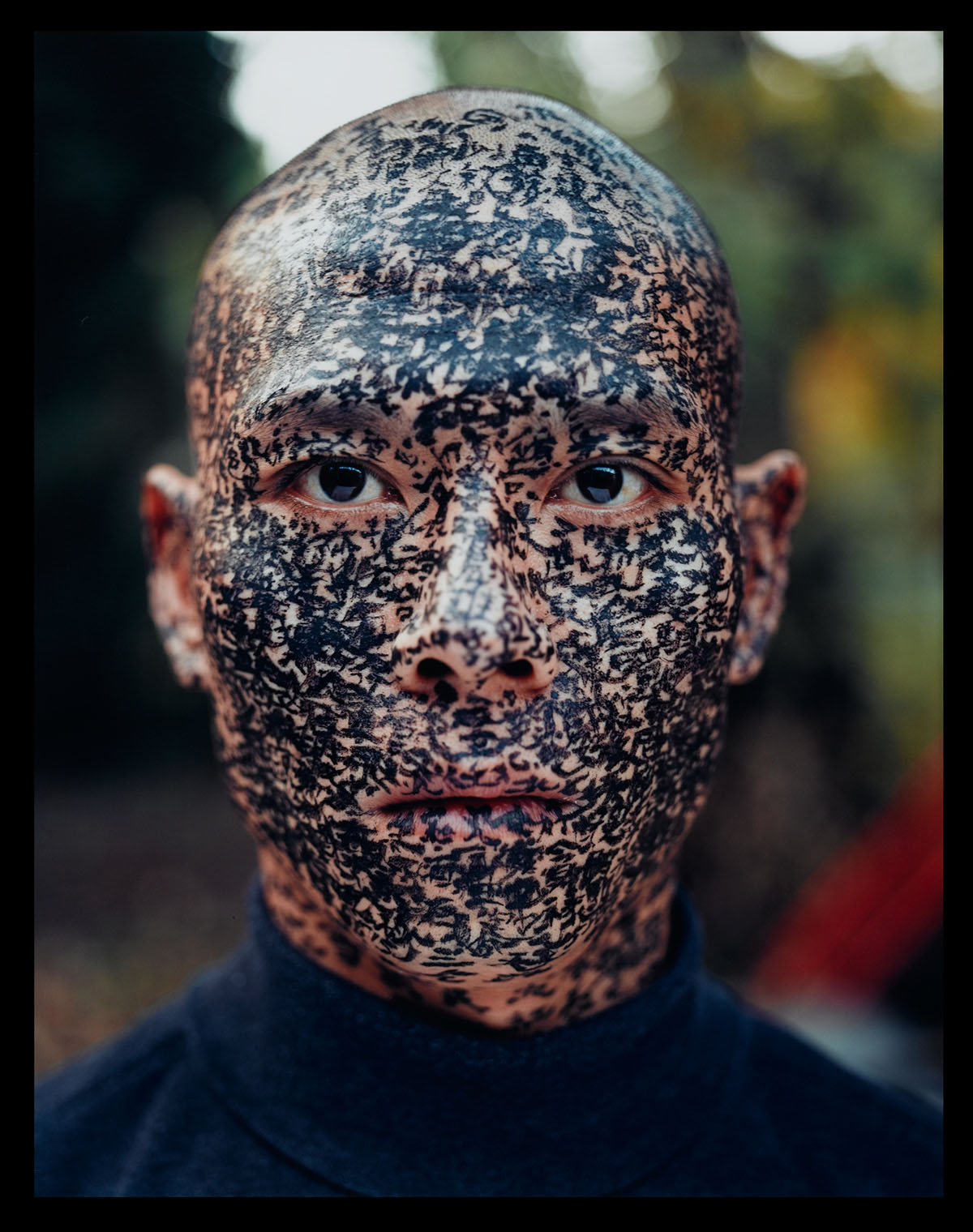
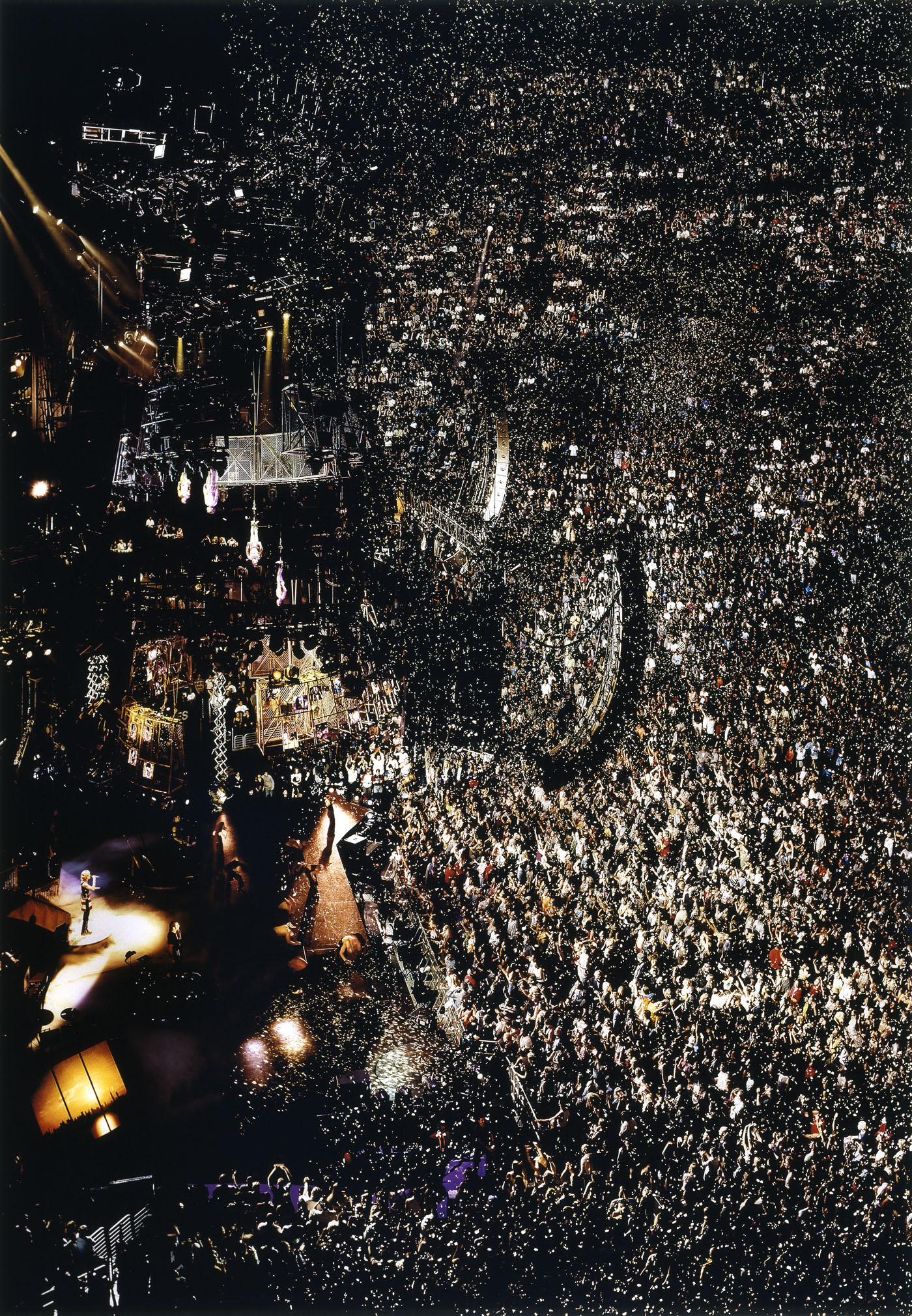
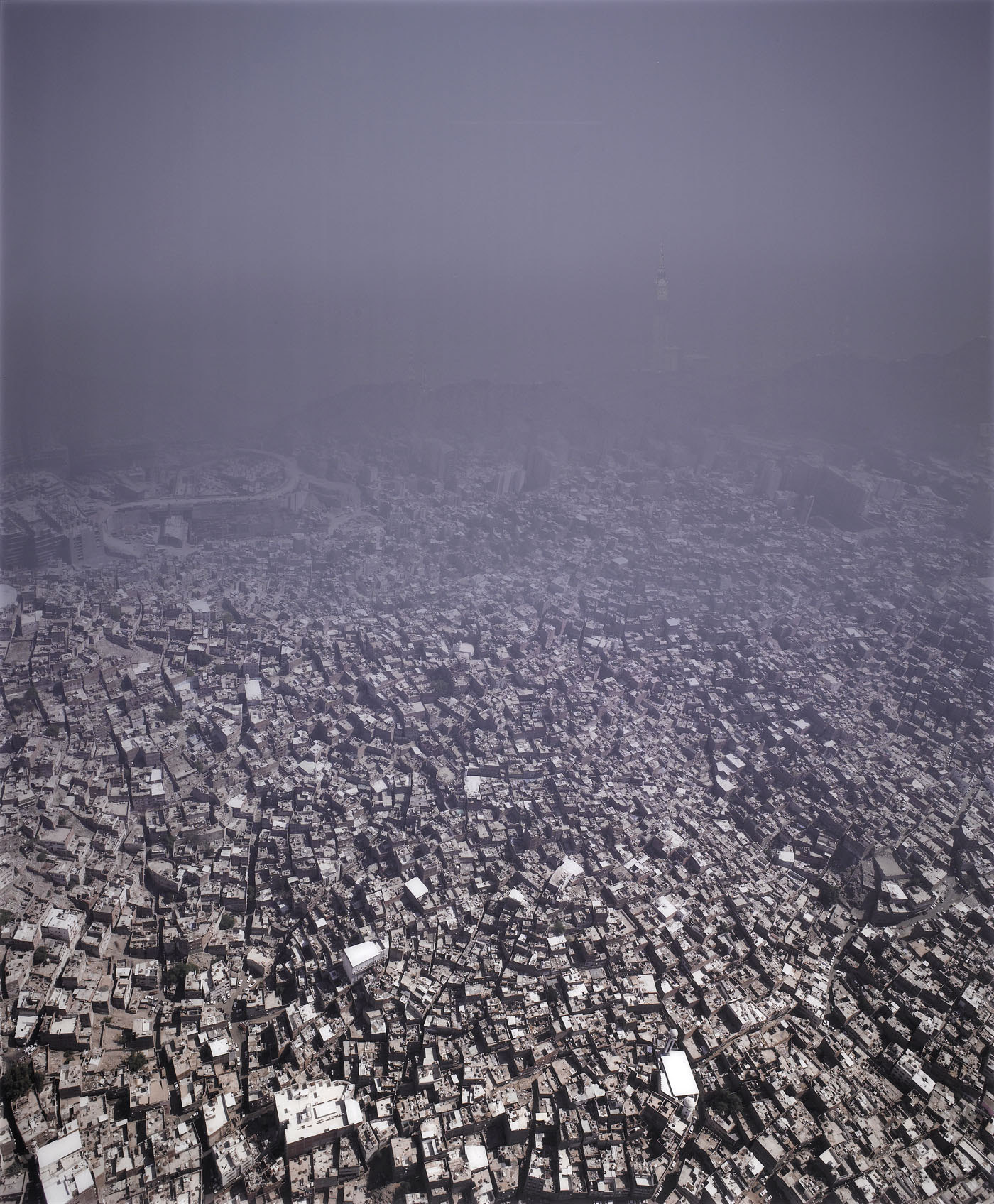
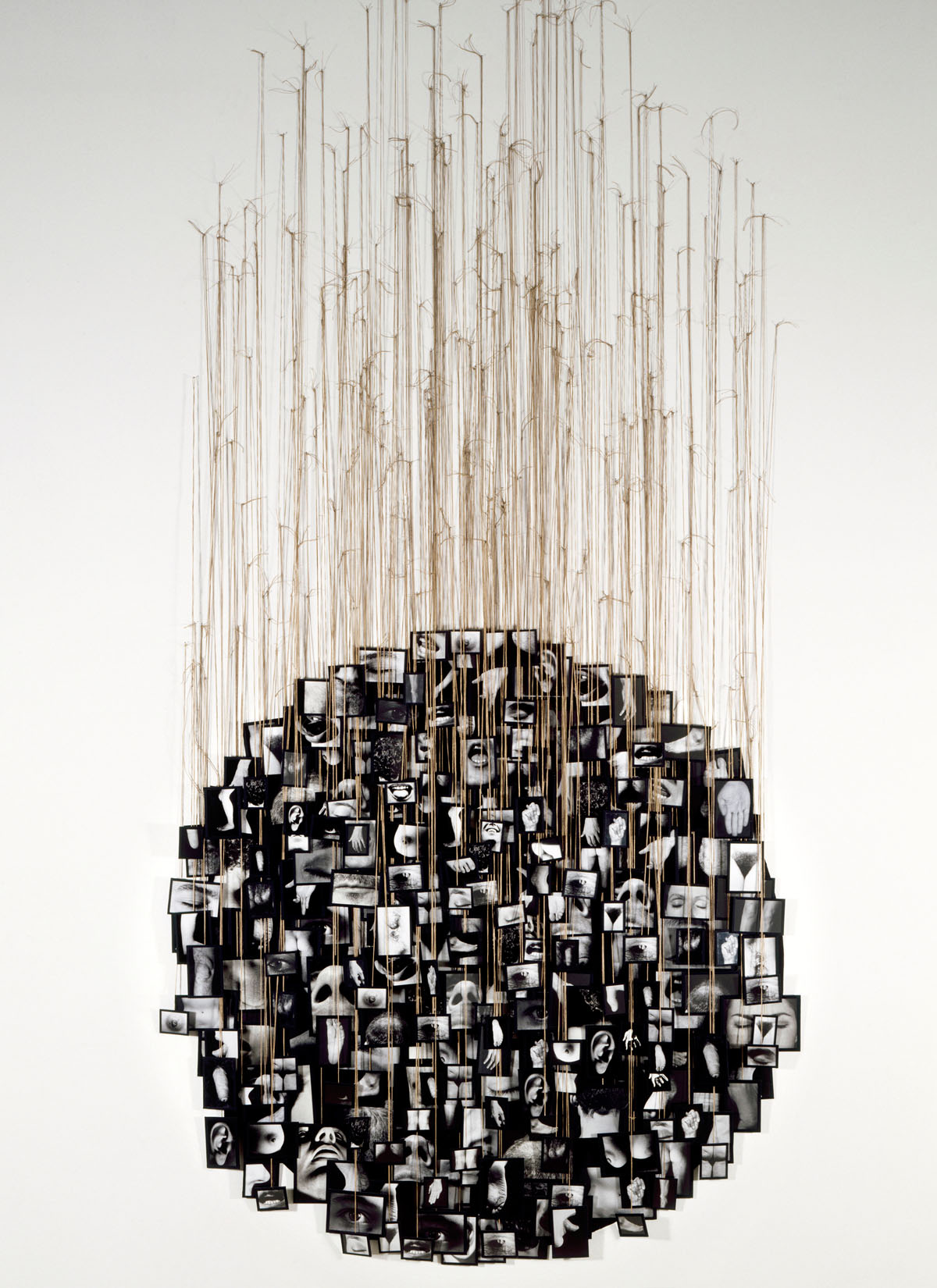
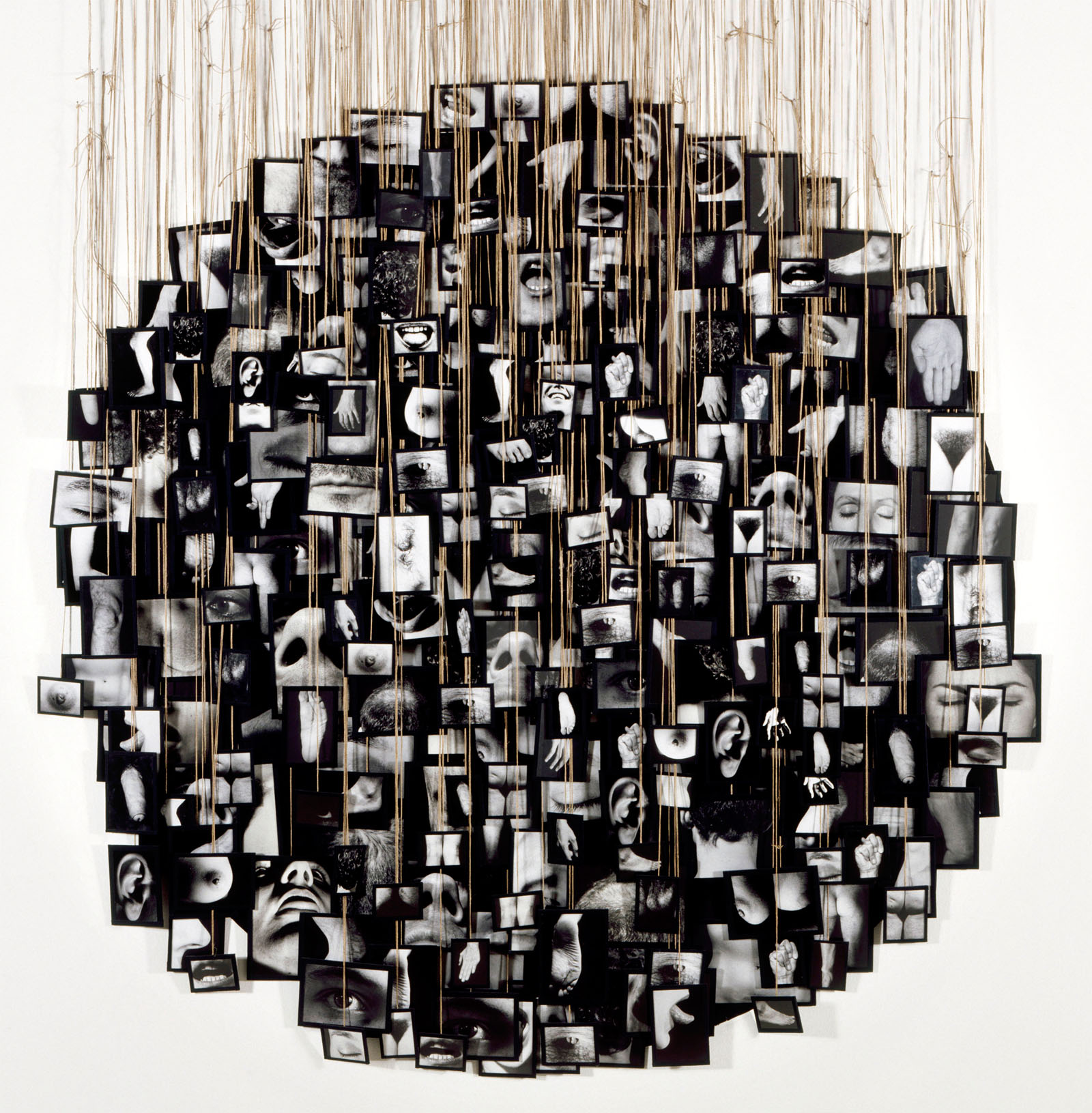
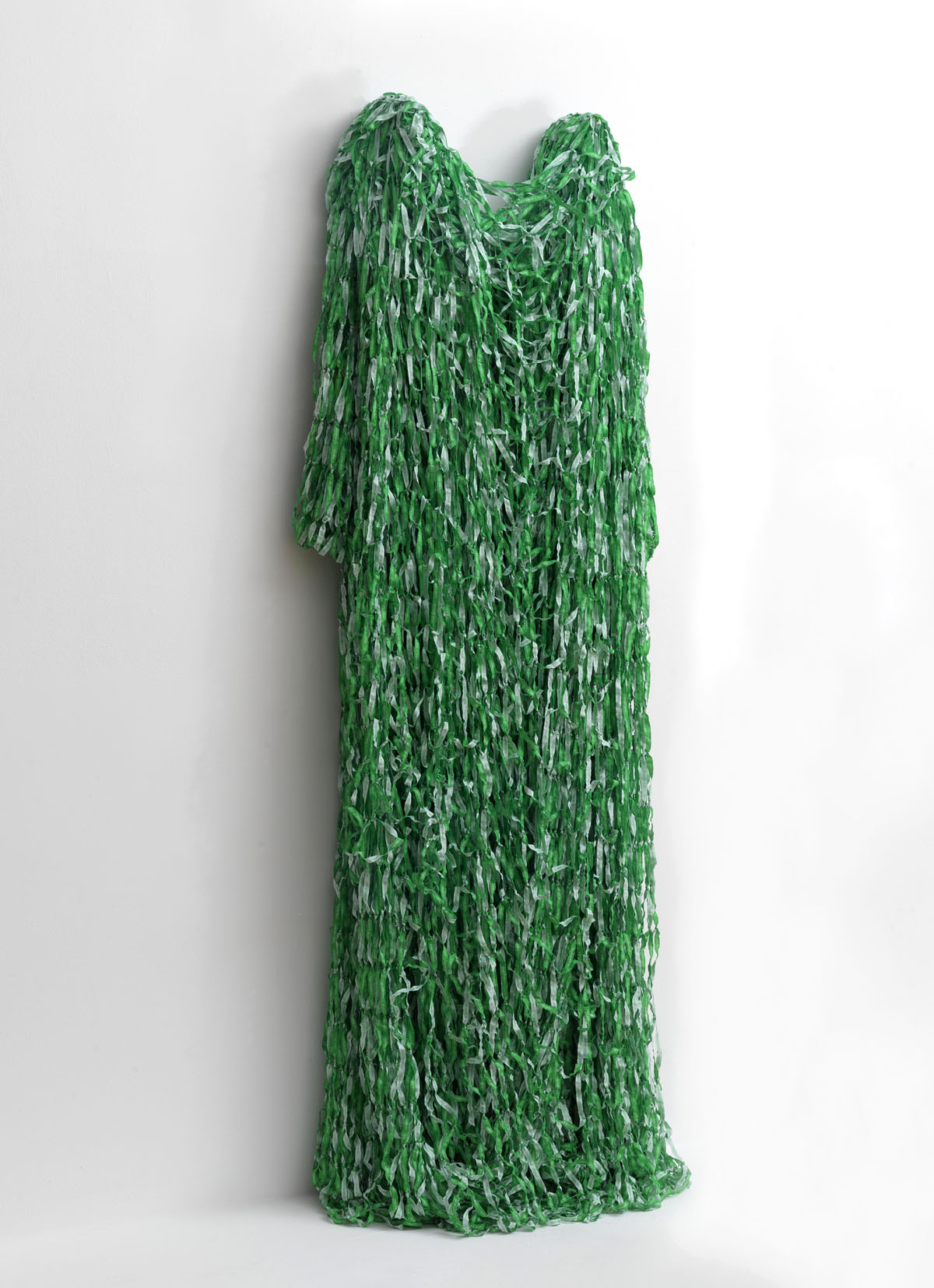
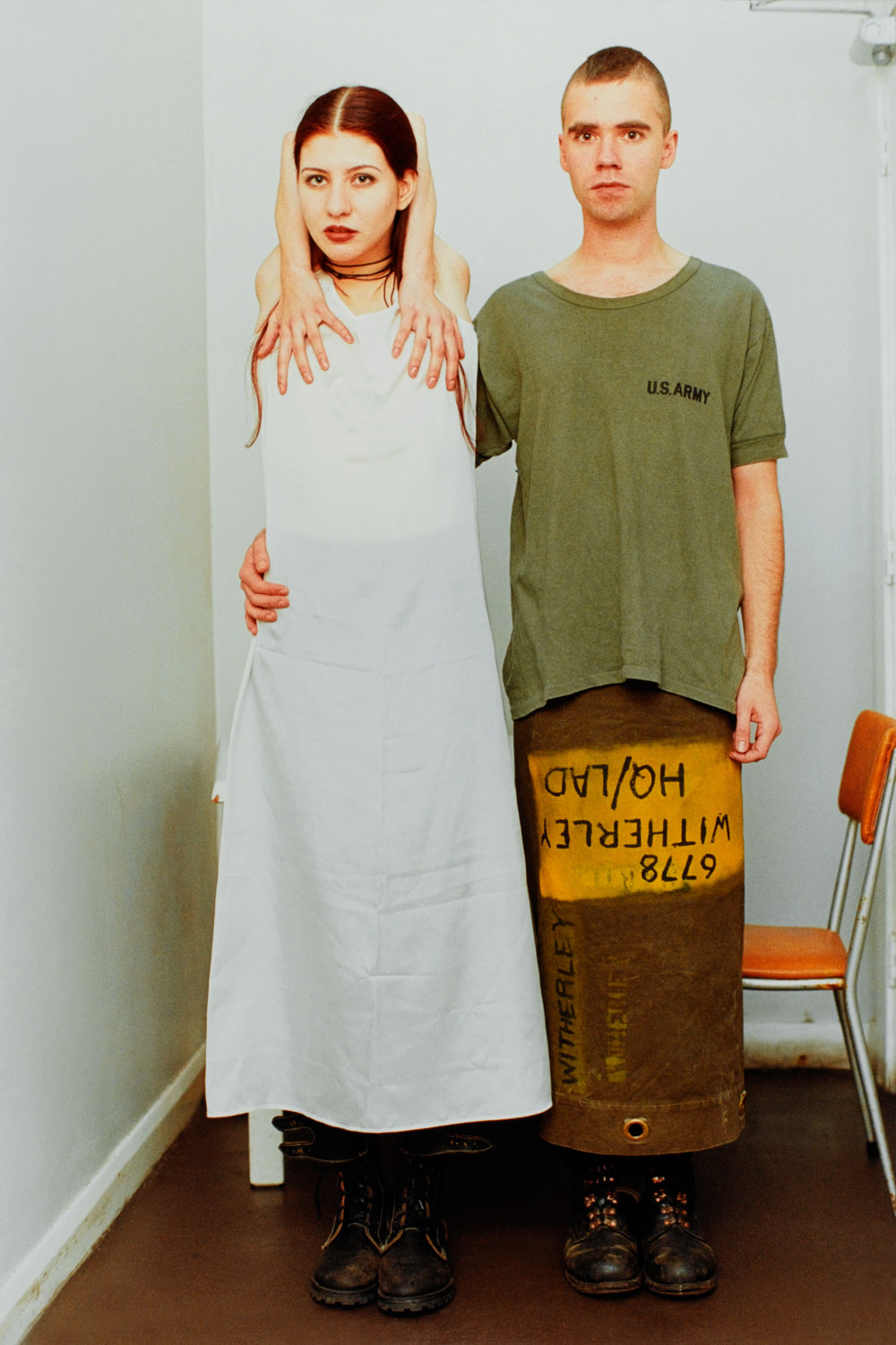


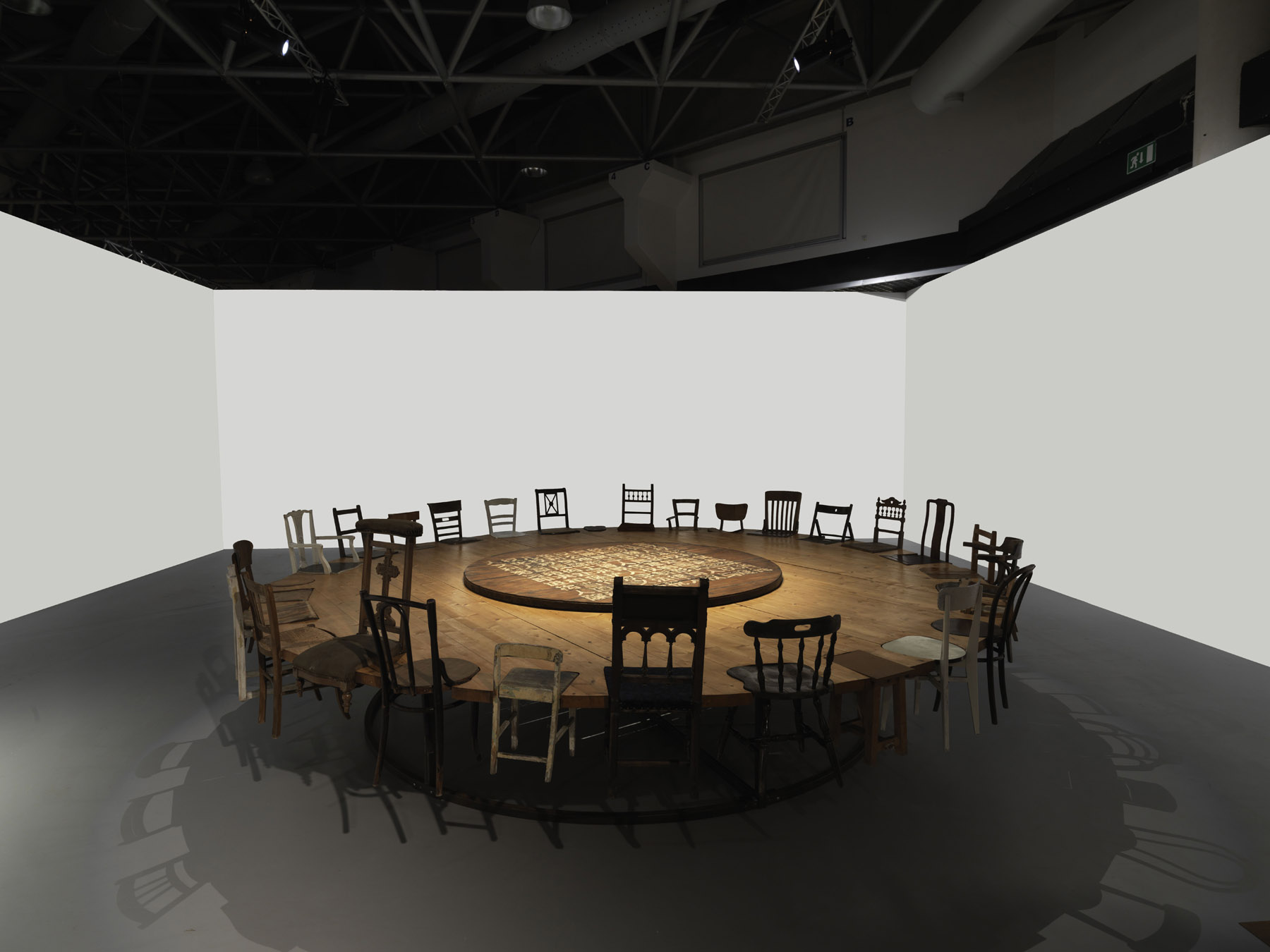
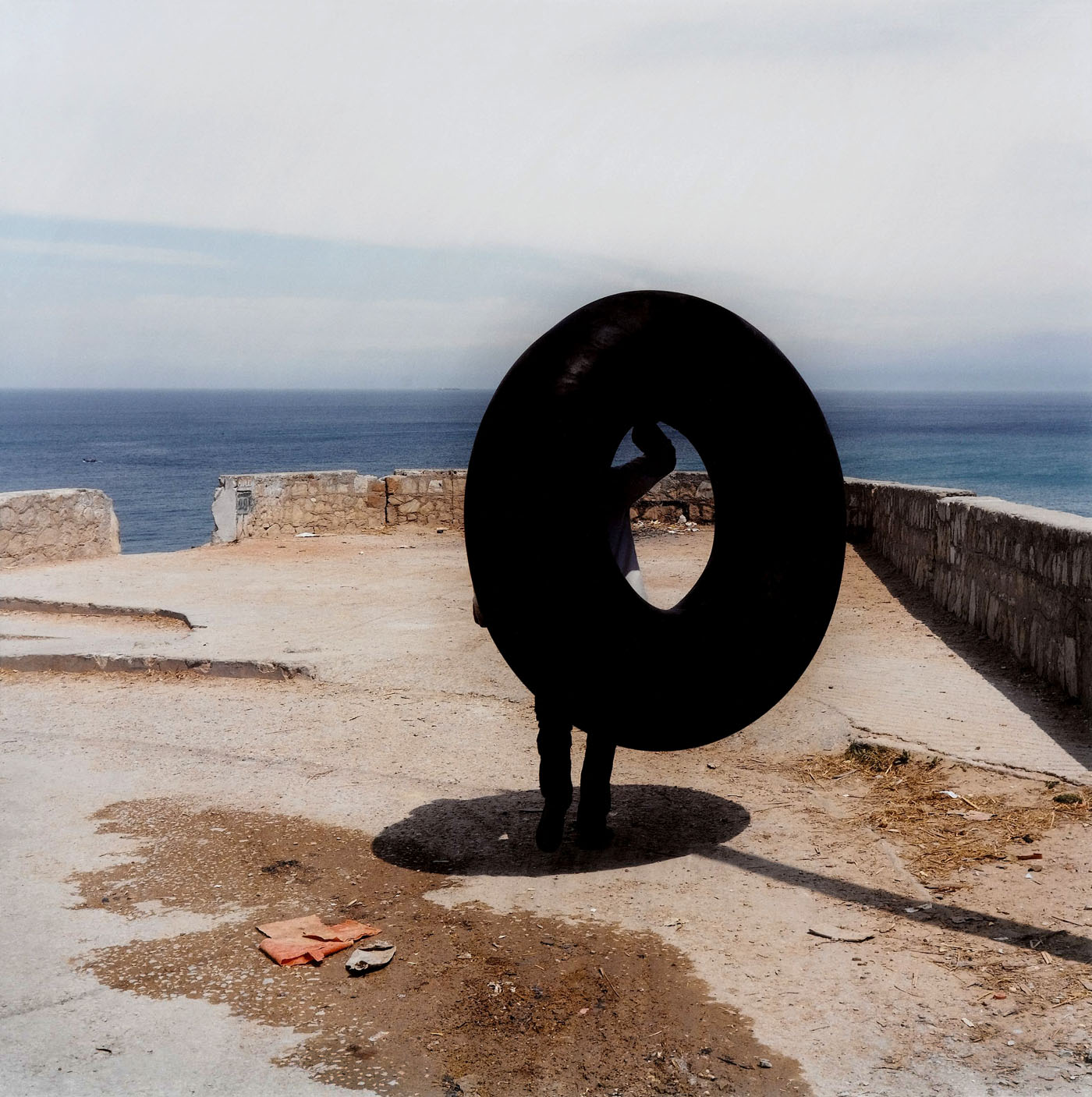



![Unknown photographer (American) '[Jeff Briggs, Robert Sims, Otis Hall, and Peter Pamphlet; Full-Length Mugshot from the Chicago Police Department]' 1936 from the exhibition 'Crime Stories: Photography and Foul Play' at the Metropolitan Museum of Art, New York, March - July, 2016](https://artblart.com/wp-content/uploads/2016/07/mug-shot1-web.jpg "Unknown photographer (American) '[Jeff Briggs, Robert Sims, Otis Hall, and Peter Pamphlet; Full-Length Mugshot from the Chicago Police Department]' 1936 from the exhibition 'Crime Stories: Photography and Foul Play' at the Metropolitan Museum of Art, New York, March - July, 2016")
![Unknown photographer (American) '[John Dillinger's Feet, Chicago Morgue]' 1934 from the exhibition 'Crime Stories: Photography and Foul Play' at the Metropolitan Museum of Art, New York, March - July, 2016](https://artblart.com/wp-content/uploads/2016/07/john-dillingers-body-web.jpg "Unknown photographer (American) '[John Dillinger's Feet, Chicago Morgue]' 1934 from the exhibition 'Crime Stories: Photography and Foul Play' at the Metropolitan Museum of Art, New York, March - July, 2016")
![Unknown photographer (American) '[Jeff Briggs, Robert Sims, Otis Hall, and Peter Pamphlet; Full-Length Mugshot from the Chicago Police Department]' 1936](https://artblart.com/wp-content/uploads/2016/07/mug-shot2-web.jpg "Unknown photographer (American) '[Jeff Briggs, Robert Sims, Otis Hall, and Peter Pamphlet; Full-Length Mugshot from the Chicago Police Department]' 1936")
![Walker Evans (American, St. Louis, Missouri 1903–1975 New Haven, Connecticut) '[Subway Passengers, New York City]' 1938](https://artblart.com/wp-content/uploads/2016/07/walker-evans-subway-passengers-new-york-city-web.jpg "Walker Evans (American, St. Louis, Missouri 1903–1975 New Haven, Connecticut) '[Subway Passengers, New York City]' 1938")


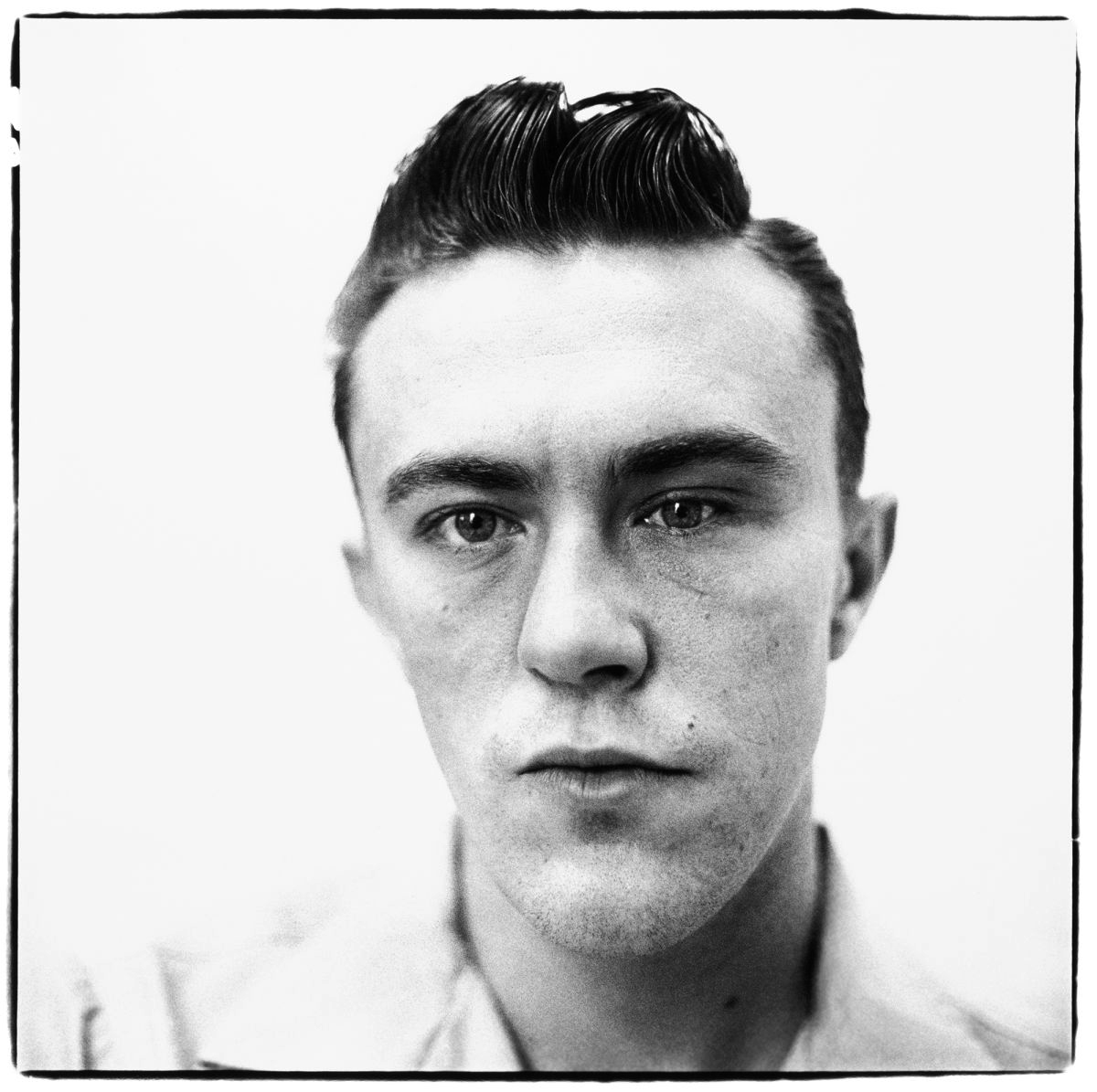
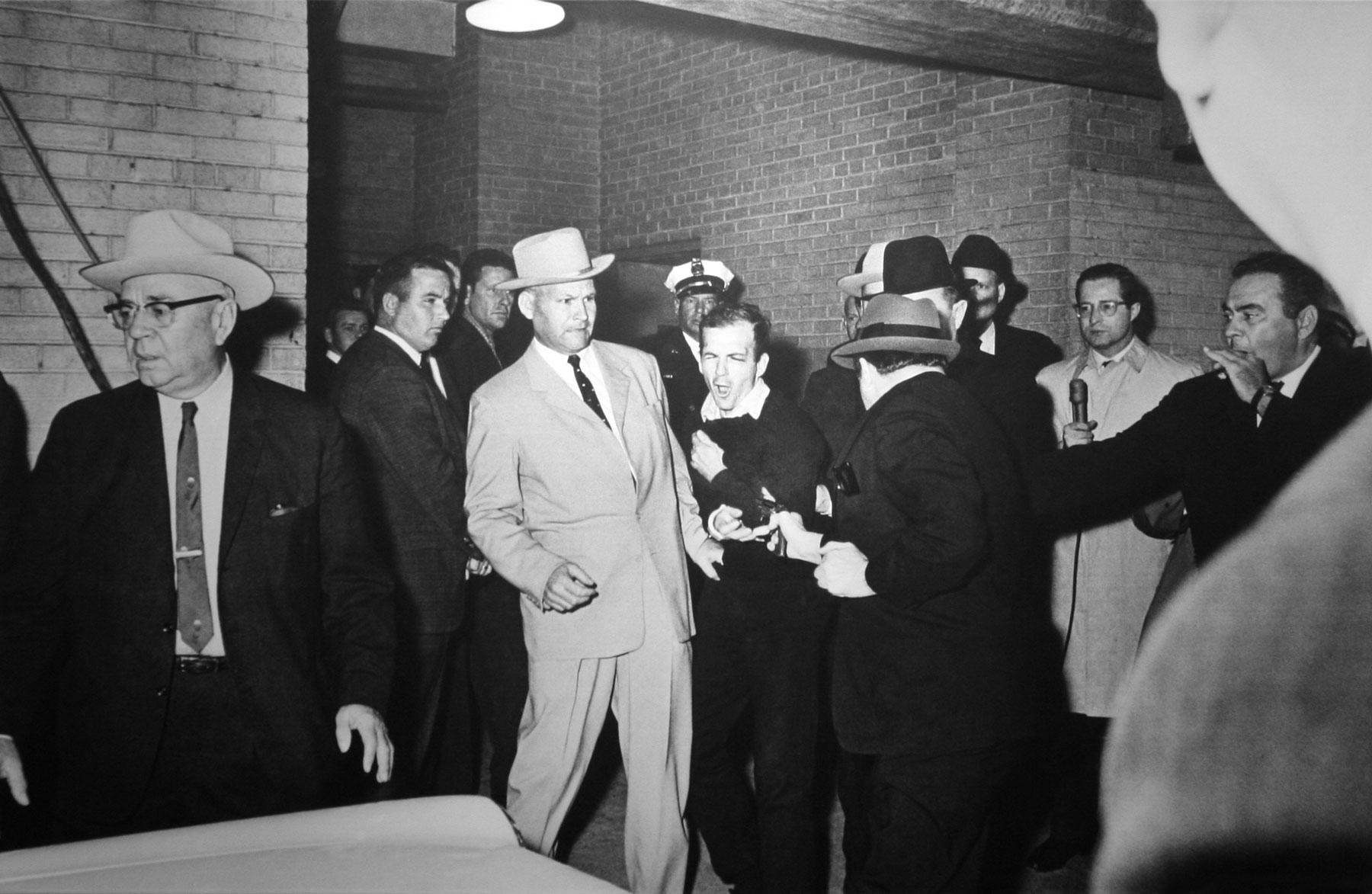
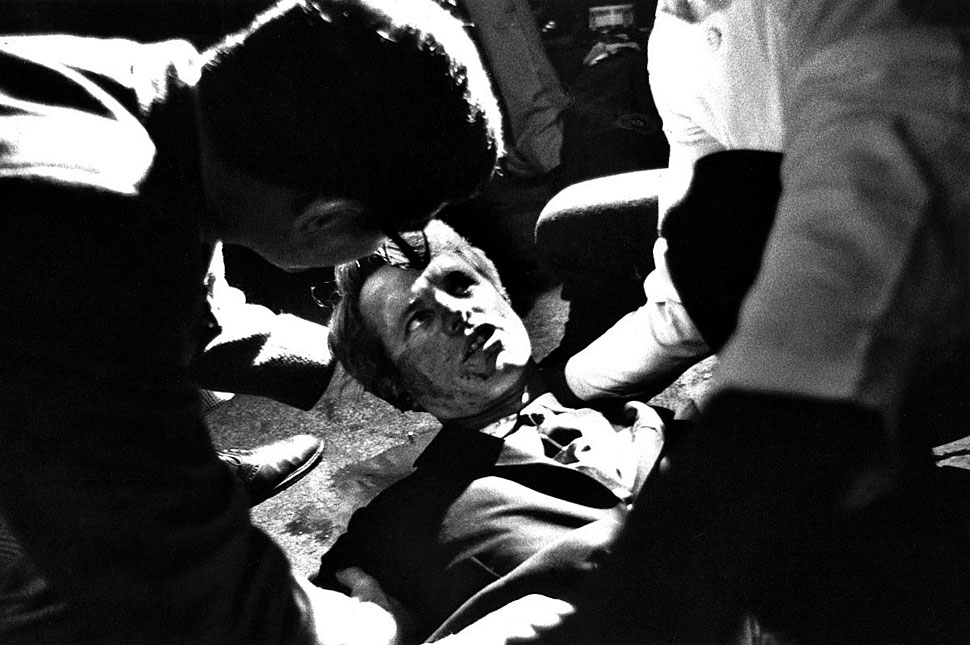

![Alphonse Bertillon (French, 1853-1914) '[Album of Paris Crime Scenes]' 1901-1908](https://artblart.com/wp-content/uploads/2016/07/bertillon-a-web.jpg "Alphonse Bertillon (French, 1853-1914) '[Album of Paris Crime Scenes]' 1901-1908")
![Alphonse Bertillon (French, 1853-1914) '[Album of Paris Crime Scenes]' 1901-1908 (detail)](https://artblart.com/wp-content/uploads/2016/07/bertillon-a-detail.jpg "Alphonse Bertillon (French, 1853-1914) '[Album of Paris Crime Scenes]' 1901-1908 (detail)")
![Alphonse Bertillon (French, 1853-1914) '[Album of Paris Crime Scenes]' 1901-1908](https://artblart.com/wp-content/uploads/2016/07/bertillon-b-web.jpg "Alphonse Bertillon (French, 1853-1914) '[Album of Paris Crime Scenes]' 1901-1908")
![Alphonse Bertillon (French, 1853-1914) '[Album of Paris Crime Scenes]' 1901-1908 (detail)](https://artblart.com/wp-content/uploads/2016/07/bertillon-b-detail.jpg "Alphonse Bertillon (French, 1853-1914) '[Album of Paris Crime Scenes]' 1901-1908 (detail)")
![Alphonse Bertillon (French, 1853-1914) '[Album of Paris Crime Scenes]' 1901-1908](https://artblart.com/wp-content/uploads/2016/07/bertillon-c-web.jpg "Alphonse Bertillon (French, 1853-1914) '[Album of Paris Crime Scenes]' 1901-1908")
![Alphonse Bertillon (French, 1853-1914) '[Album of Paris Crime Scenes]' 1901-1908 (detail)](https://artblart.com/wp-content/uploads/2016/07/bertillon-c-detail.jpg "Alphonse Bertillon (French, 1853-1914) '[Album of Paris Crime Scenes]' 1901-1908 (detail)")
![Alphonse Bertillon (French, 1853-1914) '[Album of Paris Crime Scenes]' 1901-1908](https://artblart.com/wp-content/uploads/2016/07/bertillon-d-web.jpg "Alphonse Bertillon (French, 1853-1914) '[Album of Paris Crime Scenes]' 1901-1908")
![Alphonse Bertillon (French, 1853-1914) '[Album of Paris Crime Scenes]' 1901-1908 (detail)](https://artblart.com/wp-content/uploads/2016/07/bertillon-d-detail.jpg "Alphonse Bertillon (French, 1853-1914) '[Album of Paris Crime Scenes]' 1901-1908 (detail)")
![Alphonse Bertillon (French, 1853-1914) '[Album of Paris Crime Scenes]' 1901-1908](https://artblart.com/wp-content/uploads/2016/07/bertillon-h-web.jpg "Alphonse Bertillon (French, 1853-1914) '[Album of Paris Crime Scenes]' 1901-1908")
![Alphonse Bertillon (French, 1853-1914) '[Album of Paris Crime Scenes]' 1901-1908 (detail)](https://artblart.com/wp-content/uploads/2016/07/bertillon-h-detail.jpg "Alphonse Bertillon (French, 1853-1914) '[Album of Paris Crime Scenes]' 1901-1908 (detail)")
![Alphonse Bertillon (French, 1853-1914) '[Album of Paris Crime Scenes]' 1901-1908](https://artblart.com/wp-content/uploads/2016/07/bertillon-e-web.jpg "Alphonse Bertillon (French, 1853-1914) '[Album of Paris Crime Scenes]' 1901-1908")
![Alphonse Bertillon (French, 1853-1914) '[Album of Paris Crime Scenes]' 1901-1908 (detail)](https://artblart.com/wp-content/uploads/2016/07/bertillon-e-detail.jpg "Alphonse Bertillon (French, 1853-1914) '[Album of Paris Crime Scenes]' 1901-1908 (detail)")
![Alphonse Bertillon (French, 1853-1914) '[Album of Paris Crime Scenes]' 1901-1908](https://artblart.com/wp-content/uploads/2016/07/bertillon-f-web.jpg "Alphonse Bertillon (French, 1853-1914) '[Album of Paris Crime Scenes]' 1901-1908")
![Alphonse Bertillon (French, 1853-1914) '[Album of Paris Crime Scenes]' 1901-1908 (detail)](https://artblart.com/wp-content/uploads/2016/07/bertillon-f-detail.jpg "Alphonse Bertillon (French, 1853-1914) '[Album of Paris Crime Scenes]' 1901-1908 (detail)")
![Alphonse Bertillon (French, 1853-1914) '[Album of Paris Crime Scenes]' 1901-1908](https://artblart.com/wp-content/uploads/2016/07/bertillon-g-web.jpg "Alphonse Bertillon (French, 1853-1914) '[Album of Paris Crime Scenes]' 1901-1908")
![Alphonse Bertillon (French, 1853-1914) '[Album of Paris Crime Scenes]' 1901-1908 (detail)](https://artblart.com/wp-content/uploads/2016/07/bertillon-g-detail.jpg "Alphonse Bertillon (French, 1853-1914) '[Album of Paris Crime Scenes]' 1901-1908 (detail)")


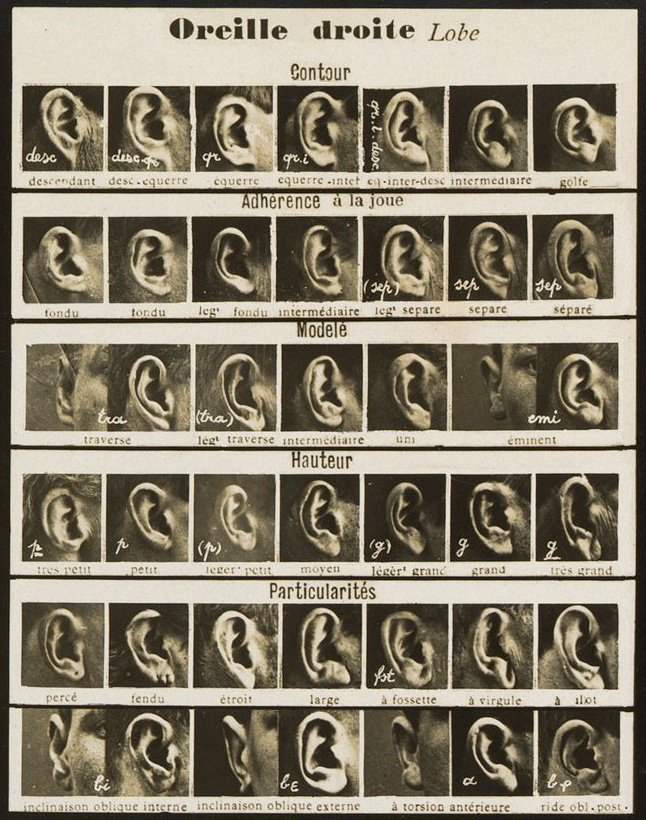


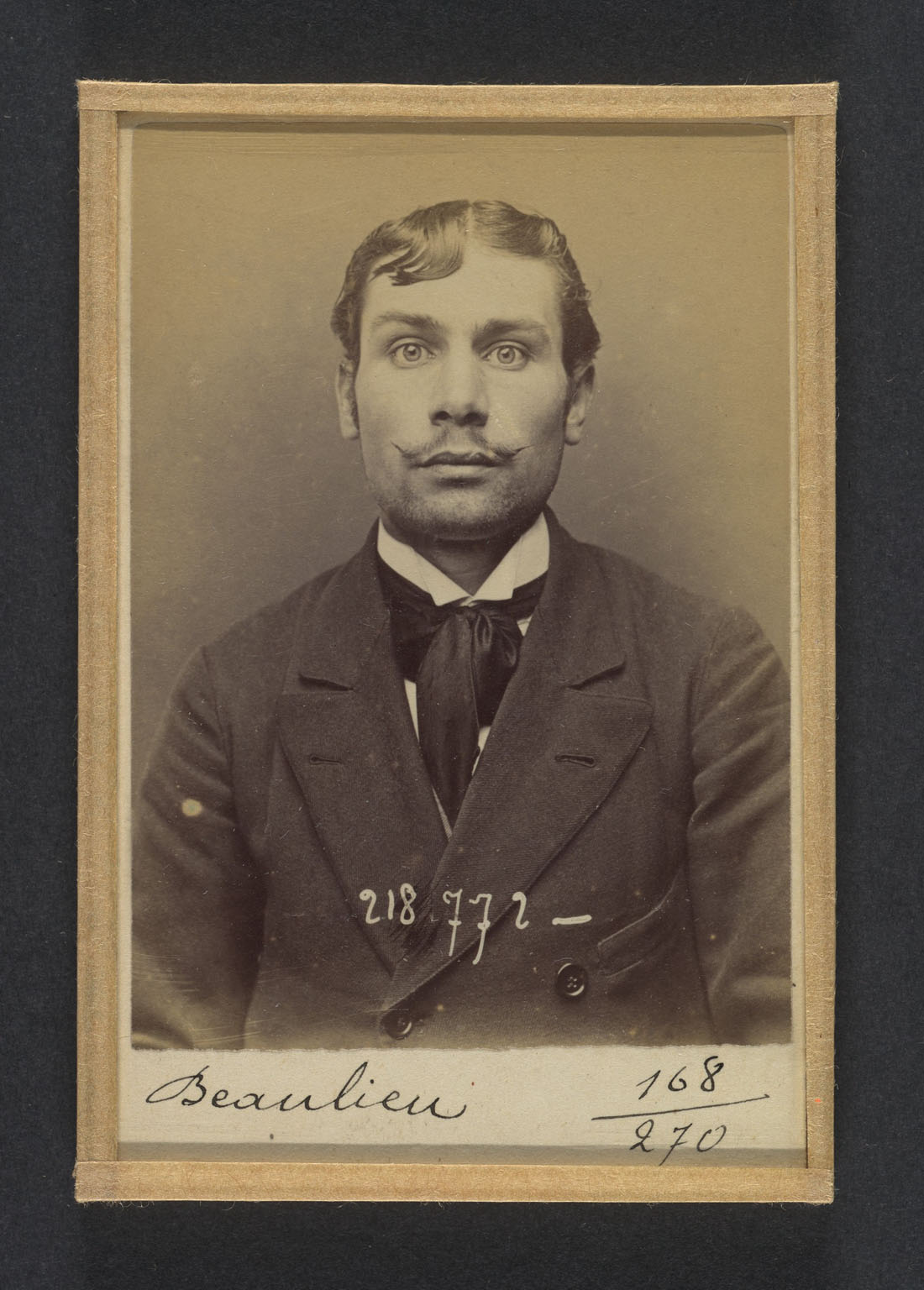


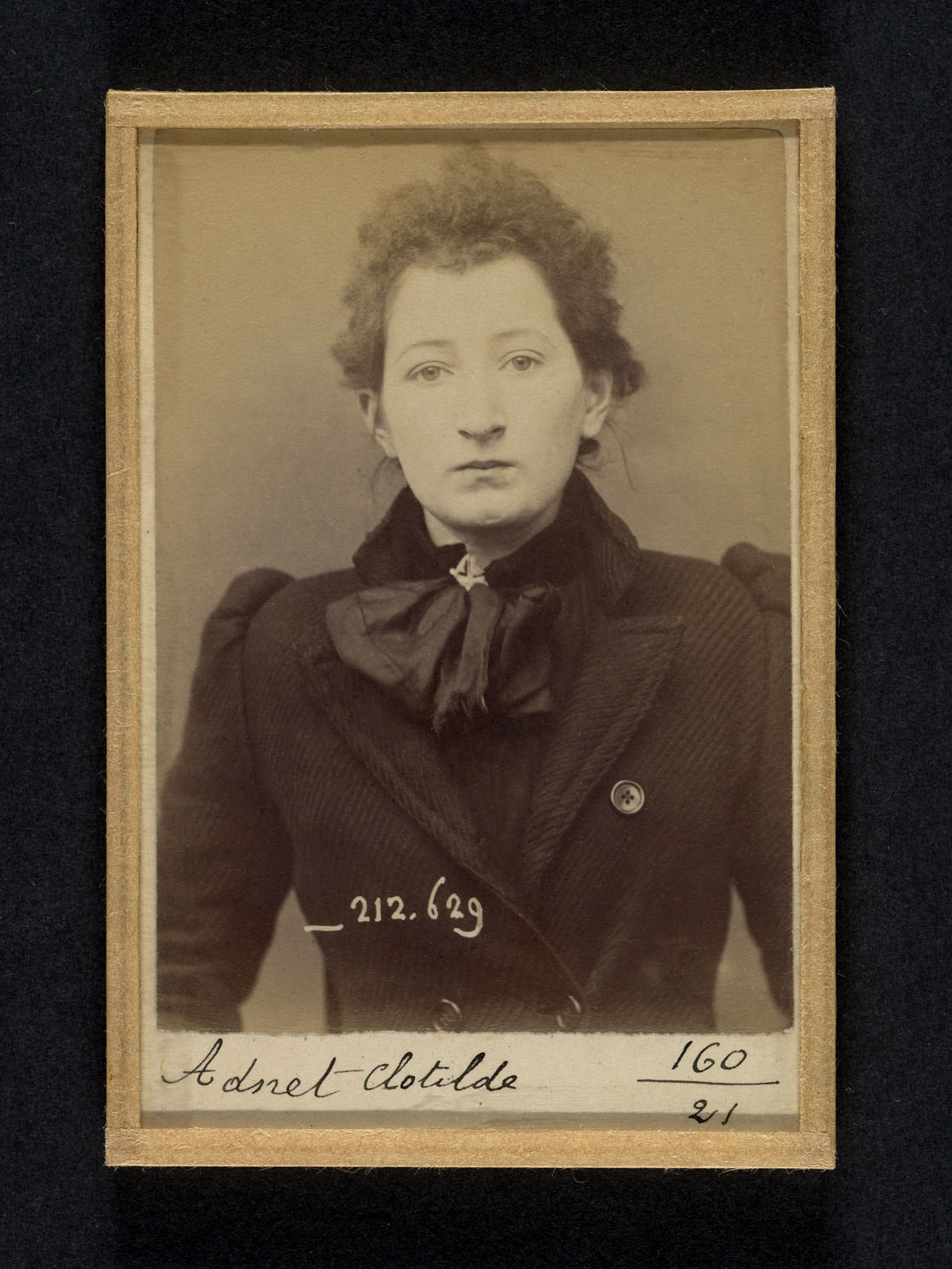

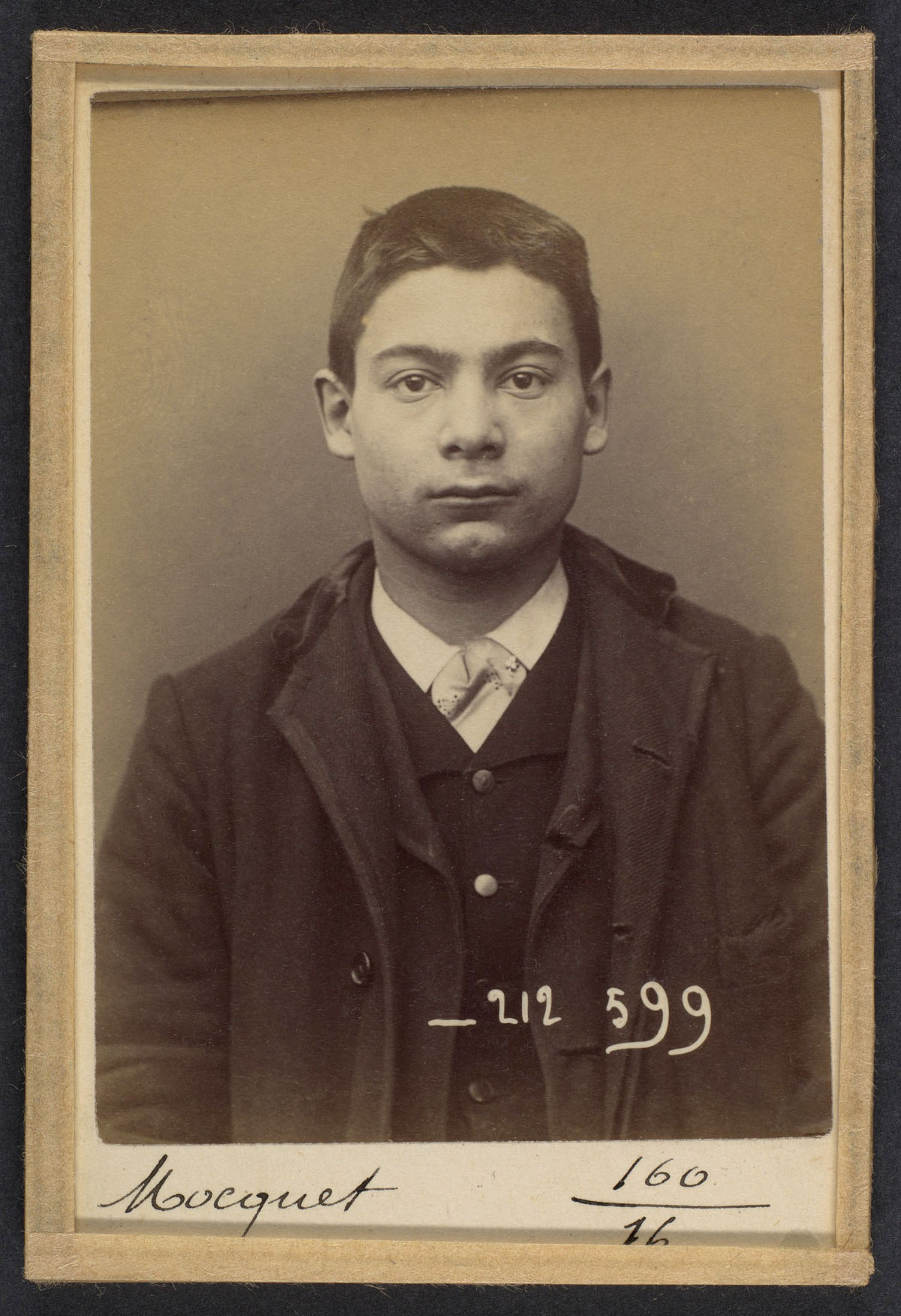


![Unknown photographer (American) '[Broadside for the Capture of John Wilkes Booth, John Surratt, and David Herold]' 1865](https://artblart.com/wp-content/uploads/2014/04/dp274835-murder-web.jpg "Unknown photographer (American) '[Broadside for the Capture of John Wilkes Booth, John Surratt, and David Herold]' 1865")
![Alexander Gardner (American, Glasgow, Scotland 1821 - 1882 Washington, D.C.) 'Lewis Powell [alias Lewis Payne]' April 27, 1865](https://artblart.com/wp-content/uploads/2016/07/lewis-powell-web.jpg "Alexander Gardner (American, Glasgow, Scotland 1821 - 1882 Washington, D.C.) 'Lewis Powell [alias Lewis Payne]' April 27, 186")


![Unknown photographer (American). '[Five Members of the Wild Bunch]' c. 1892](https://artblart.com/wp-content/uploads/2016/07/the-wild-bunch-web.jpg "Unknown photographer (American). '[Five Members of the Wild Bunch]' c. 1892")
![Tom Howard (American, 1894-1961) '[Electrocution of Ruth Snyder, Sing Sing Prison, Ossining, New York]' 1928](https://artblart.com/wp-content/uploads/2016/07/electrocution-of-ruth-snyder-web.jpg "Tom Howard (American, 1894-1961) '[Electrocution of Ruth Snyder, Sing Sing Prison, Ossining, New York]' 1928")

![Unknown photographer (American) '[Automobile Murder Scene]' c. 1935](https://artblart.com/wp-content/uploads/2016/07/automobile-murder-scene-circa-1935-web.jpg "Unknown photographer (American) '[Automobile Murder Scene]' c. 1935")
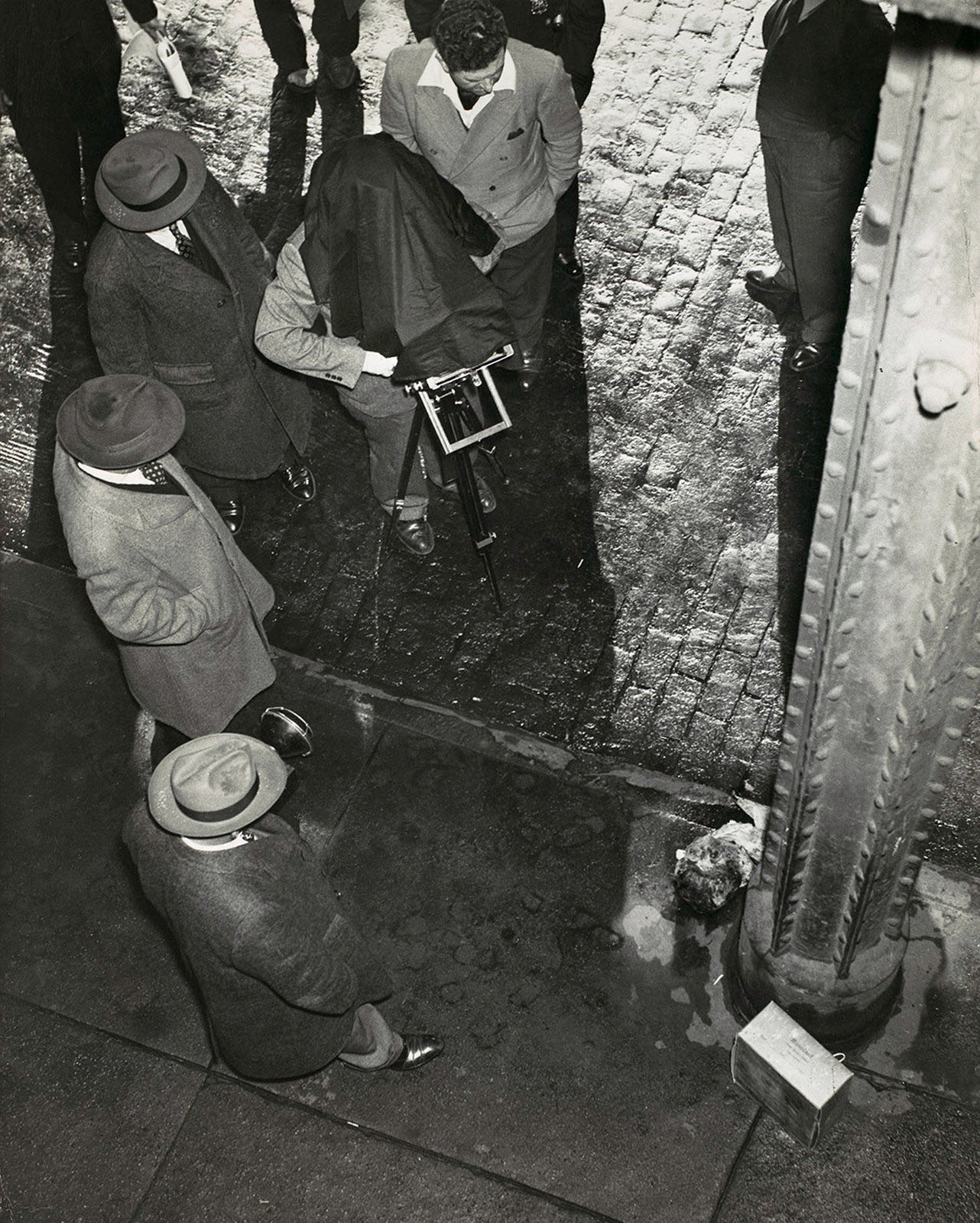

![Weegee (American, born Ukraine (Austria), Złoczów (Zolochiv) 1899 - 1968 New York) '[Outline of a Murder Victim]' 1942](https://artblart.com/wp-content/uploads/2016/07/weegee-outline-web.jpg "Weegee (American, born Ukraine (Austria), Złoczów (Zolochiv) 1899 - 1968 New York) '[Outline of a Murder Victim]' 1942")


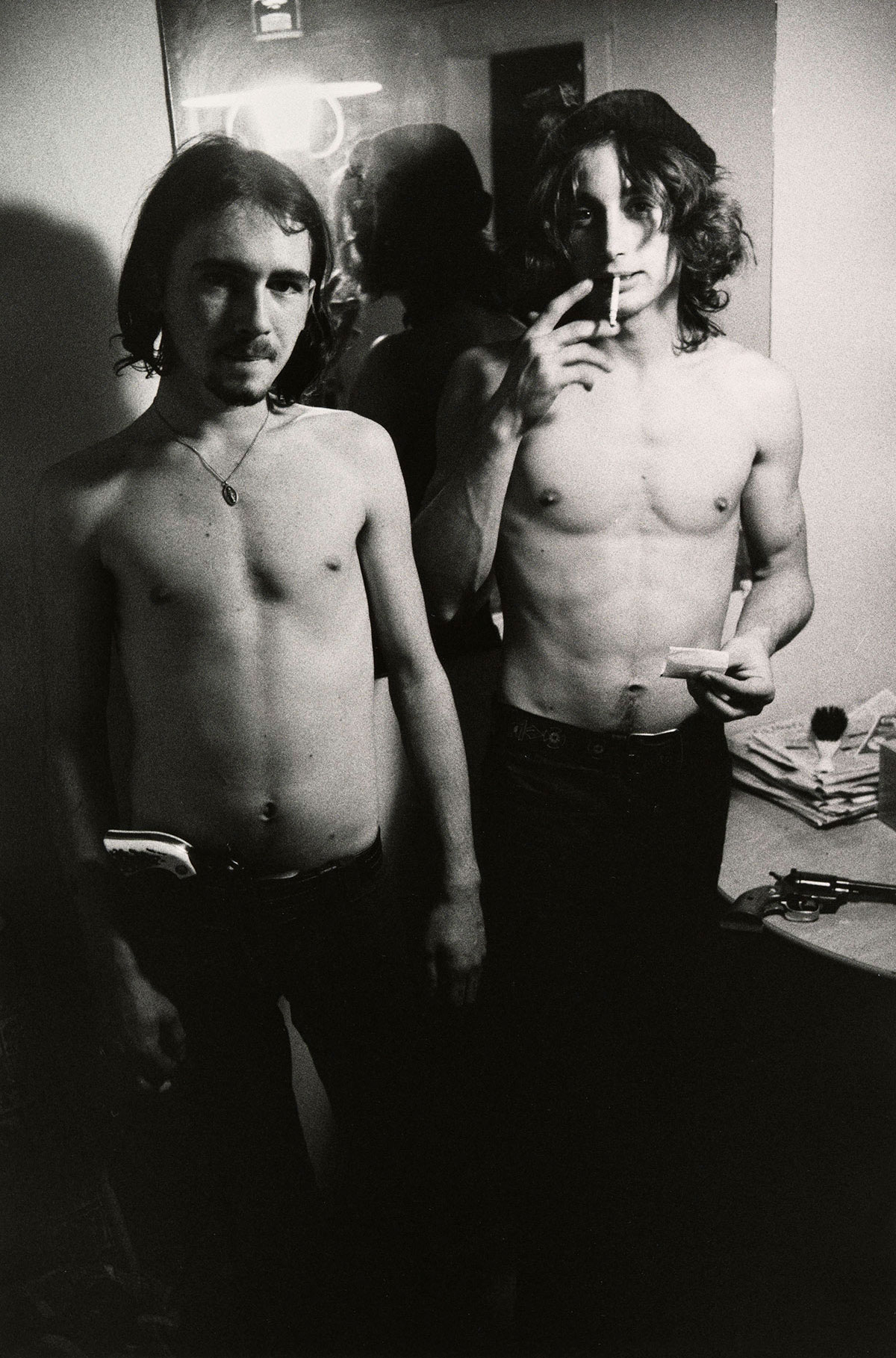
![United Press International (American) '[Bank Robber Aiming at Security Camera, Cleveland, Ohio]' March 8, 1975](https://artblart.com/wp-content/uploads/2016/07/cleveland-1975-web1.jpg "United Press International (American) '[Bank Robber Aiming at Security Camera, Cleveland, Ohio]' March 8, 1975")


![François Kollar (French born Slovakia, 1904-1979) 'Untitled [mine worker]' 1931-1934](https://artblart.com/wp-content/uploads/2016/05/kollar-worker-web.jpg "François Kollar (French born Slovakia, 1904-1979) 'Untitled [mine worker]' 1931-1934")
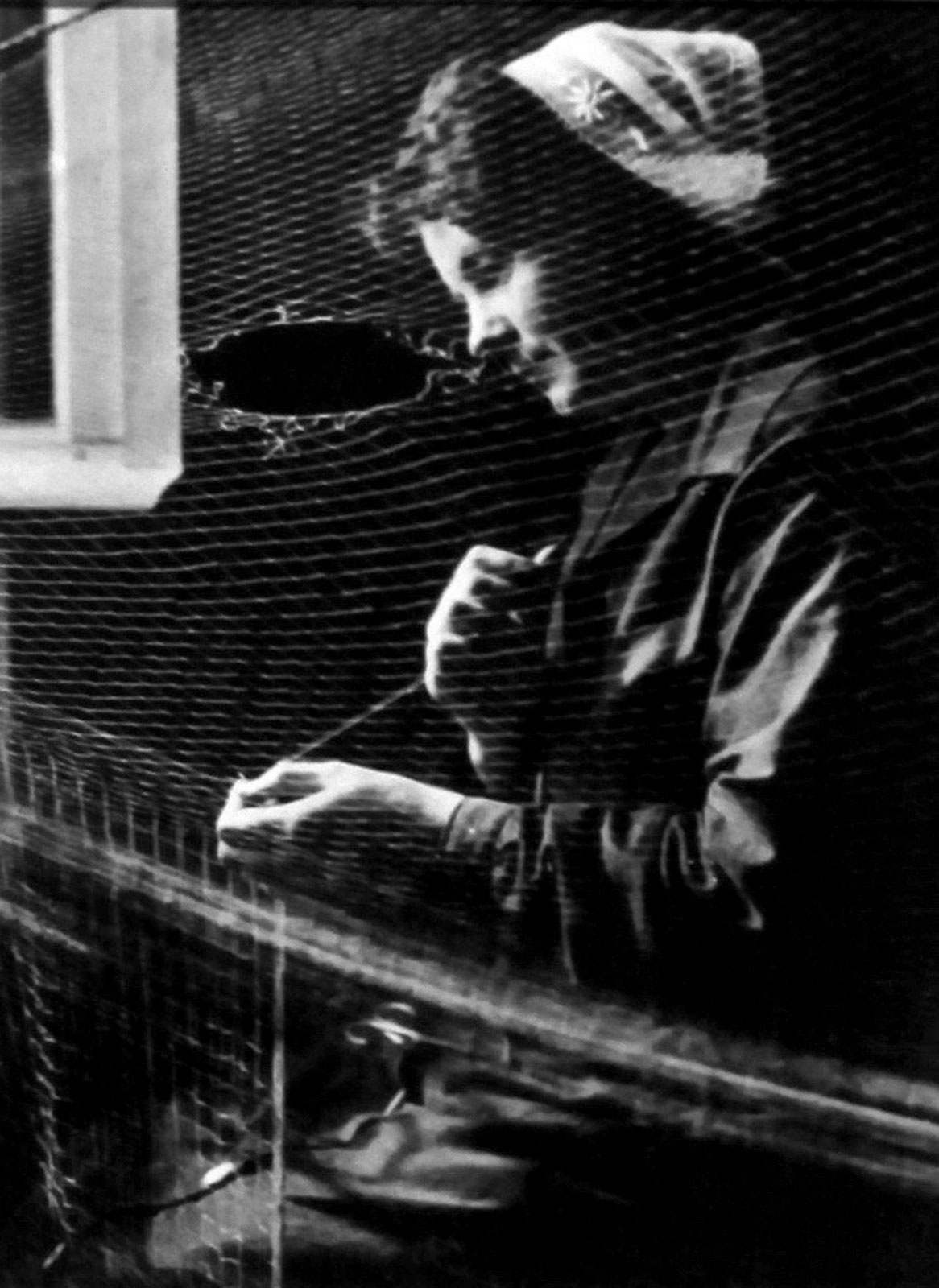


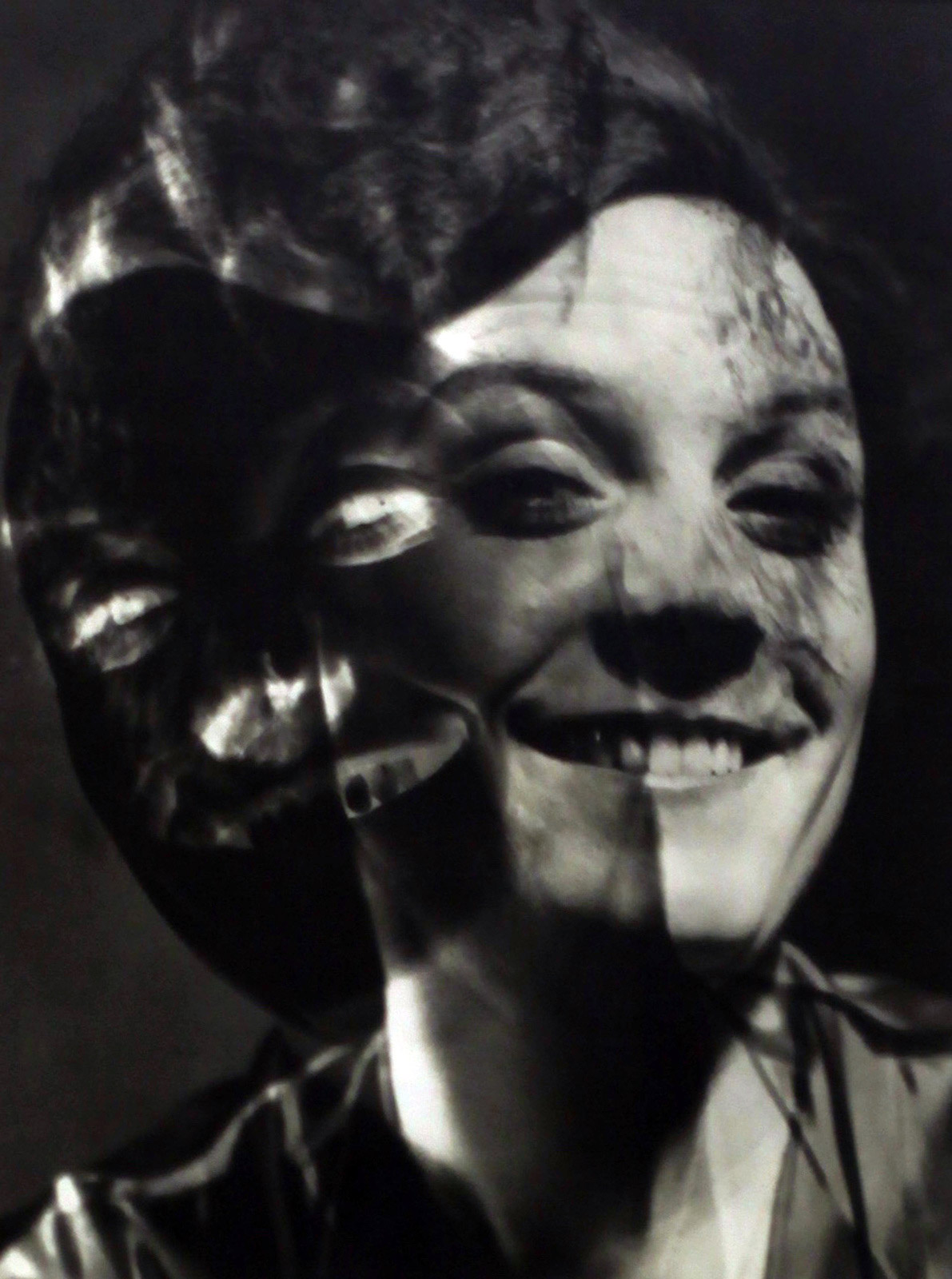


![François Kollar (French born Slovakia, 1904-1979) Untitled [Emplacement de traverses, usine Cima, Croix]' [Replacement of sleepers, Cima factory, Croix] c. 1954](https://artblart.com/wp-content/uploads/2016/05/kollar_18-web.jpg "François Kollar (French born Slovakia, 1904-1979) Untitled [Emplacement de traverses, usine Cima, Croix]' [Replacement of sleepers, Cima factory, Croix] c. 1954")

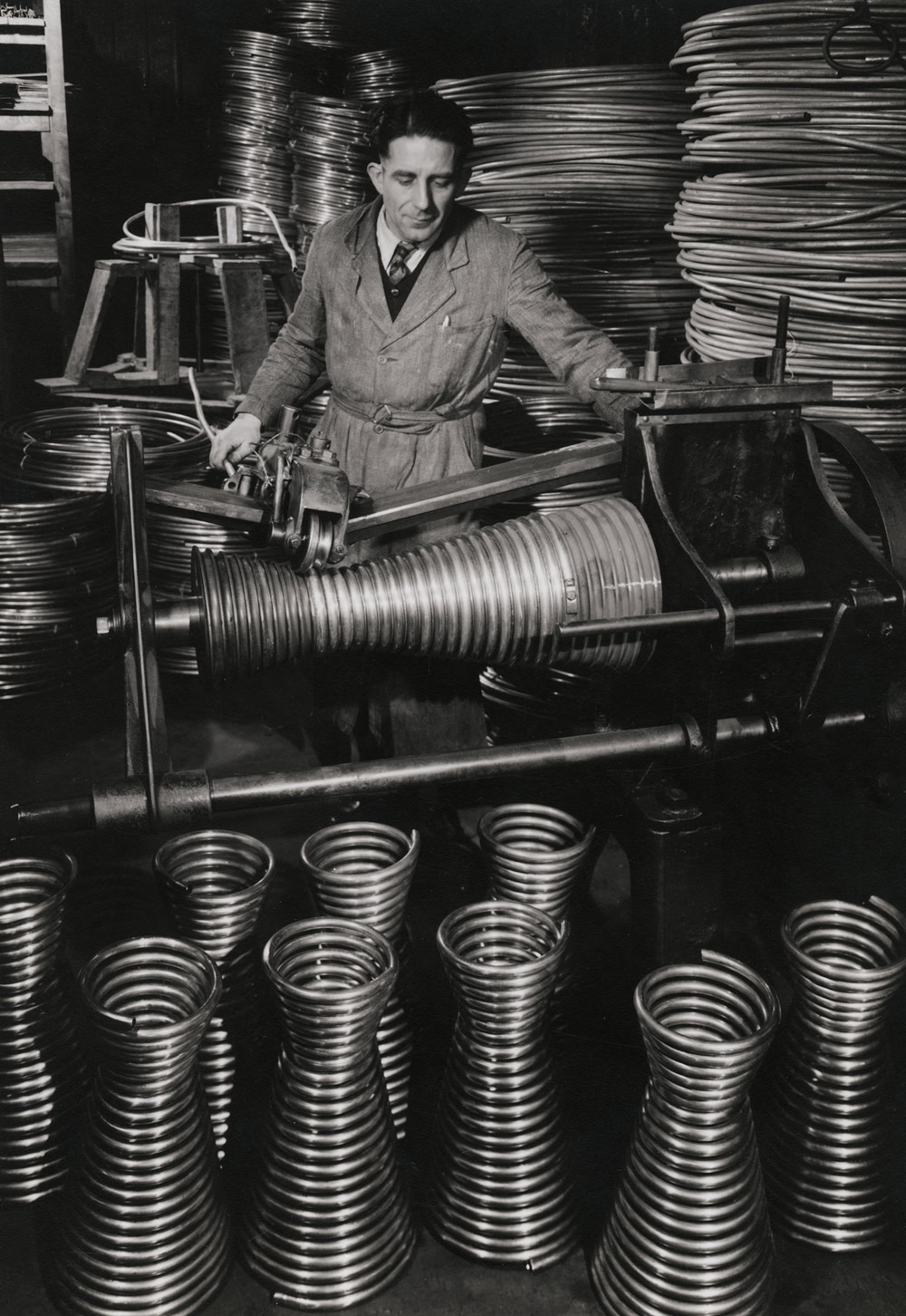
![François Kollar (French born Slovakia, 1904-1979) 'Untitled [Fabrication des moulins à légumes, usine Moulinex, Alençon]' [Production of vegetable mills, Moulinex factory, Alençon] 1950](https://artblart.com/wp-content/uploads/2016/05/kollar_16-web.jpg "François Kollar (French born Slovakia, 1904-1979) 'Untitled [Fabrication des moulins à légumes, usine Moulinex, Alençon]' [Production of vegetable mills, Moulinex factory, Alençon] 1950")
![François Kollar (French born Slovakia, 1904-1979) 'Untitled [Emboutissage des couverts, Christofle, France]' [Stamping cutlery, Christofle, France] 1957-1958](https://artblart.com/wp-content/uploads/2016/05/kollar_15-web.jpg "François Kollar (French born Slovakia, 1904-1979) 'Untitled [Emboutissage des couverts, Christofle, France]' [Stamping cutlery, Christofle, France] 1957-1958")


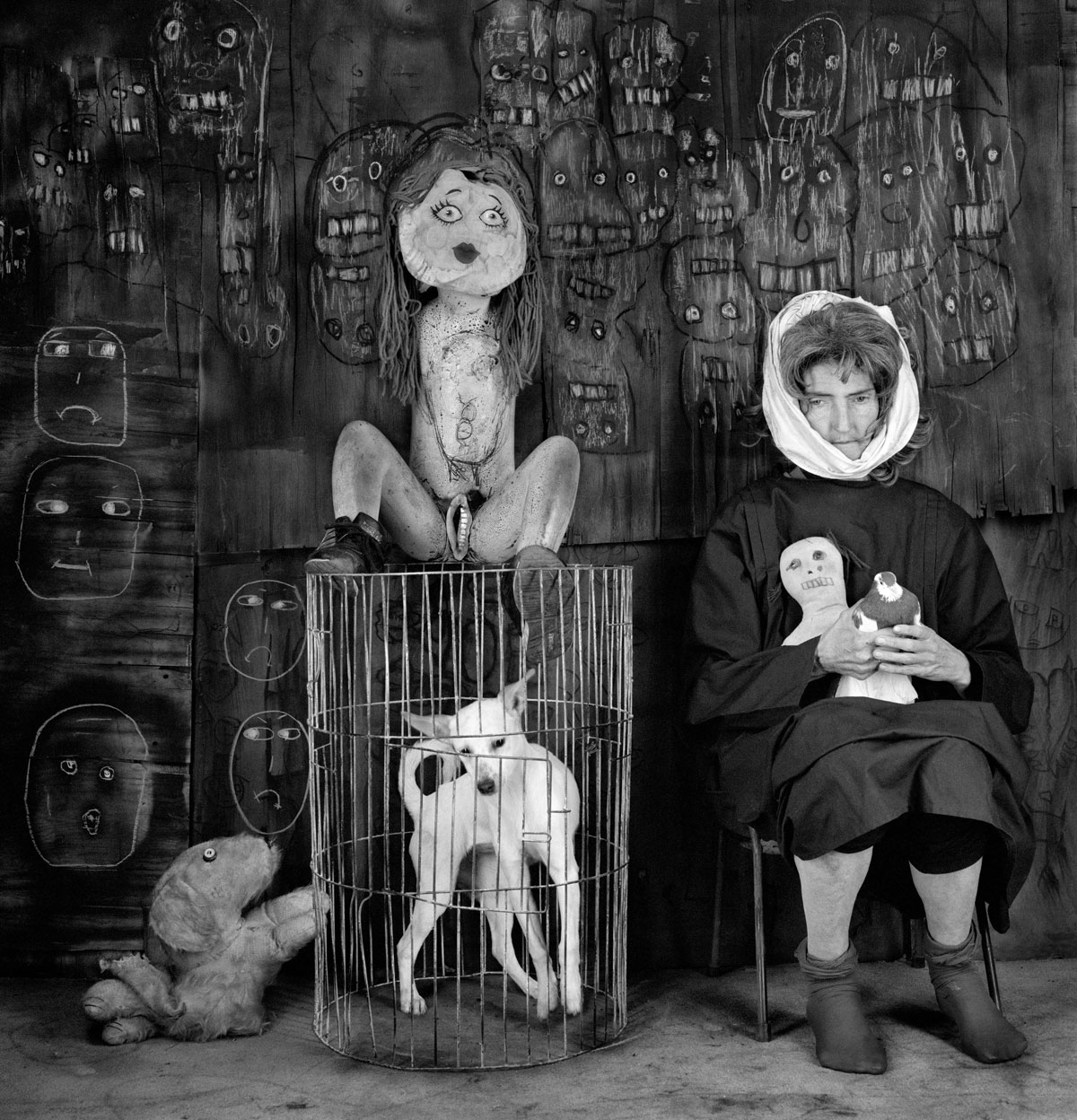
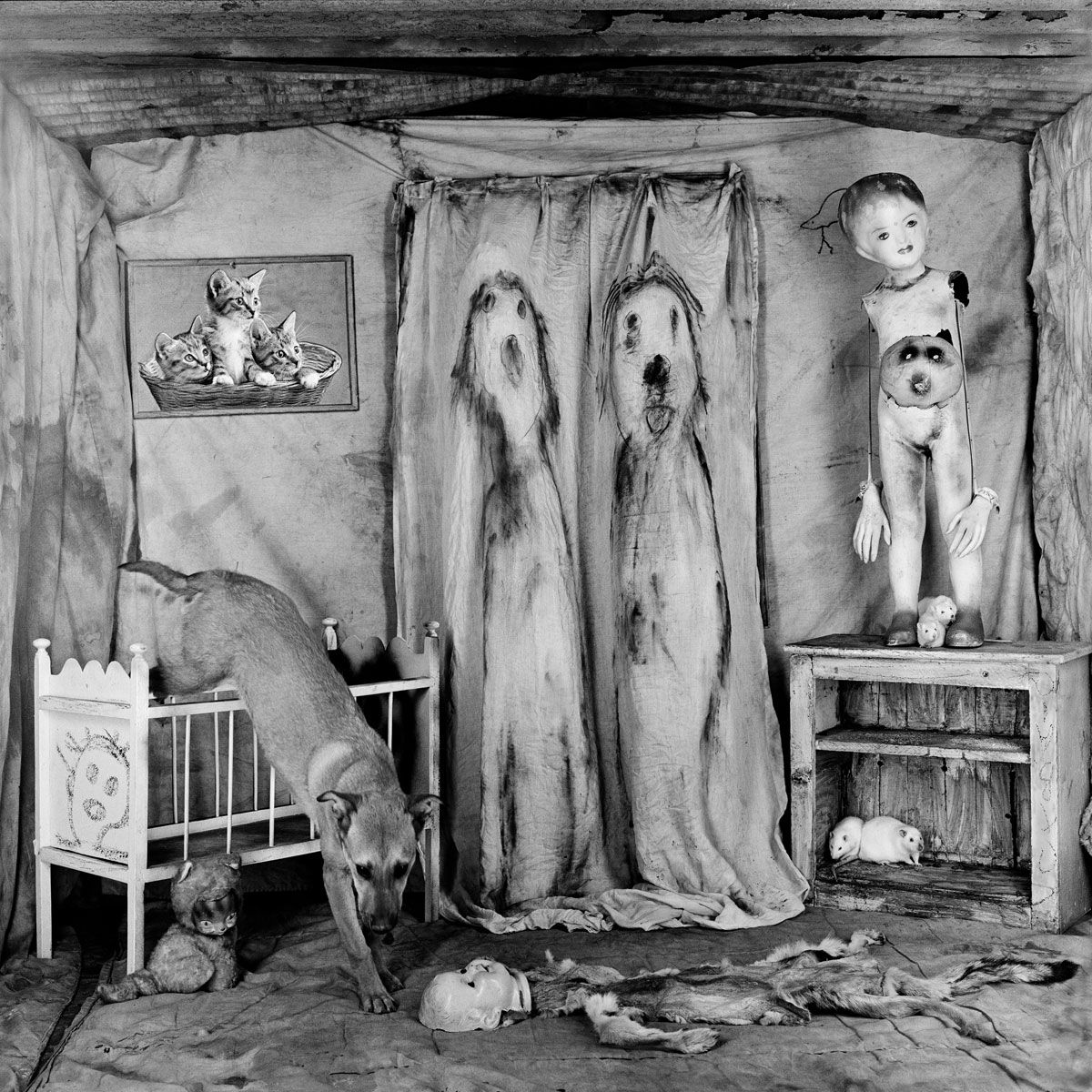

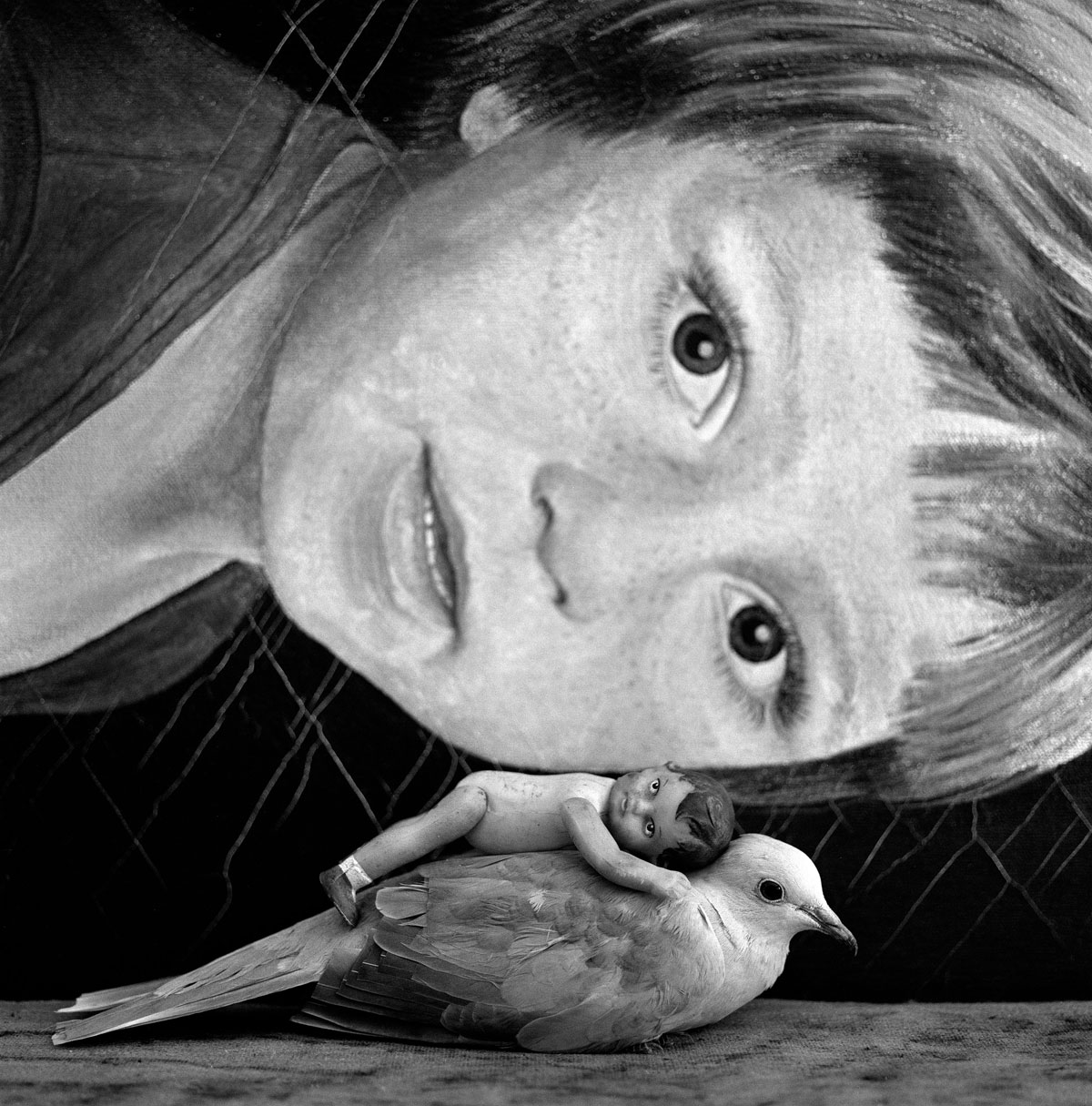

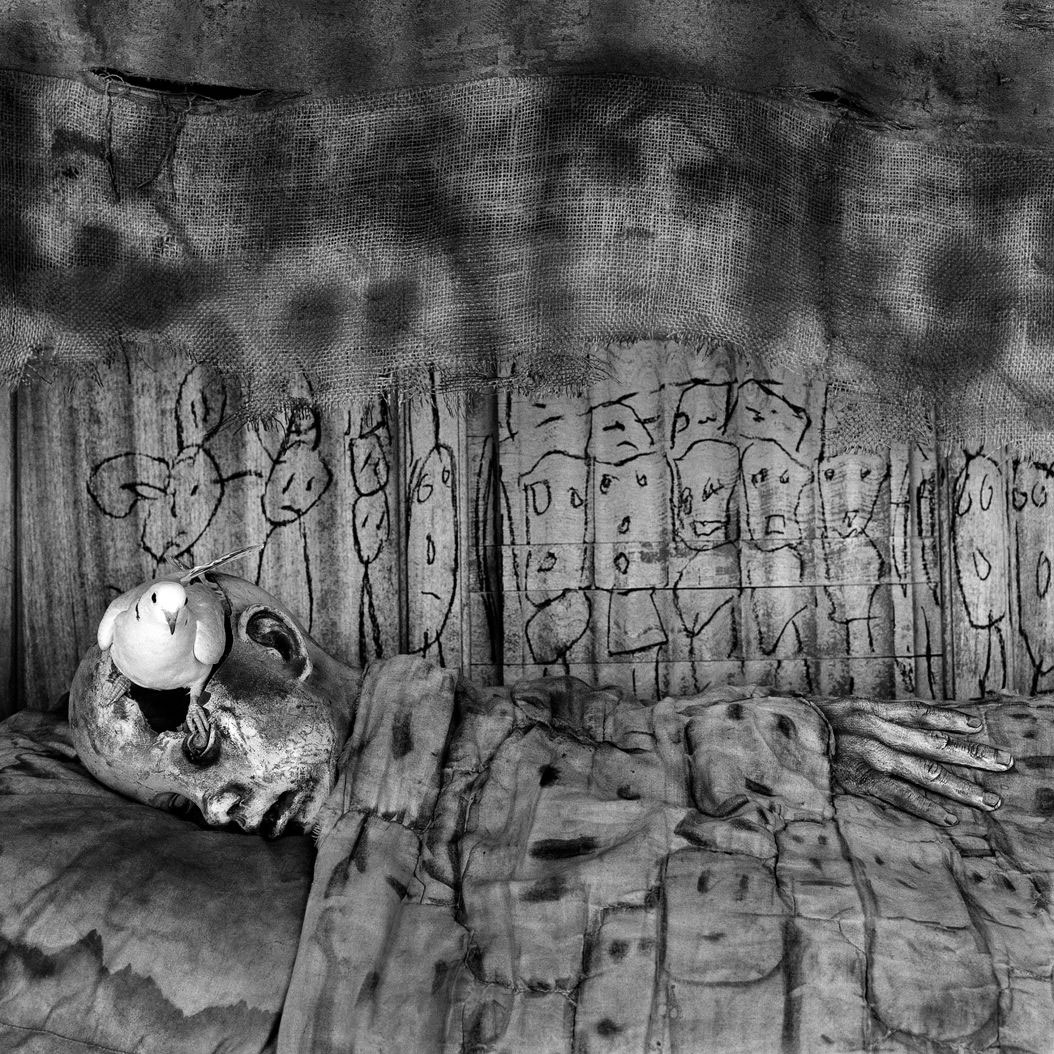
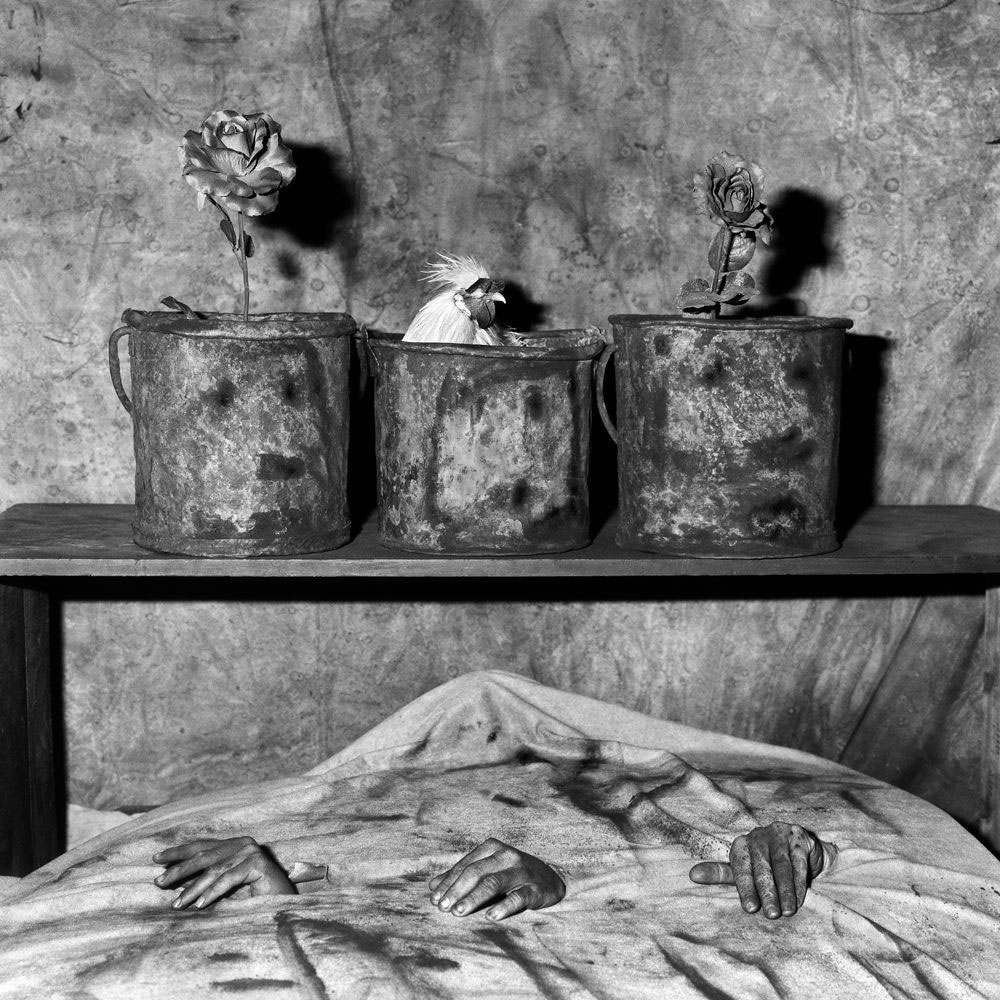

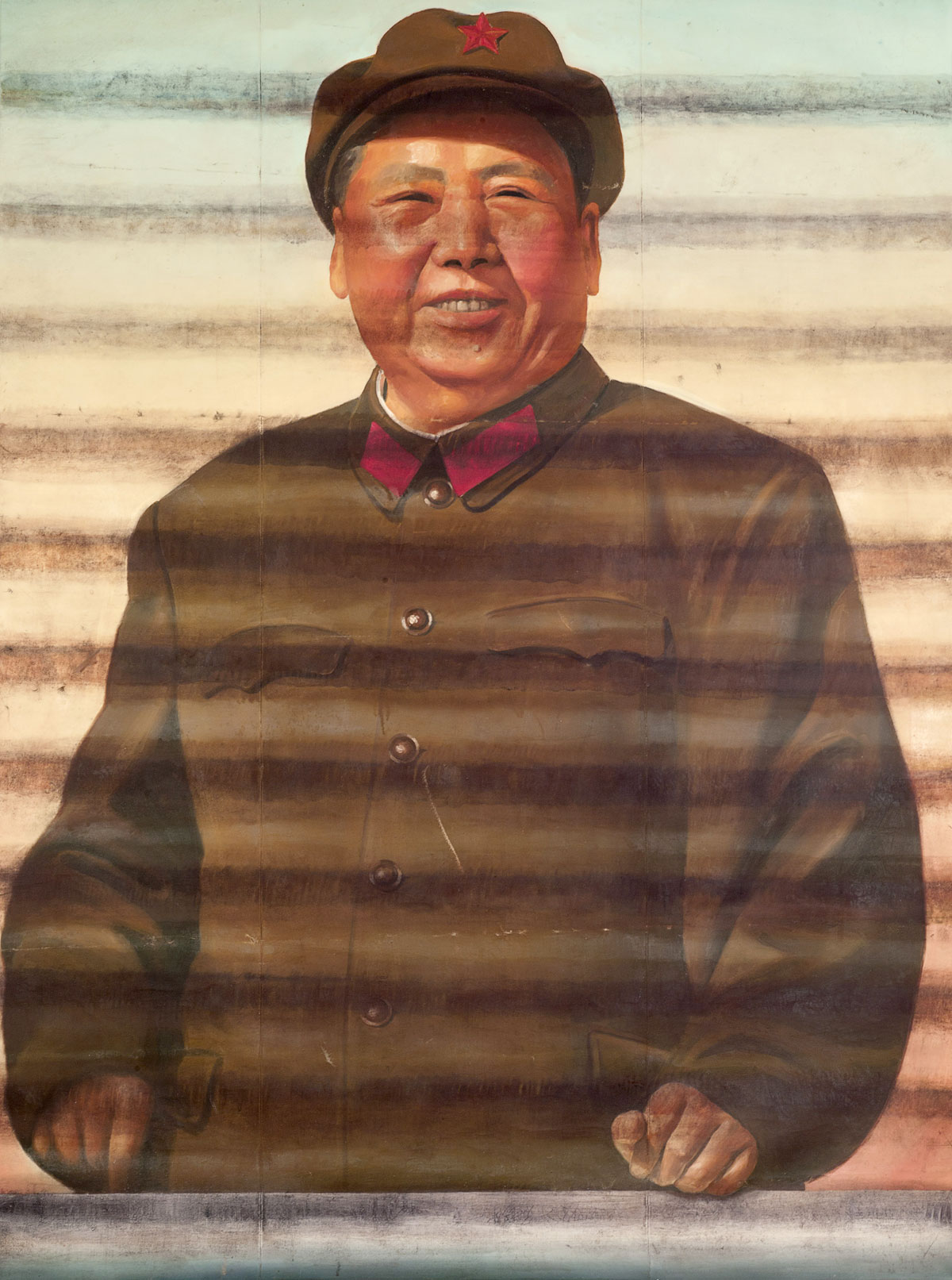
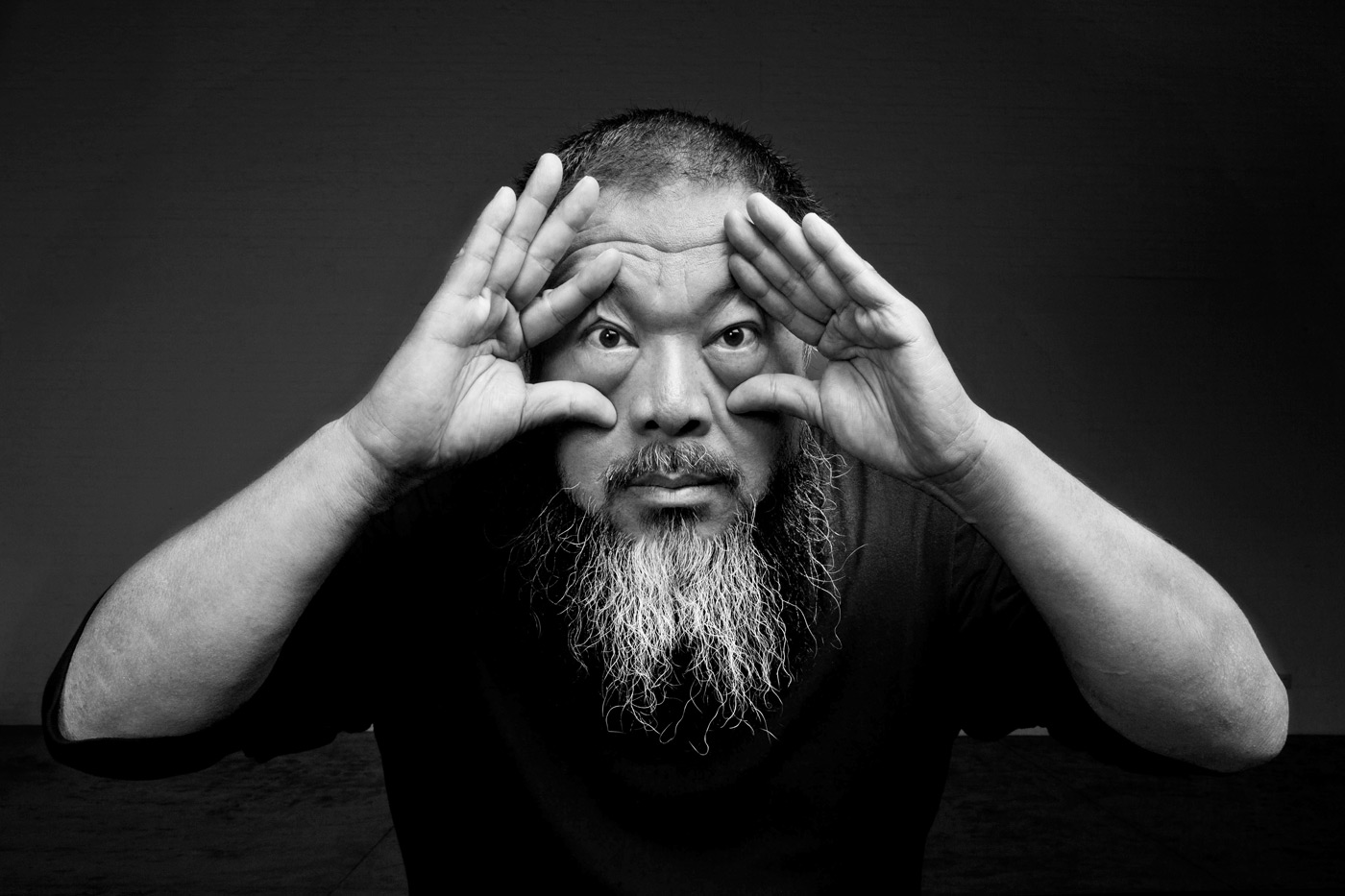


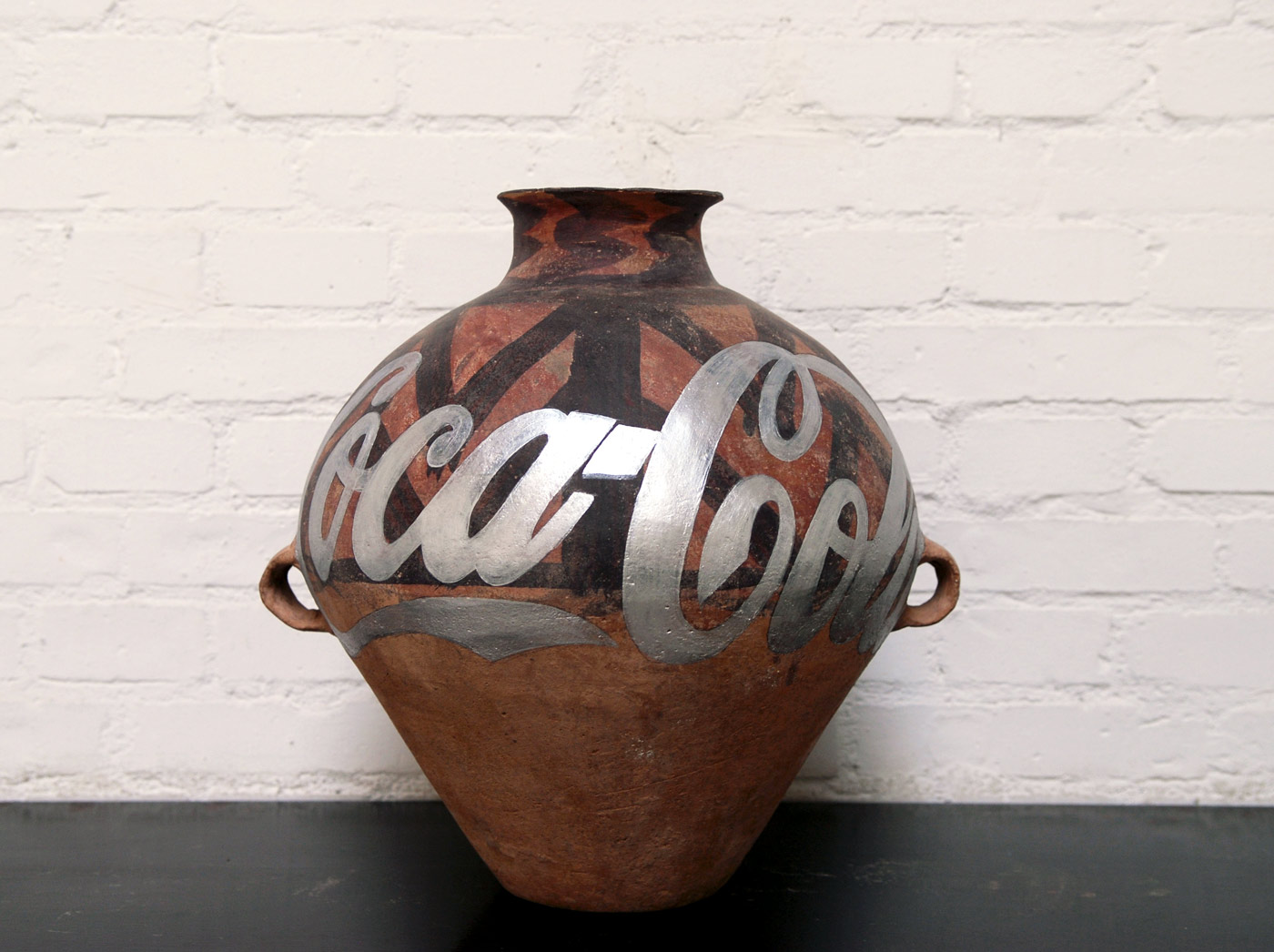
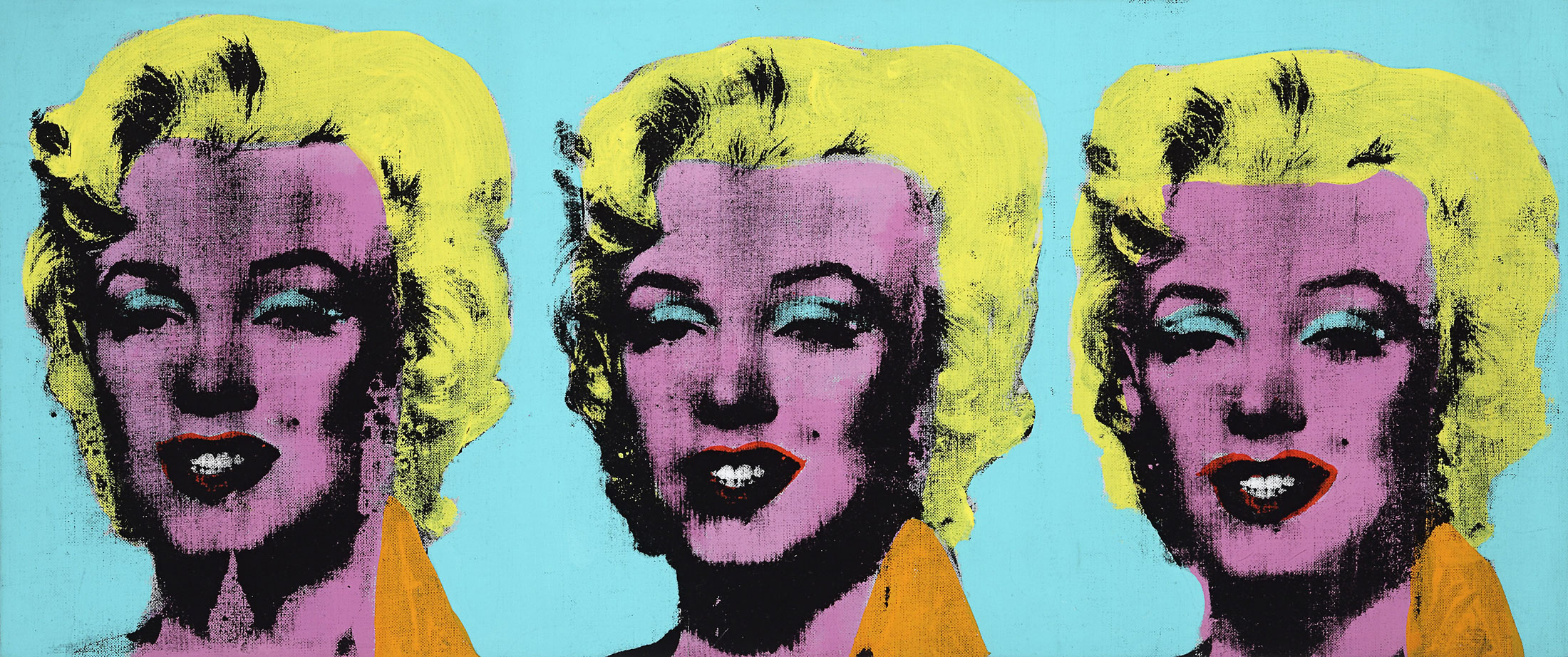
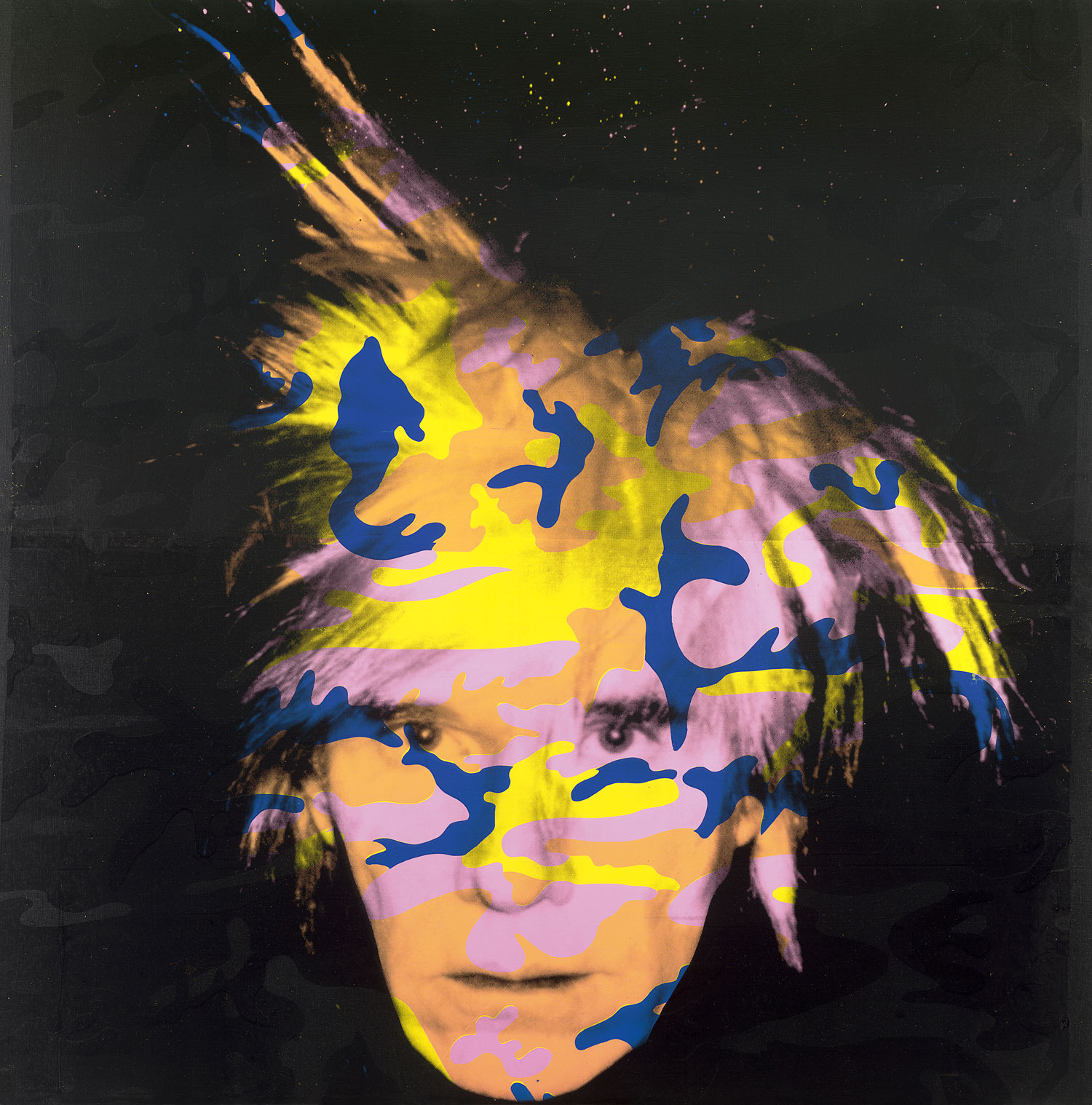
![Andy Warhol (American, 1928-1987) 'Silver Liz [Ferus Type]' 1963](https://artblart.com/wp-content/uploads/2016/03/exhi032777-web.jpg "Andy Warhol (American, 1928-1987) 'Silver Liz [Ferus Type]' 1963")
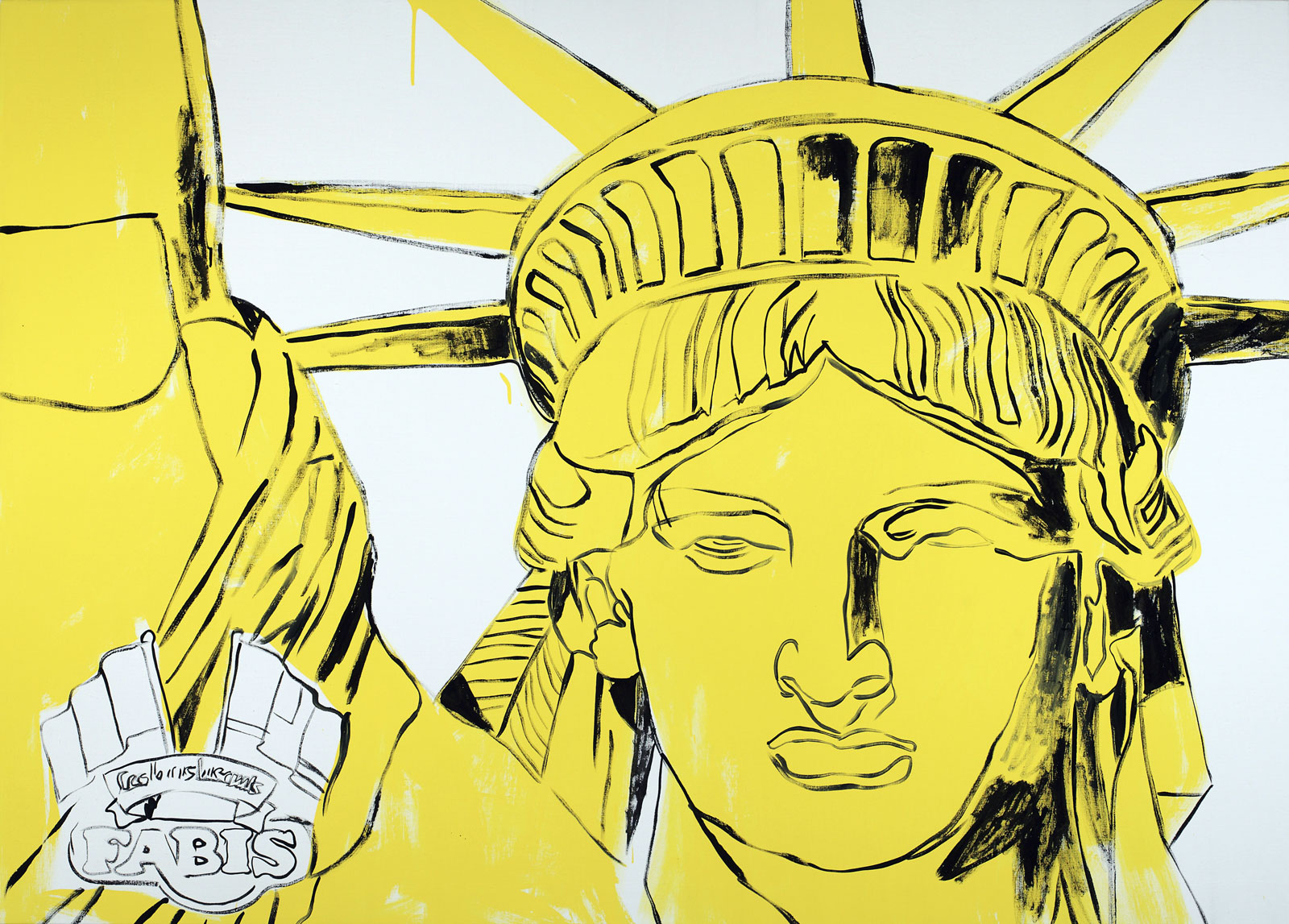
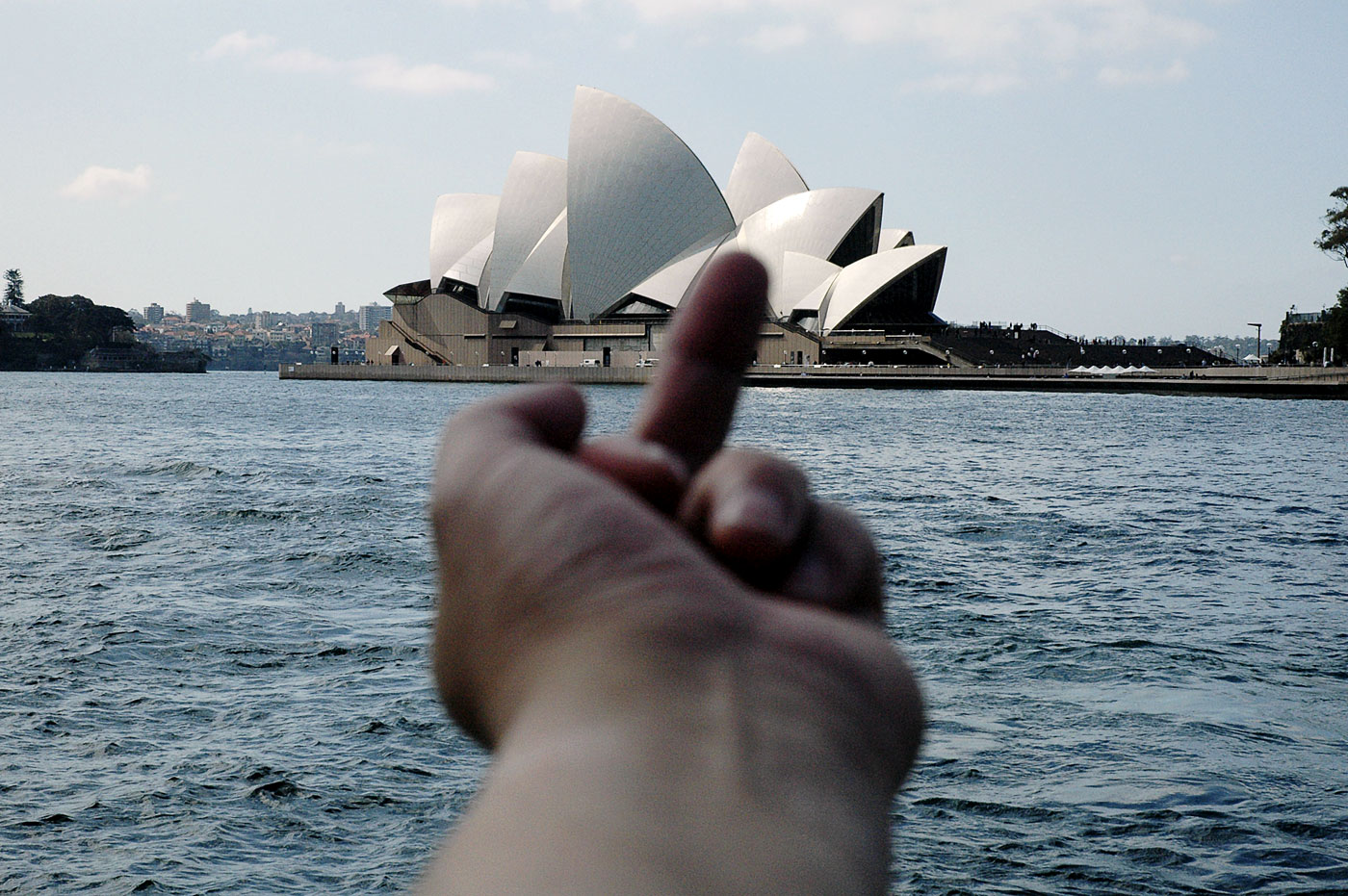


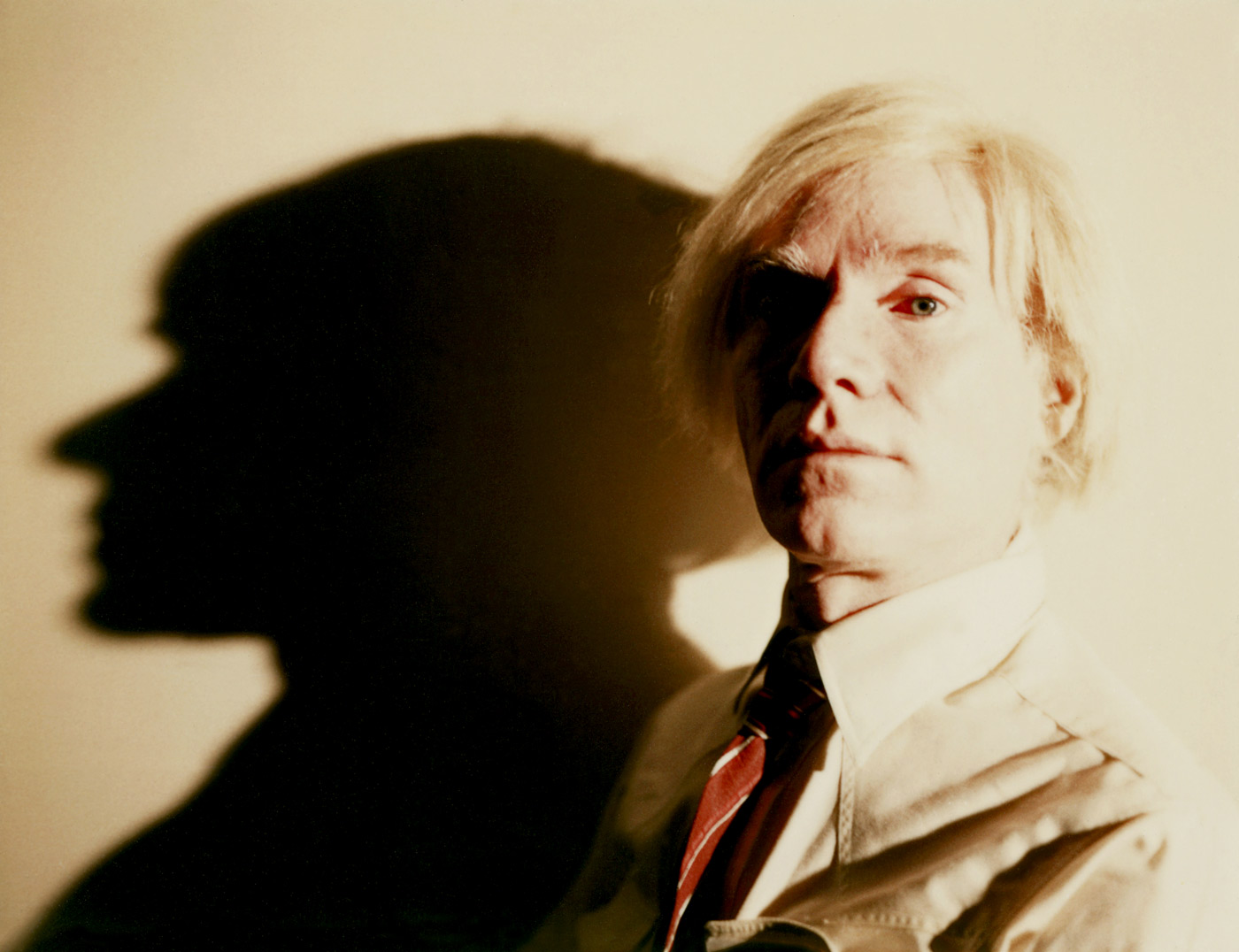
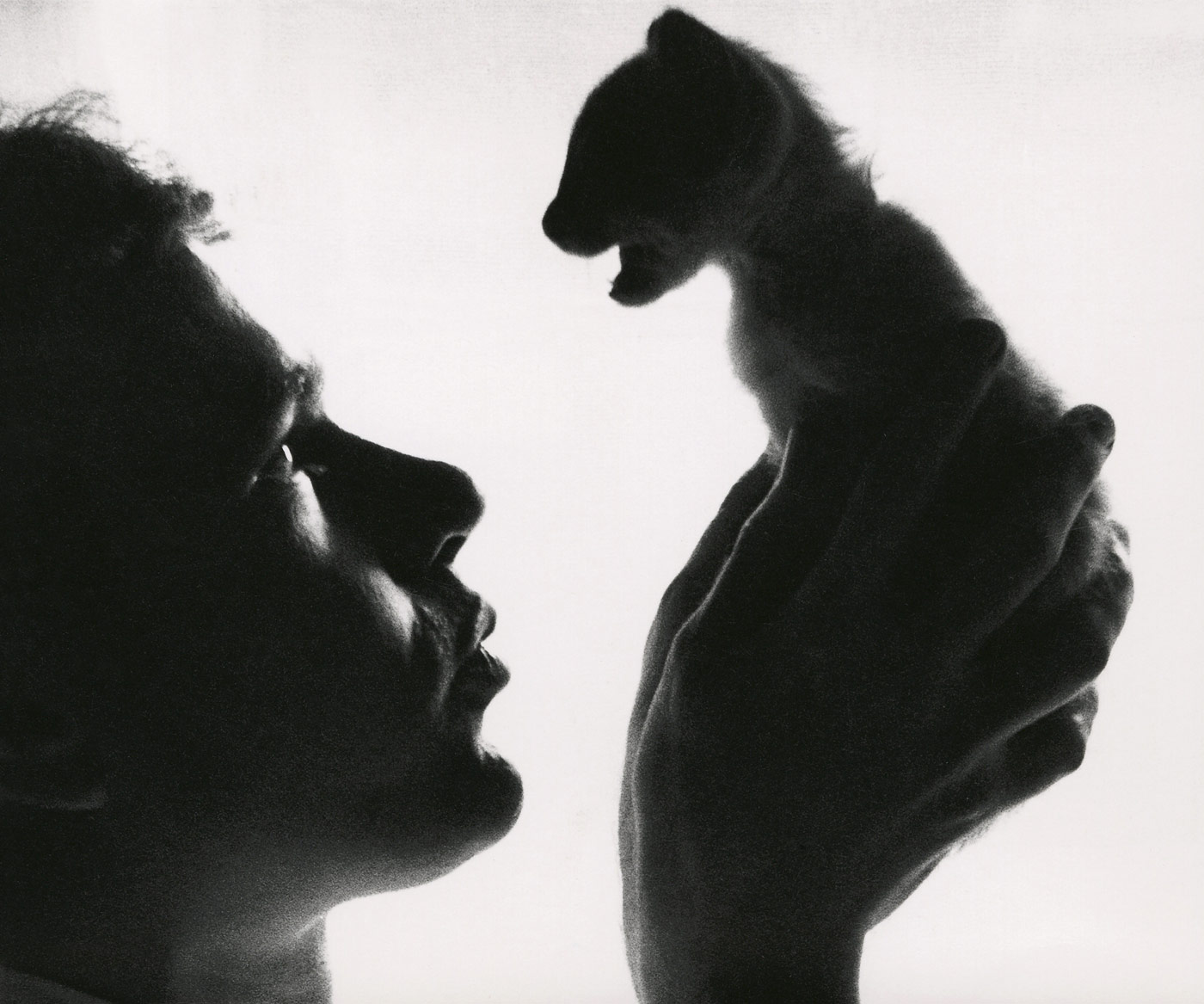
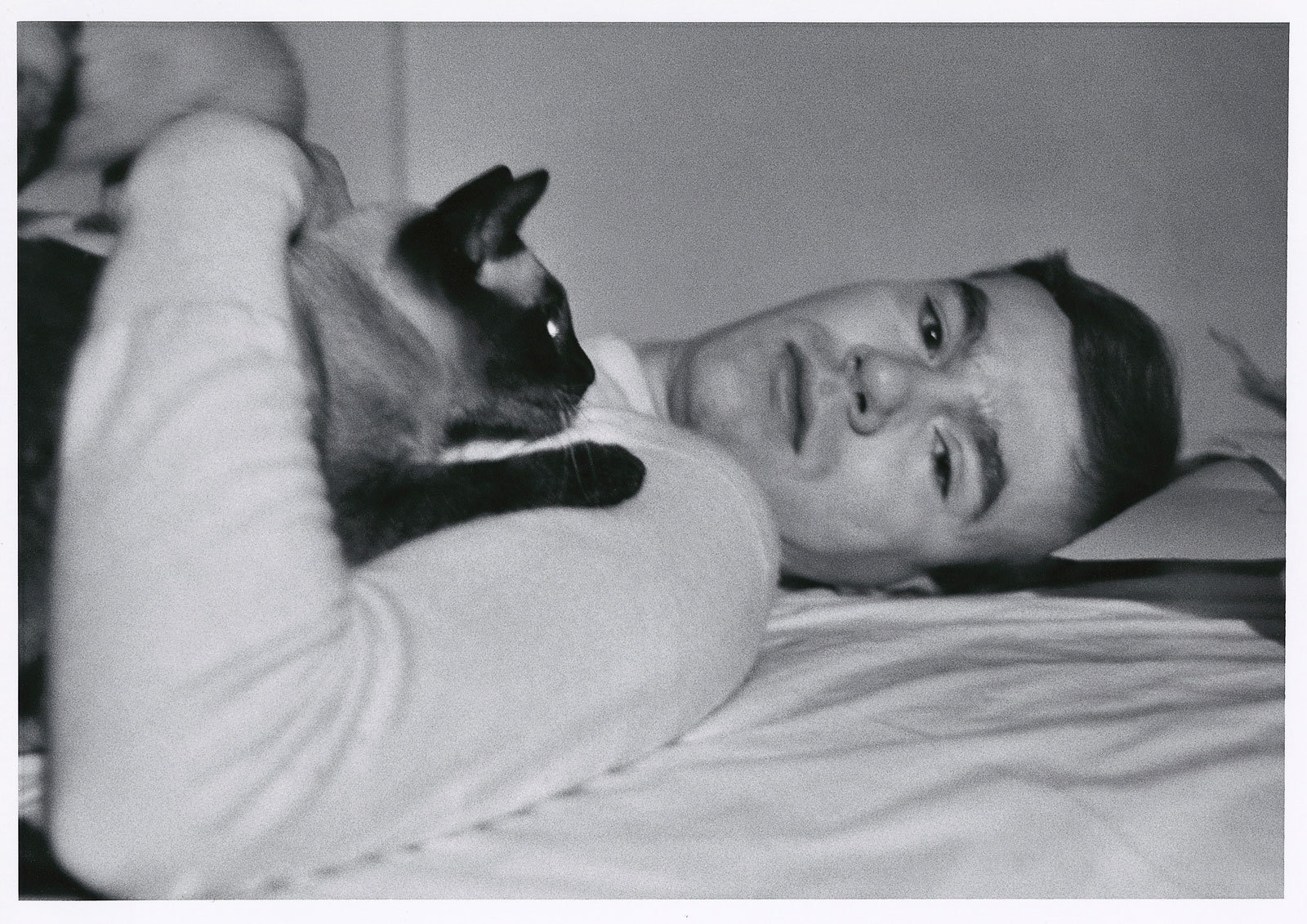
![Andy Warhol (American, 1928-1987) 'Screen Test: Edie Sedgwick [ST308]' 1965](https://artblart.com/wp-content/uploads/2016/03/exhi037605-web.jpg "Andy Warhol (American, 1928-1987) 'Screen Test: Edie Sedgwick [ST308]' 1965")


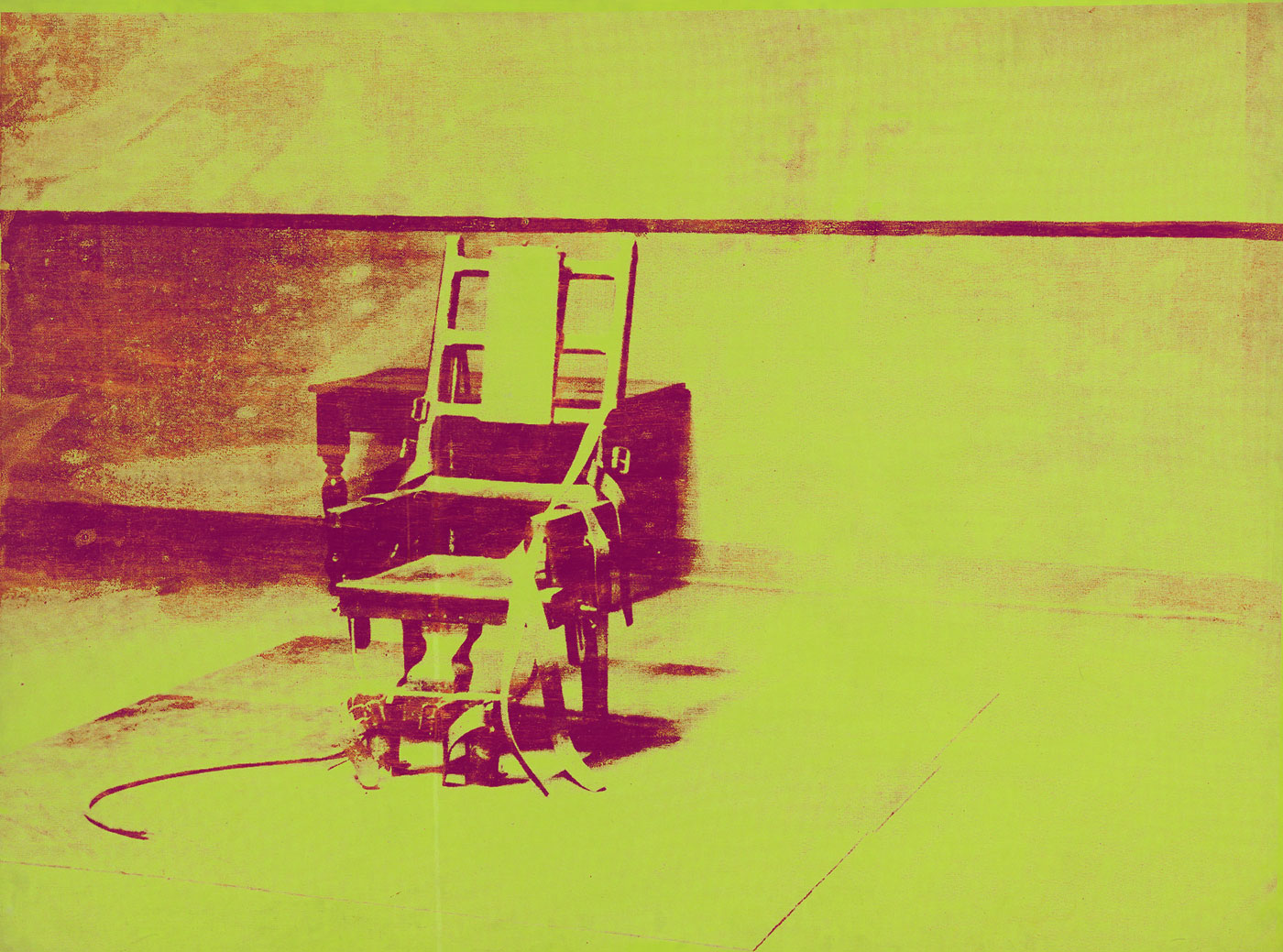
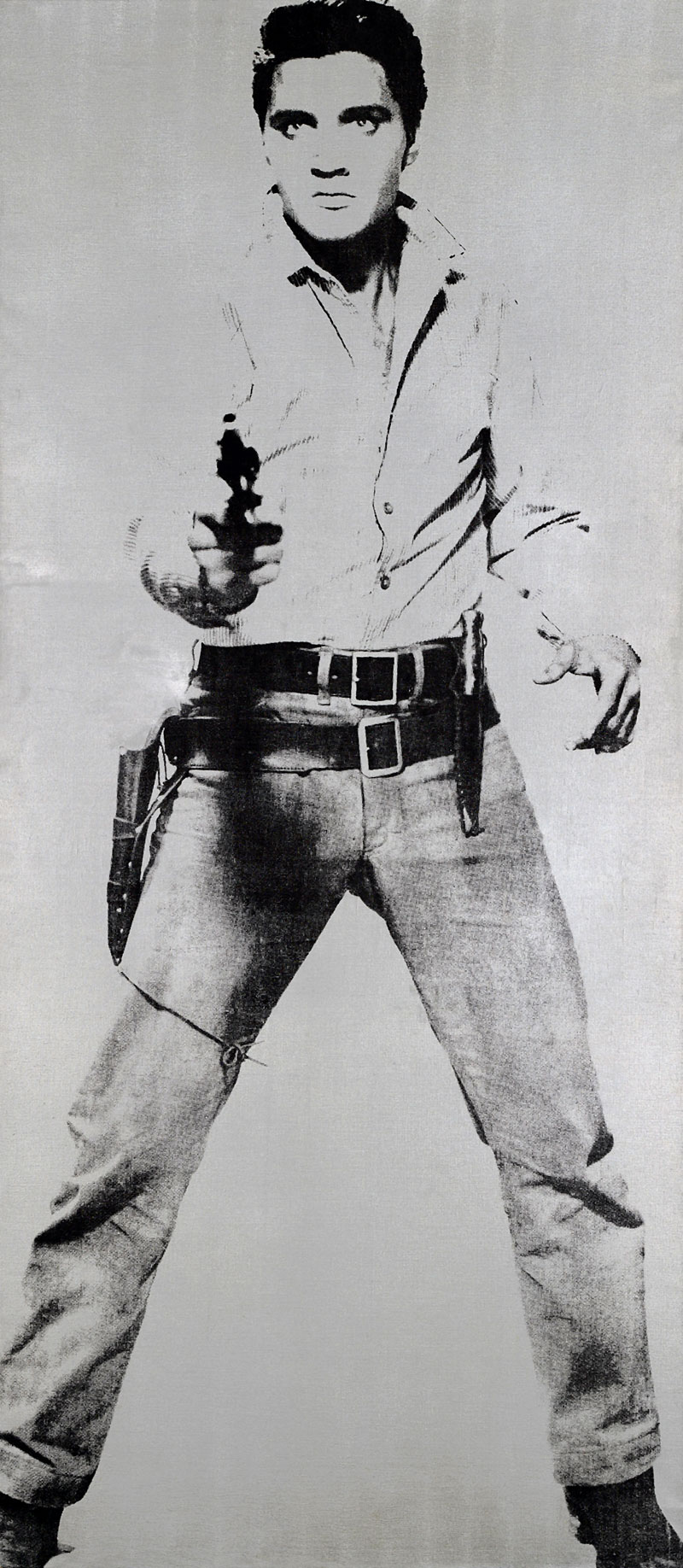


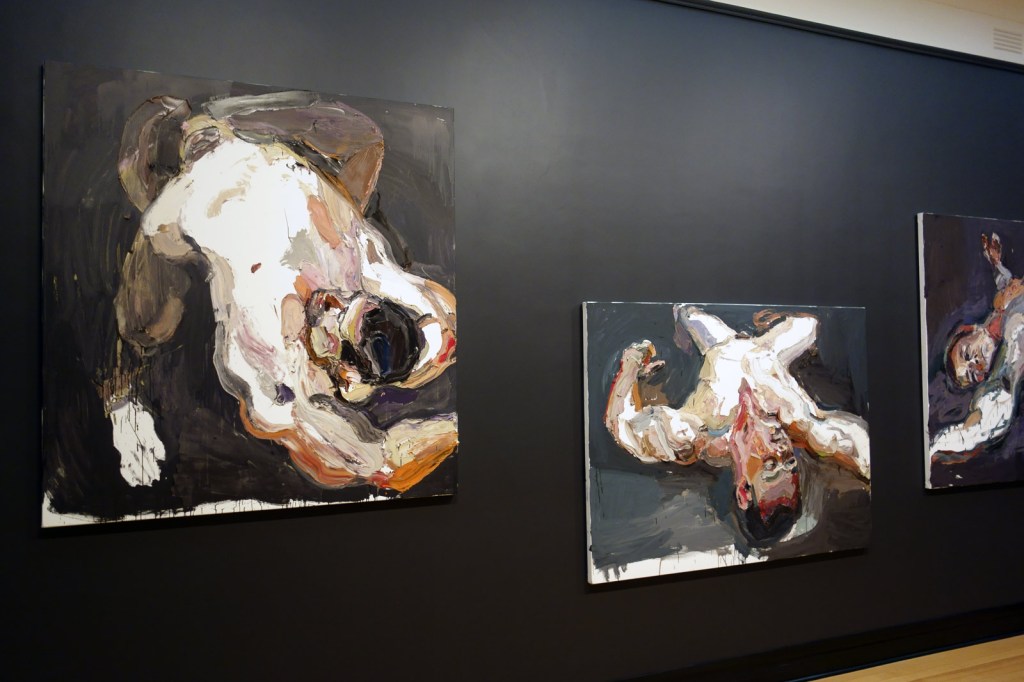
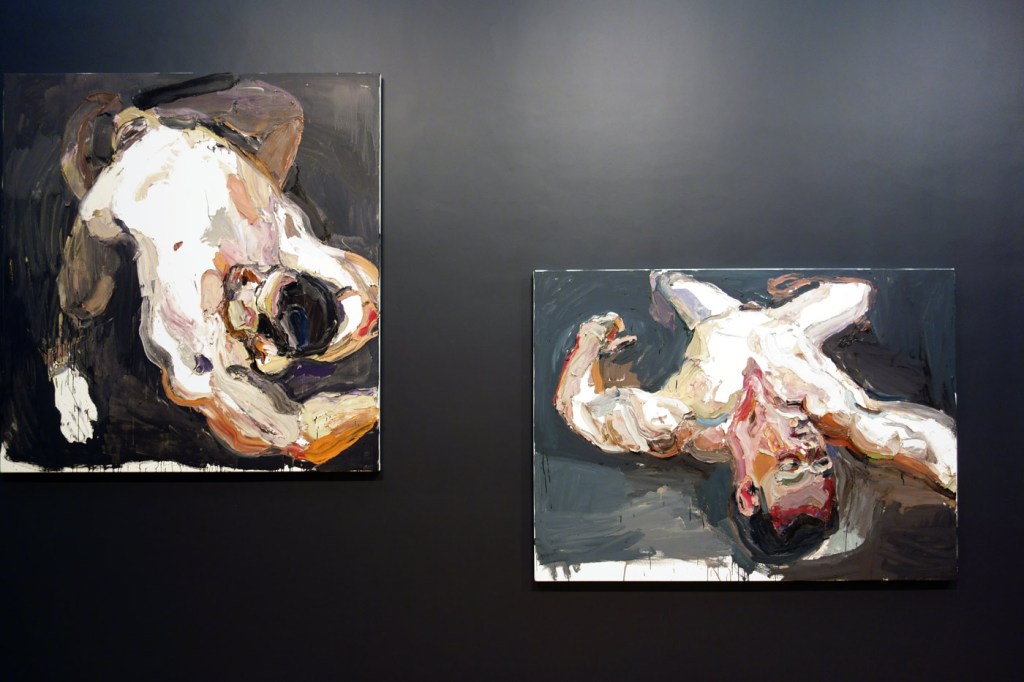
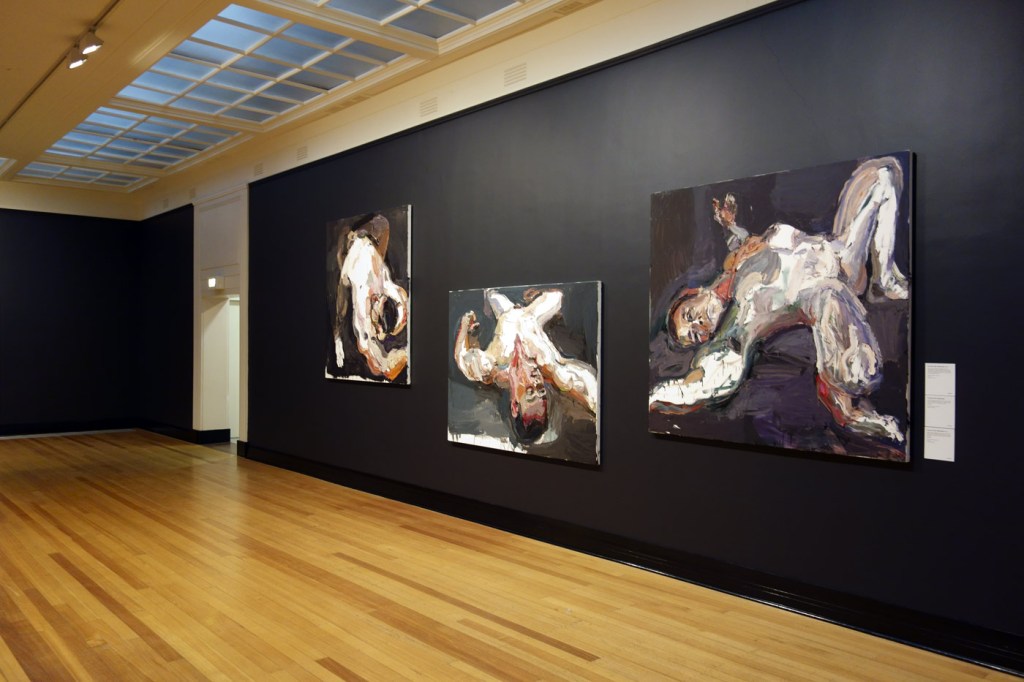
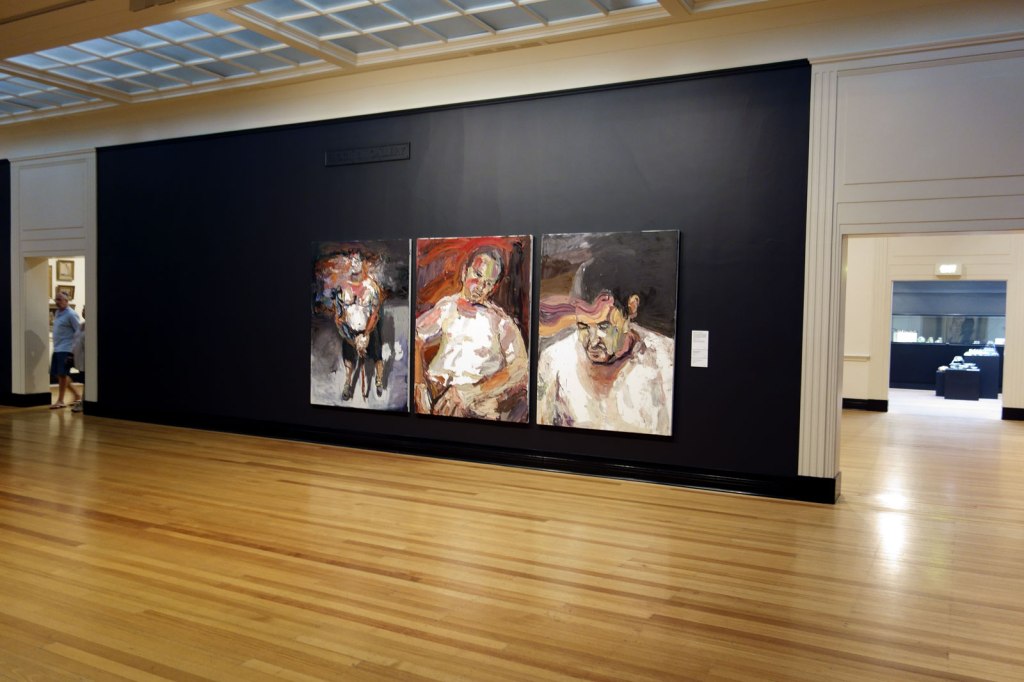

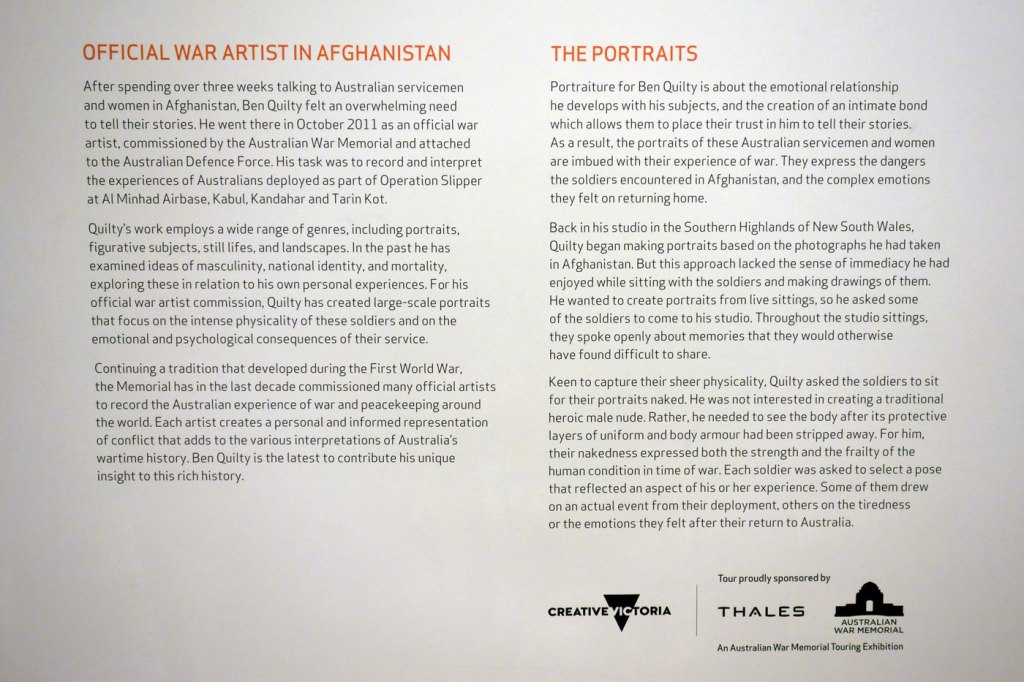
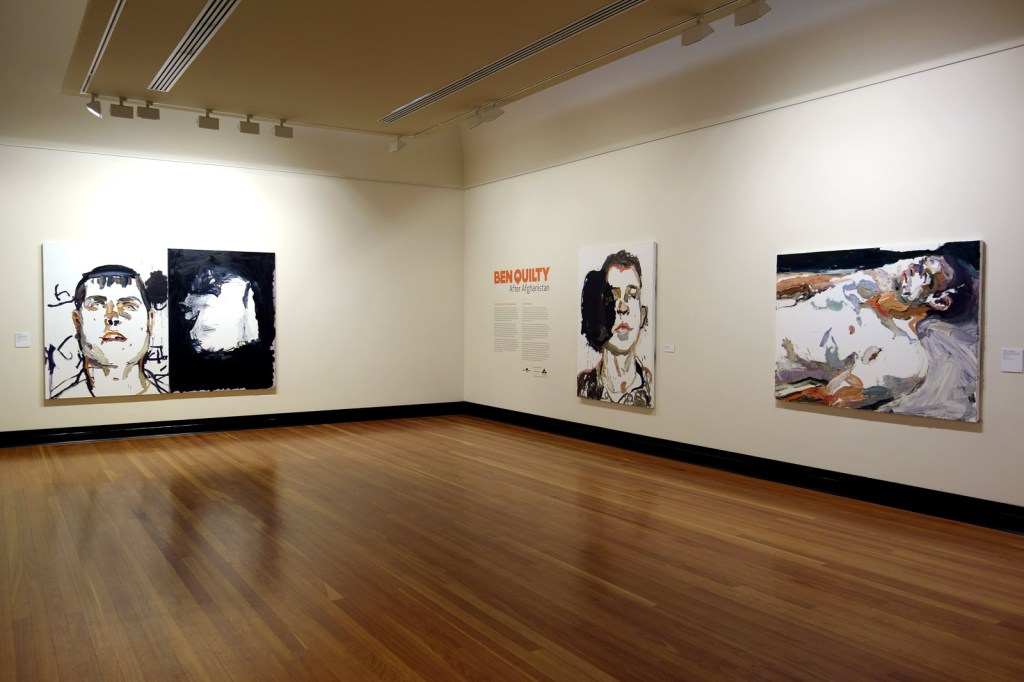
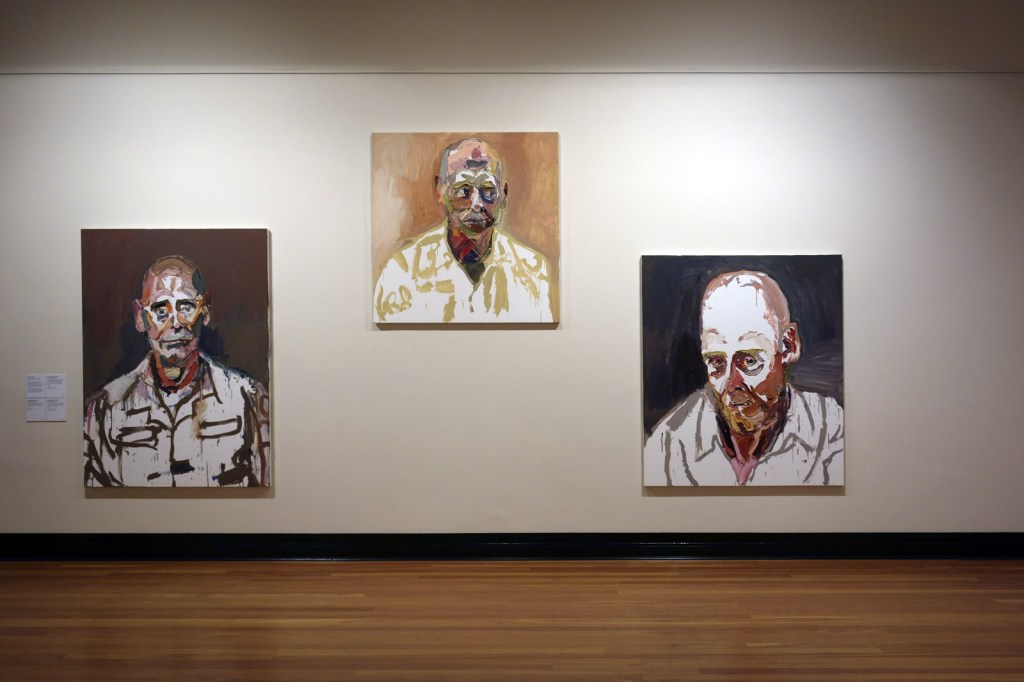


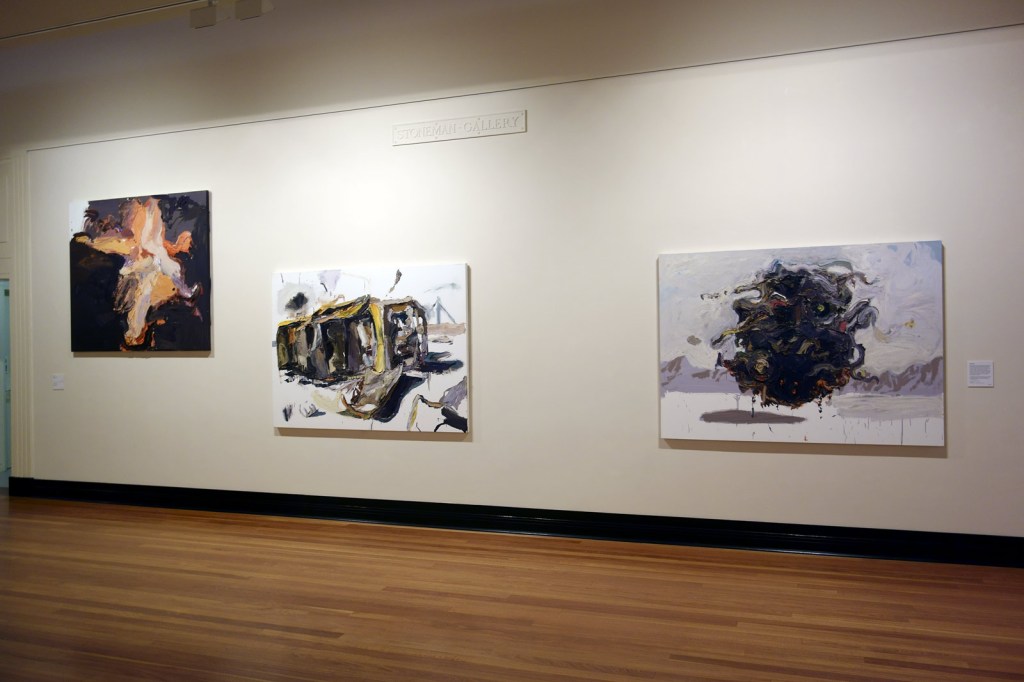
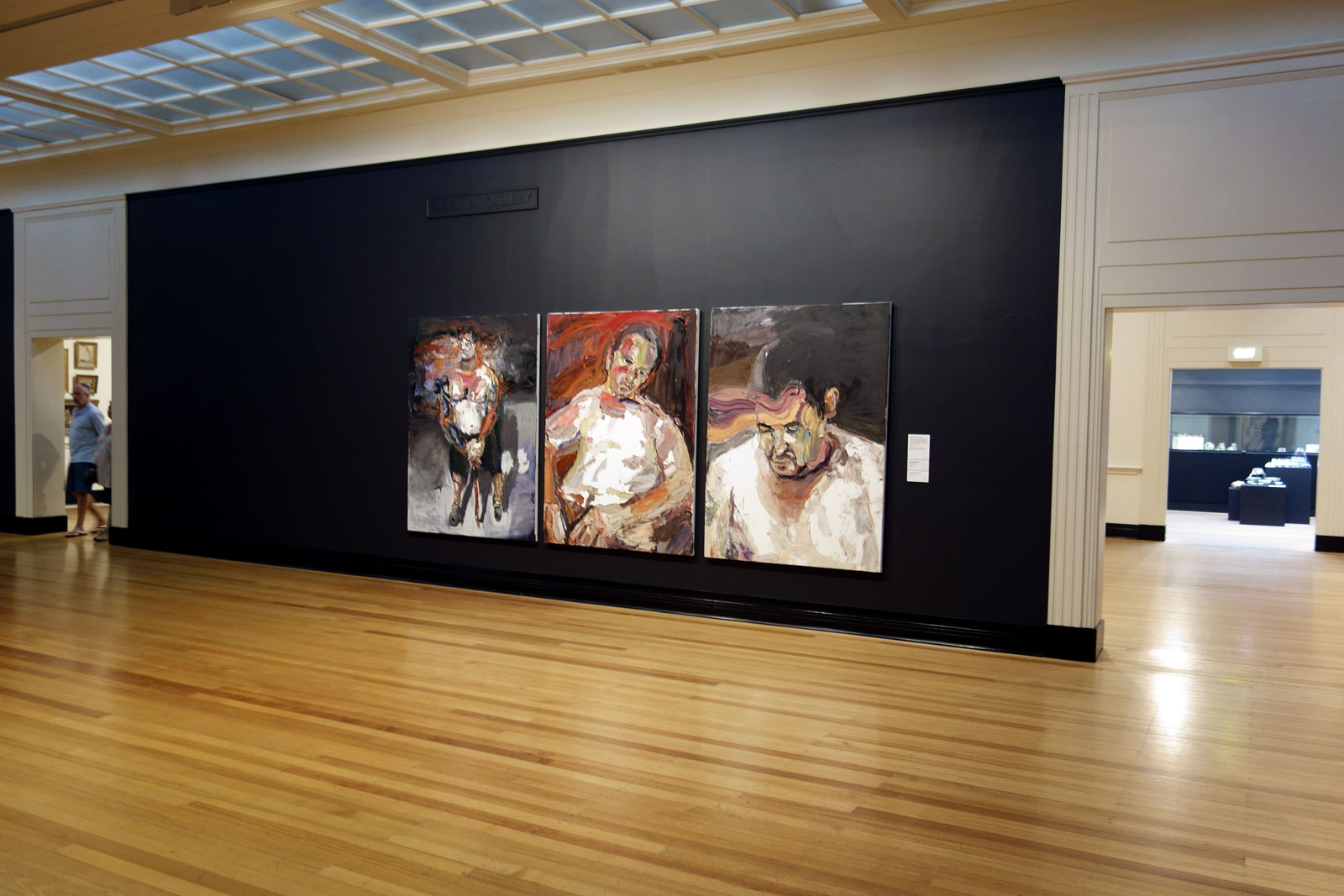
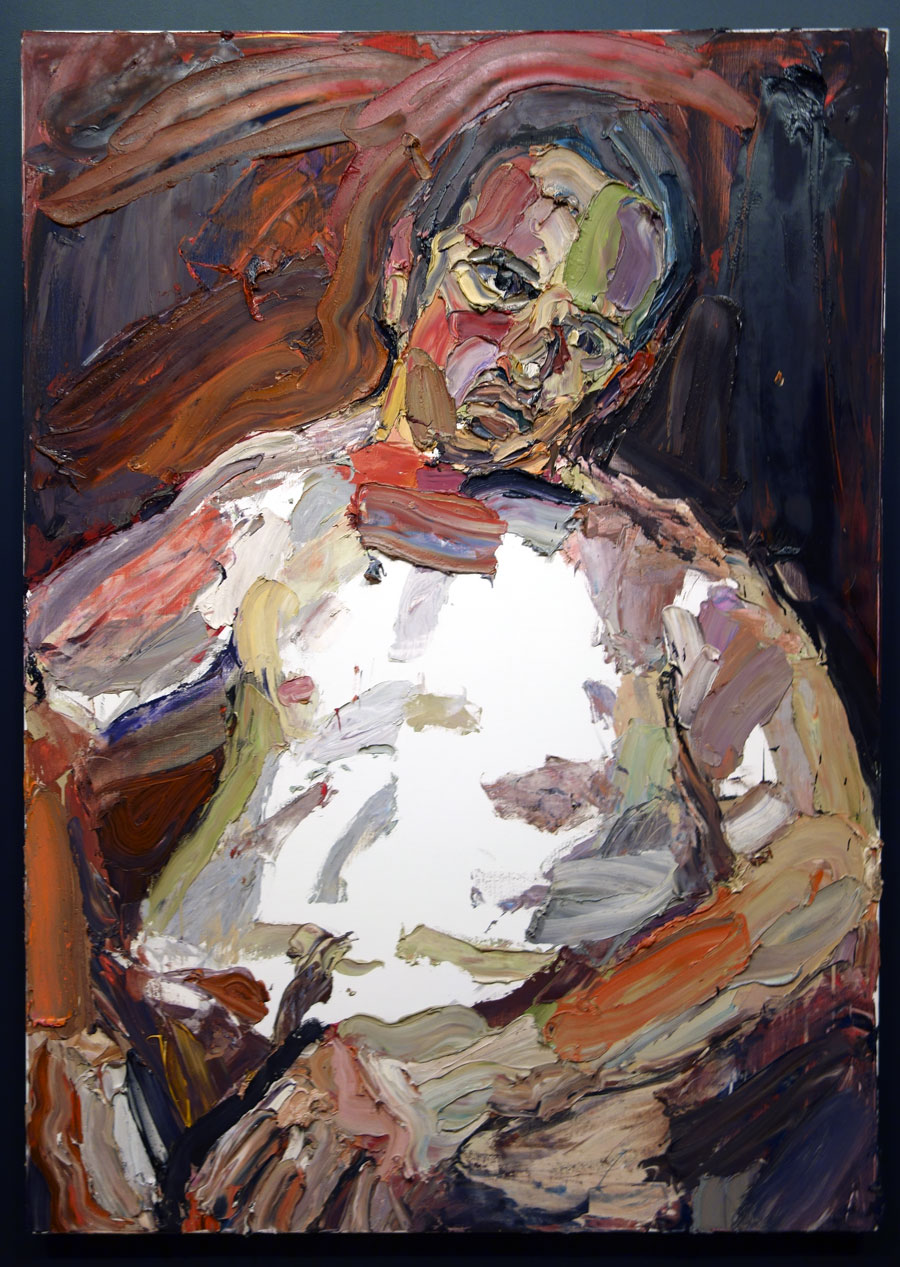
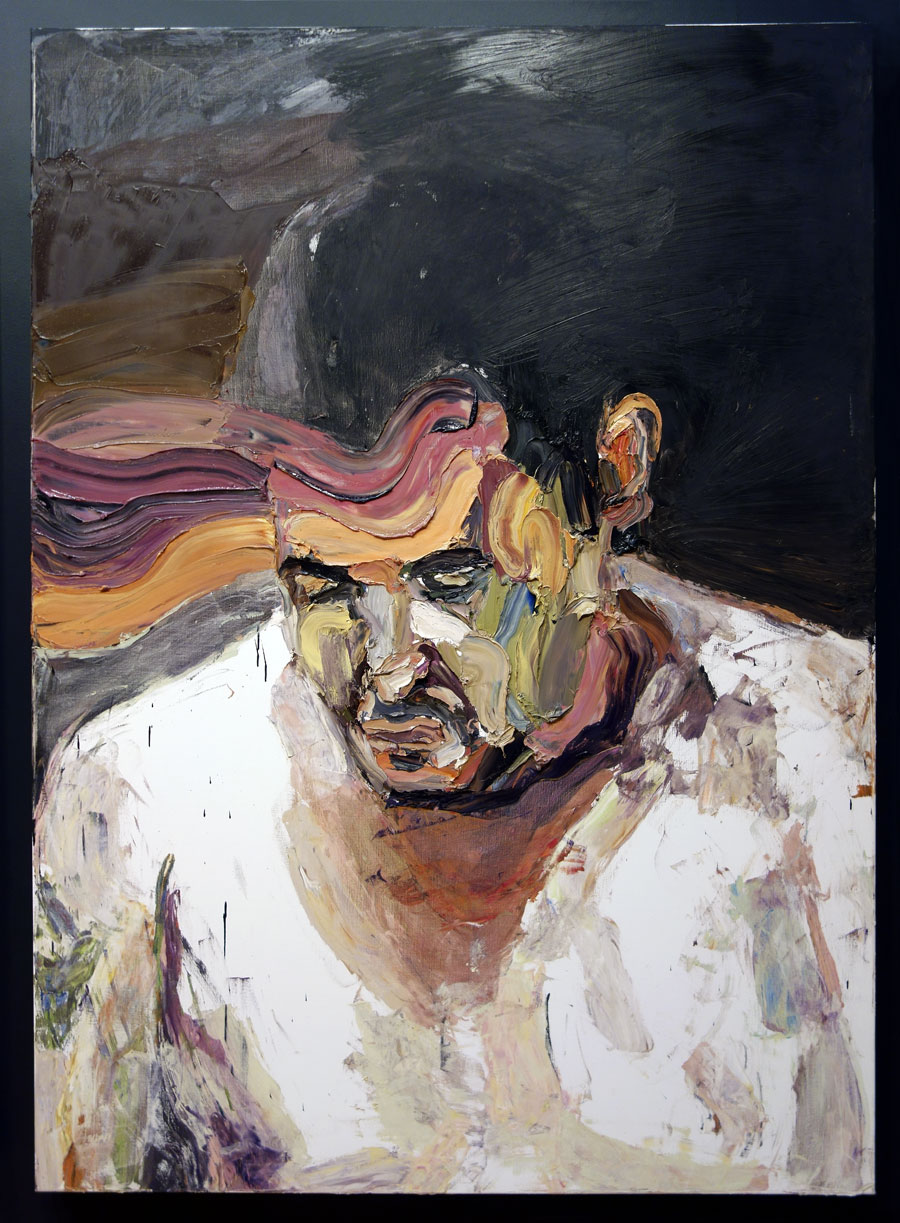











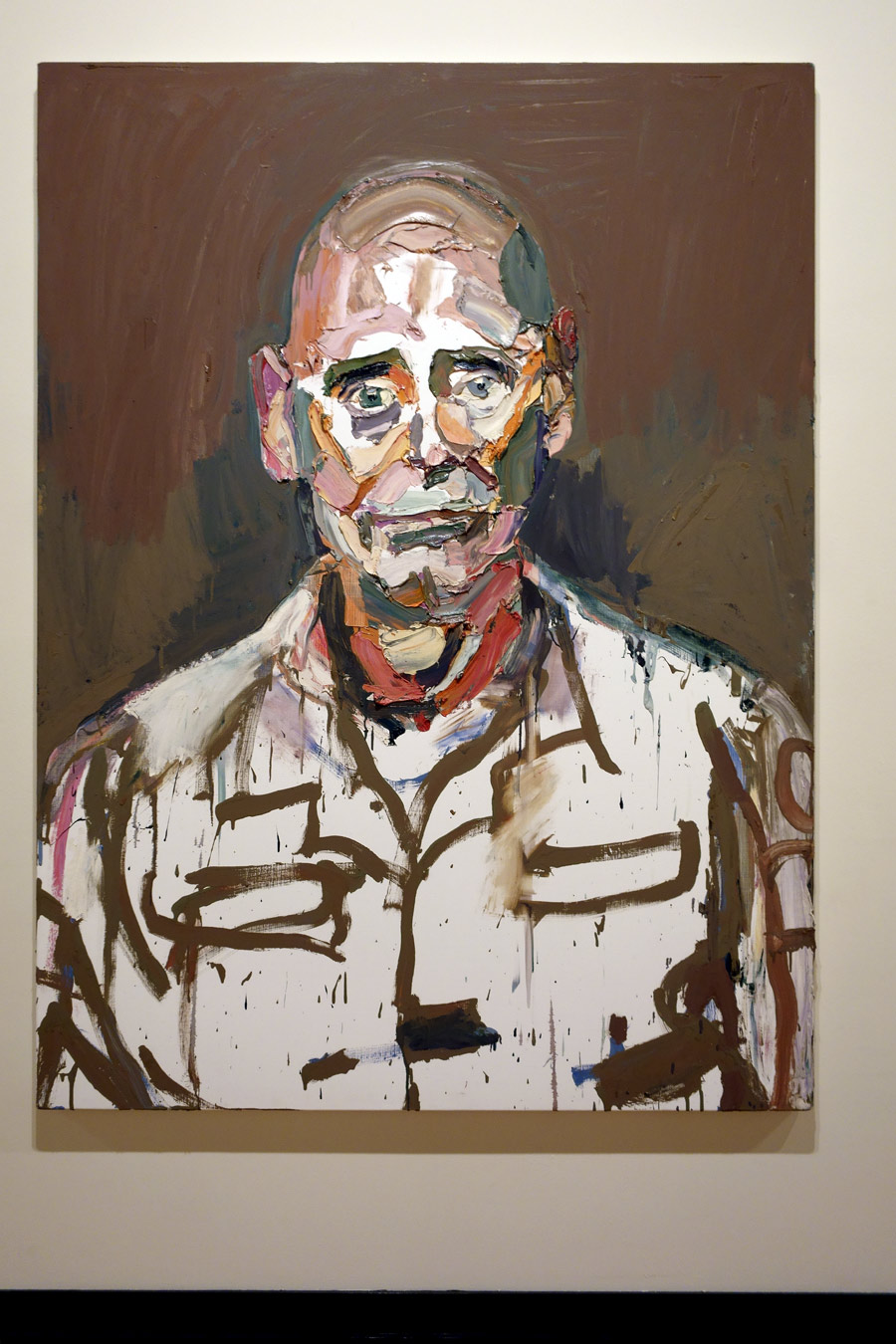


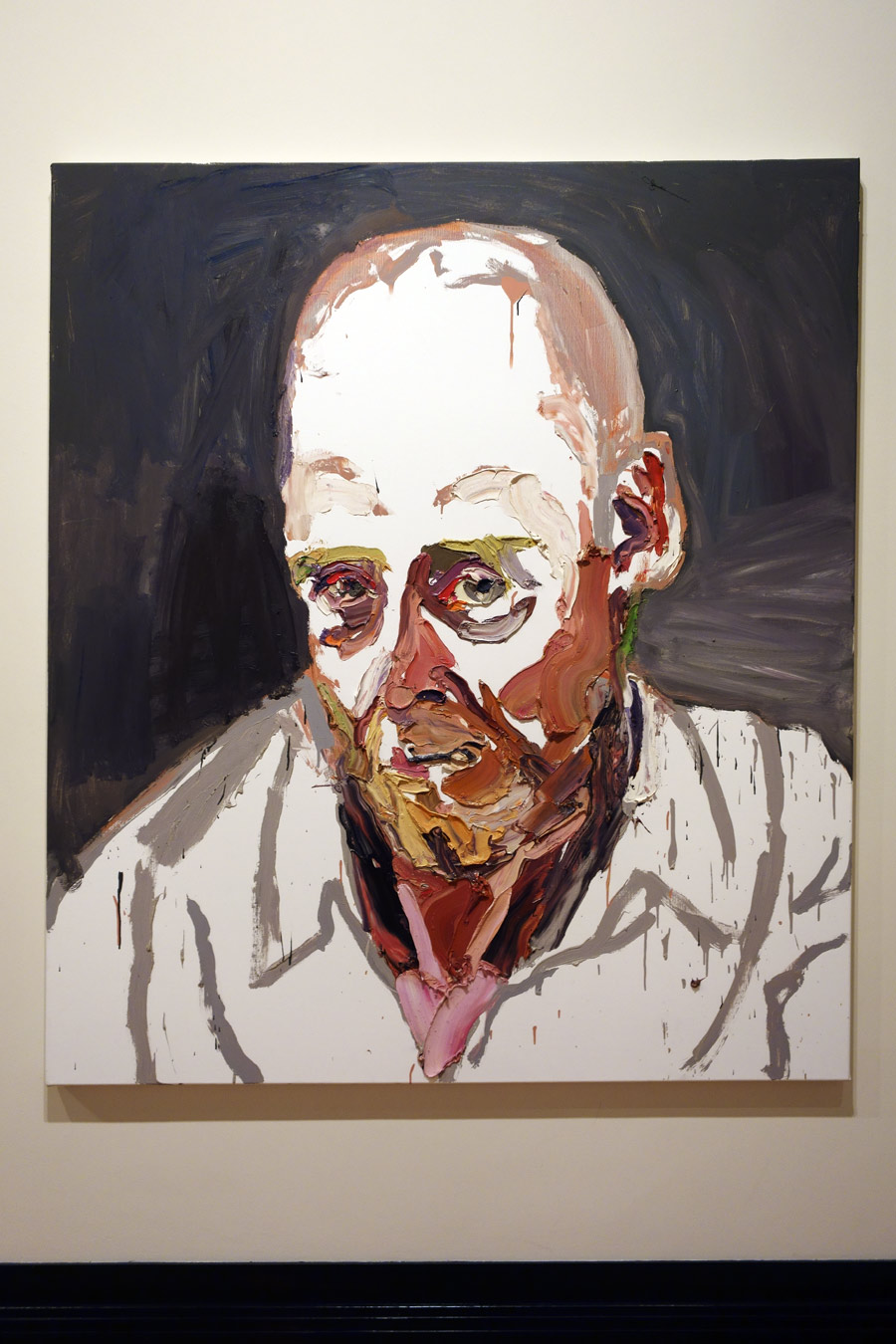

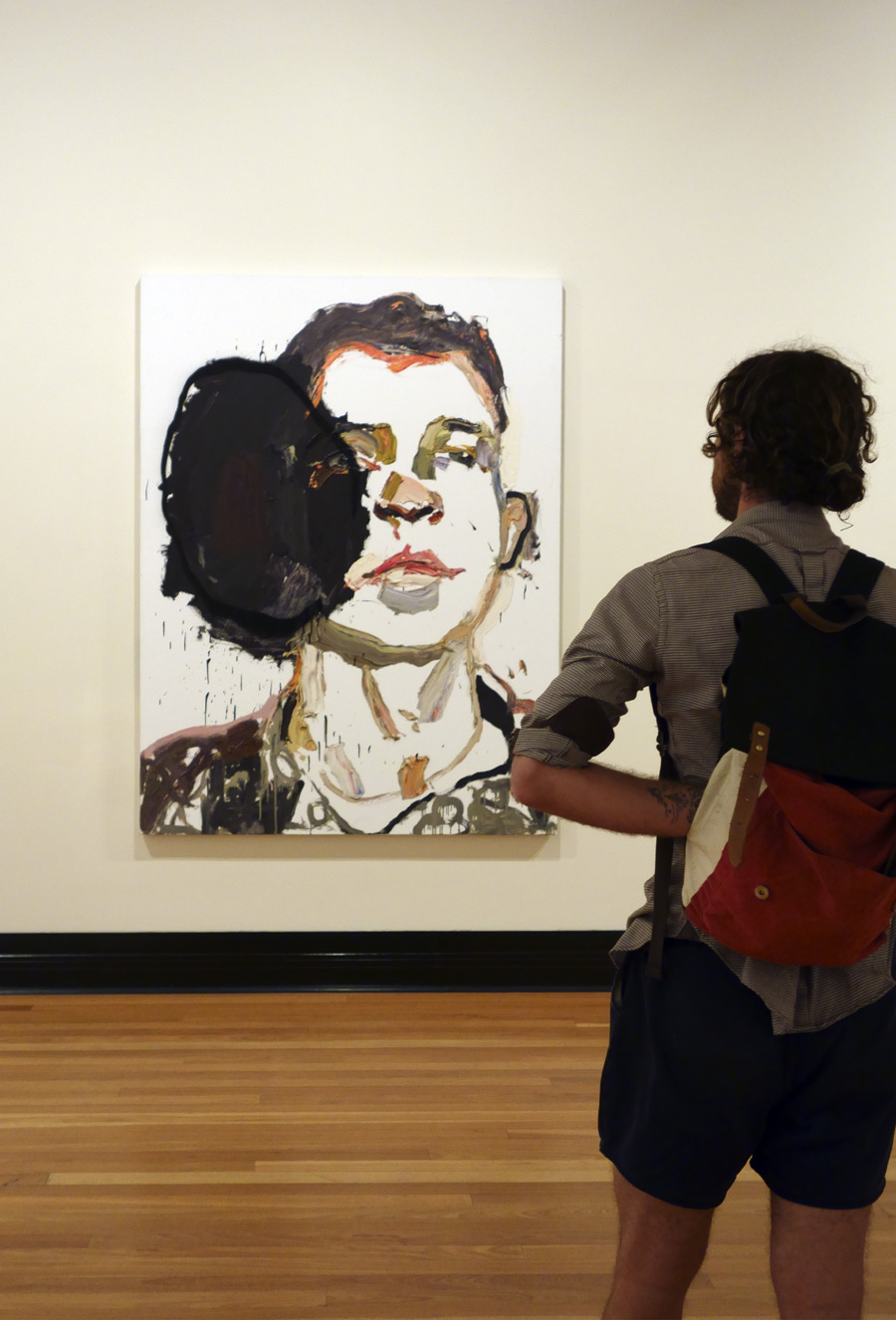



![Auguste Rodin (French, 1840-1917) 'Le Penseur [The Thinker]' 1903](https://artblart.com/wp-content/uploads/2016/03/rodin-le-penseur-web.jpg "Auguste Rodin (French, 1840-1917) 'Le Penseur [The Thinker]' 1903")
![Vassily Kandinsky (Russian, 1866-1944) 'Bild mit rotem Fleck [Tableau à la tache rouge / Image with red spot]' 25 February 1914](https://artblart.com/wp-content/uploads/2016/03/kandinsky-bild-mit-rotem-fleck-web.jpg "Vassily Kandinsky (Russian, 1866-1944) 'Bild mit rotem Fleck [Tableau à la tache rouge / Image with red spot]' 25 February 1914")




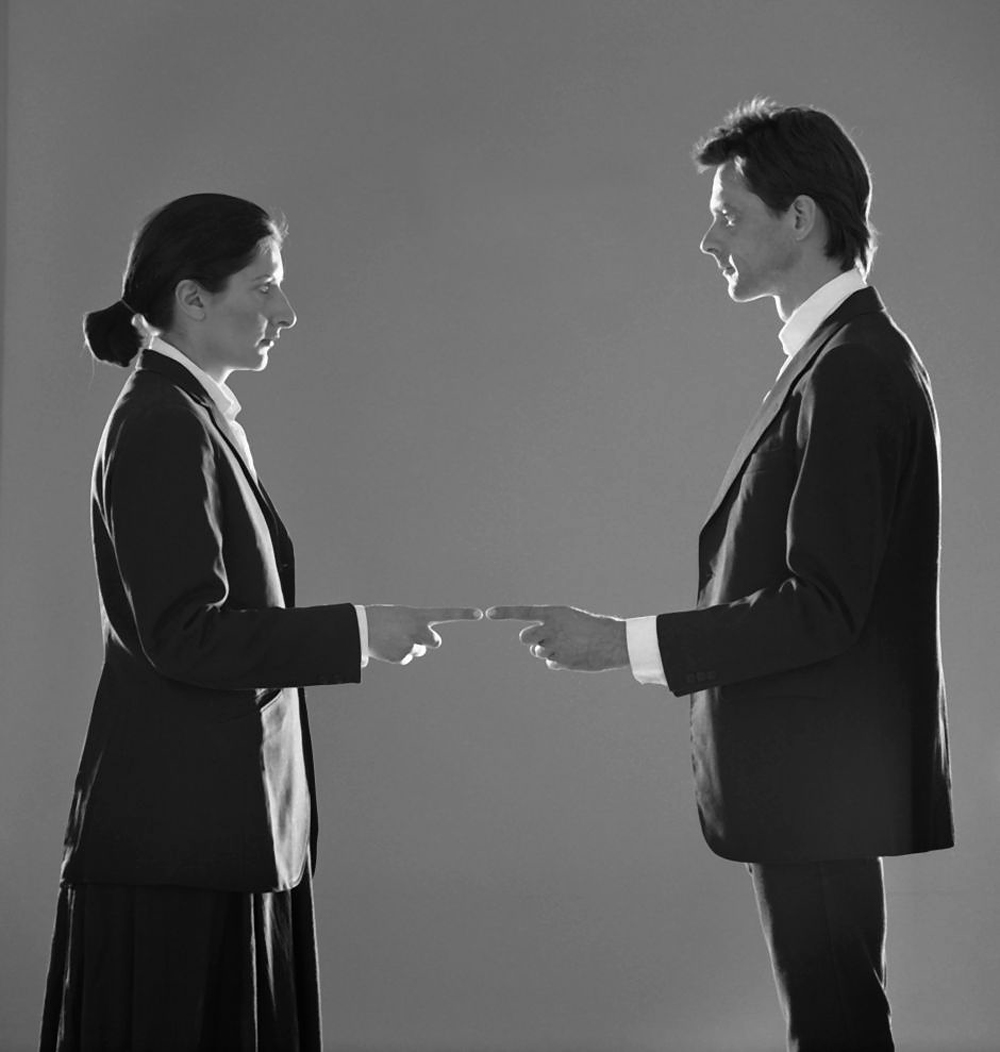
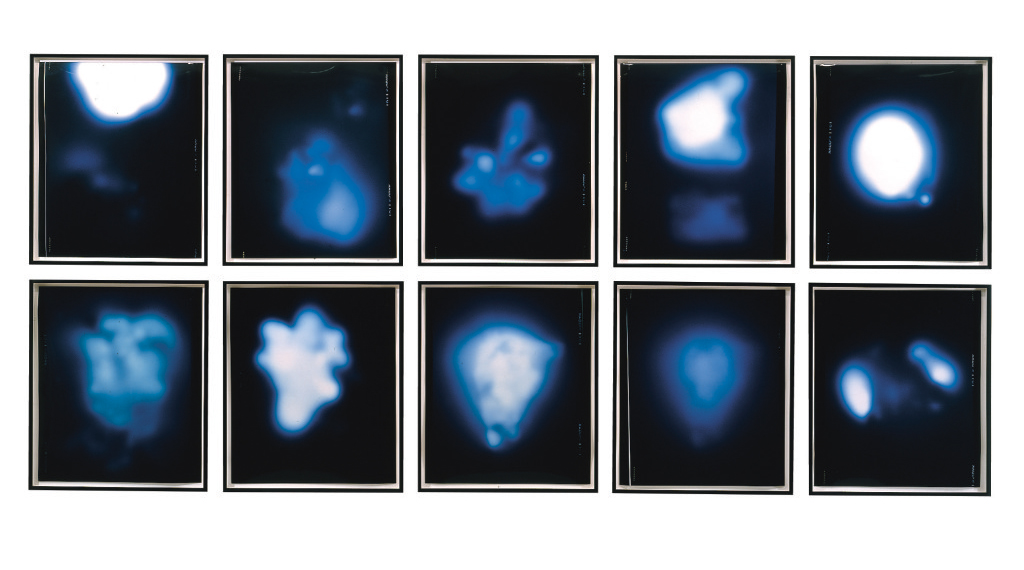

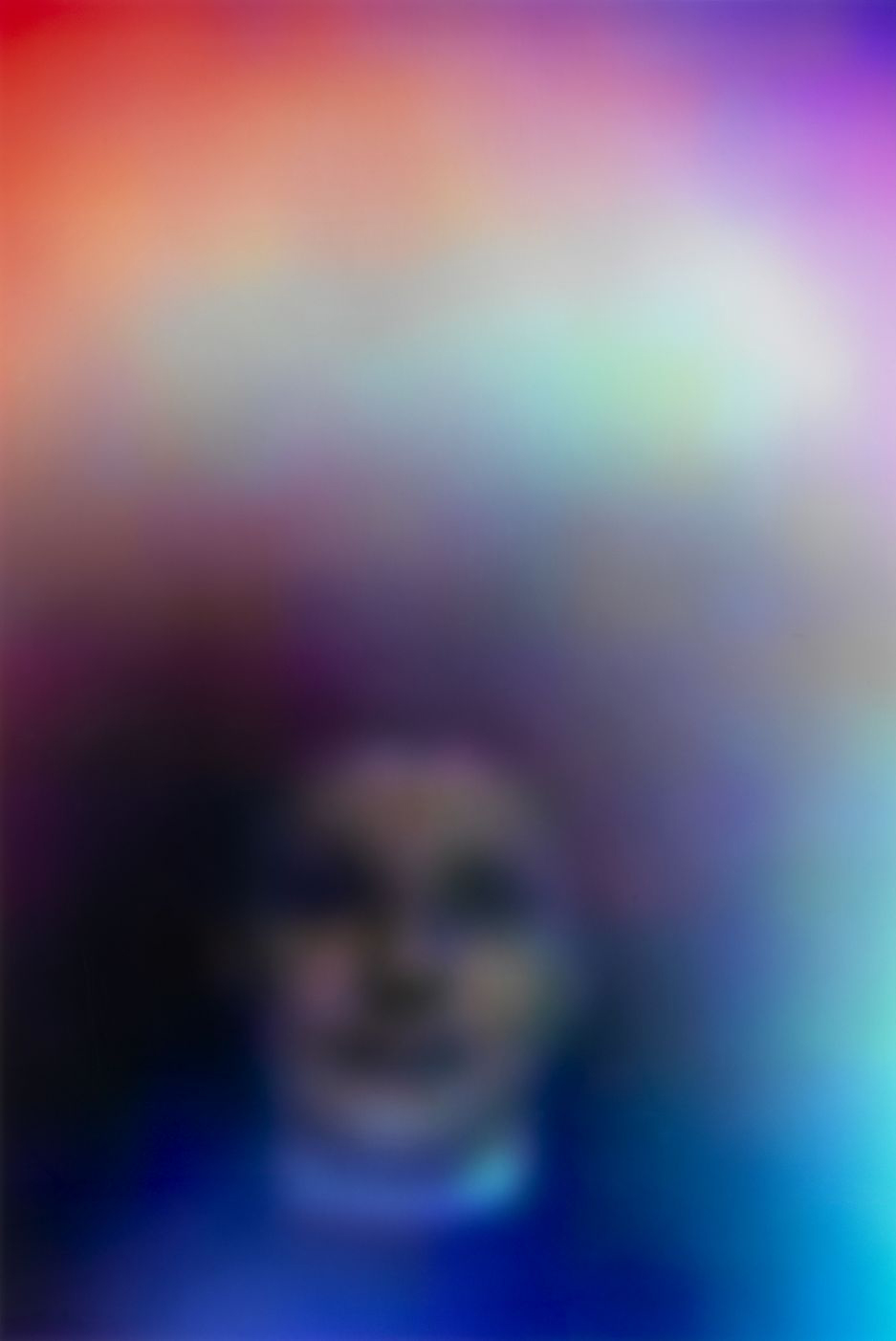


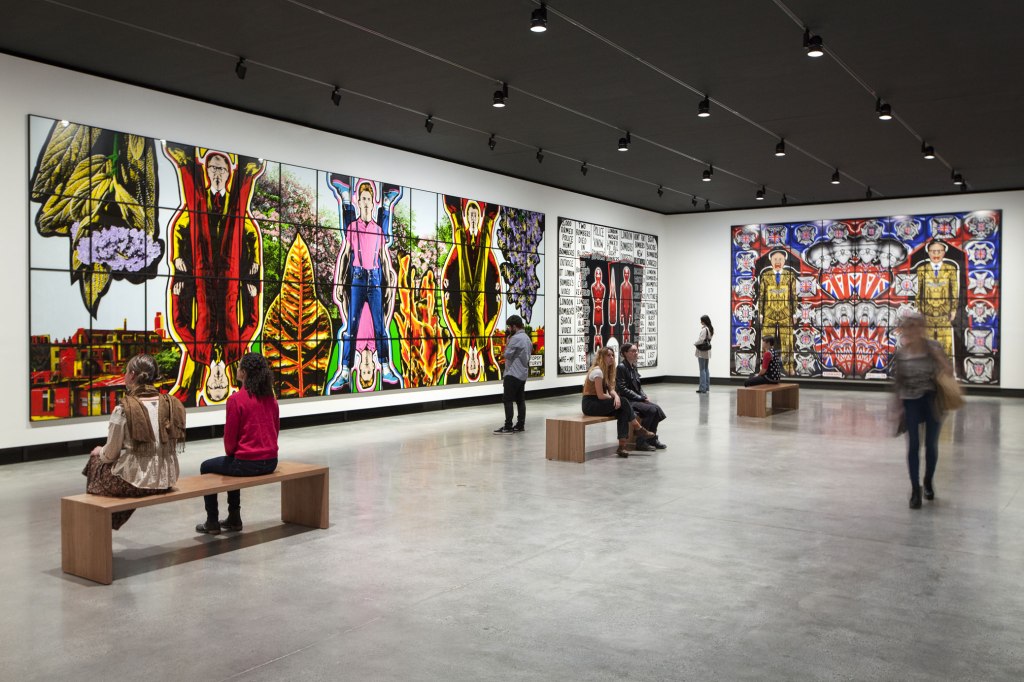
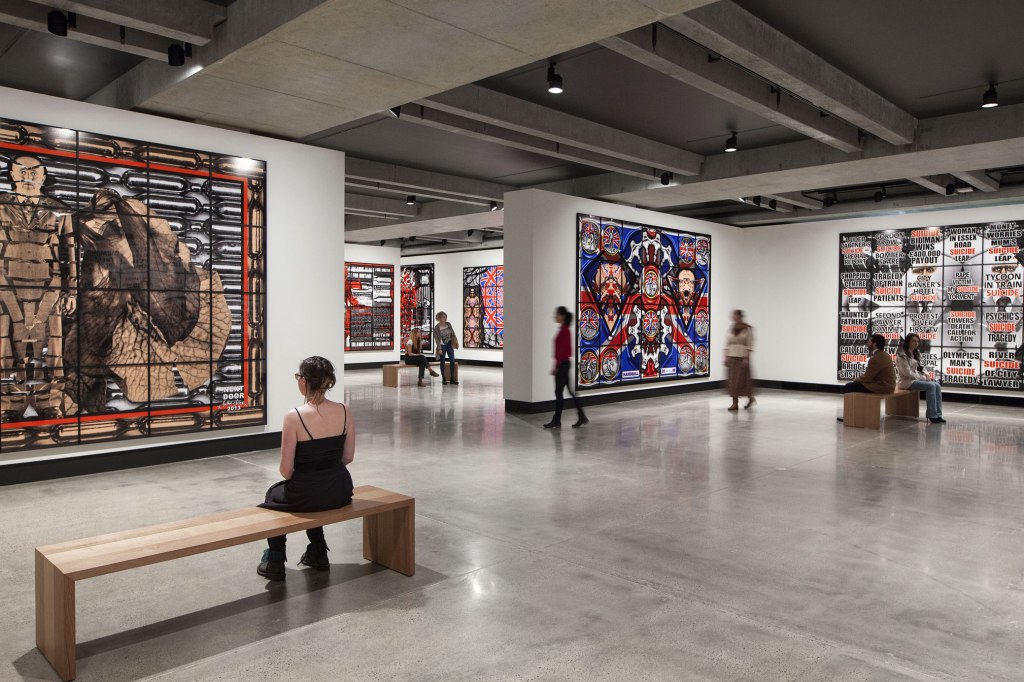
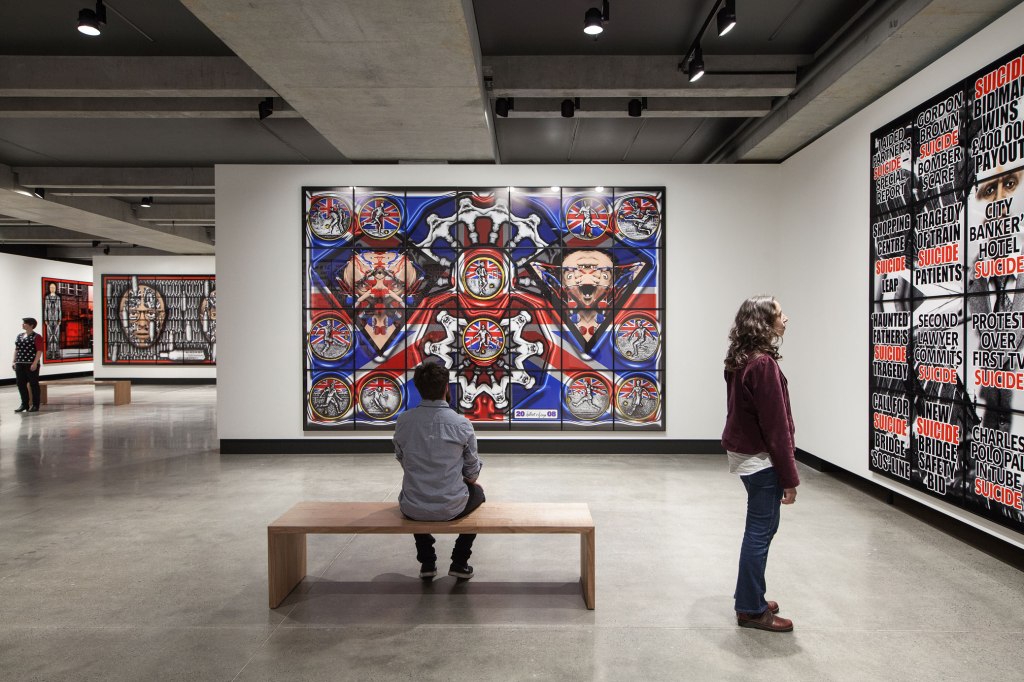
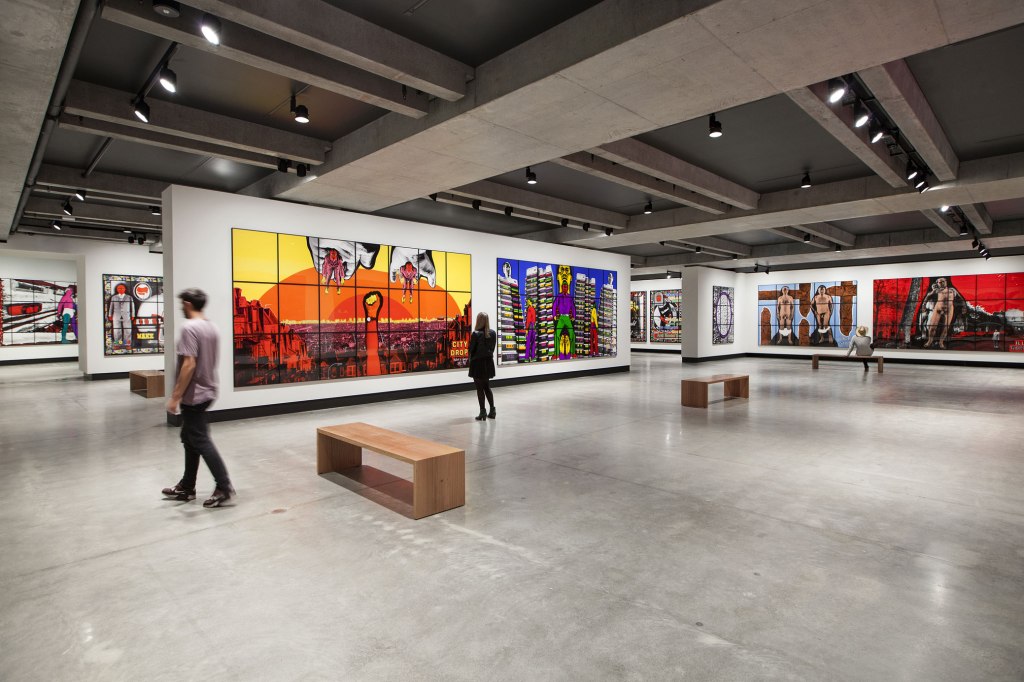
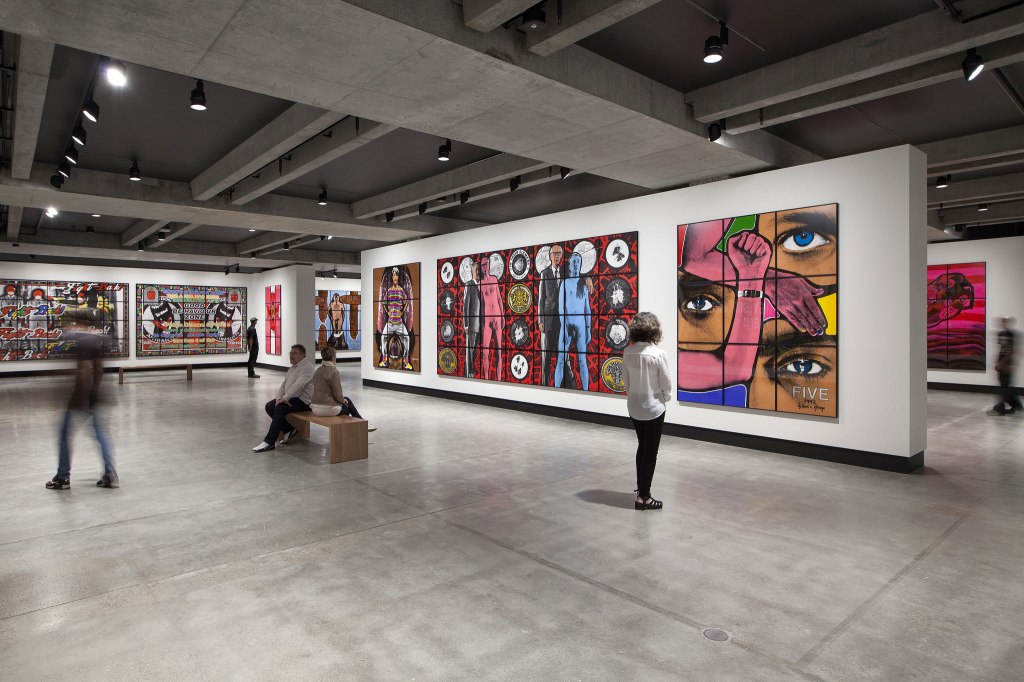
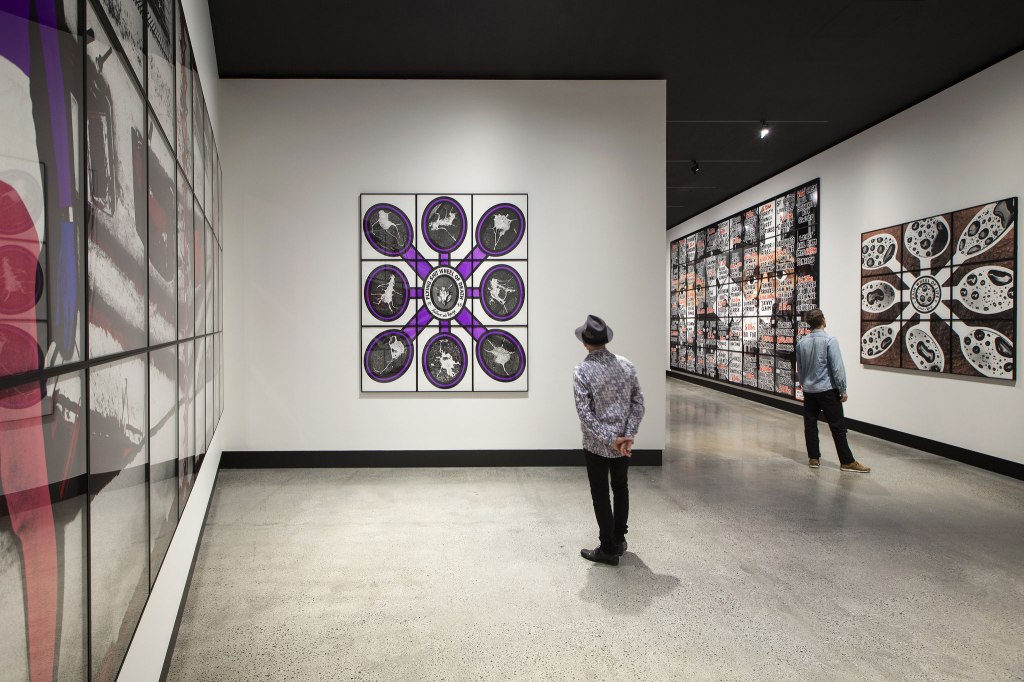
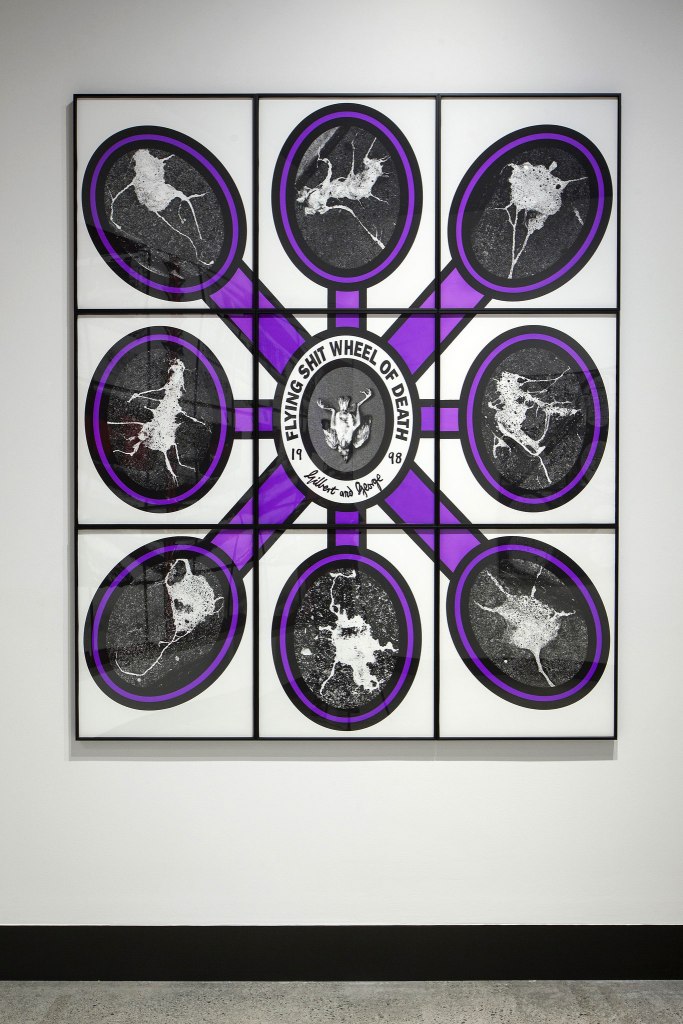
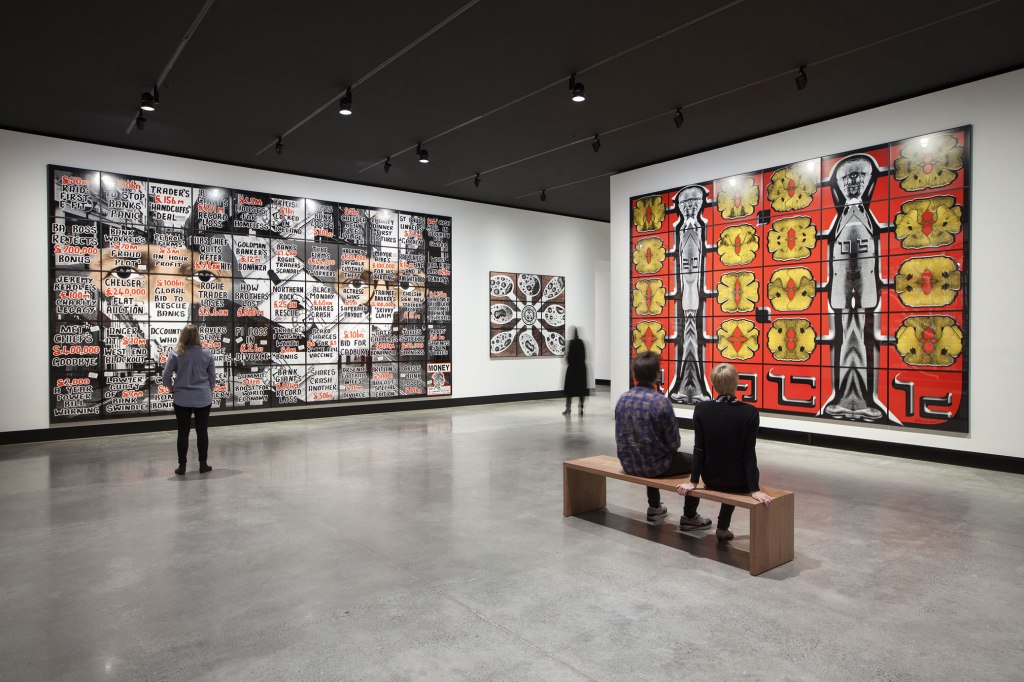
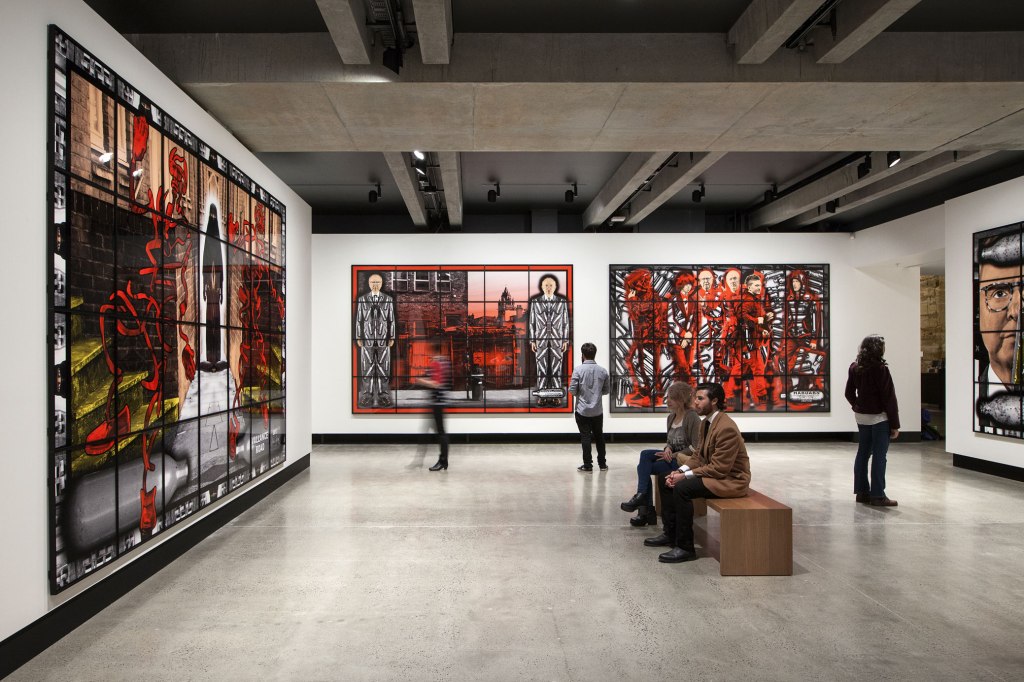
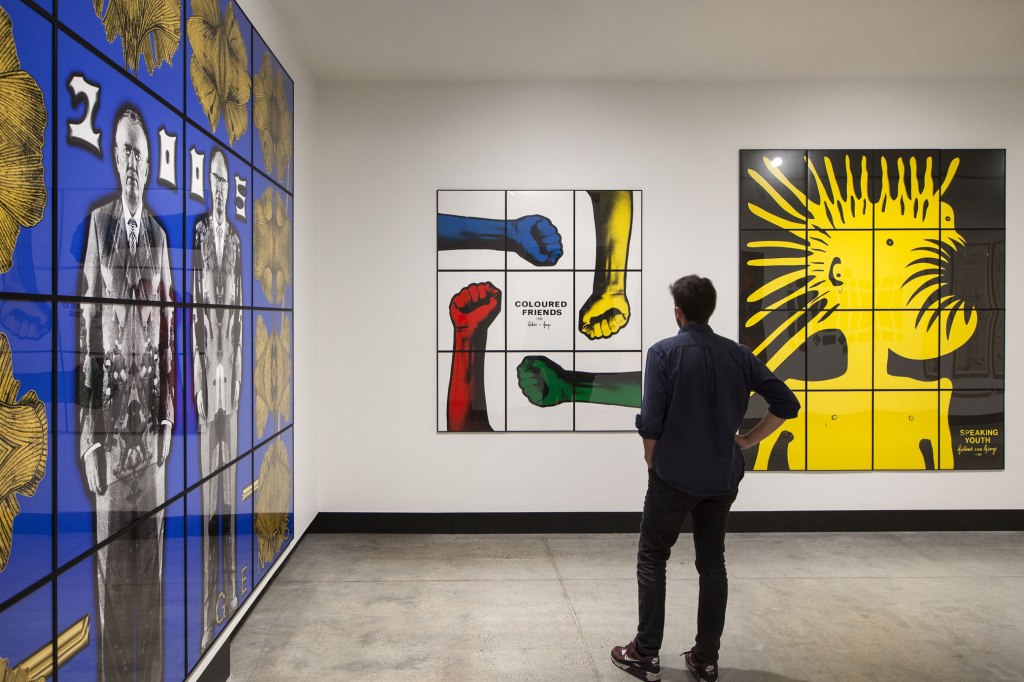
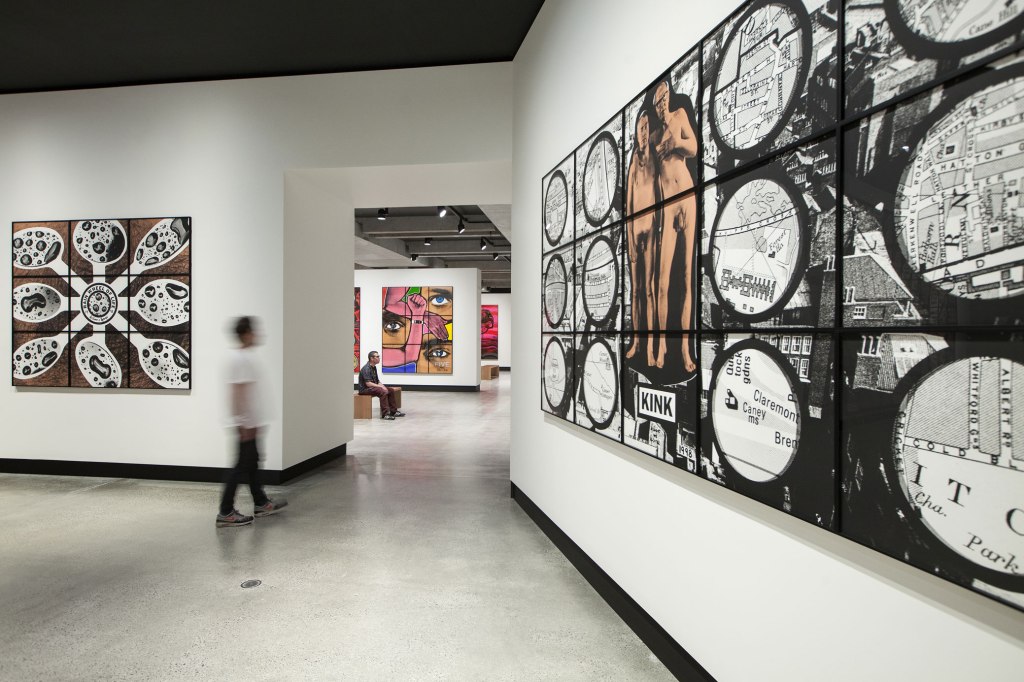
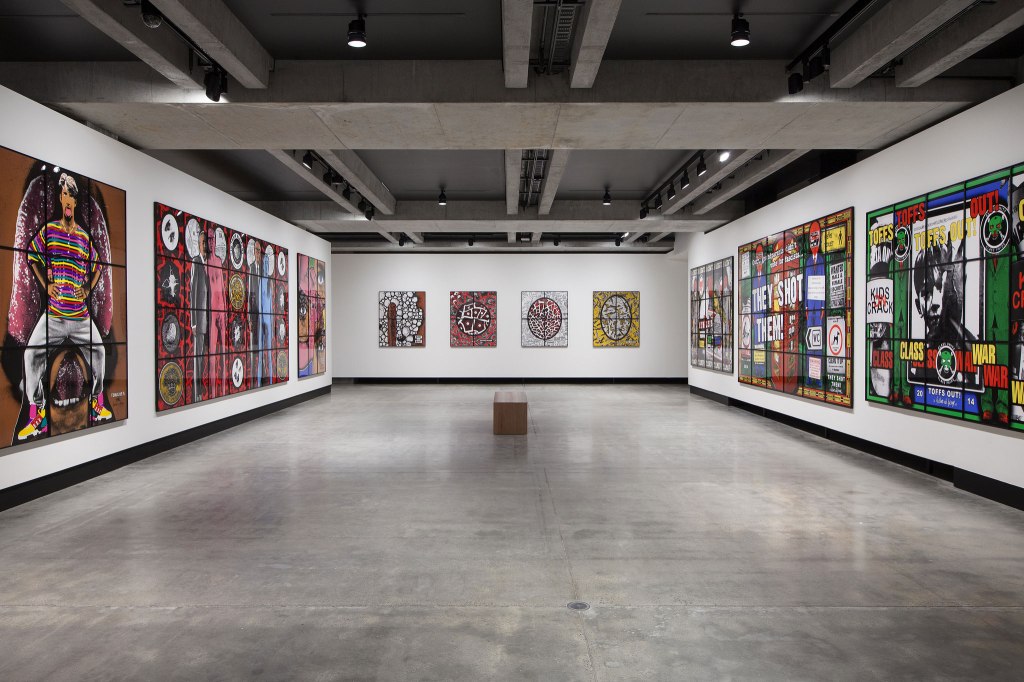
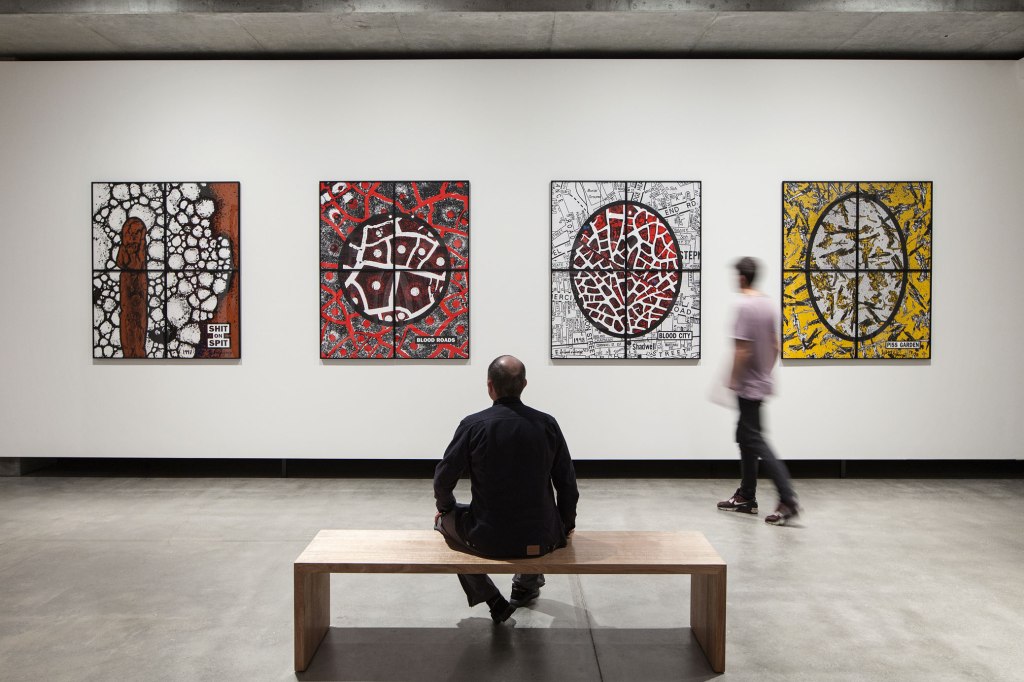
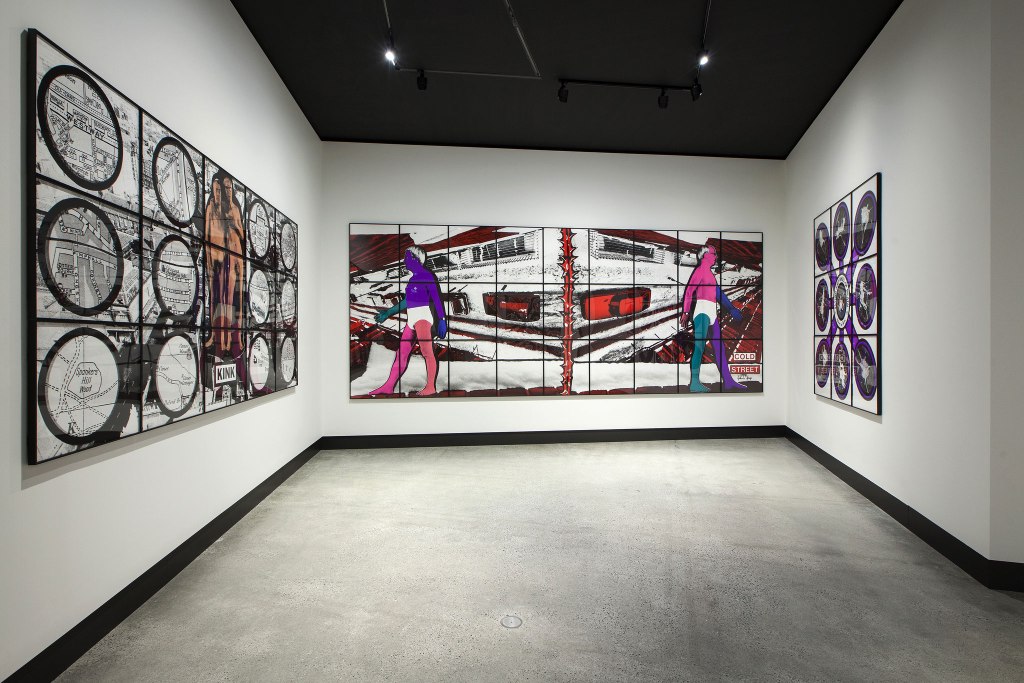
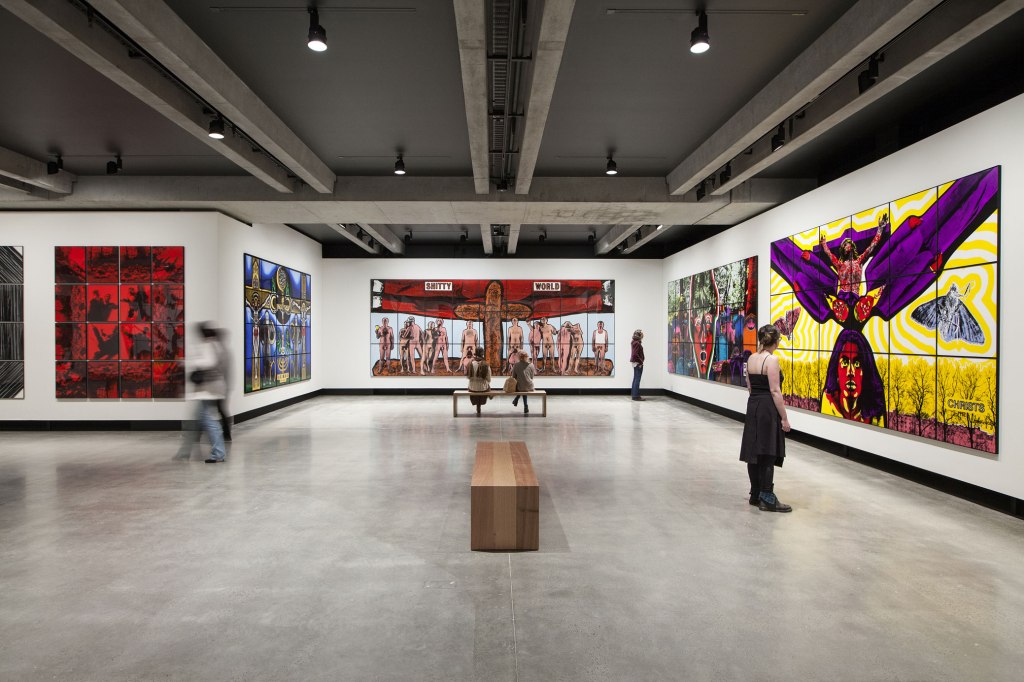
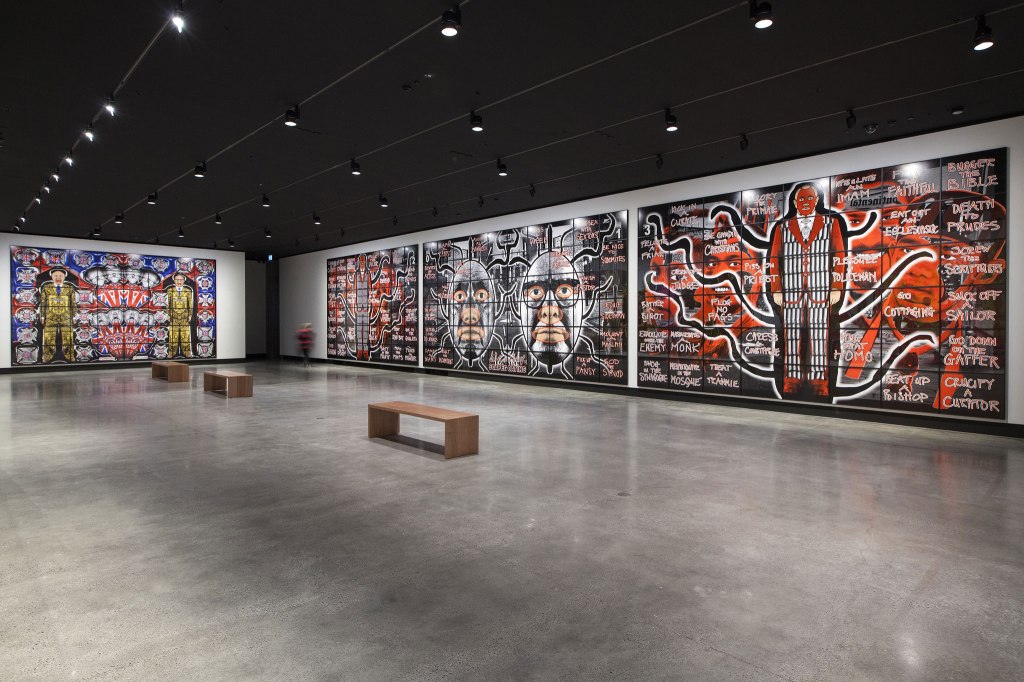
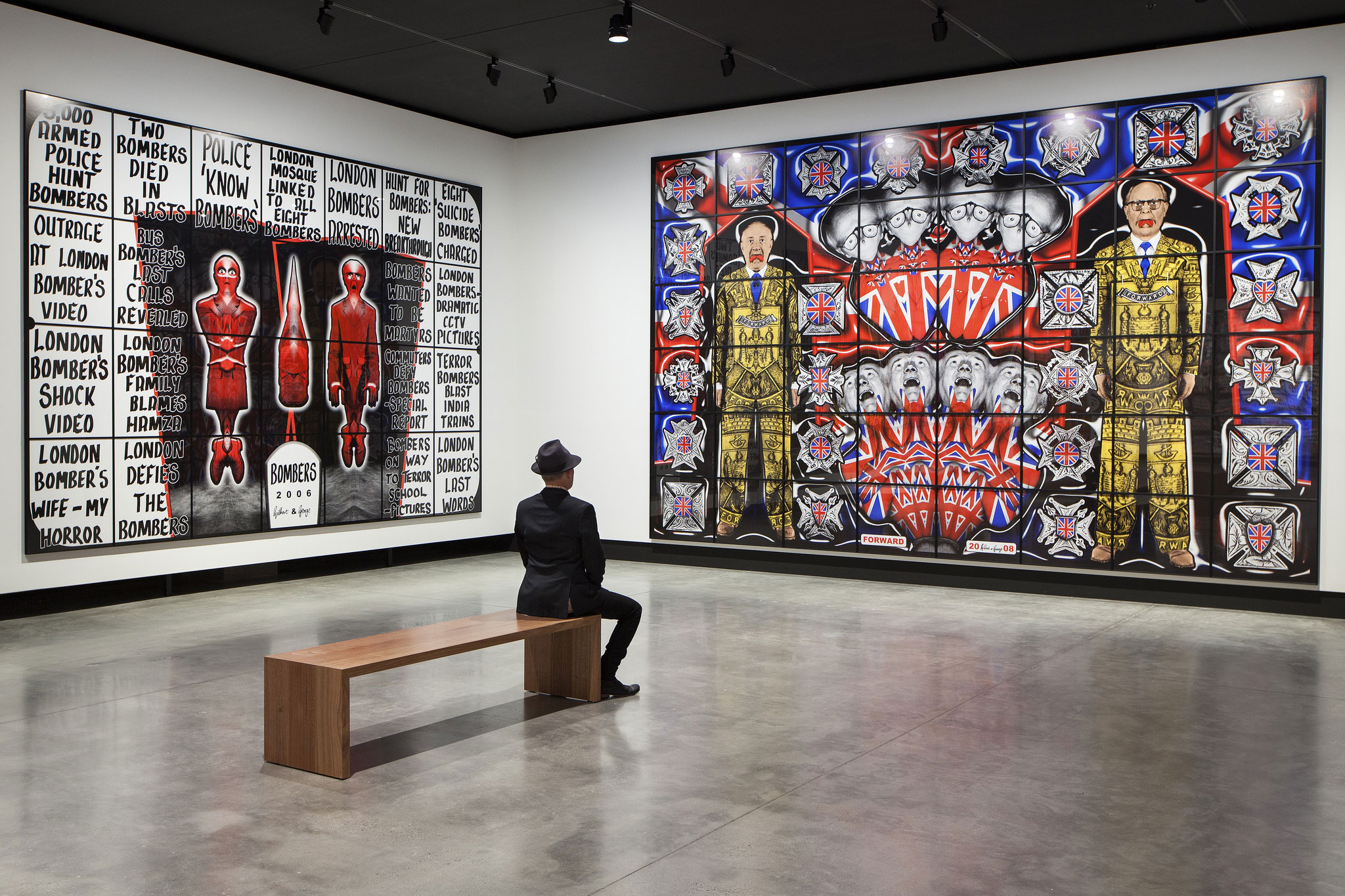
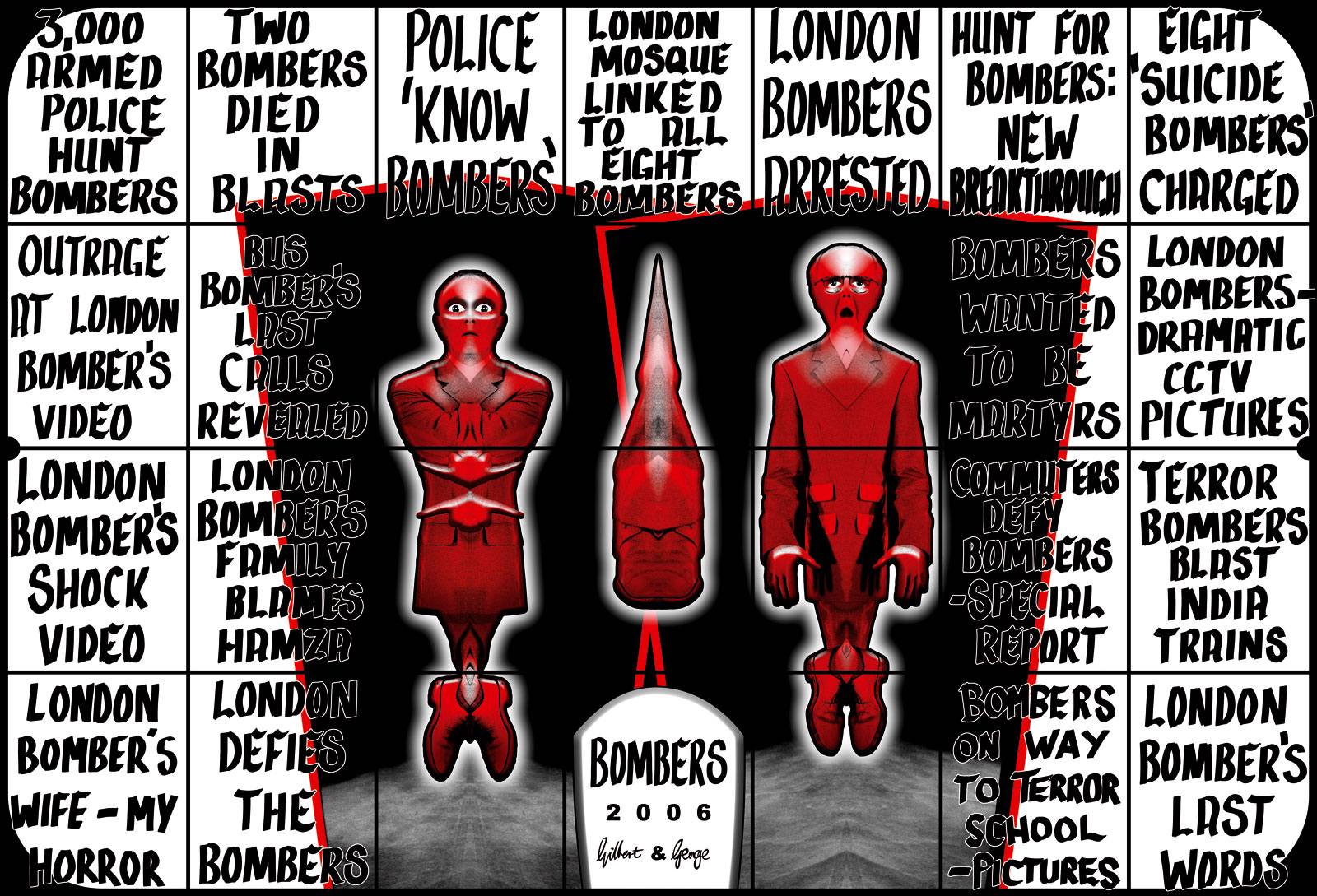
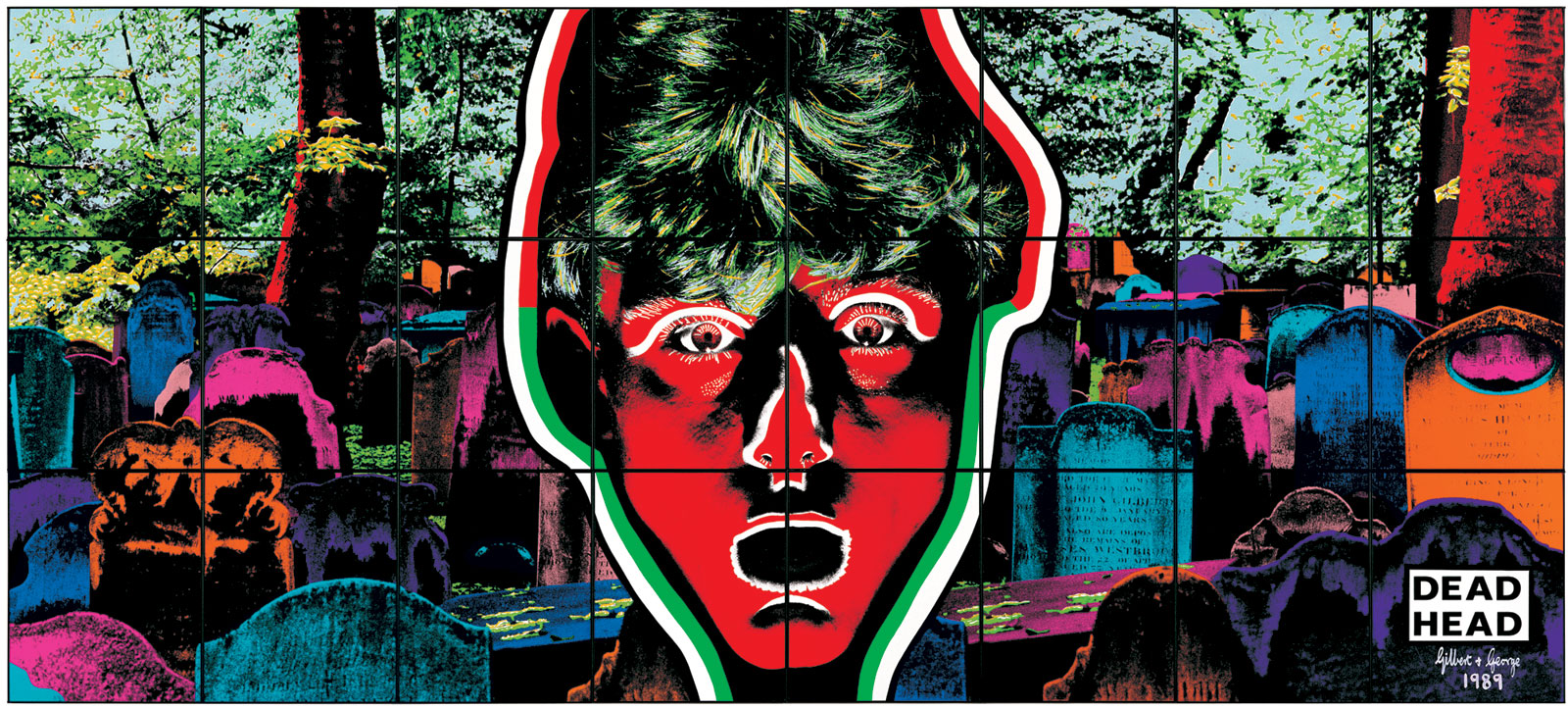
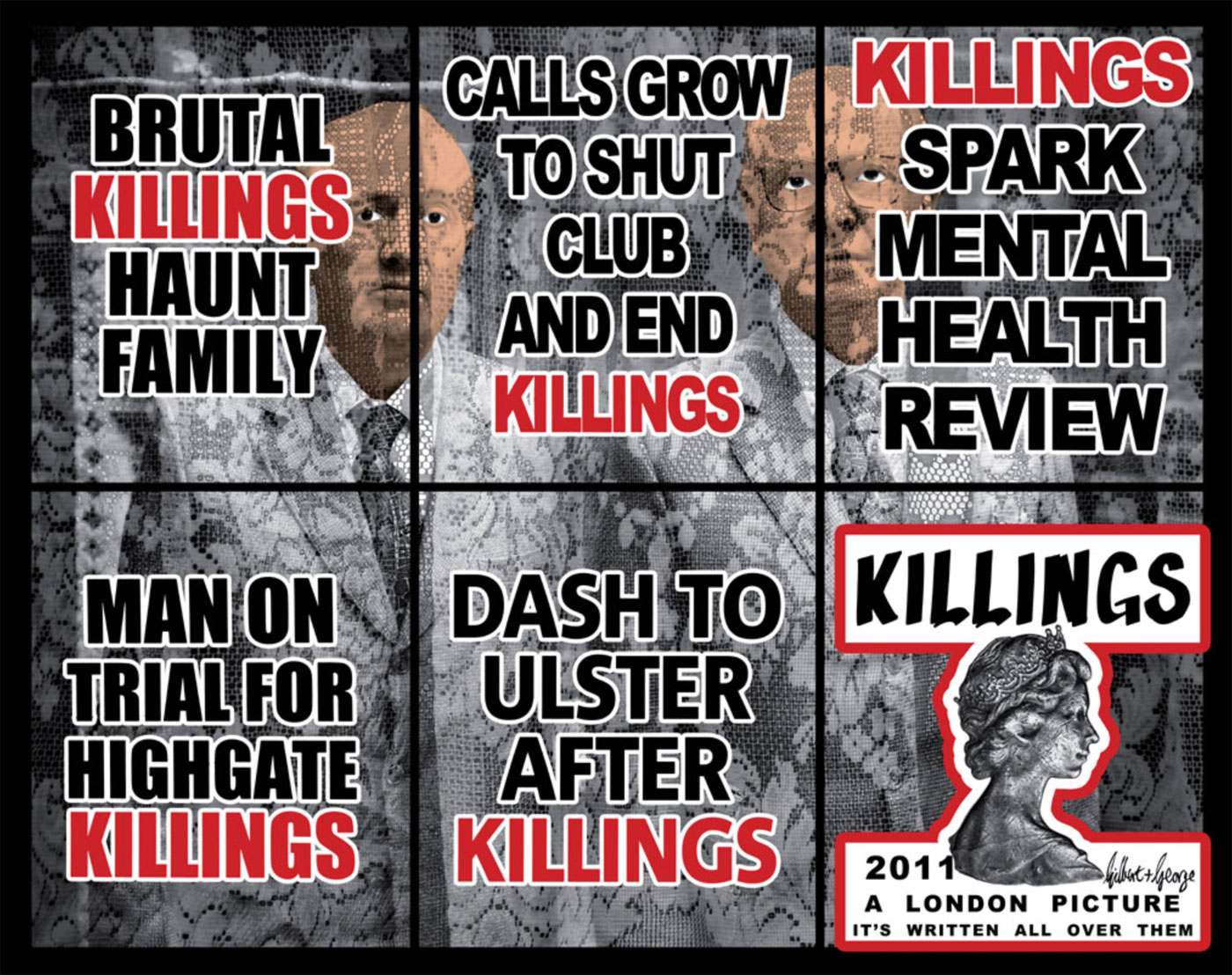
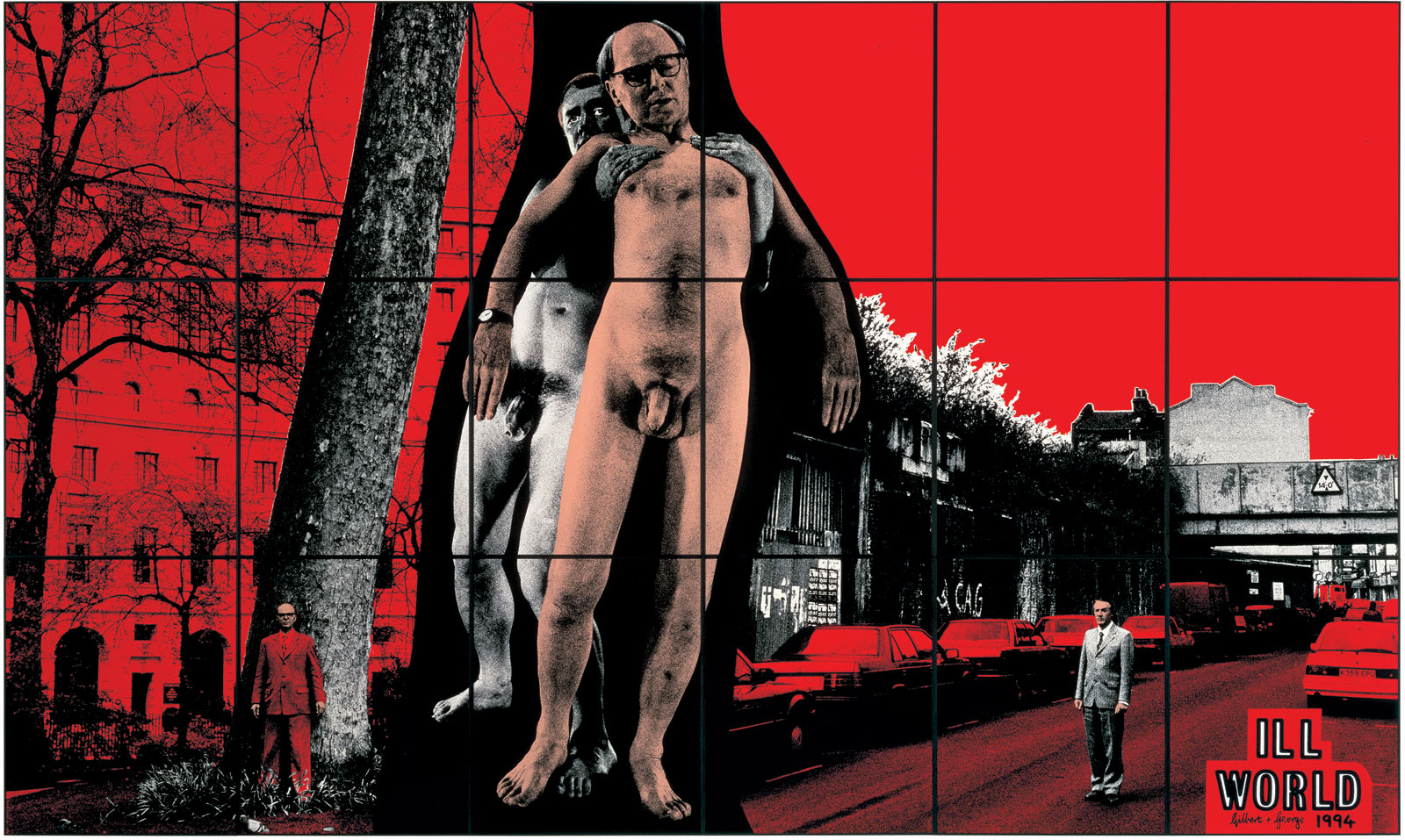
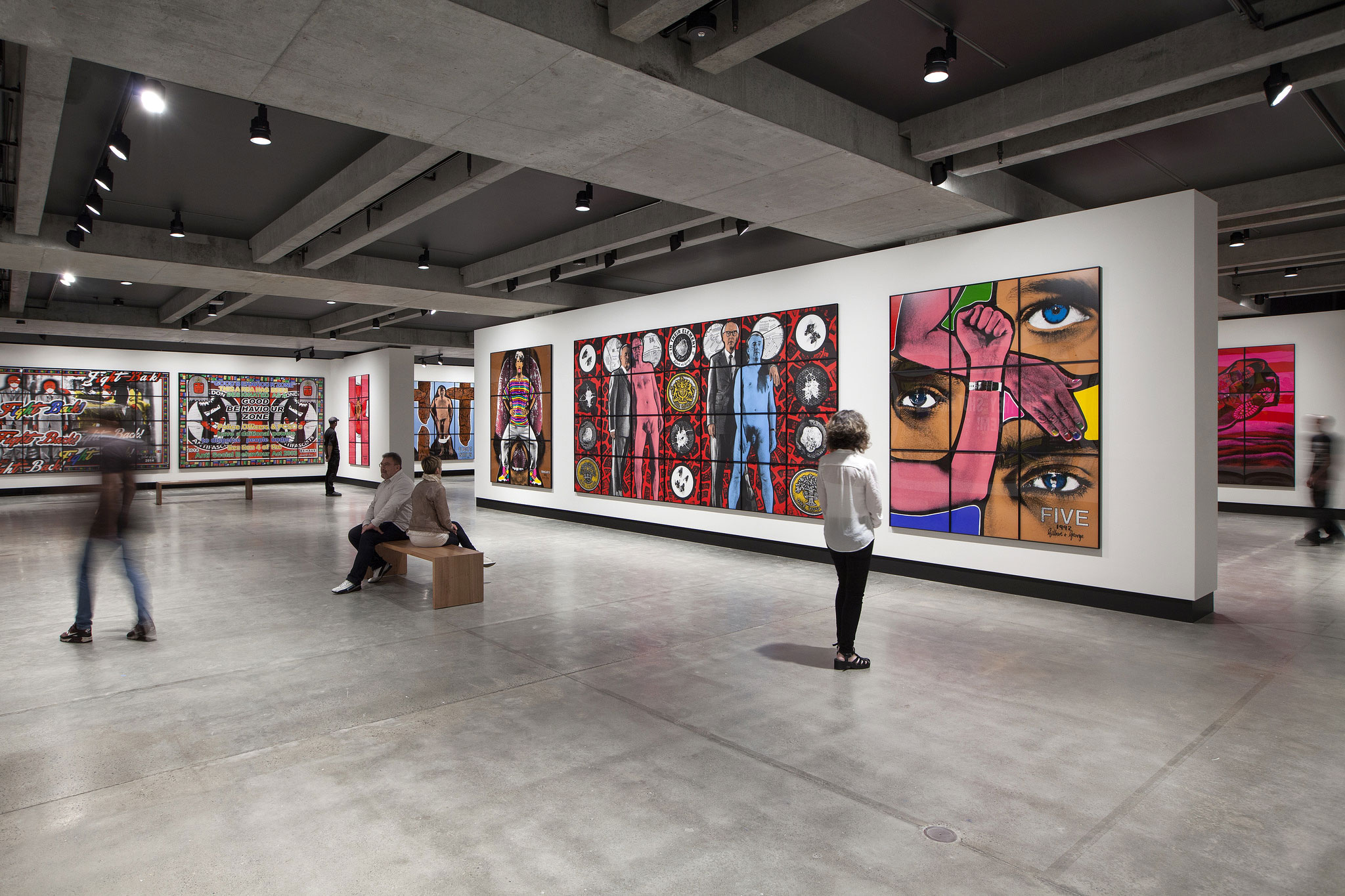
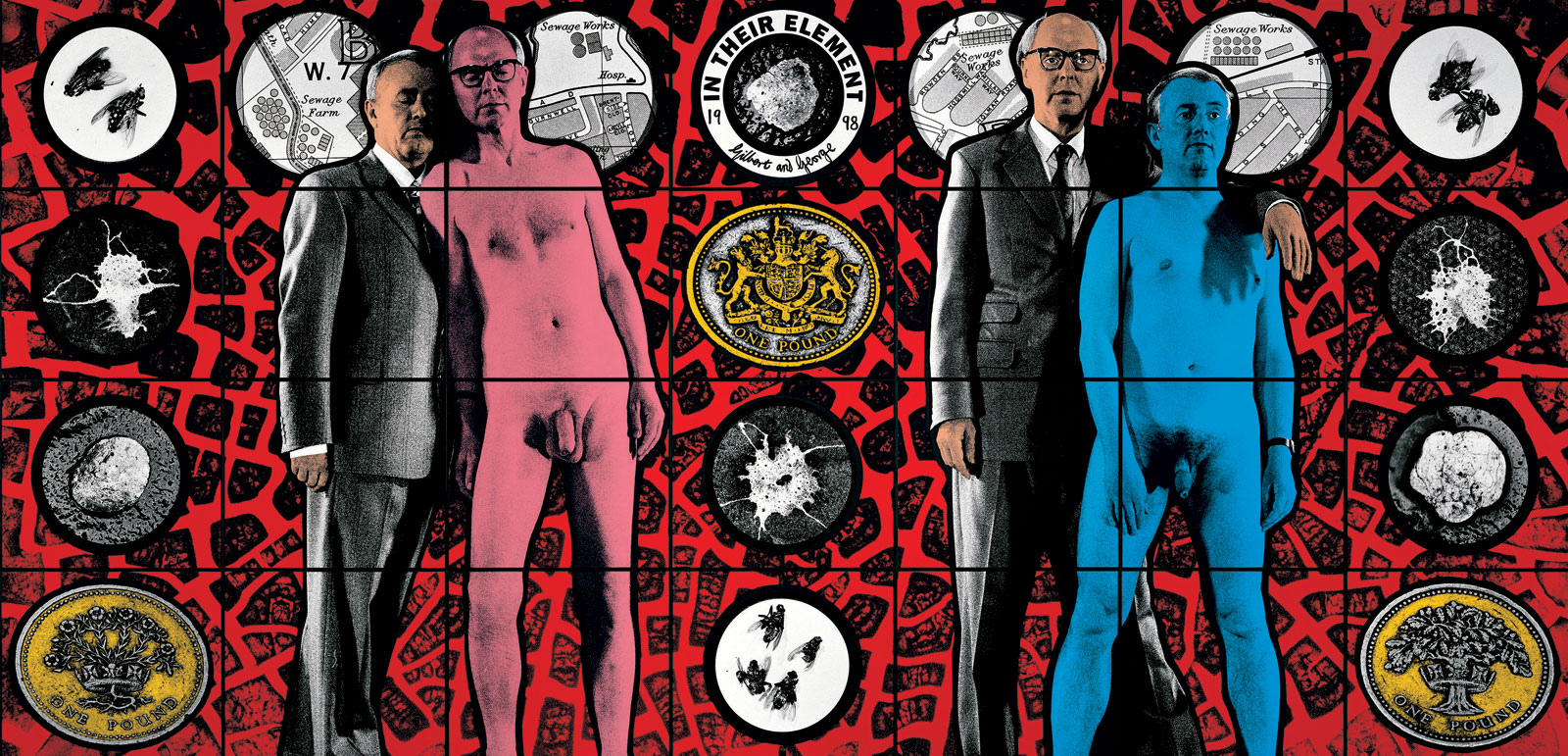
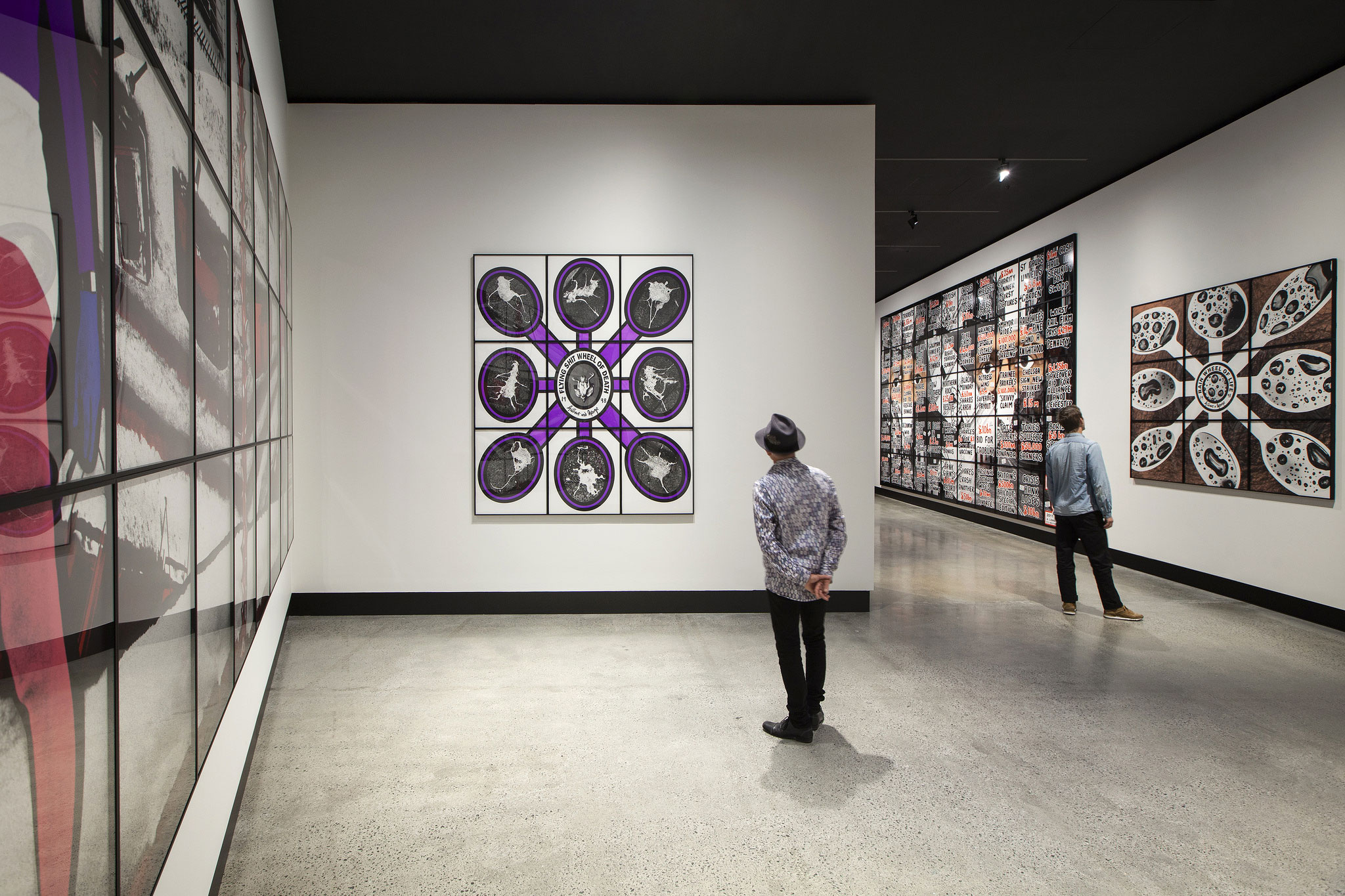
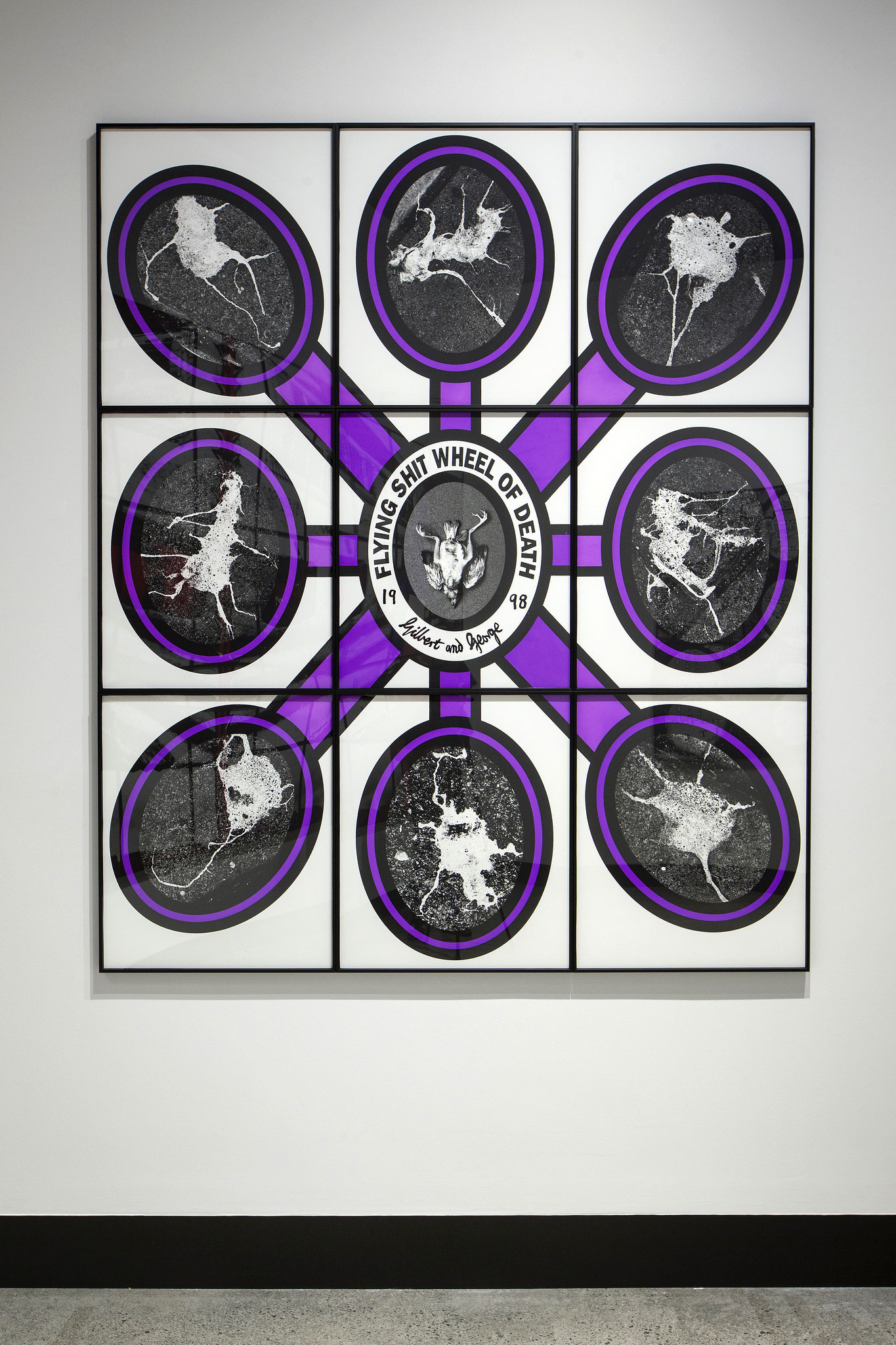
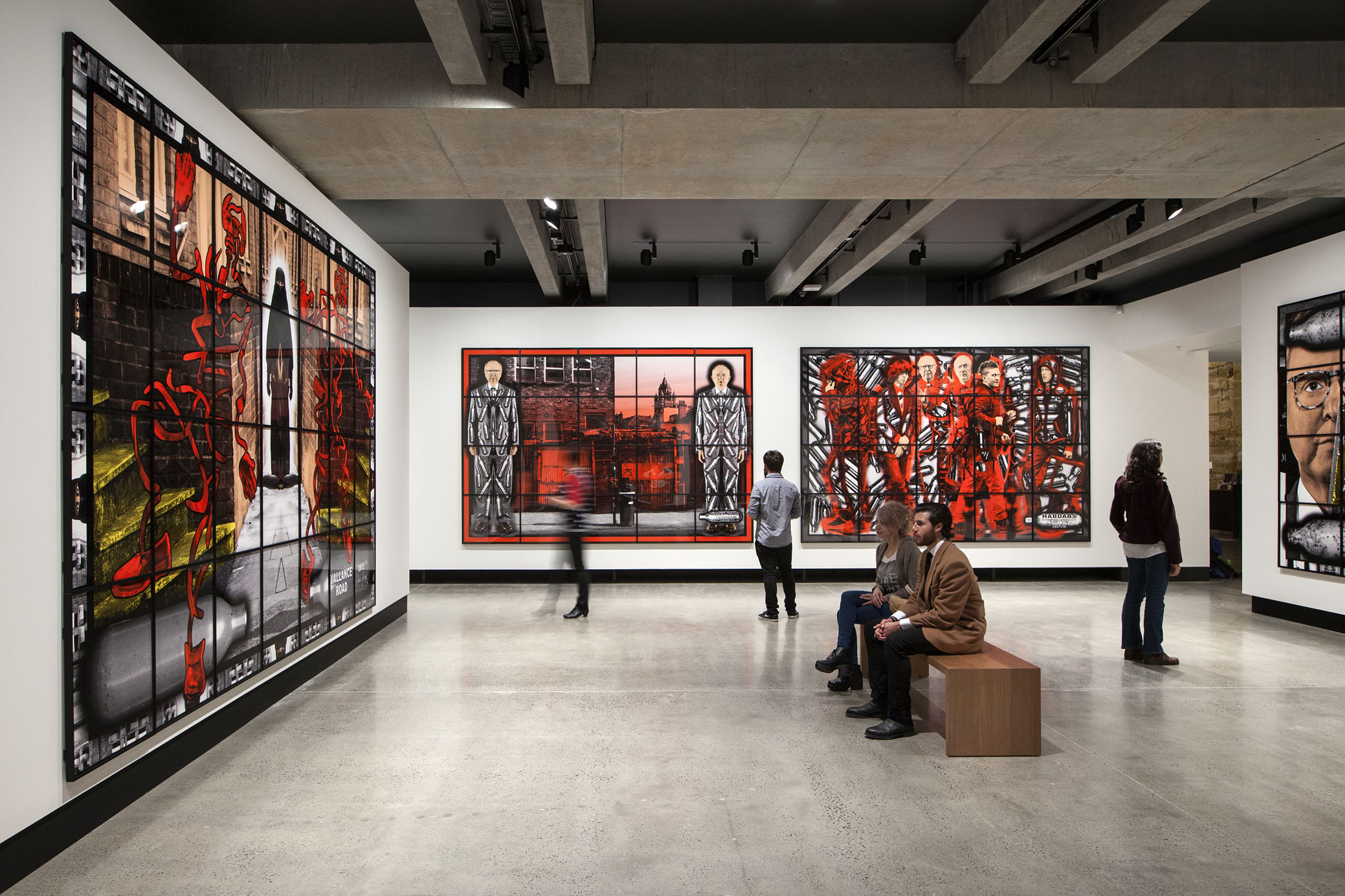
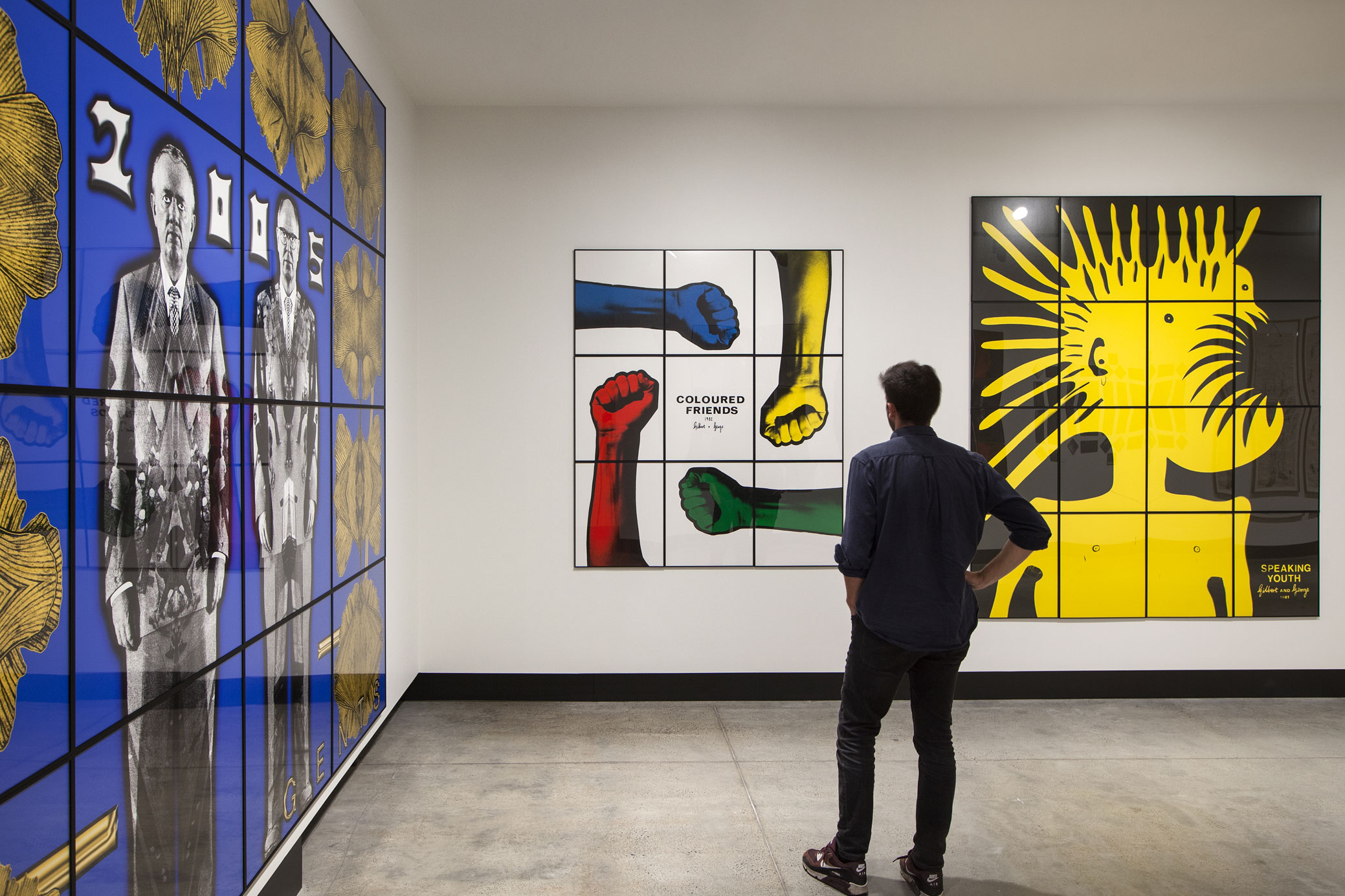
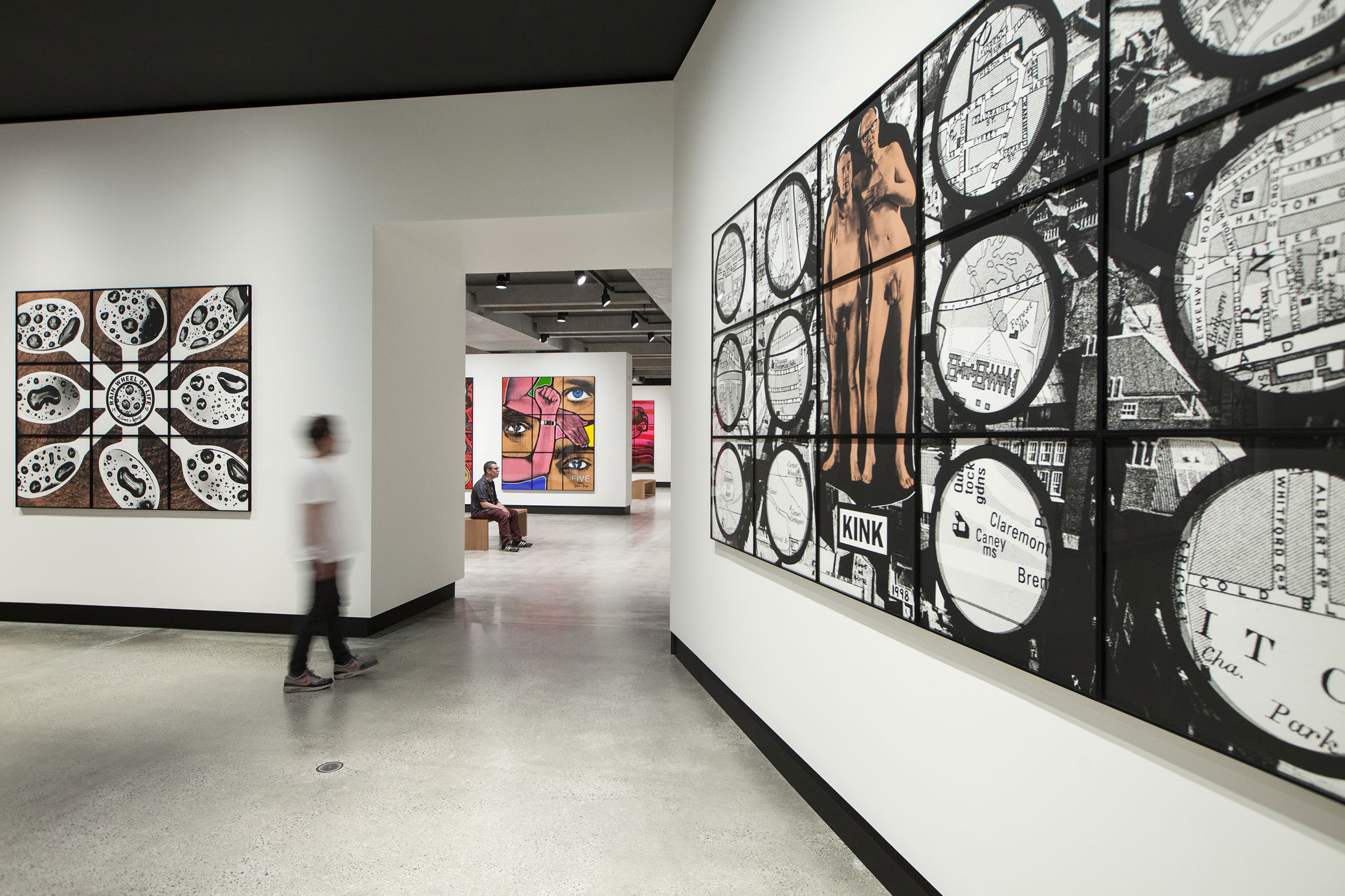
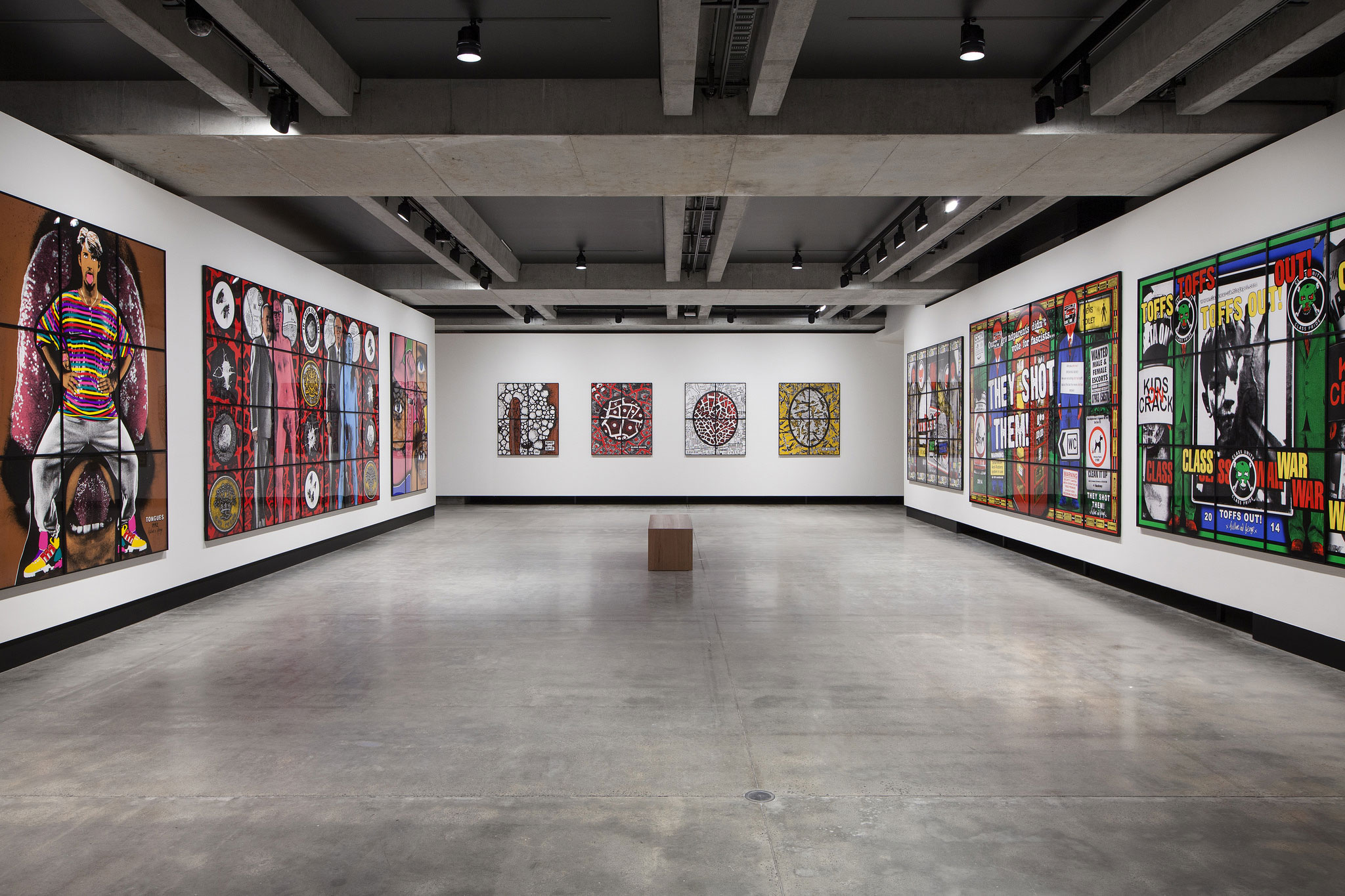


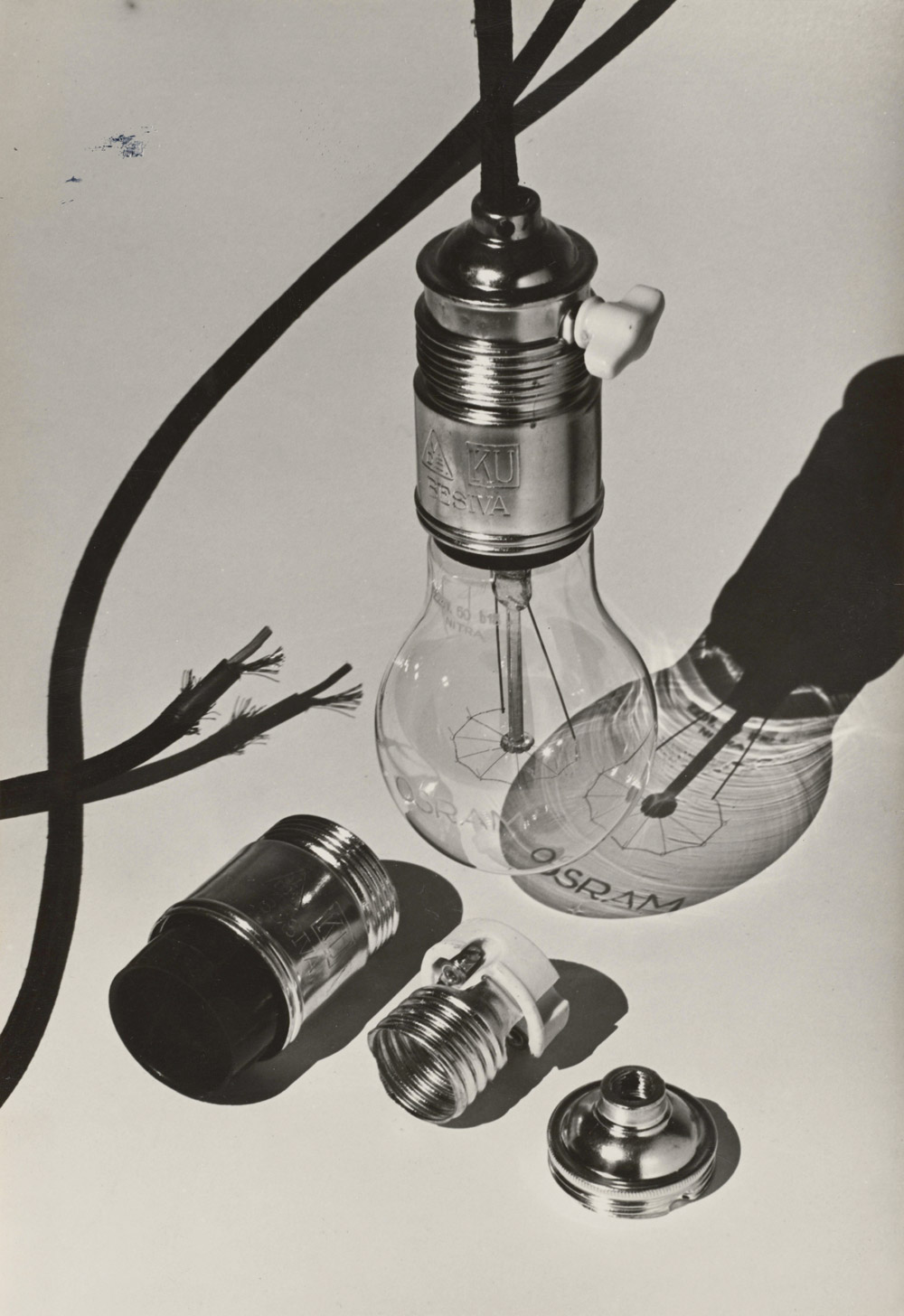
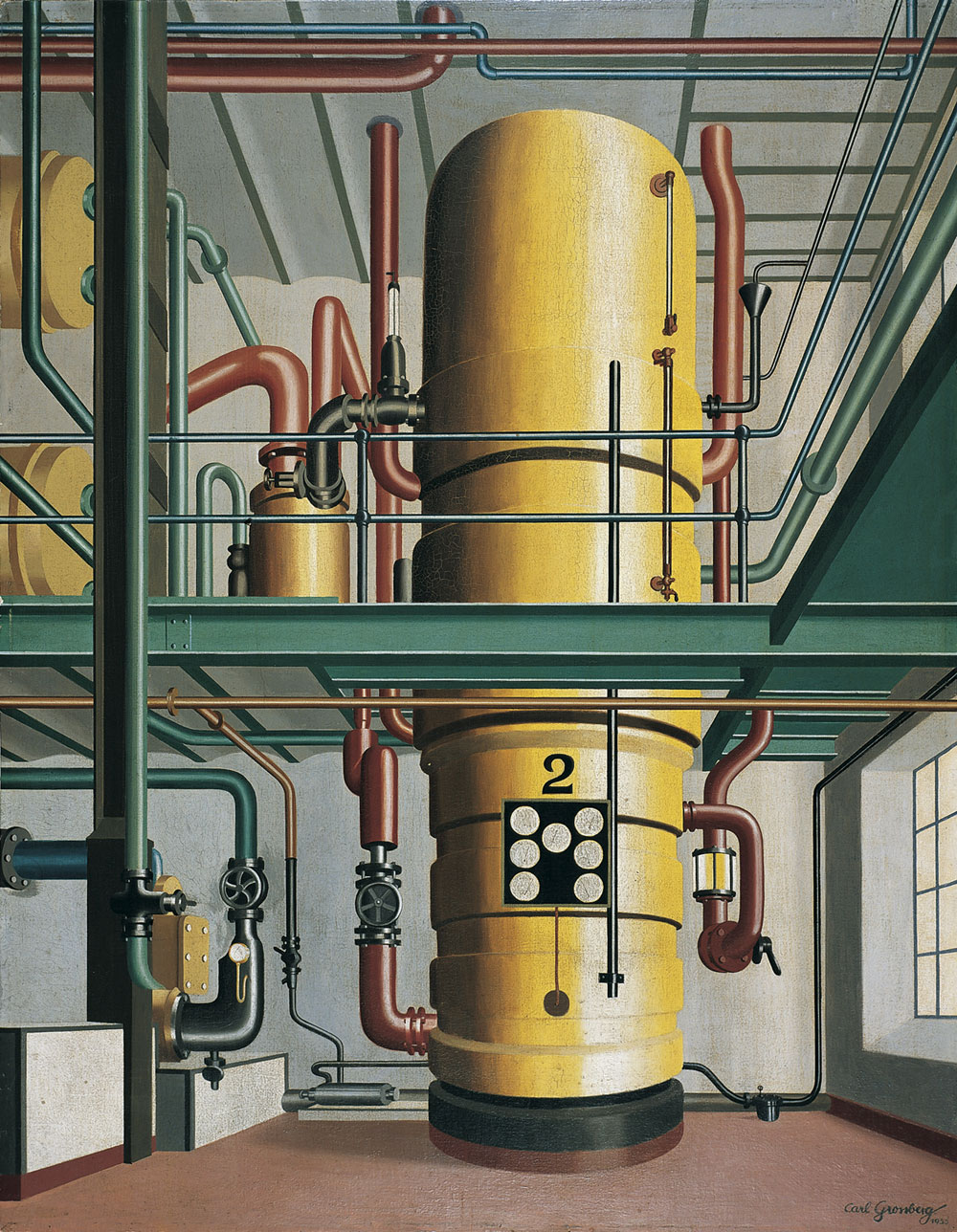

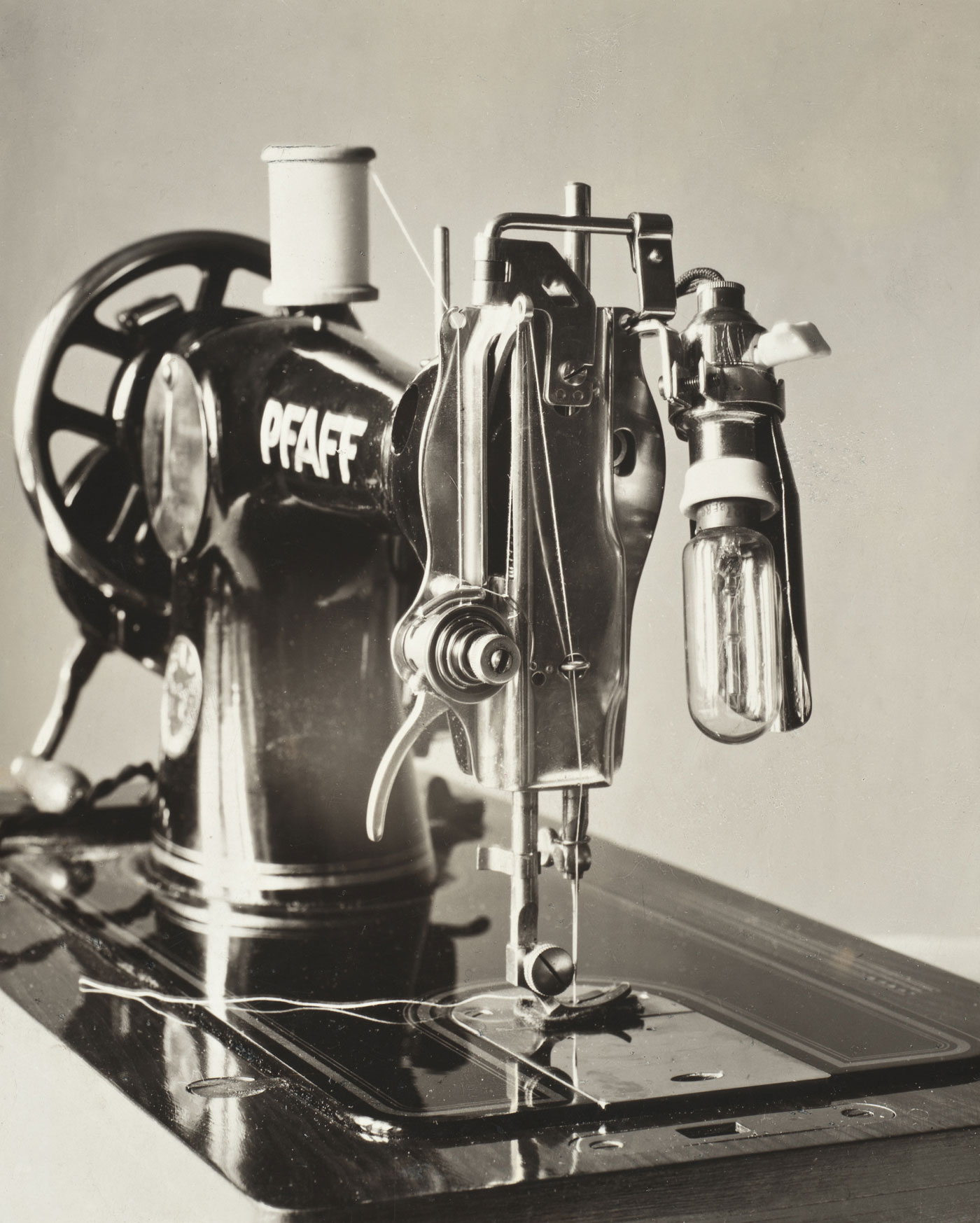


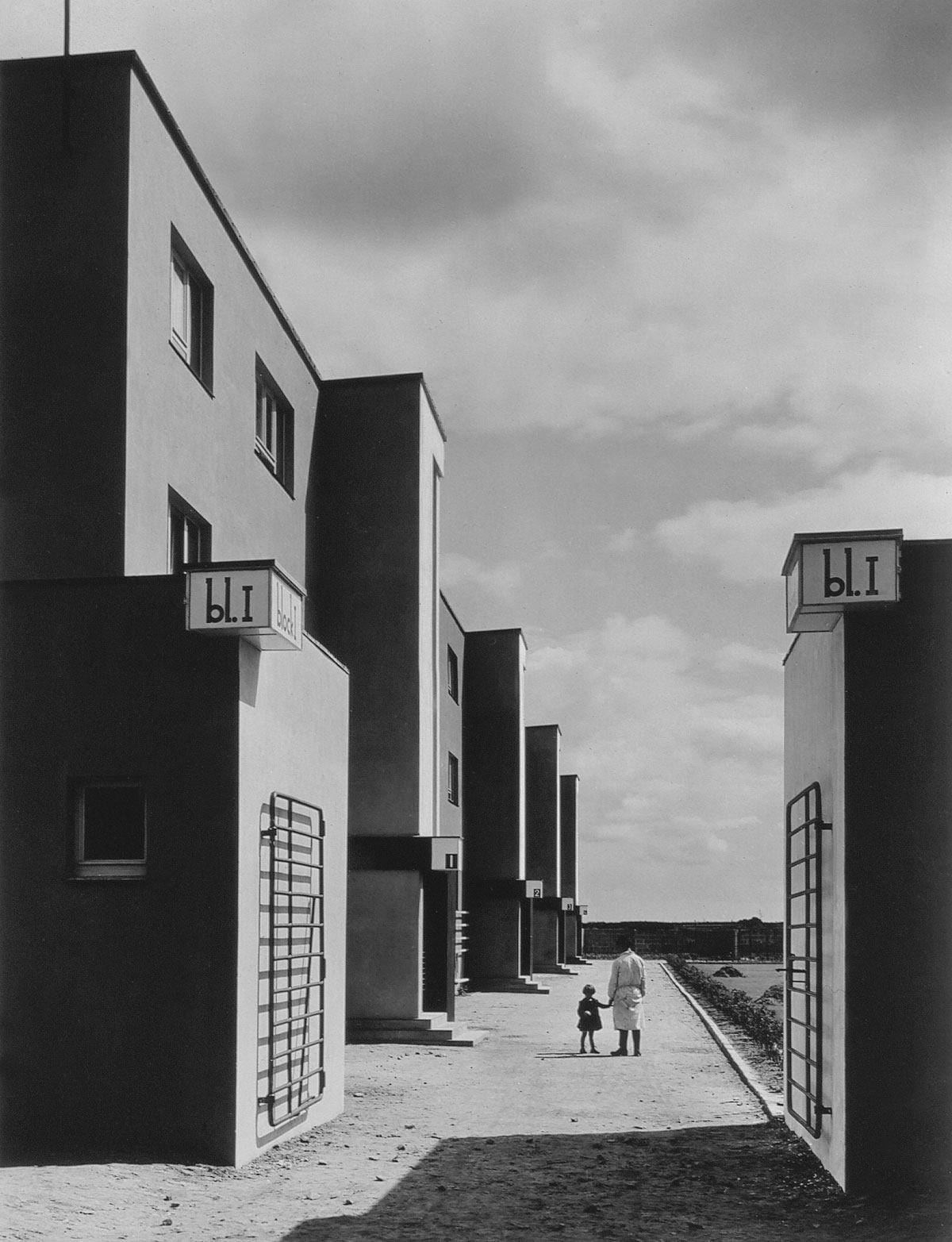


![George Grosz (German, 1893-1959) 'Construction (Untitled)' (Konstruktion [Ohne Titel]), 1920](https://artblart.com/wp-content/uploads/2016/01/grosz-construction.jpg "George Grosz (German, 1893-1959) 'Construction (Untitled)' (Konstruktion [Ohne Titel]), 1920")

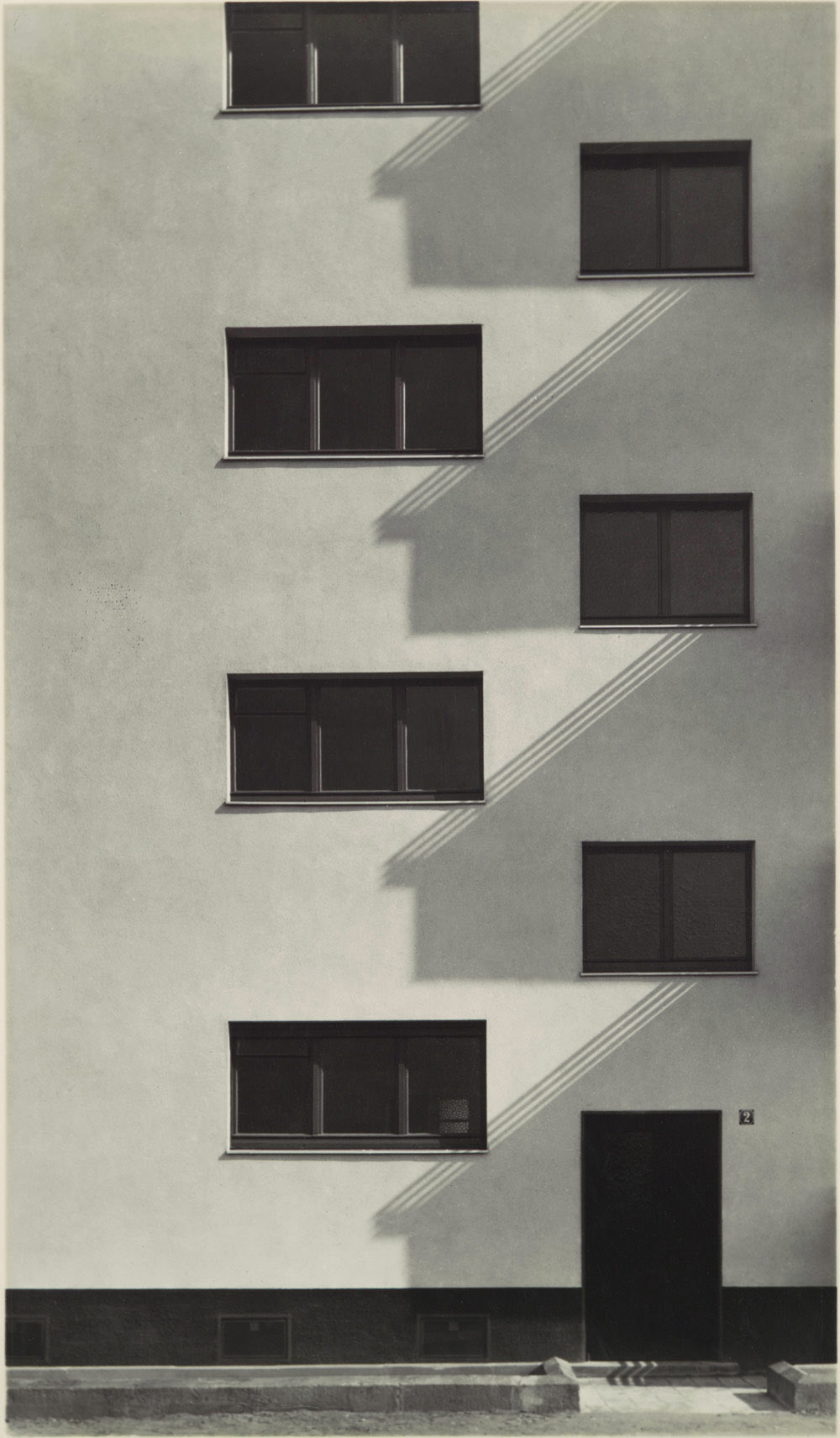

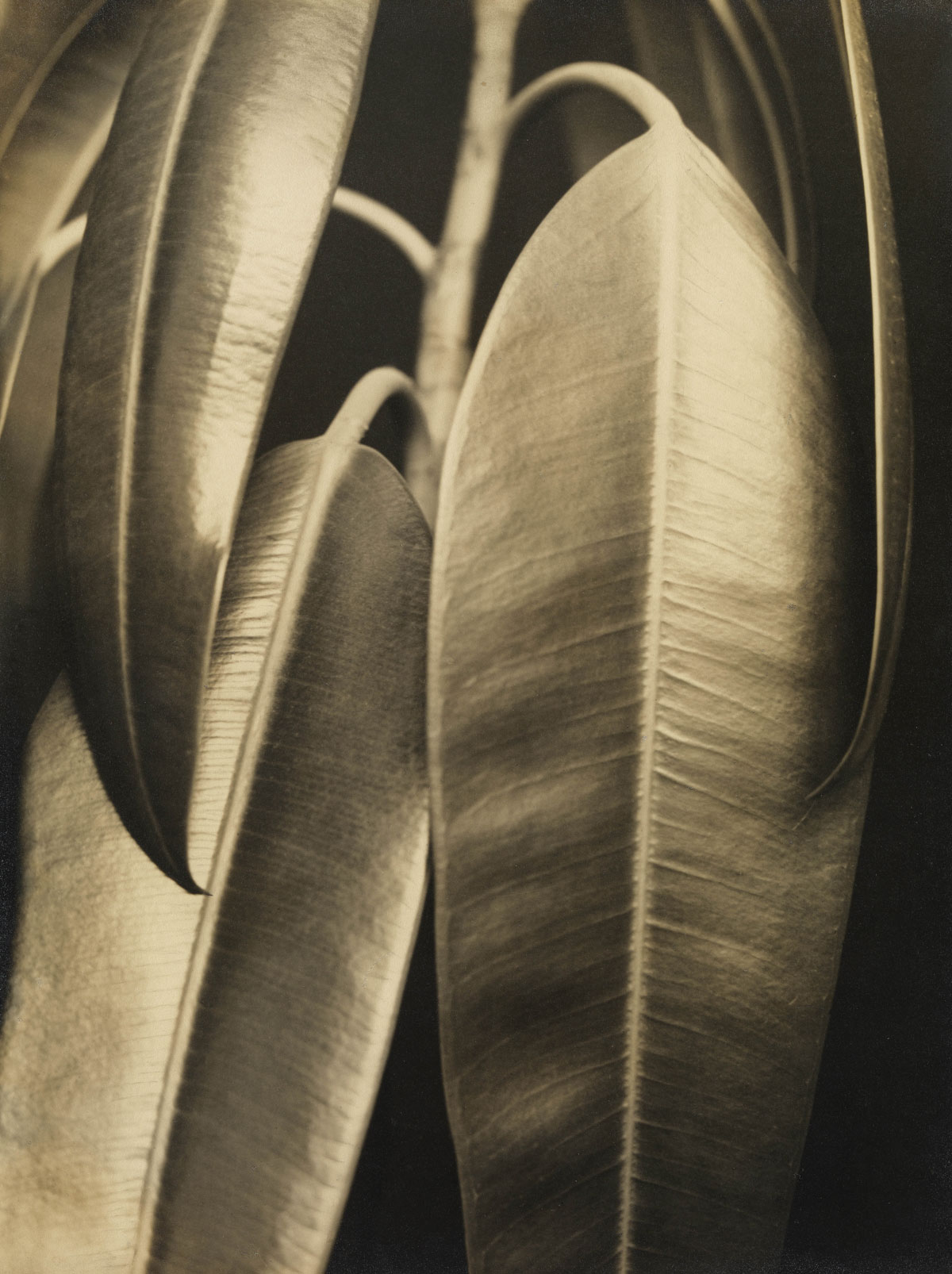


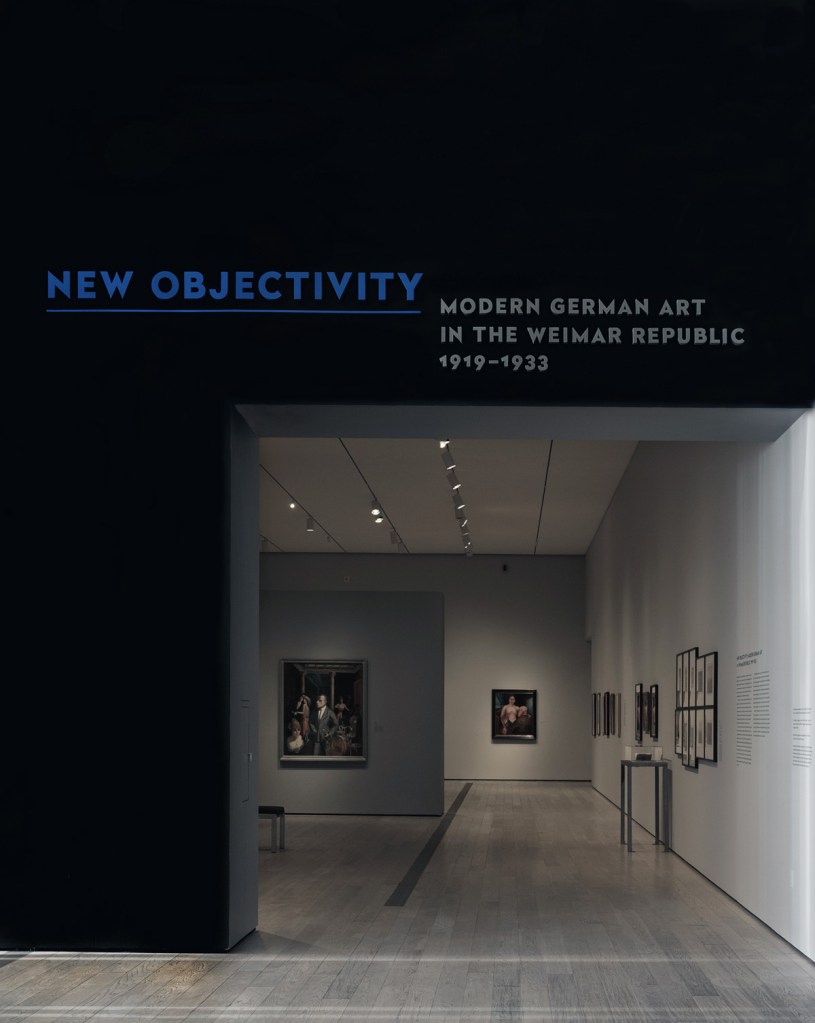
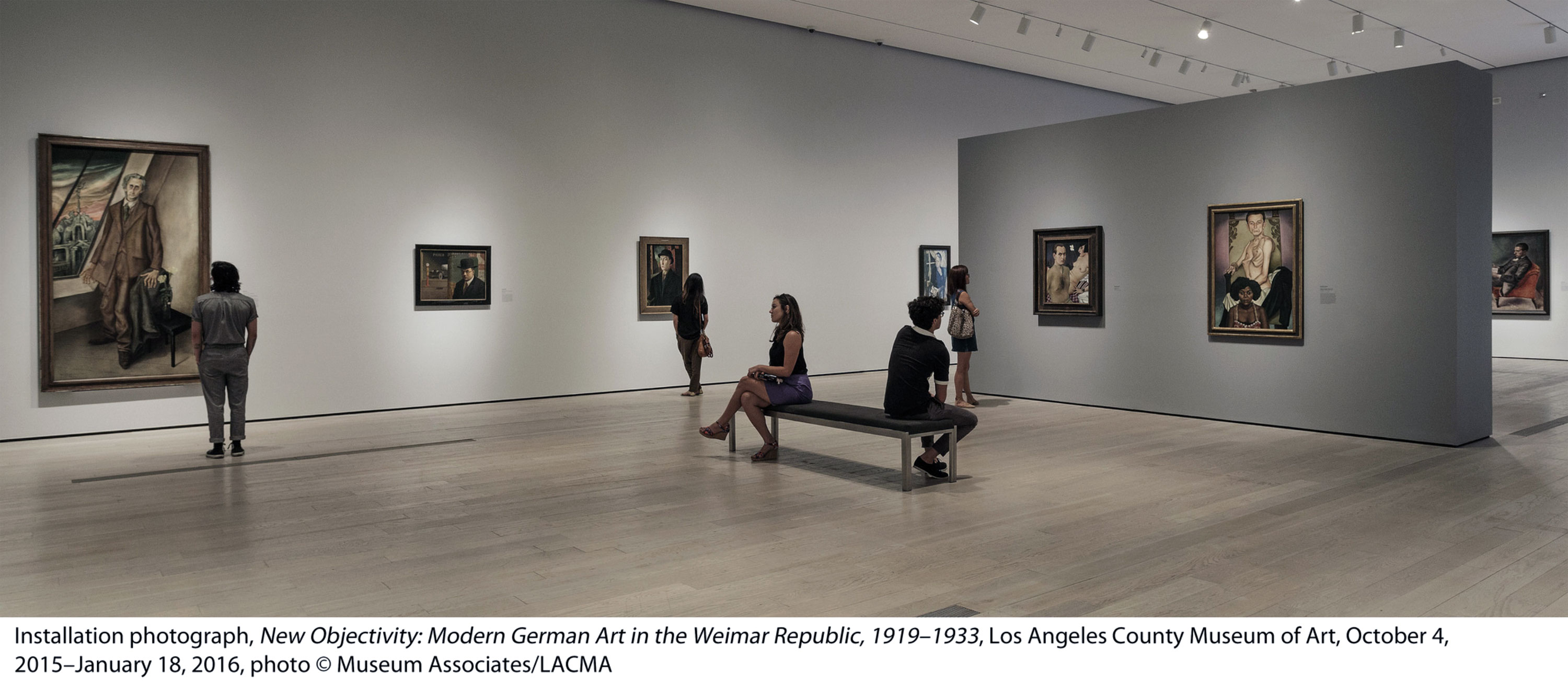
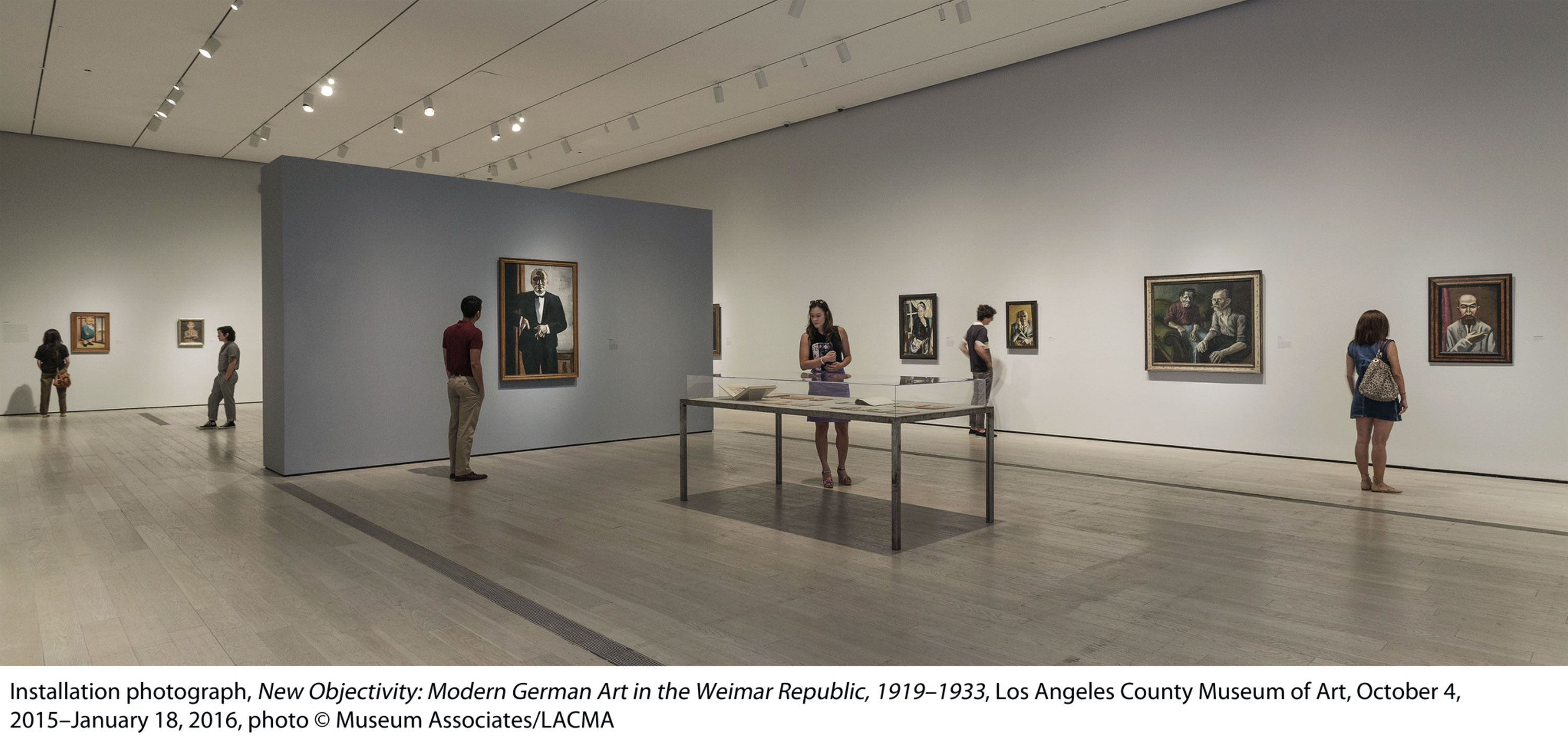


![Gert Wollheim (German, 1894-1974) 'Untitled (Couple)' (Ohne Titel [Paar]), 1926](https://artblart.com/wp-content/uploads/2016/01/wollheim-untitled.jpg?w=757 "Gert Wollheim (German, 1894-1974) 'Untitled (Couple)' (Ohne Titel [Paar]), 1926")









 Art Blart _ art and cultural memory archive
You must be logged in to post a comment.