Review: ‘Christian Thompson: Ritual Intimacy’ at Monash University Museum of Art (MUMA), Melbourne

Exhibition dates: 27th April – 8th July, 2017

This project has been supported by the Victorian Government through Creative Victoria

PLEASE NOTE: I am still recovering from my hand operation which is going to take longer than expected. All of the text has been constructed using a dictation programme and corrected using only my right hand – a tedious process. I have to keep my mental faculties together, otherwise this hand will drive me to distraction… Marcus
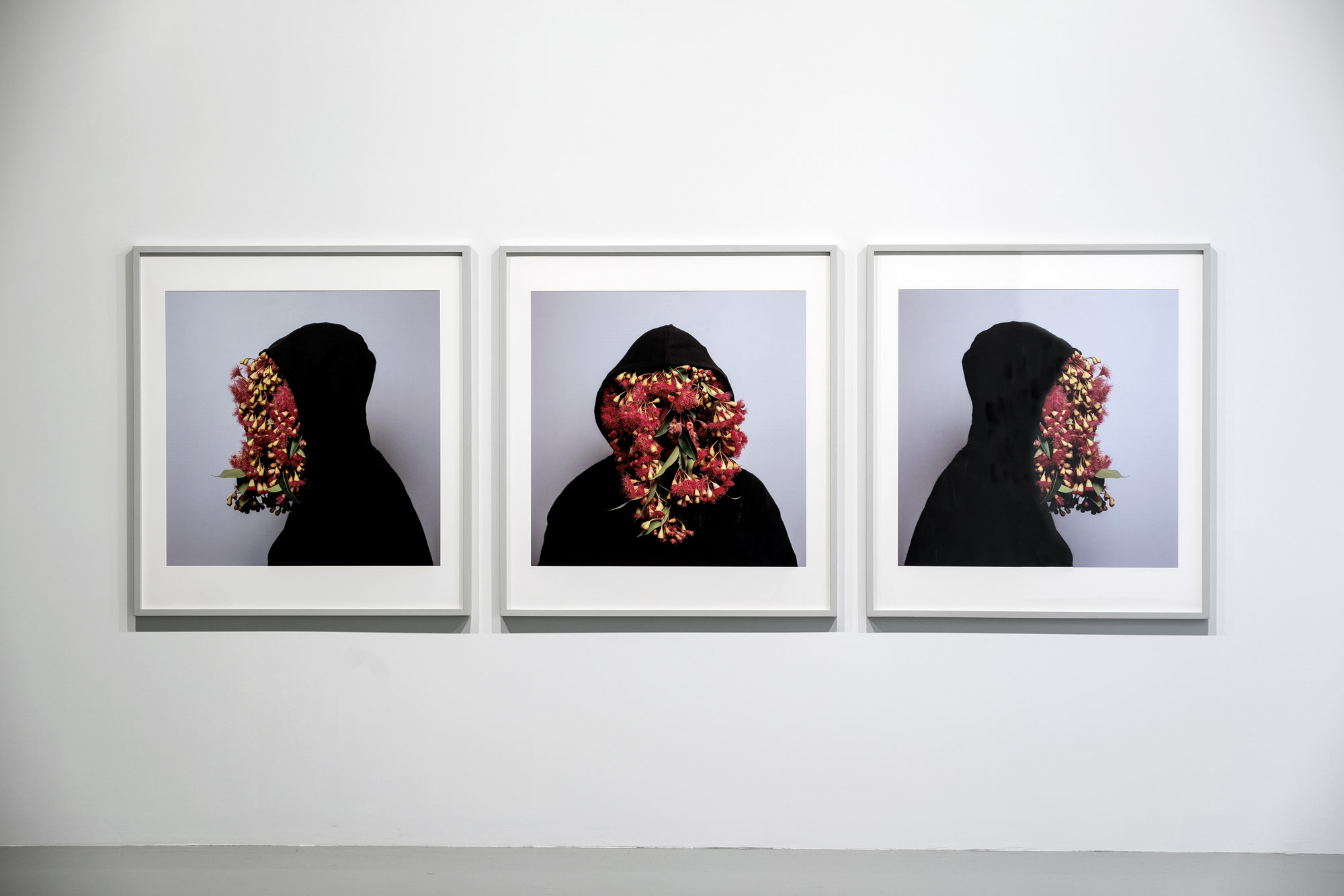
 

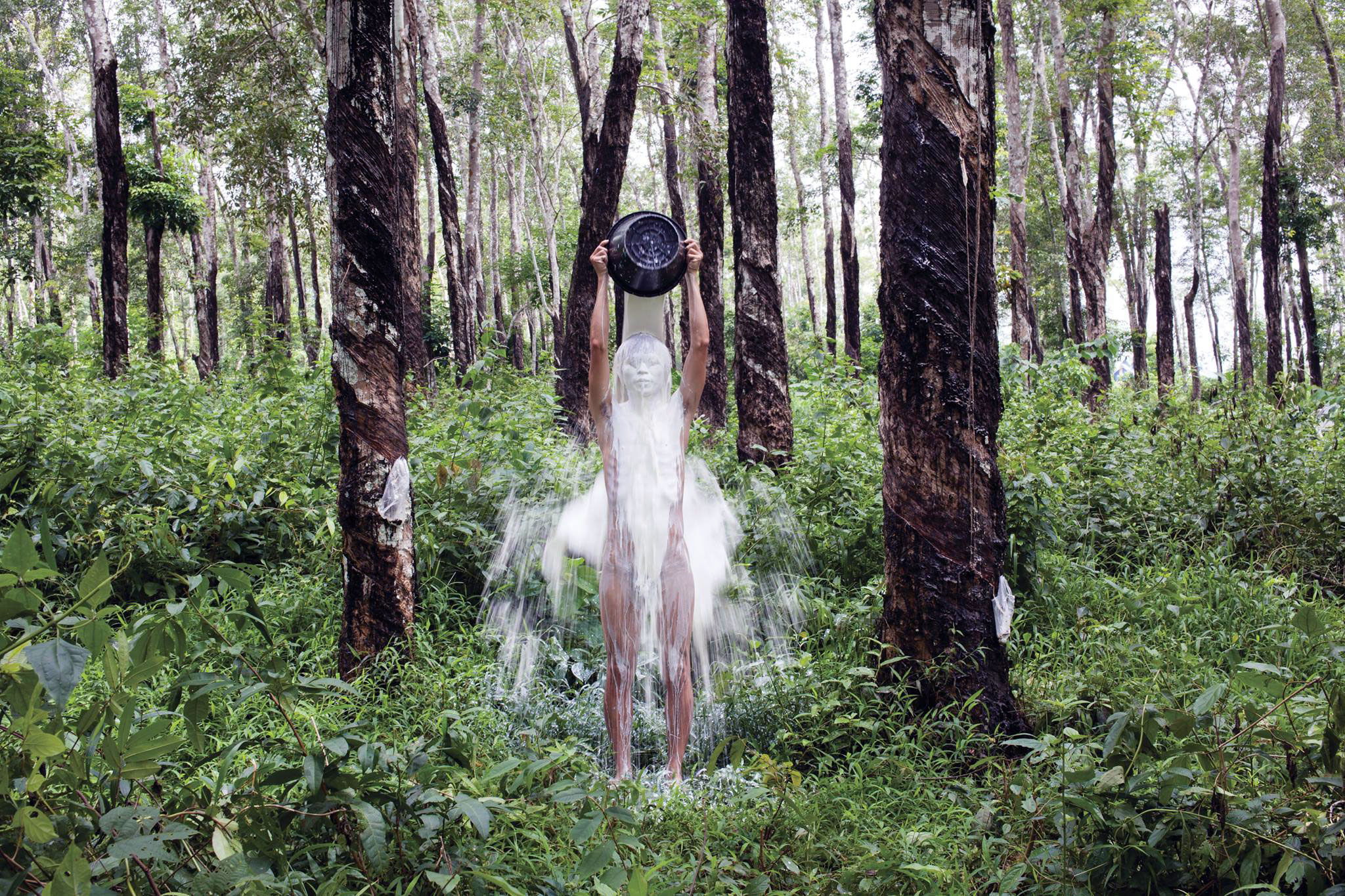
Christian Thompson (Australian, b. 1978) 'Black gum 1-3' 2007 from the exhibition 'Christian Thompson: Ritual Intimacy' at Monash University Museum of Art (MUMA), Melbourne, April - July, 2017


Christian Thompson (Australian, b. 1978)
Black gum 1-3
2007
From the series Australian graffiti
C-type prints
Collection of the National Gallery of Australia, Canberra
Photo: Andrew Curtis


Still singing, still Dreaming,
still loving… not dying.

This is a strong survey exhibition of the work of contemporary Australian Indigenous artist and Bidjara man exploring the world, Christian Thompson. As with any survey exhibition, it can only give us a glimpse into the long standing development of the artist’s work, inviting the viewer to then research more fully the themes, conceptual acts and bodies (of work) that have led the artist to this point in his artistic development. Having said that the exhibition, together with its insightful catalogue essays and additional images that do not appear in the exhibition, allow the viewer to be challenged intellectually, aesthetically and most importantly … spiritually. And to be somewhat conflicted by the art as well, it has to be said.

Thompson’s “multidisciplinary practice explores notions of cultural hybridity, along with identity and history, creating works that transcend cultural boundaries.” His self-reflexive and self-referential bodies of work, often with the artist using his body as an “armature for his characters, costumes and various props,” are intuitive and imaginative in how they relate Aboriginal and Australian/European history, taking past time into present time which influences future time. Time, memory, history, space, landscape are conflated into one point, enunciated through acts of ritual intimacy. These ritual intimacies, these performative acts, are enabled through an understanding of a regularised and constrained repetition of norms (in this case, the declarative power of colonialism), where the taking of a photograph of an Aboriginal person (for example), is “a ritual reiterated under and through constraint, under and through the force of prohibition and taboo, with the threat of ostracism and even death controlling and compelling the shape of the production…” (Judith Butler, Bodies That Matter. New York: Routledge, 1993, p. 95).

What is so heartening to see in this exhibition is a contemporary Indigenous artist not relying on re-animating colonial images of past injustices, but re-imagining these images to produce a spiritual connection to Country, to place, to people in the present moment. As Charlotte Day, Director, MUMA and Hetti Perkins, guest curator observe in the wall text at the beginning of the exhibition, “Rather than appropriating or restaging problematic ethnographic images of indigenous ancestors held in the Museum’s photographic collection, Thompson has chosen to spend significant periods of time with these images, absorbing their ‘aura’ and developing a personal artistic and deferential response that is decisively empowered.” As Marina Warner states in her excellent catalogue essay “Magical Aesthetics”, these ritual intimacies are a “magical re-animation and adopt time-honoured processes of making holy – of hallowing. Adornment is central to ritual and a prime way of glorifying and consecration.” What Thompson is doing is not quoting but translating the source-text into new material. As Mary Jacobus notes of the work of the painter Cy Twombly, “Quotation involves the repurposing of an existing text: translation requires a swerve from the source-text as it finds new directions and enters unknown terrain.” (Mary Jacobus. Reading Cy Twombly: Poetry in Paint.  Princeton & Oxford: Princeton University Press, 2016, p. 7).

This auto-ethnographic exploration and adornment leads to a deterritorialisation and reterritorialisation of time in a heterotopic space, juxtaposing in a single real place several spaces, several sites of contestation – Thompson’s travels and research from around the world, the embodiment in his own culture and that of contemporary Australia, pop culture, fashion, music and language – where, as Hetti Perkins says, “the unknowable is a lovely thing” and where Thompson can affect and influence “the Zeitgeist through more subversive means.” These spaces of ritualised production overlaid with memory, imagination, desire, and nostalgia, these fragmented images, become a process and a performance in which Thompson seeks to ameliorate the objects aura through a process of ‘spiritual repatriation’. Thompson’s performativity is where the ritual of production and meaning is never fully predetermined at any stage of production and reception.

Here, in terms of ‘aura’ and ‘spirit’, I am interested in the word “repatriation”. Repatriation means to send (someone) back to their own country – from the verb repatriare, from re- ‘back’ + Latin patria ‘native land’. It has an etymological link to the word “patriot” – from late Latin patriota ‘fellow countryman’, from Greek patriōtēs, from patrios ‘of one’s fathers’, from patris ‘fatherland’ – and all the imperial connotations that are associated with the word. So, to send someone back (against their own will? by force?) or to be patriotic, as belonging to or coming from, the fatherland. A land that is father, farther away. Therefore, it is with regard to a centralised, monolithic body and its materialities (for the body is usually centrally placed in Thompson’s work) in Thompson’s instinctive works, that relations of discourse and power will always produce hierarchies and overlappings which are going to be contested. As Judith Butler notes,

“That each of those categories [body and materiality] have a history and a historicity, that each of them is constituted through the boundary lines that distinguish them and, hence, by what they exclude, that relations of discourse and power produce hierarchies and overlappings among them and challenge those boundaries, implies that these are both persistent and contested regions.” (Judith Butler. Bodies That Matter. New York: Routledge, 1993, pp. 66-67)


Thus performativity is the power of discourse, the politicisation of abjection, and the ritual of being.

This is where I become conflicted by much of this work. Intellectually and conceptually I fully understand the instinctive, intuitive elements behind the work (crystals, flowers, maps, butterflies, dreams) but aesthetically I feel little ‘aura’ emanating from the photographs. Thompson’s “peripatetic life and your bowerbird, magpie-like fascination” (p. 107) lead to all sorts of influences emerging in the work – orange from The Netherlands, Morris dancers from England, Jewish heritage, Aboriginal and Australian heritage, fashion, pop culture, music, language – all evidenced through “acts of concealment in his self-portraits.” (p. 75). Now there’s the rub!

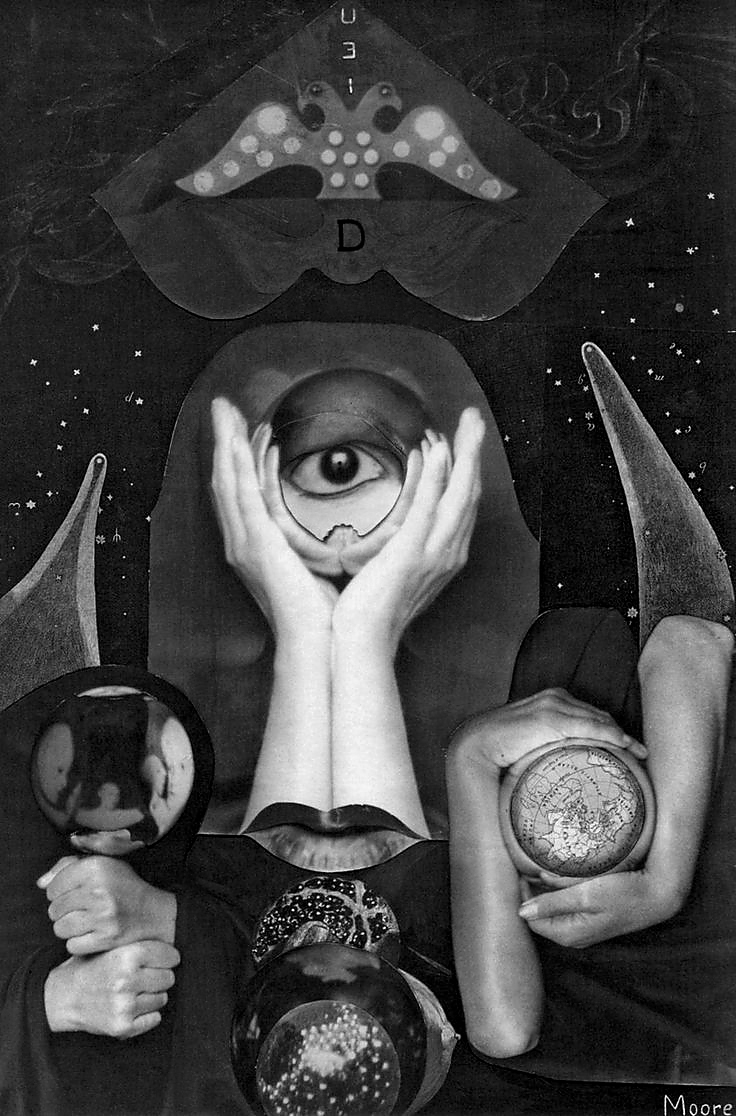
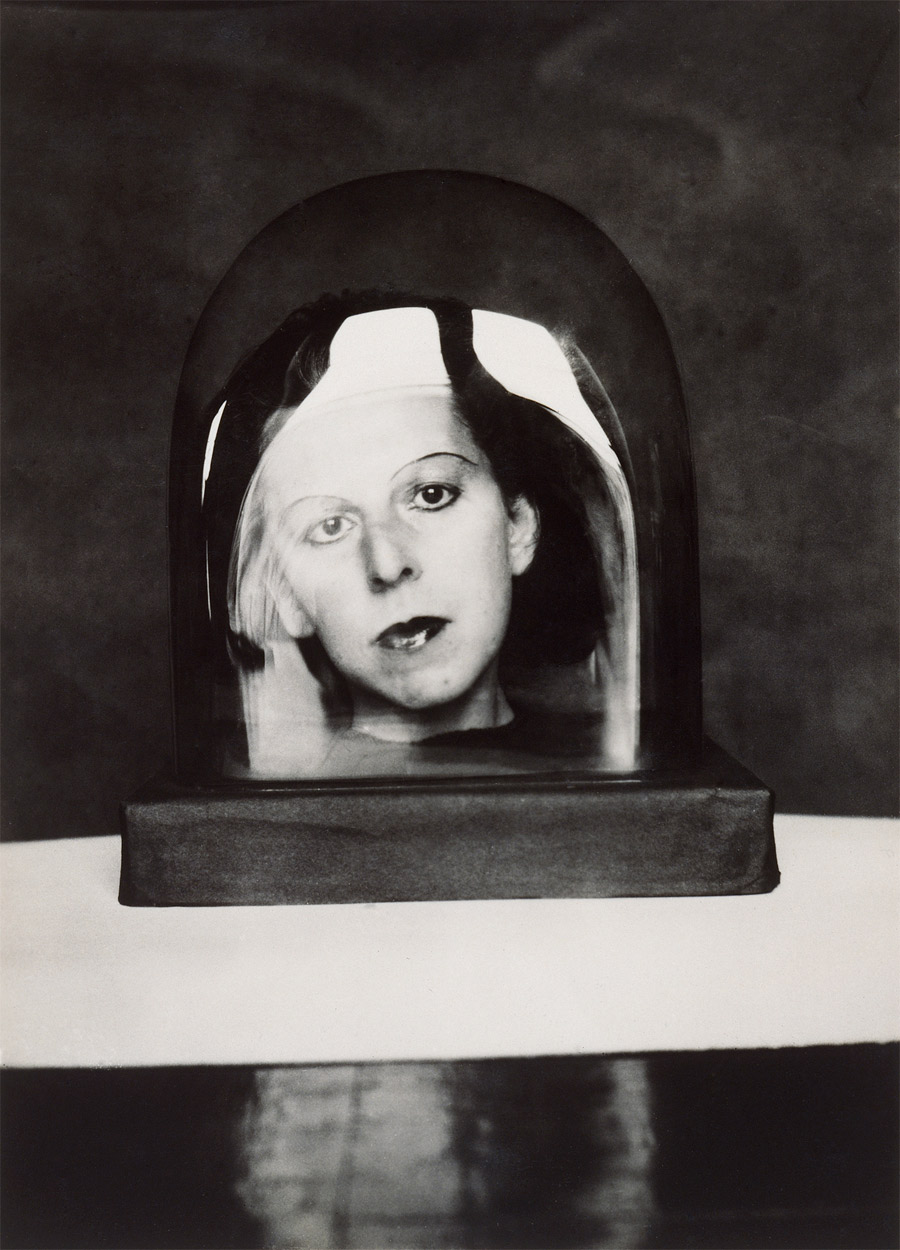
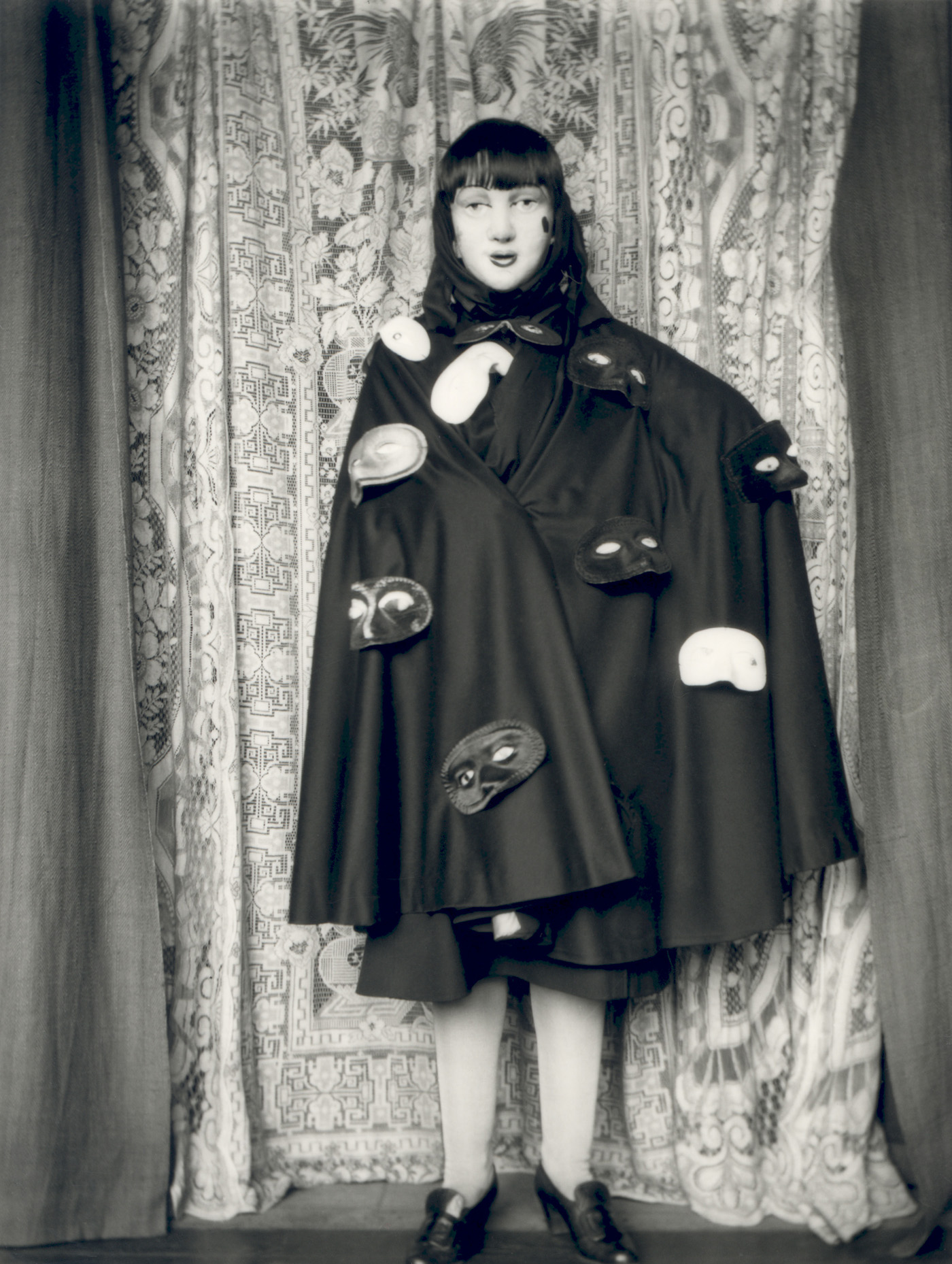
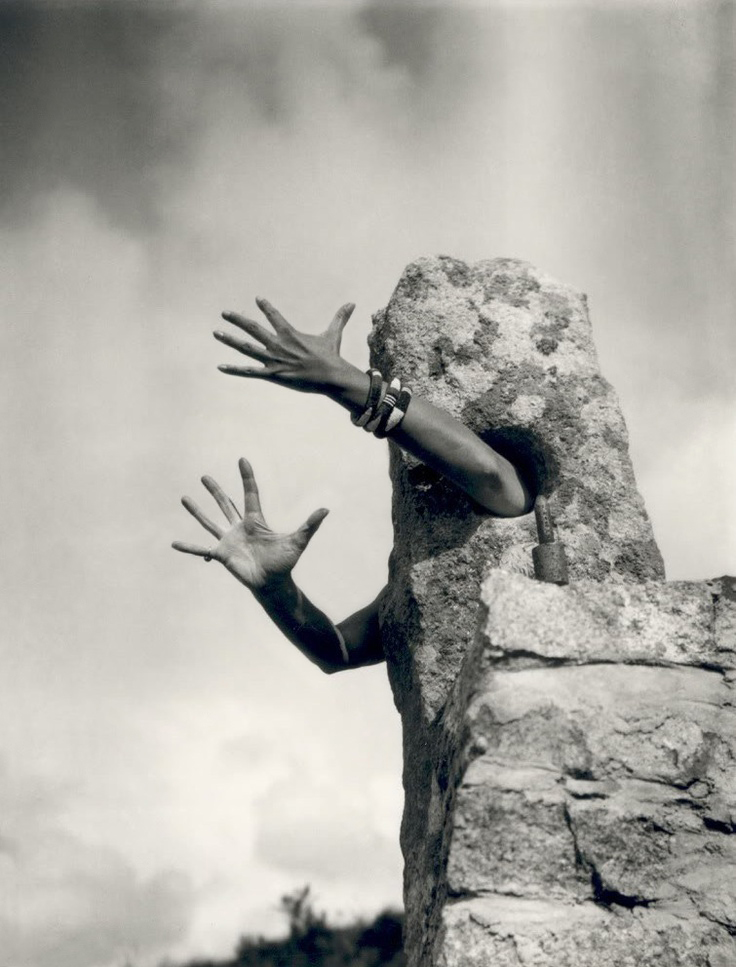
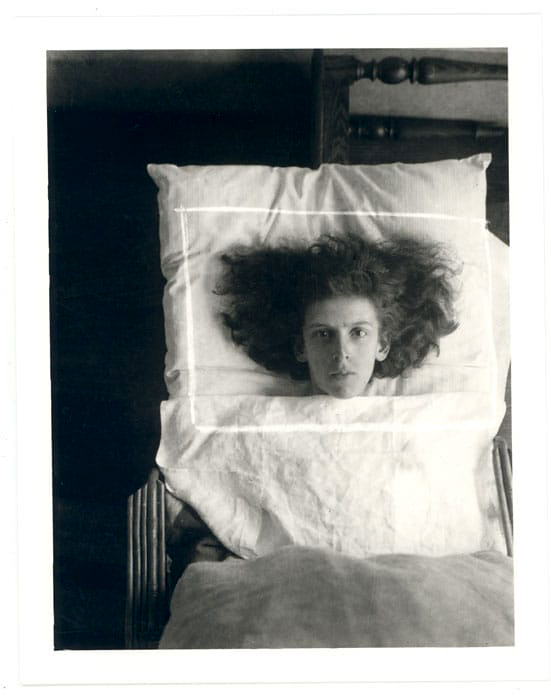
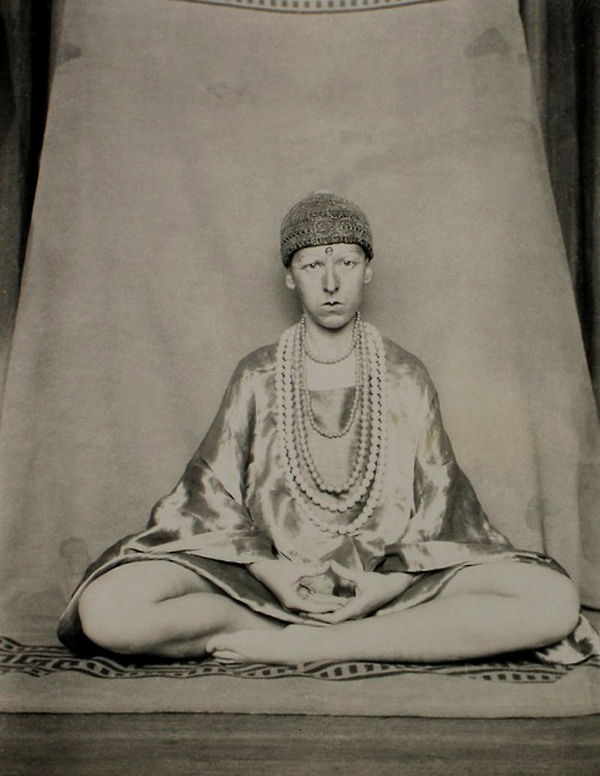
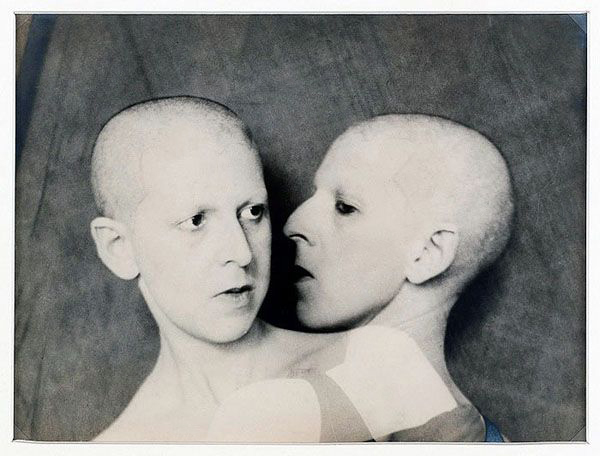
In Thompson’s ritual intimacies the intimacy is performed only once, for the camera. It is not didactic, but it is interior and hidden, leaving much to the feelings of the viewer, looking. The re-presentation of that intimacy is performed by the viewer every time they look at the art. I think of the work of one of my favourite performance artists, Claude Cahun, where the artist inhabits her personas, adorning her androgynous face with costume after costume to become something that she wants to become – a buddha, a double, a harpy, a lunatic or a doll with equal ease. Cahun is always and emphatically herself, undermining a certain authority… and she produces indelible images that sear the mind.

I don’t get that from Thompson. I don’t know who he really is. Does it matter? Yes it does. In supposedly his most autobiographic work (according to Hetti Perkins), the video Heat (2010, below) the work emerges out of Thompson’s memories of growing up in the desert surrounding Barcaldine in central west Queensland where “heat captures the sensation that he associates with being on his country: the dry wind blowing through his hair.” Perhaps for him or someone from the desert country like Hetti Perkins (as she states in the catalogue), but not for me. I feel no ‘heat’ from these three beautiful woman standing in a contextless background with a wind machine blowing their hair. The only ‘heat’ I felt was perhaps the metaphoric heat of colonisation, violence and abuse thrust on a vulnerable culture.

Talking of vulnerable cultures, in the work Polari (2014, below) Thompson invokes the history of languages in an intimate ritual “as he seeks to reanimate and repossess vanishing knowledge. Polari is a private language … a kind of code used by sailors, circus and fairground folk, and in gay circles. … Thompson’s Polari series warns us that the artist has a language of his own, which we can overhear but not fully understand: something is withheld, in contrast to the imposed and implacable exposure which the subjects of scientific collections were made to suffer in the past.” (Warner, p. 74) But why is he using Polari specifically, a language that is strongly associated with the libertine gay culture of the 1950s-70s? Does he have a right to use this word and its linguistic heritage because he is gay? It is never stated, again another thing left hidden, concealed and unresolved.

Although no culture can ever fully own its language (language is a construct after all) … if Thompson is not gay, then I would take exception to his invoking the Polari language, just as an Indigenous artist would take exception to me using Bidjara language in an art work of my own. I remember coming out in London in 1975 and speaking Polari myself when it was still being used in pubs and clubs such as the A + B club in Soho. It was not being used as a language of resistance, far from it, but as a language of desire. It was a language used to inculcate that desire. As a video on YouTube observes of speaking Polari, “you didn’t think, oh God I’m so oppressed I can never speak about myself, you just did it, you just slipped into it without thinking.” It was your own language, like a comfortable pair of slippers. Does Thompson understand how using that word to title a body of work could be as offensive to some people as he finds the denaturing of his own culture? For me this is where the work really becomes problematic, when an artist does not enunciate these connections, where things, like sexuality, remain hidden. Similarly, with historical photographs of Indigenous people taken for ethnographic study, Thompson fails to acknowledge the work of academics such as Jane Lydon and her important books Eye Contact: Photographing Indigenous Australians (2005) and Photography, Humanitarianism, Empire (2016) where she unpacks the historical baggage of the images and notes that the photographs were not solely a tool of colonial exploitation. Lydon articulates an understanding in Eye Contact that the residents of Coranderrk, an Aboriginal settlement near Healsville, Melbourne, “had a sophisticated understanding of how they were portrayed, and they became adept at manipulating their representations.” Again, there is more than meets the eye, more than just ‘spiritual repatriation’ of aura.

For me, the magic of this exhibition arrives when Thompson lets go all obfuscation, let’s go all actions that make something obscure, unclear, or unintelligible. Where his ritual intimacies become grounded in language, earth and spirit. This happens in the video works, Desert slippers (2006, below), Refuge (2014, below), Gamu Mambu (Blood Song) (2011) and Dhagunyilangu (Brother) (2011, below). In these videos, the Other’s gaze disintegrates and we are left with poignant, heart felt words and actions that engage history, emotion, family and Country.

The video Desert slippers “features a Bidjara ritual in which a father and son transfer sweat. The desert slipper is a native cactus that symbolises the transferal of the spirit back to earth as the plant grows.” It is simple, eloquent, powerful, present. The other videos feature two baroque singers from Europe and Thompson singing in his native tongue Bidjara (Bidyara, Pitjara), a language that Wikipedia states “is an extinct Australian Aboriginal language. In 1980 it was spoken by twenty elders in Queensland, between Tambo and Augathella, Warrego and Langlo rivers.” Spelt out in black and white. Extinct. To hear Thompson sing a berceuse (French, from bercer ‘to rock’), or lullaby in his native language, a language taught to him by his father, is the most emotional of experiences. The work “combines evocative chanting and electronic elements to invoke the cultural experiences and narratives of his Bidjara culture,” and “is premised on the notion that if one word of Bidjara is spoken, or sung in this case, it remains a living language.” Amen to that.

This is the real hallowing, not the dress ups or the concealments. It is in these videos that the raw material of his and his cultures experience is transmuted into living, breathing stories, in an alchemical transmutation, a magical re-animation of past time into present and future time. My transfiguration into a more spiritual state was complete when listening in quiet contemplation. For I was given, if only for a very brief moment, access to the pain of our First Peoples and a vision of hope for their future healing.

Still singing, still Dreaming,
still loving… and certainly not dying.

Dr Marcus Bunyan

Word count: 2,053


Many thankx to MUMA for allowing me to publish the photographs and videos in the posting. All installation photographs unless otherwise noted © Marcus Bunyan, the artist and MUMA. Please click on the photographs for a larger version of the image.


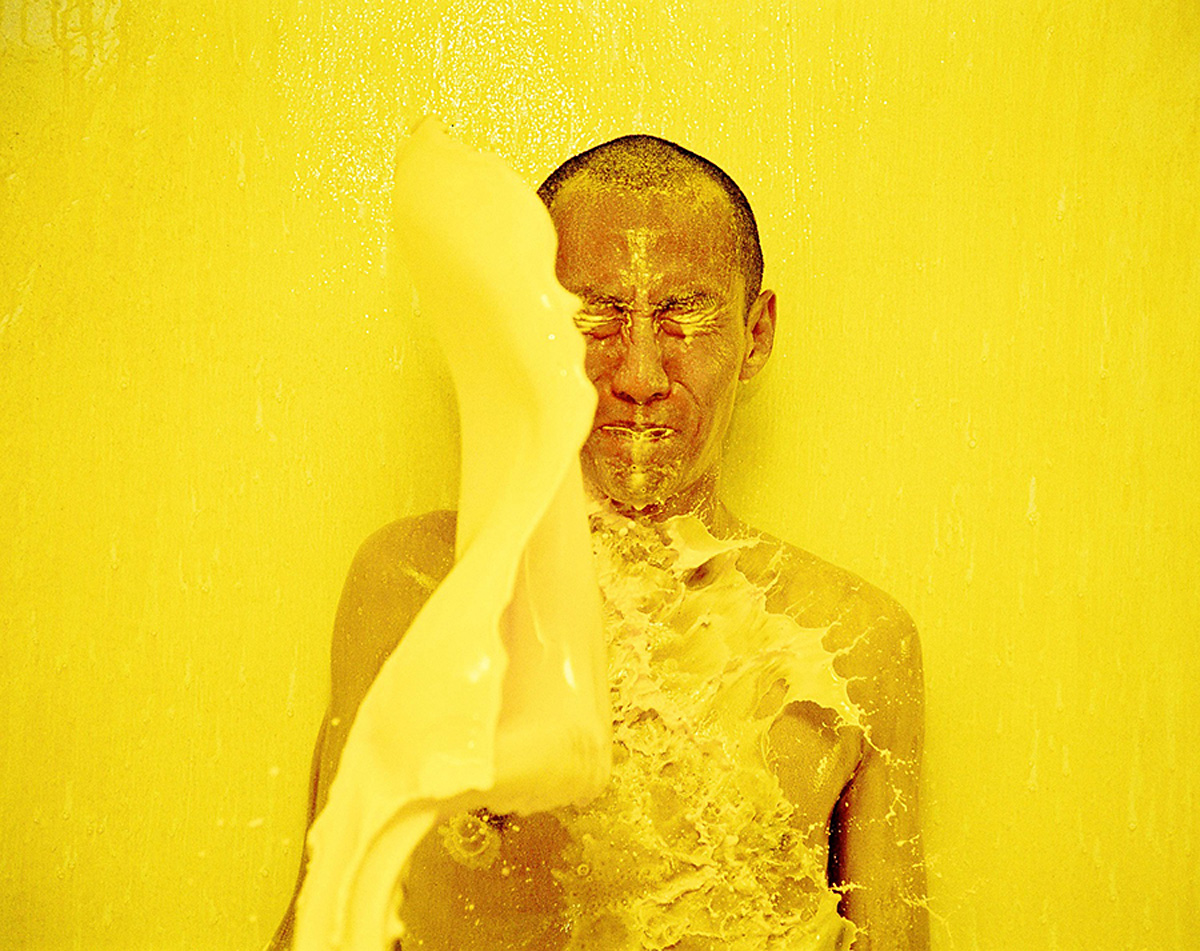
Christian Thompson (Australian, b. 1978) 'Black gum 1' 2007 (installation view)


Christian Thompson (Australian, b. 1978)
Black gum 1 (installation view)
2007
From the series Australian graffiti
C-type print
Collection of the National Gallery of Australia, Canberra
Photo: Marcus Bunyan
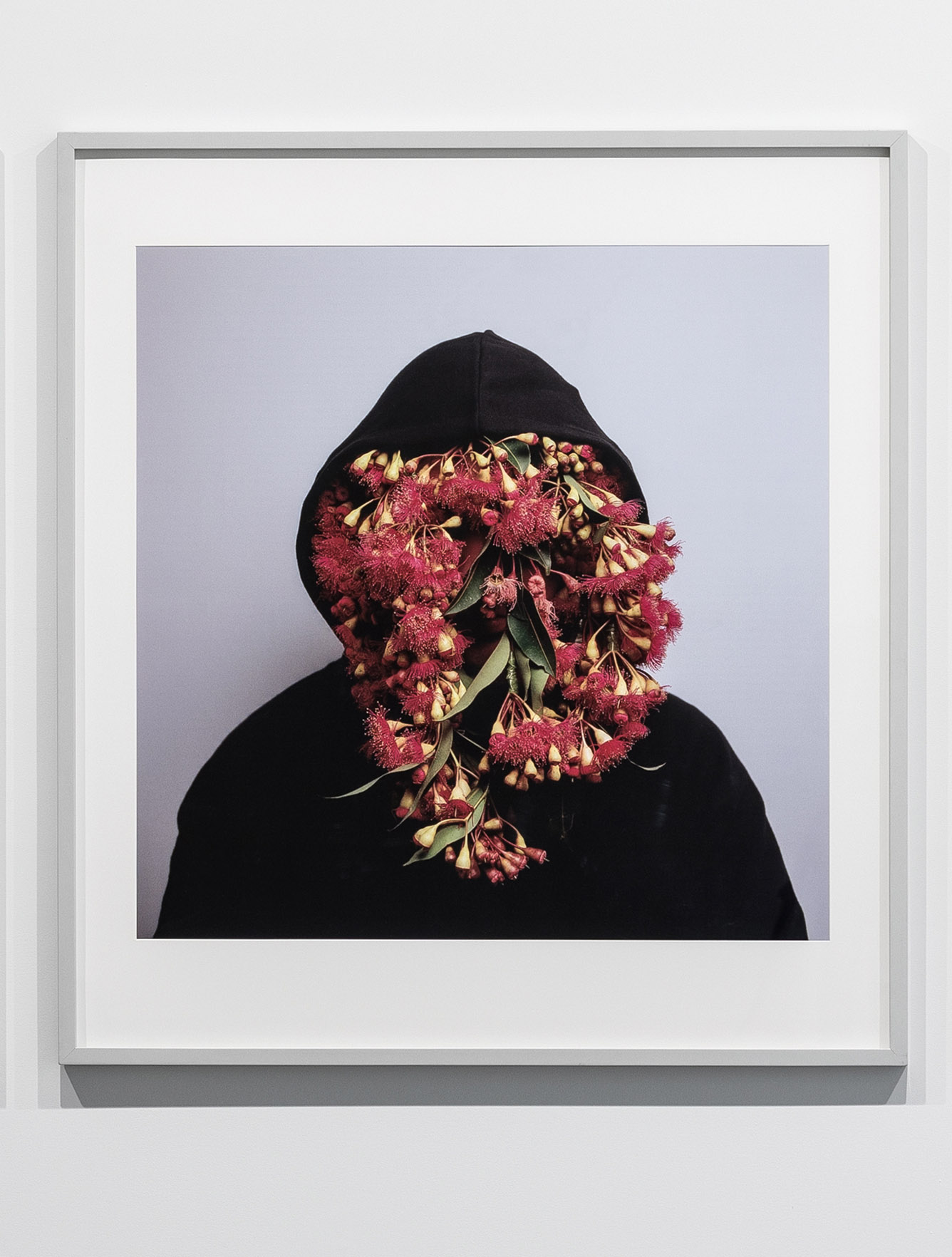
 

Christian Thompson (Australian, b. 1978) 'Black gum 2' 2007 (installation view)


Christian Thompson (Australian, b. 1978)
Black gum 2 (installation view)
C-type print
2007
From the series Australian graffiti
Collection of the National Gallery of Australia, Canberra
Photo: Marcus Bunyan


“While I’m interested in portraiture – I don’t consider my work as portraiture because that suggests that I’m trying to portray myself, my own visage, my own image. I employ images, icons, materials, metaphors to capture and idea and moment in time. There are many different things at play; taking a picture of myself is really the last thing that’s on my mind.”


Christian Thompson in conversation with Hetti Perkins, catalogue extract


“I’m interested in simple aesthetic gestures that can say something … something quite profound about the world that we live in. I tend to build images how I create a sculpture. I borrow from the world around me.”

On being away from home: “You’re able to remove yourself from the local discourse, and romanticise home. When you’re displaced you tend to gravitate towards certain memories … But this is who I am. It would be weird not to express that somehow. I combine memories of my past with my lived experience and an idea of where I’d like to be … it’s all montaged into one.”


Christian Thompson quoted in Will Cox. “Christian Thompson’s Ritual Intimacy,” on the Broadsheet website 15 June 2017 [Online] Cited 22/12/2021


“But Thompson makes things up. His ‘We bury our own’ does not let us see the early daguerreotype but improvises a series of fugues on its spiritual essence. This is the crucial step that Thompson has taken: if you repeat the spectacle you cannot escape the past. But if you, a spiritual descendant, transmogrify yourself in keeping with the aura of the image’s subject, during the prolonged period of encounter and immersion, you can ‘repatriate’ that forebear. Or so he desires.”

“Through these conjurings of the language his people spoke before colonisation set out to strip them of their culture as well as their land, Christian Thompson performs private ceremonies – to reach beyond visual statements of personal presence and reawaken the knowledge of his forebears, and allow us, his listeners and viewers, into their living story.”


Marina Warner. “Magical Aesthetics,” extracts from the catalogue essay


“At the heart of my practice is a concern with aura: what it is, how it can be photographed and how it can be repatriated.”


Christian Thompson
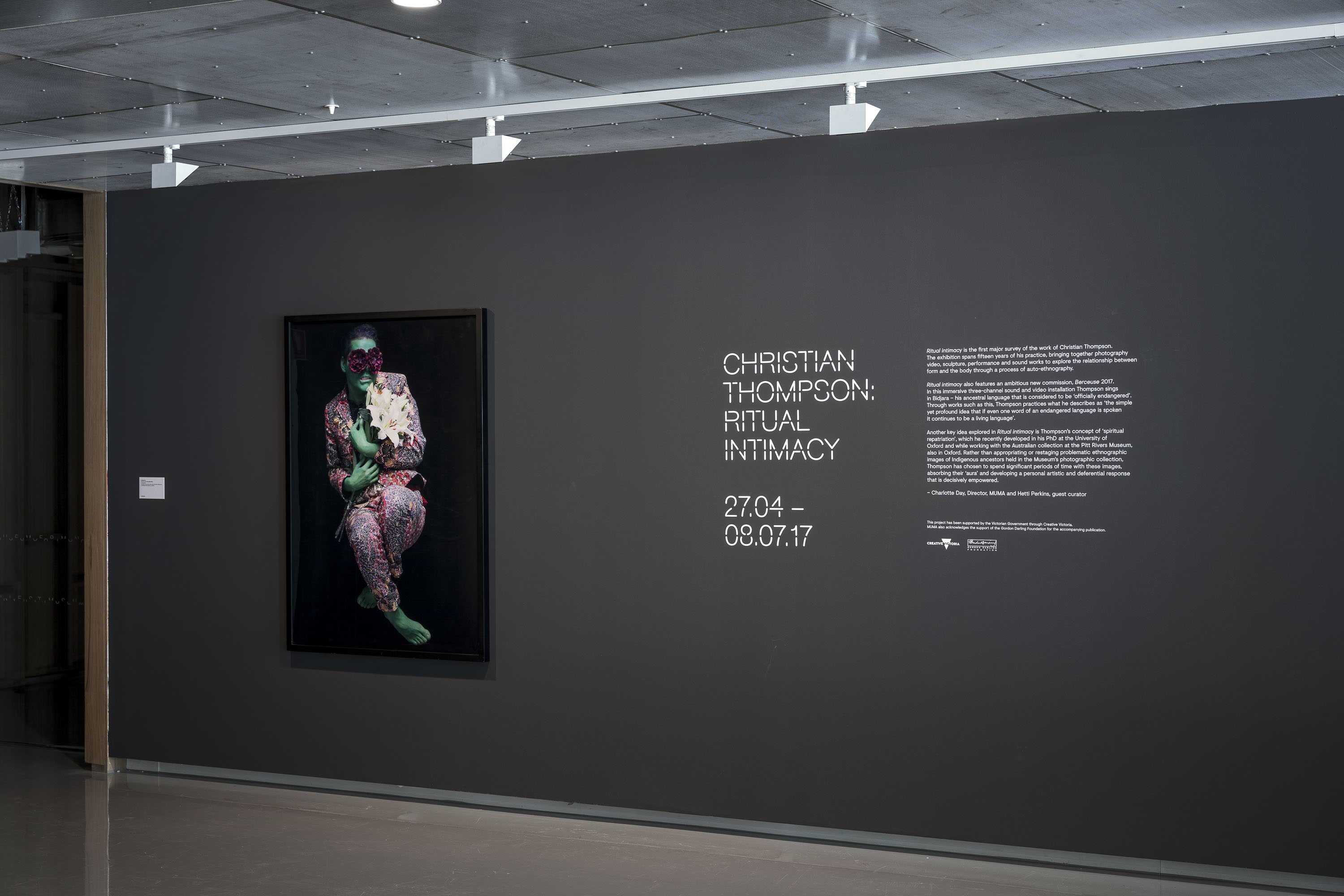


'Christian Thompson: Ritual intimacy', installation view: Monash University Museum of Art, Melbourne 2017


Christian Thompson: Ritual intimacy, installation view: Monash University Museum of Art, Melbourne 2017
Photo: Andrew Curtis


Christian Thompson (Australian, b. 1978) 'Untitled #6' 2010


Christian Thompson (Australian, b. 1978)
Untitled #6
2010
From the series King Billy
C-type print
Image courtesy of the artist, Sarah Scout Presents, Melbourne, and Michael Reid, Sydney and Berlin


'Christian Thompson: Ritual intimacy', installation view: Monash University Museum of Art, Melbourne 2017 featuring stills from the video 'Berceuse' (2017)

'Christian Thompson: Ritual intimacy', installation view: Monash University Museum of Art, Melbourne 2017 featuring stills from the video 'Berceuse' (2017)


Christian Thompson: Ritual intimacy, installation view: Monash University Museum of Art, Melbourne 2017 featuring stills from the video Berceuse (2017)
Photos: Marcus Bunyan


Christian Thompson (Australian, b. 1978)
Berceuse (extract installation view)
2017
Three-channel digital colour video, sound
5.47 minutes
Sound design: Duane Morrison


Christian Thompson (Australian, b. 1978)
Berceuse
2017
Three-channel digital colour video, sound
5.47 minutes
Sound design: Duane Morrison


In this newly commissioned work, Thompson sings a berceuse – a cradle song or lullaby – that combines evocative chanting and electronic elements to invoke the cultural experiences and narratives of his Bidjara culture. Intended as a gesture of re-imagining his traditional Bidjara language, which is been categorised as extinct, the work is premised on the notion that if one word of Bidjara is spoken, or sung in this case, it remains a living language.

Thompson makes subtle reference to his maternal Sephardic Jewish roots by ruminating in this work on the lullaby Nani Nani:


Lullaby, lullaby
The boy wants a lullaby,
The mother’s son,
Who although small will grow.

Oh, oh my lady open,
Open the door,
I come home tired,
From ploughing the fields.

Oh, I won’t open them,
You don’t come home tired,
You’ve just come back,
From seeing your new lover.

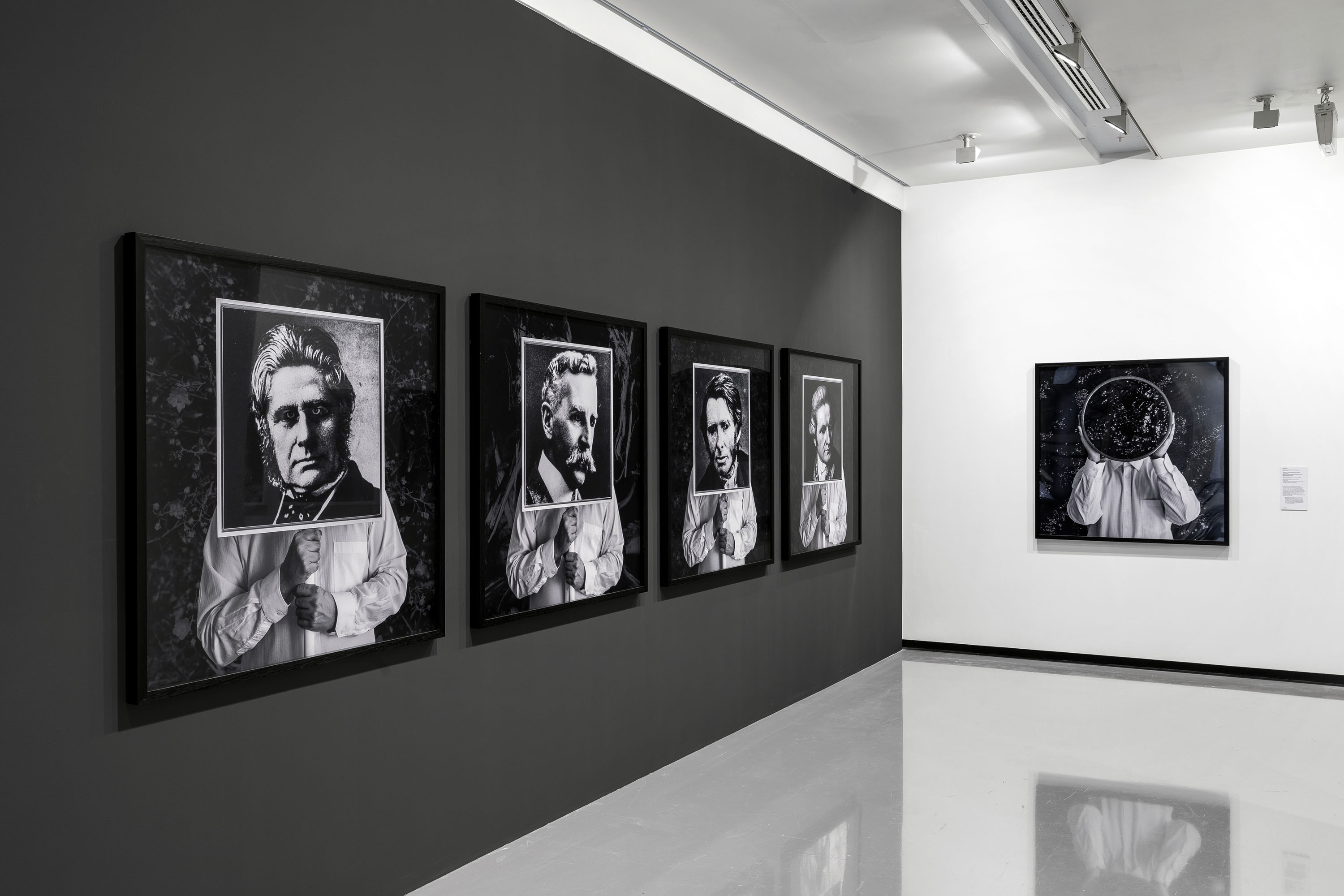
 

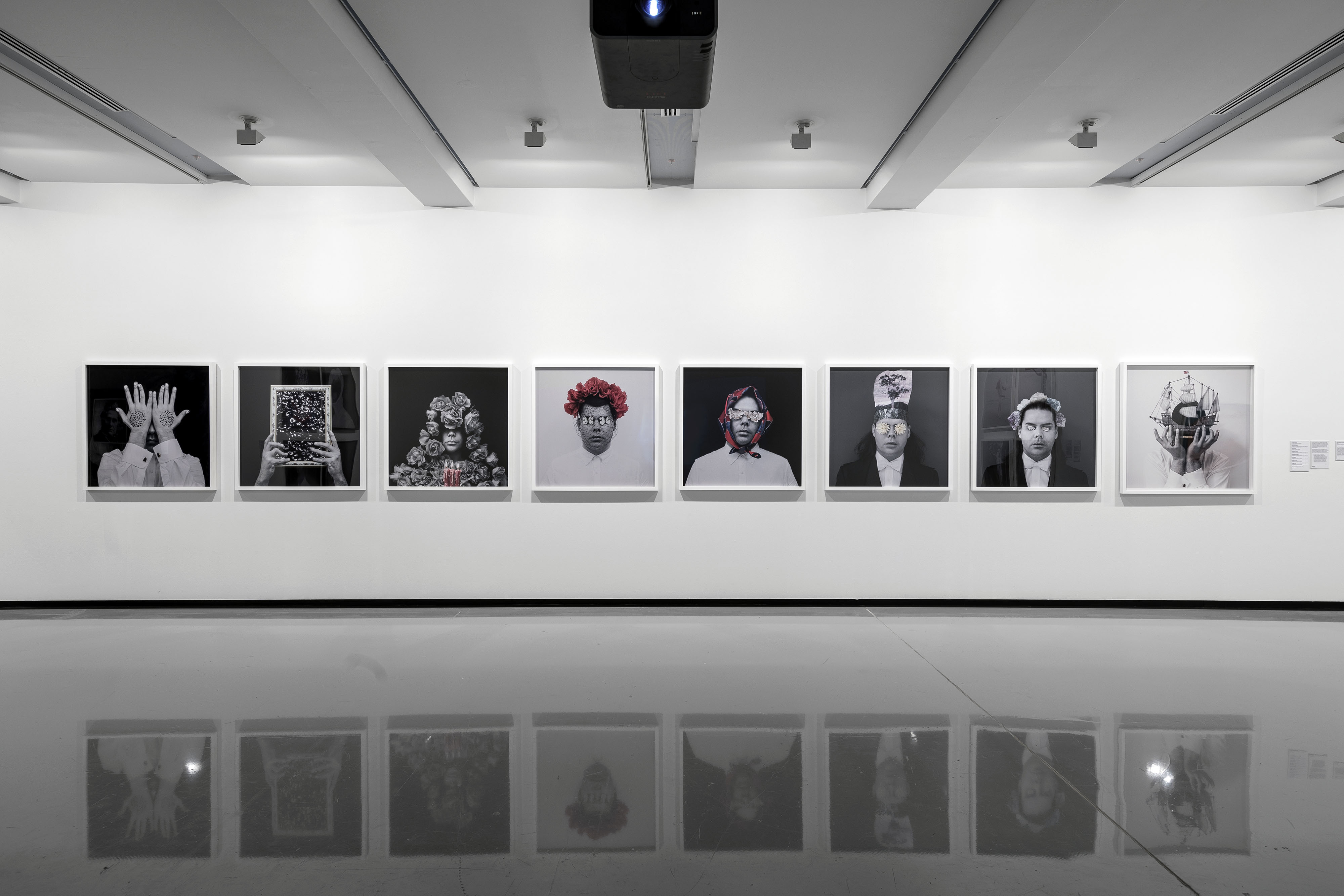
'Christian Thompson: Ritual intimacy', installation view: Monash University Museum of Art, Melbourne 2017 featuring the series 'Museum of Others' (2016)

'Christian Thompson: Ritual intimacy', installation view: Monash University Museum of Art, Melbourne 2017 featuring the series 'Museum of Others' (2016)


Christian Thompson: Ritual intimacy, installation view: Monash University Museum of Art, Melbourne 2017 featuring the series Museum of Others (2016)
Photos: Marcus Bunyan
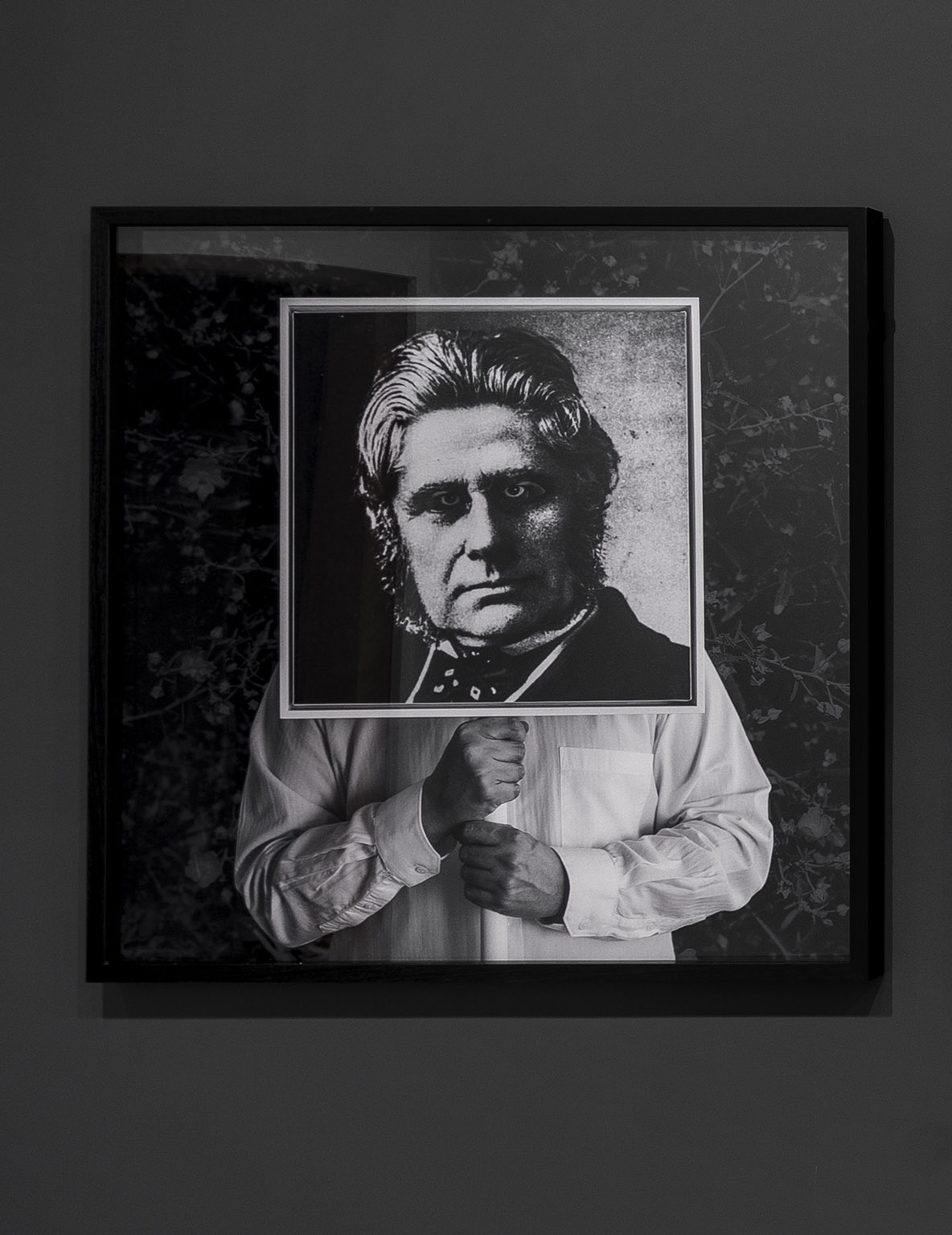
 

Installation view of Christian Thompson's 'Museum of Others (Othering the Ethnologist, Augustus Pitt Rivers)' 2016


Installation view of Museum of Others (Othering the Ethnologist, Augustus Pitt Rivers) 2016
Photo: Marcus Bunyan


Christian Thompson (Australian, b. 1978) 'Museum of Others (Othering the Anthropologist, Walter Baldwin Spencer)' 2016 (installation view)


Christian Thompson (Australian, b. 1978)
Museum of Others (Othering the Anthropologist, Walter Baldwin Spencer)
2016
From the series Museum of Others
C-type print


Installation view of Christian Thompson's 'Museum of Others (Othering the Explorer, James Cook)' 2016


Installation view of Museum of Others (Othering the Explorer, James Cook) 2016
Photo: Marcus Bunyan


Christian Thompson (Australian, b. 1978) 'Othering the Explorer, James Cook' 2016


Christian Thompson (Australian, b. 1978)
Museum of Others (Othering the Explorer, James Cook)
2016
From the series Museum of Others
C-type print
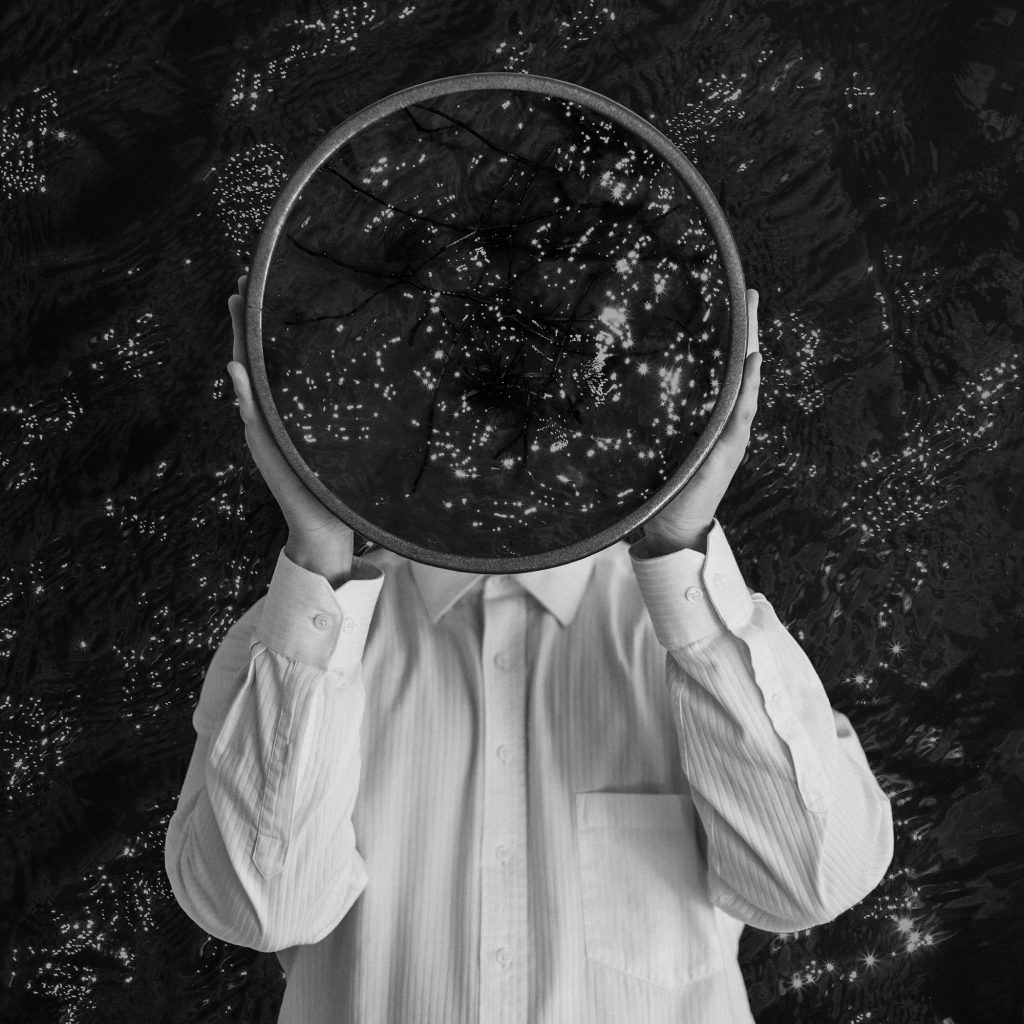
 

Christian Thompson (Australian, b. 1978) 'Equilibrium' 2016


Christian Thompson (Australian, b. 1978)
Equilibrium
2016
From the series Museum of Others
C-type print


Museum of others is Thompson’s most recent photographic series and continues to reflect on his time at the University of Oxford. It features several ‘dead white males’ from the pantheon of British and Australian culture. The explorer, the ethnologist and the anthropologist all had roles in the process of colonisation in Australia but the art critic is particular to Thompson; Ruskin was the first Slade Professor of Fine Art at University of Oxford, just as Thompson was one of its first Australian Aboriginal students. Thompson explains his motivation for the series:

“Historically, it was the western gaze that was projected onto the ethnic other and I thought I’ll create a ‘museum of others’ and I’ll be the one othering, so to speak. ‘Equilibrium’ is based around the idea that the vessel is the equaliser. The vessel is the cradle of all civilisations. We all have that in common.”


Wall text from the exhibition


'Christian Thompson: Ritual intimacy', installation view: Monash University Museum of Art, Melbourne 2017 featuring photographs from the series 'We bury our own' 2010 (C-type prints)

'Christian Thompson: Ritual intimacy', installation view: Monash University Museum of Art, Melbourne 2017 featuring photographs from the series 'We bury our own' 2010 (C-type prints)


Christian Thompson: Ritual intimacy, installation view: Monash University Museum of Art, Melbourne 2017 featuring photographs from the series We bury our own 2010 (C-type prints)
Photos: Andrew Curtis


We bury our own is a body of work that was developed in response to the historic collection of photography, featuring Aboriginal people from the late nineteenth century, at the Pitt Rivers Museum in Oxford. Thompson noted in 2012 that these early images “have permeated my work over the last year. They have remained at the forefront of every artistic experiment and they have pushed me into new territory, they have travelled with me… I was drawn to elements of opulence, ritual, homage, fragility, melancholy, strength and even a sense of play operating in the photographs…”

Each of Thompson’s lyrical photographic images from We bury our own and Pagan sun feature himself partially disguised with props and costumes. The works are virtually monochromatic with elements highlighted in full colour, and his eyes, or face, are partially concealed or painted. The use of votive objects is explained in his equally lyrical 2012 statement: “I lamented the passing of the flowers at the meadow, I lit candles and offered blood to the ancestral beings, looked into the black sparkling sea, donned the Oxford garb, visited the water by fire light and bowed at the knees of the old father ghost gum.”

Text from the Turner Galleries website [Online] Cited 22/12/2021


Christian Thompson (Australian, b. 1978) 'Energy Matter' 2010


Christian Thompson (Australian, b. 1978)
Energy Matter
2010
From the series We bury our own
C-type print


Christian Thompson (Australian, b. 1978) 'Lamenting the flowers' 2010


Christian Thompson (Australian, b. 1978)
Lamenting the flowers
2010
From the series We bury our own
C-type print


Christian Thompson (Australian, b. 1978) 'Forgiveness of Land' 2010 from the exhibition 'Christian Thompson: Ritual Intimacy' at Monash University Museum of Art (MUMA), Melbourne, April - July, 2017


Christian Thompson (Australian, b. 1978)
Forgiveness of Land
2010
From the series We bury our own
C-type print


Christian Thompson (Australian, b. 1978) 'Down Under World' 2010


Christian Thompson (Australian, b. 1978)
Down Under World
2010
From the series We bury our own
C-type print


I conceived the We Bury Our Own series in 2010 after curator Christopher Morton invited me to develop a body of work that would be inspired by and in dialogue with the Australian photographic collection at the Pitt Rivers Museum…

The archival images have permeated my work over the last year. They have remained at the forefront of every artistic experiment and pushed me into new territory; they have travelled with me to residencies at the Fonderie Darling in Montreal and Greene Street Studio, New York. I was drawn to elements of opulence, ritual, homage, fragility, melancholy, strength and even a sense of play operating in the photographs. The simplicity of a monochrome and sepia palette, the frayed delicate edges and the cracks on the surface like a dry desert floor that reminded me of the salt plains of my own traditional lands.

I wanted to generate an aura around this series, a meditative space that was focused on freeing oneself of hurt, employing crystals and other votive objects that emit frequencies that can heal, ward off negative energies, psychic attack, geopathic stress and electro magnetic fields, and, importantly, transmit ideas.

I lamented the passing of the flowers at the meadow, I lit candles and offered blood to the ancestral beings, looked into the black sparkling sea, donned the Oxford garb, visited the water by fire light and bowed at the knees of the old father ghost gum. I asked the photographs in the Pitt Rivers Museum to be catalysts and waited patiently to see what ideas and images would surface in the work, I think with surprising results. Perhaps this is what art is able to do, perform a ‘spiritual repatriation’ rather than a physical one, fragment the historical narrative and traverse time and place to establish a new realm in the cosmos, set something free, allow it to embody the past and be intrinsically connected to the present?

I heard a story many years ago from some old men, they told me about a ceremony where young warriors would make incisions through the flesh exposing the joints, they would insert gems between the bones to emulate the creator spirits, often enduring infection and agonising pain or resulting in death. The story has stuck with me for many years, one that suggests immense pain fused with intoxicating beauty. The idea of aspiring to embody the creators, to transgress the physical body by offering to our gods our spiritual heart, freeing ourselves of suffering by inducing a kind of excruciating decadent torture. This was something that played on my mind during the production of this series of photos and video work. The deliverance of the spirit back to land – the notion that art could be the vehicle for such a passage, the aspiration to occupy a space that belongs to something higher than one’s physical self.

Christian Thompson artist statement in “Christian Thompson: We Bury Our Own,” on the Pitt Rivers Museum website [Online] Cited 21/12/2021
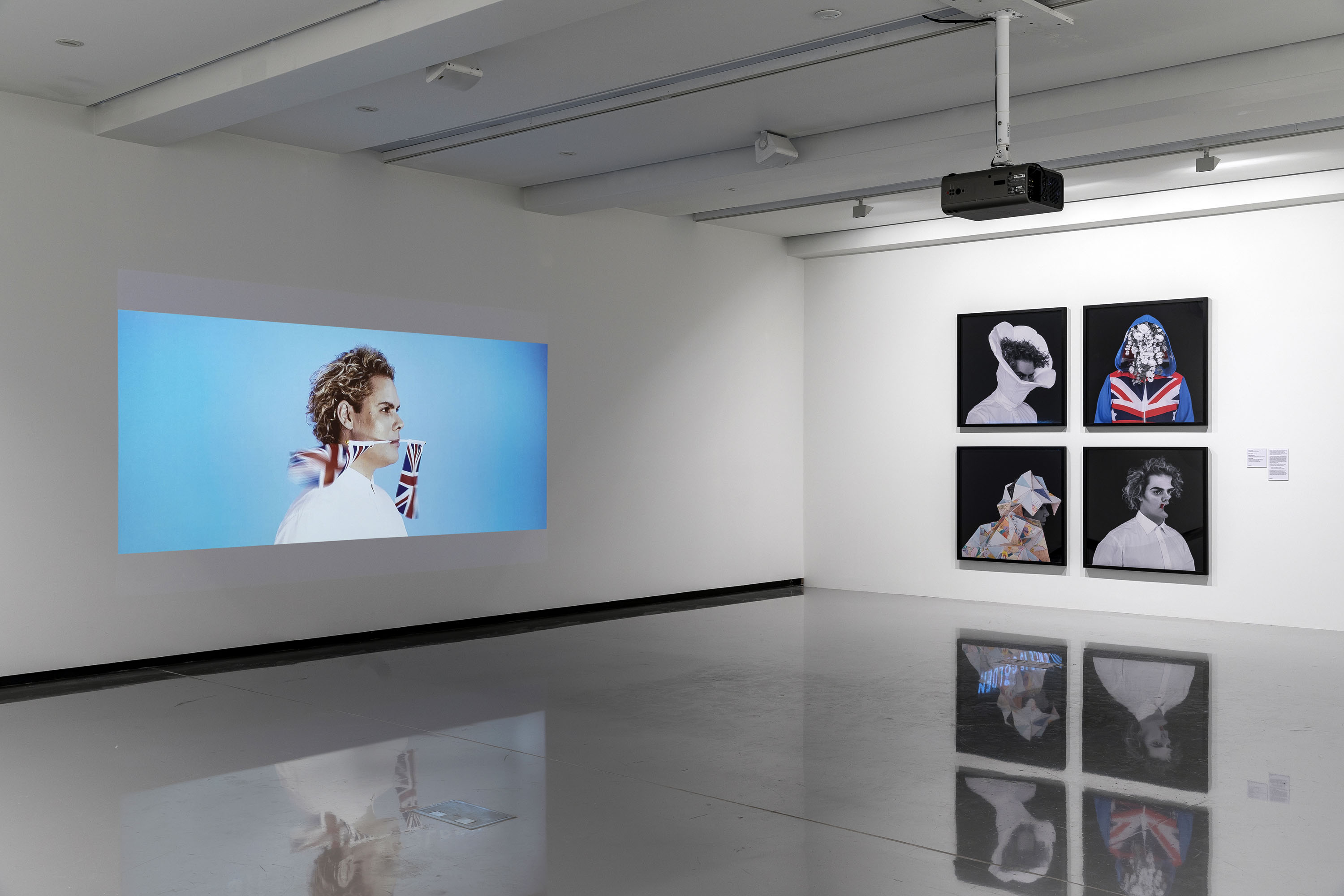
 

'Christian Thompson: Ritual intimacy', installation view: Monash University Museum of Art, Melbourne 2017 featuring 'Ship of dreams', 'Ancient bloom', 'Death's second self', and 'Gods and kings' from the series 'Imperial relic' 2015 (C-type prints) and a still from the video 'dead tongue' 2015


Christian Thompson: Ritual intimacy, installation view: Monash University Museum of Art, Melbourne 2017 featuring Ship of dreams, Ancient bloom, Death’s second self, and Gods and kings from the series Imperial relic 2015 (C-type prints) and a still from the video dead tongue 2015
Photo: Andrew Curtis


In Dead tongue Thompson continues to interrogate the implications of England’s empirical quest on the former colonies of the British Empire through the threat to or loss of Indigenous languages. In works such as this, Thompson actively challenges the perception that Aboriginal culture has become reduced to a captured trophy of Empire.

Wall text from the exhibition


'Christian Thompson: Ritual intimacy', installation view: Monash University Museum of Art, Melbourne 2017 featuring 'Ship of dreams', 'Ancient bloom', 'Death's second self', and 'Gods and kings' from the series 'Imperial relic' 2015 (C-type prints)


Christian Thompson: Ritual intimacy, installation view: Monash University Museum of Art, Melbourne 2017 featuring Ship of dreams, Ancient bloom, Death’s second self, and Gods and kings from the series Imperial relic 2015 (C-type prints)
Photo: Andrew Curtis


In … Imperial relic, he continues to use himself as the ‘armature for his characters, costumes and various props’. Drawing on his background in sculpture, he has created ‘wearable sculptures’ including a trumpet shaped shirt collar, an eruption of white flowers from a union jack hoodie, and an armature of maps. In each his face is partially or fully obscured again. “I’m interested in ideas of submission and domination,” he says. “So the trumpet headpiece is beautiful, but it also potentially muffles or silences the voice. The same thing with maps: they are purporting different kinds of historical narrative, depending who is telling the story. One is about the history of Indigenous people, one is about the history of white colonisers and then one is about the idea of charting the land and of discovery. I’m wearing it as an armature over my own body: that’s part of my own history but also of Australian history.”

Text from the Turner Galleries website [Online] Cited 22/12/2021


Christian Thompson (Australian, b. 1978) 'Ancient bloom' 2015


Christian Thompson (Australian, b. 1978)
Ancient bloom
2015
From the series Imperial relic
C-type print on fuji pearl metallic paper
100 x 100cm
Image courtesy of the artist, Sarah Scout Presents, Melbourne, and Michael Reid, Sydney and Berlin


Christian Thompson (Australian, b. 1978) 'Ship of dreams' 2015


Christian Thompson (Australian, b. 1978)
Ship of dreams
2015
From the series Imperial relic
C-type print on fuji pearl metallic paper
100 x 100 cm
Image courtesy of the artist, Sarah Scout Presents, Melbourne, and Michael Reid, Sydney and Berlin


The series title Imperial relic, summarises the fundamental philosophy underpinning the colonial occupation of Australia. Like the nearby series We bury our own, it is closely connected to Thompson’s studies in the collections of the Pitt Rivers Museum and shares with the Australian graffiti series Thomson’s physical presence is standing in for the Australian landscape.

The work Ancient bloom alludes to the phonograph horn out which might be heard the voice of Fanny Cochran Smith, who’s wax cylinder recordings of songs are the only historical audio recordings of any of the Tasmanian Aboriginal languages. Is also represents a Victorian-era shirt collar – a motif that has appeared in Thompson’s work since his Emotional striptease series of 2003 – but here is exaggerated into a soft-sculptural form that both projects and stifles the voice.

In Death’s second self the artist’s face is uncovered but distorted by make up and digital postproduction effects.The title quotes William Shakespeare’s Sonnet 73:

As after sunset fadeth in the west,
Which by and by black night doth take away,
Death’s second self, that seals up all in rest.


In God and Kings Thompson is cloaked with a map of Aboriginal language groups like a coat of armour. In the Ship of dreams he reprises the motif of Australian flora obscuring his face but here his hoodie is stitched together from several flags: the red ensign (flown by British registered ships), the RAAF flag and the Australian flag.


“I’m interested in ideas of submission and domination … So the trumpet headpiece is beautiful, but it also potentially muffles or silences the voice. The same thing with maps: they are purporting different kinds of historical narrative, depending who is telling the story. One is about the history of Indigenous people, one is about the history of white colonisers and then one is about the idea of charting the land and of discovery. I’m wearing it as an armature over my own body: that’s part of my own history but also of Australian history.”


Christian Thompson in text from the Turner Galleries website [Online] Cited 22/12/2021


'Christian Thompson: Ritual intimacy', installation view: Monash University Museum of Art, Melbourne 2017 featuring 'Isabella kept her dignity', 'I'm not going anywhere without you', 'Dead as a door nail' and 'Hannah's diary' from the series 'Lost together' 2009


Christian Thompson: Ritual intimacy, installation view: Monash University Museum of Art, Melbourne 2017 featuring Isabella kept her dignity, I’m not going anywhere without you, Dead as a door nail and Hannah’s diary from the series Lost together 2009 (C-type prints)
Photo: Andrew Curtis


On 13 February 2008 then Prime Minister Kevin Rudd made an official apology to Aboriginal Australians for the Stolen Generations – the children of Aboriginal and Torres Strait Islander descent who were removed from their families between 1910 and 1970 under the respective Federal and State government policies of assimilation. At the time, Thompson was preparing to leave Australia for further studies aboard and felt this historic gesture allowed him to proudly take his culture and history with him as he ventured into the world.

Thompson photographed the series Lost together in the Netherlands while studying at the DasArts Academy of Theatre and Dance at Amsterdam University. The theme of the orange throughout the series is a reference to the national colour of the Netherlands, while the tartan patterning refers to early clan societies in the United Kingdom. The combination of these different styles is based on counter-cultural aesthetics – particularly punk collage of 1970s London.


Christian Thompson (Australian, b. 1978) 'Hannah's Diary' 2009


Christian Thompson (Australian, b. 1978)
Hannah’s Diary
2009
From the series Lost Together
C-type print
Image courtesy of the artist, Sarah Scout Presents, Melbourne, and Michael Reid, Sydney and Berlin


MUMA | Monash University Museum of Art is proud to announce the first major survey exhibition of the work of Bidjara artist, Christian Thompson, one of Australia’s leading and most intriguing contemporary artists.

Thompson works across photography, video, sculpture, performance and sound, interweaving themes of identity, race and history with his lived experience. His work is held in the collections of major state and national art museums in Australia and internationally.

Thompson made history as one of the first two Aboriginal Australians to be accepted into the University of Oxford as a Charlie Perkins Scholar, where he completed his Doctorate of Philosophy (Fine Art) in 2016. Christian Thompson: Ritual Intimacy opens as the artist looks forward to the graduation ceremony in July, when he will be conferred his degree.

Featuring a major new commission created for this exhibition, Christian Thompson: Ritual Intimacy will survey Thompson’s diverse practice, spanning fifteen years, and will also be accompanied by the publication of the first monograph on the artist’s career and work, including essays by Brian Catling RA and Professor Dame Marina Warner DBE, CBE, FBA, FRSL.

The specially commissioned installation will be an ambitious multichannel composition, developing the sonic experimentation that is a signature of Thompson’s work. Incorporating Bidjara language, it will invite viewers into an immersive space of wall-to-wall imagery and sound:

“Bidjara is officially an endangered language but my work is motivated by the simple yet profound idea that if even one word of an endangered language is spoken it continues to be a living language,” Thompson says.

Christian Thompson: Ritual Intimacy explores the unique perspective and breadth of Thompson’s practice from the fashioning of identity through to his ongoing interest in Indigenous language as the expression of cultural survival. The new multichannel work will develop musical ideas Thompson has previously explored.

“It will be a much more ambitious iteration of a song in Bidjara. At one stage I’m singing on one screen and then other versions of me appear singing the melodies. I really see it as an opportunity to do something that’s more complex musically, more textured sonically – I also want it to be more intricate with my use of language,” the artist says.

Ritual Intimacy is curated by MUMA director Charlotte Day and guest curator Hetti Perkins. Day explains that the exhibition is part of MUMA’s Australian artist series, which affords the opportunity to look at each artist’s practice in depth. “Christian’s exhibition traces a particularly productive period of research and development, from early well-known works such as the Australian Graffiti series to more recent experiments with language in sound and song works,” Day says.

A long-time curatorial collaborator with Thompson, Perkins is the writer and presenter of art + soul, the ABC’s acclaimed television series about contemporary Aboriginal and Torres Strait Islander art. Thompson was accepted to Oxford University on an inaugural Charlie Perkins Scholarship, set up to honour Hetti Perkins’s famous father – a leader, activist and the first Aboriginal Australian to graduate from university. Perkins says the MUMA exhibition is well-earned recognition for Thompson’s work, which she featured in the second series of art + soul.

“Christian has spent periods of his adult life, as a practicing artist, away from home, but there is a common thread in his work, and it’s this connection to home or Country,” Perkins says. “In terms of the rituals or rites of the exhibition title, he is constantly reiterating that connection to home – through words, through performance, through his art, through ideas and writing,” she says.

Alongside performance and ritual, Thompson’s concept of “spiritual repatriation” is central to his work. Working with the Australian collection at famed ethnographic storehouse the Pitt Rivers Museum, Oxford, the artist was offered copies of colonial photographs of Aboriginal people but preferred not to work this way. Instead, he chose to spend significant periods of time with these ancestral images, absorbing their “aura” in order to then make his own artistic response that did not reproduce those original problematic images.

Dr Christian Thompson is a Bidjara contemporary artist whose work explores notions of identity, cultural hybridity, and history; often referring to the relationships between these concepts and the environment. Formally trained as a sculptor, Thompson’s multidisciplinary practice engages mediums such as photography, video, sculpture, performance, and sound. His work focuses on the exploration of identity, sexuality, gender, race, and memory. In his live performances and conceptual anti-portraits he inhabits a range of personas achieved through handcrafted sculptures and carefully orchestrated poses and backdrops.

Press release from MUMA


'Christian Thompson: Ritual intimacy', installation view: Monash University Museum of Art, Melbourne 2017 featuring the series 'Polari' (2014)

'Christian Thompson: Ritual intimacy', installation view: Monash University Museum of Art, Melbourne 2017 featuring the series 'Polari' (2014)


Christian Thompson: Ritual intimacy, installation view: Monash University Museum of Art, Melbourne 2017 featuring the series Polari (2014)
Photos: Marcus Bunyan


‘Polari’ is a form of cant or cryptic slang that evolved over several centuries from the various languages that converged in London’s theatres, circuses and fairgrounds, the merchant navy and criminal circles. It came to be associated with gay subculture, as many gay men worked in theatrical entertainment or joined ocean liners as waiters, stewards and entertainers at a time when homosexual activity was illegal. This slang rendered the speaker unintelligible to hostile outsiders, such as policeman, but fell out of use after the Sexual Offences Act (1967) effectively decriminalised homosexuality in the United Kingdom. Attracted to the theatricality and defiant nature of Polari (which he likens to the situation of Australian Indigenous languages under assimilationist policies), Thompson borrowed its name for the series which examines how subcultures express themselves.


Christian Thompson (Australian, b. 1978) 'Siren' 2014


Christian Thompson (Australian, b. 1978)
Siren
2014
From the series Polari
C-type print
Image courtesy of the artist, Sarah Scout Presents, Melbourne, and Michael Reid, Sydney and Berlin


Christian Thompson (Australian, b. 1978) 'Trinity II' 2014


Christian Thompson (Australian, b. 1978)
Trinity II
2014
From the series Polari
C-type print
Image courtesy of the artist, Sarah Scout Presents, Melbourne, and Michael Reid, Sydney and Berlin


Christian Thompson (Australian, b. 1978) 'Trinity III' 2014


Christian Thompson (Australian, b. 1978)
Trinity III
2014
From the series Polari
C-type print
Image courtesy of the artist, Sarah Scout Presents, Melbourne, and Michael Reid, Sydney and Berlin


Christian Thompson (Australian, b. 1978) 'Ariel' 2014


Christian Thompson (Australian, b. 1978)
Ariel
2014
From the series Polari
C-type print
Image courtesy of the artist, Sarah Scout Presents, Melbourne, and Michael Reid, Sydney and Berlin


'Christian Thompson: Ritual intimacy', installation view: Monash University Museum of Art, Melbourne 2017 showing at left, 'Ellipse' (2014)


Christian Thompson: Ritual intimacy, installation view: Monash University Museum of Art, Melbourne 2017 showing at left, Ellipse (2014, below)
Photo: Marcus Bunyan


Christian Thompson (Australian, b. 1978) 'Ellipse' 2014


Christian Thompson (Australian, b. 1978)
Ellipse
2014
From the series Polari
C-type print
Image courtesy of the artist, Sarah Scout Presents, Melbourne, and Michael Reid, Sydney and Berlin


Putting on the Dish – A short film in Polari

Polari was a form of slang used by gay men in Britain prior to the decriminalisation of homosexuality in 1967, used primarily as a coded way for them to discuss their experiences. It quickly fell out of use in the 70s, although several words entered mainstream English and are still used today. For more about Polari see Wikipedia.


Polari – The Story of Britain’s Gay Slang

Author and academic Paul Baker of Lancaster University discusses a form of gay slang known as Polari that was spoken in Britain. It was a secret type of language used mainly by gay men and some lesbians and members of the trans, drag and other communities in the United Kingdom in the 20th century until it largely died out by the early 1970s.


Christian Thompson (Australian, b. 1978)
Refuge
2014
Video and sound
4 mins 18 secs


Refuge is a video work by contemporary Australian artist Christian Thompson. Thompson sings in the endangered Bidjara language of his heritage. A collaboration with James Young formerly of ‘Nico’ and recorded the original track in Oxford, United Kingdom.

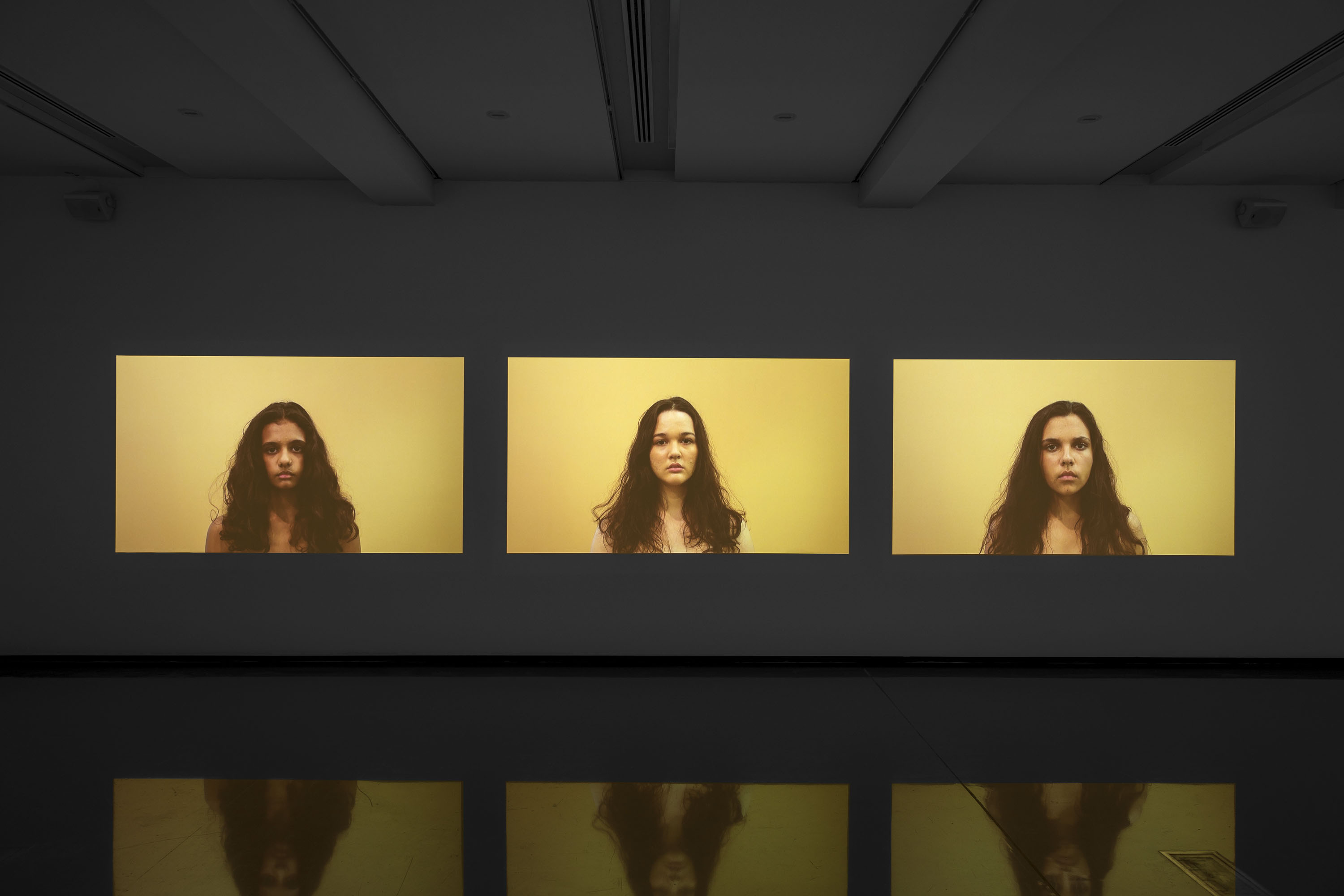
 

'Christian Thompson: Ritual intimacy', installation view: Monash University Museum of Art, Melbourne 2017 featuring stills from the video 'Heat' (2010)

'Christian Thompson: Ritual intimacy', installation view: Monash University Museum of Art, Melbourne 2017 featuring stills from the video 'Heat' (2010)

'Christian Thompson: Ritual intimacy', installation view: Monash University Museum of Art, Melbourne 2017 featuring stills from the video 'Heat' (2010)


Christian Thompson: Ritual intimacy, installation view: Monash University Museum of Art, Melbourne 2017 featuring stills from the video Heat (2010)
Photos: Marcus Bunyan


Christian Thompson (Australian, b. 1978)
Heat (extract)
2010
Three-channel digital colour video, sound
5.52 minutes


Like the Australian graffiti photographs [see photographs below], Heat come out of Thompson’s memories of growing up in the desert surrounding Barcaldine in central west Queensland. Barcaldine is famous for its role in the foundation organised labor in Queensland and ultimately the formation of the Australian Labor Party. It also holds historical significance for Thompson’s family as it is where his great-great-grandfather, Charlie Thompson, surreptitiously bought a block of land before Aboriginal people could legally buy land, creating a safe haven for his family and other Aboriginal families at the time when Aboriginal people had few legal rights. For Thompson, heat captures the sensation that he associates with being on his country: the dry wind blowing through his hair. It features the three granddaughters of Aboriginal rights pioneer Charlie Perkins, who are the daughters of Thompson’s Long time collaborator Hetti Perkins.
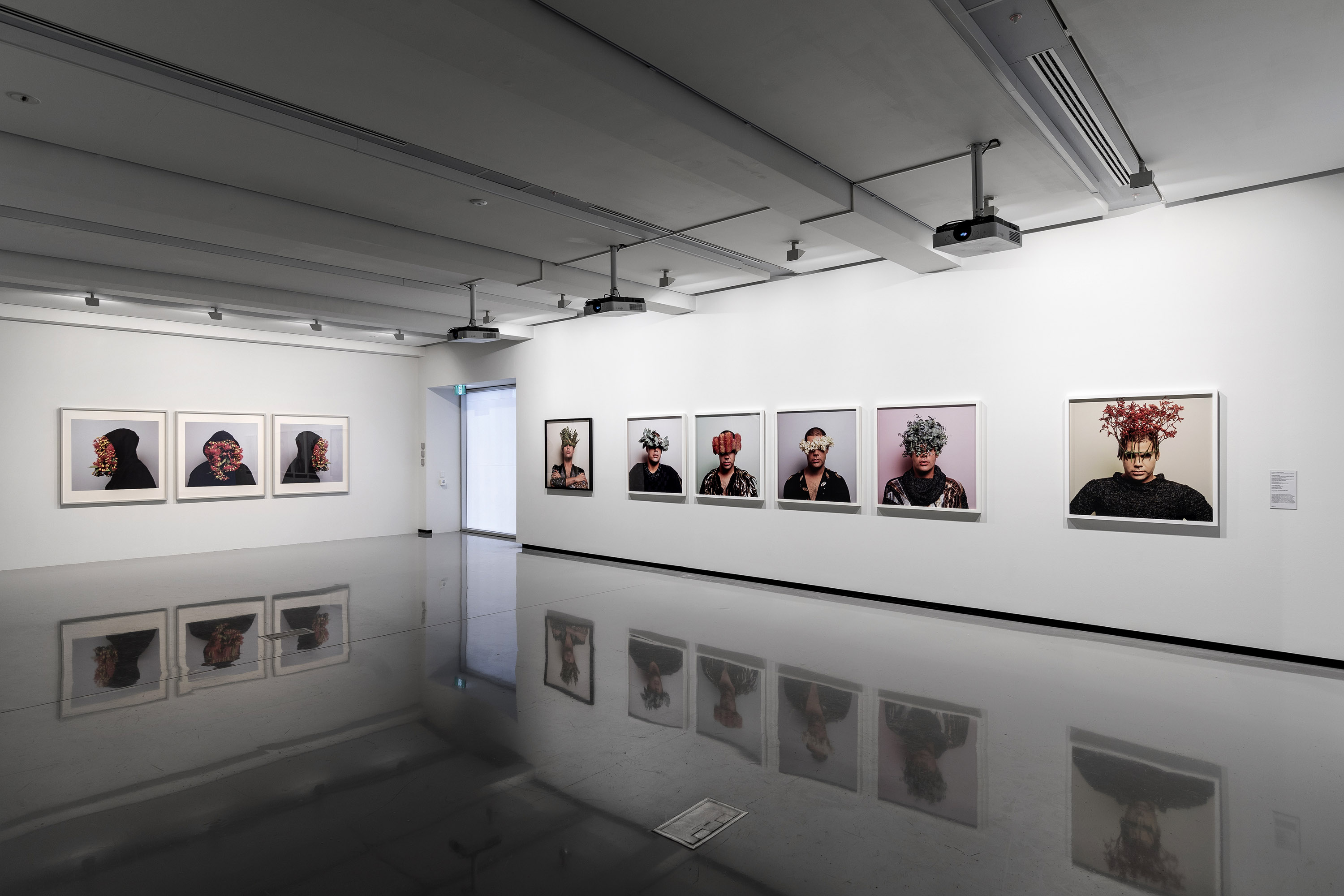
 

'Christian Thompson: Ritual intimacy', installation view: Monash University Museum of Art, Melbourne 2017 featuring photographs from the series 'Australian graffiti' (2007)


Christian Thompson: Ritual intimacy, installation view: Monash University Museum of Art, Melbourne 2017 featuring photographs from the series Australian graffiti (2007)
Photo: Marcus Bunyan
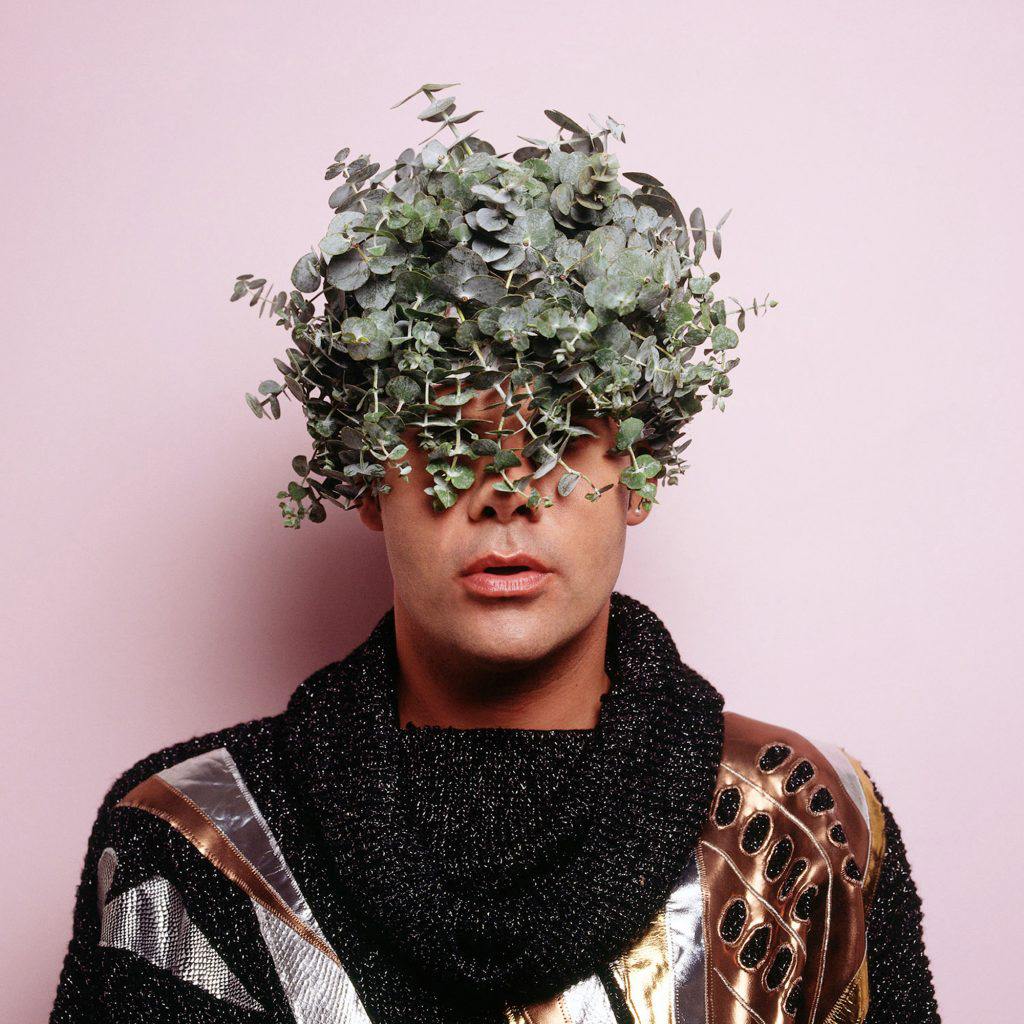
 

Christian Thompson (Australian, b. 1978) 'Untitled (Blue Gum)' 2007


Christian Thompson (Australian, b. 1978)
Untitled (blue gum)
2007
From the series Australian graffiti
C-type print
Image courtesy of the artist, Sarah Scout Presents, Melbourne, and Michael Reid, Sydney and Berlin


Christian Thompson (Australian, b. 1978) 'Untitled (banksia)' 2007


Christian Thompson (Australian, b. 1978)
Untitled (banksia)
2007
From the series Australian graffiti
C-type print
Monash University Collection


Australian graffiti was the last work that Thompson made before leaving Australia for Europe. It connects with his memories of growing up in the outback and its desert flowers, which he perceives to be both fragile and immensely powerful. I adorning himself with garlands of these flowers and flamboyant garments of the 1980s and 1990s – the period in which he grew up – Thompson juxtaposes these elements against his own Bidjara masculinity. By wearing native flora he also stands in for the landscape, invoking an Indigenous understanding of the landscape as a corporeal, living ancestral being.


Christian Thompson (Australian, b. 1978)
Desert slippers (extract)
2006
Single-channel digital colour video, sound
34 seconds


Desert slippers was made at the time the Northern Territory government commissioned research into allegations of the abuse of children in Aboriginal communities. When the ‘Little Children are Sacred’ report was tabled the following year, the federal government under John Howard staged the Northern Territory Emergency Response (NTER), which quickly became known as ‘the intervention’. This action was enacted without consultation with Indigenous people and ignored the substantive recommendations of the report to which it was allegedly responding.

Thompson made this video, involving his father, and the ceremonial aspects of their daily lives, during this period. Desert slippers features a Bidjara ritual in which a father and son transfer sweat. The desert slipper is a native cactus that symbolises the transferal of the spirit back to earth as the plant grows.


Christian Thompson (Australian, b. 1978)
Dhagunyilangu (Brother) 
(extract installation view)
2011
Single-channel digital colour video, sound, subtitled
2.19 minutes


Christian Thompson
Dhagunyilangu (Brother)

2011
Single-channel digital colour video, sound, subtitled
2.19 minutes


Gamu Mambu (Blood Song) and Dhagunyilangu (Brother) were made in England and in the Netherlands respectively. While studying at the DasArts Academy of Theatre and Dance in Amsterdam, a centre for the study of early musical styles such as the baroque, Thompson realised that his own Bidjara language could be interpreted through the matrix of another cultural context and sphere. He undertook operatic training with this in mind, choosing in the end to work with specialist singers Sonja Gruys and Jeremy Vinogradov to realise the two works.


Monash University Museum of Art (MUMA)
Ground Floor, Building F,
Monash University Caulfield campus,
900 Dandenong Road,
Caulfield East, VIC 3145
Phone: 61 3 9905 4217

Opening hours:
Tuesday – Friday 10am – 5pm
Saturday 12 – 5pm

Monash University Museum of Art (MUMA) website

LIKE ART BLART ON FACEBOOK

Back to top

Exhibition: ‘Acting for the Camera’ at the Albertina, Vienna

Exhibition dates: 10th March – 5th June, 2017

Featured artists (selection): Ottomar Anschütz | Bill Brandt | Brassaï | Günter Brus | John Coplans | Hugo Erfurth | Trude Fleischmann | Seiichi Furuya | Eikoh Hosoe | Martin Imboden | Dora Kallmus | Rudolf Koppitz | Johann Victor Krämer | Heinrich Kühn | Helmar Lerski | O. Winston Link | Will McBride | Arnulf Rainer | Henry Peach Robinson | Otto Schmidt | Rudolf Schwarzkogler | Franz Xaver Setzer | Anton Josef Trčka | Erwin Wurm


Anonymous photographer. 'The Sculptor Hans Gasser and Workshop Assistants at Work' 1855-1857 from the exhibition 'Acting for the Camera' at the Albertina, Vienna, March - June, 2017


Anonymous photographer
The Sculptor Hans Gasser and Workshop Assistants at Work
1855-1857
Daguerreotype
Albertina, permanent loan of the Höhere Graphische Bundes-Lehr-und Versuchsanstalt, Vienna


I made this posting way before my operation, but have been unable to post until now because of my ongoing recuperation.

While the exhibition may have finished, I am so enamoured of the theme of the exhibition, the people and artists, that I think it’s valuable to have the posting, images and the additional research I did online. I especially like the striking work of Helmar Lerski and the “Aktionen” of Rudolf Schwarzkogler which reflect on the hurtfulness of the world, but remind me of the yet to come political art of the first wave of HIV/AIDS. What a beautiful installation as well…

Dr Marcus Bunyan


Many thankx to the Albertina for allowing me to publish the photographs in the posting. Please click on the photographs for a larger version of the image.


Ottomar Anschütz (German, 1846-1907)
Elektrischer Schnellseher
1886


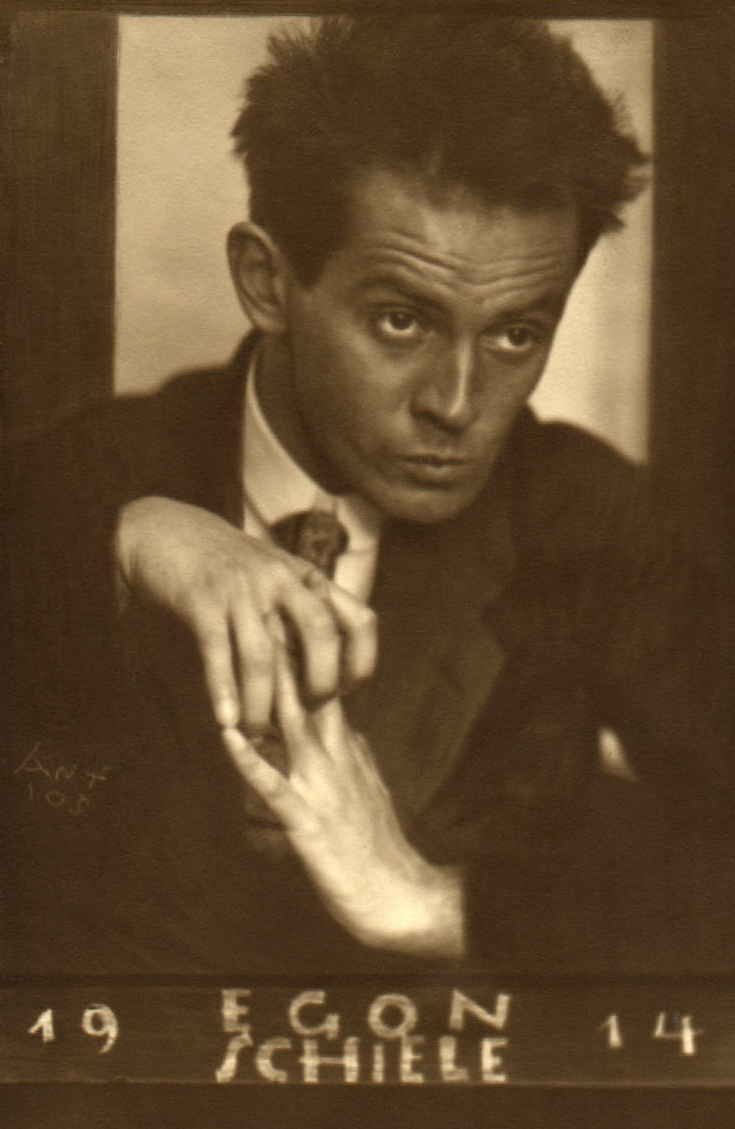
Anton Josef Trčka (Czech, 1893-1940) 'Egon Schiele' 1914 from the exhibition 'Acting for the Camera' at the Albertina, Vienna, March - June, 2017


Anton Josef Trčka (Czech, 1893-1940)
Egon Schiele
1914
Gelatin silver print
Albertina, Vienna


Josef Anton Trčka, Antios (7. September 1893 Vienna – 16. March 1940), was a Czech photographer , painter, sculptor, draftsman, designer of tapestries and silver jewellery, collector of folk art Moravian, occasional antiquarian, poet and philosopher. He was a representative of Viennese Modernism, Art Movement, which influenced European culture of the 20th century…

Around 1910 the Trčka decided to study at the professional school of photography Lehr- Graphische und Versuchsanstalt in Vienna, one of the best in Europe. Coincidentally, at the school was Professor Karel Novák, in his time one of the most important personalities of the beginnings of art photography. In 1914 he got the opportunity to portray several leading personalities of Viennese Modernism. Among them was Gustav Klimt, Peter Alternberg and the 50 year old Josef Svatopluk Machar. However, the highlight for Trčka prewar contracts were the photographic series of portraits of Egon Schiele, which focused on facial expressions and hand gestures.


Franz Xaver Setzer (Austrian, 1886-1939) 'Conrad Veidt' 1919


Franz Xaver Setzer (Austrian, 1886-1939)
Conrad Veidt
1919
Gelatin Silver Print
Albertina, Vienna


Franz Xaver Setzer, actually Franz Anton Adolf (6 August 1886 in Vienna – 10 January 1939) was an Austrian photographer.

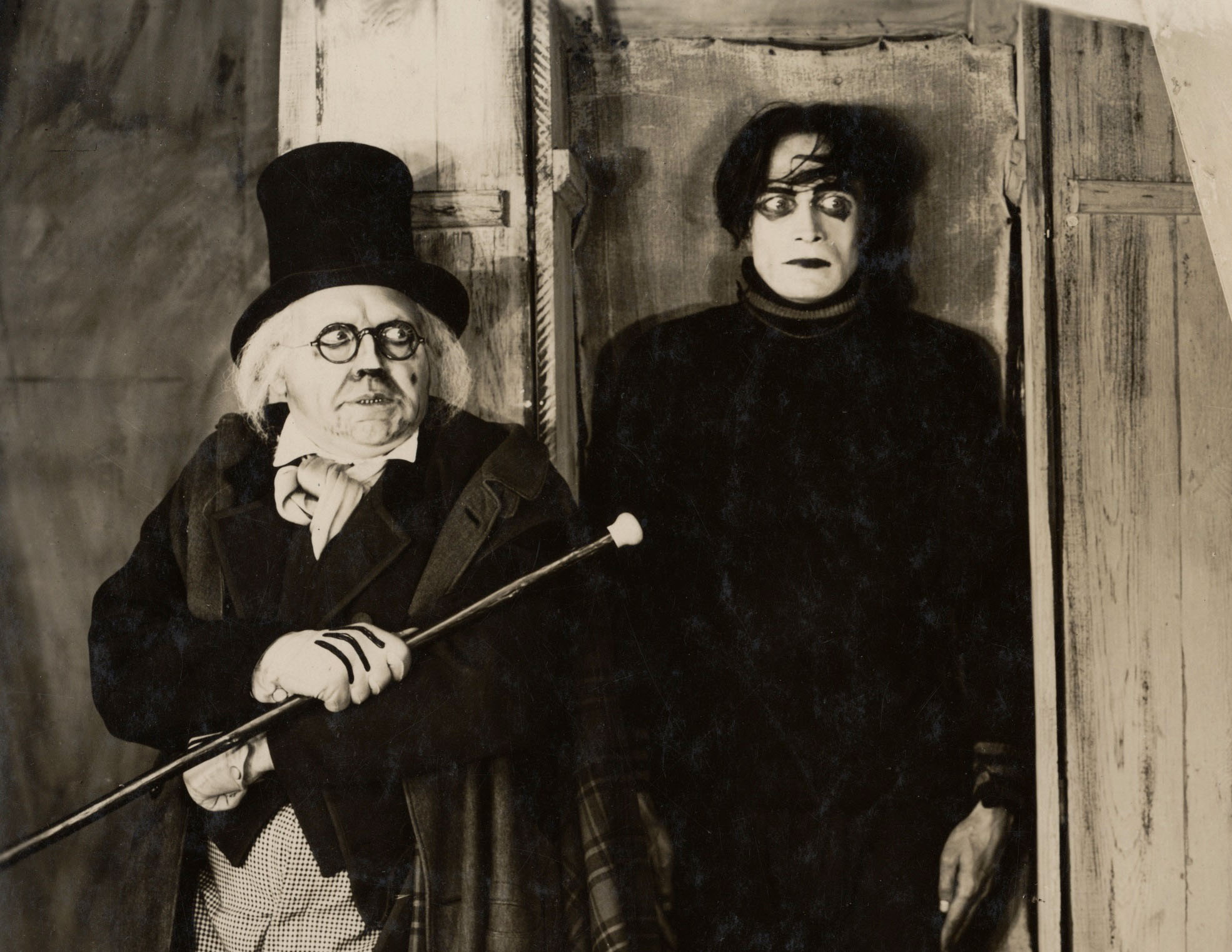
Hans Walter Conrad Veidt (22 January 1893 – 3 April 1943) was a German actor best remembered for his roles in films such as The Cabinet of Dr. Caligari (1920), The Man Who Laughs (1928), and, after being forced to migrate to Britain by the rise of Nazism in Germany, his English-speaking roles in The Thief of Bagdad (1940), and, in Hollywood, Casablanca (1942). After a successful career in German silent film, where he was one of the best-paid stars of Ufa, he left Germany in 1933 with his new Jewish wife after the Nazis came to power. They settled in Britain, where he participated in a number of films before emigrating to the United States around 1941…

He starred in a few films, such as George Cukor’s A Woman’s Face (1941) where he received billing just under Joan Crawford’s and Nazi Agent (1942), in which he had a dual role as both an aristocratic German Nazi spy and as the man’s twin brother, an anti-Nazi American. His best-known Hollywood role was as the sinister Major Heinrich Strasser in Casablanca (1942), a film which was written and began pre-production before the United States entered the war.

In 1943, at the age of fifty, he died of a massive heart attack while playing golf at the Riviera Country Club in Los Angeles. In 1998, his ashes were placed in a niche of the columbarium at the Golders Green Crematorium in north London.

Text from the Wikipedia website


Dora Kallmus (Madame d'Ora) (Austrian, 1881-1963), Arthur Benda (German, 1885-1969) 'Anita Berber and Sebastian Droste in their dance Märtyrer [Martyrs]' 1922


Dora Kallmus (Madame d’Ora) (Austrian, 1881-1963), Arthur Benda (German, 1885-1969)
Anita Berber and Sebastian Droste in their dance Märtyrer [Martyrs]
1922
Gelatin silver print
Albertina, Vienna


Dora Philippine Kallmus (20 March 1881 – 28 October 1963), also known as Madame D’Ora or Madame d’Ora, was an Austrian fashion and portrait photographer.

In 1907, she established her own studio with Arthur Benda in Vienna called the Atelier d’Ora or Madame D’Ora-Benda. The name was based on the pseudonym “Madame d’Ora”, which she used professionally. D’ora and Benda operated a summer studio from 1921 to 1926 in Karlsbad, Germany, and opened another gallery in Paris in 1925. She was represented by Schostal Photo Agency (Agentur Schostal) and it was her intervention that saved the agency’s owner after his arrest by the Nazis, enabling him to flee to Paris from Vienna.

Her subjects included Josephine Baker, Coco Chanel, Tamara de Lempicka, Alban Berg, Maurice Chevalier, Colette, and other dancers, actors, painters, and writers.

Text from the Wikipedia website


Arthur Benda (23 March 1885, in Berlin – 7 September 1969, in Vienna) was a German photographer. From 1907 to 1938 he worked in the photo studio d’Ora in Vienna, from 1921 as a partner of Dora Kallmus and from 1927 under the name d’Ora-Benda as the sole owner. …

In 1906, Arthur Benda met photographer Dora Kallmus, who also trained with Perscheid. When she opened the Atelier d’Ora on Wipplingerstrasse in Vienna in 1907, Benda became her assistant. The Atelier d’Ora specialised in portrait and fashion photography. Kallmus and Benda quickly made a name for themselves and soon supplied the most important magazines. The peak of renown was reached when Madame d’Ora photographed the present nobility in 1916 on the occasion of the coronation of Emperor Charles I as King of Hungary.

In 1921, Arthur Benda became a partner in Atelier d’Ora, which also ran a branch in Karlovy Vary during the season. In 1927 Arthur Benda took over the studio of Dora Kallmus, who had run a second studio in Paris since 1925, and continued it under the name d’Ora-Benda together with his wife Hanny Mittler. In addition to portraits, he mainly photographed nudes that made the new company name known in men’s magazines worldwide. A major order from the King of Albania Zogu I, who had himself and his family photographed in 1937 for three weeks by Arthur Benda in Tirana secured Arthur Benda financially. In 1938 he opened a new studio at the Kärntnerring in Vienna, which he continued to operate under his own name after the Second World War.

Text from the Wikipedia website


Anita Berber (10 June 1899 – 10 November 1928) was a German dancer, actress, and writer who was the subject of an Otto Dix painting. She lived during the time of the Weimar Republic. …

Her hair was cut fashionably into a short bob and was frequently bright red, as in 1925 when the German painter Otto Dix painted a portrait of her, titled “The Dancer Anita Berber”. Her dancer friend and sometime lover Sebastian Droste, who performed in the film Algol (1920), was skinny and had black hair with gelled up curls much like sideburns. Neither of them wore much more than low slung loincloths and Anita occasionally a corsage worn well below her small breasts.

Her performances broke boundaries with their androgyny and total nudity, but it was her public appearances that really challenged taboos. Berber’s overt drug addiction and bisexuality were matters of public chatter. In addition to her addiction to cocaine, opium and morphine, one of Berber’s favourites was chloroform and ether mixed in a bowl. This would be stirred with a white rose, the petals of which she would then eat.

Aside from her addiction to narcotic drugs, she was also a heavy alcoholic. In 1928, at the age of 29, she suddenly gave up alcohol completely, but died later the same year. She was said to be surrounded by empty morphine syringes.

Text from the Wikipedia website


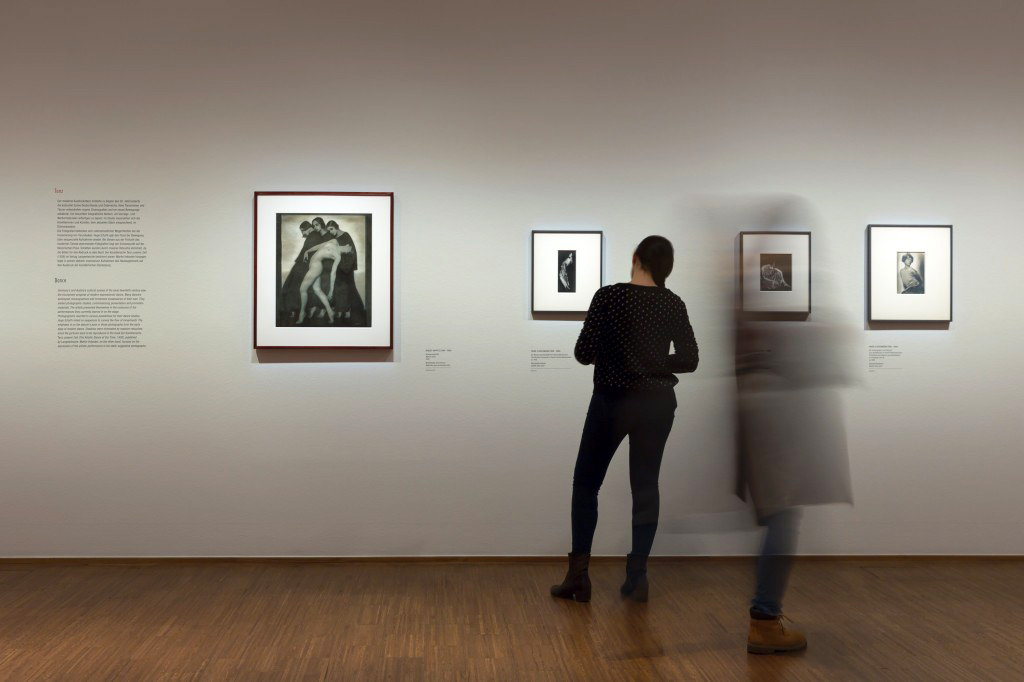
Rudolf Koppitz (Austrian, 1884-1936) 'In the Arms of Nature' 1923


Rudolf Koppitz (Austrian, 1884-1936)
In the Arms of Nature [self-portrait]
1923
Multicolour gum bichromate print
Albertina, permanent loan of the Höhere Graphische Bundes-Lehr-und Versuchsanstalt, Vienna


Rudolf Koppitz (4 January 1884 – 8 July 1936), often credited as Viennese or Austrian, was a Photo-Secessionist whose work includes straight photography and modernist images. He was one of the leading representatives of art photography in Vienna between the world wars. Koppitz is best known for his works of the human figure including his iconic Bewegungsstudie, “Motion Study” and his use of the nude in natural settings. …

After the [First World] war, Koppitz returned to the Institute to teach photography where in 1923 he took the nude self-portrait, In the Bosom of Nature [above], in which he framed himself by tree trunks, rocks, snowy mountains, and is posed to convey a dreamlike harmony reminiscent of a symbolist painting and graphic art. In c. 1925 Koppitz created his masterpiece, Bewegungsstudie, “Motion Study” in which he photographed dancers from the Vienna State Opera; the nude dancer, credited to be the Russian Claudia Issatschenko but is more likely, her daughter, ballet dancer and choreographer, Tatyana Issatschenko Gsovsky, with her head thrown dramatically back and flanked by three dark-robed women, lends Bewegungsstudie to the highly decorative and symbolist tradition of the Viennese Jugendstil.

Text from the Wikipedia website


Rudolf Koppitz (Austrian, 1884-1936) 'Movement Study' 1925


Rudolf Koppitz (Austrian, 1884-1936)
Bewegungsstudie (Motion Study)
1926
Multicolor gum bichromate print
Albertina, permanent loan of the Höhere Graphische Bundes-Lehr-und Versuchsanstalt, Vienna


Rudolf Koppitz (4 January 1884 – 8 July 1936), often credited as Viennese or Austrian, was a Photo-Secessionist whose work includes straight photography and modernist images. He was one of the leading representatives of art photography in Vienna between the world wars. Koppitz is best known for his works of the human figure including his iconic Bewegungsstudie, “Motion Study” and his use of the nude in natural settings….

Koppitz’s work is marked by a pronounced awareness of form, line, and the surface play of light and shadow. Early in his career, Koppitz was known for staging groups of subjects in the style of the Vienna Secession, the most well known example of this being his Bewegungsstudie, “Motion Study”.

Bewegungsstudie (Motion Study) is surely the most widely published and best known image in Austrian photography from the early decades of the last century. This is for good reason, as no photograph better captures the cultural strands that characterized the Austrian avant-garde at that time. Here one can see a graphic strength and compositional clarity that reflects the modernist ambitions initiated in the fine as in the applied arts by the Secession and by the Wiener Werkstätte. But what gives the image its power is the aura of mystery, of symbolist sensuality that resonates through this enigmatic grouping of the three uniformly coiffed and draped figures and the one single naked figure.” ~ Christies

Bewegungsstudie’s languid nude, elaborately robed women and undeniable sensuality, in the context of its rigorous and artistic composition, bring to mind the sexual morbidity of Viennese artists like Gustav Klimt and Alphonse Mucha, as well as the Swiss symbolist painter Ferdinand Hodler and has made it as unforgettable then as it is today. It has become the Koppitz’s signature image, and was also his best-seller. Prints of the image were purchased by, among others, the Toledo Museum of Art; the New York Camera Club notable Joseph Bing, head of that club’s print committee; and the Englishman Stephen Tyng, who published it in a small portfolio of works from his collection.

His earliest works show evidence of influence by Gustav Klimt, Japanese art, Art Nouveau and Constructivism. During the First World War, Koppitz’s photographs took on a documentary quality when his photographs became more simple and direct in their subject matter and composition. Koppitz’s work came of age during the inter-war period when most of Austria’s photographers were supporters of art photography. Photographs from that time are full of symbolic meanings often capturing nude and clothed dancers as well as liberal use of both male and female, many of which were of Koppitz himself and female nudes placed in elements of nature and posed to give the impression of a Greek or Roman statue…

Although he did not possess a consistent style, Koppitz was a virtuoso of the dark room, seemingly determined to make the photograph as much of an art object as possible. His beautifully grainy, subtly tinted images align him with American Pictorialists like Edward Steichen and Clarence Smith. Koppitz’s work, much of it using the gum bichromate process, reflected his links with modern artists such as Gustav Klimt and Egon Schiele, and their involvement with the ‘life reform’ movement including; nudism, sun culture, and expressive dance popular in Central Europe from the early 1900s as well as agrarian romanticism. Koppitz’s extraordinary mastery of pictorial processes – pigment, carbon, gum, and bromoil process of transfer printing – gained the respect of his colleagues throughout the world and garnered mention in the Encyclopædia Britannica of 1929.

Text from the Wikipedia website


Trude Fleischmann (American born Austria, 1895-1990) 'Actress and Dancer Lucy Kieselhausen' c. 1925


Trude Fleischmann (American born Austria, 1895-1990)
Actress and Dancer Lucy Kieselhausen
c. 1925
Gelatin silver print
Albertina, Vienna


Trude Fleischmann (22 December 1895 – 21 January 1990) was an Austrian-born American photographer. After becoming a notable society photographer in Vienna in the 1920s, she re-established her business in New York in 1940. …

In 1920, at the age of 25, Fleischmann opened her own studio close to Vienna’s city hall. Her glass plates benefitted from her careful use of diffuse artificial light. Photographing music and theatre celebrities, her work was published in journals such as Die Bühne, Moderne Welt, ‘Welt und Mode and Uhu. She was represented by Schostal Photo Agency (Agentur Schostal). In addition to portraits of Karl Kraus and Adolf Loos, in 1925 she took a nude series of the dancer Claire Bauroff which the police confiscated when the images were displayed at a Berlin theatre, bringing her international fame. Fleischmann also did much to encourage other women to become professional photographers.

With the Anschluss in 1938, Fleischmann was forced to leave the country. She moved first to Paris, then to London and finally, together with her former student and companion Helen Post, in April 1939 to New York. In 1940, she opened a studio on West 56th Street next to Carnegie Hall which she ran with Frank Elmer who had also emigrated from Vienna. In addition to scenes of New York City, she photographed celebrities and notable immigrants including Albert Einstein, Eleanor Roosevelt, Oskar Kokoschka, Lotte Lehmann, Otto von Habsburg, Count Richard von Coudenhove-Kalergi and Arturo Toscanini. She also worked as a fashion photographer, contributing to magazines such as Vogue. She established a close friendship with the photographer Lisette Model.

Text from the Wikipedia website


Lucy Kieselhausen was born in 1897 in Vienna, Austria. She was an actress, known for Tausend und eine Frau. Aus dem Tagebuch eines Junggesellen (1918), Erdgeist (1923) and Die siebente Großmacht (1919). She was a student of Grete Wiesenthal and was celebrated as a successful dancer at the beginning of the 20th century who had great successes on German stages. Besides her dancing activity she also wrote the dance drama “Salambo”, which was set to music by Heinz Tiessen. She died in December 1926 in Berlin, Germany.

“Around 1915 another Viennese, Lucy Kieselhausen (1897-1927), began specializing in performing waltzes. She, too, had evolved out of ballet culture, but her embodiment of the waltz was virtually opposite that of Wiesenthal. She favoured luxuriously decorative hothouse costumes and the utmost refinement of movement. For her the waltz was not a lyrical expansion of space into the freedom of nature but an almost perfumed distillation of the stirrings within an opulent boudoir, with its scenography of exquisite privileges and voluptuous secrets. An adroit sense of irony shaded her movements with a abruptly “bizarre and jerky” rhythms; “her joyfully flashing temperament did not hover on a smooth surface but over a shadowy abyss from which issued her fool’s dance with its slumbering, half-animal rapture.” Her curious appropriation of the waltz ended suddenly when she died in a benzine explosion.”

Karl Eric Toepfer. Empire of Ecstasy: Nudity and Movement in German Body Culture, 1910-1935. University of California Press, 1997, pp. 161-162.


Hugo Erfurth (German, 1874-1948) 'Clotilde von Derp-Sacharoff' c. 1928


Hugo Erfurth (German, 1874-1948)
Clotilde von Derp-Sacharoff
c. 1928
Gelatin silver print
Albertina, Vienna – permanent loan of the Austrian Ludwig Foundation for Art and Science


Hugo Erfurth (14 October 1874 – 14 February 1948) was a German photographer known for his portraits of celebrities and cultural figures of the early twentieth century. …

During the next ten years [after 1896] he ran the Schröder studio, then established his own studio, art gallery, and home in the Palais Lüttichau. He became a member of the German Werkbund and was appointed an honorary member of the London’s Royal Photographic Society and of Munich’s Süddeutsche Photographen-Verein. He married Helene Reuther in 1898 and fathered three children over the next 6 years. He photographed for the Royal Playhouse in Dresden from 1913-1919.

During this time, Dresden was home to a cultural elite that included Otto Dix, Erich Heckel, Paul Klee, and Oskar Kokoschka. These artists and writers, who considered Erfurth their creative equal, frequented his studio to have their portraits taken. He also photographed opera and dance performers, did work in industrial photography, and experimented with photograms and photomontage.

In 1922, Erfurth opened a gallery under the name “Graphisches Kabinett Hugo Erfurth” with an exhibition of works by Oskar Kokoschka. In 1925, works by Emil Nolde were shown and the exhibition “7 Bauhaus Masters” was organised, with works by Paul Klee and Wassily Kandinsky, among others. The gallery also supported young Dresden artists such as Hans Grundig, Wilhelm Lachnit, and Kurt Schütze.

By the late 1920s, Erfurth had established himself as one of Germany’s leading portraitists and was known for a broad range of work around photography…

Text from the Wikipedia website


Clotilde von Derp, stage name of Clotilde Margarete Anna Edle von der Planitz (5 November 1892 – 11 January 1974), was a German expressionist dancer, an early exponent of modern dance. Her career was spent essentially dancing together with her husband Alexander Sakharoff with whom she enjoyed a long-lasting relationship…

Among her admirers were artists such as Rainer Maria Rilke and Yvan Goll. For his Swiss dance presentations, Alexej von Jawlensky gave her make-up resembling his abstract portraits. From 1913, Clotilde appeared with the Russian dancer Alexander Sacharoff with whom she moved to Switzerland during the First World War. Both Sacharoff and Clotilde were known for their transvestite costumes. Clotilde’s femininity was said to be accentuated by the male attire. Her costumes took on an ancient Greek look which she used in Danseuse de Delphes in 1916. Her style was said to be elegant and more modern than that achieved by Isadora Duncan. Their outrageous costumes included wigs made from silver and gold coloured metal, with hats and outfits decorated with flowers and wax fruit.

They married in 1919 and. with the financial support of Edith Rockefeller, appeared at the Metropolitan Opera in New York but without any great success. They lived in Paris until the Second World War. Using the name “Les Sakharoff”. Their 1921 poster by George Barbier to advertise their work was seen as showing a “mutually complementary androgynous couple” “united in dance” joined together in an act of “artistic creation.”

They toured widely visiting China and Japan which was so successful that they returned again in 1934. They and their extravagant costumes visited both North and South America. They found themselves in Spain when France was invaded by Germany. They returned to South America making a new base in Buenos Aires until 1949. They toured Italy the following year and they took up an invitation to teach in Rome by Guido Chigi Saracini. They taught at the Accademia Musicale Chigiana in Siena for Saracini and they also opened their own dance school in Rome. She and Sakharoff stopped dancing together in 1956. They both continued to live in Rome until their deaths. Clotilde gave and sold many of their writings and costumes, that still remained, to museums and auctions. She eventually sold the iconic 1909 painting of her husband by Alexander Jawlensky. In 1997 the German Dance Archive Cologne purchased many remaining items and they have 65 costumes, hundreds of set and costume designs and 500 photographs.

Text from the Wikipedia website


Martin Imboden (Swiss, 1893-1935) 'The Dancer Gertrud Kraus' c. 1929


Martin Imboden (Swiss, 1893-1935)
The Dancer Gertrud Kraus
c. 1929
Gelatin silver print
Albertina, Vienna


Martin Imboden (born November 10, 1893 in Stans, Nidwalden; died August 19, 1935 in Zurich ) was a Swiss photographer. …

Born into a Swiss working-class family, Imboden first trained as a cabinetmaker 1909-1912 and worked as a carpenter in Switzerland and in France 1913-1917 then in Basel and Zurich 1918-1929. It was only in 1923 that he began to take photographs.

In 1929 Imboden moved to Vienna, where he began to work as a freelance architectural photographer, at the same time undertaking courses at the Urania (opened in 1910 by Franz Joseph I of Austria as an educational facility with a public observatory and named after the Muse Urania who represents Astronomy) and at the Photosezession which had inspired Steiglitz’s 1902 American version.

Imboden had arrived in the city during the peak of Red Vienna (1918 to 1934) when the Socialist Workers’ Party of German Austria repeatedly won absolute majorities in the elections to parliament and local council. The Socialists undertook extensive multi-storey social housing projects on the back of a fiscal policy that brought bold reforms in the social, health and education policies. He photographed many of these municipal buildings.

At this time he encountered Gertrud Kraus and her New School of Arts which she had opened in 1927 in Vienna. It was a private school for rhythmic gymnastics and artistic dance. In this rare group of images he documents Kraus’s own energetic and expressionist performances.

Interest in modern, or ‘free’, dance was not uncommon, especially in the German area, but also worldwide, in the first half of the 20th century given the popularity of physical culture Körperkultur, the hygiene and care of one’s own body.

Kraus devised training particularly to improve the physical health of women. Through her program many young women, including Jula Isenburger and Mia Slavenska, ventured into and found success in a career in dance and movement. Imboden’s photography pays tribute to their strength of personality and physical presence through this series of portraits.

His approach is clearly experimental, though it is Photo-Secessionist rather than Modernist in spirit. The lighting is appropriately theatrical, intensifying the performative nature of these portraits in which the self-contained concentration of each young woman is paramount. He used bromoil and carbon printing, favourite printing techniques of the Pictorialist photographers, which enable adjustment of lights and intensification of darks through the application of a brush during development, with a painterly quality and warmth, often on hand-laid papers. There is no sense that these women are posing for a male gaze (the gaze of only one meets the lens) and in fact it is hard to find full-length photographs of these individuals by Imboden…

James McArdle. “November 10: Dance,” on the On This Date In Photography website 10/11/2016 [Online] Cited 19/12/2021


Gertrud Kraus (Hebrew: גרטרוד קראוס‎; 5 May 1901 – 13 November 1977) was an Israeli pioneer of modern dance in Israel. …

In the 1920s, Gertrud Kraus’s style was known as expressionistic dance, or German dance. In 1929 Gertrud Kraus, together with Gisa Geert, was chief assistant to Rudolf von Laban, director of a trade union parade during the “Vienna Festival” in Vienna.

In 1930, an impresario invited her to perform in Mandate Palestine. Her tour was a great success and she was invited back the following season. In 1933, her company performed her work Die Stadt wartet (“The City Waits”), presenting the modern metropolis as a fascinating but dangerous place. It was based on a short story by Maxim Gorki. On the night that Adolf Hitler was elected chancellor of Germany, Kraus’s company performed this piece on the open-air stage in the Burg-garden next to the Hofburg.

In 1933, while she was in Prague performing for the Zionist Congress, leaders of a Czech communist cell contacted her and tried to recruit her for their purposes. The next day, she went to the Palestine Office in Prague, and applied for immigration. Kraus moved to Tel Aviv in 1935, first living with friends and then renting a basement that became her studio. She formed a modern dance company affiliated with the Tel Aviv Folk Opera, which was probably the only one of its kind in the world. In 1949, she won a scholarship to travel to the United States to learn the newest trends in modern dance.

In 1950-1951, she founded the Israel Ballet Theatre, and became its artistic director. The company folded after a year due to financial difficulties. Until her death in 1977, Kraus devoted herself to teaching dance, as well as painting and sculpture.

Text from the Wikipedia website


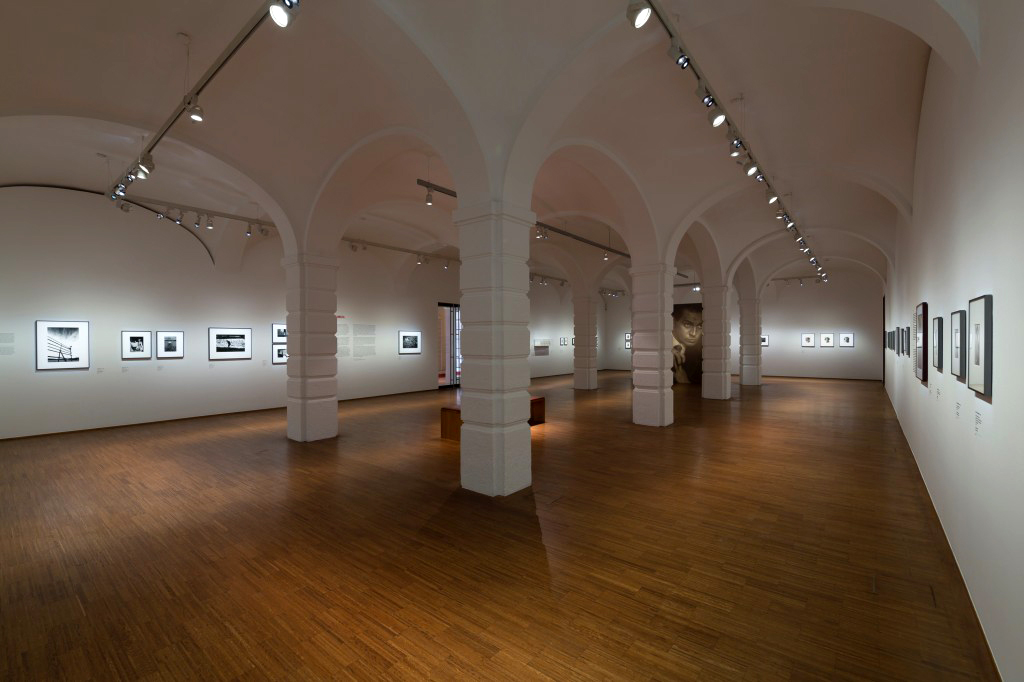
Installation view of the exhibition 'Acting for the Camera' at the Albertina, Vienna, March - June 2017

Installation view of the exhibition 'Acting for the Camera' at the Albertina, Vienna, March - June 2017 showing at left, Rudolph Koppitz's 'Bewegungsstudie (Motion Study)' 1926

In the above image at left, Rudolph Koppitz’s Bewegungsstudie (Motion Study) 1926
Installation view of the exhibition 'Acting for the Camera' at the Albertina, Vienna, March - June 2017 showing at centre, Rudolph Koppitz's 'In the Arms of Nature [self-portrait]' 1923

In the above image at centre, Rudolph Koppitz’s In the Arms of Nature [self-portrait] 1923
Installation view of the exhibition 'Acting for the Camera' at the Albertina, Vienna, March - June 2017 showing at left and centre, the work of Jan Coplans

In the above image at left and centre, the work of Jan Coplans
Installation view of the exhibition 'Acting for the Camera' at the Albertina, Vienna, March - June 2017 showing at right, Erwin Wurm's 'One Minute Sculptures'

In the above image, Erwin Wurm’s One Minute Sculptures at right
Installation view of the exhibition 'Acting for the Camera' at the Albertina, Vienna, March - June 2017


Installation views of the exhibition Acting for the Camera at the Albertina, Vienna, March – June 2017


With circa 120 works from the Albertina’s Photographic Collection, the exhibition Acting for the Camera examines the diverse ways in which models are staged or stage themselves before the camera. The featured photographic works, created between the 1850s and the present, represent a cross-section of photographic history as well as the diversity of the Albertina’s own holdings. The present selection is divided between six thematic emphases: motion studies, models for artists, dance, picture stories, portraits of actresses and actors, and Viennese Actionist stagings of the body.

All of these photographs arose from diverse and multi-layered forms of collaboration between the model before and the photographer behind the camera lens. Some of the models are staged according to their photographers’ instructions, while other shots originated via a creative process in which model and photographer collaborated on an equal footing. And in some cases, the pictures were even taken according to highly specific instructions given by the model.

Beginnings

It was photographic studies done in the interest of scientific research that made it possible for the first time to visually analyse the processes of human locomotion in high detail. Anonymous models, such as in the photographs taken by Ottomar Anschütz beginning around 1890, made themselves available in order to render understandable processes such as spear-throwing. The individuals seen in such works act according to the exact instructions of the photographer. Series of this type were used to compare the motion patterns of “healthy” and “unhealthy” bodies as well as undergird medical theories with visual evidence.

While such motion studies occasionally doubled as working studies for artworks by other artists, there was also a category of works created specifically for this purpose such as Johann Victor Krämer’s staged studio photographs as well as Otto Schmidt’s nudes, and some of these were also sold “under the table” as pornography.

Expressive Gestures

A strong and likewise mutually influential relationship arose between photography and dance. At the beginning of the 20th century, modern expressionist dance was an avant-garde art form, and dancers would work together closely with photographers in order to document and disseminate their performances. Such partnerships made possible expressive stagings that helped define the styles of that era. The expressive gestures often seen therein were also taken up by Anton Josef Trčka, who had Egon Schiele pose with a hand position reminiscent of something one might see in dance.

Portraits of well-known actors such as a laughing Romy Schneider, along with role-portraits for film productions, were created in Viennese studios by photographers such as Trude Fleischmann and Madame d’Ora, and these iconic pictures represent yet another emphasis in this presentation.

Bodies as Photographic Material

Much like the way in which classic portraits convey the personalities of those being portrayed, photography can also stage the body in the opposite way, as something purely material. Helmar Lerski, for example, treated the human face as a landscape that could be modelled by light and shadow. John Coplans, on the other hand, explored his own naked body centimetre by centimetre, portraying himself without his head and thus questioning stagings of masculinity and social norms.

In Viennese Actionism, the artists likewise placed themselves front and centre as pictorial subjects. Rudolf Schwarzkogler, who wrapped himself like a mummy in muslin bandages during the late 1960s, as well as his Actionist colleague Günter Brus, staged performances specifically for the photographic camera. And the newest works in Acting for the Camera are as recent as Erwin Wurm’s One Minute Sculptures, for which the artist had models assume ridiculous poses with everyday objects.

Following Black & White (2015) and Landscapes & People (2016), this is the third large-scale presentation of the Albertina’s Photographic Collection. The Albertina, as a treasure trove of visual knowledge, began collecting photographs all the way back in the mid-19th century – but it was only upon the establishment of the Photographic Collection in 1999 that these fascinating works were rediscovered.

Press release from the Albertina


Helmar Lerski (Swiss, 1871-1956) 'Metamorphosis 601' (Metamorphose 601) 1936


Helmar Lerski (Swiss, 1871-1956)
Metamorphosis through Light #601 (Metamorphose 601)
1936
Gelatin silver print


Helmar Lerski (Swiss, 1871-1956) 'Metamorphosis through Light #587' 1935-1936


Helmar Lerski (Swiss, 1871-1956)
Metamorphosis through Light #587
1935-36
Gelatin silver print


Helmar Lerski: Metamorphosis

… In 1915 Lerski returned to Europe and started a career in cinematography. For over ten years, he worked as a cameraman, lighting technician and expert on special effects for numerous expressionistic silent films in Berlin, among others Fritz Lang’s “Metropolis” (1925/26). At the end of the 1920s, he turned his attention once again to portrait photography and took part in the avant-garde movement that was trying to effect radical changes in the language of the photographic image. At the legendary Werkbund exhibition “Film und Foto” (1929), at which the New Photography made its greatest appearance at first in Stuttgart and subsequently in Zurich, Lerski – who had in the meantime become the best-known portrait photographer of his time – was well represented with 15 photographs.

But Lerski’s pictures were only partly in line with the maxims of the New Photography, and they questioned the validity of pure objectivity. The distinguishing characteristics of his portraits included a theatrical-expressionistic, sometimes dramatic use of lighting inspired by the silent film. Although his close-up photographs captured the essential features of a face – eyes, nose and mouth –, his primary concern was not individual appearance or superficial likeness but the deeper inner potential: he emphasised the changeability, the different faces of an individual. Lerski, who sympathised with the political left wing, thereby infiltrated the photography of types that was practised (and not infrequently misused for racist purposes) by many of Lerski’s contemporaries.

In his book “Köpfe des Alltags” (1931), a milestone in the history of photographic books, Lerski clearly expressed his convictions: he showed portraits of anonymous people from the underclass of the Berlin society, presenting them as theatrical figures so that professional titles such as “chamber maid”, “beggar” or “textile worker” appeared as arbitrarily applied roles. Thus his photographs may be interpreted as an important opposite standpoint to the work of August Sander, who was at the same time working on his project “Menschen des 20. Jahrhunderts” – that large-scale attempt at a social localisation of various representatives of the Weimar society.

But Helmar Lerski’s attitude was at its most radical in his work entitled “Metamorphosis”. This was completed within a few months at the beginning of 1936 in Palestine, to where Lerski and his second wife Anneliese had immigrated in 1932. In “Verwandlungen durch Licht” (this is the second title for this work), Lerski carried his theatrical talent to extremes. With the help of up to 16 mirrors and filters, he directed the natural light of the sun in constant new variations and refractions onto his model, the Bernese-born, at the time out-of-work structural draughtsman and light athlete Leo Uschatz. Thus he achieved, in a series of over 140 close-ups “hundreds of different faces, including that of a hero, a prophet, a peasant, a dying soldier, an old woman and a monk from one single original face” (Siegfried Kracauer). According to Lerski, these pictures were intended to provide proof “that the lens does not have to be objective, that the photographer can, with the help of light, work freely, characterise freely, according to his inner face.” Contrary to the conventional idea of the portrait as an expression of human identity, Lerski used the human face as a projection surface for the figures of his imagination. We are only just becoming aware of the modernity of this provocative series of photographs.

Peter Pfrunder. “Helmar Lerski: Metamorphosis,” on the Fotostiftung Schweiz 2005 [Online] Cited 17/12/2021. No longer available online


Wall texts

Motion Studies

Photographs taken in the context of scientific experimental arrangements visualise the different phases of human and animal locomotion sequences. Several cameras are mounted one after another, their shutters release at short intervals while the model is moving. Shortly after Eadweard Muybridge, who makes a name for himself with motion studies of racehorses in 1877, achieves his first successes, the physician Étienne-Jules Marey and the photographers Ottomar Anschütz and Albert Londe also dedicate themselves to capturing movement sequences photographically. Londe works with Jean-Martin Charcot, a neurologist at the Pitié-Salpêtrière psychiatric hospital in Paris. Anonymous models have to perform certain movements defined by the scientists. The photographs are used to compare the movement patterns of “healthy” and”unhealthy” people and to provide visual evidence for medical theories. Artists interested in the anatomically correct representation of movements use the photographs as models.

Models for Artists

Photographs are used as a workaround in the fine arts quite early on; special collections are compiled. Photographs of models in motion, for example, come to replace preparatory drawings after nature. The expanding demand for photographic material creates a new market for professional studios. The Viennese photographer and publisher Otto Schmidt produces body and facial expression studies as well as nudes (so-called academies). Since these photographs, thanks to their erotic pictorial repertoire, enjoy great popularity not only with artists, Schmidt’s circle of customers keeps growing.

The reduction in price and the easier handling of the photographic material increases the number of artists that take up a camera themselves. The painter Johann Victor Krämer has his models pose in front of half-finished paintings to check or complete their posture and gestures. Grids drawn on the photographs sometimes help to transfer subjects to the canvas.

Dance

Germany’s and Austria’s cultural scenes of the early twentieth century see the triumphant progress of modern expressionist dance. Many dancers develop choreographies and movement vocabularies of their own. They visit photographic studios, commissioning presentation and promotion materials. The artists present themselves in the costumes of the performances they currently star in on the stage.

Photographers resort to various possibilities for their dance studies. Hugo Erfurth relies on sequences to convey the flow of movements. The emphasis is on the dancer’s pose in these photographs from the early days of modern dance. Shadows are eliminated by massive retouches, since the pictures were to be reproduced in the book Der Künstlerische Tanz unserer Zeit (The Artistic Dance of Our Time, 1928), published by Langewiesche. Martin Imboden, on the other hand, focuses on the expression of the artistic performance in his static suggestive photographs.

Picture Stories

Restaging paintings and other works of art is a favourite pastime of the upper middle classes and the aristocracy in the nineteenth century. Costumed amateur actors adopting rigid poses for a few moments present the “living pictures” at certain events. The emergence of photography makes it possible to reenact these fleeting performances in the studio and to preserve them for the long term. The theatrical group photos are sold as editions on the art market or used as models to emulate.

Henry Peach Robinson is one of those who devote themselves to staging photographs in a way that lean on the tradition of tableaux vivants. Brassaï’s and Bill Brandt’s photo reportages, which seem to document nocturnal scenes the photographers chanced upon, are actually staged for the occasion. Brandt, for example, has members of his family embody precisely conceived parts in his mysteriously toned series A Night in London. The American O. Winston Link, who shows a penchant for steam engines, plans his pictures in every detail. Relying on an elaborate flash technique and the use of spotlights, his photographs, taken in the open and by night, exhibit a filmic aesthetic.

Portraits of Actresses and Actors

In Vienna, Madame d’Ora, Franz Xaver Setzer, and Trude Fleischmann specialise in portraits of performing artists from the 1910s to the 1930s. They not only catered to the public’s great demand; focusing on the cultural scene’s clientele also ties in with the personal interest of the studios’ owners. The models collaborate with the photographers to realise the desired notions regarding their appearance and the interpretation of their look. Stars from the theatre world choose the costume, make-up, and pose they prefer for their photographic portraits. Some of the character portraits and scenic representations show sweepingly theatrical gestures. Film actresses and actors are only rarely captured in traditional character portraits in the early days of the medium. Setzer’s portrait of Conrad Veidt, who stars in The Cabinet of Dr. Caligari in 1919, is an exception. The lighting and styling as well as his facial expression and the expressive gesture of his hand mirror the film’s Expressionism.

Actionist Stagings of the Body

The Actionist art gaining momentum from the 1960s on shows itself inseparably bound up with photography. Next to film, photography is the only way to provide live documentations of performances. Some actions are specifically staged for the photo camera. From about the mid-1960s on, the Viennese Actionist artists Günter Brus and Rudolf Schwarzkogler realise constellations of bodies and objects for photographs that are intended as visual works of art.

Arnulf Rainer, whose grimaces, like the Vienna Actionists’s works, are aimed at criticising the socially standardised body, also poses for a photographer. The photographer was not supposed to pursue an artistic approach of his own but to neutrally capture the given representations of the body. After the pictures were taken, Rainer defines the final image area and overpaints the photos by relying on gestural techniques that emphasise physical and emotional moments of expression.

John Coplans combines observations on the representation of the body with reflections on the nature of media. Using a straightforward and precise exposure technique and keen on obtaining sharp pictures, he confronts the viewer with defamiliarised views of his body transforming it into sculptural fragments. The humorous and absurd poses in which models present themselves for Erwin Wurm’s One Minute Sculptures with the help of everyday objects are often based on drawn studies and are captured in factual photographs lending the ephemeral performances durability.


Will McBride (American, 1931-2015) 'Romy Schneider in Paris' 1964, printed 2001


Will McBride (American, 1931-2015)
Romy Schneider in Paris
1964, printed 2001
Gelatin Silver Print
Albertina, Vienna
© Will McBride Estate/Berlin


Rudolf Schwarzkogler (Austrian, 1940-1969) '2nd Action' 1965


Rudolf Schwarzkogler (Austrian, 1940-1969)
2nd Action
1965
Gelatin Silver Print


Rudolf Schwarzkogler (Austrian, 1940-1969) '3rd Action' 1965


Rudolf Schwarzkogler (Austrian, 1940-1969)
3rd Action
1965
Gelatin Silver Print


Rudolf Schwarzkogler (Austrian, 1940-1969) '4th Action' 1965


Rudolf Schwarzkogler (Austrian, 1940-1969)
4th Action
1965
Gelatin Silver Print


Rudolf Schwarzkogler (13 November 1940, Vienna – 20 June 1969, Vienna) was an Austrian performance artist closely associated with the Viennese Actionism group that included artists Günter Brus, Otto Mühl, and Hermann Nitsch.

He is best known today for photographs depicting his series of closely controlled “Aktionen” featuring such iconography as a dead fish, a dead chicken, bare light bulbs, coloured liquids, bound objects, and a man wrapped in gauze. The enduring themes of Schwarzkogler’s works involved experience of pain and mutilation, often in an incongruous clinical context, such as 3rd Aktion (1965) in which a patient’s head swathed in bandages is being pierced by what appears to be a corkscrew, producing a bloodstain under the bandages. They reflect a message of despair at the disappointments and hurtfulness of the world.

Schwarzkogler devoted himself entirely to free art from 1965 and quit his job. He started out with horse betting and was interested in winning systems. In 1968 he took part in film projects. In 1969, he died after falling from the window of his apartment. He was buried at the Vienna Central Cemetery.

Text from the Wikipedia website


Seiichi Furuya (Japanese, b. 1950) 'Christine Furuya Gössler' 1983; printed 1988


Seiichi Furuya (Japanese, b. 1950)
Christine Furuya Gössler
1983; printed 1988
Gelatin silver print
Albertina, Vienna


Seiichi Furuya (古屋 誠一, Furuya Seiichi, born 1950) in Izu, Shizuoka is a Japanese photographer.

As a student Furuya studied architecture and then spent two years at Tokyo College of Photography. In 1973 he left his studies and his native Japan and traveled, ending up, according to Arthur Ollman in his book, The Model Wife, “a man in exile. He wears alienation like an obligation.” In Austria where he lived since 1982 he met and married Christine Gössler. From 1984 to 1987 he lived in East Berlin and worked as translator. Christine was to become the primary subject of his photography until her suicide in 1985. His last pictures of her are of her shoes, neatly placed by the window she had just jumped out of, and her body, shot from the same window, on the ground, nine stories below.

Text from the Wikipedia website


“The other person is absent as a point of reference but present as an addressee. This strangely warped situation causes an unbearable presence: You are gone (which I lament); you are here (because I am turning to you).”

~ Roland Barthes, A Lover’s Discourse

“If you consider the taking of photographs to be in a sense a matter of fixing time and space, then this work – the documenting of the life of one human being – is exceptionally thrilling… in facing her, in photographing her, and looking at her in photographs, I also see and discover “myself.””

~ Seiichi Furuya, 1979

Seiichi Furuya and Christine Gössler would soon marry, and they would later have a child, Komyo. Throughout their seven years together, Christine would plunge in and out of depressions and psychiatric institutions. And one Sunday in October of 1985, she would jump to her death from the 9th floor of their apartment building in East Berlin. Furuya photographed her throughout, to the very end. And this faithful and macabre portrait making would become his artistic and philosophical project.

Stacey Platt. “The Art of Losing Love, pt.2: Seiichi Furuya and Christine Gössler,” on the space in between website October 28, 2004 [Online] Cited 17/12/2021. No longer available online


Erwin Wurm (Austrian, b. 1954) 'One Minute Sculpture' 1997


Erwin Wurm (Austrian, b. 1954)
One Minute Sculpture
1997
Silver dye bleach print
Albertina, Vienna


Erwin Wurm (born 1954) is an Austrian artist born in Bruck an der Mur, Styria, Austria. He lives and works in Vienna and Limberg, Austria. …

Since the late 1980s, he has developed an ongoing series of One Minute Sculptures, in which he poses himself or his models in unexpected relationships with everyday objects close at hand, prompting the viewer to question the very definition of sculpture. He seeks to use the “shortest path” in creating a sculpture – a clear and fast, sometimes humorous, form of expression. As the sculptures are fleeting and meant to be spontaneous and temporary, the images are only captured in photos or on film.

To make a One Minute Sculpture, the viewer has to part with his habits. Wurm’s instructions for his audience are written by hand in a cartoon-like style. Either Wurm himself or a volunteer follow the instructions for the sculpture, which is meant to put the body in an absurd and ridiculous-looking relationship with everyday objects. Whoever chooses to do one of Wurm’s One Minute Sculptures holds the pose for a minute, or the time it takes to capture the scene photographically. These positions are often difficult to hold; although a minute is very short, a minute for a One Minute Sculpture can feel like an eternity.

Text from the Wikipedia website


Erwin Wurm (Austrian, b. 1954) 'One Minute Sculpture' 1997


Erwin Wurm (Austrian, b. 1954)
One Minute Sculpture
1997
Silver dye bleach print
Albertina, Vienna


Albertina
Albertinaplatz 1
1010 Vienna, Austria
Phone: +43 (0)1 534 83-0

Opening hours:
Daily 10am – 6pm
Wednesday 10am – 9pm

Albertina website

LIKE ART BLART ON FACEBOOK

Back to top

Exhibition: ‘Moholy-Nagy: Future Present’ at the Los Angeles County Museum of Art (LACMA)

Exhibition dates: 12th February – 18th June, 2017


László Moholy-Nagy (Hungarian, 1895-1946) 'F in Field' 1920 from the exhibition 'Moholy-Nagy: Future Present' at the Los Angeles County Museum of Art (LACMA), Feb - June, 2017


László Moholy-Nagy (Hungarian, 1895-1946)
F in Field
1920
Gouache and collage on paper
8 11/16 × 6 15/16 in.
Private collection, courtesy of Kunsthandel Wolfgang Werner, Bremen/Berlin
© 2017 Hattula Moholy-Nagy/Artists Rights Society (ARS), New York/VG Bild-Kunst, Bonn


“To meet the manifold requirements of this age with a definite program of human values, there must come a new mentality and a new type of personality. The common denominator is the fundamental acknowledgment of human needs; the task is to recognise the moral obligation in satisfying these needs, and the aim is to produce for human needs, not for profit.”


László Moholy-Nagy in Vision in Motion, published posthumously in 1947


New vision

One of the most creative human beings of the 20th century, and one of its most persuasive artists … “pioneering painter, photographer, sculptor, and filmmaker as well as graphic, exhibition, and stage designer, who was also an influential teacher at the Bauhaus, a prolific writer, and later the founder of Chicago’s Institute of Design.”

New visual creations, new combinations of technology and art: immersive installations featuring photographic reproductions, films, slides, posters, and examples of architecture, theatre, and industrial design that attempted to achieve a Gesamtwerk (total work) that would unify art and technology with life itself. Moholy’s “belief in the power of images and the various means by which to disseminate them” presages our current technological revolution.

It’s time another of his idioms – the moral obligation to satisfy human values by producing for human needs, not for profit – is acted upon.

The aim is to produce for human needs, not for profit.

Dr Marcus Bunyan


Many thankx to the Los Angeles County Museum of Art for allowing me to publish the photographs in the posting. Please click on the photographs for a larger version of the image.


The first comprehensive retrospective of the work of László Moholy-Nagy (1895-1946) in the United States in nearly 50 years, this long overdue presentation reveals a utopian artist who believed that art could work hand-in-hand with technology for the betterment of humanity. Moholy-Nagy: Future Present examines the career of this pioneering painter, photographer, sculptor, and filmmaker as well as graphic, exhibition, and stage designer, who was also an influential teacher at the Bauhaus, a prolific writer, and later the founder of Chicago’s Institute of Design. The exhibition includes more than 250 works in all media from public and private collections across Europe and the United States, some of which have never before been shown publicly in the U.S. Also on display is a large-scale installation, the Room of the Present, a contemporary construction of an exhibition space originally conceived by Moholy-Nagy in 1930. Though never realised during his lifetime, the Room of the Present illustrates Moholy’s belief in the power of images and the various means by which to disseminate them – a highly relevant paradigm in today’s constantly shifting and evolving technological world.


Moholy-Nagy: Future Present at LACMA

An exhibition walkthrough of Moholy-Nagy: Future Present at LACMA. Mark Lee, Principal of Johnston Marklee and Carol S. Eliel, Curator of Modern Art at LACMA discuss how Johnston Marklee’s design of the exhibition dialogues with the multiple mediums that constitute Moholy-Nagy’s vast body of work.


László Moholy-Nagy (Hungarian, 1895-1946) 'Title unknown' 1920/1921 from the exhibition 'Moholy-Nagy: Future Present' at the Los Angeles County Museum of Art (LACMA), Feb - June, 2017


László Moholy-Nagy (Hungarian, 1895-1946)
Title unknown
1920/1921
Gouache, collage, and graphite on paper
9 5/8 × 6 3/8 in.
Los Angeles County Museum of Art, Gift of Kate Steinitz
© 2017 Hattula Moholy-Nagy/Artists Rights Society (ARS), New York/VG Bild-Kunst, Bonn
Photo © Museum Associates/LACMA


László Moholy-Nagy (Hungarian, 1895-1946) 'Photogram' 1941


László Moholy-Nagy (Hungarian, 1895-1946)
Photogram
1941
Gelatin silver photogram
28 x 36cm
The Art Institute of Chicago, Gift of Sally Petrilli, 1985
© 2016 Hattula Moholy-Nagy/VG Bild-Kunst, Bonn/Artists Rights Society (ARS), New York


László Moholy-Nagy (Hungarian, 1895-1946) '19' 1921


László Moholy-Nagy (Hungarian, 1895-1946)
19
1921
Oil on canvas
44 × 36 1/2 in.
Harvard Art Museums/Busch-Reisinger Museum, Gift of Sibyl Moholy-Nagy
© 2017 Hattula Moholy-Nagy/Artists Rights Society (ARS), New York/VG Bild-Kunst, Bonn
Photo © President and Fellows of Harvard College


László Moholy-Nagy (Hungarian, 1895-1946) 'Red Cross and White Balls' 1921


László Moholy-Nagy (Hungarian, 1895-1946)
Red Cross and White Balls
1921
Collage, ink, graphite, and watercolour on paper
8 7/16 × 11 7⁄16 in.
Museum Kunstpalast Düsseldorf
© 2017 Hattula Moholy-Nagy/Artists Rights Society (ARS), New York/VG Bild-Kunst, Bonn, photo © Museum Kunstpalast – Horst Kolberg – ARTOTHEK


László Moholy-Nagy (Hungarian, 1895-1946) 'Construction' 1922


László Moholy-Nagy (Hungarian, 1895-1946)
Construction
1922
Oil and graphite on panel
21 3/8 × 17 15/16 in.
Harvard Art Museums/Busch-Reisinger Museum, Gift of Lydia Dorner in memory of Dr. Alexander Dorner
© 2017 Hattula Moholy-Nagy/Artists Rights Society (ARS), New York/VG Bild-Kunst, Bonn
Photo © President and Fellows of Harvard College


László Moholy-Nagy (Hungarian, 1895-1946) 'Q' 1922/23


László Moholy-Nagy (Hungarian, 1895-1946)
Q
1922/23
Collage, watercolour, ink, and graphite on paper attached to carbon paper
23 3⁄16 × 18 1⁄4 in.
National Gallery of Art, Washington, Ailsa Mellon Bruce Fund
© 2017 Hattula Moholy-Nagy/Artists Rights Society (ARS), New York/VG Bild-Kunst, Bonn


The Los Angeles County Museum of Art (LACMA) presents Moholy-Nagy: Future Present, the first comprehensive retrospective of the pioneering artist and educator László Moholy-Nagy (1895-1946) to be seen in the United States in nearly 50 years. Organised by LACMA, the Solomon R. Guggenheim Foundation, and the Art Institute of Chicago, this exhibition examines the rich and varied career of the Hungarian-born modernist. One of the most versatile figures of the twentieth century avant-garde, Moholy (as he is often called) believed in the potential of art as a vehicle for social transformation and in the value of new technologies in harnessing that potential. He was a pathbreaking painter, photographer, sculptor, designer, and filmmaker as well as a prolific writer and an influential teacher in both Germany and the United States. Among his innovations were experiments with cameraless photography; the use of industrial materials in painting and sculpture; research with light, transparency, and movement; work at the forefront of abstraction; fluidity in moving between the fine and applied arts; and the conception of creative production as a multimedia endeavour. Radical for the time, these are now all firmly part of contemporary art practice.

The exhibition includes approximately 300 works, including paintings, sculptures, drawings, collages, photographs, photograms, photomontages, films, and examples of graphic, exhibition, and theatre design. A highlight is the full-scale realisation of the Room of the Present, an immersive installation that is a hybrid of exhibition space and work of art, seen here for the first time in the United States. This work – which includes photographic reproductions, films, images of architectural and theatre design, and examples of industrial design – was conceived by Moholy around 1930 but realised only in 2009. The exhibition is installed chronologically with sections following Moholy’s career from his earliest days in Hungary through his time at the Bauhuas (1923-1928), his post-Bauhaus period in Europe, and ending with his final years in Chicago (1937-1946).

Moholy-Nagy: Future Present is co-organised by Carol S. Eliel, Curator of Modern Art, LACMA; Karole P. B. Vail, Curator, Solomon R. Guggenheim Museum; and Matthew S. Witkovsky, Richard and Ellen Sandor Chair and Curator, Department of Photography, Art Institute of Chicago. The exhibition’s tour began at the Solomon R. Guggenheim Museum in New York, continued at the Art Institute of Chicago, and concludes at LACMA.

“Moholy-Nagy is considered one of the earliest modern artists actively to engage with new materials and technologies. This spirit of experimentation connects to LACMA’s longstanding interest in and support of the relationship between art and technology, starting with its 1967-1971 Art and Technology Program and continuing with the museum’s current Art + Technology Lab,” according to Michael Govan, LACMA CEO and Wallis Annenberg Director. “This exhibition’s integrated view of Moholy’s work in numerous mediums reveals his relevance to contemporary art in our multi- and new media age.”

Moholy’s goal throughout his life was to integrate art, technology, and education for the betterment of humanity; he believed art should serve a public purpose. These goals defined the artist’s utopian vision, a vision that remained as constant as his fascination with light, throughout the many material changes in his oeuvre,” comments Carol S. Eliel, exhibition curator. “Light was Moholy’s ‘dream medium,’ and his experimentation employed both light itself and a range of industrial materials that take advantage of light.”


László Moholy-Nagy (Hungarian, 1895-1946) 'Photogram' 1925/28, printed 1929


László Moholy-Nagy (Hungarian, 1895-1946)
Photogram
1925/28, printed 1929
Gelatin silver print (enlargement from photogram) from the Giedion Portfolio
15 3/4 × 11 13/16 in.
The Museum of Fine Arts, Houston, museum purchase funded by the Mary Kathryn Lynch Kurtz Charitable Lead Trust, The Manfred Heiting Collection
© 2017 Hattula Moholy-Nagy/Artists Rights Society (ARS), New York/VG Bild-Kunst, Bonn


László Moholy-Nagy (Hungarian, 1895-1946) 'Photograph (Self-Portrait with Hand)' 1925/1929, printed 1940/1949


László Moholy-Nagy (Hungarian, 1895-1946)
Photograph (Self-Portrait with Hand)
1925/1929, printed 1940/1949
Gelatin silver print
9 5/16 × 7 in.
Galerie Berinson, Berlin
© 2017 Hattula Moholy-Nagy/Artists Rights Society (ARS), New York/VG Bild-Kunst, Bonn


László Moholy-Nagy (Hungarian, 1895-1946) 'Photogram' 1925/1926


László Moholy-Nagy (Hungarian, 1895-1946)
Photogram
1925/1926
Gelatin silver photogram
7 3/16 × 9 1/2 in.
Museum Folkwang, Essen
© 2017 Hattula Moholy-Nagy/Artists Rights Society (ARS), New York/VG Bild-Kunst, Bonn
Photo © Museum Folkwang Essen – ARTOTHEK


László Moholy-Nagy (Hungarian, 1895-1946) 'Photogram' 1926


László Moholy-Nagy (Hungarian, 1895-1946)
Photogram
1926
Gelatin silver print
9 3/8 x 7 in.
Los Angeles County Museum of Art, Ralph M. Parsons Fund
© 2017 Hattula Moholy-Nagy/Artists Rights Society (ARS), New York/VG Bild-Kunst, Bonn
Photo © Museum Associates/LACMA


Photogram (1926): In the 1920s Moholy was among the first artists to make photograms by placing objects – including coins, lightbulbs, flowers, even his own hand – directly onto the surface of light-sensitive paper. He described the resulting images, simultaneously identifiable and elusive, as “a bridge leading to a new visual creation for which canvas, paintbrush, and pigment cannot serve.”


László Moholy-Nagy (Hungarian, 1895-1946) 'Cover and design for Malerei Photographie Film (Painting Photography Film)' 1925


László Moholy-Nagy (Hungarian, 1895-1946)
Cover and design for Malerei Photographie Film (Painting Photography Film)
1st ed., Bauhausbücher (Bauhaus Books) 8 (Albert Langen Verlag, 1925), bound volume
9 1/16 × 7 1/16 in.
Collection of Richard S. Frary
© 2017 Hattula Moholy-Nagy/Artists Rights Society (ARS), New York/VG Bild-Kunst, Bonn


László Moholy-Nagy (Hungarian, 1895-1946) 'Once a Chicken, Always a Chicken' 1925


László Moholy-Nagy (Hungarian, 1895-1946)
Once a Chicken, Always a Chicken
1925
Photomontage (halftone reproductions, paper, watercolor, and grapite) on paper
15 × 19 in.
Alice Adam, Chicago
© 2017 Hattula Moholy-Nagy/Artists Rights Society (ARS), New York/VG Bild-Kunst, Bonn


About the artist

László Moholy-Nagy was born in Hungary in 1895. He enrolled as a law student at the University of Budapest in 1915, leaving two years later to serve as an artillery officer in the Austro-Hungarian army during World War I. He began drawing while on the war front; after his discharge in 1918 Moholy convalesced in Budapest, where he focused on painting. He was soon drawn to the cutting-edge art movements of the period, including Cubism and Futurism. Moholy moved to Vienna in 1919 before settling in Berlin in 1920, where he served as a correspondent for the progressive Hungarian magazine MA (Today).

The letters and glyphs of Dada informed Moholy’s visual art around 1920 while the hard edged geometries and utopian goals of Russian Constructivism influenced his initial forays into abstraction shortly thereafter, particularly works that explored the interaction among coloured planes, diagonals, circles, and other geometric forms. By the early 1920s Moholy had gained a reputation as an innovative artist and perceptive theorist through exhibitions at Berlin’s radical Galerie Der Sturm as well as his writings. His lifelong engagement with industrial materials and processes – including the use of metal plating, sandpaper, and various metals and plastics then newly-developed for commercial use – began at this time.

In 1923 Moholy began teaching at the Bauhaus, an avant-garde school that sought to integrate the fine and applied arts, where his colleagues included Wassily Kandinsky, Paul Klee, and other path breaking modernists. Architect Walter Gropius, founder of the Bauhaus, invited Moholy to expand its progressive curriculum, particularly by incorporating contemporary technology into more traditional methods and materials. He also had a part in Bauhaus graphic design achievements, collaborating with Herbert Bayer on stationery, announcements, and advertising materials.

Photography was of special significance for Moholy, who believed that “a knowledge of photography is just as important as that of the alphabet. The illiterates of the future will be ignorant of the use of the camera and pen alike.” In the 1920s he was among the earliest artists to make photograms by placing objects directly onto the surface of light-sensitive paper. He also made photographs using a traditional camera, often employing exaggerated angles and plunging perspectives to capture contemporary technological marvels as well as the post-Victorian freedom of the human body in the modern world. His photographs are documentary as well as observations of texture, captured in fine gradations of light and shadow. Moholy likewise made photomontages, combining assorted elements, typically newspaper and magazine clippings, resulting in what he called a “compressed interpenetration of visual and verbal wit; weird combinations of the most realistic, imitative means which pass into imaginary spheres.” Moholy-Nagy includes the largest grouping of the artist’s photomontages ever assembled.

After leaving the Bauhaus in 1928, Moholy turned to commercial, theatre, and exhibition design as his primary means of income. This work, which reached a broad audience, was frequently collaborative and interdisciplinary by its very nature and followed from the artist’s dictum “New creative experiments are an enduring necessity.”

Even as his commercial practice was expanding, Moholy’s artistic innovations and prominence in the avant-garde persisted unabated. He continued to bring new industrial materials into his painting practice, while his research into light, transparency, and movement led to his 35 mm films documenting life in the modern city, his early involvement with colour photography for advertising, and his remarkable kinetic Light Prop for an Electric Stage of 1930. An extension of his exhibition design work, Moholy’s Room of the Present was conceived to showcase art that embodied his “new vision” – endlessly reproducible photographs, films, posters, and examples of industrial design.

Forced by the rise of Nazism to leave Germany, in 1934 Moholy moved with his family to Amsterdam, where he continued to work on commercial design and to collaborate on art and architecture projects. Within a year of arriving the family was forced to move again, this time to London. Moholy’s employment there centred around graphic design, including prominent advertising campaigns for the London Underground, Imperial Airways, and Isokon furniture. He also received commissions for a number of short, documentary influenced films while in England. In 1937, the artist accepted the invitation (arranged through his former Bauhaus colleague Walter Gropius) of the Association of Arts and Industries to found a design school in Chicago, which he called the New Bauhaus – American School of Design. Financial difficulties led to its closure the following year, but Moholy reopened it in 1939 as the School of Design (subsequently the Institute of Design, today part of the Illinois Institute of Technology). Moholy transmitted his populist ethos to the students, asking that they “see themselves as designers and craftsmen who will make a living by furnishing the community with new ideas and useful products.”

Despite working full-time as an educator and administrator, Moholy continued his artistic practice in Chicago. His interest in light and shadow found a new outlet in Plexiglas hybrids of painting and sculpture, which he often called Space Modulators and intended as “vehicles for choreographed luminosity.” His paintings increasingly involved biomorphic forms and, while still abstract, were given explicitly autobiographical or narrative titles – the Nuclear paintings allude to the horror of the atomic bomb, while the Leuk paintings refer to the cancer that would take his life in 1946. Moholy’s goal throughout his life was to integrate art, technology, and education for the betterment of humanity. “To meet the manifold requirements of this age with a definite program of human values, there must come a new mentality,” he wrote in Vision in Motion, published posthumously in 1947. “The common denominator is the fundamental acknowledgment of human needs; the task is to recognise the moral obligation in satisfying these needs, and the aim is to produce for human needs, not for profit.”


László Moholy-Nagy (Hungarian, 1895-1946) 'AL 3' 1926


László Moholy-Nagy (Hungarian, 1895-1946)
AL 3
1926
Oil, industrial paint, and graphite on aluminium
15 3/4 × 15 3/4 in.
Norton Simon Museum, Pasadena, California, The Blue Four Galka Scheyer Collection
© 2017 Hattula Moholy-Nagy/Artists Rights Society (ARS), New York/VG Bild-Kunst, Bonn


László Moholy-Nagy (Hungarian, 1895-1946) 'Photograph (Berlin Radio Tower)' 1928/1929


László Moholy-Nagy (Hungarian, 1895-1946)
Photograph (Berlin Radio Tower)
1928/1929
Gelatin silver print
14 3/16 × 10 in.
The Art Institute of Chicago, Julien Levy Collection, Special Photography Acquisition Fund
© 2017 Hattula Moholy-Nagy/Artists Rights Society (ARS), New York/VG Bild-Kunst, Bonn
Digital image © The Art Institute of Chicago


Photograph (Berlin Radio Tower) (1928/29): Moholy used a traditional camera to take photos that often employ exaggerated angles and plunging perspectives to capture contemporary technological marvels such as the Berlin Radio Tower, which was completed in 1926. This photograph epitomises Moholy’s concept of art working hand-in-hand with technology to create new ways of seeing the world – his “new vision.”


László Moholy-Nagy (Hungarian, 1895-1946) 'Photograph (Light Prop)' 1930


László Moholy-Nagy (Hungarian, 1895-1946)
Photograph (Light Prop for an Electric Stage)
1930
Gelatin silver print
9 7/16 × 7 1/8 in.
The J. Paul Getty Museum, Los Angeles
© 2017 Hattula Moholy-Nagy/Artists Rights Society (ARS), New York/VG Bild-Kunst, Bonn


A short documentation from the replica of Moholy-Nagy’s Light Space Modulator in Van Abbe Museum in Eindhoven, Holland


Làslò Moholy Nagy film
1930


László Moholy-Nagy (Hungarian, 1895-1946) 'Photograph (Light Prop)' c. 1930


László Moholy-Nagy (Hungarian, 1895-1946)
Photograph (Light Prop for an Electric Stage)
c. 1930
Gelatin silver print
14 3/4 × 10 3/4 in.
The Museum of Modern Art, New York, Gift of the artist
© 2017 Hattula Moholy-Nagy/Artists Rights Society (ARS), New York/VG Bild-Kunst, Bonn
Digital image © The Museum of Modern Art / licensed by SCALA / Art Resource, NY


Installation view of Room 2, designed by László Moholy-Nagy, of the German section of the annual salon of the Society of Decorative Artists, Paris, May 14-July 13, 1930


Installation view of Room 2, designed by László Moholy-Nagy, of the German section of the annual salon of the Society of Decorative Artists, Paris, May 14-July 13, 1930
Bauhaus-Archiv Berlin
© 2017 Hattula Moholy-Nagy/Artists Rights Society (ARS), New York/VG Bild-Kunst, Bonn
Photo: Bauhaus-Archiv Berlin


László Moholy-Nagy (Hungarian, 1895-1946) 'Room of the Present' 1930, constructed 2009


László Moholy-Nagy (Hungarian, 1895-1946)
Room of the Present
Constructed 2009 from plans and other documentation, dated 1930
Mixed media
Inner dimensions: 137 3/4 x 218 7/8 x 318 3/4 in.
Van Abbemuseum, Eindhoven, 2953
© 2017 Hattula Moholy-Nagy/Artists Rights Society (ARS), New York/VG Bild-Kunst, Bonn
Photography by Peter Cox, Eindhoven, The Netherlands


The Room of the Present is an immersive installation featuring photographic reproductions, films, slides, posters, and examples of architecture, theatre, and industrial design, including an exhibition copy of Moholy’s kinetic Light Prop for an Electric Stage (1930). The Room exemplifies Moholy’s desire to achieve a Gesamtwerk (total work) that would unify art and technology with life itself. A hybrid between exhibition space and work of art, it was originally conceived around 1930 but realised only in 2009, based on the few existing plans, drawings, and related correspondence Moholy left behind.


László Moholy-Nagy (Hungarian, 1895-1946) 'Construction AL6 (Konstruktion AL6)' 1933-1934


László Moholy-Nagy (Hungarian, 1895-1946)
Construction AL6 (Konstruktion AL6)
1933-1934
Oil and incised lines on aluminum
60 × 50cm
IVAM, Institut Valencià d’Art Modern, Generalitat
© 2016 Hattula Moholy-Nagy/VG Bild-Kunst, Bonn/Artists Rights Society (ARS), New York


László Moholy-Nagy (Hungarian, 1895-1946) 'CH BEATA I' 1939


László Moholy-Nagy (Hungarian, 1895-1946)
CH BEATA I
1939
Oil and graphite on canvas
46 7/8 × 47 1/8 in.
Solomon R. Guggenheim Museum, New York, Solomon R. Guggenheim Founding Collection
© 2017 Hattula Moholy-Nagy/Artists Rights Society (ARS), New York/VG Bild-Kunst, Bonn
Photo © Solomon R. Guggenheim Foundation, New York, photography by Kristopher McKay


László Moholy-Nagy (Hungarian, 1895-1946) 'Photograph (Light Modulator in Motion)' 1943


László Moholy-Nagy (Hungarian, 1895-1946)
Photograph (Light Modulator in Motion)
1943
Gelatin silver print
6 9/16 x 4 7/16 in.
George Eastman Museum, Rochester, New York, purchase with funds provided by Eastman Kodak Company
© 2017 Hattula Moholy-Nagy/Artists Rights Society (ARS), New York/VG Bild-Kunst, Bonn


László Moholy-Nagy (Hungarian, 1895-1946) 'Photograph (Light Modulator in Repose)' 1943


László Moholy-Nagy (Hungarian, 1895-1946)
Photograph (Light Modulator in Repose)
1943
Gelatin silver print
6 7/16 x 4 1/2 in.
George Eastman Museum, Purchased with funds provided by Eastman Kodak Company
© 2017 Hattula Moholy-Nagy/Artists Rights Society (ARS), New York/VG Bild-Kunst, Bonn


László Moholy-Nagy (Hungarian, 1895-1946) 'Vertical Black, Red, Blue' 1945


László Moholy-Nagy (Hungarian, 1895-1946)
Vertical Black, Red, Blue
1945
Los Angeles County Museum of Art, purchased with funds provided by Alice and Nahum Lainer, the Ducommun and Gross Acquisition Fund, the Fannie and Alan Leslie Bequest, and the Modern and Contemporary Art Council, as installed in Moholy-Nagy: Future Present at the Los Angeles County Museum of Art
© 2017 Hattula Moholy-Nagy/Artists Rights Society (ARS), New York/VG Bild-Kunst, Bonn, photo
© 2017 Museum Associates/LACMA


László Moholy-Nagy (Hungarian, 1895-1946) 'Space Modulator CH for R1' 1942


László Moholy-Nagy (Hungarian, 1895-1946)
Space Modulator CH for R1
1942
Oil and incised lines on Formica
62 3/16 × 25 9/16 in.
Hattula Moholy-Nagy, Ann Arbor, Michigan
© 2017 Hattula Moholy-Nagy/Artists Rights Society (ARS), New York/VG Bild-Kunst, Bonn
Photography by Peter Schälchli


Los Angeles County Museum of Art (LACMA)
5905 Wilshire Boulevard (at Fairfax Avenue)
Los Angeles, CA, 90036
Phone: 323 857 6000

Opening hours:
Monday, Tuesday, Thursday: 11am – 5 pm
Friday: 11am – 8pm
Saturday, Sunday: 10am – 7pm
Closed Wednesday

LACMA website

LIKE ART BLART ON FACEBOOK

Back to top

Exhibition: ‘Wolfgang Tillmans: 2017’ at Tate Modern, London

Exhibition dates: 15th February – 11th June, 2017

 Co-curators: Chris Dercon and Helen Sainsbury, Head of Programme Realisation, Tate Modern with Emma Lewis, Assistant Curator, Tate Modern


Wolfgang Tillmans (German, b. 1968) 'The State We're In, A' 2015 from the exhibition 'Wolfgang Tillmans: 2017' at Tate Modern, London, Feb - June, 2017


Wolfgang Tillmans (German, b. 1968)
The State We’re In, A (Room 14)
2015
Ink-jet print
Dimensions variable
© Wolfgang Tillmans


Wolfgang Tillmans (German, b. 1968) 'The Cock (Kiss)' 2002 from the exhibition 'Wolfgang Tillmans: 2017' at Tate Modern, London, Feb - June, 2017


Wolfgang Tillmans (German, b. 1968)
The Cock (Kiss)
2002
Ink-jet print
Dimensions variable
© Wolfgang Tillmans


If one thing matters, everything matters (A love letter to Wolfgang Tillmans)

I believe that Wolfgang Tillmans is the number one photo-media artist working today. I know it’s a big call, but that’s how I see it.

His whole body of work is akin to a working archive – of memories, places, contexts, identities, landscapes (both physical and imagined) and people. He experiments, engages, and imagines all different possibilities in and through art. As Adrian Searle observes in his review of the exhibition, “Tillmans’ work is all a kind of evidence – a sifting through material to find meaning.” And that meaning varies depending on the point of view one comes from, or adopts, in relation to the art. The viewer is allowed to make their own mind up, to dis/assemble or deepen relationships between things as they would like, or require, or not as the case may be. Tillmans is not didactic, but guides the viewer on that journey through intersections and nodal points of existence. The nexus of life.

Much as I admire the writing of art critic John McDonald, I disagree with his assessment of the work of Wolfgang Tillmans at Tate Modern (see quotation below). Personally, I find that there are many memorable photographs in this exhibition … as valuable and as valid a way of seeing the world in a contemporary sense, as Eggleston’s photographs are in a historic visualisation. I can recall Tillmans’ images just an intimately as I can Eggleston’s. But they are of a different nature, and this is where McDonald’s analysis is like comparing apples and pears. Eggleston’s classical modernist photographs depend on the centrality of composition where his images are perfectly self-contained, whether he is photographing a woman in a blue dress sitting on a kerb or an all green bathroom. They are of their time. Times have changed, and how we view the world has changed.

For Tillmans no subject matter is trivial (If One Thing Matters, Everything Matters – the title of a 2003 exhibition at Tate Britain), and how he approaches the subject is totally different from Eggleston. As he says of his work, his images are “calls to attentiveness.” What does he mean by this? Influenced by the work of the philosopher Jiddu Krishnamurti whom I have also studied, a call to attentiveness is a way of being open and responsive to the world around you, to its infinite inflections, and to not walk around as if in a dream, letting the world pass you by. To be open and receptive to the energies and connections of the world spirit by seeing clearly.

Krishnamurti insightfully observed that we do not need to make images out of every word, out of every vision and desire. We must be attentive to the clarity of not making images – of desire, of prejudice, of flattery – and then we might become aware of the world that surrounds us, just for what it is and nothing more.1 Then there would be less need for the absenting of self into the technological ether or the day dreams of foreign lands or the desire for a better life. But being aware is not enough, we must be attentive of that awareness and not make images just because we can or must. This is a very contemporary way of looking at the world. As Krishnamurti says,

“Now with that same attention I’m going to see that when you flatter me, or insult me, there is no image, because I’m tremendously attentive … I listen because the mind wants to find out if it is creating an image out of every word, out of every contact. I’m tremendously awake, therefore I find in myself a person who is inattentive, asleep, dull, who makes images and gets hurt – not an intelligent man. Have you understood it at least verbally? Now apply it. Then you are sensitive to every occasion, it brings its own right action. And if anybody says something to you, you are tremendously attentive, not to any prejudices, but you are attentive to your conditioning. Therefore you have established a relationship with him, which is entirely different from his relationship with you. Because if he is prejudiced, you are not; if he is unaware, you are aware. Therefore you will never create an image about him. You see the difference?”2


Then you are sensitive to every occasion, it brings its own right action. You are attentive and tremendously awake.

This is the essence of Tillmans work. He is tremendously attentive to the images he is making (“a representation of an unprivileged gaze or view” as he puts it) and to the associations that are possible between images, that we make as human beings. He is open and receptive to his conditioning and offers that gift to us through his art, if we recognise it and accept it for what it is. If you really look and understand what the artist is doing, these images are music, poetry and beauty – are time, place, belonging, voyeurism, affection, sex. They are archaic and shapeless and fluid and joy and magic and love…

They are the air between everything.

Dr Marcus Bunyan


1/ Krishnamurti. Beginnings of Learning. London: Penguin, 1975, p. 131
2/ Ibid., pp. 130-131


Many thankx to the Tate Modern for allowing me to publish the art work in the posting. Please click on the photographs for a larger version of the image.


“To look at Eggleston alongside those he has inspire [Wolfgang Tillmans and Juergen Teller for example] is to see a surprisingly old-fashioned artist. No matter how instinctive his approach or how trivial his subjects, Eggleston believes in the centrality of composition. His images are perfectly self-contained. They don’t depend on a splashy, messy installation or a political stance. …

In the current survey of Tillmans’s work at Tate Modern photos of every description are plastered across the walls in the most anarchic manner, with hardly a memorable composition. Yet this shapeless stuff is no longer reviled by the critics – it’s the height of fashion.”


John McDonald for The Sydney Morning Herald column. “William Eggleston: Portraits” on the John McDonald website June 1, 2017 [Online] Cited 17/12/2021


“For a long time in Britain, there was a deep suspicion of my work. People saw me as a commercial artist trying to get into the art world, and the work was dismissed as shallow or somehow lightweight. There are still many misconceptions about what I do – that my images are random and everyday, when they are actually neither. They are, in fact, the opposite. They are calls to attentiveness.”


Wolfgang Tillmans quoted in Sean O’Hagan. “Wolfgang Tillmans: ‘I was hit by a realisation – all I believed in was threatened’,” on The Guardian website Monday 13 February 2017 [Online] Cited 17/12/2021


Installation view of room 4 (detail) from the exhibition 'Wolfgang Tillmans: 2017', which includes the latest iteration of the 'truth study centre' project


Installation view of room 4 (detail), which includes the latest iteration of the truth study centre project, with
Image © Tate Modern showing Wolfgang Tillmans: 2017 at Tate Modern 15 February – 11 June


The Tate show includes a room full of his “truth study centres”, which comprise often contradictory newspaper cuttings as well as photographs and pamphlets that aim to show how news is manipulated according to the political loyalties of those who produce it. As activists go, though, Tillmans is defiantly centre ground. “This is about strengthening the centre. I can understand left-wing politics from a passionate, idealistic point of view, but I do not think it is the solution to where we are now. The solution is good governance, moderation, agreement. Post-Brexit, post-Trump, the voices of reason need to be heard more than ever.”

Wolfgang Tillmans quoted in Sean O’Hagan. “Wolfgang Tillmans: ‘I was hit by a realisation – all I believed in was threatened’,” on The Guardian website Monday 13 February 2017 [Online] Cited 17/12/2021


Installation view of room 13 (detail) from the exhibition 'Wolfgang Tillmans: 2017' at Tate Modern


Installation view of room 13 (detail), which focuses in on Tillmans’ portraiture with Eleanor / Lutz, a (2016) at right
Image © Tate Modern showing Wolfgang Tillmans: 2017 at Tate Modern 15 February – 11 June


Wolfgang Tillmans (German, b. 1968) 'Eleanor / Lutz, a' 2016


Wolfgang Tillmans (German, b. 1968)
Eleanor / Lutz, a
2016
Ink-jet print
Dimensions variable
© Wolfgang Tillmans


Portrait of Wolfgang Tillmans, Tate Modern Boiler House, Level 3, 14/02/2017 in front of his works, 'Transient 2', 2015 and 'Tag/Nacht II', 2010


Portrait of Wolfgang Tillmans, Tate Modern Boiler House, Level 3, 14/02/2017 in front of his works, Transient 2, 2015 and Tag/Nacht II, 2010


Wolfgang Tillmans (German, b. 1968) 'Tag/Nacht II' 2010


Wolfgang Tillmans (German, b. 1968)
Tag/Nacht II
2010
Ink-jet print
Dimensions variable
© Wolfgang Tillmans


The State We’re In, A, is part of Neue Welt [New World], the loose family of pictures I began at the end of the last decade. These had two points of departure: “What does the outside world look like to me 20 years after I began photographing?” and “What does it look like in particular with a new photographic medium?”


Wolfgang Tillmans


“This exhibition is not about politics, it’s about poetry, it’s about installation art. It’s about thinking about the world. I’ve never felt that l can be separated, because the political is only the accumulation of many people’s private lives, which constitute the body politics…”

“My work has always been motivated by talking about society, by talking about how we live together, by how we feel in our bodies. Sexuality, like beauty, is never un-political, because they relate to what’s accepted in society. Two men kissing, is that acceptable? These are all questions to do with beauty.”


Wolfgang Tillmans quoted in Lorena Muñoz-Alonso. “Inside Wolfgang Tillmans’s Superb Tate Modern Survey,” on the artnet website February 15, 2017 [Online] Cited 17/12/2021


“There is music. There is dancing. Bewilderment is part of the pleasure, as we move between images and photographic abstractions. Tillmans’ asks us to make connections of all kinds – formal, thematic, spatial, political. He asks what the limits of photography are. There are questions here about time, place, belonging, voyeurism, affection, sex. After a while it all starts to tumble through me.”


Adrian Searle. “Wolfgang Tillmans review – a rollercoaster ride around the world,” on The Guardian website Wednesday 15 February 2017 [Online] Cited 17/12/2021


What are we to make of the world in which we find ourselves today? Contemporary artist Wolfgang Tillmans offers plenty of food for thought.

This is Wolfgang Tillmans’s first ever exhibition at Tate Modern and brings together works in an exciting variety of media – photographs, of course, but also video, digital slide projections, publications, curatorial projects and recorded music – all staged by the artist in characteristically innovative style. Alongside portraiture, landscape and intimate still lifes, Tillmans pushes the boundaries of the photographic form in abstract artworks that range from the sculptural to the immersive.

The year 2003 is the exhibition’s point of departure, representing for Tillmans the moment the world changed, with the invasion of Iraq and anti-war demonstrations. The social and political form a rich vein throughout the artist’s work. German-born, international in outlook and exhibited around the world, Tillmans spent many years in the UK and is currently based in Berlin. In 2000, he was the first photographer and first non-British artist to receive the Turner Prize.

Room one

Static interference typically appears on a television screen when an analogue signal is switched off. This can occur when a station’s official programme finishes for the night or if a broadcast is censored. In Tillmans’s Sendeschluss / End of Broadcast 2014 it represents the coexistence of two different generations of technology. The chaotic analogue static was displayed on a digital television, which allowed Tillmans’s high-resolution digital camera to record the pattern as it really appeared, something that would not have been possible with a traditional cathode ray tube television. This work shows Tillmans’s interest in questioning what we believe to be true: the seemingly black-and-white image turns out to be extremely colourful when viewed very close up.

Other works in this room reflect on digital printmaking and photography today. For example, the technical ability to photograph a nightscape from a moving vehicle without blurring, as in these images of Sunset Boulevard, is unprecedented. Itself the subject of many famous art photographs, this iconic roadway appears here littered with large format inkjet prints in the form of advertising billboards. In Double Exposure 2012-2013 Tillmans juxtaposes images of two trade fairs – one for digital printers, the other for fruit and vegetables. Encounter 2014 shows a different photo-sensitive process. A pot had been left on top of a planter preventing light from reaching the sprouts underneath and leaving them white, while the surrounding growths that caught the daylight turned green.


Wolfgang Tillmans (German, b. 1968) 'Sendeschluss / End of Broadcast I' 2014


Wolfgang Tillmans (German, b. 1968)
Sendeschluss / End of Broadcast I
2014
Pigmented inkjet print
107 1/2 × 161 1/2″ (273.1 × 410.2cm)
© Wolfgang Tillmans


Television white noise that the artist photographed while in Russia. For Tillmans, the image signifies resistance on his part to making clear images, but without the text its ostensibly radical nature would not be known.


Installation view of room 1 (detail), with 'Sendeschluss / End of Broadcast I' 2014, at left


Installation view of room 1 (detail), with Sendeschluss / End of Broadcast I, 2014, at left


Wolfgang Tillmans (German, b. 1968) 'Double Exposure' 2012-2013


Wolfgang Tillmans (German, b. 1968)
Double Exposure
2012-2013
Pigmented inkjet print
© Wolfgang Tillmans


Room two

Tillmans spends much of his time in the studio, yet he only occasionally uses it as a set for taking portraits. Instead, it is where prints are made and exhibitions are planned in architectural models, and where he collects materials and generates ideas. Over the years this environment has become a subject for his photographs, presenting a radically different view of the artist’s studio to the more traditional depictions seen in paintings over the centuries.

These works made around the studio demonstrate Tillmans’s concern with the physical process of making photographs, from chemical darkroom processes and their potential to create abstract pictures without the camera, to digital technology that is vital to the production of contemporary images, and the paper onto which they are printed. Tillmans’s understanding of the material qualities of paper is fundamental to his work, and photographs can take on a sculptural quality in series such as Lighter, 2005-ongoing and paper drop, 2001-ongoing, seen later in the exhibition.

In CLC 800, dismantled 2011 Tillmans uses photography to record a temporary installation, the result of unfastening every single screw in his defunct colour photocopier. He prefers to photograph his three-dimensional staged scenarios rather than actually displaying them as sculptures. He has often described the core of his work as ‘translating the three dimensional world into two dimensional pictures’.


Wolfgang Tillmans (German, b. 1968) 'paper drop' 2014


Wolfgang Tillmans (German, b. 1968)
paper drop Prinzessinnenstrasse
2014
Pigmented inkjet print
© Wolfgang Tillmans


Perhaps as a continuation of his more textural photographs – depicting fabrics and still lifes so close up they become difficult to read – experiments in abstraction followed suit, many of them featuring what is perhaps his favourite motif: the fold, which, as the exhibition’s curator Chris Dercon kindly reminded us, was considered by the philosopher Leibniz as one of the most accurate ways to depict the complexities of the human soul.

Lorena Muñoz-Alonso. “Inside Wolfgang Tillmans’s Superb Tate Modern Survey,” on the artnet website February 15, 2017 [Online] Cited 17/12/2021


Wolfgang Tillmans (German, b. 1968) 'CLC 800, dismantled' 2011


Wolfgang Tillmans (German, b. 1968)
CLC 800, dismantled
2011
Pigmented inkjet print
© Wolfgang Tillmans


Room three

Having spent the preceding decade working largely on conceptual and abstract photographs, in 2009 Tillmans embarked on the four-year project Neue Welt. Looking at the world with fresh eyes, he aimed to depict how it has changed since he first took up the camera in 1988. He travelled to five continents to find places unknown to him and visited familiar places as if experiencing them for the first time. Interested in the surface of things as they appeared in those lucid first days of being in a new environment, he immersed himself in each location for just a brief period. Now using a high resolution digital camera, Tillmans captured images in a depth of detail that is immediately compelling, but also suggests the excess of information that is often described as a condition of contemporary life.

Communal spaces, people, animals, and still-life studies of nature or food are just some of the subjects that feature in Neue Welt. Seen together, these images offer a deliberately fragmented view. Rather than making an overarching statement about the changing character of modern life, Tillmans sought only to record, and to create a more empathetic understanding of the world. Over the course of the project, however, some shrewd observations about contemporary worldviews did emerge. One related to the changing shape of car headlights, which he noted are now very angular in shape, giving them a predatory appearance that might reflect a more competitive climate.


Wolfgang Tillmans (German, b. 1968) 'astro crusto, a' 2012


Wolfgang Tillmans (German, b. 1968)
astro crusto, a
2012
Pigmented inkjet print
© Wolfgang Tillmans


Installation shot of room 3 from the exhibition 'Wolfgang Tillmans: 2017' at Tate Modern showing 'Headlight (f)' 2012, at left; and 'Munuwata sky', 2011 at right


Installation view of room 3 (detail), with Headlight (f) 2012, at left; and Munuwata sky, 2011 at right
Image © Tate Modern showing Wolfgang Tillmans: 2017 at Tate Modern 15 February – 11 June


Wolfgang Tillmans (German, b. 1968) 'Headlight (f)' 2012


Wolfgang Tillmans (German, b. 1968)
Headlight (f)
2012
Pigmented inkjet print
© Wolfgang Tillmans


Wolfgang Tillmans (German, b. 1968) 'Munuwata sky' 2011


Wolfgang Tillmans (German, b. 1968)
Munuwata sky
2011
Pigmented inkjet print
© Wolfgang Tillmans


Room four

In the mid-2000s, prompted by global events, such as the claim that Iraq had weapons of mass destruction, Tillmans became interested in the assertions made by individuals, groups or organisations around the world that their viewpoint represented the absolute truth about a number of political and ethical questions.

He began his wryly-named truth study center project in 2005. Photographs, clippings from newspapers and magazines, objects, drawings, and copies of his own images are laid out in deliberate – and often provocative – juxtapositions. These arrangements reflect the presentation of information by news outlets in print and online. They also draw attention to gaps in knowledge, or areas where there is room for doubt. For each installation, the material presented in the truth study centers is selected according to its topical and geographic context. In 2017, the subject of truth and fake news is at the heart of political discourse across the world. This iteration of the project focuses in particular on how constructions of truth work on a psychological and physiological level.

The Silver 1998-ongoing prints connect to reality in a different way. Made by passing monochromatically exposed photographic paper through a dirty photo-developing machine, they collect particles and residue from the rollers and liquids. This makes them, in effect, a record of the chemical and mechanical process from which they originate.


Wolfgang Tillmans (German, b. 1968) 'truth study center' 2017


Wolfgang Tillmans (German, b. 1968)
truth study center
2017
Pigmented inkjet print
© Wolfgang Tillmans


Room five

Tillmans has described how, as a photographer, he feels increasingly less obligated to reflect solely on the outside world through documentary images. In his abstract works, he looks inwards: exploring the rudiments of photographic processes and their potential to be used as a form of self-expression.

Like the Silver works in the previous room, the abstract Greifbar 2014-2015 images are made without a camera. Working in the darkroom, Tillmans traces light directly onto photographic paper. The vast swathes of colour are a record of the physical gestures involved in their construction, but also suggest aspects of the body such as hair, or pigmentation of the skin. This reference to the figurative is reflected in the title, which translates as ‘tangible’.

Tillmans has observed that even though these works are made by the artist’s hand, they look as though they could be ‘scientific’ evidence of natural processes. For him, this interpretation is important, because it disassociates the works from the traditional gestural technique of painting. That the image is read as a photographic record, and not the result of the artist’s brushstroke, is essential to its conceptual meaning.


Wolfgang Tillmans (German, b. 1968) 'Greifbar 29' 2014


Wolfgang Tillmans (German, b. 1968)
Greifbar 29
2014
Ink-jet print
© Wolfgang Tillmans


Room six

Tillmans is interested in social life in its broadest sense, encompassing our participation in society. His photographs of individuals and groups are underpinned by his conviction that we are all vulnerable, and that our well-being depends upon knowing that we are not alone in the world.

Tillmans has observed that although cultural attitudes towards race, gender and sexuality have become more open over the three decades since he began his artistic practice, there is also greater policing of nightlife, and urban social spaces are closing down. His photographs taken in clubs, for example, testify to the importance of places where people can go today to feel safe, included, and free.

This concern with freedom also extends to the ways in which people organise themselves to make their voices heard. Images of political marches and protests draw attention to the cause for which they are fighting. They also form part of a wider study of what Tillmans describes as the recent ‘re-emergence’ of activism.


Wolfgang Tillmans (German, b. 1968) 'The Blue Oyster Bar, Saint Petersburg' 2014


Wolfgang Tillmans (German, b. 1968)
The Blue Oyster Bar, Saint Petersburg
2014
Ink-jet print
© Wolfgang Tillmans


Wolfgang Tillmans (German, b. 1968) 'NICE HERE but ever been to KRYGYZSTAN free Gender Expression WORLDWIDE' 2006


Wolfgang Tillmans (German, b. 1968)
NICE HERE but ever been to KRYGYZSTAN free Gender Expression WORLDWIDE
2006
Ink-jet print
© Wolfgang Tillmans


Room seven

Playback Room is a space designed for listening to recorded music. The project first ran at Between Bridges, the non-profit exhibition space Tillmans opened in London in 2006 and has since transferred to Berlin. In three exhibition (‘Colourbox’, ‘American Producers’ ‘Bring Your Own’) that took place between September 2014 and February 2015, he invited visitors to come and listen to music at almost the same quality at which it was originally mastered.

Whereas live music can be enjoyed in concert halls and stadiums, and visual art can be enjoyed in museums, no comparable space exists for appreciating studio music. Musicians and producers spend months recording tracks at optimal quality, yet we often listen to the results through audio equipment and personal devices that are not fit for perfect sound reproduction. Playback Room is a response to this. An example of Tillmans’s curatorial practice, he has chosen to include it here to encourage others to think about how recorded music can be given prominence within the museum setting.

The three tracks you hear in this room are by Colourbox, an English band who were active between 1982 and 1987. Tillmans, a long-term fan of the band, chose their music for Playback Room because they never performed live, thus emphasising the importance of the studio recordings.

Room eight

Tillmans began experimenting with abstraction while in high school, using the powerful enlargement function of an early digital photocopier to copy and degrade his own photographs as well as those cut from newspapers. He describes the coexistence of chance and control involved in this process as an essential ingredient in most of his work.

Ever since then, he has found ways to resist the idea that the photograph is solely a direct record of reality. In 2011, this area of his practice was compiled for the first time in his book Abstract Pictures. For a special edition of 176 copies Tillmans manipulated the printing press, for example by running it without plates or pouring ink into the wrong compartments, to create random effects and overprinted pages.

Some of his abstract photographs are made with a camera and others without, through the manipulation of chemicals, light, or the paper itself. Importantly, however, Tillmans does not distinguish between the abstract and the representational. He is more interested in what they have in common. The relationship between photography, sculpture and the body, for example, is expressed in abstract photographs made by crumpling a sheet of photographic paper, but also in close-ups of draped and wrinkled clothing such as Faltenwurf (Pines) a, 2016 in Room 9.


Wolfgang Tillmans (German, b. 1968) 'Concorde L433-11' 1997


Wolfgang Tillmans (German, b. 1968)
Concorde L433-11
1997
Ink-jet print
Tate
© Wolfgang Tillmans, courtesy Maureen Paley, London


Room nine

Artist books, exhibition catalogues, newspaper supplements and magazine spreads, posters and leaflets are an integral part of Tillmans’s output. These various formats and the ways in which they are distributed or made visible in the public space allow him to present work and engage audiences in a completely different manner to exhibitions. For him the printed page is as valid a venue for artistic creation as the walls of a museum. Many such projects are vital platforms on which he can speak out about a political topic, or express his continued interest in subjects such as musicians, or portraiture in general.

Recently, the print layout has enabled Tillmans to share a more personal aspect of his visual archive. Originally designed as a sixty-six page spread for the Winter 2015/Spring 2016 edition of Arena Homme +, this grid of images looks back at Fragile, the name he gave as a teenager to his creative alter-ego. Spanning 1983 to 1989 – the year before he moved to England to study – the photographs and illustrations provide a sensitive insight into a formative period in Tillmans’s life, predating the time when he chose photography as his main medium of expression.

The layout is also an example of the intricate collaging technique that he has employed in printed matter since 2011, deliberately obscuring some images by overlapping others on top of them


Wolfgang Tillmans (German, b. 1968) 'Faltenwurf (Pines), a' 2016


Wolfgang Tillmans (German, b. 1968)
Faltenwurf (Pines), a
2016
Ink-jet print
© Wolfgang Tillmans


Wolfgang Tillmans (German, b. 1968) 'Tukan' 2010


Wolfgang Tillmans (German, b. 1968)
Tukan
2010
Ink-jet print
© Wolfgang Tillmans


Room ten

An acute awareness of fragility endures across Tillmans’s practice in all of its different forms. Often this is expressed in his attentiveness to textures and surfaces. Collum 2011 is taken from Central Nervous System 2008-2013, a group of portraits featuring only one subject, where the focus on intimate details, such as the nape of the neck or the soft skin of the outer ear, both emphasises and celebrates the frailty of the human body.

Weed 2014, a four-metre tall photograph taken in the garden of the artist’s London home, invites us to consider the beauty and complexity of a plant usually seen as a nuisance. The dead leaf of a nearby fig tree appears as both a sculptural form and a memento mori. Dusty Vehicle 2012, photographed in Jeddah, Saudi Arabia, is highly specific in its depiction of texture, yet the reasons leading to this roadside arrangement remain a mystery.

The focus on a very few works in this room serves as an example of Tillmans’s varied approaches to exhibiting his prints. Though best known for installations comprising many pictures, he always places emphasis on the strength of the individual image. By pinning and taping work to the wall, as well as using frames, Tillmans draws attention to the edges of the print, encouraging the viewer to interact with the photograph as an object, rather than a conduit for an image.


Wolfgang Tillmans (German, b. 1968) 'Dusty Vehicle' 2012


Wolfgang Tillmans (German, b. 1968)
Dusty Vehicle
2012
Ink-jet print
© Wolfgang Tillmans


Wolfgang Tillmans (German, b. 1968) 'Collum' 2011


Wolfgang Tillmans (German, b. 1968)
Collum
2011
Ink-jet print
© Wolfgang Tillmans


Wolfgang Tillmans (German, b. 1968) 'Weed' 2014


Wolfgang Tillmans (German, b. 1968)
Weed
2014
Photograph, inkjet print on paper
© Wolfgang Tillmans


Room eleven

In this room Tillmans highlights the coexistence of the personal, private, public, and political spheres in our lives. The simultaneity of a life lived as a sexual being as well as a political being, or in Tillmans’s case as a conceptual artist as well as a visually curious individual, plays out through the installation.

The entirely white view taken from the inside of a cloud, a word charged with multiple meanings, is presented alongside the close-up and matter-of-fact view of male buttocks and testicles. Like nackt, 2 2014, the small photograph The Air Between 2016 is the result of a lifelong interest in visually describing what it feels like to live in our bodies. Here the attention lies in photographing the air, the empty space between our skin and our clothes.

In still life, Calle Real II 2013, a severed agave chunk is placed on a German newspaper article describing the online depiction of atrocities by Islamic State. The image is as startling in its depiction of the finest green hues as it is in capturing how, simultaneously, we take in world events alongside details of our personal environment.

This room, which Tillmans considers as one work or installation in its entirety, is an example of his innovative use of different photographic prints and formats to reflect upon how we experience vastly different aspects of the world at the same time.


Wolfgang Tillmans (German, b. 1968) 'The Air Between' 2016


Wolfgang Tillmans (German, b. 1968)
The Air Between
2016
Ink-jet print
© Wolfgang Tillmans


Wolfgang Tillmans (German, b. 1968) 'Still life, Calle Real II' 2013


Wolfgang Tillmans (German, b. 1968)
Still life, Calle Real II
2013
Ink-jet print
© Wolfgang Tillmans


Wolfgang Tillmans (German, b. 1968) 'Nackt, 2 (nude, 2)' 2014


Wolfgang Tillmans (German, b. 1968)
Nackt, 2 (nude, 2)
2014
Ink-jet print
© Wolfgang Tillmans


Room twelve

Tillmans has always been sensitive to the public side of his role as an artist, acknowledging that putting images out in the public world unavoidably places himself in the picture as well. His participation in activities such as lectures and interviews has been a platform for his voice from the beginning of his career.

Since 2014 he has also allowed performance to become a more prominent strand of his practice. Filmed in a hotel room in Los Angeles and an apartment in Tehran, Instrument 2015 is the first time that Tillmans has put himself in front of the camera for a video piece. Across a split screen, we see two separate occasions on which he has filmed himself dancing. The accompanying soundtrack was created by distorting the sound of his feet hitting the floor. In the absence of any other music, his body becomes an instrument.

On one side of the screen we see his body, on the other only his shadow. Referring to the shadow, New York Times critic Roberta Smith commented that:

“Disconcertingly, this insubstantial body is slightly out of sync with the fleshly one. It is a ghost, a shade, the specter that drives us all. The ease with which we want to believe that the two images are connected, even though they were filmed separately, might also act as a reminder to question what we assume to be true.”

Room thirteen

Portraiture has been central to Tillmans’s practice for three decades. For him, it is a collaborative act that he has described as ‘a good levelling instrument’. No matter who the sitter – a stranger or someone close to him, a public figure, an unknown individual, or even the artist himself – the process is characterised by the same dynamics: of vulnerability, exposure, honesty and always, to some extent, self-consciousness. Tillmans sees every portrait as resulting from the expectations and hopes of both sitter and photographer.

The portrait’s ability to highlight the relationship between appearance and identity is a recurring point of interest. In 2016, at HM Prison Reading, Tillmans took a distorted self-portrait in a damaged mirror once used by inmates. The disfigured result is the artist’s expression of the effects on the soul wrought by physical and psychological confinement and also censorship. Whoever looked into the reflective surface would gain a completely inaccurate impression of what they looked like, and how they are perceived by others.


Wolfgang Tillmans (German, b. 1968) 'Separate System, Reading Prison' 2016


Wolfgang Tillmans (German, b. 1968)
Separate System, Reading Prison
2016
Ink-jet print
© Wolfgang Tillmans


Wolfgang Tillmans (German, b. 1968) 'Anders pulling splinter from his foot' 2004


Wolfgang Tillmans (German, b. 1968)
Anders pulling splinter from his foot
2004
Ink-jet print
© Wolfgang Tillmans


“The image’s reference to both Dorian Gray and Francis Bacon is evident. This catapults a new association: perhaps Bacon was painting Gray all along. Insistently, fearlessly, longingly.

As with much of Bacon’s oeuvre, and the very particular picture of Dorian Gray, a distorted, forward-facing male figure intimidates the viewer with his unmade face. However, Tillsman’s piece is not a picture, it is a photograph. Here, the artist (as was the case with Bacon/Wilde) is not the one dissembling what’s inside the frame, subjecting it with his brush. No. In Tillsman’s image, a piece of thick glass distorts the artist. Here, the artist is no longer the lens that is able to affect his surroundings. Here, the surroundings distort the artist.

The message Tillsman delivers is clear: things have changed. The world disfigures the subject while the artist is trapped, forced to stand there and watch.”

Text by Ana Maria Caballero on The Drugstore Notebook website [Online] Cited 07/06/2017. No longer available online


Room fourteen

Symbol and allegory are artistic strategies Tillmans is usually keen to avoid. The State We’re In, A 2015 is a departure from this stance: the work’s title is a direct reference to current global political tensions. Depicting the Atlantic Ocean, a vast area that crosses time zones and national frontiers, it records the sea energised by opposing forces, but not yet breaking into waves. Differing energies collide, about to erupt into conflict.

The photographs in this room deal with borders and how they seem clear-cut but are actually fluid. In these images, borders are made tangible in the vapour between clouds, the horizon itself or the folds in the two Lighter photo-objects. The shipwreck left behind by refugees on the Italian island of Lampedusa, depicted in this photograph from 2008, is a reminder that borders, represented elsewhere in more poetic delineations, can mean a question of life and death.

The text and tables sculpture Time Mirrored 3 2017 represents Tillmans’s interest in connecting the time in which we live to a broader historical context. He always understands the ‘Now’ as the history of the future. Events perceived as having happened over a vast gulf of time between us and the past, become tangible when ‘mathematically mirrored’ and connected to more recent periods of time in our living memory.

In contrast to the epic themes of sea and time, the pictures of an apple tree outside the artist’s London front door, a subject he has photographed since 2002, suggest a day-to-day positive outlook.


Wolfgang Tillmans (German, b. 1968) 'Italian Coastal Guard Flying Rescue Mission off Lampedusa' 2008


Wolfgang Tillmans (German, b. 1968)
Italian Coastal Guard Flying Rescue Mission off Lampedusa
2008
Ink-jet print
© Wolfgang Tillmans


Wolfgang Tillmans (German, b. 1968) 'Lampedusa' 2008


Wolfgang Tillmans (German, b. 1968)
Lampedusa
2008
Ink-jet print
© Wolfgang Tillmans


Installation view of room 14 (detail), featuring at left, pictures of an apple tree outside the artist's London front door and at right, 'La Palma' 2014


Installation view of room 14 (detail), featuring at left, pictures of an apple tree outside the artist’s London front door and at right, La Palma 2014


Wolfgang Tillmans (German, b. 1968) 'La Palma' 2014


Wolfgang Tillmans (German, b. 1968)
La Palma
2014
Ink-jet print
© Wolfgang Tillmans


Wolfgang Tillmans (German, b. 1968) 'Apple tree' 2007


Wolfgang Tillmans (German, b. 1968)
Apple tree
2007
Ink-jet print
© Wolfgang Tillmans


Wolfgang Tillmans (German, b. 1968) 'Apple tree' Various dates


Wolfgang Tillmans (German, b. 1968)
Apple tree
Various dates
Ink-jet prints
© Wolfgang Tillmans


Book for Architects

Book for Architects 2014 is the culmination of Tillmans’s longstanding fascination with architecture. First presented at Rem Koolhaas’s 14th International Architecture Exhibition, Venice, 2013, it explores the contrast between the rationality and utopianism that inform design and the reality of how buildings and streets come to be constructed and inhabited.

In 450 images taken in 37 countries, across 5 continents, Tillmans hones in on the resourceful and ingenious ways in which people adapt their surroundings to fit their needs. These are individual and uncoordinated decisions that were not anticipated in architects’ plans, but still impact the contemporary built environment.

Across the double projection, we see examples of how buildings come to sit within a city plan, the ad-hoc ways in which they are modified, and the supposed ‘weaknesses’ of a space such as the corners where there are service doors, fire escapes, or alarm systems.


Wolfgang Tillmans (German, b. 1968) 'Shit buildings going up left, right and centre' 2014


Wolfgang Tillmans (German, b. 1968)
Shit buildings going up left, right and centre
2014
Book for Architects Plate 083 2014
© Wolfgang Tillmans


Wolfgang Tillmans (German, b. 1968) 'Untitled' 2012


Wolfgang Tillmans (German, b. 1968)
Untitled
2012
Book for Architects 2014
© Wolfgang Tillmans


“He has said of his photographs that “they are a representation of an unprivileged gaze or view … In photography I like to assume exactly the unprivileged position, the position that everybody can take, that chooses to sit at an airplane window or chooses to climb a tower.”


Wolfgang Tillmans quoted in Peter Halley, Midori Matsui, Jan Verwoert, Wolfgang Tillmans, London 2002, p. 136


Wolfgang Tillmans has earned recognition as one of the most exciting and innovative artists working today. Tate Modern presents an exhibition concentrating on his production across different media since 2003. First rising to prominence in the 1990s for his photographs of everyday life and contemporary culture, Tillmans has gone on to work in an ever greater variety of media and has taken an increasingly innovative approach to staging exhibitions. Tate Modern brings this variety to the fore, offering a new focus on his photographs, video, digital slide projections, publications, curatorial projects and recorded music.

Social and political themes form a rich vein throughout Tillmans’s work. The destabilisation of the world has arisen as a recurring concern for the artist since 2003, an important year when he felt the world changed with the invasion of Iraq and anti-war demonstrations. In 2017, at a moment when the subject of truth and fake news is at the heart of political discourse, Tillmans presents a new configuration of his tabletop installation truth study center 2005-ongoing. This ongoing project uses an assembly of printed matter from pamphlets to newspaper cuttings to his own works on paper to highlight Tillmans’s continued interest in word events and how they are communicated in the media.

Wolfgang Tillmans: 2017 will particularly highlight the artist’s deeper engagement with abstraction, beginning with the important work Sendeschluss / End of Broadcast I 2014. Based on images the artist took of an analogue TV losing signal, this work combines two opposing technologies – the digital and the analogue. Other works such as the series Blushes 2000-ongoing, made without a camera by manipulating the effects of light directly on photographic paper, show how the artist’s work with abstraction continues to push the boundaries and definitions of the photographic form.

The exhibition includes portraiture, landscape and still lives. A nightclub scene might record the joy of a safe social space for people to be themselves, while large-scale images of the sea such as La Palma 2014 or The State We’re In, A 2015 document places where borders intersect and margins are ever shifting. At the same time, intimate portraits like Collum 2011 focus on the delicacy, fragility and beauty of the human body. In 2009, Tillmans began using digital photography and was struck by the expanded opportunities the technology offered him. He began to travel more extensively to capture images of the commonplace and the extraordinary, photographing people and places across the world for the series Neue Welt 2009-2012.

The importance of Tillmans’s interdisciplinary practice is showcased throughout the exhibition. His Playback Room project, first shown at his Berlin exhibition space Between Bridges, provides a space within the museum for visitors to experience popular music by Colourbox at the best possible quality. The video installation Instrument 2015 shows Tillmans dancing to a soundtrack made by manipulating the sound of his own footsteps, while in the Tanks Studio his slide projection Book for Architects 2014 is being shown for the first time in the UK. Featuring thirty-seven countries and five continents, it reveals the tension between architectural form and function. In March, Tillmans will also take over Tate Modern’s south Tank for ten days with a specially-commissioned installation featuring live music events.

Wolfgang Tillmans: 2017 is co-curated by Chris Dercon and Helen Sainsbury, Head of Programme Realisation, Tate Modern with Emma Lewis, Assistant Curator, Tate Modern. The exhibition is accompanied by a catalogue from Tate Publishing designed by Wolfgang Tillmans and a programme of talks and events in the gallery.

Press release from Tate Modern


Images from the exhibition


Installation view of the exhibition 'Wolfgang Tillmans: 2017' with at left, 'Sunset night drive' (2014) and at centre right, 'Young Man, Jeddah' (2012)


Installation view of the exhibition Wolfgang Tillmans: 2017 with at left, Sunset night drive (2014) and at centre right, Young Man, Jeddah (2012)


Wolfgang Tillmans (German, b. 1968) 'Sunset night drive' 2014


Wolfgang Tillmans (German, b. 1968)
Sunset night drive
2014
Ink-jet print
© Wolfgang Tillmans


Wolfgang Tillmans (German, b. 1968) 'Young Man, Jeddah' 2012


Wolfgang Tillmans (German, b. 1968)
Young Man, Jeddah
2012
Ink-jet print
© Wolfgang Tillmans


Wolfgang Tillmans (German, b. 1968) 'Young Man, Jeddah (B)' 2012


Wolfgang Tillmans (German, b. 1968)
Young Man, Jeddah (B)
2012
Ink-jet print
© Wolfgang Tillmans


Wolfgang Tillmans (German, b. 1968) '17 Years Supply' 2014


Wolfgang Tillmans (German, b. 1968)
17 Years Supply
2014
Ink-jet print
© Wolfgang Tillmans


“Now the camera is staring into a big cardboard box, half-filled with pharmacist’s tubs and packages, 17 years’ supply of antiretroviral and other medications to treat HIV/AIDS. I imagine the sound that box would make if you shook it, what that sound might say about a human life, its vulnerability and value.”

Adrian Searle. “Wolfgang Tillmans review – a rollercoaster ride around the world,” on The Guardian website Wednesday 15 February 2017 [Online] Cited 17/12/2021


Wolfgang Tillmans (German, b. 1968) 'Market I' 2012


Wolfgang Tillmans (German, b. 1968)
Market I
2012
Ink-jet print
© Wolfgang Tillmans


Wolfgang Tillmans (German, b. 1968) 'Studio still life, c' 2014


Wolfgang Tillmans (German, b. 1968)
Studio still life, c
2014
Ink-jet print
© Wolfgang Tillmans


Wolfgang Tillmans (German, b. 1968) 'Juan Pablo & Karl Chingaza' 2012


Wolfgang Tillmans (German, b. 1968)
Juan Pablo & Karl Chingaza
2012
Ink-jet print
© Wolfgang Tillmans


Wolfgang Tillmans (German, b. 1968) 'Iguazu' 2010


Wolfgang Tillmans (German, b. 1968)
Iguazu
2010
Ink-jet print
© Wolfgang Tillmans


Wolfgang Tillmans (German, b. 1968) 'Oscar Niemeyer' 2010


Wolfgang Tillmans (German, b. 1968)
Oscar Niemeyer
2010
Ink-jet print
© Wolfgang Tillmans


Wolfgang Tillmans (German, b. 1968) 'Tube escalator joint' 2009


Wolfgang Tillmans (German, b. 1968)
Tube escalator joint
2009
Ink-jet print
© Wolfgang Tillmans


Wolfgang Tillmans (German, b. 1968) 'JAL' 1997


Wolfgang Tillmans (German, b. 1968)
JAL
1997
Ink-jet print
© Wolfgang Tillmans


Wolfgang Tillmans (German, b. 1968) 'Port-au-Prince' 2010


Wolfgang Tillmans (German, b. 1968)
Port-au-Prince
2010
Ink-jet print
© Wolfgang Tillmans


Wolfgang Tillmans (German, b. 1968) 'London Olympics' 2012


Wolfgang Tillmans (German, b. 1968)
London Olympics
2012
Ink-jet print
© Wolfgang Tillmans


Wolfgang Tillmans (German, b. 1968) 'Fespa Car' 2012


Wolfgang Tillmans (German, b. 1968)
Fespa Car
2012
Ink-jet print
© Wolfgang Tillmans


Wolfgang Tillmans (German, b. 1968) 'The Spectrum Dagger' 2016


Wolfgang Tillmans (German, b. 1968)
The Spectrum Dagger
2016
Ink-jet print
© Wolfgang Tillmans


Wolfgang Tillmans (German, b. 1968) 'Gaza Wall' 2009


Wolfgang Tillmans (German, b. 1968)
Gaza Wall
2009
Ink-jet print
© Wolfgang Tillmans


Wolfgang Tillmans (German, b. 1968) 'Simon, Sebastian Street' 2013


Wolfgang Tillmans (German, b. 1968)
Simon, Sebastian Street
2013
Ink-jet print
© Wolfgang Tillmans


Wolfgang Tillmans (German, b. 1968) 'Arms and Legs' 2014


Wolfgang Tillmans (German, b. 1968)
Arms and Legs
2014
Ink-jet print
© Wolfgang Tillmans


Tate Modern
Bankside
London SE1 9TG
United Kingdom

Opening hours:
Daily 10.00 – 18.00

Tate Modern website

LIKE ART BLART ON FACEBOOK

Back to top

Exhibition: ‘Gillian Wearing and Claude Cahun: Behind the mask, another mask’ at the National Portrait Gallery, London

Exhibition dates: 9th March – 29th May, 2017

Curator: Sarah Howgate, Senior Curator of Contemporary Portraits at the National Portrait Gallery, London


Claude Cahun (French, 1894-1954) 'Autoportrait' 1929 from the exhibition 'Gillian Wearing and Claude Cahun: Behind the mask, another mask' at the National Portrait Gallery, London, March - May, 2017


Claude Cahun (French, 1894-1954)
Self-portrait (reflected image in mirror with chequered jacket)
1927
Silver gelatin print


“… the life of spirit is not the life that shrinks from death and keeps itself untouched by devastation, but rather the life that endures it and maintains itself in it. It wins its truth only when, in utter dismemberment, it finds itself. It is this power, not as something positive, which closes its eyes to the negative as when we say of something that it is nothing or is false, and then having done with it, turn away and pass on to something else; on the contrary, spirit is this power only by looking the negative in the face, and tarrying with it. This tarrying with the negative is the magical power that converts it into being.”


George Wilhelm Frederich Hegel, 1807. Phenomenology of Spirit, Preface (trans. A. V. Miller 1977), Oxford: Oxford University Press, p. 10


This is an interesting pairing for an exhibition but the connection between the artists is unconvincing. This is because Wearing and Cahun are talking to different aspects of the self.

Wearing’s self-portraits, her mask-querades, her shielded multiple personalities, talk to a “postmodern meditation on the slipperiness of the self” in which there is little evidence of the existence of any “real” person. Wearing wears her identities in a series of dress-ups, performances where only the eyes of the original protagonist are visible. These identities evidence Jung’s shadow aspect, “an unconscious aspect of the personality which the conscious ego does not identify in itself.” Rather than an assimilation of the shadow aspect into the self followed by an ascent (enantiodromia), Wearing’s images seem to be mired in a state of melancholia, a “confrontation with the shadow which produces at first a dead balance, a stand-still that hampers moral decisions and makes convictions ineffective… tenebrositas, chaos, melancholia.” This is not a confrontation that leads anywhere interesting, by looking the negative in the face and tarrying with it. These split personalities rise little above caricature, an imitation of a person in which certain striking characteristics are over emphasised, such as in Wearing’s portraits of her as Andy Warhol or Robert Mapplethorpe. To me, the photograph of Wearing as Mapplethorpe is a travesty of the pain that artist was feeling as he neared the end of his life, dying from HIV/AIDS.

Cahun’s self-portraits contain all the depth of feeling and emotion that Wearing’s can never contain. Here, identity and gender is played out through performance and masquerade in a constructive way, a deep, probing interrogation of the self in front of the camera. While Cahun engages with Surrealist ideas – wearing masks and costumes and changing her appearance, often challenging traditional notions of gender representation – she does so in a direct and powerful way. As Laura Cumming observes, “She is not trying to become someone else, not trying to escape [as Wearing is]. Cahun is always and emphatically herself. Dressed as a man, she never appears masculine, nor like a woman in drag. Dressed as a woman, she never looks feminine. She is what we refer to as non-binary* these days, though Cahun called it something else: “Neuter is the only gender that always suits me.””

*Those with nonbinary genders can feel that they: Have an androgynous (both masculine and feminine) gender identity, such as androgyne. Have an identity between male and female, such as intergender. Have a neutral or unrecognised gender identity, such as agender, neutrois, or most xenogenders.*

Cahun had a gift for the indelible image but more than that, she possesses the propensity for humility and openness in these portraits, as though she is opening her soul for interrogation, even as she explores what it is to be Cahun, what it is to be human. This is a human being in full control of the balance between the ego and the self, of dream-state and reality. The photographs, little shown in Cahun’s lifetime, are her process of coming to terms with the external world, on the one hand, and with one’s own unique psychological characteristics on the other. They are her adaption** to the world.

**“The constant flow of life again and again demands fresh adaptation. Adaptation is never achieved once and for all.” (Carl Jung. “The Transcendent Function,” CW 8, par. 143.)**


Claude Cahun is person I would have really liked to have met. Affiliated with the French Surrealist movement, living with her partner the artist and stage designer Marcel Moore, the two women left Paris for the Isles of Scilly and were then imprisoned in Nazi-occupied Jersey during the Second World War as a result of their roles in the French Resistance.

“Fervently against war, the two worked extensively in producing anti-German fliers. Many were snippets from English-to-German translations of BBC reports on the Nazis’ crimes and insolence, which were pasted together to create rhythmic poems and harsh criticism. The couple then dressed up and attended many German military events in Jersey, strategically placing them in soldier’s pockets, on their chairs, etc. Also, they inconspicuously crumpled up and threw their fliers into cars and windows. In many ways, Cahun and Malherbe’s [Marcel Moore] resistance efforts were not only political but artistic actions, using their creative talents to manipulate and undermine the authority which they despised. In many ways, Cahun’s life’s work was focused on undermining a certain authority, however her specific resistance fighting targeted a physically dangerous threat. In 1944 she was arrested and sentenced to death, but the sentence was never carried out. However, Cahun’s health never recovered from her treatment in jail, and she died in 1954.” (Wikipedia)

Undermining a certain authority … while ennobling her own identity and being. Love and respect.

Dr Marcus Bunyan


Many thankx to the National Portrait Gallery, London for allowing me to publish the photographs in the posting. Please click on the photographs for a larger version of the image. For more information please see the blog entry by  Louise Downie. “Claude Cahun: Freedom Fighter” on the National Portrait Gallery Blog 09 May 2017.


“Under this mask, another mask. I will never finish removing all these faces.”


Claude Cahun, 1930


This exhibition brings together for the first time the work of French artist Claude Cahun and British contemporary artist Gillian Wearing. Although they were born almost seventy years apart and came from different backgrounds, remarkable parallels can be drawn between the two artists. Both of them share a fascination with the self-portrait and use the self-image, through the medium of photography, to explore themes around identity and gender, which is often played out through masquerade and performance.


Claude Cahun (French, 1894-1954) 'Autoportrait' 1928 from the exhibition 'Gillian Wearing and Claude Cahun: Behind the mask, another mask' at the National Portrait Gallery, London, March - May, 2017


Claude Cahun (French, 1894-1954)
Autoportrait
1928
Gelatin silver print
13.9 x 9cm
Jersey Heritage Collection
© Jersey Heritage


“Once seen, never forgotten: Cahun had a gift for the indelible image. Even when the signals are jammed, and the meaning deliberately baffled, her vision always holds strong. This is partly convenienced by the artist’s exceptional looks. Her long, thin face, with its shaved eyebrows, large eyes and linear nose, takes paint like a canvas. She converts herself into a harpy, a lunatic or a doll with equal ease. In one self-portrait, she even holds her own bare face like a mask…

Peering into these monochrome images, so delicate and small, the viewer might inevitably wonder which is the real Cahun: the woman in the aviator goggles, the pensive Buddhist, the young man in a white silk scarf? But this is not the right question. She is not trying to become someone else, not trying to escape. Cahun is always and emphatically herself.

Dressed as a man, she never appears masculine, nor like a woman in drag. Dressed as a woman, she never looks feminine. She is what we refer to as non-binary these days, though Cahun called it something else: “Neuter is the only gender that always suits me.” …

There is little evidence that she ever displayed these photographs, which were forgotten for decades after her death. It seems that her partner was generally behind the lens, but we know almost nothing about how they were made. Of her lifelong project, Cahun wrote: “Under this mask, another mask. I will never finish removing all these faces.”

Commentators have taken this to mean that she thought of herself as a series of multiple personalities, and the double exposures, shadows and reflections in her work all seem to undermine the idea of a singular self. Yet Cahun is formidably and unmistakably Cahun, her force of personality registering every time in that utterly penetrating look. Far from some postmodern meditation on the slipperiness of the self, her images are completely direct. They acknowledge the sufferings of a double life and are deepened by them every time; and yet they rejoice in that life too.”

Laura Cumming. “Gillian Wearing and Claude Cahun: Behind the Mask, Another Mask – review,” on The Observer website Sunday 12 March 2017 [Online] Cited 17/12/2021


Gillian Wearing and Claude Cahun: Behind the mask, another mask

This exhibition brings together for the first time the work of French artist Claude Cahun and British contemporary artist Gillian Wearing. Although they were born almost seventy years apart and came from different backgrounds, remarkable parallels can be drawn between the two artists. Both of them share a fascination with the self-portrait and use the self-image, through the medium of photography, to explore themes around identity and gender, which is often played out through masquerade and performance.


Claude Cahun (French, 1894-1954) in collaboration with Marcel Moore (French, 1892-1972) 'Aveux non avenus frontispiece' 1929-1930


Claude Cahun (French, 1894-1954) in collaboration with Marcel Moore (French, 1892-1972)
Aveux non avenus frontispiece
1929-1930
Photomontage
Silver gelatin print
Jersey Heritage Collections
© Jersey Heritage


“Cahun appears in enigmatic guises, playing out different personas using masks and mirrors, and featuring androgynous shaven or close-cropped hair – as can be seen in the multiple views of her in the lower left-hand side of this collage. The image also includes symbols made up by the women to represent themselves – the eye for Moore, the artist, and the mouth for Cahun, the writer and actor. Whereas the majority of Surrealists were men, in whose images women appear as eroticised objects, Cahun’s androgynous self-portraits explore female identity as constructed, multifaceted, and ultimately as having a nihilistic absence at the core.”

Ron Radford (ed), Collection highlights: National Gallery of Australia, National Gallery of Australia, Canberra, 2008


Claude Cahun (French, 1894-1954) 'Self-portrait (as a dandy, head and shoulders)' 1921-1922


Claude Cahun (French, 1894-1954)
Self-portrait (as a dandy, head and shoulders)
1921-1922
Silver gelatin print
The Museum of Modern Art, New York
Thomas Walther Collection
Digital image, The Museum of Modern Art, New York / Scala, Florence


Claude Cahun (French, 1894-1954) 'Studies for a keepsake' c. 1925


Claude Cahun (French, 1894-1954)
Studies for a keepsake
c. 1925
Silver gelatin prints
Musée d’Art moderne de la Ville de Paris
© Musée d’Art moderne / Roger-Viollet


Claude Cahun (French, 1894-1954) 'Study for a keepsake' c. 1925


Claude Cahun (French, 1894-1954)
Study for a keepsake
c. 1925
Silver gelatin print
Musée d’Art moderne de la Ville de Paris
© Musée d’Art moderne / Roger-Viollet


Claude Cahun (French, 1894-1954) 'I am in training don't kiss me' c. 1927


Claude Cahun (French, 1894-1954)
I am in training don’t kiss me
c. 1927
Silver gelatin print
117mm x 89mm (whole)
Jersey Heritage Collections
© Jersey Heritage


Totor (progenitor of Tintin) and Popol are two comic characters by the Belgian cartoonist Hergé. Castor and Pollux are the twin stars; Pollux and Helen were the children of Zeus and Leda, while Castor and Clytemnestra were the children of Leda and Tyndareus.


Claude Cahun (French, 1894-1954) 'Self-portrait (kneeling, naked, with mask)' c. 1928


Claude Cahun (French, 1894-1954)
Self-portrait (kneeling, naked, with mask)
c. 1928
Silver gelatin print
116mm x  83mm
Jersey Heritage Collections
© Jersey Heritage


Claude Cahun (French, 1894-1954) 'Self-portrait (full length masked figure in cloak with masks)' 1928


Claude Cahun (French, 1894-1954)
Self-portrait (full length masked figure in cloak with masks)
1928
Silver gelatin print
109 x 82mm
Jersey Heritage Collections
© Jersey Heritage


Claude Cahun (French, 1894-1954) 'Self-portrait' 1929


Claude Cahun (French, 1894-1954)
Self-portrait
1929
Silver gelatin print


Claude Cahun (French, 1894-1954) 'Je tends les bras (I extend my arms)' c. 1932


Claude Cahun (French, 1894-1954)
Je tends les bras (I extend my arms)
c. 1932
Silver gelatin print
Jersey Heritage Collections
© Jersey Heritage


Claude Cahun (French, 1894-1954) 'Self-portrait (in cupboard)' c. 1932


Claude Cahun (French, 1894-1954)
Self-portrait (in cupboard)
c. 1932
Silver gelatin print
Jersey Heritage Collections
© Jersey Heritage


Gillian Wearing and Claude Cahun: Behind the mask, another mask (9 March – 29 May 2017) draws together over 100 works by French artist Claude Cahun (1894-1954) and British contemporary artist Gillian Wearing (b.1963). While they were born 70 years apart, they share similar themes of gender, identity, masquerade and performance.

Cahun, along with her contemporaries André Breton and Man Ray, was affiliated with the French Surrealist movement although her work was rarely exhibited during her lifetime. Together with her partner, the artist and stage designer Marcel Moore, the two women left Paris and were then imprisoned in Nazi-occupied Jersey during the Second World War as a result of their roles in the French Resistance. In her photographs she is depicted wearing masks and costumes and engaging with Surrealist ideas. She also changes her appearance by shaving her hair and wearing wigs, often challenging traditional notions of gender representation.

Gillian Wearing studied at Goldsmiths University, winning the Turner Prize in 1997. She has exhibited extensively in the United Kingdom and internationally, including solo exhibitions at the Whitechapel Gallery and Serpentine Gallery, whilst overseas, recent retrospectives include IVAM Valencia and K20 Dusseldorf. Wearing’s photographic self-portraits incorporate painstaking recreations of her as others in an intriguing and sometimes unsettling range of guises such as where she becomes her immediate family members using prosthetic masks.

Despite their different backgrounds, obvious and remarkable parallels can be drawn between the artists whose fascination with identity and gender is played out through performance and masquerade. Wearing has referenced Cahun overtly in the past: Me as Cahun holding a mask of my face is a reconstruction of Cahun’s self-portrait Don’t kiss me I’m in training of 1927, and forms the starting point of this exhibition, the title of which (Behind the mask, another mask) adapts a quotation from Claude Cahun’s Surrealist writings.

Dr Nicholas Cullinan, Director, National Portrait Gallery, London, says: ‘This inspired, timely and poignant exhibition pairs the works of Gillian Wearing and Claude Cahun. These pioneering artists, although separated by several decades, address similarly compelling themes around gender, identity, masquerade, performance and the idea of the self, issues that are ever more relevant to the present day.’

Sarah Howgate, Curator, Gillian Wearing and Claude Cahun: Behind the mask, another mask, says: ‘It seems particularly fitting that at the National Portrait Gallery on International Women’s Day we are bringing together for the first time Claude Cahun’s intriguing and complex explorations of identity with the equally challenging and provocative self-images of Gillian Wearing.’

Gillian Wearing and Claude Cahun: Behind the mask, another mask is curated by Sarah Howgate, Senior Curator of Contemporary Portraits at the National Portrait Gallery, London.


Claude Cahun (French, 1894-1954) 'Self-portrait as a young girl' 1914


Claude Cahun (French, 1894-1954)
Self-portrait as a young girl
1914
Silver gelatin print
Jersey Heritage Collections
© Jersey Heritage


Claude Cahun (French, 1894-1954) 'Self-portrait as a young girl' 1914


Claude Cahun (French, 1894-1954)
Self-portrait as a young girl
1914
Silver gelatin print
Jersey Heritage Collections
© Jersey Heritage


Claude Cahun (French, 1894-1954) 'Self-portrait (shaved head, material draped across body)' 1920


Claude Cahun (French, 1894-1954)
Self-portrait (shaved head, material draped across body)
1920
Silver gelatin print
115 x 89mm


Claude Cahun (French, 1894-1954) 'Autoportrait' 1927


Claude Cahun (French, 1894-1954)
Autoportrait
1927
Silver gelatin print


Claude Cahun (French, 1894-1954) 'Self-Portrait' 1927


Claude Cahun (French, 1894-1954)
Self-Portrait
1927
Silver gelatin print


Claude Cahun (French, 1894-1954) 'Que me veux tu?' 1929


Claude Cahun (French, 1894-1954)
Que me veux tu? (What do you want from me?)
1929
Gelatin silver print
18 x 23cm (7 1/16 x 9 1/16 ins)
Musée d’Art Moderne de la Ville de Paris


Claude Cahun (French, 1894-1954) 'Self-portrait' 1929


Claude Cahun (French, 1894-1954)
Self-portrait
1929
Gelatin silver print


Claude Cahun (French, 1894-1954) 'Autoportrait' 1939


Claude Cahun (French, 1894-1954)
Autoportrait
1939
Gelatin silver print
10 x 8cm
Jersey Heritage Collection
© Jersey Heritage


Claude Cahun (French, 1894-1954) 'Self-portrait (with Nazi badge between her teeth)' 1945


Claude Cahun (French, 1894-1954)
Self-portrait (with Nazi badge between her teeth)
1945
Photograph – Courtesy of the artist


Ten things you need to know about this extraordinary artist

1. Her real name was Lucy Schwob.
She was born 25 October 1894 in Nantes, daughter of newspaper owner Maurice Schwob and Victorine Marie Courbebaisse; her uncle was the Symbolist writer Marcel Schwob. Subjected to anti-Semitic acts following the Dreyfus Affair, she was removed to a boarding school in Surrey, where she studied for two years.

2. Cahun’s lover was also her stepsister.
In 1909, she met her lifelong partner and collaborator Suzanne Malherbe while studying in Nantes, in what she described as a ‘thunderbolt encounter’. Eight years later, Cahun’s father married Suzanne’s widowed mother.

3. The couple adopted gender-neutral names.
Schwob first used the name Claude Cahun in the semi-biographical text ‘Les Jeux uraniens’, Cahun being a surname from her father’s side. Malherbe changed her name to Marcel Moore and the pair moved to Paris in 1914, where they began their artistic collaborations and Cahun studied literature and philosophy at the Sorbonne.

4. Cahun was one of the few female Surrealists.
In 1932 she was introduced to André Breton, who called her ‘one of the most curious spirits of our time’. Four years later, Cahun participated in the Surrealist exhibition at the Galerie Charles Ratton, Paris, and visited the International Surrealist Exhibition at the New Burlington Galleries, London. Whereas in the works of male Surrealists women often appear as eroticised objects, Cahun’s self-portraits explore female identity as constructed and multifaceted.

5. She was first and foremost a writer.
Now best known for her striking self-portraits, Cahun saw herself primarily as a writer. In 1930 she published Aveux non avenus (translated into English as Disavowals or Cancelled Confessions), an ‘anti-memoir’ including ten photomontages created in collaboration with Moore.

6. In 1937 the couple swapped Paris for Jersey.
Cahun and Moore moved to La Rocquaise, a house in St Brelade’s Bay, Jersey, where they led a secluded life. The couple reverted to their given names, Lucy Schwob and Suzanne Malherbe, and were known by the islanders as ‘les mesdames’.

7. They were actively involved in the resistance against Nazi Occupation.
When the Germans invaded Jersey in 1940 they decided to stay and produced counter-propaganda tracts. In July 1944 they were found out, arrested, stood trial, and were, briefly, sentenced to death (though these sentences were commuted). The couple were imprisoned in separate cells for almost a year before Liberation in May 1945.

8. In 1951 Cahun received the Medal of French Gratitude for her acts of resistance during the Second World War. Suffering increasingly from ill health, she died in 1954 at the age of sixty. Moore died eighteen years later, in 1972.

9. She remained forgotten for half a century
Following her move to Jersey, Cahun slipped from critical attention. After the death of Marcel Moore, much of Cahun’s work was put up for auction and acquired by collector John Wakeham, who then sold it to the Jersey Heritage Trust in 1995. The publication in 1992 of the definitive biography by Francois Leperlier, Claude Cahun: l’ecart et la metamorphose, and subsequent exhibition, Claude Cahun: Photographe, at the Musee d’Art Moderne de la Ville de Paris in 1995 encouraged a growing interest in the artist’s work. It was during this time that Gillian Wearing discovered Claude Cahun.

10. She was an artist ahead of her time
Wearing speaks of a ‘camaraderie’ between her and Cahun but she is not the only contemporary artist to have been influenced by her work. Cahun has a dedicated following among artists and art historians working from postmodern, feminist and queer theoretical perspectives; the American art critic Hal Foster described Cahun as ‘a Cindy Sherman avant la lettre’.


Gillian Wearing (English, b. 1963) 'Self-portrait as my brother Richard Wearing' 2003 from the exhibition 'Gillian Wearing and Claude Cahun: Behind the mask, another mask' at the National Portrait Gallery, London, March - May, 2017


Gillian Wearing (English, b. 1963)
Self-portrait as my brother Richard Wearing
2003
Heather Podesta Collection
Courtesy Maureen Paley, London; Regen Projects, Los Angeles; Tanya Bonakdar Gallery, New York
© Gillian Wearing


Gillian Wearing (English, b. 1963) 'Me as Mapplethorpe' 2009


Gillian Wearing (English, b. 1963)
Me as Mapplethorpe
2009
Courtesy Maureen Paley, London, Regen Projects, Los Angeles and Tanya Bonakdar Gallery, New York
© Gillian Wearing


Gillian Wearing (English, b. 1963) 'Me as Warhol in Drag with Scar' 2010


Gillian Wearing (English, b. 1963)
Me as Warhol in Drag with Scar
2010
Courtesy Maureen Paley, London, Regen Projects, Los Angeles and Tanya Bonakdar Gallery, New York
© Gillian Wearing


Gillian Wearing (English, b. 1963) 'Me as Diane Arbus' 2008-2010


Gillian Wearing (English, b. 1963)
Me as Diane Arbus
2008-2010
Courtesy Maureen Paley, London, Regen Projects, Los Angeles and Tanya Bonakdar Gallery, New York
© Gillian Wearing


Gillian Wearing (English, b. 1963) 'Me as Cahun holding a mask of my face' 2012


Gillian Wearing (English, b. 1963)
Me as Cahun holding a mask of my face
2012
Courtesy Maureen Paley, London; Regen Projects, Los Angeles; Tanya Bonakdar Gallery, New York
© Gillian Wearing


Gillian Wearing (English, b. 1963) 'Self-portrait of me now in a mask' 2011


Gillian Wearing (English, b. 1963)
Self-portrait of me now in a mask
2011
Collection of Mario Testino
Courtesy Maureen Paley, London; Regen Projects, Los Angeles; Tanya Bonakdar Gallery, New York
© Gillian Wearing


Gillian Wearing (English, b. 1963) 'Me as mask' 2013


Gillian Wearing (English, b. 1963)
Me as mask
2013
Private collection, courtesy Cecilia Dan Fine Art
Courtesy Maureen Paley, London; Regen Projects, Los Angeles; Tanya Bonakdar Gallery, New York
© Gillian Wearing


Gillian Wearing (English, b. 1963) 'At Claude Cahun's grave' 2015


Gillian Wearing (English, b. 1963)
At Claude Cahun’s grave
2015
Courtesy Maureen Paley, London
© Gillian Wearing


National Portrait Gallery
St Martin’s Place
London, WC2H 0HE

Opening hours:
Open daily: 10.30 – 18.00​
Friday and Saturday: 10.30 – 21.00

National Portrait Gallery website

LIKE ART BLART ON FACEBOOK

Back to top

Exhibition: ‘Political Acts: Pioneers of Performance Art in Southeast Asia’ at the Arts Centre Melbourne

Exhibition dates: 11th February – 21st May 2017

Curator: Dr Steven Tonkin


Melati Suryodarmo (Surakarta, Central Java, Indonesia, b. 1969) 'Sweet Dreams Sweet' 2013 from the exhibition 'Political Acts: Pioneers of Performance Art in Southeast Asia' at the Arts Centre Melbourne, Feb - May, 2017


Melati Suryodarmo (Surakarta, Central Java, Indonesia, b. 1969)
Sweet Dreams Sweet
2013
Courtesy the artist


Just a quick comment on this exhibition as I’m not feeling very well with my ongoing hand issues.

This is one of the best exhibitions I have seen this year in Melbourne.

All of the works, whether video or photographic, are conceptually engaging, intellectually stimulating and visually powerful. I spent a couple of hours over two visits soaking in the narratives and mise-en-scène of every performance. I was totally immersed in the stories the artists were telling. As with all good art, the works engage the viewer and challenge our point of view in the most profound and complex ways.

While the works may be “political” “acts” the performances act on the viewer at a deeper existential level: what are we doing to the world, our only planet, and the people that live on it. What is the cost of rampant capitalism and consumerism in social, political and environmental terms. Every single work in this exhibition is grounded in these concerns. Unlike a lot of contemporary art which is all about surface and as deep as a peanut, this conceptual art is based on the fundamental building blocks of humanity – our connection to earth and to one another – often expressed through aesthetically beautiful images manifested in the physical body.

Favourites are the mesmerising 12-hour performance of Melati Suryodarmo I’m a Ghost in My Own House (2012) where the artist’s “methodical grinding of charcoal briquettes to dust can be seen as a metaphor for the crushing of the human spirit by the pressures of life”; the powerful dancing and mechanical digger in Khvay Samnang’s Where is my Land? (2014); and the beautiful face pictures in Moe Satt’s F ‘n’ F (Face and Fingers) (2009). I could watch the latter over and over again, so archetypal and elemental does the androgynous face of the artist become.

But really, every piece in this exhibition is worthy of contemplation. Not to be missed.

Dr Marcus Bunyan


Please click on the photographs for a larger version of the image.


Performance art is one of the driving forces in contemporary art across Southeast Asia. It is an art form that acknowledges the cultural traditions of performance within the region, while also providing avant-garde artists with a creative means to critically explore social, political and environmental issues.

The exhibition Political Acts will present a selection of artists’ films, photographs and installations by some of the innovative pioneers of performance art in Southeast Asia.

Artists represented are Dadang Christanto (Indonesia/Australia), Lee Wen (Singapore), Liew Teck Leong (Malaysia), Khvay Samnang (Cambodia), Moe Satt (Myanmar), Melati Suryodarmo (Indonesia) and Tran Luong (Vietnam).


Melati Suryodarmo (Born 1969, Surakarta, Central Java, Indonesia)
I’m a Ghost in My Own House (extract)
2012
Single channel video installation
Duration: 30.30 mins

12-hour performance at Lawangwangi Foundation, Bandung, Indonesia, in 2012


Melati Suryodarmo‘s practice encompasses live art performances which are then presented through films, photography and installations. A film of her renowned 12-hour durational work of I’m a Ghost in My Own House (2012), is shown in this exhibition. In this work the artist’s methodical grinding of charcoal briquettes to dust can be seen as a metaphor for the crushing of the human spirit by the pressures of life.

The artist says that “talking about politics, society or psychology is meaningless unless it can be manifested in the physical body.” This is exemplified by Sweet Dreams Sweet, a group performance choreographed by Suryodarmo in Jakarta in 2013. It involved a group of 30 young female performers, all identically dressed to conceal their individuality. This work questions the impact of the political and cultural hegemony in Indonesian society.


Khvay Samnang (Cambodian, b. 1982) 'Rubber Man #3' 2014 from the exhibition 'Political Acts: Pioneers of Performance Art in Southeast Asia' at the Arts Centre Melbourne, Feb - May, 2017


Khvay Samnang (Cambodian, b. 1982)
Rubber Man #3
2014
Courtesy the artist and SA SA BASSAC, Phnom Penh


Since 2011 Khvay Samnang has used sand as a material for social and political commentary. In Where is my Land? (2014) he critiques the unstoppable momentum of urban development around Phnom Penh, which has resulted in the infilling of traditional lakes and the forced removal of local residents.

In his recent and widely celebrated Rubber Man series from 2014, Khvay poured pristine white rubber over his naked and partially obscured body. He draws attention to the devastating environmental impact of large-scale, foreign-owned rubber plantations on the once remote and previously pristine rainforests of northeast Cambodia.


Khvay Samnang (Cambodian, b. 1982)
Where is my Land? (extract)
2014
Single channel video installation
Duration: 13.30 mins


Lee Wen (Singapore, 1957-2019) 'Splash! #7' 2003


Lee Wen (Singapore, 1957-2019)
Splash! #7
2003
Courtesy the artist and iPreciation, Singapore


A driving force in contemporary art across Southeast Asia, performance art will be the focus of a new free exhibition at Arts Centre Melbourne in Political Acts: Pioneers of Performance Art in Southeast Asia, presented as part of the inaugural Asia TOPA: Asia-Pacific Triennial of Performing Arts in Gallery 1 from 11 February 2017…

“In the last decade performance art and performative practices have taken centre stage within the global contemporary art world,” says Curator, Dr Steven Tonkin. “The seven artists in Political Acts are ground-breaking practitioners of performance art. As individuals, they offer personal viewpoints on their respective national and regional cultures. As a collective, they illustrate interesting commonalities in artistic strategies and approaches.”

“Most importantly, these provocative contemporary artists highlight the major political, social, economic and environmental issues confronted and critiqued through performance art in Southeast Asia today.”

Dadang Christanto is an internationally acclaimed artist. Born in central Java in 1957, Christanto moved to Australia in 1999. He exhibits and performs regularly in both Australia and Indonesia and has spent his artistic life commemorating the victims of political violence and crimes against humanity.

Singaporean performance artist Lee Wen explores social identity and is best known for his Yellow Man performances. Painting his own body with bright yellow poster paint, he expresses an exaggerated symbol of his ethnic identity. He received the prestigious Cultural Medallion for his contribution to visual art in Singapore.

Born in Kuala Lumpur in 1970, Liew Teck Leong studied Fine Art at the Malaysian Institute of Art in the early 1990s, initially becoming an expressionist painter. In the 2000s his practice changed direction to incorporate installation, photography and public art performances, when he became an active member of the artists’ collective Rumah Air Panas / RAP Art Society.

Born in 1982, Khvay Samnang studied painting and graduated from the Royal University of Fine Arts, Phnom Penh, in 2006. He now works across performance, photography, video and installation. Khvay was one of the co-founders of the artists’ collective known as Stiev Selepak (or Art Rebels), and was involved in establishing the artist-run space Sa Sa Art Projects in Phnom Penh’s historic White Building. He is one of the leading Cambodian artists to have come to international attention over the last decade.

Born in Yangon in 1983, Moe Satt is one of the cohort of young artists who have begun to transform the contemporary art scene in Myanmar. Principally self taught, Moe Satt uses his body as the primary vehicle for his art, although his practice now also encompasses photography, film and installations. His artistic career mirrors the wider socio-political changes that have occurred in Myanmar over the last decade, from isolation under military rule to the current democratic reforms.

Born in 1969 in Surakarta (or Solo), Central Java, Indonesia, Melati Suryodarmo grew up in the creative environment provided by her father Suprapto, founder of Amerta – an exploratory free-form dance movement. Suryodarmo sees her art practice as opening the door to new perceptions, traversing traditional cultural and political boundaries ‘in an effort to find [one’s] identity’.

Born in Hanoi in 1960, Tran Luong trained as a painter at the Hanoi University of Fine Arts. He achieved recognition as a member of the ‘Gang of Five’, a group of artists whose works were a catalyst for contemporary art in Vietnam from the late 1980s. A widely respected multidisciplinary artist, curator and mentor for the next generation of contemporary Vietnamese artists, his collaborative approach to art-making involves local communities.

“The inaugural Asia TOPA: Asia-Pacific Triennial of Performing Arts is an artistic celebration of our relationship with contemporary Asia,” says Arts Centre Melbourne CEO, Claire Spencer. “Vital, fresh and always unpredictable, Asia TOPA offers a city-wide window onto the creative imaginations fuelling the many cultures of our region.”

“Cultural engagement is key to expressing who we are, where we have come from, and how we connect with each other across the Asia-Pacific region. The dazzling array of artists featured in Asia TOPA will provide new ways of understanding the deep connections that run between us all.”

Press release from the Arts Centre Melbourne


Dadang Christanto (Central Java, Indonesia, b. 1957) 'Tooth Brushing' 1979-2015-2017


Dadang Christanto (Central Java, Indonesia, b. 1957)
Tooth Brushing
1979-2015-2017
Courtesy the artist, Gallerysmith, and 4A Centre for Contemporary Asian Art


Dadang Christanto (Central Java, Indonesia, b. 1957)
Tooth Brushing (extract)
2017
Single channel video installation
Duration: 6.00 mins

Performance in Political Acts: Pioneers of Performance Art in Southeast Asia at the Arts Centre Melbourne on 10 February 2017


Moe Satt (Yangon, Myanmar, b. 1983)
F ‘n’ F (Face and Fingers) (extract)
2009
Single channel video
Duration: 12.00 mins


Moe Satt‘s early performance piece, F ‘n’ F (Face and Fingers) from 2008-2009, is simple in conception but complex in the multiple meanings that can be read into the choreographed combinations of hand and facial gestures. Among the artist’s favourites are a universal ‘Thumbs Up’ and the potent symbol of a ‘Gun’ pressed to his temples.

In his The Bicycle-Tyre-Rolling Event from Yangon the artist re-enacts a childhood game of racing discarded rubber bicycle tyres with friends. In this series of photographs the public places and monuments he rolls the tyre past present a performative narrative of his country’s history. For example, the beautiful vistas of Yangon’s two large man-made lakes belie their entwined histories of demonstrations and death.


Installation view of Moe Satt's 'The Bicycle-Tyre-Rolling Event from Yangon' (2013)


Installation view of Moe Satt’s The Bicycle-Tyre-Rolling Event from Yangon (2013)
Photo: Marcus Bunyan


Tran Luong (Hanoi, Vietnam, b. 1960)
Steam Rice Man (extract)
2001
Single channel video
Duration: 5.00 mins

Performance at the Mao Khe Coal Mine, Quang Ninh Province, Vietnam in 2001


Tran Luong (Hanoi, Vietnam, b. 1960)
Lap Lòe (extract)
2012
Three channel video and sound installation
Duration: 5.00 mins


Tran Luong‘s collaborative approach to art-making often involves working with local communities, such as rural coal miners in northern Vietnam in 2001. During that time he created his early performance art work Steam Rice Man.

Tran Luong weaves his personal experiences with concerns for the wider socio-political situation in Vietnam. One influential moment was seeing his son arrive home from school wearing a red scarf around his neck. It reminded the artist of the communist red scarf he had to wear as a boy.

In Lap Lòe (or ‘flicker’), the three channel video installation in this exhibition, a red scarf has become aesthetically abstracted for the screen – blowing like a flag in the wind, snapping hypnotically and painfully across the artist’s body, and falling gracefully through the area. The red scarf is a powerful symbol for personal and collective memory.


Tran Luong (Hanoi, Vietnam, b. 1960) 'Coc Cach' 2013-2016


Tran Luong (Hanoi, Vietnam, b. 1960)
Coc Cach
2013-2016
Courtesy the artist


Liew Teck Leong (Kuala Lumpur, Malaysia, b. 1970) 'Body+Dots+Politics (Yellow)' 2016


Liew Teck Leong (Kuala Lumpur, Malaysia, b. 1970)
Body+Dots+Politics (Yellow)
2016
Courtesy the artist


Arts Centre Melbourne
Gallery 1, Theatres Building
100 St Kilda Road, Melbourne VIC 3004

Arts Centre Melbourne website

LIKE ART BLART ON FACEBOOK

Back to top

Exhibition: ‘The Unsettled Lens’ at the Oklahoma City Museum of Art

Exhibition dates: 18th February – 14th May, 2017


Edward J. Steichen (American born Luxembourg, 1879-1973) 'Moonrise, Mamaroneck, New York' 1904, printed 1981 from the exhibition Exhibition: 'The Unsettled Lens' at the Oklahoma City Museum of Art, Feb - May, 2017


Edward J. Steichen (American born Luxembourg, 1879-1973)
Moonrise, Mamaroneck, New York
1904, printed 1981
Photogravure
Oklahoma City Museum of Art
Museum purchase with funds provided by Ms. Frances Kerr


Not a great selection of media images… I would have liked to have seen more photographs from what is an interesting premise for an exhibition: the idea of the uncanny as a sense of displacement, as a difficulty in reconciling the familiar with the unknown.

The three haunting – to haunt, to be persistently and disturbingly present in (the mind) – images by Wyn Bullock are my favourites in the posting.

Dr Marcus Bunyan


Many thankx to the Oklahoma City Museum of Art for allowing me to publish the the photographs in the posting. Please click on the photographs for a larger version of the image.


The Unsettled Lens


William A. Garnett (American, 1916-2006) 'Sand Bars, Colorado River, Near Needles, California' 1954 from the exhibition Exhibition: 'The Unsettled Lens' at the Oklahoma City Museum of Art, Feb - May, 2017


William A. Garnett (American, 1916-2006)
Sand Bars, Colorado River, Near Needles, California
1954
Silver gelatin print
Oklahoma City Museum of Art


Since the early twentieth-century, photographers have crafted images that hinge on the idea of the uncanny, a psychological phenomenon existing, according to psychoanalysis, at the intersection between the reassuring and the threatening, the familiar and the new. The photographs in this exhibition build subtle tensions based on the idea of the uncanny as a sense of displacement, as a difficulty in reconciling the familiar with the unknown. By converting nature into unrecognisable abstract impressions of reality, by intruding on moments of intimacy, by weaving enigmatic narratives, and by challenging notions of time and memory, these images elicit unsettling sensations and challenge our intellectual mastery of the new. This exhibition showcases new acquisitions in photography and photographs from the permanent collection, stretching from the early twentieth-century to the year 2000.

Text from the Oklahoma City Museum of Art website


Elliott Erwitt (American, 1928-2023) 'Cracked Glass with Boy, Colorado' 1955, printed 1980


Elliott Erwitt (American, 1928-2023)
Cracked Glass with Boy, Colorado
1955, printed 1980
Gelatin silver print
Oklahoma City Museum of Art
Gift of Raymond W. Merritt


Wynn Bullock (American, 1902–1975) 'Navigation Without Numbers' 1957


Wynn Bullock (American, 1902-1975)
Navigation Without Numbers
1957
Gelatin silver print
Collection of Mr. and Mrs. Nicholas V. Duncan


In “Navigation Without Numbers,” photographer Wynn Bullock comments on life’s dualities and contradictions through imagery and textures: the soft, inviting bed and the rough, rugged walls; the bond of mother and child, and the exhaustion and isolation of motherhood; and the illuminated bodies set against the surrounding darkness. The book on the right shelf is a 1956 guide on how to pilot a ship without using mathematics. Its title, Navigation Without Numbers, recalls the hardship and confusion of navigating through the dark, disorienting waters of early motherhood.


Wynn Bullock (American, 1902–1975) 'Child in Forest' 1951


Wynn Bullock (American, 1902-1975)
Child in Forest
1951
Gelatin silver print
Collection of Mr. and Mrs. Nicholas V. Duncan


Wynn Bullock (American, 1902-1975) 'Child on Forest Road' 1958, printed 1973


Wynn Bullock (American, 1902-1975)
Child on Forest Road
1958, printed 1973
Gelatin silver print
Oklahoma City Museum of Art
Lent by Mr. and Mrs. Nicholas V. Duncan


“Child on Forest Road,” which features the artist’s daughter, brings together a series of dualities or oppositions in a single image: ancient forest and young child, soft flesh and rough wood, darkness and light, safe haven and vulnerability, communion with nature and seclusion. In so doing, Bullock reflects on his own attempt to relate to nature and to the strange world implied by Einstein’s newly theorised structure of the universe.


Ruth Bernhard (American born Germany, 1905-2006) 'In the Box – Horizontal' 1962


Ruth Bernhard (American born Germany, 1905-2006)
In the Box – Horizontal
1962
Gelatin silver print
Oklahoma City Museum of Art
Museum purchase


Brett Weston (American, 1911-1993) 'Untitled [dead bird and sand]' 1967


Brett Weston (American, 1911-1993)
Untitled (dead bird and sand)
1967
Gelatin silver print
Oklahoma City Museum of Art
Gift of the Christian Keesee Collection


Edward J. Steichen (American born Luxembourg, 1879-1973) 'Balzac, The Open Sky - 11 P.M.' 1908


Edward J. Steichen (American born Luxembourg, 1879-1973)
Balzac, The Open Sky – 11 P.M.
1908
Photogravure
Oklahoma City Museum of Art
Museum purchase with funds provided by Ms. Frances Kerr


Edward Steichen, who shared similar artistic ambitions with Symbolist sculptor, Auguste Rodin, presented Rodin’s Balzac as barely decipherable and as an ominous silhouette in the shadows. In Steichen’s photograph, Balzac is a pensive man contemplating human nature and tragedy, a “Christ walking in the desert,” as Rodin himself admiringly described it. Both Rodin and Steichen chose Balzac as their subject due to the French writer’s similar interest in psychological introspection.


Ralph Gibson (American, b. 1939) 'Untitled (Woman with statue)' 1974, printed 1981


Ralph Gibson (American, b. 1939)
Untitled (Woman with statue)
1974, printed 1981
Gelatin silver print
Oklahoma City Museum of Art
Gift of Carol and Ray Merritt


William A. Garnett (American, 1916-2006) 'Two Trees on Hill with Shadow, Paso Robles, CA' 1974


William A. Garnett (American, 1916-2006)
Two Trees on Hill with Shadow, Paso Robles, CA
1974
Silver gelatin print
Oklahoma City Museum of Art


Thomas Harding (American, 1911-2002) 'Barbed Wire and Tree' 1987


Thomas Harding (American, 1911-2002)
Barbed Wire and Tree
1987
Platinum print
Oklahoma City Museum of Art
Museum purchase with funds provided by Mr. Jack Coleman


Zeke Berman (American, b. 1951) 'Untitled (Web 2)' 1988


Zeke Berman (American, b. 1951)
Untitled (Web 2)
1988
Gelatin silver print
Oklahoma City Museum of Art
Museum purchase


In “Untitled,” New York sculptor and photographer Zeke Berman sets up a still life in the Dutch tradition – the artist presents a plane in foreshortened perspective, sumptuous fabric, and carefully balanced objects – only to dismantle it, and reduce it to a semi-abandoned stage. Spider webs act as memento mori (visual reminders of the finitude of life), while the objects, seemingly unrelated to each other and peculiarly positioned, function as deliberately enigmatic signs.


Stan Douglas (Canadian, b. 1960) 'Roof of the Ruskin Plant' 1992


Stan Douglas (Canadian, b. 1960)
Roof of the Ruskin Plant
1992
Chromogenic print
Oklahoma City Museum of Art
Gift of the Christian Keesee Collection


Oklahoma City Museum of Art
415 Couch Drive
Oklahoma City, OK 73102

Opening hours:
Wednesday – Saturday: 10am – 5pm
Thursday: 10am – 8pm
Sunday: noon – 5pm
Closed: Monday, Tuesday and Major Holidays

Oklahoma City Museum of Art website

LIKE ART BLART ON FACEBOOK

Back to top

Exhibition: ‘A Revolutionary Impulse: The Rise of the Russian Avant-Garde’ at the Museum of Modern Art (MoMA), New York

Exhibition dates: 3rd December, 2016 – 12th March, 2017

Curators: Roxana Marcoci, Senior Curator, Department of Photography, and Sarah Suzuki, Curator, Department of Drawings and Prints; with Hillary Reder, Curatorial Assistant, Department of Drawings and Prints.


Various artists. 'Mirskontsa (Worldbackwards)' 1912 from the exhibition 'A Revolutionary Impulse: The Rise of the Russian Avant-Garde' at the Museum of Modern Art (MoMA), New York, Dec 2016 - March 2017


Various artists with Natalia Goncharova, Mikhail Larionov, Nikolai Rogovin, Vladimir Tatlin
Mirskontsa (Worldbackwards)
1912


My apologies to readers of Art Blart, but my postings will be short of comment in the next month or so as I try to take as much rest as possible. I have bad hands which is preventing me from using the keyboard. At the moment I am using dictation software to do the writing for me. I will keep the blog going as much as possible because it is my form of therapy for my mental health.

Which brings me to this posting, another slice of the brilliance of the European inter-war avant-garde, this time from Russia. Design, intense colouration (or lack of it), and complexity of form are hallmarks of this “new, militant art.” Photomontage, form and propaganda go hand in hand with this New Vision. The photograph and the cinema were social and essential elements of this new world order.

Perspective shifted. Pictorial planes fractured. Points of view pictured the unusual: from below, from above, with few vanishing points contained within the image or photomontage. Films had no sound and often no story and no actors. They were experimental intersections of man, machinery, and the world. Art was exciting and revolutionary. For me, Aleksandr Rodchenko is the star of the show. You only have to look at images such as Mother, Pioneer with Bugle, Pioneer girl, and the two photographs titled Dive (1934, below) – both with a sense of weightlessness and perspectival difference – to understand the genius of this artist.

It is indeed a telling indictment that such creativity, in both Russia and Germany (and by default, the rest of Europe), was snuffed out by two dictators who imposed on art a (usually masculine) utopian purity which stifled any hint of militant subversion and originality.

Dr Marcus Bunyan


Many thankx to the Museum of Modern Art for allowing me to publish the photographs in the posting. Please click on the photographs for a larger version of the image.


We are breaking with the past, because we cannot accept its hypotheses. We ourselves are creating our own hypotheses anew and only upon them … can we build our new life and new world view.


Lyubov Popova


Russian Avant-Garde | HOW TO SEE the art movement with MoMA curator Roxana Marcoci

For the hundredth anniversary of the 1917 Russian Revolution, MoMA curator Roxana Marcoci explains how artists such as Malevich, Rodchenko, and Vertov attempted to revolutionise Russian society through new means of artistic production – and how the styles developed by the Russian Avant-Garde still affect how we look at art today.


Natalia Goncharova (Russian, 1881-1962) 'Rayonism, Blue-Green Forest' 1913


Natalia Goncharova (Russian, 1881-1962)
Rayonism, Blue-Green Forest
1913
Oil on canvas
21 1/2 x 19 1/2″ (54.6 x 49.5cm)
The Museum of Modern Art, New York. The Riklis Collection of McCrory Corporation


Olga Rozanova (Russian, 1886-1918) 'The Factory and the Bridge' 1913


Olga Rozanova (Russian, 1886-1918)
The Factory and the Bridge
1913
Oil on canvas
32 3/4 x 24 1/4″ (83.2 x 61.6cm)
The Museum of Modern Art, New York. The Riklis Collection of McCrory Corporation


Kazimir Malevich (Russian, born Ukraine. 1878-1935) 'Suprematist Composition: Airplane Flying' 1915


Kazimir Malevich (Russian born Ukraine, 1878-1935)
Suprematist Composition: Airplane Flying
1915
Oil on canvas
22 7/8 x 19″ (58.1 x 48.3cm)
The Museum of Modern Art, New York. Acquisition confirmed in 1999 by agreement with the Estate of Kazimir Malevich and made possible with funds from the Mrs. John Hay Whitney Bequest (by exchange)


Lyubov Popova (Russian, 1889-1924) 'Untitled' c. 1916-1917


Lyubov Popova (Russian, 1889-1924)
Untitled
c. 1916-1917
Gouache on board
19 1/2 x 15 1/2″ (49.5 x 39.5cm)
The Museum of Modern Art, New York. The Riklis Collection of McCrory Corporation


Kazimir Malevich (Ukrainian, 1878-1935) 'Suprematist Composition: White on White' 1918


Kazimir Malevich (Ukrainian, 1878-1935)
Suprematist Composition: White on White
1918
Oil on canvas
31 1/4 x 31 1/4″ (79.4 x 79.4cm)
1935 Acquisition confirmed in 1999 by agreement with the Estate of Kazimir Malevich and made possible with funds from the Mrs. John Hay Whitney Bequest (by exchange)


Aleksandr Rodchenko (Russian, 1891-1956) ' Non-Objective Painting no. 80 (Black on Black)' 1918


Aleksandr Rodchenko (Russian, 1891-1956)
Non-Objective Painting no. 80 (Black on Black)
1918
Oil on canvas
32 1/4 x 31 1/4″ (81.9 x 79.4cm)
Gift of the artist, through Jay Leyda


This work belongs to a series of eight black paintings Rodchenko made in direct response to a group of white paintings of the same year by the older and more established artist Kazimir Malevich. Malevich relied on a severely reduced palette of whites to suggest a floating form in an infinite spatial expanse; Rodchenko moved toward eliminating colour completely in order to focus instead on the material quality of the paintings surface. “Where the black works are winning is in the fact that they have no colour, they are strong through painting …,” declared artist Varvara Stepanova, Rodchenko’s wife. “Nothing besides painting exists.” Both series were first shown in Moscow in April 1919, in the 10th State Exhibition: Non-Objective Art and Suprematism. The black works were received with enthusiasm and helped establish Rodchenko as a leader of the Russian avant-garde.

MoMA gallery label 2015


Jean Pougny (Ivan Puni) (Russian born Finland, 1892-1956) 'Flight of Forms' 1919


Jean Pougny (Ivan Puni) (Russian born Finland, 1892-1956)
Flight of Forms
1919
Gouache and pencil on paper
51 1/8 x 51 1/2″ (129.7 x 130.8cm)
The Museum of Modern Art, New York. Abby Aldrich Rockefeller Fund
© 2016 Artists Rights Society (ARS), New York / ADAGP, Paris


A new art was needed, armed by technology and chemistry, an art that stood side by side with socialist industry, a new, militant art, which could organise the will of the masses.


Gustav Klutsis


In the first decades after the 1917 Revolution, a central focus of the nascent Soviet Union was the modernisation of its vast territories. Through a series of comprehensive economic development plans, the socialist state attempted to institute rapid industrialisation, collectivise agriculture, achieve nationwide literacy, and update the infrastructure of towns and cities. Artists, often working in official capacities, captured these aspirations in a variety of projects, many of which were propagandistic.

Some turned to agitational photomontage, in which photographs and images culled from mass media were spliced together to create ideologically charged designs for posters, book covers, advertisements, and postcards. Artists also made illustrations for children’s books that feature didactic tales aimed at rallying the next generation of Soviet citizens. Architects were tasked with reconceiving domestic and civic spaces in order to advance a communal way of life, reflected in studies for buildings and triumphant photographs of construction. While much of this work celebrates Soviet might and ingenuity, Joseph Stalin’s repressive regime began to reign in the activities of artists and other cultural producers in the 1920s, terminating this period of utopian innovation in the early 1930s with the declaration of Socialist Realism as the official Soviet style.


El Lissitzky (Russian, 1890-1941) 'Proun 1 D' 1920


El Lissitzky (Russian, 1890-1941)
Proun 1 D
1920
One from a portfolio of eleven lithographs
Composition: 8 7/16 x 10 9/16″ (21.5 x 26.9cm)
Sheet: 13 1/2 x 17 5/8″ (34.3 x 44.7cm)
The Museum of Modern Art, New York. Vincent d’Aquila and Harry Soviak Bequest, by exchange, Committee on Prints and Illustrated Books Fund, Orentreich Family Foundation, Sue and Edgar Wachenheim III Endowment, Mrs. Sash A. Spencer, Sue and Edgar Wachenheim III, Peter H. Friedland, Maud I. Welles, Deborah Wye Endowment Fund, Riva Castlemen Endowment Fund, Lily Auchincloss Fund, Monroe Wheeler Fund, and John M. Shapiro
© 2016 Artists Rights Society (ARS), New York / VG Bild-Kunst, Bonn


El Lissitzky (Russian, 1890-1941) 'Proun 19D' 1920 or 1921


El Lissitzky (Russian, 1890-1941)
Proun 19D
1920 or 1921
Gesso, oil, varnish, crayon, coloured papers, sandpaper, graph paper, cardboard, metallic paint, and metal foil on plywood
38 3/8 x 38 1/4″ (97.5 x 97.2cm)
The Museum of Modern Art, New York. Katherine S. Dreier Bequest


Aleksandr Rodchenko (Russian, 1891-1956) 'Spatial Construction no. 12' c. 1920


Aleksandr Rodchenko (Russian, 1891-1956)
Spatial Construction no. 12
c. 1920
Plywood, open construction partially painted with aluminium paint, and wire
24 x 33 x 18 1/2″ (61 x 83.7 x 47cm)
Acquisition made possible through the extraordinary efforts of George and Zinaida Costakis, and through the Nate B. and Frances Spingold, Matthew H. and Erna Futter, and Enid A. Haupt Funds


The nesting ovals that compose this construction were measured out on a single sheet of aluminium-painted plywood, precisely cut, then rotated and suspended to make a three-dimensional object suggestive of planetary orbits. It was made at a time of both civic turmoil and great possibility in Russia, when Rodchenko and his fellow Constructivist artists sought to apply aesthetic ideals to everyday materials. They hoped their approach to art would help create a new language for the Communist state. Reflecting back on this time, Rodchenko said, “We created a new understanding of beauty, and enlarged the concept of art.”


Nikolai Suetin (Russian, 1897-1954) 'Teapot' c. 1923


Nikolai Suetin (Russian, 1897-1954)
Teapot
c. 1923
Porcelain with overglaze painted decoration
5 1/2 x 4 1/2″ (14 x 11.4cm)
The Museum of Modern Art, New York. Estée and Joseph Lauder Design Fund


Installation view of 'A Revolutionary Impulse: The Rise of the Russian Avant-Garde'. The Museum of Modern Art, New York, December 3, 2016-March 12, 2017

Installation view of 'A Revolutionary Impulse: The Rise of the Russian Avant-Garde'. The Museum of Modern Art, New York, December 3, 2016-March 12, 2017

Installation view of 'A Revolutionary Impulse: The Rise of the Russian Avant-Garde'. The Museum of Modern Art, New York, December 3, 2016-March 12, 2017

Installation view of 'A Revolutionary Impulse: The Rise of the Russian Avant-Garde'. The Museum of Modern Art, New York, December 3, 2016-March 12, 2017


Installation views of A Revolutionary Impulse: The Rise of the Russian Avant-Garde. The Museum of Modern Art, New York, December 3, 2016 – March 12, 2017
© 2016 The Museum of Modern Art
Photo: Robert Gerhardt


The Museum of Modern Art presents A Revolutionary Impulse: The Rise of the Russian Avant-Garde, an exhibition that brings together 260 works from MoMA’s collection, tracing the arc of a period of artistic innovation between 1912 and 1935. The exhibition will be on view December 3, 2016 – March 12, 2017. Planned in anticipation of the centennial year of the 1917 Russian Revolution, the exhibition highlights breakthrough developments in the conception of Suprematism and Constructivism, as well as in avant-garde poetry, theatre, photography, and film, by such figures as Alexandra Exter, Natalia Goncharova, El Lissitzky, Kazimir Malevich, Vladimir Mayakovsky, Lyubov Popova, Alexandr Rodchenko, Olga Rozanova, Vladimir and Georgii Stenberg, and Dziga Vertov, among others. The exhibition features a rich cross-section of works across several mediums – opening with displays of pioneering non-objective paintings, prints, and drawings from the years leading up to and immediately following the Revolution, followed by a suite of galleries featuring photography, film, graphic design, and utilitarian objects, a transition that reflects the shift of avant-garde production in the 1920s. Made in response to changing social and political conditions, these works probe and suggest the myriad ways that a revolution can manifest itself in an object. A Revolutionary Impulse: The Rise of the Russian Avant-Garde is organised by Roxana Marcoci, Senior Curator, Department of Photography, and Sarah Suzuki, Curator, Department of Drawings and Prints; with Hillary Reder, Curatorial Assistant, Department of Drawings and Prints.

A series of works by artists including Natalia Goncharova and her husband and artistic collaborator Mikhail Larionov open the exhibition. Goncharova and Larionov sought to combine Western European developments such as Cubism and Futurism with a distinctly Russian character, drawing on history, folklore, and religious motifs for inspiration. One outgrowth of their efforts was Rayonism, an abstract style that derived its name from the use of dynamic rays of contrasting colour, exemplified in Goncharova’s Rayonism, Blue-Green Forest (1913). A hallmark of this period was a fertile collaboration between painters and poets that resulted in illustrated books, also on view in the exhibition. These collaborations rejected fine-art book traditions in favour of small, distinctly handmade volumes, such as the rare book Worldbackwards (1912), shown in an astonishing four variations, each with a unique, collaged cover.

Radical new efforts in painting and poetry are also featured, such as an unpublished, uncut sheet from poets Aleksei Kruchenykh and Velimir Khlebnikov’s Te li le (1914), with images by Olga Rozanova. The sheet features a poetic language conceived in 1913 by the pair called Zaum (“transrational,” “beyonsense,” or “transreason”), which frees letters and words from specific meanings, instead emphasising their aural and visual qualities. Painters likewise sought to push their medium to its limits, dismissing the strictures of realism and rationality in favour of advancing new abstract forms. The Last Futurist Exhibition of Paintings 0.10 (zeroten), held in Petrograd (now St. Petersburg) in December 1915, highlighted two new models of abstraction. One, developed by Vladimir Tatlin, focused on a group of nonrepresentational Counter-Reliefs (“reliefs with a particular pronounced tension”). An example can be found in the exhibition in the exceedingly rare Brochure for Tatlin’s counter-reliefs exhibited at 0.10 (1915). The other, proposed by Kazimir Malevich, unveiled a radically new mode of abstract painting that abandoned reference to the outside world in favour of coloured geometric shapes floating against white backgrounds. Because this new style claimed supremacy over the forms of nature, Malevich called it Suprematism. The exhibition includes Malevich’s Suprematist Composition: Airplane Flying (1915), which was featured in 0.10, and Suprematist Composition: White on White (1918), which ranks among the most iconoclastic paintings of its day.

While Suprematism’s focus on pure form had a spiritual bent, the adherents of Constructivism privileged the creation of utilitarian objects with orderly, geometric designs. In 1918, Rodchenko made Non-Objective Painting no. 80 (Black on Black), one of a series of eight black paintings he conceived in direct response to the group of white paintings by Malevich. By eliminating colour almost completely, Rodchenko underscored the material quality of the painting’s surface. Around this time, he also produced a series of “spatial constructions” focused on kineticism, marking a significant leap from his exploration of the painted surface to three-dimensional objects. 5 x 5 = 25: An Exhibition of Painting (1921), a brochure for an exhibition of the same title, typed by Varvara Stepanova, features contributions from Rodchenko, Lyubov Popova, Alexandra Exter, and Aleksandr Vesnin. Held in Moscow at the All-Russian Union of Poets in September 1921, the exhibition featured five works by each of the five participants, and was the Constructivist group’s last presentation of painting.

Between 1919 and 1927 El Lissitzky produced a large body of paintings, prints, and drawings that he referred to as Proun, an acronym for “Project for the Affirmation of the New” in Russian. A particular highlight is the portfolio Proun (1920), made during Lissitzky’s short but prolific period working at the art school in Vitebsk, alongside Malevich. Lissitzky asserted Proun is “the station on the way to the construction of a new form,” and in these lithographs, he arranges geometric forms in dynamic, overlapping relationships to create imagined spaces. It will be the first time this rare portfolio, acquired in 2013, will be on view. New developments in theatre are surveyed through the example of Alexandra Exter, an artist deeply engaged with theatrical design and production, including several examples of her innovative set designs and costumes for the science-fiction film Aelita (1924). These are shown alongside prints from Lissitzky’s portfolio Victory Over the Sun, which he made after seeing a 1920 restaging of the seminal Cubo-Futurist opera of the same name, and features characters from the production transformed into “electromechanical” figurines.

As the 1920s progressed, photography and film surpassed painting and sculpture as the chosen medium for the avant-garde, moving works from the studio to the public sphere. The exhibition includes an in-depth look at Soviet avant-garde cinema, in a gallery that features clips from seminal films by Alexander Dovzhenko, Sergei Eisenstein, Vsevolod Pudovkin, and Dziga Vertov, highlighting a variety of strategies in montage, including disjunctive cutting, extreme close-ups, unusual angles, and image superimposition. At this time, Lissitzky began to describe his work as fotopis (painting with photographs), a neologism that first appeared in the title of a maquette for a mural version of Record (1926), a photomontage included in the show. After turning away from painting, Rodchenko also found new means to build networks of communication – in photographs and book design. He collaborated with the progressive writers Nikolai Aseev, Osip Brik, Vladimir Mayakovsky, and Sergei Tret’iakov on covers and layouts for the journal Novyi LEF (1927-1928), a complete run of which is on view. Eschewing the conventional belly-button view in his photographs, Rodchenko’s pictures of this era – such as Mother (1924), Assembling for a Demonstration (1928-1930), and Pioneer Girl (1930) – favour dynamic camera angles. Advocating for a cinematic, fractured representation of his subjects, Rodchenko also tried his hand at film, designing inter-titles for Dziga Vertov’s Kino-Pravda newsreel series.

The ideology of the Revolution touched all aspects of daily life, from economy to education. The most significant artists of the day, in accordance with state orders, were soon applying avant-garde tactics to create propagandistic work that would be easily comprehensible to the Soviet public at large. The final gallery of the exhibition contains this kind of material, including children’s books created by Vladimir Lebedev and Samuil Marshak, whose book designs balanced sophistication and accessibility, drawing on Cubism and Suprematism, with stories that nourished the intellectual and visual imagination. Also on view are film posters, by the brothers Vladimir and Georgii Stenberg, which feature radical uses of typography and colour, underscoring the relationship between graphic arts and the burgeoning Soviet cinema. The Constructivist architect Iakov Chernikov applied his ideas to imagine a future reflecting the avant-garde culture of the new Soviet Union. His Architectural Fantasies: 101 Compositions in Color, 101 Architectural Miniatures (1933) featured here, however, never had a chance to materialise. Joseph Stalin’s repressive regime effectively put an end to Constructivism and other avant-garde activities in the cultural sphere by the mid-1930s.


El Lissitzky (Russian, 1890-1941) 'Announcer (Ansager) from Figurines: The Three-Dimensional Design of the Electro-Mechanical Show "Victory over the Sun" (Figurinen, die plastische Gestaltung der elektro-mechanischen Schau "Sieg über die Sonne")' 1920-1921, published 1923


El Lissitzky (Russian, 1890-1941)
Announcer (Ansager) from Figurines: The Three-Dimensional Design of the Electro-Mechanical Show “Victory over the Sun” (Figurinen, die plastische Gestaltung der elektro-mechanischen Schau “Sieg über die Sonne”)
1920-1921, published 1923
One from a portfolio of ten lithographs
Composition (irreg.): 13 3/4 x 11 7/8″ (35 x 30.2cm)
Sheet: 21 x 18″ (53.3 x 45.7cm)
Purchase


El Lissitzky (Russian, 1890-1941) 'The Globetrotter from Figurines: Plastic Representations of the Electro-Mechanical Production Entitled "Victory over the Sun" (Figurinen, die plastische Gestaltung der elektro-mechanischen Schau "Sieg über die Sonne")' 1920-1921, published 1923


El Lissitzky (Russian, 1890-1941)
The Globetrotter from Figurines: Plastic Representations of the Electro-Mechanical Production Entitled “Victory over the Sun” (Figurinen, die plastische Gestaltung der elektro-mechanischen Schau “Sieg über die Sonne”)
1920-1921, published 1923
One from a portfolio of ten lithographs
Composition (irreg.): 14 3/16 x 10 1/4″ (36 x 26cm)
Sheet: 21 x 17 7/8″ (53.3 x 45.4cm)
Purchase


Alexandra Exter (Russian-French, 1882-1949) 'Construction' 1922-1923


Alexandra Exter (Russian-French, 1882-1949)
Construction
1922-1923
Oil on canvas
35 1/8 x 35 3/8″ (89.2 x 89.9cm)
The Riklis Collection of McCrory Corporation


Aleksandra Aleksandrovna Ekster (née Grigorovich) (Russian: Алекса́ндра Алекса́ндровна Эксте́р, Ukrainian: Олекса́ндра Олекса́ндрівна Е́кстер; 18 January 1882 – 17 March 1949), also known as Alexandra Exter, was a Russian and French painter and designer.

As a young woman, her studio in Kiev attracted all the city’s creative luminaries, and she became a figure of the Paris salons, mixing with Picasso, Braque and others. She is identified with the Russian/Ukrainian avant-garde, as a Cubo-futurist, Constructivist, and influencer of the Art Deco movement.

Read a fuller biography on the Wikipedia website


Aleksandr Rodchenko (Russian, 1891-1956) 'Pro eto. Ei i mne' (About This. To Her and to Me) "Pro eto" by Vladimir Mayakovsky 1923


Aleksandr Rodchenko (Russian, 1891-1956)
Pro eto. Ei i mne (About This. To Her and to Me)
“Pro eto” by Vladimir Mayakovsky
1923
Book with letterpress cover and illustrations
Overall (closed): 9 1/16 x 6 1/8 x 1/8″ (23 x 15.5 x 0.3cm)
The Museum of Modern Art, New York. Gift of The Judith Rothschild Foundation


Yakov Protozanov
Aelita Queen of Mars
NTSC
1924


A mysterious radio message is beamed around the world, and among the engineers who receive it are Los, the hero, and his colleague Spiridonov. Los is an individualist dreamer. Aelita is the daughter of Tuskub, the ruler of a totalitarian state on Mars in which the working class are put into cold storage when they are not needed.


Alexandra Exter (Russian-French, 1882-1949) "Guardian of Energy" 1924


Alexandra Exter (Russian-French, 1882-1949)
“Guardian of Energy” (costume design for the film “Aelita” by Yakov Protozanov)
1924
Ink, gouache, and pencil on paper
21 1/4 x 14 1/4″ (54 x 36.2cm)
The J. M. Kaplan Fund, Inc.


Aleksandr Rodchenko (Russian, 1891-1956) 'Mother' 1924


Aleksandr Rodchenko (Russian, 1891-1956)
Mother
1924
Gelatin silver print
8 7/8 x 6 1/2″ (22.5 x 16.5cm)
Gift of the Rodchenko family
© 2017 Aleksandr Rodchenko/Licensed by VAGA, New York, NY


El Lissitzky (Russian, 1890-1941) 'Record' 1926


El Lissitzky (Russian, 1890-1941)
Record
1926
Gelatin silver print
10 1/2 x 8 13/16″ (26.7 x 22.4cm)
The Museum of Modern Art, New York. Thomas Walther Collection. Gift of Thomas Walther
© 2016 Artists Rights Society (ARS), New York / VG Bild-Kunst, Bonn


El Lissitzky (Russian, 1890-1941) 'Self-Portrait' 1924


El Lissitzky (Russian, 1890-1941)
Self-Portrait
1924
Gelatin silver print
5 1/2 x 3 1/2″ (13.9 x 8.9cm)
Thomas Walther Collection. Gift of Shirley C. Burden, by exchange


The essence of New Vision photography is pointedly expressed in this picture, commonly known as The Constructor, which puts the act of seeing at centre stage. Lissitzky’s hand, holding a compass, is superimposed on a shot of his head that explicitly highlights his eye: insight, it expresses, is passed through the eye and transmitted to the hand, and through it to the tools of production. Devised from six different exposures, the picture merges Lissitzky’s personae as photographer (eye) and constructor of images (hand) into a single likeness. Contesting the idea that straight photography provides a single, unmediated truth, Lissitzky held instead that montage, with its layering of one meaning over another, impels the viewer to reconsider the world. It thus marks a conceptual shift in the understanding of what a picture can be.

Gallery label from The Shaping of New Visions: Photography, Film, Photobook, April 16, 2012 – April 29, 2013


The (painted) picture fell apart together with the old world which it had created for itself. The new world will not need little pictures. If it needs a mirror, it has the photograph and the cinema.


El Lissitzky


By the mid-1920s, leading figures of the Soviet vanguard extolled photography, theatre, and film as quintessential mediums of the future. Eager to answer Lenin’s call to build a new Soviet mass culture in the wake of the Revolution, artists embraced performative and lens-based mediums for their democratising potential. They also seized the opportunity presented by stage and costume design to realise Constructivist principles in real space.

Film, one of the most experimental mediums of these years, wielded a profound influence on Soviet visual culture, particularly graphic design and photography, as well as on international cinema. Dziga Vertov redefined still and motion-picture photography with the concept of kino-glaz (cine-eye), according to which the camera lens creates a novel perception of the world. Aleksandr Rodchenko was likewise inspired by photography’s ability to energise audiences with its thrilling images of a transformed reality, which he shaped with distinctive strategies: unconventional camera angles, radical foreshortening, and close-ups. Rodchenko’s commitment to mass communication is also manifest in his engagement with the illustrated press, exemplified by his cover and layout designs for the avant-garde journal Novyi Lef.


Aleksandr Rodchenko (Russian, 1891-1956) Cover design for 'Novyi LEF: Journal of the Left Front of the Arts', no. 1 1928


Aleksandr Rodchenko (Russian, 1891-1956)
Cover design for Novyi LEF: Journal of the Left Front of the Arts, no. 1
1928
Letterpress
Page: 9 1/16 x 6″ (23 x 15.2cm)
The Museum of Modern Art, New York. Gift of The Judith Rothschild Foundation


Aleksandr Rodchenko (Russian, 1891-1956) 'Novyi LEF. Zhurnal levogo fronta iskusstv' (New LEF: Journal of the Left Front of the Arts), no. 7 1927


Aleksandr Rodchenko (Russian, 1891-1956)
Novyi LEF. Zhurnal levogo fronta iskusstv (New LEF: Journal of the Left Front of the Arts), no. 7
1927
Journal with letterpress cover and illustrations
Page: 8 15/16 x 5 15/16″ (22.7 x 15.1cm)
Publisher: Gosudarstvennoe izdatel’stvo, Moscow
Gift of The Judith Rothschild Foundation


Sergei Eisenstein (Russian, 1898-1948)
Battleship Potemkin
1925
35mm film (black and white and hand-coloured, silent)
75 min.
Acquired from Reichsfilmarchiv


Vsevolod Pudovkin (Russian, 1893-1953)
Mat (Mother)
1926
35mm film (black and white, silent)
90 min.
Acquired from N.I.S., Soyuzintorkino, Moscow 1985


Mother (1926) (film based on Maxim Gorky’s famous novel)

In this film, the mother of Pavel Vlasov is drawn into the revolutionary conflict when her husband and son find themselves on opposite sides during a worker’s strike. After her husband dies during the failed strike, she betrays her son’s ideology in order to try, in vain, to save his life. He is arrested, tried in what amounts to a judicial farce, and sentenced to heavy labor in a prison camp. During his incarceration, his mother aligns herself with him and his ideology and joins the revolutionaries. In the climax of the movie, the mother and hundreds of others march to the prison in order to free the prisoners, who are aware of the plan and have planned their escape. Ultimately, the troops of the Tsar suppress the uprising, killing both mother and son in the final scenes.


Esther Shub (Ukrainian, 1894-1959)
The Fall of the Romanov Dynasty
1927
35mm film (black and white, silent)


Gustav Klutsis (Russian born Latvia, 1895-1938) 'Memorial to Fallen Leaders' 1927


Gustav Klutsis (Russian born Latvia, 1895-1938)
Memorial to Fallen Leaders
1927
Cover with lithographed photomontage illustrations on front and back
13 1/2 x 10 1/4″ (34.3 x 26cm)
The Museum of Modern Art, New York. Gift of The Judith Rothschild Foundation
© 2016 / Artists Rights Society (ARS), New York


Vladimir Stenberg (Russian, 1899-1982) and Georgii Stenberg (Russian, 1900-1933) 'Symphony of a Big City' 1928


Vladimir Stenberg (Russian, 1899-1982) and Georgii Stenberg (Russian, 1900-1933)
Symphony of a Big City
1928
Lithograph
41 x 27 1/4″ (104 x 69cm)
The Museum of Modern Art, New York. Marshall Cogan Purchase Fund


Aleksandr Rodchenko (Russian, 1891-1956) 'Untitled' 1927


Aleksandr Rodchenko (Russian, 1891-1956)
Untitled
1927
Gelatin silver print
8 11/16 x 5 13/16″ (22.1 x 14.8cm)
Gift of the Rodchenko family


Semyon Fridlyand (Russian, 1905-1964) 'In the Gallery' 1927


Semyon Fridlyand (Russian, 1905-1964)
In the Gallery
1927
Gelatin silver print
8 9/16 x 6 5/8″ (21.7 x 16.8cm)
Thomas Walther Collection. Gift of Harold Edgerton, by exchange


Semyon Fridlyand (Russian, 1905-1964)

Semyon Fridlyand (1905-1964) was a socially-grounded photographer with a remarkably gifted eye for colour. His career would begin at Ogonyok when at age 20, he was invited to work as a photo laboratory assistant; and would conclude with Ogonyok, where he would eventually serve as its director.

Fridlyand began taking photographs after his early darkroom training at the Ogonyok magazine’s photography lab. By the 1930s, Fridlyand had become embedded in Moscow’s milieu of photojournalists. In 1930 he joined Soyuzfoto, a state-sponsored photographer’s union that helped disseminate its members’ photographs throughout the world. Through Soyuzfoto, many of his photographs were published in the internationally-distributed periodical USSR in Construction, that featured innovative graphic design by El Lissitzky, Varvara Stepanova, among others. In 1933, Fridlyand also began working for the newspaper Pravda home to the period’s most prominent photojournalists such as Arkady Shaikhet and Boris Ignatovich.

Fridlyand was both an artists and a voice for Soviet photojournalism. He and his colleagues Arkady Shaikhet, Yakov Khalip, and Max Alpert founded the Revolutionary Society of Proletarian Photographers (ROPF), dedicated to producing accessible photographs of Soviet life and labor for a wide proletarian audience. In the 1931 article “About Creative Methods” for the magazine Proletarskoe Foto, Fridlyand acknowledges how the ruling class influences the appearance of people’s everyday surroundings through their control of artistic taste and commerce. His response was a fresh photographic style that truthfully reflected the realities of the proletarian subject. His photographs for ROPF for his reason are focused on proletarian workers, and their labor on farms and in factories. Fridlyand’s subject-focused approach differed from that of his colleagues in the October organisation, who radically experimented with form and composition, and have been historically associated with Constructivism. Nevertheless members from both organisations explored formalist techniques such as worms-eye view, and unusual lighting and perspective.

Fridlyand began his explorations of colour photography in the 1940s. Using German-made Agfa colour film, he created thousands of photographs of Soviet life and recreation on diverse subject matter. In some of these photographs he continued to explore themes of labor and industry that were popular in the 1930s. In others, he captured stunning landscapes of the Caucasus, and the intricately painted folk designs around ceramic figurines. In his larger series, he captured life in the 1950s on a Kalinin Soviet Cruiser, and an idyllic summer in the sea-side town of Vladivostok. Many of these photographs were published in the popular illustrated weekly Ogonyok, where he served as director. Ogonyok continues to publish today. Fridlyand passed away in 1964 at age 59.

Anonymous text. “Semyon Fridlyand,” on the Nailya Alexander Gallery website [Online] Cited 03/12/2021


Dziga Vertov (Russian, 1895-1954)
The Man with the Movie Camera
1929
35mm film (black and white, silent)
Acquired on exchange with Gosfilmofund


Man with a Movie Camera is an experimental 1929 silent documentary film, with no story and no actors by Soviet-Russian director Dziga Vertov, edited by his wife Elizaveta Svilova. Vertov’s feature film, produced by the film studio VUFKU, presents urban life in the Soviet cities of Kiev, Kharkov, Moscow and Odessa. From dawn to dusk Soviet citizens are shown at work and at play, and interacting with the machinery of modern life. To the extent that it can be said to have “characters,” they are the cameramen of the title, the film editor, and the modern Soviet Union they discover and present in the film.

This film is famous for the range of cinematic techniques Vertov invents, deploys or develops, such as double exposure, fast motion, slow motion, freeze frames, jump cuts, split screens, Dutch angles, extreme close-ups, tracking shots, footage played backwards, stop motion animations and self-reflexive visuals (at one point it features a split-screen tracking shot; the sides have opposite Dutch angles).

In the British Film Institute’s 2012 Sight & Sound poll, film critics voted Man with a Movie Camera the 8th best film ever made. In 2014 Sight & Sound also named it the best documentary of all time.


Dziga Vertov (Russian, 1895-1954) 'The Man with the Movie Camera' 1929


Dziga Vertov (Russian, 1895-1954)
The Man with the Movie Camera
1929
35mm film (black and white, silent)
Acquired on exchange with Gosfilmofund


Alexander Dovzhenko (Russian, born Russia (Chernigov province) 1894-1956)
Zemlya (Earth)
1930
35mm film (black and white, silent)
62 min.
Acquired from Gosfilmofond


Aleksandr Rodchenko (Russian, 1891-1956) 'Pioneer with a Bugle' 1930


Aleksandr Rodchenko (Russian, 1891-1956)
Pioneer with a Bugle
1930
Gelatin silver print
9 1/4 x 7 1/16″ (23.5 x 18cm)
The Museum of Modern Art, New York. Gift of the Rodchenko Family


Aleksandr Rodchenko (Russian, 1891-1956) 'Pioneer Girl' 1930


Aleksandr Rodchenko (Russian, 1891-1956)
Pioneer Girl
1930
Gelatin silver print
19 1/2 x 14 9/16″ (49.6 x 37cm)
Gift of Alex Lachmann and friends of the Rodchenko family


Aleksandr Rodchenko (Russian, 1891-1956) 'Assembling for a Demonstration' 1928-1930


Aleksandr Rodchenko (Russian, 1891-1956)
Assembling for a Demonstration
1928-30
Gelatin silver print
19 1/2 x 13 7/8″ (49.5 x 35.3cm)
Mr. and Mrs. John Spencer Fund


Iakov Chernikhov (Russian, 1889-1951) 'Arkhitekturnye Fantazii' before 1933 Letterpress


Iakov Chernikhov (Russian, 1889-1951)
Arkhitekturnye Fantazii
before 1933
Letterpress
12 x 8 7/8″ (30.5 x 22.5cm)
Arthur A. Cohen Purchase Fund


Yakov Georgievich Chernikhov (Яков Георгиевич Чернихов) (5 (17) December 1889 in Pavlograd, Yekaterinoslav Governorate, Russian Empire (now Pavlohrad, Ukraine) – 9 May 1951 in Moscow, Soviet Union) was a constructivist architect and graphic designer. His books on architectural design published in Leningrad between 1927 and 1933 are amongst the most innovative texts (and illustrations) of their time.


In his introduction to Architectural Fantasies: 101 Compositions, Iakov Chernikov’s sixth and final volume on design theory, he defended the significance of visionary paper architecture: “Not without reason, however, have great thinkers of all times accorded vast importance to fantasy, as being the forerunner of any kind of progress. To look one-sidedly at the idea of fantasy and not to consider its positive role in all fields of culture and art-this is to make a great mistake.” For Chernikov the fantasy drawing offered the architect an effective means of liberating himself from convention and imagining a future reflecting the avant-garde culture of the new Soviet Union.

As a Constructivist, and like contemporaries such as Kasimir Malevich and El Lissitzky, Chernikov was possessed by the powers of abstraction and geometry. This is reflected in the phrase Combination of curvilinear and rectilinear forms along principles of design, the rather perfunctory subtitle for Complex Architectural Invention (composition no. 49 from Architectural Fantasies): this is a formal composition based on line (curved or straight), plane, surface, body, and volume. The excitement and brilliance of Chernikov’s fantasy lie in his dynamic handling of diagonal lines, ellipses, and bright colours, presented in a dizzying axonometric view. The imagery, unabashedly industrial in character yet devoid of any context or program, is remarkably fresh and pregnant with possibility.

In producing his Architectural Fantasies Chernikov was interested not only in self-discovery but in inspiring his viewers. The seeds of his fantasies, however, never had a chance to germinate in the Soviet Union: Stalin’s repressive regime, which effectively put an end to Constructivism in the 1930s, favoured a banal architecture based on monumental classicism and Social Realism. The potential of Architectural Fantasies lay dormant until Chernikov and other Constructivist architects were “rediscovered” in the 1980s, inspiring a new generation of architects worldwide in a movement that was labeled “deconstructivist.”

Publication excerpt from Matilda McQuaid, ed., Envisioning Architecture: Drawings from The Museum of Modern Art, New York: The Museum of Modern Art, 2002, pp. 78-79


Aleksandr Rodchenko (Russian, 1891-1956) 'Dive' 1934


Aleksandr Rodchenko (Russian, 1891-1956)
Dive
1934
Gelatin silver print
11 3/4 x 9 5/16″ (29.9 x 23.6cm)
Thomas Walther Collection. Gift of Shirley C. Burden, by exchange


Aleksandr Rodchenko (Russian, 1891-1956) 'Dive' 1934


Aleksandr Rodchenko (Russian, 1891-1956)
Dive
1934
Gelatin silver print
11 11/16 x 9 3/8″ (29.7 x 23.8cm)
Thomas Walther Collection. Gift of Shirley C. Burden, by exchange


The Museum of Modern Art
11 West 53 Street
New York, NY 10019
Phone: (212) 708-9400

Opening hours:
10.30am – 5.30pm
Open seven days a week

MoMA website

LIKE ART BLART ON FACEBOOK

Back to top

Exhibition: ‘David Hockney: Current’ at NGV International, Melbourne

Exhibition dates: 11th November, 2016 – 13th March, 2017


David Hockney (English, b. 1937) "Untitled" 2009 iPad Drawing from the exhibition 'David Hockney: Current' at NGV International, Melbourne, Nov 2016 - March 2017


David Hockney (English, b. 1937)
Untitled, 91
2009
iPhone drawing
Collection of the artist
© David Hockney


Drawing inside the line

What Hockney does not do in his recent work, is draw inside the line.* By this I mean he fails to invest each line with feeling and empathy. For Hockney, the line is only a means to an end, for his art is basically reductive: how little can I get away with to impart my message.

The Yosemite paintings riff off Ansel Adams photographs; the 82 portraits & 1 still life (2013-2016, below) are some of the most dire portraits I have seen in a long time; and the paintings within paintings (or videos with split screens), develop his earlier Polaroid photography work with multiple perspectives making up one image, to little benefit. He even self quotes in A bigger card players (2015, below) with a painting of his earlier photographic work in the background.

Recently there were 553 Likes on one posting on the NGV Facebook page – it’s marvellous, fabulous, love the colours, just brilliant – and not a critical word to be heard. You could call this a kind of popular hysteria. But there has been little professional buzz around the exhibition.

For the viewer there is the invitation to reimagine, to see the world in different ways. But am I convinced? Not at all. I’ve seen the exhibition twice and have been totally underwhelmed both times. It’s just a contemporary version of Etch A Sketch – iPad art for the noughties.

Further, there seems to be little feeling about the whole enterprise. It’s as though he couldn’t push the art out fast enough, just like taking selfies on an iPhone and uploading them to Instagram. And this interchange between computer and eye, where the paintings look like computer aided anythings – is just rubbish.

I’ll leave you with a long but important text by Max Raphael quoted in John Berger’s Landscapes (below). Here Raphael articulates the concept of pictorial space and denotes the importance of an intensity of figuration. For Raphael, originality of constitution is NOT the urge to be different from others (iPad paintings etc…), it is the grasping of the origin of things: the roots of both ourselves and things. While suggestive form is a form of shorthand for the artist to convey the contents and feelings within himself to the viewer as Raphael notes, the artist must act upon the whole man, i.e. he must make the viewer live in the work’s own mode of reality.

This is something that Hockney never gets inside and never achieves. In the end the work is just appearance and illusion or, as someone said to me recently, smoke and mirrors.

Dr Marcus Bunyan


Many thankx to the NGV for allowing me to publish the media images in this posting (first section of the posting).

All other images © David Hockney, Dr Marcus Bunyan and the National Gallery of Victoria. Not to be reproduced without permission.


David Hockney (English, b. 1937) "Untitled, 22 January 2011" iPad Drawing from the exhibition 'David Hockney: Current' at NGV International, Melbourne, Nov 2016 - March 2017


David Hockney (English, b. 1937)
Untitled, 655
2011
iPad drawing
Collection of the artist
© David Hockney


What are the methods of figuration?

1/ The structuring of space.
2/ The rendering of forms within that space effective.

The structuring of space has nothing to do with perspective: it’s tasks are to dislocate space so that it ceases to be static (the simplest example is that of the forward-coming relaxed leg in standing Greek figures) and to divide space into quanta so that we become conscious of its divisibility, and thus cease to be creatures of its continuity (for example, the receding planes parallel to the picture surface in late Cezannes). “To create pictorial space is to penetrate not only into the depths of the picture but also into the depths of our intellectual system of co-ordinates (which matches that of the world). Depth of space is depth of essence or else it is nothing but appearance and illusion.”

“The distinction between actual form and effective form is as follows: Actual form is descriptive; effective form is suggestive, i.e. through it the artist, instead of trying to convey the contents and feelings to the viewer by fully describing them, provides him only with as many clues as he needs to produce these contents and feelings within himself. To achieve this the artist must act not upon individual sense organs but upon the whole man, i.e. he must make the viewer live in the work’s own mode of reality.”

What does figuration, with this special material (see above), achieve?

“Intensity of figuration is not display of the artist’s strength; not vitality, which animates the outer world with the personal energies of the creative artist; not logical or emotional consistency, with which a limited problem is thought through or felt through to its ultimate consequences. What it does denote is the degree to which the very essence of art has been realised: the undoing of the world of things, the construction of the world of values, and hence the constitution of a new world. The originality of this constitution provides us with a general criterion by which we can measure intensity of figuration. Originality of constitution is not the urge to be different from others, to produce something entirely new; it is … the grasping of the origin: the roots of both ourselves and things.”

Max Raphael quoted in John Berger. “Revolutionary Undoing: On Max Raphael’s The Demands of Art,” John Berger. Landscapes. London and New York: Verso, 2016, pp. 50-51.


* “A line, an area of tone, is important not really because it records what you have seen, but because of what it will lead you on to see. Following up its logic in order to check its accuracy, you find confirmation or denial in the object itself or in your memory of it. Each confirmation or denial brings you closer to the object, until finally you are, as it were, inside it: the contours you have drawn no longer marking the edge of what you have seen, but the edge of what you have become.”

John Berger. “The Basis of All Painting and Sculpture is Drawing,” in John Berger. Landscapes. London and New York: Verso, 2016, p. 27.


David Hockney (English, b. 1937) "Self Portrait, 25 March 2012, No. 3" iPad Drawing © David Hockney


David Hockney (English, b. 1937)
Self Portrait, 25 March 2012, No. 3 (1236)
iPad drawing
Collection of the artist
© David Hockney


David Hockney (English, b. 1937) "Self Portrait, 20 March 2012" iPad Drawing


David Hockney (English, b. 1937)
Self-portrait, 20 March 2012 (1219)
iPad drawing
Collection of the artist
© David Hockney


David Hockney (English, b. 1937) "Self Portrait, 21 March 2012" iPad Drawing


David Hockney (English, b. 1937)
Self-portrait, 21 March 2012 (1223)
iPad drawing
Collection of the artist
© David Hockney


David Hockney (English, b. 1937) "Self Portrait, 25 March 2012, No. 2" iPad Drawing


David Hockney (English, b. 1937)
Self-portrait, 25 March 2012, No. 2 (1233)
iPad drawing
Collection of the artist
© David Hockney


David Hockney (English, b. 1937) 'Bigger trees near Warter or/ou Peinture sur le motif pour le nouvel age post-photographique' 2007


David Hockney (English, b. 1937)
Bigger trees near Warter or/ou Peinture sur le motif pour le nouvel age post-photographique
2007
Oil on 50 canvases
459 x 1225cm (overall)
Tate, London
Presented by the artist 2008 (T12887)
© David Hockney
Photo credit: Richard Schmidt


David Hockney (English, b. 1937) "Yosemite I, October 16th 2011"


David Hockney (English, b. 1937)
Yosemite I, October 16th 2011 (1059)
iPad drawing printed on four sheets of paper (39 x 35″ each) mounted on four sheets of Dibond
Edition of 12
77 3/4 x 69 3/4″ overall
Collection of the artist
© David Hockney
Photo credit: Richard Schmidt


David Hockney (English, b. 1937) "Yosemite I, October 16th 2011" "The Arrival of Spring in Woldgate, East Yorkshire in 2011 (twenty eleven) - 31 May, No. 1" iPad drawing


David Hockney (English, b. 1937)
The Arrival of Spring in Woldgate, East Yorkshire in 2011 (twenty eleven) – 31 May, No. 1
iPad drawing printed on six sheets of paper (46 1/2 x 35″ each), mounted on four sheets of Dibond
Edition of 10
290.8 x 218.4cm (overall)
© David Hockney
Photo credit: Richard Schmidt


David Hockney (English, b. 1937) "The Arrival of Spring in Woldgate, East Yorkshire in 2011 (twenty eleven) - 29 January" iPad drawing


David Hockney (English, b. 1937)
The Arrival of Spring in Woldgate, East Yorkshire in 2011 (twenty eleven) – 29 January
iPad drawing printed on four sheets of paper (46 1/2 x 35″ each), mounted on four sheets of Dibond
Edition of 10
290.8 x 218.4cm (overall)
© David Hockney
Photo credit: Richard Schmidt


David Hockney (English, b. 1937) "Barry Humphries, 26-28 March" 2015 Acrylic on canvas 48 x 36"


David Hockney (English, b. 1937)
Barry Humphries, 26-28 March
2015
Acrylic on canvas
48 x 36″
© David Hockney
Photo credit: Richard Schmidt


David Hockney (English, b. 1937) 'The group XI, 7-11 July 2014'


David Hockney (English, b. 1937)
The group XI, 7-11 July 2014
Acrylic on canvas
122 x 183cm
Collection of the artist
© David Hockney
Photo credit: Richard Schmidt


David Hockney (English, b. 1937) '4 blue stools' 2014


David Hockney (English, b. 1937)
4 blue stools
2014
Photographic drawing printed on paper, mounted on Dibond
edition 5 of 25
170.3 x 175.9cm (image)
Collection David Hockney Foundation
© David Hockney
Photo credit: Richard Schmidt


David Hockney (English, b. 1937) 'A bigger card players' 2015


David Hockney (English, b. 1937)
A bigger card players
2015
Photographic drawing printed on paper mounted on aluminium
edition 1 of 12
177.2 x 177.2cm
Collection David Hockney Foundation
© David Hockney
Photo credit: Richard Schmidt


David Hockney (English, b. 1937) 'The jugglers' 2012


David Hockney (English, b. 1937)
The jugglers
2012
18 digital videos synchronised and presented on 18 55-inch screens to comprise a single artwork
22 min
205.7 x 728.0cm (overall)
Collection of the artist
© David Hockney


The National Gallery of Victoria presents a major solo exhibition of one of the most influential artists of the past century, David Hockney: Current, open until 13 March 2017 at NGV International. The exhibition, curated by the NGV in collaboration with David Hockney and his studio, features more than 1200 works from the past decade of the artist’s career – some new and most never-before-seen in Australia – including paintings, digital drawings, photography and video works.

Exhibition highlights include hundreds of extraordinary and sometimes animated, iPad digital drawings of still life compositions, self-portraits and large-scale landscapes including scenes of Yosemite National Park. Another highlight is The four seasons, Woldgate Woods (Spring 2011, Summer 2010, Autumn 2010, Winter 2010), a breath-taking and immersive video work showcasing the changing landscape of Hockney’s native Yorkshire, each season comprised of nine high-definition screens. A dedicated 60-metre long gallery lined with more than 80 recently painted acrylic portrait paintings of the artist’s family, friends and notable subjects including artists John Baldessari and Barry Humphries is also a major highlight.

Arguably Britain’s greatest living contemporary artist, David Hockney, 79, today works prolifically as a painter, also experimenting and mastering new technologies, producing thousands of drawings and works created on iPhone, iPad and in video. The artist will create a number of new works for the exhibition including an immersive room installation, which will be exhibited for the first time at the NGV.

Tony Ellwood, Director, NGV said: ‘It is a privilege to collaborate with David Hockney, one of the world’s most celebrated and truly innovative artists, to develop this exhibition which features dynamic new works and highlights of his oeuvre from the past decade. His recent use of cutting-edge technology will provide an engaging experience for visitors and reveal the mastery and skill behind his ever-evolving practice.’

Minister for Creative Industries Martin Foley said: ‘Presenting the work of the illustrious artist David Hockney is yet another coup for the NGV and presents an unprecedented opportunity for Victorians and all visitors to the state to experience the work of one of the world’s greatest living artists. It will no doubt be another must-see event on Victoria’s cultural calendar this summer.’

Other highlights of the exhibition include Bigger Trees Near Warter, Hockney’s largest painting comprised of 50 oil on canvas panels, and the centrepiece of Hockney’s hugely popular exhibition A Bigger Picture at the Royal Academy, London and now owned by the Tate. Transforming the gallery, the three remaining walls of this space will display 1:1 digital versions of the same work and it will be the first time that this major work has been exhibited in Australia.

Hockney’s continued investigation into multi-point perspective will be represented by The Jugglers, an 18-screen, 22-minute video that depicts the artist in a room of jugglers, injecting Hockney’s signature playfulness into the exhibition. Again utilising technology to reveal a study in perspective, Hockney’s Seven Yorkshire Landscapes is a 12-minute multi-viewpoint video displayed on 18 tiled, 55-inch monitors which will monumentally showcase the extraordinary landscape.

Press release from the National Gallery of Victoria


David Hockney (English, b. 1937) 'iPad drawings' 2010-2016 (installation view)

David Hockney (English, b. 1937) 'iPad drawings' 2010-2016 (installation view)

David Hockney (English, b. 1937) 'iPad drawings' 2010-2016 (installation view)

David Hockney (English, b. 1937) 'iPad drawings' 2010-2016 (installation view)

David Hockney (English, b. 1937) 'iPad drawings' 2010-2016 (installation view)


David Hockney (English, b. 1937)
iPad drawings (installation views)
2010-2016
iPad drawings, animations
Collection of the artist
Photos: © David Hockney, Dr Marcus Bunyan and the National Gallery of Victoria


The largest change in Hockney’s drawing technique at this time came with the artist’s adoption of the iPad. The surface of the iPad is much larger than the iPhone’s and is more in keeping with the scale of a traditional sketchbook. Soon after adopting the new device Hockney began drawing with a stylus rather than his finger. This was a significant development because it allowed him to continue his approach to drawing, developed throughout his career, on the new device.


David Hockney (English, b. 1937). 'Bigger trees near Warter or/ou Peinture sur le motif pour le nouvel age post-photographique' 2007 (installation view)

David Hockney (English, b. 1937). 'Bigger trees near Warter or/ou Peinture sur le motif pour le nouvel age post-photographique' 2007 (installation view)

David Hockney (English, b. 1937). 'Bigger trees near Warter or/ou Peinture sur le motif pour le nouvel age post-photographique' 2007 (installation view)

David Hockney (English, b. 1937). 'Bigger trees near Warter or/ou Peinture sur le motif pour le nouvel age post-photographique' 2007 (installation view)

David Hockney (English, b. 1937). 'Bigger trees near Warter or/ou Peinture sur le motif pour le nouvel age post-photographique' 2007 (installation view)


David Hockney (English, b. 1937)
Bigger trees near Warter or/ou Peinture sur le motif pour le nouvel age post-photographique (installation views)
2007
Oil on 50 canvases
459 x 1225cm (overall)
Tate, London
Photos: © David Hockney, Dr Marcus Bunyan and the National Gallery of Victoria


The approach taken by Hockney in making this enormous work was technically innovative and complex. Working closely with his assistant Jean-Pierre Gonçalves de Lima (J-P), Hockney first painted each canvas on site, and at the end of every day’s work J-P digitally documented the progress made. Prints were then created from the digital images, making it possible to compare and contrast multiple canvases and check the progress of the overall picture at the location. In this presentation the painting is flanked by three versions printed from digital documentation of the canvases.


David Hockney (English, b. 1937) 'The Arrival of Spring in Woldgate, East Yorkshire in 2011 (twenty eleven) - 4 May' (installation view)

David Hockney (English, b. 1937) 'The Arrival of Spring in Woldgate, East Yorkshire in 2011 (twenty eleven) - 4 May' (installation view)


David Hockney (English, b. 1937)
The Arrival of Spring in Woldgate, East Yorkshire in 2011 (twenty eleven) – 4 May (installation views)
iPad drawing printed on six sheets of paper (46 1/2 x 35″ each), mounted on four sheets of Dibond
Photos: © David Hockney, Dr Marcus Bunyan and the National Gallery of Victoria


David Hockney (English, b. 1937) 'The Arrival of Spring in Woldgate, East Yorkshire in 2011 (twenty eleven)' (various) (installation view)

David Hockney (English, b. 1937) 'The Arrival of Spring in Woldgate, East Yorkshire in 2011 (twenty eleven)' (various) (installation view)

David Hockney (English, b. 1937) 'The Arrival of Spring in Woldgate, East Yorkshire in 2011 (twenty eleven)' (various) (installation view)

David Hockney (English, b. 1937) 'The Arrival of Spring in Woldgate, East Yorkshire in 2011 (twenty eleven)' (various) (installation view)


David Hockney (English, b. 1937)
The Arrival of Spring in Woldgate, East Yorkshire in 2011 (twenty eleven) (installation views)
iPad drawings and animations
Collection of the artist
Photos: © David Hockney, Dr Marcus Bunyan and the National Gallery of Victoria


The full suite of iPad drawings from the series The arrival of spring in Woldgate, East Yorkshire in 2011 (twenty eleven) are presented here on monitors as final works and as animations showing each stroke of their creation.


Exhibition highlights and themes

iPhone and iPad Drawings

Hockney has a large pocket inside every suit he owns – it used to contain a sketchbook, now it holds an iPad. A hallmark of Hockney’s career has been constant experimentation with new technologies. Since the 1970s, Hockney has made art using Polaroid photography, colour photocopying, the fax machine, computers, high-definition multi-screen video and, in recent years, iPhones and iPads. These drawings also give charming insight into Hockney’s domestic life in Yorkshire, depicting slippers, bedclothes, pots of teas and flowers.

Bigger Trees Near Warter

Hockney grew up in Yorkshire in the city of Bradford; however, he left the district around age twenty – first for London, then briefly for Paris, before moving to Los Angeles. In 2004, Hockney returned to Yorkshire and set up a residence in the countryside. There, Hockney took much inspiration from the intensity of the seasons in Yorkshire. After living in California with its strong even light and mild temperature, Yorkshire offered intensely changing seasons and constantly modulating light.

Bigger Trees Near Warter is David Hockney’s largest painting and comprises fifty smaller canvases that combine to make one giant work. The work transports the viewer to the Yorkshire countryside in wintertime and surrounds them in a thicket of deciduous trees, their bare winter branches in a tangle above the viewer’s head. Bigger Trees is arguably the largest work ever painted en plein air and was mapped using computers and digital photography.

The Arrival of Spring

Prior to 2004, David Hockney was not considered to be a landscape painter; however, a return to his childhood home of Yorkshire inspired a profound artistic response to the local countryside. Hockney’s close attention to the changing seasons and moods of Yorkshire is reminiscent of Monet at Giverny, Cézanne at Aix-en-Provence, Corot at the Forest of Fontainebleau and Constable at Suffolk.

The digital drawings in the series The arrival of spring in Woldgate are bursting with the energy of springtime: trees full of blossom, luxurious pastures, and colourful flowers returning to life after the hiatus of winter.

Yosemite

Hockney’s digital drawings of Yosemite National Park in California, an area famous for its ancient sequoia trees and immense granite cliffs, highlight the artist’s interest in pictorial space. If The Arrival of Spring images featured relatively crowded, cloistered landscapes, the Yosemite series explores expansive vistas of mountains and towering trees.

The digital canvas on an iPad or iPhone is endlessly expandable, allowing Hockney to zoom in to add infinitely more detail, and then zoom back out to view the whole, expansive composition.

82 Portraits & 1 Still Life

This monumental portrait series started with a portrait of Hockney’s studio manager, J-P Gonçalves de Lima. In 2013, Hockney and his studio team suffered a tragedy when 23-year-old studio assistant, Dominic Elliot, unexpectedly died. The loss of this young talented man, who had worked with Hockney for a number of years, plunged the close-knit studio community into a profound grief and Hockney ceased making work. Hockney’s art-making hiatus ended with the cathartic creation of the portrait of J-P, who Hockney observed with his head in his hands – a pose that encapsulated their shared grief.

The other portraits depict Hockney’s close friends and family, including Australia’s own Barry Humphries, architect Frank Gehry and artist John Baldessari. Sitters posed for Hockney for twenty hours across three days, a strenuous feat for both sitter and the artist. When a sitter was unable to attend one day, Hockney turned to his stocks of fruit and vegetables. The whole series consequently has the charming title 82 portraits & 1 still life.

Photographic Drawings

The world premiere, large-scale wallpaper work titled 4 blue stools is a digitally constructed image of David Hockney’s studio in the Hollywood Hills and features various friends and studio assistants. Referred to as a ‘photographic drawing’ by the artist, the work is a constructed image in which different photographs are digitally sutured together to create one reality. The people, the chairs, the paintings are photographed separately and from different angles and then joined together to create one single, disorientating composition that challenges the conventions of photography.

The Jugglers

This multi-screened video work depicts a room of jugglers who were filmed using eighteen synched video cameras, each set to a slightly different zoom. The overall resulting image is disjointed and prompts the viewer to look more carefully at the scene. The work challenges the notion of single point perspective by offering multiple perspectives that aim to replicate some of the complexity of a human being’s lived experience in time and space.

A Bigger Card Players

A Bigger Card Players is a single image that further highlights Hockney’s continued interest in perspective and space. On first look, this image appears as a relatively commonplace photograph of men playing cards; however, on closer inspection, Hockney’s playful disorientation of space and perspective becomes more apparent.

The four Seasons, Woodgate Woods

Presented on four large panels, each comprising nine high definition screens, The four seasons, Woldgate Woods (Spring 2011, Summer 2010, Autumn 2010, Winter 2010) is an immersive video work that surrounds the spectator in the changing seasons of the Yorkshire landscape. Each film was shot using nine cameras, shooting simultaneously. The cameras were attached to a rig that moved slowly through the landscape. Like The Jugglers, each camera was set to a slightly different zoom and captures a different perspective of the same landscape and offers the viewer a new way of seeing the world around them.

Text from the NGV media kit


David Hockney (English, b. 1937) '82 portraits & 1 still life' 2013-2016 (installation view)

David Hockney (English, b. 1937) '82 portraits & 1 still life' 2013-2016 (installation view)

David Hockney (English, b. 1937) '82 portraits & 1 still life' 2013-2016 (installation view)

David Hockney (English, b. 1937) '82 portraits & 1 still life' 2013-2016 (installation view)


David Hockney (English, b. 1937)
82 portraits & 1 still life (installation views)
2013-2016
Acrylic on canvas
Collection of the artist
Photos: © David Hockney, Dr Marcus Bunyan and the National Gallery of Victoria


82 portraits & 1 still life is a major series of acrylic on canvas paintings created between 2013 and 2016. Each of the works was painted by Hockney while standing, in direct visual relationship to his subject, over a three day period. The works are shown here chronologically, beginning with the portrait to the left of J-P. The paintings depict many people connected with Hockney’s daily life, and others he invited to sit for him. When viewed together, uninterrupted – as they are here for the first time – the works also capture Hockney’s unwavering artistic drive.


David Hockney (English, b. 1937) 'Augustus and Perry Barringer, 16th, 17th June 2014' (installation view)


David Hockney (English, b. 1937)
Augustus and Perry Barringer, 16th, 17th June 2014 (installation view)
Acrylic on canvas
Collection of the artist
Photo: © David Hockney, Dr Marcus Bunyan and the National Gallery of Victoria


David Hockney (English, b. 1937) '82 portraits & 1 still life' 2013-2016 (installation view)


David Hockney (English, b. 1937)
Frank Gehry, 24th, 25th February 2016 and Edith Devaney, 11th, 12th, 13th February 2016 (installation view)
2013-2016
Acrylic on canvas
Collection of the artist
Photo: © David Hockney, Dr Marcus Bunyan and the National Gallery of Victoria


Edith Devaney is a contemporary art curator at the Royal Academy of Arts, London, where she curated the recent Hockney exhibition 82 Portraits & 1 Still Life. She contributed the text ‘Where do I end and they begin?’ to the David Hockney: Current exhibition publication, in which she observes: ‘The process is a very physical one for Hockney and he exhibits great mobility, continually moving forwards and backwards to look at the canvas close up and then from a few feet back … Throughout this process the level of concentration and intensity is unabated; it is clear that any exhaustion is balanced by the sheer joy of creation’.


David Hockney (English, b. 1937) 'Julie Green, 11th, 12th, 13th January 2015' and 'Doris Velasco, 5th, 6th January 2015' 2013-2016 (installation view)


David Hockney (English, b. 1937)
Julie Green, 11th, 12th, 13th January 2015 and Doris Velasco, 5th, 6th January 2015 (installation view)
2013-2016
Acrylic on canvas
Collection of the artist
Photo: © David Hockney, Dr Marcus Bunyan and the National Gallery of Victoria


David Hockney (English, b. 1937) 'Yosemite I, October 5th 2011' (detail)


David Hockney (English, b. 1937)
Yosemite I, October 5th 2011 (detail)
iPad drawing printed on six sheets of paper mounted on six sheets of Dibond
Collection of the artist
Photo: © David Hockney, Dr Marcus Bunyan and the National Gallery of Victoria


David Hockney (English, b. 1937) 'Yosemite II, October 16th 2011' (detail)


David Hockney (English, b. 1937)
Yosemite II, October 16th 2011 (detail)
iPad drawing printed on six sheets of paper mounted on six sheets of Dibond
Collection of the artist
Photo: © David Hockney, Dr Marcus Bunyan and the National Gallery of Victoria


David Hockney (English, b. 1937) 'Yosemite III, October 5th 2011' (detail)


David Hockney (English, b. 1937)
Yosemite III, October 5th 2011 (detail)
iPad drawing printed on six sheets of paper mounted on six sheets of Dibond
Collection of the artist
Photo: © David Hockney, Dr Marcus Bunyan and the National Gallery of Victoria


David Hockney (English, b. 1937) 'Yosemite' series 2011 (installation view)

David Hockney (English 1937- ) 'Yosemite' series (installation view) 2011


David Hockney (English, b. 1937)
Yosemite series (installation views)
2011
iPad drawings
Collection of the artist
Photos: © David Hockney, Dr Marcus Bunyan and the National Gallery of Victoria


The body of work shown in this gallery depicts Yosemite National Park in California, United States, captured on location by Hockney on an iPad in same way he created the Arrival of Spring series. The change of light in these works is clearly different to that in the Arrival of Spring – more intense, harsher – and the scale of the landscapes more colossal than the winding roads of the Woldgate Woods works. The grand scale of these prints and the bank of monitors imparts some of the humbling experience of standing before the ancient sequoia trees and granite cliffs of Yosemite.


David Hockney (English, b. 1937) 'The chairs' and 'four blue stools' 2014 (installation view)


David Hockney (English, b. 1937)
The chairs (installation view)
2014
Photographic drawing printed on self-adhesive paper

4 blue stools (installation view)
2014
Photographic drawing printed on self-adhesive paper

Collection of the artist
Photo: © David Hockney, Dr Marcus Bunyan and the National Gallery of Victoria


David Hockney (English, b. 1937) '4 blue stools' 2014 (installation view)


David Hockney (English, b. 1937)
4 blue stools (installation view)
2014
Photographic drawing mounted on Dibond
edition of 25
Collection David Hockney Foundation
Photo: © David Hockney, Dr Marcus Bunyan and the National Gallery of Victoria


David Hockney (English, b. 1937) 'The group XI, 7-11 July 2014' (installation view)


David Hockney (English, b. 1937)
The group XI, 7-11 July 2014 (installation view)
Acrylic on canvas
122.0 x 183.0cm
Collection of the artist
Photo: © David Hockney, Dr Marcus Bunyan and the National Gallery of Victoria


David Hockney (English, b. 1937 ) 'The chairs' 2014 (installation view)


David Hockney (English, b. 1937)
The chairs (installation view)
2014
Photographic drawing mounted on Dibond
edition of 25
Collection David Hockney Foundation
Photo: © David Hockney, Dr Marcus Bunyan and the National Gallery of Victoria


David Hockney (English, b. 1937) 'The group VII, 20-27 May 2014' (installation view)


David Hockney (English, b. 1937)
The group VII, 20-27 May 2014 (installation view)
Acrylic on canvas
Collection of the artist
Photo: © David Hockney, Dr Marcus Bunyan and the National Gallery of Victoria


Extracts from David Hockney’s The jugglers (2012)


NGV International
180 St Kilda Road

Opening hours for exhibition
10am – 5pm daily

National Gallery of Victoria website

LIKE ART BLART ON FACEBOOK

Back to top

Exhibition: ‘Film Stills: Photography between Advertising, Art and the Cinema’ at Albertina, Vienna

Exhibition dates: 4th November, 2016 – 26th February, 2017


Anonymous photographer. Still from 'Nosferatu, a Symphony of Horror' 1922 from the exhibition 'Film Stills: Photography between Advertising, Art and the Cinema' at Albertina, Vienna, Nov 2016 - Feb 2017


Anonymous photographer
Still from Nosferatu, a Symphony of Horror
1922
Director: Friedrich Wilhelm Murnau (German, 1888-1931)
Gelatin silver print
© Deutsche Kinemathek


I seem to have a bit of a thing for film and photography at the moment!

More delicious film fascination, this time for the still camera. German Expressionism, film noir, science-fiction, horror, murder and mayhem – photographers using all manner of artistic techniques to get their message across. Now often found in fine art auction houses.

I love the heading “Intermediality and Self-Reflexivity” … “intermediate images” that unite aspects of both media (film and photography) and self-reflexive images that take on a life of their own, developing “a filmic work further in an independent manner, thereby allowing it to be regarded from new perspectives. Such stills often contain self-reflexive commentary on the work’s specifically “filmic” aspects.”

Sensitive, sensual, snapshot; stars and auteurism; murder and mayhem; avant-garde, beauty and sex – it has it all. Great stuff.

Dr Marcus Bunyan

PS. Look at the amazing colours in Horst von Harbou’s stills for Metropolis (1927) which were produced as transparent foils and elaborately coloured by hand. Never heard of such a thing before, coloured transparent foils.


Many thankx to the Albertina for allowing me to publish the photographs in the posting. Please click on the photographs for a larger version of the image.


Anonymous photographer. 'La Passion de Jeanne d'Arc' 1927 from the exhibition 'Film Stills: Photography between Advertising, Art and the Cinema' at Albertina, Vienna, Nov 2016 - Feb 2017


Anonymous photographer
La Passion de Jeanne d’Arc
1927
Karl Theodor Dreyer (Danish, 1889-1968) (director)


Carl Theodor Dreyer (3 February 1889 – 20 March 1968), commonly known as Carl Th. Dreyer, was a Danish film director. He is regarded by many critics and filmmakers as one of the greatest directors in cinema. His best known films include The Passion of Joan of Arc (1928), Vampyr (1932), Day of Wrath (1943), Ordet (1955), and Gertrud (1964) …

As a young man, Dreyer worked as a journalist, but he eventually joined the film industry as a writer of title cards for silent films and subsequently of screenplays. He was initially hired by Nordisk Film in 1913.

His first attempts at film direction had limited success, and he left Denmark to work in the French film industry. While living in France he met Jean Cocteau, Jean Hugo and other members of the French artistic scene and in 1928 he made his first classic film, The Passion of Joan of Arc. Working from the transcripts of Joan’s trial, he created a masterpiece of emotion that drew equally on realism and expressionism.

Text from the Wikipedia website


Who doesn’t know them: that picture from The Seven-Year Itch of a smiling Marilyn Monroe with her white dress blown upward by the air from a subway grate, or the photo of a conspiratorial James Stewart in Rear Window? Regardless of whether one has seen the actual movies, such images are familiar. It’s film stills like these that have burnt themselves into the collective memory and had a major impact on how their films are perceived.

Film stills embody visual traces of films as well as independent photographic images. Taken on set during production, they are based on an elaborate process in which film photographers re-stage film scenes for the still camera.

In the first-ever major exhibition devoted to this hybrid genre, the Albertina is showing 130 film stills taken between 1902 and 1975 in cooperation with the Austrian Film Museum. That was the period during which black-and-white film stills reached their highest level of technical and aesthetic quality, simultaneously covering a sweeping cross-section of various artistic movements from photographic and cinematic history such as Pictorialism and Expressionism. Employing pictures by Deborah Imogen Beer, Horst von Harbou, Pierluigi Praturlon, Karl Struss, and others, three aspects of this genre’s intermedial relationships are highlighted: the functions performed by film stills, the interfaces between photography and film with their breaks and couplings, and the additional artistic value of still photographs as such.

For the Media and the Press

The purpose of film stills is clearly defined: as material for the press and various types of advertising, they help to market films. And alongside their use in trailers, film journalism, and other marketing tools such as posters, film stills also represent a key ingredient of audience expectations pertaining to a film upon its release. Even so, it is the production of visually appealing images – rather than authentic reproduction of the film itself – that is important, here. In display windows and the media, still images visualise different aspects of a production ranging from key scenes to the actual filming work. This motivic variety corresponds to various film still categories: portrait photos of the actors and actresses taken by in-house studio photographers, as well as scene photos and making-of photos, are used in these contexts. And fed into numerous distribution processes, such photos also serve as models for posters, lobby cards, photo books, and press materials.

Intermediality and Self-Reflexivity

Film stills unite functional requirements with photographic and filmic intentions. And in fact, still photography is the only way in which to show visual traces of a production outside of the filmic event – the screening – itself. The challenges that photographers face in taking such shots lie in the difference between the media of moving (projected) film images and static (material) photography. In a complex and laborious process, they work on set to restage film scenes specifically for the still camera, thus transforming the film from a moving to a static medium.

The employment of various photographic strategies makes possible film stills’ “filmic” reception, with momentary photos that evoke a film’s dynamics being just as exemplary here as panoramic shots that require a longer look. Still photos thus repeat a film’s constituent elements, inscribing them onto a photographic medium in various ways and thus functioning as “intermediate images” that unite aspects of both media. They can be read not only as static views of a filmic reality, but also as independent types of photographic image. This quality is reinforced by the fact that stills frequently develop a filmic work further in an independent manner, thereby allowing it to be regarded from new perspectives. Such stills often contain self-reflexive commentary on the work’s specifically “filmic” aspects.

Film Stills at the Interface to Fine Art

Being situated between film and photography, many film stills also possess artistic qualities that are clearly photographic in nature. Here, composition plays a major role as it bears witness to a pictorial conception that differs from that of a filmic image. For while moving images are designed as horizontal arrangements, with the pictorial elements sequenced one after the other to effect their visual continuation, still photographers stage still photos according to the (static) central perspective governed by the camera’s vanishing point. This positions observers at that place which has been assigned them since the Renaissance – that is, looking straight down the picture’s central axis. Correspondingly, many stills exhibit reminiscences of the proscenium stage from traditional live theatre, favouring views that render scenes more immediate and thus more easily legible.

Photographers, in composing their images, often borrow iconographic and stylistic elements from various artistic movements: Expressionism, Art Nouveau, and Pictorialism are examples of these.

And in this way, still photographers depart from the original filmic work and realise their own pictorial ideas. Their photos thus refrain from “authentic” reproduction of a film’s various aspects, instead using these aspects to realise subjective artistic practices, thereby implying a reversal of the classic hierarchy between photography and film.

Press release from the Albertina


Paul Ronald (French, 1924-2015) Edra Gale in 'Otto e mezzo' (Edra Gale in '8½') 1963


Paul Ronald (French, 1924-2015)
Edra Gale in Otto e mezzo (Edra Gale in )
1963
Director: Federico Fellini, 1963
Ekatchrome
© Archivio Storico del Cinema / AFE


(Italian title: Otto e mezzo) is a 1963 comedy-drama film directed by Federico Fellini. Co-scripted by Fellini, Tullio Pinelli, Ennio Flaiano, and Brunello Rondi, it stars Marcello Mastroianni as Guido Anselmi, a famous Italian film director. Shot in black-and-white by cinematographer Gianni di Venanzo, the film features a soundtrack by Nino Rota with costume and set designs by Piero Gherardi.


Horst von Harbou (German, 1879-1953) Georg John in 'M - A City searches for a Murderer' 1931


Horst von Harbou (German, 1879-1953)
Georg John in M – A City searches for a Murderer
1931
Gelatin silver print
Austrian Theatre Museum
© Horst von Harbou – Deutsche Kinemathek


M (German: M – Eine Stadt sucht einen Mörder – “M – A city looks for a murderer”) is a 1931 German drama-thriller film directed by Fritz Lang and starring Peter Lorre. It was written by Lang and his wife Thea von Harbou and was the director’s first sound film. It concerns the manhunt for a serial killer of children, conducted by both the police and the criminal underworld. Now considered a classic, the film was deemed by Fritz Lang as his finest work.

Little Elsie Beckmann leaves school, bouncing a ball on her way home. She is approached by Hans Beckert, who is whistling “In the Hall of the Mountain King” by Edvard Grieg. He offers to buy her a balloon from a blind street-vendor [above] and walks and talks with her. Elsie’s place at the dinner table remains empty, her ball is shown rolling away across a patch of grass and her balloon is lost in the telephone lines overhead.


M – A City Searches for a Murderer (M – Eine Stadt sucht einen Mörder) 1931 – Public Domain Movies

M (German: M – Eine Stadt sucht einen Mörder, lit. M – A City Searches for a Murderer) is a 1931 German thriller film directed by Fritz Lang and starring Peter Lorre in his breakthrough role as Hans Beckert, a serial killer of children. An early example of a procedural drama, the film centers on the manhunt for Lorre’s character, conducted by both the police and the criminal underworld.

The film’s screenplay was written by Lang and his wife Thea von Harbou and was the director’s first sound film. It features many cinematic innovations, including the use of long, fluid tracking shots, and a musical leitmotif in the form of “In the Hall of the Mountain King” whistled by Lorre’s character. Now considered a timeless classic, the film was deemed by Lang to be his magnum opus. It is widely considered one of the greatest films of all time, and an indispensable influence on modern crime and thriller fiction.

Anonymous text from the YouTube website [Online] Cited 20/02/2017. No longer available online.


Unknown artist. 'Poster for "M"' 1931


Unknown artist
Poster for “M”
1931
Director: Fritz Lang (Austria, 1890-1976)
Collection of La Cinémathèque française


Wall texts

Advertising pictures

Aimed at inviting the public to buy a ticket, film stills were used as advertising photographs in cinema lobbies and as press material for the media. Directors and production companies depended on them for promoting their movies, because the film as a projected moving image is immaterial and does not exist beyond the screen. Stills comprise various types of pictures that show different aspects of a movie’s production: scenes, portraits of its actresses and actors, as well as production photographs capturing its shooting.

The production of stills was based on a division of labor. In major production companies like those of Hollywood, still photographers were assigned to the companies’ advertising or publicity departments. Sometimes involving the director, these departments selected the photographs intended for publication. The promotion photographs for the movie palaces’ lobbies were published in sets of twenty to forty pictures each, which visualised characteristic aspects of the film. A wider selection of stills was used for the press. Picture editors adapted the photographs according to their purposes. We find instructions for the material’s reproduction and cropping marks indicating new image areas; retouches deleted undesired elements and changed the motif in line with the planned layout.


Anonymous photographer. Still from 'The Night of the Hunter' 1954


Anonymous photographer
Still from The Night of the Hunter
1954
Silver gelatin print


Anonymous photographer. Robert Mitchum in 'The Night of the Hunter' 1955


Anonymous photographer
Robert Mitchum in The Night of the Hunter
1955
Director: Charles Laughton (English, 1899-1962)
Gelatin silver print
© The John Kobal Collection


The Night of the Hunter is a 1955 American film noir directed by Charles Laughton and starring Robert Mitchum, Shelley Winters and Lillian Gish. The screenplay by James Agee was based on the 1953 novel of the same name by Davis Grubb. The plot focuses on a corrupt reverend-turned-serial killer who attempts to charm an unsuspecting widow and steal $10,000 hidden by her executed husband.

The novel and film draw on the true story of Harry Powers, hanged in 1932 for the murder of two widows and three children in Clarksburg, West Virginia. The film’s lyrical and expressionistic style with its leaning on the silent era sets it apart from other Hollywood films of the 1940s and 1950s, and it has influenced later directors such as David Lynch, Martin Scorsese, Terrence Malick, Jim Jarmusch, Spike Lee, and the Coen brothers.

In 1992, The Night of the Hunter was deemed “culturally, historically, or aesthetically significant” by the United States Library of Congress and was selected for preservation in the National Film Registry. The influential film magazine Cahiers du cinéma selected The Night of the Hunter in 2008 as the second-best film of all time, behind Citizen Kane.

Text from the Wikipedia website


'The Night of the Hunter' film poster 1955


The Night of the Hunter film poster 1955


Anonymous photographer. Still from the film 'Vertigo, Judy behind Madeleine' 1957/1958


Anonymous photographer
Still from the film Vertigo, Judy behind Madeleine
1957/1958
Director: Alfred Hitchcock (English, 1899-1980)
Silver gelatin print


'Vertigo' film poster 1957/1958


Vertigo film poster 1957/1958


Bud Fraker (attributed to) (American, 1916-2002) 'Janet Leigh, Vera Miles and John Gavin in 'Psycho'' 1960


Bud Fraker (attributed to) (American, 1916-2002)
Janet Leigh, Vera Miles and John Gavin in Psycho
1960
Director: Alfred Hitchcock (English, 1899-1980)
Gelatin silver print
© Berlin, Deutsche Kinemathek – Paramount Pictures


Star portraits

Regarded as the supreme discipline of still photography, the portraiture of stars was an integral part of the film industry’s elaborate promotion campaigns. Productions could be effectively marketed by using actresses and actors to project their image. With the emergence of the studio system, Hollywood perfected this business strategy from the 1920s on by employing specialised portrait photographers. These photographers worked in company-owned studios and – unlike set photographers who mostly remained anonymous – were known by name. Relying on sophisticated lighting and drastic retouching, they created the aesthetic of the glamour portrait. Don English perfectly translated the lighting as it had been exactly planned by Josef von Sternberg, the director, for his film in his portrait of Marlene Dietrich for Shanghai Express (1932). Generally, domestic production companies could not afford to run their own portrait studios and were thus unable to exercise any influence on photographic products from outside. This offered both the stars and the studios a certain degree of freedom when it came to the representation and interpretation of a certain look. The photograph taken of Hedy Kiesler (later Lamarr) in her role in Gustav Machatý’s Ecstasy (1933) by the renowned studio Manassé in Vienna is one of the rare portrait stills taken on the set at that time.


Karl Struss (American, 1886-1981) 'Gloria Swanson in 'Male and Female'' 1919


Karl Struss (American, 1886-1981)
Gloria Swanson in Male and Female
1919
Director: Cecil B. DeMille (American, 1881-1959)
Gelatin silver print
© The John Kobal Foundation


Don English (American, 1901-1964) 'Marlene Dietrich in 'Shanghai Express'' 1932


Don English (American, 1901-1964)
Marlene Dietrich in Shanghai Express
1932
Director: Josef von Sternberg (American born Austria, 1894-1969)
Silver gelatin print


Raymond Cauchetier (French, born 1920) 'Jean Paul Belmondo & Jean Seberg, Paris, 1959' 1959


Raymond Cauchetier (French, 1920-2021)
Jean Paul Belmondo & Jean Seberg, Paris, 1959
1959
Still from the film Breathless
Director: Jean-Luc Godard (French-Swiss, 1930-2022)
Gelatin silver print


'Breathless' film poster 1960


Breathless film poster 1960


Anonymous photographer. 'Still from the film 'Breathless'' 1959


Anonymous photographer
Still from the film Breathless
1959
Director: Jean-Luc Godard (French-Swiss, 1930-2022)
Gelatin silver print


Georges Pierre (French, 1921-2003) 'Delphine Seyrig in 'Last Year in Marienbad'' 1961


Georges Pierre (French, 1921-2003)
Delphine Seyrig in Last Year in Marienbad
1961
Director: Alain Resnais (French, 1922-2014)
Astor Pictures Corporation / Photofest
© Astor Pictures Corporation


Delphine Claire Beltiane Seyrig (10 April 1932 – 15 October 1990) was a Lebanese-born French stage and film actress, a film director and a feminist.

As a young woman, Seyrig studied acting at the Comédie de Saint-Étienne, training under Jean Dasté, and at Centre Dramatique de l’Est. She appeared briefly in small roles in the 1954 TV series Sherlock Holmes. In 1956, she returned to New York and studied at the Actors Studio. In 1958 she appeared in her first film, Pull My Daisy. In New York she met director Alain Resnais, who asked her to star in his film Last Year at Marienbad. Her performance brought her international recognition and she moved to Paris. Among her roles of this period is the older married woman in François Truffaut’s Baisers volés (1968).

During the 1960s and 1970s, Seyrig worked with directors including Truffaut, Luis Buñuel, Marguerite Duras, and Fred Zinnemann, as well as Resnais. She achieved recognition for both her stage and film work, and was named best actress at the Venice Film Festival for her role in Resnais’ Muriel ou Le temps d’un retour (1963). She played many diverse roles, and because she was fluent in French, English and German, she appeared in films in all three languages, including a number of Hollywood productions.

Text from the Wikipedia website


L’Année dernière à Marienbad (released in the US as Last Year at Marienbad and in the UK as Last Year in Marienbad) is a 1961 French-Italian film directed by Alain Resnais from a screenplay by Alain Robbe-Grillet.

Last Year at Marienbad is famous for its enigmatic narrative structure, in which truth and fiction are difficult to distinguish, and the temporal and spatial relationship of the events is open to question, even if it never quite ventures into surrealism. The film’s dreamlike nature has both fascinated and baffled viewers; many have hailed the work as a masterpiece, while others consider it incomprehensible.

At a social gathering at a château or baroque hotel, a man approaches a woman. He claims they met the year before at Marienbad and is convinced that she is waiting there for him. The woman insists they have never met. A second man, who may be the woman’s husband, repeatedly asserts his dominance over the first man, including beating him several times at a mathematical game (a version of Nim). Through ambiguous flashbacks and disorienting shifts of time and location, the film explores the relationships among the characters. Conversations and events are repeated in several places in the château and grounds, and there are numerous tracking shots of the château’s corridors, with ambiguous voiceovers. The characters are unnamed in the film; in the published screenplay, the woman is referred to as “A”, the first man is “X”, and the man who may be her husband is “M”.

Text from the Wikipedia website


'L'Année dernière à Marienbad' Japanese film poster 1961


L’Année dernière à Marienbad Japanese film poster 1961


Artistic pictures

Until the 1950s still photographers used large-format plate cameras, which projected an inverted image onto the focusing screen at the back of the body. These cameras produced technically brilliant pictures, yet were complicated to handle because of their size and comparatively long exposure times. The staging of stills had to be meticulously planned and was fundamentally different from the shooting of a film. While the film camera is geared to the story in motion and its visual continuation in the pictures to follow, actresses and actors posed for the photographer in tableaux-vivants-like arrangements using additional light. The resultant static and apparently artificial compositions mirroring the performative staging process are typical of this kind of photographs. Still photographers drew inspiration from works of art for their mise-en-scène. The anonymous photographer in charge of the stills for Henrik Galeen’s The Student of Prague (1926) quotes the Romantic painter Caspar David Friedrich’s works in his theatrical presentation of an atmospheric landscape. Horst von Harbou, who frequently worked with the director Fritz Lang, drew on Carl Otto Czeschka’s Jugendstil [Art Noveau] illustrations from 1908 for his stills accompanying the first part of Die Nibelungen (1924). Harbou translated ornamental motifs into two-dimensional pictures, as Czeschka had done before him. Presenting their pictures in exhibitions and providing fine-art prints, still photographers positioned their works as artistically independent achievements.


Anonymous photographer. 'Werner Krauss in 'The Student of Prague'' 1926


Anonymous photographer
Werner Krauss in The Student of Prague
1926
Gelatin silver print
Austrian Theatre Museum


Anonymous photographer. 'Werner Krauss in 'The Student of Prague'' 1926 (detail)


Anonymous photographer
Werner Krauss in The Student of Prague (detail)
1926
Gelatin silver print
Austrian Theatre Museum


Intermediate pictures

The difficulty in capturing the scene of a movie in a still lies in the difference between the two media of (moving) film and (static) photograph. Still photographers employ intermedia strategies which facilitate a reading of the still in analogy to the experience of the film. Snapshots evoking the dynamics of the movie are as exemplary of this approach as are series of pictures rendering a sequence in the form of the movement’s individual phases captured at short intervals. Panorama pictures are also related to the film’s spatial and temporal dimensions, since a series of motifs resembling the chronological order of films successively “unwinds” in reading them. Informed by the interwar avant-garde, the photo montages for Walter Ruttmann’s experimental film Berlin – Symphony of a Great City (1927) show an extraordinary solution. They congenially transform the subjective modern filmic point of view by relating the motifs of the film to each other through illogical perspectives and proportions. Some of Horst von Harbou’s stills for Metropolis (1927) were produced as transparent foils and elaborately coloured by hand. Presented in backlight illumination, they established a self-reflexive reference to the cinema as films also reveal their ephemeral quality in their projection.


Anonymous photographer. 'Berlin – Symphony of a Great City' 1927


Anonymous photographer
Berlin – Symphony of a Great City
1927
Director: Walther Ruttmann (German, 1887-1941)
Gelatin silver print
© Deutsche Kinemathek, Berlin


Berlin: Symphony of a Metropolis (German: Berlin: Die Sinfonie der Großstadt) is a 1927 German film directed by Walter Ruttmann, co-written by Carl Mayer and Karl Freund.

The film is an example of the city symphony film genre. A musical score for an orchestra to accompany the silent film was written by Edmund Meisel. As a “city symphony” film, it portrays the life of a city, mainly through visual impressions in a semi-documentary style, without the narrative content of more mainstream films, though the sequencing of events can imply a kind of loose theme or impression of the city’s daily life…

The film displays the filmmaker’s knowledge of Soviet montage theory. Some socialist political sympathies, or identification with the underclass can be inferred from a few of the edits in the film, though critics have suggested that either Ruttmann avoided a strong position, or else he pursued his aesthetic interests to the extent that they diminished the potential for political content. Ruttmann’s own description of the film suggests that his motives were predominantly aesthetic: “Since I began in the cinema, I had the idea of making something out of life, of creating a symphonic film out of the millions of energies that comprise the life of a big city.”

Text from the Wikipedia website


'Berlin: Symphony of a Metropolis' poster


Berlin: Symphony of a Metropolis poster


Horst von Harbou (German, 1879-1953) 'Brigitte Helm in 'Metropolis'' 1927


Horst von Harbou (German, 1879-1953)
Brigitte Helm in Metropolis
1927
Director: Fritz Lang (Austrian-German-American, 1890-1976)
Gelatin silver print
Austrian Theatre Museum
© Horst von Harbou – Deutsche Kinemathek


Horst von Harbou (German, 1879-1953) 'Metropolis' 1927


Horst von Harbou (German, 1879-1953)
Metropolis
1927
Director: Fritz Lang (Austrian-German-American, 1890-1976)
Coloured transparent nitrocellulose film
Austrian Theatre Museum
© Horst von Harbou – Deutsche Kinemathek


Meta-pictures

Some directors supported the production of stills that put characteristic aspects of their films into a new perspective. In his masterpiece Persona (1966) Ingmar Bergman reflects the support material of film by showing the film strip crack and burn up during the projection. This self-referentiality of the medium was visualised by adding perforations to the photographs so that they resembled film frames. The perforations only served to quote the film as a medium; the motifs were actually mounted in black frames afterwards. Elaborate montages not to be seen in the film were also produced for Alfred Hitchcock’s movies. Rear Window (1954) confronts us with a photographer who watches a man whom he suspects of having committed a murder with binoculars and through a long-focus lens. By mounting pictures of the persons in the lens whom Stewart watches from his window in the film, the still photographer emphasised the issue of voyeurism as a central subject of the movie. The Austrian silent movie director Erich von Stroheim used film stills for visualising contents of his films that were regarded as problematic. Because of their length and supposedly questionable sexual passages Stroheim’s movies were regularly cut down by censorship authorities and production companies. This is why stills continuing the movie were planned in advance. The sexual allusions in a scene of Foolish Wives (1922) in which Stroheim embodies a Don Juan figure about to indecently assault a sleeping woman, for example, manifested themselves in a still in which we see him kissing the sleeping woman’s foot.


Anonymous photographer. 'James Stewart in 'Rear Window'' 1954


Anonymous photographer
James Stewart in Rear Window
1954
Director: Alfred Hitchcock (English, 1899-1980)
Gelatin silver print
© BFI National Archive: London


Anonymous photographer. 'James Stewart in 'Rear Window'' 1954 (detail)


Anonymous photographer
James Stewart in Rear Window (detail)
1954
Director: Alfred Hitchcock (English, 1899-1980)
Gelatin silver print
© BFI National Archive: London


Anonymous photographer. 'Liv Ullman in 'Persona'' 1966 (detail)


Anonymous photographer
Liv Ullman in Persona (detail)
1966
Director: Ingmar Bergman
Silver gelatin print


Persona is a 1966 Swedish psychological drama film written and directed by Ingmar Bergman and starring Bibi Andersson and Liv Ullmann. Persona’s story revolves around a young nurse named Alma (Andersson) and her patient, a well-known stage actress named Elisabet Vogler (Ullmann), who has suddenly ceased to speak. The two move to a cottage, where Alma cares for and talks to Elisabet about intimate secrets, and becomes troubled distinguishing herself from her.

Bergman wrote the film with Ullmann and Andersson in mind for the lead parts, and some idea of exploring their identities, and shot the film in Stockholm and Fårö. Often categorised as a psychological horror, Persona deals with themes of duality, insanity, and personal identity…

Persona has lent itself to a variety of interpretations, with Professor Thomas Elsaesser remarking it “has been for film critics and scholars what climbing Everest is for mountaineers: the ultimate professional challenge. Besides Citizen Kane, it is probably the most written-about film in the canon.” Much of the focus has been on the resemblance of the characters, demonstrated in shots of overlapping faces, and the possibility that the two characters are one. If they are one person, there is a question if Alma is fantasising about the actress she admires, or if Elisabet is examining her psyche, or if the boy is trying to understand who his mother is. In a question of duality, Alma represents soul while Elisabet represents a stern goddess. Susan Sontag suggests that Persona is constructed as a series of variations on a theme of “doubling”. The subject of the film, Sontag proposes, is “violence of the spirit”.

Text from the Wikipedia website


'Persona' 1966 Swedish B1 Poster


Persona 1966 Swedish B1 Poster


Anonymous photographer. 'Bibi Andersson and Liv Ullman in 'Persona'' 1966 (detail)


Anonymous photographer
Bibi Andersson and Liv Ullman in Persona (detail)
1966
Director: Ingmar Bergman (Swedish, 1918-2007)
Silver gelatin print


Key pictures

Stills precede the presentation of a film, decisively informing the expectations held by the public at the time of its release. What is important for a movie’s later success (or failure) is presenting visually enticing pictures rather than conveying an authentic picture of the movie. The most famous example in this regard is Sam Shaw’s still showing a scene of Billy Wilder’s The Seven Year Itch (1955). Shaw highlighted the moment in which Marilyn Monroe stands on a subway grating far more pointedly than Wilder in the film, which neither shows the actress’s whole figure nor the dress billowing so clearly above her waist. The production company did its best for the promotion of the scene in the media: launching an elaborate publicity campaign, it fixed a special date for reporters and journalists to capture the sequence themselves. Such key images become characteristic signatures of a film with their dissemination by the media, sometimes inscribing themselves more deeply into the collective memory than the actual film scenes because of their iconic recognition value.


Anonymous photographer. 'Werner Krauss, Conrad Veidt and Lil Dagover in 'The Cabinet of Dr. Caligari'' 1919


Anonymous photographer
Werner Krauss, Conrad Veidt and Lil Dagover in The Cabinet of Dr. Caligari
1919
Director: Robert Wiene (German, 1873-1938)
Gelatin silver print
Austrian Theatre Museum


Anonymous photographer. Werner Krauss, Conrad Veidt and Lil Dagover in 'The Cabinet of Dr. Caligari' 1919 (detail)


Anonymous photographer
Werner Krauss, Conrad Veidt and Lil Dagover in The Cabinet of Dr. Caligari (detail)
1919
Director: Robert Wiene (German, 1873-1938)
Gelatin silver print
Austrian Theatre Museum


The Cabinet of Dr. Caligari (German: Das Cabinet des Dr. Caligari) is a 1920 German silent horror film, directed by Robert Wiene and written by Hans Janowitz and Carl Mayer. Considered the quintessential work of German Expressionist cinema, it tells the story of an insane hypnotist (Werner Krauss) who uses a somnambulist (Conrad Veidt) to commit murders. The film features a dark and twisted visual style, with sharp-pointed forms, oblique and curving lines, structures and landscapes that lean and twist in unusual angles, and shadows and streaks of light painted directly onto the sets…

The film presents themes on brutal and irrational authority; Dr. Caligari represents the German war government, and Cesare is symbolic of the common man conditioned, like soldiers, to kill. In his influential book From Caligari to Hitler, Siegfried Kracauer says the film reflects a subconscious need in German society for a tyrant, and it is an example of Germany’s obedience to authority and unwillingness to rebel against deranged authority. He says the film is a premonition of the rise of Adolf Hitler and the Nazi Party, and says the addition of the frame story turns an otherwise “revolutionary” film into a “conformist” one. Other themes of the film include the destabilised contrast between insanity and sanity, the subjective perception of reality, and the duality of human nature.

Text from the Wikipedia website


'Das Cabinet des Dr. Caligari' poster (1919)


Das Cabinet des Dr. Caligari poster (1919)


Sam Shaw (American, 1912-1999) 'Marilyn Monroe and Tom Ewell in 'The Seven Year Itch'' 1954


Sam Shaw (American, 1912-1999)
Marilyn Monroe and Tom Ewell in The Seven Year Itch
1954
Director: Billy Wilder (Austrian-American, 1906-2002)
Gelatin silver print
© Sam Shaw Inc. – licensed by Shaw Family Archives
Private collection


Sam Shaw (American, 1912-1999) 'Marilyn Monroe and Tom Ewell in 'The Seven Year Itch'' 1954 (detail)


Sam Shaw (American, 1912-1999)
Marilyn Monroe and Tom Ewell in The Seven Year Itch (detail)
1954
Director: Billy Wilder (Austrian-American, 1906-2002)
Gelatin silver print
© Sam Shaw Inc.- licensed by Shaw Family Archives, Private collection


Auteur pictures

The European auteur cinema of the 1950s and 1960s produced films outside the rigid studio system that had been the rule until then. Formal means such as editing and montage were used in an experimental way, and handy cameras made the shooting process more spontaneous. The changes in the production of films went hand in hand with new conditions for still photographers. As the photographers did not belong to the staff of the companies’ promotion departments like their US colleagues, most of their names are known. Whereas Hollywood photographers relied on large-format plate cameras, small-format cameras were used in Europe during the shooting of the film or directly before or after it. This resulted in spontaneous snapshots alongside traditional tableau-like stills. In the wake of Henri Cartier-Bresson’s decisive moment, the constitutive act lay in the choice of the right moment. Still photographers such as Raymond Cauchetier and Angelo Novi had already tested this approach as photojournalists in reportages and documentaries before they started working on the set.


Georges Pierre (French, 1921-2003) 'Anna Karina in 'Pierrot le fou'' 1965


Georges Pierre (French, 1921-2003)
Anna Karina in Pierrot le fou
1965
Director: Jean-Luc Godard (French-Swiss, b. 1930)
Gelatin silver print
Private collection
© Georges Pierre


Poster for 'La Dolce Vita' (The Sweet Life) 1959


Poster for La Dolce Vita (The Sweet Life) 1959


Pierluigi Praturlon (Italian, 1924-1999) 'Anita Ekberg as Sylvia in 'La Dolce Vita' (The Sweet Life)' 1959


Pierluigi Praturlon (Italian, 1924-1999)
Anita Ekberg as Sylvia in La Dolce Vita (The Sweet Life)
1959
Director: Federico Fellini (Italian, 1920-1993)
Gelatin silver print
Private Collection


La Dolce Vita (Italian for “the sweet life” or “the good life”) is a 1960 Italian comedy-drama film directed and co-written by Federico Fellini. The film follows Marcello Rubini, a journalist writing for gossip magazines, over seven days and nights on his journey through the “sweet life” of Rome in a fruitless search for love and happiness. La Dolce Vita won the Palme d’Or (Golden Palm) at the 1960 Cannes Film Festival and the Oscar for Best Costumes, and remains one of the most critically acclaimed films of all time.

Based on the most common interpretation of the storyline, the film can be divided into a prologue, seven major episodes interrupted by an intermezzo, and an epilogue. If the evenings of each episode were joined with the morning of the respective preceding episode together as a day, they would form seven consecutive days, which may not necessarily be the case.

Text from the Wikipedia website


Hans Natge

Born in Berlin, Hans Natge began his career as a theatre photographer. In the 1920s, he turned to still photography. Taking pictures of Friedrich Wilhelm Murnau’s Faust (1926), he came to test a new photographic approach which he called “snapshot photography,” which was to revolutionise the tradition of static and artificial film stills. Using small-format cameras and doing without additional light, Natge photographed during the shooting of the film right next to the cameraman, which permitted him to produce spontaneous and dynamic pictures. As this form of still photography still resulted in blurred pictures and sometimes captured the actors to their disadvantage at that time, Natge also took conventional stills in the case of Faust.


Hans Natge (Germany, b. 1893) 'Still from the film 'Faust'' 1926


Hans Natge (Germany, b. 1893)
Still from the film Faust
1926
Director: Friedrich Wilhelm Murnau (German, 1888-1931)
Gelatin silver print


Albertina
Albertinaplatz 1
1010 Vienna, Austria
Phone: +43 (0)1 534 83-0

Opening hours:
Daily 10am – 6pm
Wednesday and Friday 10am – 9pm

Albertina website

LIKE ART BLART ON FACEBOOK

Back to top