Exhibition dates: 5th February – 23rd February, 2013
Curators: the gallery and the artists
Melissa Powell (Australian) Painterly Divide No.1 2012 Pigment ink on cotton rag 50.5 x 70.6cm edn. 1/9
ves·tige
/ˈvestij/
Noun
1/ A trace of something that is disappearing or no longer exists
2/ The smallest amount (used to emphasise the absence of something): “without a vestige of sympathy”
3/ Biology an organ or part of an organism that is a small nonfunctioning remnant of a functional organ in an ancestor
a trace suggesting that something was once present or felt or otherwise important; “the footprints of an earlier civilisation”
via French from Latin ves·tigiumfootprint, track
Two solid exhibitions of photography are on display at Anita Traverso in Richmond, a gallery that is showing more photography these days, to excellent affect.
Natimuk based photographer Melissa Powell documents the seasonal changes of the Wimmera environment through the use of aerial photography. She brings her skills as a forensic photographer to bear when capturing our mark on the landscape. Her photographs (full frame and never cropped), are as sharp as a tack, like the crystallisation of a thought – the surgical gaze of the artist balanced by a lyrical, abstract poetry. Powell renders (and that is the appropriate word) natural phenomena in their direct relation to humanity, pointing her camera at patterns of cropping, the patchiness of the earth and its sandy, infertile soil. She sees the world clearly and tells the story in a plain, almost scientific way… but this utopian vision of the world is balanced by a feeling in the viewer, a feeling of drifting and floating above the earth, inhabiting a liminal space, as in a daydream.
Powell’s is an expression of the land, presented in a particular way as she remembers experiencing it. For example, look at Painterly Divide No.1, (2012, below) and notice the perfect confluence of yin and yang broken by the single mutation of the furrow midway up in the centre of the image (enlarge the image to see it better!). Disorder plays off order in the mind of the viewer in an absolutely sublime way. Sure, a few things need work in the exhibition, like the framing and naming of the works, but this all comes with time and experience. What Powell evidences in her photographs is a wonderfully strong aesthetic producing some of the best aerial photography I have ever seen. Her traces, footprints and tracks are vestigial structures that links us back to our ancestors, photographs as passionate representation of the land, done with strength and depth of soul.
In the back gallery Shannon McGrath, an established architecture photographer, images stacks of wood that “are considered for both their aesthetic values and formal compositional qualities such as patterning and seriality.” The suite of five very large, unmounted black photographs printed on matt Silver Rag paper are stunning, much darker and of more luminance than seen in reproduction here (there are also two other photographs using an electric blue colour that simply did not work for me). Using a minimal composition of the thing itself (and what it can become), the photographer imbues a romantic, visual sensibility into her subject matter. The matt blacks are like velvet and the spaces that open up within the image magical. These things “breathe” like a black Rothko painting, or the plastic black of a Rembrandt.
McGrath’s photographs are “impressionistic inventories of landscapes and entropic architectural structures that connote psychologically, emotionally, and viscerally.” (Anon. “Cyprien Gaillard: The Crystal World,” on the MOMA website [Online] 12/02/2013). The object of her attention – the planks of wood – have a temporality that is characterised by repetition and predictability. The viewer tries to articulate difference through looking but that looking reduces differences to similarities unless we look very closely, are very attentive to the condition of looking. Enlarge any of the dark images below and really look at the cut ends of the wood, their inflection. What is hidden within (or beneath, for the photograph is also a physical object) the flat surface of the image are the nuances of language – the physicality of the print, the punctum of white, the band saw cuts that inhabit the end of days. There is a slippage between language and referent which makes McGrath’s photographs a beautiful deviation and productive possibility of language, one that encourages the vital movement of the subversive sign.
My only concern is “where to next?” What other surfaces which are hidden, which slowly reveal aspects and possibilities, subtleties and complexities will the photographer engage with? Excitingly, I want to see more from both photographers as they combine the ordinary and the poetic in a field of revolutionary possibilities.
Dr Marcus Bunyan
Many thankx to Anita Traverso Gallery for allowing me to publish the photographs in the posting. Please click on the photographs for a larger version of the image.
Melissa Powell (Australian) Traces of Time 2012 Pigment ink on cotton rag 50.5 x 76cm edn. 1/9
“Centered on documentation of the Wimmera region, Melissa Powell’s images are depicted from an aerial perspective that allows her to capture the theatre and sublimity of a landscape that is consistently eroded and replenished by both the cycles of nature, the progression of time and the agricultural impact of man.”
Anna Briers, independent art curator and writer
Melissa Powell (Australian) Camouflage No.2 2012 Pigment ink on cotton rag 50.5 x 70.6cm edn. 1/9
Melissa Powell (Australian) Droughtbreaker 2011 Pigment ink on cotton rag 50.5 x 70.6cm edn. 8/12
Melissa Powell (Australian) Salt Lake No.1 2011 Pigment ink on cotton rag 50.5 x 70.6cm edn. 8/9
A forensic photographer in her former life, Melissa Powell’s new direction as an aerial photographer was endorsed by her winning first prize for aerial photography at the 2012 International Photography Awards, New York, USA. Vestige II, Powell’s debut exhibition at Anita Traverso Gallery, surveys an amalgam of three photographic series drawn from the artist’s oeuvre – Grounded, Flooded and Dry.
Centred on documentation of the Wimmera region, Powell’s images are depicted from an aerial perspective that allows her to capture the theatre and sublimity of a landscape that is consistently eroded and replenished by the cycles of nature, the progression of time and the agricultural impact of man. Shaped by droughts and bushfires, vast desertous landscapes extend into the horizon. Serpentine rivers and floodplains alternately nourish and fertilise, lacerate and scar. Fecund pastures are contained and demarcated by the rigid geometries of manmade fences and irrigation systems. These vestiges award us a sense of the indelible link between the microcosm and the macrocosm, while enabling us to perceive the constantly shifting narratives of this great southern land.
By contrast Shannon McGrath, an established architecture photographer, aspires to capture the unique spatial dynamics of a building whilst transposing a distillation of the architect’s intention into a two dimensional image. In this photographic series McGrath examines the raw building material of wood in the same way she would approach the documentation of architecture. Photographed on site at the Britton Timber sawmill, the stacks of wood are considered for both their aesthetic values and formal compositional qualities such as patterning and seriality. Simultaneously though, they are envisaged as a core resource imbued with potentiality; their future incarnation, that of the architect’s vision, lying dormant and yet to manifest.
Press release from the Anita Traverso Gallery website
Shannon McGrath (Australian) Mark 01 2012 From the series Darkness by Day Pigment print to cotton rag paper 100 x 128cm
Shannon McGrath (Australian) Mark 02 2012 From the series Darkness by Day Pigment print to cotton rag paper 100 x 128cm
“These stacks of saw-mill timber were shot in broad daylight without any artificial lighting, in situ and without any intervention in their arrangement. I was drawn to the dark element in them that survives this ‘glare’ yet reveals it in other ways – how the light naturally hits the objects and remains in an interplay with the darkness and shadows of the grain, the individual and beautiful markings the blade has left on the natural material, and the extrusions and hollows of the layering of the wood. This gave the show its title. Even in the jewel-like, cobalt image, there is this dynamic. This is a theme that runs through my creative photography: surfaces which are hidden, which slowly reveal aspects and possibilities, subtleties and complexities. I considered wood as an essential building material so I approached the stacks of timber and photographed it with the same sensitivity as architecture.”
Artist statement
Shannon McGrath (Australian) Mark 07 2012 From the series Darkness by Day Pigment print to cotton rag paper 100 x 128cm
Shannon McGrath (Australian) Mark 08 2012 From the series Darkness by Day Pigment print to cotton rag paper 100 x 128cm
Anita Traverso Gallery PO Box 7001, Hawthorn North, Melbourne, Victoria, Australia 3122
Curator: Jane Aspinwall, associate curator of photography
Many thankx to The Nelson-Atkins Museum of Art for allowing me to publish the photographs in the posting. Please click on the photographs for a larger version of the image.
Joseph Javier Woodward (American, 1833-1884) Photomicrograph of a Crab Louse c. 1864-1865 Albumen print Gift of the Hall Family Foundation
Wilson Alwyn Bentley (American, 1865-1931) Snowflakes c. 1905 Gelatin silver prints Gifts of the Hall Family Foundation
Wilson Alwyn Bentley (American, 1865-1931) Snowflakes (detail) c. 1905 Gelatin silver prints Gifts of the Hall Family Foundation
Charles Jones (American, 1866-1959) Radish, French Breakfast c. 1900 Gelatin silver print Gift of the Hall Family Foundation
The photography exhibition Cabinet of Curiosities: Photography & Specimens opens Sept. 12 at The Nelson-Atkins Museum of Art. Featuring works that date from the 1850s to the present day, this show explores the many ways photography has expanded our centuries-old fascination with the marvellous, unusual, unexpected, exotic, extraordinary or rare.
“In the 16th and 17th centuries, Cabinets of Curiosities functioned like small museums. They were assembled by their owners to reflect the fascination with science and art,” said Jane Aspinwall, associate curator of photography. “Photography has always emphasised that relationship: specimens are typically used for scientific study, but they can also be considered works of art.”
This exhibition includes examples ranging from the very tiny (microscopic images of snowflakes and insects) to the very distant (telescopic image of the moon’s surface). Some images, such as X-rays, emphasise photography’s role in extending human vision. Others document such oddities as Peter the Great’s collection of pulled teeth. The wide range of processes on display – including daguerreotypes, tintypes and cyanotypes – further suggests that these photographic objects are themselves visual specimens from a bygone era.
“To me, the range of specimens in this exhibition is fascinating. Botanical, X-ray, microscopic, medical… there is even a photograph of a fragment of a Civil War soldier’s arm bone, mounted and saved by the Army Medical Museum… what an oddity!”
Featured contemporary photographers Matthew Pillsbury, Emmet Gowin, and Richard Barnes raise questions about how specimens are displayed, preserved and interpreted and how this relates to the natural world. The differing ways specimens are seen photographically, and the human-made constructs used for specimen display are also explored.
Press release from The Nelson-Atkins Museum of Art website
William Bell (American born England, 1830-1910) Successful Excision of the Head of the Humerus 1864 Albumen print Gift of Hallmark Cards, Inc.,
Unknown maker (American) Man with Skulls c. 1850 Daguerreotype Gift of Hallmark Cards, Inc.,
Unknown maker (American) Hand X-Ray 1897 Gelatin silver print Gift of Hallmark Cards, Inc.,
Anna Atkins (English, 1799-1871) Paris Arguta c. 1850 Cyanotype Gift of the Hall Family Foundation
The Nelson-Atkins Museum of Art 4525 Oak Street Kansas City, MO 64111
Curator: Sabine Breitwieser, Museum Director in close collaboration with Austrian photographer and collector Christian Skrein
Many thankx to the Museum de Moderne Salzburg for allowing me to publish the photographs in the posting. Please click on the photographs for a larger version of the image.
Osvaldo Salas (Cuban, 1914-1992) Che fumano (Che smoking) 1964 Gelatine-Silberprint, Vintage 40 x 50cm From the Skrein Photo Collection
Perfecto Romero (Cuban, b. 1936) Miliz Campesinos (Military peasants) 1961 Gelatine-Silberprint, Vintage 30 x 40cm From the Skrein Photo Collection
Osvaldo Salas (Cuban, 1914-1992) Camilo beim Einzug in Havanna, 8.1.1959 (Camilo moving into Havana, 8.1.1959) (Camilo Cienfuegos) 1959 Gelatine-Silberprint, Vintage 40 x 50cm From the Skrein Photo Collection
René Burri (Swiss, 1933-2014) Che Guevara 1963 Kontaktbogen, Gelatine-Silberprint 22 x 34cm From the Skrein Photo Collection
Raúl Corrales (Cuban, 1925-2006) La Cabelleria (The Cavalry) 1961
Cuban President Fulgencio Batista, who seized power in a military coup in 1952, ran a corrupt and dictatorial regime. This gave rise to the Cuban revolutionary movement that still continues today: In 1953 Fidel Castro and his loyal followers organised an armed attack on the Moncada Barracks, which was brutally quashed by the Batista regime.
M-26-7 is a reference to this failed attack which marks the beginning of the Cuban Revolution and became a symbol of the revolution for Castro’s followers. On 26th of July 1953 the protagonists of the revolution were arrested, Fidel and Raul Castro were sentenced to many years in prison and numerous combatants were executed. In 1955 Batista released Castro from prison, who went into exile in Mexico, where Che Guevara, an Argentine-born physician, joined his movement. In 1956 they returned to Cuba from Mexico with 82 fighters; they landed in the Granma Province, south of Havana which also became a synonym of the revolution, like the Sierra Maestra Mountains.
This is where the Skrein Collection begins: the preparation of the guerilla war, the recruitment of new fighters, including Camilo Cienfuegos, who formed the triumvirate of the revolution with Che Guevara and Fidel Castro, or Celia Sánchez, one of the first women of the revolutionary movement. The activities of the revolutionists attracted many followers and enjoyed strong support among the population until victory was finally achieved with the Castro‘s triumphal entry in Havanna in 1959. This was followed by a phase of consolidation, during which Castro, Guevara and other revolutionaries assumed political offices and were appointed as ministers. After the Bay of Pigs disaster in 1961, the USA imposed a total embargo on Cuba, thus contributing to the isolation of the Caribbean island and its political leadership.
The photographs from the Skrein Photo Collection cover the period from the end of the Batista-Regime to the Cuban Missile Crisis. Both Cuban and foreign photographers were involved into political events as reporters, sympathisers, journalists and adventurers and spread the revolutionary ideology. Leading European photographers travelled into this troubled country in the midst of social upheavals and turned the leaders of the revolution into icons and symbols of a dissatisfied youth on the eve of the global 1968 movement world wide.
Austrian photographer Christian Skrein (b. 1945, Vienna) began his career as an art, commercial and fashion photographer. He later became an enthusiastic and expert collector of photography and compiled comprehensive archives of snapshot photography and international press and art photography. For over 15 years now, he has focused on photographs of the Cuban Revolution and its protagonists. Today, his collection comprises more than 4,500 items, including several icons of the history of photography as well as numerous less spectacular photographs which document the political situation and social life in Cuba from the 1950s to the 1970s.
In 2011 the Getty Museum in Los Angeles selected a set of 60 photographs from the Skrein Collection for its first exhibition on the Cuban Revolution: the onslaught of visitors testified to the huge interest in this historical period and its profound and far-reaching impact on global politics and in the role of photography as mediator of pictures that create identity. The presentation of 150 photographs at the Museum der Moderne Salzburg offers visitors insights into this extensive specialised collection, but also shows the importance of photography and media for events and personalities. No other political event of this period was photographically documented as much as the Cuban Revolution; the pictures of its heroes were reproduced many thousands of times. The world famous photograph of Che Guevara by Alberto Korda is the most often reproduced photograph in the world, owing to a large-scale ideological and PR campaign initiated in 1967 by Italian publisher Giangiacomo Feltrinelli.
The myth of revolution – image pictures and iconic reception
Che Guevara was recognised as media star already during the revolution; his portrait adorned the walls of every government authority and factory building, every office and tobacco factory – he was omnipresent, an icon and role model and a crucial propaganda instrument of the political movement. The charismatic, eternally young revolutionary adorned public and private rooms as poster, photograph and icon, and the people identified themselves with their leader on a never-before-seen scale. Che united the revolution with the idea of social upheaval and personified a socialist future, a new man and a new country.
After the successful revolution the photographs of its heroes became a synonym of the new society; they were revered and distributed all over the country like pictures of saints. While the early iconic pictures of the revolution were made by Cuban photographers, who were part of the revolutionary movement, the Western world began to take notice of developments in Cuba in 1959. Leading European photographers travelled into this troubled country in the midst of social upheavals and turned the leaders of the revolution into icons and symbols of a dissatisfied youth on the eve of the global 1968 movement. Particularly the word famous portrait of Che Guevara as “guerrillero heroico” with beret and red star, photographed by Alberto Korda, is still regarded as an epitome of revolution and rebellion today and considered the most famous portrait of a person worldwide.
The photographic language of the revolution
Few photographs exist from the early years of the revolutionary movement against the Batista regime, and most of them were made by amateur photographers and travellers. They resemble the documentary photographic style of the 1930s which was popular in the United States and Europe at that time. Event photography, like the picture of Fidel Castro’s release from prison in 1955, retrospectively achieved iconic status and became the initial image of the revolution widely distributed in numerous reproductions, details and enlargements. The guerrilla fights in the Sierra Maestra are only documented in small incidental photographs made by sympathisers and fellow guerrillas with their own cameras.
Professional photographers discovered the “faces of the revolution” and their protagonists only in 1959. From then on countless portraits of Che Guevara, Fidel and Raúl Castro and their combatants were created. This is also the reason why so few photographs exist of Camilo Cienfuegos, who died in 1959, and of the authentic event of the triumphant entry into Havana on 8 January 1959, which were replaced by pictures of Fidel Castro’s famous speech. Photographers developed a photographic language with an epic style which was situated between documentation and homage and supported the political scope of the revolution. A photograph by Raúl Corrales became famous under the name “La Cabelleria”, even though the occasion (illegal entry into the premises of the American Fruit company) was not primarily heroic. The image created the identity of event and ideology and thus became a political statement.
The style of the photographers – from Alberto Korda to Liborio Noval and Osvaldo Salas, from Corrales to Tirso and Mayito – was characterised by a pictorial dramaturgy that was suitable for the media: strong contrasts, little internal drawing, silhouette-like figures against a discreet background – in other words the criteria of good news photography as it has been practiced since the 1940s. In addition, the photographers sympathising with and involved in the revolution had a feel and understanding for pathos and staging and paid attention to small details and scenes on the fringe of large events.
Press release from the Museum de Moderne Rupertinum website
Carlos Morales Siegreiche Revolution, 8.1.1959 (Victorious Revolution, 8.1.1959) 1959 Gelatine-Silberprint, Vintage 28 x 20cm From the Skrein Photo Collection
Venancio Diaz (Cuban, 1916-2003) Volksparade anlässlich “La Coubre” (People’s parade dedicated to “Coubre”) 1960 Gelatine-Silberprint, Vintage 27 x 15cm From the Skrein Photo Collection
Anonymous photographer Fidel Castro c. 1970 Vintage silver gelatin print 33.5 x 28cm From the Skrein Photo Collection
“Bowery was a child of his time, a prescient, sentient being who was out there doing his thing, challenging the dominant paradigms of a patriarchal society.” Dr Marcus Bunyan
Curator: Nicola Bateman (Bowery’s widow and artistic collaborator) in close collaboration with the gallery team and the Estate of Leigh Bowery
Installation view of XTRAVAGANZA. Staging Leigh Bowery, Kunsthalle Wien Foto: Stephan Wyckoff Kostüme: Leigh Bowery Kostümpräsentation: Klaus Mayr Courtesy Estate of Leigh Bowery
I can die happy now that I have had the opportunity to do a posting on this amazing man. He challenged social stereotypes turning his body into an every changing, ever challenging work of art. He used his body as a canvas and inscribed narratives upon it. He used these narratives to challenge the dominant discourse, offering himself as material evidence to facilitate new perspectives. His body became a performance, the self as performance, one that was not fully pre-determined, for you never knew what he would do next, what social outrage he would offer up.
Through masks, makeup, wigs and body modification, Bowery confronted the viewer with an/other field of existence, one that promoted an encounter with the face of the other, causing an emotional response in the audience, the viewer. As Wendy Garden observes, “Being faced with another provokes a reaction: it makes an appeal, demands an engagement.”1 We cannot look away for we do not know what Bowery will do next. He used his large body, its bulk and presence to bring the viewer face-to-face with an/other. The magnification of his size and the emphasis and manipulation of his face, especially the mouth and eyes, rescales his presence in front of the viewer – at his performances, in the photographs of Bowery. For example, look at his creation Evening Wear – Andrew Logan’s 1986 Alternative Miss World (1986, below). Impossibly high and luridly coloured boots, leggings, a bustled and bedazzled jacket / skirt combo, crash helmet and the most maniacal black and white face you will ever see. Bowery unbalances the fixity of the single perspective and through his transgression destabilises the mastering gaze.
I was living in London at the time Leigh Bowery, Boy George, Marilyn and Divine were strutting their stuff in the nightclubs of London town. What a time. Maggie Thatcher (and I can hardly bring myself to type her name) was Prime Minister of a right wing Conservative government from 1979-1990, a period of social oppression of minorities, the breaking of the trade unions, the beginning of HIV/AIDS. Think Boy George’s famous song No Clause 28 that protested against a local government act that “shall not intentionally promote homosexuality or publish material with the intention of promoting homosexuality” or “promote the teaching in any maintained school of the acceptability of homosexuality as a pretended family relationship.”
Bowery was a child of his time, a prescient, sentient being who was out there doing his thing, challenging the dominant paradigms of a patriarchal society. He burned like a comet, bright in the sky, and then was gone all too early. But he will never be forgotten.
Dr Marcus Bunyan
1/ Garden, Wendy. “Ethical witnessing and the portrait photograph: Brook Andrew,” in Journal of Australian Studies Vol. 35, No. 2, June 2011, p. 261.
Many thankx to Kunsthalle Wien for allowing me to publish the photographs in the posting. Please click on the photographs for a larger version of the image.
“I believe that fashion (where all girls have clear skin, blue eyes, blonde blow-waved hair + a size 10 figure, and where all men have clear skin, a moustache, short blow-waved hair, a masculine physique + appearance) STINKS”
Leigh Bowery
The Legend of Leigh Bowery 2002
Installation view of XTRAVAGANZA. Staging Leigh Bowery, Kunsthalle Wien Foto: Stephan Wyckoff Kostüme: Leigh Bowery Kostümpräs: Klaus Mayr Courtesy Estate of Leigh Bowery; Cerith Wyn Evans, In Girum Imus Nocte Et Consumimur Igni, 2008 Courtesy Cerith Wyn Evans und White Cube
Installation view of XTRAVAGANZA. Staging Leigh Bowery, Kunsthalle Wien Foto: Stephan Wyckoff Kostüme: Leigh Bowery Kostümpräsentation: Klaus Mayr Courtesy Estate of Leigh Bowery
Werner Pawlok (German, b. 1953) Portrait Leigh Bowery 3 1988 Courtesy Werner Pawlok
“I think of myself as a canvas,” fashion pioneer Leigh Bowery once said about himself. If there were a formula to describe this enfant terrible who refused all categorisation throughout his life, this would be it: turning oneself into a work of art. Presenting himself in the most garish ways that defied all conventions and stylising himself as a walking work of art, Leigh Bowery, who was born in Australia in 1961, stirred up London’s sub-culture of the 1980s in the wake of post punk and New Romanticism. Being friends with stars of the scene like Michael Clark and Cerith Wyn Evans, he continuously reinvented himself on the manifold stages of the metropolis.
The show highlights Leigh Bowery’s life and work between fashion, performance, music, dance, and sculpture by presenting rarely exhibited costumes, numerous films, photographs, music videos, talk shows, and magazines. It approaches Bowery by way of artistic descriptions, reflections, and documentations in the work of friends, supporters, and colleagues, whose source of inspiration, entertainer, and muse he was: Bowery’s performative enactments oscillating between masquerade and radical self-expression were captured by filmmakers such as Charles Atlas, Dick Jewell, Baillie Walsh, and John Maybury. It took Fergus Greer a number of sessions that stretched over six years to shoot the legendary photo series Looks. As Charles Atlas’s Teach shows, Leigh Bowery developed his unmistakable outfits, gestures, and poses in multiple forms of self-reflection under his companions’ critical eye. Bowery’s one-week performance in the Anthony d’Offay Gallery in London (1988) involved a two-way mirror: while the public could watch Leigh Bowery changing his outfits for hours on end, he saw only his own mirror image and remained inescapably confronted with himself and his movements. Though Bowery claimed that he had had to fight his shame initially and hid his room-filling physique behind conspicuous materials such as tulle, glitter, paint, and satin, his performances were anything but embarrassing: “The rest of us used drag and make-up to disguise our blemishes and physical defects. Leigh made them the focal point of his art,” Boy George once remarked. The nightclubs of London provided Bowery with catwalks on which to flaunt his visions of himself and let him always come out on top in terms of maximum attention. Lucian Freud, the British prince of painters, took great pleasure in Leigh Bowery’s fascinating personality and the fullness of his naked body. Bowery became one of his most important models, and the artist depicted him as he could never be seen in public: natural, intimate, and vulnerable.
Leigh Bowery’s art clearly differs from the designs, presentation patterns, and distribution channels of fashion designers. With Trash and Bad Taste irony, Bowery, like his idol John Waters and his main actor Divine, abandoned all conventions and stylistic doctrines in a both cynical and humorous way. His craftsmanship in tailoring and his creative potential constitute the core of an expressive self-stylisation which did not depend on encouraging the public through marketing strategies or offers of consumer goods. His vestimentary creations were based on the work with his own body, which he regarded as a malleable material and workable mass and which was to play an increasingly central part in his late oeuvre. Regarded as inexorably deficient, his body became the origin of those manifold appearances and kaleidoscopic diversifications that we find most astounding when confronted with Bowery’s work. He experimented with second skins of black latex, exaggerated the size and volume of his body with sweeping tulle attires, and made himself look taller with platform shoes. Bowery sabotaged glamorous, ornamental and transparent materials with steel helmets, toilet seats, and skulls. He fastened artificial lips in his cheeks with safety pins and wore flesh-coloured velvet suits that transformed his body into a vagina. Using adhesive tape and a bodice, he shaped his flesh into an artificial bosom, and he concealed his member behind pubic hair toupees or overemphasised it as he did in one of the Michael Clark Company’s dance performances. He disparaged unequivocal gender definitions and transcended their socially informed attributions – Gender Trouble: everything was a look. By and by, Bowery turned into what has been called “the self as performance.”
Leigh Bowery’s existence was the epitome of extremes. He looked for exceptional emotional and physical states like pain and ecstasy that would release him from the mediocrity of everyday life, like in the performance The Laugh of No.12 in Fort Asperen on June 4, 1994. Suspended on one foot, stark naked, wearing a black face mask, and displaying some clothespins on his genitals, he swung through the air uttering a sprechgesang, before he smashed a pane of glass with his bulky body. Exposing himself to his vulnerability in his performances, Bowery overcame physical injuries by showcasing them. His sometimes sadomasochist appearances and provocative lifestyle culminated in an attitude that crystallised into a sociopolitical approach in his statement “I like doing the opposite of what people expect.” Far from nocturnal footlights and kindred spirits’ protection, he – who was “larger than life” in every respect – strained the social limits of propriety with his big and exalted appearance. He enjoyed causing offence and holding up a mirror to the dictatorship of conformism, unmasking its heteronomy.
After an excessive life, Leigh Bowery died from AIDS at the age of 33. He was more than an extraordinary peripheral figure making his mark in the urban arena of exhibitionism and voyeurism. His virtuoso works have influenced haute couture collections by such fashion stars as Rei Kawakubo, John Galliano, Walter van Beirendonck, and Alexander McQueen. In spite of its simplicity, the latest fall/winter collection of Comme des Garçons shows obvious parallels to Leigh Bowery’s designs.
Press release from the Kunsthalle Wien website
Robin Beeche (Australian, 1945-2015) Evening Wear – Andrew Logan’s 1986 Alternative Miss World 1986 Courtesy Robin Beeche
Curator: Judy Annear, Senior Curator of Photographs at the AGNSW
David Moore (Australia, 1927-2003) Light pattern, camera in motion c. 1948, printed 1997 Gelatin silver photograph 50.7 x 40.3cm Art Gallery of New South Wales, Sydney Gift of Karen, Lisa, Michael and Matthew Moore, 2004
This posting contains one of my favourite early works by Fiona Hall, Leura, New South Wales (1974, below) which is redolent of all the themes that would be expressed in the later work – an alien landscape that examines “the relationship between humankind and nature and the symbolic role of the [fecund] garden in western iconography.” In her work the “nature” of things (plants, money, videotape, plumbing fittings, birds nests, etc…) are re/classified, re/ordered and re/labelled.
Another stunning photograph in this posting is Minor White’s Windowsill daydreaming (1958, below). It is one of my favourite images of all time: because of the power of observation (to be able to recognise, capture and present such a manifestation!); because of the images formal beauty; and because of its metaphysical nature – a poetry full of esoteric allusions, one that addresses a very profound subject matter that is usually beyond ordinary knowledge or understanding. This alien presence, like the structure of an atom, is something that lives beyond the edges of our consciousness, some presence that hovers there, that we can feel and know yet can never see. Is it our shadow, our anima or animus? This is one of those rare photographs that will always haunt me.
Olive Cotton (Australia, 1911-2003) By my window 1930 Gelatin silver photograph 20.3 x 15.1cm Art Gallery of New South Wales, Sydney Purchased with funds provided by the Photography Collection Benefactors’ Program 2006
Keast Burke (Australian born New Zealand, 1896-1974) Untitled 1930s Gelatin silver print 23.1 x 23.1cm Art Gallery of New South Wales, Sydney Purchased with funds provided by the Photography Collection Benefactors’ Program 2003
Formwork for Sydney Harbour Bridge
Australasian Photo-Review’s cover of 15 March 1932 by Burke was the first which could be described as typically modernist with its dynamic photograph of the structures of Sydney Harbour Bridge. In December 1932 Burke had written:
The New Photography is the kind which seeks to shatter that blissful state of peace with photographs of an entirely different kind. It demands that photography shall be purely objective, shall photograph anything and everything – snap repetition and pattern wherever it is to be found.
That same year he published the Harbour Bridge photographs in a volume entitled Achievement: a collection of unusual studies of the Sydney Harbour Bridge, Sydney: Mick Simmons Ltd. His second modernist AP-R cover was for 14 January 1933 featuring a diver and diving board photographed in a similar style, emphasising form and structure and indistinguishable from images of divers and athletes being photographed by the Modernists of Europe and the USA.
Keast Burke’s determination to assimilate the new style into his work can be seen in the tug of war between the painterliness of pictorialism, in his warm-toned prints, and the boldness and geometricism of Modernism.
James McArdle. “January 16: Man,” on the On This Date In Photography website 16/01/2017 [Online] Cited 27/07/2024. Used under fair use conditions for the purposes of education and research
Cecil Bostock (Australia, 1884-1939) Phenomena c. 1938 Gelatin silver photograph 26.3 x 30.5cm Art Gallery of New South Wales, Sydney Gift of Max Dupain 1980
Bostock remains an enigmatic personality in Australian pictorial and early modernist photography. This is at least in part due to his body of work being scattered on his death in 1939 as it was auctioned to cover his debts. Fortunately Phenomena was left to his former assistant Max Dupain who had worked with him from 1930 to 1933.
Phenomena was one of 11 photographs Bostock exhibited with the Contemporary Camera Groupe and it was placed in the window at David Jones along with other photographs such as Plum blossom 1937 by Olive Cotton and Mechanisation of art by Laurence Le Guay. Phenomena is a wonderful modernist work with its plays of light and dark and disorienting shapes and curving lines. It is impossible to tell exactly how the shapes are made or where the light is coming from, nor what the objects are. It could easily be exhibited upside down where the viewer could be looking down on objects arranged on a flat surface. Phenomena is a tribute to Bostock’s restless, inventive and exacting abilities.
The rich tones and fine detail of Leura, New South Wales were made possible by Hall’s use of a large-format nineteenth-century view camera. The antiquated technology, once used by colonial photographers to document nature and the taming of the Australian landscape, here records instead the verdant foliage of a floral-patterned couch and carpet. Made at the beginning of Hall’s career, it demonstrates her burgeoning interest in the representation of nature. The relationship between humankind and nature and the symbolic role of the garden in western iconography has since been a recurrent theme in her work, which ranges across photography, sculpture and installation. Leura… differs from Hall’s other photographs in that it documents a “found” object. Hall’s later works, such as The Antipodean suite 1981 and her large-format polaroids of 1985, are of her own constructions and sculptures. Her Paradisus terrestris series 1989-1990, 1996, 1999, of aluminium repousse sculptures takes the garden of Eden as its subject and treats it as an Enlightenment florilegium, wherein nature is classified, ordered and labelled. This kind of botanical transcription, like photography, was the process through which the alien Australian landscape was ‘naturalised’ by its colonists – a process which Hall wryly comments on in this acutely observed encounter within a domestic interior.
With poetic symmetry the Domes series considers analogous ideas. It is a body of work which has been ongoing since 1993 and now numbers several hundred images of domes in countries including Italy, Spain, Portugal, Turkey, England, Germany and Russia. The typological character of the series reveals the shifting history in architectural design, geometry and space across cultures and time, demonstrating how humankind has continually sought meaning by building ornate structures which reference a sacred realm.2 Stephenson photographs the oculus – the eye in the centre of each cupola. Regardless of religion, time or place, this entry to the heavens – each with unique architectural and decorative surround – is presented as an immaculate and enduring image. Placed together, the photographs impart the infinite variations of a single obsession, while also charting the passage of history, and time immemorial.
2. Hammond, V. 2005, “The dome in European architecture,” in Stephenson, D. 2005, Visions of heaven: the dome in European architecture, Princeton Architectural Press, New York p. 190.
Among Simryn Gill’s multi-disciplinary explorations of identity and belonging, investigations of suburban locations carry a particular resonance due to their often autobiographical nature. A long time between drinks 2009 is an intensely focused look at suburban Adelaide which was the artist’s first experience of Australia when she arrived in 1987 from Kuala Lumpur, and the city where she first exhibited. Gill returned to Adelaide in 2005 to revisit this early point of contact, producing an evocative series of 13 images.
The photographs impart an ostensible sense of alienation and isolation that corresponds to the artist’s position as an outsider looking in. Gill’s viewpoint of these empty streets that seem to lead nowhere is forensic and detached. But surprisingly, as repetitious compositions and details culminate across the photographs, the prosaic subject matter becomes increasingly surreal, abstract and even poetic.
As Sambrani Chaitanya has stated, “Gill’s work is an investigation of the limits of categorisation,”1 and this group of works, just as in Gill’s examination of Marrickville (where she now lives) in May 2006, emphasises the difficulty of defining an idea of place through mere description. Memory, time and pure invention are required to fill in the gaps. The eerie, yet evocative environment in these photographic prints is further enhanced by their presentation in a square box emulating those of sets of vinyl LP recordings.
1/ Sambrani, C. “Other realties, someone else’s fictions: the tangled art of Simryn Gill,” [Online], Art and Australia Vol. 42, No. 2, Summer 2004, p. 220.
A new exhibition, Flatlands: photography and everyday space, examines photography’s role in transforming the way we perceive, organise and imagine the world. The 39 works by 23 Australian and international artists included in the exhibition have been drawn from the Gallery’s permanent collection of 20th century and contemporary photography.
Definitions of space have always depended on the scientific, social and cultural aspects of the human experience. At its birth in the 19th century, photography’s monocular vision was seen as the ultimate tool for representation and classification. Elusive phenomena such as distance, depth and emptiness seemed within grasp. Yet, limited to freezing single moments or viewpoints in time, the photograph’s ability to objectively represent the world was under question by the turn of the 20th century. Technological advancements, such as faster exposure times transformed the potential of the medium to not only show things that escaped the eye but new ways of seeing them as well.
Embracing partiality and ambivalence, modernist photography sought to capture the fragments, details and blurred boundaries in the expanses we call personal space. What the photograph began to reveal were dimensions which German cultural theorist Walter Benjamin described in 1931 as the ‘optical unconscious’ of reality. The works of photographers such as Melvin Vaniman, Frederick Evans, Harold Cazneaux, William Buckle, Franz Roh, Olive Cotton, David Moore, Josef Sudek, Minor White and Robert Rauschenberg explore the intangible in spaces which define our physical and spiritual relationship with reality. Windows, doorways, ceilings, staircases – these mundane and ordinary passageways suddenly acquire a centrality and metaphysical depth normally denied to them.
The edges between sacred and profane, public and private, natural and artificial, real and dreamed environments became further entangled in the subjective visions of late 20th century and contemporary photographic work. For Daido Moriyama, Fiona Hall, Pat Brassington, Simryn Gill, Christine Godden, Geoff Kleem, Leonie Reisberg, Ingeborg Tyssen, David Stephenson and Justine Varga, space is seen to be a product of the perception of the individual. Photographs are able to reveal realms outside of the scientific – that is those created by emotion, memory and desire.
As Fiona Hall commented in 1996, “our belief might be maintained, for at least as long as the image can hold our attention, in the possibility of inhabiting a world as illusory as the two-dimensional one of the photograph.” Collectively, these images destabilise naturalised certainties while activating the imaginary dimension and the unsettling, albeit poetic potential of photography to impact and alter our view of the world.
Press release from the AGNSW website
Frederick H. Evans (England, 1853-1945) A sea of steps 1903 Platinotype photograph 23.6 x 19.2cm Art Gallery of New South Wales, Sydney Gift of the Sydney Camera Circle 1977
Informed by the esoteric arts, eastern religion and philosophy, Minor White’s belief in the spiritual qualities of photography made him an intensely personal and enigmatic teacher, editor and curator. White’s initial experience with photography was through his botanical studies at the University of Minnesota where he learned to develop and print photomicrography images, a view of life that he saw as akin to modern art forms. White advocated Stieglitz’s concept of ‘Equivalence’ in which form directly communicated mood and meaning, that ‘darkness and light, objects and spaces, carry spiritual as well as material meanings’.1 White disseminated his photographic theories through the influential quarterly journal Aperture, which he edited and co-founded with his contemporaries Ansel Adams, Dorothea Lange, Beaumont Newhall and others.
Like Stieglitz, White also worked in sequences that through abstraction, expression and metaphor emphasised his mystical interpretation of the visual world. The sequences allow for a dialogue to continue through and in-between the images, engaging the viewer in a visual poem rather than any strict or formal narrative. The series, Sound of one hand, exemplifies White’s study of Zen and esoteric philosophies, reflecting his meditation of the Zen koan from which he saw rather than heard any sound. The first of the series, Metal ornament, Pultneyville, New York, October 1957 presents an abstracted form that is both sensual and elusive, slipping in and out of ocular register. The ambiguous graduated tones and reflected light pull the eye into the centre of the image before vicariously dragging it back. This broken semi-elliptical shape is mirrored in Windowsill daydreaming, Rochester, New York, July 1958 as the gently moving curtains play with the light and shadows of White’s flat, creating abstracted organic forms. Abstracted forms of nature were of great interest to White as can be seen in the rest of the series that capture the frosted window of his flat with its crystallised ice, condensation and glimpses of the outside world.
1/ Rice, S. 1998, “Beyond reality,” in Frizot, M. (ed.,). A new history of photography, Könemann, Cologne pp. 669-673
Deeply personal, Leonie Reisberg’s photographs delve into the ambiguities of intimate space. Like many women photographers of the 1970s-80s, such as Fiona Hall, Micky Allan, Robyn Stacey and Kate Breakey, Reisberg was interested in pushing the boundaries of the medium through techniques such as hand-painting, double exposure and collage.
Art Gallery of New South Wales Art Gallery Road, The Domain Sydney NSW 2000, Australia
Opening hours: Open every day 10am – 5pm except Christmas Day and Good Friday
Curators: Anne Wilkes Tucker, the Gus and Lyndall Wortham Curator of Photography; Will Michels, collections photographer and exhibition co-curator; Natalie Zelt, curatorial assistant
**Please be aware that there are graphic photographs in this posting.**
Anonymous photographer Under blue & gray – Gettysburg July 1913 Photo shows the Gettysburg Reunion (the Great Reunion) of July 1913, which commemorated the 50th anniversary of the Battle of Gettysburg Library of Congress Prints and Photographs Division Washington, D.C.
Part 4 of the biggest posting on one exhibition that I have ever undertaken on Art Blart!
As befits the gravity of the subject matter this posting is so humongous that I have had to split it into 4 separate postings. This is how to research and stage a contemporary photography exhibition that fully explores its theme. The curators reviewed more than one million photographs in 17 countries, locating pictures in archives, military libraries, museums, private collections, historical societies and news agencies; in the personal files of photographers and service personnel; and at two annual photojournalism festivals producing an exhibition that features 26 sections (an inspired and thoughtful selection) that includes nearly 500 objects that illuminate all aspects of WAR/PHOTOGRAPHY.
I have spent hours researching and finding photographs on the Internet to support the posting. It has been a great learning experience and my admiration for photographers of all types has increased. I have discovered the photographs and stories of new image makers that I did not know and some enlightenment along the way. I despise war, I detest the state and the military that propagate it and I surely hate the power, the money and the ethics of big business that support such a disciplinarian structure for their own ends. I hope you meditate on the images in this monster posting, an exhibition on a subject matter that should be consigned to the history books of human evolution.
**Please be aware that there are graphic photographs in all of these postings.**Part 1, Part 2, Part 3
Dr Marcus Bunyan
Many thankx to the Museum of Fine Arts, Houston for allowing me to publish some of the photographs in the posting. Please click on the photographs for a larger version of the image.
Memorials
25. Photographs in the “Memorials” section range from the tomb of an unknown World War I soldier in England, by Horace Nicholls; and a landscape of black German crosses throughout a World War II burial site, by Bertrand Carrière; to an anonymous photograph of a reunion scene in Gettysburg of the opposing sides in the Civil War; and Joel Sternfeld’s picture of a woman and her daughter at the Vietnam Veterans Memorial in Washington, DC, in 1986. (8 images)
In order to commemorate the many soldiers with no known grave, it was decided to bury an ‘Unknown Warrior’ with all due ceremony in Westminster Abbey on Armistice Day in 1920. The photograph shows the coffin resting on a cloth in the nave of Westminster Abbey before the ceremony at the Cenotaph and its final burial.
Bertrand Carrière (Canadian, b. 1957) Untitled 2005-2009 From the series Lieux Mêmes [Same Places]
In 2005, Carrière and historian Guth Desprez started to investigate the deeper history surrounding the found photo album. They travelled to Europe, with the photo album as their guide, in order to retrace the path of the Canadian Expeditionary Force. By photographing the locations in the soldier’s images, Carrière explores the themes of memory and history through the changing landscape. They visited the long list of places marked by the horrendous battles of The Great War: the Somme in Picardy, Artois in the North Pas-de-Calais and up to the vast fields of Flanders in Belgium. Carrière’s photographs document the sites which appear in the soldier’s album along with others on the Western Front, offering a contemporary view approximately 90 years after the infamous events, which continue to stigmatise these locations to this very day. The incredible light of the regions of northern France and the flatness of the land helps Carrière build a sense of mystery. The photographs initiate dialogue about how the landscape was affected and the ways in which it has recovered. It is not only what is there or the evidence that remains, but also what is not there and the evidence of what no longer exists.
26. The last gallery in the exhibition is “Remembrance.”Most of these images were taken by artists seeking to come to terms with a conflict after fighting had ceased. Included are Richard Avedon’s picture of a Vietnamese napalm victim; a survivor of a machete attack in a Rwandan death camp, by James Nachtwey; a 1986 portrait of a hero who rescued Jews during the Holocaust, by Houston native Gay Block; and Suzanne Opton’s 2004 portrait of a soldier who survived the Iraq War and returned to the United States to work as a police officer, only to be murdered on duty by a fellow veteran. The final wall features photographs by Simon Norfolk of sunrises at the five D-Day beaches in 2004. The only reference to war is the title of the series: The Normandy Beaches: We Are Making a New World (33 images)
Gay Block (American, b. 1942) Zofia Baniecka, Poland 1986 From the series Rescuers: Portraits of Moral Courage in the Holocaust, a record of non-Jewish citizens from European countries who risked their lives helping to hide Jews from the Nazis Chromogenic print, printed 1994 Courtesy of Museum of Fine Arts, Houston, gift of Clinton T. Wilour in honour of Eve France
Zofia Baniecka (born 1917 in Warsaw – 1993) was a Polish member of the Resistance during World War II. In addition to relaying guns and other materials to resistance fighters, Baniecka and her mother rescued over 50 Jews in their home between 1941 and 1944.
A Hutu man at a Red Cross hospital in Nyanza, Rwanda. His face was mutilated by the Hutu ‘Interahamwe’ militia, who suspected him of sympathising with the Tutsi rebels.
Liberated from a nearby Hutu camp, where mainly Tutsis were incarcerated, starved, beaten, and killed, this man did not support the genocide and was thus subjected to the same treatment. Starved and attacked with machetes, he had managed to survive, though he was unable to speak and could barely walk or swallow when this photo was made.
Alexander Gardner (American, 1821-1882) Scouts and Guides to the Army of the Potomac, Berlin, MD, October, 1862 October 1862 Albumen silver print Photograph by Alexander Gardner, from “Incidents of the War. Guide to the Army of the Potomac,” from Gardner’s Photographic Sketch Book of the War, Washington Records of the War Department General and Special Staffs, Record Group 165, National Archives Still Picture Branch, College Park, Maryland
Alexander Gardner (American, 1821-1882) The Home of a Rebel Sharpshooter / Dead Confederate soldier in the devil’s den, Gettysburg, Pennsylvania July 1863 Albumen paper print copied from glass, wet collodion negative Library of Congress, Prints and Photographs Division
Josiah Barnes (Australian, 1858-1921) Embarkation of HMAT Ajana, Melbourne, July 8, 1916 1916 Gelatin silver print from original glass half-plate negative (printed 2012) On loan from the Australian War Memorial
Wesley D. Archer (American, d. 1952) Just as he left the burning plane 1933 From the publication Death in the Air: The War Diary and Photographs of a Flying Corps Pilot
The typewritten script of a First World War pilot’s diary with a large number of photographs was submitted to the publishers William Heinemann and published by them in 1933. Heinemann stated on the book’s jacket that the diary contained no names, dates, or anything that could reveal the identity of the writer or the squadron in which he served. The publishers understood that the diarist was killed in action in 1918 and that it was in deference to the wishes of those who were close to him that his diary should be published.
So remarkable were the photographs that their veracity was immediately questioned, but no proof of their authenticity or otherwise could be ascertained. It was not until 1983 that a collection of documents, photographs and artifacts was presented to the Smithsonian’s National Air and Space Museum. Some of the photographs were recognized as being those of the mystery diarist and the truth was soon revealed.
The author was Wesley Archer, an American with Canadian parents who served with the RFC in the First World War, and the photographs and diary had been faked.
Anonymous photographer U.S. Department of Defense US Coast Guard crew of cutter Spencer watched as a depth charge exploded near U-175, North Atlantic, 500nm WSW of Ireland, 17 Apr 1943 17 April 1943 Public domain
Joseph Schwartz (American, 1913–2013) Hold the Phone – Two Marine wiremen on Iwo Jima race across an open field, under heavy enemy fire to establish field telephone contact with the front lines February 19, 1945, printed early 1950s Gelatin silver print mounted on board 18 13/16 x 14 15/16 in. (47.8 x 37.9cm) The Museum of Fine Arts, Houston Museum purchase funded by Knox Nunnally at “One Great Night in November, 2009,” in honor of Houston trial lawyer Joe Reynolds, a U.S. Marine who fought on Iwo Jima
Anonymous photographer U.S. Department of Defense / USMC Official Photograph PLASMA WARD – Navy doctors and corpsmen administer to wounded Marines at an aid station established in a gully on Iwo Jima. The high casualty rate in this operation required the use of gallons of plasma and whole blood sent by air from the West Coast 1945 Gelatin silver print Creative Commons Attribution 2.0 Generic
U.S. Navy Photographic Team U.S. and British Warships Anchored in Sagami Wan, Outside of Tokyo Bay, Japan, on the Day the Allied Ships Entered Japanese Waters 27th August 1945 Gelatin silver print The Museum of Fine Arts, Houston, museum purchase funded by Laura and Tony Visage in honor and memory of William A. Visage and his fellow soldiers in Battery “E” of the 2nd Battalion, 131st Field Artillery, U.S. Army Air Corps
Unknown photographer A pair of M-40 155mm Gun Motor Carriages of Battery B, 937th Field Artillery Battalion, providing fire support to U.S. Army 25th Infantry Division, Munema, Korea 26 November 1951 Gelatin silver print U.S. Department of Defense
Her pictures from Vietnam were stunning. Her photos from Battle of Hill 881 evoked “ghosts of Iwo Jima and Pork Chop Hill,” Time magazine wrote in May 1967. Her photos of corpsman Vernon Wike during the battle was a triptych of an all-too-familiar scene: in the first, Wike has two hands on his friend’s chest, trying to staunch the wound; in the second, he tries to find a heartbeat; in the third frame, “Corpsman In Anguish”, he realised the man is dead.
LeRoy herself came very close to death two weeks later. Her Nikon barely stopped a piece of mortar shrapnel that ripped open her chest. She said that she thought the last words she would ever hear were, “I think she’s dead, sarge.” During the Tet offensive in 1968, LeRoy was briefly captured by the North Vietnamese during the battle for Hue. LeRoy’s photos of her captivity later made the cover of Life, ‘A Remarkable Day in Hue: the Enemy Lets Me Take His Picture’. She was the first person to take photos of North Vietnamese Army Regulars behind their lines.
Anonymous. “Corpsman In Anguish | Cathy LeRoy,” on the Iconic Photos website January 13, 2014 [Online] Cited 27/07/2024. Used under fair use conditions for the purposes of education and research
A licensed parachutist, Leroy jumped with the U.S. 173rd Airborne Brigade into combat during Operation Junction City in February of 1967. It was in this action, the battle for Hill 881, that Leroy photographed U.S. Navy Corpsman Vernon Wike as he rushed to the aid of a fallen comrade. “Corpsman in anguish” is the third frame of a series that Leroy shot, capturing the unimaginable grief of war. Later, in an interview for the documentary “The Hill Fights”, Wike recounted the moment that Leroy photographed.
“I know there was chaos going on around me, but there was no sound,” she says. “… I knew he didn’t have a chance, but I still got p—–d off when he died.” Leroy describes the aftermath as the corpsman “lost in this nightmare landscape” grabbed the fallen marine’s M16 and charged a Viet bunker alone in a hail of obscenities. The fallen marine was a man called “Rock”, a New Yorker from Puerto Rico. Earlier that day he had told Wike that he only had 60 days left “in country” – his deployment in Vietnam.
Anonymous. “Giving War a Face: Catherine Leroy,” on the Dismal Nitch website September 04, 2020 [Online] Cited 27/07/2024. Used under fair use conditions for the purposes of education and research
Rafael Wollmann (Argentinian, b. 1958) British Marines surrender to Argentinean troops in Malvinas/Falklands April 2, 1982, printed 2012 Inkjet print 15 7/8 × 20 in. (40.4 × 50.8cm) The Museum of Fine Arts, Houston Gift of Rafael Wollmann
David Leeson (American, b. 1957) Death of a Soldier, Iraq March 24, 2003 Inkjet print, printed 2012 Courtesy of the artist
Goran Tomasevic (Serbian, b. 1959) /Reuters SHOOTING. Sgt. William Olas Bee, a US Marine from the 24th Marine Expeditionary Unit, has a close call after Taliban fighters opened fire near Garmser in Helmand Province of Afghanistan May 18, 2008. The Marine was not injured. 2008
Tomašević began photographing the war that followed the breakup of Yugoslavia from 1991 for daily newspaper Politika. In 1996 he joined the world’s largest news agency, Reuters, covering the simmering political tensions in Kosovo and the anti-Milošević demonstrations in his hometown of Belgrade since mid-1990s. During three-month NATO bombing of Yugoslavia in 1999, Tomašević was the only photographer working for foreign press to spend the duration of the conflict in Kosovo.
Tomašević moved to Jerusalem in 2002, covering the second Palestinian intifada. During the U.S. led invasions of Iraq in 2003, his picture of a U.S. Marine watching the toppling of a Saddam Hussein statue became one of the most memorable images of the war. He often returned to Iraq as sectarian violence escalated and regularly photographed America’s other war in Afghanistan. His sequence of photographs of U.S. Marine Sergeant Bee narrowly escaping Taliban bullets became an iconic image in U.S. war history.
Tomašević moved to Cairo in 2006 and was at the heart of Reuters’ coverage of the Arab Springs. In Libya, his image of a fireball that spewed up after an air strike on pro-Gaddafi fighters became an iconic image of the Libyan war, gracing the front pages of more than 100 newspapers around the globe. He stayed in Cairo until 2012. His raw pictures of rebel fighters battling pro-Assad forces among the ruins of Aleppo and Damascus during the Syrian Civil War have won international acclaim, as did his coverage of the bloody siege on a Nairobi shopping mall in Kenya. Tomašević worked for Reuters until 2022.
“When we stop and think about it, we all are naked underneath our clothes.”
(Heinrich Heine, Travel Pictures, 1826)
A great posting. I used to have a print of Querelle by Andy Warhol on my wall when I was at university in London aged 17 years old – that and We Two Boys Together Clinging by David Hockney. My favourite in this posting is the painting Seated Youth (morning) by Austrian expressionist painter Anton Kolig. Such vivacity, life and colour, perhaps a post-coital glow (was he straight, bisexual, gay? who cares, it is a magnificent painting).
There is very little information on Kolig on the web. Upon recommendation by Gustav Klimt and Carl Moll Kolig received a 1912 scholarship for a stay in Paris, where Kolig studied modern painting at the Louvre. He enlisted in the First World War in 1916 and survived, continuing to work in paint, tapestries and mosaic during the postwar years and the 1920s. He received two offers for professorships in Prague and Stuttgart, he opted for the Württemberg Academy in Stuttgart, where he trained a number of important painters. In addition, his work was also shown internationally at numerous exhibitions.
He was persecuted by the Nazis and his art destroyed because it was thought to be “degenerate” art. Kolig, who was essentially apolitical, remained until the fall of 1943 in Stuttgart, where he felt less and less well, however, and eventually returned to Nötsch. On 17 December 1944 Kolig was buried with his family in a bomb attack and seriously injured. Much of his work was destroyed there. He died in 1950.
Dr Marcus Bunyan
Many thankx for the Leopold Museum, Vienna for allowing me to publish the text and photographs in the posting. Please click on the photographs for a larger version of the image.
Previous exhibitions on the theme of nudity have mostly been limited to female nudes. With the presentation “naked men” in the autumn of 2012 the Leopold Museum will be showing a long overdue exhibition on the diverse and changing depictions of naked men from 1800 to the present.
Thanks to loans from all over Europe, the exhibition “naked men” will offer an unprecedented overview of the depiction of male nudes. Starting with the period of Enlightenment in the 18th century, the presentation will focus mainly on the time around 1800, on tendencies of Salon Art, as well as on art around 1900 and after 1945. At the same time, the exhibition will also feature important reference works from ancient Egypt, examples of Greek vase painting and works from the Renaissance. Spanning two centuries, the presentation will show different artistic approaches to the subject, competing ideas of the ideal male model as well as changes in the concept of beauty, body image and values.
The exhibition, curated by Tobias G. Natter and Elisabeth Leopold, traces this theme over a long period and draws a continuous arc from the late 18th century to the present. Altogether, the showing brings together around 300 individual works by nearly 100 female and male artists from Europe and the USA. The objective of the two curators Tobias G. Natter and Elisabeth Leopold was “to clearly show the differing artistic approaches, competing models of masculinity, the transformation of ideas about the body, beauty and values, the political dimension of the body, and last but not least the breaking of conventions.”
“Over the past few years, portrayals of nude males have achieved a hitherto unseen public presence,” says Elisabeth Leopold. To which Tobias G. Natter adds, “At the same time, this exhibition is our way of reacting to the fact that categories which had previously seemed established, such as ‘masculinity’, ‘body’ and ‘nakedness’, have today become unstable for a broad swath of society.”
Diversity and abundance: showing for what “nude men” could stand
Elisabeth Leopold remarks that, “In the run-up to our project, we were very surprised to note that some commentators expected a ‘delicate’ exhibition. But in fact, we had no intention of treating the theme in such a way – with reserve, with tact, or in any other way delicately. And we did not understand this topic to be at all delicate in terms of an exhibition on art history somehow requiring a degree of discretion.” A project like nude men would be entirely unthinkable without the experiences and impulses of feminist art as well as cultural history, cultural studies and gender studies. With the exhibition nude men, the Leopold Museum seeks to react to the circumstance that societal categories commonly thought to be firmly established – such as “masculinity”, “body” and “nakedness” – are currently undergoing major changes.
By seizing on these developments, we understand the museum to be an institution which is relevant to today’s society – that is to say, a place for both the present and the future. Tobias G. Natter: “Our objective is to show the diversity and transformation of the portrayal of nude men in light of clearly defined thematic focuses. With fresh curiosity, without traditional scholarly prejudices, and with fascination for an inexhaustibly rich field, we use this exhibition to draw an arc spanning over 200 years which, not least, make a theme of the long shadow cast by the fig leaf.”
The exhibition
The exhibition traces its theme from the late 18th century to the present day. It has three key historical themes: the classical era and the Age of Enlightenment around 1800, classical modernism around 1900, and post-1945 art. These three themes are introduced by a prologue.
Prologue
The exhibition’s three focuses are preceded by a prologue. Using five outstanding sculptures from European art history, the prologue illuminates this theme’s long tradition. It runs from the “oldest nude in town” – a larger-than-life freestanding figure from ancient Egypt – and the statue known as the Jüngling vom Magdalensberg to Auguste Rodin and Fritz Wotruba, and on to a display window mannequin which Heimo Zobernig reworked to create a nude self-portrait.
Tobias G. Natter: “The curatorial intention behind prologue was to have the audience stroll through nearly five millennia of Western sculptural art in just a few steps. This is meant both to communicate both the long tradition of such images and to highlight the degree to which nude men were taken for granted to be the foundation of our art. These five thousand years form the exhibition’s outer referential frame. Strictly speaking, the showing begins in earnest with the Age of Enlightenment and the period around 1800.”
Theme 1: Classicism and the Power of Reason
In the 18th century and beginning in France, the emancipation of the bourgeois class and the swan song of the Ancien Régime occasioned a renegotiation of concepts of masculinity with both societal and aesthetic implications. The naked male hero was defined anew as a cultural pattern. It became the embodiment of the new ideals.
Theme 2: Classical Modernism
A new and independent pictorial world arose in the late 19th century with the casual depiction of naked men bathing in natural, outdoor settings. The various ways in which artists dealt with this topic can be viewed together as a particularly sensitive gauge of societal moods. In the exhibition, the genre is represented with prominent examples by Paul Cézanne, Edvard Munch, Wilhelm von Gloeden, Max Liebermann, Ernst Ludwig
Kirchner and others. Classical modernism’s quest for a new artistic foundation also had its impact on the topics of nakedness and masculinity. But what happened when the painter’s gaze wandered on from the naked other to the naked self? A principle witness with regard to this phenomenon in turn-of-the-20th-century Vienna is Egon Schiele. With his taboo-breaking self-reflections, he radicalised artists’ self-understanding in a way that nobody had before him. Elisabeth Leopold: “The shift of the painter’s gaze from the naked opposite to the exposed self gave rise to the nude self-portrait – a shining beacon of modernism.”
Theme 3: Post-1945 Developments
In light of the abundance of interesting works from which to choose, the exhibition’s third theme comprises three specific focuses. Common to all three is the way in which the political potential of the naked body is explored. The first of these focuses concentrates on the battle fought by women for legal and social equality during the 20th century.
Outstanding examples of the intense way in which feminist artists have dealt with their own bodies as foils for the projection of gender roles can be found in the output of Maria Lassnig and Louise Bourgeois, whose works are included in the exhibition alongside others by younger woman artists. It was pioneers such as Lassnig and Bourgeois who set in motion the process which, today, underlies feminist art’s steadily increasing presence in terms of interpretation, resources, norms, power, and participation in the art business. The second area introduces artistic works that interlock nude self-portraits and the culture of protest, which bears great similarities to feminist criticism – the naked self between normativity and revolt.
The one issue is the nude self-portrait as a field for experimentation and a phenomenon which questions artistic and societal identities. The other issue has to do with substantive contributions to the gender debate, as well as with artists who take the crisis of obsolete male images as an opportunity to put forth self-defined identities. The third focus, finally, lies in the shift in roles in which the man goes from being the subject to being the object, in fact becoming an erotically charged object – perhaps one of the most fundamental shifts in terms of the forms via which nude men have been portrayed from 1800 to the present. Gay emancipation, in particular, served to radically cast doubt upon normative concepts of masculinity, which it opposed with its own alternative models. In this exhibition, these are represented above all in paintings that feature intimate closeness and male couples.
As the opening of this exhibition neared, a frequently-asked question was that of why the project is being undertaken. Tobias G. Natter’s response: “There are many reasons. But most importantly: because it is overdue.”
Press release from the Leopold Museum website
Three out of five characters from the Prologue “naked men”
They may be channelling the master, but none does it like Cartier-Bresson. There is a spareness and spatial intensity to Cartier-Bresson’s work that is absolutely his own. Look at the photograph directly above (Harlem, New York, 1947). A railing leads the eye in bottom right, echoed by the bottom jamb of the window. The opening is set for the old man to perform complete with curtains, talking stage right. The jamb zig zags above a trilby-wearing, cigarette-smoking man’s head leading to a wire mesh fence that takes the eye out of the frame on the left. The two men, lower than the old man in the framed window, look in a completely different direction to him.
Counterpoise. The image pulls in two directions. Above their head a series of cantilevered staircases ascends to the heavens, thought ascending. A masterpiece.
So many of the other photographers in this posting crowd the plane with people looking in all directions, closed off foregrounds or tensionless images. Images that are too complex or too simple. There is an opposition to Cartier-Bresson’s images that is difficult for the viewer to resolve neatly, yet they appear as if in perfect balance. Look at Brooklyn, New York, 1947 towards the bottom of the posting. Nothing in this still life is out of place (from the light to the multiple, overlapping shadows and the out of focus elements of the composition) yet there is humbling agony about the whole thing. It is almost is if he is saying, “cop a load of this, this is what I can see.” And what a fabulous eye it is.
Dr Marcus Bunyan
Many thankx to Somerset House for allowing me to publish the photographs in the posting. Please click on the photographs for a larger version of the image.
“I only know how to approach a place by walking. For what does a street photographer do but walk and watch and wait and talk, and then watch and wait some more, trying to remain confident that the unexpected, the unknown, or the secret heart of the known awaits just around the corner.”
Positive View Foundation announces its inaugural exhibition Cartier-Bresson: A Question of Colour, to be held at Somerset House, 8 November 2012 – 27 January 2013. Curated by William A. Ewing, the exhibition will feature 10 Henri Cartier-Bresson photographs never before exhibited in the UK alongside over 75 works by 15 international contemporary photographers, including: Karl Baden (US), Carolyn Drake (US), Melanie Einzig (US), Andy Freeberg (US), Harry Gruyaert (Belgium), Ernst Haas (Austrian), Fred Herzog (Canadian), Saul Leiter (US), Helen Levitt (US), Jeff Mermelstein (US), Joel Meyerowitz (US), Trent Parke (Australian), Boris Savelev (Ukranian), Robert Walker (Canadian), and Alex Webb (US).
The extensive showcase will illustrate how photographers working in Europe and North America adopted and adapted the master’s ethos famously known as ‘the decisive moment’ to their work in colour. Though they often departed from the concept in significant ways, something of that challenge remained: how to seize something that happens and capture it in the very moment that it takes place.
It is well-known that Cartier-Bresson was disparaging towards colour photography, which in the 1950s was in its early years of development, and his reasoning was based both on the technical and aesthetic limitations of the medium at the time. Curator William E. Ewing has conceived the exhibition in terms of, as he puts it, ‘challenge and response’. “This exhibition will show how Henri Cartier-Bresson, in spite of his skeptical attitude regarding the artistic value of colour photography, nevertheless exerted a powerful influence over photographers who took up the new medium and who were determined to put a personal stamp on it. In effect, his criticisms of colour spurred on a new generation, determined to overcome the obstacles and prove him wrong. A Question of Colour simultaneously pays homage to a master who felt that black and white photography was the ideal medium, and could not be bettered, and to a group of photographers of the 20th and 21st centuries who chose the path of colour and made, and continue to make, great strides.”
Cartier-Bresson: A Question of Colour will feature a selection of photographers whose commitment to expression in colour was – or is – wholehearted and highly sophisticated, and which measured up to Cartier-Bresson’s essential requirement that content and form were in perfect balance. Some of these artists were Cartier-Bresson’s contemporaries, like Helen Levitt, or even, as with Ernst Haas, his friends; others, such as Fred Herzog in Vancouver, knew the artist’s seminal work across vast distances; others were junior colleagues, such as Harry Gruyaert, who found himself debating colour ferociously with the master; and others still, like Andy Freeberg or Carolyn Drake, never knew the man first-hand, but were deeply influenced by his example.
Press release from Somerset House website
Fred Herzog (Canadian born Germany, 1930-2019) Man with Bandage, Vancouver, Canada 1968
Harry Gruyaert is known for his extraordinary photographic work with color. Born in Antwerp in 1941, he originally dreamed of becoming a film director. In the late 1970s, Pop art and a trip to Morocco inspired him to become one of the first photographers in Europe to devote his work entirely to color photography. Gruyaert’s cinematographic background instilled in him an aesthetic conception of photography. Rather than telling stories or documenting the world through his lens, he searches for beauty in everyday elements. His images are simply snapshots of magical moments in which different visual aspects, primarily color, form, light and movement, spontaneously come together in front of his lens.
“My process is linked to everyday life. Only on rare occasions do I go out specifically to ‘shoot’. My best photographs were taken going to or from work, or some other destination. Sometimes a picture appears that helps me sum up a strange mood or thought that I’ve struggled with for weeks. Other times my work is more documentary in nature.
Photographing in public keeps me awake and aware, always looking around, in awe at what we humans are up to. In a time when staged narratives and rendered images are popular, I am excited by the fact that life itself offers situations far more strange and beautiful than anything I could set up.”
Curator: Mia Fineman, Assistant Curator in the Department of Photographs
Unidentified American artist Two-Headed Man c. 1855 Daguerreotype The Nelson-Atkins Museum of Art, Kansas City, Missouri, Gift of Hallmark Cards, Inc.
What a fascinating subject. Having completed multiple exposure work under the black and white enlarger I can attest to how difficult it was to get a print correctly exposed. I was using multiple negatives, moving the piece of photographic paper and printing in grids. Trying to get the alignment right was quite a task but the outcomes were very satisfying. Of course today these skills have mainly been lost to be replaced by other technological skills within the blancmange that is Photoshop. Somehow it’s not the same. My admiration for an artist like Jerry Uelsmann will always remain undimmed for the undiluted joy, beauty and skill of his analogue photographs.
I will post different photographs in this exhibition from the National Gallery of Art hang when I receive them!
Many thankx to the The Metropolitan Museum of Art, New York for allowing me to publish the photographs in the posting. Please click on the photographs for a larger version of the image.
George Washington Wilson (Scottish, 1823-1893) Aberdeen Portraits No. 1 1857 Albumen silver print from glass negative The Metropolitan Museum of Art, The Horace W. Goldsmith Foundation Fund, through Joyce and Robert Menschel, 2011
Henry Peach Robinson (English, 1830-1901) Fading Away 1858 Albumen silver print from glass negatives The Royal Photographic Society Collection at the National Media Museum, Bradford, United Kingdom
Unidentified artist De Torbechet, Allain & Cie (publisher) Man Juggling His Own Head c. 1880 Albumen silver print from glass negative Collection of Christophe Goeury
Maurice Guibert (French, 1856-1913) Henri de Toulouse-Lautrec as Artist and Model c. 1900 Gelatin silver print Philadelphia Museum of Art
F. Holland Day (American, 1864-1933) The Vision (Orpheus Scene) 1907 Platinum print The Royal Photographic Society Collection at the National Media Museum, Bradford, United Kingdom
Unidentified American artist Man on Rooftop with Eleven Men in Formation on His Shoulders c. 1930 Gelatin silver print Collection of George Eastman House, International Museum of Photography and Film, Rochester
Unidentified American artist Dirigible Docked on Empire State Building, New York 1930 Gelatin silver print The Metropolitan Museum of Art, Twentieth-Century Photography Fund, 2011
While digital photography and image-editing software have brought about an increased awareness of the degree to which camera images can be manipulated, the practice of doctoring photographs has existed since the medium was invented. Faking It: Manipulated Photography Before Photoshop at The Metropolitan Museum of Art is the first major exhibition devoted to the history of manipulated photography before the digital age. Featuring some 200 visually captivating photographs created between the 1840s and 1990s in the service of art, politics, news, entertainment, and commerce, the exhibition offers a provocative new perspective on the history of photography as it traces the medium’s complex and changing relationship to visual truth. The exhibition is made possible by Adobe Systems Incorporated. The photographs in the exhibition were altered using a variety of techniques, including multiple exposure (taking two or more pictures on a single negative), combination printing (producing a single print from elements of two or more negatives), photomontage, overpainting, and retouching on the negative or print. In every case, the meaning and content of the camera image was significantly transformed in the process of manipulation.
Faking It is divided into seven sections, each focusing on a different set of motivations for manipulating the camera image. “Picture Perfect” explores 19th-century photographers’ efforts to compensate for the new medium’s technical limitations – specifically, its inability to depict the world the way it looks to the naked eye. To augment photography’s monochrome palette, pigments were applied to portraits to make them more vivid and lifelike. Landscape photographers faced a different obstacle: the uneven sensitivity of early emulsions often resulted in blotchy, overexposed skies. To overcome this, many photographers, such as Gustave Le Gray and Carleton E. Watkins, created spectacular landscapes by printing two negatives on a single sheet of paper – one exposed for the land, the other for the sky. This section also explores the challenges involved in the creation of large group portraits, which were often cobbled together from dozens of photographs of individuals. For early art photographers, the ultimate creativity lay not in the act of taking a photograph but in the subsequent transformation of the camera image into a hand-crafted picture.
“Artifice in the Name of Art” begins in the 1850s with elaborate combination prints of narrative and allegorical subjects by Oscar Gustave Rejlander and Henry Peach Robinson. It continues with the revival of Pictorialism at the dawn of the twentieth century in the work of artist-photographers such as Edward Steichen, Anne W. Brigman, and F. Holland Day. “Politics and Persuasion” presents photographs that were manipulated for explicitly political or ideological ends. It begins with Ernest Eugene Appert’s faked photographs of the 1871 Paris Commune massacres, and continues with images used to foster patriotism, advance racial ideologies, and support or protest totalitarian regimes. Sequences of photographs published in Stalin-era Soviet Russia from which purged Party officials were erased demonstrate the chilling ease with which the historical record could be falsified. Also featured are composite portraits of criminals by Francis Galton and original paste-ups of John Heartfield’s anti-Nazi photomontages of the 1930s.
“Novelties and Amusements” brings together a broad variety of amateur and commercial photographs intended to astonish, amuse, and entertain. Here, we find popular images of figures holding their own severed heads or appearing doubled or tripled. Also included in this light-hearted section are ghostly images by the spirit photographer William Mumler, “tall-tale” postcards produced in Midwestern farming communities in the 1910s, trick photographs by amateurs, and Weegee’s experimental distortions of the 1940s. ”Pictures in Print” reveals the ways in which newspapers, magazines, and advertisers have altered, improved, and sometimes fabricated images in their entirety to depict events that never occurred – such as the docking of a zeppelin on the tip of the Empire State Building. Highlights include Erwin Blumenfeld’s famous “Doe Eye” Vogue cover from 1950 and Richard Avedon’s multiple portrait of Audrey Hepburn from 1967.
“Mind’s Eye” features works from the 1920s through 1940s by such artists as Herbert Bayer, Maurice Tabard, Dora Maar, Clarence John Laughlin, and Grete Stern, who have used photography to evoke subjective states of mind, conjuring dreamlike scenarios and surreal imaginary worlds. The final section, “Protoshop,” presents photographs from the second half of the 20th century by Yves Klein, John Baldessari, Duane Michals, Jerry Uelsmann, and other artists who have adapted earlier techniques of image manipulation – such as spirit photography or news photo retouching – to create works that self-consciously and often humorously question photography’s presumed objectivity.
Press release from The Metropolitan Museum of Art website
William Mortensen (American, 1897-1965) Obsession c. 1930 Gelatin silver print 18.4 x 14.5cm The Elisha Whittelsey Collection, The Elisha Whittelsey Fund, 1975
Maurice Tabard (French, 1897-1984) Room with Eye 1930 Gelatin silver print The Metropolitan Museum of Art, The Elisha Whittelsey Collection, The Elisha Whittelsey Fund, 1962
Barbara Morgan (American, 1900-1992) Hearst over the People 1939 Collage of gelatin silver prints with applied media The Nelson-Atkins Museum of Art, Kansas City, Missouri, Gift of Hallmark Cards, Inc.
Grete Stern (Argentinian born Germany, 1904-1999) Dream No. 1: Electrical Appliances for the Home 1948 Gelatin silver print The Metropolitan Museum of Art, Twentieth-Century Photography Fund, 2012 Courtesy of Galería Jorge Mara – La Ruche, Buenos Aires
Weegee (Arthur Fellig) (American, 1899-1968) Judy Garland 1960 Silver gelatin photograph Copyright Weegee/International Center of Photography/Getty Images
Weegee (Arthur Fellig) (American, 1899-1968) Draft Johnson for President c. 1968 Gelatin silver print International Center of Photography, Bequest of Wilma Wilcox, 1993 Copyright Weegee/International Center of Photography/Getty Images.
Richard Avedon (American, 1923-2004) Audrey Hepburn, New York, January 1967 1967 Collage of gelatin silver prints, with applied media, mylar overlay with applied media
Ingeborg Tyssen (Netherlands, Australia 1945-2002) Untitled 1977 From the People series Gelatin silver print Image: 20.1 x 25.2cm Monash Gallery of Art, City of Monash Collection Donated by Janice Hinderaker through the Australian Government’s Cultural Gifts Program 2003
“Ingeborg Tyssen was one of the great Australian photographers of her generation.” (Press release)
“Ingeborg Tysenn was one of Australia’s most important post war artists.” (Essay “Remembering Ingeborg” by Sandra Byron)
This is a disappointing exhibition of the work of Australian photographer Ingeborg Tyssen at Monash Gallery of Art, Melbourne encumbered as it is by the above two statements. On the evidence of the work presented neither statement is true. Whoever is pushing this barrow (and it is a large barrow to push) should really stop and have a damn good look at the work to see whether it is worthy of such claims and what they hope to achieve by promoting such statements. If they really looked objectively they would see that the art just is, and nothing more.
Being a cultural commentator means that you have to form an opinion on the work presented. For me this involves the eye (what the work looks like), the head (undertaking research into the artist) and the heart (how I feel about the work). Then and only then can you make an informed decision on the merits of the work. With Tyssen’s work there were four standout photographs in the exhibition (people in a swimming pool taken in the Modernist style, part of the 1981 Ryde Pool, Sydney series, none of which I can show you in this posting) and the rest of the photographs exist in the world.
Tyssen was born in The Netherlands and arrived here when she was 12 years old. Her photographs show a European and Australian sensibility, a dislocation from but also an attraction toward both her native country and her adopted country Australia. Her photographs can be divided into various styles: early documentary street photography (the People series, 1977), Modernist photography (Ryde Pool, Sydney series, 1981 and From the heart of the forest to the edge of the road series, 1982-1984), New Topographics photography (Billboards and Trees series, 1981-1982) and Romantic photography (The voice of silence series 1991-1992). In this regard, Tyssen never seems to have developed a voice of her own, a signature style that you could say was unique to her own art practice. So many of these photographs are derivative of other photographers who have already invented and mastered that style that nothing seems to belong to Tyssen herself. She seems to have been enamoured of style after style.
In the high contrast, small scale People series (1977, above) the animals are particularly unapproachable. While exhibiting a sense of Australian light and an intimation of Australia’s white only policy – there is a specific Australian-ness in the people she has chosen and the atmosphere of Whitlam / post Whitlam remaking of the Australian identity; even the lady with the European aura knows she is in Australia, perhaps she even knows she is in the Australian light – these are hard images to engage with emotionally, unlike the psychological works of Harry Callahan and Garry Winogrand. Problematically, the Billboards and Trees series (both 1981-1982, below) are so redolent of American photography (both in physical dis/location and surface remarks) that I felt I had seen it all before. In both these series Australia morphs into America and not in a good way.
In the panoramic series From the heart of the forest to the edge of the road (1982-1984, below) Tyssen comes closest to capturing the intensity of the Australian landscape only to be let down by a) the quality of the prints and b) the fact that the title is a coat hanger, allowing the artist to hang disparate images together that really have no relationship to each other. The prints themselves do little to support the work, being sometimes too pale and insignificant to hold the image, too flat. Playing with the print and its tonal range and surface qualities does little to help an overall vision of the work or help the viewer engage with the content.
In my notes I wrote in capital letters: THEY DON’T ENGAGE ME! In other words, there was little in these photographs that held my attention for any length of time.
Tyssen seems to have known her limitations as well. She just wanted to be a photographer and kept persevering at her art … keep at it, keep going, keep creating. That’s all you can do as an artist.
At their best Tyssen’s photographs lie somewhere between Kertesz and Cartier-Bresson without the decisive moment (look at the photograph Taronga Zoo, Sydney, 1974 below and you will understand what I mean). But the deference of some of her images was really brought home to me when, in a small gallery off to the side of the main space, there in all its glory was one of the iconic images of a generation – Vale Street (1975) by Carol Jerrems.
People really do need to stop making grandiose statements about the work of artists and let the viewer just look clearly at the art. That way there is little expectation, the work will be taken on its merits, and everyone may be quietly surprised at the outcome.
Dr Marcus Bunyan
Many thankx to the Monash Gallery of Art for allowing me to publish the photographs in the posting. Please click on the photographs for a larger version of the image.
“Tysenn clearly felt a deep sense of dislocation from her country of birth, its national identity and cultural conventions. It was apparent in her ongoing explorations of the Australian landscape that on her arrival she had met with more than just an initial linguistic barrier, and there were also barriers to understanding the Australian landscape which was so far and different to European forests and Dutch tales and legends about them that she grew up with.”
Essay “Remembering Ingeborg” by Sandra Byron
“Tyssen’s people are not known to her, rather are studies of anonymous people: in action, in the city, at a fairground. The People series – City Light 1977 images reveal a sense of isolation in a crowd. People emerging from the dark shadows of the same station / mall and march into the sunlight. They are expressionless, uncommunicative, isolated, yet display a keen sense of self and appearance. Mostly minding their own business, doing their own thing, they seem undisturbed by the female photographer standing nearby. She must not have been intrusive or demanding, just there with her camera at the ready.”
Fiona McIntosh. “Two women photographers,” on the art out there blog Friday, 18 May 2012 [Online] Cited 08/09/2022
Ingeborg Tyssen (Netherlands, Australia 1945-2002) Untitled 1977 From the People series Gelatin silver print Image: 20.1 x 25.2cm Monash Gallery of Art, City of Monash Collection Donated by Janice Hinderaker through the Australian Government’s Cultural Gifts Program 2003
Ingeborg Tyssen (Netherlands, Australia 1945-2002) Untitled 1977 From the People series Gelatin silver print Image: 20.1 x 25.2cm Monash Gallery of Art, City of Monash Collection Donated by Janice Hinderaker through the Australian Government’s Cultural Gifts Program 2003
Ingeborg Tyssen (Netherlands, Australia 1945-2002) Untitled 1977 From the People series Gelatin silver print Image: 20.1 x 25.2cm Monash Gallery of Art, City of Monash Collection Donated by Janice Hinderaker through the Australian Government’s Cultural Gifts Program 2003
Ingeborg Tyssen (Netherlands, Australia 1945-2002) Untitled 1977 From the People series Gelatin silver print Image: 20.1 x 25.2cm Monash Gallery of Art, City of Monash Collection Donated by Janice Hinderaker through the Australian Government’s Cultural Gifts Program 2003
Ingeborg Tyssen Untitled 1977 From the People series Gelatin silver print Image: 20.1 x 25.2cm Monash Gallery of Art, City of Monash Collection Donated by Janice Hinderaker through the Australian Government’s Cultural Gifts Program 2003
Garry Winogrand (American, 1928-1984) Untitled Nd (1960s) / published 1981 From the portfolio Women are Beautiful Silver gelatin print
Ingeborg Tyssen (Netherlands, Australia 1945-2002) Taronga Zoo, Sydney 1974 Gelatin silver print Collection of the Estate of Ingeborg Tyssen
Ingeborg Tyssen (Netherlands, Australia 1945-2002) Royal Easter Show, Sydney 1979 Silver gelatin print Collection of the Estate of Ingeborg Tyssen
Ingeborg Tyssen (Netherlands, Australia 1945-2002) Untitled 1981 From the series Ryde Pool, Sydney Ink-jet print Collection of the Estate of Ingeborg Tyssen
Ingeborg Tyssen (Netherlands, Australia 1945-2002) Annandale, Sydney 1981 From the series Trees 1981-82 Silver gelatin print
Ingeborg Tyssen (Netherlands, Australia 1945-2002) Pyrmont, Sydney 1982 From the series Billboards 1981-82 Silver gelatin print
Ingeborg Tyssen (1945-2002) was one of the great Australian photographers of her generation. Although generally overlooked by critics during her lifetime in favour of many of her male counterparts, Tyssen left us a remarkable body of work. Ingeborg Tyssen: photographs is the first museum retrospective of her work in Victoria, and the first major exhibition since her memorial show was held at the Art Gallery of NSW in 2002.
This exhibition provides a great opportunity for audiences to view the work of this major figure. Spanning 20 years of creative output from 1974-94, Ingeborg Tyssen: photographs shows Tyssen as a highly original observer of modern life. Her candid photographs of pedestrians in city streets, young kids playing in suburban swimming pools, and images of the Australian and American landscape reveal an artist whose concerns were at the forefront of Australian photographic practice.
MGA Gallery Director Shaune Lakin states, “Tyssen’s story is one of the great stories of Australian photography. Her arrival in Australia at the age of 12 as an immigrant from her native Holland and her struggle with displacement and new language and landscape is one that many Australians are familiar with. Being one of Australia’s first street photographers, she made a significant contribution to the history of Australian photography. Her experience of migration gave Tyssen a rare ability to observe people in their environment. Her earliest photographs, taken in the city streets, fun parks, and suburbs of 1970s were acute depictions of the urban isolation she felt in her new homeland. Her experience and pictures certainly remain relevant to contemporary Australia.”
In 1995 the Art Gallery of New South Wales presented a mid-career survey of her work and she continued to exhibit in commercial galleries and museums in Australia and abroad until she died as a result of a motor accident in 2002. In her obituary, critic Robert McFarlane wrote: “With Tyssen’s death, Australia has lost one of the most talented photographers from the postwar generation… The originality and lack of ego in these images will ensure their enduring place in the history of the medium.”
Tyssen studied photography under John Williams, who became her husband. She was a co-founder of the Photographers Gallery in South Yarra in 1975.
Press release from the Monash Gallery of Art website
Ingeborg Tyssen (Netherlands, Australia 1945-2002) Perisher Valley, NSW 1984 From the series From the heart of the forest to the edge of the road 1982-1984 Silver gelatin print


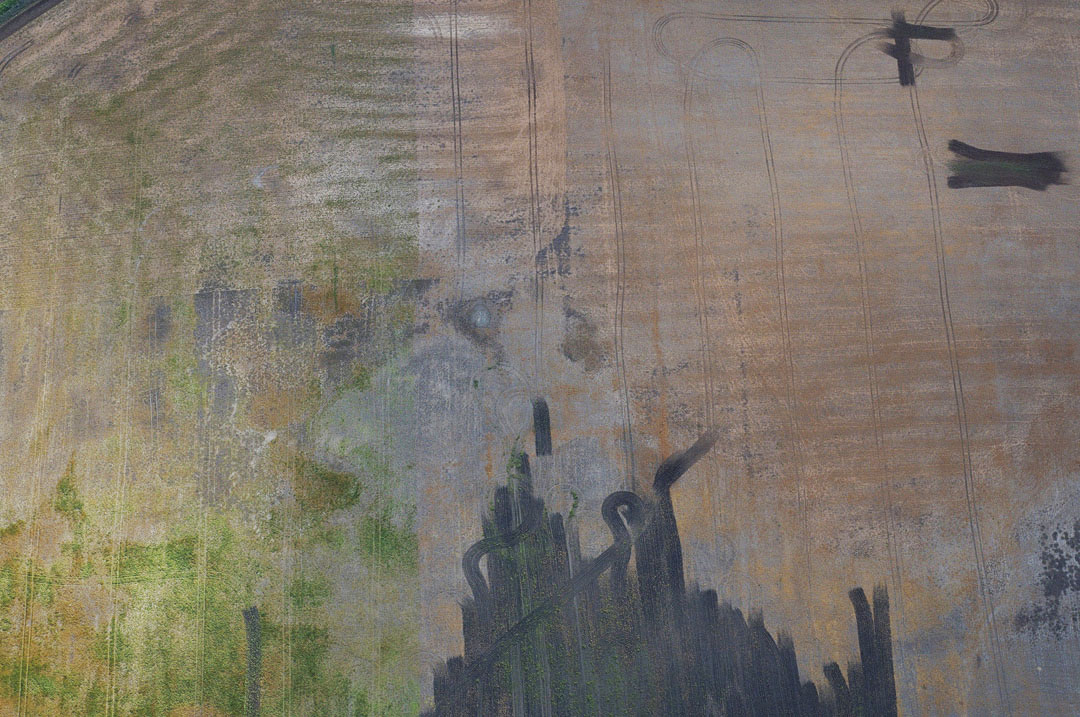

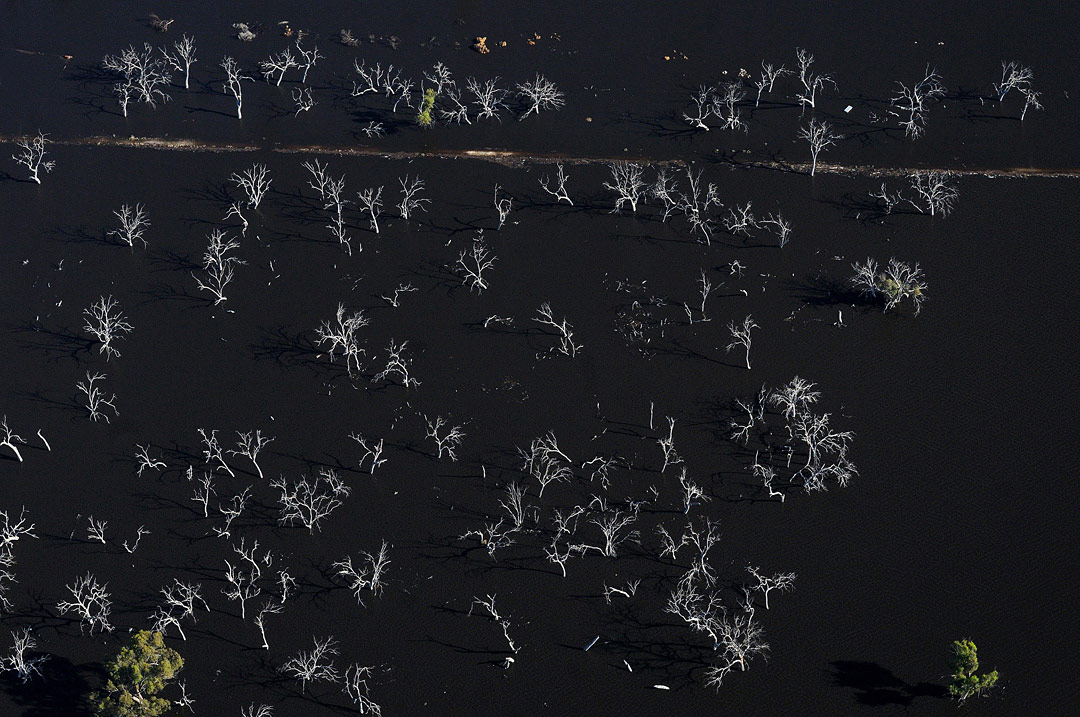
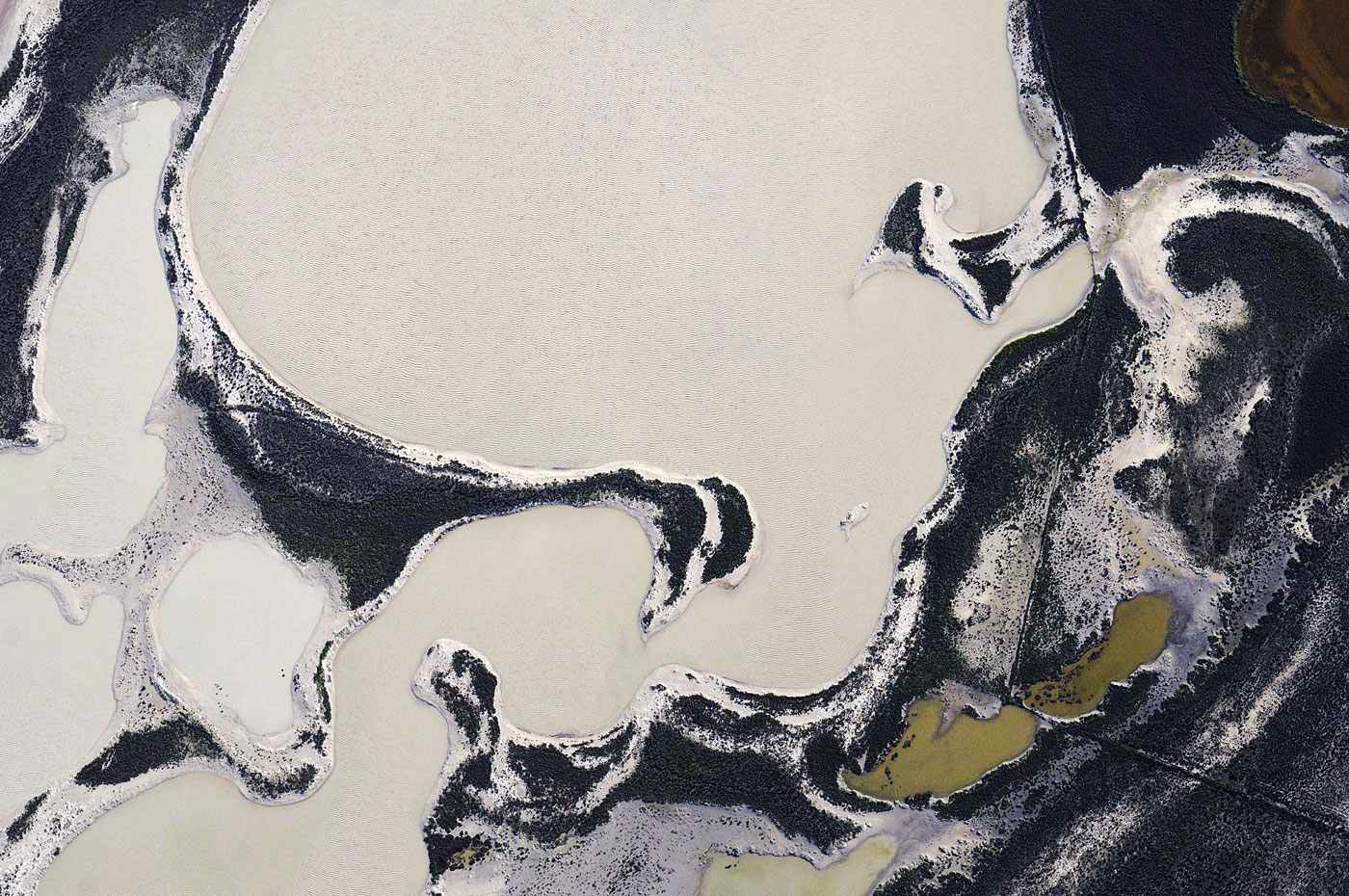


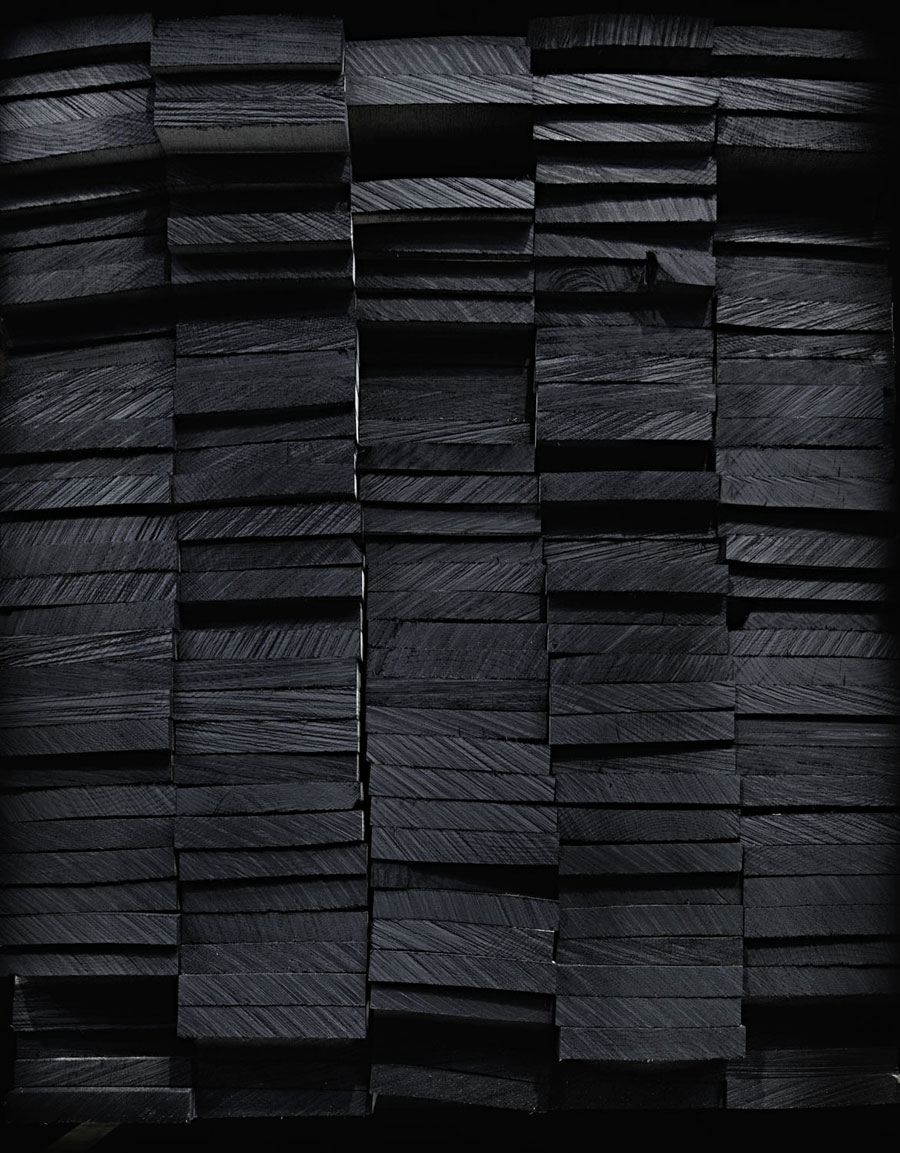
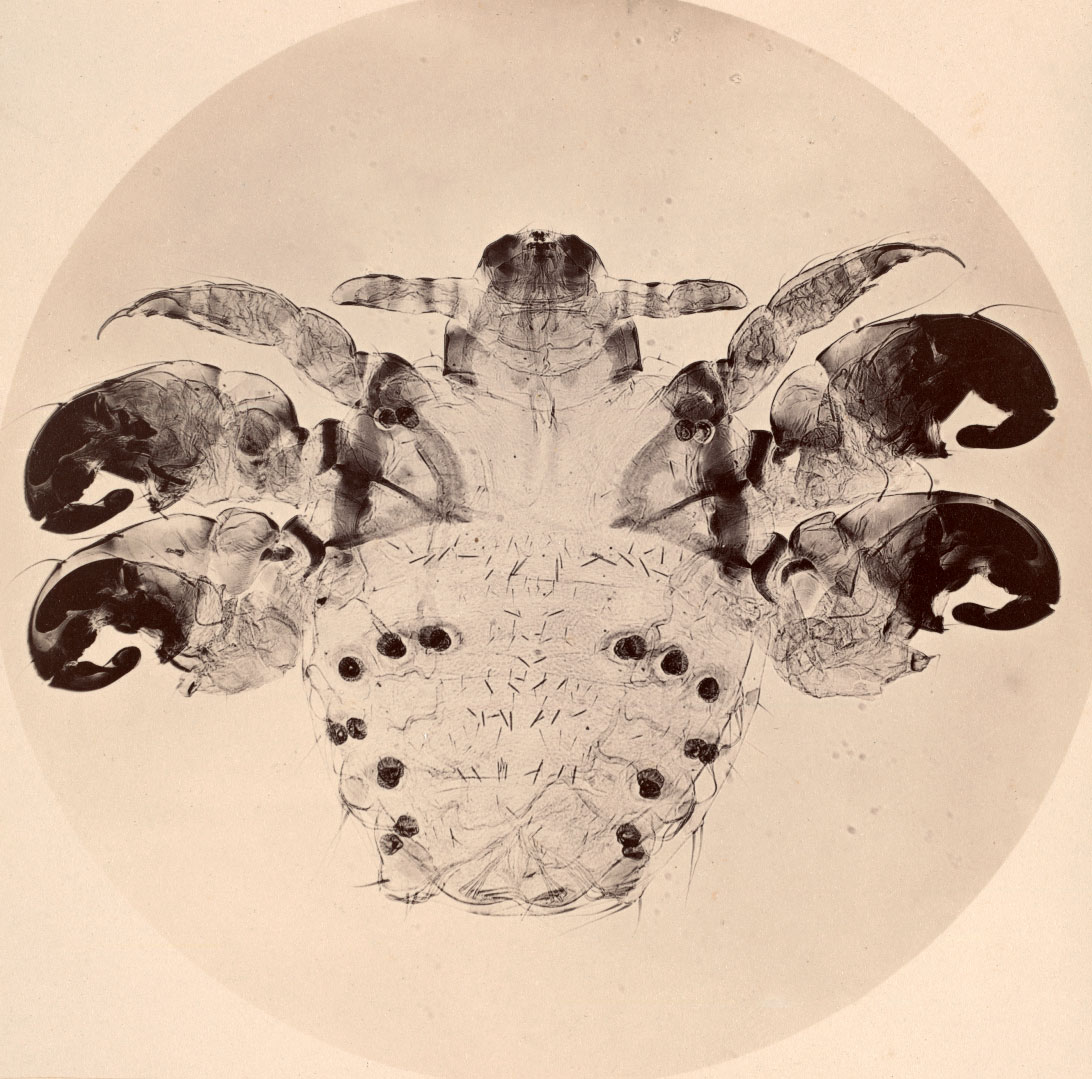


![Osvaldo Salas (Cuban, 1914-1992) 'Che fumano' [Che smoking] 1964](https://artblart.com/wp-content/uploads/2013/01/mdm-rupertinum_bilder-revolution_salas_che-fumano-web.jpg "Osvaldo Salas (Cuban, 1914-1992) 'Che fumano' [Che smoking] 1964")


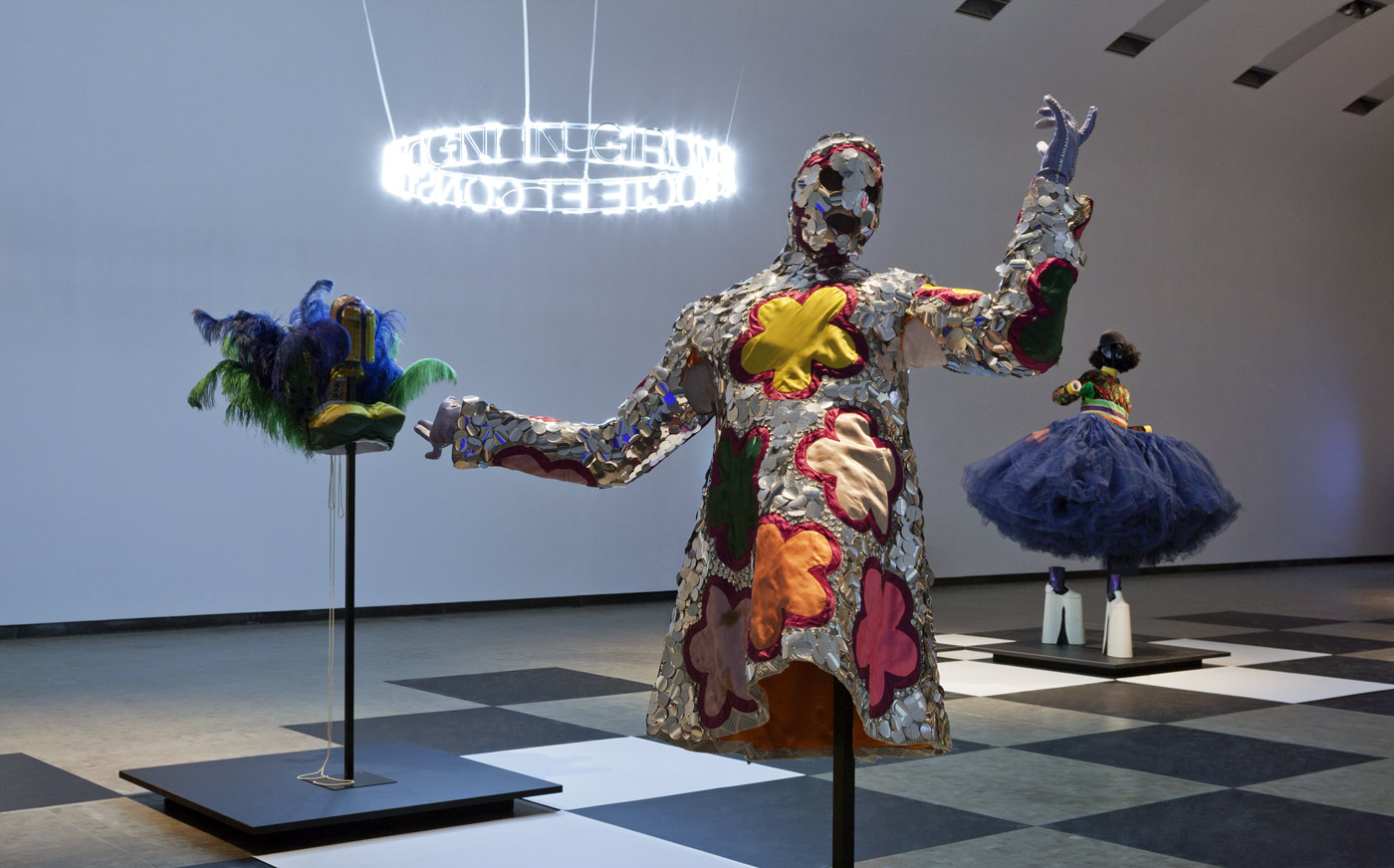


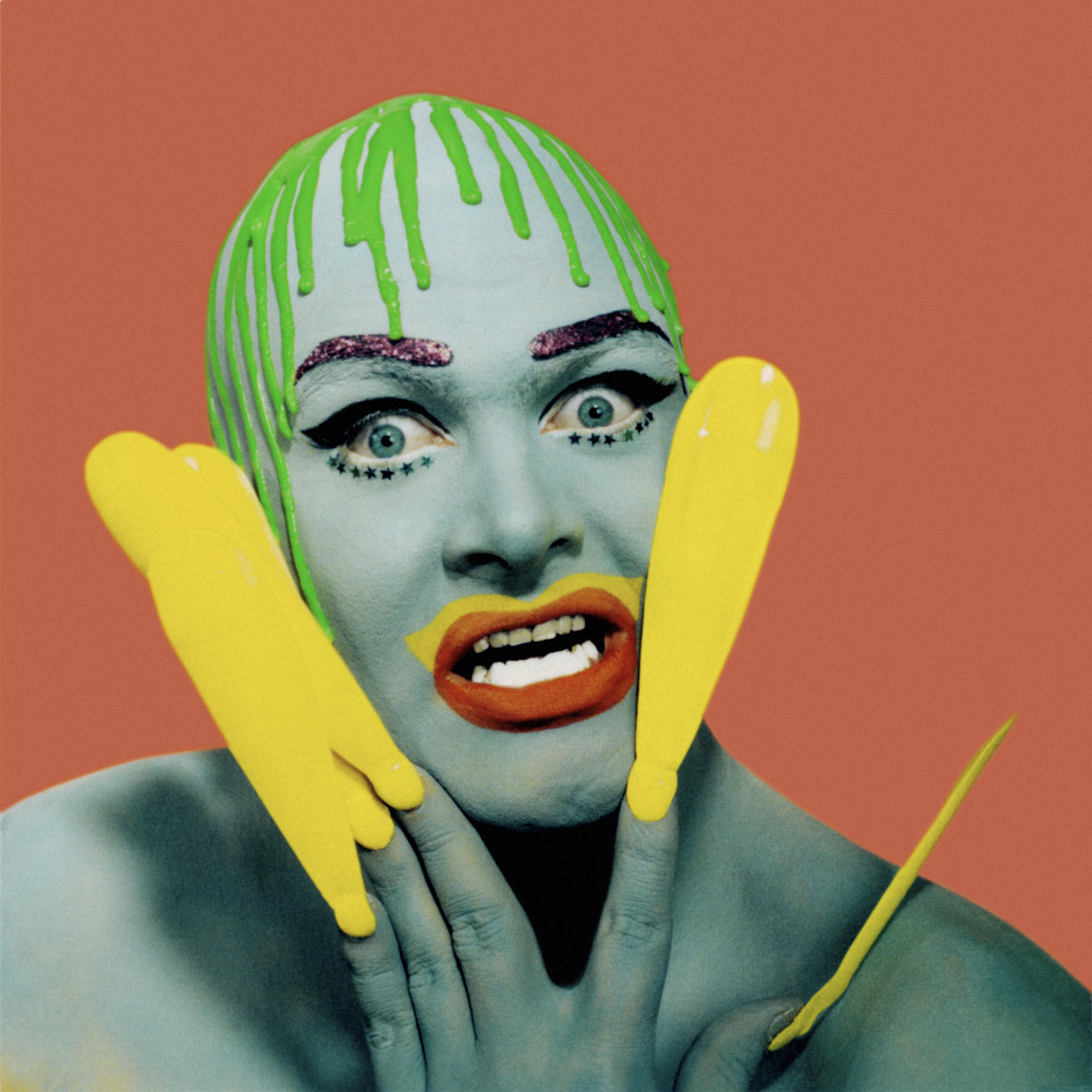
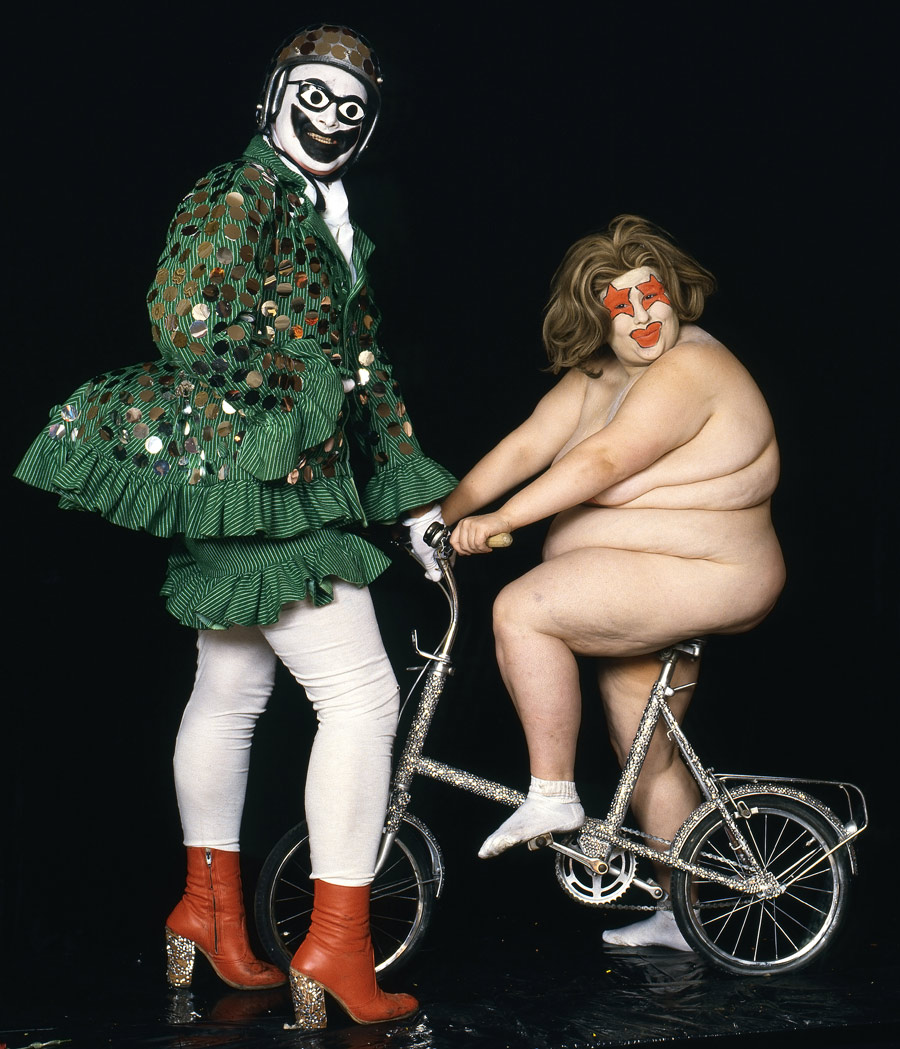

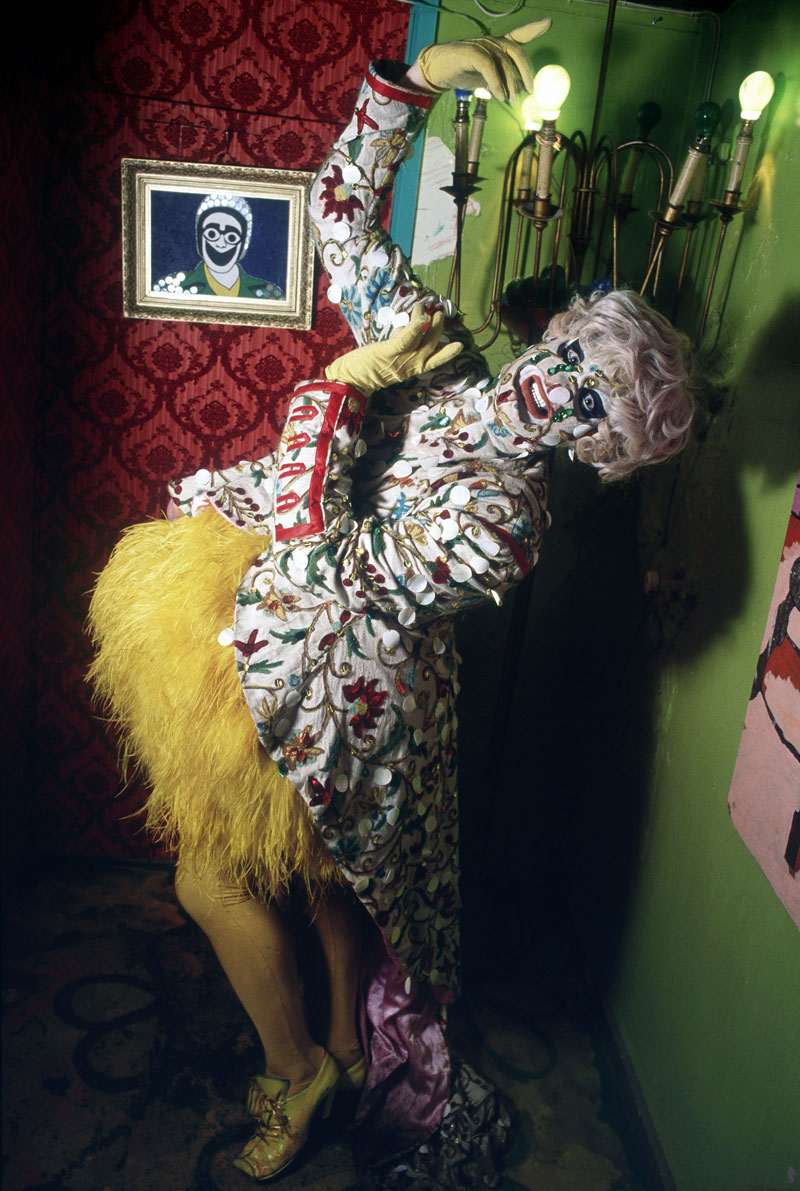
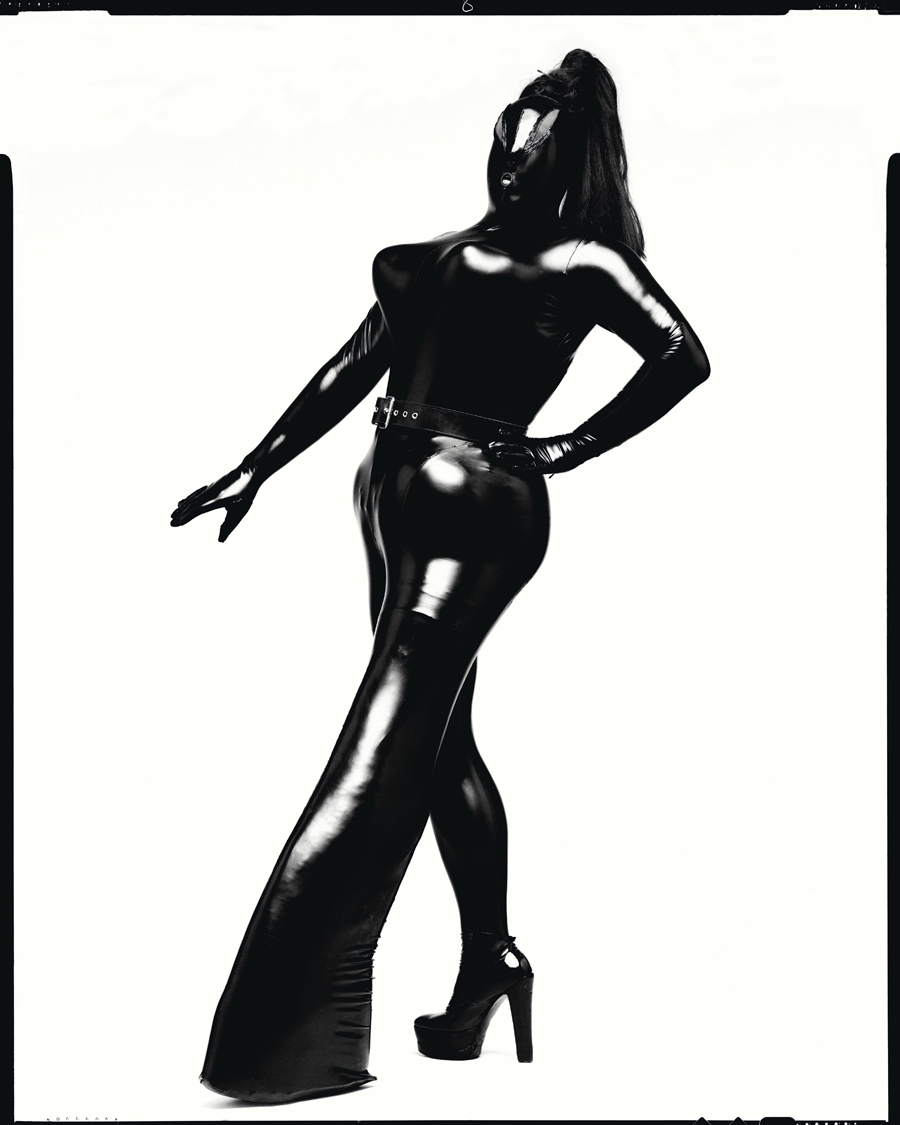


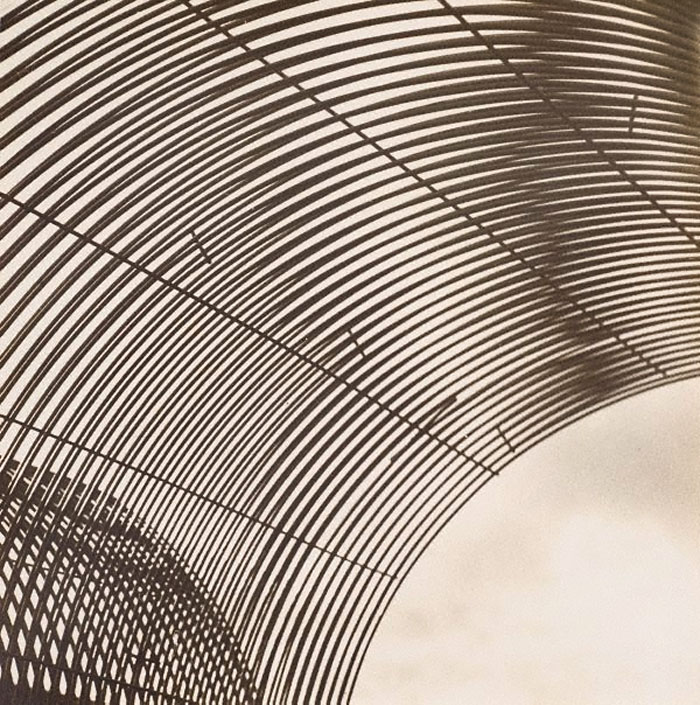

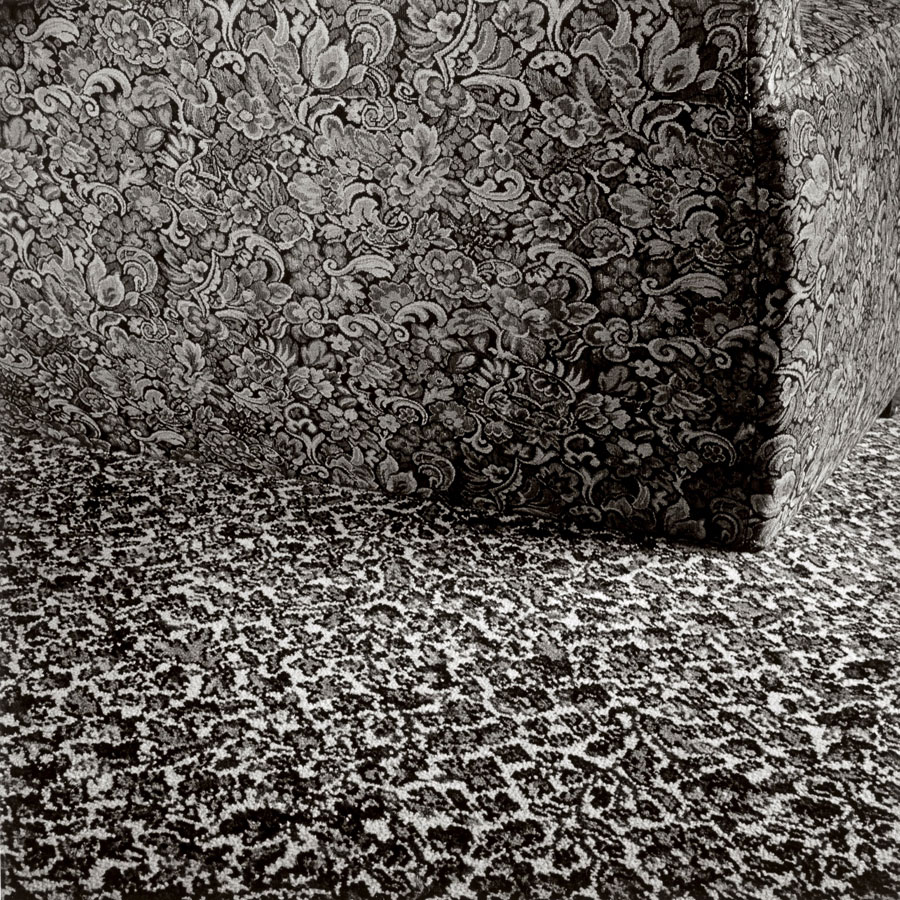
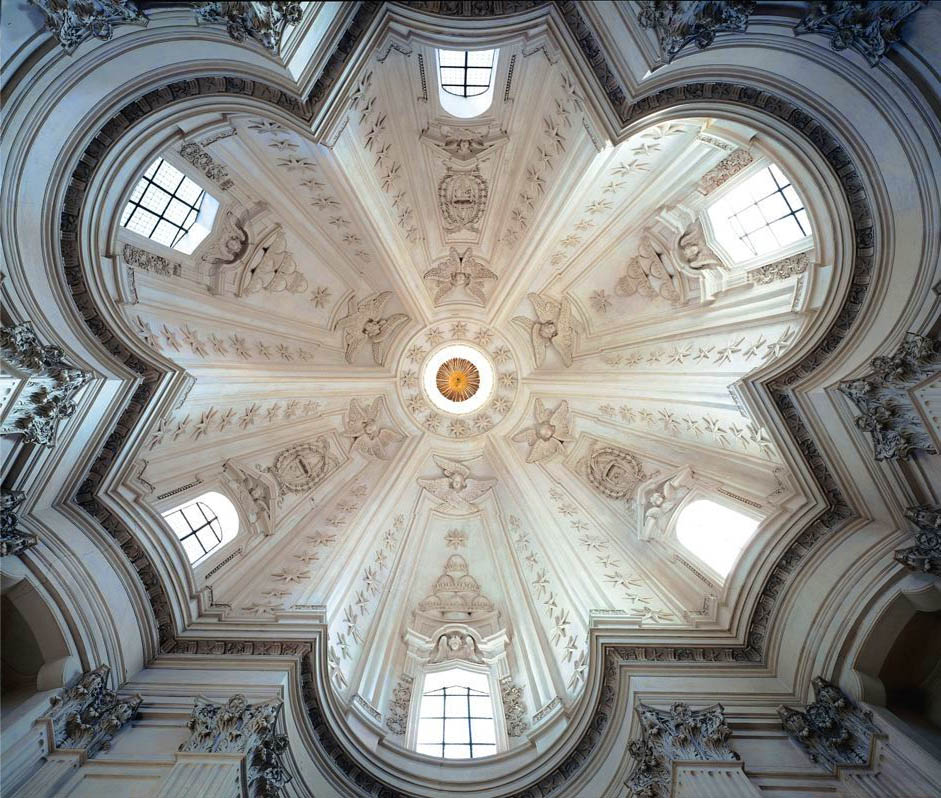

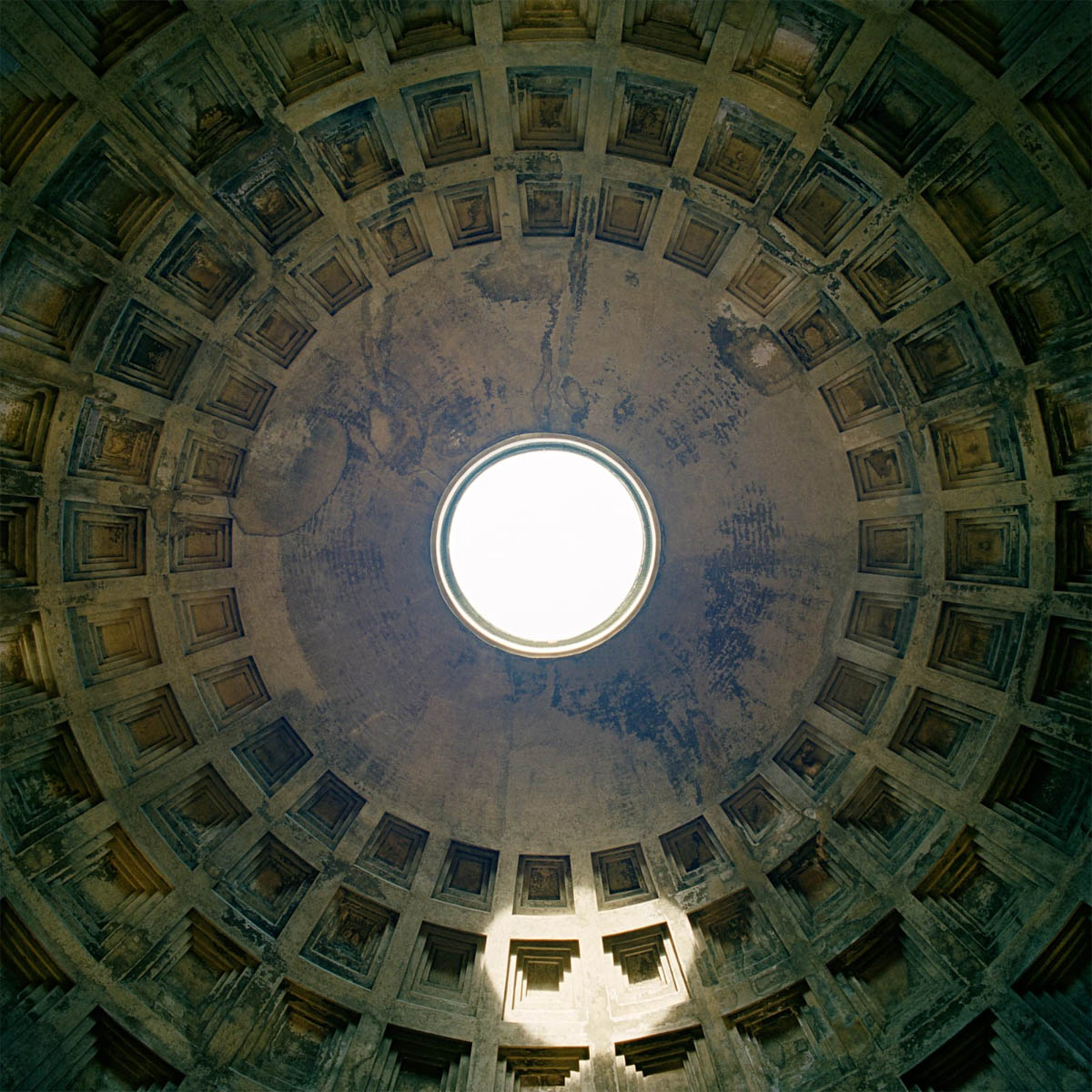
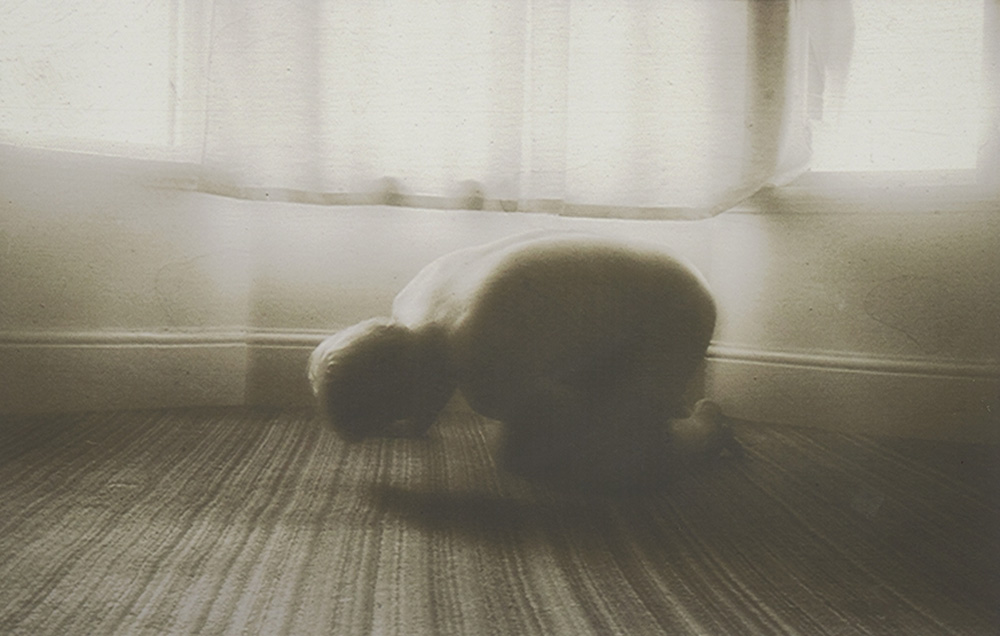

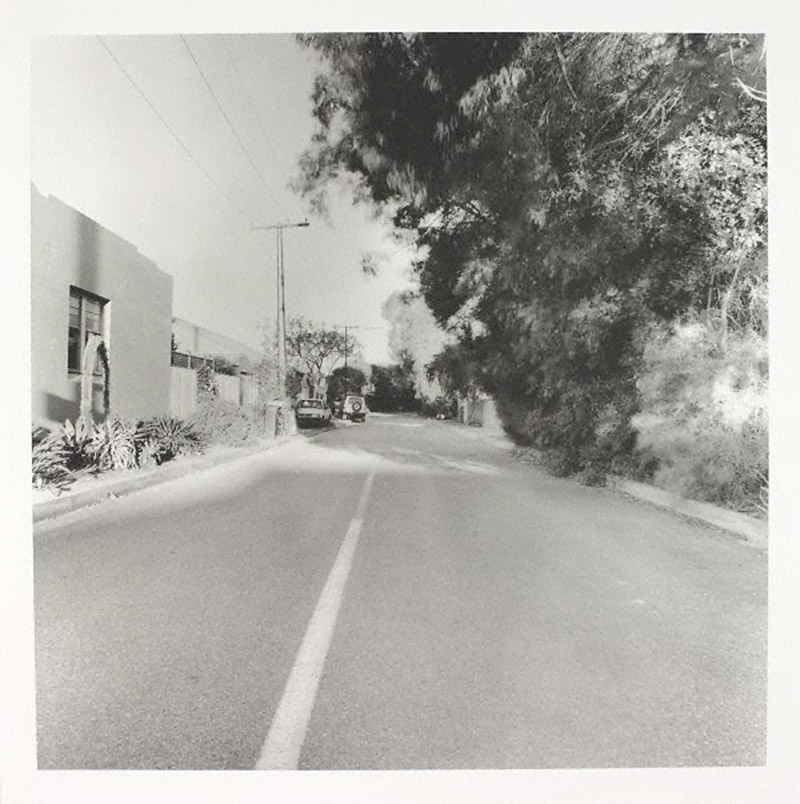
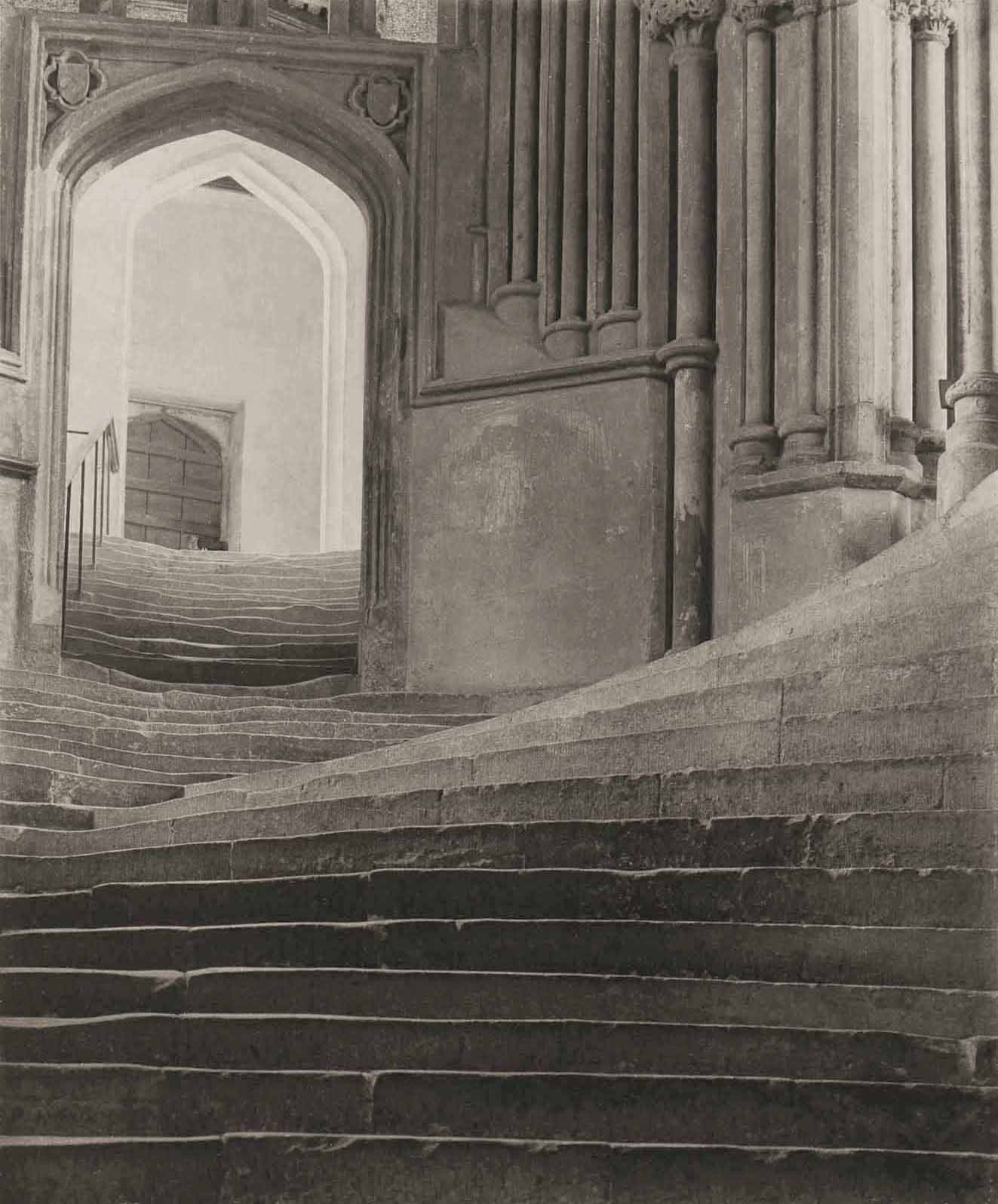
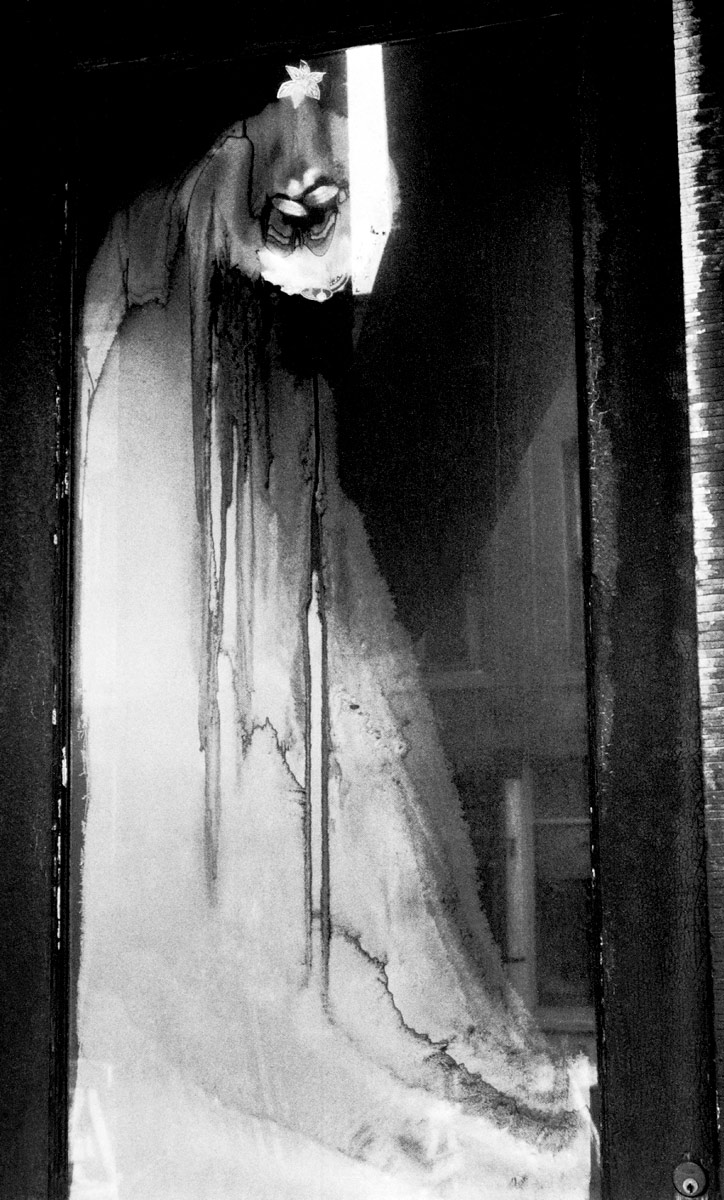

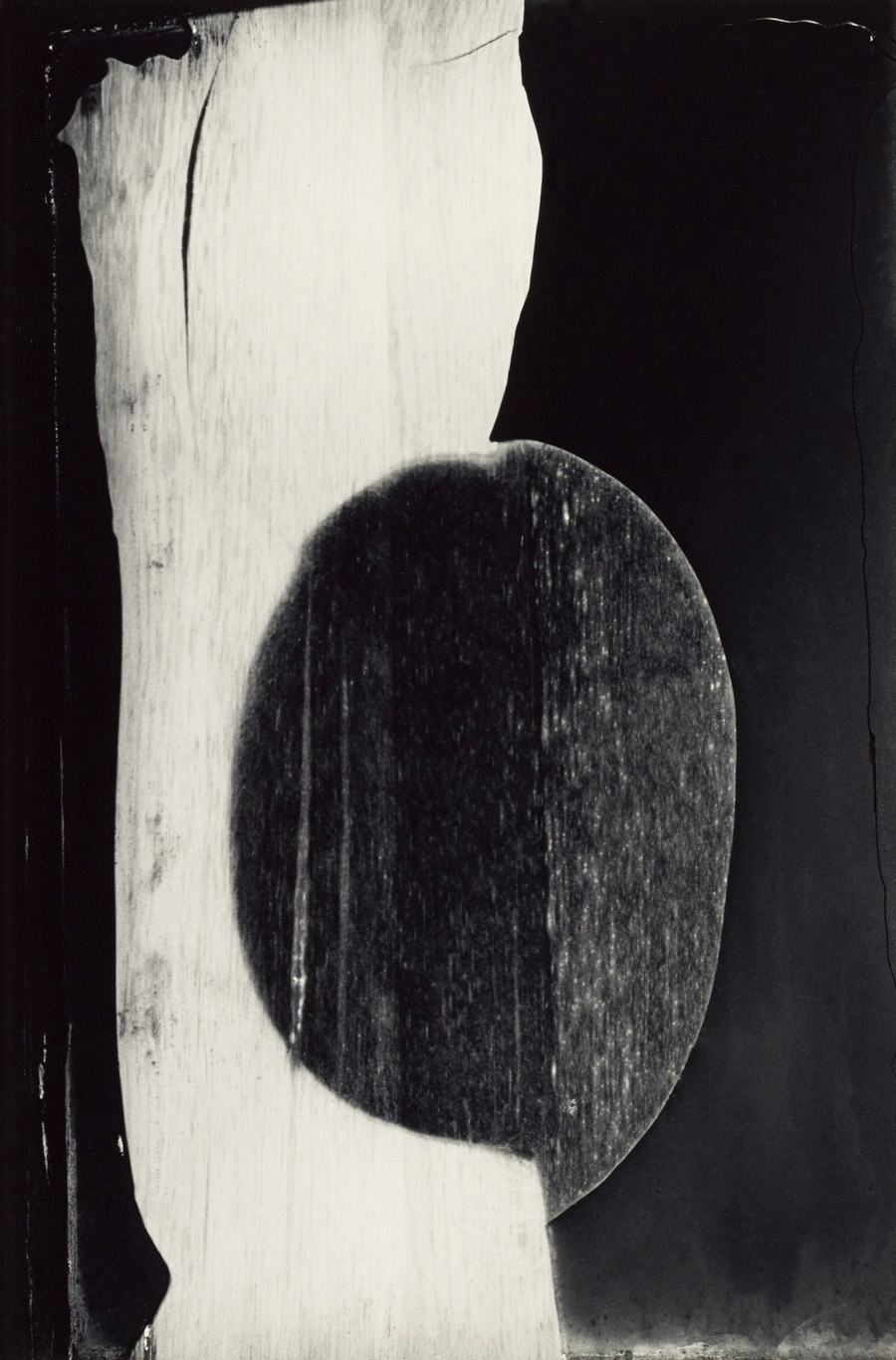

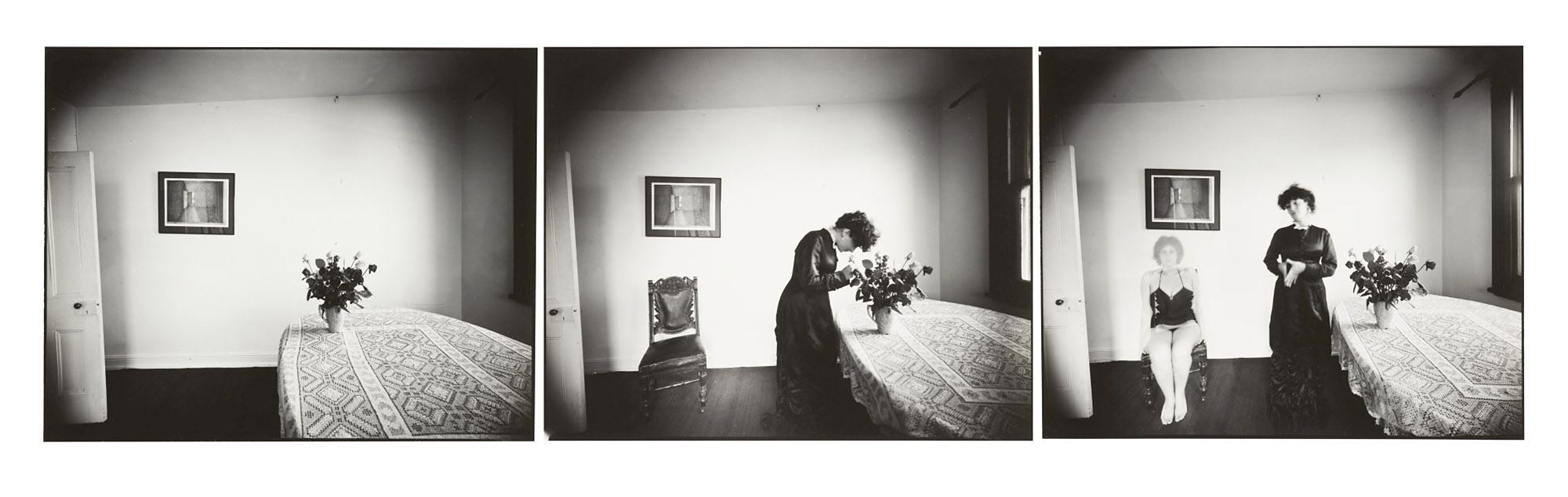
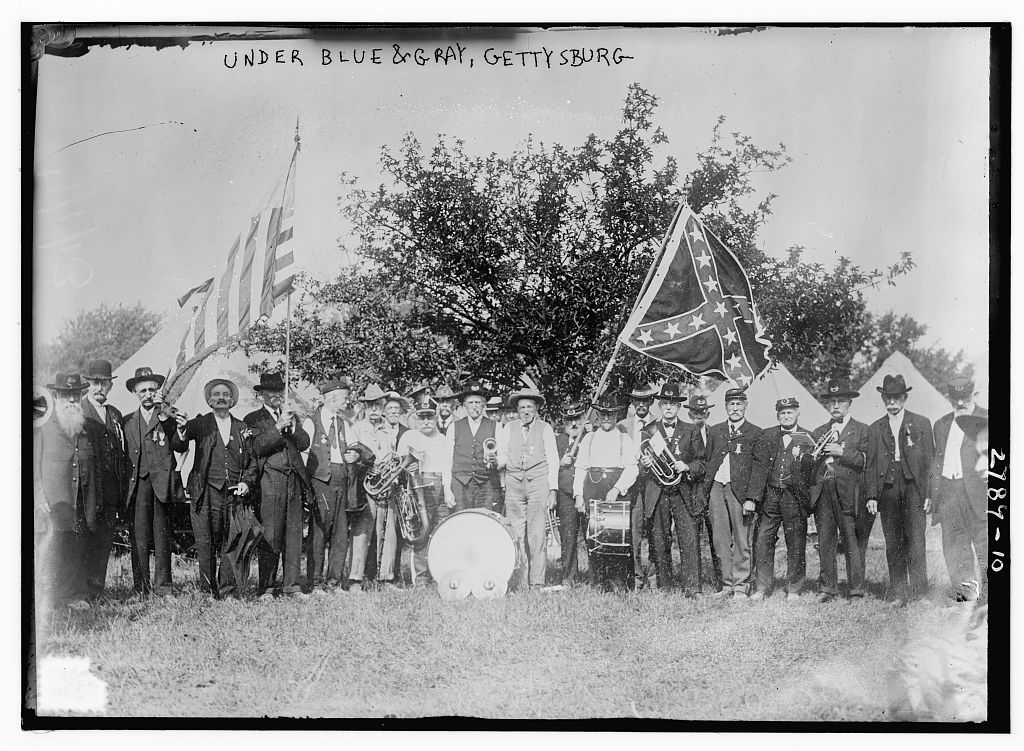

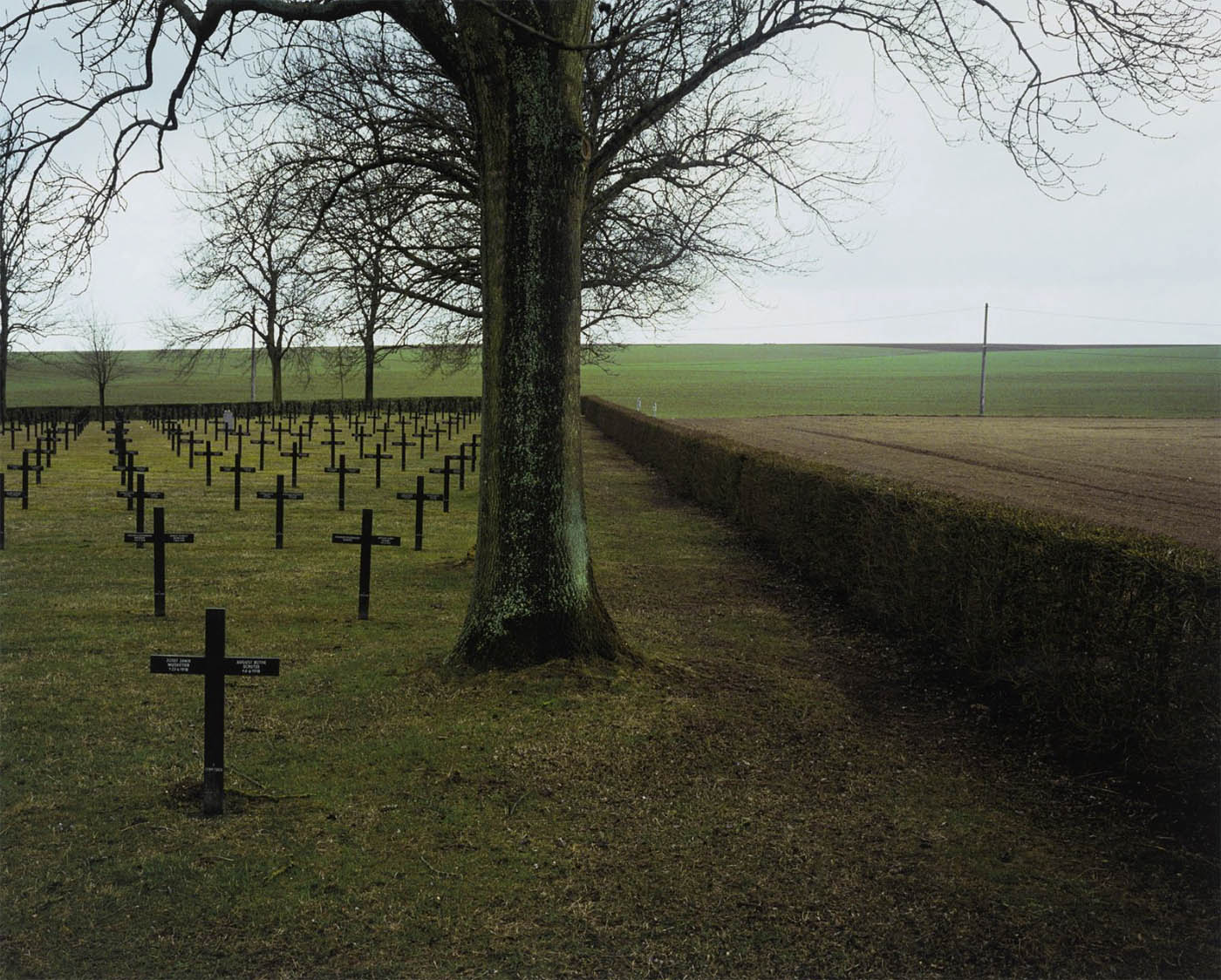

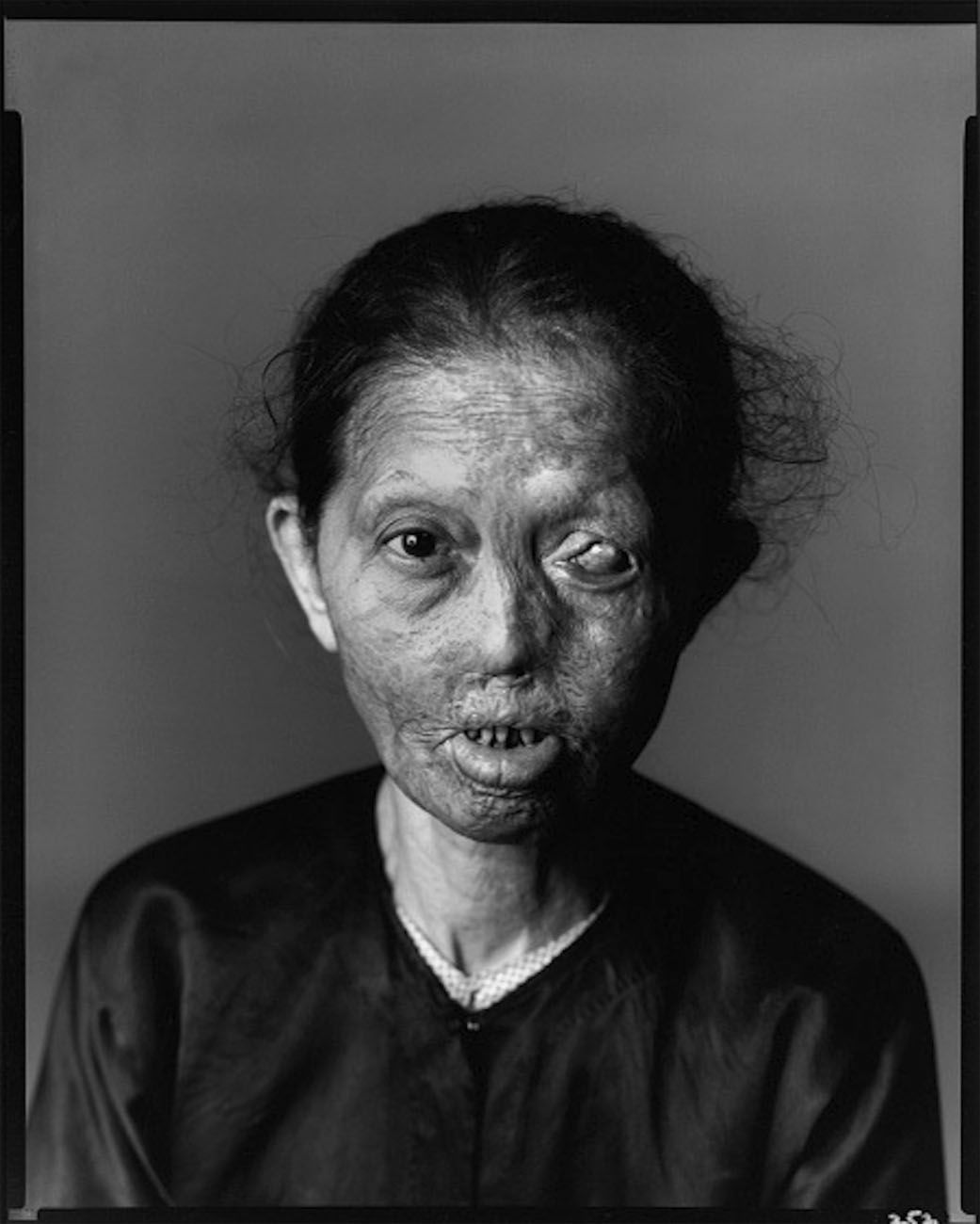

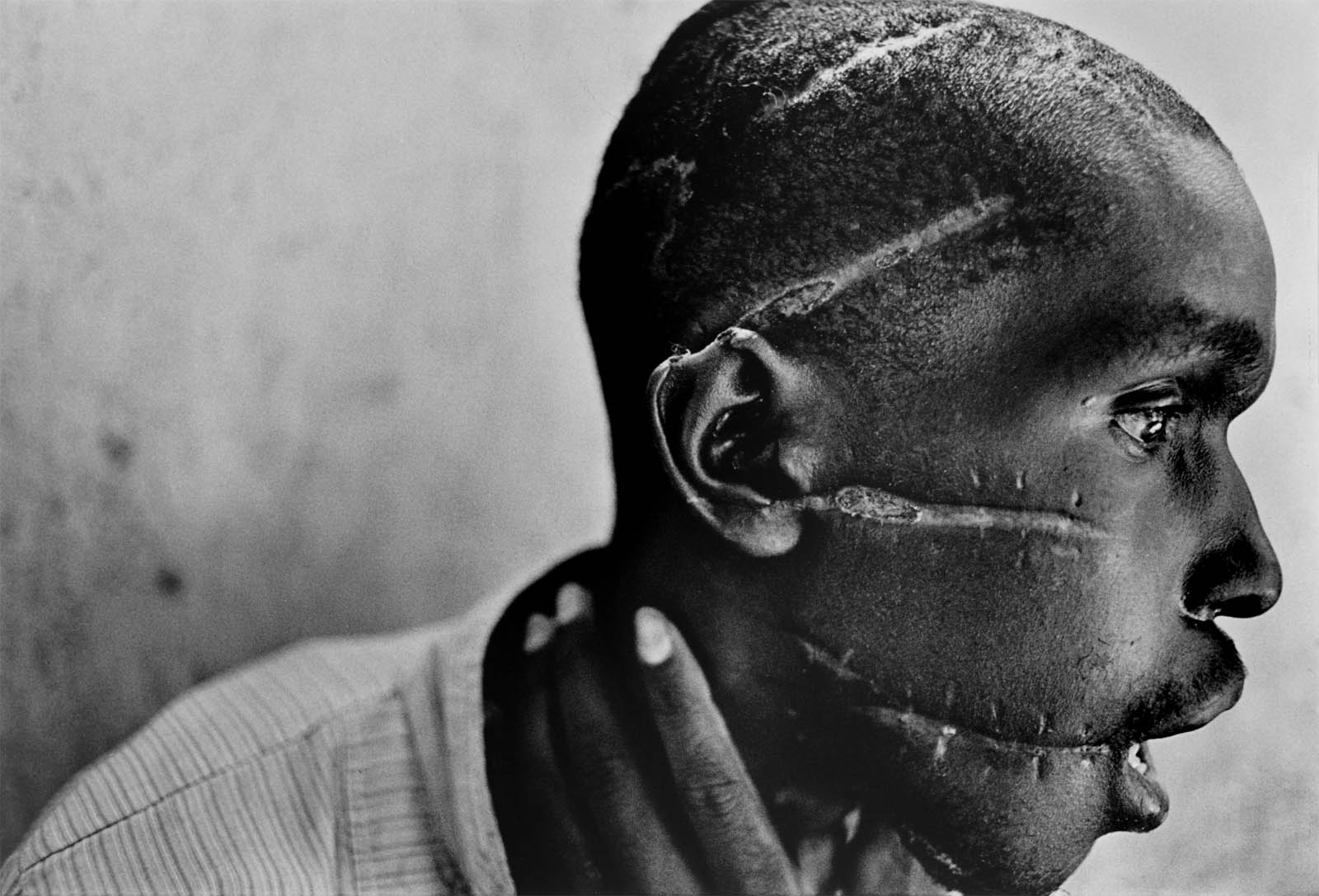
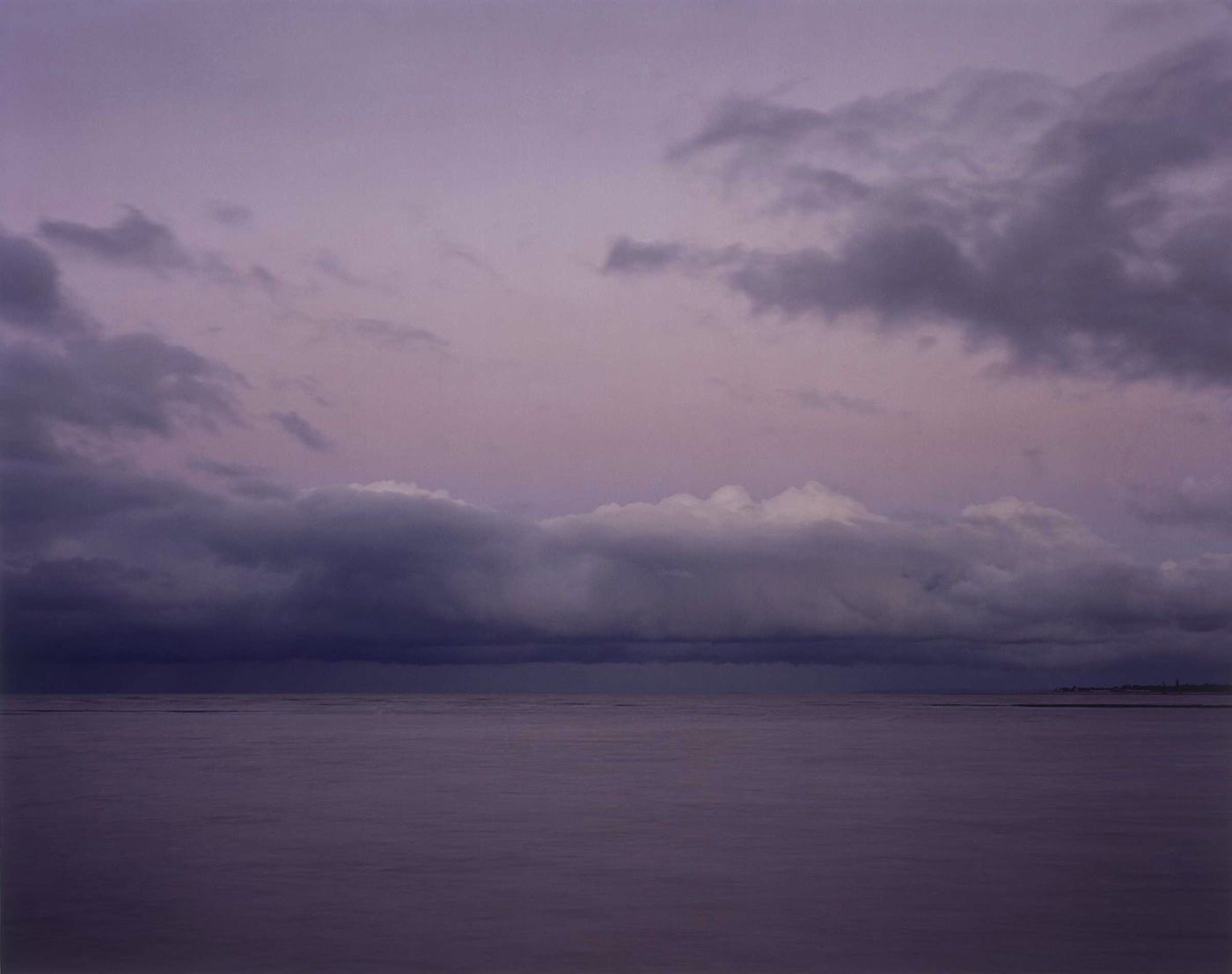

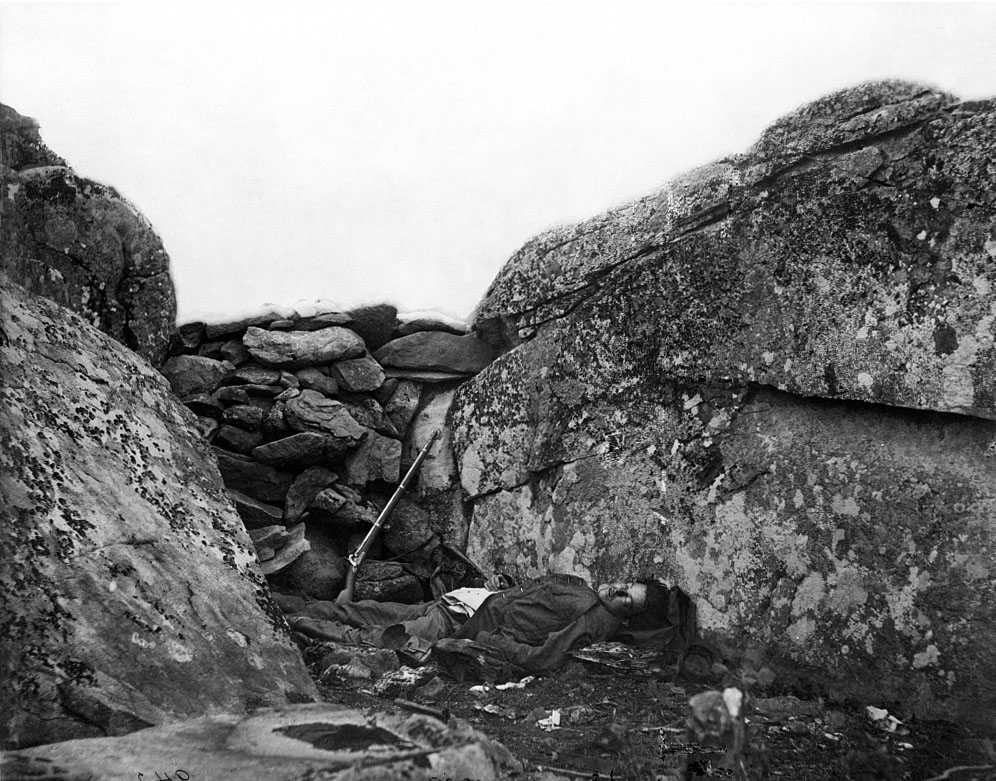
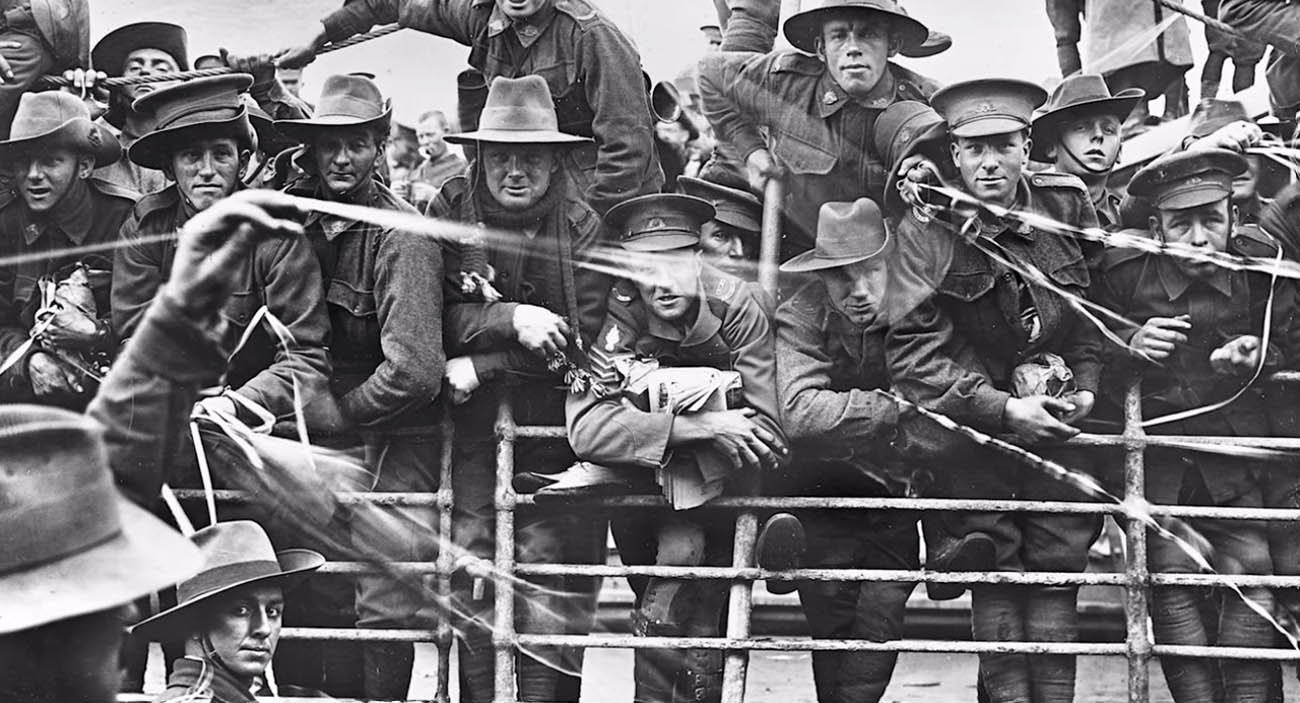
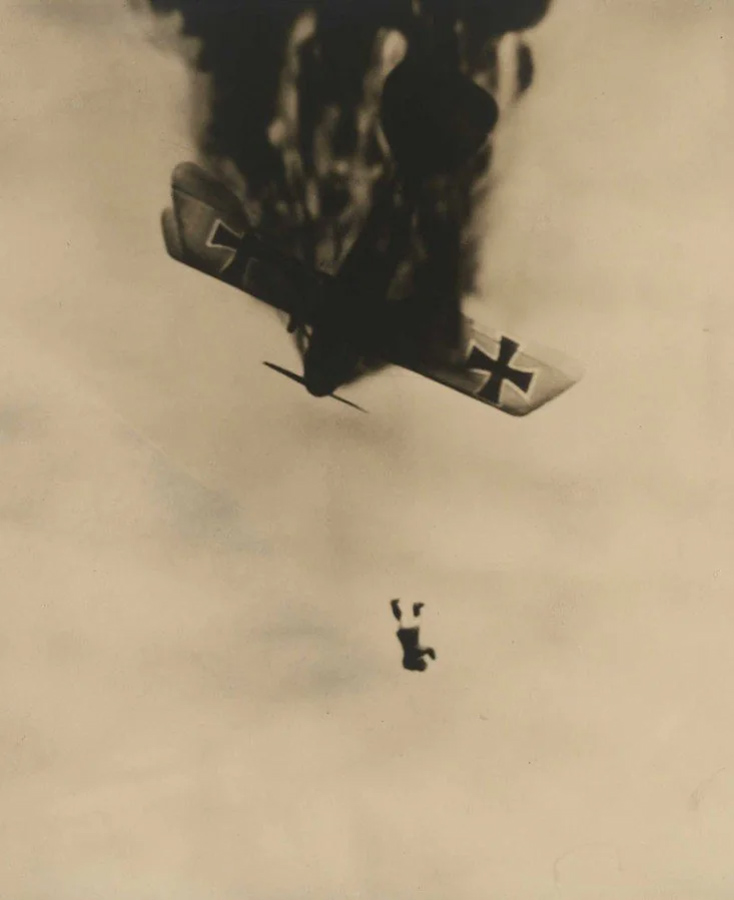
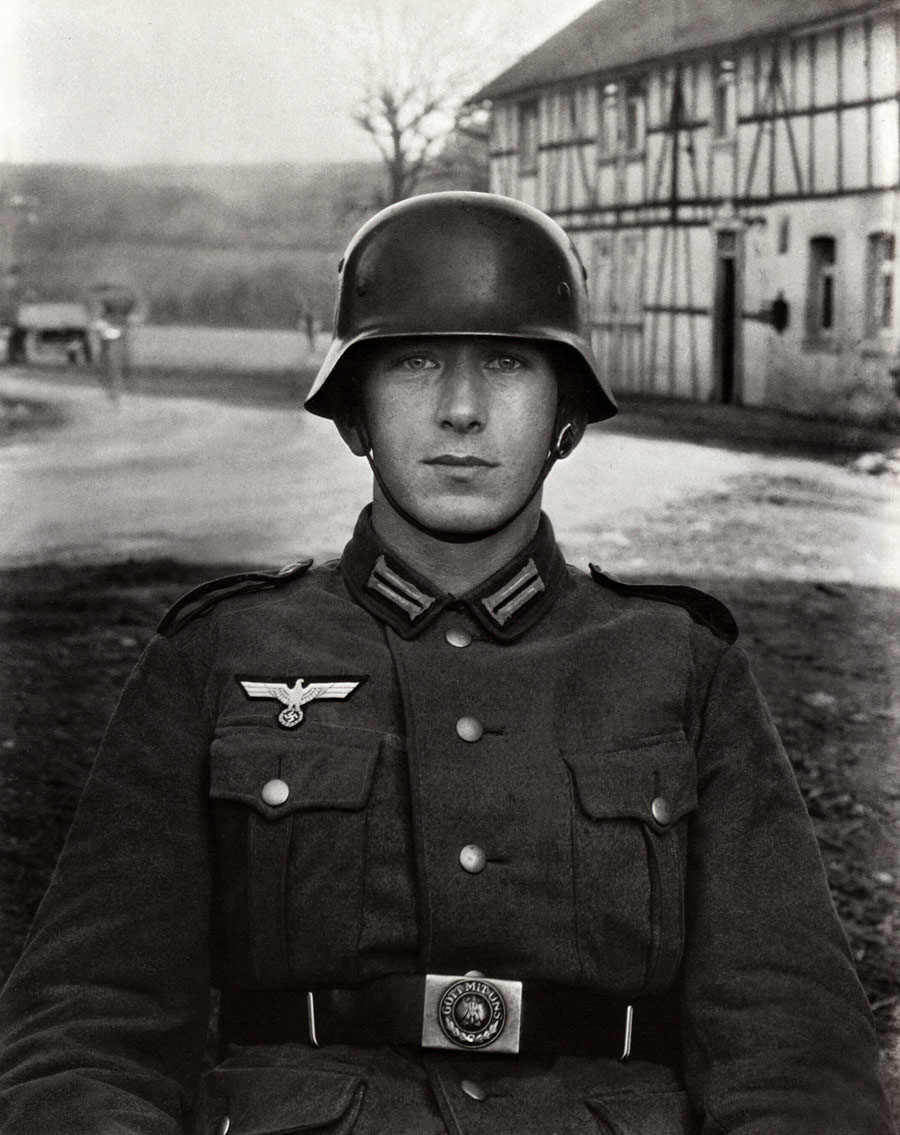
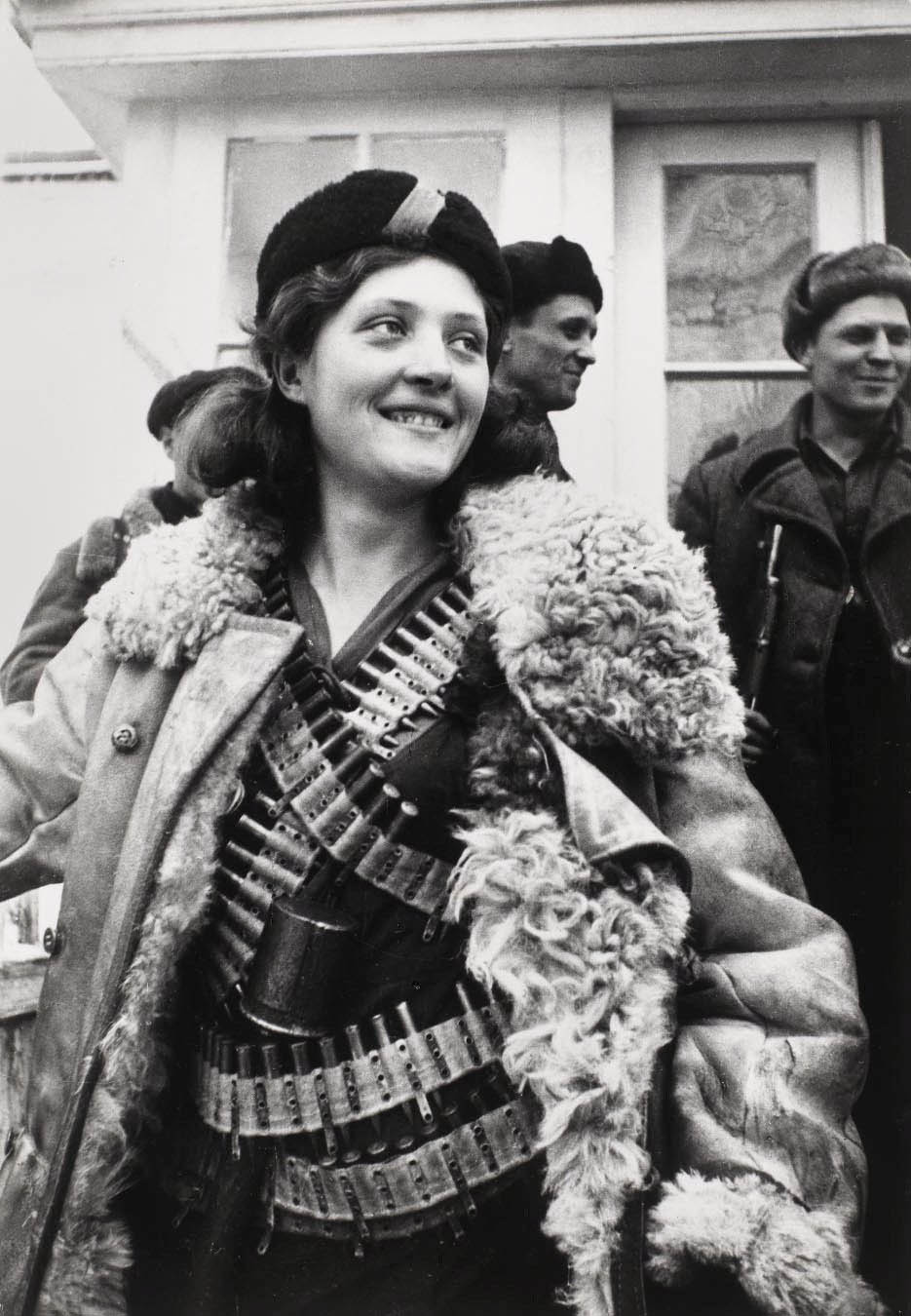
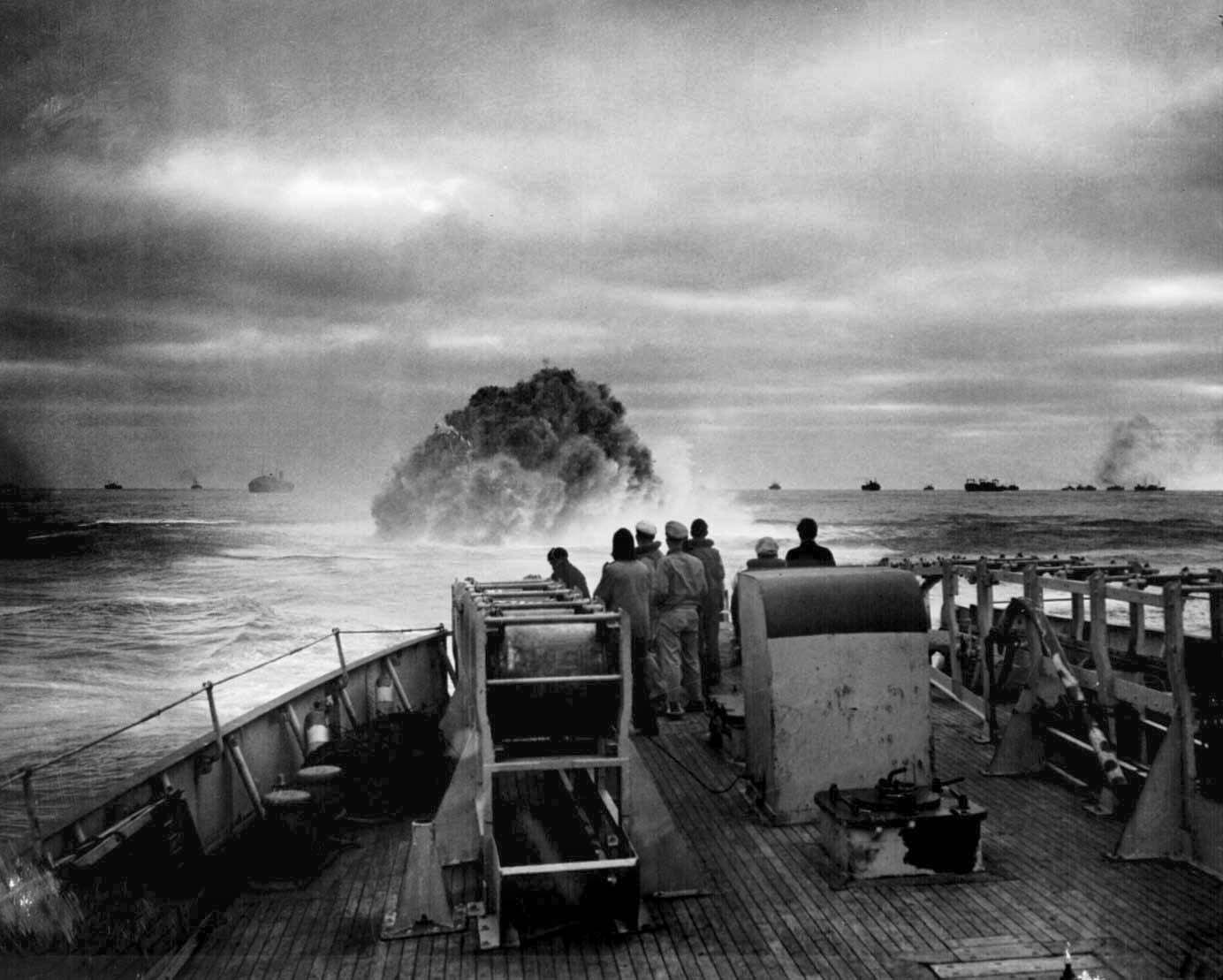

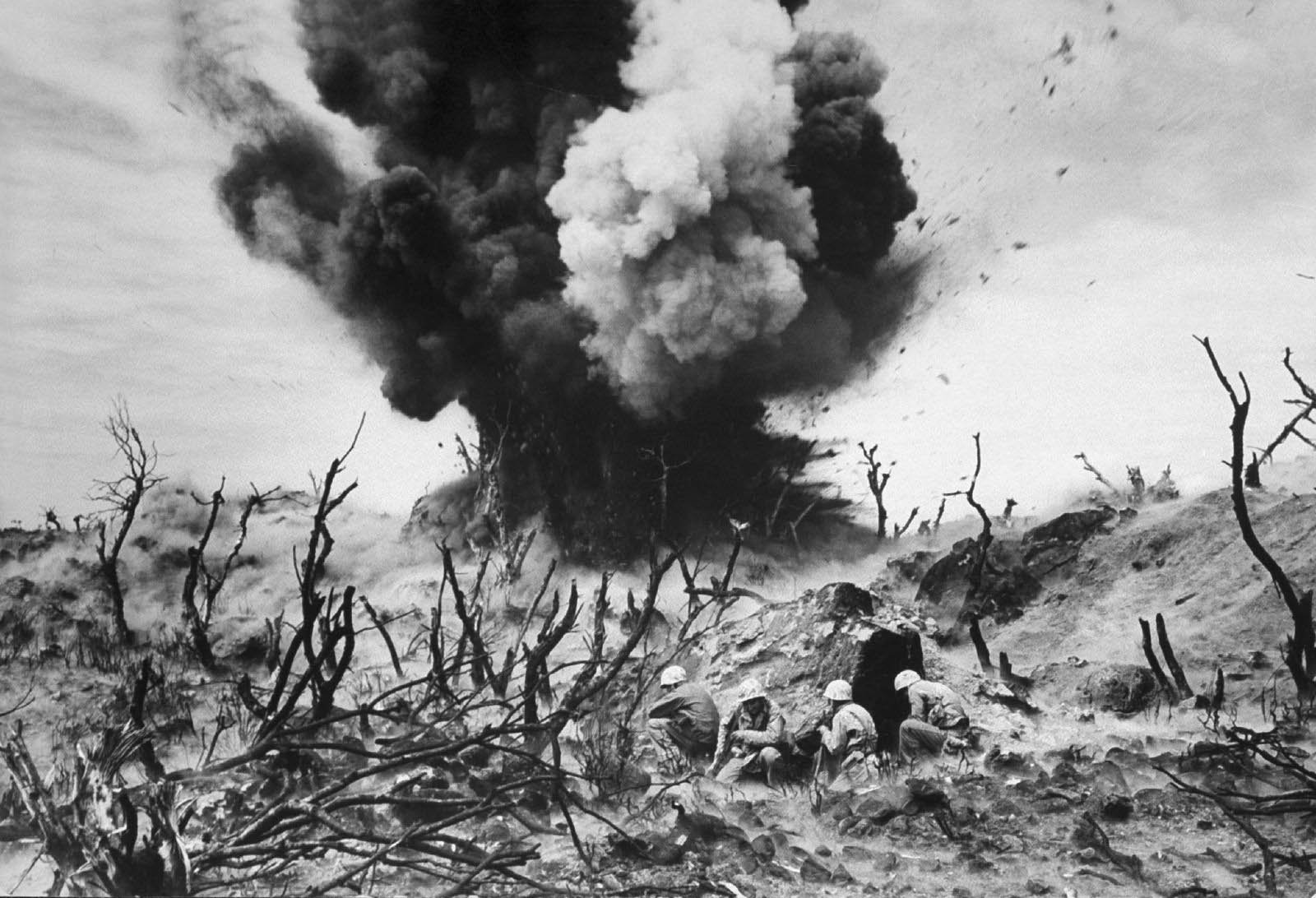
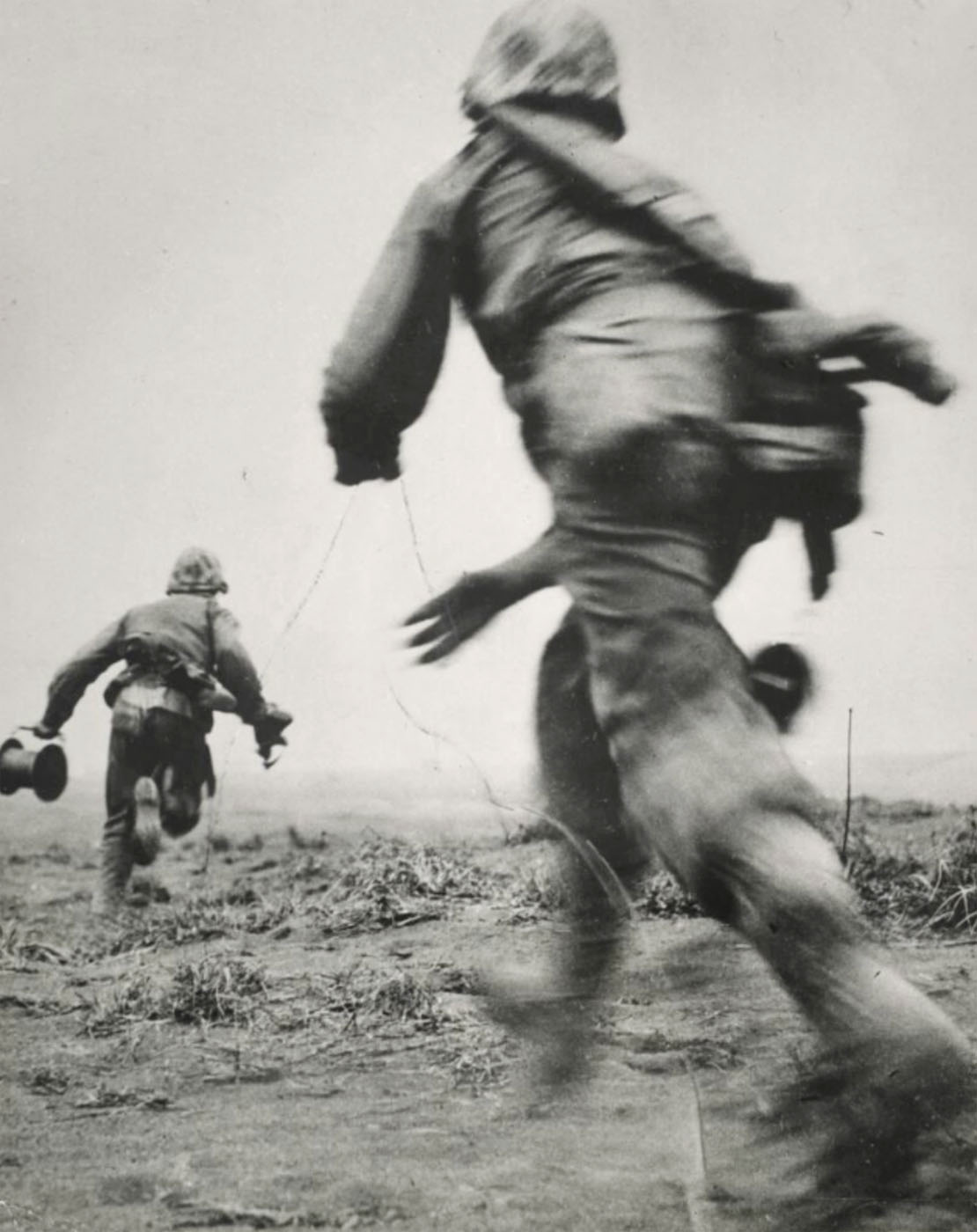
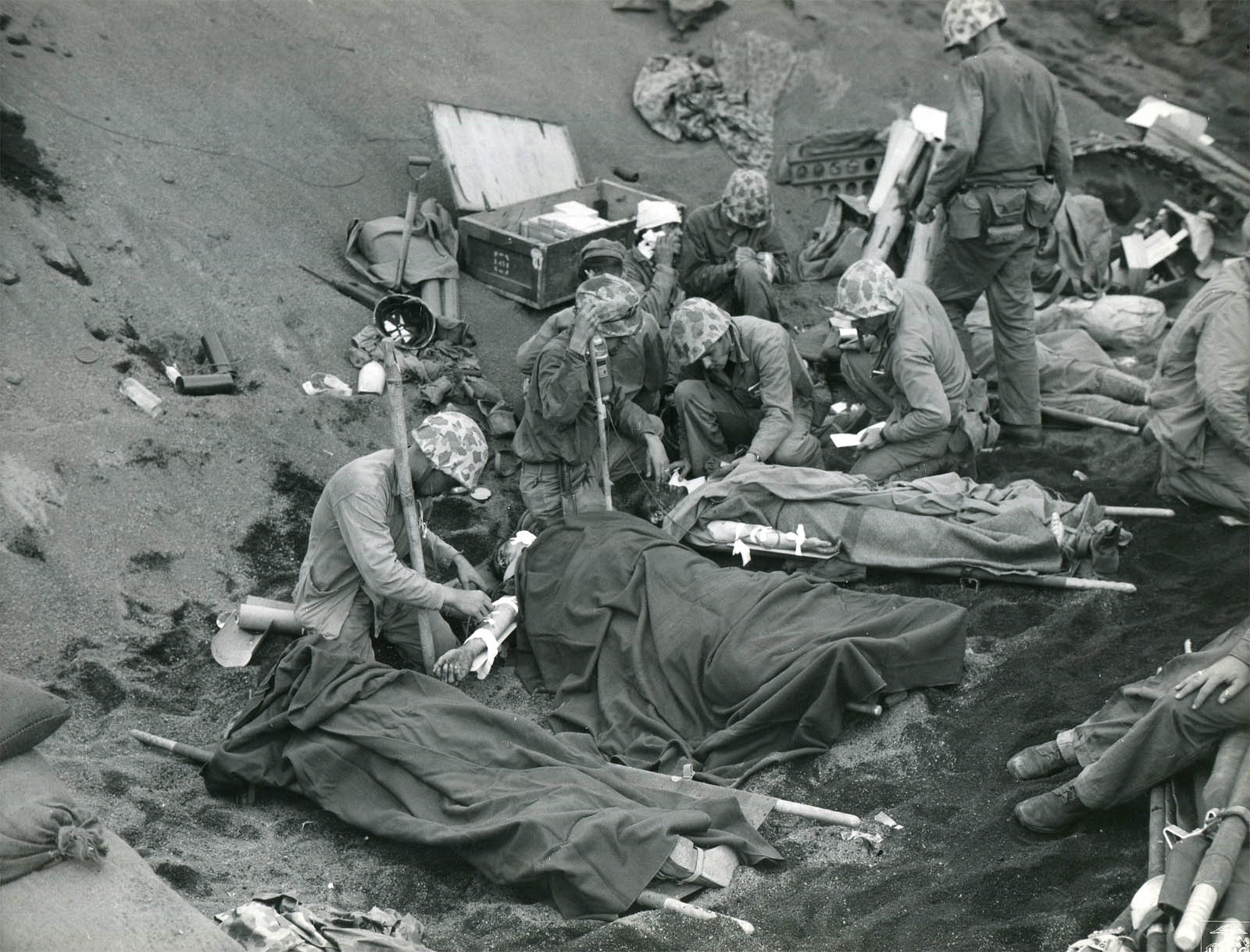
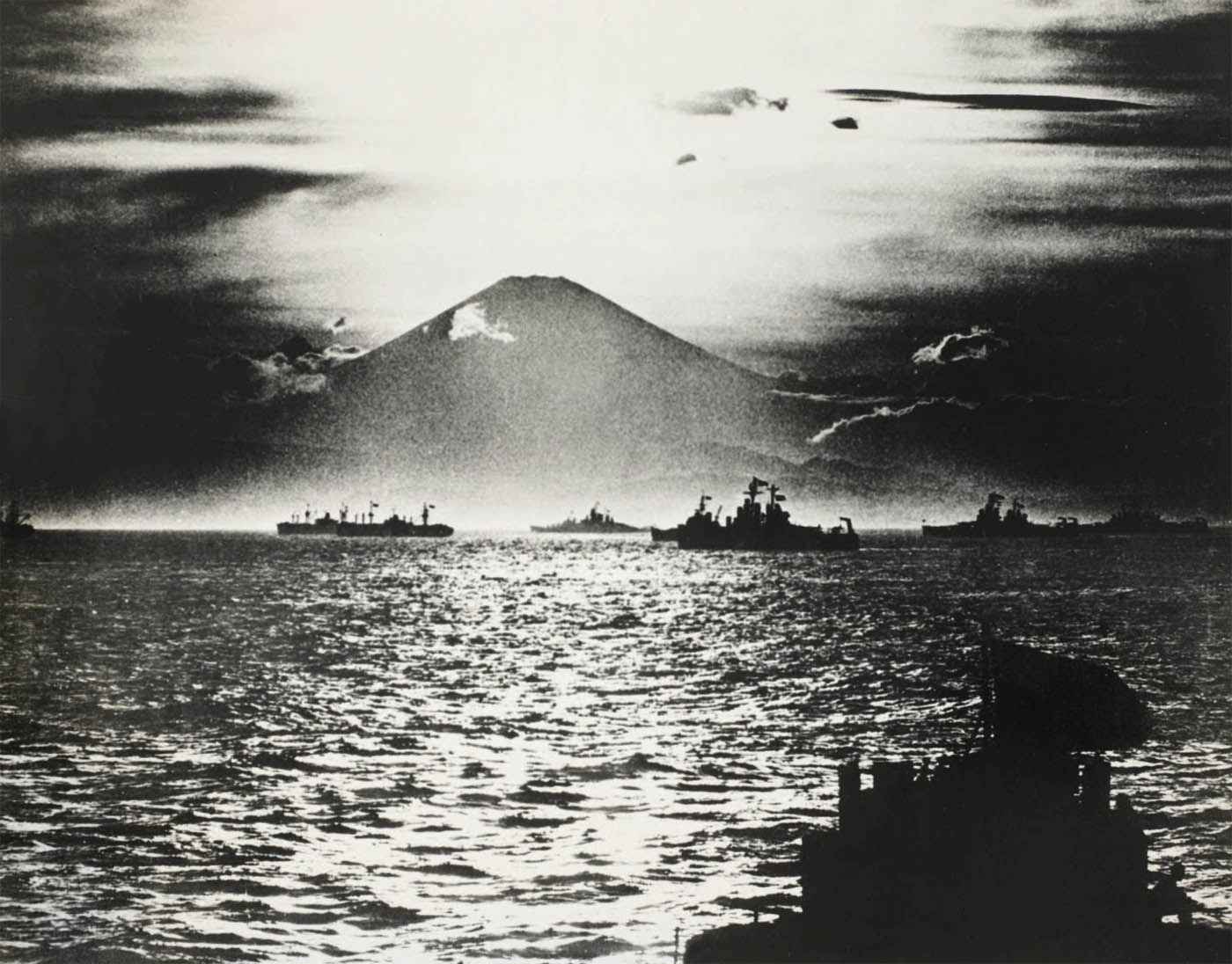
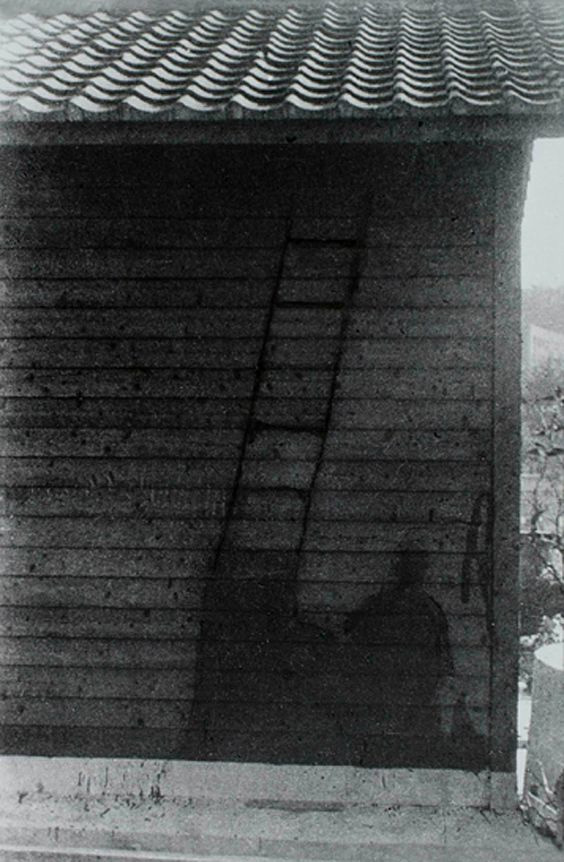
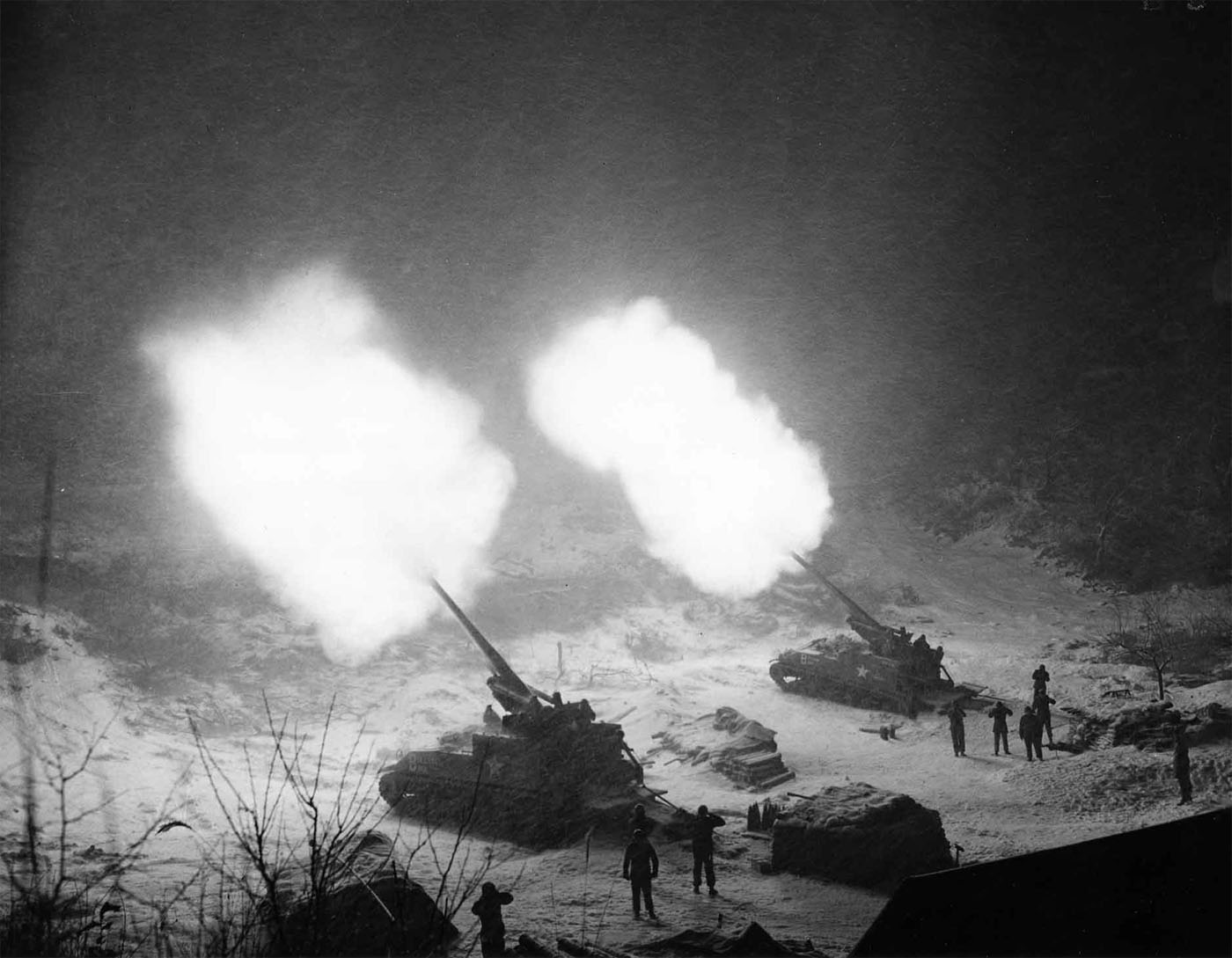

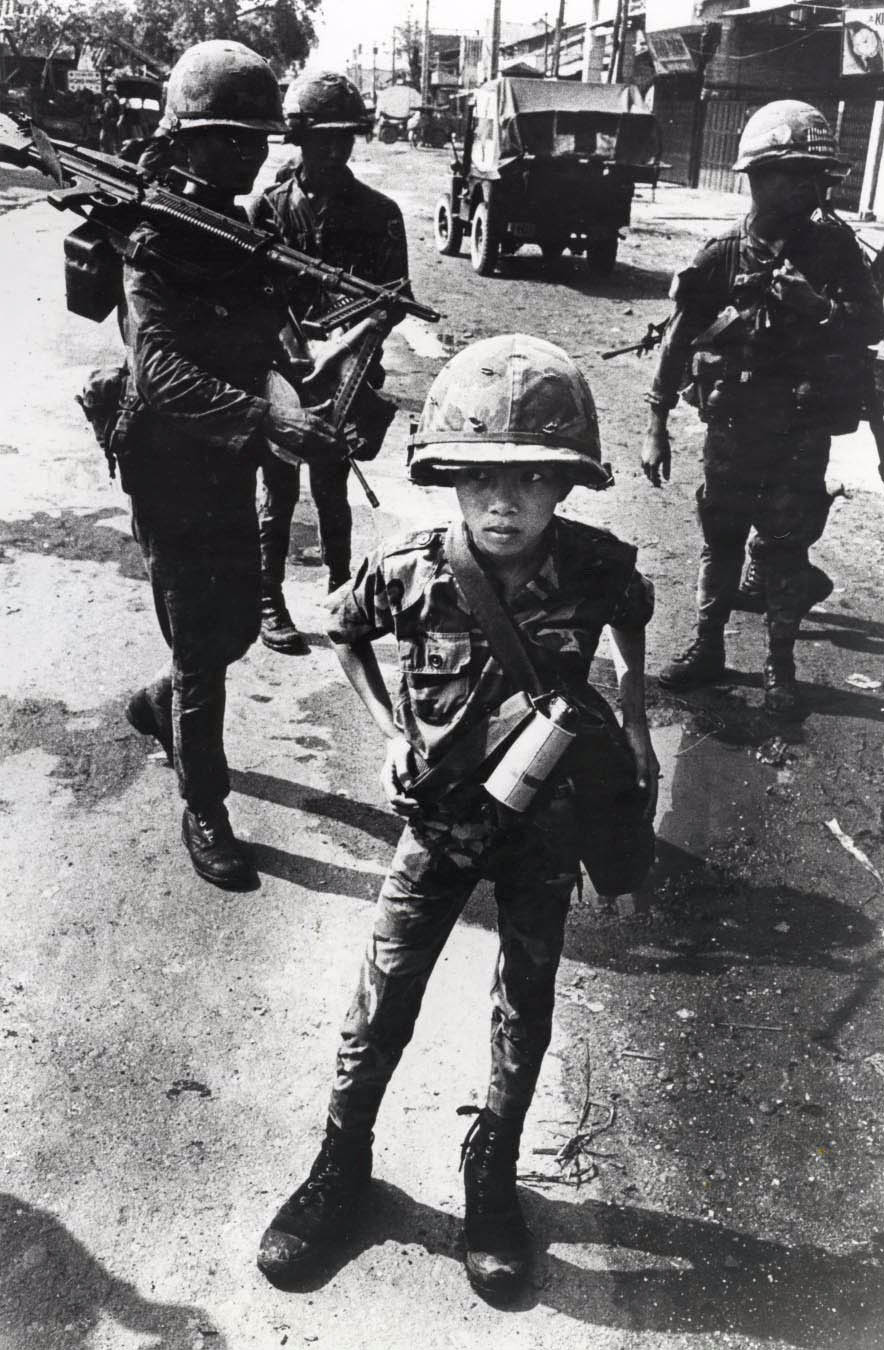
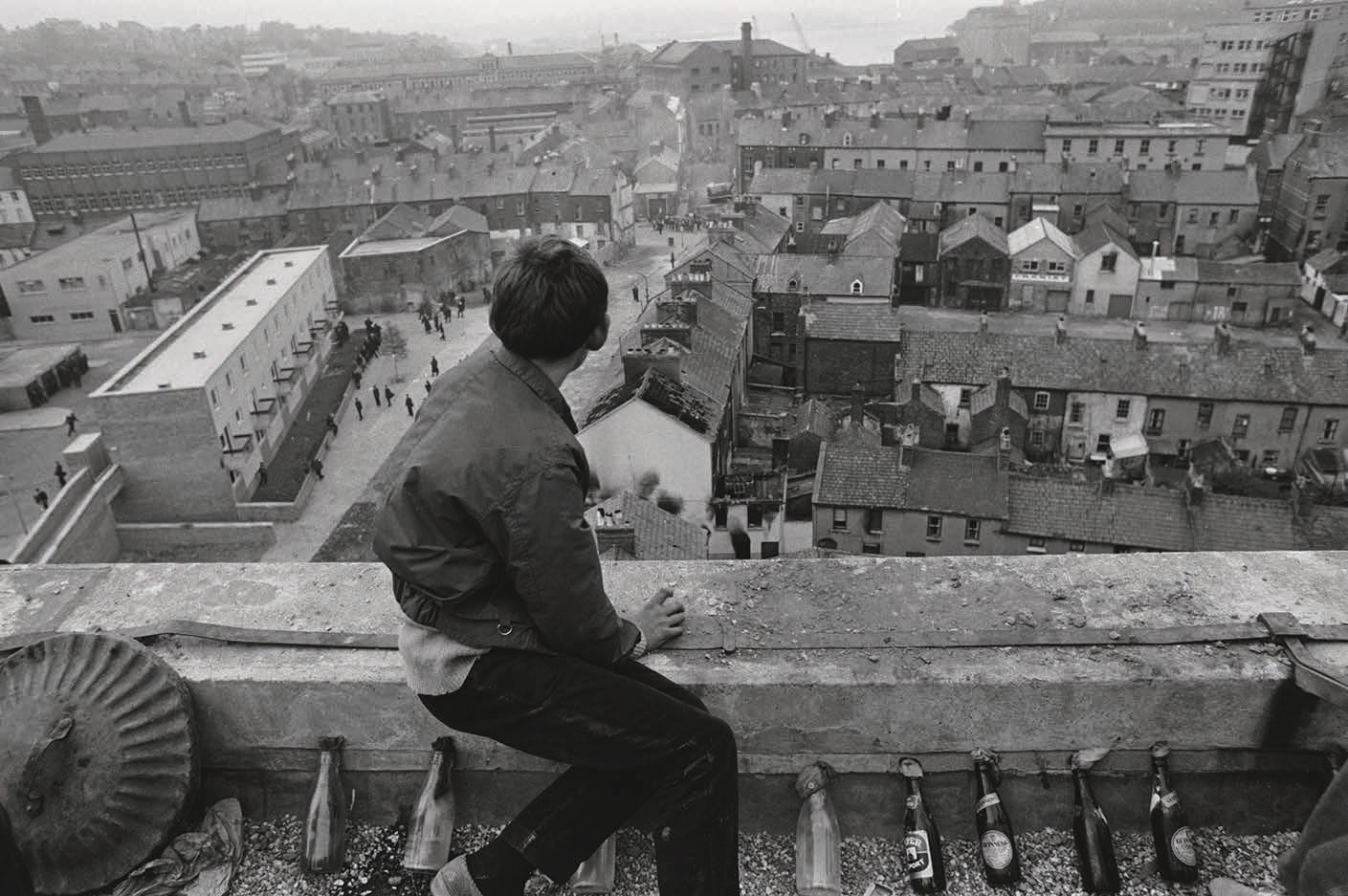
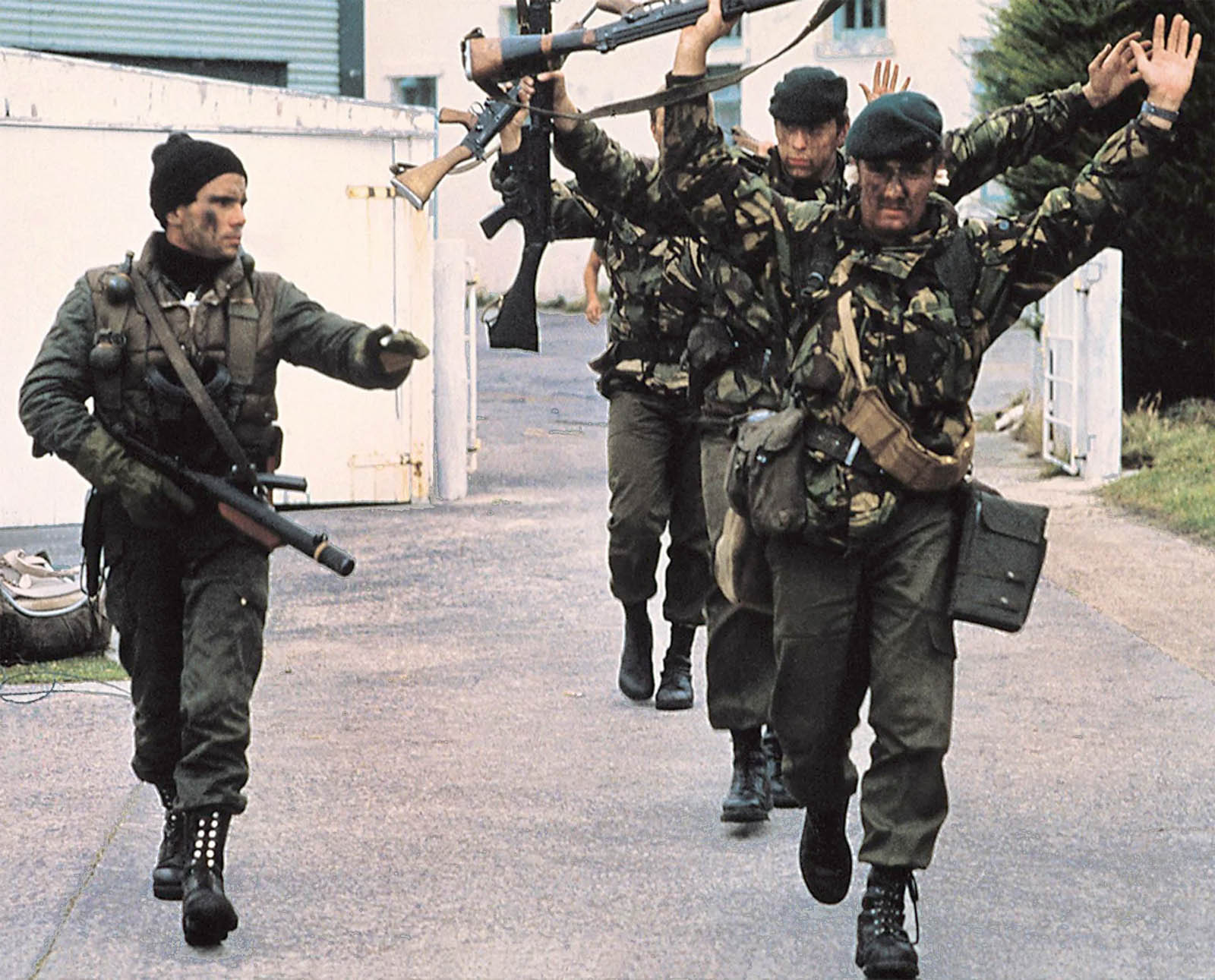
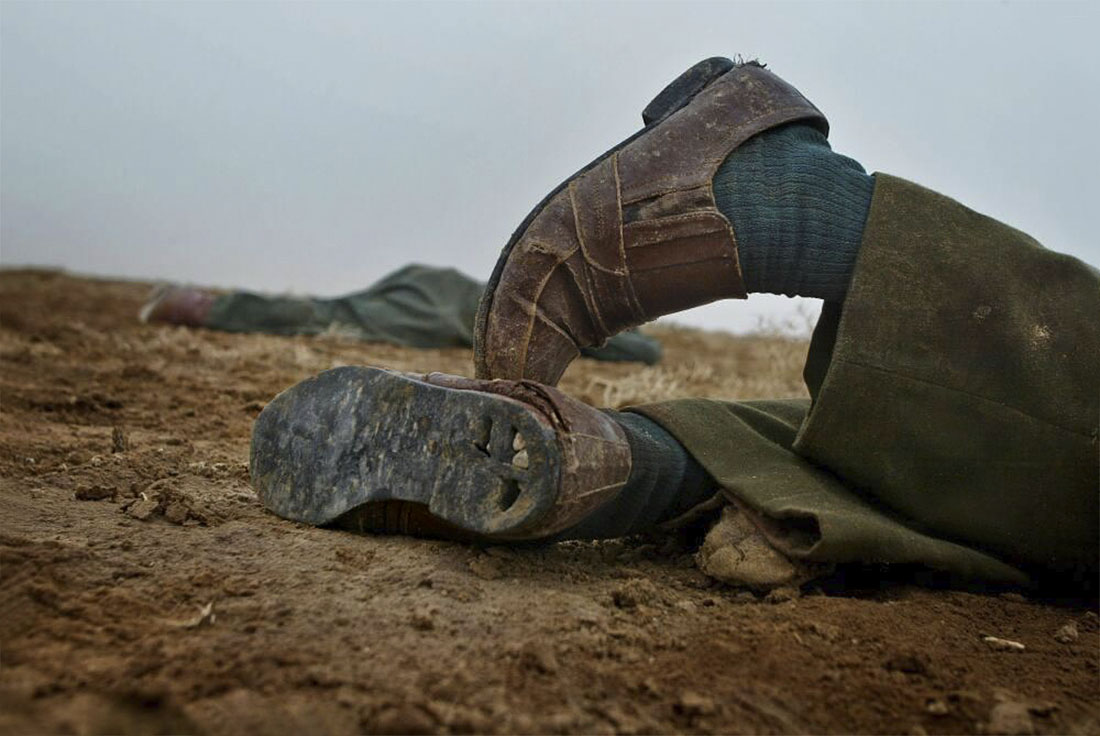

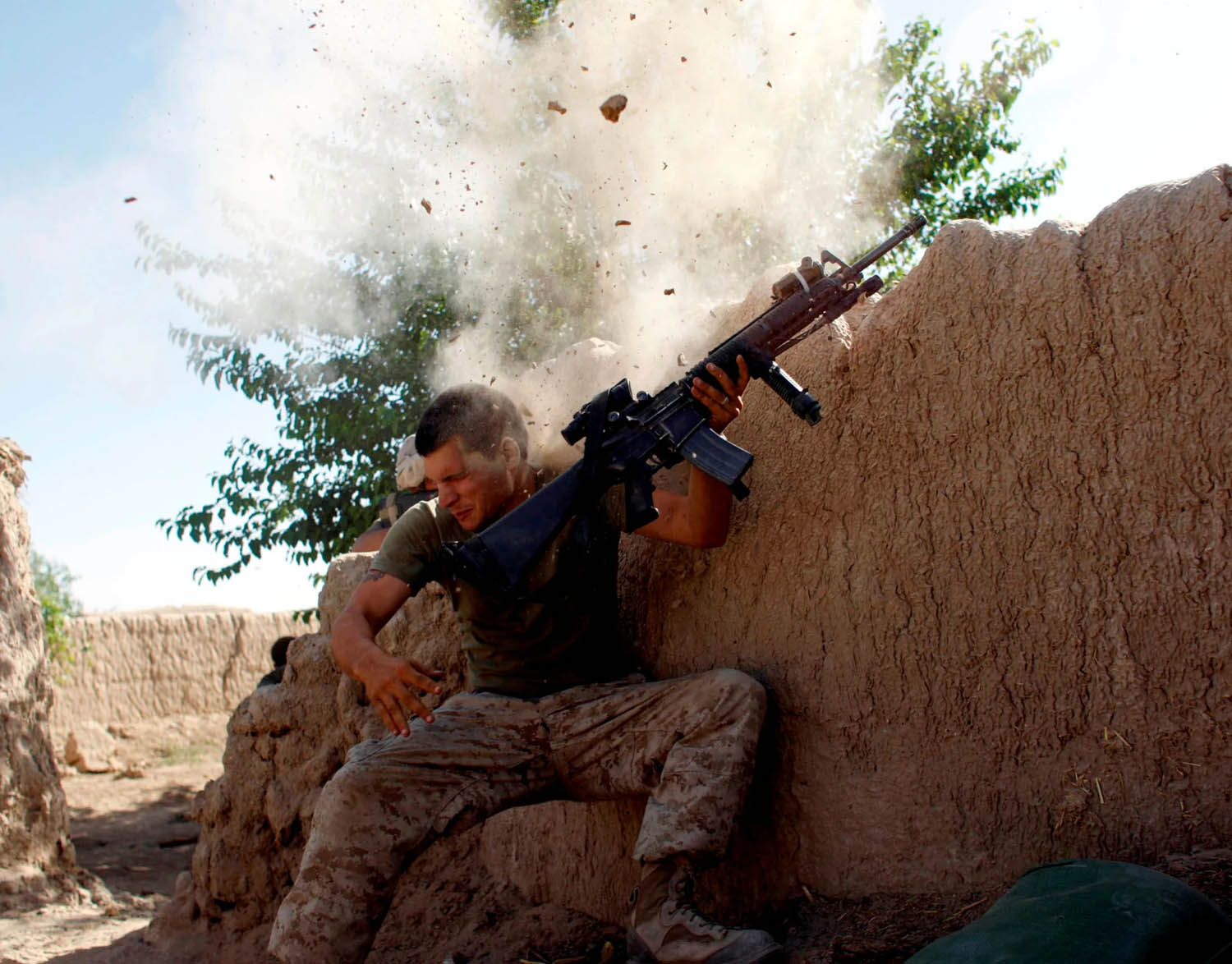
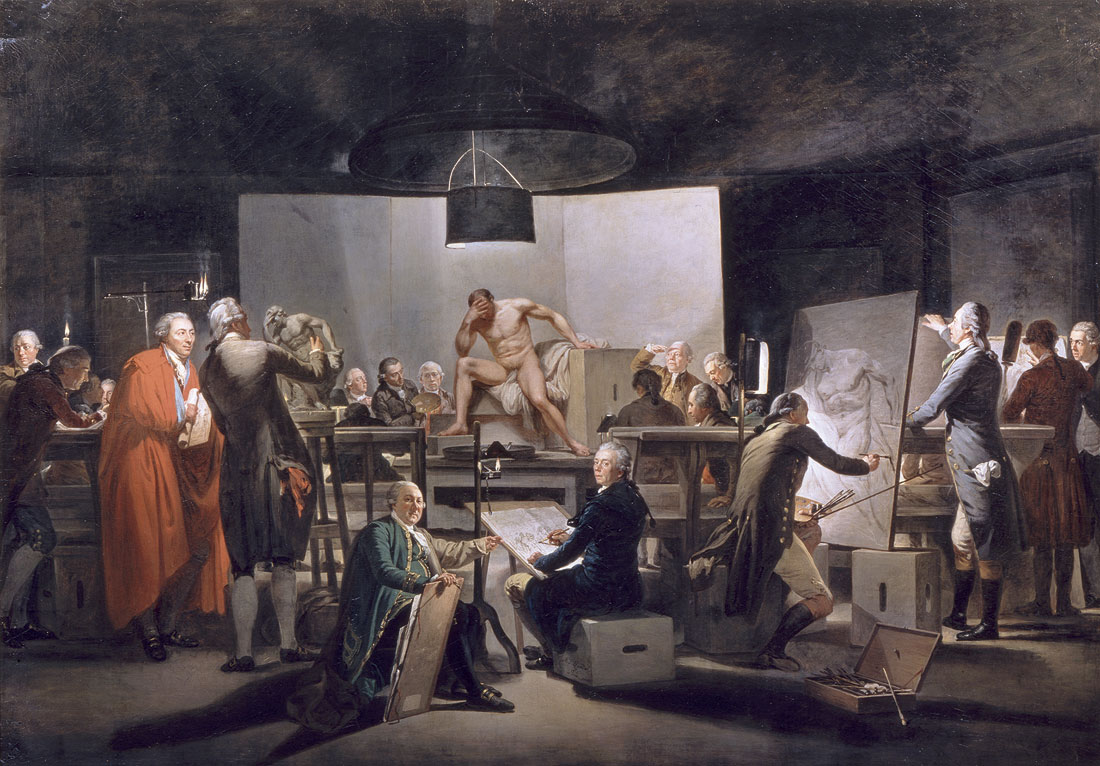
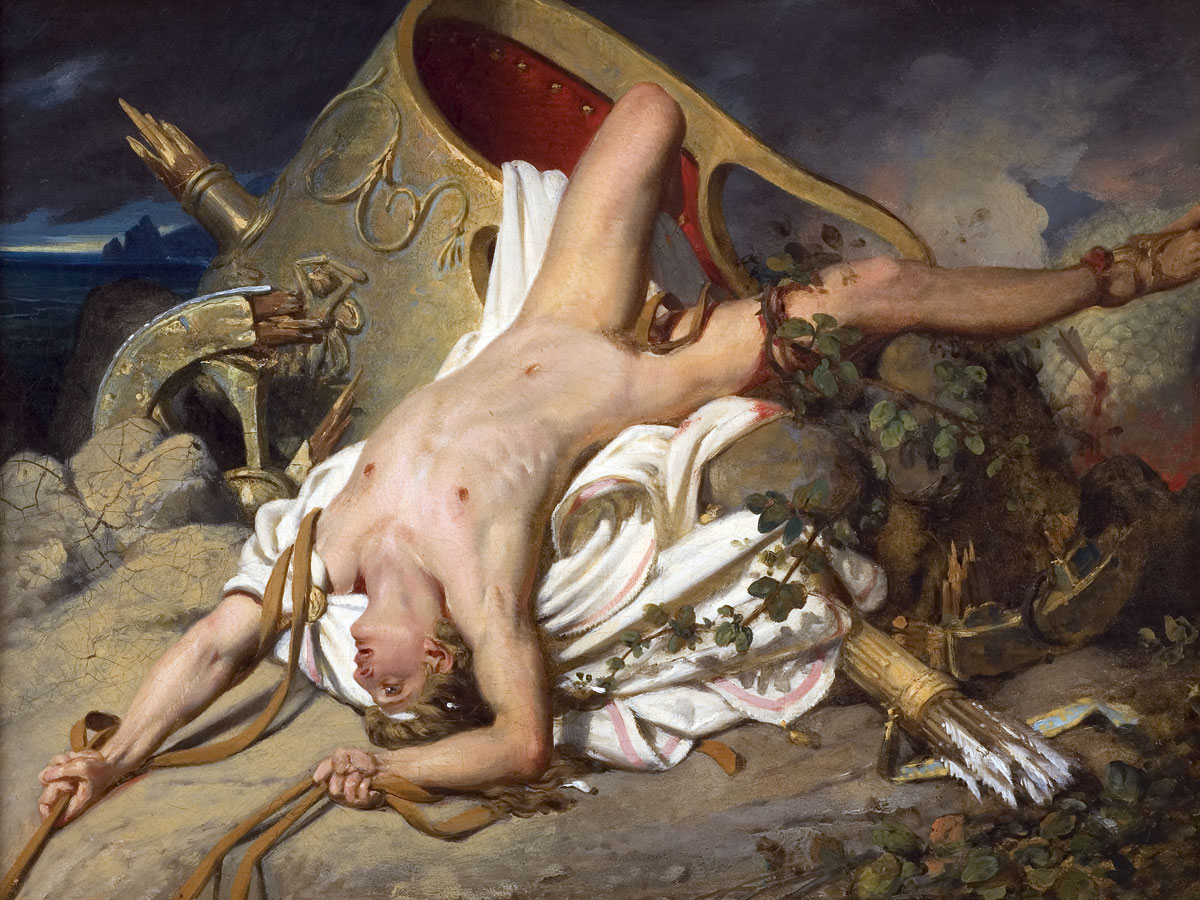
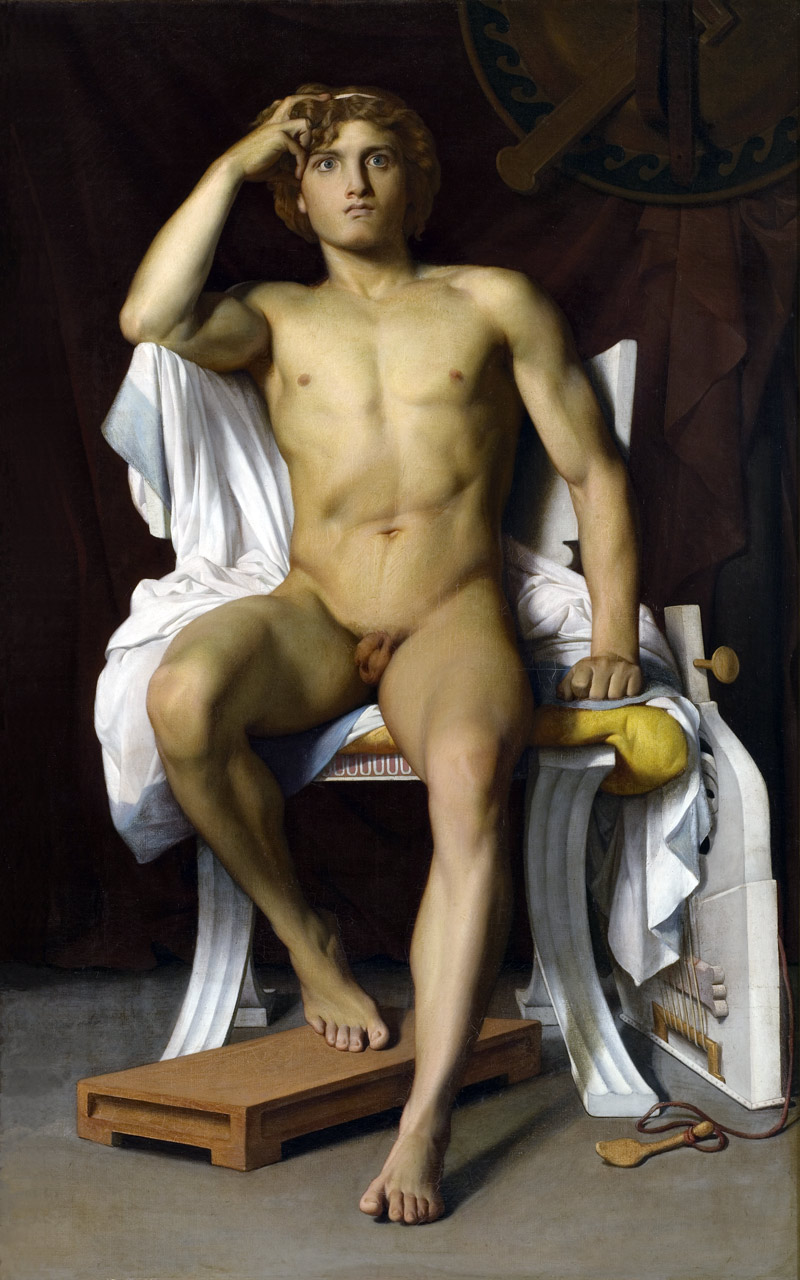
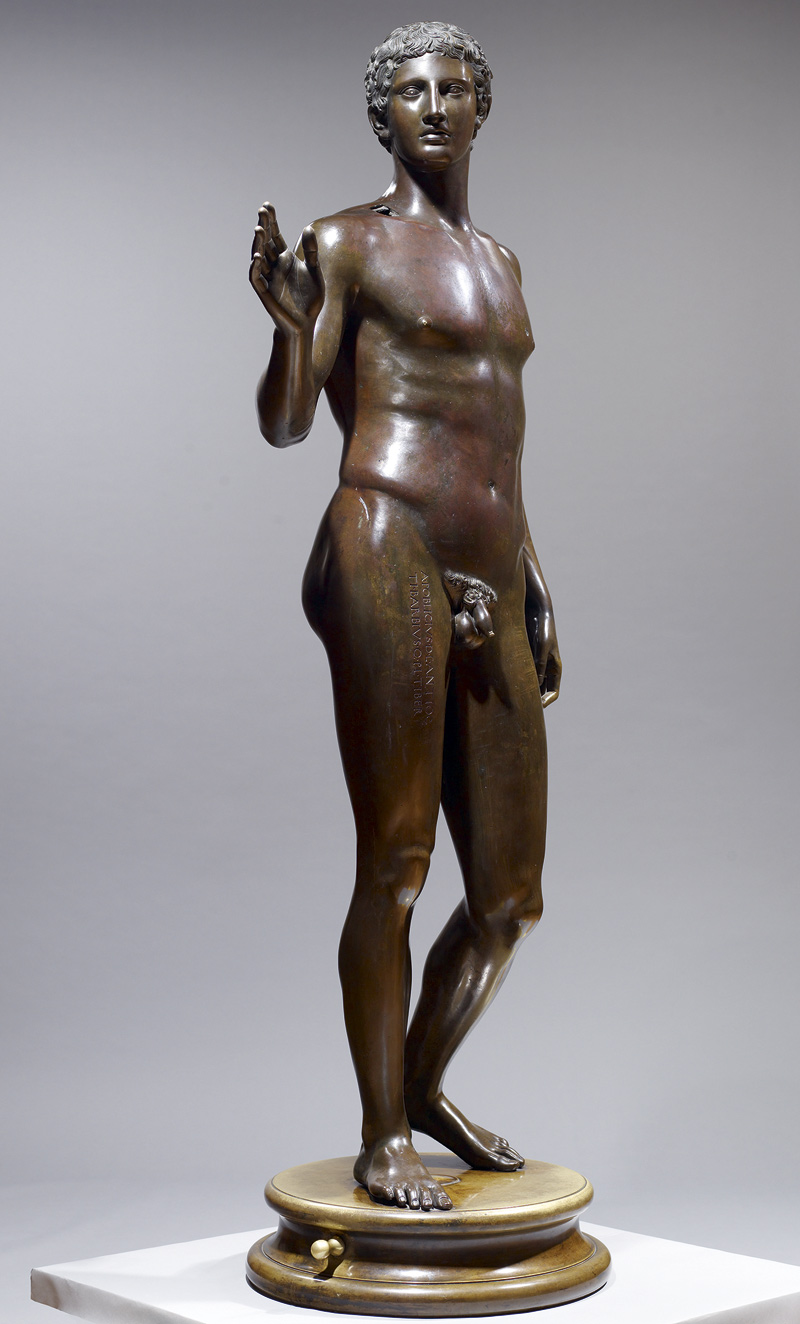


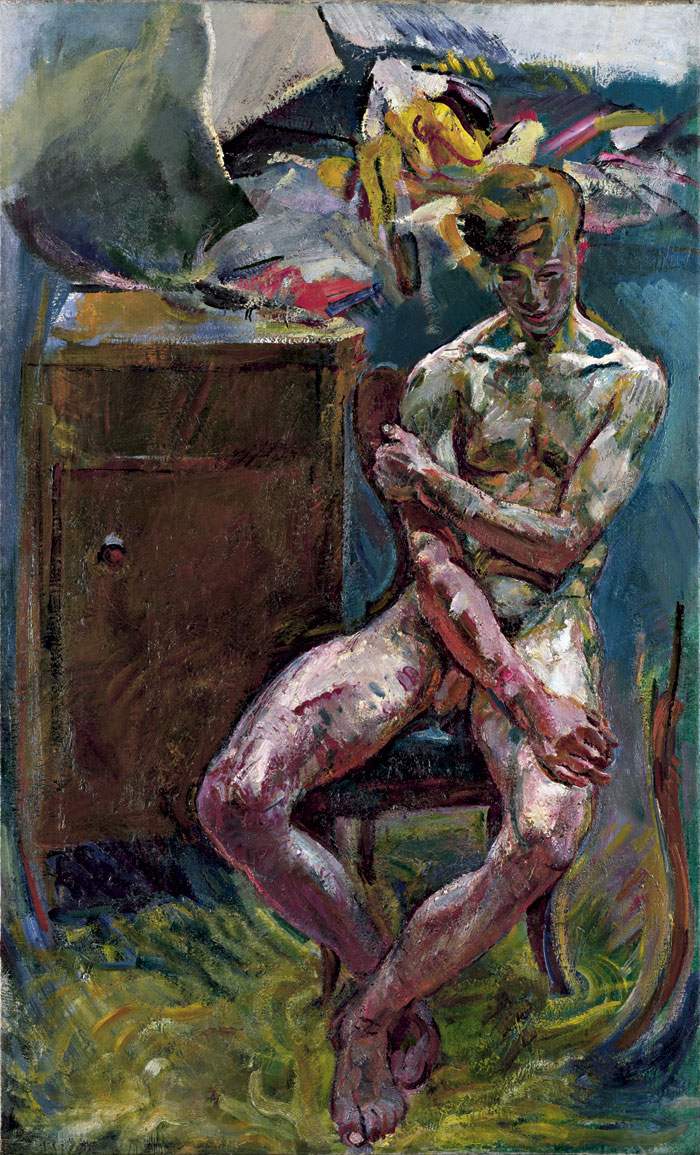

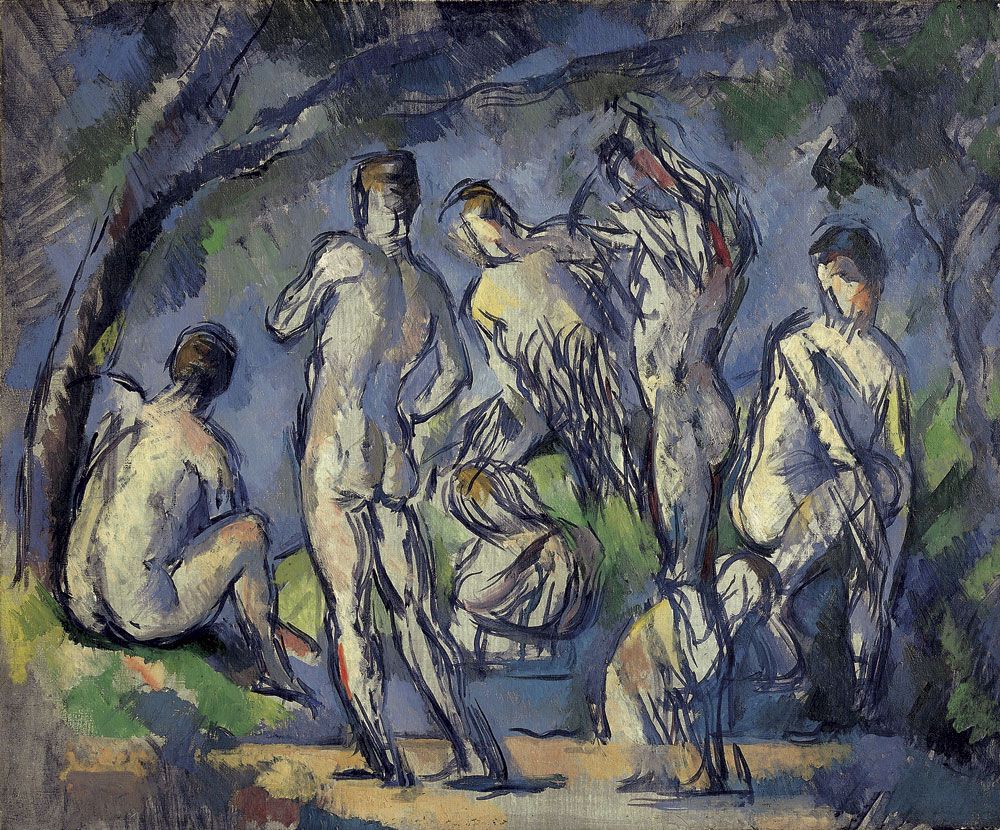
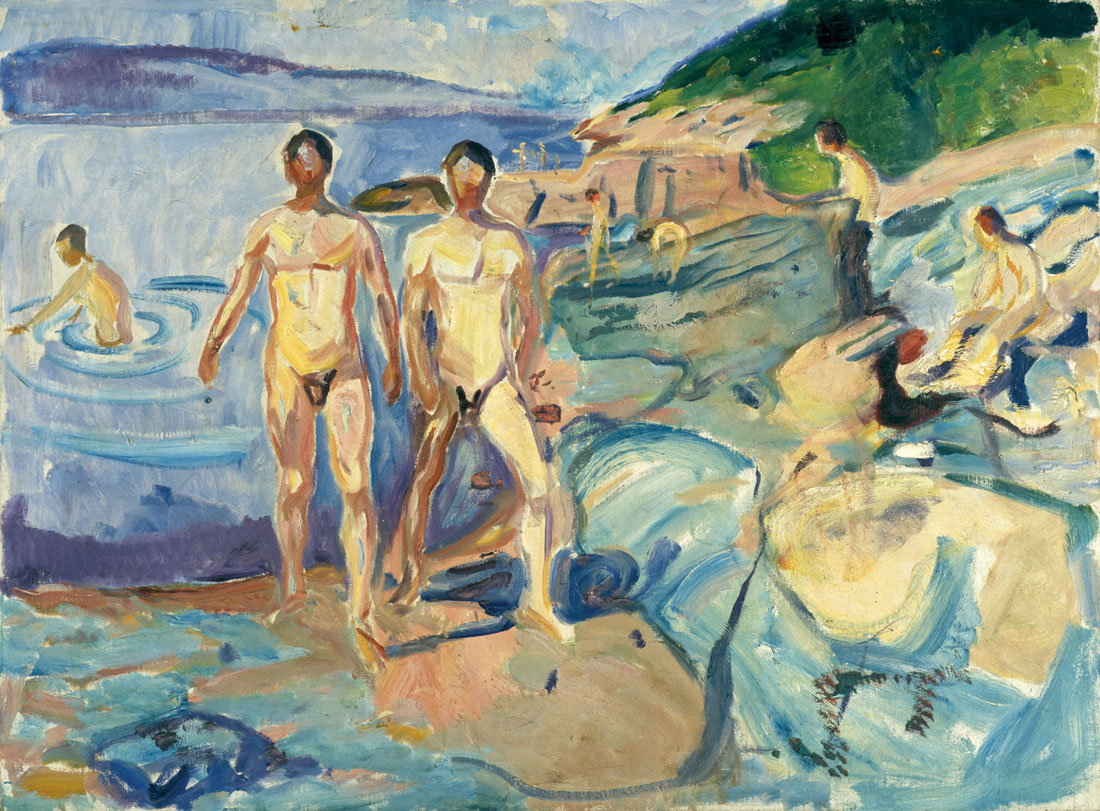
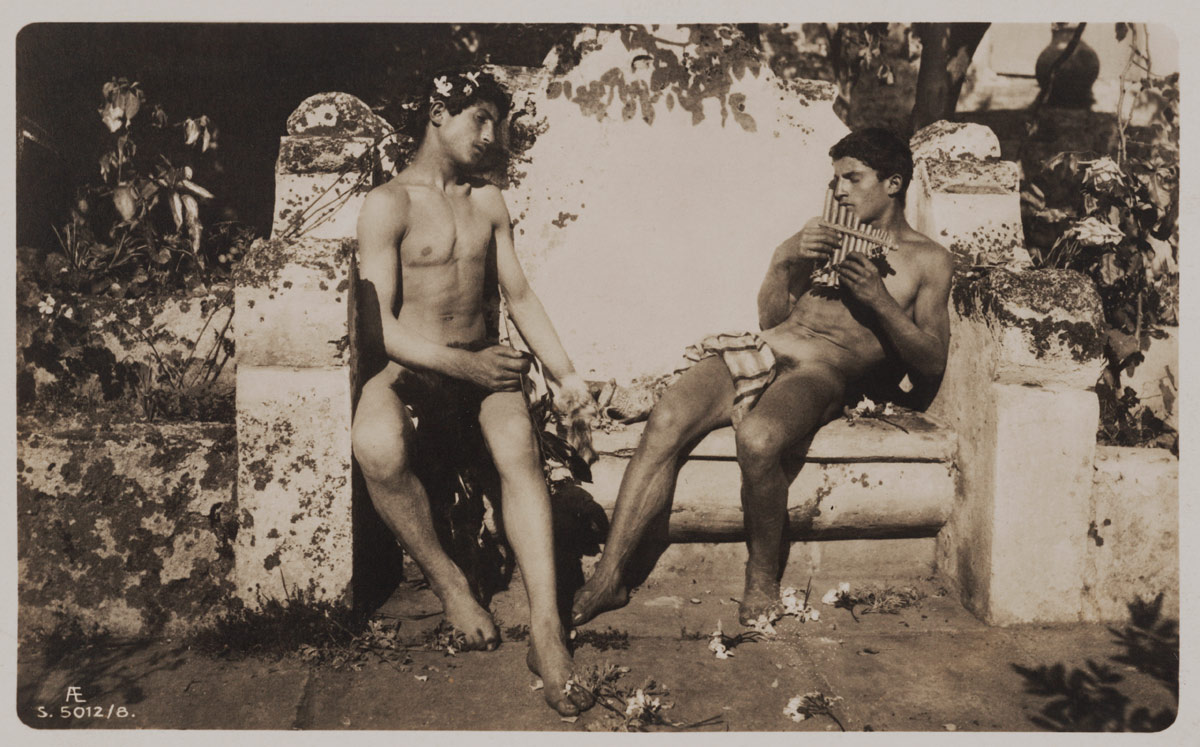
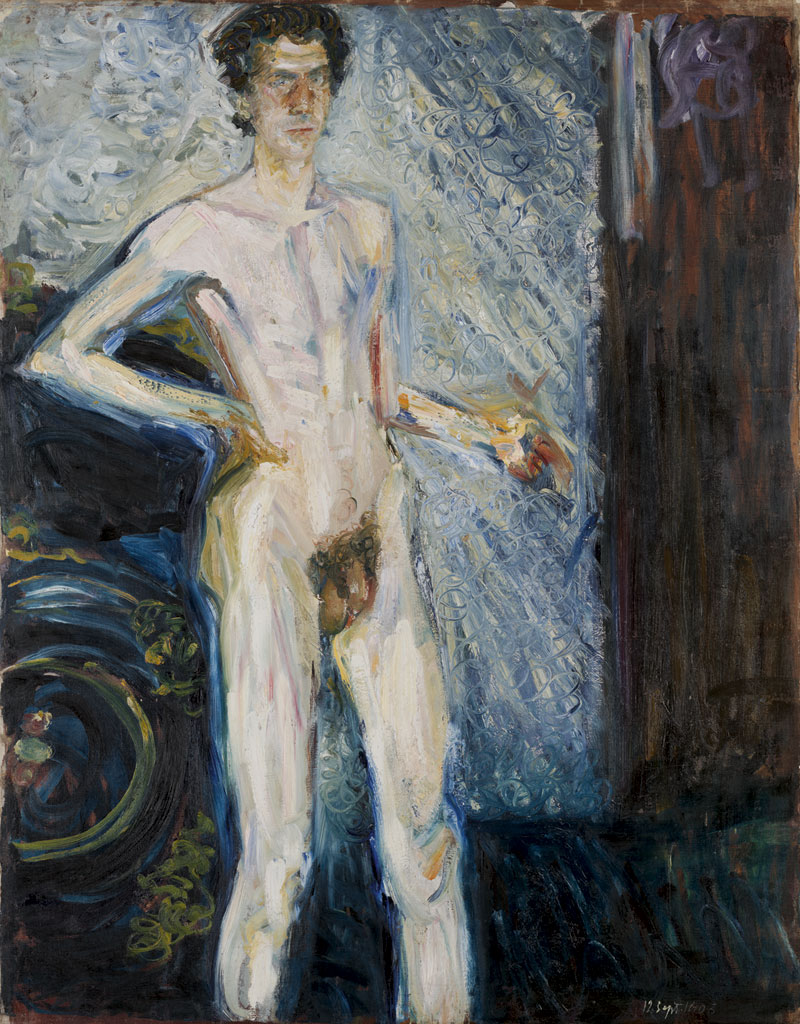
![Egon Schiele (Austrian, 1890-1918) '“Prediger” (Selbstakt mit blaugrünem Hemd) ["Preacher" (Nude with teal shirt)]' 1913](https://artblart.com/wp-content/uploads/2013/01/egon_schiele_prediger_selbstakt_mit_blaugruenem_hemd_1913-web.jpg "Egon Schiele (Austrian, 1890-1918) '“Prediger” (Selbstakt mit blaugrünem Hemd) [\"Preacher\" (Nude with teal shirt)]' 1913")
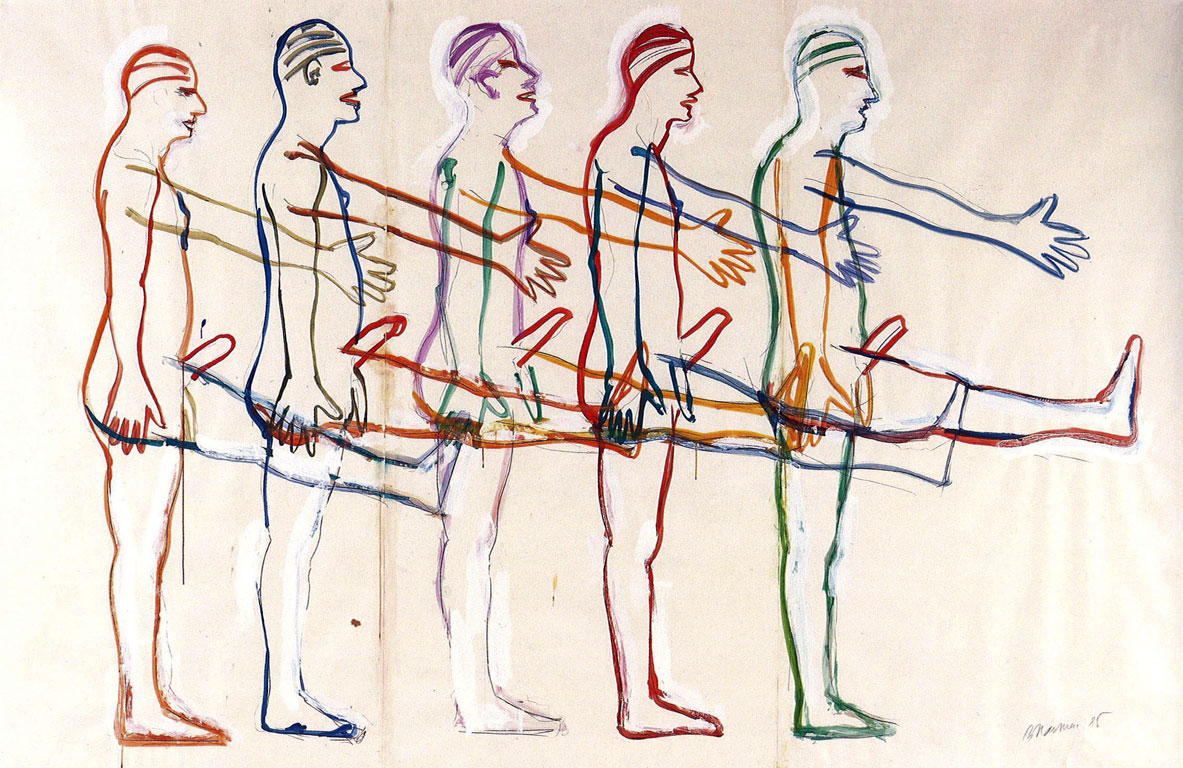
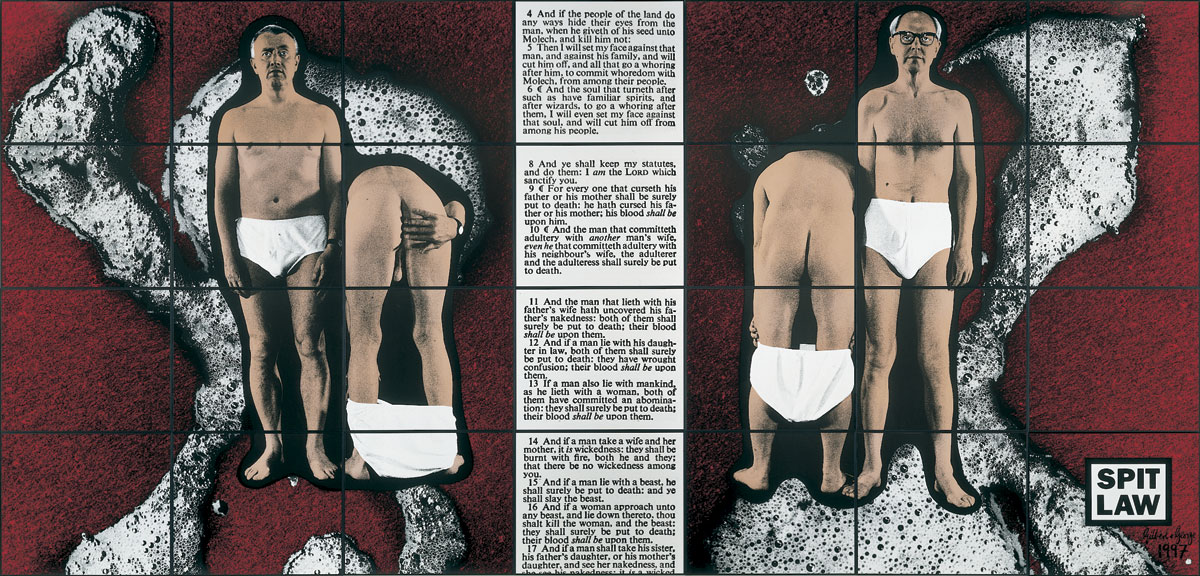
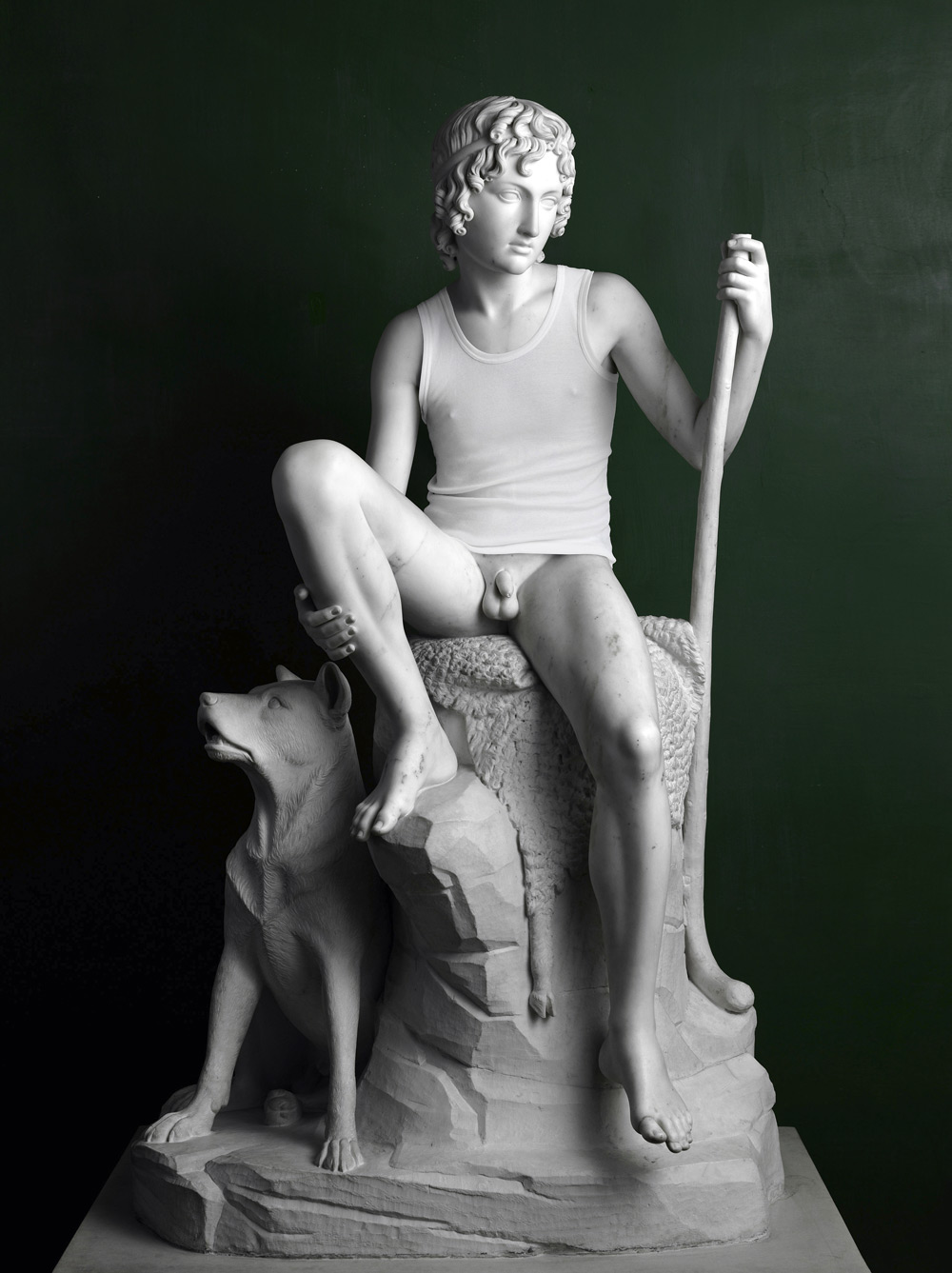


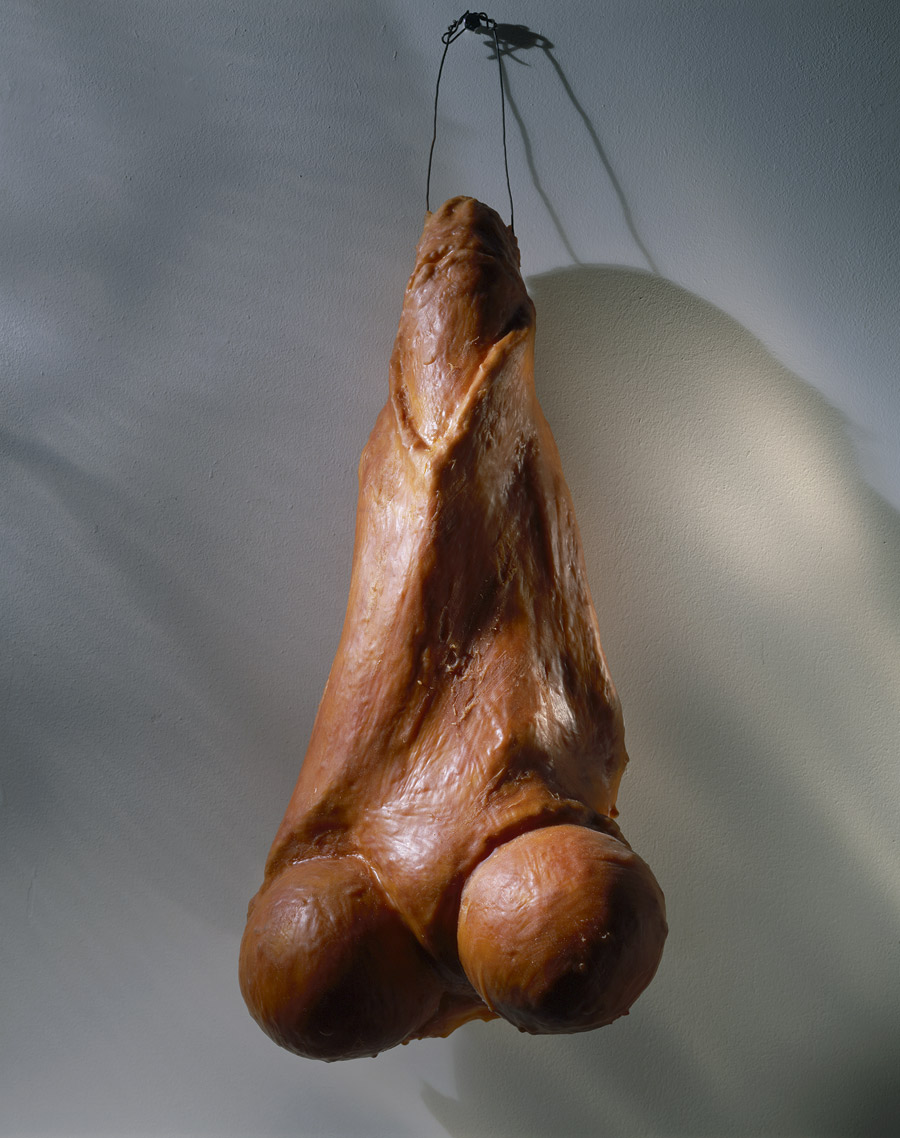
![Pierre & Gilles (Pierre Commoy and Gilles Blanchard) 'Vive la France [Long live France]' 2006](https://artblart.com/wp-content/uploads/2013/01/pierre_gilles_vive_la_france-2006-web.jpg "Pierre & Gilles (Pierre Commoy and Gilles Blanchard) 'Vive la France [Long live France]' 2006")


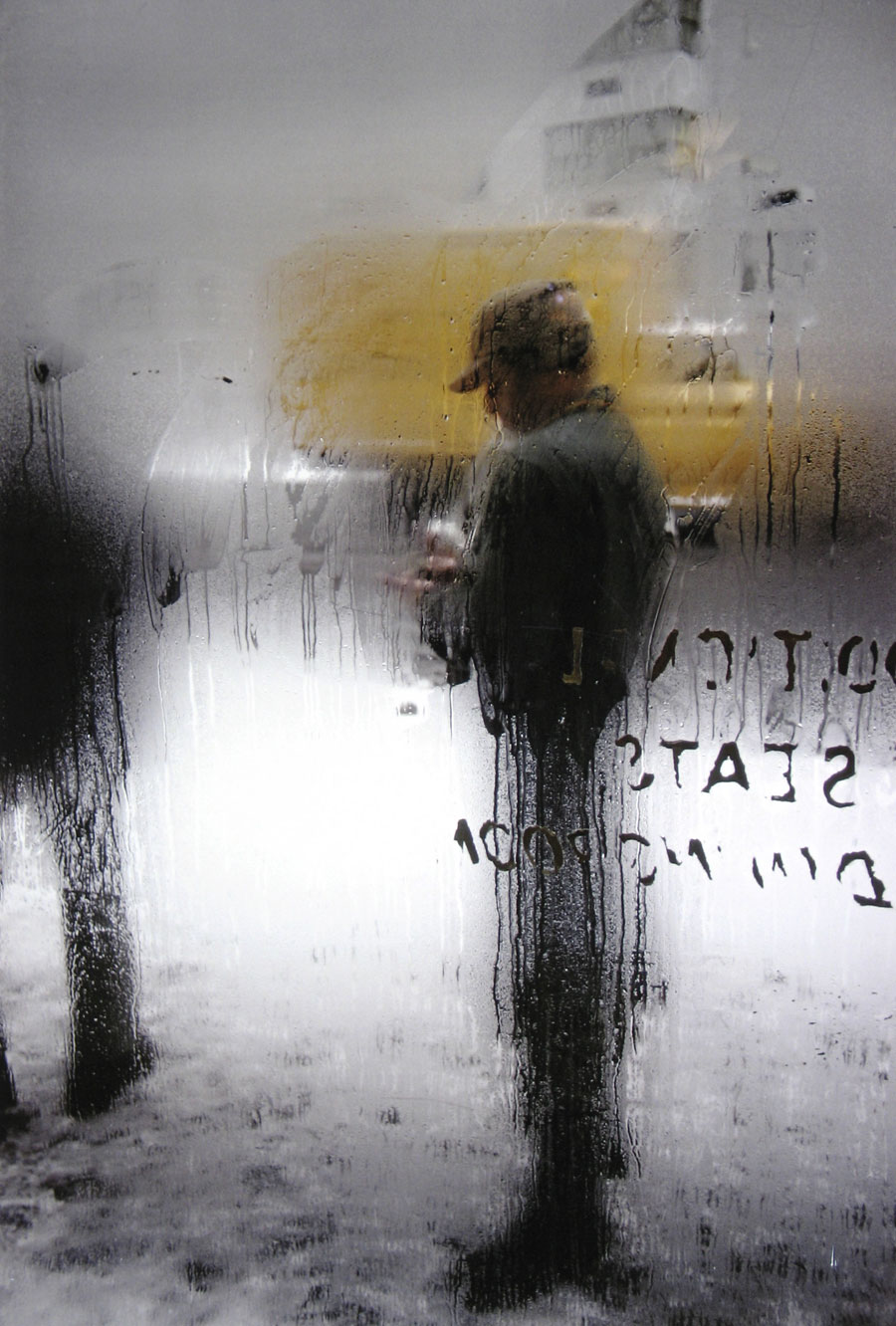


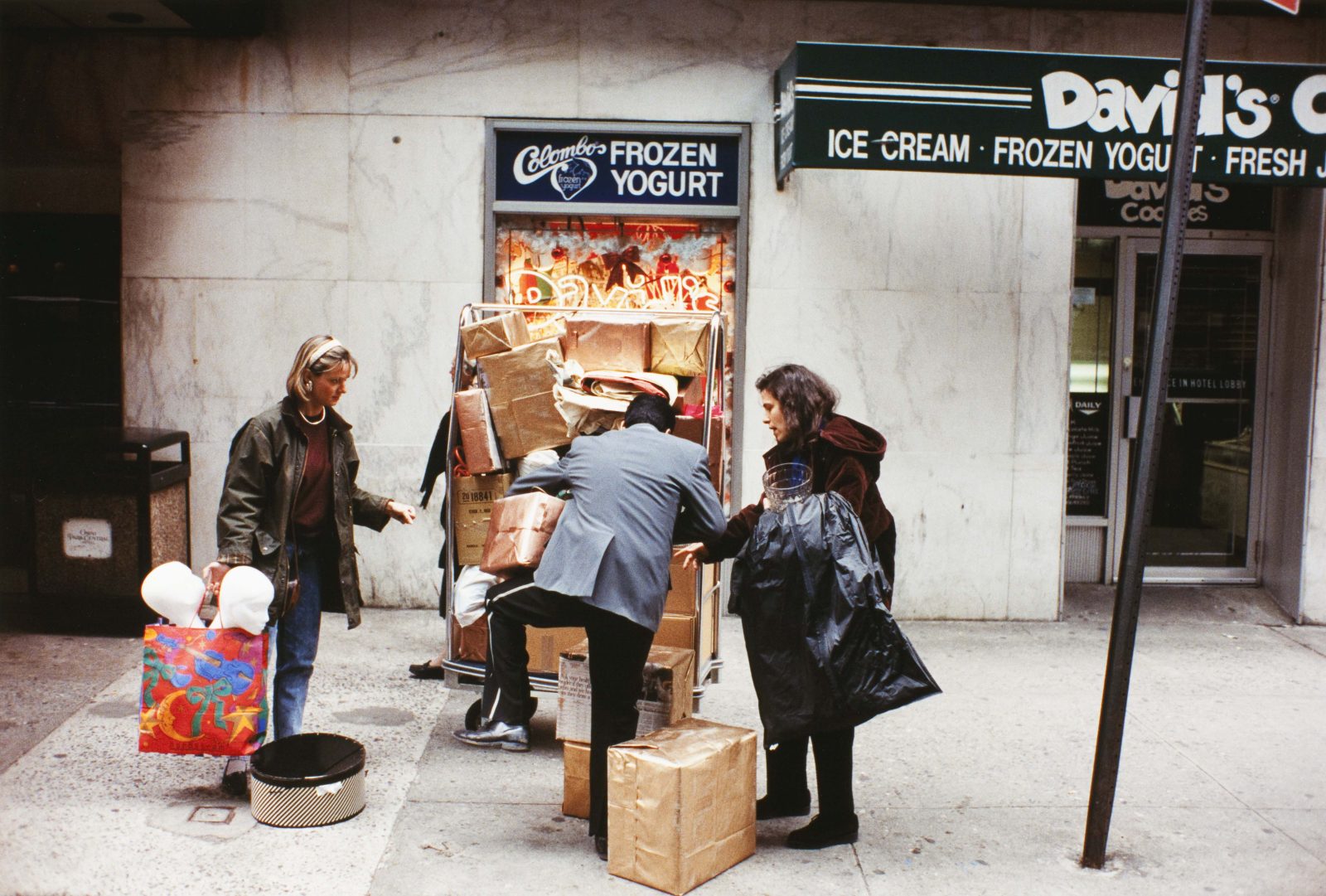
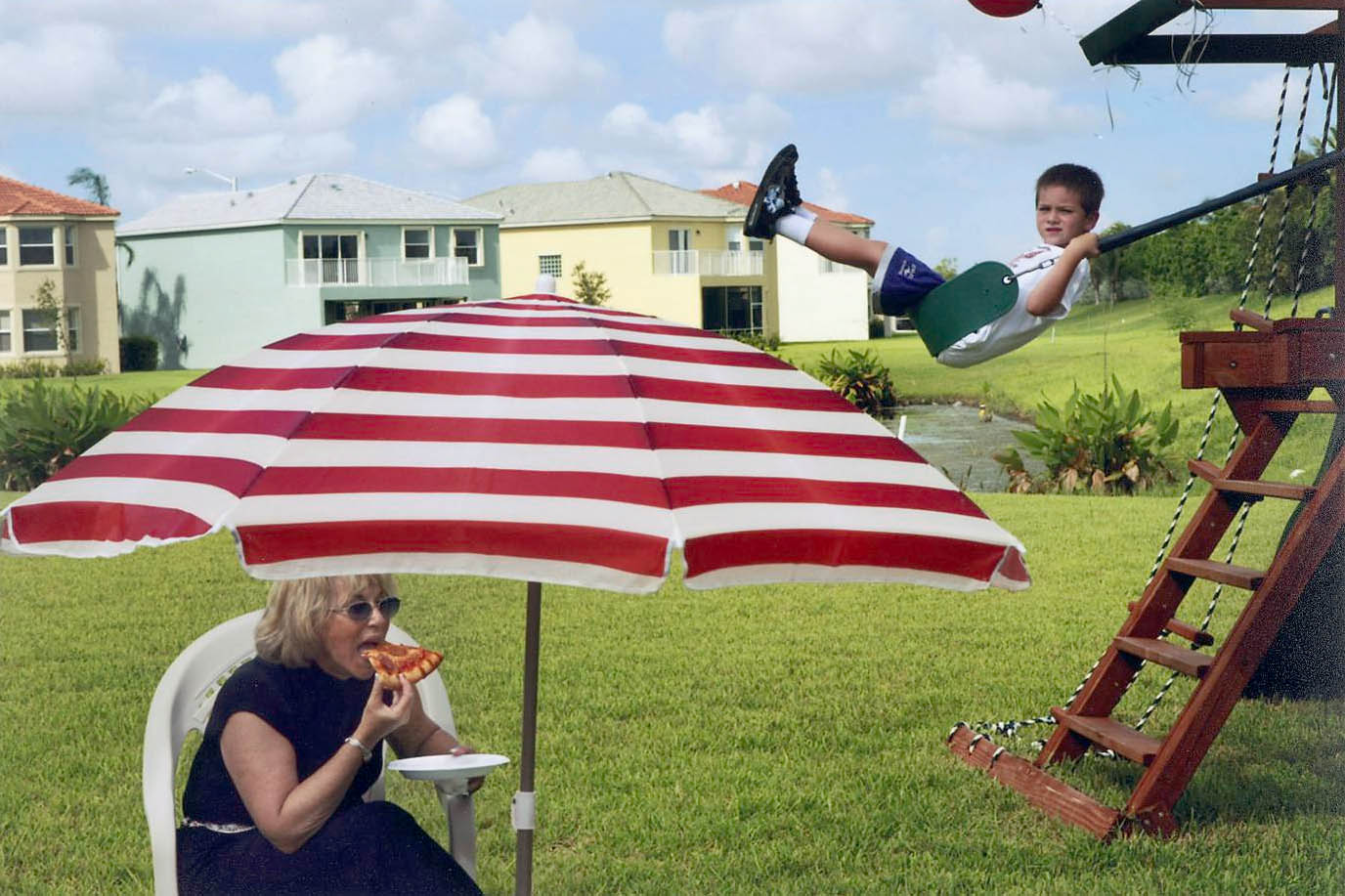
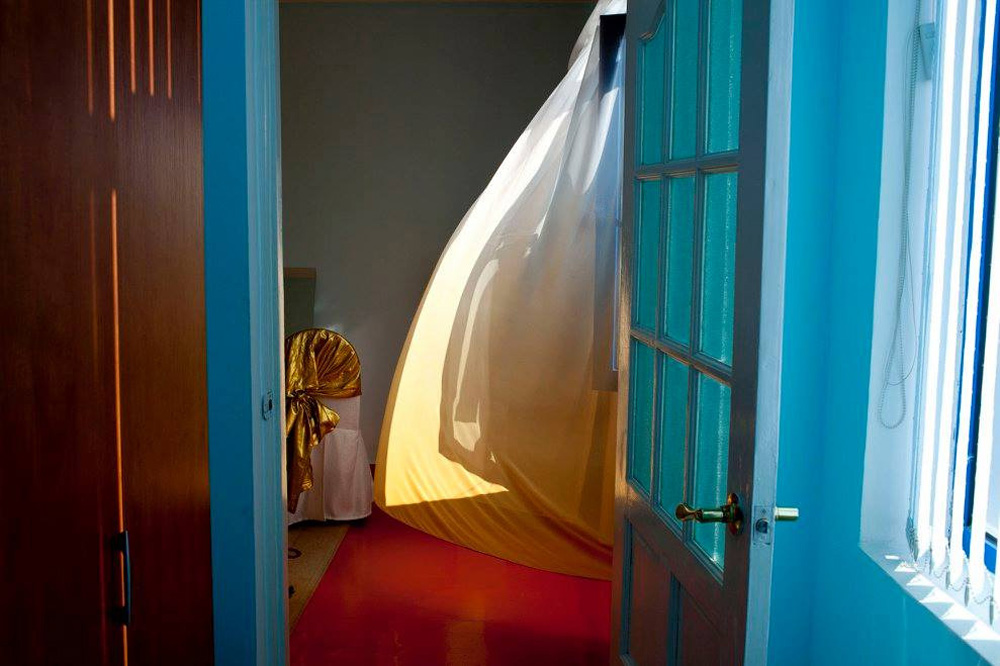


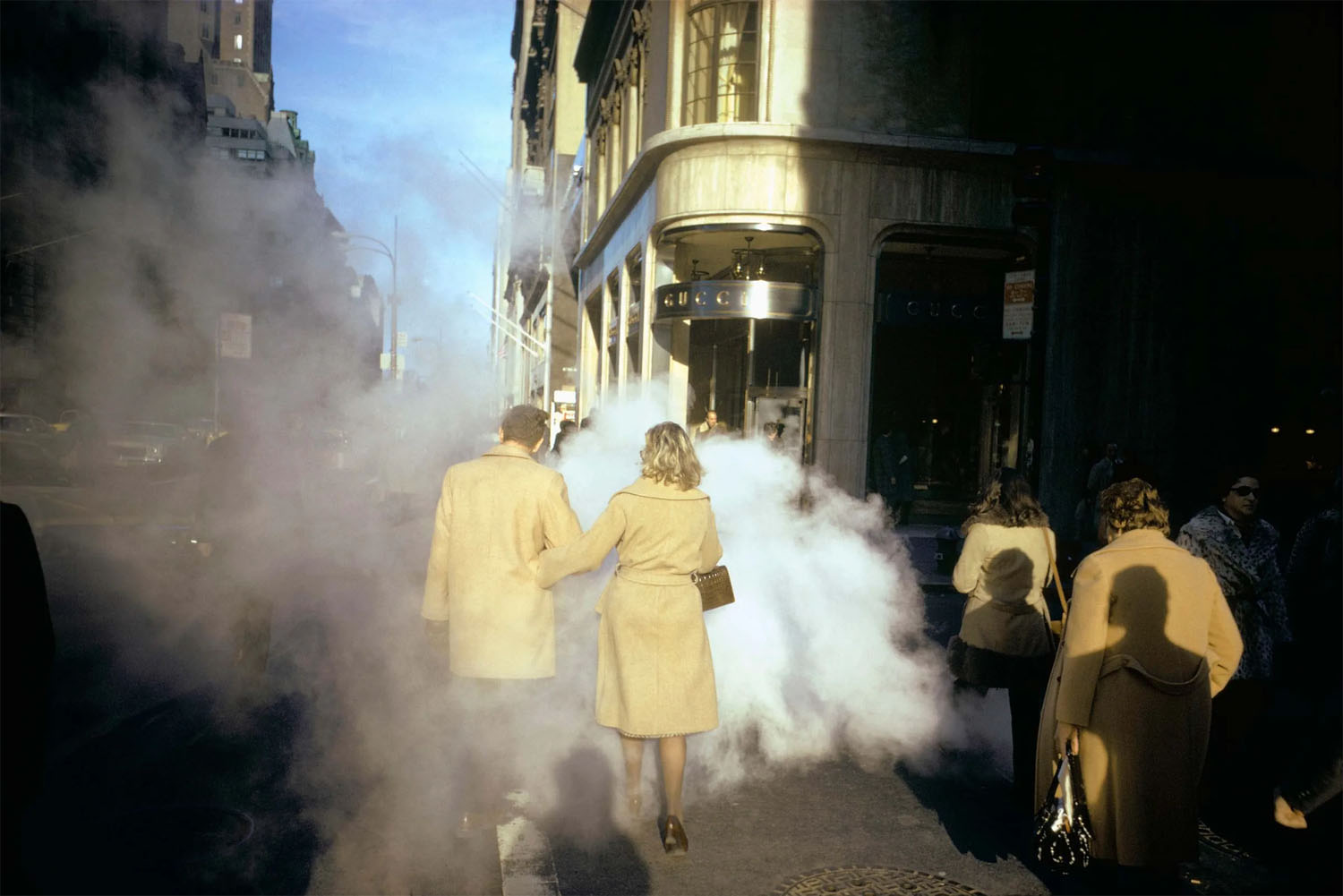

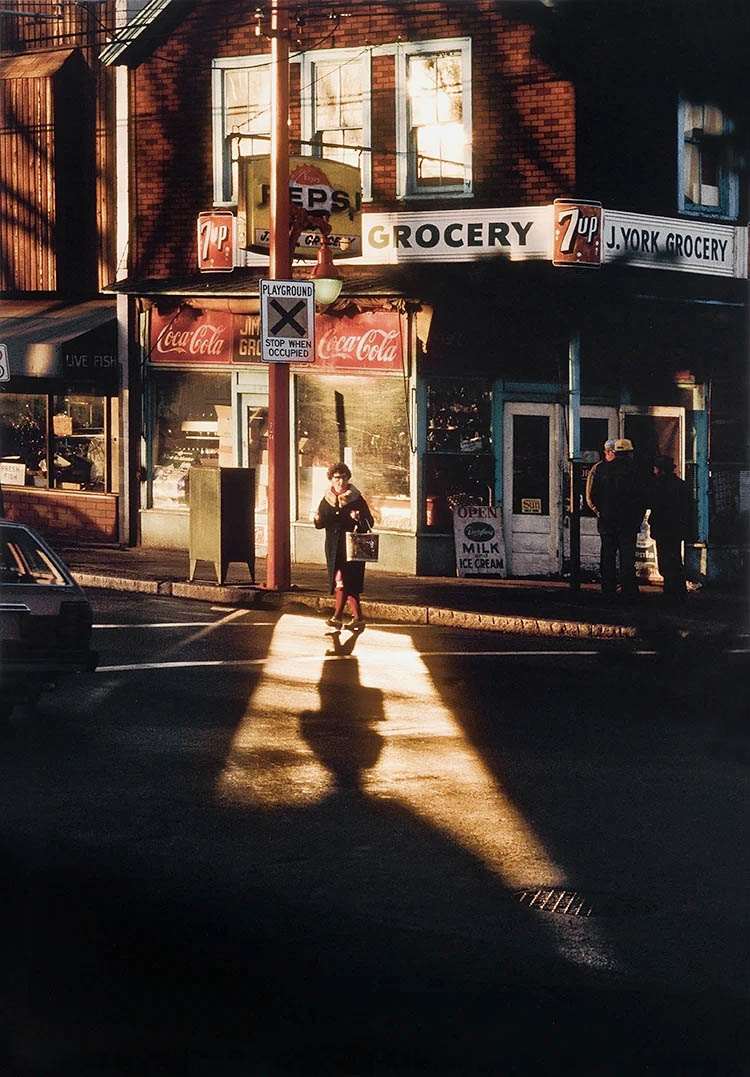
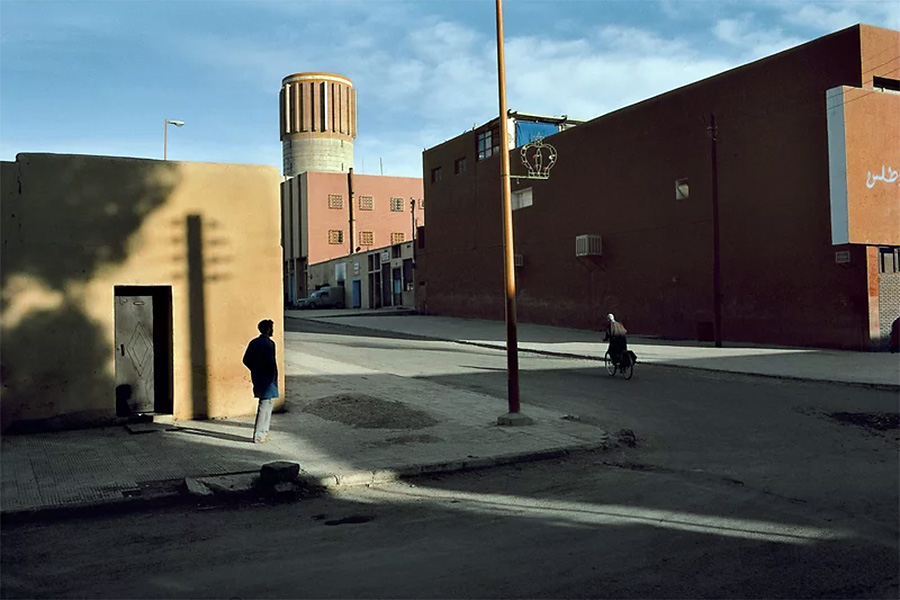
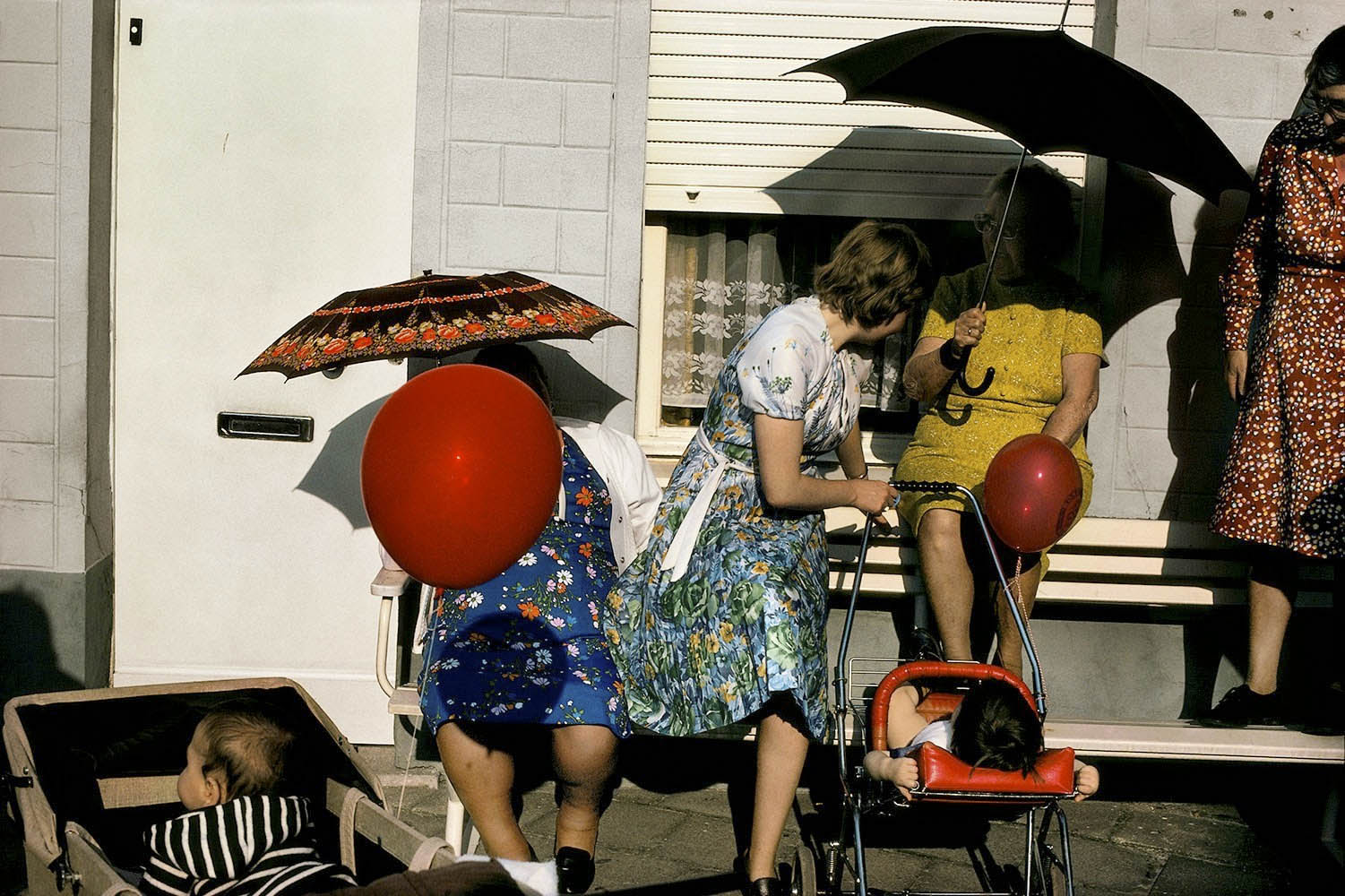

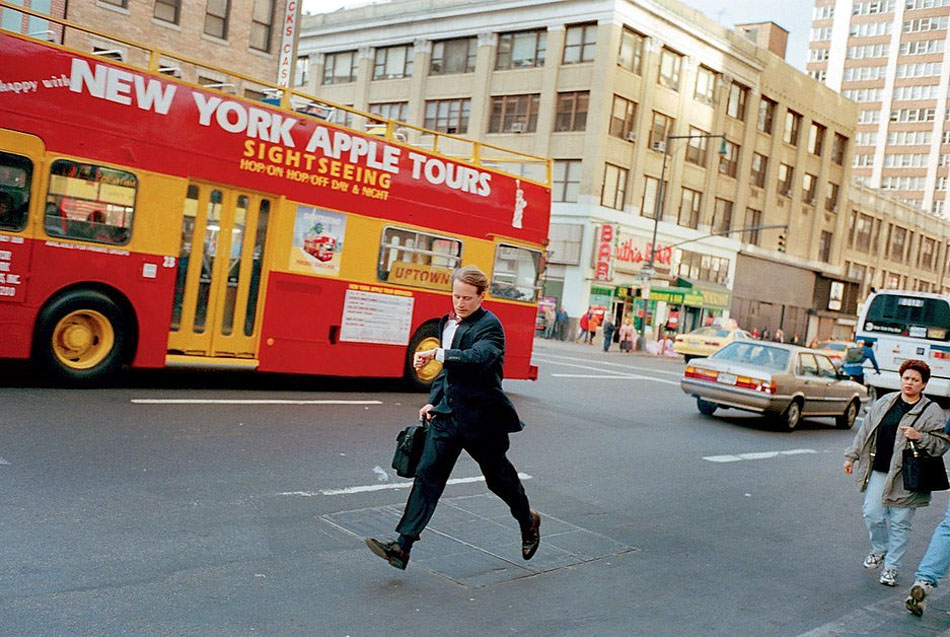


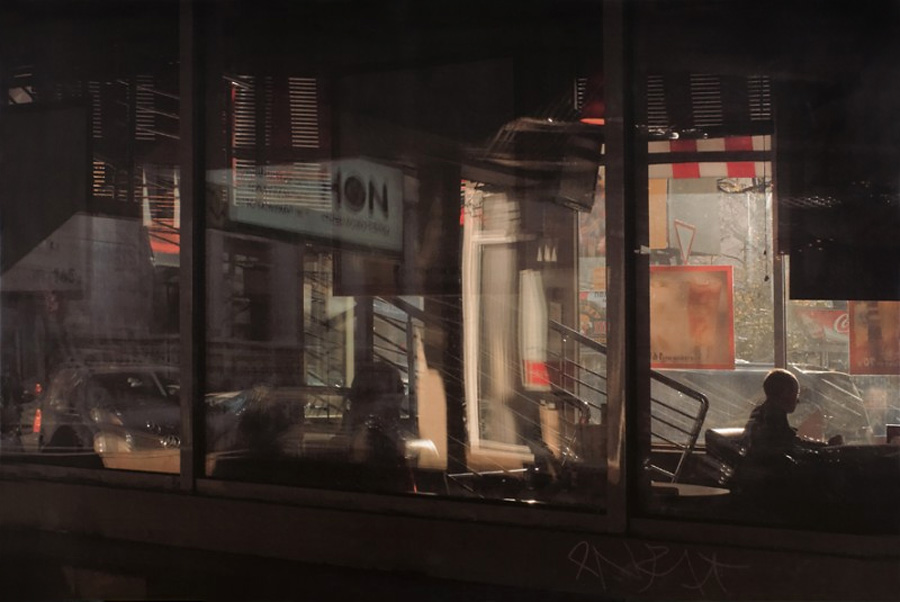


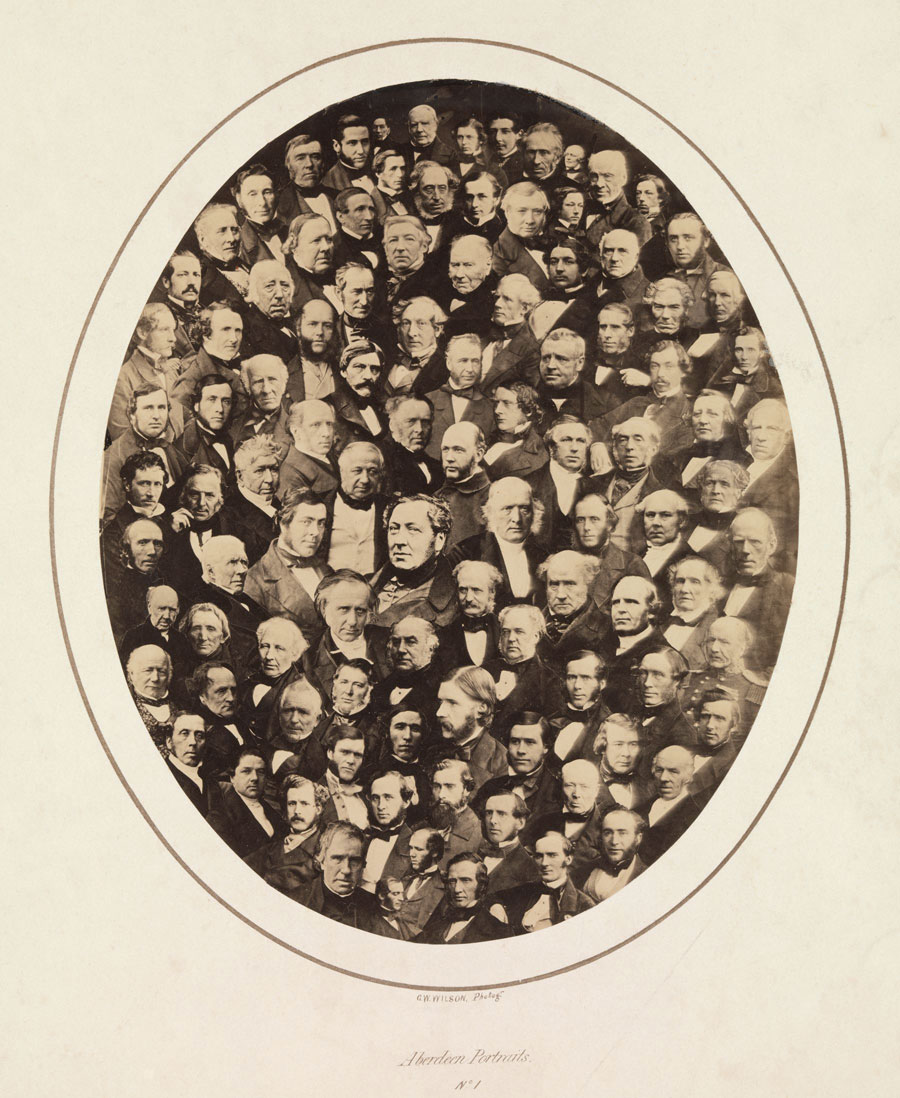

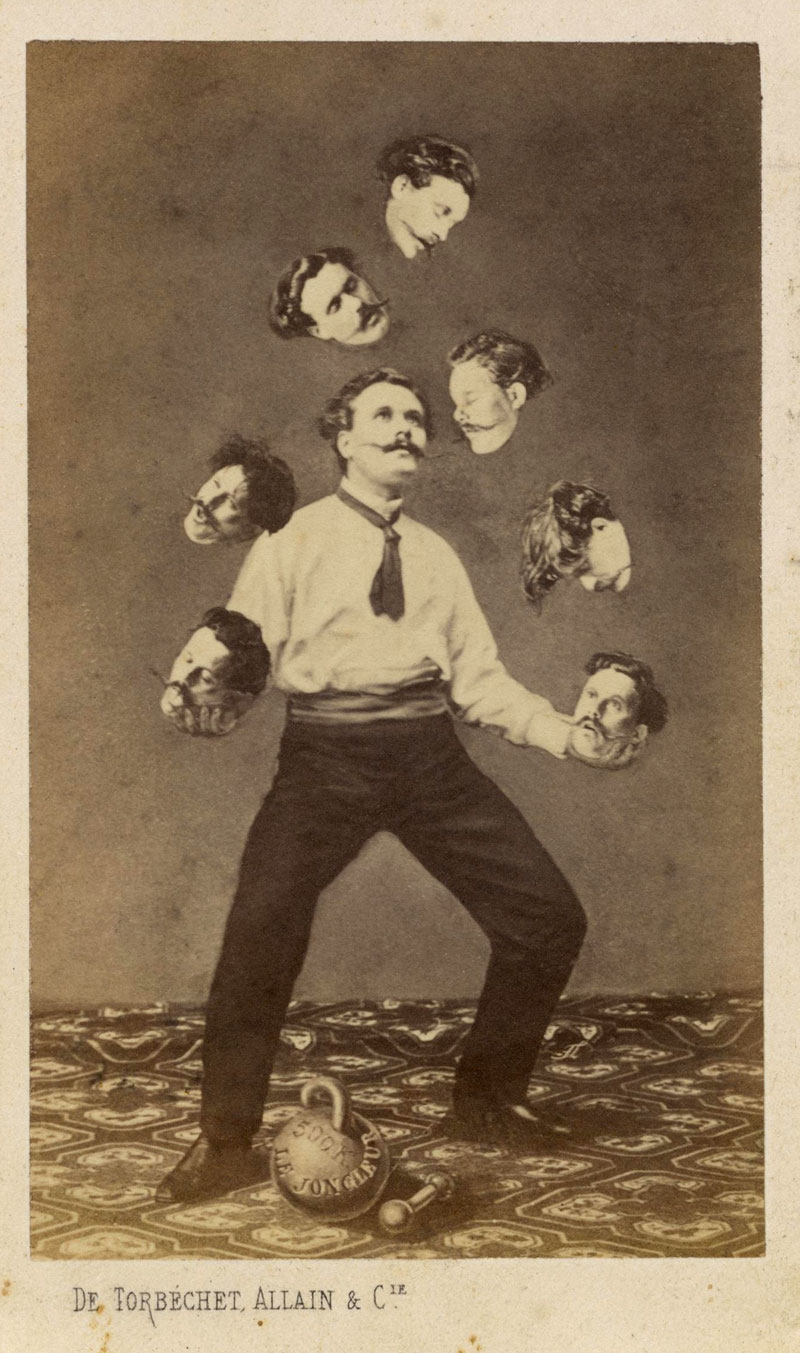
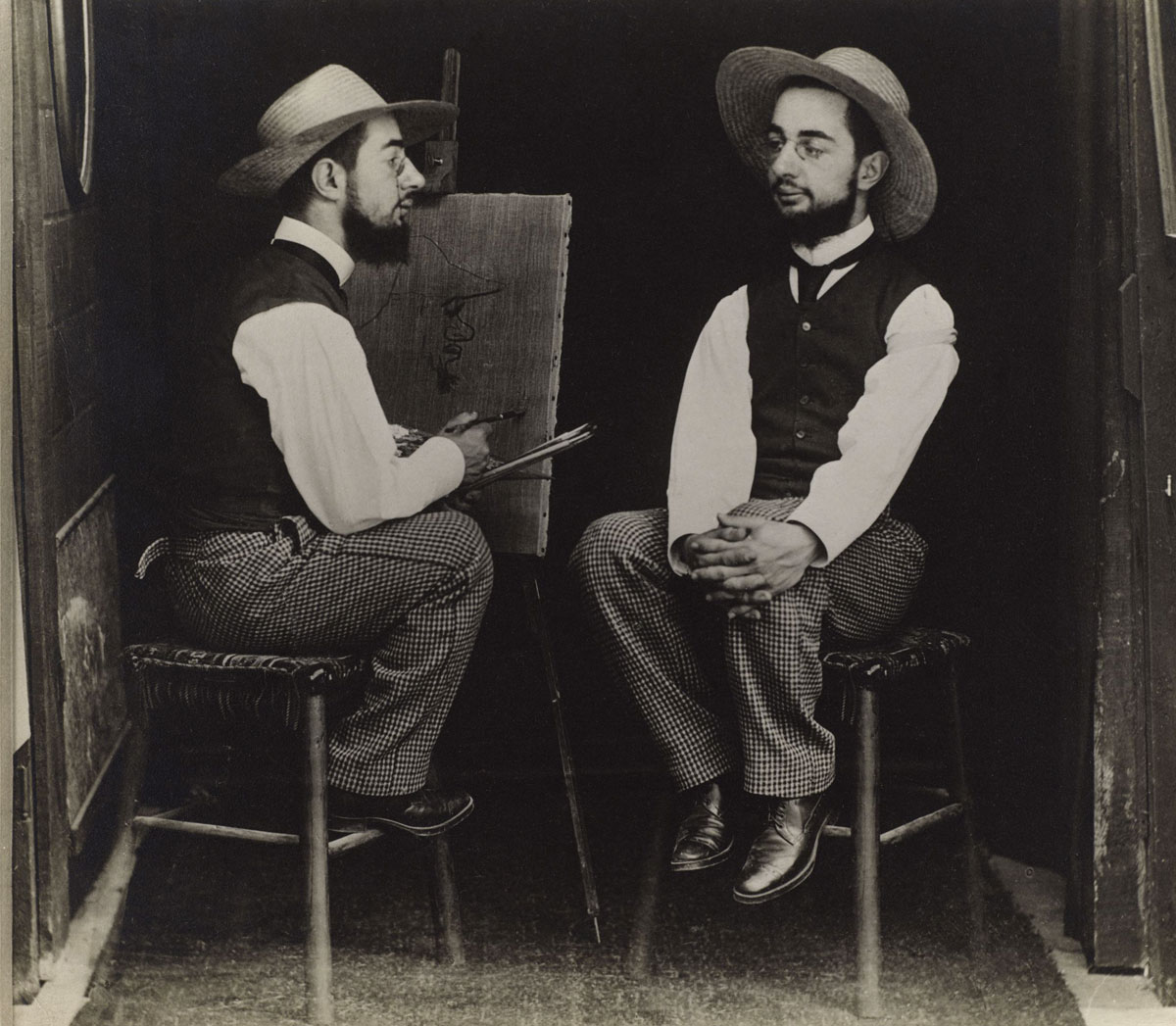


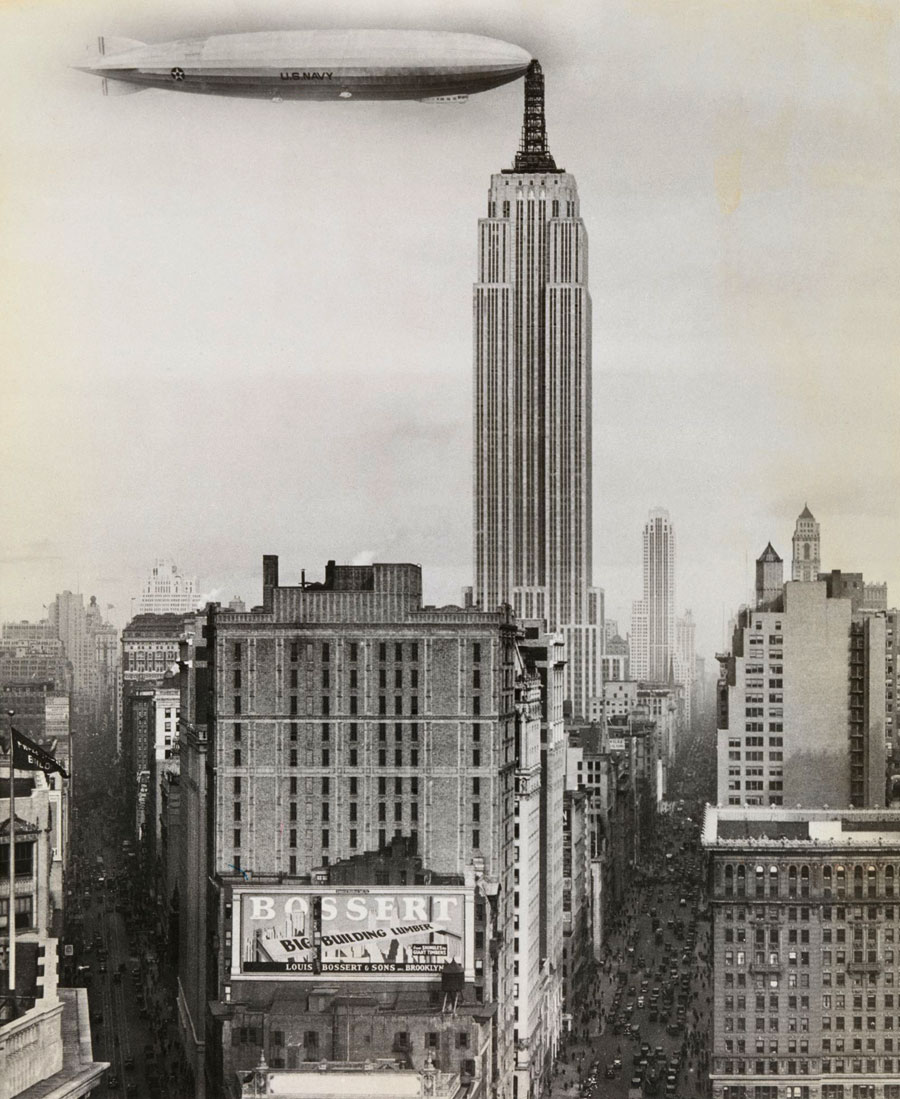
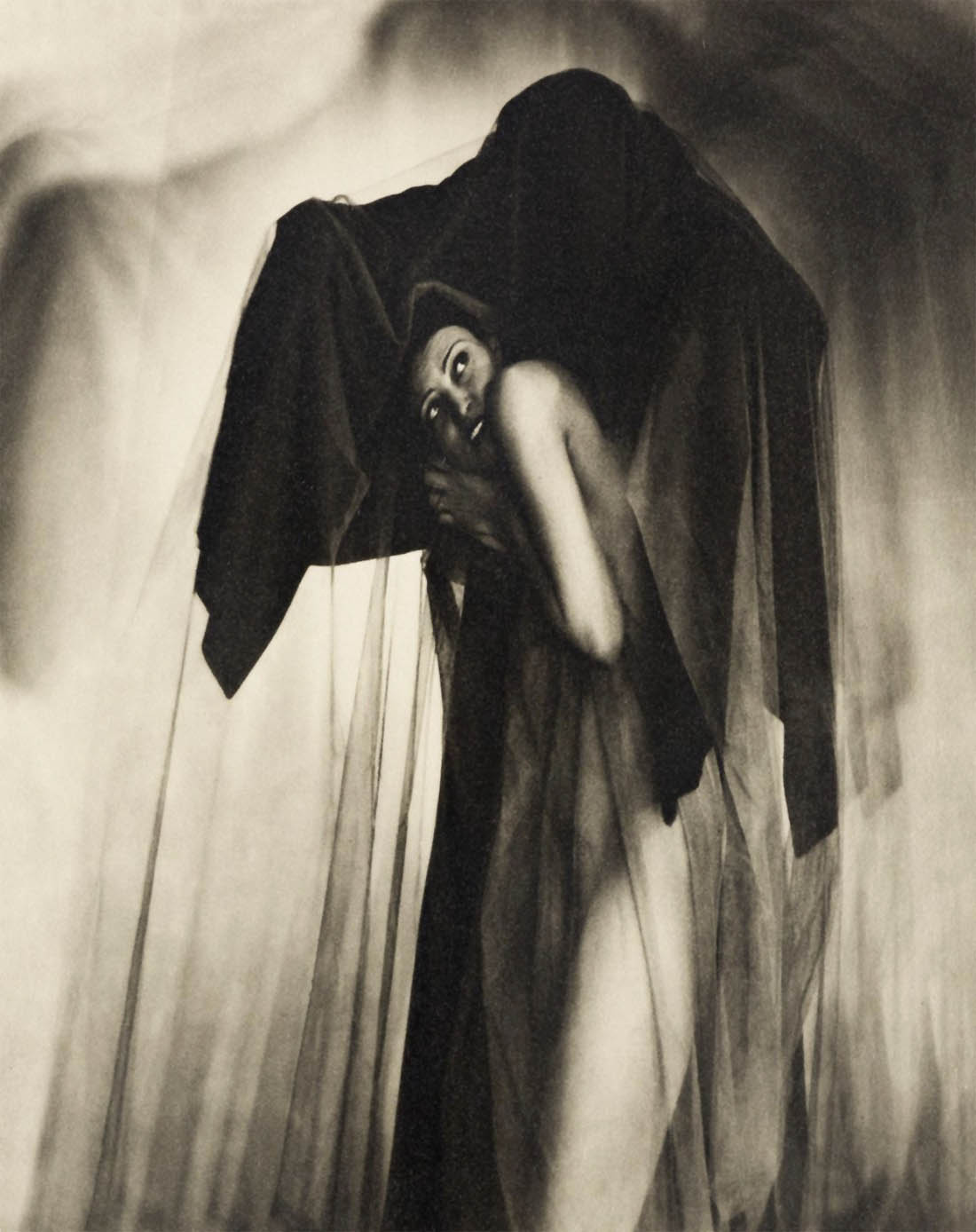
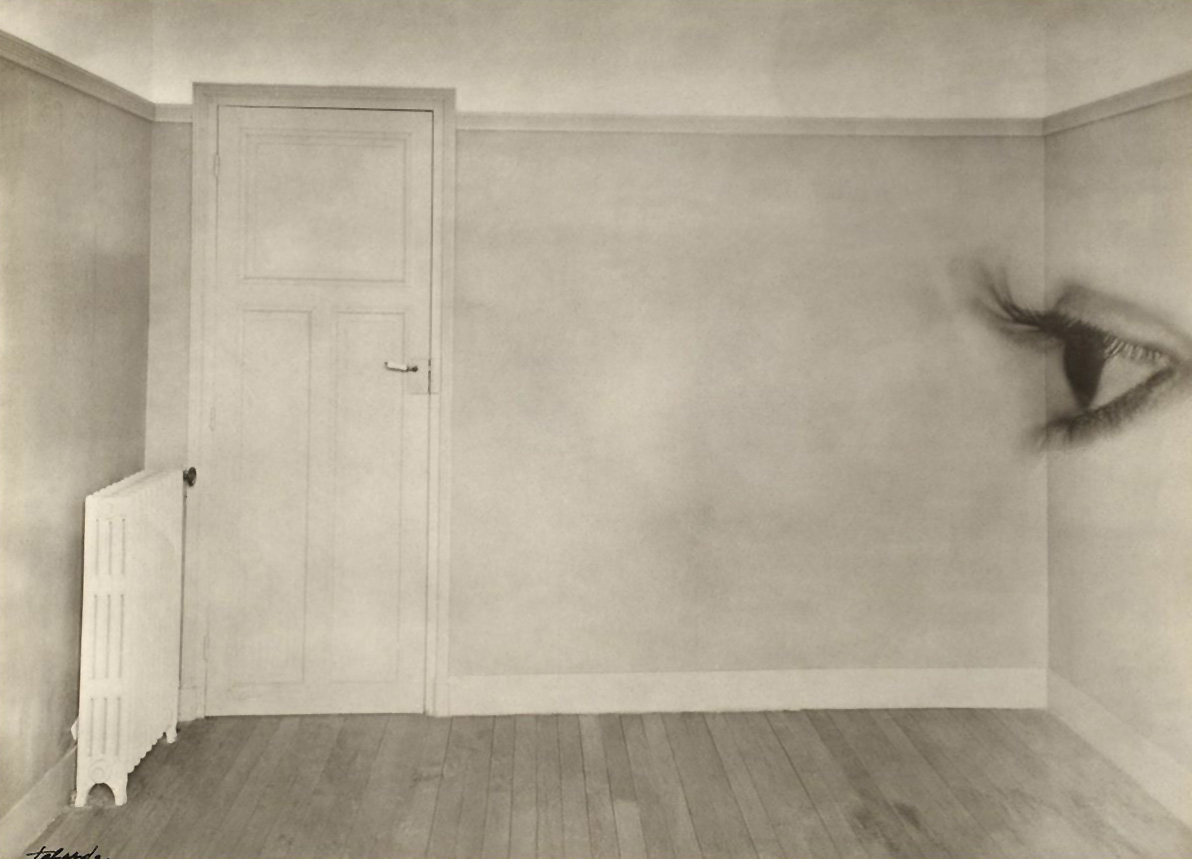
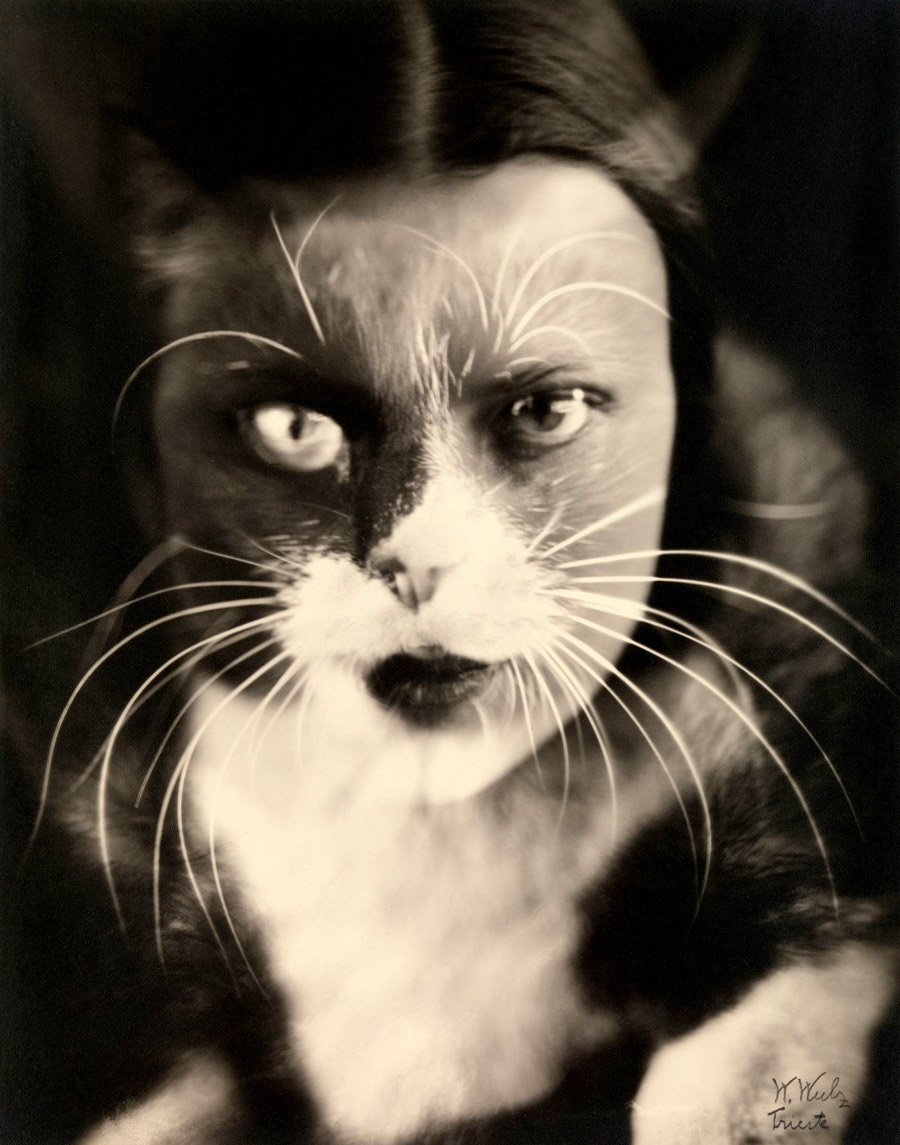
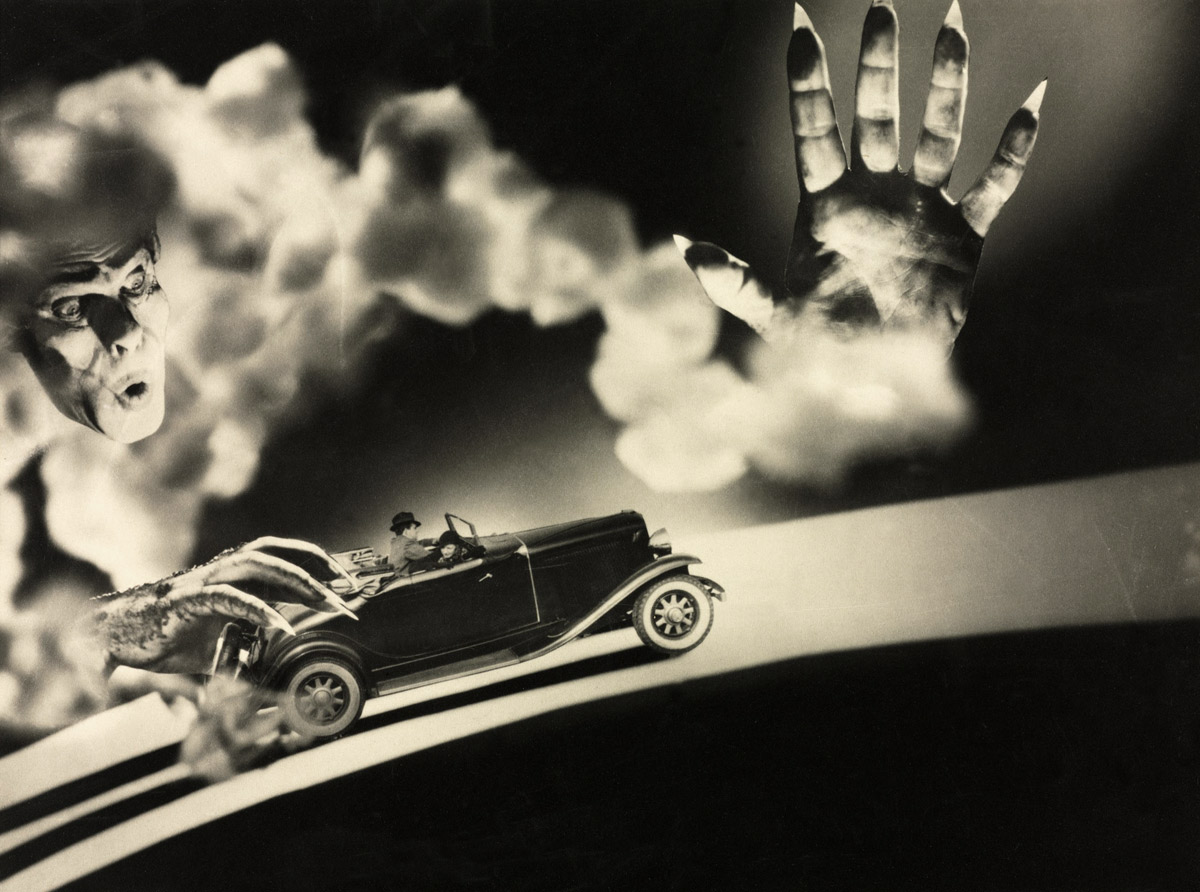
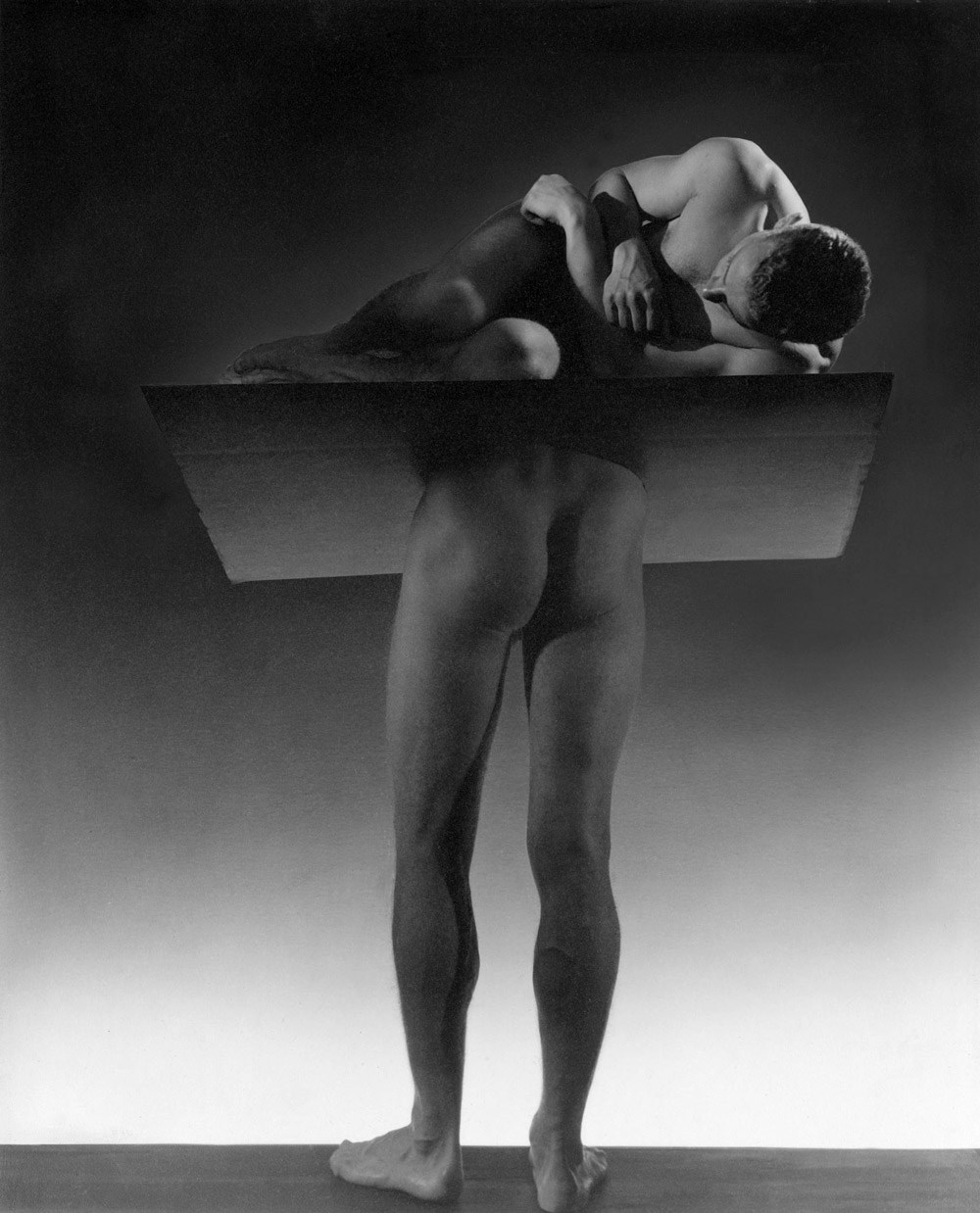
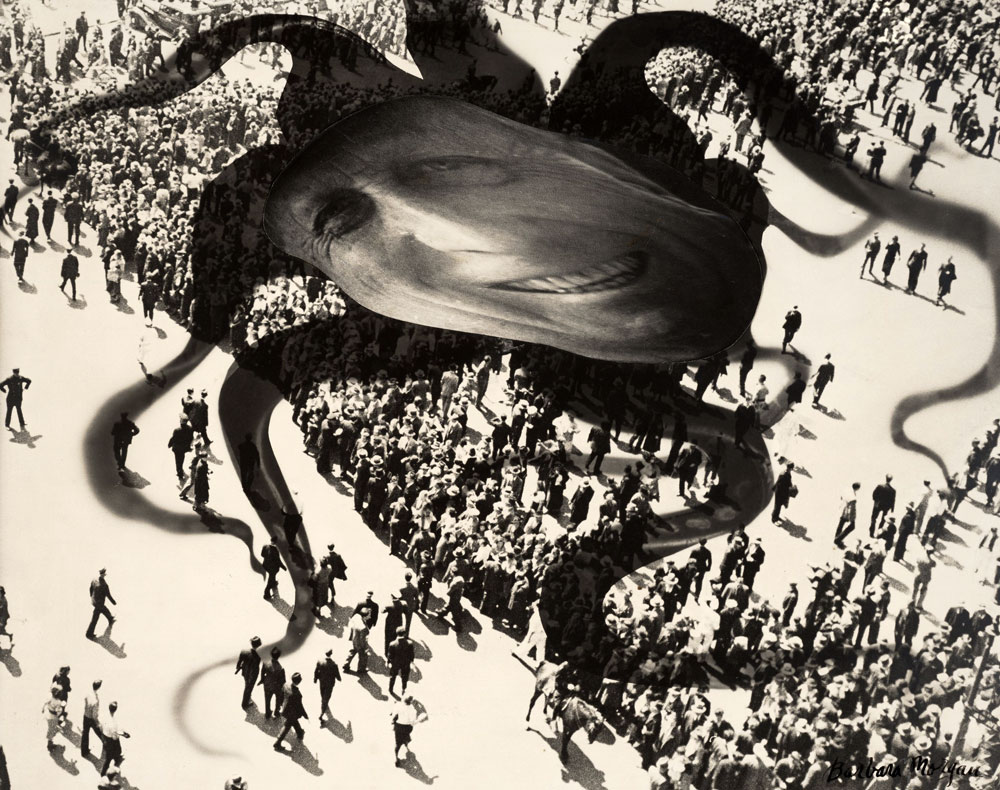


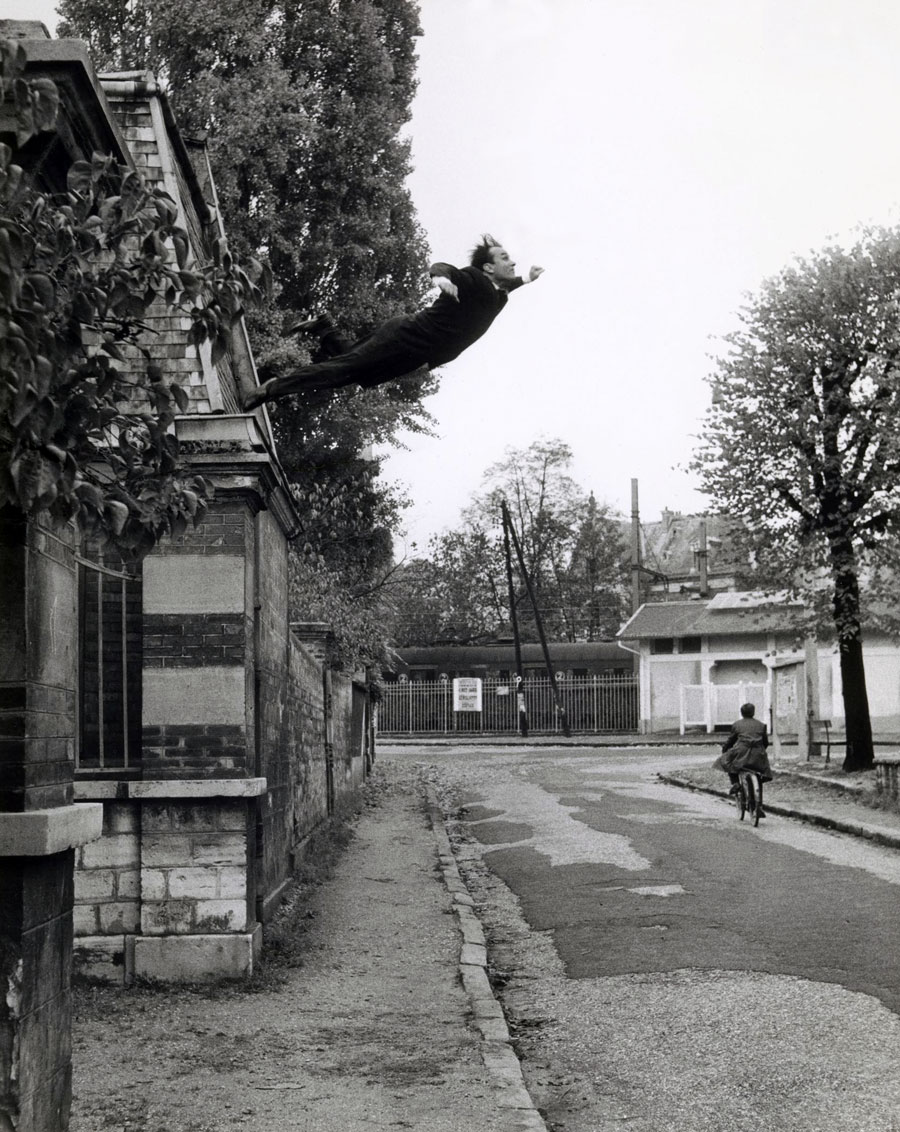


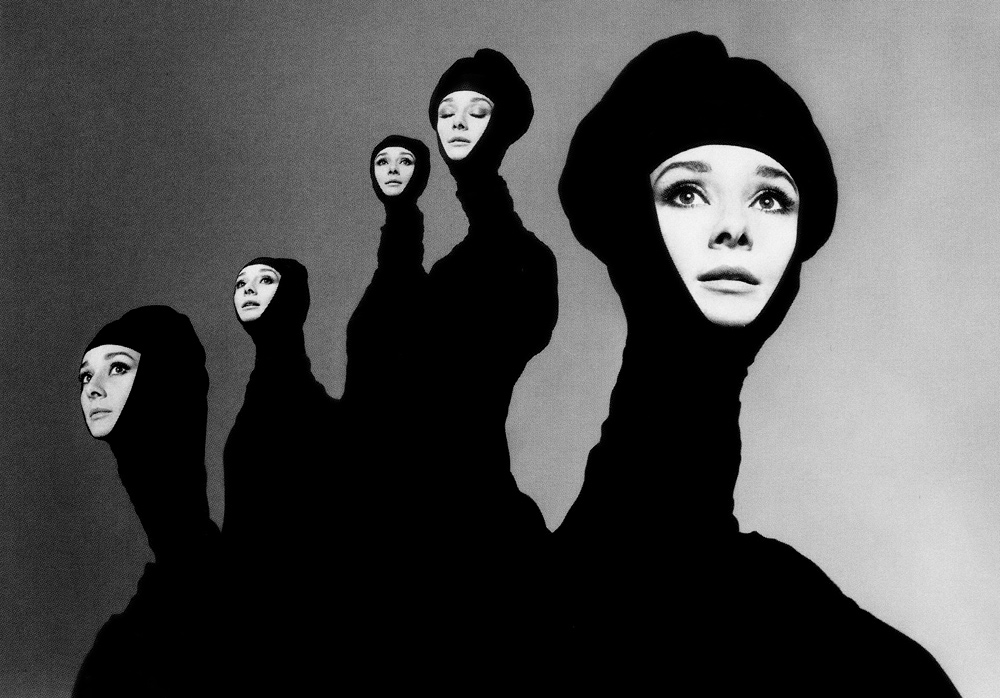

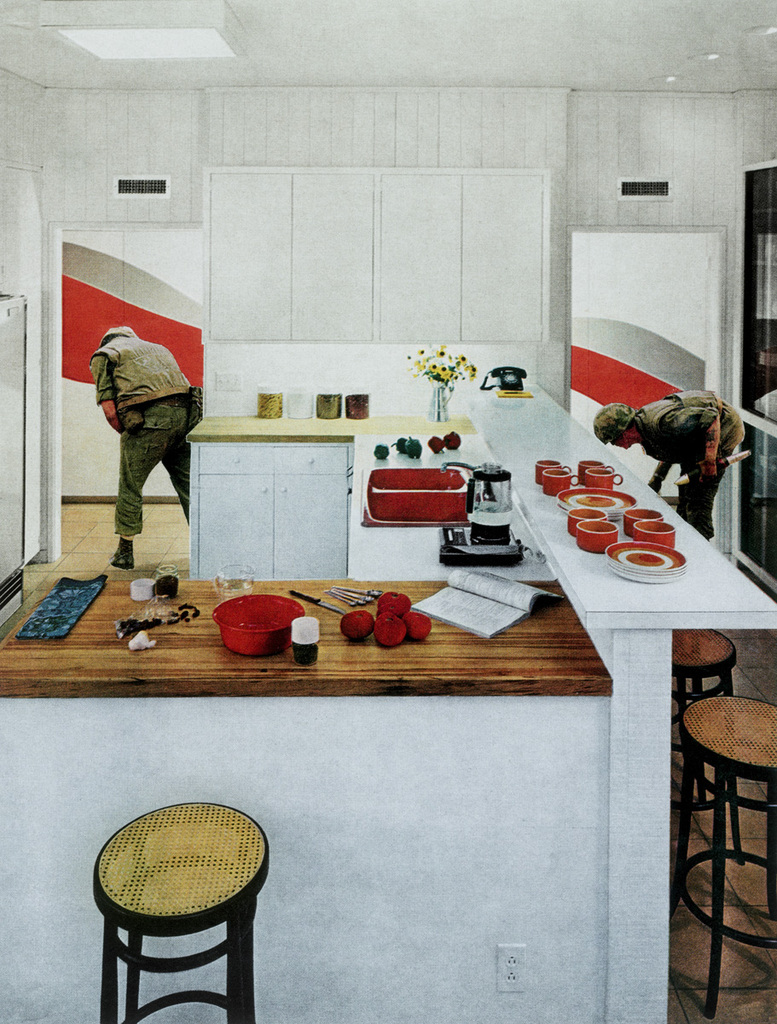

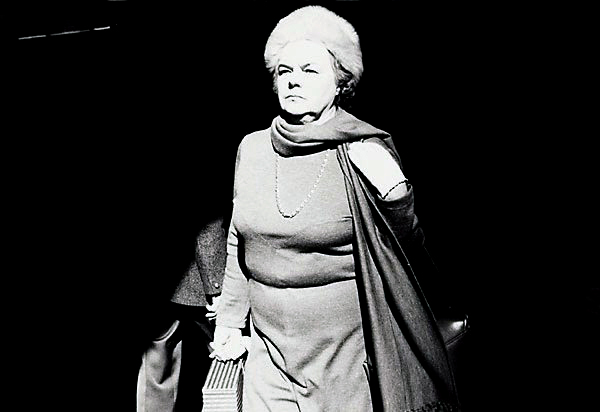


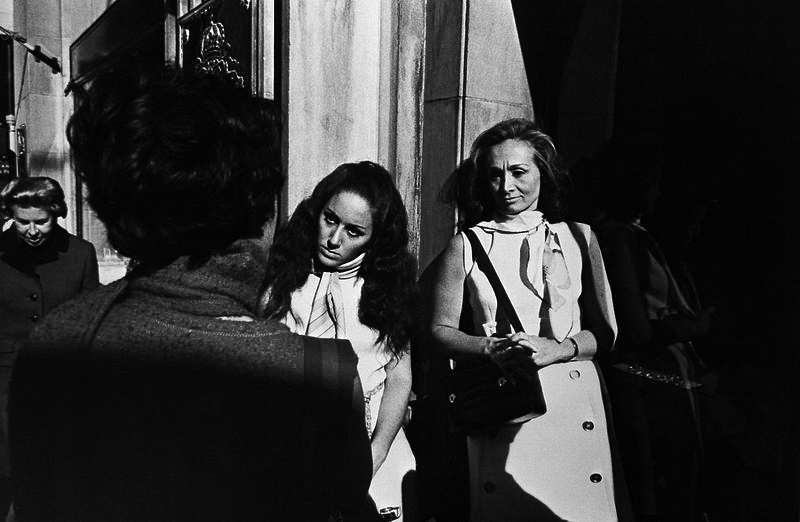





You must be logged in to post a comment.