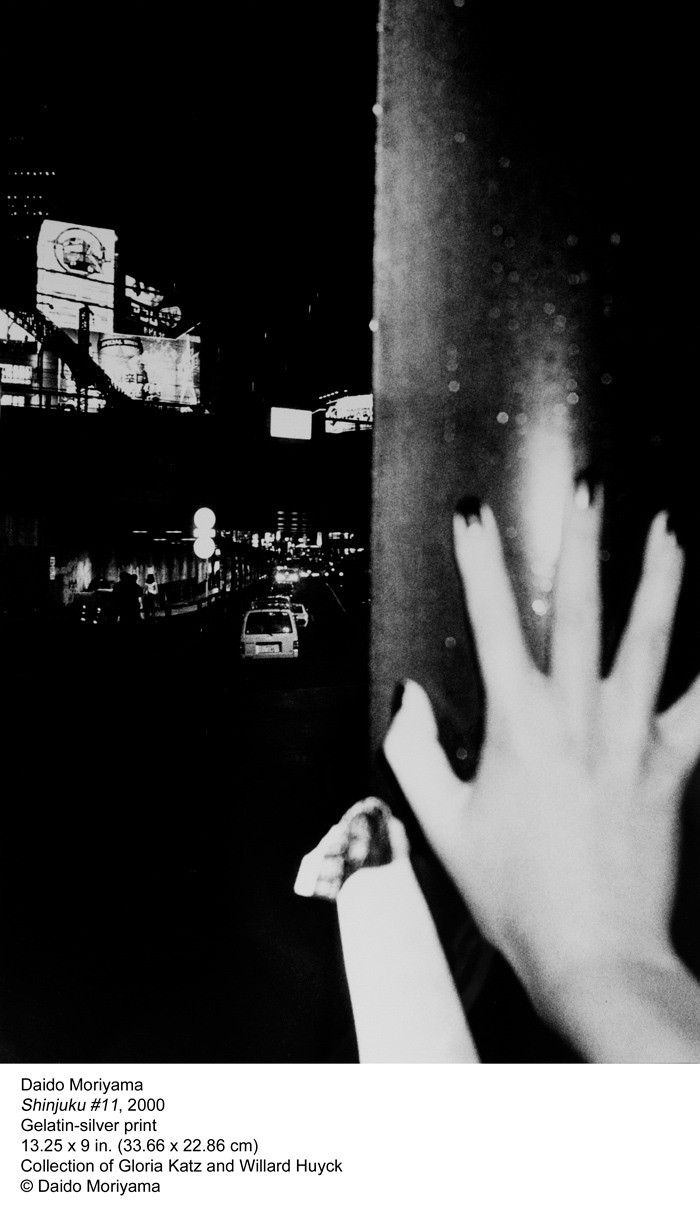
Exhibition: ‘At the Window: The Photographer’s View’ at the J. Paul Getty Museum, Getty Center, Los Angeles

Exhibition dates: 1st October 2013 – 5th January 2014


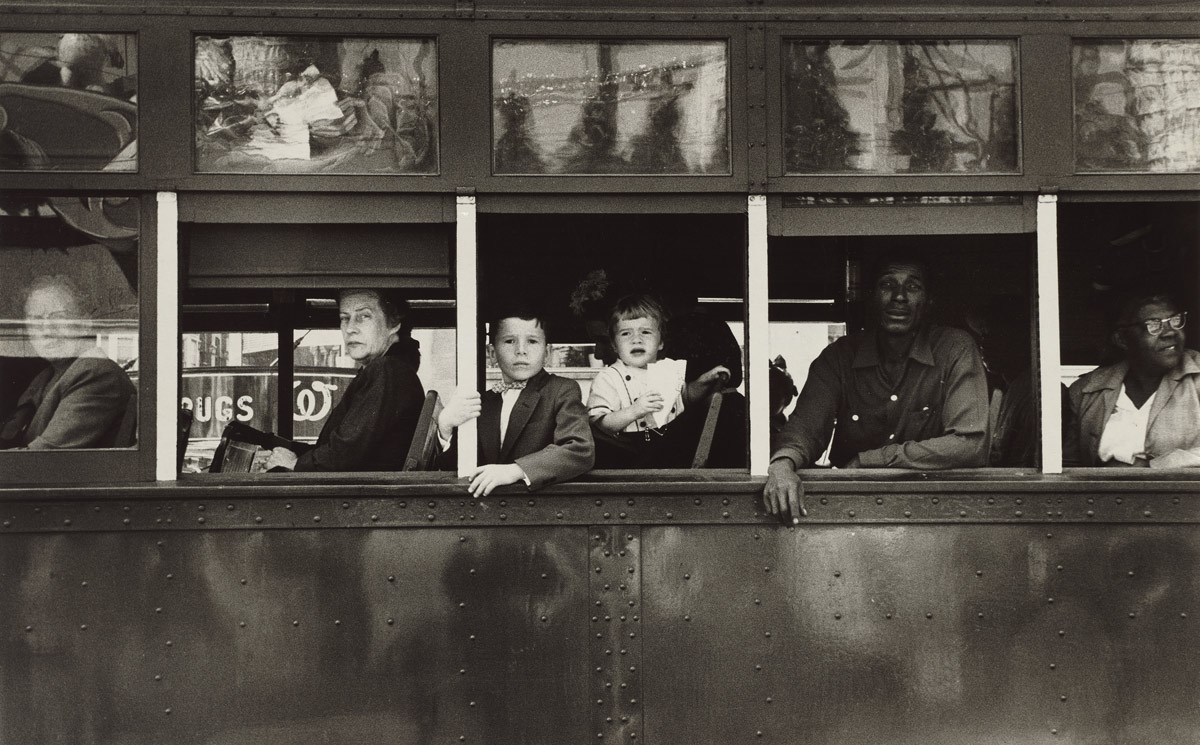
Robert Frank (Swiss, 1924-2019) 'Trolley - New Orleans' 1955


Robert Frank (Swiss, 1924-2019)
Trolley – New Orleans
1955
Gelatin silver print
Image: 22.9 x 34cm (9 x 13 3/8 in.)
Trish and Jan de Bont


Another fascinating exhibition from the J. Paul Getty Museum that features classic photographs and some that I have never seen before. In my opinion, the two most famous photographs of windows have to be Minor White’s rhapsodic Windowsill Daydreaming, Rochester (1958, below) and Paul Strand’s Wall Street (1915, below, originally known as Pedestrians raked by morning light in a canyon of commerce) which, strangely, is not included in the exhibition. I can’t understand this omission as this is the seminal image of windows in the history of photography.

Dr Marcus Bunyan


Many thankx to the J. Paul Getty Museum for allowing me to publish the photographs in the posting. Please click on the photographs for a larger version of the image.


Paul Strand (American, 1890-1976 'Wall Street, New York' 1915


Paul Strand (American, 1890-1976)
Wall Street
1915
Platinum print


In this photo, taken by morning light 1915, the recently built J.P. Morgan Co. building appears sinister and foreboding and dwarfs (perhaps consumes even) the humanity of suited men and women, their long shadows dragging behind them, walked alongside its facade.

Paul Strand studied under Lewis Hine and Alfred Steiglitz. Although he set up in New York as a portrait photographer, Strand often visited Stieglitz’s gallery to see the new European painting which it exhibited. In 1914-1915, under the influence of this new form of art, Strand turned from soft-focus Pictoralism towards abstraction. It was in this spirit that the above photo was taken, originally named, “Pedestrians raked by morning light in a canyon of commerce”. Strand did not intended to show Wall Street in a bad light, he admitted. However, as the Great Depression happened (criticism was squarely towards Wall Street back then as it is today) and Strand turned more communist, he later spoke of “sinister windows” and “blind shapes” inherent in the above picture.

The photo, now simply titled “Wall Street”, was one of six Paul Strand pictures Stieglitz published in Camera Work. In three of the six pictures, humanity strides out from abstract ideas, and each figure was a study in itself – an irregular item complimented by modular formats that surround it. Another set of eleven Strand photos were published in the magazine’s final issue in 1917, and those pictures, overwhelmingly endorsed by Stieglitz as ‘brutally direct’ made Strand’s reputation.

Alex Selwyn-Holmes. “Wall Street by Paul Strand,” on the Iconic Photos blog, December 2010 [Online] Cited 12/01/2021


Arthur Rothstein (American, 1915-1985) 'Girl at Gee's Bend' 1937


Arthur Rothstein (American, 1915-1985)
Girl at Gee’s Bend
1937
Silver gelatin print
Image: 40 x 49.7cm (15 3/4 x 19 9/16 in.)
The J. Paul Getty Museum, Los Angeles


Edmund Collein (German, 1906-1992) '[Four Women Looking Through Window]' about 1928


Edmund Collein (German, 1906-1992)
[Four Women Looking Through Window]
about 1928
Gelatin silver print
Image: 8.2 x 11.1cm (3 1/4 x 4 3/8 in.)
The J. Paul Getty Museum, Los Angeles
© Ursula Kirsten-Collein, Berlin


Walker Evans (American, 1903-1975) 'Wall Street Windows' about 1929


Walker Evans (American, 1903-1975)
Wall Street Windows
about 1929
Gelatin silver print
Image: 29.8 x 19.2cm (11 3/4 x 7 9/16 in.)
The J. Paul Getty Museum, Los Angeles
© Walker Evans Archive, The Metropolitan Museum of Art


William Henry Fox Talbot (English, 1800-1877) '[The Milliner's Window]' before January 1844


William Henry Fox Talbot (English, 1800-1877)
[The Milliner’s Window]
before January 1844
Salted paper print from a Calotype negative
Image: 14.3 x 19.5cm (5 5/8 x 7 11/16 in.)
The J. Paul Getty Museum, Los Angeles


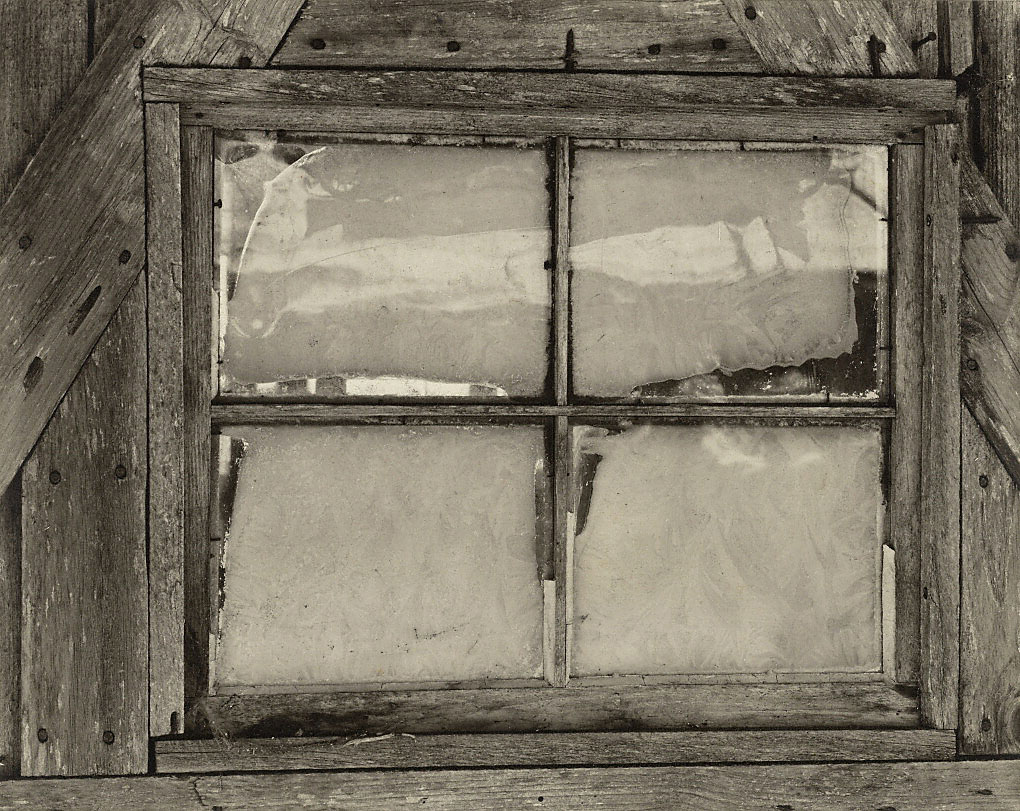
Paul Strand (American, 1890-1976) 'Barn Window and Ice, East Jamaica, Vermont' 1943


Paul Strand (American, 1890-1976)
Barn Window and Ice, East Jamaica, Vermont
1943
Gelatin silver print
Image (trimmed to mount): 19.4 x 24.3cm (7 5/8 x 9 9/16 in.)
The J. Paul Getty Museum, Los Angeles
© Aperture Foundation


Brett Weston (American, 1911-1993) 'Rain Drops' 1953


Brett Weston (American, 1911-1993)
Rain Drops
1953
Gelatin silver print
Image: 20.2 x 25cm (7 15/16 x 9 13/16 in.)
The J. Paul Getty Museum, Los Angeles, Gift of Christian K. Keesee
© The Brett Weston Archive


Sebastião Salgado (Brazilian, b. 1944) 'Ho Chi Minh City, Vietnam' Negative 1995; print 2009


Sebastião Salgado (Brazilian, b. 1944)
Ho Chi Minh City, Vietnam
Negative 1995; print 2009
Gelatin silver print
Image: 34.3 x 51.4cm (13 1/2 x 20 1/4 in.)
The J. Paul Getty Museum, Los Angeles
© Sebastião Salgado


In many respects, the window was where photography began. As early as 1826, the sill of an upstairs window in the home of the French inventor Joseph Nicéphore Niépce served as a platform for his photographic experiments. His View from the Window at Le Gras is today considered to be the first photograph. Since then, the window motif in photographs has functioned formally as a framing device and conceptually as a tool for artistic expression. It is also tied metaphorically to the camera itself which is, at its most rudimentary, a “room” (the word camera means “chamber”) and its lens a “window” through which images are projected and fixed. The photographs in At the Window: A Photographer’s View, on view October 1, 2013 – January 5, 2014 at the J. Paul Getty Museum, Getty Center, explore varying aspects of the window as frame or mirror – formally or metaphorically – for photographic vision.

“The Getty Museum’s extensive collection allows us to explore themes and subjects within the history of photography that highlight not only the most famous masters and iconic images they produced, but also less obvious subjects, methods and practitioners of the medium whose contributions have not yet been fully acknowledged. At the Window is one such an exhibition, and holds in store many surprises, even for those who know the field well,” explains Timothy Potts, director of the J. Paul Getty Museum. “The exhibition also allows us to celebrate a substantial body of work that was recently added to the collection with funds provided by the Museum’s Photographs Council, whose mission it is to help us support the growth of the collection, and a number of highly important loans from private collections.”

Shop Windows and Architecture

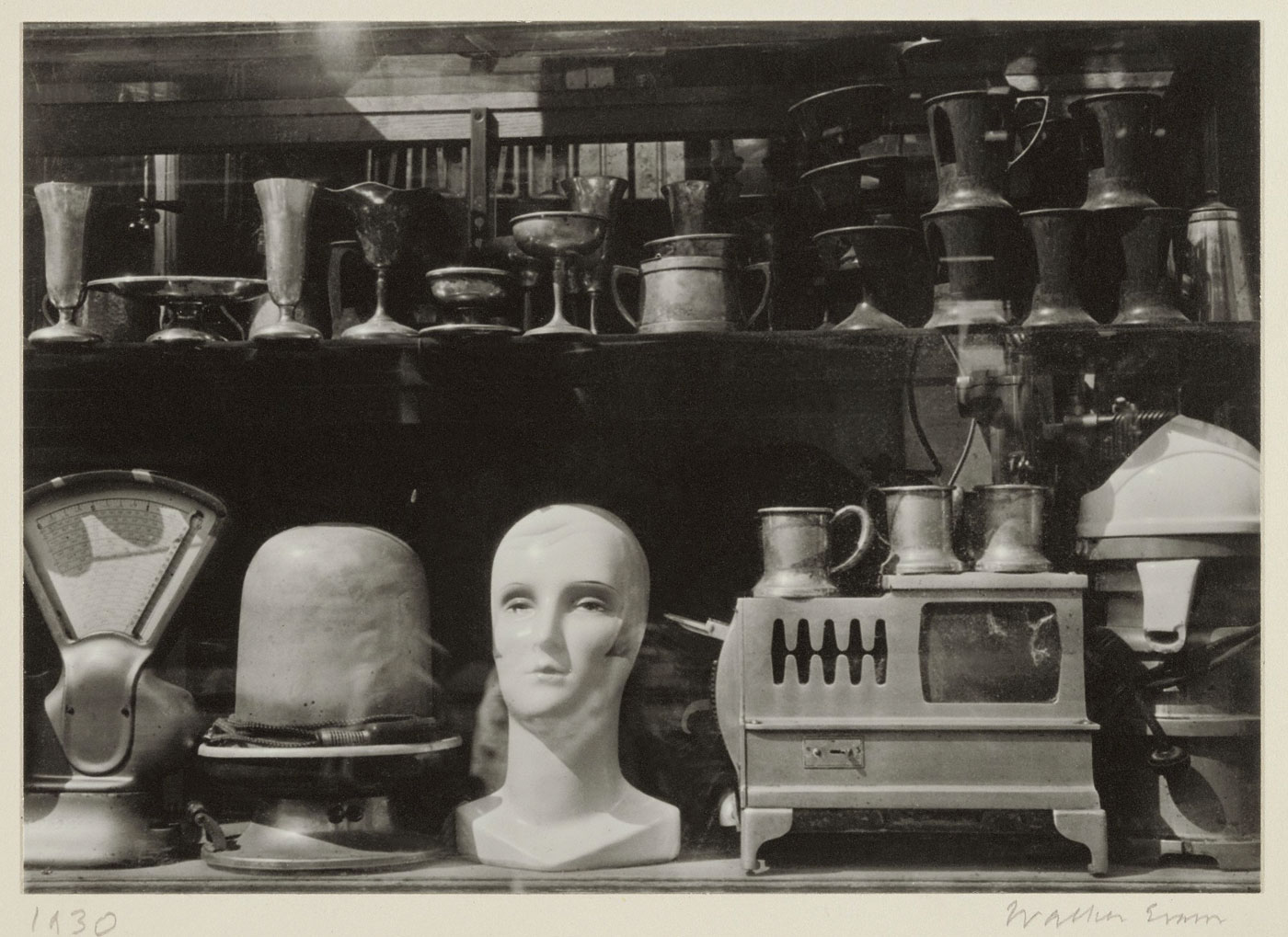
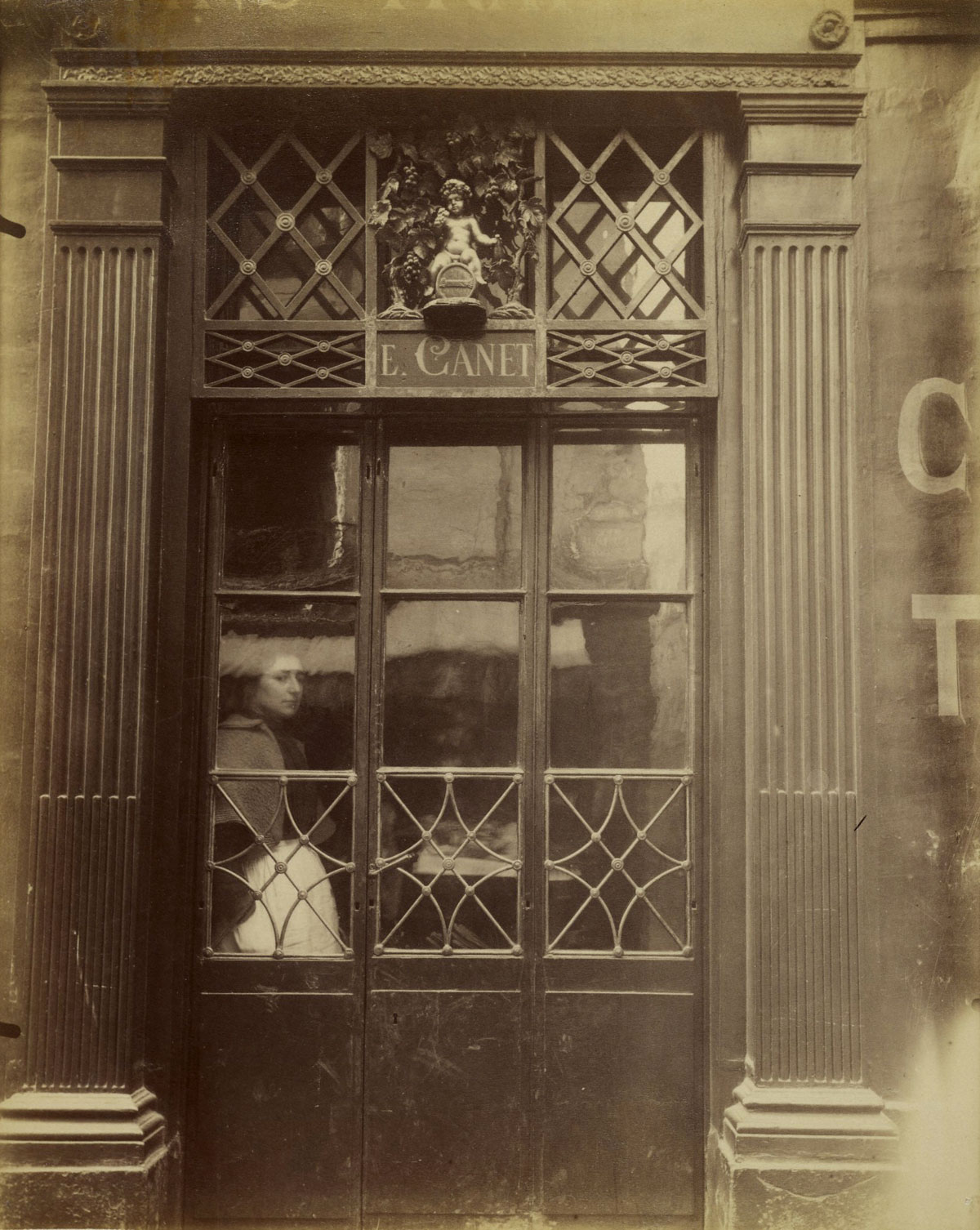
Featured in the exhibition is an exceedingly rare early photograph, William Henry Fox Talbot’s The Milliner’s Window (before January 1844) which depicts not an actual window but a carefully constructed one: shelves were placed outdoors and propped in front of black cloth, while various ladies’ hats were arranged to simulate the look of a shop display. Throughout the history of photography, actual shop fronts have been a popular subject and reflections in their windows a source for unexpected juxtapositions. This motif is well represented in the exhibition with photographs by William Eggleston, Eugène Atget, and Walker Evans.

Photographers have also taken an interest in the distinctive formal arrangements made possible by the architectural facades found in a cityscape. André Kertész’s Rue Vavin, Paris (1925), a view from his apartment window, is one of the first photographs he took upon arriving in Paris from Budapest. Photographers like Alfred Stieglitz carefully framed their views of urban exteriors, using the window as a unifying device within the composition.

The Window as Social Documentary

While windows provide an opportunity to observe life beyond a single room, the camera’s lens opens a window to the world at large. Arthur Rothstein believed in photography’s ability to enact social change – his Girl at Gee’s Bend (1937) features a young girl framed in the window of her log-and-earth home in Alabama, highlighting the schism between magazine images and the actual lives of most Americans at the time. Similarly, Robert Frank’s Trolley – New Orleans (1955) frames racial segregation through windows in a trolley, while Sebastião Salgado’s Ho Chi Minh City, Vietnam (negative 1995; print 2009) uses the barely separated windows of a housing structure to evoke the cramped quarters and dire economic situation of its inhabitants.

The Window as a Conceptual Tool

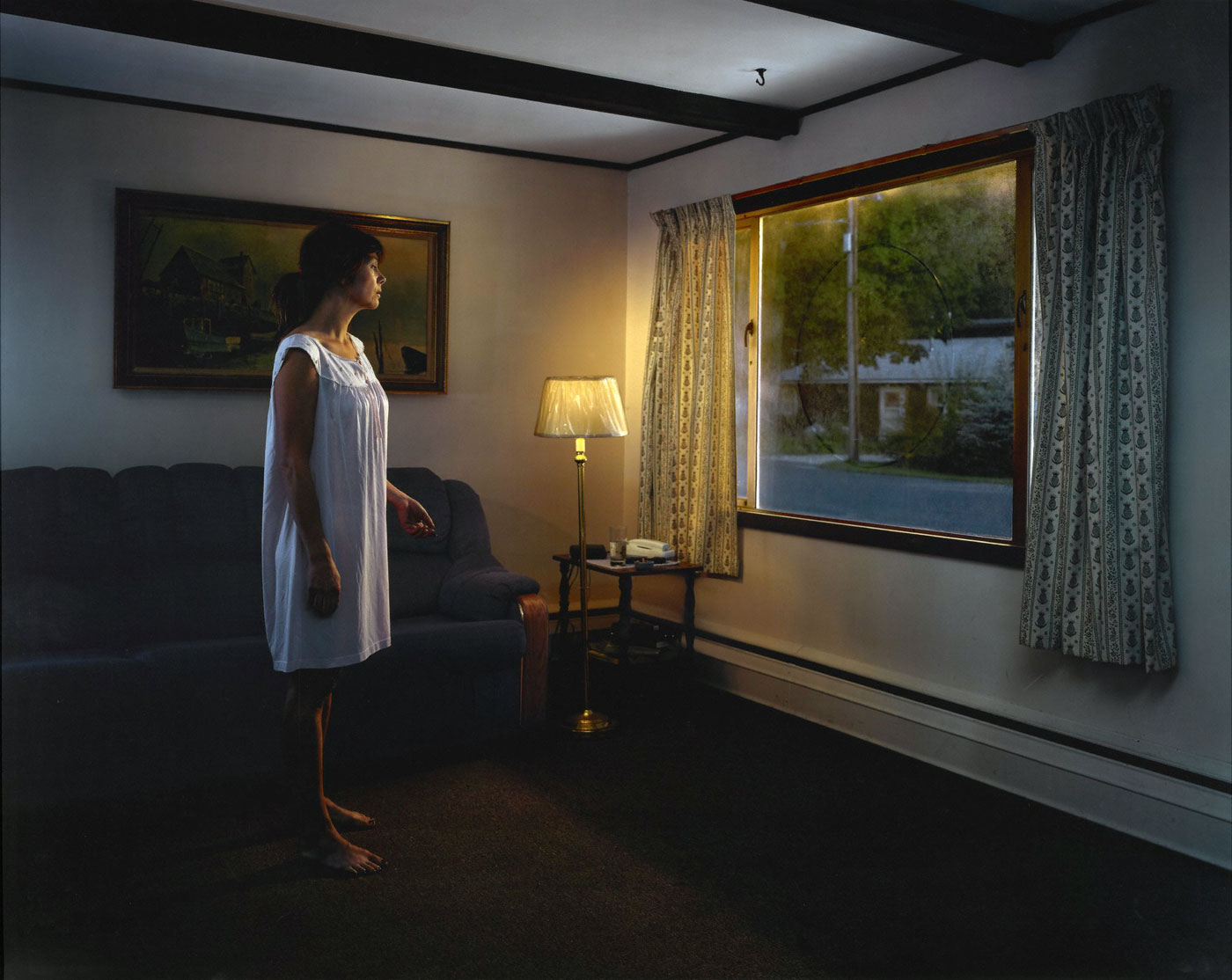
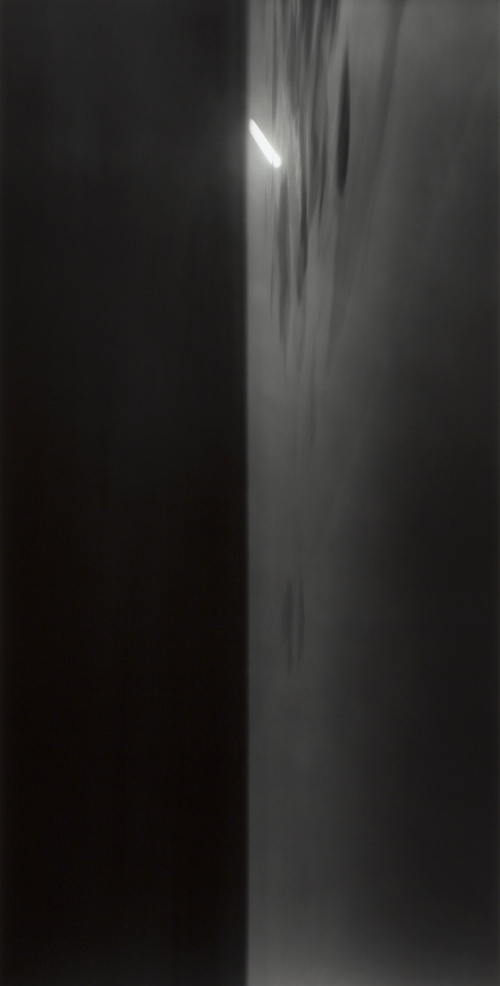
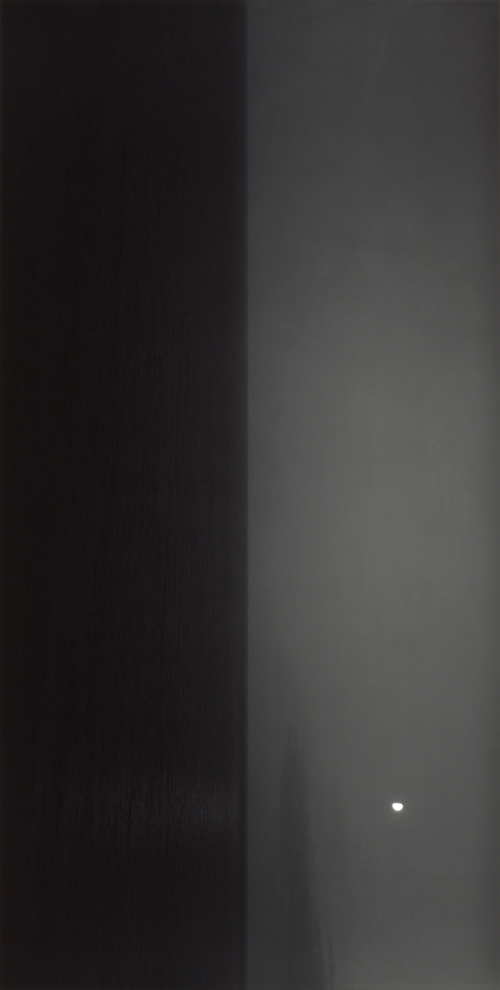
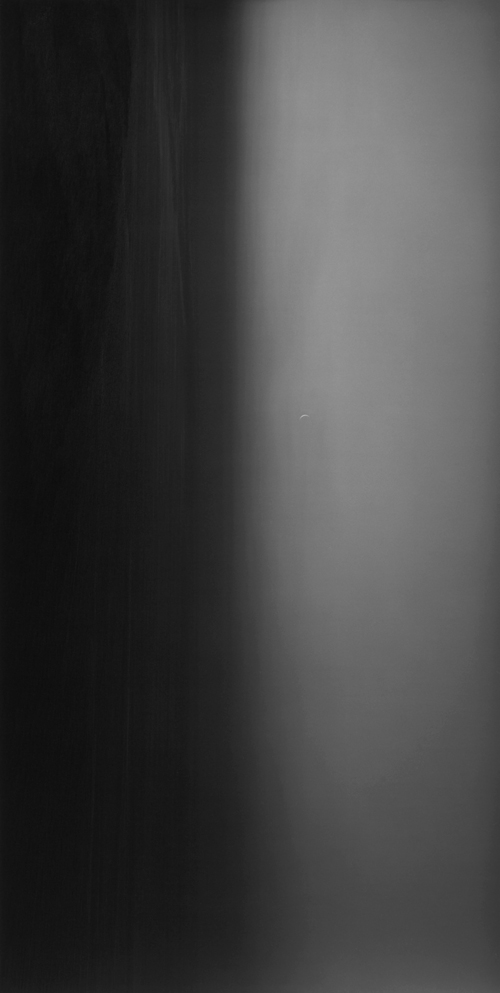
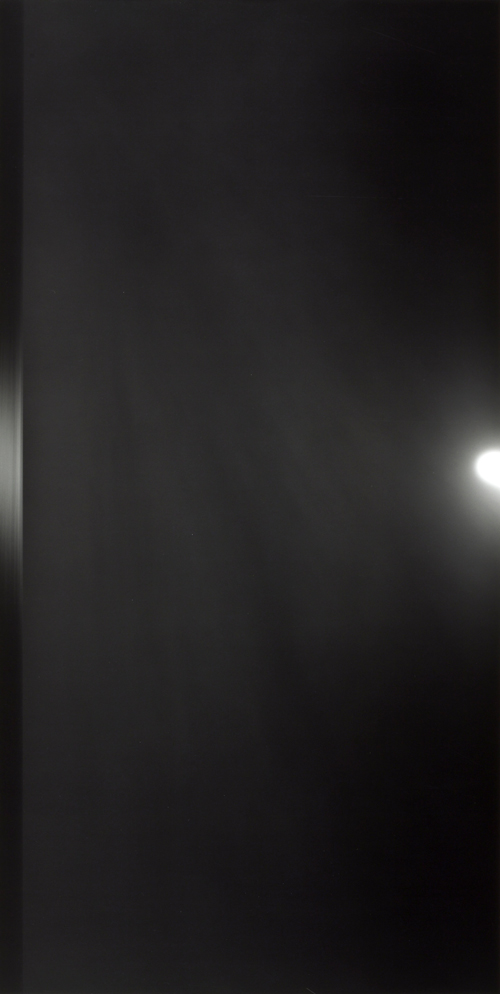
Artists have used the window in other novel ways, whether to create an enigmatic mood or suggest a suspenseful scene. In Gregory Crewdson’s Untitled (2002) from the series Twilight, the image of a woman standing in a room and turned toward a window creates a suspended, unsettling moment of anticipation that is never resolved. In her Stranger series (2000), Shizuka Yokomizo actively engages subjects by sending letters to randomly selected apartment residents, asking them to stand in front of a window at a particular date and time in order to be photographed. Uta Barth’s diptych …and of time (2000), where the path of a window’s light and shadow is followed across the wall of the artist’s living room, illustrates something the artist phrased as “ambient vision.”

“The window has been a recurrent and powerful theme for photographers from the beginning of the medium,” explains Karen Hellman, assistant curator of photographs at the J. Paul Getty Museum and curator of the exhibition. “In a collection such as the Getty’s that is particularly rich in work by important photographers from the beginnings of the medium to the present day, the motif provides a unique way to travel through the history of photography.”

The Window in Photographs (Getty Publications, $24.95, hardcover) investigates the recurrence of windows both as a figurative and literal theme throughout the history of photography. From the very vocabulary we use to describe cameras and photographic processes to the subjects of world-renowned photographers, windows have long held powerful sway over artists working in the medium. When documented on film, windows call into question issues of representation, the malleability of perception, and the viewer’s experience of the photograph itself, and the window’s evocative power is often rooted in the interplay between positive and negative, darkness and light, and inside and out.

Yet despite the ubiquity of windows in photography, this subject has been rarely addressed head on in a single exhibition or publication. From the birth of the Daguerreotype to the development of digital imagery, this volume presents a full account of the motif of the window as a symbol of photographic vision. Its eighty featured colour plates, all drawn from the Getty Museum’s permanent collection, are arranged thematically rather than chronologically, allowing the window’s many uses in photography to be highlighted and explored stylistically. Including images from all-star contributors such as Uta Barth, Gregory Crewdson, William Eggleston, Walker Evans, Robert Frank, and Minor White, The Window in Photographs is a remarkable examination of a theme that has inspired photographers for over a century. This book is published to coincide with the exhibition At the Window: The Photographer’s View at the J. Paul Getty Museum from October 1, 2013 to January 5, 2014.

Press release from the J. Paul Getty Museum website


Minor White (American, 1908-1976) 'Windowsill daydreaming' 1958


Minor White (American, 1908-1976)
Windowsill Daydreaming, Rochester
Negative July 1958; print 1960
Gelatin silver print, selenium toned
Image: 28.6 x 22.2cm (11 1/4 x 8 3/4 in.)
The J. Paul Getty Museum, Los Angeles,
Purchased in part with funds provided by the Greenberg Foundation
© Trustees of Princeton University, Minor White Archive


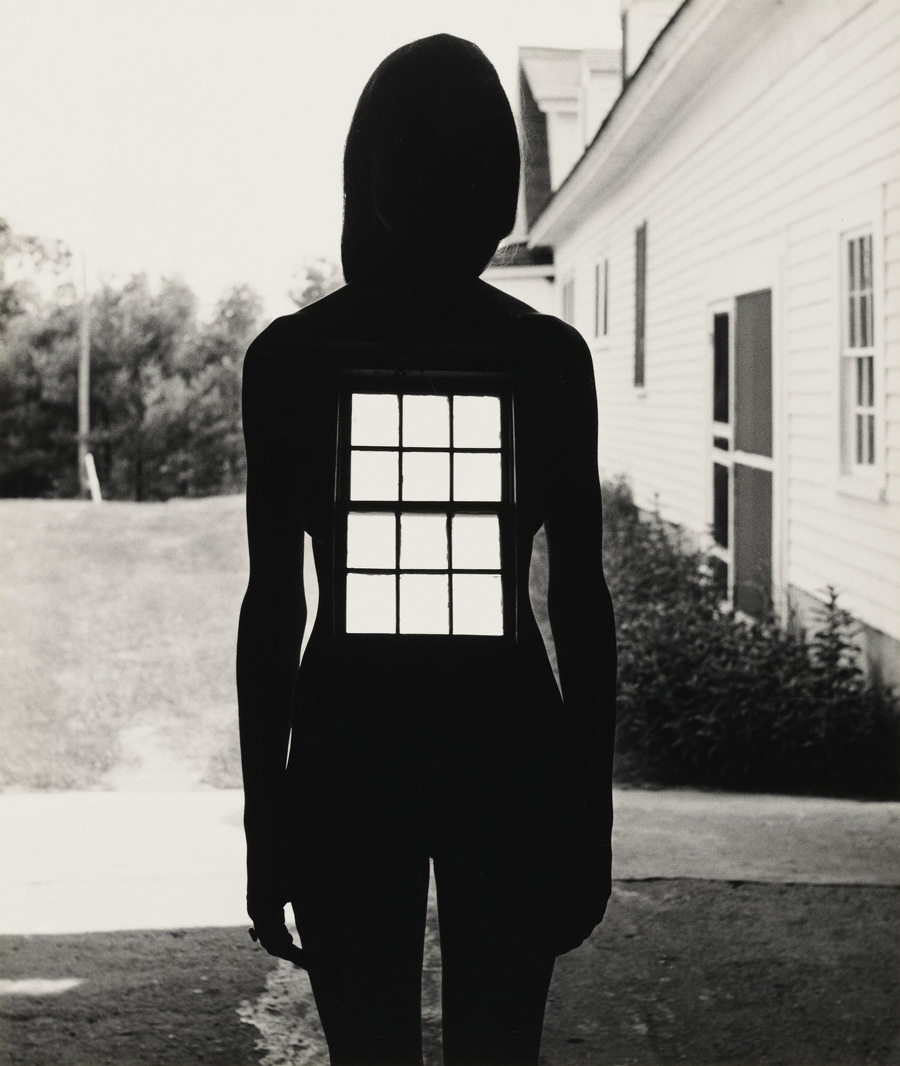
Charles Swedlund (American, b. 1935) 'Buffalo, NY' about 1970


Charles Swedlund (American, b. 1935)
Buffalo, NY
about 1970
Gelatin silver print
Image: 18.7 x 15.9cm (7 3/8 x 6 1/4 in.)
The J. Paul Getty Museum, Los Angeles
Purchased in part with funds provided by an anonymous donor in memory of James N. Wood
© Charles Swedlund


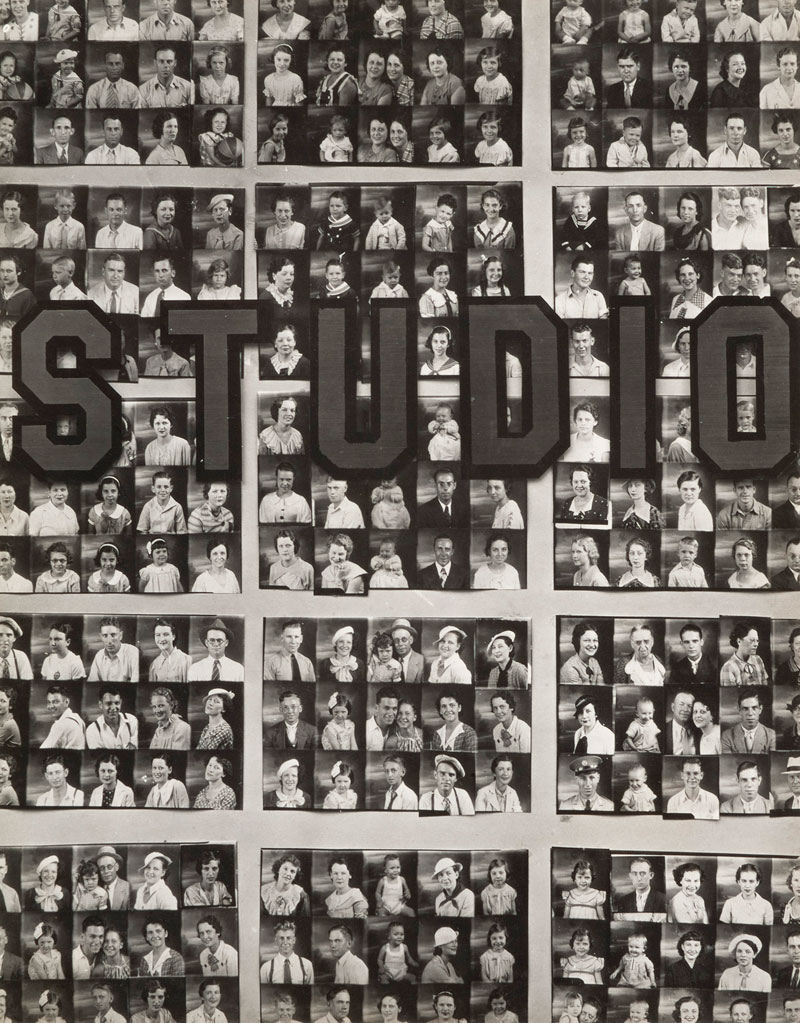
Walker Evans (American, 1903-1975) 'Penny Picture Display, Savannah' 1936


Walker Evans (American, 1903-1975)
Penny Picture Display, Savannah / Photographer’s Window Display, Birmingham, Alabama / Studio Portraits, Birmingham, Alabama
1936
Gelatin silver print
Image: 25.6 x 19.9cm (10 1/16 x 7 7/8 in.)
The J. Paul Getty Museum, Los Angeles


Eugène Atget (French, 1857-1927) 'Petit Bacchus, 61, rue St. Louis en l'Ile' (The Little Bacchus Café, rue St. Louis en l'Ile) 1901-1902


Eugène Atget (French, 1857-1927)
Petit Bacchus, 61, rue St. Louis en l’Ile (The Little Bacchus Café, rue St. Louis en l’Ile)
1901-1902
Albumen silver print
Image: 22.1 x 17.8cm (8 11/16 x 7 in.)
The J. Paul Getty Museum, Los Angeles


Alfred Stieglitz (American, 1864-1946) '[From My Window at the Shelton, North]' 1931


Alfred Stieglitz (American, 1864-1946)
[From My Window at the Shelton, North]
1931
Gelatin silver print
Image (trimmed to mount): 24.3 x 19.1cm (9 9/16 x 7 1/2 in.)
The J. Paul Getty Museum, Los Angeles
© Georgia O’Keeffe Museum


Yuki Onodera (Japanese, b. 1962) 'Look Out the Window, No. 18' 2000


Yuki Onodera (Japanese, b. 1962)
Look Out the Window, No. 18
2000
Gelatin silver print
Image: 59 x 49.2cm (23 1/4 x 19 3/8 in.)
The J. Paul Getty Museum, Los Angeles, Purchased with funds provided by the Photographs Council
© Yuki Onodera


Shizuka Yokomizo (Japanese, b. 1966) 'Stranger (15)' 1998-2000


Shizuka Yokomizo (Japanese, b. 1966)
Stranger (15)
1998-2000
Chromogenic print
Mount: 124.5 x 104.9cm (49 x 41 5/16 in.)
The J. Paul Getty Museum, Los Angeles,
Purchased with funds provided by the Photographs Council
© Shizuka Yokomizo


Alex Prager (American, b. 1979) 'Megan' 2007


Alex Prager (American, b. 1979)
Megan
2007
Chromogenic print
Framed: 125.7 x 62.9cm (49 1/2 x 24 3/4 in.)
Michael and Jane Wilson


Gregory Crewdson (American, b. 1962) 'Untitled' from the series 'Twilight' 2002


Gregory Crewdson (American, b. 1962)
Untitled from the series Twilight
2002
Chromogenic print
Image: 122 x 152cm (48 1/16 x 59 13/16 in.)
The J. Paul Getty Museum, Los Angeles
Gift of Trish and Jan de Bont
© Gregory Crewdson


Uta Barth (German, b. 1958) 'Untitled (...and of time. #4)' 2000


Uta Barth (German, b. 1958)
Untitled (…and of time. #4)
2000
Chromogenic print
Image: 88.9 x 114.3cm (35 x 45 in.)
The J. Paul Getty Museum, Los Angeles
© 2000 Uta Barth


The J. Paul Getty Museum
1200 Getty Center Drive
Los Angeles, California 90049

Opening hours:
Tuesday – Friday 10am – 5.30pm
Saturday 10am – 8pm
Sunday 10am – 5.30pm
Monday closed

The J. Paul Getty Museum website

LIKE ART BLART ON FACEBOOK

Back to top

Exhibition: ‘Flowers & Mushrooms’ at the Museum der Moderne Salzburg, Austria

Exhibition dates: 27th July – 27th October 2013


Many thankx to the Museum der Moderne Salzburg for allowing me to publish the photographs in the posting. Please click on the photographs for a larger version of the image.


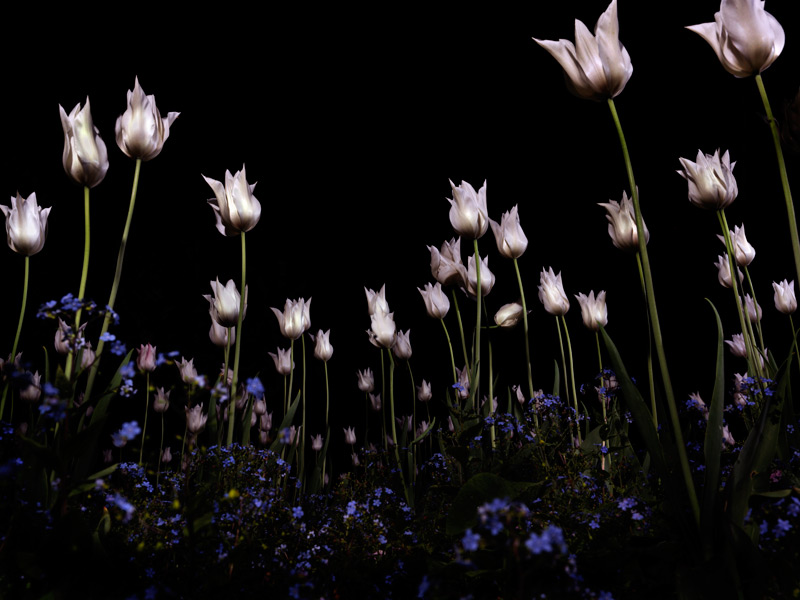
Giovanni Castell (German, b. 1964) 'Tulpomania 3 / Vergissmeinnicht' 2009


Giovanni Castell (German, b. 1964)
Tulpomania 3 / Vergissmeinnicht
2009
C-Print/Plexiglas (Diasec)
130 x 160cm
Courtesy the artist
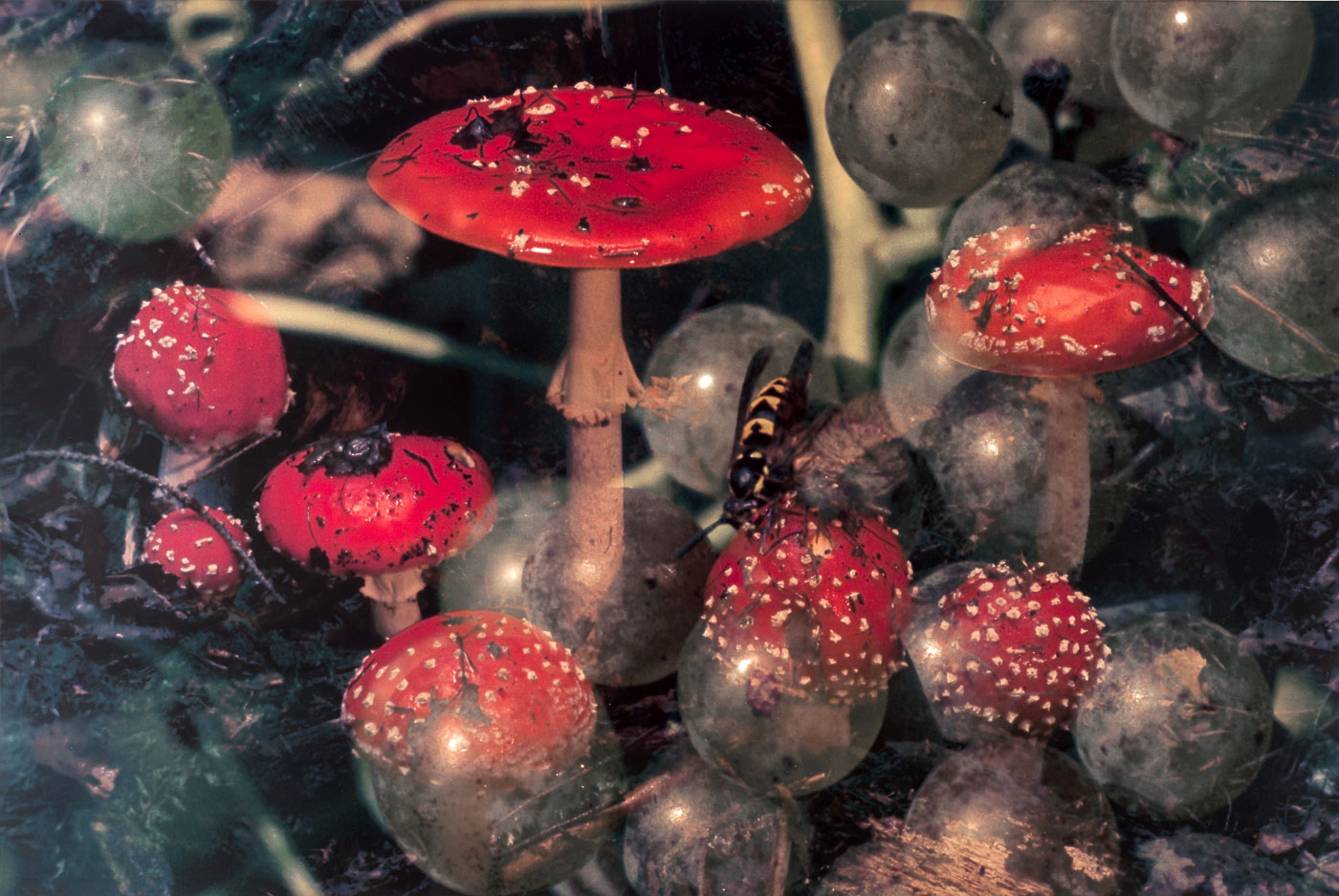
 

Fischli/David Weiss. Peter Fischli (Swiss, b. 1952) and David Weiss (Swiss, 1946-2012) 'Mushrooms / Funghi 18' 1997-1998


Fischli/David Weiss
Peter Fischli
(Swiss, b. 1952) and David Weiss (Swiss, 1946-2012)
Mushrooms / Funghi 18
1997-1998
Inkjet print with Polyester Foil
73.8 x 106.7cm
Bavarian State Painting Collections Munich – Pinakothek der Moderne
Acquired by PIN, Friends of the Art Gallery of modernity for the Modern Collection Art
© The artists; Gallery Sprueth Magers Berlin, London; Galerie Eva Presenhuber Zurich; and Matthew Marks Gallery New York


Michael Wesely (German, b. 1963) 'Still life (29.12. - 4.1.2012)' 2012


Michael Wesely (German, b. 1963)
Still life (29.12. – 4.1.2012)
2012
C-Print, UltraSecG, Metallrahmen
100 x 130cm
Courtesy Galerie Fahnemann, Berlin
© VBK, Wien, 2013


Marc Quinn (British, b. 1964) 'Landslide in the South Tyrol' 2009


Marc Quinn (British, b. 1964)
Landslide in the South Tyrol
2009
Oil in canvas
168.5 x 254 x 3cm
Galerie Thaddaeus Ropac, Paris. Salzburg
Foto: Ulrich Ghezzi
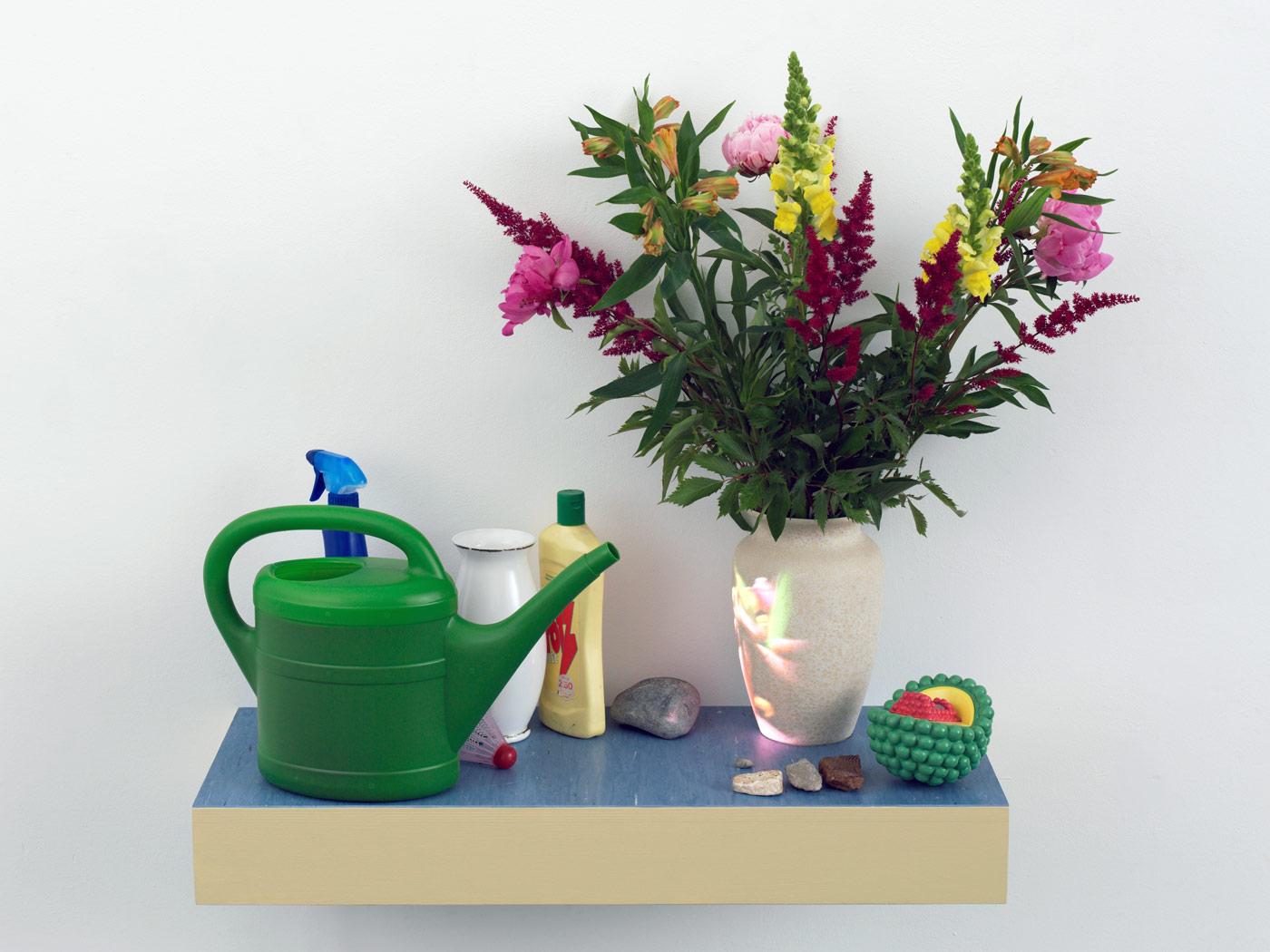
 

Pipilotti Rist (Swiss, b. 1962) 'Sparking of the Domesticated Synapses' 2010


Pipilotti Rist (Swiss, b. 1962)
Sparking of the Domesticated Synapses
2010
Video installation; Projector and Media Player, miscellaneous
Objects, Regal, Quiet
Video: 5:34 min
Courtesy of the artist and Hauser & Wirth, Zürich
© The artist, Hauser & Wirth and Luhring Augustine, New York
Foto: Stefan Altenburger Photography Zürich


For some time now, there has been a renaissance of flowers and mushroom themes in fine art. The comprehensive exhibition Flowers & Mushrooms explores the clichées and the various levels of meaning and symbolism of flowers and mushrooms in art. Current social and aesthetic issues are discussed on the basis of a selection of works from the fields of photography, photo-based paintings, video and sculptures/installations.

Today flowers are primarily associated with their decorative function. They also have a symbolic meaning both at weddings, where they represent freshness and fertility, and at funerals, where they represent transitoriness and death. An in-depth exploration of the varied symbolic meanings of flowers in cultural history reveals further levels of meaning, many of which refer to the ambivalence and abysms of human existence. Contemporary art adopts and continues the historical and complex pictorial tradition of flowers and mushrooms by adding new, contemporary perspectives. The exhibition was inspired by the multi-part work series Ohne Titel (Flowers, Mushrooms) by the artist duo Peter Fischli / David Weiss. The Swiss artists have been preoccupied with the role of clichées and common subjects for many years. Different slide projections with a comprehensive series of inkjet prints and Cibachromes included cross-fadings of flower and mushroom motifs.

At the beginning of the exhibition, a historical section shows photographs from the 19th and early 20th century. In particular the new medium of photography developed a special relationship with flower motifs. Photographs of the great variety of different plant and flower species serve as a kind of substitute for the traditional herbarium or as natural models, as “prototypes of art” for ornamental design lessons. From the early beginnings of photography, scientific interest motivated pioneers such as William Henry Fox Talbot or Anna Atkins to capture amazing pictures of plants.

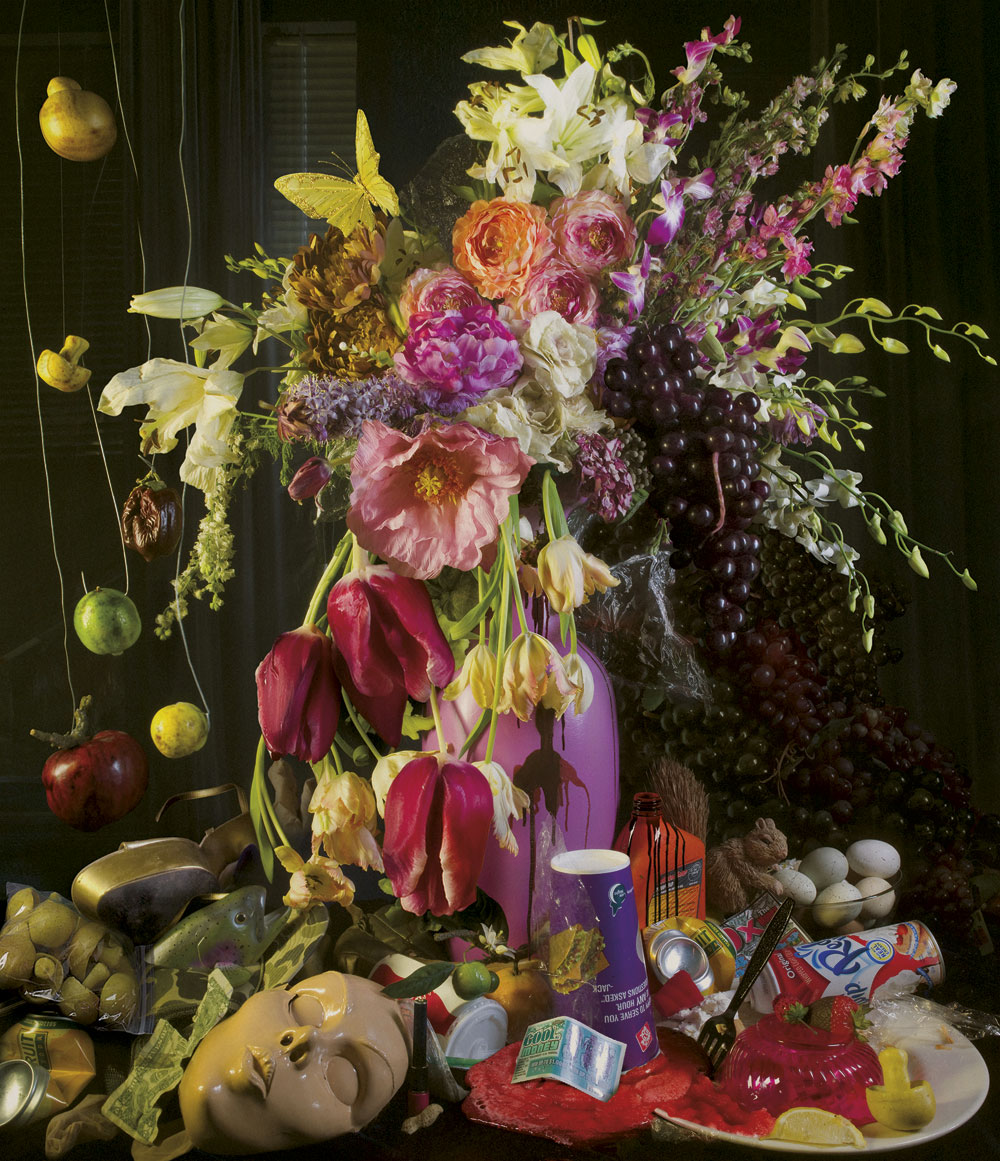
Later on, the affirmative exaggeration of the decorative character of the flower inspired none other than Andy Warhol to take up a simple, photographically reproduced flower motif in his work Flowers (from 1964); through serial repetitions he ironically exaggerated the motif and conferred iconic status on banal everyday objects. Artists such as David LaChapelle and Marc Quinn continue the baroque symbol for opulence with the aggressive colourfulness of their impressively grand flower arrangements, but also emphasise the simultaneously existing threatening moment, when the boundlessness can take on a devouring character.

For some time now, there has been a renaissance of flowers and mushroom themes in fine art. The works of leading “portraitists” of flowers and mushrooms, such as Peter Fischli / David Weiss, David LaChapelle, Marc Quinn, Sylvie Fleury, Nobuyoshi Araki or Carsten Höller, continue the multi-faceted and long pictorial tradition of flowers, which is unparalleled in the history of art. At the same time no other motif is so easily suspected of trivialism. The question arises of how a subject that is frequently accused of being trivial and shallow has been able to gain ground in a field of art that is generally regarded as serious and sophisticated. The picture of a flower is too easily associated with the idea of harmless beauty and the mushroom with cliché-like hallucinogenic states of consciousness. Nevertheless many artists increasingly adopt these motifs, adapt them and find individual ways to put them into the context of socio-critical, feminist, political and media-reflexive art.

It is only at first glance that David LaChapelle and Marc Quinn continue the baroque symbol for opulence with their impressively grand flower arrangements that reveal a threateningly devouring character upon closer inspection. Female artists such as Vera Lutter, Paloma Navares and Chen Lingyang reflect upon flowers in a specifically female way, using them as a symbol for their own identity-defining sexuality, but also for their vulnerability and exposure and thus elevate the flower to a socio-critical and political level. With almost scientific interest, Andrew Zuckerman and Carsten Höller take an analytical view of the morphological characteristics of flowers and mushrooms in their photographs and installations which create an impressive immediacy. The erotic photographs by Nobuyoshi Araki and Robert Mapplethorpe draw parallels between a blossom and the male and female body and create a field of tension between still life and nude. The wilting flower as a classic symbol of vanity is depicted by Michael Wesely in his long-exposure photographs, which accompany the life of a flower from full bloom to its wilting while emphasising their beauty to the very end. Contrastingly, the monstrous, towering plants of the “desolate” video installations created by Nathalie Djurberg and Hans Berg are devoid of any loveliness and have a menacing effect. They depict violence and abuse give flowers a particularly irritating and disconcerting touch by breaking with their generally positive connotation.

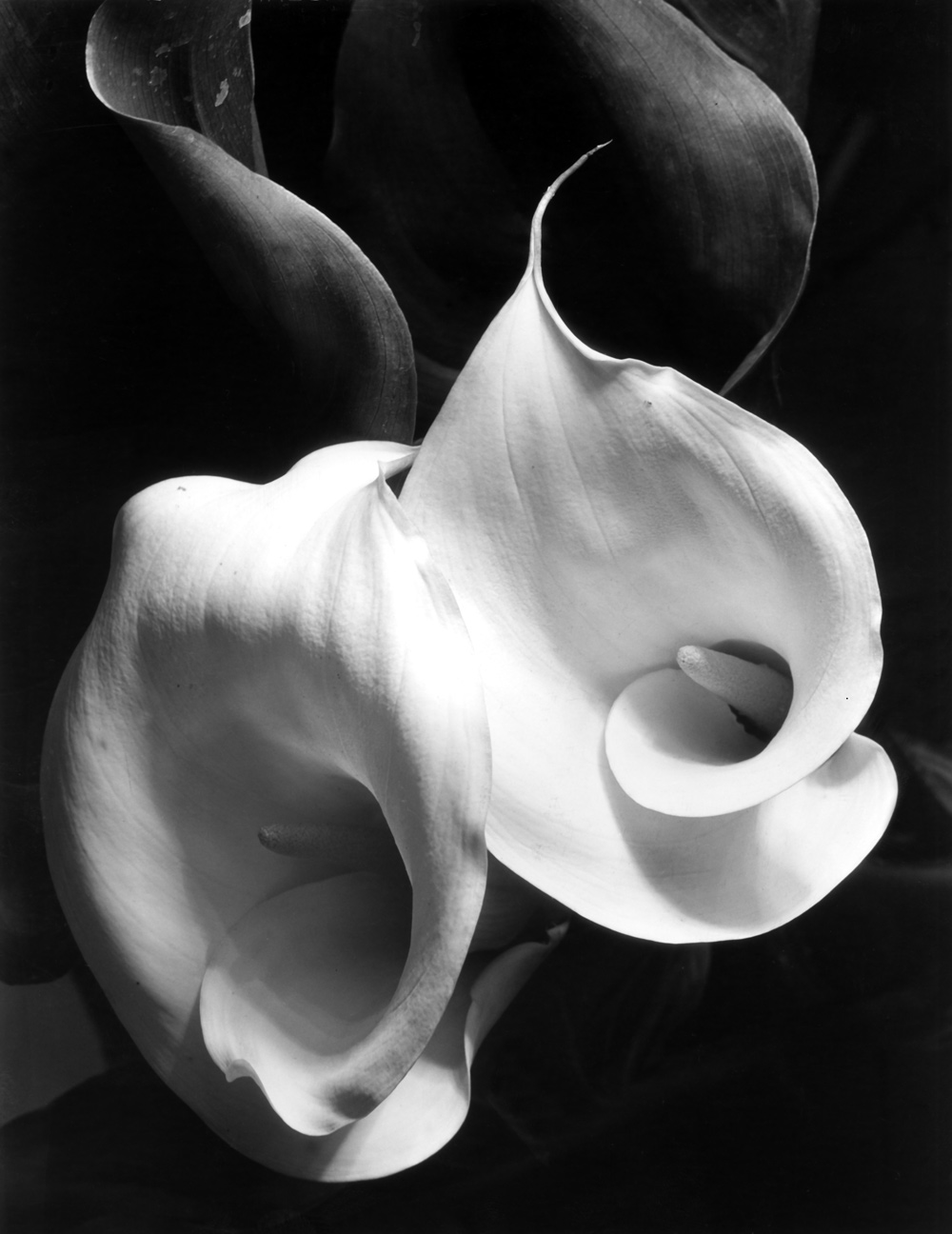
Flowers and buds symbolise eroticism in general, their appearance creating associations with the female and masculine gender (sexual organs) specifically and thus have a sensual appeal. Imogen Cunningham and Robert Mapplethorpe have a reputation as early forerunners of this sexualised and yet apocalyptic perception of flowers. They both implemented this special perception – erotically charged and aloof at the same time – in their photographs by drawing analogies to the human body in their sculptural treatment of the flower. Female artists such as Vera Lutter, Paloma Navares and Chen Lingyang reflect upon flowers in a specifically female way, using them as a symbol for their own identity-defining sexuality, but also for their vulnerability and exposure and thus elevate the flower to a socio-critical and political level.

Thanatos, or death, is closely related to Eros. The wilting flower as a symbol of vanity is depicted by Michael Wesely in his long-exposure photographs, which accompany the life of a flower from full bloom to its wilting while emphasising their beauty to the very end. The flower monstrosities of the “desolate” video installations by Nathalie Djurberg, which deal with violence and abuse, are devoid of any loveliness and even have a threatening effect.

Both in their natural environment and in cultural history, mushrooms are on the shadow side. Mushrooms are mainly associated with dubious alchemism and witchcraft, are desired and feared as hallucinogenic and have become an integral part of art and literature. Similar to flowers, mushrooms have a long tradition in art history and appear frequently within the context of artistic productions. Sylvie Fleury, for example, controls space with a “forest” of over-dimensional mushrooms, whose surface is covered with car paint, thus increasing their intrinsic character of a foreign body. Their over-dimensional size, and glittering appearance evokes scenes from “Alice in Wonderland”, where the protagonist eats from a mushroom to makes her grow or sink. Carsten Höller, by contrast, explores mushrooms with almost scientific interest and documents their individuality and uniqueness in detailed colour photographs or converts them into larger-than-life-size, large-scale sculptures and display cabinets.

The particular appeal of this exhibition organised by the curators of the MdM SALZBURG lies in the comparison and confrontation of the different levels of meaning of images of flowers and mushrooms and their controversial positions in contemporary arts. The title of the exhibition has been inspired by the series of C-prints by the Swiss artist duo Peter Fischli / David Weiss with the title “Flowers, Mushrooms”. Flowers & Mushrooms presents a selection of important works from the fields of photography, photo-based paintings, video and sculpture/installation art with floral motifs, spanning the time from the early beginnings of photography to the immediate presence. Selected works on loan accentuate the focal points and main themes of the exhibition by raising current social and aesthetic issues and thus allow a closer inspection of the multi-faceted symbolic use of flowers and mushrooms. At the same time, new levels of meaning are opened, referring to the ambivalent and mystical dark side of human existence. The exhibition shows how contemporary art adopts and continues the historical and complex pictorial tradition of flowers and mushrooms by adding new, contemporary perspectives. A historical section with photographs from the 19th century and of Classical modernism complements the exhibition and shows, how photography as a new medium has developed a special relationship with floral motifs.

The exhibition features works by Nobuyoshi Araki, Anna Atkins, Eliška Bartek, Christopher Beane, Karl Blossfeldt, Lou Bonin-Tchimoukoff, Balthasar Burkhard, Giovanni Castell, Georgia Creimer, Imogen Cunningham, Nathalie Djurberg, Hans-Peter Feldmann, Peter Fischli / David Weiss, Sylvie Fleury, Seiichi Furuya, Ernst Haas, Carsten Höller, Judith Huemer, Dieter Huber, Rolf Koppel, August Kotzsch, David LaChapelle, Edwin Hale Lincoln, Chen Lingyang, Vera Lutter, Katharina Malli, Robert Mapplethorpe, Elfriede Mejchar, Moritz Meurer, Paloma Navares, Nam June Paik, Marc Quinn, Albert Renger-Patzsch, Zeger Reyers, Pipilotti Rist, August Sander, Gitte Schäfer, Shirana Shahbazi, Luzia Simons, Thomas Stimm, Robert von Stockert, William Henry Fox Talbot, Diana Thater, Stefan Waibel, Xiao Hui Wang, Andy Warhol, Alois Auer von Welsbach, Michael Wesely, Manfred Willmann, Andrew Zuckerman.

Press release from the Museum der Moderne Salzburg website


Paloma Navares (Spanish, b. 1947) 'Vestidas de Sede' 2009


Paloma Navares (Spanish, b. 1947)
Vestidas de Sede
2009
C-Print on Diasec
125 x 125cm
Courtesy MAM MARIO MAURONER Contemporary Art, Salzburg-Vienna
© VBK, Wien, 2013


Robert Mapplethorpe (American, 1946-1989) 'Flower' 1988


Robert Mapplethorpe (American, 1946-1989)
Flower
1988
Silver gelatin print
71.1 x 68.6cm
© The Robert Mapplethorpe Foundation, New York
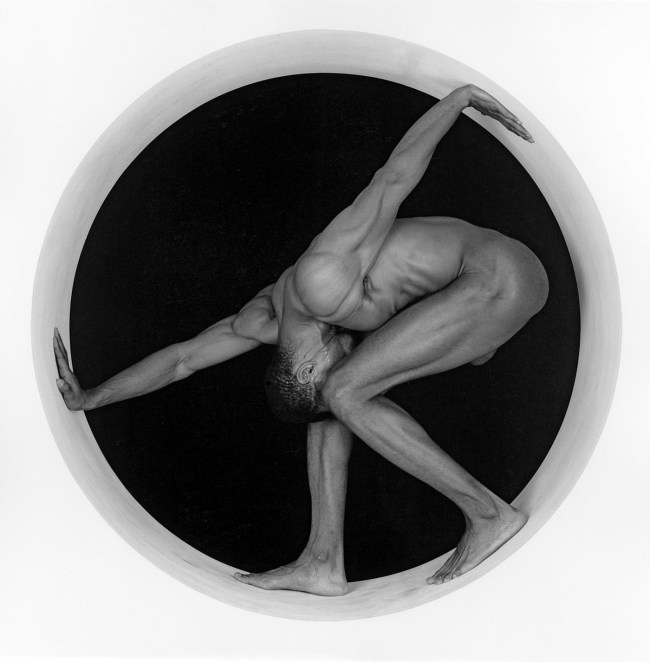
 

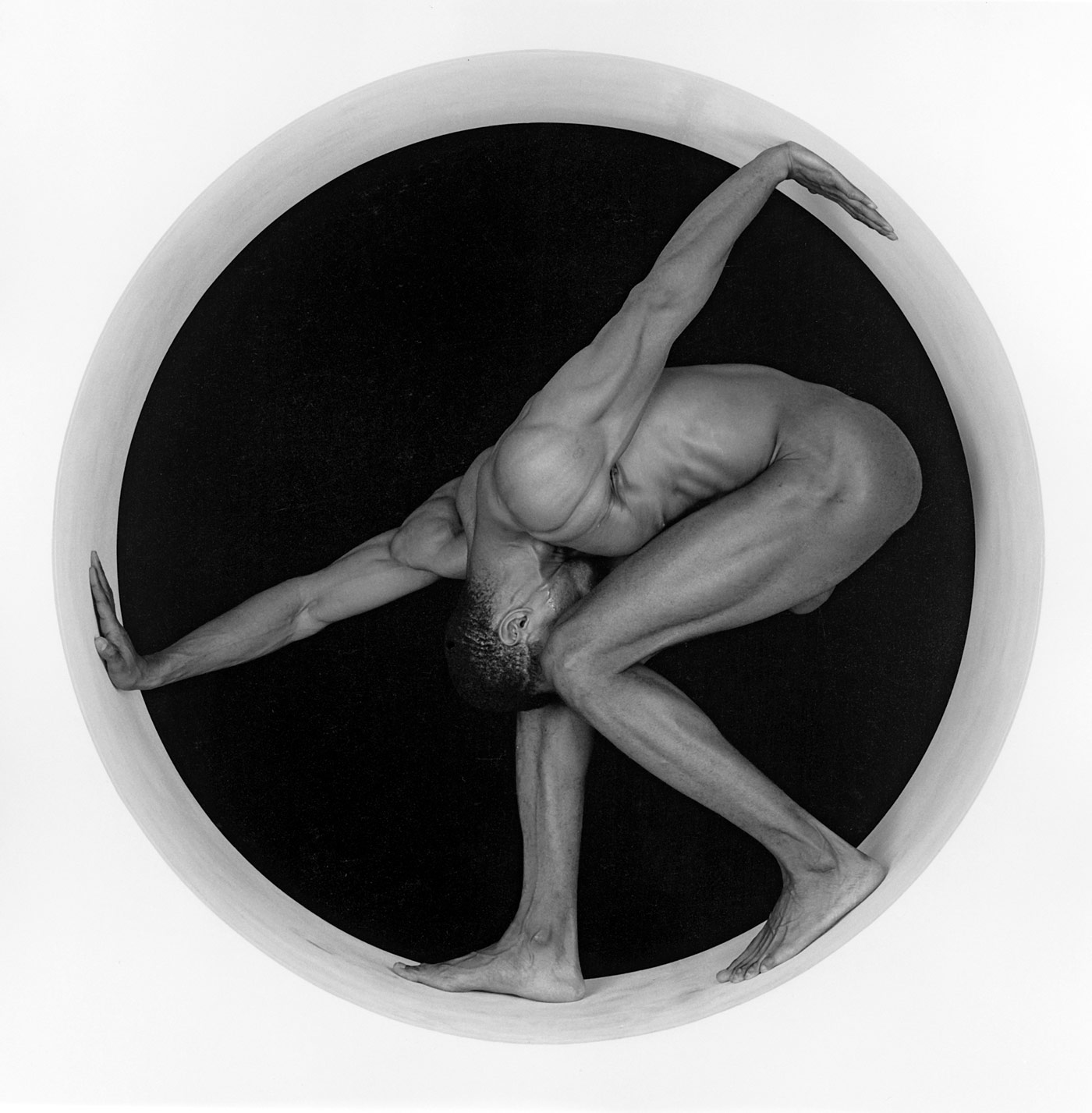
Robert Mapplethorpe (American, 1946-1989) 'Thomas' 1987


Robert Mapplethorpe (American, 1946-1989)
Thomas
1987
Silver gelatin print
71.1 x 68.6cm
© The Robert Mapplethorpe Foundation, New York
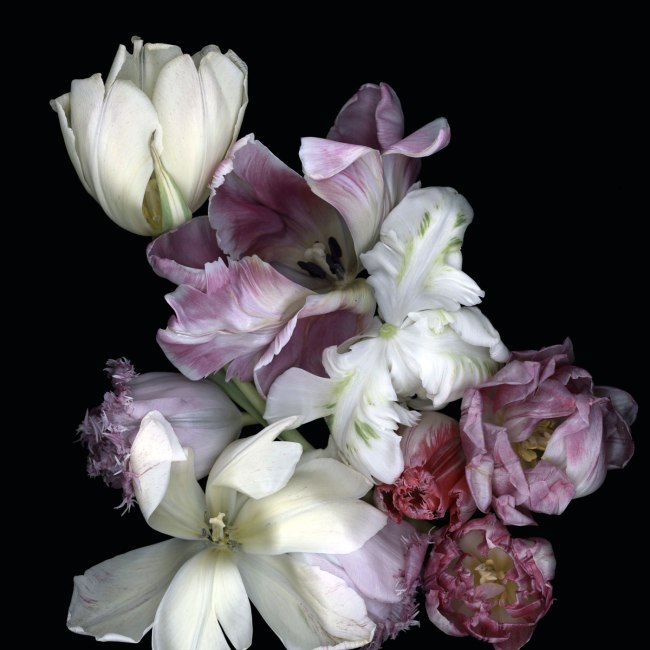
 

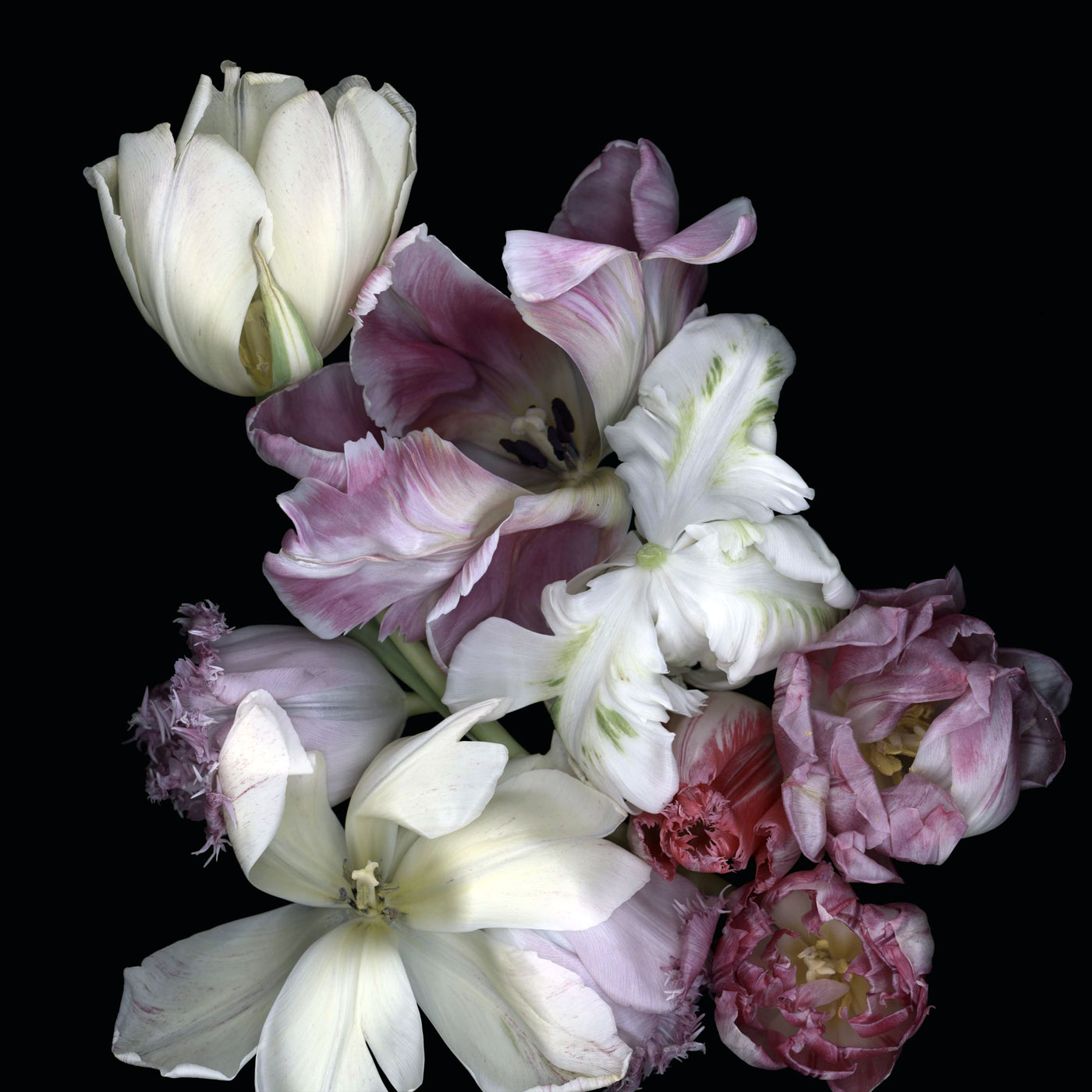
Luzia Simons (Brazilian, b. 1953) 'Stockage 104' 2010


Luzia Simons (Brazilian, b. 1953)
Stockage 104
2010
Scannogramm
Lightjet Print / Diasec
100 x 100cm
Courtesy ALEXANDER OCHS GALLERIES BERLIN ǀ BEIJING
© VBK, Wien 2013


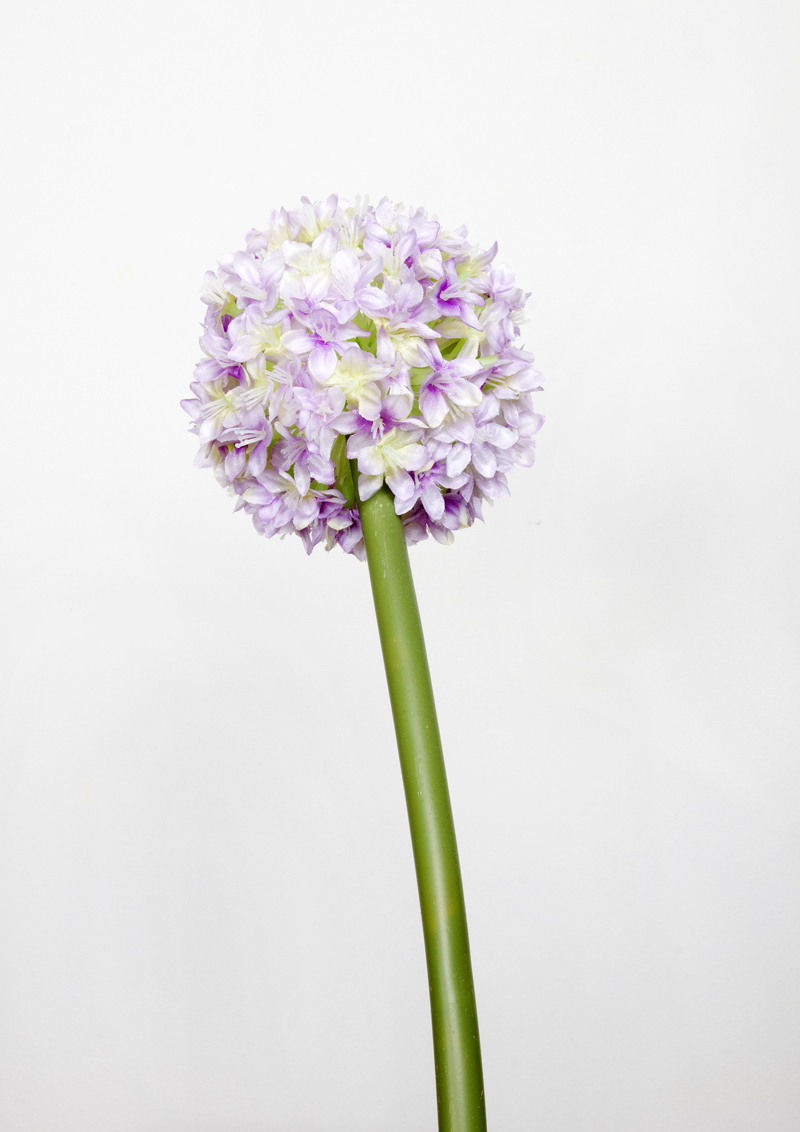
Katharina Malli. From the series 'Dead nature' 2012


Katharina Malli
From the series Dead nature
2012
Digtal C-Print
40 x 60cm
KUNSTIMFLUSS; eine Initiative von VERBUND


Flowers & Mushrooms exhibition texts

The title of the exhibition refers to the name of different slide projections and comprehensive photo series created by the Swiss artist duo Peter Fischli / David Weiss, which show cross-fadings of flowers and mushrooms. Fischli / Weiss began with photo series of everyday motifs back in 1987, and ten years later they used 2400 pictures from their extensive archive to make a cross-fading video with a duration of eight hours. Their general aim was to present the entire visual world they had encountered and documented on their excursions or long travels. Ten years later, the seemingly endless impressions of sights and attractions of the old and new world became limited to flowers and mushrooms, whose pictures overlap in double exposures and appear as a kind of hybrid: as newly created “living beings” between the world of flowers, associated in art history with all kinds of christological and erotic symbolism, and the world of mushrooms, which are not plants and are mainly known for their toxicity. Peter Fischli and David Weiss made the representation of flowers and mushrooms, which had mainly been restricted to calendars and trivial photo books respectable and presentable in contemporary visual arts. The time was ripe for this, even though pictures of flowers and mushrooms had experienced a kind of renaissance in contemporary art before: The ongoing interest in artistic productions dealing with different plants and mushrooms seems to confirm this.

Nevertheless the question arises, how the “flower image” which was frequently accused of triviality in the past, has been able to gain ground in sophisticated and serious art. Pictures of flowers could too easily be associated with the idea of harmless beauty and those of mushrooms with cliche-like, hallucinogenic states. For some years, many artists have nevertheless adopted these motifs, adapted them and found individual ways to put them into the context of socio-critical, feminist, political and media-reflexive art.

Many of the artists represented here in this exhibition deliberately continue this multi-faceted tradition which testifies to a respectable history the “flower picture”: Integrated into the context of Christian iconography in late antiquity and the Middle Ages until the Renaissance period, it timidly began to develop an autonomy during the Baroque period as a result of the newly arising scientific interest in the morphology of flowers and the related wish to classify them encyclopaedically. The rise of the “flower image” to a significant motif that appeals to the audience came to a temporary standstill in the 19th century, when it became an empty academic shell. It re-gained importance only during the Art Deco and New Objectivity period and even became a model for some contemporary forms of expression. While flowers have always been used as photographic motif all over the world due to their beauty and their specific shapes, which are frequently associated with human genitals, mushrooms seem to have inspired most artists who used them in their works due to their sculptural potential and possibly their hallucinogenic effect.

Our exhibition wants to present the use of flowers and mushroom in contemporary art photography, slide and video projections, installations, sculptures and photo-based paintings in all its different faces and assign the works to different themes for better understanding, however without clear boundaries between the individual categories. In a kind of art-historical prologue with the Latin title Species Plantarum we want to show, how scientists and artists have dealt with the representation of plants and blossoms and more rarely of mushrooms since the mid-19th century – parallel to the invention of photography – in photographic studies and “still lifes”. Rose is a rose is a rose is a rose shows that even seemingly trivial photographs of a flower or a mushroom viewed with disinterested pleasure can and should no longer be regarded as neutral and is linked with connotations of everyday experience and cultural education. Les Fleurs du Mal focuses on cryptic and unfathomable, abysmal aspects hidden in flower motifs. The works presented in the section Garden of Earthly Delights establish connections between gender, eroticism and sexuality – but also transitoriness and death – and the symbolism of flowers and associations used by many artists in their works. Nature versus artificiality finally heralds human interventions in nature and the wish to control and experiment with nature and the reflection of this development in visual art.

Species Plantarum

The 19th century was marked by social upheavals, which allowed civil society to intervene in many areas, such as politics, humanism and cultural history, but also natural sciences. The publication of Charles Darwin’s (1809-1882) Origin of Species (1859) intensified the public interest in forms of nature and increased the significance of natural phenomena. This not only encouraged the scientific curiosity of scientists, but also inspired artists to find new approaches to representing nature.

The newly discovered medium of photography, (further) developed out of the desire for an accurate reproduction for scientific purposes and used for various optical and chemical experiments, expanded the range of artistic forms of expression. Artists with an interest in botany eagerly and enthusiastically applied new techniques -such as nature prints, airbrush techniques or photogenetic drawings – and also embraced the new medium and instantly recognised its potential, inspired by pioneers such as Anna Atkins (1799-1871) and William Henry Fox Talbot (1800-1877). Early photographic experiments found their expression in the floral Art Nouveau style and in teaching concepts and teaching aids. The most famous collection of designs was Urformen der Kunst / Art Forms in Nature (1928) by Karl Blossfeldt (1865-1932). His photographs became incunabula for the representation of plant-derived forms using the precise stylistic means of New Objectivity.

The artistic impulses of the following decades contributed to an exploration of nature through alternative cognitive forms. Photography detached itself from the primacy of representation, dominated by form and surface stimuli, and turned towards visual stimuli for the human power of imagination.

Anna Atkins

The botanist and illustrator Anna Atkins (1799-1871) is regarded as pioneer of photography. Her father, the British chemist, mineralogist and zoologist John George Children (1777-1852) aroused her passion for natural sciences. At a time when there was no scientific education for women, ladies from noble families had to content themselves with being “amateur helpers” for their fathers and husbands and worked in the background, compiling herbariums and making drawings. Through her friendship with the physicist John Herschel (1792-1871), who closely collaborated with William Henry Fox Talbot (1800-1877), Atkins became familiar with cyanotype, a printing process invented by Herschel, and began to use this new photographic printing process for mapping scientific samples. The first photographic herbarium was published under the title Photographs of British Algae: Cyanotype Impressions between 1843 and 1854, comprising 12 issues with 389 illustrations. The photograms, which get their characteristic blue colour on the parts of the paper exposed to light from the use of an iron complex, produce particularly accurate representations of the plants. Their special allure is their diaphanous appearance. Anna Atkins’s works, which were forgotten for a long time, are today regarded as a milestone in the history of scientific and photographic illustration and have contributed to the rediscovery of cyanotype as printing technique.

Alois Auer von Welsbach

Alois Auer von Welsbach (1813-1869) was an Austrian printer, inventor and illustrator specialising in books on botany. He was head of the “k.u.k. Hof-und Staatsdruckerei” printing company founded in 1804 in Vienna and developed it into a large-scale enterprise that offered all state-of-­the-art printing techniques and methods of representation known at that time. The printing company became renowned for its nature prints developed and perfected by Auer in cooperation with Andreas Worring. Nature printing is a printing process that uses natural objects to produce an image. Dried or pressed objects are placed between a plate of steel and another of lead and drawn through a pair of zinc rollers under considerable pressure to produce in impression in the leaden plate. The printing plate is produced by electrotyping, also called galvanoplasty. Gravure printing is used for plants. The use of several colours in one printing cycle produced polychrome and particularly “authentic” prints. Until today no printing process has been able to surpass the high level of detail of this technique. For Auer nature printing was as important as photography, and he published books to promote this printing process. “Auers Naturselbstdruck” was patented in 1852 and released for general use in 1853. Over the centuries nature printing has been used for decorating everyday objects and for illustrations on substrates such as papyrus, parchment and paper.

Robert von Stockert

In the 1890s a small community of aristocrats and upper class people with an interest in arts established the “Club der Amateur-Photographen” (Club of Amateur Photographers) – later re­named “Wiener Kamera-Club”. Their photographs were largely influenced by painting. Members of the club include many famous names such as Heinrich Kühn (1866-1944), but also less famous contemporaries such as Carl Brandis (active around 1885-1900), Franz Holluber (1858-1942) or Robert von Stockert (1848-1918), who specialised in flower still lifes. For von Stockert, nature was an interesting theme for various reasons: He had the ambition to contribute to the “development of photographic art”, benefited from his own gardens and the decorative talent of his daughters and used his photographs for book illustrations. He regularly published his experience in illustrated supplements to the association’s publication “Wiener Photographische Blätter”. His pictorial vocabulary ranges from purely decorative flower arrangements to sophisticated still lifes. To convey the colourfulness of his motifs, von Stockert experimented with various techniques, both with photographic techniques, like the use of various colour filters and sensitive plates, and with reproduction techniques. His favourite printing techniques include platinum print, which provides a particularly rich and intensive range of grey nuances. For colour reproductions he used the new multicolour collotype process.

Karl Blossfeldt

The plant photographs of German photographer Karl Blossfeldt (1865-1932) are milestones in the transitions from the playfully stylising Art Nouveau style to the unemotional, cool spirit of “New Objectivity” and have become incunabula of the history of photography. His motivation behind his imagery and motifs is rooted in his education as sculptor and modeller in an art foundry. At the Kunstgewerbeschule in Berlin – today the Universität der Künste (University of the Arts) – he collaborated in a project of his art teacher Moritz Meurer and compiled teaching aids for ornamental design. As lecturer for “modelling from plants” he received an official assignment in 1889 which provided further impetus for the production of illustrative material. Blossfeldt became famous for his book Urformen der Kunst (Art Forms in Nature) (1928); another volume – Wundergarten der Natur (Magic Garden of Nature). A sequel to Art Forms in Nature ­was published in 1932. The photographs here on display are a small selection from a collection of 6,000 pictures, whose clarity, rich contrast and acutance testify to his technical precision, craftsmanship and passion for photography and teaching. Graphic details, structures, forms and surfaces are emphasised by the targeted selection of details, magnified 2 to 45 times. Blossfeldt achieves a sculptural effect by using a monochrome, light background and thus liberates the plants from their natural context.

Rose is a rose is a rose is a rose

What Getrude Stein wrote in the mid-1920s and later became so influential and was often misunderstood, can be used as a motto for the works here on display, but also to point out ironically that the use of flower motifs is trivial only at first sight.

Like portraits or interieurs, flower pictures are part of the repertoire of art history. Even more so: No living being is used more frequently in symbolism than the flower, and few subjects are as complex as the history of the flower motif. In the past, flower still lifes were used to convey encrypted and symbolic messages, most of which are lost to us today. We no longer know the symbolic meaning of the individual flowers or their arrangements. Many artists have used floral themes in their work, as a reaction to the apparent triviality of the century-old flower motif, and have so continued this traditional theme. Today the flower motif has become the basis for new reflections and observations.

The oldest photographers whose works are here on display – Ernst Haas and Balthasar Burkhard – already liberated the flower from its temporal and spatial context and focused on depicting the flower not as a decorative still-life at the height of its beauty, but as a fragile plant subjected to instability and transformation. The American photographer Andrew Zuckerman portrays crystal-clear, razor-sharp images of different blossoms with an accurate eye, capturing the fine details of their surface structure and colour transitions. His strict staging abandons the common understanding of flowers and releases them from their context. As a result, Zuckerman’s pictures assume an almost cool, abstract quality.

Christopher Beane shares a similar love for details. His close-up pictures of petals convey sensuousness and opulence. As a staging photographer he completely restrains himself and entirely leaves the stage to his protagonists, allowing them to unfold their full beauty in exciting, suspenseful intersections, contours and curves. The scannograms by Luzia Simons show an opulence and splendour that reminds us of traditional Dutch still lifes of flowers. The large-format photographs are thoughtful reflections on the proud, but also tragic role of the tulip in the early 17th century Netherlands in connection with the “tulip mania”, which is generally considered the first recorded speculation bubble. In Giovanni Castelli’s photographs, flowers appear as mysterious plants, monumental and unreal at the same time. The artist finds his motifs in nocturnal parks, capturing close-ups of colourful flowers against a jet-black sky. The result are eerily beautiful flower portraits which seem to be from another world and elegantly refute our conventional visual concepts.

Carsten Höller

b. 1961 in Brussels/Belgium, lives and works in Stockholm / Sweden.

Carsten Höller, who has a doctorate in agricultural science, works at the frontier between art and natural science. Dissatisfied with the restrictive structures of the academic world, he turned his back on it and chose the path of greatest-possible openness: he became an artist. “As an artist I do not have to submit to any formalistic constraints and can develop things as far as I think makes sense in a particular framework, without always having to undergo specialist training in the relevant fields.” Höller has not abandoned his first life, but combines the two disciplines, which appear to be so different from one another, in a highly idiosyncratic and humorous manner. He creates bizarre hybrid forms from a variety of types of mushrooms. He either grows them to a threatening height or exhibits them, like jewels in a glass cabinet, in orderly rows as though in a natural-history museum. Fly agaric is always present. Höller explores this mushroom and its hallucinogenic effects in great detail. In this context he is on the trail of a mysterious potion called soma, which is thought to have been made of fly agaric and was used for ritual purposes as early as the second century BC. Drinking it is said to impart good fortune and riches, the power to be victorious, and awareness and access to the divine sphere.

Hans­ Peter Feldmann

b. 1941 in Düsseldorf/Germany, lives and works in Düsseldorf.

The large-format photographs of flowers by Hans-Peter Feldmann are at first glance reminiscent of the floral postcards of the 1950s: we see flowers popular at the time, such as roses and lilies, in close-up in front of a neutral, colourful background. The colour aesthetic of flower and background, too, corresponds to the time. Clear and uncompromising, the blossoms present themselves to the viewer in their full glory, while simultaneously appearing distant and artificial. In this respect they do not match today’s ideas of the bourgeois idyll. The magnification makes the kitschy look sublime. The blossom appears like a fetish behind glass, frozen for the next millennium. Feldmann has always been interested in the everyday and the banal. He lives his passion for collecting at flea markets and in his own shop of knick-knacks. He often works with found materials such as postcards and newspaper cuttings. The photographs shown here are not enlargements of these collected objects, however. They were created by Feldmann, based on the aesthetic of the small-format postcards of which they are ironic imitations. Feldmann’s artistic concept includes the practice of not dating and not signing his works: “Bakers don’t sign their rolls either, do they? Art has to taste and smell, one has to be able to experience it.” For Feldmann, one of the first concept artists, the works of art are already there. He considers it to be his job to find them. They should not lose their vitality despite the transformation.

Luzia Simons

b. 1953 in Quixadá/Brazil, lives and works in Stuttgart and Berlin / Germany.

The tulip is, in the eyes of Luzia Simons, an element that connects cultures, and a symbol of transcultural identity. As a nomad among flowers, the tulip was brought to Europe from Asia, and connects the Orient and the Occident. It is at home both here and there, and has established itself as a virtu despite having been transferred via several different cultures. The tulip conquered the Netherlands in the late sixteenth century, and tulips featuring special colours and patterns commanded exorbitant prices on the market in a rapidly expanding “tulip mania”. Speculation with tulip bulbs led to a speculative bubble. The bubble burst in 1637, with far-reaching social and economic consequences. Simons sets the scene for the majestic and simultaneously tragic character of the tulip, as well as for its long-standing traditions, in her series entitled Stockage. The artist stages the flowers in large-format arrangements in which they surge towards the viewer in bright colours out of a neutral darkness, revealing their beauty and fugacity in sharp focus. Both through the inescapable vanitas concept and in its painterly effect Simons’s oeuvre is reminiscent of Baroque still lifes. Paradoxically, Simons makes use of a very modern method to generate the images, however: the flowers are “read” by a scanner before they are printed using a carbon-printing process, and finally they unfold their vibrant depth effect behind acrylic glass.

Peter Fischli / David Weiss

b. 1952 in Zurich/Switzerland, lives in Zurich / b. 1946 in Zurich, d. 2012 in Zurich.

The Swiss artist duo Fischli / Weiss began work in 1979 and was highly successful in the spheres of film, photography, sculpture, art books and video installations. Cryptic and playful, often seen as though through the eyes of children, they re-arranged art and the everyday in their work. Their subtly ironic works, which often appear to be imbued with subversive nonsense messages, received numerous international awards. From kinetic experimental arrangements using everyday objects to interpersonal re-enactments using sausage leftovers: Fischli / Weiss transformed the apparently banal and the absurd into art. For this reason the flower motif also entered the work of Fischli / Weiss from 1997 onwards. The Flowers series (1997-1998) exists in two presentation forms: colour prints, and a double-slide projection. It shows a chaotic view of nature, as though from an ant’s perspective, using a hallucinatory and intensely colourful technique of superimposition. The arrangement of double and quadruple exposures and the resulting translucent layering of close-ups of flowers, mushrooms, snails and many other things creates the impression of a nature that is unordered and exuberant, unreal and simultaneously beautiful. This playful approach to reality and appearance, the conceptual claim of the visualisation of the world – in this case nature, which is just “there” and is in no need of legitimisation in order to be shown in the context of art – and the interest in the banal, in combination with a more serious artistic interest, constitutes the framework that encompasses the entire oeuvre of die Fischli / Weiss.

Les Fleurs du Mal. Reality and Appearance

In his poetry collection Les Fleurs du Mal (1857-1868) the French writer Charles Baudelaire (1821-1867) painted a picture of a pessimistic modern city dweller that is characterised by despondency, anger and rebellion against all conformities. Man is torn between Christian morality, the good ideal and virtuousness on the one hand and the reprehensible and yet appealing fascination with the evil and ugly on the other hand, and forced to establish a new position for himself continuously.

What the artists represented in this part of the exhibition and Baudelaire’s Fleurs du Mal have in common is their questioning of conventional views on beauty and morality, symbolised by flowers which are generally regarded as beautiful, and the deliberate discussion of the transience of beauty as well as socio-­political principles and ethics. In particular the vanity theme is directly related to the “Flowers of Evil”, as it belies the human desire for eternal beauty and eternal life. Bourgeois decadence in the form of Baudelaire’s positive re-interpretation is no longer a common term today, but has a stronger presence than ever in the classic meaning of the decline of a social system, in particular with reference to the frequently heralded fall of capitalism. In the 21st century artists approach this subject in a differentiated way. Works closely related to traditional genres of art history, such as the still life, exist side by side with current series of works dealing with the concept of time as such, for example by intensely visualising the blossoming and withering of flowers or linking this with socio-political issues. The delightful moment of the pictures and materials is sometimes opposed to the subject matter or explicitly border-crossing contents.

Marc Quinn

b. 1964 in London/Great Britain, lives and works in London.

Marc Quinn’s 2009 paintings Landslide in the South Tyrol and Aleppo Shore from 2010 are based on photographs that he took of model landscapes he himself had composed. To this end he arranged lush and colourful plant ensembles in his studio. Drawing on Baroque bouquets, which are artificial creations and consciously unnatural in their composition, Quinn negates the passing of the seasons and combines plants that do not blossom at the same time as each other. His enormous square compositions confront viewers with paradisiacal gardens bursting with life, allowing viewers to immerse themselves in an apparently idyllic, magical world. Closer inspection reveals that the white surface to which the luminosity is owed is in fact a snowfield, and this causes consternation. The first impression of cheerful colourfulness and light-heartedness dissipates and the scenery that is now perceived as artificial suddenly feels threatening in a very subtle way. In the midst of life we are surrounded by death! The viewer is surrounded not by a lively garden landscape, but by an arrangement of frozen, dead plants. The unnatural brightness of the colours, which knows no soft nuances, points to the artificially generated world, and reveals the difference between beautiful appearances and reality. One senses that critique of civilisation is a driving force: the artist exposes humankind’s reckless approach to nature because we are willing to sacrifice nature for the sake of its perfect beauty.

Eliška Bartek

b. 1950 in Nov Jičín/former Czechoslovakia, lives and works in Berlin/Germany and Lucerne / Switzerland.

For the series Und Abends blüht die Moldau Eliška Bartek uses highly sensitive film that blurs the contours while simultaneously making details as visible as though they are being viewed through a microscope. As a result the surfaces of the flower petals appear exquisitely delicate and fragile. This feeling corresponds to the traditional symbolism of flowers. They are viewed as the ultimate symbols of the beauty of the moment, which already contains the seeds of transience. The flowers come from a Berlin wholesaler or are cut fresh by the owner of a botanical garden in Pila, a small village in Ticino. Bartek exposes them to particular light influences and in this way alters their colours. In addition to the extreme magnification and closely framed composition of the pictorial subjects it is this intense colourfulness in particular, further enhanced by the dark background and dramatically heightened by unusual light and shadow effects, that creates an extraordinary vitality and releases the pictorial subject from its static nature. For a short time the photo artist breathes an intoxicating beauty into the blossoms, for which the flowers pay the ultimate price: the extreme light burns the delicate petals and destroys the natural splendour. Bartek’s subtle play with reality and appearance, or with artificiality and naturalness, also points to the fallibility of our perception.

Vera Lutter

b. 1960 in Kaiserslautern/Germany, lives and works in New York / USA.

With the project Samar Hussein Vera Lutter reveals herself to be a socio-critical artist who rescues the civilian victims of the Iraq war from oblivion and creates a memorial to them. More than 120,000 civilians have been killed since the invasion by the American army in March 2003. They are referred to in military jargon as “collateral damage” – an appalling word that downplays the suffering for which it stands. The artist has gathered the names and dates for her work of art from the Iraq Body Count Project. The biggest publicly accessible database of this kind worldwide, it records the civilians who have lost their lives in military and paramilitary campaigns, and documents the collapse of public safety following the invasion. Lutter uses the image of a budding, blossoming and finally wilted and withered hibiscus blossom as a metaphor for the human life cycle. The artist sees analogies between human life with its beauty and fullness, as well as its vulnerability and destructibility, on the one hand, and the tones of this flower, reminiscent of the colour of flesh, and the sensuous shape of its blossom, on the other hand. The names of the dead are superimposed on the printed and projected photographs in chronological order according to the date of death. The first picture is named after Samar Hussein. It is for this 13-year-old girl, the first civilian victim to have been recorded in the database, that the art project as a whole, Vera Lutter’s remarkably poetic and touching elegy for the senseless casualties of war, is named.

Paloma Navares

b. 1947 in Burgos/Spain, lives and works in Madrid and Alicante / Spain.

Paloma Navares’s oeuvre spans the fields of photography, sculpture, installation and performance, and explores historical female positions in our society. Navares, who suffers from a rare eye condition that will eventually lead to the loss of her eyesight, employs her memory, which she refers to as her “inner eye”, as an artistic device. The multimedia artist uses a poetical pictorial language that aims to draw the viewer’s attention in a delicate and subtle way to existential human questions: might putative mistakes or what society judges to be incapacity lead to recognition after all? The photographs of delicate orchid blossoms tell of the fates of women, and are in some respects symbolic. They stand, for example, for Meerabai, a late-fourteenth-century princess from northern India who wrote love songs and laments, and who, as a devotee of Krishna, vehemently opposed marriage. The pressure exerted on her by society at court forced her to commit suicide by drinking from a poisoned cup. Female Korean entertainers, known as kisaeng, were similarly despised and judged by society for their nonconformity. Navares’s depictions of flowers are homages to great female poets of past eras whose lyrical works were ignored and who, in the face of the contempt with which society treated them, chose to die by their own hands. The images represent a plea for justice and self-determination, and simultaneously stand for grace, strength and beauty.

Garden of Earthly Delights

Flowers and blossoms have always held a great fascination for man and are symbolically and culturally linked with love, beauty, youth and sensuality. Opulent flowers are thus instinctively associated with eroticism and seduction, but also inevitably with the aspect of transitoriness. From a biological point of view, the attraction of flowers is due to their signal effect for the purpose of pollination and thus reproduction and survival of a plant species. Not only poems use flowers as metaphor for human desire; the flower as analogy for man and corporeality is also found in fine arts. Artists such as Robert Mapplethorpe, Nobuyoshi Araki and Rolf Koppel combine nudes with floral still lifes and both in form and context refer to the sensual analogies to the erotic desires of man. Robert Mapplethorpe has made the most explicit comments on the relationship between flowers – in particular blossoms with strongly emphasised seeds such as the calla or anthuria – and the phallus. Mapplethorpe once said that his way of photographing a flower does not differ significantly from his way of photographing male genitals. The natural scientist Carl von Linné (1707-1778), who established the basis for modern botanical and zoological classifications, commented two centuries ago on the relationship between the corporeality of plants, animals and man. “We look at the genitals of plants with pleasure, those of animals with revulsion and our own with wondrous thoughts.” In his writings he poses the question, who is aware that the flowers a man gives to the woman he adores are “cut-off genitals of higher plants” and that the floral splendour must be regarded as “sexual intercourse of plants”? Within the context of cultural history, plants have been used until today as a symbol for the sexuality of man which is still a taboo.

Chen Lingyang

b. 1975 in Zhejiang province/China, lives and works in Beijing / China.

The subject of Chen Lingyang’s twelve-part series of photographs Twelve Flower Months is the artist’s monthly cycle, which is associated with twelve different flowers. The viewer sees twelve geometric formats that correspond to traditional Chinese window and door shapes. They feature reflections of Chen Lingyang’s vagina, and the menstrual blood that drips from it. The shape of the mirror, too, varies from month to month. The viewer is supposed to feel disturbed by the juxtaposition of flowers – which are the ideal expression of the beauty of nature – and the bleeding genitals. Looking at the mirror, a Western symbol of flirtatiousness and beauty, viewers simultaneously become secret viewers of an intimate depiction. The apparent contrast also reveals unusual similarities, however: Chen Lingyang shows two natural cycles of growth and decay. The artist herself has commented on this work that “in traditional Chinese culture there is the idea of the person who lives in harmony with nature. … To me, ‘nature’ refers most importantly to the laws and rhythms of the universe. And these laws and rhythms are connected to cycles. It is easy for a woman to observe this from monthly physiological and psychological changes.”

Nature vs. artificiality

“Planting means to dig holes to force nature to become unnatural (cultural). […] Owing to the gesture of planting man has lived in an artificial world since the Neolithic period”, the media philosopher and communication scientist Vilém Flusser (1920-1991) once said. In this way he descriptively refers to the general circumstance that we can no longer view nature as something “given”, but as something that is “man-made” and constructed and controlled by man. Accordingly, culture has monopolised nature and its original autonomy to a large extent.

The main purpose of fine arts as a cultural manifestation is not only aesthetic edification. Artists, in particular modern and contemporary artists, also serve as introspective seismographs for development processes of civilisation. Their thinking, designs and creations bring about a change of perspective that goes beyond conventional acceptance and reception and thus refers to phenomena that inspire the viewer to reflect and take a closer look. The preoccupation with flower and mushroom motifs also has to be understood in this context. Primarily decorative and trivial at first glance, their meta levels contain far-reaching statements.

The installation of the Swiss artist Pipilotti Rist explores socially standardised patterns of behaviour of civilised man. Rist makes these patterns tangible in her works by depicting the way people deal with artfully arranged flower decorations. In a comparable, yet differing way Gitte Schäfer explores nature and its “domestic use” in her flower wall. About three hundred small flower vases with an artistically kitschy design are affixed to a wall of diagonally placed mirrored tiles and filled by the artist with cut flowers in the form of a symmetrical picture.

The transient splendour of the flower arrangements symbolises earthly transitoriness and were a characteristic feature of 17th century Baroque still lifes. The Italian term for this category of painting ­natura morta – also alludes to the notion of vanity. In her four-part work series with the same title, the Austrian artist Katharina Malli shows close-up coloured pictures of crops and ornamental plants against a neutral white background, whose aesthetics deliberately quote the documentary style of Karl Blossfeldt (1865-1932). Upon closer inspection, they are industrially produced artificial flowers. As perverted products of civilisation they represent this dead nature and at the same time symbolise the notion of immortality. Dieter Huber’s works also focus on artificially generated nature and play with the wishful thought of potential immortality. In his work series he presents apparently “documentary” pictures of plant hybrids that herald a “brave new world”. The works by Nam June Paik and Zeger Reyers create a concrete connection between nature and technology. The instruments used, such as TV sets and record players, symbolically refer to social progress and are an expression of human inventiveness. They emphasize “manmade” things, juxtapose them with naturally occurring objects and thus describe them in relation to one another.

Andy Warhol

b. 1928 in Pittsburgh/USA, d. 1987 in New York / USA.

By the second half of the twentieth century the flower as an artistic motif had become insignificant. It had become overburdened with the general suspicion of triviality and kitsch. However, Pop Art, which took a deliberate interest in the world of trivial imagery, immersed itself in this subject. Andy Warhol’s Flowers are exemplary of the approach of Pop Art artists. Warhol based his flowers on a folded insert in the June 1964 issue of Modern Photography magazine, a reproduction of a colour photograph of seven hibiscus blossoms. The photograph had been taken by the editor in chief, Patricia Caulfield, and was included as an illustration accompanying an article about a Kodak colour processor. Warhol cropped the photograph to alter the pictorial format, number and arrangement of the blossoms. Numerous variations of what was now a square image were then produced using the screen-printing process, differing from one another in colour and size. In total, more than 500 pictures of flowers must have been produced in this way. The Flowers appear to float in a diffuse space, detached from the background and unconnected to their stalks and leaves. In some versions the blossoms and the pictorial ground are painted by hand in DayGlo colours, further emphasising this impression. Warhol presented the prints in such a way that they covered entire gallery walls as though they were wallpaper. In this way he succinctly demonstrated the plant’s natural potential for rank growth as well as its technical reproducibility as a decorative mass subject.

Dieter Huber

b. 1962 in Schladming/Austria, lives and works in Vienna and Salzburg / Austria.

Since as early as 1986 Dieter Huber has worked with photography that is optimised and altered using computer technology. The three works from the KLONES series, which were executed from 1994 onwards and thus explored genetic engineering and manipulation at a very early date, are doubtless among the pioneering works in computer-generated images. Huber commented on them that “the construction of a world that could be freely disposed of in all respects according to one’s will and imagination was still considered highly vexing at the time.” The three plant studies in the exhibition are – at first glance – razor-sharp photographs of flowers, each before a black background. Well-known types of flowers such as tulips, carnations, narcissuses, daffodils, roses and lilies are reminiscent of a grandmother’s garden. Closer inspection causes consternation, however: various types of flowers grow out of the same greenery, rose stalks are crowned by lily blossoms, and daffodils, lilies and tulips all grow out of the stem of a trumpet flower. Artificially created, impossible-looking crossings have long since found entrance into our real world. Almost all livestock breeds and crop plants used in agriculture were developed through decade-long crossing. Perhaps the surreal floral worlds of Dieter Huber will really exist one day?
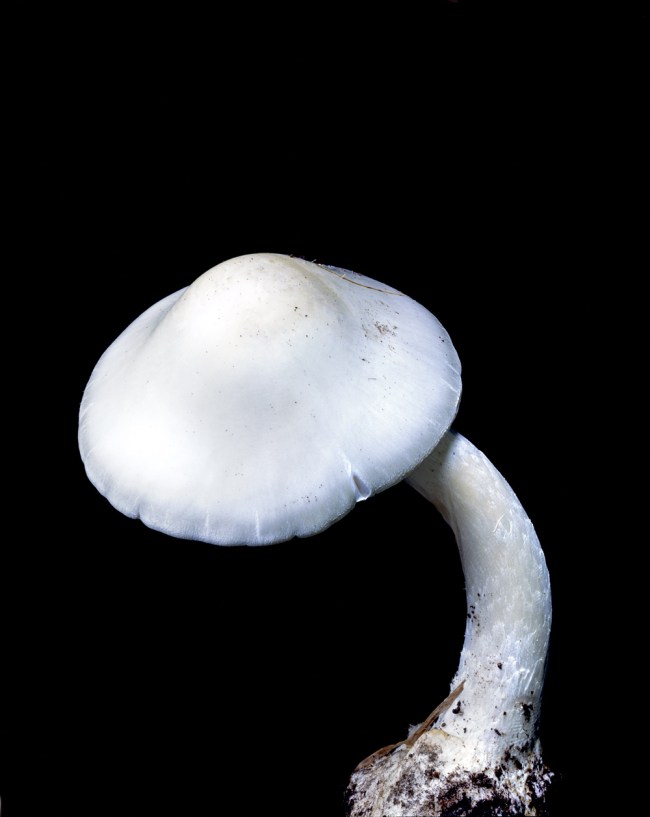
 

Christopher Beane (American, b. 1967) 'Study of fungus' 2004


Christopher Beane (American, b. 1967)
Study of fungus
2004
From the Farm House series
C-Print
60 x 50cm
Courtesy of the artist
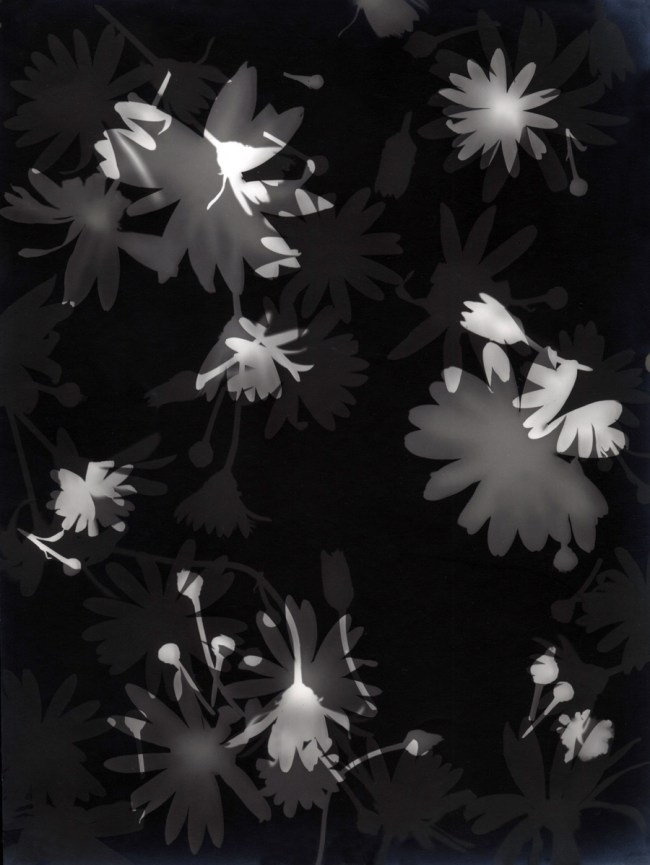
 

Lou Bonin-Tchimoukoff (French, 1906-1979) 'Rayograph #35 - #75' Paris, 1928


Lou Bonin-Tchimoukoff (French, 1906-1979)
Rayograph #35 – #75
Paris, 1928
Gelatin silver print
23.8 x 17.8cm
Courtesy Galerie Johannes Faber, Wien
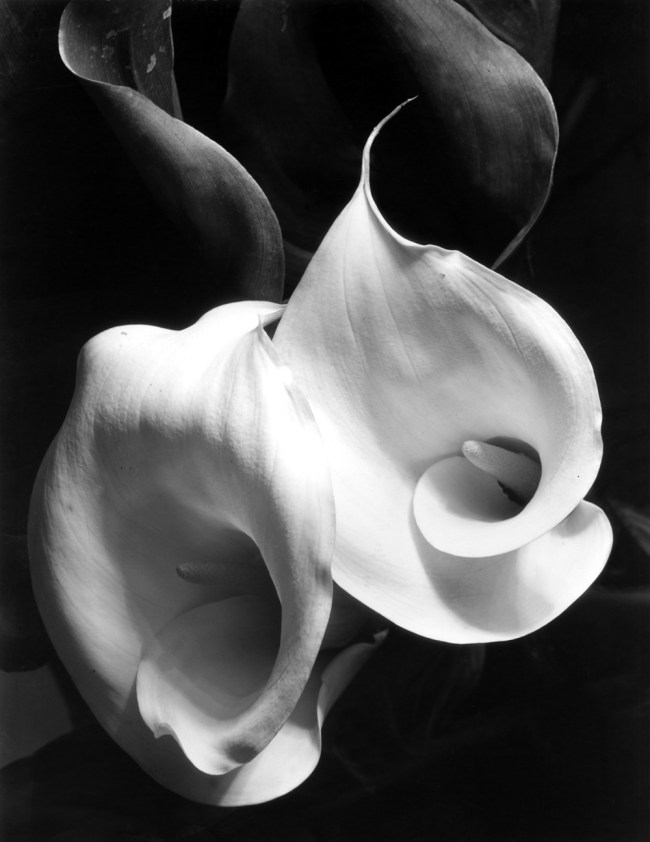
 

Imogen Cunningham (American, 1883-1976) 'Two Callas' c. 1925


Imogen Cunningham (American, 1883-1976)
Two Callas
c. 1925
Gelatin silver print
Estate Prints, 2013
21.5 x 17cm
Austrian Gallery, Museum of Moderne Salzburg
The Imogen Cunningham Trust, 2013
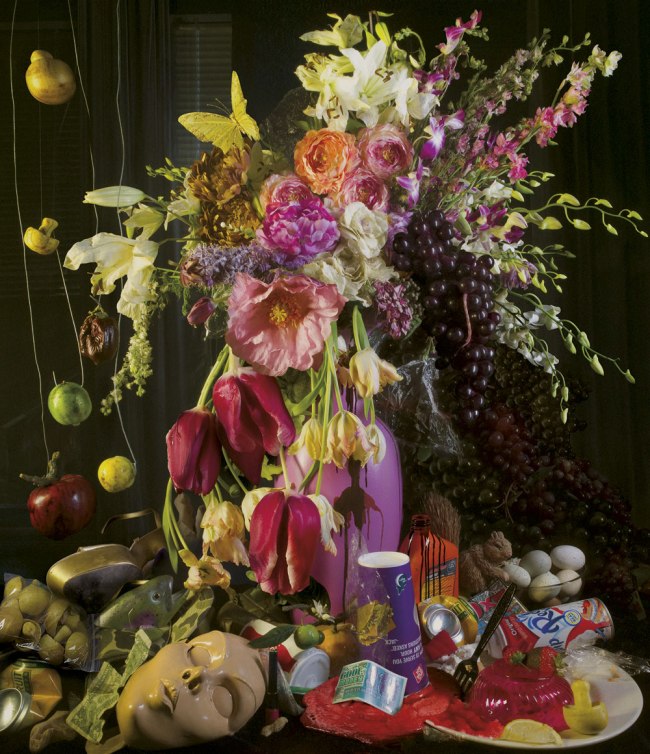
 

David LaChapelle (American, b. 1963) 'Late Summer' 2008-2011
 

David LaChapelle (American, b. 1963)
Late Summer
2008-2011
C-Print
152 x 110cm
Courtesy of the Artist ROBILANT + VOENA, London – Milan


Museum der Moderne Salzburg
Mönchsberg 32
5020 Salzburg, Austria

Opening hours:
Tuesday – Sunday:10.00am – 6.00pm
Wednesday: 10.00am – 8.00pm
Monday: closed

Museum der Moderne Salzburg website

LIKE ART BLART ON FACEBOOK

Back to top

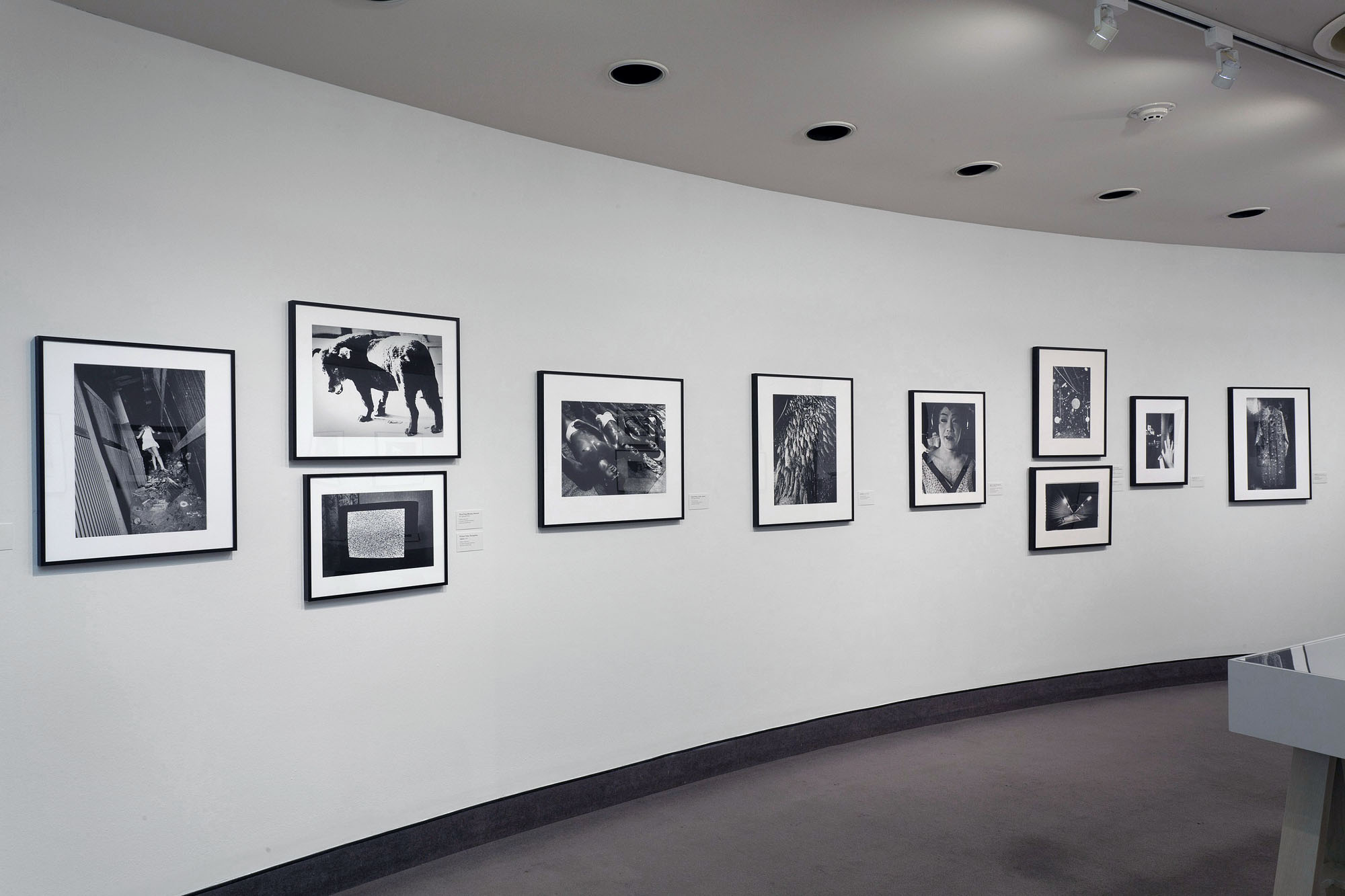
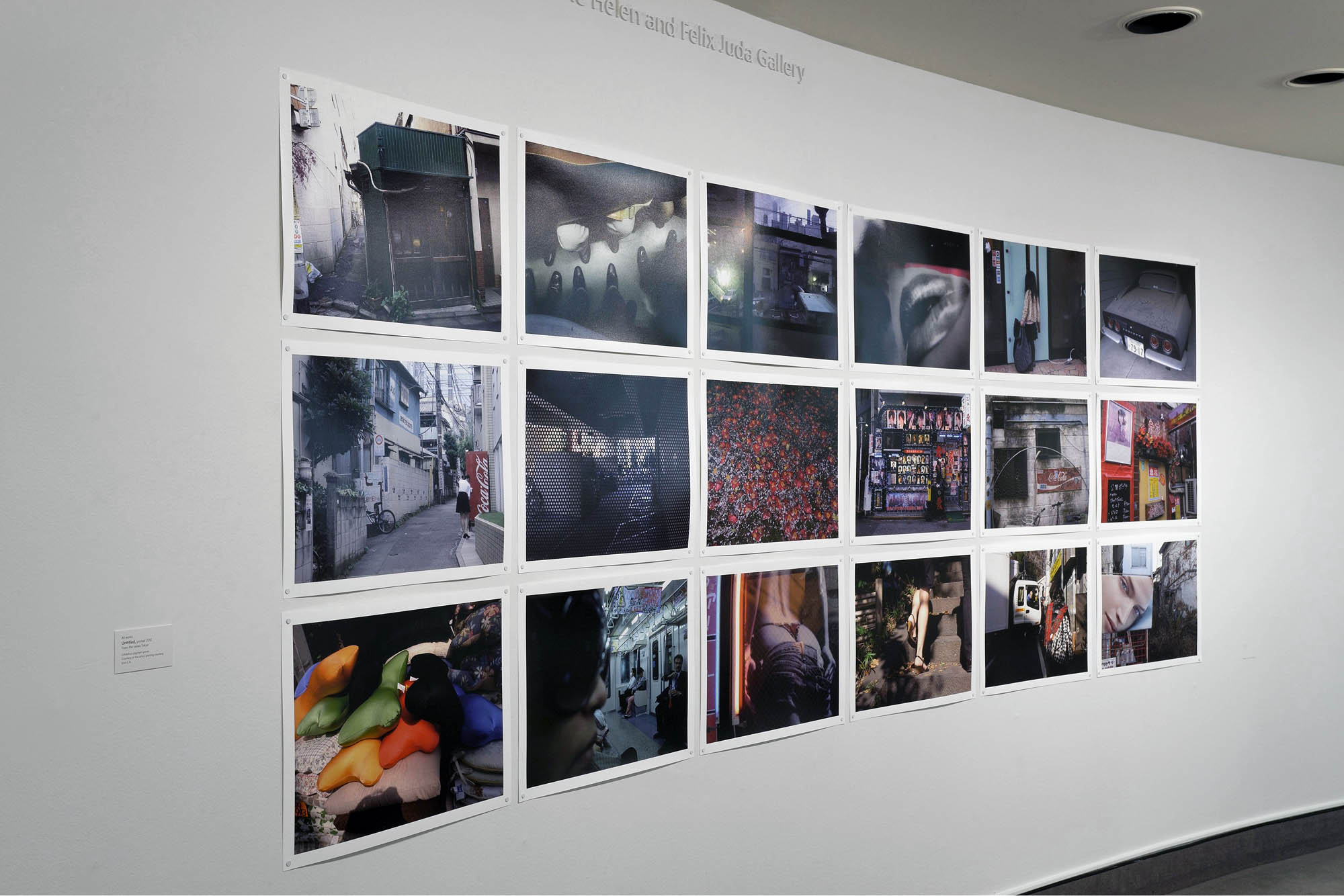
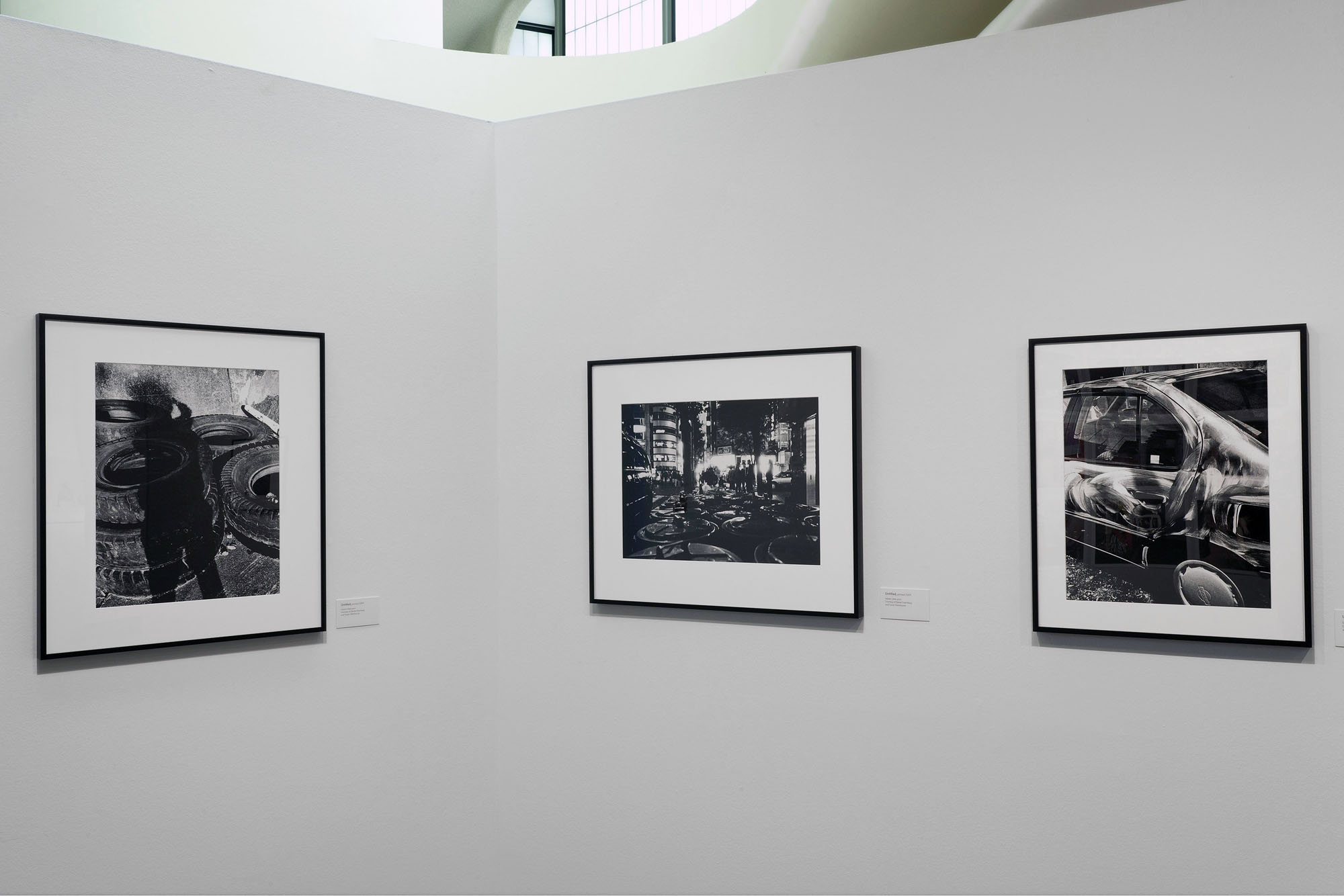
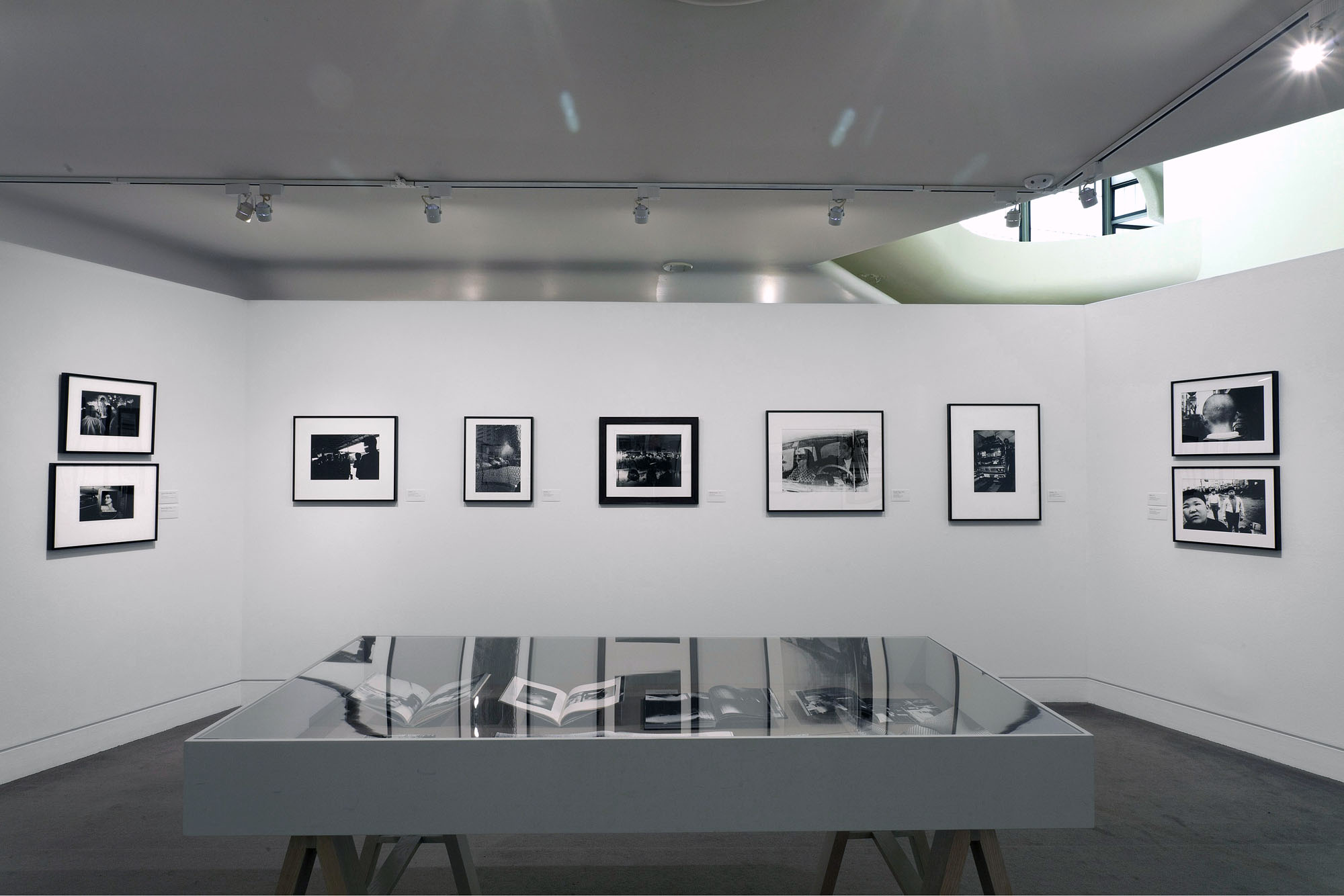
Exhibition: ‘Japan’s Modern Divide: The Photographs of Hiroshi Hamaya and Kansuke Yamamoto’ at the J. Paul Getty Museum, Los Angeles

Exhibition dates: 26th March – 25th August 2013


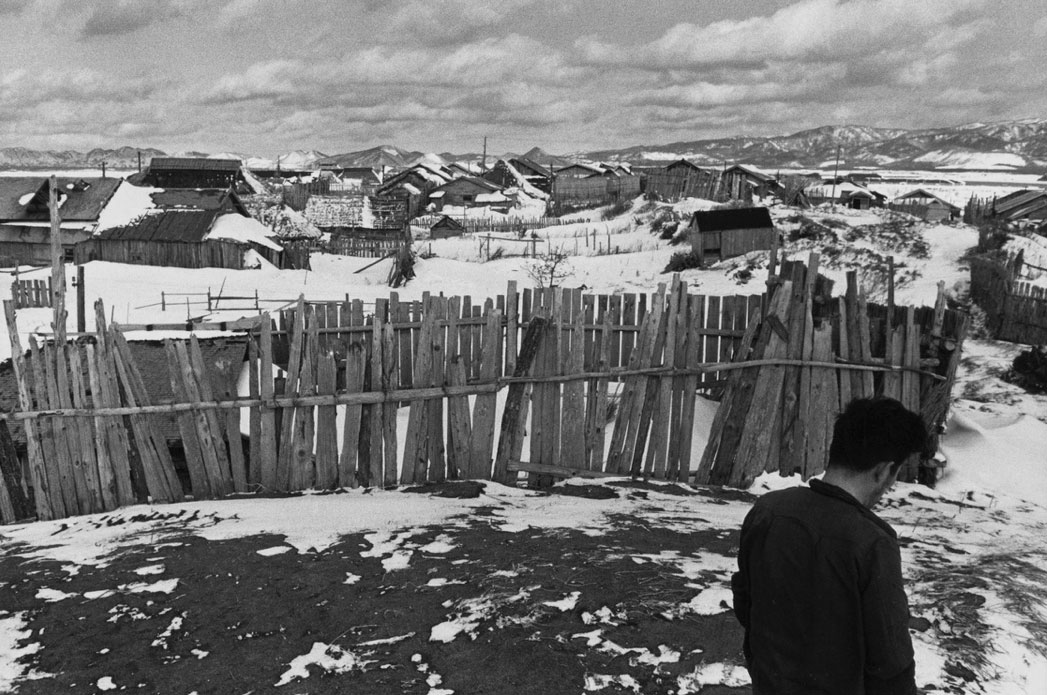
Hiroshi Hamaya (Japanese, 1915-1999) 'The Village up on a Cay, Aomori Prefecture' 1955


Hiroshi Hamaya (Japanese, 1915-1999)
The Village up on a Cay, Aomori Prefecture
1955
Gelatin silver print
The J. Paul Getty Museum, Los Angeles
© Keisuke Katano


According to the press release, “Hamaya focused inward toward rural life on the back coast of Japan, [while] Yamamoto found inspiration in the art of European Surrealists,” the two artists responding differently to upheaval in their country in two different ways.  While Yamamoto is more obviously influenced by the Surrealists, almost becoming the Japanese version of Man Ray, for me Hamaya’s photographs are equally if more subtly influenced by the cultural movement. Observe Woman Planting Rice, Toyama Prefecture (1955, below). I relate this image to the atomisation of bodies during the conflagration of Hiroshima, however subconsciously the artist is expressing this feeling. Similarly, the faceless humans in Rice Harvesting, Yamagata Prefecture (1955, below), blind musicians, disembodied man in a raincoat or poet thinking the void all have an essential quality, that of a disturbing psychological undertow which juxtaposes two more or less distant realities – reality and dream – to form images of great emotional and poetic power.

Dr Marcus Bunyan


Many thankx to the J. Paul Getty Museum, Getty Center for allowing me to publish the photographs in the posting. Please click on the photographs for a larger version of the image.


Hiroshi Hamaya (Japanese, 1915-1999) 'The United States-Japan Security Treaty Protest, Tokyo, May 20, 1960' 1960


Hiroshi Hamaya (Japanese, 1915-1999)
The United States-Japan Security Treaty Protest, Tokyo, May 20, 1960
1960
Gelatin silver print
The J. Paul Getty Museum, Los Angeles
© Keisuke Katano


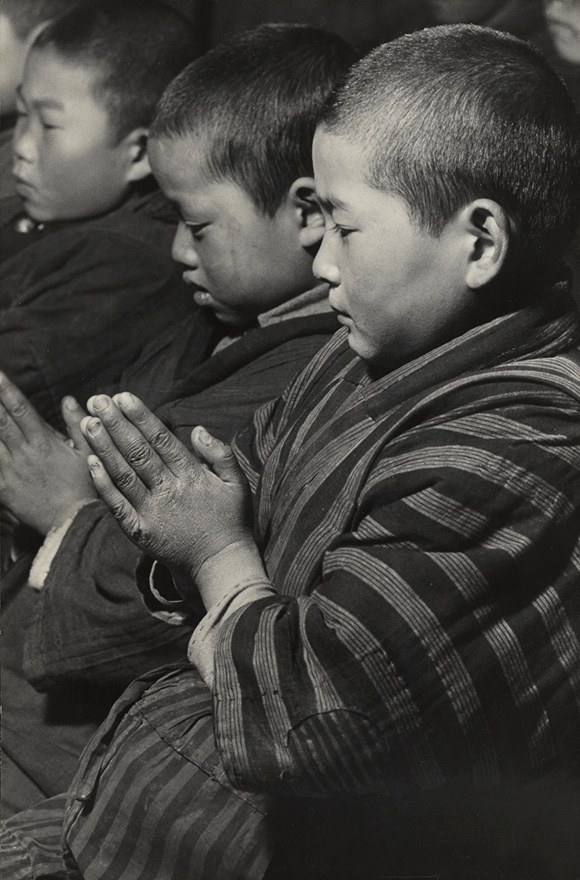
Hiroshi Hamaya (Japanese, 1915-1999) 'New Year's Ritual, Niigata Prefecture' 1940-1946


Hiroshi Hamaya (Japanese, 1915-1999)
New Year’s Ritual, Niigata Prefecture
1940-1946
Gelatin silver print
30.6 x 20.2cm
The J. Paul Getty Museum, Los Angeles
© Keisuke Katano


Japan’s Black Coast

“Knowledge of the back coast, along the Sea of Japan, is somewhat vague to those not living there, and in the minds of most people it is a country obscured by snow. In Japan, the back coast is where the old era still lingers on… The supporting industries of this back coast are primitive – agriculture, forestry, and fishing. The work involved is backbreaking physical labor. A narrow land, a heavy population, and climatic drawbacks invite a vicious circle of poverty. The basic Japanese foods are fish and rice. And they are obtained by these people only through hard labor.”

Hiroshi Hamaya, Ura Nihon (Japan’s Back Coast), 1957

A Chronicle of Grief and Anger

In 1959 the proposed ten-year renewal of the United States-Japan Security Treaty of 1952 meant the continuation of the presence of U.S. troops and the persistence of U.S. political and cultural influence. When Prime Minister Nobusuke Kishi, with the aid of the police, forced the Japanese parliament to ratify the treaty in May 1960, the public upheaval was immense. Hamaya, a pacifist living outside Tokyo, entered the fray with his camera, chronicling the demonstrations. His pictures were published both individually and in the form of a quickly assembled paperback under the title Ikari to kanashimi no kiroku (A Chronicle of Grief and Anger).

Portraiture

Japanese society had a pronounced respect for artists, authors, craftsmen, and scholars. As a freelance photographer, Hamaya was often enlisted to make portraits of them for publication. He compiled a selection of these portraits made since the 1940s for the 1983 book Japanese Scholars and Artists, which included the renowned poet, art historian, and calligrapher Yaichi Aizu. Hamaya also produced a series of genre studies that featured his wife, Asa Hamaya, who was a skilled master of the tea ceremony. After her death in 1985 Hamaya prepared a memorial to her in the form of a portfolio of prints, titled Calendar Days of Asa Hamaya, following the earlier ukiyo-e tradition of woodblock series such as bijin-ga (pictures of beautiful women).

Observing Nature

“I spent three years and four months on an extended walking tour to observe nature in Japan, from the drifting ice packs off the Shiretoko Peninsula to the coral reefs of Okinawa … Nature breathed, sometimes deeply and sometimes violently, with the climatic changes of the seasons, and with the changing face of daily weather, humidity, seasonal winds, and typhoons. In particular, the distribution of plants from the subarctic to the subtropical zones, and of lichen and mosses, was both complex and varied… I came to realise that natural features in Japan, like the nature of its people, were extremely diversified and complex. I intended to investigate this conclusion with my own eyes.”

Hiroshi Hamaya, My Fifty Years of Photography, 1982


Hiroshi Hamaya (Japanese, 1915-1999) 'Woman Planting Rice, Toyama Prefecture' 1955


Hiroshi Hamaya (Japanese, 1915-1999)
Woman Planting Rice, Toyama Prefecture
1955
Gelatin silver print
42.1 x 28cm
The J. Paul Getty Museum, Los Angeles
© Keisuke Katano


Hiroshi Hamaya (Japanese, 1915-1999) 'Rice Harvesting, Yamagata Prefecture' 1955


Hiroshi Hamaya (Japanese, 1915-1999)
Rice Harvesting, Yamagata Prefecture
1955
Gelatin silver print print
29.5 x 19.7cm (11 5/8 x 7 3/4 in.)
The J. Paul Getty Museum, Los Angeles
© Keisuke Katano


Hiroshi Hamaya (Japanese, 1915-1999) 'Blind Musicians, Niigata Prefecture' 1956


Hiroshi Hamaya (Japanese, 1915-1999)
Blind Musicians, Niigata Prefecture
1956
Gelatin silver print print
30.1 x 20cm (11 7/8 x 7 7/8 in.)
The J. Paul Getty Museum, Los Angeles
© Keisuke Katano


Hiroshi Hamaya (Japanese, 1915-1999) 'Man in a Traditional Minobashi Raincoat, Niigata Prefecture' 1956


Hiroshi Hamaya (Japanese, 1915-1999)
Man in a Traditional Minobashi Raincoat, Niigata Prefecture
1956
Gelatin silver print print
30.6 x 19.8cm (12 1/16 x 7 13/16 in.)
The J. Paul Getty Museum, Los Angeles
© Keisuke Katano


Hiroshi Hamaya (Japanese, 1915-1999) 'Yaichi Aizu, Poet, Calligrapher, and Japanese Art Critic' 1947


Hiroshi Hamaya (Japanese, 1915-1999)
Yaichi Aizu, Poet, Calligrapher, and Japanese Art Critic
1947
Gelatin silver print print
24 x 16cm (9 7/16 x 6 5/16 in.)
Estate of Hiroshi Hamaya, Oiso, Japan
© Keisuke Katano


The Taishō era (1912-1926) was a brief but dynamic period in Japan’s history that ushered in a modern state with increased industrialisation, shifting political parties, radical fashions, and liberal thinking in many areas. However, this era of heightened experimentation ended with the arrival of an international depression, the promotion of ultranationalism, and the country’s entry into what would become the Greater East Asia War.

Reflecting both sides of this dramatic transition, two disparate representations of modern Japan will be displayed together in Japan’s Modern Divide: The Photographs of Hiroshi Hamaya and Kansuke Yamamoto, on view March 26 – August 25, 2013, at the J. Paul Getty Museum, Getty Center. Curated by Judith Keller, senior curator of photographs, and Amanda Maddox, assistant curator of photographs, the exhibition includes photographs from the Getty Museum’s permanent collection, the Toyko Metropolitan Museum of Photography, the estate of Hiroshi Hamaya, the Nagoya City Art Museum, and other public and private lenders.

Born during the Taishō era, photographers Hiroshi Hamaya (1915-1999) and Kansuke Yamamoto (1914-1987) responded to Japan’s rapidly-changing sociopolitical climate in very different ways. While Hamaya focused inward toward rural life on the back coast of Japan, Yamamoto found inspiration in the art of European Surrealists. As the ebb and flow of Japan’s political, economic, and social structures persisted across the 20th century, Hamaya and Yamamoto continued to pursue divergent paths, thus embodying both sides of modern Japanese life: the traditional and the Western, the rural and the urban, the oriental and the occidental.

“Much is known about the Surrealists living and working in Europe, as well as the celebrated documentary tradition of 20th-century photography, but the Japanese artists who embraced these movements remain relatively unknown in the West,” says Timothy Potts, director of the J. Paul Getty Museum. “This exhibition illuminates the extraordinary work of two artists who responded to upheaval in their country in two different, but equally powerful ways.”

Hiroshi Hamaya

The son of a detective, Hamaya grew up in Tokyo’s Ueno neighbourhood during the rise and decline of the Taishō era. After attending Kanto Junior College, he began his photographic career by taking aerial images for the Practical Aeronautical Institute. He later photographed downtown Tokyo from street level, and provided images of daily city life and local events to a number of magazines. In 1939, an assignment that took him to Ura Nihon, or the rural back coast of the Sea of Japan, changed his view of photography and society.

Known for its unforgiving winter snowstorms and the difficult lives of its impoverished inhabitants, Ura Nihon was a mystery to most of Japan and the world. Moved by the customs and lifestyles of a much older era, Hamaya shifted from journalism toward a more humanistic and ethnographic approach to photography, capturing the everyday life of the region’s residents. This included documenting labourers in fields and at sea, as fish and rice were the primary sources of nourishment throughout the year.

From 1940 to 1955 Hamaya pursued a long-term personal interest in the region of Echigo (now known as Niigata Prefecture). He recorded the people, traditions, and landscape of a district that was, at the time, Japan’s chief rice-producing region in spite of a four-month long snow season. Among his many subjects, Hamaya focused on the winter in Kuwatoridani, a small agricultural village that practiced elaborate, long-standing New Year’s Eve rituals. In New Year’s Ritual, Niigata Prefecture (1940-1946), boys in the village are seated with their hands clasped and their eyes closed in prayer. The close-up of the boys’ faces in deep concentration emphasises the respect for customs of the region.

In late 1959, the proposed ten-year renewal of the United States-Japan Security Treaty of 1952 raised doubts about Japan’s sovereignty and its future prosperity. When Prime Minister Nobusuke Kishi, with the aid of police, forced the Japanese parliament to ratify the treaty in May 1960, the political upheaval was immense. While Hamaya was a pacifist, he felt obligated to return to his journalistic roots and entered the fray with his camera. He chronicled the demonstrations day by day, sometimes hour by hour.

“These demonstrations profoundly affected Hamaya, causing him, in the 1960s, to turn from the social landscape to an investigation of nature,” explains Judith Keller. “His disillusionment with Japan’s political apparatus provoked a rejection of the human subject. Much of the work he created in his late career depicts the volcanoes, seas, mountains, forests, and other natural wonders of Japan and other small island nations.”

Hamaya’s career also included portraiture of noted artists and scholars. As a freelance photographer, he was often enlisted to make portraits of well-known men and women, and in 1983 published Japanese Scholars and Artists, a book that included prominent novelist Junichiro Tanizaki, woodcut artist Shiko Manakata, literary critic Kenichi Yoshida, and renowned poet, art historian, and calligrapher Yaichi Aizu. He also documented the daily life of his beloved wife, Asa, and upon her death in 1985 created a portfolio of these sensitive photographs, Calendar Days of Asa Hamaya.

Kansuke Yamamoto

Kansuke Yamamoto (1914-1987) learned about photography from his father, an amateur pictorialist photographer and owner of the first photo supply store in the city of Nagoya. His interest in photography developed at a time when two movements based on experimentation and new modes of expression – Shinkō Shashin (New Photography) and Zen’ei Shashin (avant-garde photography) – were dominant. However, it was Surrealism – particularly Surrealist artists and writers such as René Magritte, Paul Éluard, Yves Tanguy, and Man Ray that appears to have made the most profound impact on his work.

Yamamoto was an influential figure in the avant-garde photography movement in Japan in the 1930s, helping to establish the group Nagoya Foto Avant-Garde by the end of that decade. In 1938 he created a journal, Yoru no Funsui (The Night’s Fountain), which promoted Surrealist poems, literature, ideas, and art in Japanese.

His first photographs date to the early 1930s and reveal an interest in myriad techniques and subjects, including abstract architectural studies, still life, and collage. From the outset, he created work suffused with mystery, provocation, and humour. He often utilised photography as a means to address controversial issues or express avant-garde ideas. For example, in Buddhist Temple’s Birdcage (1940), the telephone enclosed in the cage is possibly a metaphor for the control exercised by the Japanese government during the Showa Era (1926-1989), a theme that reappears in work produced throughout his career. The experience of being interrogated by the Tokkō (Thought Police) in 1939 for his journal, Yoru no Funsui, and its potentially subversive content made a profound impact on Yamamoto, but never deterred his avant-garde spirit.

Yamamoto remained part of the artistic vanguard in Japan during the 1940s and 1950s. He was a member of VOU, a club founded by poet Katue Kitasono that organised exhibitions and published a journal promoting visual “plastic” poetry, photography, literature, and other arts. In 1947 Yamamoto founded VIVI, a collective in Nagoya that allowed further dissemination and promotion of avant-garde ideologies. Yamamoto continued to produce innovative work during this period, experimenting with colour photography, combination printing, photograms, and sculpture.

“At the end of his career in the 1970s, Yamamoto maintained his ardent nonconformist spirit, employing art as a means of criticism, dialogue, and rebellion,” explains Amanda Maddox. “He never failed to generate provocative imagery in an effort to represent his convictions concerning war, liberty, and avant-garde ideologies.”

Press release from the J. Paul Getty Museum website


Kansuke Yamamoto (Japanese, 1914-1987) 'My Thin-aired Room' 1956


Kansuke Yamamoto (Japanese, 1914-1987)
My Thin-aired Room
1956
Gelatin silver print print
34.9 x 42.9cm (13 3/4 x 16 7/8 in.)
Private collection, entrusted to Tokyo Metropolitan Museum of Photography
© Toshio Yamamoto


Kansuke Yamamoto (Japanese, 1914-1987) 'Rose and Shovel' 1956


Kansuke Yamamoto (Japanese, 1914-1987)
Rose and Shovel
1956
Gelatin silver print print
31.9 x 34.9cm (12 9/16 x 13 3/4 in.)
© Toshio Yamamoto
Private collection, entrusted to Tokyo Metropolitan Museum of Photography


Kansuke Yamamoto (Japanese, 1914-1987) 'A Forgotten Person' 1958


Kansuke Yamamoto (Japanese, 1914-1987)
A Forgotten Person
1958
Chromogenic print
46.2 x 33cm (18 3/16 x 13 in.)
© Toshio Yamamoto
The J. Paul Getty Museum, Los Angeles


Kansuke Yamamoto (Japanese, 1914-1987) 'Stapled Flesh' 1949


Kansuke Yamamoto (Japanese, 1914-1987)
Stapled Flesh
1949
Gelatin silver print print
31.1 x 24.8cm (12 1/4 x 9 3/4 in.)
© Toshio Yamamoto
From the Collection of Gloria Katz and Willard Huyck


Kansuke Yamamoto (Japanese, 1914-1987) 'Buddhist Temple's Bird Cage' 1940


Kansuke Yamamoto (Japanese, 1914-1987)
Buddhist Temple’s Bird Cage
1940
Gelatin silver print
© Toshio Yamamoto
Private collection, entrusted to Tokyo Metropolitan Museum of Photography


Kansuke Yamamoto (Japanese, 1914-1987) 'Butterfly' 1970


Kansuke Yamamoto (Japanese, 1914-1987)
Butterfly
1970
Gelatin silver print print
16.4 x 11.4cm (6 7/16 x 4 1/2 in.)
© Toshio Yamamoto
Private collection, entrusted to Tokyo Metropolitan Museum of Photography


Kansuke Yamamoto (Japanese, 1914-1987) 'A Chronicle of Drifting' 1949


Kansuke Yamamoto (Japanese, 1914-1987)
A Chronicle of Drifting
1949
Collage print
30 x 24.8cm (11 13/16 x 9 3/4 in.)
© Toshio Yamamoto
Private collection, entrusted to Tokyo Metropolitan Museum of Photography


The J. Paul Getty Museum
1200 Getty Center Drive
Los Angeles, California 90049

Opening hours:
Tues – Friday 10am – 5.30pm
Saturday 10am – 8pm
Sunday 10am – 5.30pm
Monday closed

The J. Paul Getty Museum website

LIKE ART BLART ON FACEBOOK

Back to top

Exhibition: ‘The Shaping of New Visions: Photography, Film, Photobook’ at the Museum of Modern Art (MoMA), New York

Exhibition dates: 18th April 2012 – 29th April 2013


Josef Albers (German, 1888-1976) 'Marli Heimann, Alle während 1 Stunde (Marli Heimann, All During an Hour)' 1931


Josef Albers (German, 1888-1976)
Marli Heimann, Alle während 1 Stunde (Marli Heimann, All During an Hour)
1931
Twelve gelatin silver prints
Overall 11 11/16 x 16 7/16″ (29.7 x 41.8cm)
The Museum of Modern Art, New York
Gift of The Josef Albers Foundation, Inc.
© 2012 The Josef and Anni Albers Foundation / Artists Rights Society (ARS), New York


Another fascinating exhibition and a bumper posting to boot (pardon the pun!)

A panoply of famous photographers along with a few I had never heard of before (such as Georges Hugnet) are represented in this posting. As the press blurb states, through “key photographic projects, experimental films, and photobooks, The Shaping of New Visions offers a critical reassessment of photography’s role in the avant-garde and neo-avant-garde movements, and in the development of contemporary artistic practices.”

The large exhibition seems to have a finger in every pie, wandering from the birth of the 20th-century modern metropolis, through “New Vision” photography in the 1920s, experimental film, Surrealism, Constructivism and New Objectivity, Dada, Rayographs, photographic avant-gardism, photocollages, photomontages, street photography of the  1960s, colour slide projection performance, through New Topographics, self-published books, and conceptual photography, featuring works that reevaluate the material and contextual definitions of photography. “The final gallery showcases major installations by a younger generation of artists whose works address photography’s role in the construction of contemporary history.”

Without actually going to New York to see the exhibition (I wish!!) – from a distance it does seem a lot of ground to cover within 5 galleries even if there are 250 works. You could say this is a “meta” exhibition, drawing together themes and experiments from different areas of photography with rather a long bow. Have a look at the The Shaping of New Visions exhibition checklist to see the full listing of what’s on show and you be the judge. There are some rare and beautiful images that’s for sure. From the photographs in this posting I would have to say the distorted “eyes” have it…

Dr Marcus Bunyan


Many thankx to MoMA for allowing me to publish the photographs in the posting. Please click on the photographs for a larger version of the image.


Paul Strand (American, 1890-1976) and Charles Sheeler (American, 1883-1965)
Manhatta
1921
Film
Courtesy of the Museum of Modern Art, New York
© Aperture Foundation Inc., Paul Strand Archive


In 1920 Paul Strand and artist Charles Sheeler collaborated on Manhatta, a short silent film that presents a day in the life of lower Manhattan. Inspired by Walt Whitman’s book Leaves of Grass, the film includes multiple segments that express the character of New York. The sequences display a similar approach to the still photography of both artists. Attracted by the cityscape and its visual design, Strand and Sheeler favoured extreme camera angles to capture New York’s dynamic qualities. Although influenced by Romanticism in its view of the urban environment, Manhatta is considered the first American avant-garde film.


Man Ray (American, 1890-1976) 'Rayograph' 1922


Man Ray (American, 1890-1976)
Rayograph
1922
Gelatin silver print (photogram)
9 3/8 x 11 3/4″ (23.9 x 29.9cm)
The Museum of Modern Art, New York
Gift of James Thrall Soby
© 2012 Man Ray Trust / Artists Rights Society (ARS), New York / ADAGP, Paris


Aleksandr Rodchenko (Russian, 1891-1956) 'Sovetskoe foto (Soviet Photo)' No. 10 October 1927


Aleksandr Rodchenko (Russian, 1891-1956)
Sovetskoe foto (Soviet Photo) No. 10
October 1927
Letterpress
10 3/8 x 7 1/4″ (26.3 x 18.4cm)
Publisher: Ogonek, Moscow
The Museum of Modern Art, New York. Gift of the Judith Rothschild Foundation


August Sander (German, 1876-1964) 'Das rechte Auge meiner Tochter Sigrid (The Right Eye of My Daughter Sigrid)' 1928


August Sander (German, 1876-1964)
Das rechte Auge meiner Tochter Sigrid (The Right Eye of My Daughter Sigrid)
1928
Gelatin silver print
7 1/16 x 9″ (17.9 x 22.9cm)
The Museum of Modern Art, New York
Gift of the photographer
© 2012 Artists Rights Society (ARS), New York / VG Bild-Kunst, Bonn


Claude Cahun (French, 1894-1954) 'Untitled' c. 1928


Claude Cahun (French, 1894-1954)
Untitled
c. 1928
Gelatin silver print
4 9/16 x 3 1/2″ (10 x 7.6cm)
The Museum of Modern Art, New York
Purchase and anonymous promised gift
© 2012 Estate of Claude Cahun


Dziga Vertov (Russian, 1896-1954) 'Chelovek s kinoapparatom (Man with a Movie Camera)' (still) 1929


Dziga Vertov (Russian, 1896-1954)
Chelovek s kinoapparatom (Man with a Movie Camera) (still)
1929
35mm film
65 min ( black and white, silent)
The Museum of Modern Art, New York
Department of Film


Excerpt from a camera operators diary
ATTENTION VIEWERS:
This film is an experiment in cinematic communication of real events
Without the help of Intertitles
Without the help of a story
Without the help of theatre
This experimental work aims at creating a truly international language of cinema based on its absolute separation from the language of theatre and literature


Man with a Movie Camera (Russian: Человек с киноаппаратом (Chelovek s kinoapparatom) is an experimental 1929 silent documentary film, with no story and no actors by Soviet-Russian director Dziga Vertov, edited by his wife Elizaveta Svilova.

Vertov’s feature film, produced by the film studio VUFKU, presents urban life in the Soviet cities of Kiev, Kharkov, Moscow and Odessa. From dawn to dusk Soviet citizens are shown at work and at play, and interacting with the machinery of modern life. To the extent that it can be said to have “characters,” they are the cameramen of the title, the film editor, and the modern Soviet Union they discover and present in the film.

This film is famous for the range of cinematic techniques Vertov invents, deploys or develops, such as double exposure, fast motion, slow motion, freeze frames, jump cuts, split screens, Dutch angles, extreme close-ups, tracking shots, footage played backwards, stop motion animations and self-reflexive visuals (at one point it features a split-screen tracking shot; the sides have opposite Dutch angles).

In the British Film Institute’s 2012 Sight & Sound poll, film critics voted Man with a Movie Camera the 8th best film ever made. In 2014 Sight & Sound also named it the best documentary of all time.

Text from the YouTube website


László Moholy-Nagy (Hungarian, 1895-1946)
Ein Lichtspiel: schwarz weiss grau (A Lightplay: Black White Gray) (excerpt)
1930


This short film made by László Moholy-Nagy is based on the shadow patterns created by his Light-Space Modulator, an early kinetic sculpture consisting of a variety of curved objects in a carefully choreographed cycle of movements. Created in 1930, the film was originally planned as the sixth and final part of a much longer work depicting the new space-time.


Raoul Hausmann (Austrian, 1886-1971) 'Untitled' February 1931


Raoul Hausmann (Austrian, 1886-1971)
Untitled
February 1931
Gelatin silver print
5 3/8 x 4 7/16″ (13.6 x 11.2cm)
The Museum of Modern Art, New York
Thomas Walther Collection Gift of Thomas Walther
© 2012 Raoul Hausmann / Artists Rights Society (ARS), New York / ADAGP, Paris


Georges Hugnet (French, 1906-1974) 'Untitled [Surrealist beach collage]' c. 1935


Georges Hugnet (French, 1906-1974)
Untitled [Surrealist beach collage]
c. 1935
Collage of photogravure, lithograph, chromolithograph and gelatin silver prints on gelatin silver print
11 7/8 x 9 7/16″ (30.2 x 24cm)
The Museum of Modern Art, New York
Gift of Timothy Baum in memory of Harry H. Lunn, Jr.


Grete Stern (German-Argentinian, 1904-1999) No. 1 from the series 'Sueños' (Dreams) 1949


Grete Stern (German-Argentinian, 1904-1999)
No. 1 from the series Sueños (Dreams)
1949
Gelatin silver print
10 1/2 x 9″ (26.6 x 22.9cm)
Latin American and Caribbean Fund through gift of Marie-Josée and Henry R. Kravis in honor of Adriana Cisneros de Griffin
© 2012 Horacio Coppola


Berenice Abbott (American, 1898-1991) 'Portrait of the Artist as a Young Woman' Negative c. 1930/Distortion c. 1950


Berenice Abbott (American, 1898-1991)
Portrait of the Artist as a Young Woman
Negative c. 1930/Distortion c. 1950
Gelatin silver print
12 3/4 x 10 1/8″ (32.6 x 25.7cm)
The Museum of Modern Art, New York
Frances Keech Fund in honor of Monroe Wheeler
© 2012 Berenice Abbott/Commerce Graphics


William Klein (American, 1928-2022) 'Gun, Gun, Gun, New York' 1955


William Klein (American, 1928-2022)
Gun, Gun, Gun, New York 
1955
Gelatin silver print
10 1/4 x 13 5/8″ (26 x 34.6cm)
The Museum of Modern Art, New York
Gift of Arthur and Marilyn Penn


Martha Rosler (American, b. 1943) 'Red Stripe Kitchen' 1967-1972


Martha Rosler (American, b. 1943)
Red Stripe Kitchen
1967-1972
From the series Bringing the War Home: House Beautiful 
Pigmented inkjet print, printed 2011
23 3/4 x 18 1/8″ (60.3 x 46cm)
The Museum of Modern Art, New York
Purchase and The Modern Women’s Fund


Eleanor Antin (American, b. 1935) '100 Boots' 1971-1973

Eleanor Antin (American, b. 1935) '100 Boots' 1971-1973

Eleanor Antin (American, b. 1935) '100 Boots' 1971-1973


Eleanor Antin (American, b. 1935)
100 Boots
1971-1973
Photographed by Philip Steinmetz
Halftone reproductions on 51 cards
4 1/2 x 7 in. each
Courtesy Ronald Feldman Fine Arts, New York
© Eleanor Antin


The Museum of Modern Art draws from its collection to present the exhibition The Shaping of New Visions: Photography, Film, Photobook on view from April 18, 2012, to April 29, 2013. Filling the third-floor Edward Steichen Photography Galleries, this installation presents more than 250 works by approximately 90 artists, with a focus on new acquisitions and groundbreaking projects by Man Ray, László Moholy-Nagy, Aleksandr Rodchenko, Germaine Krull, Dziga Vertov, Gerhard Rühm, Helen Levitt, Robert Frank, Daido Moriyama, Robert Heinecken, Edward Ruscha, Martha Rosler, Bernd and Hilla Becher, Philip-Lorca diCorcia, Paul Graham, and The Atlas Group / Walid Raad. The exhibition is organised by Roxana Marcoci, Curator, Department of Photography, The Museum of Modern Art.

Punctuated by key photographic projects, experimental films, and photobooks, The Shaping of New Visions offers a critical reassessment of photography’s role in the avant-garde and neo-avant-garde movements, and in the development of contemporary artistic practices. The shaping of what came to be known as “new vision” photography in the 1920s bore the obvious influence of “lens-based” and “time-based” works. The first gallery begins with photographs capturing the birth of the 20th-century modern metropolis by Berenice Abbott, Edward Steichen, and Alfred Stieglitz, presented next to the avant-garde film Manhatta (1921), a collaboration between Paul Strand and Charles Sheeler.

The 1920s were a period of landmark constructions and scientific discoveries all related to light – from Thomas Edison’s development of incandescent light to Albert Einstein’s theory of relativity and light speed. Man Ray began experimenting with photograms (pictures made by exposing objects placed on photosensitive paper to light) – which he renamed “rayographs” after himself – in which light was both the subject and medium of his work. This exhibition presents Man Ray’s most exquisite rayographs, alongside his first short experimental film, Le Retour à la raison (Return to Reason, 1923), in which he extended the technique to moving images.

In 1925, two years after he joined the faculty of the Bauhaus school in Weimar Germany, László Moholy-Nagy published his influential book Malerei, Fotografie, Film (Painting, Photography, Film) – part of a series that he coedited with Bauhaus director Walter Gropius – in which he asserted that photography and cinema are heralding a “culture of light” that has overtaken the most innovative aspects of painting. Moholy-Nagy extolled photography and, by extension, film as the quintessential medium of the future. Moholy-Nagy’s interest in the movement of objects and light through space led him to construct Light-Space Modulator, the subject of his only abstract film, Ein Lichtspiel: schwarz weiss grau (A Lightplay: Black White Gray, 1930), which is presented in the exhibition next to his own photographs and those of Florence Henri.

The rise of photographic avant-gardism from the 1920s to the 1940s is traced in the second gallery primarily through the work of European artists. A section on Constructivism and New Objectivity features works by Paul Citroën, Raoul Hausmann, Florence Henri, Germaine Krull, El Lissitzky, Albert Renger-Patzsch, and August Sander. A special focus on Aleksandr Rodchenko underscores his engagement with the illustrated press through collaborations with Vladimir Mayakovsky and Sergei Tretyakov on the covers and layouts of Novyi LEF, the Soviet avant-garde journal of the “Left Front of the Arts,” which popularised the idea of “factography,” or the manufacture of innovative aesthetic facts through photomechanical processes. Alongside Rodchenko, film director Dziga Vertov redefined the medium of still and motion-picture photography with the concept of kino-glaz (cine-eye), according to which the perfectible lens of the camera led to the creation of a novel perception of the world. The exhibition features the final clip of Vertov’s 1929 experimental film Chelovek s kinoapparatom (Man with a Movie Camera), in which the eye is superimposed on the camera lens to form an indivisible apparatus fit to view, process, and convey reality, all at once. This gallery also features a selection of Dada and Surrealist works, including rarely seen photographs, photocollages, and photomontages by Hans Bellmer, Claude Cahun, George Hugnet, André Kertész, Jan Lukas, and Grete Stern, alongside such avant-garde publications as Documents and Littérature.

The third gallery features artists exploring the social world of the postwar period. On view for the first time is a group of erotic and political typo-collages by Gerhard Rühm, a founder of the Wiener Gruppe (1959-1960), an informal group of Vienna-based writers and artists who engaged in radical visual dialogues between pictures and texts. The rebels of street photography – Robert Frank, William Klein, Daido Moriyama, and Garry Winogrand – are represented with a selection of works that refute the then prevailing rules of photography, offering instead elliptical, off-kilter styles that are as personal and controversial as are their unsparing views of postwar society. A highlight of this section is the pioneering slide show Projects: Helen Levitt in Color (1971-1974). Capturing the lively beat, humour, and drama of New York’s street theatre, Levitt’s slide projection is shown for the first time at MoMA since its original presentation at the Museum in 1974.

Photography’s tradition in the postwar period continues in the fourth gallery, which is divided into two sections. One section features “new topographic” works by Robert Adams, Bernd and Hilla Becher, Stephen Shore, and Joel Sternfeld, along with a selection of Edward Ruscha’s self-published books, in which the use of photography as mapmaking signals a conceptual thrust. This section introduces notable works from the 1970s by artists who embraced photography not just as a way of describing experience, but as a conceptual tool. Examples include Eleanor Antin’s 100 Boots (1971-1973), Mel Bochner’s Misunderstandings (A theory of photography) (1970), VALIE EXPORT’s Einkreisung (Encirclement) (1976), On Kawara’s I Got Up… (1977), and Gordon Matta-Clark’s Splitting (1974), all works that reevaluate the material and contextual definitions of photography. The other section features two major and highly experimental recent acquisitions: Martha Rosler’s political magnum opus Bringing the War Home (1967-1972), developed in the context of her anti-war and feminist activism, for which the artist spliced together images of domestic bliss clipped from the pages of House Beautiful with grim pictures of the war in Vietnam taken from Life magazine; and Sigmar Polke’s early 1970s experiments with multiple exposures, reversed tonal values, and under-and-over exposures, which underscore the artist’s idea that “a negative is never finished.” The unmistakably cinematic turn that photography takes in the 1980s and early 1990s is represented with a selection of innovative works ranging from Robert Heinecken’s Recto/Verso (1988) to Philip-Lorca diCorcia’s breakthrough Hustler series (1990-1992).

The final gallery showcases major installations by a younger generation of artists whose works address photography’s role in the construction of contemporary history. Tapping into forms of archival reconstitution, The Atlas Group / Walid Raad is represented with My Neck Is Thinner Than a Hair: Engines (1996-2004), an installation of 100 pictures of car-bomb blasts in Beirut during the Lebanese civil war (1975-1990) that provokes questions about the factual nature of existing records, the traces of war, and the symptoms of trauma. A selection from Harrell Fletcher’s The American War (2005) brings together bootlegged photojournalistic pictures of the U.S. military involvement in Southeast Asia, throwing into sharp focus photography’s role as a documentary and propagandistic medium in the shaping of historical memory. Jules Spinatsch’s Panorama: World Economic Forum, Davos (2003), made of thousands of still images and three surveillance video works, chronicles the preparations for the 2003 World Economic Forum, when the entire Davos valley was temporarily transformed into a high security zone. A selection of Paul Graham’s photographs from his major photobook project a shimmer of possibility (2007), consisting of filmic haikus about everyday life in today’s America, concludes the exhibition.

Press release from the MoMA website


Daido Moriyama. 'Entertainer on Stage, Shimizu' 1967


Daido Moriyama (Japanese, b. 1938)
Entertainer on Stage, Shimizu
1967
Gelatin silver print
18 7/8 x 28″ (48.0 x 71.2cm)
The Museum of Modern Art, New York
Gift of the photographer
© 2012 Daido Moriyama


Martha Rosler (American, b. 1943) 'Hands Up / Makeup' 1967-1972


Martha Rosler (American, b. 1943)
Hands Up / Makeup
1967-1972
From the series Bringing the War Home: House Beautiful
Pigmented inkjet print, printed 2011
23 3/4 x 13 15/16″ (60.4 x 35.4cm)
The Museum of Modern Art, New York
Purchase and The Modern Women’s Fund
© 2012 Martha Rosler


Helen Levitt (American, 1913-2009) 'Projects: Helen Levitt in Color' 1971-1974 (detail)

Helen Levitt (American, 1913-2009) 'Projects: Helen Levitt in Color' 1971-1974 (detail)


Helen Levitt (American, 1913-2009)
Projects: Helen Levitt in Color (detail)
1971-1974
40 colour slides shown in continuous projection
Originally presented at The Museum of Modern Art, New York, September 26-October 20, 1974


On Kawara (Japanese, 1932-2014) 'I Got Up At...' 1974-1975


On Kawara (Japanese, 1932-2014)
I Got Up At…
1974-1975
(Ninety postcards with printed rubber stamps)


The semi autobiographical I Got Up At… by On Kawara is a series of postcards sent to John Baldessari. Each card was sent from his location that morning detailing the time he got up. The time marked on each card varies drastically from day to day, the time stamped on each card is the time he left his bed as opposed to actually waking up. Kawara’s work often acts to document his existence in time, giving a material form to which is formally immaterial. The series has been repeated frequently sending the cards to a variety of friends and colleagues.


Sigmar Polke (German, 1941-2010) 'Untitled (Mariette Althaus)' c. 1975


Sigmar Polke (German, 1941-2010)
Untitled (Mariette Althaus)
c. 1975
Gelatin silver print (red toned)
9 1/4 x 11 13/16″ (23.5 x 30cm)
The Museum of Modern Art, New York
Acquired through the generosity of Edgar Wachenheim III and Ronald S. Lauder
© 2012 Estate of Sigmar Polke / Artists Rights Society (ARS), New York / VG Bild-Kunst, Bonn, Germany


VALIE EXPORT (Austrian, b. 1940) 'Einkreisung (Encirclement)' 1976


VALIE EXPORT (Austrian, b. 1940)
Einkreisung (Encirclement)
1976
From the series Körperkonfigurationen (Body Configurations)
Gelatin silver print with red ink
14 x 23 7/16″ (35.5 x 59.6cm)
The Museum of Modern Art, New York
Carl Jacobs Fund
© 2012 VALIE EXPORT / Artists Rights Society (ARS), New York / VBK, Austria


Robert Heinecken (American, 1931-2006) 'Recto/Verso #2' 1988


Robert Heinecken (American, 1931-2006)
Recto/Verso #2
1988
Silver dye bleach print
8 5/8 x 7 7/8″ (21.9 x 20cm)
The Museum of Modern Art, New York
Mr. and Mrs. Clark Winter Fund
© 2012 The Robert Heinecken Trust


Philip-Lorca diCorcia (American, b. 1951) 'Marilyn; 28 Years Old; Las Vegas, Nevada; $30' 1990-1992


Philip-Lorca diCorcia (American, b. 1951)
Marilyn; 28 Years Old; Las Vegas, Nevada; $30
1990-1992
Chromogenic colour print
24 x 35 15/16″ (61 x 91.4cm)
The Museum of Modern Art, New York
E.T. Harmax Foundation Fund
© 2012 Philip-Lorca diCorcia, courtesy David Zwirner, New York


Atlas Group, Walid Raad. 'My Neck is Thinner Than a Hair: Engines' 1996-2004 (detail)


Atlas Group, Walid Raad
My Neck is Thinner Than a Hair: Engines (detail)
1996-2004
100 pigmented inkjet prints
9 7/16 x 13 3/8″ (24 x 34cm) each
The Museum of Modern Art, New York
Fund for the Twenty-First Century


The Museum of Modern Art
11 West 53 Street
New York, NY 10019
Phone: (212) 708-9400

Opening hours:
10.30am – 5.30pm
Open seven days a week

MoMA website

LIKE ART BLART ON FACEBOOK

Back to top

Exhibition: ‘Hiroshi Sugimoto. Revolution’ at Museum Brandhorst, Munich

Exhibition dates: 25th October 2012 – 10th February 2013


Installation photograph of 'Hiroshi Sugimoto. Revolution' at Museum Brandhorst, Munich, 2012


Installation photograph of Hiroshi Sugimoto. Revolution at Museum Brandhorst, Munich, 2012
Photo: Haydar Koyupinar
© 2012 Hiroshi Sugimoto


“Water and air. So very commonplace are these substances, they hardly attract 
attention – and yet they vouchsafe our very existence.

The beginnings of life are shrouded in myth: Let there water and air. Living phenomena spontaneously generated from water and air in the presence of light, though that could just as easily suggest random coincidence as a Deity. Let’s just say that there happened to be a planet with water and air in our solar system, and moreover at precisely the right distance from the sun for the temperatures required to coax forth life. While hardly inconceivable that at least one such planet should exist in the vast reaches of universe, we search in vain for another similar example.

Mystery of mysteries, water and air are right there before us in the sea. Every time I view the sea, I feel a calming sense of security, as if visiting my ancestral home; I embark on a voyage of seeing.”

Hiroshi Sugimoto


I have always admired the work of Hiroshi Sugimoto, notably his visually poetic series Seascapes and Theaters. His large format photographs expose time through light in a single frame. Their deeply metaphysical and existential nature may be the ultimate distillation of the constructed form of the photographic landscape. “They are explorations of spiritual and physical boundary as much as an exploration of the phenomenology of the picture plane” (Anon. “Hiroshi Sugimoto – Seascapes,” on the C4 Contemporary Art website no longer available online). Like the movie theatre series (where he captures a whole movie on one single frame of film) the seascapes are about the luminosity of life, the enigmatic existence of body and earth imprinted onto film.

Unfortunately, you can only push an idea so far. Personally I feel this latest series of conceptual twiddles, Revolution (1990 / 2012, publicly displayed here for the first time) fall as flat as a tack. Sugimoto, in his use of the term “revolution”, refers to the “original meaning of the term in the sense of a “suspension” or “overturning of previously accepted laws or practices through new insights or methods.” The reorientation of the referent – of the world, in the world – is supposed to dissipate the Romantic image of the night, unsettling the certainty of the truth of the photograph as a visual record of the world. The photographs’ verisimilitude is supposedly turned on its head, transformed into abstract configurations of light and space through the conceptualisation of the artist. No new narratives are created. In fact the photographs could almost be called post-narrative, essential compositions that emphasise the insular loneliness of modern man’s experiences.

Perhaps they look better in the flesh, or better in a group; perhaps they have more “presence” in reality than they do in reproduction, for this self-styled “revolution” seems to be more a tinkering at the edges of an idea, not a fully realised body of inner work. This is a body of work in/evolution. Sugimoto’s legendary visualisation (his ability to transcend the photographic medium) which is used to create an iconic vision of a timeless state of consciousness, utterly fails him here. You only have to look at the two horizontal landscape photographs at the bottom of the posting to realise that something has not been (un)thought through with the rest of this work. A simple curve of the earth with attendant clouds and horizon line is all you need to suspend the ritual of photographic performance and referentiality. Another lesson from Minor White might have been in order at the time…

Dr Marcus Bunyan


Many thankx to the Museum Brandhorst for allowing me to publish the photographs in the posting. Please click on the photographs for a larger version of the image.


Hiroshi Sugimoto (Japanese, b. 1948) 'Revolution 001' 1990


Hiroshi Sugimoto (Japanese, b. 1948)
Revolution 001
1990
N. Atlantic Ocean, Newfoundland
Gelatin silver print
94 x 47 inches
© 2012 Hiroshi Sugimoto


Hiroshi Sugimoto (Japanese, b. 1948) 'Revolution 002' 1990


Hiroshi Sugimoto (Japanese, b. 1948)
Revolution 002
1990
N. Atlantic Ocean, Newfoundland
Gelatin silver print
94 x 47 inches
© 2012 Hiroshi Sugimoto


Hiroshi Sugimoto (Japanese, b. 1948) 'Revolution 003' 1990


Hiroshi Sugimoto (Japanese, b. 1948)
Revolution 003
1990
N. Atlantic Ocean, Newfoundland
Gelatin silver print
94 x 47 inches
© 2012 Hiroshi Sugimoto


Hiroshi Sugimoto (Japanese, b. 1948) 'Revolution 005' 1990


Hiroshi Sugimoto (Japanese, b. 1948)
Revolution 005
1990
Irish Sea, Isle of Man
Gelatin silver print
94 x 47 inches
© 2012 Hiroshi Sugimoto


Hiroshi Sugimoto (Japanese, b. 1948) 'Revolution 006' 1990


Hiroshi Sugimoto (Japanese, b. 1948)
Revolution 006
1990
Arctic Ocean, North Cape
Gelatin silver print
94 x 47 inches
© 2012 Hiroshi Sugimoto


Hiroshi Sugimoto is one of the best-known photographic artists of our time. His celebrated international reputation is based on his photography, although in recent years he has become engaged with other genres: architecture, furniture, objects, and fashion all play an increasingly important role in his work. It is primarily his photography however, that important museums from all over the world have collected and displayed.

Sugimoto’s unique accomplishments in his genre contradict the medium’s conventional tasks – to record reality as precisely as possible. In Sugimoto’s work, one is confronted with the formal reduction of conceptual images, in which he addresses fundamental questions of space and time, past and present, art and science, imagination and reality. “I was concerned,” noted the artist in 2002, “with revealing an ancient stage of human memory through the medium of photography. Whether it is individual memory or the cultural memory of mankind itself, my work is about returning to the past and remembering where we came from and how we came about.” His pictures, which leave a lasting impression through their beauty and their auratic effect, interweave Japanese traditions with Western ideas. This East-West dialogue remains characteristic of his work today, which is captivating in its exceptional craftsmanship and strong aesthetic presence, and can exercise an almost magical effect on viewers.

Sugimoto has given this suite of works – publicly displayed here for the first time – the title Revolution, but he reveals a radically different understanding of the term in the fifteen large-format works. It is not political or social unrest to which Sugimoto alludes, but rather to the original meaning of the term in the sense of a “suspension” or “overturning” of previously accepted laws or practices through new insights or methods.
 From a technical perspective, the nature of the work is undeniably photographic. But in terms of how they are perceived and understood, these are pictures that would be more readily ascribed to a painterly or conceptual sphere. 
This transgression of medium is characteristic of Sugimoto’s approach, and also applies to Seascapes, the largest distinct corpus of works in his oeuvre. For over thirty years Sugimoto has depicted the sea, always in the same, archetypal way. These works deal with difference within the apparently identical, with morphological visualisation, and an iconic vision of a timeless state of consciousness. Dioramas, Theaters, Chambers of Horrors, Portraits, Architecture, Conceptual Forms, etc. are without doubt very important groups of work, but Seascapes composes the broad and consistent foundation upon which all of the artist’s other series are based.

The point of departure for the fifteen works entitled Revolution is a nocturnal seascape. A 90° clockwise rotation turns the horizons into vertical lines, dissipating the Romantic image of the night. Without changing the pictures’ material substance or subject, any obvious connotations are masked, their certainties denied by the transformation. At the same time, highly original abstract configurations emerge in their place. But it is finally the presence of the aesthetic which Sugimoto so forcefully brings to light in his new work. The process derives from conventional puzzles, but reveals in this case no new narrative moments, leading instead to hermetic compositions reminiscent of the work of American painters such as Barnett Newman.

Text from the Museum Brandhorst website


Hiroshi Sugimoto (Japanese, b. 1948) 'Revolution 008' 1990


Hiroshi Sugimoto (Japanese, b. 1948)
Revolution 008
1990
Caribbean Sea, Yucatan
Gelatin silver print
94 x 47 inches
© 2012 Hiroshi Sugimoto


Hiroshi Sugimoto (Japanese, b. 1948) 'Revolution 009' 1990


Hiroshi Sugimoto (Japanese, b. 1948)
Revolution 009
1990
Caribbean Sea, Yucatan
Gelatin silver print
94 x 47 inches
© 2012 Hiroshi Sugimoto


Hiroshi Sugimoto (Japanese, b. 1948) 'Revolution 011' 1990


Hiroshi Sugimoto (Japanese, b. 1948)
Revolution 011
1990
Red Sea, Safaga
Gelatin silver print
94 x 47 inches
© 2012 Hiroshi Sugimoto


Hiroshi Sugimoto (Japanese, b. 1948) 'Revolution 012' 1990


Hiroshi Sugimoto (Japanese, b. 1948)
Revolution 012
1990
East China Sea, Amakusa
Gelatin silver print
94 x 47 inches
© 2012 Hiroshi Sugimoto


Hiroshi Sugimoto (Japanese, b. 1948) 'Revolution 013' 1990


Hiroshi Sugimoto (Japanese, b. 1948)
Revolution 013
1990
N. Pacific Ocean, Ohkurosaki
Gelatin silver print
94 x 47 inches
© 2012 Hiroshi Sugimoto


Hiroshi Sugimoto (Japanese, b. 1948) 'Landscape 004' 1989


Hiroshi Sugimoto (Japanese, b. 1948)
Landscape 004
1989
Gelatin silver print
47 x 83 inches
© 2012 Hiroshi Sugimoto


Hiroshi Sugimoto (Japanese, b. 1948) 'Landscape 005' 1989


Hiroshi Sugimoto (Japanese, b. 1948)
Landscape 005
1989
Gelatin silver print
47 x 83 inches
© 2012 Hiroshi Sugimoto


Museum Brandhorst
cnr of Theresienstrasse and Türkenstrasse
Munich

Opening hours:
Daily except Monday 10.00 – 18.00
Thursday 10.00 – 20.00

Museum Brandhorst website

LIKE ART BLART ON FACEBOOK

Back to top

Review: ‘Light Works’ at NGV International, Melbourne

Exhibition dates: 23rd March – 16th September 2012


David Stephenson (Australian, b. 1955) 'Star Drawing 1996/402' 1996


David Stephenson (Australian, b. 1955)
Star Drawing 1996/402
1996
40 x 40″
Cibachrome Print
National Gallery of Victoria, Melbourne
Purchased, 1997
© Courtesy of the artist


This is an intimate and stimulating photographic exhibition at the NGV International featuring the work of artists Mike and Doug Starn, David Stephenson, Hiroshi Sugimoto, Bill Henson, Adam Fuss, Simone Douglas, Park Hong-Chun, Eugenia Raskopoulos, Sam Shmith, Christoph Dahlhausen and Patrick Bailly-Maitre-Grand. It is fantastic to see an exhibition of solely contemporary photographs at the National Gallery of Victoria taken from their collection (with nary a vintage silver gelatin photograph in sight!), one which examines the orchestration of light from which all photography emanates – used by different photographers in the creation, and there is the key word, of their work. Collectively, the works seem to ooze a mysterious inner light, a facing towards the transcendent divine – both comforting, astonishing and terrifying in part measure.

Works included range from photograms (camera-less images), large scale installations and photographs produced using digital light-based technologies. Every one of the fifteen works on display is worthy of inclusion, worthy of study at significant length so that the viewer may obtain insight into this element and its capture (by the camera, or not) on photographic paper, orthographic film and by the retina of the eye. What afterimage does this light leave, in the mind’s eye, in our subconscious thought?

The two Bill Henson photographs are evocative of the Romantic ideals of the nineteenth century where twilight possesses a luminescence that reveals shifting forms and meaning only through contemplation. As with all Henson the “mood” of the photographs is constructed as much by the artist as the thing being photographed. It is his understanding of the reflection of light from that object and the meaning of that reflection that creates the narrative “reality,” that allows the viewer the space for contemplation. In Sam Shmith’s photograph Untitled (In spates 2) (2011, below), Shimth turns day into night, creating his own reality by digitally compositing “30-40 photographs per pictorial narrative” taken during the day and then digitally darkened to form one single photographic instance. As a spectral ‘body’ the photograph works to create a new form of hallucination, one that haunts and perturbs the mind, like a disturbing psychological thriller. The viewer is (not really) flying, (not really) floating above the clouds contemplating the narrative, creating a visual memory of things. Spectral luminescences, not-quite-right perspectives, the photograph as temporal / temporary hallucination. The image takes me to other spaces and memories, opening up new vistas in my imagination (see more of my thoughts on Shmith’s work and the digital punctum).

Beginning in 1988, Adam Fuss began to explore studies of abstracted light and colour which “involved placing the paper in a tray of water and recording the concentric circles caused by disturbing the water or dripping droplets of water into the trays. These pieces, done between 1988-1990, have an eerie, spatial quality. Infused with bright, vibrant colours and blinding white light, they resemble some hitherto unknown solar system. [Here] Fuss is concerned with the metaphorical qualities of light.

In an interview with Ross Bleckner conducted in 1992, Fuss explained the role of light in his imagery: “Light is a physical sensation. If you look at it with purely scientific eyes, its a particle that behaves like a wave or a wave that behaves like a particle. No one knows exactly what it is. It travels very fast. It has something to do with our perception of time… When one works with the idea of light, one’s working with a metaphor that’s endless and huge and unspecific. because you’re talking about something that’s almost just an idea, we can think about it but we can never grasp it. The light of the sun represents life on Earth. Light represents the fuel that is behind our existence… It’s a mystery.”1

Another beautiful photograph is Eugenia Raskopoulos’ elegiac requiem to the dis/appearance of language and the body, Diglossia #8 (2009, below). Diglossic is defined as a situation in which two languages (or two varieties of the same language) are used under different conditions within a community, often by the same speakers, with one variety of speech being more prestigious or formal and the other more suited to informal conversation or taken as a mark of lower social status or less education. As Victoria Lynn states of the series, “Each of these images carries within it a letter from the Greek alphabet. There is a word in there somewhere, but the order has been disrupted. This word, or name, has been cut, and its pieces are now before us as fragments that refuse to re-collect themselves into meaning. As such, the relationship between the letters also becomes temporal, fluid, and heterogeneous opening up the question of translation between one language to another, and one culture to another.

The images have been created using the gesture of a hand writing on a steamed up mirror. The photograph is taken very quickly, before the image, the letter and the mark of the artist disappears. We have to ask, what is disappearing here? Is it the language, the name, the aura of the photograph (in the Benjaminian sense) or indeed the body? For behind each letter we can detect a human presence – the artists’ naked body as she makes the photograph. The apparatus of photography is revealed, undressed and made naked.”2

Sol Invictus (1992, below) by the Starn Twins overwhelms in the brute force of the installation, something that cannot really be captured in the two-dimensional representation posted here (go and see the real thing!). The layering and curving of orthographic film relates to the curvature of the sun, the film held in place by screw clamps as though the artist’s were trying to contain, to fix, to regulate the radiation of the sun. Sol Invictus (here is the paradox, it means “unconquered sun” even as the Starn Twins seek to tie it down) explores the metaphorical, scientific and religious properties that gives life to this Earth. A very powerful installation that had me transfixed. Hiroshi Sugimoto’s famous series Theaters is represented in the exhibition by the work Winnetka Drive-In, Paramount (1993, below) where  Sugimoto “photographs auditoriums of American movie theaters, and drive-in movies, during showings. The exposure time used for the photograph corresponds with the projection time of the film. This allows him to save the duration of the entire film in a single shot. What remains visible of the film’s time-compressed, individual images is the bright screen of the movie theater, which illuminates the architecture of the space. That its content retreats into the background makes the actual film a piece of information, manifesting itself in the (movie theater) space. As a result, instead of a content-related event, film presents itself here as the relationship between time and spatial perception.”3

If we think of the camera lens as being fully open, like an eye without blinking, for the duration of the length of the film then the shutter of the lens has to be set on “B” for Bulb which allows for long exposure times under the direct control of the photographer. “The term bulb is a reference to old-style pneumatically actuated shutters; squeezing an air bulb would open the shutter and releasing the bulb would close it… It appears that when instantaneous shutters were introduced, they included a B setting so that the familiar bulb behaviour could be duplicated with a cable release.”4 In other words light waves, reflecting from the surface of objects, are controlled by the photographer over an indefinite period (not the short “snap” of the freeze frame / the decisive moment), accumulating light from thousands of years in the past through the lens of the camera onto the focal plane, coalescing into a single image, controlled and constructed by the photographer.

My favourite works in the exhibition are David Stephenson’s two Star Drawings (1996, below) which use the same Bulb technique to capture star trails travelling across the night sky. Stephenson says that drawing the stars at night by long time exposures, “are a contemporary expression of the sublime – a transcendental experience of awe with the vast space and time of existence” (DS, 1998). The photographs map our position and help us understand our space in the world, that we are all made of stars, every last one of us. As far as being expressions of the sublime, these almost Abstract Expressionist, geometric light drawings are only achieved through the tilting of the camera at certain points doing the exposure and the opening and closing of the shutter, to make the intricate patterns. Man and stars combine to create a spiritual force that emanates from everything and everyone. Stephenson tilts the axis of meaning. When we look at these photographs the light that has emanated from these stars may no longer exist. It had travelled thousands of light years from the past to the present to be embedded in the film at the time of exposure and is then projected into the future so that the viewer may acknowledge it a hundred years from now.


Emanation > recognition > existence . . . . . . . . . . ∞
. . . . . . . . . . . . . . . . . . . . . .  . .. .  . . . . .  . .. . . . . . . . . . death


How Light Works

In a truly inspired piece of writing, artist and author Pablo Helguera muses on the nature of light falling on a landscape in his piece How to Understand the light on a Landscape (2005). In the text he examines qualities of light such as experiential light, home light, ghost light, the light of the deathbed (think Emmet Gowin’s photograph of Rennie Booher in her casket, “dead now and committed to mystery,” as Gowin puts it), rain light, protective light, artificial light, the light of the truly blind, the light of adolescence, sunday light, hotel light, used light, narrated light, transparent light, the light of the last day and after light.

“The conjunction of a random site, the accumulated data in the body’s memory that is linked to emotion, and the general behaviour of light form experience. Experience is triggered by light, but not exclusively by the visible light of the electromagnetic spectrum. What the human eye is incapable to perceive is absorbed by other sensory parts of the body, which contribute to the perception that light causes an effect that goes beyond the merely visual.”5

This is the crux of the “matter.” As much as photography is a dialogue between the natural and the unnatural, it is also an invocation to the gods (inside each of us and all around us). It is the breaking down of subjective and objective truths so that the myth of origin becomes fluid in this light. It is the light of creation that goes beyond the merely visual, that is an expression of an individualism that rises above the threshold of visibility – to stimulate sensory experience; to prick the imagination and memory; to make us aware and recognise the WAVELENGTH of creation. It is the LIGHT OF EXPERIENCE.

Helguera concludes, “The intersection of our body with the light and the landscape and the coded form of language that we have to construct by ourselves and explain to ourselves is our daily ordeal, and we are free to choose to ignore and live without it, because there is nothing we can do with this language other than talking to ourselves. There is no point in trying to explain it to others because it is not designed to be this way, other than remaining a remote, if equivalent, language.

Some for that reason prefer to construct empty spaces with nondescript imagery, and thus be free of the seductive and nostalgic indecipherability of the landscape and the light. Or we may choose to openly embrace the darkness of light, and thus let ourselves through the great gates of placehood, where we can finally accept the unexplainable concreteness of our moments for what they are.”6


I believe this is the role of artists, to embrace the darkness of light and the trace of experience and to show it to people that may not recognise it or have turned away from the light of experience. So many people walk through life as if in a dream, neither recognising their energy nor the good or bad that emanates from that light. As Helguera notes it causes us to create our own coded form of language to explain the LIGHT OF LIFE to ourselves. We can choose to ignore it (at out peril!) but we can also embrace light in an act of recognition, awareness, forgiveness. We can banish the empty spaces and nondescript imagery in our own lives and make connection to others so that they make gain insight into their own existence and being.

Dr Marcus Bunyan


1/ Halpert, Peter. “Adam Fuss: Light and Darkness,” in Art Press International, July/August 1993 on the Peter Hay Halpert Fine Art website. Nd. [Online] Cited 08/09/2012 No longer available online

2/ Lynn, Victoria. “Writing Towards Disappearance,” on the Eugenia Raskopoulos website. Nd. [Online] Cited 08/09/2012 No longer available online

3/ Kellein, Thomas Sugimoto, Hiroshi. Time Exposed. Thames & Hudson, First edition, 1995, p. 91, quoted in Heike Helfert. “Hiroshi Sugimoto “Theaters”,” on the the Media Art Net website Nd [Online] Cited 08/09/2012.

4/ Anon. “Bulb (photography),” on the Wikipedia website. Nd. [Online] Cited 08/09/2012

5/ Helguera, Pablo. How to Understand the Light on a Landscape (video, 15 min., 2005) is a work that simulates a scientific documentary about light to discuss the experiential aspects of light as triggered by memory. The images and text, taken from the video, are part of the book by Patt,Lise (ed.). Searching for Sebald: Photography After W.G. Sebald. Institute of Cultural Inquiry, 2007, pp. 110-119

6/ Ibid.,


Many thankx to the National Gallery of Victoria for allowing me to publish the photographs in the posting.  Please click on the photographs for a larger version of the image.


“Light is a scientific fact, a metaphorical construct and even a spiritual force. It is considered an agent of truth, authenticity and revelation just as the absence of light signals mystery, danger and disorder. Light is also fundamental in the creation of photographs.”


Dr Isobel Crombie, Senior Curator, Photography NGV, 2012


“Light is a metaphor: where you have a dark place, and where that place becomes illuminated; where darkness becomes visible and one can see. The darkness is me, is my being. Why am I here? What am I here for? What is this experience I’m having? This is darkness. Light produces understanding.”


Adam Fuss 1990


Hiroshi Sugimoto (Japanese, b. 1948, worked in United States 1972- ) 'Winnetka Drive-In, Paramount' 1993


Hiroshi Sugimoto (Japanese, b. 1948, worked in United States 1972- )
Winnetka Drive-In, Paramount
1993
Gelatin silver photograph
42.3 x 54.1cm
National Gallery of Victoria, Melbourne
Purchased with funds donated by the Bowness Family Fund for Contemporary Photography, 2009
© Hiroshi Sugimoto, courtesy The Pace Gallery, New York


Simone Douglas (Australian) 'Surrender (Collision) III' 1998 (detail)


Simone Douglas (Australian)
Surrender (Collision) III (detail)
1998
Type C photograph
45.9 x 64.0cm
National Gallery of Victoria, Melbourne
© Simone Douglas


Sam Shmith (Australian born London, b. 1980) 'Untitled (In spates 2)' 2011


Sam Shmith (Australian born London, b. 1980)
Untitled (In spates 2)
2011
from the In spates series 2011
Inkjet print
75.0 x 124.8cm
National Gallery of Victoria, Melbourne
Purchased, Victorian Foundation for Living Australian Artists, 2011
© Sam Shmith, courtesy Arc One Gallery, Melbourne


On March 23, the National Gallery of Victoria will open Light Works, a contemporary photography exhibition that explores various artists’ approaches to light – a fundamental element in the creation of photography. Drawn from the NGV’s Collection, the fifteen works on display show how photographers have exploited the creative potentials of natural and artificial light in their artworks.

Dr Isobel Crombie, Senior Curator, Photography NGV said: “Light is a scientific fact, a metaphorical construct and even a spiritual force. It is considered an agent of truth, authenticity and revelation just as the absence of light signals mystery, danger and disorder. Through a careful selection of works by international and Australian artists the emotive potential and scientific capacities of light are explored.”

Dr Gerard Vaughan, Director, NGV said: “Light Works is an exhibition that has broad appeal as it will intrigue those who are artistically, spiritually, technologically or scientifically minded. The works on display demonstrate the diverse and limitless depiction of this vital element. This exhibition also provides visitors with an opportunity to see works by some of the most important contemporary global and local photography artists – a must-see exhibition for 2012.”

Works included range from photograms (camera-less images), large scale installations and photographs produced using digital light-based technologies highlighting the depth of the NGV’s remarkable photography collection. On display are works by Mike and Doug Starn, David Stephenson, Hiroshi Sugimoto, Bill Henson, Adam Fuss, Simone Douglas, Park Hong-Chun, Eugenia Raskopoulos, Sam Shmith, Christoph Dahlhausen and Patrick Bailly-Maitre-Grand.

Text from the NGV website


Eugenia Raskopoulos (Australian, b. 1959) 'Diglossia #8' 2009


Eugenia Raskopoulos (Australian, b. 1959)
Diglossia #8
2009
from the Diglossia series 2009
Inkjet print
139.5 x 93.3cm
National Gallery of Victoria, Melbourne
Purchased, Victorian Foundation for Living Australian Artists, 2009
© Eugenia Raskopoulos


This photograph shows a letter from the Greek alphabet which has been marked by hand onto a foggy mirror.


Mike Starn (American, b. 1961) and Doug Starn (American, b. 1961) 'Sol Invictus' 1992


Mike Starn (American, b. 1961)
Doug Starn (American, b. 1961)
Sol Invictus
1992
Orthographic film, silicon, pipe clamps, steel and adhesive tape
175.0 x 200.0 x 35.0cm
National Gallery of Victoria, Melbourne
Purchased with funds donated by the National Gallery Women’s Association, 1994
© Doug Starn, Mike Starn/ARS, New York. Licensed by VISCOPY, Sydney


Adam Fuss (English, b. 1961, worked in Australia 1962-1982, United States 1982- ) 'Untitled' 1991


Adam Fuss (English, b. 1961, worked in Australia 1962-1982, United States 1982- )
Untitled
1991
Cibachrome photograph
164.3 x 125.0cm
National Gallery of Victoria, Melbourne
Purchased through The Art Foundation of Victoria with the assistance of the Rudy Komon Fund, Governor, 1992
© Adam Fuss. Courtesy Cheim & Read, New York


NGV International
180 St Kilda Road

Opening hours:
Open daily 10am – 5pm

National Gallery of Victoria website
David Stephenson website
Hiroshi Sugimoto website
Starn Studio website
Sam Shmith website

LIKE ART BLART ON FACEBOOK

Back to top

Exhibition: ‘Naoya Hatakeyama: Natural Stories’ at the San Francisco Museum of Modern Art (SFMoMA)

Exhibition dates: 28th July – 4th November 2012


Many thankx to SFMoMA for allowing me to publish the photographs in the posting. Please click on the photographs for a larger version of the image.


Naoya Hatakeyama (Japan, b. 1958) 'Lime Hills #12801' 1986


Naoya Hatakeyama (Japan, b. 1958)
Lime Hills #12801
1986
Chromogenic print
11 13/16 in. x 14 15/16 in (30 cm x 38cm)
Tokyo Metropolitan Museum of Photograph
© Naoya Hatakeyama, courtesy Taka Ishii Gallery


Naoya Hatakeyama (Japan, b. 1958) 'Lime Hills #12801' 1986 'Lime Hills #22916' 1988


Naoya Hatakeyama (Japan, b. 1958)
Lime Hills #22916
1988
Chromogenic print
11 13/16 in. x 14 15/16 in (30 cm x 38cm)
Tokyo Metropolitan Museum of Photography
© Naoya Hatakeyama, courtesy Taka Ishii Gallery


Naoya Hatakeyama (Japan, b. 1958) 'Lime Hills #23514' 1988


Naoya Hatakeyama (Japan, b. 1958)
Lime Hills #23514
1988
Chromogenic print
11 13/16 in. x 14 15/16 in (30 cm x 38cm)
Tokyo Metropolitan Museum of Photography
© Naoya Hatakeyama, courtesy Taka Ishii Gallery


Naoya Hatakeyama (Japan, b. 1958) 'Lime Hills #27403' 1989


Naoya Hatakeyama (Japan, b. 1958)
Lime Hills #27403
1989
Chromogenic print
11 13/16 in. x 14 15/16 in (30cm x 38cm)
Tokyo Metropolitan Museum of Photography
© Naoya Hatakeyama, courtesy Taka Ishii Gallery


Naoya Hatakeyama (Japan, b. 1958) 'Lime Hills #29211' 1990


Naoya Hatakeyama (Japan, b. 1958)
Lime Hills #29211
1990
Chromogenic print
11 13/16 in. x 14 15/16 in (30 cm x 38cm)
Tokyo Metropolitan Museum of Photography
© Naoya Hatakeyama, courtesy Taka Ishii Gallery


Naoya Hatakeyama (Japan, b. 1958) 'Lime Hills #29214' 1990


Naoya Hatakeyama (Japan, b. 1958)
Lime Hills #29214
1990
Chromogenic print
11 13/16 in. x 14 15/16 in (30cm x 38cm)
Tokyo Metropolitan Museum of Photography
© Naoya Hatakeyama, courtesy Taka Ishii Gallery


Lime Hills (Quarry Series), 1986-1991

Each year nearly two hundred million tons of limestone – virtually the only natural resource in Japan – are cut to produce the cement necessary to build the nation’s many cities, as well as to make additives used in paper, medicine, and food products. Hatakeyama was drawn to this industrial subject from a young age; his first artistic explorations took the form of paintings of the cement factory that he passed each day as a child. For Lime Hills, his earliest photographic series, Hatakeyama returned to the area near his hometown on the northeastern coast of Japan to investigate the nearby limestone quarries and their corresponding factories. Over the next five years he broadened his scope to include mines throughout Japan, from Hokkaido in the north to Okinawa in the south. Reflecting on the physical connection between these sites and civilisation, the artist later noted: “If the concrete buildings and highways that stretch to the horizon are all made from limestone dug from the hills, and if they should all be ground to dust and this vast quantity of calcium carbonate returned to its precise points of origin, why then, with the last spoonful, the ridge lines of the hills would be restored to their original dimensions.”

These small-scale photographs offer visions of the excavated land that at first glance seem idyllic. Often shooting in the golden evening light with a large-format camera, Hatakeyama captured the sculptural contours of the processed earth, infusing it with the luminous glow seen in many Romantic landscape paintings of the nineteenth century. Yet the Romantic tradition, which highlighted the awesome terror of nature, is upended in Hatakeyama’s pictures, which instead uncover unexpected pleasures in the tamed and built environment, ultimately suggesting the artificiality of conventional notions of beauty.

Wall text from the exhibition


Naoya Hatakeyama (Japan, b. 1958) 'Sollac Méditerranée, Fos-sur-Mer, #06709' 2003


Naoya Hatakeyama (Japan, b. 1958)
Sollac Méditerranée, Fos-sur-Mer, #06709
2003
From the series Atmos
Chromogenic print
27 9/16 in. x 35 7/16 in (70 cm x 90cm)
Courtesy the artist
© Naoya Hatakeyama, courtesy Taka Ishii Gallery


Naoya Hatakeyama (Japan, b. 1958) 'Sollac Méditerranée, Fos-sur-Mer, #06709' 2003


Naoya Hatakeyama (Japan, b. 1958)
Sollac Méditerranée, Fos-sur-Mer, #06709
2003
From the series Atmos
Chromogenic print
27 9/16 in. x 35 7/16 in (70 cm x 90cm)
Courtesy the artist
© Naoya Hatakeyama, courtesy Taka Ishii Gallery


Naoya Hatakeyama (Japan, b. 1958) 'Sollac Méditerranée, Fos-sur-Mer, #12209' 2003


Naoya Hatakeyama (Japan, b. 1958)
Sollac Méditerranée, Fos-sur-Mer, #12209
2003
From the series Atmos
Chromogenic print
27 9/16 in. x 35 7/16 in (70 cm x 90cm)
Courtesy the artist
© Naoya Hatakeyama, courtesy Taka Ishii Gallery


Atmos, 2003

In 2003 Hatakeyama was invited to the Camargue, near Fos-sur-Mer, France, to photograph the landscape surrounding a steel factory located on the eastern edge of the Rhône delta. He worked from two perspectives, shooting on the factory grounds as well as from the surrounding landscape, much of which is conserved as a nature park. His photographs contrast the idyllic serenity of the flat plains where the Rhône river meets the Mediterranean Sea with the dramatic clouds of steam – formed when the coke used in steel making is doused in cool water – that often rise above this terrain.

Upon discovering this impressive phenomenon the artist reflected: “The etymology of ‘atmosphere’ is the ancient Greek words for vapor (atmos) and sphere (sphaira). Once I learned this, the air that filled the Camargue and the steam from the factory seemed to fuse into one before my eyes. It no longer felt strange to see signs of humanity in the sky and the land, or to sense nature in the cloud of steam from the factory. And I began to feel that it would no longer be possible to draw a clear line at the border between nature and the artificial.” Through Hatakeyama’s lens, the factory seems at once tranquil and volatile, surrounded by the golden light, billowing pastel clouds, and thick atmosphere found in many early twentieth-century paintings of industrial sites. Like the Impressionists, who embraced modern life by finding their subjects in new technologies, Hatakeyama presents new landscapes that complicate the conventional boundaries between nature and industry.”

Wall text from the exhibition


From July 28 through November 4, 2012, the San Francisco Museum of Modern Art (SFMOMA) will present the work of one of Japan’s most important contemporary photographers in the exhibition Naoya Hatakeyama: Natural Stories. This will be the artist’s first solo exhibition in a U.S. museum and the first presentation of his work on the West Coast.

Organised by the Tokyo Metropolitan Museum of Photography in association with SFMOMA, the exhibition gathers work spanning Naoya Hatakeyama’s entire career, including more than 100 photographs and two video installations, offering viewers new insight into the artist’s practice and place in the rich history of Japanese photography. The presentation at SFMOMA, the sole U.S. venue for this internationally traveling retrospective, is overseen by Lisa J. Sutcliffe, assistant curator of photography.

Hatakeyama is known for austere and beautiful large-scale color pictures that capture the extraordinary powers routinely deployed to shape nature to our will – and, in the case of his photographs made after the 2011 Tohoku earthquake and tsunami, the equally powerful impact of natural forces on human activities. Whether photographing factories, quarries, mines, or tsunami-swept landscapes, Hatakeyama has developed a thorough and analytical method for observing the ways in which the human and natural worlds have both coexisted and clashed. “For the past 25 years Naoya Hatakeyama has made pictures that focus on the complicated relationship between man and nature,” says Sutcliffe. “Approaching his subjects from diverse perspectives and across time, he redefines the ways in which we visualize the natural world.”

Hatakeyama has long been interested in the relationship between human industry and the natural environment. His early series of photographs of limestone quarries, Lime Hills (1986-91), references the Romantic painterly tradition of the sublime, but links it to the relentless pursuit of raw materials for modern development. After observing that “the quarries and the cities are like negative and positive images of a single photograph,” Hatakeyama began to investigate urban centers built from limestone and concrete. In Underground (1999), he explores the pitch-black depths of Tokyo’s underbelly from the tunnels of the Shibuya River, revealing the ecosystems of the city’s sewer network that often go unseen. Nearly a decade later he returned to the subject, photographing the remnants of decaying limestone quarries underneath Paris in Ciel Tombé (2007).

Several of Hatakeyama’s photographic series capture scenes of destruction with calm precision. Contemplating the abandoned structures surrounding a disused coal mine, Zeche Westfalen I/II Ahlen (2003/2004) includes images of a German factory hall seemingly suspended in midair at the moment of its demolition. For the Blast series (2005), the photographer used a high-speed motor-driven camera to document explosions in an open-cast limestone mine, framing the instant of impact in a series of still photographs. The exhibition will present the U.S. debut of Twenty-Four Blasts (2011), a video installation of his still photographs from Blast that transforms these explosions into a found sculptural event.

Hatakeyama has applied his measured and unsentimental method of observation to landscapes in transition around the world. In the series Atmos (2003), his representations of tranquil French landscapes include steam clouds generated by steelworks. Also made in France, the series Terrils (2009-10) pictures the massive conical hills created by coal mining, documenting landscapes transformed by the human exploitation of natural resources. Considering a different type of human impact on the natural world, Hatakeyama observes the conquest of the Swiss Alps by tourism in Another Mountain (2005), invoking the sublime both through choice of subject matter and through the contrast in scale between man and nature.

The most recent series in the exhibition, Rikuzentakata (2011), records the aftermath of the 2011 Tohoku earthquake and tsunami that devastated northeastern Japan. For Hatakeyama, the disaster struck very close to home: his hometown of Rikuzentakata in Iwate Prefecture was left in ruins, his mother was killed, and the house he grew up in was destroyed. Although these are some of the most personal photographs the artist has ever exhibited, they are remarkably unsentimental, displaying the same clarity and refinement that mark the rest of his work. The video installation Kesengawa (2002-10), named after the river that flows through Rikuzentakata, presents his personal photographs of the area made before the tsunami, creating a poignant dialogue with the 2011 series.

Press release from the SFMOMA website


Naoya Hatakeyama (Japan, b. 1958) 'A BIRD/Blast #130' 2006


Naoya Hatakeyama (Japan, b. 1958)
A BIRD/Blast #130
2006
Chromogenic print
8 in. x 10 in (20.32cm x 25.4cm)
Courtesy of Tokyo Metropolitan Museum of Photography and Taka Ishii Gallery
© Naoya Hatakeyama, courtesy Taka Ishii Gallery


Naoya Hatakeyama (Japan, b. 1958) 'A BIRD/Blast #130' 2006


Naoya Hatakeyama (Japan, b. 1958)
A BIRD/Blast #130
2006
#7 from a series of 17 chromogenic prints
8 in. x 10 in (20.32cm x 25.4cm)
San Francisco Museum of Modern Art, promised gift of Kurenboh
© Naoya Hatakeyama, courtesy Taka Ishii Gallery


Naoya Hatakeyama (Japan, b. 1958) 'A BIRD/Blast #130' 2006


Naoya Hatakeyama (Japan, b. 1958)
A BIRD/Blast #130
2006
#15 from a series of 17 chromogenic prints
8 in. x 10 in (20.32cm x 25.4cm)
San Francisco Museum of Modern Art, promised gift of Kurenboh
© Naoya Hatakeyama, courtesy Taka Ishii Gallery


Naoya Hatakeyama (Japan, b. 1958) Still from 'Twenty-Four Blasts' 2011


Naoya Hatakeyama (Japan, b. 1958)
Still from Twenty-Four Blasts
2011
HD video installation from a sequence of 35 mm film
Courtesy the artist
© Naoya Hatakeyama, courtesy Taka Ishii Gallery


Naoya Hatakeyama (Japan, b. 1958) Still from 'Twenty-Four Blasts' 2011


Naoya Hatakeyama (Japan, b. 1958)
Still from Twenty-Four Blasts
2011
HD video installation from a sequence of 35 mm film
Courtesy of Tokyo Metropolitan Museum of Photography and Taka Ishii Gallery
© Naoya Hatakeyama, courtesy Taka Ishii Gallery


Blast, 1995
Zeche Westfalen I/II, Ahlen, 2003-2004

While photographing Japanese quarries and factories for Lime Hills, Hatakeyama became intrigued by the regular explosions designed to free limestone from the cliffs. He was interested in the violence and force of the blasts as well as in the engineers’ deep understanding of the “nature” of the rock. Working with these experts, he was able to calculate exactly how close he could place his remote controlled, motorised camera to the blast to capture the explosion in still frames. The striking large-scale photographs this method produced dramatise the tension between the slow geologic formation of the rocks and the split-second detonation that destroys them. Distilling his study to a series of frozen moments of intense scrutiny, Hatakeyama emphasises the volatile character of the blast, offering a perspective that cannot be seen by the naked eye. In the video projection Twenty-Four Blasts, presented in the next room, these explosions are set to motion, serving as documentation of the mining process while also reflecting an understanding of the blast as a sculptural event.

In Zeche Westfalen I/II, Ahlen, a series taken in Germany, Hatakeyama used a remote-controlled camera shutter to photograph the destruction of the Zeche Westfalen coal plant at the time of detonation. An industrial centre since the mid-nineteenth century, the area is experiencing new development as mines are destroyed to make way for commercial and residential growth. These pictures serve as a record of one such transition, trapping the building as it hovers in midair in the moments just before its destruction. Although photography is often used to capture an image of something before it is gone, these pictures reveal Hatakeyama’s interest in documenting destruction analytically and in real time, as a celebration of the future rather than an elegy to the past.


Naoya Hatakeyama (Japan, b. 1958) 'Ciel Tombé #219'
1991, printed 2011


Naoya Hatakeyama (Japan, b. 1958)
Ciel Tombé #219
1991, printed 2011
chromogenic print
7 7/8 × 3 7/8 in. (20 × 10cm)
Collection SFMOMA
Gift of the Kurenboh Collection
© Naoya Hatakeyama


Naoya Hatakeyama (Japan, b. 1958) 'Underground #7109' 1999


Naoya Hatakeyama (Japan, b. 1958)
Underground #7109
1999
Chromogenic print
19 5/16 in. x 19 5/16 in (49 cm x 49cm)
Collection of Michael and Jeanne Klein
© Naoya Hatakeyama, courtesy Taka Ishii Gallery


Naoya Hatakeyama (Japan, b. 1958) 'Underground #6302' 1999


Naoya Hatakeyama (Japan, b. 1958)
Underground #6302
1999
Chromogenic print
19 5/16 in. x 19 5/16 in (49 cm x 49cm)
Collection of Michael and Jeanne Klein
© Naoya Hatakeyama, courtesy Taka Ishii Gallery


Naoya Hatakeyama (Japan, b. 1958) 'Underground #7001' 1999


Naoya Hatakeyama (Japan, b. 1958)
Underground #7001
1999
Chromogenic print
19 5/16 in. x 19 5/16 in (49 cm x 49cm)
Collection of Michael and Jeanne Klein
© Naoya Hatakeyama, courtesy Taka Ishii Gallery


Underground, 1999 / Ciel Tombé, 2007

After photographing the limestone quarries around Japan, Hatakeyama realised that the urban fabric of Tokyo resembles a mirror image of the excavated earth when viewed from above. As he later wrote, “the quarries and the cities are like negative and positive images of a single photograph.” This revelation led him to photograph the city from great heights and, later, to document the tunnels snaking beneath it. The Shibuya River, diverted beneath Tokyo like a sewer, echoes the chambers Hatakeyama observed within the quarries, yet it is shrouded in darkness and mystery. His abstract and often theatrically lit pictures of the underground river, illuminated by a strobe at the centre of each composition, investigate the process of photographing complete darkness.

Long interested in exploring the subterranean landscapes of France, where limestone was quarried in the carrières below Paris beginning in the thirteenth century, Hatakeyama followed his Tokyo pictures with a Parisian series. For Ciel Tombé he photographed the tunnels beneath the Bois de Vincennes, a wooded park to the east of the city. The series title, which translates literally as “fallen sky,” is a term often used to describe the collapsed ceilings in Parisian underground tunnels. The resulting pictures, which share the dramatic lighting of his Shibuya River series, emphasise the fragility of a built environment exposed to the ravages of time. Hatakeyama has remarked that in these tunnels, “the sky has now become an ancient layer of earth permeating below the city [in which] we live.”


Naoya Hatakeyama (Japan, b. 1958) 'Noyelles-sous-Lens, #07729' 2009


Naoya Hatakeyama (Japan, b. 1958)
Noyelles-sous-Lens, #07729
2009
From the series Terrils
Chromogenic print
23 5/8 in. x 29 1/2 in (60 cm x 75cm)
Courtesy the artist
© Naoya Hatakeyama, courtesy Taka Ishii Gallery


Naoya Hatakeyama (Japan, b. 1958) 'Loos-en-Gohelle, #02607' 2009


Naoya Hatakeyama (Japan, b. 1958)
Loos-en-Gohelle, #02607
2009
From the series Terrils
Chromogenic print
23 5/8 in. x 29 1/2 in (60 cm x 75cm)
Courtesy the artist
© Naoya Hatakeyama, courtesy Taka Ishii Gallery


Terrils, 2009-2010

During 2009 and 2010 Hatakeyama was a photographer in residence in the Nord-Pas de Calais, a region in northern France along the Belgian border. A historically contested area often in the path of wars between France and its neighbours, the Nord became a major centre for industry in the nineteenth century due to its wealth of coal mines, steel mills, and textile factories. Today the landscape is marked by terrils, slag heaps composed of waste products from the mining process, which in the context of the region’s current economic troubles serve as monumental reminders of a prosperous industrial past.

Hatakeyama’s photographs explore the terrain from different perspectives, with conical towers of slag looming in nearly every picture. While some of the pictures expose the burnt orange soil just beneath the earth’s surface, others soften the mining site with a wintry, atmospheric haze. By transforming this man-made wasteland to the point that the viewer can no longer determine its contours, Hatakeyama reveals a complex natural environment that incorporates human developments. According to the artist, “history is not simply a list of events, but a human narrative which weaves together time and memory. The interweaving of passing time and the memory of events creates the fabric where History appears as a pattern from which each individual perceives his own personal story.” In these pictures Hatakeyama maps the traces of one such story on the landscape through the conical forms of the mining deposits. These “hills” not only serve as reminders of the ways in which the land has been used but also evoke the long-established cultural role of mountains as mythological symbols.

Wall text from the exhibition


Naoya Hatakeyama (Japan, b. 1958) 'Bern #06201' 2005


Naoya Hatakeyama (Japan, b. 1958)
Bern #06201
2005
Chromogenic print
Courtesy of Tokyo Metropolitan Museum of Photography and Taka Ishii Gallery
© Naoya Hatakeyama, courtesy Taka Ishii Gallery


Naoya Hatakeyama (Japan, b. 1958) 'Yoneasaki-cho 2011.5.1' 2011


Naoya Hatakeyama (Japan, b. 1958)
Yoneasaki-cho 2011.5.1
2011
From the series Rikuzentakata
Chromogenic print
8 3/8 in. x 10 3/8 in. (21.2 cm x 26.3cm)
Courtesy the artist and Taka Ishii Gallery, Tokyo
© Naoya Hatakeyama


Naoya Hatakeyama’s series Rikuzentakata (2011) documents the devastating aftermath of the 2011 Tohoku earthquake and tsunami in Japan. Throughout the series of sixty C-prints, Hatakeyama’s photographs depict scenes of torn landscapes and levelled homes, demolished villages and massive piles of detritus pummelled beyond recognition. The images serve as records of disaster, seemingly driven by an intense need to bear witness to collective trauma. Hatakeyama’s photographs, however, emerged from a painful and personal grief: the series focuses on the near-destruction of the artist’s hometown, an event which resulted in both his mother’s death and the deaths of many friends and neighbours. Rikuzentakata bears the ethical weight and responsibility of photojournalism even as its genesis comes out of a deeply felt loss and the ambiguity of survivor’s guilt. Hatakeyama suggests that what’s lost can never be fully recovered, but that with time, those wounds can slowly heal and life can begin again.

Anonymous. “Naoya Hatakeyama, 2011.4.4 Kesen-cho (Rikuzentakata series),” on the Kadist website Nd [Online[ Cited 07/09/2024


Naoya Hatakeyama (Japan, b. 1958) 'Takata-cho 2011.5.2'  2011


Naoya Hatakeyama (Japan, b. 1958)
Takata-cho 2011.5.2 
2011
From the series Rikuzentakata
Chromogenic print
8 3/8 in. x 10 3/8 in. (21.2 cm x 26.3cm)
Courtesy the artist and Taka Ishii Gallery, Tokyo
© Naoya Hatakeyama


San Francisco Museum of Modern Art
151 Third Street
San Francisco, CA 94103

Opening hours:
Friday – Tuesday 10am – 6pm
Wednesday 10am – 5pm
Thursday 10am – 9.30pm

San Francisco Museum of Modern Art website

LIKE ART BLART ON FACEBOOK

Back to top

Exhibition: ‘Painting in Photography. Strategies of Appropriation’ at the Städel Museum, Frankfurt

Exhibition dates: 27th June – 23rd September 2012


Installation view of the exhibition 'Painting in Photography. Strategies of Appropriation' at the Städel Museum, Frankfurt showing Victor Burgin's 'Office at Night (Red)' 1985


Installation view of the exhibition Painting in Photography. Strategies of Appropriation at the Städel Museum, Frankfurt showing Victor Burgin’s Office at Night (Red), 1985 (below)


“To understand the production of art at the end of tradition, which in our lifetime means art at the end of modernism, requires, as the postmodern debate has shown, a careful consideration of the idea of history and the notion of ending. Rather than just thinking ending as the arrival of the finality of a fixed chronological moment, it can also be thought as a slow and indecisive process of internal decomposition that leaves in place numerous deposits of us, in us and with us – all with a considerable and complex afterlife. In this context all figuration is prefigured. This is to say that the design element of the production of a work of art, the compositional, now exists prior to the management of form of, and on, the picture plane. Techniques of assemblage, like montage and collage – which not only juxtaposed different aesthetics but also different historical moments, were the precursors of what is now the general condition of production.”


“Art Byting the Dust” Tony Fry 1990 1


They said that photography would be the death of painting. It never happened. Recently they thought that digital photography would be the death of analogue photography. It hasn’t happened for there are people who care enough about analogue photography to keep it going, no matter what. As the quotation astutely observes, the digital age has changed the conditions of production updating the techniques of montage and collage for the 21st century. Now through assemblage the composition may be prefigured but that does not mean that there are not echoes, traces and deposits of other technologies, other processes that are not evidenced in contemporary photography.

As photography influenced painting when it first appeared and vice versa (photography went through a period known as Pictorialism where where it imitated Impressionist painting), this exhibition highlights the influence of painting on later photography. Whatever process it takes photography has always been about painting with light – through a pinhole, through a microscope, through a camera lens; using light directly onto photographic paper, using the light of the scanner or the computer screen. As Paul Virilio observes, no longer is there a horizon line but the horizon square of the computer screen, still a picture plane that evidences the history of art and life. Vestiges of time and technology are somehow always present not matter what medium an artist chooses. They always have a complex afterlife and afterimage.

Dr Marcus Bunyan

PS. I really don’t think it is a decomposition, more like a re/composition or reanimation.
PPS. Notice how Otto Steinert’s Luminogramm (1952, below), is eerily similar to some of Pierre Soulages paintings.


1/ Fry, Tony. “Art Byting the Dust,” in Hayward, Phillip. Culture, Technology and Creativity in the Late Twentieth Century. London: John Libbey and Company, 1990, pp. 169-170

Many thankx to the Städel Musuem for allowing me to publish the photographs in the posting. Please click on the photographs for a larger version of the image.


Victor Burgin (British, b. 1941) 'Office at Night (Red)' 1985


Victor Burgin (British, b. 1941)
Office at Night (Red)
1985


In a conceptual, analytical visual language, Burgin, who originally started out as a painter, refers to Edward Hopper’s painting “Office at Night” from 1940. It shows a New York office at night, in which the boss and secretary are still at work and alone. Burgin’s picture is part of a series about this depiction of a couple by Hopper (and the special role of the female motif in his work). Burgin’s picture consists of three panels, each of which uses a fictional register: letters (word), color (red is traditionally the color for lust and love) and photographic image (secretary).

Anonymous. “Victor Burgin” in the pdf “WONDERFULLY FEMININE! Interrogations of the feminine,” on the Kunst Stiftung DZ Bank website 2009 [Online] Cited 11/09/2024. Translated from the German by Google Translate


Installation view of the exhibition 'Painting in Photography. Strategies of Appropriation' at the Städel Museum, Frankfurt showing at left, Thomas Ruff's 'Substrat 10' (2002)


Installation view of the exhibition Painting in Photography. Strategies of Appropriation at the Städel Museum, Frankfurt showing at left, Thomas Ruff’s Substrat 10 (2002, below)


Thomas Ruff (German, b. 1958) 'Substrat 10' 2002


Thomas Ruff (German, b. 1958)
Substrat 10
2002
C-type print
186 x 238cm
DZ BANK Kunstsammlung
© VG Bild-Kunst, Bonn 2012


Installation view of the exhibition 'Painting in Photography. Strategies of Appropriation' at the Städel Museum, Frankfurt showing at centre, Wolfgang Tillmans 'Paper drop (window)' (2006)


Installation view of the exhibition Painting in Photography. Strategies of Appropriation at the Städel Museum, Frankfurt showing at centre, Wolfgang Tillmans Paper drop (window) (2006, below)


Wolfgang Tillmans (German, b. 1968) 'Paper drop (window)' 2006


Wolfgang Tillmans (German, b. 1968)
paper drop (window)
2006
C-type print in artists frame
145 x 200cm
Property of Städelscher Museums-Verein e.V.
© Courtesy Galerie Buchholz, Köln / Berlin
Städel Museum, Frankfurt am Main
Acquired in 2008 with funds from the Städelkomitee 21. Jahrhundert


Otto Steinert (German, 1915-1978) 'Ein-Fuß-Gänger' 1950


Otto Steinert (German, 1915-1978)
Ein-Fuß-Gänger
1950
Gelatin silver print
28.5 x 39cm
Courtesy Galerie Kicken Berlin
© Nachlass Otto Steinert, Museum Folkwang, Essen


Laszlo Moholy-Nagy (Hungarian, 1895-1946) 'Photogram' c. 1923-1925


Laszlo Moholy-Nagy (Hungarian, 1895-1946)
Photogram
c. 1923-1925
Unique photogram, toned printing-out paper
12.6 x 17.6cm
Courtesy Galerie Kicken Berlin
© Hattula Moholy-Nagy / VG Bild-Kunst, Bonn


Robert Rauschenberg (American, 1925-2008) '10-80-C-17 (NYC)' 1980


Robert Rauschenberg (American, 1925-2008)
10-80-C-17 (NYC)
1980
From the series: In + Out of City Limits: New York / Boston
Gelatin silver print on fibre-based paper
58 x 73cm
DZ BANK Kunstsammlung at the Städel Museum
© Estate of Robert Rauschenberg / VG Bild-Kunst, Bonn 2012


Hiroshi Sugimoto (Japanese, b. 1948) 'Sam Eric, Pennsylvania' 1978


Hiroshi Sugimoto (Japanese, b. 1948)
Sam Eric, Pennsylvania
1978
Gelatin silver print
42.5 x 54.5cm
Private collection, Frankfurt
© Hiroshi Sugimoto / Courtesy The Pace Gallery


Otto Steinert (German, 1915-1978) 'Luminogramm' 1952


Otto Steinert (German, 1915-1978)
Luminogramm
1952, printed c. 1952
Gelatin silver print
41.5 x 60cm
Courtesy Galerie Kicken Berlin
© Nachlass Otto Steinert, Museum Folkwang, Essen


From 27 June to 23 September 2012, the Städel Museum will show the exhibition “Painting in Photography. Strategies of Appropriation.” The comprehensive presentation will highlight the influence of painting on the imagery produced by contemporary photographic art. Based on the museum’s own collection and including important loans from the DZ Bank Kunstsammlung as well as international private collections and galleries, the exhibition at the Städel will centre on about 60 examples, among them major works by László Moholy-Nagy, Hiroshi Sugimoto, Wolfgang Tillmans, Thomas Ruff, Jeff Wall, and Amelie von Wulffen. Whereas the influence of the medium of photography on the “classic genres of art” has already been the subject of analysis in numerous exhibitions and publications, less attention has been paid to the impact of painting on contemporary photography to date. The show at the Städel explores the reflection of painting in the photographic image by pursuing various artistic strategies of appropriation which have one thing in common: they reject the general expectation held about photography that it will document reality in an authentic way.

The key significance of photography within contemporary art and its incorporation into the collection of the Städel Museum offer an occasion to fathom the relationship between painting and photography in an exhibition. While painting dealt with the use of photography in the mass media in the 1960s, today’s photographic art shows itself seriously concerned with the conditions of painting. Again and again, photography reflects, thematises, or represents the traditional pictorial medium, maintaining an ambivalent relationship between appropriation and detachment.

Numerous works presented in the Städel’s exhibition return to the painterly abstractions of the prewar and postwar avant-gardes, translate them into the medium of photography, and thus avoid a reproduction of reality. Early examples for the adaption of techniques of painting in photography are László Moholy-Nagy’s (1895-1946) photograms dating from the 1920s. For his photographs shot without a camera, the Hungarian artist and Bauhaus teacher arranged objects on a sensitised paper; these objects left concrete marks as supposedly abstract forms under the influence of direct sunlight. In Otto Steinert’s (1915-1978) non-representational light drawings or “luminigrams,” the photographer’s movement inscribed itself directly into the sensitised film. The pictures correlate with the gestural painting of Jackson Pollock’s Abstract Expressionism. A product of random operations during the exposure and development of the photographic paper, Wolfgang Tillmans’ (b. 1968) work “Freischwimmer 54” (2004) is equally far from representing the external world. It is the pictures’ fictitious depth, transparency, and dynamics that lend Thomas Ruff’s photographic series “Substrat” its extraordinary painterly quality recalling colour field paintings or Informel works. For his series “Seascapes” the Japanese artist Hiroshi Sugimoto (b. 1948) seems to have “emptied” the motif through a long exposure time: the sublime pictures of the surface of the sea and the sky – which either blur or are set off against each other – seem to transcend time and space.

In addition to the photographs mentioned, the exhibition “Painting in Photography” includes works by artists who directly draw on the history of painting in their choice of motifs. The mise-en-scène piece “Picture for Women” (1979) by the Canadian photo artist Jeff Wall (b. 1946), which relates to Édouard Manet’s famous painting “Un Bar aux Folies-Bergère” from 1882, may be cited as an example for this approach. The camera positioned in the centre of the picture reveals the mirrored scene and turns into the eye of the beholder. The fictitious landscape pictures by Beate Gütschow (b. 1970), which consist of digitally assembled fragments, recall ideal Arcadian sceneries of the seventeenth and eighteenth centuries. The photographs taken by Italian Luigi Ghirri (1943-1992) in the studio of Giorgio Morandi (1890-1964) “copy” Morandi’s still lifes by representing the real objects in the painter’s studio instead of his paintings.

Another appropriative strategy sees the artist actually becoming active as a painter, transforming either the object he has photographed or its photographic representation. Oliver Boberg’s, Richard Hamilton’s, Georges Rousse’s and Amelie von Wulffen’s works rank in this category. For her series “Stadtcollagen” (1998-1999) Amelie von Wulffen (b. 1966) assembled drawing, photography, and painting to arrive at the montage of a new reality. The artist’s recollections merge with imaginary spaces offering the viewer’s fantasy an opportunity for his or her own associations.

The exhibition also encompasses positions of photography for which painting is the object represented in the picture. The most prominent examples in this section come from Sherrie Levine (b. 1947) and Louise Lawler (b. 1947), both representatives of US Appropriation Art. From the late 1970s on, Levine and Lawler have photographically appropriated originals from art history. Levine uses reproductions of paintings from a catalogue published in the 1920s: she photographs them and makes lithographs of her pictures. Lawler photographs works of art in private rooms, museums, and galleries and thus rather elucidates the works’ art world context than the works as such.

Press release from the Städel Museum website


Sherrie Levine (American, b. 1947) 'After Edgar Degas' 1987 (detail)


Sherrie Levine (American, b. 1947)
After Edgar Degas (detail)
1987
5 lithographs on hand-made paper
69 x 56cm
DZ BANK Kunstsammlung im Städel Museum, Frankfurt
© Sherrie Levine / Courtesy Jablonka Galerie, Köln


Beate Gütschow (German, b. 1970) 'PN #1' 2000


Beate Gütschow (German, b. 1970)
PN #1
2000
C-Print, mounted on aluminium dibond
Acquired in 2013, property of Städelscher Museums-Verein e.V.
Städel Museum, Frankfurt am Main, Eigentum des Städelschen Museums-Vereins e.V.


… these images do not evoke a sense of the sublime. On closer inspection, not only is the virginity of nature lost forever, but the innocence of perception is also denied. The natural realms presented here are simply too beautiful to be true. The beauty, wildness, and potentially threatening aspects of nature have been skillfully merged into a decorative whole, as they were in landscape painting from the 17th through to the 19th century. Beate Gütschow’s photographic works reproduce traditional patterns of depiction, incorporating landscape elements that recall compositions by Nicolas Poussin (1594-1665), Jacob van Ruisdael (1628-1682), Claude Lorrain (1600-1682), John Constable (1776-1837), and Philipp Otto Runge (1777-1810). The subjects portrayed by these landscape painters were based on an idealised worldview, the construction of which reflected the dominant philosophical ethos of their time. The artists themselves, however, presented this ideal in a manner bordering on the absolute. …

Beate Gütschow photographs landscapes with a medium-format analog camera, then converts the images into digital files. From this archived material she then constructs new landscapes in Photoshop, basing their spatial arrangements and compositional structures on the principles of landscape painting. As part of this subsequent editing process, she adjusts the light and colours in the images, applying lighting techniques from the realm of painting to her photographs. Because Gütschow uses only the retouching tool and other traditional darkroom techniques offered by Photoshop, not its painting tools, the photographic surface is preserved and the joins between the component parts are not immediately visible. These digital tools make it possible to employ a painterly method without the resulting picture being a painting. The viewer is given the impression that this is a completely normal photograph. When, however, an ideal landscape is presented in the form of a photograph, it appears more unnatural than the painted version of the same view. In this way, Gütschow’s work explores concepts of representation, colour, and light – the formal attributes of painting and photography – as well as the distinctions between documentation and staging.

Extract from Gebbers, Anna-Catharina. “Larger than Life,” in Beate Gütschow: ZISLS. Heidelberg, 2016, pp. 8-17. Translated by Jacqueline Todd [Online] Cited 23/08/2022


Luigi Ghirri (Italian, 1943-1992) 'L'atelier de Giorgio Morandi, Bologne' 1989


Luigi Ghirri (Italian, 1943-1992)
L’atelier de Giorgio Morandi, Bologne
1989


Luigi Ghirri (5 January 1943 – 14 February 1992) was an Italian artist and photographer who gained a far-reaching reputation as a pioneer and master of contemporary photography, with particular reference to its relationship between fiction and reality.


Amelie von Wulffen (German, b. 1966) 'Untitled (City Collages, VIII)' 1998


Amelie von Wulffen (German, b. 1966)
Untitled (City Collages, VIII)
1998
Oil paint, photographs on paper
42 x 59.7cm
Acquired in 2009 with funds from the Städelkomitee 21. Jahrhundert, property of Städelscher Museums-Verein e.V.
Städel Museum, Frankfurt am Main, Eigentum des Städelschen Museums-Vereins e.V.


The starting point for Amelie von Wulffen’s city collages is the urban architecture which she has photographed herself. These photographs are affixed to a surface and then processed pictorially: the artist alienates the perspective, adds abstract patterns and confronts the scene with quirky objects. The painted forms and unreal connections intervene in the relationship to reality of the supposedly objective photograph. The combination of photograph and painting is accompanied by a reflection on the characteristics of the medium concerned. The photographic reproduction of a situation which has been experienced may adequately record the place but not necessarily the memory. With this in mind, the artist sees painting as a suitable medium to equip photography with an authentic means of expression. During the chemical process of photography, real objects are registered on the light-sensitive material, just as the mood of the place and the memory of the artist are translated into the painting process. With regard to form, Wulffen reveals a wealth of references to Constructivism, Surrealism and Dadaism.

Text from the Städel Museum website


Art after 1945: Amelie von Wulffen

In our “Art after 1945” series, artists introduce their artworks in the Städel collection. In this episode Amelie von Wulffen explains her series “Stadtcollagen”.


Jeff Wall (Canadian, b. 1946) 'Picture for Women' 1979


Jeff Wall (Canadian, b. 1946)
Picture for Women
1979
Cibachrome transparency in lightbox
204.5 × 142.5cm (80.5 in × 56.1 in)


Picture for Women is a photographic work by Canadian artist Jeff Wall. Produced in 1979, Picture for Women is a key early work in Wall’s career and exemplifies a number of conceptual, material and visual concerns found in his art throughout the 1980s and 1990s. An influential photographic work, Picture for Women is a response to Édouard Manet’s Un bar aux Folies Bergère and is a key photograph in the shift from small-scale black and white photographs to large-scale colour that took place in the 1980s in art photography and museum exhibitions. …

Picture for Women is a 142.5 by 204.5 cm Cibachrome transparency mounted on a lightbox. Along with The Destroyed Room (1978), Wall considers Picture for Women to be his first success in challenging photographic tradition. According to Tate Modern, this success allows Wall to reference “both popular culture (the illuminated signs of cinema and advertising hoardings) and the sense of scale he admires in classical painting. As three-dimensional objects, the lightboxes take on a sculptural presence, impacting on the viewer’s physical sense of orientation in relationship to the work.”

Text from the Wikipedia website


Louise Lawler (American, b. 1947) 'It Could Be Elvis' 1994


Louise Lawler (American, b. 1947)
It Could Be Elvis
1994
Cibachrome, varnished with shellac
74.5 x 91cm
DZ BANK Kunstsammlung at the Städel Museum
© Courtesy of the artist and Metro Pictures, New York


Oliver Boberg (German, b. 1965) 'Unterführung' [Underpass] 1997


Oliver Boberg (German, b. 1965)
Unterführung [Underpass]
1997
C-type print
75 x 84cm
DZ BANK Kunstsammlung
© Oliver Boberg / Courtesy L.A. Galerie – Lothar Albrecht, Frankfurt


Richard Hamilton (English, 1922-2011) 'Eight-Self-Portraits' 1994 (detail)


Richard Hamilton (English, 1922-2011)
Eight-Self-Portraits (detail)
1994
Thermal dye sublimation prints
40 x 35cm
DZ BANK Kunstsammlung
© VG Bild-Kunst, Bonn 2012


Wolfgang Tillmans (German, b. 1968) 'Freischwimmer 54' 2004


Wolfgang Tillmans (German, b. 1968)
Freischwimmer 54
2004
C-type in artists frame
237 x 181 x 6cm
Städel Museum, Frankfurt am Main
© Courtesy Galerie Buchholz, Köln / Berlin
Acquired in 2008 with funds from the Städelkomitee 21. Jahrhundert
Property of Städelscher Museums-Verein e.V.


Städel Museum
Schaumainkai 63
60596 Frankfurt

Opening hours:
Tuesday – Sunday 10am – 6pm
Closed Mondays

Städel Museum website

LIKE ART BLART ON FACEBOOK

Back to top

Exhibition: ‘Fracture: Daido Moriyama’ at the Los Angeles County Museum of Art (LACMA)

Exhibition dates: 7th April – 31st July 2012


Daido Moriyama (Japanese, b. 1938) 'Street, Tokyo, Japan' 1981


How can we put this. The early black and white photographs are magnificent; the later colour photographs pedestrian and mundane. It is quite amazing how an artist with such skill and panache in the 1960s-1980s can run out of ideas and make such stock standard work 30 years later. Does the artist loose the talent, the energy or just the persistence of vision that made their earlier work so vibrant and alive, or did the work just emerge from the time / space / energy of the artist in that particular period, never to appear again?

Moriyama’s black and white photographs provide “a raw, restless vision of city life and the chaos of everyday existence, strange worlds, and unusual characters.” More than that, they plunge us into a mesmerising, hypnotic world where the viewer is immersed in a fractured dream / scape / space. Kagerou (Mayfly) (1972, below) is just such an example of this holographic, bugs caught in amber view of our world; the dirty footed, fleeing creature in Untitled (woman in white dress running) (1971, below) confirms this ambiguity, the trapped animal caught by the flash of the camera. Strange, haunting and evocative, Moriyama’s black and white photographs project the derangement of the world onto the psyche of the viewer, producing an abnormal condition of the mind that promotes a loss of contact with reality. The colour photographs never stand a chance against such life changing affirmations.

Dr Marcus Bunyan


Many thankx to the Los Angeles County Museum of Art for allowing me to publish the photographs in the posting. Please click on the photographs for a larger version of the image.


Installation view of the exhibition 'Fracture: Daido Moriyama' at the Los Angeles County Museum of Art (LACMA) 

Installation view of the exhibition 'Fracture: Daido Moriyama' at the Los Angeles County Museum of Art (LACMA) 

Installation view of the exhibition 'Fracture: Daido Moriyama' at the Los Angeles County Museum of Art (LACMA) 

Installation view of the exhibition 'Fracture: Daido Moriyama' at the Los Angeles County Museum of Art (LACMA) 

Installation view of the exhibition 'Fracture: Daido Moriyama' at the Los Angeles County Museum of Art (LACMA) 

Installation view of the exhibition 'Fracture: Daido Moriyama' at the Los Angeles County Museum of Art (LACMA) 


Installation views of the exhibition Fracture: Daido Moriyama at the Los Angeles County Museum of Art (LACMA)
Courtesy of Daido Moriyama and Los Angeles County Museum of Art, Los Angeles


Daido Moriyama (Japanese, b. 1938) 'Untitled' c. 1975


Daido Moriyama (Japanese, b. 1938)
Untitled
c. 1975
Gelatin silver print
© Daido Moriyama


Daido Moriyama (Japanese, b. 1938) 'Street, Tokyo, Japan' 1981


Daido Moriyama (Japanese, b. 1938) 'Untitled' 2011


Daido Moriyama (Japanese, b. 1938) 'Untitled' 2011


Daido Moriyama (Japanese, b. 1938) 'Untitled' 2011


Daido Moriyama (Japanese, b. 1938) 'Kagerou (Mayfly)' 1972


Daido Moriyama (Japanese, b. 1938) 'Untitled' 2011


Daido Moriyama (Japanese, b. 1938) 'Untitled' 2011


The Los Angeles County Museum of Art (LACMA) presents Fracture: Daido Moriyama, the first solo museum exhibition of photographer Daido Moriyama (b. 1938) to be shown in Los Angeles. Moriyama first came to prominence in the mid-1960s with his gritty depictions of Japanese urban life. His highly innovative and intensely personal photographic approach often incorporates high contrast, graininess, and tilted vantages to convey the fragmentary nature of modern realities.

Spanning his early years to present day, the show features nearly fifty works, including a range of Moriyama’s renowned black-and-white photographs, his many important photo books, and the debut of recent colour work taken in Tokyo.

“Daido Moriyama’s immensely inventive and prolific achievements make him one of the leading photographers of our era. Inspiring viewers and artists world-wide, Moriyama continues to demonstrate a raw and restless exploration of the fractured realities of modern times, including his most recent colour work, appearing for the first time,” observes Edward Robinson, associate curator of LACMA’s Wallis Annenberg Photography Department and curator of the exhibition.

Exhibition overview

Responding to the rapid changes that transformed post-World War II Japan, Daido Moriyama’s black-and-white works express a fascination with the cultural contradictions of age-old traditions persisting within modern society, along with the effects of westernisation and consumerism.

Providing a raw, restless vision of city life and the chaos of everyday existence, strange worlds, and unusual characters, Moriyama frequently photographs while on walks through Tokyo – particularly the dark, labyrinthine streets of the Shinjuku district – as well as when traveling on Japan’s postwar highways and during strolls through other urban centers in Japan and abroad. His work suggests the bold intuition informing the artist’s ongoing exploration of urban mystery, memory, and photographic invention.

Fracture: Daido Moriyama will display the artist’s iconic black-and-white photographs, exemplifying the are, bure, boke (grainy, blurry, out-offocus) style, in addition to a new installation of recent colour work. An accompanying video will feature documentary footage of the photographer at work, exploring by foot and responding to the vibrant cityscape of Tokyo. Also on view will be a selection of books – Moriyama has published more than forty to date – which highlights the artist’s highly influential experimentation with reproduction media and the transformative possibilities of the printed page.

About Daido Moriyama

Born in Ikeda, Osaka, Moriyama trained in graphic design, then took up photography with Takeji Iwaniya, a professional photographer of architecture and crafts. Moving to Tokyo in 1961, he assisted photographer Eikoh Hosoe for three years and became familiar with the trenchant societal critiques produced by photographer Shomei Tomatsu. Moriyama also drew inspiration from William Klein’s confrontational photographs of New York, Andy Warhol’s silkscreened multiples of newspaper images, and the writings of Jack Kerouac and Yukio Mishima.

His work has been collected by numerous public and private collections internationally, including LACMA, the Museum of Modern Art, New York, the San Francisco Museum of Modern Art, the Metropolitan Museum of Art, New York, the Getty Museum, Los Angeles, the Museum of Fine Arts, Boston, and the Centre Pompidou, Paris. Moriyama has had recent major solo shows at The Fondation Cartier pour l’Art Contemporain, Paris, The Fotomuseum, Winterthur, Switzerland, the Metropolitan Museum of Photography in Tokyo, and will be exhibited with William Klein at the Tate Modern this fall.

Press release from the LACMA website


Daido Moriyama (Japanese, b. 1938) 'Untitled (shadows with tires)' Nd, printed 2009


Daido Moriyama (Japanese, b. 1938)
Untitled (shadows with tires)
Nd, printed 2009
Gelatin silver print
Courtesy of Courtesy Daniel Greenberg and Susan Steinhauser
© Daido Moriyama


Daido Moriyama (Japanese, b. 1938) 'Male actor playing a woman' Tokyo 1966


Daido Moriyama (Japanese, b. 1938)
Male actor playing a woman
Tokyo 1966
Gelatin silver print
© Daido Moriyama


Daido Moriyama (Japanese, b. 1938) 'Untitled' 2002


Daido Moriyama (Japanese, b. 1938) 'Love Motel, Miyagi Prefecture' 1970


Daido Moriyama (Japanese, b. 1938) 'Shinjuku #11' 2000


Daido Moriyama (Japanese, b. 1938) 'Untitled (woman in white dress running)' 1971


Los Angeles County Museum of Art (LACMA)
5905 Wilshire Boulevard (at Fairfax Avenue)
Los Angeles, CA, 90036
Phone: 323 857-6000

Opening hours:
Monday, Tuesday, Thursday: 11am – 5pm
Friday: 11am – 8pm
Saturday, Sunday: 10am – 7pm
Closed Wednesday

LACMA website

LIKE ART BLART ON FACEBOOK

Back to top

Exhibition: ‘Metamorphosis of Japan after the War: Photography 1945-1964’ at the Berlin Museum of Photography

Exhibition dates: 9th March – 17th June 2012


Eikoh Hosoe (Japanese, 1933-2024) 'Barakei (Ordeal by Roses), No. 16' 1961


Eikoh Hosoe (Japanese, 1933-2024)
Barakei (Ordeal by Roses), No. 16
1961
Gelatin silver print
© Eikoh Hosoe


The joy of the discharged soldier (upon survival); the regimentation of the market place; the inquisitiveness of youth.

The blackness (incineration) of the body; the blackest sun; the memorial of mapping.

Dr Marcus Bunyan


Many thankx to the Berlin Museum of Photography for allowing me to publish the photographs in the posting. Please click on the photographs for a larger version of the image.


Tadahiko Hayashi (Japanese, 1918-1990) 'Discharged soldiers, Shinagawa Station' Tokyo 1946


Tadahiko Hayashi (Japanese, 1918-1990)
Discharged soldiers, Shinagawa Station
Tokyo 1946
Gelatin silver print
© Yoshikatsu Hayashi


Shigeichi Nagano (Japanese, 1925-2019) 'Completing management training at a stock brokerage firm' Tokyo 1961


Shigeichi Nagano (Japanese, 1925-2019)
Completing management training at a stock brokerage firm
Tokyo 1961
Gelatin silver print
© Shigeichi Nagano


Ken Domon (Japanese, 1909-1990) 'Children looking at a picture-card show' Tokyo 1953


Ken Domon (Japanese, 1909-1990)
Children looking at a picture-card show
Tokyo 1953
Gelatin silver print
© Ken Domon Museum of Photography


On August 15th, 1945 the Pacific War came to an end and with it fourteen years of bombings, of deprivation and of great sacrifice for the Japanese people. The collapse of Japanese militaristic rule and the arrival of the US occupation forces thrust the nation into a new and uncertain era. It was in this context that photography took on a central role in the nation’s rediscovery of self and it soon became a vital contributor to Japanese society in the immediate postwar years. Metamorphosis of Japan after the War. Photography 1945-1964 reveals the changing face of life in Japan from the end of the Pacific War in 1945 to the Tokyo Olympic Games in 1964 through photographs by 11 of Japan’s leading post-war photographers. By observing the role of photography in the evolution of post-war Japan, this exhibition shows how photography was able to play a crucial role in the search for the nation’s new identity. The works of these 11 photographers are an extraordinary document of the birth of a new Japan and of a new photographic generation whose dynamism and creativity laid the foundations for modern Japanese photography. The exhibition is divided into 3 thematic sections based around the major periods of the postwar years:

The aftermath of war

With the end of the war magazines and newspapers flourished as years of censorship gave way to an editorial boom. Publications that had been banned during the war resurfaced just as new ones went to press for the first time. Improvements in printing techniques also allowed the mass production and distribution of publications containing photographic reproductions. Photographs played a central role in this information boom, as people sought objectivity in the place of the military propaganda that they had been subjected to for several years. People turned to photography to find the ‘truth’ that they sought. This photographic explosion brought about a profound reflection on the nature of the medium and on its role in society. The public’s demand for objectivity led to the emergence of a powerful social realism movement in the immediate post-war years. The atrocities of the war and the massive physical destruction of the country led photographers to adopt a direct approach and to focus on bearing witness and documenting what they saw around them. Photographers abandoned pictorialism and the propaganda techniques of the wartime years to immerse themselves in reality. Of those photographers who had already been active in the pre-war years including Domon Ken, Hamaya Hiroshi, Kimura Ihee and Hayashi Tadahiko, Domon became the leading proponent of the photo-realism movement. He advocated “the pure snapshot, absolutely unstaged” and urged photographers to “pay attention to the screaming voice of the subject and simply operate the camera exactly according to its indications.” As a regular contributor to Camera magazine, he became very active in the world of amateur photography and encouraged camera club members to follow this realist path.

Tradition versus modernity

Despite its predominance in the immediate post-war years, the social realist movement was not to last. It captured a specific moment in time when the nation needed to take stock of the Pacific War and of its consequences. Photographers increasingly began to view the movement as too rigid and heavily politicised. Hamaya for instance chose to break away and adopted a new approach, both in terms of style and subject, when he began his work on the coast of the Sea of Japan, leading to the series Yukiguni (Snow country) and Ura Nihon (Japan’s Back Coast). In these series Hamaya displayed a more humanist approach than seen in social realism and chose to focus instead on a timeless aspect of Japanese rural society, rather than on the social issues linked directly to the immediate post-war. By the mid 1950s many photographers were turning away from documenting the destruction of the war to focus on the stark contrast between ‘traditional’ Japan and the modernisation of Japanese society associated with the American occupation. The hardships of the 1940s were rapidly replaced with rapid industrialisation and economic growth as Japan was modernised. These changes had a deep impact as Japan’s complex social structures were thrown into upheaval with the country’s economic transformation. Photographers focused not only on capturing the emergence of this new economic and social paradigm in Japan’s cities, but also sought to document those areas of Japan which were less affected by modernisation and offered a window onto the country’s past.

A new Japan

In addition during the second half of the 1950s a new generation of photographers was coming of age. They had grown up during the war but were only beginning to find their photographic eye during the post-war years. From this generation, a new photographic approach referred to as ‘subjective documentary’ was born. In 1959, the most innovative photographers of the time founded the agency Vivo which, despite its short lifespan, was to become a key contributor to the evolution of Japanese photography. With photographers such as Narahara Ikko, Tomatsu Shomei, Kawada Kikuji or Hosoe Eikoh, Vivo put forward the idea that personal experience and interpretation were essential elements in the value of a photographic image. These photographers developed a particular sensibility influenced by ‘traditional’ Japan as well as by the turbulence of postwar reconstruction and the explosion of economic growth. Their photographic eye turned both to the past, to the Japan of their childhood that they saw disappearing, and to the future and the ever-increasing modernisation that was transforming Japanese society. Over 10 years after the atomic bombings, this new generation of photographers also began to engage with the legacy of these events and their future significance, both for Japan and for all of humanity. The series that emerged including Kawada’s Chizu (The Map), Hosoe’s Kamaitachi and Tomatsu’s Nagasaki 11:02, are amongst some of the most powerful statements in twentieth century photography.

Press release from the Berlin Museum of Photography


Takeyoshi Tanuma (Japanese, 1929-2022) 'Dancers resting on the rooftop of the SKD Theatre' Asakusa, Tokyo 1949


Takeyoshi Tanuma (Japanese, 1929-2022)
Dancers resting on the rooftop of the SKD Theatre
Asakusa, Tokyo 1949
Gelatin silver print
© Takeyoshi Tanuma


Ikko Narahara (Japanese, 1931-2020) 'Domains. Garden of Silence, No. 52' Hakodate, Hokkaido 1958


Ikko Narahara (Japanese, 1931-2020)
Domains. Garden of Silence, No. 52
Hakodate, Hokkaido 1958
Gelatin silver print
© Ikko Narahara


Keisuke Katano (Japanese) 'Woman planting rice' 1955


Keisuke Katano (Japanese)
Woman planting rice
1955
Gelatin silver print
© Keisuke Katano


Shomei Tomatsu (Japanese, 1930-2012) 'Fukuejima Island Nagasaki' 1963


Shomei Tomatsu (Japanese, 1930-2012)
Fukuejima Island
Nagasaki 1963
Gelatin silver print
© The Japan Foundation


Kikuji Kawada (Japanese, b. 1933) 'The Map. The A-Bomb Memorial Dome and Ohta River Hiroshima' 1960-65


Kikuji Kawada (Japanese, b. 1933)
The Map. The A-Bomb Memorial Dome and Ohta River
Hiroshima 1960-65
Gelatin silver print
© Kikuji Kawada


Berlin Museum of Photography
Jebensstraße 2
10623 Berlin

Opening hours:
Tuesday – Sunday 11am – 7pm
Closed Mondays

Berlin Museum of Photography website

LIKE ART BLART ON FACEBOOK

Back to top