Exhibition: ‘Oscar Muñoz: Protographies’ at Jeu de Paume, Paris

Exhibition dates: 3rd June – 21st September 2014

Curated by José Roca and María Wills Londoño (adjunct curator)


Oscar Muñoz (Colombian, b. 1951) 'El juego de las probabilidades' [The Game of Probabilities] 2007


Oscar Muñoz (Colombian, b. 1951)
El juego de las probabilidades [The Game of Probabilities]
2007
12 colour photographs
47 x 40cm each with frame
Courtesy of the artist and Sicardi Gallery, Houston


Another artist investigating the medium of photography in totally fascinating ways… breaking the glass, deconstructing the support, fragmenting the image, questioning the imprint of photography – in memory, in the photographs physicality, in what leaves an impression, in what remains. The un/stable image, in flux, in sediment, investigated through “work [that] defies systematic classification because he works in so many different media: photography, printmaking, drawing, installations, video and sculpture.” Such inventiveness over such a long period of time “developing special techniques to produce images that reveal themselves as a kind of counterpoint to photography and the “decisive moment” it once claimed to capture.” Ephemeral photography that is truly remarkable.

Dr Marcus Bunyan


Many thankx to the Jeu de Paume for allowing me to publish the photographs in the posting. Please click on the photographs for a larger version of the image.


This summer, the Jeu de Paume, which is celebrating 10 years devoted to the image, will be inviting the public to discover Oscar Muñoz (born in 1951), Colombia’s most emblematic artist, who has been producing a body of work for nearly forty years that centres on the capacity of images to preserve memory.


CALI-DOSCOPE: CITY FRAGMENTS


Oscar Muñoz (Colombian, b. 1951) 'Ambulatorio' [Ambulatory] 1994


Oscar Muñoz (Colombian, b. 1951)
Ambulatorio [Ambulatory]
1994
Aerial photograph enclosed in security glass, wood and aluminium, 36 units
100 x 100cm each
Courtesy O.K. Centrum, Linz


Muñoz emerged on the Colombian art scene with his series of large-format hyperrealist drawings in charcoal on paper that revealed his interest in the social implications of empty or deteriorating spaces. This group includes drawings from the series entitled Inquilinatos [Tenement Houses] (1979) and Interiores [Interiors] (1980-1981). Also on display are works referring to Cali’s urban life, such as Ambulatorio [Ambulatory] (1994), El Puente [The Bridge] (2004), Archivo Porcontacto [Bycontact Archive] (2004-2008), which are images of a specific period and specific places in the city, and A través del cristal [Through the Glass] (2008-2009), the latter a way of introducing an absent cultural reference through sound.

Cali recurs in Muñoz’s work as a contextual reference or a support. This is literally the case with Ambulatorio, an aerial photograph of the city blown up to a monumental scale and laid out in a regular grid. Each segment of the photograph is fixed to a piece of security glass, which breaks into pieces when the viewer walks on the work. Each break creates another random mesh of lines over the urban image of a chaotic city in which rational planning and the unstructured coexist in a way typical of all modern South American cities.


THE SUPPORT RECONSIDERED


Oscar Muñoz (Colombian, b. 1951) 'Cortinas de Baño' [Shower curtains] 1985-1986


Oscar Muñoz (Colombian, b. 1951)
Cortinas de Baño [Shower curtains]
1985-1986
Acrylic on plastic, 5 elements
190 x 140 cm and 190 x 70cm each, dimensions variable
Banco de la República collection, Bogotá


Having achieved international renown as an exceptional draughtsman, in the 1980s Muñoz gradually abandoned paper as a support and experimented with new techniques of drawing and printmaking, using unconventional materials and supports such as acrylic applied to damp plastic and charcoal dust on water. This group includes the series Cortinas de Baño [Shower Curtains] (1985-1986), Tiznados [Tainted] (1990), Narcisos secos [Dry Narcissi] (1994-1995) and Simulacros [Simulacra] (1999).

In Cortinas de baño Muñoz experimented for the first time with an unconventional support, in this case an everyday plastic shower curtain, in order to construct an image from a photograph transferred onto a silkscreen mesh. In the printing process, executed with an airbrush through previously prepared silkscreen, the image was transferred onto an unstable surface, with the artist preventing the pigment from being totally fixed by sprinkling water on it.


Oscar Muñoz (Colombian, b. 1951) 'Narcisos (en proceso)' [Narcissi (in process)] 1995-2011


Oscar Muñoz (Colombian, b. 1951)
Narcisos (en proceso) [Narcissi (in process)]
1995-2011
Charcoal dust and paper on water, Plexiglas, 6 elements
10 x 50 x 50cm each, overall dimensions: 10 x 70 x 400cm
Courtesy of the artist


Narcisos was a key series in the artist’s quest to dematerialise the support of the photographic image. Muñoz developed a new technique unprecedented in the history of art and probably never to be encountered again – that of printing on water. The earliest photographic images emerged from water, from the chemical baths that fixed the silver salts in different gradations of intensity produced by the action of light. The support was an incidental necessity. Muñoz has referred to the three phases in the process of Narcissi as allegories of an individual’s progress through life: creation, at the moment when the charcoal dust touches the surface of the water; the changes that come about during evaporation; and death, at the moment when the dried out dust finally settles at the bottom of the container. The result, which the artist has called Narcisos secos, is both the final image and the death of the process: the remains of a photograph that possessed a life after it was fixed for posterity. In this sense, Dry Narcissi are the record of a double death of the image.


Oscar Muñoz (Colombian, b. 1951) 'Narciso' [Narcissus] 2001


Oscar Muñoz (Colombian, b. 1951)
Narciso [Narcissus]
2001
Single-channel video 4:3, colour, sound, 3 min
Courtesy of the artist


Muñoz’s first work in video was Narciso, in which he dramatically presented the processes developed in his Narcissi of the 1990s (in which the evaporation was invisible to the naked eye) by making the water disappear in a few minutes. As in those earlier works, a self-portrait floats on the surface of the water but the drain in the sink and the sound of running water foretell for the viewer what the image’s final fate will be. In reality, there are two images here: that of the subject and that of its shadow on the white bottom of the basin. The images gradually come closer together, as if to suggest that life is a constant quest for self-understanding. However, at the moment when the two images are about to coincide, it is already too late: they fuse into a single distorted stain that disappears down the drain.


Oscar Muñoz (Colombian, b. 1951) 'Re/trato' [Portrait/I Try Again] 2004


Oscar Muñoz (Colombian, b. 1951)
Re/t
rato [Portrait/I Try Again]
2004
Single-channel video projection 4:3, colour, no sound, 28 min
Courtesy of the artist


About the exhibition

“Through a multifaceted body of work that moves freely between photography, printmaking, drawing, installation, video and sculpture, eliminating the borderlines between these disciplines through innovative practices, Oscar Muñoz (Popayán, Colombia, 1951) explores the capacity of images to retain memory.

In 1826, for the first time in history the French inventor Nicéphore Niépce succeeded in fixing the elusive image produced by the camera obscura, a device known since antiquity. In contrast to painting or drawing, the camera obscura was able to obtain an image from life without the assistance of the human hand and in real time: what it could not do was freeze it or fix it onto a support in order to extract it from the passing of time. It could thus be said that the essence of the photographic act does not lie in taking the image but in permanently fixing it. What, then, is the status of the image in the instant prior to the moment when it is fixed for posterity?

If the ontology of photography lies in fixing a moving image for all time, extracting it from life, we might say that Oscar Muñoz’s work is located in the temporal space prior (or subsequent) to the true decisive moment when the image is fixed: that proto-moment when the image is finally about to become photography. In that sense, it could be said that Muñoz’s work is protographic.

The exhibition

Born in 1951 in Popayán (Colombia), Oscar Muñoz is regarded as one of the country’s most important contemporary artists, whilst also garnering attention on the international art scene. A graduate of the Escuela de Bellas Artes in Cali, he has built up over a period of four decades a body of work whose images deal with the realm of memory, loss and the precarious nature of human life. Muñoz’s work defies systematic classification because he works in so many different media: photography, printmaking, drawing, installations, video and sculpture.

“Protographs” (a term coined to evoke the instant just before or just after that split-second when the photographic image is captured and frozen for ever) presents his major series grouped by theme. These themes poetically and metaphorically juxtapose Muñoz’s own past and the different material states of the image. For example, he combines the dissolution, deterioration or disintegration of the image with the inherent fragility of memory and the impossibility of making time stand still; or the image’s evaporation and transformation with the tension between rationality and chaos in our urban societies. Finally, in the main part of his work, he creates ephemeral images that, as they disappear, invite the spectator to share in an experience that is simultaneously rational and sensual.

Oscar Muñoz began his career in the 1970s in Cali in a period when a whirlwind of cultural and cross-disciplinary activity saw the emergence of a generation of writers, photographers and filmmakers who today play a leading role in the contemporary art scene (with Carlos Mayolo, Luis Ospina, Fernell Franco and Andrés Caicedo to name but a few). At that time, Muñoz was drawing with charcoal on large-format supports presenting a cast of sad and sometimes sordid characters with a deep emotional charge. The main characteristics of his work emerged at an early stage. These include a profound and tireless interest in social questions, an original approach to materials, the use of photography as an aid to memory and the exploiting of the dramatic possibilities afforded by the play of shadow and light in defining the image. Moreover, the artist developed a phenomenological approach to minimalism by insisting on the relationship between the artwork, the spectator and the surrounding exhibition space.

In the mid-1980s, Oscar Muñoz moved away from traditional artistic methods and began to experiment with innovative processes that created a real interactive exchange with the spectator. This was the time of a radical reassessment of his artistic practices, whether drawing, printmaking, or photography, and a questioning of the relationship between the artwork and its surroundings. He abandoned traditional formats and techniques, whilst preserving something of their roots and wellsprings, to investigate ephemerality, highlighting the very essence of the materials themselves and their poetic associations. His use of the fundamental elements – water, air and fire – refers to the processes, the cycles and the transcendental manifestations of life, our very existence and death itself. “My work attempts to understand why the past and the present are so full of violent acts,” says the artist. By choosing to use a diverse selection of media and to apply innovative and unique processes, Oscar Muñoz blurs the boundaries between artistic disciplines.

The “Protographs” exhibition showcases a career that has lasted nearly forty years. It presents series of works grouped around the artist’s major themes, starting with his works on paper and his series of large format hyperrealist drawings in charcoal (1976-1981) – bearing witness to his deep interest in social context – and the drawings and engravings that he started making in the 1980s, which marked the relinquishing of paper for an exploration of unconventional materials and processes (printing on damp plastic, the use of sugar and coffee, etc.); continuing with his experiments in the 1990s and 2000s on the stability of the image and its relationship to the processes of memory; and including his latest works (2009-2014), characterised by a continual process of appearance and disappearance, including a new work produced specifically for the exhibition.”

Text by José Roca and María Wills Londoño


IMPRINTS

Over the last decade, Muñoz has created a series of works on the indicative relationship between the object and its image, making use of contact printing, a characteristic printmaking process. This was the case with La mirada del Cíclope [The Cyclops’ Gaze] (2001-2002), Intervalos (mientras respiro) [Intervals (While I Breathe)] (2004) and Paístiempo [Countrytime] (2007), as well as series from a number of other periods.


Oscar Muñoz (Colombian, b. 1951) 'Aliento' [Breath] 1995


Oscar Muñoz (Colombian, b. 1951)
Aliento [Breath]

1995
Metal mirrors, screen-printed with grease, 7 mirrors
Diameter: 20 cm each
Courtesy of the artist


The series Aliento comprises portraits printed in photo-silkscreen with grease on small round metal mirrors located at eye level. The mirrors initially seem blank and the printed image only reveals itself when the viewer, having recognised himself / herself, breathes onto the circular mirror. During this brief moment the reflected image is replaced by the printed image (photographs taken from obituaries) of a deceased person who fleetingly returns through the viewer’s breath.


Oscar Muñoz (Colombian, b. 1951) 'La mirada del cíclope' [The Cyclops' Gaze] 2002


Oscar Muñoz (Colombian, b. 1951)
La mirada del cíclope [The Cyclops’ Gaze]
2002
Digital print on paper, 6 photographs
50 x 50 cm each one
Courtesy of the artist


La mirada del cíclope, in which the subject is considered in relation to death, uses one of the oldest techniques of portraiture and printmaking: a mould made by direct contact, in this case of the artist’s own face. This sculptural object (inspired by the ancient Roman tradition of funerary masks) becomes two-dimensional when it is captured by the camera’s single eye (hence the title). Lacking references to volume, the viewer’s eye cannot decide if the object represented is concave or convex, in a play of perceptual opposites: negative / positive, presence / absence, reality or illusions. Quoting Pierre Bourdieu, Muñoz has noted that “the imagines of ancient Rome are exactly equivalent to the social nature of some modern photographs; they play an important role in the tortuous act of mourning: we accept a reality by ‘becoming accustomed to the unreality of its images’.”


Oscar Muñoz (Colombian, b. 1951) 'Horizonte [Horizon]' 2011


Oscar Muñoz (Colombian, b. 1951)
Horizonte [Horizon]
2011
From the series Impresiones débiles [Weak Impressions]
Charcoal dust print on methacrylate
4 elements, 85 x 73.5cm each
Galerie mor. charpentier, Paris


The earliest successful images taken by Niépce were proto-photographs that did not survive intact as images because the light that had created them continued to affect them until they eventually succumbed to darkness in an inexorable fade to black. This is what happens in film photography when a photograph is not properly rinsed and the developing agent continues to act, or when the photographic paper is directly exposed to the action of light. However, the image can also move towards clarity. In Impresiones débiles, Muñoz employs photographs of great historical and political significance for Colombia and subjects them to a process that makes them seem like “washed out” photos in which over-exposure to light has made the image deteriorate to the point of near invisibility. The works that make up this series are in fact prints rather than photographs, given that they are silkscreens made with charcoal dust on acrylic. The variable distance between the silkscreen mesh and the support allows the artist to single out a different element from the original photograph in each print, making it more highly defined than the rest. The “variable focus” in this series questions another of the supposedly essential characteristics of photography, namely the camera’s systematic, technical objectivity in relation to its subjects.


THE IMAGE IN FLUX

In his most recent works, Muñoz depicts images in a process of continual appearance and disappearance. These are subtle impressions with varying emphases on the different parts of the image that are literally in flux and cannot be fixed, such as those produced by a camera obscura. This section includes the video Cíclope [Cyclops] (2011), the installation Editor solitario [Solitary Editor] and the work Sedimentaciones [Sedimentations] (2011), the latter comprising three tables with projections of documents that are constantly created and destroyed. The exhibition ends with the highly personal Fundido al blanco [Fade to White] (2010).


Oscar Muñoz (Colombian, b. 1951) 'Fundido a blanco (dos retratos)' [Fade to White (Two Portraits)] 2010


Oscar Muñoz (Colombian, b. 1951)
Fundido a blanco (dos retratos) [Fade to White (Two Portraits)]
2010
HD Video, colour, sound, 7 min 40 s
Courtesy of the artist


Fundido a blanco (dos retratos) is an autobiographical work: a family portrait with Muñoz behind the camera, constituting the third side of a temporal triangle that includes his mother and father. It is, in other words, a memorial. Rather than making their features more clear, the strong light that bathes the scene makes them imprecise and ethereal. Muñoz has referred to the intense light in Cali at a certain time of day, when people seem to “disintegrate”, and also to the blinding brilliance of the sun when the artist came out after seeing a film at the city’s film club. The central figure in Fundido a blanco momentarily falls asleep now and then, entering into the light. Rather than fixing that figure at a precise moment of its existence, in the manner of a photographic portrait or snapshot, Muñoz creates a portrait that develops in time. Fundido a blanco is one of the artist’s most moving works, an image that touches the viewer. Its power may perhaps lie in the fact that for the first time in his extensive output, we are here seeing a specific subject rather than the generic representation of one.


Oscar Muñoz (Colombian, b. 1951) 'Sedimentaciones' [Sedimentations] 2011


Oscar Muñoz (Colombian, b. 1951)
Sedimentaciones [Sedimentations]
2011
2 HD video projections, colour, sound, 42 min 27 s, 41 min 42 s, on wooden tables
Courtesy of the artist


The strategy of dissolving the image reappears in Sedimentaciones, a photographic development table on which there are numerous photographs arranged in lines, with various blank sheets between them. The photos are extremely varied in nature, ranging from universally known images to others that are very specific to a Colombian context, personal portraits by the artist and anonymous, generic images. There are two developing trays at opposite corners. A hand takes a photograph from the table and puts it in a plastic tray filled with liquid in which the image dissolves. The paper emerges white and is then randomly placed in one of the lines. On the other side of the table another hand takes up one of the empty sheets and slides it into another tray. On taking out the sheet, the image has magically re-formed on it and the hand places it in the line of photographs. The process starts again in the other corner. Through this alternation we thus witness the ceaseless life and death of the image (see video below).


More work


Oscar Muñoz (Colombian, b. 1951) 'Línea del destino' [Line of Destiny] 2006

Oscar Muñoz (Colombian, b. 1951) 'Línea del destino' [Line of Destiny] 2006

Oscar Muñoz (Colombian, b. 1951) 'Línea del destino' [Line of Destiny] 2006


Oscar Muñoz (Colombian, b. 1951)
Línea del destino [Line of Destiny]
2006
Single-channel video 4:3, black and white, no sound,
1 min 54 s
Courtesy of the artist


Oscar Muñoz (Colombian, b. 1951) 'Pixeles' [Pixels] 1999-2000


Oscar Muñoz (Colombian, b. 1951)
Pixeles [Pixels]
1999-2000
Coffee stains on sugar cubes, Plexiglas
9 panels 35 x 35 x 3cm each
Courtesy of the artist and Sicardi Gallery, Houston


OSCAR MUÑOZ: “Protographs” in progress from Jeu de Paume / magazine on Vimeo.


The magazine’s camera has gone behind the scenes of Oscar Muñoz’ exhibition Protographs at the Jeu de Paume. It attempts to show how the artist and his assistant, Juliana Guevara, produce unstable images, using unconventional materials and supports such as water, charcoal dust, grease on metal, the spectator’s breath, and shower curtains. Since the early 80s, Muñoz has been developing special techniques to produce images that reveal themselves as a kind of counterpoint to photography and the “decisive moment” it once claimed to capture.

Narcissi (1995), Breath (1995), Simulacra (1999), The Collector (2014): all these works question the fragile status of images and the way they live - and die – in our memory.


Jeu de Paume
1, Place de la Concorde
75008 Paris
métro Concorde
Phone: 01 47 03 12 50

Opening hours:
Tuesday – Sunday: 11.00am – 7.00pm
Closed Monday

Jeu de Paume website

LIKE ART BLART ON FACEBOOK

Back to top

Exhibition: ‘American Cool’ at the Smithsonian National Portrait Gallery, Washington, DC

Exhibition dates: 7th February – 7th September 2014


Bruce Davidson (American, b. 1933) 'Untitled' 1959


Bruce Davidson (American, b. 1933)
Untitled from the Brooklyn Gang series
1959
Gelatin silver print


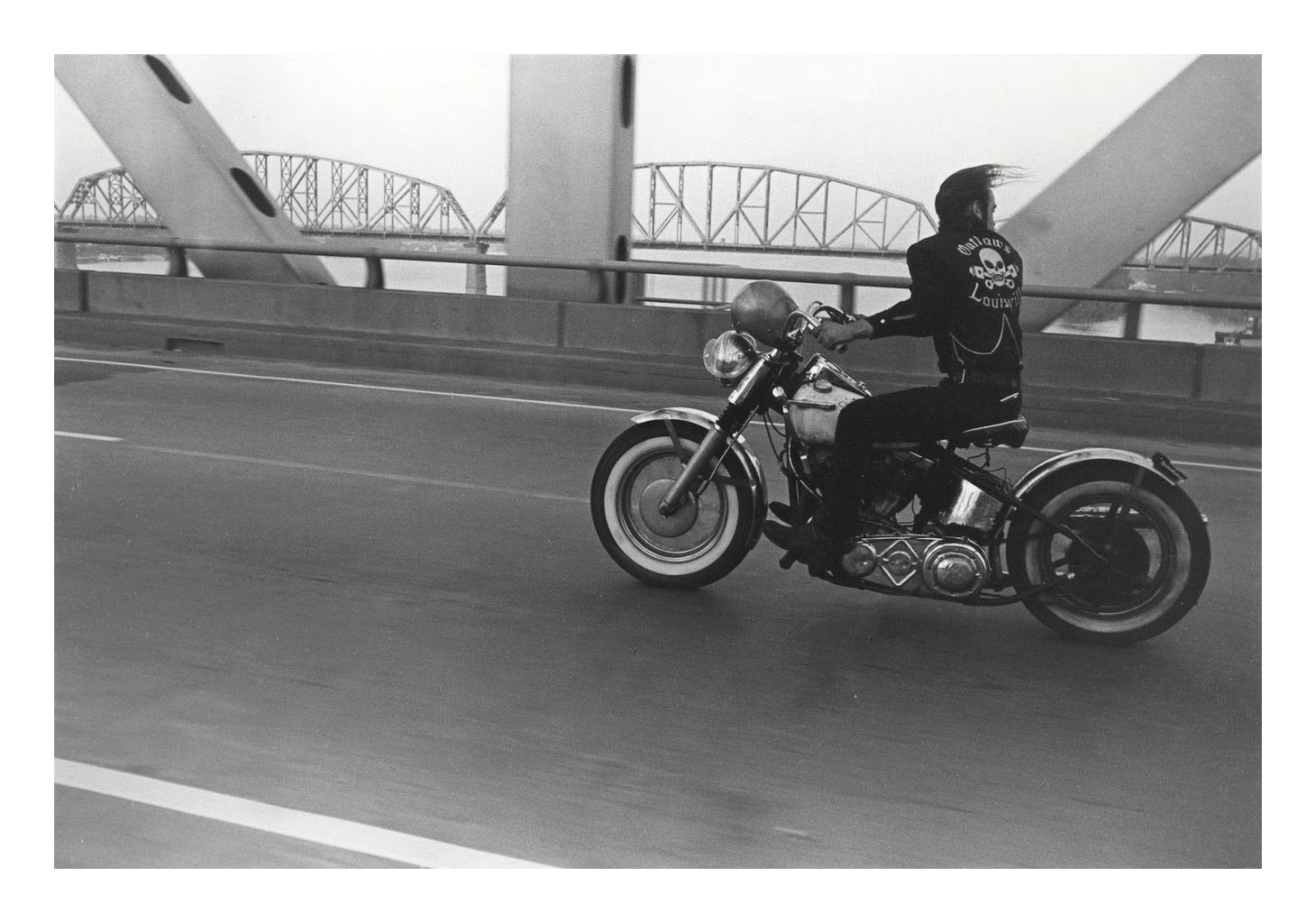
Danny Lyon (American, b. 1942) 'Crossing the Ohio River, Louisville, 1966' 1966


Danny Lyon (American, b. 1942)
Crossing the Ohio River, Louisville, 1966
1966
Silver gelatin print


This exhibition does not reflect our opinion of who’s cool. Each cool figure was considered with the following historical rubric in mind and possesses at least three elements of this singular American self-concept:

  1. an original artistic vision carried off with a signature style
  2. cultural rebellion or transgression for a given generation
  3. iconic power, or instant visual recognition
  4. a recognised cultural legacy


Every individual here created an original persona without precedent in American culture. These photographs capture the complex relationship between the real-life person, the image embraced by fans and the media, and the person’s artistic work.

What does it mean when a generation claims a certain figure as cool? What qualities does this person embody at that historical moment? American Cool explores these questions through photography, history, and popular culture. In this exhibition, cool is rendered visible, as shot by some of the finest art photographers of the past century.


Anonymous text from the ‘American Cool’ National Portrait Gallery website [Online] Cited 13/06/2021


When less – less famous, less obvious – is more

I don’t know about you, but the photographs chosen to represent American “cool” in this exhibition – 39 of which are shown in the posting out of a total of 108, but the rest are mainly of the same ilk – seem to me to be a singularly strange bunch of images to choose for such a concept. Personally, I find very few of them are “cool”, that is a mixture of a social charge of rebellious self-expression, charisma, edge and mystery with a certain self-made sense of style.

The only images that I find definitely “cool” among this bunch are, firstly Bob Dylan, closely followed by Jackson Pollock (notice the skull lurking behind him) and Susan Sontag. There is no proposition of cool in these three photographs, the people in them just are. The rest of the photographs, and there really are some atrociously plain and boring portraits among this lot (including a poor portrait of James Dean), really don’t speak to me of cool, don’t speak to me of anything much at all. How you could ever think that the portrait of Willie Nelson, 1989 (printed 2009, below) is cool is beyond me… and what is it with the reprints of the photographs, not originals but modern prints made years later? Perhaps the National Portrait Gallery needed to look beyond their own collection for a more rounded representation of American cool.

The two photographs I have included above are my top picks of American cool, and neither are in the exhibition. These iconic American images don’t feature famous people, they are not “posed” for the camera, and yet there is that ineffable something that makes the people in them absolutely, totally cool. THIS IS AMERICAN COOL: their own style, their own rebelliousness and mystery without possibly realising it = a naturalness that comes from doing their own thing, making their own way. Perhaps that is the point that this exhibition misses: you don’t have to be famous to be “cool”. A portrait is not just a mug shot. And an original persona does not have to come with fame attached.

This exhibition just doesn’t cut the mustard. The whole shebang needed a bloody good rethink, from the concept (does a generation have to “claim” someone is cool? is it necessary or desirable to portray American Cool through media images? do they have to be famous or instantly recognisable people to be “cool”) to the choice of images which could better illustrate the theme. Surely the qualities that person embodies changes from moment to moment, from photographer to photographer, from context to context (just look at the portraits of a haggard James Dean). To attempt to illustrate three elements in a single photograph – good luck with that one!

Dr Marcus Bunyan

PS I have added the videos to add a bit of spice to the proceedings… in them you can, occasionally, feel the charisma of the person.


Many thankx to the Smithsonian National Portrait Gallery for allowing me to publish the photographs in the posting. Please click on the photographs for a larger version of the image.


Bob Willoughby (American, 1927-2009) 'Billie Holiday' 1951 (printed 1991)


Bob Willoughby (American, 1927-2009)
Billie Holiday
1951 (printed 1991)
Gelatin silver print
25.2 x 35.3cm (19 15/16 x 13 15/16″)
National Portrait Gallery, Smithsonian Institution


Rare live footage of one of the first anti-racism songs.


Roger Marshutz (American, 1929-2007) 'Elvis Presley' 1956


Roger Marshutz (American, 1929-2007)
Elvis Presley
1956
Gelatin silver print
Sheet: 40.6 x 50.8cm (16 x20″)
© Estee Stanley


Elvis Presley Jailhouse Rock 1957 colour
Colourised version of the song from the film


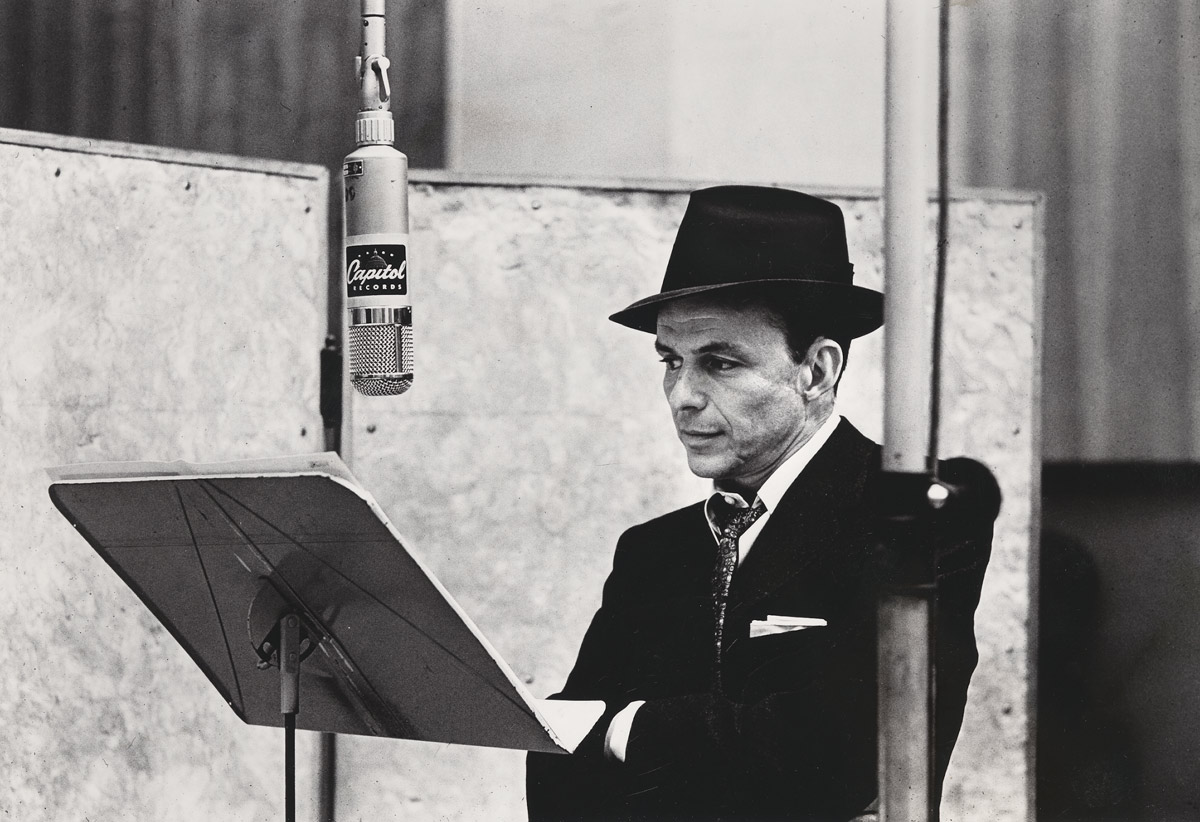
Herman Leonard (American, 1923-2010) 'Frank Sinatra' c. 1956


Herman Leonard (American, 1923-2010)
Frank Sinatra
c. 1956
Gelatin silver print
16.5 x 24.1cm (6 1/2 x 9 1/2″)
Institute of Jazz Studies at Rutgers University


Marcia Resnick (American, b. 1950) 'David Byrne' 1981


Marcia Resnick (American, b. 1950)
David Byrne
1981
Gelatin silver print
21.8 x 32.5cm (8 9/16 x 12 13/16″)
National Portrait Gallery, Smithsonian Institution


Julian Wasser (American, b. 1938) 'Joan Didion' 1970


Julian Wasser (American, b. 1938)
Joan Didion
1970
Gelatin silver print
24.3 x 34cm (9 9/16 x 13 3/8″)
National Portrait Gallery, Smithsonian Institution


Joan Didion (born December 5, 1934) is an American author best known for her novels and her literary journalism. Her novels and essays explore the disintegration of American morals and cultural chaos, where the overriding theme is individual and social fragmentation.


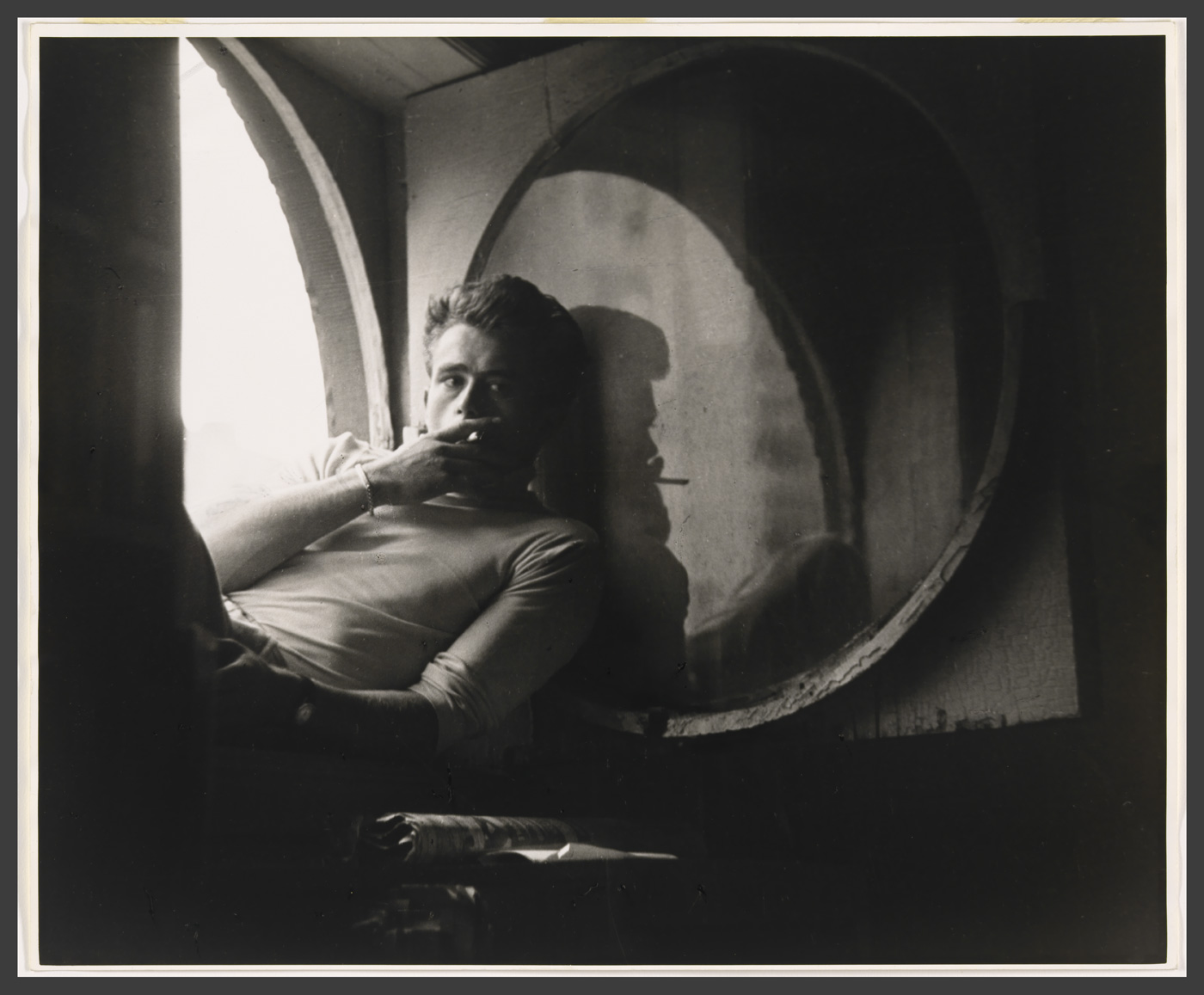
Roy Schatt (American, 1909-2002) 'James Dean' 1954


Roy Schatt (American, 1909-2002)
James Dean
1954
Gelatin silver print
34.7 x 42.2cm (13 11/16 x 16 5/8″)
National Portrait Gallery, Smithsonian Institution


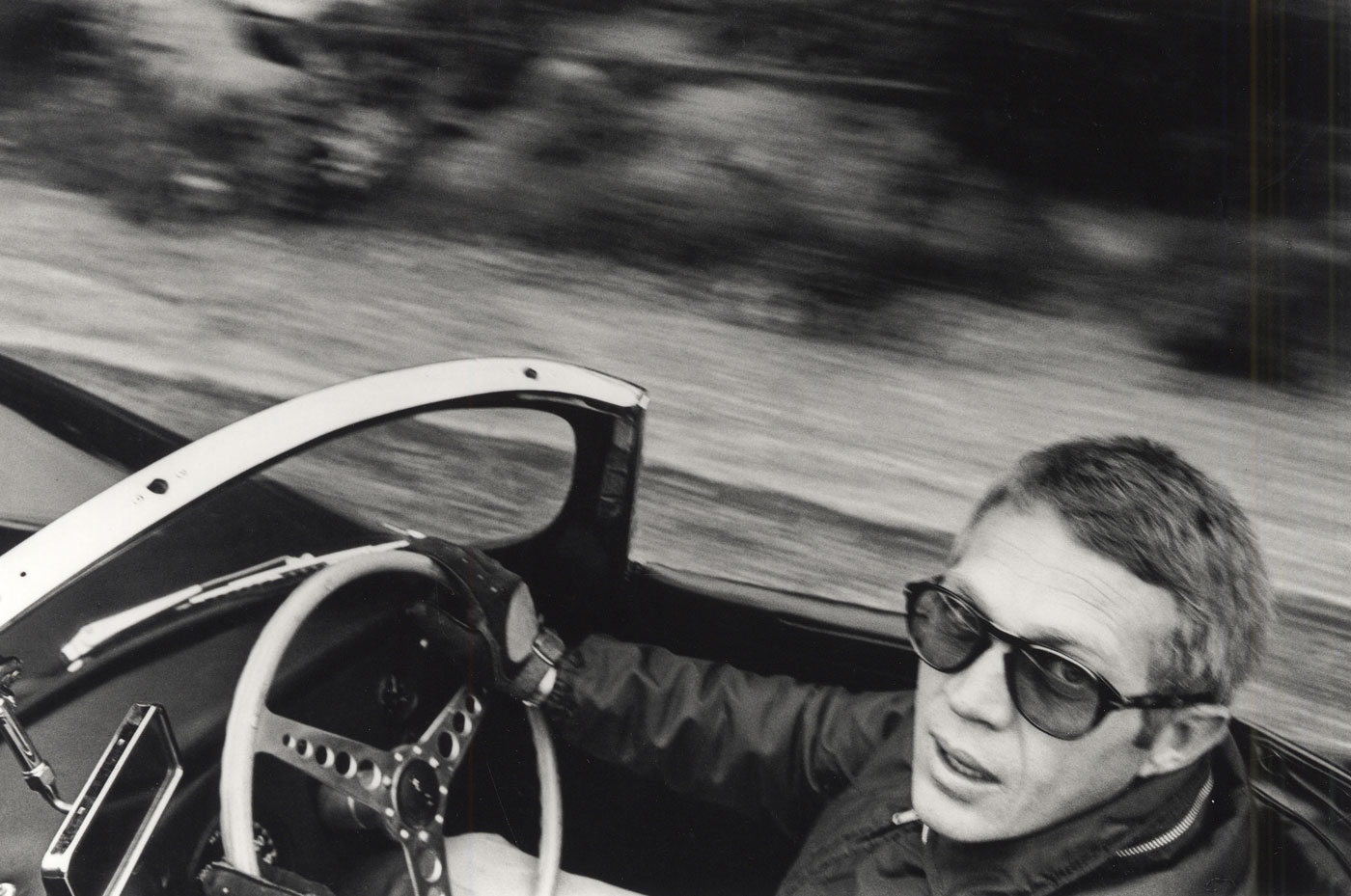
William Claxton (American, 1927-2008) 'Steve McQueen' 1962


William Claxton (American, 1927-2008)
Steve McQueen
1962
Gelatin silver print
40 x 58.7cm (15 3/4 x 23 1/8″)
Fahey Klein Gallery


Martin Schoeller (American, b. 1968) 'Tony Hawk' 1999 (printed 2010)


Martin Schoeller (American, b. 1968)
Tony Hawk
1999 (printed 2010)
Archival pigment print
58.5 x 58.6cm (23 1/16 x 23 1/16″)
National Portrait Gallery, Smithsonian Institution


What do we mean when we say someone is cool? Cool carries a social charge of rebellious self-expression, charisma, edge and mystery.

Cool is an original American sensibility and remains a global obsession. In the early 1940s, legendary jazz saxophonist Lester Young brought this central African American concept into the modern vernacular. Cool became a password in bohemian life connoting a balanced state of mind, a dynamic mode of performance, and a certain stylish stoicism. A cool person has a situation under control, and with a signature style. Cool has been embodied in jazz musicians such as Miles Davis and Billie Holiday, in actors such as Robert Mitchum, Faye Dunaway, and Johnny Depp, and in singers such as Elvis Presley, Patti Smith, and Jay-Z. American Cool is a photography and cultural studies exhibition featuring portraits of such iconic figures, each of whom has contributed an original artistic vision to American culture symbolic of a particular historical moment. They emerged from a variety of fields: art, music, film, sports, comedy, literature, and political activism. American Cool is the zeitgeist taking embodied form.

American Cool is captured by a roll call of fine-art photographers from Henri Cartier-Bresson to Annie Leibovitz, from Richard Avedon to Herman Leonard to Diane Arbus. This exhibition is accompanied by an illustrated catalogue with essays by Joel Dinerstein, the James H. Clark Endowed Chair in American Civilization and Director of the New Orleans Center for the Gulf South at Tulane University, and Frank H. Goodyear III, co-director of the Bowdoin College Museum of Art and former curator of photographs at the National Portrait Gallery.


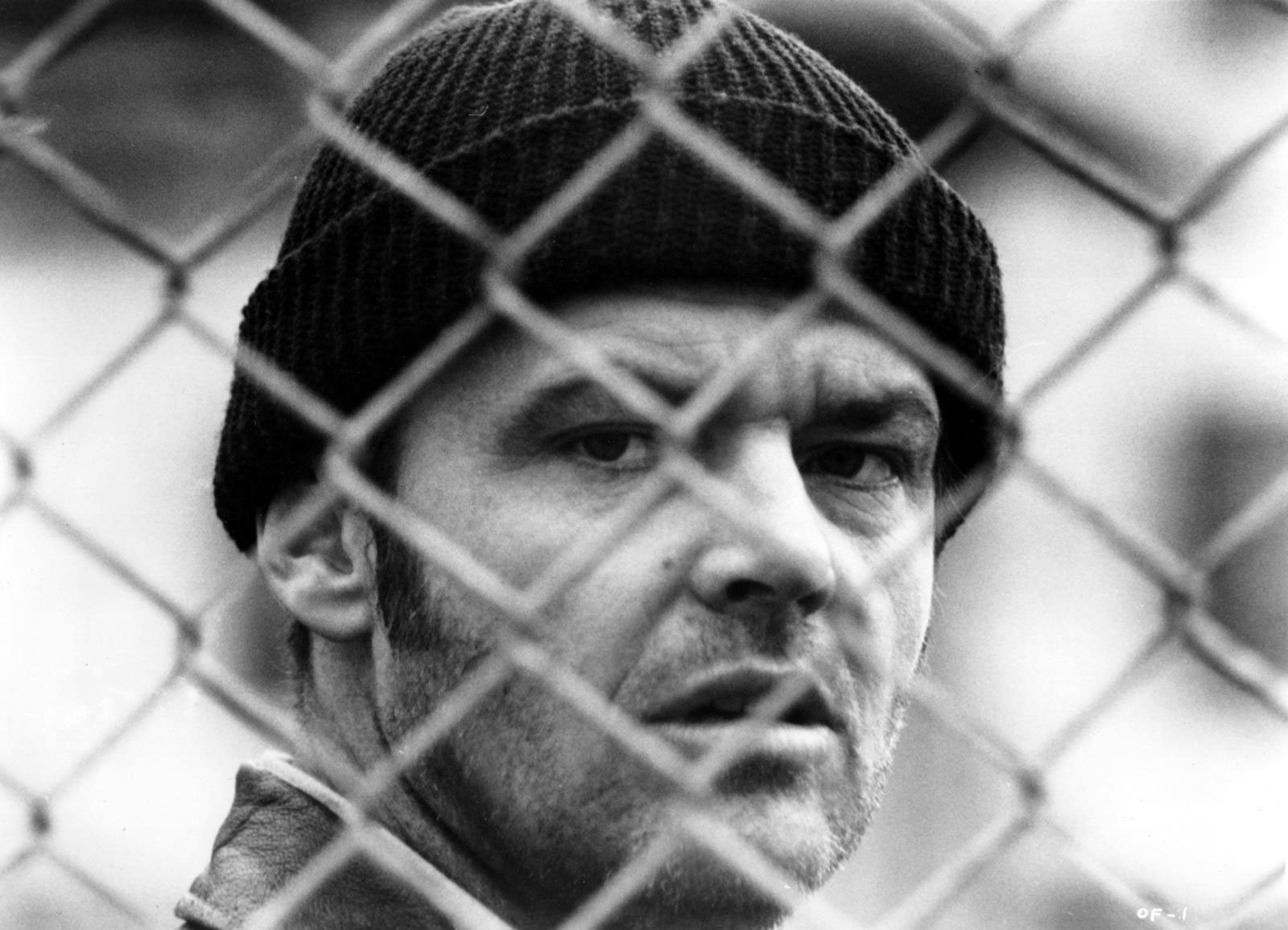
Unidentified Artist. 'Jack Nicholson in "One Flew Over the Cuckoo's Nest"' 1975


Unidentified Artist
Jack Nicholson in “One Flew Over the Cuckoo’s Nest”
1975
Gelatin silver print
17.3 x 25.1cm (6 13/16 x 9 7/8″)
The Kobal Collection


John Cohen (American, 1932-2019) 'Jack Kerouac' 1959


John Cohen (American, 1932-2019)
Jack Kerouac
1959
Gelatin silver print
Image: 15.9 x 24.1cm (6 1/4 x 9 1/2″)
Sheet: 20.2 x 25.4cm (7 15/16 x 10″)
National Portrait Gallery, Smithsonian Institution


Leo Fuchs (American, 1911-1994) 'Paul Newman' 1959 (printed 2013)


Leo Fuchs (American, 1911-1994)
Paul Newman
1959 (printed 2013)
Modern archival print
Sheet: 27.9 x 35.6cm (11 x 14″)
© Alexandre Fuchs


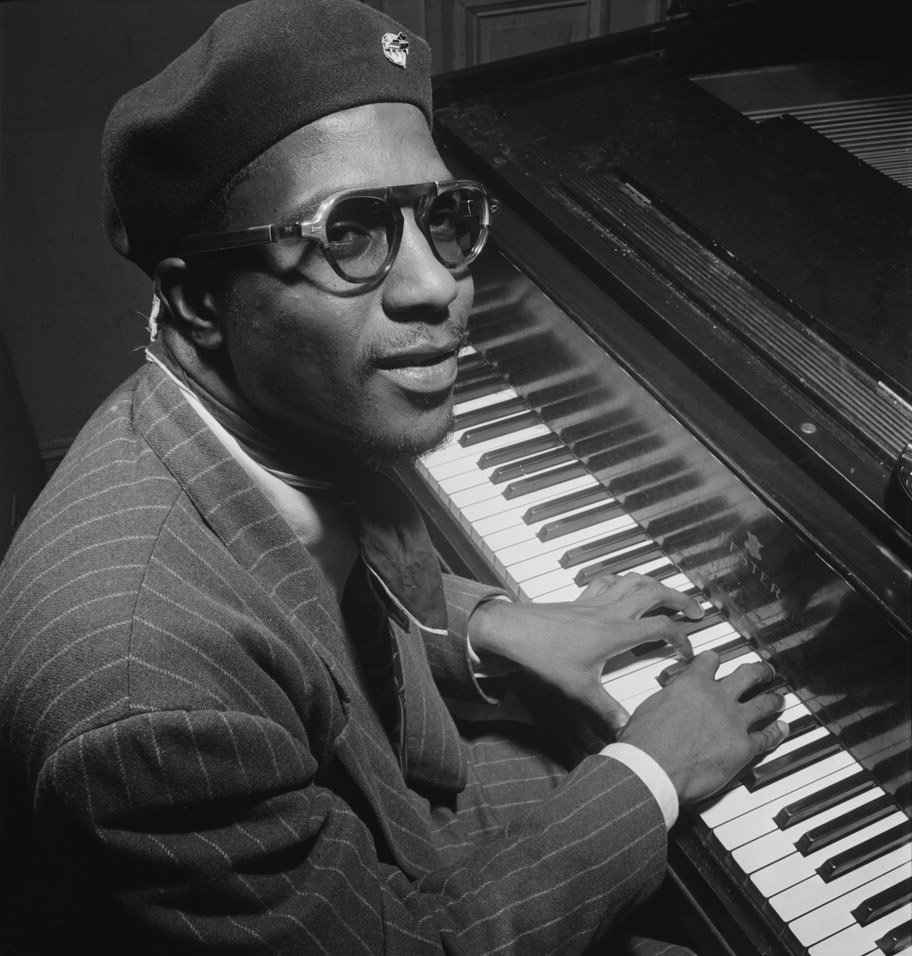
William Paul Gottlieb (American, 1917-2006) 'Thelonious Monk at Minton's Playhouse, New York City' 1947


William Paul Gottlieb (American, 1917-2006)
Thelonious Monk at Minton’s Playhouse, New York City
1947
Gelatin silver print
Sheet: 25.4 x 20.3cm (10 x 8″)
Estate of William Gottlieb


Thelonious Monk Quartet – Round Midnight
Thelonious Monk(p) Charlie Rouse(ts) Larry Gales(b) Ben Riley(ds)
Recorded in Norway 1966 dvd “LIVE in ’66”


Peter Hujar (American, 1934-1987) 'Susan Sontag' 1975


Peter Hujar (American, 1934-1987)
Susan Sontag
1975
Gelatin silver print
37.1 x 37.6cm (14 5/8 x 14 13/16″)
National Portrait Gallery, Smithsonian Institution


Michael O'Brien (American, b. 1950) 'Willie Nelson' 1989 (printed 2009)


Michael O’Brien (American, b. 1950)
Willie Nelson
1989 (printed 2009)
Chromogenic print
38.1 x 38.1cm (15 x 15″)
National Portrait Gallery, Smithsonian Institution


Introduction

What do we mean when we say someone is cool? To be cool means to exude the aura of something new and uncontainable. Cool is the opposite of innocence or virtue. Someone cool has a charismatic edge and a dark side. Cool is an earned form of individuality. Each generation has certain individuals who bring innovation and style to a field of endeavour while projecting a certain charismatic self-possession. They are the figures selected for this exhibition: the successful rebels of American culture.

The legendary jazz saxophonist Lester Young created the modern usage of “cool” in the 1940s. At first it meant being relaxed in one’s environment against oppressive social forces, but within a generation it became a password for stylish self-control. This exhibition does not reflect our opinion of who’s cool. Each cool figure was considered with the following historical rubric in mind and possesses at least three elements of this singular American self-concept:

1/ an original artistic vision carried off with a signature style
2/ cultural rebellion or transgression for a given generation
3/ iconic power, or instant visual recognition
4/ a recognised cultural legacy

Every individual here created an original persona without precedent in American culture. These photographs capture the complex relationship between the real-life person, the image embraced by fans and the media, and the person’s artistic work.

What does it mean when a generation claims a certain figure as cool? What qualities does this person embody at that historical moment? American Cool explores these questions through photography, history, and popular culture. In this exhibition, cool is rendered visible, as shot by some of the finest art photographers of the past century.

The Roots of Cool: Before 1940

The stage was set for the emergence of cool as a cultural phenomenon in the early 1940s by a series of sweeping transformations in the first decades of the twentieth century. The figures in this first section were not called cool in their day but were leading exemplars of new energies that were changing the social contours of American life. A fresh rebelliousness was revealed in the new film capital of Hollywood, in modernist literature and art, in emerging youth entertainments, and in a new music called jazz. The advent of technologies such as radio, film, and the automobile and the increasing diversity in America’s booming cities accelerated the pace of change. Though Prohibition in the 1920s sought to regulate American morality by ending the consumption of alcohol, this period saw the expression of a new independence among young people and others historically on the margins of public life. In particular, both African Americans and women sought and began to attain freedoms long denied. Cool has long denoted a person’s sense of calm and composure. Charismatic individuals such as those featured here contributed greatly to the changing mores in American society before World War II. Cool would ultimately serve as the term that would describe this new rebel.

The Birth of Cool: 1940-1959

Being cool was a response to the rapid changes of modernity: it was about maintaining a state of equipoise within swirling, dynamic social forces. The legendary jazz saxophonist Lester Young disseminated the word and concept of cool into jazz culture in the early 1940s, and it quickly crossed over as a rebel masculine sensibility. When Young said, “I’m cool,” he meant, first, that he was relaxed in the environment and, second, that he was keeping it together under social and economic pressure as well as the absurdity of life in a racist society. This mask of cool emerged as a form of American stoicism and was manifested in jazz, film noir, Beat literature, and abstract expressionism. In jazz, a generation of younger musicians rejected big-band swing entertainment to create bebop, a fast, angular, virtuosic style that moved jazz out of dance halls and into nightclubs. In Hollywood, film noir represented postwar anxiety through crime dramas shot through with working-class existentialism and the fear of women’s sexual and economic power. Among Beat writers and abstract painters, cool referred to a combination of wildness and intensity in men unconcerned with social conformity. Starting from jazz, cool was a rebel sensibility suggesting that an individual’s importance could be registered only through self-expression and the creation of a signature style. By 1960 cool was the protean password of a surging underground aesthetic.

Cool and the Counterculture: 1960-1979

In the 1960s and 1970s, to be cool was to be antiauthoritarian and open to new ideas from young cultural leaders in rock and roll, journalism, film, and African American culture. Cool was a badge of opposition to “the System,” by turns a reference to the police, the government, the military-industrial complex, or traditional morality. Using drugs such as marijuana or even LSD was an indicator of risk taking and expanding one’s consciousness; not experimenting with drugs suggested a fear of opening one’s mind or perspective, of being “uptight” or “square.” The same was true of sexual exploration, social protest, and ethnic politics. The aesthetic of stylised understatement still held power, yet cool itself morphed under the era’s social upheavals. The counterculture valued being authentic and emotionally naked: being cool meant a person was “out-front” with others and comfortable in his or her own skin. For African Americans, what had once been suppressed under the mask of cool transformed into defiant civic engagement in music, sports, and politics. “Cool” meant to communicate a set of emotions without losing control, and rock and roll was the art form (and forum) best suited for this shift, especially for women. Patti Smith, Bonnie Raitt, Deborah Harry, and Chrissie Hynde all carved out new iconic stances, styles, and voices for independent women who were sexy on their own terms. Cool became the supreme compliment for creative public figures who broke new cultural ground and maintained their personal integrity over time.

The Legacies of Cool: 1980-Present

In 1980s America, the selling of rebellion as style became ingrained in cool. From highbrow fashion to mass-culture video games, product designers, advertisers, and consumers embraced the cool aesthetic. For many during this era, selling out was no longer a curse, as youth culture increasingly embraced the pursuit of wealth. And though some might proclaim that cool was dead, the concept stayed alive and grew in many quarters. From hip-hop to Seattle grunge, from skateboarding to the Internet, from street graffiti to MTV, cool became central to many of these new cultural forms. While its popularisation tended to whiten this phenomenon, African American culture remained central to its growth. By the 1980s cool also had an easily recognisable history, and many figures from its past – like heroes from a bygone era – continued to resonate widely. Indeed, new icons of cool often built careers that owed much to these earlier exemplars. Throughout the twentieth century, cool was America’s chief cultural export. With the rapid growth of global communication and markets, it plays an even larger role both in the world’s understanding of America and in Americans’ own sense of national identity. The figures in this final section are representative of the legacies of cool as a distinct form of American expression.

Press release from the Smithsonian National Portrait Gallery website


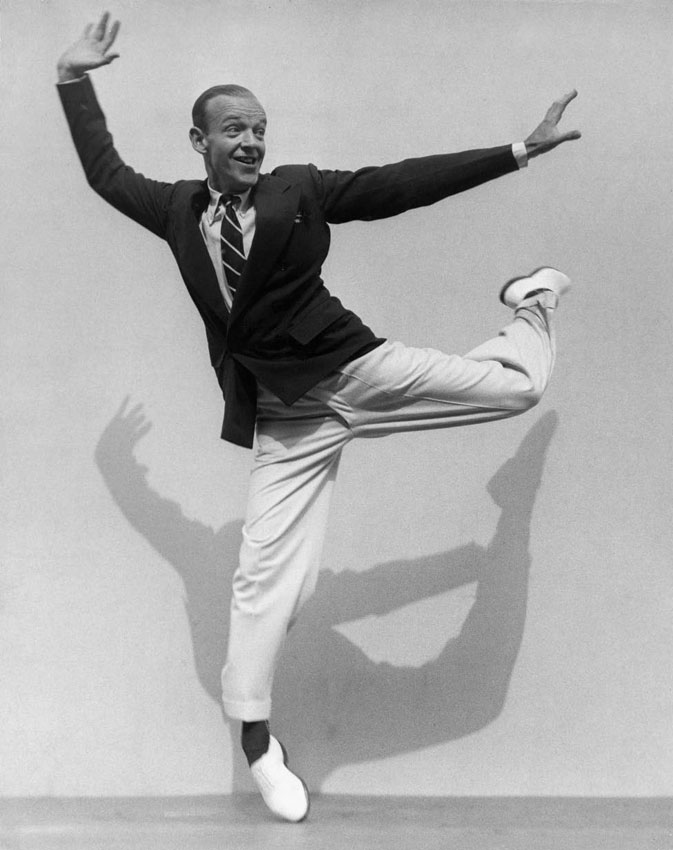
Martin Munkacsi (Hungarian, 1896-1963) 'Fred Astaire' 1936


Martin Munkacsi (Hungarian, 1896-1963)
Fred Astaire
1936
Gelatin silver print
24.1 x 19cm (9 1/2 x 7 1/2″)
National Portrait Gallery, Smithsonian Institution


Swing Time – Rogers and Astaire

In this Swing Time clip, Lucky, Astaire, saves Penny’s, Rogers, job by showing how much she has taught him.


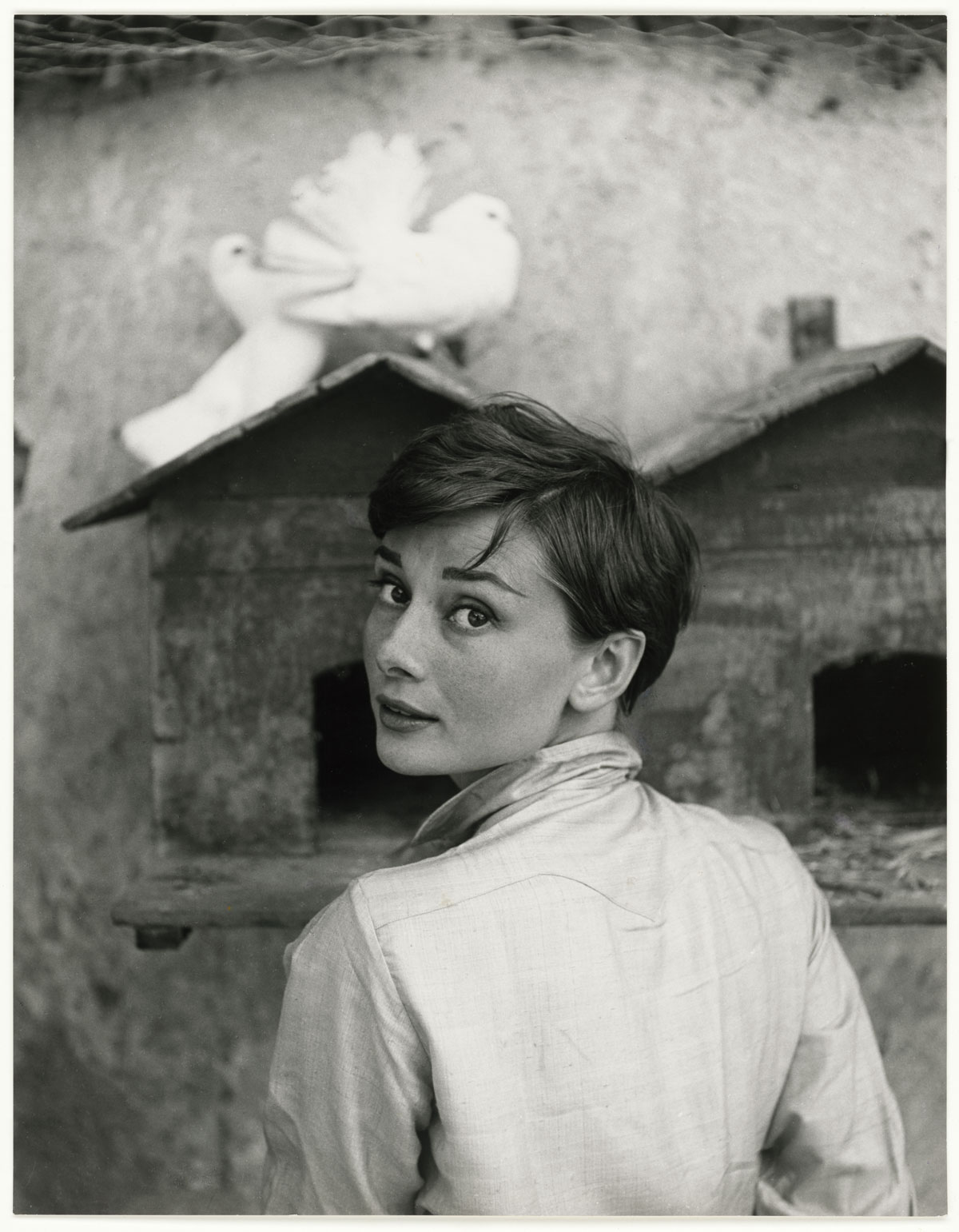
Philippe Halsman (American, 1906-1979) 'Audrey Hepburn' 1955


Philippe Halsman (American, 1906-1979)
Audrey Hepburn
1955
Gelatin silver print
Image/Sheet: 34.9 x 27cm (13 3/4 x 10 5/8″)
National Portrait Gallery, Smithsonian Institution


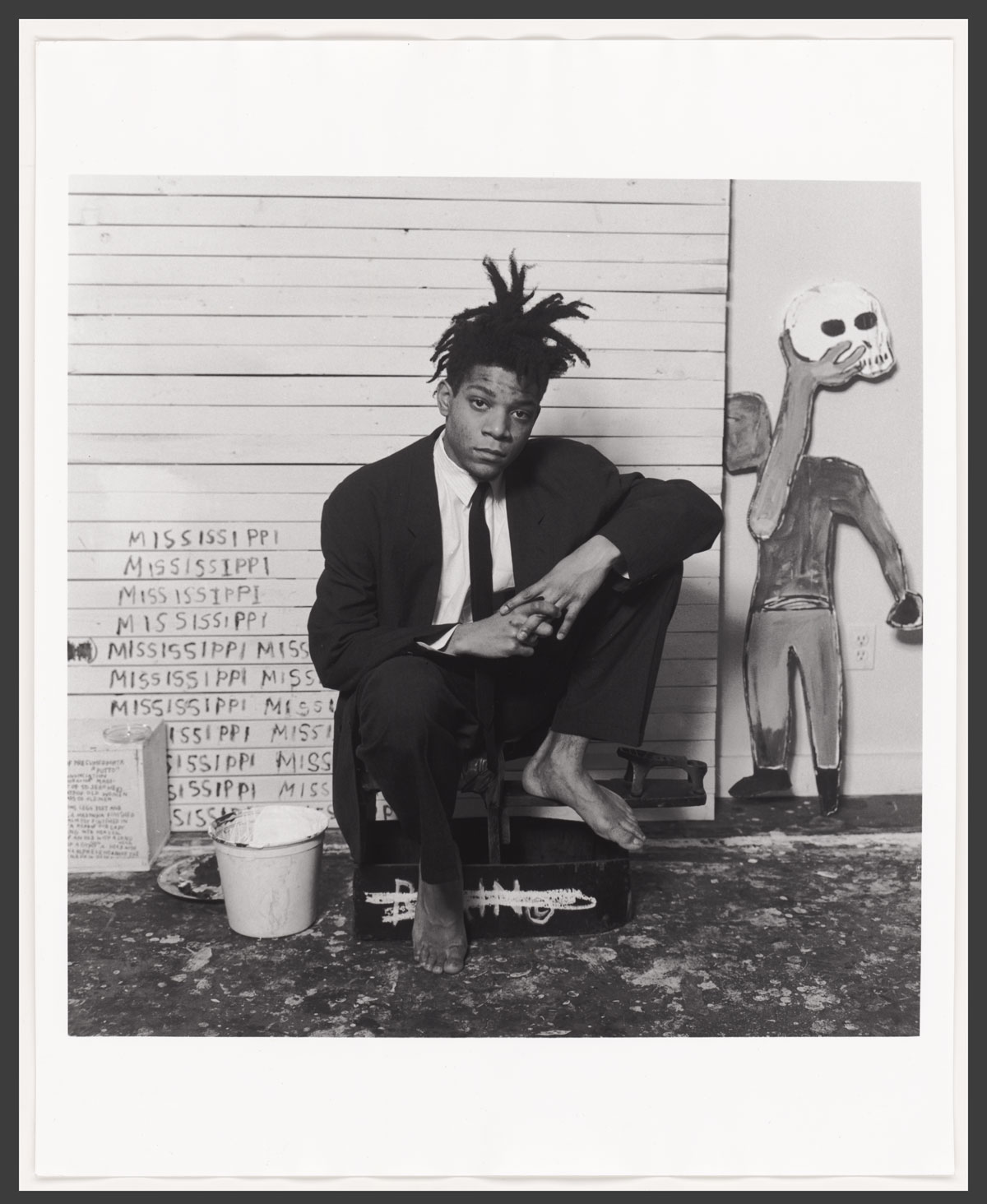
Dmitri Kasterine (British, b. 1932) 'Jean-Michel Basquait' 1986


Dmitri Kasterine (British, b. 1932)
Jean-Michel Basquait
1986
Gelatin silver print
38.3 x 37.7cm (15 1/16 x 14 13/16″)
National Portrait Gallery, Smithsonian Institution


Cass Bird (American, b. 1974) 'Benicio Del Toro' 2008 (printed 2012)


Cass Bird (American, b. 1974)
Benicio Del Toro
2008 (printed 2012)
Inkjet print
45.3 x 35.3cm (17 13/16 x 13 7/8″)
National Portrait Gallery, Smithsonian Institution


Carl Van Vechten (American, 1880-1964) 'Bessie Smith' 1936


Carl Van Vechten (American, 1880-1964)
Bessie Smith
1936
Gelatin silver print
Image/Sheet: 25.2 x 18.6cm (9 15/16 x 7 5/16″)
National Portrait Gallery, Smithsonian Institution


Bessie Smith (April 15, 1894 – September 26, 1937) was an African-American blues singer widely renowned during the Jazz Age. Nicknamed the “Empress of the Blues”, she was the most popular female blues singer of the 1930s. Inducted into the Rock and Roll Hall of Fame in 1989, she is often regarded as one of the greatest singers of her era and was a major influence on fellow blues singers, as well as jazz vocalists.

Born in Chattanooga, Tennessee, Smith was young when her parents died, and she and her six siblings survived by performing on street corners. She began touring and performed in a group that included Ma Rainey, and then went out on her own. Her successful recording career with Columbia Records began in 1923, but her performing career was cut short by a car crash that killed her at the age of 43.

Text from the Wikipedia website


ST. LOUIS BLUES. Blues Legend Bessie Smith’s only film appearance. Uncut 1929 

This is not only a landmark because it contains Bessie Smith’s only known film appearance but also for being one of the very first talkies ever made. This is the complete film co-starring Jimmy Mordecai as her gigolo boyfriend.


Robert Mapplethorpe (American, 1946-1989) 'Deborah Harry' 1978


Robert Mapplethorpe (American, 1946-1989)
Deborah Harry
1978
Gelatin silver print
Image: 34.9 x 34.9cm (13 3/4 x 13 3/4″)
Robert Mapplethorpe Foundation


Philippe Halsman (American born Latvia, 1906-1979) 'Humphrey Bogart' 1944


Philippe Halsman (American born Latvia, 1906-1979)
Humphrey Bogart
1944
Gelatin silver print
Image: 11.3 x 8.6cm (4 7/16 x 3 3/8″)
Mat: 45.7 x 35.6cm (18 x 14″)
National Portrait Gallery, Smithsonian Institution


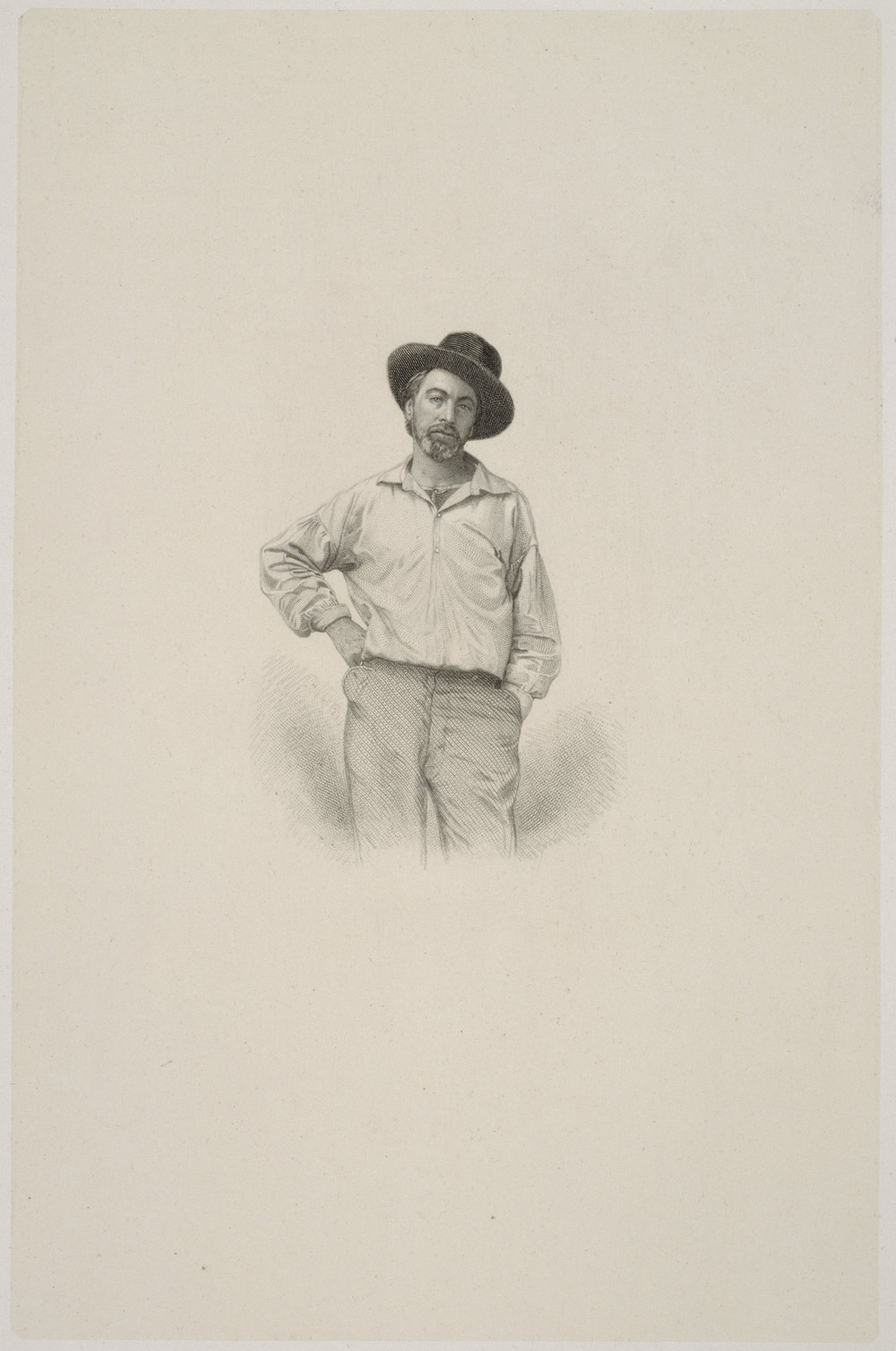
Samuel Hollyer (British, 1826-1919) 'Leaves of Grass, 1st Edition' Copy after: Gabriel Harrison 1855


Samuel Hollyer (British, 1826-1919)
Leaves of Grass, 1st Edition
Copy after: Gabriel Harrison
1855
Book (closed): 28.9 x 20.6 x 1cm (11 3/8 x 8 1/8 x 3/8″)
Private Collection


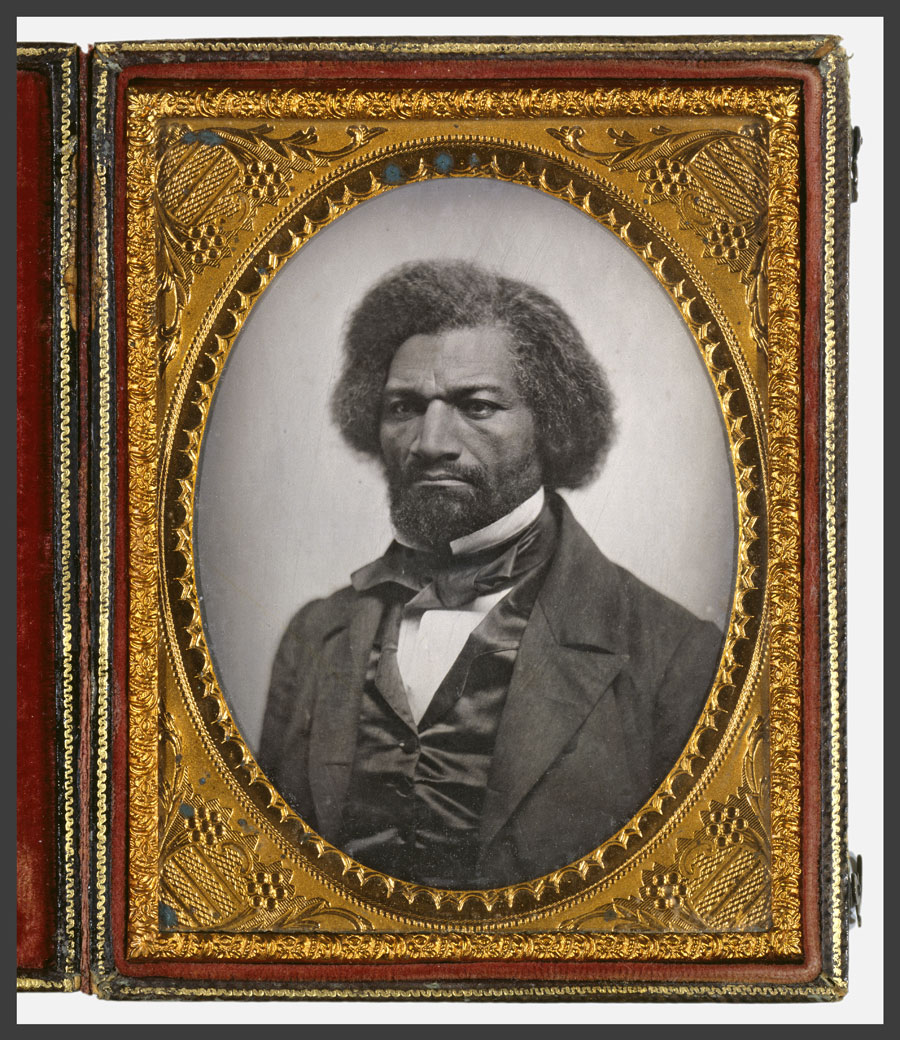
Unidentified Artist. 'Frederick Douglas' 1856


Unidentified Artist
Frederick Douglas
1856
Quarter-plate ambrotype
Image: 10.6 x 8.6cm (4 3/16 x 3 3/8″)
Case (open): 11.9 x 19.1 x 1.3cm (4 11/16 x 7 1/2 x 1/2″)
National Portrait Gallery, Smithsonian Institution


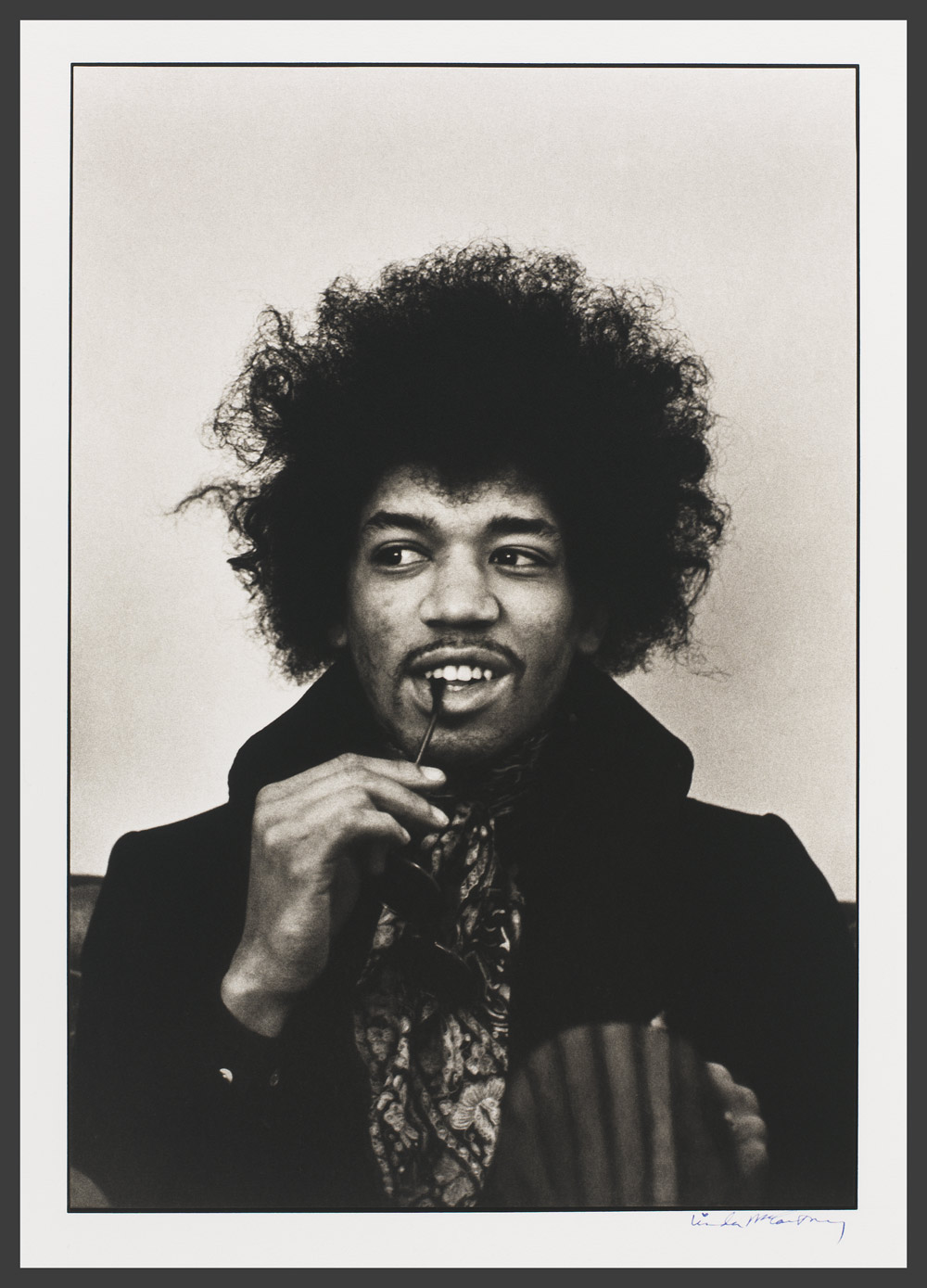
Linda McCartney (American, 1941-1998) 'Jimi Hendrix' 1967 (printed later)


Linda McCartney (American, 1941-1998)
Jimi Hendrix
1967 (printed later)
Platinum print
51.3 x 35.3 cm (20 3/16 x 13 7/8″)
National Portrait Gallery, Smithsonian Institution


The Jimi Hendrix Experience – Voodoo Child (Slight Return) (Live In Maui, 1970)

An incredible live performance of Voodoo Child (Slight Return) by Jimmy and his band in Maui, 1970.


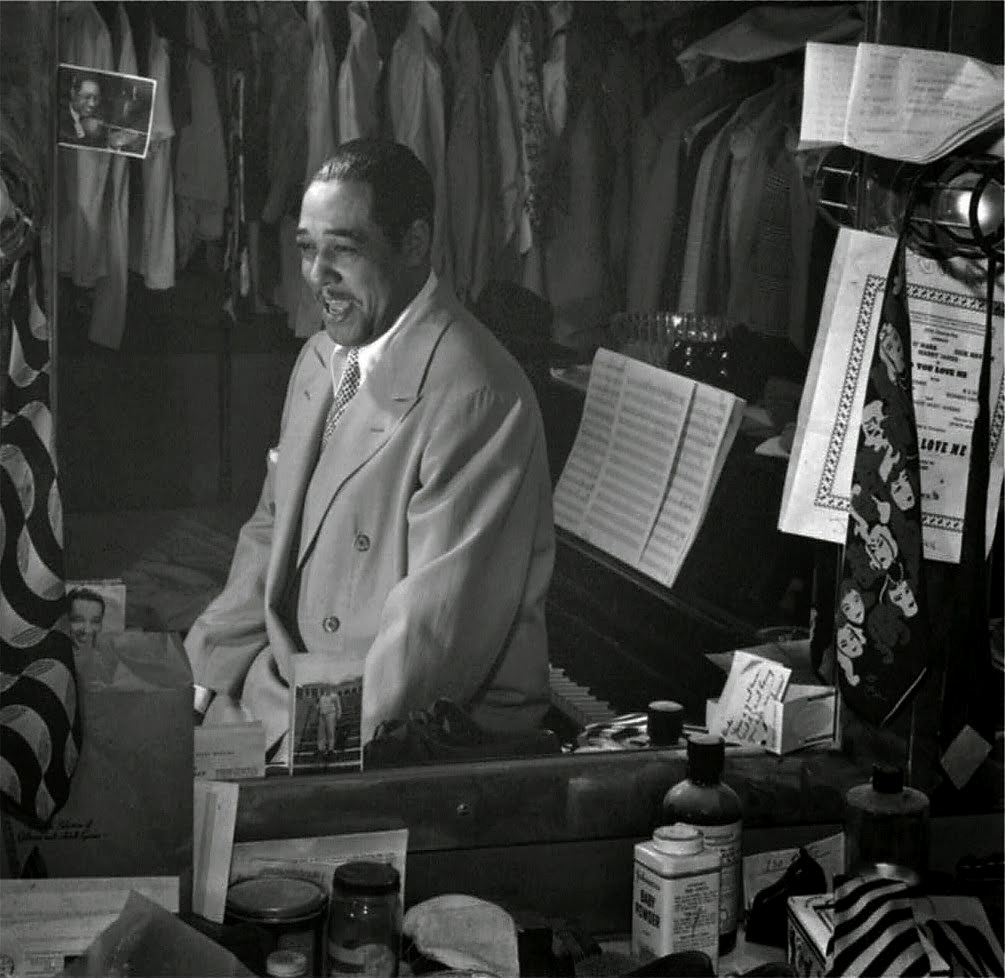
William Paul Gottlieb (American, 1917-2006) 'Duke Ellington' c. 1946 (printed 1991)


William Paul Gottlieb (American, 1917-2006)
Duke Ellington
c. 1946 (printed 1991)
Gelatin silver print
34.1 x 26.7 cm (13 7/16 x 10 1/2″)
National Portrait Gallery, Smithsonian Institution


Duke Ellington & His Orchestra live in Tivoli Garden 1969

Fantastic performance footage of one of Jazz’s greatest stars – Duke Ellington.

Duke Ellington may have turned 70 in 1969, but he was never short of energy, creativity and innovations. At the time of this Nov. 2, 1969 concert in Copenhagen, Ellington had been leading his orchestra for 44 years, but he still never really looked back in time or sought to recreate the past. Even when he performed older favorites, they were rearranged and full of surprises, and Duke’s own piano playing was modern, percussive and unpredictable. Twelve soloists are heard from during this 83-minute set including such veterans as trumpeters Cootie Williams and Cat Anderson, trombonist Lawrence Brown, altoist Harry Carney and Paul Gonsalves on tenor. Along with exciting versions of “C Jam Blues,” “Rockin’ In Rhythm” and “Take The ‘A’ Train,” the highlights include a three-song Johnny Hodges medley, a haunting “La Plus Belle Africaine,” and a tenor battle among Gonsalves, Harold Ashby and Norris Turney on “Diminuendo And Crescendo In Blue.” Filmed in colour and with close-ups that give listeners the experience of being onstage with the Duke Ellington Orchestra.


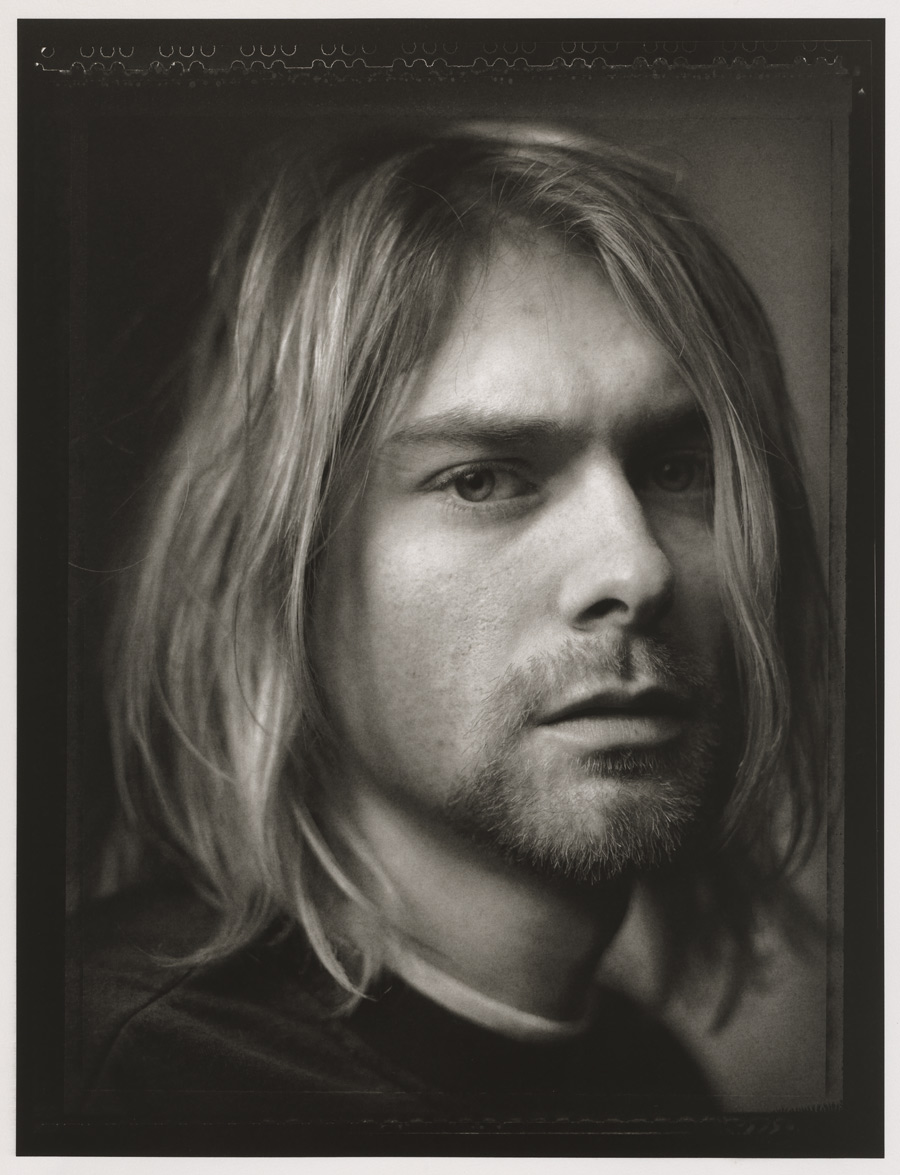
Mark Seliger (American, b. 1959) 'Kurt Cobain' 1993 (printed 2013)


Mark Seliger (American, b. 1959)
Kurt Cobain
1993 (printed 2013)
Platinum Palladium print
46.7 × 35.5cm (18 3/8 × 14″)
National Portrait Gallery, Smithsonian Institution


Nirvana – Smells Like Teen Spirit (Official Music Video)


Philippe Halsman (American, 1906-1979) 'Marlon Brando' 1950 (printed later)


Philippe Halsman (American, 1906-1979)
Marlon Brando
1950 (printed later)
Gelatin silver print
34.4 x 26.8cm (13 9/16 x 10 9/16″)
National Portrait Gallery, Smithsonian Institution


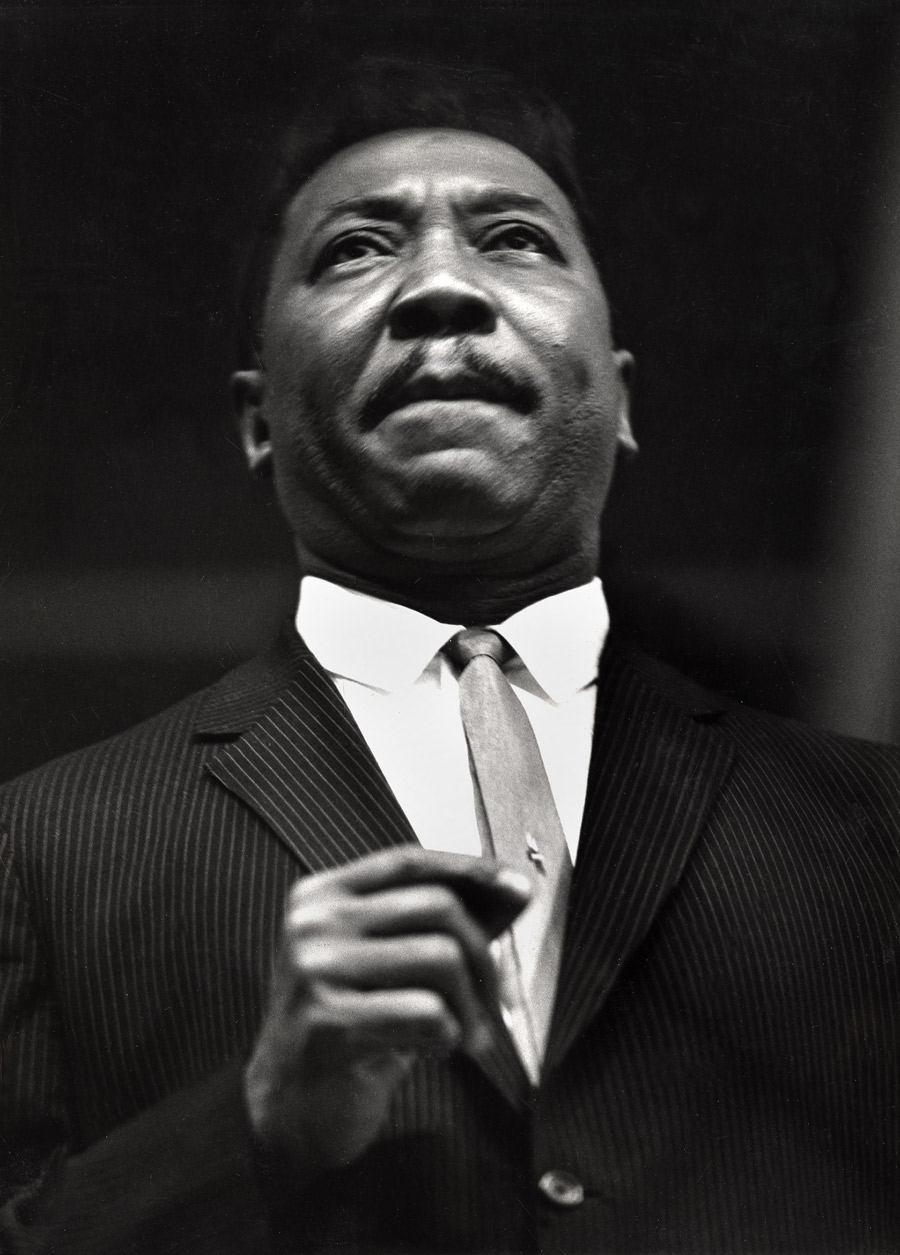
Charles H. "Chuck" Stewart (American, 1927-2017) 'Muddy Waters' c. 1960


Charles H. “Chuck” Stewart (American, 1927-2017)
Muddy Waters
c. 1960
Gelatin silver print
25.4 x 18.4cm (10 x 7 1/4″)
Institute of Jazz Studies at Rutgers University


Muddy Waters – Got My Mojo Workin’


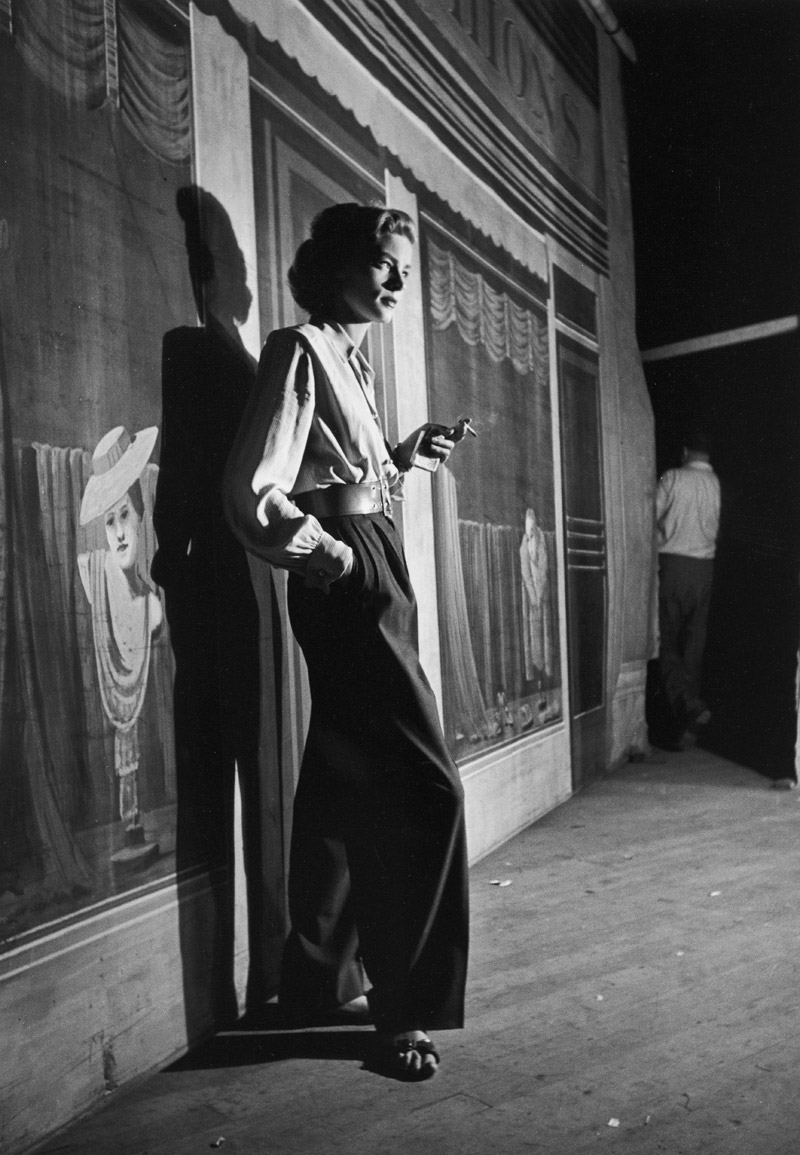
Alfred Eisenstaedt (American, 1898-1995) 'Lauren Bacall' 1949 (printed 2013)


Alfred Eisenstaedt (American, 1898-1995)
Lauren Bacall
1949 (printed 2013)
Pigmented ink jet print
40.3 x 27.9cm (15 7/8 x 11″)


Kate Simon (American, b. 1953) 'Madonna' 1983 (printed 2013)


Kate Simon (American, b. 1953)
Madonna
1983 (printed 2013)
Gelatin silver print
33.7 × 22.9cm (13 1/4 × 9″)
© Kate Simon


Madonna – Papa Don’t Preach (Official Video)


Aram Avakian (American, 1926-1987) 'Miles Davis' 1955 (printed 2012)


Aram Avakian (American, 1926-1987)
Miles Davis
1955 (printed 2012)
Modern print made from original negative
34.6 × 24.1cm (13 5/8 × 9 1/2″)


Miles Davis – So What (Official Video)


Unidentified Artist. 'Bix Beiderbecke' c. 1920


Unidentified Artist
Bix Beiderbecke
c. 1920
Gelatin silver print
19.1 x 11.4cm (7 1/2 x 4 1/2″)
Institute of Jazz Studies at Rutgers University


At the Jazz Band Ball – Bix Beiderbecke and His Gang, 1927


Royal Garden Blues – Bix Beiderbecke 1927

Leon Bismark “Bix” Beiderbecke (March 10, 1903 – August 6, 1931) was an American jazz cornetist, jazz pianist, and composer.

With Louis Armstrong and Muggsy Spanier, Beiderbecke was one of the most influential jazz soloists of the 1920s. His turns on “Singin’ the Blues” and “I’m Coming, Virginia” (both 1927), in particular, demonstrated an unusual purity of tone and a gift for improvisation. With these two recordings, especially, he helped to invent the jazz ballad style and hinted at what, in the 1950s, would become cool jazz. “In a Mist” (1927), one of a handful of his piano compositions and one of only two he recorded, mixed classical (Impressionist) influences with jazz syncopation.


Leon Bismark “Bix” Beiderbecke (March 10, 1903 – August 6, 1931) was an American jazz cornetist, jazz pianist, and composer. A native of Davenport, Iowa.

Bix Beiderbecke was one of the great jazz musicians of the 1920’s; he was also a child of the Jazz Age who drank himself to an early grave with illegal Prohibition liquor. His hard drinking and beautiful tone on the cornet made him a legend among musicians during his life. The legend of Bix grew even larger after he died. Bix never learned to read music very well, but he had an amazing ear even as a child. His parents disapproved of his playing music and sent him to a military school outside of Chicago in 1921. He was soon expelled for skipping class and became a full-time musician. In 1923 Beiderbecke joined the Wolverine Orchestra and recorded with them the following year. Bix was influenced a great deal by the Original Dixieland Jass Band, but soon surpassed their playing. In late 1924 Bix left the Wolverines to join Jean Goldkette’s Orchestra, but his inability to read music eventually resulted in him losing the job. In 1926 he spent some time with Frankie Trumbauer’s Orchestra where he recorded his solo piano masterpiece “In a Mist”. He also recorded some of his best work with Trumbauer and guitarist, Eddie Lang, under the name of Tram, Bix, and Eddie.

Bix was able to bone up on his sight-reading enough to re-join Jean Goldkette’s Orchestra briefly, before signing up as a soloist with Paul Whiteman’s Orchestra. Whiteman’s Orchestra was the most popular band of the 1920’s and Bix enjoyed the prestige and money of playing with such a successful outfit, but it didn’t stop his drinking. In 1929 Bix’s drinking began to catch up with him. He suffered from delirium tremens and he had a nervous breakdown while playing with the Paul Whiteman Orchestra, and was eventually sent back to his parents in Davenport, Iowa to recover. It should be noted that Paul Whiteman was very good to Bix during his struggles. He kept Bix on full pay long after his breakdown, and promised him that his chair was always open in the Whiteman Orchestra, but, Bix was never the same again, and never rejoined the band.

He returned to New York in 1930 and made a few more records with his friend Hoagy Carmichael and under the name of Bix Beiderbecke and his Orchestra. But mainly, he holed himself up in a rooming house in Queens, New York where he drank a lot and worked on his beautiful solo piano pieces “Candlelight”, “Flashes”, and “In The Dark” (played here by Ralph Sutton; Bix never recorded them). He died at age 28 in 1931 during an alcoholic seizure. The official cause of death was lobar pneumonia and edema of the brain.


Gerard Malanga (American, b. 1943) 'Lou Reed' 1966


Gerard Malanga (American, b. 1943)
Lou Reed
1966
Gelatin silver print
48.3 x 36.2cm (19 x 14 1/4″)
© Martin Irvine


Lou Reed – Sweet Jane – live in Paris, 1974


Arnold A. Newman (American, 1918-2006) 'Jackson Pollock' 1949


Arnold A. Newman (American, 1918-2006)
Jackson Pollock
1949
Gelatin silver print
46 x 36.7cm (18 1/8 x 14 7/16″)
National Portrait Gallery, Smithsonian Institution


Lynn Goldsmith (American, b. 1948) 'Patti Smith' 1976 (printed 2012)


Lynn Goldsmith (American, b. 1948)
Patti Smith
1976 (printed 2012)
Digital inkjet print
Image: 46.9 x 30cm (18 7/16 x 11 13/16″)
National Portrait Gallery, Smithsonian Institution


Philippe Halsman (American, 1906-1979) 'Clint Eastwood' 1971


Philippe Halsman (American, 1906-1979)
Clint Eastwood
1971
Gelatin silver print
34.3 x 27.3cm (13 1/2 x 10 3/4″)
National Portrait Gallery, Smithsonian Institution


Richard Avedon (American, 1923-2004) 'Bob Dylan, Singer, New York City, February 10, 1965' 1965


Richard Avedon (American, 1923-2004)
Bob Dylan, Singer, New York City, February 10, 1965
1965
Gelatin silver print
25.4 × 20.3cm (10 × 8″)
© Richard Avedon Foundation


Bob Dylan – Knockin’ on Heaven’s Door (Live)

From the Hard to Handle concert film. Bob Dylan, backed by Tom Petty and the Heartbreakers during their Australian tour in 1986.


Eli Reed (American, b. 1946) 'Tupac Shakur' 1992 (printed 2013)


Eli Reed (American, b. 1946)
Tupac Shakur
1992 (printed 2013)
Digitally exposed chromogenic print
34.6 x 27.3cm (13 5/8 x 10 3/4″)
National Portrait Gallery, Smithsonian Institution


William Paul Gottlieb (American, 1917-2006) 'Gene Krupa at 400 Restaurant, New York City' June 1946


William Paul Gottlieb (American, 1917-2006)
Gene Krupa at 400 Restaurant, New York City
June 1946
Gelatin silver print
Sheet: 35.6 x 27.9cm (14 x 11″)
Estate of William Gottlieb


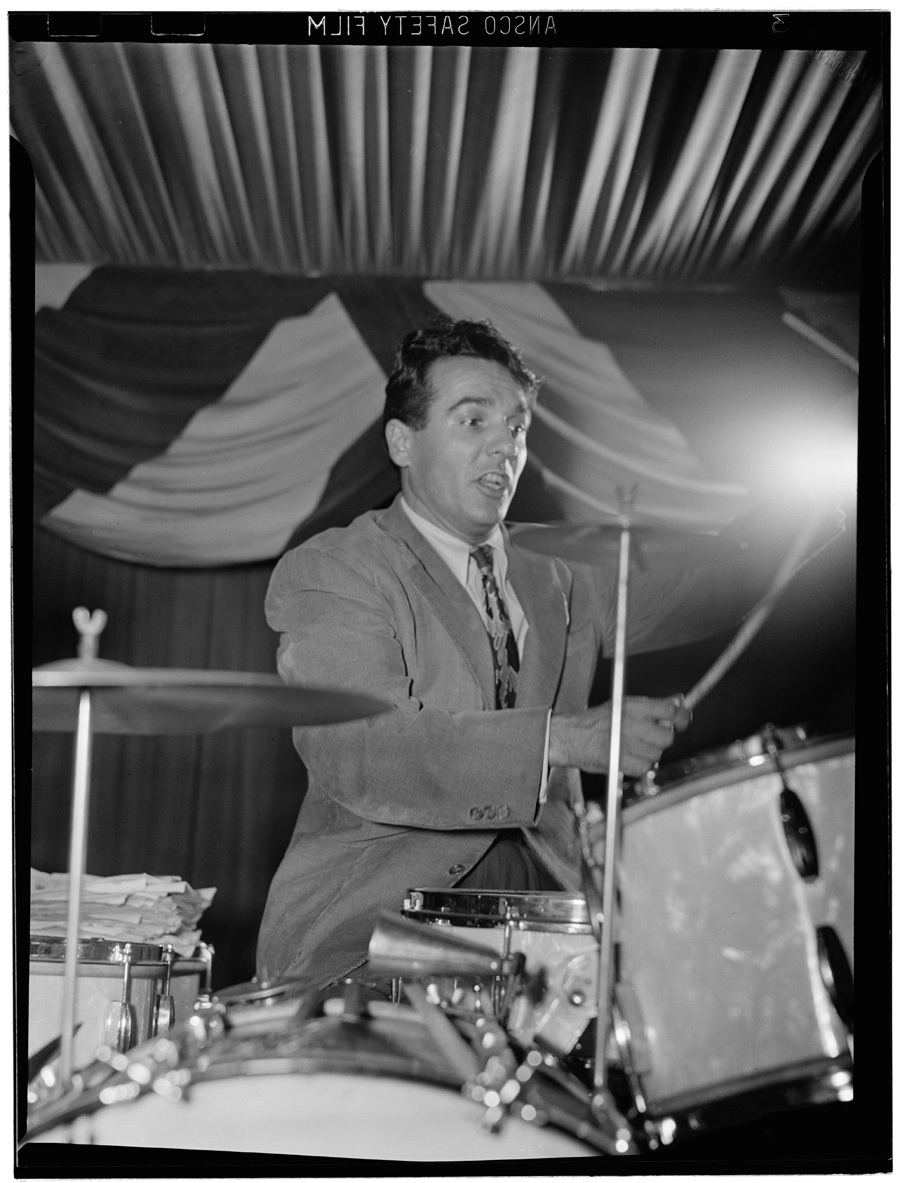
Eugene Bertram “Gene” Krupa (January 15, 1909 – October 16, 1973) was an American jazz and big band drummer, actor and composer, known for his highly energetic and flamboyant style. In the 1930s, Krupa became the first endorser of Slingerland drums. At Krupa’s urging, Slingerland developed tom-toms with tuneable top and bottom heads, which immediately became important elements of virtually every drummer’s setup. Krupa developed and popularized many of the cymbal techniques that became standards. His collaboration with Armand Zildjian of the Avedis Zildjian Company developed the modern hi-hat cymbals and standardised the names and uses of the ride cymbal, the crash cymbal, the splash cymbal, the pang cymbal and the swish cymbal. One of his bass drums, a Slingerland inscribed with Benny Goodman’s and Krupa’s initials, is preserved at the Smithsonian museum in Washington, D.C. In 1978, Krupa became the first drummer inducted into the Modern Drummer Hall of Fame.


Gene Krupa having A good time


Gene Krupa – Big Noise From Winnetka


Smithsonian National Portrait Gallery
8th and F Sts NW
Washington, DC 20001

Opening hours:
11.30am – 7.00pm daily

Smithsonian National Portrait Gallery website

LIKE ART BLART ON FACEBOOK

Back to top

Exhibition: ‘Robert Heinecken: Object Matter’ at The Museum of Modern Art (MoMA), New York

Exhibition dates: 15th March – 7th September 2014

Curators: Eva Respini, Curator, with Drew Sawyer, Beaumont and Nancy Newhall Curatorial Fellow, Department of Photography, The Museum of Modern Art

*PLEASE NOTE THIS POSTING CONTAINS ART PHOTOGRAPHS OF FEMALE NUDITY – IF YOU DO NOT LIKE PLEASE DO NOT LOOK, FAIR WARNING HAS BEEN GIVEN*


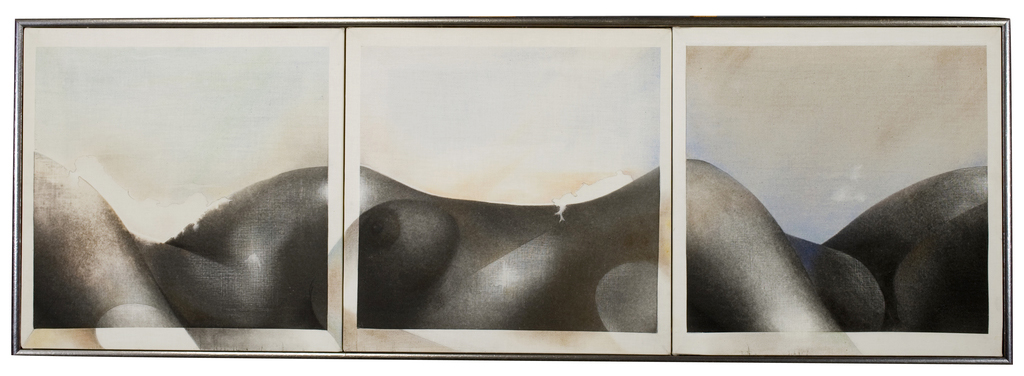
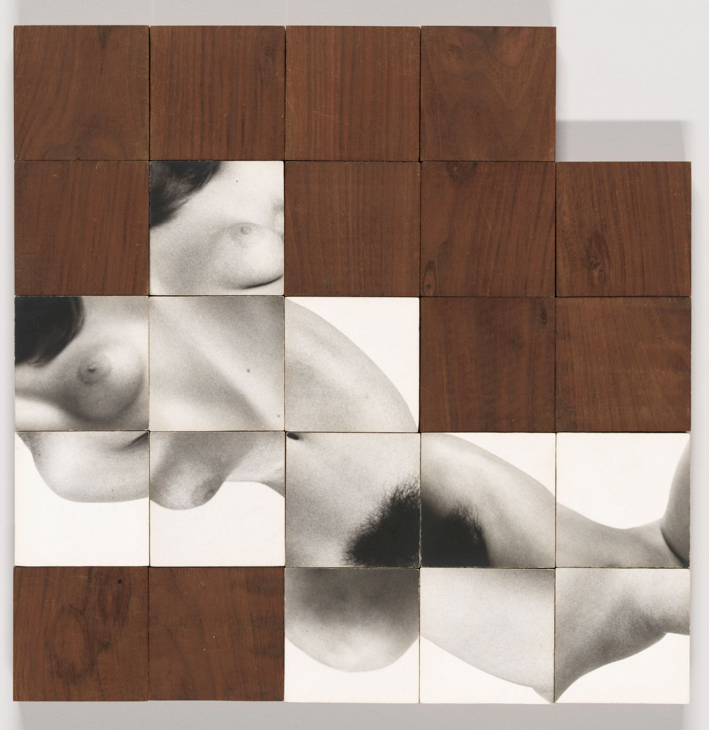
Robert Heinecken (American, 1931-2006) 'Figure Horizon #1' 1971


Robert Heinecken (American, 1931-2006)
Figure Horizon #1
1971
Ten canvas panels with photographic emulsion
Each 11 13/16 x 11 13/16″ (30 x 30cm)
The Museum of Modern Art, New York. Gift of Shirley C. Burden, by exchange


A bumper posting on probably the most important photo-media artist who has ever lived. This is how to successfully make conceptual photo-art.

A revolutionary artist, this para-photographer’s photo puzzles are just amazing!

Dr Marcus Bunyan


Many thank to MoMA for allowing me to publish the photographs in the posting. Please click on the photographs for a larger version of the image.


Robert Heinecken (American, 1931-2006) 'Le Voyeur / Robbe-Grillet #2' 1972


Robert Heinecken (American, 1931-2006)
Le Voyeur / Robbe-Grillet #2
1972
Three canvas panels with bleached photographic emulsion and pastel chalk
14 x 40″ (35.6 x 101.6cm)
George Eastman House, Rochester, New York. Museum Purchase with National Endowment for the Arts support


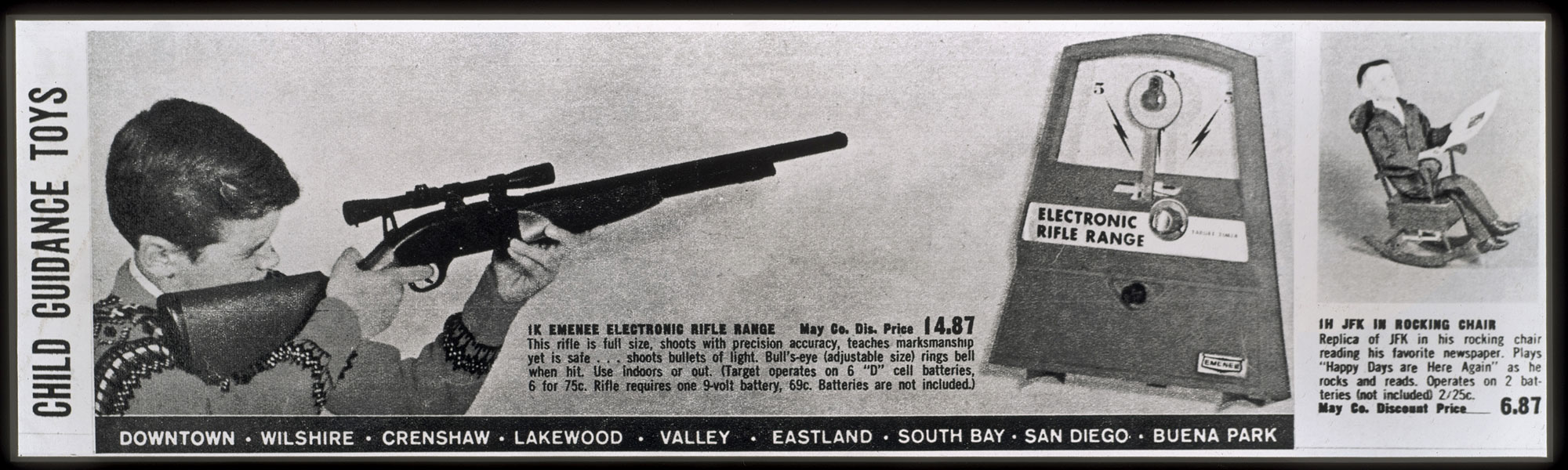
Robert Heinecken (American, 1931-2006) 'Child Guidance Toys' 1965


Robert Heinecken (American, 1931-2006)
Child Guidance Toys
1965
Black-and-white film transparency
5 x 18 1/16″ (12.7 x 45.8cm)
The Art Institute of Chicago. Gift of Boardroom, Inc.


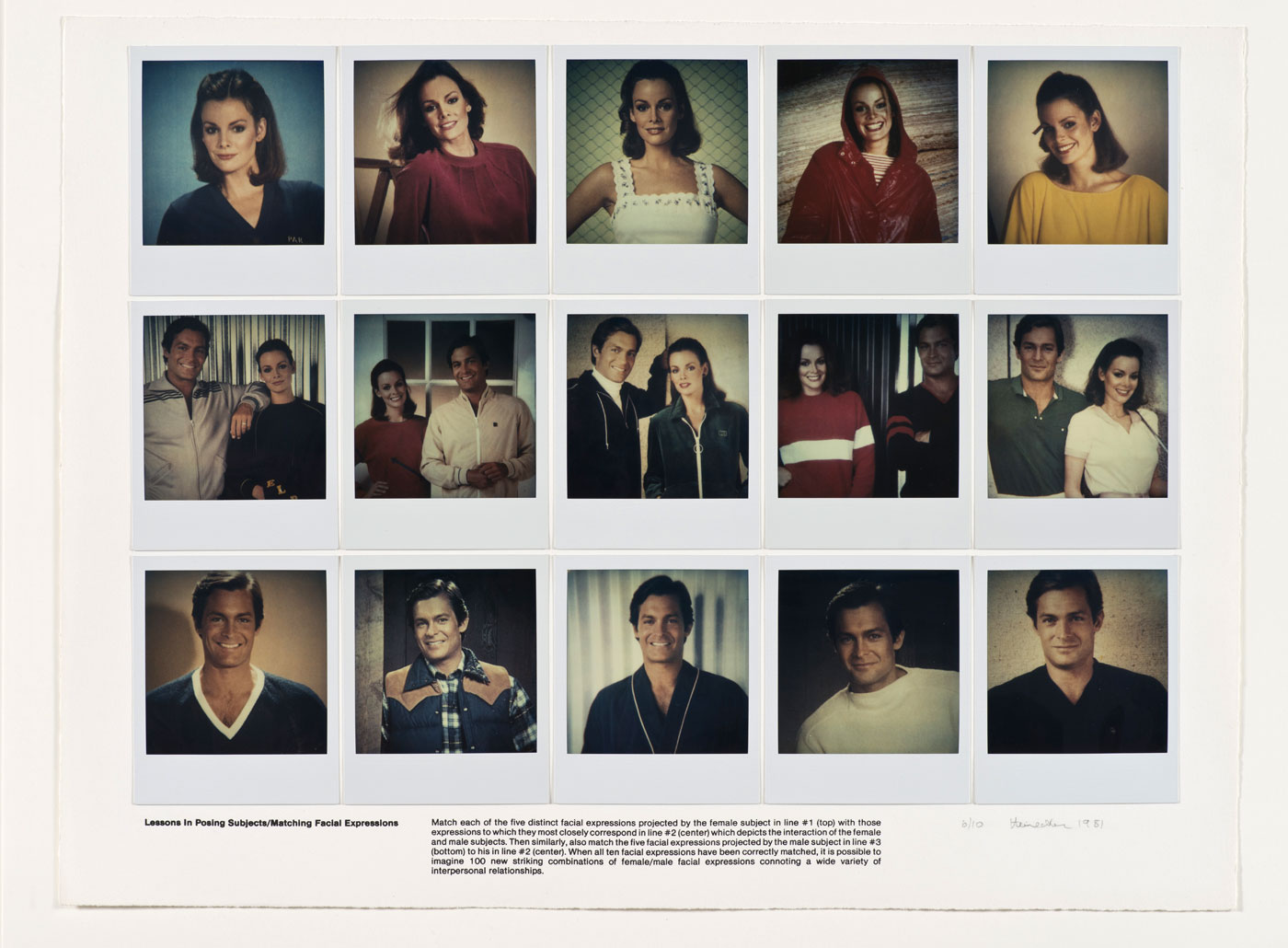
Robert Heinecken (American, 1931-2006) 'Lessons in Posing Subjects / Matching Facial Expressions' 1981


Robert Heinecken (American, 1931-2006)
Lessons in Posing Subjects / Matching Facial Expressions
1981
Fifteen internal dye diffusion transfer prints (SX-70 Polaroid) and lithographic text on Rives BFK paper
15 x 20″ (38.1 x 50.8cm)
Collection UCLA Grunwald Center for Graphic Art, Hammer Museum, Los Angeles. Gift of Dean Valentine and Amy Adelson


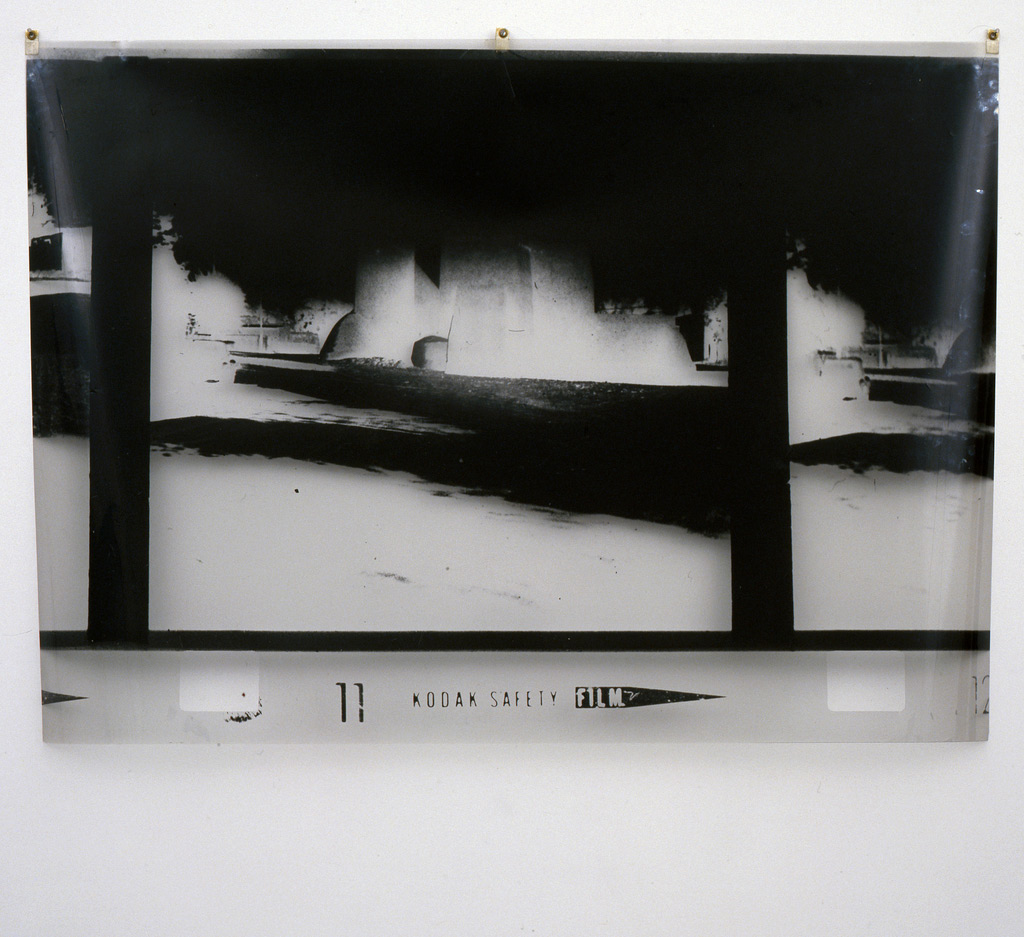
Robert Heinecken (American, 1931-2006) 'Kodak Safety Film / Taos Church' 1972


Robert Heinecken (American, 1931-2006)
Kodak Safety Film / Taos Church
1972
Black-and-white film transparency
40 x 56″ (101.6 x 142.2cm)
The Museum of Modern Art, New York. Committee on Photography Fund


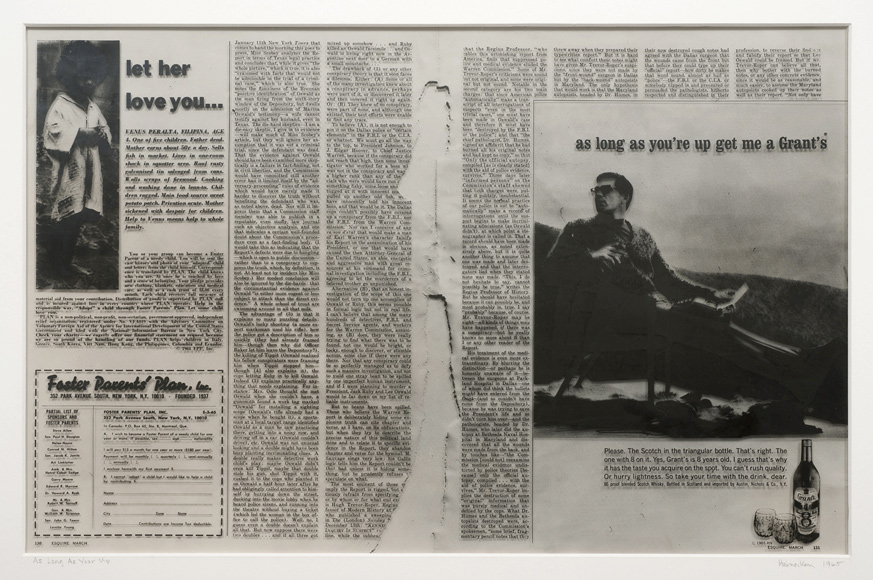
Robert Heinecken (American, 1931-2006) 'As Long As Your Up' 1965


Robert Heinecken (American, 1931-2006)
As Long As Your Up
1965
Black-and-white film transparency
15 1/2 x 19 5/8″ (39.4 x 49.8cm)
The Robert Heinecken Trust, Chicago. Courtesy Petzel Gallery, New York


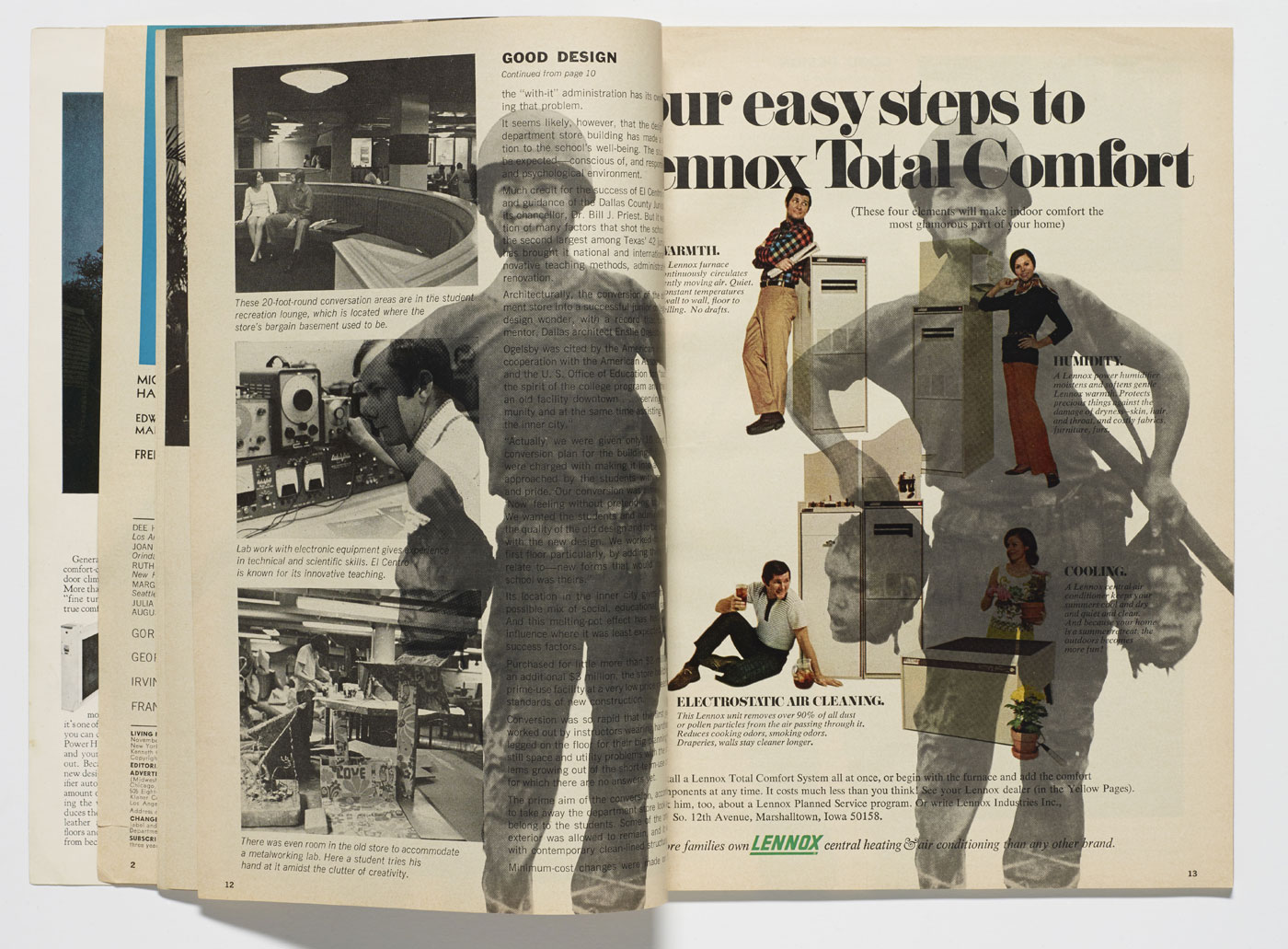
Robert Heinecken (American, 1931-2006) 'Periodical #5' 1971


Robert Heinecken (American, 1931-2006)
Periodical #5
1971
Offset lithography on found magazine
12 1/4 x 9″ (31.1 x 22.9cm)
Collection Philip Aarons and Shelley Fox Aarons, New York


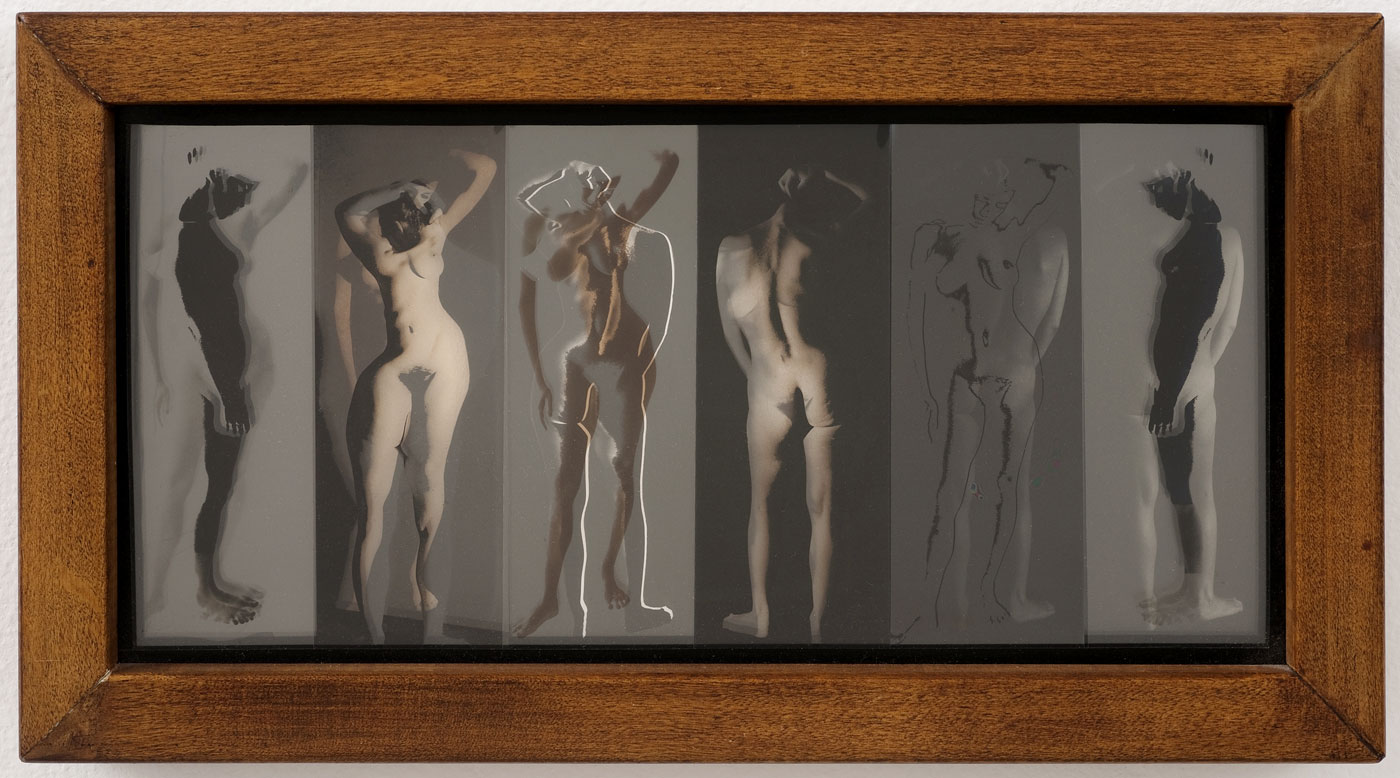
Robert Heinecken (American, 1931-2006) 'Six Figures/Mixed' 1968


Robert Heinecken (American, 1931-2006)
Six Figures/Mixed
1968
Layered Plexiglas and black-and-white film transparencies
5.75 x 9.75 x 1.5″ (14.61 x 24.77 x 3.81cm)
Collection Darryl Curran, Los Angeles


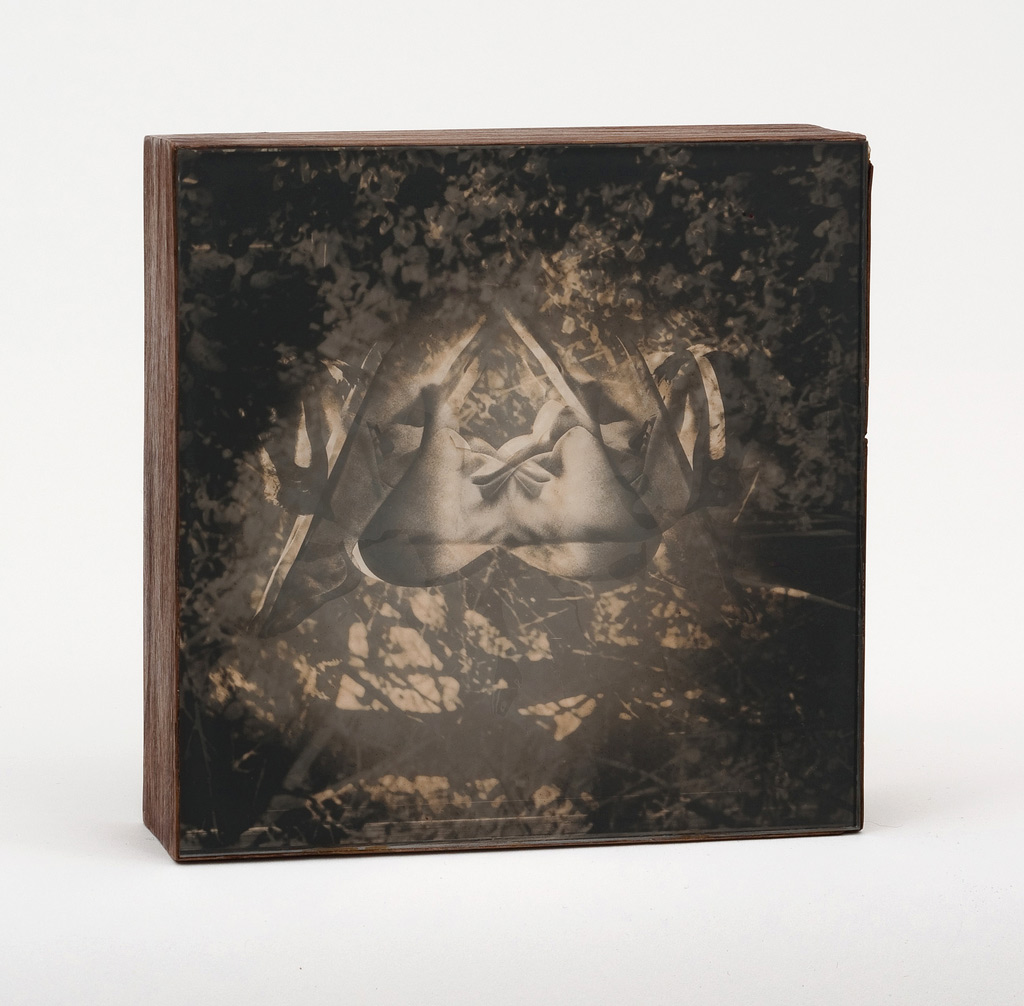
Robert Heinecken (American, 1931-2006) 'Figure / Foliage #2' 1969


Robert Heinecken (American, 1931-2006)
Figure / Foliage #2
1969
Layered Plexiglas and black-and-white film transparencies
5 x 5 x 1 1/4″ (12.7 x 12.7 x 3.2cm)
Collection Anton D. Segerstrom, Corona del Mar, California


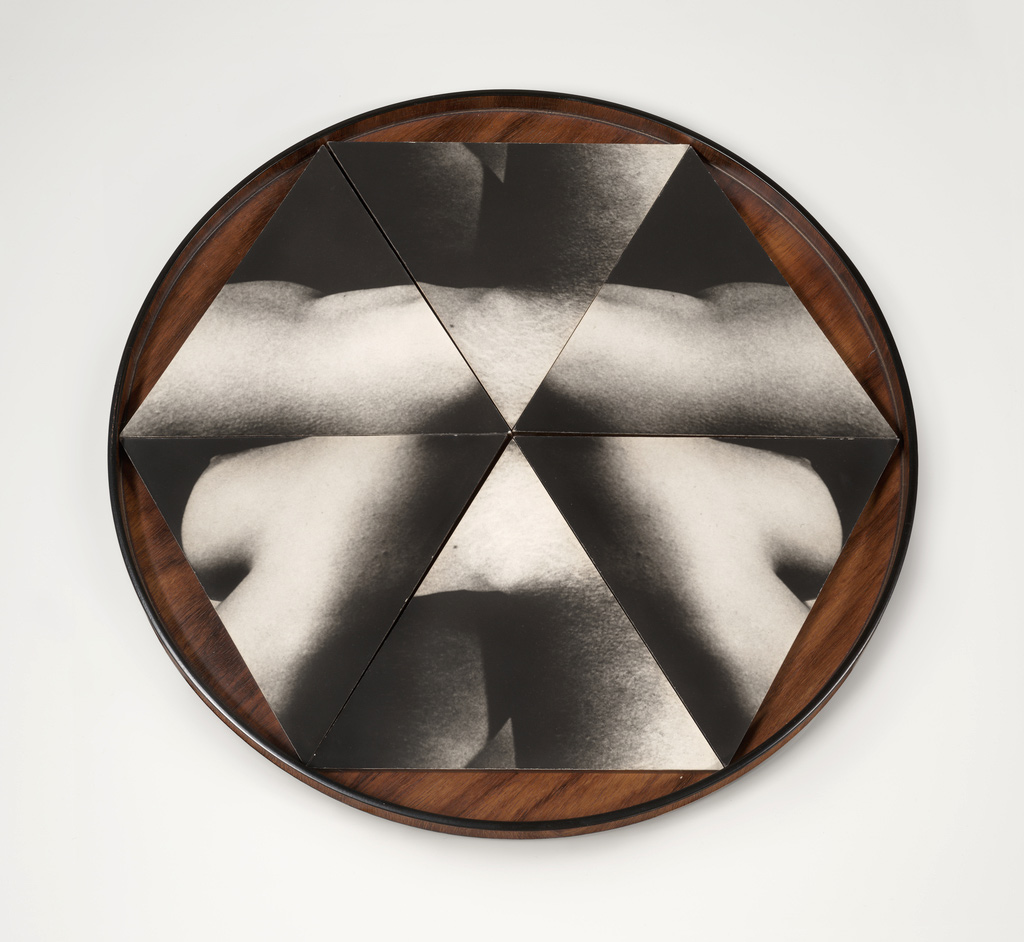
Robert Heinecken (American, 1931-2006) 'Kaleidoscopic Hexagon #2' 1965


Robert Heinecken (American, 1931-2006)
Kaleidoscopic Hexagon #2
1965
Six gelatin silver prints on wood
Diameter: 14″ (35.6cm)
Black Dog Collection. Promised gift to San Francisco Museum of Modern Art


Robert Heinecken (American, 1931-2006) '24 Figure Blocks' 1966


Robert Heinecken (American, 1931-2006)
24 Figure Blocks
1966
Twelve gelatin silver prints on wood blocks, and twelve additional wood blocks
14 1/16 x 14 1/16 x 13/16″ (35.7 x 35.7 x 2.1cm)
Whitney Museum of American Art, New York. Gift of Jeanne and Richard S. Press


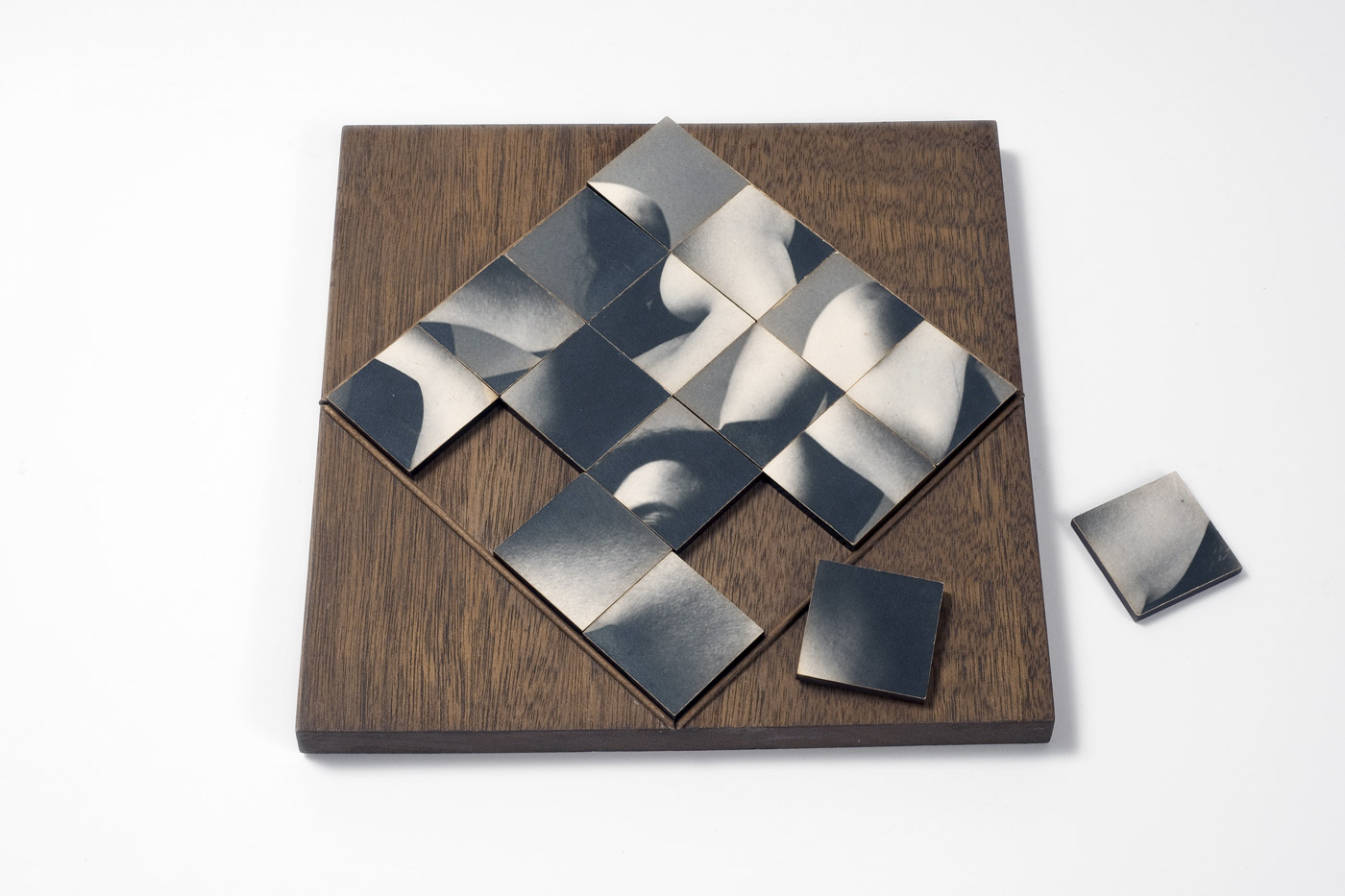
Robert Heinecken (American, 1931-2006) 'Multiple Solution Puzzle' 1965


Robert Heinecken (American, 1931-2006)
Multiple Solution Puzzle
1965
Sixteen gelatin silver prints on wood
11 1/4 x 11 1/4 x 1″ (28.6 x 28.6 x 2.5cm)
Collection Maja Hoffmann/LUMA Foundation


The Museum of Modern Art presents Robert Heinecken: Object Matter, the first retrospective of the work of Robert Heinecken since his death in 2006 and the first exhibition on the East Coast to cover four decades of the artist’s unique practice, from the early 1960s through the late 1990s, on view from March 15 to September 7, 2014. Describing himself as a “para-photographer,” because his work stood “beside” or “beyond” traditional ideas associated with photography, Heinecken worked across multiple mediums, including photography, sculpture, printmaking, and collage. Culling images from newspapers, magazines, pornography, and television, he recontextualized them through collage and assemblage, photograms, darkroom experimentation, and rephotography. His works explore themes of commercialism, Americana, kitsch, sex, the body, and gender. In doing so, the works in this exhibition expose his obsession with popular culture and its effects on society, and with the relationship between the original and the copy. Robert Heinecken: Object Matter is organised by Eva Respini, Curator, with Drew Sawyer, Beaumont and Nancy Newhall Curatorial Fellow, Department of Photography, The Museum of Modern Art. The exhibition will travel to the Hammer Museum, and will be on view there from October 5, 2014 through January 17, 2015.

Heinecken dedicated his life to making art and teaching, establishing the photography program at UCLA in 1964, where he taught until 1991. He began making photographs in the early 1960s. The antithesis of the fine-print tradition exemplified by West Coast photographers Ansel Adams and Edward Weston, who photographed landscapes and objects in sharp focus and with objective clarity, Heinecken’s early work is marked by high contrast, blur, and under- or overexposure, as seen in Shadow Figure (1962) and Strip of Light (1964). In the mid-1960s he began combining and sequencing disparate pictures, as in Visual Poem/About the Sexual Education of a Young Girl (1965), which comprises seven black-and-white photographs of dolls with a portrait of his then-five-year-old daughter Karol at the centre.

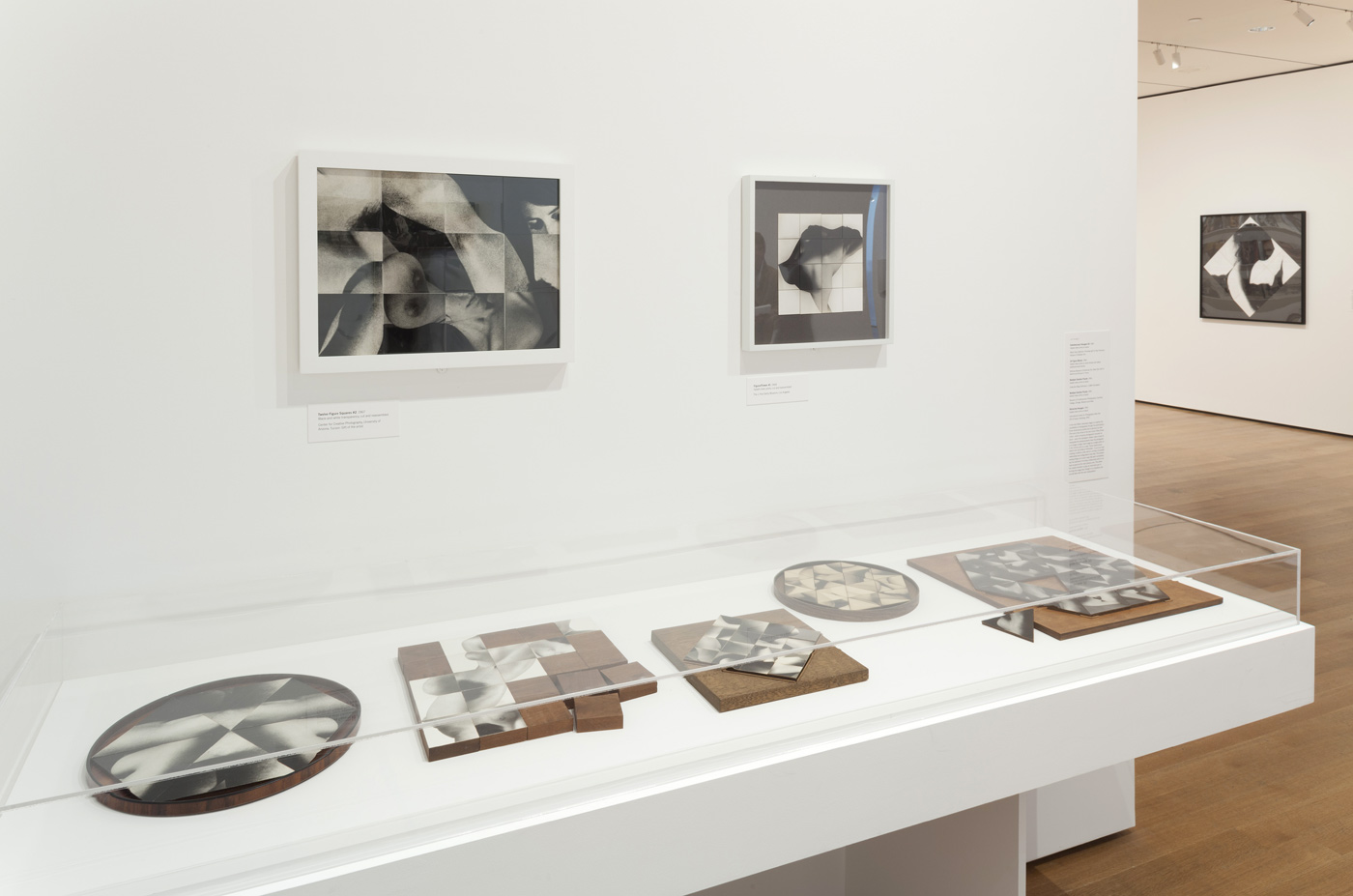
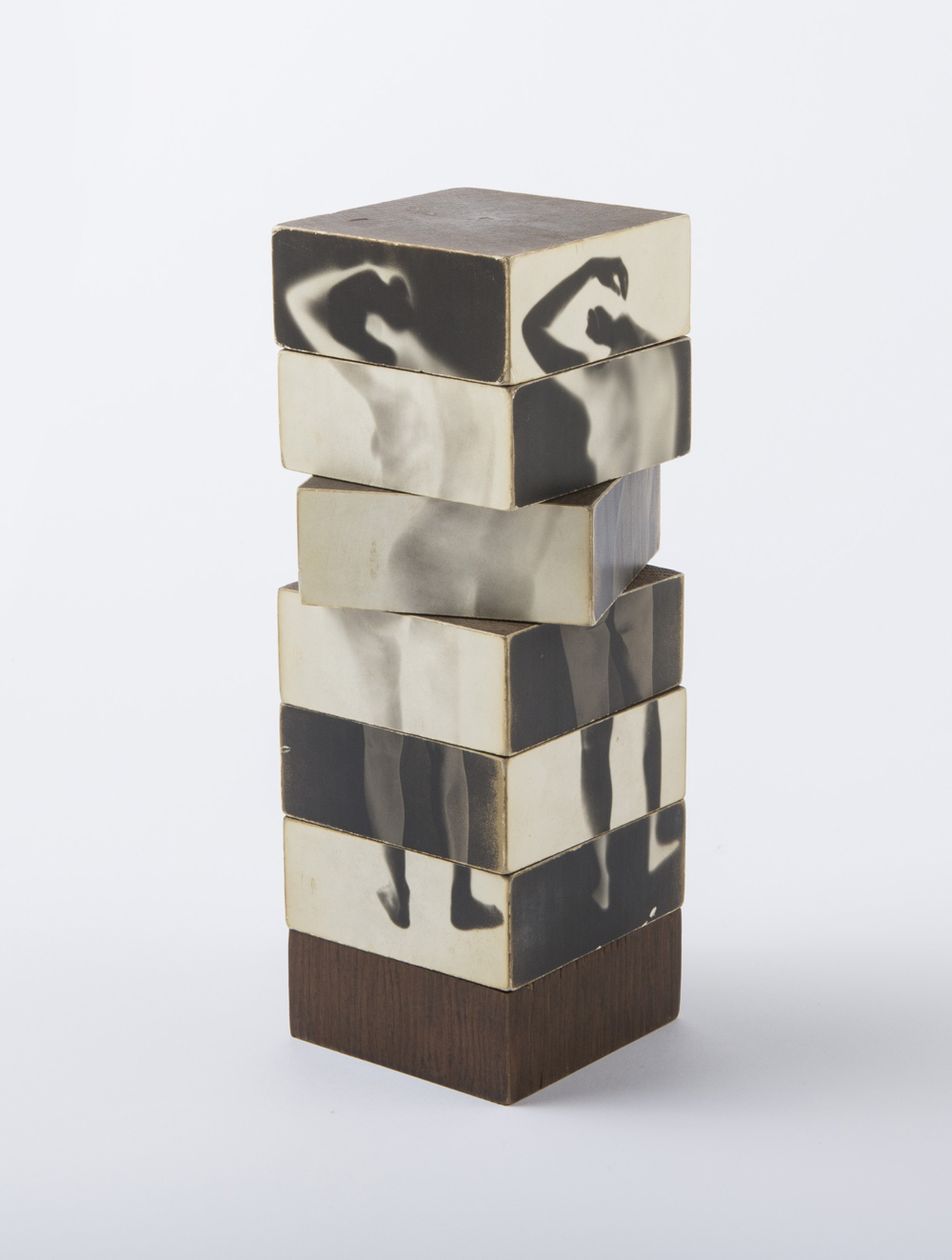
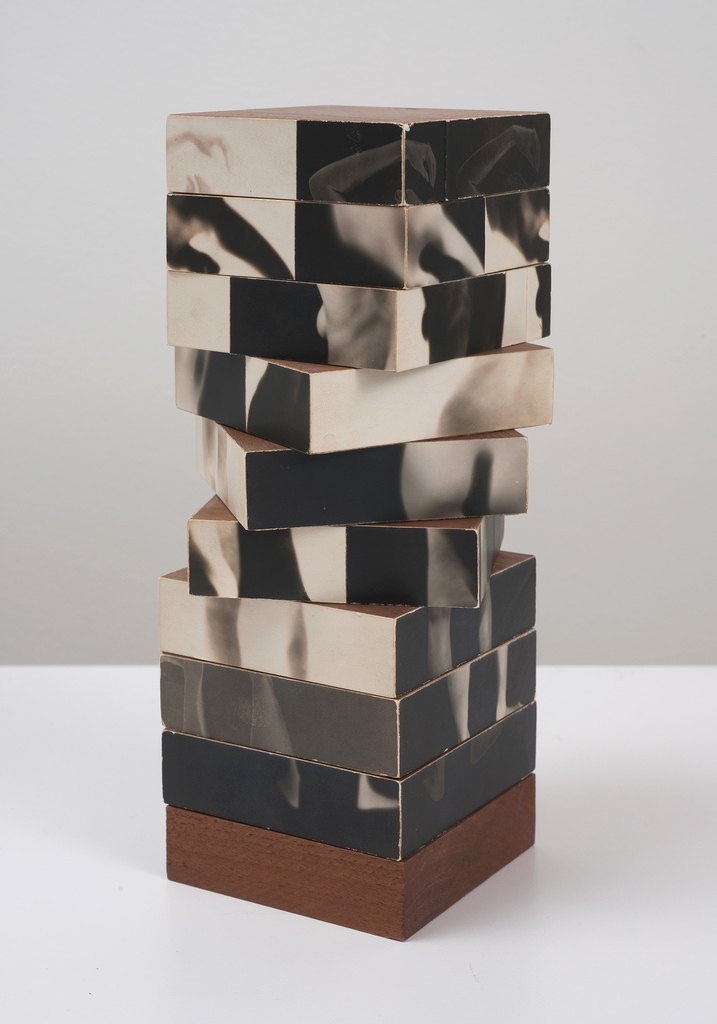
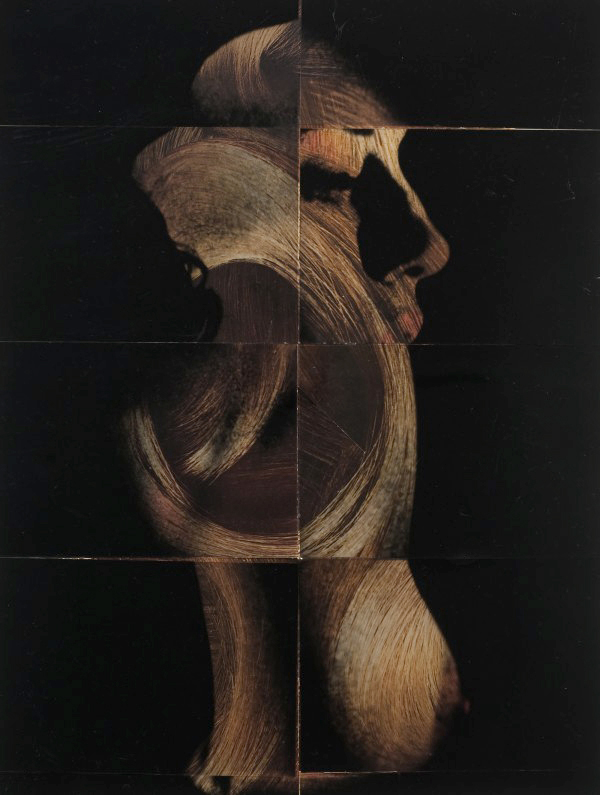
The female nude is a recurring motif, featured in Refractive Hexagon (1965), one of several “photopuzzles” composed of photographs of female body parts mounted onto 24 individual “puzzle” pieces. Other three-dimensional sculptures – geometric volumes ranging in height from five to 22 inches – consist of photographs mounted onto individual blocks, which rotate independently around a central axis. In Fractured Figure Sections (1967), as in Refractive Hexagon, the female figure is never resolved as a single image – the body is always truncated, never contiguous. In contrast, a complete female figure can be reconstituted in his largest photo-object, Transitional Figure Sculpture (1965), a towering 26-layer octagon composed from photographs of a nude that have been altered using various printing techniques. At the time, viewer engagement was key to creating random configurations and relationships in the work; any number of possibilities may exist, only to be altered with the next manipulation. Today, due to the fragility of the works, these objects are displayed in Plexiglas-covered vitrines. However, the number of sculptures and puzzles gathered here offer the viewer a sense of this diversity.

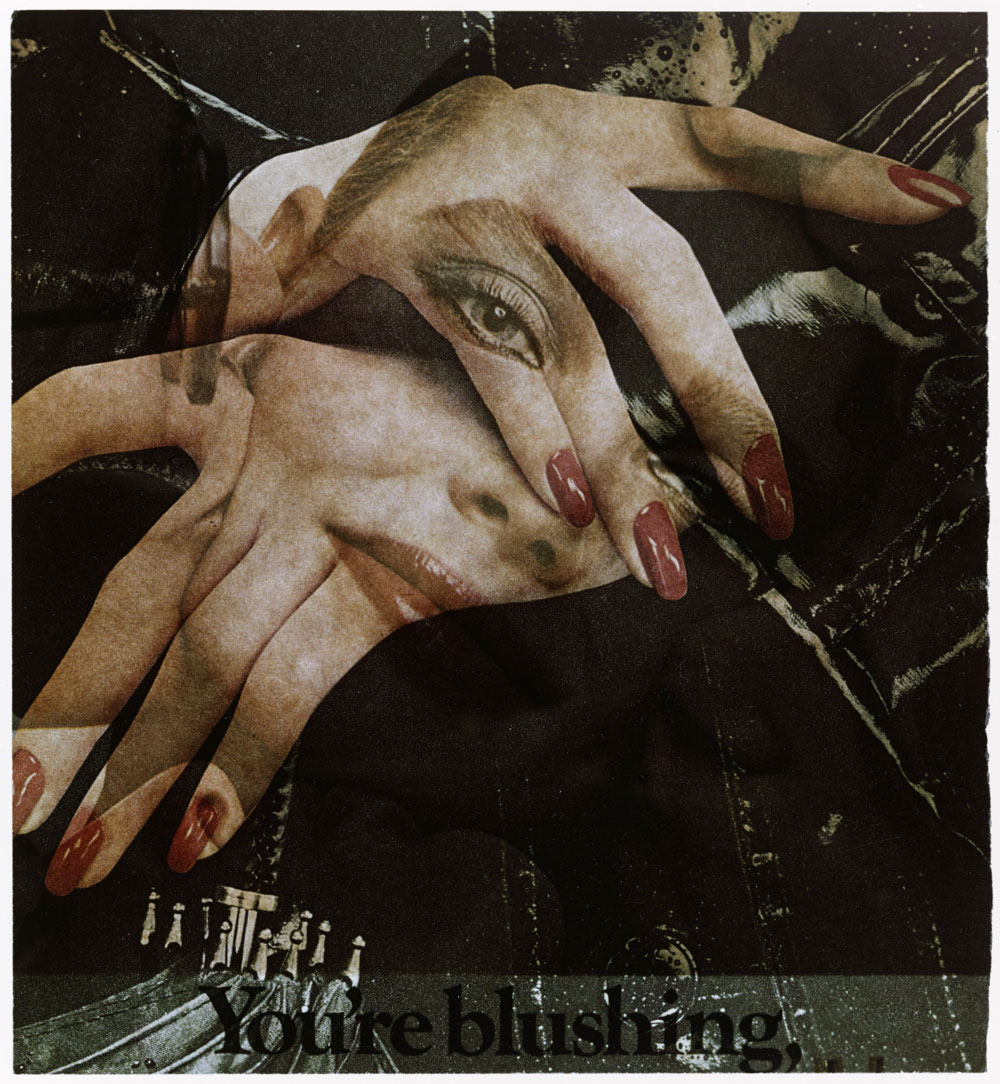
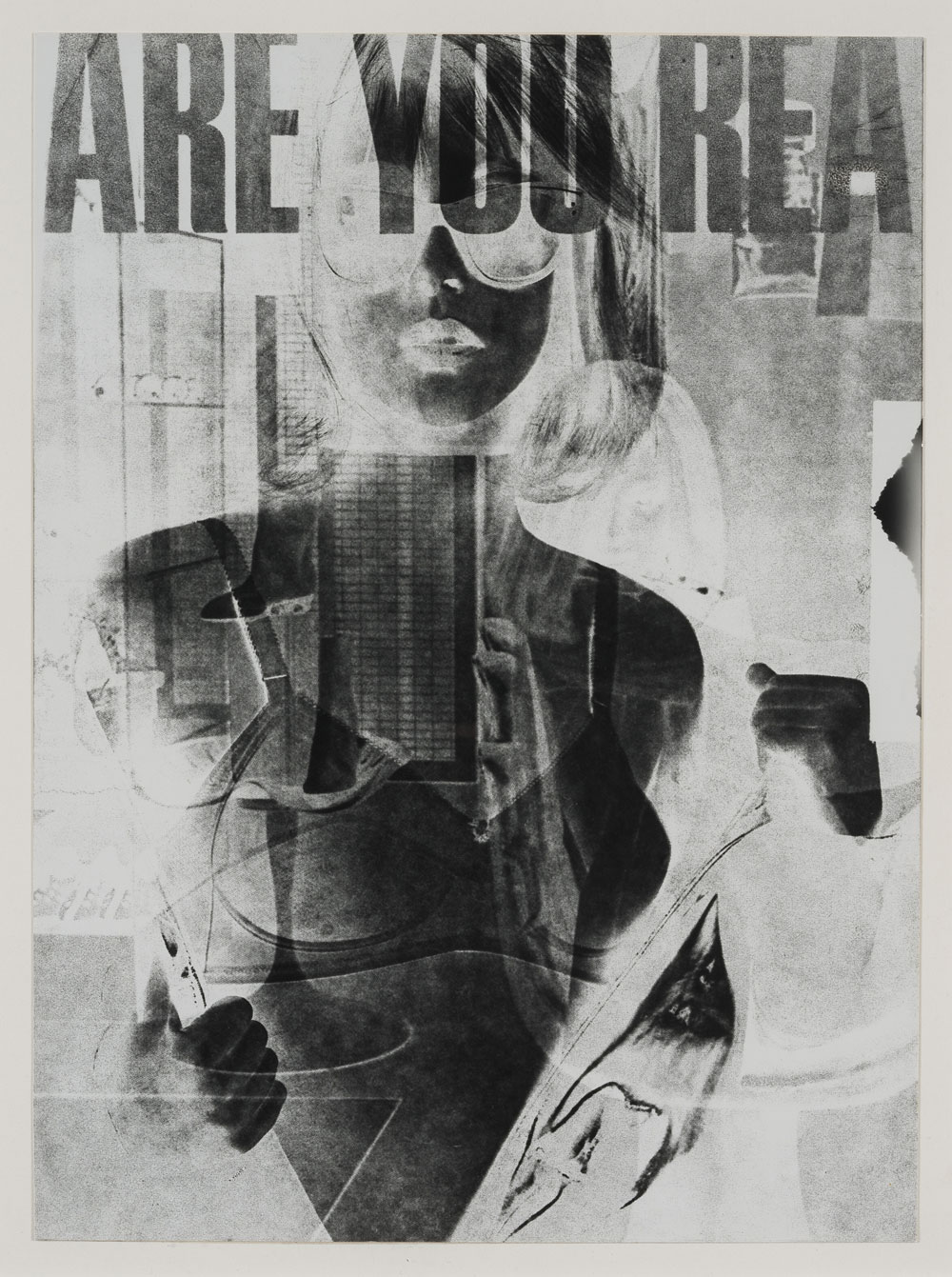
Heinecken’s groundbreaking suite Are You Rea (1964-68) is a series of 25 photograms made directly from magazine pages. Representative of a culture that was increasingly commercialised, technologically mediated, and suspicious of established truths, Are You Rea cemented Heinecken’s interest in the multiplicity of meanings inherent in existing images and situations. Culled from more than 2000 magazine pages, the work includes pictures from publications such as Life, Time, and Woman’s Day, contact-printed so that both sides are superimposed in a single image. Heinecken’s choice of pages and imagery are calculated to reveal specific relationships and meanings – ads for Coppertone juxtaposed with ads for spaghetti dinners and an article about John F. Kennedy superimposed on an ad for Wessex carpets – the portfolio’s narrative moves from relatively commonplace and alluring images of women to representations of violence and the male body.

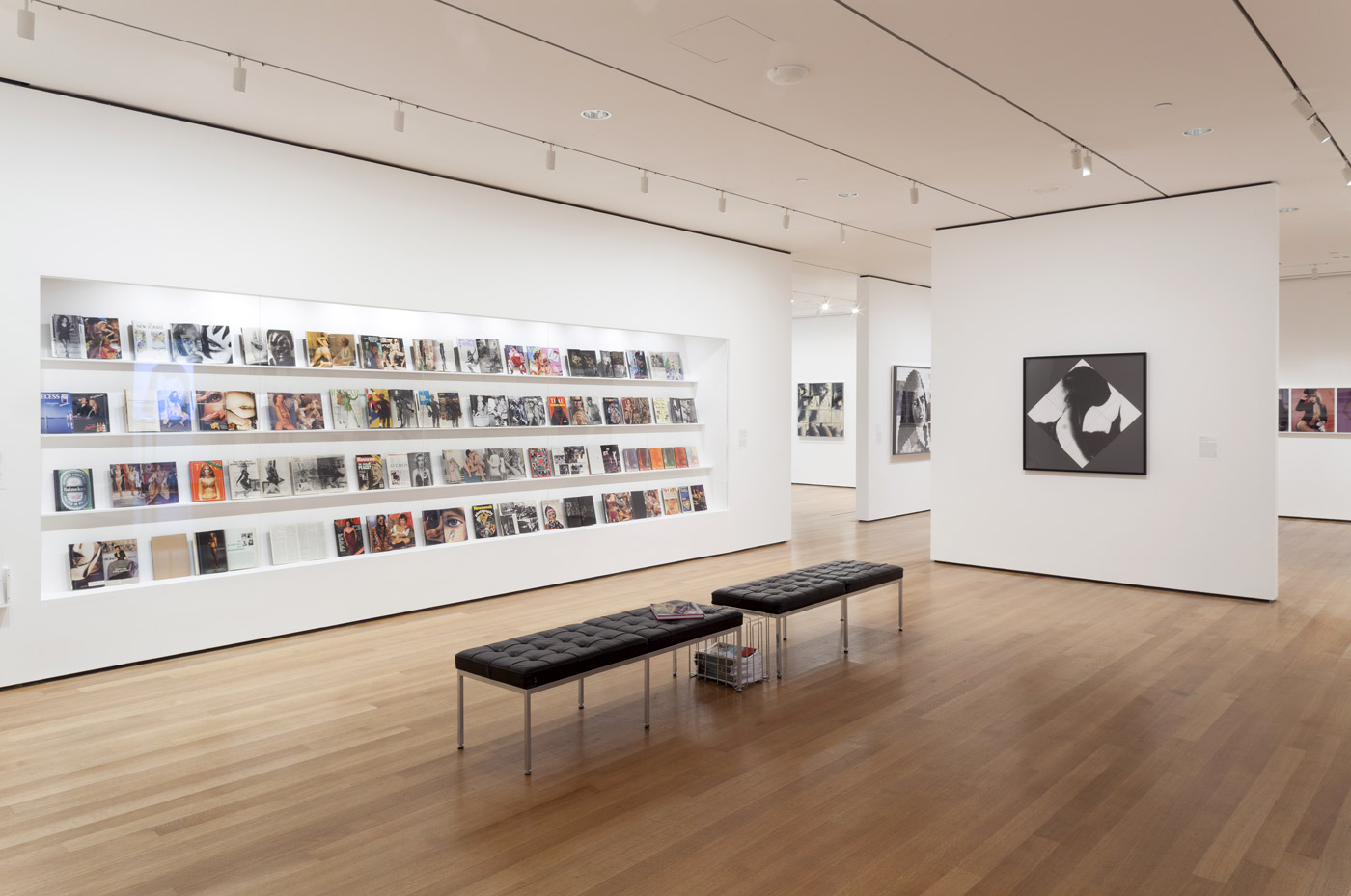
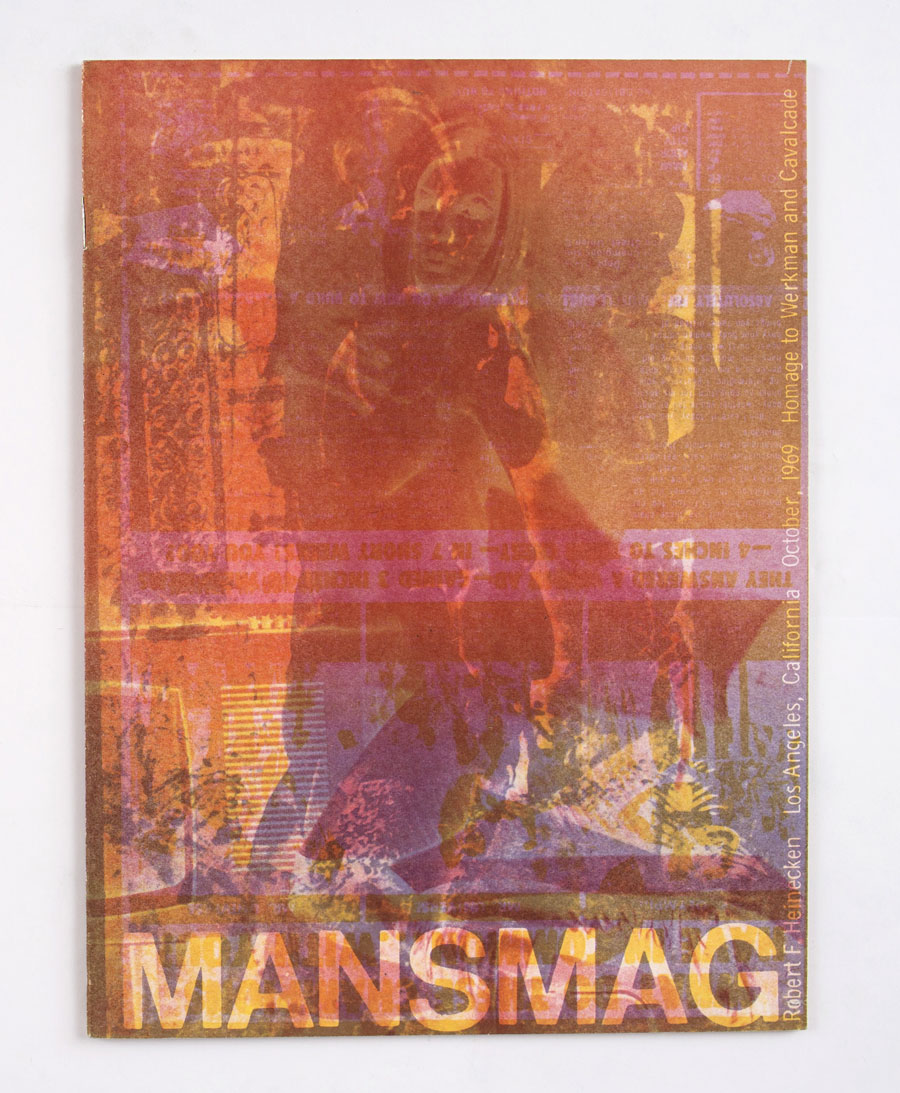
Heinecken began altering magazines in 1969 with a series of 120 periodicals titled MANSMAG: Homage to Werkman and Cavalcade. He used the erotic men’s magazine Cavalcade as source material, making plates of every page, and randomly printing them on pages that were then reassembled into a magazine, now scrambled. In the same year, he disassembled numerous Time magazines, imprinting pornographic images taken from Cavalcade on every page, and reassembled them with the original Time covers. He circulated these reconstituted magazines by leaving them in waiting rooms or slipping them onto newsstands, allowing the work to come full circle – the source material returning to its point of origin after modification. He reprised this technique in 1989 with an altered issue of Time titled 150 Years of Photojournalism, a greatest hits of historical events seen through the lens of photography.


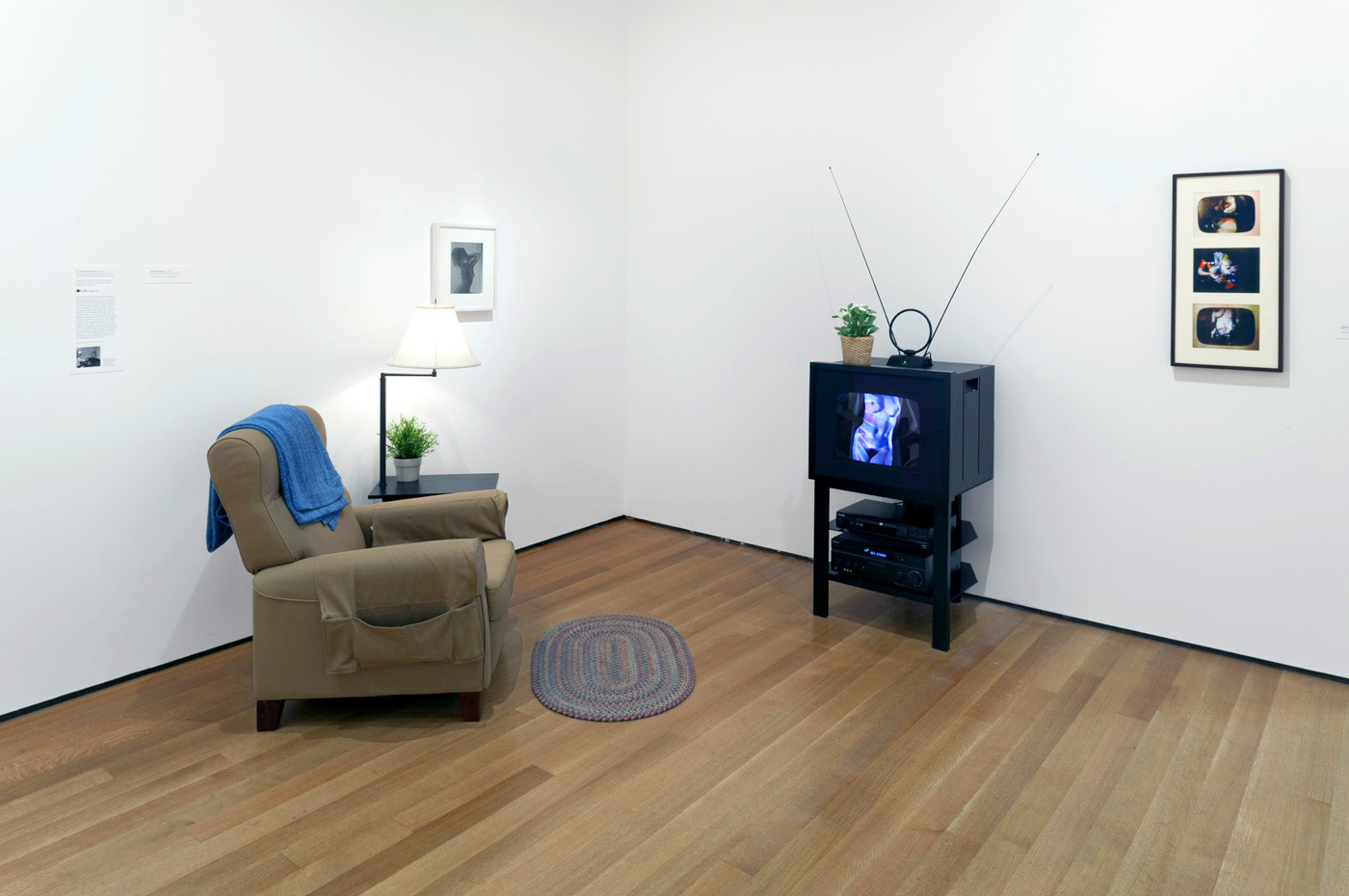
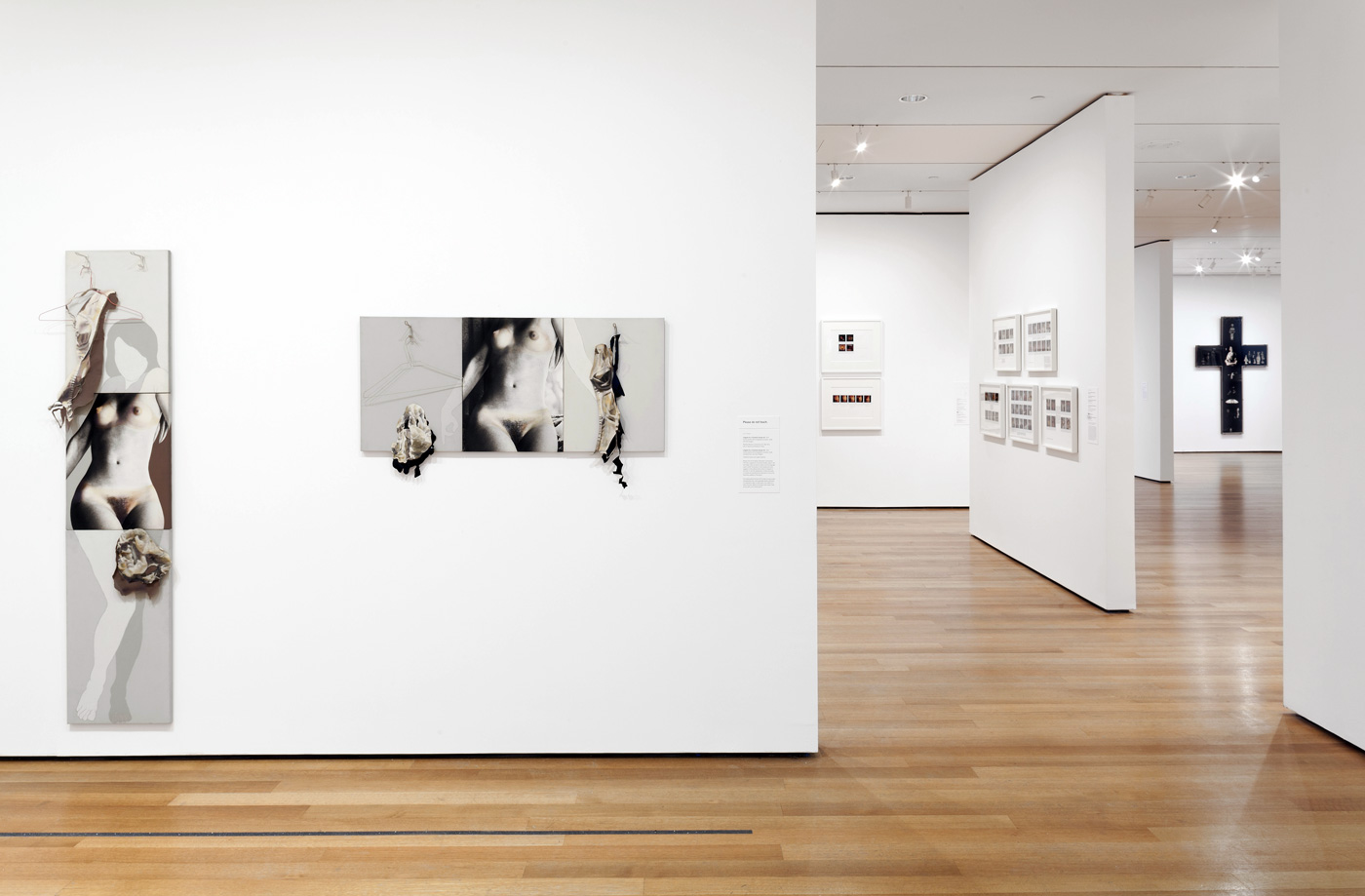
Installation view of 'Robert Heinecken: Object Matter' at The Museum of Modern Art (MoMA)

Installation view of 'Robert Heinecken: Object Matter' at The Museum of Modern Art (MoMA)

Installation view of 'Robert Heinecken: Object Matter' at The Museum of Modern Art (MoMA)

Installation view of 'Robert Heinecken: Object Matter' at The Museum of Modern Art (MoMA)


Installation views of Robert Heinecken: Object Matter at The Museum of Modern Art (MoMA)
Photos by Jonathan Muzikar
© The Museum of Modern Art


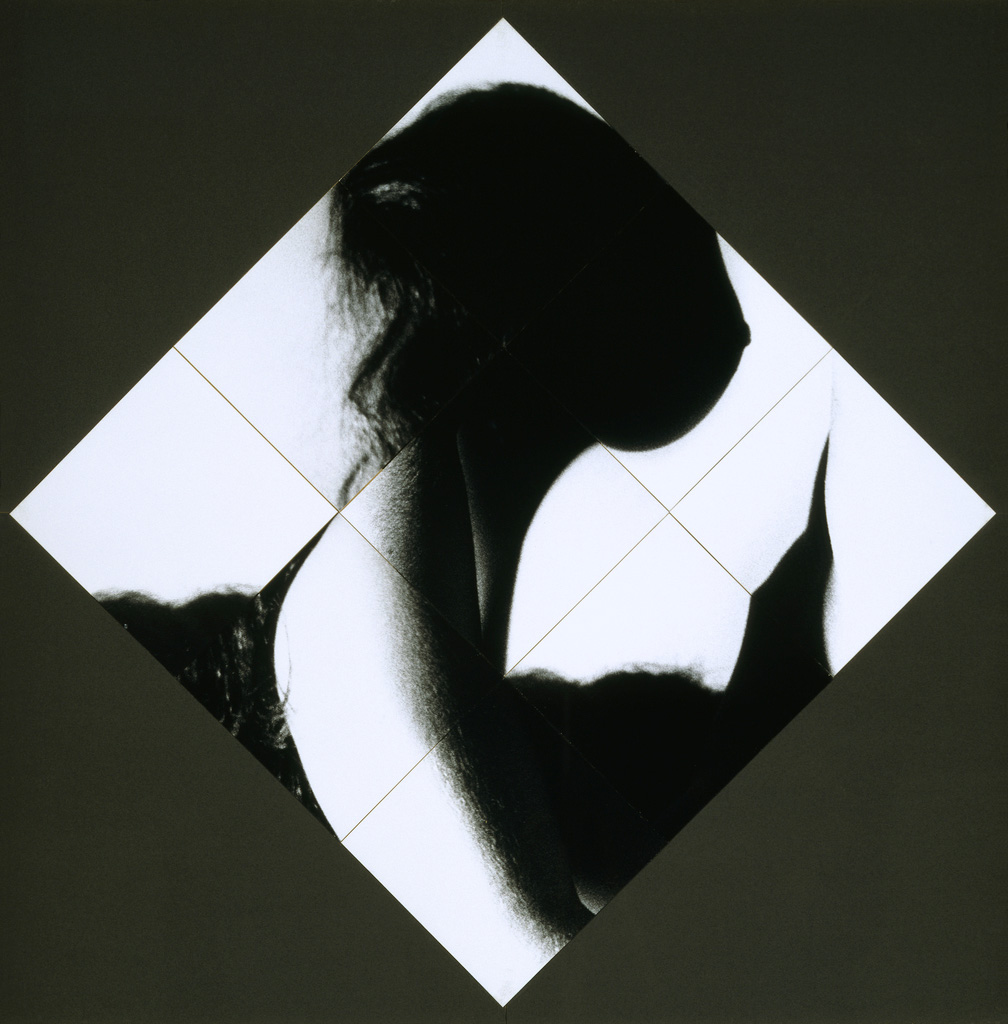
Robert Heinecken (American, 1931-2006) 'Breast / Bomb #5' 1967


Robert Heinecken (American, 1931-2006)
Breast / Bomb #5
1967
Gelatin silver prints, cut and reassembled
38 1/2 x 38 1/4″ (97.8 x 97.2cm)
Denver Art Museum. Funds From 1992 Alliance For Contemporary Art Auction


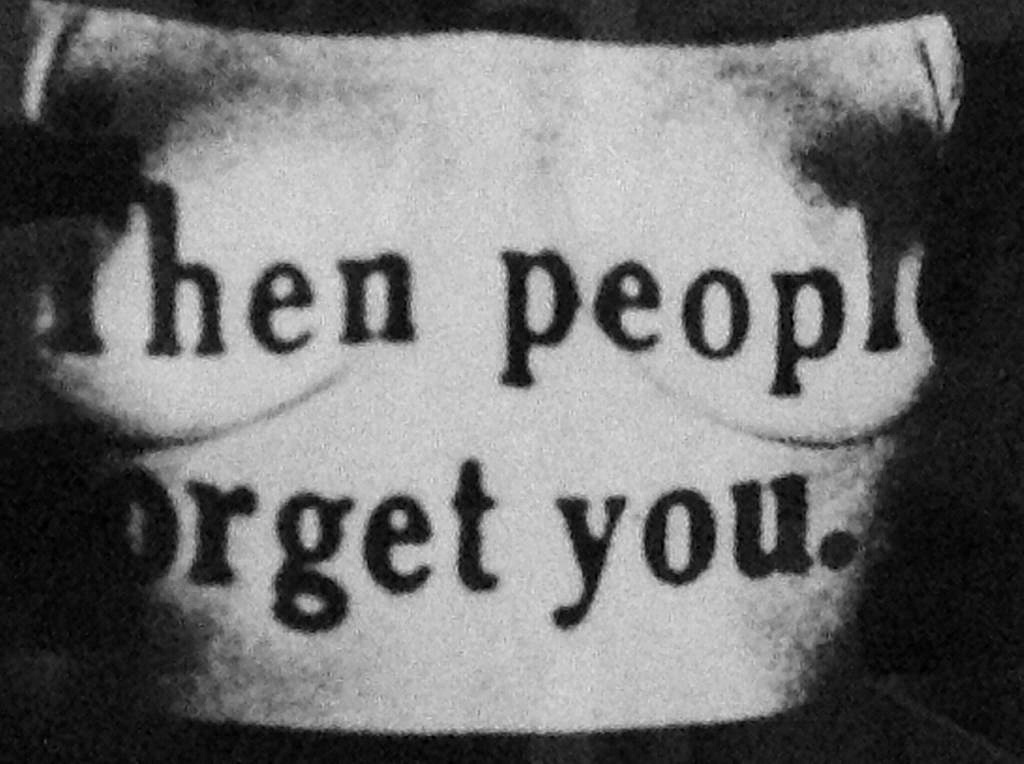
Robert Heinecken (American, 1931-2006) 'Then People Forget You' 1965


Robert Heinecken (American, 1931-2006)
Then People Forget You
1965
Gelatin silver print
10 3/8 x 12 15/16″ (26.3 x 32.8cm)
The Art Institute of Chicago. Gift of Boardroom, Inc.


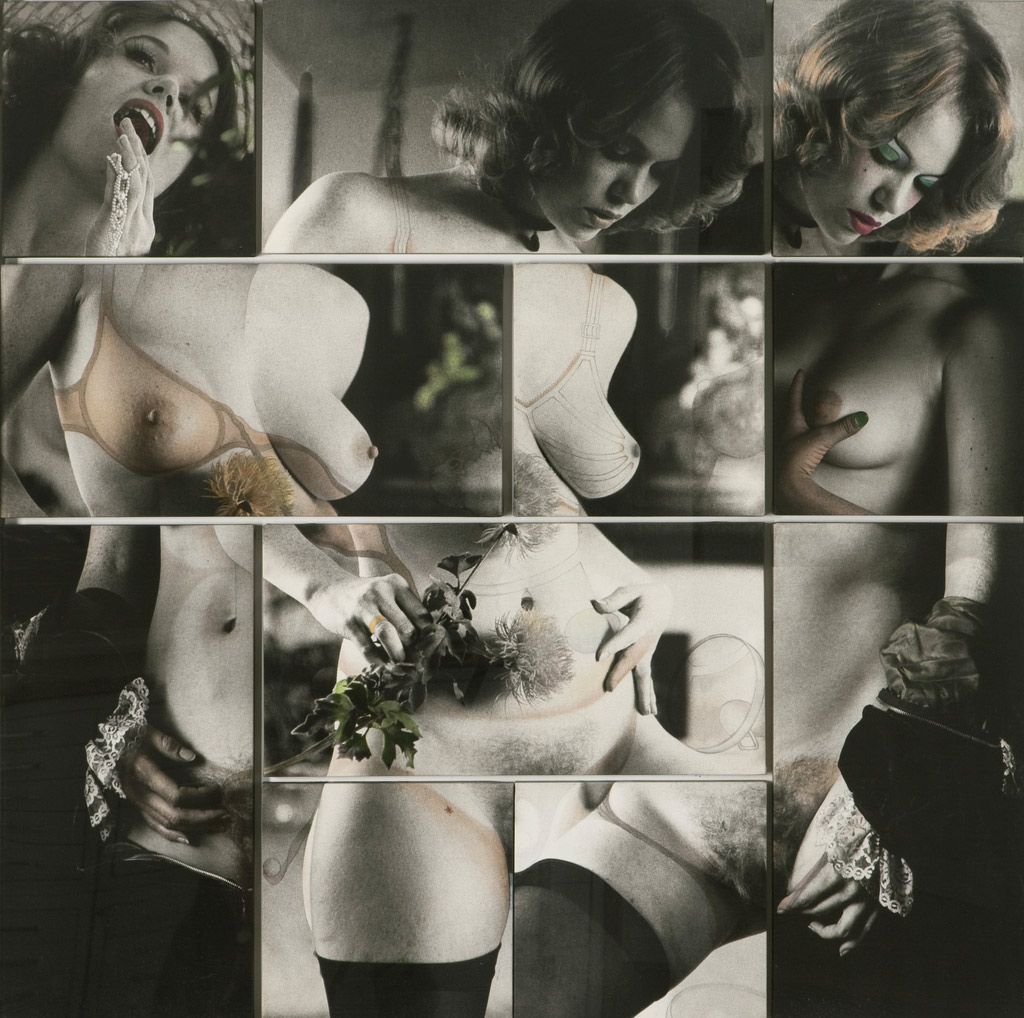
Robert Heinecken (American, 1931-2006) 'Cliche Vary / Autoeroticism' 1974


Robert Heinecken (American, 1931-2006)
Cliche Vary / Autoeroticism
1974
Eleven canvas panels with photographic emulsion and pastel chalk
39 1/2 x 39 1/2 in. (100.3 x 100.3cm)
Collection Susan and Peter MacGill, New York


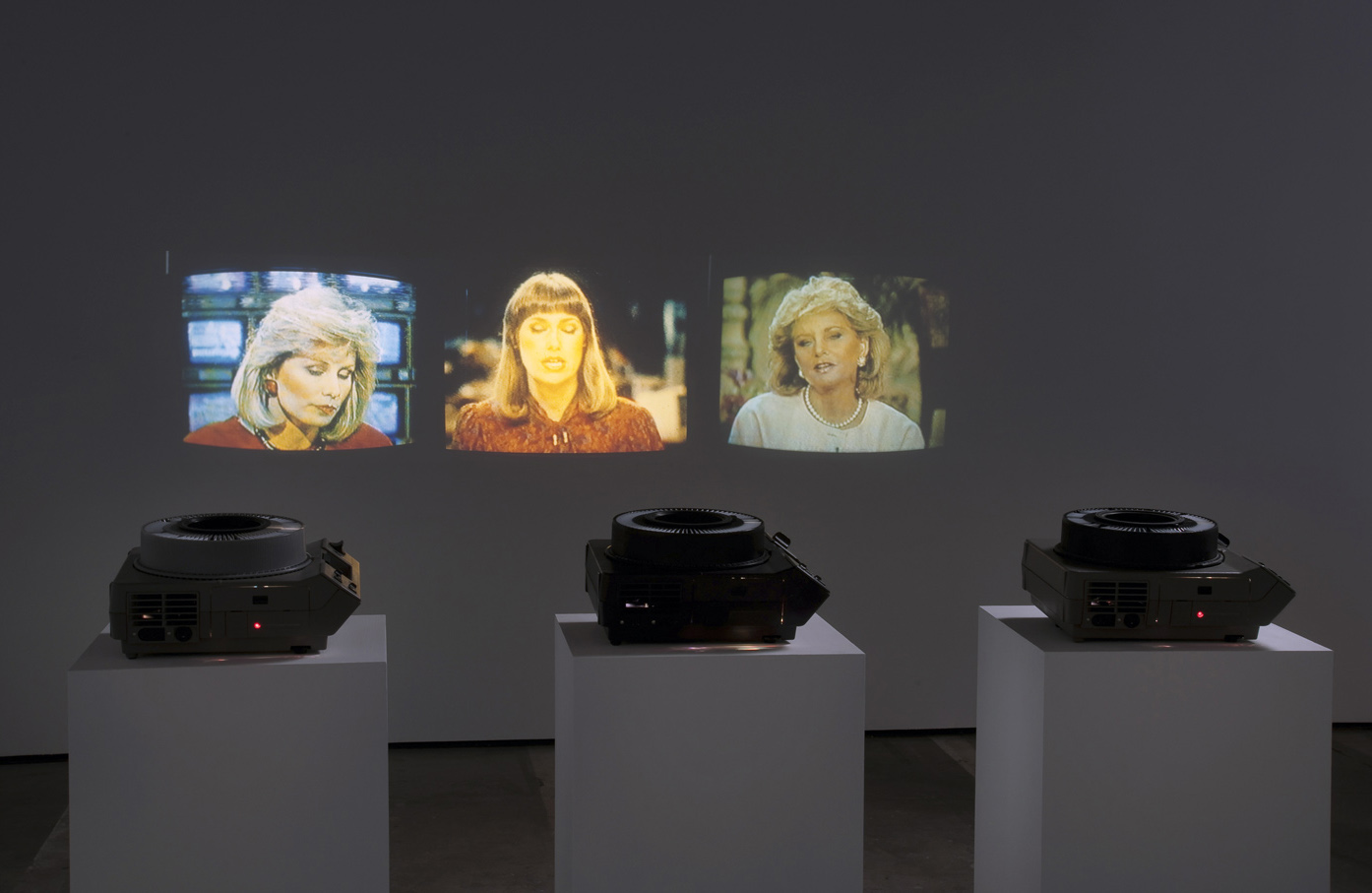
Robert Heinecken (American, 1931-2006) 'Surrealism on TV' 1986


Robert Heinecken (American, 1931-2006)
Surrealism on TV
1986
216 35 mm colour slides, slide-show time variable
The Robert Heinecken Trust, Chicago; courtesy Cherry and Martin Gallery, Los Angeles
© 2013 The Robert Heinecken Trust.


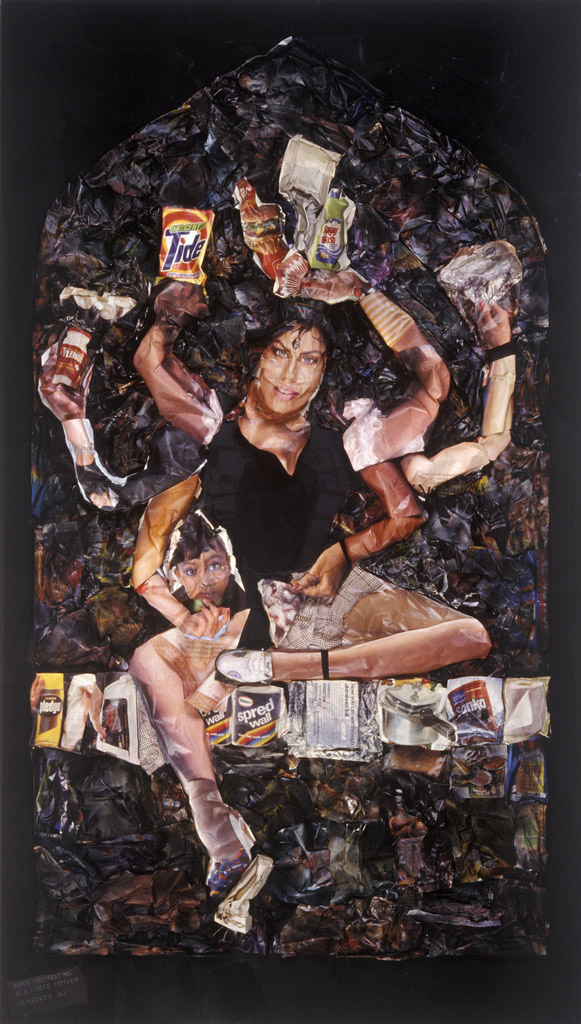
Robert Heinecken (American, 1931-2006) 'Shiva Manifesting as a Single Mother' 1989


Robert Heinecken (American, 1931-2006)
Shiva Manifesting as a Single Mother
1989
Magazine paper, paint and varnish
Collection Philip F. Denny, Chicago
© 2014 The Robert Heinecken Trust


Transparent film is also used in many of Heinecken’s works to explore different kinds of juxtapositions. In Kodak Safety Film / Christmas Mistake (1971), pornographic images are superimposed on a Christmas snapshot of Heinecken’s children with the suggestion in the title that somehow two rolls of film were mixed up at the photo lab. Kodak Safety Film / Taos Church (1972) takes photography itself as a subject, picturing an adobe church in New Mexico that was famously photographed by Ansel Adams and Paul Strand, and painted by Georgia O’Keeffe and John Marin. Presented as a negative, Heinecken’s version transforms an icon of modernism into a murky structure flanked by a pickup truck, telephone wires, and other modern-day debris.

Heinecken’s hybrid photographic paintings, created by applying photographic emulsion on canvas, are well represented in the exhibition. In Figure Horizon #1(1971), Heinecken reprised the cut-and-reassemble techniques from his puzzles and photo-sculptures, sequencing images of sections of the nude female body, to create impossible undulating landscapes. Cliché Vary, a pun on the 19th-century cliché verre process, is comprised of three large-scale modular works, all from 1974: Autoeroticism, Fetishism, and Lesbianism. The works are comprised of separately stretched canvas panels with considerable hand-applied colour on the photographic image, invoking clichés associated with autoeroticism, fetishism, and lesbianism. Reminiscent of his cut-and-reassembled pieces, each panel features disjointed views of bodies and fetish objects that never make a whole, and increase in complexity, culminating with Lesbianism, which is made with seven or eight different negatives.

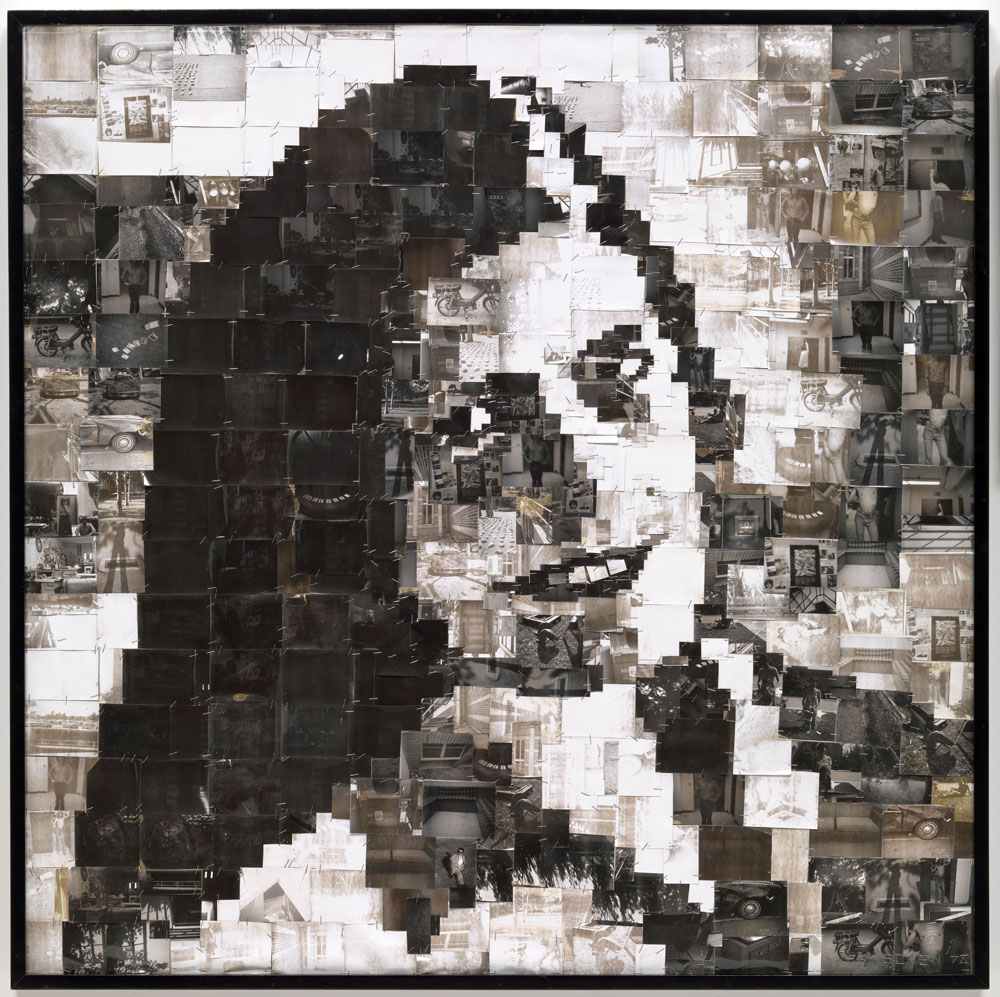
In the mid-1970s, Heinecken experimented with new materials introduced by Polaroid – specifically the SX-70 camera (which required no darkroom or technical know-how) – to produce the series He/She (1975-1980) and, later, Lessons in Posing Subjects (1981-82). Heinecken experimented with different types of instant prints, including the impressive two-panel S.S. Copyright Project: “On Photography” (1978), made the year after the publication of Susan Sontag’s collection of essays On Photography (1977). The S.S. Copyright Project consists of a magnified and doubled picture of Sontag, derived from the book’s dustcover portrait (taken by Jill Krementz). The work equates legibility with physical proximity – from afar, the portraits appear to be grainy enlargements from a negative (or, to contemporary eyes, pixilated low-resolution images), but at close range, it is apparent that the panels are composed of hundreds of small photographic scraps stapled together. The portrait on the left is composed of photographs of Sontag’’ text; the right features random images taken around Heinecken’s studio by his assistant.

Heinecken’s first large-scale sculptural installation, TV/Time Environment (1970), is the earliest in a series of works that address the increasingly dominant presence of television in American culture. In the installation, a positive film transparency of a female nude is placed in front of a functioning television set in an environment that evokes a living room, complete with recliner chair, plastic plant, and rug. Continuing his work with television, Heinecken created videograms – direct captures from the television that were produced by pressing Cibachrome paper onto the screen to expose the sensitized paper. Inaugural Excerpt Videograms (1981) features a composite from the live television broadcast of Ronald Reagan’s inauguration speech and the surrounding celebrations. The work, originally in 27 parts, now in 24, includes randomly chosen excerpts of the oration and news reports of it. Surrealism on TV (1986) explores the idea of transparency and layering using found media images to produce new readings. It features a slide show comprised of more than 200 images loaded into three slide projectors and projected in random order. The images generally fit into broad categories, which include newscasters, animals, TV evangelists, aerobics, and explosions.

Text from the MoMA press release


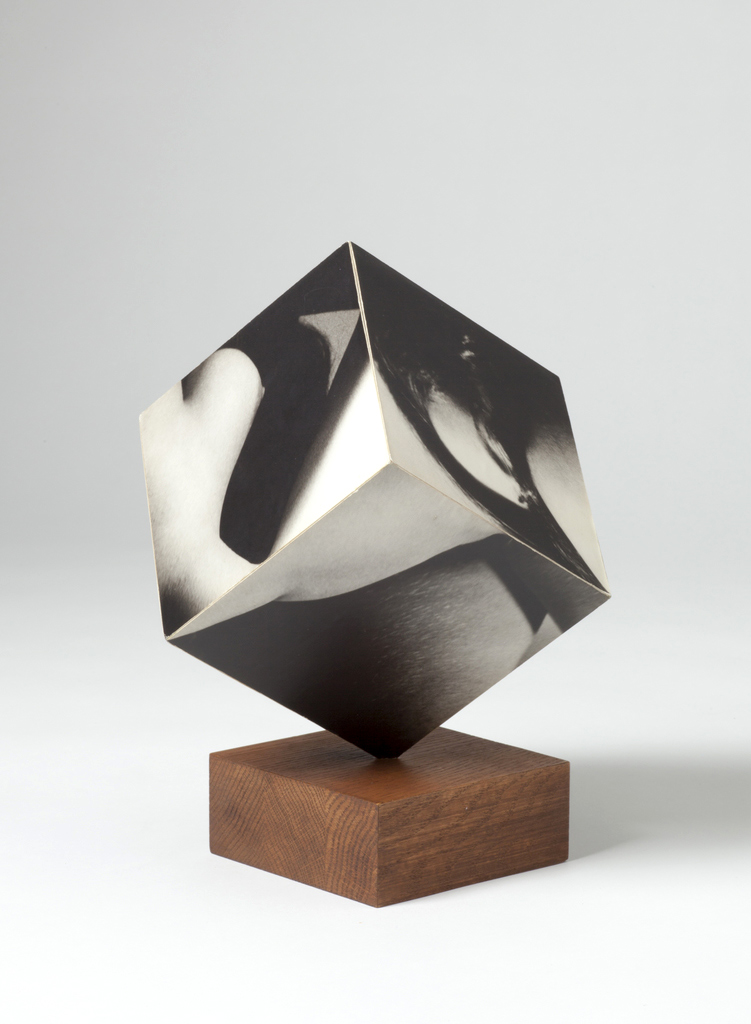
Robert Heinecken (American, 1931-2006) 'Figure Cube' 1965


Robert Heinecken (American, 1931-2006)
Figure Cube
1965
Gelatin silver prints on Masonite
5 7/8 x 5 7/8″ (15 x 15cm)
The Robert Heinecken Trust. Courtesy Center for Creative Photography, University of Arizona, Tucson


Robert Heinecken (American, 1931-2006) 'Figure in Six Sections' 1965


Robert Heinecken (American, 1931-2006)
Figure in Six Sections
1965
Gelatin silver prints on wood blocks
8 1/2 x 3 x 3″ (21.6 x 7.6 x 7.6cm)
Collection Kathe Heinecken. Courtesy The Robert Heinecken Trust, Chicago


Robert Heinecken (American, 1931-2006) 'Fractured Figure Sections' 1967


Robert Heinecken (American, 1931-2006)
Fractured Figure Sections
1967
Gelatin silver prints on wood blocks
8 1/4 x 3 x 3″ (21 x 7.6 x 7.6cm)
The Museum of Modern Art, New York. The Photography Council Fund and Committee on Photography Fund


Robert Heinecken (American, 1931-2006) 'The S.S. Copyright Project: "On Photography"' (Part 1 of 2) 1978


Robert Heinecken (American, 1931-2006)
The S.S. Copyright Project: “On Photography” (Part 1 of 2)
1978
Collage of black and white instant prints attached to composite board with staples
b 47 13/16 x 47 13/16″ (121.5 x 121.5cm)
The Museum of Modern Art, New York. Purchased as the partial gift of Celeste Bartos


Robert Heinecken (American, 1931-2006) 'Recto/Verso #2' 1988


Robert Heinecken (American, 1931-2006)
Recto/Verso #2
1988
Silver dye bleach print
8 5/8 x 7 7/8″ (21.9 x 20cm)
The Museum of Modern Art, New York. Mr. and Mrs. Clark Winter Fund


Robert Heinecken (American, 1931-2006) 'Figure Parts / Hair' 1967


Robert Heinecken (American, 1931-2006)
Figure Parts / Hair
1967
Black-and-whtie film transparencies over magazine-page collage
16 x 12″ (40.6 x 30.5cm)
Collection Karol Heinecken Mora, Los Angeles


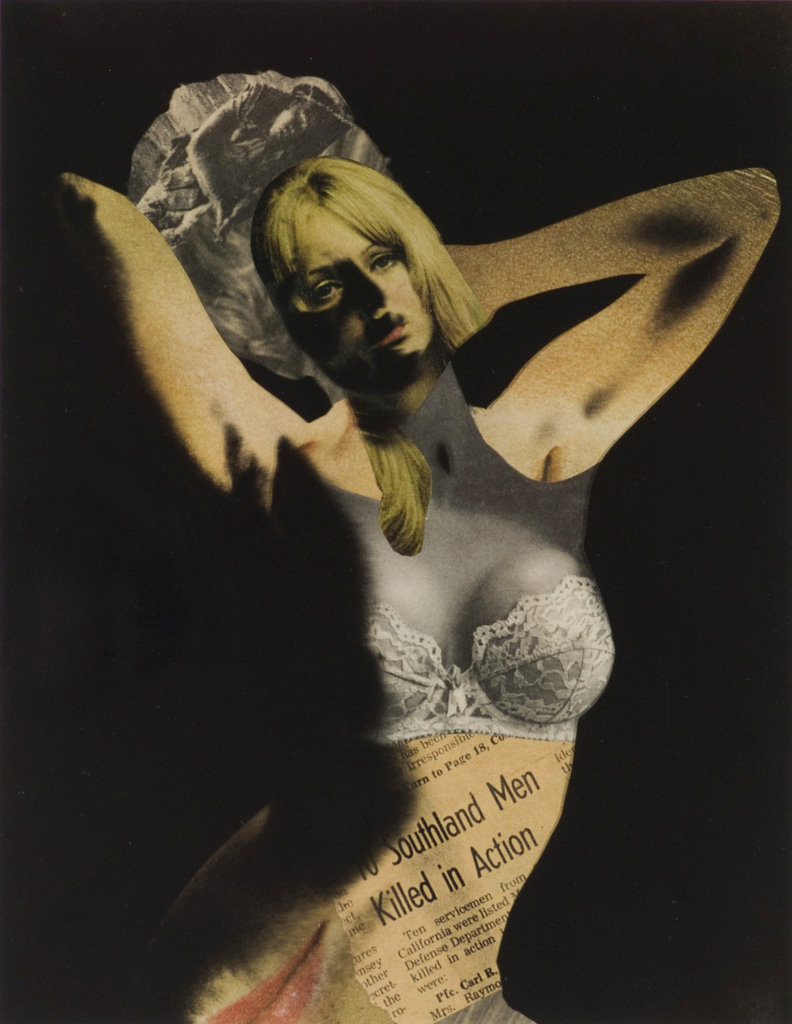
Robert Heinecken (American, 1931-2006) 'V.N. Pin Up' 1968


Robert Heinecken (American, 1931-2006)
V.N. Pin Up
1968
Black-and-white film transparency over magazine-page collage
12 1/2 x 10″ (31.8 x 25.4cm)
Museum of Contemporary Art, Chicago. Gift of Daryl Gerber Stokols


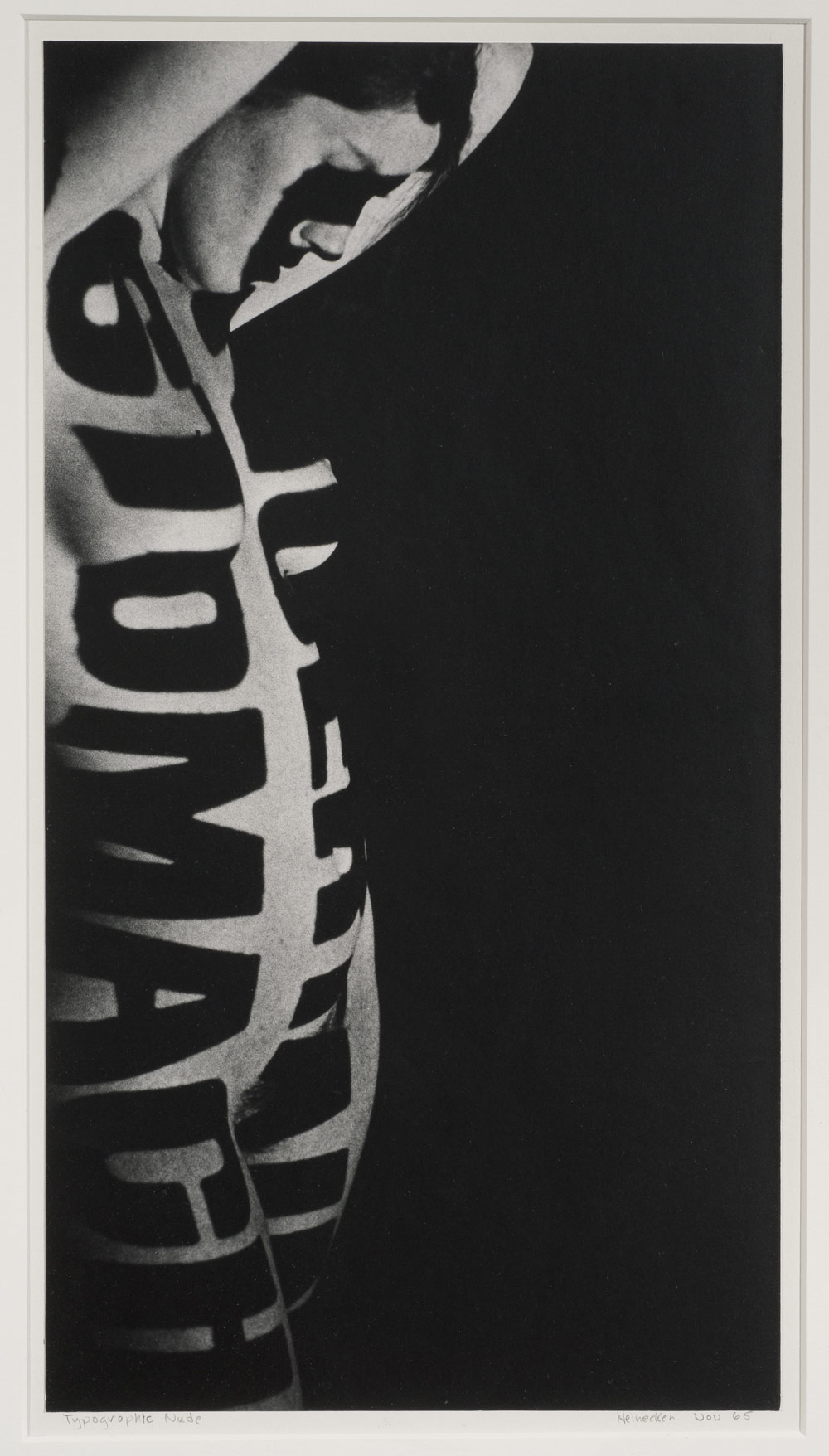
Robert Heinecken (American, 1931-2006) 'Typographic Nude' 1965


Robert Heinecken (American, 1931-2006)
Typographic Nude
1965
Gelatin silver print
14 1/2 x 7″ (36.8 x 17.8cm)
Collection Geofrey and and Laura Wyatt, Santa Barbara, California


Robert Heinecken (American, 1931-2006) 'Are You Rea #1' 1968


Robert Heinecken (American, 1931-2006)
Are You Rea #1
1968
Twenty-five gelatin silver prints
Various dimensions
Collection Jeffrey Leifer, San Francisco


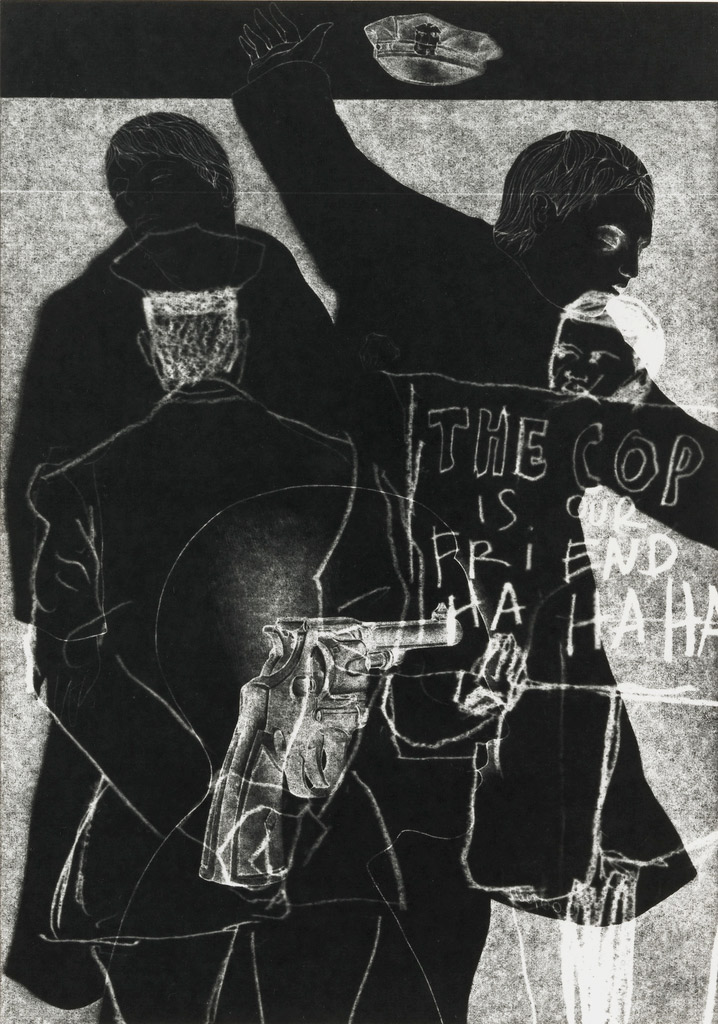
Robert Heinecken (American, 1931-2006) 'Are You Rea #25' 1968


Robert Heinecken (American, 1931-2006)
Are You Rea #25
1968
Twenty-five gelatin silver prints
Various dimensions
Collection Jeffrey Leifer, San Francisco


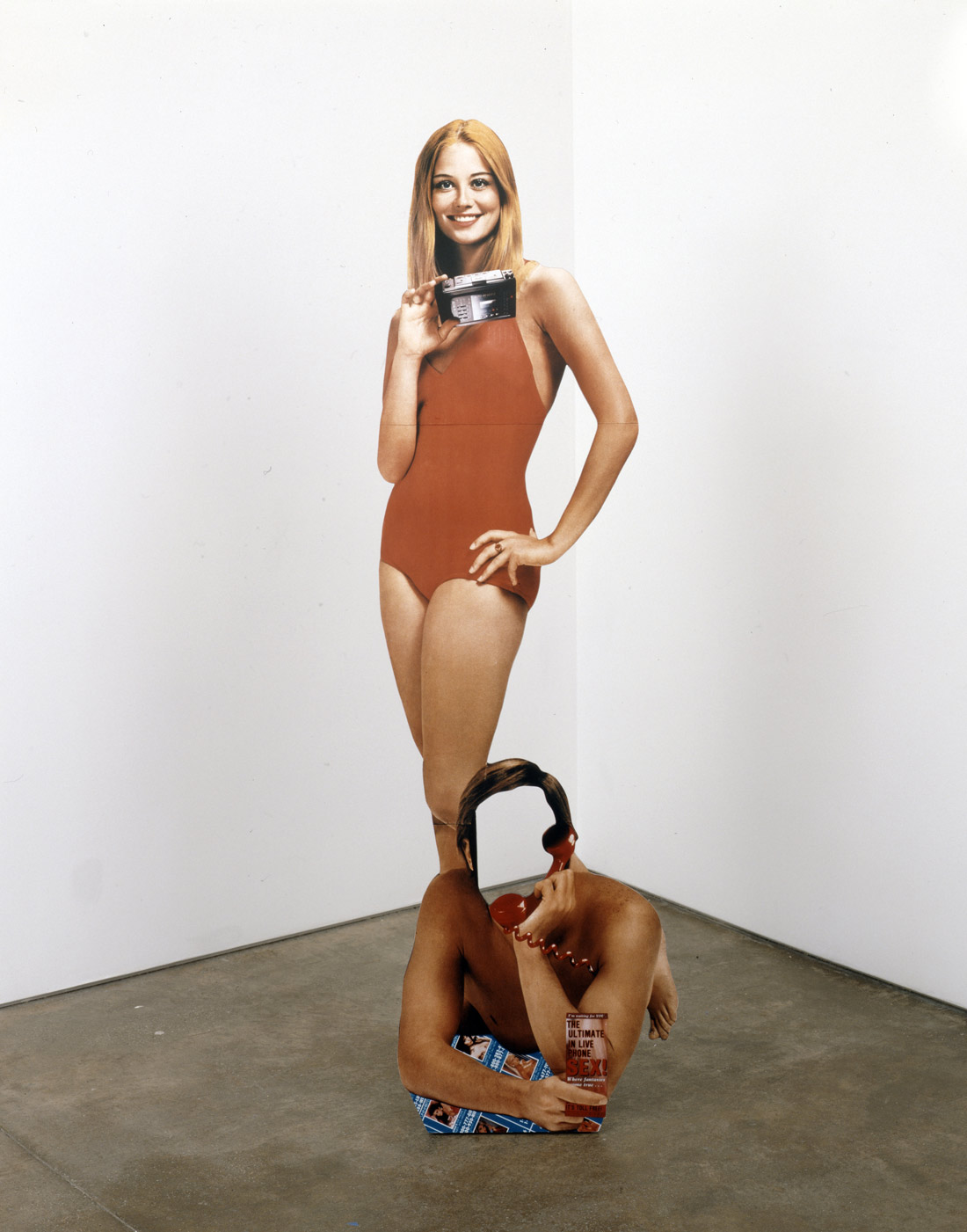
Robert Heinecken (American, 1931–2006) 'Cybill Shepherd / Phone Sex' 1992


Robert Heinecken (American, 1931–2006)
Cybill Shepherd / Phone Sex
1992
Silver dye bleach print on foamcore
63 x 17″ (160 x 43.2cm)
The Robert Heinecken Trust, Courtesy of Petzel Gallery, New York


Robert Heinecken (American, 1931-2006) 'MANSMAG: Homage to Werkman and Cavalcade' 1969


Robert Heinecken (American, 1931-2006)
MANSMAG: Homage to Werkman and Cavalcade
1969
Offset lithography on bound paper
8 3/4 x 6 5/8″ (22.2 x 16.8cm)
The Robert Heinecken Trust, Chicago


The Museum of Modern Art
11 West 53 Street
New York, NY 10019
Phone: (212) 708-9400

Opening hours:
Sunday – Friday, 10.30am – 5.30pm
Saturday, 10.30am – 7.00pm

MOMA website

LIKE ART BLART ON FACEBOOK

Back to top

Exhibition: ‘Blow-Up: Antonioni’s Film Classic and Photography’ at the Albertina, Vienna

Exhibition dates: 30th April – 17th August 2014


Arthur Evans (British, 1908-1994) 'David Hemmings in "Blow Up" (directed by Michelangelo Antonioni)' 1966


Arthur Evans (British, 1908-1994)
David Hemmings in “Blow Up” (directed by Michelangelo Antonioni)
1966
Film still
Courtesy Philippe Garner
© Neue Visionen Filmverleih GmbH/Turner Entertainment Co. – A Warner Bros Entertainment Company. All rights reserved.


The act of looking and the gaze through the eye of a photographer’s camera are the central motifs of Blow-Up.

“Don McCullin created the iconographic photographs that in the film are blown up by Thomas to discover something about the alleged crime. However, the blow-ups only offer ambivalent proof as they become more and more blurred and abstract by the continuous enlarging. Even photography that supposedly represents reality like no other form of media cannot help in shedding any light on the mysterious events in the park. Pictorial reality – thus Antonioni’s conclusion – is only ever constructed by the medium itself.” (Press release)

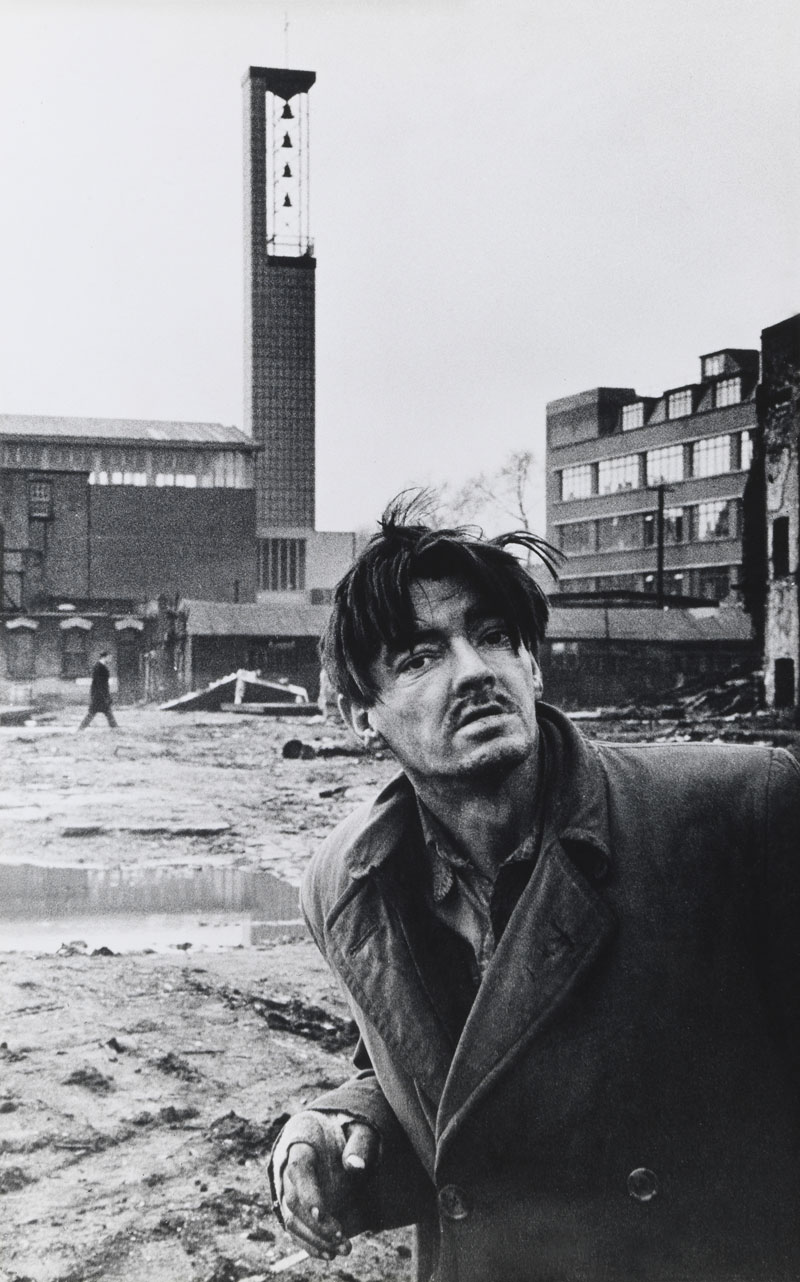
Then, look at Don Mcullin’s photograph British Butcher, East London (c. 1965, below). The Union Jack hat, the knife being sharpened and the contrast of the image. Savage. Not home grown but “Home killed”. Pictorial reality constructed by the medium but not just by the medium – but also by the aesthetic choices and the imagination of the photographer.

Dr Marcus Bunyan


Many thankx to the Albertina for allowing me to publish the photographs in the posting. Please click on the photographs for a larger version of the image.


Arthur Evans (British, 1908-1994) 'David Hemmings in "Blow Up" (directed by Michelangelo Antonioni)' 1966


Arthur Evans (British, 1908-1994)
David Hemmings in “Blow Up” (directed by Michelangelo Antonioni)
1966
Film still
Private collection Vienna
Courtesy: New Visions Film Distribution GmbH


Arthur Evans (British, 1908-1994) 'David Hemmings in "Blow Up" (directed by Michelangelo Antonioni)' 1966


Arthur Evans (British, 1908-1994)
David Hemmings in “Blow Up” (directed by Michelangelo Antonioni)
1966
Film still
Private collection Vienna
Courtesy: New Visions Film Distribution GmbH


Arthur Evans (British, 1908-1994) 'David Hemmings in "Blow Up" (directed by Michelangelo Antonioni)' 1966


Arthur Evans (British, 1908-1994)
David Hemmings in “Blow Up” (directed by Michelangelo Antonioni)
1966
Film still
Private collection Vienna
Courtesy: New Visions Film Distribution GmbH


Anonymous. 'Promotional image for "Blow-Up"' 1966


Anonymous
Promotional image for “Blow-Up”
1966
Courtesy Philippe Garner
© New Visions Film Distribution GmbH / Turner Entertainment Co. – A Warner Bros. Entertainment Company. All rights reserved.


The cult film Blow-Up by Michelangelo Antonioni (1966) occupies a central position in the history of film as well as that of art and photography. No other film has shown and sounded out the diverse areas of photography in such a differentiated way. Shot in London, this film, which tells the story of a fashion photographer who happens to photograph a murder in a park, has become a classic. Its relevance and the unabated fascination it evokes are partially due to the remarkable range of themes it deals with. While Antonioni’s description of the social and artistic environment of his protagonist in 1960’s London can be understood as a visual document of the Swinging Sixties, the eponymous photographic blow-ups meticulously examined by the photographer to find something out about an alleged crime prompted a theoretical discourse on the representation and ambiguity of pictures from the first showing of the film. Both themes, the historical outline as well as the media reflexions, concern the main focus of the film: photography.

For the first time the exhibition in the Albertina presents in several chapters the diverse and differentiated connections between film and photography, thus allowing a trenchant profile of the photographic trends of the 1960s.

Photography in Blow-Up

The photographic range of Blow-Up is highly diversified and ranges from fashion photography and social reportage to abstract photography. Film stills are shown next to works that can actually be seen in Blow-Up, as well as pictures that illuminate the cultural and artistic frame of the film production, London in the Swinging Sixties.

The meaning of photography for the film Blow-Up is most apparent when Antonioni uses it to characterise his main character Thomas. Played by David Hemmings, the protagonist is not only a fashion photographer, but is also working on an illustrated book with photographs of social reportage. In order to depict both the main figure and its two areas of work in an authentic way, Antonioni is guided by real photographers of the time; before starting to shoot the film he meticulously researched the work as well as environment of the British fashion (photography) scene.

In the course of his preparations Antonioni sent out questionnaires to fashion photographers and visited them in their studios. Thus the main character is modelled after various photographers like David Bailey, John Cowan and Don McCullin; some of them Antonioni asked to cooperate on his film. He also integrated their works, for example Don McCullin’s reportage photographs that the protagonist browses through in the film, or fashion photographs by John Cowan that in the film can be seen in the protagonist’s studio.

In addition Don McCullin created the iconographic photographs that in the film are blown up by Thomas to discover something about the alleged crime. However, the blow-ups only offer ambivalent proof as they become more and more blurred and abstract by the continuous enlarging. Even photography that supposedly represents reality like no other form of media cannot help in shedding any light on the mysterious events in the park. Pictorial reality – thus Antonioni’s conclusion – is only ever constructed by the medium itself.

Antonioni used the photographs seen in the film for media-theoretical reflections and thus set stills and moving pictures in a differentiated context. This complex connection between film and photography is made very clear by the film stills that were created for Blow-Up. These still photographs are based on an elaborate process whereby the photographer has certain scenes re-enacted for the photo camera thus transforming the film from moving images into something static. The manifold references of Blow-Up are once more condensed into photographs in the film stills, as the pictures reflect the real context of fashion photography in 1960’s London through the depiction of the photographer, of well-known fashion models and the use of clothes to match.

Artistic references

The photographic references in Blow-Up are also set in relation to other art forms. This contextualisation is essential for Antonioni’s understanding of photography. Antonioni was, unlike most other film directors, committed to the applied arts which he showed already in 1964 with his film Deserto Rosso, its abstract compositions based on Mark Rothko’s paintings. In Blow-Up an artistic reference of this nature becomes apparent in the character of the protagonist’s neighbour, an abstract painter named Bill, who is modelled on British artist Ian Stephenson. Also the oil paintings in the film were created by Ian Stephenson. They show abstract motifs that in the film are compared with the stylistically related ‘blow-ups’.

The Swinging Sixties

Michelangelo Antonioni filmed Blow-Up at the height of the Swinging Sixties, the social and artistic trends of which are rendered in the film. The agitation of youth culture so characteristic of this time í and not least of all initiated by the Beatles í is shown as well as its trendsetting figures. Thus a concert by the British band The Yardbirds, with Jimmy Page, the subsequent founder of Led Zeppelin, served as a filming location. The scene of the infamous Pot-Party in the film was shot in the apartment of the art and antique dealer Christopher Gibbs, who shaped the fashion look of the Swinging Sixties.

British art of the 1960s was also essential for Antonioni as it anticipated many of those abstract tendencies that set the tone for Blow-Up. There was, for instance, the pop art artist Richard Hamilton who created blow-ups from ordinary postcards, thus reducing motifs to dots. Or Nigel Henderson, a member of the Independent Group, who had already produced photos in the 1950s, in which he pointed out their material qualities by creasing them and using special procedures for the negatives.

As much as Antonioni’s work is rooted in the 1960s, it is nevertheless a timeless classic that is still relevant for today’s art. This becomes apparent in the exhibition by means of selectively chosen contemporary works that refer to Blow-Up. Particularly the filmic outline on the representation of images and their ambiguity serves as the artistic basis for the creations of various contemporary photographers. Blow-Up has lost none of its relevance for art since its creation in 1966.

Press release from the Albertina website


Don McCullin (British, b. 1935) 'Thomas' blow-ups from the Park' 1966


Don McCullin (British, b. 1935)
Thomas’ blow-ups from the Park
1966
Courtesy Philippe Garner
© New Visions Film Distribution GmbH / Turner Entertainment Co. – A Warner Bros. Entertainment Company. All rights reserved.


Don McCullin (British, b. 1935) 'Thomas' blow-ups from the Park' 1966


Don McCullin (British, b. 1935)
Thomas’ blow-ups from the Park
1966
Courtesy Philippe Garner
© New Visions Film Distribution GmbH / Turner Entertainment Co. – A Warner Bros. Entertainment Company. All rights reserved.


Patrick Hunt. 'David Bailey on the set of G.G. Passion' 1966


Patrick Hunt
David Bailey on the set of G.G. Passion
1966
Courtesy Philippe Garner


Arthur Evans (British, 1908-1994) 'Veruschka von Lehndorff with David Hemmings in "Blow Up" (directed by Michelangelo Antonioni)' 1966


Arthur Evans (British, 1908-1994)
Veruschka von Lehndorff with David Hemmings in “Blow Up” (directed by Michelangelo Antonioni)
1966
Film still
Private collection Vienna
Courtesy: New Visions Film Distribution GmbH


David Bailey (British, b. 1938) 'Brian Epstein (Box of Pin-Ups)' 1965


David Bailey (British, b. 1938)
Brian Epstein (Box of Pin-Ups)
1965
V & A Images / Victoria and Albert Museum
© David Bailey


Shezad Dawood (British, b. 1974) 'Make it big (Blow-Up)' 2002/2003


Shezad Dawood (British, b. 1974)
Make it big (Blow-Up)
2002/2003
Film still
Courtesy of the artist and Paradise Row, London


Richard Hamilton (British, 1922-2011) 'Swinging London III' 1972


Richard Hamilton (British, 1922-2011)
Swinging London III
1972
Kunstmuseum Winterthur
© Swiss Institute for Art Research, Zurich, Jean-Pierre Kuhn purchase in 1997


Exhibition texts

Shot in London in 1966, Michelangelo Antonioni’s masterpiece Blow-Up confronts its audience with the manifold genres of photography and their different social references with a precision like no other feature film. The director involved some of the most interesting photographers of the day in the production of the film. The photojournalist Don McCullin was on set as were the fashion photographers John Cowan and David Montgomery as well as the paparazzo Tazio Secchiaroli. They served as models for Antonioni’s protagonist, took photographs for Blow-Up, and, not least, made their work available to the filmmaker.

Set against the social and artistic backdrop of London’s Swinging Sixties, Blow-Up tells us about a fashion photographer by the name of Thomas (David Hemmings) who secretly photographs two lovers in a park. He later enlarges these pictures and believes that he has coincidentally documented a murder. The blow-ups reveal a man lurking in the trees with a gun and, as Thomas supposes, a corpse. Fashion shootings and Thomas’s work on a book with reportage photographs featuring homeless people in London provide two further strands of reference in the film.

Presenting these contexts in five thematic sections, the exhibition in the Albertina offers a pointed cross-section of tendencies in the photography of the 1960s. The show not only explores the photo-historical circumstances under which Blow-Up was made but also presents real works of art Antonioni integrated into his film, as well as photographs he commissioned for the story. The visual translation of the film into stills constitutes another important field thematised in the exhibition. A selection of more recent works of art highlights the timelessness of Antonioni’s film.

Making film stills

Making film stills involves a complex production process in the course of which scenes of a film are specially reenacted in front of the still photographer’s camera. The difficulties the photographer is faced with result from the difference between film and photography as media. He has to transform the contents of a medium that renders movements and sequences of events in time into a photograph that freezes them in a single static moment.

Arthur Evans’s stills for Blow-Up go far beyond the genre’s traditional function of promoting a film. Evans created series of pictures which allow us to reconstruct certain sequences of movement and depict scenes not shown in the film. Hence his stills for Blow-Up are meta-pictures that shed light on the film from another perspective.

Voyeurism

The act of looking and the gaze through the eye of a photographer’s camera are the central motifs of Blow-Up, which becomes particularly evident in the famous scene in the park. This part of the film depicts the dynamics resulting from a camera focusing on persons and capturing them in a picture. Antonioni presents his protagonist as a paparazzo and voyeur secretly photographing people in the tradition of Alfred Hitchcock’s Rear Window (1954). Hidden behind shrubs, trees, and a fence, he watches a pair of lovers. The camera serves as an instrument for peeping through the keyhole, as it were. The dialogic dimension between photographer and model is revealed when the woman (Vanessa Redgrave) spots the photographer. She defends herself against Thomas’s invasive gaze, bites his hand, and runs away. The aesthetic of Thomas’s photographs shot in the park corresponds to the situation of their taking. The pictures are imbued with the instantaneousness and spontaneity deriving from the photographers wish to wrest a single picture from a dynamic context in a fraction of a second.

It is no coincidence that the photographer Tazio Secchiaroli was present on set in the very hours this scene was shot. Secchiaroli was an Italian paparazzo who had been after the suspects in a still unresolved murder case, the Montesi scandal, with his camera. Made against the background of this political scandal, Federico Fellini’s film La dolce vita (1960) features pushy photo reporters modelled after Secchiaroli.

Blow-Ups

The blow-ups of Thomas’s photographs shot in the park are the most famous pictures featured in Antonioni’s film. The filmmaker entrusted the renowned photojournalist Don McCullin with taking them. Following Antonioni’s instructions, McCullin had to position himself in the same places as Thomas in the film to reproduce his perspectives. He also used the same Nikon F camera the protagonist works with in Blow-Up. In order to ensure that the process of taking the pictures we see in the film corresponds with the photographer’s results, McCullin advised the actor David Hemmings on how to proceed. The actor learned how to handle the 35-mm camera correctly and was instructed about the body language connected with using it.

Fashion photography

The metropolis of London was the center of a new kind of fashion photography in the 1960s – a renown inseparably bound up with three names to this day: David Bailey, Terence Donovan, and Brian Duffy, also known as Black Trinity. Relying on 35-mm cameras, which had hitherto mainly been used for reportage photographs and ensured a supposedly spontaneous and dynamic pictorial language, these three photographers staged their models in unusual places outside their studios.

In preparing his film, Antonioni had meticulously researched the photographer’s living and working conditions by means of a several-page questionnaire in which he even inquired into their love relationships and eating habits. It was David Bailey who served as a model for the protagonist of Blow-Up. For his dynamic body language in the fashion shootings, for instance, Thomas took the cue from him. The style of clothes Thomas wears is indebted to that of the British fashion photographer John Cowan. Cowan made his studio available to Antonioni for the studio shots and acted as the filmmaker’s adviser. The photographs seen on the studio wall in Blow-Up are fashion photographs by Cowan which Antonioni chose for the film.

David Montgomery

David Montgomery is a US-American fashion photographer living in London. Before shooting his film, Antonioni visited him in his studio to watch him working with Veruschka, Jill Kennington, and Peggy Moffitt – the models he would subsequently cast for Blow-Up. David Montgomery has a cameo appearance in the beginning of the film: we see him taking pictures of the model Donyale Luna on Hoxton Market in London’s East End. When this scene was shot, he actually made the fashion photographs featuring Luna which he pretends to take in the film. Since Montgomery was no actor by his own account, he had to really take pictures in order to be able to play the scene in a convincing manner.

Arthur Evan’s fashion photographs

Arthur Evans, the still photographer, depicted the models appearing in Blow-Up in groups and in individual portraits. These pictures taken on set are very unusual for a still photographer, because they do not show scenes of the film, but are independently staged fashion photographs. The models’ costumes were designed by Jocelyn Rickards, the hats were made by James Wedge. Evans translated the linear patterns characteristic of both designers into graphic compositions in his photos.

Social reportage

Michelangelo Antonioni characterises his film’s protagonist also as a social reportage photographer who, for a book project on London he is working on, secretly takes pictures in a homeless shelter. A scene of the film has Thomas showing his publisher a dummy of the volume. The portraits in it were made by the photojournalist Don McCullin; their originals are presented in the exhibition for the very first time.

The pictures were taken in London’s East End in the early 1960s, when the area was notorious for its residents’ poverty, miserable housing conditions, and racial unrest. The photographer provides a cross-section of its inhabitants whom he mainly characterises through their occupation. The two-fold orientation of the film’s protagonist as fashion and reportage photographer is based on fact, as illustrated by both David Bailey and David Montgomery. The stylistic boundaries between the two genres blur in their works. The strategy of picturing models in urban surroundings with a 35-mm camera, for example, is clearly rooted in reportage photography.

Swinging London: Art and Life

Michelangelo Antonioni filmed Blow-Up in the heyday of London’s Swinging Sixties whose social and artistic trends are depicted in the film. He captured the youth culture and its agitation so characteristic of these years – which was not least triggered by the Beatles – as well as the protagonists of the scene. One location he chose was a concert of the Yardbirds, a British band counting Jimmy Page, who would found Led Zeppelin, among its players. The famous pot-party in Blow-Up was shot in the art and antique dealer Christopher Gibbs’ flat, who determined the fashion look of the Swinging Sixties to a remarkable degree.

The British art of the 1960s was also very important to Antonioni, as it already anticipated many of the abstract tendencies informing Blow-Up. The Pop artist Richard Hamilton, for example, used to enlarge everyday picture postcards, reducing their motifs to an abstract dot matrix. Nigel Henderson, a member of the Independent Group, had already emphasised the material qualities of his photos in the 1950s by folding his prints and employing negative techniques. Antonioni integrated works by British artists: for example a picture by Peter Sedgley, a representative of Op art, and oil paintings by Ian Stephenson into his film.

Ian Stephenson

Antonioni’s understanding of photography was informed by painting í an influence that becomes manifest in the character of the protagonist’s neighbour, in Blow-Up a painter named Bill. Antonioni compares the neighbour’s abstract paintings with the photographer’s blow-ups. When Thomas and his neighbour talk about the paintings, Bill maintains that he does not see much in them while painting them and only finds meaning in them later on. This form of reception tallies with Thomas’s attempt to determine the meaning of his similarly abstract enlargements.

The character of the painter is based on the British artist Ian Stephenson. Antonioni visited the artist in his studio before he started shooting Blow-Up. He watched the painter at work and selected the paintings he wanted to use in the film.

Blow-Up

The photographs central to Antonioniés film are the blow-ups of the pictures which the protagonist has taken in the park and which he examines meticulously. The enlargements reveal a man with a pistol lurking in the trees and a mass in the grass, which Thomas interprets as a lifeless body. To make the presumed corpse more visible Thomas enlarges the photograph again and again until it shows nothing but its grain and materiality, despite the photographs inherent relation to reality.

Antonioni uses the blow-ups to question the representation of reality by media and their specific modes of perception. He interlinks these considerations with the film. The final scene of Blow-Up shows Thomas coming upon a group of mimes playing an imaginary game of tennis. When the (invisible) ball lands behind the fence, Thomas joins in the mimes’ game, picks up the ball from the lawn and throws it back to the players. A camera pan traces the trajectory of the invisible ball. In evoking the ball without showing it, Antonioni confronts us with the most radical abstraction: the motif is not rendered as an abstract or blurry form like in the enlargements, but is altogether absent. The media-theoretical implications of Blow-Up are still the subject of conceptual photographs today. Like Antonioni, the Italian Ugo Mulas and the American Allan McCollum, for example, question photography’s relation to reality in their blow-ups.

Le montagne incantate

The nucleus for the blow-ups in the film is to be found in a series of artworks titled Le montagne incantate (The Enchanted Mountains), which Antonioni started working on in the mid-1950s. The filmmaker photographically enlarged his small-format abstract watercolours, making the material qualities of the paper and the application of the paint visible. Consequentially, Antonioni recommended the use of a magnifying glass – as used by the protagonist in Blow-Up – as the ideal instrument for viewing these pictures.

Text from the Albertina website


Brian Duffy (English, 1933-2010) 'Jane Birkin' 1960s


Brian Duffy (English, 1933-2010)
Jane Birkin
1960s
© Brian Duffy Archive


Eric Swayne (British, 1932-2007) 'Grace and Telma, Italian Vogue, 1966' 1966


Eric Swayne (British, 1932-2007)
Grace and Telma, Italian Vogue, 1966
1966
Courtesy Tom Swayne
© Eric Swayne


Terence Donovan (English, 1936-1996) 'The Secrets of an Agent' 1961


Terence Donovan (English, 1936-1996)
The Secrets of an Agent
1961
© Terence Donovan Archive


Ian Stephenson (English, 1934-2000) 'Still Life Abstraction D1' 1957


Ian Stephenson (English, 1934-2000)
Still Life Abstraction D1
1957
© Kate Stephenson, widow of Ian Stephenson


Jill Kennington (British, b. 1943) "Blow-Up" 1966


Jill Kennington (British, b. 1943)
“Blow-Up”
1966
© New Visions Film Distribution GmbH / Turner Entertainment Co. – A Warner Bros. Entertainment Company. All rights reserved.


Don McCullin (British, b. 1935) 'Down-and-out begging for help, Aldgate, 1963' 1963


Don McCullin (British, b. 1935)
Down-and-out begging for help, Aldgate, 1963
1963
© Don McCullin, courtesy Hamiltons Gallery, London


Don McCullin (British, b. 1935) 'British Butcher, East London' c. 1965


Don McCullin (British, b. 1935)
British Butcher, East London
c. 1965
© Don McCullin Courtesy Hamiltons Gallery, London


Terry O'Neill (British, 1938-2019) 'David Bailey photographing Moyra Swan' 1965


Terry O’Neill (British, 1938-2019)
David Bailey photographing Moyra Swan
1965
© Terry O’Neill – Courtesy Philippe Garner


Tazio Secchiaroli (Italian, 1925-1998) 'David Hemmings and Veruschka von Lehndorff in "Blow-Up" (directed by Michelangelo Antonioni)' 1966


Tazio Secchiaroli (Italian, 1925-1998)
David Hemmings and Veruschka von Lehndorff in “Blow-Up” (directed by Michelangelo Antonioni)
1966
Filmstill
Source: BFI stills
© New Visions Film Distribution GmbH / Turner Entertainment Co. – A Warner Bros. Entertainment Company. All rights reserved.


David Montgomery (American, b. 1937) 'Donyale Luna on the set of "Blow-Up"' 1966


David Montgomery (American, b. 1937)
Donyale Luna on the set of “Blow-Up”
1966
© David Montgomery


Albertina
Albertinaplatz 1
1010 Vienna, Austria
Phone: +43 (0)1 534 83-0

Opening hours:
Daily 10am – 6pm
Wednesday and Friday 10am – 9pm

Albertina website

LIKE ART BLART ON FACEBOOK

Back to top

Exhibition: ‘Knud Lonberg-Holm: The Invisible Architect’ at Ubu Gallery, New York Part 1

Exhibition dates: 6th May – 30th September 2014


Knud Lonberg-Holm (Danish, 1895-1972) 'The New – The Coming, Detroit, Streetcars' 1924


Knud Lonberg-Holm (Danish, 1895-1972)
The New – The Coming, Detroit, Streetcars
1924
Reproduced in Erich Mendelsohn’s Amerika, p. 73
Vintage gelatin silver print
3 1/4 x 4 1/4 inches (8.3 x 10.8cm)
The Knud Lonberg-Holm Archive from the Marc Dessauce Collection; Courtesy Ubu Gallery, New York


I am so excited by this monster two-part posting about the work of architect Knud Lonberg-Holm. Not only are his drawings and models incredible but his photographs of industry and skyscrapers, taken mainly between 1924-26, are a revelation. The textures and inky blackness of his Dazzlescapes and the New Photography images of skyscrapers (both in Part 2) mark these images as the greatest collection of photographs of skyscrapers that I have ever seen. More comment tomorrow but for now just look at the dark Gotham-esque photograph The New – The Coming, Detroit, Streetcars (1924, below). The streetcar reminds me of the armoured trains so popular during the inter-war years and during World War II. And what a title: The New – The Coming…

Dr Marcus Bunyan


Many thankx to Ubu Gallery for allowing me to publish the photographs in the posting. Please click on the photographs for a larger version of the image.


“Lonberg-Holm was the first architect in my knowledge ever to talk about the ultimately invisible architecture. In 1929, when I first met him, he said the greatest architect in history would be the one who finally developed the capability to give humanity completely effective environmental control without any visible structure and machinery.”


Buckminster Fuller


Knud Lonberg-Holm (Danish, 1895-1972) 'View from the roof' Detroit, 1924


Knud Lonberg-Holm (Danish, 1895-1972)
View from the roof
Detroit, 1924
Vintage gelatin silver print
2 3/4 x 4 1/2 inches (7 x 11.4cm) approx.
The Knud Lonberg-Holm Archive from the Marc Dessauce Collection; Courtesy Ubu Gallery, New York


Knud Lonberg-Holm (Danish, 1895-1972) 'Detroit' 1924


Knud Lonberg-Holm (Danish, 1895-1972)
Detroit
1924
reproduced in Erich Mendelsohn’s Amerika, p. 71 (top)
Vintage gelatin silver print
3 3/8 x 4 3/8 inches (8.6 x 11.1cm)
The Knud Lonberg-Holm Archive from the Marc Dessauce Collection; Courtesy Ubu Gallery, New York


Knud Lonberg-Holm (Danish, 1895-1972) 'Detroit, A New Street' 1924


Knud Lonberg-Holm (Danish, 1895-1972)
Detroit, A New Street
1924
reproduced in Erich Mendelsohn’s Amerika, p. 71 (bottom)
Vintage gelatin silver print
3 3/8 x 4 3/8 inches (8.6 x 11.1cm)
The Knud Lonberg-Holm Archive from the Marc Dessauce Collection; Courtesy Ubu Gallery, New York


Ubu Gallery is pleased to present Knud Lonberg-Holm: The Invisible Architect, a debut exhibition devoted to this overlooked, yet highly influential, 20th Century modernist. Never-before-seen photographs, architectural drawings, letters, graphic design, and ephemera from Lonberg-Holm’s remarkably diverse career will be on view through August 1, 2014. The exhibition, which consists of selections from the extensive archive assembled by architectural historian Marc Dessauce, will solidify the importance of this emblematic figure in early 20th Century cultural and architectural history. Metropolis Magazine, the national publication of architecture and design, will publish an article on Knud Lonberg-Holm to coincide with this groundbreaking exhibition.

Born in Denmark, Knud Lonberg-Holm (January 15, 1895 – January 2, 1972), was an architect, photographer, author, designer, researcher, and teacher. Lonberg-Holm’s early work in Denmark and Germany initially associated him with the Berlin Constructivist and Dutch De Stijl groups. An émigré to America in 1923, Lonberg-Holm was a fundamental correspondent with prominent European architects and their modernist counterparts in the U.S. The exhibition will feature a selection of letters to Lonberg-Holm from a pantheon of the European avant-garde including László Moholy-Nagy, Walter Gropius, Theo Van Doesburg, Buckminster Fuller, Hannes Meyer, J.J.P. Oud, El Lissitzky, and Richard Neutra.

From 1924–1925, Lonberg-Holm was a colleague of Eliel Saarinen at the University of Michigan at Ann Arbor, where he taught a course in basic design modeled on the famed Bauhaus Vorkurs, the first-ever introduced in U.S. design schools. An agent of inter-continental communication, his reports on the state of American architecture appeared abroad. Lonberg-Holm’s 1928 article, Amerika: Reflections, featured buildings on the University of Michigan campus and appeared in the Dutch avant-garde publication i10, which employed Moholy-Nagy as its photo editor. The article not only contributed to international discourse on the building industry, but also touched on the “time-space convention,” a subject Lonberg-Holm would explore throughout his career. This publication, among others, will be on display.

Lonberg-Holm’s interest in American industry is best viewed in his collection of photographs taken between 1924-1926. These works document his pioneering views of industry and technology in burgeoning, jazz-age New York, Detroit, and Chicago; they would appear later, un-credited, in Erich Mendelsohn’s seminal 1926 publication Amerika, the first book on the ‘International Style’ in American architecture. Thirteen vintage photographs reproduced in Amerika will be on exhibit, as well as additional early photographs depicting technological advancements, such as cable cars and radio antennae, American culture in mass crowds and billboards, and the commercial architecture of skyscrapers and factories. Backside-views of buildings and fire escapes, rather than historicist ornamental facades, are presented in their “unselfconscious beauty” in opposition to traditional, pictorialist architectural photography. The content of the works coupled with progressive view points, like worm’s eye perspectives and extreme close-ups, align them squarely within the then emerging ‘New Photography’. El Lissitzky wrote that the dynamic photos “grip us like a dramatic film.”1 Mendelsohn’s publication, featuring Lonberg-Holm’s dynamic photography, received immediate acclaim, domestically and abroad.

While still in Germany, Lonberg-Holm created a submission for the Chicago Tribune Tower competition of 1922. Although never officially submitted, the project was published widely in magazines and newspapers, alongside other prominent architects’ designs. From his office in the historically designed Donner Schloss in Altona, Germany, Lonberg-Holm envisioned a modern construction for Chicago that incorporated references to American mass culture, specifically the automobile. The West elevations on view show the Chicago Tribune sign, which includes circular signage reminiscent of headlights. The Side elevation exhibited clearly demonstrates how the printing plant function of the ground floors of the building, rendered in black, are visually distinct from the offices of the higher floors, rendered in white with black accents for visual continuity throughout the building. Lonberg-Holm’s proposed construction, whose outward visual design distinguished its internal functions, was reproduced in L’Architecture vivante, La Cite, Le Courbusier’s Almanach d’architecture in France and Walter Gropius’ Internationale Architektur in Munich; the Berliner Illustrirte Zeitung displayed his building next to that of Mies van der Rohe and a full spread devoted to the skyscraper, featuring Lonberg-Holm’s Chicago design adjacent to plans by Walter Gropius, Saarinen and van der Rohe, appeared in H. Th. Wijdeveld’s November / December 1923 issue of the innovative publication Wendingen.

The drawings Lonberg-Holm created during this first decade as an émigré are striking for their early use of European modernist, particularly Neo-plastic, influences. He was close with the DeStijl movement in Holland, and corresponded with both Theo van Doesburg and J.J.P. Oud, with whom he would continue to work within CIAM, the Congrès Internationaux d’Architecture Modern. Early renderings done by Lonberg-Holm in the U.S. demonstrate an affinity for DeStijl principles. His plans for the 1926 MacBride residence in Ann Arbor are dynamic and asymmetrical, with intersecting planes in simple primary colors. Surely the first American allusion to Gerrit Rietvel’s iconic 1924 Schröder House in Utrecht, Holland, the MacBride residence is one of the first ‘International Style’ modernist houses designed in the Western hemisphere.

Lonberg-Holm’s importance to and knowledge of European architectural trends resulted in an invitation by Jane Heap to participate in the 1927 landmark New York exhibition, Machine Age, which was heralded as “the first international exposition of architecture held in America.” This exhibition, held at the New York Scientific American Building, May 16-28, stressed the new mechanical world and its key player, the Engineer. Lonberg-Holm’s 1925 Detroit project, Radio Broadcasting Station, was featured. The New York’s review of the exhibition explicitly referenced Lonberg-Holm’s project, noting its “delicacy and exquisite technique of execution.”

Lonberg-Holm worked with the F.W. Dodge corporation for 30 years, first in the division responsible for The Architectural Record (1930-1932), and then as head of the research department of Sweet’s Catalog Service (1932-1960.) At The Architectural Record, Lonberg-Holm acted as research editor and wrote technical news, a precursor to his lifelong interest in data-driven analytics. During his New York based employment, Lonberg-Holm’s involvement with international architectural trends did not diminish. In addition to prolonged correspondence with the various directors of the Bauhaus, including Hannes Meyer, he and his wife Ethel would visit the Bauhaus at Dessau in 1931. In 1946, Lonberg-Holm was also ultimately a candidate to replace Moholy-Nagy as director of the Institute of Design in Chicago.

At the same time, Lonberg-Holm was involved in domestic architecture and building theory. Richard Neutra would reach out to Lonberg-Holm in 1928 for illustrations and photographs to include in his account of the modern architecture movement in the US; he would approach him again in 1932 to lecture on the West Coast. Lonberg-Holm and Neutra were the “American” representatives to CIAM. It was Lonberg-Holm who nominated Buckminster Fuller and Theodore Larson for membership into CIAM in 1932.

What little scholarship exists about Knud Lonberg-Holm briefly examines his nearly twenty-year relationship with the Czech pioneering graphic designer Ladislav Sutnar, with whom Lonberg-Holm worked at Sweet’s Catalog Service. From 1942 through 1960 at the research department of Sweet’s, the bible for all the building trades, Lonberg-Holm and Sutnar revolutionized the catalog by standardizing information techniques. They presented systemised communication through a simple, modern, and intelligible visual language that influenced all areas of architectural and graphic design. Together, Lonberg-Holm and Sutnar co-authored Catalog Design (1944), Designing Information (1947), and Catalog Design Progress (1950).

The vital roles and communication between city planning, architecture, and civil productivity where important to Lonberg-Holm and would be explored throughout his career. In A. Lawerence Kocher’s letter to Lonberg-Holm, the article “Architecture-or organized space” is referenced. This 1929 essay, published in Detroit, addressed the “building problem” in the US – the “an-organic structure of its cities” – and proposed “a new conception of city-planning based on a clearer understanding of the organic functions of a community.” Lonberg-Holm would be an important participant in the city planning survey of Detroit, one of CIAM’s analytical initiatives in 1932-1933. Field Patterns and Fields of Activity, a visual diagram further illustrating the interconnectivity of intelligence, welfare, production, and control in a community, graphically illustrates these early principles.

Collaboration was critical to Lonberg-Holm, who would work with Theodore Larson to improve information indexing and the production cycle. Field Patterns, as well as the visuals for Planning for Productivity (1940), were components of Lonberg-Holm’s collaboration with Theodore Larson. Lonberg-Holm sought to apply some of the theories set forth in Development Index. This collaborative project with Larson was published by the University of Michigan in 1953 and focused on the relationship between community, industry, and education, analytical theories that were proposed by Lonberg-Holm during the formation of the University’s Laboratory of Architectural Research. Lonberg-Holm’s 1949 visual diagram of the relationship between the university, the building industry, and the community, is on view, as well as the Sutnar-designed steps of Planning for Productivity. Lonberg-Holm had returned to the University as a guest lecturer and professor in the late 1940s and early 1950s. At the suggestion of Lonberg-Holm, Theordore Larson was among the new faculty hired at the University in 1948, along with Walter Sanders and William Muschenheim, whom Lonberg-Holm had worked with in the Detroit survey.

In 1949, Lonberg-Holm was issued a Dymaxion License and became a trustee to the Fuller Institute/Research Foundation; among the trustees are his contemporaries George Nelson and Charles Eames. Initially meeting Buckminster Fuller in c. 1929, he and Fuller would correspond throughout Lonberg-Holm’s life. Lonberg-Holm was a member of the Structural Studies Associates (SSA), a short-lived group of architects in the 1930s surrounding Fuller and his briefly published architectural magazine Shelter. A number of Shelter issues are on view, many of which have contributions by Lonberg-Holm; the cover of the May 1932 issue was designed by Lonberg-Holm. Planning for Productivity and Development Index were later data-driven projects that furthered the SSA’s and Fuller’s principles – that the evolution of science and technology would influence social progress and could be beneficial to the community only through research, analysis and macroapplication.

Arriving to the US a decade before his European contemporaries, Lonberg-Holm occupied a unique position as a cultural bridge, communicating between the US and Europe in a period when the state of art and architecture was radically changing. He exposed his students and colleagues to European protagonists of avant-garde architecture theory while enthusiastically exploring American industry and building. Exclusively through collaboration, Lonberg-Holm worked to modernise both architecture and design. Integral to Lonberg-Holm’s principles was that technology alone could not suffice as the sole perpetuator of architecture – advancements in building and new designs needed to promote human culture in an ever-evolving manner where new information was continuously integrated into design theory. Throughout his career, Lonberg-Holm embodied the antithesis of the stereotype architect, egocentric and insulated from the community in which his designs were to exist. From his beginnings at The Architectural Record to his final project, Plan for Europe 2000: Role of the Mass Media in Information and Communication, Lonberg-Holm held to the belief that a collective approach, with applied research, could form a generative knowledge base that could be cultivated for altruistic means.

Text from the Ubu Gallery website

1/ Beaumont Newhall, The History of Photography from 1839 to the Present, London, Seeker & Warburg, 1982, p. 1.


'Portrait of Knud Lonberg-Holm' New York, 1950s (prior to 1960)


Portrait of Knud Lonberg-Holm
New York, 1950s (prior to 1960)
Vintage gelatin silver print
6 7/8 x 10 inches (17.5 x 25.4cm)
The Knud Lonberg-Holm Archive from the Marc Dessauce Collection; Courtesy Ubu Gallery, New York


'Portrait of Knud Lonberg-Holm' New York, 1950s (prior to 1960)


Portrait of Knud Lonberg-Holm
New York, 1950s (prior to 1960)
Vintage gelatin silver print
7 7/8 x 9 1/2 inches (20 x 24.1cm)
The Knud Lonberg-Holm Archive from the Marc Dessauce Collection; Courtesy Ubu Gallery, New York


Knud Lonberg-Holm (Danish, 1895-1972) 'Le Corbusier at CIAM Conference' c. 1954-1964


Knud Lonberg-Holm (Danish, 1895-1972)
Le Corbusier at CIAM Conference
c. 1954-1964
Vintage gelatin silver print
5 5/8 x 8 3/8 inches (14.3 x 21.3cm)
The Knud Lonberg-Holm Archive from the Marc Dessauce Collection; Courtesy Ubu Gallery, New York


Knud Lonberg-Holm (Danish, 1895-1972) 'Buckminster Fuller, Lonberg-Holm and other' Bayside, New York Nd


Knud Lonberg-Holm (Danish, 1895-1972)
Buckminster Fuller, Lonberg-Holm and other
Bayside, New York
Nd
Vintage gelatin silver print
3 x 4 1/4 inches (7.6 x 10.8cm)
The Knud Lonberg-Holm Archive from the Marc Dessauce Collection; Courtesy Ubu Gallery, New York


Knud Lonberg-Holm (Danish, 1895-1972) 'Photograph of the Dymaxion Car' Bridgeport, Connecticut, July 21, 1933


Knud Lonberg-Holm (Danish, 1895-1972)
Photograph of the Dymaxion Car
Bridgeport, Connecticut, July 21, 1933
Vintage gelatin silver print
7 5/8 x 9 3/4 inches (19.4 x 24.8cm)
Stamped on verso
The Knud Lonberg-Holm Archive from the Marc Dessauce Collection; Courtesy Ubu Gallery, New York


In July of 1933, the Dymaxion car was introduced in Bridgeport, Connecticut, where it caused a great stir. Lonberg-Holm can be seen holding the car door open while the artist Diego Rivera (who was in attendance with his wife and artist Frida Kahlo) looks on, coat on his arm.


Knud Lonberg-Holm (Danish, 1895-1972) 'Diego Rivera and Frida Kahlo' Bridgeport, Connecticut, July 21, 1933


Knud Lonberg-Holm (Danish, 1895-1972)
Diego Rivera and Frida Kahlo
Bridgeport, Connecticut, July 21, 1933
Vintage gelatin silver print
The Knud Lonberg-Holm Archive from the Marc Dessauce Collection; Courtesy Ubu Gallery, New York


Knud Lonberg-Holm (Danish, 1895-1972) 'Radio Broadcasting Station' Photograph of Model Detroit, 1925


Knud Lonberg-Holm (Danish, 1895-1972)
Radio Broadcasting Station
Photograph of Model
Detroit, 1925
Vintage gelatin silver print
4 7/8 x 6 7/8 inches (12.4 x 17.5cm)
The Knud Lonberg-Holm Archive from the Marc Dessauce Collection; Courtesy Ubu Gallery, New York


Knud Lonberg-Holm (Danish, 1895-1972) 'Radio Broadcasting Station' Photograph of Model Detroit, 1925


Knud Lonberg-Holm (Danish, 1895-1972)
Radio Broadcasting Station

Photograph of Model
Detroit, 1925
Vintage gelatin silver print
5 3/8 x 7 1/2 inches (13.7 x 19.1cm)
The Knud Lonberg-Holm Archive from the Marc Dessauce Collection; Courtesy Ubu Gallery, New York


Knud Lonberg-Holm (Danish, 1895-1972) 'Photograph of Chicago's new skyline North of Randolph Street All new since 1926 except Wrigley and Tribune buildings' May 1929


Knud Lonberg-Holm (Danish, 1895-1972)
Photograph of Chicago’s new skyline
North of Randolph Street
All new since 1926 except Wrigley and Tribune buildings
May 1929
Vintage gelatin silver print
2 1/4 x 4 1/2 inches (5.7 x 11.4cm)
Titled on verso
The Knud Lonberg-Holm Archive from the Marc Dessauce Collection; Courtesy Ubu Gallery, New York


Ubu Gallery
416 East 59th Street
New York 10022
Phone: 212 753 4444

Opening hours:
Monday – Friday 11am – 6pm

Ubu Gallery website

LIKE ART BLART ON FACEBOOK

Back to top

Exhibition: ‘Out of the closets, into the streets: gay liberation photography 1971-73’ at Edmund Pearce Gallery, Melbourne

Exhibition dates: Tuesday 22nd July – Saturday 26th July, 2014

Opening: Tuesday 22nd July 6-8pm

Nite Art: Wednesday 23rd July until 11pm
Artists represented: Philip Potter, John Storey, John Englart, Barbara Creed, Ponch Hawkes, Rennie Ellis
Curators: Dr Marcus Bunyan and Nicholas Henderson
Catalogue essay by Professor Dennis Altman (below)


Barbara Creed (Australian, b. 1943) 'Julian Desaily and Peter McEwan in the back of a VW Combi van, Melbourne' Melbourne, c. 1971-1973


Barbara Creed (Australian, b. 1943)
Julian Desaily and Peter McEwan in the back of a VW Combi van, Melbourne
Melbourne, c. 1971-1973
Digital C type print on Kodak Endura Matte
© Barbara Creed


Five days, that’s all you’ve got! Just five days to see this fabulous exhibition. COME ALONG TO THE OPENING (Tuesday 22nd July 6-8pm) or NITE ART, the following night!

The exhibition Out of the closets, into the streets: gay liberation photography 1971-73 pictures the very beginning of the gay liberation movement in Australia through the work of Philip Potter, John Storey, John Englart, Barbara Creed, Ponch Hawkes and Rennie Ellis. The exhibition examines for the first time images from the period as works of art as much as social documents. The title of the exhibition is a slogan from the period.

As gay people found their voice in the early 1970s artists, often at the very beginning of their careers, were there to capture meetings in lounge rooms, consciousness raising groups and street protests. The liberation movement meant ‘being there’, putting your body on the line. “It was a key feature of the new left that this embodied politics couldn’t stop in the streets: that is, the public arena as conventionally understood. ‘Being there’ politically also applied to households, classrooms, sexual relations, workplaces and the natural environment.”1

Curated by Dr Marcus Bunyan and Nicholas Henderson and with a catalogue essay by Professor Dennis Altman (see below), the show is a stimulating experience for those who want to be inspired by the history and art of the early gay liberation movement in Australia.

The exhibition coincides with AIDS 2014: 20th International AIDS Conference (20-25 July 2014) and Nite Art which occurs on the Wednesday night (23rd July 2014). The exhibition will travel to Sydney to coincide with the 14th Australia’s Homosexual Histories Conference in November at a venue yet to be confirmed.

Dr Marcus Bunyan


1/ Connell, Raewyn. “Ours is in colour: the new left of the 1960s,” in Carolyn D’Cruz and Mark Pendleton (eds.,). After Homosexual: The Legacies of Gay Liberation. Perth: UWA Publishing, 2013, p. 43.


Many thankx to all the artists for allowing me to publish the photographs in the posting. Please click on the photographs for a larger version of the image.


Ponch Hawkes (Australian, b. 1946) 'Gay Liberation march, Russell Street, Melbourne' Melbourne, 1973


Ponch Hawkes (Australian, b. 1946)
Gay Liberation march, Russell Street, Melbourne
Melbourne, 1973
Digital C type print on Kodak Endura Matte
© Ponch Hawkes


John Englart (Australian, b. 1955) 'Gay Pride Week poster, outside the Town Hall Hotel, Sydney Town Hall' Sydney, 1973


John Englart (Australian, b. 1955)
Gay Pride Week poster, outside the Town Hall Hotel, Sydney Town Hall
Sydney, 1973
Digital C type print on Kodak Endura Matte
© John Englart


Out of the closets, onto the streets

Professor Dennis Altman


This exhibition chronicles a very specific time in several Australian cities, the period when lesbians and gay men first started demonstrating publicly in a demand to be accorded the basic rights of recognition and citizenship. Forty years ago to be homosexual was almost invariably to lead a double life; the great achievement of gay liberation was that a generation – although only a tiny proportion of us were ever Gay Liberationists – discovered that was no longer necessary.

The Archives have collected an extraordinary range of materials illustrating the richness of earlier lesbian and gay life in Australia, but this does not deny the reality that most people regarded homosexuality as an illness, a perversion, or a sin, and one for which people should be either punished or cured. It is revealing to read the first avowedly gay Australian novel, Neville Jackson’s No End to the Way [published in 1965 – in Britain – and under a pseudonym] to be reminded of how much has changed in the past half century.

Gay Liberation had both local and imported roots; the Stonewall riots in New York City, which sparked off a new phase of radical gay politics – when ‘gay’ was a term understood to embrace women, men and possibly transgender – took place in June 1969. They were barely noticed at the time in Australia, where a few people in the civil liberties world, most of them not homosexual, had started discussing the need to repeal anti-sodomy laws.

Small law reform and lesbian groups had already existed, but the real foundation of an Australian gay movement came in September 1970 when Christabel Pol and John Ware announced publicly the formation of CAMP, an acronym that stood for the Campaign Against Moral Persecution but also picked up on the most used Australian term for ‘homosexual’. Within two years there were both CAMP branches in most Australian capital cities, as well as small gay liberation groups that organised most of the demonstrations illustrated in this exhibition.

The differences between gay liberation and CAMP were in practice small, but those of us in Gay Liberation prided ourselves on our radical critique, and our commitment to radical social change. CAMP, with its rather daggy social events and its stress on law reform – at a time in history when homosexual conduct between men was illegal across the country – seemed to us too bourgeois, though ironically it was CAMP which organised the first open gay political protest in Australia [immediately identified by the balloons in the Exhibition photos].

It is now a cliché to say “the sixties” came to Australia in the early 1970s, but a number of forces came together in the few years between the federal election of 1969, when Gough Whitlam positioned the Labor Party as a serious contender for power, and 1972, the “It’s Time” election, when the ALP took office for the first time in 23 years. We cannot understand how a gay movement developed in Australia without understanding the larger social and cultural changes of the time, which saw fundamental shifts in the nature of Australian society and politics.

The decision of the Menzies government in 1965 to commit Australian troops to the long, and ultimately futile war in Vietnam, led to the emergence of a large anti-war movement, capable of mobilising several hundred thousand people to demonstrate by the end of the decade. Already under the last few years of Liberal government the traditional White Australia Policy was beginning to crumble, as it became increasingly indefensible, and awareness of the brutal realities of dispossession and discrimination against indigenous Australians was developing. Perhaps most significant for a movement based on sexuality, the second wave feminist movement, already active in the United States and Britain, began challenging the deeply entrenched sexist structures of society.

To quote myself, this at least reduces charges of plagiarism: “Anyone over fifty in Australia has lived through extraordinary changes in how we imagine the basic rules of sex and gender. We remember the first time we saw women bank tellers, heard a woman’s voice announce that she was our pilot for a flight, watched the first woman read the news on television. Women are now a majority of the paid workforce; in 1966 they made up twenty-nine per cent. When I was growing up in Hobart it was vaguely shocking to hear of an unmarried heterosexual couple living together and women in hats and gloves rode in the back of the trams (now long since disappeared). As I look back, it seems to me that some of the unmarried female teachers at my school were almost certainly lesbians, although even they would have been shocked had the word been uttered.”

In Australia Germaine Greer’s book The Female Eunuch became a major best seller, and Germaine appeared [together with Liz Fell, Gillian Leahy and myself] at the initial Gay Liberation forum at Sydney University in early 1972; looking back it is ironic that a woman who has been somewhat ambivalent in her attitudes to homosexuality was part of the public establishment of the gay movement.

But the early demonstrations illustrated in this exhibition did often include sympathetic “straights” – a term that seems to have disappeared from the language – for whom gay liberation was part of a wider set of cultural issues. It is essential to recognise that while political demonstrations may seem to assert certain claims they play widely different roles for those who participate. For some of us a public protest is a form of “coming out”; indeed many people had never been public about their sexuality before they attended their first demonstration. For others a demonstration is primarily a place to find solidarity, friendship, and, if lucky, sex.

For the gay movement more than any other just to declare oneself as gay was to take an enormous step, a step that some found remarkably easy while others had to wait until late in life to discover that actually almost everyone knew anyway. I remember the now dead Sydney playwright, Nick Enright, who was one of the first people to be open about his homosexuality, and was so without any sense of difficulty; at the same time there are still people who go to great lengths to hide their sexuality even while acknowledging they would face little risk of discrimination were they not to do so

Maybe there is a parallel for people who now declare their lost Aboriginal heritage, unsure how they will be regarded but aware that this is crucial to their sense of self. Every generation has its own version of coming out stories, this exhibition hones in on that time in our national history when everything seemed in flux, and gay liberation seemed a small part of creating a brave new world in which old hierarchies and restraints would disappear.

Looking back at the photos creates a certain nostalgia – we all look so young, so sure that we were changing the world, though in reality most of us were putting on a brave front. The oddest thing is that in some ways we did change the world. Forty years ago we looked at the police as threatening, symbolised in the photograph from Melbourne Gay Pride 1973 where the policeman is clearly telling people to move on. Today openly lesbian and gay cops march with us in the streets, and the very idea that homosexuality could be criminalised, as it still is in many parts of the world, has largely disappeared from historical memory. Indeed to many people attending this exhibition that may be the first time they confront the reality that being gay in Australia in the early 1970s was to live in a world of silence, evasion and fear.

Professor Dennis Altman
July 2014

© Dennis Altman
Reproduced with permission


Anonymous photographer. 'I am a Lesbian, Gay Pride Week' Adelaide, 1973


Anonymous photographer
I am a Lesbian, Gay Pride Week
Adelaide, 1973
Digital C type print on Kodak Endura Matte
© Australian Lesbian and Gay Archives


Anonymous photographer. 'Man in black hat and red shirt, Gay Pride Week' Adelaide, 1973


Anonymous photographer
Man in black hat and red shirt, Gay Pride Week
Adelaide, 1973
Digital C type print on Kodak Endura Matte
© Australian Lesbian and Gay Archives


Sponsored by

CPL Digital logo

For photographic services in Australia, Art Blart highly recommends CPL Digital (03) 8376 8376 cpldigital.com.au

Art Blart logo

Dr Marcus Bunyan and the best photography archive sponsor this event artblart.com

Australian Queer Archives

The Archives actively collects and preserves lesbian and gay material from across Australia queerarchives.org.au/

Supported by

Rennie Ellis logo

Rennie Ellis is an award winning photographer and writer (03) 9525 3862 www.rennieellis.com.au


AIDS 2014: 20th International AIDS Conference
20 July – 25 July 2014
Melbourne, Australia

Edmund Pearce Gallery

This gallery has now closed.

LIKE ART BLART ON FACEBOOK

Back to top

Exhibition: ‘Ana Mendieta: Traces’ at the Museum der Moderne Salzburg

Exhibition dates: 29th March – 6th July 2014

PLEASE NOTE: THIS POSTING CONTAINS PHOTOGRAPHS WHICH MAY BE DISTRESSING TO SOME PEOPLE


Ana Mendieta (Cuban-American, 1948-1985) 'Untitled (Facial Hair Transplant)' 1972


Ana Mendieta (Cuban-American, 1948-1985)
Untitled (Facial Hair Transplant)
1972
Suite of seven colour photographs, estate prints 1997
© The Estate of Ana Mendieta Collection, L.L.C.
Courtesy Galerie Lelong, New York and Paris and Alison Jacques Gallery, London


If I had half of this artists courage, I might not even have a quarter of her talent.

Marcus


Many thankx to the Museum der Moderne Salzburg for allowing me to publish the photographs and text in the posting. Please click on the photographs for a larger version of the image.

View the catalogue essays Ana Mendieta: Traces by Stephanie Rosenthal and Embers by Adrian Heathfield (2.66Mb pdf)


“Art is a material act of culture, but its greatest value is its spiritual role, and that influences society, because it’s the greatest contribution to the intellectual and moral development of humanity that can be made”

“My art is grounded on the belief in one universal energy which runs through everything; from insect to man, from man to spectre, from spectre to plant, from plant to galaxy.”

“To me, the work has existed on different levels. It existed on the level of being in nature and eventually being eroded away. But obviously when it’s shown to someone as a photograph, that’s what it is.”


Ana Mendieta


The few women working with the body at that time were in instant affinity with each other… The struggle for all of us was to keep the sensuousness of the body and to de-eroticize it in terms of cultural expectations. It was gratifying and exciting to discover her work. Those of us who had already been situating the body as central to our visual aesthetic could also anticipate the resistance that would be around her.

I see her death as part of some larger denial of the feminine. Like a huge metaphor saying, we don’t want this depth of feminine eroticism, nature, absorption, integration to happen. It’s too organic. It’s too sacral. In a way, her death also has a symbolic trajectory. More than Ana dies, when she dies.”


Carolee Schneeman quoted in Camhi, Leslie. “ART; Her Body, Herself,” on the New York Times website published June 20, 2004 [Online] Cited 20/06/2014


“You do feel the sadness that she’s not with us and you wonder where she would have gone with her work.”


Raquelin
 Mendieta


Ana Mendieta (Cuban-American, 1948-1985) 'Untitled (Facial Cosmetic Variations)' 1972 (detail)


Ana Mendieta (Cuban-American, 1948-1985)
Untitled (Facial Cosmetic Variations)
(detail)
1972
Suite of eight colour photographs (estate prints, 1997)
Each 50.8 x 406cm
The Estate of Ana Mendieta Collection; courtesy Galerie Lelong, New York and Paris


Ana Mendieta (Cuban-American, 1948-1985) 'Rape' 1973


Ana Mendieta (Cuban-American, 1948-1985)
Rape
1973
Colour photograph (lifetime print)
20.4 x 25.4cm
The Estate of Ana Mendieta Collection; courtesy Galerie Lelong, New York and Paris


Ana Mendieta (Cuban-American, 1948-1985) 'Rape Scene' 1973


Ana Mendieta (Cuban-American, 1948-1985)
Rape Scene
1973
Colour photograph (lifetime print)
39.8 x 31 x 3.2cm (framed)
Tate: Presented by the American Patrons of Tate, courtesy of the Latin American Acquisitions Committee 2010


Rape Scene (1973) was part of series of works devised in response to the rape and murder of a fellow student on the Iowa University campus, where Mendieta completed her BA, MA (painting) and an MFA (inter-media). She invited friends and fellow students to her apartment. The viewer entered through a slightly ajar door into a dark apartment into a room where the artist appeared under a single source of light revealing Mendieta stripped from the waist down. The artist stood slouched and bound over a table, nude from the waist down with her body smeared in blood. Around her was an assemblage of broken plates and blood on the floor. Her direct identification with a specific victim meant that she could not be seen as an anonymous object in a theatrical tableau.


Ana Mendieta (Cuban-American, 1948-1985) 'Untitled (Self-Portrait with Blood)' 1973 (detail)


Ana Mendieta (Cuban-American, 1948-1985)
Untitled (Self-Portrait with Blood)
(detail)
1973
Suite of six colour photographs (estate prints 1997)
Each 50.8 x 40.6cm
Private collection, London; Courtesy Alison Jacques Gallery, London


Ana Mendieta (Cuban-American, 1948-1985) 'Untitled (Body Tracks)' 1974


Ana Mendieta (Cuban-American, 1948-1985)
Untitled (Body Tracks)
1974
Colour photograph, lifetime print
Collection of Igor DaCosta
© The Estate of Ana Mendieta Collection, L.L.C.
Courtesy Galerie Lelong, New York and Paris and Alison Jacques Gallery, London


Ana Mendieta (Cuban-American, 1948-1985) 'Untitled (Glass on Body Imprints)' 1972


Ana Mendieta (Cuban-American, 1948-1985)
Untitled (Glass on Body Imprints)
1972
Suite of six colour photographs, estate prints
© The Estate of Ana Mendieta Collection, L.L.C.
Courtesy Galerie Lelong, New York and Paris and Alison Jacques Gallery, London


Ana Mendieta (Cuban-American, 1948-1985) 'Untitled' 1973


Ana Mendieta (Cuban-American, 1948-1985)
Untitled
1973
Lifetime colour photograph
Collection Walker Art Center, Minneapolis, T. B. Walker Acquisition Fund, 2011
© The Estate of Ana Mendieta Collection, L.L.C.
Courtesy Galerie Lelong, New York and Paris and Alison Jacques Gallery, London


Ana Mendieta (Cuban-American, 1948-1985) 'Blood and Feathers #2' 1974


Ana Mendieta (Cuban-American, 1948-1985)
Blood and Feathers #2
1974
Colour photograph, lifetime print
Collection Raquelín Mendieta Family Trust
© The Estate of Ana Mendieta Collection, L.L.C.
Courtesy Galerie Lelong, New York and Paris and Alison Jacques Gallery, London


Ana Mendieta (Cuban-American, 1948-1985) 'Imagen de Yagul' 1973


Ana Mendieta (Cuban-American, 1948-1985)
Imagen de Yagul
1973
Lifetime colour photograph
Glenstone
© The Estate of Ana Mendieta Collection, L.L.C.
Courtesy Galerie Lelong, New York and Paris and Alison Jacques Gallery, London


Ana Mendieta: Traces is the first comprehensive survey of this influential artist’s work to be presented in Great Britain or the German-speaking world. It persuasively demonstrates that her art, while very much rooted in the concerns of her day, maintains a powerful connection to our present moment. Born in Cuba in 1948, Mendieta was forced to immigrate to the United States as a child due to her father’s political situation, and much of her work is obliquely haunted by the exile’s sense of displacement, while also reflecting her position as a double minority in North America’s largely white, male art world of the 1970s and 1980s. From the beginning, motifs of transience, absence, violence, belonging, and an identity in flux animated her multidisciplinary art, which ranged nomadically across practices associated with body art, land art, performance, sculpture, photography and film. At its core lay her recurring use of her own body – its physical and photographic traces – and her interest in marginal outdoor sites and elemental materials.

Spanning her brief, yet remarkably productive, career, this exhibition explores the many distinct facets of her practice. It captures her powerfully visceral evocation of ritual and sacrifice, as well as cycles of life and decay, while also highlighting her pioneering role as a conceptual border-crosser. Including photographs, drawings, sculptures, Super-8 films and a substantial selection of photographic slides, most of which have not been exhibited until now, Ana Mendieta: Traces reveals an artist whose underlying concerns led her to bravely re-work and re-combine genres, to draw on different cultures, both archaic and contemporary, while challenging the limits of the art discourse of her time. Her work continues to profoundly challenge, disturb, influence and inspire.

The Museum der Moderne Salzburg will open an extensive retrospective of the work of Ana Mendieta, one of our era’s most important and influential artists. Mendieta was born to a politically active family in Havana, Cuba in 1948. In the wake of the Cuban revolution, when she was only twelve years old, her parents sent her together with her sister to the United States. In 1985, at just thirty-six years old, she died under tragic circumstance in New York. During her short yet prolific career, she developed a unique visual language that is mesmerising in its intimacy, and equally challenging. Her pioneering work has been acknowledged by large retrospectives in the United States and Europe, and is represented in the collections of major museums.

According to Sabine Breitwieser, director at the Museum der Moderne Salzburg, who has arranged the exhibition, “a comprehensive exhibition in the German-speaking area, especially in Austria, and the German monograph on Ana Mendieta are long overdue. The artist’s distinctive work, in which she stages her body within the landscape, seems to be ideally exhibited at this site, where nature and the theatrical take on such a major role. Due to the fragility of the work, this could possibly be one of the last extensive Mendieta exhibitions.”

Among the central themes in Mendieta’s artistic work are exile and cultural displacement. In her search for identity and finding her place in the world, she attempted to create a dialogue between the landscape and the female body. Her work reveals numerous points of contingency with the emerging art movements of the 1960s and 1970s – Conceptual art, land art, and performance art. Nonetheless, it refuses any kind of categorisation and instead addresses missing links or gaps between different media and art forms. “Through my art I want to express the immediacy of life and the eternity of nature,” wrote Mendieta in 1981. Using her own body and elementary materials, such as blood, fire, earth, and water, she created transitory pieces that combine rituals with metaphors for life, death, rebirth, and spiritual transformation. Her disembodied “earth body” sculptures were private, meditative ceremonies in nature documented in the form of slides and films. From them, Mendieta developed the so-called Siluetas (silhouettes), which form the core of her work. In the 1980s, Mendieta’s body disappeared from her artworks and she started to generate indoor works for galleries. Her engagement with nature continued in her sculptures and drawings, which she created as lasting works.

The exhibition presents roughly 150 works, which are organised throughout twelve spaces; two of these spaces are reconstructions of the original exhibitions by the artist. The works shown are in a multitude of media ranging from photography, film, and sculpture through to drawing. A further section will present the artist’s archive. Slides and photographs, notebooks and postcards offer insight into Mendieta’s working methods. The concern of Stephanie Rosenthal, chief curator of the Hayward Gallery London, is “to show Ana Mendieta’s outstanding work in all of its facets, and to place her artistic process at the center.”

While the artistic media that Mendieta utilises in her works could not be any more diverse, the pictures that she produces are characterised by an unmistakable, overwhelming and mystical poetry. This exhibition makes clear that almost thirty years after the artist’s premature death, her work has lost none of its singularity and uniqueness.

Text from the Museum der Moderne Salzburg website


Ana Mendieta (Cuban-American, 1948-1985) 'Untitled (Silueta Series)' 1978


Ana Mendieta (Cuban-American, 1948-1985)
Untitled (Silueta Series)
1978
Gelatin silver print
20.3 x 25.4cm
Solomon R. Guggenheim Museum


Ana Mendieta (Cuban-American, 1948-1985) 'Alma, Silueta en Fuego' (Soul, Silhouette on Fire) 1975 (still)


Ana Mendieta (Cuban-American, 1948-1985)
Alma, Silueta en Fuego (
Soul, Silhouette on Fire) (still)
1975
Super-8 colour, silent film transferred to DVD
3:07 minutes
The Estate of Ana Mendieta Collection; Courtesy Galerie Lelong, New York and Paris, and Alison Jacques Gallery, London


Ana Mendieta (Cuban-American, 1948-1985) 'Anima, Silueta de Cohetes (Firework Piece)' 1976 (still)


Ana Mendieta (Cuban-American, 1948-1985)
Anima, Silueta de Cohetes (Firework Piece)
(still)
1976
(Soul, Silhouette of Fireworks)
Super-8 colour, silent film transferred to DVD
2:22 minutes
The Estate of Ana Mendieta Collection; courtesy Galerie Lelong, New York and Paris


Ana Mendieta (Cuban-American, 1948-1985) 'Untitled (Cuilapán Niche)' 1973


Ana Mendieta (Cuban-American, 1948-1985)
Untitled (Cuilapán Niche)
1973
Black and white photograph (lifetime print)
25.4 x 20.4cm
Private collection, London; Courtesy Gallery Lelong, New York and Paris, and Alison Jacques Gallery London


Ana Mendieta died at just 36 years old, but the imprint of her life digs deeper than most. Mendieta’s work occupies the indeterminate space between land, body and performance art, refusing to be confined to any one genre while working to expand the horizons of them all. With the immediacy of a fresh wound and the weightlessness of a half-remembered song, Mendieta’s artwork remains as haunting and relevant today as ever.

Her haunting imagery explores the relationship between earth and spirit while tackling the eternally plaguing questions of love, death and rebirth. Like an ancient cave drawing, Mendieta’s art gets as close as possible to her subject matter allowing no excess, using primal and visceral means to navigate her themes. Decades after her death, the Museum der Moderne Salzburg will show a retrospective of the late feminist artist’s work, simply titled “Ana Mendieta: Traces.”

Mendieta, who was born in Havana, Cuba in 1948, moved to the U.S. at 12 years old to escape Castro’s regime. There she hopped between refugee camps and foster homes, planting inside her an obsession with ideas of loss, belonging and the impermanence of place. As an artist in the 1970s, Mendieta embarked upon her iconic series “Silhouettes,” in which she merged body and earthly material, making nature both canvas and medium. In her initial “Silhouette,” Mendieta lay shrouded in an ancient Zapotec grave, letting natural forms eat up her diminutive form.

Her “earth-body” sculptures, as they came to be known, feature blood, feathers, flowers and dirt smothered and stuck on Mendieta’s flesh in various combinations. In “Imagen de Yagul,” speckled feverishly in tiny white flowers, she appears as ethereal and disembodied as Ophelia, while in “Untitled Blood and Feathers” Mendieta looks simultaneously the helpless victim and the guilty culprit. “She always had a direction – that feeling that everything is connected,” Ana’s sister Raquelin said of her work.

An uncertain mythology runs throughout Mendieta’s oeuvre, a feeling at once primal, pagan and feminine. Admirers have cited the Afro-Cuban religion of Santeria as an influence, as well as the ancient rituals of Mexico, where Mendieta made much of her work. Yet many of Mendieta’s pieces removed themselves from the spiritual realm to address present day events, for example “Rape Scene,” a 1973 performance based off the rape and murder of a close friend. For the piece Mendieta remained tied to a table for two hours, motionless, her naked body smeared with cow’s blood. In another work, Mendieta smushes her face and body against glass panes, like a child eager to peek into an off-limits locale, or a bug that’s crashed into a windshield. Against the glass, her scrambled facial features almost resemble a Cubist artwork.

Mendieta died tragically young in 1985, falling from her New York City apartment window onto a delicatessen below. She was living with her husband of eight months, minimalist sculptor Carl Andre at the time. Andre was convicted of murder following the horrific incident and later acquitted. Though the art world remains captivated by the mysterious nature of Mendieta’s passing, her sister emphasised the importance of removing Ana’s work from her life story. “I don’t want it to get in the way of the work,” she said. “Her death has really nothing to do with her work. Her work was about life and power and energy and not about death.”

Fellow feminist performance artist Carolee Schneeman disagrees, however, telling The New York Times in 2004: “I see her death as part of some larger denial of the feminine. Like a huge metaphor saying, we don’t want this depth of feminine eroticism, nature, absorption, integration to happen. It’s too organic. It’s too sacral. In a way, her death also has a symbolic trajectory.”

Since many of Mendieta’s artworks were bodily performances, the ephemera that remain are but traces of her original endeavours. For an artist whose career was built on imprints, ghosts and impressions, this seems aptly fitting. Visceral yet distant, bodily yet spiritual, Mendieta’s images speak a language very distant from the insular artistic themes that so often populate gallery and museum walls. Mendieta’s works present the female body turned out, at once vulnerable and all-powerful, frail and supernatural. As her retrospective makes obvious, her artistic traces are still oozing lifeblood.

Priscilla Frank. “The Haunting Traces Of Ana Mendieta Go On View (NSFW),” on the Huffington Post website February 4, 2014 [Online] Cited 30/06/2014


Ana Mendieta (Cuban-American, 1948-1985) 'Untitled' 1976 "Silueta Series, Mexico"


Ana Mendieta (Cuban-American, 1948-1985)
Untitled
1976
“Silueta Series, Mexico”
Colour photograph (lifetime print)
39.8 x 31 x 3.2cm (framed)
Tate: Presented by the American Patrons of Tate, courtesy of the Latin American Acquisitions Committee 2010


Mendieta formed a silueta on the beach at La Ventosa, Mexico, filling it with red tempera that was ultimately washed away by the ocean waves. The artist documented the obliteration of the figure by the tide in a sequence of 35 mm slides.


Ana Mendieta (Cuban-American, 1948-1985) 'Tree of Life' 1976


Ana Mendieta (Cuban-American, 1948-1985)
Tree of Life
1976
Colour photograph, lifetime print
Collection Raquelín Mendieta Family Trust
© The Estate of Ana Mendieta Collection, L.L.C.
Courtesy Galerie Lelong, New York and Paris and Alison Jacques Gallery, London


Ana Mendieta (Cuban-American, 1948-1985) 'Untitled' 1978 "Silueta Series, Iowa"


Ana Mendieta (Cuban-American, 1948-1985)
Untitled
1978
“Silueta Series, Iowa”
Colour photograph (lifetime print)
25.4 x 20.3cm
The Estate of Ana Mendieta Collection; courtesy Galerie Lelong, New York and Paris


Ana Mendieta (Cuban-American, 1948-1985) 'Itiba Cahubaba (Esculturas Rupestres)' [Old Mother Blood (Rupestrian Sculptures)] 1982


Ana Mendieta (Cuban-American, 1948-1985)
Itiba Cahubaba (Esculturas Rupestres) [Old Mother Blood (Rupestrian Sculptures)]
1982
Black and white photograph, box mounted, exhibition copy
Collection Ignacio C. Mendieta
© The Estate of Ana Mendieta Collection, L.L.C.
Courtesy Galerie Lelong, New York and Paris and Alison Jacques Gallery, London


Ana Mendieta (Cuban-American, 1948-1985) 'Untitled' 1982


Ana Mendieta (Cuban-American, 1948-1985)
Untitled
1982
Graphite on leaf of a copey tree (Clusia major)
E. Righi Collection
© The Estate of Ana Mendieta Collection, L.L.C.
Courtesy Galerie Lelong, New York and Paris and Alison Jacques Gallery, London


Ana Mendieta with 'Untitled' wood sculpture, 1984-1985


Ana Mendieta with Untitled wood sculpture, 1984-1985
© The Estate of Ana Mendieta Collection, L.L.C.
Courtesy Galerie Lelong, New York and Paris and Alison Jacques Gallery, London


Ana Mendieta (Cuban-American, 1948-1985) 'El Laberinto de Venus' (Labyrinth of Venus) 1985


Ana Mendieta (Cuban-American, 1948-1985)
El Laberinto de Venus (Labyrinth of Venus)
1985
Acrylic on paper
Collection Raquelín Mendieta Family Trust
© The Estate of Ana Mendieta Collection, L.L.C.
Courtesy Galerie Lelong, New York and Paris and Alison Jacques Gallery, London


Museum der Moderne Salzburg
Mönchsberg 32
5020 Salzburg
Phone: +43 662 842220

Opening hours:
Tuesday – Sunday: 10.00am – 6.00pm
Wednesday: 10.00am – 8.00pm
Monday: closed

Museum der Moderne website

LIKE ART BLART ON FACEBOOK

Back to top

Review: ‘Concrete’ at the Monash University Museum of Art (MUMA), Melbourne

Exhibition dates: 3rd May – 5th July 2014

Curator: Geraldine Kirrihi Barlow

Artists: Laurence Aberhart (NZ), Jananne al-Ani (IRQ/UK), Kader Attia (DEU/DZA), Saskia Doherty (AUS), Fabien Giraud & Raphaël Siboni (FRA), Igor Grubić (CRO), Carlos Irijalba (ESP), Nicholas Mangan (AUS), Rä di Martino (ITY), Ricky Maynard (AUS), Callum Morton (AUS), Tom Nicholson (AUS), Jamie North (AUS), Justin Trendall (AUS) and James Tylor (AUS)


Igor Grubic (Croatia, b. 1969) 'Monument' 2014


Igor Grubic (Croatia, b. 1969)
Monument
2014
Video still
Courtesy of the artist


While not as strong as previous exhibitions such as NETWORKS (cells & silos) (2011) and Reinventing the Wheel: the Readymade Century (2013), this exhilarating show at the Monash University Museum of Art (MUMA) confirms that this is the premier public gallery in Melbourne staging intellectually stimulating group exhibitions on specific ideas, concepts and themes.

There are some really interesting works here and I easily spent an hour and a half on each visit pondering, looking, thinking and inquiring. Some of the work is a little overexposed, such as Tom Nicholson’s Comparative monument (Palestine) (2012) – seen in Melbourne Now; Nicholas Mangan’s Some kinds of duration (2011), Ricky Maynard’s photographs and even more Callum Morton after his appearance in the Reinventing the Wheel exhibition. It’s about time some other local artists were given a go.

Justin Trendall’s white Lego buildings are stunning; Laurence Aberhart’s war memorials are printed too dark and seemed to be neither a record nor a feeling (they looked so much better in the recently published book); James Tylor’s photographs are adaptive as they seek to place traditional Indigenous dwellings back into the landscape but the base photographs from which he is working are not up to much; Rä di Martino’s Star Wars ruins are just too cute; and Carlos Irijalba’s drilling/tides are fascinating, but only if you know the context from which the work emanates. Video art was the highlight of the exhibition, and I don’t get to make that statement too often. Igor Grubic’s film Monument (2014, below) was mesmerising, as was Jananne al-Ani’s Shadow sites II (2011, below) – two of the best pieces of video art I have seen in a long time.

Monument features a series of meditative ‘portraits’ of the massive concrete memorials called ‘Spomenik’ built by the former Yugoslav communist state. Grubic abstracts these huge, cathedral-like memorials to various battles (usually of the Second World War) and events,  instead focusing on textures, environments and seasons. He photographs the monuments in mist and accompanies the images with ambient soundscapes that are haunting and evocative. The film holds the viewer in the palm of its hand and you are unable to look away, as the artist’s camera scours the surface of concrete and steel, intercut with branches and leaves, angles and vistas, pulling back and pushing forward. Usually video art doesn’t hold my attention for all but a few minutes but this film you can’t take your eyes from. The screen flickers and crackles, fades to orange and back again – its almost like a failure of transmission, as though the signal is not strong enough to support these interstitial spaces.

In Jananne al-Ani’s immersive film Shadow sites II, the viewer sits in a darkened room and the screen is full width of the space. Here, we are constantly moving forward and the camera never pulls back from the image. The film offers a sequence of aerial views in sepia tones; second by second our perspective nears the ground – but we never arrive. Accompanied by a David Sylvian style ambient soundtrack, the images are absolutely beautiful and intriguing as they morph one to another. Are you looking at the earth, the ground or a closeup of the surface of concrete, such as the patterns in Man Ray’s Dust Breeding (1920), which documents Duchamp’s The Large Glass after it had collected a year’s worth of dust while he was in New York? You are never quite sure…

The other thing to note with this exhibition is that, like many contemporary exhibitions, there are no wall notes or even a hand-out at the beginning that would enable the casual visitor to gain insight into the nature and meaning of the works. If I had not read the press release and done my own research I would have had no idea about the origins of some of the concepts for the work. This really is not good enough for the casual visitor to the gallery, any gallery. Are visitors expected to spend hours before they arrive, researching what the work is about so that they might actually understand what is going on? I took a friend to the gallery and luckily I was on hand to explain to her the ‘how’ and ‘why’ of the works concepts and origins. For example, if you read the wall label for Monuments you would have no idea that these were in Yugoslavia and that they had mostly been built to honour the dead from World War II; similarly, if you read the wall label to Carlos Irijalba’s High Tides (drilling) (2012) you would gain only the vaguest idea that the soil drilling sample was taken from under the tarmac of a former weapons factory in the Urdaibai or Guernica Estuary, Basque Country. Guernica – that place of horror bombed in the Spanish Civil War and most notably memorialised in the painting by Picasso of the same name. We, the viewer, need to know these things… not as an addendum after hours of reading, or on getting home and reading the catalogue essay – but while we are at the gallery!

While artists hint at the meaning of a work, leaving interpretation open ended and up to the viewer’s imagination and what life history they bring to the work, it may be useful and indeed I think desirable to provide the viewer with some tangible clues. Not much, just a paragraph that they can take with them to help with interpretation. It’s not much to ask, is it?

Dr Marcus Bunyan


Many thankx to MUMA for allowing me to publish the photographs in the posting. Please click on the photographs for a larger version of the image.


“Concrete is an interesting metaphor in the sense that it’s an aggregate that’s then bonded together. In some ways, that might represent this positive idea of pluralism, or it could be this completely hideous idea of homogeneity. Many of the works deal with samples of time and cycles violence and trauma and how we go about representing that history.”


Geraldine Kirrihi Barlow


Igor Grubic (Croatia, b. 1969) 'Monument' 2014


Igor Grubic (Croatia, b. 1969)
Monument
2014
Video still
Courtesy of the artist


Igor Grubic (Croatia, b. 1969) 'Monument (work in progress)' installation view, Monash University Museum of Art, 2014


Igor Grubic (Croatia, b. 1969)
Monument (work in progress) installation view, Monash University Museum of Art, 2014
2014
Video projection, colour, sound
53 minutes
Photo: Christian Capurro


Born in Zagreb, Croatia, 1969. Lives and works in Zagreb

In the film Monument Zagreb-based artist Igor Grubic offers a series of meditative ‘portraits’ of the massive concrete memorials built by the former Yugoslav state. With the rise of neo-fascism these mysterious sentinel forms, originally intended to honour World War II victims of fascism, are increasingly subject to neglect, even attack.

Emphasising the unexpected fragility of these monumental structures, Grubic sets human attempts to fix meaning, memory and the experience of loss against a backdrop of seasonal change. In a landscape which has witnessed so many cycles of trauma and upheaval, this work mirrors the rise and fall of many monuments built to preserve the memory of events which might otherwise be forgotten. Can such forms ever communicate a stable message through time?

“The work is void of explanation or commentary, instead concentrating on the surfaces of the monuments, their surrounding environments and the shifting seasons. We are left with little but their looming presence. “When we were filming, I was trying to read them without ideological background or context, but at the same time I couldn’t help but feel the fact that lots of people died and suffered at these sites – I could feel a real sense of spirituality. I began seeing them as new cathedrals in a way.””

Text from the Sydney Morning Herald website


Jananne al-Ani (Iraq, b. 1966) 'Shadow sites II' 2011


Jananne al-Ani (Iraq, b. 1966)
Shadow sites II
2011
Video still
Courtesy of the artist


Born in Kirkuk, Iraq, 1966. Lives and works in London

Jananne al-Ani’s film Shadow sites II offers a sequence of aerial views in sepia tones; second by second our perspective nears the ground. Our appreciation of the formal beauty of these images co-exists with our unease as we try to determine what it is we are looking at. Are these archaeological sites, or housing compounds damaged by missile or drone strikes? Iraqi-born al-Ani notes as inspiration the ‘strange beauty’ of Edward Steichen’s 1918 photographs of the Western Front taken whilst he was a member of the US Aerial Expeditionary Force.

“UK-based Iraqi artist Jananne al-Ani’s striking video work saw her film archaeological sites in the Middle East from high up in a fixed-wing airplane, the shadows of the early morning and late evening revealing former buildings, structures and sites of significance in extraordinary resolution. While al-Ani’s work evokes the nightmarish recent histories of drone strikes and bombing campaigns, it also digs deep into the past.”

Text from the Sydney Morning Herald website


Extracts from Jananne al-Ani’s film Shadow sites II 2011


James Tylor (Australia, b. 1986) '(Deleted scenes) From an untouched landscape #3' 2013


James Tylor (Australia, b. 1986)
(Deleted scenes) From an untouched landscape #3
2013
Inkjet print on Hahemuhle paper with hole removed to a black velvet void, ed. 4/5
Photo: Christian Capurro


James Tylor (Australia, b. 1986) '(Deleted scenes) From an untouched landscape #1' 2013


James Tylor (Australia, b. 1986)
(Deleted scenes) From an untouched landscape #1
2013
Inkjet print on Hahemuhle paper with hole removed to a black velvet void, ed. 4/5
Photo: Christian Capurro


James Tylor (Australia, b. 1986) 'Un-resettling (stone footing for dome hut)' 2013


James Tylor (Australia, b. 1986)
Un-resettling (stone footing for dome hut)
2013
Hand coloured archival inkjet prints
Courtesy of the artist


Born in Mildura, Victoria. Lives and works in Adelaide, South Australia

Australian cities and communities feature a wide array of memorials, however the long history of Indigenous Australia is almost entirely absent from such solid forms of public acknowledgement. In Un-resettling James Tylor presents the beginnings of a formal typology of Indigenous dwellings, a number of which relate to his own personal heritage. Tylor states, “Un-resettling seeks to place traditional Indigenous dwellings back into the landscape as a public reminder that they once appeared throughout the area.” Tylor’s photographs remind us of the invisible histories of this land, for instance the fertile volcanic plains west of Melbourne with remnants of stone dwellings and larger ceremonial sites of which there is little public knowledge.


Kader Attia (French Algerian, b. 1970) 'Rochers carrés' 2008


Kader Attia (French Algerian, b. 1970)
Rochers carrés [Square rocks]
2008
Courtesy of the artist and Galerie Nagel Draxler, Berlin and Cologne


'Concrete' installation view, Monash University Museum of Art, 2014


Concrete installation view, Monash University Museum of Art, 2014
Justin Trendall (at right), Tom Nicholson (on floor, see below), James Tylor (back wall middle, see above), Kader Attia (back wall left, see above)
Photo: Christian Capurro


'Concrete' installation view, Monash University Museum of Art, 2014


Concrete installation view, Monash University Museum of Art, 2014
Justin Trendall (back left), Tom Nicholson (on floor, see below), Rä di Martino (back wall right, see below)
Photo: Marcus Bunyan


Rä di Martino (Italian, b. 1975) 'No More Stars (Abandoned Movie Set, Star Wars)' 2010 (detail)


Rä di Martino (Italian, b. 1975)
No More Stars (Abandoned Movie Set, Star Wars) 33°50’34 N 7°46’44 E Chot El-Gharsa, Tunisia 01 September 2010 (detail)
2010
Series of 9 photographs, unique edition, lambda prints, wooden frame
30cm x 30cm each


No More Stars (Abandoned Movie Set, Star Wars) 33°50’34 N 7°46’44 E Chot El-Gharsa, Tunisia 01 September 2010 is a series of photographs taken in the abandoned movie sets of the film saga Star Wars, filmed through the years in different locations in the south of Tunisia. Unexpectedly those sets have been left on the locations so after years have now mostly become ruins, almost as some sort strange archeological sites. The particular hot and dry climate has helped maintain intact many parts of the sets, or buried under the sand just sections of it. (Artist statement)


In September 2010, New York-based visual artist and filmmaker Rä di Martino set out on a quest to photograph and document old abandoned film sets in the North African deserts of Tunisia. The project had started when she discovered that it was common practice to abandon these sets without tearing them down, leaving them fully intact and crumbling over time, like archeological ruins. Martino spent that month traveling around Chott el Djerid in Tunisia, finding and photographing three Star Wars sets in all for her photo series No More Stars and Every World’s a Stage.

“I think is very interesting the amazing poetic potential of those ruins, being ruins of something that was the future in our imagination,” Martino explained in an email to The Huffington Post. “It’s bewildering to see the biological decay of those cheap materials, which once built perfect images of our past and future.”


Tom Nicholson (Australian, b. 1973) 'Comparative monument (Palestine)' 2012


Tom Nicholson. 'Comparative monument (Palestine)' 2012


Tom Nicholson (Australian, b. 1973)
Comparative monument (Palestine)
2012
9 stacks of 1000 two-sided off-set printed posters
50 x 50cm each


Proposition for a monument, articulated as 9 stacks of 1000 two-sided off-set printed posters, each 50x50cm, for visitors to take away, and also pasted up around Ramallah.

Comparative monument (Palestine) is a proposition for a future monument, which takes the form of nine stacks of posters, from which the audience is free to take a poster. The project began with a search for war monuments bearing the name ‘Palestine’ erected in and around Melbourne in the early 1920s to commemorate the presence of Australian troops in Palestine during WW1. This project rethinks possibilities for the monument and suggests new forms of connection between different parts of the world and their histories.

Throughout Australia, war monuments bear the name “Palestine” to commemorate the presence of Australian troops in Palestine during World War I and, in particular, Australian involvement in the 1917 British capture of Beersheba (in turn a critical city in the events of 1948 and the Nakba). These monuments also reflect the realities of the 1920s (when they were erected) and the era of the British Mandate, when the name Palestine implicitly invoked the shared position of Australia and Palestine within British imperialism. Comparative monument (Palestine) begins with a complete photographic record of these monuments bearing the name “Palestine” in and around Melbourne. Figuring this material into a Palestinian context – both a kind of “homecoming” and exile for these Australian monumental forms – becomes a way to reanimate these linkages between Australia and Palestine. In these forms dedicated to 1917, Nicholson implicates the events and repercussions of 1948 with their echoes of Australian Aboriginal experiences of dispossession and colonial violence. Comparative monument (Palestine) is an attempt to rethink the possibilities of the monument in the face of these histories of dispossession and the acts of imagination and solidarity these histories demand.


Nicholas Mangan (Australian, b. 1979) 'Some kinds of duration' 2011 (detail)


Nicholas Mangan (Australian, b. 1979)
Some kinds of duration (detail)
2011
Installation view, Monash University Museum of Art, 2014
Photo: Marcus Bunyan


Nicholas Mangan (Australian, b. 1979) 'Some kinds of duration' 2011


Nicholas Mangan (Australian, b. 1979)
Some kinds of duration
2011
Installation view, Monash University Museum of Art, 2014
Photo: Christian Capurro


MUMA’s second exhibition for 2014, Concrete brings together the work of twelve artists, both Australian and international. The exhibition explores the concrete, or the solid and its counter: change, the flow of time. As we prepare to mark the centenary of the First World War, the exhibition considers the impact of time upon built and monumental form, reading between materiality and emotion, form and memory.

Monuments reflect a desire for commemoration, truth, honour and justice. Equally, they may function to consolidate political power and national identity. Works in the exhibition locate the monumental in relation to longer cycles of construction, displacement and erasure; archaeology, geology and palaeontology; the shifting politics of memory and ways to describe a history of place.

“Concrete explores the human desire to mark our presence as a complex drive for memory – as well as the need for a blank or negative, a placeholder for the unknowable, the unsayable, the missing.”

Exhibition curator, Geraldine Kirrihi Barlow:

“Concrete introduces a number of artists to Australian audiences for the very first time. Continuing MUMA’s highly regarded series of thematic and discursive exhibitions, and presenting a broad range of significant projects, Concrete considers the function of monuments and ruins from poetic, material and political perspectives.”

Director, Charlotte Day

Text from the MUMA press release


Carlos Irijalba (Spanish, b. 1979) 'High Tides (drilling)' 2012 (installation view)


Carlos Irijalba (Spanish, b. 1979)
High Tides (drilling) (installation view)
2012
Installation view
Courtesy of the artist


Carlos Irijalba (Spanish, b. 1979) 'High Tides (drilling)' 2012 (installation view detail)


Carlos Irijalba (Spanish, b. 1979)
High Tides (drilling) (installation view detail)
2012
Photo: Marcus Bunyan


Born in Pamplona, Spain, 1979. Lives and works in Amsterdam, Netherlands

High Tides (drilling) by Carlos Irijalba presents a 17 metre drilling core from the site of a former weapons factory in the Urdaibai or Guernica Estuary, Basque Country. Beneath an asphalt ‘cap’, layers of soil, clay, limestone and the sedimentary rock Marga are evident. The bombing of Guernica is remembered for its devastating impact upon the civilian population and was the subject of an iconic painting by Pablo Picasso. Irijalba offers a window into the history of this place, as well as longer geological measures of time and materiality.

Tides I, II and III 2012 is a series of three photographs of converging layers of asphalt from which the sample has been taken. Together, these images detail a common surface so ubiquitous we cannot value it as rare or particular. And yet these images record a very specific piece of ‘ground’ or earth, just as they also suggest a vast aerial view, perhaps the meeting of two oceans.


'Concrete' installation view, Monash University Museum of Art, 2014


Concrete installation view, Monash University Museum of Art, 2014
Laurence Aberhart (left), Jamie North (doorway), Carlos Irijalba (right)
Photo: Christian Capurro


Laurence Aberhart (New Zealand, b. 1949) 'Auroa Taranaki' 1991


Laurence Aberhart (New Zealand, b. 1949)
Auroa Taranaki
1991
Silver gelatin photograph


Laurence Aberhart (New Zealand, b. 1949) 'Matakana, North Auckland' 1994


Laurence Aberhart (New Zealand, b. 1949)
Matakana, North Auckland
1994
Silver gelatin photograph


Born in New Zealand, 1949. Lives and works in Russell, Northland, New Zealand

Photographer Laurence Aberhart is drawn to the edge of dominant historical narratives, creating archives of built and monumental forms particular to certain places and periods of time. He returns to these chosen subjects repeatedly. His photographs of the ANZAC memorials of Australia and New Zealand have been taken over the past thirty years. Familiar across both countries, the memorials were built after the First World War to commemorate those who served with the Australia and New Zealand Army Corps. Very few families were able to visit the graves of those who died, and so these monuments served the bereaved as well as larger national concerns. As we approach the centenary of the war, these memorials are the focus of greater attention, yet what they mean is difficult to lock down. In these images the single figure on each column is a fixed point against landscapes in states of constant change.


Saskia Doherty. 'Footfalls' 2013-2014


Saskia Doherty
Footfalls
2013-14
Cast concrete and printed paper
Installation view, Monash University Museum of Art, 2014
Photo: Christian Capurro


Saskia Doherty poetically references the Samuel Beckett play Footfalls, expanding on an image of famed American palaeontologist Dr Barnum Brown discovering a dinosaur footprint with texts and concrete sculptural gestures, describing the footprint as “a vastly preserved index of a life”.


Jamie North (Australian, b. 1971) 'Tropic cascade #1 and #2' 2014


Jamie North (Australian, b. 1971)
Tropic cascade #1 and #2
2014
Cement, blast furnace slag, coal ash, galvanised steel, Australian native plants
Installation view, Monash University Museum of Art, 2014
Photo: Christian Capurro


Jamie North (Australian, b. 1971) 'Tropic cascade #2' 2014 (installation view detail)


Jamie North (Australian, b. 1971)
Tropic cascade #2 (installation view detail)
2014
Cement, blast furnace slag, coal ash, galvanised steel, Australian native plants
Installation view, Monash University Museum of Art, 2014
Photo: Marcus Bunyan


Monash University Museum of Art (MUMA)
Ground Floor, Building F.
Monash University Caulfield campus
900 Dandenong Road
Caulfield East, VIC 3145
Phone: 61 3 9905 4217

Opening hours:
Tuesday – Friday 10am – 5pm
Saturday 12 – 5pm

Monash University Museum of Art (MUMA) website

LIKE ART BLART ON FACEBOOK

Back to top

Exhibition: ‘Hans Richter: Encounters – “From Dada till today”‘ at Martin-Gropius-Bau, Berlin

Exhibition dates: 27th March – 30th June 2014


Hans Richter (German, 1888-1976) 'Blue Man' 1917


Hans Richter (German, 1888-1976)
Blue Man
1917
Oil on canvas
61 x 48.5cm
© Kunsthaus Zürich, Geschenk Frida Richter, 1977
© Estate Hans Richter


Many thankx to Martin-Gropius-Bau, Berlin for allowing me to publish the art work in the posting. Please click on the photographs for a larger version of the image.

Marcus


“One can also pursue politics with art.
Everything that intervenes in the processes of life, and transforms them, is politics.”


Hans Richter


The oeuvre of Hans Richter (1888-1976) spanned nearly seven decades. Born in Berlin, he was one of the most significant champions of modernism. Berlin, Paris, Munich, Zurich, Moscow and New York were the major stations of his life. He was a painter and draughtsman, a Dadaist and a Constructivist, a film maker and a theoretician, as well as a great teacher. His great scroll collages remain icons of art history to this day. His work is characterised by a virtually unparalleled interpenetration of different artistic disciplines. The link between film and art was his major theme. Many of the most famous artists of the first half of the twentieth century were among his friends.


Hans Richter (German, 1888-1976) 'Ghosts Before Breakfast' 1928


Hans Richter (German, 1888-1976)
Ghosts Before Breakfast (Vormittagsspuk)
1928
B/W, 35mm
Approx. 7 minutes
© Estate Hans Richter


Hans Richter Ghosts Before Breakfast – 1929 German DaDa silent film


Hans Richter created the film Ghosts Before Breakfast (Vormittagsspuk) in 1928. This was a silent experimental avant-garde film and it was the fifth film that he had made. The film is considered to be one of the first surrealist films ever made. Richter’s interest in Dadaism is shown directly in this work as he challenges the art standards of the time by presenting a theme of obscurity and fantasy. Clocks, legs, ladders, hats, and people undergo total irrational happenings in unusual settings. Men have beards magically appear and disappear before the viewer’s eyes. All strange manner of things are brought together by associative logic. The flying hats perform this function by continually reappearing in the sequence of shots to tie the film together. Richter tries to increase the viewer’s knowledge of reality of showing them surrealist fantasy. He accomplished this through his use of rhythm, and his use of the camera.

Rhythm is a very important element in all of Richter’s works. In this film rhythm is shown in the use of movement in the characters. All of the characters seem to move at the same space distance from one another and at the same speed. This clarifies a sense of rhythm and intensifies a sense of stability within the frame. The same number of characters or items also seems to preserve rhythm… if there are three hats then in the next shot there are three men. The numbers do fluctuate, but a number would remain constant throughout a couple of shots. Shapes in the film also preserve rhythm. This can be seen in Richter’s bulls-eye scene, where the circles of the bulls-eye fill the screen and are spaced equally apart from one another. The target then breaks up and the circles the spread out in the frame to relocate in different areas continuing the rhythm.

The original score, attributed to Paul Hindemith, was destroyed in the Nazi purge of ‘degenerate art’.


Unknown artist. 'Hans Richter, Sergei Eisenstein and Man Ray, Paris' 1929


Unknown artist
Hans Richter, Sergei Eisenstein and Man Ray, Paris
1929
© Estate Hans Richter
© 2013 Man Ray Trust / Artists Rights Society (ARS), New York / ADAGP, Paris


Dreams That Money Can Buy (1947) by Hans Richter, Clip: [Case Number 1: Desire] – Mr A 


Dreams That Money Can Buy excerpt – John Cage dream sequence 


Joe/Narcissus (Jack Bittner) is an ordinary man who has recently signed a complicated lease on a room. As he wonders how to pay the rent, he discovers that he can see the contents of his mind unfolding whilst looking into his eyes in the mirror. He realises that he can apply his gift to others (“If you can look inside yourself, you can look inside anyone!”), and sets up a business in his room, selling tailor-made dreams to a variety of frustrated and neurotic clients. Each of the seven surreal dream sequences in the diegesis is in fact the creation of a contemporary avant-garde and / or surrealist artist (such as Marcel Duchamp, Alexander Calder, Max Ernst et al). Joe’s waiting room is full within minutes of his first day of operation, “the first instalment of the 2 billion clients” according to the male narrator in voiceover, whose voice is the only one we hear in the non-dream sequences.


Hans Richter (German, 1888-1976) 'Dreams That Money Can Buy' 1944-1947


Hans Richter (German, 1888-1976)
Dreams That Money Can Buy
1944-1947
Color, 16mm
Approx. 83 minutes
© Estate Hans Richter


HR Productions. Production still of 'Dreams That Money Can Buy' 1944-1947


HR Productions
Production still of Dreams That Money Can Buy
1944-1947
Left: Jack Bittner, Middle: Hans Richter
© Estate Hans Richter
Foto: HR Productions


Hans Richter (1888-1976) life’s work spans nearly 70 years. Born in Berlin, he is one of the most important protagonists of modernity. Berlin, Paris, Munich, Zurich, Moscow and New York are stages of his life. He was a painter and draftsman, Dadaist and Constructivist, filmmakers and theorists, and also a great teacher. His great scroll collages remain icons of art history to this day. His work is characterised by a virtually unparalleled interpenetration of different artistic disciplines. The link between film and art was his major theme. Many of the most famous artists of the first half of the 20th Century were his friends.

Hans Richter: Encounters from Dada to the Present is the title of one of his books, published in the 1970s. By that time in the West in postwar Germany there had been a rediscovery of this important artist, outlawed by the Nazis, whose work was shown in 1937 in the infamous exhibition “Degenerate Art”. For the first time since the 1980s, this big Berlin artist has a dedicated exhibition in his home town, with over 140 works, including his important films and about 50 works of those artists who were influenced by Hans Richter. Hans Richter worked with multimedia in an era when this term hadn’t even been invented. The movie he saw as part of Modern Art: “Film absolutely opens your eyes to what the camera is and what it can and wants to do.”

The Los Angeles County Museum of Art has developed the exhibition with the Martin-Gropius-Bau and the Centre Pompidou Metz. Timothy Benson has curated it. The program explains how Richter understood his cross-disciplinary work and what effect his work had on the art of the 20th century. In ten chapters, the exhibition describes the extensive work of the artist: Early Portraits / War and Revolution / Dada / Richter and Eggeling / Magazine “G” / Malevich and Richter / Film and Photo (FIFO) / Painting / Series / Confronting the Object. Important works of the avant-garde as well as films, photographs, and extensive documentary material make this exhibition an important artistic event.

Hans Richter was active in the broad field of the European avant-garde beginning in the 1910s. Not only art, but also the new medium of film interested him from the very start of his artistic career. In 1908 Hans Richter began his studies at the School of Fine Arts in Berlin. He switched to Weimar the following year. In 1910 he studied at the Académie Julian in Paris. Starting in 1913 he was associated with Herwarth Walden’s gallery Der Sturm and became acquainted with the artists of the “Brücke” and the “Blauer Reiter”. He distributed Marinetti’s “Futurist Manifesto” to hackney drivers in Berlin. In 1914 he also drew for Franz Pfemfert’s magazine Die Aktion and was called up to military service in the summer of that year. In 1916, having suffered severe wounds, he travelled to Zurich (“an island in a sea of fire, steel and blood”) where, together with Tristan Tzara, Hugo Ball and others, he founded the Dada movement, about which he would one day write: ” … it was a storm that broke over the art of that time just as the war broke over the peoples.”

In 1918 he met Viking Eggeling, with whom he conducted his first film experiments as precursors of “abstract film”. Both dreamt of discovering a universal language within film which could promote peace among human beings. In 1919 Richter served as chairman of the “Action Committee for Revolutionary Artists” in the Munich Soviet Republic. He was arrested shortly after the entry of Reichswehr troops. His mother Ida secured his release.

Richter’s first film, Rythmus 21 in 1921 [see below], was a scandal – the audience attempted to beat up the pianist. Moholy-Nagy regarded it as “an approach to the visual realisation of a light-space-continuum in the movement thesis”. The film, which is now recognised as a classic, also attracted the attention of Theo van Doesburg, who invited Richter to work on his magazine De Stijl. In 1922 Richter attended two famous congresses where many of the most significant avant-gardists of the era assembled: The Congress of International Progressive Artists in Düsseldorf and the International Congress of Constructivists and Dadaists – the Dada movement was dismissed on this occasion. In 1923 Richter and other artists founded the short-lived but celebrated Magazine G: Material zur Elementaren Gestaltung (G: Materials for Elemental Form-Creation) (G for “Gestaltung”, i.e. design), which sought to build a bridge between Dadaism and Constructivism. Prominent contributors included Arp, Malevich, El Lissitzky, Mies van der Rohe, Schwitters and van Doesburg.

In 1927 Richter worked with Malevich, who was then visiting Berlin for his first large exhibition, on a – naturally, “suprematist” – film, which, however, was never completed due to the political situation.


Rhythmus 21 is a film from 1921 by the German artist Hans Richter. It is the first experiment of Abstract Cinema. It is a non-narrative-based film, the first of Richter’s “Rhythm” series, developed through the placing of abstract images in a specific order. The film is conceived as a piece of music composed of images instead of sounds.


Hans Richter’s first truly surrealist film was Rhythmus 21. Richter broke from conventions of the time when rather than attempting to visually orchestrate formal patterns, he focused instead on the temporality of the cinematic viewing experience. He emphasised movement and the shifting relationship of form elements in time. His major creative breakthrough, in other words, was the discovery of cinematic rhythm…

For Richter, rhythm, “as the essence of emotional expression”, was connected to a Bergsonian life force:

Rhythm expresses something different from thought. The meaning of both is incommensurable. Rhythm cannot be explained completely by thought nor can thought be put in terms of rhythm, or converted or reproduced. They both find their connection and identity in common and universal human life, the life principle, from which they spring and upon which they can build further. (Richter, Hans. “Rhythm,” in Little Review, Winter 1926, p. 21)


Completed by using stop motion and forward and backward printing in addition to an animation table, the film consists of a continuous flow of rectangular and square shapes that “move” forward, backward, vertically, and horizontally across the screen (Gideon Bachmann and Jonas Mekas. “From Interviews With Hans Richter during the Last Ten Years,” in Film Culture, No. 31, Winter 1963-1964, p. 29). Syncopated by an uneven rhythm, forms grow, break apart and are fused together in a variety of configurations for just over three minutes (at silent speed). The constantly shifting forms render the spatial situation of the film ambivalent, an idea that is reinforced when Richter reverses the figure-background relationship by switching, on two occasions, from positive to negative film. In so doing, Richter draws attention to the flat rectangular surface of the screen, destroying the perspectival spatial illusion assumed to be integral to film’s photographic base, and emphasising instead the kinetic play of contrasts of position, proportion and light distribution. By restricting himself to the use of square shapes and thus simplifying his compositions, Richter was able to concentrate on the arrangement of the essential elements of cinema: movement, time and light. Disavowing the beauty of “form” for its own sake, Rhythmus ’21 instead expresses emotional content through the mutual interaction of forms moving in contrast and relation to one another. Nowhere is this more evident than in the final “crescendo” of the film, in which all of the disparate shapes of the film briefly coalesce into a Mondrian-like spatial grid before decomposing into a field of pure light.

Suchenski, Richard. “Hans Richter” on the Senses of Cinema website [Online] Cited 19/06/2014.


Hans Richter (German, 1888-1976) 'Neither Hand nor Foot' 1955/56


Hans Richter (German, 1888-1976)
Neither Hand nor Foot
1955-56
Paint and collages on board (with doorbell)
16 1/2 x 18 1/4 in. (41.9 x 46.4cm)
Private collection
© Estate Hans Richter


Hans Richter (German, 1888-1976) 'Justitia Minor' 1917/1960s


Hans Richter (German, 1888-1976)
Justitia Minor
1917/1960s
Assemblage (wood, copper, plastic, iron file and string, Christmas decoration)
24 x 18 x 10 in (61 x 45.7 x 25.4cm)
Private Collection
© Estate Hans Richter
Foto © 2013 Museum Associates/LACMA


Hans Richter (German, 1888-1976) 'Houses' 1917


Hans Richter (German, 1888-1976)
Houses
1917
Ink wash on paper
8 1/4 x 6 1/2 in. (20.9 x 16.5cm)
Private collection
© Estate Hans Richter Foto
Foto © 2013 Museum Associates/LACMA


“Influenced by cubism and its search for structure, but not satisfied with what it offered, I found myself between 1913-1918 increasingly faced with the conflict of suppressing spontaneous expression in order to gain an objective understanding of a fundamental principle with which I could control the ‘heap of fragments’ inherited from the cubists. Thus I gradually lost interest in the subject – in any subject – and focused instead on the positive-negative (white-black) opposition, which at least gave me a working hypothesis whereby I could organise the relationship of one part of a painting to the other.”

Richter, Hans. “Easel-Scroll-Film,” in Magazine of Art, No. 45 (February 1952), p. 82.


Unknown artist. 'Hans Arp, Tristan Tzara and Hans Richter, Zurich' 1918


Unknown artist
Hans Arp, Tristan Tzara and Hans Richter, Zurich
1918
© Estate Hans Richter


In 1929 Richter curated the film section of the famous FiFo exhibition (Film und Foto), a milestone in the history of the cinematic and photographic arts. More than 1,000 photos were presented – curated by, among others, Edward Weston and Edward Steichen for the USA and El Lissitzky for the USSR. More than sixty silent films were shown, including works by Duchamp, Egeling, Léger, Man Ray and Chaplin. This important exhibition, initiated by the German Werkbund (which was founded in 1907), was also shown in the Martin-Gropius-Bau, which in those days was called “the former Museum of Applied Arts” – a fact that is rarely mentioned in current photographic histories. On this occasion, Richter published his first film book: Film Enemies of Today, Film Friends of Tomorrow.

That same year, the first Congress of Independent Film was held in the remote Swiss castle of “La Sarraz”: Hans Richter was invited along with Sergei Eisenstein, Bela Balazs, Walter Ruttmann and others. He made a film with Eisenstein, which has since been lost. The Congress is still regarded as the first festival dedicated solely to film. Back then, the still young art of film-making had to struggle for recognition. Also in 1929 the SA (“Sturmabteilung” or Nazi “Brown Shirts”) declares him the first time a “Kulturbolschewisten” – a “cultural Bolshevik”.

In 1930 he travelled to Moscow to make the film Metal. But objections by the Soviet government prevented its completion. In 1933, when the Nazis seized power and Richter was living in Moscow, storm troopers sacked his Berlin flat and made off with his art collection. Fearing for his life, he was soon forced to flee Moscow without a penny to his name. In the Netherlands he made advertising films for Philips. He also worked for a number of chemical companies that were eager to invest in film as an advertising medium. He sought permanent residency in France and Switzerland. In Switzerland, he and Anna Seghers cooperated on a script, and in 1939 Jean Renoir arranged for him to create a major film project in Paris. But the outbreak of war prevented this film as well.

When the Swiss Foreign Police ask him to leave the country he succeeds in 1941, with emigration to the United States. Hilla Rebay, artist and once a member of Ricther’s famous Berlin “November Group” is at this time advisor to the New York art patron Solomon Guggenheim. With his help they can implement their idea of ​​a “Temple of Non-Objectivity” – the Museum of Non-Objective Painting (1939), later the Guggenheim. The museum provided Richter with the necessary invitation and a Jewish support fund for refugees sponsored his long journey. In 1942 Richter became a teacher for film – and later director – at the Institute of Film Techniques at the College of the City of New York. Until 1956 he trained students who were later counted among the great figures of American independent film, including Stan Brackhage, Shirley Clarke, Maya Deren and Jonas Mekas.

In 1940s America, after a fifteen-year pause, Richter began painting again. In 1943/44 he created his great scroll paintings and collages about the war: Stalingrad, Invasion and Liberation of Paris. After the war he made the episodic film Dreams That Money Can Buy, working alongside five of the most famous artists of the twentieth century: Léger, Ernst, Calder, Ray and Duchamp. In 1946 he presented his first great American art exhibition in Peggy Guggenheim’s Art of This Century gallery.

In the 1950s, Richter returned to Europe for the first time following his emigration to deliver lectures. Portions of his art collection, which he had left behind in Germany following his move to Moscow, were returned to him. Numerous exhibitions led to the rediscovery of Hans Richter’s works in Western Europe as well. He worked in Connecticut during the summers and spent his winters in Ascona near his artist friends. Richter experienced an extraordinarily prolific creative phase during which – after he set aside his painting utensils in the late 1960s – many works appeared using special collage techniques. In 1971 he became a member of the Berlin Academy of the Arts. By the time of his death in Switzerland in 1976, his work was shown and appreciated in many exhibitions in Western Europe. Now, for the first time in over thirty years, Hans Richter can be rediscovered in an exhibition from Los Angeles.

Press release from the Martin-Gropius-Bau website


Hans Richter (German, 1888-1976) 'Visionary Portrait' 1917


Hans Richter (German, 1888-1976)
Visionary Portrait
1917
Oil on canvas
53 x 38cm
© Estate Hans Richter
Foto: Galerie Berinson


Hans Richter (German, 1888-1976) 'Triptych in Gray, Red, and Green' 1959 (detail)


Hans Richter (German, 1888-1976)
Triptych in Gray, Red, and Green (detail)
1959
Oil on canvas on boards
Three parts, each: 15 1/2 x 19 1/2 in. (39.4 x 49.5cm); all: 20 1/2 x 49 1/2 in. (52 x 125.7cm)
Private collection
© Estate Hans Richter
Foto © 2013 Museum Associates/LACMA


Hans Richter (German, 1888-1976) 'Dragonfly (Counterpoint in Red, Black,Gray, and White)' 1943


Hans Richter (German, 1888-1976)
Dragonfly (Counterpoint in Red, Black,Gray, and White)
1943
Oil on canvas
29 1/2 x 15 1/2 in. (74.9 x 39.4cm)
Private collection
© Estate Hans Richter
Foto © 2013 Museum Associates/LACMA


Hans Richter (German, 1888-1976) 'Orchestration of Colors' 1923/1970


Hans Richter (German, 1888-1976)
Orchestration of Colors
1923/1970
Serigraph on linen
54 x 16 in. (137.2 x 40.6cm)
Private collection
© Estate Hans Richter Foto
Foto © 2013 Museum Associates/LACMA


Martin-Gropius-Bau Berlin
Niederkirchnerstraße 7
Corner Stresemannstr. 110
10963 Berlin
Phone: +49 (0)30 254 86-0

Opening hours:
Wednesday to Monday 10 – 19 hrs
Tuesday closed

Martin-Gropius-Bau website

LIKE ART BLART ON FACEBOOK

Back to top

Exhibition and videos: ‘Richard Mosse: The Enclave’ – winner of Deutsche Börse Photography Prize 2014 at The Photographers’ Gallery, London

Exhibition dates: 11th April – 22nd June 2014


Richard Mosse (Ireland, b. 1980) 'Man-size, North Kivu, eastern Congo' 2012


Richard Mosse (Ireland, b. 1980)
Man-size, North Kivu, eastern Congo
2012
Digital C print
72 x 90 inches


Men are bastards. War is bastardry.

Bastardry: the unpleasant behaviour of a bastard (objectionable person).


“Beauty is effective, the sharpest tool in the box. If you can seduce the viewer and you can make them feel aesthetic pleasure regarding a landscape in which human rights violations happen all the time, then you can put them into a very problematic place for themselves – they feel ethically compromised and they feel angry with themselves and the photographer for making them feel that. That moment of self awareness is a very powerful thing.”


Richard Mosse


Richard Mosse, winner of the Deutsche Börse Photography Prize 2014 for his exhibition The Enclave at the Venice Biennale Irish Pavillion.


Mosse documents a haunting landscape touched by appalling human tragedy in eastern Democratic Republic of Congo (DRC), where 5.4 million people have died of war related causes since 1998. Shot on discontinued military surveillance film, the resulting imagery registers an invisible spectrum of infrared light, and renders the jungle warzone in disorienting psychedelic hues. At the project’s heart are the points of failure of documentary photography, and its inability to adequately communicate this complex and horrific cycle of violence, “through six monumental double-sided screens ‘forcing’ the viewer to interact from an array of different viewpoints.”


Biennale Arte 2013 – Ireland 


This desperate situation echoes the barbarity of the Belgian occupation of the Congo that provided the backdrop for Joseph Conrad’s Heart of Darkness (1899) … Mosse had Conrad’s allusiveness in mind when he chose to employ a type of infrared film called Aerochrome, developed during the Cold War by Kodak in consultation with the United States government…

Mosse renders the viewer’s point-of-view identical with that of the camera, immersing us in these scenes, while Frost’s score leaves a buzzing, ringing sound in our ears. Occasionally we stumble across a body lying on the ground in a village, or by the side of a road like a dead animal. It would be gruesome, perhaps unbearable, if it weren’t for the views of the tropical landscape and the ubiquitous pink that gives the action such an unearthly touch.

Even as we feel the looming violence of this place the pink backdrop transforms each segment into a stage set, in a deliberate refusal of the ‘realism’ claimed by conventional photojournalism. Instead of the black-and-white certainties of a world in which good and evil are easily identified, we are plunged into a bright pink nightmare, our every move fraught with danger.

Mosse is seeking to engage the senses, not simply the intellect, but that flood of pink sends mixed messages. It’s an ingratiating colour – a colour that tries too hard, lapsing into camp and kitsch. Such impressions are difficult to reconcile with the subject matter of this installation but Mosse makes no attempt to ease our disorientation. The work is his response to a bewildering, intractable conflict that doesn’t recognise anybody’s rules.”

Extract from John McDonald. Richard Mosse & William Kentridge,” on the John McDonald website May 10, 2014 [Online] Cited 29/10/2022


Jonh Kelly meet Richard Mosse, an artist whose beautiful, provocative film installations and photographs are challenging the accepted norms of war photography.


Richard Mosse (Ireland, b. 1980) 'Safe From Harm, North Kivu, Eastern Congo' 2012


Richard Mosse (Ireland, b. 1980)
Safe From Harm, North Kivu, Eastern Congo
2012
Digital C print
48 x 60 inches


The uniqueness of the military film stock is its register of an invisible spectrum of infrared light, turning green landscape into an array of glaring colours… The result is that Mosse’s landscapes appear cancerous, we notice that life is extinct, that something deadly has swept through an otherwise idyllic world…

The Congolese National Army, rebel militia, and warring tribes fight over ownership of the land, their violence extending to rape of women, murdering civilian populations, all in the interests of staking a claim to the land. A struggle that is never actually seen in Mosse’s photographs is nevertheless made undeniable by the aesthetic struggle of unnatural colours in what might otherwise be an untouched world. These hills are blanketed in violence and corruption…

Mosse’s images visually penetrate and make manifest the insidious spread of disease, war and violence, all of which is begun by greed.”

Frances Guerin. “Richard Moss, The Enclave,” on the Fx Reflects blog Wednesday, June 18, 2014 [Online] Cited 05/04/2021.


Richard Mosse (Ireland, b. 1980) 'Platon, North Kivu, Eastern Congo' 2012


Richard Mosse (Ireland, b. 1980)
Platon, North Kivu, Eastern Congo
2012
Digital C print


Richard Mosse (Ireland, b. 1980) 'Men of Good Fortune, North Kivu, Eastern Congo' 2011


Richard Mosse (Ireland, b. 1980)
Men of Good Fortune, North Kivu, Eastern Congo
2011
Digital C print


Richard Mosse (Ireland, b. 1980) 'Nowhere To Run, South Kivu, Eastern Congo' 2010


Richard Mosse (Ireland, b. 1980)
Nowhere To Run, South Kivu, Eastern Congo
2010
Digital C print


The photograph I was initially drawn to in the exhibition, Men of Good Fortune (2011), is a picturesque composition of gentle grassy slopes, pastoral figures and trees that might have been artfully placed by a Capability Brown. These hills were originally inhabited by Congolese tribes who grew crops and hunted for bush meat, until they were driven out by pastoralists who cut down the forest for grazing. Richard Mosse’s camera renders this landscape’s history of intimidation and human rights abuses in shocking pink, like superficially healthy teeth subjected to a plaque disclosing tablet. Nowhere to Run (2010) shows another vista of unearthly pink hills, which seem to have undergone the kind of transformation J. G. Ballard described in The Crystal World. This rose quartz-coloured terrain is, according to the caption, ‘rich in rare earth minerals like gold, cassiterite and coltan, which are extracted by artisanal miners who must pay taxes to the rebels.’

Of course one question these photographs raise is whether the aesthetic pleasure they provide is a distraction from what is really happening in The Enclave.

Andrew Ray. “The Enclave” on the Some Landscapes blog Tuesday June 17, 2014 [Online] Cited 05/04/2021.


Richard Mosse (Ireland, b. 1980) 'Ruby Tuesday, North Kivu, Eastern Congo' 2011


Richard Mosse (Ireland, b. 1980)
Ruby Tuesday, North Kivu, Eastern Congo
2011
Digital C print


Richard Mosse (Ireland, b. 1980) 'Of Lillies and Remains' 2012


Richard Mosse (Ireland, b. 1980)
Of Lillies and Remains
2012
Digital C print


Richard Mosse (Ireland, b. 1980) 'Suspicious Minds' 2012


Richard Mosse (Ireland, b. 1980)
Suspicious Minds
2012
Digital C print


Richard Mosse (Ireland, b. 1980) 'A Dream That Can Last' 2012


Richard Mosse (Ireland, b. 1980)
A Dream That Can Last
2012
Digital C print


Richard Mosse (Ireland, b. 1980) 'We Hate It When Our Friends Become Successful, North Kivu, Eastern Congo' 2010


Richard Mosse (Ireland, b. 1980)
We Hate It When Our Friends Become Successful, North Kivu, Eastern Congo
2010
Digital C print


Richard Mosse (Ireland, b. 1980) 'Even Better Than The Real Thing, North Kivu, Eastern Congo' 2011


Richard Mosse (Ireland, b. 1980)
Even Better Than The Real Thing, North Kivu, Eastern Congo
2011
Digital C print


Richard Mosse (Ireland, b. 1980) 'Only Love Can Break Your Heart' 2012


Richard Mosse (Ireland, b. 1980)
Only Love Can Break Your Heart
2012
Digital C print


Richard Mosse (Ireland, b. 1980) 'Madonna and Child, North Kivu, Eastern Congo' 2012


Richard Mosse (Ireland, b. 1980)
Madonna and Child, North Kivu, Eastern Congo
2012
Digital C print
35 x 28 inches


The Photographers’ Gallery
16-18 Ramillies Street
London
W1F 7LW

Opening hours:
Mon – Wed: 10.00 – 18.00
Thursday – Friday: 10.00 – 20.00
Saturday: 10.00 – 18.00
Sunday: 11.00 – 18.00

The Photographers’ Gallery website

LIKE ART BLART ON FACEBOOK

Back to top