Richard Grigg (Australian) New Work exhibition Opening night crowd at Block Projects, Melbourne
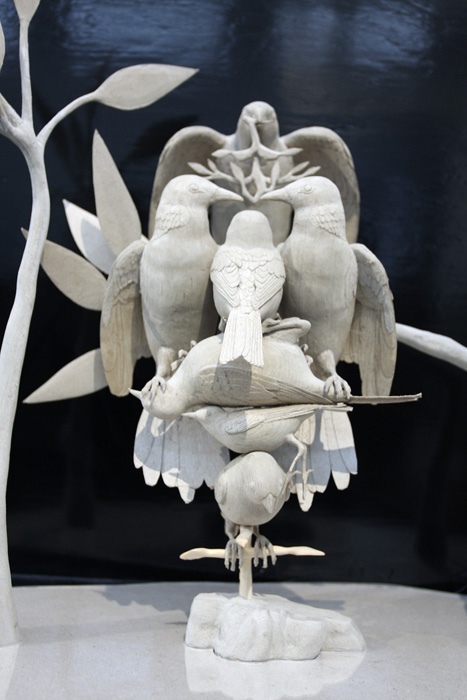
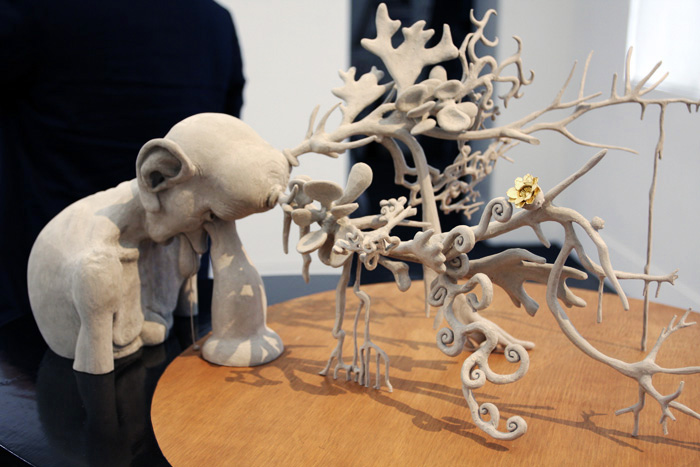
Moving down Flinders Lane we ascended to the fourth floor and entered the beautiful light filled gallery space at Block Projects to view the ‘new work’ of Richard Grigg. An eclectic mix of sculpture, painting, drawing, and collage was presented. Preparatory drawings for one of the sculptures, a pencil drawing of two old men debating, a canvas of a camera in tempera, gold leaf and gesso vie for attention with the two standout pieces of the show: No more songs at funerals/hero today gone tomorrow (2007) and He can’t read well because of his horns (2009), surrealist sculptures both made of compressed cardboard (below).
These two sculptures are fantastic: the first forming a skull made out of birds perched on a cross surmounted by a bird holding an olive branch, the title deliciously ironic; the second a stooped gargoyle like creature with a massive extrusion for a nose, hanging tongue dripping saliva and phantasmagorical protrusions emerging from it’s head making it impossible for the creature to ‘read well’ in both the metaphorical and literal sense. This is a beautiful but grotesque primordial fantasy with the horns putting roots down in the soil like the roots of a mangrove tree, a gold leaf flower blooming at their outer reaches, the creature exhausted by the effort of trying to keep his head up.
Unfortunately the rest of the exhibition lacked core strength: conceptually the show is not strong. Evidence of beauty in decay and concerns about the process of ageing vie with environmental contexts; slippages in time (The Moment Between) contrast with cameras and their sight lines; Pinocchio lies under a shroud with a camera trapped in the back of a horse drawn cart (Dream of Rest). Apparently, the cameras do not signify the capturing of the frozen moment of beauty but they are there because the artist’s father collected cameras. To me they seemed to be defining the nature of our interaction with the world, the surface of the image controlling the interface between technology and earth.
One of the problems with undertaking an exhibition titled New Work is the assumption that the new work being produced hangs together holistically and tells a not necessarily linear narrative story but one that the viewer can investigate, question, and tease the pertinent concepts from – something the viewer can hang their hat on (perhaps the horns of a dilemma!) This was not the case here. The bits n bobs approach of this exhibition falls slightly flat but go see the show for the two sculptures – they alone are worth the effort!
Dr Marcus Bunyan
Many thankx to Block Projects for allowing me to publish the photographs in the posting. Please click on the photographs for a larger version of the image.
Richard Grigg (Australian) No more songs at funerals/hero today gone tomorrow 2007-2009 Layered boxboard, wood dowel, glue, pine, black gloss enamel, Perspex
Richard Grigg (Australian) He can’t read well because of his horns 2009 Layered boxboard, gold leaf, wood dowel, glue, pine, black gloss enamel, wood stain
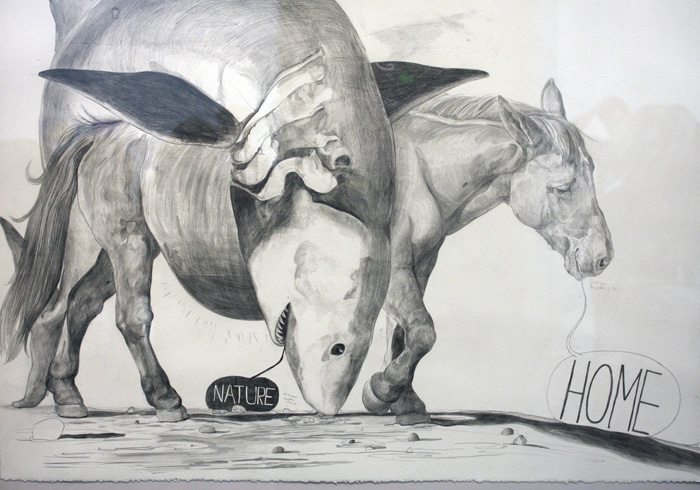
Richard Grigg (Australian) A Late Night Story 2007 pencil on paper
Richard Grigg (Australian) Older than the value of beauty (detail) 2009 Tempera, gold leaf and gesso on board
Richard Grigg (Australian) Cloak 2008 Tempera, gold leaf and gesso on board
Block Projects Level 1 / 252 Church Street Richmond Victoria 3121 Australia Phone: +61 3 9429 0660
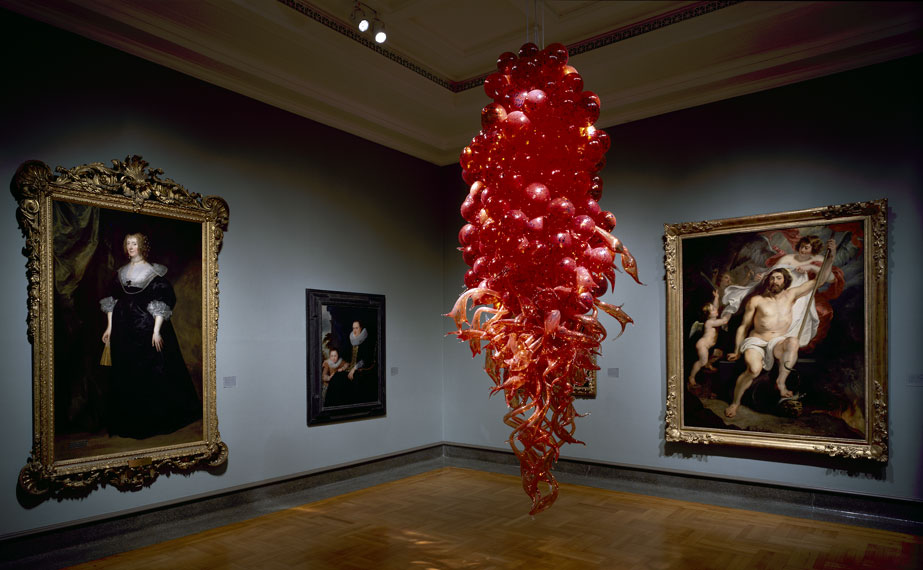
Dale Chihuly (American, b. 1941) Palazzo Ducale Chandelier 1998
Visit the Dale Chihuly website and click on the “Work” link to see a truly remarkable artist at work!
Dr Marcus Bunyan
Please click on the photographs for a larger version of the image.
Dale Chihuly (American, b. 1941) Chiostro di Sant’apollonia Chandelier 1996
Dale Chihuly is most frequently lauded for revolutionising the Studio Glass movement by expanding its original premise of the solitary artist working in a studio environment to encompass the notion of collaborative teams and a division of labour within the creative process. However, Chihuly’s contribution extends well beyond the boundaries both of this movement and even the field of glass: his achievements have influenced contemporary art in general. Chihuly’s practice of using teams has led to the development of complex, multipart sculptures of dramatic beauty that place him in the leadership role of moving blown glass out of the confines of the small, precious object and into the realm of large-scale contemporary sculpture. In fact, Chihuly deserves credit for establishing the blown glass form as an accepted vehicle for installation and environmental art beginning in the late twentieth century and continuing today.
Stylistically over the past forty years, Chihuly’s sculptures in glass have explored colour, line, and assemblage. Although his work ranges from the single vessel to indoor/outdoor site-specific installations, he is best known for his multipart blown compositions. These works fall into the categories of mini-environments designed for the tabletop as well as large, often serialised forms that are innovatively displayed in groupings on a wide variety of surfaces ranging from pedestals to bodies of natural water. Masses of these blown forms also have been affixed to specially engineered structures that dominate large exterior or interior spaces.
Over the years Chihuly and his teams have created a wide vocabulary of blown forms, revisiting and refining earlier shapes while at the same time creating exciting new elements, such as his Fiori, all of which demonstrate mastery and understanding of glassblowing techniques. Earlier forms, such as the Baskets, Seaforms, Ikebana, Venetians, and Chandeliers, from the late 1970s through the 1990s have been augmented since the early to mid-1990s with new blown elements. Chihuly and his teams primarily developed these while working in glass factories in France, Finland, Ireland, and Mexico. The resulting Reeds, Saguaros, Herons, Belugas, Seal Pups, and other forms are now juxtaposed with the earlier series, including Macchia, Niijima Floats, and Persians in lively new contexts.
“Since the early 1980s, all of Chihuly’s work has been marked by intense, vibrant colour and by subtle linear decoration. At first he achieved patterns by fusing into the surface of his vessels “drawings” composed of prearranged glass threads; he then had his forms blown in optic moulds, which created ribbed motifs. He also explored in the Macchia series bold, colourful lip wraps that contrasted sharply with the brilliant colours of his vessels. Finally, beginning with the Venetians of the early 1990s, elongated, linear blown forms, a product of the glassblowing process, have become part of his vocabulary, resulting in highly baroque, writhing elements. In recent years Chihuly has experimented with Polyvitro to create new interpretations of some of his glass forms.
Davira S. Taragin on the Dale Chihuly website [Online] Cited 01/03/2009. No longer available online. Used under fair use conditions for the purposes of education and research
Dale Chihuly (American, b. 1941) The artist with his Chiostro di Sant’apollonia Chandelier (detail) 1996
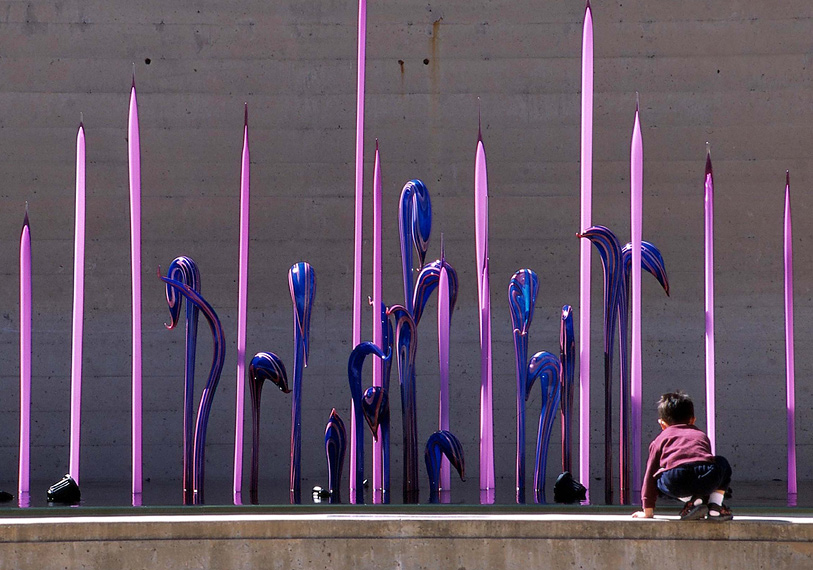
Dale Chihuly (American, b. 1941) Colorado Springs Fountain installation 2005
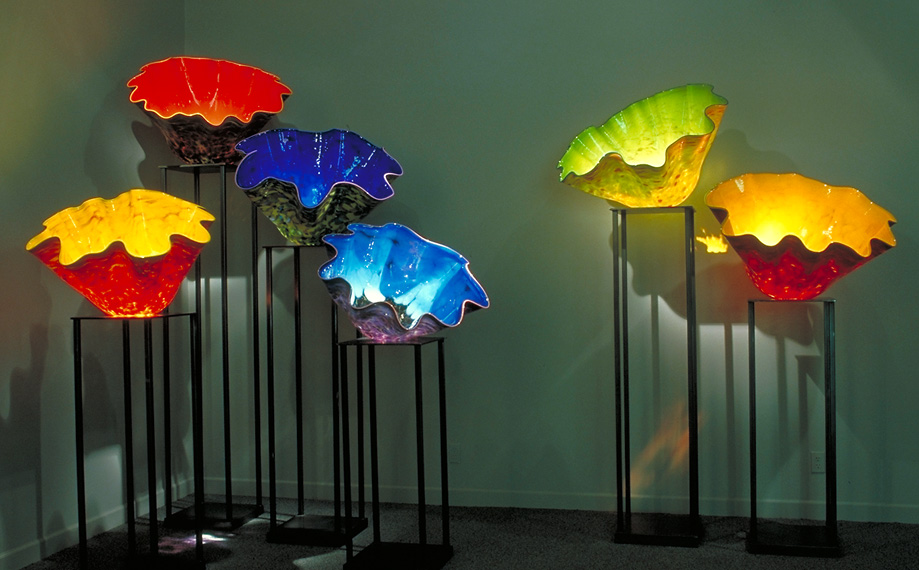
Dale Chihuly (American, b. 1941) Basket Forest 2005
Dale Chihuly (American, b. 1941) Macchia Forest 2004
Dale Chihuly (American, b. 1941) Ponti Duodo e Barbarigo Chandelier 1998
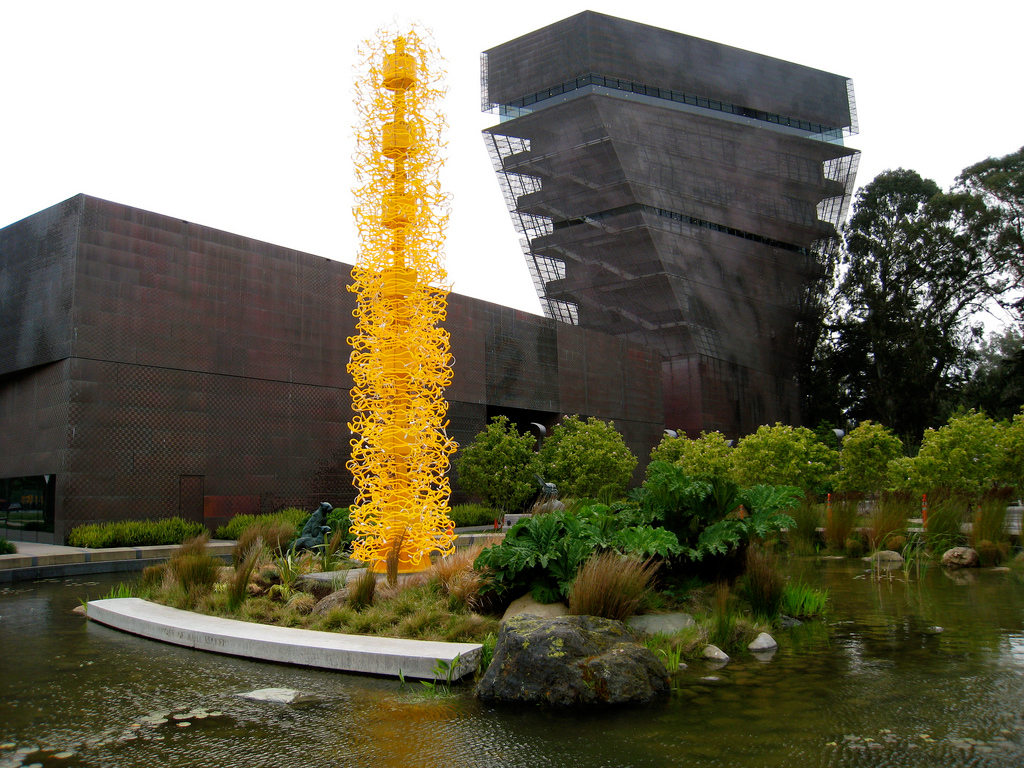
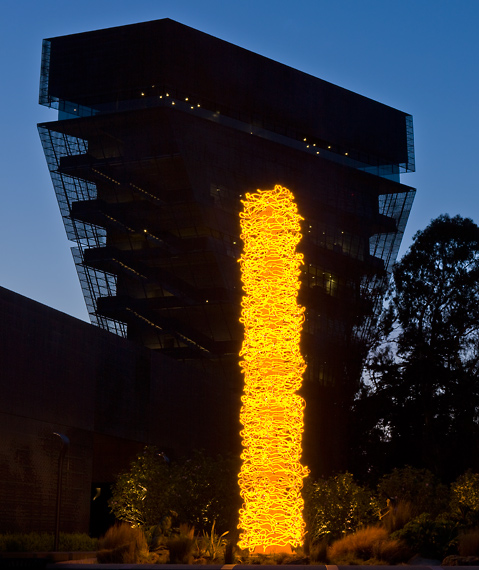
Dale Chihuly (American, b. 1941) Saffron Tower 2008
Dale Chihuly (American, b. 1941) Saffron Tower 2008
“Go’s musings on the existential nature of our being are both full and empty at one and the same time and help us contemplate the link to the breath of the sublime.” Dr Marcus Bunyan
Exhibition dates: 25th February – 14th March, 2009
Junko Go (Australian born Japan, b. 1955) Opium Poppy 2008
“One person’s heaven is another’s nightmare. Seeing both sides to every story can be a blessing and a curse. Good and bad, right and wrong, purity and impurity are inextricably linked.”
A delicate, refined but strong presence is felt in the work of Junko Go in the her new exhibition ‘all about … blooming’ at Gallery 101, Melbourne. Nominally landscape painting about flowers but featuring thoughts and ideas about the seed, the shoot, pollen and the breath of life the work addresses the essence of what it is to be human and live compassionately on this earth in an intelligent and profound way.
Denying the nihilism of abstract expressionism each mark is fully considered by being attentive to the connection between brush, hand and meaning. Almost childlike in their use of charcoal and acrylic her dogs, crosses and flowers, jottings and dashes, rain and rivers, seeds and people show a Zen like contemplation in the marks she makes on the canvas – just so. A releasement towards things is proffered, a letting go of the ego to create an awareness of just being. There is genuine warmth and humility to this work.
In Opium Poppy (2008, above) the darkness of the nightmare is represented by the black marks, ascending like Jacob’s ladder balanced by the mandala like poppies whose petals seem like feathers of a bird’s wing – a flight of fancy both good and bad. In Pollen (2009) bees swarm around a sunflower leaving traces of their presence, a bird flies close to a tiny blue cloud, the sun burst forth in a tiny patch of aqua colour, and people hug arm in arm. As Go says, “Bees in a flower bear pollen unawares and play a crucial roll for the plant to survive. Our love, kindness, warmth and wisdom affect one another unawares and play a crucial roll for our planet to survive.” In New Shoot (2008, below) the puzzle of our existence, the nature of our existential being is laid bare for all to see.
In Seeds (2008) Go reminds us that rather than being focused on what we hoped for, we must make the most of whatever opportunities we are blessed with. This means being aware of the gifts one possesses, not the distance between ‘I’ and want, need and desire – now! The seed of our experience – the calm before the force that propelled us into existence – is already present within us.
Go’s musings on the existential nature of our being are both full and empty at one and the same time and help us contemplate the link to the breath of the sublime. In the end Go’s paintings are about endings and beginnings, about being strong or not, about the infinity of the seed and about our responses to living in harmony on this planet. Through the seed, the shoot, the flower and the earth access may be granted to the sublime and this perfectly sums up the work of this artist, a reflection of her energy and radiance transferred to the canvas. I loved it.
Dr Marcus Bunyan
Many thankx to Gallery 101 for allowing me to publish the art work in the posting. Please click on the art work for a larger version of the image.
Junko Go (Australian born Japan, b. 1955) New Shoot 2008
“Each of us is born to fill a special place in this world. In the process, we sometimes have trouble finding our niche. Life is like a jigsaw puzzle in which we make every effort to find our own place that makes a right connection with others, with the world and even with the whole universe.”
Junko Go (Australian born Japan, b. 1955) Red Hot Poker 2009
“Push and pull our inner strength. Sometimes, we need courage to take risks in confronting pain and loss in order to gain a deep and profound experience.”
“We live in a world where high achievers are congratulated, yet true achievements are not related to what we can get done, but to how deeply we aware of how wonderful it is to be alive. In this exhibition, flowers are not only a predominant source of visual inspiration, looking at them also engenders a kind of appreciation and wonder. The fragile and ephemeral flower provokes in me an awareness of the human condition that reveals the true nature of our existence.
My goal is to create images which are strong and soft, bold and precise, beautiful and ugly, figurative and abstract, all at once. My greatest challenge is to make art about what it is to be human … What really matters in art making to me is a kind of awareness – a being able to say, ‘I am as I am’.”
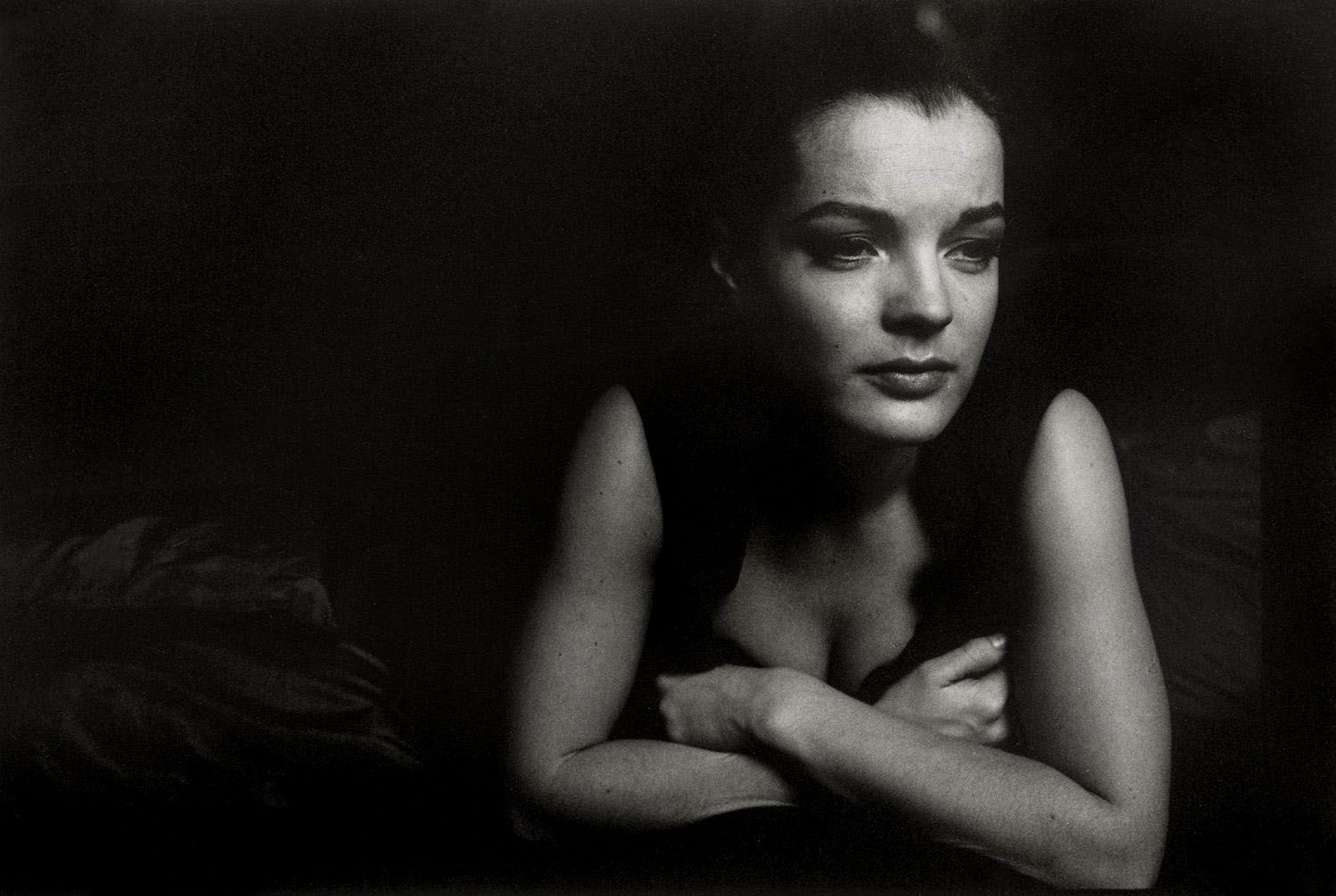
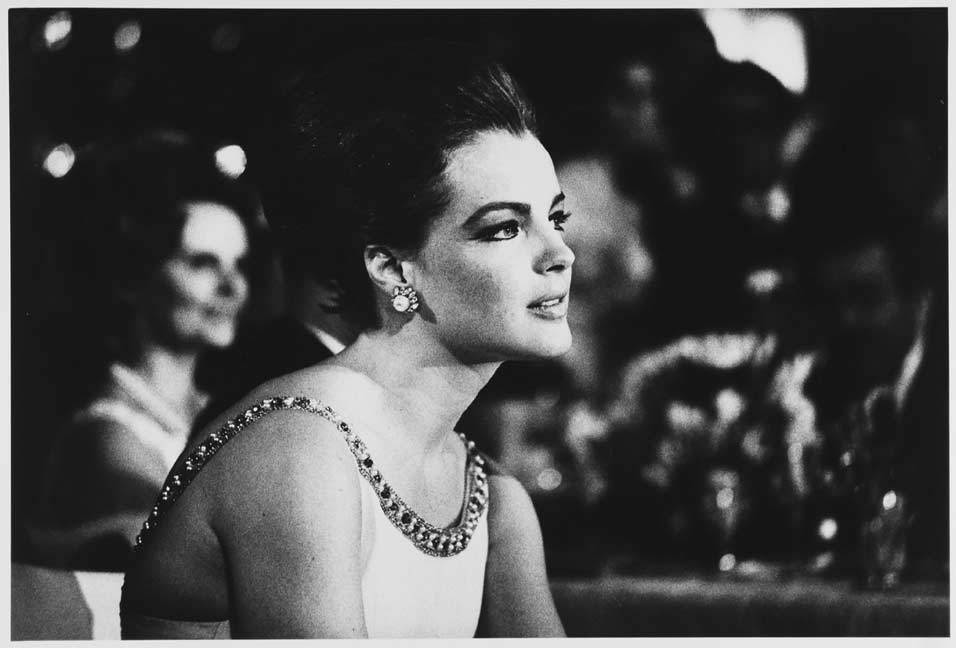
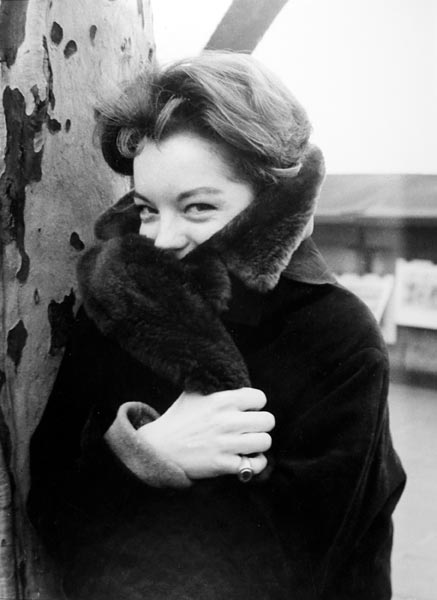
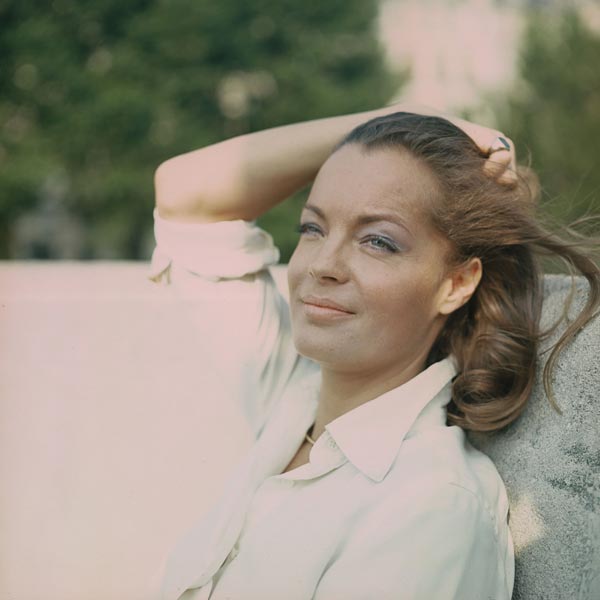
I have never known the filmography of Romy Schneider, never come across this actress before sad to say. But now I do.
What great photographs.
What a beautiful woman: sensitive, vivacious, stunning.
A soul I would have liked to have known.
Marcus
Many thankx to the Museum für Kunst Und Gewerbe for allowing me to publish the photographs in the posting. Please click on the photographs for a larger version of the image.
Romy Schneider (German: born Rosemarie Magdalena Albach; 23 September 1938 – 29 May 1982) was a German-French actress. She began her career in the German Heimatfilm genre in the early 1950s when she was 15. From 1955 to 1957, she played the central character of Empress Elisabeth of Austria in the Austrian Sissi trilogy, and later reprised the role in a more mature version in Luchino Visconti’s Ludwig (1973). Schneider moved to France, where she made successful and critically acclaimed films with some of the most notable film directors of that era.
Born in Berlin, Peter Brüchmann trained to be a photographer with the fashion and portrait photographer Lotte Söhring and subsequently completed a traineeship at the German press agency dpa. In the 1950s and 1960s he worked for well-known magazines, such as Schöner Wohnen, Stern and Bild am Sonntag. Brüchmann is primarily known for his portraits of celebrities of the movie and music industry. In 2008 the photographer participated in the group exhibition Die Erinnerung ist oft das Schönste – Fotografische Porträts von Romy Schneider, an exhibition comprising portraits of the famous Franco-German actress Romy Schneider, held at the Stiftung Opelvillen Rüsselheim, Germany. Today Peter Brüchmann works as a freelance photographer for several national and international magazines. Numerous of his photographs are among the collections of the German Historical Museum in Berlin.
Roger Fritz (German, 1936-2021) Romy Schneider, Paris, 1961 1961 Gelatin silver print
Herbert List, Max Scheler, Roger Fritz, F. C. Gundlach, Will McBride, Peter Brüchmann, Werner Bokelberg, Helga Kneidl and Robert Lebeck took photos of Romy Schneider in quite different ways, as a young girl, in her film roles, together with her children, apparently unobserved in everyday situations or in set poses and dressed up in various costumes, merry or pensive, beautiful and fragile. More than 140 pictures will be on show, of which about 40 are being exhibited for the first time.
Hardly any other star has left us with so many different and conflicting images as Romy Schneider. She was photographed thousands of times – and yet she always remained enigmatic. Some of the photographers whose work is presented in this exhibition only met Romy once – Herbert List, for instance, captured her as a teenager around 1954 on pictures which remained unknown until recently – or accompanied her throughout her life, like Robert Lebeck, who succeeded in taking disturbingly personal pictures of her from the 1950s through to shortly before her death.
These snapshots conjure up once again the legend that was Romy, while at the same time making a powerful statement which reveals the transitoriness of existence. Because that is the core of what a photo does: it creates an image in order to bear lasting witness to an event which happened – yet at the very moment of capturing the image on film, it is no more than the proof that the fleeting moment has passed.
The photos by Herbert List, Werner Bokelberg, Peter Brüchmann, Roger Fritz and Max Scheler are being shown publicly for the first time. This also applies to the majority of the photos by F. C. Gundlach and Will McBride. The pictures by Helga Kneidl and Robert Lebeck have already appeared in books about Romy Schneider. These volumes are however now out of print.
Text from the Museum für Kunst Und Gewerbe website
Herbert List (German, 1903-1975) Romy Schneider, Munich, 1954 1954 Gelatin silver print
Herbert List (German, 1903-1975)
Herbert List (7 October 1903 – 4 April 1975) was a German photographer, who worked for magazines, including Vogue, Harper’s Bazaar, and Life, and was associated with Magnum Photos. His austere, classically posed black-and-white compositions, particularly his homoerotic male nudes, taken in Italy and Greece being influential in modern photography and contemporary fashion photography.
Photographer
In 1929 he met Andreas Feininger who inspires his greater interest in photography and who gives him a Rolleiflex camera. From 1930 he began taking portraits of friends and shooting still life, is influenced by the Bauhaus and artists of the surrealist movements, Man Ray, Giorgio De Chirico and Max Ernst, and creates a surrealist photograph titled Metaphysique in a style he called fotografia metafisica in homage to De Chirico, his most important influence during this period. He used male models, draped fabric, masks and double-exposures to depict dream states and fantastic imagery. He has explained that his photos were “composed visions where [my] arrangements try to capture the magical essence inhabiting and animating the world of appearances.”
In 1936, in response to the danger of Gestapo attention to his openly gay lifestyle and his Jewish heritage, List left Germany for Paris, where he met George Hoyningen-Huene with whom he travelled to Greece, deciding then to become a photographer. During 1937 he worked in a studio in London and held his first one-man show at Galerie du Chasseur d’Images in Paris. Hoyningen-Huene referred him to Harper’s Bazaar magazine, and 1936-1939 he worked for Arts et Metiers Graphiques, Verve, Vogue, Photographie, and Life. List was unsatisfied with fashion photography. He turned back to still life imagery, continuing in his fotografia metafisica style.
From 1937 to 1939 List travelled in Greece and took photographs of ancient temples, ruins, sculptures, and the landscape for his book Licht über Hellas. In the meantime he supported himself with work for magazines Neue Linie, Die Dame and for the press from 1940-1943, and with portraits which he continued to make until 1950. In List’s work the revolutionary tactics of surrealist art and a metaphysical staging of irony and reverie had been honed in an the fashion industry that relied on illusion and spectacle which after World War II returned to a classical fixation on ruins, broken male statuary and antiquity.
F. C. Gundlach (German, 1926-2021) Romy Schneider, Hamburg, 1961 1961 Gelatin silver print
F. C. Gundlach (German, 1926-2021)
F. C. Gundlach (Franz Christian Gundlach; born 16 July 1926 in Heinebach, Hesse; died 23 July 2021, Hamburg, Germany) is a German photographer, gallery owner, collector, curator, and founder. In 2000 he created the F.C. Gundlach Foundation, since 2003 he has been the founding director of the House of Photography – Deichtorhallen Hamburg.
His fashion photographs of the 1950s, 1960s and 1970s, which in many cases integrated social phenomena and current trends in the visual arts, have left their context of origin behind and found their way into museums and collections. Since 1975 he also curated many internationally renowned photographic exhibitions. On the occasion of the reopening of the House of Photography in April 2005, he curated the retrospective of the Hungarian photographer Martin Munkácsi. Here, the exhibitions A Clear Vision, The Heartbeat of Fashion and Maloney, Meyerowitz, Shore, Sternfeld. New Color Photography of the 1970s from his collection were presented since 2003. Most recently he curated the exhibitions More Than Fashion for the Moscow House of Photography and Vanity for the Kunsthalle Wien 2011.
The fashion photographer
F. C. Gundlach attended the Private Lehranstalt für Moderne Lichtbildkunst (Private School for Modern Photography) under Rolf W. Nehrdich in Kassel from 1946 to 1949. Subsequently, he began publishing theatre and film reports in magazines such as Deutsche Illustrierte, Stern, Quick and Revue as a freelance photographer.
His specialisation in fashion photography began in 1953 with his work for the Hamburg-based magazine Film und Frau, for which he photographed German fashion, Parisian haute couture and fur fashion campaigns. Additionally he photographed portraits of artists such as Romy Schneider, Hildegard Knef, Dieter Borsche and Jean-Luc Godard. For Film und Frau, but also for Stern, Annabelle, Twen and other magazines, F. C. Gundlach has since made fashion and reportage trips to the Near, Middle and Far East as well as to Central and South America. Under an exclusive contract with the magazine Brigitte, he photographed many of the trendsetting fashion pages until 1983, a total of more than 160 covers and 5,000 pages of editorial fashion. In the 1970s and 1980s he worked in South America, Africa, but above all in New York and on the American west coast.
His retrospective solo exhibitions, such as ModeWelten (1985), Die Pose als Körpersprache (1999), Bilder machen Mode (2004) or F. C. Gundlach. The photographic work (2008) were shown in many museums and galleries in Germany and abroad.
“He is a photographer whose images show the knowledge of the dominant role of fashion as a cultural social factor. For this reason, he rarely presented the phenomena of fashion in isolation, but rather linked them to the phenomenology of everyday reality and placed them in the socio-cultural context from which they ultimately originated. F. C. Gundlach proves to be a photographic artist with a will to style, a mastery of staging and the ability to shape the photographic image at his leisure, who arranges his models in ever new formal constellations: as a photographer of extraordinary aesthetic quality.”
~ Klaus Honnef
“As a fashion photographer who makes use of a recording medium, the photographer must live, think and feel entirely in his time. Fashion photographs are always interpretations and stagings. They reflect and visualise the zeitgeist of the present and anticipate the spirit of tomorrow. They offer projection screens for identification, but also for dreams, wishes and desires. And yet fashion photographs say more about a time than documentary photographs pretending to depict reality.”
Please click on the photographs for a larger version of the image. Photographs are available from this series for purchase. As a guide, a digital black and white 16″ x 20″ print costs $1,000 plus tracked and insured shipping. For more information please see the Store web page.
Man Ray (American, 1890-1976) Self-portrait 1924 Gelatin silver print
Man Ray (1890-1976) used his camera to turn photography into an art – no mean feat for a man who tried almost all his life to avoid being described as a ‘photographer’. He preferred to be identified with his work in other media: drawings, paintings and Dadaist ready-mades. The exhibition entitled Unconcerned, but not indifferent at the Hague Museum of Photography is a large-scale retrospective of Man Ray’s art and life. It links paintings, drawings and (of course) photographs to personal objects, images and documents drawn from his estate to paint a picture of a passionate artist and – whatever his own feelings about the description – a great photographer.
Unconcerned, but not indifferent is the first exhibition to reveal Man Ray’s complete creative process: from observations, ideas and sketches right through to the final works of art. By establishing the linkage between art and inspiration, it gives a new insight into the work of Man Ray. The three hundred plus items on display are drawn from the estate of the artist, which is managed by the Man Ray Trust. Some of them have never been exhibited since the artist’s death in 1976 while others are on show for the first time ever.
Man Ray’s real name was Emmanuel Radnitzky. He was born in Philadelphia (USA) in 1890. The family soon moved to New York, where his artistic talent became increasingly apparent. Photography was not yet his medium: Man Ray, as he would later call himself, concentrated on painting and became friendly with Dadaist artist Marcel Duchamp, who persuaded him to move to Paris (France). There, Man Ray moved in highly productive artistic circles full of Surrealists and Dadaists. He began taking photographs of his own (and other people’s) works of art and gradually became more interested in the photographic images than in the originals – which he regularly threw away or lost once he had photographed them.
By this time, commercial and art photography had become his main source of income and he was displaying an unbridled curiosity about the potential of the medium. This prompted a great urge to experiment and the discovery or rediscovery of various techniques, such as the famous ‘rayographs’ (photograms made without the use of a camera). Man Ray left Paris to escape the Nazi occupation of France and moved to Los Angeles, where he abandoned commercial photography to concentrate entirely on painting and photographic experimentation. However, his next real surge of creativity occurred only after he returned to Paris with his wife Juliet in 1951. In the last twenty-five years of his life, he regularly harked back to his earlier work and was not afraid to quote himself. In that sense, Man Ray can be seen as a true conceptual artist: the idea behind the work of art always interested him more than its eventual execution. Man Ray died in Paris in 1976 and is buried in Montparnasse. His widow, Juliet, summed up the artist’s life in the epitaph inscribed on his tombstone: Unconcerned, but not indifferent.
The exhibition examines the four separate creative phases in Man Ray’s life. Each is closely connected with the place where he was living (New York, Los Angeles or Paris), his friends at the time and the sources of inspiration around him. Using Man Ray’s artistic legacy and – perhaps more particularly – the everyday objects that were so important to him, Unconcerned, but not indifferent reveals the world as he saw it through the lens of his camera.
The exhibition is being held in cooperation with the Man Ray Trust in Long Island, New York, and La Fábrica in Madrid.
Text from the The Hague Museum of Photography
Many thankx to The Hague Museum of Photography for allowing me to publish the photographs in the posting. Please click on the photographs for a larger version of the image.
Man Ray (American, 1890-1976) Rayograph 1921 Gelatin silver print
Man Ray (American, 1890-1976) Noire et blanche 1926 Gelatin silver print
Man Ray (American, 1890-1976) La priere (Prayer) 1930 Gelatin silver print
Man Ray (American, 1890-1976) Larmes (Tears) 1930 Gelatin silver print
Man Ray (American, 1890-1976) Solarisation 1931 Gelatin silver print
Man Ray (American, 1890-1976) Juliet with Flower [Juliet Browner] 1950s Painted transparency
Curator: Alison Nordström, Curator of Photographs at the George Eastman House International Museum of Photography and Film
George Davison (English, 1854-1930) The Onion Field 1889
George Davison (19 September 1854 – 26 December 1930) was an English photographer, a proponent of impressionistic photography, a co-founder of the Linked Ring Brotherhood of British artists and a managing director of Kodak UK. He was also a millionaire, thanks to an early investment in Eastman Kodak.
Pictorialism was simultaneously a movement, a philosophy, an aesthetic, and a style, resulting in some of the most spectacular photographs in the history of the medium. This exhibition shows the rise of Pictorialism in the late 19th century from a desire to elevate photography to an art form equal to painting, drawing, and watercolour, and extends the historical period generally associated with it by including its influential precursors, its persistent practitioners, and its seminal effect on photographic Modernism.
With 130 masterworks from such well-known photographers as Alvin Langdon Coburn, Edward Steichen, Alfred Stieglitz, Robert Demachy, Frederick Evans, and F. Holland Day, this remarkable exhibition will illustrate the Pictorialism movement’s progression from its early influences to its lasting impact on photography and art.
Text from the George Eastman House website [Online] Cited 26/01/2009. No longer available online. Used under fair use conditions for the purposes of education and research
Many thankx to George Eastman House for allowing me to publish the photographs in the posting. Please click on the photographs for a larger version of the image.
In this video, Phillips Collection curator Elsa Smithgall introduces special exhibition TruthBeauty: Pictorialism and the Photograph as Art, 1845-1945, on view at The Phillips Collection Oct. 9, 2010 through Jan. 9, 2011.
Julia Margaret Cameron (British born India, 1815-1879) Prayer 1866
Peter Henry Emerson (British, 1856-1936) Polling the Marsh Hay c. 1885
Henry Peach Robinson (English, 1830-1901) Carolling 1890
Fredrick Holland Day (American, 1864-1933) “I Thirst” 1898
Frederick Holland Day (American, 1864-1933) Ebony and Ivory 1899 Photogravure
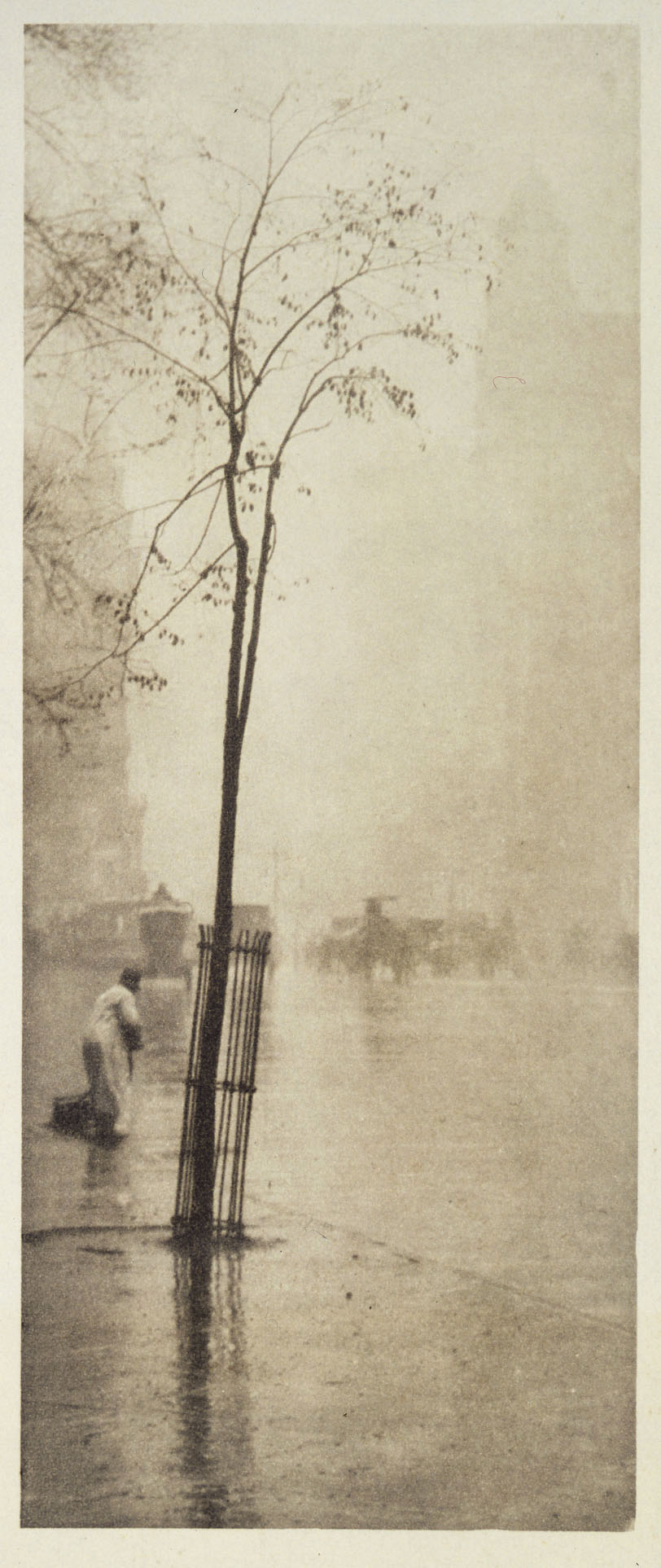
Alfred Stieglitz (American, 1864-1946) Spring Showers 1901
Alfred Steiglitz (American, 1864-1946) Snapshot – In the New York Central Yards Negative 1903; Printed 1910 Photogravure
This photograph of a train departing from Grand Central Terminal was probably made from the 48th Street foot bridge, which crossed over the railroad yard.
Edward Steichen (American, 1879-1973) The Pond – Moonlight Negative 1904; print 1906 Photogravure
The Pond – Moonlight (also exhibited as The Pond – Moonrise) is a pictorialist photograph by Edward Steichen. The photograph was made in 1904 in Mamaroneck, New York, near the home of his friend art critic Charles Caffin. The photograph features a forest across a pond, with part of the moon appearing over the horizon in a gap in the trees. The Pond – Moonlight is an early photograph created by manually applying light-sensitive gums, giving the final print more than one colour. Only three known versions of The Pond – Moonlight are still in existence and, as a result of the hand-layering of the gums, each is unique.
Edward Steichen (American, 1879-1973) Grand Prix at Longchamp, After the Races 1907 Photogravure
About the Exhibition
Photographic Pictorialism, an international movement, a philosophy, and a style, developed toward the end of the 19th century. The introduction of the dry-plate process, in the late 1870s, and of the Kodak camera, in 1888, made taking photographs relatively easy, and photography became widely practiced. Pictorialist photographers set themselves apart from the ranks of new hobbyist photographers by demonstrating that photography was capable of far more than literal description of a subject. Through the efforts of Pictorialist organisations, publications, and exhibitions, photography came to be recognised as an art form, and the idea of the print as a carefully hand-crafted, unique object equal to a painting gained acceptance.
The forerunners of Pictorialism were early photographers like Henry Peach Robinson and Julia Margaret Cameron. Robinson found inspiration in genre painting; Cameron’s fuzzy portraits and allegories were inspired by literature. Like Robinson and Cameron, the Pictorialists made photographs that were more like paintings and drawings than the work of commercial portraitists or hobbyists. Pictorialist images were heavily dependent on the craft of nuanced printing. Some photographers, like Frederick H. Evans, a master of the platinum print, presented their work like drawings or watercolours, decorating their mounts with ruled borders filled with watercolour wash, or printing on textured watercolour paper, like Austrian photographer Heinrich Kühn. Kühn achieved painterly effects by using an artist’s brush to manipulate watercolour pigment, instead of silver or platinum, mixed with light-sensitised gum arabic.
The idea that the primary purpose of photography was personal expression lay behind Pictorialism’s “Secessionist” movement. Alfred Stieglitz’s “Photo-Secession” was the best-known secessionist group. Stieglitz and his magazine, Camera Work, with its high-quality photogravure illustrations, advocated for the acceptance of photography as a fine art.
Early in the 20th century, Pictorialism began losing ground to modernism: in 1911, Camera Work published drawings by Rodin and Picasso, and its final issue, in 1917, featured Paul Strand’s modernist photographs. Nevertheless, Pictorialism lived on. A second wave of Pictorialists included Clarence H. White, whose students included such photographers as Margaret Bourke-White, Paul Outerbridge, and Dorothy Lange. White’s colleague, Paul Anderson, continued the pictorial tradition until his death in 1956. Five prints of his Vine in Sunlight, 1944, display five different printing techniques, demonstrating how each process subtly shapes the viewer’s response to the image.
Organised by George Eastman House International Museum of Photography and Film, and Vancouver Art Gallery.
Text from the Phillips Collection website Nd [Online] Cited 10/06/2022. Used under fair use conditions for the purposes of education and research
Alvin Langdon Coburn (British born United States of America, 1882-1966) Fifth Avenue from the St. Regis c. 1905 Gum bichromate and platinotype on paper
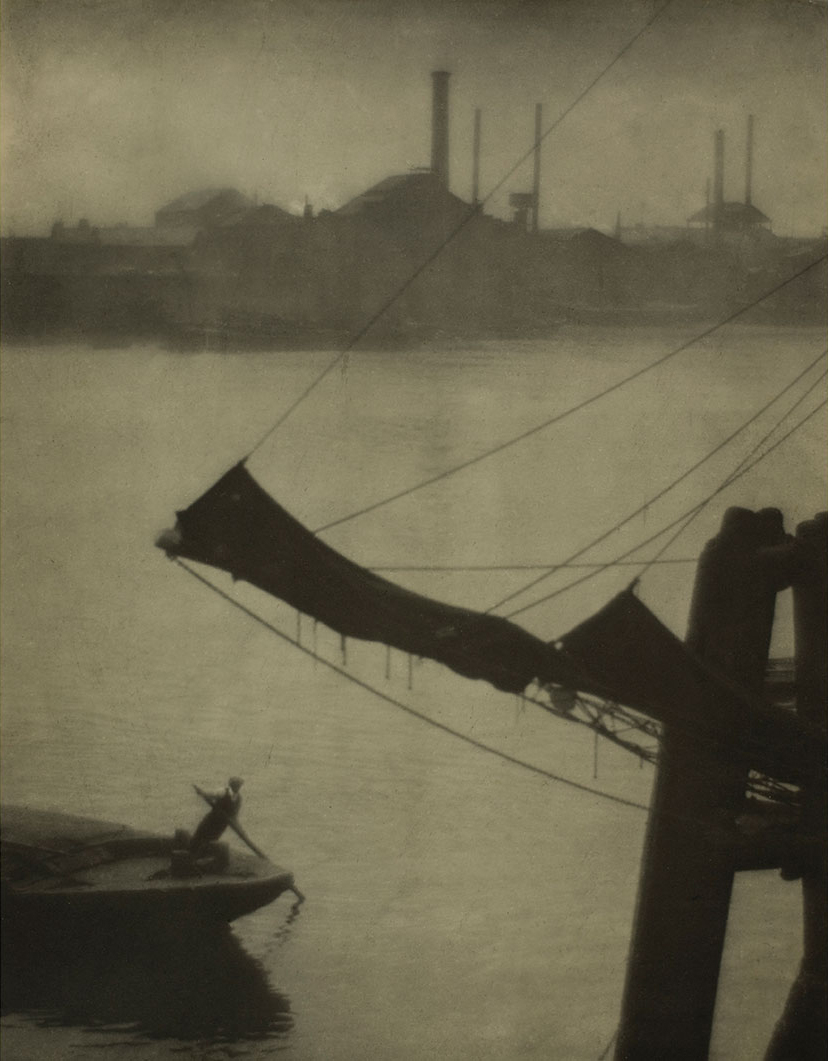
Alvin Langdon Coburn (British born United States of America, 1882-1966) Wapping 1904
Alvin Langdon Coburn (British born United States of America, 1882-1966) St. Paul’s and Other Spires 1908
Alvin Langdon Coburn (British born United States of America, 1882-1966) The Tunnel Builders 1908
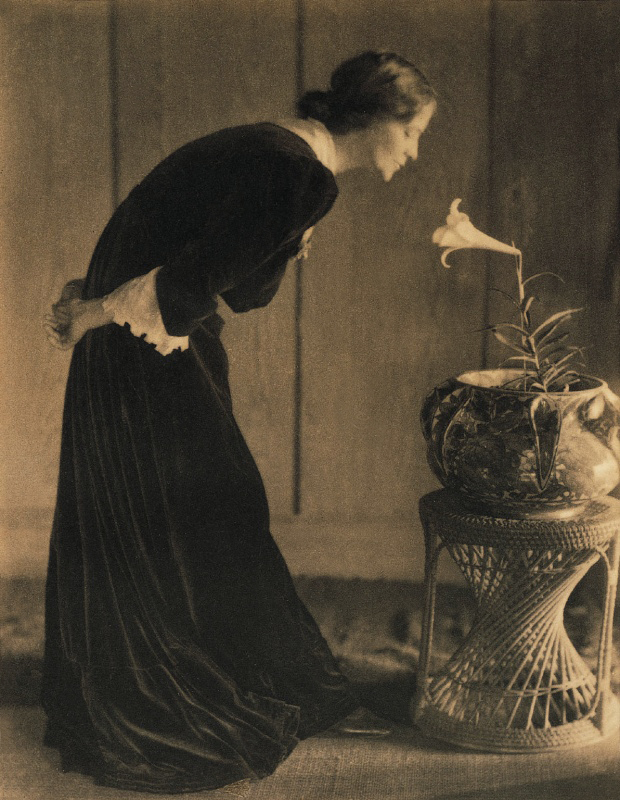
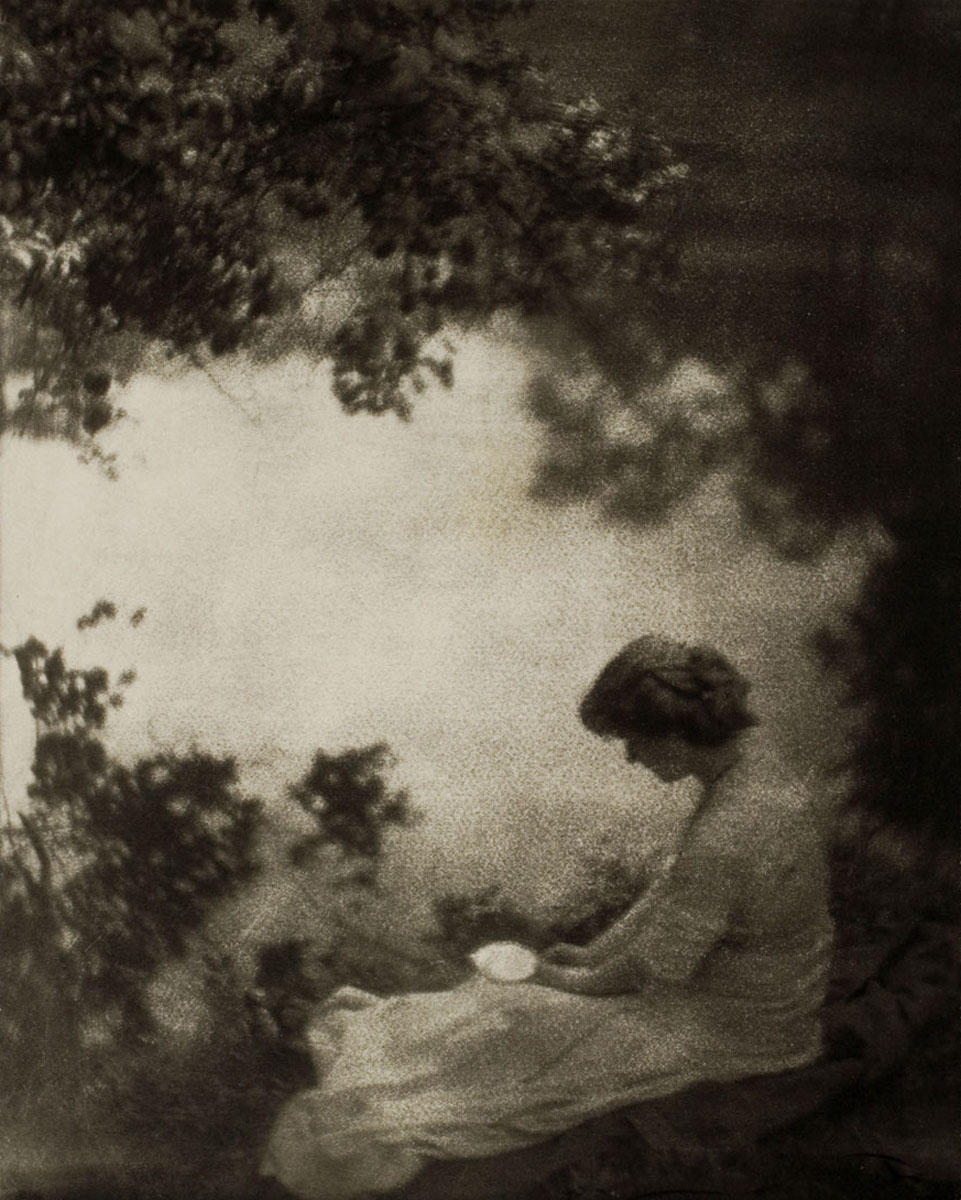
Eva Watson Schutze (American, 1867-1935) Woman with Lilly 1905
Eva Watson-Schütze (American, 1867-1935)
Eva Watson-Schütze (1867-1935) was an American photographer and painter who was one of the founding members of the Photo-Secession. …
Around the 1890s Watson began to develop a passion for photography, and soon she decided to make it her career. Between 1894 and 1896 she shared a photographic studio with Amelia Van Buren another Academy alumna in Philadelphia, and the following year she opened her own portrait studio. She quickly became known for her Pictorialist style, and soon her studio was known as a gathering place for photographers who championed this aesthetic vision.
In 1897 she wrote to photographer Frances Benjamin Johnston about her belief in women’s future in photography: “There will be a new era, and women will fly into photography.”
In 1898 six of her photographs were chosen to be exhibited at the first Philadelphia Photographic Salon, where she exhibited under the name Eva Lawrence Watson. It was through this exhibition that she became acquainted with Alfred Stieglitz, who was one of the judges for the exhibit.
In 1899 she was elected as a member of the Photographic Society of Philadelphia. Photographer and critic Joseph Keiley praised the work she exhibited that year, saying she showed “delicate taste and artistic originality”.
The following year she was a member of the jury for the Philadelphia Photographic Salon. A sign of her stature as a photographer at that time may be seen by looking at the other members of the jury, who were Alfred Stieglitz, Gertrude Kasebier, Frank Eugene and Clarence H. White.
In 1900 Johnston asked her to submit work for a groundbreaking exhibition of American women photographers in Paris. Watson objected at first, saying “It has been one of my special hobbies – and one I have been very emphatic about, not to have my work represented as ‘women’s work’. I want [my work] judged by only one standard irrespective of sex.” Johnston persisted, however, and Watson had twelve prints – the largest number of any photographer – in the show that took place in 1901.
In 1901 she married Professor Martin Schütze, a German-born and -trained lawyer who had received his Ph.D. in German literature from the University of Pennsylvania in 1899. He took a teaching position in Chicago, where the couple soon moved.
That same year she was elected a member of The Linked Ring. She found the ability to correspond with some of the most progressive photographers of the day very invigorating, and she began to look for similar connections in the U.S.
In 1902 she suggested the idea of forming an association of independent and like-minded photographers to Alfred Stieglitz. They corresponded several times about this idea, and by the end of the year she joined Stieglitz as one of the founding members of the famous Photo-Secession.
About 1903 Watson-Schütze began to spend summers in Woodstock at the Byrdcliffe Colony in the Catskill Mountains of New York. She and her husband later bought land nearby and built a home they called “Hohenwiesen” (High Meadows) where she would spend most of her summer and autumn months from about 1910 until about 1925.
In 1905 Joseph Keiley wrote a lengthy article about her in Camera Work saying she was “one of the staunchest and sincerest upholders of the pictorial movement in America.
Eva Watson Schutze (American, 1867-1935) Young girl seated on bench c. 1910
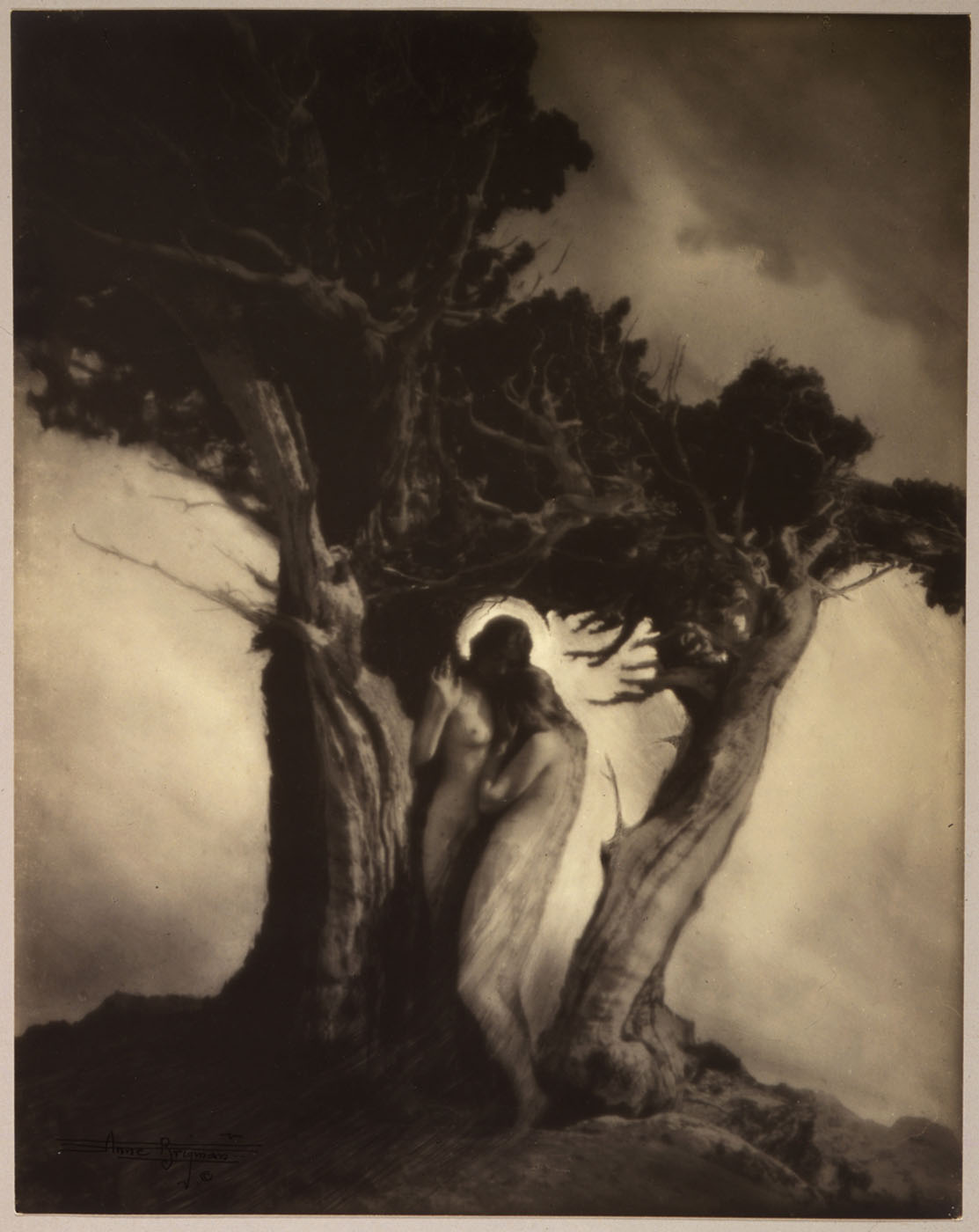
Anne Brigman (American, 1869-1960) The Heart of the Storm 1902
Anne Brigman (American, 1869-1960) The Pine Sprite 1911
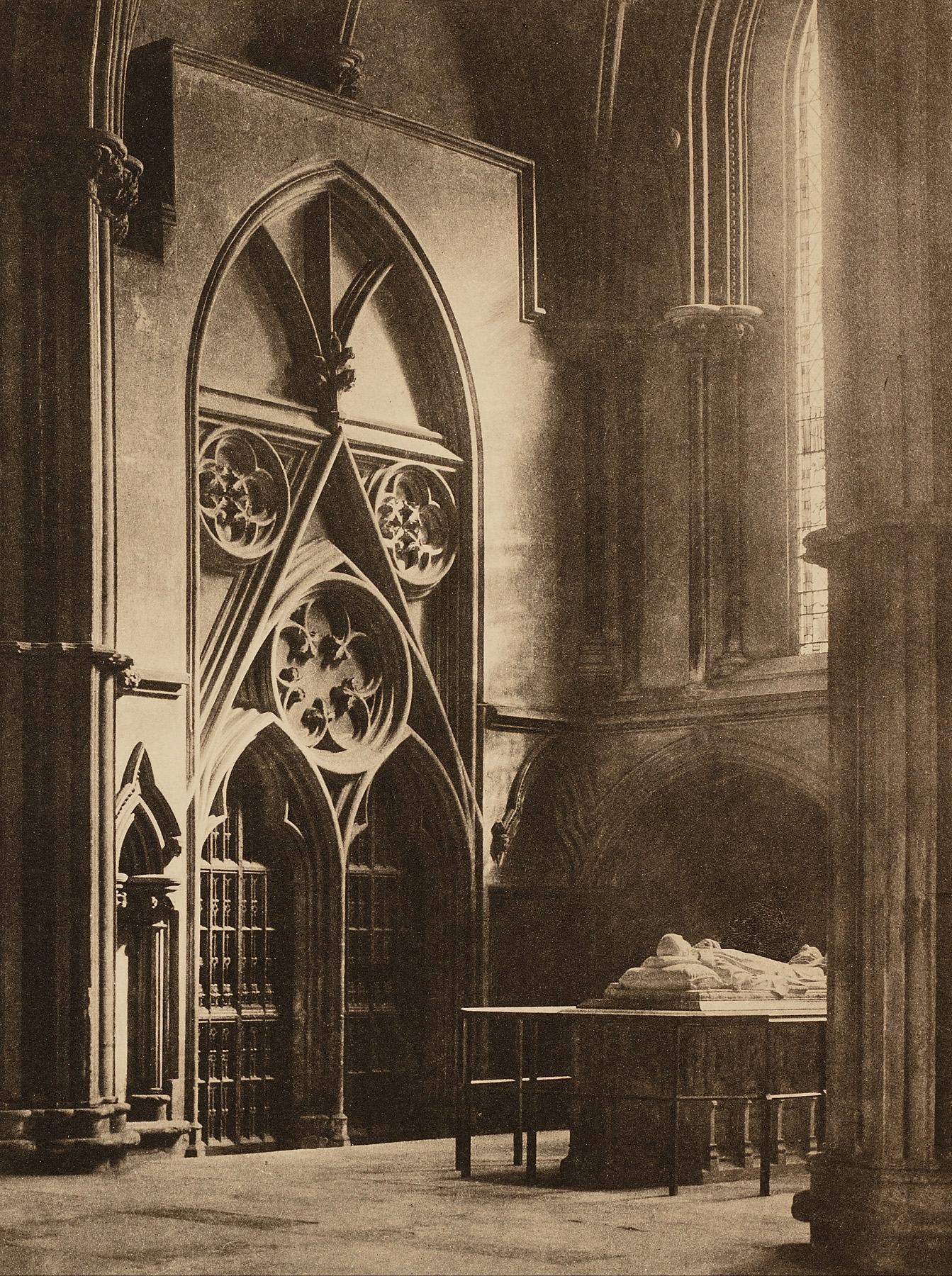
Frederick Evans (British, 1853-1943) York Minster: In Sure and Certain Hope 1903 Photogravure
Frederick H. Evans (British, 1853-1943)
Frederick H. Evans (26 June 1853, London – 24 June 1943, London) was a British photographer, primarily of architectural subjects. He is best known for his images of English and French cathedrals. Evans began his career as a bookseller, but retired from that to become a full-time photographer in 1898, when he adopted the platinotype technique for his photography. Platinotype images, with extensive and subtle tonal range, non glossy-images, and better resistance to deterioration than other methods available at the time, suited Evans’ subject matter. Almost as soon as he began, however, the cost of platinum – and consequently, the cost of platinum paper for his images – began to rise. Because of this cost, and because he was reluctant to adopt alternate methodologies, by 1915 Evans retired from photography altogether.
Evans’ ideal of straightforward, “perfect” photographic rendering – unretouched or modified in any way – as an ideal was well-suited to the architectural foci of his work: the ancient, historic, ornate and often quite large cathedrals, cloisters and other buildings of the English and French countryside. This perfectionism, along with his tendency to exhibit and write about his work frequently, earned for him international respect and much imitation. He ultimately became regarded as perhaps the finest architectural photographer of his, or any, era – though some professionals privately felt that the Evans’ philosophy favouring extremely literal images was restrictive of the creative expression rapidly becoming available within the growing technology of the photographic field.
Evans was also an able photographer of landscapes and portraits, and among the many notable friends and acquaintances he photographed was George Bernard Shaw, with whom he also often corresponded. Evans was a member of the Linked Ring photographic society.
Frederick Evans (British, 1853-1943) Kelmscott Manor: Attics c. 1896
Getrude Käsebier (American, 1852-1934) Woman seated under a tree c. 1910
The hauntingly beautiful works of the Pictorialist movement are among the most spectacular photographs ever created. Beginning in the late nineteenth century, Pictorialist artists sought to elevate photography – until then seen largely as a scientific tool for documentation – to an art form equal to painting. Adopting a soft-focus approach and utilizing dramatic effects of light, richly coloured tones and bold technical experimentation, they opened up a new world of vision expression in photography. More than a hundred years later, their aesthetic remains highly influential.
TruthBeauty contains 121 stunning works by the form’s renowned artists, including Julia Margaret Cameron, Alvin Langdon Coburn, Robert Demachy, Peter Henry Emerson, Gertrude Käsebier, Heinrich Kühn, Edward Steichen and Alfred Stieglitz. Together, the collected works trace the evolution of Pictorialism over the three decades in which it predominated.
This is the only collection of Pictorialist photographs by artists from North America, the United Kingdom, continental Europe, Japan and Australia in a single publication. Scholarly essays, and a selection of historic texts by Pictoralist artists, complete this rich overview of the first truly international art movement.
Text from the Amazon website Nd [Online] Cited 10/06/2022
Robert Demachy (French, 1859-1936) Une Balleteuse 1900 Gum bichromate print
Demachy was, with Émile Joachim Constant Puyo, the leader of the French Pictorial movement in France. His aesthetic sophistication and skill with the gum bichromate technique, which he revived in 1894 and pressed into the service of fine art photography, were internationally renowned. With the gum medium, he was able to achieve the appearance of a drawing or printmaking process-in this photograph, he has added marks characteristic of etching during intermediate stages of development-in order to advocate photography’s membership in the fine arts by revealing the intervention of the photographer’s hand in the printmaking stage of the photographic process. The result attested to Demachy’s mastery of his medium, but also proved his ability to unify a composition and select significant details from the myriad of facts available in his negatives. In this picture, Demachy has gently elided the background and erased the features of the left third of the image in order to emphasise the grace and delicacy of the ballet dancer that is its subject.
Text from the Metropolitan Museum of Art website [Online] Cited 26/01/2009. used under fair use conditions for the purposes of education and research
John Kauffmann (Australian, 1864-1942) Waterlily, Nymphaea Alba c. 1930 Gelatin silver print National Gallery of Australia
John Kauffmann was born in South Australia in 1865 and initially trained as an architect. In 1887 he travelled to Europe and became well connected to London’s artistic set, including the young Frank Brangwyn RA. In London and later Vienna, Kauffmann painted and learnt to take and print photographs, exhibiting in various salons and working with a number of important studios. In Austria, he became an enthusiast of Pictorialist photography and pursued studies in photographic chemistry. He returned to Adelaide in 1897 and was championed as the pioneer of Pictorialism in Australia. By 1914, Kauffmann had moved to Melbourne and established his own studio in Collins Street. Kauffmann died in South Yarra, Melbourne in 1942.
Text from the Monash Gallery of Art website
John Kauffmann (Australian, 1864-1942) The Silent Watcher Plate in in John Kauffmann, The Art of John Kauffmann Melbourne: Alexander McCubbin, 1919 tipped-in plate (halftone) National Gallery of Australia Research Library, Canberra
Pictorialism in Australia was established when photographic journals, such as the Australian Photographic Journal (APJ), launched in 1892, and the Australasian Photo-Review (APR), begun in 1894, appeared.1
In addition to providing technical advice the magazines covered the controversies in Britain and other centres over the new art photography. Articles on poetic picture making by British artists Henry Peach Robinson and Alfred Horsley Hinton, whose names were often cited by Australian Pictorialist photographers as major influences, were also included.
These magazines featured work by both professional and amateur photographers, and their editors took pride in the artistic quality of their reproductions; they also encouraged and supported the growth of new societies devoted to art photography.
The Photographic Society of New South Wales was duly established in Sydney in 1894, joining the older South Australian Photographic Society in Adelaide at the forefront of Pictorialism. The next decades saw a remarkable level of activity in the growing Pictorialist circles. …
In the years leading up to the war there was growing sentiment that Australian photographers were overly reliant on British models and had failed to advance the art of pictorial photography within an Australian context. A number of the more prominent Australian photographers and art commentators were also increasingly vocal about what they felt to be a decline in the quality of artistic practice despite the feverish activity of exhibitions and proliferation of camera clubs.
In 1916 a group of artists including Cazneaux, Cecil W. Bostock, a graphic artist who had recently set up a photography studio in Sydney, and James Stening formed the Sydney Camera Circle. They signed a pledge “to advance pictorial photography and to show our own Australia in terms of sunlight rather than those of greyness and dismal shadows.”10 …
Although it had largely waned in Europe and the United States by then, Pictorialism continued in Australia during the 1920s and 1930s. There was a new generation of artists showing their work alongside that of their more established colleagues in two large Pictorialist salons held in Sydney in 1924 and 1926 accompanied by catalogues called Cameragraphs (designed by Bostock). Perhaps because of the Depression, these salons did not continue.
Beginning in the 1920s Pictorialist and Modernist photography existed side by side with the professional photographers bridging both movements. Pictorialist photography would remain popular, particularly with the amateur members of the camera clubs up to the 1940s, ironically becoming increasingly conservative and backward looking in subject and execution.
However, the ascendancy of Modernist photography was now evident, even in the work of Cazneaux and Bostock, who would become active in the 1920s in commercial spheres.
Extract from Gael Newton. “Australian Pictorial Photography – Seeing The Light,” in TruthBeauty – Pictorialism and the Photograph as Art, 1845-1945. Essay originally published in the 2008 catalogue for the Vancouver Art Gallery exhibition [Online] Cited 12/06/2022. Used under fair use conditions for the purposes of education and research
Cecil W. Bostock (Australian born England, 1884-1939) Nude Study c. 1916 Gelatin silver print
Cecil Westmoreland Bostock (1884-1939) was born in England. He emigrated to New South Wales, Australia, with his parents in 1888. His father, George Bostock, was a bookbinder who died a few years later in 1892.
Bostock had an important influence on the development of photography in Australia, initiating a response to the strong sunlight. He presided over the transition from Pictorialism to Modernism and was a mentor to several famous Australian photographers: notably Harold Cazneaux and Max Dupain.
The Sydney Camera Circle
On 28 November 1916, a group of six photographers met at Bostock’s ‘Little Studio in Phillip Street’ to form the Pictorialist “Sydney Camera Circle”. This initially included Cecil Bostock, James Stening, W. S. White, Malcolm McKinnon and James Paton, and they were later joined by Henri Mallard.
A “manifesto” was drawn up by Cecil and signed by all six attendees who pledged “to work and to advance pictorial photography and to show our own Australia in terms of sunlight rather than those of greyness and dismal shadows”. This established what was known as the ‘sunshine school’ of photography. The style of Pictorialism practiced by Australians was “concerned with the play of light, sunshine and shadow, and the attention to nature and the landscape, and had an affinity with the Heidelberg School of painters.”
Jack Cato (Australian, 1889-1971) Snorky 1924 Gelatin silver print
Jack Cato (1889-1971) was born in Tasmania and was introduced to photography by his cousin, renowned photographer John Watt Beattie. Cato trained and worked as a photographer in Launceston from 1901 to 1906 before establishing his own business in Hobart. He travelled to Europe in 1908 and worked in London as a theatre and society photographer from 1909 to 1914. He then spent six years photographing in South Africa. Cato received a fellowship at the Royal Photographic Society in 1917. He returned to Tasmania in 1920 and re-opened his portrait studio in Hobart. He moved his studio to Melbourne in 1927 and became known as a leader in Australian photography. Cato is particularly known for his pictorial portraits.
Olive Cotton (Australia 1911-2003) worked at Max Dupain’s Bond Street studio from 1934 to 1940. During this time she produced some of her best-known photographs. Her subjects ranged from nature to the built environment as well as still-life and portraiture. Cotton’s often geometric compositions reflect the modernist photographic styles of the time and illustrate her interest in light and shadow. She was included in the London Salon of Photography in 1935 and 1937, and in 1942 returned to the Bond Street studio as manager. She stayed until 1945 before moving to Koorawatha in country New South Wales where she raised her family. From 1964 to 1980, Cotton ran a small photographic studio in Cowra, New South Wales.
Text from the Monash Gallery of Art website
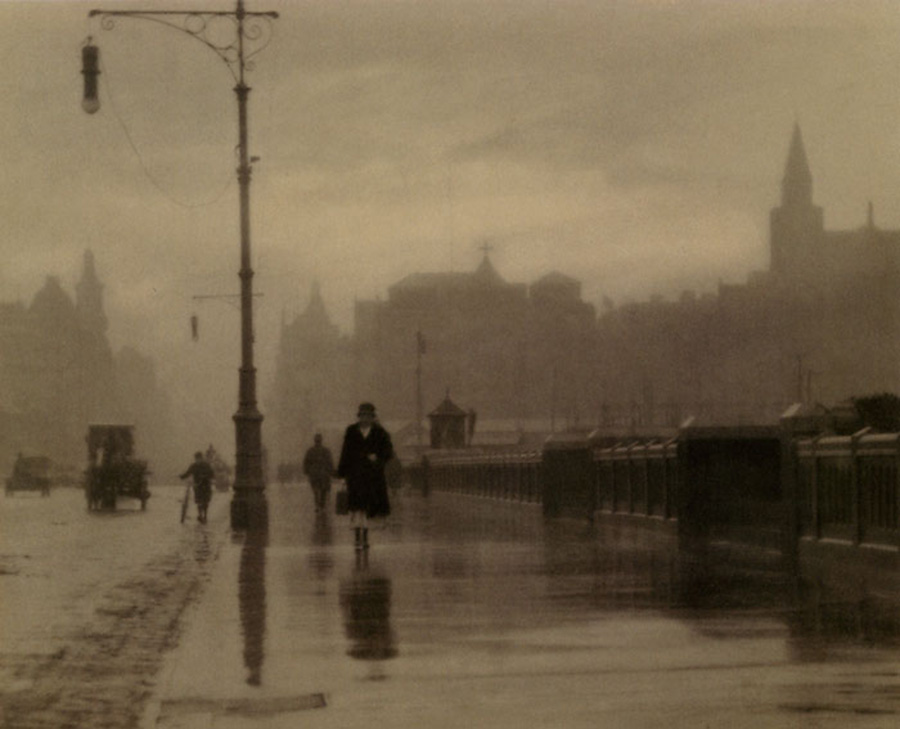
John B. Eaton (Australian born England, 1881-1966) Wet Day in Melbourne 1920 Gelatin silver print
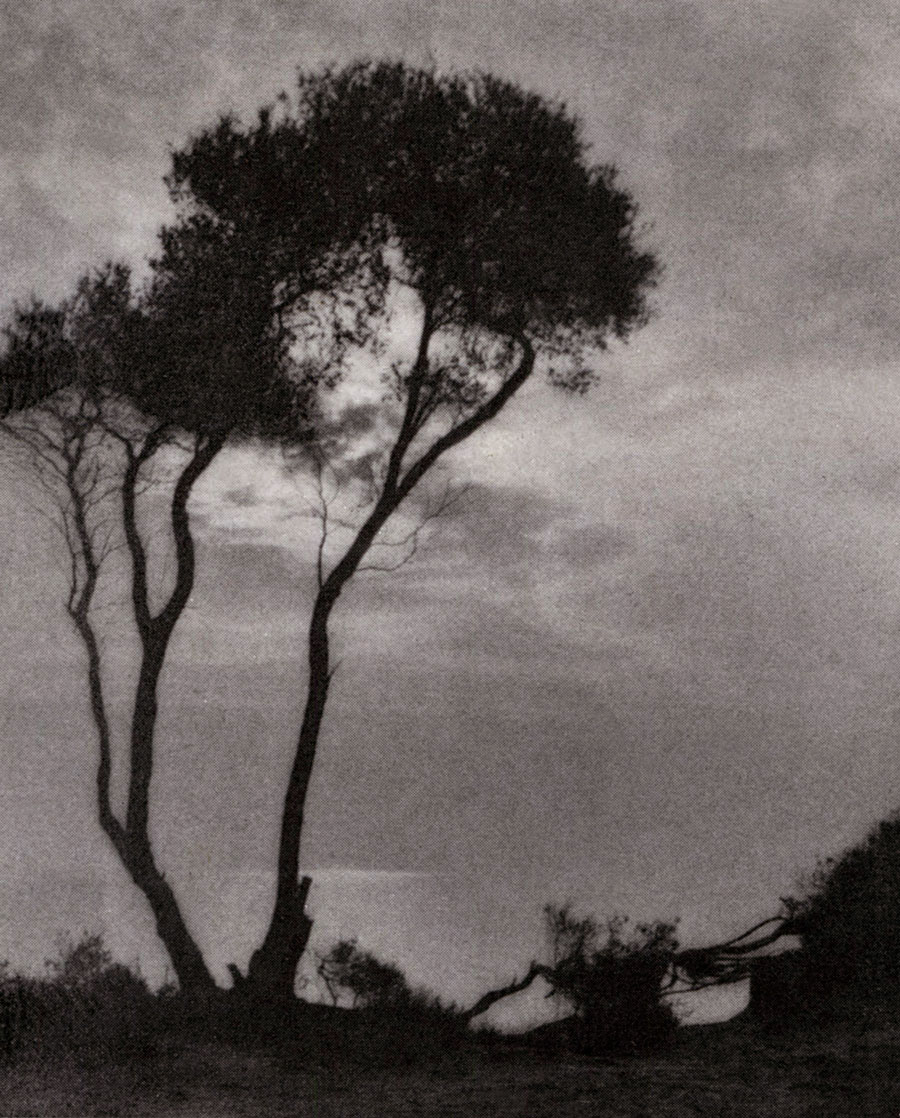
John Eaton (b. 1881 England, arrived 1888 Australia, d. 1966) is the most prolific Pictorialist photographer to be based in Melbourne during the early twentieth century. He worked in his father’s picture framing business from a young age and expanded the family business to include fine art prints as his amateur interest in photography developed. He began exhibiting his work in 1917 and was frequently commended for his contributions to international photography exhibitions throughout his life. Eaton is most well-known for his ‘portraits’ of gum trees and his appreciation of the bucolic Victorian countryside.
Text from the Monash Gallery of Art website
John Bertram Eaton was born in England and migrated to Australia with his family eight years later. His father ran a small gallery and framing shop in Melbourne, where Eaton began work. In the early 1920s his photographs were included in local and international exhibitions and in 1921 he joined the Victorian Pictorial Workers Society. Four years later he held a solo exhibition of 124 photographs, nearly all of them landscapes. At this time Cazneaux called him ‘a fairly new man amongst the Pictorialists of today’.1 He became a foundation member of the Melbourne Camera Club and remained a prolific exhibitor into the late 1940s.
Jack Cato called Eaton ‘the Poet of the Australian landscape’.2 Among his contemporaries he was considered one of the most gifted interpreters of the landscape. When this photograph was exhibited at the Victorian Salon in 1936, the reviewer claimed that it already was a ‘picture too well known to need description’.3 Eaton’s reputation as an interpreter of the Australian landscape extended overseas, with one English reviewer noting, ‘when it comes to Australian landscape, we in England regard John B Eaton as its interpreter’.4 Like the painter Elioth Gruner, Eaton frequently depicts wide, expansive landscapes, denuded of trees, with low receding hills in the distance. He was very skilled at rendering atmosphere and it was probably his aerial, rather than linear, perspective – that sense of distance given by atmosphere which seems to veil and lighten certain parts of the landscape – which appealed so strongly to his admirers here and overseas.
1/ Cazneaux, H. 1925, ‘Review of the pictures’, in Harrington’s Photographic Journal, 1 Apr p. 20 2/ Cato, J. 1955, The story of the camera in Australia, Georgian House, Melbourne p. 156 3/ Baillot, L. A. 1936, ‘The sixth international exhibition of the Victorian Salon of Photography’, in Australasian Photo-Review, 1 May p. 226 4/ Dudley, Johnston J. 1936, ‘London news and doings’, in Australasian Photo-Review, 2 Nov p. 541
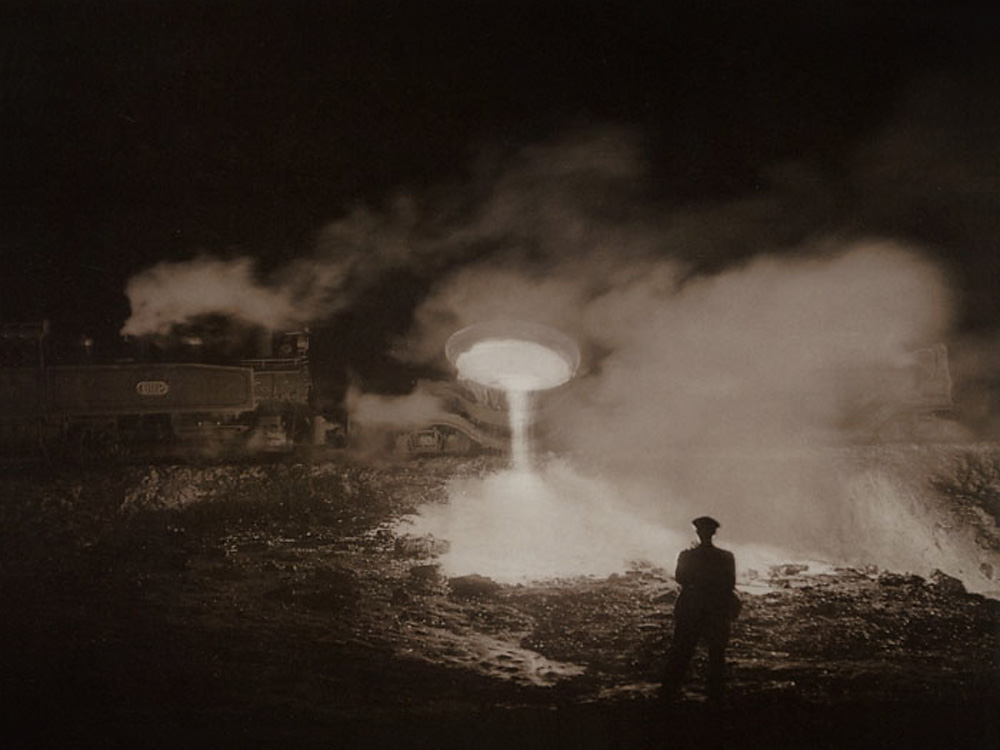
Harold Cazneaux (Australian born New Zealand, 1878-1953) Slag Dump, Newcastle (NSW) 1934 Gelatin silver print
Harold Cazneaux (b. New Zealand 1878; a. Australia 1889; d. 1953) was a key figure of the Pictorialist movement in Australia. His career began in photographic studios, first in Adelaide, then Sydney. In Sydney, Cazneaux exhibited in local photographic competitions and held his first solo exhibition in 1909. His photographs, which were mostly portraits, city views and landscapes, show his interest in natural light and reflect his belief that photography should be used as a form of artistic expression. He was a founding member of the Sydney Camera Circle and through his photography, writing and teaching made a significant contribution to Australian photography in the early twentieth century.
Text from the Monash Gallery of Art website
Harold Cazneaux (Australian born New Zealand, 1878-1953) The Orphan Sisters c. 1906 Gelatin silver print
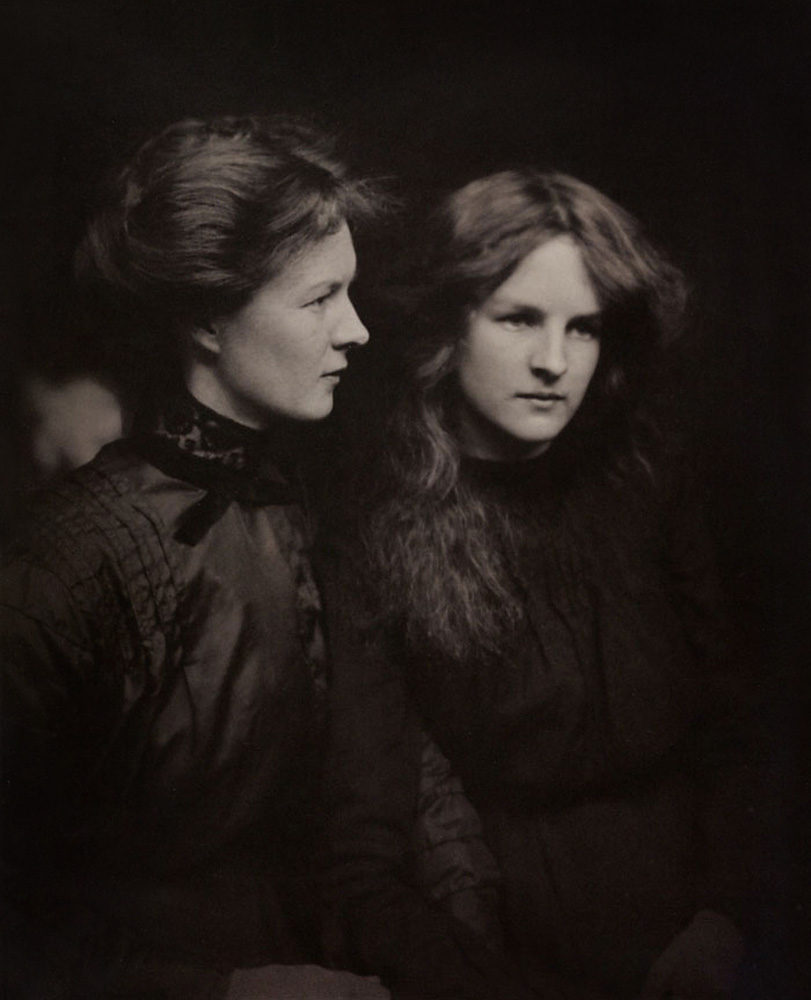
May Moore (New Zealand, 1881-1931) and Mina Moore (New Zealand, 1882-1957) Portrait of an Actress (“Lily” Brayton) c. 1916 Gelatin silver print 19.9 x 15.2cm National Gallery of Australia Purchased 1989
May and Mina Moore were New Zealand-born photographers who made careers as professional photographers, first in Wellington, New Zealand, and later in Sydney and Melbourne, Australia. They are known for their Rembrandt-style portrait photography, and their subjects included famous artists, musicians, and writers of the era. …
In Australia
After only a few years, the sisters moved their business to Australia, running separate studios in Sydney (1910-1928) and Melbourne (1913-1918). May in Sydney continued to focus on studio portraits, while Mina in Melbourne moved into theatrical photography and portraits of interview subjects. Nonetheless, they continued to often cosign the work produced by their respective studios. Their photographs were frequently published in magazines such as Home and Triad.
Their styles were very consistent, and they used dramatic lighting to get the effect of making the subject’s face the centre of attention.
May in Sydney
In 1910, May took a holiday trip to Australia that resulted in her opening a new studio in Sydney. One of May’s notable images from the Sydney period was a portrait of cartoonist Livingston Hopkins.
May began writing articles for the Austral-Briton in 1916. In articles like “Photography for Women”, she encouraged more women to take up the medium. Her advocacy extended to her own business, where she mostly employed women. One exception to this rule was her husband, Henry Hammon Wilkes, a dentist whom she married on 13 July 1915 and who gave up his dental practice to help his wife with her photography business.
May was a member of the Lyceum Club, the Musical Association of New South Wales, the Society of Women Painters (Sydney), and the Professional Photographers’ Association of Australia.
Around 1928, May was forced into retirement by illness and turned her creative energies to painting landscapes. She died of cancer in her Pittwater home on 10 June 1931; her remains are at the Manly Cemetery. Six months after her death the Lyceum Club mounted a memorial exhibition of her work.
Mina in Melbourne
In 1913, Mina joined May in Australia, setting up shop in the Auditorium Building on Collins Street in downtown Melbourne and specialising in theatrical photography. Mina also formed an alliance with a freelance journalist, agreeing to photograph whomever the journalist planned to interview. These images were typically taken during the interview itself, affording a better opportunity to capture a subject’s natural expressions.
Mina married William Alexander Tainsh on 20 December 1916. When their daughter was born in 1918, Mina retired from professional photography. Her Auditorium Building studio was taken over by photographer Ruth Hollick. She came out of retirement briefly in 1927, when Shell commissioned her to do a series of portraits. At that point she was working out of a home darkroom and caring for an expanded family, so after the Shell series she decided against restarting her photography business.
Mina died in Croydon, Victoria on 30 January 1957. Her remains were cremated.
Elizabeth “Lily” Brayton (23 June 1876 – 30 April 1953) was an English actress and singer, known for her performances in Shakespeare plays and for her nearly 2,000 performances in the First World War hit musical Chu Chin Chow.
Mina and May Moore’s Actress Elizabeth ‘Lily’ Brayton [Mrs Oscar Asche]
Sisters Annie May (May) and Minnie Louise (Mina) Moore ran photographic studios, first in Wellington and then in Sydney and Melbourne. Their work was most often jointly stamped ‘May and Mina Moore’ and was remarkably consistent. They portrayed their subjects in head and shoulder shots, focusing attention exclusively on the face through the use of dramatic lighting and dark backgrounds.
From the 1880s until well after the turn of the century, women in photography were more commonly employed as retouchers and hand-colourists. The number of women running photographic studios, however, increased noticeably around 1910. This was an era in which the graceful and distant Edwardian ‘ladies’ shown in so many paintings of the late 19th and early 20th century were being replaced by the jazz age flappers and mass media celebrities. The Moore sisters were themselves typical ‘modern women’ of the 1910s-1930s in seeking their independence and social mobility through new types of careers in photography. They both mixed in artistic circles and May, in particular, was interested in the theatre. Their success surprised the critics even as late as the 1930s, when the Australian Worker in 1931 stated about May: ‘practically every artist, musician, critic, journalist, story-writer and poet of local celebrity was at some time or other a subject for her camera.’1
It is not clear which sister made this striking close-up of a stylish young woman (who may have been an actress or entertainer as the image was registered for copyright). She is shown in the recognisable Moore style but with particular verve as she stares straight into the camera, head slightly lowered in the femme fatale guise made popular in celebrity portraits and stills for the silent movies. Through the mass circulation of celebrity images everyone could have their favourite star for their wall.
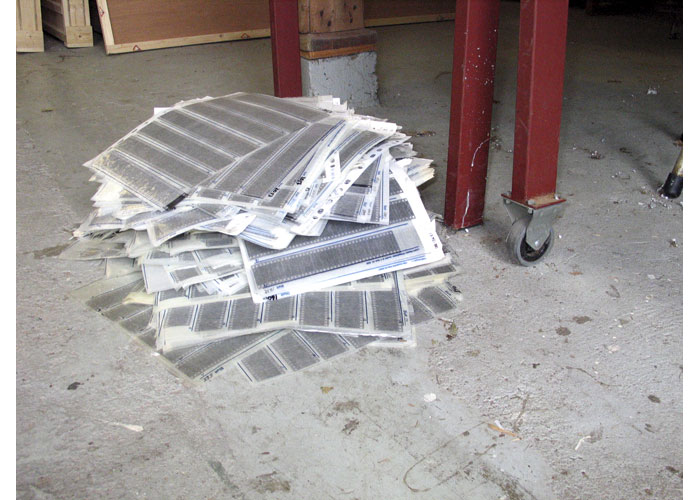
Hans Aarsman (Dutch, b. 1951) 1236 sheets of negatives from the 1980s, thrown away on 19 August 2004 2004
Hans Aarsman presents From Ugly to Pretty and Back Again. The Mysterious Ways of Beauty in Photography.
In this lecture Hans Aarsman examines the myriad of questions involved in taking photographs for purposes as varied as advertising, documentation and personal mementos. How does our understanding of the beauty in these images differ depending on their final resting place, be it eBay, family album, specialist magazines or museums’ collections. Through his own experiences Aarsman asks if, and how, artistic ambitions, aesthetics and useful photography can coincide.
Hans Aarsman (b. 1951, NL) worked as a photojournalist until 1994. He currently works as a writer, in particular on photography, and is a co-founder of the magazine Useful Photography. Aarsman displayed, and invited contributions to, his project Photography Against Consumerism here at The Photographers’ Gallery last July. He is based in Amsterdam.
£5.00/ £3.50 concessions
The Photographers Gallery 16-18 Ramillies Street London W1F 7LW
Curators: William A. Ewing, Todd Brandow, and Nathalie Herschdorfer
Edward Steichen (American, 1879-1973) Gloria Swanson (Vanity Fair, February 1, 1924) 1924 Gelatin silver print The Sylvio Perlstein Collection Courtesy of Condé Nast Archive, Condé Nast Publications, Inc, New York/ Paul Hawryluk, Dawn Lucas and Rachael Smalley
As part of the International Center of Photography’s 2009 Year of Fashion, the museum will host a retrospective of Edward Steichen’s fashion and celebrity portraiture. Edward Steichen: In High Fashion, The Condé Nast Years, 1923-1937, will be on view at ICP (1133 Avenue of the Americas at 43rd Street) from January 16 through May 3, 2009. It will feature 175 vintage photographs, drawn mainly from the extensive archive of original prints at Condé Nast, along with a selection of important prints from the collection of the George Eastman House Museum. This will be the first exhibition in which the full range of his fashion photography and celebrity portraiture will be shown, including many images that have never been exhibited before. Having previously traveled throughout Europe, the exhibition will be presented on its North American tour in this version only at ICP.
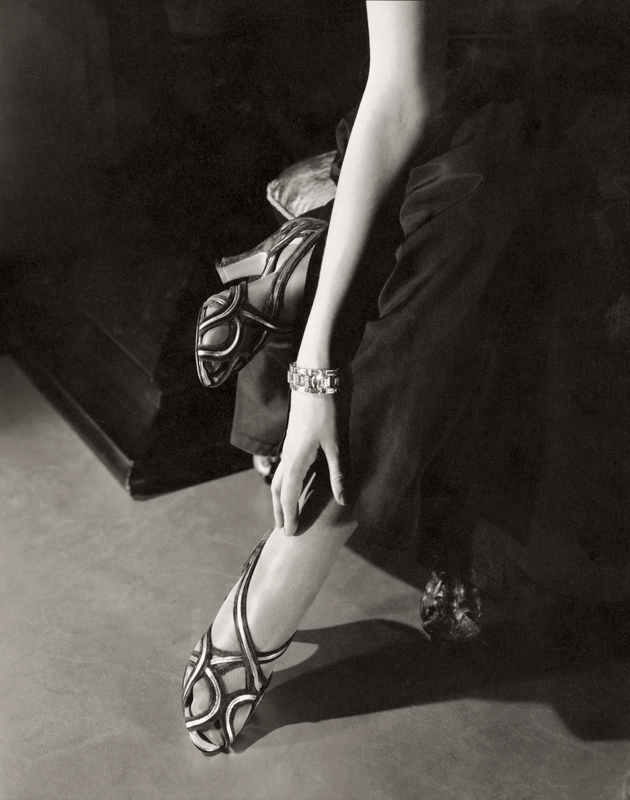
Edward Steichen (1879-1973) was already a famed Pictorialist photographer and painter in the United States and abroad when he was offered the position of chief photographer for Vogue and Vanity Fair by Condé Nast. Upon assuming the job, the forty-four year old artist began one of the most lucrative and controversial careers in photography. To Alfred Stieglitz and his followers, Steichen was seen as damaging the cause of photography as a fine art by agreeing to do commercial editorial work. Nevertheless, Steichen’s years at Condé Nast magazines were extraordinarily prolific and inspired. He began by applying the soft focus style he had helped create to the photography of fashion. But soon he revolutionised the field, banishing the gauzy light of the Pictorialist era and replacing it with the clean, crisp lines of Modernism. In the process he changed the presentation of the fashionable woman from that of a distant, romantic creature to that of a much more direct, appealing, independent figure. At the same time he created lasting portraits of hundreds of leading personalities in movies, theatre, literature, politics, music, and sports, including Gloria Swanson, Gary Cooper, Marlene Dietrich, Joan Crawford, Colette, Winston Churchill, Amelia Earhart, Jack Dempsey, Noel Coward, Greta Garbo, Dorothy Parker, and Cecil B. De Mille.
From the ArtDaily.org website
Many thankx to the International Center of Photography for allowing me to publish the photographs in the posting. Please click on the photographs for a larger version of the image.
Edward Steichen (American, 1879-1973) On George Baher’s yacht 1928 Gelatin silver print Courtesy Condé Nast Archive
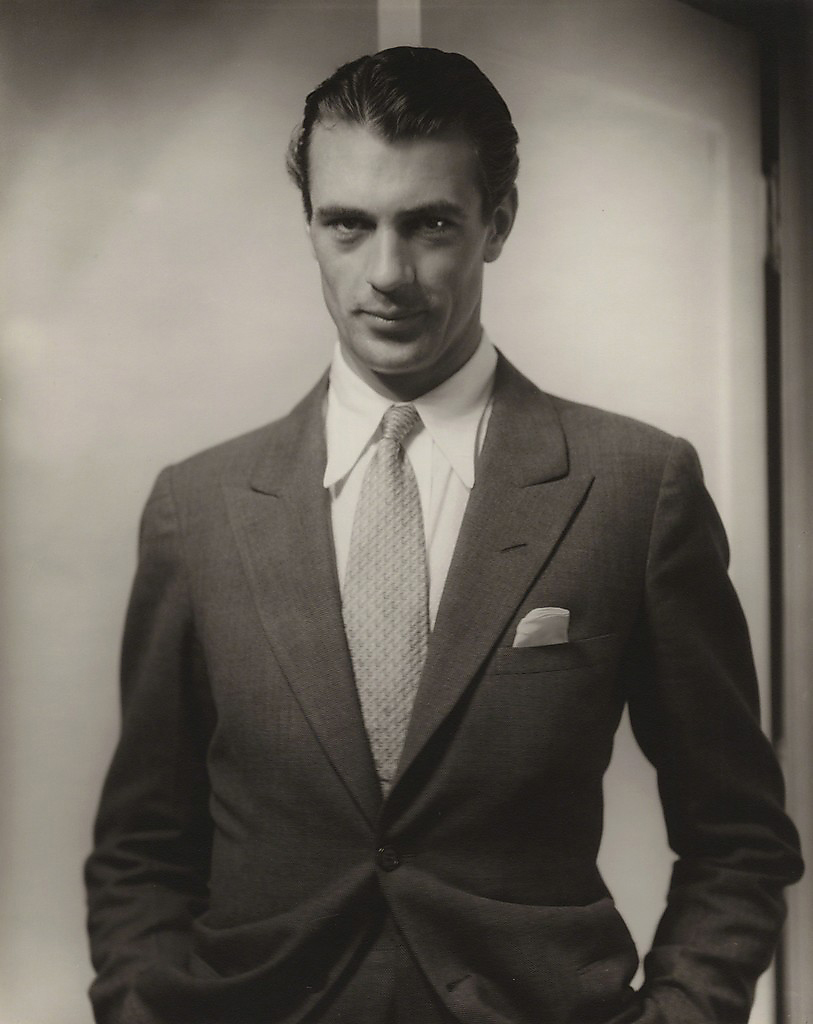
Edward Steichen (American, 1879-1973) Gary Cooper 1930 Gelatin silver print Courtesy Condé Nast Archive
Princess Natalia Pavlovna Paley (Russian: Наталья Павловна Палей; 5 December 1905 – 27 December 1981) was a Russian aristocrat who was a non-dynastic member of the Romanov family. A daughter of Grand Duke Paul Alexandrovich of Russia, she was a first cousin of the last Russian emperor, Nicholas II. After the Russian Revolution, she emigrated first to France and later to the United States. She became a fashion model, socialite, vendeuse, and briefly pursued a career as a film actress.
Harry Sinclair Lewis (February 7, 1885 – January 10, 1951) was an American novelist, short-story writer, and playwright. In 1930, he became the first author from the United States (and the first from the Americas) to receive the Nobel Prize in Literature, which was awarded “for his vigorous and graphic art of description and his ability to create, with wit and humour, new types of characters.” Lewis wrote six popular novels: Main Street (1920), Babbitt (1922), Arrowsmith (1925), Elmer Gantry (1927), Dodsworth (1929), and It Can’t Happen Here (1935).
Several of his notable works were critical of American capitalism and materialism during the interwar period. Lewis is respected for his strong characterisations of modern working women.
Patricia Bowman (December 12, 1908 – March 18, 1999) was an American ballerina, ballroom dancer, musical theatre actress, television personality, and dance teacher.
Dance critic Jack Anderson described her as “the first American ballerina to win critical acclaim and wide popularity as a classical and a musical-theatre dancer … Her sparkling stage personality won her many fans.” She was the first prima ballerina of the Radio City Music Hall when it opened in 1932, and is chiefly remembered for her work as a founding member of the American Ballet Theatre with whom she was a principal dancer from 1939 to 1941.
An exhibition of 175 works by Edward Steichen drawn largely from the Condé Nast archives, this is the first presentation to give serious consideration to the full range of Steichen’s fashion images. Organised by the Musée de l’Elysée, Lausanne, and the Foundation for the Exhibition of Photography, Minneapolis, in conjunction with the International Center of Photography, the exhibition will open at ICP after an extensive tour in Europe. Steichen’s approach to fashion photography was formative and over the course of his career he changed public perceptions of the American woman. An architect of American Modernism and a Pictorialist, Steichen exhibited his fashion images alongside his art photographs. Steichen’s crisp, detailed, high-key style revolutionised fashion photography, and his influence is felt in the field to this day – Richard Avedon, Robert Mapplethorpe, and Bruce Weber are among his stylistic successors.
Text from the International Centre of Photography website
Wong Liu Tsong (January 3, 1905 – February 3, 1961), known professionally as Anna May Wong, was an American actress, considered the first Chinese American film star in Hollywood, as well as the first Chinese American actress to gain international recognition. Her varied career spanned silent film, sound film, television, stage, and radio.
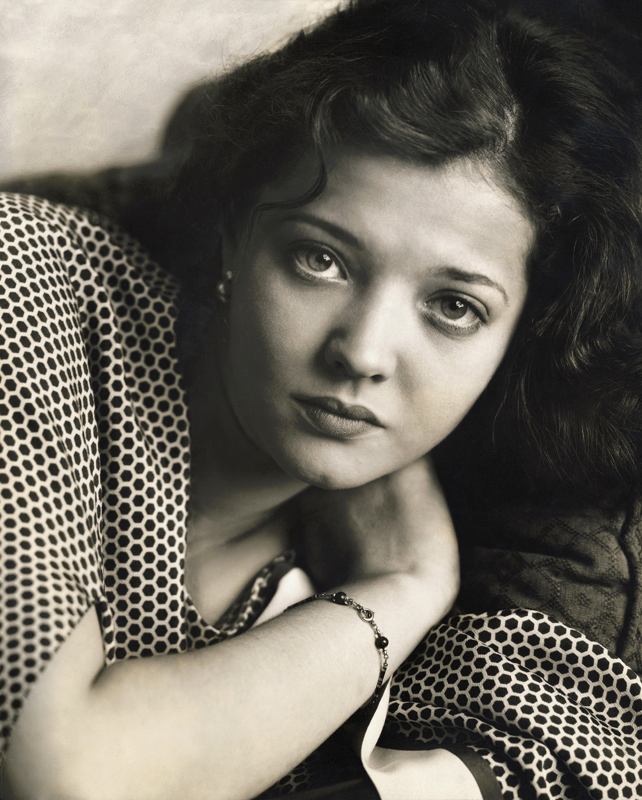
Sylvia Sidney (born Sophia Kosow; August 8, 1910 – July 1, 1999) was an American stage, screen, and film actress whose career spanned 70 years. She rose to prominence in dozens of leading roles in the 1930s. She was nominated for the Academy Award for Best Supporting Actress for her performance in Summer Wishes, Winter Dreams in 1973. She later gained attention for her role as Juno, a case worker in the afterlife, in Tim Burton’s 1988 film Beetlejuice, for which she won a Saturn Award for Best Supporting Actress.
Pola Negri (/ˈpoʊlə ˈnɛɡri/; born Barbara Apolonia Chałupiec [apɔˈlɔɲa xaˈwupʲɛt͡s]; 3 January 1897 – 1 August 1987) was a Polish stage and film actress and singer. She achieved worldwide fame during the silent and golden eras of Hollywood and European film for her tragedienne and femme fatale roles. She was also acknowledged as a sex symbol of her time.
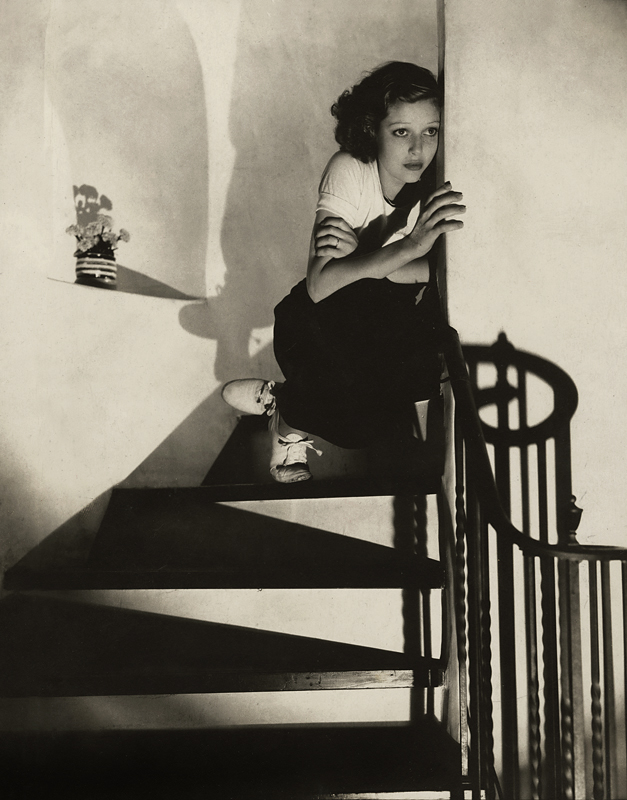
Loretta Young (born Gretchen Michaela Young; January 6, 1913 – August 12, 2000) was an American actress. Starting as a child, she had a long and varied career in film from 1917 to 1989. She received numerous honors including an Academy Award, two Golden Globe Awards, and three Primetime Emmy Awards as well as two stars on the Hollywood Walk of Fame for her work in film and television.
Click on the links at the top of the page or use the ‘General Resources: Browse all Scurlock images’ button at the left of page.
Many thankx to the Smithsonian for allowing me to publish the photographs in the posting. Please click on the photographs for a larger version of the image.
The Scurlocks and Black Washington
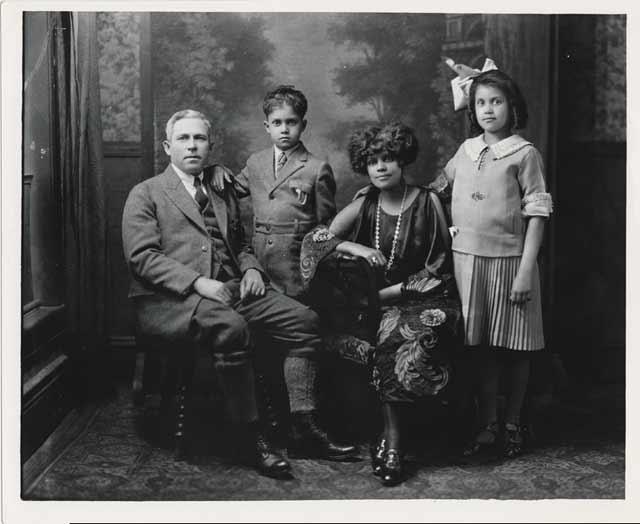
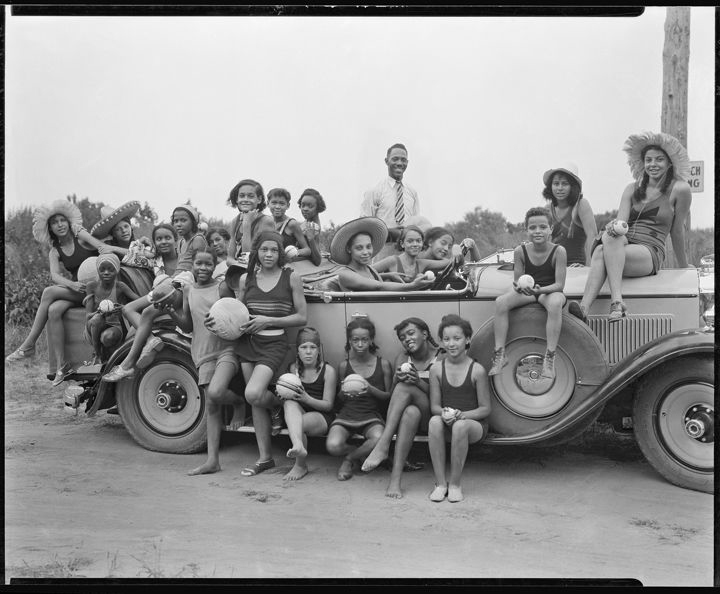
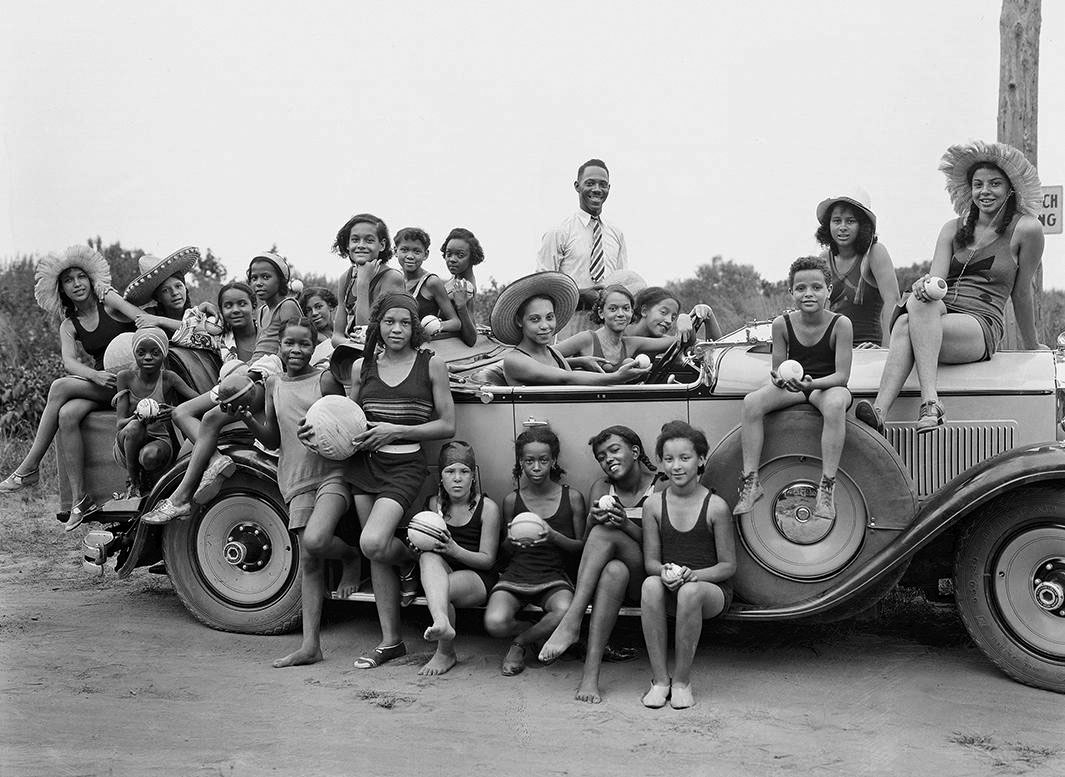
For over 80 years, the Scurlock photography studio catalogued the lives of the black middle class of Washington, D.C. (The exhibit, The Scurlock Studio and Black Washington: Picturing the Promise, is on view at the National Museum of American History through November 15, 2009. Thanks to Lonnie Bunch, Director of the National Museum of African American History and Culture, which co-organised the exhibit).
A Scurlock camera was “present at almost every significant event in the African-American community,” recalls former D.C. Councilwoman Charlene Drew Jarvis, whose father, Howard University physician Charles Drew, was a Scurlock subject many times. Dashing all over town – to baptisms and weddings, to balls and cotillions, to high-school graduations and to countless events at Howard, where he was the official photographer – Addison Scurlock became black Washington’s “photographic Boswell – the keeper of the visual memory of the community in all its quotidian ordinariness and occasional flashes of grandeur and moment,” says Jeffrey Fearing, a historian who is also a Scurlock relative.
The Scurlock Studio grew as the segregated city became a mecca for black artists and thinkers even before the Harlem Renaissance of the 1920s. U Street became known as “Black Broadway,” as its jazz clubs welcomed talents including Duke Ellington (who lived nearby), Ella Fitzgerald and Pearl Bailey. They and other entertainers received the Scurlock treatment, along with the likes of W.E.B. Du Bois and Booker T. Washington; soon no black dignitary’s visit to Washington was complete without a Scurlock sitting. George Scurlock would say it took him a while to realise that his buddy Mercer Ellington’s birthday parties – with Mercer’s dad (a.k.a. the Duke) playing “Happy Birthday” at the piano – were anything special.
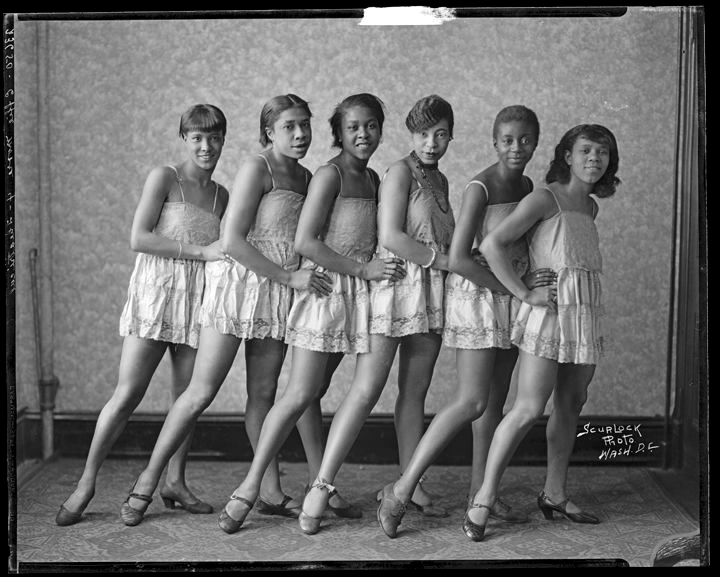
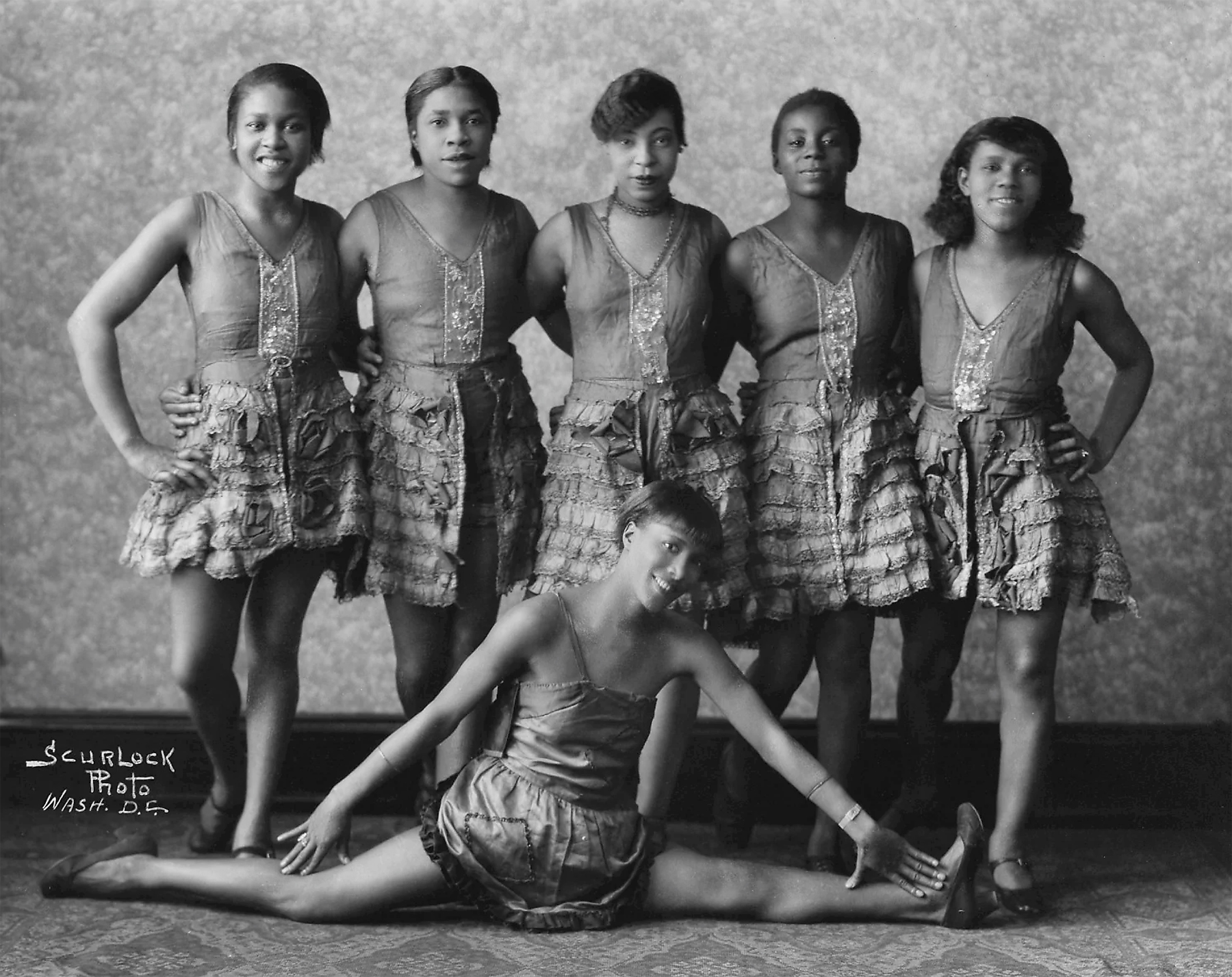
At a time when minstrel caricature was common, Scurlock’s pictures captured black culture in its complexity and showed black people as they saw themselves. “The Scurlock Studio and Black Washington: Picturing the Promise,” an exhibition presented through this month by the Smithsonian’s National Museum of African American History and Culture, features images of young ballerinas in tutus, of handsomely dressed families in front of fine houses and couples in gowns and white tie at the NAACP’s winter ball.
Extract from David Zax. “The Scurlock Studio: Picture of Prosperity,” in the Smithsonian Magazine published on Smithsonian.com website February 2010. Used under fair use conditions for the purposes of education and research
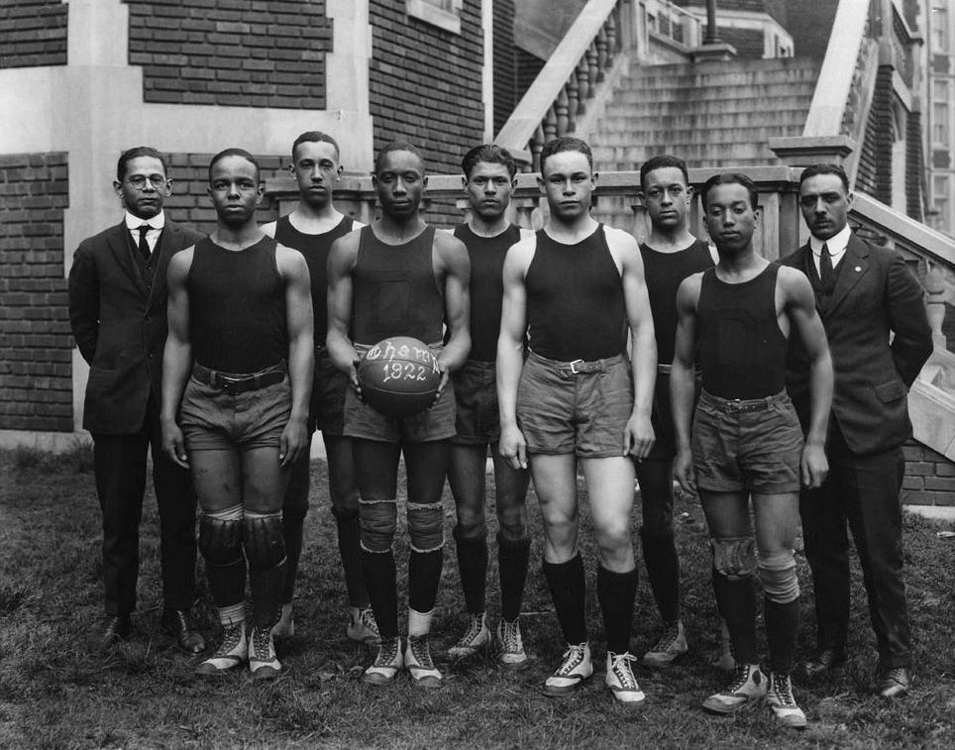
The photograph features a young Charles Drew, fourth from the right, before earning his place in history for his pioneering work in developing the blood bank concept
Photographed nearly twenty years after his championship basketball season, Dr. Drew had recently been granted his doctorate and was spearheading the “Blood for Britain” program instituted in World War II to save the lives of Allied forces.
Charles Drew (American, 1904-1950)
Charles Richard Drew (June 3, 1904 – April 1, 1950) was an American physician, surgeon, and medical researcher. He researched in the field of blood transfusions, developing improved techniques for blood storage, and applied his expert knowledge to developing large-scale blood banks early in World War II. This allowed medics to save thousands of lives of the Allied forces. The research and development aspect of his blood storage work is disputed. As the most prominent African American in the field, Drew protested against the practice of racial segregation in the donation of blood, as it lacked scientific foundation, and resigned his position with American Red Cross, which maintained the policy until 1950.
Early life and education
Drew was born in 1904 into an African-American middle-class family in Washington, D.C. His father, Richard, was a carpet layer and his mother, Nora Burrell, was a teacher. Drew and his siblings grew up in D.C.’s Foggy Bottom neighbourhood and he graduated from Dunbar High School in 1922. Drew won an athletics scholarship to Amherst College in Massachusetts, where he graduated in 1926. An outstanding athlete at Amherst, Drew also joined Omega Psi Phi fraternity. He attended medical school at McGill University in Montreal, Quebec, Canada, receiving his MDCM in 1933, and ranked 2nd in his class of 127 students. A few years later, Drew did graduate work at Columbia University, where he earned his Doctor of Medical Science degree, becoming the first African American to do so.
Academic career
In 1941, Drew’s distinction in his profession was recognised when he became the first African-American surgeon selected to serve as an examiner on the American Board of Surgery. Drew had a lengthy research and teaching career and became a chief surgeon.
Blood plasma for British project
In late 1940, before the U.S. entered World War II and just after earning his doctorate, Drew was recruited by John Scudder to help set up and administer an early prototype program for blood storage and preservation. He was to collect, test, and transport large quantities of blood plasma for distribution in the United Kingdom. Drew went to New York City as the medical director of the United States’ Blood for Britain project. The Blood for Britain project was a project to aid British soldiers and civilians by giving U.S. blood to the United Kingdom.
Drew started what would be later known as bloodmobiles, which were trucks containing refrigerators of stored blood; this allowed for greater mobility in terms of transportation as well as prospective donations.
Drew created a central location for the blood collection process where donors could go to give blood. He made sure all blood plasma was tested before it was shipped out. He ensured that only skilled personnel handled blood plasma to avoid the possibility of contamination. The Blood for Britain program operated successfully for five months, with total collections of almost 15,000 people donating blood, and with over 5,500 vials of blood plasma. As a result, the Blood Transfusion Betterment Association applauded Drew for his work. Out of his work came the American Red Cross Blood Bank.
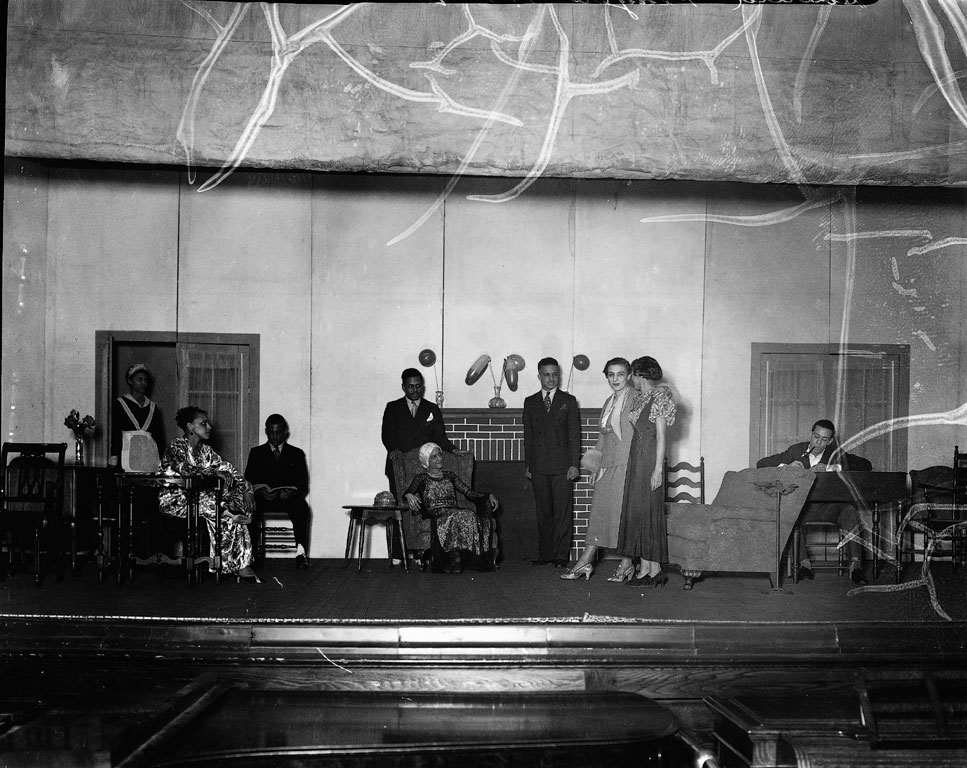
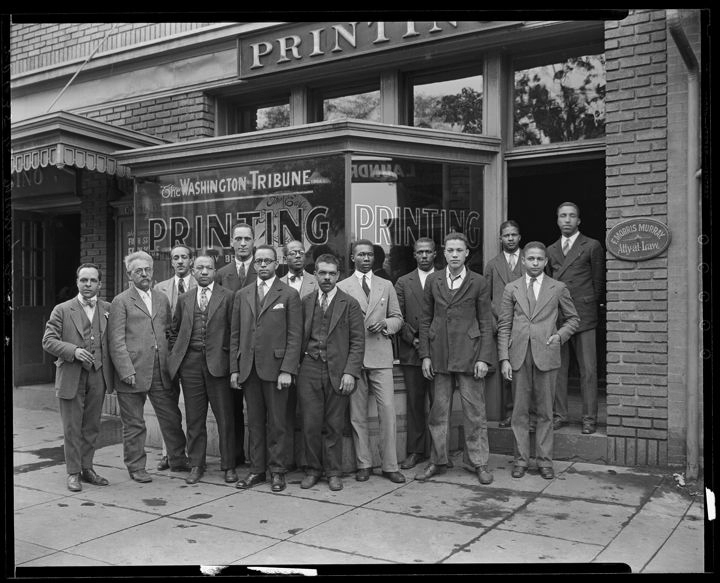
The Murray Brothers Printing Company, 1925, was home to The Washington Tribune newspaper and steps away from the entrepreneurial F.H.M. Murray’s other business, the Murray Palace Casino.
Rufus Byars, minstrel performer and manager of the theatre is the stooped figure to the left.
Nearly a century’s worth of photographs from the Scurlock studio form a vivid portrait of black Washington, D.C., in all its guises – its challenges and its victories, its dignity and its determination. The exhibition features more than 100 images created by one of the premiere African American studios in the country and one of the longest-running black businesses in Washington. Highlights include cameras and equipment from the studio and period artefacts from Washington.
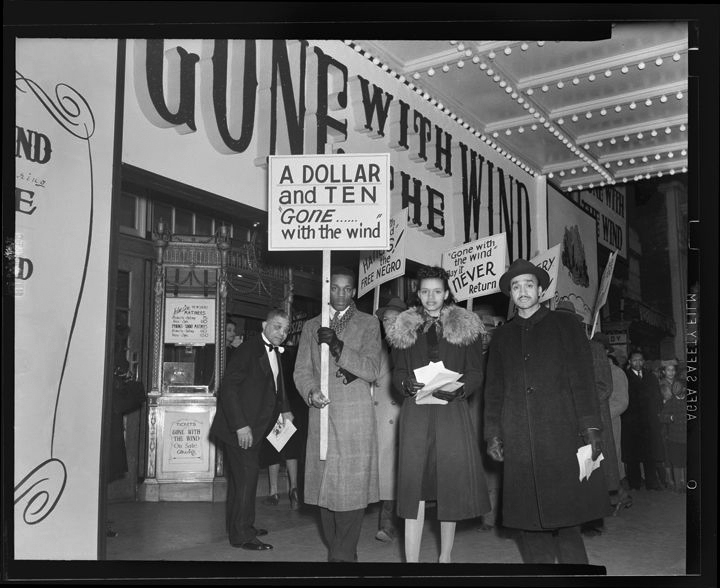
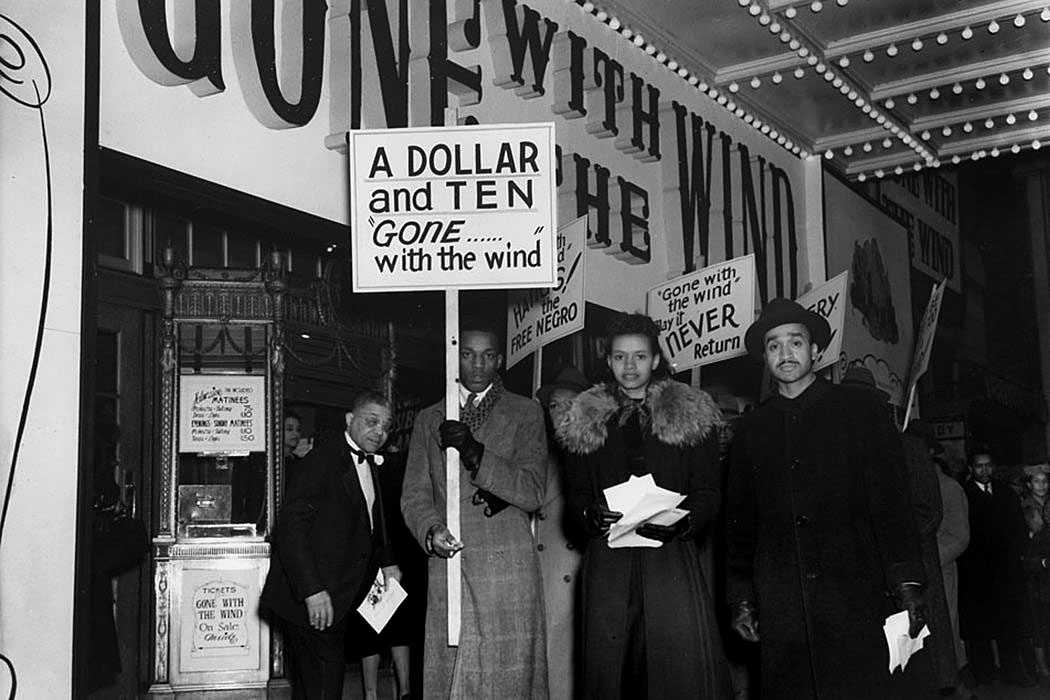
Beginning in the early 20th century and continuing into the 1990s, Addison Scurlock, followed by his sons, Robert and George, used their cameras to document and celebrate a community unique in the world. They captured weddings, baptisms, graduations, sporting events, civil protests, high-society affairs, and visiting dignitaries. It was for portraiture, however, that the Scurlocks became renowned; they continue to be recognised today by scholars and artists as among the very best of 20th-century photographers who recorded the rapid changes in African American urban communities nationwide.






































You must be logged in to post a comment.