Review: ‘All the better to see you with: Fairy tales transformed’ at The Ian Potter Museum of Art, The University of Melbourne

Exhibition dates: 13th January – 3rd March, 2018

Curator: Samantha Comte

Artists: Broersen and Lukács, Kate Daw, Peter Ellis, Dina Goldstein, Mirando Haz, Vivienne Shark Le Witt, Amanda Marburg, Tracey Moffatt, Polixeni Papapetrou, Patricia Piccinini, Paula Rego, Lotte Reiniger, Allison Schulnik, Sally Smart, Kiki Smith, Kylie Stillman, Tale of Tales, Janaina Tschäpe, Miwa Yanagi, Kara Walker and Zilverster (Goodwin and Hanenbergh).

Review synposis: Simply put, this is the best local exhibition I have seen this year. A must see before it closes.


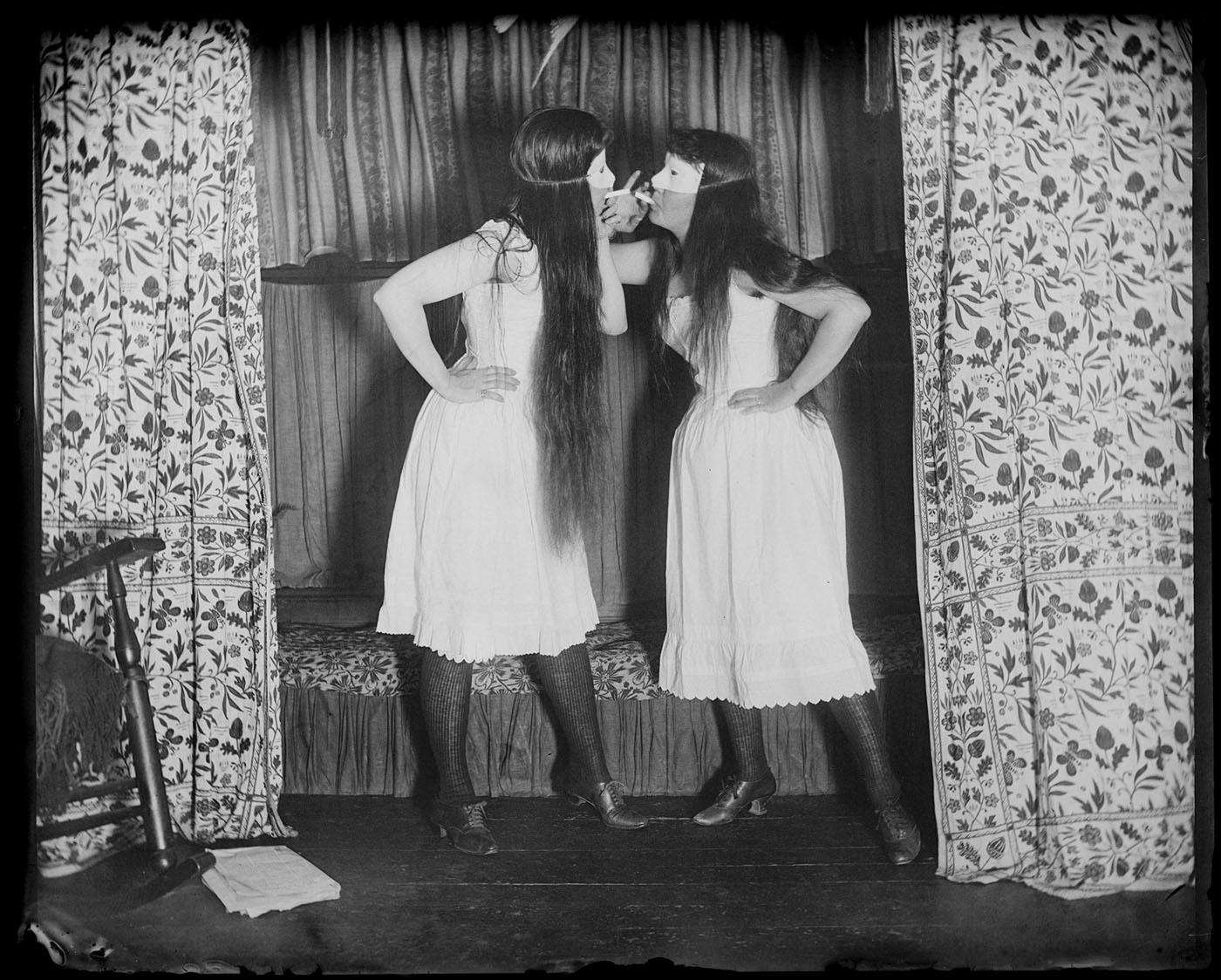
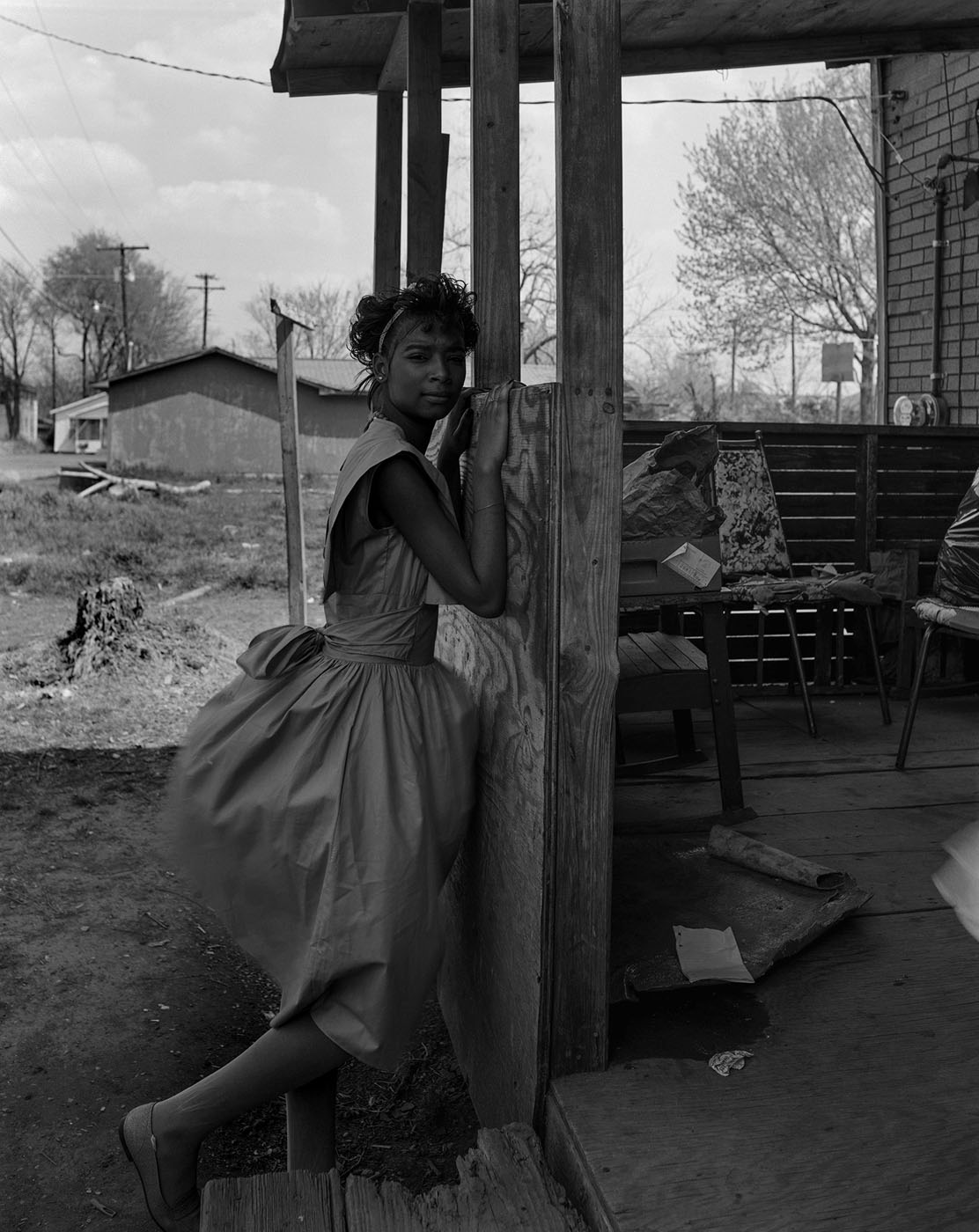
Polixeni Papapetrou (Australian, 1960-2018) 'Hanging Rock 1900 #3' 2006 from the exhibition 'All the better to see you with: Fairy tales transformed' at The Ian Potter Museum of Art, The University of Melbourne, Jan - March, 2018


Polixeni Papapetrou (Australian, 1960-2018)
Hanging Rock 1900 #3
2006
Pigment ink print
105 x 105cm
Courtesy the artist, Michael Reid Gallery, Sydney + Berlin and Jarvis Dooney Galerie, Berlin


Oh my, what big teeth you have! Wait just a minute, they need a good clean and they’re all crooked and subverted (or a: how well-known stories are turned on their head and b: how real histories become fantasies, and how fantasies are reimagined)


This is going to be the shortest review in the known universe. Just one word

SUPERLATIVE


Every piece of artwork in this extraordinary, quirky, spellbinding exhibition (spread over the three floors of the The Ian Potter Museum of Art at The University of Melbourne) is strong and valuable to the investigation of the overall concept, that of fairy tales transformed.

The hang, the catalogue, and the mix of a: international and local artists; b: historical and contemporary works; and c: animation, video, gaming, sculpture, photography, painting, drawing and other art forms – is dead set, spot on.

There are too many highlights, but briefly my favourites were the historical animations of Lotte Reiniger; the painting Born by Kiki Smith which adorns the catalogue cover; the theatrical tableaux of Polixeni Papapetrou; the mesmerising video art of Allison Schulnik; and the subversive etchings of both Peter Ellis and Mirando Haz. But really, every single artwork had something interesting and challenging to say about the fabled construction of fairy tales and their place in the mythic imagination, a deviation from the normative, patriarchal telling of tales.

My only regret, that a: there hadn’t been another three floors of the exhibition; b: that there was only one work by Kiki Smith; and c: that there were not another set of disparate voices other than the feminine and black i.e. transgender, gay, disabled – other artists (if they exist?) that were working with this concept.

Simply put, this is the best local exhibition I have seen this year. A must see before it closes.

Dr Marcus Bunyan


Many thankx to The Ian Potter Museum of Art for allowing me to publish the photographs in the posting. Please click on the photographs for a larger version of the image. Installation photographs by Christian Capurro.


All the better to see you with: Fairy tales transformed, the Ian Potter Museum of Art’s 2017 summer show, traces the genre of the fairy tale, exploring its function in contemporary society. The exhibition presents contemporary art work alongside a selection of key historical fairy tale books that provide re-interpretations of the classic fairy tales for a 21st-century context, including Little Red Riding HoodHansel and Gretel and The Little Mermaid.

Ground floor


Installation view of the exhibition 'All the better to see you with: Fairy tales transformed' at The Ian Potter Museum of Art, Melbourne showing the work of Lotte Reiniger with 'Cinderella/Aschenputtel' (1922) at left


Installation view of the exhibition All the better to see you with: Fairy tales transformed at The Ian Potter Museum of Art, Melbourne showing the work of Lotte Reiniger with Cinderella/Aschenputtel (1922) at left


Lotte Reiniger (born 1899, Berlin-Charlottenburg, Germany; died 1981, Dettenhausen, West Germany)
with new music by Karim Al-Zand
Cinderella/Aschenputtel
1922
Silhouette animation film
Primrose Productions
Directed and animated by Lotte Reiniger
Production team: Carl Coch, Louis Hagen, Vivian Milroy Music: Freddie Phillips
12.35 minutes


Lotte Reiniger began making her ground-breaking animations in Berlin during the 1920s. Influenced by early fairy tale illustrations, in particular, Andrew Lang’s The Blue Fairy (1887), Reiniger was attracted to the graphic nature of the imagery but also the compelling complexities of fairy tale narratives. Adapting the art of shadow puppetry, she created more than forty intricately crafted fairy tale films.

In 1935, she left Berlin for England, in response to the unjust treatment of the Jewish people. World War II had an enduring impact on Reiniger’s work and life. For example, when she made Hansel and Gretel, in 1953-1954, she changed the ending of the narrative from the Brothers Grimm original, in which the witch is burnt in the over after being tricked by the children, because the taboo nature of this imagery was understandably too close to the horrors of the Holocaust. From her first film, Reiniger was attracted to the timelessness of fairy tale stories for her animations. Aschenputtel (Cinderella) (1922) was among her first filmic subjects and is amongst the words presented here. While Reiniger belonged to the cinematic avant-garde, working in independent production and experimental film making, her spirit harked back to an earlier age of innocence.

Wall text from the exhibition


The Art of Lotte Reiniger, 1970 | From the Vaults

Lotte Reiniger is known today for her extraordinarily elaborate silhouette animations. Her 1926 feature, “The Adventures of Prince Achmed,” is the oldest surviving full-length animated film. This short documentary provides a fascinating look at Reiniger’s process, offering viewers the opportunity to watch a prolific and pioneering artist at work. Here, she works on two projects: her fantastical short animation, “Papageno” (1935), about the cheerful bird-catcher from Mozart’s opera “The Magic Flute,” along with a dazzling struggle between the Frog Prince and a covetous octopus.

Text from the YouTube website


Installation view of the exhibition 'All the better to see you with: Fairy tales transformed' at The Ian Potter Museum of Art, Melbourne showing the work of Lotte Reiniger (left) and Sally Smart (right)


Installation view of the exhibition All the better to see you with: Fairy tales transformed at The Ian Potter Museum of Art, Melbourne showing the work of Lotte Reiniger (left) and Sally Smart (right)


Installation view of the exhibition 'All the better to see you with: Fairy tales transformed' at The Ian Potter Museum of Art, Melbourne showing Sally Smart's work 'Blaubart (The Choreography of Cutting)' 2017


Installation view of the exhibition All the better to see you with: Fairy tales transformed at The Ian Potter Museum of Art, Melbourne showing Sally Smart’s work Blaubart (The Choreography of Cutting) 2017


Sally Smart‘s Blaubart (The Choreography of Cutting) is a complex assemblage of elements and ideas that relate to Smart’s recent work on the Russian Fairy tale, Chout (1921) where she found connections to Perrault’s murderous tale of Blue Beard, a lurid story about a noble man who marries numerous women killing each of them and storing their bodies in an underground bloody chamber.

Smart’s work explores this narrative by combining the blue and black silhouetted forms from Lotte Reiniger’s animation of The Adventures of Prince Achmed (1926) with the black and white photographs of a modern dance performance of Blue Beard devised by Pina Bausch, a noted German dance choreographer. In Smart’s dramatic work a series of hanging dresses and wigs stand in for blue beards wives, whose bodies, in the story, were gruesomely hung from hooks. Blue Beard is a story of violence and betrayal that contains one of the most powerful fairy tale symbols, that of the forbidden room and the quest for knowledge. While we often try to make sense of the world through chronological narrative, Smart’s work suggests that it is the disconnected layers of experiences, stories, images and sensations that lead to a rich life of possibility.

Wall text


Sally Smart (born 1960, Quorn, South Australia; lives and works Melbourne, Victoria) 'Blaubart (The Choreography of Cutting)' 2017 (detail)

Sally Smart (born 1960, Quorn, South Australia; lives and works Melbourne, Victoria) 'Blaubart (The Choreography of Cutting)' 2017 (detail)


Sally Smart (born 1960, Quorn, South Australia; lives and works Melbourne, Victoria)
Blaubart (The Choreography of Cutting) (detail)
2017
Mixed media installation
Dimensions variable
Courtesy of the artist and Sarah Scout Presents, Melbourne


Installation view of the exhibition 'All the better to see you with: Fairy tales transformed' at The Ian Potter Museum of Art, Melbourne showing the work of Miwa Yanagi (left to right, 'Little Match Girl' 2004; 'Gretel' 2004; 'Untitled IV' 2004; and 'Erendira' 2004)


Installation view of the exhibition All the better to see you with: Fairy tales transformed at The Ian Potter Museum of Art, Melbourne showing the work of Miwa Yanagi (left to right, Little Match Girl 2004; Gretel 2004; Untitled IV 2004; and Erendira 2004)


Japanese photographer, Miwa Yanagi constructs elaborate and complex images that examine the representation of women in contemporary Japanese society. Her third major series of works, Fairy tales focuses on a key theme, that of the young girl moving into womanhood and her relationship to the older woman.

Recasting the familiar tales of Grimm and Hans Christian Andersen, Yanagi explores the complex relationship between old women and young girls, often presented as the witch and the innocent princess. In this series, Yanagi returns to traditional methods of photography, creating complex backdrops, lighting and costumes. She dresses some of the young girls in wigs, make up and masks to look old and witch-like, creating a strangely unresolved image of an old woman with a young body, playing with the idea of binaries – innocence and heartlessness, maturity and youth.

Wall text from the exhibition


Miwa Yanagi (born in born in 1967 in Kobe, Japan; lives and works in Kyoto, Japan) 'Gretel' 2004


Miwa Yanagi (born in born in 1967 in Kobe, Japan; lives and works in Kyoto, Japan)
Gretel
2004
Gelatin silver print
116 x 116cm (framed)
Collection of the Hara Museum of Contemporary Art


Installation view of the exhibition 'All the better to see you with: Fairy tales transformed' at The Ian Potter Museum of Art, Melbourne showing the work of Amanda Marburg (right) and Miwa Yanagi (left)


Installation view of the exhibition All the better to see you with: Fairy tales transformed at The Ian Potter Museum of Art, Melbourne showing the work of Amanda Marburg (right) and Miwa Yanagi (left)


Installation view of the exhibition 'All the better to see you with: Fairy tales transformed' at The Ian Potter Museum of Art, Melbourne showing the work of Amanda Marburg ('Juniper Tree' 2016; 'Hansel and Gretel' 2016; 'Maiden without hands' 2016; 'Death and the Goose boy' 2015; 'The Golden Ass' 2016; 'Hans My Hedgehog' 2016; 'Briar Rose' 2016; and 'All Fur' 2016)


Installation view of the exhibition All the better to see you with: Fairy tales transformed at The Ian Potter Museum of Art, Melbourne showing the work of Amanda Marburg (Juniper Tree 2016; Hansel and Gretel 2016; Maiden without hands 2016; Death and the Goose boy 2015; The Golden Ass 2016; Hans My Hedgehog 2016; Briar Rose 2016; and All Fur 2016)


Amanda Marburg has an enduring fascination with the macabre, referencing dark tales from film, literature and art history to create distinctive paintings that often picture sinister and menacing subjects within brightly rendered, plasticine environments. In this body of work, Marburg looks to the famous Brothers Grimm tales, particularly the first edition of Grimm’s Fairy Tales, published in 1812. The brothers were dedicated to collecting largely oral folk tales from their German heritage, and among the first hey collected were narratives that told of the brutal living conditions of the time. In the better known 1857 edition of their Grimm’s Fairy Tales, more than thirty of the original stories have been removed from the earlier publication including ‘Death and the Goose Boy’ and ‘Juniper Tree’. These stories were often cautionary tales that encompassed gritty themes such as cannibalism, murder and child abuse and while they were popular when first published, they were deemed unsuitable for the later edition.

Wall text from the exhibition


Amanda Marburg (born 1976, Melbourne Australia; lives and works in Melbourne, Australia) 'Maiden without hands' 2016


Amanda Marburg (born 1976, Melbourne Australia; lives and works in Melbourne, Australia)
Maiden without hands
2016
Oil on linen
122 x 92cm
Courtesy the artist and Sutton Gallery, Melbourne


Installation view of the exhibition 'All the better to see you with: Fairy tales transformed' at The Ian Potter Museum of Art, Melbourne showing the work of Lotte Reiniger (left), Sally Smart (middle), and Miwa Yanagi (right)


Installation view of the exhibition All the better to see you with: Fairy tales transformed at The Ian Potter Museum of Art, Melbourne showing the work of Lotte Reiniger (left), Sally Smart (middle), and Miwa Yanagi (right)


Broersen and Lukács (Persijn Broersen born in Delft, The Netherlands in 1974 and Margit Lukács, in Amsterdam, The Netherlands in 1973; both live and work in Amsterdam, The Netherlands and Paris, France) 'Mastering Bambi' 2011 (video still)


Broersen and Lukács (Persijn Broersen born in Delft, The Netherlands in 1974 and Margit Lukács, in Amsterdam, The Netherlands in 1973; both live and work in Amsterdam, The Netherlands and Paris, France)
Mastering Bambi (video still)
2011
HD video
12:30 minutes
Courtesy of the artists and Akinci, Amsterdam


Mastering Bambi Preview, 2010 – Persijn Broersen & Margit Lukács from AKINCI Gallery on Vimeo.

Walt Disney’s 1942 classic animation film Bambi is well known for its distinct main characters – a variety of cute, anthropomorphic animals. However, an important but often overlooked protagonist in the movie is nature itself: the pristine wilderness as the main grid on which Disney structured his ‘Bambi’. One of the first virtual worlds was created here: a world of deceptive realism and harmony, in which man is the only enemy. Disney strived to be true to nature, but he also used nature as a metaphor for human society. In his view, deeply rooted in European romanticism, the wilderness is threatened by civilisation and technology. The forest, therefore, is depicted as a ‘magic well’, the ultimate purifying ‘frontier’, where the inhabitants peacefully coexist. Interestingly, the original 1924 Austrian novel Bambi, A Life in the Woods by Felix Salten (banned in 1936 by Hitler) shows nature (and human society) more as a bleak, Darwinist reality of competition, violence and death.

Broersen and Lukács recreate the model of Disney’s pristine vision, but they strip the forest of its harmonious inhabitants, the animals. What remains is another reality, a constructed and lacking wilderness, where nature becomes the mirror of our own imagination. The soundtrack is made by Berend Dubbe and Gwendolyn Thomas. They’ve reconstructed Bambi’s music, in which they twist and fold the sound in such a way that it reveals the dissonances in the movie.

Text from AKINCI Gallery Vimeo web page


Broersen and Lukács (Persijn Broersen born in Delft, The Netherlands in 1974 and Margit Lukács, in Amsterdam, The Netherlands in 1973; both live and work in Amsterdam, The Netherlands and Paris, France) 'Mastering Bambi' 2011 (video still)


Broersen and Lukács (Persijn Broersen born in Delft, The Netherlands in 1974 and Margit Lukács, in Amsterdam, The Netherlands in 1973; both live and work in Amsterdam, The Netherlands and Paris, France)
Mastering Bambi (video still)
2011
HD video
12:30 minutes
Courtesy of the artists and Akinci, Amsterdam


All the better to see you with: Fairy tales transformed, the Ian Potter Museum of Art’s 2017 summer show, traces the genre of the fairy tale, exploring its function in contemporary society. The exhibition presents contemporary art work alongside a selection of key historical fairy tale books that provide re-interpretations of the classic fairy tales for a 21st-century context, including Little Red Riding HoodHansel and Gretel and The Little Mermaid.

Featuring international and Australian contemporary artists including Kiki Smith, Patricia Piccinini, Amanda Marburg, Miwa Yanagi, Kara Walker, Allison Schulnik, Tracey Moffatt, Paula Rego, Broersen and Lukacs and Peter Ellis, All the better to see you with explores artists’ use of the fairy tale to express social concerns and anxieties surrounding issues such as the abuse of power, injustice and exploitation.

Curator, Samantha Comte said: “Fairy tales help us to articulate the way we might see and challenge such issues and, through transformation, triumph in the end. This exhibition looks at why fairy tales still have the power to attract us, to seduce us, to lure us and stir our imagination.”

A major exhibition across all three levels of the museum, the exhibition will be accompanied by a raft of public and education programs. American artist Kiki Smith uses fairy tales like Little Red Riding Hood as a metaphor to express her feelings about the feminist experience in patriarchal culture. The Portuguese-British artist Paula Rego has constructed the same tale as a feminist farce, with Red Riding Hood’s mother flaunting the wolf ‘s pelt as a stole. Japanese photographer Miwa Yanagi, in her “Fairy Tale” series has created large scale images enacted by children and adolescents in which playfulness and cruelty, fantasy and realism, merge.

The theme of the lost child in the forest is played out through tales such as Snow White and Hansel and Gretel. Tracey Moffatt’s Invocations series of 13 images is composed of three disjointed narratives about a little girl in a forest, a woman and man in the desert and a foreboding horde of spirits. The little girl lost in the forest is familiar from childhood fairy tales, and the style of these images is reminiscent of Disney movies.

Broersen and Lukacs’ powerful video work, Mastering Bambi depicts the forest as a mysterious, alluring and sinister place. Often the setting of a fairy tale, the forest is used as a metaphor for human psychology. Australian artist Amanda Marburg, in her series How Some Children Played at Slaughtering looks to the stories that both excited and haunted generations of children and adults the infamous Grimm’s fairy tales. The melancholy of Marburg’s subjects is counteracted by her use of bewitching bright colour, which creates fairy tale-like landscapes with deceptive charm.

Fairy tales can comfort and entertain us; they can divert, educate and help shape our sense of the world; they articulate desires and dilemmas, nurture imagination and encapsulate good and evil. All the Better to See You With invites us to delve into this shadowy world of ancient stories through the eyes of a diverse range of artists and art works.

Press release from the Ian Potter Museum of Art


Second floor


Installation view of the exhibition 'All the better to see you with: Fairy tales transformed' at The Ian Potter Museum of Art, Melbourne showing the work of Paula Rego at left; Kylie Stillman's 'Scape' (2017) middle; and Kiki Smith's 'Born' (2002) at right


Installation view of the exhibition All the better to see you with: Fairy tales transformed at The Ian Potter Museum of Art, Melbourne showing the work of Paula Rego at left; Kylie Stillman’s Scape (2017) middle; and Kiki Smith’s Born (2002) at right


Installation view of the exhibition 'All the better to see you with: Fairy tales transformed' at The Ian Potter Museum of Art, Melbourne showing the work of Paula Rego (from left to right, 'Happy Family - Mother, Red Riding Hood and Grandmother' 2003; 'Red Riding Hood on the Edge' 2003; 'The Wolf' 2003; 'The wolf chats up Red Riding Hood' 2003; 'Mother Takes Her Revenge' 2003; and 'Mother Wears the Wolf's Pelt' 2003)


Installation view of the exhibition All the better to see you with: Fairy tales transformed at The Ian Potter Museum of Art, Melbourne showing the work of Paula Rego (from left to right, Happy Family – Mother, Red Riding Hood and Grandmother, 2003; Red Riding Hood on the Edge, 2003; The Wolf, 2003; The wolf chats up Red Riding Hood, 2003; Mother Takes Her Revenge, 2003; and Mother Wears the Wolf’s Pelt, 2003)


Portuguese born, British based artist Paula Rego subverts traditional folk stories and fairy tales, adapting these narratives to reflect and challenge the values of contemporary society, playing with feminine roles in culturally determined contexts and turning male dominance on its head.

In Little Red Riding Hood (2003), Rego presents an alternative telling of this well-known story. Her suite of paintings is based on Charles Perrault’s version of this fairy tale Le Petit Chaperon Rouge, 1695 in which the girl and the grandmother are eaten by the wolf, rather than the more famous Grimm version in which the girl and the grandmother survive after being rescued by a male protagonist. Rego reshapes the story for a contemporary context, reflecting on current ideas around gender roles in society and casting the mother as a sharply dressed avenger who overcomes the man-wolf without the aid of a male rescuer.

Wall text from the exhibition


Paula Rego (Portuguese-British, b. 1935) 'The wolf chats up Red Riding Hood' 2003


Paula Rego (Portuguese-British, b. 1935)
The wolf chats up Red Riding Hood
2003
Pastel on paper
104 x 79cm
Collection of Gracie Smart, London
Courtesy Malborough Fine Art, London
© Paula Rego


Paula Rego (Portuguese-British, b. 1935) 'Mother Wears the Wolf's Pelt' 2003


Paula Rego (Portuguese-British, b. 1935)
Mother Wears the Wolf’s Pelt
2003
Pastel on paper
75 x 4 x 92cm
Collection of Gracie Smart, London
Courtesy Malborough Fine Art, London
© Paula Rego
Photo: Marcus Bunyan


Installation view of the exhibition 'All the better to see you with: Fairy tales transformed' at The Ian Potter Museum of Art, Melbourne showing Kylie Stillman's 'Scape' (2017) at left and Kiki Smith's 'Born' (2002) at right


Installation view of the exhibition All the better to see you with: Fairy tales transformed at The Ian Potter Museum of Art, Melbourne showing Kylie Stillman’s Scape (2017) at left and Kiki Smith’s Born (2002) at right


Kylie Stillman (born in Mordialloc, Victoria, Australia in 1975 lives and works in Melbourne Australia) 'Scape' 2017 (installation view)


Kylie Stillman (born in Mordialloc, Victoria, Australia in 1975 lives and works in Melbourne Australia)
Scape (installation view)
2017
Hand cut plywood
200 x 240 x 30cm
Courtesy of the artist and Utopian Art, Sydney


Kiki Smith (born Nuremberg, Germany 1954; lives and works in USA) 'Born' 2002


Kiki Smith (born Nuremberg, Germany 1954; lives and works in USA)
Born
2002
Lithograph in 12 colours
172.72 x 142.24cm
Edition 28
Published by Universal Limited Art Editions
© Kiki Smith / Universal Limited Art Editions Courtesy of the Artist and PACE Gallery, NY


Kiki Smith‘s practice has been shaped by her enduring interest in the human condition and the natural world. She evocatively reworks representations and imagery found in religion, mythology and folklore. Exploring themes recurrent to her practice such as birth, death and regeneration, in Born (2002) Smith alludes to an idea that has fascinated her for many years, the relationship of animals, particularly wolves and human beings. This illustration of Red Riding Hood and her grandmother emerging from the wolf’s stomach, subverts the story line of this well-known fairy tale, depicting the couple rising from the body of he wolf rather than being consumed by him. The image is simultaneously savage and tender. Significantly the illustrations of the child and the grandmother are, in fact, both portraits of the artist, the depiction of the child’s face is derived from a drawing of Smith as a child. In this work, the two female figures are no longer victims and the wolf is no longer the aggressor. Instead there is a complicity between characters. Smith’s ongoing use of surprising narrative associations allows her to interrogate ideas around gender and identity, providing a disconcerting view of traditional fairy tale narratives.

Wall text from the exhibition


Installation view of the exhibition 'All the better to see you with: Fairy tales transformed' at The Ian Potter Museum of Art, Melbourne showing Kylie Stillman's 'Scape' (2017) at left, Kiki Smith's 'Born' (2002) middle and Polixeni Papapetrou's work at right


Installation view of the exhibition All the better to see you with: Fairy tales transformed at The Ian Potter Museum of Art, Melbourne showing Kylie Stillman’s Scape (2017) at left, Kiki Smith’s Born (2002) middle and Polixeni Papapetrou’s work at right


Polixeni Papapetrou (Australian, 1960-2018) 'The Encounter' 2003


Polixeni Papapetrou (Australian, 1960-2018)
The Encounter
2003
Type C print
100 x 100cm
Courtesy the artist, Michael Reid Gallery, Sydney + Berlin and Jarvis Dooney Galerie, Berlin
Reproduced with permission


Polixeni Papapetrou was fascinated with costume and disguise throughout her more than thirty years of photographic practice. In her Fairy Tales series (2004-2014), she restages well-known stories in highly theatrical environments, combining recognisable motifs, such as the snowy-white owl in The Encounter (2006) and the brightly coloured candy house in her work The Witch’s House (2003). Papapetrou places her child actors in fantastical landscapes, capturing them performing in front of vividly painted trompe l’oeil backdrops; that evocatively suggest the rich interior world of the child’s imagination.

In her work, Papapetrou also explored the narrative of the lost child, which in the European tradition has a parallel in the tale ‘Hansel and Gretel’. In Australia, the most famous story of children lost in the bush is Joan Lindsay’s Picnic at Hanging Rock (1967), a tale embedded in our cultural imagination through both the novel and subsequent movie (1975). Set on St Valentine’s Day 1900, it is the story of three young girls on the cusp of womanhood disappearing without a trace. Papapetrou’s Hanging Rock 1900 #3 (2006), from the Haunted Country series (2006), captures the eerie quality of the Australian landscape and the hopelessness of the lost girls.

Wall text from the exhibition


Polixeni Papapetrou (Australian, 1960-2018) 'The Witch's House' 2003


Polixeni Papapetrou (Australian, 1960-2018)
The Witch’s House
2003
Type C print
100 x 100cm
Courtesy the artist, Michael Reid Gallery, Sydney + Berlin and Jarvis Dooney Galerie, Berlin
Reproduced with permission


Polixeni Papapetrou (Australian, 1960-2018) 'By the Yarra 1857 #1' 2006


Polixeni Papapetrou (Australian, 1960-2018)
By the Yarra 1857 #1
2006
Pigment ink print
105 x 105cm
Courtesy the artist, Michael Reid Gallery, Sydney + Berlin and Jarvis Dooney Galerie, Berlin
Reproduced with permission


Polixeni Papapetrou (Australian, 1960-2018) 'By the Yarra 1857 #2' 2006


Polixeni Papapetrou (Australian, 1960-2018)
By the Yarra 1857 #2
2006
Pigment ink print
105 x 105cm
Courtesy the artist, Michael Reid Gallery, Sydney + Berlin and Jarvis Dooney Galerie, Berlin
Reproduced with permission


Polixeni Papapetrou (Australian, 1960-2018) 'Lost' 2005


Polixeni Papapetrou (Australian, 1960-2018)
Lost
2005
Type C print
100 x 100cm
Courtesy the artist, Michael Reid Gallery, Sydney + Berlin and Jarvis Dooney Galerie, Berlin
Reproduced with permission


Installation view of the exhibition 'All the better to see you with: Fairy tales transformed' at The Ian Potter Museum of Art, Melbourne showing Polixeni Papapetrou's work at left and Kate Daw's work at centre right


Installation view of the exhibition All the better to see you with: Fairy tales transformed at The Ian Potter Museum of Art, Melbourne showing Polixeni Papapetrou’s work at left and Kate Daw’s work at centre right


Installation view of the exhibition 'All the better to see you with: Fairy tales transformed' at The Ian Potter Museum of Art, Melbourne showing Kate Daw's work 'Lights No Eyes Can See (2)' (2017) at left; the work of Paula Rego middle; and Kylie Stillman's 'Scape' (2017) right


Installation view of the exhibition All the better to see you with: Fairy tales transformed at The Ian Potter Museum of Art, Melbourne showing Kate Daw’s work Lights No Eyes Can See (2) (2017) at left; the work of Paula Rego middle; and Kylie Stillman’s Scape (2017) right


Installation view of the exhibition 'All the better to see you with: Fairy tales transformed' at The Ian Potter Museum of Art, Melbourne showing Kate Daw's work 'Lights No Eyes Can See (2)' (2017) at left, and her paintings 'Arietta's House' (2016), 'Lenci dolls (Lenu and Lila)' (2016), and 'Lenci doll (back to the before)' (2016) left to right


Installation view of the exhibition All the better to see you with: Fairy tales transformed at The Ian Potter Museum of Art, Melbourne showing Kate Daw’s work Lights No Eyes Can See (2) (2017) at left, and her paintings Arietta’s House (2016), Lenci dolls (Lenu and Lila) (2016), and Lenci doll (back to the before) (2016) left to right


Kate Daw (Australian, 1965-2020) 'Lights No Eyes Can See (2)' 2017


Kate Daw (Australian, 1965-2020)
Lights No Eyes Can See (2)
2017
Fired and painted clay dimensions variable
Courtesy the artist and Sarah Scout Presents, Melbourne


Kate Daw‘s practice was shaped by her ongoing interest in authorship, narrative and creative process. Daw’s work for this exhibition Lights No Eyes Can See (2) (2017, above), is one of many iterations that the artist has made: its original lyric form was written as the song ‘Attics of my Life’, in 1970 by Jerry Garcia and Robert Hunter for the rock band The Grateful Dead. In its first iteration Daw reshapes the lyrics into a typed canvas work scaled up to a giant print and a performative iteration in which she asked art students to sing this song at set times of the day.

For this exhibition, Daw transformed an excerpt of the song into a wall piece made in clay. The text describes the dreamy, subconscious space that fairy tales occupy, while the colour and form of the work suggests domestic decoration. Continuously moving between the domestic and the social, the everyday and the imagined, this work reflects Daw’s interest in how we constantly reshape and remake objects, texts and narratives to make sense of the world.

Wall text from the exhibition


Kate Daw. 'Lenci dolls (Lenu and Lila)' 2016 (installation view)


Installation view of Kate Daw’s work Lenci dolls (Lenu and Lila) 2016
Photo: Marcus Bunyan


Installation view of the exhibition 'All the better to see you with: Fairy tales transformed' at The Ian Potter Museum of Art, Melbourne

Installation view of the exhibition 'All the better to see you with: Fairy tales transformed' at The Ian Potter Museum of Art, Melbourne with a still from the video work 'Mound' (2011) by Allison Schulnik at left, and the work of Dina Goldstein from her 'Fallen Princess' series at right


Installation view of the exhibition All the better to see you with: Fairy tales transformed at The Ian Potter Museum of Art, Melbourne with a still from the video work Mound (2011) by Allison Schulnik at left, and the work of Dina Goldstein from her Fallen Princess series at right


Allison Schulnik (born in 1978, San Diego; lives and works in Los Angeles, USA)
Mound
2011
Clay-animated stop motion video
4.24 minutes
Courtesy the artist and Mark Moore Gallery, California


Allison Schulnik (born in 1978, San Diego; lives and works in Los Angeles, USA) 'Mound' 2011 (video still)


Allison Schulnik (born in 1978, San Diego; lives and works in Los Angeles, USA)
Mound (video still)
2011
Clay-animated stop motion video
4.24 minutes
Courtesy the artist and Mark Moore Gallery, California


Dina Goldstein (born 1969 in Tel Aviv, Israel; lives and works Vancouver, Canada) 'Cinder' 2007


Dina Goldstein (born 1969 in Tel Aviv, Israel; lives and works Vancouver, Canada)
Cinder
2007
From the Fallen Princess series
Digital photograph
76.2 x 106.7cm
Courtesy of the artist


Dina Goldstein (born 1969 in Tel Aviv, Israel; lives and works Vancouver, Canada) 'Princess Pea' 2009


Dina Goldstein (born 1969 in Tel Aviv, Israel; lives and works Vancouver, Canada)
Princess Pea
2009
From the Fallen Princess series
Digital photograph
76.2 x 106.7cm
Courtesy of the artist


Dina Goldstein (born 1969 in Tel Aviv, Israel; lives and works Vancouver, Canada) 'Snowy' 2008


Dina Goldstein (born 1969 in Tel Aviv, Israel; lives and works Vancouver, Canada)
Snowy
2008
From the Fallen Princess series
Digital photograph
76.2 x 106.7cm
Courtesy of the artist


Installation view of the exhibition 'All the better to see you with: Fairy tales transformed' at The Ian Potter Museum of Art, Melbourne showing the work of Dina Goldstein at left, and the video 'Untitled (scream)' by Janaina Tschäpe at right


Installation view of the exhibition All the better to see you with: Fairy tales transformed at The Ian Potter Museum of Art, Melbourne showing the work of Dina Goldstein at left, and the video Untitled (scream) by Janaina Tschäpe at right


Installation view of the exhibition 'All the better to see you with: Fairy tales transformed' at The Ian Potter Museum of Art, Melbourne showing the work of Vivienne Shark LeWitt (born Sale, Victoria, Australia in 1956; lives and works in Melbourne, Victoria) with 'The Bloody Chamber' (1983) left and 'Charles Meryon the voyeur 1827-1868. La belle et la bête' (1983) right


Installation view of the exhibition All the better to see you with: Fairy tales transformed at The Ian Potter Museum of Art, Melbourne showing the work of Vivienne Shark LeWitt (born Sale, Victoria, Australia in 1956; lives and works in Melbourne, Victoria) with The Bloody Chamber (1983) left and Charles Meryon the voyeur 1827-1868. La belle et la bête (1983) right


Vivienne Shark LeWitt (born Sale, Victoria, Australia in 1956; lives and works in Melbourne, Victoria) 'The Bloody Chamber' 1983 (installation view)


Installation view of Vivienne Shark LeWitt’s The Bloody Chamber 1983
Photo: Marcus Bunyan


Vivienne Shark LeWitt (born Sale, Victoria, Australia in 1956; lives and works in Melbourne, Victoria) 'Charles Meryon the voyeur 1827-1868. La belle et la bête' 1983 (installation view)


Installation view of Vivienne Shark LeWitt’s Charles Meryon the voyeur 1827-1868. La belle et la bête (The Beauty and the Beast) 1983
Photo: Marcus Bunyan


Installation view of the exhibition 'All the better to see you with: Fairy tales transformed' at The Ian Potter Museum of Art, Melbourne

Installation view of the exhibition 'All the better to see you with: Fairy tales transformed' at The Ian Potter Museum of Art, Melbourne

Installation view of the exhibition 'All the better to see you with: Fairy tales transformed' at The Ian Potter Museum of Art, Melbourne showing the work of Kara Walker centre and Peter Ellis right


Installation view of the exhibition All the better to see you with: Fairy tales transformed at The Ian Potter Museum of Art, Melbourne showing the work of Kara Walker centre and Peter Ellis right


Kara Walker (born in 1969, Stockton, California; lives and works in New York, USA) 'Burning African Village Play Set with Big House and Lynching' 2006 (installation view)


Kara Walker (born in 1969, Stockton, California; lives and works in New York, USA)
Burning African Village Play Set with Big House and Lynching (installation view)
2006
Painted laser cut steel – 22 parts
Dimensions variable (61 x 97.2 x 228.6cm)
Collection of Naomi Milgrom AO, Melbourne


Kara Walker is well known for her investigation of race, gender, sexuality, and violence through her elaborate silhouetted works. Since the early 1990s, Walker has been creating works that present disturbing and often taboo narratives using the disarming iconography of historical fiction.

Through the form of a child’s play set Walker reveals the brutal racism and inequality in American history. Burning African Village Play Set with Big House and Lynching (2006) uses simple cut-out silhouettes to create a series of characters and motifs that occupy a chilling, nightmarish world. Drawing from Civil War imagery of the American south, Walker creates parts for the play set – a plantation mansion, small huts, weeping willows, shackled slaves, Confederate soldiers and southern belles – then arranges these into a narrative. In the artists words, she questions how ‘real histories become fantasies and fairy tales’ and how it is, perversely, that ‘fairy tales sometimes pass for history, for truth’. In this work, Walker suggests histories can be played with – manipulated and parts removed – but also that storytelling can be adapted and reshaped to remember and reimagine the past.

Wall text from the exhibition


Kara Walker (born in 1969, Stockton, California; lives and works in New York, USA) 'Burning African Village Play Set with Big House and Lynching' 2006 (detail)


Kara Walker (born in 1969, Stockton, California; lives and works in New York, USA)
Burning African Village Play Set with Big House and Lynching (detail)
2006
Painted laser cut steel – 22 parts
Dimensions variable (61 x 97.2 x 228.6cm)
Collection of Naomi Milgrom AO, Melbourne


Installation view of the exhibition 'All the better to see you with: Fairy tales transformed' at The Ian Potter Museum of Art, Melbourne showing the work of Kara Walker left and Peter Ellis right


Installation view of the exhibition All the better to see you with: Fairy tales transformed at The Ian Potter Museum of Art, Melbourne showing the work of Kara Walker left and Peter Ellis right


The prince and the bee mistress portfolio 1986

Melbourne based artist, Peter Ellis is a prolific image maker who creates hallucinatory scenes of make-believe animals and human-like creatures. His work takes its inspiration from diverse historical sources including children’s art and literature, detective novels, the legacies of Dada and Surrealism and the transformative qualities of fairy tales.

In this narrative etching The Prince and the Bee Mistress (1986), the artist illustrates a contemporary adult fairy tale by writer Tobsha Learner. It’s a surreal Gothic horror tale about the seduction of a young prince who succumbs to the disastrous ‘charms’ of the Bee Mistress. The Bee Mistress is capable of altering and morphing her body, which is comprised of a swarm of bees. Using his encyclopaedic knowledge of animals, objects and images, Ellis creates densely layered configurations of surprising and unsettling forms. This disturbing and perplexing imagery also references traditional fairy tales, with the puppet prince (plate 3) wearing the same costume as Heinrich Hoffmann’s little boy from the 1845 German children’s book Der Struwwelpeter (Shock Haired Peter).

Wall text from the exhibition


Peter Ellis (born 1956 in Sydney, Australia, New South Wales; lives and works in Melbourne Australia) 'The Princes Dream' 1986


Peter Ellis (born 1956 in Sydney, Australia, New South Wales; lives and works in Melbourne Australia)
The Princes Dream
1986
Etching, soft-ground, drypoint, sugar-lift, photo-etching, plate-tone and relief printing
35.2 × 50.6cm (plate) 50.4 × 65.9cm (sheet)
Courtesy of the artist


Peter Ellis (born 1956 in Sydney, Australia, New South Wales; lives and works in Melbourne Australia) 'Dog Screaming' 1986


Peter Ellis (born 1956 in Sydney, Australia, New South Wales; lives and works in Melbourne Australia)
Dog Screaming
1986
Etching, soft-ground, drypoint, sugar-lift, photo-etching, plate-tone and relief printing
35.2 × 50.6cm (plate) 50.4 × 65.9cm (sheet)
Courtesy of the artist


Peter Ellis (born 1956 in Sydney, Australia, New South Wales; lives and works in Melbourne Australia) 'Examining the Bee Sting' 1986


Peter Ellis (born 1956 in Sydney, Australia, New South Wales; lives and works in Melbourne Australia)
Examining the Bee Sting
1986
Etching, soft-ground, drypoint, sugar-lift, photo-etching, plate-tone and relief printing
35.2 × 50.6cm (plate) 50.4 × 65.9cm (sheet)
Courtesy of the artist


Installation view of the exhibition 'All the better to see you with: Fairy tales transformed' at The Ian Potter Museum of Art, Melbourne showing the work of Peter Ellis left and Mirando Haz (Amedeo Pieragostini) right


Installation view of the exhibition All the better to see you with: Fairy tales transformed at The Ian Potter Museum of Art, Melbourne showing the work of Peter Ellis left and Mirando Haz (Amedeo Pieragostini) right


Installation view of the exhibition 'All the better to see you with: Fairy tales transformed' at The Ian Potter Museum of Art, Melbourne showing the work of Mirando Haz (Amedeo Pieragostini), left to right The Little Mermaid (La Sirenetta), The Needle (L'Ago), The Emperor's New Clothes (Gli Abiti Nuovi Dell'Imperatore), The Old Street Lamp (Il Vecchio Fanale), The Old House (La Vecchia Casa) all 1977


Installation view of the exhibition All the better to see you with: Fairy tales transformed at The Ian Potter Museum of Art, Melbourne showing the work of Mirando Haz (Amedeo Pieragostini), left to right The Little Mermaid (La Sirenetta), The Needle (L’Ago), The Emperor’s New Clothes (Gli Abiti Nuovi Dell’Imperatore), The Old Street Lamp (Il Vecchio Fanale), The Old House (La Vecchia Casa) all 1977


Mirando Haz (Amedeo Pieragostini) 'The Needle (L'Ago)' 1977 (installation view)


Installation view of Mirando Haz’s (Amedeo Pieragostini) work The Needle (L’Ago) 1977
Photo: Marcus Bunyan


Mirando Haz (Amedeo Pieragostini) (Italian, 1937-2018) 'The Little Mermaid (La Sirenetta)' 1977


Mirando Haz (Amedeo Pieragostini) (Italian, 1937-2018)
The Little Mermaid (La Sirenetta)
1977
Etching Plate
15.5 x 11.5; sheet 19.0 x 15.3cm
The University of Melbourne Art Collection
Gift of the Italian Cultural Institute 1985
Courtesy of the artist


Installation view of the exhibition 'All the better to see you with: Fairy tales transformed' at The Ian Potter Museum of Art, Melbourne showing the work of Zilverster (Sharon Goodwin born in Dandenong, Australia in 1973 and Irene Hanenbergh born in Erica, The Netherlands in 1966 formed the collaborative art practice Zilverster in 2010. They live and work in Melbourne, Australia) including 'The Table of Moresnet' (2016) at centre


Installation view of the exhibition All the better to see you with: Fairy tales transformed at The Ian Potter Museum of Art, Melbourne showing the work of Zilverster (Sharon Goodwin born in Dandenong, Australia in 1973 and Irene Hanenbergh born in Erica, The Netherlands in 1966 formed the collaborative art practice Zilverster in 2010. They live and work in Melbourne, Australia) including The Table of Moresnet (2016) at centre


Third floor


Installation view of the exhibition 'All the better to see you with: Fairy tales transformed' at The Ian Potter Museum of Art, Melbourne showing Tracey Moffat's 'Invocations' series (2000) (13 framed photo silkscreen works, dimensions variable, Museum of Contemporary Art Australia Collection)

Installation view of the exhibition 'All the better to see you with: Fairy tales transformed' at The Ian Potter Museum of Art, Melbourne showing Tracey Moffat's 'Invocations' series (2000) (13 framed photo silkscreen works, dimensions variable, Museum of Contemporary Art Australia Collection)

Installation view of the exhibition 'All the better to see you with: Fairy tales transformed' at The Ian Potter Museum of Art, Melbourne showing Tracey Moffat's 'Invocations' series (2000) (13 framed photo silkscreen works, dimensions variable, Museum of Contemporary Art Australia Collection)


Installation views of the exhibition All the better to see you with: Fairy tales transformed at The Ian Potter Museum of Art, Melbourne showing Tracey Moffat’s Invocations series (2000) (13 framed photo silkscreen works, dimensions variable, Museum of Contemporary Art Australia Collection)


Tracey Moffat‘s practice deals with the human condition in all its complexities, drawing on the history of cinema, art, photographs as well as popular culture and her own childhood memories to create works that explore themes around power, identity, passion, resistance and survival.

In her Invocations series, Moffatt explores a bizarre fairy tale world, inhabited by witches and spirits, a lost girl in a forest, and a man and woman in the desert battling their nightmares. It is a journey through landscape and scenes found in a rich array of different sources, from early Disney animations, Hitchcock movies such as The Birds, Goya paintings and the disturbing folkloric tales of the Brothers Grimm.

Using her skills as a filmmaker, Moffatt spent a year constructing the sets an directing actors to create each dramatic scene. She then worked with a printer for another year building the richly textured surfaces that give a powerful sense of illusion and otherworldliness to these works. Drawing on archetypal anxieties and fears, the lost child, the teenager yearning for escape and adult passions Moffatt’s Invocations series reveals the struggle for survival and the quest for power in a harsh and threatening environment.

Wall text from the exhibition


Tracey Moffatt (Australian, b. 1960) 'Invocations #5' 2000


Tracey Moffatt (Australian, b. 1960)
Invocations #5
2000
Photo silkscreen
156 x 131.5cm (framed)
Museum of Contemporary Art, donated through the Australian Government’s Cultural Gifts Program by the artist, 2013
Courtesy of the artist and and Roslyn Oxley9 Gallery, Sydney


Tracey Moffatt (Australian, b. 1960) 'Invocations #7' 2000


Tracey Moffatt (Australian, b. 1960)
Invocations #7
2000
Photo silkscreen
156 x 131.5cm (framed)
Museum of Contemporary Art, donated through the Australian Government’s Cultural Gifts Program by the artist, 2013
Courtesy of the artist and and Roslyn Oxley9 Gallery, Sydney


Tracey Moffatt (Australian, b. 1960) 'Invocations #11' 2000


Tracey Moffatt (Australian, b. 1960)
Invocations #11
2000
Photo silkscreen
119 x 105cm (framed)
Museum of Contemporary Art, donated through the Australian Government’s Cultural Gifts Program by the artist, 2013
Courtesy of the artist and and Roslyn Oxley9 Gallery, Sydney


Installation view of the exhibition 'All the better to see you with: Fairy tales transformed' at The Ian Potter Museum of Art, Melbourne showing a still from Allison Schulnik's video 'Eager' (2013-2014) at left, and Patricia Piccinini's 'Still Life with Stem Cells' (2002) at right


Installation view of the exhibition All the better to see you with: Fairy tales transformed at The Ian Potter Museum of Art, Melbourne showing a still from Allison Schulnik’s video Eager (2013-2014) at left, and Patricia Piccinini’s Still Life with Stem Cells (2002) at right


Allison Schulnik (American, b. 1978)
Eager
2013-2014
Clay-animated stop motion video
8.25 minutes
Courtesy the artist and Mark Moore Gallery, California


Allison Schulnik (American, b. 1978) 'Eager' 2013-2014 (video still)


Allison Schulnik (American, b. 1978)
Eager (video still)
2013-2014
Clay-animated stop motion video
8.25 minutes
Courtesy the artist and Mark Moore Gallery, California


Installation view of the exhibition 'All the better to see you with: Fairy tales transformed' at The Ian Potter Museum of Art, Melbourne showing at left, Patricia Piccinini's 'Still Life with Stem Cells' (2002, silicone, polyurethane, human hair, clothing, carpet dimensions variable Monash University Collection), and at right a still from her DVD 'The Gathering' (2007)


Installation view of the exhibition All the better to see you with: Fairy tales transformed at The Ian Potter Museum of Art, Melbourne showing at left, Patricia Piccinini’s Still Life with Stem Cells (2002, silicone, polyurethane, human hair, clothing, carpet dimensions variable Monash University Collection), and at right a still from her DVD The Gathering (2007)


These two works by Patricia Piccinini focus on one of the artists enduring interests, that of children and their ambiguous relationship with the imaginary creates that populate her work.

The child is the central character of most fairy tales, often at the point of transition to adulthood. Many of the tales reflect adult anxieties around this stage of childhood. But children, as both readers and central characters, often welcome fairy tales, as the stories nurture their desire for change and independence, and provide hope in a world that can be harsh and brutal. Children are also more willing to take on the strange and the magical, which we see in Piccinini’s sculptural work Still Life with Stem Cells (2002) in which a young girl is seated on the floor playing with her toys. These are not toys we are familiar with however, they are stem cells scaled up from their microscopic size, and each is different, as stem cell have the unique ability to change into other types of cells. The child is relaxed and happy, willing to take on this unfamiliar new environment. Piccinini re-enchants the world of the child, presenting an alternative narrative of the world we know. Creating possibility and wonder, she uses the fairy tale narrative to suggest new ways to look at issues facing contemporary culture.

In Piccinini’s video work The Gathering (2009) a young girl is lying on the floor of a dark house, asleep or unconscious. We watch with trepidation as furry blobs crawl towards her. Piccinini often depicts children in her work to evoke a sense of vulnerability and innocence, but it is often ambiguous as to who is more vulnerable, the creatures or the child. She confronts us with the strange and sometimes monstrous, just as fairy tales do.

Wall text from the exhibition


Patricia Piccinini (born in Freetown, Sierra Leone in 1965; lives and works in Melbourne, Australia) 'Still Life with Stem Cells' 2002 (photo detail)


Patricia Piccinini
(born in Freetown, Sierra Leone in 1965; lives and works in Melbourne, Australia)
Still Life with Stem Cells (photo detail)
2002
Silicone, polyurethane, human hair, clothing, carpet dimensions variable
Monash University Collection Purchased 2002
Courtesy the artist and Tolarno Galleries, Melbourne; Roslyn Oxley9 Gallery, Sydney; Hosfelt Gallery, San Francisco


The Gathering by Patricia Piccinini from MMAFT on Vimeo.


Patricia Piccinini (born in Freetown, Sierra Leone in 1965; lives and works in Melbourne, Australia)
The Gathering
2009
DVD, 16:9 PAL, stereo
3.30 mins
Courtesy the artist and Tolarno Galleries, Melbourne; Roslyn Oxley9 Gallery, Sydney; Hosfelt Gallery, San Francisco


Auriea Harvey and Michaël Samyn. 'The Path' 2009 (screen capture)


Auriea Harvey and Michaël Samyn (game designers and co-directors of tale of tales) Auriea Harvey was born in Indianapolis, USA in 1971 and Michaël Samyn was born in 1968 in Poperinge, Belgium; they live and work in Ghent, Belgium
The Path (screen capture)
2009
Computer game developed by TALE OF TALES
Music by Jarboe and Kris Force
Courtesy of tale of tales, Belgium


The Ian Potter Museum of Art
The University of Melbourne,
Corner Swanston Street and Masson Road
Parkville, Victoria 3010

Opening hours: Tuesday – Saturday 11am – 5pm

The Ian Potter Museum of Art website

LIKE ART BLART ON FACEBOOK

Back to top

Exhibition: ‘Walker Evans’ at the Centre Pompidou, Paris

“Evans’ art of an alternate order, his vision of a terrain of becoming is so particular, so different it has entered the lexicon of America culture.’ Dr Marcus Bunyan

Exhibition dates: 26th April – 14th August, 2017

Curator: Mnam/Cci, Clément Cheroux


Walker Evans (American, 1903-1975) 'Stamped Tin Relic' 1929 from the exhibition 'Walker Evans' at the Centre Pompidou, Paris, April - August, 2017


Walker Evans (American, 1903-1975)
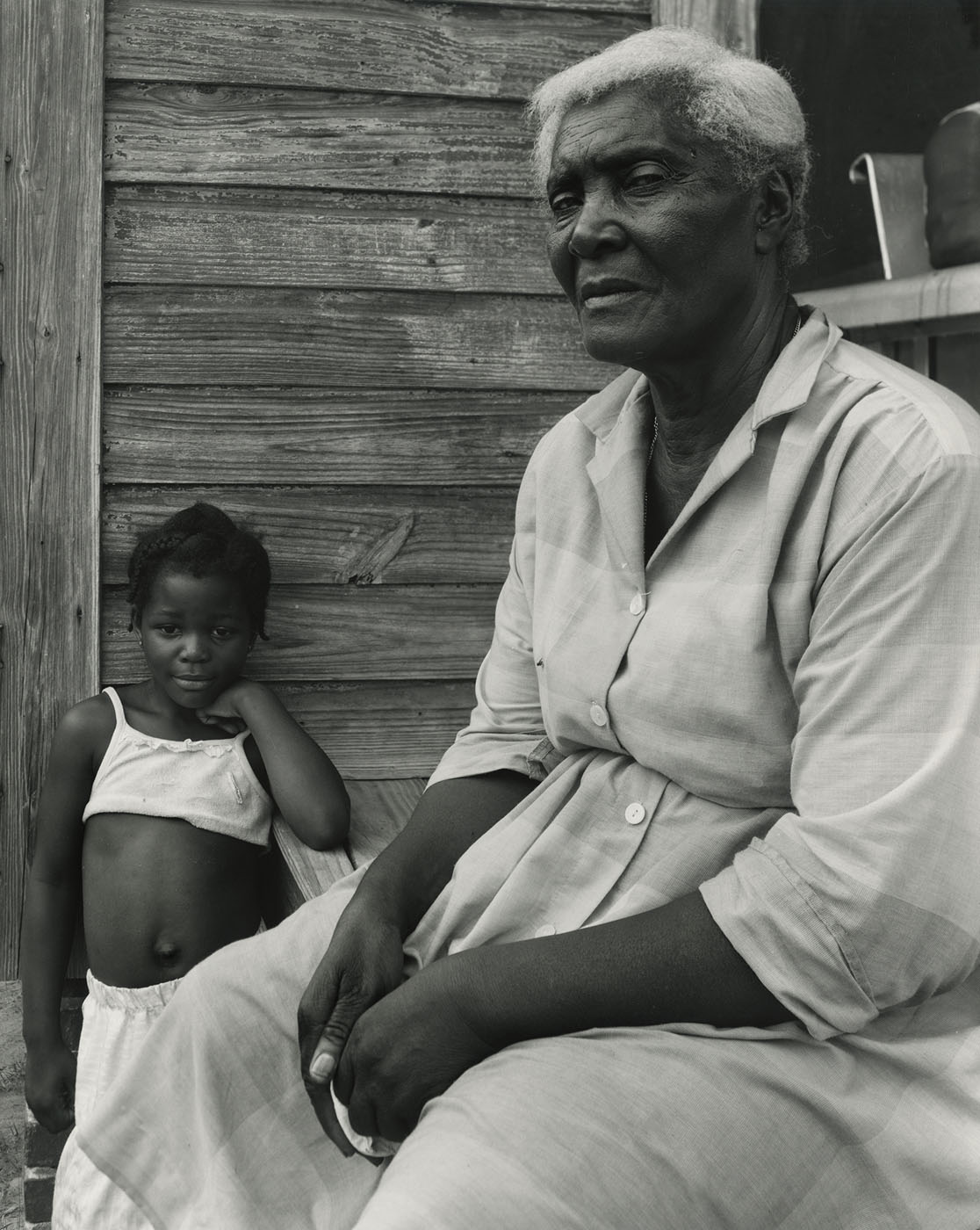
Stamped Tin Relic
1929
Gelatin silver print
23.3 x 28cm
Collection Centre Pompidou, Paris Achat en 1996
© Walker Evans Archive, The Metropolitan Museum of Art
Photo: © Centre Pompidou / Dist.RMN-GP


The un/ordinariness of ordinariness

What a pleasure.

I’ve never liked the term ‘”vernacular” photography’ because, for me, every time someone presses the shutter of the camera they have a purpose: to capture a scene, however accidental or incidental. That context may lie outside recognised networks of production and legitimation but it does not lie outside performance and ritual. As Catherine Lumby observes, what the promiscuous flow of the contemporary image culture opens up, “is an expanded and abstracted terrain of becoming… whereby images exceed, incorporate or reverse the values that are presumed to reside within them in a patriarchal social order.”1 Pace Evans.

His art of an alternate order, his vision of a terrain of becoming is so particular, so different it has entered the lexicon of America culture.

Dr Marcus Bunyan

1/ Lumby, Catharine. “Nothing Personal: Sex, Gender and Identity in The Media Age,” in Matthews, Jill (ed.,). Sex in Public: Australian Sexual Cultures. St. Leonards: Allen and Unwin, 1997, pp. 14-15.


Walker Evans: “The passionate quest to identify the fundamental features of American vernacular culture… the term “vernacular” designates those popular or informal forms of expression used by ordinary people for everyday purposes – essentially meaning all that falls outside art, outside the recognised networks of production and legitimation, and which in the US thus serves to define a specifically American culture. It is all the little details of the everyday environment that make for “Americanness”: wooden roadside shacks, the way a shopkeeper lays out his wares in the window, the silhouette of the Ford Model T, the pseudo-cursive typography of Coca-Cola signs. It is a crucial notion for the understanding of American culture.”

Text from press release


Many thankx to the Centre Pompidou for allowing me to publish the artwork in the posting. Please click on the art work for a larger version of the image.


Walker Evans (American, 1903-1975) 'Coney Island Beach' c. 1929 from the exhibition 'Walker Evans' at the Centre Pompidou, Paris, April - August, 2017


Walker Evans (American, 1903-1975)
Coney Island Beach
c. 1929
Gelatin silver print
22.5 x 31cm
The J.Paul Getty Museum, Los Angeles, Los Angeles
© Walker Evans Archive, The Metropolitan Museum of Art
Photo: © The J. Paul Getty Museum, Los Angeles


Walker Evans (American, 1903-1975) 'Truck and Sign' 1928-1930


Walker Evans (American, 1903-1975)
Truck and Sign
1928-1930
Gelatin silver print
16.5 x 22.2cm
Collection particulière, San Francisco
© Walker Evans Archive, The Metropolitan Museum of Art
Photo: © Fernando Maquieira, Cromotex


Walker Evans (American, 1903-1975) 'New York City Street Corner' 1929


Walker Evans (American, 1903-1975)
New York City Street Corner
1929
Gelatin silver print
18.4 x 12.7cm
The J. Paul Getty Museum, Los Angeles
© Walker Evans Archive, The Metropolitan Museum of Art
Photo: © The J. Paul Getty Museum, Los Angeles


Walker Evans (American, 1903-1975) 'Self-Portrait in Automated Photobooth' 1930


Walker Evans (American, 1903-1975)
Self-Portrait in Automated Photobooth
1930
Gelatin silver print
18.3 x 3.8cm
The Metropolitan Museum of Art, New York
© Walker Evans Archive, The Metropolitan Museum of Art
Photo: © The Metropolitan Museum of Art, Dist-RMN-GP/Image of the MMA


Walker Evans (American, 1903-1975) 'Self-Portrait in Automated Photobooth' 1930 (detail)

Walker Evans (American, 1903-1975) 'Self-Portrait in Automated Photobooth' 1930 (detail)


Walker Evans (American, 1903-1975)
Self-Portrait in Automated Photobooth (details)
1930
Gelatin silver print
18.3 x 3.8cm
The Metropolitan Museum of Art, New York
© Walker Evans Archive, The Metropolitan Museum of Art
Photo: © The Metropolitan Museum of Art, Dist-RMN-GP/Image of the MMA


Walker Evans (1903-1975) was one of the most important of twentieth-century American photographers. His photographs of the Depression years of the 1930s, his assignments for Fortune magazine in the 1940s and 1950s, and his “documentary style” influenced generations of photographers and artists. His attention to everyday details and the commonplace urban scene did much to define the visual image of 20th-century American culture. Some of his photographs have become iconic.

Conceived as a retrospective of Evans’s work as a whole, the Centre Pompidou exhibition presents three hundred vintage prints in a novel and revelatory thematic organisation. It highlights the photographer’s recurrent concern with roadside buildings, window displays, signs, typography and faces, offering an opportunity to grasp what no doubt lies at the heart of Walker Evans’ work: the passionate quest to identify the fundamental features of American vernacular culture. In an interview of 1971, he explained the attraction as follows: “You don’t want your work to spring from art; you want it to commence from life, and that’s in the street now. I’m no longer comfortable in a museum. I don’t want to go to them, don’t want to be ‘taught’ anything, don’t want to see ‘accomplished’ art. I’m interested in what’s called vernacular. For example, finished, I mean educated, architecture doesn’t interest me, but I love to find American vernacular”.

In the English-speaking countries, and in America more notably, the term “vernacular” designates those popular or informal forms of expression used by ordinary people for everyday purposes – essentially meaning all that falls outside art, outside the recognised networks of production and legitimation, and which in the US thus serves to define a specifically American culture. It is all the little details of the everyday environment that make for “Americanness”: wooden roadside shacks, the way a shopkeeper lays out his wares in the window, the silhouette of the Ford Model T, the pseudo-cursive typography of Coca-Cola signs. It is a crucial notion for the understanding of American culture. It is to be found in the literature as early as the 19th century, but it is only in the late 1920s that it is first deployed in a systematic study of architecture. Its importance in American art would be theorised in the 1940s, by John Atlee Kouwenhoven, a professor of English with a particular interest in American studies who was close to Walker Evans himself.

After an introductory section that looks at Evans’s modernist beginnings, the exhibition introduces the subjects that would fascinate him throughout his career: the typography of signs, the composition of window displays, the frontages of little roadside businesses, and so on. It then goes on to show how Evans himself adopted the methods or visual forms of vernacular photography in becoming, for the time of an assignment, an architectural photographer, a catalogue photographer, an ambulant portrait photographer, while all the time explicitly maintaining the standpoint of an artist.

This exhibition is the first major museum retrospective of Evans’s work in France. Unprecedented in its ambition, it retraces the whole of his career, from his earliest photographs in the 1920s to the Polaroids of the 1970s, through more than 300 vintage prints drawn from the most important American institutions (among them the Metropolitan Museum and the Museum of Modern Art, New York, the J. Paul Getty Museum, Los Angeles, the Art Institute of Chicago, and the National Gallery of Art, Washington D.C.) and also more than a dozen private collections. It also features a hundred or so other exhibits drawn from the post cards, enamel signs, print images and other graphic ephemera that Evans collected his whole life long.

Press release from the Centre Pompidou


Walker Evans (American, 1903-1975) 'Westchester, New York, farmhouse' 1931


Walker Evans (American, 1903-1975)
Westchester, New York, farmhouse
1931
Gelatin silver print pasted on cardboard
18 x 22.1cm
Collection Centre Pompidou, Paris
© W. Evans Arch., The Metropolitan Museum of Art
Photo: © Centre Pompidou / Dist. RMN-GP


Walker Evans (American, 1903-1975) 'Main Street, Saratoga Springs, New York' 1931


Walker Evans (American, 1903-1975)
Main Street, Saratoga Springs, New York
1931
Gelatin silver print
18.73 x 16.19cm
Collection particulière, San Francisco
© Walker Evans Archive, The Metropolitan Museum of Art
Photo: © Fernando Maquieira, Cromotex


Walker Evans (American, 1903-1975) 'License Photo Studio, New York' 1934


Walker Evans (American, 1903-1975)
License Photo Studio, New York
1934
Gelatin silver print
27.9 x 21.6cm (image: 18.3 x 14.4cm)
The J. Paul Getty Museum, Los Angeles
© Walker Evans Archive, The Metropolitan Museum of Art
Photo: © The J. Paul Getty Museum, Los Angeles


Walker Evans (American, 1903-1975) 'Penny Picture Display, Savannah' 1936


Walker Evans (American, 1903-1975)
Penny Picture Display, Savannah
1936
Gelatin silver print
21.9 x 17.6cm
The Museum of Modern Art, New York Gift of Willard Van Dyke
© Walker Evans Archive, The Metropolitan Museum of Art
Photo: © 2016. Digital Image, The Museum of Modern Art, New York / Scala, Florence


Walker Evans (American, 1903-1975) 'Joe's Auto Graveyard' 1936


Walker Evans (American, 1903-1975)
Joe’s Auto Graveyard
1936
Gelatin silver print
11.43 x 18.73cm
Collection particulière, San Francisco
© Walker Evans Archive, The Metropolitan Museum of Art
Photo: © Ian Reeves


Walker Evans (American, 1903-1975) 'Houses and Billboards in Atlanta' 1936


Walker Evans (American, 1903-1975)
Houses and Billboards in Atlanta
1936
Gelatin silver print
16.5 x 23.2cm
The Museum of Modern Art, New York
© Walker Evans Archive, The Metropolitan Museum of Art
Photo: © 2016. Digital Image, The Museum of Modern Art, New York / Scala, Florence


Curator’s point of view


“You don’t want your work to spring from art; you want it to commence from life, and that’s in the street now. I’m no longer comfortable in a museum. I don’t want to go to them, don’t want to be ‘taught’ anything, don’t want to see ‘accomplished’ art. I’m interested in what’s called vernacular.”

Walker Evans, interviewed by Leslie Katz (1971)


Through more than 400 photographs and documents, this retrospective of the work of Walker Evans (1903-1975) explores the American photographer’s fascination with his country’s vernacular culture. Evans was one of the most important of twentieth-century American photographers. His photographs of the Depression years of the 1930s, his “documentary style” and his interest in American popular culture influenced generations of photographers and artists. Bringing together the best examples of his work, drawn from the most important private and public collections, the exhibition also accords a large place to the artefacts that Evans himself collected throughout his life, to offer a fresh approach to the work of one of the most significant figures in the history of photography.

Study of his images – from the very first photographs of the 1920s to the Polaroids of his last years – reveals a fascination with the utilitarian, the domestic and the local. This interest in popular forms and practices emerged very early, when he started to collect postcards as a teenager. More than ten thousand items he had gathered by the time of his death are now held by the Metropolitan Museum, New York. Other everyday objects from his personal collection – enamel signs, handbills and adverts – are exhibited here.

Walker Evans’s attraction to the vernacular finds expression, above all, in his choice of subjects: Victorian architecture, roadside buildings, shopfronts, cinema posters, placards, signs, etc. His pictures also feature the faces and bodies of ordinary people, whether victims of the Depression or anonymous passers-by. Something else “typically American” was the underside of progress. During the 1930s in particular, the American landscape was strewn with ruin and waste. Evans kept an eye on them ever after. Industrial waste, building debris, automobile carcases, wooden houses in ruins, Louisiana mansions fallen in the world, antiques, garbage, faded interiors, bare patches in exterior render: these were the other face of America. Just as much as the towering skyscraper or the gleaming motor car, all this was an element of the modern. This concern with decline and obsolescence gave the photographer a critical edge and reveals a profound fascination with the mechanisms of overproduction and consumption characteristic of the age.

Evans didn’t just collect the forms of the vernacular, he also borrowed its methods. In many of his images, he adopts the codes of applied photography: the shots in series, the frontality, the apparent objectivity. Waiting, camera in hand on the corner of the street or in the subway, he accumulated portraits of city-dwellers by the dozen, releasing his shutter with the mechanical regularity of a photo booth. Working like a post-card photographer or architectural photographer, Evans built up, in surprisingly systematic fashion, a catalogue of churches, doors, monuments and small-town main streets. Sculptures, wrought-iron chairs, household tools: all seem to have been selected for their unique qualities as objects. The repetitivity, the apparent objectivity and the absence of emphasis in these images are typical of commercial photographs produced to order. In 1935, the Museum of Modern Art, New York, asked Evans to photograph the six hundred sculptures of the exhibition of “African Negro Art”. The method he adopted was that of the catalogue photographer, rigorously avoiding dramatic effects by eliminating shadow; tightly framed and set against a neutral background, the pieces find a new elegance. The photographer would often have recourse to this regime in the years that followed, notably for a portfolio entitled “Beauties of the Common Tool”, published in Fortune magazine in July 1955. This adoption of the forms and procedures of non-artistic photography even as Evans laid claim to art prefigures – some decades in advance! – the practices of the conceptual artists of the 1960s.

Clément Chéroux
Julie Jones
in Code Couleur, No. 28, May – August 2017, pp. 14-17


Walker Evans (American, 1903-1975) 'Shoeshine Stand Detail in Southern Town' 1936


Walker Evans (American, 1903-1975)
Shoeshine Stand Detail in Southern Town
1936
Gelatin silver print
14.5 x 17cm
The Metropolitan Museum of Art, New York Anonymous Gift
© Walker Evans Archive, The Metropolitan Museum of Art
Photo: © The Metropolitan Museum of Art, Dist-RMN-GP/Image of the MMA


Walker Evans (American, 1903-1975) 'Negroes' Church, South Carolina' March 1936


Walker Evans (American, 1903-1975)
Negroes’ Church, South Carolina
March 1936, circulation April 1969
Gelatin silver print
25.2 x 20.2cm
Musée des beaux-arts du Canada, Ottawa Acheté en 1969
© Walker Evans Archive, The Metropolitan Museum of Art
Photo: © Musée des Beaux-Arts du Canada, Ottawa


Walker Evans (American, 1903-1975) 'Alabama Tenant Farmer Floyd Bourroughs' 1936


Walker Evans (American, 1903-1975)
Alabama Tenant Farmer Floyd Bourroughs
1936
Gelatin silver print
22.9 x 18.4cm
Collection particulière, San Francisco
© Walker Evans Archive, The Metropolitan Museum of Art
Photo: © Fernando Maquieira, Cromotex


Walker Evans (American, 1903-1975) 'Allie Mae Burroughs, Wife of a Cotton Sharecropper, Hale Country, Alabama' 1936


Walker Evans (American, 1903-1975)
Allie Mae Burroughs, Wife of a Cotton Sharecropper, Hale Country, Alabama
1936
Gelatin silver print
22.3 x 17.3cm
Collection particulière
© Walker Evans Archive, The Metropolitan Museum of Art
Photo: © Collection particulière


Walker Evans (American, 1903-1975) 'Subway Portrait' January 1941


Walker Evans (American, 1903-1975)
Subway Portrait
January 1941
Gelatin silver print
20.9 x 19.1cm
National Gallery of Art, Washington Gift of Kent and Marcia Minichiello, in Honour of the 50th Anniversary of the National Gallery of Art
© Walker Evans Archive, The Metropolitan Museum of Art
Photo: © National Gallery of Art, Washington


Walker Evans (American, 1903-1975) 'Resort Photographer at Work' 1941


Walker Evans (American, 1903-1975)
Resort Photographer at Work
1941
Gelatin silver print, later print
15.9 x 22.4cm
The J. Paul Getty Museum, Los Angeles
© Walker Evans Archive, The Metropolitan Museum of Art
Photo: © The J. Paul Getty Museum, Los Angeles


Walker Evans (American, 1903-1975) 'Anna Maria, Florida' October 1958


Walker Evans (American, 1903-1975)
Anna Maria, Florida
October 1958
Oil on fibreboard
40 × 50.2cm
The Metropolitan Museum of Art, New York. Walker Evans Archive, 1994
© Walker Evans Archive, The Metropolitan Museum of Art
Photo: © The Metropolitan Museum of Art, Dist. RMN-Grand Palais / image of the MMA


Walker Evans (American, 1903-1975) 'Untitled, Detroit' 1946


Walker Evans (American, 1903-1975)
Untitled, Detroit
1946
Gelatin silver print
16 x 11.4cm
Fondation A.Stichting, Bruxelles
© Walker Evans Archive, The Metropolitan Museum of Art
Photo: © Fondation A.Stichting, Bruxelles


Walker Evans (American, 1903-1975) 'Tin Snips by J. Wiss and Sons Co., $1.85' 1955


Walker Evans (American, 1903-1975)
Tin Snips by J. Wiss and Sons Co., $1.85
1955
Gelatin silver print
25.2 x 20.3cm
The J. Paul Getty Museum, Los Angeles
© Walker Evans Archive, The Metropolitan Museum of Art
Photo: © The J. Paul Getty Museum, Los Angeles


Centre Pompidou 
75191 Paris cedex 04
Phone: 00 33 (0)1 44 78 12 33

Opening hours:
Exhibition open every day from 11am – 9pm except on Tuesday
Closed on May 1st

Centre Pompidou website

LIKE ART BLART ON FACEBOOK

Back to top

Australia as an After Image: Middle Australia and the politics of fear

June 2016


David Moore (Australia 06 Apr 1927 - 23 Jan 2003) 'Migrants arriving in Sydney' 1966, printed later


David Moore (Australia 06 Apr 1927 – 23 Jan 2003)
Migrants arriving in Sydney
1966, printed later
Gelatin silver photograph
30.2 x 43.5cm image
35.7 x 47.0cm sheet
Gift of the artist 1997
© Lisa, Karen, Michael and Matthew Moore


“An afterimage … is an optical illusion that refers to an image continuing to appear in one’s vision after the exposure to the original image has ceased.”1

I don’t usually mix politics and art on this website but today, before the general election this Saturday in Australia, I ask this question: what kind of country do we want in the future? One that cares about human beings of all ages, races, sexualities, socio-economic positions and health – or one that has no vision for the future and which is governed by market greed.

As an immigrant I am forever grateful that I can call Australia home. I arrived in 1986 and got to stay as a permanent resident because of a gay de facto relationship. I was one of the lucky few. But today, dear friends, I feel that something has gone terribly wrong with this country. Looking back nearly 30 years later I wonder what has happened to that progressive country that was an unpolished diamond, a bit rough around the edges but generous and welcoming when I arrived all those years ago. Things seem to have gone backwards, terribly backwards over the last 30 years. It’s almost as though the country of hope and fun that I arrived in is just an afterimage located in my memory, a vision that continues to flicker in the recesses of the mind but is no longer present in actuality.

Today, as with many countries in the Western world which are edging towards the right through a “conservative movement” with clearly defined tenets and agenda, we live in a country governed by the politics of fear. This politics of fear – grounded in rampant capitalism where making a buck takes precedence over the lives of people: its business – and linked to the Christian fundamentalist right and the “re-engagement between church and state” – is, as David Kindon notes, “moving Australia away from the notion of a secular democracy.”2

Australia is now a less generous place than it was 30 years ago, ruled by god-given, government-aligned order. Bugger the pensioners, cut the arts program funding, get rid of public health care, call for plebiscite on gay marriage where the bigots can come out of the woodwork and other people decide whether you are deemed “equal” to them, imprison vulnerable people in state run concentration camps where the government has the right to hurt other people… and the list goes on and on: Border Force as a quasi paramilitary force for our protection, more people in jail than at any time in our history (due to the privatisation of the jails = money, profit), and “new anti-protest laws [In New South Wales which] are the latest example of an alarming and unmistakeable trend. Governments across Australia are eroding some of the vital foundations of our democracy, from protest rights to press freedom, to entrench their own power and that of vested business interests.”3

Further, there is the “privatisation of government assets and services, attacks on public broadcasting services, deregulation of the private sector, and widespread cuts in the public sector.” (Kindon) As ever, the rich get richer, the miners get wealthier, and the poor get screwed. More entitlements were delivered to the wealthy and the corporate sector despite having seen the “end of the age of entitlement” announced by the Treasurer. Those very vested business interests.

This situation is not akin to the concept of “permanent temporariness” used to describe the plight of the Palestine State but is akin to that of a “permanent blindness” of a nation. Middle Australia will not hear what they don’t want to hear, will not see what they don’y want to see. Today, nationalism has become framed in terms of external (and internal) threats. Xenophobia in the recent Brexit poll in the UK is mirrored by simmering racism in this sun blessed country. Otherness, difference, liberal views, alternative thinking and, heaven forbid, being an open and responsible member of the human race (on human rights, on global warming, on not being in wars we have no business being in) are all seen as threatening to the middle-brow status quo. Steady as she goes for “Team Australia” and if you’re not with us, you’re against us.

Yes, let’s stick with this mob for a little while longer…

WAKE UP AUSTRALIA BEFORE ITS TOO LATE!

Dr Marcus Bunyan


1/ Anon. “Afterimage,” on the Wikipedia website [Online] Cited 21/09/2011

2/ David Kindon. “The Political Theology of Conservative Postmodern Democracies: Fascism by Stealth,” on the A Fairer Society website [Online] Cited 29/06/2016. No longer available online

3/ Hugh de Kretser. “NSW anti-protest laws are part of a corrosive national trend,” on The Sydney Morning Herald website March 22, 2016 [Online] Cited 03/02/2023


Please click on the photographs for a larger version of the image.


Mervyn Bishop (Australian, b. 1945) 'Prime Minister Gough Whitlam pours soil into the hands of traditional land owner Vincent Lingiari, Northern Territory' 1975


Mervyn Bishop (Australian, b. 1945)
Prime Minister Gough Whitlam pours soil into the hands of traditional land owner Vincent Lingiari, Northern Territory
1975
Type R3 photograph
Art Gallery of New South Wales, Hallmark Cards Australian Photography Collection Fund 1991
© Mervyn Bishop. Department of the Prime Minister and Cabinet


Persons Of Interest – Australian Security Intelligence Organisation (ASIO) surveillance 1949-1980. 'Author Frank Hardy in the doorway of the Building Workers Industrial Union, 535 George St, Sydney, August 1955'


Persons Of Interest – Australian Security Intelligence Organisation (ASIO) surveillance 1949-1980
Author Frank Hardy in the doorway of the Building Workers Industrial Union, 535 George St, Sydney, August 1955
NAA A9626, 212


Lifejacket and lifebuoy from the 'MV Tampa' 2001


Lifejacket and lifebuoy from the MV Tampa
2001
Wallenius Wilhelmsen MV Tampa collection
National Museum of Australia


“There was one man from Nauru who sent me a letter that I should have let him die in the Ind … the Indian Ocean, instead of picking him up. Because, the conditions on Nauru were terrible. And that is a terrible thing to tell people, that you should have just let them drown.”

~ Arne Rinnan, Captain of the MV Tampa


Juan Davila (Australian born Chile, b. 1946) 'A Man is Born Without Fear' 2010


Juan Davila (Australian born Chile, b. 1946)
A Man is Born Without Fear
2010
© Juan Davila, Courtesy Kalli Rolfe Contemporary Art


J.W.C. Adam. 'Asylum seekers protesting against detention at Villawood Immigration Detention Centre on 22 April 2011' 2011


J.W.C. Adam
Asylum seekers protesting against detention at Villawood Immigration Detention Centre on 22 April 2011
2011
CC BY-SA 2.5


“And when we call these places of horror in the Pacific ‘concentration camps’, that is an appropriate term, because that is what they are.

And when we accuse the Australian government of selectively torturing brown-skinned people in the way the Nazis chose the Jews and other groups to torture and ultimately eliminate, that is an appropriate thing to do, because we all know, in our heart of hearts, that if these people fleeing oppression were white, English-speaking Christians (white Zimbabweans, say) then their treatment would be completely different.”

David Berger. “It’s Okay to Compare Australia in 2016 with Nazi Germany – And Here’s Why,” on the New Matilda website May 22 2016 [Online] Cited 29/06/2016


Ben Quilty (Australian, b. 1973) 'Trooper M, after Afghanistan' 2012


Ben Quilty (Australian, b. 1973)
Trooper M, after Afghanistan
2012
Oil on linen
Collection of the artist


Keast Burke (New Zealand, Australia 1896-1974) 'Husbandry 1' c. 1940


Keast Burke (New Zealand, Australia, 1896-1974)
Husbandry 1
c. 1940
Gelatin silver photograph, vintage
30.5 x 35.5cm image/sheet
Gift of Iris Burke 1989


Cronulla race riots 2005


Cronulla race riots 2005


LIKE ART BLART ON FACEBOOK

Back to top

1000th post on Art Blart

June 2014


This is the 1000th post on Art Blart.

I started the archive 6 years ago with 11 people a day reading it. Today the archive averages between 3-4,000 people a day and has over 3,000 Likes on Facebook.

Reproduced below are a couple of postings from the archive on its very first day 13/11/2008 – just text please note, no images – and a mandala image of the Sahasrãra or Crown Chakra (for creativity) to celebrate the milestone.

Namaste

Marcus


The artist does not turn money into time


“The artist does not turn time into money, the artist turns time into energy, time into intensity, time into vision. The exchange that art offers is an exchange in kind; energy for energy, intensity for intensity, vision for vision… Can we afford to live imaginatively, contemplatively?”


Winterson, Jeanette. Art Objects. London: Vintage, 1996, p. 139.


After Light


“And on the other end of the spectrum, there is the AFTER LIGHT, a light of the past, which are echoes from past experiences so intense that they sometimes appear in front of us in the form of unexpected shadows. They hide on clear days under the roofs of houses. It is believed to be the same light seen by people we knew many years ago that survives like a message in a bottle, but always in a precarious way and often vanishes into thin air.”


Helguera, Pablo. “How to Understand the Light on a Landscape,” in Patt, Lise (ed.,). Searching for Sebald: Photography After W. G. Sebald. Los Angeles: The Institute of Cultural Inquiry, 2007, p. 119.


Sahasrãra or Crown Chakra / Thousand Petal Lotus


Sahasrãra or Crown Chakra / Thousand Petal Lotus

 
“That for which they seek is that which searches.”

Saint Francis of Assissi


Symbol

The Crown Chakra is known as the Thousand Petal Lotus. The number 1000, adds up and reduces to the number 1 in numerology. The number one represents strong leadership and will power, a courageous person who is goal oriented and driven. A number one person is a pioneer who is independent and individualistic and approaches issues from a unique perspective. A number one is original and sometimes unconventional. They possess tremendous potential for success in life.

Throughout history it has been depicted in paintings of Jesus the Christ, Buddha, Saints, Angels and other highly evolved beings as a golden white halo around their heads.

Colour

The Crown Chakra is associated with the colour violet. Some references link it to the colour white as well. Violet is the highest colour in the light spectrum. It represents the spiritual or higher self, wisdom, vitality, intuitive awareness, passion and dignity. White is purity and the colour of the Divine light. Red, which is the lowest colour on our physical perceptual light spectrum, and just above infrared light, rules the Root Chakra. Conversely, violet, the highest colour on our physical perceptual light spectrum, and just below ultra-violet light, rules the Crown Chakra.

Sense

Our multidimensional and extrasensory senses are ruled by the seventh chakra. Once this chakra is opened, our sense of empathy and unity expands. When we raise our consciousness, we experience another person, place or object as if we are inside of them or as if we are “being” them. It is important, then, that we remember that with this power comes responsibility. We should activate these senses only to provide help or healing – NEVER for mere curiosity or with any malicious intent.

Compassion is the main sense that develops as our Crown Chakra opens. We have two kinds of compassion: Crown Compassion, which is more about perception and communication, and Heart Compassion, which is more about emotions and empathy.

Element

The element of this Chakra is the Cosmic Energy, which is often experienced as an inner light emanating from the deepest part of our being. This Cosmic Energy, which rules the higher kingdoms and stems from the Source, feels like an ultimate intelligence and a sense of all-knowing. When our Crown Chakra opens we can also experience the complete isolation and blackness of the Great Void. This Void, which resonates just below the fifth dimension, represents the raw potential for all that can, or will be. The total darkness is representative of the centre of a seed before it opens into the light of manifestation. when we can perceive from our Crown Chakra, we can identify both extremes of all polarities.

The opening of the Crown Chakra expands our perception into the fifth dimension where there are NO polarities. Therefore, there are many paradoxes associated with this Chakra as it represents the “end of all paradox.” As we travel through the higher dimensions, it is important that we release all judgments associated with the polarities of light and dark. We must instead consult our own inner knowing and higher consciousness to navigate us through our inner worlds. Eventually, we will all be aware of our fifth dimensional selves; they know no judgment and hold no fear. For what is judgment, if not a form of fear?

Consciousness

Since our Crown Chakra represents our multidimensional consciousness, as we open this Chakra our reality will no longer be limited to the third and fourth dimension. When our Brow Chakra, the sixth Chakra, opens we begin to travel into the higher sub planes of the fourth dimension. With the opening of our seventh Chakra, and the subsequent activation of our Third Eye, our consciousness can now enter the fifth dimension. It is then that the many realities around and within us gradually become consciously apparent to us.

The process of our awakening begins with expanding the consciousness of our physical selves and working to clear our etheric bodies. Then the astral, the mental, the causal and the spiritual I AM consciousness can align themselves in preparation to ascend into the fifth dimension. Until we reach the fifth dimension we can “work” towards enlightenment, but from the fifth dimension on, we must simply “BE”. “Doing” is not important then; consciousness alone is important. And finally, in the sixth and seventh dimensions even consciousness is not important as there is only the “Isness”, the “Nowness” and the “Hereness.”

Source: www.chakras.net


LIKE ART BLART ON FACEBOOK

Back to top

Catalogue essay: ‘Being (t)here: Gay liberation photography in Australia 1971-73’ from the exhibition ‘Out of the closets, onto the streets’

Exhibition dates: Tuesday 22nd July – Saturday 26th July, 2014

Artists represented: Philip Potter, John Storey, John Englart, Barbara Creed, Ponch Hawkes, Rennie Ellis

Curators: Dr Marcus Bunyan and Nicholas Henderson


Photographer unknown. 'The original eight hour day banner' 1856


Figure 1
Photographer unknown
The original eight hour day banner
1856


This is my catalogue essay that accompanies the exhibition Out of the closets, into the streets: gay liberation photography 1971-73 at Edmund Pearce Gallery, Melbourne. It’s a bit of a read (3,000 words) but stick with it. I hope you like the insights into the background of the images and the people in the exhibition.

Dr Marcus Bunyan


Many thankx to all the artists for allowing me to publish the photographs in the posting. Please click on the photographs for a larger version of the image. Download the Being (t)here catalogue essay (2.2Mb pdf)


Being (t)here: Gay liberation photography in Australia 1971-73


“For the colour and the soundtrack to be part of the politics, even a central part of the politics… meant something new by way of embodiment. Much of the political action was about being there, about putting one’s body on the line. A demonstration, sit-in or blockade is centrally about occupying space. A nonviolent movement tried to occupy space with bodies, not bullets.

It was a key feature of the new left that this embodied politics couldn’t stop in the streets: that is, the public arena as conventionally understood. ‘Being there’ politically also applied to households, classrooms, sexual relations, workplaces and the natural environment.”1


I came out as a gay man in 1975, six years after Stonewall and only a few short years after the photographs in this exhibition were taken. The first open acknowledgement of my nascent sexuality was to walk into a newsagent in Notting Hill Gate, London, head down, red as a beetroot and pick up a copy of Gay Times. I literally flung the money at the person behind the counter and ran out. I was so embarrassed. I was seventeen.

From the gay rag I found the name of the local convenor of the Campaign for Homosexual Equality (CHE) and went to meet him at his home. John was the very first openly gay man that I had ever met. We became lifelong friends. He used to hold coffee evenings a couple of times a week in his flat so that the local gay men had somewhere safe and secure to meet – to chat and laugh, to talk about love and life. Once a month there was a pub that we all went to in the country for a bit of a dance night, but that was it unless you went up to London to a nightclub.

None of us were very active politically, although we kept an eye on the papers and we all understood the discrimination and persecution we faced. But by the very act of being openly gay, as most of us were, we were making a political statement. I was openly gay at college in London and stopped “passing” as something I was not (a straight man) by coming out to my family and friends. I placed my being – there, there and there, in different contexts, so that my family, friends and the community could not ignore my sexuality. I never lived in fear but there was a great deal of self-loathing going on behind the scenes. In those days you were always thought of as “abnormal” and defective if you were a poofter. And there was the guilt of that association. As James Nichols observes, “To be gay or lesbian meant belonging to a genealogy of suffering, to have a dramatic, if not a tragic, destiny. Despite the many battles and certain victories that ensued, the homosexual remained a victim in the collective consciousness; a hidden man.”2  William Leonard continues the theme: “If concealment is a psychic wounding that divides each gay man against himself, it is also a collective division that precludes the forms of public association and political affiliation on which gay liberation depends. As gay men confront their own internalised feelings of self-recrimination, if not disgust, they begin to rattle the closet door and seek out, in public, others of their own kind.”3 And rattle the closet door I did. I flaunted my hi-vis identity for all to see. If the liberation movement meant putting your body on the line – not so much by consciously protesting on the streets but by being visible in whatever setting as a gay man – then I certainly did that.

Photography documented this Gay Liberation thing, the emergence in public and private of gay people. It not only documented this visibility but also represented it in very aesthetic and artistic ways that up until now have not really been recognised as such. This is where the photographs in this exhibition make their presence known. As gay people found their voice in the early 1970s artists, often at the very beginning of their careers, were there to capture meetings in lounge rooms, consciousness raising groups and street protests. The photographer as artist was not just a witness to these events but actively participated in these actions, which they envisioned in a subjective way. Unlike earlier images of protest marches where there is an observational distance between the photographer / event which allowed for the depiction of environment and numbers (for example in the 8 hour day marches, see figures 1-4) – from the mid-1960s onwards there is a seismic shift in how photographs represent social change and observed history. Now the photographer marches with the inmates and becomes an intimate participant in the proceedings (see figures 5-6).

In this revolutionary era, the artist evidences an empathy with the events being photographed, an up close and personal point of view. Whatever meeting or protest they were there to record was important to them, be it anti-Vietnam war, anti-Apartheid, pro abortion, nuclear disarmament, Gay Liberation, Women’s Liberation, Aboriginal rights, anti-fascist marches and student protests from around the world. And it didn’t matter whether the photographers were gay, straight or whatever. People appropriated public and private space as a form of collective activism, using social movement cultures to re-make the world. The ways of imagining life and transformation, of imaging life and transformation were enabled by the photographer actively participating in these events. The photographer’s “second sight” did not consist in “seeing” but in being there.

As Professor Barbara Creed states of her interest in artistically documenting these actions, “I was very keen on the slogan – ‘The personal is political’. I was in favour of political action of all kinds – direct action, demonstrations, marches, meetings, consciousness raising groups, media publicity, television appearances, coming out at work, talks to schools etc. I was also very interested in the possibility of using artistic practices (film, photography, poetry, fiction, art) to build solidarity among gay people and to help change public opinion.”4

While “the early demonstrations illustrated in this exhibition did often include sympathetic “straights” – a term that seems to have disappeared from the language – for whom gay liberation was part of a wider set of cultural issues,”5 for gay men pictured in the photographs these meetings and marches could be seen as a form of “coming out”, or a place to find solidarity, friendship or sex.6 Gay Pride Week in 1973, for example, was seen as a chance to target, “all the institutions of our oppression: the police courts, job discrimination, the bigoted churchmen and politicians, the media, the psychiatrists, the aversion therapists, the military, the schools, the universities, the work-places … It will also seek to change the mind of the prejudiced, the fearful, the conditioned, the sexually repressed, all those who in oppressing us, oppress themselves.”7 It was also intended to say to gay and straight alike, “gay is good, gay is proud, gay is aggressively fighting for liberation. It will say to gays: come out and stand up. Only you can win your own liberation. Come out of the ghettos, the bars and beats, from your closets in suburbia and in your own minds and join the struggle for your own liberation.”8

For photographers it was a chance to picture a changing world. As Sydney photographer Roger Scott has observed, “I knew I could make a point with my camera. It was exciting. The old conservative world was ending and a new Australia was beginning.”9 With the birth of a new Australia came the end of the White Australia policy when the Whitlam Government passed laws to ensure that race would be totally disregarded as a component for immigration to Australia in 1973; with it came the presence of gay people on the streets shouting ‘come out, come out, wherever you are’ – but certainly not in the newspapers or on television for there was, essentially, the suppression of any reference to, or reportage of ‘homosexuals’ in the mainstream press in Australia.10 If they were pictured, gay people still usually turned away from the camera or had their faces blacked out for fear of discrimination and abuse. As artist John Storey notes, “Conservatism flooded the media, government and all the rest. Homophobia was everywhere but was not a term used in public.”11

As for what prompted artists to document organisations and events, Professor Creed remarks, “I loved to film life around me. I had access to good equipment. I thought it was important to have a visual record of the emergence of Gay Liberation. I believed that films and photos would help to create a sense of community for everyone involved in Gay Liberation. Many members of Gay Lib had been ‘closeted’ all of their lives and so it was a new experience for them to join what is best described as an alternative family. In those days, the Gay Lib group was relatively small – perhaps 30-40 members, so we all knew each other. We held regular meetings, joined CR groups, took part in demonstrations, went away for weekend group events, held dances etc. I also wanted to capture the way we looked, couples together, friends, what we wore, our fashions and styles. Some of the guys had a fantastic sense of style – much more than many of the women who were in revolt against ‘feminine’ fashion. I hoped my films and photos would give support to the gay community and to our emerging sense of forming a new identity.”12

By their very embodiment, the art and politics of these photographs awakens what Roland Barthes calls the “intractable reality” of the image 13 – that prick of consciousness (the punctum), that madness that documents activism and freedom from persecution as both aesthetic and ethical, performative and political. Here, the idea of “being there” – being fully present, in mind and body; being there at the marches; being in the images; being in front of the image looking at it; coupled with the physical presence of the photograph, manifests itself most strongly. Even today, the photographs shock the viewer with their intractable reality. You can just feel the passion of these people, the police presence, the fear, and the authenticity of the photographers’ voice – raw, in your face, people really standing up to be counted.

There is also another side to these photographs – the documentation of the more private moments (meetings, consciousness raising groups, friends in the car etc) and the portrayal of gays one on one, close up and personal with the camera in mugshots used in a grid for the cover of CAMP Ink magazine in 1972. Only today can we truly appreciate the intimacy and beauty of these photographs: the photographs of two young gay men in the back of a VW Kombi van that exists only as a 35mm contact print, now scanned and rescued from oblivion; or the presence of gays posing for the camera against a neutral backdrop, every pore of their skin able to be seen (a precursor to the large colour portraits of Thomas Ruff). As Professor Creed states of her desire to capture these intimate moments, “In the 70s film, media and television rarely if ever depicted us at all – let alone our public or private lives. I have always been drawn to the aesthetic power of film and photography to represent the inner world and inner lives of people. The visual image is a great leveller – it reveals the commonality of living things, the need for affection, companionship, community. Contrary to popular myths of the time, gays and lesbians also have a need for intimacy, as does everyone else. When I made my documentary, Homosexuality A Film For Discussion, I included a segment of intimate moments between couples before the commencement of the documentary street interviews, to link the two (private and public together) and to show that many of the negative comments from the general public about loneliness did not match the actual lives of gay people.”14

So where did the photographs that were taken by these artists end up? Often they were collectively passed from hand to hand and used in newsletters, pamphlets and magazines such as CAMP Ink. As Jill Matthews, who compiled the album of Adelaide photographs observes, “The groups and events were very collective enterprises. In those days anyone who had a camera took photos. If people took photos of you, you asked for copies or they gave you prints. There were many prints made and various people had copies. At the time the use of the photos was personal and collective. The newsletters were collective enterprises with everyone chipping in, using whatever was to hand. There was no editor, although some efforts were made to achieve a sense of continuity. Making the newsletters were always fun group events, with a lot of different things you could do, they were basically parties really.”15

Eventually the photographs settled in personal archives and were largely forgotten or were donated to institutions such as the Australian Lesbian and Gay Archives (now the Australian Queer Archives). And then they all but disappeared from view.

A second (but different) “coming out”

With this exhibition these eclectic photographs re-emerge in a kind of second “coming out.” Having been put away for so many years they appear in the clear light of day, in the clear light of new thinking about their artistic merit and how they act as memory aids to feelings and relationships, events and politics.

While analogue photographic images carry Roland Barthes imprint ‘this has been’ – in other words, a photograph is a depiction of something that has already happened, that is already dead – images do not have fixed or settled meanings. As Scott McQuire insightfully observes, meaning in images “is always transactive: it is the result of complex and dynamic processes of interpretation, contestation and translation. Evidence and testimony is always to be actively produced in the complex present… the photograph’s combination of unprecedented visual detail, which seems to anchor the image in a particular time and place, [is] coupled to the endless capacity for images to travel into new times and places.”16 He goes on to say that photographic history is littered with images that have their meaning altered by entry into a new setting. The images in this exhibition are a case in point for I am examining them as artworks as much as they can be seen as documentary evidence of things that have been.

We should not be afraid of this new interpretation for, as McQuire notes, “Too often when we talk about ‘context’ in relation to a photograph, it is as if there is a finite set of connections that might be fully reproduced, if only we had the time or resources. In other words, the polysemy of the image is given a cursory and limited acknowledgement, in the hope that it can be thereby tamed. Rather than this partial, rather defensive acknowledgement of the fragility of meaning, I am arguing that we need to begin with acceptance of the irreducible openness of technological images. This quality is integrally related to the capacity of any image to circulate and appear in new situations.”17 In other words there is no definitive context for any image and we should not be afraid to approach new interpretations of the work or the coexistence of many possible meanings within that work. This process can be seen as analogous in a contextual sense to the construction of what the French philosopher Henri Bergson (1859-1941) called the ‘composite’ in the physical sense, which he defined as, “construction / model where things different in kind are reconciled through our experience over time. Differences are reconciled not unified. The composite embraces ideas of complexity and multiplicity, allowing different conventions, materials and contents to coexist in an artwork. It therefore permits complexities and relationships of readings to coexist. The viewer becomes aware of new and shifting layers of content revealed over the time of viewing, and of our role in constructing, interpreting and experiencing content(s). This is not just theoretical, it is the way we experience and negotiate the world everyday, as complexity in the continuum of time and space.”18 The viewer thus creates a composite view of these images in the here and now.

The images importance, then, lies in the interplay between the historical and the contemporary, between self-representation and imposed representation, and the relationship between subject and photographer. Their residence in the Australian Lesbian and Gay Archives (ALGA) archive (now the Australian Queer Archives (AQuA), which undoubtedly preserves them, marks this institutional passage, this transition of marginalised histories from private to public, “which does not always mean from the secret to the non-secret.” Under the privileged topology of ALGA they are classified and ordered and made available for study and research, but we must also acknowledge that archives give shape to and regulate cultural memory. They influence our perception of the past and present. As Jacques Derrida writes in Archive Fever: “”There is no political power without control of the archive, if not of memory.” He indicates that the stakes are high over the memorialisation and excavation of sites and people’s histories.”19 This does not mean that ALGA does not promote an active engagement with the works it holds in safe keeping, far from it. They encourage the use of the archive by artists and the recontextualisation and renarrativisation of the images in this exhibition, from documentary objects to visual art works and back again, could not have occurred without their forthright help. But as Mathias Danbolt notes in his excellent article Not Not Now: Archival Engagements in Queer Feminist Art, archives will always be sites of contestation: “The conversations on archives in queer and feminist contexts tend to center on ways to break with the strictures and structures of archival logics, in order to give room for alternative forms of historical (and herstorical) transmissions. But even though archival logics tend to be a continual object of critique in feminist and queer work, the desire for archives is still present… If the process of archivisation is fundamentally about conferring historical status upon material, how to avoid that the status as archival disconnect the queer feminist “past” from the “present” – the “then” from the “now”?”20 Danbolt goes on to suggest that this process is a balancing act, “between the desire for having a history, and the anxiety for being historicised, in the sense of being cut off – metaphorically, practically, systemically – from the present.”21

For me, then, this exhibition is as much about freeing these images from the guardianship of the archive, if ever so briefly, to let them live again in the real world, to let them speak for themselves, as those first gay protesters did all those years ago. To free them of the shackles of being seen as “historical” documentary photographs, the official history of gay liberation in Australia and for them to be seen works of art in their own right. It is about the representation of queer identity through the evidence of photography – from that place, in that time, now breathing in a different era, these people fighting for their liberty.

It is about these images and the people in them being (t)here.

In contemporary society, where we are flooded with a maelstrom of images, I believe it is important to contemplate these images for more than just a few seconds in order to understand their history and importance not just for the past, but also for the present and the future. Today, we compose our stories and our histories out of fragments and alterations of spaces. We gather together our sources (in archives, for example) and try and make sense of the past in the present for the future. This process of understanding is about an acknowledgement of the past in the present for the future.

Again I say, it is about being (t)here.

In an era of ubiquitous media images, the photographs in this exhibition deserve our attention and contemplation for they are survivors – images that perceptively visualise the initial stages of Gay Liberation in Australia, images that are still alive in the present. Their contemporary re-emergence may lead the community to finally have some iconographic images of the early stages of gay resistance and visibility – intimate representations of protests, meetings and events that ultimately changed the lives of many GLBTI people. They may also have some damn good art upon which to feast their eyes.


Dr Marcus Bunyan
July 2014

Word count: 3,423


Endnotes

1/ Connell, Raewyn. “Ours is in colour: the new left of the 1960s,” in Carolyn D’Cruz and Mark Pendleton (eds.,). After Homosexual: The Legacies of Gay Liberation. Perth: UWA Publishing, 2013, p. 43.

2/ Nichols, James. “Sébastien Lifshitz Releasing ‘The Invisibles: Vintage Portraits of Love and Pride’,” on The Huffington Post website 05/01/2014 [Online] cited 02/05/2014.

3/ Leonard, William. “Altman on Halperin: politics versus aesthetics in the constitution of the male homosexual,” in Carolyn D’Cruz and Mark Pendleton (eds.,). After Homosexual: The Legacies of Gay Liberation. Perth: UWA Publishing, 2013, p. 197.

4/ Email text in response to the question ‘What were your politics during your involvement with Gay Liberation/events (Gay Pride Week etc)’ to co-curator Nicholas Henderson 01/06/2014.

5/ Altman, Dennis. “Out of the closets, into the streets.” Catalogue essay. Melbourne, 2014, p. 2.

6/ Ibid.,

7/ Anon. “Gay Pride Week,” in Melbourne Gay Liberation Newsletter, 1973 quoted in Ritale, Jo and Willett, Graham. “Rennie Ellis at Gay Pride Week, September 1973,” in The La Trobe Journal No. 87, May 2011, pp. 87-88 [Online] Cited 11/07/2014.

8/ Ibid., p. 88.

9/ Scott, Roger quoted in Scott, Roger; McFarlane, Robert and Hock, Peter. Roger Scott: from the street. Neutral Bay, N.S.W.: Chapter & Verse, 2001, p. 13.

10/ Email text from co-curator Nicholas Henderson 12/03/2014.

11/ Email text from John Storey to co-curator Nicholas Henderson 17/05/2014.

12/ Email text in response to the question ‘What prompted you to document the organisations/events?’ to co-curator Nicholas Henderson 01/06/2014.

13/ Barthes, Roland. Camera lucida: Reflections on photography. Hill and Wang, 1st American edition, 1981.

14/ Email text in response to the question ‘One of the aspects of your photographs that I am quite intrigued by is the documentation of the more private moments (meetings, consciousness raising groups, friends in the car etc), what brought you to photograph these subjects?’ to co-curator Nicholas Henderson 01/06/2014.

15/ Jill Matthews notes from telephone conversation to Nicholas Henderson, Tuesday 22 April 2014.

16/ McQuire, Scott. “Photography’s afterlife: Documentary images and the operational archive,” in Journal of Material Culture 18(3) 2013, p. 227.

17/ Ibid.,

18/ Thomas, David. “Composite Realities Amid Time and Space: Recent Art and Photograph,” on the Centre for Contemporary Photography website [Online] Cited 12/07/2014. No longer available online

19/ Derrida, Jacques. Archive Fever. Chicago: University of Chicago Press, 1996, 4, note 1 quoted in Eckersall, Peter. “The Site is a Stage/The Stage is a Site,” on the Archaeology and Narration blog, Saturday, April 9, 2011 [Online] Cited 05/07/2014.

20/ Danbolt, Mathias. “Not Not Now: Archival Engagements in Queer Feminist Art,” in Imhoff, Aliocha and Quiros, Kantuta (eds.,). Make an effort to remember. Or, failing that, invent. Bétonsalon No. 14, 2013, p. 4. ISSN: 2114-155X.

21/ Ibid., p. 5.


John F. Shale (Australian, 1855-1924) 'Mounted police assembled in the square during the General Strike, Brisbane' 1912


Figure 2
John F. Shale (Australian, 1855-1924)
Mounted police assembled in the square during the General Strike, Brisbane
1912


Photographer unknown. 'Eight Hour Day parade in Brisbane' 1912


Figure 3
Photographer unknown
Eight Hour Day parade in Brisbane
1912


Photographer unknown. 'Women evening students' float on Park Street in the 1940s' Photo, Mitchell Library, State Library of NSW


Figure 4
Photographer unknown
Women evening students’ float on Park Street in the 1940s
Photo, Mitchell Library, State Library of NSW


Ponch Hawkes (Australian, b. 1946) 'Poofters!' 1973, printed 2014


Figure 5
Ponch Hawkes (Australian, b. 1946)
Poofters!
1973, printed 2014
Digital C type print on Kodak Endura Matte
© Ponch Hawkes


John Englart (Australian, b. 1955) 'Gay Pride Week poster, Gay Pride march outside the Town Hall Hotel, Sydney Town Hall' Sydney, 1973


Figure 6
John Englart
(Australian, b. 1955)
Gay Pride Week poster, Gay Pride march outside the Town Hall Hotel, Sydney Town Hall
Sydney, 1973
Digital C type print on Kodak Endura Matte
© John Englart


LIKE ART BLART ON FACEBOOK

Back to top

Exhibition: ‘Philippe Halsman, Astonish Me!’ at The Musée de l’Elysée, Lausanne

Exhibition dates: 29th January – 11th May, 2014

Curators: Anne Lacoste, Curator at the Musée de l’Elysée, and Sam Stourdzé, Director of the Musée de l’Elysée


Philippe Halsman (American, 1906-1979) 'The Versatile Jean Cocteau' 1949 from the exhibition 'Philippe Halsman, Astonish Me!' at The Musée de l'Elysée, Lausanne, January - May, 2014


Philippe Halsman (American, 1906-1979)
The Versatile Jean Cocteau
1949
Musée de l’Elysée
© 2013 Philippe Halsman Archive / Magnum Photos


He “photographed a little bit of everything: animals, Paris, the homeless, underwater, nudes, advertising, fashion and, above all, celebrities portraits, from Ali, Einstein, Churchill, Hepburn, Warhol, Hitchcock and, of course, Marilyn Monroe.”

You could say that he was a versatile photographer, doing everything to pay the bills and anything to make interesting images. He never stopped experimenting with the image, but it is the “straight” portraits that I find are his strongest work. Not the “jump” photos, Monroe, or the surreal experiments with Dalí, much as they delight, but the portraits of Hepburn, Einstein and Churchill for example.

Look at the photograph of Winston Churchill (1951, below). What a way to portray the great man. The bulk of the overcoat, the slope of the shoulders (evincing a certain weariness), the famous Homburg hat pulled down on the head, the leader staring into the tranquil landscape. But what makes the image is the seam down the back of the overcoat which speaks to history itself – the backbone of the country, the never say die spirit, stiff upper lip, the rock of the British empire which Nazism could not defeat – epitomising the British bulldog spirit. Cometh the hour, cometh the man. Solid. Immovable. What a glorious photograph to capture that essence.

Dr Marcus Bunyan


Many thankx to the Elysée Lausanne for allowing me to publish the photographs in the posting. Please click on the photographs for a larger version of the image.


“Shortly before World War I, the greatest sensation in Paris was the Russian Imperial Ballet under Serge Diaghilev. The divine Nijinsky and Pavlova were dancing for him, Stravinsky composed, Picasso, Bakst, and Chagall were painting scenery for him. To work for Diaghilev was the highest accolade for an artist. Jean Cocteau approached Diaghilev and asked: ‘What can I do for you?’ Diaghilev looked at him and answered: ‘Etonne-moi!’ (‘Astonish me!’) These two words can be considered as a motto, as a slogan for the development of the modern art which followed.”


Philippe Halsman


“Photography is a separate form of expression since it falls between two art forms… It’s not only trying to give us a visual impression of reality, like painting and graphic arts, but also to communicate and inform us the way writing does. No writer should be blamed for writing about subjects that exist only in his imagination. And no photographer should be blamed when, instead of capturing reality, he tries to show things that he has only seen in his imagination.”


Philippe Halsman


Philippe Halsman (American, 1906-1979) 'Folle Iseult' 1944 from the exhibition 'Philippe Halsman, Astonish Me!' at The Musée de l'Elysée, Lausanne, January - May, 2014


Philippe Halsman (American, 1906-1979)
Folle Iseult
1944
Musée de l’Elysée
© 2013 Philippe Halsman Archive / Magnum Photos


“In my serious work I am striving for the essence of things and for goals which are possibly unobtainable. On the other hand, everything humorous has great attraction for me, and a childish streak leads me into all kinds of frivolous endeavour.”

Photographer Philippe Halsman had an exemplary career. Over a forty-year period, in Paris during the 1930s and in New York from 1940 on, he developed a broad range of activities (portraits, fashion, reportage, advertisements, personal projects, commissions from individuals and institutions). The Musée de l’Elysée presents the first study dedicated to his entire body of work, with a selection of over 300 pieces.

This project, produced in collaboration with the Philippe Halsman Archive, includes many exclusive unseen elements of the photographer’s work (contact sheets, annotated contact prints, preliminary proofs, original photomontages and mock-ups). The exhibition shows Philippe Halsman’s creative process and reveals a unique approach to photography: a means of expression to explore.

Born in 1906 in Riga, Latvia, Halsman studied engineering in Dresden before moving to Paris, where he opened a photographic studio in 1932. His years in Paris already heralded the approach he was to develop throughout his long career. A studio and reportage photographer, Halsman took inspiration from the contemporary art scene and participated in promoting it. Though he specialised in portraiture, he also branched out into advertising and publishing, which were thriving at the time. In 1940, the German invasion brought Halsman’s prosperous career to a halt, leading him to flee with his family to New York. Though initially unknown, he succeeded in establishing himself on the American market in under a year, and his studio soon became successful. Halsman stood out for his “psychological” approach to portraiture.

He distinguished himself in this area with his vast portrait gallery of celebrities (actors, industrialists, politicians, scientists, writers). Some of these images, such as Audrey Hepburn, Marilyn Monroe, Winston Churchill or Albert Einstein, became icons. He produced the largest number of covers (101) for Life magazine, the first weekly magazine to be illustrated only by photographs.

Halsman’s photography is characterised by a direct approach, masterful technique and a particular attention to detail. His work testifies to his constant research and his interest in all forms of technical and aesthetic experimentation, which he applied to a wide variety of subjects. For Halsman, photography was an excellent way of giving his imagination free reign. He was especially interested in mises en scène – in the form of single images or fictional series. He met Salvador Dalí in 1941 and the artist turned out to be the ideal accomplice. Their fruitful collaboration lasted 37 years. Philippe Halsman also introduced innovations through more personal creations such as the “photo-interview book” or ‘jumpology’.

Press release from the Musée de l’Elysée Lausanne website


Philippe Halsman (American, 1906-1979) 'Winston Churchill' 1951


Philippe Halsman (American, 1906-1979)
Winston Churchill
1951
Musée de l’Elysée
© 2013 Philippe Halsman Archive / Magnum Photos


Philippe Halsman (American, 1906-1979) 'Albert Einstein' 1947


Philippe Halsman (American, 1906-1979)
Albert Einstein
1947
Musée de l’Elysée
© 2013 Philippe Halsman Archive / Magnum Photos


Philippe Halsman (American, 1906-1979) 'Audrey Hepburn' 1955


Philippe Halsman (American, 1906-1979)
Audrey Hepburn
1955
Musée de l’Elysée
© 2013 Philippe Halsman Archive / Magnum Photos


Philippe Halsman (American, 1906-1979) 'Sammy Davis Jr' 1965


Philippe Halsman (American, 1906-1979)
Sammy Davis Jr
1965
Musée de l’Elysée
© 2013 Philippe Halsman Archive / Magnum Photos


Presentation of the exhibition

In 1921, Philippe Halsman found his father’s old camera, and spoke of a “miracle” when he developed his first glass plates in the family’s bathroom sink. He was 15 years old, and this was the first encounter with photography of someone who was to become one of the leading photographers of the 20th century. This exhibition, produced by the Musée de l’Elysée in collaboration with the Philippe Halsman Archive, showcases the American photographer’s entire career for the first time, from his beginnings in Paris in the 1930s to the tremendous success of his New York studio between 1940 and 1970.

Halsman was able to go to Paris thanks to the support of French minister Paul Painlevé – whose son Jean, a scientific filmmaker, gave him one of the best cameras of the time upon his arrival. He remained in Paris for ten years, until 1940. Over that period, he collaborated with the magazines Vogue, Vu and Voilà and created portraits of numerous celebrities like Marc Chagall, Le Corbusier and André Malraux. He exhibited his work several times at the avant-garde Pléiade gallery, alongside photographers like Laure Albin Guillot, whose work was exhibited at Musée de l’Elysée in 2013.

Fleeing Nazism, he left Paris in 1940 and moved to New York. There, he worked for many American magazines including Life, which brought him into contact with the century’s top celebrities – Marilyn Monroe, Rita Hayworth, Duke Ellington, the Duke and Duchess of Windsor, Richard Nixon, Albert Einstein to name only a few. Halsman shot 101 covers for Life magazine. Far from restricting himself to photographing celebrities, throughout his whole life Halsman never stopped experimenting and pushing the limits of his medium. He collaborated with Salvador Dalí for over thirty years and invented ‘jumpology’, which consisted in photographing personalities in the middle of jumping, offering a more natural, spontaneous portrait of his subjects.

The exhibition Philippe Halsman, Astonish me! is divided into four sections illustrating memorable periods, collaborations and themes in the photographer’s work and life.


Philippe Halsman (American, 1906-1979) 'Expérimentation pour un portrait de femme (Experimentation for a portrait of a woman)' 1931-1940


Philippe Halsman (American, 1906-1979)
Expérimentation pour un portrait de femme (Experimentation for a portrait of a woman)
1931-1940
Musée de l’Elysée
© 2013 Philippe Halsman Archive / Magnum Photos


Philippe Halsman (American, 1906-1979) 'Affiche exposition Pleiade (Poster for exhibition at La Pléiade gallery)' 1936


Philippe Halsman (American, 1906-1979)
Affiche exposition Pleiade (Poster for exhibition at La Pléiade gallery)
1936
Musée de l’Elysée
© 2013 Philippe Halsman Archive / Magnum Photos


“When I arrived in America in 1940 I had to adapt to the American style, that is to say, produce photographs that were technically perfect, clear, precise and properly modelled by the light without being distorted. Once, to accentuate the coldness of a rainy landscape I added a blue gelatin to my transparent film. Wilson Hicks took this gelatin off saying: ‘You’re cheating, Philippe’. Any hint of artifice was considered dishonest.”


Philippe Halsman


Paris in the 1930s

Philippe Halsman was born in Riga, Latvia in 1906. When he was 22, his father died in a hiking accident in Austrian Tyrol, and Philippe Halsman was wrongly convicted of his murder in a highly anti-Semitic climate. He was freed thanks to his sister’s support; she organised the support of prominent European intellectuals, who endorsed his innocence.

He went to Paris, where he began his career as a photographer, quickly distinguishing himself through his portrait technique. He explored various genres, such as views of Paris, nudes and fashion. His work was exhibited three times at the La Pléiade gallery, a famous avant-garde gallery where artists like Man Ray, André Kertész and Brassaï presented their works.

Focus on La Pléiade gallery

Founded by publisher Jacques Schiffrin in the spring of 1931 and located in the heart of the Latin Quarter, this art gallery was one of the first to present photographic exhibitions, and it started specialising in this field in April 1933 under directorship of Rose Sévèk. Dedicated to contemporary photography, the program incorporated its new practices and applications. It was one of the places where New Photography was promoted in the form of solo, group or thematic exhibitions.

It was probably through his friend Jean Painlevé that Halsman entered in contact with La Pléiade gallery. He was given a first solo exhibition, Portraits and Nudes, which ran from March 28 to April 30, 1936. The following year, his name became associated with the New Vision movement in the context of two group exhibitions: Portraits of Writers (April 17 to May 14, 1937) which included Emmanuel Sougez, Rogi André, Roger Parry and others; La Parisienne de 1900… à 1937 (June 4-30, 1937), which included photographs by Florence Henri and Maurice Tabard. It was one of the last exhibitions at the gallery, which was sold a few months later in October, to Paul Magné.

Having initially been unable to flee wartime Paris, Halsman finally received an emergency visa in 1940 thanks to a letter from Albert Einstein to Eleanor Roosevelt, making it possible for him to join his family, who had left six months earlier.


Philippe Halsman (American, 1906-1979) 'Marilyn Monroe jump' 1959


Philippe Halsman (American, 1906-1979)
Marilyn Monroe jump
1959
Musée de l’Elysée
© 2013 Philippe Halsman Archive / Magnum Photos


Philippe Halsman (American, 1906-1979) 'Marilyn Monroe jump' 1959


Philippe Halsman (American, 1906-1979)
Marilyn Monroe jump
1959
Musée de l’Elysée
© 2013 Philippe Halsman Archive / Magnum Photos


“Of the group of starlets only Marilyn emerged. Still photographers discovered her natural talent for flirting with the camera lens, and her blond looks of instant availability made her America’s most popular pin-up girl. Marilyn felt that the lens was not just a glass eye, but the symbol of the eyes of millions of men. She knew how to woo this lens better than any actress I ever photographed.”


Philippe Halsman


Portraits

Champion of the direct approach, Philippe Halsman also experimented with a wide range of techniques in order to capture the essence of his subjects and express their individuality. Many portraits became iconic images such as his 101 Life magazine covers.

Focus on Marilyn Monroe

Philippe Halsman photographed Marilyn Monroe on several occasions between 1949 and 1959. This important corpus traces the actress’s career and reveals the photographer’s varied approach during this period. In the autumn of 1949, Halsman was sent to Hollywood by Life magazine to do a report on eight young models embarking on acting careers. Halsman photographed them in four scenes he imposed (the approach of a monster, embracing a lover, reacting to a funny story and drinking a favourite drink). He quickly noticed the talents of the young Marilyn Monroe.

This opinion was confirmed three years later when Life commissioned him to do a feature on the actress entitled “The Talk of Hollywood”. These shots, some in colour and some in black and white, illustrated the actresses’s everyday life and talents. She acted out a series of scenes, humorously presenting the different stages of the strategy she used when being interviewed for roles. Most importantly, Halsman created several emblematic images of the actress and helped promote her by giving her a chance to have her first Life magazine cover.

In 1954, Halsman welcomed Marilyn Monroe to his New York studio. Halsman’s photographs reflect the ‘sex symbol’ image she cultivated. However, he managed to shoot a more natural portrait of the actress by asking her to jump in the air. There was only a few images of this type because when Halsman explained his ‘jumpology’ concept, Marilyn Monroe, frightened by the idea of revealing her personality, refused to repeat the experiment.

It took five years before she agreed to go along with ‘jumpology’. Marilyn Monroe had become a star by the time Life magazine offered to feature her on its cover in 1959 to illustrate a major article on Philippe Halsman’s ‘jumpology’. She treated it as a request for a performance. Over the course of three hours, the actress jumped over 200 times in front of Halsman’s lens, in order to achieve the “perfect jump”.

Several times Halsman suggested to Marilyn Monroe that they continue this collaboration, but without success. The actress was then at a turning point in her life that was foreshadowing her decline. However, Halsman continued his photographic work on the actress by creating new images, or more precisely variations of portraits he had previously shot. These compositions – montages of prints cut out and rephotographed together expressing the idea of movement, or reworked images transposed in negative format are characteristic of Halsman’s approach in the 1960s. Ten years later, he created a portrait of Marilyn Monroe as Chairman Mao, as requested by Salvador Dalí during his guest editorship of the French edition of Vogue magazine (December 1971 – January 1972).


Philippe Halsman (American, 1906-1979) 'Alfred Hitchcock for the promotion of the film 'The Birds'' 1962


Philippe Halsman (American, 1906-1979)
Alfred Hitchcock for the promotion of the film ‘The Birds’
1962
Musée de l’Elysée
© 2013 Philippe Halsman Archive / Magnum Photos


Cover of 'Life' magazine with a portrait of Marilyn Monroe jumping by Philippe Halsman, November 9, 1959


Cover of Life magazine with a portrait of Marilyn Monroe jumping by Philippe Halsman, November 9, 1959
Musée de l’Elysée
© 2013 Philippe Halsman Archive / Magnum Photos


Mises en scène

Halsman was often commissioned to photograph the contemporary art scene for magazines including dance, cinema and theatre. Collaborations with artists were important in Halsman’s career and inspired performances resulting in picture stories or striking individual images.

Focus on ‘Jumpology’

In 1950, Halsman invented ‘jumpology’, a new way of creating spontaneous, authentic portraits: “When you ask a person to jump, his attention is mostly directed toward the act of jumping and the mask falls so that the real person appears”. Over a period of ten years, Halsman created an extraordinary gallery of portraits of American society.

Containing over 170 portraits, Philippe Halsman’s Jump Book illustrated a new “psychological portrait” approach developed by Philippe Halsman in the 1950s. His method was systematic. During commissioned work, at the end of shooting sessions Halsman would ask his subjects if they would agree to take part in his personal project, and then the jumps were done on the spot. In this way he managed to photograph hundreds of jumps. Producing these shots was in fact simple: his equipment was limited to a Rolleiflex camera and an electronic flash, and as he pointed out, the only constraint was the height of the ceiling.

Although these portraits are characterised by their lightheartedness, Halsman viewed ‘jumpology’ as a new scientific tool for psychology. While the subject was concentrating on his jump, “the mask” fell, and it was this moment that the photographer needed to capture. Over the time that he was conducting this experiment, Halsman noticed the great diversity of the various participants’ postures, and discerned in these gestures – leg positions, arm positions, facial expressions and other details revealing signs of their character, expressed unwillingly.

The arrangement of the portraits in Philippe Halsman’s Jump Book illustrated these views. Halsman made a distinction in the form of two corpuses. First he presented influential personalities from different fields (political, industrial, scientific, theological, literary, etc…) resulting in a gallery of unexpected portraits that contrasted with their official image. For this project, Halsman also enjoyed the collaboration of actors, singers, dancers, etc… Conscious of the special character of their performances, Halsman assembled their images in a second part, categorised by discipline. This organisation was punctuated by various themes like American flamboyance, British reserve, and the eloquence of actresses’ legwork. The layout played with different photograph formats and assemblages.

Although it only presented well-known personalities, the publication nevertheless encouraged the democratisation of this practice: it ended with a photograph of Philippe Halsman jumping on a beach, with a caption asking: “How do you jump?”


Philippe Halsman (American, 1906-1979) 'Nu au pop-corn (Popcorn nude)' 1949


Philippe Halsman (American, 1906-1979)
Nu au pop-corn (Popcorn nude)
1949
Musée de l’Elysée
© 2013 Philippe Halsman Archive / Magnum Photos


Philippe Halsman (American, 1906-1979) 'Dalí Atomicus' 1948 contact sheet


Philippe Halsman (American, 1906-1979)
Dalí Atomicus
1948
Contact sheet
Musée de l’Elysée
© 2013 Philippe Halsman Archive / Magnum Photos
Exclusive rights for images of Salvador Dalí: Fundació Gala-Salvador Dalí, Figueres, 2014


Philippe Halsman (American, 1906-1979) 'Dalí Atomicus' 1948


Philippe Halsman (American, 1906-1979)
Dalí Atomicus
1948
Musée de l’Elysée
© 2013 Philippe Halsman Archive / Magnum Photos
Exclusive rights for images of Salvador Dalí: Fundació Gala-Salvador Dalí, Figueres, 2014


Philippe Halsman (American, 1906-1979) 'Épreuve préparatoire pour "Certainement. Je m'adonne personnellement à des explosions atomiques," Dalí's Mustache (Test event for "Certainly. I personally engaged in atomic explosions," Dalí's Mustache)' 1953-1954


Philippe Halsman (American, 1906-1979)
Épreuve préparatoire pour “Certainement. Je m’adonne personnellement à des explosions atomiques,” Dalí’s Mustache
(Test event for “Certainly. I personally engaged in atomic explosions,” Dalí’s Mustache)
1953-1954
Musée de l’Elysée
© 2013 Philippe Halsman Archive / Magnum Photos


Philippe Halsman (American, 1906-1979) 'Portrait de Salvador Dalí avec casque de footballeur américain (Portrait of Salvador Dalí with American football helmet)' 1964


Philippe Halsman (American, 1906-1979)
Portrait de Salvador Dalí avec casque de footballeur américain (Portrait of Salvador Dalí with American football helmet)
1964
Musée de l’Elysée
© 2013 Philippe Halsman Archive / Magnum Photos


Philippe Halsman (American, 1906-1979) 'Dalí Cyclops' 1949


Philippe Halsman (American, 1906-1979)
Dalí Cyclops
1949
Musée de l’Elysée
© 2013 Philippe Halsman Archive / Magnum Photos


“In the thirty years of our friendship I have made countless photographs showing the surrealist painter in the most incredible situations. Whenever I needed a striking or famous protagonist for one of my wild ideas, Dalí would graciously oblige. Whenever Dalí thought of a photograph so strange that it seemed impossible to produce, I tried to find a solution. ‘Can you make me look like Mona Lisa?… Can you make a man one half of whom would look like Dalí and the other half like Picasso?’ I could and I did.”


Philippe Halsman


Halsman/Dalí

One of Halsman’s favourite subjects was Salvador Dalí with whom he shared a unique collaboration that spanned 37 years. Their 47 sittings, combining Dalí’s talent for performance and Halsman’s technical skill and inventiveness, resulting in an impressive repertoire of “photographic ideas”.

Focus on Dalí’s Mustache

As Halsman explains, Dalí’s Mustache is the fruit of this marriage of the minds. They conceived this book entirely dedicated to Dalí’s moustache, and created over thirty portraits of the painter absurdly answering Halsman’s questions. In 1953 Halsman realised that Salvador Dalí’s expanding moustache gave him the “chance to fulfil one his most ambitious dreams yet and create an extraordinarily eccentric work”. Dalí was enormously fond of his own person and of his mustache in particular, which he saw as a symbol of the power of his imagination, and was immediately thrilled at the idea. To create a “picture book” containing an interview with Salvador Dalí, Halsman reused an editorial concept he had introduced five years earlier with French actor Fernandel: a question asked of the artist was printed on one page, and the answer appeared on the following page in the form of a captioned photograph.

For this project, it was no longer just a matter of photographic expression, but of genuine mise en scène, combining Dalí’s theatrical character with Halsman’s impressive inventiveness and technical skill. Halsman presented the book as a genuine collaboration between two artists, representing their mutual understanding.

Halsman photographed Dalí with his 4×5 camera and his electronic flash through many sessions over a period of two years. Most of the plates in the book are portraits of the artist posing in a variety of positions, playing with his moustache in various ways, accentuated by light and framing effects. Dalí was ready to go along with any whim to create the scenes: he styles his precious moustache with the help of Hungarian wax, and agrees to take part in incongruous mises en scène, pressing his head behind a round of cheese to put the ends of his moustache through its holes, or plunging his head into a water-filled aquarium, his mouth full of milk.

As for Halsman, he put a lot of his effort into the post-production work in order to give concrete expression to their ideas. It sometimes took a laborious process to achieve images like the Mona Lisa portrait, inner conflicts, surrealism or the essence of Dalí, which not only required work on the print or negative (cutting, enlargement, deformation, double exposure) but also a montage and a new shot to create a negative of the final image. For the portrait of the artist in the form of a “soft watch”, Halsman worked around one hundred hours. He photographed Dali close up, then tacked a wet print of the image onto the edge of a table and re-photographed it at an angle that matched the angle of the original painting. He then cut it out, made a collage, and re-photographed it again – creating an image of Dali’s melted face. For the photographer, it was a genuine technical challenge, which he seized with patience and success.


Philippe Halsman (American, 1906-1979) 'Like Two Erect Sentries, My Mustache Defends the Entrance to My Real Self, Dalí’s Mustache' 1954


Philippe Halsman (American, 1906-1979)
Like Two Erect Sentries, My Mustache Defends the Entrance to My Real Self, Dalí’s Mustache
1954
Philippe Halsman Archive
© 2013 Philippe Halsman Archive / Magnum Photos
Exclusive rights for images of Salvador Dalí: Fundació Gala-Salvador Dalí, Figueres, 2014


The Musée de l’Elysée
18, avenue de l’Elysée
CH - 1014 Lausanne
Phone: + 41 21 316 99 11

Opening hours:
Wednesday – Monday 10am – 6pm
Closed Tuesday

The Musée de l’Elysée website

LIKE ART BLART ON FACEBOOK

Back to top