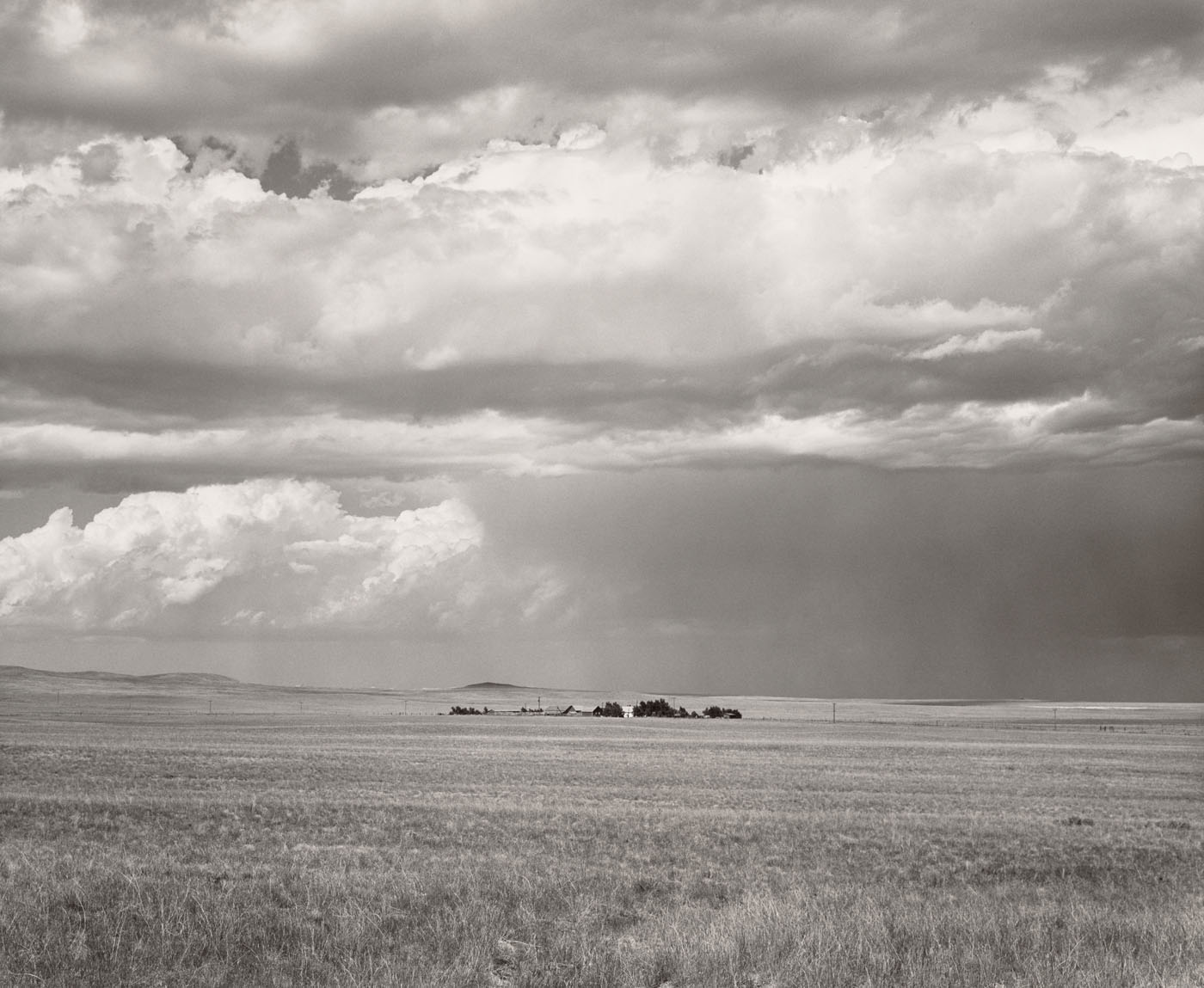
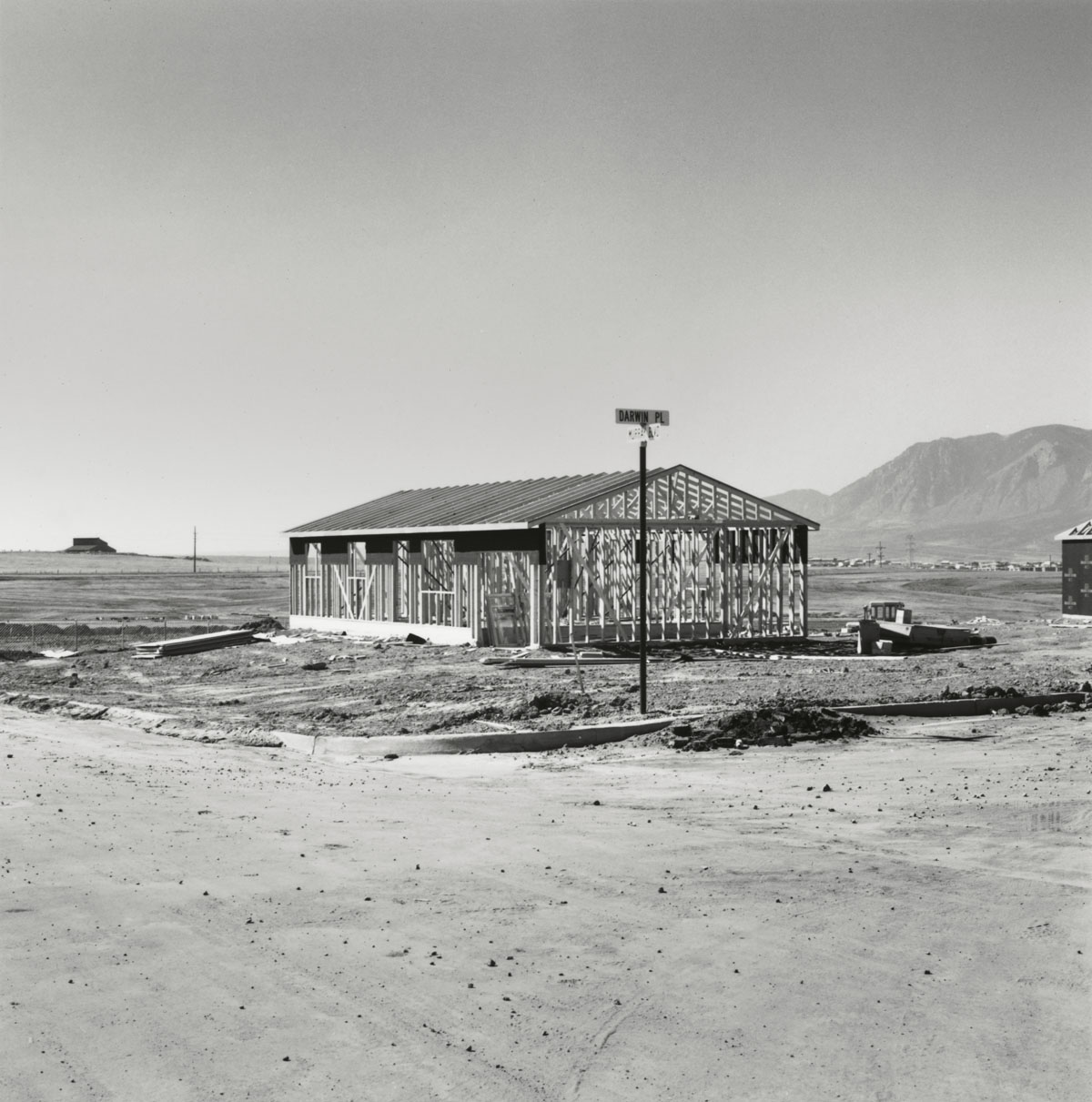
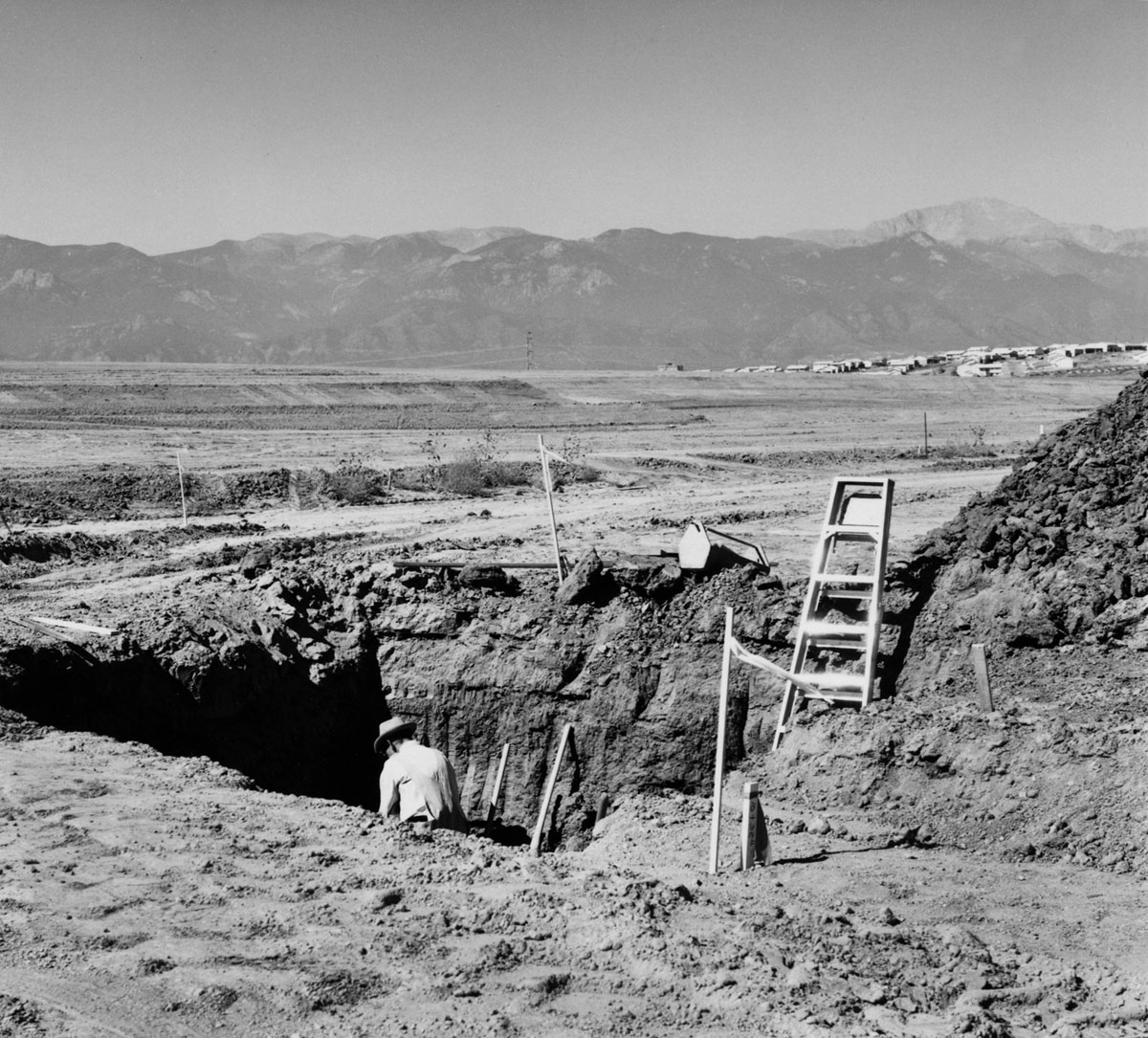
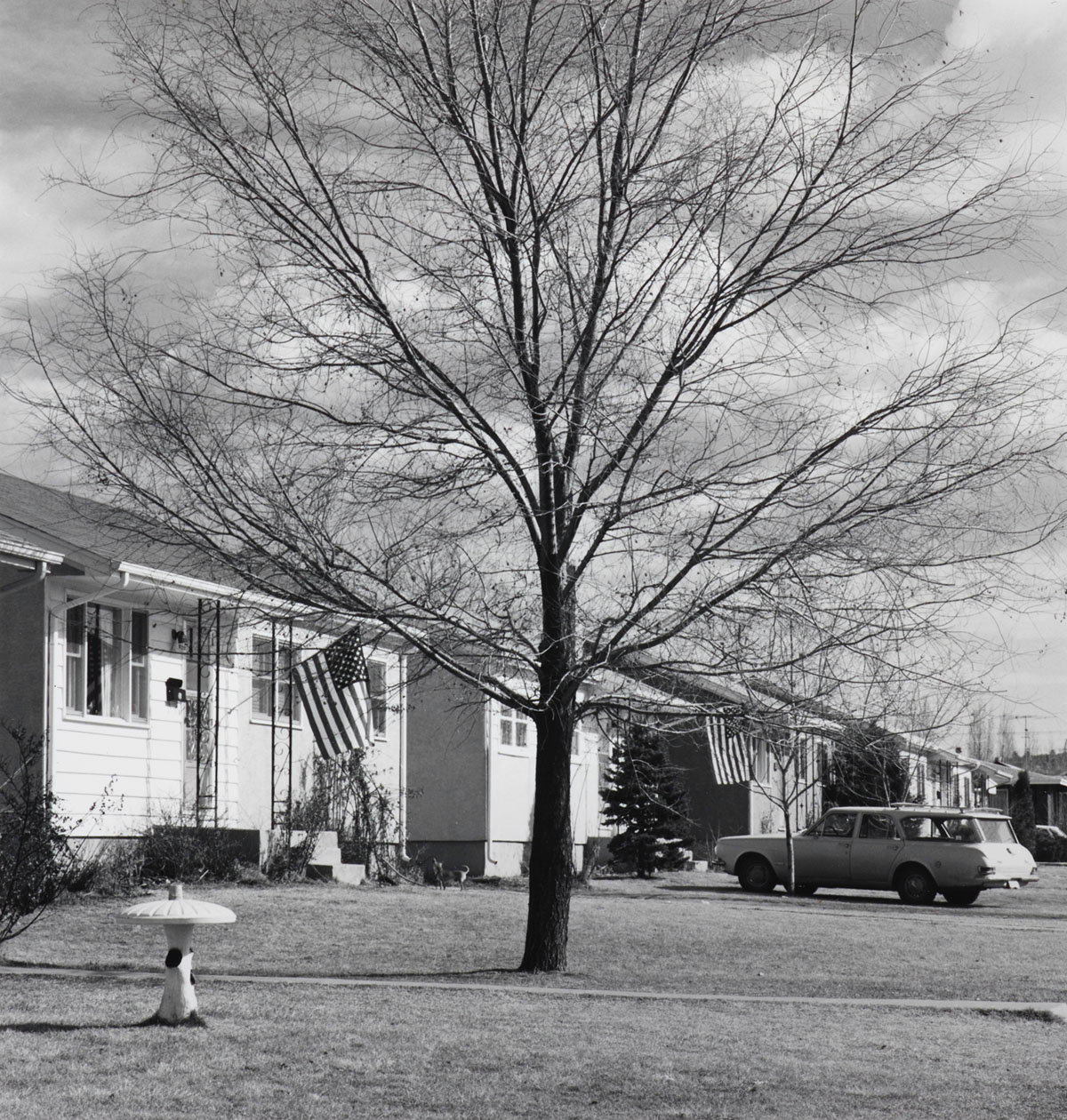
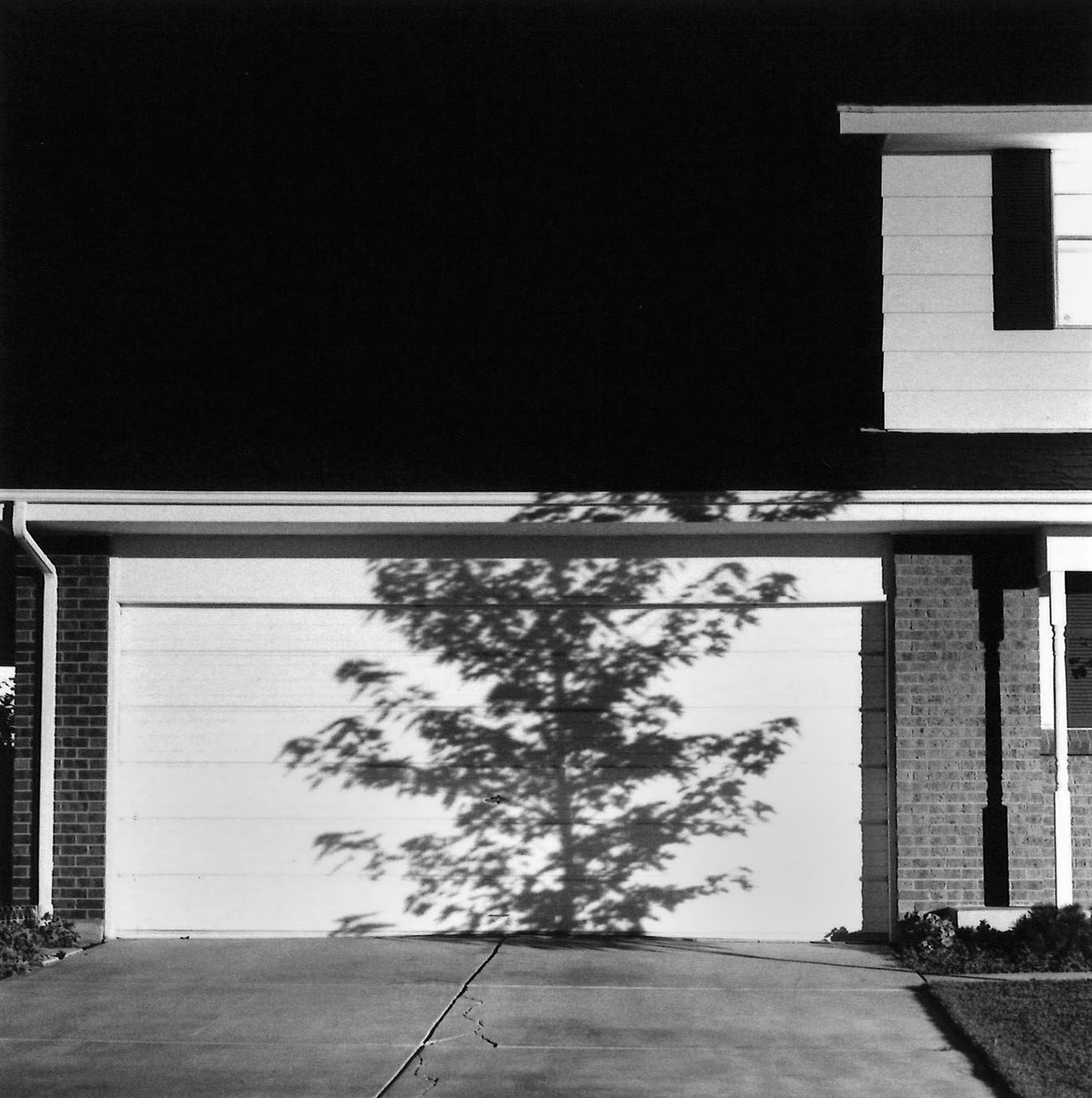
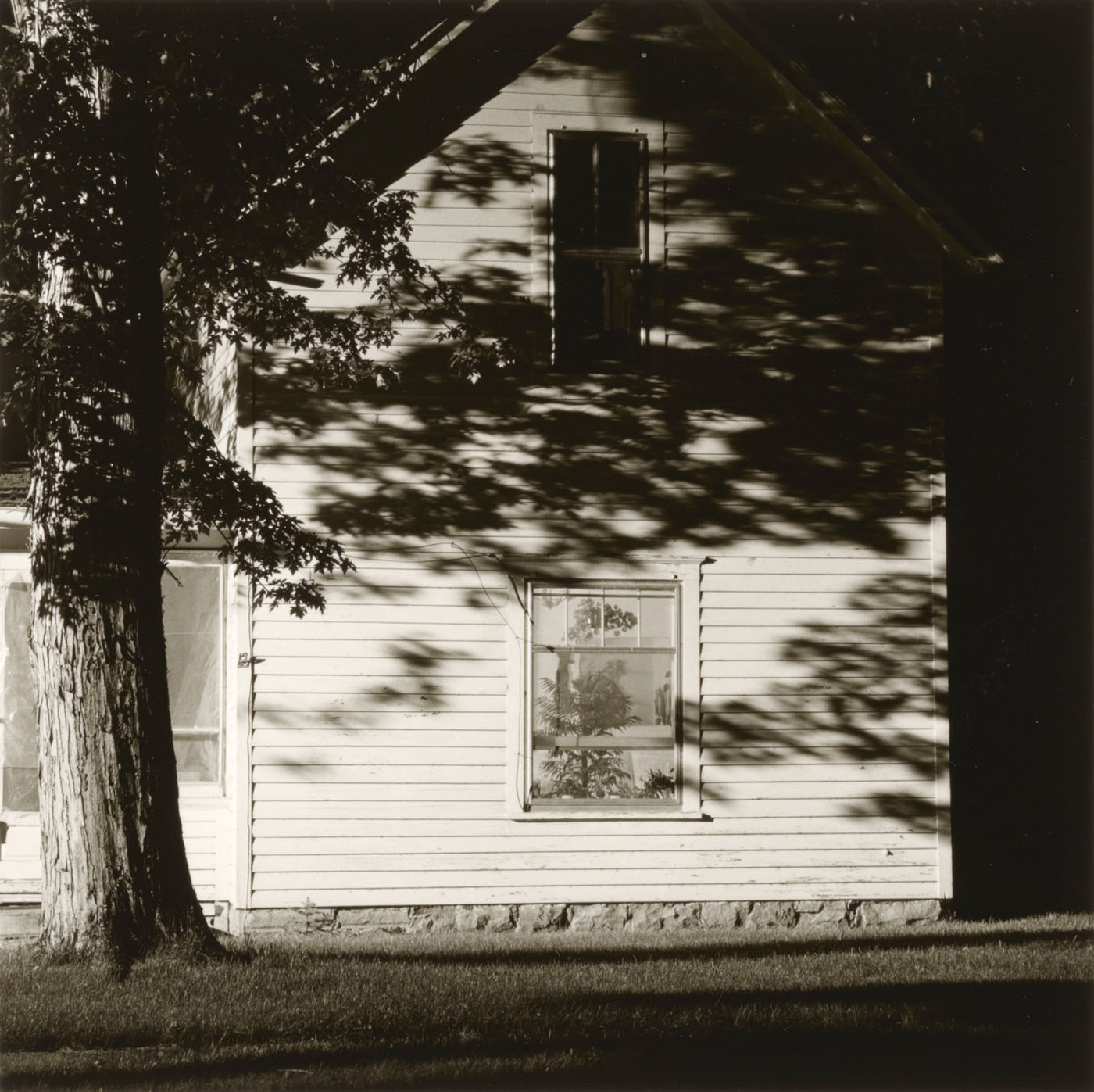
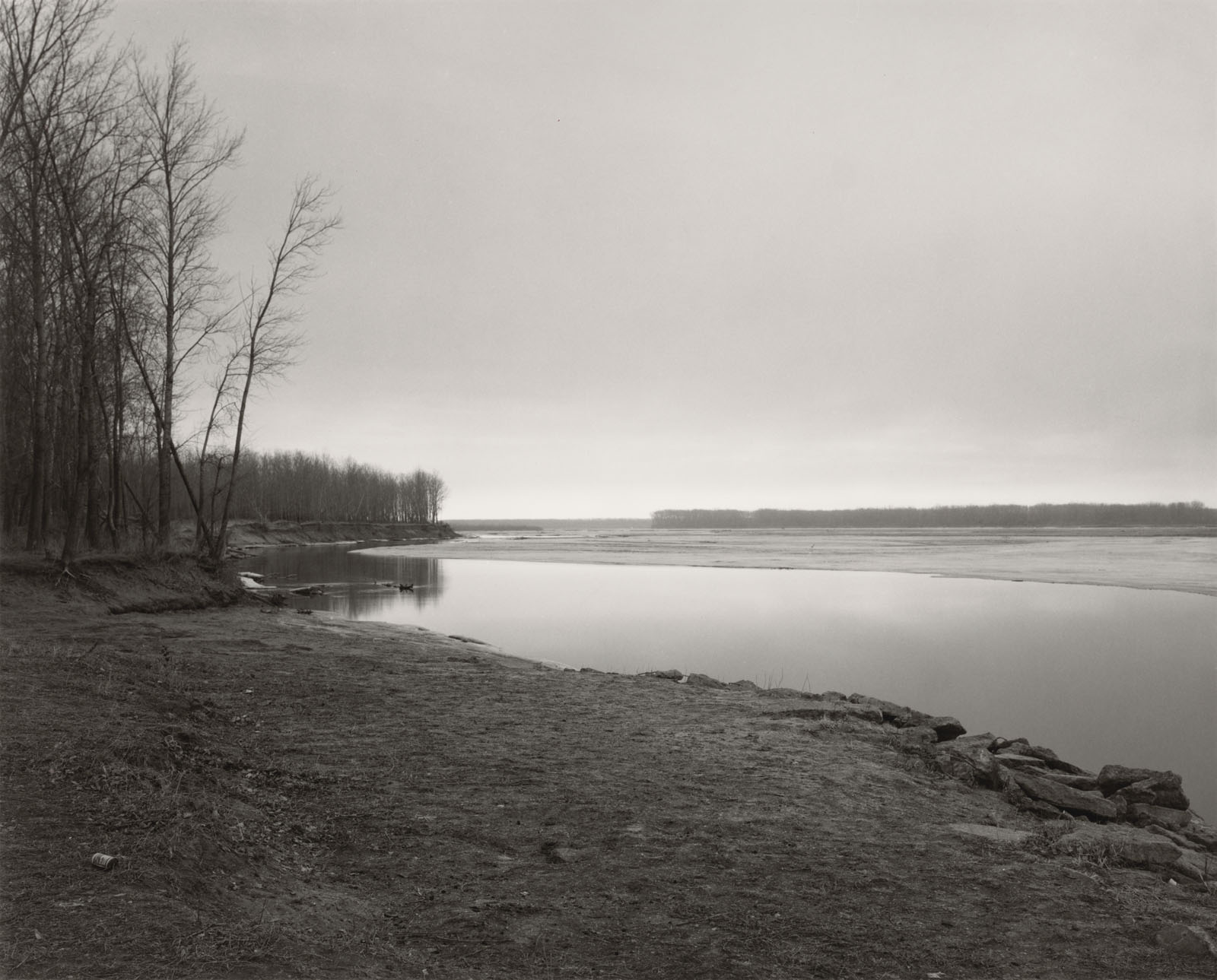
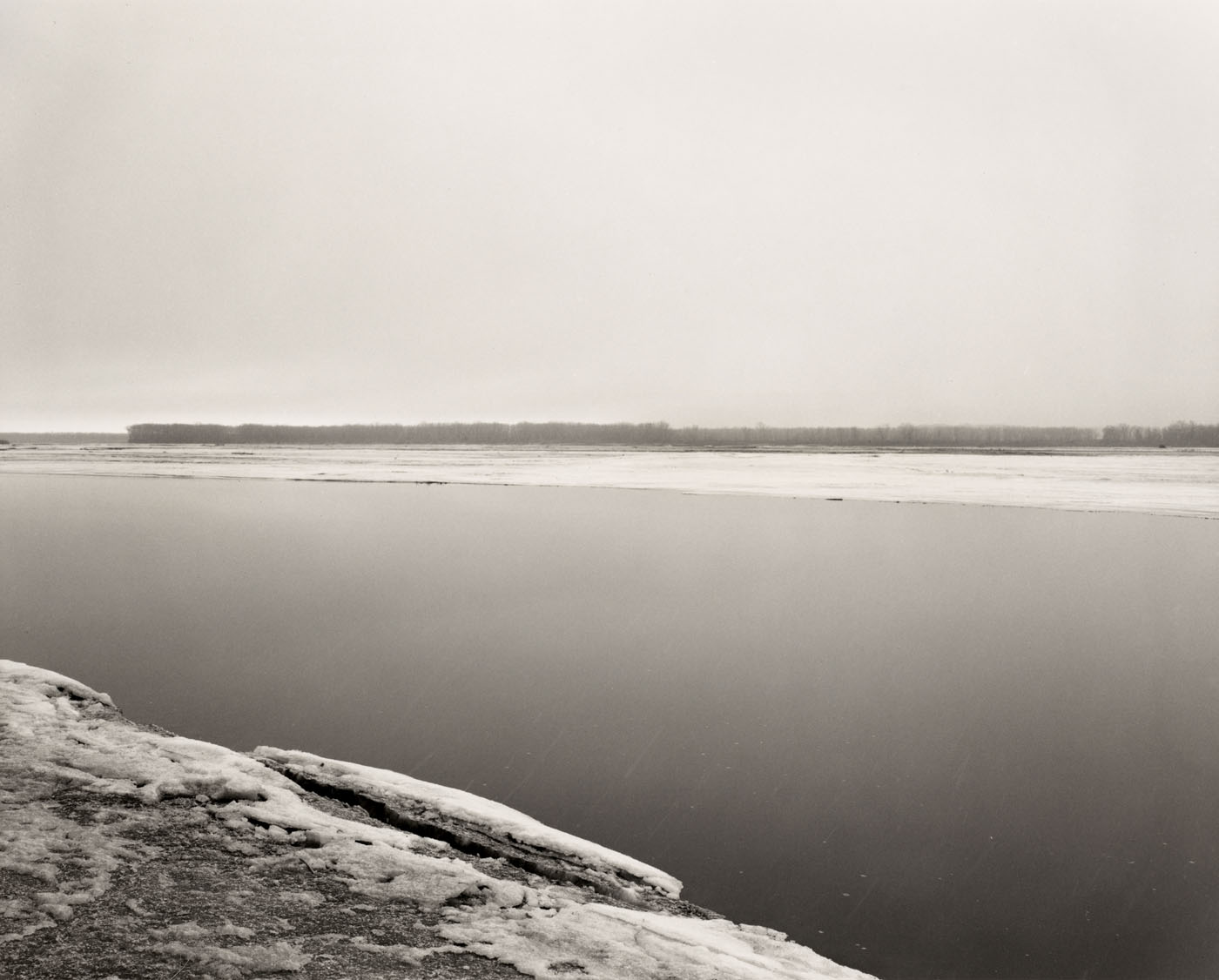
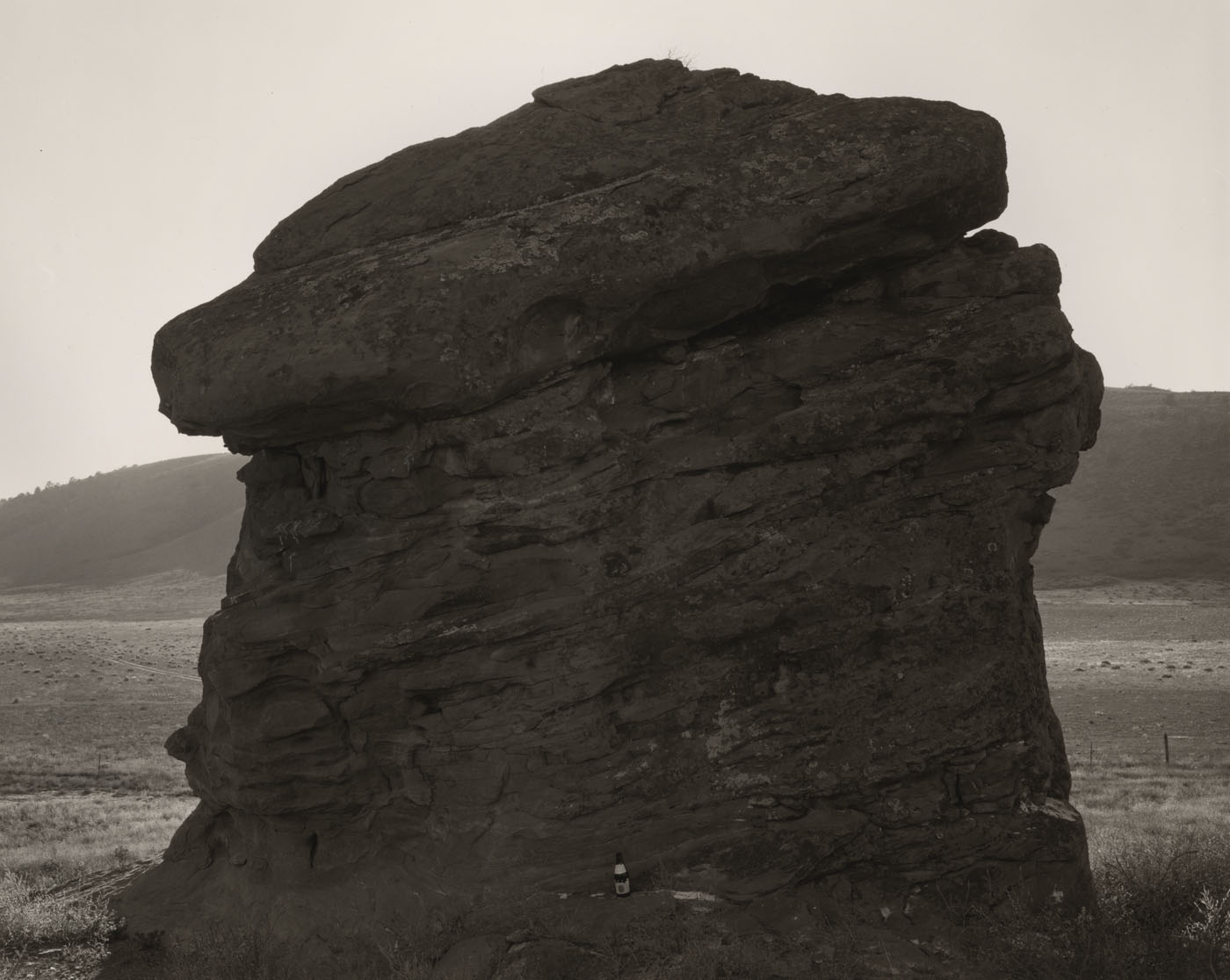
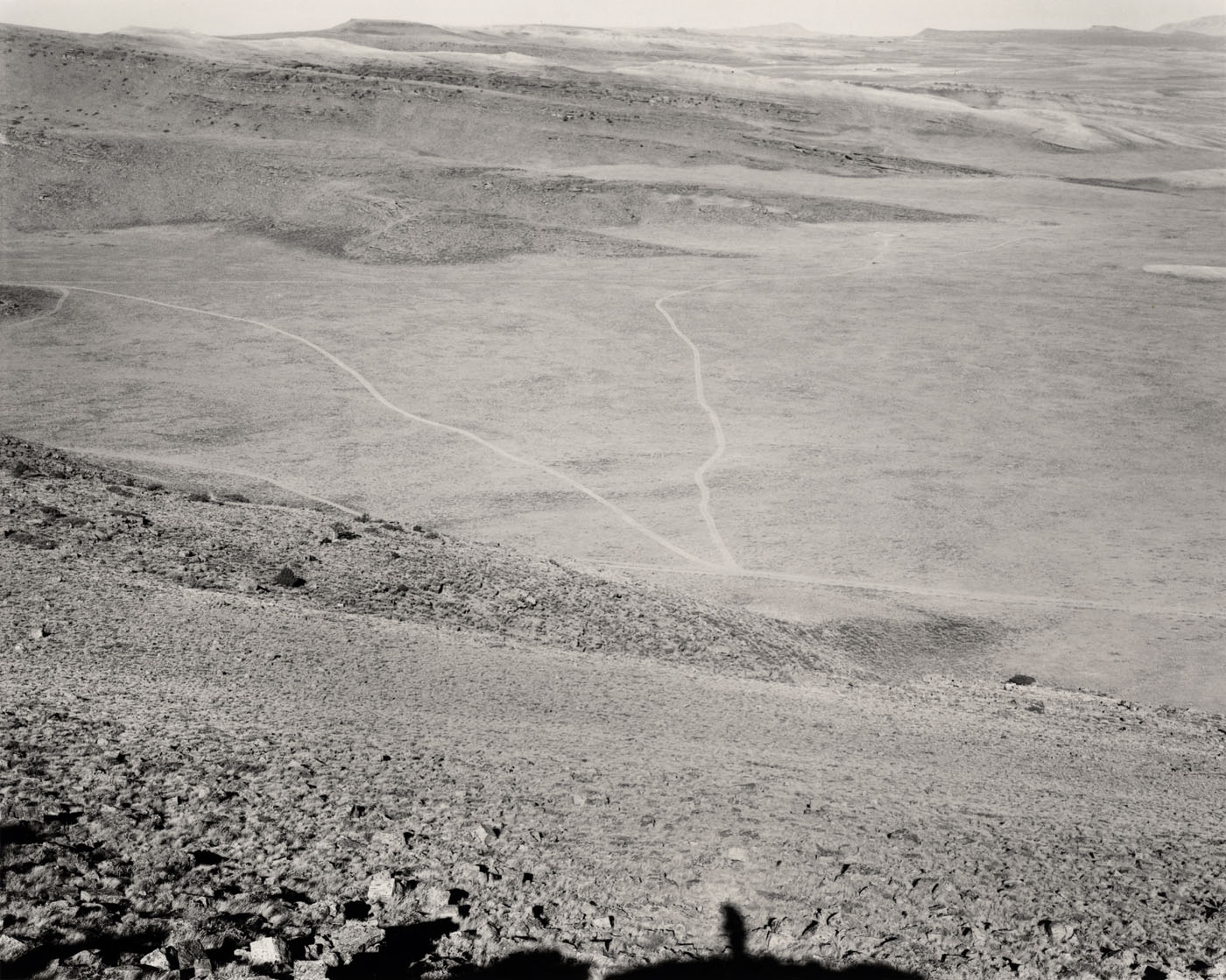
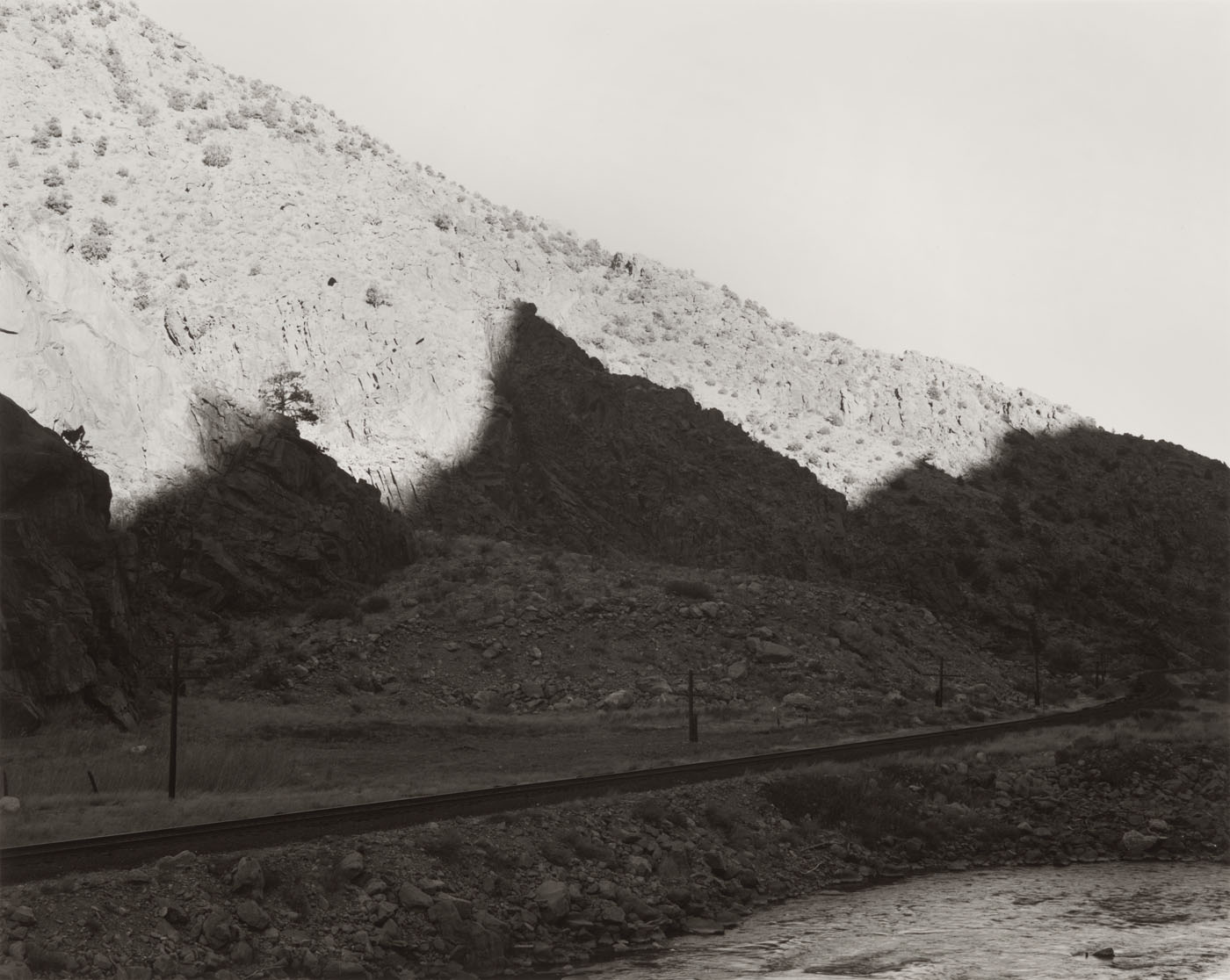
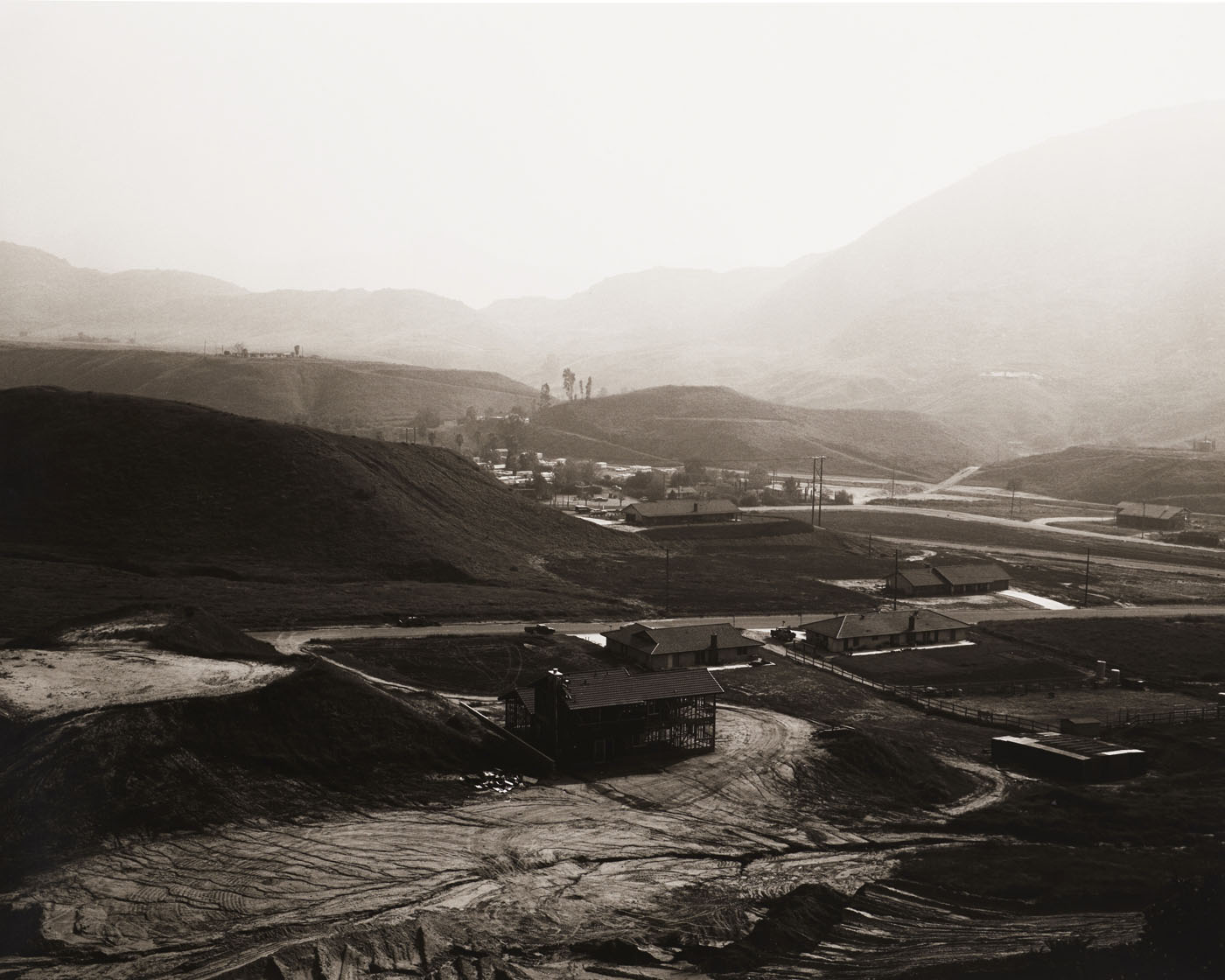
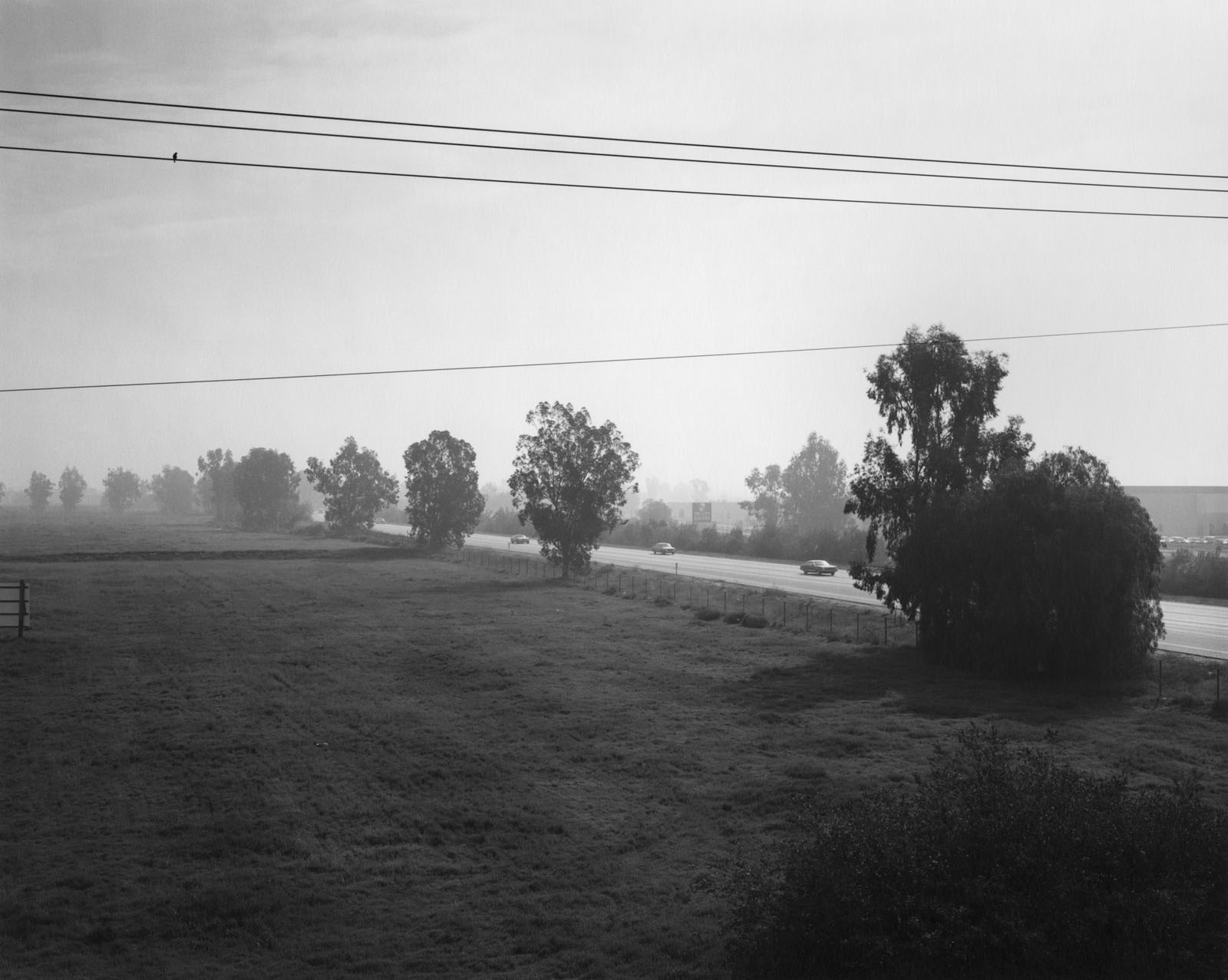
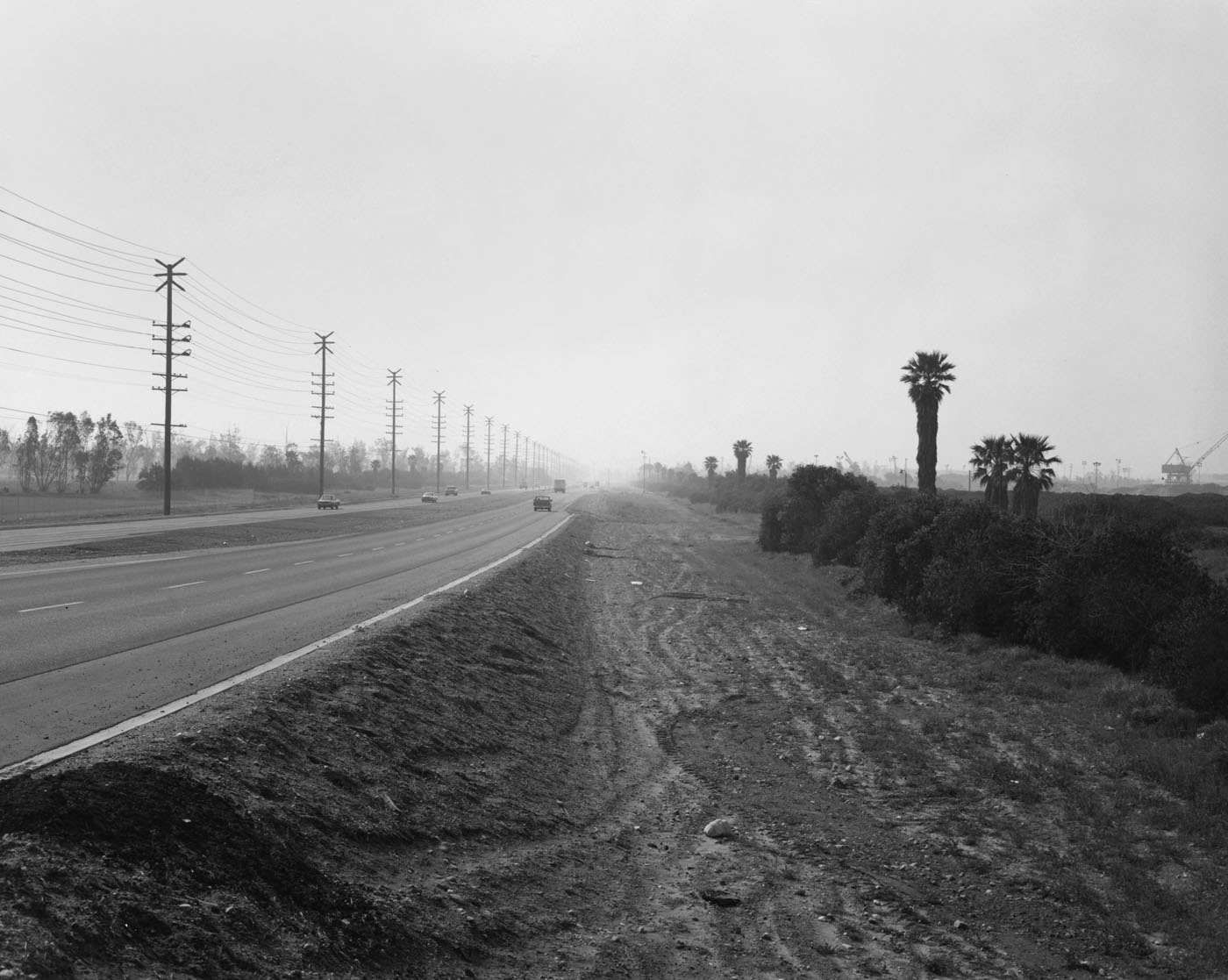
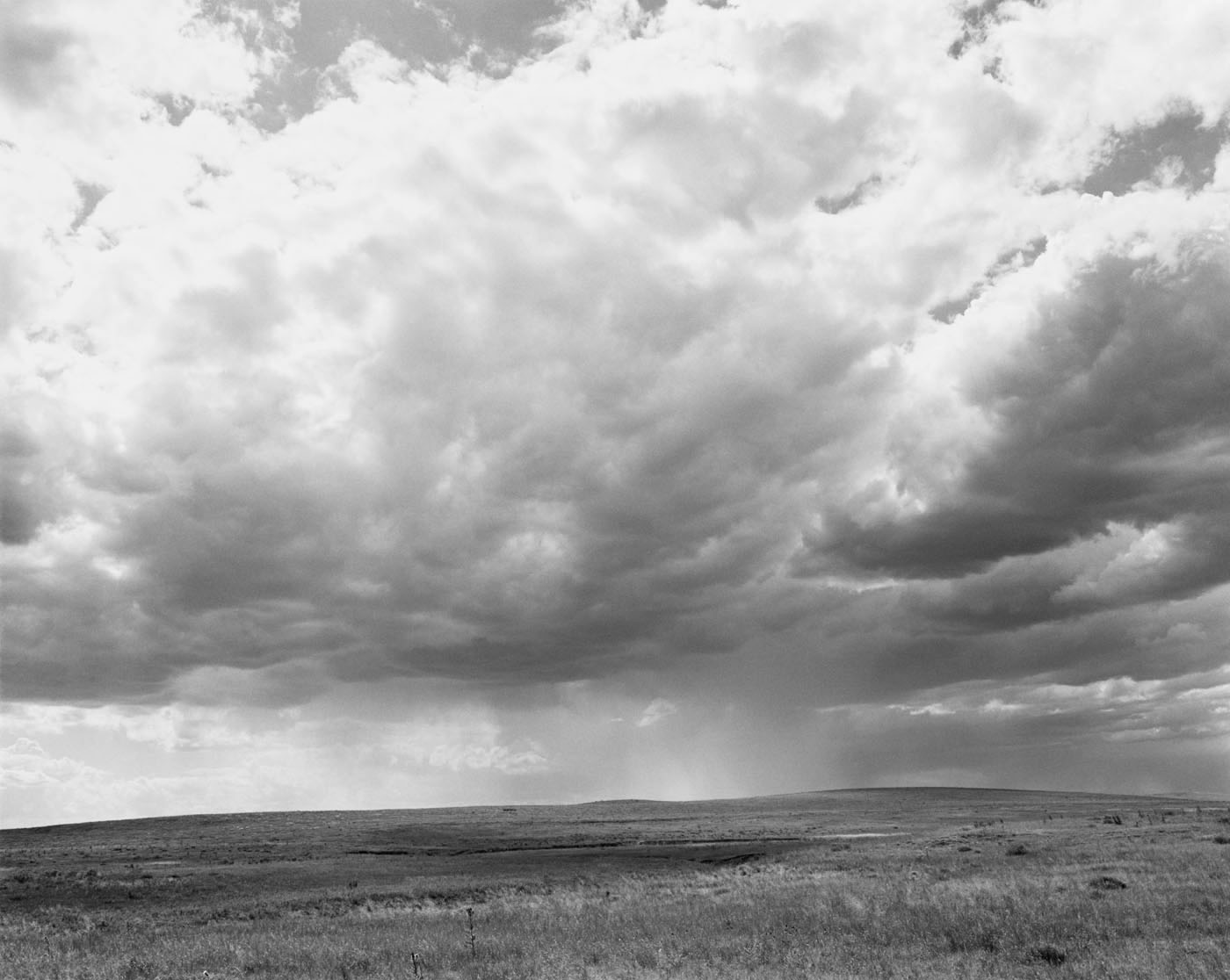
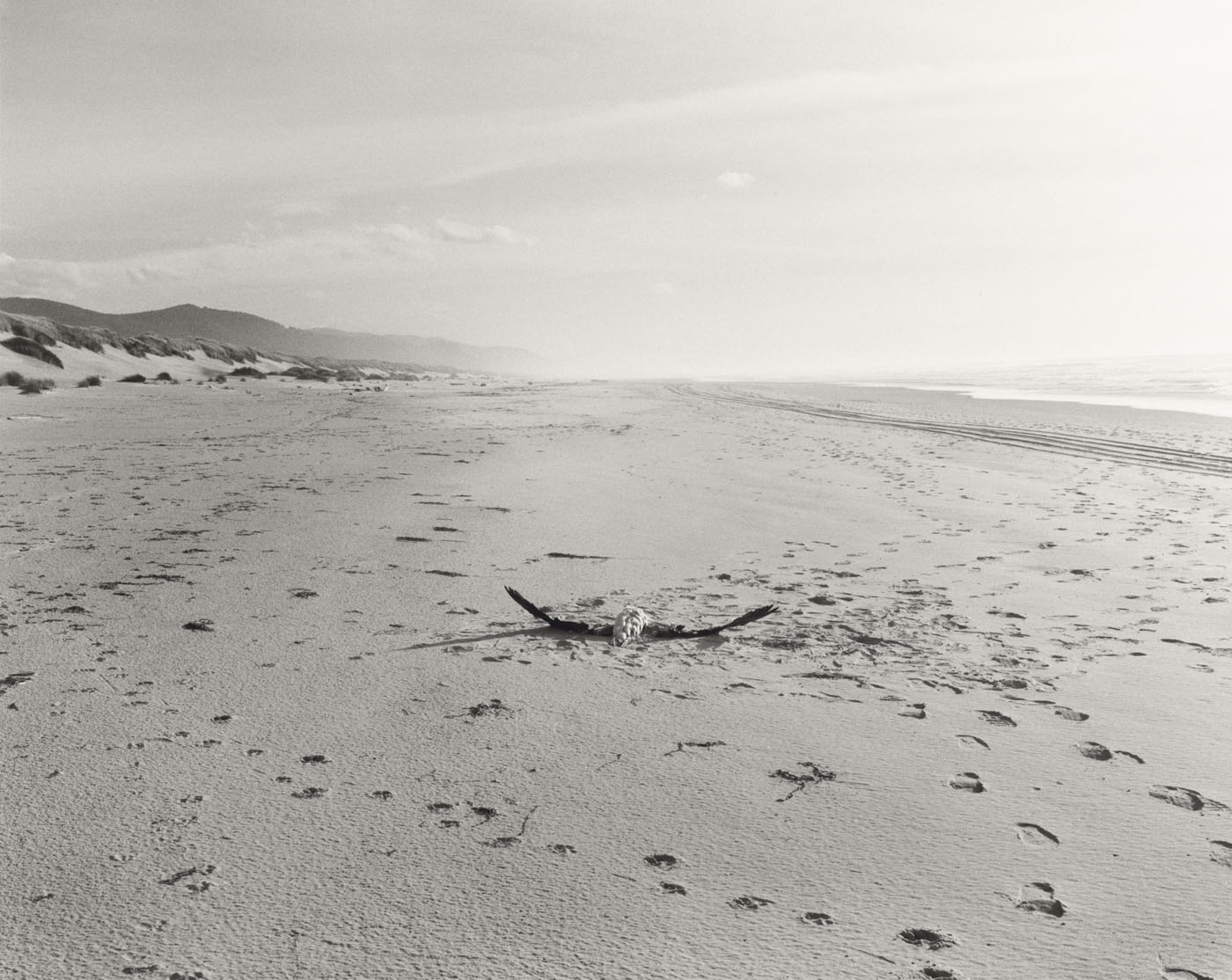
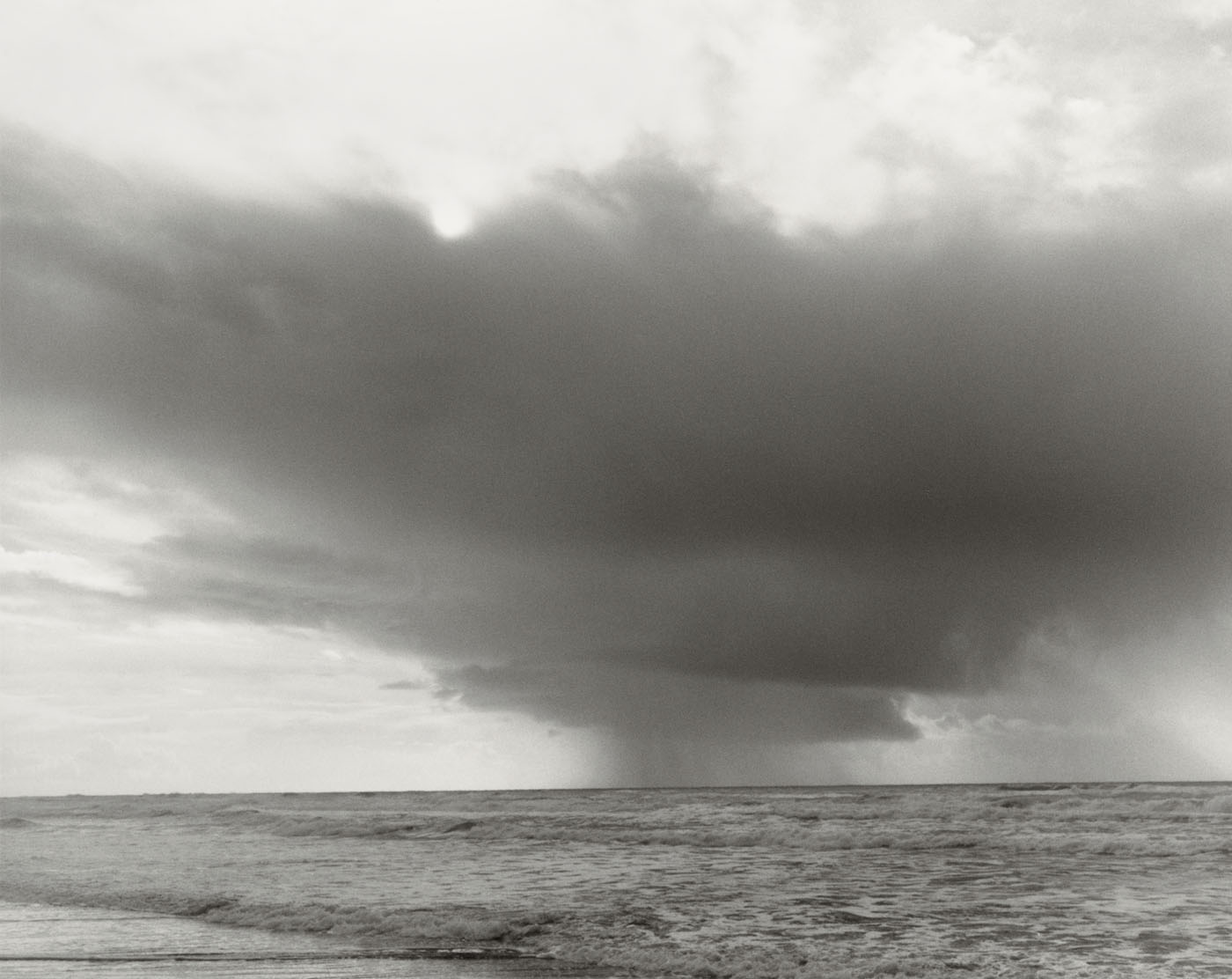
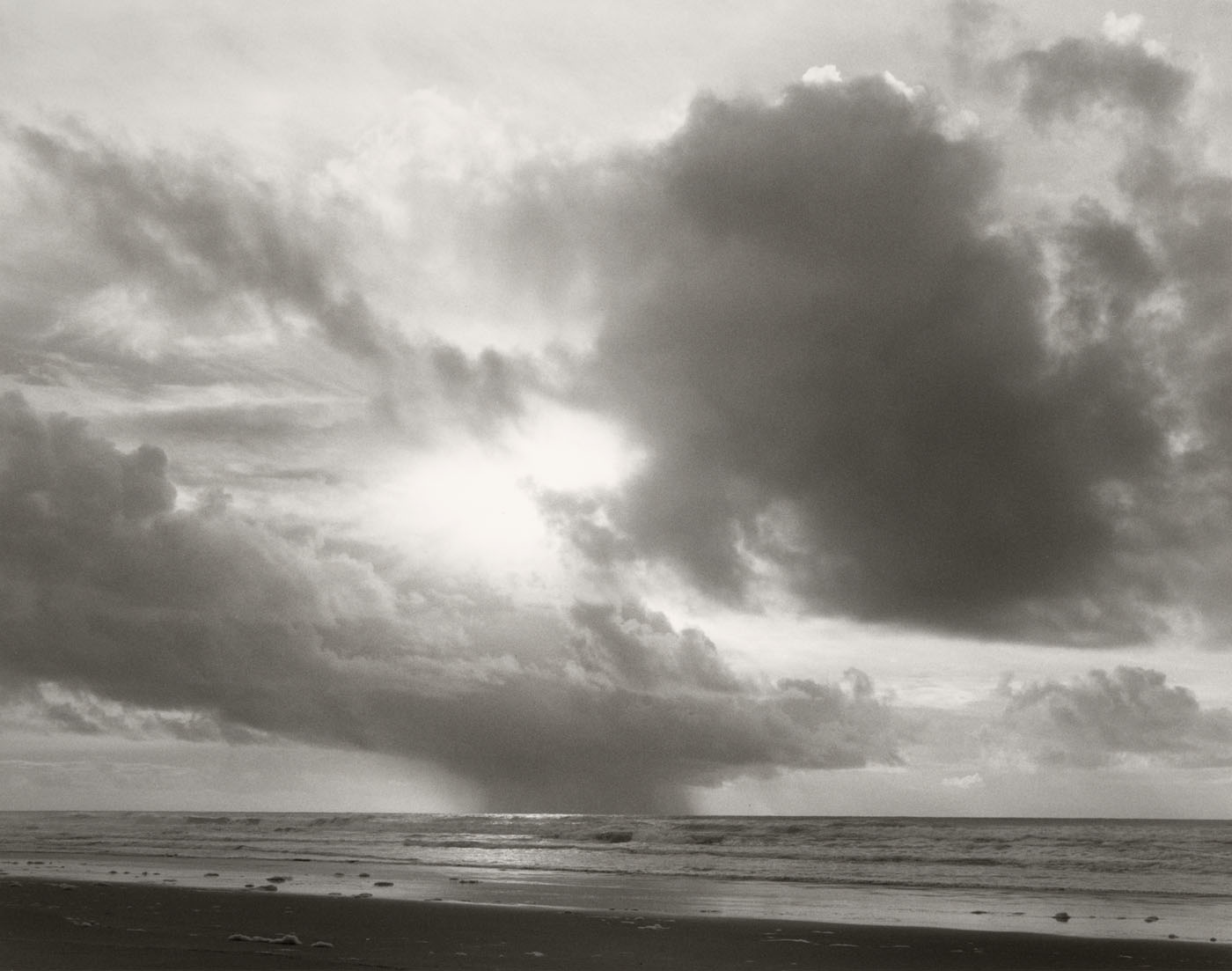
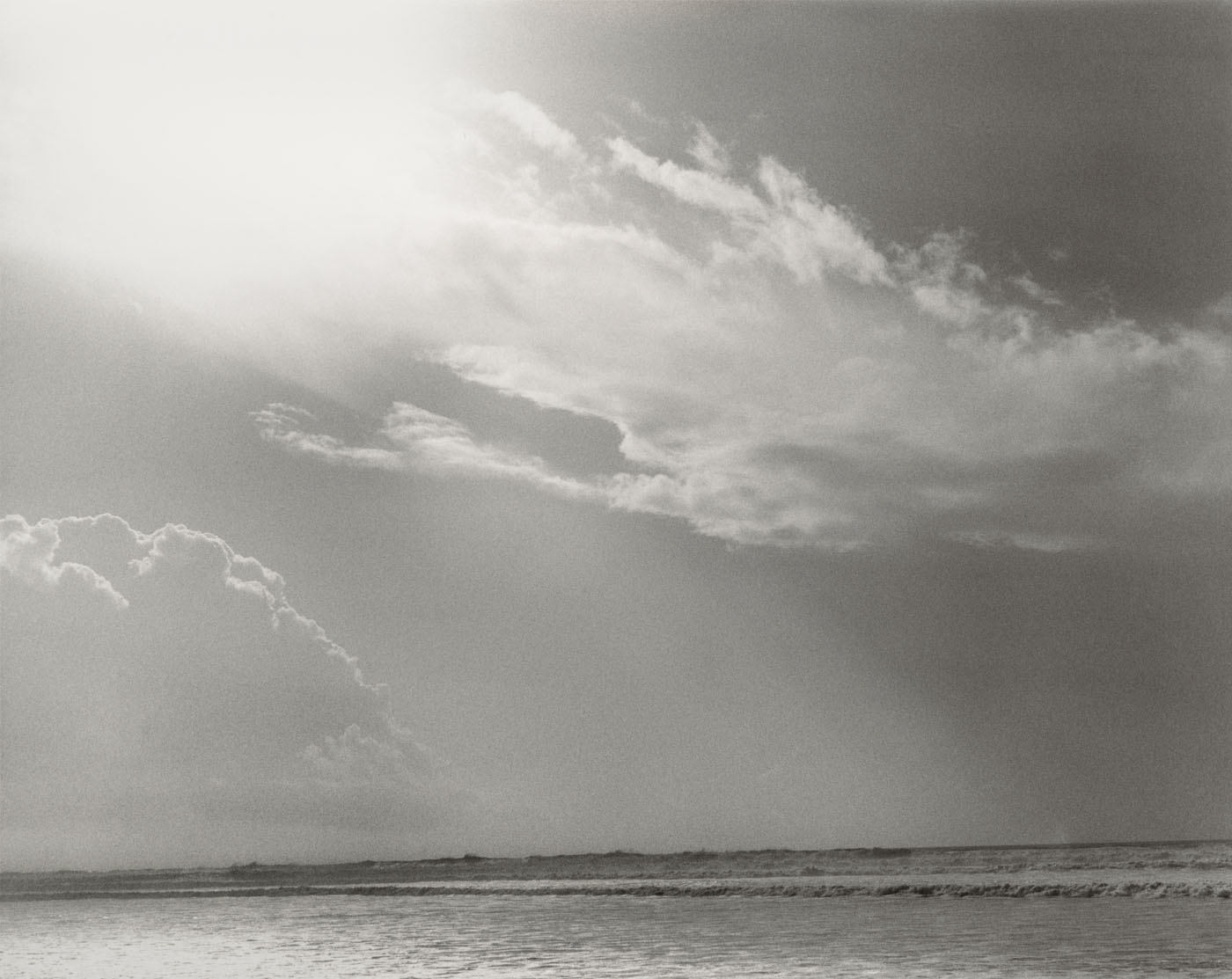
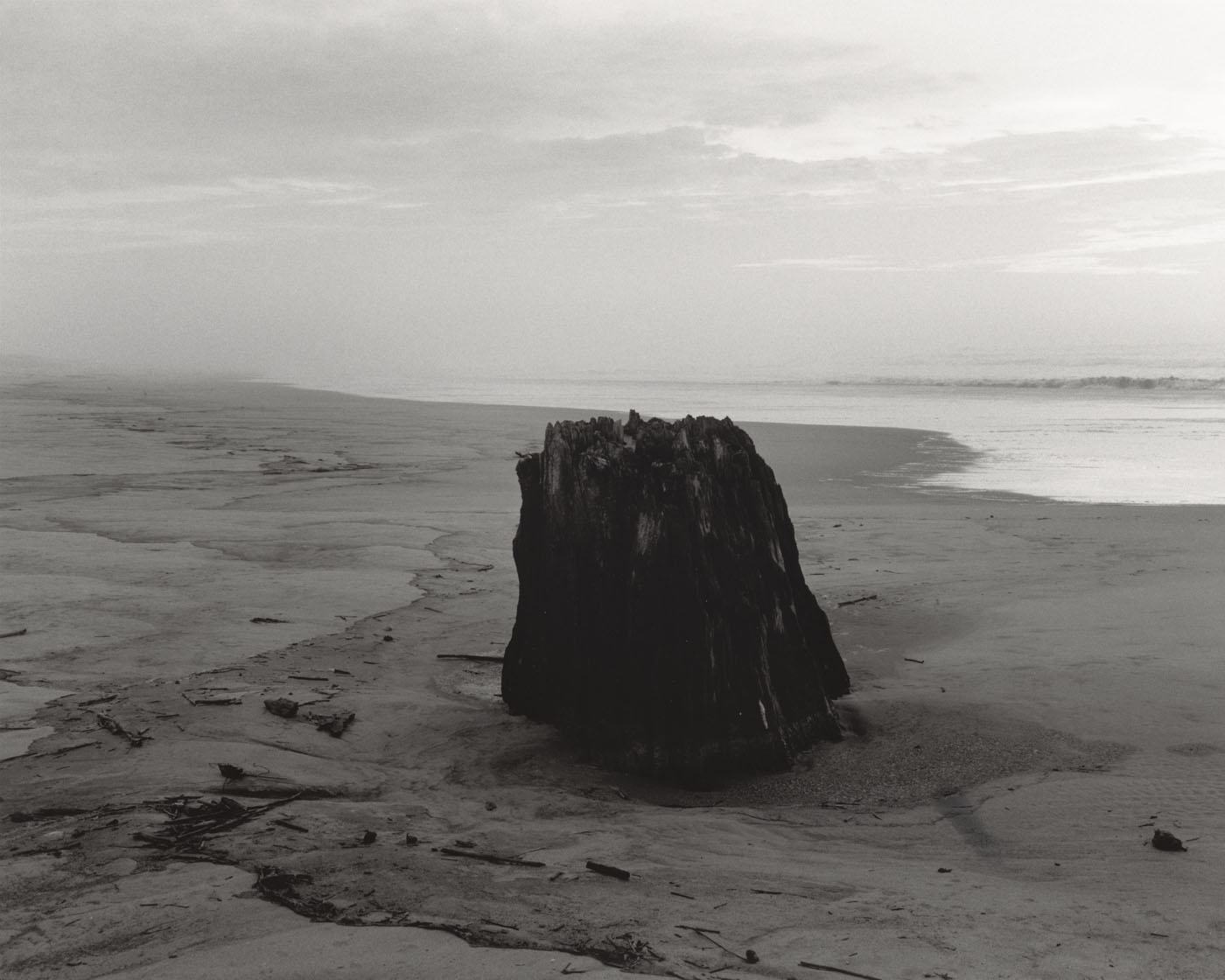
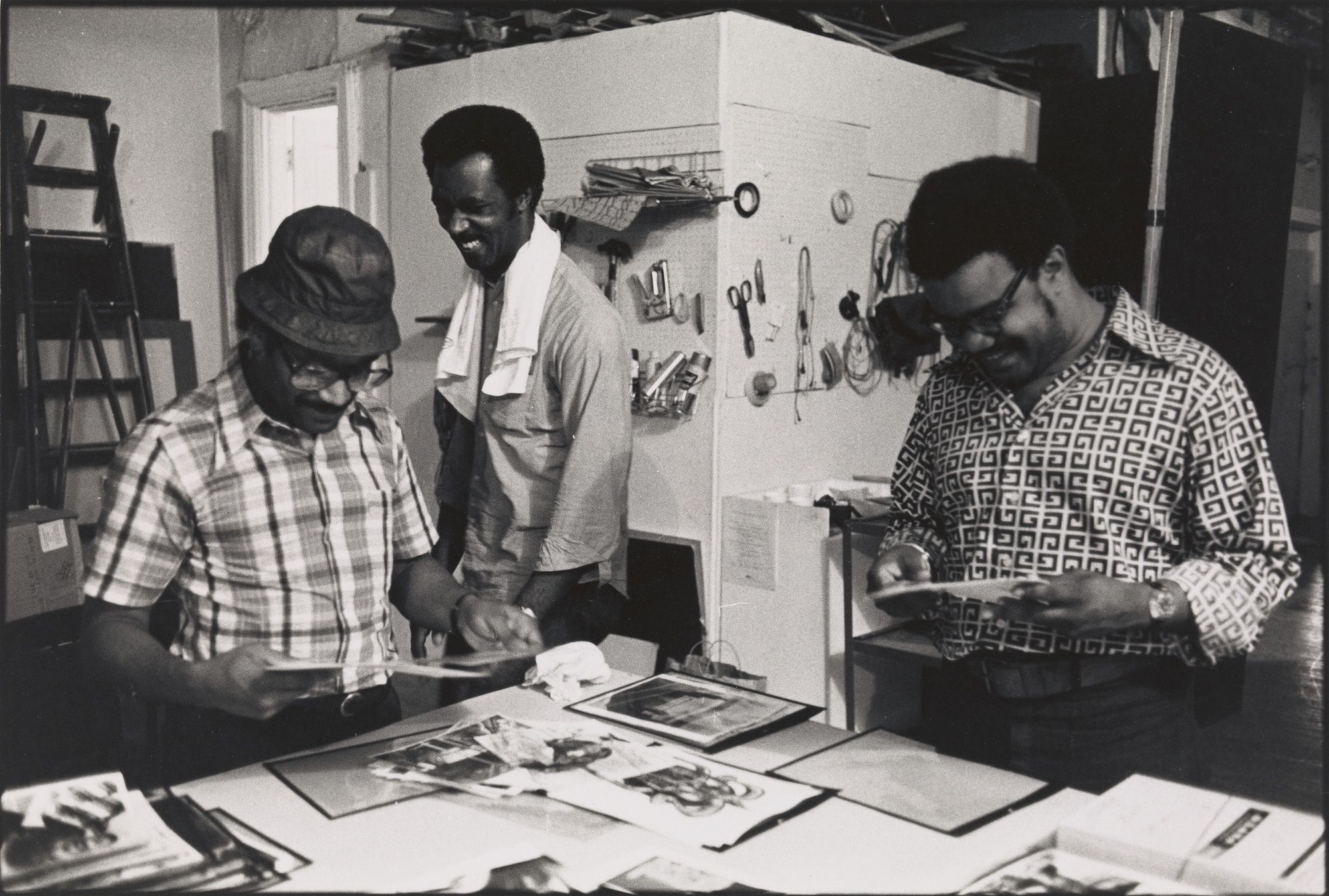
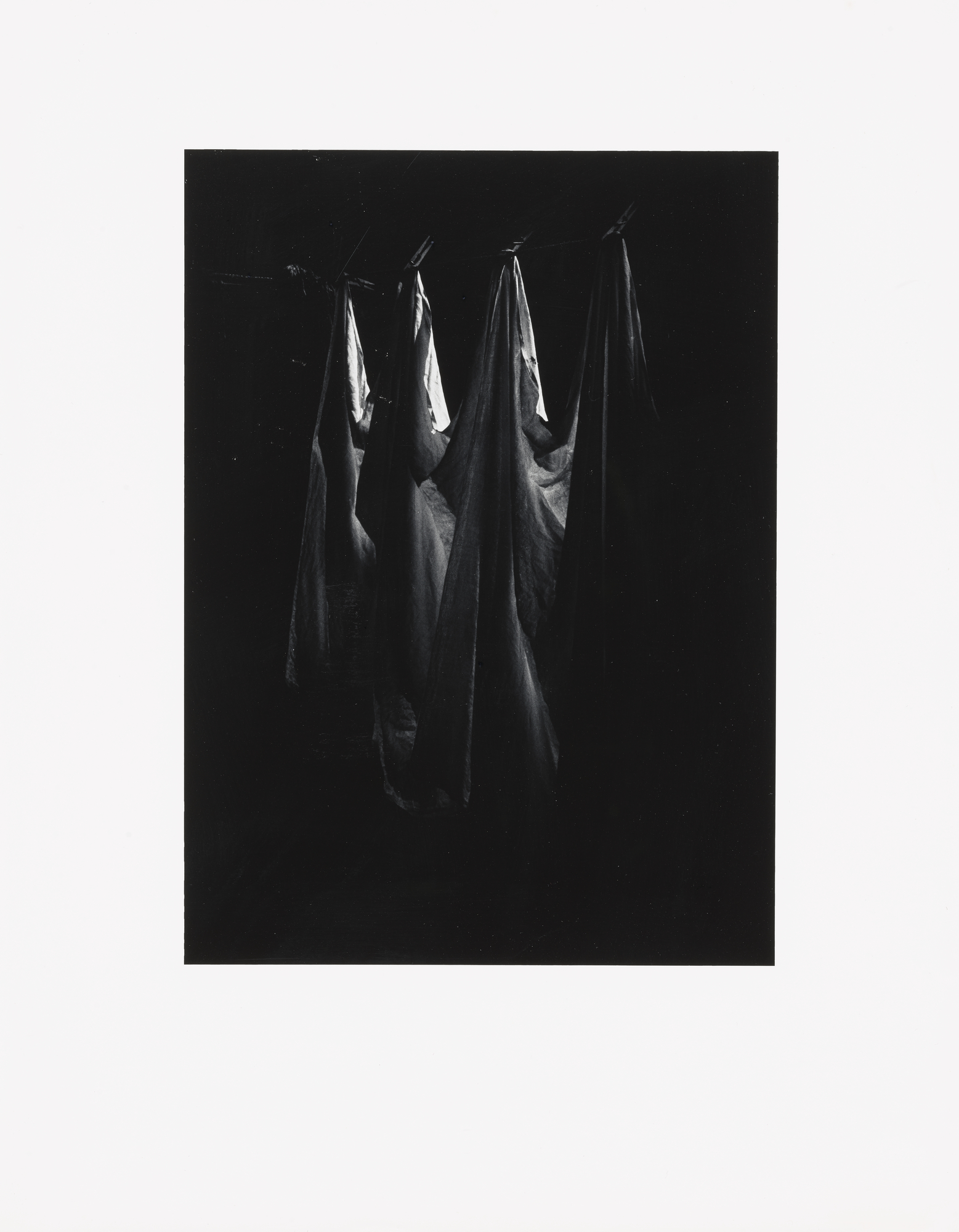
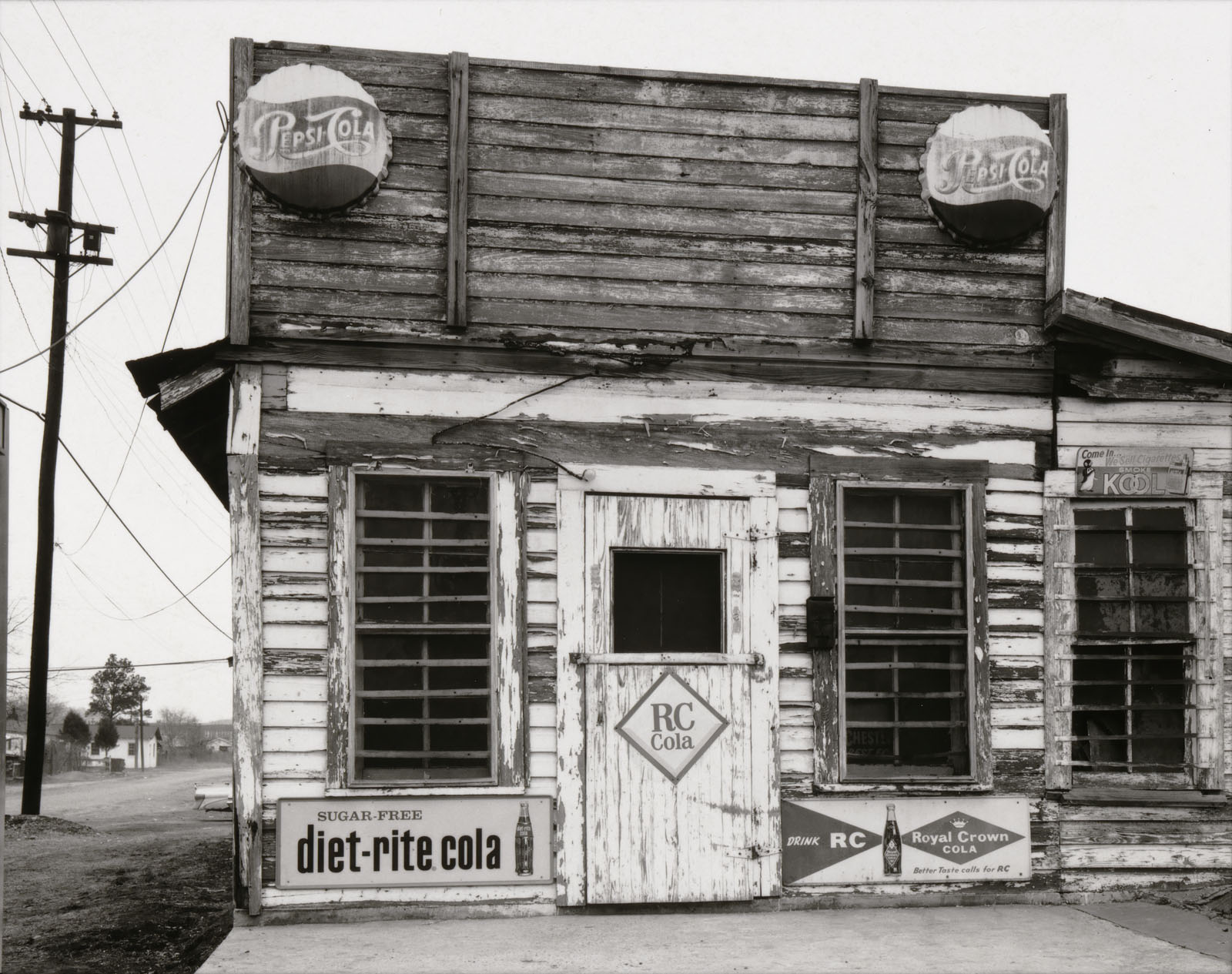
Exhibition: ‘Mining Photography. The Ecological Footprint of Image Production’ at Museum für Kunst und Gewerbe Hamburg

” Consumerism, capitalism, money, power, greed. I despair of the human race saving the earth. We might end up with ‘being’ only to be confronted by ‘nothingness’.” Dr Marcus Bunyan

Exhibition dates: 15th July – 31st October, 2022

Curators: The exhibition is curated by artist, author and curator Boaz Levin and Dr. Esther Ruelfs, Head of the Photography and New Media Collection at MK&G.

Artists: Ignacio Acosta, Lisa Barnard, F& D Cartier, Optics Division of the Metabolic Studio (Lauren Bon, Tristan Duke und Richard Nielsen), Susanne Kriemann, Mary Mattingly, Daphné Nan Le Sergent, Lisa Rave, Alison Rossiter, Robert Smithson, Simon Starling, Anaïs Tondeur, James Welling, Noa Yafe, Tobias Zielony


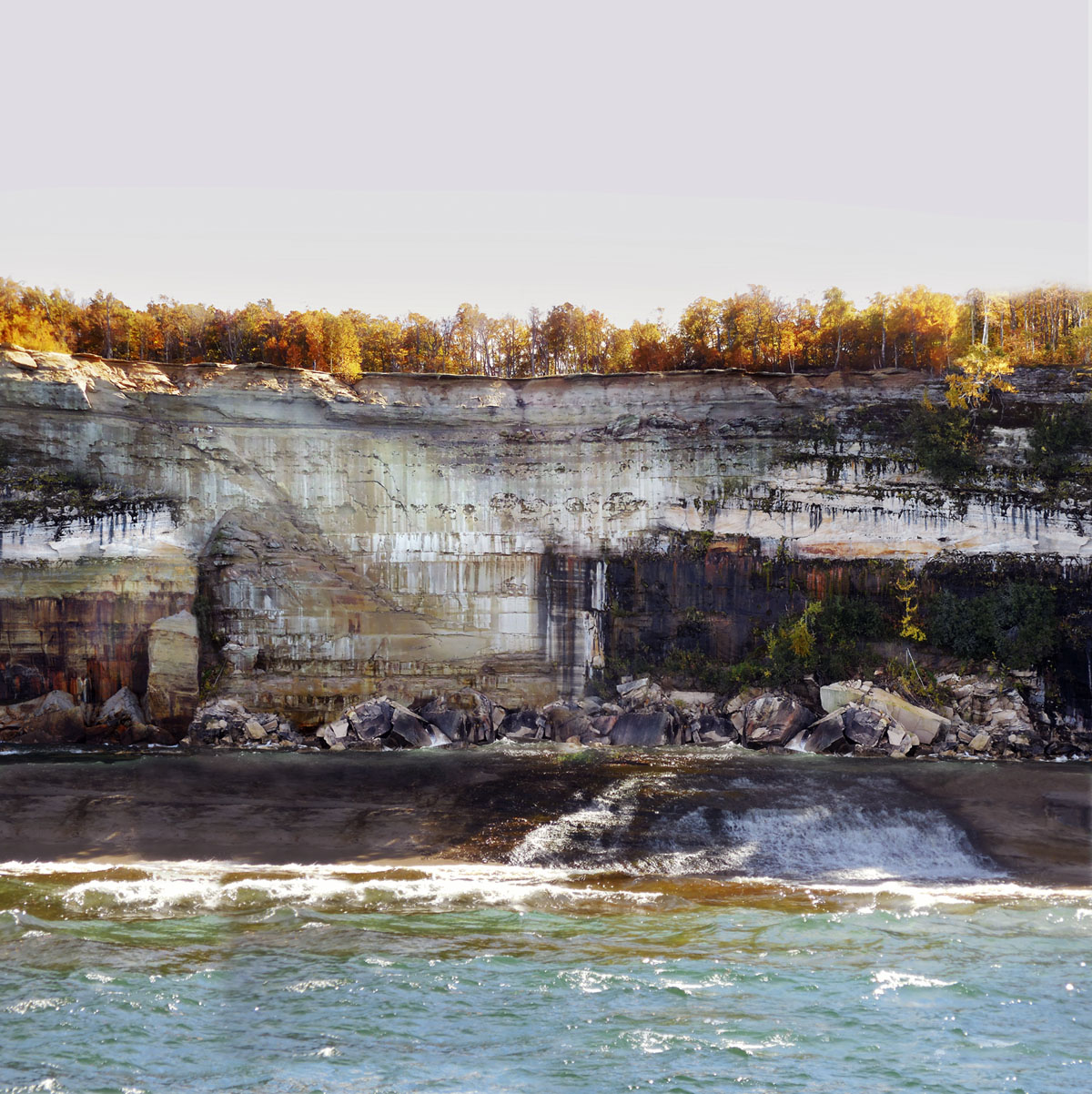
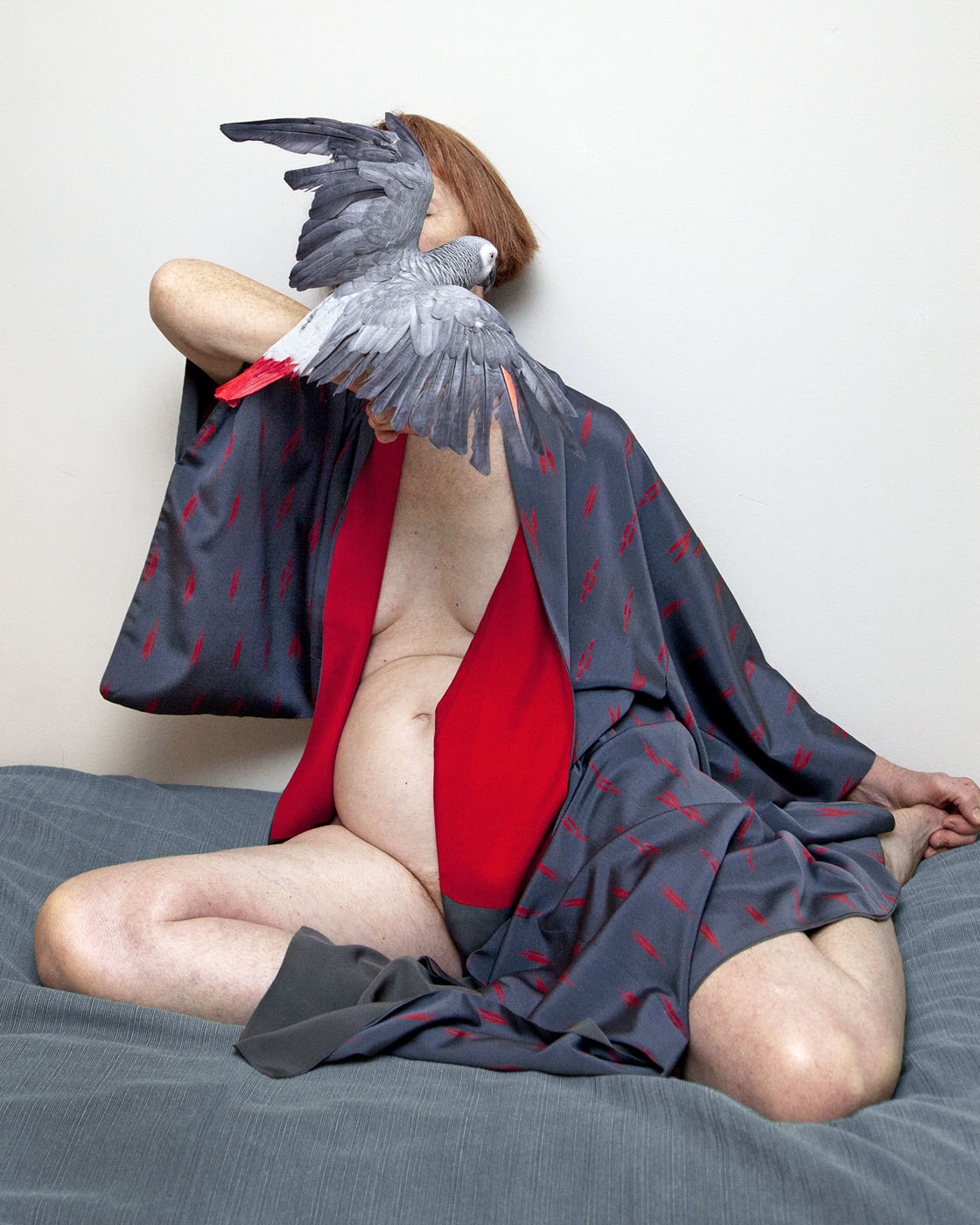
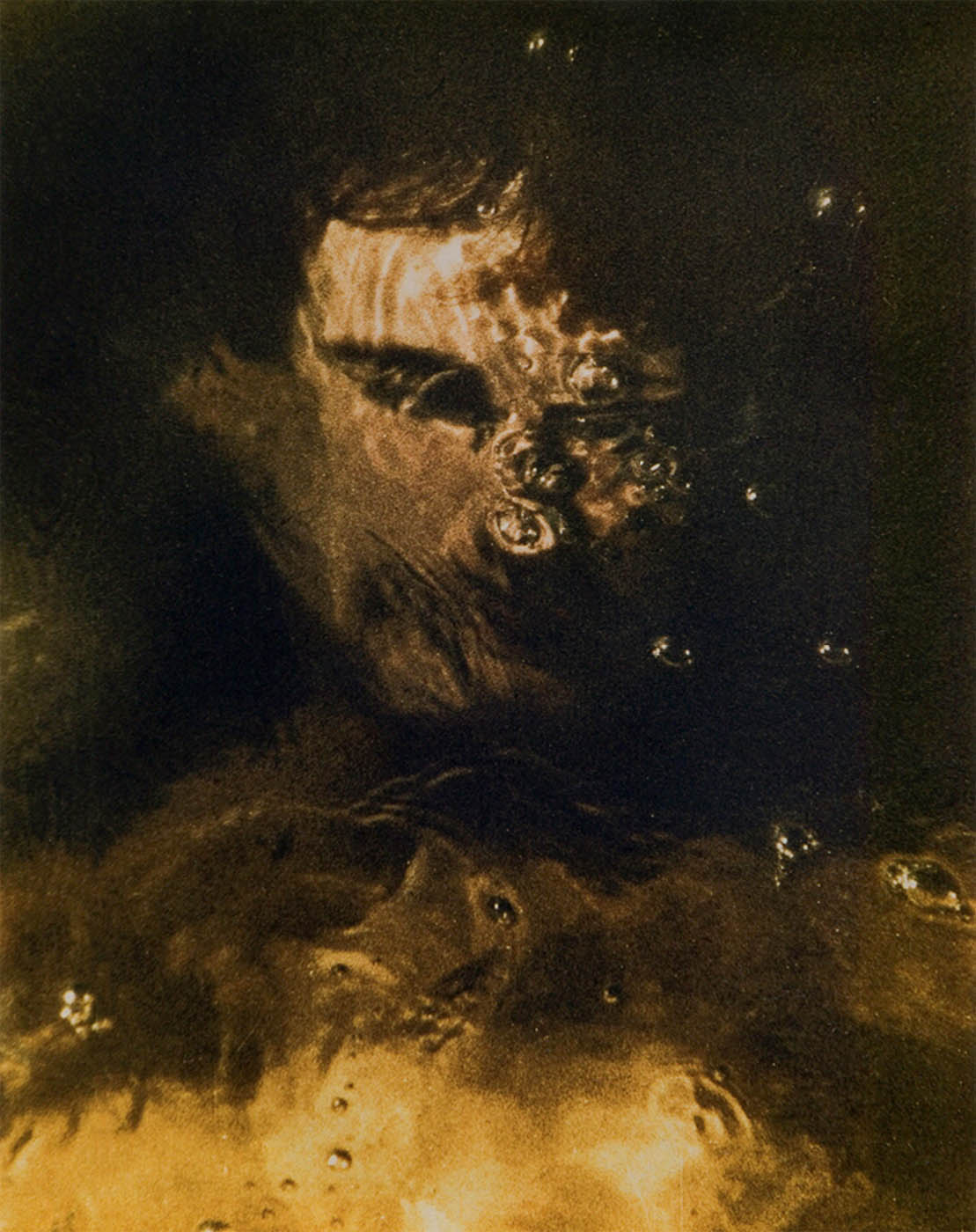
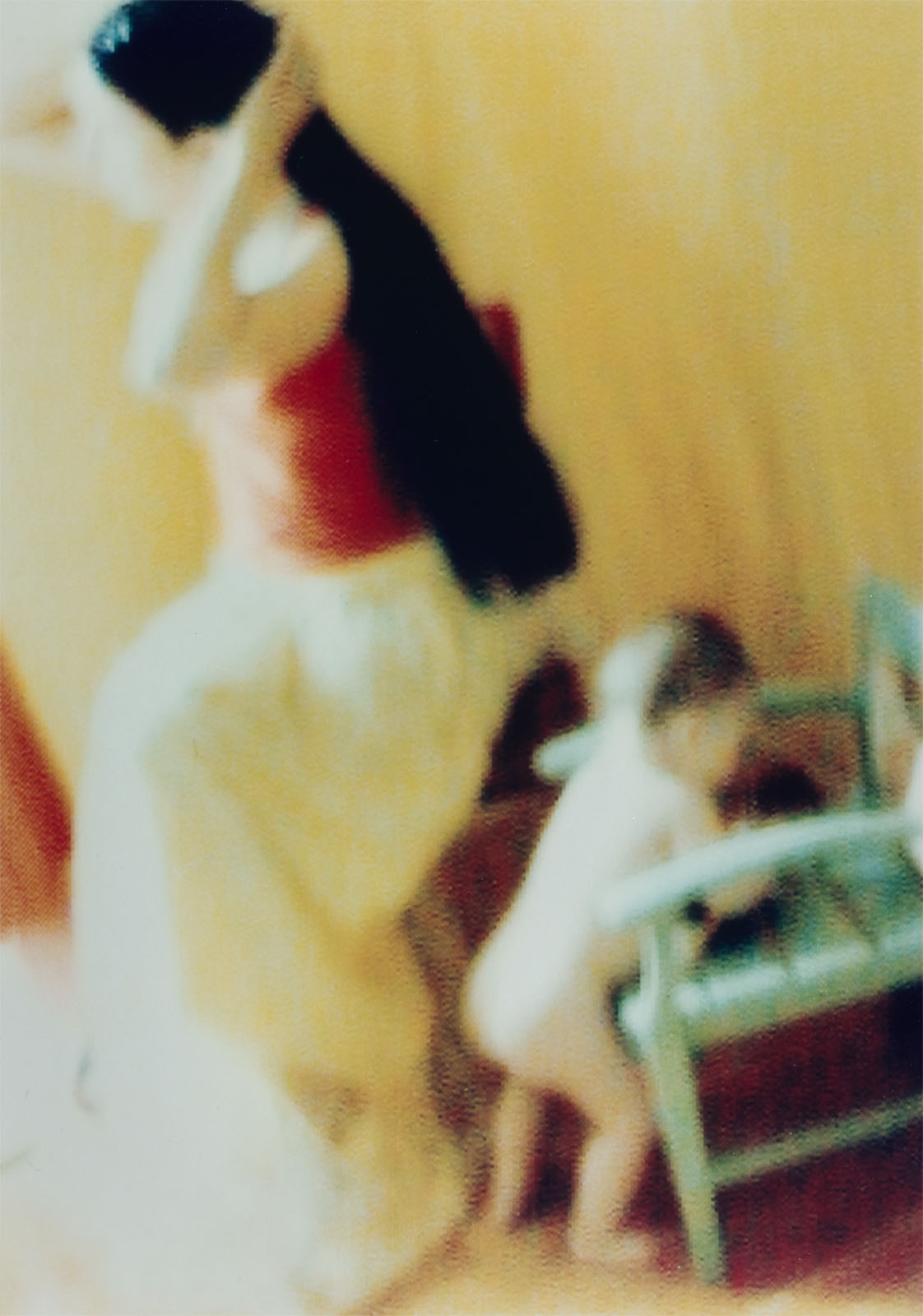
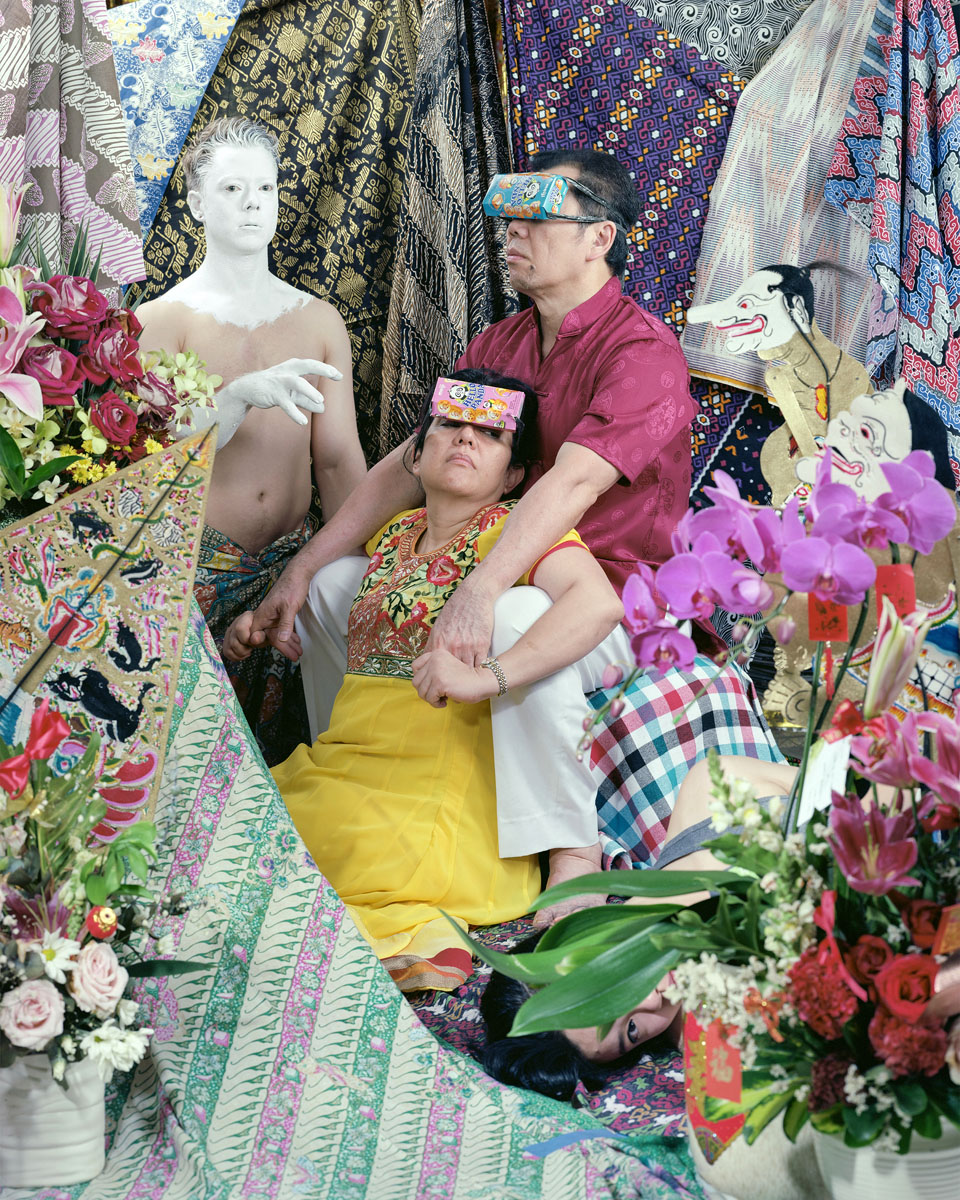
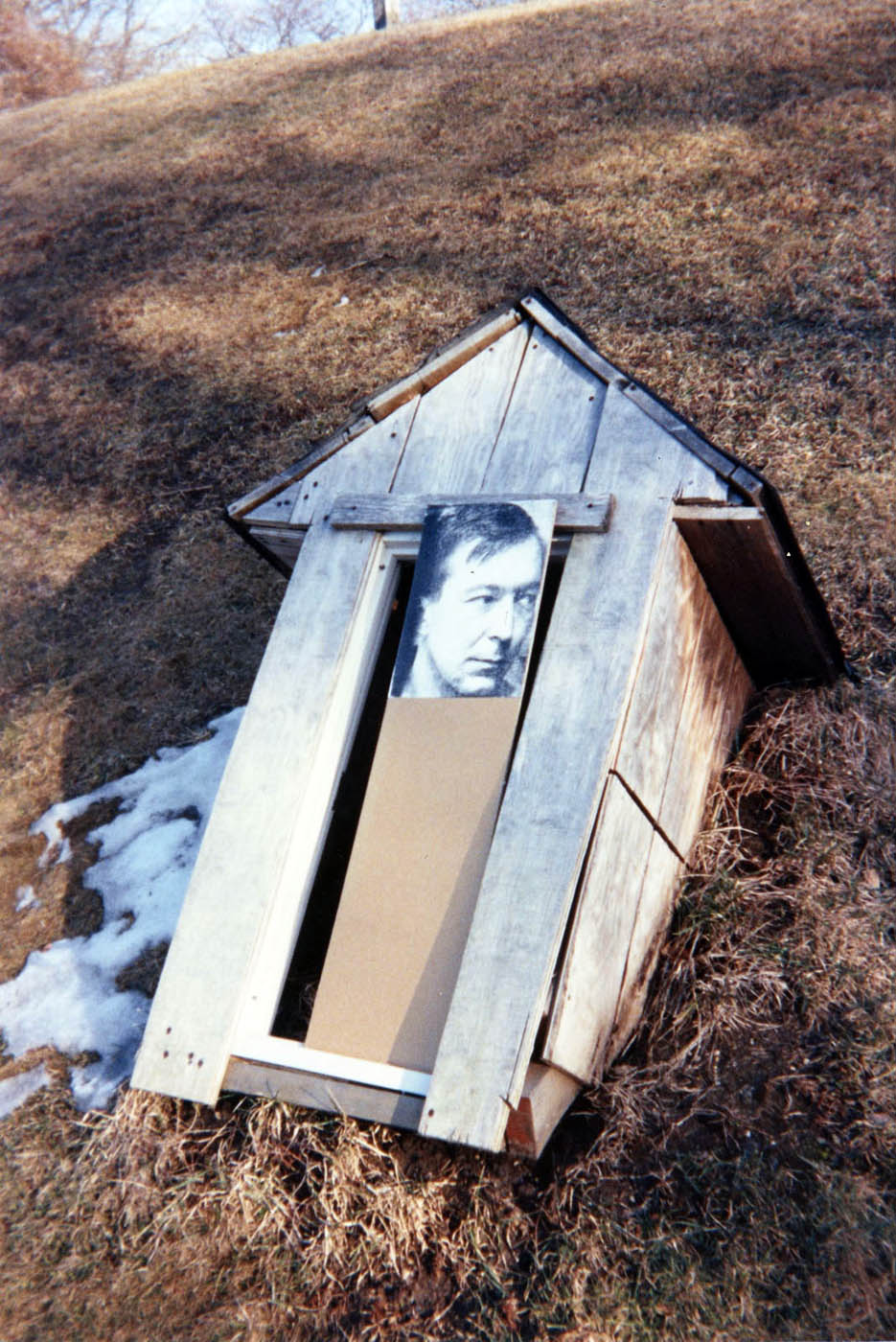
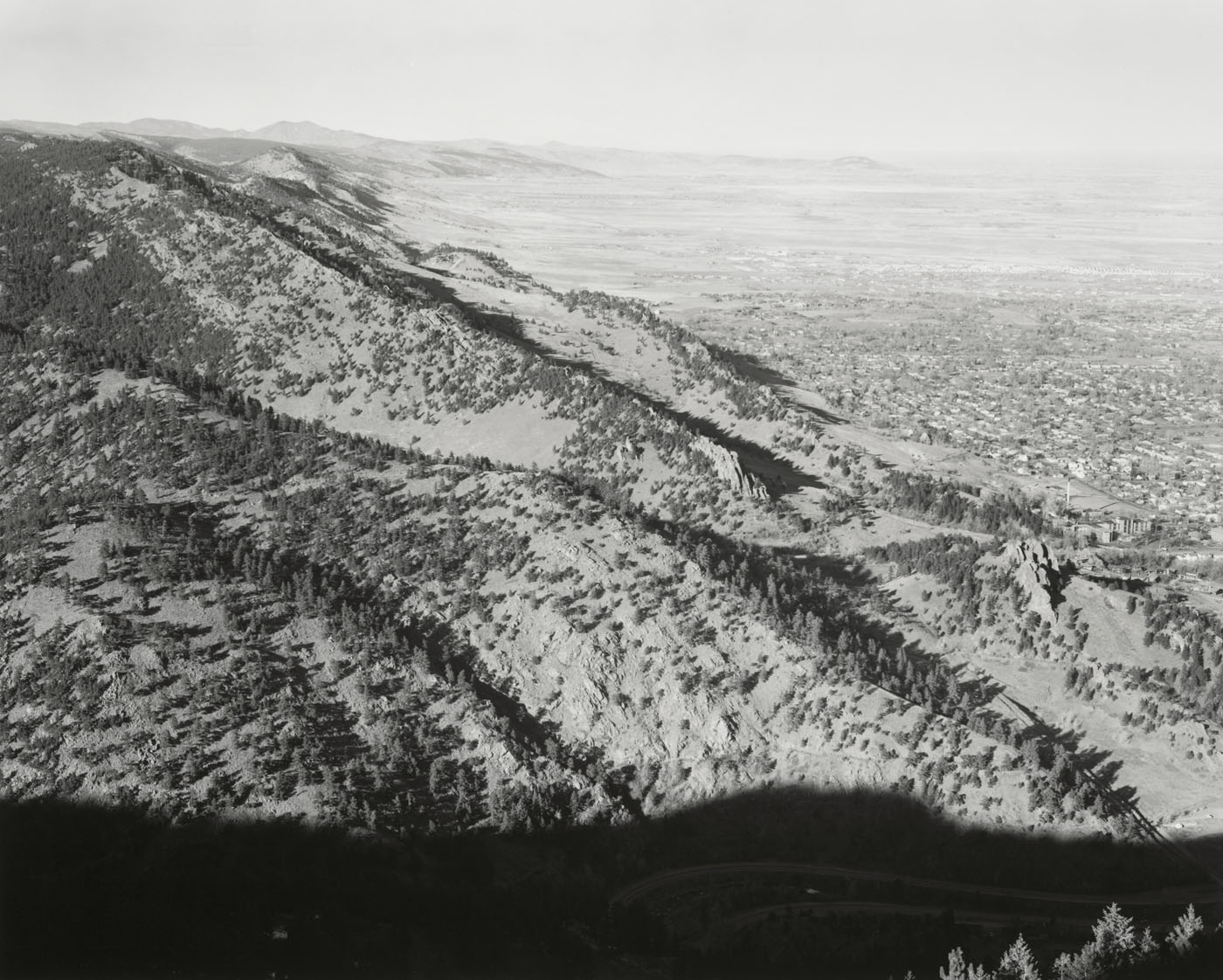
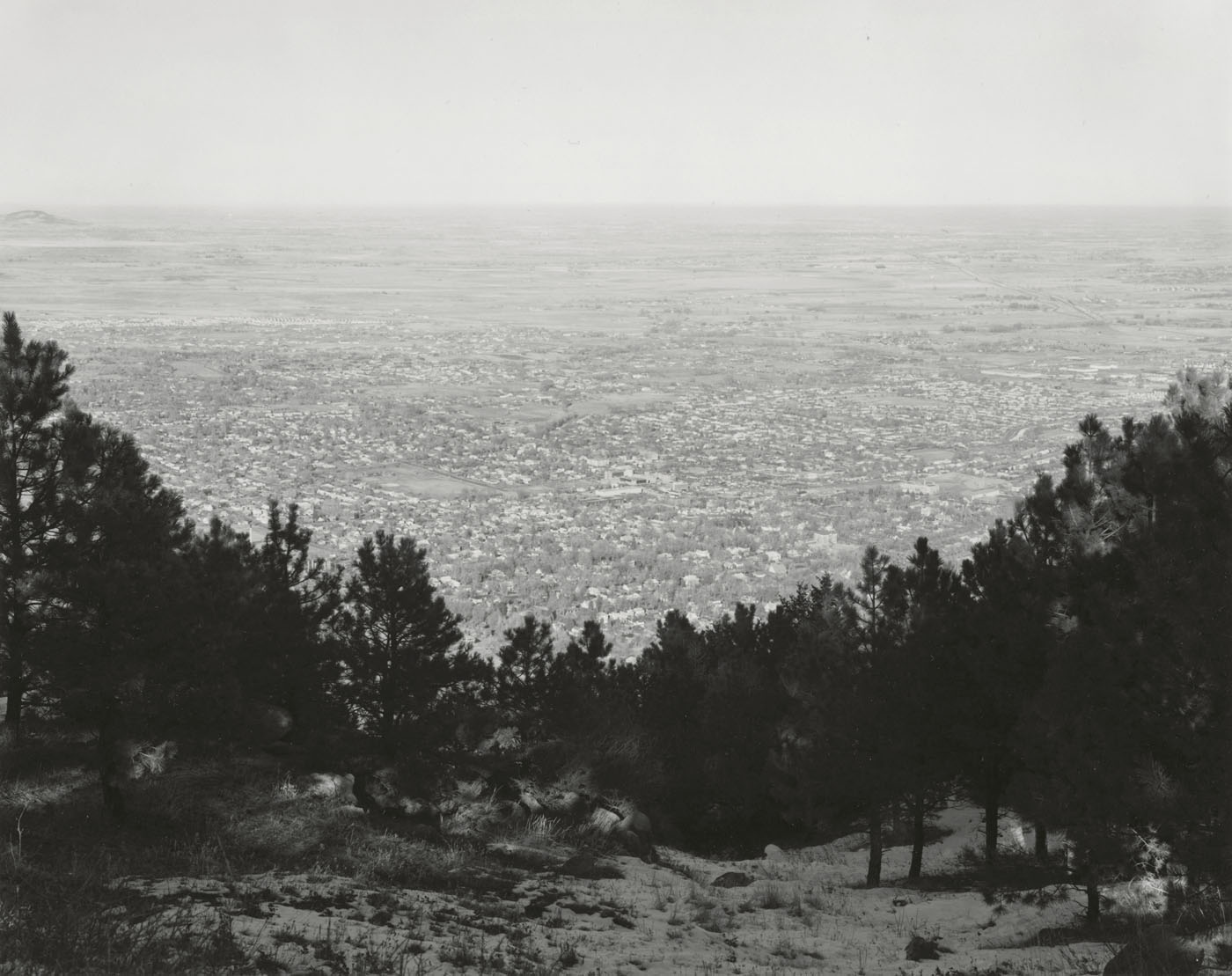
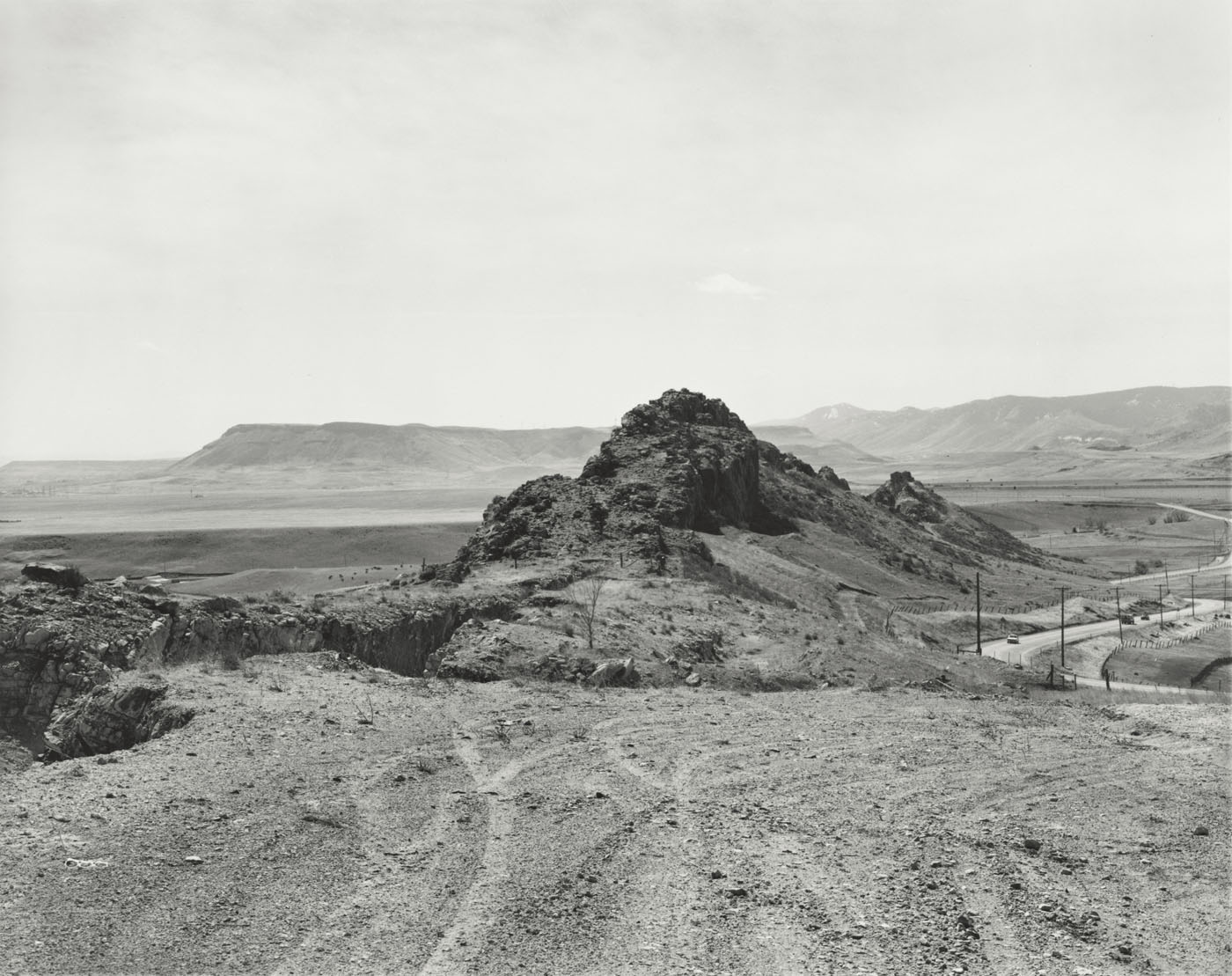
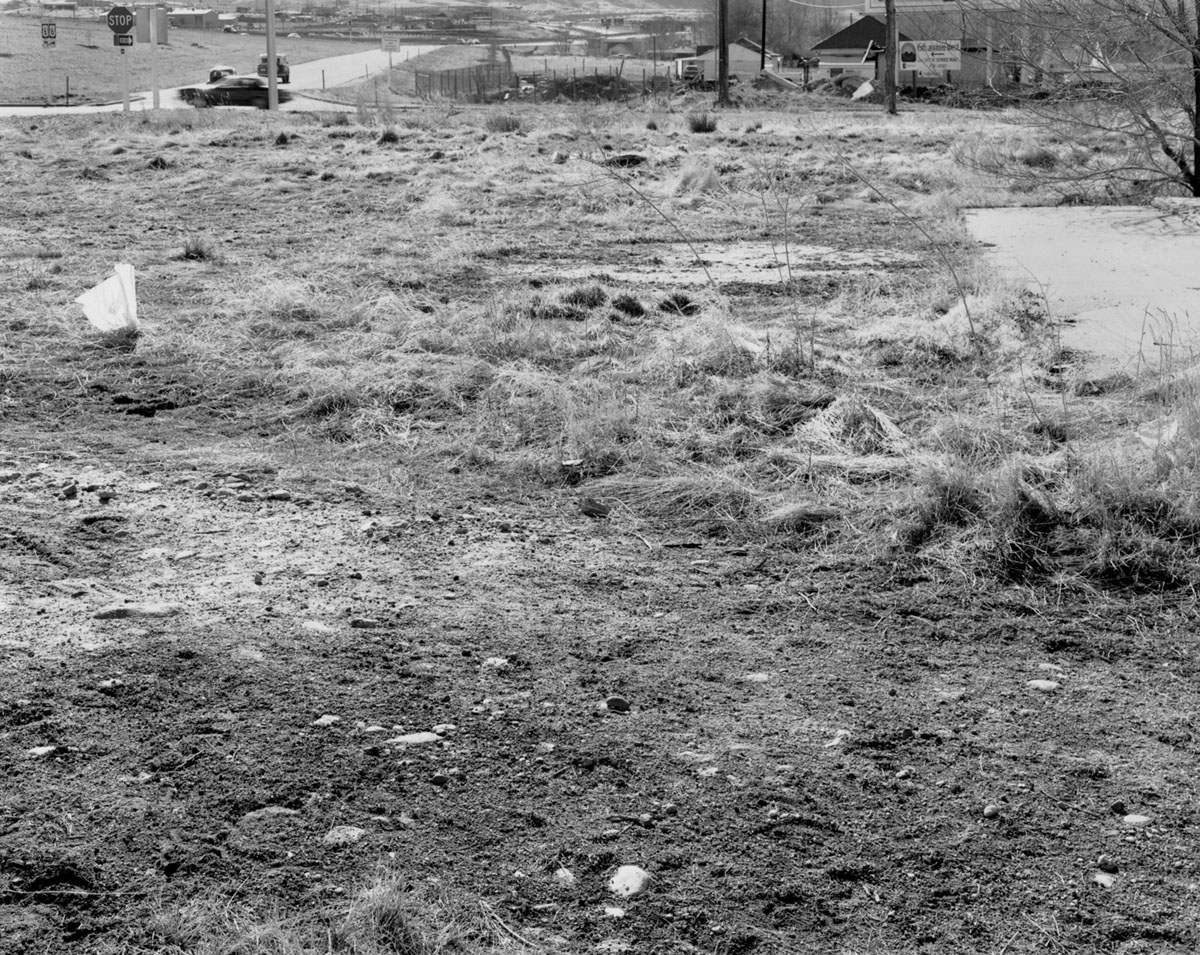
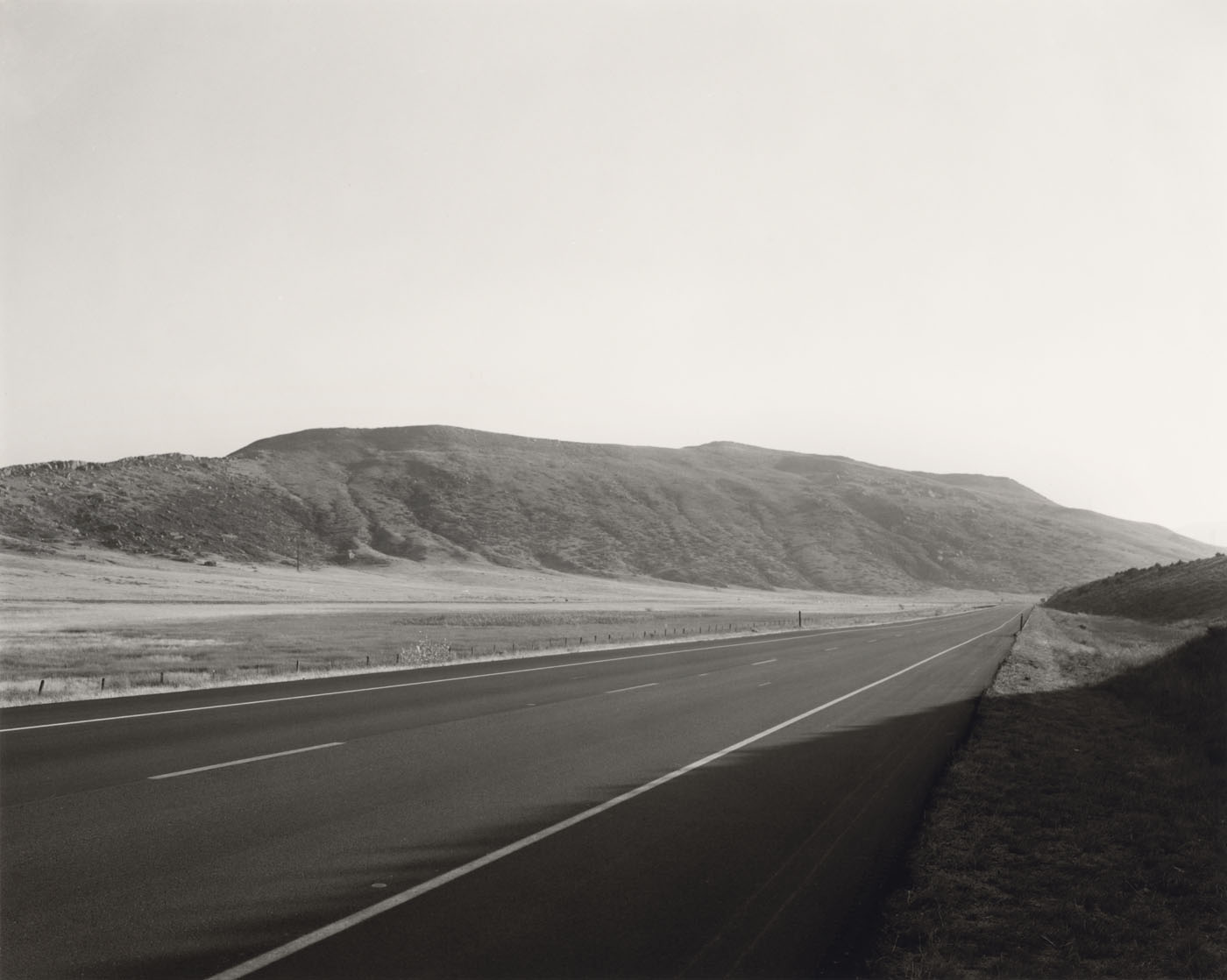
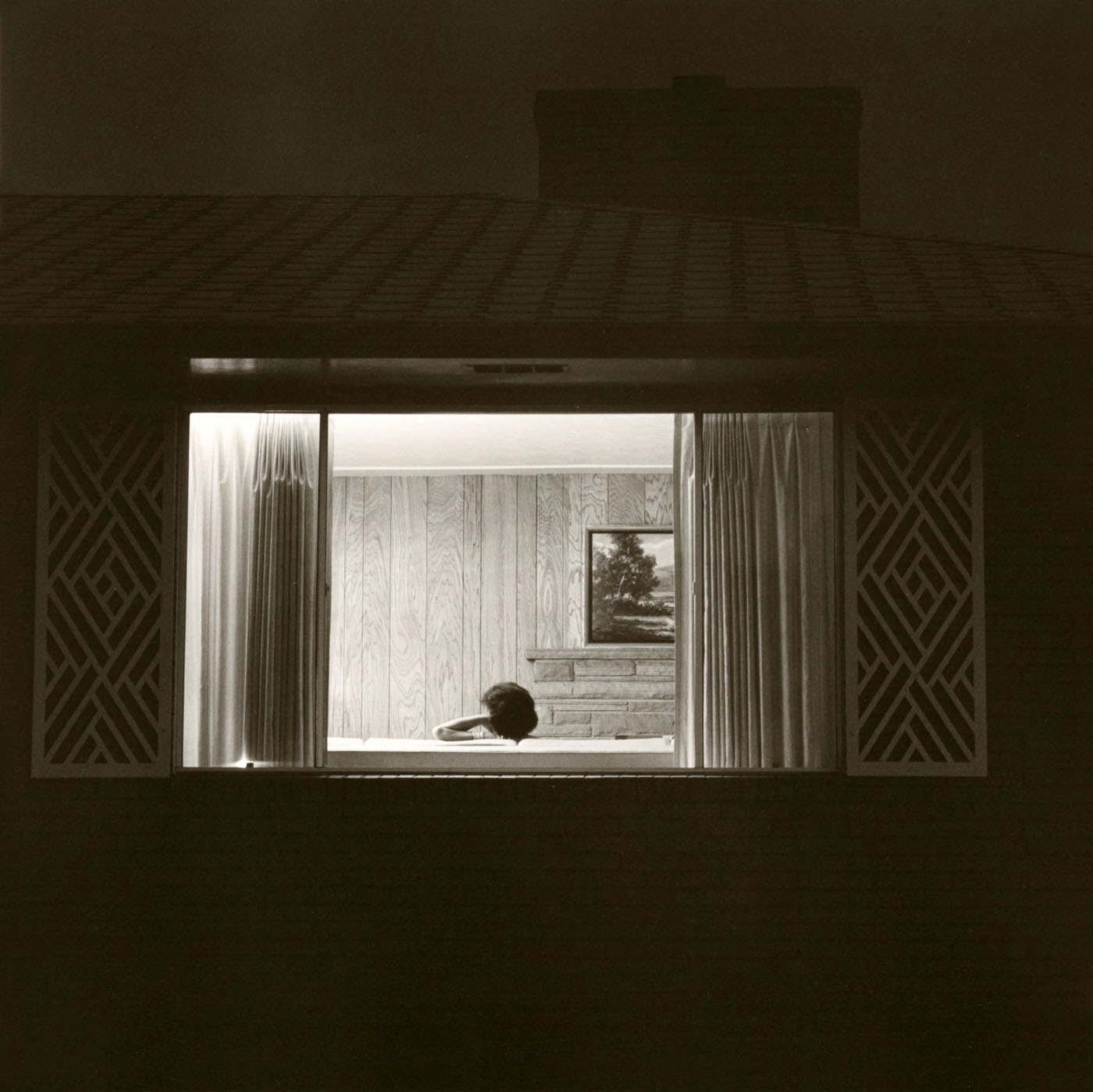
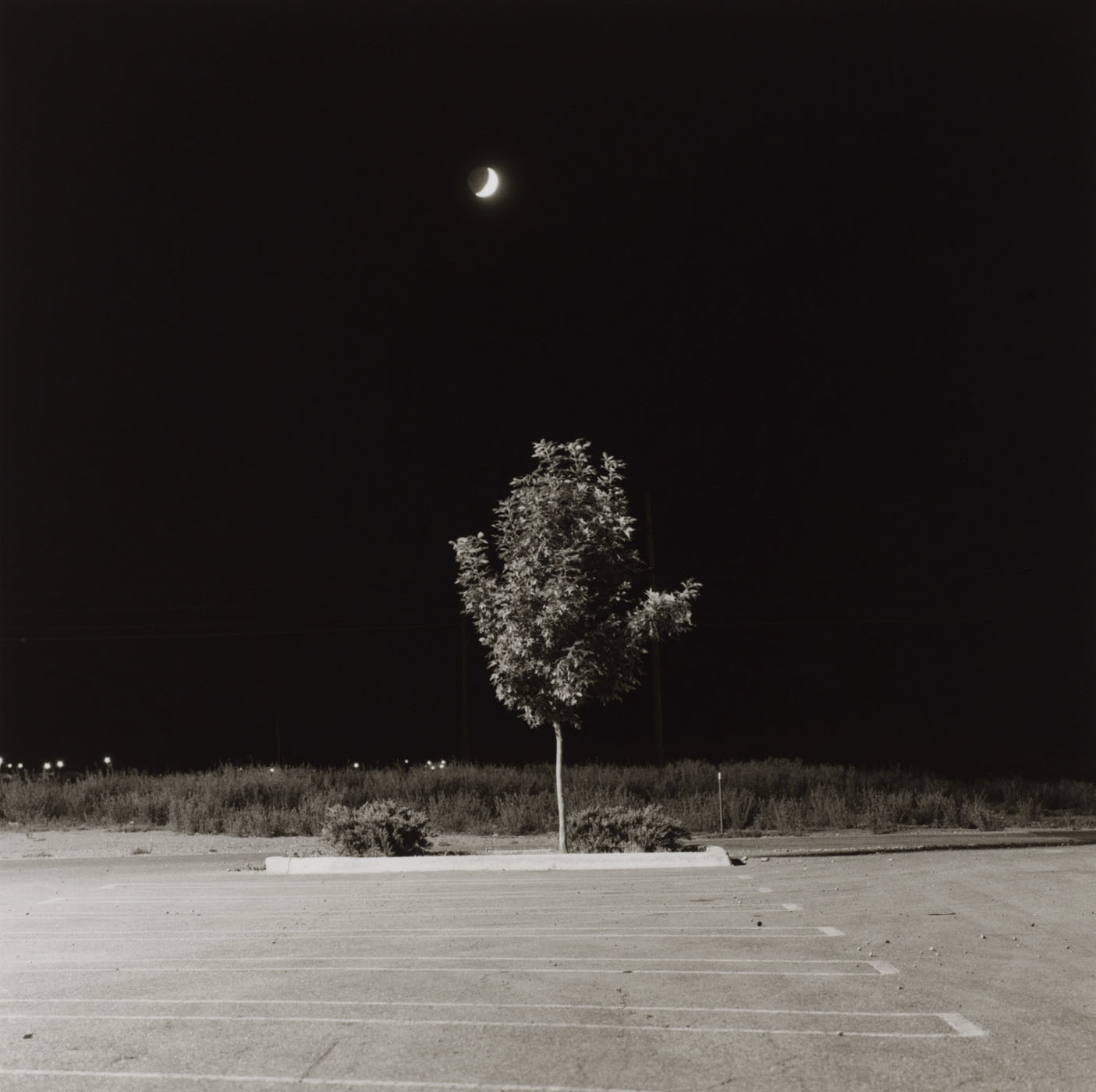
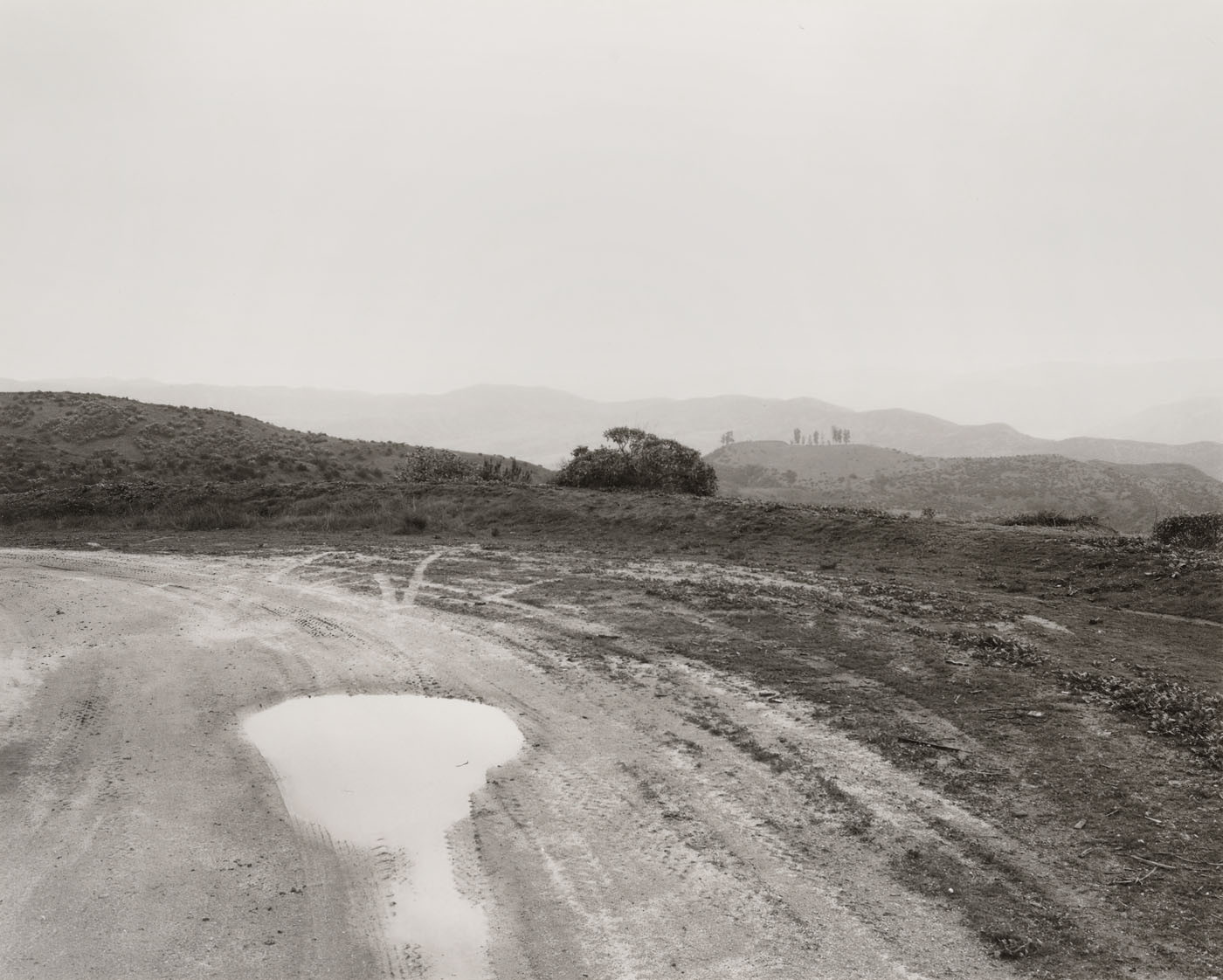
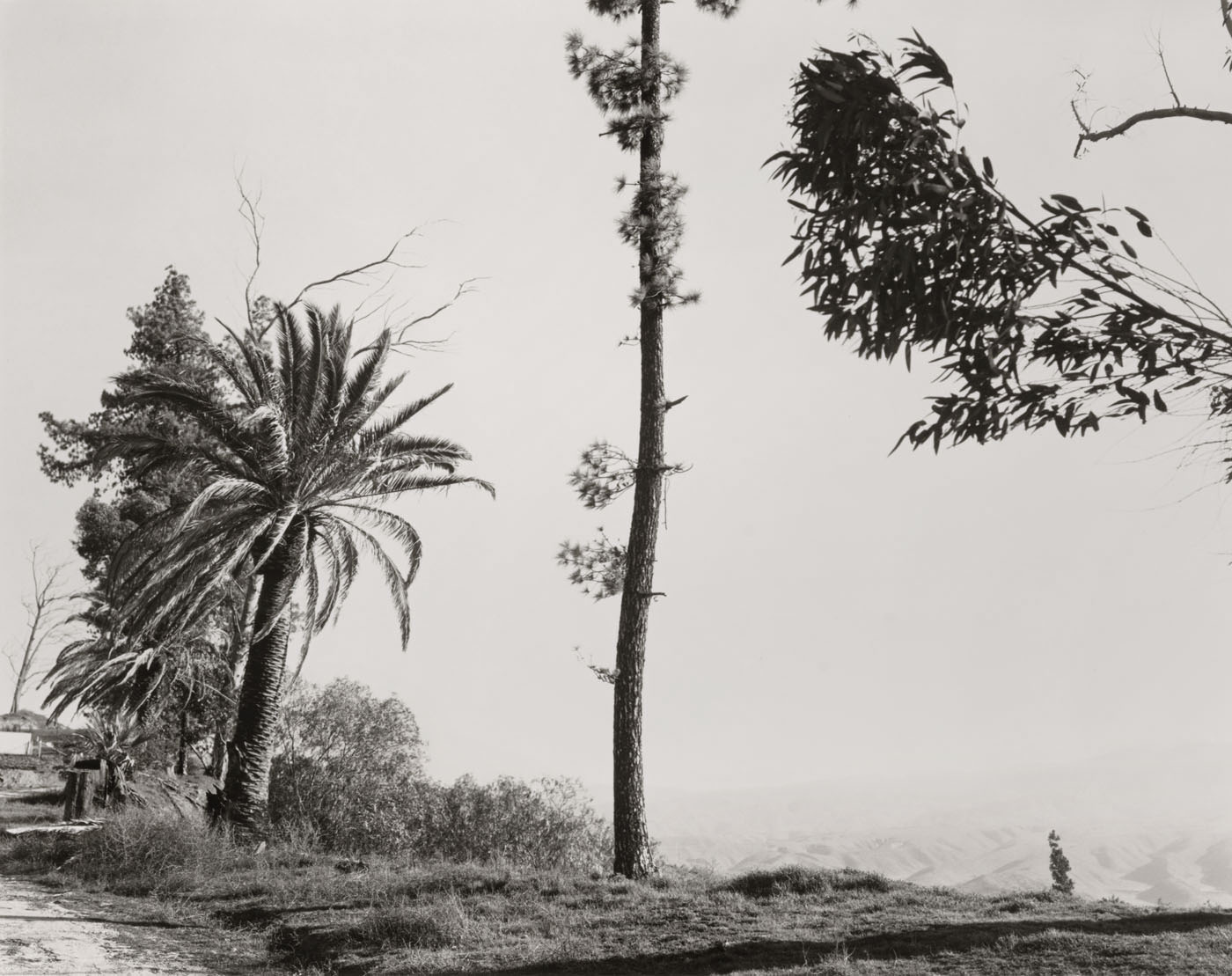
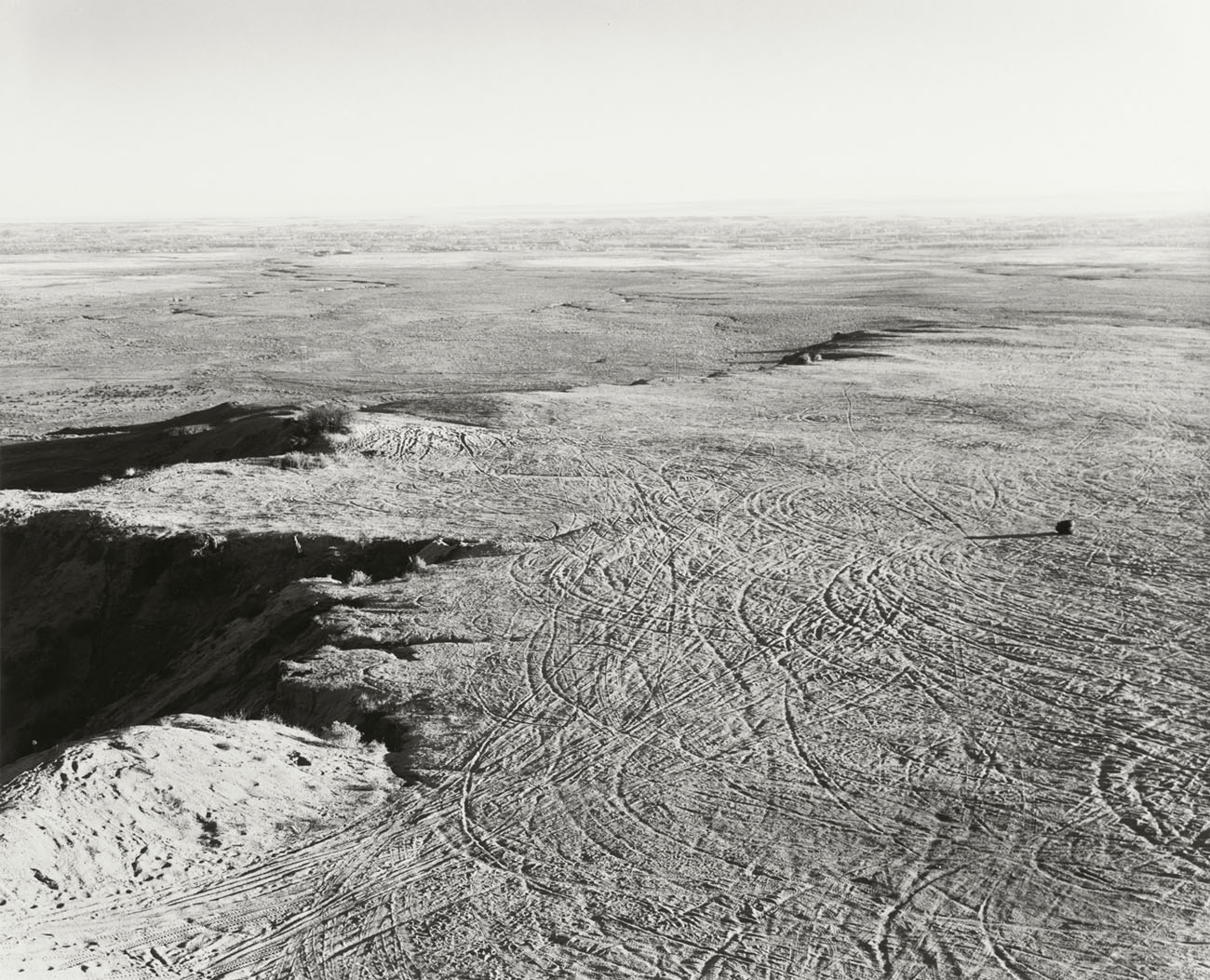
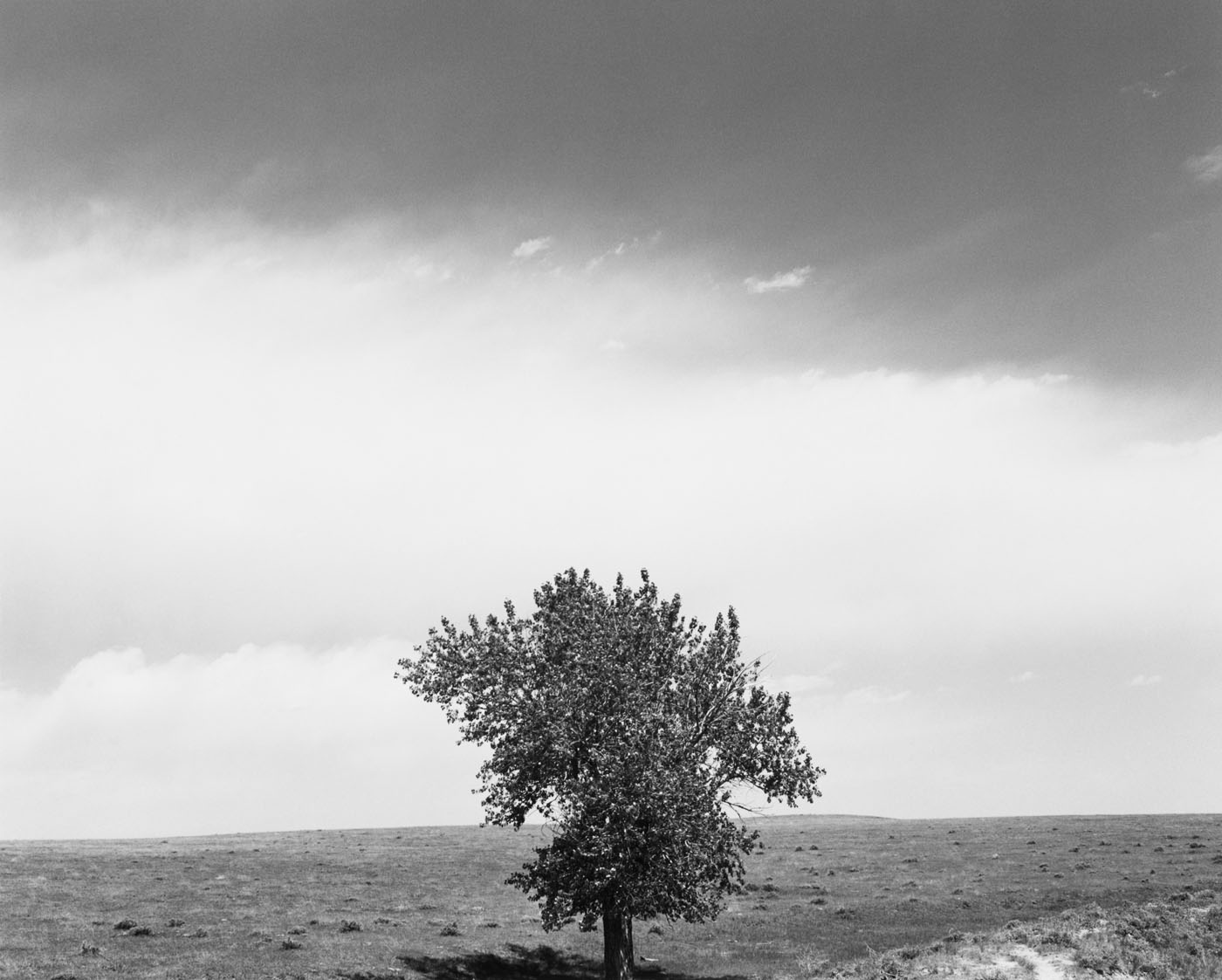
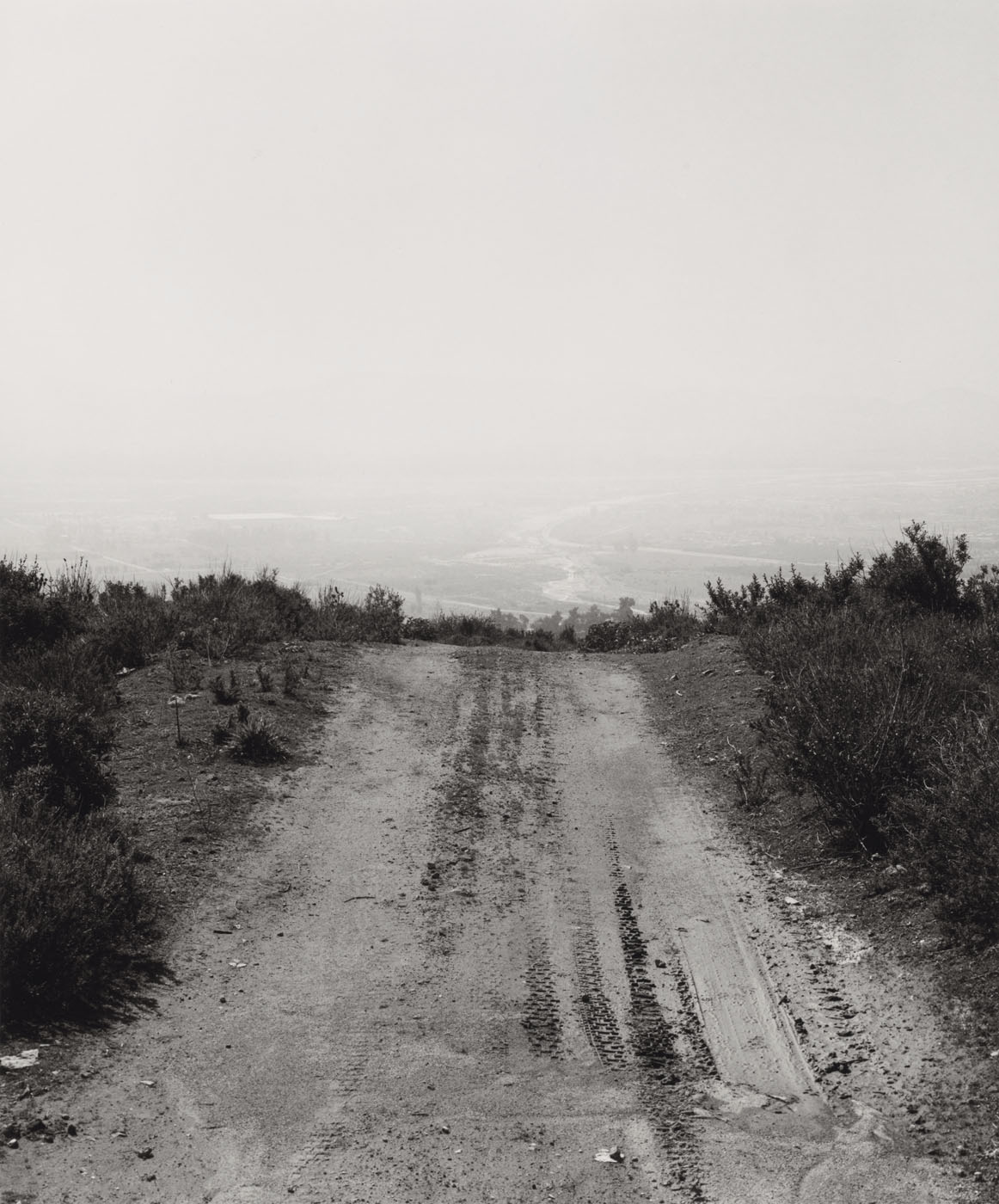
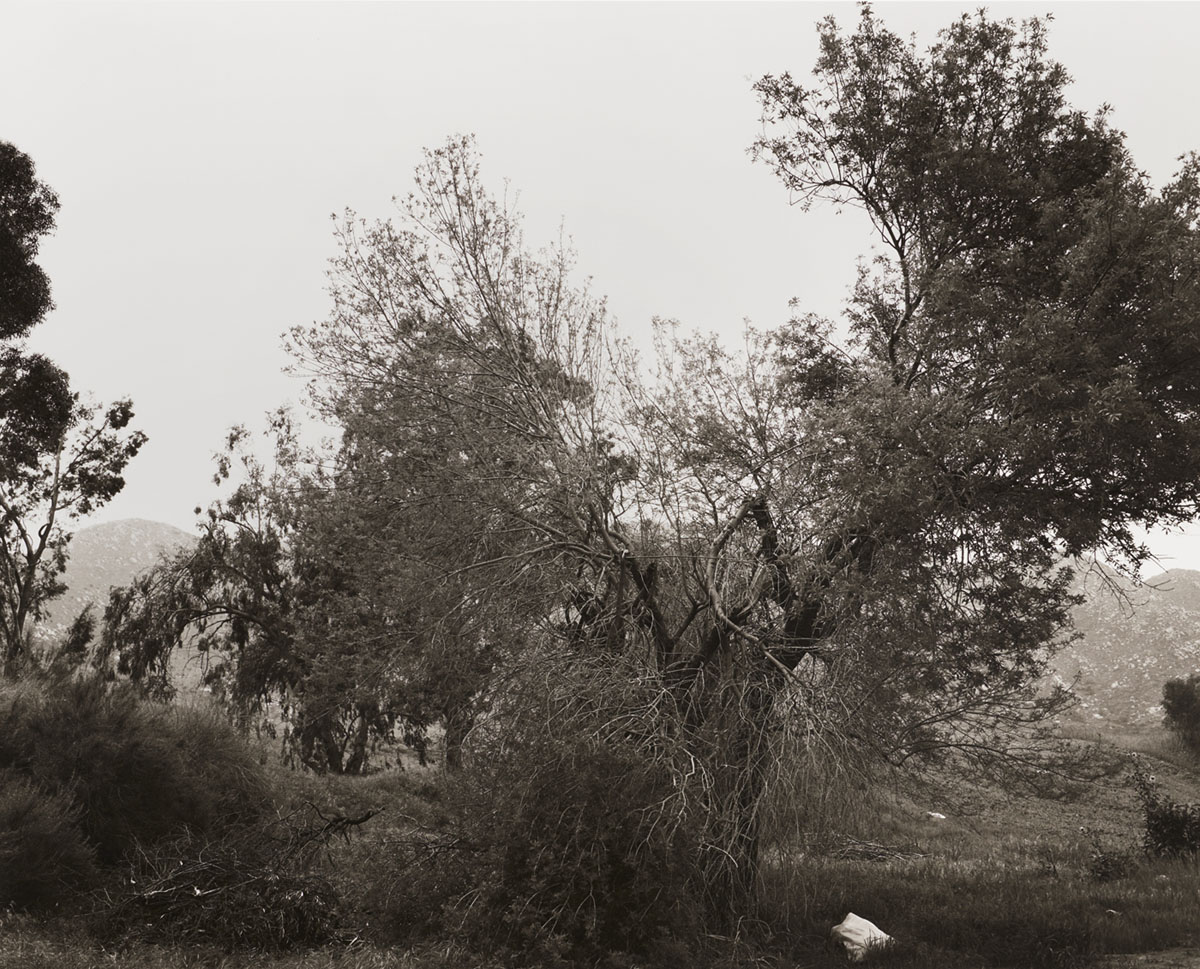
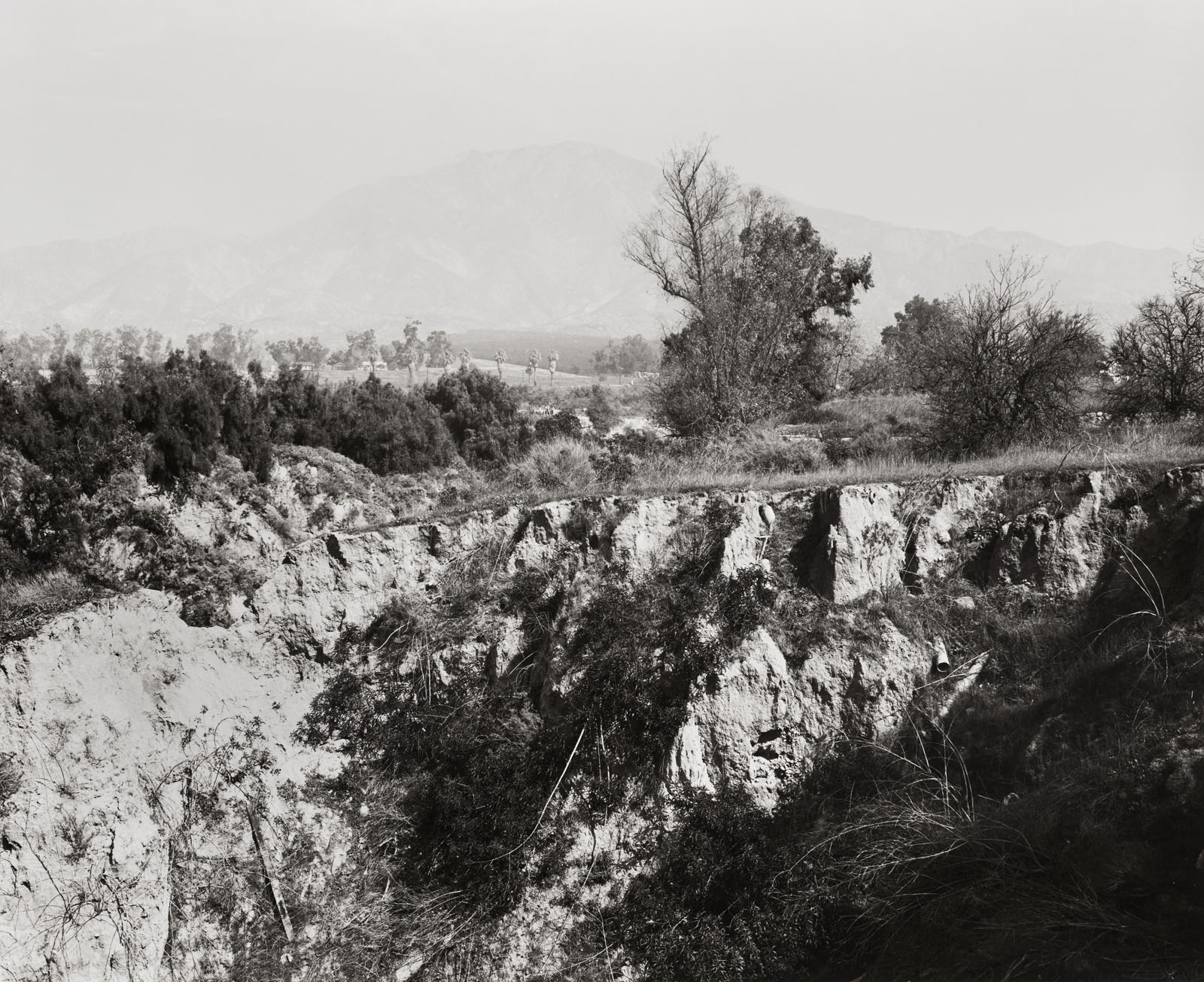
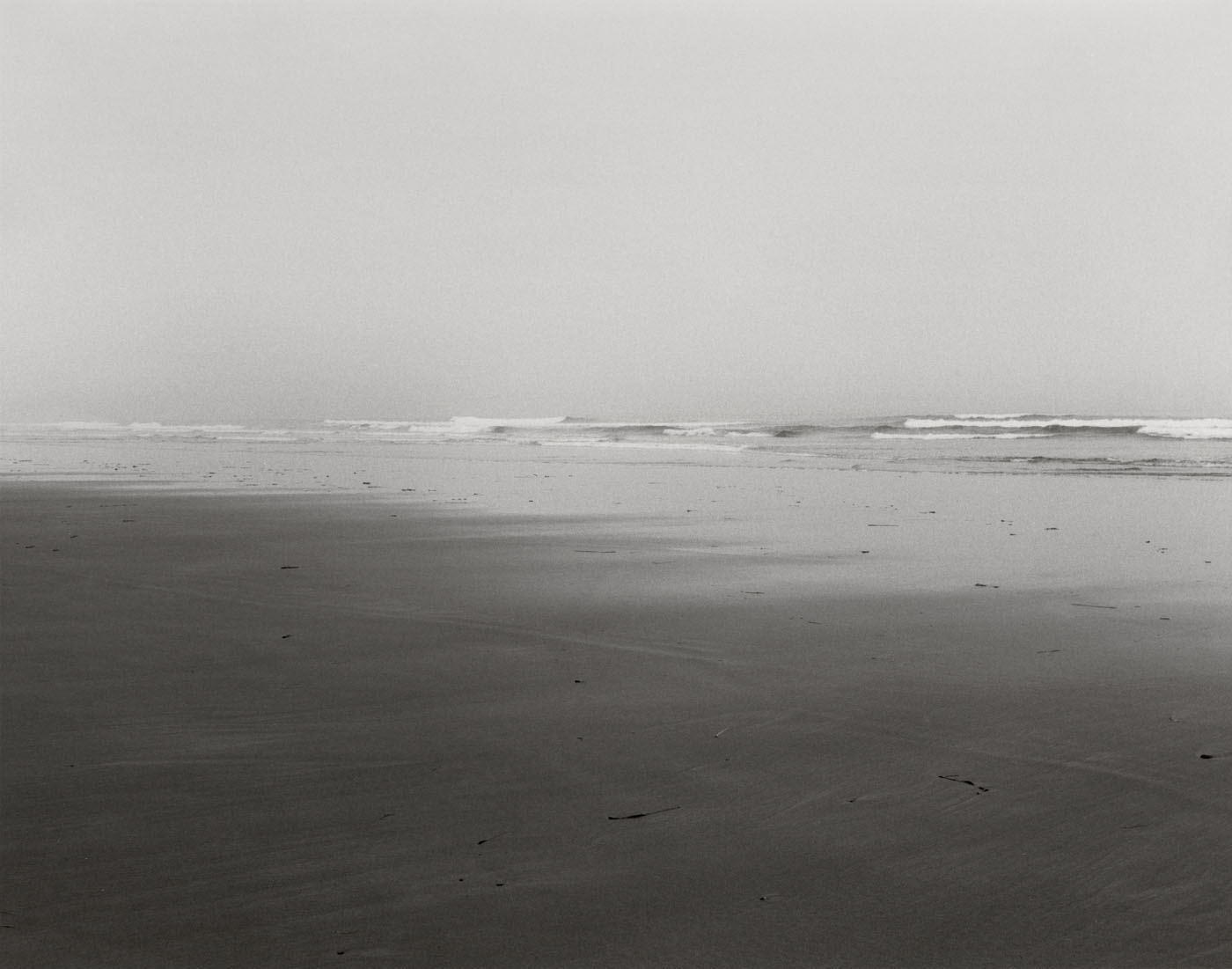
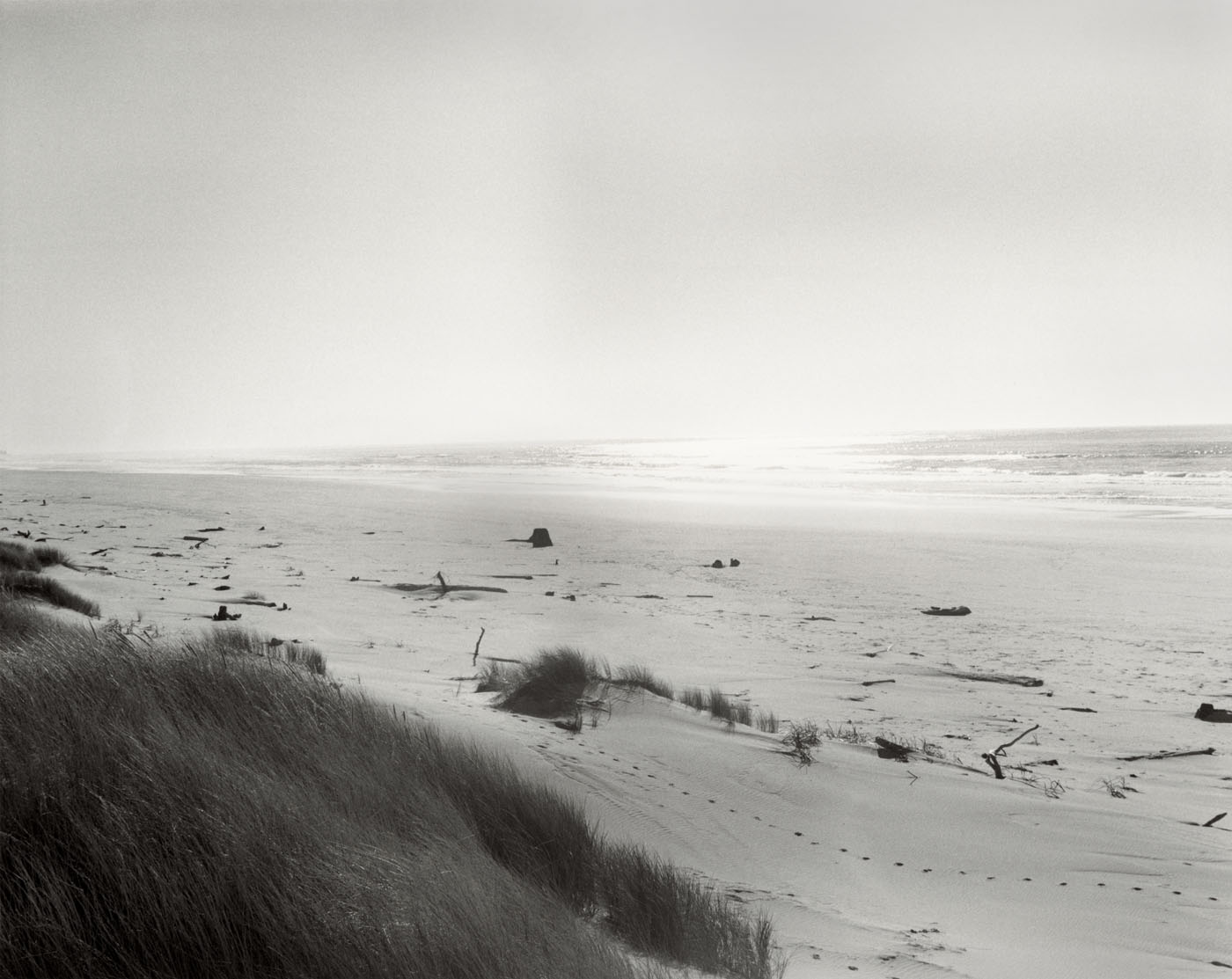
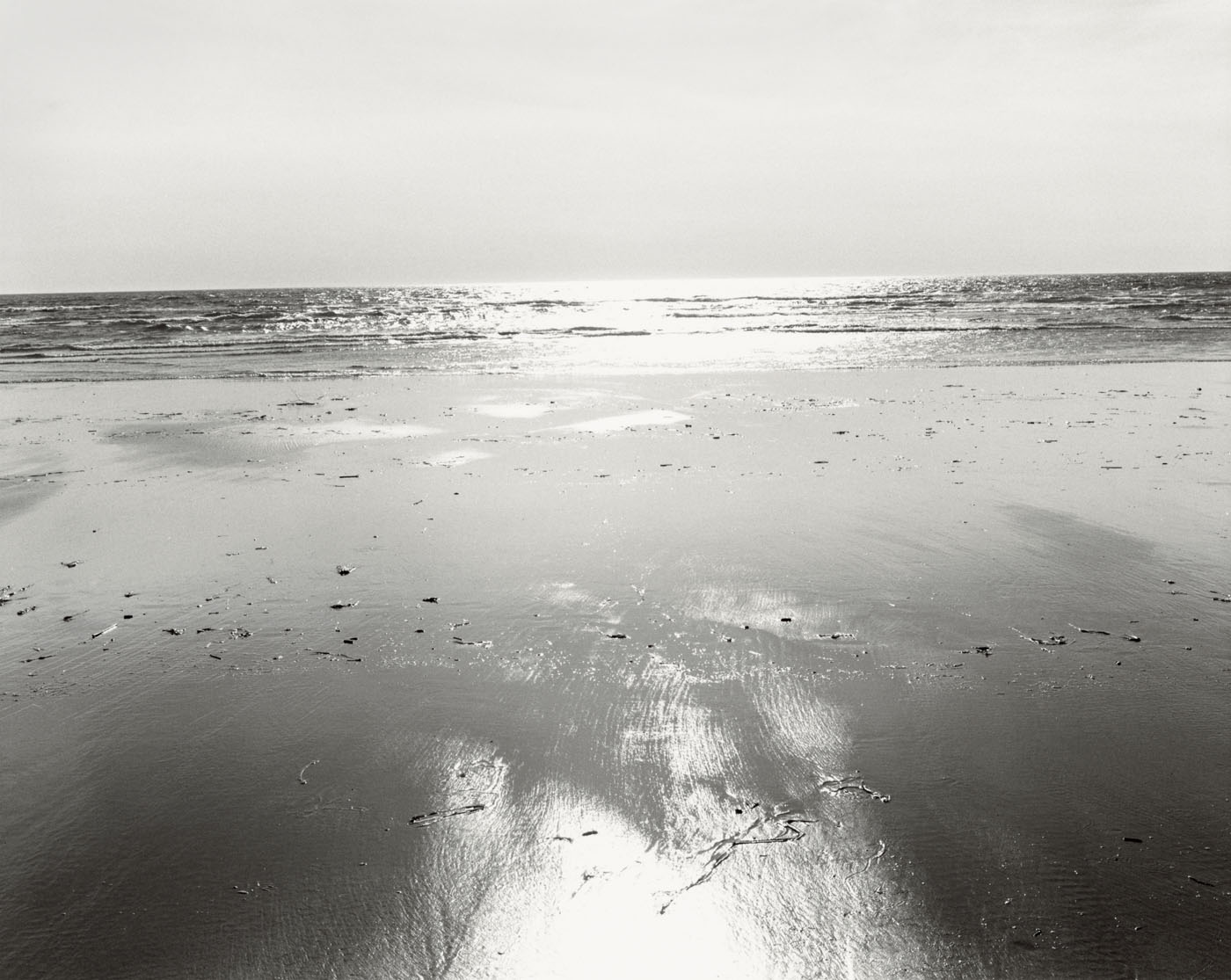
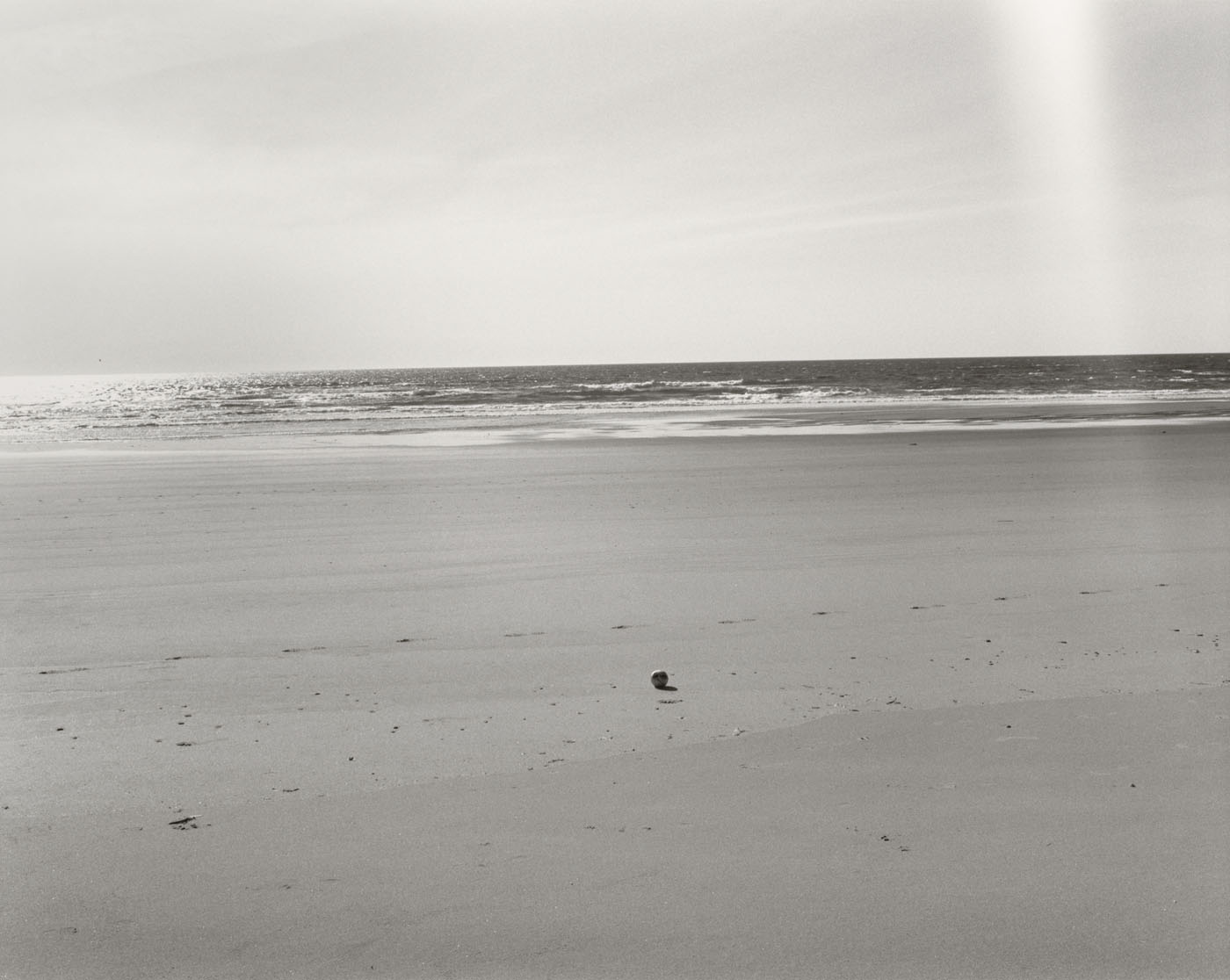
Mary Mattingly (American, b. 1979) 'Mineral Seep' 2016 from the exhibition 'Mining Photography. The Ecological Footprint of Image Production' at Museum für Kunst und Gewerbe Hamburg, July - Oct, 2022


Mary Mattingly (American, b. 1979)
Mineral Seep
2016
C-print
© Mary Mattingly


A worthy subject I had never really thought about. Kudos to the curators for digging into (pardon the pun) and conceptualising the “five chapters following the different materials used for photographic production: Copper for the daguerreotypes, fossil fuels and their derivatives such as coal and bitumen for the printing processes, silver for the widely used silver gelatin prints of the 20th century, Paper as a carrier material, and, today, rare earths and metals for our ever-shrinking cameras and smartphones, and the energy required for the so-called “cloud”.”

Something has to change very quickly because almost everything the human race produces seems to add to the burden of this earth. Consumerism, capitalism, money, power, greed. I despair of the human race saving the earth. We might end up with ‘being’ only to be confronted by ‘nothingness’.

Dr Marcus Bunyan


Many thankx to the Museum fur Kunst und Gewerbe Hamburg for allowing me to publish the photographs in the posting. Please click on the photographs for a larger version of the image.


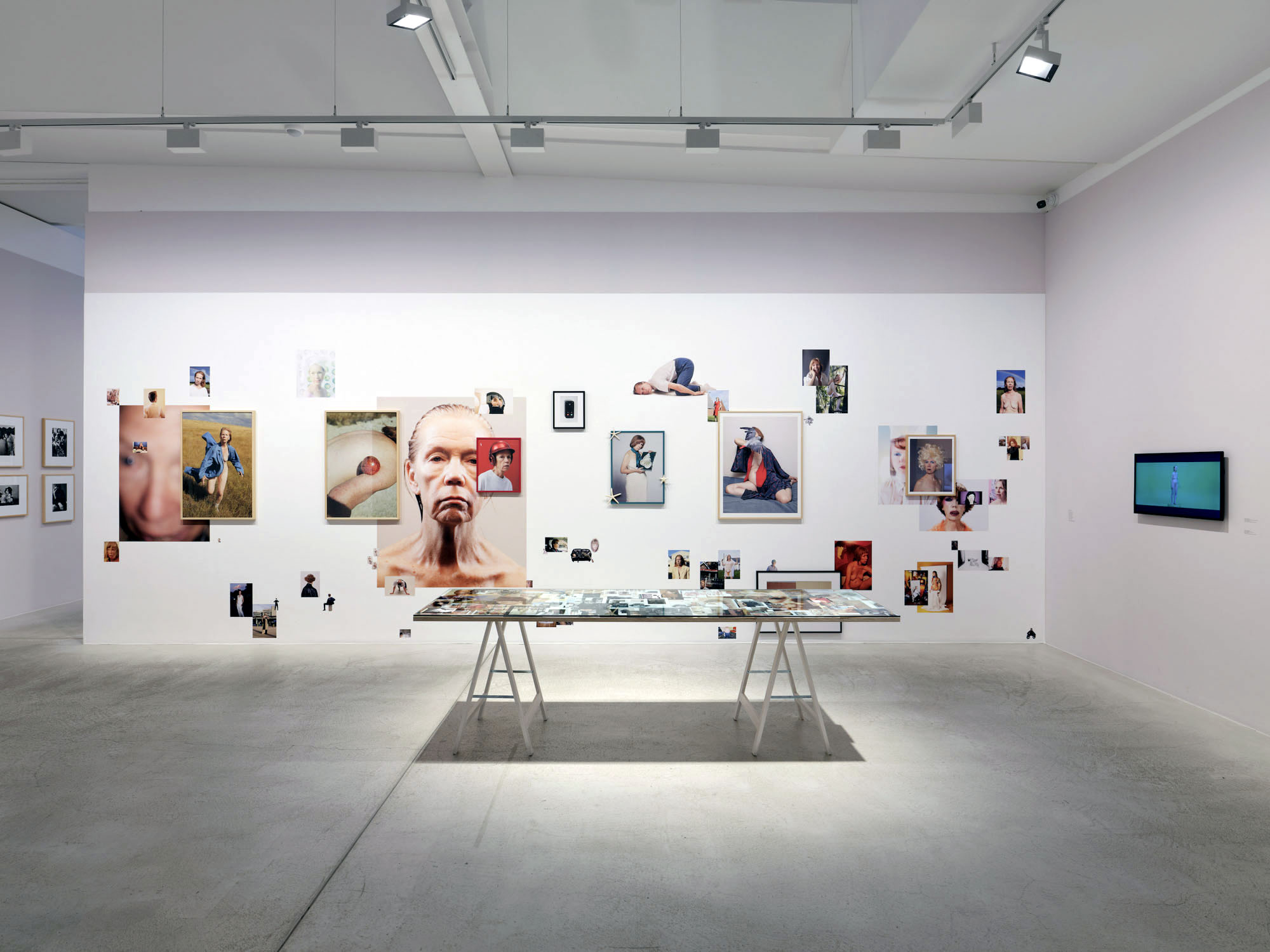
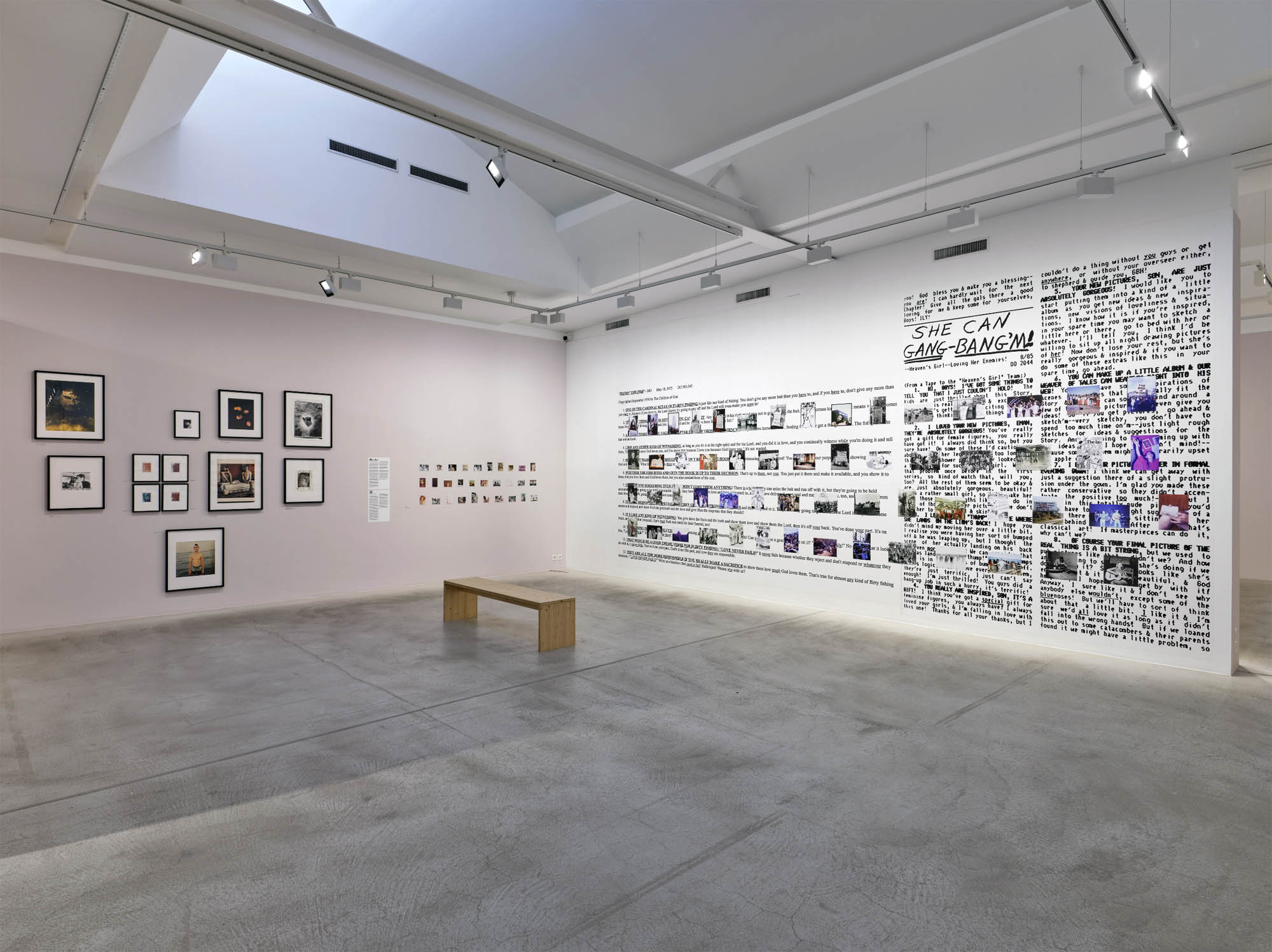
Installation view of the exhibition 'Mining Photography. The Ecological Footprint of Image Production' at the Museum für Kunst und Gewerbe Hamburg


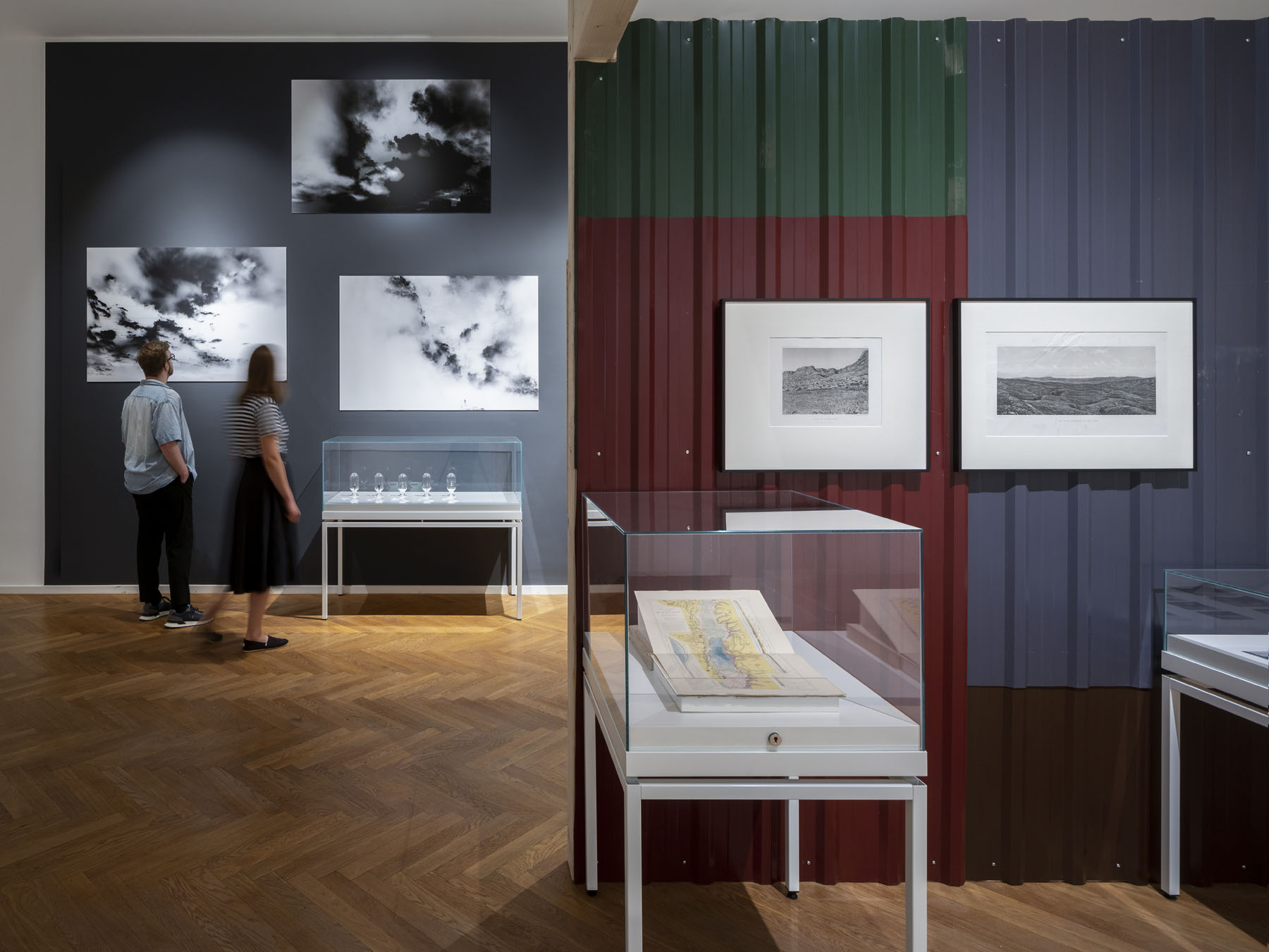
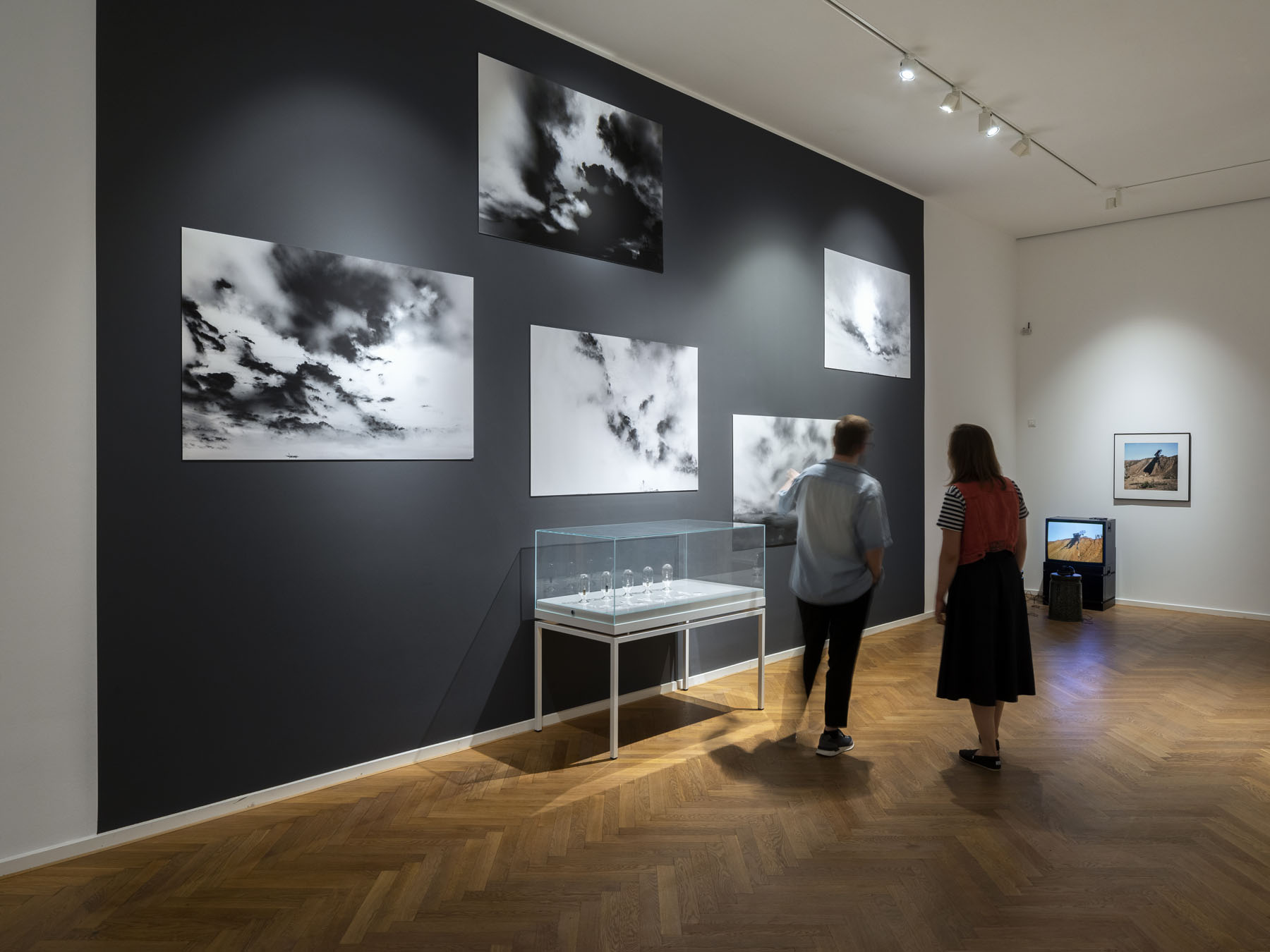
Installation view of the exhibition Mining Photography. The Ecological Footprint of Image Production at the Museum für Kunst und Gewerbe Hamburg showing at left, work from Anaïs Tondeur’s series Carbon Black


Installation view of the exhibition 'Mining Photography. The Ecological Footprint of Image Production' at the Museum für Kunst und Gewerbe Hamburg


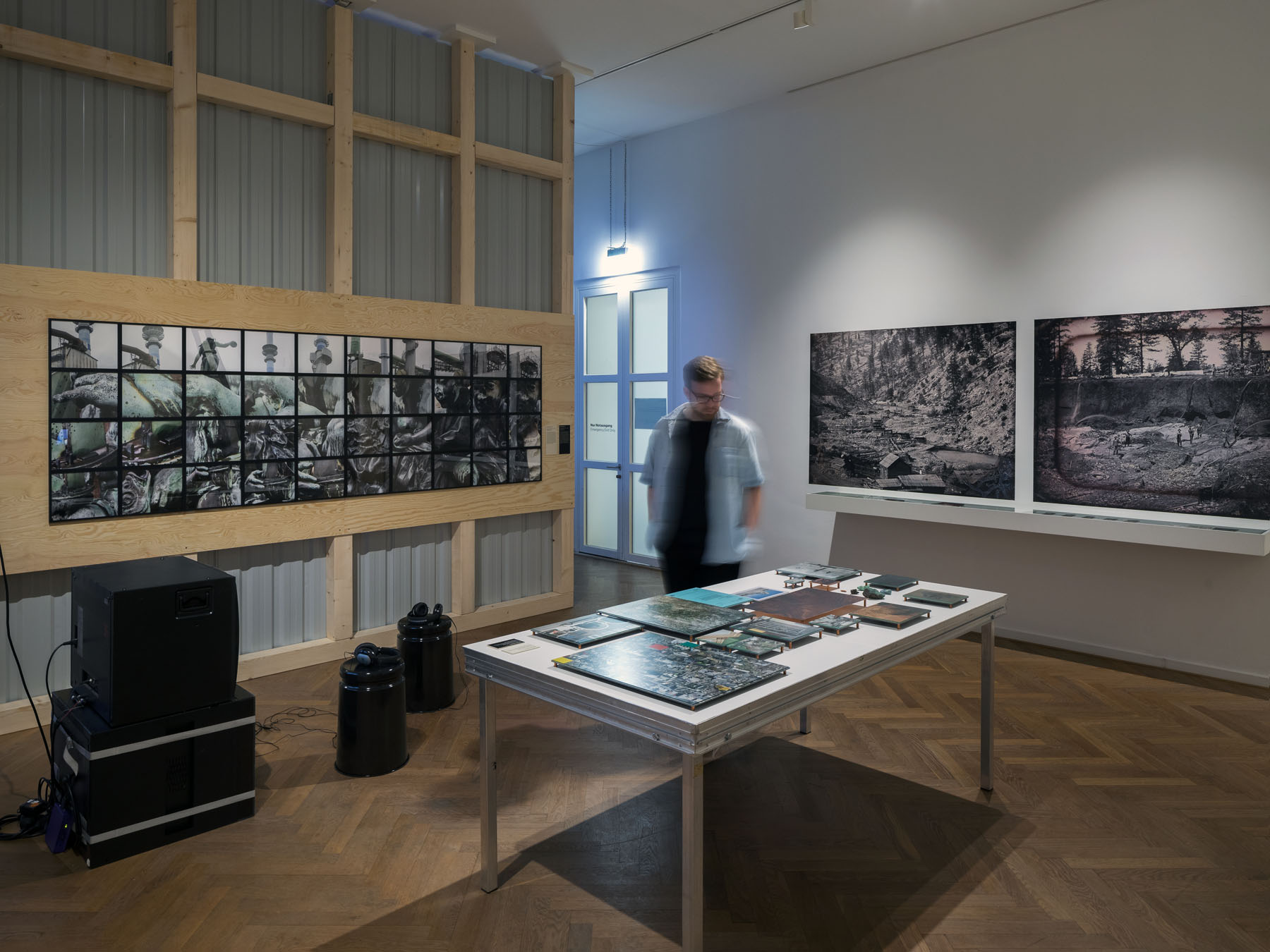
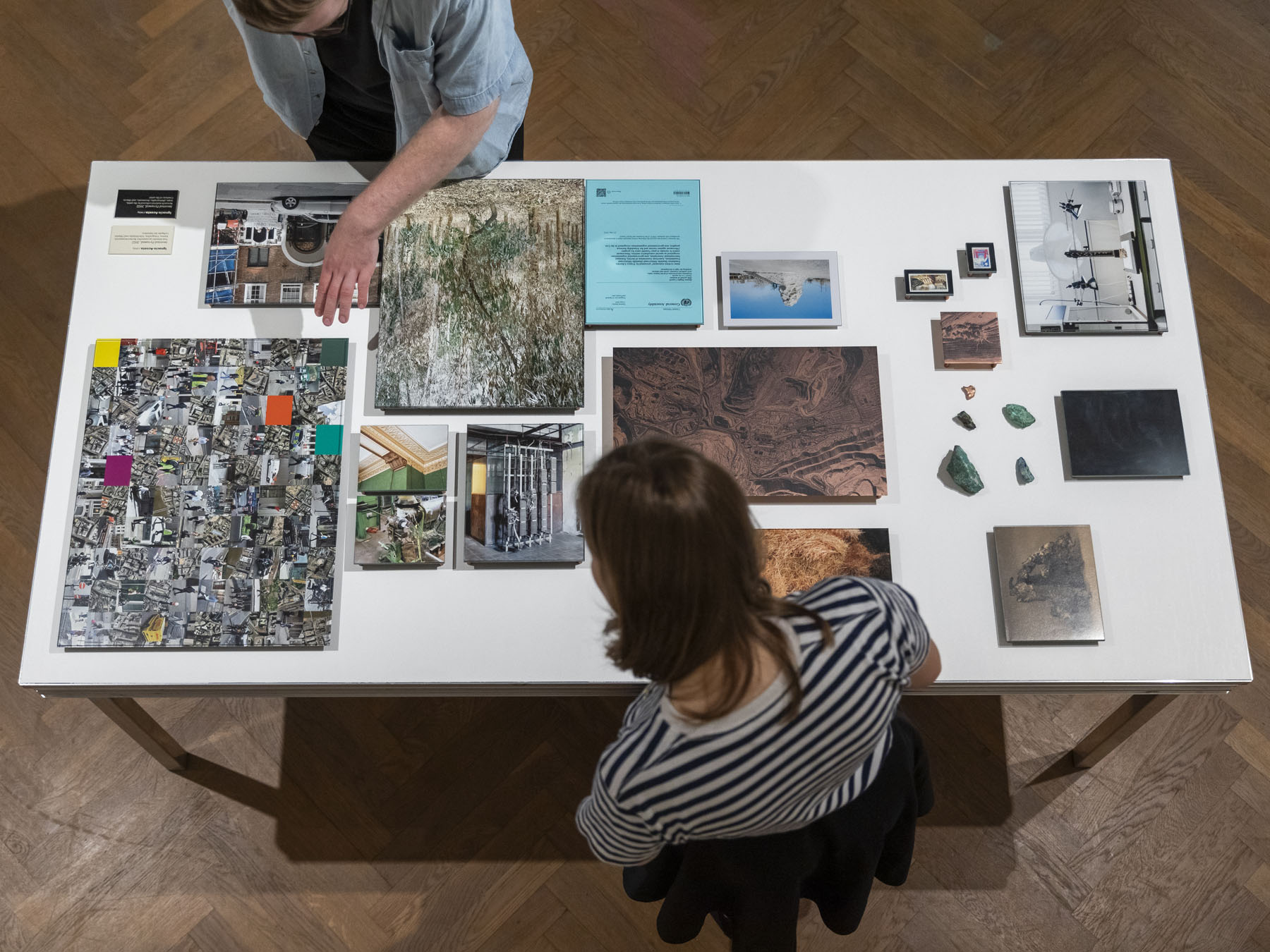
Installation view of the exhibition Mining Photography. The Ecological Footprint of Image Production at the Museum für Kunst und Gewerbe Hamburg showing on the table the work of Ignacio Acosta; and at far right, a contemporary enlargement of G.H. Johnson’s Outdoor view of a large mining operation on the North Fork American River 1852 Daguerreotype enhanced with gold


The exhibition Mining Photography: The Ecological Footprint of Image Production is dedicated to the material history of key resources used for image production, addressing the social and political context of their extraction and waste and its relation to climate change. Using historical photographs and contemporary artistic positions as well as interviews with restorers, geologists, and climate researchers, the exhibition tells the story of photography as one of industrial production, showing the extent to which the medium has been deeply intertwined with human change of the environment. By focusing on the ways by which industrial image production has been materially and ideologically implicated in climate change, rather merely using it to depict its consequences, the exhibition employs a radically new perspective towards this subject.

Ever since its invention, photography has depended on the global extraction and exploitation of so-called natural resources. In the early 19th century, these were salt, fossil fuels such as bitumen and carbon, as well as copper and silver, which were all used for the first images on copper plates and for salt paper prints. By the late 20th century, the photographic industry was one of the most important consumers of silver, responsible, at its peak, for about a quarter of the metal’s global consumption. Today, with the advent of digital photography and the ubiquity of mobile devices, image production is contingent on rare earths and metals such as coltan, cobalt, and europium. Image storage and distribution also consume immense amounts of energy. One scholar recently observed that Americans produce more photographs every two minutes than were made in the entire nineteenth century. Mining Photography: The Ecological Footprint of Image Production is dedicated to the material history of key resources used for image production, addressing the social and political context of their extraction and waste and its relation to climate change. Using historical photographs and contemporary artistic positions as well as interviews with restorers, geologists, and climate researchers, the exhibition tells the story of photography as one of industrial production, showing the extent to which the medium has been deeply intertwined with human change of the environment. By focusing on the ways by which industrial image production has been materially and ideologically implicated in climate change, rather merely using it to depict its consequences, the exhibition employs a radically new perspective towards this subject.

The exhibition is divided into five chapters following the different materials used for photographic production: Copper for the daguerreotypes, fossil fuels and their derivatives such as coal and bitumen for the printing processes, silver for the widely used silver gelatin prints of the 20th century, Paper as a carrier material, and, today, rare earths and metals for our ever-shrinking cameras and smartphones, and the energy required for the so-called “cloud”.

Interviews with conservators, climate scientists, and geologists highlight various aspects of the production process in relation to its ecological footprint. The exhibition thus consists of historical materials used during different image production techniques, historical artefacts, contemporary works, as well as information conveyed by the interviews.

“Mining Photography” traces exemplary individual supply chains, and analyses how photography’s materiality – which remains invisible to naked eye – has changed over the years. For instance, it will ask where the copper and silver used for Hermann Biow’s daguerreotype of the polymath, explorer and mining officer Alexander von Humboldt came from?

The “Copper, Gold, and the Daguerreotype” section looks at the copperplates that were photography’s first image supports in the 1840s and 1850s. The plates were produced on an industrial scale, primarily in Paris, and sold around the world. Copper was refined in Wales, in the area of Swansea, powered by the burgeoning fossil fuel industry. Ores were shipped to England from all over the world and smelted there to be traded worldwide. Photography was dependent on the copper trade, and the rapid proliferation of the medium would have been inconceivable without fossil fuels, colonial expansion, and the exploitative extraction of minerals.

The photographs from the time of the gold rush give a clear indication of the impact of the extractive mining industry, providing a documentary record of both the destruction of the landscape and the self-enactment of the gold miners, who proudly present themselves to the camera as entrepreneurs. Their female counterparts, the “Pit Brow Women” from Wigan represent the invisible labor that accompanies an industrialised product like photography. Specially created for the exhibition, Ignacio Acosta’s Hygieia Watches Over Us links the copper sculpture depicting the personification of health and hygiene with the copper-producing company Aurubis in Hamburg. It is part of the artist’s “Copper Geographies” project (ongoing since 2010), which traces the international trade routes followed by copper originating from his native Chile.

In “Fossil Fuels, Coal, and Bitumen”, we focus on the use of soot or coal as a pigment that is mixed in with photographic dyes, as can be seen, for example, in works by Anaïs Tondeur, Oscar and Theodor Hofmeister, Eduard Arning, and Susanne Kriemann. The motifs that are shown present us with moor landscapes in which coal is mined. An authentic “material unconscious” is laid down here as picture content in the photographs. Another fossil fuel is light-sensitive bitumen, a naturally occurring asphalt that was used in photographic production. For the exhibition, Noa Yafe created a work that shows the Dead Sea landscapes in which this raw material naturally occurs.

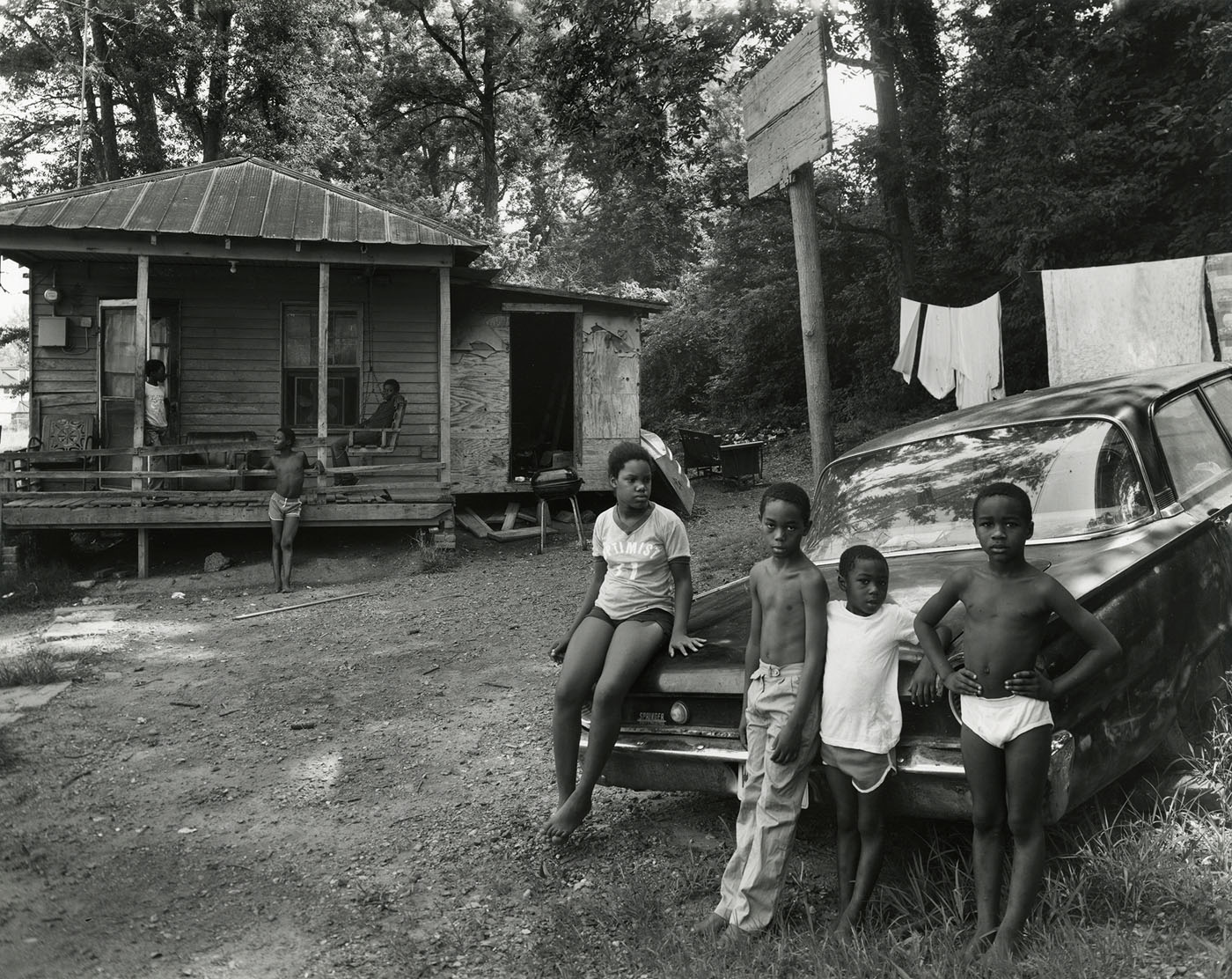
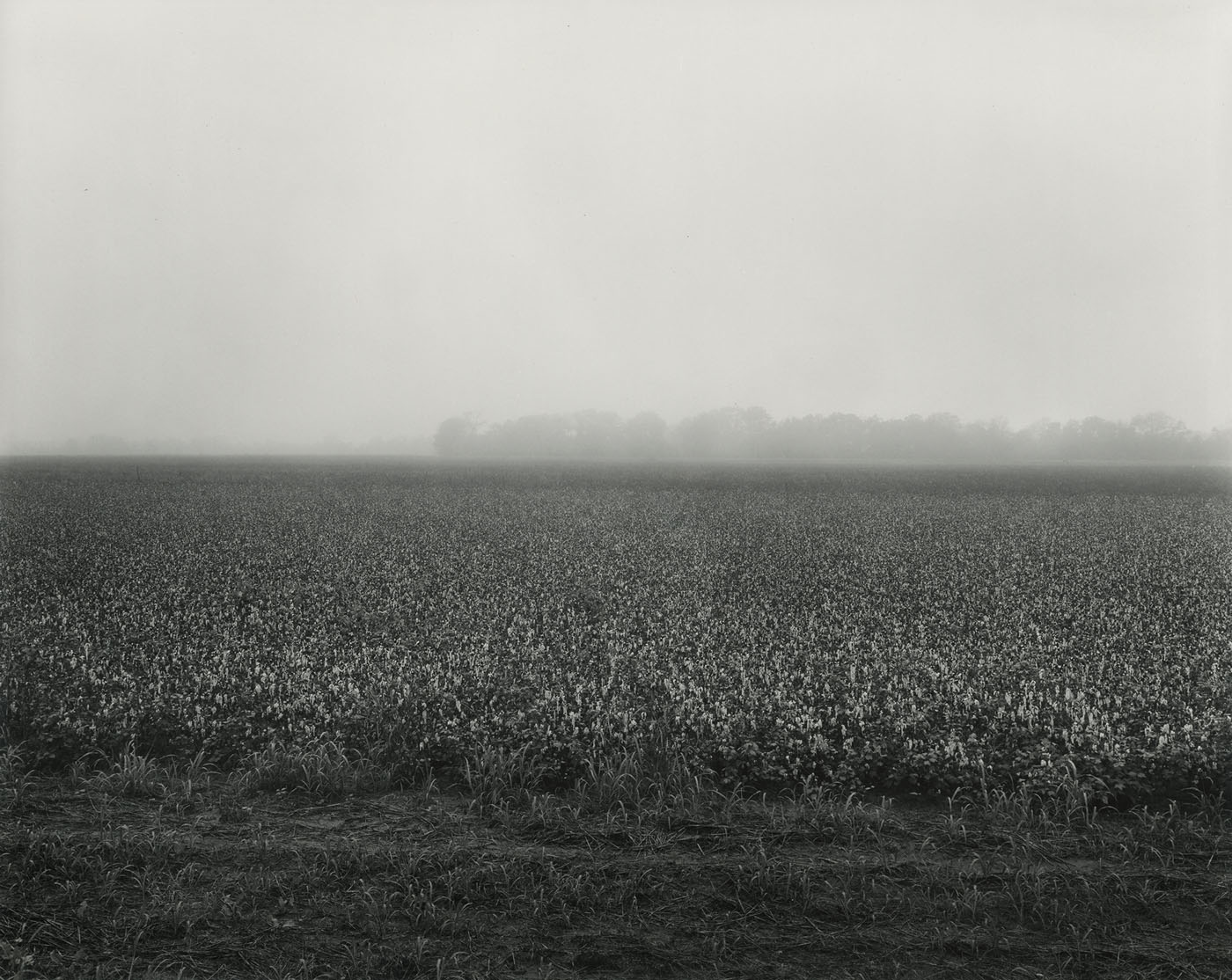
“Paper and Its Coating” focuses on the materials cotton, cellulose, gelatin, and celluloid. Europe was the centre of paper production in the 19th century, with cotton or flax rags initially used to make it. In the period around 1860, cotton was planted and harvested in the southern states of the US using slave labor. It was then shipped to Europe, where it was processed into fabrics, which served, in the form of rags, as the basis for most of the paper that was produced. It was not until the 20th century that cellulose derived from wood was first used in paper production. The photographers Alison Rossiter and F&D Cartier explore the different materiality of historical photographic papers in “discovered” images with an abstract poetic quality. Animal products were a vital ingredient used for coating the papers. In the 19th century, it was eggs, followed in the 20th century by gelatin, most of which was obtained from the bones of cows. In their pictures, which centre in different ways on the materials used in photographic coating, Madame d’Ora and James Welling document and reflect upon the brutal reality of industrialised meat production. Another work, especially created for the exhibition by Tobias Zielony and based on research he conducted at the former Agfa Filmfabrik Wolfen, focuses on the aspects of labor and ecology in the photographic industry.

The precious metal silver forms the basis of the photographic image, which still relies on it today. Of all the raw materials dealt with in the exhibition, silver is absolutely key to the global photographic industry, which, at least for now, is at present its largest consumer. It is here that we get the clearest indication of the sheer quantity of material that is required. The works of Daphné Nan Le Sergent, Simon Starling, and Metabolic Studio’s Optics Division allude to the connections between silver mining’s colonial background, the extraction of the raw material, and the process of refining it. Sergent also shows how the metals’ market value has been a the influence of the market value of metals, a driving force behind photographic technical innovations, which it has made that has made them more lucrative. Rather than being brilliant individual success stories, inventions are only possible and fruitful at a particular time and under particular conditions: witness the work of Hercule Florence, whose parallel development of a photographic process in South America remained unknown.

Lastly, “The Weight of the Cloud: Rare Earths, Metals, Energy, and Waste” looks at the resources that are needed to produce, display, and store digital images. Mining rare earths requires considerable amounts of energy: together with the “conflict minerals”, they are built into our smartphones and data storage devices used in the distribution of images. The rare earths ultimately end up in the burgeoning mountains of e-waste in the Global South, which are constantly growing to keep pace with our hunger for new devices. Lisa Barnard’s research-based work The Canary and the Hammer looks at the aspect of recycling with a focus on the precious metal gold. Mary Mattingly tracks cobalt’s complex and often opaque supply chains, mapping their course and constantly updating her rendering of them in response to market events. Lisa Rave’s video essay centres on the rare-earth metal europium. The app developed by Christoph Knoth and Konrad Renner together with their students at the University of Fine Arts Hamburg (HFBK) allows visitors to look at their phones in terms of their durability and recyclability, enabling them to probe into their own energy consumption.

Historical Material and Loans

The exhibition shows historical works by Eduard Christian Arning, Hermann Biow and Oscar and Theodor Hofmeister, Jürgen Friedrich Mahrt and Hermann Reichling. Together with historical photographic material from the Agfa Fotohistorama Leverkusen, photographic material from the Eastman Kodak Archive, Rochester, the FOMU Antwerpen and mineral samples collected by Alexander von Humboldt from the collection of the Museum für Naturkunde, Berlin, they represent the wealth of photographic products and processes whose raw materials the exhibition focuses on.

The exhibition is curated by artist, author and curator Boaz Levin and Dr. Esther Ruelfs, Head of the Photography and New Media Collection at MK&G.

Catalogue

The exhibition will be accompanied by a publication (German/English) with contributions by Siobhan Angus, Nadia Bozak, Boaz Levin, Brett Neilson, Esther Ruelfs, Christoph Ribbat, Karen Soli, 174 pages, Spector Verlag, Leipzig

Press release from the Museum für Kunst und Gewerbe Hamburg


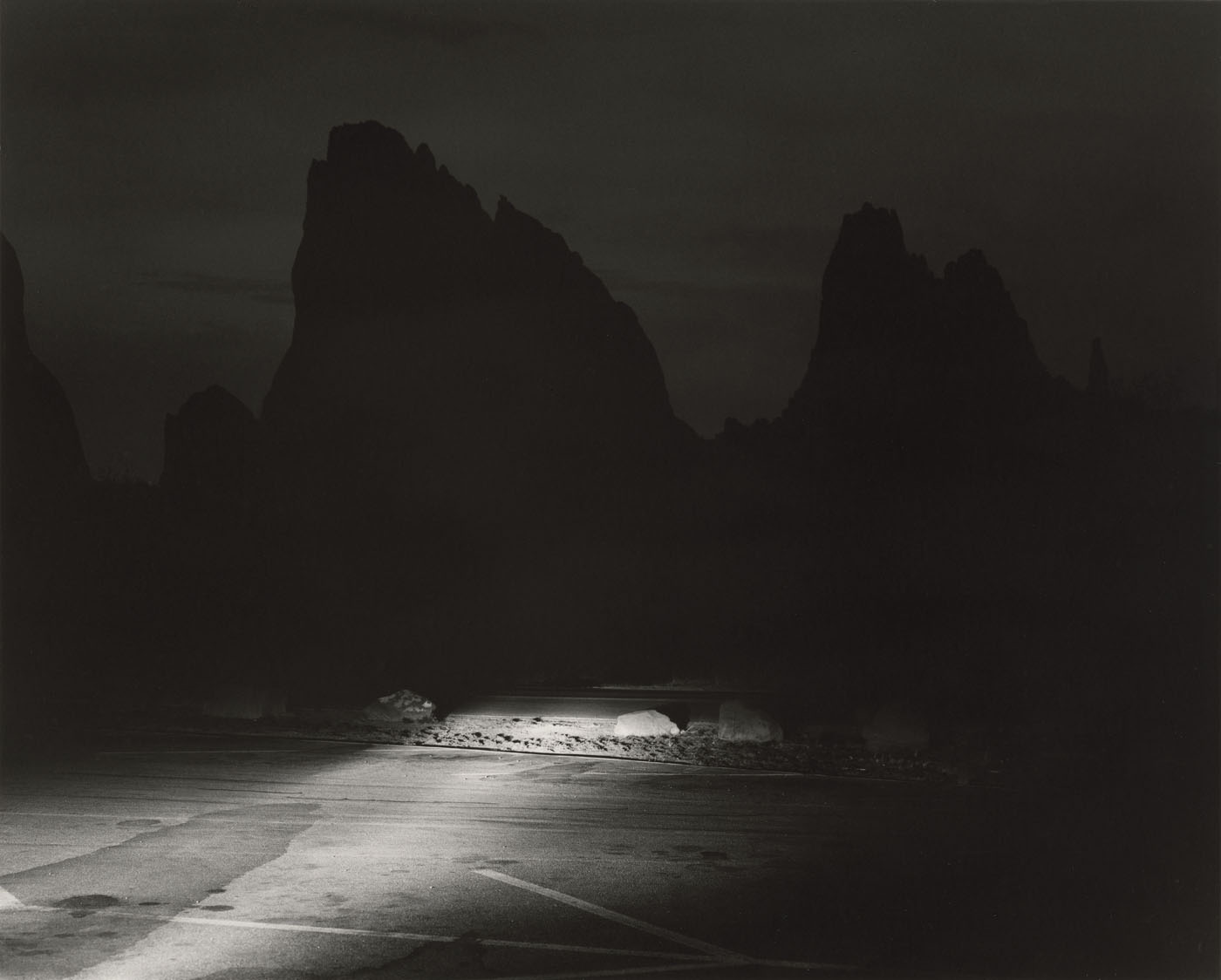
Tobias Zielony (German, b. 1973) 'Dunkelraum' 2022 from the exhibition 'Mining Photography. The Ecological Footprint of Image Production' at Museum für Kunst und Gewerbe Hamburg, July - Oct, 2022


Tobias Zielony (German, b. 1973)
Dunkelraum (Darkroom)
2022
Slide installation
© Tobias Zielony


Ever since its invention, photography has depended on the global extraction and exploitation of so called natural resources. In the early 19th century, these were salt, fossil fuels such as bitumen and carbon, and copper and silver, which were all used for the first images on copper plates and for salt paper prints. By the late 20th century, the photographic industry was one of the most important consumers of silver, responsible, at its peak, for over half of the metal’s global consumption. Today, with the advent of digital photography and the ubiquity of mobile devices, image production is contingent on rare earths and metals such as coltan, cobalt, and europium. The storage and distribution of images also generate immense amounts of CO2.

The exhibition is dedicated to the material history of the key resources used for photography. It traces the social and political context of their extraction and disposal and how this relates to climate change. Using historical photographs and contemporary artistic positions as well as interviews with a chemist, an activist, a restorer, a mineralogist, and a biologist, the exhibition tells the story of photography as one of industrial production, showing the extent to which the medium is implicated in climate change.

Copper and the Daguerreotype

In 1802, Alexander von Humboldt collected mineral samples containing copper and silver on his research trip through South and Central America. A good forty years later, the use of such materials made it possible for Humboldt to be photographed. Silver-coated copper plates were the first image supports to enjoy widespread usage in photography.  The silver layer of these daguerreotypes, made light sensitive by iodine, was applied to a base of copper, which resulted in plates that were both more robust and less expensive. In 1839, when the daguerreotype was invented, such silver-coated copper sheets, produced using the so-called Sheffield Plate technique, were an inexpensive material employed for a whole range of silver household items, from trays to candlesticks. In Paris alone, the production of daguerreotypes required 100 tons of copper a year, producing in 1851 almost a million whole plates. Photography thus benefited decisively from the upswing in copper processing.

Beginning in the early 18th century in Swansea, Wales, coal was used to smelt copper ore on an industrial scale far away from the site where it was found. By the 1840s, ores from Cuba, Mexico, Colombia, Chile, Peru, Australia, and New Zealand were being processed in Swansea smelting works, which now produced more than a third of the copper that was traded worldwide – not without consequences for people and the environment. A look at Swansea reveals that photography’s global success would have been inconceivable without the use of fossil fuels, colonial expansion, and the world-wide extraction of metal deposits.

Hermann Biow and Alexander von Humboldt

Photographic pioneer Hermann Biow’s clear, unfussy visual language quickly made him a sought-after portraitist in prominent circles. In 1850, his Deutsche Zeitgenossen (German Contemporaries) portfolio was published with copperplate engravings from his photographs of artists, scientists, and politicians. In 1847, Biow had also photographed the famous naturalist Alexander von Humboldt in Berlin for the project. Humboldt, whose goal it was to depict the entire physical world in one work, was employed as a mining official for the Prussian authorities before setting out in 1799 on his first major research trip through South, Central, and North America. He brought back from there samples of the metals that would be the key elements in Biow’s daguerreotypes half a century later. The silver- and copper-bearing minerals that he collected give a sense of how these raw materials occur in nature and how, after the complex processing steps, their materiality is ultimately concealed by the finished photograph. Humboldt also recorded the way these precious metals circulated between the continents – a requirement for the industrial-scale production of daguerreotype plates – in a map in his Geographical and Physical Atlas of the Kingdom of New Spain, published in 1811. There is still some dispute, however, as to whether Humboldt was the first to warn of the dangers of anthropogenic climate change when, in 1843, he raised the question in his publication Central-Asien of the extent to which humans were influencing the climate “by felling the forests, altering the arrangement of bodies of water, and developing large masses of steam and gas at the epicenters of industry.”

Hermann Biow (b. 1804 in Breslau, d. 1850 in Dresden) was a portrait painter and lithographer and an important pioneer of photography in Germany. His documentation of the devastation of Hamburg after the fire of 1842 was the first photo reportage in history. The natural scientist Alexander von Humboldt (b. 1769 in Berlin, d. 1859 in Berlin) was an early fan of photography and saw it as “one of the most delightful and wondrous discoveries” of his time, even if he never operated a camera himself.

Daguerreotypes of the Californian Gold Rush

When, in 1848, it became known that gold had been discovered in the bed of the American River, people headed west to California in their hundreds of thousands to seek their fortune, together with traders, merchants, and photographers. Every gold prospector was also a potential customer wanting to send home a photo after a successful dig. The gold rush led to a boom in early photography and became the first event in US history to be comprehensively documented in photographs. Many daguerreotypists travelled straight to the mines as itinerant photographers. They portrayed gold diggers in threadbare clothing with tools and weapons, thereby presenting the Californian adventurers as the antithesis of the sophisticated denizens of the big cities. At the same time, they recorded the ongoing evolution of the techniques used in gold prospecting. The prospectors started out manually washing the precious metal from the river sediment using pans. But in the 1850s companies began extracting gold on an industrial scale. Watercourses were diverted so that gold could be retrieved from the drained riverbeds; “hydraulic” mining applied high pressure jets of water to detach gold-bearing sediments from hillsides and cliffs; and explosives and heavy equipment were used to dig veins of gold from underground. The gold rush daguerreotypes are thus the first documentation too of environmentally destructive mining practices. Here, it is easy to miss the fact that the images also record the mining of a material that was necessary for their own production: gold chloride had been in constant use as a fixative for daguerreotypes since 1841. Mercury represents another link between mining and photography. While photographers’ use of it as a developing agent jeopardised their own health primarily, its accessory role in gold washing caused the contamination of entire rivers in the area around the mines.

Cartes de visite of pit brow women

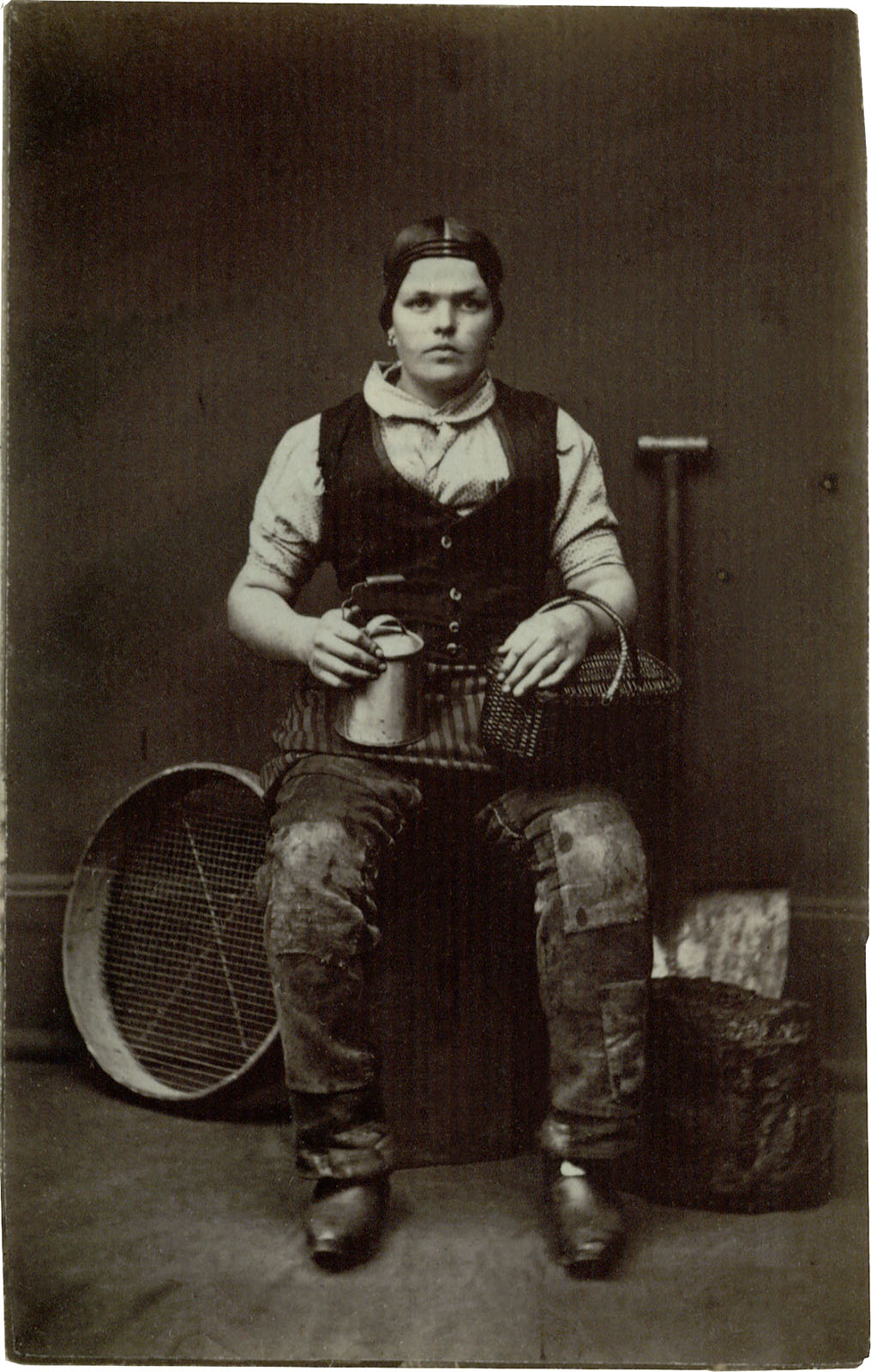
The photographs show the women who, from the early 17th century on, worked unseen in Britain’s coal mines, first below ground, and later, following the passage of the Mines and Collieries Act (1842), carrying out the lower-paid jobs on the surface. As mine workers, they moved lumps of coal with shovels and carts and separated them from the gangue using large sieve pans. Their work was a major economic contributor to Britain’s industrial success. Coal was a key element underpinning many production sectors, and it was crucial for the processing of copper, which was used in manufacturing daguerreotype plates. The British poet Arthur J. Munby collected photographs of working-class women, which catered to his interest in sociology. He bought photographs of women workers distributed as cartes de visite and also had studio photographs taken that depicted the women in their work clothes and pit gear. Unlike the Californian prospectors, who presented themselves in daguerreotypes as gold rush entrepreneurs and adventurers, the women seen in these images had little in common with the classical notions of the Victorian era. The view they showed of women in dirty work clothes (including trousers) turned the pictures into collectible motifs. We see the women sitting with legs apart and hands on hips – self-reliant poses with strong male connotations – photographed in a studio setting, where the furnishings were at odds with their class affinities.

Ignacio Acosta

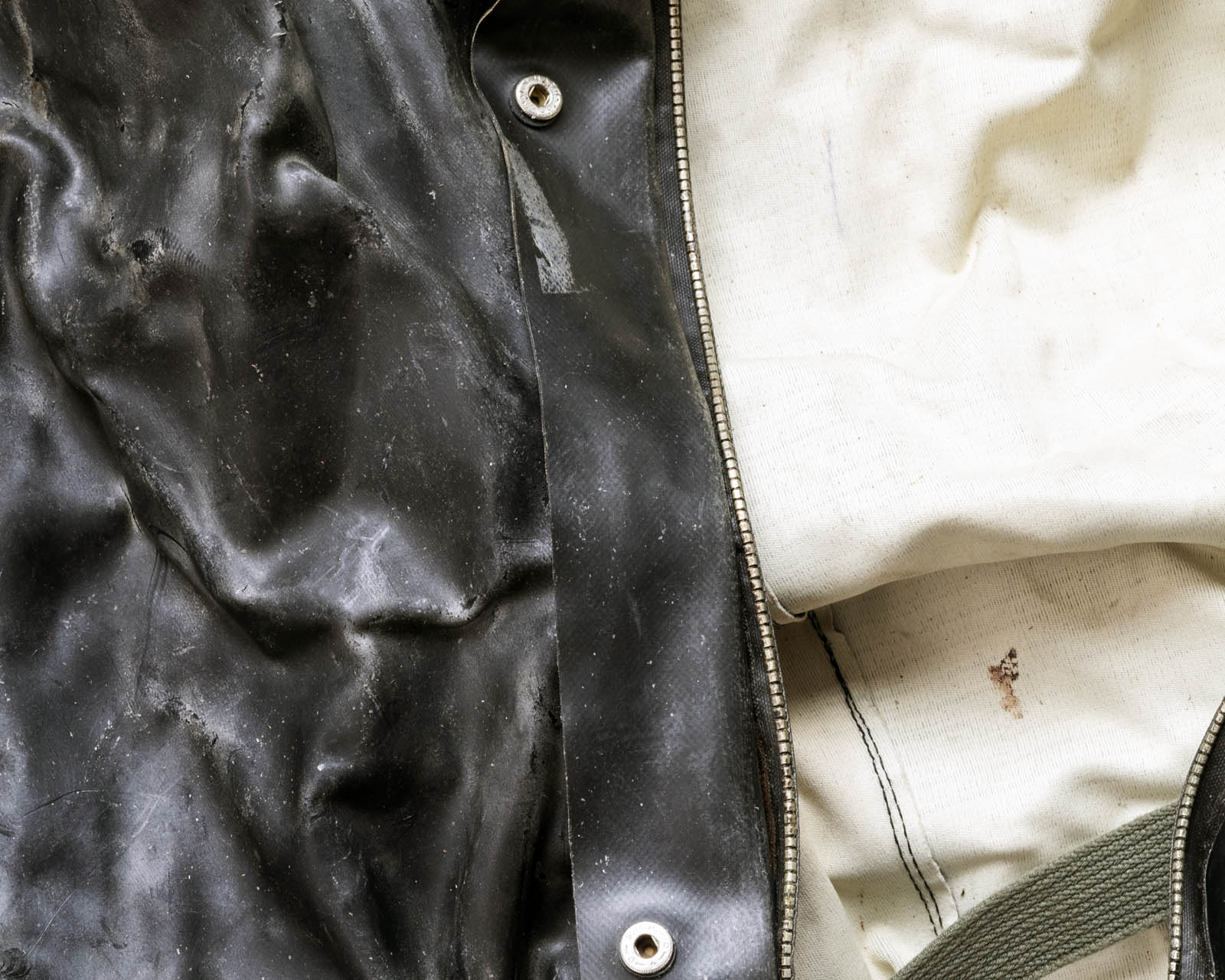
Created for the exhibition, Ignacio Acosta’s multimedia installation centres on forty photographs arranged in a four-row grid structure. They combine three motifs linked together in a visually associative network, straddling copper production and water consumption. In the topmost rank, we see a smokestack belonging to the Hamburg copper producer Aurubis AG rising aloft, paralleled by the sculpture of Hygieia, which is mounted on a fountain with her back turned on Hamburg’s city hall, looking towards the Chamber of Commerce. Acosta makes a connection between the resource-intensive and, above all, water intensive industry – a major source of pollution for the Elbe River – and the politically charged sculpture commemorating the dreadful cholera epidemic of 1892, which was caused by contaminated water. In the rows below, close-up views of the fountain are interlaced with stained rubber suits worn by Aurubis AG’s workers to protect themselves from sulfuric acid. Visual and material analogies arise, linking the copper parts of the bronze sculpture, which have been oxidised to a green patina, with the tokens of “dirty” work in the copper plant – a thematic examination of the relationships between industry, politics, and society in terms of water and resource consumption. Acosta delves deeper into these themes in a video interview with Klaus Baumgardt from the Hamburg-based environmental protection initiative “Save the Elbe.” This new installation thus expands on his work Copper Geographies, an investigation into the global mobility of mined copper that he began in 2010.

Text from the Museum für Kunst und Gewerbe Hamburg


John Cooper (British) 'Woman miner' 1860s from the exhibition 'Mining Photography. The Ecological Footprint of Image Production' at Museum für Kunst und Gewerbe Hamburg, July - Oct, 2022


John Cooper (British)
Woman miner
1860s
Carte de visite Trinity College Library, Cambridge


Installation view of the exhibition 'Mining Photography. The Ecological Footprint of Image Production' at the Museum für Kunst und Gewerbe Hamburg


Installation view of the exhibition Mining Photography. The Ecological Footprint of Image Production at the Museum für Kunst und Gewerbe Hamburg showing the work of Ignacio Acosta


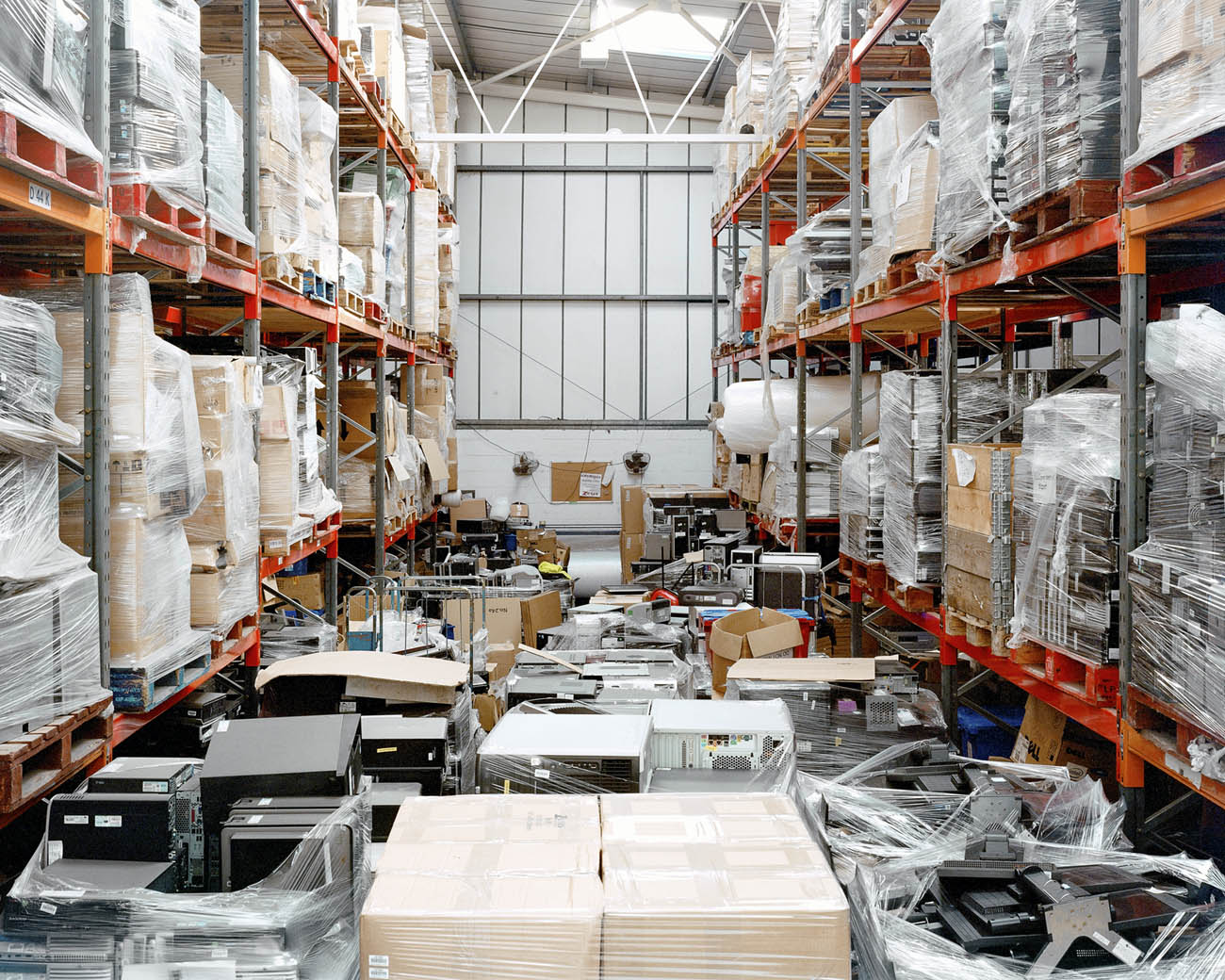
Ignacio Acosta (Chilean, b. 1971) 'Computer Aid' 2015


Ignacio Acosta (Chilean, b. 1971)
Computer Aid
2015
© Ignacio Acosta


Ignacio Acosta (Chilean, b. 1971) 'Hygieia Watches Over Us' 2022 (detail)


Ignacio Acosta (Chilean, b. 1971)
Hygieia Watches Over Us (detail)
2022
Installation comprising 40 pigment prints and video
© Ignacio Acosta


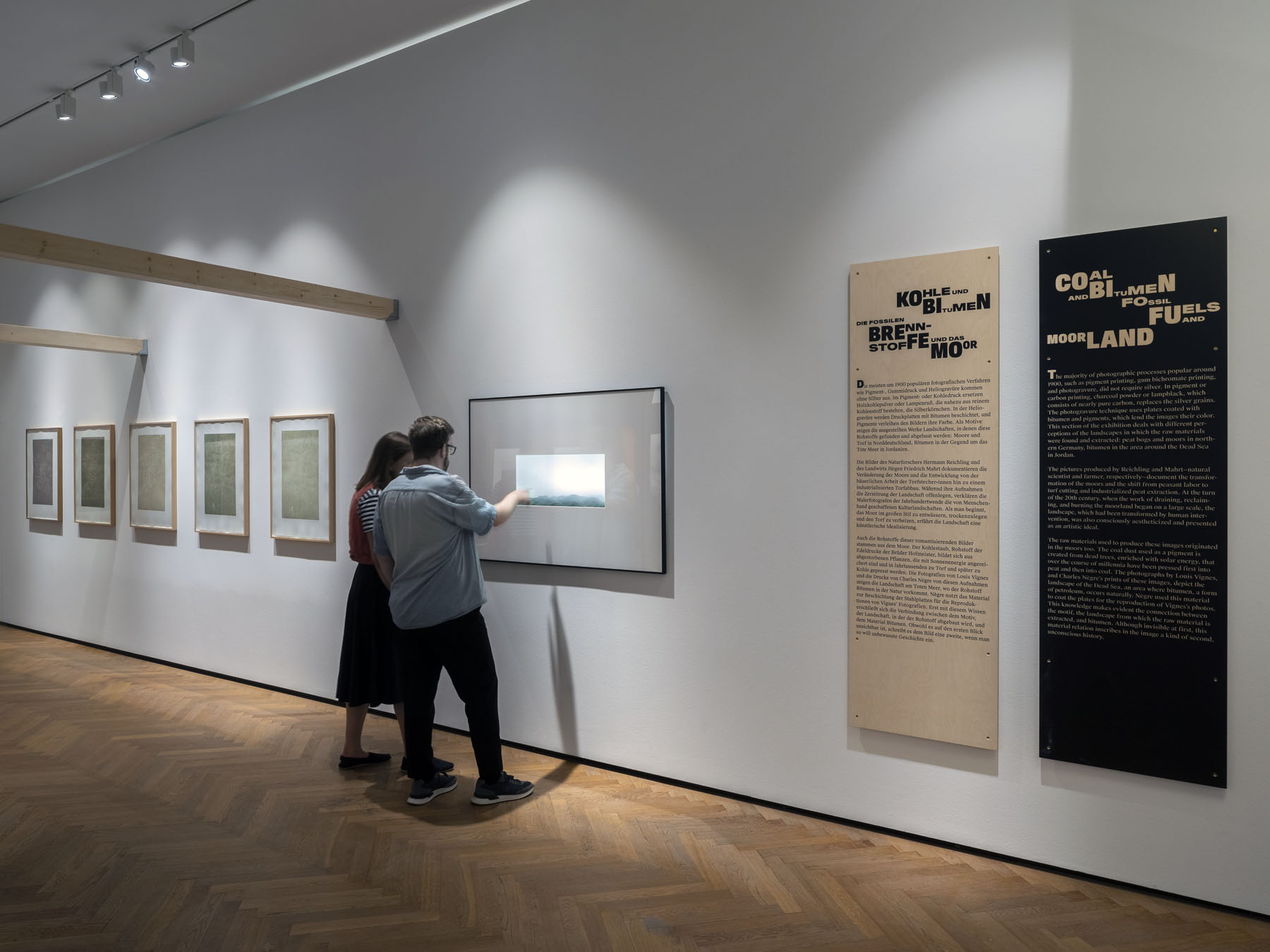
Coal and Bitumen: Fossil Fuels and Moorland

The majority of photographic processes popular around 1900, such as pigment printing, rubber printing, and heliogravure, did not require silver. In pigment or carbon printing, charcoal powder or lampblack, which consists of nearly pure carbon, replaces the silver grains. The heliogravure technique uses plates coated with bitumen and pigments, which lend the images their colour. This section of the exhibition deals with different perceptions of the landscapes in which the raw materials were found and extracted: peat bogs and moors in northern Germany, bitumen in the area around the Dead Sea in Jordan.

The pictures produced by Reichling and Mahrt – natural scientist and farmer, respectively – document the transformation of the moors and the shift from peasant labour to turf cutting and industrialised peat extraction. At the turn of the 20th century, when the work of draining, reclaiming, and burning the moorland began on a large scale, the landscape, which had been transformed by human intervention, was also consciously aestheticised and presented as an artistic ideal.

The raw materials used to produce these images originated in the moors too. The coal dust used as a pigment is created from dead trees, enriched with solar energy, that over the course of millennia have been pressed first into peat and then into coal. The photographs by Louis Vignes, and Charles Nègre’s prints of these images, depict the landscape of the Dead Sea, an area where bitumen, a form of petroleum, occurs naturally. Nègre used this material to coat the plates for their production of Vignes’s photos. This knowledge makes evident the connection between the motif, the landscape from which the raw material is extracted, and bitumen. Although invisible at first, this material relation inscribes in the image a kind of second, unconscious history.

Theodor and Oscar Hofmeister

The Hofmeister brothers present the moorlands around Hamburg as an area imbued with longing. The white blooms of the cottongrass accentuate the charming, painterly qualities of the idealised landscape, which is rendered in vertical format in the style of Japanese woodblock prints. The Hofmeisters do not show the furrowed ground, marked by the incipient signs of systematic peat extraction, or the geometrical lines of the drainage ditches. Instead, our eye is drawn in by a walkway projecting into the picture at an angle. The technique of multicolour gum bichromate printing, which came into vogue in the 1890s, uses pigments to render the photographic masters as prints that are made more durable by the admixture of soot.

Theodor Hofmeister (b. 1868 in Hamburg, d. 1943 in Hamburg) and Oscar Hofmeister (b. 1871 in Hamburg, d. 1937 in Ichenhausen) were amateur photographers alongside their professional work (as businessman and legal clerk, respectively). Exponents of the Pictorialist approach, they began exhibiting their work internationally in 1895. They specialised in multicolour gum bichromate printing.

Jürgen Friedrich Mahrt and Hermann Reichling

Moorlands contain the organic commodity peat. Once it has been drained, dug, and dried, it can be burned as a source of energy. This usage has a long history and was of great importance until the emergence of the coal industry. As naturalists, Jürgen Friedrich Mahrt and Hermann Reichling recorded how peat cutting infringed on nature and documented the massive impact it had. While Mahrt’s hand-coloured photographs are illustrative of the arduous manual labor involved, Reichling’s work gives a palpable sense of the industrial scale of this undertaking. He often seeks out compositions that set up a contrast between the supposedly pristine moor – which represents such an important habitat – and the drastic impact of human agency. In this way, he clearly shows how the natural vegetation is inscribed with an industrial grid of furrows, which gives structure to the photographs’ pictorial space as a graphical raster. It becomes evident here how nature is turned into a commodity, how with every cut that is dug, whether with a spade or an excavator, sods of peat are removed from the earth as a monetisable product. The shots showing the edges of the peat in cross section – as documented by both photographers – also allude to the temporal dimension of the resource: in the right conditions, it takes a thousand years to produce 1 meter of peat from organic material. However, the climate is being damaged not only by the commercial exploitation of the moorlands but also by the process of draining them, which releases huge amounts of CO2.

Jürgen Friedrich Mahrt (b. 1881 in Elsdorf, d. 1940 in Rendsburg) was a farmer and Hermann Reichling (b. 1890 in Heiligenstadt, d. 1948 in Münster) a biologist. As self-taught photographers, they made a record of their cultural and natural surroundings. In the 1920s, Mahrt founded a private museum in Elsdorf in which he exhibited natural history dioramas and photographs. Reichling was director of Münster’s museum of natural history, Provinzialmuseum für Naturkunde, from 1921 to 1948.

Eduard Arning

If you look closely at Eduard Arning’s large-format gum bichromate print of an iron and steel works, it has a leathery look that resembles skin. The print’s surface structure contains the pigments that give it its murkily indistinct visual effect. This is produced in large part by a blue-black colour produced when larger amounts of soot were mixed into the pigments. The surface of the paper, which has been treated with pigments and a binding agent, is exposed: these areas become fixed, while less exposed parts are rinsed away and remain lighter. In this case, the result is a nocturnal view of an iron and steel works, whose chimneys spout fire and belch smoke. The leaping flames and brightly lit windows were added after the fact by Arning and convey a Romantic idea of industrial production at the turn of the 20th century. To the right of the picture, a shadowy heap of ore looms large in the foreground, while on the left a somewhat brighter swath leads the eye into the depths of the picture and the glowing entrance to the factory. Towering next to it is the monumental chimney from which soot rises – a symbol of industrial progress. This returns in material form as blue-black pigment, extending right to the frontmost plane of the picture and giving the dark pile of ore its shape.

Anaïs Tondeur

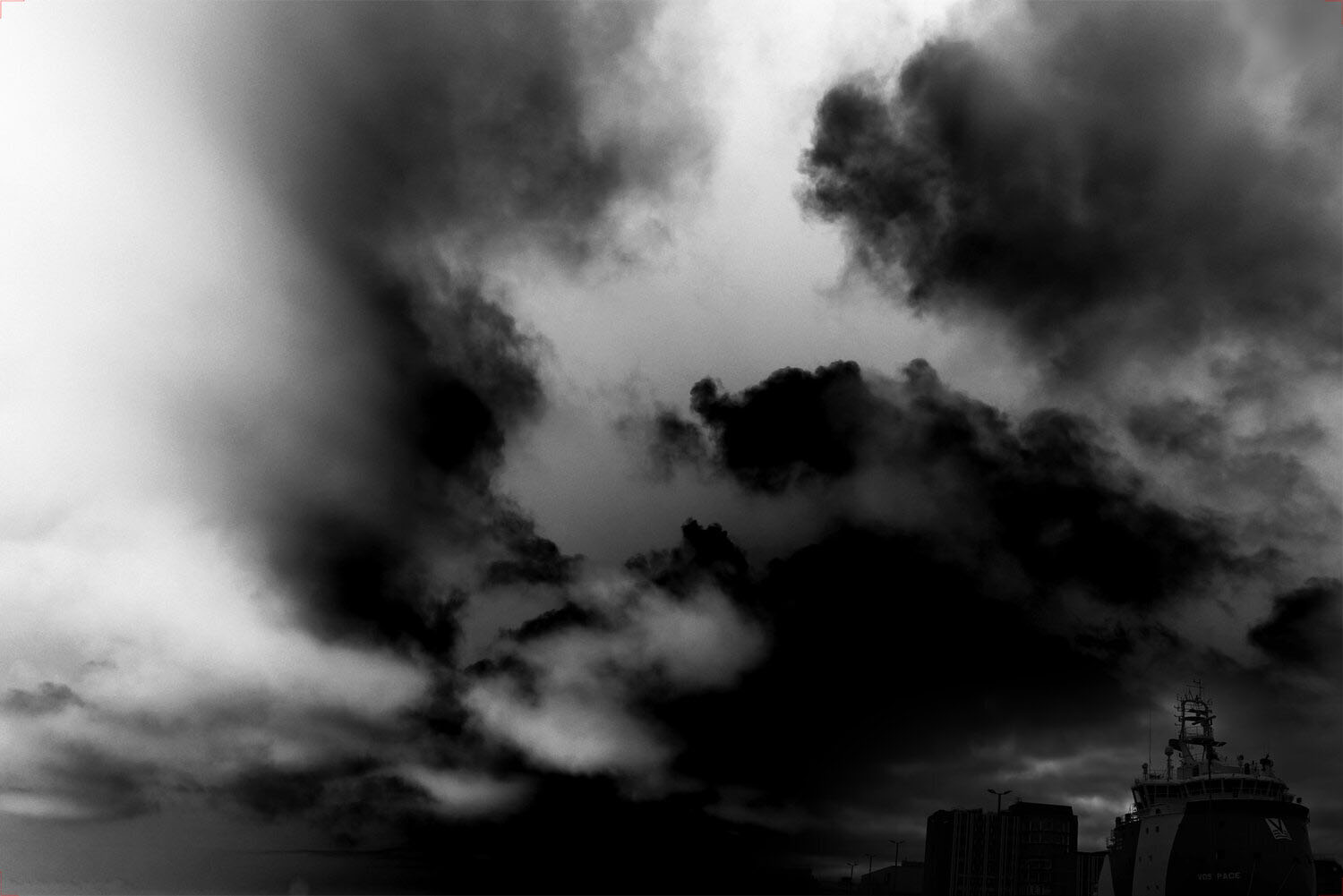
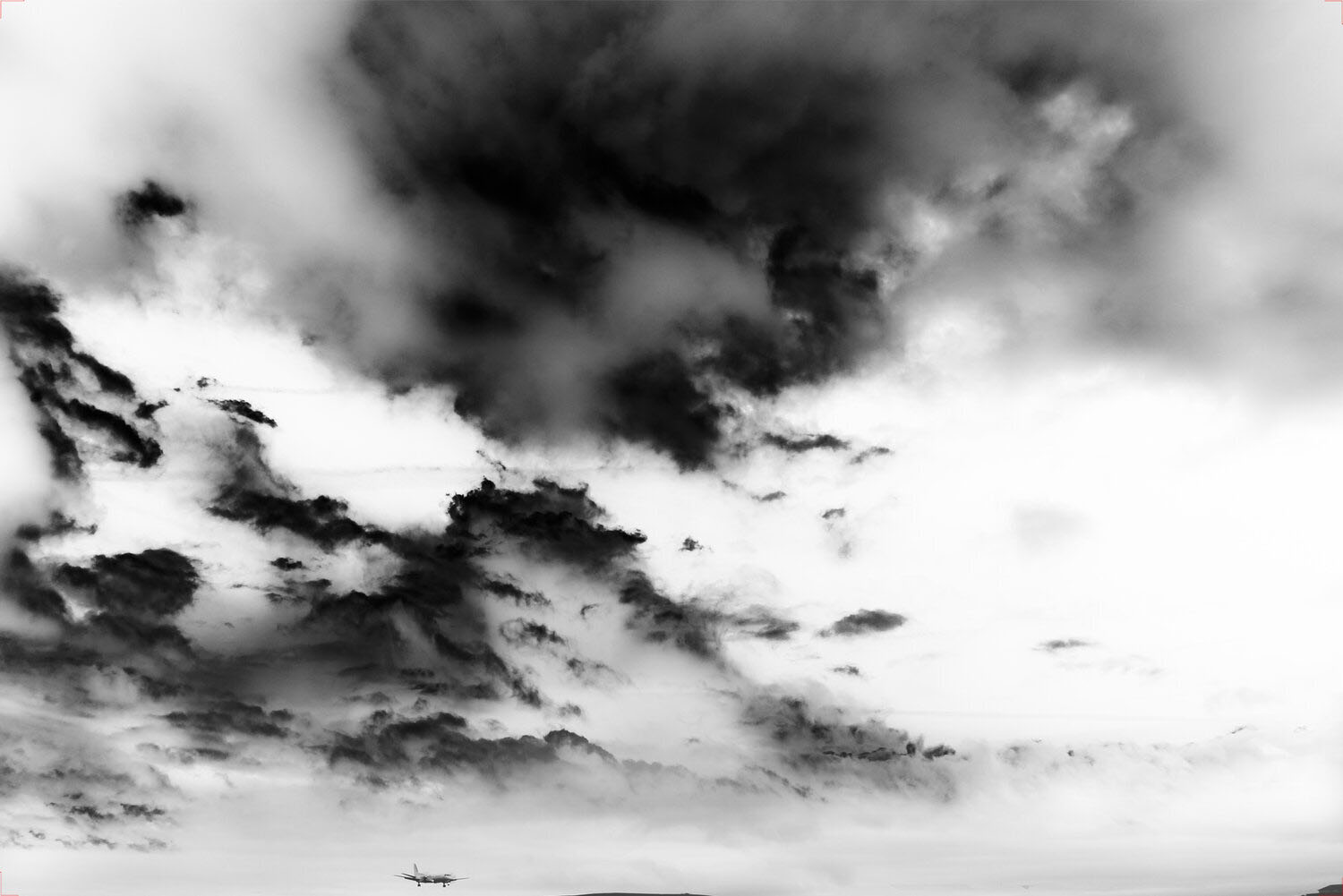
Anaïs Tondeur’s work Carbon Black sees her delving into soot particles, which were an essential component used in photographic methods at the turn of the 20th century. A product of industrial combustion processes, consisting almost exclusively of carbon, soot is carried by wind and air currents and does not usually fall to the ground until it is hundreds of kilometres from the site of emission. The black particles of carbon absorb the sun’s rays, warming the atmosphere and thus contributing to the melting of the ice caps. Soot enters the human body through the lungs as a fine dust measuring less than 2.5 micrometers – breathed into the alveoli, it is transported into the bloodstream and finds its way into the internal organs. Working together with two climate researchers, the artist set out on a fifteen-day expedition traversing the UK. Using airflow analyses, the team determined the trajectory of soot particles, a trail that led from Fair Isle in Scotland to the port of Folkestone in the south of England. At each stop on their journey, they took photographs of the horizon using a helmet camera, measured the concentration of particulate matter, and recovered soot particles from the air. Inserted into printer cartridges as pigment, these particles were then used to produce a landscape photograph whose colour characteristics are specific to the site where the picture was taken. The severity of the air pollution is thus given expression in the dramatic grey and black tones of the cloud constellations depicted.

Anaïs Tondeur (b. 1985 in France) studied at Central Saint Martins and at the Royal College of Arts in London. Her research-based work explores the dynamic realm connecting the natural sciences, anthropology, and mythic narratives.

Susanne Kriemann

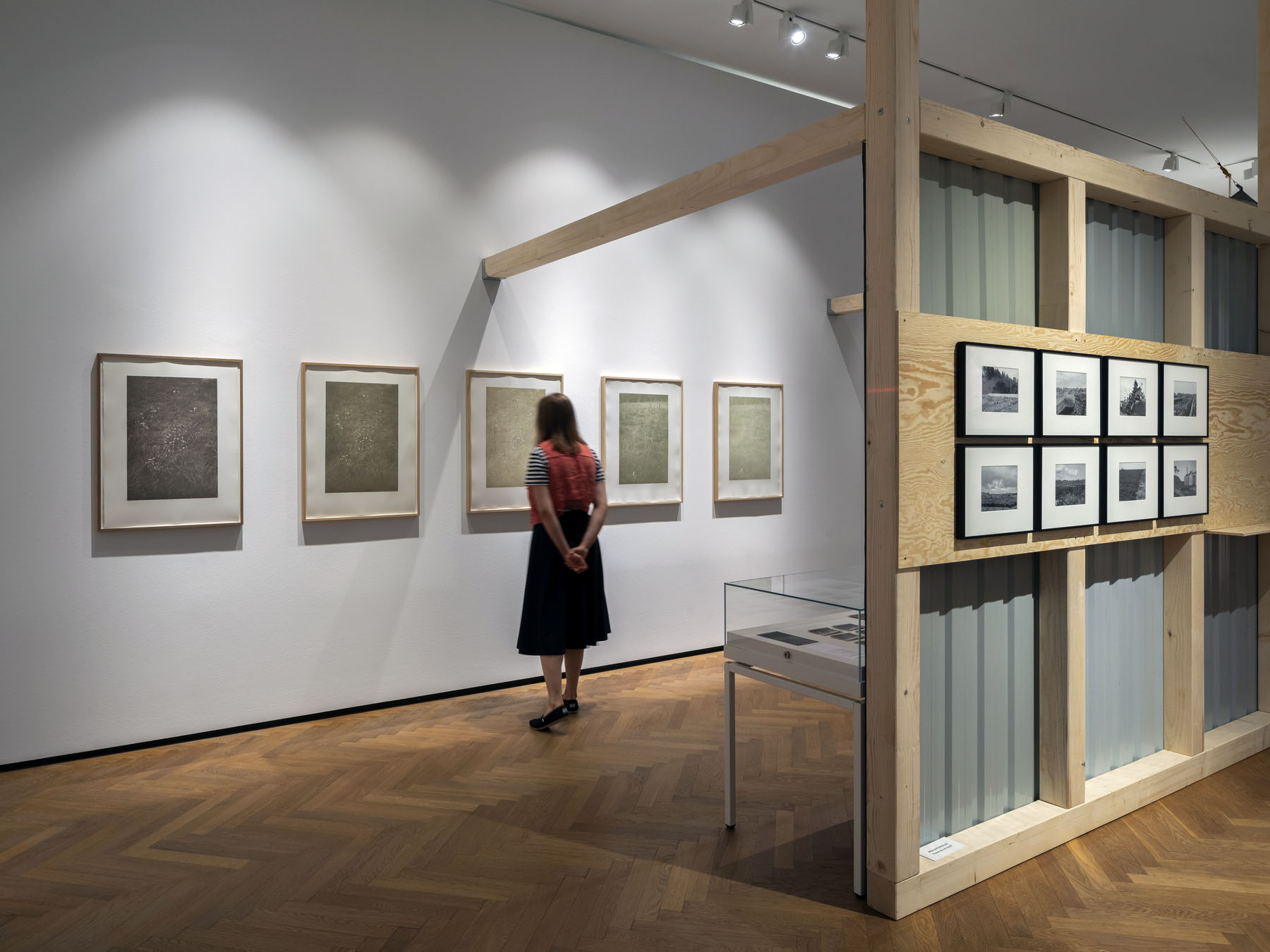
The artist works with heliogravure, a manual printing technique that is now no longer used in practice: the copper plate is dusted with asphalt powder and printed using a highly pigmented paint mixed with soot. In 2017, Susanne Kriemann began accompanying scientists from the University of Jena on their research trips to investigate the renaturation of the uranium mining area formerly operated by SDAG Wismut in the Ore Mountains (Erzgebirge). Uranium ore, a highly radioactive substance, was mined there between 1949 and 1990. Today, its soil is severely contaminated with heavy metals. Kriemann uses photography for her artistic research on the project – her logging of contaminated plants stretches the medium to the very limits of what it can depict, as the radiation measured by the researchers cannot be seen in the photograph. Notwithstanding, Kriemann has devised a method that allows her to inscribe the radioactivity in the image: she harvests individual plants that she has previously photographed and processes them to produce different-coloured pigments, which she mixes with soot and uses to print her heliogravures. This technique allows her to include the plants directly in the work she creates. In this way, the radioactivity becomes a physical element in her images.

Susanne Kriemann (b. 1972 in Erlangen) studied at the Stuttgart State Academy of Art and Design (ABK Stuttgart) and the École nationale supérieure des Beaux-Arts in Paris. Her research-based work is concerned with the technical requirements and historical conditions of photographic production.

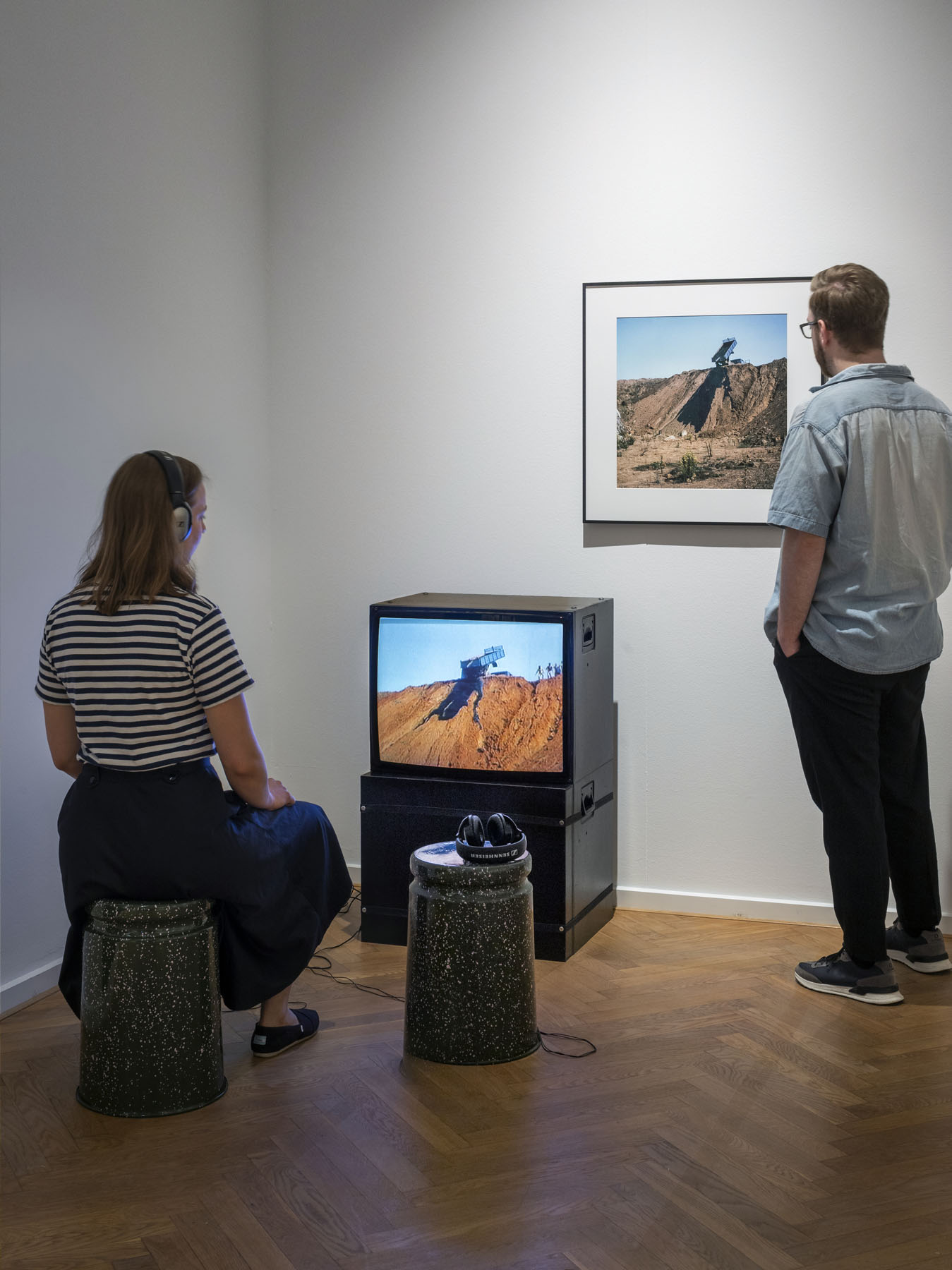
Robert Smithson

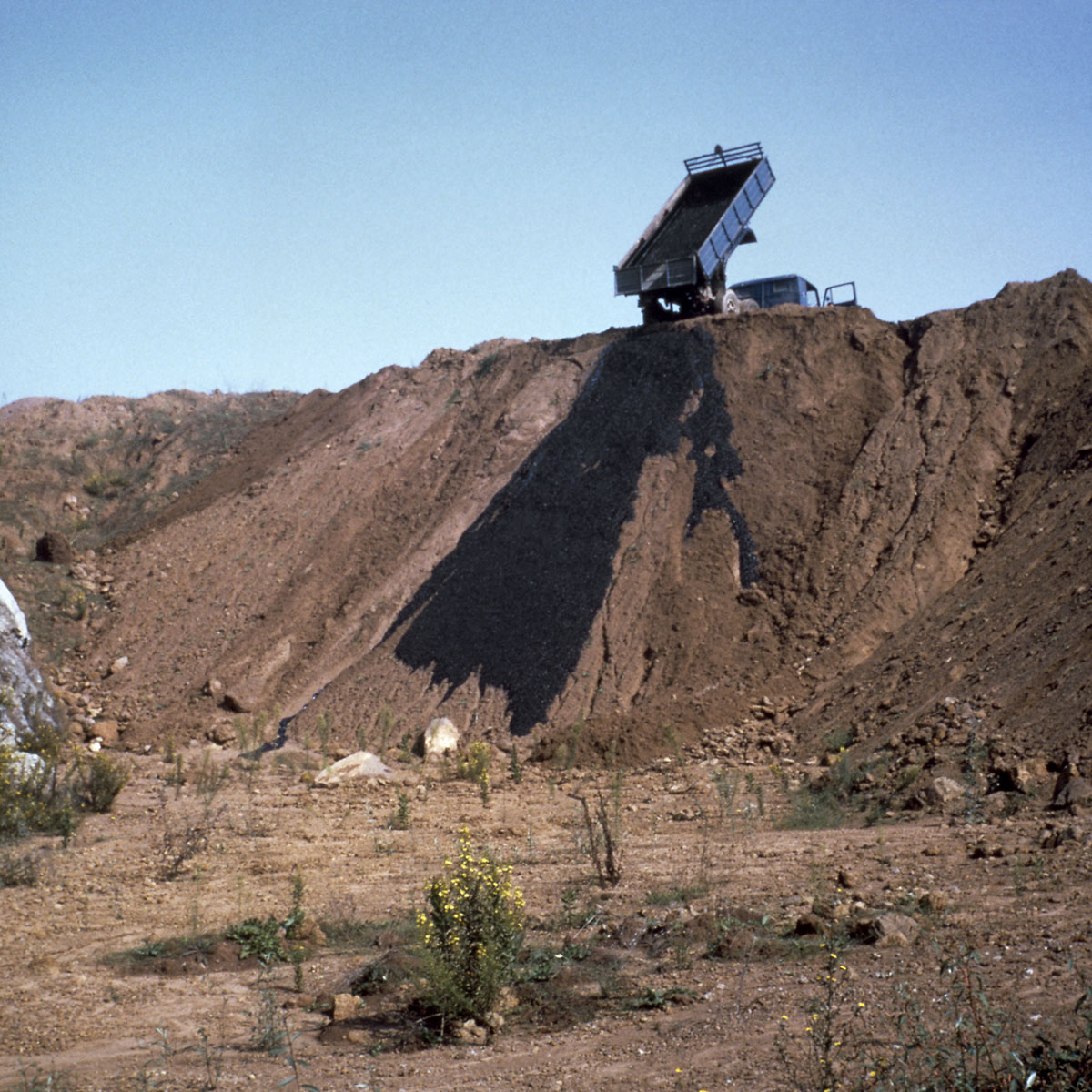
In his 1969 work Asphalt Rundown, Robert Smithson abandoned the gallery space completely to realise his first outdoor earthwork. In a stone quarry south of Rome, he had a truckload of hot, liquid asphalt tipped down an eroding slope. In choosing the quarry, he opted for a landscape that bore the marks of human intervention, the first link in a variety of industrial supply chains. Smithson’s Asphalt Lump from 1968 had already demonstrated his interest in industrial composites and nature as shaped by humanity: it was at this point that he was invited by the Konrad Fischer Galerie to conduct research on the slag heaps in the Ruhr, together with the photographer couple Bernd and Hilla Becher. In the work in Rome, the inky black mass covers the barren earth in next to no time, causing the ground to disappear beneath it as it pushes its way down the slope like a natural river, cooling and congealing.

Smithson conceived the sculpture as a symbol of frozen time. In his view, time does not simply pass – rather, it is deposited in an ongoing process like layers of sediment in the soil. As a language construct, Asphalt Rundown links into the idea of photographic images as frozen moments. On the material level, meanwhile, Smithson’s use of asphalt also alludes to Nicéphore Niépce’s heliographic experiments, where the hardening of asphalt on a tin plate under the action of light was used to record fleeting images and was thus a means to freeze time. The natural asphalt used by Niépce can be found as bitumen judaicum in the area around the Dead Sea, where the visual scenery bears a striking resemblance to Smithson’s artificially created volcanic landscape.

Robert Smithson (b. 1938 in Passaic, New Jersey, d. 1973 in Texas) gained a reputation as an early exponent of land art. He applied his conceptual approaches to a study of the relationships between humans and nature, drawing parallels between industrial and geological processes.

Honoré d’Albert de Luynes, Louis Vignes, Charles Nègre

The atlas Voyage d’exploration à la mer Morte is a documentary account of the 1864 scientific, archaeological, and artistic expedition to the Dead Sea basin and the interior of Jordan. Financed by Honoré d’Albert, duc de Luynes, an archaeologist, scientist, and art connoisseur, the expedition was accompanied by, among others, the geologist Louis Lartet and the photographer Louis Vignes. D’Albert subsequently commissioned Charles Nègre – who was one of France’s best-known photographers and had developed a photomechanical reproduction process – to translate Vignes’s photographs into an official report on the expedition using photogravure plates. The publication that came out of this process can still be termed a handmade book. Nègre was not merely an accomplished technician, he also had the eye of an art photographer and created intermediate tonalities and shadows for Vignes’s images, which turned out to have too much contrast. His prints, which are rich in detail and the play of light and shadow, were on occasion composed of several negatives, and, in some cases, the clouds were superimposed. The atlas shows, among other things, the sites where the natural deposits of bitumen were found: this was the basis, in turn, for the gravure printing process that Nègre refined.

Honoré Théodoric Paul Joseph d’Albert de Luynes (b. 1802 in Paris, d. 1867 in Rome) was a numismatist, archaeologist, collector, scholar, and art lover. Born into an aristocratic family, he was endowed with a considerable fortune and financed the research trip to Jordan, in which he also took part. Louis Vignes (b. 1831 in Bordeaux, d. 1896 in Paris) was an admiral in the French navy and an amateur photographer. Charles Nègre (b. 1820 in Grasse, d. 1880 in Grasse) was a painter and photographer as well as a technician and inventor of his own photogravure method.

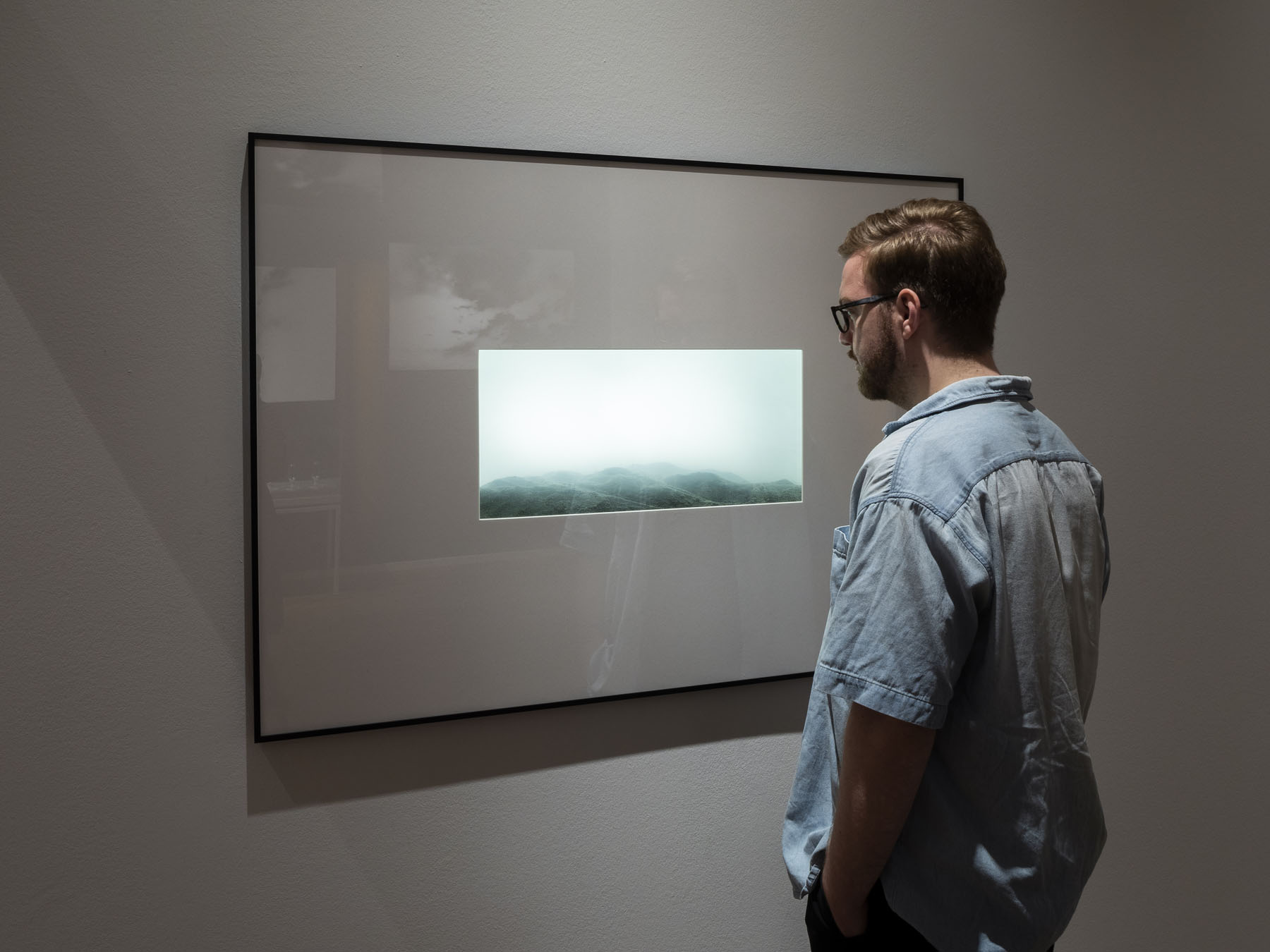
Noa Yafe

At first glance, we see a two-dimensional image, and it is only when we get closer to what is apparently a photograph mounted in the exhibition space that we register the three-dimensional sculpture let into the wall surface, which opens up like a diorama into the space behind it. Noa Yafe’s sculptures are based on photographs: these are used as templates. It is often scientific images that capture her imagination. The artist deals with the verity of photography and the moment of illusion; at the same time, by turning photographs into objects, she also addresses materiality in an age in which images have become immaterial. The master for the work she made for the exhibition is the black-and-white photograph Vue Prise au dessus de Mar Saba (View over Mar Saba) of the Jordanian hillscape around the Dead Sea. The picture was taken by Louis Vignes and reproduced by Charles Nègre using the photogravure technique: it appeared in the atlas Voyage d’exploration à la mer Morte (Expedition to the Dead Sea, 1868-1874). The artist uses real materials for the “photograph” she constructs.

Noa Yafe (b. 1978 in Israel) studied at the HaMidrasha School of Art at Beit Berl College and at the School of Visual Arts in New York City. She works in the medium of photography and sculpture.

Text from the Museum für Kunst und Gewerbe Hamburg


Jürgen Friedrich Mahrt (German, 1882-1940) 'Making baked peat on Hartshoper Moor' c. 1930


Jürgen Friedrich Mahrt (German, 1882-1940)
Making baked peat on Hartshoper Moor
c. 1930
Gelatine silver paper, hand coloured
Collection Mahrt/Storm, Rendsburg/Berlin


Installation view of the exhibition 'Mining Photography. The Ecological Footprint of Image Production' at the Museum für Kunst und Gewerbe Hamburg


Installation view of the exhibition Mining Photography. The Ecological Footprint of Image Production at the Museum für Kunst und Gewerbe Hamburg showing the work of Robert Smithson


Robert Smithson (American, 1938-1973) 'Asphalt Rundown' 1969


Robert Smithson (American, 1938-1973)
Asphalt Rundown
1969
Documentary photograph
© Holt/Smithson Foundation VG Bild-Kunst, Bonn 2022


When the Bechers’ friend Robert Smithson poured oceans of glue down a hillside, or bulldozed dirt onto a shed until its roof cracked, he was mimicking the moves of heroic construction, not aiming to build anything.

Blake Gopnik. “Photography’s Delightful Obsessives,” on The New York Times website July 28, 2022 [Online] Cited 20/10/2022


Installation view of the exhibition 'Mining Photography. The Ecological Footprint of Image Production' at the Museum für Kunst und Gewerbe Hamburg


Installation view of the exhibition Mining Photography. The Ecological Footprint of Image Production at the Museum für Kunst und Gewerbe Hamburg showing work from Anaïs Tondeur’s series Carbon Black


Anaïs Tondeur (French, b. 1985) 'North Sea, 27.05.2017, Carbon Black Level (PM2.5): 13,8 µg/m' 2017-2018


Anaïs Tondeur (French, b. 1985)
North Sea, 27.05.2017, Carbon Black Level (PM2.5): 13,8 µg/m
2017-2018
From the series Carbon Black
15 Carbon ink prints photographs, carbon black particles, cartography
100 x 150cm


Despite the absence of industries, the inhabitants of the isle of Fair suffer from suffocation. As Anaïs Tondeur reached the island she sent her geographic coordinates to climate modellers Rita van Dingenen and Jean-Philippe Putaud (JRC, European Commission) who retraced the itinerary of the particulate matters meeting her. By means of atmospheric backward trajectory models and the analyses of anthropogenic emission of air pollutants, they could define the site of emission of the particles. This abstract trajectory line lead the artist to an expedition of 837 miles by foot, ferry, fishing boat and car unravelling the journey of the anthropic meteors.

She crystallised each day in a photograph of the sky as well as filtering black carbon particles she encountered through breathing masks. The particles were later extracted by scientist J.P Putaud and turned into ink. In point of fact, black carbon is a collateral form of soot, used for centuries as the primary component of Indian ink. The photographs are thus printed with some ink composed from the particles captured in the sky where they were shot.

Text from the Anaïs Tondeur website [Online] Cited 16/10/2022. Used under fair use conditions for the purposes of education and research


Anaïs Tondeur (French, b. 1985) 'Edinburg, 30.05.2017, Carbon Black Level (PM2.5): 8,18 µg/m³' 2017-2018


Anaïs Tondeur (French, b. 1985)
Edinburg, 30.05.2017, Carbon Black Level (PM2.5): 8,18 µg/m³
2017-2018
From the series Carbon Black
15 Carbon ink prints photographs, carbon black particles, cartography
100 x 150cm


Installation view of the exhibition 'Mining Photography. The Ecological Footprint of Image Production' at the Museum für Kunst und Gewerbe Hamburg

Installation view of the exhibition 'Mining Photography. The Ecological Footprint of Image Production' at the Museum für Kunst und Gewerbe Hamburg

Installation view of the exhibition 'Mining Photography. The Ecological Footprint of Image Production' at the Museum für Kunst und Gewerbe Hamburg showing at left, heliogravures by Susanne Kriemann


Installation view of the exhibition Mining Photography. The Ecological Footprint of Image Production at the Museum für Kunst und Gewerbe Hamburg showing at left in the bottom photograph, heliogravures by Susanne Kriemann


Susanne Kriemann (German, b. 1972) 'Bitterkraut aus: Falsche Kamille, Wilde Möhre, Bitterkraut (Zyklus 2)' 2017


Susanne Kriemann (German, b. 1972)
Bitterkraut aus: Falsche Kamille, Wilde Möhre, Bitterkraut (Zyklus 2)
Bitterweed from: false chamomile, wild carrot, bitterweed (Cycle 2)
2017
Photogravure with ox-tongue pigment, 0.6 g soot on paper
80 x 60cm
© Susanne Kriemann


Paper and Its Coating: Cotton, Pulp, Gelatin, and Celluloid

The development of photography as a mass product, first made possible using paper as a material substrate, came at a cost. For most of the 19th century, photographic paper consisted primarily of rag made of cotton and flax. European manufacturers dominated the markets for textiles and paper throughout the century, but much of the raw material they used was sourced from the United States, which became cotton’s leading cultivator through its utilisation of slave labour and, after the Civil War, of share croppers and tenant farmers.

The cultivation of cotton was closely intertwined with the often-violent emergence of capitalism, precipitating the drainage of wetlands – whose ecosystems play a crucial role in carbon storage – and thus accelerating climate change. This cotton was then exported to Europe, where it was spun into clothes, which, when worn out, were collected by ragpickers – predominantly working-class children and women – and sold back to European paper mills, where women prepared them for pulping, removing buttons and bleaching them white using newly discovered toxic chlorine compounds.

The ever-increasing demand eventually led producers to seek an alternative to cotton. Perfected in Germany, wood pulping in entails the boiling of wood in sulfuric acid so as to separate it into individual cellulose fibres. The photo-paper industry’s use of animal-derived substances, such as albumin and gelatin, relied on industrialised farming and slaughter houses. A single photographic paper producer in Dresden used six million eggs a year for albumen coating, and as late as 1999 Kodak was still processing over thirty million kilos of cow skeletons every year.

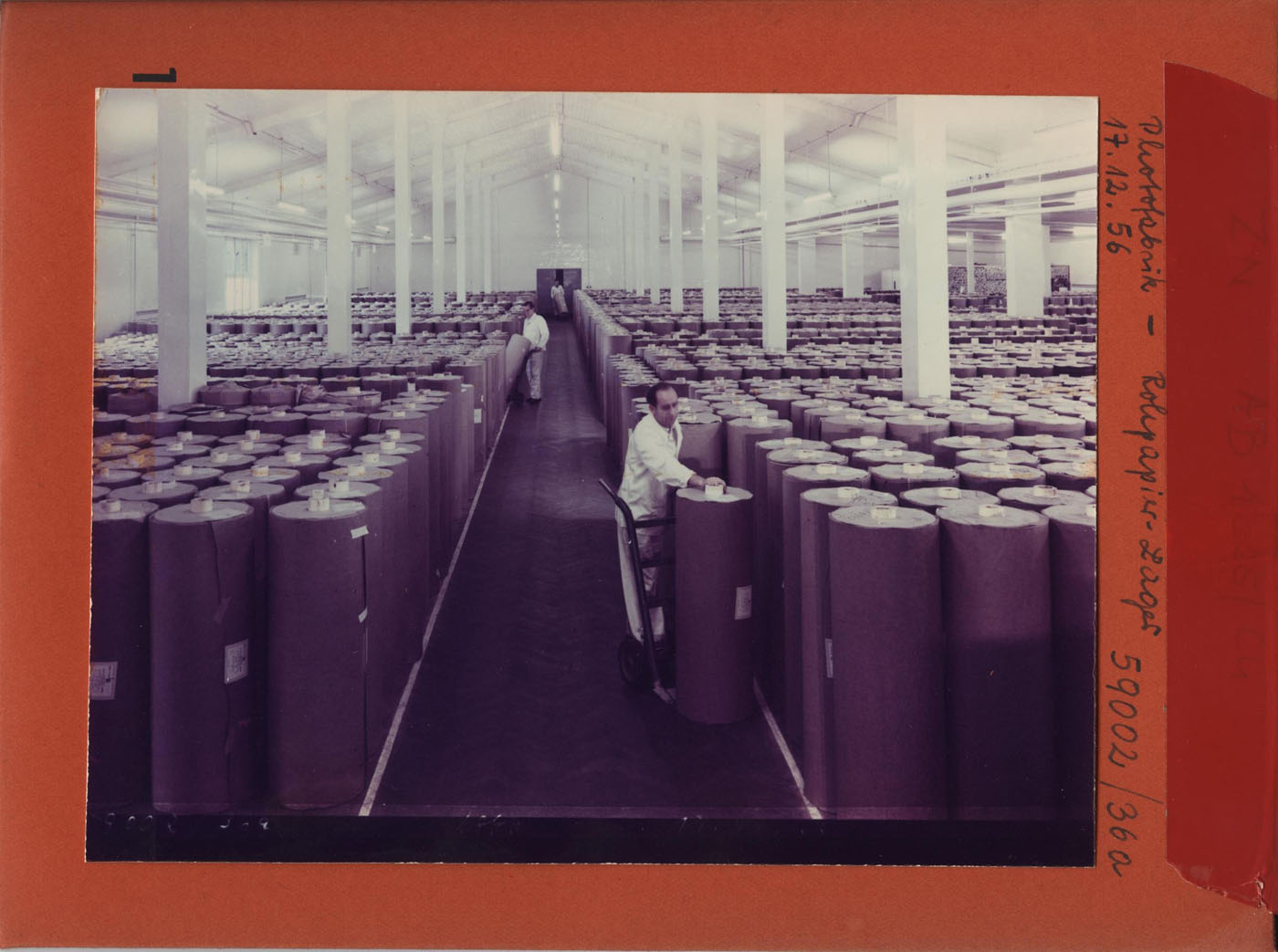
Gevaert Photographic Paper

The 1964 merger of the German corporation Agfa AG and the Belgian company Gevaert Photo-Producten NV led to the creation of the Agfa- Gevaert Group. These two enterprises, each with a long tradition, combined to form one of the world’s leading producers of photographic goods, whose line extended from cameras to X-ray film. If we take, for example, black-and-white gelatin silver paper – one of Agfa-Gevaert’s core products and a staple of the photographic industry in general – it is still manufactured according to the same principles today. The paper substrate is coated with a layer of barium sulfate (also known as baryte), which covers the paper fibres and ensures that the emulsion of gelatin and light-sensitive silver halide grains applied at the end adheres to the base. The pictures from the Agfa archive offer an insight into this process. Although the layers were always built up in the same way, there was considerable variety in the photographic paper that was produced. The possible surfaces might be white or cream coloured, glossy or matte, smooth or textured and were available in up to six variants to allow the motif to be rendered with different degrees of contrast, from extra soft to ultra hard. Systematic research into photographic papers and their material properties did not start until a few years ago. One such example is the documentation of Gevaert papers by the FOMU Photo Museum in Antwerp, which should provide a better understanding of these products and facilitate their processing in both artistic and technical terms. A study of the packaging reveals that successful product lines were offered over a period of decades, even if their outer form changed with the times in line with contemporary tastes.

Alison Rossiter

Alison Rossiter’s photographic work is created without a camera or a lens, using expired photographic paper. Since 2007, the artist has collected approximately fifteen hundred packages of old photographic paper, starting from the late 19th century and representing every decade of the 20th. Rossiter mines what she describes as a “cross section of the history of photographic print materials” for their latent images – created by the effect on the paper over time of oxidation, light leaks, pollutants, or physical damage and then developed by the artist in the darkroom to reveal “found photograms.” At times, the artist marks the surface intentionally by pouring or pooling photographic developer directly onto the paper, or else limiting its contact with it, deftly combining chance and skill. The results are abstract images, fields of texture, spilled marks, and monochromes, in a subtle array of blacks, greys, and whites reminiscent of mid-century modernist painting. Each work’s title contains three facts: the manufacturer and type of paper, its expiration date as stated on its package, and the date that Rossiter processed the material. As indicated by its title, a work consisting of six prints included in the exhibition was produced using Gevaert Gevaluxe Velours paper, but their exact expiration date is unknown. First produced by Gevaert in 1933, Gevaluxe Velours was advertised by the company as the “most beautiful paper ever made” and is considered to this day to have been one the best commercially available papers due to its matte surface and intensely deep black shadows. A second work comprises of two images printed using an unnamed photographic paper produced by The Haloid Company, Rochester, for the US military. The abstract geometrical compositions’ material provenance reveals their connection to what could be called the military-photo-industrial-complex, but also hints at the origins of digital technologies within the photographic industries: in 1961 Haloid changed its name to Xerox Corporation, and would go on to invent some of the key technologies in personal computing.

F & D Cartier, Wait and See – The Never Taken Images

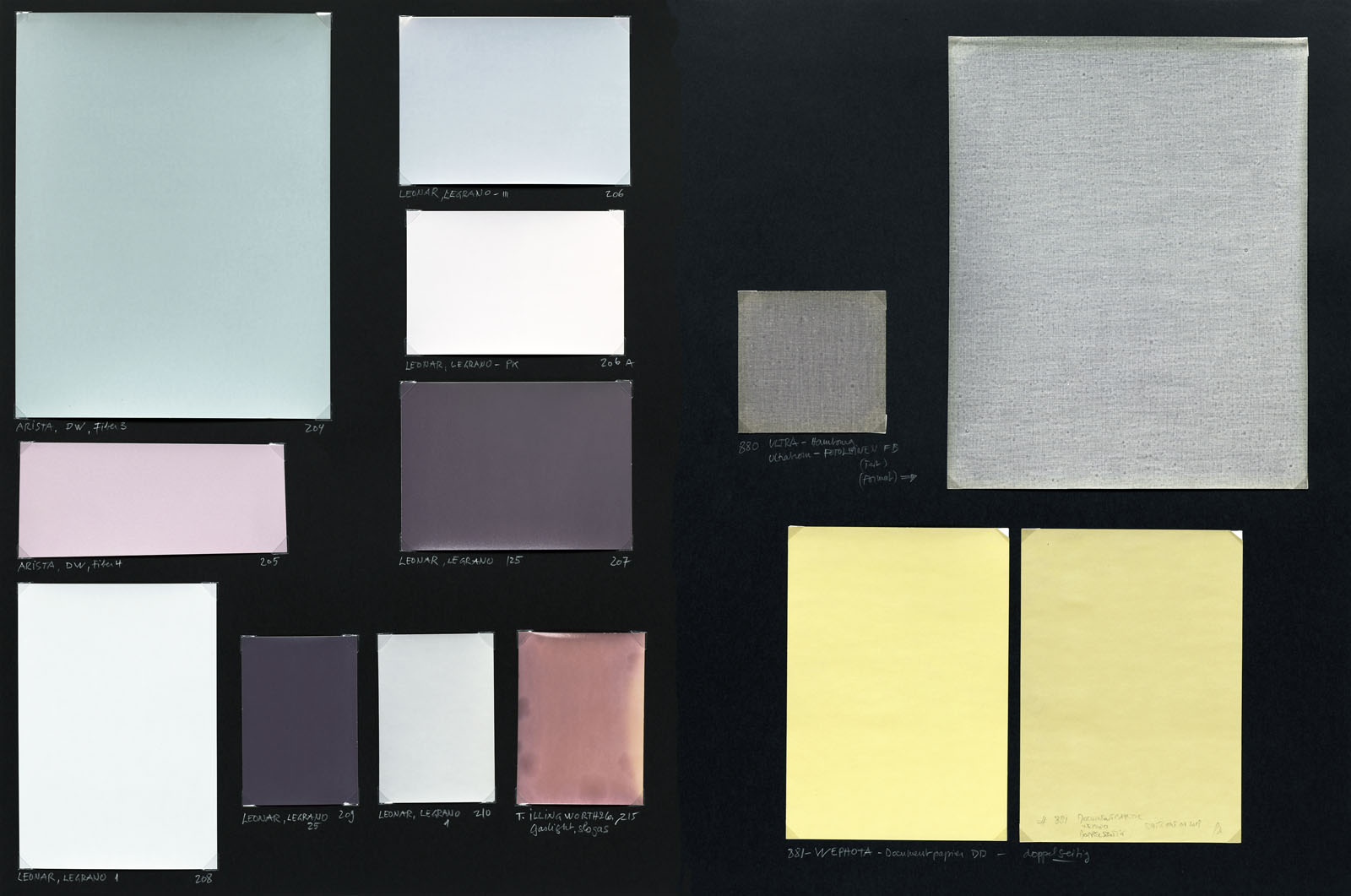
In 1998, F & D Cartier began investigating the materiality of photographic paper in a work group entitled Wait and See. For them, the work is an exploration of the rudiments of the medium and a way of engaging with the flood of photographic images produced in the digital age. In their installations, the artists use expired photographic papers dating from the years 1890 to 2000, which have lost some of their sensitivity but still respond to light. Their exposure in the exhibition space triggers an ongoing process of slow change as their appearance constantly alters. Without any recourse to a camera or photochemistry, the duo thus brings to life images that were never taken and examines their potential. At the same time, their radically simplified experiment, designed to record light and time, connects back to the early days of the medium, when developing photographic paper was still unusual and daylight exposure was the principal means of blackening the silver salts. The surprising colours produced by the undeveloped gelatin silver emulsions reveal another invisible aspect of analog photography: in this way, F & D Cartier’s experiment conveys a profound sense of the complexity of a material that was ubiquitous in the 20th century.

Françoise Cartier (b. 1952 in Tavannes) studied sculpture at École des Arts Appliqués in Bern; Daniel Cartier (b. 1950 in Biel/Bienne) studied photography at Zurich University of the Arts (ZHdK). Their experiments with photographic materials, which they embarked on together in 1995, have been devoted to themes relating to remembering, forgetting, and the passing of time.

James Welling

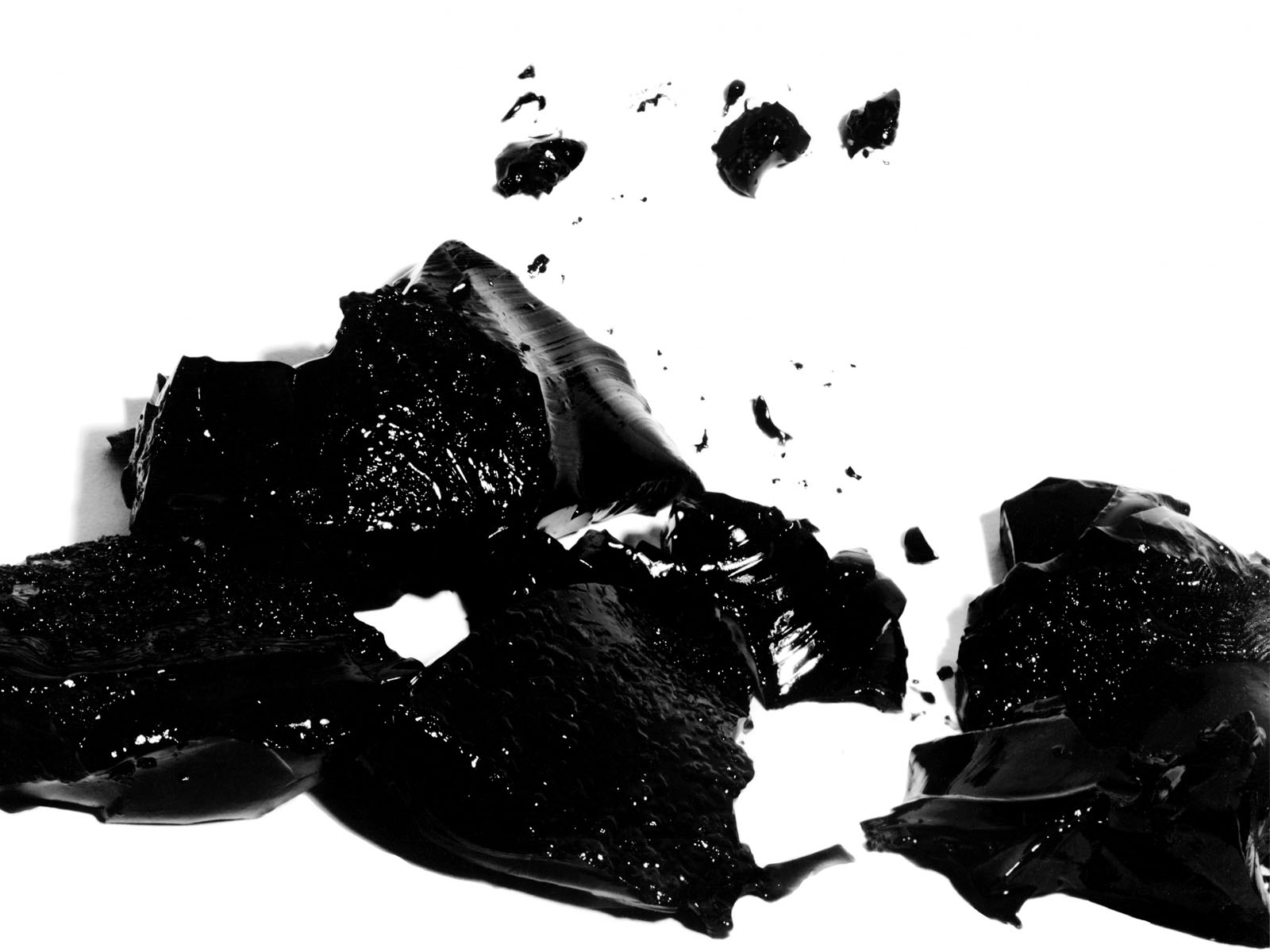
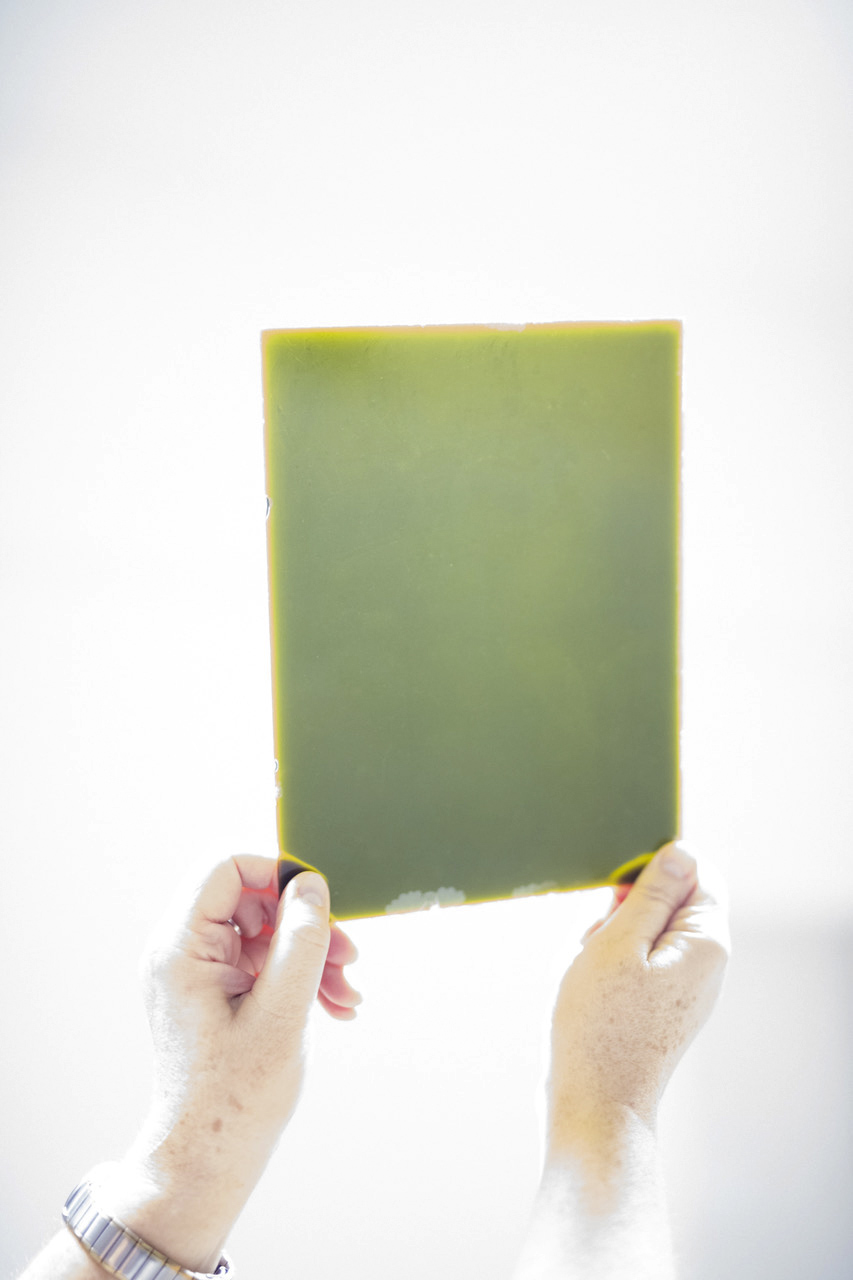
Throughout his career, James Welling has reflected on photography’s history and nature by examining the medium’s materiality through the lens of its most common components. Used as a binding layer for gelatin silver prints, gelatin’s prevalence in photographic images normally remains invisible to the naked eye. In this series, produced in 1984, Welling chose to portray the substance in a style reminiscent of product photography. Infused with black ink and then cooled, the sculpted chunks of gelatin were placed against a seamless white background, creating semi-abstract compositions with the appearance of shining coal or black glass. Welling’s work highlights photography’s artifice: reflecting on the way it is consciously and explicitly staged, its choice of subject, and its referential indeterminacy. This is accentuated by the fact that it is difficult at first to tell what exactly it is we are looking at. In his work, Welling often creates a delay between the moment an image is seen and the time viewers understand what it depicts. Here, what the image is of is exactly what it is made of: as if by sleight of hand, Welling reveals image and substrate to be one and the same, reflecting on all that is normally left out of the frame or taken for granted – or all that is hidden by it – when we normally think of what photography is, and what it does to the world.

James Welling (b. 1951, Connecticut, US) studied at Carnegie Mellon University and the University of Pittsburgh and later at the California Institute of the Arts in Valencia. Throughout his career, Welling has experimented with different photographic media, exploring the tensions within and between representation and abstraction and challenging the medium’s conventions.

Madame d’Ora

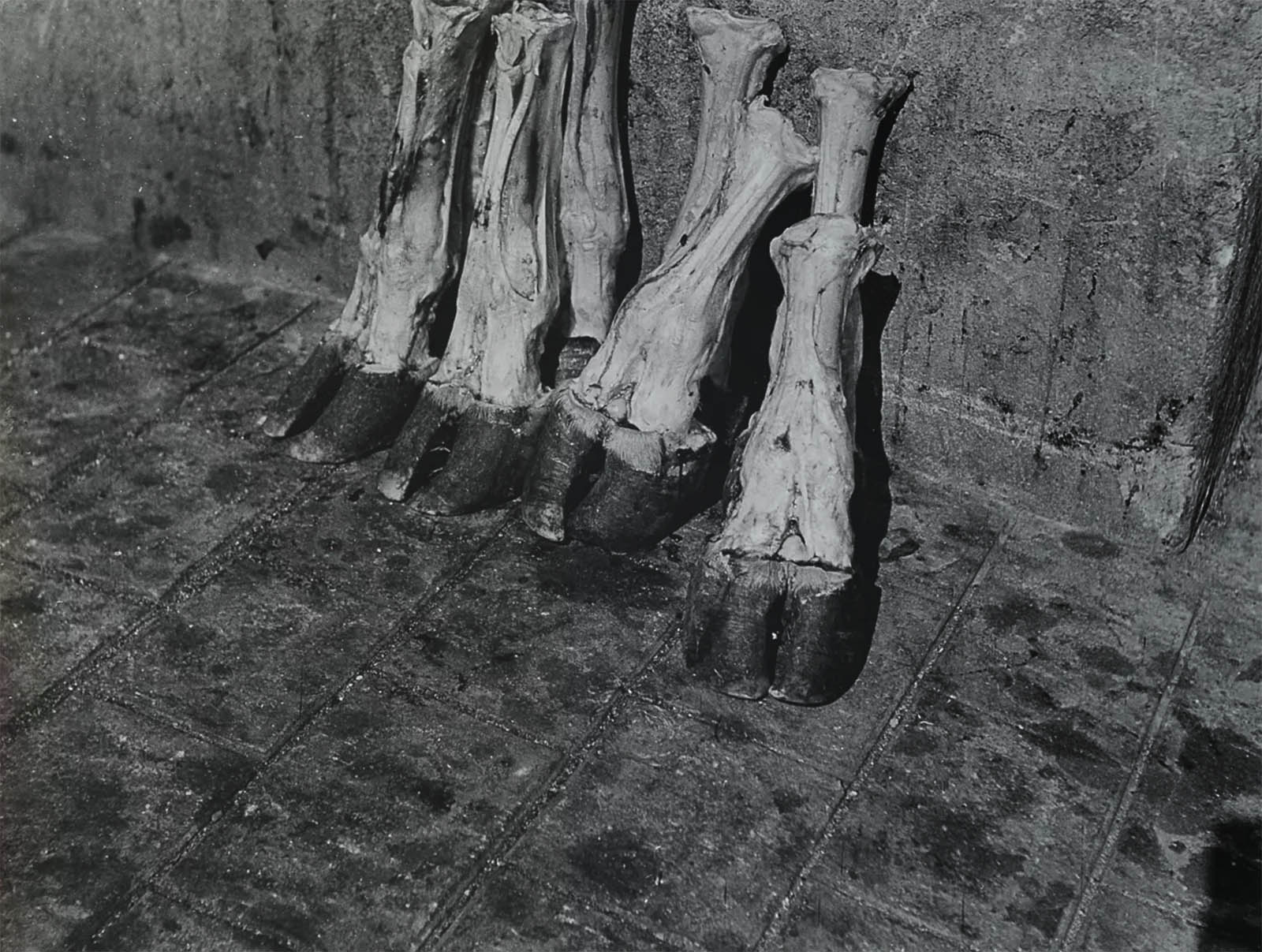
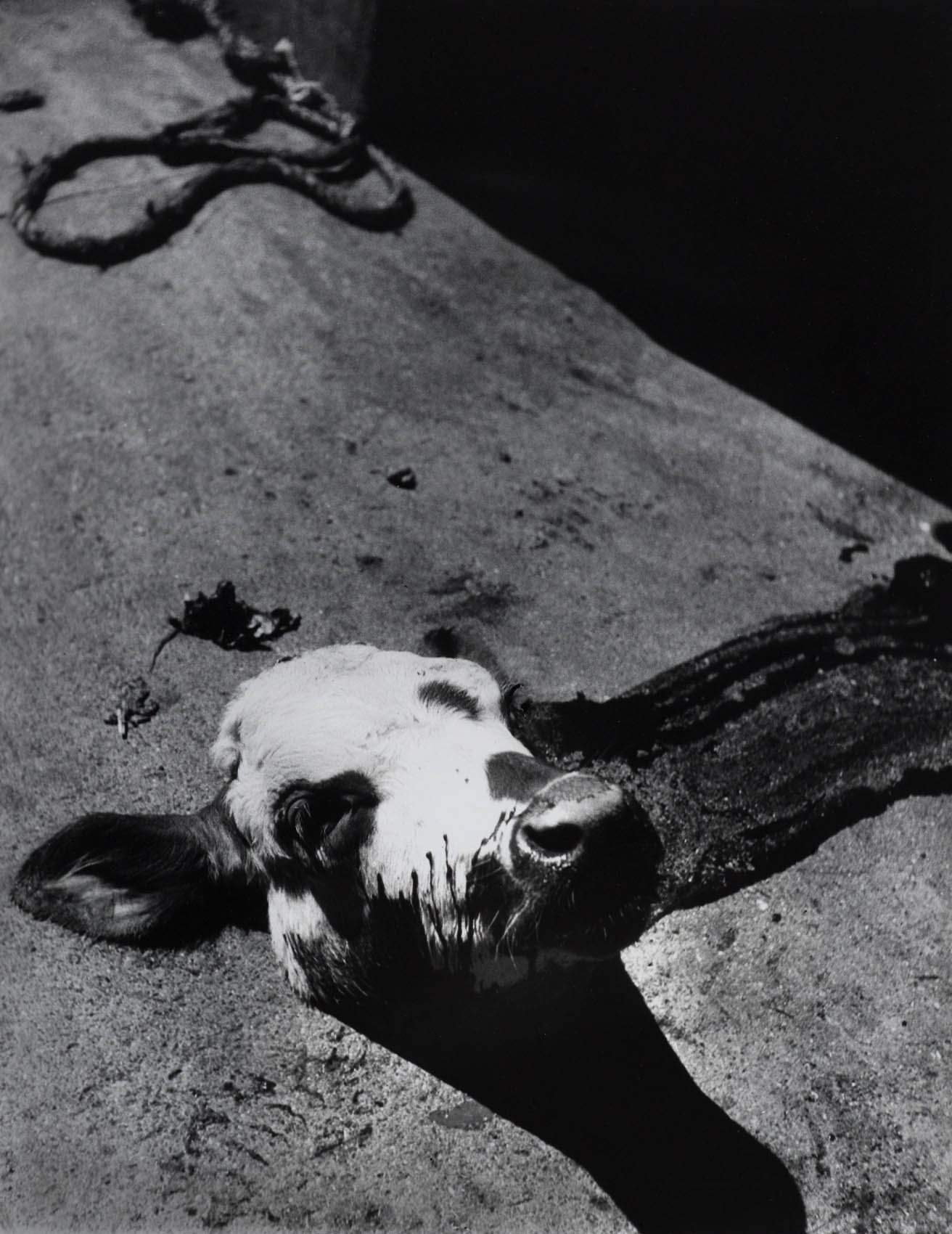
Between 1949 and 1953, Madame d’Ora produced an unsparing photographic study of two Parisian slaughterhouses, which she would go on to describe as her “great final work.” Built during the 19th century under Napoleonic decree and in keeping with Baron Haussmann’s vision, slaughterhouses such as the Abattoir Ivry Les Halles and Abattoir de Vaugirard signalled the emergence in France of industrialised meat production governed by capitalist imperatives. It was in such abattoirs that the repetitive, procedural, and rationalised mode of the factory was first introduced into the realm of animal slaughter, a practice that was later perfected in the US with the introduction of the assembly line. Enabled by such developments, the exponential growth of the cattle industry during the 19th century contributed to the dramatic acceleration in carbon emissions that began in those years. To this day, cattle are considered the number one agricultural source of greenhouse gases worldwide (responsible for about 14 percent of total human-induced emissions). Madame d’Ora’s images seem to dissect her subjects, portraying them with a sense of tactility and precision and, at times, of the absurd. In some images, skin is stretched across the picture plane, resulting in near abstraction, while, in others, pools of blood and rows of clipped and flayed corpses fill the frame to capacity, creating a mood of excess and serialised death. Evoking a mixture of detachment and brutality, distance and cruelty, reminiscent of the horrors of the 20th century, the series has often been read as an implicit response to the Holocaust, during which many of d’Ora’s family members, including her sister Anna, were killed. By documenting the unpleasant reality behind industrial meat production, an essential component in many everyday commodities – including the gelatin-silver paper used for these prints – d’Ora sheds light on a dark and often ignored aspect of modernity.

Madame d’Ora (née Dora Philippine Kallmus, b. 1881 in Vienna, d. 1963 in Frohnleiten, Austria) was an Austrian Jewish photographer and one of the most acclaimed portraitists of fin-de-siècle Vienna. After the war, d’Ora was commissioned to produce a series representing refugees and displaced persons by the United Nations. It was at that time too that she started working on her slaughterhouse series.

Tobias Zielony

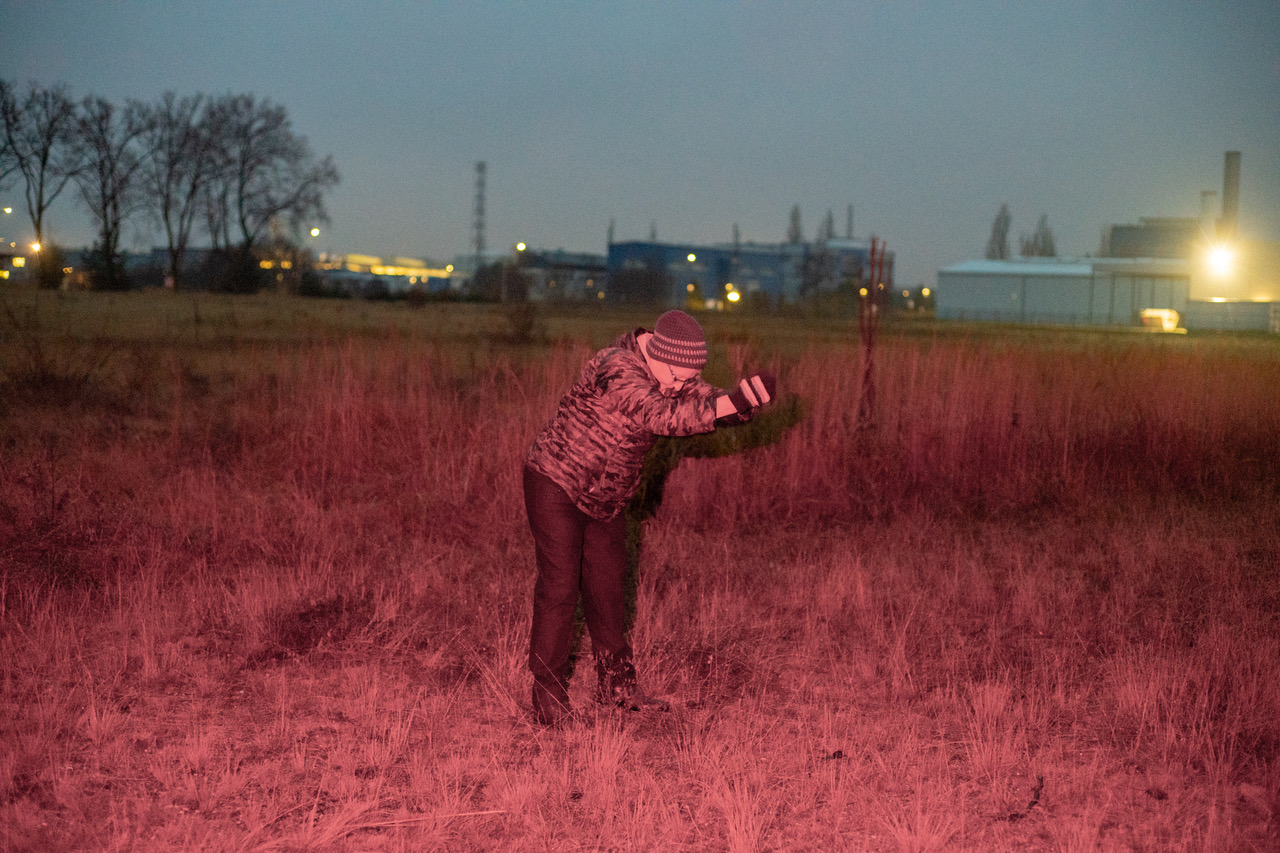
For Blackbox Wolfen, Tobias Zielony has created a fictional archive of the AGFA-ORWO film factory in Wolfen, combining still images and interviews with former employees who worked in the factory’s darkrooms. Predominantly women, the workers had to perform their tasks in near pitch darkness, in extreme cold or heat, exposed to various toxic chemicals. For the GDR, filmstock represented a valuable commodity that could be traded with the Soviet Union in exchange for silver, oil, and gas. ORWO also supplied cinematographic material to other socialist countries, as well as non-socialist economies such as Egypt and Brazil. One of the biggest export markets for ORWO film was India, which needed stock for its burgeoning movie industry and provided sun-bleached cow bones, used for high-quality film gelatin, in exchange. Today, only a single small company exists in Wolfen, primarily producing a highly specialised black-and-white archival film. Used by the German Federal Archive, the film is said to survive for up to a thousand years once exposed if it is stored in dark and cold environments, such as Germany’s National archive, which is located deep underground in the decommissioned silver mine of

Tobias Zielony (b. 1973 in Wuppertal, Germany) studied photography at the University of Wales, Newport, and later at the Academy of Fine Arts (HGB) Leipzig. He is known for his photographic and filmic depictions of youth and subcultures, which employ a critical approach to documentary photography.

Text from the Museum für Kunst und Gewerbe Hamburg


Madame d'Ora (Dora Kallmus) (Austrian, 1881-1963) 'Severed cows legs in a Parisian abattoir' c. 1953-1954


Madame d’Ora (Dora Kallmus) (Austrian, 1881-1963)
Severed cows legs in a Parisian abattoir
c. 1953-1954
Gelatin silver print
Museum für Kunst und Gewerbe Hamburg


Madame d'Ora (Dora Kallmus) (Austrian, 1881-1963) 'Severed calf's head in a Parisian slaughterhouse' c. 1953-1954


Madame d’Ora (Dora Kallmus) (Austrian, 1881-1963)
Severed calf’s head in a Parisian slaughterhouse
c. 1953-1954
Gelatin silver print
31.7 × 24.5cm
Museum für Kunst und Gewerbe Hamburg


Unknown photographer. 'Raw paper storage, Agfa AG, Leverkusen' 1956


Unknown photographer
Raw paper storage, Agfa AG, Leverkusen
1956
C-print, mounted on cardboard
Agfa Collection, Museum Ludwig, Cologne
© Museum Ludwig


James Welling (American, b. 1951) 'Gelatin Photograph 45' 1984


James Welling (American, b. 1951)
Gelatin Photograph 45
1984
Inkjet print
50.8 × 40.6cm


F&D Cartier. 'Wait and See' 1998 - today


F&D Cartier
Wait and See
1998 – today
Exposure tests, untreated gelatin silver photographic papers from Leonar, Illingworth & Co., Hans Mahn & Co., Wephota
©F&D Cartier


Tobias Zielony (German, b. 1973) 'Dunkelraum' 2022


Tobias Zielony (German, b. 1973)
Dunkelraum (Darkroom)
2022
Slide installation
© Tobias Zielony


Silver

Since the advent of the medium, silver has been the basis of the photographic image and the most important raw material used in the photochemical industry. In the popular gelatin silver process, it is embedded in the gelatin layer of the photographic paper, and the light-sensitive material then registers the image. The final image consists of small particles of metallic silver that turn black when exposed to light, while the unexposed silver halide crystals are washed away.

It was only the automation of production and commercial film development services that enabled photography to become a veritable mass medium. The growing number of amateur photographers caused the industry’s  silver consumption to explode. Photography remained the largest consumer of silver worldwide, even after 1979, when a massive rise in the price of silver led to the development of smaller photographic formats such as 110 film as well as research into digital photography. Photography is interwoven with global trade, the extraction of raw materials, and colonialism. The exploitation of Cerro Rico (“Rich Mountain”) in the Potosí region of Bolivia started back in the 15th century, and until the mid-20th century most silver was sourced in North and South America.

The production of film and photographic paper and its development has always been accompanied by significant environmental pollution, through both its high levels of water consumption and the contamination of waste water with alkalis, acids, and traces of silver. The impact of such pollution is to this day clearly visible in the areas around Eastman Kodak’s headquarters in Rochester (USA) and the ORW Ofactories in Bitterfeld-Wolfen.

The recovery of silver from photographic waste was first developed for economic reasons during the 19th century but was only established as standard practice in photographic production in the 1960s. Today such recycling processes are important – and not just with regard to a single finite raw material.

Simon Starling

In his sculptural work, Starling zooms in on the materiality of the photograph, using an electron microscope to single out two silver particles in the emulsion of a historical photo and then rendering them, with the help of a computer program, at a magnification of 1:1,000,000. This rendering is converted into a stainless-steel three-dimensional sculpture that is larger than a person, its seemingly fluid polished surface creating a virtual effect. Starling has described the photograph as a “deposit of matter”, an image produced by an agglomeration of silver particles. His rendering has its origins in the materiality and documentary function of a stereo-photograph showing Chinese migrant workers who had been brought to Massachusetts in 1870 to break a strike in a shoe factory. Made in China because of lower production costs, the sculptures reverse the trajectory in this story of labour migration. The Nanjing Particles can also be regarded, therefore, as a work about the development of systems of global production. Starling treats photographs as material objects that need to be produced and preserved. In the process, photographs activate memory and knowledge, at times revealing stories that have been suppressed.

Simon Starling (b. 1967 in Epsom) studied art and photography at various institutions, including the Glasgow School of Art. He works in the area of conceptual art. Starling’s work draws on models of sustainability and wasteful extravagance to focus on the historical trajectories of exploitation.

Optics Division of the Metabolic Studio (Lauren Bon, Tristan Duke, and Richard Nielsen)

The dry expanse of Owens Lake in the California desert is not only the subject of the work by the artists’ collective, it also supplies the material for it. Liminal Prints Buried in Owens Lake shows two large format photographs buried in the mud of the lake, where they are being “developed.” These images are on show in the exhibition along with the utensils used for the purpose. The silver nugget on display is the silver from two years of photographic work – including the exposures from the AgH2O series – that has been recovered from the fixer by a process of electrolysis.

The group of works originated with the artists’ attempt to produce their own photographic materials. The members of Metabolic Studio collected silver from the disused Cerro Gordo mine, harvested halide salts from the bottom of the lake, and processed gelatin from cattle from the region. The darkroom was replaced by the nighttime darkness, and the chemicals by brine from the lakebed, which contains large quantities of sodium thiosulfate, a fixing agent employed since the invention of photography. This rarely occurring element is produced by the microorganisms present there – archaea – which metabolise sulfur. The lakebed develops the images and fixes them at the same time.

To create the photographs in the AgH2O series, the collective used its “Liminal Camera,” a shipping container that has been converted into a large-format camera. The container symbolises the global trade in silver and water and the overexploitation of these resources: the silver from the Owens Valley was mostly used by Eastman Kodak to produce film (the company also supplied Hollywood), while, from 1913 on, the water slaked the increasing thirst of Los Angeles’s expanding metropolis. By 1924, the lake was all but dry. The landscape in the photographs is itself a quotation: we are familiar with the steppe valley from Hollywood westerns and Ansel Adams’s landscape images.

Lauren Bon (b. 1962 in New Haven), Tristan Duke (b. 1981 in Campaign), and Richard Nielsen (b. 1966 in Vancouver) started Optics Division of the Metabolic Studio in 2010: the artists’ collective examines the relationship between Los Angeles and Owens Valley as part of an ongoing process.

Daphné Nan Le Sergent

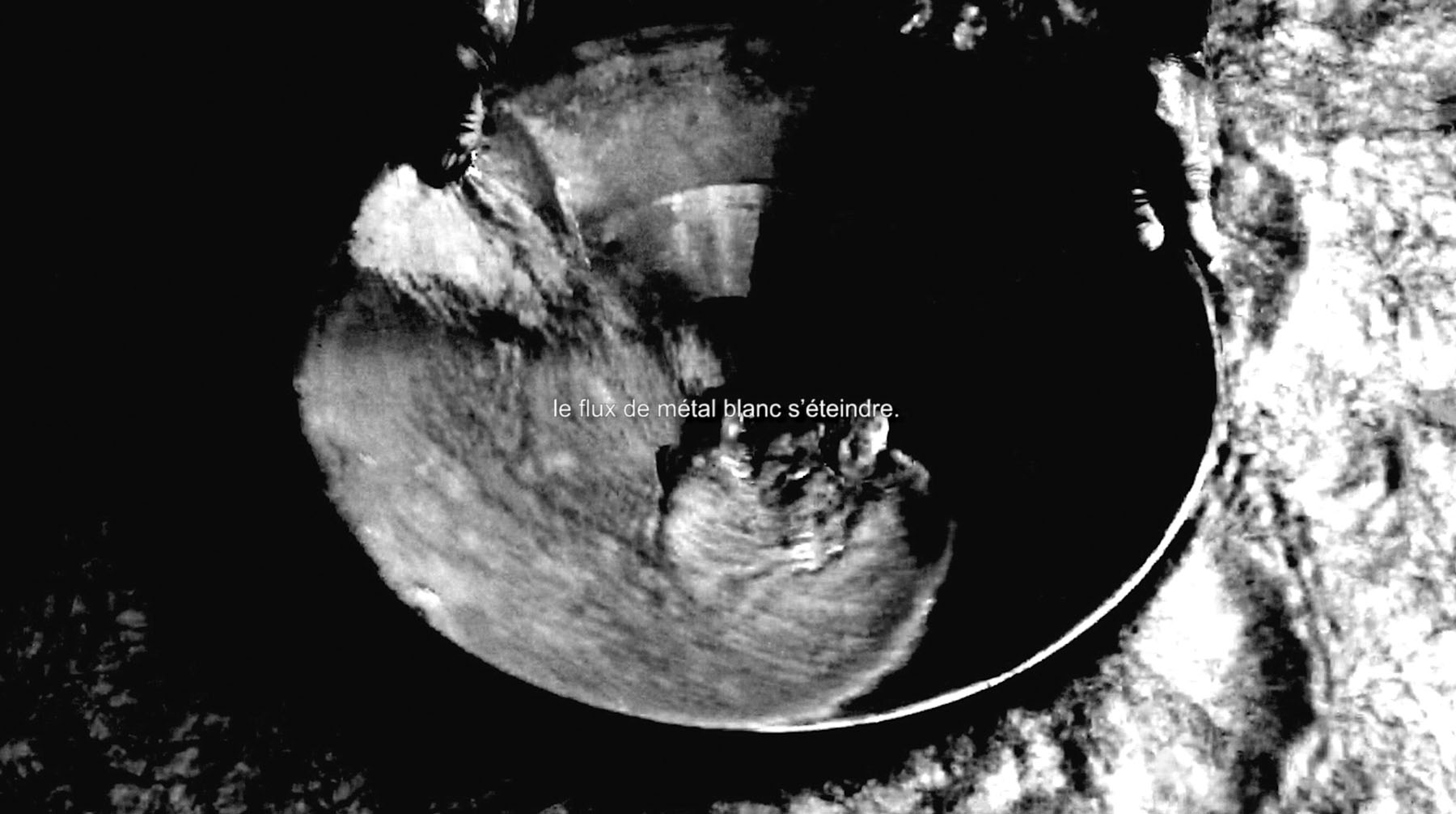
The film L’image extractive (The Extractive Image) intercuts macro photography of a silver surface with black-and-white landscape shots showing silver and gold mining in the Americas. This takes us on a journey to Mexico’s mining regions. The video essay weaves together fact and fiction. It tells the story of how photography was invented: the artist does not begin her account in 1839 but rather starts with the discovery and mining of silver in South America. The film tells of the legendary El Dorado and recounts an alternative story of the medium’s invention set in Brazil, where photographic pioneer Hercule Florence secretly discovered a gold-based process at the same time as French inventors Daguerre and Arago made their own discoveries. This is followed by images of die stamping, of silver’s stock price, and of miners. On the soundtrack, the artist speaks of the photographic industry’s late 19th-century boom, which she associates with the introduction of the gold standard around 1870 and the devaluation of silver. She recalls how the vertiginous rise in the price of silver led to the invention of digital photography in 1985. She also suggests a link between the P. G. Morgan company’s interests in silver speculation and its promotional work in the field of art photography. Her narrative arc ranges from the gold rush to data mining. She uses haunting music to underscore the repetitive loop of images showing gold and silver prospecting and the landscape being scoured in search of gold nuggets. The textual layer of the film uses a staccato verse sequence to tell a hypothetical and speculative story, drawing on a plethora of historical facts from Le Sergent’s artistic research.

Daphné Le Sergent (b. 1975 in Seoul) grew up in Paris. Her work deals with geopolitical issues and the way they inscribe themselves in the bodies of individuals.

Text from the Museum für Kunst und Gewerbe Hamburg


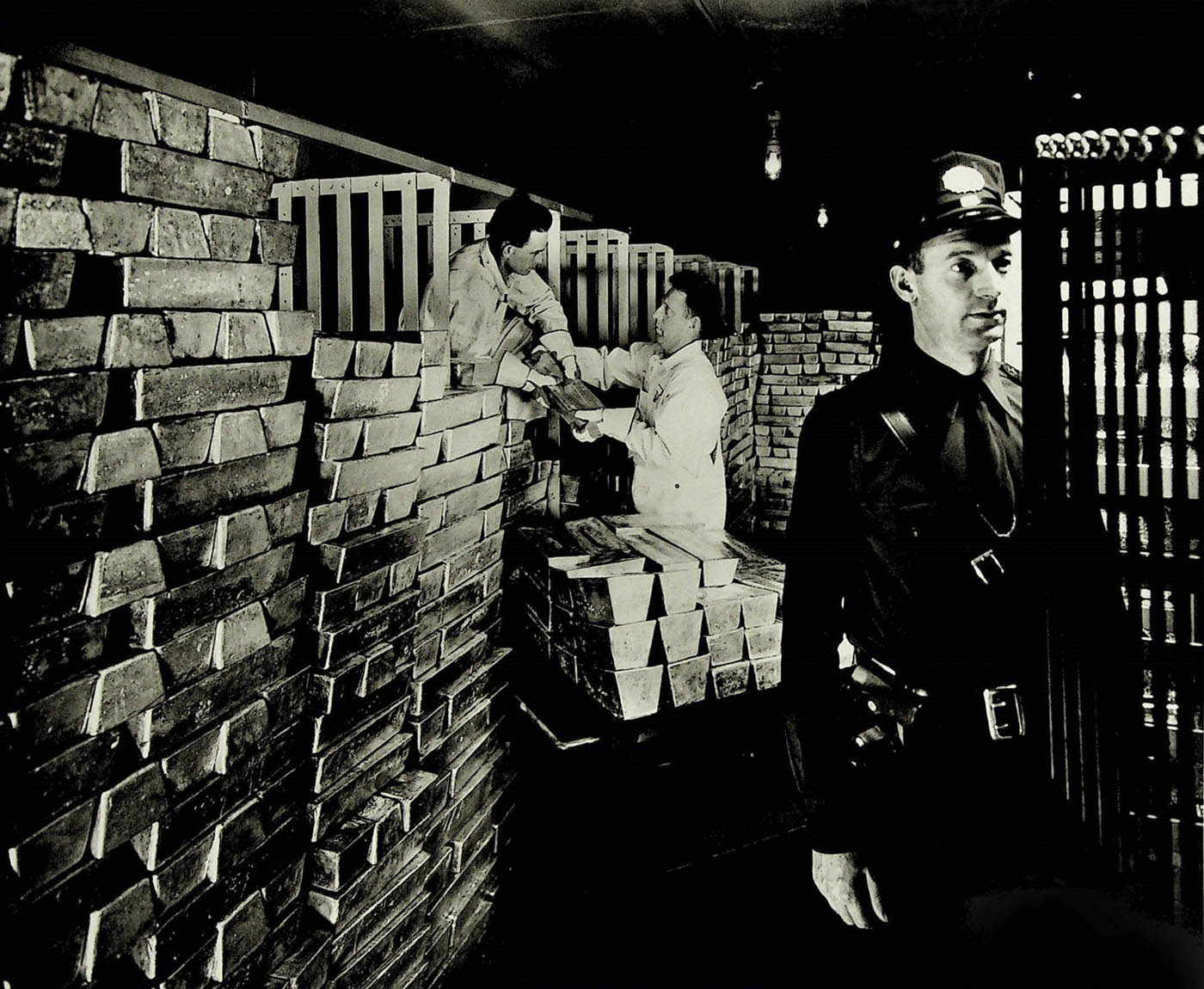
Unknown photographer. 'Silver bars in the Kodak vault' 1945


Unknown photographer
Silver bars in the Kodak vault
1945
Gelatine silver paper
Kodak Historical Collection #003, Rare Books, Special Collections, and Preservation, University of Rochester
Used with permission from Eastman Kodak Company


Optics Division of the Metabolic Studio (Lauren Bon, Tristan Duke und Richard Nielsen) 'Lake Bed Developing Process' 2013


Optics Division of the Metabolic Studio (Lauren Bon, Tristan Duke und Richard Nielsen)
Lake Bed Developing Process
2013
© Optics Division of the Metabolic Studio


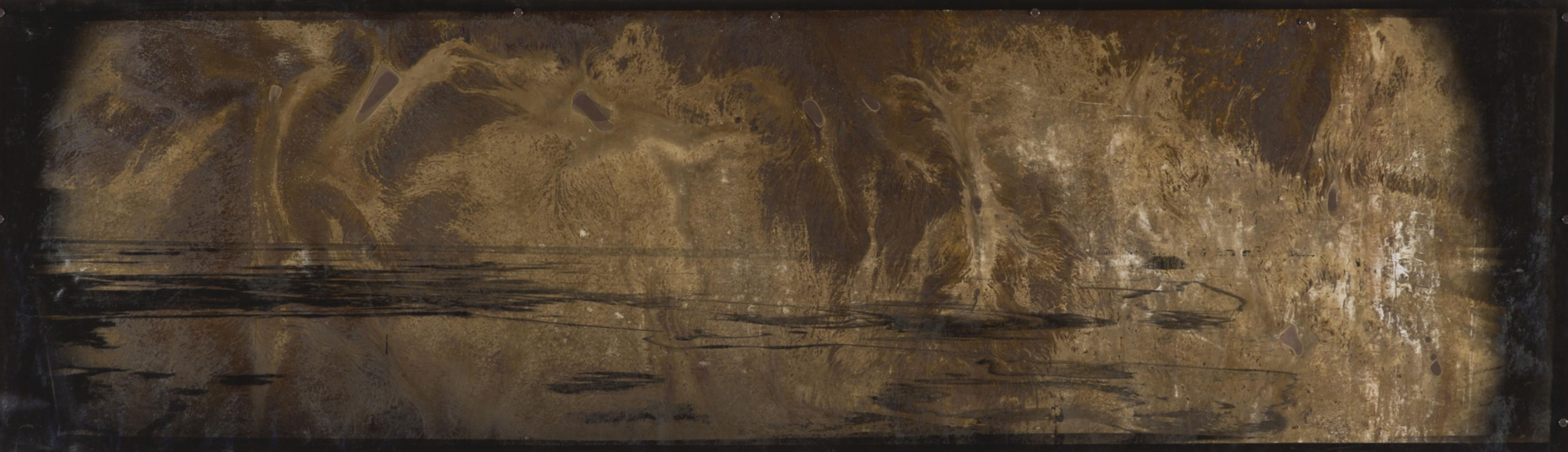
On moonless nights on the Owens Valley dry lakebed, to the soundtrack of KPPG Live on the radio, Lauren Bon and Optics Division’s Rich Nielsen and Tristan Duke use the valley as their photographic darkroom. They take light-sensitive photographic paper and bury it for the night in the concentrated salt brine. The lakebed’s bio- and geo-chemistry works on the paper with unconventional developing and fixing properties, yielding unique renderings of and by the lakebed. These unique photographs are developed and fixed by the chemicals in the lakebed, creating warm, earthy, and metallic tones.


Optics Division of the Metabolic Studio (Lauren Bon, Tristan Duke und Richard Nielsen) 'Owens Lake Panorama 1' Nd


Optics Division of the Metabolic Studio (Lauren Bon, Tristan Duke und Richard Nielsen)
Owens Lake Panorama 1
Nd
Silver gelatin print processed in Owens Dry Lakebed
© Optics Division of the Metabolic Studio


Daphné Nan Le Sergent (South Korean, b. 1975) 'L'image extractive' (The extractive image) 2021 (film still)


Daphné Nan Le Sergent (South Korean, b. 1975)
L’image extractive (The extractive image) (film still)
2021
Video, b/w and colour, sound, 20′
© Daphné Nan Le Sergent


Simon Starling (English, b. 1967) 'The Nanjing Particles' 2008


Simon Starling (English, b. 1967)
The Nanjing Particles
2008
Forged stainless steel
200 x 420 x 150cm and 200 x 450 x 170cm
Courtesy of the artist and Casey Kaplan, New York


The Weight of the Cloud: Rare Earths, Metals, Energy, and Waste

Digital photography’s materiality is even less visible than its analog predecessor. In 2021, it was estimated that over ninety percent of all images were taken using phones, with more than a trillion images produced that year alone. Most digital images are archived digitally or shared using “social media” platforms, which have developed in parallel with the rise of smart phones and their cameras and are fuelled by their visual content. User data, stored on the so-called cloud, is “mined” by tech companies for targeted advertising. Yet it’s not only data that is mined. The cloud – though advertised as ephemeral and virtual – is heavy with metals and waste. Digital photography relies on a vast material network: from the mining of metals and rare earths used for electronic circuitry to elaborate supply chains operating on a global scale, data storage facilities with ever-growing carbon emissions, and, ultimately, vast amounts of electronic waste. Fifty-four million tons of e-waste were generated in 2019 alone, with Northern Europe being responsible for the highest per capita waste globally. Most of it is exported to lower-income countries, causing environmental damage and increasing health risks. A single smart phone can require up to 75 elements for its production (out of the 118 elements in the periodic table), many of which – such as gold, tin, cobalt, coltan, and tungsten – are considered “conflict minerals,” whose trade involves forced labour and finances armed militias. Even small quantities of metal necessitate large amounts of mining: it has been estimated that 34 kilograms of ore would have to be mined to produce the metals that make up a single 129-gram iPhone.

Lisa Rave

Structured like a nautilus shell, with layers of narrative gradually unfolding and echoing each other in the process, Lisa Rave’s Europium makes visible connections between Papua New Guinea’s colonial past and the planned excavation of the rare earth element Europium from the Bismarck Sea. Using a combination of historical found footage, interviews, and performative sequences, the essay film revolves around the rare earth Europium, whose fluorescent qualities are used to validate European banknotes and to ensure the brilliance of colours on flat-screen surfaces. Pointing to the human and ecological violence inherent in the extraction of so-called resources and their transformation into monetary value, Rave directs her anthropological gaze back toward our own society, exposing the ghosts of the past as they appear in the technologies and screens that surround us.

Lisa Rave (b. 1979, London) is a Berlin-based artist and filmmaker. Rave studied experimental film at the University of Arts Berlin and photography at Bard College, New York. In her work, Rave connects the histories of colonial domination with current forms of extraction and ecological violence.

Mary Mattingly

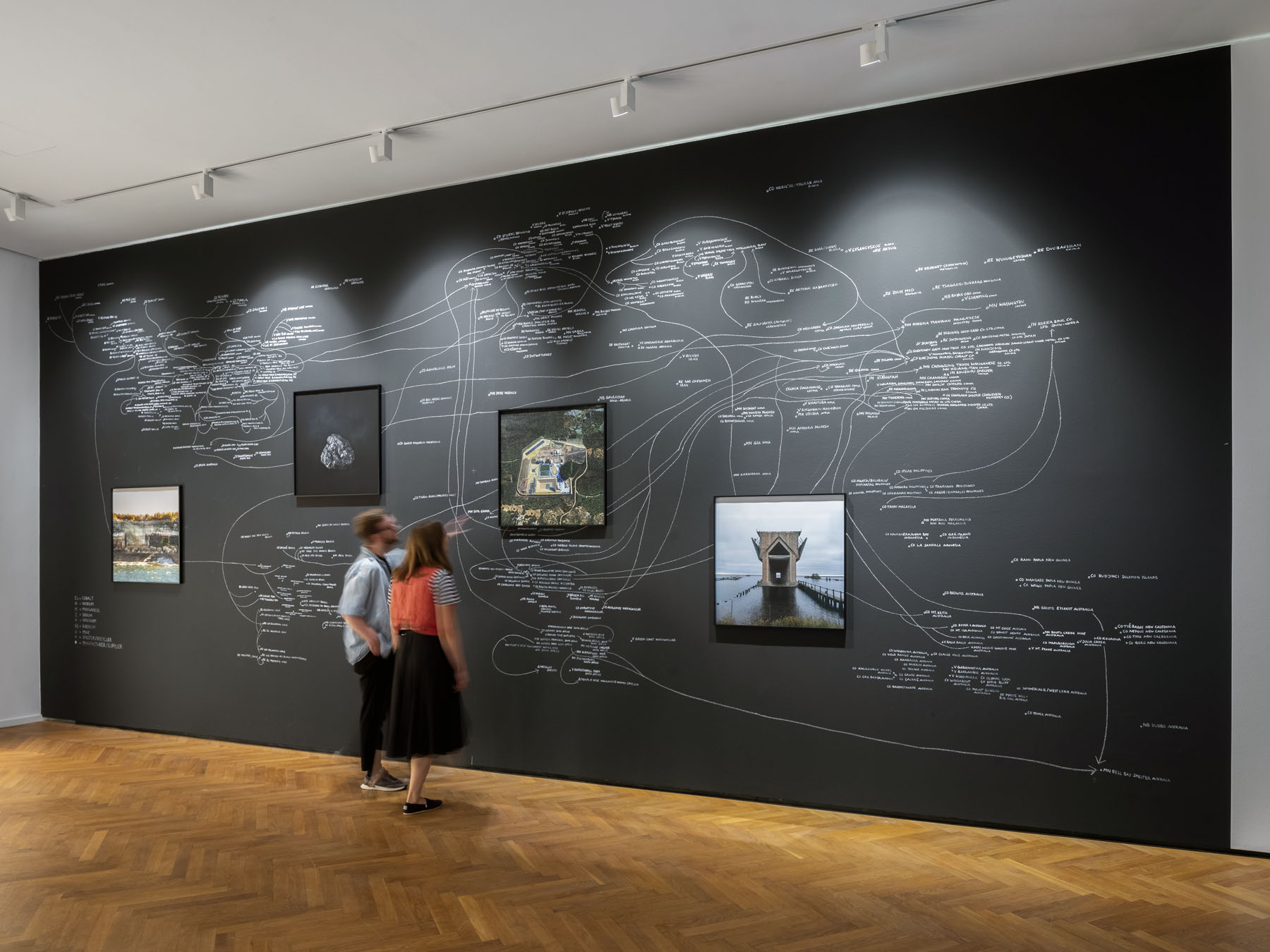
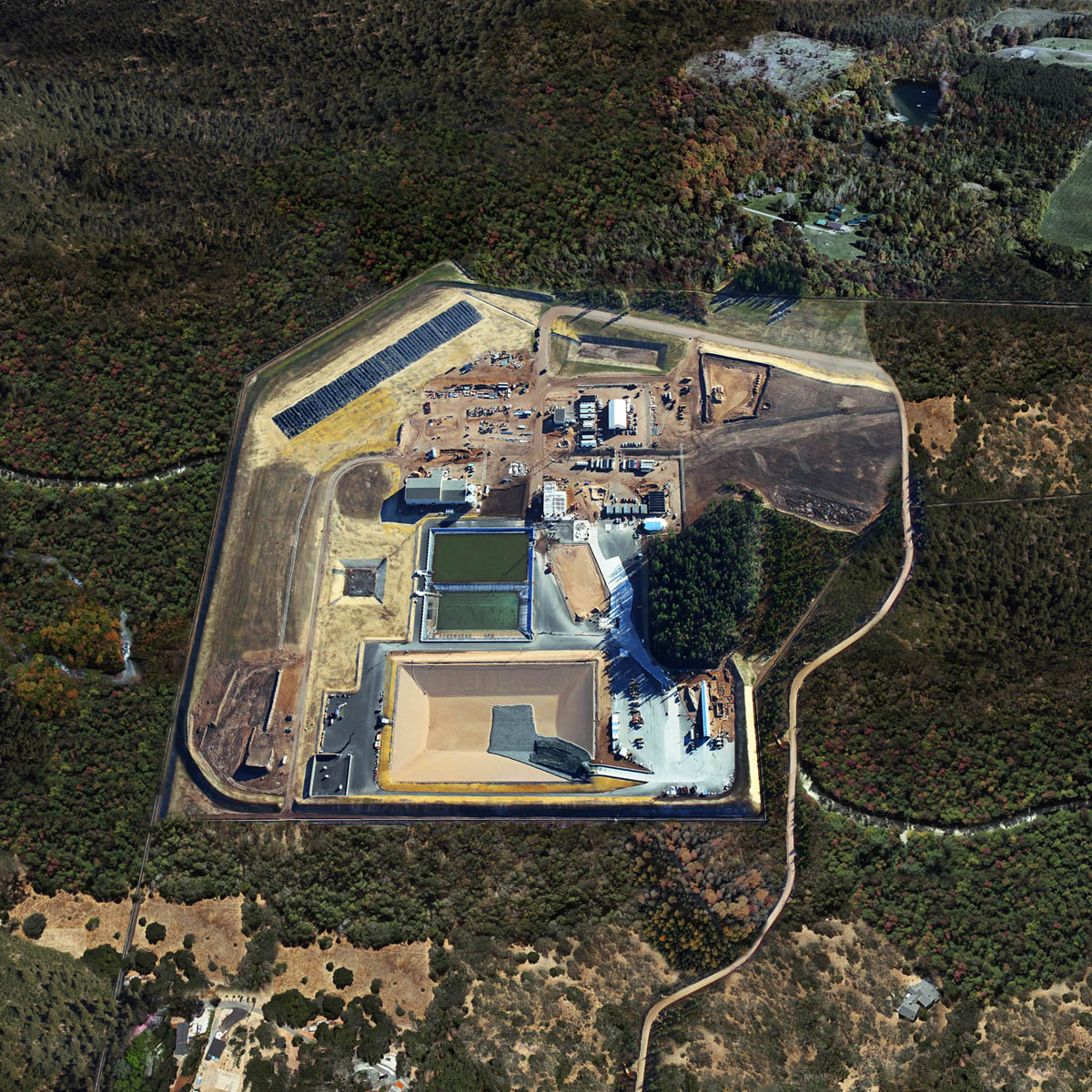
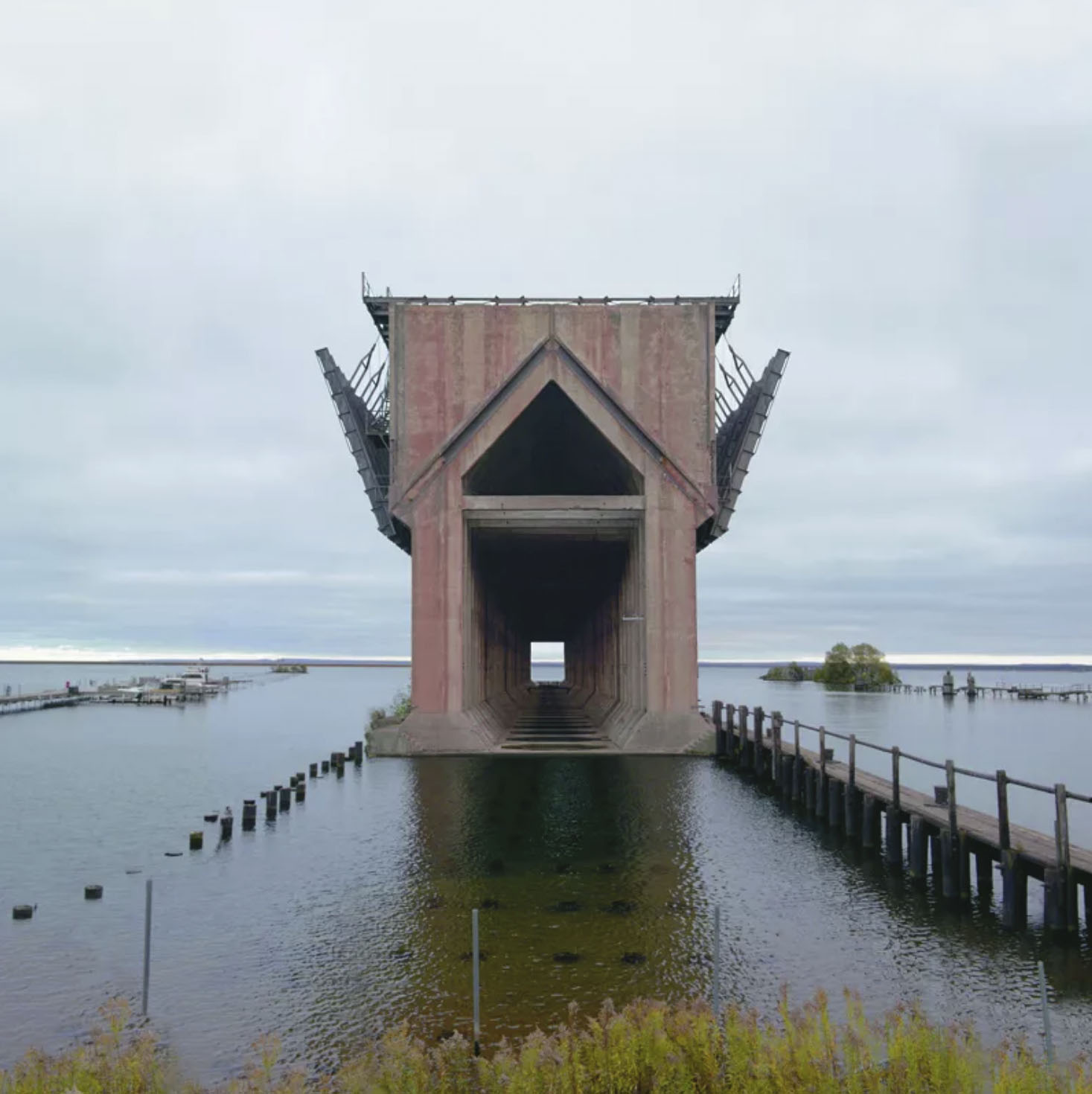
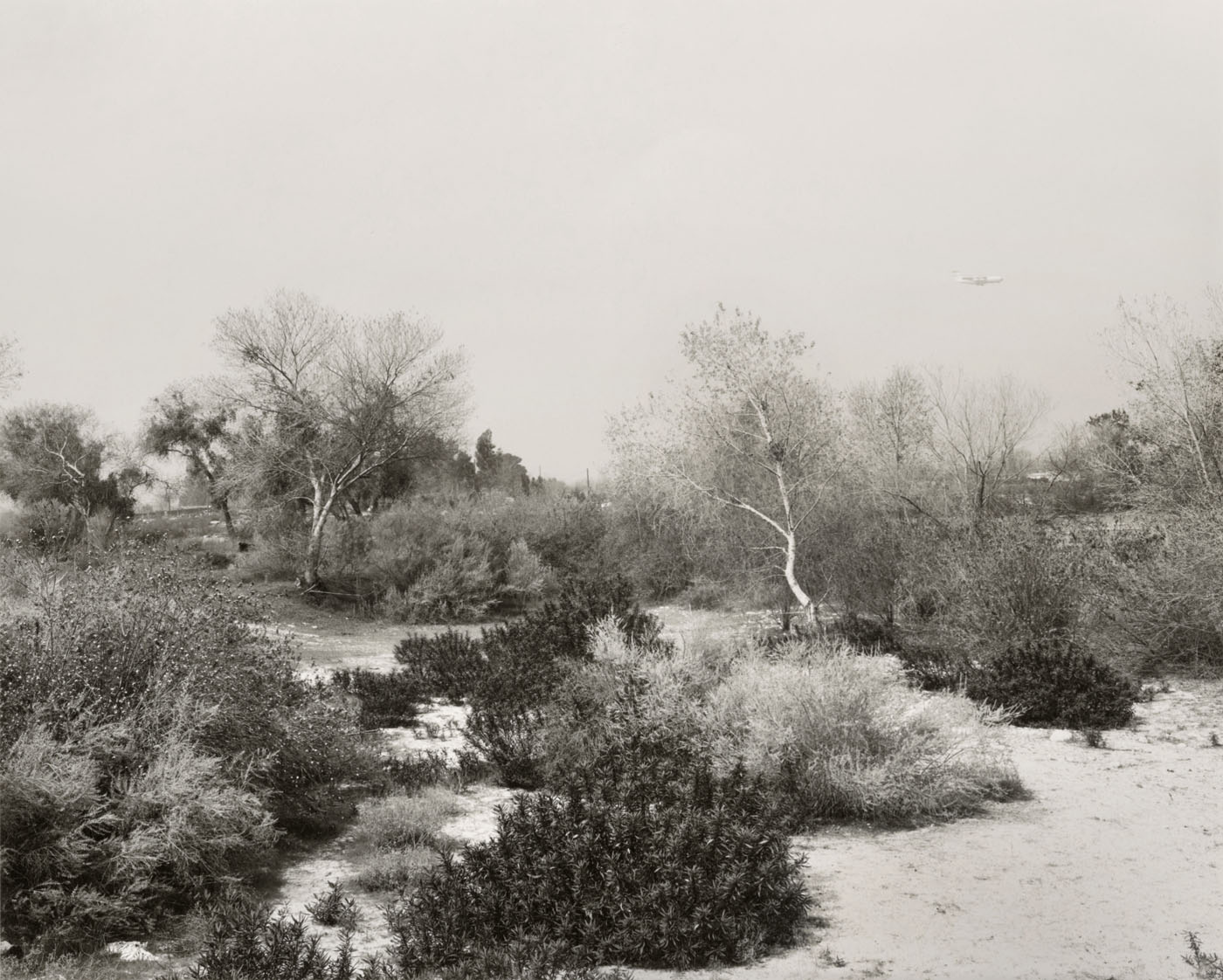
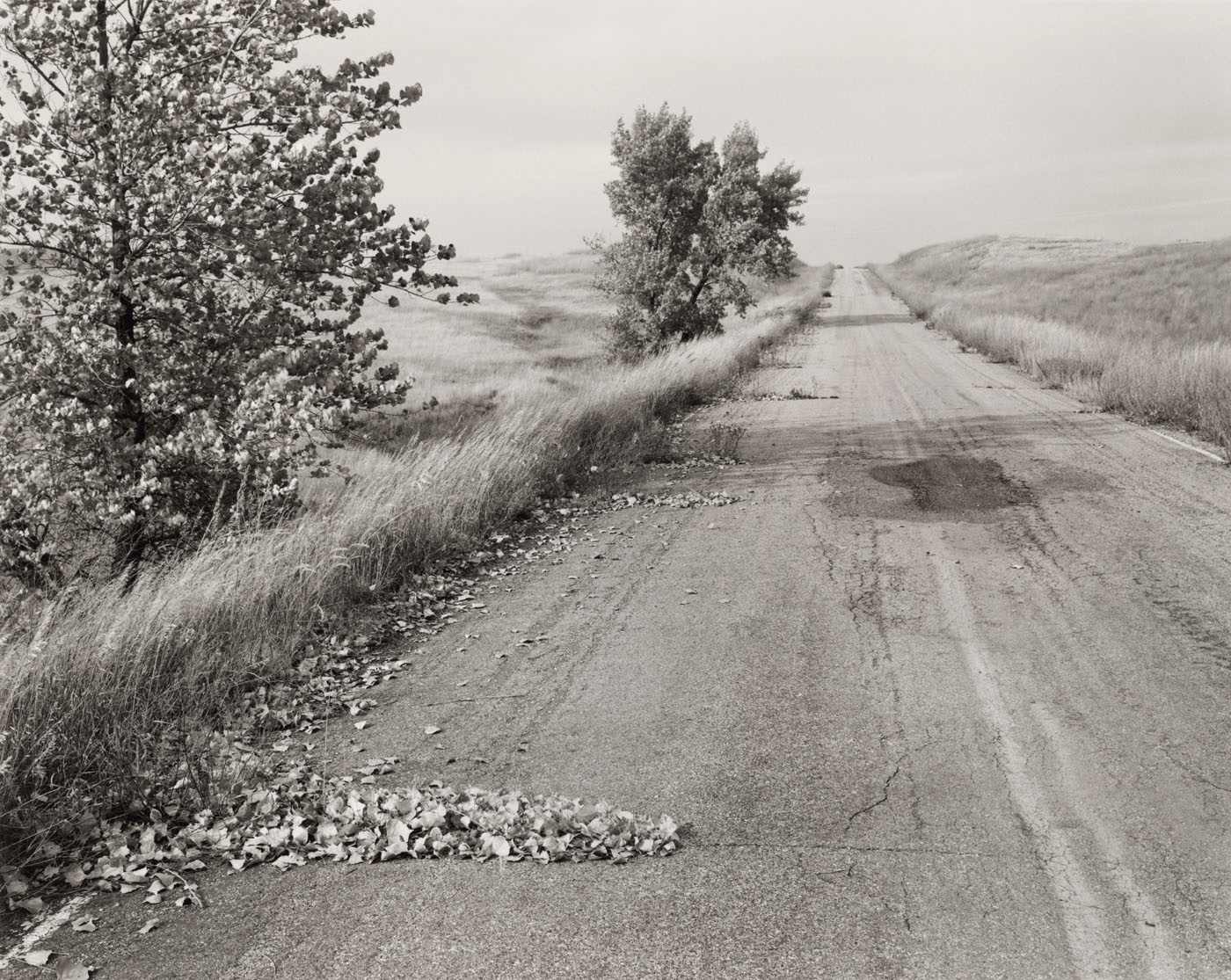
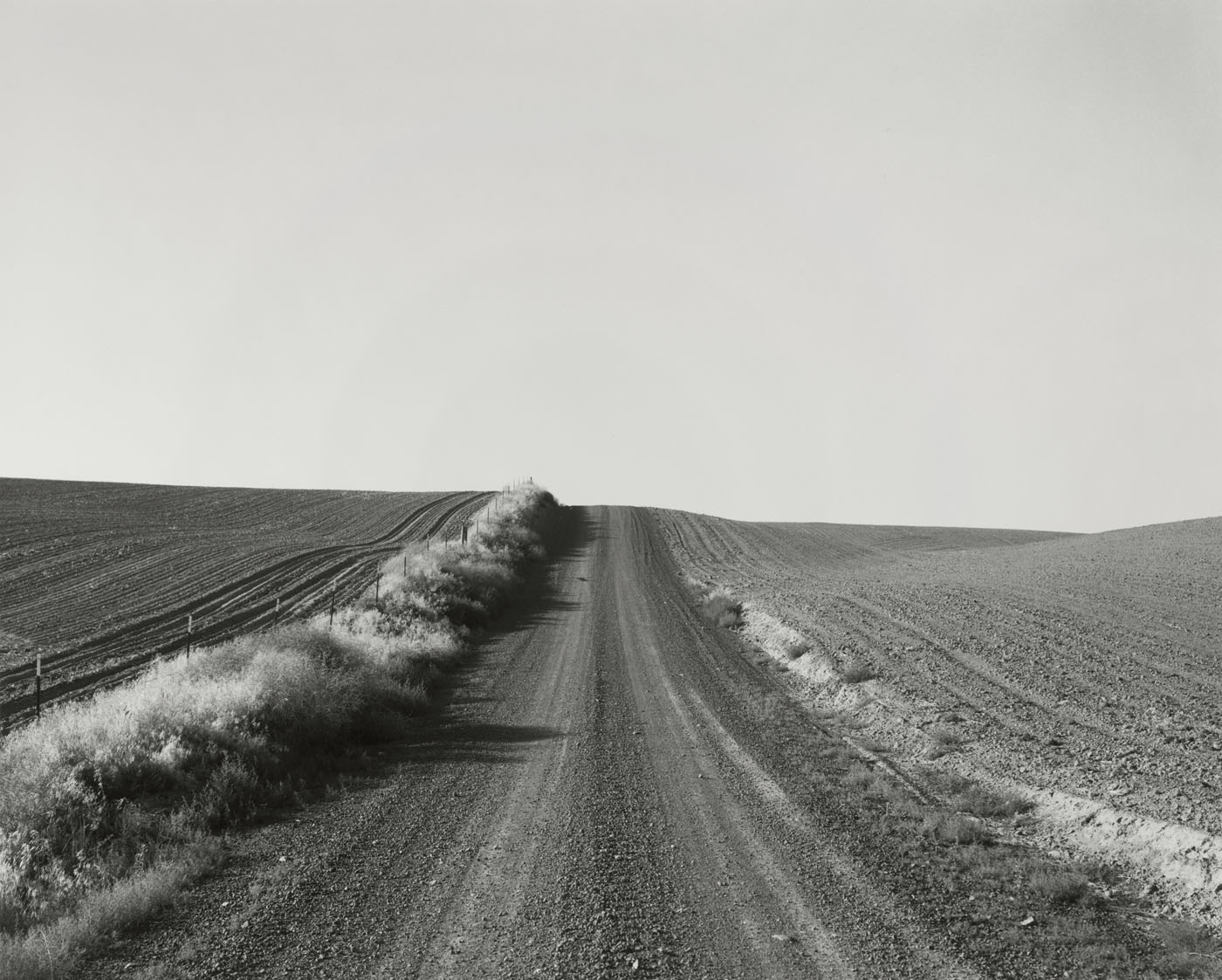
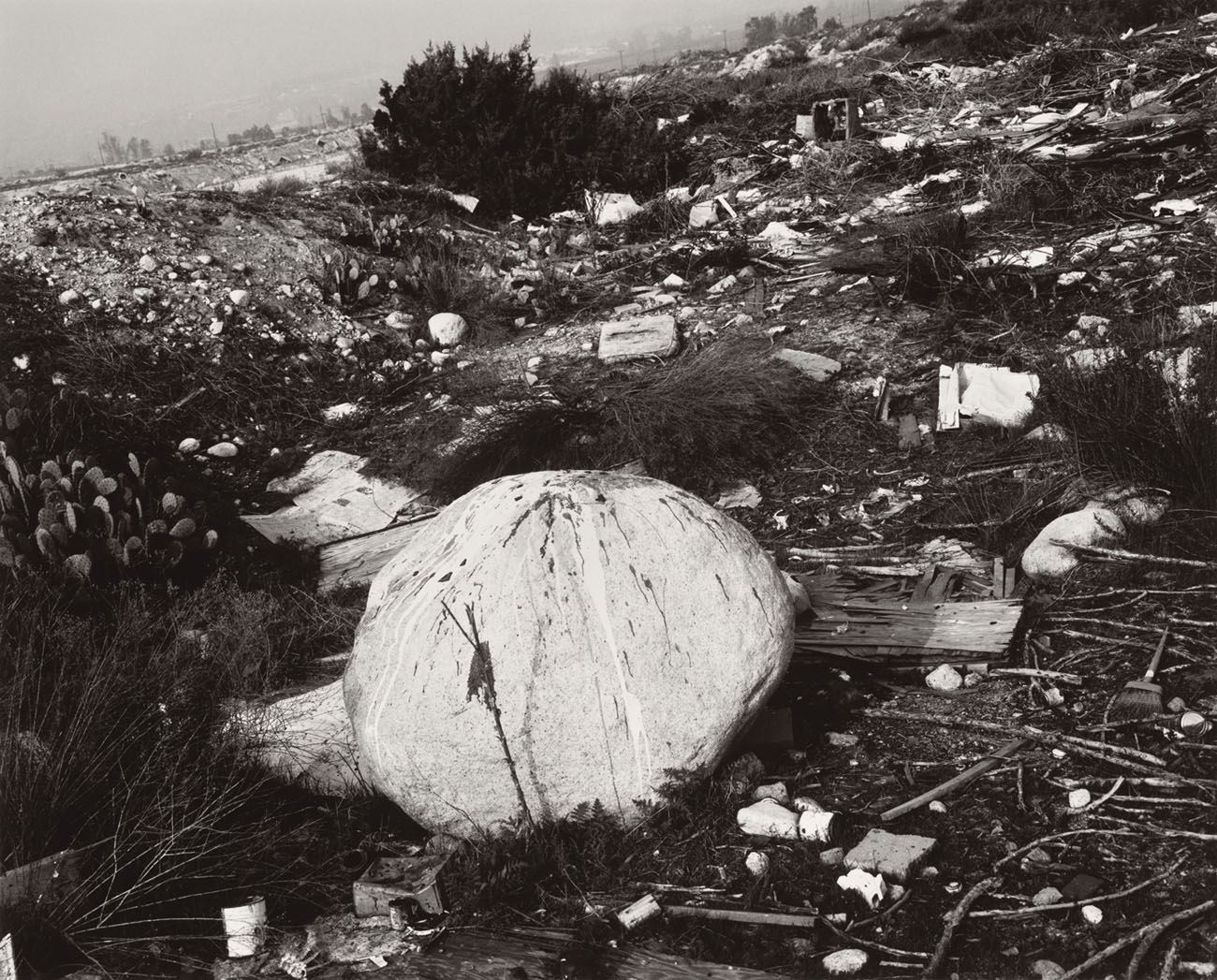
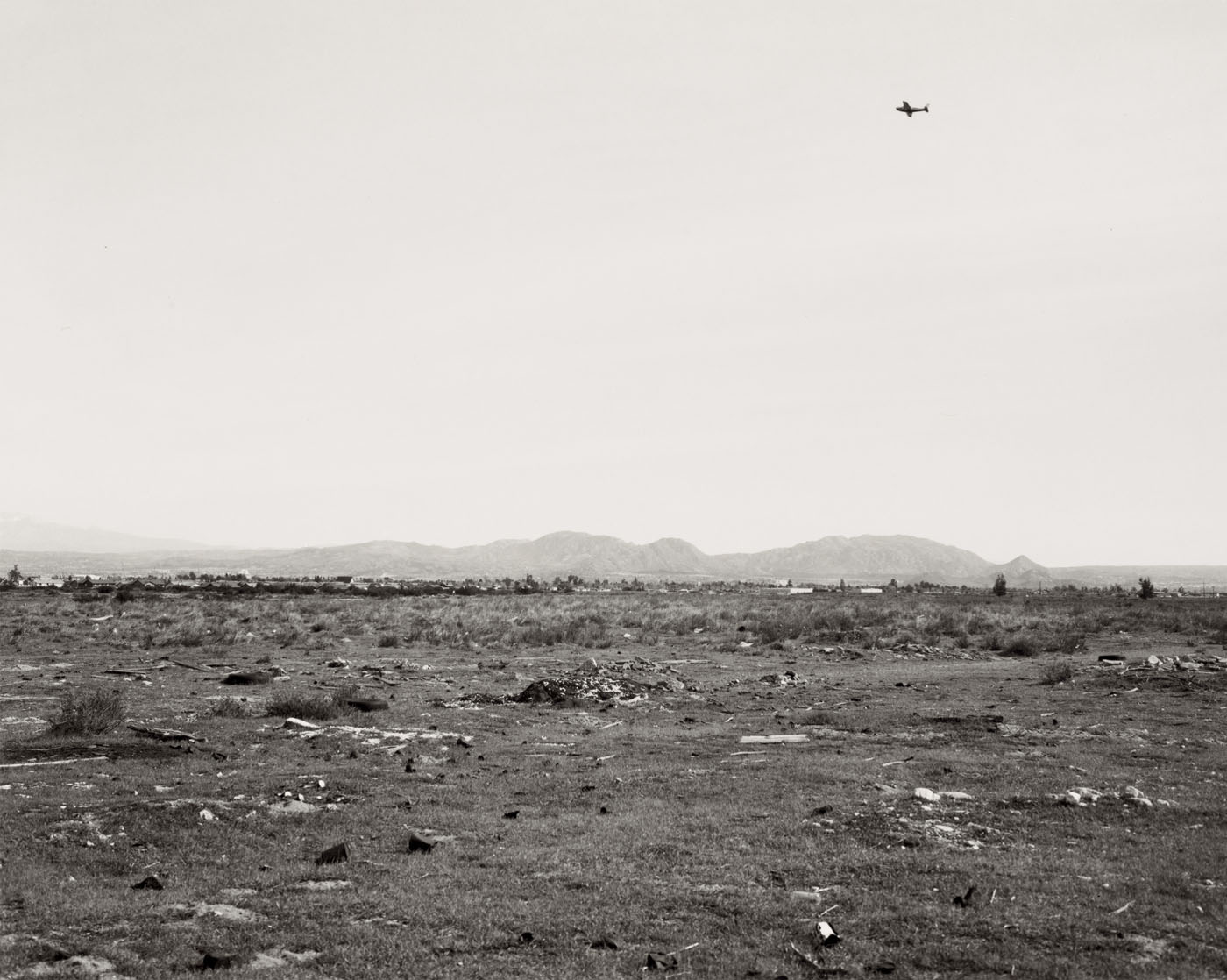
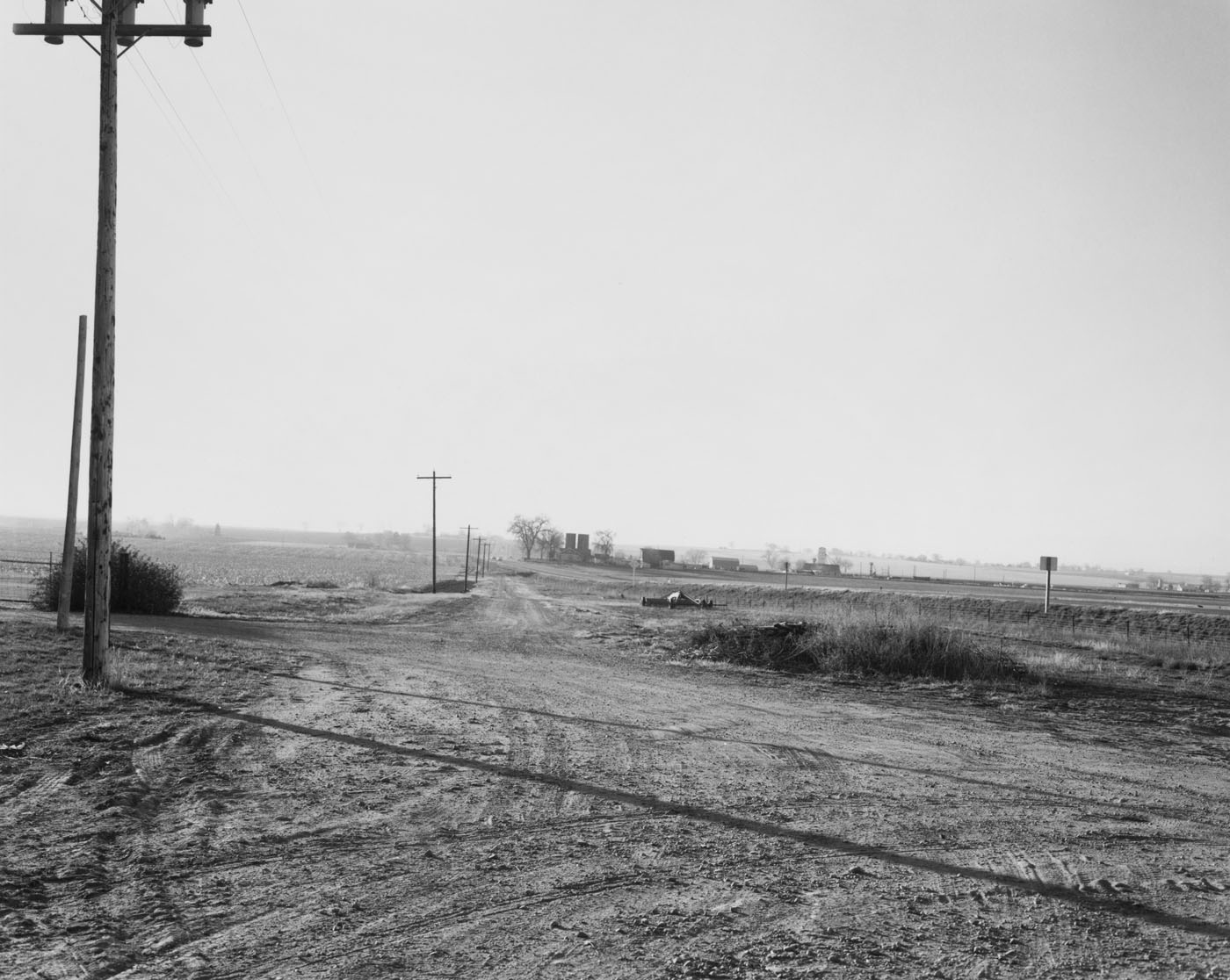
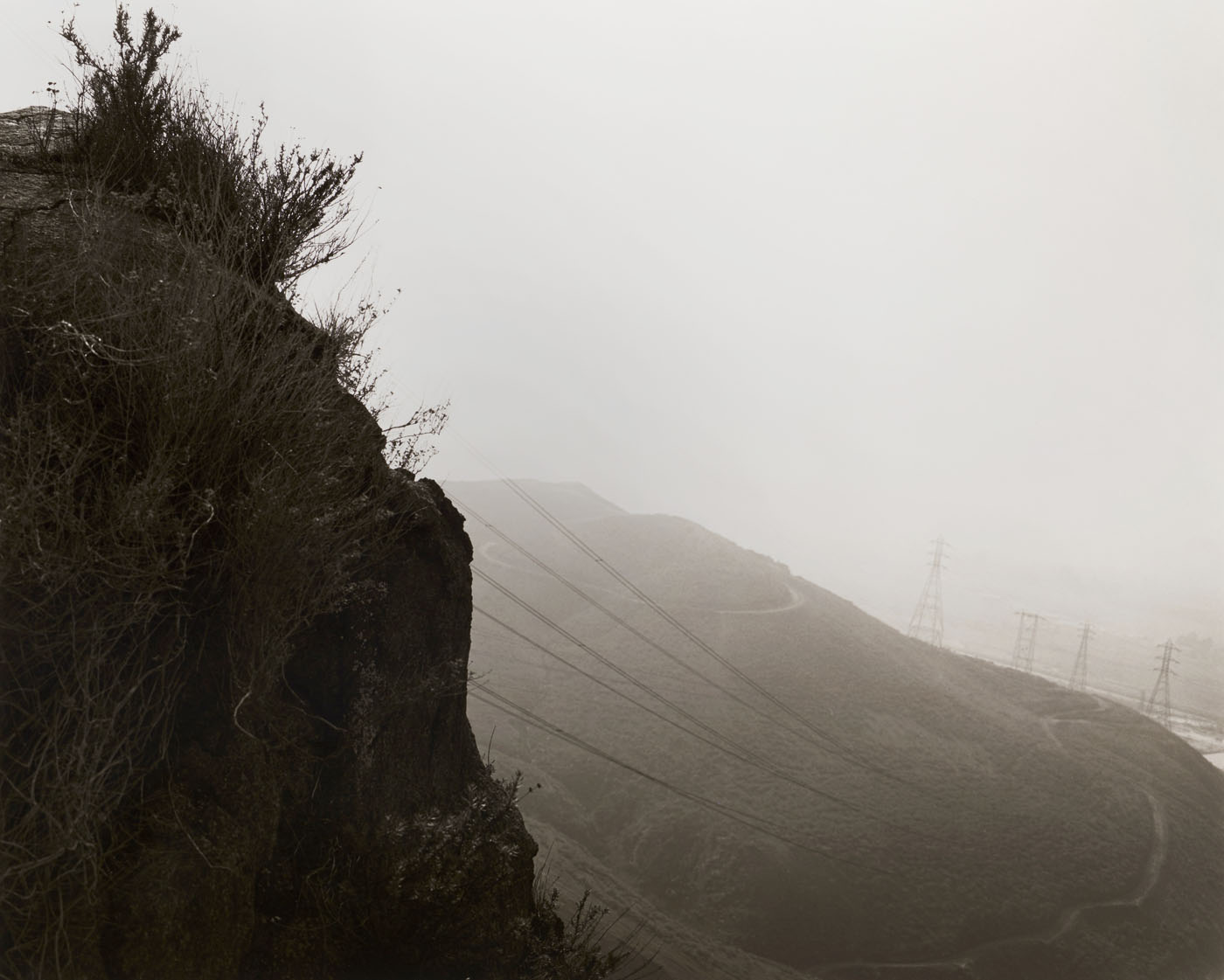
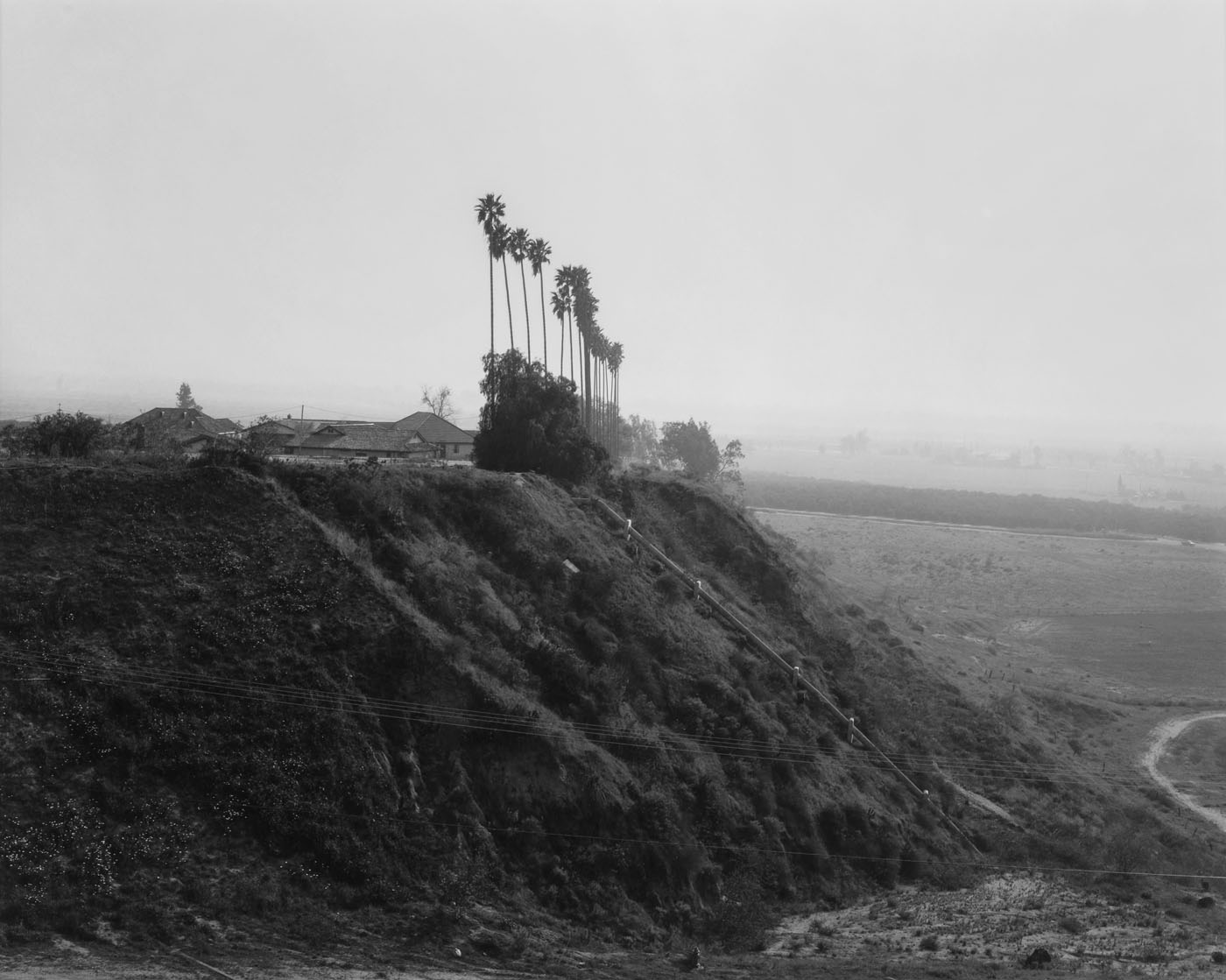
Combining chalk-drawn maps of global supply chains, satellite imagery, staged photographs of sculptural assemblages, and documentary images, Mary Mattingly’s series Cobalt – a selection of which is shown in the exhibition – is an attempt to comprehend a system of immense scale, scope, and complexity that remains hidden in plain sight. Over 60 percent of the world cobalt extraction, the “blood diamond of batteries,” takes place in the Democratic Republic of Congo in dangerously precarious conditions. The extracted metal, mined predominantly as a by-product of copper or nickel, is purchased by Chinese manufacturers, who process and then retail it to clients in the consumer market. Cobalt is then used in our phone’s sensor components and lithium-ion batteries of all kinds (from laptops to vacuum cleaners to electric cars). Capable of withstanding extreme heat, the mineral is also used in weapons and alloyed steel and has been classified as a “strategic mineral” by the US, in an attempt to encourage its local mining and production. In Mattingly’s work, we can see different stages in cobalt’s life cycle: mineral seepage visible in an exposed cliff face; a recently opened mine in Michigan, whose manmade structures protrude from the natural landscape; an ore transportation station. Weaving them all together is an elaborate map, tracing its supply chain across its different stages. Mattingly’s work seeks to address the ways in which we are inevitably entangled in the violent and extractive logic of neoliberalism and its ecological toll. Through her attentive mapping, we see how even forms of critical representation are dialectically bound to a mode of production wrought by ecological devastation and radical inequality. It is only by recognising these conditions, Mattingly suggests, that we can begin to work toward changing them.

Mary Mattingly (b. 1979, Connecticut) studied at Parsons School of Design, New York, and the Pacific Northwest College of Art in Portland, Oregon. Mattingly creates photographs, sculptures, and large-scale public art projects that address climate change, thereby tracing connections between the social and economic forces behind the current political ecology impacting our environment.

Lisa Barnard

In the “The Fox and the Rooster” section of her extensive project The Canary and the Hammer, Lisa Barnard uses documentary photography to examine the economy of waste surrounding the precious metal gold. One of the most expensive materials on earth, gold is used in making our smartphones, cameras, and televisions, turning worn-out devices into a precious commodity. However, e-waste contains not only precious substances but also some that are extremely poisonous – metals such as lead, mercury, and cadmium, which are highly toxic for both humans and the environment. China, which is responsible for 10 million tons of toxic substances every year, is one of the world’s largest sources of e-waste as well as its biggest importer. In her research, the artist looks at China’s trade in illegal e-waste, in which gold is extracted from old devices using aqua regia, a highly explosive mixture of hydrochloric acid and nitric acid, whose name is derived from its ability to dissolve the precious metals gold and platinum. An illustration of this reaction can be found in alchemist Basilius Valentinus’s treatise “The Twelve Keys,” which was published in 1599. The work contains a woodcut showing a rooster (symbolising gold) eating a fox, which in turn is eating a rooster. The gold is dissolved not by the acid itself but rather by the products it creates when it reacts with the precious metal. Barnard’s choice of title thus makes reference to the potential dangers involved in recovering gold as well as to the mysterious aura that still surrounds it, even in the recycling loop that is a feature of the modern tech economy.

Lisa Barnard (b. 1967) studied photography at the University of Brighton and critical theory at the University of South Wales. Her documentary practice is concerned with current debates about materiality and global capitalism.

Mari Lebanidze, Cleo Miao, Leon Schweer, Marco Wesche with the mentoring of Prof. Christoph Knoth and Prof. Konrad Renner of the University of Fine Arts (HFBK) Hamburg – Digital Graphics class

Using the same sort of facial recognition technologies employed by tech companies to mine behavioural data for speculative value, Terraformed Self tracks exhibition visitors’ behaviour. Having identified people using their smartphone, the interactive installation informs visitors about their own contribution to the ecological footprint of digital image production using a playful game-like animation. How many selfies have been taken in front of this screen? How much carbon dioxide are they responsible for? What is the equivalent of a minute of scrolling on Instagram? While the work seems to invite visitors to take the obligatory exhibition selfie in front of the large, mirrored structure, it offers a sobering reflection on how our daily smartphone habits are implicated in a planetary system of resource extraction. The work is accompanied by an Instagram face filter – using the platform to reflect on its own footprint.

Digital Graphics class. Against the backdrop of omnipresent digital forms that mingle with artefacts from the past, the class, led by Prof. Christoph Knoth and Prof. Konrad Renner of the University of Fine Arts (HFBK) Hamburg, explores the integrity of modern technologies and conceives visual models in the context of culture and digital possibilities.

Text from the Museum für Kunst und Gewerbe Hamburg


Installation view of the exhibition 'Mining Photography. The Ecological Footprint of Image Production' at the Museum für Kunst und Gewerbe Hamburg


Installation view of the exhibition Mining Photography. The Ecological Footprint of Image Production at the Museum für Kunst und Gewerbe Hamburg showing the work of Mary Mattingly


Mary Mattingly (American, b. 1979) 'Eagle Mine' 2016


Mary Mattingly (American, b. 1979)
Eagle Mine
2016
© Mary Mattingly


Mary Mattingly (American, b. 1979) 'Ore Transport Station' 2016


Mary Mattingly (American, b. 1979)
Ore Transport Station
2016
© Mary Mattingly


Lisa Barnard (British, b. 1967) 'Broken mobile phone screen, Shenzhen, China' 2018


Lisa Barnard (British, b. 1967)
Broken mobile phone screen, Shenzhen, China
2018
© Lisa Barnard


Events in the history of capitalism, ecology, and photography

With excerpts from the time line compiled by Lukas Egger and Nils Güttler for the exhibition “Nach uns die Sintflut (After Us, the flood)” at Kunst Haus Wien

1492 Columbus arrives in the Americas, setting in motion a process described as the “Columbian exchange”: the movement of diseases, ideas, food, crops, and populations between the New World and the Old World brought about by European colonisation.

1556 Dere Metallica (On the Nature of Metals) by Georgius Agricola (Georg Bauer), is published. Illustrated with over 270 woodcuts, the treatise quickly became the authoritative text of its day on mining and helped popularise technical knowledge in the field.

1717 The German polymath Johann Heinrich Schulze (1687-1744) is the first to demonstrate the photosensitivity of silver salts.

1776 James Watt’s steam engine, originally invented and perfected to be used in mines, is introduced. Signalling the advent of the first industrial revolution, steam power allows for previously labour-intensive forms of production to become mechanised, especially in the textile industry. Coal is now an increasingly important energy source.

1800 While traveling in Venezuela, Alexander von Humboldt is one of the first scientists to describe the harmful effects of Human-induced climate change and its relation to colonialism, observing the adverse effects of the deforestation brought about by Europeans on the local soil quality and the moisture levels in the atmosphere.

1807 Claude and Nicéphore Niépce obtain a patent for the Pyréolophore (from Greek: pyr = fire, aeolos = the keeper of wind, and phore = carrier) one of the earliest internal combustion engines, fuelled by coal mixed with resin.

1827 Joseph Nicéphore Niépce produces the first Heliograph (Greek for “writing with sun”), by dissolving light-sensitive “bitumen of Judea,” a semi-solid form of petroleum, in oil of lavender, and applying a thin coating over a polished pewter plate.

1838 The first steam-powered crossing of the Atlantic ocean.

1839 Louis Daguerre presents the Daguerreotype before the French Académie des Sciences.

1840 William Henry Fox Talbot submits his first patent for an internal combustion engine titled “Obtaining Motive Power”. By 1852, he had registered four additional engine patents.

1844-1846 Wiliam Henry Fox Talbot publishes “The Pencil of Nature”, widely considered to be the first commercially published photo-illustrated book.

1846 Nitrocellulose (also known as “gun cotton”) is patented. It is used as an explosive in mines, as well as for the production of early – infamously flammable – cellulose film. It led to the invention of thermoplastic.

1851 A staggering 893,000 daguerreotype plates are produced in Paris alone in only one year. Converted to the standard portrait size of a quarter or eighth plates, 3-8 million portrait images could betaken.

1859 British glaciologist John Tyndall begins a series of laboratory experiments to demonstrate the significance of atmosphere gasses – including CO2 – for global warming.

1862 Writing for the US magazine Atlantic Monthly, Oliver Wendell Holmes estimates the annual consumption of precious metals for photography at ten tons of silver and half a ton of gold.

1870 Start of the Second Industrial Revolution, the electrification of production processes and of spheres of private life begins. Crude oil becomes increasingly important as a fuel for powering combustion engines.

1872 The correspondent of the English journal The Year-Book of Photography describes various methods of silver recovery from the developer fluids of photochemistry – for example, by reducing silver nitrate with the help of charcoal or by burning the papers and dissolving the ash with nitric acid and water.

1877 Founding of the Moorversuchsstation (Moor Experiment Station) in Bremen, the first NGO to campaign against moor burning. The first provisions pertaining to air pollution control are issued in a number of countries.

1888 The Eastman Kodak Company introduces the Kodak No.1 camera model, marking the beginning of the industrial processing of photographs in the laboratory. Advertised with the slogan “You press the button – we do the rest!,” the new camera and the company’s service relieved photographers of the chemical processing of their photos, introducing photography to a popular audience.

1901 The discovery of the Spindletop oilfield in Texas marks the dawn of the age of crude oil in the United States, which soon takes on a global dimension with the discovery of large oilfields in the Middle East and Venezuela.

1913 Henry Ford introduces a continual assembly line for the first time in automobile production, boosting productivity eightfold.

1945 The United States drops atomic bombs on Hiroshima and Nagasaki, heralding the beginning of the “nuclear age.” In the 1950s, the first commercially used nuclear power plants are introduced.

1947 Physicist Edwin Land introduces the firs tPolaroid camera in the USA.

1948 In their books Road to Survival and Our Plundered Planet, ornithologist William Vogt and palaeontologist Henry Fairfield Osborn warn of the devastating ecological consequences of global industrial capitalism.

1958 At the Mauna Loa Observatory in Hawaii, atmospheric scientist Charles David Keeling begins to take regular measurements of the CO2 concentrations in the Earth’s atmosphere. The data provides the basis for the Keeling Curve, which is now regarded as the measurement-based evidence of anthropogenic contribution to global warming.

1970 In the United States, some 20 million people take part in the first-ever “Earth Day”, an international day of environmental campaigning. The following year, the Greenpeace environmental organisation is founded in Vancouver.

1975 The first digital still camera is developed by Eastman Kodak’s engineer Steven Sasson.

1980 In what came to be known as “Silver Thursday,” silver prices reach an all-time high and immediately crash. Following a decade-long surge, which leads manufacturers to search for ways to reduce their dependency on the precious metal, a speculative frenzy sends the price up 713% within a year.

1992 The United Nations Conference on Environment and Development is held in Rio de Janeiro. Along with the 1972 Stockholm Conference, it is considered a milestone in the political implementation of global environmental and development efforts.

1993 The US office of industries lists photography as the principal application for silver in its yearly report, accounting for over 50 percent of U.S. silver fabrication demand that year.

1999 Toshiba launched the Camesse, the first cell phone with an integrated camera, which paved the way for much faster and broader communication based on pictures.

2000 Nobel laureate chemist Paul Crutzen and biologist Eugene F. Stoermer describe the effects of humans on the global environment as constituting a new human-dominated geological epoch: the Anthropocene. According to Crutzen and Stoermer, the Anthropocene started in the latter part of the eighteenth century, which marks the beginning of growing global concentrations of carbon dioxide and methane in the atmosphere. As they write, this date also happens to coincide with the commercial introduction of James Watt’s steam engine in 1786.

2010 Instagram is launched.

2011 Economist David Ruccio first publishes the term Capitalocene, describing capitalism as the driving force behind climate change.

2013 For the first time, a majority of the digital images produced are taken on phones.

2017 According to a report by the United Nations Environment Programme (UNEP), 12.6 million people die each year worldwide as a result of industrial pollution. The worst affected regions are South-East Asia, the Western Pacific, and Africa.

2018 In Sweden, schoolgirl and environmental activist Greta Thunberg initiates the “Skolstrejk för klimatet”, which soon resonates world wide and leads to the global “Fridays for Future” movement.

2020 It is estimated that 1.4 trillion digital images have been taken during 2020 alone, over 90% of which are taken on phones.

2030 In order to limit global warming to 1.5°C – a target meant to stave off severe climate disruptions that could exacerbate hunger, conflict, and drought worldwide – global greenhouse gas emissions must peak before 2025, at the latest, and be reduced by 43 percent by 2030.

Text from the Museum für Kunst und Gewerbe Hamburg


Museum für Kunst und Gewerbe Hamburg
Steintorplatz, 20099 Hamburg

Opening hours:
Tuesday to Sunday 10am – 6pm
Thursday 10am – 9pm
Closed Mondays

Museum fur Kunst und Gewerbe Hamburg website

LIKE ART BLART ON FACEBOOK

Back to top

Exhibition: ‘Chosen Family – Less Alone Together’ at the Fotomuseum Winterthur, Zurich, Switzerland

Exhibition dates: 11th June – 16th October, 2022

Curators: Nadine Wietlisbach with the support of assistant curator Katrin Bauer


Richard Billingham (English, b. 1970) 'Untitled' 1990 from the exhibition 'Chosen Family – Less Alone Together' at the Fotomuseum Winterthur, Zurich, Switzerland, June - Oct, 2022


Richard Billingham (English, b. 1970)
Untitled
1990
From the series Ray’s a laugh, 1989-1996
© Richard Billingham


Blood is thicker than water (or so they say…)

Families – of whatever flavour, construction, empathy, vitriol, love, kindness, dis/affection – are depicted in photographs that shine light on photography’s treatment of the (elective) family and its representation as a social and cultural construct.

Today, there are so many alternatives to the “nuclear” family (what an irony that term is, although “nuclear” has links to the word “nucleus” ie, essential, long before the advent of nuclear energy) – that is a couple and their dependent children, regarded as a basic social unit – that it is a joy to celebrate the diversity of “family”, much to the annoyance and distaste of conservative, religious fundamentalists. Family can be anything that we would like to make it!

Personally, I envy those that had a blissful family childhood without the violence and abuse. I really can’t imagine what that would have been like, to have a mother and father that openly expressed love and kindness to their children. I am thankful I had a brother that I was close with, but even that was split asunder, not to be rekindled for many a year. But that upbringing has shaped who I am today. And now I surround myself with my straight and gay family.

As I say, families smamlies!

Can’t live with ’em, can’t live without them.

Dr Marcus Bunyan


Many thankx to the Fotomuseum Winterthur, Zurich for allowing me to publish the photographs in the posting. Please click on the photographs for a larger version of the image.


Family means (chosen) kinship, blood ties and sometimes lifelong bonds – and the perpetual renegotiation of boundaries, regardless of how much fondness and affection are involved. Kinship has at once nothing and everything to do with points of similarity and common ground in day-to-day life and with the ideas we have about everyday realities. We are part of a family – sometimes only on paper and sometimes as a community that is made up of friends who are devoted to one another over the course of their lives. Communities play a key role in today’s world: they are crucial to our decision-making and help to mould us and shape the way we think, feel and act.

The (chosen) family is depicted in different ways in photography and art: photographers document everyday family life and use the camera to capture moments of heightened emotion. Family members can also become partners in the photographic process, contributing to the act of image-making. This finds its way into the exhibition as well as genealogical projects in which artists set out to explore their own personal histories on the basis of the lives their ancestors lived.

Just like the photographic testimony we have of them, family stories speak of diversity, individuality and collectivity, intimacy and distance. Family and chosen family imply chaos and happiness, quirky habits and the sharing of everyday banalities and powerful feelings. At best, family and community represent a familiar slice of home.

Text from the Fotomuseum Winterthur website


Richard Billingham (English, b. 1970) 'Untitled' 1995 from the exhibition 'Chosen Family – Less Alone Together' at the Fotomuseum Winterthur, Zurich, Switzerland, June - Oct, 2022


Richard Billingham (English, b. 1970)
Untitled
1995
From the series Ray’s a laugh, 1989-1996
© Richard Billingham


Richard Billingham (English, b. 1970) 'Untitled' 1995


Richard Billingham (English, b. 1970)
Untitled
1995
From the series Ray’s a laugh, 1989-1996
© Richard Billingham


Charlie Engman (American, b. 1987) From the series 'MOM', 2009- (installation view)


Charlie Engman (American, b. 1987)
From the series MOM, 2009- (installation view)
© Charlie Engman
Photo: © Fotomuseum Winterthur / Conradin Frei


Charlie Engman (American, b. 1987) 'Baseball Mom' 2017 from the exhibition 'Chosen Family – Less Alone Together' at the Fotomuseum Winterthur, Zurich, Switzerland, June - Oct, 2022


Charlie Engman (American, b. 1987)
Baseball Mom
2017
From the series MOM, 2009-
© Charlie Engman


Charlie Engman (American, b. 1987) 'Blue Mom' 2017


Charlie Engman (American, b. 1987)
Blue Mom
2017
From the series MOM, 2009-
© Charlie Engman


Charlie Engman (American, b. 1987) 'Mom calling' 2019


Charlie Engman (American, b. 1987)
Mom calling
2019
From the series MOM, 2009-
© Charlie Engman


Charlie Engman (American, b. 1987) 'Mom in the Fields' 2014


Charlie Engman (American, b. 1987)
Mom in the Fields
2014
From the series MOM, 2009-
© Charlie Engman


Charlie Engman (American, b. 1987) 'Mom with Kage' 2013


Charlie Engman (American, b. 1987)
Mom with Kage
2013
From the series MOM, 2009-
© Charlie Engman


Seiichi Furuya (Japanese, b. 1950) 'Wien' 1983


Seiichi Furuya (Japanese, b. 1950)
Wien
1983
From the series Portrait of Christine Furuya, Graz/Wien, 1978-1984
© Seiichi Furuya and Galerie Thomas Fischer


Seiichi Furuya (Japanese, b. 1950) 'Graz' 1979


Seiichi Furuya (Japanese, b. 1950)
Graz
1979
From the series Portrait of Christine Furuya, Graz/Wien, 1978-1984
© Seiichi Furuya and Galerie Thomas Fischer


Pixy Liao (Chinese, b. 1979) 'Some Words Are Just Between Us' 2013


Pixy Liao (Chinese, b. 1979)
Some Words Are Just Between Us
2013
From the series Experimental Relationship, 2007-
© Pixy Liao


Pixy Liao (Chinese, b. 1979) 'Things We Talked About' 2013


Pixy Liao (Chinese, b. 1979)
Things We Talked About
2013
From the series Experimental Relationship, 2007-
© Pixy Liao


Pixy Liao (Chinese, b. 1979) 'It's Never Been Easy to Carry You' 2013


Pixy Liao (Chinese, b. 1979)
It’s Never Been Easy to Carry You
2013
From the series Experimental Relationship, 2007-
© Pixy Liao


Installation view of the exhibition 'Chosen Family – Less Alone Together' at the Fotomuseum Winterthur showing at left, Pixy Liao's work from the series 'Experimental Relationship' (2007-); and at right, Dayanita Singh's work from the series 'The Third Sex Portfolio' (1989-1999)


Installation view of the exhibition Chosen Family – Less Alone Together at the Fotomuseum Winterthur showing at left, Pixy Liao’s work from the series Experimental Relationship (2007-, above); and at right, Dayanita Singh’s work from the series The Third Sex Portfolio (1989-1999, below)
Photo: © Winterthur / Conradin Frei


Pixy Liao (Chinese, b. 1979) 'Carry The Weight Of You' 2017


Pixy Liao (Chinese, b. 1979)
Carry The Weight Of you
2017
From the series Experimental Relationship, 2007-
© Pixy Liao


Pixy Liao (Chinese, b. 1979) 'Find A Woman You Can Rely On' 2018


Pixy Liao (Chinese, b. 1979)
Find A Woman You Can Rely On
2018
From the series Experimental Relationship, 2007-
© Pixy Liao


The exhibition Chosen Family – Less Alone Together draws on international positions and works from the collection of Fotomuseum Winterthur to shed light on photography’s treatment of the (elective) family and its representation of it as a social and cultural construct. The artistic approaches on display are as varied as the different family stories they depict. In addition to the works of professional photographers and artists, the museum also presents personal photo albums, showing the family stories of people from Winterthur and from all over Switzerland.

The exhibition Chosen Family – Less Alone Together presents works by contemporary photographers who delve into their own family history, examining and exploring their past. Alba Zari‘s work involves a reappraisal of her own family history mediated by pictures from her family archive and contemporary photographic documents. The artist – who was born into a fundamentalist Christian sect – uses scraps of text and image fragments to investigate the history of her family and explore her own identity in the process. The photographer Lindokuhle Sobekwa also uses pictures to reconstruct events from the past. When he was just seven, his sister, who was six years older than him, disappeared without a trace and did not return until ten years later. With the help of a documentary photo book, Sobekwa attempts to create a picture – quite literally – of this formative point in his life, a time he knows very little about and which no one has spoken about for ages. Richard Billingham, meanwhile, grapples with his own history and biography by making a loving yet unsparing record of his parents’ life and day-to-day reality, in the process showing a domestic world shaped by poverty and addiction. Diana Markosian processes her family history in a short film featuring actors she cast in their roles and clever set photography. Her narrative video sequences re-enact her own childhood memories, which she stages as cinematic imagery. The film’s perspective is shaped by the experience of migration undergone by her mother, who left her husband after the break-up of the Soviet Union and moved with her children to the US to marry an American.

Other artists present themselves and members of their family in sometimes elaborately staged settings. By breaking open and re-enacting the family structures, their work reflects on the roles played by the individual family members and the photographers’ own position within this constellation. This way of exploring family dynamics turns members of the family into collaborative partners in the image-making process. Charlie Engman, for example, presents his ‘mom’ in settings that have little in common with our conception of a mother’s everyday reality: we may see her posing in a hydrogen-blonde wig, with blue eyeshadow and a fierce, challenging look, or climbing up a rope ladder fixed to a tree, wearing white knickers. Engman’s work playfully calls into question the one-dimensional image of the caring mother. Pixie Liao also takes a playful approach as she bucks classic role models: her portraits of herself together with her partner subtly subvert stereotypical ideas of men and women. The photographs show her partner resting his head on her shoulder or being held in her arms. Photographer Leonard Suryajaya, meanwhile, stages his parents and extended family using symbolically charged props in elaborately arranged environments fitted out with rugs and fabrics. The at times quirky interactions between individual members of the family are at odds with our idea of a conventional family portrait.

Other artistic explorations focus on the fact that family can be defined by much more than just (blood) kinship and is experienced via community constellations with deep bonds. These works show how photography can be a means of creating new ‘images of family’ that offer an alternative to middle-class notions of it. Their depictions of communities that exist outside traditional constellations challenge our concept of how a conventional family looks. Dayanita Singh, for example, took pictures of Mona Ahmed and her adopted daughter Ayesha during the 1990s. Ahmed identifies as a hijra, as part, that is, of a community that rejects a binary view of gender and the norms it imposes. Members of the community, which has existed for thousands of years, were criminalised under British colonial rule and they are still exposed to discrimination and violence today. As viewers of Singh’s work, we are confronted with images that challenge our idea of traditional families and communities. Photographer Mark Morrisroe also depicts a sense of cohesiveness apart from kinship in portraits of his friends and lovers – his gang – who were the hub of his daily activities and a pivotal element in his life. The pictures reveal the deep emotional connection between the protagonists, expressing complicity and a sense of belonging, an embodiment of the idea of elective family.

In addition to the works of international artists, Fotomuseum Winterthur is also exhibiting photo albums and presenting the stories of families from Winterthur and Switzerland in association with the pictures. As part of an open call, the museum is offering people the opportunity to share their personal family stories with visitors and to display their family photos in one of the exhibition spaces.

An exhibition of international loans and items from the collection of Fotomuseum Winterthur, curated by Nadine Wietlisbach with the support of Katrin Bauer. With works by Aarati Akkapeddi, Richard Billingham, Larry Clark, Charlie Engman, Seiichi Furuya, Nan Goldin, Pixy Liao, Diana Markosian, Anne Morgenstern, Mark Morrisroe, Dayanita Singh, Lindokuhle Sobekwa, Annelies Štrba, Leonard Suryajaya and Alba Zari. Christoph Merian Verlag will publish the book ChosenFamily – Less alone together as an adjunct to the exhibition.

Selection of Artists

Alba Zari (b. 1987) embarks on a forensic photographic search in her ongoing work Occult, which sets out to explore her family history. The Italian artist was born into the fundamentalist Christian sect The Children of God (now known as The Family International) after her grandmother and mother fell into its clutches at the ages of 33 and 13 respectively. The cult was discredited because it encouraged sex with minors and forced women into prostitution as a way to ‘recruit’ new members. Using her family archive as well as texts and visuals of the sect, archive images of other members and found material from the internet, Zari explores her own family history, while also reflecting on the propaganda tools and mechanisms deployed by the Children of God. The photographs in Zari’s work function both as source materials and as a medium in themselves. Her compilation of these different images not only indicates how photographs are used to spread untruths but also helps to reveal and expose them to critical view. The artist’s multimedia research thus renders an overall sense of the categories and symbols we use to define and represent family, yielding a picture that is at once self-reflexive and charged with social criticism.

Seiichi Furuya (b. 1950) took portrait pictures of his wife Christine Gössler over a period of several years. Furuya was fascinated by his partner from the moment they met and was deeply attached to her. For him, photography was a way to capture the numerous facets of the woman who was both his wife and the mother of his child. What was key here was not so much the finished picture but rather the brief, rapt moment of being face to face with one another. His photographs were not just an observation of his subject but also an act of self-discovery. The relationship between the couple came to a tragic end when Christine took her own life in 1985. Furuya’s hundreds of photographs of her are still an important element in his work today and, over the decades, he has repeatedly made new compilations of them. His preoccupation with them entails grief work. As he puts it, it is a way for him to pursue the ‘truth’, even if, in the end, he only ever finds himself back with his own version of the story.

What does a modern romantic relationship look like? How is its shape determined by the expectations of the individuals involved and by social preconceptions? Pixy Liao (b. 1979) focuses on these questions in her long-term photographic project Experimental Relationship, in which the artist presents herself with her partner in a range of staged situations. The couple switch between different modes at different times and may be serious or humorous, vulnerable or self-assured. When Liao met her partner in 2005, she quickly realised that he did not fit in with the conservative ideas that had informed her socialisation, and her received sense of gender roles began to unravel. Liao used this as an opportunity to examine their relationship – along with the cultural and social dynamics inscribed in it. In her photographs, it is Liao, then, who supports her partner as he lies across her shoulders or shows him stripped down to his underpants as she – herself fully clothed, it should be noted – tweaks his nipple. It is Liao who lays the man’s naked body across a table, using it as a serving dish from which to eat a papaya. Not only are gender stereotypes and clichés inverted in Liao’s work but their power dynamics are questioned and probed in a shared performative act in front of the camera.

Lindokuhle Sobekwa‘s (b. 1995) handmade photo book I Carry Her Photo with Me, is an attempt on the part of the South African documentary photographer to reconstruct the life of his sister Ziyanda, who disappeared in 2002 at the age of 13. She did not return to her family until ten years later, by which time she was seriously ill and died shortly afterwards. Sobekwa’s documentary research of places where his sister stayed allows him to make artistic assumptions about her life. It is not uncommon for people in South African townships to disappear. Sobekwa’s work thus not only deals with his very personal family history but also focuses on questions affecting society as a whole. The title of the book documents Sobekwa’s desire to preserve the memory of his sister, while also standing for the effort to enshrine in the collective memory the fates of other people who have disappeared.

For all the colourful patterned wallpaper and kitschy interior decorations they show, the photographs by British artist Richard Billingham (b. 1970) are not images of a stable family in a sheltered environment. Growing up in a precarious household, affected by alcoholism, violence and his parents’ lack of prospects, Billingham began working in 1989 – at the age of 19 – on a complex photographic portrait of a dysfunctional family constellation, a project that he would continue over a period of seven years. In a bid to productively confront his day-to-day sense of powerlessness, the young artist makes his own parents’ lack of agency the tragicomic subject of his photographs. The domestic poverty in the images, which is at once tragic and sensitively portrayed, was seen by art critics as a sociopolitical comment on the upheavals of the Thatcher era. However, Billingham’s Family Album should not simply be viewed as a metaphor representing a sociopolitical crisis – it is first and foremost autobiographical in form and a means of coping with the present.

Press release from the Fotomuseum Winterthur


Diana Markosian (American-Armenian, b. 1989) 'Christmas Morning' 2019


Diana Markosian (American-Armenian, b. 1989)
Christmas Morning
2019
From the series Santa Barbara, 2019-2020
© Diana Markosian and Galerie Les filles du Calvaire


Diana Markosian (American-Armenian, b. 1989)

Diana Markosian (born 1989) is an American artist of Armenian descent, working as a documentary photographer, writer, and filmmaker.

Markosian is known for her photo essays, including Inventing My Father, (2013-2014) about her relationship with her father, and 1915, (2015) about the lives of those who survived the Armenian genocide and the land from which they were expelled. Her most recent project, Santa Barbara, published by Aperture, reconstructs her mother’s journey from post-Soviet Russia to America, inspired by a 1980s American soap opera. Through a series of staged photographs and a narrative video, the artist reconsiders her family history from her mother’s perspective, relating to her for the first time as a woman rather than a parent, and coming to terms with the profound sacrifices her mother made to become an American.

Text from the Wikipedia website


Diana Markosian (American-Armenian, b. 1989) 'The Wedding' 2019


Diana Markosian (American-Armenian, b. 1989)
The Wedding
2019
From the series Santa Barbara, 2019-2020
© Diana Markosian and Galerie Les filles du Calvaire


Diana Markosian (American-Armenian, b. 1989) 'The Arrival' 2019


Diana Markosian (American-Armenian, b. 1989)
The Arrival
2019
From the series Santa Barbara, 2019-2020
© Diana Markosian and Galerie Les filles du Calvaire


My family arrived to America in 1996. My mother described it as the arrival to nowhere, with the hope of going somewhere.


Anne Morgenstern (German, b. 1976) From the series 'Whatever the Fuck You Want' 2018-2020


Anne Morgenstern (German, b. 1976)
From the series Whatever the Fuck You Want
2018-2020
© Anne Morgenstern


Anne Morgenstern (German, b. 1976) From the series 'Whatever the Fuck You Want' 2018-2020


Anne Morgenstern (German, b. 1976)
From the series Whatever the Fuck You Want
2018-2020
© Anne Morgenstern


Anne Morgenstern (German, b. 1976) From the series 'Whatever the Fuck You Want' 2018-2020


Anne Morgenstern (German, b. 1976)
From the series Whatever the Fuck You Want
2018-2020
© Anne Morgenstern


Anne Morgenstern (German, b. 1976) From the series 'Whatever the Fuck You Want' 2018-2020 (installation view)


Anne Morgenstern (German, b. 1976)
From the series Whatever the Fuck You Want 2018-2020 (installation view)
© Anne Morgenstern
Photo: © Fotomuseum Winterthur / Conradin Frei


Installation view of the exhibition 'Chosen Family – Less Alone Together' at the Fotomuseum Winterthur, Switzerland


Installation view of the exhibition Chosen Family – Less Alone Together at the Fotomuseum Winterthur showing at left the work of Mark Morrisroe (below), and at right, the work of Alba Zari (below)
Photo: © Winterthur / Conradin Frei


Mark Morrisroe (American, 1959-1989) 'Untitled (Lynelle)' c. 1985


Mark Morrisroe (American, 1959-1989)
Untitled (Lynelle)
c. 1985


Mark Morrisroe (American, 1959-1989)

Mark Morrisroe (January 10, 1959 – July 24, 1989) was an American performance artist and photographer. He is known for his performances and photographs, which were germane in the development of the punk scene in Boston in the 1970s and the art world boom of the mid- to late 1980s in New York City. By the time of his death he had created some 2,000 pieces of work…

His career as a photographer began when he was given a Polaroid Model 195 Land Camera. He experimented with unusual development techniques, receiving generous support of supplies, film, and chemicals from the Polaroid Corporation. Within his close circle of friends he soon laid claim to the “invention” of what are called “sandwich” prints – enlargements of double negatives of the same subject mounted on top of one another – which yielded an elaborate pictorial quality, producing a very iconic painterly impression in the final result, which over time he learned to use in an increasingly controlled way.

Early on, the artist recognised the intrinsic value of prints – irrespective of the medium used to produce them – as pictorial objects that he could manipulate, colour, paint and write on at will. Thus, Morrisroe scrawled comments, biographical notes and dedications on the side of his pictures, which made them very personal pieces of art. His photographs were mostly portraits, and his subjects included lovers, friends, hustlers, and people who visited his apartment. He also often incorporated stills from Super 8 films. There are a few photographs which incorporate landscapes and external shots.

Morrisroe died on July 24, 1989, aged 30, in Jersey City, New Jersey from complications of AIDS. His ashes are scattered in McMinnville, Oregon on the farm of his last boyfriend, Ramsey McPhillips. He is considered a member of the Boston School of Photography and his work is found in many important collections including that of the Whitney and MOCA of Los Angeles. The estate of Mark Morrisroe (Collection Ringier) is currently located at the Fotomuseum Winterthur.

Text from the Wikipedia website


Mark Morrisroe (American, 1959-1989) 'Ramsey (Lake Oswego)' 1986


Mark Morrisroe (American, 1959-1989)
Ramsey (Lake Oswego)
1986
Chromogenic print


What’s most amazing about this work is that much of it was executed in impromptu darkrooms the artist rigged up in his hospital bathrooms. Morrisroe’s courageous, unrelenting drive to keep making art is inspiring. The catalogue essayists clarify a body of work done in considerable isolation; there were no longer cute friends around to get naked with (except, perhaps, the artist’s last partner, Ramsey McPhillips). Very often Morrisroe was by himself. The black-and-white Polaroids of the artist nude, lying in the sunlight, his body wasted to a bony apparition of his former saturnine self, are among the most moving in the show.

Morrisroe died, but his spirit lives on – not only in the additional prints that will no doubt now come on the market in increasing numbers, but as the avatar of young video and performance artists, like Kalup Linzy and Ryan Trecartin, who wreak havoc with gender and identity. There’s also a renewed fervor over ’80s homoerotic work and its role in the American culture wars. The recent censorship of David Wojnarowicz’s video A Fire in My Belly (1986), removed from the exhibition “Hide/Seek: Difference and Desire in American Portraiture” at the National Portrait Gallery in Washington, D.C. (then screened at a dozen museums and acquired by New York’s Museum of Modern Art), provoked memories of the first fracas over Wojnarowicz’s work and NEA funding. Back then, in 1989, the controversial show was “Against Our Vanishing,” curated by Nan Goldin for Artists Space, and it included, posthumously, photographs by Morrisroe.

Brooks Adams. “Beautiful, Dangerous People,” on the Art in American website February 28, 2011 [Online] Cited 10/10/2022. Used under fair use conditions for the purposes of education and research


Dayanita Singh (Indian, b. 1961) 'On his arrival each eunuch was greeted by me with garland of jasmine flowers. Ayesha's first birthday' 1990


Dayanita Singh (Indian, b. 1961)
On his arrival each eunuch was greeted by me with garland of jasmine flowers. Ayesha’s first birthday
1990
From the series The Third Sex Portfolio, 1989-1999
© Dayanita Singh


Dayanita Singh (Indian, b. 1961)

Dayanita Singh (born 18 March 1961) is an Indian photographer whose primary format is the book. She has published fourteen books.

Singh’s art reflects and expands on the ways in which people relate to photographic images. Her later works, drawn from her extensive photographic oeuvre, are a series of mobile museums allowing her images to be endlessly edited, sequenced, archived and displayed. Stemming from her interest in the archive, the museums present her photographs as interconnected bodies of work that are full of both poetic and narrative possibilities.

Publishing is also a significant part of Singh’s practice. She has created multiple “book-objects” – works that are concurrently books, art objects, exhibitions, and catalogues – often with the publisher Steidl. Museum Bhavan has been shown at the Hayward Gallery, London (2013), the Museum für Moderne Kunst, Frankfurt (2014), the Art Institute of Chicago, Chicago (2014) and the Kiran Nadar Museum of Art, New Delhi (2016).

Text from the Wikipedia website


Dayanita Singh (Indian, b. 1961) 'I get this strong urge to dance from within. Ayesha's second birthday' 1991


Dayanita Singh (Indian, b. 1961)
I get this strong urge to dance from within. Ayesha’s second birthday
1991
From the series The Third Sex Portfolio, 1989-1999
© Dayanita Singh


Dayanita Singh (Indian, b. 1961) 'Shalu dances on Ayesha's second birthday' 1991


Dayanita Singh (Indian, b. 1961)
Shalu dances on Ayesha’s second birthday
1991
From the series The Third Sex Portfolio, 1989-1999
© Dayanita Singh


Lindokuhle Sobekwa (South African, b. 1995) From the artist book 'I Carry Her Photo with Me' 2017


Lindokuhle Sobekwa (South African, b. 1995)
From the artist book I Carry Her Photo with Me
2017
Baryta paper
Artist book scan p. 3-4. 2014/2018
40cm x 60cm
Magnum Photo, Magnum Foundation, Gerhard Steidl, Subotzky Studios, David Krut Studios, Josh Ginsburg, Mark Sealy
© Lindokuhle Sobekwa and Magnum Photos


Lindokuhle Sobekwa (South African, b. 1995) From the artist book 'I Carry Her Photo with Me' 2017


Lindokuhle Sobekwa (South African, b. 1995)
From the artist book I Carry Her Photo with Me
2017
Baryta paper
Artist book scan p. 9-10. 2014/2018
40cm x 60cm
Magnum Photo, Magnum Foundation, Gerhard Steidl, Subotzky Studios, David Krut Studios, Josh Ginsburg, Mark Sealy
© Lindokuhle Sobekwa and Magnum Photos


Annelies Štrba (Swiss, b. 1947) 'Ån 22' From the series 'Filmstills aus Dawa-Video', 2001


Annelies Štrba (Swiss, b. 1947)
Ån 22
From the series Filmstills aus Dawa-Video, 2001
C-Print
40 x 50cm
© Annelies Štrba


Annelies Štrba (Swiss, b. 1947)

Annelies Štrba is a Swiss multimedia artist, who lives in the Zurich metropolitan area. She works with video, photography, and digital media to approach her subjects, which range from domestically themed images, portraiture, and both urban and natural landscapes.

Štrba combines photography, digital media, and film to chronicle her physical and emotional life. A mother of three, she has been documenting her family environment through her work for over four decades. Her best-known bodies of work, Shades of Time, AYA, NYIMA, and her most recent publication, Noonday, depict her immediate family including her three children, and five grandchildren. Although she is working with subject matter that is very personal and quite literally close to home, Štrba constructs a quality of fantastical narrative in her pictures, utilising combinations of the different mediums in her repertoire. While creating images that evoke fantastical emotion using technological processes, she simultaneously embraces a sense from 19th-century romanticism while addressing themes of domesticity and nature.

Štrba uses a digital camera to capture moments and figures in film and still, which she then colours with the aid of computer programs. This digital manipulation provides Štrba’s images with a sense of painterliness and allows her to abandon naturalism and realist details in favour of complex visual textures. She often photographs around the family homes just outside of Zurich or in the Swiss mountains, where they spend many weekends and holidays. The product is a personal and poetically abstract documentation of the life around her, capturing her subjects at the dining room table, grooming, in the chaos of untidy rooms, or surrounded by nature. Overall, a personal story is told of the intertwined lives and relationships, speaking to memories, reactions, and nostalgic realisation.

Text from the Wikipedia website


Annelies Štrba (Swiss, b. 1947) 'Ån 36' From the series 'Filmstills aus Dawa-Video', 2001


Annelies Štrba (Swiss, b. 1947)
Ån 36
From the series Filmstills aus Dawa-Video, 2001
C-Print
40 x 50cm
© Annelies Štrba


Annelies Štrba (Swiss, b. 1947) 'Ån 34' From the series 'Filmstills aus Dawa-Video', 2001


Annelies Štrba (Swiss, b. 1947)
Ån 34
From the series Filmstills aus Dawa-Video, 2001
© Annelies Štrba


Leonard Suryajaya (Chinese-Indonesian, b. 1988) 'Dad Duck' 2020


Leonard Suryajaya (Chinese-Indonesian, b. 1988)
Dad Duck
2020
From the series False Idol, 2016-2020
© Leonard Suryajaya


Leonard Suryajaya (Chinese-Indonesian, b. 1988) 'Good Neighbors' 2018


Leonard Suryajaya (Chinese-Indonesian, b. 1988)
Good Neighbors
2018
From the series False Idol, 2016-2020
© Leonard Suryajaya


Leonard Suryajaya (Chinese-Indonesian, b. 1988) 'Hoda' 2018


Leonard Suryajaya (Chinese-Indonesian, b. 1988)
Hoda
2018
From the series False Idol, 2016-2020
© Leonard Suryajaya


Leonard Suryajaya (Chinese-Indonesian, b. 1988) 'Virtual Reality' 2017


Leonard Suryajaya (Chinese-Indonesian, b. 1988)
Virtual Reality
2017
From the series False Idol, 2016-2020
© Leonard Suryajaya


Leonard Suryajaya (Chinese-Indonesian, b. 1988) 'Little Sissy' 2017


Leonard Suryajaya (Chinese-Indonesian, b. 1988)
Little Sissy
2017
From the series False Idol, 2016-2020
© Leonard Suryajaya


Leonard Suryajaya (Chinese-Indonesian, b. 1988) 'Two Bodies' 2017


Leonard Suryajaya (Chinese-Indonesian, b. 1988)
Two Bodies
2017
From the series False Idol, 2016-2020
© Leonard Suryajaya


Leonard Suryajaya (Chinese-Indonesian, b. 1988) From the series 'False Idol' 2016-2020 (installation view)


Leonard Suryajaya (Chinese-Indonesian, b. 1988)
From the series False Idol, 2016-2020 (installation view)
© Leonard Suryajaya
Photo: © Fotomuseum Winterthur / Conradin Frei


Alba Zari (Thailand, b. 1987) 'Family Archive' From the series 'Occult', 2019-


Alba Zari (Thailand, b. 1987)
Family Archive
From the series Occult, 2019-
© Alba Zari


Alba Zari (Thailand, b. 1987) 'Family Archive' From the series 'Occult', 2019-


Alba Zari (Thailand, b. 1987)
Family Archive
From the series Occult, 2019-
© Alba Zari


Poster for the exhibition 'Chosen Family – Less Alone Together' at the Fotomuseum Winterthur, Switzerland


Poster for the exhibition Chosen Family – Less Alone Together at the Fotomuseum Winterthur, Switzerland


Fotomuseum Winterthur
Grüzenstrasse 44 + 45
CH-8400
Winterthur (Zürich)

Opening hours:
Tuesday to Sunday 11am – 6pm
Wednesday 11am – 8pm
Closed on Mondays

Fotomuseum Winterthur website

LIKE ART BLART ON FACEBOOK

Back to top

Exhibition: ‘PLEASE SEND TO REAL LIFE: Ray Johnson Photographs’ at the Morgan Library & Museum, New York

Exhibition dates: 17th June – 2nd October, 2022

Curator: Joel Smith, Richard L. Menschel Curator of Photography at the Morgan Library & Museum


Ray Johnson (American, 1927-1995) 'Untitled (Eight photo booth self-portraits)' Nd from the exhibition 'PLEASE SEND TO REAL LIFE: Ray Johnson Photographs' at the Morgan Library & Museum, New York, June - Oct, 2022


Ray Johnson (American, 1927-1995)
Untitled (Eight photo booth self-portraits)
Nd
Gelatin silver prints on whiteboard
Sheet: 8 x 9 1/2 in. (20.32 x 24.13cm)
Courtesy of the Ray Johnson Estate


Ray Johnson was an American artist “known primarily as a collagist and correspondence artist, he was a seminal figure in the history of Neo-Dada and early Pop art…” He absorbed from his teachers Josef Albers, Alvin Lustig, and Robert Motherwell and “entered into Zen kinship with two teachers, John Cage and Merce Cunningham, and into romantic partnership with another, the sculptor Richard Lippold.”

And then he burnt all the early paintings in his possession and took the path less trodden. He developed his own artistic language “through the creation of slight, irregular-shaped, frame-resistant (but mailable) collages he called “moticos”.” (The name was an anagram of the word “osmotic”)

After moving from New York to Locust Valley, Long Island in 1968, Johnson continued to make art but only had two more solo exhibitions, the last one in 1991. “Johnson was forever constructing miniature sets for his own delirious theatre of the absurd: puzzles within puzzles. The sensibility is not unlike Joseph Cornell’s [whose work was a major influence], minus the romance and period nostalgia. Johnson worked in another sort of outsider vernacular – at once banal, vulgar, campy, and deeply sophisticated.”1

The curator Joel Smith refers to “the low-key but constant thrum of odd motivation” behind all of the artist’s work.

Towards the end of his life Johnson took up photography and became a master of the throwaway camera, using the machine to create intimate, staged actions “which served the artist as a form of citation: as a way to “reference,” rather than “represent,” his subjects. The hands-off nature of the medium gave Johnson a way to bring topics up yet keep his viewer (his recipient, his reader) focused on something he cared about more: the messaging process itself.”

Each person, each artist has a different reason to communicate. But what are they communicating?

In Johnson’s case I think he was expressing his inner alternate reality, a different point of view of the world communicated through a new and fantastical visual language. Inhabited by bunnies and pop stars, Johnson’s work was a collage of the unclassifiable, bizarre, wired, wonderful, pop, performance, licked, action, nothings, dreams, concept, sexual, stamped, eccentric and enigmatic moticos… osmotic and fluidly subversive observational images, staged interventions, obsessive, witty and weird constructions.

As Loring Knoblauch observes, “these pictures find new pathways of physical intervention, creating staged installations that combine Johnson’s restless collage combinations and the quirks of photographic vision into something cleverly unexpected.”2

Revelling in his insider-outsider status, Johnson was a naive draftsman / Navy draftsman (he loved a good play on words). There is a “distinctive wit – and the evident delight of discovery – that runs through these photographs.” But it is a dark witticism, as dark one of my favourite movies, Donnie Darko (full of bunnies). His is art as performance… of nothings, of everything, moving everything, setting everything in motion. We follow his in/actions whether it be documenting a flopped stranger wearing a bunny cutout, six Movie Stars in the back of a car, or his prescient undated Eight photo booth self-portraits (above) in which he acts out and obscures different personas.

In his last performance this creative man of nothing (real life) “was seen jumping from a bridge in Sag Harbor… [and] appeared to be doing a backstroke toward the open Atlantic.” He could not swim. As he said of one of his early performances, it (he) “went off into the void in some marvellous fashion…”

Dr Marcus Bunyan


1/ Vince Aletti. “A Trove of Snapshots from a Sly Master of Collage,” on The New Yorker website July 22, 2022 [Online] Cited 26/09/2022

2/ Loring Knoblauch. “PLEASE SEND TO REAL LIFE: Ray Johnson Photographs @Morgan Library,” on the Collector Daily website September 7, 2022 [Online] Cited 26/09/2022


Many thankx to the Morgan Library & Museum for allowing me to publish the photographs in the posting. Please click on the photographs for a larger version of the image.


Johnson, however, was a prankster. Like the bunny head he adopted as his trademark – a cartoonish line drawing that appeared in much of his work, often bearing the name of a key figure in 20th-century art – he hopped lightly, merrily across this playing field. Revelling in puns and irreverence (an untitled 1973 collage known as “Jackson Pollock Fillets” includes cut-out recipes for Pollock Fillets Amandine and Barbecued Pollock Burgers), conducting his life as a nonstop performance, he revived the Dada tradition embodied by his hero Marcel Duchamp. In contrast to the grandiosity of Minimal art, land art, Pop Art and other macho midcentury movements, he offered something much humbler: collages or drawings of portable size and wry wit. … Johnson created some of the earliest works of Pop Art and was an early influence on conceptual art. …

The contents of Johnson’s pictures fall into several categories. At times, he chopped up the photos and used them to form a collage. Usually, though, and more interestingly, he found or created a collage-like pattern within the photographic frame. He made corrugated cardboard pieces that he called movie stars, and carried them to places where he could photograph them. Sometimes they incorporated images of celebrities: Marilyn Monroe, Jack Kerouac, Johns. Often they were renditions of his signature creation, a bunny with long, erect ears and a pendulous nose that, like a “Kilroy was here” graffiti drawing from World War II, feels both childlike and sexualized. He would inscribe a bunny with a name, thereby transforming it into a standardized personal portrait. And then he would drive his movie stars to a picturesque setting and shoot them with his camera.


Arthur Lubow. “An Elusive Artist’s Trove of Never-Before-Seen Images,” on The New York Times website March 23, 2021 [Online] Cited 26/09/2022. Used under fair use conditions for the purposes of education and research


As a body of work, these photographs by Johnson absolutely feel unfinished, in an open-ended and unwieldy way, as though he was grasping for new ways to communicate. Seen together, there is both dogged teach-yourself inventiveness and a hint of loneliness on display, with a nostalgia for stars of the past and his own younger face percolating through his iterative reworkings. At their best, these pictures find new pathways of physical intervention, creating staged installations that combine Johnson’s restless collage combinations and the quirks of photographic vision into something cleverly unexpected. At the end of his life, Johnson was actually becoming an interesting photographer, and these unearthed leavings provide tantalizing glimpses of what might have been.


Loring Knoblauch. “PLEASE SEND TO REAL LIFE: Ray Johnson Photographs @Morgan Library,” on the Collector Daily website September 7, 2022 [Online] Cited 26/09/2022. Used under fair use conditions for the purposes of education and research


Overview

Dubbed “New York’s most famous unknown artist” by the New York Times, Ray Johnson (1927-1995) was a widely connected downtown figure, Pop art innovator, and pioneer of collage and mail art. After moving from Manhattan to suburban Long Island in 1968, Johnson selectively distanced himself from the mainstream art world, holding only two exhibitions after 1978. Yet even after his last show, in 1991, he remained a prolific and unpredictable artist.

Johnson used photographs in his work for decades, but it was only with his purchase of a single-use, point-and-shoot camera in January 1992 that he embarked on his own “career as a photographer.” By the end of December 1994 he had used 137 disposable cameras. His most frequent subjects were what he called his Movie Stars: meter-high collages on cardboard, often featuring the bunny head that served as his artistic signature. They became ensemble players in the curious tableaux he staged in everyday locales near his Locust Valley home.

At his death by suicide in January 1995, Johnson left a vast archive of art in boxes stacked throughout his house, including over five thousand colour photographs, still in the envelopes from the developer’s shop. This body of work, virtually unseen until now, comprised his final major art project, the last act in a romance with photography that had begun some forty years earlier.


PLEASE SEND TO REAL LIFE: Ray Johnson Photographs

A widely connected pioneer of Pop and mail art, Ray Johnson (1927-1995) was described as “New York’s most famous unknown artist.” Best known for his multimedia collages, he stopped exhibiting in 1991, but his output did not diminish. In 1992-1994, he used 137 disposable cameras to create a large body of work that is coming to light only now. Staging his collages in settings near his home in Locust Valley, Long Island – parking lots, sidewalks, beaches, cemeteries – he made photographs that pull the world of everyday “real life” into his art. In his “new career as a photographer,” Johnson began making collages in a new, larger format that made them more effective players in his camera tableaux. The vast archive he left behind at his death included over three thousand of the late photographs. Now, his final project makes its debut alongside earlier photo-based collages and works of mail art: fruits of a romance with the camera that spans the four decades of the artist’s career.


Hazel Larsen Archer (American, 1921-2001) 'Ray Johnson at Black Mountain College' 1948 from the exhibition 'PLEASE SEND TO REAL LIFE: Ray Johnson Photographs' at the Morgan Library & Museum, New York, June - Oct, 2022


Hazel Larsen Archer (American, 1921-2001)
Ray Johnson at Black Mountain College
1948
Gelatin silver print
13 3/4 x 9 7/8 inches
The Morgan Library & Museum
Purchased as the gift of David Dechman and Michel Mercure
© Estate of Hazel Larsen Archer


As a student at North Carolina’s Black Mountain College from 1945 to 1948, Johnson thrived under the rigorous tutelage of his foundation-course teacher Josef Albers (1888-1976). Johnson also modelled for Archer, a fellow student who would go on to teach photography at the school. This portrait – lush, faceless, and sexually ambiguous – foreshadows the complexity of Johnson’s use of photography throughout his career. Though attracted by the camera’s peerless ability to bestow glamour, he often tried to undercut its role as a transparent conveyor of facts.


Ray Johnson (American, 1927-1995) 'RJ silhouette and wood, Stehli Beach' Autumn 1992 from the exhibition 'PLEASE SEND TO REAL LIFE: Ray Johnson Photographs' at the Morgan Library & Museum, New York, June - Oct, 2022


Ray Johnson (American, 1927-1995)
RJ silhouette and wood, Stehli Beach
Autumn 1992
Commercially processed chromogenic print
4 x 6 inches
The Morgan Library & Museum
Gift of the Ray Johnson Estate, courtesy of Frances Beatty
© Ray Johnson / Artists Rights Society (ARS), New York


As an artist, Johnson was a master hunter-recycler, constantly revisiting and reinterpreting images from his past. On a visit to the beach at nearby Oyster Bay in 1992, he brought along a camera and a cardboard cutout of his head. Propping the board against a piece of driftwood log, he created a visual pun: the log’s central rings evoke the swirl of hair that Hazel Archer had once photographed on his (now long-bald) head.


Ray Johnson (American, 1927-1995) 'Untitled (Moticos with KAFKAYLLA)' c. 1953-1954


Ray Johnson (American, 1927-1995)
Untitled (Moticos with KAFKAYLLA)
c. 1953-1954
Collage on illustration board
13 x 5 in. (33.02 x 12.7cm)
The Ray Johnson Estate
© Ray Johnson / Artists Rights Society (ARS), New York


Johnson applied one all-purpose noun, “moticos” (both singular and plural), to his short writings, his collages, and the glyph-like shapes he drew. He and his friend Norman Solomon coined the term by reshuffling the word “osmotic,” chosen out of the dictionary. On this moticos made from a flattened box, Johnson paired a photograph of a pigeon with its strange twin: a sort of photo-bird, composed of cookie cutters and a checkerboard. Johnson proposes a second unlikely duo by combining the names of the author Franz Kafka (1883-1924) and the photographer Ylla (Camilla Koffler, 1911-1955), known for her images of animals.


Moticos

In the autumn of 1955, artist Ray Johnson walked through the streets of New York City with a slip of paper, asking strangers if they could define the word he’d written on it: “motico.” People gamely racked their brains: “‘Gee, I wish to hell I knew,’ said one. A nun asked, ‘Isn’t it a kind of colour?'” Johnson recalled these encounters in a story that ran that year in the very first issue of The Village Voice, when he was 27 years old and living in Manhattan, and working primarily in painting and collage.

The word was one Johnson had invented. An anagram of osmotic (a word allegedly chosen at random from a book), “moticos” could refer to several different things. Johnson called the small collage panels he made “moticos” but he also used the word to refer to textual representations too. Johnson would paint and transform the cardboard pieces that came with his laundry into parts of his collages, transforming them into silhouettes and then glyphs, new moticos.

Rebecca Bengal. “Photo Dump: Digging into the 5,000 Photographs Ray Johnson Left Behind,” on the Elephant Art website 20 Jul 2022 [Online] Cited 25/09/2022. Used under fair use conditions for the purposes of education and research


Ray Johnson (American, 1927-1995) 'Untitled (James Dean in the Rain)' c. 1953-1959


Ray Johnson (American, 1927-1995)
Untitled (James Dean in the Rain)
c. 1953-1959
Collage on illustration board
15 1/2 x 11 3/4 in. (39.37 x 29.85cm)
The Ray Johnson Estate
© Ray Johnson / Artists Rights Society (ARS), New York


From the early 1950s, Johnson embraced photocollage as a way to inject Hollywood glamour into the cloistered world of avant-garde art. He was appropriating mass-media imagery years before Andy Warhol began populating monumental canvases with celebrity portraits. Here Johnson worked directly upon Dennis Stock’s iconic Life magazine photograph of James Dean walking alone through Times Square, which was published a few months before Dean died in a 1955 car crash. Whether Johnson made this work before or after Dean’s death is unknown. In the 1990s, he would again incorporate the actor’s silhouette in collages and photographs.


Elisabeth Novick. 'Untitled (Moticos on floor)' c. 1955


Elisabeth Novick
Untitled (Moticos on floor)
c. 1955
Gelatin silver print
8 3/4 x 13 1/4 inches
The Morgan Library & Museum
Gift of the Ray Johnson Estate, courtesy of Frances Beatty
Elisabeth Loewenstein / ArenaPAL
© Elisabeth Loewenstein


For a short feature in the first issue of the Village Voice (26 October 1955), a reporter walked with Johnson as he approached strangers in Grand Central Terminal and asked them whether they knew what a “moticos” was. As seen here, Johnson also literally took moticos to the streets, staging crowds of them for the camera in disused spaces in downtown Manhattan. Few early moticos have survived intact: over the next several decades, in a practice he called Chop art, Johnson continually disassembled his work and used the fragments to create new pieces.


Elisabeth Novick. 'Untitled (Ray Johnson and Suzi Gablik)' 1955

Ray Johnson (American, 1927-1995) '1955 moticos photographs from ladder' January 1992


Elisabeth Novick
Untitled (Ray Johnson and Suzi Gablik)
1955
Gelatin silver print
11 x 14 inches
The Morgan Library & Museum
Gift of the Ray Johnson Estate, courtesy of Frances Beatty
Elisabeth Loewenstein / ArenaPAL
© Elisabeth Loewenstein

Ray Johnson (American, 1927-1995)
1955 moticos photographs from ladder
January 1992
Commercially processed chromogenic print
4 x 6 inches
The Morgan Library & Museum
Gift of the Ray Johnson Estate, courtesy of Frances Beatty
© Ray Johnson / Artists Rights Society (ARS), New York


In 1955 Johnson asked his friend Elisabeth Loewenstein (later Novick) to bring a camera along on a walk with their mutual friend Suzi Gablik (1934-2022). Novick’s photographs record the impromptu performance that ensued, in which Johnson draped moticos on Gablik’s face and body. A fellow Black Mountain College alum, Gablik would become an influential critic; in her 1969 book on Pop art, she described improvised actions such as this one as the first “informal happenings” – ephemeral events conceived as works of art – in the postwar era.

Johnson preserved the photographs Novick made that day. Nearly forty years later, in one of his earliest experiments with a “throwaway camera,” he laid out the prints in a grid on his driveway and photographed them from atop a ladder.


Ray Johnson (American, 1927-1995) 'Correspondence to Frances X. Profumo' Undated


Ray Johnson (American, 1927-1995)
Correspondence to Frances X. Profumo
Undated
Typewritten text on paper, newspaper clippings
The Ray Johnson Estate
© Ray Johnson / Artists Rights Society (ARS), New York


In the mid-1950s, Johnson simultaneously shifted from oil painting to small-scale collage and from gallery exhibitions to the mail as a way of putting his art before an individual viewer. An envelope from Johnson often contained enigmatic clippings from books and magazines, including photographic illustrations drawn from the same stockpile that fuelled his collages. These are items Johnson sent in the 1950s to Frances X. Profumo, whom he befriended when he was a student and she an employee at Black Mountain College. The many visual and textual Xs invoke both Profumo’s distinctive middle initial and the convention of signing a fond letter “with kisses” (XXX).


Ray Johnson (American, 1927-1995) 'Untitled (Nothing with Brancusi)' Undated

Ray Johnson (American, 1927-1995) 'Untitled (Mapplethorpe with moticos)' Undated

Ray Johnson (American, 1927-1995) 'Untitled (book page with umbrella as splint)' Undated


Ray Johnson (American, 1927-1995)
Untitled (Nothing with Brancusi)
Undated
Ink on book page
9 1/2 x 7 1/2 in. (24.13 x 19.05cm)
The Ray Johnson Estate
© Ray Johnson / Artists Rights Society (ARS), New York

Ray Johnson (American, 1927-1995)
Untitled (Mapplethorpe with moticos)
Undated
Ink on magazine page
Image: 7 x 7 in. (17.78 x 17.78cm)
The Ray Johnson Estate
The Morgan Library & Museum. Gift of the Ray Johnson Estate, courtesy of Frances Beatty.

Ray Johnson (American, 1927-1995)
Untitled (book page with umbrella as splint)
Undated
Ink on paper
Image: 9 1/2 x 7 in. (24.13 x 17.78cm)
The Ray Johnson Estate
© Ray Johnson / Artists Rights Society (ARS), New York


Over the years, Johnson inducted hundreds or thousands of recipients into what he called the New York Correspondence School by mailing them oblique yet personalised messages. These altered book and magazine pages were among the unmailed works found in his house after his death.


Ray Johnson (American, 1927-1995) 'Offset printing plate (Ara Ignatius portrait)' c. 1964

Ray Johnson (American, 1927-1995) 'Untitled (Ara Ignatius portrait with a photograph of lips)' Undated

Ray Johnson (American, 1927-1995) 'Untitled (Ara Ignatius portrait with bunnyheads)' Undated


Ray Johnson (American, 1927-1995)
Offset printing plate (Ara Ignatius portrait)
c. 1964
Metal
Image: 15 1/2 x 10 in. (39.37 x 25.4cm)
The Ray Johnson Estate
© Ray Johnson / Artists Rights Society (ARS), New York

Ray Johnson (American, 1927-1995)
Untitled (Ara Ignatius portrait with a photograph of lips)
Undated
Cut paper on paper
Image: 11 x 8 1/2 in. (27.94 x 21.59cm)
The Ray Johnson Estate
© Ray Johnson / Artists Rights Society (ARS), New York

Ray Johnson (American, 1927-1995)
Untitled (Ara Ignatius portrait with bunnyheads)
Undated
Ink on paper
Image: 11 x 8 1/2 in. (27.94 x 21.59cm)
The Ray Johnson Estate
© Ray Johnson / Artists Rights Society (ARS), New York


Johnson favoured likenesses that masked as much about him as they revealed. He repeatedly used a headshot that his friend Ara Ignatius made around 1963. It is an unnerving image, lacking the conceit of intimacy that characterises most formal portraits; instead it “stands for” Johnson, in the artless manner of a government-issued ID.

Many pieces of mail art that look like photocopies are in fact products of offset printing – a means of transferring photographs and other images to the page from reusable metal plates. The medium allowed Johnson to return to an image repeatedly, imposing variations that reflected his ever-changing purposes.


Ray Johnson (American, 1927-1995) 'Untitled ("I shot an arrow into the air..." with Shirley Temple and Vikki Dougan)' c. 1970-1972


Ray Johnson (American, 1927-1995)
Untitled (“I shot an arrow into the air…” with Shirley Temple and Vikki Dougan)
c. 1970-1972
Ink, wash, collage, vintage photograph on illustration board
18 x 15 in. (45.72 x 38.1cm)
The Ray Johnson Estate
© Ray Johnson / Artists Rights Society (ARS), New York


In this photocollage, two movie actors meet: Vikki Dougan (b. 1929), who became a sex symbol in the 1950s by publicly appearing in backless dresses, and the quintessentially innocent child star Shirley Temple (1928-2014). Temple’s rendering as a blacked-out, moticos-like figure may allude to her adult married name, Shirley Temple Black. Across the bottom of the image, a line from Henry Wadsworth Longfellow’s 1845 poem “The Arrow and the Song” is altered to refer to Johnson’s forerunner in collage and assemblage art, Joseph Cornell (1903-1972), who lived in Flushing, Queens.


Ray Johnson (American, 1927-1995) 'David Hockney's Mother's Potato Masher' 1972-80-88-94


Ray Johnson (American, 1927-1995)
David Hockney’s Mother’s Potato Masher
1972-80-88-94
Collage on cardboard panel
20 3/8 x 15 1/4 in. (51.75 x 38.74cm)
The Morgan Library & Museum
Gift of Frances Beatty, Alexander Adler, and the Ray Johnson Estate
© Ray Johnson / Artists Rights Society (ARS), New York


The title of each collage in the Potato Masher series begins with a notable artist’s or celebrity’s name. The titles then take an abrupt turn away from stardom by alluding first to the famed figure’s mother, and then to her potato masher. Here, Johnson included his own likeness in the form of a headshot, made around 1963 by the photographer Ara Ignatius. His face is covered by black moticos and cut-up fragments of his earlier artworks. Johnson created his collages over a span of weeks, months, or even years, dating each element in pencil as it joined the composition.


The Morgan Library & Museum presents PLEASE SEND TO REAL LIFE: Ray Johnson Photographs, opening June 17 and running through October 2, 2022. This exhibition explores the previously unknown camera work of the widely connected downtown New York figure, Pop art innovator, and pioneer of collage and mail art. At his death on 13 January 1995, Ray Johnson (1927-1995) left behind a vast archive of art in his house, including over five thousand colour photographs made in his last three years. Small prints, neatly stored in their envelopes from the developer’s shop, the photographs remained virtually unexamined for three decades. Now they can be seen as the last act in a romance with photography that had begun in Johnson’s art some forty years earlier. After retracing the story of Johnson’s use of photography throughout his career, PLEASE SEND TO REAL LIFE offers an in-depth look at the late work the artist called “my career in photography.”

After moving from Manhattan to suburban Long Island in 1968, Johnson selectively distanced himself from the mainstream art world, holding only two exhibitions after 1978. Yet even after his last show, in 1991, he remained a prolific and unpredictable artist. With his purchase of a single-use, point-and-shoot camera in January 1992, he embarked on an entirely fresh creative enterprise. By the end of December 1994, he had used 137 disposable cameras. His most frequent subjects were what he referred to as his Movie Stars: meter-high collages on cardboard, often featuring the bunny head that served as his artistic signature. They became ensemble players in the curious tableaux he staged in everyday locales near his Locust Valley home.

As an artist, Johnson was a master hunter-recycler, constantly revisiting and reinterpreting images from his past. He appears to have first used a disposable camera for a practical purpose: documenting his enormous backlog of unused collage fragments. He performed that work in his driveway and on the back steps of his house, but soon he was carrying a pocket-size camera on daily outings to nearby beaches, parks, and cemeteries. Johnson’s photographs exhibit a collagist’s instinct for insertion, layering, and surprise: most of them are centred on objects that he placed between himself and a scene as he found it. In his photographs as in his pun-filled writing and his densely worked collages, Johnson used juxtaposition to suggest that everything finds correspondence in something else. The point-and-shoot habit gave him a way to create an image almost as quickly as he could think of it. As curator Joel Smith writes in the book that accompanies the exhibition, “Nowhere in Johnson’s art does he look more intensely engaged by the present tense, more thrilled to be immersed in real life, than in the inventions of his throwaway camera.”

PLEASE SEND TO REAL LIFE offers a rare chance to examine photographs taken by Ray Johnson, an artist known primarily for his brilliant work in collage,” said Colin B. Bailey, Director of the Morgan Library & Museum. “The images, most of which have gone unexplored until now, are truly innovative and ahead of their time. The exhibition also celebrates a significant gift of Johnson’s work, generously made by Ray Johnson estate, courtesy of Frances Beatty.”

“These photographs show that in his last years, Ray Johnson remained irrepressibly, explosively creative,” said Smith, the Richard L. Menschel Curator of Photography at the Morgan. “It’s his last great body of work, and its very casualness is prophetic: ten years later, smart phones and social media turned daily life into a constant exchange of personal photographs and commentary. Johnson was still making collages right up to the end – but now he made them in a camera, and the ‘real life’ all around him was his medium.”

PLEASE SEND TO REAL LIFE: Ray Johnson Photographs is accompanied by a book with the same title published by Mack Books, which includes an essay by the exhibition’s curator, Joel Smith.

Press release from the Morgan Library & Museum


Ray Johnson (American, 1927-1995) 'Untitled (Photo Booth Collage)' 1972


Ray Johnson (American, 1927-1995)
Untitled (Photo Booth Collage)
1972
Collage on illustration board
12 7/8 x 19 in. (32.7 x 48.26cm)
The Morgan Library & Museum
Gift of Frances Beatty, Alexander Adler, and the Ray Johnson Estate
© Ray Johnson / Artists Rights Society (ARS), New York


Here, Johnson (visible at top left) employs a booth as an affordable studio for documenting works from his Potato Masher series. Sitting in the photo booth, he simply held up one collage after another for the automatic camera. The resulting sequence of vertical photo strips combines the qualities of a crude performance document and an art gallery’s inventory sheet. David Hockney’s Mother’s Potato Masher appears, not yet finished, fourth from the left in the bottom row.


Ray Johnson (American, 1927-1995) 'Untitled (Tab Hunter William Burroughs)' c. 1976-1981

Ray Johnson (American, 1927-1995) 'William S. Burroughs silhouette and kingfisher' Winter 1992


Ray Johnson (American, 1927-1995)
William S. Burroughs silhouette and kingfisher
Winter 1992
Commercially processed chromogenic print
4 x 6 in.
The Morgan Library & Museum
Gifts of the Ray Johnson Estate, courtesy of Frances Beatty
© Ray Johnson / Artists Rights Society (ARS), New York

Ray Johnson (American, 1927-1995)
Untitled (Tab Hunter William Burroughs)
c. 1976-1981
Collage on cardboard panel
12 x 12 1/2 in. (30.48 x 31.75cm)
The Morgan Library & Museum
Gift of Frances Beatty, Allen Adler, Alexander Adler, and the Ray Johnson Estate
© Ray Johnson / Artists Rights Society (ARS), New York


In 1976 Johnson began asking friends, art-world figures, and celebrities to sit and have their silhouettes traced onto paper. He thus built a library of nearly three hundred profile templates he could use and reuse. As a portrait form, the silhouette reduces its subject to a graphic shape, identifiable but resistant to psychological interpretation. In this example, Johnson overlapped the profiles of 1950s movie heartthrob Tab Hunter (1931-2018) and avant-garde writer William S. Burroughs (1914-1997).

In the 1990s Johnson photographed one of his stock props, a stuffed kingfisher, in combination with Burroughs’s silhouette. The beak of the bird extends the author’s prominent nose: a bill replacing the bill of a Bill.


Even when Johnson avoided direct self-portraiture, his quirky fixations were always evident. (In an essay for the exhibition catalogue, the curator Joel Smith refers to “the low-key but constant thrum of odd motivation” behind all of the artist’s work.) In one of the collages on display, William Burroughs’s profile nearly eclipses that of the nineteen-fifties movie star turned gay icon Tab Hunter, and both are all but obscured by a swarm of pebble-like fragments and bits of collage. Johnson was forever constructing miniature sets for his own delirious theatre of the absurd: puzzles within puzzles. The sensibility is not unlike Joseph Cornell’s, minus the romance and period nostalgia. Johnson worked in another sort of outsider vernacular – at once banal, vulgar, campy, and deeply sophisticated. Like John Baldessari, he favored artless lettering and crisp graphic design. The cardboard slats, especially, might be mistaken for portable Baldessaris.

Vince Aletti. “A Trove of Snapshots from a Sly Master of Collage,” on The New Yorker website July 22, 2022 [Online] Cited 26/09/2022. Used under fair use conditions for the purposes of education and research


Ray Johnson (American, 1927-1995) 'Untitled (Elvis with Bunny Ears)' 1987


Ray Johnson (American, 1927-1995)
Untitled (Elvis with Bunny Ears)
1987
Collage with acrylic and ink on canvasboard
16 x 8 in. (40.64 x 20.32cm)
The Morgan Library & Museum
Gift of the Ray Johnson Estate, courtesy of Frances Beatty.
© Ray Johnson / Artists Rights Society (ARS), New York


Beginning in the 1950s, Johnson made artistic use of photographs of the twentieth-century cultural icon Elvis Presley (1935-1977). Johnson’s most emblematic motif, a stylised bunny face, first appeared beside the artist’s name in 1964. Bunny ears would serve both as a kind of trademark and as a way of turning anyone – Elvis, in this case – into a Ray Johnson character. The enlarged halftone dots that compose Elvis’s image confirm its status as a mass-market photographic reproduction.


Ray Johnson (American, 1927-1995) 'Rubble and photo credit' Summer 1992

Ray Johnson (American, 1927-1995) 'Andy Warhol life dates on flowers' July 1992

Ray Johnson (American, 1927-1995) 'Shadow and manhole' Spring 1992


Ray Johnson (American, 1927-1995)
Rubble and photo credit
Summer 1992
Commercially processed chromogenic print
4 x 6 in.
The Morgan Library & Museum
Gift of the Ray Johnson Estate, courtesy of Frances Beatty
© Ray Johnson / Artists Rights Society (ARS), New York

Ray Johnson (American, 1927-1995)
Andy Warhol life dates on flowers
July 1992
Commercially processed chromogenic print
4 x 6 in.
The Morgan Library & Museum
Gift of the Ray Johnson Estate, courtesy of Frances Beatty
© Ray Johnson / Artists Rights Society (ARS), New York

Ray Johnson (American, 1927-1995)
Shadow and manhole
Spring 1992
Commercially processed chromogenic print
4 x 6 in.
The Morgan Library & Museum
Gift of the Ray Johnson Estate, courtesy of Frances Beatty
© Ray Johnson / Artists Rights Society (ARS), New York


Johnson appears to have first used a disposable camera for a practical purpose: documenting his backlog of unused collage fragments. But in January 1992, he told curator Clive Phillpot, “I’m pursuing my career as a photographer,” and in March he added, “I’m having fun with my throw-away camera.” Always faithful to the rapidity of his own thinking, Johnson found in the “throwaway” Fuji Quicksnap a way to give graphic form to ideas as they occurred to him.


Ray Johnson (American, 1927-1995) 'Path of headshots and back steps' Spring 1992

Ray Johnson (American, 1927-1995) 'Joseph Cornell silhouette and payphone' Spring 1992

Ray Johnson (American, 1927-1995) 'Bills, Stehli Beach' Summer 1992


Ray Johnson (American, 1927-1995)
Path of headshots and back steps
Spring 1992
Commercially processed chromogenic print
4 x 6 in.
The Morgan Library & Museum
Gift of the Ray Johnson Estate, courtesy of Frances Beatty
© Ray Johnson / Artists Rights Society (ARS), New York

Ray Johnson (American, 1927-1995)
Joseph Cornell silhouette and payphone
Spring 1992
Commercially processed chromogenic print
4 x 6 in.
The Morgan Library & Museum
Gift of the Ray Johnson Estate, courtesy of Frances Beatty
© Ray Johnson / Artists Rights Society (ARS), New York

Ray Johnson (American, 1927-1995)
Bills, Stehli Beach
Summer 1992
Commercially processed chromogenic print
4 x 6
The Morgan Library & Museum. Gift of the Ray Johnson Estate, courtesy of Frances Beatty; 2022.2:11
© Ray Johnson / Artists Rights Society (ARS), New York


Johnson’s first photography studios were the driveway and back steps of his house, but soon he was carrying a pocket-size camera on his daily outings to nearby beaches, parks, and cemeteries. In spring 1992, he threaded a cutout silhouette of Joseph Cornell over the cord of a payphone, then photographed it with one hand while holding the receiver with the other – acting as operator of a hotline to the collage-art pioneer.


Ray Johnson (American, 1927-1995) 'One-legged figure beside back steps' Spring 1992


Ray Johnson (American, 1927-1995)
One-legged figure beside back steps
Spring 1992
Commercially processed chromogenic print
4 x 6 in.
The Morgan Library & Museum
Gift of the Ray Johnson Estate, courtesy of Frances Beatty
© Ray Johnson / Artists Rights Society (ARS), New York


Ray Johnson (American, 1927-1995) 'Mondrian's grave and playing card, Mount Lebanon Cemetery, Queens' spring 1992

Ray Johnson (American, 1927-1995) 'Billboard' Summer 1992


Ray Johnson (American, 1927-1995)
Mondrian’s grave and playing card, Mount Lebanon Cemetery, Queens
spring 1992
Commercially processed chromogenic print
4 x 6 in.
The Morgan Library & Museum
Gift of the Ray Johnson Estate, courtesy of Frances Beatty
© Ray Johnson / Artists Rights Society (ARS), New York

Ray Johnson (American, 1927-1995)
Billboard
Summer 1992
Commercially processed chromogenic print
4 x 6 in.
The Morgan Library & Museum
Gift of the Ray Johnson Estate, courtesy of Frances Beatty
© Ray Johnson / Artists Rights Society (ARS), New York


Even in his photography, Johnson exhibits a collagist’s instinct for insertion and layering. Most of his photographs are centred on objects that he placed between himself and a scene as he found it. On occasion, though, he used the camera in a conventional way, simply collecting views of sights that drew his interest, such as a billboard advertising nothing or the word HELP on the underside of a boat. Photographs such as these are the field notes of a minutely attentive observer.


PLEASE SEND TO REAL LIFE

Joel Smith

In January 1992, a few weeks after his last lifetime exhibition closed at Moore College in Philadelphia, the artist Ray Johnson began photographing in and around his house in Locust Valley, Long Island, using what he called “my throwaway camera”: a single-use point-and-shoot, preloaded with daylight color film. Thirty-five months and 137 throwaways later, he photographed views through the storefront window of an even-more-final exhibition called Ray Johnson: Nothing. It was up during the Christmas week lull of 1994 in a gallery on the main street of Sea Cliff, a few minutes’ drive from Johnson’s house, and around the corner from that of his friend and frequent mail-art partner, Sheila Sporer. Then, one Friday a couple of weeks into 1995, a man was seen jumping from a bridge in Sag Harbor, an hour and a half’s drive east. Witnesses reported that Johnson – the body, when recovered, proved to be his – appeared to be doing a backstroke toward the open Atlantic. (He could not swim.) Johnson’s presumed suicide is often described as the final work of a career in which art and life had long been inseparable.

In his last three years Johnson made and mailed art incessantly, went out for a drive most days, and ran through about one camera a week. When he finished a twenty-four-frame roll, he would drop off the camera – he used a couple of Kodaks at first and then, consistently, Fujicolor Quicksnaps – at Living Color, a shop in Glen Cove, for developing and printing. After turning sixty-five in October 1992, he often took advantage of a senior discount and ordered duplicate prints. For some forty years his art practice had consisted mainly of collage, relief assemblages, and correspondence art. Though photographs had figured in all three channels of work, they were not photographs made by Johnson himself, but portraits of him by others, or images he cut out of books or magazines. Now, in what he called his new “career as a photographer,” Johnson incorporated a few of his own photographs in modest little collages. He also mailed his photographs to correspondents, usually in the form of photocopies. But in the season after his death, among the dozens of boxes of art and effects Johnson left packed up in every room of his house, over five thousand of the color photos were found, still filed with their negatives and receipts in Living Color envelopes. To say the photographs were found needs qualifying: their existence was recorded, but years would pass before photography registered as a central creative pursuit of his final years.

It is not surprising that this work evaded scrutiny. Physically, these are plain, consumer-grade four-by-six-inch color snapshots, indistinguishable from those anyone would take home from the processor’s – whereas Johnson’s art more often took the form of distinctly, peculiarly altered public imagery. After the rise and canonization of Pop art in the 1960s, his work of a few years earlier, notably his addition of dripping red tears to a fan-magazine photo of Elvis Presley (1956-1957), looked prescient. Johnson, like Andy Warhol and Roy Lichtenstein, took mass-market imagery for his muse – but, instead of enlarging it to grandiose scale, his instinct was to bestow the status of an artistic “original” upon ordinary, available-to-everyone printed matter itself. His collages, in that sense, define an antipode to Pop painting’s monumentalised appropriations. His prototype, you could say, was the sardonic teenager he had been not long before, scribbling mustaches onto Marilyns in magazines.

Spend time with the color photographs, and Johnson’s playful, punky persona becomes evident – not in anything he did to the pictures, but in their contents. The straight-men in these images are the streets, beachfronts, and parking lots of bucolic, smalltown northern Long Island: Locust Valley, Sea Cliff, Roslyn, Lattingtown, Glen Cove, Bayville. The scribbled mustaches are the dramatis personae Johnson introduces to those spaces. Within a few months of starting his photo-work, he began making, and photographing, collages on what were, for him, large (thirty-two-by-eight-inch) pieces of corrugated cardboard (62). (The cardboard often bears Fuji brand info; it, too, comes from the camera shop, or out of its dumpster.) In a letter to art critic David Bourdon in summer 1993, Johnson introduces ninety-three of these collages by name (Bobby Short, Greta Garbo …) and calls them his Movie Stars (or Move Stars). Indeed, despite their rectilinear format, they read as figures: paper-doll play-actors for his photo-tableaux. They have faces – most frequently Johnson’s signature pop-eyed, schlong-nosed bunny, inscribed with a name or phrase. (Many of those are rendered in mirror letters, correctly sequenced but laterally FLOPPED, as if in a misbegotten effort to address a reader on the other side of a steamy window.) As he did with his collages generally, Johnson would glue new elements onto these figures over time, dating each newly added bit in pencil. As the weeks of photo-shoots roll by, you can watch as a figure that starts as mostly naked cardboard fills up with information. I picture Johnson exiting his little grey house (he described its color as “grey with an e,” but named it The Pink House) with a freshly worked batch of Movie Stars under his arm, loading them into the back of his Volkswagen Golf, and taking them out on a drive, camera in pocket.

About a decade after these photographs were made, smart phones came into use, and everyone began having a camera on their person all the time. In 1992, making a photograph still required deciding and preparing to do so, and not simply asking oneself (or not even asking), “Why don’t I?” Buying the camera, noting how close to frame zero it was getting, dropping it off, returning to pick up the prints: making these pictures called for effort, on a par with the effort of crafting the Movie Stars. The whole enterprise reflects the low-key but constant thrum of odd motivation that drives all of Johnson’s work. The art he made was irreducibly personal, if gnomic, and he went to lengths to maintain control over how his collages, punning defacements, paradoxes, and near-nothings would make their way into the world. Johnson’s New York Correspondence School – the vast network he invented for circulating mail art – existed mainly in his head, but this, from his angle, made it no less real than the art world.

In the art-historical fairy tale of postwar New York City, young Ray Johnson must have looked, for a few years, like an avant-garde heir apparent. Born in 1927, the only child of loving working-class parents, he grew up in Detroit and, from 1945 to 1948, attended North Carolina’s Black Mountain College, crucible of every far-seeing artistic impulse of that moment. He was shy and hard-working and he devoured all he could from instructors who included Josef Albers, Alvin Lustig, and Robert Motherwell. He left BMC having entered into Zen kinship with two teachers, John Cage and Merce Cunningham, and into romantic partnership with another, the sculptor Richard Lippold. The four of them took up residence in a building in the deep reaches of downtown Manhattan. Johnson earned money working in Ad Reinhardt’s studio and at the Orientalia bookstore. He showed his Albers-sized, minutely rendered geometric paintings as a member of the American Abstract Artists group. In short, he seemed destined for middling highbrow success.

Instead, he became Ray Johnson. Between 1954 and 1956, he ditched his qualifications by burning all the early paintings still in his possession and redirecting his creative effort onto the slight, irregular-shaped, frame-resistant (but mailable) collages he called “moticos.” His move to print-media-based figural collage came at an historical moment far too late to boast a Dada-Surrealist pedigree and too early to get swept neatly up into Pop. The concerted wrongness of this switch makes it, in retrospect, quietly brilliant, and it points to the singularity that doomed Johnson’s crown-prince prospects. (Two of his successors and friends at BMC, Jasper Johns and Robert Rauschenberg, picked up those prospects and put them to good use.)

Johnson hung onto a number of photographs that documented his fateful conversion. At age sixty-four he arranged twenty of them in a grid on the drive behind his house, then scaled a ladder to re-photograph them (26). In most of these old photographs, moticos in profusion can be seen arrayed in two real-world sites, a pallet on a sidewalk and a large industrial interior. In others – which were made in the street by a friend of Ray’s, the future fashion photographer Elisabeth Novick (then Loewenstein) – you can see Johnson draping moticos all over another friend (and fellow BMC alum), Suzi Gablik. These are, in effect, performance records; Gablik even came to describe Johnson’s moticos-stagings as perhaps the first Happenings in art—a notion that arguably proceeds from their having been photographed. Interviewed in 2015, Novick emphasized how casually this came about. Not long before, she had been given her first camera, and one day, Ray simply asked her to bring it along on a walk. “Suzi just sat there,” Novick said, “and he just threw the things on top of her.” She explains: “He was a very lighthearted sort of whimsical person. […] He wasn’t intense. It was the opposite of intense. If I could look up the opposite word of intense, I would say that was him.”

The “opposite-of-intense” mode of hardly-work Johnson was auditioning that day led him to an art based on play, exchange, and movement; on remaining light-footed enough to follow any association that came to mind, be it ever so slight, silly, or hermetic. Perhaps for just that reason, Johnson’s art found its ideal helpmate in the camera, with its knack for lending graphic form to the ephemeral. In any event, the 1955 documents turn up repeatedly in his color photographs of forty years later (44, 102).

Even more prevalent in these images is the infinitely malleable bunny head (64) that Johnson described as “a sort of self-portrait.” Its partner, equally ever-present, is a headshot of Johnson made by Ara Ignatius around 1963. (Johnson kept on hand an offset plate of this image, from which he could order new printings by the hundreds whenever he needed them.) In one early-1992 photograph, nineteen headshots are laid down in a path leading to Johnson’s backdoor stairs, where he would be staging many more photographs (20). In the summer of 1993, four headshots stare in through the windshield of his car, like a posse of avid fans (126). The headshot rides shotgun with Elvis (108) and, reduced to a pair of eyes, lends consciousness to a mob of moticos on camelback (98).

Johnson’s longtime collector, advocate, and chief interpreter, William Wilson, observed that photographs served the artist as a form of citation: as a way to “reference,” rather than “represent,” his subjects. The hands-off nature of the medium gave Johnson a way to bring topics up yet keep his viewer (his recipient, his reader) focused on something he cared about more: the messaging process itself. Using another photography adjacent tool, the silhouette, Johnson could convert the people he knew into references-to-themselves. Starting in 1976, he used pencil and paper to trace the profile shadows of some 284 sitters. He filed these in two big template binders, ready for use in the studio. Most of his profile subjects were writers, artists, and actors, whose shared characteristic is their publicly traded names.

Some of the silhouettes appear in the colour photographs, as do various celebrity portraits – but many more people show up as bunny faces inscribed with their names. Johnson wrote to Bourdon that seventy-two of his Movie Stars were going to appear in a “RAY JOHNSON OUTDOOR MOVIE SHOW” (see 110, 122, and 124 for variant stagings) that would stand “45 feet in length if ever actually placed next to each other and the wind didn’t blow them down.” In the meantime, he posed individual Movie Stars in the company of obliging strangers (54) or leaned them against the occasional dog (222).

The photographs include some one-offs, such as the shadow cast by Johnson’s mailbox (2) and a tar seam in a parking lot (176). Many of the subjects, though, are ones he revisited dozens of times, such as local beaches, cemeteries, and storefronts, a bathtub he found in a field (106, 107), and himself as a shadow, encountering a manhole cover (4).

Most of the photographs work in a collage-like way: they record Johnson’s alteration of a real-world setting through the addition of some flat thing he has made or chosen, such as one of his grimly cartoony black-on-white graphic characters, hiding amid spiky succulents (18), or an ace of clubs, leaning against Piet Mondrian’s grave marker (42).

At other times he works like a conventional photographer, observing but not intervening, as when he captures the horizon across Long Island Sound (230), a faceless billboard (41), the snapped arrow of a rooftop weathervane (16), or a palm frond splayed on beach sand (92).

Still other images define a mode between these two options, as Johnson finds some noteworthy thing to photograph (dragon’s teeth icicles [6], a mortuary angel [8]), then props up beside it a sign that emblazons the view like a maker’s logo or a graffitist’s tag: “PHOTO BY RAY JOHNSON”; “RAY JOHNSON THE PARIS CORRESPONDENCE SCHOOL.”

Here are a few of the subjects that kept Johnson and his 137 cameras coming back most often:

Inside. When Johnson photographed inside his house, the daylight-exposure film in his pre-loaded cameras restricted his work area to patches of direct sunlight. In late afternoon, the window in his front door cast a scalloped picture frame, or spotlight, around whatever he photographed on the floor (132, 168). The window’s shape in turn became a player, alone or in tandem with its mirror image (45).

Telephones. Johnson was as tireless a phone-caller as he was a mailer. Once, while at home, he held the phone for a bunny labeled EAR MUFS, posing between a 1955 photo and a clutch of moticos glyphs (28). Out driving around, he staged momentary installations in payphone boxes (65, 232). He unhooked one phone’s receiver and threaded over its cord a cardboard cutout silhouette of the artist Joseph Cornell, whom he used to visit in Flushing, Queens (12). The cutout void of Cornell’s head frames the telephone’s number-pad, turning Johnson into the operator of a Cornell-box hotline: camera in one hand, receiver in the other, plugged into the head of the master collagist.

Doubles. In Johnson’s universe, doubleness – correspondence – is the norm. No surprise, then, that he should photograph twins, replicas (48, 50), and those spellbinding autocopies, twin-initialed celebrities (Marilyn Monroe, Mickey Mouse [160]). He gives dualism a distinctly photographic turn by pairing things with their reflections or shadows. When photographed, these light-borne modes of doubling assume a concrete presence: they make reality look Johnsonian. A reflection echoes its original, but the two are non-identical. The reflection – being laterally flopped, like Johnson’s mirror letters – is the original’s opposite (52, 172). As for the shadow, it is a flat, graphic version of its original (70), an incorporeal counterpart to reality (136).

Recycling. A collagist traffics in the reincarnation of materials and images. The beginnings of Johnson’s photographs look like an effort to document his vast inventory of “chop art” – his term for the densely-reworked chunks of assemblage he had been building up and cutting apart again for decades (30-33). He abandoned this cataloguing, but his photographs remain as full of junk (130, 131) as his house (228); “WHAT A DUMP.” His movie-reel memory encompassed everything from Bette Davis films to a porn video made famous in the confirmation hearings of Supreme Court nominee Clarence Thomas [150]). He created a deadpan cardboard memorial to his old associate, arch-recycler Andy Warhol, and laid it atop a raked pile of cemetery flowers (142), and, two years later, atop a scattering of donated clothes (144).

Bills. Scavenged out of those clothing drops, most likely, were the many baseball cap visors Johnson photographed. He held them up before the camera, always in C formation, with deep spaces behind them: the sky, or receding railway tracks (34, 78). He arrayed them on Stehli Beach like a school of migrating horseshoe crabs (94). He cut the bill’s crescent-moon shape out of his headshot (33). If they stand for a name, “Bill,” perhaps he is William Wilson. Or the writer William S. Burroughs, who sat for his silhouette in 1976. Johnson laid a cutout of Burroughs down on cardboard, then extended Bill’s prominent nose with the bill of a kingfisher (96).

Photographers. The photographs feature many images drawn from photography’s historical canon, making Johnson-collaborators of, among others, Walker Evans (via Sherrie Levine) (136), Dennis Stock (158), and Félix González-Torres (186). Some Movie Star bunnies are given the names of photographers, including Horst, Duane Michals (154, 170), and Lord Snowdon (snowed-in / snowed-N [236]). The crane in Bill Brandt’s famous photograph of Kew Gardens provides the top half of an awkward composite figure (159, 174). Johnson perched Michals’s book of portraits on the front bumper of his car, making a third headlight of its cyclopean eye (138). He turned Richard Avedon’s An Autobiography face-down to reveal its author photo and dressed the portraitist in a hat (163) that channels Marianne Moore, who is portrayed in that book wearing her signature tricorn (a moticos-like garment that fascinated Johnson). Late one dusk, Johnson photographed the legs of his shadow spanning a copy of Lee Friedlander’s book Like a One-Eyed Cat, laid down open to its frontispiece, one of Friedlander’s many self-portraits in shadow (80).

Please Send. Between July and December 1994, over twenty wrapped packages appear in Johnson’s photographs. They are addressed to or from his mail-art correspondents, most frequently his local friend Sheila Sporer (158, 242). (The ones Sheila opened – those not marked “DO NOT OPEN” – turned out to be stuffed with plain craft paper.) Often the packages are pictured in the midst of what look like obscure rituals. One stands in Johnson’s driveway, tethered to a helium bunny balloon, ready to begin its physically impossible ascent (206). Others he positioned inside the gallery show-window of his late December 1994 un-show, Ray Johnson: Nothing, and then photographed them from out on the sidewalk (169). (He never ventured inside.) A few days later, he posed two packages, tourist-like, at the end of a pier at sunset (214); distressingly, one of them is next seen drifting in the water below (216).

In late December 1994, Johnson photographed himself in a shop window mirror, holding up a bunny inscribed PLEASE SEND TO REAL LIFE (246). (On the collage, this bunny bears the date December 21; below it, on December 30, Johnson added ONLY YOU [244].) REAL LIFE refers, at one level, to the New York-based art magazine REALLIFE (1979-1994): since late November, Johnson had been urging Sporer to pitch its editor, Thomas Lawson, an article about their three years of collaborative correspondence art.

But the message can mean something else, too – something like: “Here, Life, take this thing I’ve made; I’m going to the other place.” For decades death had been a resolute presence in Johnson’s work, taking such forms as Nothing, pitch-black humor, and a fixation on life dates. Is death palpably present in the photographs of his last three years? It would be silly to deny that it is. And yet it would be trivial to hunt through this large, complex, often comical, always personal body of work for nothing more than a rebus suicide note. Ray Johnson never made himself that easily readable. And nowhere in his art does he look more intensely engaged by the present tense, more thrilled to be immersed in Real Life, than in the inventions of his throwaway camera.

Joel Smith. “PLEASE SEND TO REAL LIFE,” in PLEASE SEND TO REAL LIFE: Ray Johnson Photographs. Mack Books, 2022, pp. 188-195


Ray Johnson (American, 1927-1995) 'Outdoor Movie Show on RJ's car' February 1993

Ray Johnson (American, 1927-1995) 'Outdoor Movie Show in RJ's backyard' 1 June 1993


Ray Johnson (American, 1927-1995)
Outdoor Movie Show on RJ’s car
February 1993
Commercially processed chromogenic print
4 x 6 in.
The Morgan Library & Museum
Gift of the Ray Johnson Estate, courtesy of Frances Beatty
© Ray Johnson / Artists Rights Society (ARS), New York

Ray Johnson (American, 1927-1995)
Outdoor Movie Show in RJ’s backyard
1 June 1993
Commercially processed chromogenic print
4 x 6 in.
The Morgan Library & Museum
Gift of the Ray Johnson Estate, courtesy of Frances Beatty
© Ray Johnson / Artists Rights Society (ARS), New York


The photographs Johnson made between January 1992 and December 1994 feature several dozen collages in a large, vertical format he had never used before. He referred to these works as Movie Stars (or Move Stars), writing that “if the wind didn’t knock them down,” he planned to cast them in a “Ray Johnson Outdoor Movie Show,” lined up like dancers in a musical revue. In the end, still photography was the nearest he came to filmmaking.


In the same way that Johnson burned his early paintings, renouncing the most reliable route to a successful art career in mid-20th-century New York, he exited the fray of Manhattan. In 1968 he moved to Locust Valley, Long Island, and after 1978 he had only two solo exhibitions – the last one in 1991. He continued to make art, though, and looked to artists like Joseph Cornell, famous for his box assemblages, who lived on Utopia Parkway in Queens. Many of Johnson’s works take Cornell’s idea of the display box filled with quirky objects and expands it to tableaus staged for the camera, using the suburban environment, the woods or the seashore as found theatrical sets. …

Johnson’s presence in many of the photos could be called self-portraiture – but the photos also feel very much like ancestors to the ubiquitous cellphone selfie. The photo “RJ with Please Send to Real Life and camera in mirror” (1994) is an obvious selfie precursor. It includes a number of conceptual twists, however: Johnson appears in a mirror, holding a disposable camera and one of his cardboard signs with an alter-ego bunny and the words “Please Send to Real Life” partially printed in reverse – a reminder of how the camera doesn’t merely document reality, but shapes and potentially distorts it. (This photo might also be a reference to his mail-art practice or the New York art magazine Real Life, published from 1979 to 1994.) …

What is art? What is real? Does the image document reality or create it? “Please Send to Real Life” raises some of these questions and shows how Johnson predicted the growing fuzziness between the realms of photography and IRL (in real life) – from snapshots to social media – suggesting that the relationship between them is porous but also ripe for creative intervention.

Anonymous. “Ray Johnson’s Camera Was Disposable. The Photos Are Unforgettable,” on The New York Times website 24th August 2022 [Online] Cited 28/08/2022. Used under fair use conditions for the purposes of education and research


Ray Johnson (American, 1927-1995) 'Untitled (JOSEF ALBERS with cat)' 1993


Ray Johnson (American, 1927-1995) 'Untitled (six blue Rays in Rolls)' Undated


Ray Johnson (American, 1927-1995)
Untitled (yellow DUANE MICHALS bunny)
1993
Collage on corrugated cardboard
13 3/4 x 4 1/2 in. (34.93 x 11.43cm)
The Morgan Library & Museum
Gift of the Ray Johnson Estate, courtesy of Frances Beatty
© Ray Johnson / Artists Rights Society (ARS), New York

Ray Johnson (American, 1927-1995)
Untitled (JOSEF ALBERS with cat)
1993
Collage on corrugated cardboard
17 3/8 × 7 1/2 in. (44.13 × 19.05cm)
© Ray Johnson / Artists Rights Society (ARS), New York

Ray Johnson (American, 1927-1995)
Untitled (six blue Rays in Rolls)
Undated
Collage on corrugated cardboard
21 x 8 1/2 in. (53.34 x 21.59cm)
© Ray Johnson / Artists Rights Society (ARS), New York


Movie Stars

Overhead are some of the several dozen collages that appear in photographs Johnson made between January 1992 and December 1994. He referred to these large, vertical pieces as Movie Stars (or Move Stars), writing that “if the wind didn’t knock them down,” he planned to cast them in a “Ray Johnson Outdoor Movie Show,” lined up like dancers in a musical revue. In the end, still photography was the nearest he came to filmmaking. Were the Movie Stars made to be photographed? Or are the photographs mere documents of the Movie Stars? Perhaps the two bodies of work are best understood as complementary parts of a continuous creative cycle. Many of the Movie Stars are made on cardboard that bears photographic product information, suggesting that it was scavenged from the dumpster of the shop where Johnson bought his cameras and turned them in for developing.


Ray Johnson (American, 1927-1995) 'Cage and Satie with Orpheus and Eurydice, Planting Fields Arboretum' February 1993

Ray Johnson (American, 1927-1995) 'Jasper John' February 1993

Ray Johnson (American, 1927-1995) 'WIGART grave and Movie Star of RJ between David Bs' April 1993


Ray Johnson (American, 1927-1995)
Cage and Satie with Orpheus and Eurydice, Planting Fields Arboretum
February 1993
Commercially processed chromogenic print
4 x 6 in.
The Morgan Library & Museum
Gift of the Ray Johnson Estate, courtesy of Frances Beatty
© Ray Johnson / Artists Rights Society (ARS), New York

Ray Johnson (American, 1927-1995)
Jasper John
February 1993
Commercially processed chromogenic print
4 x 6 in.
The Morgan Library & Museum
Gift of the Ray Johnson Estate, courtesy of Frances Beatty
© Ray Johnson / Artists Rights Society (ARS), New York

Ray Johnson (American, 1927-1995)
WIGART grave and Movie Star of RJ between David Bs
April 1993
Commercially processed chromogenic print
4 x 6 in.
The Morgan Library & Museum
Gift of the Ray Johnson Estate, courtesy of Frances Beatty
© Ray Johnson / Artists Rights Society (ARS), New York


The Movie Stars feature a roll call of celebrity faces and names that is, in composite, unique to Johnson’s imagination. By photographing the collages, Johnson animated his personal pantheon in the familiar settings of his daily life. Composers Erik Satie and John Cage rest in the arms of a statue of Orpheus, the prophetic music-maker of Greek myth. Artist Jasper Johns punningly marks the door of an outhouse-like wooden structure. Johnson himself rides shotgun in his Volkswagen Golf while Elvis takes the wheel. And art critic David Bourdon and rock star David Bowie (embodiments, in different ways, of Pop’s legacy) join Johnson at the grave of “Wig art.” Once Johnson even photographed the Movie Stars in their staging area at home, ready to be loaded into the car and taken out for a day’s work.


Ray Johnson (American, 1927-1995) 'Headshot and Elvises in RJ's car' February 1993

Ray Johnson (American, 1927-1995) 'Outdoor Movie Show on dumpster' 18 May 1993

Ray Johnson (American, 1927-1995) 'Four Movie Stars, Locust Valley Cemetery' 31 March 1993


Ray Johnson (American, 1927-1995)
Headshot and Elvises in RJ’s car
February 1993
Commercially processed chromogenic print
4 x 6 in.
The Morgan Library & Museum
Gift of the Ray Johnson Estate, courtesy of Frances Beatty
© Ray Johnson / Artists Rights Society (ARS), New York

Ray Johnson (American, 1927-1995)
Outdoor Movie Show on dumpster
18 May 1993
Commercially processed chromogenic print
4 x 6 in.
The Morgan Library & Museum
Gift of the Ray Johnson Estate, courtesy of Frances Beatty
© Ray Johnson / Artists Rights Society (ARS), New York

Ray Johnson (American, 1927-1995)
Four Movie Stars, Locust Valley Cemetery
31 March 1993
Commercially processed chromogenic print
4 x 6 in.
The Morgan Library & Museum
Gift of the Ray Johnson Estate, courtesy of Frances Beatty
© Ray Johnson / Artists Rights Society (ARS), New York


Ray Johnson (American, 1927-1995) 'Silhouette version of RJ portrait by Joan Harrison, Lattingtown Beach' Autumn 1992


Ray Johnson (American, 1927-1995)
Silhouette version of RJ portrait by Joan Harrison, Lattingtown Beach
Autumn 1992
Commercially processed chromogenic print
4 x 6 in.
The Morgan Library & Museum
Gift of the Ray Johnson Estate, courtesy of Frances Beatty
© Ray Johnson / Artists Rights Society (ARS), New York


To create this picture-within-a-picture, Johnson returned to the site of a much-reproduced portrait of him that photographer Joan Harrison made in the early 1980s. In the spot where he once sat, knees raised and arms outstretched, Johnson leaned a card that features a black silhouette of his symmetrical pose. As so often occurs in his photographs, Johnson here strikes an unsettling balance between absence and presence, erasure and memorialisation.


Ray Johnson (American, 1927-1995) 'Untitled (Bill and Railroad Tracks)' Spring 1992)

Ray Johnson (American, 1927-1995) 'Bill and Long Island Sound' Winter 1992


Ray Johnson (American, 1927-1995)
Untitled (Bill and Railroad Tracks)
Spring 1992)
Commercially processed chromogenic print
4 x 6 in.
The Morgan Library & Museum
Gift of the Ray Johnson Estate, courtesy of Frances Beatty
© Ray Johnson / Artists Rights Society (ARS), New York

Ray Johnson (American, 1927-1995)
Bill and Long Island Sound
Winter 1992
Commercially processed chromogenic print
4 x 6 in.
The Morgan Library & Museum
Gift of the Ray Johnson Estate, courtesy of Frances Beatty
© Ray Johnson / Artists Rights Society (ARS), New York


Johnson held up the sky-blue bill of a baseball cap over a railroad crossing and photographed it. When he holds it over the ocean in another image, it resembles a crescent moon. With his “throwaway” camera he photographed arrangements of photographs and photobooks by Walker Evans, Lord Snowden, Richard Avedon, Bill Brandt, and Lee Friedlander. Friedlander-like, Johnson photographed his own shadow, interacting with the places of his solitary visits.

He photographed his own works in infinite arrangements and continuous correspondence: two bunnyheads sitting up conversationally in tall chairs. He photographed his headshot, affixed to the passenger seat of a car, next to a double photo of Elvis, in the driver’s seat. He photographed a blank billboard in a field; he photographed a pier; he photographed the ocean. He photographed a picture of himself in his shadow cast across a mailbox, a bunny head peeking out. The unearthed photographs become the last note sent.

Rrebecca Bengal. “Photo Dump: Digging into the 5,000 Photographs Ray Johnson Left Behind,” on the Elephant Art website 20 Jul 2022 [Online] Cited 25/09/2022. Used under fair use conditions for the purposes of education and research


Ray Johnson (American, 1927-1995) 'RJ reflected in ice truck and split Duane Michals Movie Star' 11 May 1993

Ray Johnson (American, 1927-1995) 'Back steps and moticos' Spring 1992


Ray Johnson (American, 1927-1995)
RJ reflected in ice truck and split Duane Michals Movie Star
11 May 1993
Commercially processed chromogenic print
4 x 6 in.
The Morgan Library & Museum
Gift of the Ray Johnson Estate, courtesy of Frances Beatty
© Ray Johnson / Artists Rights Society (ARS), New York

Ray Johnson (American, 1927-1995)
Back steps and moticos
Spring 1992
Commercially processed chromogenic print
4 x 6 in.
The Morgan Library & Museum
Gift of the Ray Johnson Estate, courtesy of Frances Beatty
© Ray Johnson / Artists Rights Society (ARS), New York


Twins

In his writing and visual art, Johnson used juxtapositions and puns to suggest that nothing stands alone: everything finds correspondence in something else. Photography’s optical literalness gave him new ways to explore reality’s doubleness. Twins – and photocopied photographs – are nearly alike yet insistently distinct. Mirrors give back a faithful, yet laterally reversed, image of nature. The shadow of a thing echoes its original, but (like a moticos) it is flat and empty of internal detail.


Ray Johnson (American, 1927-1995) 'Bunny drawn on Felix Gonzalez-Torres's "Untitled"' 2 January 1994

Ray Johnson (American, 1927-1995) 'Long Dong Silver, Lattingtown Beach' 16 November 1993

Ray Johnson (American, 1927-1995) 'Six Movie Stars in RJ's car' April 1993


Ray Johnson (American, 1927-1995)
Bunny drawn on Felix Gonzalez-Torres’s “Untitled”
2 January 1994
Commercially processed chromogenic print
4 x 6 in.
The Morgan Library & Museum
Gift of the Ray Johnson Estate, courtesy of Frances Beatty
© Ray Johnson / Artists Rights Society (ARS), New York

Ray Johnson (American, 1927-1995)
Long Dong Silver, Lattingtown Beach
16 November 1993
Commercially processed chromogenic print
4 x 6 in.
The Morgan Library & Museum
Gift of the Ray Johnson Estate, courtesy of Frances Beatty
© Ray Johnson / Artists Rights Society (ARS), New York

Ray Johnson (American, 1927-1995)
Six Movie Stars in RJ’s car
April 1993
Commercially processed chromogenic print
4 x 6 in.
The Morgan Library & Museum
Gift of the Ray Johnson Estate, courtesy of Frances Beatty
© Ray Johnson / Artists Rights Society (ARS), New York


Bunnies

A round-eyed, long-nosed bunny head functioned as Johnson’s signature and, as he said, “a kind of self-portrait.” Despite the bunny’s blank expression, context can render it comical, hapless, sinister, or obscene. Johnson altered Felix Gonzalez-Torres’s photograph of a rumpled empty bed – an iconic image of gay mourning during the AIDS crisis – by resting a lone bunny’s head on one of the two pillows. Johnson cut a face-sized hole out of one bunny, then photographed the view outside his front window through the gap. He gave the same bunny to passersby to wear and, once, laid it suggestively atop his toilet bowl. When a large old tree next door was being chainsawed apart, Johnson found in its branching form a gaunt, eyeless bunny’s face.


Ray Johnson (American, 1927-1995) 'Harpo Marx bunny, headshot, and payphone' February 1994

Ray Johnson (American, 1927-1995) 'Bunny tree in backyard' 17 April 1993

Ray Johnson (American, 1927-1995) 'Untitled (red bunny NOTHING)' 1993

Ray Johnson (American, 1927-1995) 'Untitled (Ad Rein Hardt Bunny)' 1993

Ray Johnson (American, 1927-1995) 'Flopped stranger wearing cutout bunny' Spring 1992


Ray Johnson (American, 1927-1995)
Harpo Marx bunny, headshot, and payphone
February 1994
Commercially processed chromogenic print
The Morgan Library & Museum
Gift of the Ray Johnson Estate, courtesy of Frances Beatty
© Ray Johnson / Artists Rights Society (ARS), New York

Ray Johnson (American, 1927-1995)
Bunny tree in backyard
17 April 1993
Commercially processed chromogenic print
The Morgan Library & Museum
Gift of the Ray Johnson Estate, courtesy of Frances Beatty
© Ray Johnson / Artists Rights Society (ARS), New York

Ray Johnson (American, 1927-1995)
Untitled (red bunny NOTHING)
1993
Collage on corrugated cardboard
12 1/2 x 7 1/2 in. (31.75 x 19.05cm)
The Morgan Library & Museum
Gift of the Ray Johnson Estate, courtesy of Frances Beatty
© Ray Johnson / Artists Rights Society (ARS), New York

Ray Johnson (American, 1927-1995)
Untitled (Ad Rein Hardt Bunny)
1993
Collage on corrugated cardboard
12 1/2 x 7 5/8 in. (31.75 x 19.37cm)
The Morgan Library & Museum
Gift of the Ray Johnson Estate, courtesy of Frances Beatty
© Ray Johnson / Artists Rights Society (ARS), New York

Ray Johnson (American, 1927-1995)
Flopped stranger wearing cutout bunny
Spring 1992
The Morgan Library & Museum
Gift of the Ray Johnson Estate, courtesy of Frances Beatty
© Ray Johnson / Artists Rights Society (ARS), New York


What did Johnson intend to do with the thousands of photographs he made between 1992 and 1994? There are few solid indications. He mailed some to correspondents, either in the form of original prints or as photocopies. He also incorporated a handful of his photographs into collages that differ markedly in scale and sensibility from the larger, contemporaneous Movie Stars. In one collage, a photograph of five Movie Stars – arranged like sequential ads beside a road – is punningly combined with a bunny head bearing the name of abstract painter Ad Reinhardt (1913-1967), a friend and employer of Johnson’s in his early New York years.


Ray Johnson (American, 1927-1995) 'Shadow of RJ's mailbox' March 1994

Ray Johnson (American, 1927-1995) 'RJ with PLEASE SEND TO REAL LIFE and camera in mirror' 23 December 1994


Ray Johnson (American, 1927-1995)
Shadow of RJ’s mailbox
March 1994
Commercially processed chromogenic print
The Morgan Library & Museum
Gift of the Ray Johnson Estate, courtesy of Frances Beatty
© Ray Johnson / Artists Rights Society (ARS), New York

Ray Johnson (American, 1927-1995)
RJ with PLEASE SEND TO REAL LIFE and camera in mirror
23 December 1994
Commercially processed chromogenic print
4 x 6 in.
The Morgan Library & Museum
Gift of the Ray Johnson Estate, courtesy of Frances Beatty
© Ray Johnson / Artists Rights Society (ARS), New York


This self-portrait appears on a roll of film Johnson turned in for developing about three weeks before his suicide by drowning on 13 January 1995. The flopped lettering on the Movie Star in his hand undergoes a further reversal in the mirror. On a literal level, the words “REAL LIFE” refer to the New York-based art magazine REALLIFE (1979-1994), which Johnson hoped would soon publish an article about his years-long collaboration with a friend, Sheila Sporer. But the message unmistakably announces, too, that the artist was soon to venture beyond the reach of “real life.”


The Morgan Library & Museum
225 Madison Avenue at 36th Street, New York, NY
Phone: (212) 685-0008

Opening hours:
Tuesday – Thursday, Saturday – Sunday: 10.30am – 5pm
Friday: 10.30am – 7pm
Closed Mondays

The Morgan Library & Museum website

LIKE ART BLART ON FACEBOOK

Back to top

Exhibition: ‘American Silence: The Photographs of Robert Adams’ at the National Gallery of Art, Washington

Exhibition dates: 29th May – 2nd October, 2022

Curator: Sarah Greenough, senior curator and head of the department of photographs, National Gallery of Art


Robert Adams (American, b. 1937) 'Summer, Early Morning, Immigrant Cemetery, North of Bethune, Colorado' 1965 from the exhibition 'American Silence: The Photographs of Robert Adams' at the National Gallery of Art, Washington, May - Oct, 2022


Robert Adams (American, b. 1937)
Summer, Early Morning, Immigrant Cemetery, North of Bethune, Colorado
1965
Gelatin silver print
Image: 10.4 x 15.2 cm (4 1/8 x 6 in.)
National Gallery of Art, Washington, Pepita Milmore Memorial Fund and Gift of Robert and Kerstin Adams
© Robert Adams, Courtesy Fraenkel Gallery, San Francisco


The quiet of the great beyond

With gratitude, I admire the photographs of Robert Adams. I admire their perspicuous (“clear, lucid”, able to be seen through) and perspicacious (“keen, astute,” able to see through) nature.

They imbibe (“absorb, assimilate,” ideas or knowledge) in us “the wonder and fragility of the American landscape, its inherent beauty, and the inadequacy of our response to it… [they] capture the sense of peace and harmony that the beauty of nature can instill in us – “the silence of light,” as he calls it… [and they] question our silent complicity in the desecration of that beauty by consumerism, industrialisation, and lack of environmental stewardship… While these photographs lament the ravages that have been inflicted on the land, they also pay homage to what remains.”

Like so many photographers of the American landscape, Adams’ debt to the vision of Walker Evans can be seen in his early work, in images such as Movie Theater, Otis, Colorado (1965, below) and Catholic Church, Summer, Ramah, Colorado (1965, below) – but even in images such as Wheat Stubble, South of Thurman, Colorado (1965, below) we can begin to see the beginnings of Adams personal artistic signature, the quiet of “the great beyond” (both physically and spiritually).

In modernist photographs that step off from Walker Evans’ legacy, Adams quiet, still photographs require of the viewer contemplation and reflection… reflection on the isolation of tract housing seemingly dropped into the vast American landscape. In these photographs (such as the two photographs Newly Occupied Tract Houses, Colorado Springs, 1968 below) Adams’ use of near/far is exemplary, with the nearness of the new excavation, the new scarring of the earth, contrasting with the sublime majesty of the mountains beyond. Other more personal psychological scarring can be seen in the two photographs Colorado Springs (1968-1971, below) where single, isolated, anonymous human beings are occluded in silhouette or shadow, damned by the hot sun.

In other photographs houses become like fossilised dinosaur skeletons, their graves marked by ironic street names such as Darwin Pl. (Frame for a Tract House, Colorado Springs, 1969 below), or multiply across the landscape, breeding like some genetically identical sequence (Pikes Peak Park, Colorado Springs, 1969, below). Even petrol stations blare out the name “Frontier” as though to irrevocably define that here we live on the edge of nowhere. And so it goes in Adams’ work… isolated people living in a barren landscape being colonised and inhabited without much thought for the beauty or the destruction of the landscape.

From the mid-1970s onwards, Adams’ landscape photographs begin to eschew all but the smallest pointers to human habitation, but this makes these human marks on the landscape all the more intrusive because of it. For example, in the photograph of the vast landscape South of the Rocky Flats Nuclear Weapons Plant, Jefferson County, Colorado (1976, below) the only markings of human activity are the tyre marks in the foreground and the telegraph poles, road and cars at far right… and then the title hits you with a double-whammy, “Rocky Flats Nuclear Weapons Plant”, not present in the photograph but present in our consciousness (of the landscape). Even less evidence of human existence is signalled in the photograph Missouri River, Clay County, South Dakota (1977, below), but then we notice at bottom left a discarded tin can, just a discarded tin can, but this one tin can says so much about our use and abuse of our only habitable planet, earth.

In image after image, roads scar the landscape, planes fly overhead, industry and housing colonise the sublime, and human beings hug and are alienated amongst concrete jungles and car parks. New development erodes the earth leaving behind the detritus of human existence. Old growth trees are slaughtered in clearcut operations in which every tree has been cut down and removed. A dead albatross rots on an expanse of beach (The Sea Beach, Albatross, 2015 below) while in the distance the photographer picks out 4 ghosts of human beings (The Sea Beach, 2015 below).

Adams’ photographic vision is extra ordinary and I cannot fault his individual photographs. I become engrossed in them. I breathe their atmosphere. He has a resolution, both in terms of large format aesthetic, the aesthetic of beauty and of using materials, light and composition… that seems exactly right. He possesses that superlative skill of few great photographers, and by that I mean: sometimes he has true compassion** / parallel to a religious compassion, but not based on something higher / just perfect human. In some of his photographs (such as East from Flagstaff Mountain, Boulder County, Colorado 1975, below) he possesses real forgiveness, in others there is the perfection of cruel, the perfection of de/composition.

** achieved by Arbus, Atget and sometimes by Clift, Gowin.

And then, each image holds small clues vital to the overall conversation that is the accumulation of his work and it is in their collective accumulation of meaning that Adams’ photographs grow and build to shatter not just the American silence on environmental issues, but the deafening silence of the whole industrialised world. In their holistic nature, Adams’ body of work becomes punctum and because of this his work produces other “things”, things as great as anything the French literary theorist, essayist, philosopher, critic, and semiotician Roland Barthes wrote about. As in Barthes’ seminal work Camera Lucida, Adams’ work reminds us that the “photograph is evidence of ‘what has ceased to be’. Instead of making reality solid, it reminds us of the world’s ever changing nature.”1

Human beings can never leave anything as they find it, they always have to possess and change whatever they see in a form of desecration (the action of damaging or showing no respect toward something holy or very much respected). Except human beings do not respect the only place that have to live on, this earth. When will it change?

As Alain de Botton observes on the importance of the sublime places to the human psyche,

“If the world is unfair or beyond our understanding, sublime places suggest it is not surprising things should be thus. We are the playthings of the forces that laid out the oceans and chiselled the mountains. Sublime places acknowledge limitations that we might otherwise encounter with anxiety or anger in the ordinary flow of events. It is not just nature that defies us. Human life is as overwhelming, but it is the vast spaces of nature that perhaps provide us with the finest, the most respectful reminder of all that exceeds us. If we spend time with them, they may help us to accept more graciously the great unfathomable events that molest our lives and will inevitably return us to dust.”2


We loose these places at our peril and the peril of the entire human race.

Dr Marcus Bunyan


1/ Anonymous. “Roland Barthes,” on the Wikipedia website Nd [Online] Cited 23/09/2022

2/ Alain de Botton. The Art of Travel. London: Penguin, 2002, pp. 178-179.


Many thankx to the National Gallery of Art for allowing me to publish the photographs in the posting. Please click on the photographs for a larger version of the image.


“Robert Adams’s photographs often seem to demand that viewers do a double-take. Seemingly ordinary subjects like tree stumps, tract housing or the moon seen from a parking lot “require very careful looking and careful consideration,” says curator Sarah Greenough, before they reveal the photographer’s deeply personal visions of nature – and, sometimes, his despair at what humans have done with it.”


Peter Saenger. “Robert Adams Takes Photos That Face Facts,” on The Wall Street Journal website May 13, 2022 [Online] Cited 23/06/2022


Robert Adams (American, b. 1937) 'Wheat Stubble, South of Thurman, Colorado' 1965, printed 1988 from the exhibition 'American Silence: The Photographs of Robert Adams' at the National Gallery of Art, Washington, May - Oct, 2022


Robert Adams (American, b. 1937)
Wheat Stubble, South of Thurman, Colorado
1965, printed 1988
Gelatin silver print
Image: 22.9 x 27.9cm (9 x 11 in.)
Collection of Jeffrey Fraenkel and Alan Mark
© Robert Adams, Courtesy Fraenkel Gallery, San Francisco


For 50 years, Robert Adams (b. 1937) has made compelling, provocative, and highly influential photographs that show us the wonder and fragility of the American landscape, its inherent beauty, and the inadequacy of our response to it. This exhibition explores the reverential way he looks at the world around him and the almost palpable silence of his work.

Many of these photographs of the American West capture the sense of peace and harmony that the beauty of nature can instill in us – “the silence of light,” as he calls it, that he sees on the prairie, in the woods, and by the ocean. Other pictures question our silent complicity in the desecration of that beauty by consumerism, industrialisation, and lack of environmental stewardship. Divided into three sections – The Gift, Our Response, and Tenancy – the exhibition features some 175 works from the artist’s most important projects and includes pictures of suburban sprawl, strip malls, highways, homes, and stores, as well as rivers, skies, the prairie, and the ocean.

While these photographs lament the ravages that have been inflicted on the land, they also pay homage to what remains.


Robert Adams (American, b. 1937) 'Movie Theater, Otis, Colorado' 1965, printed c. 1977 from the exhibition 'American Silence: The Photographs of Robert Adams' at the National Gallery of Art, Washington, May - Oct, 2022


Robert Adams (American, b. 1937)
Movie Theater, Otis, Colorado
1965, printed c. 1977
Gelatin silver print
Image: 16.3 x 20.3cm (6 7/16 x 8 in.)
National Gallery of Art, Washington, Pepita Milmore Memorial Fund and Gift of Robert and Kerstin Adams
© Robert Adams, Courtesy Fraenkel Gallery, San Francisco


Robert Adams (American, b. 1937) 'Catholic Church, Winter, Ramah, Colorado' 1965, printed 1982


Robert Adams (American, b. 1937)
Catholic Church, Winter, Ramah, Colorado
1965, printed 1982
Gelatin silver print
Image: 22.3 x 16.4cm (8 3/4 x 6 7/16 in.)
National Gallery of Art, Washington, Pepita Milmore Memorial Fund and Gift of Robert and Kerstin Adams
© Robert Adams, Courtesy Fraenkel Gallery, San Francisco


Robert Adams (American, b. 1937) 'Catholic Church, Summer, Ramah, Colorado' 1965, printed 1981


Robert Adams (American, b. 1937)
Catholic Church, Summer, Ramah, Colorado
1965, printed 1981
Gelatin silver print
Image: 21.5 x 16.4cm (8 7/16 x 6 7/16 in.)
National Gallery of Art, Washington, Pepita Milmore Memorial Fund and Gift of Robert and Kerstin Adams
© Robert Adams, Courtesy Fraenkel Gallery, San Francisco


Robert Adams (American, b. 1937) 'Store, Elizabeth, Colorado' 1965, printed 1988


Robert Adams (American, b. 1937)
Store, Elizabeth, Colorado
1965, printed 1988
Gelatin silver print
Image: 26.9 x 22.8cm (10 9/16 x 9 in.)
National Gallery of Art, Washington, Pepita Milmore Memorial Fund and Gift of Robert and Kerstin Adams
© Robert Adams, Courtesy Fraenkel Gallery, San Francisco


Robert Adams (American, b. 1937) 'Arriba, Colorado' 1966, printed 1981


Robert Adams (American, b. 1937)
Arriba, Colorado
1966, printed 1981
Gelatin silver print
Image: 28.4 x 22.7cm (11 3/16 x 8 15/16 in.)
National Gallery of Art, Washington, Pepita Milmore Memorial Fund and Gift of Robert and Kerstin Adams
© Robert Adams, Courtesy Fraenkel Gallery, San Francisco


Robert Adams (American, b. 1937) 'Schoolyard, Ramah, Colorado' 1968


Robert Adams (American, b. 1937)
Schoolyard, Ramah, Colorado
1968
Gelatin silver print
Image: 15.2 x 15.2 cm (6 x 6 in.)
Private collection, San Francisco
© Robert Adams, Courtesy Fraenkel Gallery, San Francisco


Robert Adams (American, b. 1937) 'Newly Occupied Tract Houses, Colorado Springs' 1968


Robert Adams (American, b. 1937)
Newly Occupied Tract Houses, Colorado Springs
1968
Gelatin silver print
Image: 12.7 x 13.3cm (5 x 5 1/4 in.)
Private collection, San Francisco
© Robert Adams, Courtesy Fraenkel Gallery, San Francisco


Robert Adams (American, b. 1937) 'New Tract Housing, Colorado Springs' 1968, printed 1981


Robert Adams (American, b. 1937)
New Tract Housing, Colorado Springs
1968, printed 1981
Gelatin silver print
Image: 14.4 x 15cm (5 11/16 x 5 7/8 in.)
Philadelphia Museum of Art, Purchased with the Alice Newton Osborn Fund, 1982
Courtesy of the Philadelphia Museum of Art
© Robert Adams, Courtesy Fraenkel Gallery, San Francisco


Robert Adams (American, b. 1937) 'Colorado Springs' 1968, printed 1983


Robert Adams (American, b. 1937)
Colorado Springs
1968, printed 1983
Gelatin silver print
Image: 15.2 x 15.2cm (6 x 6 in.)
National Gallery of Art, Washington, Gift of Mary and Dan Solomon and Patrons’ Permanent Fund
© Robert Adams, Courtesy Fraenkel Gallery, San Francisco


Robert Adams (American, b. 1937) 'Colorado Springs' 1968-1971


Robert Adams (American, b. 1937)
Colorado Springs
1968-1971
Gelatin silver print
Image: 15.2 x 15.2cm (6 x 6 in.)
Private collection, San Francisco
© Robert Adams, Courtesy Fraenkel Gallery, San Francisco


Robert Adams (American, b. 1937) 'Alameda Avenue, Denver' 1968-1971


Robert Adams (American, b. 1937)
Alameda Avenue, Denver
1968-1971
Gelatin silver print
Image: 15.2 x 15.2cm (6 x 6 in.)
Private collection, San Francisco
© Robert Adams, Courtesy Fraenkel Gallery, San Francisco


Robert Adams (American, b. 1937) 'Northeast of Keota, Colorado' 1969, printed 1981


Robert Adams (American, b. 1937)
Northeast of Keota, Colorado
1969, printed 1981
Gelatin silver print
Image: 39.2 x 47.8cm (15 7/16 x 18 13/16 in.)
National Gallery of Art, Washington, Pepita Milmore Memorial Fund and Gift of Robert and Kerstin Adams
© Robert Adams, Courtesy Fraenkel Gallery, San Francisco


Robert Adams (American, b. 1937) 'Frame for a Tract House, Colorado Springs' 1969, printed 1984


Robert Adams (American, b. 1937)
Frame for a Tract House, Colorado Springs
1969, printed 1984
Gelatin silver print
Image: 15.1 x 15cm (5 15/16 x 5 7/8 in.)
National Gallery of Art, Washington, Gift of Mary and David Robinson
© Robert Adams, Courtesy Fraenkel Gallery, San Francisco


Robert Adams (American, b. 1937) 'Basement for a Tract House, Colorado Springs' 1969


Robert Adams (American, b. 1937)
Basement for a Tract House, Colorado Springs
1969
Gelatin silver print
Image: 26.6 x 27.6cm (10 1/2 x 10 7/8 in.)
National Gallery of Art, Washington, Gift of Robert and Kerstin Adams
© Robert Adams, Courtesy Fraenkel Gallery, San Francisco


Robert Adams (American, b. 1937) 'Colorado Springs' 1969


Robert Adams (American, b. 1937)
Colorado Springs
1969
Gelatin silver print
Image: 15.6 x 15.2cm (6 1/8 x 6 in.)
Private collection, San Francisco
© Robert Adams, Courtesy Fraenkel Gallery, San Francisco


Robert Adams (American, b. 1937) 'Pikes Peak Park, Colorado Springs' 1969


Robert Adams (American, b. 1937)
Pikes Peak Park, Colorado Springs
1969
Gelatin silver print
Image: 15.1 x 15.2cm (5 15/16 x 6 in.)
Yale University Art Gallery, Purchased with a gift from Saundra B. Lane, a grant from the Trellis Fund, and the Janet and Simeon Braguin Fund
© Robert Adams, Courtesy Fraenkel Gallery, San Francisco


Robert Adams (American, b. 1937) 'New Housing, Colorado Springs' 1969, printed 2005


Robert Adams (American, b. 1937)
New Housing, Colorado Springs
1969, printed 2005
Gelatin silver print
Image: 17.5 x 15.1cm (6 7/8 x 5 15/16 in.)
National Gallery of Art, Washington, Pepita Milmore Memorial Fund and Gift of Robert and Kerstin Adams
© Robert Adams, Courtesy Fraenkel Gallery, San Francisco


Robert Adams (American, b. 1937) 'Pikes Peak, Colorado Springs' 1969


Robert Adams (American, b. 1937)
Pikes Peak, Colorado Springs
1969
Gelatin silver print
Image: 14 x 14.9cm (5 1/2 x 5 7/8 in.)
Private collection, San Francisco
© Robert Adams, Courtesy Fraenkel Gallery, San Francisco


For 50 years, Robert Adams (b. 1937) has made compelling, provocative, and highly influential photographs that show the wonder and fragility of the American landscape, its inherent beauty, and the inadequacy of our response to it. American Silence: The Photographs of Robert Adams celebrates the art of this seminal American photographer and explores the reverential way he looks at the world around him and the almost palpable silence of his work. Organised in cooperation with the artist, the exhibition is accompanied by a fully illustrated catalog. American Silence: The Photographs of Robert Adams is on view from May 29 through October 2, 2022, in the West Building of the National Gallery of Art.

Capturing the sense of peace and harmony created through what Adams calls “the silence of light” that can be seen on the prairie, in the woods, and by the ocean, American Silence features some 175 pictures from 1965 to 2015. Other images on view question our moral silence to the desecration of that beauty by consumerism, industrialisation, and lack of environmental stewardship. Divided into three sections – The Gift, Our Response, and Tenancy – the exhibition includes works from not only the artist’s most important projects but also lesser-known ones that depict suburban sprawl, strip malls, highways, homes, and stores, as well as rivers, skies, the prairie, and the ocean. While these photographs lament the ravages that have been inflicted on the land, they also pay homage to what remains.

“The photographs in this exhibition encourage us to experience the sense of silence that the beauty of nature can inspire while asking us to question our own silent complicity in the face of its desecration,” said Kaywin Feldman, director of the National Gallery of Art. “We are deeply grateful to Robert Adams and his wife, Kerstin, for their steadfast commitment to this endeavour and for their many donations to the National Gallery. I would like to extend our thanks to the Trellis Fund, Jane P. Watkins, The Shared Earth Foundation, Randi and Bob Fisher, Wes and Kate Mitchell, Nion McEvoy, Greg and Aline Gooding, and the James D. and Kathryn K. Steele Fund for Photography whose generous support has made this exhibition possible as well as to all our lenders for their willingness to share their treasured works of art with our public.”

About the exhibition

The exhibition begins with The Gift, which presents selected works that reveal the silence, beauty, peace, and spiritual harmony found in the landscape itself. Spanning three decades, this section includes photographs from Prairie (1978), Perfect Times, Perfect Places (1988), Listening to the River (1994), Pine Valley (2005), and This Day (2011). These pictures demonstrate the artist’s exceptional ability to find the sublime in the vast vistas and quiet, often overlooked, corners of the sparse and fragile American West, particularly in Colorado and Oregon, two areas of the country that Adams knows intimately. Infused with a deep understanding of the way light articulates forms, these photographs illuminate the natural world and demonstrate how Adams seeks to illustrate, in his own words, “a quiet so absolute that it allows one to begin again, to love the future.”

The largest section of the exhibition, Our Response examines how Americans have dealt with both the potential and the vulnerability of the West. Divided into six thematic subjects arranged chronologically, this section begins with “Early Hispanic and Plains Communities,” including work from some of the artist’s earliest publications: White Churches of the Plains (1970), The Architecture and Art of Early Hispanic Colorado (1974), and Prairie (1978). These pictures portray the respectful nature of older settlements in the West and acknowledge the importance of the gravel roads, farmhouses, furrowed fields, stores, and churches. They also demonstrate how early settlers attempted to achieve a unity with nature, rather than dominate over it.

“Our Imprint on the Land” and “A New West” feature works from seminal early publications by Adams: The New West: Landscapes along the Colorado Front Range (1974), denver: A Photographic Survey of the Metropolitan Area (1977), From the Missouri West (1980), and What We Bought: The New World, Scenes from the Denver Metropolitan Area, 1970-1974 (1995). “Our Imprint on the Land” includes pictures made along the Missouri River around the time of the 1976 bicentennial of the United States, a moment of national reflection on the past and assessment of the present. The photographs in “A New West” address the construction of a new kind of American environment. Dominated by cars, highways, cheaply fabricated homes, and commercial developments, these pictures emphasise the lack of community and the great isolation that grew in these new suburban communities.

“Our Lives and Our Children” depicts the area near Rocky Flats, a nuclear weapons plant northwest of Denver, where Adams photographed the simple dignity of everyday people to illustrate what would be lost in a nuclear disaster. Our Response ends with “Southern California” and “A Mythic Forest,” drawing works from two of his sharpest critiques: Los Angeles Spring (1986), depicting the destruction of the fragile landscape around Los Angeles in the early 1980s, and Turning Back: A Photographic Journal of Re-exploration (2005), illustrating the American timber industry’s exploitation of the North­west forests.

American Silence concludes with a selection of works from one of the artist’s recent books, Tenancy: Between the River and the Sea; The Nehalem Spit, the Coast of Oregon (2017). Divided into three parts, this series of photographs was made between 2013 and 2015 along a two-mile promontory on the Oregon coast, the Nehalem Spit. The first examines the eastern edge of the spit where massive tree stumps washed up on the shore reveal the brutality of the clearcutting done farther up the Nehalem River. The second part looks at the spit itself, a sanctuary of small trees, meadows, and dunes resting near a large geologic fault, and the third depicts the ever-changing beauty and wonder of the ocean to the west, as well as the people who seek “to escape illusion and to be reconciled,” as Adams noted. Tenancy illustrates his belief that we are only temporary occupants of the land that nourishes and sustains us, and it reveals the strength of his convictions, his deep spirituality, and the eloquent power of his vision.

Exhibition Catalog

Published by the National Gallery of Art and Aperture, New York, American Silence: The Photographs of Robert Adams traces the evolution of his work, highlighting the importance of faith to his art and – through his elegant visual reckonings – how “what was” has become “what is.” It is richly illustrated, with over 200 compelling photographs that explore the profound questions of our responsibility to the land and the moral dilemmas of progress. This extensive 332-page monograph includes award-winning curator Sarah Greenough’s in-depth examination of the evolution of his art as well as personal reflections by the celebrated nonfiction author Terry Tempest Williams and writings by Adams himself, along with a timeline of the artist’s life.

Press release from the National Gallery of Art, Washington


Robert Adams (American, b. 1937) 'Genoa, Colorado' 1970


Robert Adams (American, b. 1937)
Genoa, Colorado
1970
Gelatin silver print
Image: 19.1 x 19.1cm (7 1/2 x 7 1/2 in.)
Private collection, San Francisco
© Robert Adams, Courtesy Fraenkel Gallery, San Francisco


Robert Adams (American, b. 1937) 'Boys in a Pickup, Simla, Colorado' 1970, printed 1991


Robert Adams (American, b. 1937)
Boys in a Pickup, Simla, Colorado
1970, printed 1991
Gelatin silver print
Image: 15.1 x 14.2cm (5 15/16 x 5 9/16 in.)
National Gallery of Art, Washington, Pepita Milmore Memorial Fund and Gift of Robert and Kerstin Adams
© Robert Adams, Courtesy Fraenkel Gallery, San Francisco


Robert Adams (American, b. 1937) 'Lakewood, Colorado' 1970, printed 1981


Robert Adams (American, b. 1937)
Lakewood, Colorado
1970, printed 1981
Gelatin silver print
Image: 15.1 x 15cm (5 15/16 x 5 7/8 in.)
Philadelphia Museum of Art, Purchased with the Alice Newton Osborn Fund, 1982
Courtesy of the Philadelphia Museum of Art
© Robert Adams, Courtesy Fraenkel Gallery, San Francisco


Robert Adams (American, b. 1937) 'Walking to a Shopping Center, North Edge of Denver' 1970-1974


Robert Adams (American, b. 1937)
Walking to a Shopping Center, North Edge of Denver
1970-1974
Gelatin silver print
Image: 15.1 x 19.2cm (5 15/16 x 7 9/16 in.)
Philadelphia Museum of Art, Purchased with the Alice Newton Osborn Fund, 1982
Courtesy of the Philadelphia Museum of Art
© Robert Adams, Courtesy Fraenkel Gallery, San Francisco


Robert Adams (American, b. 1937) 'Sandstone Grave Marker, Walsenburg, Colorado' 1972


Robert Adams (American, b. 1937)
Sandstone Grave Marker, Walsenburg, Colorado
1972
Gelatin silver print
Image: 15.2 x 15.2cm (6 x 6 in.)
National Gallery of Art, Washington, Pepita Milmore Memorial Fund and Gift of Robert and Kerstin Adams
© Robert Adams, Courtesy Fraenkel Gallery, San Francisco


Robert Adams (American, b. 1937) 'Clarkville, Colorado' 1972


Robert Adams (American, b. 1937)
Clarkville, Colorado
1972
Gelatin silver print
Image: 18.4 x 16.5cm (7 1/4 x 6 1/2 in.)
Private collection, San Francisco
© Robert Adams, Courtesy Fraenkel Gallery, San Francisco


Robert Adams (American, b. 1937) 'North of Keota, Colorado' 1973


Robert Adams (American, b. 1937)
North of Keota, Colorado
1973
Gelatin silver print
Image: 15.2 x 19cm (6 x 7 1/2 in.)
Private collection, San Francisco
© Robert Adams, Courtesy Fraenkel Gallery, San Francisco


Robert Adams (American, b. 1937) 'Longmont, Colorado' 1973, printed 1988


Robert Adams (American, b. 1937)
Longmont, Colorado
1973, printed 1988
Gelatin silver print
Image: 15.1 x 19.3cm (5 15/16 x 7 5/8 in.)
National Gallery of Art, Washington, Pepita Milmore Memorial Fund and Gift of Robert and Kerstin Adams
© Robert Adams, Courtesy Fraenkel Gallery, San Francisco


Robert Adams (American, b. 1937) 'Tract House, Longmont, Colorado' 1973


Robert Adams (American, b. 1937)
Tract House, Longmont, Colorado
1973
Gelatin silver print
Image: 15.6 x 19.4cm (6 1/8 x 7 5/8 in.)
Collection of Frish Brandt and August Fischer
© Robert Adams, Courtesy Fraenkel Gallery, San Francisco


Robert Adams (American, b. 1937) 'Longmont, Colorado' 1973, printed 1981


Robert Adams (American, b. 1937)
Longmont, Colorado
1973, printed 1981
Gelatin silver print
Image: 15.2 x 19.4cm (6 x 7 5/8 in.)
Philadelphia Museum of Art, Purchased with the Alice Newton Osborn Fund, 1982
Courtesy of the Philadelphia Museum of Art
© Robert Adams, Courtesy Fraenkel Gallery, San Francisco


Robert Adams (American, b. 1937) 'Lakewood, Colorado' 1973-1974, printed 2008


Robert Adams (American, b. 1937)
Lakewood, Colorado
1973-1974, printed 2008
Gelatin silver print
Image: 15.2 x 15.1cm (6 x 5 15/16 in.)
National Gallery of Art, Washington, Pepita Milmore Memorial Fund and Gift of Robert and Kerstin Adams
© Robert Adams, Courtesy Fraenkel Gallery, San Francisco


Robert Adams (American, b. 1937) 'From Interstate 25, North Edge of Denver' 1973


Robert Adams (American, b. 1937)
From Interstate 25, North Edge of Denver
1973
Gelatin silver print
Image: 15.2 x 19.1cm (6 x 7 1/2 in.)
National Gallery of Art, Washington, Pepita Milmore Memorial Fund and Gift of Robert and Kerstin Adams
© Robert Adams, Courtesy Fraenkel Gallery, San Francisco


Robert Adams (American, b. 1937) 'Mobile Home Park, North Edge of Denver' 1973, printed 2005


Robert Adams (American, b. 1937)
Mobile Home Park, North Edge of Denver
1973, printed 2005
Gelatin silver print
Image: 15.2 x 19.8cm (6 x 7 13/16 in.)
National Gallery of Art, Washington, Gift of Mary and Dan Solomon and Patrons’ Permanent Fund
© Robert Adams, Courtesy Fraenkel Gallery, San Francisco


Robert Adams (American, b. 1937) 'North Edge of Denver' 1973-1974, printed 2008


Robert Adams (American, b. 1937)
North Edge of Denver
1973-1974, printed 2008
Gelatin silver print
Image: 15.2 x 19.2cm (6 x 7 9/16 in.)
National Gallery of Art, Washington, Gift of Robert and Kerstin Adams
© Robert Adams, Courtesy Fraenkel Gallery, San Francisco


Robert Adams (American, b. 1937) 'Next to Interstate 25, Denver' 1973, printed 1991


Robert Adams (American, b. 1937)
Next to Interstate 25, Denver
1973, printed 1991
Gelatin silver print
Image: 15.2 x 19.3cm (6 x 7 5/8 in.)
National Gallery of Art, Washington, The Ahmanson Foundation and Gift of Robert and Kerstin Adams
© Robert Adams, Courtesy Fraenkel Gallery, San Francisco


Robert Adams (American, b. 1937) 'Outdoor Theater, North Edge of Denver' 1973-1974


Robert Adams (American, b. 1937)
Outdoor Theater, North Edge of Denver
1973-1974
Gelatin silver print
Image: 15.6 x 19.7cm (6 1/8 x 7 3/4 in.)
National Gallery of Art, Washington, Gift of Robert and Kerstin Adams
© Robert Adams, Courtesy Fraenkel Gallery, San Francisco


Robert Adams (American, b. 1937) 'Highway, Northeast Denver' 1973


Robert Adams (American, b. 1937)
Highway, Northeast Denver
1973
Gelatin silver print
Image: 15.1 x 19.1cm (5 15/16 x 7 1/2 in.)
Stephen G. Stein Employee Benefit Trust
© Robert Adams, Courtesy Fraenkel Gallery, San Francisco


Robert Adams (American, b. 1937) 'Longmont, Colorado' 1973-1974, printed 2001


Robert Adams (American, b. 1937)
Longmont, Colorado
1973-1974, printed 2001
gelatin silver print
Image: 16.8 x 17.2cm (6 5/8 x 6 3/4 in.)
Private collection
© Robert Adams, Courtesy Fraenkel Gallery, San Francisco


Robert Adams (American, b. 1937) 'Lakewood, Colorado' 1973


Robert Adams (American, b. 1937)
Lakewood, Colorado
1973
Gelatin silver print
Image: 14.3 x 15.1cm (5 5/8 x 5 15/16 in.)
National Gallery of Art, Washington, Pepita Milmore Memorial Fund and Gift of Robert and Kerstin Adams
© Robert Adams, Courtesy Fraenkel Gallery, San Francisco


Robert Adams (American, b. 1937) 'Lakewood, Colorado' 1973, printed 1979


Robert Adams (American, b. 1937)
Lakewood, Colorado
1973, printed 1979
gelatin silver print
Image: 15.2 x 15.2cm (6 x 6 in.)
National Gallery of Art, Washington, Pepita Milmore Memorial Fund and Gift of Robert and Kerstin Adams
© Robert Adams, Courtesy Fraenkel Gallery, San Francisco


Robert Adams (American, b. 1937) 'Longmont, Colorado' 1973


Robert Adams (American, b. 1937)
Longmont, Colorado
1973
Gelatin silver print
Image: 17.2 x 15.2cm (6 3/4 x 6 in.)
National Gallery of Art, Washington, Pepita Milmore Memorial Fund and Gift of Robert and Kerstin Adams
© Robert Adams, Courtesy Fraenkel Gallery, San Francisco


Robert Adams (American, b. 1937) 'Boulder County, Colorado' 1974


Robert Adams (American, b. 1937)
Boulder County, Colorado
1974
Gelatin silver print
Image and sheet: 15.2 x 19.2cm (6 x 7 9/16 in.)
Philadelphia Museum of Art, Purchased with the Alice Newton Osborn Fund, 1982
Courtesy of the Philadelphia Museum of Art
© Robert Adams, Courtesy Fraenkel Gallery, San Francisco


Robert Adams (American, b. 1937) 'Lakewood, Colorado' 1974, printed 1981


Robert Adams (American, b. 1937)
Lakewood, Colorado
1974, printed 1981
Gelatin silver print
Image: 22.8 x 29.2cm (9 x 11 1/2 in.)
Philadelphia Museum of Art, Purchased with the Alice Newton Osborn Fund, 1982
Courtesy of the Philadelphia Museum of Art
© Robert Adams, Courtesy Fraenkel Gallery, San Francisco


Robert Adams (American, b. 1937) 'Arvada, Colorado' 1974


Robert Adams (American, b. 1937)
Arvada, Colorado
1974
Gelatin silver print
Image: 15.2 x 19.7cm (6 x 7 3/4 in.)
National Gallery of Art, Washington, The Ahmanson Foundation and Gift of Robert and Kerstin Adams
© Robert Adams, Courtesy Fraenkel Gallery, San Francisco


Robert Adams (American, b. 1937) 'Shopping Mall and Parking Lot, Denver' 1974, printed 1980s


Robert Adams (American, b. 1937)
Shopping Mall and Parking Lot, Denver
1974, printed 1980s
Gelatin silver print
Image: 15.2 x 19.4cm (6 x 7 5/8 in.)
National Gallery of Art, Washington, Gift of Robert and Kerstin Adams
© Robert Adams, Courtesy Fraenkel Gallery, San Francisco


Robert Adams (American, b. 1937) 'Northeast from Flagstaff Mountain, Boulder County, Colorado' 1975


Robert Adams (American, b. 1937)
Northeast from Flagstaff Mountain, Boulder County, Colorado
1975
Gelatin silver print
Image: 38.1 x 47.9cm (15 x 18 7/8 in.)
National Gallery of Art, Washington, Gift of Robert and Kerstin Adams
© Robert Adams, Courtesy Fraenkel Gallery, San Francisco


Robert Adams (American, b. 1937) 'East from Flagstaff Mountain, Boulder County, Colorado' 1975


Robert Adams (American, b. 1937)
East from Flagstaff Mountain, Boulder County, Colorado
1975
Gelatin silver print
Image: 22.9 x 28.6cm (9 x 11 1/4 in.)
Fraenkel Gallery, San Francisco
© Robert Adams, Courtesy Fraenkel Gallery, San Francisco


Robert Adams (American, b. 1937) 'Garden of the Gods, El Paso County, Colorado' 1976


Robert Adams (American, b. 1937)
Garden of the Gods, El Paso County, Colorado
1976
Gelatin silver print
Image: 22.9 x 28.3cm (9 x 11 1/8 in.)
National Gallery of Art, Washington, Pepita Milmore Memorial Fund and Gift of Robert and Kerstin Adams
© Robert Adams, Courtesy Fraenkel Gallery, San Francisco


Robert Adams (American, b. 1937) 'South of the Rocky Flats Nuclear Weapons Plant, Jefferson County, Colorado' 1976


Robert Adams (American, b. 1937)
South of the Rocky Flats Nuclear Weapons Plant, Jefferson County, Colorado
1976
Gelatin silver print
Image: 17.4 x 21.8cm (6 7/8 x 8 9/16 in.)
National Gallery of Art, Washington, Pepita Milmore Memorial Fund and Gift of Robert and Kerstin Adams
© Robert Adams, Courtesy Fraenkel Gallery, San Francisco


Robert Adams (American, b. 1937) 'Lakewood, Jefferson County, Colorado' 1976


Robert Adams (American, b. 1937)
Lakewood, Jefferson County, Colorado
1976
Gelatin silver print
Image: 22.9 x 28.6cm (9 x 11 1/4 in.)
National Gallery of Art, Washington, Gift of Robert and Kerstin Adams
© Robert Adams, Courtesy Fraenkel Gallery, San Francisco


Robert Adams (American, b. 1937) 'Longmont, Colorado' 1976


Robert Adams (American, b. 1937)
Longmont, Colorado
1976
Gelatin silver print
Image: 17.8 x 17.8cm (7 x 7 in.)
Private collection, San Francisco
© Robert Adams, Courtesy Fraenkel Gallery, San Francisco


Robert Adams (American, b. 1937) 'Berthoud, Colorado' 1976


Robert Adams (American, b. 1937)
Berthoud, Colorado
1976
Gelatin silver print
Image: 12.7 x 12.7 cm (5 x 5 in.)
Philadelphia Museum of Art, Purchased with funds contributed by Marilyn L. Steinbright, 1985
Courtesy of the Philadelphia Museum of Art
© Robert Adams, Courtesy Fraenkel Gallery, San Francisco


Robert Adams (American, b. 1937) 'Missouri River, Clay County, South Dakota' 1977


Robert Adams (American, b. 1937)
Missouri River, Clay County, South Dakota
1977
Gelatin silver print
Image: 22.7 x 28.1cm (8 15/16 x 11 1/16 in.)
National Gallery of Art, Washington, Gift of Mary and Dan Solomon and Patrons’ Permanent Fund
© Robert Adams, Courtesy Fraenkel Gallery, San Francisco


Robert Adams (American, b. 1937) 'Concrete and Ice, Missouri River, Clay County, South Dakota' 1977


Robert Adams (American, b. 1937)
Concrete and Ice, Missouri River, Clay County, South Dakota
1977
Gelatin silver print
Image: 18 x 22.2cm (7 1/16 x 8 3/4 in.)
National Gallery of Art, Washington, Pepita Milmore Memorial Fund and Gift of Robert and Kerstin Adams
© Robert Adams, Courtesy Fraenkel Gallery, San Francisco


Robert Adams (American, b. 1937) 'Larimer County, Colorado' 1977


Robert Adams (American, b. 1937)
Larimer County, Colorado
1977
Gelatin silver print
Image: 22.5 x 28.1cm (8 7/8 x 11 1/16 in.)
National Gallery of Art, Washington, Gift of Jeffrey Fraenkel and Alan Mark
© Robert Adams, Courtesy Fraenkel Gallery, San Francisco


Robert Adams (American, b. 1937) 'Abandoned Car, Carbon County, Wyoming' 1977


Robert Adams (American, b. 1937)
Abandoned Car, Carbon County, Wyoming
1977
Gelatin silver print
Image: 22.8 x 28.5cm (9 x 11 1/4 in.)
National Gallery of Art, Washington, Pepita Milmore Memorial Fund and Gift of Robert and Kerstin Adams
© Robert Adams, Courtesy Fraenkel Gallery, San Francisco


Robert Adams (American, b. 1937) 'Arkansas River Canyon, Colorado' 1977


Robert Adams (American, b. 1937)
Arkansas River Canyon, Colorado
1977
Gelatin silver print
Image: 22.7 x 28.5cm (8 15/16 x 11 1/4 in.)
National Gallery of Art, Washington, Gift of Lou and Di Stovall
© Robert Adams, Courtesy Fraenkel Gallery, San Francisco


Robert Adams (American, b. 1937) 'Highway 287, Larimer County, Colorado' 1977


Robert Adams (American, b. 1937)
Highway 287, Larimer County, Colorado
1977
Gelatin silver print
Image: 22.3 x 28.5cm (8 3/4 x 11 1/4 in.)
National Gallery of Art, Washington, Pepita Milmore Memorial Fund and Gift of Robert and Kerstin Adams
© Robert Adams, Courtesy Fraenkel Gallery, San Francisco


Robert Adams (American, b. 1937) 'Longmont, Colorado' 1977


Robert Adams (American, b. 1937)
Longmont, Colorado
1977
Gelatin silver print
Image: 12.7 x 12.7cm (5 x 5 in.)
Philadelphia Museum of Art, Purchased with the Alice Newton Osborn Fund, 1982
Courtesy of the Philadelphia Museum of Art
© Robert Adams, Courtesy Fraenkel Gallery, San Francisco


Robert Adams (American, b. 1937) 'Fort Collins, Colorado' 1977, printed 1985


Robert Adams (American, b. 1937)
Fort Collins, Colorado
1977, printed 1985
Gelatin silver print
Image: 12.7 x 12.7cm (5 x 5 in.)
Philadelphia Museum of Art, Purchased with funds contributed by Marilyn L. Steinbright, 1985
Courtesy of the Philadelphia Museum of Art
© Robert Adams, Courtesy Fraenkel Gallery, San Francisco


Robert Adams (American, b. 1937) 'Development Road, San Timoteo Canyon, Redlands, California' 1977


Robert Adams (American, b. 1937)
Development Road, San Timoteo Canyon, Redlands, California
1977
Gelatin silver print
Image: 17.8 x 22.2cm (7 x 8 3/4 in.)
Philadelphia Museum of Art, Purchased with a grant from the National Endowment for the Arts and with matching funds contributed by Mr. and Mrs. Robert A. Hauslohner and Harvey S. Shipley Miller, 1980
Courtesy of the Philadelphia Museum of Art
© Robert Adams, Courtesy Fraenkel Gallery, San Francisco


Robert Adams (American, b. 1937) 'Edge of San Timoteo Canyon, Redlands, California' 1977-1978


Robert Adams (American, b. 1937)
Edge of San Timoteo Canyon, Redlands, California
1977-1978
Gelatin silver print
Image: 17.8 x 22.5cm (7 x 8 7/8 in.)
Philadelphia Museum of Art, Purchased with a grant from the National Endowment for the Arts and with matching funds contributed by Mr. and Mrs. Robert A. Hauslohner and Harvey S. Shipley Miller, 1980
Courtesy of the Philadelphia Museum of Art
© Robert Adams, Courtesy Fraenkel Gallery, San Francisco


Robert Adams (American, b. 1937) 'Santa Ana Wash, Norton Air Force Base, San Bernardino County, California' 1977-1978


Robert Adams (American, b. 1937)
Santa Ana Wash, Norton Air Force Base, San Bernardino County, California
1977-1978
Gelatin silver print
Image: 17.8 x 22.2cm (7 x 8 3/4 in.)
Philadelphia Museum of Art, Purchased with a grant from the National Endowment for the Arts and with matching funds contributed by Mr. and Mrs. Robert A. Hauslohner and Harvey S. Shipley Miller, 1980
Courtesy of the Philadelphia Museum of Art
© Robert Adams, Courtesy Fraenkel Gallery, San Francisco


Robert Adams (American, b. 1937) 'Nebraska State Highway 2, Box Butte County, Nebraska' 1978, printed 1991


Robert Adams (American, b. 1937)
Nebraska State Highway 2, Box Butte County, Nebraska
1978, printed 1991
Gelatin silver print
Image: 22.2 x 27.8cm (8 3/4 x 10 15/16 in.)
National Gallery of Art, Washington, The Ahmanson Foundation and Gift of Robert and Kerstin Adams
© Robert Adams, Courtesy Fraenkel Gallery, San Francisco


Robert Adams (American, b. 1937) 'Umatilla County, Oregon' 1978


Robert Adams (American, b. 1937)
Umatilla County, Oregon
1978
Gelatin silver print
Image: 38.2 x 47.6cm (15 1/16 x 18 3/4 in.)
National Gallery of Art, Washington, Patrons’ Permanent Fund
© Robert Adams, Courtesy Fraenkel Gallery, San Francisco


Robert Adams (American, b. 1937) 'Quarried Mesa Top, Pueblo County, Colorado' 1978


Robert Adams (American, b. 1937)
Quarried Mesa Top, Pueblo County, Colorado
1978
Gelatin silver print
Image: 38 x 47cm (14 15/16 x 18 1/2 in.)
National Gallery of Art, Washington, Patrons’ Permanent Fund
© Robert Adams, Courtesy Fraenkel Gallery, San Francisco


Robert Adams (American, b. 1937) 'Edge of San Timoteo Canyon, Redlands, California' 1978


Robert Adams (American, b. 1937)
Edge of San Timoteo Canyon, Redlands, California
1978
Gelatin silver print
Image: 22.7 x 28.3cm (8 15/16 x 11 1/8 in.)
National Gallery of Art, Washington, Gift of Mary and Dan Solomon and Patrons’ Permanent Fund
© Robert Adams, Courtesy Fraenkel Gallery, San Francisco


Robert Adams (American, b. 1937) 'Eucalyptus along Interstate 10, Redlands, California' 1978


Robert Adams (American, b. 1937)
Eucalyptus along Interstate 10, Redlands, California
1978
Gelatin silver print
Image: 22.9 x 28.3cm (9 x 11 1/8 in.)
Collection of Frish Brandt and August Fischer
© Robert Adams, Courtesy Fraenkel Gallery, San Francisco


Robert Adams (American, b. 1937) 'Longmont, Colorado' 1979, printed 1985


Robert Adams (American, b. 1937)
Longmont, Colorado
1979, printed 1985
Gelatin silver print
Image: 12.7 x 12.7cm (5 x 5 in.)
National Gallery of Art, Washington, Gift of Mary and David Robinson
© Robert Adams, Courtesy Fraenkel Gallery, San Francisco


Robert Adams (American, b. 1937) 'Longmont, Colorado' 1979


Robert Adams (American, b. 1937)
Longmont, Colorado
1979
Gelatin silver print
Image: 22.9 x 22.5cm (9 x 8 7/8 in.)
Robert and Kerstin Adams, Courtesy Fraenkel Gallery, San Francisco
© Robert Adams, Courtesy Fraenkel Gallery, San Francisco


Robert Adams is a man who walks with silences. I feel the pace of his stride in the quiet, acute considerations of his photographs of the American West. That he is drawn to sources of light in darkness, be it the moon, the shimmering light on poplar leaves, or the lonely lamp radiating on to the streets from a house in the suburbs, inspires me to pursue my own night walks in summer. In the embrace of the night, my own darkness is absorbed into an uncommon stillness that does not frighten me. I see the eye-shine of other creatures and it is a comfort to know we are not alone.

The stillness married to loneliness in Adams work is something I understand as a westerner born in the suburbs of 1955. Though we have never met, he photographed my mother on one of his walks in Colorado Springs (1968) even though she was sitting in a different living room on Moor Mont Drive in Salt Lake City, Utah. …

The silhouette of the woman I see in the window, facing the door that is closed, in a red brick house, with a putting-green lawn, where a gentle curve of concrete leads to the entrance, is the home I was raised in as a child. I write this long sentence intentionally, because those were the days of my childhood that felt languid and secure.

This was the New West that Robert Adams captured in the middle of construction. We lived inside the green square houses used in the game Monopoly. But what we always knew was that beyond the dust of development and the play money that became real, wildness awaited us – even if it was the empty lot next door or the dirt road nearby that led to the creek shaded by cottonwoods.

Cottonwoods were the guardians of our childhood. They were deemed safe by our parents. They sheltered us from the heat of summer and the claustrophobia of winter. We knew their secrets. Inside their tangled skirts of lower branches families of house wrens lived and in the upper branches, great horned owls could be heard. The cottonwoods’ massive fluted trunks were our hide-and-seek. And if we gave our siblings a hand-stirrup up, we could climb into the large embrace of the trees. Once in the cottonwood’s arms, we were camouflaged in its rustling leaves – we would simply listen. It’s where I learned to trust other species more than my own. My love of solitude was nurtured inside these cathedral groves of cottonwoods.

The cottonwoods that appear in Weld County, Colorado (1992) and reappear throughout Adams’ work are emblematic of his intimacy and understanding of the American West. Cottonwoods root themselves near water. They are the wanderer’s hope in arid country. Water is the difference between living and dying in the West. And when Adams speaks of his affection toward one particular cottonwood in a field in Colorado, photographing it over many years, only to return one day to see it cut down – he faced what remained of the beloved tree as grieving kin. The body of a man, the body of a tree, there is no separation in the shared reach of a relationship. …

Robert Adams has been led by Beauty on what could be seen as the spiritual path of the artist as he followed forms of light again and again through the depths of darkness, even his own. Never easy, but often, glorious. We are the beneficiaries of his focus. He is a trustworthy companion. I choose to walk with him. Perhaps, he learned something about tenacious love as a form of being on those solitary summer nights as he walked in moonlight with an eye toward stillness.

Terry Tempest Williams. “Terry Tempest Williams on Walking with Robert Adams,” on the National Gallery of Art website May 19, 2022 [Online] Cited 31/05/2022, excerpted from the afterword by Terry Tempest Williams in the book American Silence: The Photographs of Robert Adams. Used under fair use conditions for the purposes of education and research


Robert Adams (American, b. 1937) 'Denver' 1980


Robert Adams (American, b. 1937)
Denver
1980
Gelatin silver print
Image: 16.8 x 17.2cm (6 5/8 x 6 3/4 in.)
Robert and Kerstin Adams, Courtesy Fraenkel Gallery, San Francisco
© Robert Adams, Courtesy Fraenkel Gallery, San Francisco


Robert Adams (American, b. 1937) 'Denver' 1980


Robert Adams (American, b. 1937)
Denver
1980
Gelatin silver print
Image: 20.3 x 15.9cm (8 x 6 1/4 in.)
Robert and Kerstin Adams, Courtesy Fraenkel Gallery, San Francisco
© Robert Adams, Courtesy Fraenkel Gallery, San Francisco


Robert Adams (American, b. 1937) 'Denver' 1980


Robert Adams (American, b. 1937)
Denver
1980
Gelatin silver print
Image: 24.6 x 22.7cm (9 11/16 x 8 15/16 in.)
National Gallery of Art, Washington, Pepita Milmore Memorial Fund and Gift of Robert and Kerstin Adams
© Robert Adams, Courtesy Fraenkel Gallery, San Francisco


Robert Adams (American, b. 1937) 'Denver' 1980


Robert Adams (American, b. 1937)
Denver
1980
Gelatin silver print
Image: 26 x 22.6cm (10 1/4 x 8 7/8 in.)
National Gallery of Art, Washington, Pepita Milmore Memorial Fund and Gift of Robert and Kerstin Adams
© Robert Adams, Courtesy Fraenkel Gallery, San Francisco


Robert Adams (American, b. 1937) 'Longmont, Colorado' 1980


Robert Adams (American, b. 1937)
Longmont, Colorado
1980
Gelatin silver print
Image: 18.1 x 15.6cm (7 1/8 x 6 1/8 in.)
Robert and Kerstin Adams, Courtesy Fraenkel Gallery, San Francisco
© Robert Adams, Courtesy Fraenkel Gallery, San Francisco


Robert Adams (American, b. 1937) 'Denver' 1980


Robert Adams (American, b. 1937)
Denver
1980
Gelatin silver print
Image: 27.9 x 22.5cm (11 x 8 7/8 in.)
Robert and Kerstin Adams, Courtesy Fraenkel Gallery, San Francisco
© Robert Adams, Courtesy Fraenkel Gallery, San Francisco


Robert Adams (American, b. 1937) 'Weld County, Colorado' 1981, printed 1987


Robert Adams (American, b. 1937)
Weld County, Colorado
1981, printed 1987
Gelatin silver print
Image: 38 x 47.6cm (14 15/16 x 18 3/4 in.)
National Gallery of Art, Washington, Pepita Milmore Memorial Fund and Gift of Robert and Kerstin Adams
© Robert Adams, Courtesy Fraenkel Gallery, San Francisco


Robert Adams (American, b. 1937) 'Weld County, Colorado' 1981, printed 1988


Robert Adams (American, b. 1937)
Weld County, Colorado
1981, printed 1988
Gelatin silver print
Image: 37.8 x 47cm (14 7/8 x 18 1/2 in.)
National Gallery of Art, Washington, Pepita Milmore Memorial Fund and Gift of Robert and Kerstin Adams
© Robert Adams, Courtesy Fraenkel Gallery, San Francisco


Robert Adams (American, b. 1937) 'Denver' 1981


Robert Adams (American, b. 1937)
Denver
1981
Gelatin silver print
Image: 14.6 x 15.2cm (5 3/4 x 6 in.)
Robert and Kerstin Adams, Courtesy Fraenkel Gallery, San Francisco
© Robert Adams, Courtesy Fraenkel Gallery, San Francisco


Robert Adams (American, b. 1937) 'Denver' 1981


Robert Adams (American, b. 1937)
Denver
1981
Gelatin silver print
Image: 17.15 x 16.83cm (6 3/4 x 6 5/8 in.)
Robert and Kerstin Adams, Courtesy Fraenkel Gallery, San Francisco
© Robert Adams, Courtesy Fraenkel Gallery, San Francisco


Robert Adams (American, b. 1937) 'Denver' 1981


Robert Adams (American, b. 1937)
Denver
1981
Gelatin silver print
Image: 17.2 x 17.2cm (6 3/4 x 6 3/4 in.)
Robert and Kerstin Adams, Courtesy Fraenkel Gallery, San Francisco
© Robert Adams, Courtesy Fraenkel Gallery, San Francisco


Robert Adams (American, b. 1937) 'Denver' 1981


Robert Adams (American, b. 1937)
Denver
1981
Gelatin silver print
Image: 18.4 x 15.7cm (7 1/4 x 6 3/16 in.)
Yale University Art Gallery, Purchased with a gift from Saundra B. Lane, a grant from the Trellis Fund, and the Janet and Simeon Braguin Fund
© Robert Adams, Courtesy Fraenkel Gallery, San Francisco


Robert Adams (American, b. 1937) 'Denver' 1981


Robert Adams (American, b. 1937)
Denver
1981
Gelatin silver print
Image: 20.6 x 15.9cm (8 1/8 x 6 1/4 in.)
Robert and Kerstin Adams, Courtesy Fraenkel Gallery, San Francisco
© Robert Adams, Courtesy Fraenkel Gallery, San Francisco


Robert Adams (American, b. 1937) 'Denver' 1981


Robert Adams (American, b. 1937)
Denver
1981
Gelatin silver print
Image: 17.8 x 15.9cm (7 x 6 1/4 in.)
Fraenkel Gallery, San Francisco
© Robert Adams, Courtesy Fraenkel Gallery, San Francisco


Robert Adams (American, b. 1937) 'Remains of a Eucalyptus Windbreak, Redlands, California' 1982, printed 1990


Robert Adams (American, b. 1937)
Remains of a Eucalyptus Windbreak, Redlands, California
1982, printed 1990
Gelatin silver print
Image: 38.1 x 47.5cm (15 x 18 11/16 in.)
National Gallery of Art, Washington, Pepita Milmore Memorial Fund and Gift of Robert and Kerstin Adams
© Robert Adams, Courtesy Fraenkel Gallery, San Francisco


Robert Adams (American, b. 1937) 'Firebreak, above East Highland, California' 1982


Robert Adams (American, b. 1937)
Firebreak, above East Highland, California
1982
Gelatin silver print
Image: 27.4 x 22.8cm (10 13/16 x 9 in.)
National Gallery of Art, Washington, The Ahmanson Foundation and Gift of Robert and Kerstin Adams
© Robert Adams, Courtesy Fraenkel Gallery, San Francisco


Robert Adams (American, b. 1937) 'Santa Ana Wash, Redlands, California' 1982


Robert Adams (American, b. 1937)
Santa Ana Wash, Redlands, California
1982
Gelatin silver print
Image: 38 x 47.1cm (14 15/16 x 18 9/16 in.)
National Gallery of Art, Washington, Pepita Milmore Memorial Fund and Gift of Robert and Kerstin Adams
© Robert Adams, Courtesy Fraenkel Gallery, San Francisco


Robert Adams (American, b. 1937) 'Rialto, California' 1982


Robert Adams (American, b. 1937)
Rialto, California
1982
Gelatin silver print
Image: 22.8 x 28.6cm (9 x 11 1/4 in.)
National Gallery of Art, Washington, The Ahmanson Foundation and Gift of Robert and Kerstin Adams
© Robert Adams, Courtesy Fraenkel Gallery, San Francisco


Robert Adams (American, b. 1937) 'Looking toward the Mountains in Smog, Weld County, Colorado' 1983


Robert Adams (American, b. 1937)
Looking toward the Mountains in Smog, Weld County, Colorado
1983
Gelatin silver print
Image: 37.8 x 47cm (14 7/8 x 18 1/2 in.)
National Gallery of Art, Washington, Gift of Robert and Kerstin Adams
© Robert Adams, Courtesy Fraenkel Gallery, San Francisco


Robert Adams (American, b. 1937) 'Boulder County, Colorado' 1983


Robert Adams (American, b. 1937)
Boulder County, Colorado
1983
Gelatin silver print
Image: 37.8 x 47.5cm (14 7/8 x 18 11/16 in.)
National Gallery of Art, Washington, Pepita Milmore Memorial Fund and Gift of Robert and Kerstin Adams
© Robert Adams, Courtesy Fraenkel Gallery, San Francisco


Robert Adams (American, b. 1937) 'Old Estate Road, Redlands, California' 1983


Robert Adams (American, b. 1937)
Old Estate Road, Redlands, California
1983
Gelatin silver print
Image: 22.9 x 28.6cm (9 x 11 1/4 in.)
National Gallery of Art, Washington, Gift of Robert and Kerstin Adams
© Robert Adams, Courtesy Fraenkel Gallery, San Francisco


Robert Adams (American, b. 1937) 'Eucalyptus Branch, Redlands, California' 1983


Robert Adams (American, b. 1937)
Eucalyptus Branch, Redlands, California
1983
Gelatin silver print
Image: 37.9 x 47.1cm (14 15/16 x 18 9/16 in.)
Philadelphia Museum of Art, Gift of the Friends of the Philadelphia Museum of Art, 1986
Courtesy of the Philadelphia Museum of Art
© Robert Adams, Courtesy Fraenkel Gallery, San Francisco


Robert Adams (American, b. 1937) 'On Signal Hill, Overlooking Long Beach, California' 1983, printed 1990


Robert Adams (American, b. 1937)
On Signal Hill, Overlooking Long Beach, California
1983, printed 1990
Gelatin silver print
Image: 22.9 x 28.5cm (9 x 11 1/4 in.)
National Gallery of Art, Washington, Gift of Mary and Dan Solomon and Patrons’ Permanent Fund
© Robert Adams, Courtesy Fraenkel Gallery, San Francisco


Robert Adams (American, b. 1937) 'Broken Trees, East of Riverside, California' 1983


Robert Adams (American, b. 1937)
Broken Trees, East of Riverside, California
1983
Gelatin silver print
Image: 37.6 x 46.7cm (14 13/16 x 18 3/8 in.)
Philadelphia Museum of Art, Purchased with the Alice Newton Osborn Fund, 1986
Courtesy of the Philadelphia Museum of Art
© Robert Adams, Courtesy Fraenkel Gallery, San Francisco


Robert Adams (American, b. 1937) 'Eroding Edge of a Former Citrus-Growing Estate, Highland, California' 1983


Robert Adams (American, b. 1937)
Eroding Edge of a Former Citrus-Growing Estate, Highland, California
1983
Gelatin silver print
Image: 38 x 46.7cm (14 15/16 x 18 3/8 in.)
Philadelphia Museum of Art, Purchased with the Alice Newton Osborn Fund, 1986
Courtesy of the Philadelphia Museum of Art
© Robert Adams, Courtesy Fraenkel Gallery, San Francisco


Robert Adams (American, b. 1937) 'On Top of the La Loma Hills, Colton, California' 1983


Robert Adams (American, b. 1937)
On Top of the La Loma Hills, Colton, California
1983
Gelatin silver print
Image: 38 x 47cm (14 15/16 x 18 1/2 in.)
Philadelphia Museum of Art, Purchased with the Alice Newton Osborn Fund, 1986
Courtesy of the Philadelphia Museum of Art
© Robert Adams, Courtesy Fraenkel Gallery, San Francisco


Robert Adams (American, b. 1937) 'New Development on a Former Citrus-Growing Estate, Highland, California' 1983


Robert Adams (American, b. 1937)
New Development on a Former Citrus-Growing Estate, Highland, California
1983
Gelatin silver print
Image: 38.1 x 47cm (15 x 18 1/2 in.)
Andrew Szegedy-Maszak and Elizabeth Bobrick
© Robert Adams, Courtesy Fraenkel Gallery, San Francisco


Robert Adams (American, b. 1937) 'New Housing, Reche Canyon, San Bernardino County, California' 1983


Robert Adams (American, b. 1937)
New Housing, Reche Canyon, San Bernardino County, California
1983
Gelatin silver print
Image: 37.9 x 47.8cm (14 15/16 x 18 13/16 in.)
Philadelphia Museum of Art, Purchased with funds contributed by Ann and Donald W. McPhail and the Atlantic Richfield Foundation, 1986
Courtesy of the Philadelphia Museum of Art
© Robert Adams, Courtesy Fraenkel Gallery, San Francisco


Robert Adams (American, b. 1937) 'Interstate 10, West Edge of Redlands, California' 1983


Robert Adams (American, b. 1937)
Interstate 10, West Edge of Redlands, California
1983
Gelatin silver print
Image: 37.5 x 45.7cm (14 3/4 x 18 in.)
Christine and Michael J. Murray
© Robert Adams, Courtesy Fraenkel Gallery, San Francisco


Robert Adams (American, b. 1937) 'Fontana, California' 1983


Robert Adams (American, b. 1937)
Fontana, California
1983
Gelatin silver print
Image: 22.9 x 28.6cm (9 x 11 1/4 in.)
National Gallery of Art, Washington, Gift of Robert and Kerstin Adams
© Robert Adams, Courtesy Fraenkel Gallery, San Francisco


Robert Adams (American, b. 1937) 'Weld County, Colorado' 1984


Robert Adams (American, b. 1937)
Weld County, Colorado
1984
Gelatin silver print
Image: 38 x 47.7cm (14 15/16 x 18 3/4 in.)
National Gallery of Art, Washington, The Ahmanson Foundation and Gift of Robert and Kerstin Adams
© Robert Adams, Courtesy Fraenkel Gallery, San Francisco


Robert Adams (American, b. 1937) 'Weld County, Colorado' 1984


Robert Adams (American, b. 1937)
Weld County, Colorado
1984
Gelatin silver print
Image: 37.9 x 46.8cm (14 15/16 x 18 7/16 in.)
National Gallery of Art, Washington, The Ahmanson Foundation and Gift of Robert and Kerstin Adams
© Robert Adams, Courtesy Fraenkel Gallery, San Francisco


Robert Adams (American, b. 1937) 'Weld County, Colorado' 1984


Robert Adams (American, b. 1937)
Weld County, Colorado
1984
Gelatin silver print
Image: 38.1 x 47.3cm (15 x 18 5/8 in.)
National Gallery of Art, Washington, Gift of Robert and Kerstin Adams
© Robert Adams, Courtesy Fraenkel Gallery, San Francisco


Robert Adams (American, b. 1937) 'Sally, Weld County, Colorado' 1984, printed 1990


Robert Adams (American, b. 1937)
Sally, Weld County, Colorado
1984, printed 1990
Gelatin silver print
Image: 22.7 x 28.2cm (8 15/16 x 11 1/8 in.)
National Gallery of Art, Washington, Gift of Mary and David Robinson
© Robert Adams, Courtesy Fraenkel Gallery, San Francisco


Robert Adams (American, b. 1937) 'Weld County, Colorado' 1992


Robert Adams (American, b. 1937)
Weld County, Colorado
1992
Gelatin silver print
Image: 37 x 46cm (14 9/16 x 18 1/8 in.)
National Gallery of Art, Washington, Pepita Milmore Memorial Fund and Gift of Robert and Kerstin Adams
© Robert Adams, Courtesy Fraenkel Gallery, San Francisco


Robert Adams (American, b. 1937) 'Irrigation Canal, Larimer County, Colorado' 1995


Robert Adams (American, b. 1937)
Irrigation Canal, Larimer County, Colorado
1995
Gelatin silver print
Image: 29 x 22.8cm (11 7/16 x 9 in.)
National Gallery of Art, Washington, Pepita Milmore Memorial Fund and Gift of Robert and Kerstin Adams
© Robert Adams, Courtesy Fraenkel Gallery, San Francisco


Robert Adams (American, b. 1937) 'Poplars, Harney County, Oregon' 1999


Robert Adams (American, b. 1937)
Poplars, Harney County, Oregon
1999
Photogravure
Image: 50.5 x 40cm (19 7/8 x 15 3/4 in.)
National Gallery of Art, Washington, Linda Hackett and Russell Munson Fund and Alfred H. Moses and Fern M. Schad Fund
© Robert Adams, Courtesy Fraenkel Gallery, San Francisco


Robert Adams (American, b. 1937) 'Poplars, Harney County, Oregon' 1999


Robert Adams (American, b. 1937)
Poplars, Harney County, Oregon
1999
Photogravure
Image: 49.3 x 40cm (19 7/16 x 15 3/4 in.)
National Gallery of Art, Washington, Linda Hackett and Russell Munson Fund and Alfred H. Moses and Fern M. Schad Fund
© Robert Adams, Courtesy Fraenkel Gallery, San Francisco


Robert Adams (American, b. 1937) 'Poplars, Harney County, Oregon' 1999


Robert Adams (American, b. 1937)
Poplars, Harney County, Oregon
1999
Photogravure
Image: 50.5 x 40cm (19 7/8 x 15 3/4 in.)
National Gallery of Art, Washington, Linda Hackett and Russell Munson Fund and Alfred H. Moses and Fern M. Schad Fund
© Robert Adams, Courtesy Fraenkel Gallery, San Francisco


Robert Adams (American, b. 1937) 'Poplars, Harney County, Oregon' 1999


Robert Adams (American, b. 1937)
Poplars, Harney County, Oregon
1999
Photogravure
Image: 50 x 40cm (19 11/16 x 15 3/4 in.)
National Gallery of Art, Washington, Linda Hackett and Russell Munson Fund and Alfred H. Moses and Fern M. Schad Fund
© Robert Adams, Courtesy Fraenkel Gallery, San Francisco


Robert Adams (American, b. 1937) 'Clearcut, Coos County, Oregon' 1999


Robert Adams (American, b. 1937)
Clearcut, Coos County, Oregon
1999
Gelatin silver print
Image: 28.2 x 22.7cm (11 1/8 x 8 15/16 in.)
National Gallery of Art, Washington, Pepita Milmore Memorial Fund and Gift of Robert and Kerstin Adams
© Robert Adams, Courtesy Fraenkel Gallery, San Francisco


Robert Adams (American, b. 1937) 'Kerstin next to an Old-Growth Stump, Coos County, Oregon' 1999


Robert Adams (American, b. 1937)
Kerstin next to an Old-Growth Stump, Coos County, Oregon
1999
Gelatin silver print
Image: 27.9 x 22.9cm (11 x 9 in.)
San Francisco Museum of Modern Art, Gift of Daniel Greenberg and Susan Steinhauser
© Robert Adams, Courtesy Fraenkel Gallery, San Francisco
Photograph: Don Ross


Robert Adams (American, b. 1937) 'Clearcut, Coos County, Oregon' 1999


Robert Adams (American, b. 1937)
Clearcut, Coos County, Oregon
1999
Gelatin silver print
Image: 22.7 x 28.2cm (8 15/16 x 11 1/8 in.)
National Gallery of Art, Washington, Pepita Milmore Memorial Fund and Gift of Robert and Kerstin Adams
© Robert Adams, Courtesy Fraenkel Gallery, San Francisco


Robert Adams (American, b. 1937) 'Columbia County, Oregon' 1999-2001


Robert Adams (American, b. 1937)
Columbia County, Oregon
1999-2001
Gelatin silver print
Image: 31.3 x 39.7cm (12 5/16 x 15 5/8 in.)
San Francisco Museum of Modern Art, Purchase through a gift of an anonymous donor
© Robert Adams, Courtesy Fraenkel Gallery, San Francisco
Photograph: Don Ross


Robert Adams (American, b. 1937) 'Baker County, Oregon' 2000


Robert Adams (American, b. 1937)
Baker County, Oregon
2000
Gelatin silver print
Image: 20.6 x 26.1cm (8 1/8 x 10 1/4 in.)
National Gallery of Art, Washington, Gift of Robert and Kerstin Adams
© Robert Adams, Courtesy Fraenkel Gallery, San Francisco


Robert Adams (American, b. 1937) 'Clearcut, Coos County, Oregon' c. 2000


Robert Adams (American, b. 1937)
Clearcut, Coos County, Oregon
c. 2000
Gelatin silver print
Image: 39.4 x 31.3cm (15 1/2 x 12 5/16 in.)
San Francisco Museum of Modern Art, Gift of Daniel Greenberg and Susan Steinhauser
© Robert Adams, Courtesy Fraenkel Gallery, San Francisco
Photograph: Don Ross


Robert Adams (American, b. 1937) 'Clearcut, Clatsop County, Oregon' c. 2000


Robert Adams (American, b. 1937)
Clearcut, Clatsop County, Oregon
c. 2000
Gelatin silver print
Image: 22.8 x 28.6cm (9 x 11 1/4 in.)
National Gallery of Art, Washington, Gift of Robert and Kerstin Adams
© Robert Adams, Courtesy Fraenkel Gallery, San Francisco


Robert Adams (American, b. 1937) 'Clearcut, Clatsop County, Oregon' c. 2000


Robert Adams (American, b. 1937)
Clearcut, Clatsop County, Oregon
c. 2000
Gelatin silver print
Image: 22.5 x 28.6cm (8 7/8 x 11 1/4 in.)
San Francisco Museum of Modern Art, Purchase through a gift of an anonymous donor
© Robert Adams, Courtesy Fraenkel Gallery, San Francisco
Photograph: Don Ross


Robert Adams (American, b. 1937) 'Clearcut, Clatsop County, Oregon' 2001


Robert Adams (American, b. 1937)
Clearcut, Clatsop County, Oregon
2001
Gelatin silver print
Image: 22.8 x 28.9cm (9 x 11 3/8 in.)
National Gallery of Art, Washington, Pepita Milmore Memorial Fund and Gift of Robert and Kerstin Adams
© Robert Adams, Courtesy Fraenkel Gallery, San Francisco


Robert Adams (American, b. 1937) 'Kerstin, Old-Growth Stump, the Last Evidence of the Original Forest, Clatsop County, Oregon' c. 2001


Robert Adams (American, b. 1937)
Kerstin, Old-Growth Stump, the Last Evidence of the Original Forest, Clatsop County, Oregon
c. 2001
Gelatin silver print
Image: 22.8 x 28.7cm (9 x 11 5/16 in.)
National Gallery of Art, Washington, Pepita Milmore Memorial Fund and Gift of Robert and Kerstin Adams
© Robert Adams, Courtesy Fraenkel Gallery, San Francisco


These views of the American West evoke a wide range of memories, myths, and regrets associated with America’s final frontier. In the nineteenth century, that frontier began at the Missouri River. Beyond it lay a landscape of natural grandeur and purity, challenging the spirit and promising redemption. At the time the pictures were made, the hand of man had not so much disfigured as domesticated that paradise, leaving its mark of intrusion almost casually, with the assurance of absolute triumph. Adams recorded this intrusion with neither judgment nor irony; the land he shows has simply been changed, reduced, made ordinary. Yet a second look makes it apparent that the hand of man has, after all, its limitations. The simple natural facts imposed upon by civilization still exert a mysterious counterforce: they abide, in a kind of triumph of resignation. That counterforce is present in all of Adams’s images, recognizable as the same silence and stillness that once summoned pioneers into a wilderness, and now summon their descendants to remember.

~ from the book Robert Adams: From the Missouri West

9.5 x 11.5 in, Hardcover
First edition, 46 b&w photographs
Aperture
1980


denver and What We Bought, together with The New West, form a loose trilogy of Robert Adams’s work exploring the rapidly developing landscape of the Denver metropolitan area from 1968 through 1974. In the former two books, Adams created a comprehensive document that was resolute in its avoidance of romantic notions of the American West and dispassionately honest about man’s despoliation of the land. Both books demonstrate the artist at the height of his powers as a documentary photographer and a poetic sequencer of images.

The photographs featured in denver and What We Bought show tract housing with mountain ranges in the distance, trailer lots devoid of people, suburban streets through generic windows, shopping mall interiors, and parking lots: subjects distinctly unspectacular, familiar, and banal. Adams’s compositions are straightforward and democratic, and it is this precise turn from sentimentality that has made Adams one of the most influential figures in the history of American photography.

~ the publisher

8 x 9.25 in., Hardbound
136 pages, 117 tritone illustrations
Yale University Press
2009


Listening to the River is a celebration of anonymous places where we can still find nature’s beauty. Robert Adams first visited these particular locations as a boy, when the West seemed unchanging. Now in his fifties, he returns to them with the affection of a longtime acquaintance. The book records hushed walks when irrelevancies are forgotten, when sunlight makes the fields, hills, and roads new. Adams has chosen twelve poems by William Stafford to accompany the pictures. Both photographer and poet observe a practice of quiet in the out-of-doors, and both discover there a promise.

This is an optimistic book, though not a sentimental one: a number of the photographs record views of the suburban West. “Any tree in the path of development appears to have an uncertain future,” Adams observes. Listening to the River affirms, however, that trees and other elements of nature are ultimately protected. “Part of what their beauty means,” says the photographer, “is that they are safe.”

In 1989 Adams spoke at the Philadelphia Museum of Art about his enjoyment of the landscape, citing as an example his experiences at rural crossroads on the plains: “Sometimes there doesn’t seem to be anything there at all – just two roads, four fields, and sky. Small things, however, can become important – a lark or a mailbox or sunflowers. And if I wait I may see the architecture – the roads and the fields and the sky. Were you and I to drive the prairie together, and the day turned out to be a good one, we might not say much. We might get out of the truck at a crossroads, stretch, walk a little ways, and then walk back. Maybe the lark would sing. Maybe we would stand for a while, all views to the horizon, all roads interesting. We might find there a balance of form and openness, even of community and freedom. It would be the world as we had hoped, and we would recognize it together.”

~ the publisher

10 x 13 in, Hardcover
Featuring poems by William Stafford; 176 plates
Aperture
1994


Robert Adams (American, b. 1937) 'The River's Edge' 2015


Robert Adams (American, b. 1937)
The River’s Edge
2015
Gelatin silver print
Image: 19.8 x 29.9cm (7 13/16 x 11 3/4 in.)
National Gallery of Art, Washington, Gift of Stephen G. Stein
© Robert Adams, Courtesy Fraenkel Gallery, San Francisco


Robert Adams (American, b. 1937) 'The River's Edge' 2015


Robert Adams (American, b. 1937)
The River’s Edge
2015
Gelatin silver print
Image: 19.7 x 29.8cm (7 3/4 x 11 3/4 in.)
National Gallery of Art, Washington, Gift of Stephen G. Stein
© Robert Adams, Courtesy Fraenkel Gallery, San Francisco


Robert Adams (American, b. 1937) 'The River's Edge' 2015


Robert Adams (American, b. 1937)
The River’s Edge
2015
Gelatin silver print
Image: 19.9 x 29.9cm (7 13/16 x 11 3/4 in.)
National Gallery of Art, Washington, Gift of Stephen G. Stein
© Robert Adams, Courtesy Fraenkel Gallery, San Francisco


Robert Adams (American, b. 1937) 'The River's Edge' 2015


Robert Adams (American, b. 1937)
The River’s Edge
2015
Gelatin silver print
Image: 19.8 x 30cm (7 13/16 x 11 13/16 in.)
National Gallery of Art, Washington, Gift of Stephen G. Stein
© Robert Adams, Courtesy Fraenkel Gallery, San Francisco


Robert Adams (American, b. 1937) 'The River's Edge' 2015


Robert Adams (American, b. 1937)
The River’s Edge
2015
Gelatin silver print
Image: 19.8 x 29.8cm (7 13/16 x 11 3/4 in.)
National Gallery of Art, Washington, Gift of Stephen G. Stein
© Robert Adams, Courtesy Fraenkel Gallery, San Francisco


Robert Adams (American, b. 1937) 'The Interior of the Spit' 2015


Robert Adams (American, b. 1937)
The Interior of the Spit
2015
Gelatin silver print
Image: 22.5 x 28.7cm (8 7/8 x 11 5/16 in.)
National Gallery of Art, Washington, Gift of Stephen G. Stein
© Robert Adams, Courtesy Fraenkel Gallery, San Francisco


Robert Adams (American, b. 1937) 'The Interior of the Spit' 2015


Robert Adams (American, b. 1937)
The Interior of the Spit
2015
Gelatin silver print
Image: 22.6 x 28.8cm (8 7/8 x 11 5/16 in.)
National Gallery of Art, Washington, Gift of Stephen G. Stein
© Robert Adams, Courtesy Fraenkel Gallery, San Francisco


Robert Adams (American, b. 1937) 'The Interior of the Spit' 2015


Robert Adams (American, b. 1937)
The Interior of the Spit
2015
Gelatin silver print
Image: 22.6 x 28.8cm (8 7/8 x 11 5/16 in.)
National Gallery of Art, Washington, Gift of Stephen G. Stein
© Robert Adams, Courtesy Fraenkel Gallery, San Francisco


Robert Adams (American, b. 1937) 'The Sea Beach' 2015


Robert Adams (American, b. 1937)
The Sea Beach
2015
Gelatin silver print
Image: 22.6 x 28.2cm (8 7/8 x 11 1/8 in.)
National Gallery of Art, Washington, Gift of Stephen G. Stein
© Robert Adams, Courtesy Fraenkel Gallery, San Francisco


Robert Adams (American, b. 1937) 'The Sea Beach' 2015


Robert Adams (American, b. 1937)
The Sea Beach
2015
Gelatin silver print
Image: 22.7 x 28.8cm (8 15/16 x 11 5/16 in.)
National Gallery of Art, Washington, Gift of Stephen G. Stein
© Robert Adams, Courtesy Fraenkel Gallery, San Francisco


Robert Adams (American, b. 1937) 'The Sea Beach' 2015


Robert Adams (American, b. 1937)
The Sea Beach
2015
Gelatin silver print
Image: 22.5 x 28.5cm (8 7/8 x 11 1/4 in.)
National Gallery of Art, Washington, Gift of Stephen G. Stein
© Robert Adams, Courtesy Fraenkel Gallery, San Francisco


Robert Adams (American, b. 1937) 'The Sea Beach' 2015


Robert Adams (American, b. 1937)
The Sea Beach
2015
Gelatin silver print
Image: 22.5 x 28.3cm (8 7/8 x 11 1/8 in.)
National Gallery of Art, Washington, Gift of Stephen G. Stein
© Robert Adams, Courtesy Fraenkel Gallery, San Francisco


Robert Adams (American, b. 1937) 'The Sea Beach' 2015


Robert Adams (American, b. 1937)
The Sea Beach
2015
Gelatin silver print
Image: 22.6 x 28.2cm (8 7/8 x 11 1/8 in.)
National Gallery of Art, Washington, Gift of Stephen G. Stein
© Robert Adams, Courtesy Fraenkel Gallery, San Francisco


Robert Adams (American, b. 1937) 'The Sea Beach, Albatross' 2015


Robert Adams (American, b. 1937)
The Sea Beach, Albatross
2015
Gelatin silver print
Image: 22.5 x 28.2cm (8 7/8 x 11 1/8 in.)
National Gallery of Art, Washington, Gift of Stephen G. Stein
© Robert Adams, Courtesy Fraenkel Gallery, San Francisco


Robert Adams (American, b. 1937) 'The Sea Beach' 2015


Robert Adams (American, b. 1937)
The Sea Beach
2015
Gelatin silver print
Image: 22.5 x 28.5cm (8 7/8 x 11 1/4 in.)
National Gallery of Art, Washington, Gift of Stephen G. Stein
© Robert Adams, Courtesy Fraenkel Gallery, San Francisco


Robert Adams (American, b. 1937) 'The Sea Beach' 2015


Robert Adams (American, b. 1937)
The Sea Beach
2015
Gelatin silver print
Image: 22.8 x 28.8cm (9 x 11 5/16 in.)
National Gallery of Art, Washington, Gift of Stephen G. Stein
© Robert Adams, Courtesy Fraenkel Gallery, San Francisco


Robert Adams (American, b. 1937) 'The Sea Beach' 2015


Robert Adams (American, b. 1937)
The Sea Beach
2015
Gelatin silver print
Image: 22.5 x 28.4cm (8 7/8 x 11 3/16 in.)
National Gallery of Art, Washington, Gift of Stephen G. Stein
© Robert Adams, Courtesy Fraenkel Gallery, San Francisco


Robert Adams (American, b. 1937) 'The Sea Beach' 2015


Robert Adams (American, b. 1937)
The Sea Beach
2015
Gelatin silver print
Image: 22.7 x 28.9cm (8 15/16 x 11 3/8 in.)
National Gallery of Art, Washington, Gift of Stephen G. Stein
© Robert Adams, Courtesy Fraenkel Gallery, San Francisco


Robert Adams (American, b. 1937) 'The Sea Beach' 2015


Robert Adams (American, b. 1937)
The Sea Beach
2015
Gelatin silver print
Image: 22.5 x 28cm (8 7/8 x 11 in.)
National Gallery of Art, Washington, Gift of Stephen G. Stein
© Robert Adams, Courtesy Fraenkel Gallery, San Francisco


Robert Adams (American, b. 1937) 'The Sea Beach' 2015


Robert Adams (American, b. 1937)
The Sea Beach
2015
Gelatin silver print
Image: 22.8 x 28.9cm (9 x 11 3/8 in.)
National Gallery of Art, Washington, Gift of Stephen G. Stein
© Robert Adams, Courtesy Fraenkel Gallery, San Francisco


Robert Adams (American, b. 1937) 'The Sea Beach' 2015


Robert Adams (American, b. 1937)
The Sea Beach
2015
Gelatin silver print
Image: 22.7 x 28.9cm (8 15/16 x 11 3/8 in.)
National Gallery of Art, Washington, Gift of Stephen G. Stein
© Robert Adams, Courtesy Fraenkel Gallery, San Francisco


Robert Adams (American, b. 1937) 'The Sea Beach' 2015


Robert Adams (American, b. 1937)
The Sea Beach
2015
Gelatin silver print
Image: 22.6 x 28.3cm (8 7/8 x 11 1/8 in.)
National Gallery of Art, Washington, Gift of Stephen G. Stein
© Robert Adams, Courtesy Fraenkel Gallery, San Francisco


National Gallery of Art
National Mall between 3rd and 7th Streets
Constitution Avenue NW, Washington

Opening hours:
Daily 10am – 5pm

National Gallery of Art website

LIKE ART BLART ON FACEBOOK

Back to top

Exhibition: ‘Working Together: The Photographers of the Kamoinge Workshop’ at the J. Paul Getty Museum, Los Angeles

Exhibition dates: 19th July – 9th October, 2022

Curators: Mazie Harris, assistant curator, J. Paul Getty Museum, in consultation with Sarah L. Eckhardt, associate curator, Virginia Museum of Fine Arts


Anthony Barboza (American, b. 1944) 'Pensacola, Florida' 1966 from the exhibition 'Working Together: The Photographers of the Kamoinge Workshop' at the J. Paul Getty Museum, Los Angeles, July - Oct, 2022


Anthony Barboza (American, b. 1944)
Pensacola, Florida
1966
Gelatin silver print
22.5 x 34cm (8 7/8 x 13 3/8 in.)
Virginia Museum of Fine Arts, Richmond
Adolph D. and Wilkins C. Williams Fund
© Anthony Barboza


LIBERTY!

Even though I know the history of photography reasonably well(!) I had never heard of the Kamoinge Workshop (a collective of Black photographers formed in New York in 1963) before I started to assemble this posting. This “group of people acting together… produced powerful images, sensitively registering Black life in the mid-20th century.” Their work “reminds us of the power of both individual creativity and collective action.”

What is notable about the work of Kamoinge artists as evidenced by the vibrant, graphic photographs of high contrast and chiaroscuro presented here is the mainly abstract nature of their representation of Black life.

Through images such as Anthony Barboza’s broken liberty in Pensacola, Florida (1966) and fragmented Street Self-portrait (1970s), Adger Cowans’ distorted Three Shadows (1966), C. Daniel Dawson’s Backscape #1 (1967), Louis Draper’s Untitled (Swing and Shadow) (1967) and Boy and H, Harlem (1961), James Mannas’ desperate No Way Out, Harlem, NYC (1964) and Peeping Sea Wall Beach Boy, Georgetown, Guyana (1972), Herbert Randall’s melancholy Untitled (Hattiesburg, Mississippi, Freedom Summer) (1964), Herb Robinson’s Brother and Sister (1973) and Central Park, Kids (1961), Beuford Smith’s, hanging, Boy on Swing, Lower East Side (1970), Ming Smith’s decaying Untitled (Harlem, NY) (c. 1973) and Shawn Walker’s barricaded Harlem, 117th Street (c. 1960) … the viewer can begin to picture, begin to feel and empathise with – the life of displacement and deprivation, poverty and protest, strength and joy – that was at the centre of Black experiences. The work of the Kamoinge artists offered “an alternative to the mainstream media of the time, which often overlooked Black culture or portrayed it negatively.”

“Through careful cropping, framing, and printing techniques, Kamoinge artists defamiliarised everyday sights such as puddles and clouds, asphalt, and weathered walls. Their images encourage greater attention to commonplace subjects – the reflective glass of shop windows, worn advertisements on city streets, a dirtied pile of salt – that might otherwise be overlooked. Much of their work with shadows and reflections centers Black bodies seeking a place for themselves amid the ebb and flow of daily life.” (Exhibition text)

For me what is so important about this group of artists (or any individual or group of people that represent through art: difference, diversity and the fight for equality and liberty) is that they represent themselves and historically archive their continuing struggle against oppression – so that, as the definition of the word “liberty” states – we can all attain “the state of being free within society from oppressive restrictions imposed by authority on one’s way of life, behaviour, or political views.”

Usually the fight comes not from the top down, but from the grass roots up… from community, from culture and how these begin to influence wider social attitudes and prejudices. Fighting against any injustice, whether it be racism, sexism, ism ism ism, is a fight against ignorance and bigotry.

It is a fight against people being unaware of what is going on, what affect their actions have on others, it is a fight against misinformation and misrepresentation, and it is a fight against power residing in the hands of the few. As such, the photographs of the Kamoinge Workshop artists are a vital reflection on the process of change and acceptance, of progress (or the lack of it) and the constant need to be vigilant, to keep fighting against any force that seeks to subjugate us.

Their photographs heighten our aesthetic awareness, one of the defining qualities of being human, connecting us to our ability to reflect on and appreciate the world around us in all its mysterious spirit and joyful difference.

Dr Marcus Bunyan


Many thankx to the J. Paul Getty Museum for allowing me to publish the photographs in the posting. Please click on the photographs for a larger version of the image.


This is the first major exhibition about the Kamoinge Workshop, a collective of Black photographers formed in New York in 1963. Members of the group produced powerful images, sensitively registering Black life in the mid-20th century. The exhibition explores Kamoinge’s photographic artistry in the 1960s and 1970s, celebrating the group’s collaborative ethos, commitment to community, and centering of Black experiences.


Installation view of the exhibition 'Working Together: The Photographers of the Kamoinge Workshop' at the J. Paul Getty Museum, Los Angeles


Installation view of the exhibition Working Together: The Photographers of the Kamoinge Workshop at the J. Paul Getty Museum, Los Angeles showing at centre, the work of Louis Draper.


Anthony Barboza (American, b. 1944) 'Kamoinge Members' 1973, printed 2019 from the exhibition 'Working Together: The Photographers of the Kamoinge Workshop' at the J. Paul Getty Museum, Los Angeles, July - Oct, 2022


Anthony Barboza (American, b. 1944)
Kamoinge Members
1973, printed 2019
Inkjet print
45.7 x 50.8cm (18 x 20 in)
Virginia Museum of Fine Arts, Richmond
Eric and Jeanette Lipman Fund
© Anthony Barboza


Anthony Barboza (American, b. 1944) 'Editors Working on the First Volume of The Black Photographers Annual' 1973 from the exhibition 'Working Together: The Photographers of the Kamoinge Workshop' at the J. Paul Getty Museum, Los Angeles, July - Oct, 2022


Anthony Barboza (American, b. 1944)
Editors Working on the First Volume of The Black Photographers Annual
1973
Pictured: Beuford Smith, Joe Crawford, Ray Francis
Gelatin silver print
12.1 x 17.9cm (4 3/4 x 7 1/16 in.)
Virginia Museum of Fine Arts, Richmond
Adolph D. and Wilkins C. Williams Fund
© Anthony Barboza


Anthony Barboza (American, b. 1944) '1st Annual International Black Photographers Dinner Honoring Roy DeCarava and James Van Der Zee, NYC' 1979


Anthony Barboza (American, b. 1944)
1st Annual International Black Photographers Dinner Honoring Roy DeCarava and James Van Der Zee, NYC
1979
Gelatin silver print
18.9 x 24.9cm (7 7/16 x 9 13/16 in.)
Virginia Museum of Fine Arts, Richmond
Arthur and Margaret Glasgow Endowment
© Anthony Barboza


Anthony Barboza (American, b. 1944) 'Easter Sunday in Harlem' 1974


Anthony Barboza (American, b. 1944)
Easter Sunday in Harlem
1974
Gelatin silver print
15.4 x 22.6cm
The J. Paul Getty Museum, Los Angeles


Anthony Barboza (American, b. 1944) 'Street Self-portrait' 1970s


Anthony Barboza (American, b. 1944)
Street Self-portrait
1970s
Gelatin silver print
19.9 x 15.1cm
The J. Paul Getty Museum, Los Angeles


In 1963 a group of Black photographers based in New York formed the Kamoinge Workshop.

Committed to photography’s power as an art form, Kamoinge members depicted Black life as they saw and experienced it. They hoped to offer an alternative to the mainstream media of the time, which often overlooked Black culture or portrayed it negatively.

Working Together: The Photographers of the Kamoinge Workshop, on view at the Getty Museum at the Getty Center July 19 – October 9, is the first major retrospective presenting photographs from the collective during the 1960s and 1970s. Highlighting each photographer’s individual artistry as well as the Workshop’s shared concerns, this exhibition celebrates the group’s self-organising, commitment to community, and centering of Black experiences.

“The work in this exhibition highlights Black Americans behind and in front of the camera. The Museum regularly features individual artists in monographic exhibitions, but it is important also to document and celebrate the importance of collaborative groups such as the Kamoinge Workshop,” says Timothy Potts, Maria Hummer-Tuttle and Robert Tuttle Director of the J. Paul Getty Museum. “Working Together reflects Getty’s continuing efforts to diversify our collection, and thereby represent a more expansive history of photography. To that end, several of the works shown in the exhibition were recently acquired for the Museum’s collection.”

Within their first year as a group, the members of the Kamoinge Workshop (pronounced “kuh-moyn-gay” by the members of the group) made a commitment to portray the communities around them. They chose the name – which means “a group of people acting together” in the Kikuyu language of Kenya – to reflect the collective model they wished to follow as well as their interest in Black communities not just at home but also outside the United States.

The exhibition will focus on the first two decades of the collective, from the founding of the group in 1963 through the various activities of the International Black Photographers association in the early 1980s, and includes photographs by 15 of the organisation’s early members. The artists included in the exhibition are Anthony Barboza, Adger Cowans, Daniel Dawson, Louis Draper, Al Fennar, Ray Francis, Herman Howard, Jimmie Mannas, Herb Randall, Herb Robinson, Beuford Smith, Ming Smith, Shawn Walker, and Calvin Wilson. Also included are several photographs by Roy DeCarava, the first director of the Workshop.

Images in the exhibition capture the experience of urban life at mid-century, the civil rights movement, intimate portraiture, experimental abstraction, jazz musicians, and the Black experience abroad. Though the photographers included in the exhibition produced diverse bodies of work, many of their photographs are printed with dark tones that compellingly evoke the unsettling era in which they were made.

“The Kamoinge vision remains resonant today,” notes Mazie Harris, curator of the installation of Working Together in the Getty Museum’s Center for Photographs. “The photographs in this exhibition offer a glimpse into the artistry and ambition of the workshop members, reminding us of the power of both individual creativity and collective action.”

Working Together: The Photographs of the Kamoinge Workshop is organised by the Virginia Museum of Fine Arts and curated by Mazie Harris, assistant curator, J. Paul Getty Museum, in consultation with Sarah L. Eckhardt, associate curator, Virginia Museum of Fine Arts.

Press release from the J. Paul Getty Museum


Adger Cowans (American, b. 1936) 'Three Shadows' 1966, printed 1968


Adger Cowans (American, b. 1936)
Three Shadows
1966, printed 1968
Gelatin silver print
26.6 x 15.7cm (10 1/2 x 6 3/16 in.)
Getty Museum
© Adger Cowans, courtesy Bruce Silverstein Gallery


Adger Cowans (American, b. 1936) 'Footsteps' 1960


Adger Cowans (American, b. 1936)
Footsteps
1960
Gelatin silver print
21 x 33.8cm (8 1/4 x 13 5/16 in.)
Virginia Museum of Fine Arts, Richmond.
Aldine S. Hartman Endowment Fund
© Adger Cowans


C. Daniel Dawson (American, b. 1943) 'Backscape #1' 1967


C. Daniel Dawson (American, b. 1943)
Backscape #1
1967
Gelatin silver print
15.2 x 22.9cm (6 x 9 in.)
Collection of C. Daniel Dawson
© C. Daniel Dawson


C. Daniel Dawson (American, b. 1943) 'Olaifa and Egypt' 1978


C. Daniel Dawson (American, b. 1943)
Olaifa and Egypt
1978
Gelatin silver print
16.5 x 24.1cm (6 1/2 x 9 1/2 in.)
Collection of C. Daniel Dawson
© C. Daniel Dawson


Louis Draper (American, 1935-2002) 'Fannie Lou Hamer' 1971


Louis Draper (American, 1935-2002)
Fannie Lou Hamer
1971
Gelatin silver print
18.1 x 13.3cm (7 1/8 x 5 1/4 in.)
Getty Museum
© Louis H. Draper Preservation Trust, courtesy Bruce Silverstein Gallery


Louis Draper (American, 1935-2002)

Fannie Lou Hamer (née Townsend; October 6, 1917 – March 14, 1977) was an American voting and women’s rights activist, community organiser, and a leader in the civil rights movement. She was the co-founder and vice-chair of the Freedom Democratic Party, which she represented at the 1964 Democratic National Convention. Hamer also organised Mississippi’s Freedom Summer along with the Student Nonviolent Coordinating Committee (SNCC). She was also a co-founder of the National Women’s Political Caucus, an organisation created to recruit, train, and support women of all races who wish to seek election to government office.

Hamer began civil rights activism in 1962, continuing until her health declined nine years later. She was known for her use of spiritual hymnals and quotes and her resilience in leading the civil rights movement for black women in Mississippi. She was extorted, threatened, harassed, shot at, and assaulted by racists, including members of the police, while trying to register for and exercise her right to vote. She later helped and encouraged thousands of African-Americans in Mississippi to become registered voters and helped hundreds of disenfranchised people in her area through her work in programs like the Freedom Farm Cooperative. She unsuccessfully ran for the U.S. Senate in 1964 and the Mississippi State Senate in 1971. In 1970, she led legal action against the government of Sunflower County, Mississippi for continued illegal segregation.

Hamer died on March 14, 1977, aged 59, in Mound Bayou, Mississippi. Her memorial service was widely attended and her eulogy was delivered by U.S. Ambassador to the United Nations Andrew Young. She was posthumously inducted into the National Women’s Hall of Fame in 1993.

Text from the Wikipedia website


Louis Draper (American, 1935-2002) 'Congressional Gathering' 1959, printed later


Louis Draper (American, 1935-2002)
Congressional Gathering
1959, printed later
Gelatin silver print
23.4 x 16.9 cm (9 3/16 x 6 5/8 in.)
Getty Museum
© Louis H. Draper Preservation Trust, courtesy Bruce Silverstein Gallery


Louis Draper (American, 1935-2002) 'Untitled (Swing and Shadow)' 1967


Louis Draper (American, 1935-2002)
Untitled (Swing and Shadow)
1967
Gelatin silver print
22.9 x 15.2cm (9 x 6 in.)
Getty Museum
© Louis H. Draper Preservation Trust, courtesy Bruce Silverstein Gallery


Louis Draper (American, 1935-2002) 'Untitled (Billy)' About 1966-1972


Louis Draper (American, 1935-2002)
Untitled (Billy)
About 1966-1972
Gelatin silver print
24.1 x 33.3cm (9 1/2 x 13 1/8 in.)
Virginia Museum of Fine Arts, Richmond
Arthur and Margaret Glasgow Endowment
© Courtesy of the Louis H. Draper Preservation Trust, Nell D. Winston, Trustee


Louis Draper (American, 1935-2002) 'Boy and H, Harlem' 1961


Louis Draper (American, 1935-2002)
Boy and H, Harlem
1961
Gelatin silver print
21.3 x 32.2 cm (8 3/8 x 12 11/16 in.)
Virginia Museum of Fine Arts, Richmond
Arthur and Margaret Glasgow Endowment
© Courtesy of the Louis H. Draper Preservation Trust, Nell D. Winston, Trustee


Louis Draper (American, 1935-2002) 'Untitled' 1960s


Louis Draper (American, 1935-2002)
Untitled
1960s
Gelatin silver print
23.3 x 17.3cm (9 3/16 x 6 13/16 in.)
Virginia Museum of Fine Arts, Richmond
Arthur and Margaret Glasgow Endowment
© Courtesy of the Louis H. Draper Preservation Trust, Nell D. Winston, Trustee


Louis Draper (American, 1935-2002) 'Reward MLK Poster, New York' 1971


Louis Draper (American, 1935-2002)
Reward MLK Poster, New York
1971
Gelatin silver print
18.1 x 13.3cm
The J. Paul Getty Museum, Los Angeles


Community

The Kamoinge Workshop began as a community of photographers who supported and encouraged one another. Within their first year, they also made a commitment to portray the communities around them. They introduced one of their early projects by explaining, “The Kamoinge Workshop represents black photographers whose creative objectives reflect a concern for truth about the world, about the Society, and about themselves.” Years later, member Louis Draper expanded: “Cognizant of the forces for change revolving around Kamoinge, we dedicated ourselves to speak of our lives as only we can. This was our story to tell and we set out to create the kind of images of our communities that spoke of the truth we’d witnessed, and that countered the untruths we’d all seen in mainline publications.”

Mentorship

Kamoinge members taught photography in programs across New York City, from Brooklyn and Harlem to the Bronx, equipping a younger generation with the technical and philosophical knowledge they needed to portray their communities. Louis Draper noted that they were eager for “a sense of purpose other than individual acclaim; we wanted to serve.” In the late 1960s, Draper and Daniel Dawson taught a photography course for teens every summer, and Draper led a youth mentorship program in the Bronx. The photographs in this section of the exhibition document some of their students.

Civil Rights

Although most Kamoinge members resisted being labeled civil rights photographers – a term they felt conjured images of firehoses and attack dogs – oral and written histories of the group emphasise that the collective formed in the midst of the civil rights movement. As Louis Draper described: “Many of the group had been a part of the March on Washington with Reverend King. Others had witnessed southern law brutality brought on by voting rights activity and sit-in demonstrations. Within a year’s time, these same volatile forces would propel many of us into engaged and enraged resistance.” Part of their resistance was to make images of Black Americans that were absent from the national conversation. Some members photographed leading figures and pivotal events of the civil rights movement but not necessarily to provide a journalistic record. Many created images reflected the theme of civil rights on a symbolic level instead.

“Like Jazz”

Music played an enormous role in the art of the Kamoinge Workshop. Jazz was a near-constant soundtrack for the group’s meetings, and musicians and live performances were the subjects of many of their photographs. Jazz also served as a metaphor for photography itself. Rhythm, timing, and improvisation are key elements in street photography as well as experimental abstraction. Innovative musicians such as Miles Davis and John Coltrane inspired Kamoinge artists, as did attending rehearsals and performances by figures as diverse as Mahalia Jackson and Sun Ra. These musicians moved the photographers to experiment and above all to hone their craft. Ming Smith characterised photography as “making something out of nothing,” adding, “I think that’s like jazz.”

A Global Perspective

A significant factor leading to the formation of the Kamoinge Workshop was, as Louis Draper put it, “the emerging African consciousness exploding within us.” Even before most of the members began traveling internationally, their choice of a name from the Kikuyu people of Kenya emphasised their interest in Black experiences outside the United States. Kenya, which gained independence from colonial rule in 1963, the same year Kamoinge was founded, was frequently in the press during the group’s earliest meetings. The decolonisation movement swept across the African continent from the mid-1950s through the 1960s, the same years that the US civil rights movement intensified. Many Kamoinge members traveled to African countries that had recently gained independence, and also to regions with significant diasporic communities. Some worked outside the United States on film projects or on assignments for magazines and in their off-hours made time for their own art. These travels expanded their sense of belonging to a global Black fellowship, however widely dispersed.

Shadows, Reflections, and Abstractions

Kamoinge has often been associated with street photography, but abstraction was also a crucial part of their work. By the time they joined the group, Louis Draper, Al Fennar, and Adger Cowans were already making abstract images in addition to more recognisably documentary pictures. In the late 1960s and into the early 1970s, many of the other members began to follow suit. Workshop photographers pushed themselves and the medium by experimenting with new forms and ideas. Through careful cropping, framing, and printing techniques, Kamoinge artists defamiliarised everyday sights such as puddles and clouds, asphalt, and weathered walls. Their images encourage greater attention to commonplace subjects – the reflective glass of shop windows, worn advertisements on city streets, a dirtied pile of salt – that might otherwise be overlooked. Much of their work with shadows and reflections centers Black bodies seeking a place for themselves amid the ebb and flow of daily life.

Kamoinge’s Legacy

Kamoinge Workshop members supported not just one another but also the broader community of Black photographers. In 1973 Beuford Smith founded the Black Photographers Annual, a publication that helped bring attention to artists outside the Kamoinge circle. In 1978, other members started a group called International Black Photographers, which honoured the work of photography elders and encouraged younger generations. Neither endeavour was part of the workshop’s official activities, but each grew out of the members’ ambition to serve and promote Black artists. Following their exhibitions in the mid-1970s, the Kamoinge Workshop neither organised exhibitions nor produced publications again until the mid-1990s. The group never disbanded, however, and the members remained close. They resumed formal meetings in 1992, applied for nonprofit status, and renamed themselves Kamoinge, Inc. A subsequent influx of new members energised the group as they continued the work that began in 1963.

Exhibition texts adapted from the Virginia Museum of Fine Arts publication Working Together: Louis Draper and the Kamoinge Workshop published as “Working Together: The Photographers of the Kamoinge Workshop” on the J. Paul Getty Museum website [Online] Cited 31/08/2022. Used under fair use conditions for the purposes of education and research


Albert Fennar (American, 1938-2018) 'Salt Pile' 1971


Albert Fennar (American, 1938-2018)
Salt Pile
1971
Gelatin silver print
Framed [outer dim]: 52.1 x 41.9cm (20 1/2 x 16 1/2 in.)
Virginia Museum of Fine Arts, Richmond
Gift of Mrs. Alfred duPont, by exchange
© Miya Fennar and the Albert R. Fennar Archive


Albert Fennar (American, 1938-2018) 'Sphere' 1974


Albert Fennar (American, 1938-2018)
Sphere
1974
Gelatin silver print
Framed [outer dim]: 52.1 x 41.9cm (20 1/2 x 16 1/2 in.)
Virginia Museum of Fine Arts, Richmond
Gift of Mrs. Alfred duPont, by exchange
© Miya Fennar and The Albert R. Fennar Archive


Herman Howard (American, 1942-1980) 'March on Washington' 1963


Herman Howard (American, 1942-1980)
March on Washington
1963
Gelatin silver print
14.8 x 23.8cm (5 13/16 x 9 3/8 in.)
Collection of Herb Robinson
Digital image courtesy Virginia Museum of Fine Arts


Herman Howard (American, 1942-1980) 'New York' 1960s


Herman Howard (American, 1942-1980)
New York
1960s
Gelatin silver print 16 x 23.3cm (6 5/16 x 9 3/16 in.)
Collection of Herb Robinson
Digital image courtesy Virginia Museum of Fine Arts


James Mannas (American, b. 1941) 'No Way Out, Harlem, NYC' 1964


James Mannas (American, b. 1941)
No Way Out, Harlem, NYC
1964
Gelatin silver print
22.7 x 16.2cm (8 15/16 x 6 3/8 in.)
Virginia Museum of Fine Arts, Richmond
Arthur and Margaret Glasgow Endowment
© James Mannas


James Mannas (American, b. 1941) 'Peeping Sea Wall Beach Boy, Georgetown, Guyana' 1972


James Mannas (American, b. 1941)
Peeping Sea Wall Beach Boy, Georgetown, Guyana
1972
Gelatin silver print
23.8 x 15.9cm (9 3/8 x 6 1/4 in.)
Virginia Museum of Fine Arts, Richmond
Arthur and Margaret Glasgow Endowment
© James Mannas


Herbert Randall (American, born 1936) 'Untitled (Hattiesburg, Mississippi, Freedom Summer)' 1964


Herbert Randall (American, born 1936)
Untitled (Hattiesburg, Mississippi, Freedom Summer)
1964
Gelatin silver print
34.3 x 22.9cm (13 1/2 x 9 in.)
Virginia Museum of Fine Arts, Richmond
Arthur and Margaret Glasgow Endowment
© Herbert Randall


Herbert Randall (American, born 1936) 'Untitled (Bed-Stuy, New York)' 1960s


Herbert Randall (American, born 1936)
Untitled (Bed-Stuy, New York)
1960s
Gelatin silver print
33.7 x 23.3cm (13 1/4 x 9 3/16 in.)
Virginia Museum of Fine Arts, Richmond
Arthur and Margaret Glasgow Endowment
© Herbert Randall


Herb Robinson (American, active since 1960s) 'Miles Davis at the Vanguard' 1961, printed later


Herb Robinson (American, active since 1960s)
Miles Davis at the Vanguard
1961, printed later
Gelatin silver print
35.3 x 25cm (13 7/8 x 9 13/16 in.)
Getty Museum
© Herb Robinson, courtesy Bruce Silverstein Gallery


Herb Robinson (American, active since 1960s) 'Brother and Sister' 1973


Herb Robinson (American, active since 1960s)
Brother and Sister
1973
Gelatin silver print
16.5 x 22.9cm (6 1/2 x 9 in.)
Virginia Museum of Fine Arts, Richmond
Arthur and Margaret Glasgow Endowment
© Herb Robinson


Herb Robinson (American, active since 1960s) 'Central Park, Kids' 1961


Herb Robinson (American, active since 1960s)
Central Park, Kids
1961
Gelatin silver print
33.8 x 23.5cm (13 5/16 x 9 1/4 in.)
Collection of Herb Robinson
© Herb Robinson


Herb Robinson (American, active since 1960s) 'The Girls' 1969


Herb Robinson (American, active since 1960s)
The Girls
1969
Gelatin silver print
8.6 × 21.3cm (3 3/8 × 8 3/8 in.)
Virginia Museum of Fine Arts, Richmond
Arthur and Margaret Glasgow Endowment
© Herb Robinson


Beuford Smith (American, b. 1941) 'Two Bass Hit, Lower East Side' 1972


Beuford Smith (American, b. 1941)
Two Bass Hit, Lower East Side
1972
Gelatin silver print
23.8 x 34.3cm (9 3/8 x 13 1/2 in.)
Virginia Museum of Fine Arts, Richmond
Arthur and Margaret Glasgow Endowment
© Beuford Smith/Césaire


Beuford Smith (American, b. 1941) 'Boy on Swing, Lower East Side' 1970


Beuford Smith (American, b. 1941)
Boy on Swing, Lower East Side
1970
Gelatin silver print
17.3 x 25.1cm (6 13/16 x 9 7/8 in.)
Virginia Museum of Fine Arts, Richmond
Arthur and Margaret Glasgow Endowment
© Beuford Smith


Interviews with Kamoinge Artists

Interviewed by video during the pandemic, Kamoinge artists reflect on their experience with the group and the ongoing significance of their work together.

Video includes subtitles/closed captions in English and Spanish. Footage courtesy of the artists and the Whitney Museum of American Art. Adapted by the J. Paul Getty Museum


Ming Smith (American, active since 1970s) 'America Seen through Stars and Stripes, New York City, New York' About 1976


Ming Smith (American, active since 1970s)
America Seen through Stars and Stripes, New York City, New York
About 1976
Gelatin silver print
31.8 x 47cm (12 1/2 x 18 1/2 in.)
Virginia Museum of Fine Arts, Richmond
Adolph D. and Wilkins C. Williams Fund
© Ming Smith


Ming Smith (American, active since 1970s) 'Untitled (Harlem, NY)' About 1973


Ming Smith (American, active since 1970s)
Untitled (Harlem, NY)
About 1973
Gelatin silver print
31.8 x 22.2cm (12 1/2 x 8 3/4 in.)
Virginia Museum of Fine Arts, Richmond
Adolph D. and Wilkins C. Williams Fund
© Ming Smith


Ming Smith (American, active since 1970s) 'Love Barber Shop Jazz, Pittsburgh, PA' 1992


Ming Smith (American, active since 1970s)
Love Barber Shop Jazz, Pittsburgh, PA
1992
Gelatin silver print
46.2 x 31.8cm
The J. Paul Getty Museum, Los Angeles
Purchased with funds provided by the Photographs Council
© Ming Smith


Shawn Walker (American, b. 1940) 'Harlem, 117th Street' About 1960


Shawn Walker (American, b. 1940)
Harlem, 117th Street
About 1960
Gelatin silver print
18.4 x 12.7cm (7 1/4 x 5 in.)
Virginia Museum of Fine Arts, Richmond
Aldine S. Hartman Endowment Fund
© Shawn Walker PhotoArts Studio


Shawn Walker (American, b. 1940) 'Family on Easter, Harlem, NY' 1975


Shawn Walker (American, b. 1940)
Family on Easter, Harlem, NY
1975
Gelatin silver print
11 x 15.9cm (4 5/16 x 6 1/4 in.)
Virginia Museum of Fine Arts, Richmond
Kathleen Boone Samuels Memorial Fund
© Shawn Walker


Shawn Walker (American, b. 1940) 'Women in the Field, Cuba' 1968


Shawn Walker (American, b. 1940)
Women in the Field, Cuba
1968
Gelatin silver print
Virginia Museum of Fine Arts, Richmond
Arthur and Margaret Glasgow Endowment
© Shawn Walker


The J. Paul Getty Museum
1200 Getty Center Drive
Los Angeles, California 90049

Opening hours:
Daily 10am – 5pm

The J. Paul Getty Museum website

LIKE ART BLACK ON FACEBOOK

Back to top

Exhibition: ‘Signs: Photographs by Jim Dow’ at the Nelson-Atkins Museum of Art, Kansas City

Exhibition dates: 7th May – 9th October, 2022

Curator: April M. Watson, senior curator of photography at the Nelson-Atkins Museum of Art


Jim Dow (American, b. 1942) '"Fortune Teller" Sign. US 79 & 80, Greenwood, Louisiana' 1975 from the exhibition 'Signs: Photographs by Jim Dow' at the Nelson-Atkins Museum of Art, Kansas City, May - Oct, 2022


Jim Dow (American, b. 1942)
“Fortune Teller” Sign. US 79 & 80, Greenwood, Louisiana
1975
Gelatin silver print
15 5/8 x 19 9/16 inches (39.7 x 49.68cm)
The Nelson-Atkins Museum of Art
Gift of the Hall Family Foundation


These photographs build on the lexicon of existing photographs of this type (Americurbana) from photographers such as Dorothea Lange, Berenice Abbott, Walker Evans, Margaret Bourke-White, Minor White and Harry Callahan. As such they add to the pantheon of known images on a subject. Dow studied with not just Harry Callahan, but also Walker Evans and Minor White, and these are early images in the development of the artist, when he was starting to find his artistic signature.

In some of the first images such as Lott’s Grocery Store. US 11, Bessemer, Alabama (1968, below) we can see Dow’s indebtedness to his teacher, Walker Evans’ vision; in other later photographs (1972 onwards) we see Dow’s concentration on detail, so that the sign fills the frame. In these contextless, groundless photographs the signs become floating signs, floating signifiers, where interpretation is left wholly up to the viewer.

In this sense, Dow is developing a different artistic and visual language to describe the American vernacular… graphic, isolated, strong and more than slightly surreal images that creep into the imagination as if in a bad dream. The robotic head covered in neon; the bowling ball struck through with an arrow; the diver like a swooping fighter plane; the skeletal horse and rider; and the look of fear on the child’s face as he gets inoculated. Weird tales and gothic fiction.

Dr Marcus Bunyan


Many thankx to The Nelson-Atkins Museum of Art for allowing me to publish the photographs in the posting. Please click on the photographs for a larger version of the image.


“Late in the fall of 1965, I met Walker Evans. I had no idea who he was or anything about his work. But his book ‘American Photographs’ completely changed the way I thought about photography. The pictures were descriptive, literate and distinct. They could be read slowly; information was packed into every square inch. They were intense but not dramatic. Rigorous in their making, they demanded attentive scrutiny. It was clear that I had a template for my education through a classic method: at first emulate, then lease the space and ultimately own the process, until taking pictures was no longer a re-enactment. …

I never travelled around the US to find myself. I went to find people, places and things I didn’t know about. Leaving familiar confines is an outward-facing process best done by car on older two- or three-lane roads, stopping, looking and listening every step of the way.”


Jim Dow in the book Signs: Photographs by Jim Dow


Vivid, clear-sighted images of American vernacular signage and architecture encountered along old US highways showcase the early black-and-white work of the acclaimed photographer Jim Dow.

The American photographer Jim Dow (b. 1942) is renowned for photographs that depict the built environment – he first gained attention for his panoramic triptychs of baseball stadiums – and for his skill at conveying the “human ingenuity and spirit” that suffuse the spaces. This book is the first to focus on Dow’s early black-and-white pictures, featuring more than 60 photographs made between 1967 and 1977, a majority of which have never before been published. Indebted to the work of Walker Evans, a key mentor of Dow’s, these photographs depict time-worn signage taken from billboards, diners, gas stations, drive-ins, and other small businesses. While still recognisable as icons of commercial Americana, without their context Dow’s signs impart ambiguous messages, often situated between documentation and abstraction. Including a new essay by Dow that reveals his own perspective on the development of the work, Signs suggests how these formative years honed the artist’s sensibility and conceptual approach.


Signs: Photographs by Jim Dow, with essays by Jim Dow and April M. Watson
Distributed for The Nelson-Atkins Museum of Art


Jim Dow (American, b. 1942) 'Lott's Grocery Store. US 11, Bessemer, Alabama' 1968 from the exhibition 'Signs: Photographs by Jim Dow' at the Nelson-Atkins Museum of Art, Kansas City, May - Oct, 2022


Jim Dow (American, b. 1942)
Lott’s Grocery Store. US 11, Bessemer, Alabama
1968
Gelatin silver print
3 3/4 x 4 3/4 inches (9.53 x 12.07cm)
The Nelson-Atkins Museum of Art
Gift of the Hall Family Foundation


Jim Dow (American, b. 1942) 'Abandoned Truck Stop. US 61/AR 150, near Number Nine, Arkansas' 1970 from the exhibition 'Signs: Photographs by Jim Dow' at the Nelson-Atkins Museum of Art, Kansas City, May - Oct, 2022


Jim Dow (American, b. 1942)
Abandoned Truck Stop. US 61/AR 150, near Number Nine, Arkansas
1970
Gelatin silver print
7 15/16 x 9 11/16 inches (20.14 x 24.61cm)
The Nelson-Atkins Museum of Art
Gift of the Hall Family Foundation


Jim Dow (American, b. 1942) 'Bowling Pin with Arrow. US 1, Branford, Connecticut' 1971


Jim Dow (American, b. 1942)
Bowling Pin with Arrow. US 1, Branford, Connecticut
1971
Gelatin silver print
7 7/8 x 9 11/16 inches (19.99 x 24.61cm)
The Nelson-Atkins Museum of Art
Gift of Jim and Jacquie Dow


Jim Dow (American, b. 1942) 'Horse Painting on Sign, Ranch Entrance. US 87, Billings, Montana' 1972


Jim Dow (American, b. 1942)
Horse Painting on Sign, Ranch Entrance. US 87, Billings, Montana
1972
Gelatin silver print
15 7/8 x 20 1/16 inches (40.31 x 50.95cm)
The Nelson-Atkins Museum of Art
Gift of the Hall Family Foundation


Jim Dow (American, b. 1942) 'Curlicue Arrow Sign. US 2, near Wenatchee, Washington' 1972


Jim Dow (American, b. 1942)
Curlicue Arrow Sign. US 2, near Wenatchee, Washington
1972
Gelatin silver print
7 15/16 x 9 5/8 inches (20.14 x 24.46cm)
The Nelson-Atkins Museum of Art
Gift of the Hall Family Foundation


Jim Dow (American, b. 1942) 'Rear of Screen, Van Nuys Drive-In Theatre. Old US 101, Van Nuys, California' 1973


Jim Dow (American, b. 1942)
Rear of Screen, Van Nuys Drive-In Theatre. Old US 101, Van Nuys, California
1973
Gelatin silver print
15 9/16 x 19 1/2 inches (39.52 x 49.53cm)
The Nelson-Atkins Museum of Art
Gift of the Hall Family Foundation


Jim Dow (American, b. 1942) 'Detail, Diving Lady Sign. Near US 19, Blairsville, Georgia' 1973


Jim Dow (American, b. 1942)
Detail, Diving Lady Sign. Near US 19, Blairsville, Georgia
1973
Gelatin silver print
7 15/16 x 9 11/16 inches (20.14 x 24.61cm)
The Nelson-Atkins Museum of Art
Gift of the Hall Family Foundation


For American photographer Jim Dow, a road trip was not just an excuse to travel from one place to another; it provided an opportunity to find inspiration in the unique structures lining old U. S. highways. Between 1967 and 1977, a decade marking the first ten years of his career, Dow traveled over 150,000 miles on multiple cross-country road trips, photographing vernacular architecture, signage, and commercial billboards that conveyed a unique sense of human spirit and industry. A new, free exhibition at The Nelson-Atkins Museum of Art in Kansas City, Signs: Photographs by Jim Dow, draws visitors into Dow’s fascination with the everyday structures that constitute the landscapes we inhabit.

“Although most of Dow’s subjects have long since disappeared, the impetus to make one’s mark on the land through an assertion of livelihood, values, and aspiration remains,” said Julián Zugazagoitia, Menefee D. and Mary Louise Blackwell CEO & Director of the Nelson-Atkins. “There will always be a desire to express individual agency and creativity, and Dow’s photographs remind us that as difficult as that may be, it remains vital for understanding ourselves and our community.”

Signs: Photographs by Jim Dow opens May 7 and features 62 black-and-white photographs from the early part of Dow’s career, as well as a small selection of recent colour photographs that extend the themes forged during his formative years.

“Dow travelled on back roads rather than the interstate system,” said April M. Watson, Senior Curator of Photography. “He always sought unusual or unique subjects that stood apart from the corporate chains that had begun to dominate the social landscape, often isolating specific details so they appear unmoored from their immediate surroundings.”

Born in 1942, Dow grew up in Belmont, Massachusetts and attended the Rhode Island School of Design. As an undergraduate, he majored in graphic design, and in his senior year, had the good fortune to take his introductory photography classes with renowned photographer Harry Callahan. Thanks to Callahan’s influence, Dow was able to continue graduate studies at RISD, completing his MFA in photography in 1968.

A meeting with Walker Evans while Dow was in graduate school made a profound impact on him. Dow found Evans’s sophisticated embrace of vernacular American subject matter and straightforward, descriptive application of the medium to be revelatory. Between 1969 and 1971, he worked closely with Evans when printing Evans’s work for a career retrospective at the Museum of Modern Art in New York. In the late 1960s, Dow began searching for his own subject matter, taking numerous road trips. Roadside diners, drive-in movie theatres, ice cream stands, burger joints, billboards, gas stations, and small-town, storefront murals all became part of Dow’s regular roster of subjects, as he refined his own artistic vision. Grants from the National Endowment for the Arts in 1973, and a Guggenheim Fellowship in 1974 allowed Dow to continue his project.

This exhibition is accompanied by a fully illustrated catalogue with essays by Dow and Watson, distributed by Yale University Press. Signs: Photographs by Jim Dow runs through Oct. 9, 2022.


Jim Dow (American, b. 1942) 'Trailer Park Sign. US 27, Red Bank, Tennessee' 1973


Jim Dow (American, b. 1942)
Trailer Park Sign. US 27, Red Bank, Tennessee
1973
Gelatin silver print
7 7/8 x 9 11/16 inches (19.99 x 24.61cm)
The Nelson-Atkins Museum of Art
Gift of the Hall Family Foundation


Jim Dow (American, b. 1942) 'Neon Cowboy Sign. US 66, Duarte, California' 1973


Jim Dow (American, b. 1942)
Neon Cowboy Sign. US 66, Duarte, California
1973
Gelatin silver print
8 x 9 15/16 inches (20.32 x 25.22cm)
The Nelson-Atkins Museum of Art
Gift of the Hall Family Foundation


Jim Dow (American, b. 1942) 'Lady Reclining on La-Z-Boy Sign. PA 61, Shamokin, Pennsylvania' 1973


Jim Dow (American, b. 1942)
Lady Reclining on La-Z-Boy Sign. PA 61, Shamokin, Pennsylvania
1973
Gelatin silver print
8 x 9 15/16 inches (20.32 x 25.22cm)
The Nelson-Atkins Museum of Art
Gift of the Hall Family Foundation


Jim Dow (American, b. 1942) 'Coffee At It's Best Sign. US 11, Pittston, Pennsylvania' 1973


Jim Dow (American, b. 1942)
Coffee At It’s Best Sign. US 11, Pittston, Pennsylvania
1973
Gelatin silver print
8 x 9 15/16 inches
The Nelson-Atkins Museum of Art
Gift of the Hall Family Foundation


Jim Dow (American, b. 1942) '"Heated Pool" Sign at Motel. US 99, Bakersfield, California' 1975


Jim Dow (American, b. 1942)
“Heated Pool” Sign at Motel. US 99, Bakersfield, California
1975
Gelatin silver print
7 11/16 x 9 11/16 inches (19.53 x 24.61cm)
The Nelson-Atkins Museum of Art
Gift of the Hall Family Foundation


Jim Dow (American, b. 1942) 'Detail, Coy Getting on Inoculation Sign. US 20, Idaho Falls, Idaho' 1975


Jim Dow (American, b. 1942)
Detail, Coy Getting on Inoculation Sign. US 20, Idaho Falls, Idaho
1975
Gelatin silver print
15 7/8 x 19 7/8 inches (40.31 x 50.47cm)
The Nelson-Atkins Museum of Art
Gift of the Hall Family Foundation


“Jim was extremely fortunate to study with not just Harry Callahan, but also Walker Evans and Minor White; three of the most outstanding figures in photographic history, and all masters of black and white. His formal approach to his work obviously stems from their teaching, and in some ways, his love of “collecting culture” with his 8 x 10 view camera does as well. Like Evans and to some degree, Minor White, Jim is attracted to aspects of material culture which often speak to a fading history – that of small town America. He doesn’t seek out majestic or sublime subject matter, rather, he simply elevates the everyday. This characteristic of his work aligns him with other photographers working in colour in the 1970s and 80s, such as Stephen Shore, William Eggleston, and Joel Sternfeld who were all similarly enchanted with revealing the true textures of the world immediately around us and feeding our popular imaginations. And like his peers, Jim is indelibly part of the tried and true American tradition of hitting the road and traveling extensively to make his work. His wanderlust has led him throughout the country and he has amassed an impressive archive of the American vernacular in the process.”

Hannah Sloan, The Rose Gallery quoted in Aline Smithson. “Interview with Jim Dow: The Griffin Museum’s Focus Award recipient for Lifetime Achievement,” on the Lenscratch website October 24, 2014 [Online] Cited 31/08/2022. Used under fair use conditions for the purposes of education and research


Jim Dow (American, b. 1942) 'Detail, School Crossing Sign. Albany, Georgia' 1975


Jim Dow (American, b. 1942)
Detail, School Crossing Sign. Albany, Georgia
1975
Gelatin silver print
7 11/16 x 9 5/8 inches
The Nelson-Atkins Museum of Art
Gift of the Hall Family Foundation


When Dow took to the road, he always sought unusual or unique subjects that stood apart from the ever-increasing presence of corporate chains. Rather than focusing on the entirety of his subjects, he often isolated specific details of image and text so that they appear unmoored from their immediate surroundings. Roadside diners, drive-in movie theatres, ice cream stands, burger joints, billboards, gas stations and small-town, storefront murals all became part of Dow’s regular roster, as he refined his own artistic vision and organically developed categories of subject matter. …

More often than not, Dow’s subjects bear the marks of time’s passage, evident in the weather-worn surfaces, outdated clichés, and stereotyped imagery that prevailed in mid-20th-century American consumer culture but had begun to deteriorate in the shifting socioeconomic and political landscape of the early 1970s. It is this sense of things passing out of one time period and into another that permeates Dow’s photographs, which are less of a particular time than about the passage of time itself. Though most of the subjects Dow photographed have long since disappeared, the impetus to make one’s mark on the land through an assertion of livelihood, values and aspiration remains. In a nation where economic prosperity relies on a perpetual renewal of tastes, trends and styles, there will always be a desire to express individual agency and creativity. Dow’s photographs remind us that as difficult as that endeavour may be in an era of monopolised, corporate consumption, it remains vital for understanding our sense of self and community.

April M. Watson, Senior Curator, Photography. “Signs: Photographs by Jim Dow,” on the K C Studio website March 11, 2022 [Online] Cited 31/08/2022. Used under fair use conditions for the purposes of education and research


Jim Dow (American, b. 1942) 'Papier-mâché Elephant. US 202, Gwynedd, Pennsylvania' 1977


Jim Dow (American, b. 1942)
Papier-mâché Elephant. US 202, Gwynedd, Pennsylvania
1977
Gelatin silver print
7 15/16 x 9 7/8 inches (20.14 x 25.07cm)
The Nelson-Atkins Museum of Art
Gift of the Hall Family Foundation


Jim Dow (American, b. 1942) 'Hardware Store Painting on Wall. Nashville, Tennessee' 1977


Jim Dow (American, b. 1942)
Hardware Store Painting on Wall. Nashville, Tennessee
1977
Gelatin silver print
15 15/16 x 19 7/8 inches (40.46 x 50.47cm)
The Nelson-Atkins Museum of Art
Gift of the Hall Family Foundation


Jim Dow Trailer


'Signs: Photographs by Jim Dow' book cover


Signs: Photographs by Jim Dow book cover


The Nelson-Atkins Museum of Art
4525 Oak Street
Kansas City, MO 64111

Opening hours:
Thursday – Monday 10am – 5pm
Closed Tuesdays and Wednesdays

The Nelson-Atkins Museum of Art website

LIKE ART BLART ON FACEBOOK

Back to top

Exhibition: ‘Our Selves: Photographs by Women Artists from Helen Kornblum’ at the Museum of Modern Art (MoMA), New York

Exhibition dates: 16th April – 2nd October, 2022

Organised by Roxana Marcoci, The David Dechman Senior Curator of Photography, with Dana Ostrander, Curatorial Assistant, and Caitlin Ryan, Curatorial Assistant, Department of Photography, MoMA


Lotte Jacobi (American, 1896-1990) 'Head of the Dancer' 1929 from the exhibition 'Our Selves: Photographs by Women Artists from Helen Kornblum' at the Museum of Modern Art (MoMA), New York, April - Oct, 2022


Lotte Jacobi (American, 1896-1990)
Head of the Dancer Niura Norskaya
1929
Gelatin silver print
7 1/2 × 9 3/8″ (19.1 × 23.8cm)
The Museum of Modern Art, New York
Gift of Helen Kornblum in honour of Roxana Marcoci


With a focus on people, this is a challenging exhibition that can only scratch the surface of the importance of the photographic work of women artists to the many investigations critical to the promotion of equality and diversity in a complex and male orientated world.

Germaine Krull is always a favourite, as is the work of neutered genius (and my hero), Claude Cahun. Susan Meiselas’s immersive work is also impressive in its “understanding of social, political and global issues and of the potentially complex ethical relationship between photographer and subject”, especially in her early work Carnival Strippers (1972-1975). I also particularly like the sensibility of the Mexican women photographers: sensitive portraits of strong women.

The most cringe worthy photograph that illustrates some of the ills associated with a male-orientated society is Ruth Orkin’s staged but spontaneous photograph, American Girl in Florence, Italy (1951, below) which was “an instant conversation starter about feminism and street harassment long… [and which is] more relevant now than ever for what it truly represents: independence, freedom and self-determination.”

“The photos ran in Cosmopolitan magazine in 1952 in a photo essay, “When You Travel Alone…”, offering tips on “money, men and morals to see you through a gay trip and a safe one.” The article encourages readers to buy ship and train tickets ahead of time. It reminds them to bring their birth certificate and check in with the State Department. The caption on the photo of Craig walking down the street reflects cultural mores of the era.

“Public admiration … shouldn’t fluster you. Ogling the ladies is a popular, harmless and flattering pastime you’ll run into in many foreign countries. The gentlemen are usually louder and more demonstrative than American men, but they mean no harm.”

It’s a far cry from what we tell women these days, but for its time the mere notion of encouraging women to travel alone was progressive. That’s what made the photos so special, Craig says. They offered a rare glimpse of two women – behind and in front of the camera – challenging the era’s gender roles and loving every minute of it.”1


Talking of challenging gender roles, I’m rather surprised there aren’t any photographs by Diane Arbus, Cindy Sherman or Francesca Woodman for example, critical women photographers who challenge our orientation towards our selves and the world. Many others could have been included as well. But that is the joy and paradox of collecting: what do you collect and what do you leave out. You have to focus on what you like and what is available.

“Rather than presenting a chronological history of women photographers or a linear account of feminist photography, the exhibition prompts new appraisals and compelling dialogues from a contemporary, intersectional feminist perspective. African-diasporic, queer, and postcolonial / Indigenous artists have brought new mindsets and questions to the canonical narratives of art history. Our Selves will reexamine a host of topics, countering racial and gender invisibility, systemic racial injustice, and colonialism, through a diversity of photographic practices, including portraiture, photojournalism, social documentary, advertising, avant-garde experimentation, and conceptual photography.” (Press release)

Dr Marcus Bunyan


1/ Emanuella Grinberg. “The real story behind ‘An American Girl in Italy’,” on the CNN website March 30, 2017 [Online] Cited 28/08/2022


Many thankx to the Museum of Modern Art for allowing me to publish the photographs in the posting. Please click on the photographs for a larger version of the image.


The Museum of Modern Art announces Our Selves: Photographs by Women Artists from Helen Kornblum, an exhibition that will present 90 photographic works by female artists from the last 100 years, on view from April 16 to October 2, 2022. Drawn exclusively from the Museum’s collection, thanks to a transformative gift of photographs from Helen Kornblum in 2021, the exhibition takes as a starting point the idea that the histories of feminism and photography have been intertwined.


Installation view of the exhibition 'Our Selves: Photographs by Women Artists from Helen Kornblum' at the Museum of Modern Art (MoMA), New York

Installation view of the exhibition 'Our Selves: Photographs by Women Artists from Helen Kornblum' at the Museum of Modern Art (MoMA), New York

Installation view of the exhibition 'Our Selves: Photographs by Women Artists from Helen Kornblum' at the Museum of Modern Art (MoMA), New York

Installation view of the exhibition 'Our Selves: Photographs by Women Artists from Helen Kornblum' at the Museum of Modern Art (MoMA), New York

Installation view of the exhibition 'Our Selves: Photographs by Women Artists from Helen Kornblum' at the Museum of Modern Art (MoMA), New York


Installation views of the exhibition Our Selves: Photographs by Women Artists from Helen Kornblum at the Museum of Modern Art (MoMA), New York


How have women artists used photography as a tool of resistance? Our Selves: Photographs by Women Artists from Helen Kornblum reframes restrictive notions of womanhood, exploring the connections between photography, feminism, civil rights, Indigenous sovereignty, and queer liberation. “Society consumes both the good girl and the bad girl,” wrote artist Silvia Kolbowski in 1984. “But somewhere between those two polarities, space must be made for criticality.”

Spanning more than 100 years of photography, the works in this exhibition range from Frances Benjamin Johnston’s early documentary photographs of racially segregated education in turn-of-the-century United States, to a contemporary portrait by Chemehuevi artist Cara Romero that celebrates the specificity of Indigenous art forms. A tribute to the generosity of collector Helen Kornblum, Our Selves features women’s contributions to a diversity of practices, including portraiture, photojournalism, social documentary, avant-garde experimentation, advertising, and performance.

As we continue to reckon with equity and diversity, Our Selves invites viewers to meditate on the artist Carrie Mae Weems’s evocative question: “In one way or another, my work endlessly explodes the limits of tradition. I’m determined to find new models to live by. Aren’t you?”

Text from the MoMA website


Alma Lavenson (American, 1897-1989) 'Self-Portrait' 1932 from the exhibition 'Our Selves: Photographs by Women Artists from Helen Kornblum' at the Museum of Modern Art (MoMA), New York, April - Oct, 2022


Alma Lavenson (American, 1897-1989)
Self-Portrait
1932
Gelatin silver print
9 × 11 7/8″ (22.9 × 30.2cm)
The Museum of Modern Art, New York
Gift of Helen Kornblum in honour of Roxana Marcoci


Germaine Krull (Dutch born Germany, 1897-1985) 'The Hands of the Actress Jenny Burnay' c. 1930 from the exhibition 'Our Selves: Photographs by Women Artists from Helen Kornblum' at the Museum of Modern Art (MoMA), New York, April - Oct, 2022


Germaine Krull (Dutch born Germany, 1897-1985)
The Hands of the Actress Jenny Burnay
c. 1930
Gelatin silver print
6 1/2 × 8 5/8″ (16.5 × 21.9cm)
The Museum of Modern Art, New York
Gift of Helen Kornblum in honour of Roxana Marcoci


Germaine Krull (Dutch born Germany, 1897-1985)

Germaine Krull was a pioneer in the fields of avant-garde photomontage, the photographic book, and photojournalism, and she embraced both commercial and artistic loyalties. Born in Wilda-Poznań, East Prussia, in 1897, Krull lived an extraordinary life lasting nine decades on four continents – she was the prototype of the edgy, sexually liberated Neue Frau (New Woman), considered an icon of modernity and a close cousin of the French garçonne and the American flapper. She had a peripatetic childhood before her family settled in Munich in 1912. She studied photography from 1916 to 1918 at Bayerische Staatslehranstalt für Lichtbildwesen (Instructional and Research Institute for Photography), and in 1919 opened her own portrait studio. Her early engagement with left-wing political activism led to her expulsion from Munich. Then, on a visit to Russia in 1921, she was incarcerated for her counterrevolutionary support of the Free French cause against Hitler. In 1926, she settled in Paris, where she became friends with artists Sonia and Robert Delaunay and intellectuals André Malraux, Jean Cocteau, Colette, and André Gide, who were also subjects of her photographic portraits.

Krull’s artistic breakthrough began in 1928, when she was hired by the nascent VU magazine, the first major French illustrated weekly. Along with photographers André Kertész and Éli Lotar, she developed a new form of reportage rooted in a freedom of expression and closeness to her subjects that resulted in intimate close-ups, all facilitated by her small-format Icarette, a portable, folding bed camera. During this period, she published the portfolio, Metal (Métal) (1928), a collection of 64 pictures of modernist iron giants, including cranes, railways, power generators, the Rotterdam transporter bridge, and the Eiffel Tower, shot in muscular close-ups and from vertiginous angles. Krull participated in the influential Film und Foto, or Fifo, exhibition (1929-1930), which was accompanied by two books, Franz Roh’s and Jan Tschichold’s Foto-Auge (Photo-Eye) and Werner Gräff’s Es kommt der neue Fotograf! (Here Comes the New Photographer!). Fifo marked the emergence of a new critical theory of photography that placed Krull at the forefront of Neues Sehen or Neue Optik (New Vision) photography, a new direction rooted in exploring fully the technical possibilities of the photographic medium through a profusion of unconventional lens-based and darkroom techniques. After the end of World War II, she traveled to Southeast Asia, and then moved to India, where, after a lifetime dedicated to recording some of the major upheavals of the twentieth century, she decided to live as a recluse among Tibetan monks.

Introduction by Roxana Marcoci, Senior Curator, Department of Photography, 2016


Ruth Orkin (American, 1921-1985) 'American Girl in Italy' 1951


Ruth Orkin (American, 1921-1985)
American Girl in Florence, Italy
1951
Gelatin silver print
8 1/2 × 11 15/16″ (21.6 × 30.3cm)
The Museum of Modern Art, New York
Gift of Helen Kornblum in honour of Roxana Marcoci


Although this photograph appears to be a street scene caught on the fly-an instance of what Henri Cartier-Bresson called the “decisive moment”  – it was actually staged for the camera by Orkin and her model. “The idea for this picture had been in my mind for years, ever since I had been old enough to go through the experience myself,” Orkin later wrote. While travelling alone in Italy, she met the young woman in the photograph at a hotel in Florence and together they set out to reenact scenes from their experiences as lone travellers. “We were having a hilarious time when this corner of the Piazza della Repubblica suddenly loomed on our horizon,” the photographer recalled. “Here was the perfect setting I had been waiting for all these years… And here I was, camera in hand, with the ideal model! All those fellows were positioned perfectly, there was no distracting sun, the background was harmonious, and the intersection was not jammed with traffic, which allowed me to stand in the middle of it for a moment.” The picture, with its eloquent blend of realism and theatricality, was later published in Cosmopolitan magazine as part of the story “Don’t Be Afraid to Travel Alone.”

Text from the Metropolitan Museum of Art website


Imogen Cunningham (American, 1883-1976) 'Three Harps' 1935


Imogen Cunningham (American, 1883-1976)
Three Harps
1935
Gelatin silver print
9 5/8 × 7 1/2″ (24.4 × 19.1cm)
The Museum of Modern Art, New York
Gift of Helen Kornblum in honour of Roxana Marcoci


Consuelo Kanaga (American, 1894-1978) 'School Girl, St. Croix' 1963


Consuelo Kanaga (American, 1894-1978)
School Girl, St. Croix
1963
Gelatin silver print
12 13/16 × 8 15/16″ (32.5 × 22.7cm)
The Museum of Modern Art, New York
Gift of Helen Kornblum in honour of Roxana Marcoci


Gertrud Arndt (German, 1903–2000) 'Untitled (Masked Self-Portrait, Dessau)' 1930


Gertrud Arndt (German, 1903–2000)
Untitled (Masked Self-Portrait, Dessau)
1930
Gelatin silver print
9 × 5 5/8 in. (22.9 × 14.3cm)
The Museum of Modern Art, New York
Gift of Helen Kornblum in honour of Roxana Marcoci


Gertrud Arndt (German, 1903-2000)

Gertrud Arndt (born Gertrud Hantschk in Upper Silicia) set out to become an architect, beginning a three-year apprenticeship in 1919 at the architecture firm of Karl Meinhardt in Erfurt, where her family lived at the time. While there, she began teaching herself photography by taking pictures of buildings in town. She also attended courses in typography, drawing, and art history at the Kunstgewerbeschule (School of design). Encouraged by Meinhardt, a friend of Walter Gropius, Arndt was awarded a scholarship to continue her studies at the Bauhaus in Weimar. Enrolled from 1923 to 1927, Arndt took the Vorkurs (foundation course) from László Moholy-Nagy, who was a chief proponent of the value of experimentation with photography. After her Vorkurs, Georg Muche, leader of the weaving workshop, persuaded her to join his course, which then became the formal focus of her studies. Upon graduation, in March 1927, she married fellow Bauhaus graduate and architect Alfred Arndt. The couple moved to Probstzella in Eastern Germany, where Arndt photographed buildings for her husband’s architecture firm.

In 1929, Hannes Meyer invited Alfred Arndt to teach at the Bauhaus, where Arndt focused her energy on photography, entering her period of greatest activity, featuring portraits of friends, still-lifes, and a series of performative self-portraits, as well as At the Masters’ Houses, which shows the influence of her studies with Moholy-Nagy as well as her keen eye for architecture. After the Bauhaus closed, in 1932, the couple left Dessau and moved back to Probstzella. Three years after the end of World War II the family moved to Darmstadt; Arndt almost completely stopped making photographs.

Introduction by Mitra Abbaspour, Associate Curator, Department of Photography, 2014


Claude Cahun (Lucy Schwob) (French, 1894-1954) 'M.R.M (Sex)' c. 1929-1930


Claude Cahun (Lucy Schwob) (French, 1894-1954)
M.R.M (Sex)
c. 1929-1930
Gelatin silver print
6 × 4 in. (15.2 × 10.2cm)
The Museum of Modern Art, New York
Gift of Helen Kornblum in honour of Roxana Marcoci


Juliet Jacques: I’m Juliet Jacques. I am a writer and filmmaker based in London. You’re looking at a photomontage by the French artist Claude Cahun, entitled M.R.M (Sex). It’s a photomontage of Cahun’s self-portraits.

Claude Cahun was born in 1894 in France into a family of prominent Jewish intellectuals and began making photomontages in 1912 when she was 18. The works were often exploring Cahun’s own identity in terms of gender and sexuality, but also this sense of a complex and fragmented personhood. Nonbinary pronouns, as we’d understand them now, weren’t officially in existence in the 1920s. Cahun actually wrote “Masculine? Feminine? It depends on the situation. Neuter is the only gender that always suits me.” So, I think either she or they is appropriate.

M.R.M was published as one of the illustrations in Cahun’s book Aveux non Avenus in 1930. Throughout the book you see this playing with the possibilities of gender expression that are kind of funny, sometimes melancholic, but are very emotionally complicated and do really speak to a sense of sometimes being trapped by the confines of gender and sometimes finding these very playful and beautiful ways to break out of it.

Artists and writers, we’re supposed to be dreamers, I think, and people who want to come up with a better world. And of course Cahun’s work is really suggesting different possibilities of free expression.

It’s hard to know how Cahun might have felt about being included in an exhibition of women artists. But, I think Cahun definitely deserves a place within this feminist canon, if not a strictly female one.

Transcript of audio from the MoMA website


Claude Cahun (Lucy Schwob) (French, 1894-1954) 'Aveux non avenus' (Disavowals or Cancelled Confessions) 1930


Claude Cahun (Lucy Schwob) (French, 1894-1954)
Aveux non avenus (Disavowals or Cancelled Confessions)
1930
Illustrated book with photogravures
Cover (closed) approx. 8 11/16 × 6 11/16″ (22 × 17cm)
The Museum of Modern Art, New York
Gift of Helen Kornblum in honour of Roxana Marcoci


Juliet Jacques: My name is Juliet Jacques.

You’re looking at Claude Cahun’s book Aveux non Avenus, which has been translated variously as “denials” or “disavowals” or “cancelled confessions.”

It’s an autobiographical text that doesn’t just refuse the conventions of memoir, it also really refuses to open up to the reader in a clearly understandable way. It’s this mixture of photography and aphorisms and longer prose-poetic passages. It doesn’t have a formalised narrative. It’s rather just exploring the fragmented and somewhat chaotic nature of their own consciousness and what they are able to access.

I’ve just flipped to page 91. Cahun writes:

“Consciousness. The carver. My enthusiasms, my impulses, my little passions were irksome. … Come on, then. … By a process of elimination, what is necessary about me? … The material is badly cut. I want it to be straightened up. A clumsy snip with the scissors. Bach! Let’s even it up on the other side. … A stain? We’ll cover it up. Let’s trim it again. I no longer exist. Perfect. Now nothing can come between us.”


The affinity I felt with Cahun is because I ended up doing a lot of writing that got bracketed as confessional or sort of first-person autobiographical writing. You can get yourself into a situation where you’re constantly expected to give away details about your personal life. And what I have always found really interesting about Cahun is the refusal of that trap, even in the project of putting oneself on the page.

I was always looking for queer and trans writers, and Cahun’s work gave me this gender non-conforming take on art that I thought always should have been there.

Transcript of audio from the MoMA website


Hulleah J. Tsinhnahjinnie (Native American (Seminole-Muscogee-Navajo)) 'Vanna Brown, Azteca Style' 1990


Hulleah J. Tsinhnahjinnie (Native American (Seminole-Muscogee-Navajo))
Vanna Brown, Azteca Style
1990
Photocollage
15 11/16 × 22 13/16″ (39.9 × 58cm)
The Museum of Modern Art, New York
Gift of Helen Kornblum in honour of Roxana Marcoci


Veronica Passalacqua: My name is Veronica Passalacqua, and I’m a curator at the C.N. Gorman Museum at the University of California Davis. My research focus is upon contemporary Native American art with a specialty in photography. This is a work called Vanna Brown, Azteca Style by the Navajo-Tuskegee artist Hulleah Tsinhnahjinnie.

It’s a hand collage that depicts Tsinhnahjinnie’s friend, dressed in her Azteca dancing regalia within the frame of a Philco television set. It was the beginning of a series of works and videos related to a project called NTV, or Native Television. She wanted to create her own vision of what she’d like to see on television.

Curator, Roxana Marcoci: The photograph makes reference to Wheel of Fortune, a televised game show where contestants guess words and phrases one letter at a time. Vanna White has been the show’s co-host for 40 years.

Veronica Passalacqua: Vanna White was always dressed in these elaborate gowns to show the letters of the enduring game show. She was there really as a symbol of the idealised beauty that television was portraying. Tsinhnahjinnie changes the name from Vanna White to Vanna Brown, addressing the beauty that she sees in her friend. What Tsinhnahjinnie wanted to focus on was this notion that you can create these beautiful images when you have a relationship with the sitter.

I’d like to read you a quote by Tsinhnahjinnie: “No longer is the camera held by an outsider looking in, the camera is held with brown hands opening familiar worlds. We document ourselves with a humanising eye, we create new visions with ease, and we can turn the camera to show how we see you.”

Transcript of audio from the MoMA website


Laura Gilpin (American, 1881-1979) 'Navajo Weaver' 1933


Laura Gilpin (American, 1881-1979)
Navajo Weaver
1933
Platinum print
13 1/8 × 9 3/8 in. (33.3 × 23.8cm)
The Museum of Modern Art, New York
Gift of Helen Kornblum in honour of Roxana Marcoci


Lola Alvarez Bravo (Mexican, 1907-1993) 'Frida Kahlo' c. 1945


Lola Alvarez Bravo (Mexican, 1907-1993)
Frida Kahlo
c. 1945
Gelatin silver print
8 3/8 × 6 1/4″ (21.3 × 15.9cm)
The Museum of Modern Art, New York
Gift of Helen Kornblum in honour of Roxana Marcoci


Lucia Moholy (British born Prague, 1894-1989) 'Frau Finsler' 1926


Lucia Moholy (British born Prague, 1894-1989)
Frau Finsler
1926
Gelatin silver print
7 7/8 × 10″ (20 × 25.4cm)
The Museum of Modern Art, New York
Gift of Helen Kornblum in honour of Roxana Marcoci


Margaret Bourke-White (American, 1904-1971) 'Woman, Locket, Georgia' 1936


Margaret Bourke-White (American, 1904-1971)
Woman, Locket, Georgia
1936
Gelatin silver print
13 × 9 3/4″ (33 × 24.8cm)
The Museum of Modern Art, New York
Gift of Helen Kornblum in honour of Roxana Marcoci


Margrethe Mather (American, 1885-1952) 'Buffie Johnson, Painter' 1933


Margrethe Mather (American, 1885-1952)
Buffie Johnson, Painter
1933
Gelatin silver print
3 3/4 × 2 7/8″ (9.5 × 7.3cm)
The Museum of Modern Art, New York
Gift of Helen Kornblum in honour of Roxana Marcoci


Meridel Rubenstein (American, b. 1948) 'Fatman with Edith' 1993


Meridel Rubenstein (American, b. 1948)
Fatman with Edith
1993
Palladium print
18 1/2 × 22 1/2″ (47 × 57.2cm)
The Museum of Modern Art, New York
Gift of Helen Kornblum in honour of Roxana Marcoci


Helen Kornblum: I’m Helen Kornblum. If there’s a theme in my collection, I’d say it’s people. My interest in people, meeting people, knowing people, learning about people.

I have felt about my photographs almost like a third child. Each one actually has its own story for me. Where I found them, who led me to them. I’ve just attached myself in different ways to each one.

One, for instance, is Fatman with Edith by Meridel Rubenstein. With this photograph she conflates war with the feminine. She has the inhumanly destructive warhead, the plutonium bomb, called Fatman, dropped on Nagasaki, juxtaposed with a portrait of a woman, Edith Warner, and a nurturing, warm cup of tea.

Curator, Roxana Marcoci: In the early 1940s Robert Oppenheimer, a physicist in charge of The Manhattan Project developed the first atomic bomb.This photograph belongs to a series that explores encounters in New Mexico between indigenous communities and the scientists who created the bomb. These two worlds collided in the home of Edith Warner, who ran a tearoom in Los Alamos.

Helen Kornblum: Oppenheimer knew Edith Warner, who lived near Santa Fe. And when he came to create the bomb at Los Alamos, he asked Edith if he could bring scientists to her home for a place away from the creation of this bomb, and he would come with them for dinner, all during the Manhattan Project.

Roxana Marcoci: By pairing two seemingly dissimilar images, Rubenstein said she hopes “to enlarge the lives of ordinary people, and strip the mythic characters of history down to their ordinariness.”

Transcript of audio from the MoMA website


Edith Warner (1893-1951), also known by the nickname “The Woman at Otowi Crossing”, was an American tea room owner in Los Alamos, New Mexico, who is best known for serving various scientists and military officers working at the Los Alamos National Laboratory during the original creation of the atomic bomb as a part of the Manhattan Project. Warner’s influence on the morale and overall attitude of the people there has been noted and written about by various journalists and historians, including several books about her life, a stage play, a photography exhibition, an opera, and a dance.

Text from the Wikipedia website


Rosemarie Trockel (German, b. 1952) 'Untitled' 2004


Rosemarie Trockel (German, b. 1952)
Untitled
2004
Chromogenic print
20 3/4 × 19″ (52.7 × 48.3 cm)
The Museum of Modern Art, New York
Gift of Helen Kornblum in honour of Roxana Marcoci


Tatiana Parcero (Mexican, b. 1967) 'Interior Cartography #35' 1996


Tatiana Parcero (Mexican, b. 1967)
Interior Cartography #35
1996
Chromogenic print and acetate
9 3/8 × 6 3/16 in. (23.8 × 15.7cm)
The Museum of Modern Art, New York
Gift of Helen Kornblum in honour of Roxana Marcoci


Artist, Tatiana Parcero

My name is Tatiana Parcero. I’m from Mexico and I’m a visual artist and a psychologist. The work is called Interior Cartography #35, and belongs to the series of the same name.

Cartography is a science that deals with maps. I am interested in working with the body as a territory, where I can explore different paths at a physical and also in a symbolic level.

I am the one that appears in all the photographs. When I did this specific shot, I wanted to show a moment of introspection and calm. And when you see my hands near my cheeks, I wanted to represent a way to be in touch with myself, not just in a physical way, but in a more spiritual way.

The image superimposed on the face is from the Codex Tudela of the 16th century. The codices are documents that were created by ancient civilisations, like Mayans, Aztecs, that represent the pre-Columbian cultures of Mexico, their amazing universe, and the way that they lived.

When I moved to New York from Mexico, I was feeling a little bit out of place and I wanted to recreate a sense of belonging. The work is a way to connect myself with my country and the ancient cultures that are before me.

I decided to study psychology because I wanted to help people. I wanted to be able to understand emotions and be able to translate personal experiences into images and make them more accessible. It’s important for me to give the viewer several layers so that you can really explore the image and make your own interpretations and reflections. I think art can transform you and take you to a parallel universe. That is where I feel that you can be able to heal and to cure.

Transcript of audio from the MoMA website


Lorie Novak (American, b. 1954) 'Self-Portraits' 1987


Lorie Novak (American, b. 1954)
Self-Portraits
1987
Chromogenic print
22 1/2 × 18 9/16″ (57.2 × 47.1cm)
The Museum of Modern Art, New York
Gift of Helen Kornblum in honour of Roxana Marcoci


The Museum of Modern Art announces Our Selves: Photographs by Women Artists from Helen Kornblum, an exhibition that will present 90 photographic works by female artists from the last 100 years, on view from April 16 to October 2, 2022. Drawn exclusively from the Museum’s collection, thanks to a transformative gift of photographs from Helen Kornblum in 2021, the exhibition takes as a starting point the idea that the histories of feminism and photography have been intertwined. Our Selves: Photographs by Women Artists from Helen Kornblum is organised by Roxana Marcoci, The David Dechman Senior Curator, with Dana Ostrander, Curatorial Assistant, and Caitlin Ryan, Curatorial Assistant, Department of Photography, MoMA.

Rather than presenting a chronological history of women photographers or a linear account of feminist photography, the exhibition prompts new appraisals and compelling dialogues from a contemporary, intersectional feminist perspective. African-diasporic, queer, and postcolonial / Indigenous artists have brought new mindsets and questions to the canonical narratives of art history. Our Selves will reexamine a host of topics, countering racial and gender invisibility, systemic racial injustice, and colonialism, through a diversity of photographic practices, including portraiture, photojournalism, social documentary, advertising, avant-garde experimentation, and conceptual photography. Highlighting both iconic and rare or lesser-known images, the exhibition’s groupings and juxtapositions of modern and contemporary works will encourage unexpected connections in the Museum’s fifth-floor collection galleries, which are typically devoted to art from the 1880s through the 1940s.

Our Selves will open with a wall of self-portraits and portraits of female artists by such modernist photographers as Lola Álvarez Bravo, Gertrud Arndt, Lotte Jacobi, and Lucia Moholy, alongside contemporary practitioners including Tatiana Parcero, Rosemarie Trockel, and Lorie Novak. Inviting viewers to consider the structural relationship between knowledge and power, Frances Benjamin Johnston’s Penmanship Class (1899) – a depiction of racially segregated education at the turn of the 20th century in the United States – will hang near Candida Höfer’s Deutsche Bucherei Leipzig IX (1997) – a part of Höfer’s series documenting library interiors weighted by forms of social inequality and colonial supremacy. Lorna Simpson’s Details (1996), a portfolio of 21 found photographs, signals how both the camera and language can culturally inscribe the body and reinforce racial and gender stereotypes.

Works by Native artists including Cara Romero and Hulleah J. Tsinhnahjinnie, and non-Native practitioners such as Sharon Lockhart and Graciela Iturbide, explore indigeneity and its relationship to colonial history. Photographs by Flor Garduño, Ana Mendieta, Marta María Pérez Bravo, and Mariana Yampolsky attest to the overlapping histories of colonialism, ethnographic practice, and patriarchy in Latin America.

Our Selves is accompanied by a richly illustrated catalogue that features more than 100 colour and black-and-white photographs. A critical essay by curator Roxana Marcoci asks the question, “What is a Feminist Picture?” and a series of 12 focused essays by Dana Ostrander, Caitlin Ryan, and Phil Taylor address a range of themes, from dance to ecology to perception. The catalogue offers both historical context and critical interpretation, exploring the myriad ways in which different photographic practices can be viewed when looking through a feminist lens.

Press release from the MoMA website


Installation view of the exhibition 'Our Selves: Photographs by Women Artists from Helen Kornblum' at the Museum of Modern Art (MoMA), New York


Installation view of the exhibition Our Selves: Photographs by Women Artists from Helen Kornblum at the Museum of Modern Art (MoMA), New York.

The images below before the next installation image are left to right in the above installation image.


Graciela Iturbide (Mexican, b. 1943) 'Mujercita' 1981


Graciela Iturbide (Mexican, b. 1943)
Mujercita
1981
Gelatin silver print
10 1/8 × 6 3/4″ (25.7 × 17.1cm)
The Museum of Modern Art, New York
Gift of Helen Kornblum in honour of Roxana Marcoci


Mariana Yampolsky (Mexican, 1925-2002) 'Mujeres Mazahua' 1989


Mariana Yampolsky (Mexican, 1925-2002)
Mujeres Mazahua
1989
Gelatin silver print
13 5/8 × 18 1/2″ (34.6 × 47cm)
The Museum of Modern Art, New York
Gift of Helen Kornblum in honour of Roxana Marcoci


Flor Garduño (Mexican, b. 1957) 'Reina (Queen)' 1989


Flor Garduño (Mexican, b. 1957)
Reina (Queen)
1989
Gelatin silver print
12 1/4 × 8 3/4″ (31.1 × 22.2cm)
The Museum of Modern Art, New York
Gift of Helen Kornblum in honour of Roxana Marcoci


Barbara Morgan (American, 1900-1992) 'Corn Stalks Growing' 1945


Barbara Morgan (American, 1900-1992)
Corn Stalks Growing
1945
Gelatin silver print
12 3/16 × 9″ (31 × 22.9cm)
The Museum of Modern Art, New York
Gift of Helen Kornblum in honour of Roxana Marcoci


Sonya Noskowiak (American born Germany, 1900-1975) 'Plant Detail' 1931


Sonya Noskowiak (American born Germany, 1900-1975)
Plant Detail
1931
Gelatin silver print
9 11/16 × 7 1/2″ (24.6 × 19.1cm)
The Museum of Modern Art, New York
Gift of Helen Kornblum in honour of Roxana Marcoci


Imogen Cunningham (American, 1883-1976) 'Agave Design I' 1920s


Imogen Cunningham (American, 1883-1976)
Agave Design I
1920
Gelatin silver print
12 7/8 × 9 13/16″ (32.7 × 24.9cm)
The Museum of Modern Art, New York
Gift of Helen Kornblum in honour of Roxana Marcoci


Florence Henri (Swiss born United States, 1893-1982) 'Composition Nature Morte' 1931


Florence Henri (Swiss born United States, 1893-1982)
Composition Nature Morte
1931
Gelatin silver print
3 3/8 × 4 1/2″ (8.6 × 11.4cm)
The Museum of Modern Art, New York
Gift of Helen Kornblum in honour of Roxana Marcoci


Alma Lavenson (American, 1897-1989) 'Eucalyptus Leaves' 1933


Alma Lavenson (American, 1897-1989)
Eucalyptus Leaves
1933
Gelatin silver print
12 × 9″ (30.5 × 22.9cm)
The Museum of Modern Art, New York
Gift of Helen Kornblum in honour of Roxana Marcoci


Ruth Bernhard (American born Germany, 1905-2006) 'Angel Wings' 1943


Ruth Bernhard (American born Germany, 1905-2006)
Angel Wings
1943
Gelatin silver print
9 5/8 × 6 1/4″ (24.4 × 15.9cm)
The Museum of Modern Art, New York
Gift of Helen Kornblum in honour of Roxana Marcoci


Nelly (Elli Sougioultzoglou-Seraidari) (Greek born Turkey, 1899-1998) 'Elizaveta "Lila" Nikolska in the Parthenon, Athens, Greece' November 1930


Nelly (Elli Sougioultzoglou-Seraidari) (Greek born Turkey, 1899-1998)
Elizaveta “Lila” Nikolska in the Parthenon, Athens, Greece
November 1930
Gelatin silver print
6 × 8 1/2″ (15.2 × 21.6cm)
The Museum of Modern Art, New York
Gift of Helen Kornblum in honour of Roxana Marcoci


Installation view of the exhibition 'Our Selves: Photographs by Women Artists from Helen Kornblum' at the Museum of Modern Art (MoMA), New York


Installation view of the exhibition Our Selves: Photographs by Women Artists from Helen Kornblum at the Museum of Modern Art (MoMA), New York

The images below before the next installation image are left to right in the above installation image.


Laurie Simmons (American, b. 1949) 'Three Red Petit-Fours' 1990


Laurie Simmons (American, b. 1949)
Three Red Petit-Fours
1990
Chromogenic print
23 × 35″ (58.4 × 88.9cm)
The Museum of Modern Art, New York
Gift of Helen Kornblum in honour of Roxana Marcoci


Kati Horna (Mexican, 1912-2000) 'Figurines' c. 1933


Kati Horna (Mexican, 1912-2000)
Figurines
c. 1933
Gelatin silver print
8 1/2 × 8″ (21.6 × 20.3cm)
The Museum of Modern Art, New York
Gift of Helen Kornblum in honour of Roxana Marcoci


Dora Maar (French 1907-1997) 'Mannequin in Window' 1935


Dora Maar (French 1907-1997)
Mannequin in Window
1935
Gelatin silver print
9 1/2 × 6″ (24.1 × 15.2 cm)
The Museum of Modern Art, New York
Gift of Helen Kornblum in honour of Roxana Marcoci


Inge Morath (Austrian, 1923-2002) 'Siesta of a Lottery Ticket Vendor, Plaza Mayor, Madrid' 1955


Inge Morath (Austrian, 1923-2002)
Siesta of a Lottery Ticket Vendor, Plaza Mayor, Madrid
1955
Gelatin silver print
7 3/16 × 4 3/4″ (18.3 × 12.1cm)
The Museum of Modern Art, New York
Gift of Helen Kornblum in honour of Roxana Marcoci


Ringl + Pit (German) Grete Stern (Argentine born Germany, 1904-1999) Ellen Auerbach (German, 1906-2004) 'Columbus' Egg' 1930


Ringl + Pit (German)
Grete Stern (Argentine born Germany, 1904-1999)
Ellen Auerbach (German, 1906-2004)
Columbus’ Egg
1930
Gelatin silver print
8 3/4 × 7 1/2″ (22.2 × 19.1cm)
The Museum of Modern Art, New York
Gift of Helen Kornblum in honour of Roxana Marcoci


Yva (Else Ernestine Neuländer) (German, 1900-1942) 'Untitled' 1935


Yva (Else Ernestine Neuländer) (German, 1900-1942)
Untitled
1935
Gelatin silver print
9 1/16 × 6 11/16″ (23 × 17cm)
The Museum of Modern Art, New York
Gift of Helen Kornblum in honour of Roxana Marcoci


Marie Cosindas (American, 1923-2017) 'Masks, Boston' 1966


Marie Cosindas (American, 1923-2017)
Masks, Boston
1966
Dye transfer print
10 × 7″ (25.4 × 17.8cm)
The Museum of Modern Art, New York
Gift of Helen Kornblum in honour of Roxana Marcoci


Kati Horna (Mexican, 1912-2000) 'Man and Candlesticks' c. 1933


Kati Horna (Mexican, 1912-2000)
Man and Candlesticks
c. 1933
Gelatin silver print
8 × 7 3/4″ (20.3 × 19.7cm)
The Museum of Modern Art, New York
Gift of Helen Kornblum in honour of Roxana Marcoci


Barbara Probst (German, b. 1964) 'Exposure #78, NYC, Collister and Hubert St.' 2010


Barbara Probst (German, b. 1964)
Exposure #78, NYC, Collister and Hubert St.
2010
Two inkjet prints (diptych)
18 3/4 × 28″ (47.6 × 71.1cm)
The Museum of Modern Art, New York
Gift of Helen Kornblum in honour of Roxana Marcoci


Barbara Probst (German, b. 1964)

Artist, Barbara Probst: I am Barbara Probst. I’m an artist working with photography. I’m born in Munich, in Germany, and I live in New York.

I’m interested in photography as a phenomenon that seemingly and supposedly depicts reality. But maybe it is the subjectivity of the photographer, which determines the image. And not the objectivity of the world.

I get a set of pictures from the same moment. By comparing these pictures, it becomes quite clear that the link between reality and photography is very thin and fragile because every picture from this moment gives a different take of this moment.

None of these images is more true or more false than any others. They are equally truthful. The viewpoints and angles and settings of the cameras and the framing and all these things determine the picture.

It’s not what is in front of the camera that determines the picture. It’s the photographer behind the camera that decides how reality is translated into an image.

Audio of Barbara Probst from the video “Elles X Paris Photo: Barbara Probst.” © Fisheye l’Agence 2021

Transcript of audio from the MoMA website


Installation view of the exhibition 'Our Selves: Photographs by Women Artists from Helen Kornblum' at the Museum of Modern Art (MoMA), New York


Installation view of the exhibition Our Selves: Photographs by Women Artists from Helen Kornblum at the Museum of Modern Art (MoMA), New York

The images below before the next installation image are left to right in the above installation image.


Carrie Mae Weems (American, b. 1953) 'Untitled (Woman and Daughter with Makeup)' 1990


Carrie Mae Weems (American, b. 1953)
Untitled (Woman and Daughter with Makeup)
1990
Gelatin silver print
27 3/16 × 27 3/16″ (69.1 × 69.1cm)
The Museum of Modern Art, New York
Gift of Helen Kornblum in honour of Roxana Marcoci


“My work endlessly explodes the limits of tradition.”

~ Carrie Mae Weems


What does it mean to bear witness to history? The artist Carrie Mae Weems has asked this question for decades through photography, video, performance, installation, and social practice. For Weems, to examine the past is to imagine a different future. “In one way or another, my work endlessly explodes the limits of tradition,” she declared in an interview with her friend, the photographer Dawoud Bey. “I’m determined to find new models to live by. Aren’t you?”1

Weems was trained as both a dancer and a photographer before enrolling in the folklore studies program at the University of California, Berkeley, in the mid-1980s, where she became interested in the observation methods used in the social sciences. In the early 1990s, she began placing herself in her photographic compositions in an “attempt to create in the work the simultaneous feeling of being in it and of it.”2 She has since called this recurring figure an “alter-ego,” “muse,” and “witness to history” who can stand in for both the artist and audience. “I think it’s very important that as a Black woman she’s engaged with the world around her,” Weems has said, “she’s engaged with history, she’s engaged with looking, with being. She’s a guide into circumstances seldom seen.”3

In her 1990 Kitchen Table series – 20 gelatin silver prints and 14 texts on silkscreen panels – Weems uses her own persona to “respond to a number of issues: woman’s subjectivity, woman’s capacity to revel in her body, and the woman’s construction of herself, and her own image.”4 Weems, or rather her protagonist, inhabits the same intimate domestic interior throughout the series. Anchored around a wooden table illuminated by an overhead light, scenes such as Untitled (Man smoking) and Untitled (Woman and Daughter with Makeup) portray the protagonist alongside a rotating cast of characters (friends, children, lovers) and props (posters, books, playing cards, a birdcage). In Untitled (Woman and Daughter with Makeup), for example, the woman sits at the table with a young girl; they gaze into mirrors at their own reflections, applying lipstick in parallel gestures. The photograph shows that gender is a learned performance, at the same time tenderly centering its Black women subjects.

With projects such as From Here I Saw What Happened and I Cried (1995), the act of witnessing is suggested in the first-person title. The J. Paul Getty Museum commissioned the work in 1994, inviting the artist to respond to 19th-century photographs of African American subjects collected by the lawyer Jackie Napoleon Wilson. In 28 chromogenic photographic prints overlaid with text on glass, Weems appropriated images from a variety of sources: Wilson’s collection, museum and university archives, The National Geographic, and the work of photographers like Walker Evans, Robert Frank, and Garry Winogrand. The artist cropped and reformatted these photographs, adding blue and red tints, text, and circular mats resembling a camera lens. Through this reframing, Weems poses a question about power: Who is doing the looking, and for what reasons?

Among the rephotographed images are four daguerreotypes by photographer J. T. Zealy of enslaved men and women – two father-and-daughter pairs, named Renty, Delia, Jack, and Drana – commissioned as racial types by Swiss naturalist Louis Agassiz in 1850. Weems exposes Agassiz’s racist pseudoscience and the violence of the white Anglo-American gaze through the addition of texts that address the subjects: “You became a scientific profile,” “a negroid type,” “an anthropological debate,” “& a photographic subject.” Discussing the daguerreotypes, the artist has described the sitters as agents of resistance and refusal: “In their anthropological way, most of these photographs were meant to strip the subjects of their humanity. But if you look closely, what you see is the evidence of a contest of wills over contested territory, contested terrain – contested by the by the owner of the Black body and the photographer’s attempt to conquer it vis-à-vis the camera.”5

Caitlin Ryan, Curatorial Assistant, Department of Photography, 2021


1/ “Carrie Mae Weems by Dawoud Bey,” BOMB, July 1, 2009, https://bombmagazine.org/articles/carrie-mae-weems/
2/ Ibid.
3/ Ibid.
4/ Weems, quoted in Carrie Mae Weems: The Kitchen Table Series (Houston: Contemporary Arts Museum Houston, 1996), 6.
5/ Weems to Deborah Willis, “In Conversation with Carrie Mae Weems,” in To Make Their Own Way in the World: The Enduring Legacy of the Zealy Daguerreotypes, eds. Ilisa Barbash, Molly Rogers, and Deborah Willis (Cambridge, MA: Peabody Museum Press; New York, NY: Aperture, 2020), 397.


Curator, Roxana Marcocci: We’re looking at a photograph from Carrie Mae Weems’s larger body of work, the Kitchen Table series.

Artist, Carrie Mae Weems: About 1990, I think, I had been really thinking a lot about what it meant to develop your own voice. And so I made this body of work.

It started as a kind of response to my sense of what needed to happen, what needed to be and these ideas about the sort of spaces of domesticity that have historically belonged to women.

Roxana Marcoci: In this image, Weems applies makeup in front of a mirror while a young girl seated in front of another mirror, puts on lipstick and looks at her own reflection. The two enact beauty in a synchronised performance, through posing, mirroring, and self-empowerment.

Carrie Mae Weems: I made them all in my own kitchen, using a single light source hanging over the kitchen table. It just swung open this door of what I could actually do in my own environment. What I’m suggesting really is that the battle around the family, the battle around monogamy, the battle around polygamy, the social dynamics that happens between men and women, that war gets carried on in that space.

The Kitchen Table series would not be simply a voice for African-American women, but more generally for women.

Audio of Carrie Mae Weems in the Art21 digital series Extended Play, “Carrie Mae Weems / ‘The Kitchen Table Series.'” © Art21, Inc. 2011

Transcript of audio from the MoMA website


Cara Romero (Native American (Chemehuevi), b. 1977) 'Wakeah' 2018


Cara Romero (Native American (Chemehuevi), b. 1977)
Wakeah
2018
Inkjet print
52 × 44″ (132.1 × 111.8cm)
The Museum of Modern Art, New York
Gift of Helen Kornblum in honour of Roxana Marcoci


Artist, Cara Romero: My name is Cara Romero, and this photograph is called Wakeah.

The inspiration for the First American Girl series was a lifetime of seeing Native American people represented in a dehumanised way. My daughter was born in 2006 and I really wanted her self image to be different. But all of the dolls that depict Native American girls were inaccurate. They lacked the detail. They lacked the love. They lacked the historical accuracy. So the series began with Wakeah.

Wakeah is Wakeah Jhane Myers and she is an incredible artist in her own right. She descends from both the Kiowa and Comanche tribes of Oklahoma. We posed Wakeah in the doll box much like you would find on the store shelves, placing all of her cultural accoutrement around her. She is wearing a traditional Southern Buckskin dress. She has a change of moccasins and her fan that she uses in dance. A lot of people ask me about the suitcase, and this is an inside joke between Native people, many of us carry our regalia in a suitcase as a way to keep it safe.

It took five family members over a year to make her regalia that she wears to compete at the pow wow dance. These contemporary pieces of regalia are really here against all odds. They exist through activism, through resistance.

A lot of what I’m doing is constructing these stories about resisting these ideas of being powerless, of being gone. Instead, I’m constructing a story of power and of knowledge and of presence. I want the viewer to fall in love. I want them to see how much I love the people that I’m working with.

Transcript of audio from the MoMA website


Catherine Opie (American, b. 1961) 'Angela Scheirl' 1993


Catherine Opie (American, b. 1961)
Angela Scheirl
1993
Silver dye bleach print
19 5/16 × 15″ (49.1 × 38.1cm)
The Museum of Modern Art, New York
Gift of Helen Kornblum in honour of Roxana Marcoci


Louise Lawler (American, b. 1947) 'Sappho and Patriarch' 1984


Louise Lawler (American, b. 1947)
Sappho and Patriarch
1984
Silver dye bleach print
39 3/4 × 27 1/2″ (101 × 69.9cm)
The Museum of Modern Art, New York
Gift of Helen Kornblum in honour of Roxana Marcoci


Installation view of the exhibition 'Our Selves: Photographs by Women Artists from Helen Kornblum' at the Museum of Modern Art (MoMA), New York


Installation view of the exhibition Our Selves: Photographs by Women Artists from Helen Kornblum at the Museum of Modern Art (MoMA), New York

The images below before the next installation image are left to right in the above installation image.


Candida Höfer (German, b. 1944) 'Deutsche Bücherei Leipzig IX' 1997


Candida Höfer (German, b. 1944)
Deutsche Bücherei Leipzig IX
1997
C-print
The Museum of Modern Art, New York
Gift of Helen Kornblum in honour of Roxana Marcoci


Sharon Lockhart (American, b. 1964) 'Untitled' 2010


Sharon Lockhart (American, b. 1964)
Untitled
2010
Chromogenic print
37 × 49″ (94 × 124.5cm)
The Museum of Modern Art, New York
Gift of Helen Kornblum in honour of Roxana Marcoci


Installation view of the exhibition 'Our Selves: Photographs by Women Artists from Helen Kornblum' at the Museum of Modern Art (MoMA), New York


Installation view of the exhibition Our Selves: Photographs by Women Artists from Helen Kornblum at the Museum of Modern Art (MoMA), New York

The images below are left to right in the above installation image.


Mary Ellen Mark (American, 1940-2015) 'Tiny, Halloween, Seattle' 1983


Mary Ellen Mark (American, 1940-2015)
Tiny, Halloween, Seattle
1983
Gelatin silver print
Image: 13 5/16 × 9″ (33.8 × 22.9cm)
Sheet: 14 × 11″ (35.6 × 27.9cm)
The Museum of Modern Art, New York
Gift of Helen Kornblum in honour of Roxana Marcoci


Dorothea Lange (American, 1895-1965) 'Mother and Child, San Joaquin Valley' 1938


Dorothea Lange (American, 1895-1965)
Mother and Child, San Joaquin Valley
1938
Gelatin silver print
7 × 9 1/2″ (17.8 × 24.1cm)
The Museum of Modern Art, New York
Gift of Helen Kornblum in honour of Roxana Marcoci


Anne Noggle (American, 1922-2005) 'Shirley Condit de Gonzales' 1986


Anne Noggle (American, 1922-2005)
Shirley Condit de Gonzales
1986
Gelatin silver print
18 1/8 × 13″ (46 × 33cm)
The Museum of Modern Art, New York
Gift of Helen Kornblum in honour of Roxana Marcoci


Nell Dorr (American, 1893-1988) 'Mother and Child' 1940


Nell Dorr (American, 1893-1988)
Mother and Child
1940
Gelatin silver print
13 15/16 × 10 13/16″ (35.4 × 27.5cm)
The Museum of Modern Art, New York
Gift of Helen Kornblum in honour of Roxana Marcoci


Susan Meiselas (American, b. 1948) 'Carnival Strippers' book cover 1975


Susan Meiselas (American, b. 1948)
Carnival Strippers
1976
New York: Farrar, Straus and Giroux.
The Museum of Modern Art Library, New York


Susan Meiselas (American, b. 1948) 'Tentful of marks, Tunbridge, VT' 1974


Susan Meiselas (American, b. 1948)
Tentful of Marks, Tunbridge, Vermont
1974, printed c. 2000
Gelatin silver print
7 11/16 × 11 3/4″ (19.5 × 29.9cm)
The Museum of Modern Art, New York
Gift of Helen Kornblum in honour of Roxana Marcoci


Wary of photography’s power to shape our understanding of social, political and global issues and of the potentially complex ethical relationship between photographer and subject, Susan Meiselas has developed an immersive approach through which she gets to know her subjects intimately. Carnival Strippers is among her earliest projects and the first in which she became accepted by the community she was documenting. Over the summers of 1972 to 1975, she followed an itinerant, small-town carnival, photographing the women who performed in the striptease shows. She captured not only their public performances, but also their private lives. To more fully contextualise these images, Meiselas presents them with audio recordings of interviews with the dancers, giving them voice and a measure of control over the way they are presented.

Additional text from “Seeing Through Photographs online course”, Coursera, 2016


Susan Meiselas (American, b. 1948)

Artist, Susan Meiselas: My name is Susan Meiselas. I’m a photographer based in New York.

Carnival Strippers is my first real body of work. The idea of projecting a self to attract a male gaze was completely counter to my sense of culture, what I wanted for myself. So I was fascinated by women who were choosing to do that. I just felt, magnetically, I need to know more.

The feminists of that period were perceiving the girl shows as exploitative institutions that should be closed down. I actually was positioned in the place of feeling these voices should be heard. They should self-define as to who they are and what their economic realities are.

Getting to know the women was very much one by one, obviously I’m in the public fairgrounds making this photograph so there are many other people surrounding me. There weren’t many other cameras. I mean, if we were making this picture today, it’s interesting the differences of how many people would have been with cameras, iPhones, etc. So I don’t think she’s performing for me. She’s performing for the public.

The girl show moves around from town to town. My working process was to be somewhere on a weekend, go back to Boston, which at the time was my base, and process the work and bring back the contact sheets and show whoever was there the following weekend, what the pictures were. And they left little initials saying, I like this one, I don’t like that one.

This negotiated or collaborative space with photography really still fascinates me. It’s a kind of offering, it’s a moment in which someone says, I want you to be here with us. The challenge of making that moment, creating that moment, that’s what still intrigues me, I think, and keeps me engaged with photography.

Transcript of audio from the MoMA website


Susan Meiselas (American, b. 1948) 'Traditional Indian dance mask from the town of Monimbó, adopted by the rebels during the fight against Somoza to conceal identity, Nicaragua' 1978


Susan Meiselas (American, b. 1948)
Traditional mask used in the popular insurrection, Monimbo, Nicaragua
1978
Chromogenic print
23 1/2 × 15 3/4″ (59.7 × 40cm)
The Museum of Modern Art, New York
Gift of Helen Kornblum in honour of Roxana Marcoci


Traditional Indian dance mask from the town of Monimbó, adopted by the rebels during the fight against Somoza to conceal identity, Nicaragua


Susan Meiselas (American, b. 1948) 'A Funeral Procession in Jinotepe for Assassinated Student Leaders. Demonstrators Carry a Photograph of Arlen Siu, an FSLN Guerilla Fighter Killed in the Mountains Three Years Earlier' 1978


Susan Meiselas (American, b. 1948)
A Funeral Procession in Jinotepe for Assassinated Student Leaders. Demonstrators Carry a Photograph of Arlen Siu, an FSLN Guerilla Fighter Killed in the Mountains Three Years Earlier
1978
Chromogenic print
15 3/8 × 23 1/4″ (39.1 × 59.1cm)
The Museum of Modern Art, New York
Gift of Helen Kornblum in honour of Roxana Marcoci


“The camera…gives me both a point of connection and a point of separation.”

~ Susan Meiselas


“The camera is an excuse to be someplace you otherwise don’t belong,” said the photographer Susan Meiselas. “It gives me both a point of connection and a point of separation.” Meiselas studied anthropology before turning to teaching and photography, and her photographic work has remained firmly rooted in those early interests.

Beginning in 1972, Meiselas spent three consecutive summers documenting women who performed stripteases as part of itinerant, small-town carnivals throughout New England. She not only photographed them at work and during their down time, but she made audio recordings of interviews she conducted with the dancers (and the men who surrounded them), to add context and give her subjects a voice. Meiselas later reflected, “The feminists of that period were perceiving the girls’ shows as exploitative institutions that should be closed down, and so I actually was positioned in the place of feeling these voices should be heard, they should self-define as to who they are and what their economic realities are.”1 Meiselas travelled with the dancers from town to town, eventually becoming accepted by the community of women. This personal connection comes across in the intimacy of the scenes. Her photo book Carnival Strippers2 was published in 1976, the same year that Meiselas was invited to join the international photographic cooperative Magnum Photos.

Over the last 50 years, Meiselas has remained dedicated to getting to know her subjects, and she maintains relationships with them, sometimes returning to photograph them decades after the initial project. One place she has photographed again and again is Nicaragua, starting with the burgeoning Sandinista revolution. From June 1978 to July 1979, she documented the violent end of the regime of dictator Anastasio Somoza Debayle. In 1990 she returned to the country with her book of photographs made at that time, Nicaragua3, and used it as a tool to track down as many subjects of those photographs as she could: “Now I want to retrace my steps, to go back to the photos I took at the time of the insurrection, and search for the people in them. What brought them to cross my path at the moment they did? What’s happened to them since? What do they think now? What do they remember?”4 She gathered their testimonies and co-directed a film, Pictures from a Revolution 5, that explored the Nicaraguan people’s hardships after the revolution. She went back to Nicaragua yet again in 2004, on the 25th anniversary of Somoza’s overthrow, and worked with local communities to install murals of her photographs on the sites where they were taken.6 It is the job of a photojournalist to bear witness, but Meiselas also considers ways in which she can challenge and confront future communities with the scenes she has witnessed.

In 1997, Meiselas completed a six-year-long project about the photographic history of the Kurds, working to piece together a collective memory of people who faced extreme displacement and destruction. She gathered these memories in a book – Kurdistan: In the Shadow of History7 – an exhibition and an online archive that can still be added to today. Throughout this project Meiselas worked with both forensic and historical anthropologists who added their own specialised context; the innumerable oral accounts from the Kurdish people themselves provide a perspective often left out of history books.

Referring to her early studies in anthropology, Meiselas said, “Those very primary experiences of diversity led me to be more curious about the world, putting me into a certain mode of exploration and openness to difference at a young age.” She has long understood the importance of giving a voice to her often little-known and marginalised subjects, and through her work she draws attention to a wide variety of human rights and social justice issues. Meiselas constantly considers the challenging relationship between photographer and subject, and the relationship of images to memory and history, always looking for new cross-disciplinary and collaborative ways to evolve the medium of documentary storytelling.

Jane Pierce, Carl Jacobs Foundation Research Assistant, Department of Photography


1/ The Museum of Modern Art, New York, “Seeing Through Photographs,” YouTube video, 5:03. February 13, 2019 https://youtu.be/HHQwAkPj8Bc
2/ Susan Meiselas, Carnival Strippers (New York: Noonday Press, 1976) and a revised second edition with bonus CD (New York: Steidl, 2003).
3/ Susan Meiselas, Nicaragua (New York: Pantheon Books, 1981).
4/ Susan Meiselas, Alfred Guzzetti and Richard P. Rogers, Pictures from a Revolution, DVD (New York: Kino International Corp., 1991).
5/ Susan Meiselas, Alfred Guzzetti, and Richard P. Rogers, Pictures from a Revolution, DVD (New York: Kino International Corp., 1991).
6/ Susan Meiselas, Alfred Guzzetti, and Pedro Linger Gasiglia, Reframing History, DVD (2004).
7/ Susan Meiselas, Kurdistan: In the Shadow of History (New York: Random House, 1997).


Frances Benjamin Johnston (American, 1864-1952) 'Penmanship Class' 1899


Frances Benjamin Johnston (American, 1864-1952)
Penmanship Class
1899
Platinum print
7 3/8 × 9 3/8 in. (18.7 × 23.8cm)
The Museum of Modern Art, New York
Gift of Helen Kornblum in honour of Roxana Marcoci


Frances Benjamin Johnston (American, 1864-1952)

After setting up her own photography studio in 1894, in Washington, D.C., Frances Benjamin Johnston was described by The Washington Times as “the only lady in the business of photography in the city.”1 Considered to be one of the first female press photographers in the United States, she took pictures of news events and architecture and made portraits of political and social leaders for over five decades. From early on, she was conscious of her role as a pioneer for women in photography, telling a reporter in 1893, “It is another pet theory with me that there are great possibilities in photography as a profitable and pleasant occupation for women, and I feel that my success helps to demonstrate this, and it is for this reason that I am glad to have other women know of my work.”2

In 1899, the principal of the Hampton Normal and Agricultural Institute in Virginia commissioned Johnston to take photographs at the school for the 1900 Exposition Universelle in Paris. The Hampton Institute was a preparatory and trade school dedicated to preparing African American and Native American students for professional careers. Johnston took more than 150 photographs and exhibited them in the Exposition Nègres d’Amerique (American Negro Exhibit) pavilion, which was meant to showcase improving race relations in America. The series won the grand prize and was lauded by both the public and the press.

Years later, writer and philanthropist Lincoln Kirstein discovered a leather-bound album of Johnston’s Hampton Institute photographs. He gave the album to The Museum of Modern Art, which reproduced 44 of its original 159 photographs in a book called The Hampton Album, published in 1966. In its preface, Kirstein acknowledged the conflict inherent in Johnston’s images, describing them as conveying the Institute’s goal of assimilating its students into Anglo-American mainstream society according to “the white Victorian ideal as criterion towards which all darker tribes and nations must perforce aspire.”3 The Hampton Institute’s most famous graduate, educator, leader, and presidential advisor Booker T. Washington, advocated for black education and accommodation of segregation policies instead of political pressure against institutionalised racism, a position criticised by anti-segregation activists such as author W. E. B. Du Bois.

Johnston’s pictures neither wholly celebrate nor condemn the Institute’s goals, but rather they reveal the complexities of the school’s value system. This is especially clear in her photographs contrasting pre- and post-Hampton ways of living, including The Old Well and The Improved Well (Three Hampton Grandchildren). In both images, black men pump water for their female family members. The old well system is represented by an aged man, a leaning fence, and a wooden pump that tilts against a desolate sky, while the new well is handled by an energetic young boy in a yard with a neat fence, a thriving tree, and two young girls dressed in starched pinafores. Johnston’s photographs have prompted the attention of artists like Carrie Mae Weems, who has incorporated the Hampton Institute photographs into her own work to explore what Weems described as “the problematic nature of assimilation, identity, and the role of education.”4

Johnston’s photographs of the Hampton Institute were only a part of her long and productive career. Having started out by taking society and political portraits, she later extensively photographed gardens and buildings, hoping to encourage the preservation of architectural structures that were quickly disappearing. Her pictures documenting the changing landscape of early-20th-century America became sources for historians and conservationists and led to her recognition by the American Institute for Architects (AIA). At a time when photography was often thought of as scientific in its straightforwardness, Johnston recognised its expressive power. As she wrote in 1897, “It is wrong to regard photography as purely mechanical. Mechanical it is, up to a certain point, but beyond that there is great scope for individual and artistic expression.”5

Introduction by Kristen Gaylord, Beaumont and Nancy Newhall Curatorial Fellow, Department of Photography, 2016


1/ “Washington Women with Brains and Business,” The Washington Times, April 21, 1895, 9.
2/ Clarence Bloomfield Moore, “Women Experts in Photography,” The Cosmopolitan XIV.5 (March 1893), 586.
3/ Lincoln Kirstein, “Introduction,” in The Hampton Album: 44 photographs by Frances B. Johnston from an album of Hampton Institute (New York: The Museum of Modern Art, 1966), 10.
4/ Quoted in Denise Ramzy and Katherine Fogg, “Interview: Carrie Mae Weems,” Carrie Mae Weems: The Hampton Project (New York: Aperture, 2000), 78.
5/ Frances Benjamin Johnston, “What a Woman Can Do with a Camera,” The Ladies’ Home Journal (September 1897): 6-7.


Installation view of the exhibition 'Our Selves: Photographs by Women Artists from Helen Kornblum' at the Museum of Modern Art (MoMA), New York

Installation view of the exhibition 'Our Selves: Photographs by Women Artists from Helen Kornblum' at the Museum of Modern Art (MoMA), New York


Installation views of the exhibition Our Selves: Photographs by Women Artists from Helen Kornblum at the Museum of Modern Art (MoMA), New York


The Museum of Modern Art
11 West 53 Street
New York, NY 10019
Phone: (212) 708-9400

Opening hours:
10.30am – 5.30pm
Open seven days a week

MoMA website

LIKE ART BLART ON FACEBOOK

Back to top

Exhibition: ‘In Focus: Sound’ at the J. Paul Getty Museum, Los Angeles

Exhibition dates: 28th June – 2nd October, 2022

Curator: Karen Hellman, assistant curator in the Department of Photographs.


Maker unknown (American) 'Phonograph Demonstration' about 1900-1905 from the exhibition 'In Focus: Sound' at the J. Paul Getty Museum, Los Angeles, June-  Oct, 2022


Maker unknown (American)
Phonograph Demonstration
about 1900-1905
Gelatin silver print
27 × 37.1cm (10 5/8 × 14 5/8 in)
Getty Museum


“Sometimes theory leads to an over determination. Something is gained but at a price. Finding images that evoke a sound can only be saved by paying the higher price of remembering how images look when their sound is removed.”

~ Ian Lobb


From my knowledge of photography, I have added further images that I can hear … but not in the exhibition that I know of. You may like to recall other photographs that you could include in the exhibition.

Dr Marcus Bunyan


Many thankx to the J. Paul Getty Museum for allowing me to publish the photographs in the posting. Please click on the photographs for a larger version of the image.


Though photographs are silent, photographers have long conjured sound in their images. Whether depicting crowded urban spaces, musicians performing, people engaged in conversations, or even more abstract depictions of sound, the pictures in this exhibition show photography’s power to communicate beyond the visual. The images date from the 19th century to the recent past, and in each, the audible plays as much of a role as the visual. As you look at these photographs, you are invited to imagine what you might “hear” as well.

Text from the J. Paul Getty Museum website


Florence Henri (American, 1893-1982) 'Columbia Records' 1931 from the exhibition 'In Focus: Sound' at the J. Paul Getty Museum, Los Angeles, June-  Oct, 2022


Florence Henri (American, 1893-1982)
Columbia Records
1931
Gelatin silver print
24.8 × 39.1cm (9 3/4 × 15 3/8 in)
Getty Museum
© Martini & Ronchetti, courtesy Archives Florence Henri


Gjon Mili (American born Albania, 1904-1984) 'Tap Dancer, September 29, 1949' 1949 from the exhibition 'In Focus: Sound' at the J. Paul Getty Museum, Los Angeles, June-  Oct, 2022


Gjon Mili (American born Albania, 1904-1984)
Tap Dancer, September 29, 1949
1949
Gelatin silver print
33.8 × 26cm (13 5/16 × 10 1/4 in)
Getty Museum
© Gjon Mili / The LIFE Picture Collection / Shutterstock


Photographs may be silent, but photographers have long conjured sound in their images.

Whether depicting crowded urban spaces, musicians performing, or people engaged in conversation, the pictures in this exhibition prove photography’s power to communicate beyond the visual.

Drawn from Getty’s permanent collection, In Focus: Sound, on view June 28 through September 2, 2022, unites two sensory perceptions – sight and sound – in photographs that record the visual while also imitating the audible.

“Photography and sound have more in common than one might expect,” says Karen Hellman, curator of the exhibition. “Photographs can evoke a sensory perception that they cannot actually depict. Looking at photographs while thinking about sound could provide a new way of viewing and appreciating photography.”

The 19th century saw a keen scientific and philosophical interest in reproducing ephemeral phenomena. This led to the development of the photograph as well as the phonograph. This interlinked history perhaps explains photography’s connection to sound and why photographers, even subconsciously, have endeavoured to picture it. In each image in this exhibition, which date from the 19th century to the recent past, the audible plays as much of a role as the visual.

This exhibition includes works by known and lesser-known makers from the 19th century to the recent past, including Julia Margaret Cameron, Walker Evans, Man Ray, Graciela Iturbide, Marco Breuer, Naoya Hatakeyama, and Christian Marclay.

In Focus: Sound will be on view June 28 through September 2, 2022, at the Getty Center.

Text from the J. Paul Getty Museum website


Naoya Hatakeyama (Japanese, b. 1958) 'Blast #0608' 1995


Naoya Hatakeyama (Japanese, b. 1958)
Blast #0608
1995
Chromogenic print
Getty Museum
Gift of James N. and Susan A. Phillips
© Naoya Hatakeyama


Man Ray (American, 1890-1976) 'Record' 1933


Man Ray (American, 1890-1976)
Record
1933
Gelatin silver print
28.9 × 22.5cm (11 3/8 × 8 7/8 in)
Getty Museum
© Man Ray Trust ARS-ADAGP


Albert Harlingue (French, 1879-1963) 'Abbot Rousselot's Collection of Tuning Forks' about 1924


Albert Harlingue (French, 1879-1963)
Abbot Rousselot’s Collection of Tuning Forks
about 1924
Gelatin silver print
17.9 × 12.7cm (7 1/16 × 5 in)
Getty Museum


Julia Margaret Cameron (British born India, 1815-1879) 'The Echo' 1868


Julia Margaret Cameron (British born India, 1815-1879)
The Echo
1868
Albumen silver print
27.1 × 22.7cm (10 11/16 × 8 15/16 in)
Getty Museum


Milton Rogovin (American, 1909-2011) 'Storefront Churches' 1958-1961


Milton Rogovin (American, 1909-2011)
Storefront Churches
1958-1961
Gelatin silver print
12.5 × 12cm (4 15/16 × 4 3/4 in.)
Getty Museum
Gift of Dr. John V. and Laura M. Knaus
© Milton Rogovin


Carrie Mae Weems (American, b. 1953) 'Untitled (Musical Score of "God Bless the Child")' 1995


Carrie Mae Weems (American, b. 1953)
Untitled (Musical Score of “God Bless the Child”)
1995
From the series From Here I Saw What Happened and I Cried
Chromogenic print with sandblasted musical notations on frame glass
45.6 × 45.6cm (17 15/16 × 17 15/16 in)
Getty Museum
Gift of Mary and Dan Solomon in honour of Weston Naef
© Carrie Mae Weems


Will Connell (American, 1898-1961) 'Sound' 1936


Will Connell (American, 1898-1961)
Sound
1936
Gelatin silver print
34.2 × 26.7cm (13 7/16 × 10 1/2 in)
Getty Museum
Gift of Trish and Jan de Bont
© Will Connell


Lisette Model (American born Austria, 1901-1983) '[Singer, Sammy's Bar, New York]' about 1940-1944


Lisette Model (American born Austria, 1901-1983)
[Singer, Sammy’s Bar, New York]
about 1940-1944
Gelatin silver print
Getty Museum
© Estate of Lisette Model, courtesy of Baudoin Lebon/Keitelman


“Bowery old-timers claim her voice has had no match for power and ferocity since Maggie Cline used to stun with “Knock ‘Em Down McCloskey”.”

The uncredited text, referring to this photograph of the bar singer known as “Tillie,” accompanied a group of Lisette Model’s photographs made at Sammy’s Bar that were reproduced in the September 1994 Harper’s Bazaar magazine. Taken from below and at a slight diagonal angle, the image captures the vitality and vibrancy of the performer belting it out on the stage at Sammy’s, a local favourite in the Bowery district of New York, also visited by photographers Weegee and Diane Arbus. The angle from which the photograph was made also emphasises the gleaming microphone, which seem to rise up to meet the challenge of projecting Tillie’s already powerful voice.

Text from the J. Paul Getty app


Ralph Eugene Meatyard (American, 1925-1972) 'Untitled ("Motion-Sound" Landscape)' Negative 1969


Ralph Eugene Meatyard (American, 1925-1972)
Untitled (“Motion-Sound” Landscape)
Negative 1969, printed 1974
Gelatin silver print
Gift of Weston J. and Mary M. Naef
©  Estate of Ralph Eugene Meatyard


Christian Marclay (American-Swiss, b. 1955) 'Untitled (Death)' 2020


Christian Marclay (American-Swiss, b. 1955)
Untitled (Death)
2020
Chromogenic print
Courtesy of the artist, and Fraenkel Gallery, San Francisco
© Christian Marclay


Further images that I can hear … but not in the exhibition that I know of (from Marcus)


Tracey Moffatt (Australian, b. 1960) 'The Movie Star (David Gulpilil)' 1985


Tracey Moffatt (Australian, b. 1960)
The Movie Star (David Gulpilil)
1985
Type C photograph on paper
Image: 50.7 x 77.3cm
Frame: 74.5 x 99.0cm
Gift of the artist 1998. Donated through the Australian Government’s Cultural Gifts Program
Courtesy of the artist and Roslyn Oxley9 Gallery, Sydney
© Tracey Moffatt


Marion Kalter (Austrian, b. 1951) 'John Cage chez Dorothea Tanning, Paris' 1979


Marion Kalter (Austrian, b. 1951)
John Cage chez Dorothea Tanning, Paris


Larry Fink (American, 1941-2023) 'Studio 54' 1977


Larry Fink (American, 1941-2023)
Studio 54, New York City
May 1977
Silver gelatin print


Alfred Stieglitz (American, 1864-1946) 'Songs of the Sky' 1924


Alfred Stieglitz (American, 1864-1946)
Songs of the Sky
1924
Gelatin silver print


Alfred Stieglitz (American, 1864-1946) 'Songs of the Sky' 1924


Alfred Stieglitz (American, 1864-1946)
Songs of the Sky
1924
Gelatin silver print


Eva Besnyö (Dutch, 1910-2003) 'Boy With Cello, Balaton, Hungary' 1931


Eva Besnyö (Dutch, 1910-2003)
Boy With Cello, Balaton, Hungary
1931
Gelatin silver print
42.5 x 39.2cm (16.7 x 15.4 in)


Arnold Newman (American, 1918-2006) 'Igor Stravinsky' 1945


Arnold Newman (American, 1918-2006)
Igor Stravinsky
1945
Gelatin silver contact sheet


Santu Mofokeng (South African, b. 1956) 'Opening Song, Hand Clapping and Bells' 1986


Santu Mofokeng (South African, b. 1956)
Opening Song, Hand Clapping and Bells
1986
From the series Train Church
Gelatin silver print
Image: 19 x 28.5cm


Minor White (American, 1908-1976) 'The Sound of One Hand Clapping, Pultneyville, New York' 1957


Minor White (American, 1908-1976)
The Sound of One Hand Clapping, Pultneyville, New York
1957
Gelatin silver print
24.4 x 25.1cm (9 5/8 x 9 7/8 in.)
Purchased in part with funds provided by Daniel Greenberg, Susan Steinhauser, and the Greenberg Foundation
Reproduced with permission of the Minor White Archive, Princeton University Art Museum
© Trustees of Princeton University


Eugène Atget (French, 1857-1927) 'Street diversions (or B organ)' 1898-1899


Eugène Atget (French, 1857-1927)
Street diversions (or B organ)
1898-1899
Albumen print


Walker Evans. 'Church Organ and Pews' 1936


Walker Evans (Walker Evans, 1903-1975)
Church Organ and Pews
1936
Gelatin silver print


Robert Frank. 'Bar, Las Vegas' 1955-1956


Robert Frank (Swiss-American, 1924-2019)
Bar, Las Vegas
1955-1956
Gelatin silver print


Robert Frank (Swiss-American, 1924-2019) 'Political Rally, Chicago' 1956


Robert Frank (Swiss-American, 1924-2019)
Political Rally, Chicago
1956
Gelatin silver print
35.1 x 23.7cm (13 13/16 x 9 5/16 in)


André Kertész (Hungarian, 1894-1985) 'Cellist' 1916


André Kertész (Hungarian, 1894-1985)
Cellist
1916
Gelatin silver print


André Kertész (Hungarian, 1894-1985) 'Violoniste ambulant, Abony' (Traveling violinist, Abony) 1921


André Kertész (Hungarian, 1894-1985)
Violoniste ambulant, Abony
Traveling violinist, Abony
1921
Gelatin silver print


André Kertész (Hungarian, 1894-1985) 'Eiffel Tower, Summer Storm' 1927


André Kertész (Hungarian, 1894-1985)
Eiffel Tower, Summer Storm
1927
Gelatin silver print


Platt D Babbitt. 'Niagara Falls from the American side' whole plate daguerreotype c.1855


Platt D Babbitt (American, 1822-1879)
Niagara Falls from the American side
c. 1855
Whole plate daguerreotype


Platt D. Babbitt. '[Scene at Niagara Falls]' c. 1855


Platt D Babbitt (American, 1822-1879)
[Scene at Niagara Falls]
c. 1855
Daguerreotype


Platt D. Babbitt. 'Niagara Falls', c. 1860


Platt D Babbitt (American, 1822-1879)
Niagara Falls
c. 1860
Daguerreotype


Henri Huet (French, 1927-1971)/AP ''Life' magazine photographer Larry Burrows (far left) struggles through elephant grass and the rotor wash of an American evacuation helicopter as he helps GIs carry a wounded soldier on a stretcher from the jungle to the chopper in Mimot, Cambodia' 4 May 1970


Henri Huet (French, 1927-1971)/AP
‘Life’ magazine photographer Larry Burrows (far left) struggles through elephant grass and the rotor wash of an American evacuation helicopter as he helps GIs carry a wounded soldier on a stretcher from the jungle to the chopper in Mimot, Cambodia
4 May 1970
Gelatin silver print


Henri Huet, French (1927-1971) 'The body of an American paratrooper killed in action in the jungle near the Cambodian border is raised up to an evacuation helicopter, Vietnam' 1966


Henri Huet (French, 1927-1971)
The body of an American paratrooper killed in action in the jungle near the Cambodian border is raised up to an evacuation helicopter, Vietnam
1966
Gelatin silver print


James Barnor (Ghanian, b. 1929) 'E. K. Nyame, the legendary Ghanaian musician, photographed for a record cover, Accra' c. 1975


James Barnor (Ghanian, b. 1929)
E. K. Nyame, the legendary Ghanaian musician, photographed for a record cover, Accra
c. 1975
Gelatin silver print


Roger Scott (Australian, b. 1944) 'Ghost train' 1972


Roger Scott (Australian, b. 1944)
Ghost train
1972
Gelatin silver print


Diane Arbus. ‘The House of Horrors’ 1961


Diane Arbus (American, 1923-1971)
The House of Horrors
1961
Gelatin silver print


Diane Arbus (American, 1923-1971) 'A child crying, N.J.' 1967


Diane Arbus (American, 1923-1971)
A child crying, N.J.
1967
Gelatin silver print


Stephen Shore (American, b. 1947) 'Lookout Hotel, Ogunquit, Maine, July 16, 1974'


Stephen Shore (American, b. 1947)
Lookout Hotel, Ogunquit, Maine, July 16, 1974
1974
Chromogenic colour print, printed 2013
17 × 21 3/4 in. (43.2 × 55.2cm)
The Museum of Modern Art, New York
Acquired through the generosity of an anonymous donor
© 2017 Stephen Shore


Gordon Parks (American, 1912-2006) 'Shooting Victim in Cook County Morgue, Chicago, Illinois' 1957


Gordon Parks (American, 1912-2006)
Shooting Victim in Cook County Morgue, Chicago, Illinois
1957
Pigmented inkjet print, printed 2019
11 7/8 × 17 15/16″ (30.1 × 45.6cm)
The Museum of Modern Art, New York
The Family of Man Fund
© 2021 Gordon Parks Foundation


Robert H. Jackson (American, b. 1934) 'FATAL BULLET HITS OSWALD. Jack Ruby fires bullet point blank into the body of Lee Harvey Oswald at Dallas Police Station. Oswald grimaces in agony' November 24, 1963


Robert H. Jackson (American, b. 1934)
FATAL BULLET HITS OSWALD. Jack Ruby fires bullet point blank into the body of Lee Harvey Oswald at Dallas Police Station. Oswald grimaces in agony
November 24, 1963


Robert H. Jackson (American, b. 1934) 'Jack Ruby (52) shoots Lee Harvey Oswald (24) 24 November 1963' 1963


Robert H. Jackson (American, b. 1934)
Jack Ruby (52) shoots Lee Harvey Oswald (24)
24 November 1963


Originally published in the Dallas Times Herald, November 25, 1963. Cropped from the source image to the portion that was published in 1963. Winner of the 1964 Pulitzer Prize for Photography.


Unknown photographer. 'Survivors of the atomic bomb attack of Nagasaki walk through the destruction as fire rages in the background Aug. 9 1945'


Unknown photographer
Survivors of the atomic bomb attack of Nagasaki walk through the destruction as fire rages in the background Aug. 9 1945
1945


John Williams (1933- 2016) 'Open Air Shower, Bronte Beach' 1964


John Williams (Australian, 1933-2016)
Open Air Shower, Bronte Beach
1964
Gelatin silver print


Dorothea Lange (American, 1895-1965) 'Man Stepping from Cable Car, San Francisco' 1956


Dorothea Lange (American, 1895-1965)
Man Stepping from Cable Car, San Francisco
1956
Gelatin silver print


Ansel Adams (American, 1902-1984) 'Upper Yosemite Fall' 1946


Ansel Adams (American, 1902-1984)
Upper Yosemite Fall
1946
Gelatin silver print


Ansel Adams (American, 1902-1984) 'Nevada Fall Profile' 1946


Ansel Adams (American, 1902-1984)
Nevada Fall Profile
1946
Gelatin silver print


Kaho Yu (Australian) 'Untitled' from the series 'Infinitesimal Residual Vibration of An Unknown Sound' 2009-2011


Kaho Yu (Australian)
Untitled from the series Infinitesimal Residual Vibration of An Unknown Sound
2009-2011


Kaho Yu (Australian) 'Untitled' from the series 'Infinitesimal Residual Vibration of An Unknown Sound' 2009-2011


Kaho Yu (Australian)
Untitled from the series Infinitesimal Residual Vibration of An Unknown Sound
2009-2011


The photographs in this series were taken during a period when I was feeling existentially bored. Instead of distracting myself with activities and accumulating new sensations, I decided to “look” at boredom, to study, and perhaps to understand it. The most natural strategy was to observe the immediate environments where my daily activities take place – train stations, cubicles, copy machines room, etc. I carried a medium format camera on a tripod and spent the odd hours wandering alone through those familiar spaces.

My “study” did not lead me to any revelation or answer. Instead, I found myself spending a lot of time waiting in a long silence, between the opening and the closing of the camera shutter.

Charles Babbage, a scientist in 1837, postulated that every voice and sound, once imparted on the air particles, does not dissipate but remains in the diffused movements of all the particles in the atmosphere. Thus, there might one day come a person equipped with the right mathematical knowledge of these motions who will be able to capture the infinitesimal vibrations and to trace back to their ultimate source.

Taking a long exposure, letting the light slowly accumulate an image on the celluloid surface, to me, is not unlike a sound seeker searching in the air particles, for the tiny residual movements that have been conveyed through the history of mankind, from the beginning of time.

Kaho Yu artist statement


… i listen to the wind that obliterates my traces


… i listen to the wind that obliterates my traces brings together a collection of early photographs related to music, a group of 78rpm recordings, and short excerpts from various literary sources that are contemporary with the sound and images. It is a somewhat intuitive gathering, culled from artist Steve Roden’s collection of thousands of vernacular photographs related to music, sound, and listening. The subjects range from the PT Barnum-esque Professor McRea – “Ontario’s Musical Wonder” (pictured with his complex sculptural one man band contraption) – to anonymous African-American guitar players and images of early phonographs. The images range from professional portraits to ethereal, accidental, double exposures – and include a range of photographic print processes, such as tintypes, ambrotypes, cdvs, cabinet cards, real photo postcards, albumen prints, and turn-of-the-century snapshots.

The two CDs display a variety of recordings, including one-off amateur recordings, regular commercial releases, and early sound effects records. there is no narrative structure to the book, but the collision of literary quotes (Hamsun, Lagarkvist, Wordsworth, Nabokov, etc.). Recordings and images conspire towards a consistent mood that is anchored by the book’s title, which binds such disparate things as an early recording of an American cowboy ballad, a poem by a Swedish Nobel laureate, a recording of crickets created artificially, and an image of an itinerant anonymous woman sitting in a field, playing a guitar. The book also contains an essay by Roden.

Text from the Dust to Digital website Nd [Online] Cited 23/07/2022. Published by Dust-to-Digital, 2011. The book is out of stock but available on Abe.com website.


'... i listen to the wind that obliterates my traces' book cover (2011)


… i listen to the wind that obliterates my traces book cover (2011)


The J. Paul Getty Museum
1200 Getty Center Drive
Los Angeles, California 90049

Opening hours:
Daily 10am – 5pm
The J. Paul Getty Museum website

LIKE ART BLACK ON FACEBOOK

Back to top

Exhibition: ‘George Tice Lifework: A Tribute, Photographs 1953-2013’ at Joseph Bellows Gallery, La Jolla, California

Exhibition dates: 21st June – 30th July, 2022


George Tice (American, b. 1938) 'Petit's Mobil Station, Cherry Hill, New Jersey' 1974


George Tice (American, b. 1938)
Petit’s Mobil Station, Cherry Hill, New Jersey
1974
Gelatin silver print
8 x 10 inches


I have always loved the work of George Tice. I have one of his photographs in my collection. I think his work is very underrated.

Tice’s consumate control of the construction of the image plane never gets in the way of the elemental, eternal, and magical aspects of the photograph.

Photographers such as Tice, and Atget, have an innate ability to place the camera in such as position as to reveal the subject matter in a new light. More intuitive, more sensitive to other ways of seeing, these great photographers look at the world from a different point of view.

In this posting, the hovering spaceship that is Petit’s Mobil Station, Cherry Hill, New Jersey (1974, above) is a superb example of this … almost hallucinatory feeling in the image. Other mesmerising photographs include the Cubist Houses and Water Towers, Moorestown, New Jersey (1973, below) and Industrial Landscape, Kearny, New Jersey (1973, below) with its acknowledgment of Alfred Stieglitz’s The Hand of Man (1902, below). Notice how Tice lowers the level of his camera when compared to Stieglitz’s photograph, thus raising the horizon line, so we now follow the bare, ascending train tracks to the massed stacks of the barren industrial landscape instead of looking down on the scene as in The Hand of Man. Here is a master of previsualisation at work.

Other photographs have already been seen in postings on Art Blart, but it is always a pleasure to look at George Tice’s work – especially his dusk and night time photographs such as New International Cinema, New Brunswick, New Jersey (1974, below), Steve’s Diner, Route 130, North Brunswick, New Jersey (1974, below) and Ideal Diner, Perth Amboy, New Jersey (1980, below). There are hints of the intimacies of Walker Evans and the clinical observations of Bernd and Hiller Becker in Tice’s work, but somehow he always makes images which possess his own signature, his own creative writing.

Following on from last week’s posting where I was banging on about the “spiritual” in contemporary photography (and by “spiritual” I mean an energy and feeling for subject matter captured in the negative and then revealed in the image), the photographs I have presented by Tice in this posting are a perfect example of this alternate perspective. As he observes, “The great difficulty of what I attempt is seeing beyond the moment; the everydayness of life gets in the way of the eternal.”

Dr Marcus Bunyan


Many thankx to Joseph Bellows Gallery for allowing me to publish the photograph in the posting. Please click on the photographs for a larger version of the image.


“It takes the passage of time before an image of a commonplace subject can be assessed. The great difficulty of what I attempt is seeing beyond the moment; the everydayness of life gets in the way of the eternal.”


George Tice


George Tice (American, b. 1938) 'Houses and Water Towers, Moorestown, New Jersey' 1973


George Tice (American, b. 1938)
Houses and Water Towers, Moorestown, New Jersey
1973
Gelatin silver print
11 x 14 inches


George Tice (American, b. 1938) 'Industrial Landscape, Kearny, New Jersey' 1973


George Tice (American, b. 1938)
Industrial Landscape, Kearny, New Jersey
1973
Gelatin silver print
8 x 10 inches


Alfred Stieglitz (American, 1864-1946) 'The Hand of Man' 1902


Alfred Stieglitz (American, 1864-1946)
The Hand of Man
1902
Photogravure
24.1 × 31.8cm (9 1/2 × 12 1/2 in.)
The J. Paul Getty Museum, Los Angeles


A locomotive engine steams toward the camera on its barely visible tracks, wearing a billowing black cloud of smoke like a plumed hat. The criss-crossing lines of tracks beside it snake off toward the horizon, and the telephone poles at the left appear to be making the same march. Alfred Stieglitz’s composition is a treatise on the importance of the machine in the modern Industrial Age. The title of the photograph, The Hand of Man, sets up a comparison between the machine that is depicted and the human artistic impulse that created the image. Stieglitz reproduced this photograph in the January 1903 issue of Camera Work, a journal that he both founded and edited. In the early 1930s he returned to the image and printed additional photographs.

Text from the Google Arts and Culture website


George Tice (American, b. 1938) 'Railroad Bridge, High Bridge, New Jersey' 1974


George Tice (American, b. 1938)
Railroad Bridge, High Bridge, New Jersey
1974
Gelatin silver print
8 x 10 inches


George Tice (American, b. 1938) 'Rooftops, 21st and King Street, Paterson, New Jersey' 1969


George Tice (American, b. 1938)
Rooftops, 21st and King Street, Paterson, New Jersey
1969
Vintage gelatin silver print
16 x 20 inches


George Tice (American, b. 1938) 'Tenement Rooftops, Hoboken, New Jersey' 1974


George Tice (American, b. 1938)
Tenement Rooftops, Hoboken, New Jersey
1974
Vintage gelatin silver print
8 x 10 inches


George Tice (American, b. 1938) 'Pulaski Skyway, Jersey City, New Jersey' 1974


George Tice (American, b. 1938)
Pulaski Skyway, Jersey City, New Jersey
1974
Vintage gelatin silver print
8 x 10 inches


George Tice (American, b. 1938) 'Drawbridge, Morgan, New Jersey' 1973


George Tice (American, b. 1938)
Drawbridge, Morgan, New Jersey
1973
Vintage gelatin silver print
8 x 10 inches


The gallery’s current exhibition is a tribute to the lifework of George Tice, including many vintage prints of both famous and lesser-known images. Signed copies of his new book, Lifework, 1953-2013, are also available.

Tice is drawn to vestiges of American culture on the verge of extinction – from people in rural or small-town communities to suburban buildings and neighbourhoods that are often in decline. Although he has photographed throughout the Northwestern United States, he is best known for pictures of his native New Jersey, and the impeccable quality of his black-and-white prints.

Tice was born and raised in Newark, New Jersey – the state in which his ancestors had settled generations earlier. At fourteen, he joined a camera club. A turning point in his self-training happened two years later when a professional photographer critiquing club members’ work praised his picture of an alleyway. Tice briefly studied commercial photography at Newark Vocational and Technical High School; he then joined the Navy. A published image he made of an explosion aboard an American ship caught the eye of photographer Edward Steichen, who purchased it for The Museum of Modern Art. For about a decade, Tice worked as a portrait photographer and helped establish a gallery. That success enabled him to concentrate on personal projects.

In the 1960s, Tice shifted from smaller camera formats to larger ones, which enabled him to craft carefully toned and detailed prints. He portrayed traditional Amish and Shaker communities, as well as the hard lives of fishermen in Maine. In the 1970s, Tice began exploring his home state. Those photographs formed the beginnings of his Urban Landscapes series, which he worked on until the year 2000.

Text from the Joseph Bellows Gallery website


George Tice (American, b. 1938) 'Strand Theater, Keyport, New Jersey' 1973


George Tice (American, b. 1938)
Strand Theater, Keyport, New Jersey
1973
Gelatin silver print
16 x 20 inches


George Tice (American, b. 1938) 'New International Cinema, New Brunswick, New Jersey' 1974


George Tice (American, b. 1938)
New International Cinema, New Brunswick, New Jersey
1974
Vintage gelatin silver print
8 x 10 inches


George Tice (American, b. 1938) 'Ideal Diner, Perth Amboy, New Jersey' 1980


George Tice (American, b. 1938)
Ideal Diner, Perth Amboy, New Jersey
1980
Gelatin silver print
11 x 14 inches


George Tice (American, b. 1938) 'Steve's Diner, Route 130, North Brunswick, New Jersey' 1974


George Tice (American, b. 1938)
Steve’s Diner, Route 130, North Brunswick, New Jersey
1974
Vintage gelatin silver print
16 x 20 inches


George Tice (American, b. 1938) 'Palace Funhouse, Ashbury Park, New Jersey' 1995


George Tice (American, b. 1938)
Palace Funhouse, Ashbury Park, New Jersey
1995
Gelatin silver print
16 x 20 inches


George Tice (American, b. 1938) 'Lexington Avenue, Passaic, New Jersey' 1973


George Tice (American, b. 1938)
Lexington Avenue, Passaic, New Jersey
1973
Vintage gelatin silver print
8 x 10 inches


George Tice (American, b. 1938) 'Goldy Pharmacy, Mount Holly, New Jersey' 1974


George Tice (American, b. 1938)
Goldy Pharmacy, Mount Holly, New Jersey
1974
vintage gelatin silver print
8 x 10 inches


George Tice (American, b. 1938) 'Gar's Bakery and Leisure Laundry, Newark, New Jersey' 1974


George Tice (American, b. 1938)
Gar’s Bakery and Leisure Laundry, Newark, New Jersey
1974
Vintage gelatin silver print
8 x 10 inches


George Tice (American, b. 1938) 'Dari O' Lite, Wood Avenue, Linden, New Jersey' 1973


George Tice (American, b. 1938)
Dari O’ Lite, Wood Avenue, Linden, New Jersey
1973
Vintage gelatin silver print
8 x 10 inches


George Tice (American, b. 1938) 'Jimmy's Bar and Grill, Newark, New Jersey' 1973


George Tice (American, b. 1938)
Jimmy’s Bar and Grill, Newark, New Jersey
1973
Gelatin silver print
8 x 10 inches


George Tice (American, b. 1938) 'Hudson's Fish Market, Atlantic City, New Jersey' 1973


George Tice (American, b. 1938)
Hudson’s Fish Market, Atlantic City, New Jersey
1973
Vintage gelatin silver print
8 x 10 inches


George Tice (American, b. 1938) 'Houses, Ocean Grove, New Jersey' 1974


George Tice (American, b. 1938)
Houses, Ocean Grove, New Jersey
1974
Vintage gelatin silver print
8 x 10 inches


George Tice (American, b. 1938) 'Dorn's Photoshop, Red Bank, New Jersey' 1999


George Tice (American, b. 1938)
Dorn’s Photoshop, Red Bank, New Jersey
1999
Gelatin silver print
16 x 20 inches


Joseph Bellows Gallery
7661 Girrard Avenue
La Jolla, California
Phone: 858 456 5620

Opening hours:
Tuesday – Saturday 11am – 5pm and by appointment
Joseph Bellows Gallery website

LIKE ART BLART ON FACEBOOK

Back to top

Exhibition: ‘Photographic Concepts and Treasures – Works from the Collection Part 1 – Portraiture, Landscape, Botany’ at Die Photographische Sammlung / SK Stiftung Kultur, Cologne

Exhibition dates: 11th February – 21st July, 2022

Featuring photographs by Eugène Atget, Lawrence Beck, Laurenz Berges, Karl Blossfeldt, Ursula Böhmer, Christian Borchert, Natascha Borowsky, Paul Dobe, Hans Eijkelboom, Folkwang-Auriga Verlag, Bernhard Fuchs, Candida Höfer, Fred Koch, August Kotzsch, Andreas Mader, Francesco Neri, Simone Nieweg, Gabriele and Helmut Nothhelfer, Albert Renger-Patzsch, Andrea Robbins/Max Becher, Judith Joy Ross, Martin Rosswog, August Sander, Oliver Sieber, Antanas Sutkus, Jerry L. Thompson, and Albrecht Tübke.


August Sander (German, 1876-1964) 'Das Siebengebirge von der unteren Terrasse hin zur Löwenburg' (The Siebengebirge from the lower terrace towards the Löwenburg castle) 1922 from the exhibition 'Photographic Concepts and Treasures – Works from the Collection Part 1 – Portraiture, Landscape, Botany' at Die Photographische Sammlung / SK Stiftung Kultur, Cologne, Feb - July, 2022
 

August Sander (German, 1876-1964)
Das Siebengebirge von der unteren Terrasse hin zur Löwenburg
The Siebengebirge from the lower terrace towards the Löwenburg castle

1922
Gelatin silver print
© Die Photographische Sammlung/SK Sitftung Kultur – August Sander Archiv, Köln; VG Bild-Kunst, Bonn, 2022


The gift of existence

It’s always a pleasure to be able to publish images by such photographic luminaries as August Sander and Karl Blossfeldt, although I feel the link between portrait, landscape and botanical photography is rather more complicated than the organisers of the exhibition would acknowledge in their press release … or, perhaps, we could rephrase that, of a different order of association than simply a result of human economics, culture and habitation over time as they state.

For me there is an essentialness about a human standing on the soil of earth, the energy of the tree of life spreading up through our limbs as we ground ourself in the earth – committing our body to the ground, earth to earth, ashes to ashes, dust to dust – whilst acknowledging the eternal energy of the cosmos. This has everything to do with understanding the time of the cosmos and the time of the earth (and our time on it), perceived as a connection to the earth as a living organism – Gaia, the Mother Earth – and very little to do with economics, culture or habitation. As Minor White would argue when photographing the landscape in meditation, he would hope for a release of energy in revelatio, in revelation, in the captured negative, over time. Again, very little to do with economics, culture or habitation.

Because of the concentration on his portrait photography, notably work from his major project People of the Twentieth Century (Menschen des 20. Jahrhunderts), the landscape photographs of August Sander are often overlooked and therefore underrated. Whilst in Cologne in 2019 I even went so far as to buy a rare book on Sander’s landscapes that’s how much I like them. The light in Sander’s landscape photographs with their expansive skies and panoramic vistas – paired with his intimate woodlands, snowscapes and photographs of ancient trees – have a magical energy embedded in them which crystallises life on earth. In this posting there is only one landscape but you can check out more online. There are also three magnificent portraits of Sander’s that I have never seen before: Newspaper publisher [Karl Richter] (1924, below); Blacksmith (c. 1930, below); and Fairground Woman (c. 1930, below).

I believe that one way that traditional photography can approach a new terrain of becoming, in order to lend photographic visions current and future pertinence, is a rebalancing of the scales between conceptual and what I would call “spiritual” photography. A factual documentary approach accompanied by a defined concept should not preclude access to the spiritual or the sublime in traditional photography, or an acknowledgement of other ways of seeing and feeling the world. A transcendent liminality can inhabit images, one in which we cross the threshold into a transitional state between one world and the next, where can photographs proffer a ‘releasement toward things’ which, as Heidegger observes, grant us the possibility of dwelling in the world in a totally different way. As I have continued to argue on Art Blart for the last 15 years, the essentialness or reality of photography is that the photograph is never truly here and is always located elsewhere – in our feelings, in our hearts, in our memories and in the time and energy of the cosmos that surrounds us. A photograph is as much a true vibration of energy as it is a concept or a document, if not more so.

“To try to see more and better is not a matter of whim or curiosity or self-indulgence. To see or to perish is the very condition laid upon everything that makes up the universe, by reason of the mysterious gift of existence.” ~ Teilhard de Chardin, “Seeing” 1947

Dr Marcus Bunyan


Many thankx to Die Photographische Sammlung/SK Stiftung Kultur for allowing me to publish the photographs in the posting. Please click on the photographs for a larger version of the image.


August Sander (German, 1876-1964) 'Farming Couple, Westerwald' 1912 from the exhibition 'Photographic Concepts and Treasures – Works from the Collection Part 1 – Portraiture, Landscape, Botany' at Die Photographische Sammlung / SK Stiftung Kultur, Cologne, Feb - July, 2022


August Sander (German, 1876-1964)
Farming Couple, Westerwald
1912
Gelatin silver print
© Die Photographische Sammlung/SK Stiftung Kultur – August Sander Archiv, Köln; VG Bild-Kunst, Bonn 2021


August Sander (German, 1876-1964) 'Newspaper publisher [Karl Richter]' 1924


August Sander (German, 1876-1964)
Newspaper publisher [Karl Richter]
1924
© Die Photographische Sammlung/SK Stiftung Kultur – August Sander Archiv, Köln; VG Bild-Kunst, Bonn 2021


August Sander (German, 1876-1964) 'Blacksmith' c. 1930


August Sander (German, 1876-1964)
Blacksmith
c. 1930
Gelatin silver print
© Die Photographische Sammlung/SK Stiftung Kultur – August Sander Archiv, Köln; VG Bild-Kunst, Bonn 2021


August Sander (German, 1876-1964) 'Three Generations of the Family' 1912


August Sander (German, 1876-1964)
Three Generations of the Family
1912
Gelatin silver print
© Die Photographische Sammlung/SK Stiftung Kultur – August Sander Archiv, Köln; VG Bild-Kunst, Bonn 2021


August Sander (German, 1876-1964) 'Fairground Woman' c. 1930


August Sander (German, 1876-1964)
Fairground Woman
c. 1930
Gelatin silver print
© Die Photographische Sammlung/SK Stiftung Kultur – August Sander Archiv, Köln; VG Bild-Kunst, Bonn 2021


Installation view of the exhibition 'Photographic Concepts and Treasures – Works from the Collection Part 1 – Portraiture, Landscape, Botany' at Die Photographische Sammlung / SK Stiftung Kultur, Cologne showing at left, the work of August Sander including 'Three Generations of the Family' (1912) and 'Farming Couple, Westerwald' (1912)


Installation view of the exhibition Photographic Concepts and Treasures – Works from the Collection Part 1 – Portraiture, Landscape, Botany at Die Photographische Sammlung / SK Stiftung Kultur, Cologne showing at left, the work of August Sander including Three Generations of the Family (1912, above) and Farming Couple, Westerwald (1912, above)


Installation view of the exhibition 'Photographic Concepts and Treasures – Works from the Collection Part 1 – Portraiture, Landscape, Botany' at Die Photographische Sammlung / SK Stiftung Kultur, Cologne showing at left, the work of August Sander (above); and at centre, the work of Andrea Robbins and Max Becher (below)


Installation view of the exhibition Photographic Concepts and Treasures – Works from the Collection Part 1 – Portraiture, Landscape, Botany at Die Photographische Sammlung / SK Stiftung Kultur, Cologne showing at left, the work of August Sander (above); and at centre, the work of Andrea Robbins and Max Becher (below)


Max Becher (German, b. 1964) and Andrea Robbins (American, b. 1963) 'Franklin Willmore' 1999-2001


Max Becher (German, b. 1964) and Andrea Robbins (American, b. 1963)
Franklin Willmore
1999-2001
From the series Americans of Samaná
© Andrea Robbins und Max Becher


In 2022, Die Photographische Sammlung/SK Stiftung Kultur celebrates the 25th year of its exhibition program in Cologne’s Mediapark, launched in 1997 under the forward-looking title “Comparative Concepts.” This anniversary offers an occasion to present many works from the collection in two exhibitions, each with its own focus, enabling Die Photographische Sammlung to provide visitors with a broad overview of its holdings.

With over 380 exhibits, the current presentation focuses on the central themes of “Portraiture, Landscape, Botany” as illustrated by the work of 25 historical and contemporary artistic photographers. A second exhibition to follow from September 2 will spotlight the related areas of “Urban Life, Architecture, Industry.” Viewers will discover a variety of links between the two presentations.

The portrait genre will be examined first, based on the work of August Sander, whose archive has provided vital inspiration for the institution’s collection and program concept. With his iconic series “Citizens of the Twentieth Century,” represented in the current show by over 50 original prints, Sander took the photographic portrait in a new and innovative direction as a method of factual documentary. Compiled in the first half of the last century and consisting of hundreds of images, this work still has a singular standing to this day as an enormously multifaceted oeuvre following a predefined concept that was implemented step by step starting in the mid-1920s. The series reflects fundamental new challenges in dealing with the medium, as well as aspects of the individual and group portrait – considerations that are a core component of Die Photographische Sammlung.

The portraits in the collection for example inquire into the relationship between the individual and society, exploring questions of identity and of social, family, and professional circumstances and relationships, and thereby providing a glimpse of various life stages and living conditions. The influence of the ever-changing impulses, possibilities, and synergies over time is very much in evidence here. This connection is particularly vivid in documentary projects that are pursued over longer periods. They show how individuals are continuously shaped by the respective cultural environment. This circumstance is reflected not only in the image they have of their own lives but also in how they respond to their life realities.

Accordingly, the subject areas of landscape and botany are connected with the portrait on many levels. Like portraiture, landscape as both a human habitat and economic and cultural realm reflects temporal phenomena. Botanical studies that are rendered like portraits may come to life as naturalistic individuals or in other cases allude to the world of aesthetics and sculpture.

By offering an opportunity to compare and contrast various photo series, the exhibition compellingly underscores how the unifying criterion of a factual documentary approach accompanied by a defined concept has always been a leitmotif for the activities of Die Photographische Sammlung / SK Stiftung Kultur. A concentration on this specific current in photography is what defines the collection’s distinctive profile. Rather than representing a cross-section of the history of photography, the aim is to emphasise photographic visions that creatively guide traditional approaches onto new terrain in order to lend them current and future pertinence.

Press release from Die Photographische Sammlung/SK Stiftung Kultur


Installation view of the exhibition 'Photographic Concepts and Treasures – Works from the Collection Part 1 – Portraiture, Landscape, Botany' at Die Photographische Sammlung / SK Stiftung Kultur, Cologne showing at right, the work of Simone Nieweg


Installation view of the exhibition Photographic Concepts and Treasures – Works from the Collection Part 1 – Portraiture, Landscape, Botany at Die Photographische Sammlung / SK Stiftung Kultur, Cologne showing at right, the work of Simone Nieweg (below)


Simone Nieweg (German, b. 1962) 'Tomaten, Belfort/Cravanche' 2004


Simone Nieweg (German, b. 1962)
Tomaten, Belfort/Cravanche
2004
Chromogenic print
16 x 20 inches
© Simone Nieweg/VG Bild-Kunst, Bonn 2022


Simone Nieweg (German, b. 1962) 'Gewassertes Beet, Dusseldorf-Kalkum' 2004


Simone Nieweg (German, b. 1962)
Gewassertes Beet, Dusseldorf-Kalkum
2004
Chromogenic print
16 x 20 inches
© Simone Nieweg/VG Bild-Kunst, Bonn 2022


The gardens shown in Nieweg’s photographs is of a type known in German as Grabeland – literally “land for digging.” Unlike typical allotment gardens, such plots are not available for long-term lease or ownership but are instead zoned for interim use on a year-by-year basis until they become building land or are put to some other use. The plantings are also prescribed to reflect this provisional state; no perennials, bushes, shrubs, or trees are allowed.
Since Grabeland is impermanent terrain, entirely subject to utility and optimisation, one rarely finds here any of the decorative elements that populate allotment gardens. There are no garden furnishings, grills, or sun umbrellas – indeed there is nothing that would indicate the presence of leisure. What we see instead are the instruments of work, tools used to prepare the soil and cultivate the plants.

What Nieweg finds especially interesting about Grabeland are the forms and structures to which such conditions give rise. She has been working on this project since the mid-1980s, shortly after beginning her studies with Bernd Becher at the Düsseldorf Art Academy. Gardens, fields, landscapes, and more recently, views into forests are among the subjects that Nieweg has consistently explored in series taken over extended periods. She prefers using a large-format camera and elaborating her motifs in colour.

Text from the Die Photographische Sammlung/SK Stiftung Kultur, Köln website. No longer available online


Installation view of the exhibition 'Photographic Concepts and Treasures – Works from the Collection Part 1 – Portraiture, Landscape, Botany' at Die Photographische Sammlung / SK Stiftung Kultur, Cologne showing at left, the work of Karl Blossfeldt; and at right, work published by Folkwang-Auriga Verlag


Installation view of the exhibition Photographic Concepts and Treasures – Works from the Collection Part 1 – Portraiture, Landscape, Botany at Die Photographische Sammlung / SK Stiftung Kultur, Cologne showing at left, the work of Karl Blossfeldt (below); and at right, work published by Folkwang-Auriga Verlag (below)


Folkwang-Auriga Verlag. 'Compositae. Zinnia elegans' Knospe 1929/1930


Folkwang-Auriga Verlag
Compositae. Zinnia elegans Knospe
1929/1930
© gemeinfrei


Karl Blossfeldt (German, 1865-1932) 'Winterschachtelhalm, Stängelquerschnitt' (Winter horsetail, stem cross section), enlarged 30 times Before 1926


Karl Blossfeldt (German, 1865-1932)
Winterschachtelhalm, Stängelquerschnitt (Winter horsetail, stem cross section), enlarged 30 times
Before 1926
Gelatin silver print
© Karl Blossfeldt Archiv / Stiftung Ann und Jürgen Wilde, Pinakothek der Moderne, München


Karl Blossfeldt (German, 1865-1932) 'Thujopsis dolabrata' 1928


Karl Blossfeldt (German, 1865-1932)
Thujopsis dolabrata
1928
Gelatin silver print
© Karl Blossfeldt Archiv / Stiftung Ann und Jürgen Wilde, Pinakothek der Moderne, München


Karl Blossfeldt (German, 1865-1932) 'Cucurbita' 1928


Karl Blossfeldt (German, 1865-1932)
Cucurbita
1928
Gelatin silver print


Karl Blossfeldt (German, 1865-1932) 'Cirsium canum' (Grey thistle) 1928


Karl Blossfeldt (German, 1865-1932)
Cirsium canum (Grey thistle)
1928
Gelatin silver print
© Karl Blossfeldt Archiv / Stiftung Ann und Jürgen Wilde, Pinakothek der Moderne, München


Karl Blossfeldt (German, 1865-1932) 'Hairy catsear – young leaf' 1928


Karl Blossfeldt (German, 1865-1932)
Hairy catsear – young leaf
1928
Gelatin silver print
© Karl Blossfeldt Archiv / Stiftung Ann und Jürgen Wilde, Pinakothek der Moderne, München


August Kotzsch (German, 1836-1910) 'Roots over rocks' Around 1870


August Kotzsch (German, 1836-1910)
Roots over rocks
Around 1870
© public domain


Albert Renger-Patzsch (German, 1897-1966) 'Buchenwald' Before 1962


Albert Renger-Patzsch (German, 1897-1966)
Buchenwald
Before 1962
Gelatin silver print
© Albert Renger-Patzsch / Archiv Ann und Jürgen Wilde, Zülpich / VG Bild-Kunst, Bonn 2022


Christian Borchert (German, b. 1942) 'Familie A.' 1993


Christian Borchert (German, b. 1942)
Familie A. (Maler/Grafiker und Fotograf, Grafikerin) (Painter/graphic artist and photographer, graphic designer)
Steinhagen-Krummenhagen, 1993
© SLUB Dresden, Deutsche Fotothek


Andreas Mader (German, b. 1960) 'Rojan and Herveva' 2017


Andreas Mader (German, b. 1960)
Rojan and Herveva
2017
From the series Die Tage Das Leben (Days, Life), 1988-2018
© Andreas Mader


In the series “Die Tage Das Leben (Days. Life)”, begun in 1988, I photograph my friends again and again. I watch them finding themselves and each other and separating and having children; how they are alone and with others; how they get older and take each other’s hands so they don’t get lost along the way. I think of them full of tenderness. ~ Andreas Mader


Judith Joy Ross (American, b. 1946) 'Policeman, Bethlehem, Pennsylvania' 1990


Judith Joy Ross (American, b. 1946)
Policeman, Bethlehem, Pennsylvania
1990
© Judith Joy Ross


Oliver Sieber (German, b. 1966) 'Spiky, Osaka' 2006


Oliver Sieber (German, b. 1966)
Spiky, Osaka
2006
© Oliver Sieber, 2022


Oliver Sieber studied photography in Bielefeld and Düssseldorf. Since 1999 he has worked with Katja Stuke on Frau Böhm, a photo project in the form of a magazine.

Sieber’s work usually takes the form of series and he is fascinated by the subject of identity and the phenomenon of young people and their subcultures. This led to the series SkinsModsTeds, B-Boyz B-Girlz, 11Girlfriends and Boy meets Girl. In 2006 he spent time in Japan for an artist in residence programme, where he made the series J_Subs as well as character thieves, for which he photographed young people dressed up as their favourite manga characters. Over the past few years exhibitions of his work have been held at, among others, the Photographers Gallery London, the Photographische Sammlung SK / Stiftung Kultur in Cologne, the National Museum of Photography in Copenhagen, the Photo Espana Festival in Madrid, Yours gallery in Krakow and Fotomuseum Winterthur. Sieber has published a number of books. The latest two are based on his work character thieves and imaginary club.

Dr Christoph Schaden. “Oliver Sieber,” on the PhMuseum website Nd [Online] Cited 22/06/2022. No longer available online


Jerry L. Thompson (American, b. 1945) 'North Fifth Street off Bedford Avenue towards Berry Street' 19 June 2016


Jerry L. Thompson (American, b. 1945)
North Fifth Street off Bedford Avenue towards Berry Street
19 June 2016
© Jerry L. Thompson


Albrecht Tübke (German, b. 1971) 'London' 2001


Albrecht Tübke (German, b. 1971)
London
2001
From the series Citizens
© Albrecht Tübke


Tübke’s photographs examine the representation of the human being and the role of the individual in society, in search for its identity while oscillating between adaptation and demarcation. Among his most famous projects are the portrait series Dalliendorf from 1996 and Citizens from 2001.

In photography, Tübke’s field is the human image. These are mainly full – length portraits in which the colour is greatly reduced. Tübke is concerned with the representation of individuality and uniqueness of people. The people portrayed almost always look into the camera. Through the concentration of the gaze as well as through the sensitively observed posture of the person portrayed, Tübke succeeds in creating images of very strong intensity with a documentary approach.

Text translated from the German Wikipedia website


Die Photographische Sammlung/SK Stiftung Kultur
Im Mediapark 7
50670 Cologne
Phone: 0049-(0)221-88895 300

Opening hours:
Open daily 14 – 19hrs
Closed Wednesdays

Die Photographische Sammlung/SK Stiftung Kultur website

LIKE ART BLART ON FACEBOOK

Back to top