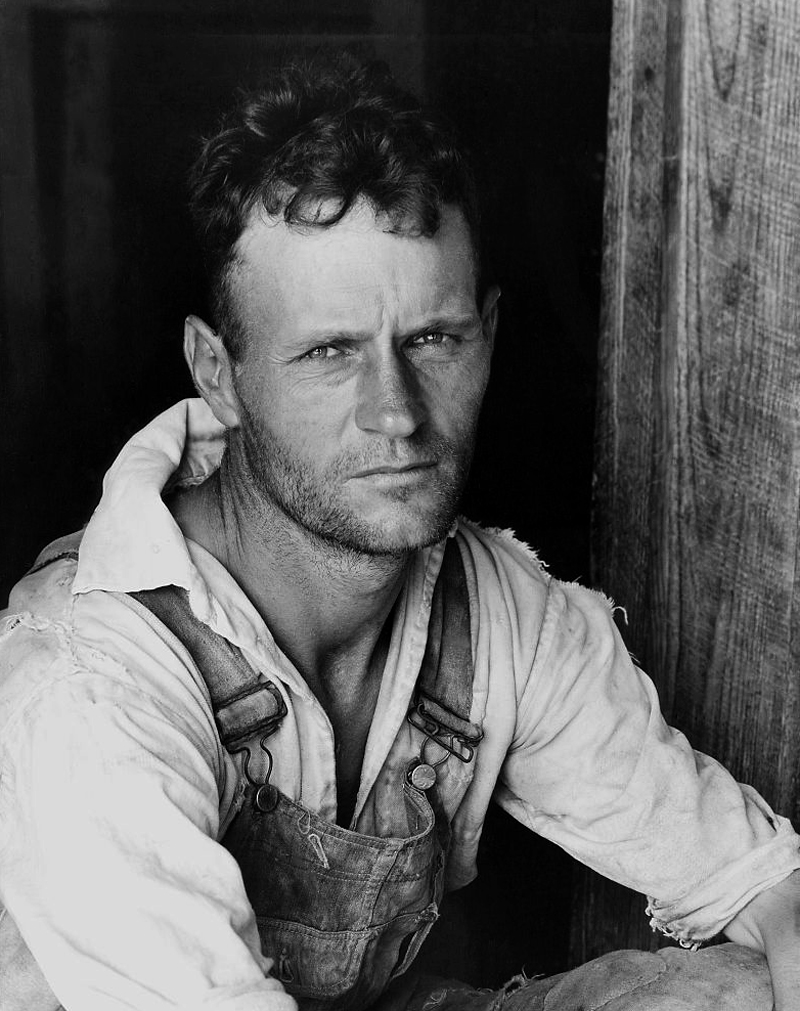
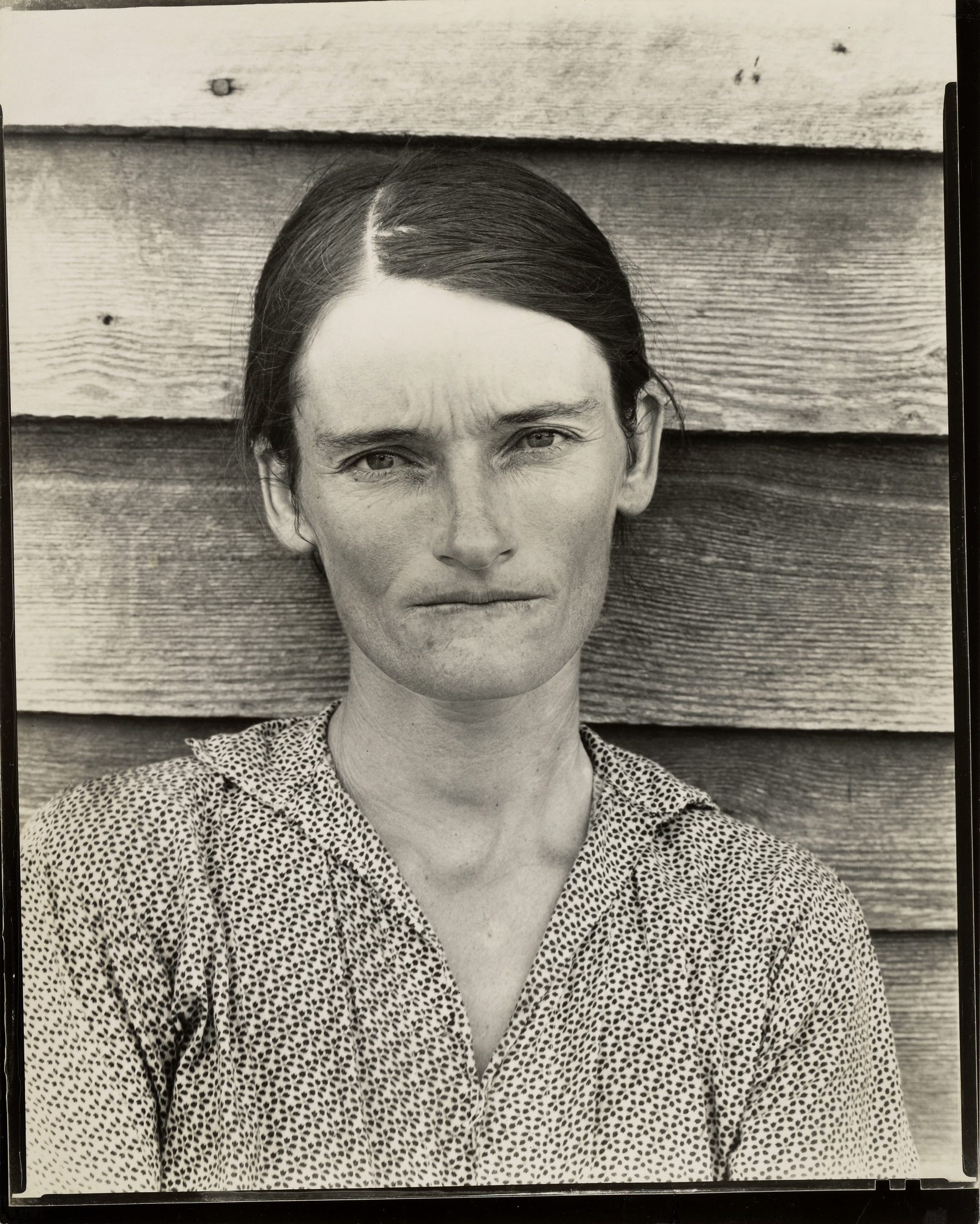
Exhibition: ‘Diane Arbus’ at Jeu de Paume, Paris

Exhibition dates: 18th October, 2011 – 5th February, 2012


Diane Arbus, 'Child with a toy hand grenade in Central Park, N.Y.C. 1962' 1962 from the exhibition 'Diane Arbus' at Jeu de Paume, Paris, Oct 2011 - Feb 2012


Diane Arbus (American, 1923-1971)
Child with a toy hand grenade in Central Park, N.Y.C. 1962
1962
Gelatin silver print
© The Estate of Diane Arbus


A fabulous posting, with memorable thoughts and photographs!

These archetypal images have become deeply embedded in the collective conscience where conscience is pre-eminently the organ of sentiments and representations. The snap, snap, snap of the shutter evinces the flaws of human nature, reveals the presence of a quality or feeling to which we can all relate. As Arbus states, the subject of the picture is always more important than the picture. And more complicated. That is why these photographs always capture our attention – because we become, we inhabit, we are the subject.

Dr Marcus Bunyan


Many thankx to Jeu de Paume for allowing me to publish the photographs in the posting. Please click on the photographs for a larger version of the image.


“There are and have been and will be an infinite number of things on earth. Individuals all different, all wanting different things, all knowing different things, all loving different things, all looking different. Everything that has been on earth has been different from any other thing. That is what I love: the differentness, the uniqueness of all things and the importance of life… I see something that seems wonderful; I see the divineness in ordinary things.”


Diane Arbus. Paper on Plato, senior English seminar, Fieldston School, November 28, 1939


“I want to photograph the considerable ceremonies of our present because we tend while living here and now to perceive only what is random and barren and formless about it. While we regret that the present is not like the past and despair of its ever becoming the future, its innumerable inscrutable habits lie in wait for their meaning. I want to gather them, like somebody’s grandmother putting up preserves, because they will have been so beautiful.

There are the Ceremonies of Celebration (the Pageants, the Festivals, the Feasts, the Conventions) and the Ceremonies of Competition (Contests, Games, Sports), the Ceremonies of Buying and Selling, of Gambling, of the Law and the Show; the Ceremonies of Fame in which the Winners Win and the Lucky are Chosen or Family Ceremonies or Gatherings (the Schools, the Clubs, the Meetings). Then they are Ceremonial Places (The Beauty Parlor, The Funeral Parlor or, simply The Parlor) and Ceremonial Costumes (what waitresses wear, or Wrestlers), Ceremonies of the Rich, like the Dog Show, and of the Middle Class, like the Bridge Game. Or, for example: the Dancing Lesson, the Graduation, the Testimonial Dinner, the Séance, the Gymnasium and the Picnic, and perhaps the Waiting Room, the Factory, the Masquerade, the Rehearsal, the Initiation, the Hotel Lobby and the Birthday Party. The etcetera.

I will write whatever is necessary for the further description and elucidation of these Rites and I will go wherever I can to find them.

These are our symptoms and our monuments. I want simply to save them, for what is ceremonious and curious and commonplace will be legendary.”


Diane Arbus. “American Rites, Manners and Customs,” Plan for a Photographic Project, Guggenheim proposal


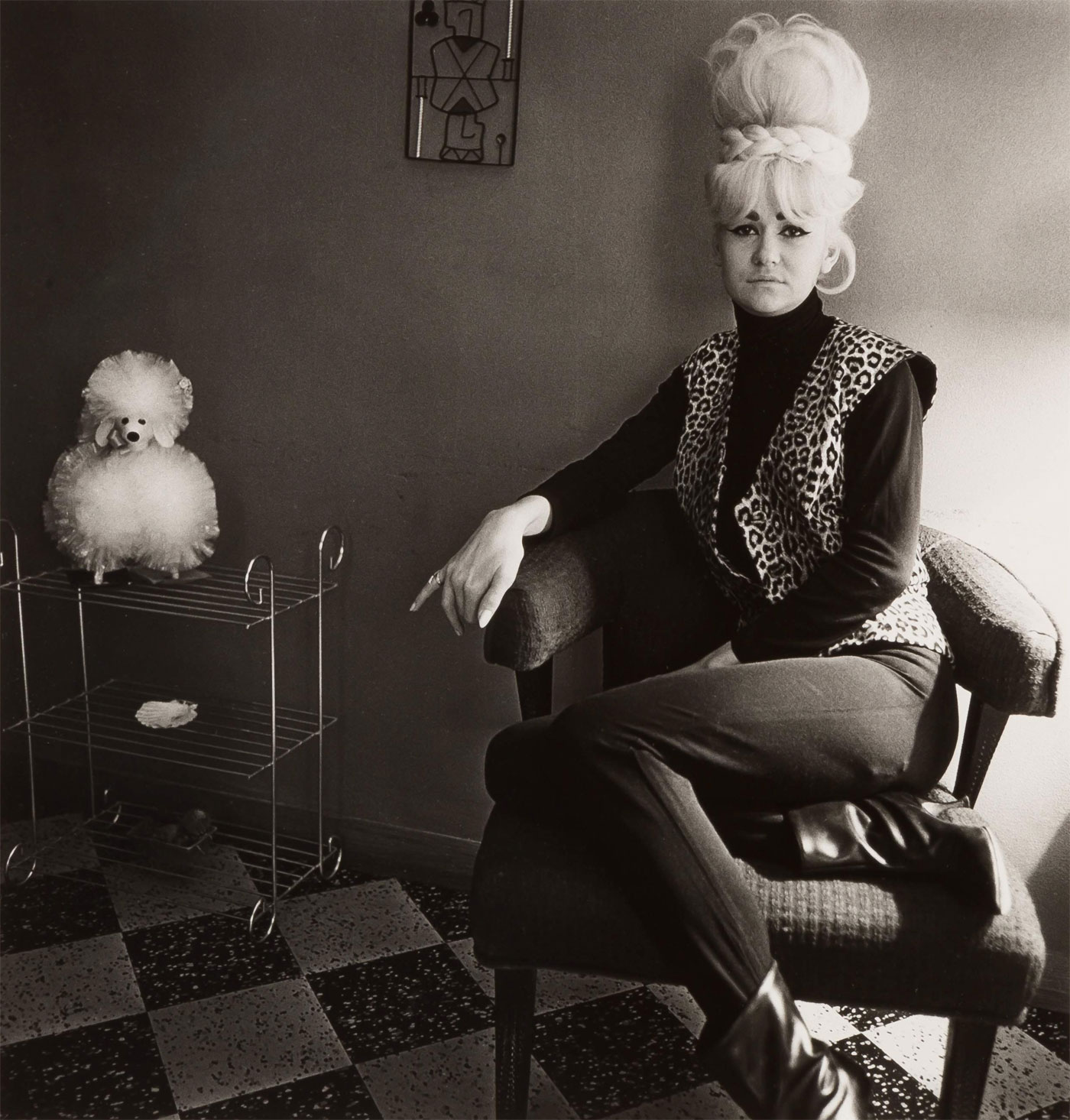
Diane Arbus (American, 1923-1971) 'Lady Bartender at Home with a Souvenir Dog, New Orleans, La.' 1964 from the exhibition 'Diane Arbus' at Jeu de Paume, Paris, Oct 2011 - Feb 2012


Diane Arbus (American, 1923-1971)
Lady Bartender at Home with a Souvenir Dog, New Orleans, La.
1964
Gelatin silver print
© The Estate of Diane Arbus


Diane Arbus (American, 1923-1971) 'A young Brooklyn family going for a Sunday outing, NYC., 1966' 1966


Diane Arbus (American, 1923-1971)
A young Brooklyn family going for a Sunday outing, NYC., 1966
1966
Gelatin silver print
© The Estate of Diane Arbus


Diane Arbus (American, 1923-1971) 'Two Ladies at the Automat, New York City' 1966


Diane Arbus (American, 1923-1971)
Two Ladies at the Automat, New York City
1966
Gelatin silver print
© The Estate of Diane Arbus


Diane Arbus. 'Identical twins, Roselle, N.J. 1967' 1967


Diane Arbus (American, 1923-1971)
Identical twins, Roselle, N.J. 1967
1967
Gelatin silver print
© The Estate of Diane Arbus


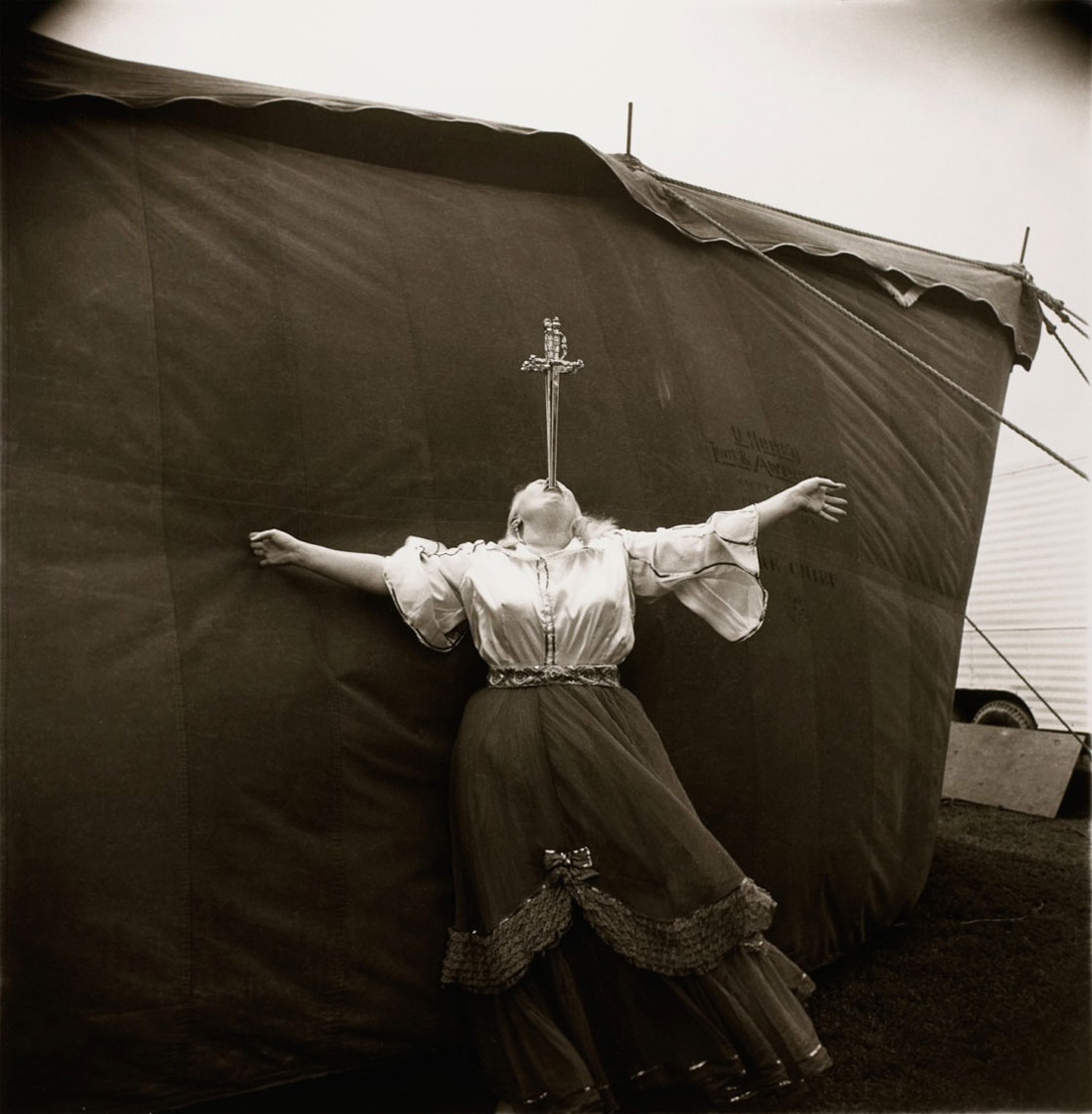
Diane Arbus (American, 1923-1971) 'Albino sword swallower at a carnival, Md' 1970


Diane Arbus (American, 1923-1971)
Albino sword swallower at a carnival, Md
1970
Gelatin silver print
© The Estate of Diane Arbus


On Photographs

“They are the proof that something was there and no longer is. Like a stain. And the stillness of them is boggling. You can turn away but when you come back they’ll still be there looking at you.”


Diane Arbus in response to request for a brief statement about photographs, March 15, 1971


Diane Arbus (New York, 1923-1971) revolutionised the art she practiced. Her bold subject matter and photographic approach produced a body of work that is often shocking in its purity, in its steadfast celebration of things as they are. Her gift for rendering strange those things we consider most familiar, and for uncovering the familiar within the exotic, enlarges our understanding of ourselves.

Arbus found most of her subjects in New York City, a place that she explored as both a known geography and as a foreign land, photographing people she discovered during the 1950s and 1960s. She was committed to photography as a medium that tangles with the facts. Her contemporary anthropology – portraits of couples, children, carnival performers, nudists, middle-class families, transvestites, zealots, eccentrics, and celebrities – stands as an allegory of the human experience, an exploration of the relationship between appearance and identity, illusion and belief, theatre and reality.

In this first major retrospective in France, Jeu de Paume presents a selection of two hundred photographs that affords an opportunity to explore the origins, scope, and aspirations of a wholly original force in photography. It includes all of the artist’s iconic photographs as well as many that have never been publicly exhibited. Even the earliest examples of her work demonstrate Arbus’s distinctive sensibility through the expression on a face, someone’s posture, the character of the light, and the personal implications of objects in a room or landscape. These elements, animated by the singular relationship between the photographer and her subject, conspire to implicate the viewer with the force of a personal encounter.

Biography

Diane Arbus was born in New York City on March 14, 1923, and attended the Ethical Culture and Fieldston Schools. At the age of eighteen she married Allan Arbus. Although she first started taking pictures in the early 1940s and studied photography with Alexey Brodovitch in 1954, it was not until 1955-1957, while enrolled in courses taught by Lisette Model, that she began to seriously pursue the work for which she has come to be known.

Her first published photographs appeared in Esquire in 1960 under the title The Vertical Journey. From that point on she continued to work intermittently as a free-lance photographer for Esquire, Harper’s Bazaar, Show, The London Sunday Times, and a number of other magazines, doing portraits on assignment as well as photographic essays, for several of which she wrote accompanying articles.

During the 1950s, like most of her contemporaries, she had been using a 35mm camera, but in 1962 she began working with a 6×6 Rolleiflex. She once said, in accounting for the shift, that she had grown impatient with the grain and wanted to be able to decipher in her pictures the actual texture of things. The 6×6 format contributed to the refinement of a deceptively simple, formal, classical style that has since been recognised as one of the distinctive features of her work.

She received Guggenheim Fellowships in 1963 and 1966 for projects on “American Rites, Manners and Customs” and spent several summers during that period traveling across the United States, photographing contests, festivals, public and private gatherings, people in the costumes of their professions or avocations, the hotel lobbies, dressing rooms and living rooms she had described as part of “the considerable ceremonies of our present.” “These are our symptoms and our monuments,” she wrote in her original application. “I want simply to save them, for what is ceremonious and curious and commonplace will be legendary.”

The photographs she produced in those years attracted a great deal of attention when a selected group of them were exhibited, along with the work of two other photographers, in the 1967 “New Documents” show at the Museum of Modern Art. Nonetheless, although several institutions subsequently purchased examples of her work for their permanent collections, her photographs appeared in only two other major exhibitions during her lifetime, both of them group shows.

In the late 1960s she taught photography courses at Parsons School of Design, the Rhode Island School of Design and Cooper Union and in 1971 gave a master class at Westbeth, the artists cooperative in New York City where she then lived. During the same period she initiated the concept and did the basic research for the Museum of Modern Art’s 1973 exhibition on news photography, “From the Picture Press.”

She made a portfolio of ten photographs in 1970, printed, signed and annotated by her, which was to be the first of a series of limited editions of her work. She committed suicide on July 26, 1971 at the age of forty-eight. The following year the ten photographs in her portfolio became the first work of an American photographer to be exhibited at the Venice Biennale.

In the course of a career that may be said to have lasted little more than fifteen years, she produced a body of work whose style and content have secured her a place as one of the most significant and influential photographers of our time. The major retrospective mounted by the Museum of Modern Art in 1972 was attended by more than a quarter of a million people in New York before it began its tour of the United States and Canada. The Aperture monograph Diane Arbus, published in conjunction with the show has sold over 300,000 copies. Beginning in 2003, Diane Arbus Revelations, an international retrospective organised by The San Francisco Museum of Modern Art travelled to museums throughout the United States and Europe between 2003 and 2006. Major exhibitions devoted exclusively to her work have toured much of the world including, Australia, Germany, Italy, Japan, the Netherlands, New Zealand, Spain, and the United Kingdom.

Press release from the Jeu de Paume website


Diane Arbus (American, 1923-1971) 'Retired man and his wife at home in a nudist camp one morning, N.J.' 1963


Diane Arbus (American, 1923-1971)
Retired man and his wife at home in a nudist camp one morning, N.J.
1963
Gelatin silver print
© The Estate of Diane Arbus


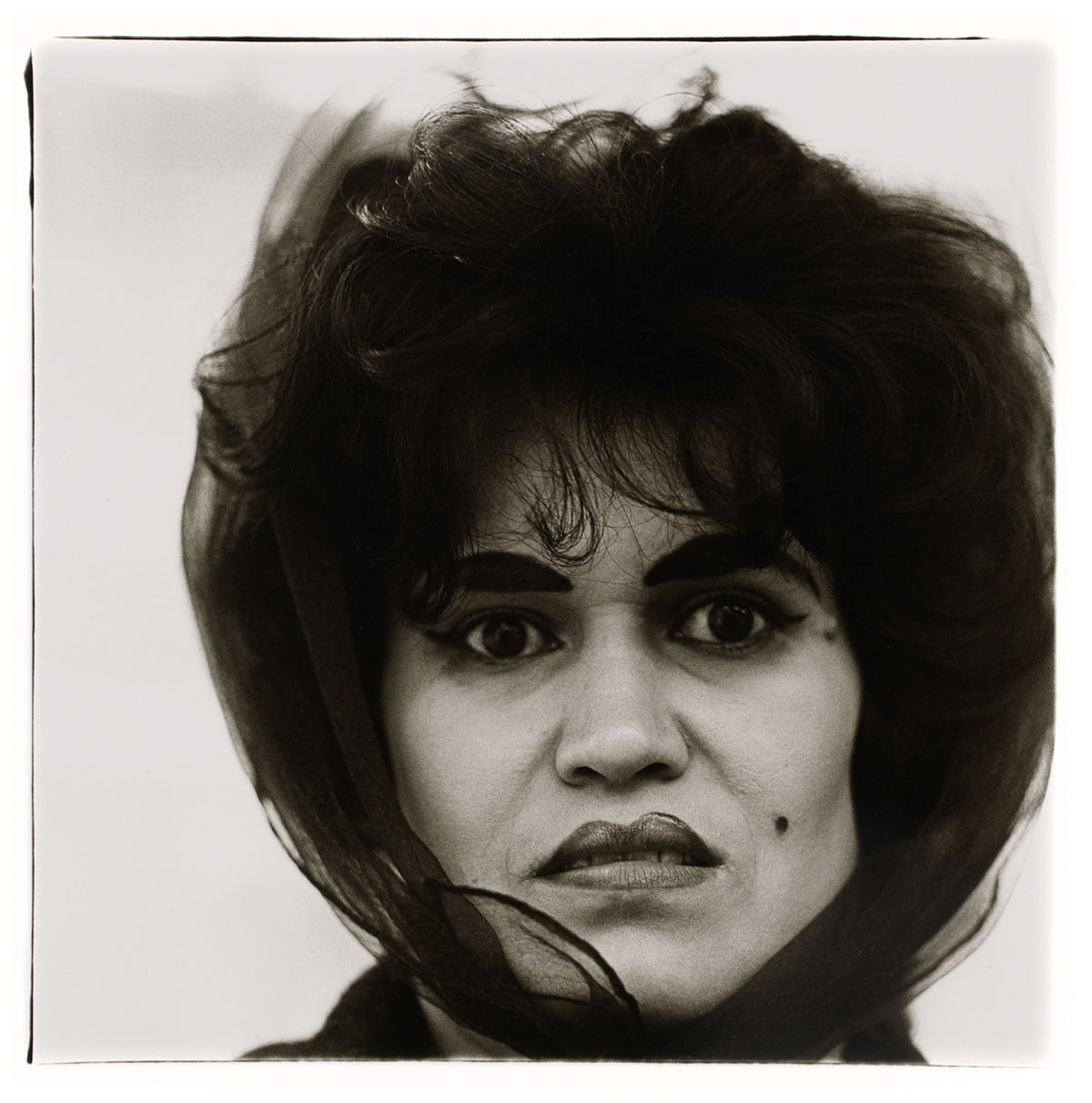
Diane Arbus (American, 1923-1971) 'Puerto Rican Woman with a Beauty Mark' 1965


Diane Arbus (American, 1923-1971)
Puerto Rican Woman with a Beauty Mark
1965
Gelatin silver print
© The Estate of Diane Arbus


Diane Arbus. 'Boy with a straw hat waiting to march in a pro-war parade, N.Y.C. 1967' 1967


Diane Arbus (American, 1923-1971)
Boy with a straw hat waiting to march in a pro-war parade, N.Y.C. 1967
1967
Gelatin silver print
© The Estate of Diane Arbus


Diane Arbus (American, 1923-1971) 'A child crying, N.J.' 1967


Diane Arbus (American, 1923-1971)
A child crying, N.J.
1967
Gelatin silver print
© The Estate of Diane Arbus


Diane Arbus (American, 1923-1971) 'A Jewish giant at home with his parents in the Bronx, N.Y., 1970' 1970


Diane Arbus (American, 1923-1971)
A Jewish giant at home with his parents in the Bronx, N.Y., 1970
1970
Gelatin silver print
© The Estate of Diane Arbus


Diane Arbus. 'Untitled (6) 1970-71'


Diane Arbus (American, 1923-1971)
Untitled (6) 1970-71
1970-1971
Gelatin silver print
© The Estate of Diane Arbus


On Freaks

“There’s a quality of legend about freaks. Like a person in a fairy tale who stops you and demands that you answer a riddle. Most people go through life dreading they’ll go through a traumatic experience. Freaks were born with their trauma. They’ve already passed their test in life. They’re aristocrats.”

“If you’ve ever talked to somebody with two heads you know they know something you don’t.”

The Gap between Attention and Affect

“You see someone on the street and essentially what you notice about them is the flaw. It’s just extraordinary that we should have been given these peculiarities. And, not content with what we were given, we create a whole other set. Our whole guise is like giving a sign to the world to think of us in a certain way but there’s a point between what you want people to know about you and what you can’t help people knowing about you. And that has to do with what I’ve always called the gap between intention and effect. I mean if you scrutinise reality closely enough, if in some way you really, really get to it, it becomes fantastic.”

Other Thoughts

“The thing that’s important to know is that you never know. You’re always sort of feeling your way.”

“Nothing is ever the same as they said it was. It’s what I’ve never seen before that I recognise.”

“A photograph is a secret about a secret. The more it tells you the less you know.”

“For me the subject of the picture is always more important than the picture. And more complicated. I do have a feeling for the print but I don’t have a holy feeling for it. I really think what it is, is what it’s about. I mean it has to be of something. And what it’s of it always more remarkable than what it is.”

“I really believe there are things which nobody would see unless I photographed them.”


Diane Arbus


Diane Arbus (American, 1923-1971) 'Teenage couple on Hudson Street, N.Y.C. 1963' 1963


Diane Arbus (American, 1923-1971)
Teenage couple on Hudson Street, N.Y.C. 1963
1963
Gelatin silver print
© The Estate of Diane Arbus


Diane Arbus (American, 1923-1971) 'Xmas tree in a living room in Levittown, L.I. 1963' 1963


Diane Arbus (American, 1923-1971)
Xmas tree in a living room in Levittown, L.I. 1963
1963
Gelatin silver print
© The Estate of Diane Arbus


Diane Arbus (American, 1923-1971) 'A young man in curlers at home on West 20th Street, N.Y.C. 1966' 1966


Diane Arbus (American, 1923-1971)
A young man in curlers at home on West 20th Street, N.Y.C. 1966
1966
Gelatin silver print
© The Estate of Diane Arbus


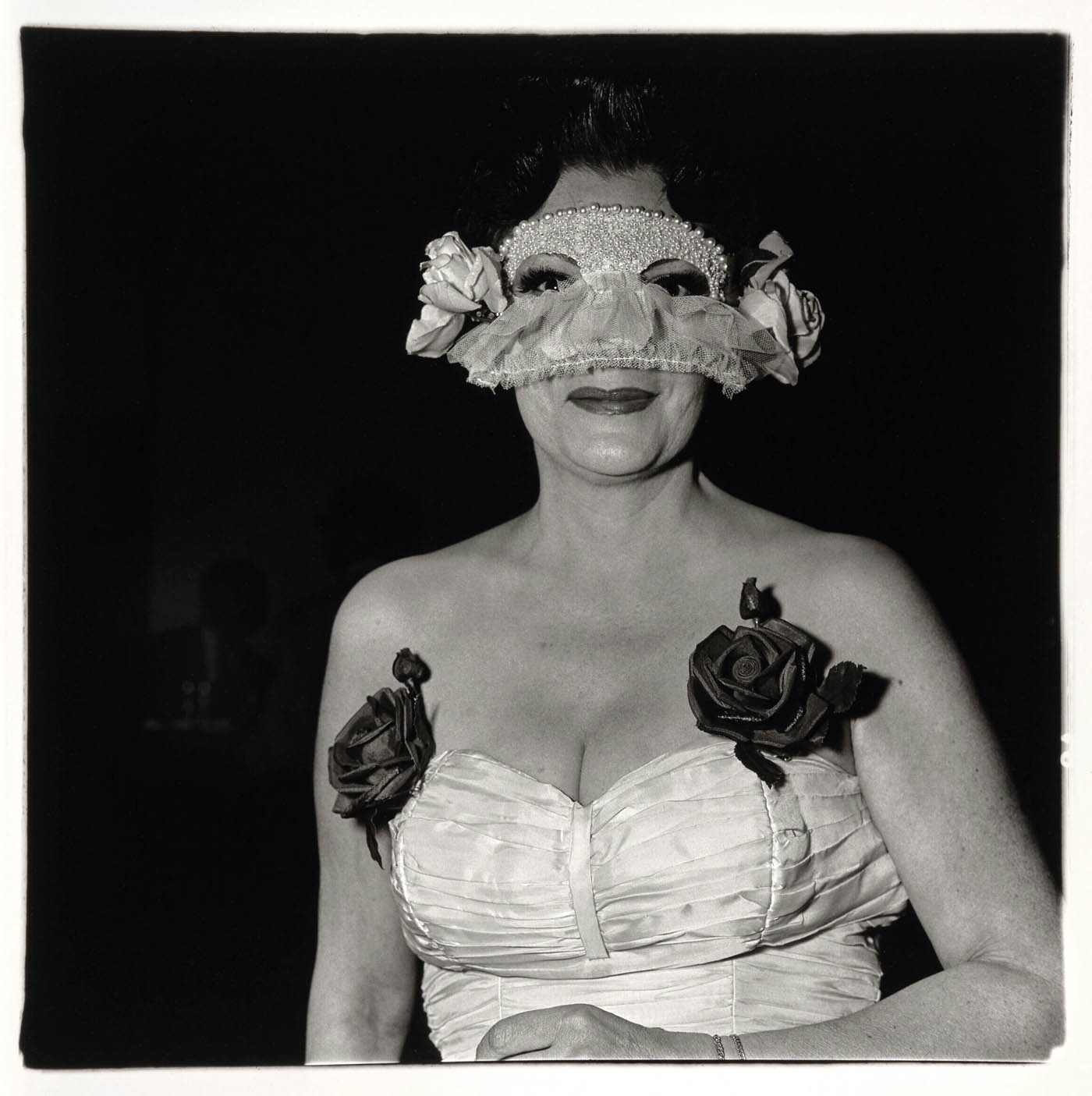
Diane Arbus (American, 1923-1971) 'Lady at a Masked Ball with Two Roses on Her Dress, NYC' 1967


Diane Arbus (American, 1923-1971)
Lady at a Masked Ball with Two Roses on Her Dress, NYC
1967
Gelatin silver print
© The Estate of Diane Arbus


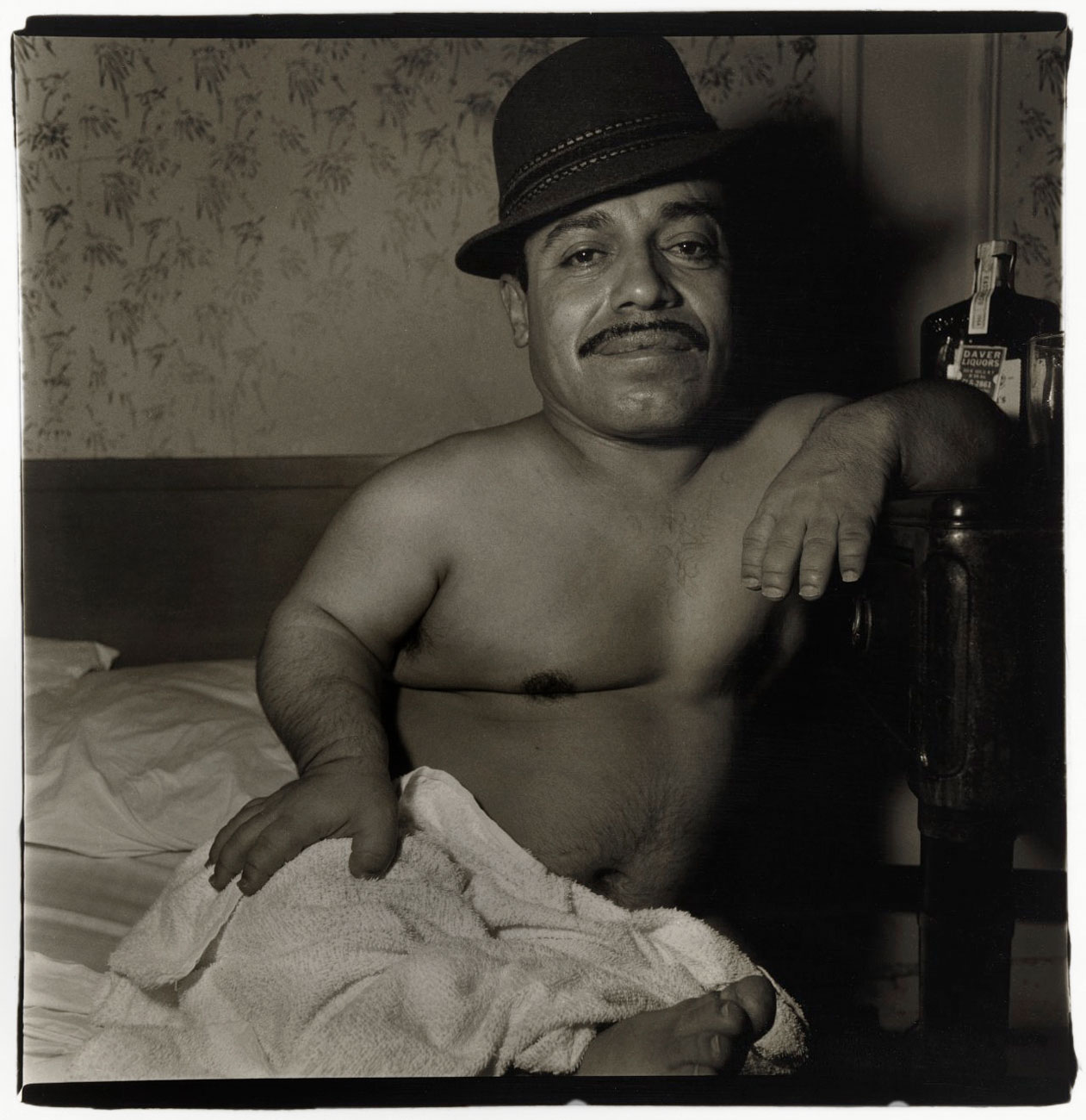
Diane Arbus (American, 1923-1971) 'Mexican Dwarf in his hotel room, NYC' 1970


Diane Arbus (American, 1923-1971)
Mexican Dwarf in his hotel room, NYC
1970
Gelatin silver print
© The Estate of Diane Arbus


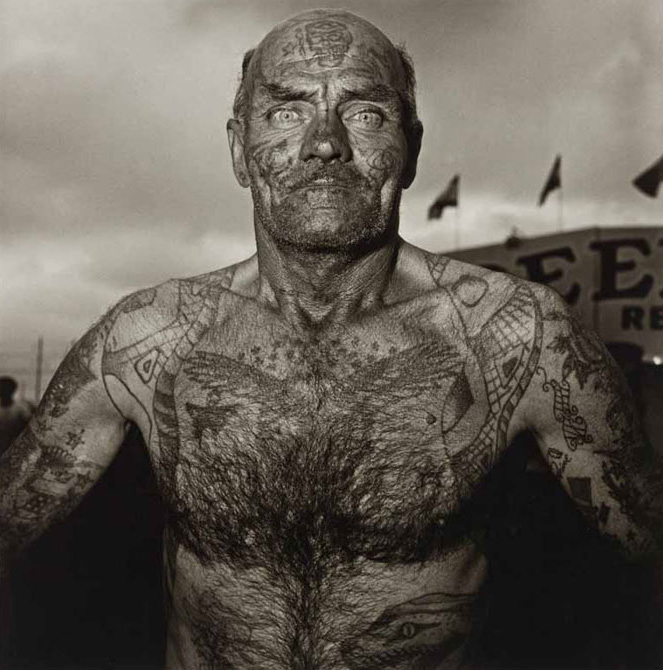
Diane Arbus (American, 1923-1971) 'Tattooed Man at a Carnival, Md.' 1970


Diane Arbus (American, 1923-1971)
Tattooed Man at a Carnival, Md.
1970
Gelatin silver print
© The Estate of Diane Arbus


Jeu de Paume
1, place de la Concorde
75008 Paris
métro Concorde
Phone: 01 47 03 12 50

Opening hours:
Tuesday – Friday 12am – 8pm
Saturday and Sunday 11am – 7pm
Closed Monday

Jeu de Paume website

LIKE ART BLART ON FACEBOOK

Back to top

Exhibition: ‘A Revolutionary Project: Cuba from Walker Evans to Now’ at the J. Paul Getty Museum, Los Angeles

Exhibition dates: 17th May – 2nd October 2011


Many thankx to the J. Paul Getty Museum for allowing me to publish the photographs in the posting. Please click on the photographs for a larger version of the image.


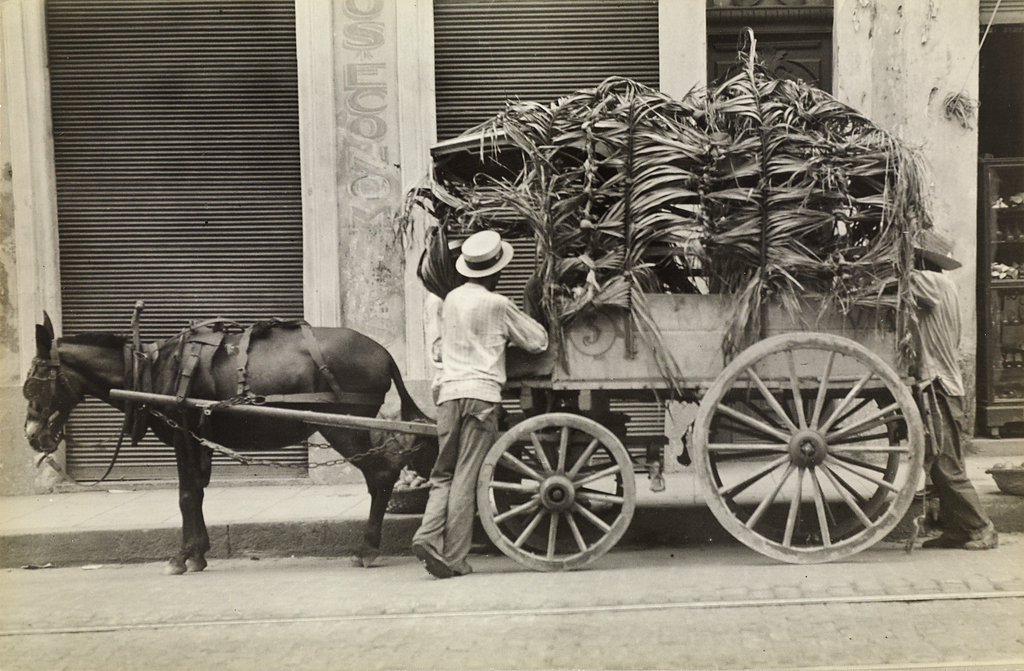
Walker Evans (American, 1903-1975) 'Mule, Wagon and Two Men, Havana' 1933


Walker Evans (American, 1903-1975)
Mule, Wagon and Two Men, Havana
1933
Gelatin silver print
13.8 x 21cm (5 7/16 x 8 1/4 in.)
The J. Paul Getty Museum, Los Angeles
© Walker Evans Archive, The Metropolitan Museum of Art


Walker Evans (American, 1903-1975) 'Spectacle, Capital Steps, Possibly Independence Day' May 20, 1933


Walker Evans (American, 1903-1975)
Spectacle, Capital Steps, Possibly Independence Day
May 20, 1933
Gelatin silver print
19.7 x 25.3cm (7 3/4 x 9 15/16 in.)
The J. Paul Getty Museum, Los Angeles
© Walker Evans Archive, The Metropolitan Museum of Art


Walker Evans (American, 1903-1975) 'Old Havana Housefronts' 1933


Walker Evans (American, 1903-1975)
Old Havana Housefronts
1933
Gelatin silver print
17.6 x 22.7cm (6 15/16 x 8 15/16 in.)
The J. Paul Getty Museum, Los Angeles
© Walker Evans Archive, The Metropolitan Museum of Art


Walker Evans (American, 1903-1975) 'Balcony Spectators' 1933


Walker Evans (American, 1903-1975)
Balcony Spectators
1933
Gelatin silver print
19.8 x 25.2cm (7 13/16 x 9 15/16 in.)
The J. Paul Getty Museum, Los Angeles
© Walker Evans Archive, The Metropolitan Museum of Art


Exhibition Marks First Showing of Getty’s Walker Evan’s Cuban Photographs; Also on view are Cuban Revolutionary Photographs and Contemporary Work by Virginia Beahan, Alex Harris, and Alexey Titarenko

Cuba’s attempt to forge an independent state with an ambitious set of social goals, all the while moored to powerful political and economic interests, has been a source of fascination for nations, intellectuals, and artists alike. On display at the J. Paul Getty Museum, the Getty Center, May 17 – October 2, 2011, A Revolutionary Project: Cuba from Walker Evans to Now, looks at three critical periods in the island nation’s history as witnessed by photographers before, during, and after the country’s 1959 Revolution.

A Revolutionary Project juxtaposes Walker Evans’s 1933 images from the end of the Gerardo Machado dictatorship with views by contemporary foreign photographers Virginia Beahan (American, b. 1946), Alex Harris (American, b. 1949), and Alexey Titarenko (Russian, b. 1962), who have explored Cuba since the withdrawal of Soviet support in the 1990s. A third section bridging these two eras presents pictures by Cuban photographers who participated in the country’s 1959 Revolution, including Alberto Korda, Perfecto Romero, and Osvaldo Salas.

“The Museum’s collection of Walker Evans prints is the largest in the U.S., but until now, we have not shown his photographs of Cuba,” explains Judith Keller, senior curator of photographs. “This exhibition allows us the opportunity to showcase this body of work, alongside newer work in the collection.”

1933: Evans in Havana

Walker Evans (1903-1975) is one of the photographers most responsible for the way we now imagine American life in the 1930s. His distinctive photographic style, which he declared “transcendent documentary,” was nurtured in New York in the late 1920s and fully formed by his experience in Cuba in 1933. In the spring of that year, Walker Evans was asked by publisher J. B. Lippincott to produce a body of work about Cuba to accompany a book by the radical journalist Carleton Beals (1893-1979). This book, The Crime of Cuba, would be a scathing indictment of the then-current regime of Cuban President Gerardo Machado. Leaving the country less than two months before Machado was forced out of office, Evans was able to capture Cuba at the start of the revolutionary movement but almost 30 years before the 1959 Revolution.

During Evans’s time in Cuba, he made substantial strides in his photographic practice. There he worked with different format cameras, large and small, one more deliberate and descriptive, the other more spontaneous and agile. He created both close-up and wide, inclusive compositions that he could then combine in intense sequences to best communicate his response to the poverty, the ferment, and the beauty of his environment. While in Havana, Evans met the American writer, Ernest Hemingway (1899-1961), whose acclaimed avant-garde work he knew and admired. Hemingway’s terse narrative style, which he was then applying to his own Harry Morgan stories set in Havana and Key West, no doubt influenced Evans’s approach to the subject of Cuba’s current political and economic struggles. Evans’s photographs also reflect the inspiration of French photographer Eugène Atget’s Parisian pictures that Evans critiqued for an arts journal in 1931. The series that comprised Atget’s thorough study of “Old Paris” seem to have provided additional motivation for Evans’s selection of Havana subjects: the signage of urban storefronts, the abundant street offerings of fresh produce, the decorative balconies of old houses, the many studies of archaic horse-drawn wagons and carriages, and the portraits of women, some of whom appear to be prostitutes.

1958-1966: Revolution

Machado’s fall from rule in 1933 resulted in a long power struggle that culminated in the country’s 1959 socialist revolution to overthrow dictator Fulgencio Batista, anchoring Cuba to the Soviet bloc for the next thirty years and defining a relationship with the United States that still exists today. Fidel Castro, Ernesto “Che” Guevara, and their new government harnessed photography as a means of keeping the project of the Revolution at the forefront of Cuba’s collective consciousness. As both genuine records of popular insurrection and propagandistic documents used for political purposes, pictures of the Revolution and its aftermath have shaped how both Cubans and Americans understand the significance of that revolutionary moment. Photographs in the second section of the exhibition are drawn from the work of nine Cuban photographers who participated in recording the political context and triumphs of the emerging state in the years surrounding 1959.

Included in the exhibition is an iconic image of the revolutionary hero Che Guevara by Alberto Korda titled Guerrillero Heroico (March 5, 1960). One of the world’s most reproduced images, it has been adopted for political causes, appearing on countless numbers of t-shirts, banners, and street art around the globe. The print on view in the exhibition is among the earliest versions of the photograph known to exist. Made as a press print, it was used as a source to reproduce the image in media outlets a year after Korda photographed Guevara at a rally in Havana.

Also on display in the exhibition is the well-known revolutionary photograph Patria o Muerte, Cuba (Negative, January 1959; print, 1984) by Osvaldo Salas, one of Cuba’s most important photographers. Salas effectively captures and conveys the populist fervour in Cuba shortly after the movement’s triumph with an image of a patriotic sign framed by a celebratory crowd.

The photographs included in this section of the exhibition are culled from the extensive holdings of Cuban photography assembled by the Austrian collector, Christian Skrein, including a number of recent acquisitions by the Museum.

Since 1991: The Special Period

After Soviet troops began to withdraw from Cuba in September of 1991, the troubled Cuban economy suffered severe internal shortages, and Fidel Castro declared what is known as the “Special Period” (período especial), marked by food rationing, energy conservation, and a decline of public services. In the nearly twenty years since the Soviet withdrawal, Cubans have managed to survive through perseverance, the forging of new political relationships, and the easing of socialist systems. This period of transition, which continues today with the recent transfer of power from Fidel Castro to his brother Raúl, has attracted the attention of photographers from around the world who are interested in exploring the relationship between Cuba’s revolutionary past and its uncertain future. The final section of the exhibition looks specifically at the work of three contemporary photographers with diverse approaches to documenting the island in recent decades: Virginia Beahan, Alex Harris, and Alexey Titarenko.

Virginia Beahan’s work concentrates on the landscape’s relationship to history and culture. In 2001, she began a multiyear project on Cuba, photographing its topography in search of remnants of the island’s diverse past. The work resulted in a publication in 2009 called Cuba: Singing with Bright Tears. Beahan’s Cuba is a land of contradictions, full of disappointments and hope, decay and rejuvenating beauty, simultaneously anchored to the past while looking beyond the present. Born and raised in Leningrad (now Saint Petersburg), Russia, Alexey Titarenko became fascinated with Cuba in 2003, when he made his first trip to Havana. Titarenko’s goal was to represent the soul of the Cuban capital. In the artist’s photographs, the city is shown with little overt reference to its politics. Instead, Titarenko describes the conditions of life in the communist country, depicting people persevering amid varying states of ruin. Venturing out of the tourist zones of Havana into the network of dilapidated avenues beyond the old city walls, his images depict a grey metropolis whose inhabitants congregate on the streets to collect food rations, fix long-outmoded cars, and play baseball.

A former student of Walker Evans, Alex Harris made several trips to Cuba following the collapse of the eastern bloc and the dissolution of the Soviet Union, developing a powerful body of colour work that addresses the country’s cultural fabric during a period of difficult economic circumstances. His photographs focus on portraits of women whose lives are affected by the tourist-fuelled sex trade, landscapes made through the windshields of refurbished 1950s American cars, and monuments to the Cuban national hero José Martí. His study was published in the form of a book, The Idea of Cuba, in 2007. Through these distinct vantage points, Harris probed the country’s propensity for ingenuity as it underwent great transition.

Press release from the J. Paul Getty Museum website


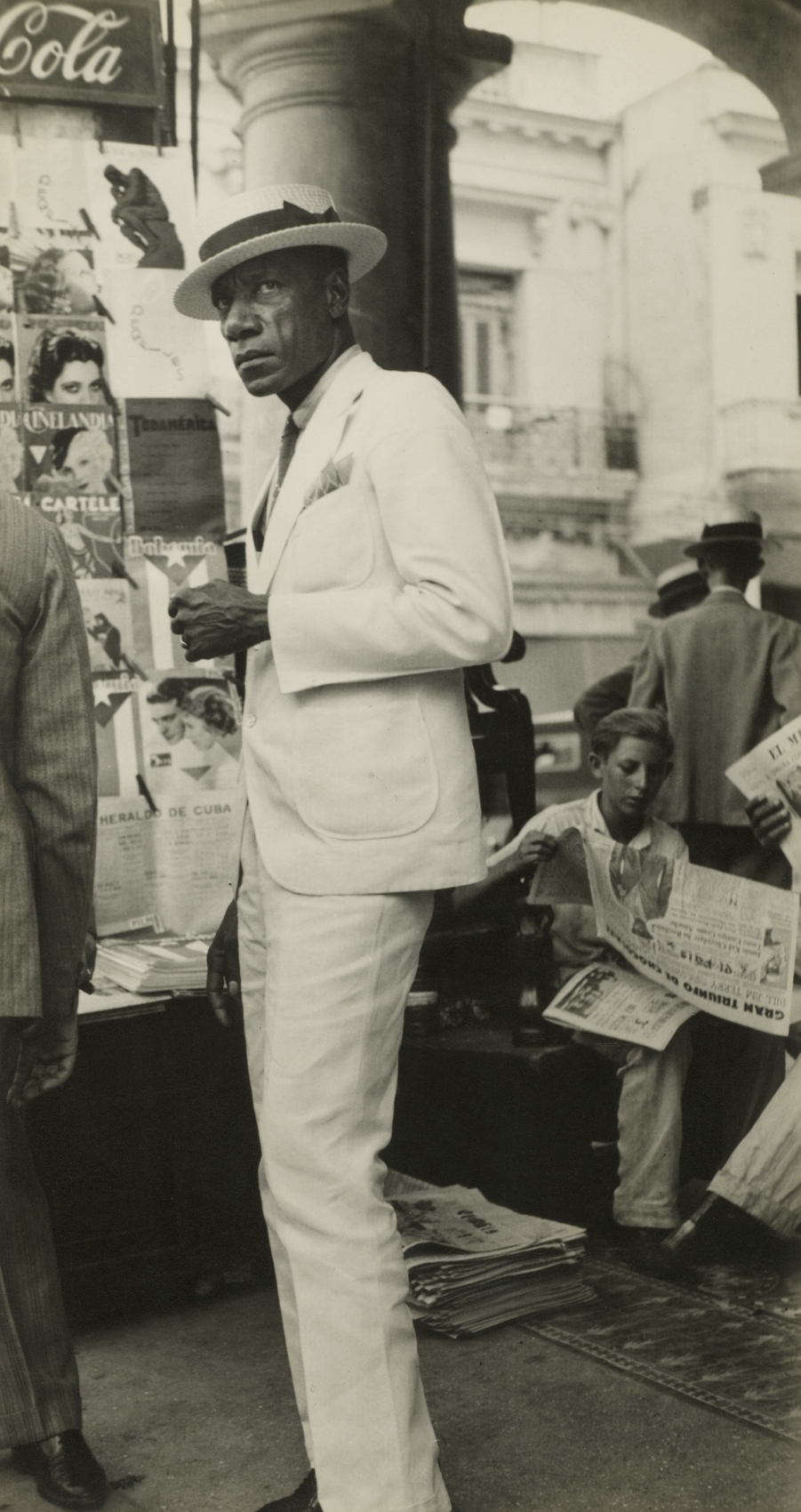
Walker Evans (American, 1903-1975) 'Citizen in Downtown Havana' 1933


Walker Evans (American, 1903-1975)
Citizen in Downtown Havana
1933
Gelatin silver print
22.2 x 11.7cm (8 3/4 x 4 5/8 in.)
The J. Paul Getty Museum, Los Angeles


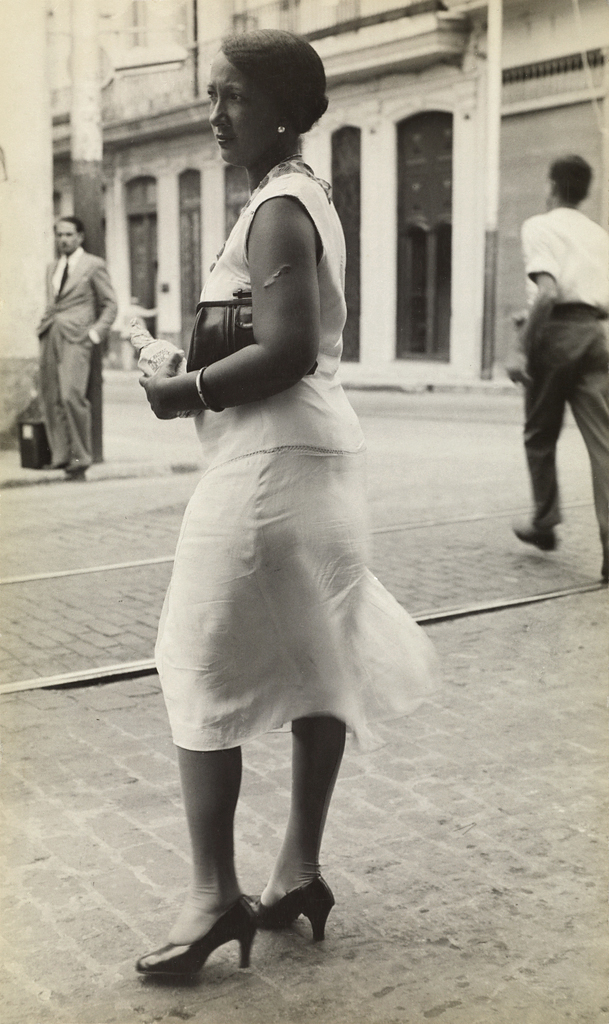
Walker Evans (American, 1903-1975) 'Woman on the Street, Havana' 1933


Walker Evans (American, 1903-1975)
Woman on the Street, Havana
1933
Gelatin silver print
24.6 x 14.6cm (9 11/16 x 5 3/4 in.)
The J. Paul Getty Museum, Los Angeles
© Walker Evans Archive, The Metropolitan Museum of Art


Walker Evans (American, 1903-1975) 'Woman in a Courtyard' 1933


Walker Evans (American, 1903-1975)
Woman in a Courtyard
1933
Gelatin silver print
25.3 x 16.2cm (9 15/16 x 6 3/8 in.)
The J. Paul Getty Museum, Los Angeles
© Walker Evans Archive, The Metropolitan Museum of Art


Walker Evans (American, 1903-1975) 'Coal Dockworkers, Havana' 1933


Walker Evans (American, 1903-1975)
Coal Dockworkers, Havana
1933
Gelatin silver print
15.6 × 21.1cm (6 1/8 × 8 5/16 in.)
The J. Paul Getty Museum, Los Angeles
© Walker Evans Archive, The Metropolitan Museum of Art


Walker Evans (American, 1903-1975) 'Coal Dockworkers, Havana' 1933


Walker Evans (American, 1903-1975)
Coal Dockworkers, Havana
1933
Gelatin silver print
12.7 × 17.7cm (5 × 6 15/16 in.)
The J. Paul Getty Museum, Los Angeles
© Walker Evans Archive, The Metropolitan Museum of Art


Walker Evans (American, 1903-1975) 'Coal Dockworker, Havana' 1933


Walker Evans (American, 1903-1975)
Coal Dockworker, Havana
1933
Gelatin silver print
9.7 × 13.7cm (3 13/16 × 5 3/8 in.)
The J. Paul Getty Museum, Los Angeles
© Walker Evans Archive, The Metropolitan Museum of Art


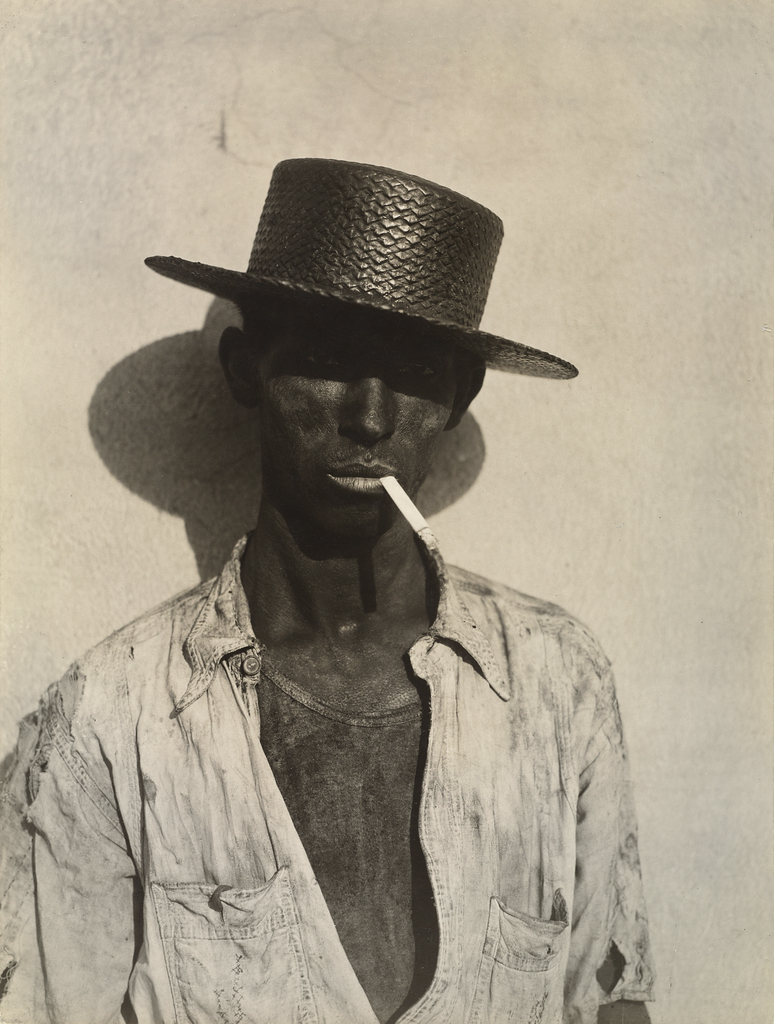
Walker Evans (American, 1903-1975) 'Coal Loader, Havana' 1933


Walker Evans (American, 1903-1975)
Coal Loader, Havana
1933
Gelatin silver print
17.1 × 12.2cm (6 3/4 × 4 13/16 in.)
The J. Paul Getty Museum, Los Angeles
© Walker Evans Archive, The Metropolitan Museum of Art


Walker Evans (American, 1903-1975) 'Coal Stevedore, Havana' 1933


Walker Evans (American, 1903-1975)
Coal Stevedore, Havana
1933
Gelatin silver print
20.2 x 15.2cm (7 15/16 x 6 in.)
The J. Paul Getty Museum, Los Angeles
© Walker Evans Archive, The Metropolitan Museum of Art


Walker Evans (American, 1903-1975) 'Stevedore' 1933


Walker Evans (American, 1903-1975)
Stevedore
1933
Gelatin silver print
20.1 x 15.1cm (7 15/16 x 5 15/16 in.)
The J. Paul Getty Museum, Los Angeles
© Walker Evans Archive, The Metropolitan Museum


Walker Evans (American, 1903-1975) 'Negro Child, Havana' 1933


Walker Evans (American, 1903-1975)
Negro Child, Havana
1933
Gelatin silver print
19.5 x 14.8cm (7 11/16 x 5 13/16 in.)
The J. Paul Getty Museum, Los Angeles
© Walker Evans Archive, The Metropolitan Museum


Walker Evans (American, 1903-1975) 'Negro Child, Havana' 1933


Walker Evans (American, 1903-1975)
Negro Child, Havana
1933
Gelatin silver print
19.8 x 13.2cm (7 13/16 × 5 3/16 in.)
The J. Paul Getty Museum, Los Angeles
© Walker Evans Archive, The Metropolitan Museum


The J. Paul Getty Museum
1200 Getty Center Drive
Los Angeles, California 90049

Opening hours:
Tuesday – Friday, Sunday 10am – 5.30pm
Saturday 10am – 8pm
Monday Closed

The J. Paul Getty Museum website

LIKE ART BLART ON FACEBOOK

Back to top

Exhibition: ‘The Lives of Great Photographers’ at The National Media Museum, Bradford

Exhibition dates: 15th April – 4th September 2011


Many thankx to The National Media Museum for allowing me to publish the photographs in the posting. Please click on the photographs for a larger version of the image.


Lady Clementina Hawarden (British, 1822-1865) 'Self Portrait' c. 1864


Lady Clementina Hawarden (British, 1822-1865)
Self Portrait
c. 1864
Albumen print
Courtesy of the National Media Museum/SSPL


Clementina, Lady Hawarden, is a poetic, if elusive, presence among nineteenth-century photographers. As a devoted mother, her life revolved around her eight children. She took up photography in 1857; using her daughters as models, she created a body of work remarkable for its technical brilliance and its original depiction of nascent womanhood.
Lady Hawarden showed her work in the 1863 and 1864 exhibitions of the Photographic Society. With the exception of a few rare examples, her photographs remained in the possession of her family until 1939, when the more than eight hundred images were donated to the Victoria and Albert Museum. Only recently have they been the objects of research, publication, and exhibition.

Text from The Metropolitan Museum of Art website


John Moffat (Scottish, 1819-1894) 'William Henry Fox Talbot with camera and lens' 1864


John Moffat (Scottish, 1819-1894)
William Henry Fox Talbot with camera and lens
1864


Julia Margaret Cameron (British born India, 1815-1879) 'Carlyle like a rough block of Michael Angelo's sculpture' 1867


Julia Margaret Cameron (British born India, 1815-1879)
Carlyle like a rough block of Michael Angelo’s sculpture
1867
Albumen print
Courtesy The Royal Photographic Society Collection at the National Media Museum/SSPL


Henry Herschel Hay Cameron (British born India, 1852-1911) 'Mrs Julia Margaret Cameron' 1870


Henry Herschel Hay Cameron (British born India, 1852-1911)
Mrs Julia Margaret Cameron
1870
Albument print
Courtesy of the National Media Museum/SSPL


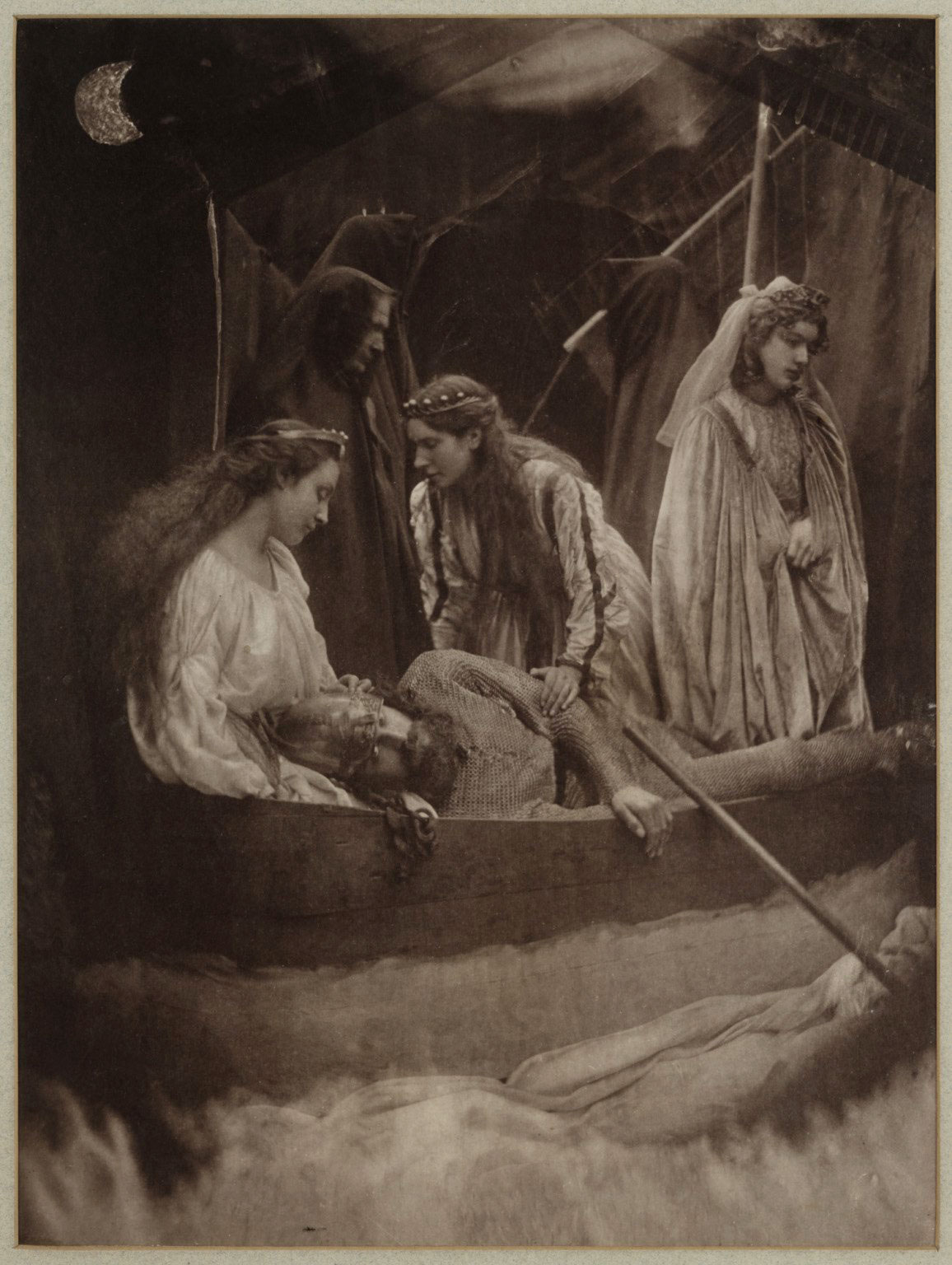
Julia Margaret Cameron (British born India, 1815-1879) 'So Like a Shatter'd Column Lay the King' 1875


Julia Margaret Cameron (British born India, 1815-1879)
So Like a Shatter’d Column Lay the King
1875
Albumen print
Courtesy of The Royal Photographic Society Collection at the National Media Museum


Photographers have created some of the most famous and memorable images ever produced, combining science and art since 1839. The Lives of Great Photographers, a free to enter exhibition at the National Media Museum in Bradford, draws on the Museum’s renowned collection to focus on the pioneers behind the camera, exploring the extraordinary stories surrounding some of photography’s most important innovators and artists.

Featuring Henri Cartier-Bresson, Julia Margaret Cameron, Robert Capa, William Henry Fox Talbot, Weegee, Tony Ray-Jones, Fay Godwin and Eadweard Muybridge, the exhibition will display iconic images and artefacts from these and other great names, selected exclusively from the National Collection of Photography.

Exhibition curator Brian Liddy said: “Photography has been with us for more than 170 years, and in that time countless famous photographs have been taken by many famous photographers. Often we may think we know these men and women because we know their work so well, but over time so many photographers’ personal stories have become overshadowed by their most famous pictures. This major exhibition aims to redress the balance.”

The show begins with an investigation into the rivalry between two of the medium’s earliest pioneers. Without Louis Jacques Mandé Daguerre and William Henry Fox Talbot, photography as it known today would not exist. Daguerre, a former theatrical designer, presented the photographic process to France and the world in 1839. Working in parallel and in competition, Talbot, who became an MP for Chippenham, went on to create the first negative from which multiple copy photographs could be produced.

As technology evolved, the breadth and range of photography increased, and the methods by which it could provide a source of income, or artistic expression, became more diverse. Julia Margaret Cameron, although primarily considered an artist, copyrighted her work and attempted to make a living by selling copies. Her personal connections gave her the opportunity to produce some of the first celebrity photographs in existence. Olive Edis employed photography as a serving war artist during the First World War and Edward Steichen’s career was remarkable for its variety as he moved effortlessly from art, to fashion, to advertising.

Photography also proved an ideal medium when it came to documenting world events. Lewis Hine and Dorothea Lange were both driven by their social consciences to record the Great Depression in America. Photojournalism, the cousin of documentary photography, is represented in the exhibition by names such as Henri Cartier-Bresson and Robert Capa, founding members of the world’s first photographic agency, Magnum. Both served in the Second World War and produced images that helped define an era.

One of the most notorious life stories is that of the English photographer Eadweard Muybridge. His pioneering work in chronophotography, whereby movement is captured by a sequence of photographic exposures, famously demonstrated that all four legs of a horse left the ground as it galloped. Until then the motion of a horse’s hooves were too quick for the human eye to determine. Perhaps less well known is the fact that Muybridge murdered his wife’s lover in cold blood but was later acquitted with a verdict of ‘justifiable homicide’.

The exhibition also includes Roger Fenton, Lady Clementina Hawarden, Alfred Stieglitz, André Kertész, and Larry Burrows. Each photographer is represented by their photographic portrait and a selection of their images. None is living, as only those whose lives and work can be evaluated in their entirety have been selected.

Brian Liddy added: “This exhibition shows just how rich the museum’s collections are. The work of some of the best-known photographers in history will be shown alongside the kinds of cameras they would have had to carry and use in the course of their work. We’ve also taken the opportunity to show rarely seen material, such as pages from the notebooks of Tony Ray-Jones detailing what was going through his mind when he was thinking about how to get the pictures he wanted.”

“By recounting the lives of these great photographers, we hope to provide an insight into what led them to produce some of the greatest photographs ever taken.”

Press release from The National Media Museum


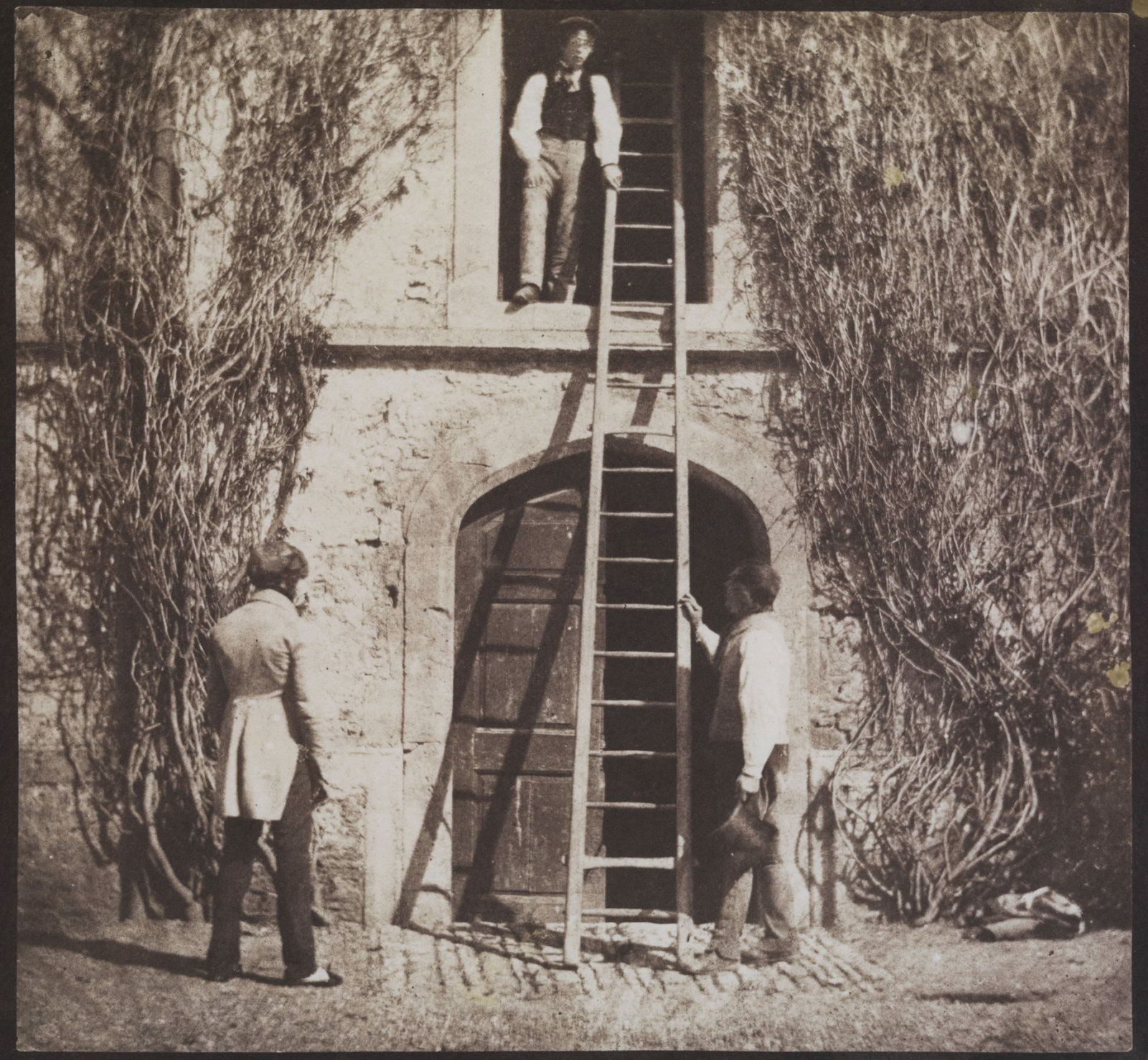
Henry Fox Talbot (British, 1800-1877) 'The Ladder' 1844


Henry Fox Talbot (British, 1800-1877)
The Ladder
1844
Salted paper print from paper negative
Courtesy of the National Media Museum/SSPL


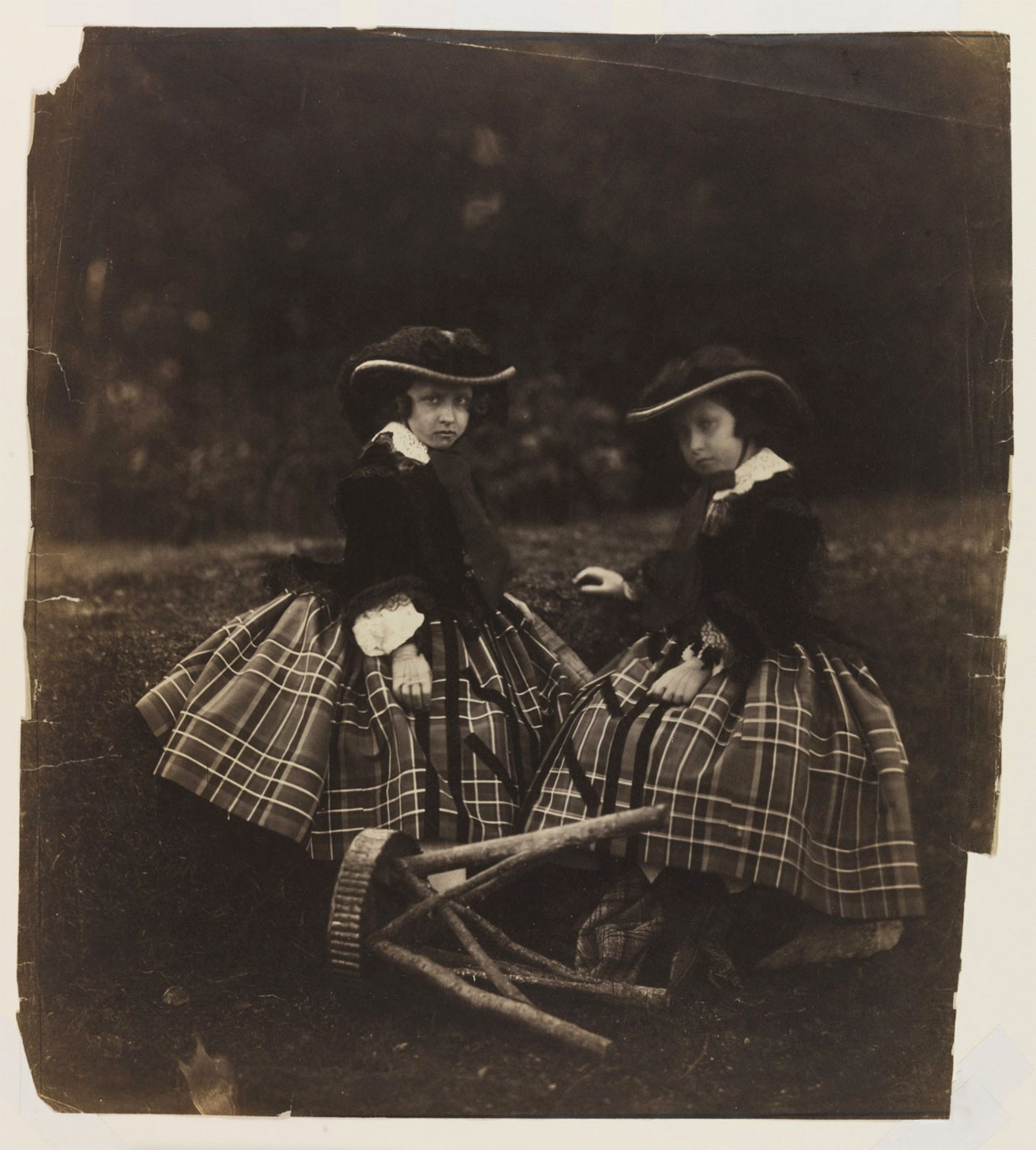
Roger Fenton (British, 1819-1869) 'Princesses Helena and Louise' 1856


Roger Fenton (British, 1819-1869)
Princesses Helena and Louise
1856
Albumen print
Courtesy of The Royal Photographic Society Collection at the National Media Museum


Photograph of Princess Helena and Princess Louise, seated outside together wearing identical outfits, including hats. Both look to front. Upturned stool in foreground.

The two princesses look straight at the camera in what is an unusually direct pose. Princess Helena (1846-1923) and Princess Louise (1848-1939) were the fifth and six children of Queen Victoria and Prince Albert. Princess Helena was herself a keen collector of photographs and compiled a number of albums commemorating her many visits to Balmoral

Text adapted from Roger Fenton – Julia Margaret Cameron: Early British photographs from the Royal Collection, London, 2010 on the Royal Collection Trust website


Eadweard Muybridge (English, 1830-1904) Man (Muybridge) throwing discus walking up steps walking Plate 519 Animal Locomotion


Eadweard Muybridge (English, 1830-1904)
Man (Muybridge) throwing discus walking up steps walking
Plate 519 Animal Locomotion
1887
Collotype
Courtesy of the National Media Museum/SSPL


Unknown photographer. 'Eadweard Muybridge' date unknown


Unknown photographer
Eadweard Muybridge
Date unknown
Courtesy of The Royal Photographic Society Collection at the National Media Museum


Alvin Langdon Coburn (American, 1882-1966) 'Alfred Stieglitz' 1905


Alvin Langdon Coburn (American, 1882-1966)
Alfred Stieglitz
1905
Courtesy of the National Media Museum/SSPL


Lewis Hine (American, 1874-1940) 'Albanian woman Ellis Island' 1905


Lewis Hine (American, 1874-1940)
Albanian woman Ellis Island
1905
Gelatin silver print
Courtesy of the National Media Museum/SSPL


At the Ethical Culture School in New York Lewis Hine taught photography to teenagers, encouraging them to observe others. He took his classes to Ellis Island to see arriving immigrants. “At times it looked like a costume ball,” he wrote, “with the multicoloured, many-styled national costumes,” This is one of over 200 photographs that Hine made himself at Ellis Island, representing an Albanian immigrant, wearing her best clothes, cleaned and immaculately pressed. Hine’s empathy with the neglected him led to a job with the National Child Labor Committee. He traveled the country photographing children at work in factories in New England, at coal mines in Pennsylvania, and canneries on the Gulf Coast. Hine’s photographs helped secure child labor laws in this country.

From Touchstones of the Twentieth Century: A History of Photography at the University of Notre Dame (exhibition, 2020-21)


Unknown photographer. 'Lewis Hine photographing children in a slum' c. 1910


Unknown photographer
Lewis Hine photographing children in a slum
c. 1910
Gelatin silver print
Courtesy of the National Media Museum/SSPL


Alvin Langdon Coburn (American, 1882-1966) 'George Davison' 1918


Alvin Langdon Coburn (American, 1882-1966)
George Davison
1918
Gelatin silver print
Courtesy of the National Media Museum/SSPL


George Davison (19 September 1854 – 26 December 1930) was an English photographer, a proponent of impressionistic photography, a co-founder of the Linked Ring Brotherhood of British artists and a managing director of Kodak UK. He was also a millionaire, thanks to an early investment in Eastman Kodak.


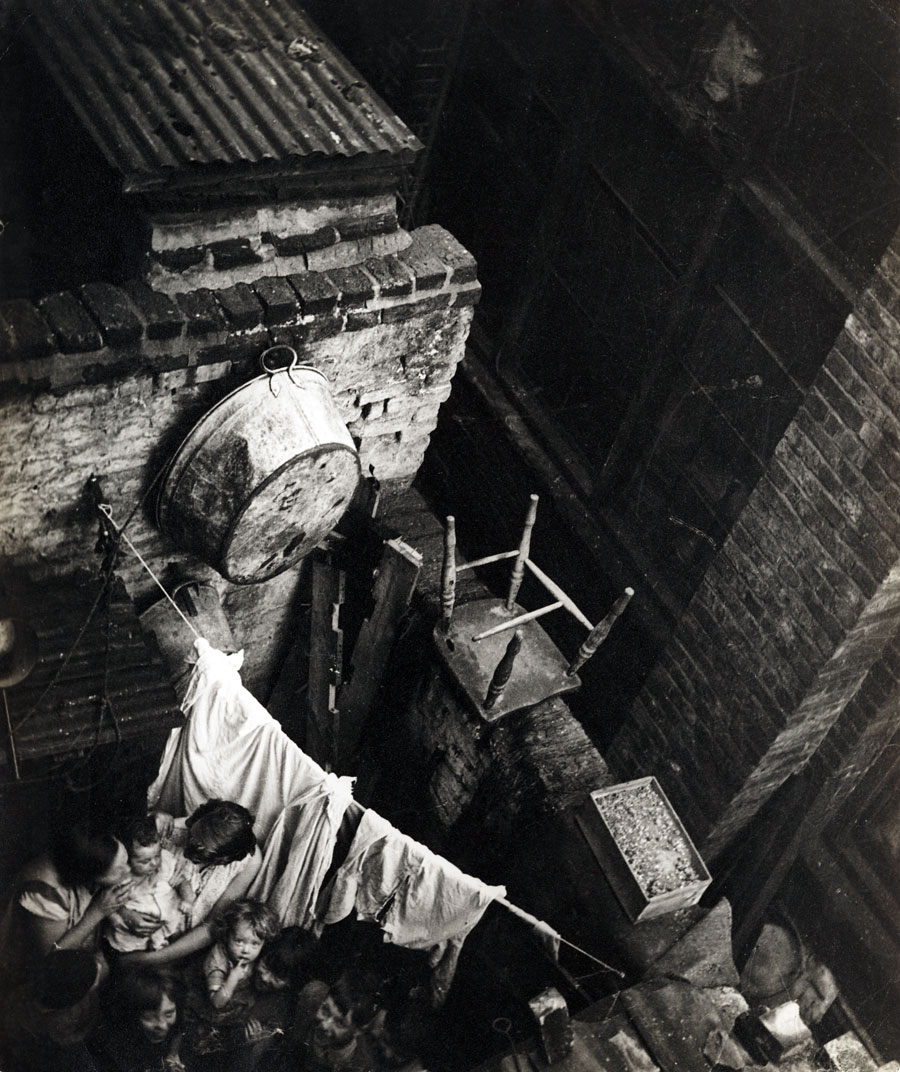
Edith Tudor Hart (Austrian-British, 1908-1973) 'Gee Street, Finsbury' 1936


Edith Tudor Hart (Austrian-British, 1908-1973)
Gee Street, Finsbury
1936
Courtesy of the National Media Museum/SSPL
© Wolfgang Suschitzky


This photograph was published alongside Poodle Parlour, London (PGP 279.33B) in the satirical magazine Lilliput in 1939, offering a comparison between the living conditions of the urban poor and the care lavished on pets by their wealthy owners. The juxtaposition made a simple political point and encouraged the viewer to think about the unequal organisation of society. This was a rhetorical technique common in left-wing illustrated journals on the Continent. The Austrian magazine, Der Kuckuck, had published a similar story in 1931 comparing the living conditions of the Berlin poor with the more salubrious accommodation of the city’s dog home.

Text from the National Galleries of Scotland website


Henri Cartier-Bresson (French, 1908-2004) 'Dessau, Germany' 1945


Henri Cartier-Bresson (French, 1908-2004)
Dessau, Germany
1945
Gelatin silver print
Courtesy of the National Media Museum/SSPL
© Henri Cartier-Bresson, Magnum, HCB Fondation


Cartier-Bresson had been a prisoner of war in Germany for nearly three years. He tried to escape two times, and then on the third time was successful. And partly because of that experience he was commissioned by the US Office of War Information to make a film about the return of displaced persons and prisoners of war.

And this incident appears in the film. The cameraman is filming this scene, and Cartier-Bresson, is right next to him making his own pictures. This is at a displaced person’s camp. And the woman in the black dress had been denounced to the Gestapo by the woman she’s about to hit. And here they’re both telling their stories to the man on the right who’s obviously the man in authority.

And what’s typical in this picture of Cartier-Bresson’s best work after the war, is that it’s all boiled down to these three protagonists. The anger of the woman who had been betrayed totally saturates her body, just the way the shame and the guilt of the woman who had done the betraying occupies her body, right down to where she’s got her thumb inside her fist.

Peter Galassi on the Museum of Modern Art website


Richard Sadler (British, 1927-2020) Weegee in Coventry, "Weegee the Famous" 1963


Richard Sadler (British, 1927-2020)
Weegee in Coventry, “Weegee the Famous”
1963
Gelatin silver print
Courtesy of the National Media Museum/SSPL


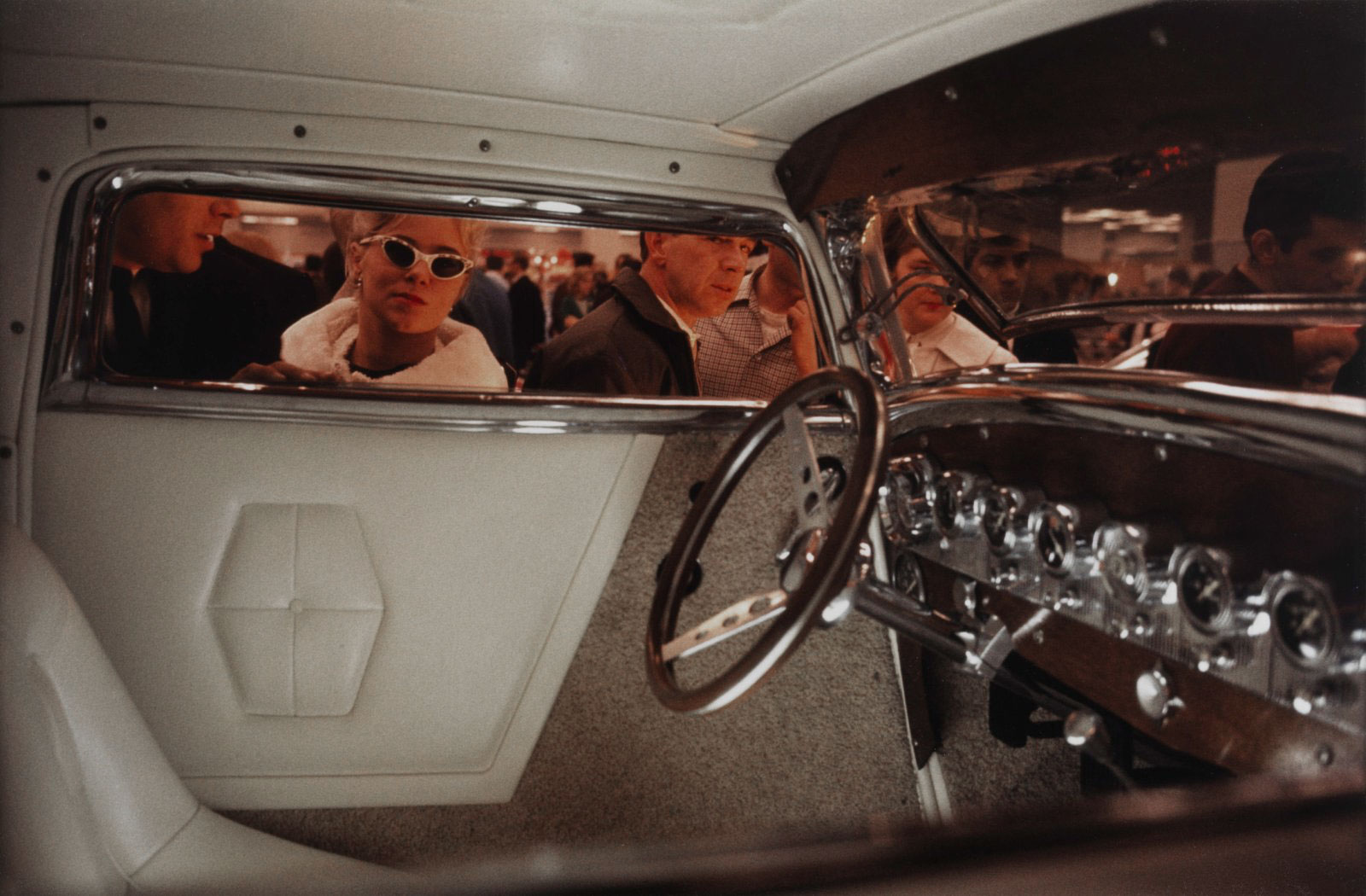
Tony Ray-Jones (English, 1941-1972) 'Auto Show, Daytona' 1965


Tony Ray-Jones (English, 1941-1972)
Auto Show, Daytona
1965
Gelatin silver print
Courtesy of the National Media Museum/SSPL


Unknown photographer. 'Portrait of Bill Brandt' c. 1979


Unknown photographer
Portrait of Bill Brandt
c. 1979
Gelatin silver print
Courtesy of the National Media Museum/SSPL


National Media Museum
Bradford,
West Yorkshire,
BD1 1NQ

Opening hours:
Wednesday – Sunday 10.00 – 17.00

National Media Museum website

LIKE ART BLACK ON FACEBOOK

Back to top

Exhibition: ‘East Side Stories. German Photographs 1950s-1980s’ at Kicken Berlin

Exhibition dates: 16th January – 17th April 2010


Sibille Bergemann (German, b. 1941) 'Untitled (Kirsten, Hoppenrade)' 1975 from the exhibition 'East Side Stories. German Photographs 1950s-1980s' at Kicken Berlin, January - April, 2010


Sibille Bergemann (German, b. 1941)
Untitled (Kirsten, Hoppenrade)
1975
Gelatin silver print


Many thankx to Kicken Berlin for allowing me to publish the photographs in this post. Please click on the photographs for a larger version of the image.

Marcus


Ute Mahler (German, b. 1949) 'Untitled' from the series 'Living Together' 1973 from the exhibition 'East Side Stories. German Photographs 1950s-1980s' at Kicken Berlin, January - April, 2010


Ute Mahler (German, b. 1949)
Untitled from the series Living Together
1973
Gelatin silver print, printed c. 1973
30.5 x 45.5cm
© Ute Mahler, Ostkreuz/Courtesy Kicken Berlin


Mahler was born in 1949 in Bad Berka, Thuringia. She studied at the School for Graphic and Book Arts in Leipzig and has been a professor at the University of Applied Sciences in Hamburg since 2000. She lives in Hamburg and Lehnitz, near Berlin


Sibille Bergemann (German, b. 1941) 'Gummlin, Usedom' 1984, printed c. 1988 from the exhibition 'East Side Stories. German Photographs 1950s-1980s' at Kicken Berlin, January - April, 2010


Sibille Bergemann (German, b. 1941)
Gummlin, Usedom
1984, printed c. 1988
From the series The Monument, 1975-1986
Gelatin silver print
30 x 45cm
© Sibylle Bergemann, Ostkreuz/Courtesy Kicken Berlin


Kicken Berlin will devote its first exhibition of 2010 to a selection of East German photographers. Represented in East Side Stories: German Photographs 1950s-1980s are Ursula Arnold, Sibylle Bergemann, Arno Fischer, Ute und Werner Mahler, Roger Melis, Helga Paris, Evelyn Richter as well as Gundula Schulze Eldowy – committed art photographers who achieved their own modes of expression outside the official aesthetic. F.C. Gundlach’s fashion photography from 1950s and 1960s West Berlin will be on view in the exhibition space Kicken II.

Up until the early 1970s, the cultural officers of the German Democratic Republic viewed photography not as an art medium but rather as a means of providing affirmative and idealised images of life. Personal viewpoints were not welcome. Photography that forcefully “grew out of the self-assigned task of documenting what (one) felt was worth capturing,” as Evelyn Richter put it, had to remain secret.

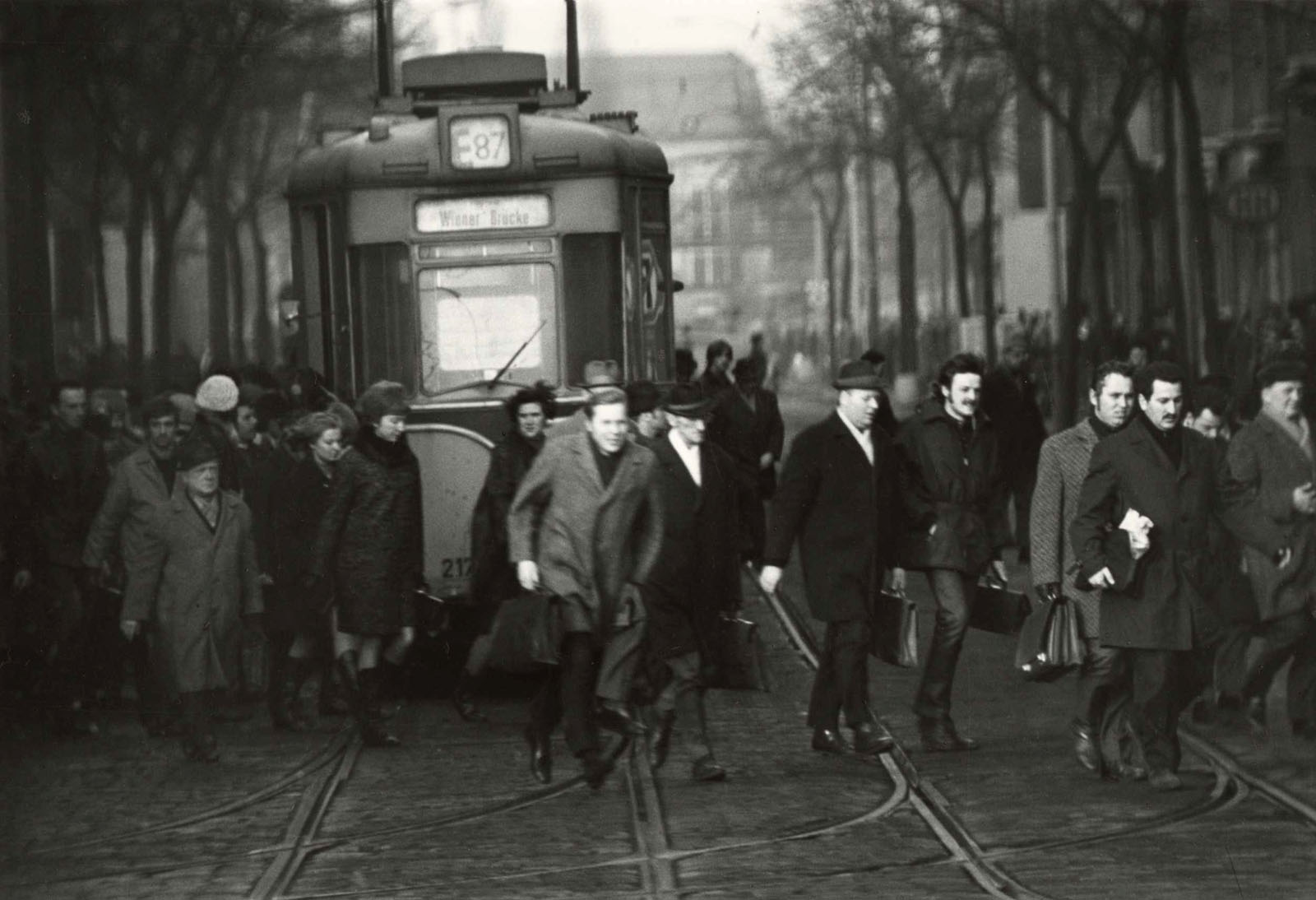
Arno Fischer (1927-2011) and Evelyn Richter (1930-2021) belong to those who pointed the way toward a subjective-narrative, human-centered photography in the 1950s. Key figures in the East German art photography scene, opinion shapers, and teachers at Leipzig’s Hochschule für Grafik und Buchkunst / Academy of Visual Arts, they influenced a form of art photography oriented toward the social-documentary “human interest” tradition. Their stance combined social participation with a commitment to critical observation from a personal point of view – as in Fischer’s series Situation Berlin (1953-1960), with its symbolically dense snapshots of the divided city.

Important influences on the development of independent photography in East Germany included the work of the Magnum agency (from 1947 on), Edward Steichen’s exhibition The Family of Man (1955) as well as Robert Frank’s radically subjective street photography.

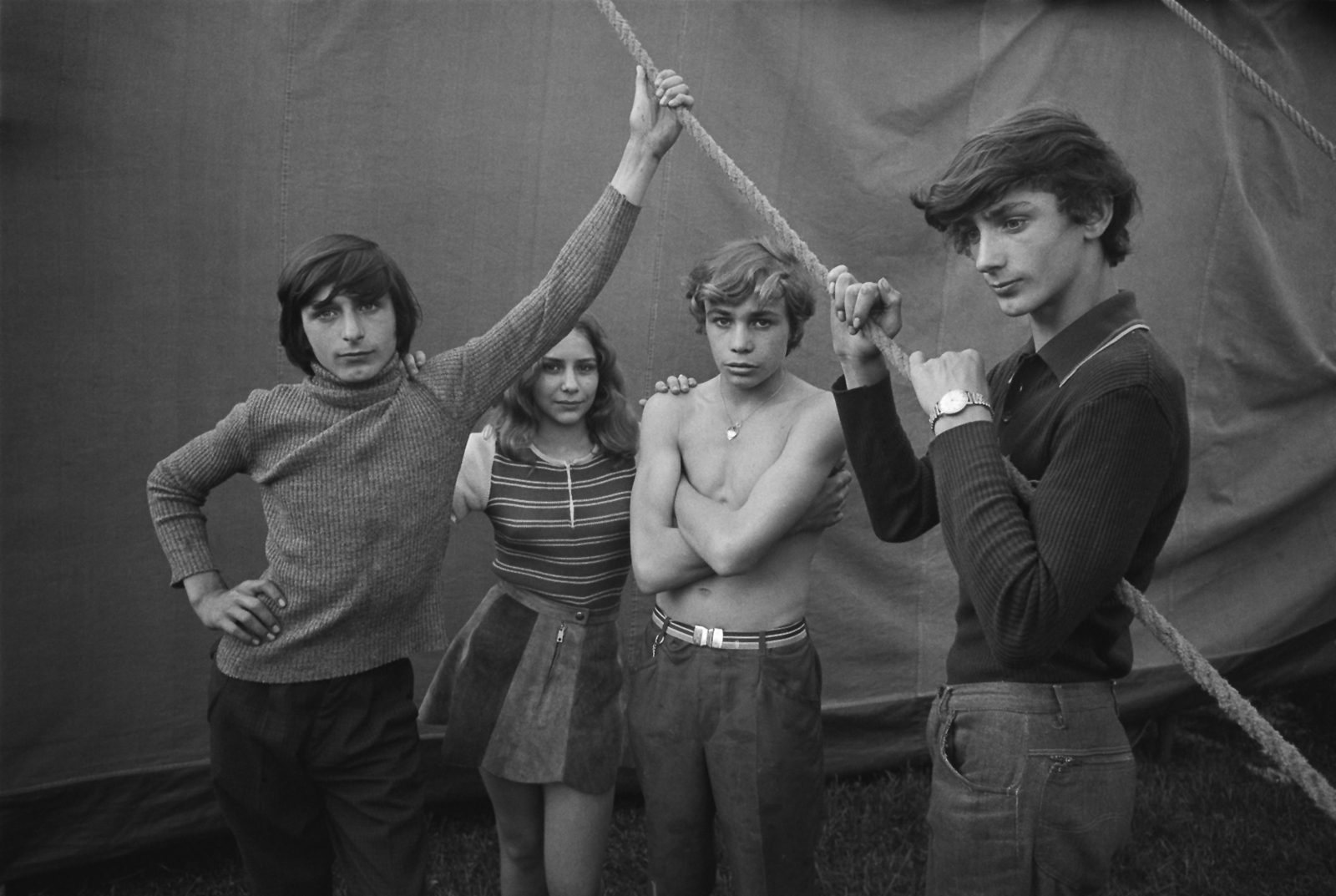
Pictures of people and portraits are at the exhibition’s core. Ursula Arnold (1929-2012) observed her sometimes melancholy, sometimes odd contemporaries on the streets of Berlin and Leipzig, and on Berlin’s S-Bahn. She gave up working as a photojournalist early in order to avoid having to make concessions to the dictates for enthusiasm imposed from above. Helga Paris (b. 1938) took portraits of rebellious Berliner Jugendliche / Berlin Youths (1981-1982), approaching her subjects with seriousness and thoughtfulness, and concentrating fully on them as individuals. She, too, had the self-professed goal of depicting people authentically in their everyday contexts.

Sibylle Bergemann (1941-2010) made a name for herself as a sensitive portraitist, fashion photographer, and observer of the urban landscape. Das Denkmal / The Monument (1977-1986), her long-term study of the assembly of the Marx-Engels sculpture, appears, with its hovering, headless sculptural fragments to emblematically anticipate the collapse of communism.

In the Berlin of the late 1970s and early 1980s Gundula Schulze Eldowy (b. 1954) found the setting for scenes that are as drastic as they are quotidian in the series Berlin. In einer Hundenacht / Berlin: in a Dog’s Night (1977-1989) and Aktportraits / Nude Portraits (1983-1986), as no other East German photographer before her, she shows with unsparing frankness the loneliness and vulnerability of her subjects but also their dignity and self confidence. Her early photographs reveal an aesthetic and thematic debt to the work of Diane Arbus.

Independent of each other, Ute and Werner Mahler turned their unpretentious gazes on the East German way of life. Ute Mahler (b. 1949) thematised family arrangements and group dynamics in her series Zusammen Leben / Living Together (1972-1986). Werner Mahler (b. 1950) documented a year in the Thuringian village Berka (1977) – and repeated his studies in the late 1990s after reunification. An additional focus of both photographers was fashion photography (published for the most part in the magazine for fashion and culture Sibylle) that offered opportunities for “productively expanding the genre” (Bernd Lindner).

In the 1950s and 1960s in Berlin and Hamburg, F.C. Gundlach achieved a modern way to stage fashion in pictures. A small selection from the great fashion photographer’s oeuvre, F.C. Gundlach, will be on view in the exhibition space Kicken II and coincides with the comprehensive retrospective at the Martin Gropius Bau.

Press release from the Kicken Berlin website [Online] Cited 04/04/2010 no longer available online


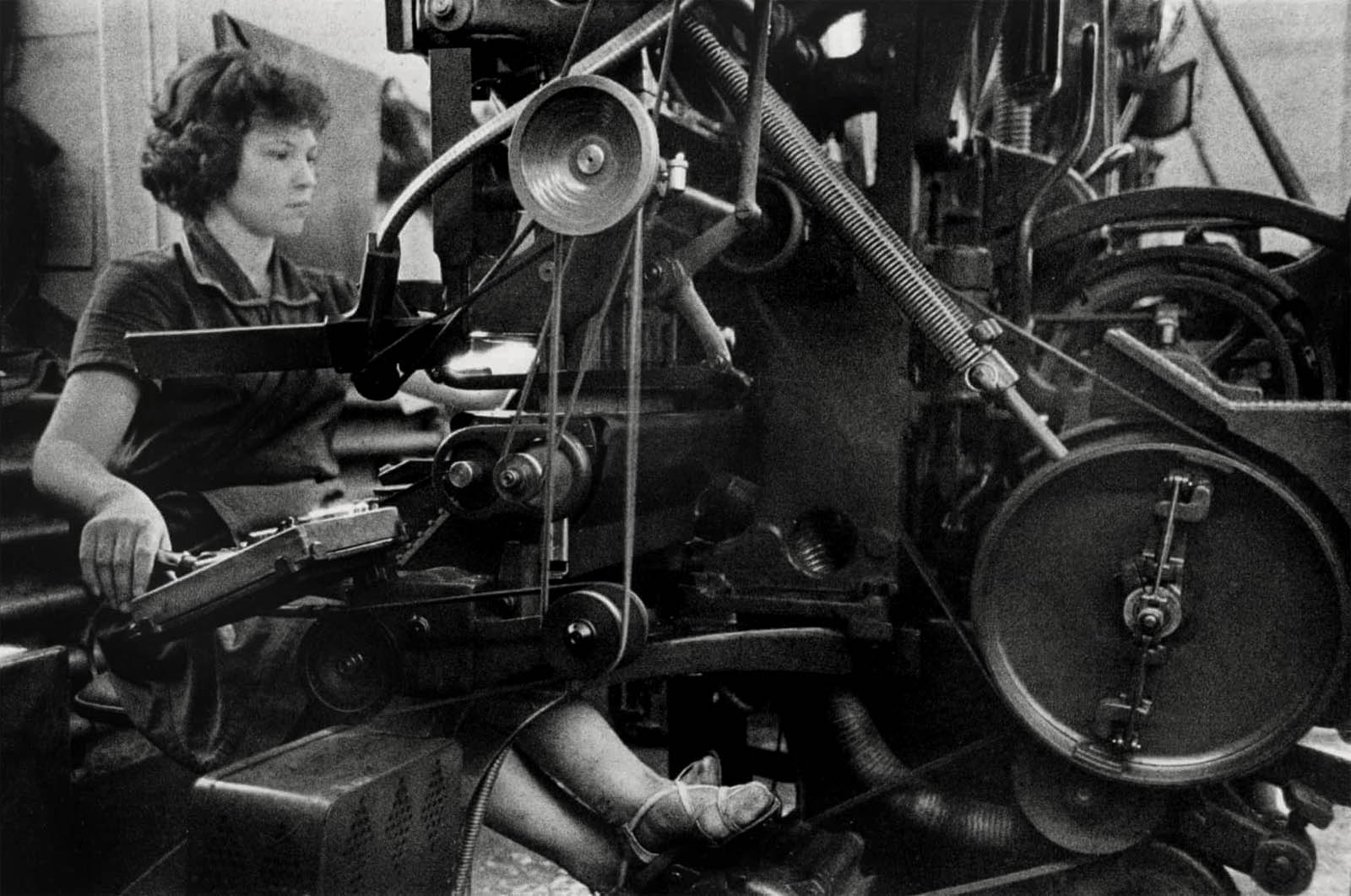
Evelyn Richter (German, 1930-2021) 'ND (Neues Deutschland) print shop' c. 1960-1962


Evelyn Richter (German, 1930-2021)
ND (Neues Deutschland) print shop
c. 1960-1962
Gelatin silver print
Evelyn Richter Archiv der Ostdeutschen


Ursula Arnold (German, 1929-2012) 'Berlin, S-Bahn' 1965


Ursula Arnold (German, 1929-2012)
Berlin, S-Bahn
1965
Gelatin silver print


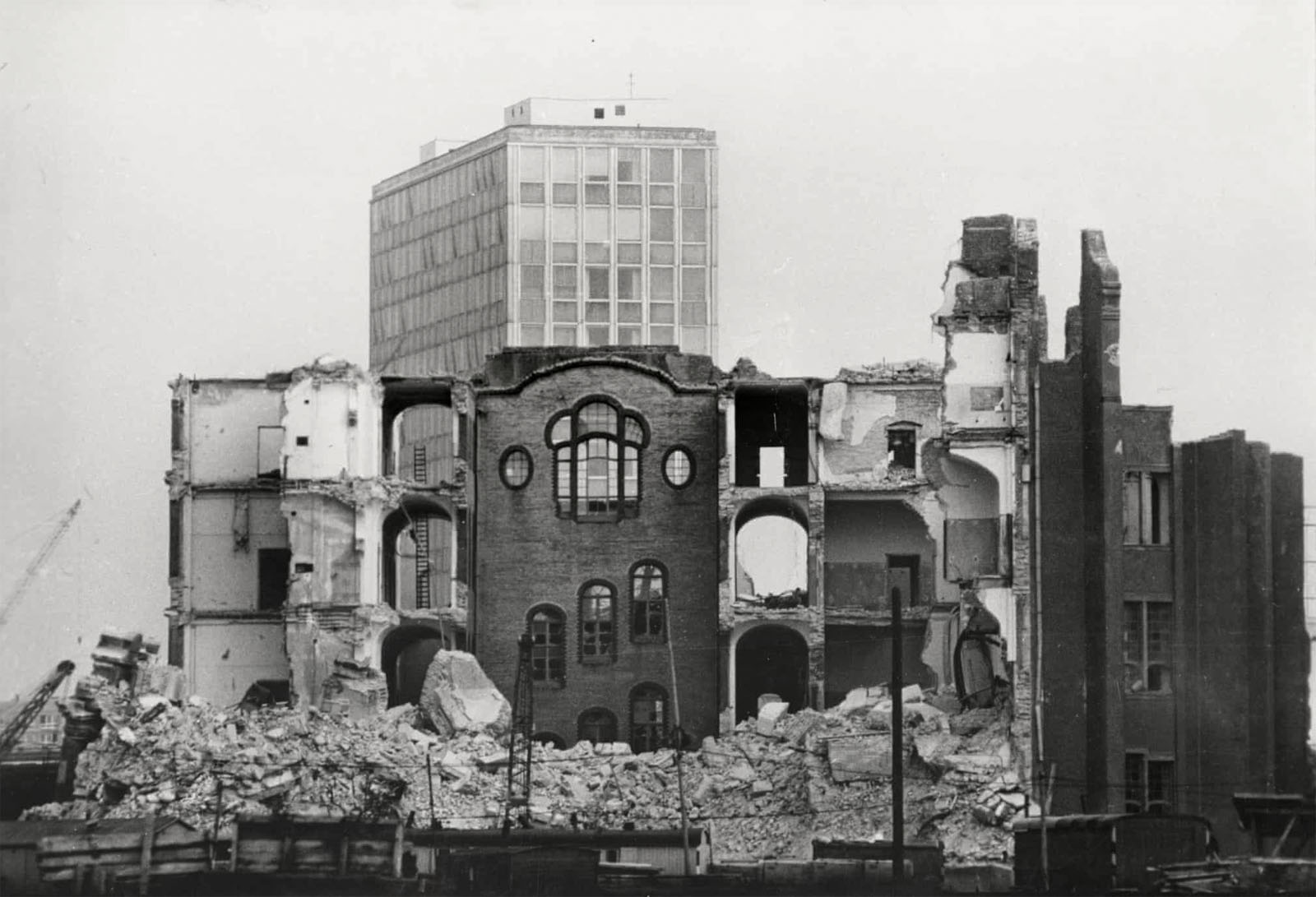
Sibylle Bergemann (German, 1941-2010) 'Alexanderplatz, Berlin' 1967


Sibylle Bergemann (German, 1941-2010)
Alexanderplatz, Berlin
1967
Gelatin silver print


Sibylle Bergemann (German, 1941-2010) 'Schöneweide, Berlin' 1972


Sibylle Bergemann (German, 1941-2010)
Schöneweide, Berlin
1972
Gelatin silver print, printed c. 1972
22.8 x 34cm


Ute Mahler (German, b. 1949) 'Untitled' from the series 'Living Together' 1973


Ute Mahler (German, b. 1949)
Untitled from the series Living Together
1973
Gelatin silver print
© Ute Mahler, Ostkreuz/Courtesy Kicken Berlin


Mahler started her project Zusammenleben (‘living together’) to move away from set photography. She said: ‘I carried out this work freely, at liberty; it was very personal in nature and not commissioned’.

Zusammenleben was started more than 45 years ago. Through it, Mahler intended to depict the unsaid in a subtle way. Zusammenleben subtly depicted the reality of everyday life in the communist state of East Germany. 


Evelyn Richter. 'Pförtnerin im Rathaus, Leipzig' (Receptionist in the Town Hall, Leipzig), c. 1975


Evelyn Richter (German, 1930-2021)
Pförtnerin im Rathaus, Leipzig (Receptionist in the Town Hall, Leipzig)
c. 1975
Gelatin silver print


Sibylle Bergemann (German, 1941-2010) 'Berlin, Palast der Republik' 1978


Sibylle Bergemann (German, 1941-2010)
Berlin, Palast der Republik
1978
Gelatin silver print


Gundula Schulze Eldowy (German, b. 1954) 'Berlin' 1989


Gundula Schulze Eldowy (German, b. 1954)
Berlin
1989
Gelatin silver print


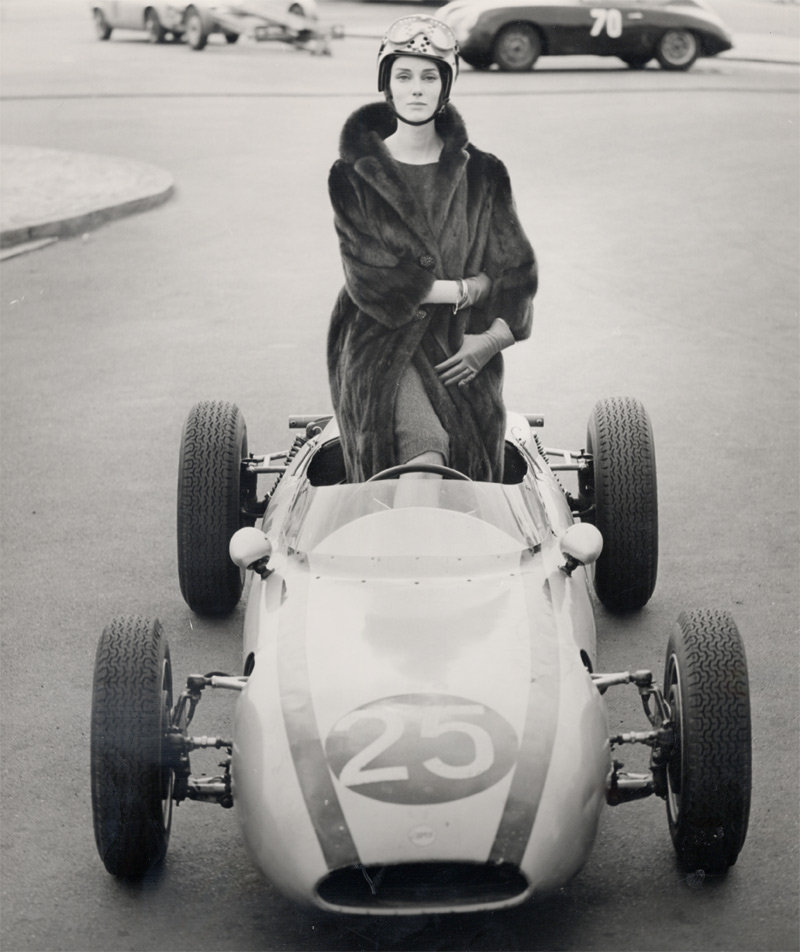
F.C. Gundlach (German, b. 1926) 'Judy Dent mit Saga-Nerz auf der Avus' 1962


F.C. Gundlach (German, 1926-2021)
Judy Dent mit Saga-Nerz auf der Avus
1962
Vintage gelatin silver print
39.8 x 30cm
© F.C. Gundlach/Courtesy Kicken Berlin


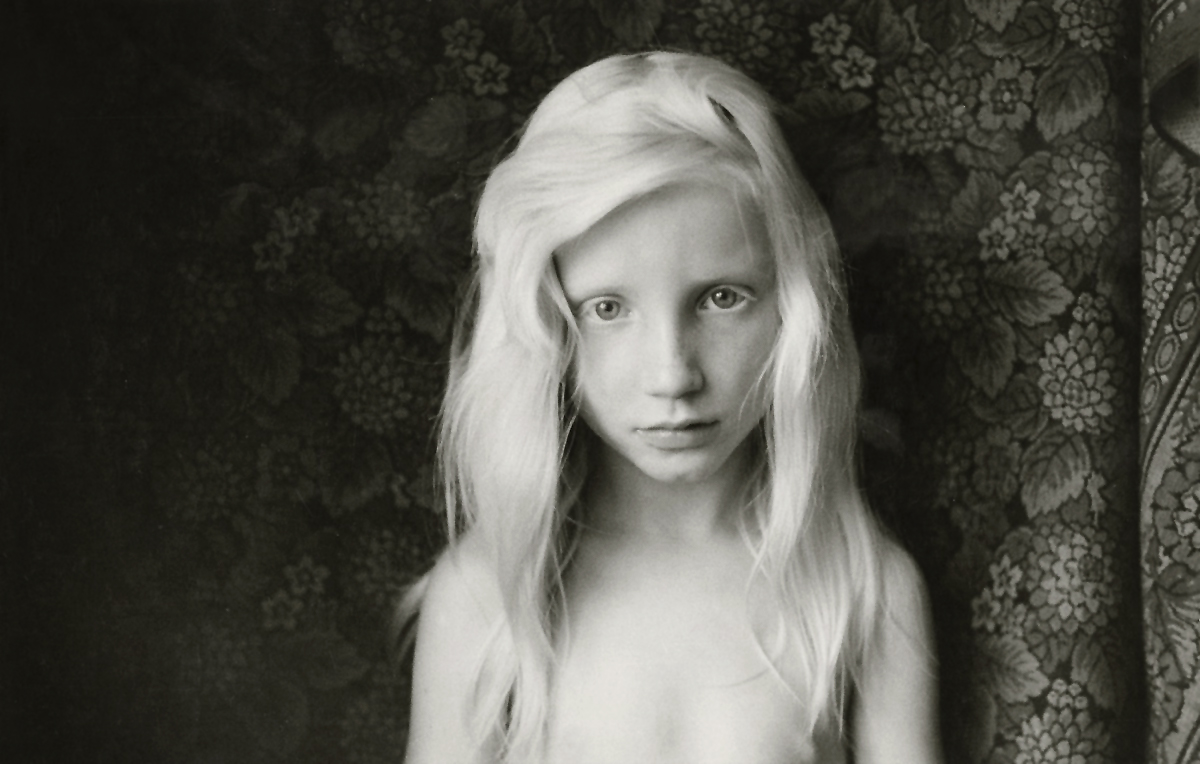
Helga Paris (German, b. 1938) 'Pauer' from the series 'Berlin Teenagers' 1982


Helga Paris (German, b. 1938)
Pauer from the series Berlin Teenagers
1982
Gelatin silver print, printed c. 1982
31.7 x 21.1cm
© Helga Paris/Courtesy Kicken Berlin


Kicken Berlin
Kaiserdamm 118
14057 Berlin

Tuesday – Friday 2 – 6pm & by appointment

Kicken Berlin website

LIKE ART BLART ON FACEBOOK

Back to top

Exhibition: ‘Intersections Intersected: The Photography of David Goldblatt’ at the New Museum, New York

Exhibition dates: 15th July – 11th October, 2009


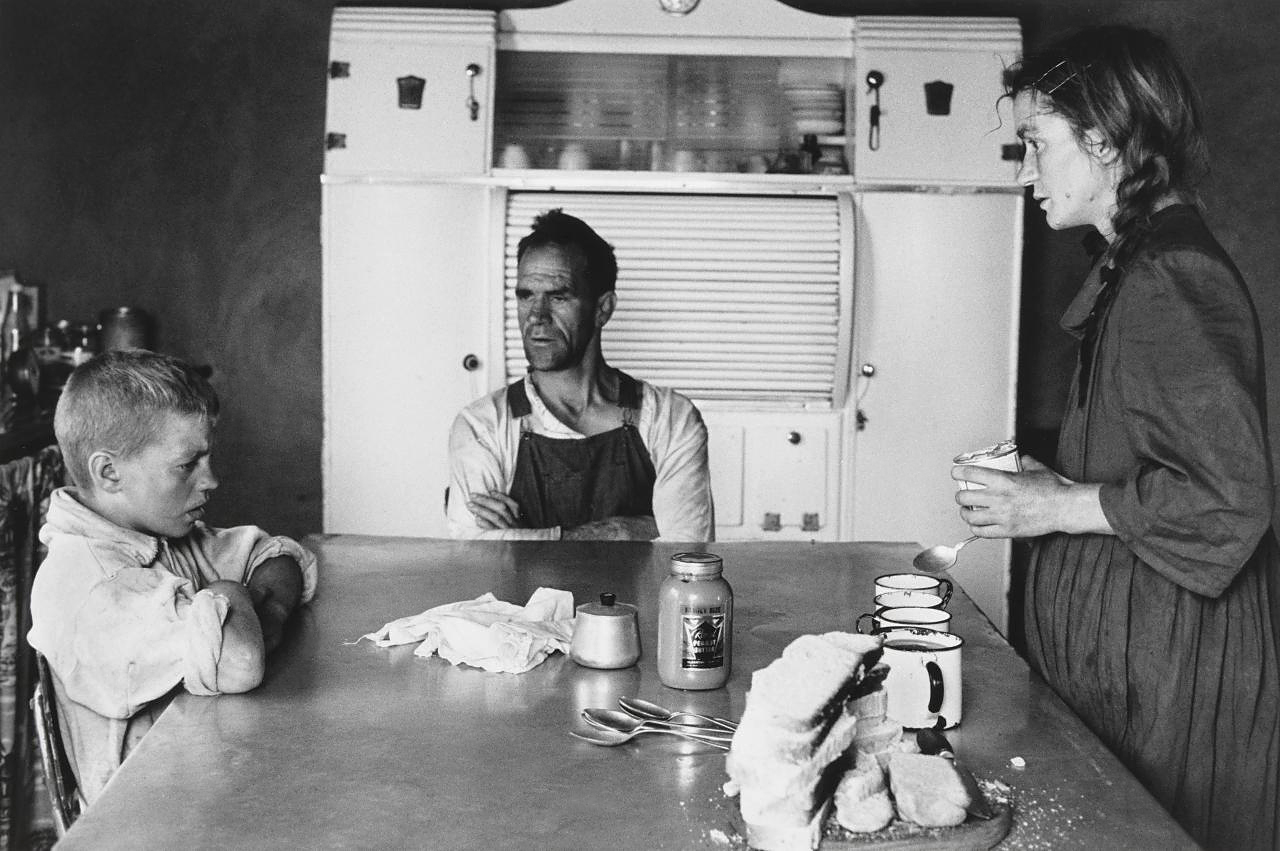
David Goldblatt (South African, 1930-2018) 'Family at Lunch, Wheatlands Plots, Randfontein, September 1962' 1962 from the exhibition 'Intersections Intersected: The Photography of David Goldblatt' at the New Museum, New York, July - Oct, 2009


David Goldblatt (South African, 1930-2018)
Family at Lunch, Wheatlands Plots, Randfontein, September 1962
1962
Gelatin silver print


One of the greats.

Marcus


Many thankx to the New Museum for allowing me to publish the photographs in the posting. Please click on the photographs for a larger version of the image.


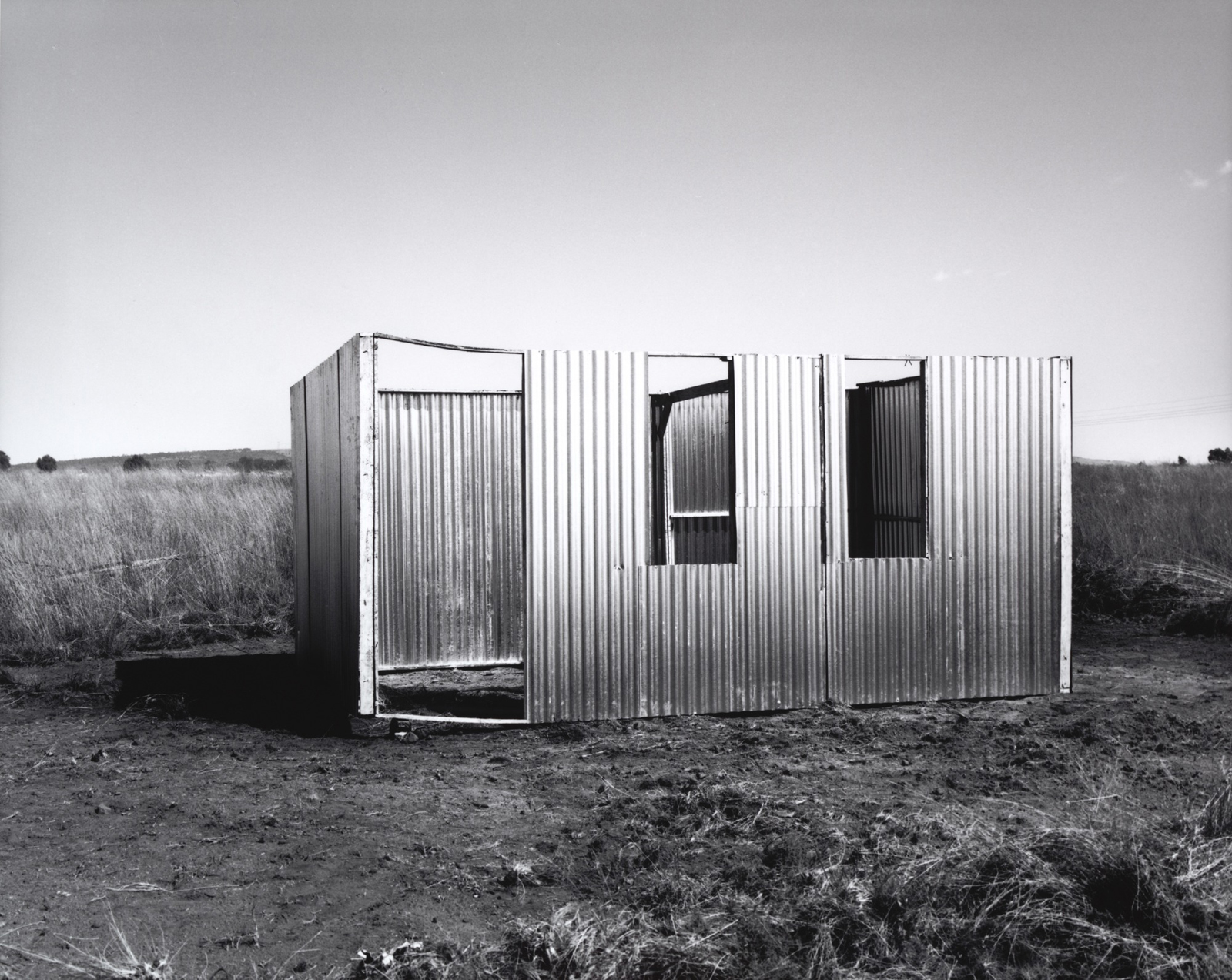
David Goldblatt (South African, 1930-2018) 'A new shack under construction, Lenasia Extension 9, Gauteng' 1990 from the exhibition 'Intersections Intersected: The Photography of David Goldblatt' at the New Museum, New York, July - Oct, 2009


David Goldblatt (South African, 1930-2018)
A new shack under construction, Lenasia Extension 9, Gauteng
1990
Gelatin silver print


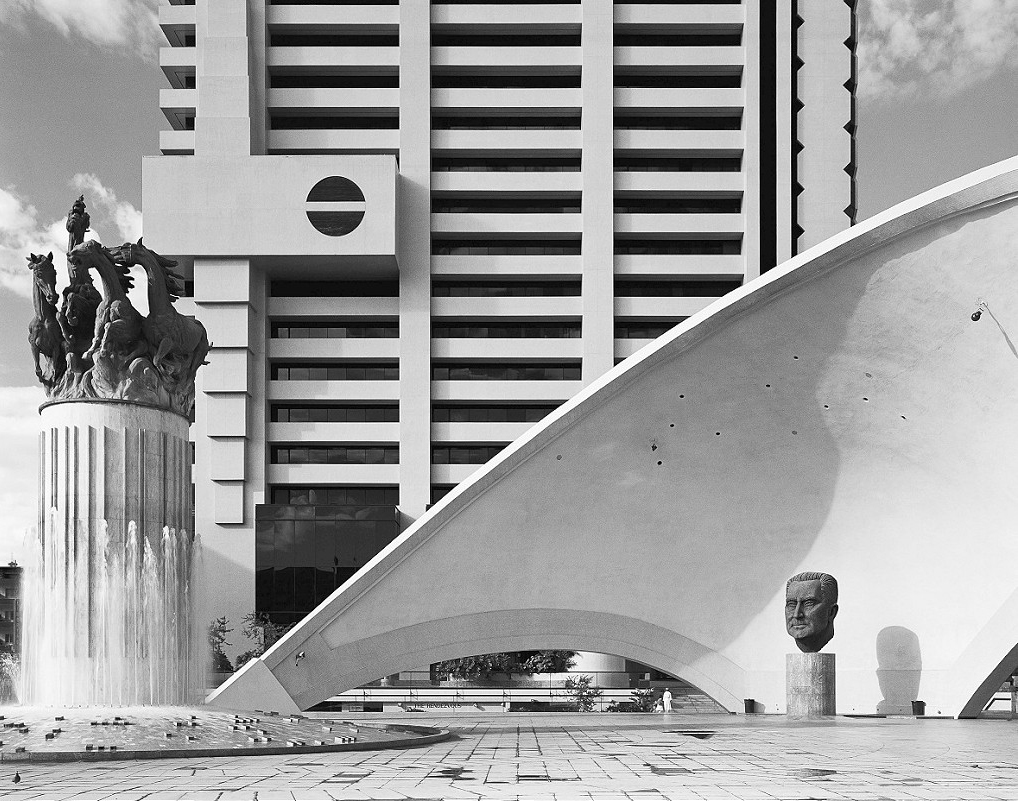
David Goldblatt (South African, 1930-2018) 'Monuments celebrating the Republic of South Africa (left and JG Strijdom, former prime minister (right), with the headquarters of Volkskas Bank, Pretoria. 25 April 1982' 1982


David Goldblatt (South African, 1930-2018)
Monuments celebrating the Republic of South Africa (left and JG Strijdom, former prime minister (right), with the headquarters of Volkskas Bank, Pretoria. 25 April 1982
1982
Black and while photograph on matte paper
Courtesy the artist and Goodman Gallery, Johannesburg


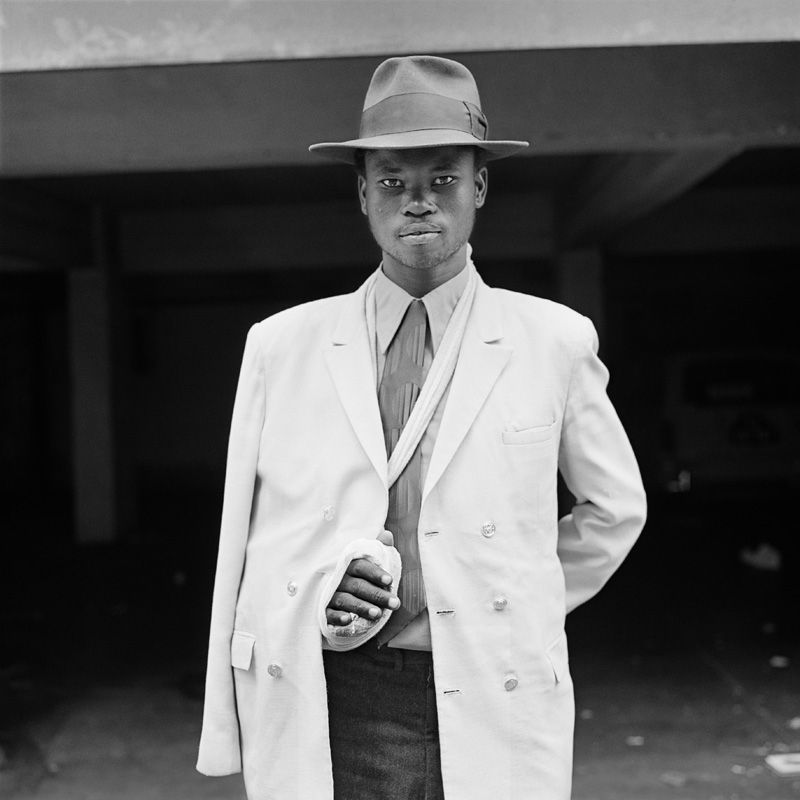
David Goldblatt (South African, 1930-2018) 'Man with an injured arm. Hillbrow, Johannesburg, June, 1972' 1972


David Goldblatt (South African, 1930-2018)
Man with an injured arm. Hillbrow, Johannesburg, June, 1972
1972
Black and while photograph on matte paper
Courtesy the artist and Goodman Gallery, Johannesburg


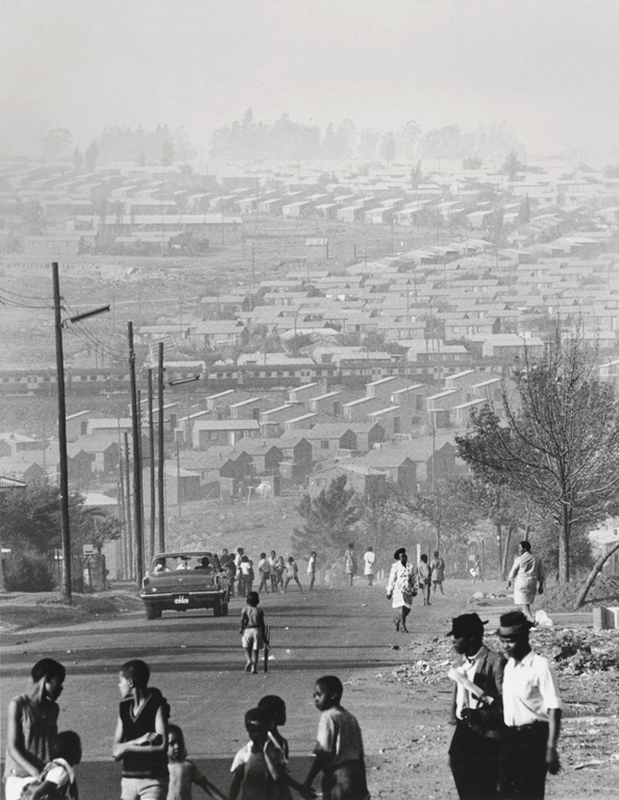
David Goldblatt (South African, 1930-2018) 'Mofolo South, Soweto, September 1972' 1972


David Goldblatt (South African, 1930-2018)
Mofolo South, Soweto, September 1972
1972
Gelatin silver print


Over the last fifty years, David Goldblatt has documented the complexities and contradictions of South African society. His photographs capture the social and moral value systems that governed the tumultuous history of his country’s segregationist policies and continue to influence its changing political landscape. Goldblatt began photographing professionally in the early 1960s, focusing on the effects of the National Party’s legislation of apartheid. The son of Jewish Lithuanian parents who fled to South Africa to escape religious persecution, Goldblatt was forced into a peculiar situation, being at once a white man in a racially segregated society and a member of a religious minority with a sense of otherness. He used the camera to capture the true face of apartheid as his way of coping with horrifying realities and making his voice heard. Goldblatt did not try to capture iconic images, nor did he use the camera as a tool to entice revolution through propaganda. Instead, he reveals a much more complex portrait, including the intricacies and banalities of daily life in all aspects of society. Whether showing the plight of black communities, the culture of the Afrikaner nationalists, the comfort of white suburbanites, or the architectural landscape, Goldblatt’s photographs are an intimate portrayal of a culture plagued by injustice.

In Goldblatt’s images we can see a universal sense of people’s aspirations, making do with their abnormal situation in as normal a way as possible. People go about their daily lives, trying to preserve a sense of decency amid terrible hardship. Goldblatt points out a connection between people (including himself) and the environment, and how the environment reflects the ideologies that built it. His photographs convey a sense of vulnerability as well as dignity. Goldblatt is very much a part of the culture that he is analysing. Unlike the tradition of many documentary photographers who capture the “decisive moment,” Goldblatt’s interest lies in the routine existence of a particular time in history.

Goldblatt continues to explore the consciousness of South African society today. He looks at the condition of race relations after the end of apartheid while also tackling other contemporary issues, such as the influence of the AIDS epidemic and the excesses of consumption. For his “Intersections Intersected” series, Goldblatt looks at the relationship between the past and present by pairing his older black-and-white images with his more recent colour work. Here we may notice photography’s unique association with time: how things were, how things are, and also that the effects of apartheid run deep. It will take much more time to heal the wounds of a society that was divided for so long. Yet, there is a possibility for hope, recognition of how much has changed politically in the time between the two images, and a potential optimism for the future. Goldblatt’s work is a dynamic and multilayered view of life in South Africa, and he continues to reveal that society’s progress and incongruities.”

Joseph Gergel, Curatorial Fellow

Text from the New Museum website [Online] Cited 15/08/2009. No longer available online


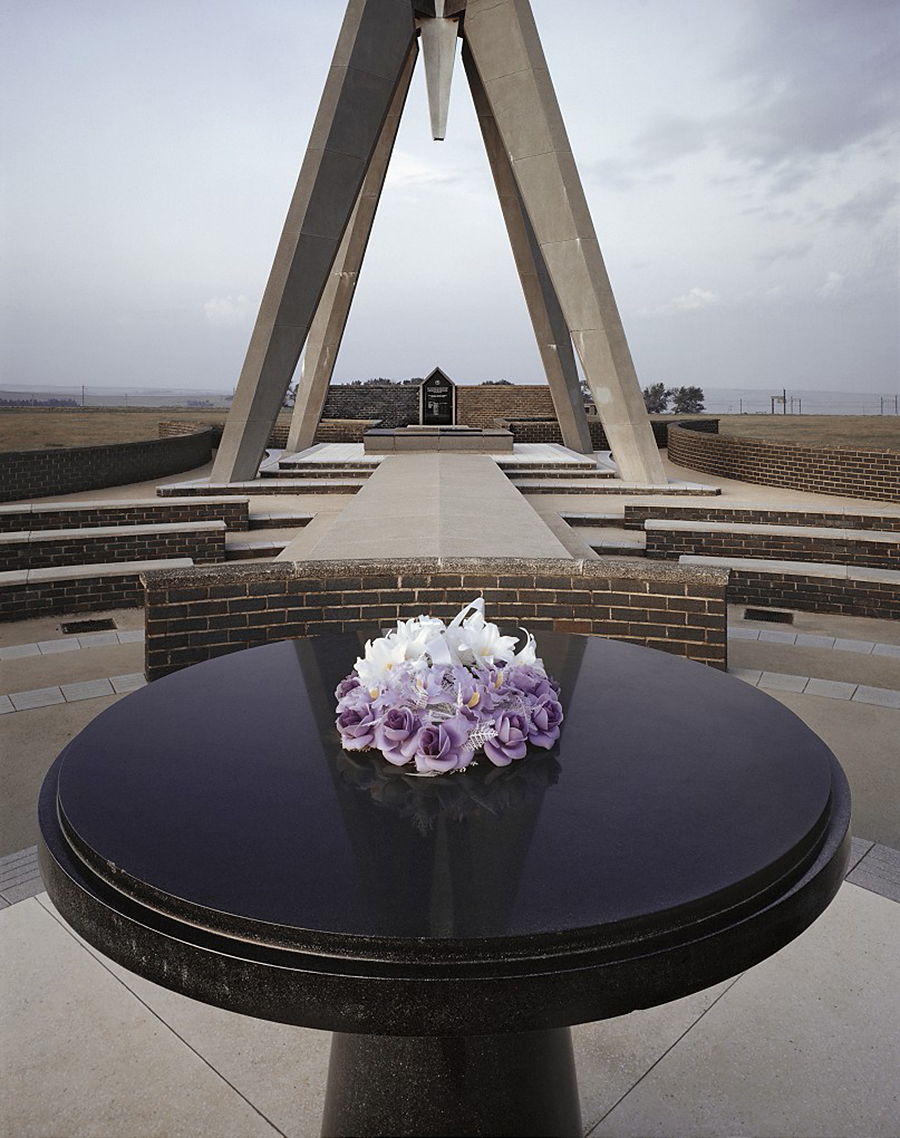
David Goldblatt (South African, 1930-2018) 'Wreath at the Berg-en-Dal Monument' 1983


David Goldblatt (South African, 1930-2018)
Wreath at the Berg-en-Dal Monument which commemorates the courage – and the sarcophagus which holds the bones – of 60 men of the South African Republic Police, who died here 27 August 1900 in a critical battle of the Anglo-Boer War. Dalmanutha, Mpumalanga. December 1983.
1983
Courtesy the artist and Goodman Gallery, Johannesburg


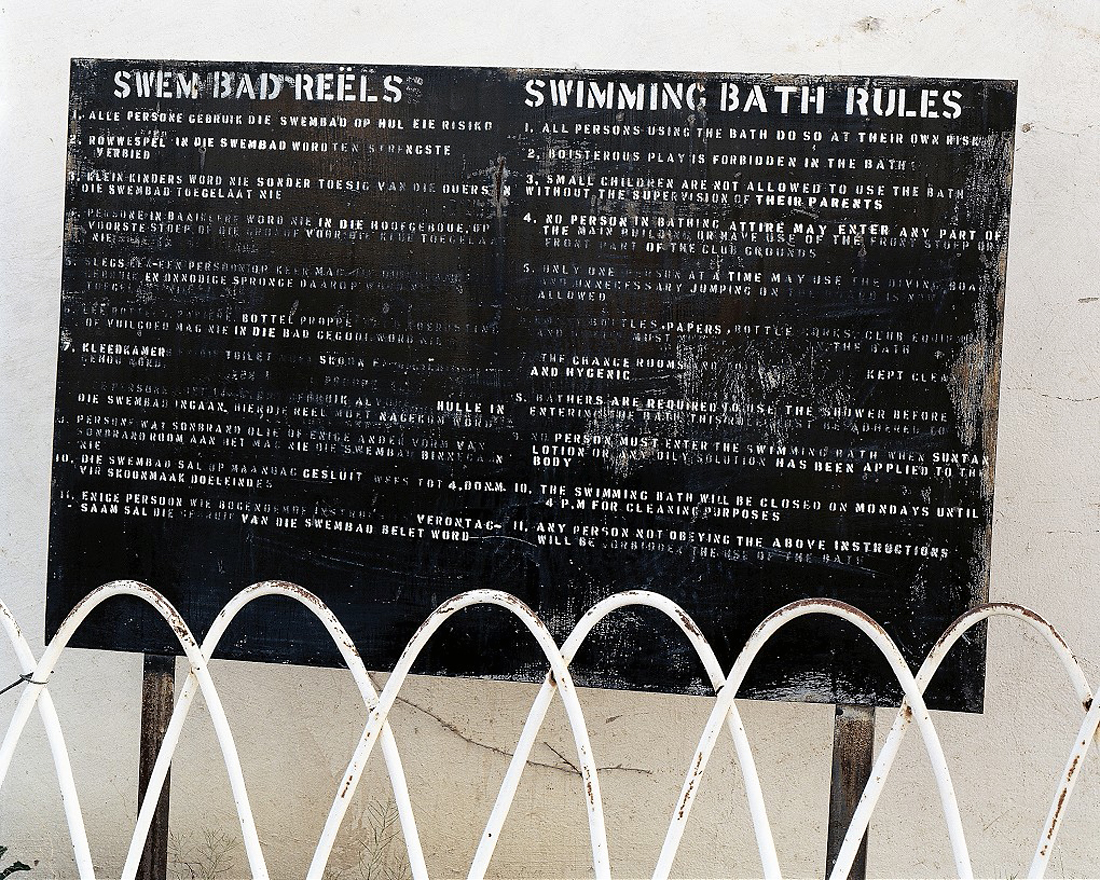
David Goldblatt (South African, 1930-2018) 'The swimming bath rules at the rec, Cape Blue Asbestos Mine, Koegas, Northern Cape' 2002


David Goldblatt (South African, 1930-2018)
The swimming bath rules at the rec, Cape Blue Asbestos Mine, Koegas, Northern Cape
2002


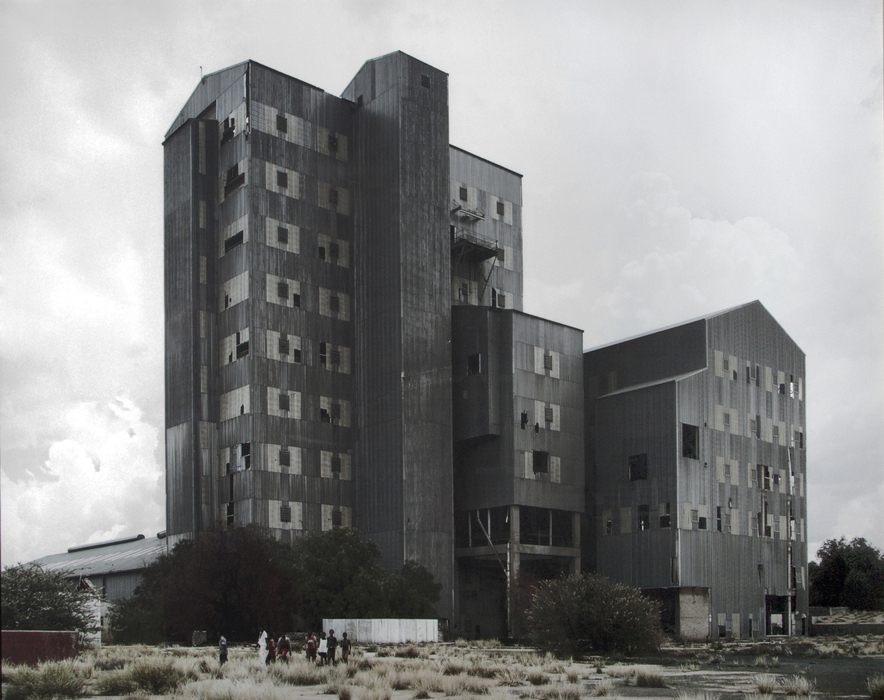
David Goldblatt (South African, 1930-2018) 'The mill, Pomfret Asbestos Mine, Pomfret, North-West Province, 20 December 2002' 2002


David Goldblatt (South African, 1930-2018)
The mill, Pomfret Asbestos Mine, Pomfret, North-West Province, 20 December 2002
2002


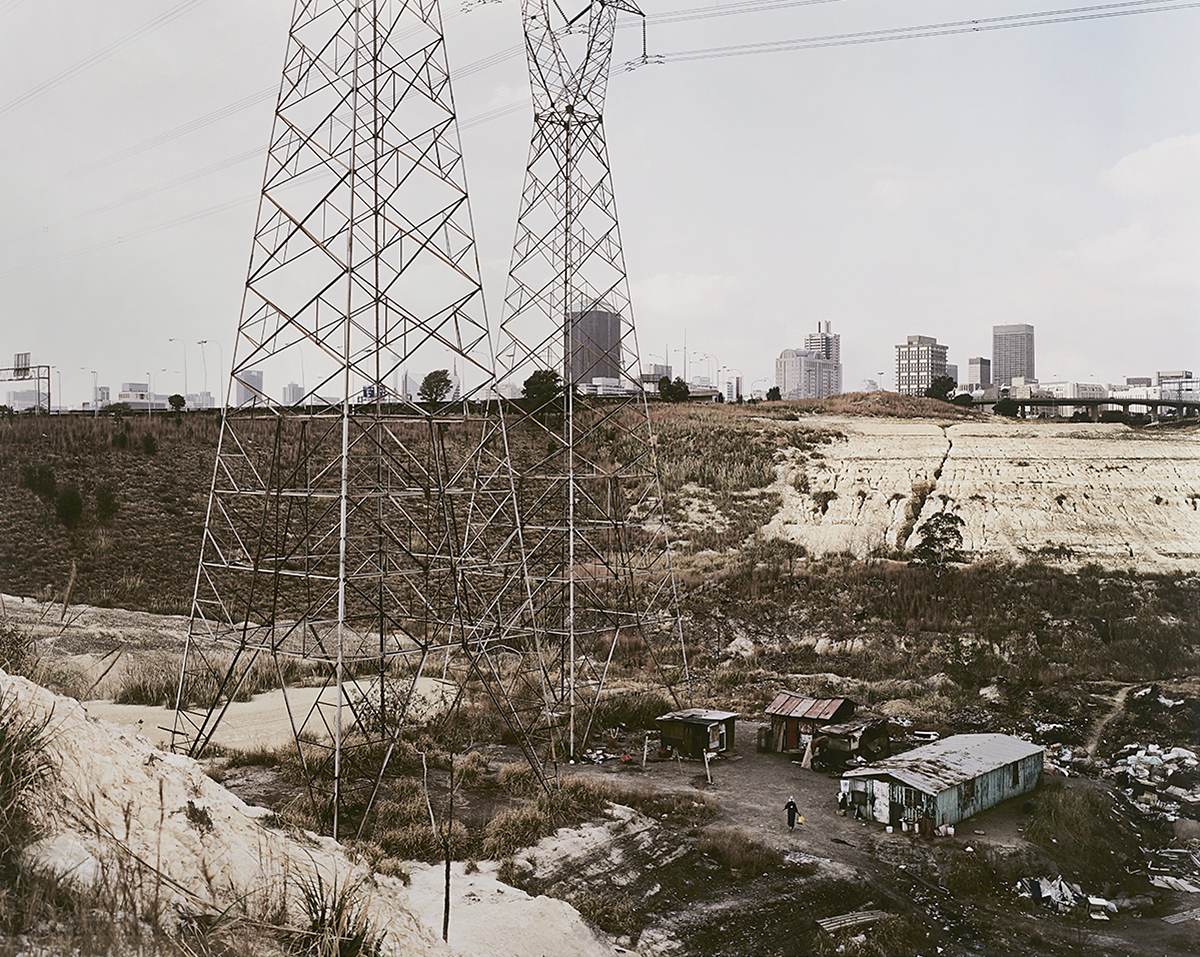
David Goldblatt (South African, 1930-2018) 'Johannesburg from the Southwest' 2003


David Goldblatt (South African, 1930-2018)
Johannesburg from the Southwest
2003


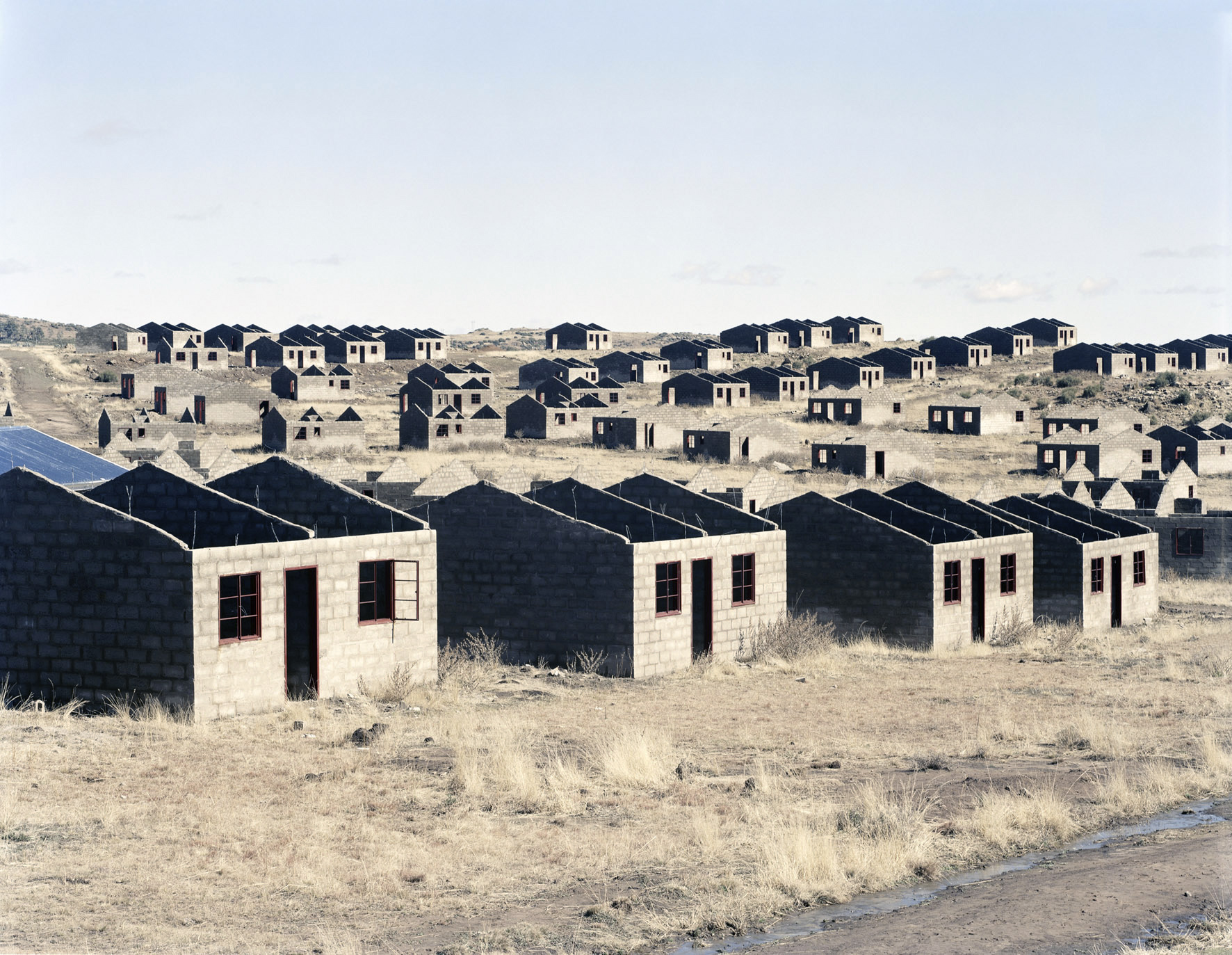
David Goldblatt (South African, 1930-2018) 'Incomplete houses, part of a stalled municipal development of 1000 houses. Lady Grey, Eastern Cape, 5 August 2006' 2006


David Goldblatt (South African, 1930-2018)
Incomplete houses, part of a stalled municipal development of 1000 houses. Lady Grey, Eastern Cape, 5 August 2006
2006


New Museum
235 Bowery
New York, NY 10002
212.219.1222

Opening hours:
Tuesday – Sunday 11am – 6pm

New Museum website

LIKE ART BLART ON FACEBOOK

Back to top

Exhibition: ‘Ricky Maynard: Portrait of a Distant Land’ at Museum of Contemporary Art (MCA), Sydney

Exhibition dates: 4th June – 23rd August, 2009


Many thankx to the MCA for allowing me to publish the photographs in the posting. Please click on the photographs for a larger version of the image.


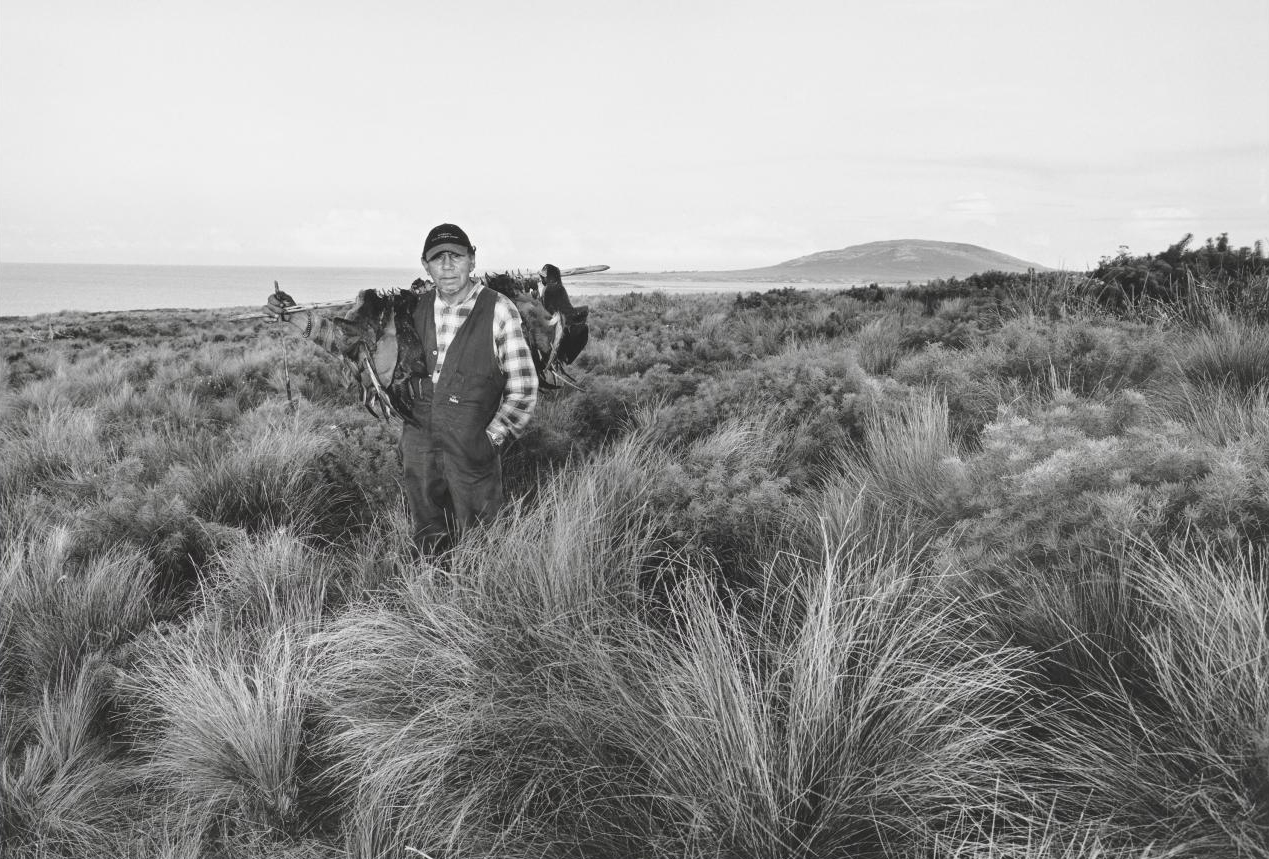
Ricky Maynard (Australian, b. 1953)
'Coming Home' 2005


Ricky Maynard (Australian, b. 1953)
Coming Home
2005
From the series Portrait of a Distant Land
Gelatin silver photograph, selenium toned
37.4 × 54.1cm
© Ricky Maynard


I can remember coming here as a boy in old wooden boats to be taught by my grandparents and my parents. I’ll be 57 this year and I have missed only one year when my daughter Leanne was born. Mutton birding is my life. To me it’s a gathering of our fellas where we sit and yarn, we remember and we honour all of those birders who have gone before us. Sometimes I just stand and look out across these beautiful islands remembering my people and I know I’m home. It makes me proud to be a strong Tasmanian black man. This is something that they can never take away from me.

Murray Mansell, Big Dog Island, Bass Strait, 2005


Ricky Maynard (Australian, b. 1953) 'The Healing Garden, Wybalenna, Flinders Island, Tasmania' 2005


Ricky Maynard (Australian, b. 1953)
The Healing Garden, Wybalenna, Flinders Island, Tasmania
2005
From the series Portrait of a Distant Land
Gelatin silver photograph, selenium toned
34.0 x 52.0 cm
© Ricky Maynard


This winter the Museum of Contemporary Art presents a major survey of photographic works by documentary photographer Ricky Maynard, encompassing more than two decades of the artist’s practice.

Portrait of a Distant Land features more than 60 evocative and captivating photographic works, drawn from six bodies of work, which document the lives and culture of Maynard’s people, the Ben Lomond and Cape Portland peoples of Tasmania.

The exhibition is curated by MCA Aboriginal and Torres Strait Islander Programs Keith Munro and is presented at the MCA from 4 June until 23 August 2009. Born in Launceston, Tasmania in 1953 Maynard is a self taught documentary photographer now based on Flinders Island in the Bass Strait between Tasmania and mainland Australia.

Maynard first came to prominence in the late 1980s with a photographic essay about Aboriginal mutton bird farmers and he has continued to document physical and social landscapes which form a visual record and representation of Aboriginal and Torres Strait Islander people in Australia.

“For me, photographs have always been personal and I hope to convey the intimacy of a diary. Photography has the ability to tell stories about the world and how the photograph has power to frame a culture,” said Maynard, describing his practice.

The works presented in Portrait of a Distant Land survey a broad range of themes and issues facing Aboriginal and Torres Strait Islander people today. It includes photographs which document sites significant to Maynard’s people: ranging from serenely beautiful landscapes which follow the song lines, tribal movements and historical displacement routes of his ancestors, to the confrontational and emotionally-charged images of Indigenous people incarcerated in the South Australian prison system.

The six photographic series by Maynard which are featured in the exhibition are The Moonbird People (1985-1988), No More Than What You See (1993), Urban Diary (1997), In The Footsteps of Others (2003), Returning To Places That Name Us (2000) and Portrait of a Distant Land (2005- ). Together these works create a form of visual diary of multiple landscapes derived from collective oral histories of Maynard’s people.”

Press release from the MCA website [Online] Cited 05/07/2009. No longer available online


Ricky Maynard (Australian, b. 1953) ‘Arthur, Wik elder’ from the series ‘Returning to places that name us’ 2000


Ricky Maynard (Australian, b. 1953)
Arthur, Wik Elder
2000
From the series Returning to Places that Name Us
Gelatin silver photograph
96.1 x 121.4cm
© Ricky Maynard


The owner of an enviable collection of antique cameras, Maynard is a lifelong student of the history of photography, particularly of the great American social reformers Jacob Riis, Lewis Hines, Dorothea Lange and Walker Evans. He is interested in the power of the uninflected image – of sheer veracity – as an agent of record and change. Maynard’s images cut through the layers of rhetoric and ideology that inevitably couch black history (particularly Tasmanian history) to present images of experience itself. ‘To know the meaning of a culture you must recognise the limits and meaning of your own,’ the artist explains. ‘You can see its facts but not its meaning. We share meaning by living it.’ Maynard’s photographs are, he says, about ‘leaving proof’ – about ‘… life in passing and in complicated times’.

The word ‘Wik’ has come to denote a historic decision of the High Court of Australia rather than the name of the Indigenous peoples from the western Cape York Peninsula in northern Queensland. In his intimate portraits of elders from these communities, Maynard aims to unpick this abstraction. Etched on each face is the complexity of an unspoken life story, delineated, one imagines, by hardship, perseverance and the burden – and wealth – of an extraordinary living memory. As he wrote in his artist’s statement for the exhibition Returning to Places that Name Us in 2001, ‘… I wanted a presence and portraits that spoke, and through this process to present an idea, rather than preach messages’. In this series, Maynard achieves his aim of capturing meanings that no other medium could convey.

Hannah Fink in ‘Tradition today: Indigenous art in Australia’, Art Gallery of New South Wales, Sydney, 2004

© Art Gallery of New South Wales. Text from the Art Gallery of New South Wales website [Online] Cited 14/03/2019


Ricky Maynard (Australian, b. 1953) 'Gladys Tybingoomba' 2001


Ricky Maynard (Australian, b. 1953)
Gladys Tybingoomba
2001
From the series Returning To Places That Name Us
Gelatin silver photograph
© Ricky Maynard


Ricky Maynard (Australian, b. 1953) 'Custodians' from the series 'Portrait of a Distant Land' 2005


Ricky Maynard (Australian, b. 1953)
Custodians
2005
From the series Portrait of a Distant Land
Gelatin silver photograph, selenium toned
43.0 x 41.2cm
© Ricky Maynard


Ricky Maynard (Australian, b. 1953) 'Vansittart Island' from the series 'Portrait of a Distant Land' 2007


Ricky Maynard (Australian, b. 1953)
Vansittart Island
2007
From the series Portrait of a Distant Land
Gelatin silver photograph, selenium toned
33.9 x 52.1cm
© Ricky Maynard


Ricky Maynard (Australian, b. 1953) 'The Spit' from the series 'Portrait of a Distant Land' 2007


Ricky Maynard (Australian, b. 1953)
The Spit
2007
From the series Portrait of a Distant Land
Gelatin silver photograph, selenium toned
41.8 x 50.4cm
© Ricky Maynard


Ricky Maynard (Australian, b. 1953) 'The Mission' 2005 From the series 'Portrait of a Distant Land'


Ricky Maynard (Australian, b. 1953)
The Mission
2005
From the series Portrait of a Distant Land
Gelatin silver photograph, selenium toned
43.0 x 41.2cm
© Ricky Maynard


Maynard is a lifelong student of the history of photography, particularly of the great American social reformers Jacob Riis, Lewis Hines, Dorothea Lange and Walker Evans. Maynard’s images cut through the layers of rhetoric and ideology that inevitably couch black history (particularly Tasmanian history) to present images of experience itself. His visual histories question ownership; he claims that ‘the contest remains over who will image and own this history… we must define history, define whose history it is, and define its purpose as well as the tools used for the telling it’.

In Portrait of a distant land Maynard addresses the emotional connection between history and place. He uses documentary style landscapes to illustrate group portraits of Aboriginal peoples’ experiences throughout Tasmania. Each work combines several specific historical events, creating a narrative of shared experience – for example The Mission relies on historical records of a small boy whom Europeans christened after both his parents died in the Risdon massacre. This work highlights the disparity between written, oral and visual histories, as Maynard attempts to create ‘a combination of a very specific oral history as well as an attempt to show a different way of looking at history in general’.

Text from the Art Gallery of New South Wales website [Online] Cited 14/03/2019


Museum of Contemporary Art (MCA)
140 George Street
The Rocks, Sydney, Australia

Opening hours: 10am – 5pm daily

MCA website

LIKE ART BLART ON FACEBOOK

Back to top

Exhibition: ‘Sawdust Mountain’ photographs by Eirik Johnson at Rena Bransten Gallery, San Francisco

Exhibition dates: 21st May – 27th June, 2009


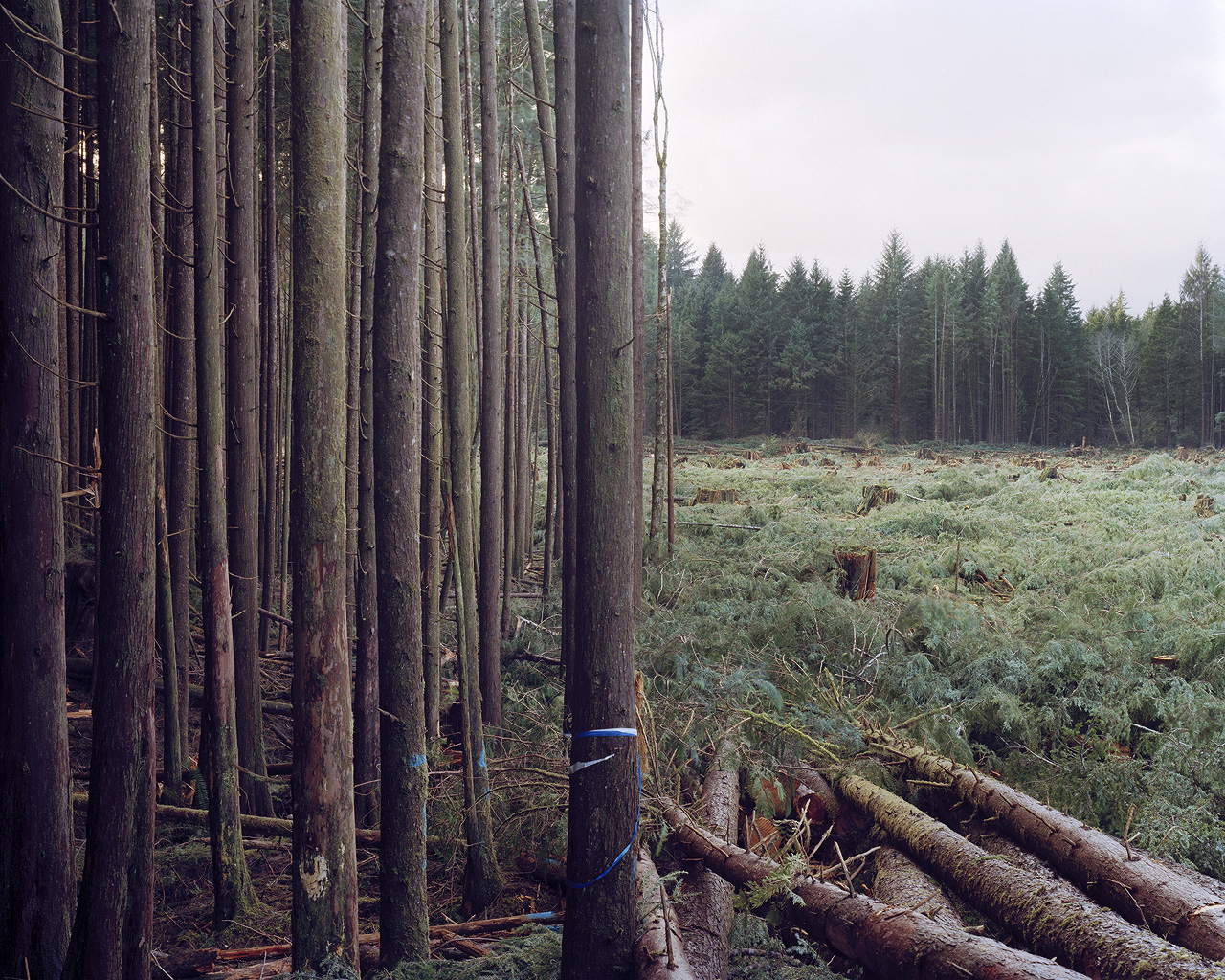
Eirik Johnson (American, b. 1974) 'Freshly Felled Trees, Nemah, Washington' 2007 from the exhibition 'Sawdust Mountain' photographs by Eirik Johnson at Rena Bransten Gallery, San Francisco, May - June, 2009


Eirik Johnson (American, b. 1974)
Freshly Felled Trees, Nemah, Washington from the series Sawdust Mountain
2007


Not much joy in this melancholy tone poem, but there doesn’t need to be. Masses of history, memory, anxiety, isolation and death, all reinforced by Johnson’s photographic perspective, which seems to flatten out the pictorial plane. Some stunning photographs and others that don’t hit the mark, but overall a very strong body of work. View the complex, environmental, social documentary photographs of the Sawdust Mountain series on Eirik Johnson’s website.

Dr Marcus Bunyan


Many thankx to Rena Bransten Gallery for allowing me to publish the photographs in the posting. Please click on the photographs for a larger version of the image.


“When I was a young, my family would hunt for mushrooms in the forests of the Cascade and Olympic Mountains. Some days we would spend afternoons along the shallows of a river watching salmon fight their way to spawning grounds upstream. These were the icons of the region: forest and salmon, pillars of Northwest identity. These photographs address the complicated relationship between the region’s landscape, the industries that rely upon natural recourses, and the communities they support.

‘Sawdust Mountain’ is a melancholy love letter of sorts, a personal reflection on the region’s past, its hardscrabble identity and the turbulent future it must navigate.”


Eirik Johnson


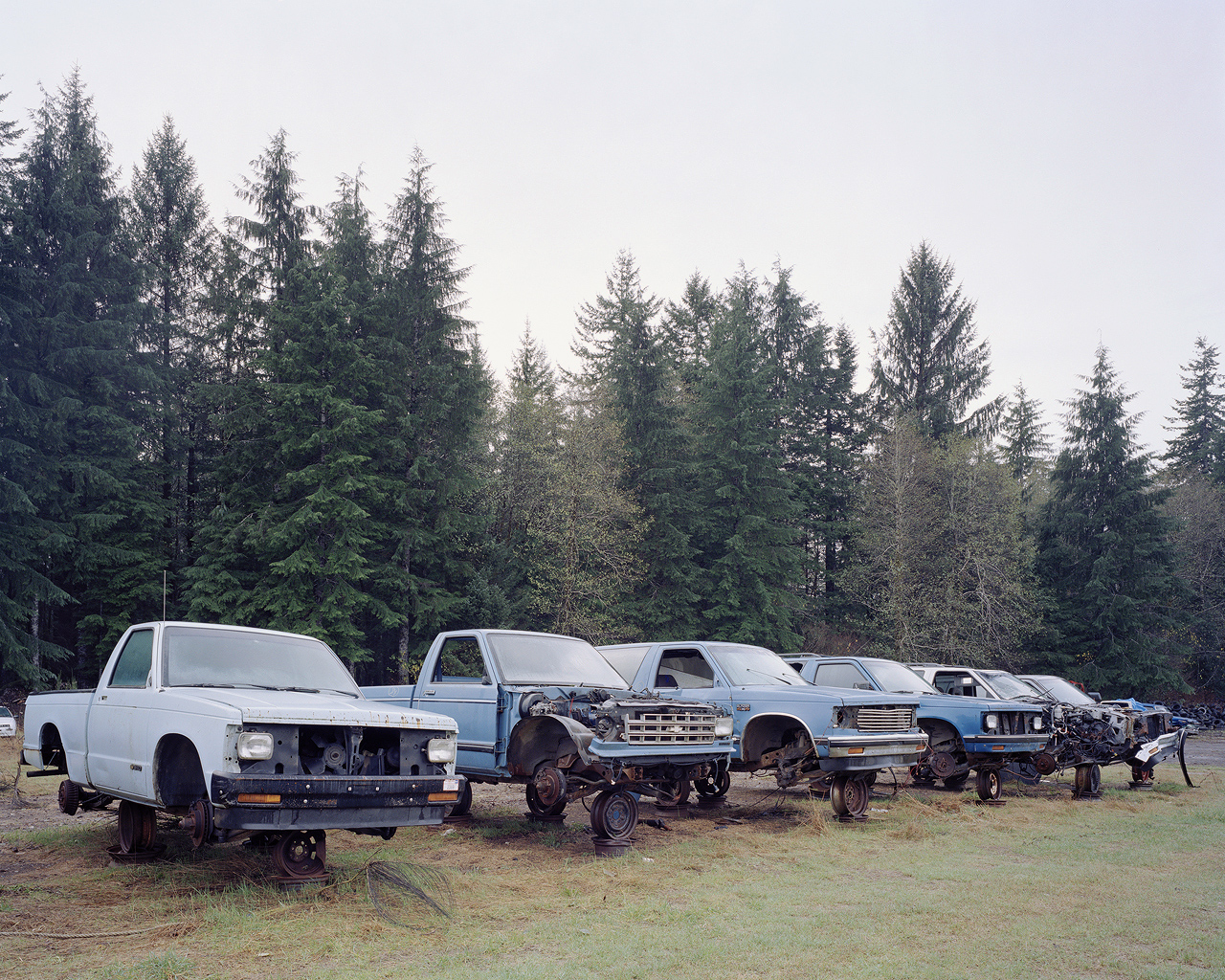
Eirik Johnson (American, b. 1974) 'Junked Blue Trucks, Forks, Washington' 2007 from the exhibition 'Sawdust Mountain' photographs by Eirik Johnson at Rena Bransten Gallery, San Francisco, May - June, 2009


Eirik Johnson (American, b. 1974)
Junked Blue Trucks, Forks, Washington from the series Sawdust Mountain
2007


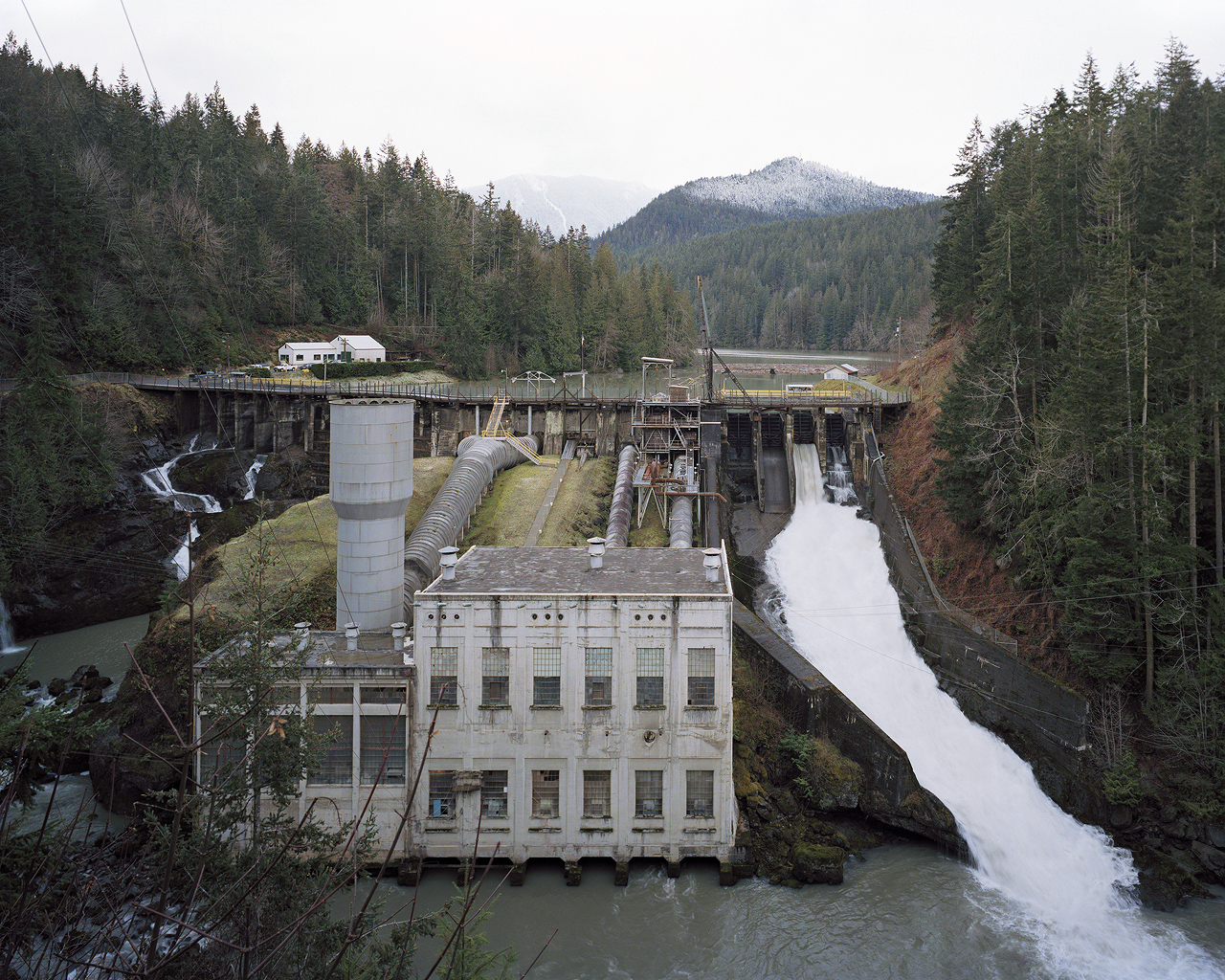
Eirik Johnson (American, b. 1974) 'Elwha River Dam, Washington' 2008


Eirik Johnson (American, b. 1974)
Elwha River Dam, Washington from the series Sawdust Mountain
2008


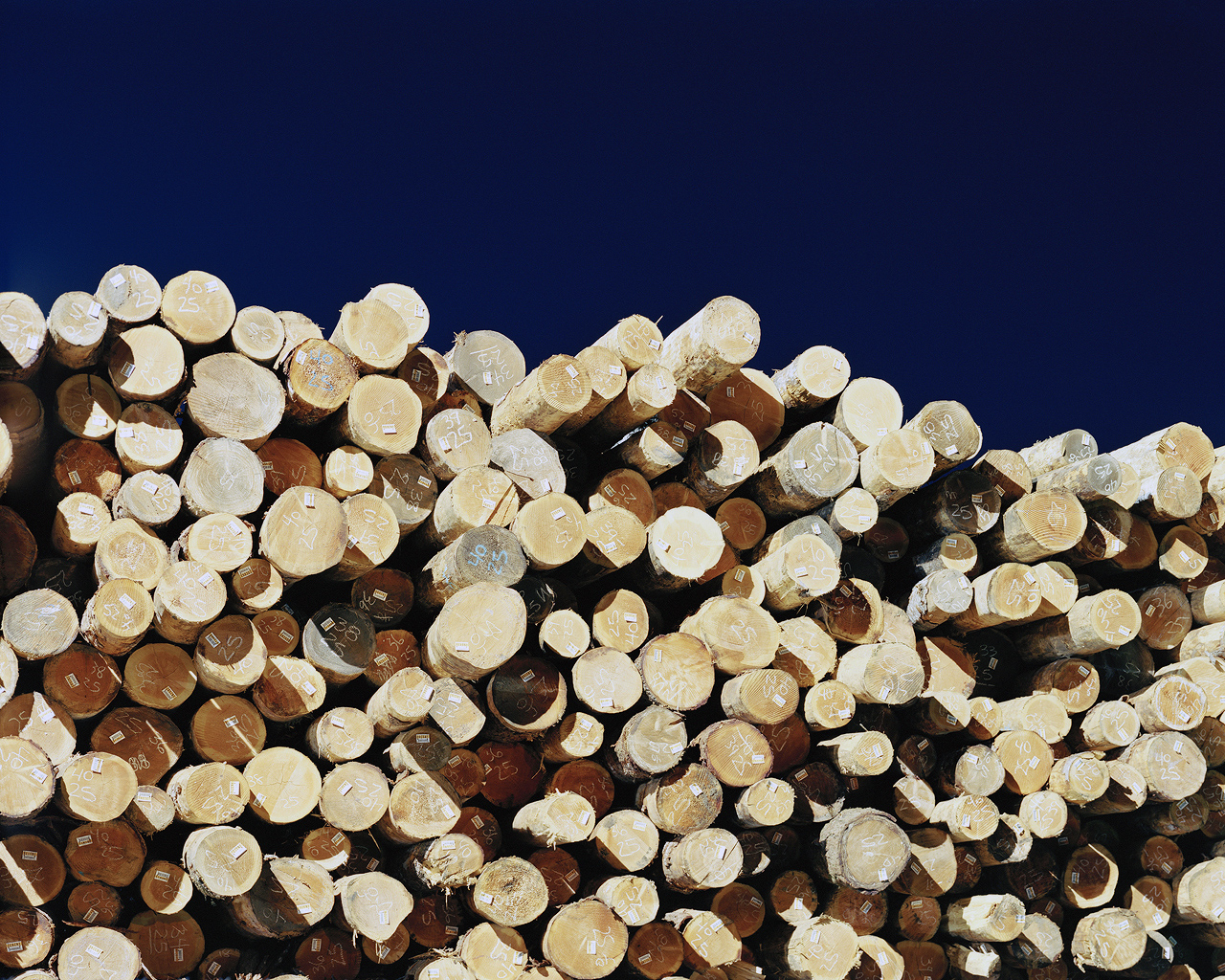
Eirik Johnson (American, b. 1974) 'Stacked logs in Weyerhaeuser sort yard, Cosmopolis, Washington' 2007


Eirik Johnson (American, b. 1974)
Stacked logs in Weyerhaeuser sort yard, Cosmopolis, Washington from the series Sawdust Mountain
2007


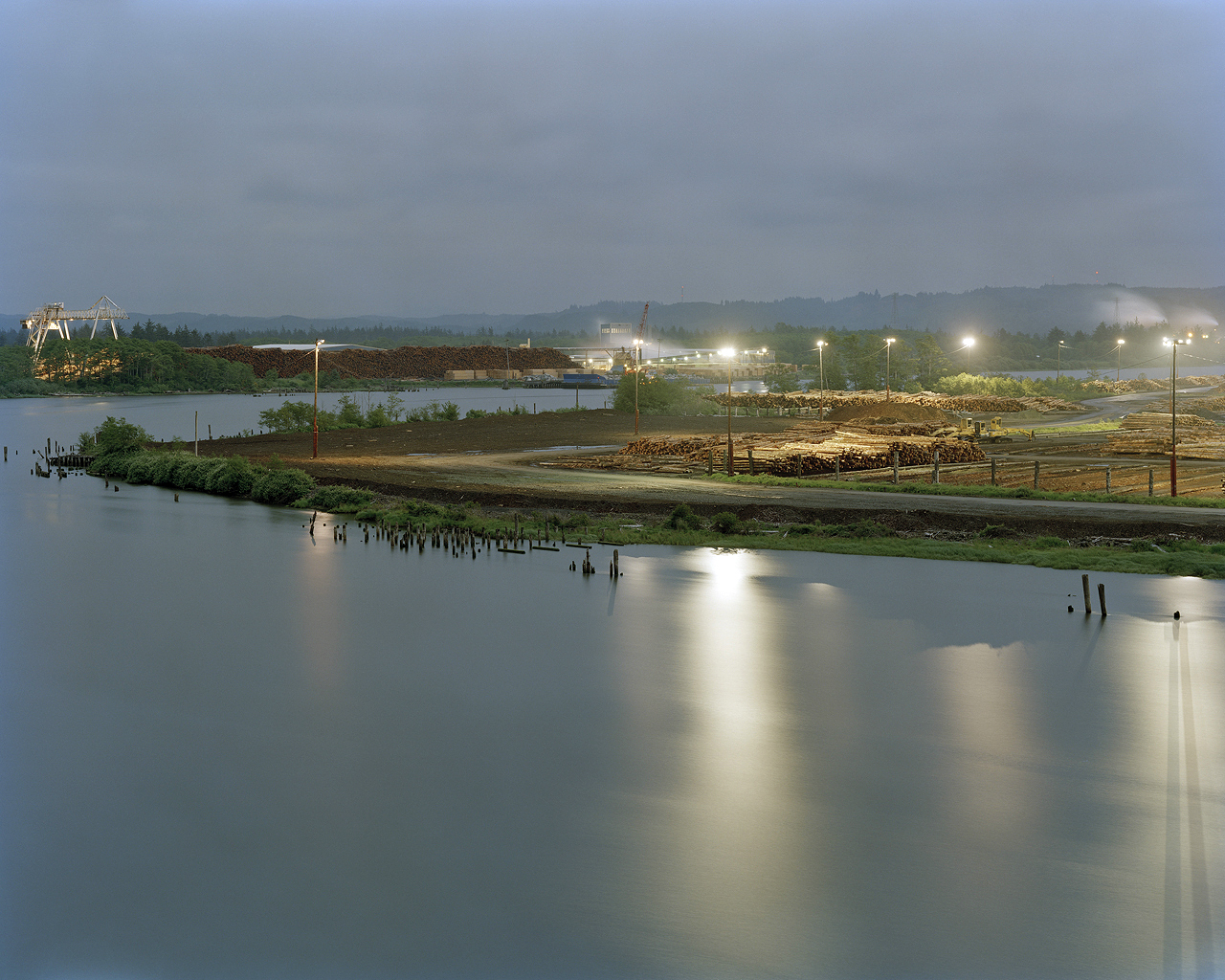
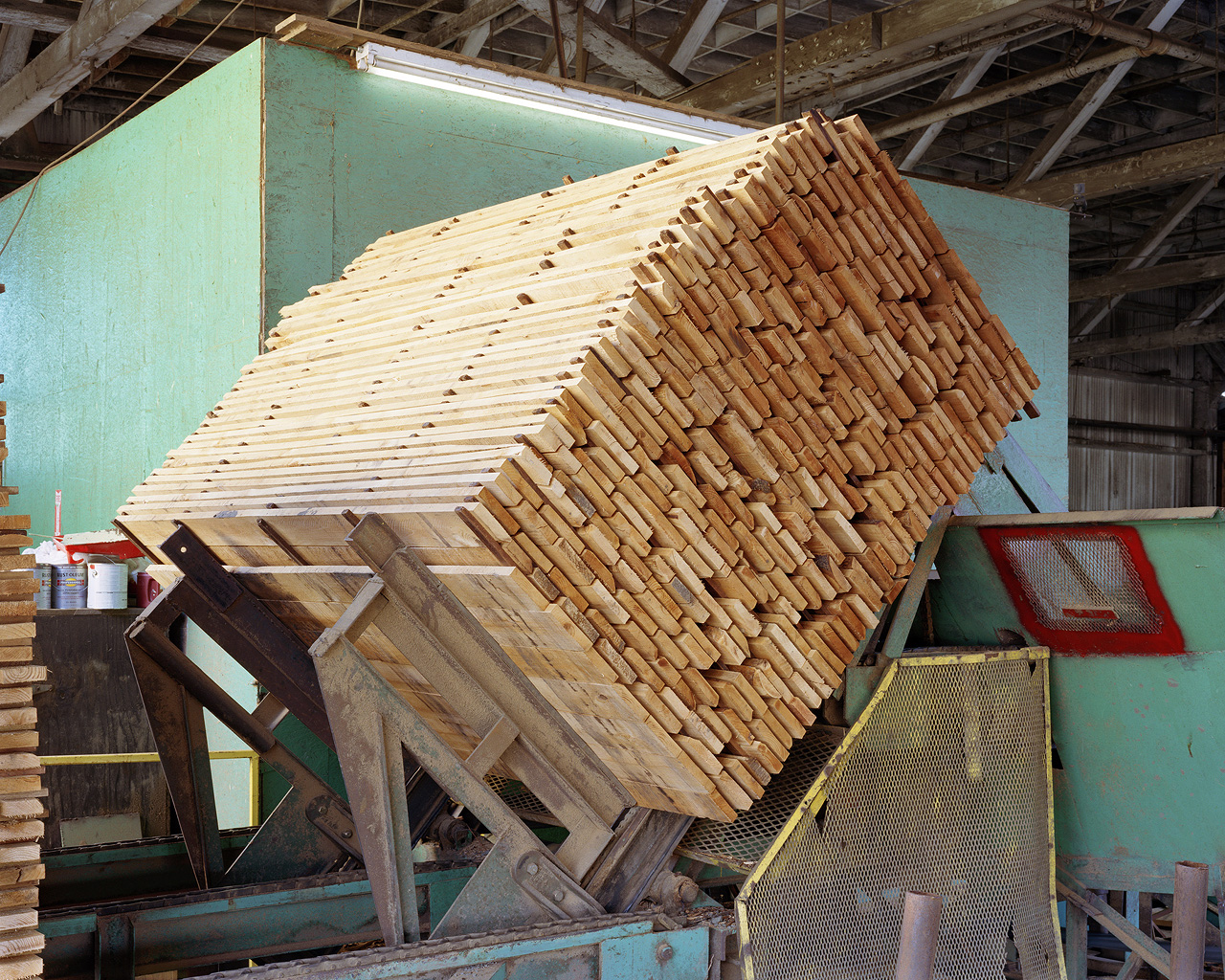
Eirik Johnson’s colour photographs chronicle his study of Sawdust Mountain, a once idyllic patch of the Pacific Northwest now in decline after a century of human encroachment. The story is a familiar one – early settlers attracted by the sublime beauty and abundant natural resources – of Washington state in the case – began local nature-based industries that eventually depleted the natural resources. The romance of lumberjacks and fishermen taming the wilderness and living off the land has been replaced by the hardscrabble reality of those now trying to eke out a living as well as conservationists and ecologists trying to save and restore the landscape. Johnson presents a well-rounded portrait of a town and country struggling to find solutions to these conflicting demands. His photographs capture the history and legacy of the industries, the landscape at the centre of the vortex, and the changes undertaken to staunch the economic and ecological declines so all can survive.

Johnson was born in Seattle, WA and graduated with a Bachelor of Fine Arts from the University of Washington, Seattle and with a Master of Fine Arts from the San Francisco Art Institute. Sawdust Mountain photographs will also be exhibited at the Henry Art Gallery at the University of Washington who co-published the accompanying book with Aperture. Other Johnson book and exhibitions include Borderlands from 2006 and Animal Holes from 2007. Johnson is currently living and teaching in Boston at the Massachusetts College of Art and Design.

Text from the Rena Bransten Gallery website [Online] Cited 11/06/2009. No longer available online


Eirik Johnson (American, b. 1974) 'Weyerhaeuser sorting yard along the Chehalis River, Cosmopolis, Washington' 2006


Eirik Johnson (American, b. 1974)
Weyerhaeuser sorting yard along the Chehalis River, Cosmopolis, Washington from the series Sawdust Mountain
2006


Eirik Johnson (American, b. 1974) 'Stacked alder boards, Seaport Lumber Planer, South Bend, Washington' 2007


Eirik Johnson (American, b. 1974)
Stacked alder boards, Seaport Lumber Planer, South Bend, Washington from the series Sawdust Mountain
2007


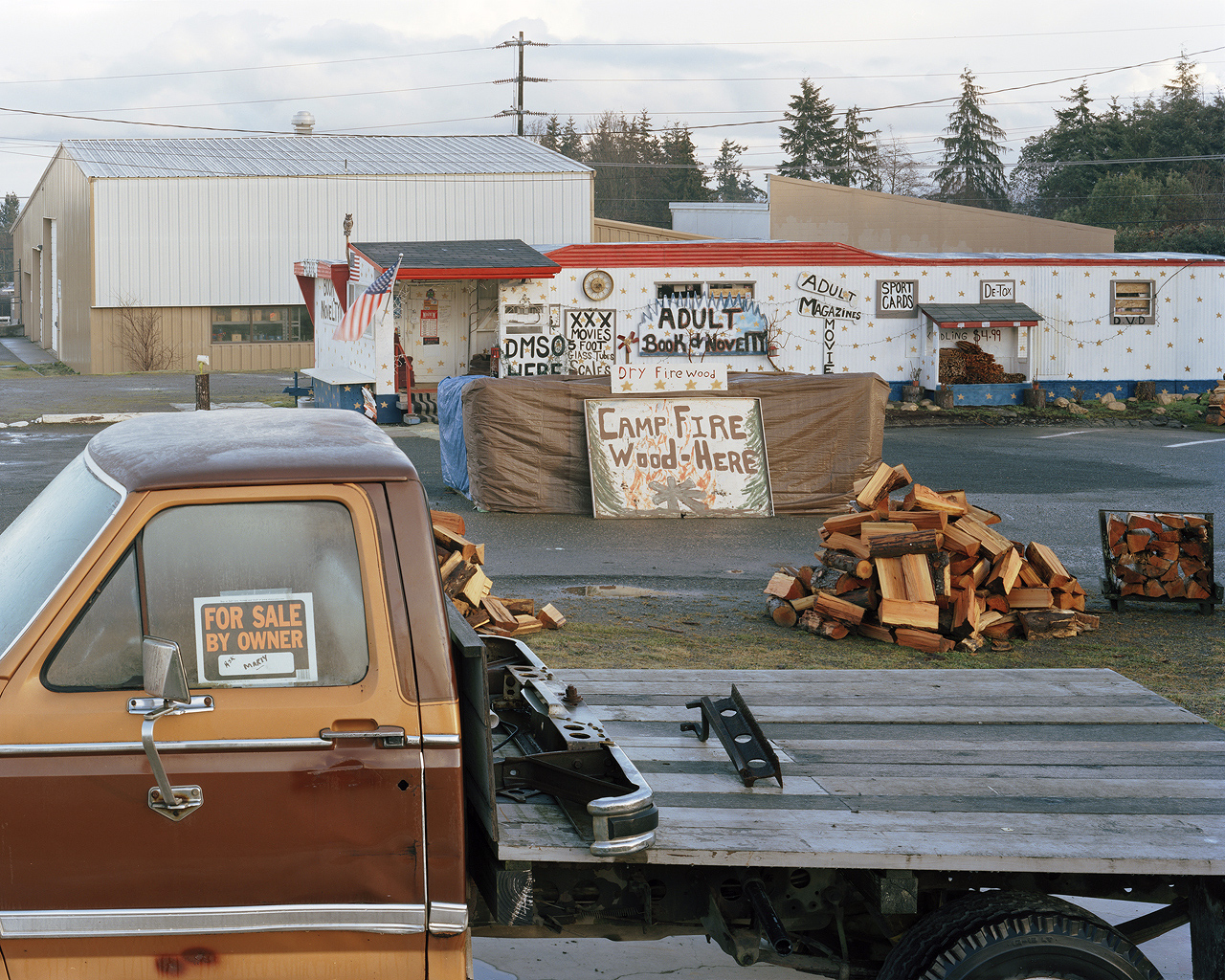
Eirik Johnson (American, b. 1974) 'Adult books, firewood and truck for sale, Port Angeles, Washington' 2008


Eirik Johnson (American, b. 1974)
Adult books, firewood and truck for sale, Port Angeles, Washington from the series Sawdust Mountain
2008


A culmination of four years of photographing throughout Oregon, Washington, and Northern California, Sawdust Mountain focuses on the tenuous relationship between industries reliant upon natural resources and the communities they support.

Timber and salmon are the bedrock of a regional Northwest identity, but the environmental impact of these declining industries has been increasingly at odds with the contemporary ideal of sustainability. In this, his second book, Johnson reveals a landscape imbued with an uncertain future – no longer the region of boomtowns built upon the riches of massive old-growth forests.

Johnson, a Seattle native, describes his photographs as “a melancholy love letter of sorts, my own personal ramblings.” Through this poetic approach, Sawdust Mountain records a region affected by historic economic complexities, and by extension, one aspect of our fraught relationship with the environment in the twenty-first century.

Text from the Aperture Foundation website. No longer available online

The book Sawdust Mountain by Eirik Johnson is available on his website.


Eirik Johnson (American, b. 1974)
'Scrapped train, Arlington, Washington' 2006


Eirik Johnson (American, b. 1974)
Scrapped train, Arlington, Washington from the series Sawdust Mountain
2006


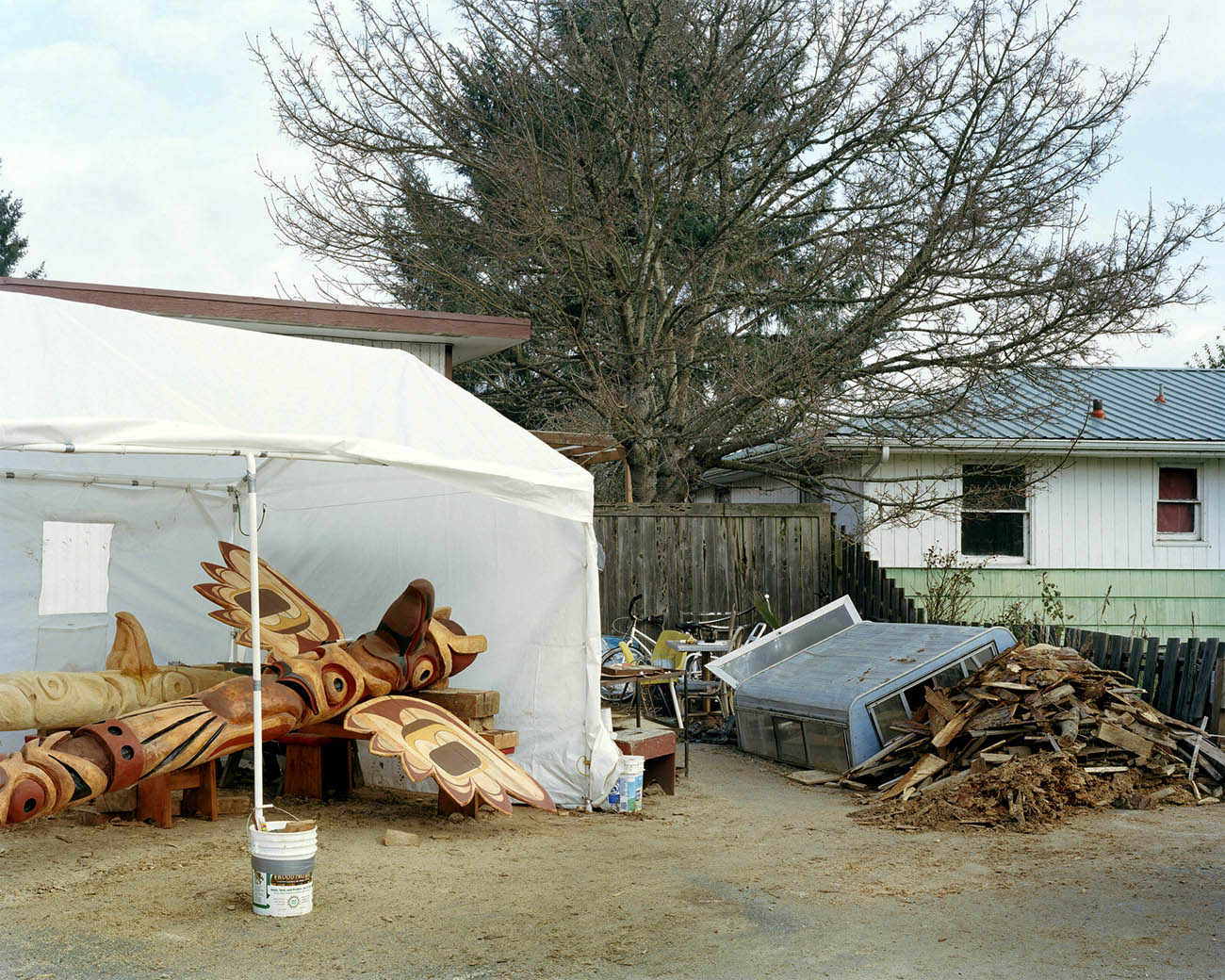
Eirik Johnson (American, b. 1974)
'Totem poles, Winston, Oregon' 2006


Eirik Johnson (American, b. 1974)
Totem poles, Winston, Oregon from the series Sawdust Mountain
2006


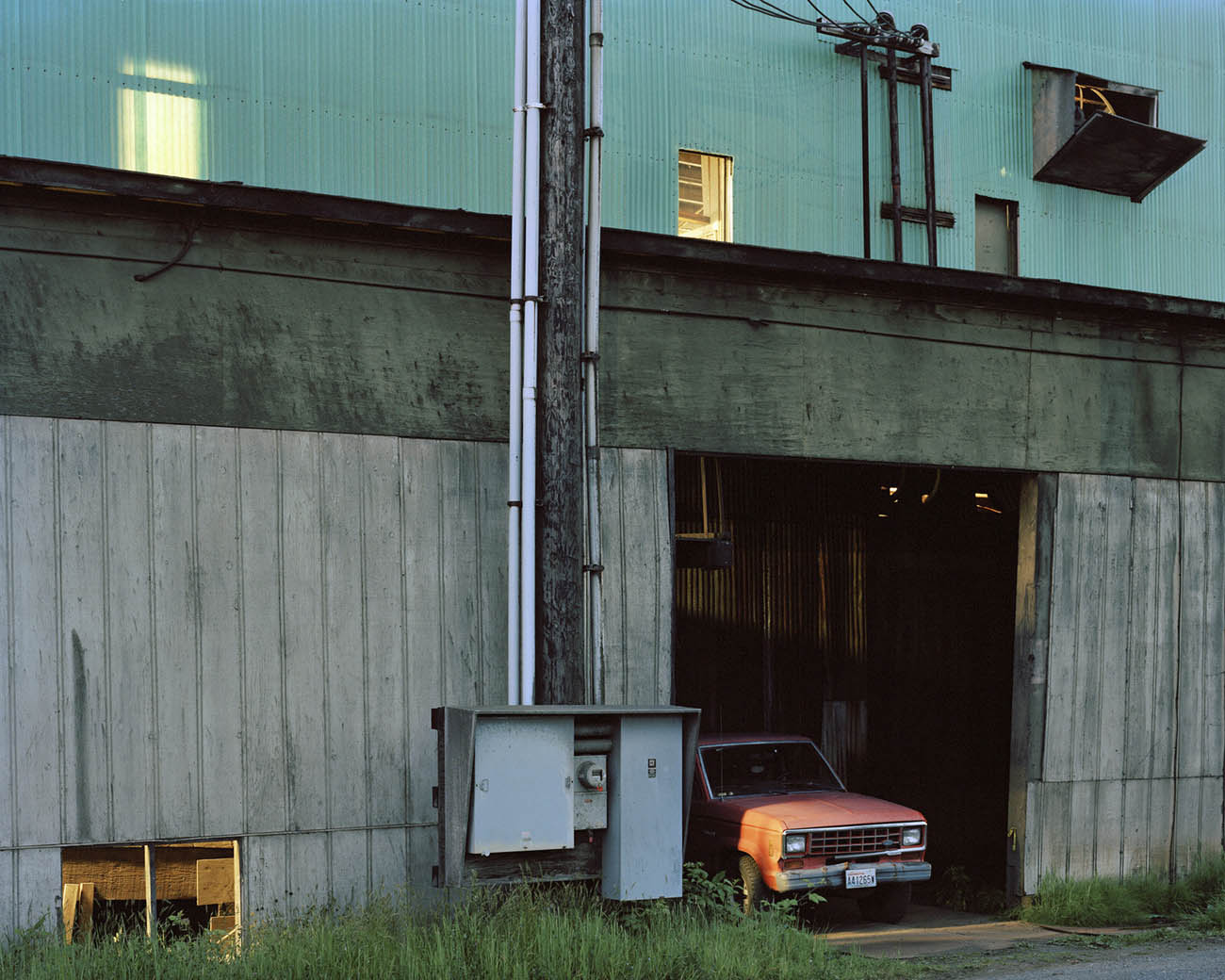
Eirik Johnson (American, b. 1974)
'Mill, Aberdeen, Washington' 2007


Eirik Johnson (American, b. 1974)
Mill, Aberdeen, Washington from the series Sawdust Mountain
2007


Rena Bransten Gallery
1275 Minnesota St.,
San Francisco, CA 94107

Opening hours:
Thursday – Saturday, 12.00 – 4.00pm

Rena Bransten Gallery website

Eirik Johnson website

LIKE ART BLART ON FACEBOOK

Back to top

Exhibition: ‘Walker Evans’ retrospective at Fotomuseum Winterthur, Zurich
Exhibition dates: 30th May – 23rd August, 2009

Curators: Jeff L. Rosenheim and Carlos Gollonet


Walker Evans (American, 1903-1975) 'West Virginia Living Room' 1935 from the exhibition 'Walker Evans' retrospective at Fotomuseum Winterthur, Zurich, May - Aug, 2009


Walker Evans (American, 1903-1975)
West Virginia Living Room
1935
Gelatin silver print
© Walker Evans archive


Many thankx to the Fotomuseum Winterthur for allowing me to publish the photographs in the posting. Please click on the photographs for a larger version of the image.


With this retrospective of the work of Walker Evans (1903-1975) Fotomuseum Winterthur presents one of the twentieth century’s pre-eminent photographers. His lucid and detailed portrayals of American life, especially his images of rural poverty during the Great Depression, made photographic history and went on to influence countless photographers. Walker Evans took an extremely innovative approach, capturing the very essence of the American way of life.

The exhibition, featuring some 120 works (the majority of which are from the most important private collection of Walker Evans’ works) represents every phase of his career: his early street photographs of the 1920s, his poignant documentation of 1930s America and pre-revolutionary Cuba, his landscapes and architectural photography, his subway portraits, storefronts, signage, the later colour Polaroids and more besides. As early as the 1930s, Walker Evans, in a departure from conventional notions of art and style, sought a new direct approach to reality. It is this that makes him a truly modern photographer.

The exhibition was curated by Jeff L. Rosenheim and Carlos Gollonet. Realisation in Winterthur: Urs Stahel. A cooperation with the Fundación MAPFRE, Madrid.

Text from the Fotomuseum Winterthur website


Walker Evans (American, 1903-1975) 'Negro Barbershop Interior, Atlanta' 1936 from the exhibition 'Walker Evans' retrospective at Fotomuseum Winterthur, Zurich, May - Aug, 2009


Walker Evans (American, 1903-1975)
Negro Barbershop Interior, Atlanta
1936
Gelatin silver print
7 7/16 x 9 1/8″ (18.9 x 23.2cm)
© Walker Evans archive


With this major retrospective of the work of Walker Evans (1903-1975) Fotomuseum Winterthur pays homage to one of the twentieth century’s pre-eminent photographers. His insightful and detailed portrayals of American life, especially his images of rural poverty during the Great Depression, made photographic history and went on to influence countless photographers. The 130 works in this retrospective exhibition represent every phase of his career: his early street photographs of the 1920s, his poignant documentation of 1930s America and pre-revolutionary Cuba, his landscapes and architectural photography, his subway portraits, storefronts, signage, and more besides.

On his return from France, where he had tried unsuccessfully to launch a literary career inspired by his love of Flaubert and Baudelaire, Walker Evans turned to photography. From the very start, with his keen eye for street life and the visual freshness of his unexpected slant on what he saw, his work spoke the language of European Modernism. But it was not long before Evans found his true voice – and it was at once profoundly personal and unequivocally American.

Some years before, the direct, undistorted and innovative gaze of Eugène Atget (1857-1927), whose work Evans knew and admired, had quietly paved the way for the split between documentary auteur photography and the purely descriptive photographic tradition. Atget’s unconventional angles, his de-centralised view and his focus on the seemingly trivial all had a major impact on Evans.

Walker Evans’ work is a far remove from what had, until then, been accepted as art photography. He was not interested in superficial beauty, but in a new objectivity. He subscribed to a style that observed undistorted facts and sought to capture things precisely as they were, seemingly without intervention, emotion or idealisation. For the first time in art photography, there were such unusual subjects as a pair of old boots or a subway passenger lost in thought. The artistic quality was based solely on the clarity, intelligence and authenticity of the photographer’s gaze. In this, Walker Evans’ oeuvre represents both a high point and a turning point in the formal and visual evolution of photography.

As the creator of this new, direct style, often referred to as straight photography, which drew upon scenes of sometimes blatant banality and rolled back the boundaries between the ‘important’ and the ‘trivial’, Walker Evans introduced the aesthetics of Modernism into American photography. This seemingly cold detachment spawned a style rich in expressive substance that was not only capable of embracing the lyricism and complexity of the American tradition, but of doing so without a trace of false romanticism, sentimentality or nostalgia. At long last, there was a forward-looking and enduring alternative to the traditional conventions of photography.

Press release from the Fotomuseum Winterthur website [Online] Cited 05/06/2009. No longer available online


Walker Evans (American, 1903-1975) 'Traffic Arrow' between 1973-1974


Walker Evans (American, 1903-1975)
Traffic Arrow
between 1973-1974
Polaroid
7.9 x 7.9cm (3 1/8 x 3 1/8 in.)
© Walker Evans archive


Walker Evans (American, 1903-1975) '[Detail of Stencilled Lettering on Yellow Railroad Car: "DO NOT HUMP"]' September 16, 1974


Walker Evans (American, 1903-1975)
[Detail of Stencilled Lettering on Yellow Railroad Car: “DO NOT HUMP”]
September 16, 1974
Polaroid
7.9 x 7.9cm (3 1/8 x 3 1/8 in.)
© Walker Evans archive


Installation view of the exhibition 'Walker Evans' at Fotomuseum Winterthur, Zurich showing some of his Polaroid photographs


Installation view of the exhibition Walker Evans at Fotomuseum Winterthur, Zurich showing some of his Polaroid photographs


Installation view of the exhibition 'Walker Evans' at Fotomuseum Winterthur, Zurich

Installation view of the exhibition Walker Evans at Fotomuseum Winterthur, Zurich

Installation view of the exhibition Walker Evans at Fotomuseum Winterthur, Zurich

Installation view of the exhibition Walker Evans at Fotomuseum Winterthur, Zurich


Installation views of the exhibition Walker Evans at Fotomuseum Winterthur, Zurich


Walker Evans (1903-1975) 'Penny Picture Display, Savannah' 1936


Walker Evans (American, 1903-1975)
Penny Picture Display, Savannah
1936
Gelatin silver print
© Walker Evans archive


Walker Evans (American, 1903-1975) 'Subway Passengers, New York' 1938


Walker Evans (American, 1903-1975)
Subway Passengers, New York
1938
Gelatin silver print
© Walker Evans archive


Walker Evans (American, 1903-1975) 'Truck and Sign' 1928-1930


Walker Evans (American, 1903-1975)
Truck and Sign
1928-1930
Gelatin silver print
© Walker Evans archive


Walker Evans (American, 1903-1975) 'Excavation for Lincoln Building, East 42nd Street and Park Avenue' 1929


Walker Evans (American, 1903-1975)
Excavation for Lincoln Building, East 42nd Street and Park Avenue
1929
Gelatin silver print
© Walker Evans archive


Walker Evans (American, 1903-1975) '[Fireplace in Floyd Burrroughs's Bedroom with Bedpost in Foreground, Hale County, Alabama]' 1936


Walker Evans (American, 1903-1975)
[Fireplace in Floyd Burrroughs’s Bedroom with Bedpost in Foreground, Hale County, Alabama]
1936
Gelatin silver print
8 x 10 in.
© Walker Evans archive


Walker Evans (American, 1903-1975) 'Main Street, Saratoga Springs, New York' 1931


Walker Evans (American, 1903-1975)
Main Street, Saratoga Springs, New York
1931
Gelatin silver print
© Walker Evans archive


Walker Evans (American, 1903-1975) 'Floyde Burroughs, a cotton sharecropper, Hale County, Alabama' 1936


Walker Evans (American, 1903-1975)
Floyde Burroughs, a cotton sharecropper, Hale County, Alabama
1936
Gelatin silver print
© Walker Evans archive


Walker Evans (American, 1903-1975) 'Allie Mae Burroughs, Hale County, Alabama' 1936


Walker Evans (American, 1903-1975)
Allie Mae Burroughs, Hale County, Alabama
1936
Gelatin silver print
© Walker Evans archive


Fotomuseum Winterthur
Grüzenstrasse 44 + 45
CH-8400
Winterthur (Zürich)
Phone: +41 52 234 10 60

Opening hours:
Tuesday – Sunday 11.00 – 18.00
Wednesday 11.00 – 20.00
Monday closed

Fotomuseum Winterthur website

LIKE ART BLART ON FACEBOOK

Back to top