Exhibition: ‘Francesca Woodman’ at The Guggenheim Museum, New York

Exhibition dates: 16th March – 13th June 2012


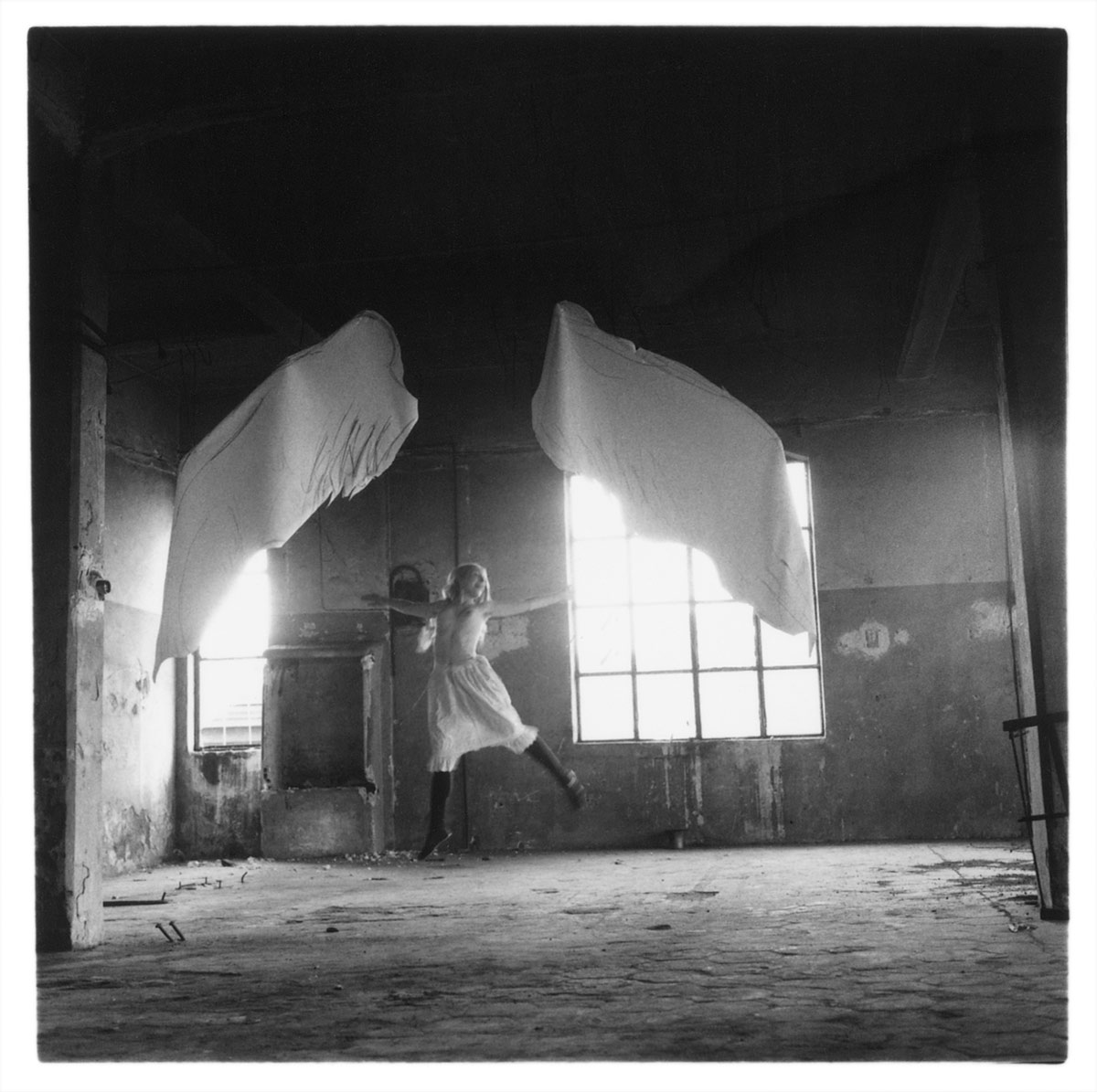
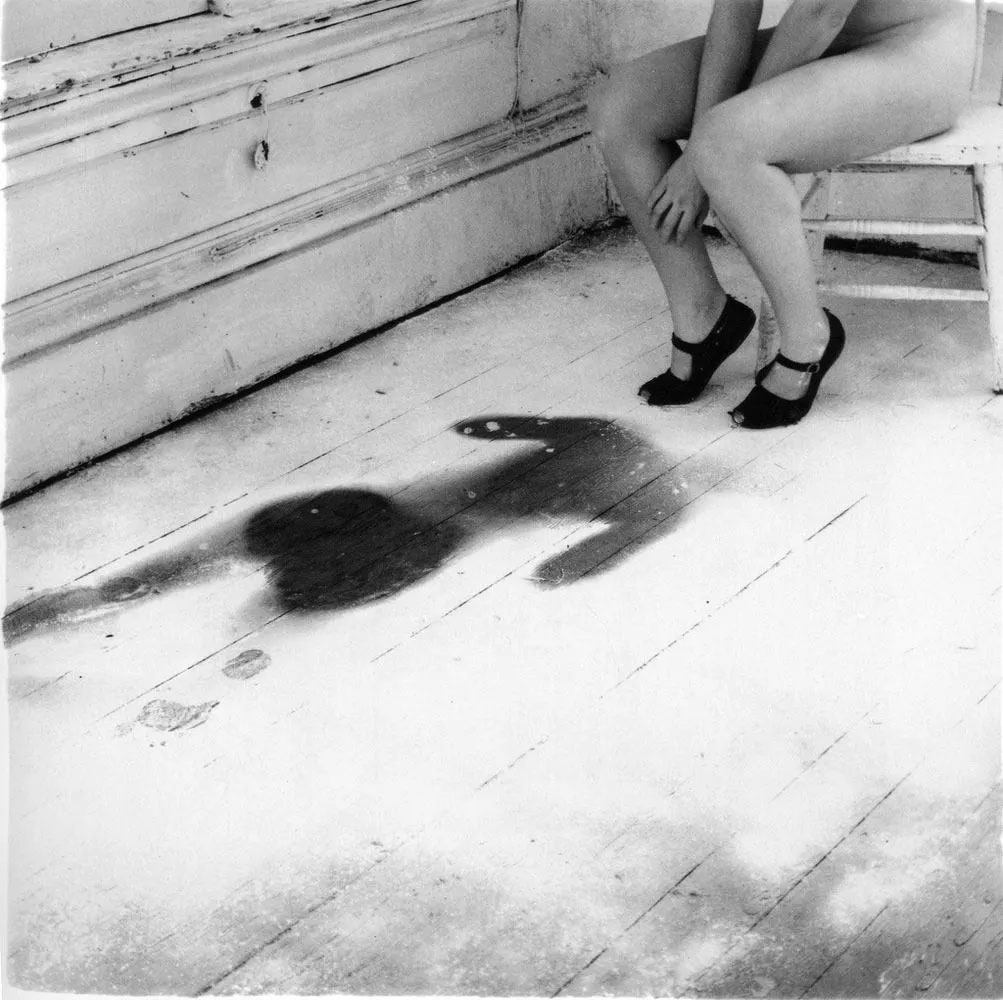
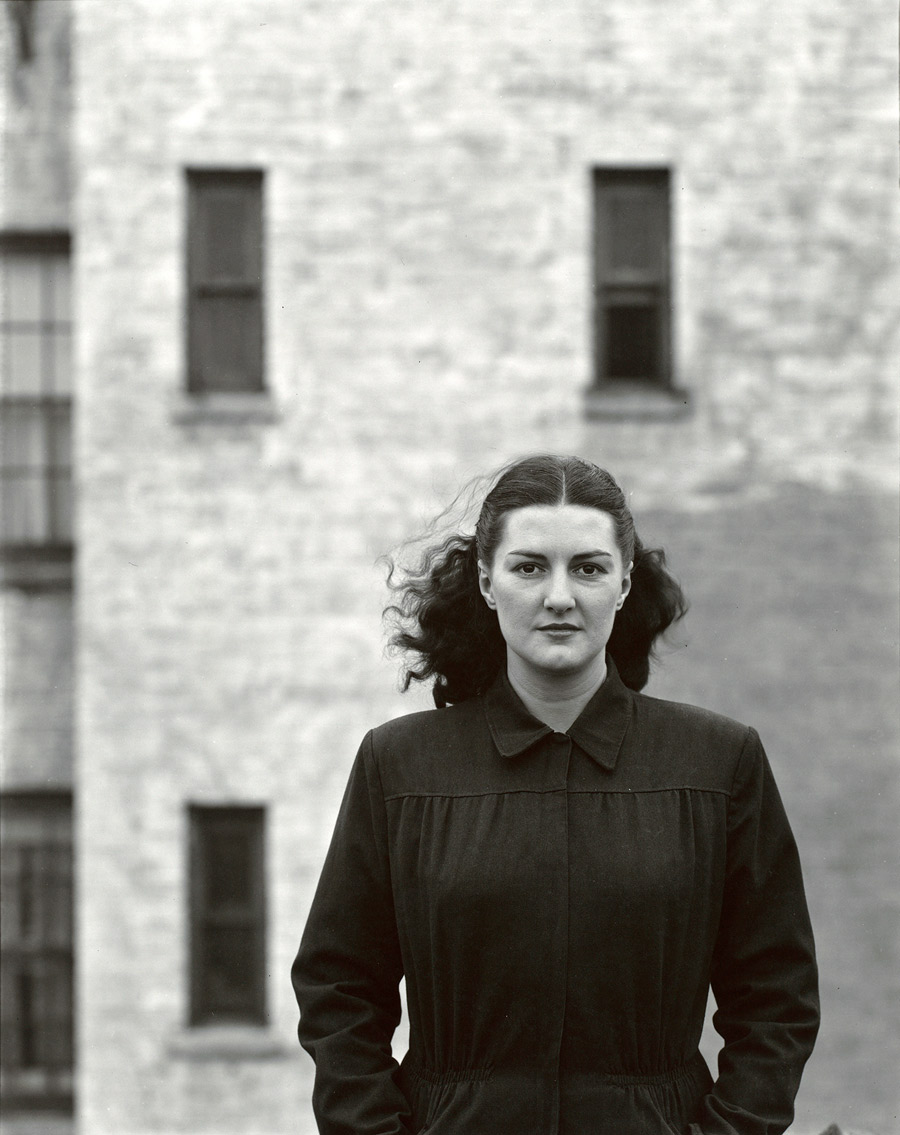
Francesca Woodman (American, 1958-1981) 'Untitled, Rome' (from the Angels series) 1977


Francesca Woodman (American, 1958-1981)
Untitled, Rome (from the Angels series)
1977
Gelatin silver print
7.6 x 7.6cm
Courtesy George and Betty Woodman
© 2012 George and Betty Woodman


In 1981, at the age of twenty-two, she committed suicide. Simple words, profound effect.

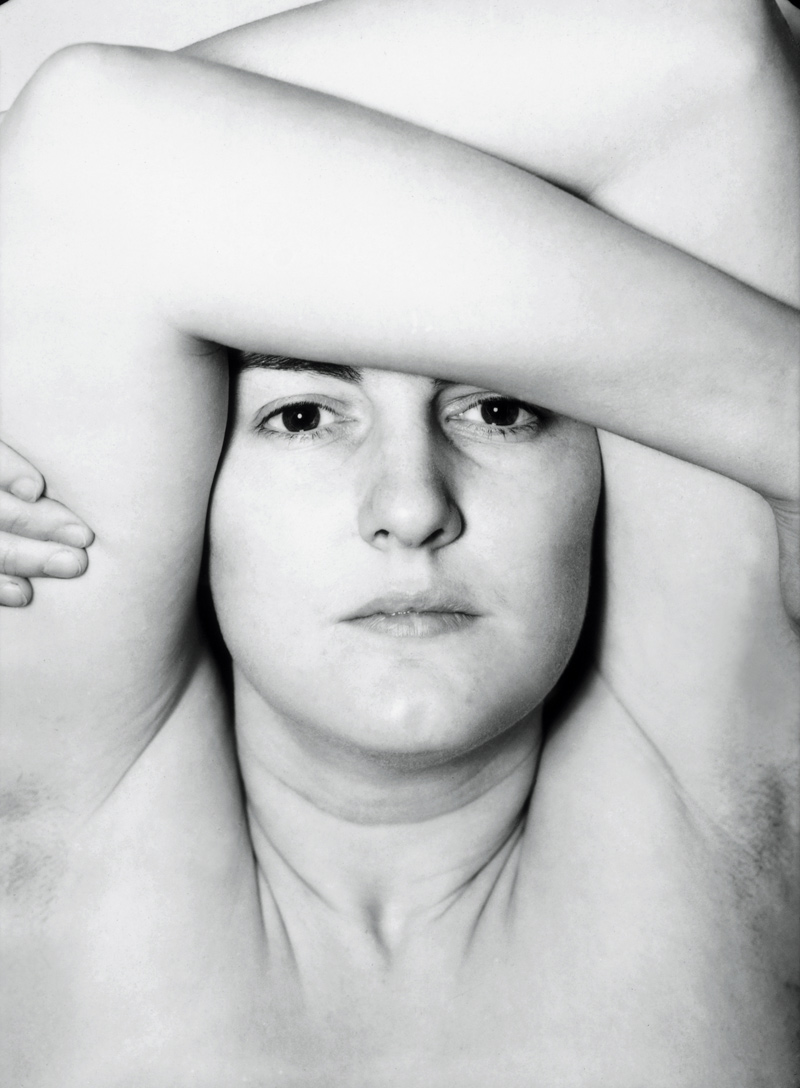
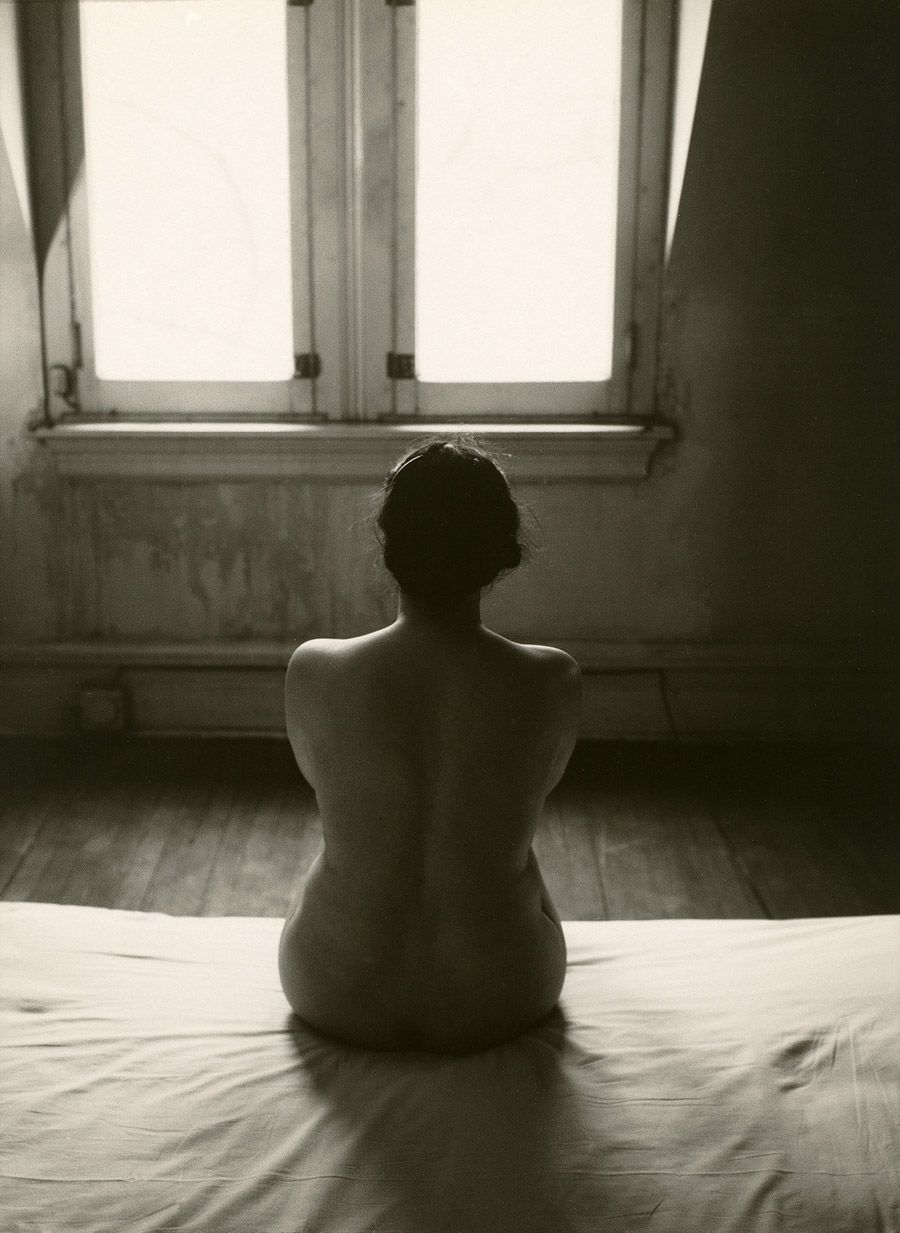
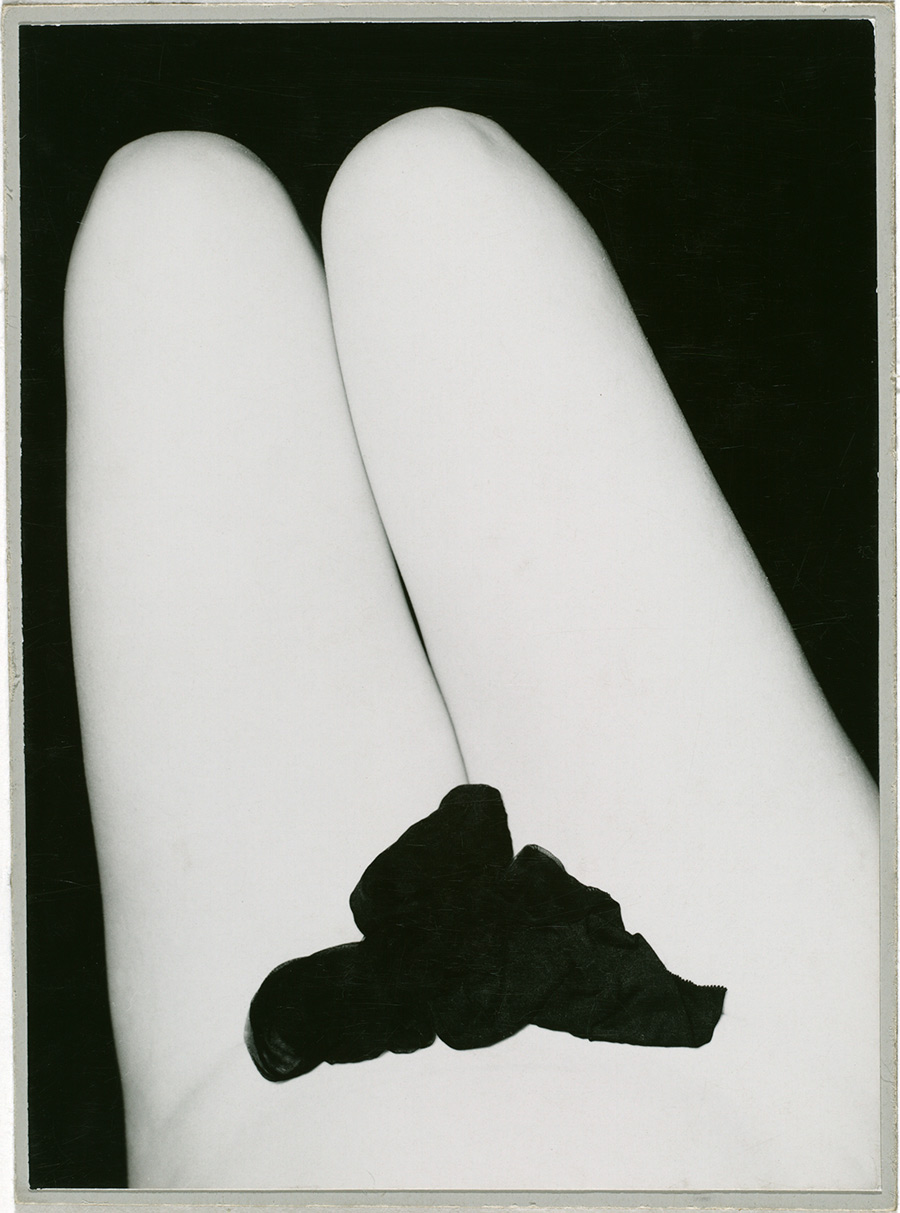
The world lost one of its truly unique artists and at such a young age. What we have left is a remarkable body of work compiled in a brief six year period. These are strong, sensuous photographs of the female body in space. The body, her body, seems to have an absent presence as it is pressed into walls and occluded by wallpaper. It passes from view, as she did in her physical form.

In small ways the work reminds me of the blurred photographs of Ralph Eugene Meatyard in their gothic Surrealism. But there is nothing quite like a Woodman. As soon as you see one of the photographs you know it is her work instinctively; there is nobody else’s voice like hers. The work will not soon be passing out of sight, memory, or existence. The light still burns bright for hers was a truly remarkable talent.

Dr Marcus Bunyan


Many thankx to The Guggenheim Museum for allowing me to publish the photographs in the posting. Please click on the photographs for a larger version of the image.


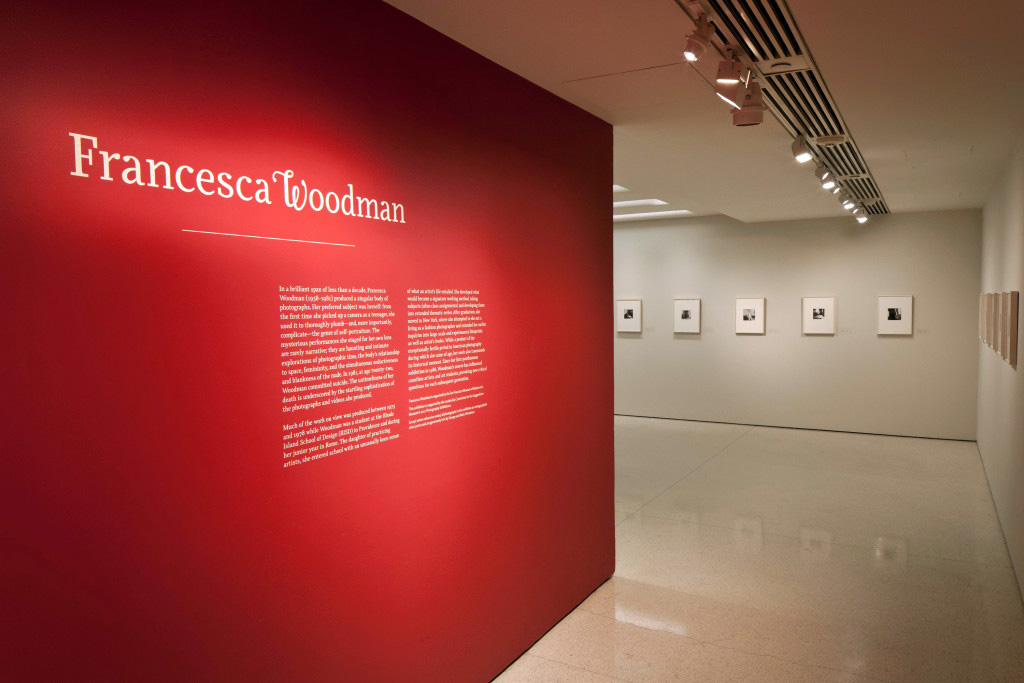
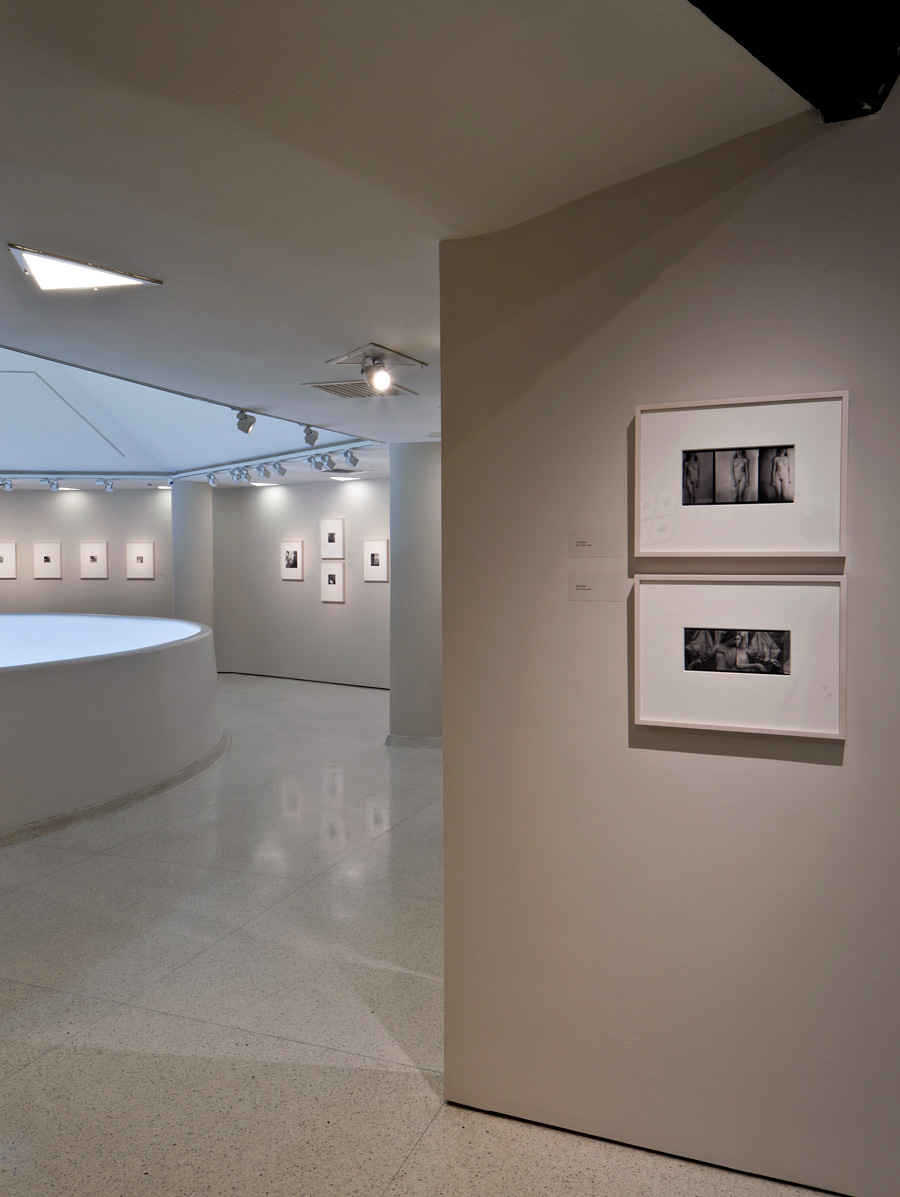
Installation view: Francesca Woodman, Solomon R. Guggenheim Museum, March 16 - June 13, 2012


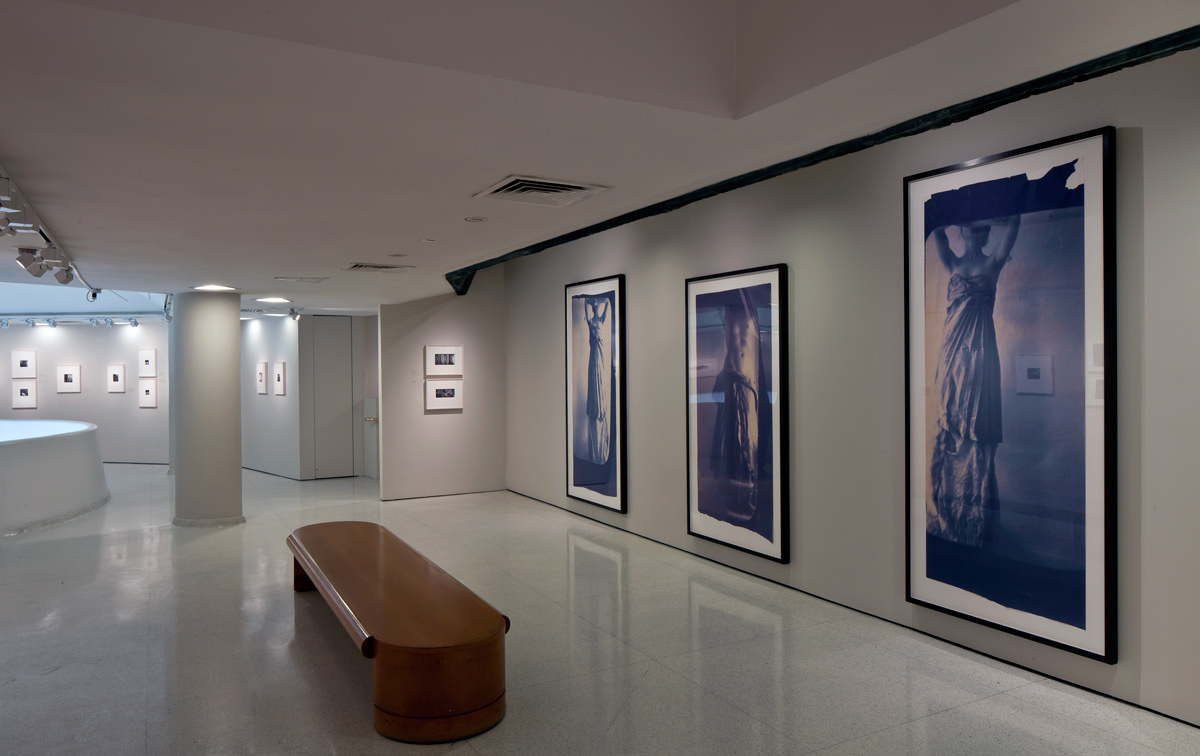
Installation view: Francesca Woodman, Solomon R. Guggenheim Museum, March 16 - June 13, 2012


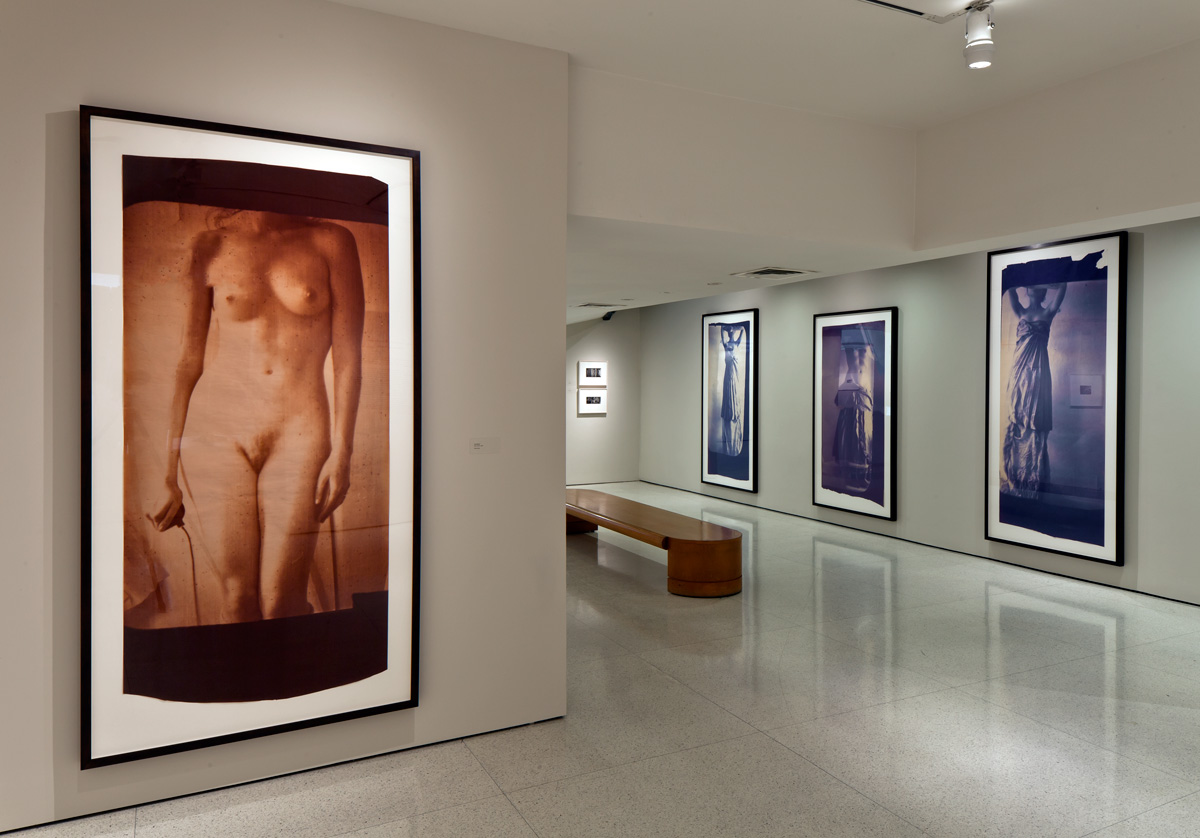
Installation view: Francesca Woodman, Solomon R. Guggenheim Museum, March 16 - June 13, 2012


Installation view: Francesca Woodman, Solomon R. Guggenheim Museum, March 16 - June 13, 2012


Installation view: Francesca Woodman, Solomon R. Guggenheim Museum, March 16 – June 13, 2012
Photos: David Heald © Solomon R. Guggenheim Foundation


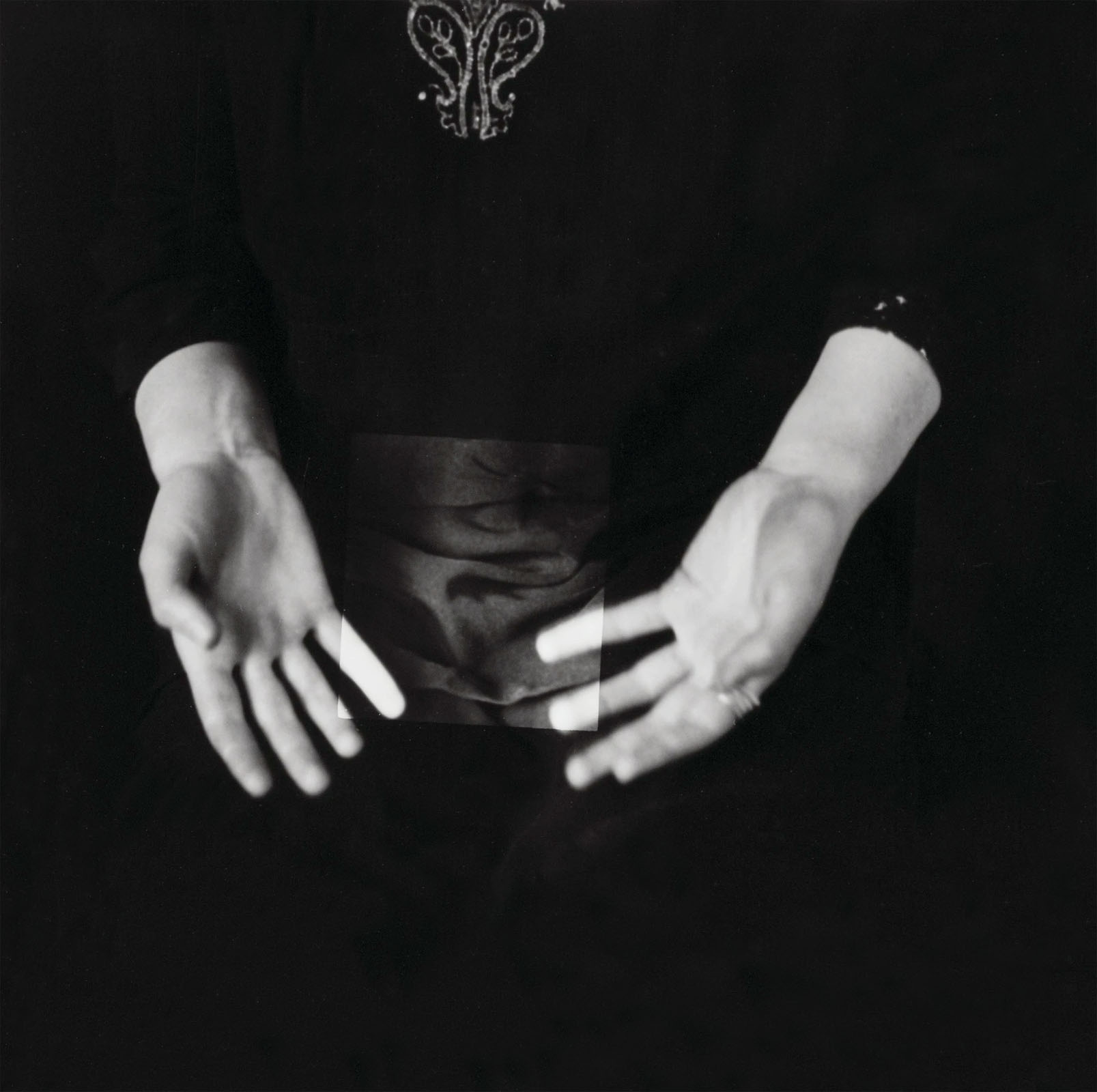
Francesca Woodman (American, 1958-1981) 'Untitled, MacDowell Colony, Peterborough, New Hampshire' 1980


Francesca Woodman (American, 1958-1981)
Untitled, MacDowell Colony, Peterborough, New Hampshire
1980
Gelatin silver print
11.4 x 11.4cm
Courtesy George and Betty Woodman
© 2012 George and Betty Woodman


Francesca Woodman (American, 1958-1981) 'House #4, Providence, Rhode Island' 1976


Francesca Woodman (American, 1958-1981)
House #4, Providence, Rhode Island
1976
Gelatin silver print
14.6 x 14.6cm
Courtesy George and Betty Woodman
© 2012 George and Betty Woodman


Francesca Woodman (American, 1958-1981) 'Caryatid' 1980


Francesca Woodman (American, 1958-1981)
Caryatid
1980
New York
Diazotype
227.3 x 92.1cm
Courtesy George and Betty Woodman
© 2012 George and Betty Woodman


Francesca Woodman, the most comprehensive exhibition of the artist’s work since Woodman’s untimely death in 1981 at the age of 22, will be on view at the Guggenheim Museum from March 16 through June 13, 2012. Spanning the breadth of her production, the exhibition includes more than 120 vintage photographs, artist books, and a selection of recently discovered and rarely seen short videos, presenting a historical reconsideration of Woodman’s brief but extraordinary career.

Francesca Woodman is the first comprehensive survey of the artist’s brief but extraordinary career to be seen in North America. More than thirty years after her death, the moment is ripe for a historical reconsideration of her work and its reception. This retrospective offers an occasion to examine more closely the maturation and expression of a highly subjective and coherent artistic vision. It also presents an important and timely opportunity to reassess the critical developments that took place in the 1970s in American photography and video.

Woodman’s oeuvre represents a remarkably rich and singular exploration of the human body in space and of the genre of self-portraiture in particular. Her interest in female subjectivity, seriality, Conceptualist practice, and photography’s relationship to both literature and performance are also the hallmarks of the heady moment in American photography during which she came of age. This retrospective offers an occasion to examine more closely the maturation and expression of a highly subjective and coherent artistic vision. It also presents an important and timely opportunity to reassess the critical developments that took place in the 1970s in American photography.

Born in 1958 into a family of artists, Woodman began photographing at the age of thirteen. By the time she enrolled at the Rhode Island School of Design (RISD) in 1975, she was already an accomplished artist with a remarkably mature and focused approach to her work. During her time at RISD, she spent a year in Rome, a place she had visited as a child, and which proved to be a fertile source of inspiration. After completing her degree, she moved to New York, where she continued to photograph. While making several large-scale personal projects, she also experimented with fashion photography, engaging in the age-old artist’s struggle to reconcile making art and making a living. In 1981, at the age of twenty-two, she committed suicide. Woodman’s tragic death is underscored by the startlingly compelling, complex, and artistically resolved body of work she produced during her short lifetime.

Woodman’s favourite subject was herself. From the very first time she picked up a camera, she used it to thoroughly plumb the genre of self-portraiture. Using a square-format camera, Woodman photographed her body in a variety of spaces. She had an affinity for decaying and decrepit interiors, particularly the richly layered surfaces of walls covered with graffiti or peeling wallpaper. In these settings the body is evanescent, appearing and disappearing behind objects, pressed into cupboards and cabinets, camouflaged against walls, or dissolving into a blur of movement. She frequently included objects within the frame – gloves, eels, mirrors – thereby investing them with a symbolic charge, and often making deliberate allusions to tropes from the Surrealist and gothic fiction she admired.

The presentation at the Guggenheim will comprise approximately 120 vintage photographs, including Woodman’s earliest student experiments at RISD, work from her time spent studying in Rome, her forays into fashion photography upon moving to New York, and the late, large-scale blueprint studies of caryatid-like figures for the ambitious Temple project (1980). The exhibition will include two of her artist books – diaristic collages of her own photographs and writings – which were an important form of expression, particularly at the end of her career. Woodman also experimented with moving images; six recently discovered and rarely seen short videos will be presented in the exhibition.

Francesca Woodman is organised by the San Francisco Museum of Modern Art (SFMOMA). The exhibition has been curated by Corey Keller, Associate Curator of Photography, SFMOMA, where it opened in November 2011. The New York presentation of Francesca Woodman is organised by Jennifer Blessing, Senior Curator, Photography, Solomon R. Guggenheim Museum.

Text from the Guggenheim website


Francesca Woodman (American, 1958-1981) 'Polka Dots, Providence, Rhode Island' 1976


Francesca Woodman (American, 1958-1981)
Polka Dots, Providence, Rhode Island
1976
Gelatin silver print
13.3 x 13.3cm
Courtesy George and Betty Woodman
© 2012 George and Betty Woodman


Francesca Woodman (American, 1958-1981) 'Space2, Providence, Rhode Island' 1976


Francesca Woodman (American, 1958-1981)
Space2, Providence, Rhode Island
1976
Gelatin silver print
13.7 x 13.3cm
Courtesy George and Betty Woodman
© 2012 George and Betty Woodman


Francesca Woodman (American, 1958-1981) 'Self-Portrait talking to Vince' 1975-78


Francesca Woodman (American, 1958-1981)
Self-Portrait talking to Vince
1975-1978
Providence, Rhode Island
Gelatin silver print
13 x 12.9cm
Courtesy George and Betty Woodman
© 2012 George and Betty Woodman


Francesca Woodman (American, 1958-1981) 'Untitled, Providence, Rhode Island' 1976


Francesca Woodman (American, 1958-1981)
Untitled, Providence, Rhode Island
1976
Gelatin silver print
13.3 x 13.5cm
Courtesy George and Betty Woodman
© 2012 George and Betty Woodman


Francesca Woodman (American, 1958-1981) 'Untitled, Providence, Rhode Island' 1976


Francesca Woodman (American, 1958-1981)
Untitled, Providence, Rhode Island
1976
Courtesy of The Solomon R. Guggenheim Museum
© 2012 George and Betty Woodman


Francesca Woodman (American, 1958-1981) 'Untitled, New York' 1979-1980


Francesca Woodman (American, 1958-1981)
Untitled, New York
1979-1980
Gelatin silver print
11.4 x 11.4cm
Courtesy George and Betty Woodman
© 2012 George and Betty Woodman


Francesca Woodman (American, 1958-1981) 'Untitled' New York 1979-1980


Francesca Woodman (American, 1958-1981)
Untitled, New York
1979-1980
Chromogenic print
8.6 x 8.9cm
Courtesy George and Betty Woodman
© 2012 George and Betty Woodman


Solomon R. Guggenheim Museum
1071 5th Avenue (at 89th Street)
New York

Opening hours:
Sunday – Monday 11am – 6pm
Wednesday – Friday 11am – 6pm
Saturday 11am – 8pm
Closed Tuesday

Solomon R. Guggenheim Museum website

LIKE ART BLART ON FACEBOOK

Back to top

Exhibition: ‘Pacific Standard Time: Art in Los Angeles 1950-1980’ at Martin-Gropuis-Bau Berlin

Exhibition dates: 15th March – 10th June 2012

List of artists represented: Peter Alexander, John Altoon, Chuck Arnoldi, John Baldessari, Larry Bell, Billy Al Bengston, Karl Benjamin, Ed Bereal, Tony Berlant, Wallace Berman, Marjorie Cameron, Cameron, Vija Celmins, Judy Chicago, Mary Corse, Ronald Davis, Richard Diebenkorn, Laddie John Dill, Melvin Edwards, Frederick Eversley, Lorser Feitelson, Llyn Foulkes, Sam Francis, Joe Goode, Robert Graham, Frederick Hammersley, George Herms, David Hockney, Stephan von Huene, Craig Kauffman, Edward Kienholz, Helen Lundeberg, John Mason, Allan McCollum, John McLaughlin, Ron Miyashiro, Ed Moses, Lee Mullican, Bruce Nauman, Helen Pashgian, Ken Price, Noah Purifoy, Ed Ruscha, Betye Saar, Henry Takemoto, DeWain Valentine, Gordon Wagner, Norman Zammitt.


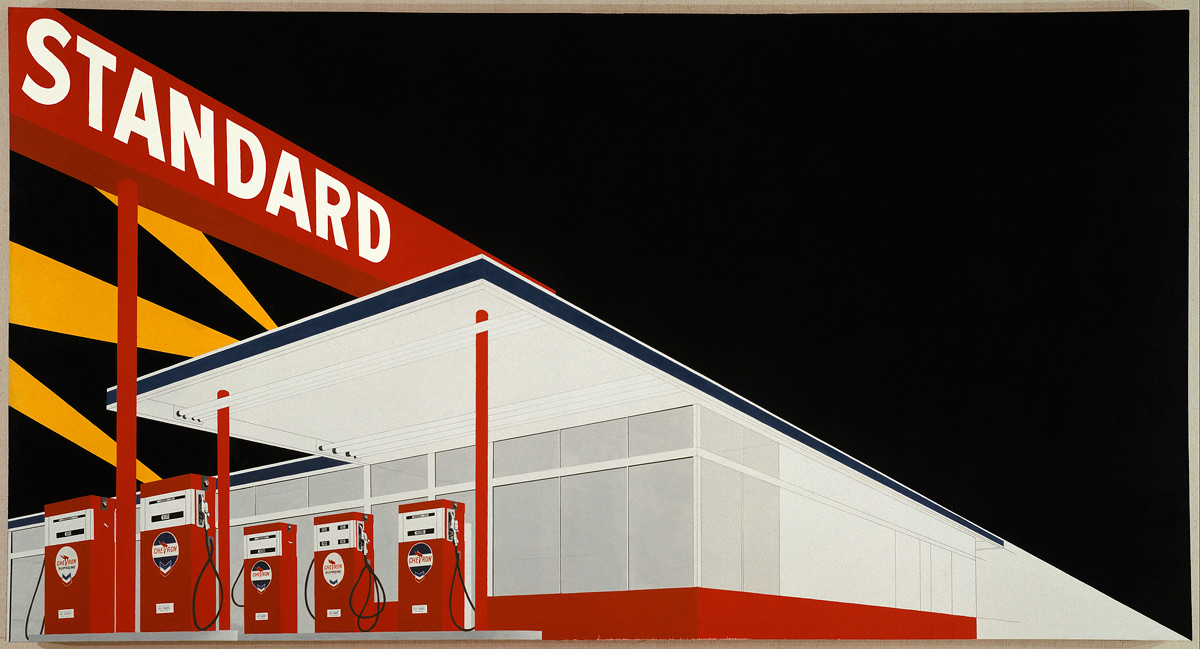
Ed Ruscha (American, b. 1937) 'Standard Station, Amarillo, Texas' 1963


Ed Ruscha (American, b. 1937)
Standard Station, Amarillo, Texas
1963
Oil on Canvas
Hood Museum of Art, Dartmouth College, Hanover, New Hampshire
Gift of James Meeker, Class of 1958, in memory of Lee English, Class of 1958, scholar, poet, athlete and friend to all


What a bumper posting – so much to enjoy and something for everyone!

Marcus


Many thankx to Martin-Gropuis-Bau for allowing me to publish the artwork in the posting. Please click on the photographs for a larger version of the image.


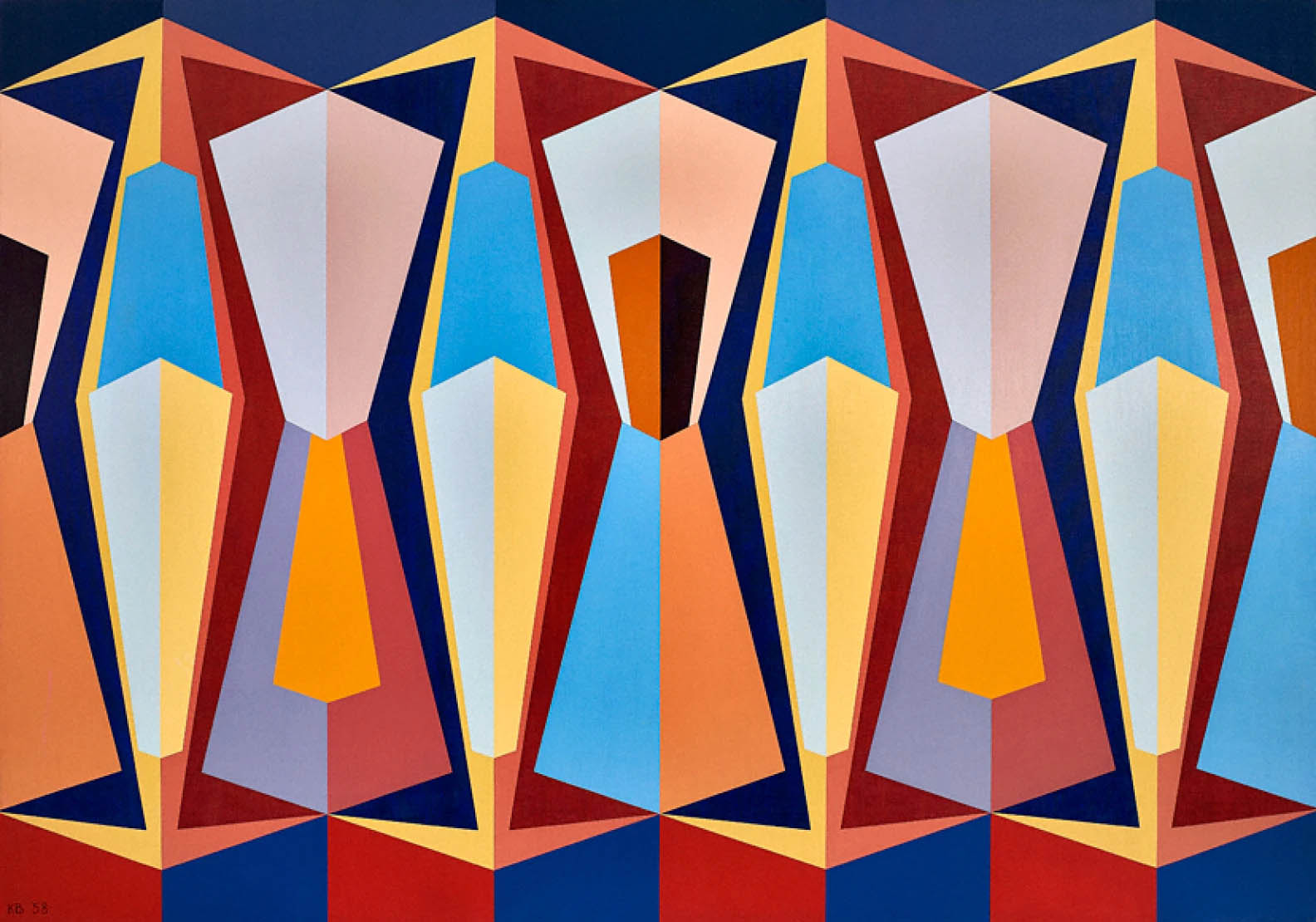
Karl Benjamin (American, 1925-2012) 'Stage II' 1959 


Karl Benjamin (American, 1925-2012)
Stage II
1959
Oil on canvas
50 x 70 inches; 127 x 177.8cm


Karl Stanley Benjamin (December 29, 1925 – July 26, 2012[1]) was an American painter of vibrant geometric abstractions, who rose to fame in 1959 as one of four Los Angeles–based Abstract Classicists and subsequently produced a critically acclaimed body of work that explores a vast array of color relationships. Working quietly at his home in Claremont, California, he developed a rich vocabulary of colors and hard-edge shapes in masterful compositions of tightly balanced repose or high-spirited energy. At once intuitive and systematic, the artist was, in the words of critic Christopher Knight, “a colorist of great wit and inventiveness.”

Text from the Wikipedia website


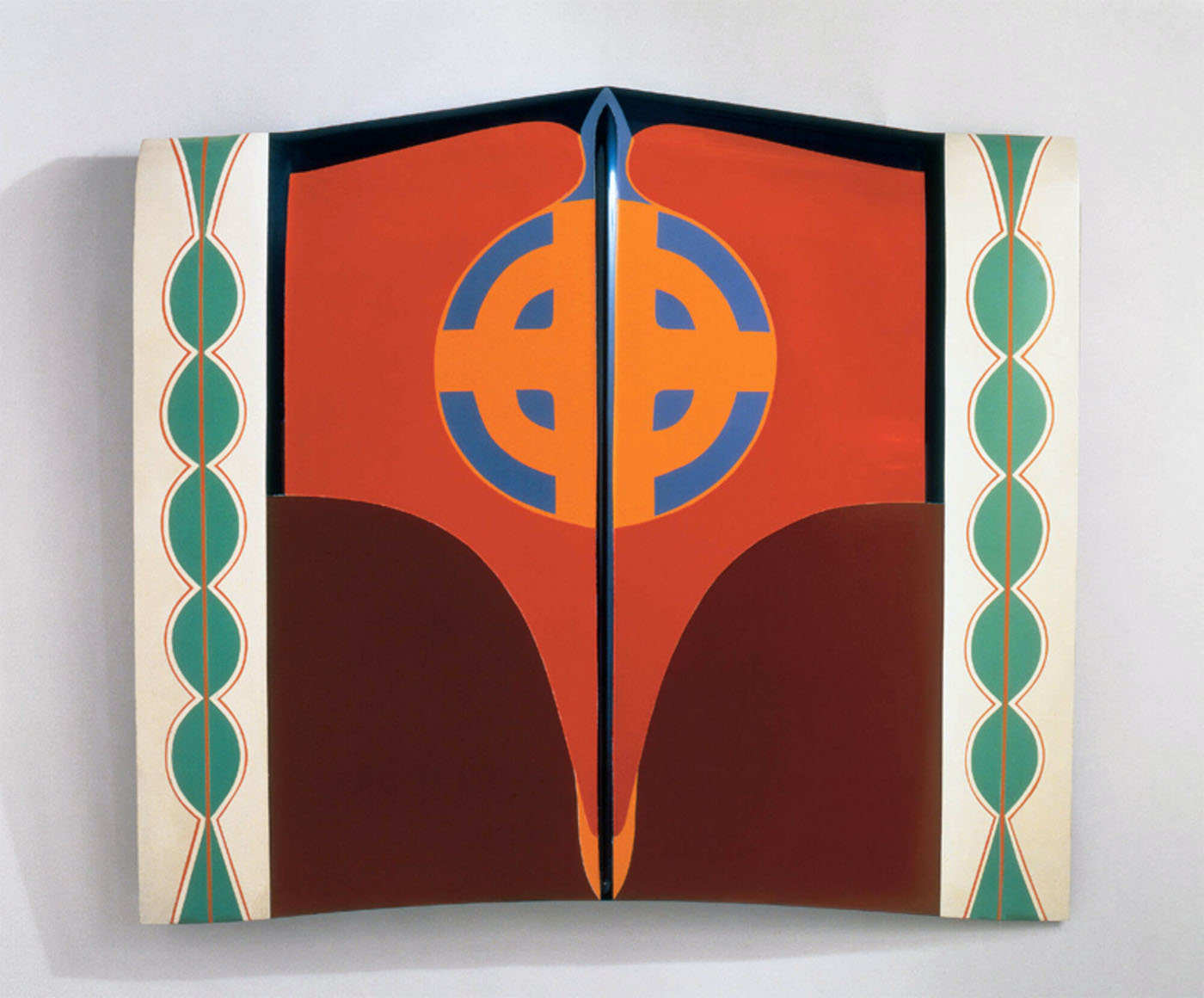
Judy Chicago (American, b. 1939) 'Car Hood' 1964


Judy Chicago (American, b. 1939)
Car Hood
1964
Sprayed acrylic and lacquer on car hood
109 x 125 x 11cm


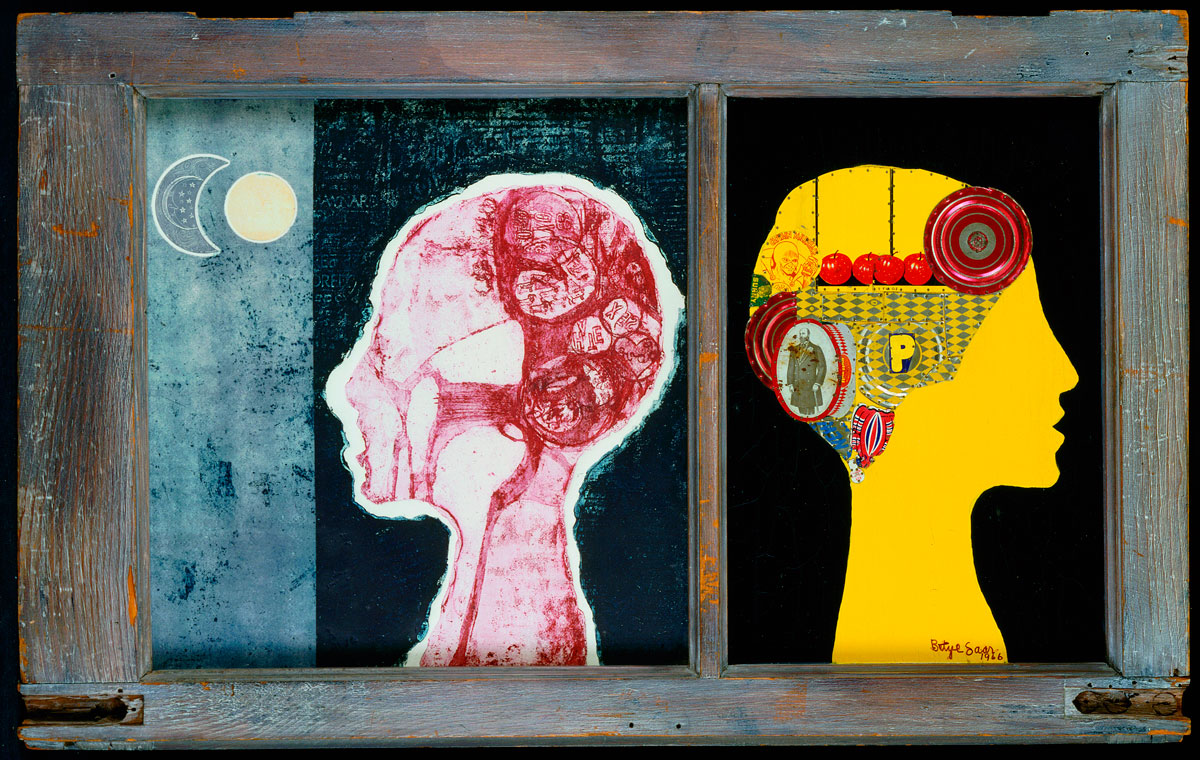
Betye Saar (African-American, b. 1926) 'The Phrenologer's Window' 1966


Betye Saar (African-American, b. 1926)
The Phrenologer’s Window
1966
Assemblage of two panel wood frame with print and collage
Private Collection; courtesy of Michael Rosenfeld Gallery, LLC, New York, NY


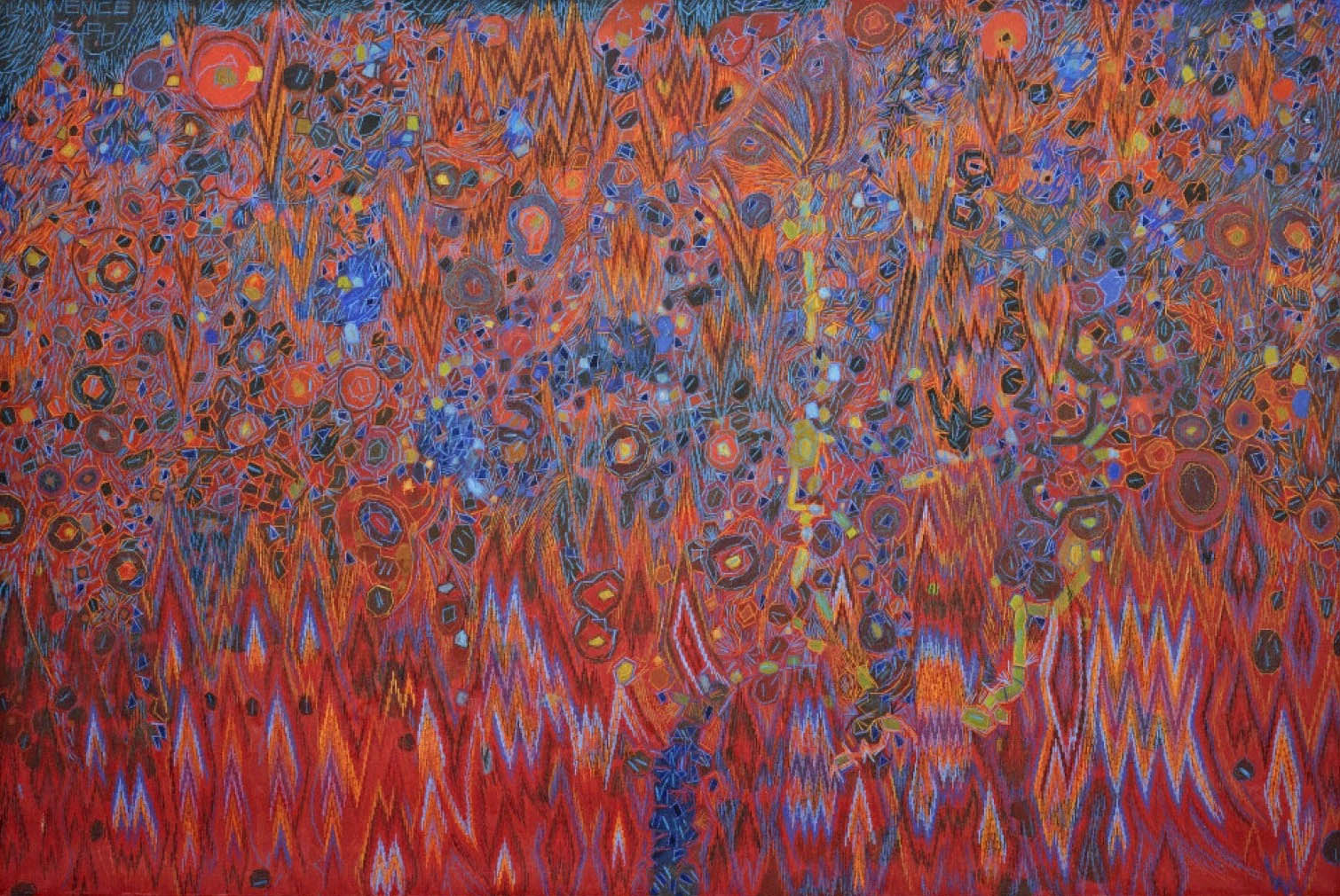
Lee Mullican (American, 1919-1998) 'Untitled (Venice)' 1967


Lee Mullican (American, 1919-1998)
Untitled (Venice)
1967
Oil on canvas


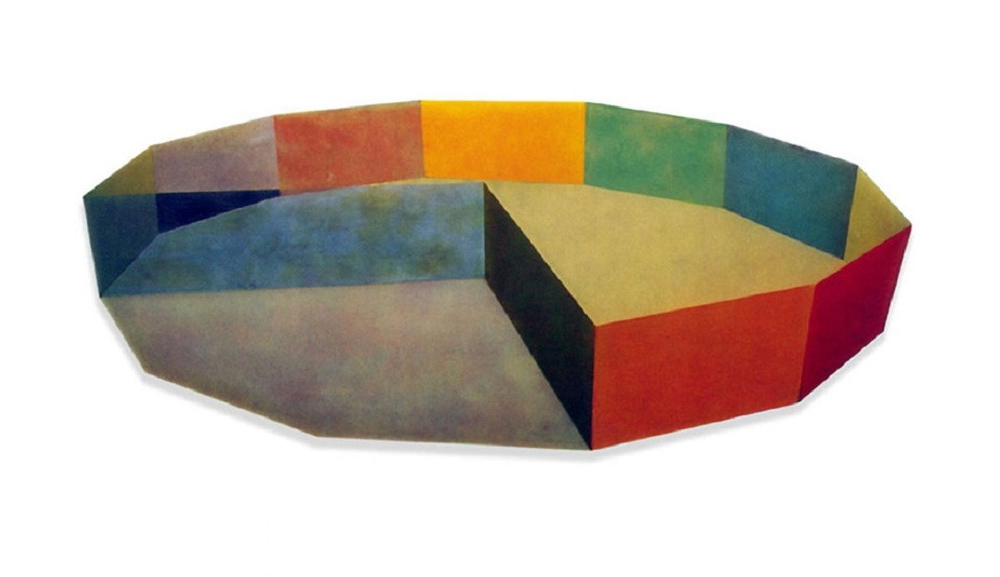
Ronald Davis (American, b. 1937) 'Vector' 1968


Ronald Davis (American, b. 1937)
Vector
1968
Polyester Resin and Fiberglass
60 1/2 x 132 inches (shaped)
Tate Gallery, London


Ronald “Ron” Davis (born 1937) is an American painter whose work is associated with geometric abstraction, abstract illusionism, lyrical abstraction, hard-edge painting, shaped canvas painting, color field painting, and 3D computer graphics. He is a veteran of nearly seventy solo exhibitions and hundreds of group exhibitions.


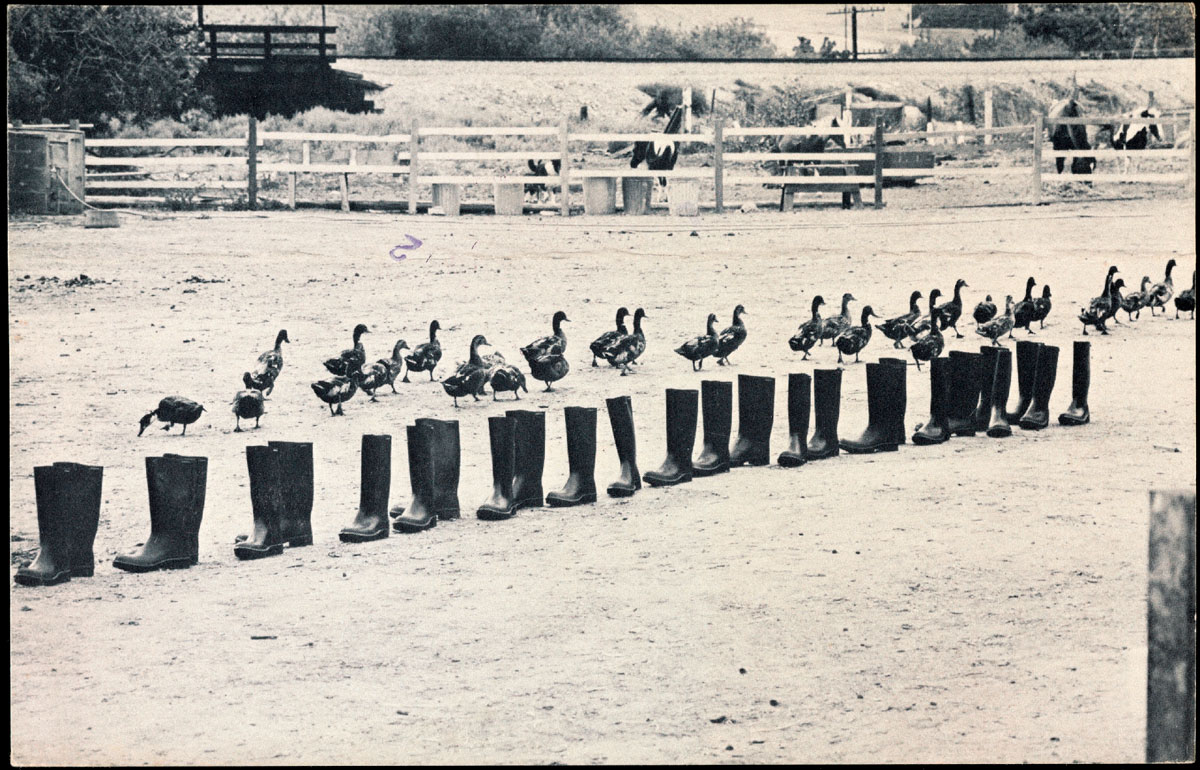
Eleanor Antin (American, b. 1935) '100 BOOTS Move On' 1971-1973


Eleanor Antin (American, b. 1935)
100 BOOTS Move On
1971-1973
Halftone reproduction
Getty Research Institute, Los Angeles, CA
© Eleanor Antin


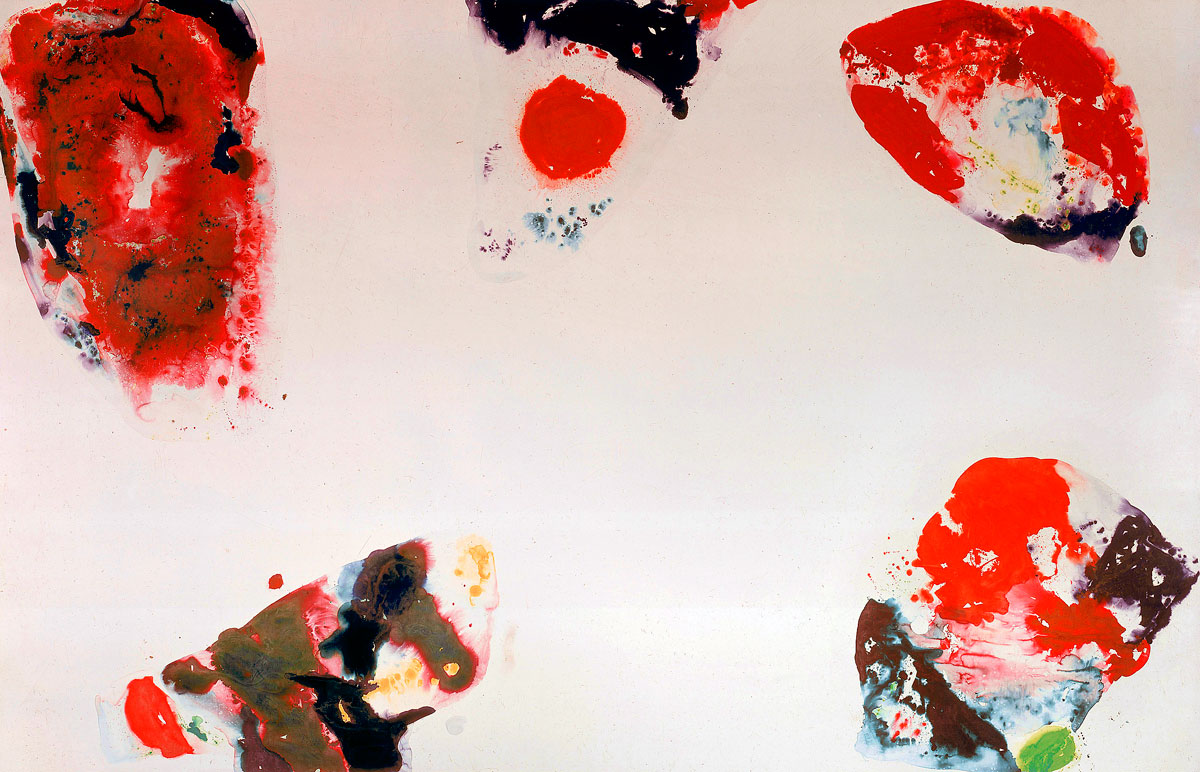
Sam Francis (American, 1923-1994) 'Berlin Red' 1969-1970


Sam Francis (American, 1923-1994)
Berlin Red
1969-1970
Acrylic on canvas
Nationalgalerie, Staatliche Museen zu Berlin
© Sam Francis Foundation, Cailfornia / VG Bild-Kunst, Bonn 2012
Foto: bpk / Nationalgalerie, SMB / Jörg P. Anders


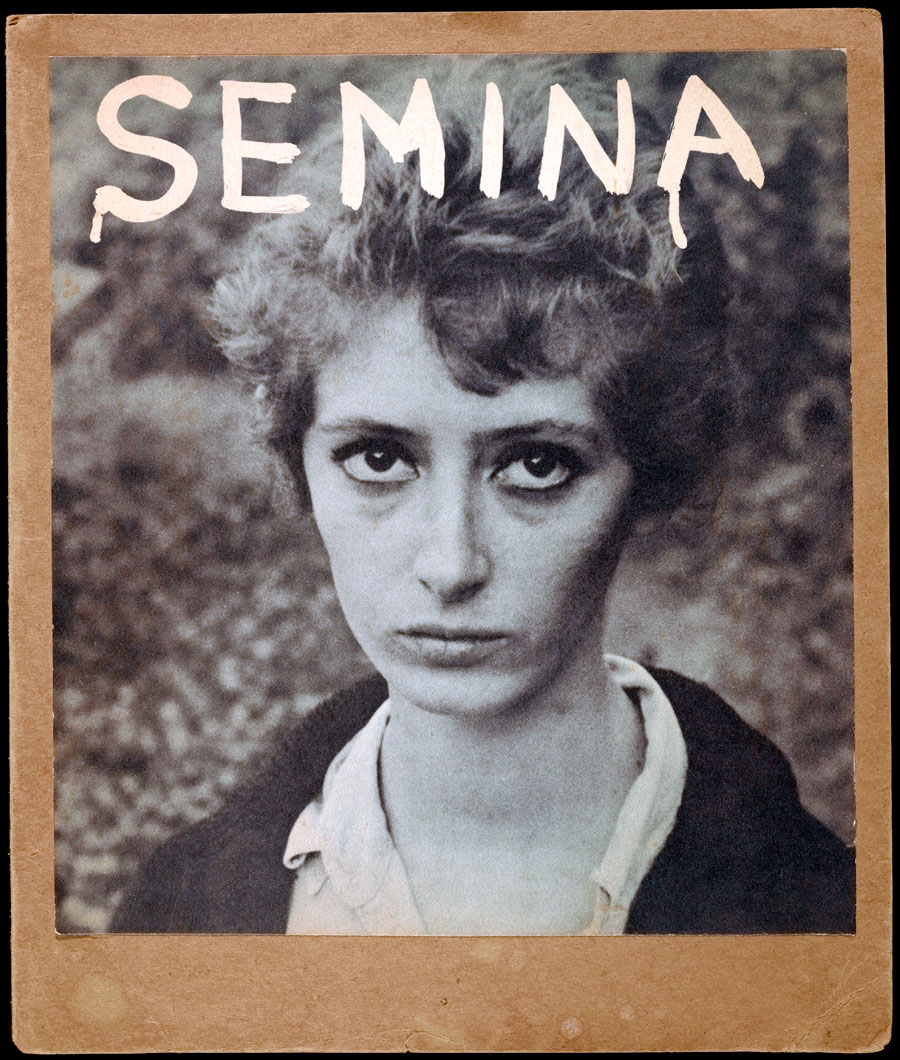
Wallace Berman (American, 1926-1976) 'Semina Cover with Wife (Photograph of Shirley Berman)' 1959


Wallace Berman (American, 1926-1976)
Semina Cover with Wife (Photograph of Shirley Berman)
1959
Halftone reproduction on cardstock
Getty Research Institute, Los Angeles, CA


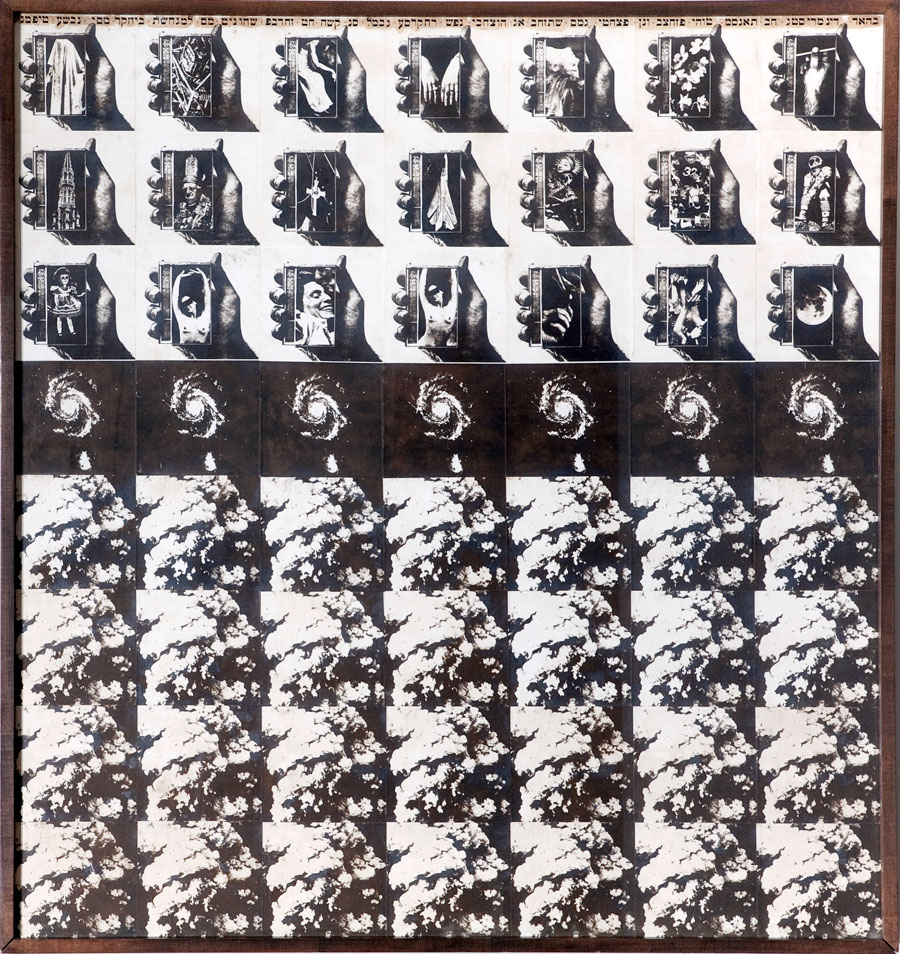
The exhibition project Pacific Standard Time – Art in Los Angeles, 1950-1980 traces the development of the Los Angeles art scene during the post-war period, when the city on the Pacific hosted an impressively varied and versatile art scene, thus proving that it was more than Hollywood and a sprawling metropolis in the land of sunshine and palm trees. Pacific Standard Time features such internationally esteemed artists as John Baldessari, David Hockney, Edward Kienholz or Ed Ruscha as well as protagonists that are yet to be discovered like the abstract painters Helen Lundeberg and Karl Benjamin, the ceramicists Ken Price and John Mason, and sculptors such as De Wain Valentine.

The mega show – over 60 institutions and galleries in Los Angeles were involved – is taking the two main core exhibitions of the Getty Museum and the Getty Research Institute to Europe. The sole European venue is the Martin-Gropius-Bau in Berlin. The section of the exhibition that was to be seen in Los Angeles’ Getty Museum under the title of Crosscurrents in L.A. – Painting and Sculpture, 1950-1970, presents painting and sculpture. In the second part that was to be seen in Los Angeles under the title of Greetings from L.A. – Artists and Publics, 1950-1980, posters, artists’ catalogues, postcards, invitation cards and other memorabilia are shown which offer a deeper insight into the networks of the Los Angeles art scene at that time. For Berlin the show has been supplemented to include photographs by Julius Shulman, whose architectural shots defined the image of the Californian lifestyle in the 1950s. His incomparable sensibility and intuitive feel for composition and the ‘critical moment’ established him as a master of his craft.

Part One: Crosscurrents

The first part of the Berlin show brings together more than 70 works by over 50 artists and traces the rise of the Southern Californian art scene between 1945 and 1980. The list of names reads like a Who’s Who of today’s internationally esteemed artists, as people like John Baldessari, David Hockney, Edward Kienholz, Bruce Nauman or Ed Ruscha began their careers here.

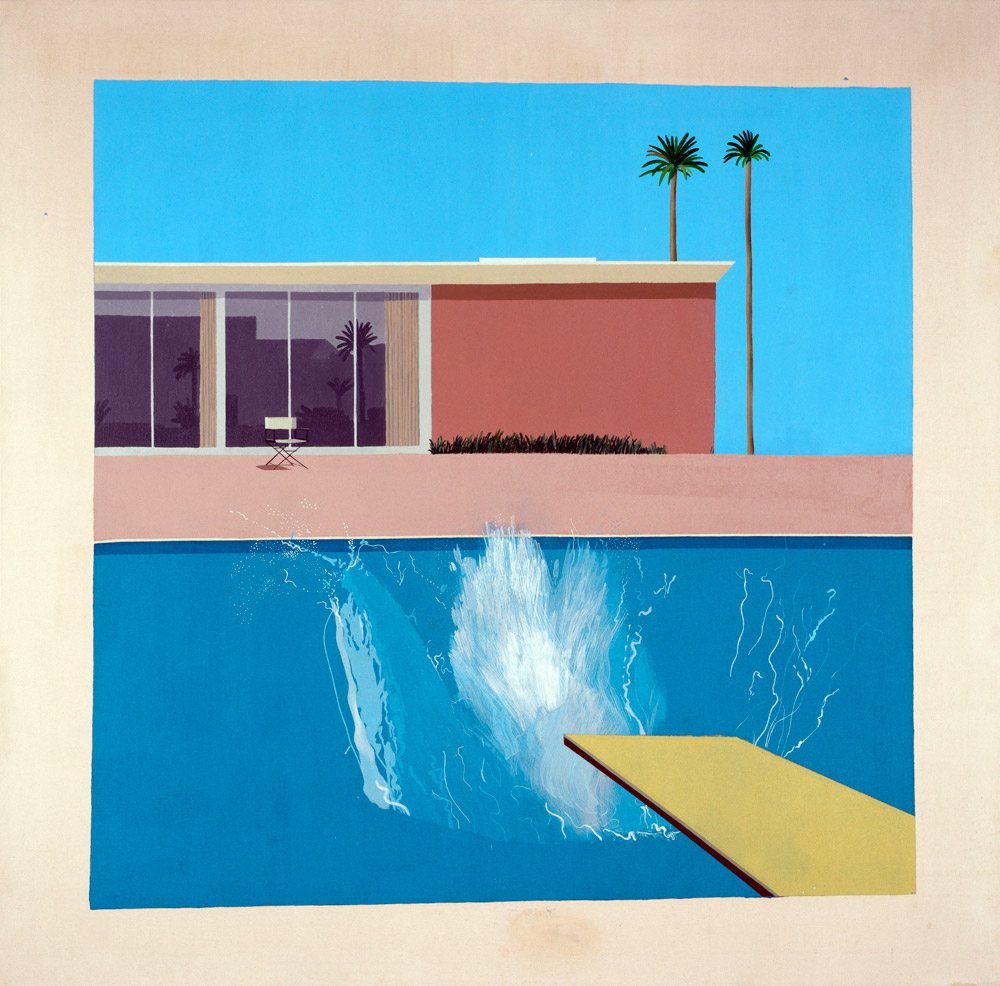
The entrée into Pacific Standard Time begins with British artist David Hockney’s iconic painting A Bigger Splash from the year 1967. It is one of the key pictures of the exhibition and stands for the hedonistic life under palm trees with permanent sunshine and never-ending parties.

The exhibition is structured both chronologically and thematically, comprising six sections that reflect the entire spectrum of the art trends that sprang up simultaneously in Los Angeles. Abstract works – ceramic sculptures and paintings of bleak clarity – are to be seen in the first section. The second section shows assemblage sculptures and collages by artists like George Herms, Wallace Berman and Ed Bereal, who paved the way for this artistic approach in the 1950s, and their successors, including many African-American artists. The third section documents the rise of Los Angeles to become an important art centre, while the fourth shows paintings by internationally recognised Los Angeles artists as Richard Diebenkorn, David Hockney and Ed Ruscha. It becomes clear that Southern California was one of the leading centres for large-format pop art and abstract painting in the 1960s. The fifth section examines how, at a time when painting was growing in significance on the Atlantic Coast of the USA, artists on the West Coast were beginning to extend their notions of traditional painting and sculpture, with perceptual phenomena and the material processes of artistic production coming to the fore. Here we find works that have arisen out of a collision between art and technology, such as a sculpture by De Wain Valentine, who uses industrial materials like polyester casting resin, or a canvas by Mary Corse, into which the smallest, high-grade reflecting glass microspheres have been worked. We are also introduced to a group of artists whose works show traces of their creation, such as those of Joe Goode, Allan McCollum, Ed Moses and Peter Alexander.

Berlin is supplementing the Getty exhibition by devoting a special room to the early international perception of art in Los Angeles. It will feature the works Berlin Red by Sam Francis, a 8 x 12 metre painting that was commissioned by Berlin’s Neue Nationalgalerie in 1969, and Volksempfängers (People’s Wireless) by Edward Kienholz. As a DAAD scholar Kienholz often lived in Berlin from 1973 on.

Another distinctive feature of the exhibition are the various room installations, including Stuck Red and Stuck Blue by James Turrell and Four Corner Piece by Bruce Nauman. In 1966 Turrell began working on his Light Room installations. In the work displayed in the Martin-Gropius-Bau that he designed in 1970, he uses light to dissolve the borders of spatial structures and transform them. In his Four Corner Piece from 1971 Bruce Nauman creates a particular spatial experience through the interplay of physical information vs. visual information.

Part Two: Greetings from L. A.

In the second part of the exhibition, elaborated by the Getty Research Institute, the Martin-Gropius-Bau shows over 200 objects – photographs, artists’ catalogues, books, posters, postcards, invitations, letters and artworks, of which many are on public view for the first time. We are given a sense of how Californian artists, through the involvement of a wide audience, brought art into contact with the general public. We also see how intensely the international networks linking groups of artists functioned.

Greetings from L.A. begins with Making the Scene and describes the gallery scene in Los Angeles from the 1950s to the 1970s. We are introduced to art dealers and collectors of the kind who congregated at La Cienega Boulevard – Rolf Nelson, Riko Mizuno and Betty Asher. On this gallery-lined boulevard, which crosses the Sunset Boulevard immortalised by Ed Ruscha, the reputation of Los Angeles as a city of modern and contemporary art was made.

Public Disturbances, the second section of the show, is devoted to three important exhibitions which drew fierce criticism and even led to arrests. Wallace Berman’s 1957 exhibition in the Ferus Gallery was closed down by the police. Violent controversies were triggered by the War Babies exhibition (1961) in the Huysman Gallery. There were also strong differences of opinion between the Los Angeles County Museum of Art (LACMA) and the Los Angeles County Board of Supervisors over the inclusion of Kienholz’s installation Back Seat Dodge ’38 (1964) in his grand retrospective of 1966.

The Private Assembly section of the exhibition focuses on the works created by Wallace Berman, George Herms, Charles Brittin and their circle in the 1950s and 1960s. The intimacy of these objects is explained not only by the unmistakable traces of artistic authorship they bear, but also by the fact that they were only accessible to a select, non-public audience. Mainly active outside the commercial gallery scene, this group of assemblage artists concentrated their energies on private artworks, which they handed over personally or sent by mail as a token of friendship.

The fourth section, Mass Media, introduces artists who selected the mass media as a model for their own art. Ed Ruscha, Allen Ruppersberg and Chris Burden occupied themselves with popular culture and mass production as alternative means of production and distribution. They used impersonal forms, such as those of objects or advertising materials commercially produced and sold as consumer goods. By avoiding conventional exhibition rooms, these artists reached a new public. They often exhibited anonymously, thus making the identity of artist and work secondary.

Art School as Audience, the fifth section of the exhibition, sheds light on the important role of art schools in the development of contemporary art forms. They served as the static pole, because in them artists constituted the audience of other fellow artists. The California Institute of the Arts, commonly known as CalArts, and its predecessor, the Chouinard Art Institute, were key venues for important groups of artists, as can be seen from the works of such students as Ed Ruscha and Joe Goode, and such teachers as John Baldessari, Miriam Schapiro and Judy Chicago. Other important forums were the new art faculties that came into existence at the universities and other higher education facilities in Los Angeles County. At the campuses of Irvine or San Diego in particular there was a stimulating audience for the experiments of such artists as Martha Rosler, Barbara Smith and Eleanor Antin.

The last section, The Art of Protest, examines how social and political developments mobilised artists to display their works in the street. In the 1960s Los Angeles became the scene of the first protests led by artists against the Vietnam War. This gave rise in 1966 to the construction of a Peace Tower at the corner of La Cienega and Sunset Boulevards. In the following decade it was feminism that moved many artists to become social activists, as can be seen from the work of Suzanne Lacy and Leslie Labowitz-Starus In Mourning and in Rage 1977, a highly esteemed protest performed on the steps of City Hall.

Greetings from L.A. offers a new look at art in Southern California by showing how the artists of this region changed the conventional relations between art and public and developed alternatives for a public role of art and its place in society.

The exhibition affords glimpses into some recently acquired archives, like those of Betty Asher, Hal Glicksman, George Herms, Wolfgang Stoerchle, High Performance magazine, the galleries of Rolf Nelson, Mizuno and Jan Baum as well as of the papers of Charles Brittin and Edmund Teske. These are supplemented by material from archives not normally associated with Southern California, such as the papers of the critics Irving Sandler, Barbara Rose and Lawrence Alloway of New York; of Marcia Tucker, the founder and curator of New York’s New Museum of Contemporary Art; and of the Kasmin Gallery, London.

Part Three: Julius Shulman

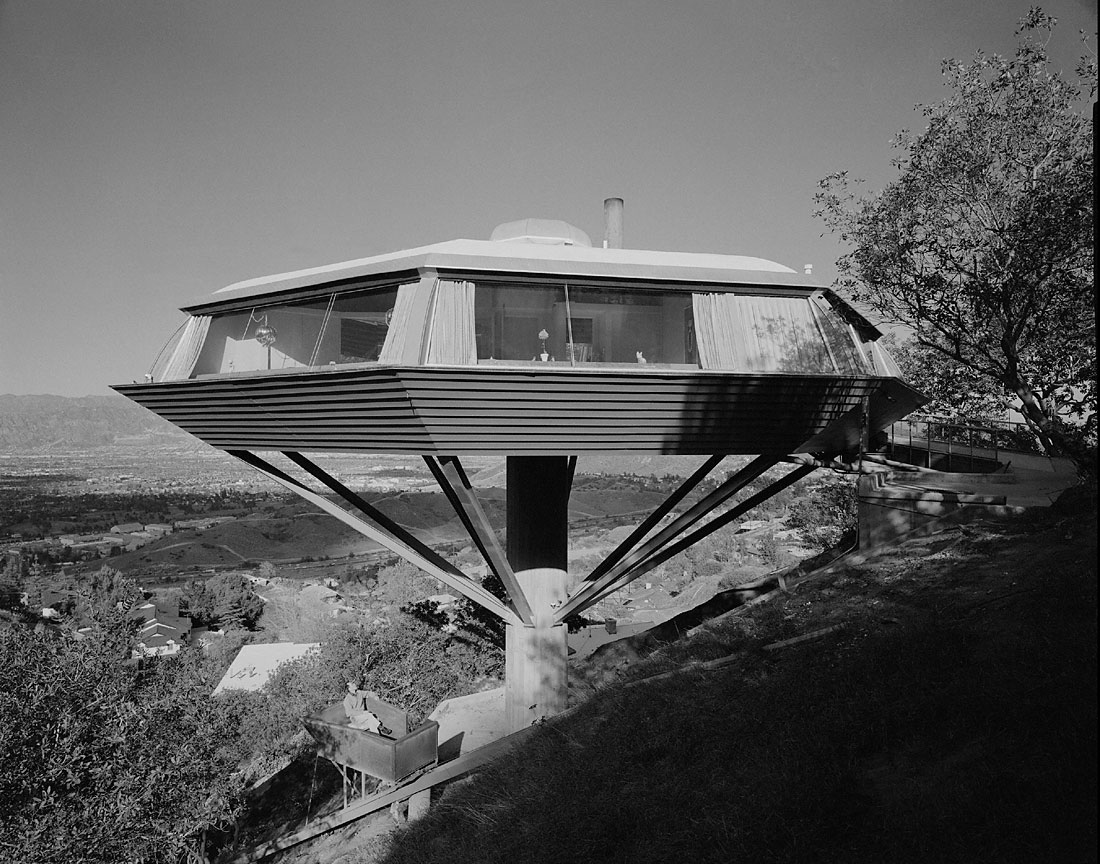
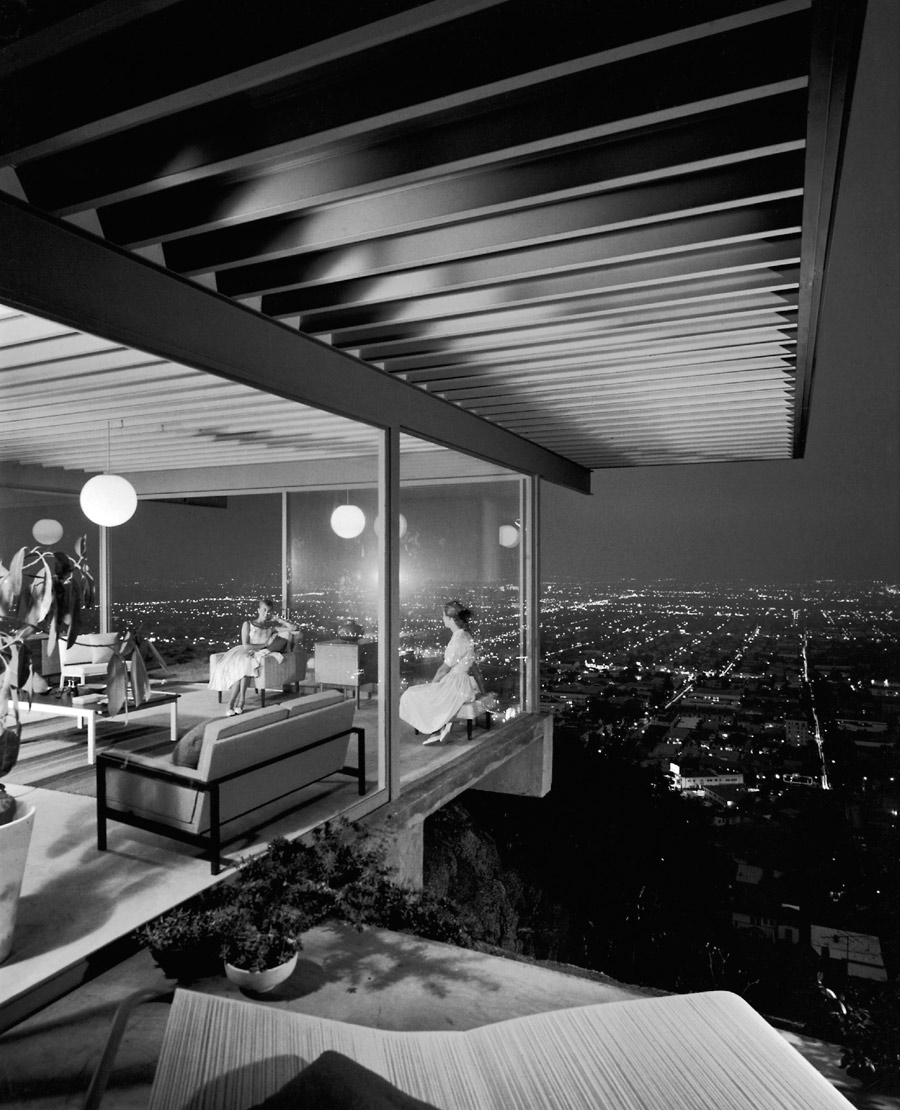
The last part of the Berlin exhibition shows over 50 photographs by Julius Shulman – the most important American photographer of architecture in the post-war period. For more than thirty years he photographed Modernist houses – built by Richard Neutra, Frank Lloyd Wright, or Frank Gehry – thus making many of them into architectural icons. The exhibition shows some of his key works.

Press release from Martin-Gropuis-Bau website


Julius Shulman (American, 1910-2009) 'Malin Residence, "Chemosphere”' 1960


Julius Shulman (American, 1910-2009)
Malin Residence, “Chemosphere”
1960
Gelatin silver print
Getty Research Institute, Los Angeles, CA
© J. Paul Getty Trust


Julius Shulman (American, 1910-2009) 'Case Study House #22' 1960


Julius Shulman (American, 1910-2009)
Case Study House #22
1960
Gelatin silver print
Getty Research Institute, Los Angeles, CA
© J. Paul Getty Trust


Charles Brittin (American, 1928-2011) 'Peace Tower' 1966


Charles Brittin (American, 1928-2011)
Peace Tower
1966
Silver-dye bleach print
Getty Research Institute, Los Angeles, CA
© J. Paul Getty Trust


Peter Alexander (American 1939-2020) 'Cloud Box (Large)' 1966


Peter Alexander (American 1939-2020)
Cloud Box (Large)
1966
Cast polyester resin
Janis Horn and Leonard Feldman
© Peter Alexander
Foto: Brian Forrest


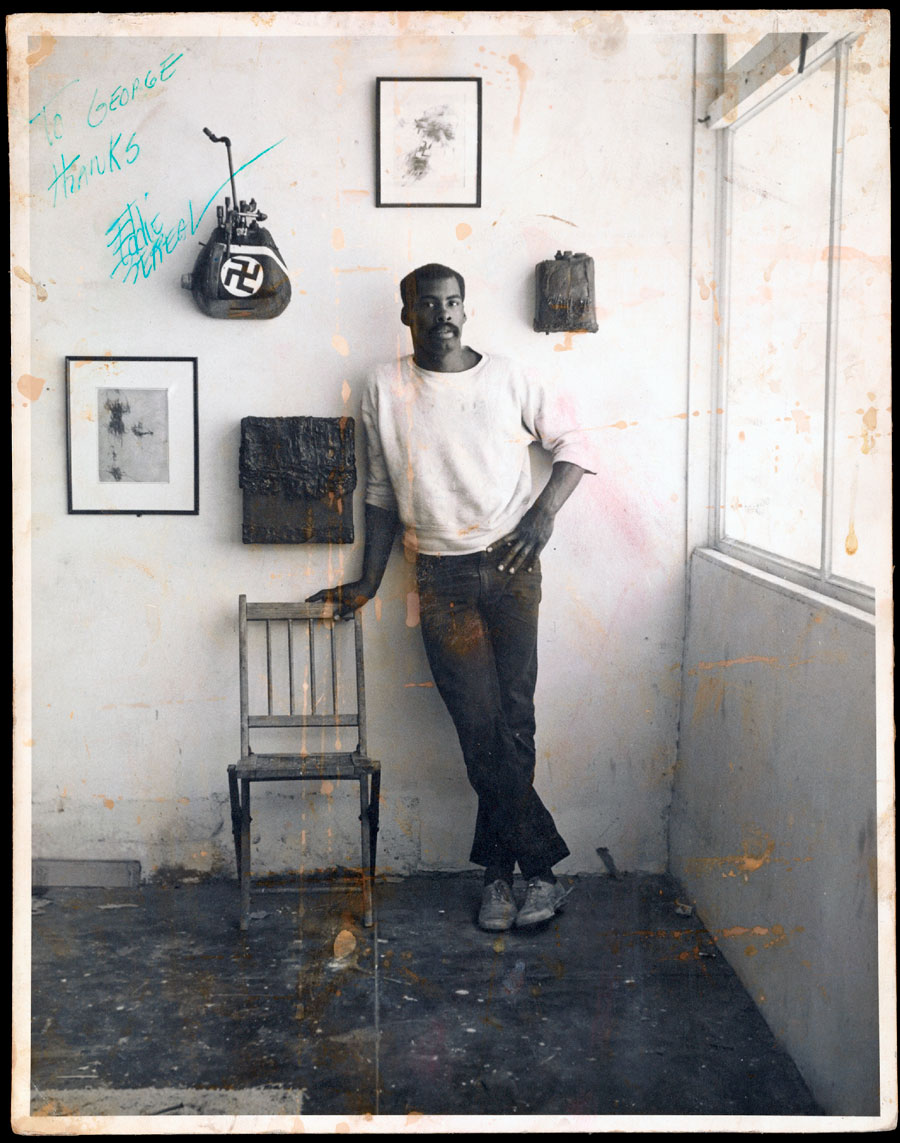
Jerry McMillan (American, b. 1936) 'Ed Bereal in His Studio' c. 1961


Jerry McMillan (American, b. 1936)
Ed Bereal in His Studio
c. 1961
Gelatin silver print mounted on board
Getty Research Institute, Los Angeles, CA
Gift of George Herms
© Jerry McMillan


David Hockney (British, b. 1937) 'A Bigger Splash' 1967


David Hockney (British, b. 1937)
A Bigger Splash
1967
Acrylic on canvas
96″ x 96″
© David Hockney
Tate Gallery, London, 2011


Wallace Berman (American, 1926-1976) 'Untitled (Verifax Collage)' 1969


Wallace Berman (American, 1926-1976)
Untitled (Verifax Collage)
1969
Verifax collage on board
Collection of Michael D. Fox, Berkeley CA, Courtesy Steven Wolf Fine Arts, San Francisco CA
© Courtesy of the Estate of Wallace Berman and Michael Kohn Gallery, Los Angeles
Foto: Joe Schopplein


Martin-Gropius-Bau Berlin
Niederkirchnerstraße 7
Corner Stresemannstr. 110
10963 Berlin
Phone: +49 (0)30 254 86-0

Opening Hours:
Wednesday to Monday 10 – 19hrs
Tuesday closed

Martin-Gropius-Bau website

LIKE ART BLART ON FACEBOOK

Back to top

Exhibition: ‘Entre Nous: The Art of Claude Cahun’ at the Art Institute of Chicago

Exhibition dates:  25th February – 3rd June 2012


Claude Cahun (French, 1894-1954) 'Autoportrait' 1929


Claude Cahun (French, 1894-1954)
Autoportrait
1929
Gelatin silver print
24 x 19cm
Musée des Beaux-Arts de Nantes
© RMN/Gérard Blot


“In many ways, Cahun’s life was marked by a sense of role reversal, and her public identity became a commentary upon not only her own, but the public’s notions of sexuality, gender, beauty, and logic. Her adoption of a sexually ambiguous name, and her androgynous self-portraits display a revolutionary way of thinking and creating, experimenting with her audience’s understanding of photography as a documentation of reality. Her poetry challenged gender roles and attacked the increasingly modern world’s social and economic boundaries. Also Cahun’s participation in the Parisian Surrealist movement diversified the group’s artwork and ushered in new representations. Where most Surrealist artists were men, and their primary images were of women as isolated symbols of eroticism, Cahun epitomised the chameleonic and multiple possibilities of the female identity. Her photographs, writings, and general life as an artistic and political revolutionary continue to influence countless artists, namely Cindy Sherman, Nan Goldin and Del LaGrace Volcano.”


Text from the Wikipedia website


Cahun was a resistance fighter during the Second World War, was arrested, sentenced to death and survived. She lived with her longtime female partner and collaborator on Jersey from 1937 until 1954, the year of her death. Entre Nous means “Between Us,” such an appropriate title for their collaboration, love and partnership. What a talent, what a woman and gay to boot!

Dr Marcus Bunyan


Many thankx to the Art Institute of Chicago for allowing me to publish the photographs in the posting. Please click on the photographs for a larger version of the image.


Claude Cahun (French, 1894-1954) 'Autoportrait' 1929


Claude Cahun (French, 1894-1954)
Autoportrait
1929
Gelatin silver print
11.5 x 8.5cm
Jersey Heritage Collection
© Jersey Heritage


Claude Cahun (French, 1894-1954) 'Autoportrait' 1928


Claude Cahun (French, 1894-1954)
Autoportrait
1928
Gelatin silver print
13.9 x 9cm
Jersey Heritage Collection
© Jersey Heritage


Claude Cahun (French, 1894-1954) 'Autoportrait' 1927


Claude Cahun (French, 1894-1954)
Autoportrait
1927
Gelatin silver print
10.4 x 7.6cm
Soizic Audouard Collection


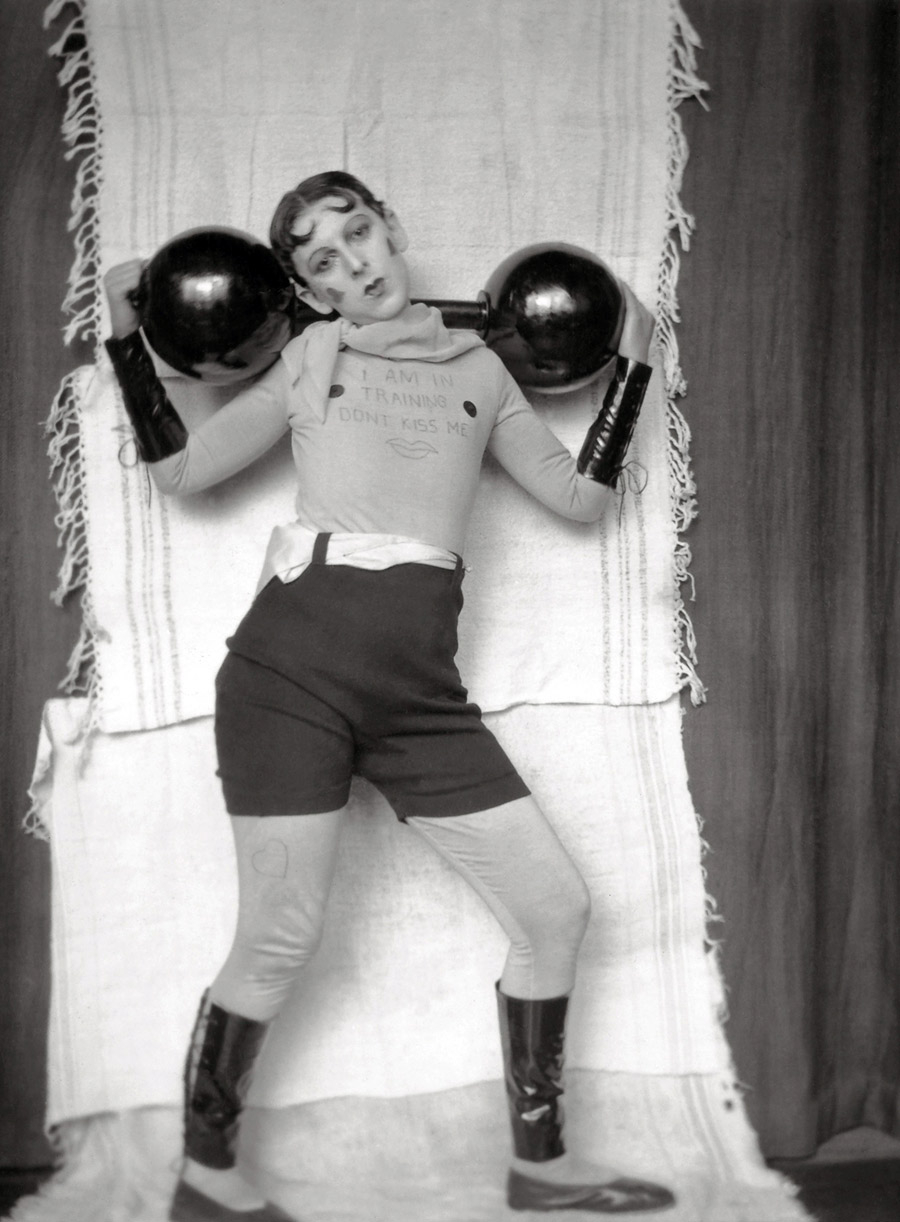
Claude Cahun (1894-1954) has something approaching cult status in today’s art world. However, her work was almost unknown until the early 1980s, when it was championed by the research of François Leperlier, after which exhibitions at the Musée des Beaux-Arts in Nantes (1994) and the Musée d’Art Moderne de la Ville de Paris (1995) brought it to public attention. Her life and work (both literary and artistic) bespeak an extraordinary libertarian personality who defied sexual, social and ethical conventions in what was an age of avant-garde and moral upheaval. Among her many photographs, it is undoubtedly her self-portraits that have aroused the greatest interest in recent years. Throughout her life, Cahun used her own image to dismantle the clichés surrounding ideas of identity. She reinvented herself through photography, posing for the lens with a keen sense of performance and role-play, dressed as a woman or a man, as a maverick hero, with her hair long or very short, or even with a shaved head. This approach was extended in innovative ways in her photographs of objects and use of photomontages, which asserted the primacy of the imagination and of metamorphosis.

By exploring the many different analyses made of Cahun’s work since the 1990s, and ranging across its different themes: from the subversive self-portraits that question identity, to her surrealist compositions, erotic metaphors and political forays, this exhibition confirms the modernity of a figure who, as a pioneer of self-representation and the poetry of objects, has been an important influence for many contemporary artists.

Metamorphoses of identity and the subversion of gender (I)

This set of photographs, going from 1913 to the end of the 1920s, includes some of Cahun’s major works, in which she staged her own persona, emphasising disguise and masks, and working through variations on gender: feminine, masculine, androgyne, undifferentiated. Sexual ambiguity is consciously cultivated and calls into question established norms and conventions. In 1928, she even represented herself with her head shaved, wearing a singlet, in profile, or with her hands against her face, or wearing a loose man’s jacket. Some of the mise-en-scènes from this period seem to anticipate contemporary performance.

Poetics of the object

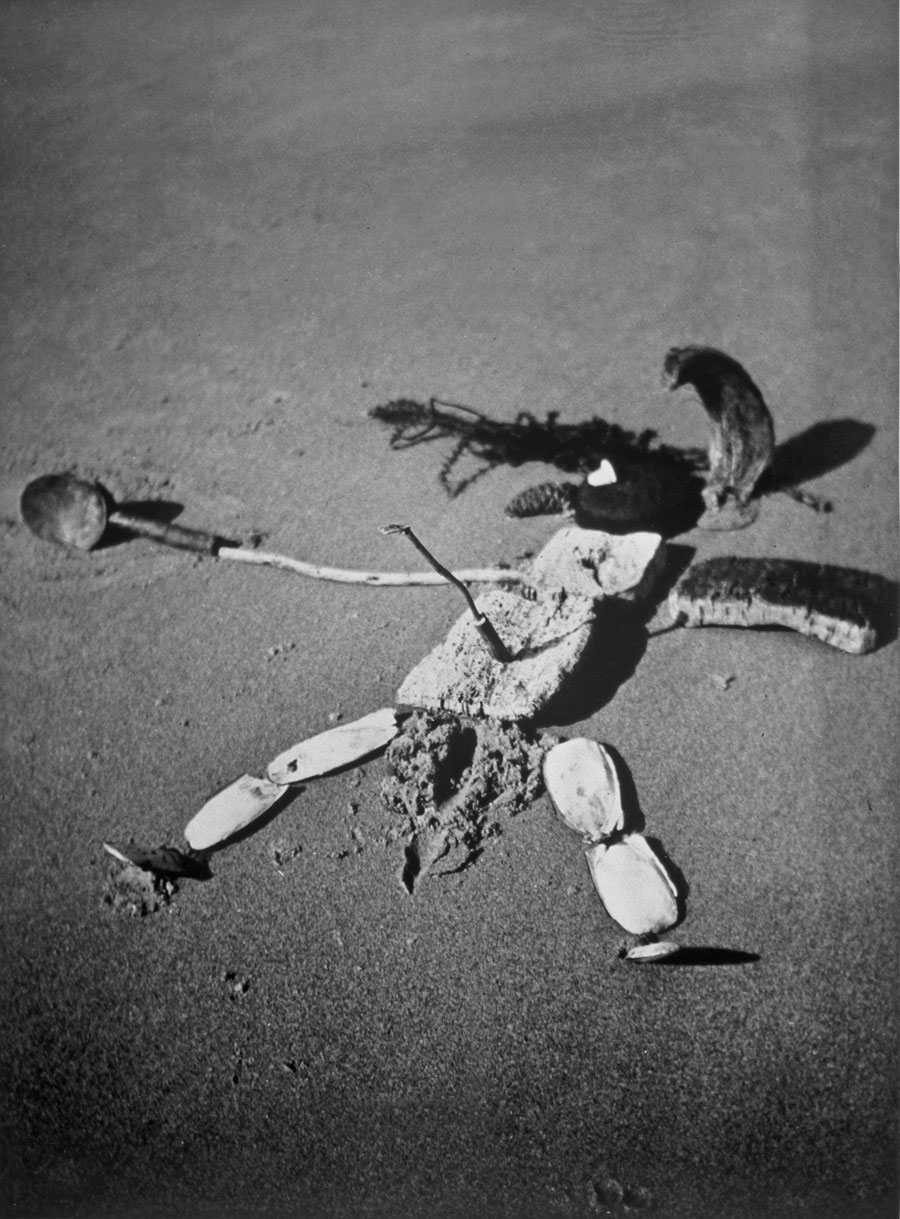
The “assemblages of objects,” which make their appearance in around 1925, inventively explore what at the time was still a rather new form. This work came to wider attention in the Surrealist exhibition at the Charles Ratton gallery, in May 1936, and then with the commissioning of 22 photographic plates to illustrate a book of poems by Lise Deharme, Le Coeur de Pic (1937), prefaced by Paul Eluard. These photographs capture ephemeral set-ups, often in a natural setting (garden, beach). Each “sketch” is a composition of heterogeneous elements, both found and made, such as knickknacks in spun glass, sewing items, twigs, bones, insects, feathers, gloves, pieces of fabric, shoes, tools, etc. This “theatre of objects” has both a visual and symbolic significance, which Cahun explained in her text Prenez garde aux objets domestiques (1936).

Metamorphoses of identity and the subversion of gender (continued)

The 1930s saw Cahun continuing to explore images of the self. However, questions of sexual difference and its social and cultural construction were now less to the fore as she went deeper into the potential of situations and disguises and experimented with duplication in a way that extended the work of the photomontages from the late 1920s.

Metaphors of desire

Eschewing the direct and sometimes reifying display of the female body found in many paintings and photographs, Cahun opted for a more subtle kind of “veiled eroticism” using distance and irony. Here we find some very evocative examples of her calculating games with desire. Whether through the contained display of the body, allegory (the bacchante or faun, surrounded by sensuous vegetation), or anthropomorphic objects (the hermaphroditic “père”), she aimed to capture the essence of desire, to bring out its essential grounding in fantasy.

The two of us. Claude Cahun and Suzanne Malherbe (Marcel Moore)

The photograph Entre nous (1926) clearly establishes the spirit of this section, which evokes various aspects of Claude Cahun’s intimate relationship and artistic collaboration with her partner, Suzanne Malherbe. In fact, a number of the photographs here were taken by Suzanne following Claude’s suggestions. A double portrait from 1921 shows a surprising parallel which could be read as a metaphor of their relationship, a deep closeness and understanding between two strong personalities. The linchpin of this section is constituted by the four photomontages used to illustrate Aveux non avenus (1930), Cahun’s most significant literary work, gathering together all the artist’s main themes and obsessive metaphors. The plates were executed by Moore in collaboration with Claude Cahun.

Elective encounters

This series of portraits, which reflect the importance of friendship in the development of Cahun’s work, gives an idea of the figures who were important to her and influenced her, or to whom she felt close, among them Henri Michaux, Robert Desnos, André Breton, Jacqueline Lamba and Suzanne Malherbe. There are also two photographs from performances at Pierre Albert-Birot’s theatre Le Plateau (1929). They attest Cahun’s keen interest in theatre and acting.

Poetry and politics

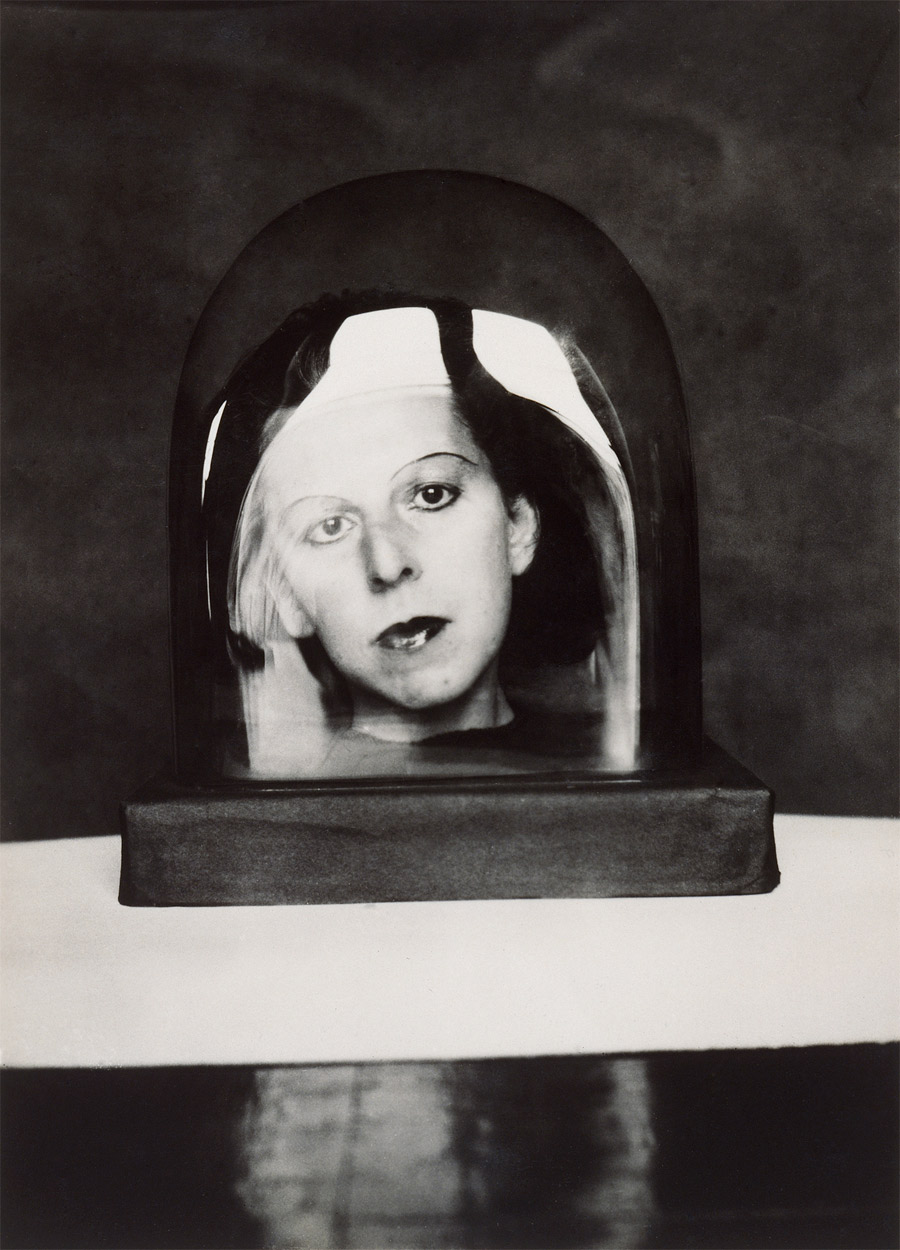
In the 1930s Cahun’s positions grew increasingly radical in response to the rise of totalitarianism. She joined the Surrealists and associated with a number of groups on the left and far left. This radicalisation is reflected in her aesthetic. In line with the ideas put forward in her pamphlet Les Paris sont ouverts (1934), she exploited the subversive qualities of “indirect action” in the sphere of symbolic expression, making a number of objects in which poetry and politics are intimately intertwined. This process culminated when she used these pieces for two big series of photographs dominated by a mood of irony, revolt and provocation: “La Poupée” (The Doll), a figure fashioned out of newspaper, and “Le Théâtre” (The Theatre), a wooden mannequin surrounded by various elements and placed under a glass dome.

Beyond the visible. The last self-portraits

Close study of Cahun’s photographs reveals the presence of allusions to non-visible phenomena, pointing the way to other realities – and perhaps, too, beyond death. Her attraction to symbolism, her interest in Eastern doctrines and her closeness to Surrealism only confirmed the primacy of fantasy and metamorphosis evidenced in the intellectual and aesthetic approaches she took throughout her life. The series Le Chemin des chats (The Way of Cats, around 1949 and 1953), suggests a mediation on and questioning of reality and appearance. Cahun was a true cat lover: for her, this animal was the great intercessor, the medium of an intuitive contact between the visible and the invisible, leading to sensorial worlds that are both unfamiliar and yet very near.

Juan Vicente Aliaga and François Leperlier, curators of the exhibition


Claude Cahun (French, 1894-1954) 'Autoportrait' 1939


Claude Cahun (French, 1894-1954)
Autoportrait
1939
Gelatin silver print
10 x 8cm
Jersey Heritage Collection
© Jersey Heritage


Claude Cahun (French, 1894-1954) 'Autoportrait' 1926


Claude Cahun (French, 1894-1954)
Autoportrait
1926
Gelatin silver print
11.1 x 8.6cm
IVAM, Institut Valencià d’Art Modern, Generalitat


Born Lucy Schwob to a family of French intellectuals and writers, Claude Cahun (who adopted the pseudonym at age 22) is best known for the staged self-portraiture, photomontages, and prose texts she made principally between 1920 and 1940. Rediscovered in the late 1980s, her work has not only expanded our understanding of the Surrealist era but also serves as an important touchstone to later feminist explorations of gender and identity politics. In her self-portraits, which she began creating around 1913, Cahun dismantled and questioned preexisting notions of self and sexuality. Posing in costumes and elaborate make-up, Cahun appears masked as various personae: man or woman, hero or doll, both powerful and vulnerable. Almost a century after their making, these innovative photographs and assemblages remain remarkably relevant in their treatment of gender, performance, and identity.

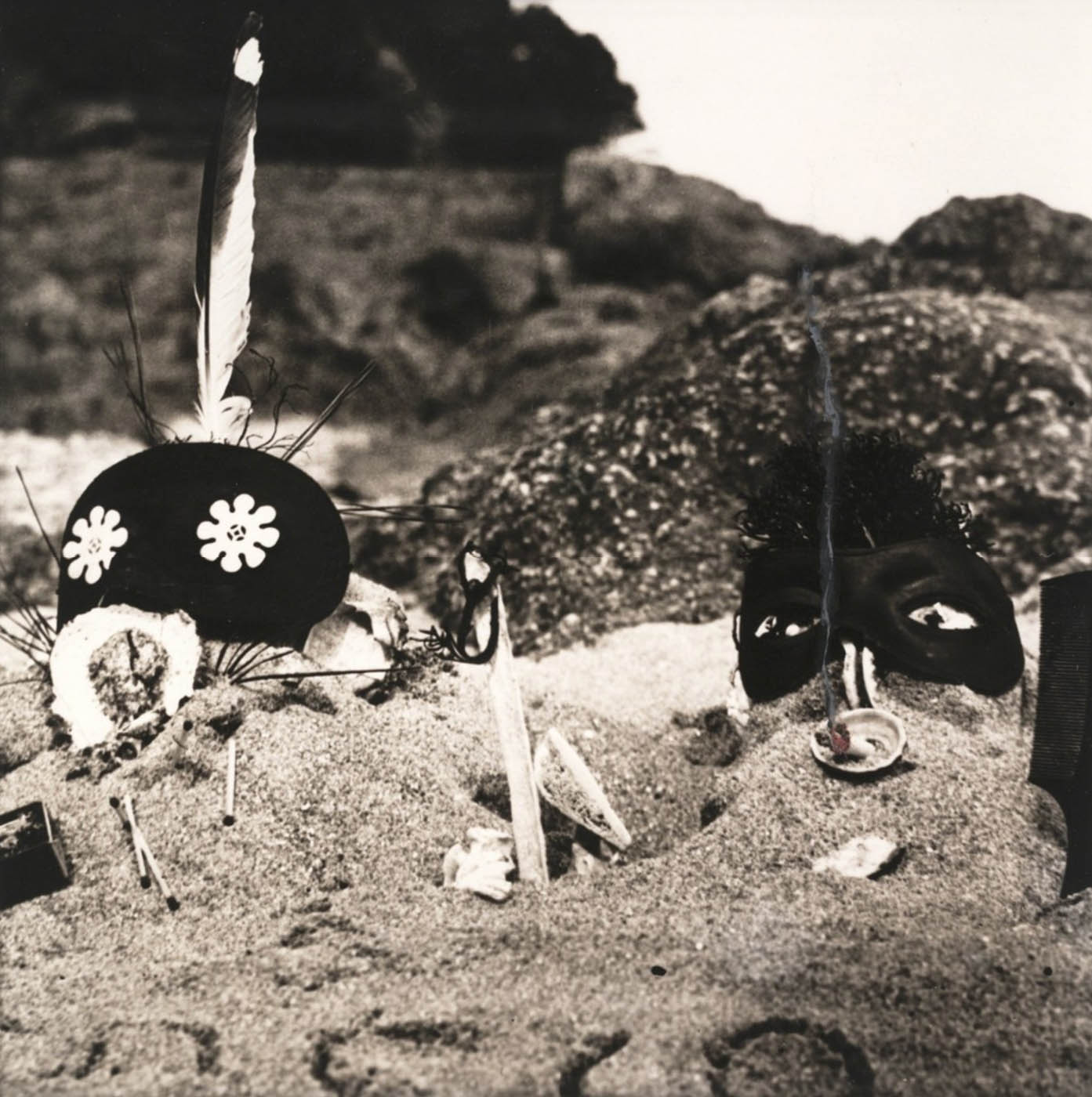
From her university years until her death, Cahun was accompanied by her partner and artistic collaborator, Suzanne Malherbe, a childhood friend and stepsister. They surrounded themselves with members of the Surrealist movement and created work that embraced leftist politics. Cahun, with assistance from Malherbe (under the pseudonym Marcel Moore), produced photographs, assemblages, and publications from the 1920s on. The photograph Entre Nous (Between Us), featuring a pair of masks embedded in sand, gives the title to this show and is emblematic of their multifaceted relationship.

The first retrospective exhibition in the United States of Cahun’s work, Entre Nous: The Art of Claude Cahun brings together over 80 photographs and published material by Cahun and Moore, including several photomontages from their 1930 collaborative publication Aveux non avenus (Disavowals), and the only surviving object by Cahun, which is in the Art Institute’s permanent collection.

Organiser: This exhibition was organised by the Jeu de Paume, Paris, and coproduced with La Virreina Centre de la Imatge, Barcelona.

Press release from the Art Institute of Chicago website


Claude Cahun (French, 1894-1954) 'Combat de pierres' 1931


Claude Cahun (French, 1894-1954)
Combat de pierres
1931
Gelatin silver print
21 x 15.5cm
Private collection
© Béatrice Hatala


Claude Cahun (French, 1894-1954) 'Le Père' 1932


Claude Cahun (French, 1894-1954)
Le Père
1932
Gelatin silver print
23.6 x 17.7cm
LAC


Claude Cahun (French, 1894-1954) Marcel Moore (French, 1892-1972) 'Entre nous' (Between Us) 1926


Claude Cahun (French, 1894-1954) Marcel Moore (French, 1892-1972)
Entre nous (Between Us)
1926
Gelatin silver print
4 11/16 × 4 5/8 in (11.9 × 11.7cm)


While the motivation for these remarkable self-portraits seems rooted in a commitment to leftist politics and subversion of gender norms, I also feel a great sense of intimate domesticity beneath the surface. Cahun and Moore first met in 1909 when they were both teenagers. Eight years later, Cahun’s father married Moore’s mother, which must have given the couple a convenient excuse for their close relationship at a time when such lifestyle choices were less than accepted.

Our curators have surmised that Cahun’s camera did not have a timer on it, so many if not all of these self-portraits must have been created with Moore’s assistance. When the two moved to the Isle of Jersey in the 1930s to escape the political climate developing in France, they began to live in almost total seclusion. Though often taken outside around the grounds of their estate, the photographs from this period seem to the most private and familiar. Beyond the thoughtful self-presentation and artistic experimentation, there is a palpable sense of play, of close friends having fun.

An interesting aside: In July of 1940, the Nazis invaded Jersey where Cahun and Moore were still living. For the next four years, they engaged in active resistance against the Germans, producing and distributing counterpropaganda leaflets to Nazi soldiers on the island. Continuing the kind of dress-up they’d played together for years, the two would dress in disguises to infiltrate German outposts where they would disseminate anti-Nazi leaflets signed as “der Soldat ohne Namen” (the solider with no name). They were eventually arrested in 1944 and sentenced to death. Fortunately, the island was liberated before the executions could be carried out.

Extract from Robby Sexton, “Between You and Me,” on the Art Institute of Chicago website March 15, 2012 [Online] Cited 08/10/2024


Claude Cahun (French, 1894-1954) 'Aveux non avenus, planche III' 1929-1930


Claude Cahun (French, 1894-1954)
Aveux non avenus, planche III
1929-1930
Gelatin silver print photomontage
15 x 10cm
Private collection


The Art Institute of Chicago
111 South Michigan Avenue
Chicago, Illinois 60603-6404
Phone: (312) 443-3600

Opening hours:
Thursday – Monday 11am – 5pm
Closed Tuesdays and Wednesdays

The Art Institute of Chicago website

LIKE ART BLART ON FACEBOOK

Back to top

Exhibition: ‘The Mind’s Eye: 50 Years of Photography by Jerry Uelsmann’ at Peabody Essex Museum, Salem, MA

Exhibition dates: 11th February – 15th July, 2012


Jerry Uelsmann (American, 1934-2022) 'Untitled (Pigeon Hill, Bloomington, Indiana)' 1958–59


Jerry Uelsmann (American, 1934-2022)
Untitled (Pigeon Hill, Bloomington, Indiana)
1958-1959
Gelatin silver print
5 3/8 x 9 1/8 in (13.6 x 23.3cm)
© Jerry Uelsmann


More wonderful photographs from this magnificent photographer as featured in this touring exhibition. It is invaluable to see other images from the artist’s oeuvre (especially early work from the 1950s to observe thematic development), not just the most famous of the surreal montages. Untitled (1966, below) is an absolute ripper that I have never seen before while Untitled (1959, bottom) is as disturbing in a fantastical way as any of Joel-Peter Witkins’ theatrical tableaux vivant.

See my other posting on this exhibition from the Harn Museum of Art, Florida.

Marcus


Many thankx to the Peabody Essex Museum for allowing me to publish the photographs in the posting. Please click on the photographs for a larger version of the image.


Jerry Uelsmann (American, 1934-2022) 'Room #1' 1963


Jerry Uelsmann (American, 1934-2022)
Room #1
1963
Gelatin silver print
9 1/8 x 13 3/4 in (23.3 x 34.8cm)
© Jerry Uelsmann


Jerry Uelsmann (American, 1934-2022) 'Untitled' 1966


Jerry Uelsmann (American, 1934-2022)
Untitled
1966
Gelatin silver print
6 1/2 x 6 5/8 in (16.6 x 16.8cm)
© Jerry Uelsmann


Jerry Uelsmann (American, 1934-2022) 'Untitled' 1962


Jerry Uelsmann (American, 1934-2022)
Untitled
1962
Gelatin silver print
8 1/2 in x 7 3/4 in (21.5 x 19.6cm)
© Jerry Uelsmann


Jerry Uelsmann (American, 1934-2022) 'Bless Our Home and Eagle' 1962


Jerry Uelsmann (American, 1934-2022)
Bless Our Home and Eagle
1962
Gelatin silver print
13 3/8 x 10 1/2 in (33.8 x 26.5cm)
© Jerry Uelsmann


Beautiful and surreal, funny and provocative, the photographs of Jerry Uelsmann are icons of American photo history. The Peabody Essex Museum (PEM) presents the first retrospective of Uelsmann’s work in over 30 years. The Mind’s Eye: 50 Years of Photography by Jerry Uelsmann features 90 works spanning the artist’s celebrated and wide-ranging career, with well-known works shown alongside never-before-seen recent images.

As a pioneer of contemporary photography and master of experimental darkroom technique, Uelsmann has continuously pushed the creative and technical boundaries of photography, revealing new visual possibilities and critical considerations for the medium. In the late 1950s, Uelsmann began experimenting with multiple enlargers and advanced masking, diffusing, burning and dodging techniques, to create imaginary images in the darkroom decades before the advent of Photoshop. Uelsmann’s ingenious work references Surrealists like Rene Magritte, Max Ernst, and Man Ray, as well as Modern photographers such as Edward Weston and Ansel Adams. He has spent his career advocating for the acceptance of experimental photography as an art form.

“For more than half a century, Uelsmann has challenged conventional ideas about what photography can and should do,” said Phillip Prodger, exhibition curator and PEM’s curator of photography. “Uelsmann’s pictures provide a valuable touchstone for understanding new trends in photographic art. His ideas and example have become ever more relevant as photography embraces Photoshop and other computer technologies for altering and manipulating photographs.”

The Mind’s Eye presents works drawn from the artist’s personal archive of vintage materials and, in addition to photographic prints, includes a selection of three-dimensional photographic sculptures, films, artist’s books, albums and work prints to give viewers first-hand insight into Uelsmann’s creative process and expressive range. Through experimental techniques, Uelsmann has explored universal themes of relationships, family, home and politics by creating unexpected and surprising juxtapositions.

“My visual quest is driven by a desire to create a universe capable of supporting feelings and ideas,” said Jerry Uelsmann. “I am drawn to art that challenges one’s sense of reality.”

Born in Detroit in 1934, Uelsmann received a Bachelor of Fine Arts from the Rochester Institute of Technology in 1957 and Master of Science and Master of Fine Arts degrees from Indiana University in 1960. He is recently retired from the faculty of the University of Florida, which he joined in 1960. Uelsmann received a National Endowment for the Arts Fellowship and a Guggenheim Fellowship. In 1967 he had his first solo exhibition at the Museum of Modern Art, New York.

Press release from the PEM website


Jerry Uelsmann (American, 1934-2022) 'Magritte's Touchstone (first version)' 1965


Jerry Uelsmann (American, 1934-2022)
Magritte’s Touchstone (first version)
1965
Gelatin silver print
© Jerry Uelsmann


Jerry Uelsmann (American, 1934-2022) 'Untitled' 1977


Jerry Uelsmann (American, 1934-2022)
Untitled
1977
Gelatin silver print
13 1/8 x 10 5/8 in (33.5 x 27.1cm)
© Jerry Uelsmann


Jerry Uelsmann (American, 1934-2022) 'Untitled' 1996


Jerry Uelsmann (American, 1934-2022)
Untitled
1996
Gelatin silver print
19 5/8 x 14 3/4 in (49.8 x 37.4cm)
© Jerry Uelsmann


Jerry Uelsmann (American, 1934-2022) 'Untitled' 1976


Jerry Uelsmann (American, 1934-2022)
Untitled
1976
Gelatin silver print
19 1/2 x 14 1/2 in (49.5 x 36.9cm)
© Jerry Uelsmann


Jerry Uelsmann (American, 1934-2022) 'Bloomington, Indiana' 1958


Jerry Uelsmann (American, 1934-2022)
Bloomington, Indiana
1958
Gelatin silver print
7 7/8 x 7 1/4 in (19.9 x 18.3cm)
© Jerry Uelsmann


Jerry Uelsmann (American, 1934-2022) 'Untitled' 1959


Jerry Uelsmann (American, 1934-2022)
Untitled
1959
Gelatin silver print
13 1/2 x 5 5/8 in (34.2 x 14.3cm)
© Jerry Uelsmann


Peabody Essex Museum
East India Square
161 Essex Street
Salem, MA 01970-3783 USA
Phone: 978-745-9500, 866-745-1876

Opening hours:
Open Tuesday – Sunday 10am – 5pm
Closed Mondays

Peabody Essex Museum website

LIKE ART BLART ON FACEBOOK

Back to top

Exhibition: ‘Songs of the Future: Canadian Industrial Photographs, 1858 – Today’ at the Art Gallery of Ontario, Canada

Exhibition dates: 20th August 2011 – 29th April 2012


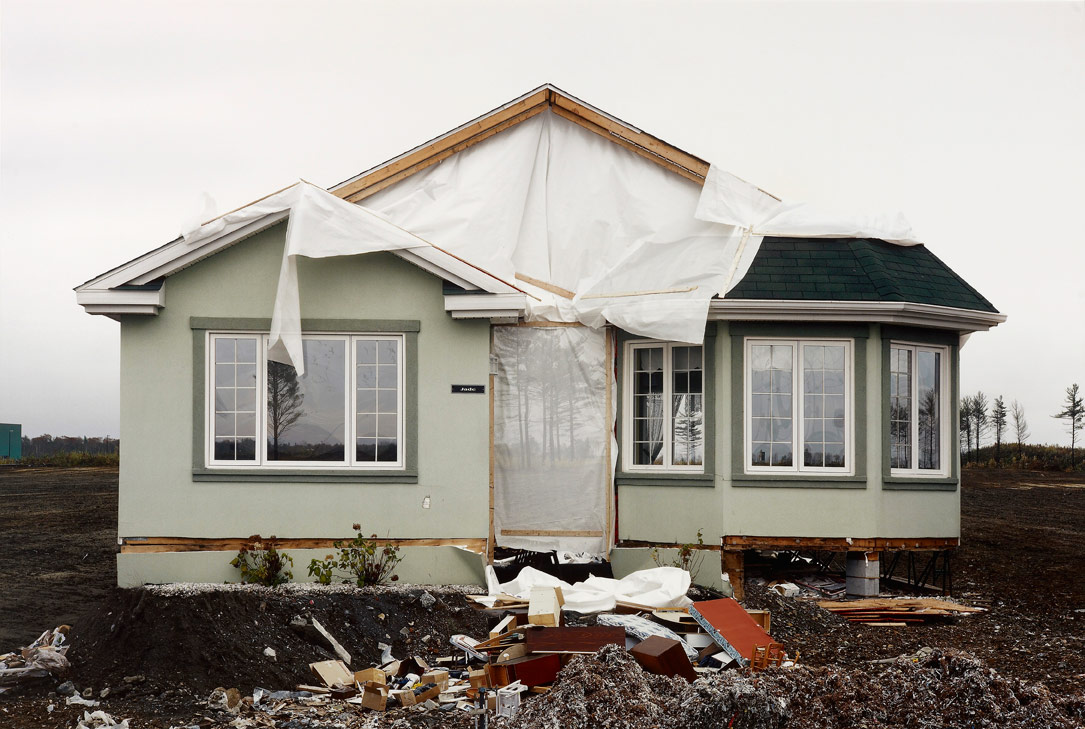
Isabelle Hayeur (Canadian, b. 1969) 'Jade' 2004


Isabelle Hayeur (Canadian, b. 1969)
Jade
2004
From the series Model Homes, 2004-2007
Chromogenic print
107 x 160cm
Gift of Paul Bain, 2008
Image courtesy the Art Gallery of Ontario / AGO Image Resources
© 2011 Art Gallery of Ontario


Another eclectic photography exhibition. I do love them for their interesting subject matter. Much as Australian photography may seem slightly obscure to the rest of the world so Canadian photography is little known in Australia. One of the important briefs of this blog is to promote all photography in its many forms, including Australian, to the four corners of the globe.

Dr Marcus Bunyan


Many thankx to the Art Gallery of Ontario for allowing me to publish the photographs in the posting. Please click on the photographs for a larger version of the image.


“Oh the song of the future has been sung / All the battles have been won
On the mountain tops we stand / All the world at our command
We have opened up her soil / With our teardrops and our toil”


Gordon Lightfoot, “Canadian Railroad Trilogy”


E. Haanel Cassidy (Canadian, 1903-1980) 'Man on Tower' 1940


E. Haanel Cassidy (Canadian, 1903-1980)
Man on Tower
1940
From the series Canadian Industry – Grain Elevator
Gelatin silver print
23.7 x 35.3cm
Gift of Sylvia Platt, 2002
Image courtesy the Art Gallery of Ontario / AGO Image Resources
© 2011 Art Gallery of Ontario


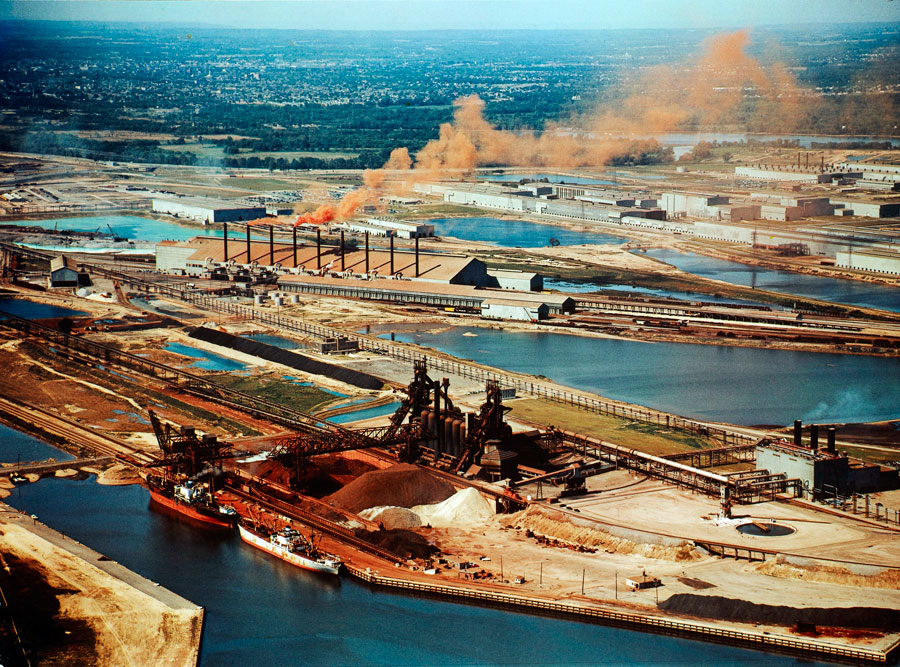
George Hunter (Canadian, 1921-2013) 'Dofasco and Stelco steel mills, Hamilton, Ontario' 1954


George Hunter (Canadian, 1921-2013)
Dofasco and Stelco steel mills, Hamilton, Ontario
1954
Dye transfer print
31.2 x 42.1cm
Gift of George Hunter, R.C.A, 2010
Image courtesy the Art Gallery of Ontario / AGO Image Resources
© 2011 Art Gallery of Ontario


The practice of photography in Canada closely parallels the development of its industries. As railroad tracks were laid and bridges were built to allow access to remote forests and mineral-rich territories, photographers followed, as they did when mining and lumber interests developed. These industrial activities have undeniably shaped the Canadian landscape – for better and for worse. And photographs of these activities – whether made on commission by those eager to document their contribution to national progress, or for the photographer’s own interest – continue to feed our imaginations, shape our opinions and make us aware of what is at stake.

Songs of Future: Canadian Industrial Photographs, 1858 to Today includes more than 100 photographs – by such figures as William Notman, Alexander Henderson, Richard Maynard, J.C.M. Hayward, John Vanderpant, E. Haanel Cassidy, George Hunter, Bill Vazan, Ralph Greenhill, Geoffrey James, Edward Burtynsky, Peter MacCallum, Steven Evans, Jesse Boles, and Isabelle Hayeur – most drawn from the AGO’s permanent collection, and many of which have never been shown. Featuring sites from the west coast to the Maritimes, the exhibition showcases this other landscape tradition in Canadian art and the Canadian photographers who have described, evoked, celebrated, and cast a critical eye on our industrial landscapes for more than 150 years.

Depicting railway and bridge building, quarries and mines, and the lumber, pulp and paper, and concrete industries in Canada, Songs of the Future traces the shifting perspectives on industry and the Canadian landscape from the Industrial Revolution to today. The exhibition highlights the ways in which the photographers’ perspectives on industry have shifted along with those of society at large, as celebratory images of human domination over nature give way to more critical views of industrial impact.

The exhibition is curated by Sophie Hackett, the AGO’s assistant curator of photography, who integrates works from various periods into thematic concentrations, including images featuring: the construction of the Victoria Bridge over the St. Lawrence River in the late 1850s; the building of the Anglo-Newfoundland Development Company, a pulp-and-paper mill located in Grand Falls, Newfoundland, in 1912; and the development of the railroad in Canada.

“The exhibition explores the history of Canadian photography through the topic of industrial imagery,” says Hackett. “Featuring sites from the Maritimes to the west coast, and rooted in the fundamentally Canadian genre of landscape, the photographs bear witness to the various aesthetic techniques and styles emphasised by Canadian photographers over the past 150 years.”

Press release from the AGO website


Alexander Henderson (British-Canadian, 1831-1913) 'Miramichi Bridges: Southwest Branch, View of Pier G, completed September 15, 1873'


Alexander Henderson (British-Canadian, 1831-1913)
Miramichi Bridges: Southwest Branch, View of Pier G, completed September 15, 1873
1873
Albumen print
25.3 x 30.5cm
Gift of Mr. and Mrs. Carl Berger, 2008
Image courtesy the Art Gallery of Ontario / AGO Image Resources
© 2011 Art Gallery of Ontario


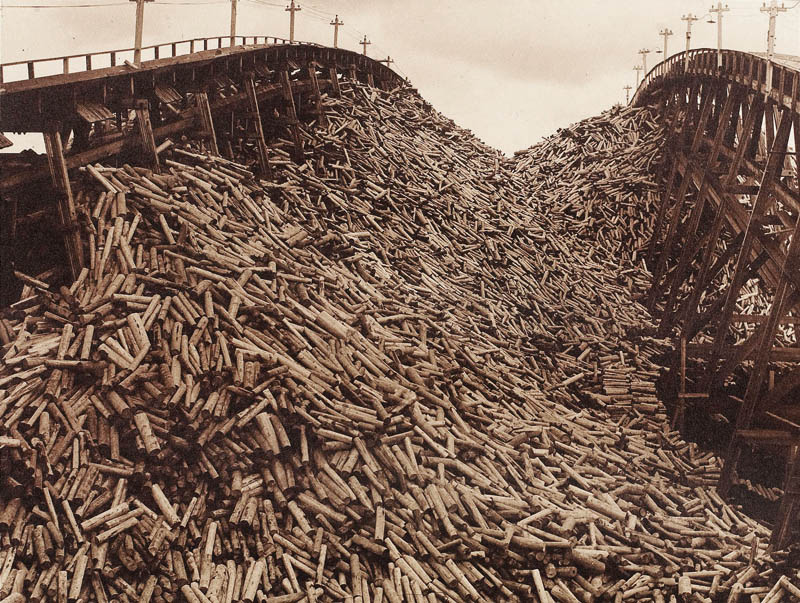
J.C.M. Hayward (Canadian) 'Wood Pile' 1912


J.C.M. Hayward (Canadian)
Wood Pile
1912
Gelatin silver print
From the album Operations of the Anglo-Newfoundland Development Company
Album: 48 gelatin silver prints on brown pages with dark brown leather cover
47 x 34.5 x 3cm
Art Gallery of Ontario
Anonymous Gift, 2008
Image courtesy the Art Gallery of Ontario / AGO Image Resources
© 2011 Art Gallery of Ontario


Edward Burtynsky (Canadian, b. 1955) 'C.N. Track, Thompson River #002, British Columbia' 1985


Edward Burtynsky (Canadian, b. 1955)
C.N. Track, Thompson River #002, British Columbia
1985
From the series Railcuts
Chromogenic print
121.9 x 147.3cm
Gift of Harry and Ann Malcolmson, 2008
Image courtesy the Art Gallery of Ontario / AGO Image Resources
© 2011 Art Gallery of Ontario


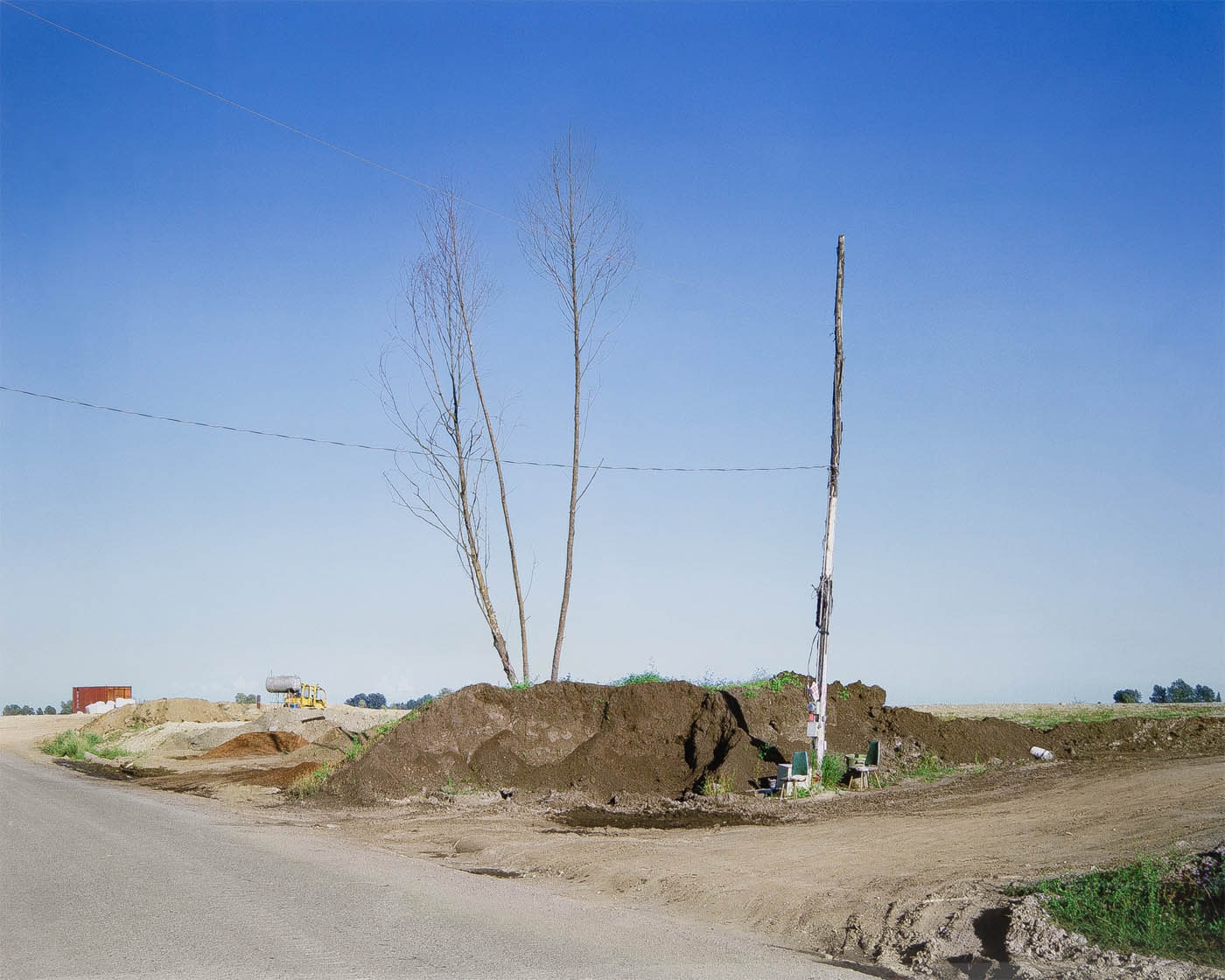
Roy Arden (Canadian, b. 1957) 'Landfill, Richmond, BC' 1991


Roy Arden (Canadian, b. 1957)
Landfill, Richmond, BC
1991
Chromogenic print
Image courtesy the Art Gallery of Ontario / AGO Image Resources
© 2011 Art Gallery of Ontario


Peter MacCallum (Canadian, b. 1947) 'Finishing Mill Department, St. Marys Cement, Bowmanville, Ontario' 1999


Peter MacCallum (Canadian, b. 1947)
Finishing Mill Department, St. Marys Cement, Bowmanville, Ontario
1999
From the series Concrete Industries, 1998-2004
Gelatin silver print
50.8 x 40.6cm
Purchase, funds donated by James Lahey and Pym Buitenhuis, 2008
Image courtesy the Art Gallery of Ontario / AGO Image Resources
© 2011 Art Gallery of Ontario


Ralph Greenhill (Canadian) 'Prince of Wales Bridge, Ottawa, Ontario' 1977


Ralph Greenhill (Canadian)
Prince of Wales Bridge, Ottawa, Ontario
1977
Gelatin silver print
22.6 x 17.4cm
Gift of Av Isaacs, 2008
Image courtesy the Art Gallery of Ontario / AGO Image Resources
© 2011 Art Gallery of Ontario


John Vanderpant (Dutch-Canadian, 1884-1939) 'No.2, Towers in White', around 1934


John Vanderpant (Dutch-Canadian, 1884-1939)
No.2, Towers in White
c. 1934
Gelatin silver print
34.4 x 27cm
Purchase, donated funds in memory of Eric Steiner, 2002
Image courtesy the Art Gallery of Ontario / AGO Image Resources
© 2011 Art Gallery of Ontario


Art Gallery of Ontario
Musée des beaux-arts de l’Ontario

317 Dundas Street West
Toronto Ontario Canada M5T 1G4

Opening hours:
Tuesday – Sunday 10.30am – 5.00pm
Closed Mondays

Art Gallery of Ontario website

LIKE ART BLART ON FACEBOOK

Back to top

Exhibition: ‘Berenice Abbott (1898-1991), Photographs’ at Jeu de Paume, Paris

Exhibition dates: 21st February – 29th April 2012

Curator: Gaëlle Morel


Berenice Abbott (American, 1898-1991) 'New York Stock Exchange, New York City' 1933


Berenice Abbott (American, 1898-1991)
New York Stock Exchange, New York City
1933
Gelatin silver print
24 x 19cm
Ronald Kurtz / Commerce Graphics
© Berenice Abbott / Commerce Graphics Ltd, Inc.


It is not her portraits or the road trip photographs, nor her scientific work for which Berenice Abbott will be remembered. Firstly, she will always be remembered as the person who photographed Eugene Atget in 1927 just before he died and who bought the remainder of his negatives (after the French government had bought over 2,000 in 1920 and another 2,000 had been sold after his death). She then tirelessly promoted Atget’s work helping him gain international recognition until her sale of the archive to the Museum of Modern Art in 1968. Secondly, she is remembered for her magnificent photographs of New York City and its urban environs, photographs that show the influence of Atget in their attention to detail and understanding of the placement of the camera, and imaging of old and new parts of the city (much as Atget had photographed old Paris before it was destroyed). However, these photographs are uniquely her own, with their modernist New Vision aesthetic, bold perspectives and use of deep chiaroscuro to enhance form within the photograph. Abbott’s best known project, Changing New York (1935-1939) eventually consisted of 305 photographs that document the buildings of Manhattan, some of which are now destroyed. As the text on Wikipedia insightfully notes:

“Abbott’s project was primarily a sociological study imbedded within modernist aesthetic practices. She sought to create a broadly inclusive collection of photographs that together suggest a vital interaction between three aspects of urban life: the diverse people of the city; the places they live, work and play; and their daily activities. It was intended to empower people by making them realise that their environment was a consequence of their collective behaviour (and vice versa). Moreover, she avoided the merely pretty in favour of what she described as “fantastic” contrasts between the old and the new, and chose her camera angles and lenses to create compositions that either stabilised a subject (if she approved of it), or destabilised it (if she scorned it).”


In the text below Gaëlle Morel observes, “Rather than the kind of nostalgic approach often brought to bear on a city’s landmarks and typical sites, this ensemble offers an exploration of the nature of modernity and focuses on the ways in which the past and future are temporarily linked together. Seeking to reinvent the forms and functions of photography in relation to the practice of documentary, Abbott sets out to capture the “disappearance of the moment” by juxtaposing motifs from a city subject to an unprecedented process of demolition and reconstruction.”

While Abbott’s photographs are definitely modernist in nature I believe that today they can also be seen as deeply nostalgic, emerging as they do in the period after the Great Depression when the economy was on the move again, a peaceful time before the oncoming armageddon of the Second World War, closely followed by the fear of nuclear annihilation and the threat of communist indoctrination. They are timeless portraits of a de/reconstructed city. The images seem to float in the air, breathe in the shadows. This is the disappearance of the moment into the enigma of past, present, future – where the photograph becomes eternal, where the best work of both Atget and Abbott resides.

Dr Marcus Bunyan


Many thankx to Jeu de Paume for allowing me to publish the photographs in the posting. Please click on the photographs for a larger version of the image.


Berenice Abbott (American, 1898-1991) 'Treasury Building, New York City' 1933


Berenice Abbott (American, 1898-1991)
Treasury Building, New York City
1933
Gelatin silver print
51 x 40.5cm
Ronald Kurtz / Commerce Graphics
© Berenice Abbott / Commerce Graphics Ltd, Inc.


Architecture

“The tempo of the city is not that of eternity, nor that of time, but that of the ephemeral. That is why recording it is so important, in both documentary and artistic terms.”

“All the photographs of New York took a long time to make, because the camera had to be carefully positioned. There is nothing fortuitous about these photographs.”


The exhibition features a substantial collection from Abbott’s best known project, Changing New York (1935-1939). Commissioned by the Roosevelt administration as part of its response to the nationwide economic crisis, Abbott saw this piece of work as both a way of documenting the City and as a personal work of art. Eighty of the 305 photographs taken by Abbott are on show here, along with various documents providing insight into the background of this major photographic undertaking, including posters and views of the exhibition organised by the Museum of the City of New York in 1937, sketches and historical notes made by the team of journalists working with Abbott on the project, and proofs and dummies of the layout made by the photographer before she started work.

Abbott homes in on the contrasts between old and new elements in the City’s structure. Her images alternate between a New Vision aesthetic, characterised by an emphasis on details and bold perspectives, and a more documentary style that is frontal and neutral. Rather than the kind of nostalgic approach often brought to bear on a city’s landmarks and typical sites, this ensemble offers an exploration of the nature of modernity and focuses on the ways in which the past and future are temporarily linked together. Seeking to reinvent the forms and functions of photography in relation to the practice of documentary, Abbott sets out to capture the “disappearance of the moment” by juxtaposing motifs from a city subject to an unprecedented process of demolition and reconstruction.

In 1938, hoping to take advantage of the fifty million visitors expected at the New York World’s Fair of 1939, the publisher, E.P. Dutton, offered to bring out a selection of one hundred images from the project accompanied by a text by the renowned art critic Elizabeth McCausland, who also happened to be Abbott’s companion and staunch supporter. Going against the women’s original ideas for an art book, Dutton produced a more standard tourist guide, breaking the City down into a series of tours, from south to north and from the centre outwards. The text, too, was shorn of its poetic and pedagogical dimensions, leaving only informative entries about the buildings in the pictures.

In the exhibition, this set of architectural photographs is rounded out by a selection of pictures of vernacular architecture taken by Abbott during a journey in the southern states of the US in the 1930s and when she was travelling along Route 1 in the 1950s. Here, portraits of farmers and wooden houses alternate with pictures of streets and local events.

Berenice Abbott Petit Journal

With over 120 photographs, plus a selection of books and documents never shown before, this is the first exhibition in France to cover the many different facets of the American photographer Berenice Abbott (1898-1991), who is also famous for her international advocacy of Eugène Atget. She came to Paris in 1921 where she learnt her craft from Man Ray before opening her own studio and embarking on a successful career as a portraitist. Returning to New York City in 1929, she conceived what remains her best‑known project, Changing New York (1935-1939). This was financed by the Works Progress Administration as part of its response to the economic crisis sweeping the country. The photographs she took in 1954 when travelling along the US East Coast on Route 1 (the exhibition presents a previously unseen selection of these images) reflect her ambition to represent the whole of what she called the “American scene.” Furthermore, in the 1950s, she also worked on a set of images for the Massachusetts Institute of Technology (MIT) designed to illustrate the principles of mechanics and light for educational purposes.

A committed member of the avant‑garde from the early 1920s, and a staunch opponent of Pictorialism and the school of Alfred Stieglitz, Abbott spent the whole of her career exploring the limits and nature of documentary photography and photographic realism. This exhibition shows the rich array of her interests and conveys both the unity and diversity of her work.

Portraits

Berenice Abbott moved to New York City in the early 1920s and went about becoming a sculptor. Mixing in the bohemian circles of Greenwich Village, she met writers and artists such as Djuna Barnes, Sadakichi Hartmann and Marcel Duchamp. She also posed for Man Ray. Economic hardship at home and the allure of what then seemed the cultural Eldorado of Europe impelled several of these artists to try their luck in Paris, and Abbott herself joined this group of American expatriates in 1921.

In 1923 she became the assistant of Man Ray, who had opened a portrait studio shortly after his arrival in France in 1921. While a fair portion of the studio’s clients were American tourists, Abbott found herself at the heart of the avant-garde scene – especially that of the Surrealists. Between 1923 and 1926 she thus learnt about darkroom techniques and portrait photography while at the same time picking up a broader intellectual and artistic education. She produced her portraits in Man Ray’s studio before opening her own in 1926. Success soon followed. Her clientele was a mixture of French cultural figures and American expatriates, of bourgeois, bohemians and literary types. Her portraits were on occasion manifestly influenced by Surrealism, and more generally show an interest in masquerade, play and disguise, but sometimes even in their use of overprinting and distortion.

The female models express a kind of sexual ambiguity, notably by their masculine haircut or clothes, deliberately exuding a sense of uncertainty with regard to their identity. In composing her portraits, Abbott developed a distinctive aesthetic, far removed from the usual commercial conventions. The absence of a set, with the background usually no more than a plain wall, helped to focus on the sitter and their posture, the position of their body and their facial expression. The use of a tripod and long-focus lenses placed at eye-height allowed her to avoid distortions and thus heighten the physical presence of the models. In early 1929 Abbott left Paris for New York City. Back in America she continued with the same activities, opening a new portrait studio and taking part in exhibitions of modernist photography, while also promoting the work of Eugène Atget, having bought part of his estate in 1928.

New York City

In the early 1930s, Abbott set about her project for a great documentary portrait of the City of New York, but had no luck when she approached institutions such as the Museum of the City of New York and the New York Historical Society for funding. She assembled her first efforts in an album (eight pages of which are exhibited here) in order to convey the scale of her ambitious undertaking, and in 1934 exhibited her photographs of the City at the Museum of the City of New York in the hope of attracting sponsors. In 1935, support was at last forthcoming from the Federal Art Project, a programme set up to aid artists by the Works Progress Administration as part of the New Deal; she now had the support of a team of researchers who produced an information pack with text and drawings to accompany each image. Entitled Changing New York, she conceived this commission as both a vast documentary record of the City and a personal work of art. Eighty of the 305 photographs constituting this project have been selected for the exhibition. These are accompanied by documents – a poster, exhibition views, sketches and historical notes, proofs, pages from the preparatory album and original editions – that help to convey the concerns and ambitions behind this major photographic undertaking.

Abbott focused on the contrasts and links between old and new in the City’s structure. Her images alternate between a New Vision aesthetic, characterised by an emphasis on details and bold perspectives, and a more documentary style that is frontal and neutral. Rather than the kind of nostalgic approach often brought to bear on a city’s landmarks and typical sites, this ensemble offers an exploration of the nature of modernity and focuses on the ways in which the past and future are temporarily linked together. Seeking to reinvent the forms and functions of photography in relation to the practice of documentary, Abbott sets out to capture the “vanishing instant” by juxtaposing motifs from a city subject to an unprecedented process of demolition and reconstruction.

The upshot of all this work was the publication of a book, Changing New York, in 1939. But there was considerable tension between the publisher, whose concerns were commercial, and the photographer, with her artistic ambitions. In 1938, hoping to take advantage of the fifty million visitors expected at the New York World’s Fair of 1939, the publishing house E.P. Dutton proposed to bring out a selection of one hundred images from the project accompanied by a text from the renowned art critic Elizabeth McCausland, who also happened to be Abbott’s companion and unfailing supporter. Straying far from the project originally envisaged by the two women, Dutton changed the presentation of the photographs and produced what was a standard tourist guide, breaking the City down into a series of tours, from south to north and from the centre outwards. The text, too, was shorn of its poetic and pedagogical dimensions, leaving only information about the buildings in the pictures.

The “American scene”

This set of architectural images is completed by a selection of vernacular photographs. In the summer of 1935, Berenice Abbott went on a road trip down to the Southern US in order to create a portrait of a rural world in crisis. Choosing the kind of documentary style that would be the hallmark of the photographic survey launched by the Farm Security Administration (FSA) that same year, she focused on the modest wooden houses and the farmers. Driving around these states with Elizabeth McCausland, Abbott took some two hundred photographs which the two women saw as part of an ambitious photographic portrait of America in book form, although in the end this was never published. A similar fate befell Abbott’s piece on the small towns and villages along Route 1, which she travelled in 1954. Covering approximately 6,500  kilometres as she followed this road along the East Coast of the US, she took some 2,400 photographs, taking in stalls, shops, portraits of farmers, diners and bars and dance halls. Her photography alternated between the documentary aesthetic and Street Photography. With Route 1, Abbott continued to pursue her ambition of representing the whole of the “American scene.”

Science

Abbott started photographing scientific phenomena in 1939. In 1944 she was recruited by the journal Science Illustrated, where she published some of her own pictures, as head of its photography department. Abbott took a committed, pedagogical approach, seeing her images as a vital bridge between modern science and the general public. In 1957, as a result of the anxiety about national science stirred by the Soviet launch of the Sputnik into outer space, at the height of the Cold War, the National Science Foundation set up a Physical Science Study Committee at Massachusetts Institute of Technology. Its role was to develop new textbooks for the teaching of science in schools and to use innovative photographs to illustrate the principles of quantum mechanics. Abbott was hired by MIT to produce photographs for the popularisation and teaching of the sciences. Using abstract forms to visually express complex mechanical concepts and invisible mechanical laws, she used black grounds to reveal principles such as gravity and light waves. The exhibition features a score of Abbott’s scientific and experimental images, as well as some of the books for which they were used. Harking back to the experiments of the avant-gardes, and in particular the Rayogram technique, she was able to produce visually attractive and surprising images that were also rich in discovery, thus combining documentary information with a sense of wonder.”

Text by Gaëlle Morel, curator of the exhibition, on the Jeu de Paume website


Presentation of the exhibition Berenice Abbott

The exhibition “Berenice Abbott (1898-1991), photographies” reveals for the first time in France the different stages of the career of this American photographer. This retrospective offers more than 120 photographs, original works and a series of unpublished documents. By presenting portraits, architectural photographs and scientific shots, the exhibition shows the multiple facets of a work often reduced to a few images.


Berenice Abbott (American, 1898-1991) 'Triborough Bridge, East 125th Street Approach, New York City, June 29, 1937'


Berenice Abbott (American, 1898-1991)
Triborough Bridge, East 125th Street Approach, New York City, June 29, 1937
1937
Gelatin silver print
24.5 x 19cm
Museum of the City of New York. Gift of the Metropolitan Museum of Art
© Berenice Abbott / Commerce Graphics Ltd, Inc.


Berenice Abbott (American, 1898-1991) 'Broadway to the Battery, New York City, May 4, 1938' 1938


Berenice Abbott (American, 1898-1991)
Broadway to the Battery, New York City, May 4, 1938
1938 
Gelatin silver print
17.5 x 24cm
Museum of the City of New York
Museum Purchase with funds from the Mrs. Elon Hooker Acquisition Fund
© Berenice Abbott / Commerce Graphics Ltd, Inc.


Berenice Abbott (American, 1898-1991) 'Flat Iron Building, Broadway and Fifth Avenue, New York City' 1938


Berenice Abbott (American, 1898-1991)
Flat Iron Building, Broadway and Fifth Avenue, New York City
1938
Gelatin silver print
101.5 x 76cm
Ronald Kurtz / Commerce Graphics
© Berenice Abbott / Commerce Graphics Ltd, Inc.


Berenice Abbott (American, 1898-1991) 'Blossom Restaurant, 103 Bowery, New York City, October 24, 1935' 1935


Berenice Abbott (American, 1898-1991)
Blossom Restaurant, 103 Bowery, New York City, October 24, 1935
1935
Gelatin silver print
19 x 24.5cm
Museum of the City of New York
Gift of the Metropolitan Museum of Art
© Berenice Abbott / Commerce Graphics Ltd, Inc.


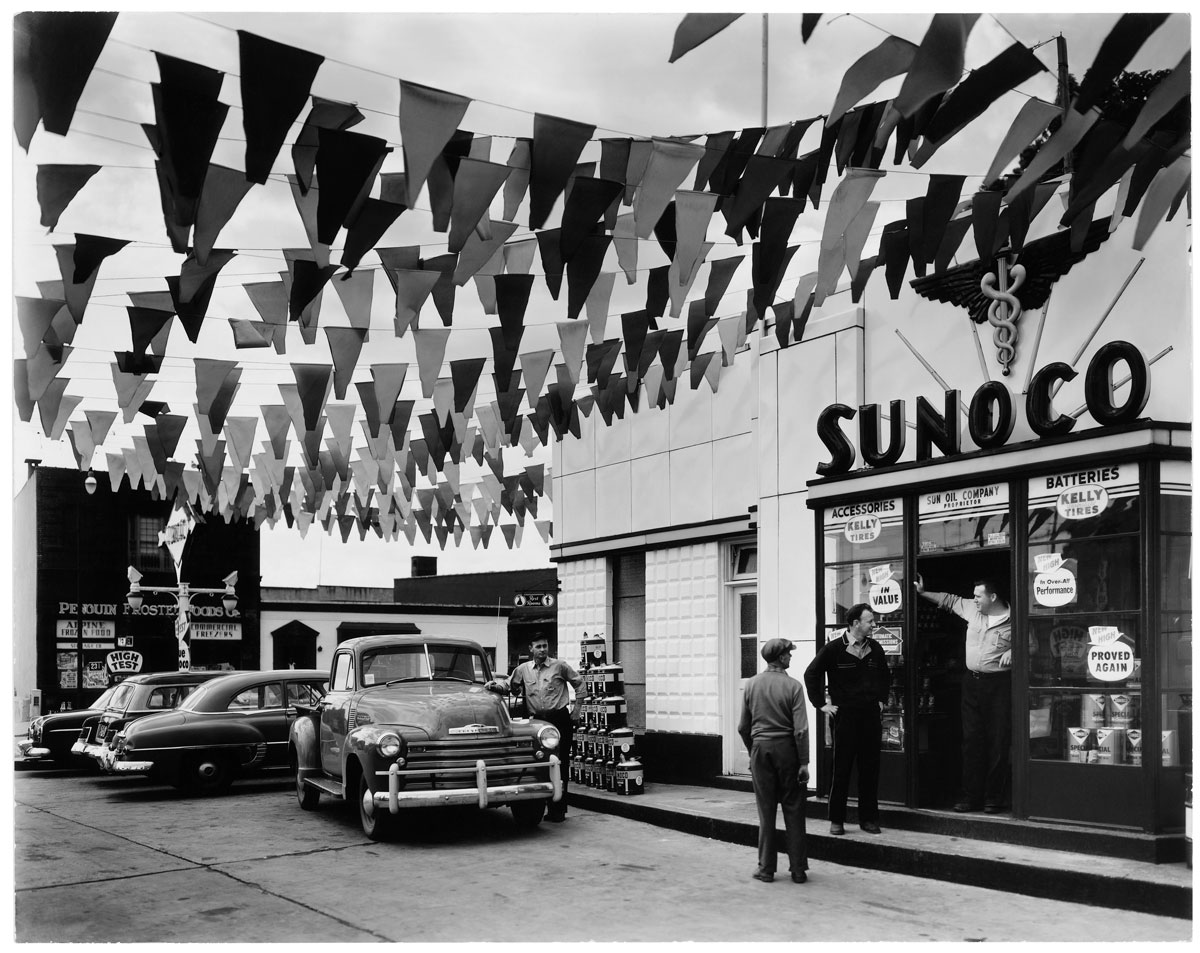
Berenice Abbott (American, 1898-1991) 'Sunoco Station, Trenton, New Jersey' 1954


Berenice Abbott (American, 1898-1991)
Sunoco Station, Trenton, New Jersey
1954
Gelatin silver print
19 x 24.5cm
Ronald Kurtz / Commerce Graphics
© Berenice Abbott / Commerce Graphics Ltd, Inc.


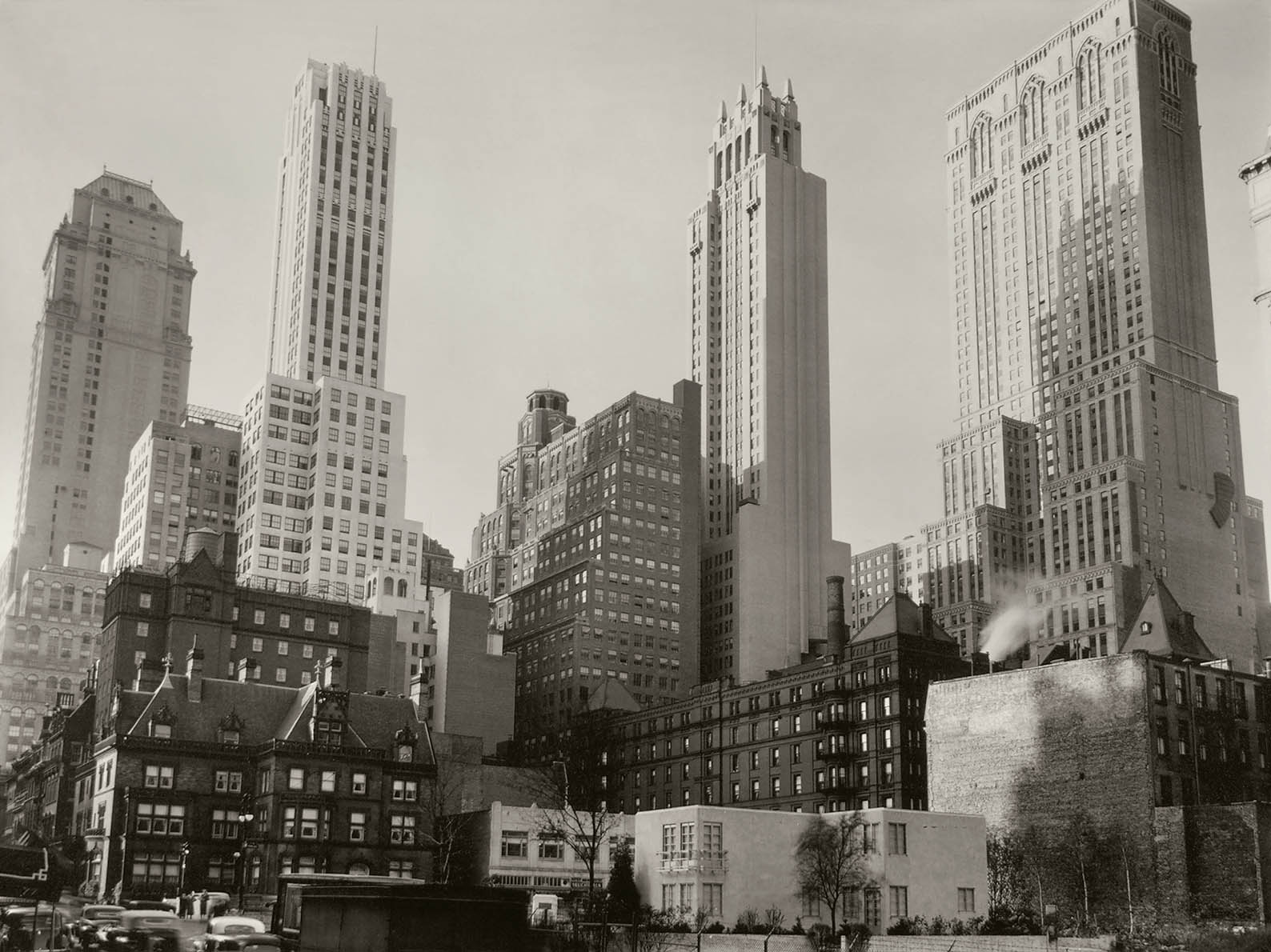
Berenice Abbott (American, 1898-1991) 'Park Avenue and 39th Street, New York' 1936


Berenice Abbott (American, 1898-1991)
Park Avenue and 39th Street, New York
1936
Gelatin silver print
19 x 24.5cm
© Berenice Abbott / Commerce Graphics Ltd, Inc.


Berenice Abbott (American, 1898-1991) 'Gunsmith and Police Department Headquarters, 6 Centre Market Place and 240 Centre Street, New York City, February 4, 1937' 1937


Berenice Abbott (American, 1898-1991)
Gunsmith and Police Department Headquarters, 6 Centre Market Place and 240 Centre Street, New York City, February 4, 1937
1937 
Gelatin silver print
19 x 24.5cm
Museum of the City of New York
Gift of the Metropolitan Museum of Art
© Berenice Abbott / Commerce Graphics Ltd, Inc.


Berenice Abbott (American, 1898-1991) 'Happy's Refreshment Stand, Daytona Beach, Florida' 1954


Berenice Abbott (American, 1898-1991)
Happy’s Refreshment Stand, Daytona Beach, Florida
1954
Gelatin silver print
29.5 x 28cm
Ronald Kurtz / Commerce Graphics
© Berenice Abbott / Commerce Graphics Ltd, Inc.


Berenice Abbott. 'Miner, Greenview, West Virginia' 1935


Berenice Abbott (American, 1898-1991)
Miner, Greenview, West Virginia
1935
Gelatin silver print
25 x 19cm
Ronald Kurtz / Commerce Graphics
© Berenice Abbott / Commerce Graphics Ltd, Inc.


Berenice Abbott (American, 1898-1991) 'Jean Cocteau with a revolver' 1926


Berenice Abbott (American, 1898-1991)
Jean Cocteau with a revolver
1926
Gelatin silver print
35.5 x 28cm
Ronald Kurtz / Commerce Graphics.
© Berenice Abbott / Commerce Graphics Ltd, Inc.


Berenice Abbott (American, 1898-1991) 'Eugène Atget' 1927


Berenice Abbott (American, 1898-1991)
Eugène Atget
Paris, 1927
Gelatin silver print
© Berenice Abbott/Commerce Graphics.


Jeu de Paume
1, place de la Concorde
75008 Paris
métro Concorde
Phone: 01 47 03 12 50

Opening hours:
Tuesday – Friday: 12am – 8pm
Saturday and Sunday: 11am – 7pm
Closed Monday

Jeu de Paume website

LIKE ART BLART ON FACEBOOK

Back to top

Exhibition: ‘Made in America 1900-1950. Photographs from the National Gallery of Canada’, Ottawa, Ontario

Exhibition dates: 9th December 2011 – 1st April 2012


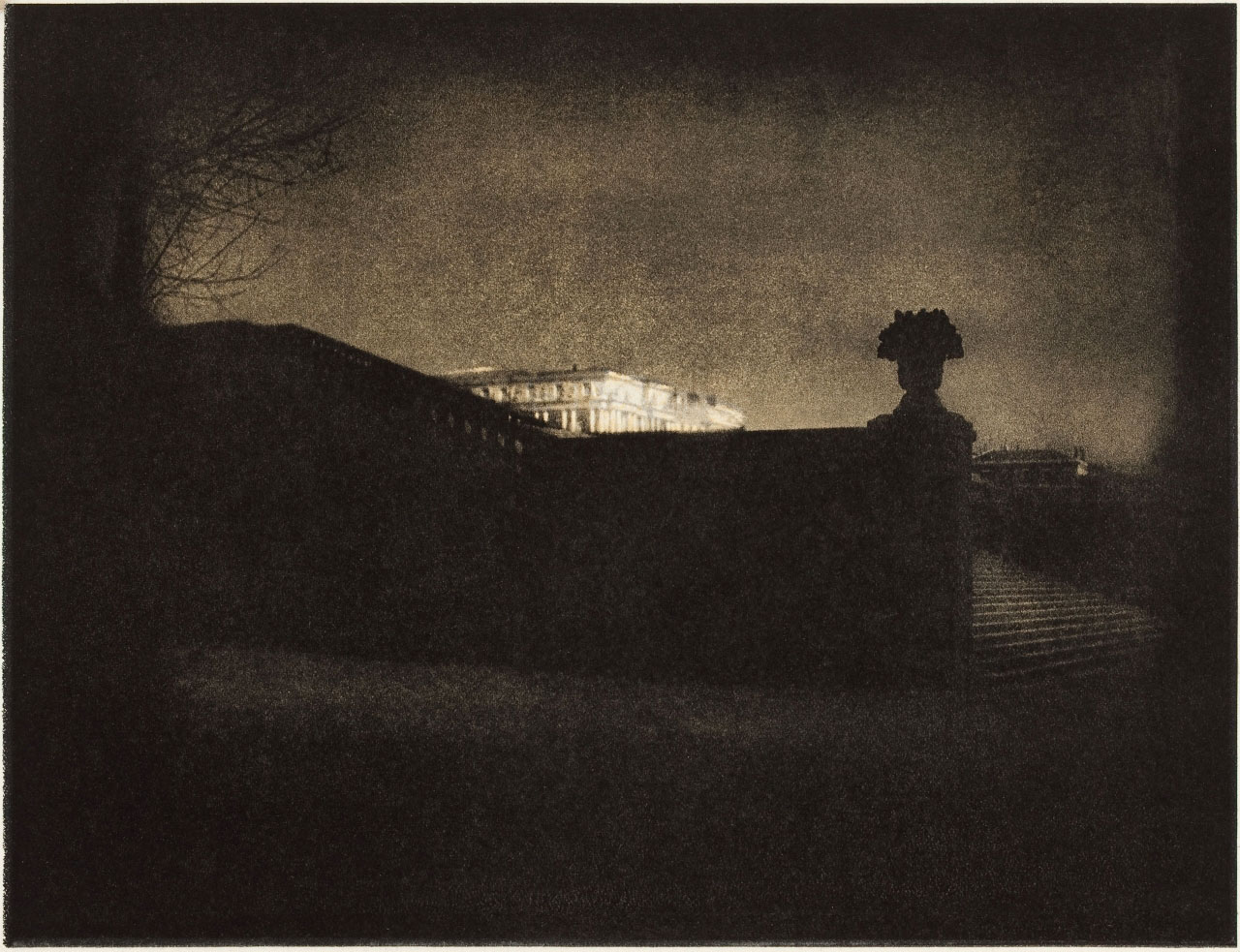
Edward Steichen
 (American, 1879-1973) 'Nocturne – Orangery Staircase, Versailles' 1908


Edward Steichen
 (American, 1879-1973)
Nocturne – Orangery Staircase, Versailles
1908
Purchased 1976
National Gallery of Canada, Ottawa


Stunning photographs in this posting: Steichen’s
 Nocturne – Orangery Staircase, Versailles (1908) is just sublime; Sheeler’s Side of a White Barn (1917) is early Modernist perfection, rivalling Paul Strand’s The White Fence, Port Kent (1916); Barbara Morgan’s photograph of dancer Martha Graham (1940) portraying, radiantly, her divine dissatisfaction; and the most beautiful portrait by Imogen Cunningham of Frida Kahlo (1931). Every time I see this portrait I nearly burst into tears – the light falling from the right and from the left onto the boards behind her, the texture of her cloak, the languorous nature of her hands, her absolute poise and beauty – looking straight into the camera, looking straight into your soul. What a beautiful women, such strength and vulnerability. A stunning photograph of an amazing women. The photograph just takes your breath away…

Dr Marcus Bunyan

Many thankx to the National Gallery of Canada for allowing me to publish the photographs in the posting. Please click on the photographs for a larger version of the image.


Arthur Leipzig
 (American, 1918-2014) 'Opening Night at the Opera, New York' 1945


Arthur Leipzig
 (American, 1918-2014)
Opening Night at the Opera, New York
1945
Gelatin silver print
27 x 34.1cm
National Gallery of Canada, Ottawa
© Arthur Leipzig/Courtesy Howard Greenberg Gallery


Charles Sheeler (American, 1883-1965) 'Side of a White Barn, Pennsylvania' 1917


Charles Sheeler (American, 1883-1965)
Side of a White Barn, Pennsylvania
1917
Gelatin silver print
7 5/8 x 9 5/8 in.
The J. Paul Getty Museum


“Lines and texture define this view of the side of a white barn. In the photographic rendering, the white barn is a soft gray, punctuated by knots in the wood and shadows cast by the uneven boards. In the lower right corner of the image, a small window, a fence, and a chicken standing atop a pile of hay add visual weight yet surrender to the repetitive, vertical domination of the structure. Like every other line, the horizontal line dividing the areas of wood and plaster is drawn without a straight edge.”

Text from the Getty Museum website


Jerome Liebling (American, 1924-2011) 'Butterfly Boy, New York City' 1949


Jerome Liebling (American, 1924-2011)
Butterfly Boy, New York City
1949
Gelatin silver print
National Gallery of Canada, Ottawa


Andreas Feininger (American, 1906-1999) 'Reflection on a Car' 1980


Andreas Feininger (American, 1906-1999)
Reflection on a Car
1980
Gelatin silver print
38 x 48.2cm
National Gallery of Canada, Ottawa


Alfred Stiegitz (American, 1864-1946) 'The Steerage' 1907


Alfred Steiglitz (American, 1864-1946)
The Steerage
1907
Gelatin silver print


Walker Evans (American, 1903-1975)  'Corner of State and Randolph Streets, Chicago' c. 1946-1947


Walker Evans (American, 1903-1975)
Corner of State and Randolph Streets, Chicago
c. 1946-1947
Gelatin silver print
Image: 26.1 x 25cm
National Gallery of Canada, Ottawa
Gift of Benjamin Greenberg, Ottawa, 1981
© Walker Evans Archive, The Metropolitan Museum of Art


Barbara Morgan
 (American, 1900-1992)
 'Martha Graham, Letter to the World, "Kick"' 1940, printed c. 1945


Barbara Morgan
 (American, 1900-1992)
Martha Graham, Letter to the World, “Kick”
1940, printed c. 1945
Gelatin silver print
38.6 x 48.2cm
National Gallery of Canada, Ottawa


“There is a vitality, a life force, a quickening that is translated through you into action, and because there is only one of you in all time, this expression is unique. And if you block it, it will never exist through any other medium and be lost. The world will not have it. It is not your business to determine how good it is, nor how valuable it is, nor how it compares with other expressions. It is your business to keep it yours clearly and directly, to keep the channel open. You do not even have to believe in yourself or your work. You have to keep open and aware directly to the urges that motivate YOU. Keep the channel open… No artist is pleased… There is no satisfaction whatever at any time. There is only a queer, divine dissatisfaction; a blessed unrest that keeps us marching and makes us more alive than the others.”


Martha Graham to Agnes DeMille


In the first five decades of the 20th century photography came into its own – both as an art form and as a tool to document social and political change. American photographers were exploring both the poetic and transformative expressiveness of the medium, as well as recording the growth and change of the country in its various phases of industrial development. On view until April 1, 2012, Made in America 1900-1950: Photographs from the National Gallery of Canada looks at both approaches, and the divisions between the two, as they are necessarily porous and somewhat arbitrary.

“The Gallery’s collection is so rich in 20th century American photographs that it needs an exhibition in two parts and a catalogue in two volumes. This first presentation focuses on the period between 1900 and 1950,” noted NGC director Marc Mayer. “This comprehensive collection has been amassed in large part through the generosity of brilliant collectors.”

“Each of [the decades] is characterised by tremendous growth, change, and creative thought about the medium and its reception in the United States,” noted curator Ann Thomas in the catalogue, American Photographs 1900-1950.

It was a period of great technical and technological change: such as the introduction of the personal 35mm camera in the early 1920s, following the German model developed by Leica, and Ansel Adams’ and Fred Archer’s creation of the zone system to determine optimal film exposure and development.

Composed of over 130 photographs, two issues of Camera Work, one issue of Manuscripts, and several period cameras, the exhibition Made in America celebrates the exceptional contribution that American photographers made to the history of art in the 20th century. Made been 1900-1950, these photographs represent an extraordinarily fertile period in the evolution of photography. They include stunning works by Alfred Stieglitz, Edward Steichen, Clarence White, Paul Strand, Walker Evans, Margaret Bourke-White, Dorothea Lange, Berenice Abbott, Ansel Adams, Lisette Model, Weegee, and members of New York’s Photo League.

Made in America is the fourth in a series of exhibitions and catalogues presenting the Gallery’s outstanding collection of international photographs. It follows Modernist Photographs (2007), 19th Century French Photographs (2010), and 19th Century British Photographs (2011).

Made in America 1900-1950: Photographs from the National Gallery of Canada explores a dynamic period in the history of photography when the medium was emerging as both an art form and a tool for documenting social change. Presenting 134 works from the National Gallery’s extraordinary collection of American photographs, this exhibition chronicles the evolution of the medium, beginning with Pictorialism and moving through modernism, straight photography and documentary work. On the walls are some truly magnificent, iconic works by the most influential photographers, among them Alfred Stieglitz’s The Steerage, Edward Steichen’s Nocturne – Orangerie Staircase, Versailles, Ansel Adams’ Moonrise, Hernandez, New Mexico and Barbara Morgan’s Martha Graham, Letter to the World (Kick).

At the turn of the 20th century, American photographers were fully engaged in the Pictorialist aesthetic, creating pastoral landscapes, foggy street scenes and idealised portraits of women and children. With their soft focus and gentle lighting, the images convey a romantic moodiness. Pictorialist photographers often manipulated their negatives and prints to achieve painterly effects. Gertrude Käsebier’s Serbonne, for instance, is reminiscent of an Impressionist painting.

Around the mid-teens, artists such as Stieglitz, Paul Strand and Walker Evans came to reject the notion of photography imitating painting, and instead sought to take advantage of the medium’s inherent, unique characteristics, especially its ability to achieve sharp definition, even lighting and smooth surfaces. The result was ground-breaking modernist work such as Stieglitz’s Equivalent series, Alvin Langdon Coburn’s Vortograph and Charles Sheeler’s Side of White Barn.

Out on the west coast in the early 1930s, Group f.64 was committed to the ideal of pure, un-manipulated, or “straight” photography. Edward Weston’s nudes and juniper trees, and Imogen Cunningham’s portrait of Frida Kahlo demonstrate the hallmarks of f.64: crisp detail, sharp focus, and often a sensual minimalism.

The first decades of the 20th century also provided rich subject matter for documentary photographers, as social and economic changes dramatically transformed daily life. Lewis Hine’s photographs of immigrants and child labourers tell fascinating stories, as do images of the Depression by Dorothea Lange and Walker Evans. The Photo League sent its members out into New York’s streets to capture ordinary people on film. Helen Levitt, Jerome Liebling and Sol Libsohn chronicled small dramas unfolding on sidewalks.

Visitors familiar with Ansel Adams’ grand, sublime landscapes might be surprised by his more contemplative series of foaming Pacific waves, titled Surf Sequence. Sharing the gallery space is Minor White’s poetic series Song Without Words, made along the same coast. Both demonstrate an almost cinematic approach to photograph-making and plunge the viewer into seaside reverie.

Press release from the National Gallery of Canada website


Alvin Coburn (American, 1882-1966) 'Vortograph' 1917


Alvin Coburn (American, 1882-1966)
Vortograph
1917
Gelatin silver print
11 1/8 × 8 3/8″ (28.2 × 21.2cm)
Courtesy of George Eastman House, International Museum of Photography and Film


The intricate patterns of light and line in this photograph, and the cascading tiers of crystalline shapes, were generated through the use of a kaleidoscopic contraption invented by the American / British photographer Alvin Langdon Coburn, a member of London’s Vorticist group. To refute the idea that photography, in its helplessly accurate capture of scenes in the real world, was antithetical to abstraction, Coburn devised for his camera lens an attachment made up of three mirrors, clamped together in a triangle, through which he photographed a variety of surfaces to produce the results in these images. The poet and Vorticist Ezra Pound coined the term “vortographs” to describe Coburn’s experiments. Although Pound went on to criticise these images as lesser expressions than Vorticist paintings, Coburn’s work would remain influential.

Gallery label from Inventing Abstraction, 1910-1925, December 23, 2012 – April 15, 2013.


Gertrude Kasebier (American, 1852-1934) 'Serbonne' 1902, printed 1903


Gertrude Kasebier (American, 1852-1934)
Serbonne
1902, printed 1903
From Camera Work, January 1903
Gum bichromate, halftone
National Gallery of Canada, Ottawa


Imogen Cunningham (American, 1883-1976) 'Frida Kahlo' 1931


Imogen Cunningham (American, 1883-1976)
Frida Kahlo
1931
Gelatin silver print
National Gallery of Canada, Ottawa


Ralph Steiner
 (American, 1899-1986)
 'Model T' 1929


Ralph Steiner
 (American, 1899-1986)
Model T
1929, printed later
Gelatin silver print
Image: 24.2 x 19.7cm
National Gallery of Canada, Ottawa


Walker Evans (American, 1903-1975) 'Citizen in Downtown Havana' 1933


Walker Evans (American, 1903-1975)
Citizen in Downtown Havana
1933
Gelatin silver print
25.1 x 20.1cm
National Gallery of Canada, Ottawa
Gift of Phyllis Lambert, Montreal, 1982
© Walker Evans Archive, The Metropolitan Museum of Art


National Gallery of Canada
380 Sussex Drive
P.O. Box 427, Station A
Ottawa, Ontario
Canada 
K1N 9N4

Opening hours:
Daily 9.30am – 5pm
Thursday 9.30am – 8pm

National Gallery of Canada website

LIKE ART BLART ON FACEBOOK

Back to top

Exhibition: ‘The Photographs of Brett Weston’ at the The Nelson-Atkins Museum of Art, Kansas City

Exhibition dates: 23rd November 2011 – 25th March 25 2012


Brett Weston (American, 1911-1993) 'Botanical' c. 1975


Brett Weston (American, 1911-1993)
Botanical
c. 1975
Gelatin silver print
Unframed: 11 x 14 inches (27.94 x 35.56cm)
The Nelson-Atkins Museum of Art
Gift from the Christian K. Keesee Collection
© The Brett Weston Archive


Brett Weston’s pictures are ageing well – the decorative aesthetic seems to have more currency today than previously when the values of his father were predominant. Perhaps this has to do with the continuing influence of the Bechers and the exhibition New Topographics: Photographs of a Man Altered Landscape (1975). Although Weston photographs nature there is a beautiful, reductive minimalism to his photographs, an enticing simplicity of light and form that could be seen as decorative but today has taken on more symbolic weight; man and nature under threat, with hints of Atget and Wynn Bullock in the mix as well. Under that seeming simplicity are sophisticated photographs that take a good eye to capture and bring to life – what seems simple isn’t by any means. The light is beautiful, the sensitivity to subject present beyond doubt. His photographs will only gain greater currency in the future.

Dr Marcus Bunyan


Many thankx to The Nelson-Atkins Museum of Art for allowing me to publish the photographs in the posting. Please click on the photographs for a larger version of the image.


Brett Weston (American, 1911-1993) 'Snow' c. 1970


Brett Weston (American, 1911-1993)
Snow
c. 1970
Gelatin silver print
Unframed: 11 x 14 inches (27.94 x 35.56 cm)
The Nelson-Atkins Museum of Art
Gift from the Christian K. Keesee Collection
© The Brett Weston Archive


Brett Weston (American, 1911-1993) 'Water' 1970


Brett Weston (American, 1911-1993)
Water
1970
Gelatin silver print
Unframed: 11 x 14 inches (27.94 x 35.56cm)
The Nelson-Atkins Museum of Art
Gift from the Christian K. Keesee Collection
© The Brett Weston Archive


Brett Weston (American, 1911-1993) 'Water Reflection, Logging, Alaska' 1973


Brett Weston (American, 1911-1993)
Water Reflection, Logging, Alaska
1973
Gelatin silver print
Unframed: 11 x 14 inches (27.94 x 35.56cm)
The Nelson-Atkins Museum of Art
Gift from the Christian K. Keesee Collection
© The Brett Weston Archive


Brett Weston (American, 1911-1993) 'Lava, Hawaii' c. 1985


Brett Weston (American, 1911-1993)
Lava, Hawaii
c. 1985
Gelatin silver print
Unframed: 16 x 20 inches (40.64 x 50.8cm)
The Nelson-Atkins Museum of Art
Gift from the Christian K. Keesee Collection
© The Brett Weston Archive


Over his long and prolific career, photographer Brett Weston (1911-1993) exemplified the modernist aesthetic. The son of famed photographer Edward Weston (1886-1958), Brett Weston was a “natural” with the camera: he was still a teenager when he first received high-level, international recognition as a creative artist.

The Photographs of Brett Weston, Nov. 23, 2011, through April 1, 2012, at The Nelson-Atkins Museum of Art in Kansas City, presents a condensed 40-print survey of his long and prolific career. While rare works from the Museum’s Hallmark Photographic Collection are also included, this exhibition celebrates a gift of 260 Weston prints from Christian K. Keesee, owner of the Brett Weston Archive in Oklahoma City.

“This generous gift from Mr. Keesee exemplifies the deep interest in our program on the part of leading collectors and estates across the nation,” said Keith F. Davis, senior curator of photography. “There is also a wonderful symmetry here: this gift of Brett Weston’s work compliments one of the earliest photography gifts to the Museum, when Mr. and Mrs. Milton McGreevy donated 60 Edward Weston prints in 1958.”

Brett Weston was one of photography’s greatest prodigies. After serving as his father’s apprentice, he achieved international recognition at the age of 17 through inclusion in a landmark exhibition in Stuttgart, Germany in 1929.

“Weston’s images are beautifully modulated, unmanipulated black-and-white prints,” said Davis. “He loved sharp lenses and precision cameras, and he applied this “purist” approach to a sustained exploration of the idea of abstraction.”

Weston always sought an energising balance between fact and form, the objective reality of the world and the purely graphic logic of pictorial shape and structure. In exploring the graphic language of form, Weston aimed to suggest the deeper possibilities, and mysteries, of familiar things.

Press release from The Nelson-Atkins Museum of Art website


Brett Weston (American, 1911-1993) 'Magnolia Bud' 1927


Brett Weston (American, 1911-1993)
Magnolia Bud
1927
Gelatin silver print
The Nelson-Atkins Museum of Art
Gift of Hallmark Cards, Inc.
© The Brett Weston Archive


Brett Weston (American, 1911-1993) 'Los Angeles' 1927


Brett Weston (American, 1911-1993)
Los Angeles
1927
Gelatin silver print
Image: 9 5/8 x 6 7/8 inches (24.45 x 17.46cm)
Framed: 21 1/4 x 17 1/4 inches (53.98 x 43.82cm)
The Nelson-Atkins Museum of Art
Gift of Hallmark Cards, Inc.
© The Brett Weston Archive


Brett Weston (American, 1911-1993) 'Building, Ivy, Tree, Sutton Place, New York' 1945


Brett Weston (American, 1911-1993)
Building, Ivy, Tree, Sutton Place, New York
1945
Gelatin silver print
Unframed: 10 x 8 inches (25.4 x 20.32cm)
The Nelson-Atkins Museum of Art
Gift from the Christian K. Keesee Collection
© The Brett Weston Archive


Brett Weston (American, 1911-1993) 'Reflections through Window' 1955


Brett Weston (American, 1911-1993)
Reflections through Window
1955
Gelatin silver print
Image and sheet: 9 9/16 × 7 3/16 inches (24.29 × 18.26 cm)
The Nelson-Atkins Museum of Art
Gift of Hallmark Cards, Inc.
© The Brett Weston Archive


Brett Weston (American, 1911-1993) 'Broken Window' c. 1970


Brett Weston (American, 1911-1993)
Broken Window
c. 1970
Gelatin silver print
Unframed: 11 x 14 inches (27.94 x 35.56cm)
The Nelson-Atkins Museum of Art
Gift from the Christian K. Keesee Collection
© The Brett Weston Archive


Brett Weston (American, 1911-1993) 'Tree Root' c. 1980


Brett Weston (American, 1911-1993)
Tree Root
c. 1980
Gelatin silver print
Unframed: 14 x 11 inches (35.56 x 27.94cm)
The Nelson-Atkins Museum of Art
Gift from the Christian K. Keesee Collection
© The Brett Weston Archive


Brett Weston (American, 1911-1993) 'Leaf' 1982


Brett Weston (American, 1911-1993)
Leaf
1982
Gelatin silver print
Unframed: 20 x 16 inches (50.8 x 40.64cm)
The Nelson-Atkins Museum of Art
Gift from the Christian K. Keesee Collection
© The Brett Weston Archive


Brett Weston (American, 1911-1993) 'Rock Wall' c. 1985


Brett Weston (American, 1911-1993)
Rock Wall
c. 1985
Gelatin silver print
Unframed: 14 x 11 inches (35.56 x 27.94cm)
The Nelson-Atkins Museum of Art
Gift from the Christian K. Keesee Collection
© The Brett Weston Archive


Brett Weston (American, 1911-1993) 'Botanical' c. 1985


Brett Weston (American, 1911-1993)
Botanical
c. 1985
Gelatin silver print
Unframed: 14 x 11 inches (35.56 x 27.94cm)
The Nelson-Atkins Museum of Art
Gift from the Christian K. Keesee Collection
© The Brett Weston Archive


Brett Weston (American, 1911-1993) 'Botanical' c. 1985


Brett Weston (American, 1911-1993)
Botanical
c. 1985
Gelatin silver print
Unframed: 14 x 11 inches (35.56 x 27.94cm)
The Nelson-Atkins Museum of Art
Gift from the Christian K. Keesee Collection
© The Brett Weston Archive


The Nelson-Atkins Museum of Art
4525 Oak Street
Kansas City, MO 64111

Opening hours:
Thursday – Monday 10am – 5pm
Closed Tuesdays and Wednesdays

The Nelson-Atkins Museum of Art website

LIKE ART BLART ON FACEBOOK

Back to top

Exhibition: ‘Harry Callahan at 100’ at the National Gallery of Art, Washington

Exhibition dates:  2nd October 2011 – 4th March 2012


Harry Callahan (American, 1912-1999) 'Detroit' 1943


Harry Callahan (American, 1912-1999)
Detroit
1943
Gelatin silver print
Overall (sheet, trimmed to image): 8.3 x 11cm (3 1/4 x 4 5/16 in)
National Gallery of Art, Washington
Gift of the Callahan Family
© Estate of Harry Callahan, courtesy Pace/MacGill Gallery, New York


For me, the early photographs of his wife Eleanor and Eleanor with their child Barbara and the most poignant, intimate and beautiful of Callahan’s work while the later modernist Cape Cod photographs presage the spirit and aesthetics of the New Topographics: Photographs of a Man-Altered Landscape of 1975. Mario Cutajar observes

“These pictures of strangely vacant, light haunted intersections of sky, land, and ocean are confrontations with the limits of both the ego and photography itself as the ego’s instrument. They are oriented toward death rather than life, intimating in a cold, unsentimental way passage to another world or, perhaps, the engulfing oblivion at the horizon.”

Dr Marcus Bunyan


Many thankx to the National Gallery of Art for allowing me to publish the photographs in the posting. Please click on the photographs for a larger version of the image.


Harry Callahan (American, 1912-1999) 'Chicago' 1950


Harry Callahan (American, 1912-1999)
Chicago
1950
Gelatin silver print
Sheet (trimmed to image): 19 x 24.2 cm (7 1/2 x 9 1/2 in.)
National Gallery of Art, Washington
© Estate of Harry Callahan, Collection of Pace/MacGill Gallery, New York


Harry Callahan (American, 1912-1999) 'Eleanor, Chicago' 1952


Harry Callahan (American, 1912-1999)
Eleanor, Chicago
1952
Gelatin silver print
National Gallery of Art, Washington
© Estate of Harry Callahan, Collection of Pace/MacGill Gallery, New York


Harry Callahan (American, 1912-1999) 'Ivy Tentacles on Glass, Chicago' c. 1952


Harry Callahan (American, 1912-1999)
Ivy Tentacles on Glass, Chicago
c. 1952
Gelatin silver print
Image (can’t tell sheet size due to matting): 19.21 x 24.13cm (7 9/16 x 9 1/2 in.)
National Gallery of Art, Washington
Gift of Susan and Peter MacGill
© Estate of Harry Callahan, Collection of Pace/MacGill Gallery, New York


Harry Callahan (American, 1912-1999) 'Eleanor and Barbara, Chicago' 1953


Harry Callahan (American, 1912-1999)
Eleanor and Barbara, Chicago
1953
Gelatin silver print
Overall (image): 19.5 x 24.45cm (7 11/16 x 9 5/8 in)
National Gallery of Art, Washington
Promised Gift of Susan and Peter MacGill
© Estate of Harry Callahan, courtesy Pace/MacGill Gallery, New York


Harry Callahan (American, 1912-1999) 'Cape Cod' 1972


Harry Callahan (American, 1912-1999)
Cape Cod
1972
Gelatin silver print
Overall (image): 23.7 x 23.9cm (9 5/16 x 9 7/16 in)
National Gallery of Art, Washington
Gift of Joyce and Robert Menschel
© Estate of Harry Callahan, courtesy Pace/MacGill Gallery, New York


Harry Callahan (American, 1912-1999) 'Cape Cod' 1974


Harry Callahan (American, 1912-1999)
Cape Cod
1974
Gelatin silver print
Overall (image): 21.8 x 22.6cm (8 9/16 x 8 7/8 in.)
National Gallery of Art, Washington
Gift of Joyce and Robert Menschel
© Estate of Harry Callahan, courtesy Pace/MacGill Gallery, New York


Harry Callahan (American, 1912-1999) 'Ansley Park, Atlanta' 1992


Harry Callahan (American, 1912-1999)
Ansley Park, Atlanta
1992
Gelatin silver print
Overall (image): 15.72 x 15.72cm (6 3/16 x 6 3/16 in)
National Gallery of Art, Washington
Gift of Susan and Peter MacGill
© Estate of Harry Callahan, courtesy Pace/MacGill Gallery, New York


The year 2012 marks the centenary of the birth of Harry Callahan (1912-1999), whose highly experimental, visually daring, and elegant photographs made him one of the most innovative artists of the 20th century.

On view in the West Building of the National Gallery of Art from October 2, 2011, through March 4, 2012, Harry Callahan at 100 explores all facets of his work in some 100 photographs, from its genesis in the early 1940s Detroit to its flowering in Chicago in the late 1940s and 1950s, and finally to its maturation in Providence and Atlanta from the 1960s through the 1990s. In 1996, the Gallery organised the exhibition Harry Callahan, which traveled to Philadelphia, Atlanta, Detroit, and Chicago, and included numerous works on loan from the artist.

“Using the rich holdings of the Gallery’s own collection of Callahan’s work, as well as a large collection of photographs on long-term loan from the artist’s widow, the exhibition will reveal the remarkable consistency of his vision and will demonstrate how his strong, inventive formal language repeatedly enriched his art,” said Earl A. Powell III, director, National Gallery of Art.

The Exhibition

Organised thematically and chronologically, Harry Callahan at 100 examines Callahan’s work in relation to the places where he lived and to his family, unveiling his unparalleled devotion to both his subjects and the medium of photography.

In his earliest photographs made in and around Detroit, Callahan explored the limits of the camera, constructing photographs of multiple exposures in both black-and-white and colour. In works such as Twig in Snow (c. 1942) and Store Front and Reflections (c. 1943), he sought to capture simultaneously the simplicity and complexity of nature and the theatre of urban life.

Callahan continued his aesthetic and technical experiments through photographs of his wife, Eleanor. His nudes play with dramatic contrasts of light and dark: his layered multiple exposures reveal Eleanor’s body against landscapes and frosted glass windows (Eleanor, Chicago, 1948). His photographs of his wife and their daughter, Barbara, in the lake, the city, and the woods (Eleanor and Barbara, Lake Michigan, c. 1953) exploit the spontaneity and intimacy of snapshots – yet, paradoxically, were made with a large, cumbersome 8- x 10-inch view camera.

Callahan’s twin interests in the city and the land expanded during his years in Chicago and Providence, where he created both spare and evocative photographs of the natural landscape and complex compositions of urban architecture and pedestrians. He began to document anonymous women on the streets of Chicago, first in close shots of squinting eyes, open mouths, and downcast faces seen in Chicago (1950), then in full-figure shots from a low angle that feature the women against backgrounds of skyscrapers and flagpoles, as in Chicago (1961).

In the 1970s Callahan returned to colour photography, continuing to push the boundaries of the medium, seen in the well-known Providence (1977). Taken in Atlanta and during travels abroad, his late photographs emphasised vibrant colours, long shadows, and the complex humanity of urban life, seen in Morocco (1981) and Atlanta (1985).

Harry Callahan (1912-1999)

Born in Detroit in 1912, Callahan began to photograph in 1938. Although he received no formal training in the medium, his exceptional talent was immediately recognised. In 1946 László Moholy-Nagy hired him to teach at the Institute of Design in Chicago. There and at the Rhode Island School of Design (he moved to Providence in 1961) he taught generations of younger photographers, inspiring them both with the creativity of his vision and his steadfast commitment to the medium. In a career that spanned nearly six decades, he repeatedly explored a few select themes – his wife Eleanor and daughter Barbara, nature, and the urban environment. Yet each time he returned to a familiar subject, he reinvented it, endowing each photograph with both a personal and symbolic significance.

Press release from the National Gallery of Art website


Harry Callahan (American, 1912-1999) 'Eleanor, New York' 1945


Harry Callahan (American, 1912-1999)
Eleanor, New York
1945
Gelatin silver print
Overall (image): 21.2 x 16.83cm (8 3/8 x 6 5/8 in)
National Gallery of Art, Washington
Gift of the Callahan Family
© Estate of Harry Callahan, courtesy Pace/MacGill Gallery, New York


Harry Callahan (American, 1912-1999) 'Eleanor' about 1947


Harry Callahan (American, 1912-1999)
Eleanor
Chicago, 1947
Gelatin silver print
National Gallery of Art, Washington
The Herbert and Nannette Rothschild Memorial Fund in memory of Judith Rothschild
© Estate of Harry Callahan, courtesy Pace/MacGill Gallery, New York


Harry Callahan (American, 1912-1999) 'Eleanor, Chicago' 1948


Harry Callahan (American, 1912-1999)
Eleanor, Chicago
1948
Gelatin silver print
Overall (image): 11.59 x 8.5cm (4 9/16 x 3 3/8 in)
National Gallery of Art, Washington
The Joyce and Robert Menschel Fund
© Estate of Harry Callahan, courtesy Pace/MacGill Gallery, New York


During the 1940s and ’50s, Callahan’s work was deeply affected by the resolutely humanizing presence of his wife, Eleanor, and daughter, Barbara. Frequent subjects, though consistently inscrutable, Eleanor and Barbara are the shadow puppets of his career, a direct testament to his family life, but always seen as if behind some kind of veil or scrim. They are markers of an intimacy that Callahan never violates by direct exposure.

Eleanor, in particular, is photographed down to the very last details of anatomy. She remembers that during these years, she might be cooking or cleaning, and suddenly Harry would announce: “‘Take off your clothes.’ And that would be that.”

The results are sometimes staggering. A 1947 image of what appears to be the lines created by Eleanor’s legs and buttocks looks like a Cycladic statue, relentlessly rectilinear but soft around the edges, freakishly modern and ancient at the same time. An 1953 image of Eleanor and Barbara bathing in Lake Michigan dissolves the horizon, fusing lake and sky into a field of shimmering gray. The two figures seem suspended in space, dematerialized, like characters in a dream.

It’s a small miracle that no matter how much Callahan’s camera dissects the world, the photographs never seem clinical. He divorces things from context, pulls out small vignettes from the larger city, but without violence, and without the gamesmanship of a photographer inclined to the cheap surreal.

Philip Kennicott. “Review: Harry Callahan photography exhibit at the National Gallery of Art,” on The Washington Post website October 4, 2011 [Online] Cited 22/02/2012


Harry Callahan (American, 1912-1999) 'Eleanor, Chicago' c. 1947


Harry Callahan (American, 1912-1999)
Eleanor, Chicago
c. 1947
Gelatin silver print
Overall (sheet, trimmed to image): 11.91 x 8.6cm (4 11/16 x 3 3/8 in)
National Gallery of Art, Washington
Promised Gift of Susan and Peter MacGill
© Estate of Harry Callahan, courtesy Pace/MacGill Gallery, New York


Harry Callahan (American, 1912-1999) 'Chicago' 1961


Harry Callahan (American, 1912-1999)
Chicago
1961
Gelatin silver print
Overall (image):
40.6 x 27.1cm (16 x 10 11/16 in)
National Gallery of Art, Washington
Gift of the Callahan Family
© Estate of Harry Callahan, courtesy Pace/MacGill Gallery, New York


Harry Callahan (American, 1912-1999) 'Store Window with Mannequin with Lingerie, Providence' 1962


Harry Callahan (American, 1912-1999)
Store Window with Mannequin with Lingerie, Providence
1962
Dye imbibition print
22.4 x 34.1cm (8 13/16 x 13 7/16 in.)
National Gallery of Art, Washington
Gift of Mary and Dan Solomon and Patrons’ Permanent Fund
© Estate of Harry Callahan, courtesy Pace/MacGill Gallery, New York


Harry Callahan (American, 1912-1999) 'Kansas City' 1981


Harry Callahan (American, 1912-1999)
Kansas City
1981
Dye imbibition print
Overall (image): 24.3 x 36.7cm (9 9/16 x 14 7/16 in.)
National Gallery of Art, Washington
Gift of The Very Reverend and Mrs. Charles U. Harris
© Estate of Harry Callahan, courtesy Pace/MacGill Gallery, New York


Harry Callahan (American, 1912-1999) 'Morocco' 1981


Harry Callahan (American, 1912-1999)
Morocco
1981
Dye imbibition print
Overall (image): 24.2 x 36.7cm (9 1/2 x 14 7/16 in.)
National Gallery of Art, Washington
Gift of the Collectors Committee
© Estate of Harry Callahan, courtesy Pace/MacGill Gallery, New York


Harry Callahan (American, 1912-1999) 'Atlanta' 1985


Harry Callahan (American, 1912-1999)
Atlanta
1985
Dye imbibition print
Overall (image): 24.4 x 36.7cm (9 5/8 x 14 7/16 in.)
National Gallery of Art, Washington
Gift of the Callahan Family
© Estate of Harry Callahan, courtesy Pace/MacGill Gallery, New York


National Gallery of Art
National Mall between 3rd and 7th Streets
Constitution Avenue NW, Washington

Opening hours:
Daily 10.00am – 5.00pm

National Gallery of Art website

LIKE ART BLART ON FACEBOOK

Back to top

Text/Exhibition: “George Platt Lynes, Minor White and ‘The Temptation of Saint Anthony Is Mirrors’ ” on the exhibition ‘HIDE/SEEK: Difference and Desire in American Portraiture’ at the Brooklyn Museum, New York

Exhibition dates: 18th November 2011 – 12th February 2012


Minor White (American, 1908-1976) 'Tom Murphy (San Francisco)' 1948


Minor White (American, 1908-1976)
Tom Murphy (San Francisco)
1948
from The Temptation of St Anthony is Mirrors 1948
Gelatin silver print
4 5/8 x 3 5/8 in. (11.7 x 9.2cm)
The Minor White Archive, Princeton University Art Museum Bequest of Minor White, MWA 48-136
© Trustees of Princeton University


“The possibility of using our bodies as a possible source of very numerous pleasures is something that is very important. For instance, if you look at the traditional construction of pleasure, you see that bodily pleasure, or pleasures of the flesh, are always drinking, eating and fucking. And that seems to be the limit of the understanding of our bodies, our pleasures ….

It is very interesting to note, for instance, that for centuries people generally, as well as doctors, psychiatrists, and even liberation movements, have always spoken about desire, and never about pleasure. “We have to liberate our desire,” they say. No! We have to create new pleasure. And then maybe desire will follow.” (My bold)


Michel Foucault 1


George Platt Lynes, Minor White and The Temptation of Saint Anthony Is Mirrors

I had the great privilege of visiting The Minor White Archive at Princeton University while I was researching for my PhD. While there I studied the work cards and classic prints of the great photographer, paying particular attention to his photography of the male. What was a great surprise and delight to me were the presence of photographs of explicit sexual acts, men photographed with erections – images that have, to my knowledge, never been published. I don’t think that many people would even know that Minor White took such photographs. Although these images would have never been for public consumption it is still very unusual to find a classical photographer with such a public profile taking photographs of erect penises, especially in the 1940s!

Disturbed by having been in battle in the Second World War and seeing some of his best male friends killed, White’s early photographs of men (in their uniforms) depict the suffering and anguish that the mental and physical stress of war can cause. He was even more upset than most because he was battling his own inner sexual demons at the same time, his shame and disgust at being a homosexual and attracted to men, a difficulty compounded by his religious upbringing. In his photographs White both denied his attraction to men and expressed it. His photographs of the male body are suffused with both sexual mystery and a celebration of his sexuality despite his bouts of guilt. After the war he started to use the normal everyday bodies of his friends to form sequences of photographs, sometimes using the body as a metaphor for the landscape and vice versa. In the above photograph (Tom Murphy, left), based on a religious theme, we see a dismembered hairy body front on, the hands clutching and caressing the body, the lower hand hovering near the exposed genitalia, the upper hand cupping the breast. We see the agony and ecstasy of a homoerotic desire cloaked in a religious theme.

The image comes from the The Temptation of St Anthony is Mirrors (1948), four pages of which can be seen below. While at The Minor White Archive I looked at the only complete, undamaged book in existence. What an experience!

The book has a powerful and intense presence. It was beautifully sequenced as you would expect from Minor White and features photographs of Tom Murphy. There is a series of his hands over the back of a chair in different positions: hanging, curled, splayed, held slightly upwards, and these are paired with photographs of bare feet and turned up jeans, bare feet and rocks, and three other photographs of Tom Murphy. In an excellent paper Cruising and Transcendence in the Photographs of Minor White (Nd. Later published as an online-only feature accompanying Aperture magazine’s Spring 2015 issue, “Queer”), author Kevin Moore observes that the hand-bound volume with images paired on facing pages – “mirrors” to both one another and the artist – is a personal account as well as a meditation on the sins of the flesh.

“Temptation (which was never published or exhibited) begins with a sort of prologue, comprising a single full-length nude of Tom Murphy, White’s student and the model most commonly associated with his work. The pose is similar to those found in the beefcake pictures White was producing at this time: Murphy adopts a classical contrapposto stance and is entirely nude, his pale, wiry body positioned against a dark backdrop. A piece of driftwood at the model’s feet proposes a theme of innocence – man in his natural state. The sequence then moves to pairings of images describing man in his civilised state, featuring several loving close-ups of Murphy’s gesturing hands, a shot of his bare feet, and a single shoulder-length portrait, in which he wears a buttoned shirt and looks intently off to the side. Next, there is an interlude suggesting growing dissolution: an image of Murphy’s feet and a petrified stone is paired with a shot of Murphy in full dress slouched on a mass of rocks and staring vacantly off into the distance. The next pairing (images 9 and 10 below) accelerates the descent into temptation. Here, the pose in a second picture of Murphy’s feet suggests agitation, while a three-quarter length portrait of Murphy, crouched in the bushes and looking back over his shoulder, is as emblematic an image of cruising as White ever produced. The photographs that follow descend further into lust and self-recrimination, conveyed through photographs in which Murphy’s naked body alternates between expressions of pain and pleasure. The sequence ends with a series of beatific nudes (images 27 and 28 below), which express redemption through nonsexual treatments of the body and in the body’s juxtaposition with natural forms – a return to nature.

White may have thought at first that the sequence format would help him transcend the limits of personal biography, that he could use the breadth and fluidity of the sequence to emphasize a universal narrative while exercising control over the potentially explosive and revealing content of individual images. This proved to be overly optimistic, at least in his earliest uses of the form. White’s colleagues, for example, immediately understood Temptation for what it really was: an agonized portrayal of White’s love for his male student.”


Moore goes on to conclude that White obsfucated his sexuality, displacing gay ‘cruising’ “by a universalised mystical searching – sexual longing setting in motion a heroic search” using photography as his medium, and that his photographs became a dreamscape, perhaps even a dream(e)scape: “in which meanings are obscured, not clarified; signs are effaced, not illuminated; beauty is closeted, not set out for all to see. White was attracted to the ambiguity of the dream because it offered cover and protection but also freedom to maneuver. The dream supported the irrational, maintained a sense of mystery, and beautified frustration.”

I have to disagree with Kevin Moore. Anyone who has seen The Temptation of Saint Anthony Is Mirrors in the flesh (so to speak) can feel the absolute presence of these images, their reality, the connection between image and viewer. Maybe White was a Romantic but he was realistically romantic; his images are not dreamscapes, they offer multiple readings and contexts, insights into the human condition. Even though there was anguish and guilt present about his sexuality, channelled through his photography, anyone bold enough to take photographs of erections in 1940 has some ticker. It takes a clear eye and a courageous heart to do this, knowing what was at stake in this era of sexual repression. Beauty is not closeted here, unless I am looking at different images from Kevin Moore. In fact the magic of the photography of Minor White is his ability to modulate space, to modulate bodies so that they are beautiful, ambiguous and mystical whatever their context. Not everything in this world has to be in your face. Like a Glen Gould playing the Goldberg Variations revelation of beauty takes time, concentration and meditation.

Also, an overriding feeling when viewing the images was one of loneliness, sadness and anguish, for the bodies seemed to be observed and not partaken of, to be unavailable both physically and in a strange way, photographically. For a photographer who prided himself on revealing the spirit within, through photography, these are paradoxical photographs, visually accessible and mysteriously (un)revealing, photographs of a strange and wonderful ambivalence. Two great words: obsfucation, ambivalence. Clouded with mixed feelings and emotions, not necessarily anything to do with sexuality. Not everything has to be about sexuality. It is the difference between imbibing Freud or Jung – personally I prefer the more holistic, more inclusive, more spiritual Jung.


And so to the image of George Platt Lynes that I have paired with the nude of Tom Murphy (below).

Platt Lynes was another artist who struggled with is sexuality, but seemingly not to such an extent as Minor White did. GPL worked as a fashion photographer and had his own studio in New York where he photographed dancers, artists and celebrities among others. He undertook a series of mythological photographs on classical themes (which are amazing in composition and feature Surrealist motifs). Privately he photographed male nudes but was reluctant to show them in public for fear of the harm that they could do to his reputation and business with the fashion magazines. Generally his earlier male nude photographs concentrate on the idealised youthful body or ephebe.

As Lynes became more despondent with his career as a fashion photographer his private photographs of male nudes tended to take on a darker and sharper edge. After a period of residence in Hollywood he returned to New York nearly penniless. His style of photographing the male nude underwent a revision. While the photographs of his European colleagues still relied on the sun drenched bodies of young adolescent males evoking memories of classical beauty and the mythology of Ancient Greece the later nudes of Platt Lynes feature a mixture of youthful ephebes and heavier set bodies which appear to be more sexually knowing. The compositional style of dramatically lit photographs of muscular torsos of older men shot in close up (see photograph below for example) were possibly influenced by a number of things – his time in Hollywood with its images of handsome, swash-buckling movie stars with broad chests and magnificent physiques; the images of bodybuilders by physique photographers that George Platt Lynes visited; the fact that his lover George Tichenor had been killed during WWII; and the knowledge that he was penniless and had cancer. There is, I believe, a certain sadness but much inner strength in his later photographs of the male nude that harnesses the inherent sexual power embedded within their subject matter.

When undertaking research into GPL’s photographs at The Kinsey Institute as part of my PhD I noted that most of the photographs had annotations in code on the back of them giving details of age, sexual proclivities of models and what they are prepared to do and where they were found. This information gives a vital social context to GPL’s nude photographs of men and positions them within the moral and ethical framework of the era in which they were made. The strong image (below) is always quoted as an example of GPL’s more direct way of photographing the male nude in the last years of his life. The male is solid, imposing, lit from above, heavy set, powerful, massive. The eyes are almost totally in shadow. Later photos have more chiaroscuro than earlier work, more use of contrasting light (especially down lit or uplit figures) but are they more direct? Yes. The men look straight into camera.

This monumentality of body and form was matched by a new openness in the representation of sexuality. There are intimate photographs of men in what seem to be post-coital revere, in unmade beds, genitalia showing or face down showing their butts off. Some of the faces in these later photographs remain hidden, as though disclosure of identity would be detrimental for fear of persecution. The photograph above is very ‘in your face’ for the conservative time from which it emerges, remembering it was the era of witch hunts against communists and subversives (including homosexuals). Conversely, this photograph is quite restrained compared to the most striking series of GPL’s photographs that I saw at The Kinsey Institute which involves an exploration the male anal area (a photograph from the 1951 series can be found in the book titled George Platt Lynes: Photographs from The Kinsey Institute). This explicit series features other photographs of the same model – in particular one that depicts the male with his buttocks in the air pulling his arse cheeks apart. After Lynes found out he had cancer he started to send his photographs to the German homoerotic magazine Der Kries under the pseudonym Roberto Rolf, and in the last years of his life he experimented with paper negatives, which made his images of the male body even more grainy and mysterious.

I believe that Lynes understood, intimately, the different physical body types that gay men find desirable and used them in his photographs. He visited Lon of New York (a photographer of beefcake men) in his studio and purchased photographs of bodybuilders for himself, as did the German photographer George Hoyningen-Huene. It is likely that these images of bodybuilders did influence his later compositional style of images of men; it is also possible that he detected the emergence of this iconic male body type as a potent sexual symbol, one that that was becoming more visible and sexually available to gay men.


The differences between the White and GPL nudes is instructive. White: introspective, haunted, religious with an unrequited sense of longing – hands clutching self, inward pointing; GPL: more closely cropped, more open, one hand firmly grasping but the other hand open, receptive, presented to the viewer above the available phallic organ. It reminds me for some unknown reason, some quirk of my brain association, of the shell of Botticelli’s Birth of Venus (1486) inverted. There is difference between the two artists – one struggling with his sexuality, being realistically romantic, the other physically doing something about it – posting his photographs to one of the first gay magazines in the world. But both were taking photographs of intimate sexual acts that could never have been published in their lifetimes – that are still are hidden from view today. When, oh when, will someone have the courage to publish this work?

Dr Marcus Bunyan


My notes on Minor White’s photographs and notes on George Platt Lynes photographs from my Phd thesis Pressing the Flesh: Sex, Body Image and the Gay Male (2001) can be found below.


Many thankx to the Brooklyn Museum for allowing me to publish the photographs in the posting. Please click on the photographs for a larger version of the image.

1/ Gallagher, Bob and Wilson, Alexander. “Sex and the Politics of Identity: An Interview with Michel Foucault,” in Thompson, Mark. Gay Spirit: Myth and Meaning. New York: St. Martin’s Press, 1987, p.31.


Research notes on photographs from the Minor White Archive, Princeton University, New Jersey 06/08/1999

Download the Minor White research notes (85kb pdf)

Research at The Kinsey Institute , Bloomington, Indiana 16/08/1999 – 19/08/1999. George Platt Lynes photographs from the Collection at The Kinsey Institute

Download the George Platt Lynes research notes (55kb pdf)


Minor White (American, 1908-1976) 'The Temptation of Saint Anthony Is Mirrors' 1948


(top)
Minor White (American, 1908-1976)
Images 9 and 10 in the bound sequence The Temptation of Saint Anthony Is Mirrors
1948
9.3 x 11.8cm; 11.2 x 9.1cm

(bottom)
Minor White (American, 1908-1976)
Images 27 and 28 in the bound sequence The Temptation of Saint Anthony Is Mirrors
1948. 5.3 x 11.6cm; 10.6 x 8.9cm


 Minor White (American, 1908-1976) 'Tom Murphy (San Francisco)' 1948  George Platt Lynes (American, 1907-1955) 'Untitled' Nd


(left)
Minor White (American, 1908-1976)
Tom Murphy (San Francisco)
1948
from The Temptation of St Anthony is Mirrors 1948
Gelatin silver print
4 5/8 x 3 5/8 in. (11.7 x 9.2 cm)

(right)
George Platt Lynes 
(American, 1907-1955)
Untitled
Nd
Gelatin silver print
 

George Platt Lynes (American, 1907-1955) 'Untitled (Frontal Male Nude)' Nd (early 1950s)


George Platt Lynes (American, 1907-1955)
Untitled (Frontal Male Nude)
Nd (early 1950s)
Gelatin silver print
 

Thomas Eakins (American, 1844-1916) 'Walt Whitman' (American, 1818-1892) 1891


Thomas Eakins (American, 1844-1916)
Walt Whitman (American, 1818-1892)
1891
10.3 x 12.2cm
National Portrait Gallery, Smithsonian Institute
 

Charles Demuth (American, 1883-1935) 'Dancing Sailors' 1917


Charles Demuth (American, 1883-1935)
Dancing Sailors
1917
Watercolour and pencil on paper
20.3 x 25.4cm
Cleveland Museum of Art, Ohio; Mr and Mrs William H Marlatt Fund


George Wesley Bellows (American, 1882-1925) 'Riverfront No.1' 1915


George Wesley Bellows (American, 1882-1925)
Riverfront No.1
1915
Oil on canvas
115.3 x 160.3cm
Columbus Museum of Art, Ohio: Howald Fund Purchase


Marsden Hartley (American, 1877-1943) 'Eight Bells Folly: Memorial to Hart Crane' 1933


Marsden Hartley (American, 1877-1943)
Eight Bells Folly: Memorial to Hart Crane
1933
Oil on canvas
Gift of Ione and Hudson D. Walker
Frederick R. Weisman Art Museum, University of Minnesota


Harold Hart Crane (July 21, 1899 – April 27, 1932) was an American poet. Finding both inspiration and provocation in the poetry of T. S. Eliot, Crane wrote modernist poetry that is difficult, highly stylised, and very ambitious in its scope. In his most ambitious work, The Bridge, Crane sought to write an epic poem in the vein of The Waste Land that expressed something more sincere and optimistic than the ironic despair that Crane found in Eliot’s poetry. In the years following his suicide at the age of 32, Crane has come to be seen as one of the most influential poets of his generation…

Crane visited Mexico in 1931-32 on a Guggenheim Fellowship and his drinking continued as he suffered from bouts of alternating depression and elation … While on board the steamship SS Orizaba enroute to New York, he was beaten after making sexual advances to a male crew member, seeming to confirm his own idea that one could not be happy as a homosexual. Just before noon on April 27, 1932, Hart Crane jumped overboard into the Gulf of Mexico. Although he had been drinking heavily and left no suicide note, witnesses believed his intentions to be suicidal, as several reported that he exclaimed “Goodbye, everybody!” before throwing himself overboard. (The legend among poets is: He walked to the fantail, took off his coat quietly, and jumped.) His body was never recovered.

Text from the Wikipedia website
 

Peter Hujar (1937-1987) 'Susan Sontag' (1933-2004) 1975


Peter Hujar (American, 1937-1987)
Susan Sontag (American, 1933-2004)
1975
Gelatin silver print
National Portrait Gallery, Smithsonian Institute
© Estate of Peter Hujar
 

Keith Haring (American, 1958-1990). 'Unfinished Painting' 1989


Keith Haring (American, 1958-1990)
Unfinished Painting
1989
Acrylic on canvas
100 x 100cm
Courtesy of Katia Perlstein, Brussels, Belgium
© Keith Haring Foundation


David Wojnarowicz (American, 1954-1992) 'A Fire In My Belly' (Film In Progress) (film still), 1986-87


David Wojnarowicz (American, 1954-1992)
A Fire In My Belly (Film In Progress) (film still)
1986-1987
Super 8mm film
black and white & color (transferred to video)
Courtesy of The Estate of David Wojnarowicz and P.P.O.W Gallery, New York and The Fales Library and Special Collection


One day before World AIDS Day, the renown painter, photographer, writer, filmmaker, performance artist and activist David Wojnarowicz, who died in 1992 at the age of 37 from AIDS-related complications, has had one of his most important works, A Fire In My Belly, pulled from The Smithsonian Institution’s National Portrait Gallery’s HIDE / SEEK exhibit because of pressure from conservative politicians and the Catholic League.”


HIDE/SEEK: Difference and Desire in American Portraiture, the first major museum exhibition to explore how gender and sexual identity have shaped the creation of American portraiture, organised by and presented at the National Portrait Gallery last fall, will be on view at the Brooklyn Museum from November 18, 2011, through February 12, 2012. With the cooperation of the National Portrait Gallery, the Brooklyn Museum has reconstituted the exhibition in concert with the Tacoma Art Museum, where it will be on view from March 17 through June 10, 2012.

HIDE/SEEK includes approximately a hundred works in a wide range of media created over the course of one hundred years that reflect a variety of sexual identities and the stories of several generations. Highlighting the influence of gay and lesbian artists, many of whom developed new visual strategies to code and disguise their subjects’ sexual identities as well as their own, HIDE/ SEEK considers such themes as the role of sexual difference in depicting modern Americans, how artists have explored the definition of sexuality and gender, how major themes in modern art – especially abstraction – have been influenced by marginalisation, and how art has reflected society’s changing attitudes.

Announcing the Brooklyn presentation, Museum Director Arnold L. Lehman states, “From the moment I first learned about this extraordinary exhibition in its planning stages, presenting it in Brooklyn has been a priority. It is an important chronicle of a neglected dimension of American art and a brilliant complement and counterpoint to ‘Youth and Beauty: Art of the American Twenties’, a touring exhibition organised by the Brooklyn Museum, also on view this fall.”

In addition to its commentary on a marginalised cultural history, HIDE/ SEEK offers an unprecedented survey of more than a century of American art. Beginning with late nineteenth-century portraits by Thomas Eakins and John Singer Sargent, it includes works from the first half of the 1900s by such masters as Romaine Brooks, George Bellows, Marsden Hartley, and Georgia O’Keeffe; the exhibition continues through the postwar period with works by Jasper Johns, Robert Rauschenberg, Agnes Martin, and Andy Warhol, and concludes with major works by late twentieth-century artists such as Keith Haring, Glenn Ligon, Nan Goldin, Felix Gonzalez-Torres, and Catherine Opie.

The Brooklyn presentation will feature nearly all of the works included in the National Portrait Gallery exhibition. Among them are rarely seen paintings by Charles Demuth, whose better-known industrialised landscapes are on view in the Brooklyn Museum exhibition Youth and Beauty; a poignant portrait of New Yorker writer Janet Flanner wearing two masks, taken by photographer Bernice Abbott; Andrew Wyeth’s painting of a young neighbour standing nude in a wheat field, much like Botticelli’s Venus emerging from her shell; Robert Mapplethorpe’s photograph riffing on the classic family portrait, in which a leather-clad Brian Ridley is seated on a wingback chair shackled to his whip-wielding partner, Lyle Heeter; and Cass Bird’s photographic portrait of a friend staring out from under a cap emblazoned with the words “I look Just Like My Daddy.” The exhibition will also include David Wojnarowicz’s A Fire in My Belly, an unfinished film the artist created between 1986 and 1987.

Press release from the Brooklyn Museum website
 

Berenice Abbott (American, 1898-1991) 'Janet Flanner' (1892-1978) 1927


Berenice Abbott (American, 1898-1991)
Janet Flanner (American, 1892-1978)
1927
Photographic print
23 x 17.3cm
Prints and Photographs Division, Library of Congress, Washington, D.C
C Berenice Abbott / Commerce Graphics Ltd., Inc.
 

Thomas Eakins (American, 1844 -1916) 'Salutat' 1898


Thomas Eakins (American, 1844-1916)
Salutat
1898
Oil on canvas
127.0 x 101.6cm
Addison Gallery of American Art, Phillips Academy, Andover, Massachusetts
Gift of anonymous donor


Walker Evans (American, 1903-1975) 'Lincoln Kirstein' 1930


Walker Evans (American, 1903-1975)
Lincoln Kirstein (American, 1907-1996)
1930
Gelatin silver print
16.1cm x 11.4cm
The Metropolitan Msuem of Art, Ford Motor Company Collection
© Walker Evans Archive, The Metropolitan Museum of Art


Lincoln Edward Kirstein (May 4, 1907 – January 5, 1996) was an American writer, impresario, art connoisseur, philanthropist, and cultural figure in New York City, noted especially as co-founder of the New York City Ballet. He developed and sustained the company with his organising ability and fundraising for more than four decades, serving as the company’s general director from 1946 to 1989. According to the New York Times, he was “an expert in many fields,” organising art exhibits and lecture tours in the same years.
 

Marsden Hartley (American, 1877-1943) 'Painting No. 47, Berlin' 1915


Marsden Hartley (American, 1877-1943)
Painting No. 47, Berlin
1915
Oil on canvas
39 7/16 x 32 in (100.1 x 81.3cm)
Hirshhorn Museum and Sculpture Garden, Smithsonian Institution, Washington, D.C.
Gift of Joseph H. Hirshhorn, 1972


George Platt Lynes (American, 1907-1955) 'Marsden Hartley' 1942


George Platt Lynes (American, 1907-1955)
Marsden Hartley
1942
Gelatin silver print
23.5 x 19.1cm
Bates College Museum of Art, Lewiston, ME, Marsden Hartley Memorial Collection
© Estate of George Platt Lynes
 

Beauford Delaney (American, 1901-1979) 'James Baldwin' 1963


Beauford Delaney (American, 1901-1979)
James Baldwin
1963
Pastel on paper
64.8 x 49.8cm
National Portrait Gallery, Smithsonian Institution


Cass Bird (American, b. 1974) 'I Look Just Like My Daddy' 2003


Cass Bird (American, b. 1974)
I Look Just Like My Daddy
2003
C-type print
72.6 x 101.6cm
Collection of the artist, New York
© Cass Bird


Brooklyn Museum
200 Eastern Parkway
Brooklyn, NY 11238-6052
Phone: (718) 638-5000

Opening hours:
Wednesday – Sunday 11am – 6pm
Monday and Tuesday closed

Brooklyn Museum website

LIKE ART BLART ON FACEBOOK

Back to top