Exhibition: ‘Horst: Photographer of Style’ at the Victoria & Albert Museum, London

Exhibition dates: 6th September, 2014 – 4th January, 2015

Curator: Susanna Brown, Curator of Photographs at the V&A


Installation image of 'Horst - Photographer of Style' at the V&A


Installation image of Horst – Photographer of Style at the V&A
© Victoria and Albert Museum, London


Steichen, Penn, Avedon, Newman – and then there is Horst, master of them all. Style, elegance, lighting, framing, colour but above all panache – the guts and talent to push it just that little bit further.

Dr Marcus Bunyan


Many thankx to the Victoria & Albert Museum for allowing me to publish the photographs in the posting. Please click on the photographs for a larger version of the image.


“Fashion is an expression of the times. Elegance is something else again.”


Horst, 1984


Installation image of 'Horst - Photographer of Style' at the V&A

Installation image of 'Horst - Photographer of Style' at the V&A

Installation image of 'Horst - Photographer of Style' at the V&A

Installation image of 'Horst - Photographer of Style' at the V&A

Installation image of 'Horst - Photographer of Style' at the V&A


Installation images of Horst – Photographer of Style at the V&A
© Victoria and Albert Museum, London


This autumn, the V&A will present the definitive retrospective exhibition of the work of master photographer Horst P. Horst (1906-1999) – one of the leading photographers of the 20th century. In his illustrious 60-year career, German-born Horst worked predominantly in Paris and New York and creatively traversed the worlds of photography, art, fashion, design, theatre and high society.

Horst: Photographer of Style will display 250 photographs, alongside haute couture garments, magazines, film footage and ephemera. The exhibition explores Horst’s collaborations and friendships with leading couturiers such as Coco Chanel and Elsa Schiaparelli in Paris; stars including Marlene Dietrich and Noël Coward; and artists and designers such as Salvador Dalí and Jean-Michel Frank. Highlights of the exhibition include photographs recently donated to the V&A by Gert Elfering, art collector and owner of the Horst Estate, previously unpublished vintage prints, and more than 90 Vogue covers by Horst.

The exhibition will also reveal lesser-known aspects of Horst’s work: nude studies, travel photographs from the Middle East and patterns created from natural forms. The creative process behind some of his most famous photographs, such as the Mainbocher Corset, will be revealed through the inclusion of original contact sheets, sketches and cameras. The many sources that influenced Horst – from ancient Classical art to Bauhaus ideals of modern design and Surrealism in 1930s Paris – will be explored.

Martin Roth, Director of the V&A said: “Horst was one of the greatest photographers of fashion and society and produced some of the most famous and evocative images of the 20th century. This exhibition will shine a light on all aspects of his long and distinguished career. Horst’s legacy and influence, which has been seen in work by artists, designers and performers including Herb Ritts, Robert Mapplethorpe, Bruce Weber and Madonna, continues today.”

Horst’s career straddled the opulence of pre-war Parisian haute couture and the rise of ready-to-wear in post-war New York and his style developed from lavish studio set-ups to a more austere approach in the latter half of the 20th century. The exhibition will begin in the 1930s with Horst’s move to Paris and his early experiments in the Vogue studio. Among his first models and muses were Lisa Fonssagrives, Helen Bennett and Lyla Zelensky. Vintage black and white photographs from the archive of Paris Vogue will be displayed alongside garments in shades of black, white, silver and gold by Parisian couturiers such as Chanel, Lanvin, Molyneux and Vionnet.

The exhibition will then focus on Horst’s Surreal-inspired studies and collaborations with Salvador Dalí and Elsa Schiaparelli. Fashion photographs will be shown with trompe l’oeil portraits and haunting still life. Horst excelled at portraiture and in the 1930s he captured some of Hollywood’s brightest stars: Rita Hayworth, Bette Davis, Vivien Leigh, Noël Coward, Ginger Rogers, Marlene Dietrich and Joan Crawford, to name a few.

Horst travelled widely throughout the 1940s and 1950s to Israel, Iran, Syria, Italy and Morocco. An escape from the world of fashion and city environs, his little-known travel photographs reveal a fascination for ancient cultures, landscapes and architecture. On display will be works taken in Iran such as the Persepolis Bull, Horst’s powerful image of a vast sculpture head amidst the ruins of a once magnificent palace, and images documenting the annual migration of the nomadic Qashqai clan.

Detailed studies of natural forms such as flowers, minerals, shells and butterfly wings from the project Patterns From Nature, will be shown alongside a series of kaleidoscopic collages made by arranging photographs in simple repeat; his intention was that these dynamic patterns could be used as designs for textiles, wallpaper, carpets, plastics and glass.

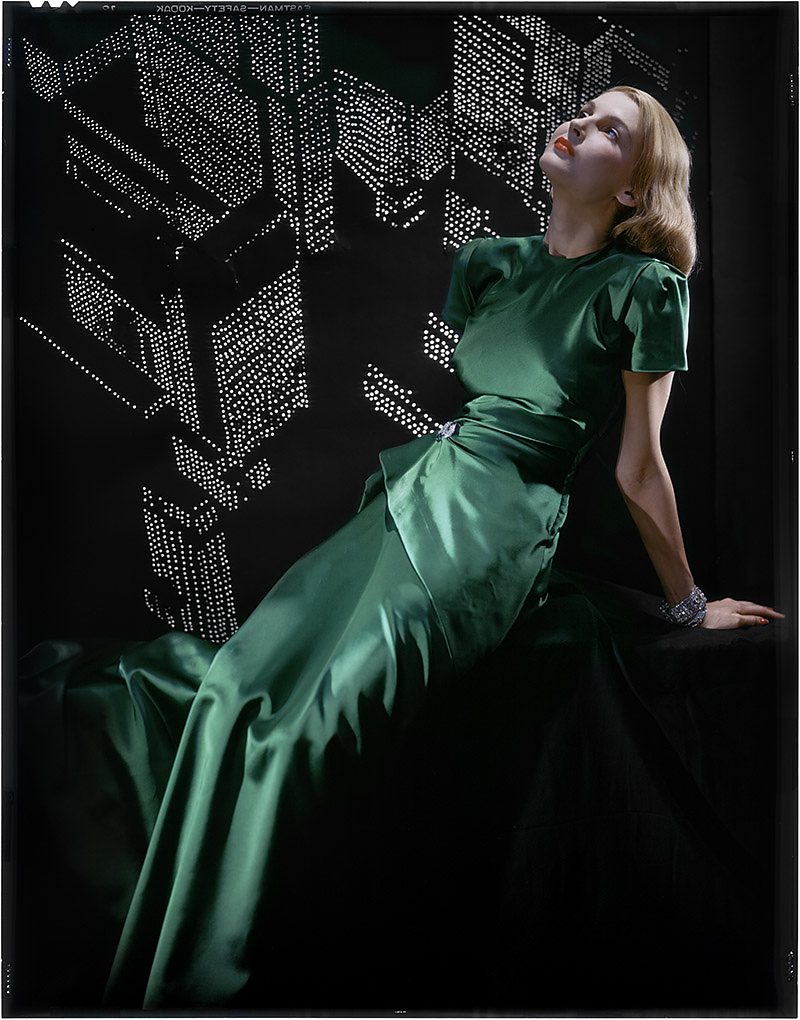
Horst was admired for his dramatic lighting and became one of the first photographers to perfect the new colour techniques of the 1930s. A short film of him at work in the Vogue studios during the 1940s will be shown with an introduction to his peers including Lee Miller, Cecil Beaton and Irving Penn. The advent of colour enabled a fresh approach and Horst went on to create more than 90 Vogue covers and countless pages in vivid colour. A selection of 25 large colour photographs, newly printed from the original transparencies from the Condé Nast Archive, will demonstrate Horst’s exceptional skill as a colourist. These prints feature Horst’s favourite models from the 1940s and 50s, such as Carmen Dell’Orefice, Muriel Maxwell and Dorian Leigh, and will be shown together with preparatory sketches, which have never previously been exhibited.

In the early 1950s, Horst created a series of male nudes for an exhibition in Paris for which the models were carefully posed and dramatically lit to accentuate their musculature. The series evokes the classical sculpture that Horst so admired throughout his career. During the 1960s and 1970s, Horst photographed some of the world’s most beautiful and luxurious homes for House and Garden and Vogue under the editorship of his friend Diana Vreeland. A three-sided projection and interactive screens will present these colourful studies. Among the most memorable are the Art Deco apartment of Karl Lagerfeld, the three lavish dwellings of Yves Saint Laurent and the Roman palazzo of artist Cy Twombly.

In the latter years of Horst’s life, his early aesthetic experienced a renaissance. The period also witnessed a flurry of new books, exhibitions, and television documentaries celebrating his work. Horst produced new, lavish prints in platinum-palladium for museums and the collector’s market, selecting emblematic works from every decade of his career, which will be showcased as the finale to the exhibition.

Press release from the V&A


Horst P. Horst (German-American, 1906-1999) 'Chanel, Vogue France' 1935


Horst P. Horst (German-American, 1906-1999)
Chanel, Vogue France
1935
© Condé Nast/Horst Estate


A fore-runner of the timeless look of Chanel, here in brown and white check rayon with collar, cuffs and lapels in white piquè that matches the buttoned top.


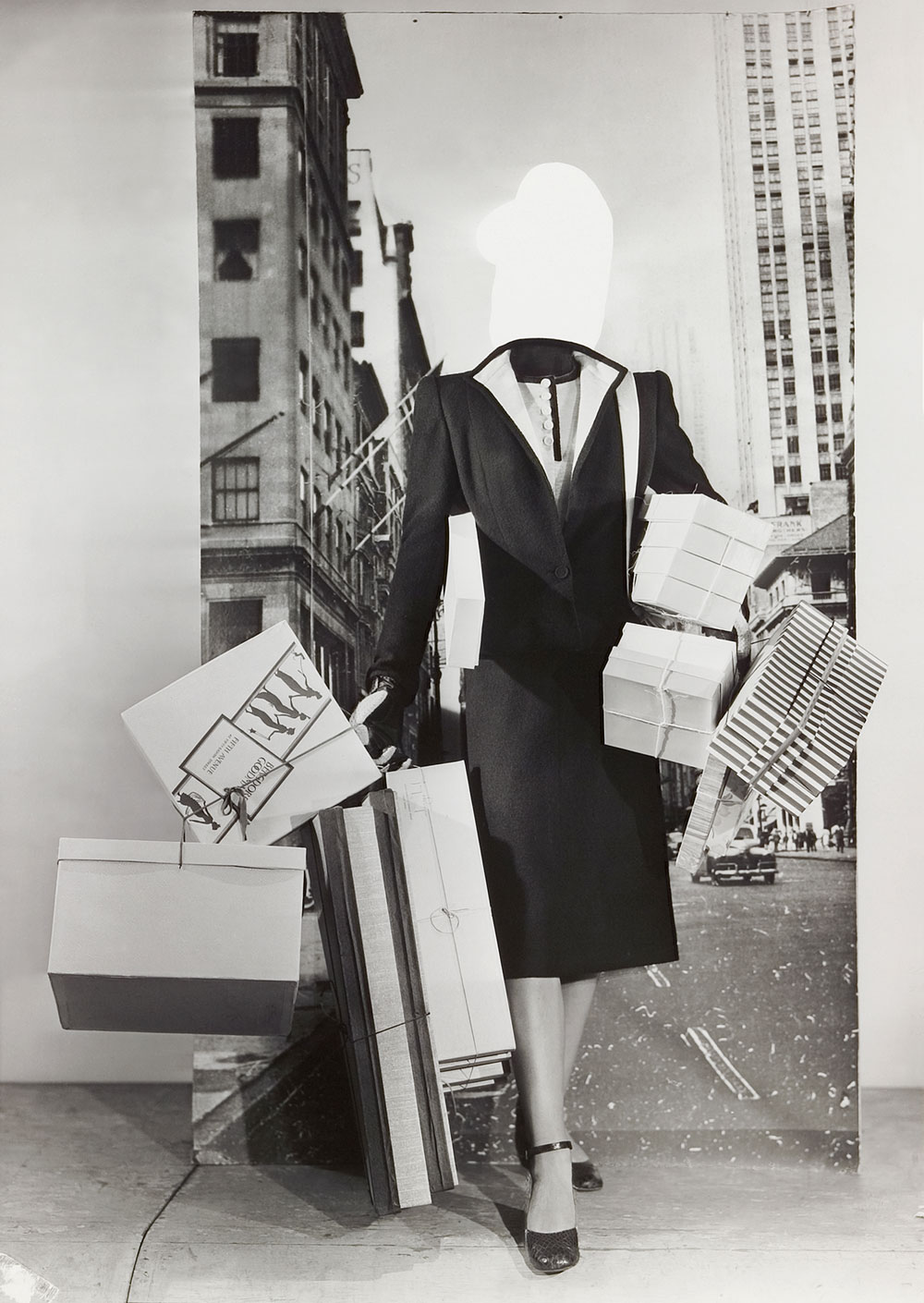
Horst P. Horst (German-American, 1906-1999) 'Hat and coat-dress by Bergdorf Goodman, modelled by Estrella Boissevain' 1938


Horst P. Horst (German-American, 1906-1999)
Hat and coat-dress by Bergdorf Goodman, modelled by Estrella Boissevain
1938
© Conde Nast / Horst Estate


Horst P. Horst (German-American, 1906-1999) 'Corset by Detolle for Mainbocher' 1939


Horst P. Horst (German-American, 1906-1999)
Corset by Detolle for Mainbocher
1939
© Conde Nast / Horst Estate


Horst P. Horst (German-American, 1906-1999) 'Lisa with Turban, New York' 1940


Horst P. Horst (German-American, 1906-1999)
Lisa with Turban, New York
1940
© Conde Nast / Horst Estate


Horst P. Horst (German-American, 1906-1999) 'Gertrude Stein at Balmain Fashion Show' 1946


Horst P. Horst (German-American, 1906-1999)
Gertrude Stein at Balmain Fashion Show
1946
© Conde Nast / Horst Estate


Horst P. Horst (German-American, 1906-1999) 'Birthday Gloves, New York' 1947


Horst P. Horst (German-American, 1906-1999)
Birthday Gloves, New York
1947
© Condé Nast/Horst Estate


Horst P. Horst (German-American, 1906-1999) 'Lillian Marcuson in Dior's belted two-piece suit in black rustic wool, called 'Milieu du Siècle'' 1949


Horst P. Horst (German-American, 1906-1999)
Lillian Marcuson in Dior’s belted two-piece suit in black rustic wool, called ‘Milieu du Siècle’
1949
© Condé Nast/Horst Estate


Horst P. Horst (German-American, 1906-1999) 'Nina de Voe' 1951


Horst P. Horst (German-American, 1906-1999)
Nina de Voe
1951
© Condé Nast/Horst Estate
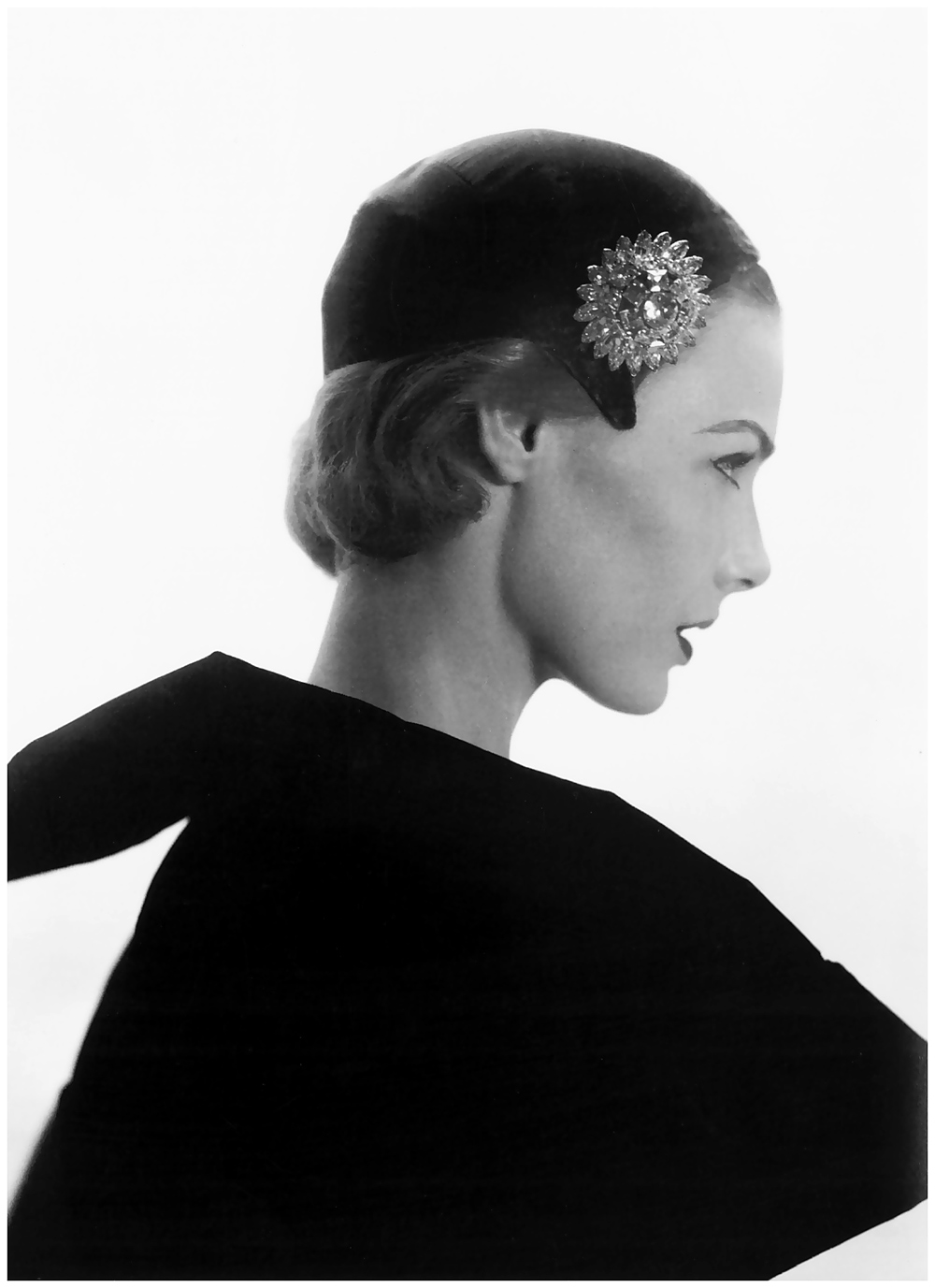
 

Horst P. Horst (German-American, 1906-1999) 'Lillian Marcuson, New York' 1950


Horst P. Horst (German-American, 1906-1999)
Lillian Marcuson, New York
1950
© Condé Nast/Horst Estate
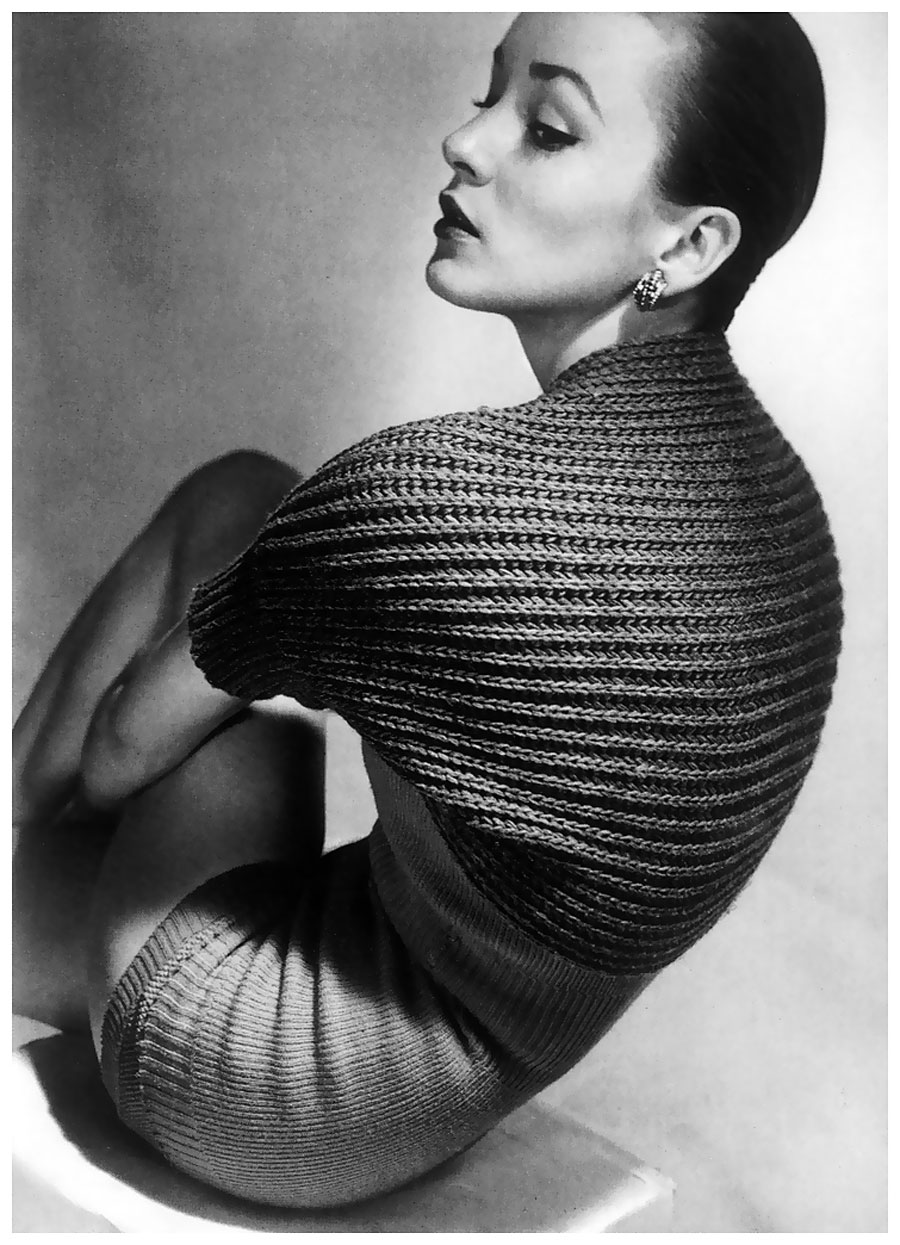
 

Horst P. Horst (German-American, 1906-1999) 'Outfit by Tina Leser' Vogue, April 1950


Horst P. Horst (German-American, 1906-1999)
Outfit by Tina Leser
Vogue, April 1950
© Condé Nast/Horst Estate


Horst P. Horst (German-American, 1906-1999) 'Bombay Bathing Fashion' 1950


Horst P. Horst (German-American, 1906-1999)
Bombay Bathing Fashion
1950
© Condé Nast/Horst Estate


Model (unidentified) and Dorian Leigh (r) in bathing suit and sleeveless shirt cover-up by Carolyn Schnurer 1951 Vogue


Haute Couture

When Horst joined Vogue in 1931, Paris was still the world’s undisputed centre of high fashion. Photography had begun to eclipse graphic illustration in fashion magazines and the publisher Condé Montrose Nast devoted large sums to improving the quality of image reproduction. He insisted that Vogue photographers work with a large format camera, which produced richly detailed negatives measuring ten by eight inches.

The creation of a Horst photograph was a collaborative process, involving the talents of the photographer and model, the art director, fashion editor, studio assistants and set technicians. The modelling profession was still in its infancy in the 1930s and many of those who posed under the hot studio lights were stylish friends of the magazine’s staff, often actresses or aristocrats.

By the mid 1930s, Horst had superseded his mentor George Hoyningen-Huene as Paris Vogue‘s primary photographer. His images frequently appeared in the French, British and American editions of the magazine. Many of the photographs on display in the exhibition are vintage prints from the company’s archive.
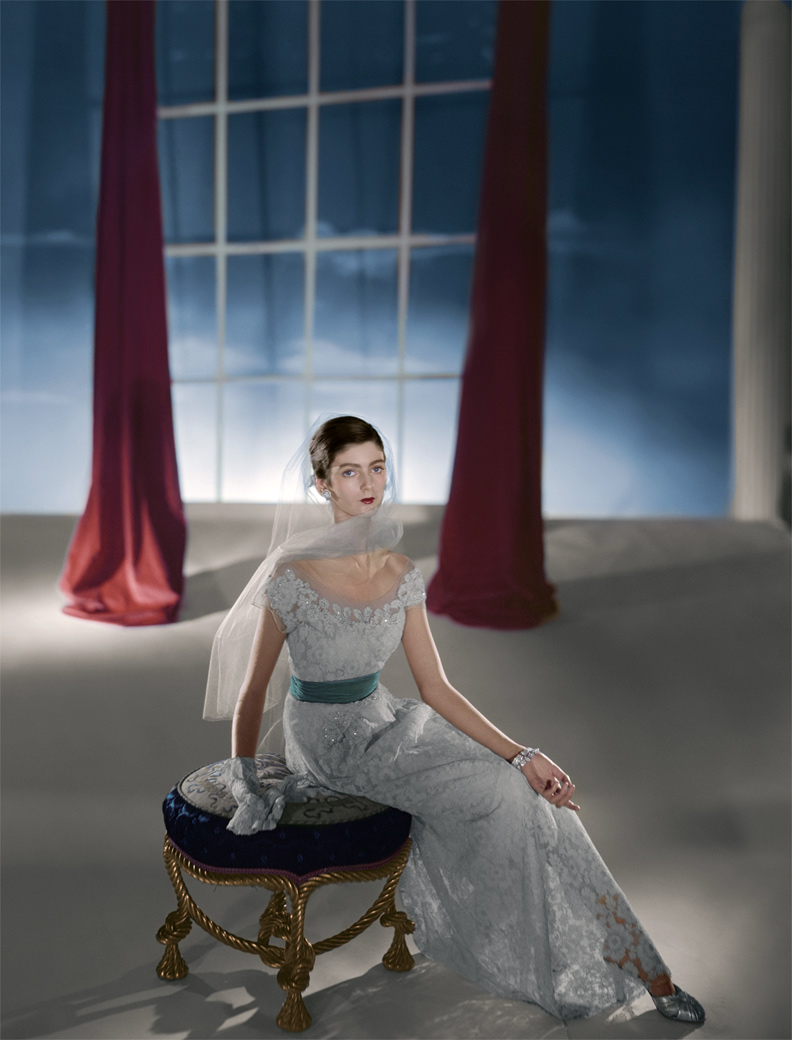
 

Horst P. Horst (German-American, 1906-1999) 'Dress by Hattie Carnegie' 1939


Horst P. Horst (German-American, 1906-1999)
Dress by Hattie Carnegie
1939
© Conde Nast / Horst Estate


Horst P. Horst (German-American, 1906-1999) 'Dress by Hattie Carnegie' 1939


Horst P. Horst (German-American, 1906-1999)
Dress by Hattie Carnegie
1939
© Conde Nast / Horst Estate


Horst P. Horst (German-American, 1906-1999) 'Muriel Maxwell, American Vogue' 1939


Horst P. Horst (German-American, 1906-1999)
Muriel Maxwell, American Vogue
1939
© Conde Nast / Horst Estate
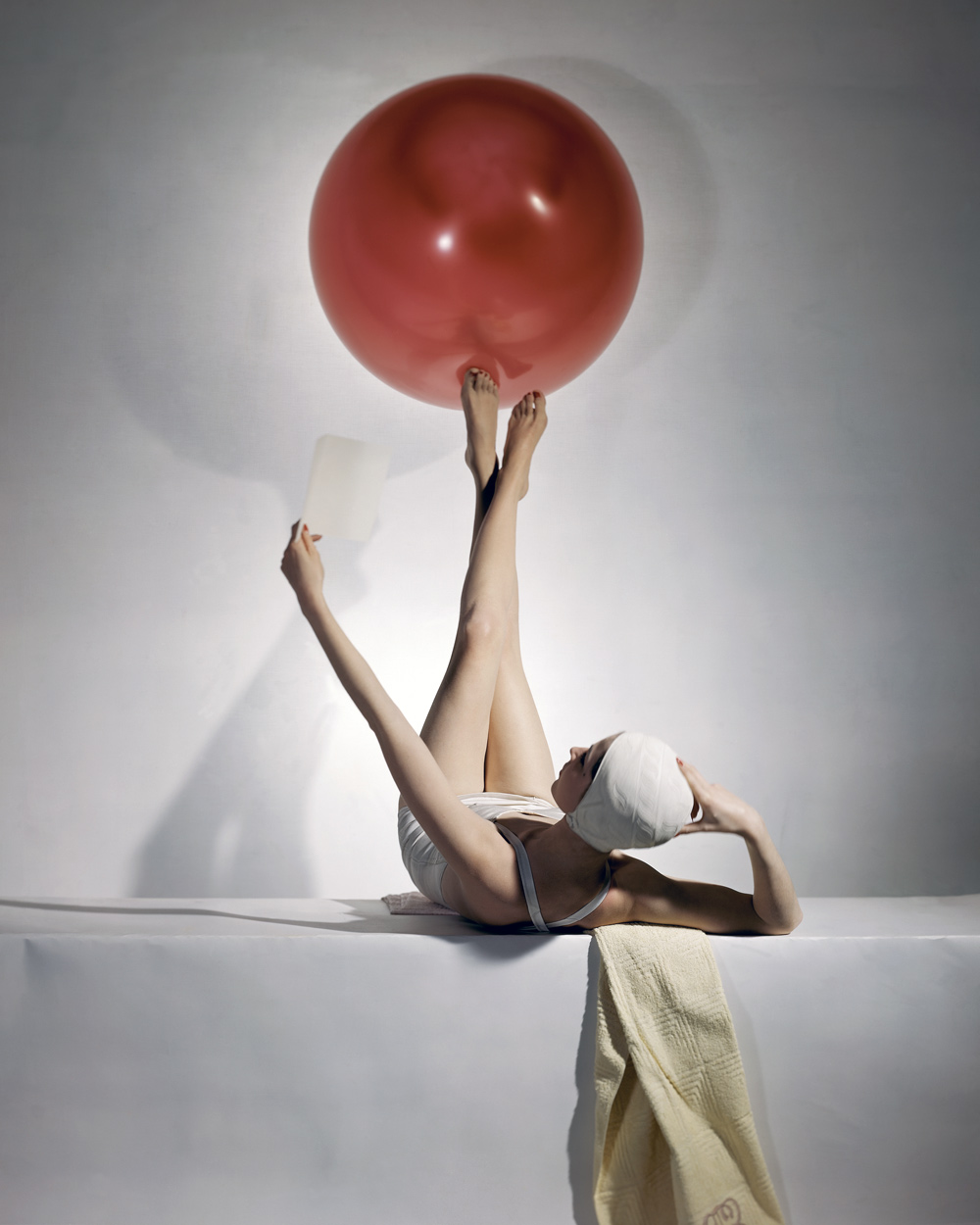
 

Horst P. Horst (German-American, 1906-1999) 'Summer Fashions, American Vogue cover' 1941


Horst P. Horst (German-American, 1906-1999)
Summer Fashions, American Vogue cover
1941
© Conde Nast / Horst Estate
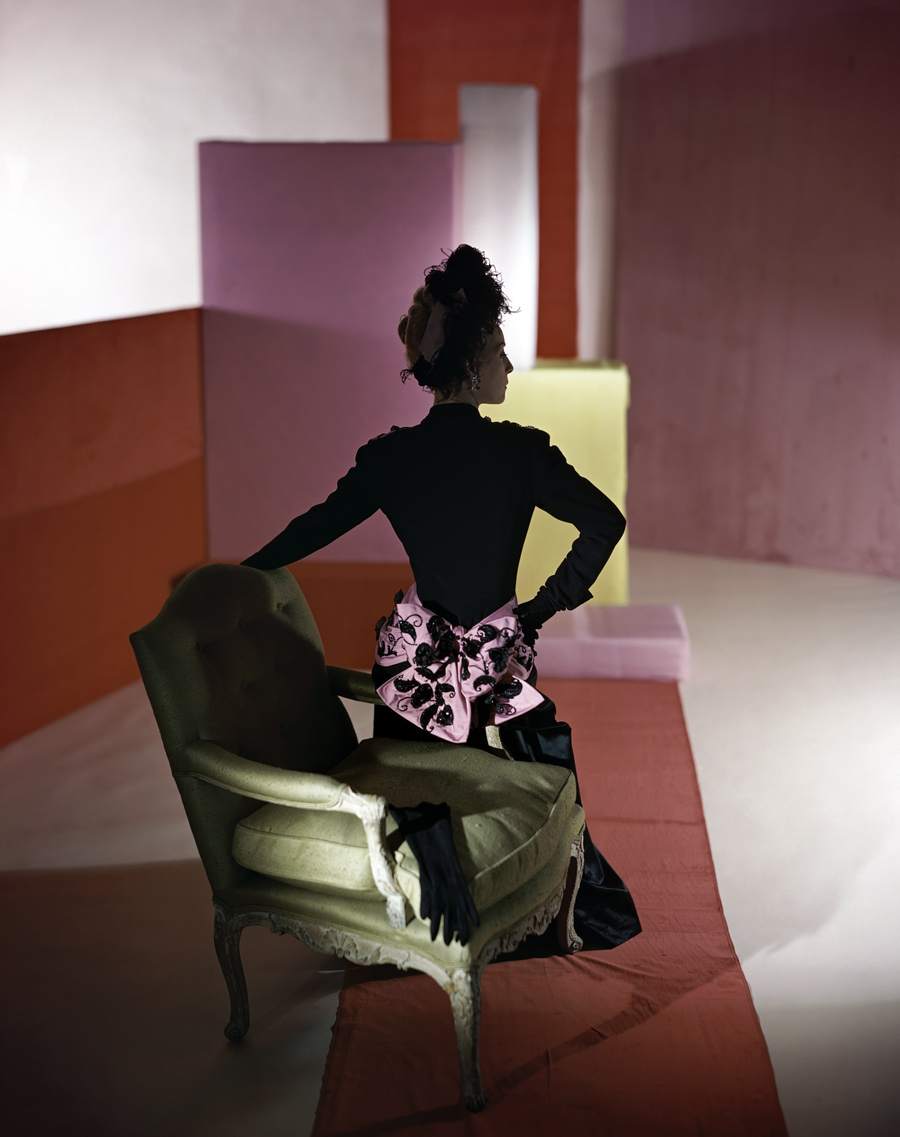
 

Horst P. Horst (German-American, 1906-1999) 'Dinner suit and headdress by Schiaparelli' 1947


Horst P. Horst (German-American, 1906-1999)
Dinner suit and headdress by Schiaparelli
1947
© Conde Nast / Horst Estate


Horst P. Horst (German-American, 1906-1999) 'Dinner suit and headdress by Schiaparelli' 1947 'Millicent Rogers in a Charles James gown and a gold necklace of her own design' Vogue, February 1, 1949


Horst P. Horst (German-American, 1906-1999)
Millicent Rogers in a Charles James gown and a gold necklace of her own design Vogue,
February 1, 1949
© Conde Nast / Horst Estate


Horst in Colour from Victoria and Albert Museum


This film reveals the process of creating new colour prints for the exhibition Horst: Photographer of Style. Horst was quick to master new colour processes, introduced in the late 1930s, and he created hundreds of vibrant fashion photographs for Vogue.

The V&A team worked closely with specialists at the Condé Nast Archive and expert printer Ken Allen to select and print from Horst’s early transparencies, which date from the 1930s to the 1950s. The film includes insights into Horst’s dynamic approach from model Carmen Dell’Orefice and Vogue‘s International Editor at Large, Hamish Bowles.​


Fashion in Colour

The 1930s ushered in huge technical advancements in colour photography. Horst adapted quickly to a new visual vocabulary, creating some of Vogue‘s most dazzling colour images. In 1935 he photographed the Russian Princess Nadejda Sherbatow in a red velveteen jacket for the first of his many Vogue cover pictures.

The occupation of Paris transformed the world of fashion. The majority of French ateliers closed and many couturiers and buyers left the country. Remaining businesses struggled with extreme shortages of cloth and other supplies. The scarcity of French fashions in America, however, enabled American designers to come into their own.

Horst’s colour photographs are rarely exhibited because few vintage prints exist. Colour capture took place on a transparency which could be reproduced on the magazine page without the need to create a photographic print. The size of the new prints displayed in this room of the exhibition echoes the large scale of a group of Horst images printed in 1938 at the Condé Nast press.


Horst P. Horst (German-American, 1906-1999) 'Marlene Dietrich, New York' 1942


Horst P. Horst (German-American, 1906-1999)
Marlene Dietrich, New York
1942
© Conde Nast / Horst Estate
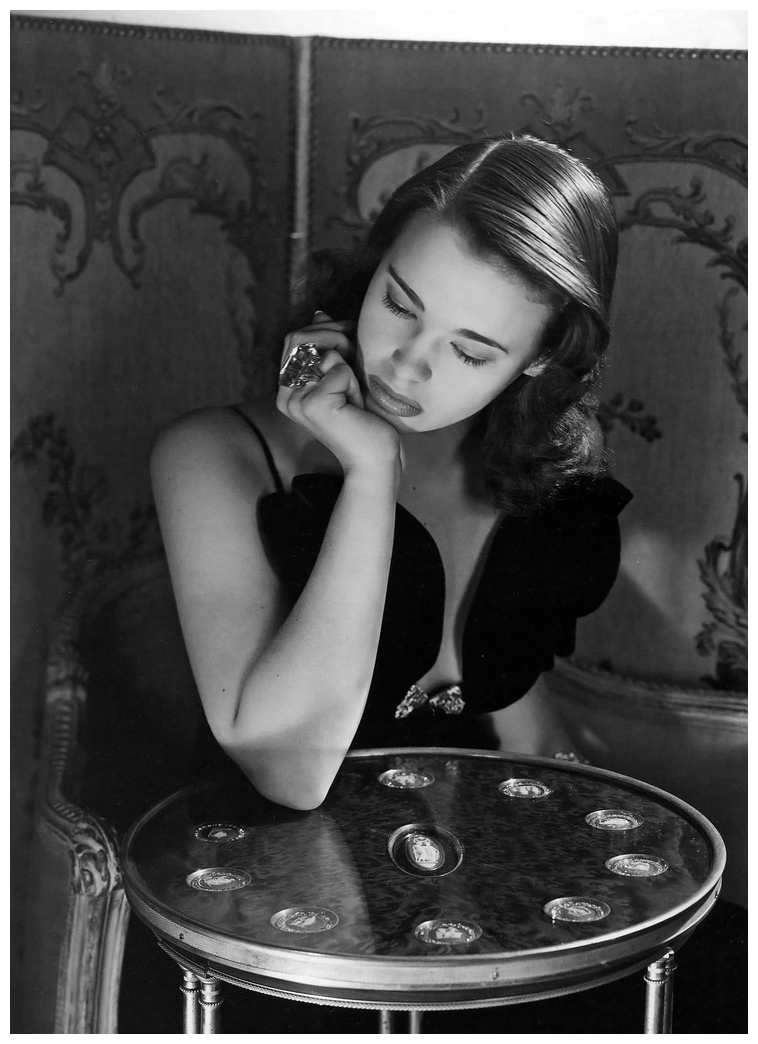
 

Horst P. Horst (German-American, 1906-1999) 'Gloria Vanderbilt age 17 wearing a dress by Howard Greer, New York' 1941


Horst P. Horst (German-American, 1906-1999)
Gloria Vanderbilt age 17 wearing a dress by Howard Greer, New York
1941
© Conde Nast / Horst Estate


At 17, in Beverly Hills wearing a tabletop dress by Howard Greer. Tabletop dresses looked good from the waist up when stars were photographed sitting in restaurants and nightclub.


Stage and Screen

Horst’s portraits spanned a wide cross-section of subjects, from artists and writers to presidents and royalty. In the 1930s, he became aware of a new focus for his work. As he later noted in his book Salute to the Thirties (1971), glamorous Hollywood movie stars were imperceptibly assuming the place left vacant by Europe’s vanishing royal families. With the approach of the Second World War, the escapism offered by theatre and cinema gained in popularity. Horst began to photograph these new, classless celebrities, both in costume and as themselves.

The first well-known star Horst photographed was the English performer Gertrude Lawrence, then appearing in Ronald Jeans’ play Can the Leopard…? at the Theatre Royal, Haymarket. Horst’s first portrait of a Hollywood actress, Bette Davis, appeared in Vogue‘s sister magazine Vanity Fair in 1932.


Horst P. Horst (German-American, 1906-1999) 'Round the Clock, New York' 1987


Horst P. Horst (German-American, 1906-1999)
Round the Clock, New York
1987
© Conde Nast / Horst Estate


Platinum

The 1980s witnessed a flurry of new books, exhibitions and television documentaries about Horst. He produced new prints for museums and the collector’s market, selecting emblematic works from every decade of his career to be reprinted in platinum-palladium, sometimes with new titles. This was a complex and expensive technique, employing metals more expensive than gold. Failing eyesight finally forced him to stop working in 1992.

Horst’s platinum-palladium prints are treasured for their nuanced tones, surface quality and permanence. His style had experienced a renaissance in 1978 when Francine Crescent, French Vogue‘s editor in chief, had invited him to photograph the Paris collections. Horst’s work for her echoed his atmospheric, spot-lit studies of the 1930s. His use of the platinum process for creating new and reproducing early works ensured his mastery of light, mood and composition would be enjoyed by a new audience.


Horst P. Horst (German-American, 1906-1999) 'Male Nude #3' 1952, printed 1980s


Horst P. Horst (German-American, 1906-1999)
Male Nude #3
1952, printed 1980s
© Conde Nast / Horst Estate


Horst P. Horst (German-American, 1906-1999) 'Still Life' Nd


Horst P. Horst (German-American, 1906-1999)
Still Life
Nd
© Conde Nast / Horst Estate


Horst P. Horst (German-American, 1906-1999) 'Male Nude' 1952


Horst P. Horst (German-American, 1906-1999)
Male Nude
1952
© Conde Nast / Horst Estate


Male Nudes

In the early 1950s Horst produced a set of distinctive photographs unlike much of his previous output. These male figure studies were exhibited for the first time in Paris in 1953 and reprinted using the platinum-palladium process in the 1980s. The studies exemplify Horst’s sense of form. All emphasis is on the idealised human body, expressive light and shadow. Monumental and anonymous nudes resemble classical sculptures. As Mehemed Agha (1929-78), art director of American Vogue, commented:

“Horst takes the inert clay of human flesh and models it into the decorative shapes of his own devising. Every gesture of his models is planned, every line controlled and coordinated to the whole of the picture. Some gestures look natural and careless, because carefully rehearsed; the others, like Voltaire’s god, were invented by the artist because they did not exist.”
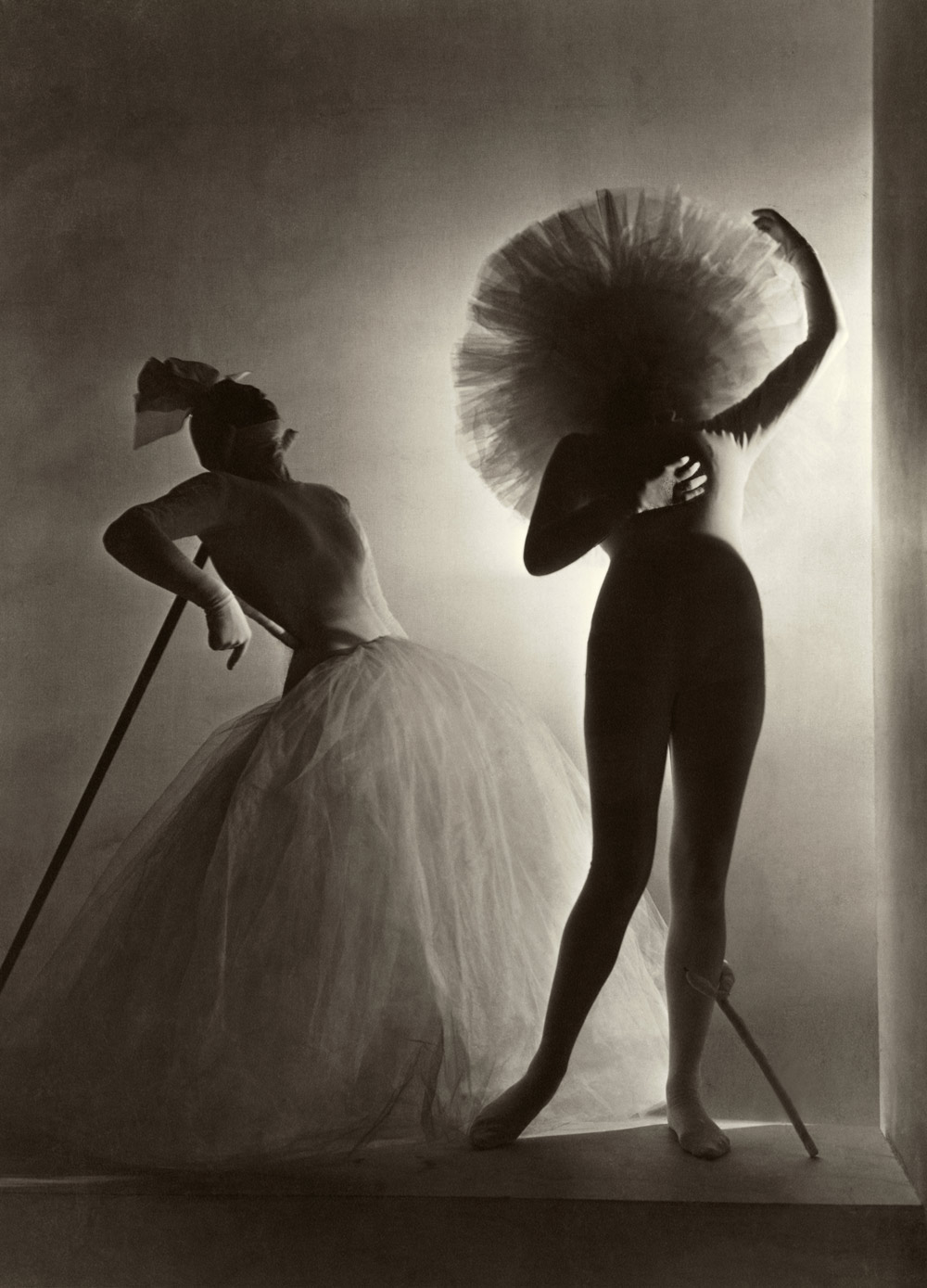
 

Horst P. Horst (German-American, 1906-1999) 'Salvador Dali's costumes for Leonid Massine's ballet 'Bacchanale'' 1939


Horst P. Horst (German-American, 1906-1999)
Salvador Dali’s costumes for Leonid Massine’s ballet Bacchanale
1939
© Conde Nast / Horst Estate


Horst P. Horst (German-American, 1906-1999) 'Lisa Fonssagrives hands, New York' 1941


Horst P. Horst (German-American, 1906-1999)
Lisa Fonssagrives hands, New York
1941
© Conde Nast / Horst Estate


Horst P. Horst (German-American, 1906-1999) 'Odalisque I' 1943


Horst P. Horst (German-American, 1906-1999)
Odalisque I
1943
© Conde Nast / Horst Estate


Horst P. Horst (German-American, 1906-1999) 'Bunny Hartley' Vogue, 1938


Horst P. Horst (German-American, 1906-1999)
Bunny Hartley, Vogue

1938
© Conde Nast / Horst Estate


Horst P. Horst (German-American, 1906-1999) 'Lisa Fonssagrives "I Love You"' 1937


Horst P. Horst (German-American, 1906-1999)
Lisa Fonssagrives “I Love You”
1937
© Conde Nast / Horst Estate


Surrealism

The Surrealist art movement explored unique ways of interpreting the world, turning to dreams and the unconscious for inspiration. During the 1930s Surrealism escaped its radical avant-garde roots and transformed design, fashion, advertising, theatre and film. Horst’s photographs of this period feature mysterious, whimsical and surreal elements combined with his classical aesthetic. He created trompe l’oeil still life, photographed the surreal-infused dress designs of his friend Elsa Schiaparelli and collaborated with the artist Salvador Dalí. He shared with the Surrealists a fascination with the representation of the female body, often fragmenting and eroticising the human form in his images.

His most celebrated photograph of the era is Mainbocher Corset (1939). Decades after the photograph was made, Main Bocher himself expressed his admiration for Horst’s virtuosity, writing,

“Your photographs are sheer genius and delight my soul … each one is perfect by itself.”
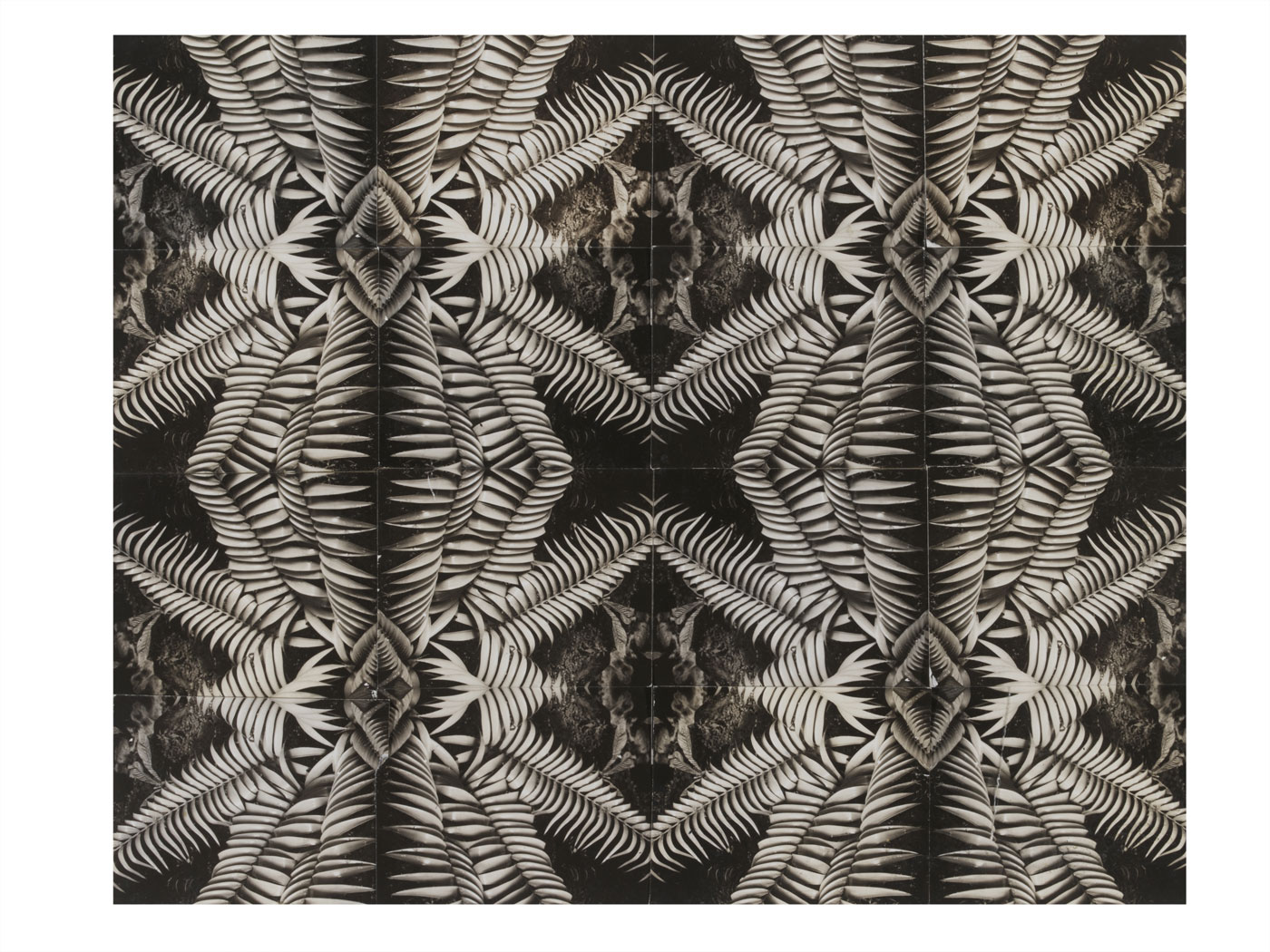
 

Horst P. Horst (German-American, 1906-1999) 'Patterns from Nature Photographic Collage' 1945


Horst P. Horst (German-American, 1906-1999)
Patterns from Nature Photographic Collage
1945
© Conde Nast / Horst Estate


Patterns from Nature

Horst’s second book, Patterns from Nature (1946), and the photographs from which it originated, are a surprising diversion from the high glamour of his fashion and celebrity photographs. These close-up, black and white images of plants, shells and minerals were taken in New York’s Botanical Gardens, in the forests of New England, in Mexico, and along the Atlantic and Pacific coasts.

This personal project was partly inspired by photographs of plants by Karl Blossfeldt (1865-1932). Horst was struck by “their revelation of the similarity of vegetable forms to art forms like wrought iron and Gothic architecture.” Horst’s interest was also linked to the technical purity of ‘photographic seeing’, a philosophy associated with the New Objectivity movement of the 1920s and ’30s. Practitioners took natural forms out of their contexts and examined them with such close attention that they became unfamiliar and revelatory.


Horst P. Horst (German-American, 1906-1999) 'View of ruins at the palace of Persepolis, Persia' 1949


Horst P. Horst (German-American, 1906-1999)
View of ruins at the palace of Persepolis, Persia
1949
© Conde Nast / Horst Estate


Travel

In the summer of 1949, Horst journeyed to the Middle East with his partner Valentine Lawford, then political counsellor at the British Embassy in Tehran. They travelled by road from Beirut to Persepolis, where Horst was able to photograph parts of the ancient Persian city that had only recently been uncovered. Afterwards, Horst visited the newly established State of Israel on a photographic assignment for Vogue.

The trip left a strong impression on Horst and he returned in the spring of 1950. He spent a week with Lawford at the relatively remote south-eastern shore of the Caspian Sea, before documenting the annual migration of the Qashqa’i clan. Horst and Lawford were invited by Malik Mansur Khan Qashqa’i to spend ten days with his tribe as they travelled by camel and horse, in search of vegetation for their flocks.


Horst P. Horst (German-American, 1906-1999) 'Yves Saint Laurent poses in the apartment's grand salon for a November 1971 'Vogue' photo spread' 1971


Horst P. Horst (German-American, 1906-1999)
Yves Saint Laurent poses in the apartment’s grand salon for a November 1971 ‘Vogue’ photo spread
1971
© Conde Nast / Horst Estate


Living in Style

In 1947 Horst acquired five acres of land in Oyster Bay Cove, Long Island, part of the estate once owned by the designer Louis Comfort Tiffany. On the land he described as ‘everything I had ever dreamed of’, Horst built a unique house and landscaped garden. British diplomat Valentine Lawford visited for the first time in 1947, with Noël Coward, Christopher Isherwood, and Greta Garbo. It was the beginning of a relationship with Horst that would last until Lawford’s death in 1991.

They welcomed many friends and visitors to Long Island, including the dynamic editor Diana Vreeland. She left Harper’s Bazaar for Vogue in 1962 and soon put the couple to work on Vogue‘s ‘Fashions in Living’ pages. The homes and tastes of everyone from Jackie Onassis to the Duke and Duchess of Windsor, Andy Warhol and Karl Lagerfeld featured in their articles. Horst’s creative chemistry with Vreeland brought him a new lease of life.


Roy Stevens (American, b. 1916) 'Horst directing fashion shoot with Lisa Fonssagrives' 15 May 1941


Roy Stevens (American, b. 1916)
Horst directing fashion shoot with Lisa Fonssagrives
15 May 1941
© Time & Life Pictures / Getty Images


In the Studio

During the 1940s Horst worked primarily in the Condé Nast studio on the 19th floor of the Graybar Building, an Art Deco skyscraper on Manhattan’s Lexington Avenue. The busy studio was well equipped with a variety of lights and props and Horst worked closely with talented art director Alexander Liberman. Like Horst, he had found refuge in the artistic circles of Paris and New York, and enjoyed a long career with Condé Nast.

By 1946 dressing the American woman had become one of the country’s largest industries, grossing over six billion dollars a year. The staff of Vogue expanded accordingly. In 1951 Horst found a studio of his own, the former penthouse apartment of artist Pavel Tchelitchew, with high ceilings and a spectacular view over the river. Horst developed a new approach to photography in response to the abundance of daylight and for a time his famous atmospheric shadows disappeared.


Victoria and Albert Museum
Cromwell Road, London SW7 2RL

Opening hours:
The V&A is open daily from 10.00 to 17.45 and until 22.00 on Fridays

Victoria and Albert Museum website

LIKE ART BLART ON FACEBOOK

Back to top

Exhibition: ‘The World c. 1914. Colour Photography Before the Great War’ at Martin-Gropius-Bau Berlin

Exhibition dates: 1st August – 2nd November 2014

Albert Kahn, Sergej M. Prokudin-Gorskii, Adolf Miethe


Stéphane Passet (French, 1875-1941) 'Morocco, Benguerir' December 1912 / January 1913
 

Albert Kahn, Les Archives de la planète

Stéphane Passet (French, 1875-1941)
Morocco, Benguerir
December 1912 / January 1913
Autochrome
© Musée Albert-Kahn, Departement des Hauts-de-Seine


One of the most beautiful postings that I have ever done on the blog. The colours, the people, the faces, the places: magnificent.

This was Sarajevo two years before Archduke Franz Ferdinand of Austria was assassinated there, catalyst that sparked the beginning of The Great War. Bread and dirty clothes, rough hands and mud-stained shoes.

Can you imagine the journey of Stéphane Passet in those days with plate cameras:

Turkey: September 1912
Morocco: December 1912 / January 1913
China: May 1913
Mongolia: July 1913
India: December 1913 – January 1914
France: June 1914

Marcus


Many thankx to Martin-Gropius-Bau Berlin for allowing me to publish the photographs in the posting. Please click on the photographs for a larger version of the image.


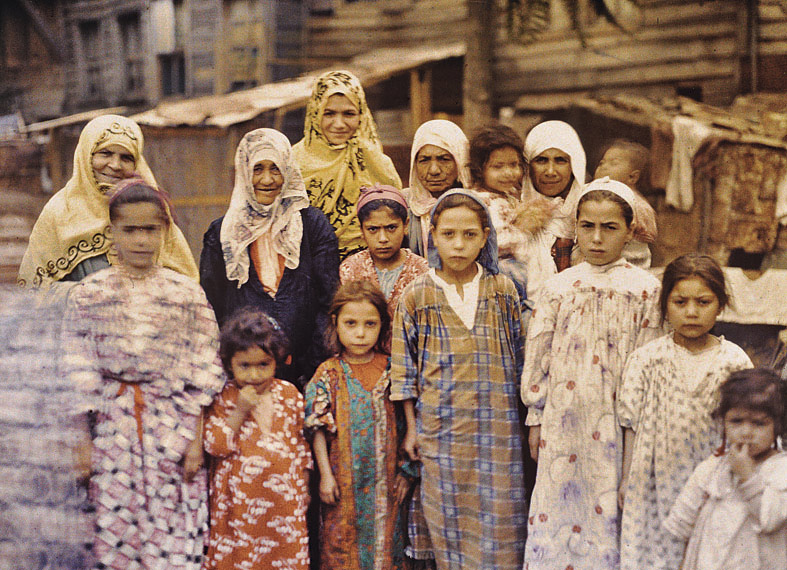
Stéphane Passet (French, 1875-1941) 'Turkey, Istanbul September' 1912


Albert Kahn, Les Archives de la planète

Stéphane Passet (French, 1875-1941)
Turkey, Istanbul
September 1912
Autochrome
© Musée Albert-Kahn, Departement des Hauts-de-Seine


Stéphane François Marie Passet (French, 1875-1941) was an amateur photographer and appointed operator on behalf of the Archives de la Planète (Archives of the Planet). This archival project began thanks to the rich French-based banker and philanthropist Albert Kahn (1860-1940), who became concerned about the Chinese cultural heritage after his part-business, part-pleasure trip to China between November 1908 and May 1909.

After his return to Paris, Kahn decided to launch the worldwide project Les Archives de la Planète. This three-decade long project distinguished itself from any other initiated at that time thanks to the compilation of a visual inventory of the world utilising ground-breaking types of media from that time, namely autochrome and film. With the utopian aim to ‘fix once and for all the aspects, the practices, and modes of human activity whose fatal disappearing is just a question of time’, Kahn hired a dozen operators to help him visualise the world, including Passet.

Biographical elements of Passet remain quite meagre. What is known is that he volunteered in the French Army for fifteen years, settled down in Paris in 1910, and worked for Kahn’s Archives de la Planète from 1912 onwards. The circumstances of his previous training as a photographer and cameraman, as well as his recruitment, remain unknown. The visual archive left to us today reveal that two trips were organised [to China] in 1912 (between May and August) and 1913 (between the end of May and the end of June). Passet and his team travelled across China, visiting and recording places such as Beijing (which composes a large part of the archive in China) and northern sites (Great Wall and Ming Tombs), Shenyang, Zhangjiakou, Qufu, Shanghai, places along the Yangtze River, and Mount Tai (hereinafter referred to as Taishan).

The Archives de la Planète ended in 1931 when Kahn was bankrupted.

Anonymous text. “Stéphane Passet,” on the Photography of China website Nd [Online] Cited 10/11/2022


Auguste Leon (French, 1857-1942) 'Bosnia-Herzegovina, Sarajevo' 15 October 1912


Albert Kahn, Les Archives de la planète

Auguste Leon (French, 1857-1942)
Bosnia-Herzegovina, Sarajevo
15 October 1912
Autochrome
© Musée Albert-Kahn, Departement des Hauts-de-Seine


Auguste Leon (French, 1857-1942) 'Bosnia-Herzegovina, Sarajevo' 15 October 1912 (detail)

Auguste Leon (French, 1857-1942) 'Bosnia-Herzegovina, Sarajevo' 15 October 1912 (detail)


Albert Kahn, Les Archives de la planète

Auguste Leon (French, 1857-1942)
Bosnia-Herzegovina, Sarajevo (details)
15 October 1912
Autochrome
© Musée Albert-Kahn, Departement des Hauts-de-Seine


Auguste Leon (French, 1857-1942), French photographer who worked for the project “Archives of the Planet” (French: Les Archives de la Planète) of millionaire French banker and philanthropist Albert Kahn (1860-1940) since 1909. Together with Jean Brin, another French photographer, they visited Macedonia during the Balkan wars in the period of 1912-1913 where they made series of autochromes (very first colour photograps) which today are in the collection of Albert Kahn museum and were published later in the publication: Macedonia in 1913 – Autochromes from the collection of the Museum Albert Kahn.


Stéphane Passet (French, 1875-1941) 'Mongolia, near Ulaanbaatar' 17 July 1913


Albert Kahn, Les Archives de la planète

Stéphane Passet (French, 1875-1941)
Mongolia, near Ulaanbaatar
17 July 1913
Autochrome
© Musée Albert-Kahn, Departement des Hauts-de-Seine


Auguste Leon (French, 1857-1942) 'Egypt, Giza' 6 January 1914


Albert Kahn, Les Archives de la planète

Auguste Leon (French, 1857-1942)
Egypt, Giza
6 January 1914
Autochrome
© Musée Albert-Kahn, Departement des Hauts-de-Seine


Stéphane Passet (French, 1875-1941) 'India, Uttar Pradesh' 19 - 21 January 1914


Albert Kahn, Les Archives de la planète

Stéphane Passet (French, 1875-1941)
India, Uttar Pradesh
19 – 21 January 1914
Autochrome
© Musée Albert-Kahn, Departement des Hauts-de-Seine


Auguste Leon (French, 1857-1942) 'Bosnia-Herzegovina, Mostar' 29 April 1913


Albert Kahn, Les Archives de la planète

Auguste Leon (French, 1857-1942)
Bosnia-Herzegovina, Mostar
29 April 1913
Autochrome
© Musée Albert-Kahn, Departement des Hauts-de-Seine


The Archives of the Planet (French: Les Archives de la Planète) was photographical endeavour to document buildings and cultures.

In 1909, Kahn travelled with his chauffeur and photographer, Alfred Dutertre to Japan on business and returned with many photographs of the journey. On his return to Europe, he decided to go back, this time with the professional photographer Augustus Leon, for a second two-month trip to South America in 1909 where he visited Uruguay, Argentina, and Brazil. All materials became the first of the “Archives of the Planet” based in Paris: a collection of colour photographs (process autochrome plates, invented by the Lumiere brothers) and movies.

This prompted him to begin a project collecting a photographic record of the entire Earth. He appointed Jean Brunhes as the project director, and sent photographers to every continent to record images of the planet using the first colour photography, autochrome plates, and early cinematography.

Professional operators were recruited and sent around the world and in France to photograph (colour) and film (the movement) as evidence “aspects, practices and modes of human activity, including the fatal disappearance is only a matter of time.” Among them, the photographer Stéphane Passet conducted between 1912 and 1914, several trips to China, Mongolia and in the British Raj (India and Pakistan), yielding several thousand Autochromes and movies on the people and customs of these country. At the same time Kahn sent his operators, including Augustus Leon, to Scandinavia and more than twenty European countries on the eve of the Great War. Kahn’s photographers began documenting France in 1914, just days before the outbreak of World War I, and by liaising with the military managed to record both the devastation of war, and the struggle to continue everyday life and agricultural work. Other parts of France are not forgotten either, Kahn sending Brittany operators to take monochromes from 1909-1931. In 1926 and 1927, it was to Japan that he sends an operator, Roger Dumas.

Between 1909 and 1931 they collected 72,000 colour photographs and 183,000 meters of film. These form a unique historical record of 50 countries, known as The Archives of the Planet. Between 1909 and 1931, it is thus some 72,000 autochrome (first global fund of early colour photography), 4000 black-and-white, and a hundred hours of footage that will be reported from fifty country. These images are the iconographic side of a large documentation project that will take other forms (publications, documentation centres, etc.) and whose goal is a better understanding of other nations for a better deal in order to prevent conflicts. The images are also projected for this purpose to the guests, often prestigious people from around the world, as well as in higher education structures.

Translated from the French Wikipedia website


Stéphane Passet (French, 1875-1941) 'Mongolia, Ulaanbaatar' 25 July 1913


Albert Kahn, Les Archives de la planète

Stéphane Passet (French, 1875-1941)
Mongolia, Ulaanbaatar
25 July 1913
Autochrome
© Musée Albert-Kahn, Departement des Hauts-de-Seine


Stéphane Passet (French, 1875-1941) 'India, Bombay' 17 December 1913


Albert Kahn, Les Archives de la planète

Stéphane Passet (French, 1875-1941)
India, Bombay
17 December 1913
Autochrome
© Musée Albert-Kahn, Departement des Hauts-de-Seine


Stéphane Passet (French, 1875-1941) 'France, Paris' 24 June 1914


Albert Kahn, Les Archives de la planète

Stéphane Passet (French, 1875-1941)
France, Paris (Family in the Rue du Pot-de-Fer)
24 June 1914
Autochrome
© Musée Albert-Kahn, Departement des Hauts-de-Seine


Auguste Leon (French, 1857-1942) 'Serbia, Krusevac' 29 April 1913


Albert Kahn, Les Archives de la planète

Auguste Leon (French, 1857-1942)
Serbia, Krusevac
29 April 1913
Autochrome
© Musée Albert-Kahn, Departement des Hauts-de-Seine


Auguste Leon (French, 1857-1942) 'Serbia, Krusevac' (detail) 29 April 1913


Albert Kahn, Les Archives de la planète

Auguste Leon (French, 1857-1942)
Serbia, Krusevac (detail)
29 April 1913
Autochrome
© Musée Albert-Kahn, Departement des Hauts-de-Seine


In commemoration of the outbreak of the First World War, the Martin-Gropius-Bau is presenting an exhibition entitled The World c. 1914 – Colour Photography Before the Great War, which features nearly forgotten colour photographs and films commissioned by the French banker Albert Kahn (1860-1940) before the First World War. As the nations of Europe were already arming themselves for battle, Kahn, who was excited by the Lumière Brothers’ colour photography process, dispatched photographers out into the world to develop a unique photo archive. Over 70,000 colour photos have survived in this collection. They represent an immense ethnographic treasure and were also intended to perform a mission of peace: Bringing the outside world closer to home. Kahn’s activities were intended to help secure the fragile peace. The exhibition brings this treasure trove of images from a long forgotten world to light.

For Albert Kahn, knowledge of peoples, buildings, landscapes and lifestyles was directly related to his desire for global peace: People who know and respect one another, and who encounter one another face to face, do not need to wage war. In 1908/09, excited by the new autochrome process of the brothers August and Louis Lumière, Kahn commissioned his photographers to document the world with the goal of assembling an archive of colour photographs from Europe, Asia and Africa. They photographed local scenes and people in typical clothing as well as monuments of cultural history. From this global treasure trove, more than 160 images have been selected for this exhibition. The autochromes from the Kahn archive form the centrepiece. The exhibition also displays images and projections by Adolf Miethe (1862-1927) and Sergei M. Prokudin-Gorskii (1863-1944).

Adolf Miethe, the inventor of a panchromatic film-coating process and thus the creator of three-colour printing, played a significant role in the development of colour photography. His presentation before the Kaiser led to a commission to create a colour documentation of German landscapes for the St. Louis World’s Fair. His work also enjoyed great popularity as collectible pictures sold with chocolate bars. This resulted in the “Stollwerck Album” – Germany’s first coloured photographic album.

Moreover, the Miethe Process inspired the Russian photographer Sergei Mikhailovich Prokudin-Gorskii. His work is present in the form of approximately twenty-five colour prints and fifty projected photos. A special item is on loan from the German Museum in Munich: The original projector with which Sergei Prokudin-Gorskii exhibited his work to Nicholas II, the last tsar. In 1909, as a result of this presentation, Prokudin-Gorskii received a commission to record the Russian Empire in 10,000 photos. Between 1909 and 1915, Gorskii made several thousand photographs of great brilliance. He documented the cultural diversity of the tsarist empire from the Crimean Peninsula to Siberia.

Text from the Martin-Gropius-Bau website


Auguste Leon (French, 1857-1942) 'Egypt, Assuan' 20 January 1914


Albert Kahn, Les Archives de la planète

Auguste Leon (French, 1857-1942)
Egypt, Assuan
20 January 1914
Autochrome
© Musée Albert-Kahn, Departement des Hauts-de-Seine


Stéphane Passet (French, 1875-1941) 'Morocco, Fes' January 1913


Albert Kahn, Les Archives de la planète

Stéphane Passet (French, 1875-1941)
Morocco, Fes
January 1913
Autochrome
© Musée Albert-Kahn, Departement des Hauts-de-Seine


Stéphane Passet (French, 1875-1941) 'China, Beijing' 26 May 1913


Albert Kahn, Les Archives de la planète

Stéphane Passet (French, 1875-1941)
China, Beijing
26 May 1913
Autochrome
© Musée Albert-Kahn, Departement des Hauts-de-Seine


Stéphane Passet (French, 1875-1941) 'Turkey, Istanbul, Pera' (today: Beyoğlu) September 1912


Albert Kahn, Les Archives de la planète

Stéphane Passet (French, 1875-1941)
Turkey, Istanbul, Pera (today: Beyoğlu)
September 1912
Autochrome
© Musée Albert-Kahn, Departement des Hauts-de-Seine


Stéphane Passet (French, 1875-1941) 'Le Moulin Rouge, Boulevard de Clichy (18°) Paris' 24 June 1914


Albert Kahn, Les Archives de la planète

Stéphane Passet (French, 1875-1941)
Le Moulin Rouge, Boulevard de Clichy (18°), Paris
24th June 1914
Autochrome
© Musée Albert-Kahn, Departement des Hauts-de-Seine


Martin-Gropius-Bau Berlin
Niederkirchnerstraße 7
Corner Stresemannstr. 110
10963 Berlin
Phone: +49 (0)30 254 86-0

Opening hours:
Wednesday to Monday 10 – 19 hrs
Tuesday closed

Martin-Gropius-Bau website

LIKE ART BLART ON FACEBOOK

Back to top

Exhibition: ‘Erwin Blumenfeld (1897-1969) Photographs, drawings and photomontages’ at Jeu de Paume, Paris

Exhibition dates: 15th October 2013 – 26th January 2014


Erwin Blumenfeld (American-German, 1897-1969) 'Grauenfresse / Hitler, Holland, 1933' 1933


Erwin Blumenfeld (American-German, 1897-1969)
Grauenfresse / Hitler, Holland, 1933
1933
Collage and ink on photomontage (gelatin silver print, double-exposition). Printed later
Collection Helaine and Yorick Blumenfeld, Courtesy of Modernism Inc., San Francisco
© The Estate of Erwin Blumenfeld


Considering the nature of Blumenfeld’s collages such as Grauenfresse / Hitler, Holland, 1933 and Minotaur / Dictator I would say that the artist was very, very lucky to escape to America in 1941. Let us remember all those that were not so fortunate…

Marcus


Many thankx to Jeu de Paume for allowing me to publish the photographs in the posting. Please click on the photographs for a larger version of the image.


“In 1940 Blumenfeld was interned as a German Jew in France, first in Montbard, then in Loriol, Le Vernet, and Catus. He made a daring escape with his family in 1941, returning via Casablanca to New York, where he subsequently lived and worked until his death.” (press release)

“After Blumenfeld returned to France, during World War II, Blumenfeld and his family spent time in Vézelay with Le Corbusier and Romain Rolland. He was incarcerated at Camp Vernet and other concentration camps. His daughter Lisette (who had just turned 18) was incarcerated at the Gurs internment camp. Luckily Blumenfeld was bunked next to the husband of the woman Lisette was bunked next to. Through postcards and letters the Blumenfeld family of five managed to reunite. In 1941 they obtained a visa and escaped to North Africa and then New York.”

Text from the Wikipedia website


Erwin Blumenfeld (American-German, 1897-1969) 'Minotaur / Dictator' [Minotaure / Dictateur] The Minotaur or The Dictator Paris, c. 1937


Erwin Blumenfeld (American-German, 1897-1969)
Minotaur / Dictator [Minotaure / Dictateur]
The Minotaur or The Dictator
Paris, c. 1937
Vintage gelatin silver print
Collection Yvette Blumenfeld Georges Deeton / Art+Commerce, New York, Gallery Kicken Berlin, Berlin


The Vichy Policy on Jewish Deportation

Paul Webster

Jewish Statute

Despite autonomy from German policies, Pétain brought in legislation setting up a Jewish Statute in October 1940. By then about 150,000 Jews had crossed what was known as the Demarcation Line to seek protection from Vichy in the south – only to find they were subjected to fierce discrimination along lines practised by the Germans in the north.

Jews were eventually banned from the professions, show business, teaching, the civil service and journalism. After an intense propaganda campaign, Jewish businesses were ‘aryanised’ by Vichy’s Commission for Jewish Affairs and their property was confiscated. More than 40,000 refugee Jews were held in concentration camps under French control, and 3,000 died of poor treatment during the winters of 1940 and 1941. The writer Arthur Koestler, who was held at Le Vernet near the Spanish frontier, said conditions were worse than in the notorious German camp, Dachau.

During 1941 anti-Semitic legislation, applicable in both zones, was tightened. French police carried out the first mass arrests in Paris in May 1941when 3,747 men were interned. Two more sweeps took place before the first deportation train provided by French state railways left for Germany under French guard on 12 March 1942. On 16 July 1942, French police arrested 12,884 Jews, including 4,501 children and 5,802 women, in Paris during what became known as La Grande Rafle (‘the big round-up’). Most were temporarily interned in a sports stadium, in conditions witnessed by a Paris lawyer, Georges Wellers.

‘All those wretched people lived five horrifying days in the enormous interior filled with deafening noise … among the screams and cries of people who had gone mad, or the injured who tried to kill themselves’, he recalled. Within days, detainees were being sent to Germany in cattle-wagons, and some became the first Jews to die in the gas chambers at Auschwitz.

Vichy crimes

Many historians consider that an even worse crime was committed in Vichy-controlled southern France, where the Germans had no say. In August 1942, gendarmes were sent to hunt down foreign refugees. Families were seized in their houses or captured after manhunts across the countryside. About 11,000 Jews were transported to Drancy in the Paris suburbs, the main transit centre for Auschwitz. Children as young as three were separated from their mothers – gendarmes used batons and hoses – before being sent to Germany under French guard, after weeks of maltreatment.

During 1942, officials sent 41,951 Jews to Germany, although the deportations came to a temporary halt when some religious leaders warned Vichy against possible public reaction. Afterwards, arrests were carried out more discreetly. In 1943 and 1944, the regime deported 31,899 people – the last train left in August 1944, as Allied troops entered Paris. Out of the total of 75,721 deportees, contained in a register drawn up by a Jewish organisation, fewer than 2,000 survived.

Revolt and aftermath

The number of dead would have been far higher if the Italian fascist leader, Benito Mussolini, had not ordered troops in France to defy German-French plans for mass round ups in Italian-occupied south-eastern France. Thousands were smuggled into Italy after Italian generals said that ‘no country can ask Italy, cradle of Christianity and law, to be associated with these (Nazi) acts’. After the Italian surrender in September 1943, arrests in the area restarted, but by then French public opinion had changed. Escape lines to Switzerland and Spain had been set up, and thousands of families risked death to shelter Jews. Since the war, Israel has given medals to 2,000 French people, including several priests, in recognition of this, and of the fact that about 250,000 Jews survived in France.

Post-war indifference to anti-Semitic persecution pushed the issue into the background until Serge Klarsfield, a Jewish lawyer whose Romanian father died in Germany, reawakened the national conscience. He tracked down the German chief of the Secret Service in Lyon, Klaus Barbie, who was hiding in Bolivia but was subsequently jailed for life in 1987. His case threw light on Vichy’s complicity in the Holocaust. Klarsfeld’s efforts were frustrated by the Socialist president of France at this time, Francois Mitterrand, who had been an official at Vichy and was decorated by Pétain. It was not until 1992 that one of Barbie’s French aides, Paul Touvier, who had been a minor figure in wartime France, was jailed for life for his crimes.

Facing facts

French courts, responding to Mitterrand’s warnings that trials would cause civil unrest, blocked other prosecutions, including that of the Vichy police chief, René Bousquet, who organised the Paris and Vichy zone mass arrests. He was assassinated by a lone gunman in June 1993. It was not until Mitterrand retired in 1995 that France began to face up to its responsibility in the persecution of Jews. When the new right-wing president, Jacques Chirac, came to power, he immediately condemned Vichy as a criminal regime and two years later the Catholic Church publicly asked for forgiveness for its failure to protect the Jews.

But the most significant step forward was the trial in 1997 of Maurice Papon, 89, for crimes concerning the deportation of Jews from Bordeaux. He had served as a cabinet minister after the war, before losing a 16-year legal battle to avoid trial. He was released from jail because of poor health, but his ten-year prison sentence has been interpreted as official recognition of French complicity in the Holocaust, although there are still those who continue to defend his actions.

Since the trial, France has opened up hidden archives and offered compensation to survivors – and ensured that schools, where history manuals used not to mention France’s part in the deportations, now have compulsory lessons on Vichy persecution. While anti-Semitism is still a social problem in France, there is no official discrimination, and today’s 600,000-strong Jewish community is represented at every level of the establishment, including in the Catholic Church, where the Archbishop of Paris is Cardinal Jean-Marie Lustiger.

Extract from Paul Webster. “The Vichy Policy on Jewish Deportation,” on the BBC History website, 17/02/2011 [Online] Cited 23/01/2021


Erwin Blumenfeld (American-German, 1897-1969) 'Mode-Montage' c. 1950


Erwin Blumenfeld (American-German, 1897-1969)
Mode-Montage
c. 1950
Vintage gelatin silver print
Collection Helaine et Yorick Blumenfeld
Courtesy of Modernism Inc., San Francisco
© The Estate of Erwin Blumenfeld


Erwin Blumenfeld (American-German, 1897-1969) 'Marguerite von Sivers sur le toit du studio 9, rue Delambre' [Marguerite von Sivers on the roof of Blumenfeld’s studio at 9, rue Delambre] Paris, 1937


Erwin Blumenfeld (American-German, 1897-1969)
Marguerite von Sivers sur le toit du studio 9, rue Delambre [Marguerite von Sivers on the roof of Blumenfeld’s studio at 9, rue Delambre]
Paris, 1937
Vintage gelatin silver print
Collection Yvette Blumenfeld Georges Deeton / Art+Commerce, New York, Gallery Kicken Berlin, Berlin
© The Estate of Erwin Blumenfeld


Erwin Blumenfeld (American-German, 1897-1969) 'Untitled [Natalia Pasco]' 1942


Erwin Blumenfeld (American-German, 1897-1969)
Untitled [Natalia Pasco]
1942
Vintage gelatin silver print
Collection Henry Blumenfeld
© The Estate of Erwin Blumenfeld


Erwin Blumenfeld (American-German, 1897-1969) 'Voile mouillé' [Wet veil] Paris, 1937


Erwin Blumenfeld (American-German, 1897-1969)
Voile mouillé [Wet Veil]
Paris, 1937
Vintage gelatin silver print
Collection particulière, Suisse
© The Estate of Erwin Blumenfeld


Erwin Blumenfeld (American-German, 1897-1969) 'Cecil Beaton' 1946


Erwin Blumenfeld (American-German, 1897-1969)
Cecil Beaton
1946
Vintage silver gelatin print
Collection particulière, Suisse
© The Estate of Erwin Blumenfeld


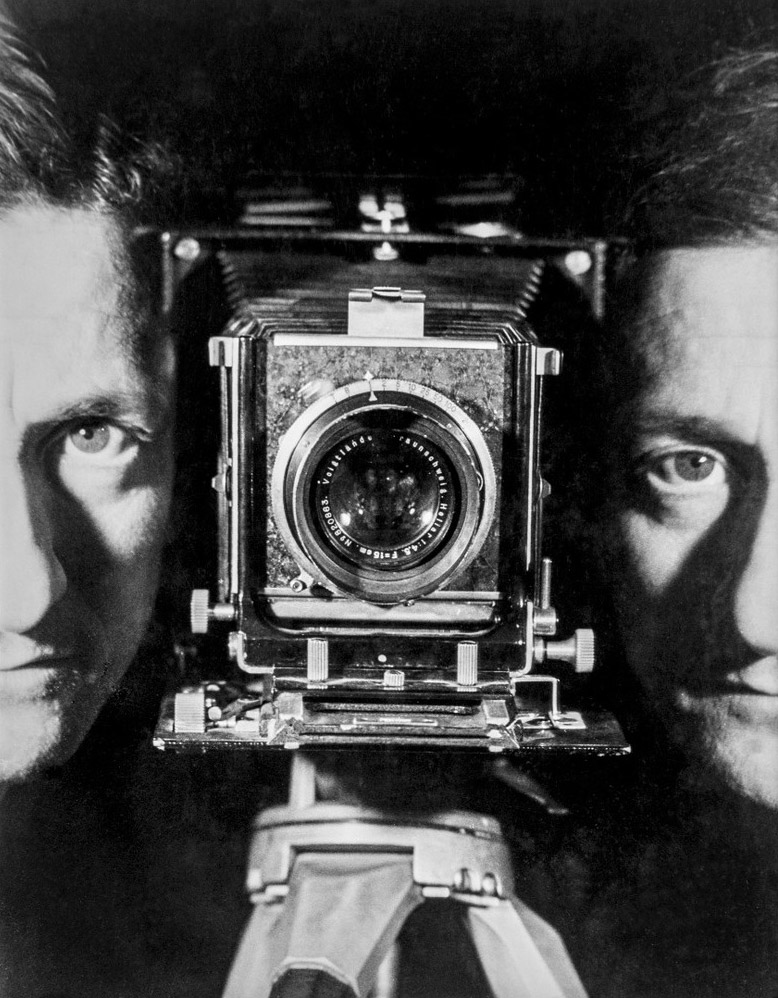
Erwin Blumenfeld (American-German, 1897-1969) 'Self-Portrait' Paris, c. 1937


Erwin Blumenfeld (American-German, 1897-1969)
Self-Portrait
Paris, c. 1937
Gelatin silver print. Printed later
Collection Helaine and Yorick Blumenfeld
© The Estate of Erwin Blumenfeld


Erwin Blumenfeld (American-German, 1897-1969) 'Untitled (Self-Portrait)' 1945


Erwin Blumenfeld (American-German, 1897-1969)
Untitled (Self-Portrait)
1945


Erwin Blumenfeld’s life and work impressively document the socio-political context of artistic development between the two World Wars, while highlighting the individual consequences of emigration. The exhibition devoted to Erwin Blumenfeld’s multi-layered œuvre brings together over 300 works and documents from the late 1910s to the 1960s, and encompasses the various media explored by the artist throughout his career: drawings, photographs, montages and collages.

This exhibition traces his visual creativity and encompasses the early drawings, the collages and montages, which mostly stem from the early 1920s, the beginnings of his portrait art in Holland, the first black and white fashion photographs of the Paris period, the masterful colour photography created in New York and the urban photos taken toward the end of his life.

The retrospective also showcases his drawings, many of which have never been shown before, as well as his early collages and photomontages, shedding fascinating light on the evolution of his photographic oeuvre and revealing the full extent of his creative genius. The now classic motifs of his experimental black-and-white photographs can be seen alongside his numerous self-portraits and portraits of famous and little-known people, as well as his fashion and advertising work.

In the first years of his career, he worked only in black and white, but as soon as it became technically possible he enthusiastically used colour. He transferred his experiences with black-and-white photography to colour; applying them to the field of fashion, he developed a particularly original repertoire of forms. The female body became Erwin Blumenfeld’s principal subject. In his initial portrait work, then the nudes he produced while living in Paris and, later on, his fashion photography, he sought to bring out the unknown, hidden nature of his subjects; the object of his quest was not realism, but the mystery of reality

Blumenfeld’s work was showcased most recently in France in a 1981 show at the Centre Pompidou, which focused on his fashion photography, in 1998 at the Maison Européenne de la Photographie, as well as more recently in the exhibition Blumenfeld Studio, Colour, New York, 1941-1960 (Chalon-sur-Saône, Essen, London).

Press release from the Jeu de Paume website


“Bringing together over three hundred works and documents dating from the late 1910s to the 1960s, this exhibition, the first in France to showcase the multilayered aspects of Erwin Blumenfeld’s oeuvre, encompasses the various media explored by the artist throughout his career: drawing, photography, montage, and collage.

The life and work of Erwin Blumenfeld (Berlin, 1897 – Rome, 1969) provides an impressive record of the socio-political context of artistic development between the two World Wars, while highlighting the individual consequences of emigration. Erwin Blumenfeld, a German Jew, only spent a few years in his country of birth. It was only in 1919, when he was in self-imposed exile in the Netherlands, that Blumenfeld began to take a deeper interest in photography, particularly the photographic process and above all the artistic possibilities offered by darkroom experiments. For a short while, he ran an Amsterdam-based portrait studio that doubled as an exhibition space, before moving to Paris in 1936, where the art dealer Walter Feilchenfeldt helped him rent a studio in the rue Delambre. That same year, his photographs were exhibited at the Galerie Billiet, while the following year saw his first beauty cover, for Votre Beauté magazine. In 1938 he received a visit from leading fashion photographer Cecil Beaton, who helped him to obtain a contract with the French Vogue. Blumenfeld travelled to New York, returning in 1939, shortly before the outbreak of war, to become Harper’s Bazaar’s fashion correspondent in Paris.

In 1940 he was interned as a German Jew in France, first in Montbard, then in Loriol, Le Vernet, and Catus. He made a daring escape with his family in 1941, returning via Casablanca to New York, where he subsequently lived and worked until his death. It was in New York that Blumenfeld’s astonishing career as a much sought after, highly paid fashion photographer really took off, first of all in the studio he shared with Martin Munkácsi, then from 1943 in his own premises. The contract he signed with the publishers Condé Nast in 1944 marked the beginning of ten years of remarkable photography and cover shots for various magazines in the company’s stable. Following on from his experimental black-and-white shots of the 1930s, he began playing with colour. The present exhibition includes, besides photographs, both magazine work and early experimental films made for the Dayton department store in Minneapolis, his leading advertising customer.

Not until 1960 did Blumenfeld return to Berlin for a visit. He devoted the following years to finishing his autobiography, begun in the 1950s. The work was completed in 1969 with the help of his assistant Marina Schinz, but was only published in 1975, initially in French translation, then in the original German in 1976. His book My One Hundred Best Photos was also released posthumously, in 1979.

Drawings, Montages, and Collages

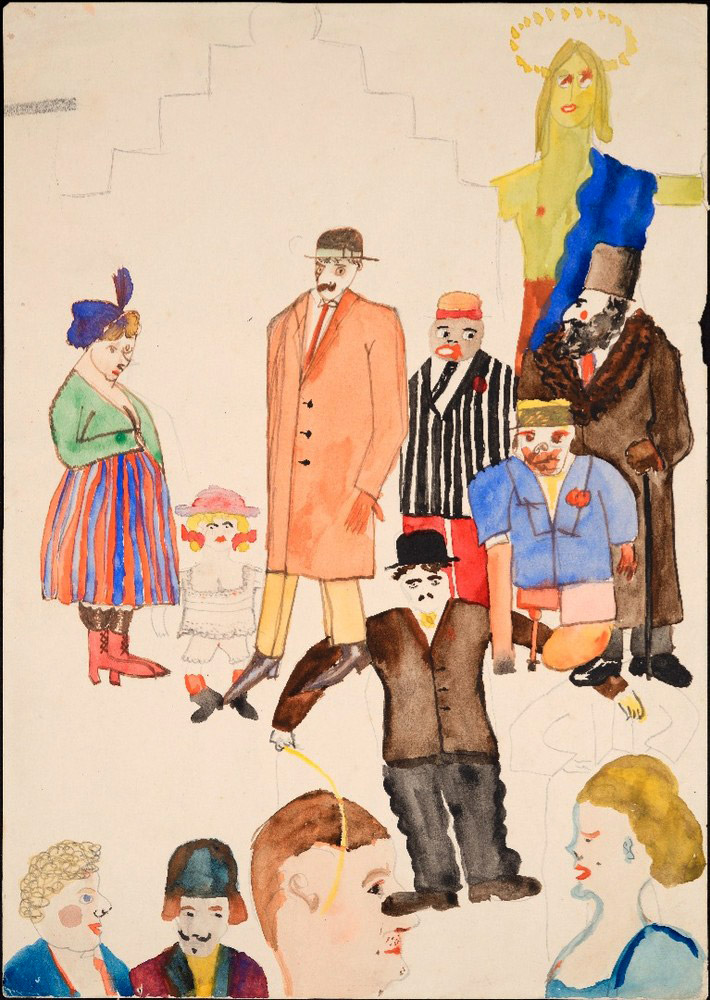
Between 1916 and 1933 Erwin Blumenfeld produced a fairly limited number of drawings and montages. As a young man he was very interested in literature, writing poems and short stories. And as early as 1915 he mentioned that he was interested in writing an autobiography. Almost all of his montages and collages include drawings and snippets of language. He plays with written and printed words and typography, juxtaposing names, concepts, and places to create ironic commentaries and provocative titles. His collages typically combine drawing, language, and cut-outs of original or printed photographs. He also often used letter stationery to form a background, leaving bare spaces. In 1918 Blumenfeld made the acquaintance of the Dadaist George Grosz; two years later he and Paul Citroen wrote to Francis Picabia in the name of the Hollandse Dadacentrale, but neither was present at the First International Dada Fair in Berlin in 1920. That same year, Blumenfeld began using the pseudonyms Erwin Bloomfeld and Jan Bloomfield, as documented in his Dadaist publications and in some of his collages. The drawings in the present exhibition, most of which have never been shown in public, were produced in Berlin and the Netherlands. Only a handful of them are dated. They are quick sketches from life or from imagination, rough cartoons and acid caricatures, in pencil, ink, watercolour, or coloured pencil – whatever was to hand. Blumenfeld was clearly fascinated by the quality and immediacy of drawing as a medium, and, as these works reveal, it certainly stimulated his playful side.

Self-Portraits

Blumenfeld took his first photographs as a schoolboy, using himself as one of his first subjects. The earliest date from the 1910s, but he continued taking self-portraits to the end of his life. The young man with the dreamy gaze turned into the louche bohemian with a cigarette, then the carefully staged photographer experimenting with his camera. His self-portraits are not the product of excessive vanity, but rather playful experiments, with and without masks, models, and other grotesque objects such as a calf’s head, all used to create witty images.

Portraits

Blumenfeld’s first steps in professional photography were in portraiture. He started “learning by doing” in the early 1920s in Amsterdam, where he had opened the ladies handbag store Fox Leather Company. This is where he took portraits of customers, using a darkroom in the back of the store. Comparison of the contact sheets from the time with the blow-ups taken from them clearly shows, right from the outset, the importance in Blumenfeld’s work of the finishing in the lab. The final images display extremely tight framing, high levels of contrast, and lighting that creates dramatic, even devilish, effects. When he arrived in Paris in 1936 his first photographs were portraits, featuring among others Henri Matisse and Georges Rouault. Although he quickly entered the Paris fashion scene, he retained a strong interest in portraiture throughout the remainder of his life.

Nudes

Blumenfeld’s earliest, highly narrative nudes date from his time in the Netherlands, but the subject only became a passion during his Paris years from 1936 on, when he discovered the work of French avant-garde photographers. His admiration for them is particularly evident in his nude photographs, as is the influence of Man Ray’s work. The bodies of the women in these images were surfaces onto which he projected his artistic imagination. He cut them up, solarised them, and transformed them into abstract imagery through the play of light and shadow. The faces of his nudes from the 1930s are only rarely visible, the women remaining somewhat mysterious entities. The nudes Blumenfeld produced in the 1950s after he had settled in New York tended to be more concrete, illustrative works.

Architecture

The black-and-white architectural photographs that Erwin Blumenfeld took in the 1930s feature buildings and urban spaces from various experimental and abstract perspectives. The Eiffel Tower, for instance, is captured in sharp reliefs of light and shade, while the photographs of Rouen Cathedral are intended to draw the viewer’s visual attention to the building’s specific forms. Blumenfeld expresses his artistic vision and his knowledge of Gothic architecture by focusing on the abstraction of details. During the 1950s and 1960s Blumenfeld used a 35mm camera for cityscapes. The exhibition showcases three of these colour slide projects for the first time. They feature New York, Paris, and Berlin – three places that made a mark on his art and also shaped his career.

The Dictator

In 1933, according to his autobiography, Blumenfeld reacted to Hitler’s rise to power in Germany with a photomontage. This outstanding piece of work, probably his most famous photograph, symbolises and anticipates the dictator’s dehumanisation. Following on from the political themes in some of his early collages, he here combined different negatives – a skull and a portrait of Hitler – to make a single print. In one of these montages he included a swastika, while in a different portrait “bleeding eyes” were added later on the surface. Later on, in Paris, he photographed a calf’s head, using this subject to compose different images. One in which he placed the animal’s head on a woman’s torso was titled The Minotaure or The Dictator. This image, which does not refer to a specific figure, is obviously intended to be allegorical. In 1941 Blumenfeld was able to escape from the Nazis with his family to New York.

Fashion

Blumenfeld’s move to Paris in 1936 marked the beginning of his career as a fashion photographer, although he had already had contacts with magazines in Paris while living in Amsterdam. The work that appeared in French publications in the late 1930s raised Blumenfeld’s profile as a modernist photographer and brought him to the attention of the famous British photographer Cecil Beaton, who visited him in his studio in 1938 and helped him sign his first contract with the French edition of Vogue. When Blumenfeld made his first trip to New York following his sensational set of fashion photographs on the Eiffel Tower, he came home with a new contract as Paris fashion correspondent for Harper’s Bazaar. He was only able to file his reports for a year before he was interned in various prison camps across France. In 1941 he was able to escape from German-occupied France to New York with his family. In the first half of the 1950s, he drew on his experiments in black-and-white photography to develop an exceptionally original artistic repertoire, reflected in his use of colour and his fashion work.

Ute Eskildsen
Curator of the exhibition
Translated from German by Susan Pickford


Erwin Blumenfeld (American-German, 1897-1969) 'Three Graces (1947), New York' 1947


Erwin Blumenfeld (American-German, 1897-1969)
Three Graces (1947), New York
1947


Leslie Petersen appears here in a triple variation inspired by Botticelli’s Primavera. The photograph, was intended to show off a gown by Cadwallader. The final image is made of two shots. The two on the right are similar but with different degrees of sharpness. The pose on the left is different.

Text from Phaidon


Erwin Blumenfeld (American-German, 1897-1969) 'Nude (Lisette)' Paris, 1937


Erwin Blumenfeld (American-German, 1897-1969)
Nude (Lisette)
Paris, 1937
Gelatin silver print, negative print, solarisation. Vintage print
Collection Yvette Blumenfeld Georges Deeton / Art + Commerce, New York, Gallery Kicken Berlin, Berlin
© The Estate of Erwin Blumenfeld


Erwin Blumenfeld (American-German, 1897-1969) 'Charlie' 1920


Erwin Blumenfeld (American-German, 1897-1969)
Charlie
1920
Collage, Indian ink, watercolour and pencil on paper
Collection Helaine and Yorick Blumenfeld
© The Estate of Erwin Blumenfeld


Erwin Blumenfeld (American-German, 1897-1969) 'Untitled, New York, 1944' 1944


Erwin Blumenfeld (American-German, 1897-1969)
Untitled, New York, 1944
1944
Gelatin silver print. Vintage print
Collection Henry Blumenfeld
© The Estate of Erwin Blumenfeld


Erwin Blumenfeld (American-German, 1897-1969) 'In hoc signo vinces [in this sign you will conquer]' 1967


Erwin Blumenfeld (American-German, 1897-1969)
In hoc signo vinces [in this sign you will conquer]
1967
Gelatin silver print. Vintage print
Private collection, Switzerland
© The Estate of Erwin Blumenfeld


Erwin Blumenfeld (American-German, 1897-1969) 'Audrey Hepburn' New York, 1950


Erwin Blumenfeld (American-German, 1897-1969)
Audrey Hepburn
New York, 1950
Vintage silver gelatin print
Collection particulière, Suisse.
© The Estate of Erwin Blumenfeld


Audrey Hepburn is wearing a hat designed by Blumenfeld and made by Mister Fred, one of New York’s most talented milliners. Blumenfeld here uses a system of mirrors showing the front and back of the hat and allowing infinite repetition of the motif.

Text from Phaidon


Erwin Blumenfeld (American-German, 1897-1969) 'Untitled [Homme agenouillé avec tour]' [Kneeling man with tower] 1920


Erwin Blumenfeld (American-German, 1897-1969)
Untitled [Homme agenouillé avec tour] [Kneeling man with tower]
1920
Indian ink, ink, watercolor and collage on paper
Collection Henry Blumenfeld.
© The Estate of Erwin Blumenfeld


Erwin Blumenfeld (American-German, 1897-1969) 'Group with Chaplin' Early 1920's


Erwin Blumenfeld (American-German, 1897-1969)
Group with Chaplin
Early 1920’s
Gouache and pencil on paper
Collection Henry Blumenfeld
© The Estate of Erwin Blumenfeld


Erwin Blumenfeld (American-German, 1897-1969) 'Untitled (Green dress)' 1946


Erwin Blumenfeld (American-German, 1897-1969)
Untitled (Green dress)
1946


Erwin Blumenfeld (American-German, 1897-1969) 'Do your part for the Red Cross' [Soutenez la Croix-Rouge] 1945


Erwin Blumenfeld (American-German, 1897-1969)
Do your part for the Red Cross [Soutenez la Croix-Rouge]
1945
Variante de la photographie de couverture de Vogue US, 15 mars 1945
Variant of a cover photograph of Vogue, “Do your part for the Red Cross”, New York, March 15th, 1945
Impression jet d’encre sur papier Canson baryta, tirage posthume (2012).
Collection Henry Blumenfeld.
© The Estate of Erwin Blumenfeld


A model, a red cross: fashion and current affairs superimposed. The background to this humanitarian appeal is the liberation of the concentration camps and the aid brought to prisoners of war. Blumenfeld reinterprets these humanitarian signs just as he blurs those of fashion.

Text from Phaidon


Erwin Blumenfeld (American-German, 1897-1969) Variant of the photograph published in Life Magazine entitled "The Picasso Girl" [The young woman of Picasso] (model: Lisette) c. 1941-1942


Erwin Blumenfeld (American-German, 1897-1969)
Variante de la photographie parue dans Life Magazine et intitulée “The Picasso Girl” [La jeune femme Picasso]
Variant of the photograph published in Life Magazine entitled “The Picasso Girl” [The young woman of Picasso]
(model: Lisette)
c. 1941-1942
Inkjet printing on Canson baryta paper, posthumous print (2012)
Collection Henry Blumenfeld
© The Estate of Erwin Blumenfeld


Erwin Blumenfeld (American-German, 1897-1969) Three profiles. Variant of the photograph published in the article "Color and lighting" Photograph Annual of 1952


Erwin Blumenfeld (American-German, 1897-1969)
The young woman of Picasso
Trois profils. Variante de la photographie parue dans l’article “Color and lighting” [Couleur et éclairage], de Photograph Annual 1952
Three profiles. Variant of the photograph published in the article “Color and lighting” Photograph Annual of 1952
1952
Inkjet printing on Canson baryta paper, posthumous print (2012)
Collection Henry Blumenfeld
© The Estate of Erwin Blumenfeld


Jeu de Paume
1, Place de la Concorde
75008 Paris
métro Concorde
Phone: 01 47 03 12 50

Opening hours:
Tuesday – Sunday 11am – 7pm
Closed Monday

Jeu de Paume website

LIKE ART BLART ON FACEBOOK

Back to top

Exhibition: ‘Color! American Photography Transformed’ at the Amon Carter Museum of American Art, Fort Worth, Texas

Exhibition dates: 5th October 2013 – 5th January, 2014


Alex Prager (American, b. 1979) 'Crowd #1 (Stan Douglas)' 2010


Alex Prager (American, b. 1979)
Crowd #1 (Stan Douglas)
2010
Dye coupler print
© Alex Prager, courtesy of the artist and Yancey Richardson Gallery


A very big subject to cover in one exhibition.

Marcus


Many thankx to the Amon Carter Museum of American Art for allowing me to publish the photographs in the posting. Please click on the photographs for a larger version of the image.


Jack Delano (American, 1914-1997) 'Chopping cotton on rented land near White Plains, Greene County, Georgia, 1941' 1941


Jack Delano (American, 1914-1997)
Chopping cotton on rented land near White Plains, Greene County, Georgia, 1941
1941
Inkjet print, 2013
Courtesy the Library of Congress


Laura Gilpin (American, 1891-1979) 'Still Life with Peaches' 1912


Laura Gilpin (American, 1891-1979)
Still Life with Peaches
1912
Lumière Autochrome
© 1979 Amon Carter Museum of American Art, Fort Worth, Texas


Jan Groover (American, 1943-2012) 'Untitled' 1978


Jan Groover (American, 1943-2012)
Untitled
1978
Dye coupler print
Amon Carter Museum of American Art, Fort Worth, Texas
© 1978 Jan Groover


Unknown photographer. 'Untitled (Woman with two daughters)' c. 1850s


Unknown photographer 
Untitled (Woman with two daughters)
c. 1850s
Salted paper print with applied color
Amon Carter Museum of American Art


Gregory Crewdson (American, b. 1962) 'Untitled (Dylan on the Floor)' from the 'Twilight Series' 1998-2002


Gregory Crewdson (American, b. 1962)
Untitled (Dylan on the Floor) from the Twilight Series
1998-2002
Dye coupler print
© Gregory Crewdson, Courtesy Gagosian Gallery


On October 5, the Amon Carter Museum of American Art opens Color! American Photography Transformed, a compelling examination of how colour has changed the very nature of photography, transforming it into today’s dominant artistic medium. Color! includes more than 70 exceptional photographs by as many photographers and is on view through January 5, 2014.

“Colour is so integral to photography today that it is difficult to remember how new it is or realise how much it has changed the medium,” says John Rohrbach, senior curator of photographs.

The exhibition covers the full history of photography, from 1839, when Frenchman Louis-Jacques-Mandé Daguerre (1787-1851) introduced his daguerreotype process, to the present. From the start, disappointed that photographs could only be made in black and white, photographers and scientists alike sought with great energy to achieve colour. Color! begins with a rare direct-colour photograph made in 1851 by Levi L. Hill (1816-1865), but explains how Hill could neither capture a full range of colour nor replicate his achievement. It then shows finely rendered hand-coloured photographs to share how photographers initially compensated for the lack of colour.

When producing colour photographs became commercially feasible in 1907 in the form of the glass-plate Autochrome, leading artists like Alfred Stieglitz (1864-1946) were initially overjoyed, according to Rohrbach. Color! offers exquisite examples of their work even as it explains their ultimate rejection of the process because it was too difficult to display and especially because they felt it mirrored human sight too closely to be truly creative.

“Although many commercial photographers embraced colour photography over succeeding decades, artists continued to puzzle over the medium,” Rohrbach explains. Color! reveals that many artists from Richard Avedon (1923-2004) to Henry Holmes Smith (1909-1986) tried their hand at making colour photographs through the middle decades of the 20th century, and it shows the wide range of approaches they took to colour. It also shares the background debates among artists and photography critics over how to employ colour and even whether colour photographs could have the emotional force of their black-and-white counterparts.

Only in 1976, when curator John Szarkowski at the Museum of Modern Art in New York heralded the young Memphis photographer William Eggleston’s (b. 1939) snapshot-like colour photographs as the solution to artful colour, did fine art colour photography gain full acceptance.

“Eggleston revealed how colour can simultaneously describe objects and stand apart from those objects as pure hue,” Rohrbach says. “In so doing, he successfully challenged the longstanding conception of photography as a medium that found its calling on close description.”

Color! illustrates through landmark works by Jan Groover (1943-2012), Joel Meyerowitz (b. 1938) and others the blossoming of artists’ use of colour photography that followed in the wake of Szarkowski’s celebration of Eggleston. It also reveals artists’ gradual absorption of the notion that colour could be used flexibly to critique cultural mores and to shape stories. In this new colour world, recording the look of things was important, but it was less important than conveying a message about life. In this important shift, led by artists as diverse as Andres Serrano (b. 1950) and Laurie Simmons (b. 1949), the exhibition explains, photography aligned itself far more closely with painting.

Color! shows how the rise of digital technologies furthered this transformation, as photographers such as Gregory Crewdson (b. 1962), Richard Misrach (b. 1949) and Alex Prager (b. 1979) have explicitly embraced the hues, scale, and even subjects of painting and cinema.

“Photography still gains its power and wide popularity today from its ability to closely reflect the world,” explains Rohrbach, “but Color! reveals how contemporary artists have been using reality not as an end unto itself, but as a jumping off point for exploring the emotional and cultural power of colour, even blurring of line between record and fiction to make their points. These practices, founded on colour, have transformed photography into the dominant art form of today even as they have opened new questions about the very nature of the medium.”

The exhibition will include an interactive photography timeline enabling visitors to contribute to the visual dialogue by sharing their own colour images. The photographs will be displayed along the timeline and on digital screens in the museum during the exhibition to illustrate how quantity, format and colour quality have evolved over time.

“By telling the full story of colour photography’s evolution, the exhibition innovatively uncovers the fundamental change that colour has brought to how photographers think about their medium,” says Andrew J. Walker, museum director. “The story is fascinating and the works are equally captivating. Photography fans and art enthusiasts in general will revel in the opportunity to see works by this country’s great photographers.

Press release from the Amon Carter Museum of American Art website


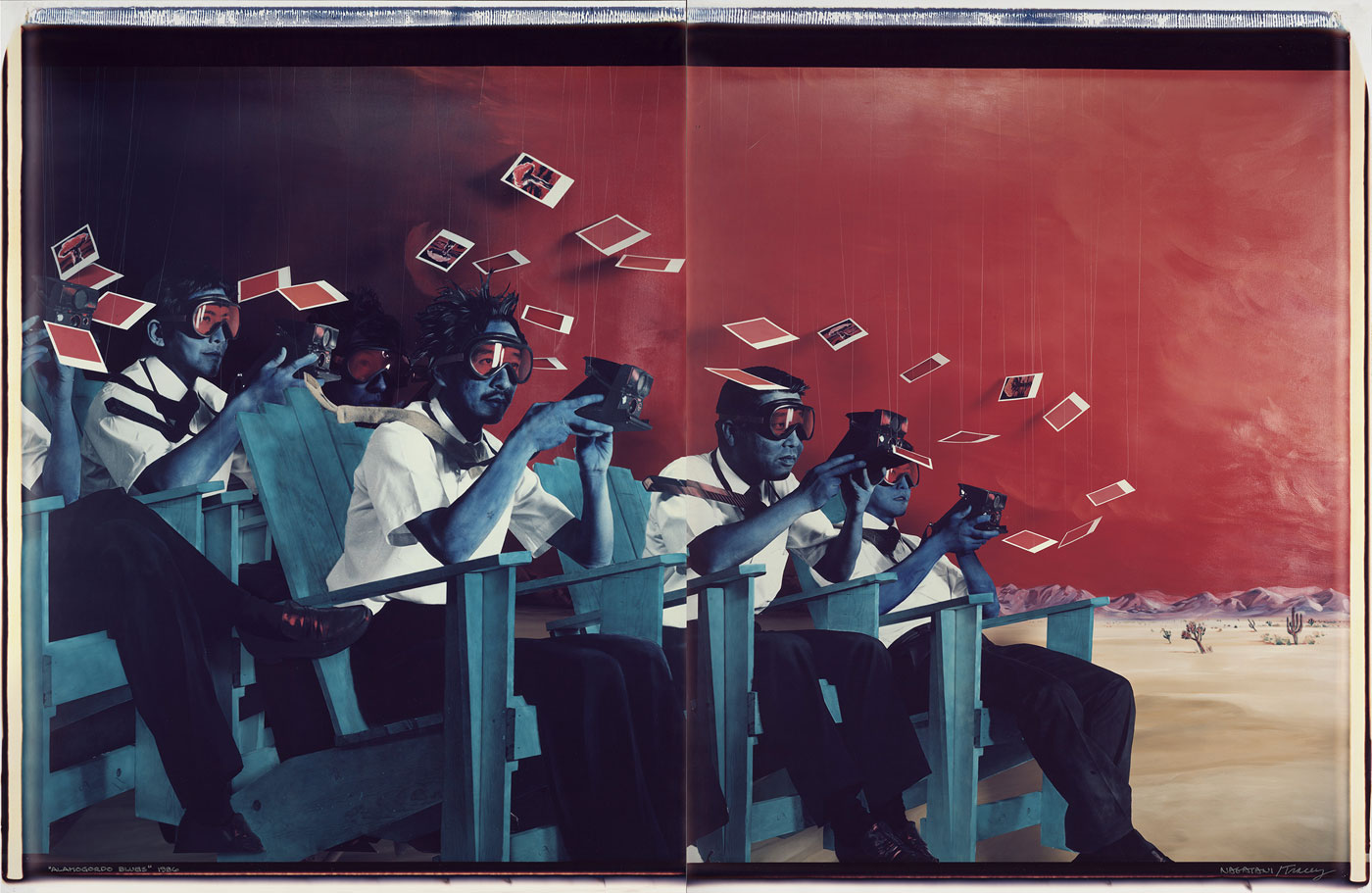
Patrick Nagatani (American, b. 1945) and Andree Tracey (American, b. 1948) 'Alamogordo Blues' 1986


Patrick Nagatani (American, b. 1945)
Andree Tracey (American, b. 1948)
Alamogordo Blues
1986
Dye diffusion print
Center for Creative Photography, University of Arizona
© Patrick Nagatani and Andree Tracey


Laurie Simmons (American, b. 1949) 'Woman/Red Couch/Newspaper' 1978


Laurie Simmons (American, b. 1949)
Woman/Red Couch/Newspaper
1978
Silver dye-bleach print
Los Angeles County Museum of Art, Ralph M. Parsons Fund
© Laurie Simmons


Sandy Skoglund (American, b. 1946) 'Revenge of the Goldfish, 1980' 1980


Sandy Skoglund (American, b. 1946)
Revenge of the Goldfish, 1980
1980
Silver dye-bleach print
St. Louis Art Museum, Gift of Mr. and Mrs. Fielding Lewis Holmes
© 1981 Sandy Skoglund


Mark Cohen (American, b. 1943) 'Boy in Yellow Shirt Smoking' 1977


Mark Cohen (American, b. 1943)
Boy in Yellow Shirt Smoking
1977
Dye coupler print
Courtesy the artist and ROSEGALLERY
© Mark Cohen


John F. Collins (American, 1888?-1988) 'Tire' 1938


John F. Collins (American, 1888?-1988)
Tire
1938
Silver dye-bleach print
Courtesy Howard Greenberg Gallery


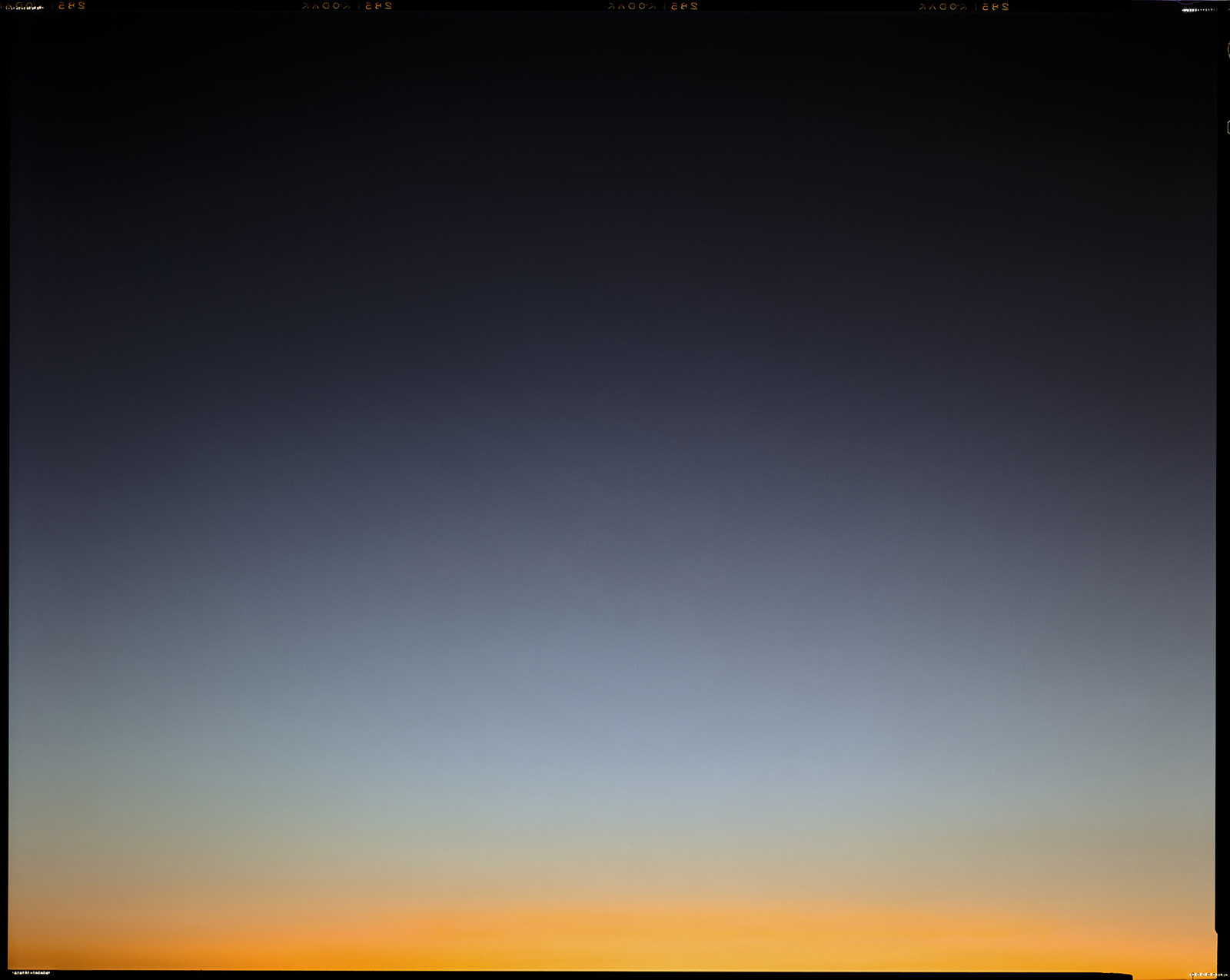
Richard Misrach (American, b. 1949) 'Paradise Valley (Arizona), 3.22.95, 7:05 P.M.' 1995


Richard Misrach (American, b. 1949)
Paradise Valley (Arizona), 3.22.95, 7:05 P.M.
1995
Dye coupler print
© Richard Misrach, courtesy Fraenkel Gallery, San Francisco, Marc Selwyn Fine Art, Los Angeles and Pace/MacGill Gallery, NY


Henry Holmes Smith (American, 1909-1986) 'Tricolor Collage on Black' 1946


Henry Holmes Smith (American, 1909-1986)
Tricolor Collage on Black
1946
Dye imbibition print over gelatin silver print
Indiana University Art Museum, Henry Holmes Smith Archive
© Smith Family Trust


Mitch Epstein (American, b. 1952) 'Flag' 2000


Mitch Epstein (American, b. 1952)
Flag
2000
Dye coupler print
Private collection
© Black River Productions


Trevor Paglen (American, b. 1974) 'The Fence (Lake Kickapoo, Texas)' 2010


Trevor Paglen (American, b. 1974)
The Fence (Lake Kickapoo, Texas)
2010
Dye coupler print, 2011
Amon Carter Museum of American Art, Fort Worth, Texas
© Trevor Paglen


Joaquin Trujillo (American, b. 1976) 'Jacky' 2003


Joaquin Trujillo (American, b. 1976)
Jacky
2003
From the series Los Niños
Inkjet print, 2011
Amon Carter Museum of American art, purchase with funds provided by the Stieglitz Circle of the Amon Carter Museum of American Art
© Joaquin Trujillo 2013


James N. Doolittle (American, 1889-1954) 'Ann Harding' c. 1932


James N. Doolittle (American, 1889-1954)
Ann Harding
c. 1932
Tricolor carbro print
Nelson-Atkins Museum of Art, Kansas City, MO


Amon Carter Museum
3501 Camp Bowie Boulevard
Fort Worth, TX 76107-2695

Opening hours:
Tuesday, Wednesday, Friday, Saturday:
 10am – 5pm
Thursday: 10am – 8pm
Sunday: 12am – 5pm
Closed Mondays and major holidays.

Amon Carter Museum of American Art website

LIKE ART BLART ON FACEBOOK

Back to top

Vale Saul Leiter: the world will be less colour-full, less abstract, less sensual without him

November 2013


Saul Leiter (American, 1923-2013) 'Foot on El' 1954


Saul Leiter (American, 1923-2013)
Foot on El
1954


“Seeing is a neglected enterprise,” Mr. Leiter often said.

“I am not immersed in self-admiration,” he said. “When I am listening to Vivaldi or Japanese music or making spaghetti at 3 in the morning and realise that I don’t have the proper sauce for it, fame is of no use.”

“He broke all the rules when it came to composing a photograph,” said Mr. Leiter’s assistant, Margit Erb, who confirmed his death, at his home. “He put things into the abstract, he paid attention to colour, he threw foregrounds out of focus, which made the photographs feel very voyeuristic. He applied a painterly mentality that the photography world had not seen.”

His art was enough.

Dr Marcus Bunyan


Saul Leiter (American, 1923-2013) 'Taxi' 1956


Saul Leiter (American, 1923-2013)
Taxi
1956


“”In order to build a career and to be successful, one has to be determined,” Mr. Leiter said in an interview for a monograph published in Germany in 2008. “One has to be ambitious. I much prefer to drink coffee, listen to music and to paint when I feel like it.” …

Unplanned and unstaged, Mr. Leiter’s photographs are slices fleetingly glimpsed by a walker in the city. People are often in soft focus, shown only in part or absent altogether, though their presence is keenly implied. Sensitive to the city’s found geometry, he shot by design around the edges of things: vistas are often seen through rain, snow or misted windows.

“A window covered with raindrops interests me more than a photograph of a famous person,” Mr. Leiter says in [the film] “In No Great Hurry.””

Read the obituary of this wonderful artist at “Saul Leiter, Photographer Who Captured New York’s Palette, Dies at 89” on the New York Times website, November 27, 2013

More images

Exhibition: ‘Saul Leiter’ at Kunst Haus Wien, Vienna, January – May 2013
Exhibition: ‘Saul Leiter Retrospective’ at The House of Photography at Deichtorhallen Hamburg, February – April 2012
Exhibition: ‘Saul Leiter: New York Reflections’ at the Jewish Historical Museum, Amsterdam, October 2011 – March 2012


LIKE ART BLART ON FACEBOOK

Back to top

Exhibition: ‘Un/Natural Color’ at the Santa Barbara Museum of Art, Santa Barbara, CA

Exhibition dates: 7th July – 29th September 2013


Many thankx to the Santa Barbara Museum of Art for allowing me to publish the photographs in the posting. Please click on the photographs for a larger version of the image.


Installation photograph of the exhibition 'Un/Natural Color' at the Santa Barbara Museum of Art

Installation photograph of the exhibition 'Un/Natural Color' at the Santa Barbara Museum of Art

Installation photograph of the exhibition 'Un/Natural Color' at the Santa Barbara Museum of Art


Installation photographs of the exhibition Un/Natural Color at the Santa Barbara Museum of Art


This exhibition looks at the powerful relationship between colour and memory by considering photographs and the ways in which their unique colour palettes evoke specific moments of the historical past. From the pastel hues of 19th-century hand-painted portraits, to the vibrant colours of late-1930s Kodachrome transparencies, and the faded, shifted tones of snapshots from the 1970s, different kinds of colour reproduction are closely associated with the time periods that they most frequently represent. Each experiment in colour photography was originally meant to convey a sense of the natural hues of the world, but as our expectations for realistic representation have evolved, these earlier technologies for representing colour have also taken on new meaning. Today, the distinctive colours found in many vintage photographs speak as loudly to contemporary viewers about the period in which they were made as the content that they render visible. The exhibition suggests that the aesthetics of colour are closely related to the evolution of photographic technology over the past 100 years, and encourages visitors to rethink the significance of colour in contemporary photography through the lens of its multi-coloured past. This exhibition was organised by Kim Beil, an art historian who teaches at the University of California, Santa Cruz.

Text from the Santa Barbara Museum of Art website


Jack Delano (American, 1914-1997) 'Barker at the Grounds of the Vermont State Fair, Rutland' 1941, printed 1983


Jack Delano (American, 1914-1997)
Barker at the Grounds of the Vermont State Fair, Rutland
1941, printed 1983
Dye transfer print
Santa Barbara Museum of Art, Gift of the Bruce Berman and Nancy Goliger Berman Collection


Jack Delano (American, 1914-1997) 'At the Vermont State Fair, Rutland' 1941, printed 1985


Jack Delano (American, 1914-1997)
At the Vermont State Fair, Rutland
1941, printed 1985
Dye transfer print
Santa Barbara Museum of Art, Gift of the Bruce Berman and Nancy Goliger Berman Collection


William Eggleston (American, b. 1939) 'Farm truck, Memphis, Tennessee' 1972


William Eggleston (American, b. 1939)
Farm truck, Memphis, Tennessee
1972
Dye-transfer print


Leroy Grannis (American, 1917-2011) 'Greg Noll Surf Team at Duke Kahanamoku Invitational, Sunset Beach' 1966, printed 2005


Leroy Grannis (American, 1917-2011)
Greg Noll Surf Team at Duke Kahanamoku Invitational, Sunset Beach
1966, printed 2005
C-print, ed. 1/9
Santa Barbara Museum of Art, Museum purchase with funds provided by Janet and Michael G. Wilson


LeRoy “Granny” Grannis (August 12, 1917 – February 3, 2011) was a veteran photographer. His portfolio of photography of surfing and related sea images from the 1960s enjoys a reputation that led The New York Times to dub him “the godfather of surfphotography.”


Un/Natural Color, an exhibition of colour photography from the Santa Barbara Museum of Art’s (SBMA) permanent collection, illustrates the history of colour photography since the 19th century and examines how the shifted or faded colours of old photographs can evoke moments in the historical past. Responding to the widespread use of nostalgic filters in popular photography and social media apps, such as Instagram and Twitter, this presentation enables visitors to see first-hand the historical processes that inspired the aesthetics of these digital manipulations. Despite their reputation for preserving memories and stopping time, photographs themselves are susceptible to material changes over time. These changes are often most visible in the radical colour shifts seen in old photographs, from the characteristic pink hue of snapshots from the 1950s to the yellowed borders and cool cast of prints from the 1970s. These changes also serve to complicate any simple belief in the ability of photography to faithfully represent the natural colours of the world.

While the exhibition includes a number of experimental early processes, including the chromolithographically-derived Photochrom process as well as an early Autochrome, the bulk of the imagery is drawn from the decades following the pivotal invention of Kodachrome, the first colour slide film, which was made commercially available in 1936. Because this film, as well as Kodacolor negative film (1942), was sent back to Eastman-Kodak for processing, photographers’ control over their imagery was greatly reduced, leading many art photographers to resist the transition to colour until decades later.

Un/Natural Color includes rarely-seen colour work by two notable documentary photographers of the Depression era, Jack Delano and Marion Post Wolcott. Both worked for the Farm Security Administration (a government program associated with the New Deal) and made limited use of colour film while on assignment documenting the effects of the Great Depression on rural American. Very few (if any) of these images were reproduced in the popular press, however, owing to the difficulty and cost of reproducing colour photographs, and to colour photography’s overwhelming association with commercial advertising at this time (as in Elmar Ludwig and Edmund Nägele’s image of the popular resort chain, Butlin’s).

The art establishment at large expressed little interest in colour photography until the mid-1970s, following the inclusion of colour work in two groundbreaking exhibitions: Stephen Shore’s vernacular landscapes in New Topographics: Photographs of a Man-Altered Landscape at the George Eastman House in Rochester, NY (1975) and the solo exhibition of William Eggleston’s colour photography at the Museum of Modern Art, NY (1976). Both of these important photographers are represented in Un/Natural Color, as well as work by photographers exploring similar uses of colour to record everyday American scenes, including Jeff Brouws, Jim Dow, and Joel Meyerowitz.

Prior to the 1970s, some tentative forays into colour photography were made by art photographers primarily known for their work in black-and-white (notably Harry Callahan), but colour was more often derided for its populist associations and was typically allied with either snapshot photography or advertising and Hollywood. The negative connotation that colour photography had acquired over the years in the art world was critical to its adoption by photographers like Shore and Eggleston, who used it to challenge conventional expectations for photographic art and to force viewers to look with new eyes at the familiar world around them.

An image such as Greg Noll Surf Team at Duke Kahanamoku Invitational, Sunset Beach by Leroy Grannis highlights the powerful ability of colour photography to summon a unique historical moment. It is not just the classic haircut and short surf trunks sported by the surf legend, Greg Noll, that situates this photograph in the 1960s. Colour photography at this time typically recorded colour in a highly saturated, though fairly uniform manner, leaving some aspects of this photograph looking flat, rather than mimicking the subtle modulation of tone that is more commonly associated with the perception of depth by human vision.

The characteristic manner by which different colour processes represent the colours of the world, as well as the changes that such colour photographs suffer over time, are powerful indicators of the photograph’s history. When we look at colour photographs, all of these markers are brought to bear on our interpretation of their subjects, leading us to question: what is natural colour anyway?

Press release from the Santa Barbara Museum of Art website


Roman Freulich (American born Poland, 1898-1974) 'Gloria Swanson' Nd


Roman Freulich (American born Poland, 1898-1974)
Gloria Swanson
Nd
Dye transfer print
Santa Barbara Museum of Art, Gift of Judith Caditz, Allan M. Caditz, Ellen Joan Abramson and Norman Abramson


Roman Freulich (1898-1974) was a photographer in the United States known for his movie stills and glamour shots. He immigrated from Poland.


William Edwin Gledhill (Canadian, 1888-1976) 'Amanda Duff' 1935


William Edwin Gledhill (Canadian, 1888-1976)
Amanda Duff
1935
Dye transfer print
Santa Barbara Museum of Art, Gift of Keith Gledhill


In 1907, the recently married Carolyn and Edwin Gledhill opened their first portrait studio on Chapala Street [Santa Barbara], one block from the luxurious oceanfront Potter Hotel, a destination for wealthy and prominent visitors at the time. During an era of extensive industrial growth and expansion for many burgeoning California cities, Santa Barbarans instead made the collective choice to focus on the city’s architecture, civic value and pageantry, making it an ideal haven for a diverse and growing community of artists and professionals. This unique social climate allowed the Gledhills access to the cultural elite, both visitors and residents alike, from which they chose the subjects of their portraits.

The Gledhills were fairly radical for their time, which was reflected both in their craft and in their personal life. At the time of their marriage, Edwin was only 19, while Carolyn was already in her 30s. This age disparity, which might be viewed as unorthodox today, was borderline scandalous in the early 20th century.

Carolyn Gledhill also showed a propensity for early feminism in her work. Before her untimely death in 1935, she would pose many of her female subjects in subtly defiant ways, reflecting the fundamental shift in the paradigm of women’s roles in America during the 1920s.

Following Carolyn’s death, Edwin continued his work as a photographer and preservationist of Santa Barbara’s historic resources; he even served for many years as the executive director of the Santa Barbara Historical Museum, helping build it into the cultural institution it is today.

Anonymous. “Portraits in Paradise: The Photography of Carolyn and Edwin Gledhill, 1906-1944,” on the Santa Barbara Historical Museum website Nd [Online] Cited 03/07/2024


Elmar Ludwig and Edmond Nagele. 'The Indoor-Heated Pool, Butlin’s Mosney' Nd


Elmar Ludwig (German, b. 1935) and Edmund Nägele (German, b. 1942)
The Indoor-Heated Pool, Butlin’s Mosney
Nd


Elmar Ludwig (born 1935) is a German photographer. Ludwig was born in Halle in 1935. In 1961, John Hinde recruited two German photographers, Ludwig (as head of photographic department) and Edmund Nägele, and one British, David Noble to expand his eponymous postcard business. Ludwig travelled the world for John Hinde, before establishing his own Munich studio at the end of the 1960s, focused on architecture, product and advertising photography.

Text from the Wikipedia website

Edmund Nägele FRPS is a German photographer. Nägele started his career in a Munich advertising studio, before relocating to Ireland. In 1962, John Hinde recruited two German photographers, Elmar Ludwig and Edmund Nägele and one British, David Noble to expand his eponymous postcard business. John Hinde Ltd. sent Nägele to Cyprus around 1969, where he recorded the life and scenery of this beautiful island. Large format film was used to produce postcard subjects, with colour separation and other post-processing being done in Milan – this included removing telegraph poles, television aerials and adding bright colours to vehicles and peoples clothing. Nägele is remembered for his elaborately staged, colour-saturated images of Butlin’s holiday camps taken in the 1960s.

Text from the Wikipedia website


William Henry Jackson (American, 1843-1942) 'Colorado Railway Mountain View' 1898


William Henry Jackson (American, 1843-1942)
Colorado Railway Mountain View
1898
Photochrom
Santa Barbra Museum of Art, Museum purchase


William Henry Jackson (American, 1843-1942) 'Colorado Grand Canyon of the Arkansas' 1898


William Henry Jackson (American, 1843-1942)
Colorado Grand Canyon of the Arkansas
1898
Photochrom
Santa Barbara Museum of Art, Museum purchase


Saul Leiter (American, 1923-2013) 'Snow' 1960


Saul Leiter (American, 1923-2013)
Snow
1960


Santa Barbara Museum of Art
1130 State Street, Santa Barbara, CA

Opening hours:
Tuesday – Sunday 11am – 5pm
Thursday Evenings 5 – 8pm

Santa Barbara Museum of Art website

LIKE ART BLART ON FACEBOOK

Back to top

Exhibition: ‘Saul Leiter’ at Kunst Haus Wien, Vienna

Exhibition dates: 31st January – 26th May 2013


Saul Leiter (American, 1923-2013) 'From the El' c. 1955


Saul Leiter (American, 1923-2013)
From the El
c. 1955
© Saul Leiter / Courtesy Howard Greenberg Gallery, New York


“I like it when one is not certain of what one sees.
We don’t know why the photographer has taken such a picture.
If we look and look, we begin to see and are still left with the pleasure of uncertainty.”


“It is not where it is or what it is that matters, but how you see it.”


“After the age of 75 you should not be photographed.
You should be painted by Rembrandt or Hals, but not by Caravaggio.”


Saul Leiter


How brave was the photographer, occluding most of the colour image in darkness, something that had never been done before and has rarely been seen since. Look at the last three photographs in this posting to understand what I mean.

Considering that Saul Leiter’s colour photography predates William Eggleston and Stephen Shore by a couple of decades, it can truly be said that he is one of the early masters of colour photography. As the curator Ingo Taubhorn comments, “The older aesthetic views on the hegemony of black-and-white photography and the historical dating of the first artistic use of colour photography to the early 1970s need to be critically reviewed. Saul Leiter’s oeuvre essentially rewrites the history of photography.”

Well said.

Dr Marcus Bunyan


Many thankx to the Kunst Haus Wein for allowing me to publish the photographs in the posting. Please click on the photographs for a larger version of the image.


Saul Leiter (American, 1923-2013) 'Nude' 1970s


Saul Leiter (American, 1923-2013)
Nude
1970s
© Saul Leiter / Courtesy Howard Greenberg Gallery, New York


Saul Leiter (American, 1923-2013) 'Taxi' c. 1957


Saul Leiter (American, 1923-2013)
Taxi
c. 1957
© Saul Leiter / Courtesy Howard Greenberg Gallery, New York


KUNST HAUS WIEN is devoting a major retrospective to the oeuvre of the 89-year-old photographer and painter Saul Leiter. The exhibition, which was developed in cooperation with House of Photography / Deichtorhallen Hamburg, presents the wide range of this versatile artist’s works, including early black-and-white and colour photographs, fashion images, painted photographs of nudes, paintings and a number of his sketchbooks. One section of the exhibition is devoted to Saul Leiter’s most recent photographs, which he continues to take on the streets of New York’s East Village.

It is only in the last few years that Saul Leiter has received due recognition for his role as one of the pioneers of colour photography. As early as 1946, and thus well before the representatives of the so-called “new colour” photography in the 1970s, such as William Eggleston and Stephen Shore, he was one of the first to use colour photography for artistic shots, despite its being frowned upon by other artists of the day. “The older aesthetic views on the hegemony of black-and-white photography and the historical dating of the first artistic use of colour photography to the early 1970s need to be critically reviewed. Saul Leiter’s oeuvre essentially rewrites the history of photography,” comments curator Ingo Taubhorn.

Saul Leiter has always considered himself both a painter and a photographer. In his painting and in his photographs he clearly tends towards abstraction and two-dimensionality. One often finds large deep-black areas, produced by shadows, taking up as much as three quarters of his photographs. Passers-by are not presented as individuals, but as blurred clouds of colour, filtered through misty panes of glass or wedged in between walls of buildings and traffic signs. The boundaries between the abstract and the representational in his paintings and photographs are virtually fluid. Saul Leiter’s street photography – a genre in which his work is matchless – is, in essence, painting metamorphosed into photography.

In Leiter’s works, the genres of street photography, portraiture, still life, fashion photography and architectural photography coalesce. He finds his motifs, such as shop windows, passers-by, cars, signs and – time and again – umbrellas, in the direct vicinity of his apartment in New York, where he has now lived for almost 60 years. The indeterminateness of detail, the blurring of movement and reduced depth of field, the use of shadows or deliberate avoidance of the necessary light, as well as the alienation caused by photographing through windows or as reflections, all combine to create the muted colour vocabulary of a semi-real, semiabstract urban space. These are the works of an as yet almost undiscovered modern master of colour photography.

About Saul Leiter

Saul Leiter discovered his passion for art at an early age and started painting as a teenager at the end of the 1940s. His family did not support him in his artistic endeavours; his father, a renowned Talmudic rabbi and scholar, had always hoped his son Saul would one day follow him in the family tradition and become a rabbi. Leiter was self-taught, but by no means uneducated. He read and learned a great deal about art, so that his knowledge and understanding constantly grew. In this way, he made sure that his own ideas and artistic works were duly related to the historical context.

In 1946, shortly after he had moved to New York, Leiter became acquainted with Richard Poussette-Dart, who introduced him to photography, a medium that appealed to Leiter very much and that he quickly made his own. Leiter soon resolved to use photography not only as a means of making art but as a way of earning a living. He started taking fashion photographs, and thanks to his good eye, his playful sense of humour, and his pronounced sense of elegance, swiftly emerged as an extraordinary fashion photographer. In the 1950s, Life magazine published photo spreads of Saul Leiter’s first black-and-white series. He took part in exhibitions, for example “Always the Young Strangers” (1953) curated by Edward Steichen at the Museum of Modern Art. From 1958 to 1967, Leiter worked for Harper’s Bazaar. Altogether he spent some 20 years photographing for various classic magazines as well as more recent ones: after Esquire and Harper’s he also worked for Show, Elle, British Vogue, Queen and Nova.


Saul Leiter (American, 1923-2013) 'New York' 1950s


Saul Leiter (American, 1923-2013)
New York
1950s
© Saul Leiter / Courtesy Howard Greenberg Gallery, New York


Saul Leiter (American, 1923-2013) 'Sign Painter' 1954


Saul Leiter (American, 1923-2013)
Sign Painter
1954
© Saul Leiter / Courtesy Howard Greenberg Gallery, New York


Saul Leiter (American, 1923-2013) 'Graffiti Heads' 1950


Saul Leiter (American, 1923-2013)
Graffiti Heads
1950
© Saul Leiter / Courtesy Howard Greenberg Gallery, New York


Saul Leiter (American, 1923-2013) 'Shirt' 1948


Saul Leiter (American, 1923-2013)
Shirt
1948
© Saul Leiter / Courtesy Howard Greenberg Gallery, New York


Saul Leiter (American, 1923-2013) 'Harlem' 1960


Saul Leiter (American, 1923-2013)
Harlem
1960
© Saul Leiter / Courtesy Howard Greenberg Gallery, New York


Saul Leiter (American, 1923-2013) 'Hat' 1956


Saul Leiter (American, 1923-2013)
Hat
1956
© Saul Leiter / Courtesy Howard Greenberg Gallery, New York


Saul Leiter (American, 1923-2013) 'Street Scene' 1957


Saul Leiter (American, 1923-2013)
Street Scene
1957
© Saul Leiter / Courtesy Howard Greenberg Gallery, New York


The exhibition chapters

Abstract Painting

Although his photographic oeuvre has dominated his image as an artist, Saul Leiter sees himself first and foremost as a painter. He began his artistic career as a painter, and while working as a photographer he never stopped painting and drawing. Leiter’s passion for art began when he was just a child, even though his ambitions received no support from his family. As a teenager he spent many hours in libraries studying art books. He found inspiration in the paintings of such artists as Vermeer, Bonnard, Vuillard and Picasso, as well as in Japanese graphic art. Leiter, who was self-taught, painted his first pictures in 1940. Most of them were lyrical, abstract compositions that reflected his admiration for the new American avant-garde. His ardent feeling for colour is recognisable even in these early paintings, as is his lifelong predilection for painting small format pastels and watercolours on paper.

After moving to New York in 1946, he sometimes presented his works together with abstract expressionist painters such as Willem de Kooning and Philip Guston. His studio was located on 10th Street in the East Village, which at that time was a neighbourhood very popular with avant-garde artists. Leiter shared these artists’ interest in abstraction and the use of colour, gesture and the element of chance, but he chose a radically different format for his works. Whereas many of his contemporaries, such as Jasper Johns or Franz Kline, painted wall-sized paintings that physically filled the beholder’s entire field of vision, Leiter worked in an intimate, small format. His works were also exhibited at the Tanager Gallery, one of the most important artist-run cooperatives in the East Village at that time. After switching the main focus of his work to photography in the late 1940s, however, Leiter stopped exhibiting his paintings.

Figurative Painting

Saul Leiter’s abstract painting frequently unites qualities of intimacy and familiarity with a sense of space reminiscent of an open landscape. Occasionally he also makes figurative sketches. Often these give mere intimations of a face or a body, perhaps a pointed nose, eyes and a mouth. Some of his male figures wear hats, similar to those worn by the religious Jews that peopled Leiter’s world in his youth. Most of these works focus on a single figure; only occasionally do we see a couple, or several figures grouped together. The quality of the line and the subtle suggestion of figures or heads in these paintings are reminiscent of paintings by Édouard Vuillard and Pierre Bonnard, in which facial features are hinted at through lines and fine shadings of colour rather than being defined by careful modelling.

Street Photography

When, in 1947, Saul Leiter attended an exhibition of works by the French photographer Henri Cartier-Bresson, he became convinced of the creative potential of this medium. He bought himself a 35mm Leica camera at a bargain and began, without any previous training, to take photographs on the streets of New York. At first he used only black-and-white film, but in 1948 he also started using colour film. His black-and-white photographs exhibit some elements of documentary photography but are nevertheless far removed from a photojournalistic style. Rather, they are subjective observations, often concentrating on a single individual in the big city. Leiter’s complex, multilayered works evoke feelings of alienation, melancholy and tension. Leiter underscores this impression by experimenting with strong contrasts, light and shadow, and asymmetrical compositions containing large areas in which the images are blurred.

Thematically and stylistically, there are great similarities between Leiter’s works and the works of other representatives of New York street photography of the same era, for example Ted Croner, Leon Levinstein, Louis Faurer and later Robert Frank and William Klein, today generally known as the New York School. Their radical new, subjective photography had a psychological component that revealed an unusual sensitivity to social turbulences and the uncertainty felt by many Americans during the years following the Second World War.

Colour Photography

Until well into the 1970s, colour photography was used almost exclusively for advertising and fashion magazines. Many photographers considered the vivid colours unsuitable for artistic expression. Moreover, they were unable to develop their colour film themselves, which made it a very expensive undertaking. It was not until 1976 that the Museum of Modern Art in New York gave its first exhibition devoted to colour photography, when it presented “Photographs by William Eggleston”.

Saul Leiter was one of the few photographers who did not reject colour photography. As a painter, he took a particular interest in street photography as a genre in which to experiment with colour film. As early as 1948, at the beginning of his career, he bought his first roles of 35mm Kodachrome colour slide film, which had been on the market since 1936. In order to save money, he often used film that had passed its sell-by date. Leiter particularly liked the resulting pictures with their delicate, muted colours.

The innumerable early colour photographs that Leiter took between 1948 and 1960 are of a unique painterly and narrative quality. They stand in contrast to the works of other photographers, in which colour is often the defining element of the composition. This circumstance, coupled with Leiter’s tendency towards abstraction, links Leiter’s photography with his painting. But in contrast to his painting (and his black-and-white photographs), his colour photographs are highly structured. It is the incomparable beauty of these works that has brought Leiter recognition as one of the masters of 20th-century photography.

Fashion Photography

In the late 1950s, Saul Leiter worked successfully in the fields of fashion photography and advertising. From the very first, his style was unmistakeable. His images were multilayered and complex, characterised by soft, impressionistic qualities and cubist changes of perspective. He was given his first commercial assignment in 1958 by Henry Wolf, at that time the new Art Director of Harper’s Bazaar, with whom Leiter became friends. Harper’s Bazaar was one of the leading American fashion magazines, presenting trail-blazing fashion series by photographers such as Richard Avedon or Lillian Bassman.

Subsequently, Leiter was given more and more prestigious assignments, and over the years began to spend almost all his time doing commercial work. Apart from Harper’s Bazaar, his fashion and advertising photos appeared in Elle and Show, in British Vogue and Queen and also in Nova. The amazing thing is that during this period, Leiter managed to retain his own narrative, stylised aesthetic, whereas other fashion photographers favoured a rather brittle, graphic style. In the 1970s, partly due to his own dwindling interest in commercial photography, Leiter received fewer and fewer assignments. In 1981 he gave up his studio on Fifth Avenue and in the following years led a quiet life far from the public eye.


Saul Leiter (American, 1923-2013) 'Carol Brown, 'Harper's Bazaar'' c. 1958


Saul Leiter (American, 1923-2013)
Carol Brown, ‘Harper’s Bazaar’
c. 1958
© Saul Leiter / Courtesy Howard Greenberg Gallery, New York


Saul Leiter (American, 1923-2013) 'Soames Bantry, 'Nova'' 1960


Saul Leiter (American, 1923-2013)
Soames Bantry, ‘Nova’
1960
© Saul Leiter / Courtesy Howard Greenberg Gallery, New York


Saul Leiter (American, 1923-2013) 'Walking' 1956


Saul Leiter (American, 1923-2013)
Walking
1956
© Saul Leiter / Courtesy Howard Greenberg Gallery, New York


Saul Leiter (American, 1923-2013) 'Reflection' 1958


Saul Leiter (American, 1923-2013)
Reflection
1958
© Saul Leiter / Courtesy Howard Greenberg Gallery, New York


“I spent a great deal of my life being ignored. I was always very happy that way. Being ignored is a great privilege. That is how I think I learnt to see what others do not see and to react to situations differently. I simply looked at the world, not really prepared for anything.”


Saul Leiter


Art critic Roberta Smith wrote in 2005: “Mr. Leiter was a photographer less of people than of perception itself. His painter’s instincts served him well in his emphasis on surface, spatial ambiguity and a lush, carefully calibrated palette. But the abstract allure of his work doesn’t rely on soft focus, a persistent, often irritating photographic ploy, or the stark isolation of details, in the manner of Aaron Siskind or early Harry Callahan. Instead, Mr. Leiter captured the passing illusions of everyday life with a precision that might almost seem scientific, if it weren’t so poetically resonant and visually layered.”

Text from the Lens Culture website [Online] Cited 15/05/2013 no longer available online


Saul Leiter (American, 1923-2013) 'Shopping' c. 1953


Saul Leiter (American, 1923-2013)
Shopping
c. 1953
© Saul Leiter / Courtesy Howard Greenberg Gallery, New York


Saul Leiter (American, 1923-2013) 'Kutztown' 1948


Saul Leiter (American, 1923-2013)
Kutztown
1948
© Saul Leiter / Courtesy Howard Greenberg Gallery, New York


Saul Leiter (American, 1923-2013) 'Pizza, Patterson' 1952


Saul Leiter (American, 1923-2013)
Pizza, Patterson
1952
© Saul Leiter / Courtesy Howard Greenberg Gallery, New York


KUNST HAUS WIEN
Museum Hundertwasser
Untere Weißgerberstraße 13
1030 Vienna
Phone: +43-1-712 04 91

Opening hours:
Daily, 10am – 7pm

Kunst Haus Wein website

LIKE ART BLART ON FACEBOOK

Back to top

Exhibition: ‘Cartier-Bresson: A Question of Colour’ at Somerset House, London

Exhibition dates: 8th November 2012 – 27th January 2013

Curator: William E. Ewing


Henri Cartier-Bresson (French, 1908-2004) 'Harlem, New York' 1947


Henri Cartier-Bresson (French, 1908-2004)
Harlem, New York, 1947
1947
Gelatin silver print / printed 1970s
Image: 29.1 x 19.6cm
Paper: 30.4 x 25.4cm
© Henri Cartier-Bresson/Magnum Photos, Courtesy Fondation Henri Cartier-Bresson


They may be channelling the master, but none does it like Cartier-Bresson. There is a spareness and spatial intensity to Cartier-Bresson’s work that is absolutely his own. Look at the photograph directly above (Harlem, New York, 1947). A railing leads the eye in bottom right, echoed by the bottom jamb of the window. The opening is set for the old man to perform complete with curtains, talking stage right. The jamb zig zags above a trilby-wearing, cigarette-smoking man’s head leading to a wire mesh fence that takes the eye out of the frame on the left. The two men, lower than the old man in the framed window, look in a completely different direction to him.

Counterpoise. The image pulls in two directions. Above their head a series of cantilevered staircases ascends to the heavens, thought ascending. A masterpiece.

So many of the other photographers in this posting crowd the plane with people looking in all directions, closed off foregrounds or tensionless images. Images that are too complex or too simple. There is an opposition to Cartier-Bresson’s images that is difficult for the viewer to resolve neatly, yet they appear as if in perfect balance. Look at Brooklyn, New York, 1947 towards the bottom of the posting. Nothing in this still life is out of place (from the light to the multiple, overlapping shadows and the out of focus elements of the composition) yet there is humbling agony about the whole thing. It is almost is if he is saying, “cop a load of this, this is what I can see.” And what a fabulous eye it is.

Dr Marcus Bunyan


Many thankx to Somerset House for allowing me to publish the photographs in the posting. Please click on the photographs for a larger version of the image.


Ernst Haas (Austrian-American, 1921-1986) 'New Orleans, USA' 1960


Ernst Haas (Austrian-American, 1921-1986)
New Orleans, USA,
1960
Chromogenic archival print
50 x 35cm
© Ernst Haas Estate, New York


Saul Leiter (American, 1923-2013) 'Snow' 1960


Saul Leiter (American, 1923-2013)
Snow
1960
© Saul Leiter
Courtesy: Saul Leiter, Howard Greenberg Gallery, New York


Helen Levitt (American, 1913-2009) 'Cat next to red car, New York' 1973


Helen Levitt (American, 1913-2009)
Cat next to red car, New York,
1973
Type C prints
18 x 12 inches
© Estate of Helen Levitt


Alex Webb (American, b. 1952) 'Tehuantepec, Mexico' 1985


Alex Webb (American, b. 1952)
Tehuantepec, Mexico
1985
71 x 47cm
Digital Type C print
© Alex Webb


“I only know how to approach a place by walking. For what does a street photographer do but walk and watch and wait and talk, and then watch and wait some more, trying to remain confident that the unexpected, the unknown, or the secret heart of the known awaits just around the corner.”

~ Alex Webb


Jeff Mermelstein (American, b. 1957) 'Untitled (Package Pile Up, New York City)' 1995


Jeff Mermelstein (American, b. 1957)
Untitled (Package Pile Up, New York City)
1995
Chromogenic print
© Jeff Mermelstein
Courtesy Rick Wester Fine Art, New York


Carolyn Drake (American, b. 1971) 'Birthday party at Olympia, a gated community, Wellington, Florida' 2005


Carolyn Drake (American, b. 1971)
Birthday party at Olympia, a gated community, Wellington, Florida
2005
Digital Pigment Print
© Carolyn Drake / Magnum Photos


Carolyn Drake (American, b. 1971) 'Hotel room. Zhetisay, Kazakhstan. Carolyn Drake' 2009


Carolyn Drake (American, b. 1971)
Hotel room. Zhetisay, Kazakhstan. Carolyn Drake
2009
Digital Pigment Print
© Carolyn Drake/Magnum Photos


Andy Freeberg (American, b. 1958) 'Sean Kelly, Art Basel Miami' 2010


Andy Freeberg (American, b. 1958)
Sean Kelly, Art Basel Miami
2010
From the series Art Fare
Artist: Kehinde Wiley
63 x 43cm
Pigment ink print
© Andy Freeberg
Courtesy Kopeikin Gallery


Carolyn Drake (American, b. 1971) 'New Kashgar. Kashgar, China'  2011


Carolyn Drake (American, b. 1971)
New Kashgar. Kashgar, China  
2011
30.48 x 20.32cm
Digital Light Jet print
© Carolyn Drake 2012


Positive View Foundation announces its inaugural exhibition Cartier-Bresson: A Question of Colour, to be held at Somerset House, 8 November 2012 – 27 January 2013. Curated by William A. Ewing, the exhibition will feature 10 Henri Cartier-Bresson photographs never before exhibited in the UK alongside over 75 works by 15 international contemporary photographers, including: Karl Baden (US), Carolyn Drake (US), Melanie Einzig (US), Andy Freeberg (US), Harry Gruyaert (Belgium), Ernst Haas (Austrian), Fred Herzog (Canadian), Saul Leiter (US), Helen Levitt (US), Jeff Mermelstein (US), Joel Meyerowitz (US), Trent Parke (Australian), Boris Savelev (Ukranian), Robert Walker (Canadian), and Alex Webb (US).

The extensive showcase will illustrate how photographers working in Europe and North America adopted and adapted the master’s ethos famously known as  ‘the decisive moment’ to their work in colour. Though they often departed from the concept in significant ways, something of that challenge remained: how to seize something that happens and capture it in the very moment that it takes place.

It is well-known that Cartier-Bresson was disparaging towards colour photography, which in the 1950s was in its early years of development, and his reasoning was based both on the technical and aesthetic limitations of the medium at the time. Curator William E. Ewing has conceived the exhibition in terms of, as he puts it, ‘challenge and response’. “This exhibition will show how Henri Cartier-Bresson, in spite of his skeptical attitude regarding the artistic value of colour photography, nevertheless exerted a powerful influence over photographers who took up the new medium and who were determined to put a personal stamp on it. In effect, his criticisms of colour spurred on a new generation, determined to overcome the obstacles and prove him wrong. A Question of Colour simultaneously pays homage to a master who felt that black and white photography was the ideal medium, and could not be bettered, and to a group of photographers of the 20th and 21st centuries who chose the path of colour and made, and continue to make, great strides.”

Cartier-Bresson: A Question of Colour will feature a selection of photographers whose commitment to expression in colour was – or is – wholehearted and highly sophisticated, and which measured up to Cartier-Bresson’s essential requirement that content and form were in perfect balance. Some of these artists were Cartier-Bresson’s contemporaries, like Helen Levitt, or even, as with Ernst Haas, his friends; others, such as Fred Herzog in Vancouver, knew the artist’s seminal work across vast distances; others were junior colleagues, such as Harry Gruyaert, who found himself debating colour ferociously with the master; and others still, like Andy Freeberg or Carolyn Drake, never knew the man first-hand, but were deeply influenced by his example.

Press release from Somerset House website


Fred Herzog (Canadian born Germany, 1930-2019)
'Man with Bandage, Vancouver, Canada'
1968


Fred Herzog (Canadian born Germany, 1930-2019)
Man with Bandage, Vancouver, Canada
1968


Joel Meyerowitz (American, b. 1938) 'Madison Avenue, New York City 1975


Joel Meyerowitz (American, b. 1938)
Madison Avenue, New York City
1975
Archival Pigment Print
© Joel Meyerowitz 2012
Courtesy Howard Greenberg Gallery, NYC


Joel Meyerowitz (American, b. 1938) Camel Coats, Fifth Avenue, New York 1975


Joel Meyerowitz (American, b. 1938)
Camel Coats, Fifth Avenue, New York
1975
Archival Pigment Print
© Joel Meyerowitz 2012
Courtesy Howard Greenberg Gallery, NYC


Ernst Haas (American, 1921-1986) 'New York City, US' 1981


Ernst Haas (American, 1921-1986)
New York City, US
1981


Fred Herzog (Canadian born Germany, 1930-2019) 'Crossing Powell 2' 1984


Fred Herzog (Canadian born Germany, 1930-2019)
Crossing Powell 2
1984
Ink jet print


Harry Gruyaert (Belgian, b. 1941) 'Morocco, town of Duarzazte' 1986


Harry Gruyaert (Belgian, b. 1941)
Morocco, town of Duarzazte
1986
© 2015 Harry Gruyaert / Magnum Photos


Harry Gruyaert (Belgian, b. 1941) 'Province of Brabant, Flanders region, Belgium' 1988


Harry Gruyaert (Belgian, b. 1941)
Province of Brabant, Flanders region, Belgium
1988
© 2015 Harry Gruyaert / Magnum Photos


Harry Gruyaert is known for his extraordinary photographic work with color. Born in Antwerp in 1941, he originally dreamed of becoming a film director. In the late 1970s, Pop art and a trip to Morocco inspired him to become one of the first photographers in Europe to devote his work entirely to color photography. Gruyaert’s cinematographic background instilled in him an aesthetic conception of photography. Rather than telling stories or documenting the world through his lens, he searches for beauty in everyday elements. His images are simply snapshots of magical moments in which different visual aspects, primarily color, form, light and movement, spontaneously come together in front of his lens.

Text from the Magnum website


Jeff Mermelstein (American, b. 1957) 'Unitled ($10 bill in mouth) New York City' 1992


Jeff Mermelstein (American, b. 1957)
Unitled ($10 bill in mouth) New York City, 1992
1992
Chromogenic print
20 x 16 in.
© Jeff Mermelstein
Courtesy Rick Wester Fine Art, New York


“My process is linked to everyday life. Only on rare occasions do I go out specifically to ‘shoot’. My best photographs were taken going to or from work, or some other destination. Sometimes a picture appears that helps me sum up a strange mood or thought that I’ve struggled with for weeks. Other times my work is more documentary in nature.

Photographing in public keeps me awake and aware, always looking around, in awe at what we humans are up to. In a time when staged narratives and rendered images are popular, I am excited by the fact that life itself offers situations far more strange and beautiful than anything I could set up.”

~ Jeff Mermelstein


Jeff Mermelstein (American, b. 1957) 'Run #9, New York' 1999-2000


Jeff Mermelstein (American, b. 1957)
Run #9, New York
1999-2000
© Jeff Mermelstein


Trent Parke (Australian, b. 1971) 'Man Vomiting, Gerald #1' 2006


Trent Parke (Australian, b. 1971)
Man Vomiting, Gerald #1
2006
Type C print
© Trent Parke
Courtesy Magnum Photos


Karl Baden (American, b. 1952) 'Chestnut Hill, Massachusetts' 2009


Karl Baden (American, b. 1952)
Chestnut Hill, Massachusetts
2009
Archival Inkjet
40.64 x 54.19cm
© Karl Baden


Boris Savelev (Russian, b. 1947) 'Cafe Ion, Moscow' 2009


Boris Savelev (Russian, b. 1947)
Cafe Ion, Moscow
2009
© Boris Savelev


Andy Freeberg (American, b. 1958) 'Nina Menocal, Armory Show' 2011


Andy Freeberg (American, b. 1958)
Nina Menocal, Armory Show
2011
From the series Art Fare
Pigment ink print
© Andy Freeberg
Courtesy Kopeikin Gallery


Henri Cartier-Bresson (French, 1908-2004) 'Brooklyn, New York' 1947


Henri Cartier-Bresson (French, 1908-2004)
Brooklyn, New York, 1947
1947
Gelatin silver print / printed in 2007
Image: 19.8 x 29.8cm
Paper: 22.9 x 30.4cm
© Henri Cartier-Bresson/Magnum Photos, Courtesy Fondation Henri Cartier-Bresson


Melanie Einzig (American, b. 1967) 'September 11th, New York' 2001


Melanie Einzig (American, b. 1967)
September 11th, New York 2001
2001
21 x 33cm
Inkjet print
© Melanie Einzig 2012


Terrace Rooms & Courtyard Rooms, Somerset House
Strand, London, WC2R 1LA

Opening hours:
10am – 6pm daily

Somerset House website

LIKE ART BLART ON FACEBOOK

Back to top

Exhibition: ‘Saul Leiter Retrospective’ at The House of Photography at Deichtorhallen Hamburg

Exhibition dates: 3rd February – 15th April 2012


Saul Leiter (American, 1923-2013) 'Joanna' c. 1947


Saul Leiter (American, 1923-2013)
Joanna
c. 1947
© Saul Leiter
Courtesy: Saul Leiter, Howard Greenberg Gallery, New York


“I always assumed that I would simply be forgotten and disappear from view.”


Saul Leiter


The second of two postings on the colour photography of Saul Leiter. The first posting was for the exhibition Saul Leiter: New York Reflections at the Jewish Historical Museum, Amsterdam, October 2011 – March 2012. This exhibition is the first major retrospective of his work. At last this artist seems to be getting the recognition he deserves!

The prosaic nature of the titles of the photographs belies their complexity. They remind me of the refractions of Lee Friedlander, the colour fields of Mark Rothko, the emotional intensity of Abstract Expressionism and the impression of spontaneous, subconscious creation that is Surrealism. His photographs are the glorious spirit of the city writ large – unique, atmospheric and with great psychological use of colour and space. I can’t think of any other colour photographer of the era (or for that matter, any era) that occludes the picture plane as much as Leiter does, and to such psychological affect, as in the last two photographs in this posting. The viewer becomes like a Peeping Tom, a voyeur of the world. Leiter deserves to be one of the modern masters of colour photography. I am so glad that he hasn’t disappeared from view. The world would be a poorer place without his visualisation.

Dr Marcus Bunyan


Many thankx to The House of Photography at Deichtorhallen for allowing me to publish the photographs in the posting. Please click on the photographs for a larger version of the image.


Saul Leiter (American, 1923-2013) 'Untitled (Self-portrait)' 1950s


Saul Leiter (American, 1923-2013)
Untitled (Self-portrait)
1950s
© Saul Leiter
Courtesy: Howard Greenberg Gallery, New York


Saul Leiter (American, 1923-2013) 'Phone Call' c. 1957


Saul Leiter (American, 1923-2013)
Phone Call
c. 1957
© Saul Leiter
Courtesy: Saul Leiter, Howard Greenberg Gallery, New York


Saul Leiter (American, 1923-2013) 'Taxi' 1957


Saul Leiter (American, 1923-2013)
Taxi
1957
© Saul Leiter
Courtesy: Saul Leiter, Howard Greenberg Gallery, New York


Saul Leiter (American, 1923-2013) 'Postmen' 1952


Saul Leiter (American, 1923-2013)
Postmen
1952
© Saul Leiter
Courtesy: Saul Leiter, Howard Greenberg Gallery, New York


Saul Leiter (American, 1923-2013) 'Walking' 1956


Saul Leiter (American, 1923-2013)
Walking
1956
© Saul Leiter
Courtesy: Saul Leiter, Howard Greenberg Gallery, New York


Saul Leiter (American, 1923-2013) 'Shopping' c. 1953


Saul Leiter (American, 1923-2013)
Shopping
c. 1953
© Saul Leiter
Courtesy: Saul Leiter, Howard Greenberg Gallery, New York


“Leiter is a rare artist, one whose vision is so encompassing, so refined, so in touch with a certain lyrical undertone, that his best photographs occasionally seem literally to transcend the medium.”


Jane Livingston


House of Photography at Deichtorhallen will from February 3 to April 15, 2012 be highlighting the oeuvre of 88-year-old photographer and painter Saul Leiter in the world’s first major retrospective. The exhibition covers more than 400 works and brings together in marvellous combination his early black-and-white and colour photographs, fashion images, painted-over nude photographs, paintings and his sketchbooks, which have never gone on public view before. Then final chapter in the exhibition is dedicated to Saul Leiter’s most recent photographic works, which he continues to take on the streets in his neighbourhood in New York’s East Village.

 Saul Leiter was born in 1923 in Pittsburgh and it was not until a few years ago that his work received due recognition for its pioneering role in the emergence of colour photography. As early as 1946, and thus well before the representatives of New Color Photography in the 1970s (such as William Eggleston and Stephen Shore) he was one of the first to use colour photography, despite it being despised by artists of the day, for his free artistic shots.

“The older photo-aesthetic views on the hegemony of black-and-white and the dating in photo history of the artistic use of color photography to the early 1970s need to be critically revisited. With Saul Leiter’s oeuvre, the history of photography essentially has to be rewritten,” comments curator Ingo Taubhorn. 

Saul Leiter has always seen himself as both painter and photograph. In his painting and in his photographs he tends clearly to abstraction and a surface feel. Often there are large, deep black surfaces caused by shadows that take up as much as three quarters of the photographs. These are images that do not present passers-by as individuals, but as blurred colour impulses, behind panes of glass or wedges between house walls and traffic signs. He espouses a fluid transition between the abstract and the figurative in his paintings and photographs. Saul Leiter’s street photography, and in this genre his work is quite without precedent, is actually painting that has become photography, as Rolf Nobel writes in the book accompanying the exhibition.

On Saul Leiter

Saul Leiter discovered his passion for art at an early date and started painting as a teenager at the end of the 1940s. His family did not support him in his artistic endeavours as his father, a renowned Talmudic rabbi and scholar, always hoped his son Saul would one day follow him in the family tradition and become a rabbi. Leiter was self-taught, but by no means uneducated. He read and learned a lot about art, such that his knowledge and understanding constantly grew. In this way, he could be certain that his own thought and artistic efforts were duly related to the historical context, as Carrie Springer, curator at the Whitney Museum in New York, points out in the catalog.

 In 1946, shortly after he had moved to New York, Leiter got to know Richard Poussette-Dart, who introduced him to photography, a medium that Leiter found very much to his liking and which he quickly made his own. Leiter soon resolved to make use of photography not only as a means of making art but as a way of earning a living. He started taking fashion photographs and thanks to his good eye, his playful sense of humour, and his pronounced sense of elegance, swiftly emerged as an extraordinary fashion photographer.
 In the 1950s, LIFE magazine brought out the first photo-spreads of Saul Leiter’s first black-and-white images. For example, he took part in the exhibition on Always the young strangers (1953) curated by Edward Steichen at the Museum of Modern Art. From 1958 to 1967, Leiter worked for Harper’s Bazaar. All in all he was to spend some 20 years photographing for both the classic magazines and more recent ones, such as Esquire and Harper’s: Show, Elle, British Vogue, Queen and Nova.

Saul Leiter was born in 1923 in Pittsburgh and has lived since 1946 in New York. For over 40 years, until her death in 2002 New York artist Soames Bantry was his partner. During the preparations for the Hamburg exhibition, Saul Leiter once remarked that he wished that Soames Bantry has received the same attention from the art world as he is now receiving. This spawned the idea of an homage to Soames Bantry, an exhibition in the exhibition at House of Photography that Saul Leiter has himself curated – with over 20 paintings: For Soames with Love Saul. 

In his photographs, the genres of street life, portraiture, still lifes, fashion and architectural photography meld. He comes across his themes, such as shop windows, passers-by, cars, signs and (a recurrent motif) umbrellas, in the direct vicinity of his apartment in New York, where he has now lived for almost 60 years. The lack of clear detail, the blurring of movement and the reduction in depth of field, the compensation for or deliberate avoidance of the necessary light as well as the alienation caused by photographing through windows and by reflections all blend to create a language of colour fuelled by a semi-real, semi-abstract urban space. These are the works of an as good as undiscovered modern master of colour photography of the 1940s and 1950s. The Hamburg exhibition and the major monograph by Kehrer Verlag seek to prevent this happening.

Press release from The House of Photography website


Saul Leiter (American, 1923-2013) 'Red Umbrella' c. 1958


Saul Leiter (American, 1923-2013)
Red Umbrella
c. 1958
© Saul Leiter
Courtesy: Howard Greenberg Gallery, New York


Saul Leiter (American, 1923-2013) 'Snow' 1960


Saul Leiter (American, 1923-2013)
Snow
1960
© Saul Leiter
Courtesy: Saul Leiter, Howard Greenberg Gallery, New York


Saul Leiter (American, 1923-2013) 'Man with Straw Hat' c. 1955


Saul Leiter (American, 1923-2013)
Man with Straw Hat
c. 1955
© Saul Leiter
Courtesy: Howard Greenberg Gallery, New York


Saul Leiter (American, 1923-2013) 'Pizza, Patterson' 1952


Saul Leiter (American, 1923-2013)
Pizza, Patterson
1952
© Saul Leiter
Courtesy: Howard Greenberg Gallery, New York


Saul Leiter (American, 1923-2013) 'Canopy' c. 1957


Saul Leiter (American, 1923-2013)
Canopy
c. 1957
© Saul Leiter
Courtesy: Saul Leiter, Howard Greenberg Gallery, New York


Saul Leiter (American, 1923-2013) 'Through Boards' c. 1957


Saul Leiter (American, 1923-2013)
Through Boards
c. 1957
© Saul Leiter
Courtesy: Saul Leiter, Howard Greenberg Gallery, New York


Deichtorhallen Hamburg
Deichtorstrasse 1-2
20095
Hamburg
Phone: +49 (0)40 32103-0

Opening hours:
Tuesday – Sunday 11am – 6pm
Closed Mondays

Deichtorhallen Hamburg website

LIKE ART BLART ON FACEBOOK

Back to top

Exhibition: ‘Saul Leiter: New York Reflections’ at the Jewish Historical Museum, Amsterdam

Exhibition dates: 24th October 2011 – 4th March 2012


Saul Leiter (American, 1923-2013) 'Taxi' 1957


Saul Leiter (American, 1923-2013)
Taxi
1957
© Saul Leiter, Collection Howard Greenberg Gallery, New York


“I must admit that I am not a member of the ugly school. I have a great regard for certain notions of beauty even though to some it is an old fashioned idea. Some photographers think that by taking pictures of human misery, they are addressing a serious problem. I do not think that misery is more profound than happiness.”

“Seeing is a neglected enterprise.”


Saul Leiter


“Leiter’s sensibility… placed him outside the visceral confrontations with urban anxiety associated with photographers such as Robert Frank or William Klein. Instead, for him the camera provided an alternate way of seeing, of framing events and interpreting reality. He sought out moments of quiet humanity in the Manhattan maelstrom, forging a unique urban pastoral from the most unlikely of circumstances.”


Martin Harrison. ‘Saul Leiter Early Color’


The first of two postings on the underrated, underexposed American photographer Saul Leiter. These photographs are a delightful surprise! Some, like Through Boards (1957, below) are as illuminating as any Rothko going around. His art is not of the documentary gaze but of a brief glimpse, glanz, refulgence of desire ∞ snatched from the nonlinearity of time ∞ cleft in(to) its fabric. What wonderfully composed reflections they are. I absolutely adore them.

The media release states, “… but where his color photography is concerned, he cannot be compared with any other photographer. In the 1940s and 1950s, Leiter was virtually the only non-commercial photographer working in color.” Galleries must beware such bombastic claims: other photographers working in colour in the 1940s-50s include Paul OuterbridgeLászló Moholy-NagyNickolas MurayJack Smith, Eliot Porter and William Eggleston to name but a few (also see the posting on the exhibition Beyond COLOR: Color in American Photography, 1950-1970).

The second posting will be from a major retrospective of his work at The House of Photography at Deichtorhallen.

Perhaps this photographer is finally getting the accolades he so rightly deserves.

Dr Marcus Bunyan


Many thankx to the Jewish Historical Museum for allowing me to publish the photographs in the posting. Please click on the photographs for a larger version of the image.


Saul Leiter (American, 1923-2013) 'Haircut' 1956


Saul Leiter (American, 1923-2013)
Haircut
1956
© Saul Leiter, Collection Howard Greenberg Gallery, New York


Saul Leiter (American, 1923-2013) 'Through Boards' 1957


Saul Leiter (American, 1923-2013)
Through Boards
1957
© Saul Leiter, Courtesy Howard Greenberg Gallery, New York


Saul Leiter (American, 1923-2013) 'Harlem' 1960


Saul Leiter (American, 1923-2013)
Harlem
1960
© Saul Leiter, Collection Howard Greenberg Gallery, New York


Saul Leiter (American, 1923-2013) 'Snow' 1960


Saul Leiter (American, 1923-2013)
Snow
1960
© Saul Leiter, Collection Howard Greenberg Gallery, New York


From 24 October 2011 to 4 March 2012 the JHM is presenting a retrospective exhibition of the work of the American photographer and painter Saul Leiter (1923-2013). Following a long period of obscurity, Leiter’s work has recently been rediscovered in the United States and Europe. This is the first exhibition of his work in the Netherlands.

Saul Leiter is celebrated particularly for his painterly colour photographs of the street life in New York, which he produced between 1948 and 1960. Amid the hectic life of the city he captured tranquil moments of everyday beauty. He was able to transform mundane objects – a red umbrella in a snowstorm, a foot resting on a bench in the metro, or a human figure seen through the condensation on a pane of glass – into what has been described as ‘urban visual poetry’. His photographs are frequently layered, near-abstract compositions of reflections and shadows, which recall paintings by abstract expressionists such as Mark Rothko and Willem de Kooning, with whom Leiter felt a strong affinity.

Saul Leiter is seen as belonging to the New York School of Photographers, a group of innovative artists, most of them Jewish, who achieved fame in New York in the period 1936-1963, primarily with their images of the street and their documentary photography. His black-and-white work displays a lyricism, dreaminess and surrealism that might prompt comparison with photographers such as Ted Croner, Leon Levinstein and Louis Faurer, but where his colour photography is concerned, he cannot be compared with any other photographer. In the 1940s and 1950s, Leiter was virtually the only non-commercial photographer working in colour.

Born in Pittsburgh, Leiter was destined to become a rabbi like his father. But his growing interest in art led him to abandon his religious studies. Instead, he went to New York and dedicated himself to painting. His friendship there with the abstract expressionist painter Richard Pousette-Dart, who was experimenting with photography, and the work of the photographer Henri Cartier-Bresson, inspired Leiter to take up photography. His friendship with the photographer W. Eugene Smith was another inspiring influence.

The exhibition Saul Leiter: New York Reflections was prepared by the JHM in collaboration with the Howard Greenberg Gallery in New York. Besides over 60 colour and 40 black-and-white examples of his street photography, a small selection of fashion photographs, paintings, and painted photographs will be shown. Visitors will also be able to watch a recent documentary about Leiter by the British film maker Tomas Leach. This autumn, the publisher Steidl will be publishing the third edition of Early Color, the first book of Leiter’s photographs, compiled in 2006 by Martin Harrison of the Victoria & Albert Museum in London.

Press release from the Jewish Historical Museum website


Saul Leiter (American, 1923-2013) 'Foot on El' 1954


Saul Leiter (American, 1923-2013)
Foot on El
1954
© Saul Leiter, Courtesy Howard Greenberg Gallery, New York


Saul Leiter (American, 1923-2013) 'Taxi' 1956


Saul Leiter (American, 1923-2013)
Taxi
1956
© Saul Leiter, Courtesy Howard Greenberg Gallery, New York


Saul Leiter (American, 1923-2013) 'Reflection' 1958


Saul Leiter (American, 1923-2013)
Reflection
1958
© Saul Leiter, Courtesy Howard Greenberg Gallery, New York


Saul Leiter (American, 1923-2013) 'Paris' 1959


Saul Leiter (American, 1923-2013)
Paris
1959
© Saul Leiter, Collection Howard Greenberg Gallery, New York


Saul Leiter (American, 1923-2013) 'Walk with Soames' Nd


Saul Leiter (American, 1923-2013)
Walk with Soames
Nd
© Saul Leiter, Courtesy Howard Greenberg Gallery, New York


Jewish Historical Museum
Nieuwe Amstelstraat
1
1011 PL Amsterdam
Phone: +31 (0)20 5 310 310

Opening hours:
Daily from 10.00 – 17.00

Jewish Historical Museum website

LIKE ART BLART ON FACEBOOK

Back to top