Review: ‘Framing Conflict – Iraq and Afghanistan’ exhibition by Lyndell Brown and Charles Green at The Ian Potter Museum of Art, The University of Melbourne

Exhibition dates: 5th November, 2008 – 1st February, 2009


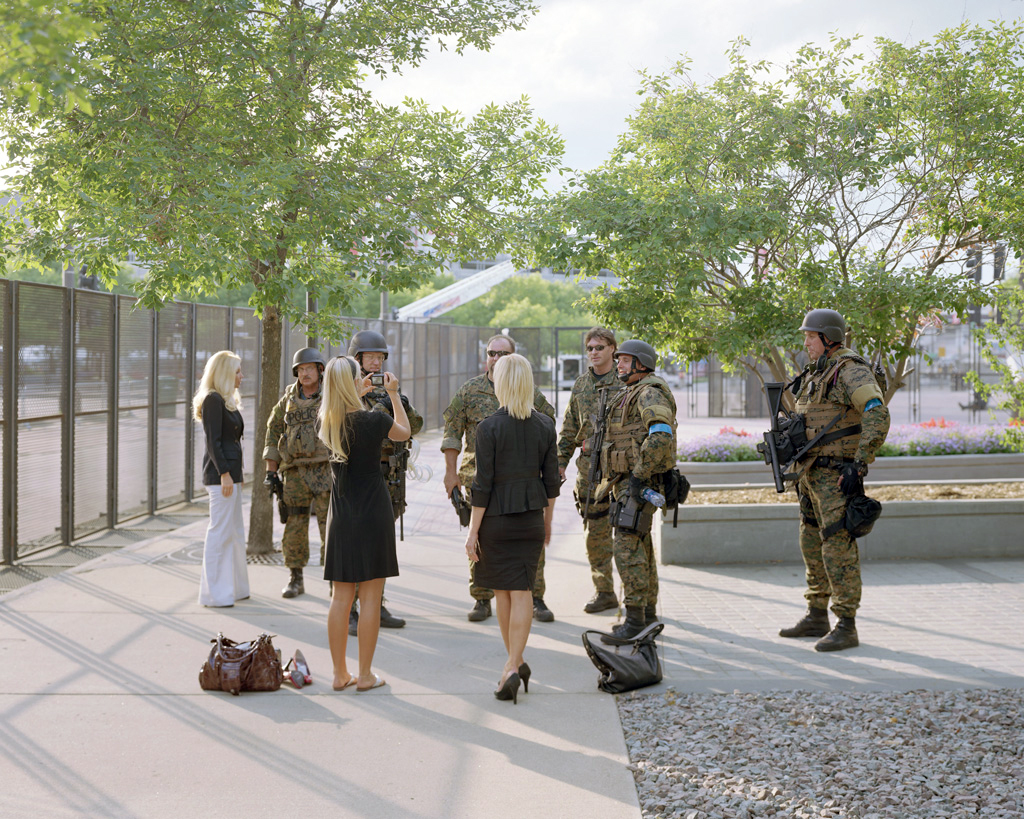
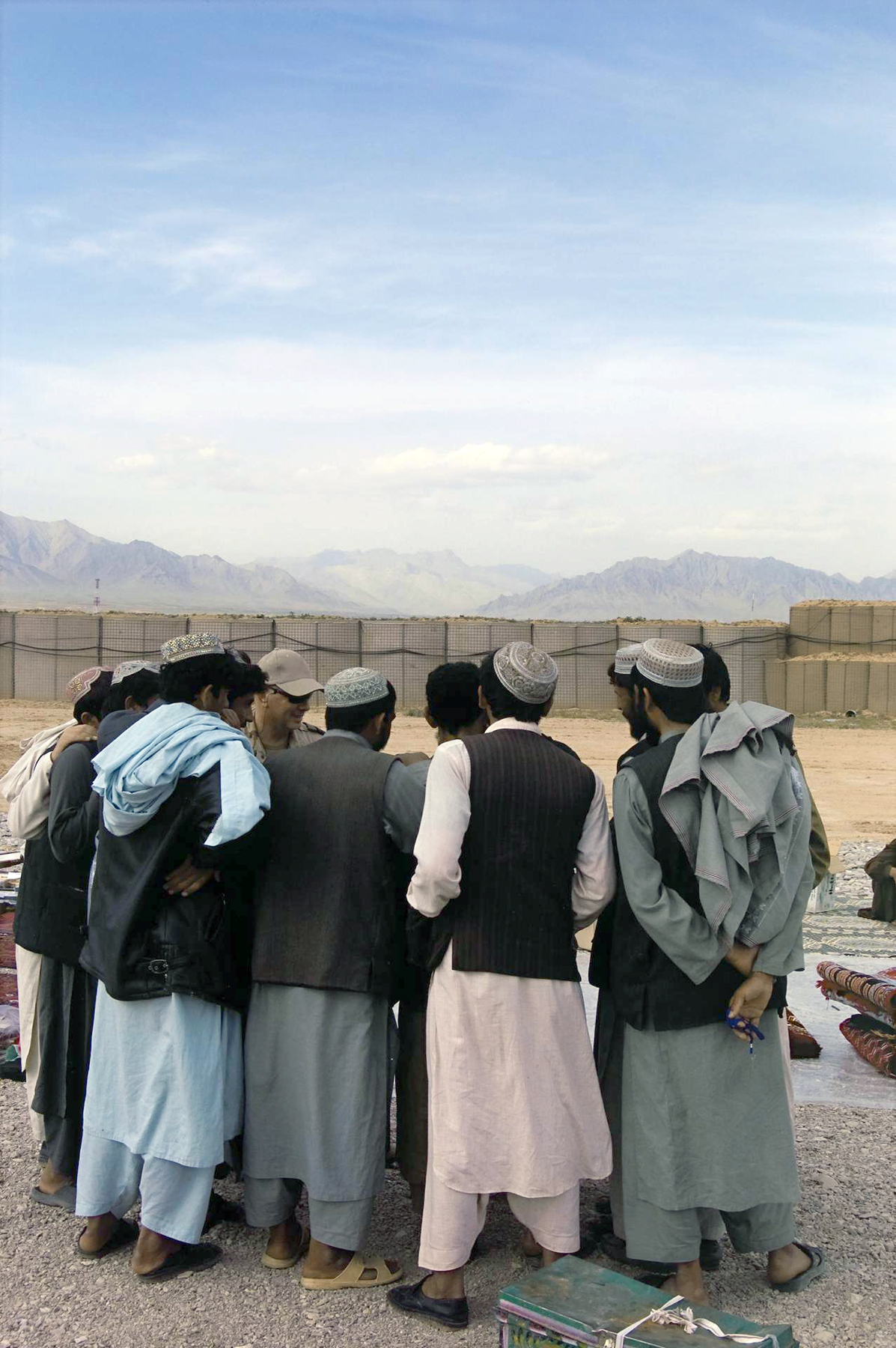
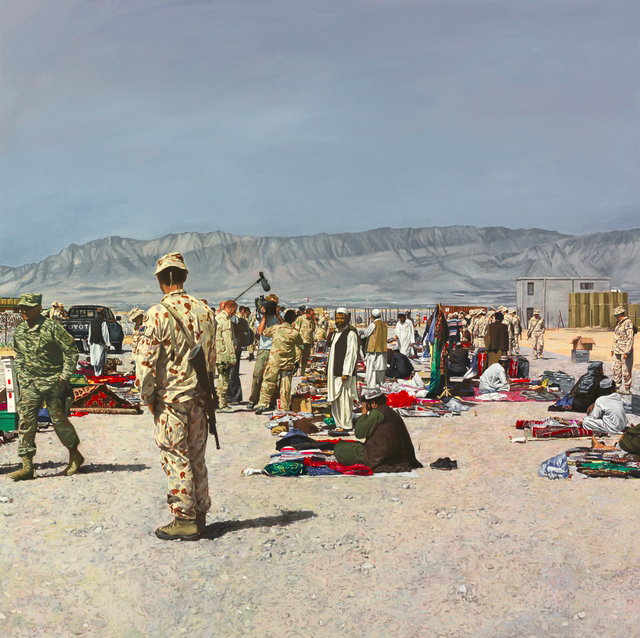
Lyndell Brown (Australian, b. 1961) and Charles Green (Australian, b. 1953) 'Afghan traders with soldiers, market, Tarin Kowt base, Uruzgan province, Afghanistan.' 2007-2008 from the exhibition 'Framing Conflict – Iraq and Afghanistan' exhibition by Lyndell Brown and Charles Green at The Ian Potter Museum of Art, The University of Melbourne, Nov 2008 - Feb 2009


Lyndell Brown (Australian, b. 1961) and Charles Green (Australian, b. 1953)
Afghan traders with soldiers, market, Tarin Kowt base, Uruzgan province, Afghanistan
2007-2008
From The approaching storm series 2007-2009
Digital colour inkjet photograph
155 × 107.5cm


Despite one brilliant photograph and some interesting small painted canvases this exhibition is a disappointment. No use beating around the figurative bush in the landscape so to speak, talking plainly will suffice. Firstly, let’s examine the photographs. Thirteen large format colour photographs are presented in the exhibition out of an archive of “thousands of photographs Brown and Green created on tour”1 from which the paintings are derived.

Most of the photographs are inconsequential and need not have been taken. Relying on the usual trope of painters who take photographs they are shot at night, dusk or dawn when the shadows are long, the colours lush supposedly adding ‘mystique’ to the scene being portrayed. In some cases they are more like paintings than the paintings themselves. Perhaps this was the artist’s plan, the reverse marriage of photography and painting where one becomes the other, but this does little to advance photography as art. There is nothing new or interesting here: sure, some of the photographs are beautiful in the formal representation of a vast and fractured landscape but the pre-visualisation is weak: bland responses to the machines, industry, people and places of the conflict. Go look at the Andreas Gursky photographs at the National Gallery of Victoria to see world-class photography taking reality to the limit, head on.

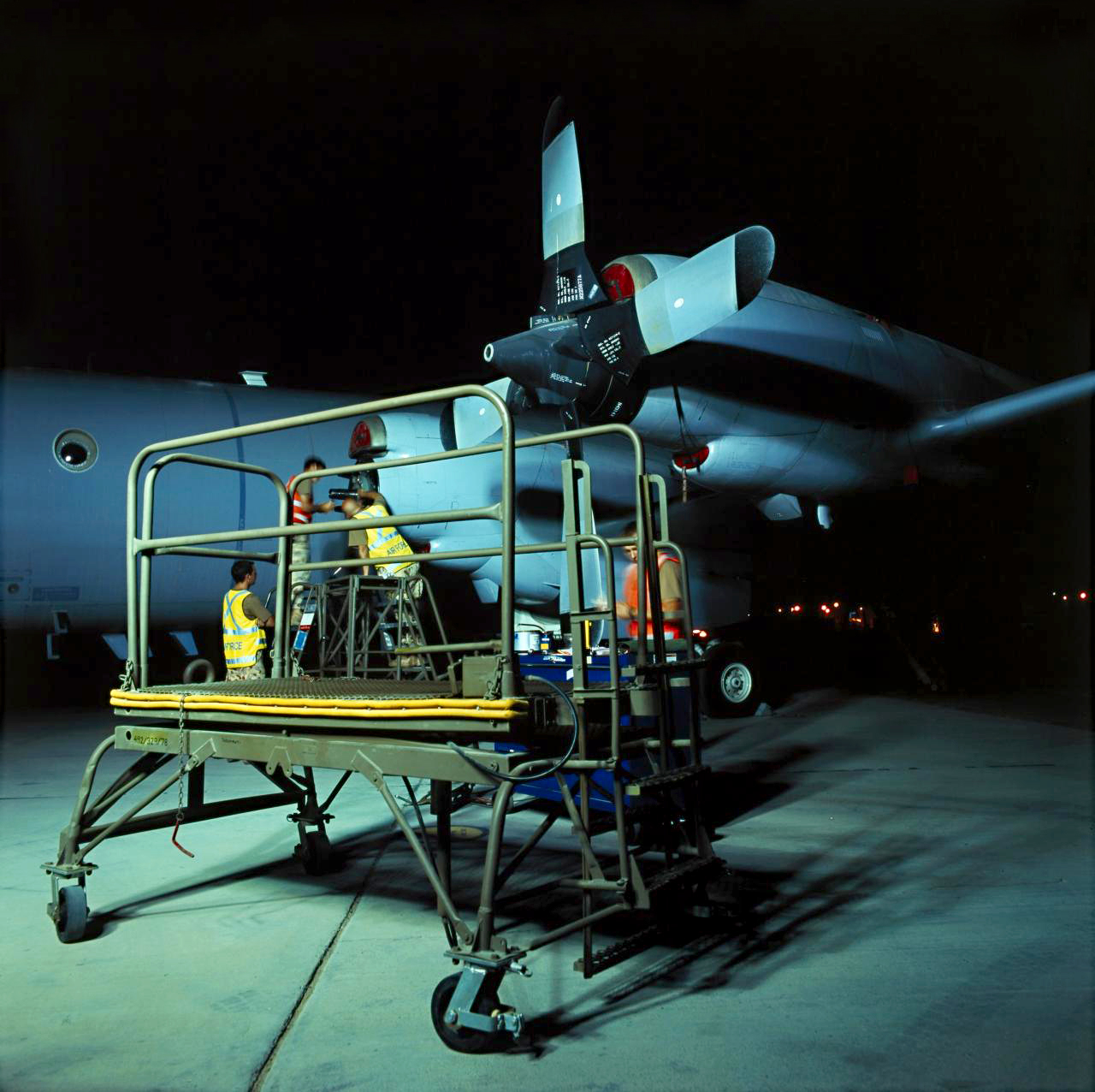
Too often in these thirteen images the same image is repeated with variants – three images of the an aircraft having it’s propeller changed show a lack of ideas or artefacts to photograph – presented out of the thousands taken seems incongruous. The fact that only one photograph is reproduced in the catalogue is also instructive.

Some images are just unsuccessful. For example the photograph Dusk, ship’s bridge with two sailors, northern Gulf is of a formulaic geometry that neither holds the viewers attention nor gives a deeper insight into their lives aboard ship and begs the question why was the photograph taken in the first place? The dark space has little physical or metaphysical illumination and seems purely to be an exercise in formalism. The photograph Dusk, ships’ bridge with sailor, northern Gulf is more successful in the use of light and shade as they play across the form of a sailor, his head resting pensively in his hand, red life vests adding a splash of colour to the bottom right of the photograph.

The brilliant photograph of the group is View from Chinook, Helmand province, Afghanistan. This really is a monstrous photograph. With the large black mass of the helicopter in the foreground of the image containing little detail, the eye is drawn upwards to the windscreen through which a mountain range rises, with spines like the back of a Stegosaurus. To the right a road, guarded by a desolate looking pillbox and yellow barrier, meanders into the distance. Dead flies on the windscreen look like small bullet holes until you realise what they are. This is the image that finally evidences a disquieting beauty present in the vast and ancient landscape.

Turning to the paintings we can say that some of the small 31cm x 31cm paintings work well. From an ‘original’ photograph the artist selects and crops a final image that they work up into a highly detailed oil painting. Distilled (as the artist’s like to put it) from the ‘original’ photographs, the paintings become a “merging of a contemporary sense of composition – borrowed from photography, film and video – with the textures and processes of traditional oil painting.”2

“These works were developed by the artists to be something akin to “Hitchcockian clues” which create the sense of looking out at a scene but being distanced from the action. To some degree the entire suite of small pictures participate in developing this intrigue, by showing an array of ambiguous scenes in which direct action is never present, or is obscured by limited perspectives … The artists noted that the war zones they witnessed were low in action but high in tension”3

To an extent this tension builds in some of the small paintings: the small size lends an intimate, intense quality and forces the viewer to engage with highly detailed renditions of textures of clothing, material, skin and hair and the distorted scale of the ships and aeroplanes portrayed. In these intense visions the painting seems less like a photograph and more like a new way of seeing. However, this occurs only occasionally within the group of small paintings.

If we think of a photograph in the traditional sense as a portrayal of reality, then a distillation of that photograph (the removal of impurities from, an increase in the concentration of) must mean that these paintings are a double truth, a concentrated essence of the ‘original’ photograph that changes that essence into something new. Unfortunately most of these small canvases show limited viewpoints of distilled landscapes that do not lead to ambiguous enigmas, but to the screen of the camera overlaid by a skein of paint, a patina of posing.

This feeling is only amplified in the three large ‘History’ paintings. The three paintings seem static, lifeless, over fussy and lacking insight into the condition of the ‘machine’ that they are attempting to portray. It’s a bit like the ‘Emperors New Clothes’, the lack of substance in the paintings overlaid with the semantics of History painting (“a traditional genre that focused on mythological, biblical, historical and military subjects”) used to confirm their existence and supposed insight into the doubled, framed reality. As Robert Nelson noted in his review of 2008 art in Melbourne in The Age newspaper it would seem that painting is sliding into terminal decline. These paintings only seem to confirm that view.

Here was a golden opportunity to try something fresh in terms of war as conflict – both in photography and painting – to frame the discourse in an eloquent, innovative manner. Most of this work is not interesting because it does not seem to be showing, or being discursive about anything beyond a personal whim. Because an artist can talk about some things, doesn’t mean that he can make comments about other things that have any value. Although the artist was looking to portray landscapes of globalisation and entropy, there are more interesting ways of doing this, rather than the nature of the transcription used here.

“It is very good to copy what one sees: it is much better to draw what you can’t see any more but in your memory. It is a transformation in which imagination and memory work together. You only reproduce what struck you, that is to say, the necessary. That way your memory and your fantasy are freed from the tyranny of nature.”4

No thinking but the putting away of intellect and the reliance on memory and imagination, memory and fantasy to ‘distil’ the essence. This is what needed to happen both in the photographs and paintings – leaving posturing aside (perhaps an ‘unofficial war artist’ would have had more success!) to uncover the transformation of landscape that the theatre of this environment richly deserves.

Dr Marcus Bunyan


Footnotes

1/ Heywood, Warwick. Framing Conflict: Iraq and Afghanistan exhibition catalogue. Canberra: Australian War Memorial, 2008, p. 6
2/ Heywood, Warwick. Framing Conflict: Iraq and Afghanistan exhibition catalogue. Canberra: Australian War Memorial, 2008, p. 6
3/ Heywood, Warwick. Framing Conflict: Iraq and Afghanistan exhibition catalogue. Canberra: Australian War Memorial, 2008, p. 11
4/ Degas, Edgar quoted in Halligan, Marion. “Between the brushstrokes,” in A2 section, The Saturday Age newspaper, January 17th 2008, p. 18


Many thankx to The Ian Potter Museum of Art for allowing me to publish the photographs in the posting. Please click on the photographs for a larger version of the image.


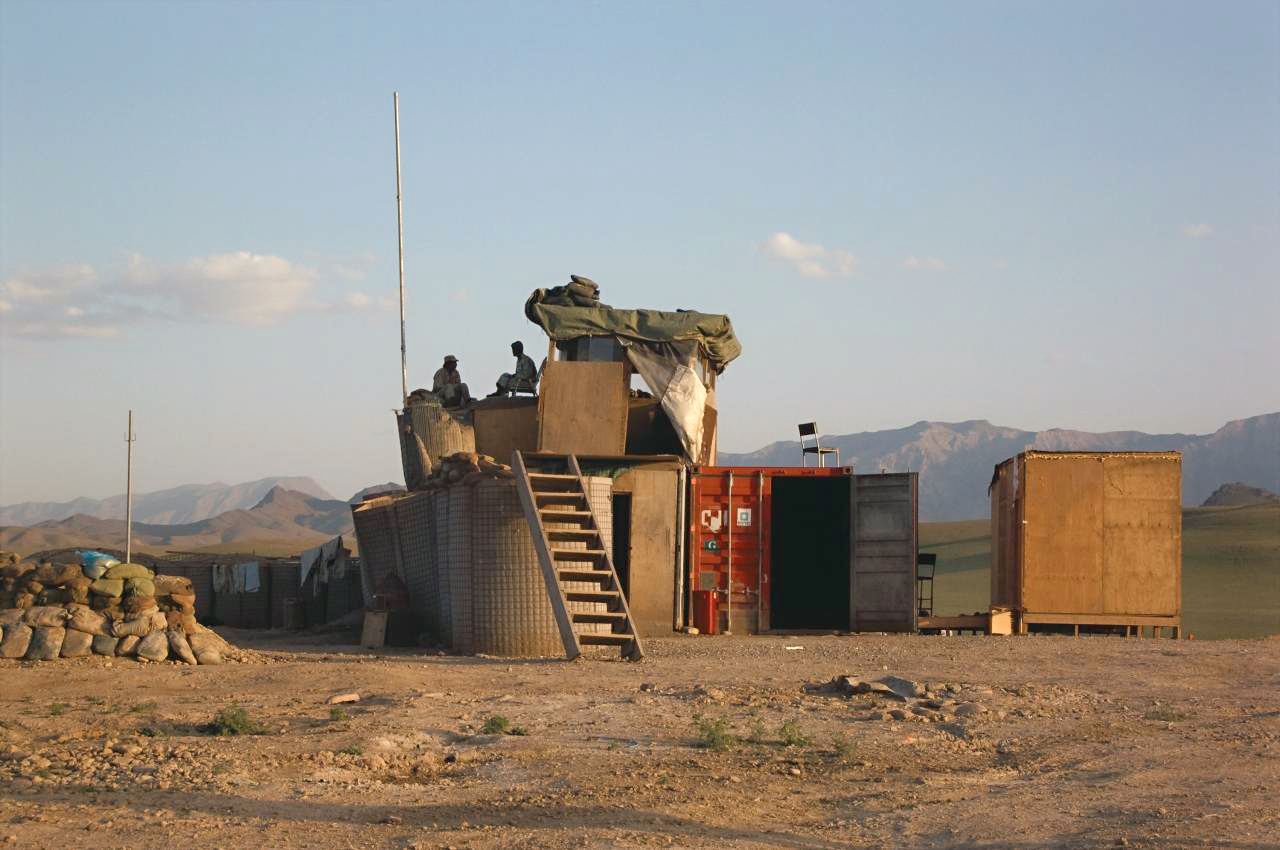
Lyndell Brown (Australian, b. 1961) and Charles Green (Australian, b. 1953) 'Afghan National Army perimeter post with chair, Tarin Kowt base, Uruzgan province, Afghanistan' 2007-2008 from the exhibition 'Framing Conflict – Iraq and Afghanistan' exhibition by Lyndell Brown and Charles Green at The Ian Potter Museum of Art, The University of Melbourne, Nov 2008 - Feb 2009


Lyndell Brown (Australian, b. 1961) and Charles Green (Australian, b. 1953)
Afghan National Army perimeter post with chair, Tarin Kowt base, Uruzgan province, Afghanistan
2007-2008
From The approaching storm series 2007-2009
Digital colour inkjet photograph
111.5 × 151.5cm


Lyndell Brown (Australian, b. 1961) and Charles Green (Australian, b. 1953) 'Dusk, ship's bridge with two sailors, northern Gulf' 2007-2008


Lyndell Brown (Australian, b. 1961) and Charles Green (Australian, b. 1953)
Dusk, ship’s bridge with two sailors, northern Gulf
2007-2008
Digital colour inkjet photograph


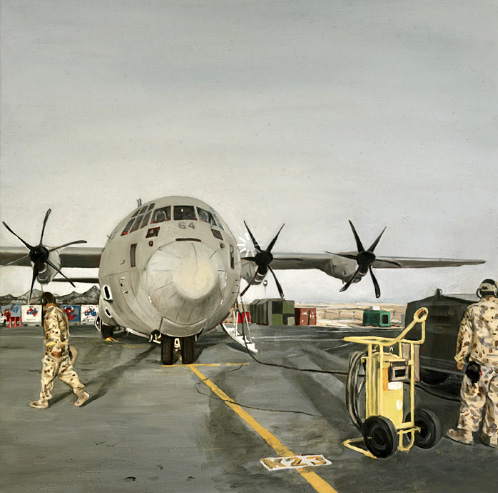
Lyndell Brown (Australian, b. 1961) and Charles Green (Australian, b. 1953) 'Late afternoon, flight line, military installation, Middle East' 2007


Lyndell Brown (Australian, b. 1961) and Charles Green (Australian, b. 1953)
Late afternoon, flight line, military installation, Middle East
2007
Oil on linen


Lyndell Brown (Australian, b. 1961) and Charles Green (Australian, b. 1953) 'Market, Camp Holland, Tarin Kowt, Uruzgan province, Afghanistan' 2007


Lyndell Brown (Australian, b. 1961) and Charles Green (Australian, b. 1953)
Market, Camp Holland, Tarin Kowt, Uruzgan province, Afghanistan
2007
Oil on linen


Lyndell Brown (Australian, b. 1961) and Charles Green (Australian, b. 1953) 'View from Chinook, Helmand province, Afghanistan' 2007-2008


Lyndell Brown (Australian, b. 1961) and Charles Green (Australian, b. 1953)
View from Chinook, Helmand province, Afghanistan
2007-2008
From The approaching storm series 2007-2009
Digital colour inkjet photograph
111.5 × 151.5cm


Lyndell Brown (Australian, b. 1961) and Charles Green (Australian, b. 1953) 'View from Chinook, Helmand province, Afghanistan' 2007


Lyndell Brown (Australian, b. 1961) and Charles Green (Australian, b. 1953)
View from Chinook, Helmand province, Afghanistan
2007
Oil on linen


Lyndell Brown (Australian, b. 1961) and Charles Green (Australian, b. 1953) 'Trolley, propeller change, on flightline at night, military installation, Gulf' 2007-2008


Lyndell Brown (Australian, b. 1961) and Charles Green (Australian, b. 1953)
Trolley, propeller change, on flightline at night, military installation, Gulf
2007-2008
From The approaching storm series 2007-2009
Digital colour inkjet photograph
87.0 × 87.4cm


Lyndell Brown (Australian, b. 1961) and Charles Green (Australian, b. 1953) 'History painting: market, Tarin Kowt, Uruzgan province, Afghanistan' 2007


Lyndell Brown (Australian, b. 1961) and Charles Green (Australian, b. 1953)
History painting: market, Tarin Kowt, Uruzgan province, Afghanistan
2007
Oil on linen


Lyndell Brown and Charles Green. Installation view of photographs from the exhibition 'Framing Conflict' at The Ian Potter Museum of Art, The University of Melbourne


Lyndell Brown and Charles Green
Installation view of photographs from the exhibition Framing Conflict at The Ian Potter Museum of Art, The University of Melbourne
2009


Lyndell Brown and Charles Green. Installation view of paintings from the exhibition 'Framing Conflict' at The Ian Potter Museum of Art, The University of Melbourne 2009


Lyndell Brown (Australian, b. 1961) and Charles Green (Australian, b. 1953)
Installation view of paintings from the exhibition Framing Conflict at The Ian Potter Museum of Art, The University of Melbourne
2009


The Ian Potter Museum of Art
The University of Melbourne,
Corner Swanston Street and Masson Road
Parkville, Victoria 3010

Opening hours:
Tuesday – Saturday 11am – 5pm

The Ian Potter Museum of Art website

LIKE ART BLART ON FACEBOOK

Back to top

Exhibition: ‘William Eggleston: Democratic Camera, Photographs and Video, 1961-2008’ at the Whitney Museum of American Art, New York

Exhibition dates: 7th November, 2008 – 25th January, 2009


William Eggleston (American, b. 1939) 'Untitled' c. 1971-1973 from the exhibition Exhibition: 'William Eggleston: Democratic Camera, Photographs and Video, 1961-2008' at the Whitney Museum of American Art, New York, Nov 2008 - Jan 2009


William Eggleston (American, b. 1939)
Untitled
c. 1971-1973
From Troubled Waters 1980
Dye-transfer print
© Eggleston Artistic Trust


One of the most influential photographers of the last half-century, William Eggleston has defined the history of colour photography. This exhibition is the artist’s first retrospective in the United States and includes both his colour and black-and-white photographs as well as Stranded in Canton, the artist’s video work from the early 1970s.

William Eggleston’s great achievement in photography can be described in a straightforward way: he captures everyday moments and transforms them into indelible images. William Eggleston: Democratic Camera, Photographs and Video, 1961-2008 presents a comprehensive selection from nearly fifty years of image-making.

Born in 1939 in Sumner, Mississippi, a small town in the Delta region, Eggleston showed an early interest in cameras and audio technology. While studying at various colleges in the South, he purchased his first camera and came across a copy of Henri Cartier-Bresson’s book The Decisive Moment (1952). In the early 1960s, Eggleston married and moved to Memphis, where he has lived ever since. He first worked in black-and-white, but by the end of the decade began photographing primarily in colour. Internationally acclaimed and widely traveled, Eggleston has spent the past four decades photographing all around the world, conveying intuitive responses to fleeting configurations of cultural signs and moods as specific expressions of local colour. Psychologically complex and casually refined, bordering on kitsch and never conventionally beautiful, these photographs speak principally to the expanse of Eggleston’s imagination and have had a pervasive influence on all aspects of visual culture. By not censoring, rarely editing, and always photographing, Eggleston convinces us of the idea of the democratic camera.

This exhibition was organised by the Whitney Museum of American Art, New York, in association with Haus der Kunst, Munich.

Text from the Whitney Museum of American Art website


Many thankx to the Whitney Museum of American Art for allowing me to publish the photographs in the posting. Please click on the photographs for a larger version of the image.


William Eggleston (American, b. 1939) 'Untitled' 1973 from the exhibition Exhibition: 'William Eggleston: Democratic Camera, Photographs and Video, 1961-2008' at the Whitney Museum of American Art, New York, Nov 2008 - Jan 2009


William Eggleston (American, b. 1939)
Untitled
1973
Dye-transfer print
© Eggleston Artistic Trust


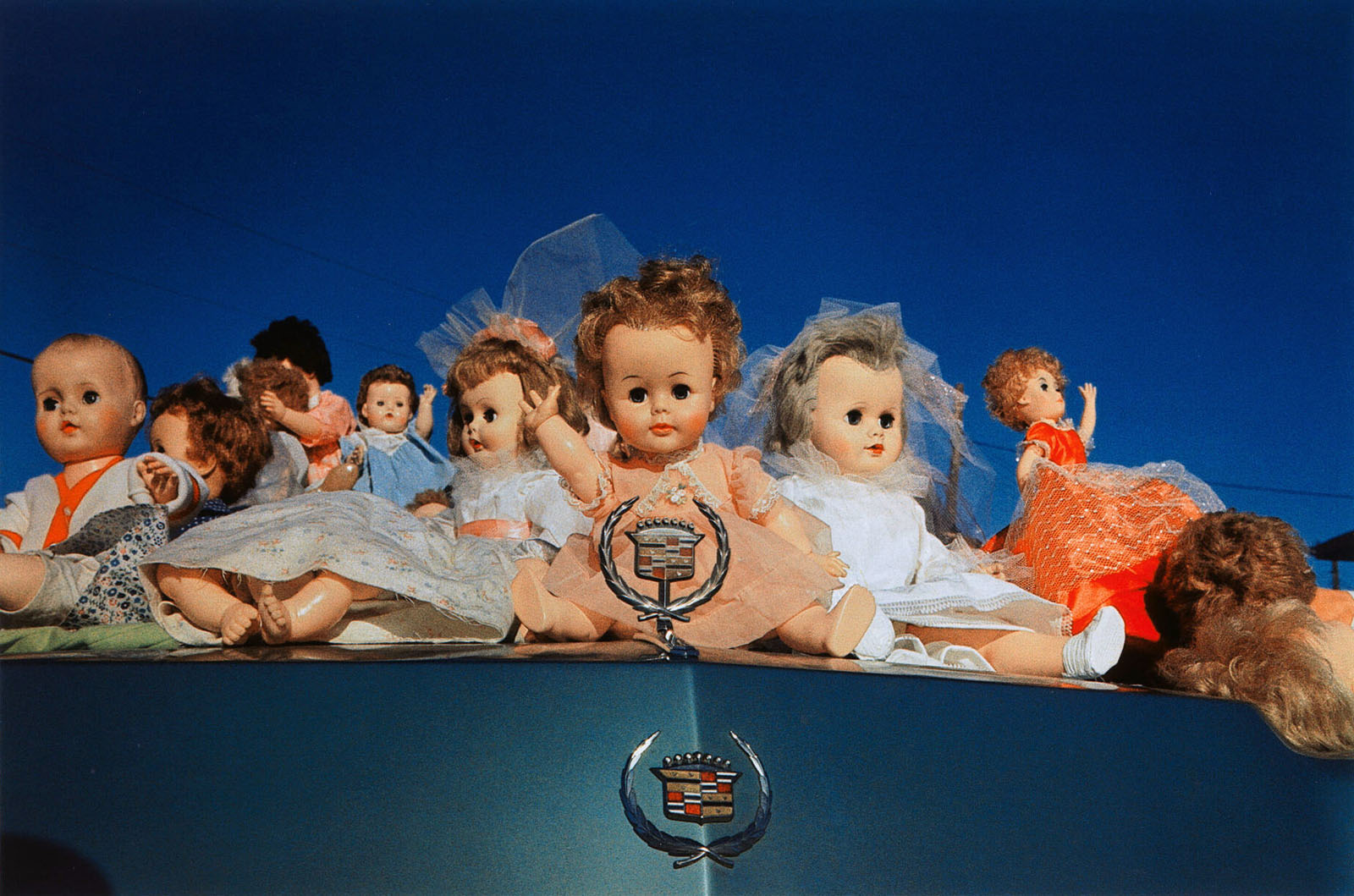
William Eggleston (American, b. 1939) 'Untitled (Baby Doll Cadillac)' 1973, printed 1996


William Eggleston (American, b. 1939)
Untitled (Baby Doll Cadillac)
1973, printed 1996
From the Los Alamos portfolio
Dye transfer print
11 3/4 × 17 11/16in. (29.8 × 44.9cm)
Whitney Museum of American Art, New York; purchase, with funds from the Photography Committee
© Eggleston Artistic Trust, courtesy Cheim & Read, NYC


William Eggleston (America, born July 27, 1939) 'Memphis' c. 1970


William Eggleston (America, b. 1939)
Memphis
c. 1970
Dye-transfer print
© Eggleston Artistic Trust


William Eggleston video

“This candid interview with photographer William Eggleston was conducted by film director Michael Almereyda on the occasion of the opening of Eggleston’s retrospective William Eggleston: Democratic Camera, Photographs and Video, 1961-2008 at the Whitney Museum of American Art. A key figure in American photography, Eggleston is credited almost single-handedly with ushering in the era of colour photography. Eggleston discusses his shift from black and white to colour photography in this video as, “it never was a conscious thing. I had wanted to see a lot of things in colour because the world is in colour”. Also included in this video are Eggleston’s remarks about his personal relationships with the subjects of many of his photographs.”


The Ending of Stranded in Canton

In 1973, photographer William Eggleston picked up a Sony PortaPak and took to documenting the soul of Memphis and New Orleans. Transvestites, geek men biting off chicken heads, classy blues musicians, and crazed men with guns form the backbone of this documentary look at the “Southern Hipsters” of Louisiana and Mississippi.

Stranded in Canton

In 1973, photographer William Eggleston picked up a Sony PortaPak and took to documenting the soul of Memphis and New Orleans.

“These were the Merry Prankster and “Easy Rider” years, when road trips and craziness were cool, and Mr. Eggleston set out on some hard-drinking picture-taking excursions. He also embarked on repeated shorter expeditions closer to home in the form of epic bar crawls, which resulted in the legendary video “Stranded in Canton.”

Originally existing as countless hours of unedited film and recently pared down by the filmmaker Robert Gordon to a manageable 76 minutes, it was shot in various places in 1973 and 1974. (The new version is in the retrospective.) Mr. Eggleston would show up with friends at favourite bars, turn on his Sony Portapak, push the camera into people’s faces and encourage them to carry on.

And they did. Apart from brief shots of his children and documentary-style filming of musicians, the result is like some extreme form of reality television. Your first thought is: Why do people let themselves be seen like this? Do they know what they look like? You wonder if Mr. Eggleston is deliberately shaping some tragicomic Lower Depths drama or just doing his customary shoot-what’s-there thing, the what’s-there in this case being chemical lunacy. For all the film’s fringy charge there’s something truly creepy and deadly going on, as there is in much of Mr. Eggleston’s art. You might label it Southern Gothic; but whatever it is, it surfaces when a lot of his work is brought together.”

Holland Cotter. “Old South Meets New, in Living Color,” on The New York Times website Nov 6, 2008


William Eggleston (America, b. 1939) 'Untitled' c. 1976


William Eggleston (America, b. 1939)
Untitled
c. 1976
From Election Eve
© Eggleston Artistic Trust
Courtesy Cheim & Read Gallery


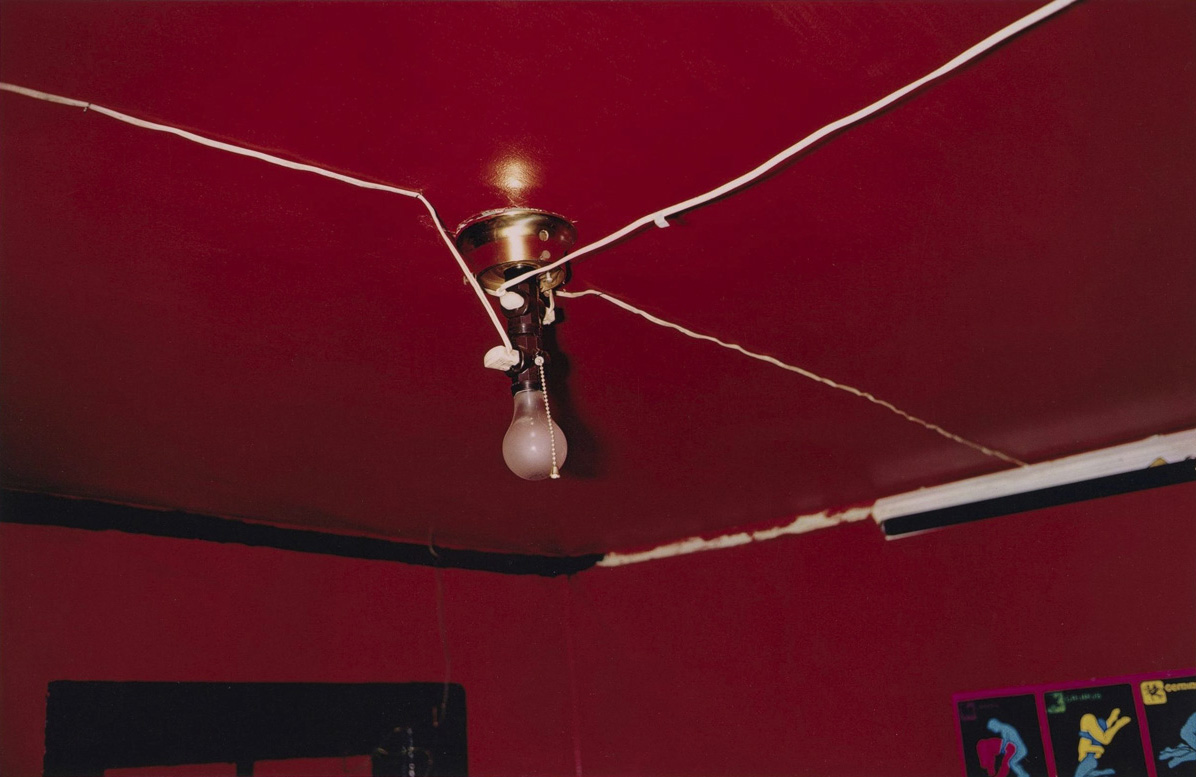
William Eggleston (American, born 1939) 'Untitled (Greenwood, Mississippi)' 1980


William Eggleston (American, born 1939)
Untitled (Greenwood, Mississippi)
1980
Dye-transfer print
29.6 x 45.5cm (11 5/8 x 17 15/16 in.)
The Metropolitan Museum of Art
Purchase, Louis V. Bell, Harris Brisbane Dick, Fletcher, and Rogers Funds and Joseph Pulitzer Bequest, and Jennifer and Philip Maritz Gift, 2012
© Eggleston Artistic Trust


William Eggleston (American, b. 1939) 'Untitled' Nd


William Eggleston (American, b. 1939)
Untitled
Nd
Dye-transfer print
From Los Alamos 1965-1968 and 1972-1974 (published 2003)
© Eggleston Artistic Trust


William Eggleston (American, b. 1939) 'Untitled' c. 1975 (Marcia Hare in Memphis Tennessee) c. 1975


William Eggleston (American, b. 1939)
Untitled (Marcia Hare in Memphis Tennessee)
c. 1975
Dye-transfer print
© Eggleston Artistic Trust


William Eggleston (American, b. 1939) 'Huntsville, Alabama' c. 1971


William Eggleston (American, b. 1939)
Huntsville, Alabama
1971
Dye-transfer print
© Eggleston Artistic Trust


William Eggleston (American, b. 1939) 'Untitled (Memphis Tennessee)' 1965


William Eggleston (American, b. 1939)
Untitled (Memphis Tennessee)
1965
Dye-transfer print
© Eggleston Artistic Trust


William Eggleston (American, b. 1939) 'Untitled (Memphis)' c. 1969-1971


William Eggleston (American, b. 1939)
Untitled (Memphis)
c. 1969-1971
Dye-transfer print
© Eggleston Artistic Trust
Courtesy Cheim & Read Gallery


William Eggleston (American, b. 1939) 'Untitled' 1983


William Eggleston (American, b. 1939)
Untitled
1983
From a series of photographs taken at Graceland
Dye-transfer print
© Eggleston Artistic Trust
Courtesy Whitney Museum of American Art


Whitney Museum of American Art
99 Gansevoort Street
New York, NY 10014
Phone: (212) 570-3600

Opening hours:
Mon: 10.30am – 6pm
Tues: Closed
Wed: 10.30am – 6pm
Thurs: 10.30am – 6pm
Fri: 10.30am – 10pm*
Sat: 11am – 6pm
Sun: 11am – 6pm

Whitney Museum of American Art website

William Eggleston exhibition web page

LIKE ART BLART ON FACEBOOK

Back to top