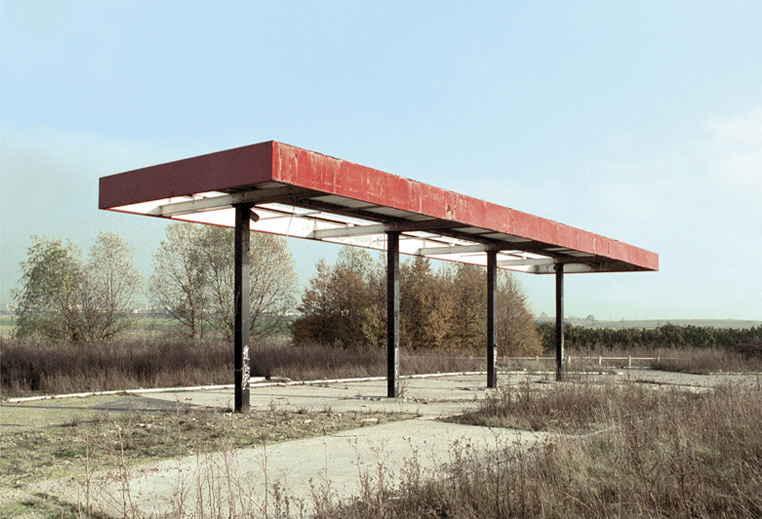
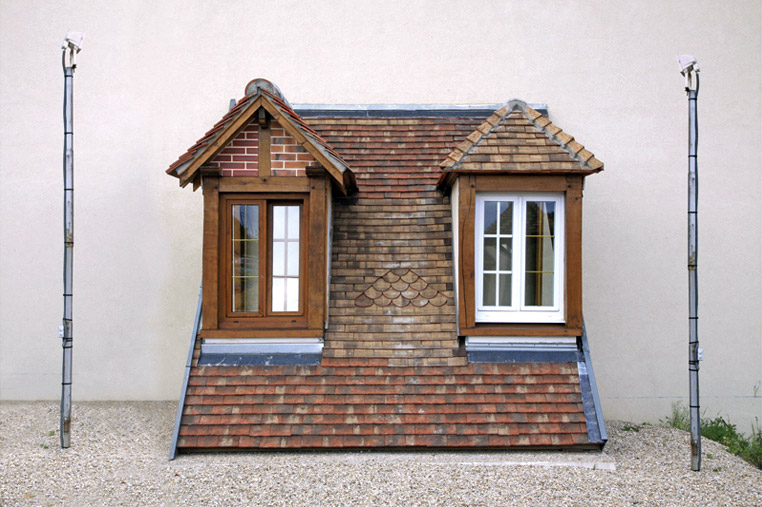
Eric Tabuchi (French, b. 1959) Station #1 from the book Twentysix Abandoned Gas Stations 2002
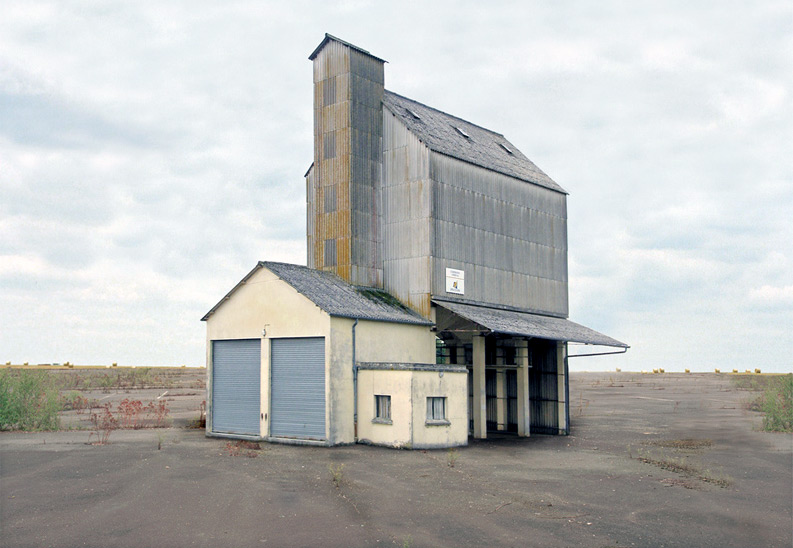
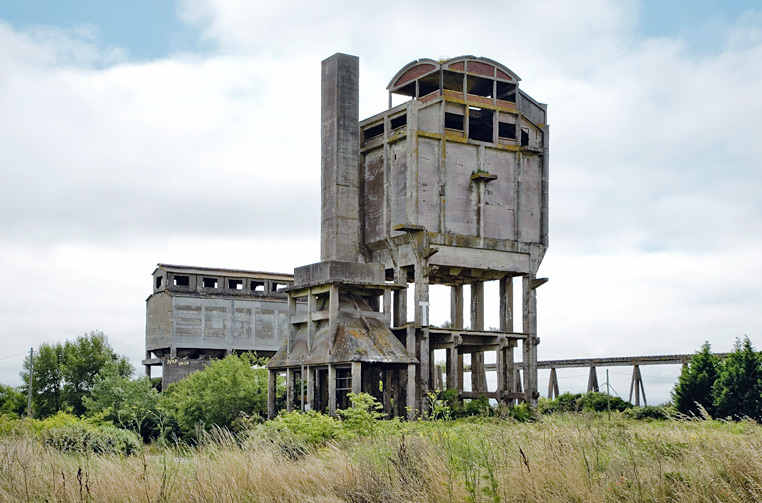
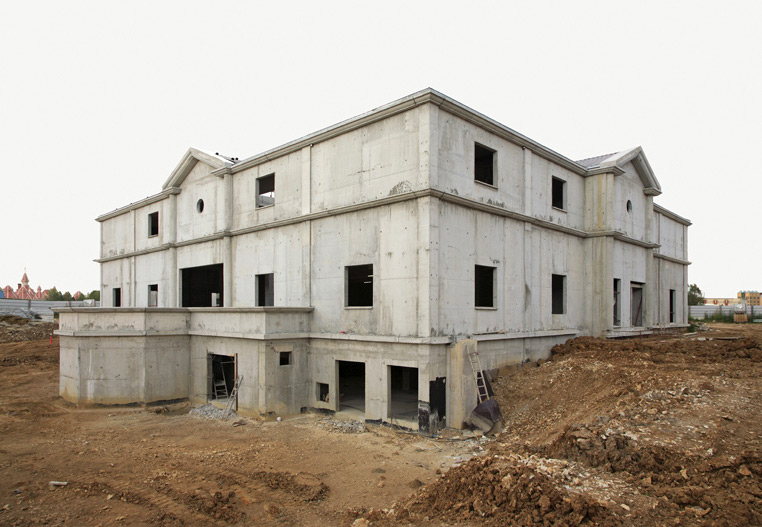
One of my favourite artists at the moment is Frenchman Eric Tabuchi. I don’t know a lot about him as there is only an exhibition list on his website and no other details but this does not matter. His work speaks for him. Taken in simple formalist objective style his colour photographs tell it like it is, speaking the images of existence in a clear and precise manner. His work ‘en serie’ are conceptually based but the images themselves are straight forward, images that depict the ironies and degradations of environments and artefacts without moral judgement. His photographs have links back to the formalist style of the German Bernd and Hiller Becher whose work has influenced many contemporary photographers (including Andreas Gursky, Candid Hofer, Thomas Ruff and Thomas Struth amongst others).
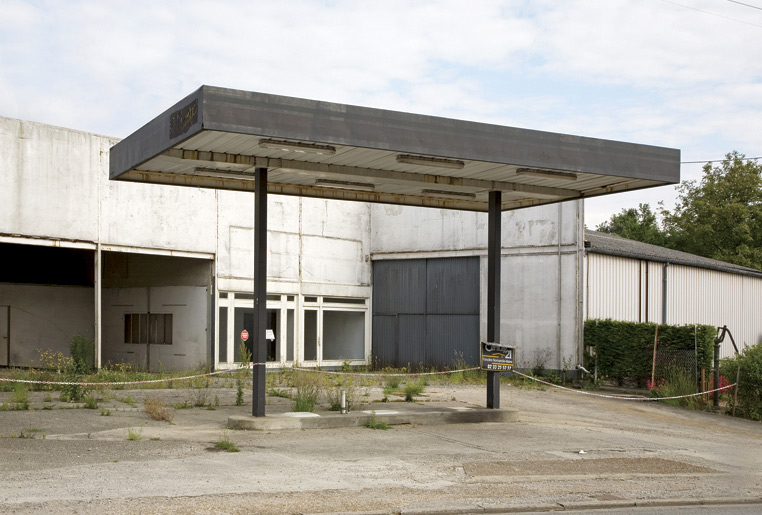
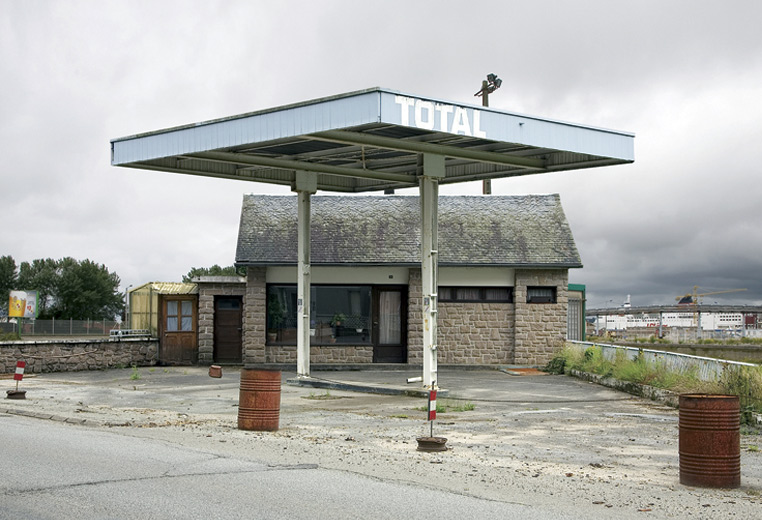
Tabuchi’s latest artist book Twentysix Abandoned Gas Stations is a contemporary reprise on the very first modern artist’s book Twentysix Gasoline Stations produced by Ed Ruscha in 1963. Using minimalist notions of repetitive sequence and seriality Tabuchi addresses a contemporary landscape full of abandoned technologies, toxic environments and architectural wastelands foretelling the badlands of future worlds. As in all his bodies of work the body of the human is absent, the sense of corporeal distance from object to viewer devastating. His constructions, both photographic and environmental, speak eloquently to the human present, presence absence.
He is a photographer to remember.
Dr Marcus Bunyan
Many thankx to Eric Tabuchi for allowing me to publish the photographs in the posting. Please click on the photographs for a larger version of the image.
Eric Tabuchi (French, b. 1959) Station #21 from the book Twentysix Abandoned Gas Stations 2008
Eric Tabuchi (French, b. 1959) Station #22 from the book Twentysix Abandoned Gas Stations 2006
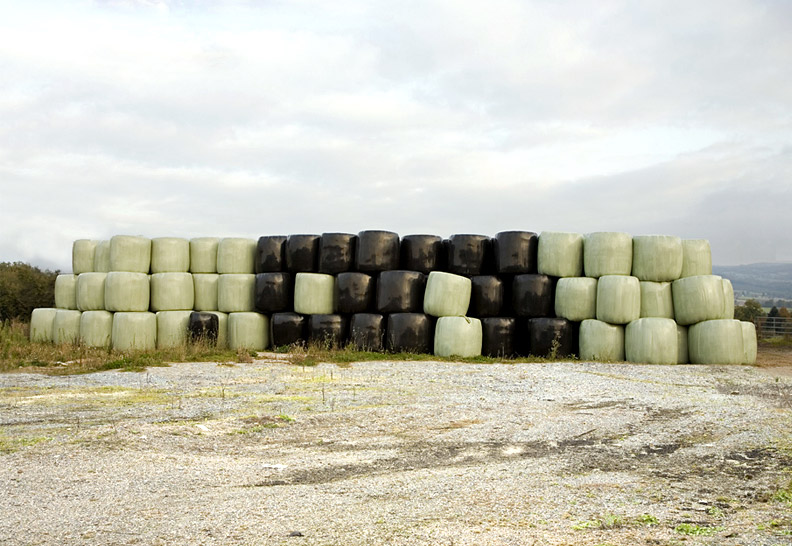
Eric Tabuchi (French, b. 1959) Stock Options #3 from the Monument series 2007
Eric Tabuchi (French, b. 1959) Two Windows from the Road Signs series 2006
Eric Tabuchi (French, b. 1959) Untitled from the Untitled Landscape series 2005
Eric Tabuchi (French, b. 1959) Untitled from the Various Ruins series 2007
Eric Tabuchi (French, b. 1959) Untitled from the Work in Progress series 2007
Paul Outerbridge (American, 1896-1958) Women by Car, Laguna Beach, California c. 1950 Pigment dyed digital print 16″ x 20″
“Art is life seen through man’s inner craving for perfection and beauty – his escape from the sordid realities of life into a world of his imagining. Art accounts for at least a third of our civilization, and it is one of the artist’s principal duties to do more than merely record life or nature. To the artist is given the privilege of pointing the way and inspiring towards a better life.”
Paul Outerbridge
If Outerbridge only photographed intermittently after 1943, then what photographs they are. Perhaps some of the most important colour photographs of their generation were made after he moved to California influencing the next generation of colour photographers (as noted below in the press release). What else can one say – his aesthetic sensibility is sensational, so far ahead of his time, so prescient of future colour spaces in photography. I know how “no regular income” feels as an artist, but he still had the courage and vision to make the work. I am in awe of the man: the visual complexity but eloquent simplicity of his photographs is simply amazing, simply… his own.
Dr Marcus Bunyan
Many thankx to the Downtown Central Library for allowing me to publish the photographs in the posting. Please click on the photographs for a larger version of the image.
Recently discovered colour images of California and Mexico taken during the 1940s and 1950s by the late visionary photographer Paul Outerbridge, who was considered “a master of colour photography,” will be exhibited at the Central Library’s First Floor Galleries, 630 W. Fifth St., downtown, from March 28 through June 28 2009.
Paul Outerbridge (American, 1896-1958) Balboa Beach, California c. 1950 Pigment dyed digital print 16″ x 20″
“[Outerbridge] was a designer and illustrator in New York before turning to photography in the 1920s. In 1925, having established himself as an innovative advertising photographer and graphic designer, he moved to Paris and worked for the French edition of Vogue magazine. There he met Edward Steichen, with whom he developed a friendly rivalry. Around 1930, having returned to New York, Outerbridge began to experiment with colour photography, in particular the carbro-colour process. He focused primarily on female nudes – striking, full-colour images that were ahead of their time. The growing popularity of the dye transfer process lead to cheaper color photographs and Outerbridge, who stuck fast to the carbro process as superior in its richness and permanence, saw his commercial work dry up, leaving him without a regular source of income. In 1943 Outerbridge moved to California, where he photographed only intermittently.”
Text from the Getty Museum website [Online] Cited 14/04/2009. No longer available online
Paul Outerbridge (American, 1896-1958) Reclining Nude c. 1937 Pigment dyed digital print
Paul Outerbridge (American, 1896-1958) Motel Bar, Mazatlán, Mexico c. 1948 Dye transfer print 16″ x 20″
Paul Outerbridge (American, 1896-1958) Hotel Lobby, Mazatlán, Mexico c. 1950 Pigment dyed digital print 16″ x 20″
As one of America’s earliest masters of colour photography, Paul Outerbridge established his reputation by making virtuoso carbro-colour prints of nudes and still-lives in the 1930s. As pictures, they are as brilliant and innovative today as when they earned their place as classics in the history of photography.
Outerbridge left New York in the 1940s, choosing to settle in California, and eventually taking up residency in the Mediterranean-style ocean side town of Laguna Beach. Little is known of Outerbridge’s last body of work in the 8 years preceding his death in 1958. But Outerbridge’s recently printed transparencies from the 1950s affirms that he fully understood the possibilities inherent in colour photography despite it being the early days of its use in photographic art. Outerbridge went on to make a body of work that presaged the style and imagery of colour photographers working a full quarter of a century later.
Employing a 35mm camera rather than the large-format equipment of the studio, Outerbridge captured vivid pictures while on the fly. His images were composed using the same precision of form and colour that characterised his 1930s studio work, but, in this series, Outerbridge applied his earlier techniques to the energetic world of the street. This was a new landscape for Outerbridge, who, seeing in the new spectrum of colour, depicted the people and places from his adopted Southern California, and, with great relish and sensitivity, from the Mexican towns just south of the border. In the tradition of such photographers as Edward Weston, Paul Strand, Anton Bruehl, and Henri Cartier-Bresson, all of whom made significant photographic forays into Mexico, Outerbridge ventured south from Laguna. In his 1949 black Cadillac, Outerbridge frequented the seaport towns along the Baja peninsula. One of his favourite stops was Mazatlan, on Mexico’s western coast, where he took particular pleasure in surveying the urban architecture, absorbing – and documenting – the city streets teeming with people, the brightly coloured topography.
Among the scenes Outerbridge etched onto film: carnival carriages with passengers dressed and bound for a grand party; a group of fashionable men relaxing in an outdoor hotel lobby drinking Cokes and beer while a small orchestra plays on in the afternoon sun; and a lone girl in a lime-green dress and white sweater walking past a gas station whose painted-red details add vibrant flourishes to the scene. Outerbridge was keenly aware that the beauty of everyday objects was also tied to the larger meanings anchored in the social landscape, but he cared less for this fact than for the expression of pure colour and form as seen through and by the lens.
These extraordinary pictures recall the 1970s photographs of William Eggleston and Stephen Shore, who strove to codify these same formal and subjective aesthetics into a bold definition of the new colour vocabulary. Paul Outerbridge: New Color Photographs from California and Mexico will bring a heretofore undiscovered and unrecognised sequence of photographs that bridges the formal gap between the past and the present. Outerbridge’s visionary handling of colour confirmed that he had instinctively known the potential of the colour medium, and, luckily for us, he created an astounding body of photographs to prove it.
Text from the Curatorial Assistance website [Online] Cited 19/01/2019
Paul Outerbridge (American, 1896-1958) Gas Station, Mazatlán, Mexico c. 1950 Dye transfer print 16″ x 20″
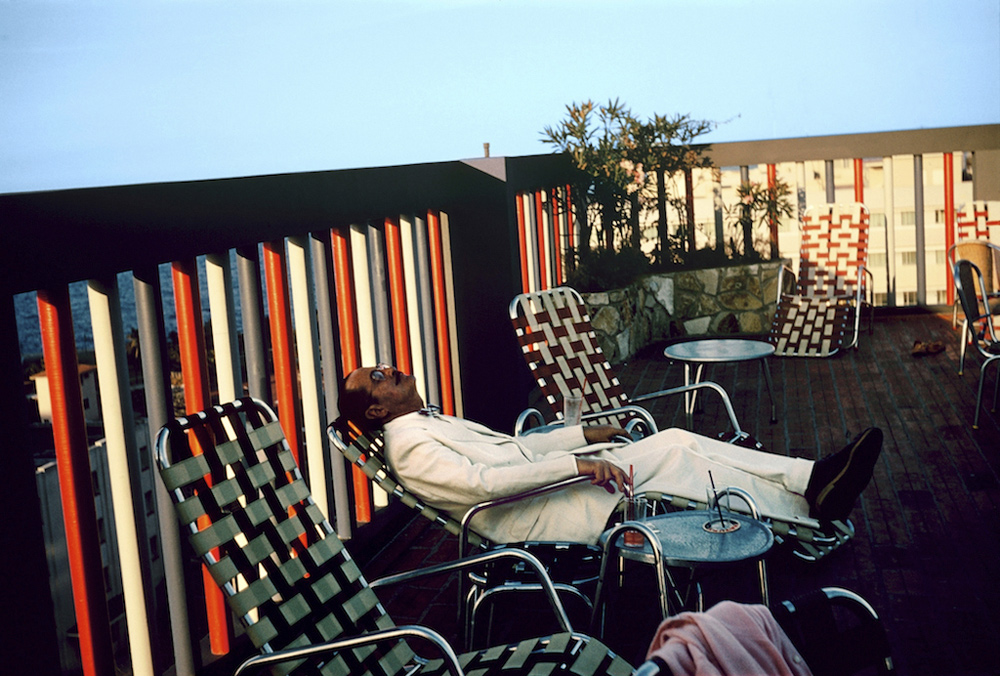
Paul Outerbridge (American, 1896-1958) Self-portrait on Lounge, Oceanside Resort, California c.1950 Pigment dyed digital print 16″ x 20″
“Outerbridge, who died in 1958, built his reputation in the early 1920s in New York and Paris making elegant black and white photo abstractions primarily of nudes and still lifes that rivalled those of his peers, Alfred Stieglitz, Edward Steichen, and Edward Weston. In the 1930s, Outerbridge mastered the exquisite tri-carbro-colour print process and went on to make some of the most important colour photographs in art and advertising of that time.
Moving to California in 1943 and taking up residence in Laguna Beach, Outerbridge made his last important body of work throughout California and Mexico. Between 1948 and until his death in 1958 he codified a new language in colour photographs that anticipated the work of William Eggleston, Stephen Shore, Joel Sternfeld and others known for their “New Color” work in the 1970s.
“The curious position of prosperous American tourists amid the daily poverty experienced by some Mexicans is one of the recurring themes in the work, but with Outerbridge there is no political polemic,” says co-curator Phillip Prodger. “Outerbridge was thinking of his photographs as jig-saw puzzles made up of many different highly coloured pieces, each placed with meticulous care.”
Among Outerbridge’s subjects are carnival carriages with passengers dressed and headed for a grand party; a group of fashionable men relaxing in an outdoor hotel lobby drinking Coke and beer while a small orchestra plays; a girl in a lime-green dress and white sweater walking past a gas station whose painted-red details add a vibrant flourish to the scene.”
Text from the Downtown Central Library press release [Online] Cited 14/04/2009. No longer available online
Paul Outerbridge (American, 1896-1958) Model with Satin Dress, Laguna Beach, California c. 1950 Tricolor carbon print 20″ x 16″
Paul Outerbridge (American, 1896-1958) Party, Laguna Beach c. 1950 Tricolor carbon print 20″ x 16″
Los Angeles Central Library 630 W. 5th St., Los Angeles, CA 90071 Phone: (213) 228-7000
Siri Hayes (Australian, b. 1977) Gunnai man land 2008
A handsome group of large photographs in crisp white frames is displayed in the large space of Gallerysmith, Melbourne. Undoubtably they are well taken and printed photographs but conceptually their thematic development is confused. The photographs purport to investigate how industrialisation has changed the Gippsland landscape since colonisation whilst referencing human interactions that ‘are sometimes’ associated with Western art.
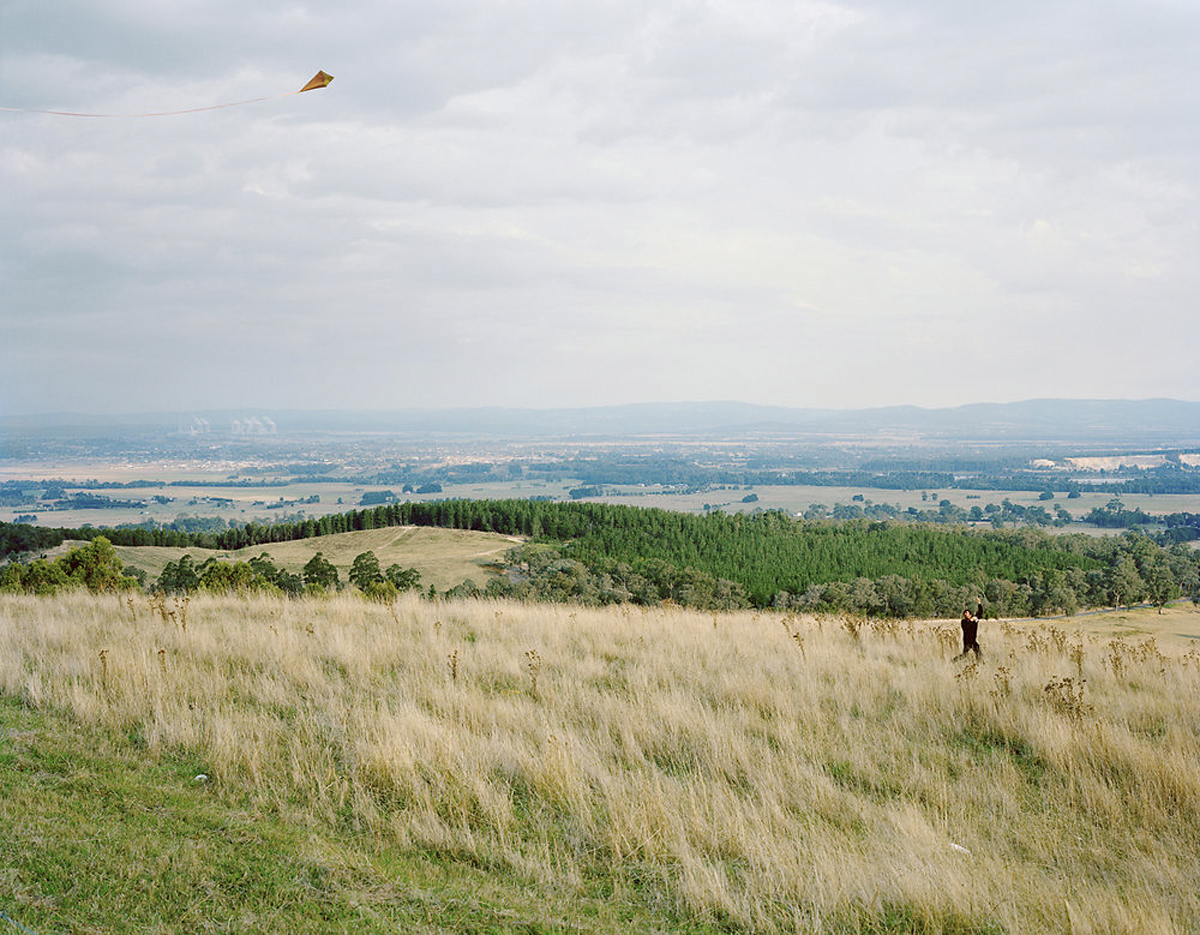
Gunnai land man (above) is very effective in this quest juxtaposing as it does an Indigenous Australian and fallen tree on a bare track with a smoke billowing power station (symbolic of the industrialisation of the area) looming in the background. Other photographs are less successful. What a man flying a kite has to do with the pre-colonial Gippsland landscape is beyond me and the juxtapositional incongruity sought by the artist simply does not work, despite the presence of the power station on the plains in the distance. The symbology has more to do with Japanese art than it has to do with Western art.
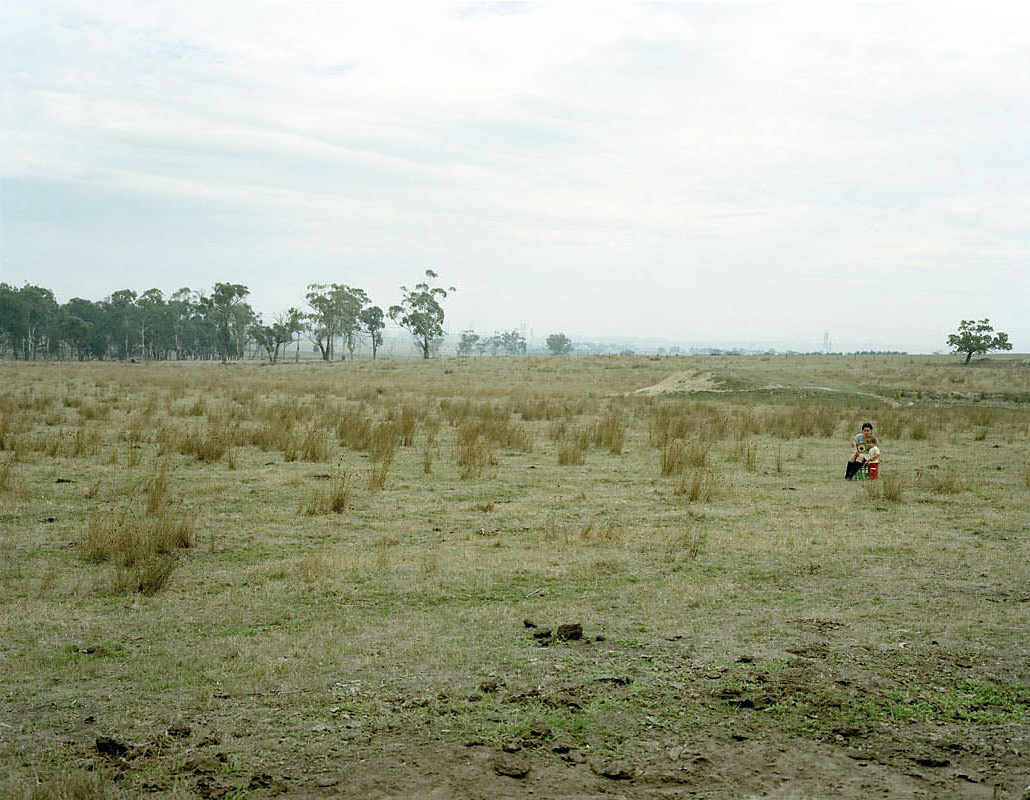
The conceptual narrative of the photograph Moe Madonna (below) works only partially as well. The destruction of the landscape has been caused by pastoralisation not industrialisation. In the image that Hayes is referencing the Madonna is front and centre set in an idyllic landscape. In the work by Hayes the incongruity has to be explained, has to be verbalised in text for the association to be didactically made. The interpretation leaves no room for personal reflection and when I looked at this image, the mother and child were so small in the landscape, the placement so obviously constructed that there incongruity turned to disbelief: namely that I simply did not believe the mise en scène being created.
Other narratives are equally confusing. In Paper bag lovers (below) I had to ask the gallery director what was going on in the photograph because the bodies where so small in the landscape (in fact it looks like one body) and you can’t really see the paper bags on their heads because the bodies are just an amorphous mass containing no detail at all (you can just see the body in the photograph below in the mid distance just below the large central tree). Why paper bags anyway? If something intentionally odd and incongruous is sought to be portrayed in the landscape perhaps Hayes should look at the work of Eugene Meatyard (see below) to see a real subversion of the body/landscape dichotomy.
The one standout photograph of the exhibition is Plein air explorers (below). This is confirmed in the sales of the show as all six prints of this photograph have been sold. One can see why!
The title is perfect, the construction of the image faultless. The naked white man stands proudly surveying his conquered domain, the land, whilst around him artists (reminding me of the dilettantes of the Victorian age going on day trips), hunker down into the ground with their easels oblivious to the desiccated trees around them. Here the photographer just observes, doesn’t construct, the incongruity of it all. The artists draw the white man based on direct observation of him and not on their conceptions or conventional images or memories of him while ignoring their surroundings. Here is the paradox, the ironic perfect storm that the artist was conceptually seeking: the representation of landscape based upon direct observation “in the open air” ignored for a perfect white arse while on the horizon smoke stacks of a power station stand in silent witness to the present and imminent destruction of the world. What a photograph! Can I have one now please?
Dr Marcus Bunyan
Many thankx to Gallerysmith for allowing me to publish the photographs in the posting. Please click on the photographs for a larger version of the image.
Siri Hayes (Australian, b. 1977) Moe Madonna 2008
Siri Hayes (Australian, b. 1977) Kite 2008
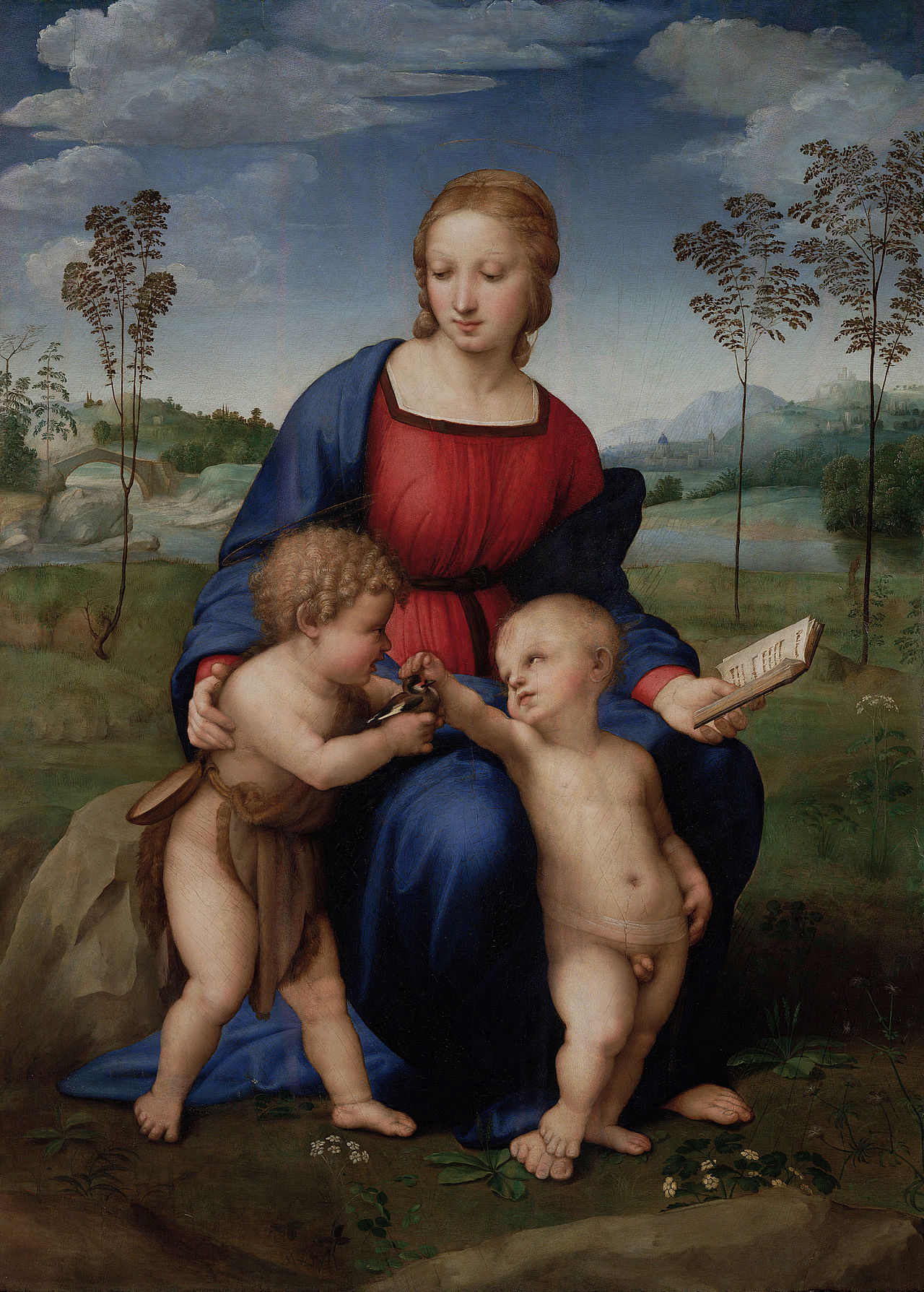
Raphael (Italian, 1483-1520) Madonna of the Goldfinch 1505-1506 Oil on panel 107 x 77cm Galleria degli Uffizi
Siri Hayes (Australian, b. 1977) Paper Bag Lovers 2008
I have predominantly focused on the parts of the Gippsland landscape that have been impacted by white settlement. I have composed various human interactions that are sometimes associated with Western art and its construction. For example, Moe Madonna references Raphael’s Goldfinch Madonna. The narratives are intentionally odd and incongruous with the surrounding location. My son and I seem out-of-place in a barren paddock while the autumn mist shrouds distant gum trees and electricity pylons. The soil here has been compacted beyond repair by cattle hooves – an inappropriate animal in Australia’s delicate ecosystems. As we sit on this barren plain, I read to Oliver from a European pre-schooler book titled Autumn, creating an interesting juxtaposition with the antipodean equivalent season.
The work in this exhibition considers the pre-colonial Gippsland landscape and how industrial ‘progress’ has altered it. Hopefully it provides pause for thought.
Siri Hayes exhibition notes. March 2009
Siri Hayes (Australian, b. 1977) Plein air explorers 2008
Gallerysmith 170-174 Abbotsford St, North Melbourne, Victoria, 3051 Australia
Opening night crowd at Colour, Time by David Thomas with from right to left Farbenfreude Series: Movement of Colour, Heart (Large) 2008; Farbenfreude Series: Amid Dark and Light (Dark Painting) 2008; and Farbenfreude Series: A Gentle Pasing (Large) 2008 on back wall Photo: Marcus Bunyan
“A photographed real space and an expanding undefinable painting space (the non-figurative form) confront each other. The result is a coexistence of various models of space, a coexistence and entanglement of inconsistent things.”
Christoph Dahlhausen. David Thomas EIKON nr 53, Vienna, Austria, 2006
A slow burn painting, photography and composites show at Nellie Castan Gallery. Minimalist grid paintings combine with squares of colour taken out of photographs (again! as at the recent Richard Grigg show at Block Projects). This supposedly imparts profundity to insubstantial and mundane photographs that aim to comment on the existential nature of our being through the presence / absence of the missing spatio-temporal slice. This exhibition just didn’t hit the spot for me. Nice to catch up with Jason Smith Director of Heide Museum of Modern Art who was in attendance.
Dr Marcus Bunyan
Many thankx to Nellie Castan Gallery for allowing me to publish the photographs in the posting. Please click on the photographs for a larger version of the image.
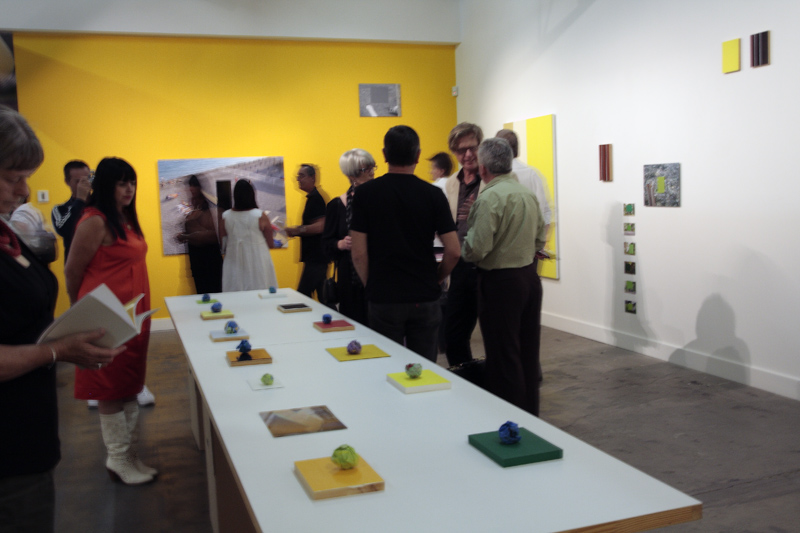
Opening night crowd at Colour, Time by David Thomas with the series Length of Time 2009 on table Photo: Marcus Bunyan
David Thomas (Australian born Northern Ireland, b. 1951) Length of Time Series: Blue tape on red monochrome 2009 Photo: Marcus Bunyan
David Thomas (Australian born Northern Ireland, b. 1951) End of Summer: Homage a Tati (small splash) Enamel on photograph 2009
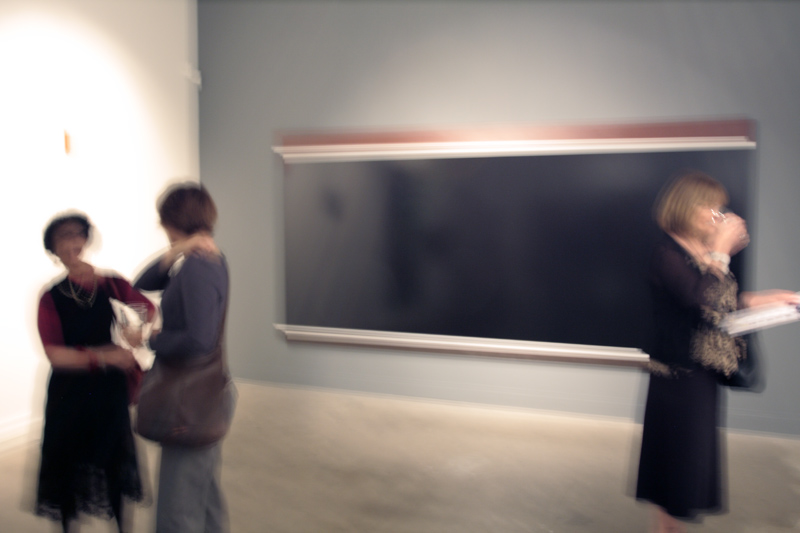
Opening night crowd in front of David Thomas’ Black Reflection Painting: For William Barak 2009 Photo: Marcus Bunyan
Exhibition dates: 20th February – 12th April, 2009
Gerhard Richter (German, b. 1932) 9.4.89 10.1 x 14.8cm Oil on colour photograph
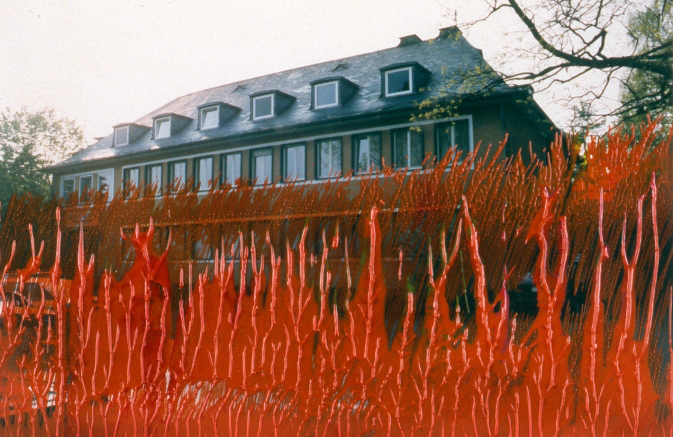
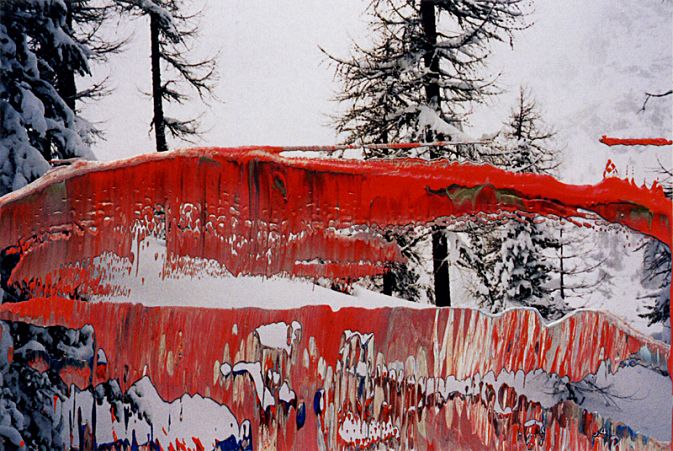
There is something unsettling in Richter’s serendipitious interventions. Using his own prosaic 10 x 15cm colour photographs that have been commercially printed as the basis of the works, Richter overlays the surface of the photograph with skeins of paint that disturb the reflexivity of each medium. Dragging the photograph through the paint or using a palette knife to apply layers of colour, the surfaces of paint and photograph no longer exist as separate entities. The process produces punctum like clefts rent in the fabric of time and space. If the intervention is judged unsuccessful the result if immediately destroyed.
In 5.Juli.1994 (below) blood red fingers of paint strain upwards as they invade the solidity of a dour suburban home, echoing the invading trees branches at top right of picture. In 11.2.98 (below) green paint slashes across the mouth and forehead of a woman in a floral dress, her eyes seemingly bloodshot and pleading stare into the distance to the left of our view, the silent scream strangled in her throat by the vibrations of paint. These are the instantaneous responses of the artist to the photograph, a single mood expounded in irreversible gestures, the actions of the painter’s hand disturbing the indexical link of the photograph and it’s ability to be ‘read’ as a referent of the object it depicts. Richter’s interventions challenge the concept of momentary awareness and offer the possibility of a space between, where the image stands for something else – access to Other, even a contemplation of the sublime.
“The colour of paint applied corresponds or contrasts the tonalities of the underlying photograph but link the two through formal relationships of the layers … Often a tense relationship, the results run the gamut of the surreal to the beautiful to the disturbed. It is all the more surprising that each in its perceived completeness was in essence accomplished by chance and trial and error.”1
“Richter’s painterly gestures bounce off the [photographs] content in peculiar ways, sometimes interacting with it, sometimes overlaying it and sometimes threatening to eclipse it altogether. The final effect is to cause both photography and painting to seem like incredibly bizarre activities, disparate in texture but often complicit in aspiration.”2
I love the violence, the sometimes subversive, sometimes transcendental ‘equivalence’ of these images: where a Steiglitz cloud can stand for music, where a Minor White infrared photograph posits a new reality, Richter offers us an immediacy that destroys the self-reflexive nature of everyday life. His spontaneous musings, his amorphous worlds, his bleeds and blends crack open the skin of our existential life on earth. Here, certainly, are ‘the clefts in words, the words as flesh’.
Gerhard Richter (German, b. 1932) 11.4.89 10 x 15cm Oil on colour photograph
Gerhard Richter (German, b. 1932) 11.3.89 10 x 14.9cm Oil on colour photograph
Gerhard Richter (German, b. 1932) 5.Juli.1994 10.2 x 15.2cm Oil on colour photograph
Gerhard Richter (German, b. 1932) 11.2.98 10 x 14.7cm Oil on colour photograph
Gerhard Richter (German, b. 1932) 22.2.96 9.6 x 14.7cm Oil on colour photograph
Gerhard Richter (German, b. 1932) 11.Febr.05 10.1 x 14.9cm Oil on colour photograph
The exhibition presents 330 of Richter’s largely unknown overpainted photographs, a technique he has been using since 1982.
The exhibition UERBERNALTE FOTOGRAFIEN / PHOTOGRAPHIES PEINTES (OVERPAINTED PHOTOGRAPHS) at the Centre de la photographie Geneva (CPG) presented a side of the work of Gerhard Richter largely unknown up till now. Only a few collectors and gallerists close to the artist were aware of the practise that Gerhard Richter, one of the most important artists of our times, had developed systematically since 1982. It is only because of this exhibition that more than 1000 of his over-painted photographs will enter into his catalogue raisone. The CPG presents approximately 330 of them in this show.
“By placing paint on photographs, with all their random and involuntary expressiveness, Gerhard Richter reinforces the unique aspect of each of these mediums and opens a field of tension rich in paradoxes, as old as the couple – painting / photography – which has largely defined modern art.”
Gerhard Richter is justly famed for the photorealism of his early canvases, but it is less well known that he has also painted directly onto photographic prints. These (mostly small-format) pieces were reproduced in books as early as the first Atlas, but practically all of the works themselves are housed in private collections and rarely exhibited in public. Overpainted Photographs gathers this body of work, which unites the labor of the hand with the work of mechanical reproduction to produce a kind of art as conceptually rich as Richter’s better-known paintings, neutralizing the expressive powers of each medium to reach an indifference to their potency. In an overture to Duchamp’s “degree zero” found objects, the original photographs are frequently bland in content – an empty office, a ball, a beach scene or tourist snapshot – and Richter’s painterly gestures bounce off that content in peculiar ways, sometimes interacting with it, sometimes overlaying it and sometimes threatening to eclipse it altogether. The final effect is to cause both photography and painting to seem like incredibly bizarre activities, disparate in texture but often complicit in aspiration. This monograph offers a unique opportunity to savour what had previously been a neglected but copious aspect of Richter’s work.
“The public scenes, whether on the beach or the ski slope or children’s theatre, are beset with sudden surges of colour that tend to resemble interventions of the sky or elemental forces, more than the moods of a decorative or ornamental painter annotation. Sometimes they seem like catastrophic visions. Blood-red snowflakes dance above the white fern. The photo shows skyscrapers in the urban morning sun – and the oil paint adds to the sulpherous fire that pours over the city from the sky”
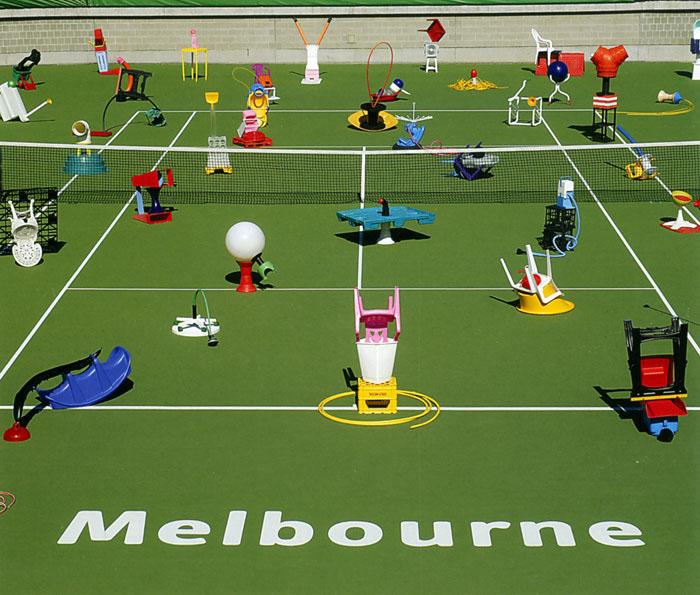
Louise Paramor (Australian, b. 1964) Show Court 3 (II) 2009
Boarding a train at Flinders Street we emerge at South Yarra station to stroll down to River Street for our third opening of the night at Nellie Castan Gallery. We are greeted by the ever gracious Nellie Castan who has just returned from an overseas trip to Europe where she was soaking up the wonders of Rome amongst other places. For the latest exhibition in the gallery Louise Paramor is presenting two bodies of work: Show Court 3 and Mood Bomb (both 2009). Lets look at Show Court 3 first as this work has older origins.
Originally exhibited in 2006 at Nellie Castan under the title Jam Session the sculptures from this exhibition and many more beside (75 in all) were then installed in 2007 on show court 3 at Melbourne & Olympic Parks, hence the title of the installation. In the smaller gallery in 2009 we have six Lambda photographic prints that are records of this installation plus a video of the installation and de-installation of the work.
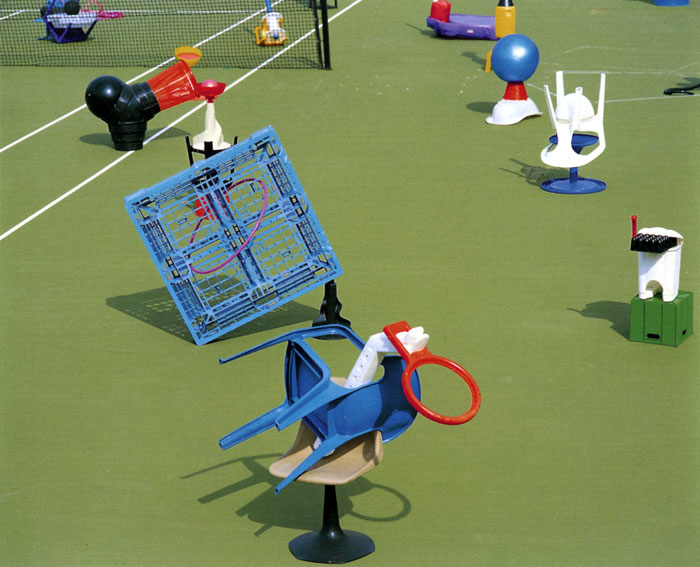
While interesting as documentary evidence of the installation these photographs are thrice removed from the actual sculptures – the sculptures themselves, the installation of the sculptures on court and then the photographs of the installation of the sculptures. The photographs lose something in this process – the presence or link back to the referentiality of the object itself. There is no tactile suggestiveness here, no fresh visual connections to be made with the materials, no human interaction. The intertextual nature of the objects, the jamming together of found pieces of bright plastic to make seductive anthropomorphic creatures that ‘play’ off of each other has been lost.
What has been reinforced in the photographs is a phenomena that was observed in the actual installation.
“The sculptures created a jarring visual disruption when placed in a location normally associated with play and movement. The stadium seating surrounding the tennis court incited an expectation of entertainment; a number of viewers sat looking at the sculptures, as though waiting for them to spin and jump around. But mostly, the exhibition reversed the usual role of visitors to place where one sits and watches others move; here the objects on the tennis court were static and the spectators moved around.” (2007)1
In the photographs of these objects and in the installation itself what occurs is an inversion of perception, a concept noted by the urbanist Paul Virilio.2 Here the objects perceive us instead of us perceiving the object: they stare back with an oculocentric ‘suggestiveness’ which is advertising’s raison d’être (note the eye sculpture above). In particular this is what the photographs suggest – a high gloss surface, an advertising image that grabs our attention and forces us to look but is no longer a powerful image.
In the main gallery was the most interesting work of the whole night – experiments of abstraction in colour “inspired by the very substance of paint itself.” Made by pouring paint onto glass and then exhibiting the smooth reverse side, these paintings are not so much about the texture of the surface (as is Dale Frank’s work below) but a more ephemeral thing: the dreamscapes of the mind that they promote in the viewer, the imaginative connections that ask the viewer to make. Simpler and perhaps more refined than Frank’s work (because of the smooth surface, the lack of the physicality of the layering technique? because of the pooling of amoebic shapes produced, not the varnish that accumulates and recedes?) paint oozes, bleeds, swirls, drips upwards and blooms with a sensuality of intense love. They are dream states that allow the viewer to create their own narrative with the title of the works offering gentle guides along the way: Girl with Flowers, Lovers, Mood Bomb, Emerald God, Mama, and Animal Dreaming to name just a few. To me they also had connotations of melted plastic, almost as if the sculptures of Show Court 3 had dissolved into the glassy surface of a transparent tennis court.
These are wonderfully evocative paintings. I really enjoyed spending time with them.
Dr Marcus Bunyan
1/ O’Neill, Jane. Louise Paramor: Show Court 3. Melbourne: Nellie Castan Gallery, 2009
2/ Virilio, Paul. The Vision Machine. (trans. Julie Rose). Bloomington: Indiana University Press, 1994, pp. 62-63
Many thankx to Nellie Castan Gallery for allowing me to publish the photographs in the posting. Please click on the photographs for a larger version of the image.
Louise Paramor (Australian, b. 1964) Show Court 3 (VI) 2009
Louise Paramor (Australian, b. 1964) Show Court 3 (detail) 2009
Louise Paramor (Australian, b. 1964) Show Court 3 (detail) 2009
Louise Paramor (Australian, b. 1964) Opening night crowd in front of Sky Pilot (left) and Mama (right) 2009 Paint on glass
Louise Paramor (Australian, b. 1964) Opening night crowd in front of Green Eyed Monster (right) and Sky Pilot (right) 2009 Paint on glass
Louise Paramor (Australian, b. 1964) Opening night crowd in front of Pineapple Express 2009 Paint on glass
Louise Paramor (Australian, b. 1964) A Dog and His Master (detail) 2009 Paint on glass
Louise Paramor (Australian, b. 1964) Lovers 2009 Paint on glass
Dale Frank (Australian, b. 1959) 2. One conversation gambit you hear these days: ‘Do you rotate?’ An interesting change of tack? No suck luck. ‘Do you rotate?’ simply fishes for information about the extent of your collection. Do you have enough paintings to hang a different one in your dining room every month? 2005
Louise Paramor (Australian, b. 1964) Mood Bomb 2009 Paint on glass
Louise Paramor (Australian, b. 1964) Slippery Slope (detail) 2009 Paint on glass
Louise Paramor (Australian, b. 1964) Green Eyed Monster (detail) 2009 Paint on glass
Many thankx to the Nelson-Atkins Museum of Art for allowing me to publish the photographs in the posting. Please click on the photographs for a larger version of the image.
Gregory Crewdson (American, b. 1962) Untitled from the series Beneath the Roses 2006 Digital pigment print
Famed photographer Gregory Crewdson will present the inaugural discussion in a series sponsored by the Photography Society of The Nelson-Atkins Museum of Art, Kansas City…
Crewdson’s work has been widely exhibited and reviewed. He makes large-scale photographs of elaborate and meticulously staged tableaux, which have been described as “micro-epics” that probe the dark corners of the psyche. Working in the manner of a film director, he leads a production crew, which includes a director of photography, special effects and lighting teams, casting director and actors. He typically makes several exposures that he later digitally combines to produce the final image.
“Crewdson is one of the most daring and inventive contemporary artists using photography,” said Keith F. Davis, Curator of Photography at the Nelson-Atkins. “His meticulously crafted works are immensely rich in both narrative and psychological terms. They prod us to rethink our ‘usual’ relationship to photographs as physical objects and as records of worldly fact. Crewdson is a genuinely important figure in today’s art world. He has an international reputation and has influenced an entire generation of younger photographic artists.”
Attendance to the program is free.
Text from ArtDaily.org website
Gregory Crewdson (American, b. 1962) Untitled from the series Beneath the Roses 2005 Digital pigment print
Gregory Crewdson (American, b. 1962) Untitled from the series Beneath the Roses 2005 Digital pigment print
Gregory Crewdson (American, b. 1962) Untitled (Sunday Roast) from the series Beneath the Roses 2005 Digital pigment print
Nelson-Atkins Museum of Art 4525 Oak Street Kansas City, MO 64111
Photographs are available from this series for purchase. As a guide, a digital colour 16″ x 20″ costs $1000 plus tracked and insured shipping. For more information please see my Store web page.
Marcus Bunyan (Australian, b. 1958) Untitled from the series Momentum 2009 Digital colour photograph
Marcus Bunyan (Australian, b. 1958) Untitled from the series Momentum 2009 Digital colour photograph
Marcus Bunyan (Australian, b. 1958) Untitled from the series Momentum 2009 Digital colour photograph
Marcus Bunyan (Australian, b. 1958) Untitled from the series Momentum 2009 Digital colour photograph
Marcus Bunyan (Australian, b. 1958) Untitled from the series Momentum 2009 Digital colour photograph
Marcus Bunyan (Australian, b. 1958) Untitled from the series Momentum 2009 Digital colour photograph
Edward Burtynsky (Canadian, b. 1955) Silver Lake Operations #1, Lake Lefroy, Western Australia 2007 2007
One of the great photographers of the world.
Enjoy some of his images and for more photographs please visit his website.
Many thankx to The Whyte Museum of the Canadian Rockies for allowing me to publish the photographs in the posting. Please click on the photographs for a larger version of the image.
Edward Burtynsky (Canadian, b. 1955) Tanggu Port, Tianjin, China 2005 2005
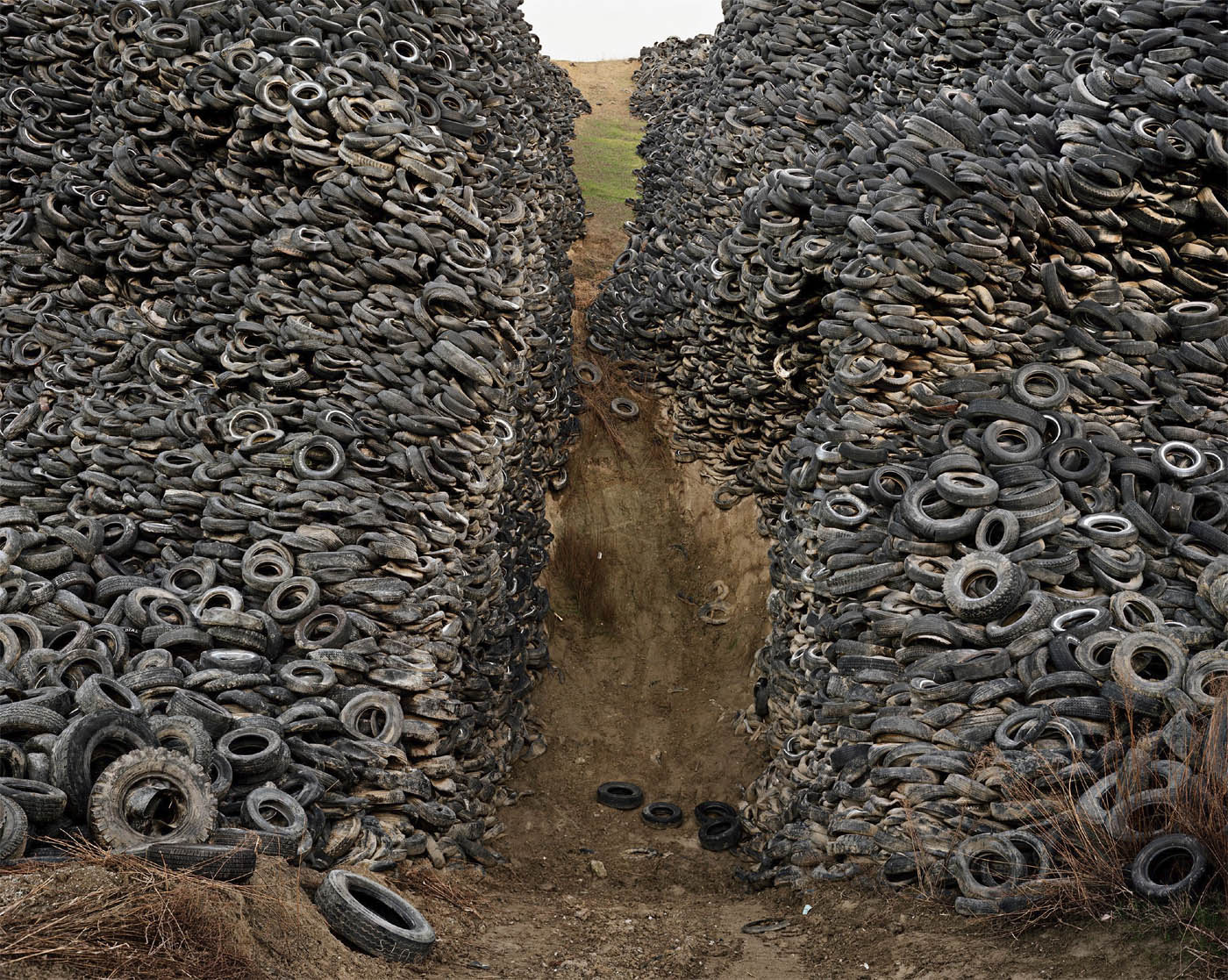
Nature transformed through industry is a predominant theme in my work. I set course to intersect with a contemporary view of the great ages of man; from stone, to minerals, oil, transportation, silicon, and so on. To make these ideas visible I search for subjects that are rich in detail and scale yet open in their meaning. Recycling yards, mine tailings, quarries and refineries are all places that are outside of our normal experience, yet we partake of their output on a daily basis.
These images are meant as metaphors to the dilemma of our modern existence; they search for a dialogue between attraction and repulsion, seduction and fear. We are drawn by desire – a chance at good living, yet we are consciously or unconsciously aware that the world is suffering for our success. Our dependence on nature to provide the materials for our consumption and our concern for the health of our planet sets us into an uneasy contradiction. For me, these images function as reflecting pools of our times.
Edward Burtynsky quoted on The Whyte Museum website
Edward Burtynsky (Canadian, b. 1955) Oxford Tire Pile #8, Westley, California 1999 1999
Edward Burtynsky (Canadian, b. 1955) Nickel Tailings #30, Sudbury, Ontario, 1996 1996
Edward Burtynsky (Canadian, b. 1955) Nickel Tailings #31, Sudbury, Ontario 1996 1996
Edward Burtynsky (Canadian, b. 1955) Feng Jie #4, Three Gorges Dam Project, Yangtze River, 2002 2002
These images are meant as metaphors to the dilemma of our modern existence; they search for a dialogue between attraction and repulsion, seduction and fear,” said Edward Burtynsky, photographer. “We are drawn by desire – a chance at good living, yet we are consciously or unconsciously aware that the world is suffering for our success. Our dependence on nature to provide the materials for our consumption and our concern for the health of our planet sets us into an uneasy contradiction. For me, these images function as reflecting pools of our times.
Speaking of his “Quarries” series, Burtynsky has said, “The concept of the landscape as architecture has become, for me, an act of imagination. I remember looking at buildings made of stone, and thinking, there has to be an interesting landscape somewhere out there, because these stones had to have been taken out of the quarry one block at a time. I had never seen a dimensional quarry, but I envisioned an inverted cubed architecture on the side of a hill. I went in search of it, and when I had it on my ground glass I knew that I had arrived.”
Text from The Whyte Museum of the Canadian Rockies
Edward Burtynsky (Canadian, b. 1955) Shipbreaking #1, Chittagong, Bangladesh, 2000 2000
Edward Burtynsky (Canadian, b. 1955) Bao Steel #2, Shanghai, China, 2005 2005
Edward Burtynsky (Canadian, b. 1955) Iberia Quarries #3, Bencatel, Portugal, 2006 2006
Edward Burtynsky (Canadian, b. 1955) China Quarries #8, Xiamen, Fujian Province, 2004 2004
Edward Burtynsky (Canadian, b. 1955) Dam #6, Three Gorges Dam Project, Yangtze River, 2005 2005
Trailer for the film Manufactured Landscapes in which Jennifer Baichwal documents Edward Burtynsky doing what artists do – making art, in this case photographing Bangladesh and China as he observes the “manufacturer to the world”.
Edward Burtynsky Manufactured Landscapes
The Whyte Museum of the Canadian Rockies 111 Bear Street, Banff, Alberta T1L 1A3 Canada Phone: 1 403 762 2291
Marcus Bunyan (Australian, b. 1958) On Port Phillip Bay 2009
Port Phillip Bay in the morning from the 48th floor of a tower in Southbank, Melbourne
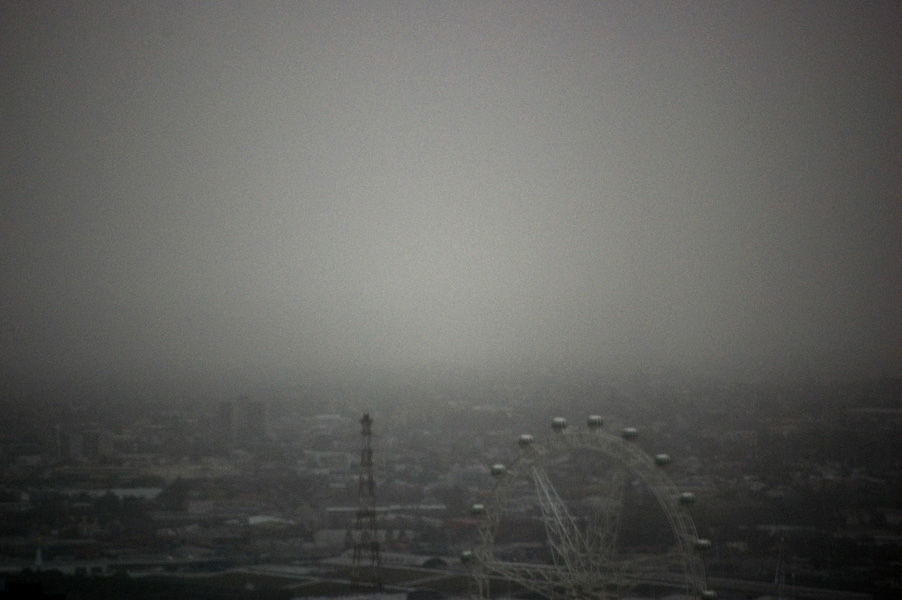
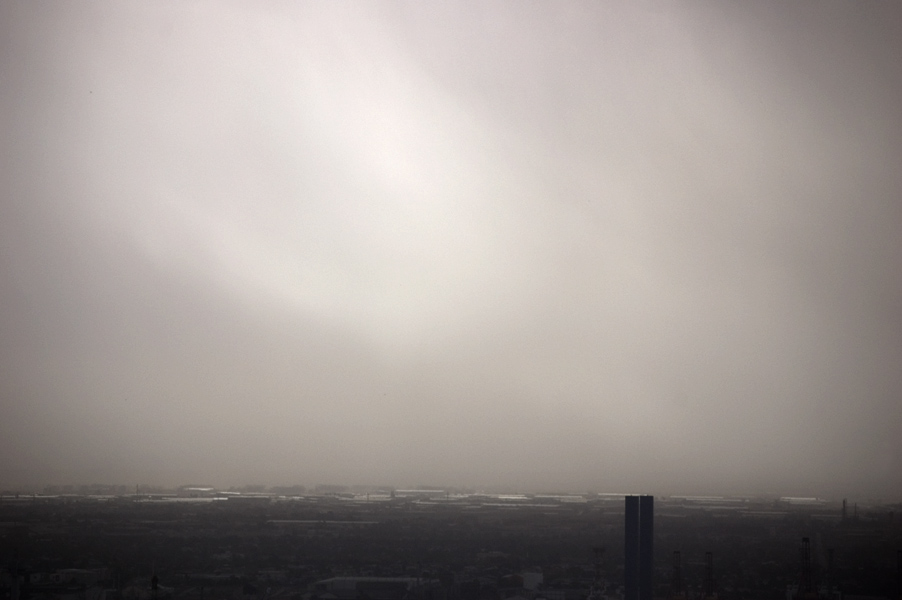
Melbourne’s hottest day ever 46.4 degrees. Firestorms to the north of the city, Port Phillip Bay completely obscured, very strange light seen from 48th floor. The day, 7th February 2009, is now known as the Black Saturday bushfires.
180 people died and 414 were injured as a result of the fires.
It was a very scary day. I cannot imagine what it would have been like to have been there, up close. My condolences to all those that lost loved ones.
Dr Marcus Bunyan
Please click on the photographs for a larger version of the image.
Marcus Bunyan (Australian, b. 1958) On Port Phillip Bay 2009
Port Phillip Bay during firestorm, in the afternoon from the 48th floor of a tower in Southbank, Melbourne
Marcus Bunyan (Australian, b. 1958) Looking towards the docks, Melbourne 2009
Looking towards the docks, Melbourne, during the firestorm
Marcus Bunyan (Australian, b. 1958) Looking across the city 2009
Looking across the city with the Melbourne Star Observation Wheel (at the time called the Southern Star) in the foreground
Black Saturday bushfires
The Black Saturday bushfires were a series of bushfires that ignited or were burning across the Australian state of Victoria on and around Saturday, 7 February 2009 and were Australia’s all-time worst bushfire disasters. The fires occurred during extreme bushfire-weather conditions and resulted in Australia’s highest ever loss of life from a bushfire; there were 180 fatalities, and 414 were injured as a result of the fires.
As many as 400 individual fires were recorded on 7 February. Following the events of 7 February 2009 and its aftermath, that day has become widely referred to in Australia as Black Saturday.
Background
A week before the fires, a significant heatwave affected southeastern Australia. From 28-30 January, Melbourne broke temperature records by experiencing three consecutive days above 43°C (109 °F), with the temperature peaking at 45.1°C (113.2°F) on 30 January, the third hottest day in the city’s history.
The wave of heat was caused by a slow moving high-pressure system that settled over the Tasman Sea, with a combination of an intense tropical low located off the North West Australian coast and a monsoon trough over northern Australia, which produced ideal conditions for hot tropical air to be directed down over southeastern Australia.
The February fires commenced on a day when several localities across the state, including Melbourne, recorded their highest temperatures since records began in 1859. On 6 February 2009 – the day before the fires started – the Premier of Victoria John Brumby issued a warning about the extreme weather conditions expected on 7 February: “It’s just as bad a day as you can imagine and on top of that the state is just tinder-dry. People need to exercise real common sense tomorrow”. The Premier went on to state that it was expected to be the “worst day [of fires conditions] in the history of the state”.
Events of 7 February 2009
A total of 358 firefighting personnel, mainly from the Country Fire Authority (CFA) and Department of Sustainability and Environment (DSE), were deployed across the state on Friday evening (6 February) in anticipation of the extreme conditions the following day. By mid-morning Saturday, hot northwesterly winds in excess of 100 kilometres per hour (62 mph) hit the state, accompanied by extremely high temperatures and extremely low humidity; a total fire ban was declared for the entire state of Victoria.
As the day progressed, all-time record temperatures were being reached. Melbourne hit 46.4°C (115.5°F), the hottest temperature ever recorded for the city and humidity levels dropped to as low as two percent. The McArthur Forest Fire Danger Index reached unprecedented levels, ranging from 160 to over 200. This was higher than the fire weather conditions experienced on Black Friday in 1939 and Ash Wednesday in 1983.
Around midday, as wind speeds were reaching their peak, an incorrectly-rigged SWER line was ripped down at Kilmore East. This sparked a bushfire that would become the deadliest and most intense firestorm ever experienced in Australia’s post-1788 history. The overwhelming majority of fire activity occurred between the afternoon of 7 February and 7:00 pm, when wind speed and temperature were at their highest, and humidity at its lowest.
Casualties
A total of 180 people were confirmed to have died as a result of the fires. The figure was originally estimated at 14 on the night of 7 February, and steadily increased over the following two weeks to 210. It was feared that it could rise as high as 240-280, but these figures were later revised down to 173 after further forensic examinations of remains, and after several people previously believed to be missing were located. This figure was later increased to 180 after several people succumbed to their injuries. …
Among the dead in the Kinglake West area were former Seven Network and Nine Network television personality Brian Naylor, and his wife Moiree. Actor Reg Evans and his partner, artist Angela Brunton, residing on a small farm in the St Andrews area, also died in the Kinglake area fire. Ornithologist Richard Zann perished in the Kinglake fire, together with his wife Eileen and daughter Eva.
Fatalities
General statistics
~ 164 people died in the fires themselves, 12 died later in hospital, and 4 died from other causes including car crashes
~ Out of the 180 deaths, 100 were male, 73 were female, and 7 were unidentified
~ There were 164 Australians, 9 foreign nationals, and 7 people of unidentified nationalities killed in the bushfires. The foreign nationals comprised citizens of:
~ Greece (2) ~ Indonesia (2) ~ Philippines (2) ~ Chile (1) ~ New Zealand (1) ~ United Kingdom (1)
~ 7 of the deaths occurred in bunkers of both fire-specific and non-fire-specific design
~ 1 firefighter, David Balfour, 47, from Gilmore, ACT, was killed near Cambarville on the night of 17 February, when a burnt-out tree fell on him as he attached a hose to a fire tanker
Location of deaths
~ Inside houses (113) ~ Outside houses (27) ~ In vehicles (11) ~ In garages (6) ~ Near vehicles (5) ~ On roadways (5) ~ Attributed to or associated with the fire but not within fire location (4) ~ On reserves (1) ~ In sheds (1) ~ Unknown locations (7)























 Art Blart _ art and cultural memory archive
You must be logged in to post a comment.